Anathem
Overview unavailable.
Arbre Reading Guide
- Introduces Neal Stephensonâs Anathem, set on the Earthlike planet Arbre and centered on Erasmas, a secluded scholar summoned to help face a looming catastrophe.
- Provides publication-style front matter, including dedication, table of contents, glossary/calca sections, acknowledgments, and copyright notice.
- Defines the title word âAnathemâ through an in-world dictionary entry, linking it to both ritual song and expulsion from the mathic world.
- Offers a readerâs note explaining pronunciation, translated units, invented vocabulary, and Earth-equivalent names for Arbran species.
- Includes a condensed chronology of Arbreâs history leading up to the storyâs opening, followed by the start of Part 1, âProvener,â and another dictionary-style term definition.
Annotation
Anathem is set on a planet called Arbre, where the protagonist, Erasmas, is
among a cohort of secluded scientists, philosophers and mathematicians who are
called upon to save the world from impending catastrophe. Erasmas â Raz to
his friends â has spent most of his life inside a 3,400-year-old sanctuary. The
rest of society â the SĂŚcular world â is described as an "endless landscape of
casinos and megastores that is plagued by recurring cycles of booms and busts,
dark ages and renaissances, world wars and climate change." Their planet,
Arbre, has a history and culture that is roughly analogous to Earth. Resident
scholars, including Raz, are unexpectedly summoned by a frightened SĂŚcular
power to leave their monastic stronghold in the hope that they may prevent an
approaching catastrophe.
Neal Stephenson
NOTE TO THE READER
Part 1
Part 2
Part 3
Part 4
Part 5
Part 6
Part 7
Part 8
Part 9
Part 10
Part 11
Part 12
Part 13
GLOSSARY
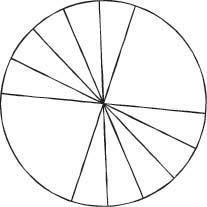
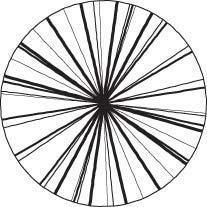
CALCA 1: Cutting the Cake
CALCA 2: Hemn (Configuration) Space
CALCA 3: Complex Versus Simple Protism
ACKNOWLEDGMENTS
ALSO BY NEAL STEPHENSON
Copyright
10 9 8 7 6 5 4 3 2 1
Neal Stephenson
Anathem
TO MY PARENTS
Anathem: (1) In Proto-Orth, a poetic or musical
invocation of Our Mother Hylaea, which since the time of
Adrakhones has been the climax of the daily liturgy (hence
the Fluccish word Anthem meaning a song of great
emotional resonance, esp. one that inspires listeners to sing
along). Note: this sense is archaic, and used only in a ritual
context where it is unlikely to be confused with the much
more commonly used sense 2. (2) In New Orth, an aut by
which an incorrigible fraa or suur is ejected from the math
and his or her work sequestered (hence the Fluccish word
Anathema meaning intolerable statements or ideas). See
Throwback.
â THE DICTIONARY, 4th edition, A.R. 3000
NOTE TO THE READER
IF YOU ARE ACCUSTOMED to reading works of speculative fiction
and enjoy puzzling things out on your own, skip this Note. Otherwise, know that
the scene in which this book is set is not Earth, but a planet called Arbre that is
similar to Earth in many ways.
Pronunciation hints: Arbre is pronounced like âArbâ with a little something
on the end. Consult a French person for advice. In a pinch, âArbâ will do. Two
dots above a vowel are a dieresis, meaning that the vowel in question gets a
syllable all its own. So, for example, Deat is pronounced âday ottâ rather than
âdeet.â
Arbran measurement units have been translated into ones used on Earth.
This story takes place almost four thousand years after the people of Arbre
settled on their common system of units, which now seem ancient and time-worn
to them. Accordingly, old Earth units (feet, miles, etc.) are used here instead of
the newer ones from the metric system.
Where the Orth-speaking culture of this book has developed vocabulary
based on the ancient precedents of Arbre, I have coined words based on the old
languages of Earth. Anathem is the first and most conspicuous example. It is a
play on the words anthem and anathema, which derive from Latin and Greek
words. Orth, the classical language of Arbre, has a completely different
vocabulary, and so the words for anthem, anathema, and anathem are altogether
different, and yet linked by a similar pattern of associations. Rather than use the
Orth word, which would be devoid of meaning and connotations to Earth
readers, I have tried to devise an Earth word that serves as its rough equivalent
while preserving some flavor of the Orth term. The same thing, mutatis
mutandis, has been done in many other places in the book.
Names of some Arbran plant and animal species have been translated into
rough Earth equivalents. So these characters may speak of carrots, potatoes,
dogs, cats, etc. This doesnât mean that Arbre has exactly the same species.
Naturally, Arbre has its own plants and animals. The names of those speciesâ
rough Earth equivalents have been swapped in here to obviate digressions in
which, e.g., the phenotype of the Arbre-equivalent-of-a-carrot must be explained
in detail.
A very sparse chronology of Arbreâs history follows. None of this will
make very much sense until one has read some pages into the book, but after that
it may be useful for reference.
â 3400 TO-3300: Approximate era of Cnous and his daughters Deat and
Hylaea.
â 2850: Temple of Orithena founded by Adrakhones, the father of
geometry.
â 2700: Diax drives out the Enthusiasts, founds theorics on axiomatic
principles and gives it its name.
â 2621: Orithena destroyed by volcanic eruption. Beginning of Peregrin
period. Many surviving theors gravitate toward city-state of Ethras.
â 2600 TO-2300: Golden Age of Ethras.
â 2396: Execution of Thelenes
â 2415 TO-2335: Life span of Protas
â 2272: Ethras forcibly absorbed into Bazian Empire
â 2204: Foundation of the Ark of Baz
â 2037: Ark of Baz becomes state religion of the Empire
â 1800: Bazian Empire reaches its peak
â 1500S: Various military setbacks lead to dramatic shrinkage of the
Bazian Empire. Theors retreat from public life. Saunt Cartas writes S?culum
thereby inaugurating the Old Mathic Age.
â 1472: Fall of Baz, burning of its Library. Surviving literate people flock
to Bazian monasteries or Cartasian maths.
â 1150: Rise of the Mystagogues
â 600: The Rebirth. Purging of the Mystagogues, Opening of the Books.
â 500: Dispersal of the mathic system, Age of Exploration, discovery of
laws of dynamics, creation of modern applied theorics. Beginning of the Praxic
Age.
â 74: The First Harbinger
â 52: The Second Harbinger
â 43: Proc founds The Circle
â 38: Procâs work repudiated by Halikaarn
â 12: The Third Harbinger
â 5: The Terrible Events
0: The Reconstitution. The First Convox. Foundation of the new mathic
system. Promulgation of the Book of Discipline and the first edition of the
Dictionary.
+ 121: Avout of the Concent of Saunt Muncoster split into two groups, the
Syntactics and the Semantics, founding the Procian and Halikaarnian Orders
respectively. Thereafter, orders proliferate.
+ 190 TO + 210: Avout of Saunt Baritoe make advances in manipulation of
nucleosynthesis using syntactic techniques. Creation of New Matter.
+ 211 TO + 213: The First Sack
+ 214: Post-Sack Convox abolishes most forms of New Matter.
Promulgation of the Revised Book of Discipline. Faanian order splits away from
Procian. Evenedrician order splits away from Halikaarnian.
+ 297: Saunt Edhar establishes his own order out of the Evenedricians.
+ 300: At the Centennial Apert, it is found that several Centenarian maths
have gone off the rails (âgone Hundredâ) since 200.
+ 308: Saunt Edhar founds the Concent of the same name.
+ 320 TO + 360: Advances in praxis of genetic sequences made at various
concents, frequently arising from collaboration between Faanians and
Halikaarnians.
+ 360 TO + 366: Second Sack.
+ 367: Post-Sack Convox. Manipulation of genetic sequences abolished.
Sharper lines drawn between syntactic and semantic orders. Faanians disbanded.
New Revised Book of Discipline promulgated. Syntactic devices removed from
the mathic world. The Ita are created; many ex-Faanians join them. The
Inquisition is created as a means of enforcing the new rules. Wardens Regulant
installed in all concents; modern system of hierarchs instituted in the form that
will endure for at least the next three millennia.
+ 1000: First Millennial Convox
+ 1107 TO Detection of a dangerous asteroid (the âBig
+ 1115: Nuggetâ) prompts the SĂŚcular Power to summon an extraordinary
Convox.
+ 2000: Second Millennial Convox
+ 2700: Growing rivalry between Procian and Halikaarnian Orders gives
rise to SĂŚcular legends of the Rhetors and the Incanters.
+ 2780: During a Decennial Apert, the SĂŚcular Power becomes aware of
extraordinary kinds of praxis being developed by Rhetors and Incanters.
+ 2787 TO Third Sack depopulates all concents except for
+ 2856: the Three Inviolates.
+ 2857: Post-Sack Convox reorganizes the concents. Dowments outlawed.
Various measures taken to reduce perceived luxury of mathic life. Number of
Orders reduced. Remaining Orders redistributed to bring about greater âbalanceâ
between Procian and Halikaarnian tendencies. Promulgation of the Second New
Revised Book of Discipline.
+ 3000: Third Millennial Convox
+ 3689: Our story opens.
Part 1
PROVENER
Extramuros: (1) In Old Orth, literally âoutside the
walls.â Often used in reference to the walled city-states of
that age. (2) In Middle Orth, the non-mathic world; the
turbulent and violent state of affairs that prevailed after the
Fall of Baz. (3) In Praxic Orth, geographical regions or
social classes not yet enlightened by the resurgent wisdom of
the mathic world. (4) In New Orth, similar to sense 2 above,
but often used to denote those settlements immediately
surrounding the walls of a math, implying comparative
prosperity, stability, etc.
â THE DICTIONARY, 4th edition, A.R. 3000
The Cultural Divide
- Fraa Orolo, a scholar within a secluded 'math,' interviews an outside artisan using archaic and provocative questions about modern society.
- The narrator, Erasmas, serves as an amanuensis and experiences intense physical embarrassment at Orolo's blunt inquiries into the artisan's culture.
- A linguistic gap is revealed between the 'avout' (scholars) and the 'extramuros' (outsiders) regarding technology, specifically moving pictures.
- The scholars use stable, descriptive language to avoid the rapid evolution of slang and brand names that occur in the outside world.
- The artisan, Flec, is confused by the scholars' terminology, highlighting the isolation of the intellectual community from the secular world.
Embarrassment is something I can feel in my flesh, like a handful of sun-warmed mud clapped on my head.
Do your neighbors burn one another alive?â was how Fraa Orolo began his
conversation with Artisan Flec.
Embarrassment befell me. Embarrassment is something I can feel in my
flesh, like a handful of sun-warmed mud clapped on my head.
âDo your shamans walk around on stilts?â Fraa Orolo asked, reading from a
leaf that, judging by its brownness, was at least five centuries old. Then he
looked up and added helpfully, âYou might call them pastors or witch doctors.â
The embarrassment had turned runny. It was horrifying my scalp along a
spreading frontier.
âWhen a child gets sick, do you pray? Sacrifice to a painted stick? Or
blame it on an old lady?â
Now it was sheeting warm down my face, clogging my ears and sanding
my eyes. I could barely hear Fraa Oroloâs questions: âDo you fancy you will see
your dead dogs and cats in some sort of afterlife?â
Orolo had asked me along to serve as amanuensis. It was an impressive
word, so Iâd said yes.
He had heard that an artisan from extramuros had been allowed into the
New Library to fix a rotted rafter that we could not reach with our ladders; it had
only just been noticed, and we didnât have time to erect proper scaffolding
before Apert. Orolo meant to interview that artisan, and he wanted me to write
down what happened.
Through drizzly eyes, I looked at the leaf in front of me. It was as blank as
my brain. I was failing.
But it was more important to take notes of what the artisan said. So far,
nothing. When the interview had begun, he had been dragging an insufficiently
sharp thing over a flat rock. Now he was just staring at Orolo.
âHas anyone you know ever been ritually mutilated because they were seen
reading a book?â
Artisan Flec closed his mouth for the first time in quite a while. I could tell
that the next time he opened it, heâd have something to say. I scratched at the
edge of the leaf just to prove that my quill had not dried up. Fraa Orolo had gone
quiet, and was looking at the artisan as if he were a new-found nebula in the
eyepiece of a telescope.
Artisan Flec asked, âWhy donât you just speel in?â
âSpeel in,â Fraa Orolo repeated to me, a few times, as I was writing it
down.
I spoke in bursts because I was trying to write and talk at the same time:
âWhen I came-that is, before I was Collected-we-I mean, they-had a thing called
a speelyâŚWe didnât say âspeel inâ-we said âcruise the speely.ââ Out of
consideration for the artisan, I chose to speak in Fluccish, and so this staggering
drunk of a sentence only sounded half as bad as if Iâd said it in Orth. âIt was a
sort of-â
âMoving picture,â Orolo guessed. He looked to the artisan, and switched to
Fluccish. âWe have guessed that âto speel inâ means to partake of some moving
picture praxis-what you would call technology-that prevails out there.â
âMoving picture, thatâs a funny way to say it,â said the artisan. He stared
out a window, as if it were a speely showing a historical documentary. He
quivered with a silent laugh.
âIt is Praxic Orth and so it sounds quaint to your ears,â Fraa Orolo
admitted.
âWhy donât you just call it by its real name?â
âSpeeling in?â
âYeah.â
âBecause when Fraa Erasmas, here, came into the math ten years ago, it
was called âcruising the speelyâ and when I came in almost thirty years ago we
called it âFarspark.â The avout who live on the other side of yonder wall, who
celebrate Apert only once every hundred years, would know it by some other
name. I would not be able to talk to them.â
Artisan Flec had not taken in a word after Farspark. âFarspark is completely
different!â he said. âYou canât watch Farspark content on a speely, you have to
up-convert it and re-parse the formatâŚâ
Fraa Orolo was as bored by that as the artisan was by talk of the
Hundreders, and so conversation thudded to a stop long enough for me to scratch
it down. My embarrassment had gone away without my noticing it, as with
hiccups. Artisan Flec, believing that the conversation was finally over, turned to
The Cartasian Discipline
- Fraa Orolo explains that the monastic order lives under the Cartasian Discipline, which restricts their media to chalk, ink, and stone.
- The monks lack modern technology like 'speely-devices' or 'Farspark resonators,' relying instead on human observation and verbal translation.
- A cultural divide is highlighted between the artisan's technical jargon and the monks' philosophical, low-tech lifestyle.
- The artisan, Flec, is confused by the monks' lack of money and their 'attention surplus disorder' regarding long-form conversation.
- Despite strict rules against technology, Orolo allows the artisan to use a 'speelycaptor' to record a ritual, provided he follows specific protocols.
I suffer from attention surplus disorder, Fraa Orolo liked to say, as if it were funny.
look at the scaffolding that his men had erected beneath the bad rafter.
âTo answer your question,â Fraa Orolo began.
âWhat question?â
âThe one you posed just a minute ago-if I want to know what things are like
extramuros, why donât I just speel in?â
âOh,â said the artisan, a little confounded by the length of Fra Oroloâs
attention span. I suffer from attention surplus disorder, Fraa Orolo liked to say,
as if it were funny.
âFirst of all,â Fraa Orolo said, âwe donât have a speely-device.â
âSpeely-device?â
Waving his hand as if this would dispel clouds of linguistic confusion,
Orolo said, âWhatever artifact you use to speel in.â
âIf you have an old Farspark resonator, I could bring you a down-converter
thatâs been sitting in my junk pile-â
âWe donât have a Farspark resonator either,â said Fraa Orolo.
âWhy donât you just buy one?â
This gave Orolo pause. I could sense a new set of embarrassing questions
stacking up in his mind: âdo you believe that we have money? That the reason
we are protected by the SĂŚcular Power is because we are sitting on a treasure
hoard? That our Millenarians know how to convert base metals to gold?â But
Fraa Orolo mastered the urge. âLiving as we do under the Cartasian Discipline,
our only media are chalk, ink, and stone,â he said. âBut there is another reason
too.â
âYeah, what is it?â demanded Artisan Flec, very provoked by Fraa Oroloâs
freakish habit of announcing what he was about to say instead of just coming out
and saying it.
âItâs hard to explain, but, for me, just aiming a speely input device, or a
Farspark chambre, or whatever you call itâŚâ
âA speelycaptor.â
ââŚat something doesnât collect what is meaningful to me. I need someone
to gather it in with all their senses, mix it round in their head, and make it over
into words.â
âWords,â the artisan echoed, and then aimed sharp looks all round the
library. âTomorrow, Quinâs coming instead of me,â he announced, then added, a
little bit defensively, âI have to counter-strafe the new clanex recompensators-the
fan-out treeâs starting to look a bit clumpy, if you ask me.â
âI have no idea what that means,â Orolo marveled.
âNever mind. You ask him all your questions. Heâs got the gift of gab.â And
for the third time in as many minutes, the artisan looked at the screen of his
jeejah. Weâd insisted he shut down all of its communications functions, but it
still served as a pocket-watch. He didnât seem to realize that in plain sight out
the window was a clock five hundred feet high.
I put a full stop at the end of the sentence and aimed my face at a bookshelf,
because I was afraid that I might look amused. There was something in the way
heâd said Quinâs coming instead of me that made it seem heâd just decided it on
the spot. Fraa Orolo had probably caught it too. If I made the mistake of looking
at him, I would laugh, and he wouldnât.
The clock began chiming Provener. âThatâs me,â I said. Then I added, for
the benefit of the artisan: âApologies, I must go wind the clock.â
âI was wondering-â he said. He reached into his toolbox and took out a poly
bag, blew off sawdust, undid its seal (which was of a type I had never seen
before), and withdrew a silver tube the size of his finger. Then he looked at Fraa
Orolo hopefully.
âI donât know what that is and I donât understand what you want,â said Fraa
Orolo.
âA speelycaptor!â
âAh. You have heard about Provener, and as long as you are here, youâd
like to view it and make a moving picture?â
The artisan nodded.
âThat will be acceptable, provided you stand where you are told. Donât turn
it on!â Fraa Orolo raised his hands, and got ready to avert his gaze. âThe Warden
Regulant will hear of it-sheâll make me do penance! Iâll send you to the Ita.
Theyâll show you where to go.â
And more in this vein, for the Discipline was made up of many rules, and
we had already made a muddle of them, in Artisan Flecâs mind, by allowing him
to venture into the Decenarian math.
The Architecture of Orth
- The term 'Cloister' has evolved over three millennia from a simple locked space to a contemplative garden at the heart of a 'math.'
- The narrator moves through a Scriptorium where the scent of ink is permanently embedded into the ancient stone and wood.
- The Old Library features a stone floor worn so smooth by centuries of use that it can be navigated by the memory in one's feet.
- The physical environment is a collection of artifacts ranging from simple geometric forms to complex riddles and depictions of social types.
- Every architectural detail represents the lifetime labor or sudden insight of 'clever people' from the distant past.
- The narrator expresses a scholarly ambition to eventually understand the meaning and history behind every carved capital and forged hinge.
I could have found my way with my eyes closed by letting my feet read the memory worn into it by those gone before.
Cloister: (1) In Old Orth, any closed, locked-up space
(Thelenes was confined in one prior to his execution, but,
confusingly to younger fids, it did not then have the mathic
connotations of senses 2, etc., below). (2) In Early Middle
Orth, the math as a whole. (3) In Late Middle Orth, a
garden or court surrounded by buildings, thought of as the
heart or center of the math. (4) In New Orth, any quiet,
contemplative space insulated from distractions and
disturbances.
â THE DICTIONARY, 4th edition, A.R. 3000
Iâd been using my sphere as a stool. I traced counterclockwise circles on it
with my fingertips and it shrank until I could palm it. My bolt had shifted while
Iâd been sitting. I pulled it up and yanked the pleats straight as I careered around
tables, chairs, globes, and slow-moving fraas. I passed under a stone arch into
the Scriptorium. The place smelled richly of ink. Maybe it was because an
ancient fraa and his two fids were copying out books there. But I wondered how
long it would take to stop smelling that way if no one ever used it at all; a lot of
ink had been spent there, and the wet smell of it must be deep into everything.
At the other end, a smaller doorway led to the Old Library, which was one
of the original buildings that stood right on the Cloister. Its stone floor, 2300
years older than that of the New Library, was so smooth under the soles of my
feet that I could scarcely feel it. I could have found my way with my eyes closed
by letting my feet read the memory worn into it by those gone before.
The Cloister was a roofed gallery around the perimeter of a rectangular
garden. On the inner side, nothing separated it from the weather except the row
of columns that held up its roof. On the outer side it was bounded by a wall,
openings in which gave way to buildings such as the Old Library, the Refectory,
and various chalk halls.
Every object I passed-the carven bookcase-ends, the stones locked together
to make the floor, the frames of the windows, the forged hinges of the doors and
the hand-made nails that fastened them to the wood, the capitals of the columns
that surrounded the Cloister, the paths and beds of the garden itself-every one
had been made in a particular form by a clever person a long time ago. Some of
them, such as the doors of the Old Library, had consumed the whole lifetimes of
those who had wrought them. Others looked as though theyâd been tossed off in
an idle afternoon, but with such upsight that they had been cherished for
hundreds or thousands of years. Some were founded on pure simple geometry.
Others reveled in complication and it was a sort of riddle whether there was any
rule governing their forms. Still others were depictions of actual people who had
lived and thought interesting things at one time or another-or, barring that, of
general types: the Deolater, the Physiologer, the Burger and the Sline. If
someone had asked, I might have been able to explain a quarter of them. One
day Iâd be able to explain them all.
Sunlight crashed into the Cloister garden, where grass and gravel paths
were interwoven among stands of herbs, shrubs, and the occasional tree. I
The Clock-Winding Penance
- The narrator and Fraa Lio are members of a monastic-style community governed by the 'Book of Discipline' and a strict list of allowed flora.
- Fraa Lio is performing penance by weeding herb beds in the heat after forgetting his duty to wind the community's great clock.
- The community's structure is defined by 'crops' of children collected at a young age and assigned specific labor roles based on physical traits.
- Lio possesses a singular, often distracted mind and a penchant for spontaneous wrestling, requiring the narrator to manage him with caution.
- The scene establishes a looming deadline as the narrator attempts to redirect Lio's focus toward their impending clock-winding duties.
- Lio's fascination with nature, specifically ants, highlights the tension between the community's rigid rules and the curiosity of its members.
Lio tumbled backward as if Iâd smacked him with a quarter-staff. His feet flew up and spun back to find purchase on the roots of the apple tree.
reached back over my shoulder, caught the selvage end of my bolt, and drew it
up over my head. I tugged down on the half of the bolt that hung below my
chord, so that its fraying edge swept the ground and covered my feet. I thrust my
hands together in the folds at my waist, just above the chord, and stepped out
onto the grass. This was pale green and prickly, as the weather had been hot. As I
came out into the open, I looked to the south dial of the clock. Ten minutes to go.
âFraa Lio,â I said, âI do not think that slashberry is among the One Hundred
and Sixty-four.â Meaning the list of plants that were allowed to be cultivated
under the Second New Revised Book of Discipline.
Lio was stockier than I. When younger he had been chubby, but now he was
just solid. On a patch of disturbed earth in the shade of an apple tree, he was
squatting, hypnotized by the dirt. He had wrapped the selvage end of his bolt
around his waist and between his thighs in the basic modesty knot. The
remainder he had rolled up into a tight cylinder which he had tied at each end
with his chord and then slung diagonally on his back, like a bedroll. He had
invented this wrap. No one else had followed his lead. I had to admit that it
looked comfortable, if stupid, on a warm day. His bottom was ten inches off the
ground: he had made his sphere about the size of his head, and was balancing on
it.
âFraa Lio!â I said again. But Lio had a funny mind that sometimes did not
respond to words. A slashberry cane arched across my path. I found a few
thornless inches, closed my hand around it, jerked it up by its roots, and swung it
round until the tiny flowers at its tip grazed Fraa Lioâs stubbly scalp.
âThistlehead!â I said, at the same moment.
Lio tumbled backward as if Iâd smacked him with a quarter-staff. His feet
flew up and spun back to find purchase on the roots of the apple tree. He stood,
knees bent, chin tucked, spine straight, pieces of dirt trickling down from his
sweaty back. His sphere rolled away and lodged in a pile of uprooted weeds.
âDid you hear me?â
âSlashberry is not one of the Hundred and Sixty-four, true. But neither is it
one of the Eleven. So itâs not like I have to burn it on sight and put it down in the
Chronicle. It can wait.â
âWait for what? What are you doing?â
He pointed at the dirt.
I stooped and looked. Many would not have taken such a risk. Hooded, I
could not see Fraa Lio in my peripheral vision. It was believed you should
always keep Lio in the corner of your eye because you never knew when he
might commence wrestling. I had endured more than my share of headlocks,
chokeholds, takedowns, and pins at Lioâs hands, as well as large abrasions from
brushes with his scalp. But I knew that he would not attack me now because I
was showing respect for something that he thought was fascinating.
Lio and I had been Collected ten years ago, at the age of eight, as part of a
crop of boys and girls numbering thirty-two. For our first couple of years we had
watched a team of four bigger fraas wind the clock each day. A team of eight
suurs rang the bells. Later he and I had been chosen, along with two other
relatively large boys, to form the next clock-winding team. Likewise, eight girls
had been chosen from our crop to learn the art of ringing the bells, which
required less strength but was more arduous in some ways, because some of the
changes went on for hours and required unbroken concentration. For more than
seven years now, my team had wound the clock each day, except when Fraa Lio
forgot, and three of us had to do it. Heâd forgotten two weeks ago, and Suur
Trestanas, the Warden Regulant, had sentenced him to do penance, in the form of
weeding the herb beds during the hottest time of the year.
Eight minutes to go. But nagging Lio about the time wouldnât get me
anywhere; I had to go through, and out the other side of, whatever it was that he
wanted to talk about.
âAnts,â I said. Then, knowing Lio, I corrected myself: âAnt vlor?â
Ant Wars and Clockwork Rituals
- Fraa Lio observes a conflict between two ant colonies, questioning if collective behavior can be considered strategic without a central commander.
- The conversation touches on Saunt Taungaâs Question, exploring whether large systems of simple agents can exhibit genuine thought or coordination.
- Lioâs eccentric personality is highlighted by his tendency to drop conversations abruptly and his casual disregard for social decorum.
- The text introduces the 'Aut,' a term evolving from individual action to formal collective ritual within the monastic community.
- A detailed description of the Mynsterâs central clock reveals a complex, multi-dialed machine that tracks time, lunar phases, and cosmographical data.
- The architecture of the PrĂŚsidium transitions from a square base to a circular roof, housing the starhenge and the clock's internal works.
Lio worried such terms loose from old books of vlor-as if pulling dragonâs teeth from a fossil jaw.
I could hear him smiling. âTwo colors of ants, Fraa Raz. Theyâre having a
war. I regret to say I caused it.â He nudged a pile of uprooted slashberry canes.
âWould you call it a war, or just mad scrambling around?â
âThatâs what I was trying to figure out,â he said. âIn a war, you have
strategy and tactics. Like flanking. Can ants flank?â
I barely knew what that meant: attacking from the side. Lio worried such
terms loose from old books of vlor-Vale-lore-as if pulling dragonâs teeth from a
fossil jaw.
âI suppose ants can flank,â I said, though I sensed that it was a trick
question and that Lio was flanking me with words at this very moment. âWhy
not?â
âBy accident, of course they can! You look down on it from above and say,
âOh, that looked like flanking.â But if thereâs no commander to see the field and
direct their movements, can they really perform coordinated maneuvers?â
âThatâs a little like Saunt Taungaâs Question,â I pointed out (âCan a
sufficiently large field of cellular automata think?â).
âWell, can they?â
âIâve seen ants work together to carry off part of my lunch, so I know they
can coordinate their actions.â
âBut if Iâm one of a hundred ants all pushing on the same raisin, I can feel
the raisin moving, canât I-so the raisin itself is a way that they communicate with
one another. But, if Iâm a lone ant on a battlefield-â
âThistlehead, itâs Provener.â
âOkay,â he said, and turned his back on me and started walking. It was this
penchant for dropping conversations in the middle, among other odd traits, that
had earned him a reputation as being less than intact. Heâd forgotten his sphere
again. I picked it up and threw it at him. It bounced off the back of his head and
flew straight up in the air; he held out a hand, barely looking, and caught it on
the drop. I edged around the battlefield, not wanting to get combatants, living or
dead, on my feet, then hustled after him.
Lio reached the corner of the Cloister well ahead of me and ducked in front
of a mass of slow-moving suurs in a way that was quite rude and yet so silly that
the suurs all had a chuckle and thought no more of it. Then they clogged the
archway, trapping me behind them. I had alerted Fraa Lio so he wouldnât be late;
now I was going to arrive last and be frowned at.
Aut: (1) In Proto-and Old Orth, an act; an action
deliberately taken by some entity, usually an individual. (2)
In Middle and later Orth, a formal rite, usually conducted
by an assembly of avout, by which the math or concent as a
whole carries out some collective act, typically solemnized
by singing of chants, performance of coded gestures, or
other ritual behavior.
â THE DICTIONARY, 4th edition, A.R. 3000
In a sense the clock was the entire Mynster, and its basement. When most
people spoke of âthe clock,â though, they meant its four dials, which were
mounted high on the walls of the Pr?sidium-the Mynsterâs central tower. The
dials had been crafted in different ages, and each showed the time in a different
way. But all four were connected to the same internal works. Each proclaimed
the time; the day of the week; the month; the phase of the moon; the year; and
(for those who knew how to read them) a lot of other cosmographical arcana.
The Pr?sidium stood on four pillars and for most of its height was square in
cross-section. Not far above the dials, however, the corners of the square floor-
plan were cleaved off, making it into an octagon, and not far above that, the
octagon became a sixteen-sided polygon, and above that it became round. The
roof of the Pr?sidium was a disk, or rather a lens, as it bulged up slightly in the
middle to shed rainwater. It supported the megaliths, domes, penthouses, and
turrets of the starhenge, which drove, and was driven by, the same clock-works
that ran the dials.
Below each dial was a belfry, screened behind tracery. Below the belfries,
The Architecture of the Mynster
- The Mynster is a complex architectural marvel centered around the PrĂŚsidium tower, stabilized by plunging stone buttresses and a web of arches.
- The Warden Fendant maintains an aerie and an open walkway for sentinels to monitor the horizon in all directions.
- Gargoyles serve as symbolic and functional watchers, with Fendant statues looking outward and Regulant statues peering down into the concent.
- The term 'Saunt' is revealed to be a linguistic evolution of 'Savant,' resulting from centuries of 'lazy stonecarver' errors and declining standards.
- The narrator navigates the physical layout of the concent, choosing back alleys and galleries to avoid bottlenecks of fellow 'Tenners' and 'suurs.'
- The environment is characterized by its ancient, academic atmosphere, evidenced by niches stuffed with yellowing, half-written manuscripts.
Half of them (the Fendant gargoyles) gazed outward, the other half (the Regulant gargoyles) bent their scaly necks and aimed their pointy ears and slitted eyes into the concent spread below.
the tower flung out plunging arcs of stone called buttresses to steady itself.
Those found footing amid the topmost spires of four outlying towers, shorter and
squatter than the Pr?sidium, but built to the same general plan. The towers were
webbed to one another by systems of arches and spans of tracery that swallowed
the lower half of the Pr?sidium and formed the broad plan of the Mynster.
The Mynster had a ceiling of stone, steeply vaulted. Above the vaults, a flat
roof had been framed. Built upon that roof was the aerie of the Warden Fendant.
Its inner court, squared around the Pr?sidium, was roofed and walled and diced
up into store-rooms and headquarters, but its periphery was an open walkway on
which the Fendantâs sentinels could pace a full circuit of the Mynster in a few
minutesâ time, seeing to the horizon in all directions (except where blocked by a
buttress, pier, spire, or pinnacle). This ledge was supported by dozens of close-
spaced braces that curved up and out from the walls below. The end of each
brace served as a perch for a gargoyle keeping eternal vigil. Half of them (the
Fendant gargoyles) gazed outward, the other half (the Regulant gargoyles) bent
their scaly necks and aimed their pointy ears and slitted eyes into the concent
spread below. Tucked between the braces, and shaded below the sentinelsâ
walkway, were the squat Mathic arches of the Warden Regulantâs windows. Few
places in the concent could not be spied on from at least one of these-and, of
course, we knew them all by heart.
Saunt: (1) In New Orth, a term of veneration applied to
great thinkers, almost always posthumously. Note: this word
was accepted only in the Millennial Orth Convox of A.R.
3000. Prior to then it was considered a misspelling of
Savant. In stone, where only upper-case letters are used, this
is rendered SAVANT (or ST. if the stonecarver is running out
of space). During the decline of standards in the decades
that followed the Third Sack, a confusion between the letters
U and V grew commonplace (the âlazy stonecarver
problemâ), and many began to mistake the word for
SAUANT. This soon degenerated to saunt (now accepted)
and even sant (still deprecated). In written form, St. may be
used as an abbreviation for any of these. Within some
traditional orders it is still pronounced âSavantâ and
obviously the same is probably true among Millenarians.
â THE DICTIONARY, 4th edition, A.R. 3000
The Mynster erupted from the planed-off stump of what had once been the
end of a mountain range. The crag of the Millenarian math loomed above it on
the east. The other maths and compounds were spread below it on the south and
west. The one where I lived with the other Tenners was a quarter of a mile away.
A roofed gallery, consisting of seven staircases strung together by landings,
connected our math to a stone patio spread before the portal that we used to get
into the Mynster. This was the route being taken by most of my fellow Tenners.
Rather than wait for that clot of old suurs to clear the bottleneck, though, I
doubled back into the Chapterhouse, which was really just a wide spot in the
gallery that surrounded the Cloister. This had a back exit that got me into a
covered alley between chalk halls and workshops. Its walls were lined with
niches where we stuffed work in progress. Ends and corners of half-written
manuscripts projected, slowly yellowing and curling, making the passage seem
The Meadow and the Mynster
- The narrator describes a meadow buffer zone between the Decenarian and Centenarian math, separated by a sixteen-foot stone wall.
- A past incident is recounted where Fraa Lio and Fraa Jesry accidentally incinerated the entire meadow while attempting to burn invasive plants.
- The fire escalated because Lio attempted to use 'fire vlor' to set counterfires, leading to a chaotic chain of failed containment efforts.
- The aftermath of the fire allowed the community to transition the meadow into a clover field for beekeeping, providing a source of honey for trade or survival.
- The narrator observes the Mynster's architecture, specifically the chancel's octagonal symmetry and the intricate 'screens' that define its boundaries.
Jesry had dragged Lio to safety as he was attempting to set a counter-counterfire to contain a system of counterfires that was supposed to be containing the original fire but that had gotten out of hand.
even narrower than it was.
Jogging to its end and ducking through a keyhole arch, I came out into a
meadow that spread below the elevated plinth on which the Mynster was built,
and that served as a buffer separating us from the math of the Centenarians. A
stone wall sixteen feet high sliced it in half. The Hundreders used their side for
raising livestock.
When I had been Collected, we had used our side as a haymow. A few years
ago, in late summer, Fraa Lio and Fraa Jesry had been sent out with hoes to walk
it looking for plants of the Eleven. And indeed they had happened upon a patch
of something that looked like blithe. So they had chopped it out, piled it in the
middle of the meadow, and set fire to it.
By dayâs end, the entire meadow on our side of the wall had become an
expanse of smoking carbonized stubble, and noises coming over the top of the
wall suggested that sparks had blown onto the Hundredersâ side. On our side,
along the border between the meadow and the tangles where we grew most of
our food, the fraas and suurs had formed a battle line that ran all the way down
to the river. We passed full buckets up the line and empty ones down it and threw
the water onto those tangles that seemed most likely to burst into flames. If
youâve ever seen a well-tended tangle in the late summer, youâll know why; the
amount of biomass is huge, and by that time of the year itâs dry enough to burn.
At the inquisition, the deputy Warden Regulant who had been on duty at the
time had testified that the initial fire had produced so much smoke that heâd been
unable to get a clear picture of what Lio and Jesry had done. So the whole thing
had been Chronicled as an accident, and the boys had got off with penance. But I
know, because Jesry told me later, that when the fire in the blithe had first spread
to the surrounding grass, Lio, instead of stamping it out, had proposed that they
fight fire with fire, and control it using fire vlor. Their attempt to set counterfires
had only made matters worse. Jesry had dragged Lio to safety as he was
attempting to set a counter-counterfire to contain a system of counterfires that
was supposed to be containing the original fire but that had gotten out of hand.
Having his hands full with Lio, heâd had to abandon his sphere, which to this
day was stiff in one place and could never quite become transparent. Anyway,
the fire had provided an excuse for us finally to do something weâd been talking
about forever, namely to plant it in clover and other flowering plants, and keep
bees. When there was an economy extramuros, we could sell the honey to
burgers in the market stall before the Day Gate, and use the money to buy things
that were difficult to make inside the concent. When conditions outside were
post-apocalyptic, we could eat it.
As I jogged toward the Mynster, the stone wall was to my right. The
tangles-now just as full and ripe as theyâd been before the fire-were mostly
behind me and to my left. In front of me and somewhat uphill were the Seven
Stairs, crowded with avout. Compared to the other fraas all swathed in their
bolts, half-naked Lio, moving twice as fast, was like an ant of the wrong color.
The chancel, the heart of the Mynster, had an octagonal floor-plan (as
theors were more apt to put it, it had the symmetry group of the eighth roots of
unity). Its eight walls were dense traceries, some of stone, others of carved
wood. We called them screens, a word confusing to extramuros people for whom
a screen was something on which youâd watch a speely or play a game. For us, a
screen was a wall with lots of holes in it, a barrier through which you could see,
hear, and smell.
Four great naves were flung out, north-east-south-west, from the base of the
The Architecture of the Mynster
- The Mynster is a massive, four-naved structure designed with optical illusions that make each separate group feel as though they alone occupy the central chancel.
- Different sections of the Mynster are strictly partitioned between the Unarians, Tenners, Centenarians, and Thousanders, reflecting the hierarchical 'math' system.
- The north nave serves as the interface for visitors from the outside world, or 'extramuros,' provided they are not contagious and remain well-behaved.
- The Tenners suffer from overcrowding in the southwest corner, leading to architectural asymmetries like bulging side-towers to accommodate their population.
- Historical changes, such as the 'Second Sack' and the evolution of the Discipline, have resulted in the removal of musical instruments and the abandonment of the east nave.
- The Ita, a separate class, occupy the northeastern corner, which connects directly to their secluded living quarters.
The screens were made dark on the nave side and light on the chancel side, so that it was easy to see into the chancel but impossible to see beyond it, creating the illusion that each nave stood alone, and owned the chancel.
Mynster. If you have ever attended a wedding or a funeral in one of the
Deolatersâ arks, a nave would remind you of the big part where the guests sit,
stand, kneel, flog themselves, roll on the floor, or whatever it is that they do. The
chancel, then, would correspond to the place where the priest stands at the altar.
When you see the Mynster from a distance, itâs the four naves that make it so
broad at its base.
Guests from extramuros, like Artisan Flec, were allowed to come in the
Day Gate and view auts from the north nave when they were not especially
contagious and, by and large, behaving themselves. This had been more or less
the case for the last century and a half. If you visited our concent by coming in
through the Day Gate, youâd be channeled into the portal in the north facade and
walk up the center aisle of the north nave toward the screen at the end. You
might be forgiven for thinking that the whole Mynster consisted of only that
nave, and the octagonal space on the other side of the screen. But someone in the
east, west, or south nave would make the same mistake. The screens were made
dark on the nave side and light on the chancel side, so that it was easy to see into
the chancel but impossible to see beyond it, creating the illusion that each nave
stood alone, and owned the chancel.
The east nave was empty and little used. Weâd ask the older fraas and suurs
why; theyâd give a wave of the hand and âexplainâ that it was the Mynsterâs
formal entrance. If so, it was so formal that no one knew what to do with it. At
one time a pipe-organ had stood there, but this had been ripped out in the Second
Sack, and later improvements of the Discipline had banned all other musical
instruments. When my crop had been younger, Orolo had strung us along for
several years telling us that there was talk of making it a sanctuary for ten-
thousand-year fraas if the Concent of Saunt Edhar ever got round to building a
math for such. âA proposal was submitted to the Millenarians 689 years ago,â
heâd say, âand their response is expected in another 311.â
The south nave was reserved for the Centenarians, who could reach it by
strolling across their half of the meadow. It was much too big for them. We
Tenners, who had to cram ourselves into a much smaller space just next to it, had
been annoyed by this fact for more than three thousand years.
The west nave had the best stained-glass windows and the finest stone-
carving because it was used by the Unarians, who were by far the best-endowed
of all the maths. But there were easily enough of them to fill the place up and so
we didnât resent their having so much space.
There remained four screen-walls of the chancel-northeast, southeast,
southwest, and northwest-that were the same size and shape as the four that lay
in the cardinal directions but that were not connected to proper naves. On the
dark sides of these screens lay the four corners of the Mynster, cluttered by
structural works that were inconvenient for humans but necessary for the whole
thing to remain standing. Our corner, on the southwest, was by far the most
crowded of these, since there were about three hundred Tenners. Our space had
therefore been expanded by a couple of side-towers that bulged out from the
walls of the Mynster and accounted for its obvious asymmetry in that corner.
The northwest corner connected to the Primateâs compound, and was used
only by him, his guests, the wardens, and other hierarchs, so there was no
crowding there. The southeast corner was for the Thousanders; it connected
directly to their fantastical hand-carved stone staircase, which zoomed, veered
and rambled down the face of their crag.
The northeastern corner, directly across from us, was reserved for the Ita.
Their portal communicated directly with their covered slum, which filled the
The Architecture of Ritual
- The narrator navigates a complex network of secret doors and storage rooms to reach the Mynster for the Provener rite.
- The Ita, a mysterious group, are rumored to live in the subterranean workings of the clock, though much of their life is considered folklore.
- The Tenners prepare for the ceremony by donning scarlet robes and arranging themselves on adjustable spheres that serve as seating.
- The Mynster's design uses light and opaque screens to isolate different monastic orders while allowing them to witness the same central ritual.
- The upcoming Apert festival has reduced attendance, as many fraas and suurs are occupied with preparations for the decennial opening.
- The ritual of Provener is described as an unchanging performance, identical to versions enacted thousands of years in the past.
Then we filed out and, like grains of sugar dropped in a mug of tea, dissolved in a vast space.
area between that side of the Mynster and the natural stone cliff that, in that
zone, formed the concentâs outer wall. A tunnel supposedly gave them access to
the subterranean workings of the clock, which it was their duty to tend. But this,
like most of our information concerning the Ita, was little better than folklore.
So there were eight ways into the Mynster if one only counted the formal
portals. But Mathic architecture was nothing if not complicated and so there
were also any number of smaller doors, rarely used and barely known about,
except by inquisitive fids.
I shuffled through the clover as quickly as I could without stepping on any
bees. Even so I made better time than those on the Seven Stairs, and soon
reached the Meadow door, which was set into a masonry arch that had been
grafted onto the native rock. A flight of stone steps took me up to the level of the
Mynsterâs main floor. I dodged through a series of odd, mean little store-rooms
where vestments and ceremonial objects were kept when out of season. Then I
came out into that architectural hodgepodge in the southwest corner that we
Tenners used in place of a nave. Incoming fraas and suurs obstructed me. But
there were lanes of open space wherever the view was obstructed by a pillar.
Planted in one of those lanes, right up against the base of a pillar, was our
wardrobe. Most of its contents had been dumped out onto the floor. Fraa Jesry
and Fraa Arsibalt were standing nearby, already swathed in scarlet and looking
irritated. Fraa Lio was swimming through silk trying to find his favorite robe. I
dropped to one knee and found something in my size among the ones he had
discarded. I threw it on, tied it, and made sure it wouldnât get in the way of my
feet, then fell in behind Jesry and Arsibalt. A moment later Lio came up and
stood too close behind me. We came out from the shadow of that pillar and
threaded our way through the crowd toward the screen, following Jesry, who
wasnât afraid to use his elbows. But it wasnât that crowded. Only about half of
the Tenners had shown up today; the rest were busy getting ready for Apert. Our
fraas and suurs were seated before the southwest screen in tiered rows. Those in
the front sat on the floor. The next row sat on their spheres, head-sized. Those
behind them had made their spheres larger. In the back row, the spheres were
taller than those who sat on them, stretched out like huge filmy balloons, and the
only thing that kept them from rolling about and spilling people onto the stone
was that they were all packed in together between the walls, like eggs in a box.
Grandfraa Mentaxenes pulled open the little door that penetrated our
screen. He was very old, and we were pretty sure that doing this every day was
the only thing that kept him alive. Each of us stepped into a tray of powdered
rosin so that his feet could better grip the floor.
Then we filed out and, like grains of sugar dropped in a mug of tea,
dissolved in a vast space. Something about the way the chancel was built made it
seem a cistern storing all of the light that had ever fallen upon the concent.
Looking up from a standpoint just inside the screen, one saw the vaulted
Mynster ceiling almost two hundred feet above, illuminated by light pouring in
through stained-glass windows in the clerestory all around. So much light,
shining down onto the bright inner surfaces of the eight screens, rendered them
all opaque and made it seem as though the four of us had the whole Mynster to
ourselves. The Thousanders who had clambered down their walled and covered
stair to attend Provener were now seeing us through their screen, but they could
not see Artisan Flec, with his yellow T-shirt and his speelycaptor, in the north
nave. Likewise Flec could not see them. But both could view the aut of
Provener, which would take place entirely within the chancel, and which would
be indistinguishable from the same rite performed one, two, or three thousand
years ago.
The Liturgy of Saunt Bly
- The narrator describes the architectural grandeur of the Mynster, featuring fluted stone pillars and a central well that reaches up to the starhenge.
- A formal ritual begins with the arrival of robed hierarchs and a choir of Unarians, signaling the start of the daily 'aut' or liturgy.
- The current liturgical period, known as Ordinal time, focuses on a slow recapitulation of history, specifically the development of finite group theorics.
- The story of Saunt Bly is recounted, detailing his exile to a butte and his eventual martyrdom at the hands of followers who misunderstood the source of his intellect.
- The Mynster houses a massive clock mechanism driven by a four-billion-year-old meteorite weight that descends from the ceiling.
- Four additional weights, shaped as Platonic solids and carved from volcanic stone, are mounted on rails to power other functions of the complex.
He even inspired them to stop consuming blithe, whereupon they became surly, killed him, and ate his liver out of a misconception that this was where he did his thinking.
The Pr?sidium was supported by four fluted legs of stone that rammed
down through the middle of the chancel and, I imagined, through the underlying
vault where the Ita looked after the movements of their bits. Moving inward we
passed by one of those pillars. These were not round in cross-section but
stretched out diagonally, almost as if they were fins on an old-fashioned rocket-
ship, though not nearly as slender as that implies. We thus came into the central
well of the Mynster. Looking up from here, we could see twice as far up, all the
way to the top of the Pr?sidium where the starhenge was. We took up our
positions, marked by rosin-stained dimples.
A door opened in the Primateâs screen, and out came a man in robes more
complicated than ours, and purple to indicate he was a hierarch. Apparently the
Primate was busy today-also probably getting ready for Apert-and so he had sent
one of his aides in his place. Other hierarchs filed out behind. Fraa Delrakhones,
the Warden Fendant, sat in his chair to the left of the Primateâs, and Suur
Trestanas, the Warden Regulant, sat to the right.
Fifteen green-robed fraas and suurs-three each of soprano, alto, tenor,
baritone, and bass-trooped out from behind the screen of the Unarians. It was
their turn to lead the singing and chanting, which probably meant we were in for
a weak performance, even though theyâd had almost a year to learn it.
The hierarch spoke the opening words of the aut and then threw the lever
that engaged the Provener movement.
As the clock would tell you, if you knew how to read it, we were still in
Ordinal time for another two days. That is, there was no particular festival or
holiday going on, and so the liturgy did not follow any special theme. Instead it
defaulted to a slow, spotty recapitulation of our history, reminding us how weâd
come to know all that we knew. During the first half of the year we would cover
all that had gone before the Reconstitution. From there we would work our way
forward. Todayâs liturgy was something to do with developments in finite group
theorics that had taken place about thirteen hundred years ago and that had
caused their originator, Saunt Bly, to be Thrown Back by his Warden Regulant
and to live out the remainder of his days on top of a butte surrounded by slines
who worshipped him as a god. He even inspired them to stop consuming blithe,
whereupon they became surly, killed him, and ate his liver out of a
misconception that this was where he did his thinking. If you live in a concent,
consult the Chronicles for more concerning Saunt Bly. If you donât, know that
we have so many stories in this vein that one can attend Provener every day for
oneâs whole life and never hear one repeated.
The four pillars of the Pr?sidium I have mentioned. Right in the middle, on
the central axis of the whole Mynster, hung a chain with a weight at its end. It
reached so high in the column of space above us that its upper reaches dissolved
into dust and dimness.
The weight was a blob of grey metal shot through with voids, as if it had
been half eaten by worms: a nickel-iron meteorite four billion years old, made of
the same stuff as the heart of Arbre. During the almost twenty-four hours since
the last celebration of Provener, it had descended most of the way to the floor;
we could almost reach up and touch it. It descended steadily most of the time, as
it was responsible for driving the clock. At sunrise and sunset though, when it
had to supply the power for opening and closing the Day Gate, it dropped
rapidly enough to make casual spectators scurry out of its way.
There were four other weights on four other, independently moving chains.
They were less conspicuous because they did not hang down in the middle, and
they didnât move much. They rode on metal rails fixed to the four Pr?sidium
pillars. Each of these had a regular geometric shape: a cube, an octahedron, a
dodecahedron, and an icosahedron, all wrought from black volcanic stone
The Mechanics of Time
- The clockâs time is measured by the vertical position of massive geometric weights, allowing observers to estimate the year simply by looking at their height.
- A sixth weight, a metal sphere, acts as a fail-safe that allows the clock to enter a century-long hibernation mode if the daily winding ritual is missed.
- The clock has historically survived periods of abandonment and plague, including a seventy-year stretch following the Third Sack where it ran unattended.
- Winding the clock requires four people to push a massive capstan, a task made difficult by the immense static friction of the ancient machinery.
- To overcome the inertia of the weights, the practitioners use vocal resonance and song rather than brute force to initiate the movement of the gears.
Our combined strength could not overcome the static friction of all the bearings and gears between us and the sprocket hundreds of feet above from which the chain and the weight depended.
quarried from the Cliffs of Ecba and dragged on sledge trains over the North
Pole. Each rose a little bit every time the clock was wound. The cube descended
once a year to open the Year Gate and the octahedron every ten years to open the
Decade Gate, so both of these were now quite close to the tops of their
respective tracks. The dodecahedron and the icosahedron did the same for the
century and millenium gates respectively. The former was about nine-tenths of
the way to the top, the latter about seven-tenths. So just from looking, you could
guess it was about 3689.
Much higher in the Pr?sidium, in the upper reaches of the chronochasm-the
vast airy space behind the dials, where all of the clock-work came together-was a
hermetically sealed stone chamber that contained a sixth weight: a sphere of grey
metal that rode up and down on a jack screw. This kept the clock ticking while
we were winding it. Other than that, it would only move if the meteorite was on
the floor-that is, if we failed to celebrate the daily aut of Provener. When this
happened, the clock would disengage most of its machinery to conserve energy
and would go into hibernation, driven by the slow descent of the sphere, until
such time as it was wound again. This had only ever occurred during the three
Sacks and on a few other occasions when everyone in the concent had been so
sick that theyâd not been able to wind the clock. No one knew how long the
clock could run in that mode, but it was thought to be on the order of a hundred
years. We knew it had continued to run all through the time following the Third
Sack when the Thousanders had holed up on their crag and the rest of the
concent had been uninhabited for seven decades.
All of the chains ran up into the chronochasm where they hung from
sprockets that turned on shafts, connected by gear-trains and escapements that it
was the Itaâs business to clean and inspect. The main drive chain-the one that ran
up the middle, and supported the meteorite-was connected to a long system of
gear-trains and linkages that was artfully concealed in the pillars of the Pr?
sidium as it made its way down into the vaulted cellar below our feet. The only
part of this visible to non-Ita was a squat hub that rose up out of the center of the
chancel floor, looking like a round altar. Four horizontal poles projected like
spokes from this hub at about the height of a personâs shoulder. Each pole was
about eight feet long. At the proper moment in the service, Jesry, Arsibalt, Lio,
and I each went to the end of a pole and put his hands on it. At a certain beat in
the Anathem, each of us threw himself behind his pole, like a sailor trying to
weigh anchor by turning a capstan. But nothing moved except for my right foot,
which broke loose from the floor and skidded back for a few inches before
finding purchase. Our combined strength could not overcome the static friction
of all the bearings and gears between us and the sprocket hundreds of feet above
from which the chain and the weight depended. Once it became unstuck we
would be strong enough to keep it going, but getting it unstuck required a mighty
thrust (supposing we wanted to use brute force) or, if we chose to be clever, a
tiny shake: a subtle vibration. Different praxics might solve this problem in
different ways. At Saunt Edhar, we did it with our voices.
Back in very ancient times, when the marble columns of the Halls of
Orithena still rose from the black rock of Ecba, all the worldâs theors would
gather beneath the great dome just before noon. Their leader (at first,
Adrakhones himself; later, Diax or one of his other fids) would stand on the
analemma, waiting for the shaft of light from the oculus to pass over him at
midday: a climax celebrated by the singing of the Anathem to our mother Hylaea
who had brought us the light of her father Cnous. The aut had fallen into disuse
when Orithena had been destroyed and the surviving theors had embarked on the
The Hylaean Anathem
- The Hylaean Anathem is a central piece of mathic liturgy that has evolved through various historical ages, now centered on the ritual winding of a clock.
- While thousands of versions exist, the polyphonic rendition at Saunt Edhar involves a complex weaving of melodies from both live voices and screened transmissions.
- The music is designed to mirror the transition from chaotic, non-systematic thought to the clarity of intellectual enlightenment.
- A specific moment of musical resonance is engineered to break the static friction of the clock's winding-shaft, initiating the physical labor of the avout.
- The act of winding the clock is a synchronized effort where the movement of the meteorite weight corresponds to the rhythmic structure of the hymn.
- The liturgy personifies philosophical concepts, representing the 'Light' of Cnous and the competing strains of his daughters, Deat and Hylaea.
But then, sort of as when you are looking at some geometric shape that looks like a tangle having no order at all, and you rotate it just a tiny bit, and suddenly all its planes and vertices come into alignment and you see what it is, all of those voices fell in together over the course of a few measures and collapsed into one pure tone.
Peregrination. But much later, when the theors retreated to the maths, Saunt
Cartas drew on it to anchor the liturgy that was then practiced all through the Old
Mathic Age. Again it fell into disuse during the Dispersal to the New Periklynes
and the Praxic Age that followed, but then, after the Terrible Events and the
Reconstitution, it was revived again, in a new form, centered on the winding of a
clock.
The Hylaean Anathem now existed in thousands of different versions, since
every composer among the avout was likely to take at least one crack at it during
his or her lifetime. All versions used the same words and structure, but they were
as various as clouds. The most ancient were monophonic, meaning each voice
sang the same note. The one used at Saunt Edhar was polyphonic: different
voices singing different melodies that were woven together in a harmonious
fashion. Those One-offs in their green robes sang only some of the parts. The
rest of the voices came out through the screens. Traditionally the Thousanders
sang the deepest notes. Rumor had it theyâd developed special techniques to
loosen their vocal chords, and I believed it, since no one in our math could sing
tones as deep as the ones that rumbled out from their nave.
The Anathem started simple, then got almost too complicated for the ear to
follow. When weâd had an organ, it had required four organists, each using both
hands and both feet. In the ancient aut, this part of the Anathem represented the
Kaos of non-systematic thought that had preceded Cnous. The composer had
realized it almost too well, since during this part of the music the ear could
scarcely make sense of all the different voices. But then, sort of as when you are
looking at some geometric shape that looks like a tangle having no order at all,
and you rotate it just a tiny bit, and suddenly all its planes and vertices come into
alignment and you see what it is, all of those voices fell in together over the
course of a few measures and collapsed into one pure tone that resonated in the
light-well of our clock and made everything vibrate in sympathy with it.
Whether by a lucky accident, or by a feat of the praxics, the vibration was just
enough to break the seal of static friction on the winding-shaft. Lio, Arsibalt,
Jesry and I, even though we knew it was coming, practically fell forward as the
hub went into motion. Moments later, after the backlash in the gear train had
been taken up, the meteorite above our heads began to creep upwards. And we
knew that twenty beats later we could expect to feel the dayâs accumulation of
dust and bat droppings raining down on our heads from hundreds of feet above.
In the ancient liturgy, this moment had represented the Light dawning in the
mind of Cnous. The singing now split apart into two competing strains, one
representing Deat and the other Hylaea, the two daughters of Cnous. Trudging
counterclockwise around the shaft, we worked up to a steady pace that fell into
synchrony with the rhythm of the Anathem. The meteorite began to rise at about
two inches every second, and would continue to do so until it reached its upper
stop, which would take about twenty minutes. At the same time, the four
sprocket-wheels from which the four other chains were suspended were also
Winding the Clock
- The narrator describes the physical labor of winding a massive clock, where most energy powers auxiliary systems like orreries and telescopes rather than the timekeeping mechanism itself.
- During the repetitive task, the narrator experiences a deep, inescapable melancholy, contemplating suicide as a means to silence his intrusive thoughts.
- The text contrasts the 'avout' (monastic scholars) with the outside world, suggesting that the general population's genetically modified diet may chemically suppress such dark emotions.
- A definition of 'Mystagogue' is provided, tracing its evolution from a term for specialized researchers to a pejorative for those who fetishize mystery and discourage research.
- Fraa Orolo conducts interviews with artisans using ancient questionnaires, seeking to understand the current state of the outside world and its 'slines' (secular population).
As I wound the clock on that day I was wondering what it would be like to climb up to the Warden Fendantâs ledge and jump off.
turning, though much more slowly. The cube would rise by about a foot during
this aut. The octahedron would rise by about an inch, and so on. And up above
the ceiling, the sphere was slowly descending to keep the clock going during the
time it took us to wind it.
I should stipulate that it does not really take so much energy to run a clock-
even a huge one-for twenty-four hours! Almost all of the energy that we were
putting into the system went to run the add-ons, like bells, gates, the Great
Orrery just inside the Day Gate, various lesser orreries, and the polar axes of the
telescopes on the starhenge.
None of this was in the front of my mind while I was pushing my pole
around and around the hub. True, I did look at these things afresh during the first
few minutes, simply because I knew that Artisan Flec was watching, and I was
trying to imagine how I might explain these things to him, supposing he asked.
But by the time we had found our rhythm, and my heart had begun to thump
along at a steady pace, and the sweat had begun to drip from my nose, I had
forgotten about Artisan Flec. The chanting of the One-offs was better than Iâd
expected-not so bad as to call attention to itself. For a minute or two I thought
about the story of Saunt Bly. After that, I thought mostly of myself and my
situation in the world. I know that this was selfish of me, and not what I should
have been doing during the aut. But unbidden and unwanted thoughts are the
hardest to expel from oneâs mind. You might find it in poor taste that I tell you of
what I was thinking. You might find it unnecessarily personal, perhaps even
immoral-a bad example for other fids who might one day find this account
sticking out of a niche. But it is part of this story.
As I wound the clock on that day I was wondering what it would be like to
climb up to the Warden Fendantâs ledge and jump off.
If you find such a thing impossible to comprehend, you probably are not
avout. The food that you eat is grown from crops whose genes partake of the
Allswell sequence, or even stronger stuff. Melancholy thoughts may never come
into your mind at all. When they do, you have the power to dismiss them. I did
not have that power, and was becoming weary of keeping company with those
thoughts. One way to silence them forever would have been to walk out of the
Decenarian Gate in a weekâs time, go to live with my birth family (supposing
they would have me back), and eat what they ate. Another would have involved
climbing the stair that spiraled up our corner of the Mynster.
Mystagogue: (1) In Early Middle Orth, a theorician
specializing in unsolved problems, esp. one who introduced
fids to the study of same. (2) In Late Middle Orth, a member
of a suvin that dominated the maths from the middle of the
Negative Twelfth Century until the Rebirth, which held that
no further theoric problems could be solved; discouraged
theoric research; locked libraries; and made a fetish of
mysteries and conundrums. (3) In Praxic and later Orth, a
pejorative term for any person who is thought to resemble
those of sense 2.
â THE DICTIONARY, 4th edition, A.R. 3000
âAre people starving to death? Or are they sick because they are too fat?â
Artisan Quin scratched his beard and thought about that one. âYouâre
talking of slines, I assume?â
Fraa Orolo shrugged.
Quin thought that was funny. Unlike Artisan Flec, he was not afraid to
laugh out loud. âSort of both at the same time,â he finally admitted.
âVery good,â said Fraa Orolo, in a now weâre getting somewhere tone, and
glanced at me to make sure I was getting it down.
After the Flec interview, I had had words with Fraa Orolo. âPa, what are
you doing with that five-hundred-year-old questionnaire? Itâs crazy.â
âIt is an eight-hundred-year-old copy of an eleven-hundred-year-old
questionnaire,â he had corrected me.
âIt would be one thing if you were a Hundreder. But how could things have
changed that much in only ten years?â
Causal Domain Shear
- Fraa Orolo suggests that the cloistered math serves as a diagnostic tool for society, identifying radical changes that those living 'extramuros' are too close to perceive.
- The concept of 'Causal Domains' is introduced as collections of things linked by mutual cause-and-effect relationships, defined by their light cones.
- Orolo argues that the purpose of the monastic life is to minimize causal linkages with the outside world, creating a distinct domain.
- The dialogue explores a thought experiment regarding whether separate universes would experience time at the same rate without causal connection.
- Orolo posits the theory of 'Causal Domain Shear,' suggesting that loosely connected domains might experience a slippage or difference in the flow of time.
âThe man who looks at a mole on his brow every day when he shaves may not see that it is changing; the physician who sees it once a year may easily recognize it as cancer.â
Fraa Orolo had told me that since the Reconstitution there had been forty-
eight instances in which radical change had occurred in a decade, and that two of
these had culminated in Sacks-so perhaps the sudden ones were the most
important. And yet ten years was a long enough span of time that people who
lived extramuros, immersed in day-to-day goings-on, might be oblivious to
change. So a Tenner reading an eleven-hundred-year-old questionnaire to an
artisan could perform a service to the society extramuros (assuming anyone out
there was paying attention). Which might help to explain why we were not only
tolerated but protected (except when we werenât) by the SĂŚcular Power. âThe
man who looks at a mole on his brow every day when he shaves may not see that
it is changing; the physician who sees it once a year may easily recognize it as
cancer.â
âBeautiful,â Iâd said. âBut youâve never cared about the SĂŚcular Power
before, so whatâs your real reason?â
He had pretended to be bewildered by the question. But, seeing I wasnât
going to back off, he had shrugged and said âJust a routine check for CDS.â
âCDS?â
âCausal Domain Shear.â
This had as much as proved that Orolo was only having me on. But
sometimes he had a point when he was doing that.
Correction: he always had a point. Sometimes I was able to see it. So I had
rested my face on my hands and muttered, âOkay. Open the floodgates.â
âWell. A causal domain is just a collection of things linked by mutual
cause-and-effect relationships.â
âBut isnât everything in the universe so linked?â
âDepends on how their light cones are arranged. We canât affect things in
our past. Some things are too far away to affect us in any way that matters.â
âBut still, you canât really draw hard and fast boundaries between causal
domains.â
âIn general, no. But you are much more strongly webbed together with me
by cause and effect than you are with an alien in a faraway galaxy. So,
depending on what level of approximation youâre willing to put up with, you
could say that you and I belong together in one causal domain, and the alien
belongs in another.â
âOkay,â I had said, âwhat level of approximation are you willing to put up
with, Pa Orolo?â
âWell, the whole point of living in a cloistered math is to reduce our causal
linkages with the extramuros world to the minimum, isnât it?â
âSocially, yes. Culturally, yes. Ecologically, even. But we use the same
atmosphere, we hear their mobes driving by-on a pure theoric level, there is no
causal separation at all!â
He hadnât seemed to have heard me. âIf there were another universe,
altogether separate from ours-no causal linkages whatsoever between Universes
A and B-would time flow at the same rate between them?â
âItâs a meaningless question,â Iâd said, after having thought about it for a
moment.
âThatâs funny, it seemed meaningful to me,â heâd retorted, a little cross.
âWell, it depends on how you measure time.â
Heâd waited.
âIt depends on what time is!â Iâd said. I had spent a few minutes going up
various avenues of explanation, only to find each of them a dead end.
âWell,â Iâd said finally, âI guess I have to invoke the Steelyard. In the
absence of a good argument to the contrary, I have to choose the simplest
answer. And the simplest answer is that time runs independently in Universe A
and Universe B.â
âBecause they are separate causal domains.â
âYes.â
Orolo said, âWhat if these two universes-each as big and as old and as
complicated as ours-were entirely separate, except for a single photon that
managed to travel somehow between them. Would that be enough to wrench Aâs
time and Bâs time into perfect lockstep for all eternity?â
I had sighed, as I always did when one of Oroloâs traps closed over me.
âOr,â heâd said, âis it possible to have a little bit of time slippage-shear-
between causal domains that are connected only loosely?â
Causal Domain Shear and Bulshytt
- Fraa Orolo explores the theoretical possibility of 'Causal Domain Shear,' where a math could sever causal links with the outside world to experience time at a different rate.
- The protagonist recalls Oroloâs 'crazy stories' about Ten-thousander avout appearing at Apert, despite the current monastic system being much younger.
- A cultural clash occurs between the avout and Artisan Quin regarding the evolution of technology and communication in the world extramuros.
- Quin demonstrates 'Kinagrams,' moving pictures on clothing tags that have replaced traditional 'Logotype' symbols used for reading.
- Orolo dismisses the technological advancement as 'bulshytt,' an ancient Orth word that creates immediate social tension with the secular artisan.
- The scene highlights the vast intellectual and linguistic gap between the cloistered scholars and the changing society outside their walls.
âBut if one could do it, then oneâs math would become a separate universe and its time would no longer be synchronized with the rest of the worldâs.â
âSo-back to your interview with Artisan Flec-you want me to believe that
you were just checking to see whether a thousand years might have gone by on
the other side of that wall while only ten have gone by on this side!?â
âI saw no harm in making inquiries,â heâd said. Then heâd gotten a look as
if something else were on the tip of his tongue. Something mischievous. I had
headed him off before he could say it:
âOh. Is this anything to do with your crazy stories about the wandering ten-
thousand-year math?â
When weâd been new fids, Orolo had once claimed that he had found an
instance in the Chronicles where a gate somewhere had ground open and some
avout had walked out of it claiming to be Ten-thousanders celebrating Apert.
Which was ridiculous because avout in their current form had only existed for
(at that time) 3682 years. So weâd reckoned that the whole purpose of the story
had been to see if we had been paying any attention whatsoever to our history
lessons. But perhaps the story had been meant to convey a deeper point.
âYou can get a lot done in ten millennia if you put your mind to it,â Orolo
had said. âWhat if you found a way to sever all causal links to the world
extramuros?â
âThat is utterly ridiculous. You are giving Incanter-like powers to these
people.â
âBut if one could do it, then oneâs math would become a separate universe
and its time would no longer be synchronized with the rest of the worldâs. Causal
Domain Shear would become possible-â
âNice thought experiment,â Iâd said. âPoint taken. Thank you for the calca.
But please tell me you donât really expect to see evidence of CDS when the
gates open!â
âIt is what you donât expect,â heâd said, âthat most needs looking for.â
âDo you have, in your wigwams or tents or skyscrapers or wherever you
live-â
âTrailers without wheels mostly,â said Artisan Quin.
âVery well. In those, is it common to have things that can think, but that are
not human?â
âWe did for a while, but they all stopped working and we threw them
away.â
âCan you read? And by that I donât just mean interpreting LogotypeâŚâ
âNo one uses that any more,â said Quin. âYouâre talking about the symbols
on your underwear that tell you not to use bleach. That sort of thing.â
âWe donât have underwear, or bleach-just the bolt, the chord, and the
sphere,â said Fraa Orolo, patting the length of cloth thrown over his head, the
rope knotted around his waist, and the sphere under his bottom. This was a weak
joke at our expense to set Quin at ease.
Quin stood up and tossed his long body in a way that made his jacket fly
off. He was not a thick-built man but he had muscles from working. He whirled
the jacket round to his front and used his thumbs to thrust out a sheaf of tags
sewn into the back of the collar. I could see the logo of a company, which I
recognized from ten years ago, though they had made it simpler. Below it was a
grid of tiny pictures that moved. âKinagrams. They obsoleted Logotype.â
I felt old: a new feeling for me.
Orolo had been curious until heâd seen the Kinagrams; now he looked
disappointed. âOh,â he said, in a mild and polite tone of voice, âyou are talking
bulshytt.â
I got embarrassed. Quin was amazed. Then his face turned red. It looked as
if he were talking himself into being angry.
âFraa Orolo didnât say what you think!â I told Quin, and tried to punctuate
it with a chuckle, which came out as a gasp. âIt is an ancient Orth word.â
âIt sounded a lot like-â
âI know! But Fraa Orolo has forgotten all about the word you are thinking
of. Itâs not what he meant.â
âWhat did he mean, then?â
Fraa Orolo was fascinated that Quin and I were talking about him as if he
werenât there.
âHe means that thereâs no real distinction between Kinagrams and
Logotype.â
âBut there is,â Quin said, âthey are incompatible.â His face wasnât red any
The Gates of Apert
- Artisan Quin and Fraa Orolo discuss how market forces and planned obsolescence replaced the 'Logotype' system with 'Kinagrams.'
- Quin reveals that while he rarely reads the formal script of Orth, he has taught his son to read books despite social stigmas.
- Orolo questions Quin on the nature of justice and criminality, listing various hypothetical and historical methods of legal judgment.
- The dialogue highlights the cultural divide between the secular 'Artisans' and the cloistered scholars of the 'concent.'
- The narrative establishes the timeline of the Reconstitution and the significance of 'Apert,' a rare period when the gates of the math open to the public.
Does a woman with shaved eyebrows say âyou are a criminalâ and ring a silver bell? Or is it rather a man in a wig who strikes a block of wood with a hammer?
more; he drew breath and thought about it for a minute. Finally he shrugged.
âBut I see what you mean. We could have gone on using Logotype.â
âWhy do you suppose it became obsolete, then?â asked Orolo.
âSo that the people who brought us Kinagrams could gain market share.â
Orolo frowned and considered this phrase. âThat sounds like bulshytt too.â
âSo that they could make money.â
âVery well. And how did those people achieve that goal?â
âBy making it harder and harder to use Logotype and easier and easier to
use Kinagrams.â
âHow annoying. Why did the people not rise up in rebellion?â
âOver time we were led to believe that Kinagrams really were better. So, I
guess youâre right. It really is bul-â But he stopped in mid-word.
âYou can say it. Itâs not a bad word.â
âWell, I wonât say it, because it feels wrong to say it here, in this place.â
âAs you wish, Artisan Quin.â
âWhere were we?â Quin asked, then answered his own question: âYou were
asking me if I could read, not these, but the frozen letters used to write Orth.â He
nodded at my leaf, which was growing dark with just that sort of script.
âYes.â
âI could if I had to, because my parents made me learn. But I donât, because
I never have to,â said Quin. âMy son, now, heâs a different story.â
âHis father made him learn?â Fraa Orolo put in.
Quin smiled. âYes.â
âHe reads books?â
âAll the time.â
âHis age?â Obviously this was not on the questionnaire.
âEleven. And he hasnât been burned at the stake yet.â Quin said that in a
very serious way. I wondered if Fraa Orolo understood that Quin was making a
joke-taking a dig at him. Orolo made no sign.
âYou have criminals?â
âOf course.â But the mere fact that Quin responded in this way caused
Orolo to jump to a new leaf of the questionnaire.
âHow do you know?â
âWhat?!â
âYou say of course there are criminals, but if you look at a particular
person, how do you know whether or not he is a criminal? Are criminals
branded? Tattooed? Locked up? Who decides who is and isnât a criminal? Does
a woman with shaved eyebrows say âyou are a criminalâ and ring a silver bell?
Or is it rather a man in a wig who strikes a block of wood with a hammer? Do
you thrust the accused through a doughnut-shaped magnet? Or use a forked stick
that twitches when it is brought near evil? Does an Emperor hand down the
decision from his throne written in vermilion ink and sealed with black wax, or
is it rather that the accused must walk barefoot across a griddle? Perhaps there is
ubiquitous moving picture praxis-what youâd call speelycaptors-that know all,
but their secrets may only be unlocked by a court of eunuchs each of whom has
memorized part of a long number. Or perhaps a mob shows up and throws rocks
at the suspect until heâs dead.â
âI canât take you seriously,â Quin said. âYouâve only been in the concent,
what, thirty years?â
Fraa Orolo sighed and looked at me. âTwenty-nine years, eleven months,
three weeks, six days.â
âAnd itâs plain to see you are boning up for Apert-but you canât really think
that things have changed so much!â
Another look in my direction. âArtisan Quin,â said Fraa Orolo, after a
pause to make his words hit harder, âthis is anno three thousand, six hundred,
and eighty-nine of the Reconstitution.â
âThatâs what my calendar says too,â Quin affirmed.
â3690 is tomorrow. Not only the Unarian math, but we Decenarians as well,
will celebrate Apert. According to the ancient rules, our gates will open. For ten
days, we shall be free to go out, and visitors such as you shall be welcome to
come in. Now, ten years hence, the Centenarian Gate will open for the first, and
probably the last, time in my life.â
The Labyrinth of Law
- Fraa Orolo explains the hierarchical structure of the mathic world, where scholars are periodically summoned to higher labyrinths to be questioned by Centenarians.
- The scholars maintain vast records of secular judicial practices spanning over thirty-seven hundred years, documenting how outside societies manage crime.
- Artisan Quin describes a fragmented secular justice system involving roaming magistrates in purple boxes, surveillance 'speelycaptors,' and spinal clamps for criminals.
- A mysterious third authority known as the 'Warden of Heaven' is identified as a potential source of religious or ideological law.
- Fraa Orolo reveals that the Warden of Heaven is likely a fraudulent entity using the prestige of the mathic world to claim illegitimate secular power.
âSome charlatan will appear and make a claim on SĂŚcular Power based on an association with the mathic worldâwhich happens to be fraudulent.â
âWhen it closes, which side of that gate will you be on?â Quin asked.
I got embarrassed again, because Iâd never dare ask such a question. But I
was secretly delighted that Quin had asked it for me.
âIf I am found worthy, I should very much like to be on the inside of it,â
said Fraa Orolo, and then glanced at me with an amused look, as if heâd guessed
my thoughts. âThe point is that in nine or so years, I can expect to be summoned
to the upper labyrinth, which separates my math from that of the Centenarians.
There I shall find my way to a grate in a dark room, and on the other side of that
grate shall be one of those Hundreders (unless they have all died, vanished, or
turned into something else) who shall ask me questions that shall seem just as
queer to me as mine do to you. For they must make preparations for their Apert
just as we do for ours. In their books they have records of every judicial practice
that they, and others in other concents, have heard of in the last thirty-seven-
hundred-odd years. The list that I rattled off to you, a minute ago, is but a single
paragraph from a book as thick as my arm. So even if you find it to be a
ridiculous exercise, I should be most grateful if youâd simply describe to me how
you choose your criminals.â
âWill my answer be entered in that book?â
âIf it is a new answer, yes.â
âWell, we still have Magistrate Doctors who roam about at the new moon in
sealed purple boxesâŚâ
âYes, those I remember.â
âBut they werenât coming round as often as we needed them-the Powers
That Be werenât doing a good job of protecting them and some got rolled down
hills. Then the Powers That Be put up more speelycaptors.â
Fraa Orolo jumped to a new leaf. âWho has access to those?â
âWe donât know.â
Orolo began moving to yet another new leaf. But before he found it, Quin
continued: âBut if someone commits a bad enough crime, the Powers That Be
clamp a thing on their spine that makes them sort of crippled, for a while. Later
it falls off and then they are normal again.â
âDoes it hurt?â
âNo.â
A new page. âWhen you see someone wearing one of those devices, can
you tell what crime they committed?â
âYes, it says right on it, in Kinagrams.â
âTheft, assault, extortion?â
âSure.â
âSedition?â
Quin waited a long time before saying, âIâve never seen that.â
âHeresy?â
âThat would probably be handled by the Warden of Heaven.â
Fraa Orolo threw his hands up so high that his bolt fell away from his head
and even bared one of his armpits. Then he brought them down again, the better
to clamp them over his face. It was a sarcastic gesture that he liked to make in a
chalk hall when a fid was being impossibly block-headed. Quin clearly took its
meaning, and became embarrassed. He shifted back in his chair and pointed his
chin at the ceiling, then lowered it again and looked at the window he was
supposed to be mending. But there was something in Fraa Oroloâs huge gesture
that was funny, and gave Quin the feeling that it was okay.
âAll right,â Quin finally said, âI never thought of it like this, but now that
you mention it, we have three systemsâŚâ
âThe chaps in the purple boxes, the spine clamps, and this new thing that
neither I nor Fraa Erasmas has ever heard of called the Warden of Heaven,â said
Fraa Orolo, and began pushing through many leaves of his questionnaire-digging
deep.
Something had occurred to Artisan Quin. âI never mentioned them because
I thought youâd know all about them!â
âBecause,â Fraa Orolo said, finding the page heâd been looking for, and
scanning it, âthey claimed that they came from the concentâŚbringing the
enlightenment of the mathic world to a worthy few.â
âYeah. Didnât they?â
âNo. They didnât.â Seeing just how taken aback Quin was, Orolo
continued: âThis sort of thing happens every few hundred years. Some charlatan
will appear and make a claim on SĂŚcular Power based on an association with the
mathic world-which happens to be fraudulent.â
The Warden and the Discipline
- The protagonist realizes Artisan Flec is a disciple of the 'Warden of Heaven,' a figure who claims a connection to the mathic world to bolster his own power.
- Quin reveals that Flecâs advanced recording technology was confiscated because its high-end optics could potentially breach the monastery's privacy screens.
- Fraa Orolo intervenes to stop Quin from sharing information obtained from the Ita, as such communication violates the rules of their Discipline.
- Orolo expresses concern regarding whether the Warden of Heaven is a 'Throwback-turned-Mystagogue,' a potentially vengeful figure seeking to settle scores with the institution that anathematized him.
- The narrative introduces the term 'Kefedokhles,' referring to a historical figure whose pedantic interruptions once saved a philosophical debate, now used as a term for smug interlocutors.
- The tension between the secular world's technological capabilities and the monastic community's strict isolationist protocols begins to surface.
Fraa Oroloâs hand came down on my wrist and prevented me from writing any more. And I suspect that his other hand wanted to clamp down on Quinâs mouth.
I knew the answer to the following question before I blurted it out: âDoes
Artisan Flec-is he a follower, a disciple, of the Warden of Heaven?â
Quin and Orolo both looked at me, agog for different reasons. âYes,â Quin
said. âHe listens to their casts while he works.â
âThatâs why he made a speely of Provener,â I said. âBecause this Warden of
Heaven claims to be part of us. If thereâs anything mysterious orâŚwell,
magnificent about this place, why, that just makes the Warden of Heaven seem
that much bigger and more powerful. And to the extent that Artisan Flec is a
disciple of the Warden of Heaven, he feels some of that belongs to him.â
Orolo said nothing, which made me embarrassed at the time. When I
thought about it later, though, I understood that he didnât need to say anything
because what Iâd said was obviously true.
Quin was looking a little confused. âFlec didnât make a speely.â
âI beg your pardon?â I said.
Fraa Orolo was still distracted, thinking about the Warden of Heaven.
âThey wouldnât allow it. His speelycaptor was too good,â Quin explained.
Being old and wise, Fraa Orolo went rigid, pursed his lips, and looked
uneasy. Being neither, I said: âWhat on earth does that mean?â
Fraa Oroloâs hand came down on my wrist and prevented me from writing
any more. And I suspect that his other hand wanted to clamp down on Quinâs
mouth. Quin went on, âThe Eagle-Rez, the SteadiHand, the DynaZoom-put
those all together, and it could have seen straight across into the other parts of
your Mynster, even through the screens. Or at least thatâs what he was told by
the-â
âArtisan Quin!â Fraa Orolo trumpeted, loud enough to draw looks from
everyone else in the library. Then he made his voice quite low: âI am afraid you
are about to tell us something that your friend Flec learned from talking to the
Ita. And I must remind you that such a thing is not allowed under our
Discipline.â
âSorry,â Quin said. âItâs confusing.â
âI know it is.â
âAll right. Forget about the speelycaptor. Iâm sorry. Where were we?â
âWe were talking about the Warden of Heaven,â Fraa Orolo said, relaxing a
little, and finally letting go my wrist. âAnd as far as Iâm concerned, the only
thing we need to establish is whether he is a Throwback-turned-Mystagogue, or
a Bottle Shaker, as the former can be quite dangerous.â
Kefedokhles: (1) A fid from the Halls of Orithena who
survived the eruption of Ecba to become one of the Forty
Lesser Peregrins. In his old age, he appears to have turned
up on the Periklyne, though some scholars believe that this
must have been a son or namesake of the Orithenan. He
appears as a minor character in several of the great dialogs,
most notably Uraloabus, where his timely and long-winded
interruption enables Thelenes-who has been thrown back on
his heels by the heavy sarcasm of his adversary-to recover
his equilibrium, change the subject, and embark upon the
systematic annihilation of Sphenic thought that accounts for
the last third of the dialog and culminates in the title
characterâs public suicide. From the Peregrin phase of
Kefedokhlesâs career, three dialogs survive, and from his
years on the Periklyne, eight. Though talented, he gives the
impression of being insufferably smug and pedantic, whence
sense 2. (2) An insufferably smug or pedantic interlocutor.
â THE DICTIONARY, 4th edition, A.R. 3000
âI can puzzle out âThrowback-turned-Mystagogue,ââ I told Fraa Orolo later.
I was chopping carrots in the Refectory kitchen, and he was eating them. âAnd I
can even guess why they are dangerous: because theyâre angry, they want to
come back to the place that Anathematized them, and even the score.â
âYes, and thatâs why Quin and I spent the whole afternoon with the Warden
Fendant.â
âBut whatâs a Bottle Shaker?â
The Threat of a Sack
- Fraa Orolo explains the 'Bottle Shaker' phenomenon, where less advanced societies are easily awed by technological artifacts they cannot replicate.
- The conversation reveals rising tensions regarding the upcoming Apert, leading to increased security measures and the involvement of the SĂŚcular Power.
- The characters discuss the historical precedent of 'Sacks,' which are violent purges of the monastic communities by the outside world.
- Orolo downplays the likelihood of a 'Sack-General,' noting that only three have occurred in 3,700 years, though the protagonist remains anxious.
- The avout prepare for potential unrest by hiding their most valuable knowledge and artifacts within deep labyrinths.
I wouldnât be surprised to see a bit of roughhousing on Tenth Night; but thatâs why we prepare for Apert by moving all of the stuff we really care about to the labyrinths.
âImagine a witch doctor in a society that doesnât know how to make glass.
A bottle washes up on the shore. It has amazing properties. He puts it on a stick
and waves it around and convinces his fellows that he has got some of those
amazing properties himself.â
âSo Bottle Shakers arenât dangerous?â
âNo. Too easily impressed.â
âWhat of the slines who ate Saunt Blyâs liver? Apparently they werenât so
impressed.â
To hide a smile, Fraa Orolo pretended to inspect a potato. âThe point is well
taken, but remember that Saunt Bly was living alone on a butte. The very fact of
his having been Thrown Back separated him from the artifacts and auts that are
most impressive to Bottle Shaker-producing societies.â
âSo what did you and the Warden Fendant decide?â
Fraa Orolo glanced around in a way that made it obvious I should have
been more discreet.
âExpect more precautions at Apert.â
I lowered my voice. âSo, the SĂŚcular Power will sendâŚI donât knowâŚ?â
âRobots with stun guns? Echelons of horse archers? Cylinders of sleeping
gas?â
âI guess so.â
âThat depends on to what extent the Warden of Heaven has become the
same as the Panjandrums,â Fraa Orolo said. He liked to call the SĂŚcular Power
the Panjandrums. âAnd that is very difficult for us to make out. Obviously, I
canât make heads or tails of it. It is just the kind of thing for which the office of
Warden Fendant was created, and Iâm certain that Fraa Delrakhones is working
the problem as we speak.â
âCould it lead toâŚyou knowâŚâ
âA Sack? Local or general? I certainly donât think that this is going to
culminate in Number Four. Fraa Delrakhones would have heard rumblings from
other Wardens Fendant. Even a local sack is most improbable. I wouldnât be
surprised to see a bit of roughhousing on Tenth Night; but thatâs why we prepare
for Apert by moving all of the stuff we really care about to the labyrinths.â
âYou said to Quin that radical changes extramuros had twice culminated in
Sacks,â I reminded him.
Fraa Orolo let a moment go by and said, âYes?â Then, before I could go on,
he put on the merry-fraa face that he used when he was trying to humor a chalk
hall full of bored fids. âYouâre not actually worrying about Number Four, are
you?â
I murdered a carrot and said Diaxâs Rake three times under my breath.
âThree Sacks-General in 3700 years is not bad,â he pointed out. âThe
statistics for the SĂŚcular world are far more alarming.â
âI was worrying about it a little bit,â I said. âBut that is not what I was
going to ask before you went Kefedokhles on me.â
Orolo said nothing, perhaps because I was gripping a large knife. I was tired
and testy. Earlier, I had punched in my sphere to make it a bushel basket and
ventured into the tangles nearest the Cloister, only to find theyâd already been
stripped of produce. To find all the stuff we needed to make the stew, Iâd had to
cross the river and ransack some of the tangles between it and the wall.
I snatched a hard-earned carrot and aimed it at the sky. âYou have only
taught me of the stars,â I said. âHistory I have learned from others-mostly from
Fraa Corlandin.â
âHe probably told you that the Sacks were our fault,â said Orolo-using our,
I noted, in a very elastic way, to mean every avout all the way back to Ma
Cartas.
Sometimes, when I was chatting with Thistlehead, he would reach out and
The Art of Being Planed
- The narrator, Fid Erasmas, finds himself trapped in a formal Socratic-style dialog with his mentor, Fraa Orolo, after a careless remark about historical 'reforms.'
- Erasmas compares the intellectual pressure of the debate to a physical nudge on the collarbone that leaves him off-balance and vulnerable to a fall.
- The surrounding community of 'fids' stops their chores to witness the intellectual 'planing,' a process where a student is systematically dismantled by a teacher's logic.
- Orolo uses the debate to mock the idea that words are arbitrary, forcing Erasmas to defend the specific meanings and connotations of the terms he uses.
- Despite the embarrassment, Erasmas submits to the process because it is a rare opportunity to hear Orolo speak on subjects beyond astronomy.
It was just like the moment in a dialog when Thelenes has tricked his interlocutor into saying something stupid and is about to begin slicing him up like a carrot on a plank.
give me a little push on the collarbone, and just like that Iâd be flailing my arms,
aware that one more push would topple me. It was Lioâs charming way of letting
me know that he had noticed I was standing in the wrong way, according to his
books of Vale-lore. I thought it nonsense. But my body always seemed to agree
with Fraa Lio, because it would over-react. Once, in trying to recover my
balance, I had pulled a muscle deep in my back that had hurt for three weeks.
Fraa Oroloâs last sentence touched my mind in a similar way. And in a
similar way, I over-reacted. My face flushed and my heart beat faster. It was just
like the moment in a dialog when Thelenes has tricked his interlocutor into
saying something stupid and is about to begin slicing him up like a carrot on a
plank.
âEach Sack was followed by a reform, was it not?â I said.
âLet us Rake your sentence, and say that each Sack led to changes in the
maths that are still observed to this day.â
That Fraa Orolo was now talking in this style confirmed that we were in
dialog. The other fraas stopped peeling potatoes and chopping herbs, and
gathered around to watch me get planed.
âAll right, call them whatever you wish,â I said, and then snorted, because I
knew I had left myself open; this was the equivalent of me falling on my arse
after one little nudge from Fraa Lio. I should never have brought up
Kefedokhles. I was going to pay for that.
I couldnât stop myself from shooting a glance out the window. The kitchen
faced south into an herb garden that filled most of the space between it and the
closest of the tangles-the ones cultivated by the very oldest fraas and suurs, so
that they wouldnât have to walk very far to get their chores done. The roof on
that side had a deep overhanging eave to prevent sun from shining in and making
the kitchen even hotter than it already was. Suur Tulia and Suur Ala were sitting
together in the shade of that eave, directly beneath the window, cutting up tires
to make sandals. I didnât want Tulia to hear me get planed because I had a crush
on her, and I didnât want Ala to hear it because she would enjoy it so much.
Fortunately, they were explaining something to each other as usual, and had no
idea what was happening in here.
âCall them whatever you wish? What a curious thing to say, Fid Erasmas,â
Orolo said. âLet me seeâŚmay I call them carrots or floor-tiles?â Titters flew out
from all around, like sparrows flushed from a belfry.
âNo, Pa Orolo, it would not make sense to say that each Sack was followed
by a carrot.â
âWhy not, Fid Erasmas?â
âBecause the word carrot has a meaning different from reform or change in
the maths.â
âSo because words have this remarkable property of possessing specific
meanings, we must take care to use the correct ones? Is that a just statement of
what you have said, or am I in error?â
âIt is correct, Pa Orolo.â
âPerhaps some of the others, who have learned so much from the New
Circle and the Reformed Old Faanians, have noted some error in this, and would
like to correct us.â And, with the placid eye of a viper tasting the air, Fraa Orolo
looked about at the half-dozen fids who had encircled us.
No one moved.
âVery well, no one here wishes to support the novel hypothesis of Saunt
Proc. We may continue under the assumption that words mean things. What is
the difference between saying that the Sacks were followed by reforms, and
saying that they were followed by changes in the maths?â
âI suppose it has to do with the connotations of the word reform,â I said.
For I had given up and was willing to let myself be planed, not because I liked it
but because it was so unusual for Fraa Orolo to expose his views about anything
other than stars and planets.
âAh, perhaps you could elaborate on that, for I am not gifted with your
faculty for words, Fid Erasmas, and would be chagrined if I failed to follow your
argument.â
âVery well, Pa Orolo. To say that there were changes seems like a more
The Tension of Mathic Reform
- A debate arises between Fid Erasmas and Fraa Orolo regarding whether historical changes to their monastic lifestyle were 'reforms' or forced impositions.
- Orolo critiques the modern curriculum, suggesting that translations of historical texts are biased by a 'Procian' mentality that sanitizes the past.
- The text introduces the philosophical divide between the Syntactic Faculty (followers of Proc) and the Semantic Faculty (followers of Halikaarn).
- Orolo argues that Saunt Cartas viewed the mathic world as a counterbalance to secular power rather than a subordinate entity to be reformed by it.
- The conversation highlights the tension between the 'Concent-as-fortress' mentality and the reality of secular influence over the avout.
But Fraa Orolo only shook his head sadly, as if he could scarcely believe what thin gruel was being spooned out to us in the chalk halls.
Diaxan phrasing-raked clean of subjective emotional judgments-whereas, when
we say reforms, it gives the feeling that something was wrong with how the
maths were run before, and that-â
âWe deserved to be sacked? The Panjandrums needed to come in and mend
us?â
âWhen you put it that way, Pa Orolo, and in that tone of voice, you seem to
suggest that the changes that were made, need not have been-that they were
forced on us wrongly by the SĂŚcular Power.â I stumbled over a few words,
because I was excited. I had glimpsed a way to corner Orolo. For those reforms-
those changes-were as fundamental to the maths as going to Provener every day,
and he could hardly take a stand against them.
But Fraa Orolo only shook his head sadly, as if he could scarcely believe
what thin gruel was being spooned out to us in the chalk halls. âYou need to
review the S?culum of Saunt Cartas.â
Avout who spent a lot of time peering through telescopes were known for
taking an eccentric approach to the study of history, and so I did not laugh at
this. A few of the others exchanged smirks.
âPa Orolo, I read it last year.â
âWhat you read was probably selections from a translation into Middle
Orth. Many of those translations were influenced by a sort of ur-Procian
mentality that took hold during the Old Mathic Age, not long before the rise of
the Mystagogues. You giggle, but it is obvious once you begin to notice it.
Certain bits of it they translate poorly, because they are skittish about what it
means; then, when they get around to choosing selections, they leave those bits
out because theyâre ashamed of them. Instead you should go to the effort of
reading Cartas in the original. It is not as difficult to follow Old Orth as some
would have you believe.â
âAnd when I do this, what shall I learn?â
âThat in the very founding document of the mathic world, Saunt Cartas
herself emphasizes that it is not an accommodation to the S?culum but a kind of
opposition to it. A counterbalance.â
âThe Concent-as-fortress mentality?â suggested one of the listeners-trying
to bait Orolo.
âThat is not a designation I love,â said Orolo, âbut if I hold forth on that,
the stew will never get made, and weâll soon have two hundred and ninety-five
hungry avout calling for our heads. Suffice it to say, Fid Erasmas, that Saunt
Cartas would never have accepted the notion that the SĂŚcular Power can or
should âreformâ the maths. But she would have admitted that it does have the
power to wreak changes on us.â
Proc: A late Praxic Age metatheorician who is
assumed to have been liquidated in the Terrible Events.
During the brief window of stability between the Second and
Third Harbingers, Proc was the leading figure in a like-
minded group called the Circle, which claimed that symbols
have no meaning at all, and that all discourse that pretends
to mean anything is nothing more than a game played with
syntax, or the rules for putting symbols together. Following
the Reconstitution, he was made patron Saunt of the
Syntactic Faculty of the Concent of Saunt Muncoster. As
such, he is viewed as the progenitor of all orders that trace
their descent to that Faculty, as opposed to those originating
from the Semantic Faculty, whose patron was Saunt
Halikaarn.
â THE DICTIONARY, 4th edition, A.R. 3000
âI understand that some planning took place in the kitchen?â
âBelieve me, it was not one for ink or even chalk.â
Fraa Corlandin, the FAE-First Among Equals-of the Order of the New
Recruitment and the Coming Apert
- The narrator reflects on the shifting social dynamics as the Apert festival approaches, bringing new initiates and making current residents feel older.
- The complex 'wiring diagram' of the math is described, detailing how members are recruited from the outside world, feeder maths, or even hospitals.
- Fraa Corlandin of the New Circle begins courting the narrator, signaling a potential shift in the narrator's future monastic affiliation.
- The narrator contrasts the rigorous, equation-heavy work of the Edharians with the polite, superficial social graces of the New Circle.
- A tension is revealed between the narrator's loyalty to his mentor Orolo and the political maneuvering of other orders within the Concent.
Even though they were not here yet, they seemed to surround us like ghosts, which made me seem older by contrast.
Circle, had sat down across the table from me.
For the first nine and three-quarters years of my time at the Concent, he had
ignored me, except in chalk hall where he was obliged to pay attention; lately he
was acting as if we were friends. This was to be expected. With luck, thirty or
forty new avout would be joining us at Apert. Even though they were not here
yet, they seemed to surround us like ghosts, which made me seem older by
contrast.
Not long after, if things went according to the usual pattern, the bells would
signal the aut of Eliger, and all the Tenners would come together to watch me
take a vow that would bind me to one order or another.
Eleven of my crop had been Collected-brought straight into the math from
extramuros. The other twenty-one had joined the Unarian math first and spent at
least a year under their Discipline before graduating to the Tenners; they tended
to be a little bit older than us Collects. All Collection, and most graduation,
happened during Apert. Though if a One-off showed exceptional promise, he or
she could graduate early by passing through the labyrinth that connected the
Unarian to the Decenarian math. But this had only happened three times while
Iâd been here. The full wiring diagram of how avout came here from extramuros
and from small feeder maths in the region, and how they moved from one math
to another, was complicated, and not really worth explaining. The upshot was
that in order to maintain our nominal strength of three hundred, we Tenners
would need to take in about forty new people at Apert. Some-we couldnât know
how many-would be graduating from the Unarian math. The balance would be
made up by Collection, and by trolling through hospitals and shelters for
abandoned newborns.
Once that was all done, Iâd be facing a choice. Fraa Corlandin was
sounding me out, perhaps even recruiting me, for the New Circle.
I had always been seen as a fid of Orolo and a few other Edharians who
assisted him in his theorics. They spent whole days together in tiny chalk halls,
and when they came out, I would go in and see their handwriting all tangled
together on the slates-snarled skeins of equations and diagrams of which I
understood perhaps one symbol in twenty. At this very moment, I was supposed
to be working on a problem that Orolo had set for me: a photomnemonic tablet
bearing an image of Saunt Tancredâs Nebula, from which I was supposed to
answer certain questions about the formation of heavy nuclei in the cores of
stars. Definitely not a New Circle kind of exercise. So why would the New
Circle take it into their heads, now, that I might choose them at Eliger?
âOrolo is an impressive theorician,â Fraa Corlandin said. âI regret that I
havenât been suvined by him more.â
The flaw in this was obvious: odds were that Corlandin was going to spend
sixty or seventy more years in the same math with Orolo. If he really meant what
he said, why didnât he simply pick up his stew-bowl and walk across the
Refectory to Oroloâs table?
Fortunately my mouth was full of bread, and so I did not subject Fraa
Corlandin to a withering blast of Thelenean analysis. Chewing my food gave me
time to realize that he was just speaking polite nothings. Edharians never talked
this way. Spending all my time around Edharians, Iâd forgotten how to do it.
I tried to unlimber those parts of my mind that were used for polite
conversation: probably a good thing to do anyway, on Apert eve. âIâm sure you
could arrange to be suvined by Orolo, if you sat down near him and said
something wrong.â
Fraa Corlandin chuckled at my joke. âIâm afraid I donât know enough about
the stars even to say something wrong.â
âWell, today for once he said something that wasnât about stars.â
âThatâs what I heard. Who could have guessed that our cosmographer was
an enthusiast for dead languages?â
The Final Gathering
- The protagonist experiences a moment of social confusion and sudden urgency as fellow fids begin to gather under the watchful eye of Grandsuur Tamura.
- A dictionary entry defines 'Incanters' and 'Rhetors,' suggesting that historical misunderstandings of mathic abilities contributed to the catastrophic Third Sack.
- Thirty-two fids are crowded into a small chalk hall, a deliberate choice by the Grandsuur to ensure total focus and visibility during a significant moment.
- The atmosphere is heavy with emotion, as several suurs are visibly weeping, signaling a gravity that the male fids are slower to comprehend.
- The protagonist realizes with a shock that this meeting marks the final time their specific cohort will ever be gathered together in their lives.
She reacted as if I had hit her with a spitball from across a crowded chalk hall, swiveling her head to strafe me with her eyes.
This entire sentence went by me-a little like when you are eating a slice of
canned fruit and suddenly it slides down your throat before youâve had a chance
to chew it. Having finally got the hang of polite chitchat, I returned the favor of
chuckling at his remark. But before I could really think about what he was
saying, I noticed Lio and Jesry carrying their bowls to the kitchen. Two other
fids stood, as though caught up in their wake, and followed them.
Following their glances, I noticed Grandsuur Tamura standing by the exit
with her arms folded.
She reacted as if I had hit her with a spitball from across a crowded chalk
hall, swiveling her head to strafe me with her eyes. I still had no idea what was
going on, but I excused myself from Fraa Corlandin and carried my bowl into
the kitchen. Seven of the other fids were there, hurriedly cleaning their bowls,
but none of them knew any more than I did.
Incanter: A legendary figure, associated in the SĂŚcular
mind with the mathic world, said to be able to alter physical
reality by the incantation of certain coded words or phrases.
The idea is traceable to work conducted in the mathic world
prior to the Third Sack. It was wildly inflated in popular
culture, where fictionalized Incanters (supposedly linked to
Halikaarnian traditions) dueled their mortal foes, the
Rhetors (supposedly linked to Procians), in more or less
spectacular style. An influential suvin among historical
scholars holds that the inability of many S?culars to
distinguish between such entertainments and reality was
largely responsible for the Third Sack.
â THE DICTIONARY, 4th edition, A.R. 3000
A few minutes later, all thirty-two fids and Grandsuur Tamura were together
in Saunt Grodâs chalk hall, which was normally considered to hold eighteen.
âShall we move over to Saunt Venster where thereâs more room?â suggested
Suur Ala. She was the self-appointed boss of the bell-ringing team-and of
everyone else in range of her searchlight eyes. Behind Alaâs back, people liked
to say that, of all the current crop of fids, she was the most likely to end up being
Warden Regulant.
Grandsuur Tamura pretended not to hear. She had lived here seventy-five
years and well knew the sizes of the available halls. She must have chosen this
one for a reason-probably, I realized, because no one could hide ignorance, or
boredom, when we were packed in so tightly. There wasnât room to make our
spheres into stools, and so we kept them pilled up and tucked inside our bolts.
I noticed that some of the suurs were standing even closer together than was
strictly necessary, and sniffling into one anotherâs shoulders. One of them was
Tulia, whom I liked quite a bit. I was eighteen. Tulia was a bit younger. Lately I
had dreamed of having a liaison with her once she had come of age. In general I
looked at her more often than was strictly necessary. Sometimes she looked
back. But when I tried to meet her eye now, she pointedly looked away, and
fixed her red and swollen eyes on the big stained-glass window above the slate.
Since (a) it was dark outside and (b) the window depicted Saunt Grod and his
research assistants being beaten with rubber hoses in the dungeons of some
Praxic Age spy bureau and (c) Tulia had already spent something like a quarter
of her life in this room, I reckoned that inspecting the window wasnât really the
point.
Dense though I am, I finally put it together that this was the last time that
our crop of thirty-two fids would be gathered together, as such, in our lives. The
girls with their preternatural ability for noticing such things were responding, the
boys with our equally uncanny obtuseness were only affected inasmuch as the
girls we fancied were crying.
Grandsuur Tamura was not doing this to be sentimental, though. âOur topic
The Study of Iconographies
- Grandsuur Tamura tests the avout on their knowledge of Iconographies to determine if they are safe to leave the Cloister during Apert.
- Iconographies are defined as simplified, recurring caricatures that the Secular world uses to understand the complex existence of the avout.
- The Temnestrian Iconography is identified as a dangerous 'two-phase' caricature that depicts the avout as harmless clowns before revealing them as sinister corrupters of society.
- This specific iconography originates from an ancient satirical play used as evidence to execute the philosopher Thelenes.
- The avout must recognize these mental patterns in Seculars to predict their reactions and potential hostility toward abstract ideas.
- The discussion highlights the difference between orderly judicial threats and the unpredictable danger of mob actions.
âIt depicts us as clowns,â Fraa Ostabon said, a little brusquely. âBut⌠clowns with a sinister aspect.â
is the Iconographies and their origins,â she announced. âIf I am satisfied that you
know enough and that you understand the importance of what you know, then
you shall be free to roam about extramuros during the ten days of Apert.
Otherwise, you shall remain in the Cloister for your own safety. Fid Erasmas,
what are the Iconographies and why do we concern ourselves with them?â
Why had Grandsuur Tamura directed the first question at me? Probably
because Iâd been transcribing those interviews with Fraa Orolo, and had an
advantage over the others. I decided to frame my answer accordingly. âWell, the
extras-â
âThe S?culars,â Tamura corrected me.
âThe S?culars know that we exist. They donât know quite what to make of
us. The truth is too complicated for them to keep in their heads. Instead of the
truth, they have simplified representations-caricatures-of us. Those come and go,
and have done since the days of Thelenes. But if you stand back and look at
them, you see certain patterns that recur again and again, like, like-attractors in a
chaotic system.â
âSpare me the poetry,â said Grandsuur Tamura with a roll of the eyes. There
was a lot of tittering, and I had to force myself not to glance in Tuliaâs direction.
I went on, âWell, long ago those patterns were identified and written down
in a systematic way by avout who make a study of extramuros. They are called
Iconographies. They are important because if we know which iconography a
given extra-pardon me, a given SĂŚcular-is carrying around in his head, weâll
have a good idea what they think of us and how they might react to us.â
Grandsuur Tamura gave no sign of whether she liked my answer or not. But
she turned her eyes away from me, which was the most I could hope for. âFid
Ostabon,â she said, staring now at a twenty-one-year-old fraa with a ragged
beard. âWhat is the Temnestrian Iconography?â
âIt is the oldest,â he began.
âI didnât ask how old it was.â
âItâs from an ancient comedy,â he tried.
âI didnât ask where it was from.â
âThe Temnestrian IconographyâŚâ he rebegan.
âI know what itâs called. What is it?â
âIt depicts us as clowns,â Fraa Ostabon said, a little brusquely. âButâŚ
clowns with a sinister aspect. It is a two-phase iconography: at the beginning, we
are shown, say, prancing around with butterfly nets or looking at shapes in the
cloudsâŚâ
âTalking to spiders,â someone put in. Then, when no reprimand came from
Grandsuur Tamura, someone else said: âReading books upside-down.â Another:
âPutting our urine up in test tubes.â
âSo at first it seems only comical,â said Fraa Ostabon, regaining the floor.
âBut then in the second phase, a dark side is shown-an impressionable youngster
is seduced, a responsible mother lured into insanity, a political leader led into
decisions that are pure folly.â
âItâs a way of blaming the degeneracy of society on us-making us the
original degenerates,â said Grandsuur Tamura. âIts origins? Fid Dulien?â
âThe Cloud-weaver, a satirical play by the Ethran playwright Temnestra that
mocks Thelenes by name and that was used as evidence in his trial.â
âHow to know if someone you meet is a subscriber to this iconography? Fid
Olph?â
âProbably they will be civil as long as the conversation is limited to what
they understand, but theyâll become strangely hostile if we begin speaking of
abstractionsâŚ?â
âAbstractions?â
âWellâŚletâs say anything that comes to us from our mother Hylaea.â
âLevel of dangerousness, on a scale of 1 to 10?â
âGiven what happened to Thelenes, Iâd say 10.â
Grandsuur Tamura didnât favor the answer. âI canât be too hard on you for
over-estimating the risk, but-â
âThelenes was executed in an orderly judicial proceeding by the SĂŚcular
Power-not a mob action,â volunteered Lio, âand mob actions are less
predictable, thus, more difficult to defend against.â
âVery good,â said Grandsuur Tamura, obviously surprised to hear such a
The Twelve Iconographies
- Grandsuur Tamura leads a pedagogical exercise to identify the 'iconographies' or cultural stereotypes that the secular world uses to categorize the mathic community.
- The Doxan Iconography portrays theoricians as brilliant but cold and unemotional subordinates who must be led by intuitive, common-sense leaders.
- The Yorran Iconography depicts the scholar as a 'mad scientist' figureâcriminally insane, physically mutated by chemicals, and obsessed with world domination.
- The Rhetor Iconography suggests a conspiracy where scholars use subtle linguistic manipulation and mathematics to groom puppets for secular influence.
- Other archetypes range from the 'Muncostran' (the lovable, disheveled eccentric) to the 'Baudan' (cynical frauds living in luxury at the expense of the public).
- These stereotypes serve as a warning to the fids about how they are perceived and the specific dangers or prejudices they will encounter when interacting with the SĂŚcular Power.
Theyâll be curious about our knowledge, impressed by us, but patronizingâcertain that we must be subordinated to intuitive, common-sense leaders.
cogent answer coming from Lio. âSo let us rate its level of danger as 8. Fid
Halak, what is the origin of the Doxan Iconography?â
âA Praxic Age moving picture serial. An adventure drama about a military
spaceship sent to a remote part of the galaxy to prevent hostile aliens from
establishing hegemony, and marooned when their hyperdrive is damaged in an
ambush. The captain of the ship was passionate, a hothead. His second-in-
command was Dox, a theorician, brilliant, but unemotional and cold.â
âFid Jesry, what does the Doxan Iconography say of us?â
âThat we are useful to the SĂŚcular Power. Our gifts are to be celebrated.
But we are blinded, or crippled-take your pick-by, erâŚâ
âBy the very same qualities that make us useful,â said Fid Tulia. Which was
why I couldnât get her out of my mind: in a heartbeat, she could go from
blubbering to being the cleverest person in the room.
âHow to identify one who is under the influence of the Doxan
Iconography? Fid Tulia, again?â
âTheyâll be curious about our knowledge, impressed by us, but patronizing-
certain that we must be subordinated to intuitive, common-sense leaders.â
âDanger level? Fid Branch?â
âI would put it very low. It is basically the situation we are living in
anyway.â
This got a laugh, which Grandsuur Tamura didnât like very much. âFid Ala.
What does the Yorran Iconography have in common with the Doxan?â
Suur Ala had to think for a minute before trying: âAlso from a Praxic Age
entertainment serial? But it was an illustrated book, wasnât it?â
âLater they made moving pictures of it,â put in Fraa Lio.
Someone muttered a hint into Alaâs ear, and then she remembered
everything. âYes. Yorr is identified as a theorician, but if you see how he actually
spends his time, heâs really more of a praxic. He has turned green from working
with chemicals, and he has a tentacle sprouting from the back of his skull.
Always wears a white laboratory smock. Criminally insane. Always has a
scheme to take over the world.â
âFraa Arsibalt, what iconography surrounds the Rhetors?â
He was so ready. âFiendishly gifted at twisting words and confusing S?
culars-or, what is worse, influencing them in ways so subtle they donât even
know itâs happening. They use Unarian maths to recruit and groom minions,
whom they send out into the SĂŚcular world to get influential positions as
Burgers-but in truth they are all puppets of a Rhetor conspiracy.â
âWell, that one makes sense, anyway!â said Fid Olph.
Everyone looked at him to make out whether he was joking. He looked
taken aback.
âGuess we know which order youâll be signing up for!â said one irritated
suur, who everyone knew was headed for the New Circle.
âBecause heâs a Procian-hater? Or just because heâs socially inept?â said
one of her companions in a low voice that was, however, clearly audible.
âThatâs enough!â said Grandsuur Tamura. âThe S?culars donât know about
the differences between our Orders and so all of us-not just the Procians-are
equally vulnerable to the iconography that Fraa Arsibalt has just explained. Letâs
move on.â
And so it went. The Muncostran Iconography: eccentric, lovable,
disheveled theorician, absent-minded, means well. The Pendarthan: fraas as
high-strung, nervous, meddling know-it-alls who simply donât understand the
realities; lacking physical courage, they always lose out to more masculine S?
culars. The Klevan Iconography: theor as an awesomely wise elder statesman
who can solve all the problems of the SĂŚcular world. The Baudan Iconography:
we are grossly cynical frauds living in luxury at the expense of the common
man. The Penthabrian: we are guardians of ancient mystical secrets of the
universe handed down to us by Cnous himself, and all of our talk about theorics
is just a smoke-screen to hide our true power from the unwashed multitude.
In all, there were a round dozen iconographies that Grandsuur Tamura
Iconographies and Internal Politics
- The group analyzes various 'iconographies' or belief systems held by those outside the walls, identifying the Moshianic hybrid as the most dangerous due to its delusional expectations of a coming new age.
- The Warden Fendant and Grandsuur Tamura lead these discussions to prepare the 'crop' for Apert, the period when the gates open to the outside world.
- The monastic Discipline requires residents to change sleeping cells every night, a practice intended to maintain detachment and communal fluidity.
- The narrator experiences guilt over neglected astronomical calculations after spotting his mentor, Fraa Orolo, in the Cloister.
- A sense of unease grows regarding how quickly private conversations are being leaked to influential factions like the New Circle.
- The transition of power is noted as Suur Trestanas, a young member of the New Circle, is unexpectedly named the new Warden Regulant.
It was dangerous because it raised peopleâs expectations to the point of delirium, and drew many pilgrims and much attention.
wanted to talk about. Iâd heard of all of them, but I hadnât realized that there
were so many until she made us sort through them one by one. Particularly
interesting was the rating of their relative dangers. After much back-and-forth
we concluded that the most dangerous of the lot was not the Yorran, as one
might have expected, but rather the Moshianic, which was a hybrid of the
Klevan and the Penthabrian: it held that we were going to emerge from the gates
and bring enlightenment to the world and usher in a new age. It tended to peak
every hundred or thousand years, as people got ready for the Centenarian or
Millenarian gates to open. It was dangerous because it raised peopleâs
expectations to the point of delirium, and drew many pilgrims and much
attention.
Because of my work with Fraa Orolo, I knew that the Moshianic
Iconography was ascendant, in the guise of the so-called Warden of Heaven. Our
hierarchs had become aware of this, and the Warden Fendant had asked
Grandsuur Tamura to lead us in this discussion.
In the end, she gave the whole crop permission to go extramuros during
Apert, which surprised no one: the threat of locking us up had only been to make
us pay heed.
The discussion had actually become quite interesting, and the only thing
that ended it was the ringing of the curfew bell. It was part of our Discipline
never to sleep two nights in a row in the same cell. Assignments were posted
each evening on a slate in the refectory. We had to go back there to find out
where weâd be sleeping and whom weâd be chumming with. So the entire group
made its way out of the chalk hall and around the Cloister, chattering and
laughing about Dox and Yorr and the other funny characters that the extras had
dreamed up in an effort to make sense of us. Older fraas and suurs sat on the
benches that faced into the Cloister, assembling sandals-normally our sort of job-
and giving us dirty looks.
It was important that I not let any one of the sandal-makers catch my eye,
so I looked elsewhere. I noticed Fraa Orolo emerging from one of the other chalk
halls with a sheaf of leaves, cluttered with calculations, tucked under his arm. He
started one way, then, seeing our crowd, turned into the garden instead, and
headed off in the direction of the Mynster. This gave me a little twinge, for a
certain tablet of Saunt Tancredâs Nebula was gathering dust on a table in a
workroom up in the starhenge, holding down a couple of leaves stained with
inconclusive notes and scratch-outs in my handwriting. Orolo would notice, and
know I hadnât worked on it in days.
A few minutes later I was in the cell that I was to share that night with two
other fraas, wrapping myself up in my bolt and making my sphere a pillow. You
might expect that, as I lay there trying to get to sleep, Iâd be thinking about Apert
or about the iconographies. But spying Fraa Orolo in the Cloister had put me in
mind of the slippery sentence that Fraa Corlandin had spoken at dinner, and that
Iâd swallowed without tasting. Now it had become one of those unwelcome
thoughts I didnât know how to get rid of.
Thatâs what I heard, Fraa Corlandin had said. But my dialog with Orolo had
taken place only an hour before dinner. Who among the spectators had run off to
spread the story in the New Circle chapterhouse? Why did anyone care?
Until last year, Corlandin had been in a liaison with Suur Trestanas, also of
the New Circle. Then one day the bells had rung to signal the aut of Regred,
meaning that someone had made the decision to go into retirement. We had
convened in the Mynster and the Primate had called out a name: that of our
Warden Regulant. Despite all of the penance that this man had meted out to us
over the years, we all felt sorrow as we sang the chants of the aut, for heâd been
reasonable and wise.
Statho-the Primate-had then named Suur Trestanas the new Warden
Regulant. It was a little bit of a surprise because she was young, but not
Suspicions and Scholastic Castes
- The narrator suspects that the hierarchs, specifically Suur Trestanas, may be using surveillance devices to monitor private conversations.
- A linguistic analysis of Fraa Corlandin's words reveals subtle rhetorical manipulation and potential hostility toward Orolo's research.
- The narrator suffers from an identity crisis, fearing that his mentors view him as intellectually unfit for the prestigious Edharian order.
- The text introduces the 'Ita,' a specialized and segregated caste responsible for maintaining ancient 'syntactic devices' or information technology.
- The definition of 'Ita' highlights a historical tension between pure theorics and the practical, often proscribed, use of technology within the concents.
I had the upsight that the things Fraa Orolo saidâeven when they caused me embarrassment or outright painânever made me wrestle with my bolt in the night-time in the way that these words from Fraa Corlandin had.
controversial since everyone knew she was bright. Sheâd moved to the Primateâs
Compound where she now had a cell to herself, and took her meals with the
other hierarchs. But rumor had it that her liaison with Fraa Corlandin continued.
Some avout, of a suspicious mindset, believed that the hierarchs had devices
salted around the concent that enabled them to know what we were saying.
Believing so was a fad that came and went depending on what people thought of
the hierarchs at a given time. It had been on the rise since Suur Trestanas had
been appointed Warden Regulant. It was impossible for me not to think of it
now. Perhaps she had listened to my dialog with Orolo and then passed it on to
Corlandin.
On the other hand (said the part of my mind that pleaded with such thoughts
to go away), I had to admit that I myself had thought it strange that Orolo would
suddenly take an interest in Old Orth translation errors.
Who could have guessed that our cosmographer was an enthusiast for dead
languages? Well, enthusiast was one of those unkillable words that had passed
almost unchanged from Proto-Orth all the way up into Fluccish. In Fluccish-
which was how I assumed, at first, Corlandin had used it-it simply meant one
who liked something. The Proto-Orth meaning, however, was not a very
complimentary one to hang on a fraa, especially a theorician like Orolo. And
dead languages too was an interesting choice of words. Was it really dead if
Orolo was reading it? And if Orolo was right about the translations, then by
calling the original âdead,â wasnât Corlandin sort of making a point-and doing it
in a sneaky way, without going to the effort of proving it?
After what seemed like hours of lying awake and worrying about this, I had
the upsight that the things Fraa Orolo said-even when they caused me
embarrassment or outright pain-never made me wrestle with my bolt in the
night-time in the way that these words from Fraa Corlandin had. This made me
think Iâd rather join the Edharians.
If, that is, the Edharians would have me. I was not so confident that they
would. Iâd never been as quick to grasp pure theorics as some of the other fids.
This must have been noticed. I wondered: why had Grandsuur Tamura asked me
the first, and easiest, question? Was it because she didnât think I could handle
anything more difficult? Why did Orolo have me working as an amanuensis
instead of doing theorics? Why was Corlandin now trying to recruit me? Putting
it all together, I came to the conclusion that everyone knew I just wasnât fit to
join the Edharian order, and some were trying to prepare a soft landing for me.
Part 2
APERT
Ita: (1) In late Praxic Orth, an acronym (therefore, in
ancient texts sometimes written ITA) whose precise
etymology is a casualty of the loss of shoddily preserved
information that will forever enshroud the time of the
Harbingers and the Terrible Events. Almost all scholars
agree that the first two letters come from the words
Information Technology, which is late Praxic Age
commercial bulshytt for syntactic devices. The third letter is
disputed; hypotheses include Authority, Associate, Arm,
Archive, Aggregator, Amalgamated, Analyst, Agency, and
Assistant. Each of these, of course, suggests a different
picture of what role the Ita might have performed in the
years before the Reconstitution, and so each tends to be
advocated by a different suvin. (2) In early New Orth (up to
the Second Sack), a faculty of a concent devoted to the
praxis of syntactic devices. (3) In later New Orth, a
proscribed artisanal caste tolerated in the thirty-seven
concents that were built around the Great Clocks, all of
which are in technical violation of the Second Sack reforms
in that their clocks were built with subsystems that employ
syntactic devices; the task of the Ita is to operate and
maintain
those
subsystems
while
observing
strict
segregation from the avout.
â THE DICTIONARY, 4th edition, A.R. 3000
T
The Dream and the Apert
- The narrator experiences a vivid dream where the monastery's ancient orrery and clock fall out of sync with the celestial bodies.
- In the dream, the mechanical failure is linked to the Ita, the group responsible for maintaining the complex machinery beneath the Mynster.
- The dream-logic presents a breakdown of order where the Day Gate opens at midnight and the bells ring incorrect sequences.
- Upon waking, the narrator hears the bells ringing for Apert, the first day of the year 3690 when multiple gates to the outside world open.
- The monastery uses a complex system of bell-ringing changes to communicate coded messages across the concent.
- Despite knowing the calendar, the residents of the concent wait for the specific, mathematically transformed melody of the bells before beginning the day.
The marble, crystal, steel, and lapis spheres that represented the planets had moved to positions that were at odds with what Fraa Orolo could plainly see even in the smallest of telescopes.
he last night of 3689 I dreamed that something was troubling Fraa Orolo,
and that everyone had noticed, but on no account would he or anyone else speak
of it openly. So it was a mystery. And yet everyone knew what it was: the planets
were deviating from their courses, and the clock was wrong. For part of the
clock was an orrery: a mechanical model of the solar system that displayed the
current positions of the planets and many of their moons. It was in the narthex or
lobby between the Day Gate and the north nave. It had been exactly correct for
thirty-four centuries, but now it had gone out of whack. The marble, crystal,
steel, and lapis spheres that represented the planets had moved to positions that
were at odds with what Fraa Orolo could plainly see even in the smallest of
telescopes. Never mentioned in the dream, but understood by me, was that the
problem must have something to do with the Ita, because the orrery was one of
the systems driven by the devices that they tended in the vaulted cavern beneath
the floor of the Mynster.
The same system, it was rumored, effected subtle corrections to the rate of
the main clock. If the error down in the cellar were not fixed, it would lead to
greater errors that would be obvious to all, such as the bells chiming midday
when the sun was not at its zenith, or the Day Gate opening before or after
sunrise.
In a universe governed by the usual logic, those errors would have cropped
up later than the tiny discrepancies between the orrery and the planets. But in
dream-logic, it all happened at the same time, so that I was wondering what was
troubling Fraa Orolo even as I saw the orrery show the phase of the moon
wrong, which happened at the same time as burgers were wandering in through
the Day Gate at midnight. But for some reason, none of those errors troubled me
as much as the sounds emanating from the belfry: the bells ringing the wrong
changesâŚ
I opened my eyes to hear Apert ringing. Or so the other fraas in my cell
speculated. There was no way of telling unless you listened carefully for a few
minutes. The belfry movement could play fixed tunes, for example to chime the
hours. But to announce auts and other events, our team of ringers would
disengage that mechanism and ring changes, or permutations of tones. There was
a pattern or code in them that we were taught to understand. This was
supposedly so that messages could be cast to a sprawling concent without the
people extramuros knowing what was being said.
Not that there was anything secret about Apert. This was the first day of
3690; therefore, not only the Day Gate but the Unarian and Decenarian Gates
would open at sunrise. Any extra who glanced at a calendar knew this perfectly
well, and so did we. But for some reason none of us would get out of bed and act
upon it until we heard the right sequence of tones ring out from the belfry: a
melody reversed, flipped upside-down, and turned back on itself in a particular
The Ritual of the Bolt
- Three fraas perform a complex, collaborative dressing ritual involving long bolts of fabric and chords.
- The process requires the men to move like 'planets in an orrery' to properly wind and pleat each other's formal wraps.
- The community subtly stretches the rules of their Discipline by wearing non-standard footwear like tire sandals and mukluks for protection.
- The fraas carry versatile spheres that can change size and emit colored light to signify their status as 'Tenners'.
- The group prepares for Apert, a time when they may leave their secluded math and interact with the outside world.
Arsibalt and I pleated Holbaneâs bolt and then backed away from each other as Holbane made it three times as long and much thinner.
way.
We sat up, three naked fraas in a cold cell with our bolts and chords and
spheres all disheveled on the pallets. Such a day called for a formal wrap, which
was difficult to manage alone. Fraa Holbaneâs feet had touched the floor first, so
I leaned over and rummaged through his warm, stirred-up bolt until my fingers
felt the fraying end, which I drew toward me. Fraa Arsibalt, the third one in the
cell, was the last to wake up; after some strong language from me and Holbane,
he finally took up the selvage end. We went out into the corridor and stretched it
between us. Fraa Holbane had made it short, thick, and fuzzy for warmth.
Arsibalt and I pleated Holbaneâs bolt and then backed away from each other
as Holbane made it three times as long and much thinner. Chord wadded in his
hand, he crawled under it and then stood so that it was tented over his left
shoulder. Then all he had to do was swivel this way and that, and raise and lower
his arms at the right times, while Arsibalt and I moved about him, like planets in
an orrery, winding the bolt, spreading or bunching pleats as necessary. The
finished wrap was notoriously unstable, so we held it in place for a minute while
Holbane passed his chord over it in several places and tied a few important
knots. Then he was free to partner with Arsibalt in getting my bolt around me.
Finally, Holbane and I did it for Arsibalt. Arsibalt always liked to go last, so that
he would get the best results. Not that he was vain. On the contrary, of all of our
crop, he seemed best suited to live in a math. He was big and portly, and kept
trying to grow a beard so that he could look more like the old fraa that he was
destined to be. But unlike, say, Fraa Lio, who invented new wraps all the time,
Arsibalt insisted on having it done right.
When we were all clothed, we spent a few more minutes making extra
passes with our chords and shaping the pleats that hooded our heads: just about
the only part of this wrap where it was possible to show any individual style.
Completed sandals were heaped on the ground next to the exit of the cell-
house. I kicked through them looking for a pair big enough for my feet. The
Discipline had been created by people who lived in warm places. It allowed each
of the avout to own a bolt, a chord, and a sphere, but it said nothing about
footwear. That didnât trouble us much during the summer. But the weather was
getting ready to turn cold. And during Apert we might go extramuros and walk
on city streets with broken glass and other hazards. We stretched the Discipline a
little bit, wearing tire sandals during Apert and soft-soled mukluks during the
winter months. The avout of Saunt Edhar had been doing this for a long time
now and the Inquisition hadnât come down on us yet, so it seemed that we were
safe. I made a pair of sandals mine, and tied them onto my feet.
Finally, each of us took his sphere and made it fist-sized. As we strolled in
the direction of the Mynster, we passed the knotted ends of our chords around
these, weaving simple nets to entrap them, then made the spheres inhale and
swell to draw the chords taut. Each of us then made his sphere glow with a soft
scarlet light. The light was so that we could see where we were going and the
color was to mark ourselves as Tenners, which was necessary since before long
weâd be mixed up with One-offs.
When all of these preparations were finished, the sphere dangled from the
The Opening of the Decade Gate
- The avout gather in the Mynster for the Decennial Apert, a rare ceremony occurring only once every ten years.
- A specific melody triggers a profound emotional and physical reaction in the narrator, recalling the moment they first entered the math.
- The ceremony is synchronized with a massive clock that serves as both a metronome and a conductor for the ritual.
- At sunrise, the clock's weights descend to open the Year and Decade Gates, causing an eruption of cheers and tears among the observers.
- The narrator reflects on the tension between the clock's mechanical nature and the overwhelming spiritual significance of the event.
- The sound of running water outside signals the physical opening of the gates to the outside world.
To hear that melody now penetrated so deep into my brain that it literally threw me off balance, and I leaned into another fraa: Lio, who for once did not use it as an excuse to flip me over his hipbone and slam me to the ground, but rather pushed me back up straight, as if I were a crooked ikon.
right hip and swung against the thigh, which looked fascinating when a couple of
hundred of us were converging on the Mynster in the dark. If you wanted to look
like a real Saunt in a statue, you could cup the glowing sphere in one hand and
stroke it with the other while staring off into the distance as though mesmerized
by the Light of Cnous.
Forty avout had risen earlier and gathered in the chancel. They were singing
the processional of Decennial Apert as we came in. Woven into this chant was a
melody I had not heard in ten years, or since I had stood inside the Decade Gate
at sunrise and watched its stone-and-steel doors grind shut on everything I had
ever known. To hear that melody now penetrated so deep into my brain that it
literally threw me off balance, and I leaned into another fraa: Lio, who for once
did not use it as an excuse to flip me over his hipbone and slam me to the
ground, but rather pushed me back up straight, as if I were a crooked ikon, and
turned his attention back to the aut.
All of the music was synchronized to the clock, which served as metronome
and conductor. It went on for another quarter of an hour: no reading, no homily,
just music.
The sky was clear, and so at the moment of sunrise, light washed down the
well from the quartz prism at the top of the starhenge. The music stopped. We
extinguished our spheres. I had an impression that the light from above was
emerald-colored at first, or perhaps that was a trick of my eyes; by the time Iâd
blinked once, it had gone the color of the back of your hand when you shine a
light through it in a dark cell. There was an unbearable moment of stillness when
we all feared that (as in my dream) the clock was wrong and nothing would
happen.
Then the central weight began to drop. This happened every day at sunrise
to open the Day Gate. But today it was the signal for everyone to crane their
necks and look up to where the Pr?sidiumâs pillars pierced the Mynsterâs vault.
We heard, then saw movement. It was happening! Two of the weights were
descending, riding down their rails to open the Year Gate and the Decade Gate.
We all gasped and exclaimed and cheered and many of us had to wipe our
eyes. I could even hear the Thousanders reacting to it behind their screen. The
cube and the octahedron descended into plain view and everyone roared. We
applauded them as if they were celebrities at an awards ceremony. As they
neared the chancel floor we hushed, as if fearing that they might smash into the
ground. But as they got closer they slowed, and finally crept to a halt only a
handâs-breadth above the floor. Then we all laughed.
In some ways this was ridiculous. The clock was but a mechanism. It had
no choice at this moment but to let those weights drop. Yet to see it happen
created a feeling that canât be conveyed to one who was not there. The choir
were supposed to break into polyphonic singing now, and they almost couldnât.
But the raggedness of their voices was a music of its own.
Outside, beneath the singing, I could hear the sound of running waters.
Avout: (1) A person who has sworn a vow to submit
himself or herself to the Cartasian Discipline for one or
more years; a fraa or suur. (2) A plurality of such persons.
(3) A formally constituted community of such persons, e.g., a
chapter or a math.
â THE DICTIONARY, 4th edition, A.R. 3000
âThereâs no right way to build a clock,â Fraa Corlandin used to say when he
was teaching us modern (post-Reconstitution) history. This was his euphemistic
The Hydraulics of Saunt Edhar
- The Concent of Saunt Edhar is situated in a strategic riverbend, surrounded by a landscape that fluctuates between urban sprawl and desolate ruins across different eras.
- The physical boundaries of the concent are defined by ancient walls and bastions that house specific gates for the Unarian, Decenarian, and Centenarian maths.
- To solve the problem of operating distant gates without electricity, the ancient 'praxics' engineered a complex gravity-fed water system.
- A high-altitude cistern feeds an aqueduct and pressurized underground pipes that power fountains and gate mechanisms through monumental granite ball-valves.
- The system is designed so that the central clock's descending weights trigger the flow of water only during Apert, the designated time for the gates to open.
During some eras it would grow and engulf our walls, and office workers in skyscrapers would gaze down on the tops of our bastions.
way of saying that Saunt Edharâs praxics had been a little bit crazy.
Our concent was nestled in the crook of a river where it dodged around one
end of a range of rocky bluffs-the terminus of a mountain range that stretched for
hundreds of miles to the northeast and whose glaciers and snowpacks formed the
riverâs headwaters. Just upstream was a series of cataracts. We could hear them
at night if the slines werenât making too much noise. Below them, the river, as
though resting from all of the excitement, ran still and gentle for some distance,
curving across a well-drained prairie. Part of that prairie, and a mile and a half of
the river, were encompassed by our walls.
Up at the cataract, the river was easily bridged, and so a settlement tended
to be there. During some eras it would grow and engulf our walls, and office
workers in skyscrapers would gaze down on the tops of our bastions. At other
times it would ebb and recede to a tiny fueling-station or gun emplacement at the
river crossing. Our stretch of the river was hazardous with rust-eaten girders and
lumps of moss-covered synthetic stone, the remains of bridges that had been
raised at that crossing and, in later ages, collapsed and washed downstream.
Most of our land and almost all of our buildings were on the inside of the
riverbend, but we had claimed a strip on the far bank and built our fortifications
there: walls parallel to the river where it ran straight, bastions where it bent.
Three of those bastions housed gates, one each for the Unarian, Decenarian, and
Centenarian maths (the Millenarian Gate was up on the mountain and worked
differently). Each gate was a pair of doors, supposed to swing open and closed at
certain times. This had posed a problem for the praxics, in that the gates were
situated far away, and on the opposite side of a river, from the clock that was
supposed to command the opening.
The praxics had done it with water power. Far outside of our walls,
upstream of the cataract-therefore, at an altitude well above our heads-they had
carved a pool, like an open cistern, out of the riverâs stony course, and made it
feed an aqueduct that cut due south toward the Mynster, bypassing the cataract,
the bridge, and the bend. After rushing through a short tunnel and loping on
stone stilts across half a mile of broken terrain, this dove into the ground and
became a buried pipe that passed beneath what was now a settled neighborhood
of burgers. The water in that pipe, pressurized by gravity, erupted in a pair of
fountains from the pond that lay just outside of the Day Gate. A causeway ran
across the middle of that pond, connecting the central square of the burgersâ
town, at its northern end, to our Day Gate at its southern, and passing right
between those two fountains.
The elevation of the pond was still above that of the river and plain. Drains
were plumbed into its bottom and throttled by monumental ball-valves of
polished granite. One of them fed a series of ponds, canals, and fountains that
beautified the Primateâs compound and, farther downstream, formed part of the
barrier between the Unarian and the Decenarian maths. Three other drains were
connected to systems of pipes, siphons, and aqueducts that ran out toward the
Year, Decade, and Century Gates. Those systems were dry except at Apert. Now
the clockâs descending weights had opened two valves and allowed water to rush
from the pond to flood the Year and Decade systems.
In some ways maybe this was a crazy and ramshackle way to do it, but
The Opening of the Gates
- The monastery's waterworks are designed to fill slowly, allowing the inhabitants to follow the flow toward the outer gates.
- A complex mechanical system of aqueducts, water-wheels, and stainless steel gears uses hydraulic power to physically swing open the massive gates.
- The narrator indulges in a fantasy of the unknown, imagining everything from mobs and corpses to virgin wilderness waiting beyond the walls.
- Upon opening, the reality of the outside world is revealed to be mundane, featuring people with recording devices, bored children, and families.
- The crowd outside includes a mix of secular observers, grieving individuals, political flag-wavers, and religious proselytizers.
- The first to actually enter the math are a family dressed in formal secular attire, signaling the start of a scheduled exchange.
The most interesting moment was when the gap between the gates grew just wide enough to admit a single person. Who would it be? Male or female, old or young, carrying an assault rifle, a baby, a chest of gold, or a backpack bomb?
there was one advantage that wasnât obvious to me until that day. The
waterworks had been designed to fill up slowly. So after the rite concluded, we
were able to spill out of the Mynster and follow the water at a brisk walking pace
as it charged an aqueduct that ran along beside the Seven Stairs, skirted the
Cloister, and reached across the Back toward the river.
A stone bridge crossed the river there, anchored on the near bank by a
round tower and on the far by a bastion in the concentâs outer wall. Within the
round tower was a cistern, now being filled by water from the aqueduct, with a
pitcher-lip poised above the petals of a water-wheel. Most of us reached it in
time to see the cistern overflow and the wheel begin to turn, accepting energy
from the water before exhausting it into the river. By stainless steel gears the
wheel rotated a shaft, as thick as my thigh, that ran across the bridge (you might
mistake it for a very stout railing if you didnât know what it was for). Across the
river, inside of the bastion, the shaft drove another set of gears that was
connected directly to the hinge-pins around which the gates swung.
Hearing them move, we ran toward them, but slowed as we got closer, not
knowing what was about to happen.
WellâŚactually, we had a pretty good idea. But I was still young enough
that I could let myself forget about Diaxâs Rake when I was in love with some
idea. Oroloâs yarn about a math that floated freely in time, surfing on
crosscurrents of Causal Domain Shear, had really stirred my emotions, and so for
a few moments I let my imagination run away, and pretended that I lived in such
a math and that I really had no idea what might be found outside its gates when
they opened: Mobs of jumped-up slines rushing in with pitchforks or molotovs.
Starving ones crawling in to worry potatoes out of the ground. Moshianic
pilgrims expecting to see the face of some god or other. Corpses strewn to the
horizon. Virgin wilderness. The most interesting moment was when the gap
between the gates grew just wide enough to admit a single person. Who would it
be? Male or female, old or young, carrying an assault rifle, a baby, a chest of
gold, or a backpack bomb?
As the doors continued to open, we were able to make out perhaps thirty S?
culars who had gathered to watch. Several were planted facing the gate, all
sharing the same awkward stance; after a while I figured out that these were
aiming speelycaptors at us, or holding up jeejahs to send feeds to people far
away. A small child sat on her fatherâs shoulders, eating something; she was
already bored, and wriggling to be let down; he bent and twisted at the hips and
insisted through clenched teeth that she watch, just for another minute. Eight
children in identical clothes stood in a row, watched over by a lady. These must
have come from one of the Burgersâ suvins. A desolate woman, looking as
though sheâd survived a natural disaster that hadnât touched anyone else, walked
slowly toward the gate carrying a bundle that I suspected was a newborn infant.
Half a dozen men and women were gathered around something that smoked.
This artifact was surrounded by a loose revetment of large brightly colored
boxes, on which some of them sat, the better to eat their enormous drooling
sandwiches. Half-forgotten Fluccish words came to me: barbecue, cooler,
cheesburg.
One man had planted himself in a disk of open space-or perhaps the others
were just avoiding him-and was waving a banner on the end of a pole: the flag of
the SĂŚcular Power. His posture was defiant, triumphant. Another man shouted
into a device that made his voice louder: some sort of a Deolater, I guessed, who
wanted us to join his ark.
The first to enter were a man and woman dressed in the kinds of clothes
that people wore extramuros to attend a wedding or make an important
commercial transaction, and three children in miniature renditions of those
Encounters at the Apert
- A family of 'Burgers' arrives at the concent to donate a sapling in memory of their father, a former supporter of the monastic community.
- Tensions rise as a religious activist attempts to dissuade a desperate woman from leaving her baby at the concent, nearly sparking a physical confrontation.
- The monks receive literature in Kinagrams that they cannot read, following protocols to avoid intellectual engagement with outsiders.
- Artisan Quin introduces his son, Barb, who displays an immediate and obsessive fascination with the engineering and geometry of the concent's architecture.
- Barb demonstrates a precocious understanding of structural principles, correctly identifying catenary curves and the mechanics of the gate's driveshaft.
- The interaction highlights the stark cultural and linguistic divide between the secular 'extramuros' world and the disciplined life of the fraas.
The woman, unencumbered, moved faster, but in a gait that looked all wrong until I recollected that women extramuros wore shoes that made them walk so.
clothes. The man was towing behind him a red wagon carrying a pot with a
sapling growing out of it. Each of the children had a hand on the rim of the pot
so that it wouldnât topple as the wagonâs wheels felt their way over the cobbles.
The woman, unencumbered, moved faster, but in a gait that looked all wrong
until I recollected that women extramuros wore shoes that made them walk so.
She was smiling but also wiping tears from her eyes. She headed straight for
Grandsuur Ylma, whom she seemed to recognize, and began explaining that her
father, who had died three years ago, had been a great supporter of the concent
and liked to go in the Day Gate to attend lectures and read books. When he had
died, his grandchildren had planted this tree, and now they hoped to see it
transplanted to a suitable location on our grounds. Grandsuur Ylma said that that
would be fine provided it was of the One Hundred Sixty-four. The Burger lady
assured Ylma that, knowing our rules, they had gone to all sorts of trouble to
make sure that this was so. Meanwhile, her husband was prowling around taking
pictures of this conversation with a jeejah.
Seeing that we had not massacred the Burger family or inserted probes into
their orifices, a young assistant to the man with the sound amplification device
came in and began to approach us one by one, handing us leaves with writing on
them. Unfortunately they were in Kinagrams and so we could not read them. We
had been warned that it was best to accept such things politely and claim we
would read them later-not engage such persons in Thelenean dialog.
This man noticed the desolate woman. Guessing that she meant to leave her
baby with us, he began trying to talk her out of it in slangy Fluccish. She
recoiled; then, understanding that she was probably safe, began cursing at him.
Half a dozen suurs moved forward to surround her. The Deolater became furious
and looked as if he might strike someone. I noticed Fraa Delrakhones for the
first time, watching this fellow closely and making eye contact with several
burly fraas who were moving closer to him. But then the man with the sound
device chirped out a word that must have been the younger fellowâs name.
Having got his attention, he looked up at the sky for a moment (âThe Powers
that Be are watching, idiot!â) then glared at him (âSimmer down and keep
handing out the all-important literature!â).
A tall man was walking toward me: Artisan Quin. Next to him was a shorter
copy of Quin, without the beard. âBon Apert, Fraa Erasmas,â Quin said.
âBon Apert, Artisan Quin,â I returned, and then looked at his son. His son
was looking at my left foot. His gaze traveled quickly up to the top of my hood
but did not catch or linger on my face, as if this were of no more note than a
wrinkle in my bolt. âBon-â I began, but he interrupted: âThat bridge is built on
the arch principle.â
âBarb, the fraa is wishing you Bon Apert,â said Quin, and held out his hand
in my direction. But Barb actually reached out and pulled his fatherâs arm down-
it was blocking his view of the bridge.
âThe bridge has a catenary curve because of the vectors,â Barb went on.
âCatenary. Thatâs from the Orth word for-â I began.
âItâs from the Orth word for chain,â Barb announced. âIt is the same curve
that a hanging chain makes, flipped upside-down. But the driveshaft that opens
the gates has to be straight. Unless it was made with newmatter.â His eyes found
my sphere and studied it for a few moments. âBut that canât be, because the
Concent of Saunt Edhar was built after the First Sack. So it must have been
made with old matter.â His eyes went back to the driveshaft, which seemed to
follow the arch of the bridge, passing through blocks of carved stone at regular
intervals. âThose stone things must contain universal joints,â he concluded.
âThat is correct,â I said. âThe shaft-â
âThe shaft is put together from eight straight pieces connected by universal
Crossing the Decade Gate
- The math opens its doors to the extramuros world, leading to awkward encounters between the cloistered avout and the secular public.
- A desperate woman mistakenly attempts to sell her baby to the suurs, highlighting the profound disconnect between the math and the outside world.
- Fraa Haligastreme and other scholars navigate social interactions with religious figures and curious visitors during the Apert.
- The text introduces the term 'sline,' a derogatory or descriptive label for uneducated commoners living outside the math walls.
- Erasmas and Jesry step outside the walls for the first time in ten years, observing the physical clutter and contemplating the nature of romantic liaisons with outsiders.
- The concept of the 'Atlanian Liaison' is discussed, referencing a historical monk who maintained a long-distance romance through poetry.
Apparently, this woman had been told by some ignorant person that weâd give her money for the baby.
joints hidden inside the bases of those statues. The base of a statue is called a
plinth.â And Barb began to walk very fast; he was the first extra to cross over the
bridge into our math. Quin gave me a look that was difficult to interpret, and
hustled after him.
An altercation had flared up between the desolate woman and the suurs.
Apparently, this woman had been told by some ignorant person that weâd give
her money for the baby. The suurs had set her straight as gently as they knew
how.
Several more extras had come in. A group of half a dozen, mostly men, all
wearing clothes that were respectful, but not expensive. They had engaged a
small group of mostly older avout. The foremost of the visitors was draped in a
thick, gaudy-colored rope with a globe at the end. I reckoned he was the priest of
some newfangled counter-Bazian ark. He was talking to Fraa Haligastreme: big,
bald, burly, and bearded, looking as if heâd just stepped off the Periklyne after a
brisk discussion of ontology with Thelenes. He was a theorical geologist, and the
FAE of the Edharian chapter. He was listening politely, but kept throwing
significant glances at a pair of purple-bolted hierarchs standing off to the side:
Delrakhones, the Warden Fendant, and Statho, the Primate.
Circumventing this group, I passed in earshot of a side conversation. One of
the women visitors had engaged Fraa Jesry. I put her age at about thirty, though
the way that extramuros women did their hair and faces made it difficult to guess
such things; on second thought, she was a dressed-up twenty-five. She was
paying close attention to Jesry, asking him questions about life in the math.
After what seemed like a long time, I got Jesryâs attention. He politely told
the woman that he had made arrangements to go extramuros with me. She
looked at me, which I enjoyed. Then her jeejah spat out a burst of notes and she
excused herself to take a call.
Sline: (1) In Fluccish of the late Praxic Age and early
Reconstitution, a slang word formed by truncation of
baseline, which is a Praxic commercial bulshytt term. It
appears to be a noun that turned into an adjective meaning
âcommonâ or âwidely shared.â (2) A noun denoting an
extramuros person with no special education, skills,
aspirations, or hope of acquiring same. (3) Derogatory term
for a stupid or uncouth person, esp. one who takes pride in
those very qualities. Note: this sense is deprecated because
it implies that a sline is a sline because of inherent personal
shortcomings or perverse choices; sense (2) is preferred
because it does not convey any such implication.
â THE DICTIONARY, 4th edition, A.R. 3000
Jesry and I walked out for the first time in ten years.
The first thing I noticed was that people had leaned a lot of junk against the
outside of our walls. Apparently some of it had even been leaned against the
gates, but someone had cleared it off to the sides in preparation for Apert.
During this era, the neighborhood outside the Decade Gate was where
artisans kept their shops, and so the stuff leaned against the walls tended to be
lumber, pipes, reels of cable or tubing, and long-handled tools. We walked
silently for a while, just looking. But sooner than you might think, we got used
to it and forgot we were fraas.
âDo you think that woman wanted to have a liaison with you?â I asked.
âA-what do you call it-â
âAn Atlanian Liaison.â Named after a Decenarian fraa of the Seventeenth
Century A.R. who saw his true love for ten days every ten years and spent the
rest of the time writing poems to her and sneaking them out of the math. They
were really fine poems, carved in stone some places.
âWhy do you think a woman would want that?â he wondered.
âWell, no risk of getting pregnant, when your partner is a fraa,â I pointed
out.
âThat might be important sometimes, but I think itâs easy for them to obtain
contraception in this epoch.â
âI was kind of joking.â
âOh. Sorry. WellâŚmaybe she wants me for my mind.â
Navigating the Fauxburbs
- The protagonists discuss the presence of the Warden of Heaven, a religious group whose leader imitates monastic attire.
- The characters navigate a shifting landscape of warehouses and workshops, observing the evolution of local vehicle styles like drummons and fetches.
- Jesry reveals he has been performing practical orbital mechanics calculations for Fraa Orolo's research group.
- The conversation touches on the protagonist's potential future in the hierarchy, a topic he finds frustrating and over-discussed.
- The dialogue hints at a mysterious astronomical discovery, specifically an asteroid that Orolo is tracking with local telescopes.
Anyway, the styles had changed quite a bit, and so Jesry and I would stop talking and stare whenever a particularly strange or gaudy fetch went by.
âOr your spiritual qualities.â
âHuh? You think sheâs some kind of Deolater?â
âDidnât you see who she was with?â
âSome sort of-who knows-a contingent, I think is what they call that.â
âThose were Warden of Heaven people, Iâll bet. Their leader was got up in
a kind of imitation of a chord.â
We had gone far enough that the Decade Gate was lost to view around a
curve. I glanced up at the Pr?sidium. The megaliths rising up from the perimeter
of the starhenge served as compass points to help me establish my bearings. We
had come to a larger road now, running roughly parallel to the river. If we
crossed it and kept going, weâd climb into a neighborhood of big houses where
burgers lived. If we followed it to the right, it would take us to the commerce
district and we could eventually loop back in through the Day Gate. To the left, it
ran out into the fauxburbs where I had spent my first eight years.
âLetâs get this over with,â I said, and turned left.
After we had gone a few paces, Jesry said âAgain?â which was his
annoying way of requesting clarification. âThe Warden of Heaven?â
âMoshianics,â I said, and then spent a while telling him about Fraa Oroloâs
interviews with Flec and Quin.
As we went along, the nature of the place changed: fewer workshops, more
warehouses. Barges could navigate this stretch of the river and so it was where
people tended to store things. We saw more vehicles now: a lot of drummons,
which had up to a dozen wheels and were used for carrying large, heavy objects
around districts like this. These looked the same as I remembered. A few fetches
scurried around with smaller loads secured to their backs. These were more
colorful. The men who owned them tended to be artisans, and it was clear that
they spent a lot of time altering the vehiclesâ shape and color, apparently for no
reason other than to amuse themselves. Or maybe it was a kind of competition,
like plumage on birds. Anyway, the styles had changed quite a bit, and so Jesry
and I would stop talking and stare whenever a particularly strange or gaudy fetch
went by. Their drivers stared right back at us.
âWell, I was oblivious to all that Warden of Heaven stuff,â Jesry concluded.
âIâve been very busy computing for Oroloâs group.â
âWhy did you think Tamura was drilling us last night?â I asked.
âI didnât think about it,â Jesry said. âAll I can say is, itâs good you are
around to be aware of all this. Have you considered-â
âJoining the New Circle? Angling to become a hierarch?â
âYeah.â
âNo. I donât have to, because everyone else seems to be considering it for
me.â
âSorry, Raz!â he said, not really sounding sorry-more miffed that I had
become miffed. He was hard to talk to, and sometimes Iâd go months avoiding
him. But slowly Iâd learned it could be worth the aggravation.
âForget it,â I said. âWhat have Oroloâs group been up to?â
âIâve no idea, I just do the calculations. Orbital mechanics.â
âTheorical or-â
âTotally praxic.â
âYou think they have found a planet around another star?â
âHow could that be? For that, they have to collate information from other
telescopes. And we havenât gotten anything in ten years, obviously.â
âSo itâs something nearer,â I said, âsomething that can be picked out with
our telescopes.â
âItâs an asteroid,â Jesry said, fed up with my slow progress on the riddle.
âIs it the Big Nugget?â
âOrolo would be a lot more excited in that case.â
The Disappointing Fauxburbs
- The avout reflect on a historical 'near-miss' asteroid event that led to the creation of a space-faring mission and a new concent.
- The group navigates a decaying infrastructure of rusted bridges and 'newmatter' repairs while dodging reckless motorists.
- The landscape reveals a stark contrast between the disciplined life of the avout and the 'extras' who suffer from simultaneous starvation and obesity.
- Jesry's uncharacteristic aggression and suggestion of fighting locals stems from a deep-seated frustration with the outside world.
- The protagonists realize that the world outside the concent is a repetitive cycle of consumerism, religious monuments, and discarded packaging.
Beneath a grey film of congealed exhaust, faded Kinagrams fidgeted like maggots trapped in a garbage bag.
This was a very old joke. The Panjandrums had almost no use for us, but
one of the few things that might change that would be the discovery of a large
asteroid that was about to hit Arbre. In 1107 it had almost happened. Thousands
of avout had been brought together in a convox that had built a spaceship to go
nudge it out of the way. But by the time the ship had been launched in 1115, the
cosmographers had calculated that the rock would just miss us, and so it had
turned into a study mission. The lab where theyâd built the ship was now the
concent of Saunt Rab, after the cosmographer who had discovered the rock.
To our right, the hill where the burgers lived had petered out. A tributary of
the river cut across our path from that direction. The road crossed it on an
ancient steel bridge, built, rusted, decayed, condemned, and pasted back together
with newmatter. A dotted line, worn away to near invisibility, hinted to motorists
that they might consider showing a little civility to pedestrians between the
rightmost lane and the railing. It was a bit late for us to double back now, and we
could see another pedestrian pushing a cart, piled high with polybags, so we
hustled over as quickly as we could manage, trusting the drummons, fetches, and
mobes not to strike us dead. To our left we could see the tributary winding
through its floodplain toward the join with the main river a mile away. When Iâd
been younger, the angle between the two watercourses had been mostly trees and
marsh, but it looked as though they had put up a levee to fend off high water and
then shingled it with buildings: most obviously, a large roofless arena with
thousands of empty seats.
âShall we go watch a game?â Fraa Jesry asked. I couldnât tell whether he
was serious. Of all of us, he looked the most like an athlete. He didnât play sports
often, but when he did, he was determined and angry, and tended to do well even
though he had few skills.
âI think you need money to get in.â
âMaybe we could sell some honey.â
âWe donât have any of that either. Maybe later in the week.â
Jesry did not seem very satisfied with my answer.
âItâs too early in the morning for them to be having a game,â I added.
A minute later he had a new proposal: âLetâs pick a fight with some slines.â
We were almost to the end of the bridge. We had just scurried out of the
path of a fetch operated by a man about our age who drove it as if he had been
chewing jumpweed, with one hand on the controls and the other pressing a
jeejah to the side of his face. So we were physically excited, breathing rapidly,
and the idea of getting into a fight seemed a tiny bit less stupid than it would
have otherwise. I smiled, and considered it. Jesry and I were strong from
winding the clock, and many of the extras were in terrible condition-I
understood now what Quin had meant when heâd said that they were starving to
death and dying from being too fat at the same time.
When I looked back at Jesry he scowled and turned his face away. He didnât
really want to get into a fight with slines.
We had entered into the fauxburb where I had come from. A whole block
had been claimed by a building that looked like a megastore but was apparently
some new counter-Bazian ark. In the lawn before it was a white statue, fifty feet
high, of some bearded prophet holding up a lantern and a shovel.
The roadside ditches were full of jumpweed and slashberry poking up
through sediments of discarded packaging. Beneath a grey film of congealed
exhaust, faded Kinagrams fidgeted like maggots trapped in a garbage bag. The
Kinagrams, the logos, the names of the snacks were new to me, but in essence it
was all the same.
I knew now why Jesry was being such a jerk. âItâs disappointing,â I said.
âYeah,â Jesry said.
âAll these years reading the Chronicles and hearing strange tales told every
day at ProvenerâŚI guess it sort ofâŚâ
The Trap of Time
- The protagonists discuss the 'Ten-thousanders' and 'Causal Domain Shear,' debating whether these concepts are genuine mysteries or mere retention strategies to keep scholars committed to the monastic life.
- Jesry expresses cynicism regarding the 'Apert' system, suggesting that the cycle of opening the gates only to find a decaying world encourages scholars to sign up for longer terms in hopes of a better future.
- The dialogue highlights the mathematical tragedy of their timing: they were born too late to be part of the thousand-year orders and too early to see the next significant opening of the hundred-year orders.
- The narrative distinguishes between different types of dialogue, identifying this walk as a 'peregrin'âa conversation between equals trying to solve a problem.
- The setting shifts to the 'slines' world, a landscape of mass-produced businesses, casinos, and 'newmatter' advertisements that the scholars find intellectually and aesthetically repulsive.
- The characters touch upon the biological influence of 'allswell' in the bloodstream, implying that the outside world relies on chemical contentment to ignore its own stagnation.
You and I were born too early to be Hundreders and too late to be Thousanders.
âRaised our expectations,â he said.
âYeah.â Something occurred to me: âDid Orolo ever talk to you about the
Ten-thousanders?â
âCausal Domain Shear and all that?â Jesry looked at me funny, surprised
that Orolo had confided in me.
I nodded.
âThat is a classic example of the crap they feed us to make it seem more
exciting than it really is.â But I sensed Jesry had only just decided this; if Orolo
was talking to all the fids about it, how special could it be?
âTheyâre not feeding us crap, Jesry. Itâs just that we live in boring times.â
He tried a new tack: âItâs a recruiting strategy. Or, to be precise, a retention
strategy.â
âWhat does that mean?â
âOur only entertainment is waiting for the next Apert-to see whatâs out
there when the gates open. When the answer turns out to be the same crap except
dirtier and uglier, what can we do besides sign up for another ten years and see if
itâs any different next time?â
âOr go in deeper.â
âBecome a Hundreder? Havenât you realized thatâs worthless for us?â
âBecause their next Apert is our next Apert,â I said.
âAnd then we die before the next one after that.â
âItâs not that rare to live to 130,â I demurred. Which only proved that I had
done the same calculation in my head and come to the same conclusion as Jesry.
He snorted.
âYou and I were born too early to be Hundreders and too late to be
Thousanders. A couple of years earlier and we might have been foundlings and
gone straight to the crag.â
âIn which case weâd both die before seeing an Apert,â I said. âBesides, I
might have been a foundling, but from what youâve said of your birth family, I
donât think youâd have.â
âWeâll see soon enough,â he said.
We covered a mile in silence. Even though we didnât say anything, we were
in dialog: a peregrin dialog, meaning two equals wandering around trying to
work something out, as opposed to a suvinian dialog where a fid is being taught
by a mentor, or a Periklynian dialog, which is combat. The road dovetailed into a
larger one lined with the mass-produced businesses where slines obtained food
and stuff, enlivened by casinos: windowless industrial cubes wrapped in colored
light. Back in some day when there had been more vehicles, the full width of the
right-of-way had been claimed by striped lanes. Now there were a lot of
pedestrians and people getting around on scooters and wheeled planks and
pedal-powered contraptions. But instead of going in straight lines they, and we,
had to stitch together routes joining the pavement slabs that surrounded the
businesses as the sea surrounds a chain of islands. The slabs were riven with
meandering cracks marked by knife-thin hedges of jumpweed that had been
straining dirt and wrappers out of the wind for a long time. The sun had gone
behind clouds shortly after dawn but now it came out again. We ducked into the
shade of a business that sold tires of different colors to young men who wanted
to prettify their fetches and their souped-up mobes, and spent a minute
rearranging our bolts to protect our heads.
âYou want something,â I said. âYouâre grumpy you donât have it yet. I
donât think that what you want is stuff, because youâve paid no attention at all to
any of this.â I jerked my head at a display of iridescent newmatter tires. Moving
pictures of naked women with distended breasts came and went on the sides of
the wheels.
Jesry watched one of the moving pictures for a while, then shrugged. âI
suppose I could leave, and learn to like such things. Frankly it seems pretty
stupid. Maybe it helps if you eat what they eat.â
We moved on across the pavement-slab. âLook,â I said, âitâs been
understood at least since the Praxic Age that if you have enough allswell floating
around in your bloodstream, your brain will tell you in a hundred different ways
that everything is all right-â
The Ambition of Jesry
- Jesry and Raz discuss the contrast between the artificial happiness of the secular world and the intellectual pursuits of the concent.
- Jesry expresses a deep-seated frustration with the hierarchy of the math, mocking the idea of 'illumination' while fearing a life of mediocrity.
- The conversation reveals Jesry's desire for personal significance, specifically his refusal to be a 'knee-hugger'âa minor figure in the shadow of a great Saunt.
- The characters compare the happiness of common people to that of intellectual giants like Fraa Orolo, questioning if fulfillment is merely getting what one wants.
- Jesry admits he craves for 'something to happen' and values meaningful events over the chemical contentment provided by the plant blithe.
- The pair navigates the secular world, noting the presence of 'stabils' and the cultural differences between their monastic life and the outside society.
âYou donât want to end up as a knee-hugger,â I said. âThat is correct. How does that work? Why some, but not others?â
âAnd if you donât, you end up like you and me,â he said.
I tried to become angry, then surrendered with a laugh. âAll right,â I said,
âletâs go with that. A minute ago, we passed a stand of blithe in the median
strip-â
âI saw it too, and the one by the pre-owned-pornography store.â
âThat one looked fresher. We could go pick it and eat it, and eventually the
level of allswell in our blood would go up and we could live out here, or
anywhere, and feel happy. Or we could go back to the concent and try to come
by our happiness honestly.â
âYou are so gullible,â he said.
âYouâre supposed to be the Edhariansâ golden boy,â I said, âyouâre supposed
to be the one who swallows this stuff without question. Iâm surprised, frankly.â
âAnd what are you now, Raz? The cynical Procian?â
âSo people seem to think.â
âLook,â Jesry said, âI see the older avout working hard. Those who have
upsight-who are illuminated by the light of Cnousâ-he said this in a mocking
tone; he was so frustrated that he veered and lunged in random ways as he
moved from one thought to the next-âthey do theorics. Those who arenât so
gifted fall back, and cut stone or keep bees. The really miserable ones leave, or
throw themselves off the Mynster. Those who remain seem happy, whatever that
means.â
âCertainly happier than the people out here.â
âI disagree,â Jesry said. âThese people are as happy as, say, Fraa Orolo.
They get what they want: naked ladies on their wheels. He gets what he wants:
upsight to the mysteries of the universe.â
âLetâs get down to it then: what do you want?â
âSomething to happen,â he said, âI almost donât care what.â
âIf you made a great advance in theorics, would that count?â
âSure, but what are the odds Iâll do that?â
âIt depends on the givens coming in from the observatories.â
âRight. So itâs out of my control. What do I do in the meantime?â
âStudy theorics, which youâre so good at. Drink beer. Have Tivian liaisons
with as many suurs as you can talk into it. Why is that so bad?â
He was devoting way too much attention to kicking a stone ahead of him,
watching it bound across the pavement. âI keep looking at the shrimpy guys in
the stained-glass windows,â he said.
âHuh?â
âYou know. In the windows depicting the Saunts. The Saunts themselves,
theyâre always shown big. They fill most of the window. But if you look close,
you can see tiny little figures in bolts and chords-â
âHuddled around their knees,â I said.
âYeah. Looking up at the Saunt adoringly. The helpers. The fids. The
second-raters who proved a lemma or read a draft somewhere along the way. No
one knows their names, except maybe the cranky old fraa who takes care of that
one window.â
âYou donât want to end up as a knee-hugger,â I said.
âThat is correct. How does that work? Why some, but not others?â
âSo, you want a window all to yourself?â
âItâd mean that something interesting happened to me,â he said, âsomething
more interesting than this.â
âAnd if it came to a choice between that, and having enough allswell in
your blood?â
He thought about that as we waited for a huge, articulated drummon to back
out of our way.
âFinally you ask an interesting question,â he said.
And after that, he was quite a pleasant companion.
Half an hour later I pronounced us lost. Jesry accepted it with pleasure, as if
this were more satisfactory than being found.
A boxy vehicle rolled past. âThat is the third coach full of children that has
gone by us recently,â Jesry pointed out. âDid you have a suvin in your
neighborhood?â
âPlaces like this donât have suvins,â I reminded him. âThey have stabils.â
âOh yes. That comes from-itâs an old Fluccish word-uh, culturalâŚâ
âStabilization Centers. But donât say that because no one has called them
that in something like three thousand years.â
âRight. Stabils it is.â
Return to the Secular World
- The protagonists experience a jarring cultural disconnect as they transition from the monastic 'math' back into the secular world.
- The narrator observes a visible decline in his childhood neighborhood, noting boarded-up rooms and a shrinking population.
- The secular environment is characterized by sensory overload, featuring raucous lights, constant media consumption, and aggressive signage.
- A visit to the narrator's childhood home reveals a fractured family history and a sense of being forgotten by those who remained.
- The interaction with a former neighbor highlights the vast emotional and intellectual gulf created by ten years of monastic isolation.
Inside the math, it didnât matter that he had come from burgers and I had come from slines. But as soon as we had stepped out of the Decade Gate, this fact had been released, like a bubble of swamp gas deep in dark water.
We turned where the coaches turned. For the next minute or so, things were
fragile between us. Inside the math, it didnât matter that he had come from
burgers and I had come from slines. But as soon as we had stepped out of the
Decade Gate, this fact had been released, like a bubble of swamp gas deep in
dark water. Invisibly it had been rising and expanding ever since, and had just
now erupted in a great, flaming, stinking belch.
My old stabil looked, in my eyes, like a half-scale reproduction of itself
thrown together by a sloppy modelmaker. Some of the rooms had been boarded
up. In my day theyâd been crowded. So that confirmed that the population was
declining. Perhaps by the time I was a grandfraa there would be a young forest
here.
An empty coach pulled out of the drive. Before the next drew up to take its
place, I glimpsed a crowd of youngsters staggering under huge backpacks into a
canyon of raucously colored light: a breezeway lined with machines dispensing
snacks, drinks, and attention-getting noises. From there they would carry their
breakfasts into rooms, which Jesry and I could see through windows: in some,
the children all watched the same program on a single large screen, in others
each had his or her own panel. To one end, the blank wall of the gymnasium was
booming with low-frequency rhythms of a sports program. I recognized the beat.
It was the same one they had used when I was there.
Jesry and I had not seen moving pictures in ten years and so we stood there
for a few minutes, hypnotized. But I had got my bearings now, and once I had
nudged Jesry back into motion, I was able to lead us down the streets I had
wandered as a boy. People here were as keen to modify their houses as their
vehicles, and so when I did recognize a dwelling, it would have a new,
freestanding roof lofted above the old one, or new modules plugged and pasted
onto the ones I saw when I dreamed about the place. But I was helped by the fact
that the neighborhood was half the size of what I remembered.
We found where Iâd lived before I was Collected: two shelter modules
joined into an L, another L of wire mesh completing a weedy cloister that housed
one dead mobe and two dead fetches, the oldest of which I had personally helped
set up on blocks. The gate was decorated with four different signs of varying
ages promising to kill anyone who entered, which, to me, seemed much less
intimidating than a single sign wouldâve. A baby tree, about as long as my
forearm, had sprouted from a clogged raingutter. Its seed must have been carried
there by wind or a bird. I wondered how long it would take to grow to a size
where it would tear the gutter clean off. Inside, a loud moving picture was
showing on a speely, so we had to do a lot of hallooing and gate-rattling before
someone emerged: a woman of about twenty. Sheâd have been a Big Girl to me
when Iâd been eight. I tried to remember the Big Girlâs names.
âLeeya?â
âShe moved away when those guys left,â the woman explained, as if
hooded men came to her door every day incanting the names of long-lost
relations. She glanced back over her shoulder to watch a fiery explosion on the
speely. As the sound of the explosion died away we could hear a manâs voice
demanding something. She explained to him what she was doing. He didnât quite
follow her explanation, so she repeated the same words more loudly.
âI infer that some kind of factional schism has taken place within your
family while you were gone,â Jesry said. I wanted to slug him. But when I
looked at his face I saw he wasnât trying to be clever.
The woman turned to look at us again. I was peering at her through an
aperture between two signs that were threatening to kill me, and I wasnât certain
that she could see my face.
âI used to be named Vit,â I said.
âThe boy who went to the clock. I remember you. Howâs it going?â
âFine. How are you?â
âKeeping it casual. Your mama isnât here. She moved.â
âFar away?â
Searching for Cord
- The protagonists interact with a woman who displays skepticism and impatience toward their status as avout.
- Jesry observes that the woman's language suggests she views entering the math as a voluntary choice rather than a religious abduction.
- The narrator identifies a connection to a former resident named Cord through a piece of machinery.
- The woman provides vague directions to Cord's current location, hinting at a place near the Decade Gate.
- The narrator reflects on the permanence of leaving their former life, imagining they might not return for decades.
- The concept of a 'sib' is introduced to describe complex, non-traditional family structures in the outside world.
She ended by exhaling sharply, dropping her shoulders, setting her chin, and putting on a smile that I guessed was meant to be obviously fake.
She rolled her eyes, vexed that I had leaned on her to make such a
judgment. âFarther than you can probably walk.â The man inside yelled again.
She was obliged to turn her back on us again and summarize her activities.
âApparently she does not subscribe to the Dravicular Iconography,â Jesry
said.
âHow do you figure?â
âShe said you went to the clock. Voluntarily. Not that you were taken by or
abducted by the avout.â
The woman turned to face us again.
âI had an older sib named Cord,â I said. I nodded at the oldest of the broken
fetches. âFormer owner of that. I helped put it there.â
The woman had complex opinions of Cord, which she let us know by
causing several emotions to ripple across her face. She ended by exhaling
sharply, dropping her shoulders, setting her chin, and putting on a smile that I
guessed was meant to be obviously fake. âCord works all the time on stuff.â
âWhat kind of stuff?â
This question was even more exasperating to her than my earlier âFar
away?â She looked pointedly at the moving picture.
âWhere should I look?â I tried.
She shrugged. âYou passed it on the way probably.â And she mentioned a
place that we had in fact passed, shortly after leaving the Decade Gate. Then she
took a step back inside, because the man in there was demanding an account of
her recent doings. âKeep it casual,â she said, and waved, and disappeared from
our view.
âNow I really want to meet Cord,â Jesry said.
âMe too. Letâs get out of here,â I said, and turned my back on the place-
probably for the last time, as I didnât imagine Iâd come back at next Apert.
Perhaps when I was seventy-eight years old. Reforestation was a surprisingly
quick process.
âWhatâs a sib? Why do you use that word?â
âIn some families, itâs not entirely clear how people are related.â
Jesry's Empty Home
- Erasmas and Jesry visit Jesryâs family home in the burger neighborhood, only to find it empty of family members.
- Jesryâs mother left a machine-generated note explaining that his father is away on business for the SĂŚcular Power and she has joined him for a social event.
- The note highlights the cultural gap between the mathic world and the secular one, including the mother's imperfect use of the Orth language.
- The pair explores the house, finding it strangely similar to a math but with fewer people and more mechanical luxuries like a fancy clock.
- They compare the local Bazian cathedral to their own Mynster, noting that the secular architecture feels 'puny' in comparison to their monastic home.
- The journey continues toward the industrial compound where Cord works, a site characterized by ancient metal structures and Praxic Age technology.
Now I had an upsight, which was that heâd been expecting his family to be standing in front of the gate to meet him.
We walked faster and talked less, and got back across the bridge in very
little time. Since the place where Cord worked was so close to the concent, we
first went up into the burger neighborhood and found Jesryâs house.
When weâd gone out the Decade Gate, Jesry had been quiet and distracted
for a few minutes before he had gone on his rant. Now I had an upsight, which
was that heâd been expecting his family to be standing in front of the gate to
meet him. So as we approached his old house I actually felt more anxious than I
had when approaching mine. A porter let us in at the front gate and we kicked off
our sandals so that the damp grass would clean and soothe our blasted feet. As
we passed into the deep shade of the forested belt around the main residence, we
threw back our hoods and slowed to enjoy the cool air.
No one was home except for a female servant whose Fluccish was difficult
for us to make out. She seemed to expect us; she handed us a leaf, not from a
leaf-tree such as we grew in the concent, but made by a machine. It seemed like
an official document that had been stamped out on a press or generated by a
syntactic device. At its head was yesterdayâs date. But it was actually a personal
note written to Jesry by his mother, using a machine to generate the neat rows of
letters. She had written it in Orth with only a few errors (she didnât understand
how to use the subjunctive). It used terms with which we were not familiar, but
the gist seemed to be that Jesryâs father had been doing a lot of work, far away,
for some entity that was difficult to explain. But from the part of the world it was
in, we knew it had to be some organ of the SĂŚcular Power. Yesterday, she had
with great reluctance and some tears gone to join him, because his career
depended on her attending some kind of social event that was also difficult to
explain. They had every intention of making it back for the banquet on Tenth
Night, and they were bending every effort to round up Jesryâs three older
brothers and two older sisters as well. In the meantime, she had baked him some
cookies (which we already knew since the female servant had brought them out
to us).
Jesry showed me around the house, which felt like a math, but with fewer
people. There was even a fancy clock, which we spent a lot of time examining.
We pulled down books from the shelves and got somewhat involved in them.
Then the bells began to ring in the Bazian cathedral across the street, followed
by the chimes in the fancy clock, and we realized that we could read books any
day and sheepishly re-shelved them. After a while we ended up on the veranda
eating the rest of the cookies. We looked at the cathedral. Bazian architecture
was a cousin to Mathic, broad and rounded where ours was narrow and pointy.
But this town was not nearly as important to the SĂŚcular world as the Concent of
Saunt Edhar was to the mathic world, so the cathedral looked puny compared to
the Mynster.
âDo you feel happy yet?â Jesry joked, looking at the cookies.
âIt takes two weeks,â I said, âthatâs why Apert is only ten days long.â
We wandered out onto the lawn. Then we marched back out and headed
down the hill.
Cord worked in a compound where everything was made of metal, which
marked it as an ancient place-not quite as ancient as a place made of stone, but
probably dating back to the middle of the Praxic Age when steel had become
cheap and heat engines had begun to move about on rails. It was situated a
quarter of a mile from the Century Gate on the end of a slip that had been dug
from the river so that barges could penetrate into this neighborhood and connect
to roads and rails. The property was a mess, but it drew a kind of majesty just
from being huge and silent. It had been outlined by a fence twice my height
made from sheets of corrugated steel anchored in earth or concrete, welded
together, and braced against wind by old worn-out railroad rails, which seemed
The Industrial Cavern
- The protagonists explore a perimeter of repurposed Praxic Age shipping containers and oversized structural overkill.
- They discover a domestic shelter module that has been crudely repurposed into a cluttered, utilitarian office space.
- The main facility is a massive hall straddling a canal, filled with heavy machinery and ancient iron castings.
- The interior is a dark, oily environment where massive metal masses are bolted to the floor and powered by copper wiring.
- The space is populated by workers in dark coveralls who appear more engaged in deep thought than manual labor.
- The atmosphere is defined by a mix of industrial decay, 'azure-tinged lightning' from moving parts, and organic-looking mechanical growth.
Tendrils of wire and of artfully bent tubing had grown over these machines like ivy exploring a boulder, and my eye followed them to concentrations where I was sometimes surprised to see a human being in a dark coverall.
like overkill for a wind brace. In fact it was such conspicuous overkill that Jesry
and I interrupted each other trying to be the first to point it out, and got into an
argument about what it meant. Other parts of the perimeter were made of the
steel boxes used later in the Praxic Age to enclose goods on ships and trains.
Some of these were filled with dirt, others stuffed with scraps of metal so tangled
and irregular that they looked organic. Some were organic because they had been
colonized by slashberry. There was a lot of green and growing matter around the
edges of the compound, but the center was a corral of pounded earth.
The main building was little more than a roof on stilts straddling the last
two hundred feet of the canal. Its trusses were oversized to support a traveling
crane with a great hook dangling from a rusty chain, each of whose links was as
big as my head. We had seen this structure from the Mynster but never given
much thought to it. Teed into its side was a high-roofed hall enclosed by proper
walls of brick (below) and corrugated steel (above). Grafted to the side of that,
down low, was a shelter module with all sorts of homey touches, such as a fake
wood door and a farm-style weathervane, that looked crazy here. We knocked,
waited, then pushed our way in. We made lots of noise, just in case this was
another one of those places where visitors were put to death. But no one was
there.
The module had been designed to serve as a home, but everything in it had
been bent to serve the purposes of an office. So for example the shower stall was
occupied by a tall cabinet where records were filed. A hole had been sawed into
a wall so that little pipes could be routed to a hot-beverage machine. A
freestanding urinal had been planted in the bedroom. The only decoration, other
than those crazy-looking rustic touches that had shipped with the module, was
oddly shaped pieces of metal-parts from machines, I reckoned-some of which
had been bent or snapped in traumatic events we could only imagine.
A trail of oily bootprints led us to the back door. This opened straight into
the cavernous hall. Both of us hunched our shoulders as we stepped over the
threshold. We hesitated just inside. The place was too big to illuminate, so most
of the light was natural, shining through translucent panels high up in the walls,
each surrounded by a hazy nimbus. The walls and floors were dark with age,
congealed smoke, and oil. More hooks and chains dangled from overhead
beams. The light washing round these gave them a spindly, eroded look. The
floor sprawled away into haze and shadow. Widely spaced around it were
crouching masses, some no bigger than a man, others the size of a library. Each
was built around a hill of metal: from a distance, smooth and rounded, from up
close, rough, which led me to guess that these had been made in the ancient
process of excavating molds from sand and pouring in a lake of molten iron.
Where it mattered, the rough iron had been cut away to leave planes, holes, and
right angles of bare grey metal: stubby feet by which the castings were bolted to
the floor, or long V-shaped ways on which other castings could slide, driven by
great screws. Huddled beside these things or crouching under them were
architectures of wound copper wire, rife with symmetries, and, when they
moved, brilliant with azure-tinged lightning. Tendrils of wire and of artfully bent
tubing had grown over these machines like ivy exploring a boulder, and my eye
followed them to concentrations where I was sometimes surprised to see a
human being in a dark coverall. Sometimes these humans were doing something
identifiable as work, but more often they were just thinking. The machines
The Spark of Apert
- The protagonists enter a quiet, industrial hall filled with massive cables and humming machinery, encountering a few distant, unapproachable workers.
- They discover a house-sized machine shielded by a red jelly-like curtain designed to block lethal ultraviolet radiation from an electrical arc.
- Inside the red glow, two humans operate a complex system of moving tables and a 'sizzling blaster' that emits high-energy blue light.
- The machine is controlled by a sheet-metal box containing 'syntactic processors' that display rapidly changing numerical coordinates and countdowns.
- The observers are shocked to hear the workers using sophisticated mathematical terminology like 'cubic spline' and 'pylanic interpolation.'
- While the narrator feels an instinctive urge to flee the dangerous energy, his companion Jesry is captivated by the advanced technology.
As Jesry and I drew closer, we perceived it as a giant cube of red amber with two black forms trapped in it: not insects but humans.
emitted noise from time to time, but for the most part it was quiet, pervaded by a
low hum that came from warm resonating boxes strewn all round and fed by, or
feeding, cables as thick as my ankle.
There were perhaps half a dozen humans in the entire place, but something
in their posture made us not dare approach them. One came our way pushing a
rusty cart exploding with wild helices of shaved metal.
âExcuse me,â I said, âis Cord here?â
The man turned and extended his hand toward something big and
complicated that stood in the middle of the hall. Above it, the rational
adrakhonic geometry of the roof-trusses and the infinitely more complex
manifolds of swirling mist were magnified and made more than real by the
sputtering blue light of electrical fire. If I saw a star of that color through a
telescope, I would know it as a blue dwarf and I could guess its temperature: far
hotter than our sun, hot enough that much of its energy was radiated as
ultraviolet light and X-rays. But, paradoxically, the house-sized complex that
was the source of the energy looked orange-red, with only a fringe of the killing
radiance leaking out round edges or bouncing from slick places on the floor. As
Jesry and I drew closer, we perceived it as a giant cube of red amber with two
black forms trapped in it: not insects but humans. The humans shifted position
from time to time, their silhouettes rippling and twisting.
We saw that this machine had been robed in a curtain of some red jelly-like
matter suspended from an overhead track. The blue light could blast straight up
and kill germs in the rafters but it could not range across the floor and blind
people. Obviously to me and Jesry, the curtain was red because it had been
formulated to let only low-energy light-which our eyes saw as red-pass through
it. To high-energy light-which we saw as blue, if we could see it at all-it was as
opaque as a steel plate.
We walked around the perimeter, which was about the size of two small
shelter modules parked side by side. Through the red jelly-wall it was difficult to
resolve fine details of the machine, but it seemed to have a slab-like table, big
enough to sleep ten, that eased to and fro like a block of ice on a griddle. Planted
in its center was a smaller, circular table that made quick but measured spins and
tilts. Suspended above all of this, from a cast-iron bridge, was a mighty construct
that moved up and down, and that carried the spark-gap where the light was
born.
An arm of tubular steel was thrust forth from the apex of the bridge toward
a platform where the two humans stood. Pendant from its end was a box folded
together from sheet metal, which looked out of place; it was of a different order
of things from the sand-cast iron. Glowing numbers were all over it. It must be
full of syntactic processors that measured what the machine was doing, or
controlled it. Or both; for a true syntactic processor would have the power to
make decisions based on measurements. Of course my thought was to turn away
and get out of the room. But Jesry was rapt. âItâs okay, itâs Apert!â he said, and
grabbed my arm to turn me back around.
One of the two humans inside said something about the x-axis. Jesry and I
looked at each other in astonishment, just to be sure weâd actually heard such a
thing. It was like hearing a fry cook speak Middle Orth.
Other fragments came through above the sputtering of the machine: âCubic
spline.â âEvolute.â âPylanic interpolation.â
We could not keep our eyes off the banks of red numbers on the front of the
syntactic processor. They were always changing. One was a clock counting
down in hundredths of a second. Others-as we gradually perceived-reflected the
position of the table. They were literal transcriptions of the great tableâs x and y
position, the angles of rotation and tilt of the smaller table in the middle, and the
altitude of the sizzling blaster. Sometimes all would freeze except for one-this
The Encounter with the Ita
- The narrator and Jesry observe a complex numerical countdown that mirrors the sacred clocks of their own Mynster.
- A tense confrontation occurs when a customer is revealed to be anIta, a group typically avoided or looked down upon by the narrator's kind.
- The Ita defies social expectations by refusing to cringe, instead displaying a sense of pride and territoriality over the mechanical space.
- The narrator reflects on the cultural divide, noting that the Ita views their presence as a profanation of his own sacred domain.
- A philosophical internal debate arises regarding whether the machines possess inherent meaning or if meaning is merely projected onto them by the observer.
- The narrator experiences a 'legitimate upsight,' connecting the physical environment to ancient philosophical teachings about shadows and reality.
His long black beard avalanched down his chest as his mouth fell open.
signaled a simple linear move. Other times they would all change at once,
realizing a system of parametric equations.
Jesry and I watched it for half an hour without speaking another word.
Mostly I was trying to make sense of how the numbers changed. But also I was
thinking of how this place was similar in many respects to the Mynster with its
sacred clock in the center, in its well of light.
Then the clock struck, as it were. The countdown stopped at zero and the
light went out.
Cord reached up and threw back the curtain. She peeled off a pair of black
goggles, and raised one arm to wipe her brow on her sleeve.
The man standing next to her-who I gathered was the customer-was dressed
in loose black trousers and a black long-sleeved pullover, with a black skullcap
on his head. Jesry and I realized at the same moment what he was. We were
dumbstruck.
Likewise, the Ita saw what we were, and took half a step back. His long
black beard avalanched down his chest as his mouth fell open. But then he did
something remarkable, which was that he mastered the reflex to cringe and
scuttle away from us, which had been drilled into him since birth. He thought
better of that half-step back. He resumed his former stance, and-hard to believe,
but Jesry and I agreed on this later-glared at us.
Not knowing how to handle this, Jesry and I backed away and stood out of
earshot while Cord did one small quick necessary chore after another,
celebrating some aut of shutting down the machine and making it ready for re-
use.
The Ita peeled off his skullcap-which was how they covered their heads
when they were among their own kind-and drew it out into the slightly
mushroomed stovepipe that they wore when they were out and about so that we
could identify them from a distance. He then set this back on his head while
sending another defiant look our way.
Just as we would never let the Ita come into the chancel, he saw it as
sacrilege that we would come here. As if we were guilty of a profanation.
Perhaps obeying a similar impulse, Jesry and I hooded ourselves.
It was almost as if, far from chafing under the stereotype of the sneaky,
scheming, villainous Ita, this one was embracing it-taking pride in it, and
pushing it as far as he could without actually talking to us.
As we waited for Cord and the Ita to conclude their business, I kept
thinking of all the ways that this place was similar to the Mynster: for example,
how I had been taken aback when Iâd stepped into the hall, so dark and so light
at the same time. A voice in my head-the voice of a Procian pedant-admonished
me that this was a Halikaarnian way of thinking. For in truth I was looking at a
collection of ancient machines that had no meaning: all syntax, no semantics. I
was claiming I saw a meaning in it. But this meaning had no reality, outside of
my mind. I had brought it into the hall with me, carrying it in my head, and now
I was playing games with semantics by pasting it onto these iron monuments.
But the longer I thought about it, the more certain I became that I was
having a legitimate upsight.
Protas, the greatest fid of Thelenes, had climbed to the top of a mountain
near Ethras and looked down upon the plain that nourished the city-state and
observed the shadows of the clouds, and compared their shapes. He had had his
famous upsight that while the shapes of the shadows undeniably answered to
Shadows and Plasma Carvings
- The narrator reflects on the philosophy of Protism, which posits that physical reality consists of imperfect shadows of higher, more perfect forms.
- This 'upsight' originated from observing how clouds cast distorted shadows on irregular terrain and how mountains change shape based on the viewer's perspective.
- The narrator draws a parallel between this ancient doctrine and the modern Mynster and machine hall, suggesting they are both shadows of a singular sacred place.
- In the machine hall, Cord uses an advanced electrical discharge machine to carve complex metal components by turning solid material into plasma.
- The process is described as a subtractive art, removing 'all the bits that arenât wanted' to reveal a silver, antler-like sculpture.
- The finished piece is identified as a replacement part for a great clock, intended to repair something worn or broken in the depths of the Mynster.
They made glinting music as they found their way to the floor, and some left corkscrews of fine smoke along their paths.
those of the clouds, the latter were infinitely more complex and more perfectly
realized than the former, which were distorted not only by the loss of a spatial
dimension but also by being projected onto terrain that was of irregular shape.
Hiking back down, he had extended that upsight by noting that the mountain
seemed to have a different shape every time he turned round to look back at it,
even though he knew it had but one absolute form and that these seeming
changes were mere figments of his shifting point of view. From there he had
moved on to his greatest upsight of all, which was that these two observations-
the one concerning the clouds, the other concerning the mountain-were
themselves both shadows cast into his mind by the same greater, unifying idea.
Returning to the Periklyne he had proclaimed his doctrine that all the things we
thought we knew were shadows of more perfect things in a higher world. This
had become the essential doctrine of Protism. If Protas could be respected for
saying so, then what was wrong with me thinking that our Mynster, and this
machine hall, were both shadows of some higher thing that existed elsewhere-a
sacred place of which they were both shadows, and that cast other shadows in
such places as Bazian arks and groves of ancient trees?
Jesry meanwhile had been staring at Cordâs machine. Cord had manipulated
some controls that had caused the lightning-head to retract as far up as it would
go and the table to thrust itself forward. She vaulted up onto that steel slab. In
small premeditated steps she came to the part of it that tilted and rotated (which,
by itself, was a machine of impressive size). Before resting her weight on a foot
she would wiggle it to and fro, scattering shards and twists of silver metal to
either side. They made glinting music as they found their way to the floor, and
some left corkscrews of fine smoke along their paths. A helper approached with
an empty cart, a broom, and a shovel, and began pushing the scraps into a pile.
âIt carves the metal from a block,â Jesry said. âNot with a blade but with an
electrical discharge that melts the stuff away-â
âMore than melts. Remember the color of the light?â I said. âIt turns the
metal to-â
âPlasma,â we said in unison, and Jesry went on: âIt just carves off all the
bits that arenât wanted.â
This raised the question of what was wanted? The answer was clamped to
the top of the rotating table: a sculpture of silver metal, flowing and curved like
an antler, swelling in places to knobs pierced by perfect cylindrical holes. Cord
drew a wrench from the thing she was wearing, which seemed more harness than
garment, as its chief purpose was to secure tools to her body. She released three
vises, put the wrench back in its ordained pocket, threw back her shoulders, bent
her knees, made her spine long, raised her hands, and clasped them around two
prongs of this thing she had made. It came up off the table. She carried it down
off the machine as if it were a cat rescued from a tree and set it upon a steel cart
that looked older than a mountain. The Ita ran his hands over it. His tall hat
turned this way and that as he bent to inspect certain details. Then he nodded and
exchanged a few words with Cord and pushed the cart off into smoke and quiet.
âItâs a part for the clock!â Jesry said. âSomething must have broken or worn
out down in the cellar!â
A Meeting and a Melee
- Erasmas reunites with Cord, a mechanically-minded woman whose solid, horse-like presence and tool-laden attire contrast with the academic setting.
- Cord joins Erasmas and Jesry as they rush back to the mathic grounds to perform the ritual of winding the clock.
- The group encounters Secular picnickers who treat the monks' urgent duties as a source of amusement and a spectacle to be recorded.
- Upon returning, they find their companions Lio and Arsibalt battered and bleeding after a violent encounter with outsiders.
- Arsibalt describes being targeted by men in a vehicle, suggesting rising tensions or hostility from the world outside the walls.
- Lio, a practitioner of martial arts (vlor), expresses deep disillusionment because his training failed him during the actual confrontation.
She seemed as though she could sleep standing up, like a horse.
I agreed that the style of the thing reminded me of some parts of the clock,
but I shushed him because I was more interested in Cord just now. She was
walking toward us, almost but not quite stepping on strewn shards of metal,
wiping her hands on a rag. Her hair was cut short. I thought at first that she was
tall, perhaps because that was how I remembered her. In truth she was no taller
than I. She seemed stocky with all that hardware strapped to her, but her neck
and forearms were firm. She drew to within a couple of paces and clanked to a
stop and planted herself. She had a quite solid and deliberate manner of standing.
She seemed as though she could sleep standing up, like a horse.
âI guess I know who you are,â she said to me, âbut what is your name?â
âErasmas, now.â
âIs that the name of an old Saunt?â
âThatâs right.â
âI never did get that old fetch to run.â
âI know. I just saw it.â
âTook part of it here, to be machined, and never left.â She gazed at the palm
of her right hand, then looked up at me. I understood this to mean âmy hand is
dirty but I will shake it if you please.â
I extended my hand and clasped hers.
The sound of bells drifted in.
âThank you for letting us see your machine,â I said. âWould you care to see
ours? Thatâs Provener. Jesry and I have to go wind the clock.â
âI went to Provener one time.â
âToday, you can see it from where we see it. Bon Apert.â
âBon Apert,â she returned. âOkay, what the heck, Iâll come see it.â
We had to run across the meadow. Cord had left her big tool-harness behind
at the machine hall, only to reveal a smaller, vestlike one that I guessed held the
stuff sheâd not be without under any circumstances. When we broke into a run,
she clanked and jounced for a few paces until she cinched down some straps,
and then she was able to keep pace with us as we rushed through the clover. Our
meadow had been colonized by S?culars who were having midday picnics. Some
were even grilling meat. They watched us run by as if our being late were a
performance for their amusement. Children were chivvied forward for a better
view. Adults trained speelycaptors on us and laughed out loud to see us caring so
much.
We came in the meadow door, ran up stairs into a wardroom where stacks
of dusty pews and altars were shoved against the walls, and nearly tripped over
Lio and Arsibalt. Lio was sitting on the floor with his legs doubled under him.
Arsibalt sat on a short bench, knees far apart, leaning forward so that the blood
streaming from his nostrils would puddle neatly on the floor.
Lioâs lip was puffy and bleeding. The flesh around his left eye was ochre,
suggesting it would be black tomorrow. He was staring into a dim corner of the
room. Arsibalt let out a shuddering moan, as if heâd been sobbing, and was just
now managing it.
âFight?â I asked.
Lio nodded.
âBetween the two of you or-â
Lio shook his head.
âWe were set upon!â Arsibalt proclaimed, shouting at his blood-puddle.
âIntra or extra?â Jesry demanded.
âExtramuros. We were en route to my paterâs basilica. I wished only to
learn whether he would speak to me. A vehicle drove by once, twice, thrice. It
circled us like a lowering raptor. Four men emerged. One had his arm in a sling;
he looked on and cheered the other three.â
Jesry and I both looked at Lio, who took our meaning immediately.
âUseless. Useless,â he said.
âWhat was useless?â Cord asked. The sound of her voice caused Arsibalt to
look up.
Lio was not the sort to care that we had a visitor-but he did answer her
question. âMy vlor. All of the Vale-lore I have ever studied.â
âIt canât have been that bad!â Jesry exclaimed. Which was funny since,
Blood and Discipline
- Lio demonstrates the practical effectiveness of his martial arts training by easily incapacitating Jesry using his own monastic robes.
- Cord, an outsider and sibling of Erasmas, provides efficient medical assistance to the injured Arsibalt using advanced tools like membrane gloves and fibrous plugs.
- The interaction between the stern Suur Ala and the pragmatic Cord shifts from potential hostility to mutual respect through their shared focus on medical care.
- Despite his injuries, Arsibalt maintains his eccentric dignity, jokingly attributing his survival to his 'enormous' blood supply.
- The group identifies their attackers as a local gang that mimics the aesthetics of fictional criminals from old media.
- The incident highlights the cultural clash between the cloistered monks and the practical knowledge of the 'extramuros' world represented by Cord.
So bossy, so stern a person was Suur Ala that, until this moment, I had feared that she and Cord were going to fall upon each other like two cats in a pillowcase.
over the years, no one had been more persistent than Jesry in telling Lio how
useless his vlor was.
By way of an answer Lio rolled to his feet, glided over, grasped the edge of
Jesryâs hood, and yanked it down over his face. Not only was Jesry now blind,
but because of how the bolt was wound around his body, it interfered with his
arms and made it surprisingly difficult for him to expose his face again. Lio gave
him the tiniest of nudges and he lost his balance so badly that I had to hug him
and force him upright.
âThatâs what they did to you?â I asked. Lio nodded.
âTilt your head back, not forward,â Cord was saying to Arsibalt. âThereâs a
vein up here.â She pointed to the bridge of her nose. âPinch it. Thatâs right. My
name is Cord, I am a sib ofâŚErasmas.â
âEnchanted,â Arsibalt said, muffled by his hand, as he had taken Cordâs
advice. âI am Arsibalt, bastard of the local Bazian arch-prelate, if you can
believe such a thing.â
âThe bleeding is slowing down, I think,â Cord said. From one of her
pockets she had drawn out a pair of purple wads which unfolded to gloves of
some stretchy membranous stuff. She wiggled her hands into them. I was baffled
for a few moments, then realized that this was a precaution against infection:
something I never would have thought of.
âFortunately, my blood supply is simply enormous, because of my size,â
Arsibalt pointed out, âotherwise, I fear I should exsanguinate.â
Some of Cordâs pockets were narrow and tall and ranked in neat rows.
From two of these she drew out blunt plugs of white fibrous stuff, about the size
of her little finger, with strings trailing from them. âWhat on earth are those?â
Arsibalt wanted to know.
âBlood soaker-uppers,â Cord said, âone for each nostril, if you would like.â
She gave them over into Arsibaltâs gory hands, and watched, a little bit nervous
and a little bit fascinated, as Arsibalt gingerly put them in. Lio, Jesry, and I
looked on speechless.
Suur Ala came in with an armload of rags, most of which she threw on the
floor to cover the blood-puddle. She and Cord used the rest to wipe the blood off
Arsibaltâs lips and chins. The whole time, they were appraising each other, as if
in a competition to see which was the scientist and which was the specimen. By
the time I got my wits about me to make introductions, they knew so much about
each other that names hardly mattered.
From yet another pocket Cord produced a complex metal thing all folded in
on itself. She evoluted it into a miniature scissors, which she used to snip off the
strings dangling from Arsibaltâs nostrils.
So bossy, so stern a person was Suur Ala that, until this moment, I had
feared that she and Cord were going to fall upon each other like two cats in a
pillowcase. But when she drew focus on those blood soaker-uppers, she gave
Cord a happy look which Cord returned.
We frog-marched Arsibalt out of there, hid his carnage under a huge scarlet
robe, and came out for Provener only a few minutes late. We were greeted by
titters from some who assumed weâd been extramuros getting drunk. Most of
these wags were Apert visitors, but I heard amusement even from the
Thousanders. I was expecting that Jesry and I would have to do most of the
work, but, on the contrary, Lio and Arsibalt pushed with far more than their
usual strength.
After Provener, the Warden Fendant crossed the chancel and came through
our screen to interview Lio and Arsibalt. Jesry and I stood off to one side. Cord
stood close and listened. This influenced Lio to use a lot of Fluccish, to the
annoyance of Fraa Delrakhones. Arsibalt, on the other hand, kept using words
like rapscallions.
From his description of the vehicle the thugs had driven and the clothes
they had worn, Cord knew them. âThey are a local-â she said, and stopped.
âGang?â Delrakhones offered.
She shrugged. âA gang that keeps pictures of fictional gangs from old
speelys on their walls.â
âHow fascinating!â Arsibalt proclaimed, while Fraa Delrakhones was
Architecture and Academic Frustration
- The protagonist and Cord observe Delrakhones's failure to understand that local gangs act out of boredom rather than ideology.
- Frustrated by the circular questioning, the siblings escape the meeting to explore the heights of the Mynster.
- The narrative details the unique architectural philosophy of the Mathic architects, who prioritize arches and tracery over solid walls.
- The lack of traditional walls makes the buildings vulnerable to the elements but provides exceptional visibility and views of the concent.
- The pair ascends a southwestern tower to reach a high-altitude cupola featuring elaborate stone carvings of cosmographers and celestial bodies.
Where anyone else in the world would construct a wall, theyâd fill in the space with a system of arches and tracery.
absorbing this detail. âIt is, then, a sort of meta-gangâŚâ
âBut they still do gangy stuff for real,â Cord said, âas I donât have to tell
you.â
It became clear from the nature of the questions Delrakhones asked that he
was trying to work out which iconography the gang subscribed to. He did not
seem to grasp something that was clear enough to me and Cord: namely, that
there were extras who would beat up avout simply because it was more
entertaining than not beating them up-not because they subscribed to some
ridiculous theory of what we were. He was assuming that rapscallions bothered
to have theories.
Cord and I therefore became frustrated, then bored (and as Orolo liked to
say, boredom is a mask that frustration wears). I caught her eye. We drifted to
one side. When no one objected, we fled.
As mentioned, we Tenners had a bundle of turrets instead of a proper nave.
The skinniest turret was a spiral stair that led up to the triforium, which was a
sort of raised gallery that ran all the way around the inside of the chancel above
the screens and below the soaring clerestory windows. At one end of our
triforium was another little stair that led up to the bell-ringersâ place. Cord was
interested in that. I watched her gaze traveling up the bell-ropes to where they
vanished into the heights of the Pr?sidium. I could tell she wouldnât rest until she
had seen what was at the other ends of those ropes. So we went to the other end
of the triforium and began to climb another stair. This one zigzagged up the
tower that anchored the southwestern corner of the Mynster.
Mathic architects were helpless when it came to walls. Pillars they could
do. Arches they were fine with. Vaults, which were just three-dimensional
arches, they knew everything about. But ask them to construct a simple wall and
they would go to pieces. Where anyone else in the world would construct a wall,
theyâd fill in the space with a system of arches and tracery. When people
complained about wind, vermin, and other things that would be kept out of a
normal building by walls, they might be troubled to fill up a vacancy with a
stained-glass window. But we hadnât got round to putting all of those in yet. On
a windy and rainy day it made buildings like this hellish. But on a day like this
one it was fine because you could always see. As we scaled the flights of the
southwestern tower we had views down into the Mynster, and out over the
concent.
The upper reaches of this tower-the place where it devolved into piers and
pinnacles, the highest part, in other words, that you could get to without ladders
and mountaineering equipment-was at about the same altitude as the Warden
Regulantâs headquarters. It sported one of the most elaborate works of stone-
carving in the whole concent, a sort of cupola/tower/walk-through statue
depicting planets and moons and some of the early cosmographers who had
Ascending the Praesidium
- The narrator and Cord ascend the Praesidium, navigating complex architectural features like flying buttresses and portcullises.
- Cord, an outsider, is fascinated by the intricate clockwork mechanisms and the 'fractal foam' of hand-carved stone tracery.
- The narrator reflects on the grueling labor of being a 'fid,' specifically the tedious task of cleaning bird droppings from the ornate stonework.
- The architecture serves a social function, using physical barriers like portcullises to maintain the segregation of different monastic orders (Maths).
- Access to the starhenge is strictly regulated by the Master of the Keys to ensure that different groups do not interact outside of designated times.
The walls were a fractal foam of hand-carved, interlocking stone.
studied them. Built into the middle of this was a portcullis: a grid of bars that
could be cranked up and down. At the moment, it had been drawn up out of the
way, giving us the freedom to attack yet another stair. This one was cut right into
the top of a flying buttress. It would take us up and inwards to the Pr?sidium. If
the portcullis had been closed, weâd have had nowhere else to go, unless we
wanted to cross over a sort of bridge into the Warden Regulantâs quarters.
Cord and I passed through the cupola, moving slowly so that she could take
in the carvings and the mechanism. Then we were on our way up. I let her go
ahead of me so that she could get an unobstructed view, and so that I could
steady her if she got dizzy. For we were high above the ground here, climbing
over the curve of a stone buttress that seemed about as thick as a birdâs bone
when you looked at it from the ground. She gripped the iron banisters with both
hands and took it slowly and seemed to enjoy it. Then we passed through an
embrasure (sort of a deep complicated Mathic archway), built into the corner of
the Praesidium at about the level of the belfries.
From here there was only one way up: a series of stairs that spiraled up the
inside of the Pr?sidium just within its tracery walls. Few tourists were game for
that much climbing, and many of the avout were extramuros, so we had the
whole Pr?sidium to ourselves. I let her enjoy the view down to the chancel floor.
The courts of the Wardens, immediately below us, were cloister-shaped, which is
to say that each had a big square hole in the middle where the Pr?sidium shot
through it, lined with a walkway with sight-lines down to the chancel and up to
the starhenge.
Cord traced the bell-ropes up from the balcony and satisfied herself that
they were in fact connected to a carillon. But from here it was obvious that other
things too were connected to the bells: shafts and chains leading down from the
chronochasm, where automatic mechanisms chimed the hours. It was inevitable
that sheâd want to see this. Up we went, trudging around like a couple of ants
spiraling up a well shaft, pausing now and then to catch our breaths and to give
Cord leisure to inspect the clock-work, and to figure out how the stones had been
fitted together. This part of the building was much simpler because there was no
need to contend with vaults and buttresses, so the architects had really gotten out
of hand with the tracery. The walls were a fractal foam of hand-carved,
interlocking stone. She was fascinated. I couldnât stand to look at it. The amount
of time I had spent, as a fid, cleaning bird droppings off this stone, and the clock-
works insideâŚ
âSo, you canât come up here except during Apert,â she asserted at one
point.
âWhat makes you think that?â
âWell, youâre not allowed to have contact with people outside your math,
right? But if you and the One-offs and the Hundreders and Thousanders could all
use this stairway any time you wanted, youâd be bumping into each other.â
âLook at how the stairway is designed,â I said. âThereâs almost no part of it
that we canât see. So, we just keep our distance from each other.â
âWhat if itâs dark? Or what if you go to the top and bump into someone at
the starhenge?â
âRemember that portcullis we went through?â
âOn top of the tower?â
âYeah. Well, remember thereâs three more towers. Each one has a similar
portcullis.â
âOne for each of the maths?â
âExactly. During the hours of darkness, all but one of them is closed by the
Master of the Keys. Thatâs a hierarch-a deputy of the Warden Regulant. So on
one night, the Tenners might have sole access to the stair and the starhenge. Next
night it might be the Hundreders. And so on.â
The Mechanics of Discipline
- The protagonist explains that the monastic maths are not hermetically sealed but rely on disciplined conduct and hierarchs to manage information flow.
- Hierarchs act as specialized intermediaries who use ancient languages and traditional dress to prevent secular 'leakage' into the more isolated maths.
- Communication between different levels of the math can occur through visual signals, such as the opening of portcullises or the use of labyrinths.
- Historical artifacts, like I-beams from ancient skyscrapers, reveal a cycle of civilizational collapse and the manual labor of past eras.
- Cord criticizes the clock's design, arguing that its complex mechanical linkages are prone to failure and corrosion over long periods.
- The protagonist defends the design by explaining that the clock was intended to be maintained by the avout as a statement of perpetual human presence.
They speak only in a very conservative ancient version of Orth. And we also have ways to communicate without speech.
When we reached the altitude where the Century weight was poised on its
rail, we paused for a minute so that Cord could look at it. We also looked out
through the tracery of the south wall to the machine hall where she worked. I
retraced my morningâs walk, and picked out the house of Jesryâs family on the
hill.
Cord was still looking for flaws in our Discipline. âThese wardens and so
on-â
âHierarchs,â I said.
âThey communicate with all of the maths, I guess?â
âAnd also with the Ita, and the SĂŚcular world, and other concents.â
âSo, when you talk to one of them-â
âWell, look,â I said, âone of the misconceptions people have is that the
maths are supposed to be hermetically sealed. But that was never the idea. The
kinds of cases you are asking about are handled by disciplined conduct. We keep
our distance from those not of our math. We are silent and hooded when
necessary to avoid leakage of information. If we absolutely must communicate
with someone in another math, we do it through the hierarchs. And they have all
sorts of special training so that they can talk to, say, a Thousander in a way that
wonât allow any SĂŚcular information to pass into his mind. Thatâs why hierarchs
have those outfits, those hairstyles-those literally have not changed in 3700
years. They speak only in a very conservative ancient version of Orth. And we
also have ways to communicate without speech. So, for example, if Fraa Orolo
wishes to observe a particular star five nights in a row, heâll explain his plan to
the Primate, and if it seems reasonable, the Primate will direct the Master of the
Keys to keep our portcullis open those nights but leave all the others closed. All
of them are visible from the maths, so the Millenarian cosmographers can look
down and see how it is and know that they wonât be using the starhenge tonight.
And we can also use the labyrinths between the maths for certain kinds of
communication, such as passing objects or people back and forth. But thereâs
nothing we can do to prevent aerocraft from flying over, or loud music from
being heard over the walls. In an earlier age, skyscrapers looked down on us for
two centuries!â
That last detail was of interest to Cord. âDid you see those old I-beams
stacked in the machine hall?â
âAh-were those the frames of the skyscrapers?â
âItâs hard to imagine what else theyâd be. We have a box of old phototypes
showing those things being dragged to our place by teams of slaves.â
âDo the phototypes have date prints?â
âYeah. Theyâre from about seven hundred years ago.â
âWhat does the landscape in the background look like? A ruined city, or-â
She shook her head. âForest with big trees. In some of those pictures they
are rolling the beams over logs.â
âWell, there was a collapse of civilization right around 2800, so it all fits
together,â I said.
The chronochasm was laced through with shafts and chains that in some
places converged to clock-movements. The chains that led up from the weights
terminated up here in clusters of bearings and gears.
Cord had been growingly exasperated by something, and now, finally, she
let it out: âThis just isnât the way to do it!â
âDo what?â
âBuild a clock thatâs supposed to keep going for thousands of years!â
âWhy not?â
âWell, just look at all those chains, for one thing! All the pins, the bearing
surfaces, the linkages-each one a place where something can break, wear out, get
dirty, corrodeâŚwhat were the designers thinking, anyway?â
âThey were thinking that plenty of avout would always be here to maintain
it,â I answered. âBut I take your point. Some of the other Millennium Clocks are
more like what you have in mind: designed so that they can run for millennia
with no maintenance at all. It just depends on what sort of statement the designer
wanted to make.â
The Danger of Information
- While climbing through the clock's internal machinery, the narrator and his sister Cord debate the strict social barriers between the monastic scholars and the Ita.
- The narrator explains that the prohibition against interacting with the Ita is a form of 'hygiene' meant to prevent the spread of dangerous, 'promiscuous' information.
- He reveals that the scholars are kept sterile to prevent the breeding of a superior human species within the concents, highlighting the genetic parity between those inside and outside.
- Using Cord's advanced machining tools as an analogy, the narrator argues that automated 'syntactic devices' can amplify human capabilities to a catastrophic degree.
- The conversation touches on the 'First and Second Sacks,' historical periods of collapse caused by the misuse of genetic and protein-adjusting technologies.
I took a moment to feel the chain. It was like a trickle of ice water over my fingers.
That gave her much food for thought, so we climbed in silence for a while.
I took the lead, since, above a certain point, there was no direct route. We had to
dodge and wind among diverse catwalks and stairs, each of which had been put
there to provide access to a movement. Which was fine with Cord. In fact she
spent so much time working out how the clock functioned that I became restless,
and thought about the meal being served at this moment in our refectory. Then I
recollected that it was Apert and I could go extramuros if I wanted, and beg for a
cheeseburg. Cord, accustomed to being able to eat whenever she pleased, wasnât
concerned about this at all.
She watched a complex of bone-like levers wrestling with one another.
âThose remind me of the part I made for Sammann this morning.â
I held up my hands. âDonât tell me his name-or anything,â I pleaded.
âWhy canât you talk to the Ita?â she asked, suddenly irritated. âItâs stupid.
Some of them are very intelligent.â
Yesterday I would have laughed at any artisan who was so presumptuous as
to pass judgment on the intelligence of anyone who lived in a concent-even an
Ita-but Cord was my sib. She shared a lot of my sequences and had as much
intrinsic intelligence as I. Fraas were kept sterile by substances in our food so
that we could not impregnate suurs and breed a species of more intelligent
humans inside the concents. Genetically, we were all cut from the same cloth.
âItâs kind of like hygiene,â I said.
âYou think the Ita are dirty?â
âHygiene isnât really about dirt. Itâs about germs. Itâs to prevent the spread
of sequences that are dangerous if they are allowed to propagate. We donât think
the Ita are dirty in the sense of not washing. But their whole purpose is to work
with information that spreads in a promiscuous way.â
âWhy-what is the point? Who came up with all these stupid rules? What
were they afraid of?â
She was quite loud. Iâd have cringed if sheâd talked this way in the
Refectory. But I was happy to hear her out alone in this chasm of patient, deaf
machines. As we resumed our ascent, I searched for some explanation to which
her mind might be open. We had passed above most of the complicated stuff
now-the machines that moved the clockâs dials. All that remained were half a
dozen vertical shafts that ran up through holes in the roof to connect with things
on the starhenge: polar drives for the telescopes, and the zenith synchronizer that
adjusted the clockâs time every day at noon-every clear day, anyway. Our final
approach to the starhenge was a spiral stair that coiled around the largest of those
shafts: the one that rotated the great Telescope of Saunts Mithra and Mylax.
âThat big machine you use to cut the metal-â
âItâs called a five-axis electrical discharge mill.â
âI noticed it had cranks, made for human hands. After the job was finished,
you turned them to move the table this way and that. And Iâll bet you could also
use those cranks to cut a shape, couldnât you?â
She shrugged. âSure, a very simple shape.â
âBut when you take your hands off the cranks and turn control over to the
syntactic device, it becomes a much more capable tool, doesnât it?â
âInfinitely more. Thereâs almost no shape you couldnât make with a
syndev-controlled machine.â She slid her hand down to her hip and drew out a
pocket-watch, and let it dangle at the end of a silver chain made of fluid,
seamless links. âThis chain is my journeyman piece. I cut it from a solid bar of
titanium.â
I took a moment to feel the chain. It was like a trickle of ice water over my
fingers.
âWell, syndevs can have the same amplifying effect on other kinds of tools.
Tools for reading and writing genetic sequences, for example. For adjusting
proteins. For programmatic nucleosynthesis.â
âI donât know what those are.â
âBecause no one does them any more.â
âThen how do you know about them?â
âWe study them-in the abstract-when we are learning about the First and
Second Sacks.â
The Photomnemonic Tablet
- The narrator leads Cord to the starhenge atop the PrĂŚsidium, a site blending ancient megalithic markers with advanced astronomical structures.
- They enter a quiet, archaic chapel to examine a photomnemonic tablet, a device that stores visual data across a temporal dimension.
- The tablet contains a record of Saunt Tancredâs Nebula, capturing the evolution of a supernova from the moment of explosion in 490 through the year 2999.
- By sliding a finger along the side of the glass disk, the user can navigate through thousands of years of astronomical history in seconds.
- Cord identifies that the tablet must contain a 'syndev' (synthetic device) or internal processor to manage such complex data.
- The presence of this technology raises questions about potential violations of the Mathic Discipline, which generally restricts advanced machinery.
She traced her finger up the side of the tablet a few times, running it forward thousands of years in a second.
âWell, I donât know what those are either, so I wish you would just get to
the point.â
Weâd been standing at the top of the stair that led up to the starhenge. I
pushed the door open and we walked outside, squinting in the light. Cord had
gotten a little testy. From watching Orolo talk to artisans like Flec and Quin, I
knew how impatient they could be with what they saw as our winding and
indirect way of talking. So I shut up for a minute, and let her look around.
We were on the roof of the Pr?sidium, which was a great disk of stone
reinforced by vault-work. It was nearly flat, but bulged up slightly in the middle
to shed rainwater. Its stones were graven and inlaid with curves and symbols of
cosmography. Around its perimeter, megaliths stood to mark where certain
cosmic bodies rose and set at different times of the year. Inside of that ring,
several freestanding structures had been erected. The tallest of these, right in the
center, was the Pinnacle, wrapped in a double helix of external stairs. Its top was
the highest part of the Mynster.
The most voluminous structures up here were the twin domes of the big
telescope. Dotted around from place to place were a few much smaller
telescope-domes, a windowless laboratory where we worked with the
photomnemonic tablets, and a heated chapel where Orolo liked to work and to
lecture his fids. I led Cord in that direction. We passed through two consecutive
doors of massive iron-bound hardwood (the weather could get rough up here)
and came into a small quiet room that, with its arches and its stained-glass
rosettes, looked like something out of the Old Mathic Age. Resting on a table,
just where Iâd left it, was the photomnemonic tablet that Orolo had given me. It
was a disk, about the size of my two hands held side by side, and three fingers
thick, made of dark glassy stuff. Buried in it was the image of Saunt Tancredâs
Nebula, dull and hard to make out until I slid it away from the pool of sunlight
coming in the window.
âThatâs about the bulkiest phototype Iâve ever seen,â Cord said. âIs that like
some ancient technology?â
âItâs more than that. A phototype captures one moment-it doesnât have a
time dimension. You see how the image seems close to the upper surface?â
âYeah.â
I put a fingertip to the side of the tablet and slid it downwards. The image
receded into the glass, following my finger. As it did, the nebula changed,
contracting into itself. The fixed stars around it did not change their positions.
When my fingertip reached the bottom of the tablet, the nebula had focused itself
into a single star of extraordinary brilliance. âAt the bottom layer of the tablet,
weâre looking at Tancredâs Star, on the very night it exploded, in 490. Practically
at the same moment that its light penetrated our atmosphere, Saunt Tancred
looked up and noticed it. He ran and put a photomnemonic tablet, just like this
one, into the great telescope of his concent, and aimed it at that supernova. The
tablet remained lodged there, taking pictures of the explosion every single clear
night, until 2999, when finally they took it out and made a number of copies for
distribution to the Thousanders.â
âI see things like this all the time in the background of spec-fiction
speelys,â Cord said, âbut I didnât realize that they were explosions.â She traced
her finger up the side of the tablet a few times, running it forward thousands of
years in a second. âBut it couldnât be more obvious.â
âThe tablet has all kinds of other functions,â I said, and showed her how to
zoom in on one part of the image, up to its resolution limit.
Thatâs when Cord saw the point I was making. âThis,â she said, pointing at
the tablet, âthis has got to have some kind of syndev built into it.â
âYes. Which makes it much more powerful than a phototype-just as your
five-axis mill is much more powerful because of its brain.â
âBut isnât that a violation of your Discipline?â
Praxis and the Incanter Myth
- The protagonist explains that current monastic rules regarding technology and the Ita were established following the violent 'Sacks' of the past.
- A distinction is made between the legendary Rhetors, who could supposedly change the past, and Incanters, who could change the future.
- The Thousanders living on the crag are identified as Edharians, a lineage associated with the Incanter side of folk mythology.
- The Ita are a separate class of technicians who maintain the monastery's machinery but are despised as potential spies for the Secular Power.
- The concept of 'Voco' is introduced, where members are 'Evoked' to perform practical work for the outside world and are never seen again.
One sort of glib explanation I heard once was that Rhetors could change the past, and were glad to do it, but Incanters could change the futureâand were reluctant.
âCertain praxes were grandfathered in. Like the newmatter in our spheres
and our bolts, and like these tablets.â
âThey were grandfathered in-when? When were all of these decisions
made?â
âAt the Convoxes following the First and Second Sacks,â I said. âYou see,
even after the end of the Praxic Age, the concents obtained a huge amount of
power by coupling processors that had been invented by their syntactic faculties
to other kinds of tools-in one case, for making newmatter, and in the other, for
manipulating sequences. This reminded people of the Terrible Events and led to
the First and Second Sacks. Our rules concerning the Ita, and which praxes we
can and canât use, date from those times.â
This was still too abstract for Cordâs taste, but suddenly she got an idea, and
her eyes sprang open. âAre you talking about the Incanters?â
Out of some stupid, involuntary reflex, I turned my head to look out the
window in the direction of the Millenarian math, a fortress on a crag, on a level
with the top of this tower, but shielded from view by its walls. Cord took this in.
Worse, she seemed to have expected it.
âThe myth of the Incanters originated in the days leading up to the Third
Sack,â I said.
âAnd their enemies-the what-do-you-call-âemâŚâ
âRhetors.â
âYeah. Whatâs the difference exactly?â She was giving me the most
innocent, expectant look, twirling her watch chain around her finger. I couldnât
bear to level with her-to let her know what stupid questions she was asking. âUh,
if youâve been watching those kinds of speelies, you know more about it than I
do,â I said. âOne sort of glib explanation I heard once was that Rhetors could
change the past, and were glad to do it, but Incanters could change the future-and
were reluctant.â
She nodded as if this werenât a load of rubbish. âForced to by what the
Rhetors had done.â
I shrugged. âAgain: it all depends on what work of fiction you happen to be
enjoying-â
âBut those guys would be Incanters,â she said, nodding at the crag.
I was getting a little restless, so I led her back out onto the open roof, where
she immediately turned her gaze back to the Thousandersâ math. I finally worked
it out that she was merely trying to reassure herself that the strange people living
up there on the crag that loomed over her town were not dangerous. And I was
happy to help her, especially if she might go out and spread the good news to
others. That sort of fence-mending was the whole purpose of Apert.
But I didnât want to lie to her either. âOur Thousanders are a little
different,â I said. âDown in the other maths, like the one where I live, different
orders are mixed together. But up on the crag, they all belong to one order: the
Edharians. Who trace their lineage back to Halikaarn. And to the extent there is
any truth whatsoever in the folk tales youâre talking about, that would put them
on the Incanter side of things.â
That seemed to satisfy her where Rhetor/Incanter wars were concerned. We
continued wandering around the starhenge, though I had to give wide berth to an
Ita who emerged from a utility shack with a coil of red cable slung over his
shoulder. Cord noticed this. âWhatâs the point of having the Ita around if you
have to go to all of this trouble to avoid them? Wouldnât it be simpler to send
them packing?â
âThey keep certain parts of the clock runningâŚâ
âI could do that. Itâs not that hard.â
âWellâŚto tell you the truth, we ask ourselves the same question.â
âAnd being who you are, you must have twelve different answers.â
âThere is a sort of traditional belief that they spy on us for the SĂŚcular
Power.â
âAh. Which is why you despise them.â
âYeah.â
âWhat makes you think theyâre spying on you?â
âVoco. An aut where a fraa or suur is called out from the math-Evoked-and
goes to do something praxic for the Panjandrums. We never see them again.â
âThey just vanish?â
âWe sing a certain anathem-a song of mourning and farewell-as we watch
The Last Idea
- The SĂŚcular Power uses the Ita to navigate the vast knowledge of the concents when specific expertise is required.
- Cord suggests that the fear of 'Terrible Events' is a social control mechanism used by the authorities to manipulate the scholars.
- The protagonist explains Saunt Loraâs Proposition, which claims that every possible human idea has already been conceived.
- Lorite scholars act as intellectual gatekeepers, debunking 'new' ideas by proving they are actually ancient rehashes.
- The primary mission of the concent is not necessarily innovation, but the preservation of the existing stock of human knowledge.
- The protagonist admits that while new ideas are rare, they occasionally occur through intellectual 'mutations' or cosmic rays.
Each tread was a slab of rock cantilevered straight out from the side of the building: a daring design, and one that required some daring from anyone who would climb it, since there was no railing.
them walk out of the Mynster and get on a horse or climb into a helicopter or
something, and, yes, âvanishâ is fair.â
âWhat do the Ita have to do with that?â
âWell, letâs say that the SĂŚcular Power needs a disease cured. How can they
possibly know which fraa or suur, out of all the concents, happens to be an
expert in that disease?â
She thought about this as we clambered up the spiral stair that wrapped up
and around the Pinnacle. Each tread was a slab of rock cantilevered straight out
from the side of the building: a daring design, and one that required some daring
from anyone who would climb it, since there was no railing.
âThis all sounds pretty convenient for the Powers That Be,â Cord
commented. âHas it ever occurred to you that all this fear about the Terrible
Events and the Incanters is just a stick they keep handy to smack you with to
make you do what they want?â
âThat is Saunt Patagarâs Assertion and it dates from the Twenty-ninth
Century,â I told her.
She snorted. âIâll bite. What happened to Saunt Patagar?â
âActually, she flourished for a while, and founded her own Order. There
might still be chapters of it somewhere.â
âItâs frustrating, talking to you. Every idea my little mind can come up with
has already been come up with by some Saunt two thousand years ago, and
talked to death.â
âI really donât mean to be a smarty pants,â I said, âbut that is Saunt Loraâs
Proposition and it dates to the Sixteenth Century.â
She laughed. âReally!â
âReally.â
âLiterally two thousand years ago, a Saunt put forth the idea that-â
âThat every idea the human mind could come up with, had already been
come up with by that time. It is a very influential ideaâŚâ
âBut wait a minute, wasnât Saunt Loraâs idea a new idea?â
âAccording to orthodox paleo-Lorites, it was the Last Idea.â
âAh. Well, then, I have to ask-â
âWhat have we all been doing in here for the 2100 years since the Last Idea
was come up with?â
âYeah. To be blunt about it.â
âNot everyone agrees with this proposition. Everyone loves to hate the
Lorites. Some call her a warmed-over Mystagogue, and worse. But Lorites are
good to have around.â
âHow do you figure?â
âWhenever anyone comes up with an idea that they think is new, the Lorites
converge on it like jackals and try to prove that itâs actually 5000 years old or
something. And more often than not, theyâre right. Itâs annoying and humiliating
but at least it prevents people from wasting time rehashing old stuff. And the
Lorites have to be excellent scholars in order to do what they do.â
âSo I take it youâre not a Lorite.â
âNo. If you like irony, you might enjoy knowing that, after Loraâs death,
her own fid determined that her ideas had all been anticipated by a Peregrin
philosopher 4000 years earlier.â
âThatâs funny-but doesnât it prove Loraâs point? Iâm trying to figure out
whatâs in it for you. Why do you stay?â
âIdeas are good things to have even if they are old. Even to understand the
most advanced theorics requires a lifetime of study. To keep the existing stock of
ideas alive requiresâŚall of this.â And I waved my arm around at the concent
spread out below us.
âSo youâre like, I donât know, a gardener. Tending a bunch of rare flowers.
This is like your greenhouse. You have to keep the greenhouse up and running
forever or the flowers will go extinctâŚbut you neverâŚâ
âWe rarely come up with new flowers,â I admitted. âBut sometimes one
will get hit with a cosmic ray. Which brings me to the subject of this stuff you
see up here.â
The View from the Pinnacle
- The narrator and Cord reach the top of the Pinnacle, where they examine astronomical and timekeeping instruments.
- A quartz prism held by a marble statue is used to synchronize a massive clock daily at noon, even during long-term nuclear winters.
- The narrator explains 'Clesthyraâs Eye,' a stationary fisheye lens designed to track fast-moving objects like meteorites across the entire sky.
- The technology dates back to the 'Big Nugget' era, a time of intense global concern regarding asteroid impacts.
- Cord remains focused on practical mechanics and her secular schedule, eventually questioning the validity of Saunt Patagarâs Assertion regarding social control.
- The conversation highlights the cultural divide between the scholarly life within the walls and the time-pressured lives of those 'extramuros.'
'Clesthyra-thatâs the monster from ancient mythology that could look in all directions at once.'
âYeah. What is it? Iâve been looking at this poky thing my whole life and
thinking it had a telescope on top, with a crinkly old fraa peering through it.â
Weâd reached the top of the âpoky thingâ-the Pinnacle. Its roof was a slab
of stone about twice as wide as I was tall. There were a couple of odd-looking
devices up here, but no telescopes.
âThe telescopes are down in those domes,â I said, âbut you might not even
recognize them as such.â I got ready to explain how the newmatter mirrors
worked, using guidestar lasers to probe the atmosphere for density fluctuations,
then changing their shape to cancel out the resulting distortions, gathering the
light and bouncing it into a photomnemnonic tablet. But she was more interested
in deciphering what was right in front of her. One was a quartz prism, bigger
than my head, held in the grip of a muscular Saunt carved out of marble, and
pointed south. Without any explanation from me, Cord saw how sunlight
entering into one face of the prism was bounced downwards through a hole in
the roof to shine on some metallic construct within. âThis Iâve heard of,â she
said, âit synchronizes the clock every day at noon, right?â
âUnless itâs cloudy,â I said. âBut even during a nuclear winter, when it can
be cloudy for a hundred years, the clock doesnât get too far out of whack.â
âWhatâs this thing?â she asked, pointing to a dome of glass about the size of
my fist, aimed straight up. It was mounted at the top of a pedestal of carven
stone that rose to about the same height as the prism-holding statue. âItâs got to
be some kind of a telescope, because I see the slot where you put in the
photomnemonic tablet,â she said, and poked at an opening in the pedestal, just
beneath the lens. âBut this thing doesnât look like it can move. How do you aim
it?â
âIt canât move, and we donât have to aim it, because itâs a fisheye lens. It
can see the entire sky. We call it Clesthyraâs Eye.â
âClesthyra-thatâs the monster from ancient mythology that could look in all
directions at once.â
âExactly.â
âWhatâs the use of it? I thought the point of a telescope was to focus in on
one thing. Not to look at everything.â
âThese things were installed in starhenges all over the world around the
time of the Big Nugget, when people were very interested in asteroids. Youâre
right that theyâre useless if you want to focus in on something. But theyâre great
for recording the track of a fast-moving object across the sky. Like the long
streak of light that a meteorite draws. By recording all of those and measuring
them, we can draw conclusions about what kinds of rocks are falling out of the
sky-where they come from, what theyâre made of, how big they are.â
But as Clesthyraâs Eye lacked moving parts, it didnât hold Cordâs attention.
Weâd gone as high as we could go, and reached the limit of her cosmographical
curiosity. She drew out her pocket-watch on its rippling chain and checked the
time, which I pointed out was funny because she was standing on top of a clock.
She didnât see the humor. I offered to show her how to read the time by checking
the sunâs position with respect to the megaliths, but she said maybe some other
time.
We descended. She was feeling late, worrying about jobs to do and errands
to run-the kinds of things that people extramuros spent their whole lives fretting
about. It wasnât until we reached the meadow, and the Decade Gate came in
view, that she relaxed a little, and began reviewing in her mind all that weâd
discussed.
âSo-what do you think of Saunt Whatâs-her-nameâs Assertion?â
âPatagar? That the legend of the Incanters is trumped up so that the
Panjandrums can control us?â
âYeah. Patagar.â
âWell, the problem with it is that the SĂŚcular Power changes from age to
age.â
Defending the Mathic World
- The narrator experiences a psychological conflict between their personal discontent and an instinctive urge to defend the cloistered system against outside criticism.
- A dictionary entry defines 'newmatter' as synthetic materials with atomic properties altered through nucleosynthesis, now strictly regulated after historical reforms.
- The avout interact with the secular world during a period of openness, highlighting the cultural divide between the intellectual mathic world and the material-focused 'extramuros'.
- Lio experiments with the durability of his newmatter garments, eventually testing them against projectile weapons in a quarry to prove their resilience.
- The narrator observes that secular people often possess great intelligence and certainty but lack a fundamental understanding of the 'why' behind their knowledge.
Fraa Lio perfected a new wrap that made him look like a parcel that had fallen from a mail train, but that could not under any circumstances be pulled over the face by a foe.
âLately from year to year,â she said, but I couldnât tell whether she was
being serious.
âSo itâs awfully hard to see how they could maintain a consistent strategy
over four millenia,â I pointed out. âFrom our point of view, it changes so often
we donât even bother keeping track, except around Apert. You could think of this
place as a zoo for people who just got sick of paying attention to it.â
I guess I sounded a little proud. A little defensive. I said goodbye to her on
the threshold of the Decade Gate. We had agreed to meet again later in the week.
As I walked back over the bridge, I thought that of all the people Iâd talked
to today, I was probably the least content in my situation. And yet when I heard
the system being questioned by Jesry and by Cord, I lost no time defending it
and explaining why it was a good thing. This seemed crazy on the face of it.
Newmatter: A solid, liquid, or gas having physical
properties not found in naturally occurring elements or their
compounds. These properties are traceable to the atomic
nuclei. The process by which nuclei are assembled from
smaller particles is called nucleosynthesis, and generally
takes place inside of old stars. It is subject to physical laws
that, in a manner of speaking, congealed into their current
forms shortly after the inception of the cosmos. In the two
centuries following the Reconstitution, these laws became
sufficiently understood that it became possible for certain of
the avout to carry out nucleosynthesis in their laboratories,
and to do it according to sets of physical laws that differed
slightly from those that are natural in this cosmos. Most
newmatter proved to be of little practical value, but some
variants were discovered and laboriously improved to
produce substances that were unusually strong or supple or
whose properties could be modulated under syntactical
control. As part of the First Sack reforms, the avout were
forbidden to carry out any further work on newmatter.
Within the mathic world, it is still produced in small
quantities to make bolts, chords, and spheres. Extramuros, it
is used in a number of products.
â THE DICTIONARY, 4th edition, A.R. 3000
Fraa Lio perfected a new wrap that made him look like a parcel that had
fallen from a mail train, but that could not under any circumstances be pulled
over the face by a foe. We proved as much by trying to do it for a quarter of an
hour, Lio getting more and more pleased with himself until Jesry ruined the
mood by asking whether it could stop bullets.
Cord came back, accompanied by one Rosk, a young man with whom she
was having some sort of liaison. They had supper with us in the Refectory. She
wore fewer wrenches and more jewelry, all of which she had made herself out of
titanium.
Arsibalt managed to walk to the basilica unmolested, but his father refused
to talk to him, unless his purpose in coming was to repent and be consecrated
into the orthodox Bazian faith.
Lio roamed the fauxburbs in the hopes that he would be set upon by a gang
of thugs, but instead people kept offering him rides and buying him drinks.
Jesryâs family filtered back into town, and he went to visit them from time
to time. I accompanied him once and was struck by their intelligence, their
polish, and (as usual) how much stuff they owned. But there was nothing
underneath. They knew many things but had no idea why. And strangely this
made them more, rather than less, certain that they were right.
Stung by Jesryâs earlier remarks, Lio persuaded some of his new friends to
take him out to an abandoned quarry in the foothills where people amused
themselves by discharging projectile weapons at things that didnât move. His
bolt and sphere became targets. Lio took up arms against two of his three
possessions, assaulting them with bullets and broad-headed arrows. Bullets
apparently passed through the weave of the bolt-the newmatter fibers stretched
Apert and the Discipline
- Lio conducts ballistics tests on a mysterious sphere, discovering its potential as a flexible defense against gunfire.
- The narrator experiences emotional turmoil and a complex crush on his sister, Cord, during the Apert festival.
- The narrator reflects on the impending ten-year separation from his family once the gates of the concent close.
- A formal definition of 'Liaison' reveals the evolving and strictly regulated nature of romantic relationships within the Mathic orders.
- Fraa Orolo notices the narrator's distraction and summons him to the starhenge for a meeting at the telescope.
The bullets poked it nearly inside-out and knocked it back like a batted balloon.
to let them go through, leaving gaps that could later be massaged away. But the
razor-sharp arrows cut some of the fibers and left irreparable holes in the
garment. The sphere, however, distorted and stretched without limit, like a sheet
of caramel if you try to shove your finger through it. The bullets poked it nearly
inside-out and knocked it back like a batted balloon. Lioâs verdict was that the
sphere could be used as a defense against gunfire: the bullet would still penetrate
your body, but it would pull a long stretchy finger of sphere-stuff behind it,
which would prevent fragmentation or tumbling, and which could be used to pull
the bullet out of the wound. We were all much comforted by this.
Cord came back for yet another visit, this time without Rosk. We had a nice
stroll around the math and even went into the upper labyrinth for a look round.
The conversation was first about where various members of our family had
ended up, and later about where she hoped sheâd be at the next Apert.
Eight days into Apert, I was sick of it, and thoroughly mixed up. I had a
crush on my sib. This might mean all kinds of bad things about me. As I thought
about it more, though, I saw it was not the kind of crush where I wanted to have
a liaison with her.
I would think about her all day, care too much what she thought of me, and
wish she would come around more often and pay attention to me. Then Iâd
remember that in a few days the gate would close and I wouldnât have any
contact with her for ten years. She seemed never to have lost sight of this, and
had kept a certain distance. Anyway, I reckoned, the parts of the concent that
were most interesting to her were those that concerned the Ita, and, in a sense,
she had access to that all the time because she made stuff for them.
On any given day of Apert I could have written an entire book about what I
was thinking and feeling, and it would have been completely different from the
previous dayâs book. But by the end of the eighth day, the thing had been settled
in such a way that I can sum it up much more briefly.
Liaison: (1) In Old and later Orth, an intimate
(typically sexual) relationship among some number of fraas
and suurs. The number is almost always two. The most
common arrangement is for one of these to be a fraa and the
other a suur of approximately the same age. Liaisons are of
several types. Four types were mentioned by Ma Cartas in
the Discipline. She forbade all of them. Later in the Old
Mathic Age, a liaison between Saunt Per and Saunt Elith
became famous when their hoards of love-letters were
unearthed following their deaths. Shortly before the Rebirth,
several maths took the unusual step of altering the
Discipline to sanction the Perelithian liaison, meaning a
permanent liaison between one fraa and one suur. The
Revised Book of Discipline, adopted at the time of the
Reconstitution, described eight types and sanctioned two.
The Second New Revised Book of Discipline describes
seventeen, sanctions four, and winks at two others. Each of
the sanctioned liaisons is subject to certain rules, and is
solemnized by an aut in which the participants agree, in the
presence of at least three witnesses, to abide by those rules.
Orders or concents that deviate from the Discipline by
sanctioning other types of liaisons are subject to
disciplinary action by the Inquisition. It is permissible,
however, for an order or concent to sanction fewer types;
those that sanction zero types are, of course, nominally
celibate. (2) A Late Praxic Age bulshytt term, as such,
impossible to define clearly, but apparently having
something to do with contacts or relations between entities.
â THE DICTIONARY, 4th edition, A.R. 3000
Fraa Orolo had noticed how distracted I was and summoned me to the
starhenge shortly before sunset. Heâd reserved the Telescope of Saunts Mithra
Beauty as a Defense
- The narrator seeks counsel from Fraa Orolo regarding his complex emotional attachment to his biological sister, Cord.
- Orolo validates these feelings as a natural consequence of the narrator's limited connections to the world outside the monastery.
- The conversation addresses the common phenomenon of 'avout' questioning their vows and discipline during the period of Apert.
- Orolo emphasizes that questioning the Reconstitution is a necessary tradition to clear the mind for the next decade of seclusion.
- The pair witnesses a dramatic atmospheric shift as a storm breaks, revealing a fleeting, golden ray of sunlight on the mountainside.
- Orolo argues that appreciating immediate, physical beauty is a vital psychological defense against the inevitable ugliness of life.
The sky had hurled itself against the mountains like a sea attacking a stony headland, and spent its cold energy in half an hour.
amp; Mylax for the night. The weather was cloudy, but in the hope that it would
clear up, he had gone there late in the afternoon to aim the telescope and blank a
photomnemonic tablet. I found him at the controls of the M amp; M just as he
was finishing these preparations. We went out and strolled around the ring of
megaliths. My tongue was a long time in loosening, but after a while I told Orolo
of what Iâd been feeling and thinking about Cord. He asked all sorts of questions
Iâd never have thought of, and listened carefully to my answers, all of which
seemed to confirm in his mind that I wasnât feeling anything about her that was
inappropriate for a sib.
Orolo reminded me that Cord was all the biological family I had left, not to
mention the only person I really knew from extramuros, and assured me that it
was normal and healthy for me to think about her a lot.
I told him about the conversations Iâd been having lately that called into
question all kinds of things about the Discipline and the Reconstitution. He
assured me that this was an unwritten tradition of Apert. This was a time for the
avout to get all of that out of their systems so that they did not have to spend the
next ten years worrying about it.
He slowed and stopped as we rounded the northeastern limb. âDid you
know that we live in a beautiful place?â he asked.
âHow could I not know it?â I demanded. âEvery day, I go into the Mynster,
I see the chancel, we sing the Anathem-â
âYour words say yes, your defensive tone says something else,â Orolo said.
âYou havenât even seen this.â And he gestured to the northeast.
The range of mountains leading off in that direction was obscured during
winter by clouds and during summer by haze and dust. But we were between
summer and winter now. The previous week had been hot, but temperatures had
fallen suddenly on the second day of Apert, and we had plumped our bolts up to
winter thickness. When I had entered the Pr?sidium a couple of hours earlier, it
had been storming, but as Iâd ascended the stair, the roar of the rain and the hail
had gradually diminished. By the time Iâd found Orolo up top, nothing remained
of the storm except for a few wild drops hurtling around on the wind like rocks
in space, and a foam of tiny hailstones on the walkway. We were almost in the
clouds. The sky had hurled itself against the mountains like a sea attacking a
stony headland, and spent its cold energy in half an hour. The clouds were
dissolving, yet the sky did not get any brighter, because the sun was going down.
But Orolo with his cosmographerâs eye had noted on the flank of a mountain a
stretched patch that was brighter than the rest. When I first saw what he was
pointing at, I guessed that hail had silvered the boughs of trees in some high
vale. But as we watched, the color of it warmed. It broadened, brightened, and
crept up the mountainside, setting fire to individual trees that had changed color
early. It was a ray coming through a gap in the weather far to the west, levering
up as the sun sank.
âThat is the kind of beauty I was trying to get you to see,â Orolo told me.
âNothing is more important than that you see and love the beauty that is right in
front of you, or else you will have no defense against the ugliness that will hem
you in and come at you in so many ways.â
From Fraa Orolo, of all people, this was an astonishingly poetic and
The Origin of Beauty
- Orolo challenges the protagonist to view beauty not as a subjective experience, but as a light shining in from another world.
- The protagonist experiences a profound moment of clarity while watching the sunset over the Millenarian math, finding a reason to live in the perception of beauty.
- The narrative distinguishes between different forms of beauty: the natural world, theoric proofs, and the craftsmanship and character of individuals like Cord.
- The protagonist realizes that partaking in beauty suggests a connection to a reality beyond the physical, bordering on spiritual or 'Deolater' territory.
- The philosophical moment is interrupted by the reality of monastic discipline as the characters descend to face their superiors.
- Orolo hints that the approaching confrontation with the Master of the Keys is not routine 'ugliness' but something exceptional and ominous.
I was surprised by a little sunrise above the mountains: the ray, sweeping invisibly up through empty sky, had found a couple of small wispy clouds and set them alight, like balls of wool flung into a fire.
sentimental remark. I was so startled that it didnât occur to me to wonder what
Orolo was referring to when he spoke of the ugliness.
At least my eyes were open, though, to what he wanted me to see. The light
on the mountain became rich in hues of crimson, gold, peach, and salmon. Over
the course of a few seconds it washed the walls and towers of the Millenarian
math with a glow that if I were a Deolater Iâd have called holy and pointed to as
proof that there must be a god.
âBeauty pierces through like that ray through the clouds,â Orolo continued.
âYour eye is drawn to where it touches something that is capable of reflecting it.
But your mind knows that the light does not originate from the mountains and
the towers. Your mind knows that something is shining in from another world.
Donât listen to those who say itâs in the eye of the beholder.â By this Orolo
meant the Fraas of the New Circle and the Old Reformed Faanites, but he could
just as well have been Thelenes warning a fid not to be seduced by Sphenic
demagogues.
The light lingered on the highest parapet for a minute, then faded. Suddenly
all before us was deep greens, blues, and purples. âItâll be good seeing tonight,â
Orolo predicted.
âWill you stay?â
âNo. We must go down. Weâre already in trouble with the Master of the
Keys. I must go fetch some notes.â Orolo hustled away and left me alone for a
minute. I was surprised by a little sunrise above the mountains: the ray, sweeping
invisibly up through empty sky, had found a couple of small wispy clouds and
set them alight, like balls of wool flung into a fire. I looked down into the dark
concent and felt no desire to jump. Seeing beauty was going to keep me alive. I
thought of Cord and the beauty that she had, in the things she made, the way she
carried herself, the emotions that played on her face while she was thinking. In
the concent, beauty more often lay in some theoric proof-a kind of beauty that
was actively sought and developed. In our buildings and music, beauty was
always present even if I didnât notice. Orolo was on to something; when I saw
any of those kinds of beauty I knew I was alive, and not just in the sense that
when I hit my thumb with a hammer I knew I was alive, but rather in the sense
that I was partaking of something-something was passing through me that it was
in my nature to be a part of. This was both a good reason not to die and a hint
that death might not be everything. I knew I was perilously close to Deolater
territory now. But because people could be so beautiful it was hard not to think
that there was something of people that came from the other world that Cnous
had seen through the clouds.
Orolo met me at the top of the stairs, notes under his arm. Before we began
our descent, he took one last look at the stars and planets beginning to come out,
like a butler counting the spoons. We went down in silence, lighting our way
with our spheres.
Fraa Gredick, the Master of the Keys, was waiting by the portcullis just as
Fraa Orolo had predicted. Another, slighter person stood next to him. As we
came down the buttress, we saw that it was Gredickâs superior: Suur Trestanas.
âUgh, looks like weâre going to get penance,â I muttered. âThis just
demonstrates your point.â
âWhich point do you mean?â
âThe ugliness coming in from all directions.â
âI donât think this is that,â Fraa Orolo said. âThis is something
exceptional.â
We stepped down into the stone cupola and crossed the threshold. Gredick
A Tense Departure
- The Master of the Keys, Gredick, appears visibly unsettled while locking down the portcullis, suggesting a broader security lockdown across the different mathic communities.
- Erasmas is led away by Gredick, realizing that the Warden Regulant, Suur Trestanas, has orchestrated his removal to speak with Orolo in private.
- Orolo and Trestanas engage in a heated argument, a departure from Orolo's typical calm and logical demeanor, indicating a matter of grave importance.
- The encounter reinforces a mysterious and urgent resolution in Erasmas's mind regarding his survival and the ideas he and Orolo shared.
- The following morning, Orolo remains distant and secretive about the confrontation, quickly departing for the secular world through the Decade Gate.
When Orolo answered-which he did only after a long pause-it was in a voice that was wound up tight.
slammed the grid down behind us with too much force. I looked at his face,
thinking he was angry weâd made him wait. But that wasnât it. He was unsettled.
He only wanted to get out of there. We all watched him fumble with his key ring.
As he was locking the portcullis down, I looked north to the Unariansâ cupola
and then east to the Centenariansâ. Both of their gridirons were also closed. The
whole thing seemed to have been shut down. Perhaps a security precaution for
Apert?
I expected Gredick to leave so that Suur Trestanas could give me and Orolo
a scolding. But Gredick looked me in the eye and said, âCome with me, Fid
Erasmas.â
âWhere to?â I asked. It was unusual for the Master of the Keys to make
such a request; it wasnât his job.
âAnywhere,â he said, and then nodded toward the head of the stairs that
would lead us down.
I looked at Orolo, who shrugged and made the same nod. Then I looked at
Suur Trestanas, who only stared back at me, putting on a show of patience. She
was early in her fourth decade of life, and not unattractive. She was brisk and
organized and confident-the kind of woman who in the SĂŚcular world might
have gone into commerce, and scampered up the hierarchy of a firm. During her
first months as Warden Regulant, she had handed out a lot of penance for small
infractions that her predecessor would have ignored. Older avout had assured me
that this was typical behavior for a new Warden Regulant. I was so certain that
she was going to give me and Orolo penance for being late that I hesitated to
leave before she had done so. But it was clear that she had come here for another
purpose. So I took my leave of Trestanas and Orolo, and began descending the
stairs, followed by Fraa Gredick.
When Trestanas judged that Gredick and I were far enough away, she began
telling Orolo something in a low voice. She talked for a minute or so, as if
delivering a little speech that she had prepared.
When Orolo answered-which he did only after a long pause-it was in a
voice that was wound up tight. He was making some kind of argument. And it
was not the cool voice that he used when he was in dialog. Something had upset
him. From this I knew that Suur Trestanas had not given him penance, because
that was something one had to accept meekly, lest it be doubled and doubled
again. They were talking about something more important than that. And Suur
Trestanas had obviously told Gredick to get me out of that place so that she and
Orolo could have privacy.
This was not a very satisfying end to the conversation that Orolo and I had
shared on the starhenge! But it was further proof of the point he had made, and a
challenge for me to put the idea into practice.
You must have this and hold to it or youâll die. By the time I awoke the next
morning I could not recall whether this was something Orolo had said in so
many words, or a resolution that had formed in my own mind. Anyway I woke
up exhilarated and determined.
In the Refectory I saw Fraa Orolo, sitting alone, several tables away. He
gave me a tight smile and looked away in the next instant. He did not wish to fill
me in on his argument with Suur Trestanas. He ate quickly, then got up and
headed in the direction of the Decade Gate for another day on the town.
More important than the argument with Trestanas was my conversation
Aesthetic Proofs and Mathic Melancholy
- The narrator reflects on a conversation with Orolo, realizing that his new ideas rely on aesthetic judgment rather than the strict logic of Diaxâs Rake.
- Arsibalt exhibits conspicuous distress over his strained relationship with his father, prompting Tulia to ask the narrator to intervene.
- The history of the Concent of Saunt Edhar is detailed, describing how the first Thousanders carved the monastery directly from the mountain's heart.
- The narrator observes the strange juxtaposition of the avout and the 'slines' or visitors during Apert, highlighting the isolation of the mathic world.
- Arsibalt reveals his ambitious goal to reconcile his family's religious faith with the rigorous intellectualism of the mathic world.
They judged theorical proofs not logically but aesthetically.
with Orolo just before. I knew I could not talk about this in the Refectory. It
would not survive Diaxâs Rake; it would not be considered sound by the avout.
Those of a more Procian bent would say Iâd become a kind of Deolater. Iâd be
unable to defend myself without invoking all kinds of ideas that would sound
ridiculously fuzzy-minded to them. At the same time, though, I knew that this
was how the Saunts had done it. They judged theorical proofs not logically but
aesthetically.
I wasnât the only one with a lot on his mind. Arsibalt sat alone, ate
practically nothing, and then skulked out. Later Tulia picked up her bowl and
came over and sat by me, which made me happy until I understood that she only
wanted to talk about him. Arsibalt had been doing a lot of brooding, and he had
been doing it in conspicuous places, as much as demanding that we ask him
what was wrong. Iâd refused to do so because I found it such an annoying tactic.
But Suur Tulia had been checking on him from time to time. She let me know I
ought to go and see him. I did so only because the request had come from her.
After the Reconstitution, the first fraas and suurs of the Order of Saunt
Edhar had come to this place where the river scoured around a ramp of stone and
attacked it with explosives and water-jet cutters, cleaning away the scree and
rotten rock-which they moved to the perimeter and piled up to fashion the
concentâs walls-until they hit the sound stone at the heart of the mountain. This
they cleaved off in slabs and prisms that tumbled to the valley floor, sometimes
rolling almost to the walls before they came to rest. The ramp became a knob,
the knob was sharpened to a crag. The first Thousanders whittled a narrow
meandering stair up its face and went up there one day and never came back
again, but pitched a camp on its top and set to work building their own walls and
towers. The valley below remained a rubble-field for centuries. The avout
swarmed over the strewn stones wherever they had come to rest and carved out
of them the pieces of the Mynster. Almost all of them were now gone, and the
land was flat, fertile, and stoneless. But a few of the great boulders were still
dotted around the meadow, partly for decoration and partly as raw materials for
our stonecutters, who were still fiddling with the Mynsterâs gargoyles, finials,
and such.
I found Arsibalt perched on the top of a boulder, surrounded by empty
beverage containers that had been strewn around the place by slines. All around
him, visitors were sleeping it off in the tall grass. Across the meadow, Lio was
cavorting around a statue of Saunt Froga, flinging the end of his bolt out and
letting it waft over the statueâs head, then snapping it back like a whip. I
wouldnât have looked twice if this hadnât been Apert. But there were visitors on
the meadow, watching, pointing, laughing, and speelycaptoring. Another useful
function of Apert: to be reminded of how weird we were, and how fortunate to
live in a place where we could get away with it.
Exhibit A: Fraa Arsibalt. Speaking whole paragraphs, complete with topic
sentences, in perfect Middle Orth, with footnotes in Old and Proto-Orth, he
explained that he felt aggrieved by his fatherâs refusal to talk to him, because he
was not so much abjuring his fatherâs faith as trying to build a bridge between it
and the mathic world.
This struck me as an ambitious project for a nineteen-year-old to undertake,
Social Dynamics and Mathic Origins
- The narrator endures a one-sided conversation with Arsibalt, who is too preoccupied with his own theories and a crush on Cord to listen to the narrator's concerns.
- Suur Tulia's backstory is revealed: she was an abandoned infant found at the Day Gate and raised within the Unarian math due to her early exposure to the secular world.
- Tulia's lack of external family provides her with a detached, bemused perspective on the emotional complexities other monks face during Apert.
- The Unarian math serves as a grand, public-facing interface designed to impress secular visitors and educate those taking short-term vows.
- The narrator describes the social stratification of the Unarian math, where students often seek prestige or specific training under Halikaarnian or Procian masters before returning to secular life.
Seventeen years ago, Tulia had been found at the Day Gate, wrapped in newspapers and nestled in a beer cooler with the lid ripped off.
seven thousand years after the two daughters of Cnous had stopped speaking to
each other. Still, I heard him out. Partly so that I could later impress Tulia with
what a good guy I was. Partly because I didnât want to be a Lorite. But also
partly because what Arsibalt was saying was nearly as crazy as my discussion
with Orolo the evening before. And so perhaps, after I had heard Arsibalt out, he
would let me confide some of my thoughts. But as the conversation (if listening
to Arsibalt talk could be called that) went on, this hope curdled. It had not
crossed his mind that I too might have some things I wanted to discuss-perhaps
not as clever or as momentous as what was on his mind, but important to me. I
bided my time. And just when I saw an opening, he changed the subject
altogether and ambushed me with a rhapsody about âthe exquisite Cord.â And so
instead of talking about what I wanted to talk about, I was forced to come to
grips with the idea of Cord as being exquisite. He wondered whether she might
be open to an Atlanian liaison. I thought not, but who was I to judge? And a
boyfriend who was (a) sterile and (b) only allowed out once every ten years
seemed like a safe boyfriend to have, so I shrugged and allowed that anything
was possible.
Then, back to Suur Tulia to file a report.
Seventeen years ago, Tulia had been found at the Day Gate, wrapped in
newspapers and nestled in a beer cooler with the lid ripped off. The stump of her
umbilical cord had already fallen off, which meant that she was too old and too
touched by the SĂŚcular world to be accepted by the Thousanders. Anyway she
had been sickly at first and so she had been kept in the Unarian math, which was
more convenient to Physiciansâ Commons. There she had been raised (as I
pictured it) by the doting burgersâ wives and daughters who populated that math
until sheâd graduated through the labyrinth at the age of six. She had emerged,
all alone, from our side of the maze and gravely introduced herself to the first
suur she saw. Anyway, she had no family on the outside. Watching the rest of us
cope with our families during Apert had led her to understand how very
fortunate she might be. She was too deft to say anything, but it was clear sheâd
spent the whole time being bemused at the rest of us. She had seen me strolling
around chatting with my sib and concluded that everything was fine and simple
for me. I sensed it would boot me nothing to try to explain to her what I had
discussed with Orolo.
So, instead, I talked to groups of total strangers from extramuros who
showed up to take tours of the Unarian math.
My math was small, simple, and quiet. The Unarian math, by contrast, had
been built to overawe people who came in from outside: ten days out of each
year, groups of extramuros tourists, and the rest of the time, those whoâd made a
vow to spend at least one year in it. Few of these graduated to the Decenarian
math. âBurgersâ wives trying to feel something,â was an especially cruel
description I had once heard from an old fraa. As often, they were younger,
unmarried, and looking for the final coat of polish and prestige needed to go out
into adult society and seek a mate. Some studied under Halikaarnians and
became praxics or artisans. Others studied under Procians; these tended to go
into law, communications, or politics. Jesryâs mother had done two years here
just after sheâd turned twenty. Not long after coming out, sheâd married Jesryâs
father, a somewhat older man who had put in three years and used what heâd
learned to start a career doing whatever it was he did.
Plane: (1) In Diaxan theorics, a two-dimensional
manifold in three-dimensional space, having a flat metric.
(2) An analogous manifold in higher-dimensional space. (3)
A flat expanse of open ground in the Periklyne of ancient
Ethras, originally used by theoricians as a convenient place
to scratch proofs in the dirt, later as a place to conduct
The Year Gate Tour
- The narrator begins the day amidst excitement over a rare theft of mead from the apiary by local ruffians.
- To reach the Year Gate for tour duty, the narrator navigates the lower labyrinth, retracing a childhood path taken by Tulia.
- The narrator observes a diverse group of visitors, including disciplined students from a religious school and 'slines' with distinct subcultural markers.
- Sline fashion is described as oversized athletic jerseys, long shorts, padded shoes, and beverage-branded headgear with goggles.
- Despite the slines' hostile and 'cool' posturing, the narrator feels safe based on the peaceful history of recent tours.
- The tour group gathers at the bridge, where the narrator prepares to lead the diverse mix of burgers, artisans, and outsiders.
The current sline fashion was to wear a garment evolved from an athletic jersey (bright, with numerals on the back) but oversized, so that shoulder seams hung around the elbows, and extremely longâdescending all the way to the knee.
dialogs of all types. (4) Used as a verb, utterly to destroy an
opponentâs position in the course of a dialog.
â THE DICTIONARY, 4th edition, A.R. 3000
Around dawn of the tenth day of Apert, Suur Randa, who was one of the
beekeepers, discovered that during the night some ruffians had found their way
into the apiary shed, smashed some crockery, and made off with a couple of
cases of mead. Nothing so exciting had happened in eons. When I came into the
Refectory to break my fast, everyone was talking about it. They were still talking
about it when I left, which was at about seven. I was due at the Year Gate at
nine. The easy way to get there would have been to go extramuros through the
Decade Gate, walk north through the burgersâ town, and approach it from the
outside. But thinking about Tulia yesterday had given me the idea of getting
there through our lower labyrinth-retracing the steps sheâd taken at the age of
six. Supposedly she had made it through in about half a day. I hoped that at my
age I could get through it in an hour, but I allowed two hours just to be on the
safe side. It ended up taking me an hour and a half.
As the clock struck nine, I stood, formally wrapped and hooded, at the foot
of the bridge that led to the Year Gate, which rose up before me in its crenellated
bastion. Bridge and gate were of similar design to those in the Decenarian math,
but twice as big and much more richly decorated. On the first day of Apert, four
hundred had thronged the plaza that I could now see through the Year Gate, and
cheered as their friends and family had poured out at sunrise to end their year of
seclusion.
This morningâs tour group numbered about two dozen. A third of them were
uniformed ten-year-olds from a Bazian Orthodox suvin, or so I guessed from the
fact that their teacher was in a nunâs habit. The others seemed a typical mix of
burgers, artisans, and slines. The latter were recognizable from a distance. They
were huge. Some artisans and burgers were huge too, but they wore clothes
intended to hide it. The current sline fashion was to wear a garment evolved
from an athletic jersey (bright, with numerals on the back) but oversized, so that
shoulder seams hung around the elbows, and extremely long-descending all the
way to the knee. The trousers were too long to be shorts and too short to be
pants-they hung a handâs-breadth below the jersey but still exposed a few inches
of chunky calf, plunging into enormous, thickly padded shoes. Headgear was a
burnoose blazoned with beverage logos whose loose ends trailed down the back,
and dark goggles strapped over that and never removed, even indoors.
But it was not only clothing that set the slines apart. They had also adopted
fashions in how they walked (a rolling, sauntering gait) and how they stood (a
pose of exaggerated cool that somehow looked hostile to me). So I could see
even from a distance that I had four slines in my tour group this morning. This
troubled me not at all, because during the previous nine days there had been no
serious trouble on the tours. Fraa Delrakhones had concluded that the slines of
this era subscribed to a harmless iconography. They were not half as menacing
as their postures.
I backed up onto the crest of the bridge to get a little altitude. Once the
group had formed up below me I greeted them and introduced myself. The suvin
kids stood in a neat row in the front. The slines stood together in the back,
maintaining some distance to emphasize their exceptional cool, and thumbed
their jeejahs or suckled from bucket-sized containers of sugar water. Two
The Wedge of Return
- The narrator leads a tour group through the Unarian math, passing a red stone monument that marks a mass grave from the Third Sack.
- During the siege, five hundred avout staged a desperate raid on the town to gather essential supplies for the Thousanders on the crag.
- The raid was a suicide mission where three hundred returned and two hundred died immediately, ensuring the survival of the Millenarian math.
- The monument is oriented toward the clock rather than the city to symbolize the choice of the avout to return to their discipline rather than flee.
- The narrator expresses relief at the absence of Barb, a pedantic and overly inquisitive boy whose parents seem to want him 'Collected' by the math.
- The group enters the Hylaean Way, an architectural complex designed in a horizontal Bazian style meant to resemble welcoming arks.
This wedge of granite was their tumulus. The stuff that they had gathered was sent up to the Thousanders.
latecomers were hustling across the plaza and so I went a little slowly at first so
as not to strand them.
I had learned not to expect much in the way of attention span and so after
pointing out the orchard of page trees and the tangles on this side of the river, I
led them over the bridge into the heart of the Unarian math. We skirted a wedge-
shaped slab of red stone, carved all over with the names of the fraas and suurs
whose remains lay underneath it. It was our policy not to talk about this unless
someone asked. Today, no one did, and so a lot of awkwardness was avoided.
The Third Sack had opened with a week-long siege of the concent. The
walls were far too long to be defended by so few, and so on the third day the
Tenners and Hundreders had broken the Discipline and withdrawn to the Unarian
math, which was somewhat easier to defend because it had a smaller perimeter
that included some water barriers. The Thousanders of course were safe up on
their crag.
By the time the siege was two weeks old, it had become obvious that the
SĂŚcular Power had no intention of coming to their aid. Before dawn one day,
most of the avout gathered behind the Year Gate, threw it open, and stormed out
across the plaza in a flying wedge, driving through the surprised besiegers and
into the town. For one hour they sacked the town and the besiegersâ supply
dumps, gathering medicines, vitamins, ammunition, and all that they could find
of certain chemicals and minerals that could not be obtained within the concent.
Then they did something even more astonishing to the attackers, which was that
instead of running away they formed up into another wedge-much smaller, by
this point-and fought their way back across the plaza and went back in the gate.
They didnât stop until theyâd crossed the bridge, which was immediately
dropped by explosives. There they threw down the stuff they had scavenged and
collapsed. Five hundred had stormed out. Three hundred had come back. Of
those, two hundred died on the spot from wounds suffered during the operation.
This wedge of granite was their tumulus. The stuff that they had gathered was
sent up to the Thousanders. The rest of the concent fell the next day. The
Thousanders lived alone and untouched on their crag for the next seventy years.
Besides ours, only two other Millenarian maths in the world had made it through
the Third Sack unviolated and unsacked. Though in many cases there had been
enough warning that avout had been able to run away, carrying what they could
in the way of books, and live in remote places for the next decades.
The wedge monument was aimed, not out toward the city, but in toward the
clock. This was to emphasize that those buried under it had returned.
Fifty paces from its vertex lay the entrance of the Hylaean Way. After the
Mynster, this was the dominant architectural feature of the concent. The style of
these buildings was more Bazian than Mathic-less vertical, more horizontal,
reminding people of arks, which traditionally spread wide to welcome all
comers.
I held the door open long enough for the two latecomers to scurry inside,
then closed it, content-maybe even smug-in the knowledge that Barb was not
with us. During the first two days of Apert, the son of Quin had attended almost
every one of these tours. After memorizing every word that the guides said, he
had begun to ask crippling numbers of questions. From there heâd moved on to
correcting the fraas and suurs whenever theyâd said something wrong, and
amplifying their remarks when they were insufficiently long-winded. A couple
of wily suurs had found other ways to keep him busy, but it was difficult to keep
him focused for long and so he would still make occasional strafing runs. Quin
and his ex-wife seemed content to give Barb the run of the concent at all hours,
which was as good as telling us that they wanted him Collected.
The architects of the Hylaean Way had played a little trick by making its
The Rotunda of Cnous
- The narrator leads a diverse group of tourists through a dark, fossil-embedded entryway made of ancient shale.
- Tensions arise as the narrator recognizes a group of 'slines' who previously attacked his companions, Lio and Arsibalt.
- The chamber serves as a dual metaphor for biological evolution and the history of human thought, highlighting 'dead ends' that preceded modern logic.
- The tour culminates in the Rotunda, featuring a massive, ancient marble sculpture of Cnous, the legendary figure who transitioned humanity toward structured reason.
- The statue depicts Cnous in a moment of divine or intellectual revelation, surrounded by the tools of geometry and shielded from a triangular beam of light.
As if to shield himself from the vision, he had raised a hand, but could not resist the temptation to peek over it.
grand-looking entrance lead to a space that was unexpectedly dark and close-
suggestive of a labyrinth, but not nearly that complicated. The walls and floors
were made from slabs of greenish-brown shale quarried from a deposit that
fascinated naturalists because of the profusion of early life-forms fossilized in it.
I explained as much to the group as we all waited for our eyes to adjust to the
dimness, then invited them to spend a few minutes looking at the fossils. Those
whoâd had the foresight to bring a source of light, such as the suvin kids and
some of the retired burgers, dispersed into the corners of the chamber. The nun
had brought a map so that she knew just where to look for the really weird
fossils. I circulated among the others with a basket of hand-lights. Some
accepted them. Some waved me off. Probably these were counter-Bazian
fundamentalists who believed that Arbre had been created all at once in its
present form shortly before the time of Cnous. They ignored this phase of the
tour as a silent protest. A few more wore earbuds and listened to recorded tours
on jeejahs. The slines only stared at me and made no response. I noticed that one
of them had his arm in a sling. It took me a few moments to place this memory.
Then I drew the obvious conclusion that this was the very group that had
attacked Lio and Arsibalt. I felt helpless in my formal wrap-the one that could
easily be pulled down over the face-and wished Iâd paid more attention to how
Lio had been wearing his bolt lately.
Backing away from them, I announced: âThis chamber is two things at
once. On the one hand, itâs an exhibit of ancient fossils-mostly weird and funny-
looking ones that did not evolve into any creatures known to us today.
Evolutionary dead ends. At the same time, this place is a symbol for the world of
thought as it existed before Cnous. In that age there was a zoo of different
thought-ways, most of which would seem crazy to us now. These too were
evolutionary dead ends. They are extinct except among primitive tribes in
remote places.â As I was saying this I was leading them around a couple of turns
toward a much bigger and brighter space. âThey are extinct,â I continued,
âbecause of what happened to this man as he was walking along a riverbank
seven thousand years ago.â And I stepped forth into the Rotunda, quickening my
pace to draw the group along in my wake.
A long pause now, so as not to ruin the moment. The central sculpture was
more than six thousand years old; it had been a world-famous masterpiece for
almost that long. How it had found its way to this continent and this rotunda was
a long and lively story in itself. It was of white marble, double life size, though it
seemed even bigger because it was up on a huge stone pedestal. It was Cnous,
aged but muscular, with long wavy beard and hair, sprawled back against the
gnarled roots of a tree, staring up in awe and astonishment. As if to shield
himself from the vision, he had raised a hand, but could not resist the temptation
to peek over it. Gripped in his other hand was a stylus. Tumbled at his feet were
a ruler, a compass, and a tablet graven with precisely constructed circles and
polygons.
Barb hadnât looked at the ceiling when heâd come in here for the first time.
This was because Barbâs brain was so organized that he was blind to facial
expressions. Everyone else-even I, whoâd seen it many times-looked up to see
what was having such an effect on poor old Cnous. The answer (at least, ever
since the statue had been installed here) was an oculus, or a hole at the apex of
the Rotunda dome, shaped like an isosceles triangle, and letting in a beam of
sunlight.
âCnous was a master stonemason,â I began. âOn one ancient tablet, which
The Vision of Cnous
- Cnous, an 'elevated' stonemason, experienced a life-altering geometric vision while working on a temple for his king.
- The historical account of Cnous's vision is preserved indirectly through the legends of his fraternal twin daughters, Hylaea and Deat.
- The Emperor Tantus commissioned statues of the daughters to accompany an ancient sculpture of Cnous, using marble from the original quarry.
- A dark legend claims Tantus executed the sculptor to preserve the artistic ambiguity of Hylaeaâs expression and prevent her 'words' from ever being defined.
- Modern pilgrims, or 'Deolaters,' show a fervent devotion to the statue of Deat, covering her pedestal with candles and offerings despite the narrator's view of the art as propaganda.
Tantus, fascinated, had asked him a number of questions on that theme, then drew the Imperial sword and plunged it into the sculptorâs heart so that he would never be able to undermine his own work of art by answering the question.
was made before he had his vision, he is described by an adjective that literally
means one who is elevated. This might mean either that he was especially good
at being a stonemason or that he was some kind of holy man in the religion of
his place and time. At the command of his king, he was building a temple to a
god. The stone was quarried from a place a couple of miles upriver and floated
down to the building site on rafts.â
Here one of the slines broke in with a question, and I had to stop and
explain that all of this had happened far away, and that I was not speaking of our
river or our quarries. A jeejah began to crow a ridiculous tune; I waited for its
owner to stifle it before I continued.
âCnous would draw up measurements on a wax tablet and then walk up to
the quarry to give instructions to the stonecutters. One day he was trying to work
out a particularly difficult problem in the geometry of the piece he needed to
have cut. Under the shade of a tree that grew on the riverbank, he sat down to
work on this problem, and there he had a vision that changed his mind and his
life.
âEveryone agrees on that much. But his description of that vision comes to
us indirectly, through these women.â I extended my arm toward a pair of slightly
smaller sculptures, which (inevitably) formed an isosceles triangle with that of
Cnous. âHis daughters Hylaea and Deat, thought to be fraternal twins.â
The counter-Bazians were way ahead of me. They had already moved to the
foot of Deat and knelt down to pray. Some were rummaging in their bags for
candles. Others, peering into their jeejahs as they snapped phototypes, stumbled
and collided. Deat was a cloaked figure sunk to her knees, facing toward Cnous,
her garment shielding her face from the light of the oculus.
Our Mother Hylaea, by contrast, stood erect, pulling her cloak back to bare
her head, the better to gaze straight up into the light. With her other hand she was
pointing at it, and her lips were parted as if she were just beginning to offer up
some observation.
I recited a legend concerning these two statues. They had been
commissioned in-2270 by Tantus, the Bazian Emperor, specifically as
companion-pieces to the older one of Cnous, which he had just acquired by
sacking what was left of Ethras. He had also acquired the quarry whence the
marble for the original statue had come, and so he had caused two more great
blocks to be extracted from it and shipped to Baz in specially made barges. The
finest sculptor of the age had spent five years carving these.
At the formal unveiling, Tantus had been so taken by the look on Hylaeaâs
face that he had ordered the sculptor to be brought before him and had asked him
what it was that Hylaea was about to say. The sculptor had declined to answer
the question. Tantus had insisted. The sculptor had pointed out that all of the art,
and all of the virtue, in this statue lay in that very ambiguity. Tantus, fascinated,
had asked him a number of questions on that theme, then drew the Imperial
sword and plunged it into the sculptorâs heart so that he would never be able to
undermine his own work of art by answering the question. Later scholarship had
cast doubt on this story, as it did on all good stories, but to tell it at this point in
the tour was obligatory, and the slines got a kick out of it.
In my opinion, these two sculptures were such bald pro-Hylaea, anti-Deat
propaganda that I was almost embarrassed by them. The Deolaters, however,
seemed to take precisely the opposite view. Over the course of Apert, Deatâs
pedestal had become bedizened with so many candles and charms, flowers,
stuffed animals, fetishes, phototypes of dead people, and slips of paper that the
One-offs would be cleaning it up for weeks after the gates closed.
âDeat and Hylaea went out searching for their father and found him lost in
contemplation under the tree. Both saw the tablet on which he had recorded his
The Forking of Cnous
- Following the exile and death of Cnous, his daughters Deat and Hylaea offered competing interpretations of his final vision of a 'pyramid of light.'
- Deat founded a religious path, the Deolaters, arguing that the vision revealed a divine kingdom of heaven and that physical idols are merely crude effigies of true gods.
- Hylaea interpreted the vision as a mathematical 'upsight,' viewing the pyramid as a pure, theoretical isosceles triangle existing in a higher world of perfect geometry.
- This philosophical split created two distinct paths: the religious exit toward the Unarian Gate and the intellectual 'Hylaean Way' toward the study of pure forms.
- The Hylaean Way led to the founding of Orithena by Adrakhones, a temple dedicated to the Hylaean Theoric World (HTW) and the exploration of mathematical theorems.
- The narrator observes how modern visitors, including crude 'slines,' interact with these historical symbols of theology and geometry.
What her sister Deat had misinterpreted as a pyramid in heaven was actually a glimpse of an isosceles triangle: not a crude and inaccurate representation of one, such as Cnous drew on his tablet with ruler and compass, but a pure theorical object of which one could make absolute statements.
impressions, and both listened to his account. Not long after, Cnous said
something so offensive to the king that he was sent into exile, where he soon
died. His daughters began telling people different stories. Deat said that Cnous
had looked up into the sky and seen the clouds part to give him a vision of a
pyramid of light, normally concealed from human eyes. He was seeing into
another world: a kingdom of heaven where all was bright and perfect. According
to her, Cnous drew the conclusion that it was a mistake to worship physical idols
such as the one he had been building, for those were only crude effigies of actual
gods that lived in another realm, and we ought to worship those gods
themselves, not artifacts we made with our own hands.
âHylaea said that Cnous had actually been having an upsight about
geometry. What her sister Deat had misinterpreted as a pyramid in heaven was
actually a glimpse of an isosceles triangle: not a crude and inaccurate
representation of one, such as Cnous drew on his tablet with ruler and compass,
but a pure theorical object of which one could make absolute statements. The
triangles that we drew and measured here in the physical world were all merely
more or less faithful representations of perfect triangles that existed in this
higher world. We must stop confusing one with the other, and lend our minds to
the study of pure geometrical objects.
âYouâll notice that there are two exits from this room,â I pointed out, âone
on the left near the statue of Deat, the other on the right near Hylaea. This
symbolizes the great forking that now took place between the followers of Deat,
whom we call Deolaters, and of Hylaea, who in the early centuries were called
Physiologers. If you pass through Deatâs door youâll soon find yourself outside
where you can easily find your way back to the Unarian Gate. A lot of our
visitors do that because they donât think that anything beyond this point is
relevant to them. But if you follow me through the other door, it means you are
continuing on the Hylaean Way.â And after giving them a few minutes to roam
around and take pictures, I went out, leading all but the Deat-pilgrims into a
gallery lined with pictures and artifacts of the centuries following the death of
Cnous.
This in turn gave on to the Diorama Chamber, which was rectangular, with
a vaulted ceiling, and clerestory windows letting in plenty of light to illuminate
the frescoes. The centerpiece was a scale model of the Temple of Orithena. As I
explained, this had been founded by Adrakhones, the discoverer of the
Adrakhonic Theorem, which stated that the square of a right triangleâs
hypotenuse was equal to the sum of the squares of the other two sides. To honor
this, the floor of the chamber was adorned with numerous visual proofs of the
said theorem, any of which you could puzzle out if you stood and stared at it for
long enough.
âWeâre now in the period from about 2900 years before the Reconstitution
to about negative 2600,â I said. âAdrakhones turned Orithena into a temple
devoted to exploration of the HTW, or the Hylaean Theoric World-the plane of
existence that had been glimpsed by Cnous. People came from all over. Youâll
notice that this chamber has a second entrance, leading in from the out of doors.
This commemorates the fact that many who had taken the other fork and
sojourned among the Deolaters came in from the cold, as it were, trying to
reconcile their ideas with those of the Orithenans. Some were more successful
than others.â
I looked over at the slines. Back in the rotunda, they had spent some time
speculating as to the size of certain parts of the anatomy of Cnous (which were
hidden under a fold of his garment) and then gotten into a debate as to which
they fancied more: Deat, who was conveniently kneeling, or Hylaea, who was
beginning to take her clothes off. In this chamber, they had gathered beneath the
Diax's Rake and Ancient Theors
- The narrator explains a fresco of Diax, a figure who violently expelled 'Enthusiasts' from a temple for using dice to cast fortunes.
- Diax established the term 'theorics' to distinguish disciplined mathematical thought from superstitious number-worship.
- The principle of 'Diax's Rake' serves as a philosophical reminder to avoid believing things simply because they are emotionally appealing.
- The narrator observes a 'spine clamp' on one of the slines, a mechanical device used to disable the man's arm as a form of control or punishment.
- The tour continues through galleries depicting the destruction of Orithena and the golden age of Ethras, featuring figures like Protas and Thelenes.
- The term 'suvin' is revealed to originate from the practice of theors teaching their students under vine-covered bowers.
Diax said something that is still very important to us, which is that you should not believe a thing only because you like to believe it.
most prominent fresco, which depicted a furious dark-bearded man charging
down the steps of the temple swinging a rake, striking terror in a group of
deranged, eye-rolling dice-players. It was clear that the slines loved this picture.
So far, theyâd seemed docile enough. So I drew closer to them and explained it.
âThatâs Diax. He was famous for his disciplined thought. He became more and
more distressed by the way Orithena was being infiltrated by Enthusiasts. Those
were people who misunderstood how the Orithenans used numbers. They
dreamed up all kinds of crazy number-worshipping stuff. One day Diax was
coming out of the temple after the singing of the Anathem when he saw these
guys casting fortunes using dice. He was so furious that he grabbed a rake from a
gardener and used it to drive the Enthusiasts out of the temple. After that, he ran
the place. He coined the term theorics, and his followers called themselves
âtheorsâ to distinguish themselves from the Enthusiasts. Diax said something that
is still very important to us, which is that you should not believe a thing only
because you like to believe it. We call that âDiaxâs Rakeâ and sometimes we
repeat it to ourselves as a reminder not to let subjective emotions cloud our
judgment.â
This explanation was too long for the four slines, who turned their backs to
me as soon as I got past the rake fight. I noticed that one of them-the one with
his arm in a sling-had a curious, bony ridge running up his spine and protruding
a few inches above the collar of his jersey. Normally this was concealed by his
trailing burnoose, but when he turned away from me I saw it clearly. It was like a
second, exoskeletal spine attached to the natural one. At its top was a rectangular
tab, smaller than the palm of my hand, bearing a Kinagram in which a large stick
figure struck a smaller one with his fist. It was one of the spine clamps Quin had
described to me and Orolo. I guessed it had disabled the manâs right arm.
A fresco on the ceiling at the far end showed the eruption of Ecba and the
destruction of the temple. The following series of galleries contained pictures
and artifacts from the ensuing Peregrin period, with separate alcoves dedicated
to the Forty Lesser and the Seven Great Peregrins.
From there we came out into the great elliptical chamber with its statues
and frescoes of the theoric golden age centered on the city-state of Ethras.
Protas, gazing up at the clouds painted on the ceiling, anchored one end. His
teacher Thelenes commanded the other, striding across the Plane with his
interlocutors-variously awed, charmed, chastened, or indignant. The two
bringing up the rear had their heads together, conspiring-a foreshadowing of
Thelenesâs trial and ritual execution. A large painting of the city made it easy for
me to point out the Deolatersâ temples atop its highest hill, where Thelenes had
been put to death; its market, the Periklyne, wrapped around the hillâs base; a flat
open area in the center of the Periklyne, called âthe Plane,â where geometers
would draw figures in the dust or engage in public debate; and the vine-covered
bowers around the edges, in whose shade some theors would teach their fids,
from which we got the word suvin, meaning âunder the vines.â As far as the nun
The End of the Hylaean Way
- The tour of the Hylaean Way concludes by tracing the decline of theors and the rise of the Ark of Baz's religious influence over secular power.
- A stark, empty stone chamber symbolizes the retreat to the maths and the beginning of the Old Mathic Age following the Sack of Baz.
- The physical layout of the museum leaves space for future history, though the current tour ends before reaching the modern Praxic Age.
- The narrator interacts with various visitors, including curious children and 'slines' who are captivated by the violent imagery of burning libraries.
- Two sophisticated latecomers, identified by their professional attire and identity flashers, approach the narrator with nuanced questions.
- The visitors challenge the narrator's interpretation of the 'daughters of Cnous,' seeking a deeper connection or commonality between philosophical lineages.
Theors had to be sought out as small figures in the deep background, reclining on the steps of the Library or going into the Capitol to spill wise counsel into the dead ears of the high and mighty.
was concerned, that one moment made the whole trip worth the trouble.
As we worked our way to the farther end, we began seeing theors standing
at the right hands of generals and emperors, which led naturally enough to the
last of the great chambers in the Hylaean Way, which was all about the glory that
was Baz, its temples, its capitol, its walls, roads, and armies, its library, and
(increasingly, as we approached the end) its Ark. After a certain point it was
priests and prelates of the Ark of Baz, instead of theors, advising those generals
and emperors. Theors had to be sought out as small figures in the deep
background, reclining on the steps of the Library or going into the Capitol to
spill wise counsel into the dead ears of the high and mighty.
Frescoes depicting the Sack of Baz and the burning of the library flanked
the exit: an incongruously narrow, austere archway that you might miss if it
werenât for the statue of Saunt Cartas cradling a few singed and tattered books in
one arm, looking back over her shoulder to beckon us toward the exit. This led
to a high stone-walled chamber, devoid of decoration and containing nothing
except air. It symbolized the retreat to the maths and the dawn of the Old Mathic
Age, generally pegged at Negative 1512.
From there the Hylaean Way took a lap around the Unarian Cloister and
petered out. There was room on the other side where exhibits might one day be
added about the rise of the Mystagogues, the Rebirth, the Praxic Age, and
possibly even the Harbingers and the Terrible Events. But we had seen all the
good stuff, and this was customarily the end of the tour.
I thanked them all for coming, invited them to backtrack if they wanted to
spend more time with any of what theyâd seen, reminded them that all were
welcome at the Tenth Night supper, and told them Iâd be happy to answer
questions.
The slines seemed happy for now to savor the pictures of Imperial Bazian
galley combat and library-burning. A retired burger stepped up to thank me for
my time. The suvin kids asked me what sorts of things I had been studying
lately. The two visitors who had rushed in at the last minute bided their time as I
tried to explain to the kids certain theorical topics that theyâd never heard of.
After a minute the nun took pity on me (or possibly on the kids) and hustled
them away.
The latecomers were a man and a woman, both probably in their fifth
decades of life. I did not get the sense that they were having a liaison. Both were
attired for commerce, so perhaps they were colleagues in a business. Around
each oneâs neck was a lanyard leading to a flasher of the type used extramuros to
demonstrate oneâs identity and control access to places. Since such things
werenât needed here, both of them had tucked their flashers into their breast
pockets. They had been appreciative tourists, trailing the group, cocking their
heads toward each other to discuss fine details that one or the other had noticed.
âI was intrigued by your remarks about the daughters of Cnous,â the man
announced. His accent marked him as coming from a part of this continent
where cities were bigger and closer together than around here, and where a
concent might house a dozen or more chapters in contrast to our three.
He went on, âItâs just that normally I would expect an avout to emphasize
what made them different. But I almost got the idea you were hinting at a-â And
here he stopped, as though groping for a word that was not in the Fluccish
lexicon.
âCommon ground?â suggested the woman. âA parallel between them?â Her
The Symbol and the Thing
- The narrator encounters two visitors from the SĂŚcular Power who appear to have some past experience with monastic life.
- A debate ensues regarding the distinction between a symbol and the thing it represents, referencing the historical figures Deat and Hylaea.
- The visitor criticizes the narrator's cautious, academic phrasing, demanding a more direct and honest expression of belief.
- The narrator explains that his storytelling was influenced by the presence of religious 'Deolaters' in the audience, leading to a diplomatic emphasis on commonalities.
- The conversation reveals a deep-seated philosophical divide between the Procian and Halikaarnian schools of thought regarding absolute truth.
- The visitors' use of the word 'mentality' suggests a condescending or pejorative view of the monastic intellectual culture.
He looked as if Iâd poked him in the eye. âWhat kind of way to begin a sentence is that? âI think many scholars would agreeâŚâ Why donât you just say what you mean?â
accent-as well as the bone structure of her face and the hue of her skin-marked
her as coming from the continent that, in this age, was the seat of the SĂŚcular
Power. And so by this point I had made up a reasonable story in my head about
these two: they lived in big cities far away, they worked for the same employer, a
business of global scope, they were visiting its local office for some purpose,
theyâd heard it was the last day of Apert and had decided to spend a couple of
hours taking in the sights. Both, I guessed, had spent at least a few years in a
Unarian math when younger. Perhaps the manâs Orth had grown some rust and
he was more comfortable confining the discussion to Fluccish.
âWell, I think many scholars would agree that Deat and Hylaea both say
that one should not confuse the symbol with the thing symbolized,â I said.
He looked as if Iâd poked him in the eye. âWhat kind of way to begin a
sentence is that? âI think many scholars would agreeâŚâ Why donât you just say
what you mean?â
âAll right. Deat and Hylaea both say that one should not confuse the
symbol with the thing symbolized.â
âThatâs better.â
âFor Deat the symbol is an idol. For Hylaea itâs a triangular shape on a
tablet. For Deat, the thing symbolized is an actual god in heaven. For Hylaea, itâs
a pure theorical triangle in the HTW. So, do you agree that I can speak about that
commonality in itself?â
âYes,â the man said, reluctantly, âbut an avout rarely takes an argument that
far only to drop it. I keep waiting for you to base some further argument on it,
the way they do in the dialogs.â
âI take your point clearly,â I said. âBut I was not in dialog at the time.â
âBut you are now!â
I took this as a joke and chuckled in a way I hoped would seem polite. His
face showed a trace of dry amusement but on the whole he looked serious. The
woman seemed a bit uneasy.
âBut I wasnât then,â I said, âand then I had a story to tell, and it had to make
sense. It makes sense if Deat and Hylaea took the same idea and mapped it onto
different domains. But if Iâd described them as saying totally contradictory
things about their fatherâs vision, it wouldnât have made sense.â
âIt would have made perfect sense if you had made Deat out to be a
lunatic,â he demurred.
âWell, thatâs true. Maybe because there were so many Deolaters in the
group I avoided being so blunt.â
âSo you said something you donât actually believe, just to be polite?â
âItâs more a matter of emphasis. I do believe what I said before about the
commonality-and so do you, because you agreed with me to that point.â
âHow widespread do you suppose that mentality is within this concent?â
Hearing this, the woman looked as if she had got a whiff of something foul.
She turned sideways to me and spoke in a subdued voice to the man. âMentality
is a pejorative term, isnât it?â
âAll right,â the man said, never taking his eyes off me. âHow many here see
it your way?â
âItâs a typical Procian versus Halikaarnian dispute,â I said. âAvout who
follow in the way of Halikaarn, Evenedric, and Edhar seek truth in pure theorics.
On the Procian/Faanian side, there is a suspicion of the whole idea of absolute
truth and more of a tendency to classify the story of Cnous as a fairy tale. They
pay lip service to Hylaea just because of what she symbolizes and because she
wasnât as bad as her sister. But I donât think that they believe that the HTW is
real any more than they believe that there is a Heaven.â
âWhereas Edharians do believe in it?â
The Inquisition at Saunt Edhar
- The narrator engages in a tense, cryptic conversation with two well-informed secular visitors during the final days of Apert.
- The visitors probe the narrator's philosophical views on Deat and Hylaea, questioning if they have been influenced by the 'Warden of Heaven' or other secular pressures.
- The narrator explains the historical fragmentation of the Edharian order following the Third Sack and the forced integration of rival factions like the Procians.
- As the religious service of Provener begins, the narrator is shocked to discover that the two visitors are actually high-ranking members of the Inquisition.
- The chapter concludes with the physical labor of preparing the meadow for a massive influx of pilgrims, highlighting the long-standing traditions of the concent.
âIt appears that we have two honored guests from the Inquisition,â he said. I looked across the chancel and recognized the faces of the man and woman Iâd been talking to earlier.
The woman shot him a look, and he made the following adjustment: âI
specify Edharians only because this is the Concent of Saunt Edhar, after all.â
If this man had been one of my fraas I might have spoken more freely now.
But he was a SĂŚcular, strangely well-informed, and he behaved as though he
were important. Even so, I might have blurted something out if this had been the
first day of Apert. But our gates had been open for ten days: long enough for me
to grow some crude political reflexes. So I answered not for myself but for my
concent. More specifically for the Edharian order; for all of the Edharian
chapters in other concents around the world looked to us as their mother, and had
pictures of our Mynster up in their chapterhouses.
âIf you ask an Edharian flat out, heâll be reluctant to admit to it,â I began.
âWhy? Again, this is the Concent of Saunt Edhar.â
âIt was broken up,â I told him. âAfter the Third Sack, two-thirds of the
Edharians were relocated to other concents, to make room for a New Circle and
a Reformed Old Faanite chapter.â
âAh, the Powers That Be put a bunch of Procians in here to keep an eye on
you, did they?â This actually caused the woman to reach out and put her hand on
his forearm.
âYou seem to be assuming Iâm an Edharian myself,â I said, âbut I have not
yet made Eliger. I donât even know if the Order of Saunt Edhar would accept
me.â
âI hope so for your sake,â he said.
The conversation had become steadily odder from its very beginning and
had reached a point where it was difficult for me to see a way forward.
Fortunately the woman got us out of the jam: âItâs just that with all thatâs been
going on with the Warden of Heaven, we were speculating, as we were on our
way here, whether the avout were feeling any pressure to change their views.
And we wondered if your take on Deat and Hylaea might have reflected some
SĂŚcular influence.â
âAh. Thatâs an interesting point,â I said. âAs it happens, Iâd never heard of
the Warden of Heaven until a few days ago. So if my take on Deat and Hylaea
reflects anything at all, itâs what Iâve been thinking about lately for my own
reasons.â
âVery well,â the man said, and turned away. The woman mouthed a âthank
youâ at me over her shoulder and together they strolled off into the Cloister.
Not long after, the bells began to chime Provener. I walked across the
Unarian campus, which had been turned inside-out. Many avout, as well as some
extramuros contract labor, were cleaning the dormitories to make them ready for
the crop that would be starting their year tomorrow.
For once, I reached the Mynster with plenty of time to spare. I sought out
Arsibalt and warned him to be on the lookout for those four slines. Lio
overheard the end of that conversation and so I had to repeat it as we were
getting our robes on. Jesry showed up last, and drunk. His family had thrown a
reception for him at their house.
When the Primate entered the chancel, just before the beginning of the
service, he had two purple-robed visitors in tow. It was not unusual for hierarchs
from other concents to show up in this way, so I didnât think twice about it. The
shape of their hats was a little unusual. Arsibalt was the first to recognize them.
âIt appears that we have two honored guests from the Inquisition,â he said.
I looked across the chancel and recognized the faces of the man and woman
Iâd been talking to earlier.
I spent the afternoon striping the meadow with rows of tables. Fortunately,
Arsibalt was my partner. He might be a little high-strung in some ways, but
beneath the fat he had the frame of an ox from winding the clock.
For three thousand years it had been the concentâs policy to accept any and
all folding chairs and collapsible tables made available to it, and never throw one
away. On one and only one occasion, this had turned out to be a wise policy: the
millennial Apert of 3000, when 27,500 pilgrims had swarmed in through the
Preparations and Inquisitorial Politics
- The avout are engaged in the physically demanding task of setting up a vast array of eclectic furniture, ranging from ancient wooden relics to advanced aerospace composites, for a major event.
- Arsibalt provides historical context on the Inquisition, describing it as a now-bureaucratized process essential for maintaining consistent standards across the world's concents.
- The Warden Regulants serve as an elite class of traveling hierarchs who monitor the monastic communities to ensure the Reconstitution remains valid.
- The protagonist and Arsibalt struggle with a complex piece of military surplus furniture, highlighting the technological stagnation and the loss of simple knowledge like the wheel.
- The narrative shifts to a moment of shared frustration and confidence as the protagonist reveals his unsettling encounter with two disguised Inquisitors to Arsibalt.
âYouâd think that after all this time someone might have inventedâŚoh, say⌠the wheel,â Arsibalt mentioned at one point, as we were wrestling with a twelve-foot-long monster that looked like it might have stopped spears during the Old Mathic Age.
gates to enjoy a square meal and see the End of the World. We had folding chairs
made of bamboo, machined aluminum, aerospace composites, injection-molded
poly, salvaged rebar, hand-carved wood, bent twigs, advanced newmatter, tree
stumps, lashed sticks, brazed scrap metal, and plaited grass. Tabletops could be
made of old-growth lumber, particle board, extruded titanium, recycled paper,
plate glass, rattan, or substances on whose true nature I did not wish to speculate.
Their lengths ranged from two to twenty-four feet and their weights from that of
a dried flower to that of a buffalo.
âYouâd think that after all this time someone might have inventedâŚoh,
sayâŚthe wheel,â Arsibalt mentioned at one point, as we were wrestling with a
twelve-foot-long monster that looked like it might have stopped spears during
the Old Mathic Age.
Dragging these artifacts up from the cellars and down from the rafters was
an almost perfectly stupid task. It was not much more difficult to get Arsibalt
talking about Inquisitors and the Inquisition.
The gist of it was that the arrival of two Inquisitors wasnât a big deal at all,
unless it was a big deal, in which case it was a really big deal. The Inquisition
long ago had become a ârelatively non-psychotic, even bureaucratized, process.â
This was evidenced by the fact that we saw the Warden Regulant and her officers
all the time even when we werenât in trouble. Though they reported to the
Primate, they were technically a branch of the Inquisition. They even had the
power to depose a Primate in certain circumstances (Arsibalt, warming to the
task, here threw in some precedents of yore involving insane or criminal
Primates). Consistent standards had to be maintained across all the worldâs
concents, or else the Reconstitution would be null and void. And how could that
be achieved unless there existed this elite class of hierarchs-typically, Wardens
Regulant who had doled out so much penance to their long-suffering fraas and
suurs that theyâd been noticed, and promoted-who traveled from concent to
concent to poke around and keep an eye on things? It happened all the time. I
just hadnât noticed it until now.
âIâm a little rattled by something that happened just before Provener,â I told
him.
We were out in the meadow, working on our second acre of tables. Suurs
and younger fraas were scurrying around in our wake, lining the tables with
chairs, covering them with paper. Older and wiser fraas were hauling on lines,
causing a framework of almost weightless struts to rise up above our heads; later
these would support a canopy. In an open-air kitchen in the center of the
meadow, older suurs were trying to kill us with the fragrance of dishes that were
many hours away from being served. Arsibalt and I had been trying for ten
minutes to defeat the latching mechanism on the legs of an especially over-
designed table: military surplus from a Fifth Century world war. Certain levers
and buttons had to be depressed in the right sequence or the legs would not
deploy. A dark brown leaf, folded many times, had been wedged into the
undercarriage: helpful instructions written in the year 940 by one Fraa Bolo, who
had succeeded in getting the table open and wanted to brag about it to
generations of unborn avout. But he used incredibly recondite terminology to
denote the different parts of the table, and the leaf had been attacked by mice. At
a moment when we were about to lose our tempers, throw the table off the Pr?
sidium, consign Fraa Boloâs useless instructions to the fires of Hell, and run out
the Decade Gate in search of strong drink, Fraa Arsibalt and I agreed to sit down
for a moment and take a break. That was when I told Arsibalt about my
conversation with Varax and Onali-as the male and female Inquisitors were
called, according to the grapevine.
âInquisitors in disguise, hmm, I donât think Iâve heard of that,â Arsibalt
The Invisible Inquisitor
- The protagonist expresses anxiety over being tricked into revealing his true opinions to an Inquisitor disguised as a common traveler.
- Arsibalt argues that Inquisitors must use public transport and civilian clothing to remain effective, leading to a natural selection bias in how they are perceived.
- The protagonist fears his candid remarks have 'burned his bridge' with the New Circle, potentially ruining his chances of being chosen for a prestigious position.
- Arsibalt reveals that Fraa Orolo has been quietly influencing the younger generation, suggesting a major shift toward the Edharian order.
- The text introduces the concept of 'Bulshytt,' a technical term used to describe deceptive or rhetorically hollow speech associated with political and commercial interests.
âI would guess that they happened to come in from the aerodrome just as your tour was beginning, and decided on the spur of the moment to tag along so that they could view the statues in the Rotunda, which anyone would want to see.â
said. Gazing worriedly at the look on my face, he added: âWhich means nothing.
It is selection bias: Inquisitors who canât be distinguished from the general
populace would of course go unnoticed and unremarked on.â
Somehow I didnât find that very comforting.
âThey have to move about somehow,â Arsibalt insisted. âIt never occurred
to me to wonder how exactly. They canât very well have their own special
aerocraft and trains, can they? Much more sensible for them to put on normal
clothing and buy a ticket just like anyone else. I would guess that they happened
to come in from the aerodrome just as your tour was beginning, and decided on
the spur of the moment to tag along so that they could view the statues in the
Rotunda, which anyone would want to see.â
âYour words make sense but I still feelâŚburned.â
âBurned?â
âYeah. That Varax tricked me into saying things Iâd never have said to an
Inquisitor.â
âThen why on earth did you say them to a total stranger?â
This wasnât helpful. I threw him a look.
âWhat did you say that was so bad?â he tried.
âNothing,â I concluded, after Iâd thought about it for a while. âI mean, I
probably sounded very HTW, very Edharian. If Varax is a Procian, he hates me
now.â
âBut that is still within normal limits. There are whole orders that have
prospered for thousands of years, saying much more ridiculous things, without
running afoul of the Inquisition.â
âI know that,â I said. Looking across the meadow I happened to see
Corlandin and several others of the New Circle getting in position to rehearse a
carol that they would sing tonight. From a hundred feet away I could see them
grinning and exchanging handshakes. I could smell their confidence as if I were
a dog. I wanted to be like that. Not like the crusty Edharian theoricians carrying
on bitter debates about the vector sums on the vertices of the canopy struts.
âWhen I say burned, maybe what Iâm getting at is that I burned my bridge.
What I said to Varax is going to get repeated to Suur Trestanas and then filter
down to the rest of her lot.â
âYouâre afraid the New Circle wonât want you for Eliger?â
âThat is correct.â
âYou can avoid the stink then. Better for you.â
âWhat stink, Arsibalt?â
âThe stink thatâs going to permeate this place when most of our crop join
the Edharians. The New Circle and the Reformed Old Faanians are going to be
left with floor-sweepings.â
Trying to seem casual, I looked around to be sure that we were not in
earshot of any of the fids Arsibalt considered to be floor-sweepings. But the only
person nearby was the primeval Grandfraa Mentaxenes, shuffling around waiting
for a purpose, but too proud to ask for one. I approached him with the gnawed
table-opening codex of Fraa Bolo and asked him to translate it. He couldnât have
been more ready. Arsibalt and I left him to it, and trudged back toward the
Mynster for the next table.
âWhat makes you think thatâs going to happen?â I said.
âOrolo has been talking to many of us-not just you,â Arsibalt said.
âRecruiting us?â
âCorlandin recruits-which is why we donât trust him. Orolo simply talks,
and lets us draw our own conclusions.â
Bulshytt: (1) In Fluccish of the late Praxic Age and
early Reconstitution, a derogatory term for false speech in
general, esp. knowing and deliberate falsehood or
obfuscation. (2) In Orth, a more technical and clinical term
denoting speech (typically but not necessarily commercial or
political) that employs euphemism, convenient vagueness,
numbing repetition, and other such rhetorical subterfuges to
create the impression that something has been said. (3)
According to the Knights of Saunt Halikaarn, a radical
order of the 2nd Millennium A.R., all speech and writings of
the ancient Sphenics; the Mystagogues of the Old Mathic
Age; Praxic Age commercial and political institutions; and,
since the Reconstitution, anyone they deemed to have been
infected by Procian thinking. Their frequent and loud use of
The Dilemma of Bulshytt
- The text explores the linguistic evolution and social risks of a specific 'offensive' word used to interrupt discourse.
- A fundamental divide exists between the mathic world and the SĂŚculum regarding the perception of vulgarity and truth-telling.
- Mathic observers face a paradox: use a blunt term and be excluded from polite society, or use euphemisms and become a purveyor of 'bulshytt' themselves.
- The resiliency of 'bulshytt' is attributed to the fact that pointing it out often causes the speaker to take offense, silencing the critic.
- The narrative shifts to the celebration of Tenth Night, a harvest festival featuring advanced 'tangle' agriculture.
- The 'tangle' is a sophisticated symbiotic farming system of eight plants, including cob, podbeans, and tommets, designed for maximum efficiency.
It is inherent in the mentality of extramuros bulshytt-talkers that they are more prone than anyone else to taking offense (or pretending to) when their bulshytt is pointed out to them.
this
word
to
interrupt
lectures,
dialogs,
private
conversations, etc., exacerbated the divide between Procian
and Halikaarnian orders that characterized the mathic
world in the years leading up to the Third Sack. Shortly
before the Third Sack, all of the Knights of Saunt Halikaarn
were Thrown Back, so little more is known about them (their
frequent appearance in SĂŚcular entertainments results from
confusion between them and the Incanters). Usage note: In
the mathic world, if the word is suddenly shouted out in a
chalk hall or refectory it brings to mind the events
associated with sense (3) and is therefore to be avoided.
Spoken in a moderate tone of voice, it takes on sense (2),
which long ago lost any vulgar connotations it may once
have had. In the S?culum it is easily confused with sense (1)
and deemed a vulgarity or even an obscenity. It is inherent
in the mentality of extramuros bulshytt-talkers that they are
more prone than anyone else to taking offense (or
pretending to) when their bulshytt is pointed out to them.
This places the mathic observer in a nearly impossible
position. One is forced either to use this âoffensiveâ word
and be deemed a disagreeable person and as such excluded
from polite discourse, or to say the same thing in a different
way, which means becoming a purveyor of bulshytt oneself
and thereby lending strength to what one is trying to attack.
The latter quality probably explains the uncanny stability
and resiliency of bulshytt. Resolving this dilemma is beyond
the scope of this Dictionary and is probably best left to
hierarchs who make it their business to interact with the S?
culum.
â THE DICTIONARY, 4th edition, A.R. 3000
Somehow that canopy got raised. The struts were newmatter dating back to
the founding of the Concent; as dusk fell, they began to emit a soft light that
came from all directions and made even Fraa Mentaxenes look healthy. Beneath
it, twelve hundred visitors, three hundred Decenarians, and five hundred
Unarians celebrated Tenth Night.
This had originated as a harvest festival, coinciding with the end of the
calendar year. Thanks to some adroit sequence-writing that had been done before
the Second Sack, we had a few crops that could grow almost year-round. In our
greenhouses we could cultivate less hardy plants in midwinter. But that stuff
wasnât glorious in the way that tangle food was at this time of the year.
The tangle had been invented way back before Cnous, by people who lived
on the opposite side of the world from Ethras and Baz. Cob grew straight up out
of the ground to the height of a manâs head and bore rich heads of particolored
kernels late in the summer. In the meantime, it served as a trellis for climbing
vines of podbeans that gave us protein while fixing nitrogen in the soil to nourish
the cob. In the web that the podbean vines spun among the cob stalks, three other
kinds of vegetables grew: highest from the ground, where bugs couldnât get to
them, red, yellow, and orange tommets to give us vitamins and flavor our salads,
stews, and sauces. Snaking along the ground, gourds of many varieties. In the
middle, hollow pepperpods. Tubers of two kinds grew beneath the ground, and
leaf vegetables gathered whatever light remained. The original, ancient tangle
had comprised eight plants, and the people who cultivated them had over
The Purpose of the Math
- The Apert festival serves as a seasonal bridge where the avout share their superior agricultural yields and take in vulnerable infants from the extramuros.
- A social gathering brings together the cloistered avout and their secular family members, highlighting the lack of inherent intellectual difference between the two groups.
- The character Dath questions the necessity of the walls and the physical separation between the math and the outside world.
- Orolo introduces the concept of 'pinprick maths'âminimalist, solitary cloistersâto challenge Dath to think about the internal motivations of the avout.
- The protagonists conclude that the life of an avout is defined not by social phobia, but by being 'infected' by the vision of an intellectual world more compelling than physical reality.
You might say that the difference between us and you is that we have been infected by a vision ofâŚanother world.
thousands of years bred them to be as efficient as they could be without actually
reaching in and tinkering with their sequences. Ours were more efficient yet, and
we had added four more types of plants, two of which had no purpose other than
to replenish the soil. At this time of year, the tangles weâd been cultivating since
thaw were in their glory and sported a variety of color and flavor that couldnât be
had extramuros. Thatâs why Apert took place now. It was a way for those inside
the math to share their good fortune with their neighbors extramuros, as well as
to relieve them of any babies not likely to survive the winter.
I saved seats for Cord and her boyfriend Rosk. Cord also brought with her a
cousin of ours: Dath, a boy of fifteen. I remembered him vaguely. Heâd been the
kind of youngster who was always being rushed to Physiciansâ Commons for
repair of astonishing traumas. Somehow heâd survived and even put on passable
clothing for the event. His dents and scars were hidden beneath a mess of curly
brown hair.
Arsibalt made sure he was seated across from âthe exquisiteâ Cord; he
didnât appear to understand the significance of Rosk. Jesry caused his entire
family to sit at the next table, which placed him back to back with me. Then
Jesry flagged down Orolo and persuaded him to sit in our cluster. Orolo attracted
Lio and several other lonely wanderers, who proceeded to fill out our table.
Dath was the kind of sweet untroubled soul who could ask very basic
questions with no trace of embarrassment. I tried to answer them in the same
spirit.
âYou know Iâm a sline, cousin,â I said. âSo the difference between slines
and us is not that weâre smarter. That is demonstrably not the case.â
This topic had come up after people had been eating, drinking, talking, and
singing old carols just long enough to make it obvious that there really were no
differences. Dath, who had come through his early mishaps with his good sense
intact, had been looking about and taking note of this-I could read it on his face.
And so he had raised the question of why bother to put up walls-to have an
extramuros and an intramuros?
Orolo had caught wind of this and turned around to get a look at Dath. âIt
would be easier for you to understand if you could see one of the pinprick
maths,â he said.
âPinprick maths?â
âSome are no more than a one-room apartment with an electrical clock
hanging on the wall and a well-stocked bookcase. One avout lives there alone,
with no speely, no jeejah. Perhaps every few years an Inquisitor comes round
and pokes his head in the door, just to see that all is well.â
âWhatâs the point of that?â Dath asked.
âThat is precisely the question I am asking you to think about,â Orolo said,
and turned back round to resume a conversation with Jesryâs father.
Dath threw up his hands. Arsibalt and I laughed, but not at his expense.
âThatâs how Pa Orolo does his dirty work,â I told him.
âTonight, instead of sleeping, youâll lie awake wondering what he meant,â
Arsibalt said.
âWell, arenât you guys going to help me? Iâm not a fraa!â Dath pleaded.
âWhat would motivate someone to sit alone in a one-room apartment
reading and thinking?â Arsibalt asked. âWhat would have to be true of a person
for them to consider that a life well spent?â
âI donât know. Maybe theyâre really shy? Scared of open spaces?â
âAgoraphobia is not the correct answer,â Arsibalt said, a little huffy.
âWhat if the places you went and the things you encountered in your work
were more interesting than what was available in the physical world around
you?â I tried.
âOkayyyâŚâ
âYou might say that the difference between us and you is that we have been
infected by a vision ofâŚanother world.â Iâd been about to say âa greaterâ or âa
higherâ but settled for âanother.â
The Contrast of Two Worlds
- The narrator describes an ideal world or alternate universe that exists in the soul, defined largely by its lack of intrusive modern technology.
- A disruptive cell phone call from Jesryâs brother highlights the jarring disconnect between the secular world and the monastic environment.
- The brotherâs loud, public negotiation over medical biopsies and larvae serves as a comedic yet grotesque display of worldly concerns.
- The Primate, Statho, struggles with language barriers while attempting to command the audience to be entertained by the monastic performers.
- A group of Edharians performs a complex motet combined with a physical dance that mathematically models the curvature of a four-dimensional manifold.
As they moved to and fro, crossing over one anotherâs paths and exchanging places while traversing in front of the high table, they were acting out a calculation on the curvature of a four-dimensional manifold.
âI donât like the infection metaphor,â Arsibalt started to say in Orth. I kneed
him under the table.
âYou mean like a different planet?â Dath asked.
âThatâs an interesting way of looking at it,â I said. âMost of us donât think
itâs another planet in the sense of a speculative fiction speely. Maybe itâs the
future of this world. Maybe itâs an alternate universe we canât get to. Maybe itâs
nothing but a fantasy. But at any rate it lives in our souls and we canât help
striving toward it.â
âWhatâs that world like?â Dath asked.
Behind me, a jingle began to play from someoneâs jeejah. It wasnât that
loud, but something about it made my brain lock up. âFor one thing, it doesnât
have any of those,â I told Dath.
After the jeejah had been singing for a little while, I turned around.
Everyone in a twenty-foot radius was staring at Jesryâs older brother, who was
slapping himself all over trying to determine which of the pockets in his suit
contained the jeejah. Finally he extracted it and silenced it. He stood up, as if he
had not drawn enough attention to himself, and bellowed his own name. âYes,
Doctor Grane,â he went on, staring into the distance like a holy man. âI see. I
see. Can they infest humans as well? Really!? I was only joking. Well, how
would we be able to tell if that had happened?â
People turned back to their meals, but conversations were slow to restart,
because of sporadic incursions from Jesryâs brother.
Arsibalt cleared his throat as only Arsibalt could; it sounded like the end of
the world. âThe Primateâs about to speak.â
I turned around and looked at Jesry, who had realized the same thing and
was waving his arms at his brother, who stared right through him. He was
negotiating a bulk rate on biopsies. He was a very tough negotiator. Women in
the party-sisters and sisters-in-law of Jesry-had begun to feel ashamed and to tug
at the manâs elbows. He spun around and stalked away from us: âExcuse me,
Doctor, I didnât catch that last part? Something about the larvae?â But in his
defense, as I looked around I could see that he was only one of many who were
using jeejahs for one purpose or another.
Statho had already addressed us twice. The first time had been ostensibly to
greet everyone but really to nag us into taking our seats. The second time had
been to intone the Invocation, which had been written by Diax himself while the
rake blisters were still fresh on his hands. If you could understand Proto-Orth
and if you happened to be a mushy-headed, number-worshipping Enthusiast, the
Invocation would make you feel distinctly unwelcome. Everyone else just
thought it added a touch of class to the proceedings.
Now he told us we were going to be entertained by a contingent of
Edharians. Stathoâs grasp of Fluccish was weak; the way he phrased it, he was
commanding us to be entertained. This made laughter run through the crowd,
which left him nonplussed and asking the Inquisitors (who were flanking him at
the high table) for explanations.
Three fraas and two suurs sang a five-part motet while twelve others milled
around in front of them. Actually they werenât milling; it just looked that way
from where we sat. Each one of them represented an upper or lower index in a
theorical equation involving certain tensors and a metric. As they moved to and
fro, crossing over one anotherâs paths and exchanging places while traversing in
front of the high table, they were acting out a calculation on the curvature of a
four-dimensional manifold, involving various steps of symmetrization,
antisymmetrization, and raising and lowering of indices. Seen from above by
Rituals and Rhetoric at the Concent
- The avout and their visitors participate in a formal dinner filled with symbolic performances, including a 'tensor dance' and choral singing.
- Statho manages the event with mechanical precision to satisfy the requirements of the Inquisition and avoid official rebuke.
- Fraa Haligastreme delivers a fragmented speech, concluding that the ambiguity of their lifestyle is a source of relief for those who truly belong.
- Corlandin offers a polished, sentimental comparison between the rituals of the math and the domestic traditions of secular families.
- While the visitors are charmed by Corlandinâs speech, the avout are irritated by his glibness and the way he simplified their complex existence.
- Orolo acknowledges that despite the speech's superficiality, it successfully garnered necessary sympathy from the outside world.
âIf this all seems ambiguous, thatâs because it is; and if that troubles you, youâd hate it here; but if it gives you a feeling of relief, then you are in the right place and might consider staying.â
someone who didnât know any theorics, it would have looked like a country
dance. The music was lovely even if it was interrupted every few seconds by the
warbling of jeejahs.
Then we ate and drank more. Then the New Circle fraas sang their piece,
which was much better received than the tensor dance. Then we ate and drank
more. Statho made it all tick along, like Cord running her five-axis mill. We
werenât used to seeing him do a lot of work, but he was earning his beer this
evening. To the visitors, this was just a free feed with weird entertainment, but in
truth it was a ritual as old and as important as Provener and so there were certain
boxes that had to be checked if we were to get out of it without drawing a rebuke
from the Inquisition. And Statho was the kind who would have done it the right
way even if Varax and Onali hadnât been sitting there asking him to pass the salt.
Fraa Haligastreme was introduced to say a few words on behalf of the
Edharian chapter. He tried to talk about what I had mentioned to Dath earlier,
and bungled it even worse. He was the funniest man in the world if you just
walked up to him and asked him a question, but he was helpless when given the
opportunity to prepare, and the sporadic alarums of the jeejahs shattered his
concentration and reduced his talk to a heap of shards. The only shard that
lodged in my memory was his concluding line: âIf this all seems ambiguous,
thatâs because it is; and if that troubles you, youâd hate it here; but if it gives you
a feeling of relief, then you are in the right place and might consider staying.â
Next up was Corlandin for the New Circle chapter.
âIâve been with my family the last ten days,â he announced, and smiled
over at a table of Burgers who smiled back at him. âThey were kind enough to
organize a family reunion during Apert. All of them have busy lives out there,
just as I do in here, but for these days we suspended our routines, our careers,
and our other commitments so that we could be together.â
âMyself, Iâve been out watching speelys,â Orolo remarked. Only about five
of us could hear him. âOnes with plenty of explosions. Some are quite
enjoyable.â
Corlandin continued, âMaking dinner-normally a routine chore we perform
to avoid starvation-became something altogether different. The pattern of cuts
my Aunt Prin made in the top crust of a pie was not just a system of vents to
relieve internal pressure, but a sort of ritual going back who knows how many
generations-an invocation, if you will, of her ancestors who did it the same way.
The conversations we had about, say, when Grandpa Myrt fell off his porch roof
while cleaning the gutters, were not just debriefings about the hazards of home
renovation but celebrations-full of laughter, tears, and sometimes laughter and
tears at the same time-of how much we loved each other. So you could say that
nothing was about what it superficially seemed to be about. Which in another
context might make it sound all just a bit sinister. But obviously it was nothing
of the kind. We all got it. Youâd have gotten it too. And thatâs a lot like what we
fraas and suurs do in this concent all the time. Thank you.â And Corlandin sat
down.
Slightly indignant murmuring from avout-not at all certain that they agreed
with him-was drowned out by applause from the majority of visitors. Poor Suur
Frandling had to get up next and say a few words for the Reformed Old
Faanians, but she could have been reading from an economic database for all
anyone cared. Most of the avout were peeved by Corlandinâs eloquence-or
glibness-and Orolo was among them. But to his credit he pointed out that
Corlandin had smoothed over an awkward moment and probably won us some
sympathy extramuros.
âHow do you know when someone is really glib?â Jesry muttered to me.
âIâll bite. How?â
âIt doesnât cross your mind that heâs glib until someone older and wiser
points it out. And then, your face turns hot with shame.â
Geometry and Sheet Cake
- The avout and their visitors find common ground through music, as many secular carols are revealed to be derived from ancient liturgical melodies of the maths.
- The narrator uses the practical task of cutting a sheet cake to teach a young visitor, Dath, a geometric proof that is thousands of years old.
- The conversation evolves into a philosophical discussion about the 'purity' of geometry and how it applies to disparate objects like land and cake.
- The avout suggest that mathematical truths exist in an independent plane of reality that remains constant regardless of the era or the observer.
- Visitors like Cord and Rosk begin to recognize this abstract reality in their own professional lives, from mechanical design to medical modeling.
- The exchange bridges the cultural gap between the 'bolt-wrapped weirdos' of the math and the secular visitors through shared intellectual fascination.
âUh huh,â Dath said, gobbling a vertex from his serving.
More music then, as most of us avout got up to clear plates and fetch
dessert. The entertainment, which earlier had been so intimidating, had become a
little easier to enjoy. Many of the carols traditionally played over loudspeakers in
stores and elevators at this time of year were derived from liturgical music that
had originated in the maths and filtered out at Apert, and so many of the visitors
were pleasantly surprised to hear familiar melodies spilling from the lips of these
bolt-wrapped weirdos.
Dessert was sheet cakes baked and served in broad trays. One of them
ended up in front of Arsibalt-not a coincidence. He picked up the spatula that
had arrived with it: a flat metal blade about the size of the palm of a childâs hand.
Just before he plunged it into the cake, I had an idea, and stopped him. âLetâs
have Dath do it,â I said.
âAs hosts, it is our duty to serve,â Arsibalt demurred.
âThen you can serve, but I want Dath to do the cutting,â I insisted. I
wrenched the spatula from Arsibaltâs grip and handed it across to Dath, who took
it a little uncertainly.
I then talked him through cutting the cake; but I had him go about it in a
very specific way, working through the steps of an old geometry proof* that
Orolo had taught me when I had been a brand-new fid, up all night crying
because I missed my old life. This took a little while, but when all was said and
done, it was clear from the look on Dathâs face that he understood it, and I was
able to tell him: âCongratulations. You have just worked out a geometric proof
that is thousands of years old.â
âThey had sheet cakes back then?â
âNo, but they had land and other things they needed to measure, and the
same trick works for those things too.â
âUh huh,â Dath said, gobbling a vertex from his serving.
âYou say uh huh like it is not a big deal, but it is a big deal to us,â I said.
âWhy should a proof that works for sheet cake work as well for a plot of land?
Cake and land are different things.â
We had gone a little over the head of Dath, who just wanted to eat his cake,
but Cord saw it. âI guess I have an unfair advantage here since I spend so much
time thinking about geometry in my work. But the answer is that geometry isâŚ
wellâŚgeometry. Itâs pure. It doesnât matter what youâre applying it to.â
âAnd it turns out that the same is true for other kinds of theorics besides
geometry,â I said. âYou can prove something. Later the same thing might be
proved in a totally different way; but you always end up with the same answer.
No matter who is discussing these proofs, in what age, whether they are
speaking of sheet cake or pasture-land, they always arrive at the same answer.
These truths seem to come out of another world or plane of existence. Itâs hard
not to believe that this other world really exists in some sense-not just in our
imaginations! And we would like to go there.â
âPreferably without having to die first,â Arsibalt put in.
âWhen Iâm cutting a part, sometimes I get obsessed with it,â Cord said. âI
lie awake in my bed thinking about its shape. Is that-perhaps-related to how you
all feel about what you study?â
âWhy not? Youâre carrying this geometry around in your head that
fascinates you. Some would say itâs only a pattern of neurons firing in your
brain. But it has an independent reality. And for you, thinking about that reality
is an interesting and rewarding way to spend your life.â
Rosk was a manual therapist-he put his hands on people to fix them. âIâve
been working on someone who has a pinched nerve because he has lousy
posture,â he said. âI was discussing it with my teacher, over the jeejah-no
pictures, just our voices. We had this long talk about this nerve and the muscles
and ligaments around it and how I should manipulate them to help alleviate the
problem, and suddenly I just flashed on how weird the whole thing was-two of
us both relating to this image-this model-of another personâs body that was in his
mind and in my mind, but-â
The Transition of Jurisdiction
- A conversation about shared mental spaces and historical sacks highlights the cultural divide between the mathic and secular worlds.
- The formal presentation of newcomers at the high table categorizes foundlings and youngsters into different 'maths' based on age and health.
- The ceremony marks a legal shift where individuals cease to be secular citizens and become the lifelong responsibility of the mathic community.
- A local mayor uses the solemn occasion to deliver a long-winded political speech filled with bureaucratic jargon and religious platitudes.
- The secular official's speech about shifting political boundaries and 'Tetrarchies' is met with immediate intellectual skepticism from Orolo.
- The tension between the solemnity of the mathic tradition and the 'tedium' of secular authority is palpable during the Apert dinner.
It was as if they ceased in this moment to be citizens of one country and became citizens of another.
âAlso seemingly in a third place,â I suggested, âa shared place.â
âThatâs what it felt like. It freaked me out for a little while, but then I put it
out of my mind because I thought I was just being weird.â
âWell, itâs been freaking people out since Cnous and this is like an asylum
for people who canât stop thinking about it,â I said. âItâs not for everyone, but
itâs harmless.â
âSince the Third Sack anyway,â Rosk said.
That he said it so innocently made it ten times as rude as it was to begin
with. I saw Cordâs face flush, and guessed sheâd probably have words with him
after dinner. It was anyoneâs guess whether heâd ever really understand why it
was such an abhorrent thing to say.
People were shushing us because we had reached that part of the aut where
the newcomers were presented at the high table.
Eight foundlings had been Collected. One was sickly and would stay in the
Unarian math where it would be easier for the physicians to keep an eye on her.
Two of them still had the stumps of their umbilical cords attached, which meant
that they were destined for the Millenarian math, by way of a brief sojourn
among the Hundreders. We would pass them along via our upper labyrinth. The
remaining five were a little bit older, and so would be passed to the Hundreders.
Thirty-six youngsters were to be Collected. Seventeen of these, including
Barb, would come directly to our math. The others would stay with the One-offs,
at least at first. With any luck, some of them might graduate to our math later.
Twelve of the One-offs had decided to graduate to our math. Nine more had
arrived from another, smaller concent in the mountains that acted as a feeder to
ours.
All of these were brought up before the high table, welcomed, and
applauded. Tomorrow, after the gate closed, we would celebrate their arrival in a
much more tedious ceremony. Tonight was the time for the extramuros
authorities to supply their own special brand of tedium. By ancient tradition, the
highest-ranking Panjandrum present at this dinner was supposed to stand up and
formally hand the newcomers over to us. At that moment, they passed out of
SĂŚcular, and into mathic jurisdiction. We became responsible for housing them
and feeding them, caring for them when they ailed, burying them when they
died, and punishing them when they misbehaved. It was as if they ceased in this
moment to be citizens of one country and became citizens of another. It was, in
other words, a big deal from a legal standpoint, and it had to be solemnized by
the speaking of certain oaths and the ringing of a bell. And there was an almost
as ancient tradition that the official in question would use it as an excuse to
âdeliver some remarks.â
This turned out to be the rope-draped oddity who had appeared at the
Decade Gate with his contingent on the first morning of Apert. He was, as it
turned out, the mayor.
After thanking everyone from God on down and then back up to God again,
and then, as a precaution, tacking on a blanket thank-you for any persons or
supernatural beings he had left out, he began: âEven those of you who live at
Saunt Edhar must be aware by now that the extraordinary re-configuration of
prefectural boundaries mandated by the Eleventh Circle of Arch-Magistrates has
literally transformed the political landscape. The Plenary Council of the
Recovered Satrapies has passed through a tipping point of no return, placing five
of the eight Tetrarchies within the grasp of a new generation of leaders who I can
promise you will be far more sensitive than their predecessors to the values and
priorities of New Counterbazian constituencies and our many friends who may
belong to other Arks, or even to no Ark at all, but who share our concernsâŚâ
âIf there are eight of them, why are they called Tetrarchs?â Orolo
demanded, drawing an exasperated look from Jesryâs father, who had been
listening intently-he was
Tensions and Turf Wars
- A formal gathering dissolves into petty bickering between the scholarly avout and their secular families over historical pedantry and religious euphemisms.
- The local mayor delivers a sugary, superficial speech that masks an underlying sense of foreboding and potential hostility toward the monastic community.
- Lio, a student of martial arts who paradoxically hates conflict, quietly slips away from the social friction of the dinner to find solitude in the meadow.
- The protagonist discovers Lio in the moonlight, where he is being confronted by four outsiders wearing numbered jerseys.
- Lio utilizes his 'bolt'âa monastic garmentâas a versatile weapon to expertly neutralize two of the larger men in a display of fluid, dance-like combat.
- The encounter escalates into a physical confrontation that forces the protagonist to intervene as Lio is pursued by the remaining antagonists.
Lioâs bolt slapped down on top of Number 86 and draped him, making him look like a ghost.
taking notes.
âThere were four of them originally and the name stuck,â Arsibalt said.
Jesryâs father seemed to relax a bit, thinking that the interruption was over.
But we were just beginning.
âWhatâs a New Counterbazian?â Lio wanted to know. Jesryâs brother
shushed him. To my surprise Jesry rose to Lioâs defense. âWe didnât tell you to
shut up when you were bellowing about your infestation.â
âYes you did.â
âIâll bet itâs a euphemism for one of those Warden of Heaven nut jobs,â I
said to Lio. This brought a cataract of shushing down on me. Jesryâs father
sighed as if he could thereby rise above all of this, and cupped a hand to his ear,
but it was too late; weâd planted a branching tree of arguments and
recriminations. The mayor was going on and on about the beauty of our clock,
the majesty of our Mynster, and the magnificent singing of the fraas and suurs.
At no point did he say anything that was not as sugary as words could be, and
yet the feeling I got was one of foreboding, as if he were urging all of his
constituents to mass before our gates with bottles of gasoline. The argument
between Jesry and his brother decayed into sporadic sniper fire across the table,
suppressed by glares and arm-squeezings from exasperated females who had
wordlessly squared up into a peacekeeping force. Jesryâs brother had decided
that with our hair-splitting debates about how many Tetrarchs there were, weâd
shown ourselves to be a lot of insignificant pedants. Jesry informed him that this
was an iconography that dated back to before the founding of the city-state of
Ethras.
In some eerily quiet way that he must have learned from a book of Vale-
lore, Lio had vanished. Strangely for one who studied fighting so much, he hated
conflict.
I waited until the bell had rung to induct the newcomers, then excused
myself and walked out during the standing ovation. I felt like getting some fresh
air. By tradition, the revelry would wind down and the cleanup gather
momentum until the gates closed at dawn, so it was unlikely Iâd miss much.
The meadow was lit partly by the harvest moon and partly by light diffusing
through the skirts of the great canopy, which, when I turned around to look back
on it, looked like an enormous straw-colored moon half sunk into a dark sea. Lio
was silhouetted against it. He was moving in an odd, dance-like fashion, which
for him was hardly unusual. One end of his bolt was modesty-wrapped, but the
other was all over the place-flinging out like a bucket of suds, then wafting down
for a few moments only to be snapped back and regathered: the same thing heâd
been practicing on the statue of Saunt Froga. It was strangely fascinating to
watch. I was not his only spectator: a few visitors had gathered around him.
Bulky men. Four of them. All wearing the same color. Numbers on their backs.
Lioâs bolt slapped down on top of Number 86 and draped him, making him
look like a ghost. The lower part was all in a thrash as he flailed his arms to
throw it off. His head was a stationary knob at the top-hence a fine target for the
ball of Lioâs foot, which was delivered in a perfectly executed flying kick.
I started running toward them.
86 went down backwards. Lioâs momentum carried him to the same place.
He used 86âs torso to cushion his landing, and rolled off smartly, staying low like
a spider and snapping his bolt free. 79 was coming in high. Lio spun clear of the
line of attack and in so doing got his bolt around 79âs knees. Then he stood up,
bringing 79âs knees with him; 79âs face dove at the ground and he didnât get his
arms up-excuse me, down-fast enough to avoid getting a mouthful of turf. For
just a moment after Lio spiraled his bolt loose, 79 remained poised upside-down
with his legs splayed. Lio absent-mindedly rammed his elbow down into the vee
as he turned to see who was next.
Answer: Number 23, running right at him. Lio turned and ran away. But not
The Inquisitor in the Meadow
- Lio successfully neutralizes his remaining attackers using a combination of martial skill and the physical entanglement of his monastic bolt.
- The final assailant attempts to use a firearm but is instantly incapacitated by a remote-activated spine-clamp that causes total muscle failure.
- A hooded figure watching the fight is revealed to be Varax, an Inquisitor, who applauds the display rather than punishing the breach of conduct.
- Varax dismisses the violence as a triviality, urging the protagonist to focus on much larger, more significant matters than local skirmishes.
- The encounter highlights a hierarchy of power where the Inquisitor commands immediate, silent respect from the high-ranking Wardens.
- The incident creates a jurisdictional headache for the Wardens, as the usual boundaries between internal and external law are blurred during the Apert festival.
His spine-clamp exploded in light, flashing alternately red and blue. He uttered a common profanity. He dropped the gun and collapsed.
very fast. 23 gained on him. It was his fate to step on Lioâs bolt, which was
dragging behind Lio on the grass. This demolished his gait, which had been
clumsy to begin with. Lio sensed it-as how could he not, since the other end of
that bolt was lashed around his crotch. He whirled and yanked. 23 somehow
remained on his feet, but the price he paid for doing so was that he ended up
staggering, bent forward at the waist, leading with his head. Lio planted a foot in
his path, got a hand on the back of 23âs head, and used the otherâs momentum to
flip him over his knee. 23 didnât know how to fall. He came down hard on his
shoulder and pivoted around that to a hard landing on his back. I knew what was
coming next: Lio would follow with a âdeath blowâ to the exposed throat. And
that is just what he did; but he pulled it, as he always had with me, and refrained
from staving in the manâs windpipe.
One remained. And I do mean one, for he had a large numeral 1 on his
back. This was the man with his arm in a sling. With his good arm, he had been
been rummaging through the pockets of the fallen 86. He found what he had
been looking for and stood up, holding something that I was pretty sure was a
gun.
His spine-clamp exploded in light, flashing alternately red and blue. He
uttered a common profanity. He dropped the gun and collapsed. Every muscle in
his body had lost tone in the same instant, jammed by signals from the clamp.
All four of the attackers were down now, and the meadow was quiet except for
the plaintive warbling of their jeejahs.
A solitary person, somewhere nearby, began clapping. I assumed it was a
sline whoâd had too much to drink. But looking toward the sound, I was
surprised to see a hooded figure in a bolt. He kept shouting an ancient Orth word
that meant âhail, huzzah, well done.â
Stalking toward this fraa, I shouted, âI hope youâre stinking drunk, because
if not, youâre an idiot. He could have gotten killed. And even if you really are
that big of a jerk-donât you know thereâs a couple of Inquisitors skulking
around?â
âItâs okay, one of them skulked out to get away from that idiotic speech,â
the fraa said.
He pulled back his hood to reveal that he was Varax of the Inquisition.
I canât guess what my face looked like, but I can tell you that the sight of it
was the most entertaining thing Varax had seen in a long time. He tried not to
show it too much. âIt never ceases to amaze me, what people think of us and
why weâre here,â he said. âWill you please forget about this. It is nothing.â He
looked up at the top of the Pr?sidium. âLarger matters are at stake than whether a
young fraa at the remote hermitage of Saunt Edhar practices his vlor on some
local runagates. For Godâs sake,â he continued (which sounded funny to me
since few of us believed in God, and he didnât seem like one of them; but maybe
it was just an oath used by cosmopolitan people in the sorts of places where our
concent was thought of as a âremote hermitageâ). âFor Godâs sake, raise your
sights. Think bigger-the way you were doing this morning. The way your friend,
there, does when he decides to tackle four larger men.â And with that Varax
drew his hood back over his head and walked back toward the canopy.
He passed the Warden Fendant and the Warden Regulant hurrying the other
way. The two of them parted and stood aside to let him pass. Each nodded and
uttered some term of respect that no one had ever bothered to teach me.
Both of the Wardens were looking rather tightly wound. In ordinal time, the
boundary between their jurisdictions was clear: it was the top of the wall. During
Apert, things became complicated as the wall ceased to exist for ten days.
Suur Trestanas was for throwing the Book at Lio. Fraa Delrakhones was
The Warden's Discipline
- Lio faces potential disciplinary action for a physical confrontation with outsiders during the Apert festival.
- Suur Trestanas, the Warden Regulant, expresses deep suspicion regarding the narrator's private interactions with the visiting Inquisitors.
- The narrator inadvertently offends Trestanas by quoting rules about the Inquisition's power to replace existing hierarchs.
- As punishment for his perceived arrogance and secrecy, the narrator is sentenced to 'the Book,' specifically Chapters One through Five.
- The Warden cruelly denies the narrator the chance to say goodbye to his visiting family before the gates close for another decade.
- The conflict highlights the tension between the monastic discipline of the concent and the personal desires of the younger fraas.
But Suur Trestanas wasâI realized too lateâjealous of me for this.
satisfied with how things had come out, with a few quibbles: when Lio had
noticed the four slines sneaking out the back, he ought to have alerted someone
instead of going out to confront them himself.
âWell, is that an offense or isnât it?â demanded Suur Trestanas.
âIt is an overlookable offense, as far as I am concerned,â said Delrakhones,
âbut Iâm not the Warden Regulant.â
âWell, I am,â said Suur Trestanas unnecessarily, âand for one of our fraas to
be brawling, during Apert, when heâs supposed to be welcoming newcomers and
busing tables, strikes me as something that could even lead to being Thrown
Back.â
This was such an outrageous thing to say that I spoke immediately-as if
Lioâs impulsiveness had jumped like a spark into my head. âIf I were you, Iâd
run that by Inquisitor Varax before taking it any further,â I said.
Trestanas turned and looked at me, head to toe, as if sheâd never seen me
before. And perhaps she hadnât. âThe amount of private time you are spending
with our honored guests is remarkable. Extraordinary.â
âAnd accidental, I promise you.â But Suur Trestanas was-I realized too
late-jealous of me for this. Almost as if she pined to be in a liaison with Varax
and Onali, but they had a crush on me. And sheâd never believe that my
encounters with them had been mere accidents. You didnât get to be Warden
Regulant by believing such things.
âIt is obvious that you have no conception of the power that the Inquisition
may wield over us.â
âUh, not true. They may put the concent on probation for up to one hundred
years, during which time our diet will be restricted to the basics-nutritional but
not so interesting. If we havenât mended our ways after a century they can come
in and clean the place out top to bottom. And they have the power to fire any
hierarch and replace him orâŚherâŚwithâŚa new one of their choosingâŚâ I was
faltering because my brain-too late-was working through the implications. I had
only been spewing back what Arsibalt had told me earlier in the day. But to
Trestanas it would, of course, sound like a taunt.
âMaybe you think that Saunt Edharâs current hierarchs are not handling
their responsibilities well,â Suur Trestanas proposed, too calmly. âPerhaps
Delrakhones-or Statho-or I-ought to be replaced?â
âI have never thought anything of the sort!â I said, and bit my tongue
before I could add until now.
âThen why all of these secret assignations with the Inquisitors? You are the
only non-hierarch who has spoken to them at all-and now you have done so
twice, both times under circumstances that were extraordinarily private.â
âThis is crazy,â I said, âthis is crazy.â
âMore is at stake than a boy of your age can comprehend. Your naivete-
combined with your refusal to admit just how naive you are-imposes risks on us
all. I am throwing the Book at you.â
âNo!â I couldnât believe it.
âChapters One throughâŚerâŚohâŚFive.â
âYou have got to be kidding!â
âI believe you know what to do,â she said, and looked across the meadow
to the Mynster.
âFine. Fine. Chapters One through Five,â I repeated, and turned toward the
canopy.
âHalt,â Suur Trestanas said.
I halted.
âThe Mynster is that way,â she said, sounding amused. âYou seem to be
going the wrong direction.â
âMy sib and my cousin are in there. I just need to go and explain to them
that I have to leave.â
âThe Mynster,â she repeated, âis in that direction.â
âI canât do five chapters before sunrise,â I pointed out. âThe gates are going
to be closed when I come out of that cell. I have to say goodbye to my family.â
âHave to? Curious choice of words. Let me bring you up to date on
semantics, since you who worship at Hylaeaâs feet are so keen on such things.
You have to go to the Mynster. You want to say goodbye to your family. The
whole point of being a fraa is to be free of those wants that enslave people who
live extramuros. I am doing you the favor of forcing you to make a choice now,
The Architecture of Penance
- The narrator is forced to choose between remaining in the concent or leaving forever to be with family, ultimately choosing the Mynster.
- Apert concludes with the closing of the Decade Gate, effectively severing the narrator's connection to the outside world and his family.
- The narrator is confined to a penance cell designed by a 'cunning architect' to maximize frustration through limited, tantalizing views of the outside.
- The cell's layout allows the prisoner to hear the music and see the mechanical workings of the clock but prevents any human contact.
- Penance involves the study and memorization of 'the Book,' a text specifically designed to be a form of intellectual punishment.
- The Warden Regulant utilizes tedious labor and psychological isolation as tools to maintain the social and moral order of the concent.
Boredom is a mask that frustration wears. What better place to savor the truth of Fraa Oroloâs saying than a penance cell of the Warden Regulant?
in this instant. If you want to see your family so badly, go see them-and keep on
walking, right out the gate, and donât ever come back. If you will remain here,
you have to walk straight to the Mynster now.â
I looked for Lio, hoping he might convey a message to Cord and Dath, but
he was some distance away now, recounting the fight to Delrakhones, and
anyway I didnât want to give Suur Trestanas the additional pleasure of telling me
I couldnât.
So I turned my back on what remained of my family and started walking
toward the Mynster.
Part 3
ELIGER
Boredom is a mask that frustration wears. What better place to savor the
truth of Fraa Oroloâs saying than a penance cell of the Warden Regulant? Some
cunning architect had designed these things to be to frustration what a lens was
to light. My cell did not have a door. All that stood between me and freedom was
a narrow arch, shaped in the pointed ogive of the Old Mathic Age, framed in
massive stones all scratched with graffiti by prisoners of yore. I was forbidden to
stray through it or to receive visitors until the penance was complete. The arch
opened onto the inner walkway that made the circuit of the Warden Regulantâs
court. It was trafficked at all hours by lesser hierarchs wandering by on one
errand or another. I could look straight out across that walkway into the vault-
work of the upper chancel, but because of its parapet I could not see down to the
floor two hundred feet below where Provener was celebrated. I could hear the
music. I could gaze straight out and see the chain moving when my team wound
the clock and the bell-ropes dancing when Tuliaâs team rang changes. But I
could not see the people.
On the opposite side of the cell, my view was better. Framed in another
Mathic arch was a window affording a fine view of the meadow. This was just
another device to magnify frustration and hence boredom, since, if I wanted, I
could spend all day looking down on my brothers and sisters strolling at liberty
around the concent and (I supposed) discussing all sorts of interesting things, or
at least telling funny stories. Above, the Warden Fendantâs overhanging ledge
blocked most of the sky, but I could see to about twenty degrees above the
horizon. My window faced roughly toward the Century Gate, with the Decade
Gate visible off to the right if I put my face close to the glass. So when the sun
rose the morning after Tenth Night, I was able to hear the close-of-Apert service.
Looking out my cellâs doorway, I could see the chains move as the water-valves
were actuated. Then by stepping across the cell and looking out my window I
was able to see a silver thread of water negotiate the aqueduct to the Decade
Gate, and to watch the gate grind closed. Only a few spectators were strewn
about extramuros. For a little while I tortured myself with the idea that Cord was
standing there forlornly expecting me to run out at the last moment and give her
a goodbye hug. But such ideas faded quickly once the gates closed. I watched
the avout take down the canopy and fold up the tables. I ate the piece of bread
and drank the bowl of milk left at my door by one of Suur Trestanasâs minions.
Then I turned my attention to the Book.
Since the sole purpose of the Book was to punish its readers, the less said of
it the better. To study it, to copy it out, and to memorize it was an extraordinary
form of penance.
The concent, like any other human settlement, abounded in nasty or tedious
chores such as weeding gardens, maintaining sewers, peeling potatoes, and
slaughtering animals. In a perfect society weâd have taken turns. As it was, there
were rules and codes of conduct that people broke from time to time, and the
Warden Regulant saw to it that those people performed the most disagreeable
The Torture of Nonsense
- The mathic community uses a tiered system of penance, ranging from useful physical labor to the purely psychological torment of 'the Book.'
- The Book consists of twelve chapters that increase in difficulty exponentially, with higher chapters leading to years of isolation or permanent insanity.
- Unlike random data, the Book is composed of 'intellectual poison'âwritings that almost make sense but are fundamentally illogical and maddening.
- The Inquisition actively curates and refines failed or humiliated academic works to make them more 'wicked' for inclusion in the Book's later chapters.
- The narrator is currently serving a Chapter Five sentence, a punishment designed to keep them isolated while Inquisitors are present at the concent.
- Completing a sentence requires mastering the nonsensical material as thoroughly as a complex science, forcing the victim to internalize mental rot.
The punishment lay in knowing that you were putting all of that effort into letting a kind of intellectual poison infiltrate your brain to its very roots.
jobs. It was not a bad system. When you were fixing a clogged latrine because
youâd had too much to drink in the Refectory, you might not have such an
enjoyable day, but the fact of the matter was that latrines were necessary;
sometimes they clogged up; and some fraa or suur had to clean them out, as we
couldnât very well call in an outside plumber. So there was at least some
satisfaction in doing such penance, because there was a point in the work.
There was no point at all to the Book, which is what made it an especially
dreaded form of penance. It contained twelve chapters. Like the scale used to
measure earthquakes, these got exponentially worse as they went on, so Chapter
Six was ten times as bad as Chapter Five, and so on. Chapter One was just a
taste, meted out to delinquent children, and usually completed in an hour or two.
Two meant at least one overnight stay, though any self-respecting troublemaker
could bang it out in a day. Five typically meant a stay of several weeks. Any
sentence of Chapter Six or higher could be appealed to the Primate and then to
the Inquisition. Chapter Twelve amounted to a sentence of life at hard labor in
solitary confinement; only three avout had finished it in 3690 years, and all of
them were profoundly insane.
Beyond about Six, the punishment could span years. Many chose to leave
the concent rather than endure it. Those who stuck it out were changed when
they emerged: subdued, and notably diminished. Which might sound crazy,
because there was nothing to it other than copying out the required chapters,
memorizing them, and then answering questions about them before a panel of
hierarchs. But the contents of the Book had been crafted and refined over many
centuries to be nonsensical, maddening, and pointless: flagrantly at first, more
subtly as the chapters progressed. It was a maze without an exit, an equation that
after weeks of toil reduced to 2 = 3. Chapter One was a page of nursery-rhymes
salted with nonsense-words that almost rhymed-but not quite. Chapter Four was
five pages of the digits of pi. Beyond that, however, there was no further
randomness in the Book, since it was easy to memorize truly random things once
you taught yourself a few tricks-and everyone whoâd made it through Chapter
Four knew the tricks. Much harder to memorize and to answer questions about
were writings that almost but did not quite make sense; that had internal logic,
but only to a point. Such things cropped up naturally in the mathic world from
time to time-after all, not everyone had what it took to be a Saunt. After their
authors had been humiliated and Thrown Back, these writings would be gone
over by the Inquisition, and, if they were found to be the right kind of awful,
made even more so, and folded into later and more wicked editions of the Book.
To complete your sentence and be granted permission to walk out of your cell,
you had to master them just as thoroughly as, say, a student of quantum
mechanics must know group theory. The punishment lay in knowing that you
were putting all of that effort into letting a kind of intellectual poison infiltrate
your brain to its very roots. It was more humiliating than you might imagine, and
after Iâd been toiling on Chapter Five for a couple of weeks I had no difficulty in
seeing how one who completed a sentence of, say, Chapter Nine would emerge
permanently damaged.
Enough of the Book. A more interesting question: why was I here? It
seemed that Suur Trestanas wanted me removed from the community for as long
as the Inquisitors were among us. Chapter Three wouldnât have taken me long
enough. Four might have done it, but sheâd given me Five just in case I
happened to be one of those persons who was good at memorizing numbers.
The dawn aut-which was attended only by a smattering of avout who were
especially fond of ceremonies-woke me every morning. I snapped my bolt off
Solitude and the Sound of Bells
- The narrator maintains a strict regimen of study and physical exercise while confined to a monastic cell for penance.
- His teammates show silent solidarity by holding symbolic 'picnic' toasts in the meadow beneath his window.
- While writing a chronicle of recent events, the narrator becomes obsessed with the feeling that he has overlooked a significant pattern.
- He deciphers the call to Eliger by visually tracking the movement of bell-ropes, a method that succeeds where his hearing failed.
- The induction of his peers into different orders, particularly Ala's move to the New Circle, triggers an unexpected sense of personal loss.
- The process of recording his conversation with Fraa Orolo begins to reveal the hidden connections he had previously sensed.
I could see the way in which a given ropeâs movement was conditioned by what its neighbors had done on the previous beats.
the wooden pallet that was the cellâs only furniture and wrapped it around
myself. I pissed down a hole in the floor and washed in a stone basin of cold
water, ate my bread and drank my milk, set the empty dishes by the door, sat on
the floor, and arranged the Book, a pen, a bottle of ink, and some leaves on the
surface of the pallet. My sphere served as a rest for my right elbow. I worked for
three hours, then did something else, just to clear my head, until Provener. Then,
during the whole time that Lio and Jesry and Arsibalt were winding the clock, I
was doing pushups, squats, and lunges. My team were working harder and
getting stronger because of my absence, and I didnât want to be weak when I
emerged.
My teammates must have somehow figured out which cell I was in, for
after Provener theyâd have a picnic lunch in the meadow right beneath my
window. They didnât dare look up or wave to me-Trestanas must be glaring
down at them, just waiting for such a mistake-but theyâd begin each lunch by
hoisting tankards of beer in someoneâs honor and quaffing deeply. I got the
message.
Plenty of ink and leaves were available, so I began to write down the
account you have been reading. As I did so, I became haunted by the idea that
there was some pattern woven through the last few weeksâ events that I had
failed to notice. I put this down to the altered state of mind that comes over a
solitary prisoner with nothing to keep him company save the Book.
One day about two weeks into my penance, my morning work-shift was
interrupted by strange bells. Through my door I could see a stretch of the bell-
ropes that ran from the ringersâ balcony up toward the carillon. I moved round to
the other side of the pallet, turning my back to the window, so that I could
observe the jerking and recoiling of those ropes. All avout were supposed to be
able to decode the changes. I had never been especially good at it. The tones
melted together in my ears and I could not shape them into patterns. But
watching the movements of the ropes somehow made it easier; for such work my
eyes were better suited than my ears. I could see the way in which a given ropeâs
movement was conditioned by what its neighbors had done on the previous
beats. In a minute or two, without having to ask anyoneâs help, I was able to
recognize this as the call to Eliger. One of my crop was about to join an order.
After the changes were rung, half an hour passed before the aut began, and
it was another half an hour of singing and chanting before I heard Statho intone
the name of Jesry. This was followed by the singing of the Canticle of Inbrase.
The singing was vigorous but rough around the edges-so I knew it was the
Edharians who were inducting him. During all of that time, it was difficult for
me to concentrate on the Book, and afterwards I could get very little done until
after Provener.
The next day those changes rang again. Two more joined the Edharians and
one-Ala-joined the New Circle. No surprise there. Weâd always expected her to
end up as a hierarch. For some reason, though, this one kept me awake late into
the night. It was as if Ala had flown off to some other concent where Iâd never
see her again, never get into another argument with her, never compete with her
to see who could solve a theorics problem first. Which was absurd, since she was
staying right here at Edhar and Iâd be dining with her in the Refectory every day.
But some part of my brain insisted on seeing Alaâs decision as a personal loss for
me, and punished me by keeping me awake.
There was a little lesson hidden in the way I had deciphered the Eliger
changes by seeing them. For as I continued to write out my account of the
preceding weeks-all the while nagged by the sense that I was missing something-
I eventually came to the part where I set down my conversation with Fraa Orolo
on the starhenge, and his muffled argument with Trestanas immediately
The Sealed Starhenge
- The narrator observes that the starhenges at the Concent of Saunt Edhar have been unprecedentedly sealed off since the eighth day of Apert.
- There is a suspected link between the closure of the starhenges and the sudden arrival of the Inquisitors, Varax and Onali.
- The narrator theorizes that a global order was sent over the Reticulum to prevent the avout from observing something specific in the sky.
- The closure is baffling because starhenges typically observe timeless cosmic phenomena rather than the 'SĂŚcular' information the Discipline seeks to restrict.
- The narrator experiences a sense of alarm and shame for failing to recognize the significance of these events sooner.
- Personal anxieties about academic standing and future career paths within the mathic world contrast with the unfolding mystery.
Like a fraa who wakes in his cell in the hours before dawn smelling smoke, and who knows from this that a slow fire must have been smoldering and gathering heat for many hours while he slumbered in oblivion, I felt not only alarm but also shame at my own slowness.
afterwards, down by the portcullis. As I wrote this, I looked out my window to
the place where it had happened, and noted that the portcullis was closed-even
though it was daytime. I also had a view of the Centenariansâ portcullis. It too
was closed. Both of them had been closed the whole time Iâd been here. With
each day that went by I became more and more certain that the starhenge had
been altogether sealed off, and had been from the very moment that the Master
of the Keys had slammed the grate down behind me and Orolo on the eighth day
of Apert. This closure of the starhenge-which I was pretty sure was
unprecedented in the entire history of the Concent of Saunt Edhar-must have
been the topic of the angry conversation between Orolo and Trestanas.
Was it too much of a stretch to think that the arrival of the Inquisitors, a
couple of days later, had been no coincidence? Ours looked at the same sky as
every other starhenge in the world. If ours had been closed-if there was
something out there we werenât supposed to see-the others must have been
closed too. The order must have gone out over the Reticulum on the eighth day
of Apert and been conveyed by the Ita, to Suur Trestanas; at the same moment, I
reckoned, Varax and Onali had begun their journey to the âremote hermitageâ of
Saunt Edhar.
All of which made a kind of sense but did nothing at all to help me with the
most perplexing and important question: why would they want to close the
starhenge? It was the last part of the concent one would ever expect the hierarchs
to concern themselves with. Their duty was to preserve the Discipline by
preventing the flow of SĂŚcular information to the minds of the avout. The
information that came in through the starhenge was by nature timeless. Much of
it was billions of years old. What passed for current events might be a dust storm
on a rocky planet or a vortex fluctuation on a gas giant. What could possibly be
seen from the starhenge that would be considered as SĂŚcular?
Like a fraa who wakes in his cell in the hours before dawn smelling smoke,
and who knows from this that a slow fire must have been smoldering and
gathering heat for many hours while he slumbered in oblivion, I felt not only
alarm but also shame at my own slowness.
It didnât help that Eliger was being celebrated almost every day now. For
the last year or so, Iâd sensed myself falling slowly behind some of the others in
theorics and cosmography. At times Iâd resigned myself to joining a non-
Edharian order and becoming a hierarch. Then, immediately before Trestanas
had thrown the Book at me, Iâd made up my mind to angle for a place among the
Edharians and devote myself to exploring the Hylaean Theoric World. Instead of
The Call of Voco
- The narrator is confined to a cell for penance while other novices are recruited into various philosophical chapters, creating internal political tension.
- A unique sequence of bell changes signals a rare and momentous event, initially causing the narrator to fear an 'Anathem' or expulsion.
- The Primate invokes the 'Voco,' a formal summoning that calls a member of the secluded Centenarian Chapter back into the world.
- The announcement of Fraa Paphlagon's summoning causes an emotional uproar, as the Hundreders mourn the permanent loss of their brother.
- Realizing the gravity of the event has caused a breakdown in normal monastic discipline, the narrator breaks his confinement to observe the chaos.
- The narrator suspects that even the authorities were unprepared for the Voco, leading to a total lapse in the usual procedures and oversight.
As I absorbed that, a gasp and then a deep moan welled up from the floor of the chancel: the gasp, I reckoned, from most of the avout, and the moan from the Hundreders who were losing their brother forever.
which, I was stuck in this room reading nonsense while the others raced even
further ahead of me-and filled up the available spaces in the Edharian chapter.
Technically there was no limit-no quota. But if the Edharians got more than ten
or a dozen new avout at the expense of the others, thereâd be trouble. Thirty
years ago, when Orolo had come in, theyâd recruited fourteen, and people were
still talking about it.
One afternoon, just after Provener, the bell team began to ring changes. I
assumed at first that it was Eliger again. For by that time, five had joined the
Edharians, three the New Circle, and one the Reformed Old Faanians. But some
deep part of my brain nagged me with the sense that these were changes I had
not heard before.
Once more I set down my pen-wishing Iâd been given this penance in less
interesting times-and sat where I could watch the ropes. Within a few minutes I
knew for certain that this was not Eliger. My chest clenched up for a few
moments as I worried that it was Anathem. It was over, though, before I could
make sense of it. So I sat motionless for half an hour listening to the naves fill
up. It was a big crowd-all of the avout in all of the maths had stopped whatever
theyâd been doing and come here. They were all talking. They sounded excited. I
couldnât make out a word. But I sensed from their tone that something
momentous was about to happen. In spite of my fears, I slowly convinced myself
it could not be Anathem. People would not be talking so much if they had
gathered to watch one of their number be Thrown Back.
The service began. There was no music. I could make out the Primate
speaking familiar phrases in Old Orth: a formal summoning of the concent. Then
he switched to New Orth, and read out some formula that by its nature had to
have been written around the time of the Reconstitution. At the end of it he
called out distinctly: âVoco Fraa Paphlagon of the Centenarian Chapter of the
Order of Saunt Edhar.â
So this was the aut of Voco. It was only the third one Iâd ever heard. The
first two had occurred when Iâd been about ten years old.
As I absorbed that, a gasp and then a deep moan welled up from the floor of
the chancel: the gasp, I reckoned, from most of the avout, and the moan from the
Hundreders who were losing their brother forever.
And now I did something crazy, but I knew I could get away with it: I
stepped over the threshold of my cell. I crossed the walkway, and looked over
the railing.
Only three people were in the chancel: Statho in his purple robes and Varax
and Onali, identifiable by their hats. The rest of the place, hidden behind the
screens, was in an uproar that had stopped the aut.
Iâd only meant to peek over the rail for an instant so that I could see what
was going on. But I had not been struck by lightning. No alarm had sounded. No
one was up here. They couldnât possibly be here, I realized, because Voco had
rung, and everyone had to gather in the Mynster for that-had to because there
was no way of knowing in advance whose name would be called.
Come to think of it, I was probably supposed to be down there! Voco must
be one of the few exceptions to the rule that someone like me must remain in his
cell.
Then why hadnât the Warden Regulantâs staff come and rousted me? It had
probably been an oversight, I reckoned. They didnât have procedures for this. If
they were like me, they hadnât even recognized the changes. They hadnât
Escape to the Starhenge
- The narrator exploits a rare window of freedom during the Voco ritual while the Warden and staff are trapped below.
- Using their physical training, the narrator climbs through the clockwork and chronochasm to reach the starhenge.
- A powerful five-part hymn of mourning rises from the Hundreders as they bid farewell to Fraa Paphlagon.
- The narrator feels a profound emotional connection to Paphlagon as they both venture into unknown territory.
- Upon reaching the starhenge, the narrator is nearly exposed when Paphlagon looks up and sees the light from the open door.
- Despite the risk of discovery, the narrator successfully enters the starhenge laboratory to find it surprisingly well-maintained.
He had chosen this moment to tilt his head back and gaze straight up. And why not? It was the last time he would ever look on this place.
realized it was Voco until it had started-and then it had been too late for them to
come up and fetch me. They were stuck down there until it was over.
They were stuck down there until it was over.
I was free to move about, at least for a little while, as long as I was back in
my cell when the Warden Regulant and her staff trudged back up here.
Whereupon Iâd be in trouble anyway for having ignored Voco! So why not get in
trouble for something that people would be talking about in the Refectory fifty
years from now?
All of those exercises Iâd been doing were going to pay off. I tore around
the walkway, took the stairs up through the Fendant court three at a time, and so
came into the lower reaches of the chronochasm. Here I had to move with
greater care so as not to clatter and bang on the metal stairs. But by the same
token I had a clear view down, so I could keep track of what was going on.
Nothing had changed that I could see, but a new sound was rising up the well:
the hymn of mourning and farewell, addressed by the Hundreders to their
departing brother. This had taken a little while to get underway. No one had it
memorized. Theyâd had to rummage for rarely-used hymnals and page through
them looking for the right bit. Then it took them a minute to get the hang of it,
for this was a five-part harmony. By the time the hymn really fell together and
began to work, I was halfway to the starhenge-clambering up behind the dials of
the clock, trying to stay collected, trying to move as Lio would, and not let the
end of my bolt get caught between gears. The song of mourning and farewell
was really hair-raising-even more emotional, somehow, than what we sang at
funerals. Of course I had not the faintest idea who Fraa Paphlagon was, what he
was like, or what he studied. But those who were singing did, and part of the
power of this music was that it made me feel what they felt.
And-given that Fraa Paphlagon and I were both striking out alone for
unknown territory-perhaps I felt a little of what he felt.
The main floor of the starhenge was just above my head now-Iâd come up
against the inward curve of the vault that spanned the top of the Pr?sidium and
supported all that rested on its top. A few shafts penetrated the stonework,
delivering power to the polar drives. A stair spiraled around the largest of these. I
ran to the top of it and rested my hand on a door latch. Before passing through, I
looked down to check the progress of the aut. The door through the
Centenariansâ screen had been opened. Fraa Paphlagon stepped out into the
middle and stood there alone. The door closed behind him.
At the same moment I opened the door to the starhenge. Daylight flooded
through. I cringed. How could this possibly go unnoticed?
Calm down, I told myself, only four people are in the well where they can
see this. And all eyes are on Fraa Paphlagon.
Looking down one more time, I discovered a flaw in that logic. All eyes
were on Fraa Paphlagon-except for Fraa Paphlagonâs! He had chosen this
moment to tilt his head back and gaze straight up. And why not? It was the last
time he would ever look on this place. If Iâd been in his situation, Iâd have done
the same.
I could not read his facial expression at this distance. But he must have seen
the light flooding through the open door.
He stood frozen for a moment, thinking, then slowly lowered his gaze to
face Statho. âI, Fraa Paphlagon, answer your call,â he said-the first line in a
litany that would go on for another minute or two.
I passed onto the starhenge and closed the door softly behind me.
I had been expecting that everything would be filmed with dust and
speckled with bird droppings-Oroloâs fids spent an inordinate amount of time up
here keeping things clean. But it wasnât too bad. Someone must have been
coming up here to look after it.
I came to the windowless blockhouse that served as laboratory, passed
The Eye of Clesthyra
- The narrator attempts to bypass the hierarchs' secrecy by recording celestial data despite the closure of the starhenge.
- Suspecting a large asteroid is the cause of the lockdown, the narrator realizes traditional telescopes are too conspicuous and difficult to aim without precise data.
- The narrator decides to use Clesthyraâs Eye, a fixed fisheye instrument capable of capturing a wide-angle view of the sky over a long duration.
- To avoid detection, the narrator uses a photomnemonic tablet and attempts to conceal their identity while installing it in the Pinnacle.
- The tablet is set to record for several months, creating a future challenge regarding its eventual retrieval and analysis.
- The narrator acknowledges the technical limitations of the plan, noting that any potential discovery would likely be faint and difficult to distinguish.
The tablet was a featureless disk, like the blank used for grinding a telescope mirror, but darker-as if cast in obsidian.
through its light-blocking triple doors, and fetched a photomnemonic tablet,
blanked and wrapped in a dust jacket.
What image should I record on it? I had no clue what it was that the
hierarchs didnât want us to see, so I had no way of knowing where I should aim a
telescope.
Actually, I had a pretty good idea what it must be: a large asteroid headed in
our direction. That was the only thing I could imagine that would account for the
closure of the starhenge. But this didnât help me. I couldnât take a picture of such
a rock unless I aimed Mithra and Mylax directly at it, which was impossible
unless I knew its orbital elements to a high degree of precision. To say nothing
of the fact that aiming the big telescope in these circumstances would draw
everyoneâs attention.
But there was another instrument that didnât need to be aimed, because it
couldnât move: Clesthyraâs Eye. I started jogging toward the Pinnacle as soon as
this idea entered my head.
As I climbed the spiral stair, I had plenty of time to review all of the reasons
that this was unlikely to work. Clesthyraâs Eye could see half of the universe,
from horizon to horizon, it was true. The fixed stars showed up as circular
streaks, owing to the rotation of Arbre on its axis. Fast-moving objects showed
up as straight paths of light. But the track made by even a large asteroid would
be vanishingly faint, and not very long.
By the time Iâd reached the top of the Pinnacle, Iâd put these quibbles out of
my mind. This was the only tool I had. I had to give it a try. Later Iâd sort
through the results and see what I could see.
Beneath the fisheye lens was a slot carved to the exact dimensions of the
tablet in my hand. I broke the seal on the dust jacket, reached in, and got my
palm under the opaque base of the tablet. I drew off the dust jacket. The wind
tore it out of my grip and slapped it against the wall, just out of reach. The tablet
was a featureless disk, like the blank used for grinding a telescope mirror, but
darker-as if cast in obsidian. When I activated its remembrance function, its
bottom-most layer turned the same color as the sun, for that was the origin of all
the light now striking the tabletâs surface. Because the tablet was out in the open
with no lenses or mirrors to organize the light coming into it, it could not form
an image of anything it saw-not of the bleak winter sun lobbing across the
southern sky, not of the icy clouds high in the north, and not of my face.
But that was about to change, and so before doing anything else I drew my
bolt over my head and shaped it into a long dark tunnel. If this precaution
actually turned out to be necessary-that is, if this tablet ever found its way to the
Warden Regulant-Iâd probably be found out anyway. But as long as I was up to
something sneaky, I felt an obligation to do a proper job of it.
I introduced the tablet into the slot below the Eye and slid it home, then
closed the dust cover behind it. It would now record everything the Eye saw-
beginning with a distorted image of my bolt-covered backside scurrying out of
view-until it filled up, which at its current settings would take a couple of
months.
Then Iâd have to come back up here and retrieve it-a small problem I had
not even begun to think about.
As I was descending the Pinnacle, thinking about this, something big and
The Departure of Fraa Paphlagon
- The narrator witnesses a high-tech aerocraft with rotating wings landing near the Day Gate, nearly losing their balance from the shock of its arrival.
- Fraa Paphlagon is escorted by two purple-robed figures, Varax and Onali, into the craft amidst a violent hurricane of rotor wash.
- The aerocraft departs rapidly toward the west, leaving the narrator in a state of awe that is quickly dampened by the reality of their status as an escaped prisoner.
- Desperate to return unnoticed, the narrator navigates the 'chronochasm' as the Mynster empties following the Voco ceremony.
- The narrator narrowly avoids detection by two young hierarchs by hiding among the grim statues of the Warden Fendantâs court.
- The scene highlights the contrast between the ancient, ritualistic environment of the Mynster and the sudden intrusion of advanced technology.
It was a thousand feet away, but it felt as immediate as a slap in the face.
loud and fast clattered across the empty space between me and the Millenariansâ
crag. It scared the life out of me. It was a thousand feet away, but it felt as
immediate as a slap in the face. In tracking its progress, I sacrificed my balance
and had to collapse my legs to avoid toppling from the rail-less stair. It was a
type of aerocraft that could rotate its stubby wings and turn into a two-bladed
helicopter. It made a slicing downward arc, as if using the Mynster as a pylon,
and settled into a steep glide path aimed at the plaza before the Day Gate. My
view of this was blocked from here, so I rose carefully to my feet, ran down to
the base of the Pinnacle, then sprinted across the lid of the starhenge. Realizing
that I was about to hurl myself from the Pr?sidium-something I no longer cared
to do-I aimed myself at one of the megaliths, put on the brakes, and stopped
myself by slamming into it with my hands. Then I peered around its corner just
in time to see the aerocraft-rotors now pointed up-settling in for a landing on the
plaza. The rotor wash made visible patterns in the surface of the pond and
splayed the twin fountains.
A few moments later, two purple-robed figures came into view, having just
emerged from the Day Gate. Varax and Onali stripped off their hats so that the
wind from the rotors wouldnât do it for them. Two paces behind was Fraa
Paphlagon, leaning forward into the hurricane and hugging himself, clawing up
handfuls of wayward bolt so that he wouldnât be stripped nude. Varax and Onali
paused flanking the aerocraftâs door and turned back to look at him. Each
extended an arm and they helped Paphlagon clamber inside. Then they piled in
behind him. Some automatic mechanism pulled the hatch closed even as the
rotors were spinning up and the aerocraft beginning to lose its grip on the plaza.
Then the pilot rammed the throttles home and the thing jumped fifty feet into the
air in a few heartbeats. The wings tilted. It took on some forward velocity and
accelerated up and away over the pond and the burgersâ town, then banked away
to the west.
It was just about the coolest thing Iâd ever seen and I couldnât wait to talk
about it in the Refectory with my friends.
Then I remembered that I was an escaped prisoner.
By the time I got into the chronochasm, Voco was long since over. The
sound of voices still crowded the well, but it was dwindling rapidly as the naves
emptied. Most were leaving the Mynster but some would ascend the stairs in the
corner towers to resume their work in the Wardensâ courts. I banged and clanged
in my haste. As I got lower, though, I had to be more judicious in my movements
in spite of the fear that the quickest of the climbers would get there before I
could.
The first ones up were two young hierarchs on the Warden Fendantâs staff
who were climbing as fast as they could in the hope that they could get to their
balcony and catch a glimpse of the aerocraft before it flew out of sight. I reached
the Fendant court from above just before they reached it from below. Caught on
the walkway, I looked for a place to hide. This level of the Mynster was cluttered
with things that only a Warden Fendant could think of as ornaments: mostly,
busts and statues of dead heroes. The most awful of these was a life-sized bronze
of Amnectrus, who had been the Warden Fendant at the moment of the Third
Sack. He was depicted in the pose where heâd spent the last twenty hours of his
life, kneeling behind a parapet peering through the optics of a rifle that was as
long as he was tall. Amnectrus was cast in bronze but the rifle and the lake of
spent shell-casings in which he was immersed were actual relics. The pedestal
A Narrow Escape
- Fraa Erasmas narrowly avoids detection by sprinting back to his cell and feigning a calm vigil after a clandestine excursion.
- Suur Trestanas confronts Erasmas about missing the Voco, but she surprisingly declines to formally punish him for the offense.
- Erasmas realizes that the departure of the Inquisitors has shifted the political tension, making his confinement feel like a mere formality.
- Despite his relief, Erasmas is preoccupied with the logistical challenge of retrieving a hidden tablet from Clesthyraâs Eye.
- The Voco process continues the following day, resulting in the unexpected but logical selection of Lio for the New Circle.
Iâd never thought Iâd be happy to see the place.
was his sarcophagus. I dove behind it. The two fleet-footed ones sprinted down
the walkway, headed for the west side of the balcony. They passed right by me. I
got up, took the long way round to avoid any more such, and plunged down the
steps to the Regulant court. I dove to the floor behind the half-wall that ran
around the walkway, then levered myself up to hands and knees. In that attitude I
scurried round until I found my cell. Iâd never thought Iâd be happy to see the
place.
Now there was only the small problem that I was streaming with sweat, my
chest was heaving, my heart was throbbing like the rotors of that aerocraft, I had
abrasions on my knees and palms, and was trembling with exhaustion and
nervousness. There was only so much I could do. I used some blank leaves to
wipe sweat from my face, drew my bolt around me to cover as much as I could,
and arranged myself on my sphere before my window, back to the doorway, as if
Iâd been gazing out at the scene below. Then it was just a matter of trying to
control my breathing as I waited for the moment when someone from the
Warden Regulantâs staff came to look in on me.
âFraa Erasmas?â
I turned around. It was Suur Trestanas-looking a bit flushed herself from the
climb.
She stepped into the cell. I had not spoken to her since Tenth Night. She
seemed oddly normal and human now-as if we were just two cordial
acquaintances having a chat.
âMm-hmm?â I said, afraid to say more in case my voice would sound
funny.
âDo you have any idea what just happened?â
âItâs difficult to make out from here. It sounded almost like Voco.â
âIt was Voco,â she said, âand you should have been there.â
I attempted to look aghast. Maybe this was easy given the state I was in. Or
maybe she wanted me to be aghast so badly that she was easily fooled. Anyway,
she let a few moments go by so that I could twist in the wind. Then she said:
âIâm not going to throw the Book at you, not this time, even though it is
technically a serious offense.â
Besides which, I thought, youâd have to give me Chapter Six-which I could
appeal-and you donât want to have to defend that.
âThank you, Suur Trestanas,â I said. âIn the unlikely event that we have
another Voco while Iâm here, should I go down for it?â
âThat is correct,â she said, âand view it from behind the Primateâs screen.
Return here immediately afterward.â
âUnless itâs I whose name gets called,â I said.
She wasnât looking for humor in this situation and so this only flustered her.
Then she was annoyed at having become flustered. âHow are you progressing on
Chapter Five?â she asked.
âI hope Iâll be ready for examination in one or two weeks,â I said.
Then I wondered how I was going to retrieve that tablet from Clesthyraâs
Eye and sneak it out of here in that amount of time.
Suur Trestanas actually showed me the beginnings of a smile before she
took her leave. Maybe it had something to do with the fact that the two
Inquisitors had just left, and whatever strange motivation lay behind her
throwing the Book at me had departed along with them. Anyway, I got the idea
that for all intents and purposes my punishment was finished now, and the rest
was just a formality. This made me most impatient to get on with it. During the
rest of the day I made more progress on Chapter Five than I had in the previous
week.
The next day Eliger rang again. Two more joined the Edharians, two the
New Circle, and again the Reformed Old Faanians came up with nothing.
One of the names called out for the New Circle was Lio. I was astonished
by this, and wondered for a time if Iâd heard it right. Itâs difficult to say why,
because it made perfect sense. Lio was an obvious candidate for Warden
Narrowing Paths and Shifting Loyalties
- The narrator reflects on the unexpected career paths of his close friends, Lio and Arsibalt, as they join different monastic orders.
- Lio's combat prowess has earned him a position as a hierarch in the New Circle, a move that surprises the narrator's assumptions of group unity.
- Arsibalt joins the Reformed Old Faanians, a nearly extinct order, causing the narrator significant confusion and distress.
- The narrator suspects that his isolation and the 'throwing of the Book' at him were tactical moves to force him into a subservient hierarch role.
- As the narrator prepares for his examination, he realizes his options are dwindling as his peers are rapidly absorbed into various factions.
- Only the narrator and Tulia remain unassigned from their original group as the final examinations begin.
In my gloomier moments I wondered if throwing the Book at me had been a sort of recruiting tactic on the part of Suur Trestanas-a way of forcing me to join some non-Edharian order and thereby pushing me down the path that would lead to my toiling in the Primateâs compound as a lesser hierarch, always under someoneâs thumb.
Fendant. His fight with the slines on Tenth Night must have impressed Fraa
Delrakhones to no end. Working for the Warden Fendant meant being a hierarch,
and for some reason that was associated with being in the New Circle. So why
did it surprise me? Because (as I figured out, lying awake on my pallet that
night) Lio and I had been on the same Provener team for so long that Iâd grown
used to his being there, and had assumed that he and I and Jesry and Arsibalt
would always be together in the same group. And I had believed that they shared
these feelings and assumptions. But feelings can change, and I was beginning to
see that they had been changing rapidly while Iâd been up in this cell.
Two days later, Arsibalt joined the Reformed Old Faanians. It was just
dumb luck that no one down below heard me yelling, âWhat!?â I could lie
awake all night long if I pleased and no upsight would be forthcoming to explain
this. The Reformed Old Faanians had been a dying order for almost as long as
theyâd been in existence.
The only thing for it was to get out of this cell. I gave up on daily exercise
and stopped writing the journal and did nothing but study Chapter Five after that.
By the time I gave word that I was ready to be examined, eleven had joined the
Edharians, nine the New Circle, and six the Reformed Old Faanians. My options,
assuming I still had any, were narrowing by the hour. In my gloomier moments I
wondered if throwing the Book at me had been a sort of recruiting tactic on the
part of Suur Trestanas-a way of forcing me to join some non-Edharian order and
thereby pushing me down the path that would lead to my toiling in the Primateâs
compound as a lesser hierarch, always under someoneâs thumb. Ordinary fraas
and suurs answered to no one except the Discipline. But hierarchs were in a
chain of command: it was the price they paid for the powers they wielded.
My examination took place the next day, following an Eliger in which one
more went to the New Circle and three to the Reformed Old Faanians. Of those,
two were what Arsibalt had had in mind when he had spoken of floor-sweepings.
One was unusually bright. Of my crop, only I and one other now remained.
Since I hadnât been writing names down, I probably would have lost track, by
this point, of who the other one was-if not for the fact that it was Tulia.
The examiners numbered three. Suur Trestanas was not among them. At
Penance and Rebellion
- The protagonist completes a grueling month-long penance, successfully passing a rigorous oral examination by reciting digits of pi and demonstrating mastery of complex texts.
- Despite the examiners' attempts to catch him with trick questions, the protagonist's thorough preparation and the panel's hunger lead to a lenient conclusion.
- Fraa Spelikon, a disgruntled hierarch, attempts a final challenge but ultimately grants the protagonist freedom and a temporary pass to the Regulant court.
- Upon retrieving his journal, the protagonist is seized by a sudden, reckless impulse to visit the starhenge and collect a mysterious tablet.
- A chance encounter with Lio reveals a sense of urgency among his peers, with Lio insisting that the protagonist must speak to Tulia and Orolo immediately.
- Defying Lio's warnings of being 'Thrown Back,' the protagonist chooses to risk his status in the mathic world to pursue a discovery he deems more important than his safety.
âItâs more important that I do this than that I not be Thrown Back,â I said. Which was pretty stupid, but I was feeling rebellious and not thinking very hard.
first I was relieved by this, then irritated. I had just sacrificed a month of my life
doing this penance, and thrown away any chance Iâd ever had of getting into the
Order of Saunt Edhar. The least she could have done was show up.
They began by asking me some trick questions about Chapter Two in the
hopes that Iâd have rushed through it on the first day and then forgotten it. But I
had anticipated this, and had spent a couple of hours reviewing the first three
chapters the day before.
When I recited the 127th through 283rd digits of pi, the fight went out of
them. We only spent two hours on Chapter Five. This was exceptionally lenient.
But Eliger had pushed everything back to late in the day. We were nearing the
solstice, so it got dark early, which made it seem even later. I could actually hear
the examinersâ stomachs growling. The head of the panel was Fraa Spelikon, a
hierarch in his seventh decade whoâd been passed over for Warden Regulant in
favor of Suur Trestanas. At the last minute he seemed to decide I hadnât been
grilled hard enough, and began putting up a fight. But I snapped out an answer to
his first question, and the other two examiners said with their postures and their
tones of voice that it was over. Spelikon snatched up his spectacles, held them in
front of his face, and read something from an old leaf that said my penance was
over and I was free to go.
Though it felt later, a whole hour remained before dinner. I asked if I could
go back to my cell to collect some notes I had left there. Spelikon wrote out a
pass giving me permission to remain in the Regulant court until the dinner hour.
I thanked them, took my leave, and walked around to my cell, waving my
pass at any hierarchs who crossed my path. By the time I had reached my cell
and pulled my journal out from beneath my pallet, an idea-which had not even
existed thirty seconds earlier as I had bid goodbye to the examiners-had
flourished inside my head and taken control of my brain. Why not sneak up to
the starhenge right now and collect that tablet?
Of course my better sense prevailed. I wrapped my journal up in the free
end of my bolt and walked out of that cell-forever, I hoped. Fifty paces down the
walkway took me to the southwest corner, the head of the Tennersâ stair. A few
fraas and suurs were passing up and down, getting ready for a change of guard at
the Fendant court. I stood aside to make way for one who was on his way up. He
was hooded, and not looking where he was going. Then my feet came into his
view. He pulled his hood back to reveal a freshly shaved head. It was Lio.
There was so much to say that neither of us knew where to begin, so we just
stared at each other and made incoherent sounds for a few moments. Which was
probably just as well since I didnât want to say anything in the Regulant court.
âIâll walk with you,â I said, and turned to fall in step alongside him.
âYou have to talk to Tulia,â he muttered, as we were ascending to the
Fendant court. âYou have to talk to Orolo. You have to talk to everyone.â
âGoing to your new job?â
âDelrakhones has me doing an internship. Hey, Raz, where the heck are you
going?â
âThe starhenge.â
âBut thatâs-â He grabbed my arm. âHey, idiot, you could be Thrown Back!â
âItâs more important that I do this than that I not be Thrown Back,â I said.
Which was pretty stupid, but I was feeling rebellious and not thinking very hard.
âIâll explain it to you later.â
Tensions in the Refectory
- The narrator encounters Lio, who uses physical force to restrain him and warn him against further unauthorized activities.
- A mysterious procession of black-clad Ita is observed performing maintenance or rituals in the starhenge area.
- Lio reveals that Fraa Paphlagon was a mentor to Fraa Orolo, hinting at a lineage of intellectual influence.
- Upon entering the Refectory, the narrator experiences social isolation as his peers from the Edharian order pointedly ignore him.
- The atmosphere at the math is shifting, with the 'New Circle' gaining prominence and the narrator becoming a social pariah after his confinement.
I had a choice: move, and spend the next two months with my arm in a sling, or not move. I chose not to move.
I had led Lio off the inner walkway, which was too crowded for comfort,
and out toward the periphery of the Fendant court as if we were going to stand
on the ledge. Along the way we had to pass through a narrow arch. He made an
after-you gesture. I stepped into the arch-and realized at the same instant that Iâd
just turned my back on him. By the time that had penetrated my brain, he had my
arm wrapped up the wrong way. I had a choice: move, and spend the next two
months with my arm in a sling, or not move. I chose not to move.
My tongue still worked. âGood to see you again, Thistlehead. First you get
me in trouble-now this.â
âYou got your own self in trouble. Now Iâm going to make sure you donât
do it again.â
âIs this how they do things in the New Circle?â
âYou shouldnât even try to speak of how Eliger came out until you know
whatâs going on.â
âWell, if youâll let go of me so I can get up to the starhenge, my next step
will be the Refectory where Iâll get all the latest.â
âLook,â he said, and levered me around so that I could see back the way we
had come. A hush had fallen over the stairs. I was half afraid weâd been seen.
But then I saw a procession of black-clad figures in tall hats on their way up.
They passed into the chasm above and began to clang on the ironwork.
âHuh,â I said, âno wonder itâs so clean up there.â
âYouâve been up there!?â Lio was so startled that he tightened his grip on
me in a way that hurt.
âLet go! I promise I wonât go any farther up,â I said.
Lio released my arm. I slowly and judiciously got it arranged in a more
human position before standing up to face him.
âWhat did you see?â Lio wanted to know.
âNothing yet, but thereâs a tablet up there I have to retrieve that might-
might-give us a hint.â
He considered it. âThat will be a challenging operation.â
âIs that a promise, Lio?â
âJust an observation.â
âDo those Ita go up there on some kind of a predictable schedule?â
Lio parted his lips to answer, then got a shrewd look on his face and said,
âIâm not going to tell you that.â Then something occurred to him. âLook, Iâm
late.â
âSince when do you care about that?â
âA lot has changed. I have to go. Now. Talk to you later, okay?â
âLio!â
He turned to look back at me. âWhat!?â
âWho was Fraa Paphlagon?â
âHe taught Fraa Orolo half of what he knew.â
âWho taught him the other half?â I asked, but Lio was already gone. For a
minute I stood there listening to the upward progress of the Ita, wondering
whether they checked the equipment for tablets. Wondering where I could get
myself an Ita disguise.
Then my stomach growled. As if it were wired directly to my feet, I headed
for the Refectory.
It had been ten years and a couple of months since I had watched a moving
picture, but I could still remember a kind of scene where a spaceman walks into
a starport bar, or a steppe rider into a dusty saloon, and all goes silent for a few
moments. That was how it was when I entered the Refectory.
I had arrived early-a mistake, since it gave me no way of controlling who I
would sit with. A few of the Edharians had come early and staked out tables, but
they glanced away from me when I tried to catch their eye. I got in the queue
behind a couple of Edharian cosmographers, but they turned their backs on me
and put on a show of discussing, with great intensity, some new proof that they
had found in the ten yearsâ worth of books and journals that had been dumped on
the threshold of the library at Apert.
It was the Reformed Old Faaniansâ night to serve dinner. Arsibalt gave me
an extra dollop of stew and shook my hand-the first warm greeting I had
received. We agreed to talk later. He seemed happy.
I decided to sit down at an empty table and see what happened. Within a
few minutes, fraas and suurs of the New Circle began to cluster around me, and
each had some jovial remark to throw my way about my time in the cell.
After a quarter of an hour, Fraa Corlandin showed up cradling something
The Legend of the Library Grape
- Fraa Corlandin presents Fraa Erasmas with an ancient firkin of wine as a gesture of reconciliation following Erasmas's period of penance.
- The wine is a product of the 'library grape,' a genetically engineered fruit created before the Second Sack that contains the genetic sequences of every known grape species.
- The library grape functions as a biological archive, capable of expressing thousands of different flavors based on subtle environmental data and historical memory.
- The grape is notoriously temperamental, reacting to the specific actions of its cultivators and even retaining 'bad memories' of past pruning errors through pheromones.
- Cultivating this complex fruit is a rare skill, largely lost after the Second Sack and now practiced only by dedicated fanatics like Fraa Orolo.
Each nucleus was an archive, vaster than the Great Library of Baz, storing codes for shaping almost every molecule nature had ever produced that left an impression on the human olfactory system.
old, dark, and crusty, like a mummified infant. He set it down on the table and
peeled off some wrappings. It was an ancient firkin of wine. âFrom our
chapterhouse to you, Fraa Erasmas,â he announced, in lieu of a greeting. âOne
who has endured extraordinary penance deserves an extraordinary libation. This
wonât give you those weeks back. But it will help you forget everything about
the Book!â
Corlandin was being a little bit clever. I was glad of it. Given his liaison
with Suur Trestanas-which I assumed was still going on-this moment was bound
to be awkward. The wine was both a kind gesture and a way of sliding past that
awkwardness. Though as he fussed with the stopper I felt a little uneasy. Was
this also meant to be a celebration of my joining their order?
Fraa Corlandin seemed to be reading my mind. âThis is strictly to celebrate
your freedom-not to encroach on it!â he said.
Someone else had fetched a wooden case and opened it to reveal a matched
set of silver thimbles, each engraved with the crest of the New Circle. A fraa and
a suur plucked these one by one from their velvet-lined niches and polished them
with their bolts. Corlandin busied himself with the stopper, a brittle contraption
of clay and beeswax, difficult to remove without shattering it and contaminating
the wine. Just to watch Fraa Corlandin was to feel a link to a time when concents
had been richer, classier, more well-endowed, and-though this made no sense at
all-somehow older than they were now.
The cask was obviously made of Vrone oak, which meant that the wine
inside of it had been made, in some other concent, from the juice of the library
grape, and sent here to age.
The library grape had been sequenced by the avout of the Concent of the
Lower Vrone in the days before the Second Sack. Every cell carried in its
nucleus the genetic sequences, not just of a single species, but of every naturally
occurring species of grape that the Vrone avout had ever heard of-and if those
people hadnât heard of a grape, it wasnât worth knowing about. In addition, it
carried excerpts from the genetic sequences of thousands of different berries,
fruits, flowers, and herbs: just those snatches of data that, when invoked by the
biochemical messaging system of the host cell, produced flavorful molecules.
Each nucleus was an archive, vaster than the Great Library of Baz, storing codes
for shaping almost every molecule nature had ever produced that left an
impression on the human olfactory system.
A given vine could not express all of those genes at once-it could not be a
hundred different species of grape at the same time-so it âdecidedâ which of
those genes to express-what grape to be, and what flavors to borrow-based on
some impossibly murky and ambiguous data-gathering and decision-making
process that the Vrone avout had hand-coded into its proteins. No nuance of sun,
soil, weather, or wind was too subtle for the library grape to take into account.
Nothing that the cultivator did, or failed to do, went undetected or failed to have
its consequences in the flavor of the juice. The library grape was legendary for
its skill in penetrating the subterfuges of winemakers who were so arrogant as to
believe they could trick it into being the same grape two seasons in a row. The
only people who had ever really understood it had been lined up against a wall
and shot during the Second Sack. Many modern winemakers chose to play it safe
and use old-fashioned grapes. Developing a fruitful relationship with the library
grape was left to fanatics like Fraa Orolo, who had made it his avocation. Of
course, library grapes hated the conditions at Saunt Edhar, and were still reacting
to an incident fifty years ago when Oroloâs predecessor had pruned the vines
incorrectly, poisoning the soil with bad memories encoded in pheromones. The
The Living Casks of Vrone
- The Vrone oak used for wine casks remains biologically active after being harvested, interacting with the chemical composition of the wine.
- These 'living' casks are sensitive to their environment, requiring specific human-like temperatures and humidity to prevent the loss of desirable resins.
- The wood's cellular structure responds to acoustic vibrations, meaning wine aged during choir rehearsals develops a distinct flavor profile.
- Saunt Edharâs is a renowned site for aging wine because the casks respond favorably to the constant talking and singing within the Mynster.
- Fraa Erasmas celebrates his release from confinement with a rare, high-quality vintage that tastes 'like drinking your favorite book.'
- Following the celebration, Erasmas meets Tulia in the garden to discuss mysterious events that occurred during his isolation.
The casks, like musical instruments, resonated in sympathy with the human voice, and so wine that had been stored in a vault used for choir rehearsals would taste different from that stashed along the walls of a dining room.
grapes chose to grow up small, pale, and bitter. The resulting wine was an
acquired taste, and we didnât even try to sell it.
We had better luck with trees and casks. For while the Vrone avout had
been busy creating the library grape, their fraas and suurs a few miles up the
valley at the rustic math of Upper Vrone Forest had been at similar pains with
the trees that were traditionally fashioned into casks. The cells of the Vrone
oakâs heart-wood-still half alive, even after the tree had been chopped down,
sliced into staves, and bound into a cask-sampled the molecules drifting around
in the wine, releasing some, making others percolate outward until they
precipitated on the outside of the cask as fragrant sheens, rinds, and
encrustations. This wood was as choosy about the conditions under which it was
stored as the library grape was about weather and soil, so a winemaker who
treated the casks poorly, and didnât provide them with the stimulation they liked,
would be punished by finding them crusted and oozing with all the most
desirable resins, sugars, and tannins, with nothing left on the inside of the cask
but cleaning solvent. The wood liked the same range of temperature and
humidity as humans, and its cellular structure was responsive to vibrations. The
casks, like musical instruments, resonated in sympathy with the human voice,
and so wine that had been stored in a vault used for choir rehearsals would taste
different from that stashed along the walls of a dining room. The climate at
Saunt Edharâs was well suited to growing Vrone oaks. Better yet, we were
somewhat renowned for our prowess with aging. Casks felt comfortable in our
Refectory and our Mynster, and responded warmly to all the talking and singing.
Less fortunate concents shipped their casks here to age. We ended up with some
pretty good stuff. We werenât really supposed to drink it, but every so often we
would cheat a little.
Corlandin got the stopper out without incident and decanted the wine into a
blown-quartz laboratory flask, and from there served it out into the thimbles. The
first of these was passed to me, but I knew better than to drink from it right
away. Everyone at the table had to get one-last of all Fraa Corlandin, who raised
his, looked me in the eye, and said, âTo Fraa Erasmas, on the occasion of his
freedom-long may it last, richly may he enjoy it, wisely may he use it.â
Then clinking all around. I was uneasy about the âwisely may he use itâ
part, but I drank anyway.
The stuff was tremendous, like drinking your favorite book. The others had
all stood for the toast. Now they sat down, allowing me to see the rest of the
Refectory. Some tables were watching the toast and hoisting tankards of
whatever they were drinking. Others were involved in their own conversations.
Standing around the edges of the place, mostly alone, were the ones I most
wanted to talk to: Orolo, Jesry, Tulia, and Haligastreme.
Dinner became quite long, and not very ascetic. They kept refilling my
glass. I felt very well taken care of.
âSomeone get him to his pallet,â I heard a fraa saying, âheâs finished.â
Hands were under my arms, helping me to my feet. I let them escort me as
far as the Cloister before I shook them off.
My time in the Mynster had made me well aware of which parts of the
concent could not be seen from the Warden Regulantâs windows. I made several
orbits around the Cloister, just to clear my head, and then went into the garden
and sat down on a bench that was shielded from view.
âAre you even a sentient being at this point or should I wait until the
morning?â a voice asked. I looked over to discover that Tulia had joined me. I
was pretty sure she had woken me up.
âPlease,â I said, and patted the bench next to me. Tulia sat down but kept
her distance, the better to get a thigh up on the bench and turn sideways to face
me.
âIâm glad youâre out,â she said, âa lot has been going on.â
Political Shifts and Secret Teams
- The closure of the starhenge and recent inquisitions have caused a political shift within the concent, leading fids to rethink their monastic allegiances.
- Some students are strategically joining less prestigious orders to gain rapid influence and protect the intellectual Edharians from political fallout.
- A secret deal between high-ranking officials has created a zero-sum situation where only one of the two protagonists can join the Edharian order.
- Despite the Edharians' internal skepticism, Orolo specifically requested the narrator for his team, prioritizing his unique capabilities.
- The narrator reveals his illicit activities during Voco, which Tulia interprets as definitive proof that he belongs with the Edharians.
- The tension between personal desire, political utility, and Orolo's mysterious agenda forces a difficult decision regarding their future paths.
âBecause itâs not what Orolo wants. He says he needs you as part of his team.â
âSo I gathered,â I said. âIs there any way to sum it up quickly?â
âSomethingâsâŚfunny with Orolo. No one knows what.â
âCome on! The starhenge has been locked! What else is there to know?â
âThatâs obvious,â she said, a little bit annoyed at my tone, âbut no one
knows why. We think Orolo knows, but heâs not telling.â
âOkay. Sorry.â
âIt has been shaping Eliger. Some fids who were expected to join the
Edharians have gone to other orders.â
âI noticed that. Why? Whatâs the logic?â
âIâm not so sure it is logical. Until Apert, all the fids knew exactly what
they wanted to do. Then so many things happened at once: the Inquisitors. Your
penance. The closure of the starhenge. Fraa Paphlagonâs Evocation. It shook
people up-made them rethink it.â
âRethink it how?â
âIt got everyone thinking politically. They made decisions they might not
have done otherwise. For one thing, it cast doubt on the wisdom of joining the
Edharians.â
âYou mean because they are on the outs politically?â
âTheyâre always on the outs politically. But seeing what happened to you,
people got to thinking that it was unwise to turn oneâs back on that side of the
concent.â
âIâm starting to get it,â I said. âSo a guy like Arsibalt, by going to the
Reformed Old Faanians, who want him desperately-â
âCan become important in the Reformed Old Faanians, right away.â
âI noticed he was serving the main course at supper.â That was an honor
normally reserved for senior fraas.
âHe could become the FAE. Or a hierarch. Maybe even Primate. And he
could fight some of the idiotic things that have been going on lately.â
âSo the ones who have been going to the Edharians-â
âAre the best of the best.â
âLike Jesry.â
âExactly.â
âWeâre going to screen you Edharians, protect you on the political front, so
that you can be free to do what you do best,â I said.
âUh, thatâs the gist of it-but whoâs this âyouâ and âweâ youâre talking
about?â
âClearly where this is going is that tomorrow you join the Edharians and I
join the New Circle.â
âThatâs what everyone expects. Itâs not what is going to happen, Raz.â
âYouâve been-holding a space for me in the Edharians?â
âThatâs an awfully blunt way of putting it.â
âI canât believe the Edharians want me that badly.â
âThey donât.â
âWhat!?â
âIf they held a secret ballot, well, itâs not clear that they would vote for you
over me. Iâm sorry, Raz, but I have to be honest. A lot of the suurs in particular
want me to join them.â
âWhy donât we both join them?â
âIt is considered impossible. I donât know the particulars-but some sort of
deal has been made between Corlandin and Haligastreme. Itâs decided.â
âIf the Edharians donât want me, why are we even discussing this?â I asked.
âDid you see that keg the New Circle tapped for me? They want me bad. So why
donât I join them and you go to the loving embrace of the suurs of the Edharian
chapter?â
âBecause itâs not what Orolo wants. He says he needs you as part of his
team.â
That affected me so much that between it and the wine I almost cried. I sat
quietly for a while.
âWell,â I said, âOrolo doesnât know everything about what is going on.â
âWhat are you talking about?â
I looked around. The Cloister was too small and quiet for my taste. âLetâs
go for a walk,â I said.
I said no more until we were on the other side of the river, strolling in the
moon-shadow of the wall, and then I told her about what I had done during
Voco.
âWell!â she said, after a long silence. âThat settles that, anyway.â
âWhat settles what?â
âYou have to go to the Edharians.â
âTulia, first of all, no one knows besides you and Lio. Second, Iâll probably
never come up with a way to retrieve the tablet. Third, itâs probably not going to
contain any useful information!â
âDetails,â she scoffed. âYouâre missing my whole point. What you did
shows that Orolo is correct. You do belong on his team.â
âWhat about you? Where do you belong, Tulia?â
The Weight of Adulthood
- Tulia confronts the narrator about his preoccupation with blame and social standing, suggesting he has failed to mature as quickly as his peers.
- The narrator experiences a moment of painful realization and decides to stop seeking emotional validation from Tulia.
- Despite the fear of joining a chapter where he may be unwelcome or seen as a replacement, the narrator finds a sense of purpose in self-reliance.
- Fraa Haligastreme confirms that while the narrator is wanted in the Edharian order, many members are skeptical of his intellectual capabilities.
- The narrator chooses to forgo a comforting conversation with his mentor, Orolo, in favor of accepting his new, difficult path.
- The interaction concludes with a defensive display of wit, as the narrator acknowledges his status as an underdog within the scholarly community.
Itâs like the rest of us became adults while you were up thereâand you didnât.
She wasnât comfortable with that. I had to ask her again.
âWhat happened, on Tenth Night, happened. All of us made decisions.
Maybe later weâll think better of them.â
âAnd to what extent is this seen as my fault?â
âWho cares?â
âI care. I wish I could have come down out of that cell to talk people out of
it.â
âI donât like the way you are thinking about this at all,â she said. âItâs like
the rest of us became adults while you were up there-and you didnât.â
That one made me stop in my tracks and blow air for a while. Tulia kept
going for a couple of paces, then rounded on me. âTo what extent is this seen as
my fault?â she said, mimicking me. âWho cares? Itâs done. Itâs over.â
âI care because it has a big effect on how I am seen by the rest of the
Edharians-â
âStop caring,â she said, âor at least stop talking about it.â
âOkay,â I said, âsorry, but Iâve always thought of you as a person others
could talk to about those kinds of feelings-â
âYou think I want to spend the rest of my life being that person? For
everyone in the concent?â
âApparently you donât.â
âAll right. Weâre done. You go find Haligastreme. Iâll find Corlandin. Weâll
tell them that we are joining their respective orders tomorrow.â
âOkay,â I said with a fake-nonchalant shrug, and turned around to walk
back toward the bridge. Tulia caught up with me and fell in step alongside. I was
silent for a while-a little bit distracted by the prospect of joining a chapter that
didnât want me, many of whose members might blame me for taking Tuliaâs
place.
Some part of me wanted to hate Tulia for being so hard on me. But by the
time we had crossed over the bridge, that voice, Iâm happy to say, had been
silenced. I was to hear it again from time to time in the future, but I would do my
best to ignore it. I was scared to death to be joining the Edharians under these
circumstances. But to forge ahead and just do it without leaning on Tuliaâs, or
anyone elseâs, shoulder felt better-felt right. As when you just know youâre on
the right track with a theorical proof, and all the rest is details. A splinter of the
beauty Orolo had spoken of was reaching out toward me through the dark, and I
would follow it like a road.
âDo you want to talk to Orolo?â was Fraa Haligastremeâs question, after I
broke the news to him. He wasnât surprised. He wasnât overjoyed. He wasnât
anything except tired. Just looking at his face in the candlelight of the Old
Chapterhouse told me how exhausting the last few weeks had been for him.
I considered it. Talking to Orolo seemed like such an obvious thing to do,
and yet Iâd made no move to do it. Considering how the conversation had gone
with Tulia, I was no longer inclined to stay up half the night telling people about
my feelings.
âWhere is he?â
âI believe he is in the meadow with Jesry conducting naked-eye
observations.â
âThen I donât think Iâll disturb them,â I said.
Haligastreme seemed to draw energy from my words. The fid is beginning
to act his age. âTulia seems to think that he wants meâŚhere,â I said, and looked
around the Old Chapterhouse: just a wide spot in the Cloister gallery, rarely used
except for ceremonial purposes-but still the heart of the worldwide Order, where
Saunt Edhar himself had once paced to and fro developing his theorics.
âTulia is correct,â Haligastreme said.
âThen here is where I want to be, even if the welcome is lukewarm.â
âIf it seems that way to you, itâs largely out of concern for your own well-
being,â he said.
âIâm not sure I believe that.â
âAll right,â he said, a bit irritated, âmaybe some donât want you for other
reasons. You used the word lukewarm, not chilly or hostile. I refer now only to
those who are lukewarm.â
âAre you one of those?â
âYes. We, the lukewarm, are only concerned-â
âThat I wonât be able to keep up.â
âExactly.â
âWell, even if thatâs how it works out, you can always come to me if you
need to know some digits of pi.â
The Harvest of Pages
- The narrator reflects on the sacrifices made by his peers to improve the future of the concent and its leadership.
- Fraa Haligastreme expresses skepticism that the next generation of hierarchs will remain uncorrupted by their positions of power.
- The text details the intricate, century-long process of cultivating and curing 'page trees' to produce high-quality writing material.
- The narrator struggles with complex mathematical problems involving hypersurfaces and seeks clarity through a walk in the woods.
- A nostalgic visit to a favorite climbing tree reveals how the narrator's perception of the world has changed since his youth.
- The narrator reluctantly heads toward Shufâs Dowment to visit Arsibalt, overcoming physical barriers and his own social hesitation.
All those blank pages made an uproar as I sloshed through them, searching for one especially grand tree Iâd always loved to climb.
Haligastreme did me the courtesy of chuckling.
âLook,â I said, âI know youâre worried about this. Iâll make it work. I owe
that much to Arsibalt and Lio and Tulia.â
âHow so?â
âTheyâve sacrificed something to make the concent work better in the
future. Maybe with the result that the next generation of hierarchs will be better
than what we have now-and will leave the Edharians to work in peace.â
âUnless,â said Fraa Haligastreme, âbeing hierarchs changes them.â
Part 4
ANATHEM
Six weeks after I joined the Edharian order, I became hopelessly stuck on a
problem that one of Oroloâs knee-huggers had set for me as a way of letting me
know that I didnât really understand what it meant for two hypersurfaces to be
tangent. I went out for a stroll. Without really thinking about it I crossed the
frozen river and wandered into the stand of page trees that grew on the rise
between the Decade Gate and the Century Gate.
Despite the best efforts of the sequencers who had brought these trees into
being, only one leaf in ten was high-grade page material, suitable for a typical
quarto-sized book. The most common flaw was smallness or irregularity, such
that when placed in the cutting-frame, it would not make a rectangle. That was
the case for about four out of ten leaves-more during cold or dry years, fewer if
the growing season had been favorable. Holes gnawed by insects, or thick veins
that made it difficult to write on the underside, might render a leaf unusable save
as compost. These flaws were especially common in leaves that grew near the
ground. The best yield was to be found in the middle branches, not too far out
from the trunk. The arbortects had given them stout boughs in the midsection,
easy for young ones to clamber on. Every autumn when Iâd been a fid, Iâd spent
a week up on those branches, picking the best leaves and skimming them down
to older avout who stacked them in baskets. Later in the day weâd tie them by
their stems to lines stretched from tree to tree, and let them dry as the weather
turned colder. After the first killing frost we would bring them indoors, stack
them, and pile on tons of flat rocks. It took about a century for them to age
properly. So once weâd gotten the current yearâs crop under stone weâd go back
and find similar piles that had been made about a hundred years earlier, and, if
they seemed ready, take the rocks off and peel the leaves apart. The good ones
we stacked in the cutting-frames and made into blank pages for distribution to
the concent or for binding into books.
Iâd rarely gone into the coppice after harvest time. To walk through it in this
season was to be reminded that we only collected a small fraction of its leaves.
The rest curled up and fell off. All those blank pages made an uproar as I sloshed
through them, searching for one especially grand tree Iâd always loved to climb.
My memory played me false and I wandered lost for a few minutes. When I
finally found it, I couldnât resist climbing up to its lower boughs. When Iâd done
this as a boy Iâd imagined myself deep in the middle of a vast forest, which was
much more romantic than being walled up in a math surrounded by casinos and
tire stores. But now, with the branches bare, it was plain that I was close to the
eastern limit of the coppice. The ivy-snarled ruin of Shufâs Dowment was in
plain sight. I felt foolish, thinking Arsibalt must have seen me from a window, so
I let myself to the ground and began walking that way. Arsibalt now spent most
of his days there. He had been pestering me to come out and visit him, and Iâd
been making excuses. I couldnât slink away now.
I had to get over a low hedge that bounded the coppice. Shoving the snarled
foliage out of my way I felt cold stone against my hand, pain an instant later.
This was actually a stone wall that had become a trellis for whatever would grow
on it. I vaulted over it and spent some time yanking my bolt and chord free from
The Secrets of Shufâs Dowment
- The narrator explores a neglected boundary wall built by Shufâs Lineage, reflecting on how physical barriers were designed to elicit feelings of trespassing.
- The Reformed Old Faanians (ROF) have repurposed an old stone shell into a luxurious, wood-paneled retreat filled with high-quality craftsmanship.
- A dictionary entry defines Gardanâs Steelyard, a philosophical principle favoring simpler, 'lighter' hypotheses over complex ones.
- Arsibalt is discovered in the retreat reading an ancient text with tongs, revealing the existence of secret 'islands of luxury' within the various monastic orders.
- The conversation touches on the ideological differences between orders, including the ROF's openness to Deolaters and the concept of God.
- The two friends depart for a meal, noting the rare freedom they now enjoy as younger fraas take over the manual labor of winding the clock.
Islands of luxury that must make Saunt Cartas roll over in her chalcedony sarcophagus.
hedge-plants. I was standing on someoneâs tangle, brown and shriveled now. The
black earth was gouged where people had been digging up the last potatoes of
the season. Going over the wall made me feel as though I were trespassing. To
elicit such feelings was probably why Shufâs Lineage had put it there in the first
place. And that explained why those whoâd found themselves on the wrong side
of that wall had eventually become fed up with it and broken the lineage. Tearing
the wall down was too much trouble and so that work had been left to ants and
ivy. The Reformed Old Faanians had more recently got in the habit of using this
place as a retreat, and when no one had objected, theyâd slowly begun to make
themselves more comfortable there.
Gardanâs Steelyard: A rule of thumb attributed to Fraa
Gardan (-1110 to-1063), stating that, when one is comparing
two hypotheses, they should be placed on the arms of a
metaphorical steelyard (a kind of primitive scale, consisting
of an arm free to pivot around a central fulcrum) and
preference given to the one that ârises higher,â presumably
because it weighs less; the upshot being that simpler, more
âlightweightâ hypotheses are preferable to those that are
âheavier,â i.e., more complex. Also referred to as Saunt
Gardanâs Steelyard or simply the Steelyard.
â THE DICTIONARY, 4th edition, A.R. 3000
Very comfortable, as I saw when I came up the steps and pushed the door
open (again fighting the sense that I was a trespasser). ROF carpenters had been
at work furnishing the stone shell with wooden floors and paneled walls.
Actually âcabinet-makersâ was a fairer description than âcarpentersâ for avout
who chose woodworking as their avocation, and so the place was all fitted and
joined to tolerances that Cord might have envied. It was mostly one great cubical
room, ten paces square, and lined with books. To my right a fire burned on a
hearth, to my left, clear northern sky-light rushed in through a bay window so
large that it formed a sort of alcove, as broad, round, and comfortable as
Arsibalt, who sat in the middle of it reading a book so ancient he had to handle
the pages with tongs. So he had not seen me tree-climbing after all. I could have
slunk away. But now I was glad I hadnât. It was good to see him here.
âYou could be Shuf himself,â I said.
âSsh,â he commanded, and looked about the place. âPeople will be cross if
you talk that way. Oh, all the orders have their special hideaways. Islands of
luxury that must make Saunt Cartas roll over in her chalcedony sarcophagus.â
âPretty luxurious, that, come to think of it-â
âCome off it, itâs cold as hell in the winter.â
âHence the expression âcold as Cartasâs-ââ
âSsh,â he said again.
âYou know, Arsibalt, if the Edharian chapter has a luxurious hideaway,
theyâve yet to show it to me.â
âThey are the odd ones out,â he said, rolling his eyes. He looked me up and
down. âPerhaps when you have attained more seniority-â
âWell, what are you, at the age of nineteen? The FAE of the Reformed Old
Faanians?â
âThe chapter and I have become most comfortable with each other in, yes, a
short time. They support my project.â
âWhat-reconciling us with the Deolaters?â
âSome of the Reformed Old Faanians even believe in God.â
âDo you, Arsibalt? All right, all right,â I added, for he was getting ready to
shush me for a third time. He finally began to move. He took me on a little tour,
showing me some of the artifacts of the Dowmentâs halcyon days: gold drinking-
cups and jeweled book-covers now preserved under glass. I accused his order of
having more of the same hidden away somewhere for drinking out of, and he
blushed.
Then, as all this discussion of utensils had put him in mind of food, he
shelved his book. We left Shufâs Dowment behind us and began walking back
for the midday meal. We had both skipped Provener, a luxury that was possible
only because some younger fraas had begun to spell us winding the clock a few
days a week.
Avocations and Polar Anomalies
- The avout must choose an avocation, a practical skill to improve life at the concent once their initial training period ends.
- An avocation serves as a safety net called 'falling back' for those who lack the intellectual capacity for advanced theoretical work.
- Fraa Erasmas considers working on starhenge instruments, though he currently lacks access to the facility due to a lockout.
- Erasmas and Arsibalt observe that Fraa Orolo's telescope was last pointed toward the celestial pole before he was barred from the starhenge.
- The positioning of the telescope is baffling because there are no known asteroids or significant celestial bodies in that specific polar region.
There was another reason you needed an avocation: so that if you turned out to be incapable of doing anything else, you could give up on books and chalk halls and dialog and work as a sort of laborer for the rest of your life.
When we gave up altogether on clock-winding, which would happen in two
or three years, each of us would have enough free time to settle on an avocation-
something practical that one could do to help improve life at the concent.
Between now and then, we had the luxury of trying different things just to see
how we liked them.
Fraa Orolo, for example, and his ongoing conversation with the library
grape. We were too far north. The grapes were not happy. But we did have a
south-facing slope, between the page trees and the outer wall of the concent,
where they deigned to grow.
âBeekeeping,â Arsibalt said when I asked him what he was interested in.
I laughed at the image of Arsibalt enveloped in a cloud of bees. âI always
thought youâd end up doing indoor work,â I said, âon dead things. I thought
youâd be a bookbinder.â
âAt this time of year, beekeeping is indoor work on dead things,â he
pointed out. âPerhaps when the bees come out of hibernation I wonât favor it so
much. How about you, Fraa Erasmas?â
Though Arsibalt didnât know it, this was a sensitive subject. There was
another reason you needed an avocation: so that if you turned out to be incapable
of doing anything else, you could give up on books and chalk halls and dialog
and work as a sort of laborer for the rest of your life. It was called âfalling back.â
There were plenty of avout like that, making food, brewing beer, and carving
stone, and it was no secret who they were.
âYou can pick some funny thing like beekeeping,â I pointed out, âand itâll
never be anything more than an eccentric hobby-because youâll never need to
fall back. Not unless the ROF suddenly recruits a whole lot of geniuses. For me
the odds of falling back are a little greater and I need to pick something I could
actually do for eighty years without going crazy.â
Arsibalt now blew an opportunity to assure me that I was really smart and
that this would never happen. I didnât mind. After my rough conversation with
Tulia six weeks ago I was spending less time agonizing and more time trying to
get things accomplished. âThere are some opportunities,â I told him, âmaking
the instruments on the starhenge work the way theyâre supposed to.â
âThose opportunities would be much brighter if you in fact had access to
the starhenge,â he pointed out. It was safe for him to talk this way since we were
sloshing through leaves and no one was near us, unless Suur Trestanas was
hiding in a leaf pile with a hand cupped to her ear.
I stopped and raised my chin.
âAre you expecting an Inquisitor to fall out of a tree?â Arsibalt asked me.
âNo, just looking at it,â I said, referring to the starhenge. From here, on this
little rise, we had a good view of it. But nestled as we were in the coppice, weâd
be difficult to make out from the Mynster and so I felt comfortable taking a long
look. The twin telescopes of Saunts Mithra and Mylax were in the same position
where they had rested during the three months or so weâd been locked out:
slewed around to aim at the northern sky.
âI was thinking that if Orolo was using the M amp; M to look at something
they didnât want him to see, then we might get some clues from where he
pointed it the last day he had access to it. Maybe he even took some pictures that
night, yet to be seen.â
âCan you draw any conclusions from where the M amp; M is pointed
now?â Arsibalt asked.
âOnly that Orolo wanted to look at something above the pole.â
âAnd what is above the pole? Other than the pole star?â
âThatâs just it,â I said. âNothing.â
âWhat do you mean? There must be something.â
âBut it messes up my hypothesis.â
âWhat, pray tell, is that? And can you explain it as we walk toward a place
that is warm and has food?â
I started moving my feet again, and talked to the back of Arsibaltâs head as
I let him break trail through the leaves. âI had been guessing it was a rock.â
âMeaning an asteroid,â he said.
âYeah. But rocks donât come over the pole.â
The Steelyard and Secret Observations
- Orolo and Arsibalt debate the statistical likelihood of an unusual rock's trajectory using 'Saunt Gardanâs Steelyard' as a philosophical guideline.
- Orolo reminisces about his two teachers, Estemard and Paphlagon, and their differing paths of departure from the monastic life.
- The conversation shifts to a tense political comparison between the current restrictions on telescopes and historical atrocities of the Third Harbinger.
- Erasmas attempts to hide his illicit astronomical observations by framing them as a joke about daytime viewing.
- Orolo presses Erasmas for specific details about what he might have been looking for, shifting the tone from playful to interrogation.
- The presence of Jesry, listening intently, heightens the sense of secrecy and potential danger surrounding their astronomical findings.
âThat damned luminous orb!â Orolo spat. Then something crossed his mind. âBut you know that our equipment can see some things during the daytime, if they are very bright.â
âHow can you say such a thing? Donât they come from all directions?â
âYeah, but they mostly have low inclinations-they are in the same plane as
the planets. So youâd look near the ecliptic, which is what we call that plane.â
âBut that is a statistical argument,â he pointed out. âIt could simply be an
unusual rock.â
âIt fails the Steelyard.â
âSaunt Gardanâs Steelyard is a useful guideline. All sorts of real things fail
it,â Arsibalt pointed out, âincluding you and me.â
Orolo sat with us. It was the first time Iâd talked to him in ages. He sat
where he could gaze out a window at the mountains, in much the same mood as
Iâd been looking at the starhenge a few minutes earlier. It was a clear day, and
the peaks were all standing out, seeming as if they were close enough to throw
stones at. âI wonder what the seeing will be like tonight on top of Blyâs Butte,â
he sighed. âBetter than here, anyway!â
âIs that the one where the slines ate Saunt Blyâs liver?â I asked.
âThe same.â
âIs that around here? I thought it was on another continent or something.â
âOh no. Bly was a Saunt Edhar man! You can look it up in the Chronicle-
we have all of his relics salted away somewhere.â
âDo you really mean to suggest that thereâs an observatory there? Or are
you just pulling my leg?â
Orolo shrugged. âIâve no idea. Estemard built a telescope there, after he
renounced his vow and stormed out the Day Gate.â
âAnd Estemard is-â
âOne of my two teachers.â
âPaphlagon being the other?â
âYes. They both got fed up with this place at about the same time. Estemard
left, Paphlagon went into the upper labyrinth one night after supper and then I
didnât see him for a quarter of a century, until-well-you know.â A thought
occurred to him. âWhat were you doing during Paphlagonâs Evocation? At the
time, you were still a guest of Autipete.â
Autipete was a figure of ancient mythology who had crept up on her father
as he lay sleeping and put out his eyes. I had never heard Suur Trestanas referred
to this way. I bit my lip and shook my head in dismay as Arsibalt blew soup out
his nostrils. âThat is not fair,â I said, âsheâs only following orders.â
Orolo squared off to plane me. âYou know, during the Third Harbinger it
was quite common for those who had committed terrible crimes to say-â
âThat they were just following orders, we all know that.â
âFraa Erasmas is suffering from Saunt Alvarâs Syndrome,â Arsibalt said.
âThose people during the Third Harbinger were shoving children into
furnaces with bulldozers,â I said. âAnd as far as Saunt Alvar goes-well, he was
the sole survivor of his concent in the Third Sack and was held captive for three
decades. Locking the door to the telescopes for a few weeks doesnât really
measure up, does it?â
Orolo conceded the point with a wink. âMy question stands. What did you
do during Voco?â
Of course Iâd have loved to tell him. So I did-but I made it into a joke.
âWhile no one was looking, I ran up to the starhenge to make observations.
Unfortunately, the sun was out.â
âThat damned luminous orb!â Orolo spat. Then something crossed his
mind. âBut you know that our equipment can see some things during the
daytime, if they are very bright.â
Since Orolo had decided to play along with my joke, it would not have been
sporting for me to drop it at this point. âUnfortunately the M amp; M was
pointed in the wrong direction,â I said. âI didnât have time to slew it around.â
âThe wrong direction for what?â Orolo asked.
âFor looking at anything bright-such as a planet orâŚâ I faltered.
Jesry sat down at an empty table nearby, facing me and Orolo, and
remained still, ignoring his food. If heâd been a wolf his ears would have been
erect and swiveled toward us.
Orolo said, âWould it be too much trouble for you to bring your sentence to
a decent conclusion?â
Arsibalt looked as rattled as I felt. This had started as a joke. Now, Fraa
Orolo was trying to get at something serious-but we couldnât make out what.
Converging at the Poles
- Fraa Orolo and the narrator debate the astronomical logic of observing the sky from a polar orientation versus the plane of the ecliptic.
- The socially awkward Barb interrupts the intellectual banter to point out that polar orbits make the poles a prime location for detecting satellites.
- The narrator intentionally causes Barb to drop his food tray to silence him and prevent others, specifically Fraa Corlandin, from overhearing sensitive talk of orbital detection.
- The narrator takes responsibility for the mess to manage Barb's reaction and avoid further public scrutiny in the Refectory.
- The text introduces the concept of a 'Calca,' a technical or tedious calculation or lesson moved to an appendix to avoid distracting from a main argument.
âMy arm was acted on by a force of unknown origin!â he stated.
âAside from supernovae, very bright objects tend to be nearby-within the
solar system-and things in the solar system are, by and large, confined to the
plane of the ecliptic. So, Fraa Orolo, in this absurd fantasy of me running to the
starhenge to look at the sky in broad daylight, Iâd have to slew the M amp; M
from its current polar orientation to the plane of the ecliptic in order to have a
chance of actually seeing anything.â
âI just want your absurd fantasy to be internally consistent,â Fraa Orolo
explained.
âWell, are you happy with it now?â
He shrugged. âYour point is well reasoned. But donât be too dismissive of
the poles. Many things converge there.â
âLike what? Lines of longitude?â I scoffed.
Arsibalt, in similar spirit: âMigratory birds?â
Jesry: âCompass needles?â
Then a higher-pitched voice broke in. âPolar orbits.â
We turned and saw Barb coming toward us with a tray of food. He must
have been listening with one ear as he stood in line. Now he was giving the
answer to the riddle in a pre-adolescent voice that could have been heard from
Blyâs Butte. It was such an odd thing to say that it had turned heads all over the
Refectory. âBy definition,â he continued, in the singsong voice he used when he
was rattling off something he had memorized from a book, âa satellite in a polar
orbit must cross over each of the poles during each revolution around Arbre.â
Orolo stuffed a piece of gravy-sopped bread into his mouth to hide his
amusement. Barb was now standing right next to me with his tray a few inches
from my ear, but he made no move to sit down.
I had the feeling I was being watched. I looked over at Fraa Corlandin a few
tables distant, just in the act of glancing away. But he could still hear Barb: âA
telescope aimed north would have a high probability of detecting-â
I yanked down on a loose fold of his bolt. One arm dropped. All the food
slid to that end of his tray and threw it out of balance. He lost control and it all
avalanched to the floor.
All heads turned our way. Barb stood amazed. âMy arm was acted on by a
force of unknown origin!â he stated.
âTerribly sorry, it was my fault,â I said. Barb was fascinated by the mess on
the floor. Knowing by now how his mind worked, I rose, squared off in front of
him, and put my hands on his shoulders. âBarb, look at me,â I said.
He looked at me.
âThis was my fault. I got tangled up with your bolt.â
âYou should clean it up, if it was your fault,â he said matter-of-factly.
âI agree and that is what I shall do now,â I said. I went off to fetch a bucket.
Behind me I could hear Jesry asking Barb a question about conic sections.
Calca: (1) In Proto-and Old Orth, chalk or any other such substance used to
make marks on hard surfaces. (2) In Middle and later Orth, a calculation, esp.
one that consumes a large amount of chalk because of its tedious and detailed
nature. (3) In Praxic and later Orth, an explanation, definition, or lesson that is
instrumental in developing some larger theme, but that, because of its overly
technical, long-winded, or recondite nature, has been moved aside from the main
body of the dialog and encapsulated in a footnote or appendix so as not to divert
attention from the main line of the argument. -THE DICTIONARY, 4th edition,
A.R. 3000
One form of drudgery led straight into another as Suur Ala helpfully
reminded me that it was my day to clean up the kitchen following the midday
meal. I hadnât been at it for long before I noticed that Barb was in there with me,
just following me around, making no move to help. Which irked me at first: yet
another case of his almost perfect social cluelessness. But once I got over that, I
decided it was better that way. Some things were easier to do alone.
Communicating and coordinating with others was often more trouble than it was
Theorics and Orbital Elements
- The narrator and Barb discuss the counterintuitive nature of learning complex mathematics before intuitive visualizations.
- Barb observes that raw coordinates (x, y, and z) obscure the physical reality of orbits that a common person could see by simply looking at the sky.
- The narrator explains that advanced 'orbital elements' provide a more elegant way to describe stability than raw velocity and position data.
- The narrator realizes that the difficult curriculum is a pedagogical tool designed to make more efficient methods feel like a relief.
- The interaction highlights Barb's rapid intellectual progress, as he is learning in his second month what others learn in their second year.
- The narrator accepts a new responsibility in mentoring Barb, deciding when to transition him to more advanced theoretical concepts.
'Yeah! Itâs like knowing all of the theorics only makes us stupider!' he laughed excitedly, and cast a theatrical glance over his shoulder, as if we were up to something incredibly mischievous.
worth. Many tried to help anyway because they thought it was the polite thing to
do, or because it was an avenue for social bonding. Barbâs thinking wasnât
muddled by any such considerations. Instead, he talked to me, which in my view
was preferable to being âhelped.â
âOrbits are about as much fun as what you are doing,â he observed gravely,
watching me get down on my knees and reach elbow-deep into a grease-choked
drain.
âI gather that Grandsuur Ylma has been teaching you about such things,â I
grunted. Drain-cleaning made it easy to hide my chagrin. I hadnât learned about
orbits until my second year. This was Barbâs second month.
âA lot of xs and ys and zs!â he exclaimed, which forced a laugh out of me.
âYes,â I said, âquite a few.â
âYou want to know whatâs stupid?â
âSure, Barb. Lay it on me,â I said, hauling a fistful of vegetable trimmings
up out of the drain against the back-pressure of twenty gallons of dammed-up
dishwater. The drain gargled and began to empty.
âAny sline could stand out on the meadow at night and see some satellites
in polar orbits, and other satellites in orbits around the equator, and know that
those were two different kinds of orbits!â he exclaimed. âBut if you work out the
xs and ys and zs of it, guess what?â
âWhat?â
âThey just look like a lot of xs and ys and zs, and it is not as obvious that
some are polar and some are equatorial as it would be to any old dumb sline
looking up into the sky!â
âWorse than that,â I pointed out, âstaring at the xs and ys and zs doesnât
even tell you that they are orbits.â
âWhat do you mean?â
âAn orbit is a stationary, stable thing,â I said. âThe satelliteâs moving all the
time, of course, but always in the same way. But that kind of stability is in no
way shown by the xs and ys and zs.â
âYeah! Itâs like knowing all of the theorics only makes us stupider!â he
laughed excitedly, and cast a theatrical glance over his shoulder, as if we were up
to something incredibly mischievous.
âYlma is having you work it out in the most gruesome way possible,â I
said, âusing Saunt Lesperâs Coordinates, so that when she teaches you how itâs
really done, itâll seem that much easier.â
Barb was dumbfounded. I went on, âLike hitting yourself in the head with a
hammer-it feels so good when you stop.â This was the oldest joke in the world,
but Barb hadnât heard it before, and he became so amused that he got physically
excited and had to run back and forth across the kitchen several times to flame
off energy. A few weeks ago I would have been alarmed by this and would have
tried to calm him down, but now I was used to it, and knew that if I approached
him physically things would get much worse.
âWhatâs the right way to do it?â
âOrbital elements,â I said. âSix numbers that tell you everything that can be
known about how a satellite is moving.â
âBut I already have those six numbers.â
âWhat are they?â I asked, testing him.
âThe satelliteâs position on Saunt Lesperâs x, y, and z axes. Thatâs three
numbers. And its velocity along each one of those axes. Thatâs three more. Six
numbers.â
âBut as you pointed out you can look at those six numbers and still not be
able to visualize the orbit, or even know that it is an orbit. What I am telling you
is that with some more theorics you can turn them into a different list of six
numbers, the orbital elements, that are infinitely easier to work with, in that you
can glance at them and know right away whether the orbit goes over the poles or
around the equator.â
âWhy didnât Grandsuur Ylma tell me that to begin with?â
I couldnât tell him, because you learn too damned fast. But if I tried to be
overly diplomatic, Barb would see through it and plane me.
Then I had an upsight: it was my responsibility, just as much as it was
Ylmaâs, to teach fids the right stuff at the right time.
âYou are now ready to stop working in Saunt Lesperâs Coordinates,â I
Abstract Spaces and Existential Worry
- The narrator explains Hemn spaces to Barb, describing them as abstract theorical dimensions governed by action principles rather than physical measurements.
- A dictionary entry defines 'going Hundred' as losing one's mind or straying from the path of theorics, referencing historical disasters at various maths during the Third Centennial Apert.
- The historical failures of the Hundreder maths, ranging from mass suicide to the discovery of nuclear reactors, led to the creation of the Inquisition and strict disciplinary oversight.
- The narrator confronts Fraa Orolo about his cryptic behavior, fearing he might leave the concent to become a 'Hundreder' or a 'Feral' like Estemard.
- Orolo deflects the narrator's concerns by engaging him in a Socratic dialogue about the nature and logic of worrying.
- Through the metaphor of a nerve-gas-farting dragon, Orolo challenges the narrator to distinguish between rational foresight and incoherent anxiety.
At Saunt Rambalfâs, a mass suicide that had taken place only moments earlier. At Saunt Terramoreâs, nothing at all-not even human remains.
announced, âand begin working in other kinds of spaces, the way real, grown-up
theors do.â
âIs this like parallel dimensions?â said Barb, who apparently had been
watching the same kinds of speelies as I had before coming here.
âNo. These spaces Iâm talking about arenât like physical spaces that you can
measure with a ruler and move around in. They are abstract theorical spaces that
follow different rules, called action principles. The space that cosmographers
like to use has six dimensions: one for each of the orbital elements. But thatâs a
special-purpose tool, only used in that discipline. A more general one was
developed early in the Praxic Age by Saunt HemnâŚâ And I went on to give
Barb a calca* about Hemn spaces, or configuration spaces, which Hemn had
invented when he, like Barb, had become sick of xs and ys and zs.
to go Hundred: (Derogatory slang) To lose oneâs mind,
to become mentally unsound, to stray irredeemably from the
path of theorics. The expression can be traced to the Third
Centennial Apert, when the gates of several Hundreder
maths opened to reveal startling outcomes, e.g.: at Saunt
Rambalfâs, a mass suicide that had taken place only
moments earlier. At Saunt Terramoreâs, nothing at all-not
even human remains. At Saunt Byadinâs, a previously
unheard-of religious sect calling themselves the Matarrhites
(still in existence). At Saunt Lesperâs, no humans, but a
previously undiscovered species of tree-dwelling higher
primates. At Saunt Phendraâs, a crude nuclear reactor in a
system of subterranean catacombs. These and other mishaps
prompted the creation of the Inquisition and the institution
of hierarchs in their modern forms, including Wardens
Regulant with power to inspect and impose discipline in all
maths.
â THE DICTIONARY, 4th edition, A.R. 3000
I caught up with Fraa Orolo late in the afternoon as he was coming out of a
chalk hall, and we stood among page-stuffed pigeonholes and chatted. I knew
better than to ask him what he had been getting at earlier with his weird
discussion of daytime cosmography. Once he had made up his mind to teach us
in that mode, there was no way to get him to say the answer straight out.
Anyway, I was more worried about the things he had been referring to earlier.
âListen, youâre not thinking of leaving, are you?â
He got a slightly amused look but said nothing.
âI always worried you were going to go into the labyrinth and become a
Hundreder. That would be bad enough. But the way you were talking I got the
idea you were going to go become a Feral like Estemard.â
This was Oroloâs idea of an answer: âWhat does it mean that you worry so
much?â
I sighed.
âDescribe worrying,â he went on.
âWhat!?â
âPretend Iâm someone who has never worried. Iâm mystified. I donât get it.
Tell me how to worry.â
âWellâŚI guess the first step is to envision a sequence of events as they
might play out in the future.â
âBut I do that all the time. And yet I donât worry.â
âIt is a sequence of events with a bad end.â
âSo, youâre worried that a pink dragon will fly over the concent and fart
nerve gas on us?â
âNo,â I said with a nervous chuckle.
âI donât get it,â Orolo claimed, deadpan. âThat is a sequence of events with
a bad end.â
âBut itâs nonsensical. There are no nerve-gas-farting pink dragons.â
âFine,â he said, âa blue one, then.â
Jesry had wandered by and noticed that Orolo and I were in dialog, so he
approached, but not too close, and took up a spectatorâs position: hands folded in
his bolt, chin down, not making eye contact.
âIt has nothing to do with the dragonâs color,â I protested. âNerve-gas-
farting dragons donât exist.â
âHow do you know?â
âOne has never been seen.â
âBut I have never been seen to leave the concent-yet you worry about that.â
âAll right. Correction: the whole idea of such a dragon is incoherent. There
are no evolutionary precedents. Probably no metabolic pathways anywhere in
The Logic of Imaginary Dragons
- The group discusses how scientific laws like scaling and chemistry preclude the existence of massive, gas-generating dragons.
- They explore the psychological 'filter' that prevents people from worrying about an infinite variety of impossible threats.
- A convincing myth is built by ensuring internal consistency and linking it to observable phenomena, such as claiming shooting stars are dragon farts.
- The conversation shifts to a mathematical exercise, demonstrating how the number of possible imaginary threats grows exponentially when minor variations are allowed.
- The dialogue reveals a tension between playful speculation and formal 'theoric' philosophy, specifically referencing the works of Saunt Evenedric.
- The characters conclude that once the door is opened to one absurdity, there is no logical way to exclude millions of other equally plausible fantasies.
As soon as you open the door wide enough to admit pink nerve-gas-farting dragons, you have let in all of those other possibilities as well.
nature that could generate nerve gas. Animals that large canât fly because of
basic scaling laws. And so on.â
âHmm, all sorts of reasons from biology, chemistry, theoricsâŚI suppose
then that the slines, who know nothing of such matters, must worry about pink
nerve-gas-farting dragons all the time?â
âYou could probably talk them into worrying about it. But no, thereâs aâŚ
thereâs some kind of filter that kicks inâŚâ I pondered it for a moment, and shot a
glance at Jesry, inviting him to join us. After a few moments he took his hands
out of his cloak and stepped forward. âIf you worried about pink ones,â he
pointed out, âyouâd have to worry about blue, green, black, spotted, and striped
ones. And not just nerve-gas farters but bomb droppers and fire belchers.â
âNot just dragons but worms, giant turtles, lizardsâŚâ I added.
âAnd not just physical entities but gods, spirits, and so on,â Jesry said. âAs
soon as you open the door wide enough to admit pink nerve-gas-farting dragons,
you have let in all of those other possibilities as well.â
âWhy not worry about all of them, then?â asked Fraa Orolo.
âI do!â claimed Arsibalt, who had seen us talking, and come over to find
out what was going on.
âFraa Erasmas,â said Orolo, âyou said a minute ago that it would be
possible to talk slines into worrying about a pink nerve-gas-farting dragon. How
would you go about it?â
âWell, Iâm not a Procian. But if I were, I suppose Iâd tell the slines some
sort of convincing story that explained where the dragons had come from. And at
the end of it, theyâd be plenty worried. But if Jesry burst in warning them about a
striped, fire-belching turtle, why, theyâd cart him off to the loony bin!â
Everyone laughed-even Jesry, who as a rule didnât like jokes made at his
expense.
âWhat would make your story convincing?â Orolo asked.
âWell, itâd have to be internally consistent. And it would also have to be
consistent with what every sline already knew of the real world.â
âHow so?â
Lio and Tulia were on their way to the Refectory kitchen, where it was their
turn to prepare dinner. Lio, having heard the last few lines, chimed in: âYou
could claim that shooting stars were dragon farts that had been lit on fire!â
âVery good,â said Orolo. âThen, whenever a sline looked up and saw a
shooting star, heâd think it was corroboration for the pink dragon myth.â
âAnd he could refute Jesry,â Lio said, âby saying âyou idiot, what do striped
fire-belching turtles have to do with shooting stars?ââ Everyone laughed again.
âThis is straight from the later writings of Saunt Evenedric,â Arsibalt said.
Everyone got quiet. Weâd thought we were just being playful, until now.
âFraa Arsibalt is jumping ahead,â Orolo said, in a tone of mild protest.
âEvenedric was a theor,â Jesry pointed out. âThis isnât the kind of stuff he
would have written about.â
âOn the contrary,â Arsibalt said, squaring off, âlater in his life, after the
Reconstitution, he-â
âIf you donât mind,â Orolo said.
âOf course not,â said Arsibalt.
âRestricting ourselves to nerve-gas-farting dragons, how many colors do
you think we could distinguish?â
Opinions varied between eight and a hundred. Tulia thought she could
distinguish more, Lio fewer.
âSay ten,â Orolo said. âNow, let us allow for striped dragons with
alternating colors.â
âThen there would be a hundred combinations,â I said.
âNinety,â Jesry corrected me. âYou canât count red/red and so on.â
âAllowing for different stripe widths, could we get it up to a thousand
distinguishable combinations?â Orolo asked. There was general agreement that
we could. âNow move on to spots. Plaids. Combinations of spots, plaids, and
stripes.â
âHundreds of thousands! Millions!â different people were guessing.
âAnd we are only considering nerve-gas-farting dragons, so far!â Orolo
reminded us. âWhat of lizards, turtles, gods-â
âHey!â Jesry exclaimed, and shot a glance at Arsibalt. âThis is becoming
the kind of argument that a theor would make.â
The Mechanics of Plausibility
- The group discusses how the human mind filters out an infinite number of nonsensical hypothetical scenarios to focus on plausible outcomes.
- Jesry argues that this filtering ability is an intrinsic feature of human consciousness, allowing the mind to reject invalid scenarios without effort.
- Erasmas connects this cognitive process to 'Hemn space' and 'action principles,' suggesting that the mind instinctively seeks an internally consistent story.
- The dialogue reveals a tension between using complex theoretical physics to explain human intuition versus simpler, more direct explanations.
- Arsibalt suggests that Saunt Evenedricâs work implies human consciousness might have a deeper, more rigorous connection to the laws of configuration spaces.
Jesry snapped back, and looked around at me, Lio, and Arsibalt, as if heâd just been mugged, and needed witnesses.
âHow so, Fraa Jesry? Where is the theorical content?â
âIn the numbers,â Jesry said, âin the profusion of different scenarios.â
âPlease explain.â
âOnce you have opened the door to these hypotheticals that donât have to
make internal sense, you quickly find yourself looking at a range of possibilities
that might as well be infinitely numerous,â Jesry said. âSo the mind rejects them
as being equally invalid, and doesnât worry about them.â
âAnd this is true of slines as well as of Saunt Evenedric?â Arsibalt asked.
âIt has to be,â Jesry said.
âSo it is an intrinsic feature of human consciousness-this filtering ability.â
As Arsibalt grew more confident, Jesry-sensing he was being drawn into a
trap-became more cautious. âFiltering ability?â he asked.
âDonât play stupid, Jesry!â called Suur Ala, who was also reporting for
kitchen duty. âYou just said yourself that the mind rejects and doesnât worry
about the overwhelming majority of hypothetical scenarios. If thatâs not a
âfiltering abilityâ I donât know what is!â
âSorry!â Jesry snapped back, and looked around at me, Lio, and Arsibalt,
as if heâd just been mugged, and needed witnesses.
âWhat then is the criterion that the mind uses to select an infinitesimal
minority of possible outcomes to worry about?â Orolo asked.
âPlausibility.â âPossibility,â people were murmuring, but no one seemed to
feel confident enough to stake a claim.
âEarlier, Fraa Erasmas mentioned that it had something to do with being
able to tell a coherent story.â
âIt is a Hemn space-a configuration space-argument,â I blurted, before Iâd
even thought about it. âThatâs the connection to Evenedric the theor.â
âCan you please explain?â Orolo requested.
I wouldnât have been able to if not for the fact that Iâd just been talking to
Barb about it. âThereâs no way to get from the point in Hemn space where we
are now, to one that includes pink nerve-gas-farting dragons, following any
plausible action principle. Which is really just a technical term for there being a
coherent story joining one moment to the next. If you simply throw action
principles out the window, youâre granting the world the freedom to wander
anywhere in Hemn space, to any outcome, without constraint. It becomes pretty
meaningless. The mind-even the sline mind-knows that there is an action
principle that governs how the world evolves from one moment to the next-that
restricts our worldâs path to points that tell an internally consistent story. So it
focuses its worrying on outcomes that are more plausible, such as you leaving.â
âYouâre leaving!?â Tulia exclaimed, utterly horrified. Others whoâd joined
the dialog late reacted similarly. Orolo laughed and I explained how the dialog
had gotten started-and I did it hastily, before anyone could run off and start
rumors.
âI donât think youâre wrong, Fraa Erasmas,â said Jesry, when everyone had
settled down, âbut I think you have a Steelyard problem. Bringing in Hemn
space and action principles seems like an unnecessarily heavyweight way of
explaining the fact that the mind has an instinctive nose for which outcomes are
plausible enough to worry about.â
âThe point is conceded,â I said.
But Arsibalt was crestfallen-disappointed in me for having backed down
without a fight. âRemember that this came up in connection with Saunt
Evenedric,â Arsibalt said, âa theor who spent the first half of his life working
rigorous calculations having to do with principles of action in various kinds of
configuration spaces. I donât think he was merely speaking poetically when he
suggested that human consciousness is capable of-â
The Right Side of the Gate
- A tense intellectual debate between Jesry and Arsibalt is broken up by Orolo, who redirects the group toward the necessity of physical sustenance.
- Orolo recounts his experiences during Apert, admitting he was briefly seduced by the charm and intelligence of the secular 'slines' outside the concent.
- The illusion of secular intellectualism shattered for Orolo when a brilliant outsider insisted the sun revolves around the planet, highlighting the fragility of unpreserved knowledge.
- Orolo reveals he received letters from Estemard, a former colleague living as a 'Feral,' who continues to perform astronomical observations with hand-built tools.
- The conversation shifts to the difficulty of living outside the monastic structure and the fundamental question of what humans seek beyond basic survival.
- Orolo hints at a shared intuitive faculty with Erasmas for predicting future outcomes, suggesting they may eventually be readmitted to the starhenge.
And somehow, toward the end, it came out that he believed that the sun revolved around Arbre.
âDonât go Hundred on us now!â Jesry snorted.
Arsibalt froze, mouth open, face turning red.
âIt is sufficient for now to have broached this topic,â Orolo decreed. âWeâll
not settle it here-not on empty stomachs, anyway!â Taking the hint, Lio, Tulia,
and Ala took their leave, headed for the kitchen. Ala shot a frosty look over her
shoulder at Jesry, then leaned in close to Tulia to make some remark. I knew
exactly what she was complaining about: Jesry had been the one who had
brought up the profusion-of-outcomes argument in the first place-but when
Arsibalt had tried to develop it, he had gotten cold feet and backed out-even
mocked Arsibalt. I tried to throw Ala a grin, but she didnât notice. There was too
much else going on. I ended up standing there grinning into empty space, like an
idiot.
Arsibalt began to pursue Jesry across the cloister, disputing the point.
âBack to where we were,â Orolo continued. âWhy do you worry so much,
Erasmas? Are you doing nothing more productive than imagining pink nerve-
gas-farting dragons? Or do you have a particular gift for tracing possible futures
through Hemn space-tracing them, it seems, to disturbing conclusions?â
âYou could help me answer that question,â I pointed out, âby telling me
whether you are thinking of leaving.â
âI spent almost all of Apert extramuros,â Orolo said with a sigh, as if he
had finally been run to ground. âI was expecting that it would be a wasteland. A
cultural and intellectual charnel house. But thatâs not exactly what I found. I
went to speelys. I enjoyed them! I went to bars and got into some reasonably
interesting conversations with people. Slines. I liked them. Some were quite
interesting. And I donât mean that in a bug-under-a-microscope way. They have
stuck in my mind-characters Iâll always remember. For a while I was quite
seduced by it. Then one evening I had an especially lively discussion with a sline
who was as bright as anyone within this concent. And somehow, toward the end,
it came out that he believed that the sun revolved around Arbre. I was
flabbergasted, you know. I tried to disabuse him of this. He scoffed at my
arguments. It made me remember just how much careful observation and
theorical work is necessary to prove something as basic as that Arbre goes
around the sun. How indebted we are to those who went before us. And this got
me to thinking that Iâd been living on the right side of the gate after all.â
He paused for a moment, squinting off toward the mountains, as if judging
whether he should go on to tell me the next part. Finally he caught me giving
him an expectant look, and made a little gesture of surrender. âWhen I got back,
I found a packet of old letters from Estemard,â he said.
âReally!â
âHeâd been posting them from Blyâs Butte once every year or so. Of course
he knew that theyâd be impounded until the next Apert. He told me of some
observations heâd made, using a telescope heâd built up there, grinding the
mirror by hand and so forth. Good ideas. Interesting reading. Certainly not the
quality of work heâd produced here, though.â
âBut he was allowed to go up there,â I said, gesturing toward the starhenge.
Orolo thought that was funny. âOf course. And I trust that we shall be re-
admitted to it one day before too long.â
âWhy? How? What basis do you have for that?â I had to ask, though I knew
he wouldnât answer.
âLet us say I too am gifted with the faculty that you have, for envisioning
how things might play out.â
âThanks a lot!â
âOh, and I can also put that faculty to work imagining what it would be like
to be a Feral,â he said. âEstemardâs letters make it plain that this is a hard way to
live.â
âDo you think he made the right choice?â
âI donât know,â Orolo said without hesitation. âThese are big questions.
What does the human organism seek? Beyond food, water, shelter, and
reproduction, I mean.â
âHappiness, I guess.â
Stability and the Longcut
- Orolo discusses the human psychological need to belong to a sustainable project or 'ark' that outlasts the individual.
- Different social strata, from the sline subculture to the avout, achieve stability through distinct cultural frameworks.
- The narrator reflects on the risk of taking intellectual shortcuts that eventually become 'longcuts' due to social pressure.
- Barb, an unconventional student, is identified as a valuable learning partner because he lacks the social anxiety of falling behind.
- The narrator decides to mentor Barb out of self-interest, recognizing that Barb's obsessive focus on immediate understanding improves his own grasp of theorics.
I saw now that in my desire to know theorics I had taken shortcuts that, just like shortcuts on a map, turned out to be longcuts.
âWhich is something you can get, in a shallow way, simply by eating the
food that they eat out there,â Orolo pointed out. âAnd yet still the people
extramuros yearn for things. They join different kinds of arks all the time.
Whatâs the point in that?â
I thought about Jesryâs family and mine. âI guess people like to think that
they are not only living but propagating their way of life.â
âThatâs right. People have a need to feel that they are part of some
sustainable project. Something that will go on without them. It creates a feeling
of stability. I believe that the need for that kind of stability is as basic and as
desperate as some of the other, more obvious needs. But thereâs more than one
way to get it. We may not think much of the sline subculture, but you have to
admit itâs stable! Then the burgers have a completely different kind of stability.â
âAs do we.â
âAs do we. And yet it didnât work for Estemard. Perhaps he felt that living
by himself on a butte would fill that need better.â
âOr maybe he just didnât need it as much as some of us,â I suggested.
The clock chimed the hour. âYouâre going to miss a fascinating talk by Suur
Fretta,â Orolo said.
âThat sounded kind of like changing the subject,â I pointed out.
Orolo shrugged. Subjects change. Youâd best adapt.
âWell,â I said, âall right. Iâll go to her talk. But if youâre going to leave,
donât just walk out of this place without letting me know, please?â
âI promise to give you as much advance knowledge as I can if such a thing
is going to happen,â he said, in an indulgent tone, as if talking to a mentally
unhinged person.
âThank you,â I said.
Then I went to Saunt Grodâs chalk hall and took a seat in the large empty
space that, as usual, surrounded Barb.
Technically, we were supposed to call him Fraa Tavener now, for that was
the name he had adopted when he had taken his vow. But some people took
longer than others to grow into their avout names. Arsibalt had been Arsibalt
from day one; no one even remembered his extramuros name any more. But
people were going to be addressing Barb as Barb for a long time.
Whatever his name, that boy was going to save me. There was a lot he
didnât know, but nothing he was afraid to ask about, and ask about, and ask
about, until he understood it perfectly. I decided to make him my fid. People
would think I was doing it to be charitable. Maybe some would even think I was
getting ready to fall back, and was making the care of Barb my avocation. Let
them think so! In truth it was mostly self-interest. I had learned more theorics in
six weeks, simply by being willing to sit next to Barb, than I had in six months
before Apert. I saw now that in my desire to know theorics I had taken shortcuts
that, just like shortcuts on a map, turned out to be longcuts. Whenever Iâd seen
Jesry get it quicker than me, I had misread equations in a way that had seemed
easier at the time but made things harder-no, impossible-later. Barb didnât have
that fear that others were getting it faster; because of how his brain was set up,
he couldnât read that in their faces. And he did not have the same desire to reach
a distant goal. He was altogether self-centered and short-sighted. He wanted only
to understand this one problem or equation chalked on the slate before him now,
today, whether or not it was convenient for the others around him. And he was
willing to stand there asking questions about it through supper and past curfew.
Come to think of it, Ala and Tulia had come up with a similar way of
learning a long time ago. The creature with two backs was a term Jesry had
coined for those two girls when they stood together outside of a chalk hall
discussing-endlessly-what they had just heard. It wasnât enough for one of them
Observations from the Tower
- The narrator reflects on the intense intellectual synergy between Barb and his partner, whose constant, loud debates lead to deep mutual understanding.
- While teaching music to new initiates, the narrator realizes that the painstaking process of basic instruction is not his true calling.
- Fraa Lio leads the narrator into restricted high levels of the tower to discuss observations made during the recent Apert.
- The two discuss the physical state of the city outside the walls, noting it appears 'weedy' and 'overgrown,' suggesting a decline in the secular world.
- Lio reveals a surprising interest in gardening as a potential avocation, despite his background in martial discipline and penance.
The sound of them furiously explaining things to each other gave the rest of us headaches.
to understand something. Nor for both of them to understand it in different ways.
They both had to understand it in the same way. The sound of them furiously
explaining things to each other gave the rest of us headaches. Especially when
weâd been younger, weâd always clap our hands over our ears and run away
when we spotted the creature with two backs. But it worked for them.
Barbâs willingness to do things the hard way in the near term was making
his advancement toward the long goal-even though he didnât have one-swifter
and surer than mine had ever been. And now I was advancing in step with him.
As a possible avocation, I had been teaching the new crop how to sing.
Extramuros, everyone heard music but only a few actually knew how to make it.
These new fids had to be taught everything. It was excruciating. I already knew
this wasnât going to be my avocation. We met three afternoons a week in an
alcove in what passed for our nave.
One day as I was leaving one of these practices I happened to run into Fraa
Lio, who was coming in to do whatever he did at the Warden Fendantâs court.
âCome up with me,â he offered, âI want to show you something.â
âA new nerve pinch?â
âNo, nothing like that.â
âYou know Iâm not supposed to look out from the high levels.â
âWell, I havenât gone through hierarch training-yet-so neither am I,â he
said. âThatâs not what I want to show you.â
So I began to follow him up the stair. As we climbed, I became nervous that
he was going to carry out a plot to raid the starhenge. Then I recalled what Orolo
had said the other day about worrying too much, and tried to put this out of my
mind.
âYouâre not supposed to look out beyond the walls,â he reminded me, as we
were getting closer to the top of the southwest tower, âbut you are allowed to
remember what you saw there during Apert, right?â
âI suppose so.â
âWell, did you notice anything?â
âSay again?â
âExtramuros, did you notice anything?â
âWhat kind of a question is that? I noticed a ton of stuff,â I sputtered. Lio
turned around and gave me a brilliant smile, letting me know this was just his
goofy sense of humor at work. Humor vlor.
âAll right,â I said, âwhat was I supposed to notice?â
âDo you think the cityâs getting bigger or smaller?â
âSmaller. No question about it.â
âWhy are you so sure? Did you look up the census data?â Another smile.
âOf course not. I donât know. Just a feeling. Something about how the place
looked.â
âHow did it look?â
âSort ofâŚweedy. Overgrown.â
He turned around and held up his index finger like a statue of Thelenes
declaiming on the Periklyne. âHold that idea,â he said, âwhile we pass through
enemy territory.â
We looked at the closed and locked portcullis, but didnât say anything. We
crossed the bridge into the Regulant court and followed its inner walkway round
to the stair that led up. When we had reached safe ground above-the statue of
Amnectrus-he said, âI was thinking of making gardening my avocation.â
âWell, considering all of the weeds youâve pulled over the years doing
penance for beating me up, you are well qualified,â I said. âBut why on earth
would you want to?â
The Botanical Battle of Trantae
- Lio and the narrator observe the winter meadow from the Fendantâs ledge, noting the encroachment of invasive weeds from the riverbank.
- Lio proposes a botanical re-enactment of the historical Battle of Negative 1472, using plants to represent military forces.
- The plan involves using fast-growing starblossom vines as light cavalry and slashberry bushes as infantry to conquer the clover 'breadbasket'.
- The project serves as a metaphor for the fall of the Bazian Empire to the Sarthian steppe hordes.
- The narrator is skeptical of the eccentric plan but considers it a welcome alternative to teaching music to younger students.
âI got the idea during Apert from seeing how weeds and even trees are invading the town. Taking it back from humans so slowly that the humans donât notice.â
âLet me show you what has been going on in the meadow,â he said, and led
me out to the Fendantâs ledge. A couple of sentinels were making the rounds,
swathed in bulky winter-bolts, their feet swallowed up in furry mukluks. Lio and
I were hot from climbing the stairs and so the cold didnât bother us much. We
took a moment to hood ourselves. This was a way of showing respect for the
Discipline. Our bolts, drawn far out in front of our faces, gave us tunnel vision.
When we walked to the parapet and leaned forward, we could see down into the
concent but not up and out to the world beyond.
Lio pointed down at the back fringe of the meadow. Shufâs Dowment rose
up just on the other side of the river. With the exception of a few evergreen
shrubs, everything down there was dead and brown. It was easy to see that, near
the riverbank, the clover that carpeted most of the meadow became thin and
patchy, and blotched with darker, coarser stuff: colonies of weeds that favored
the sandy soil near the bank. Nearer the river I could see a distinct front where
the clover gave way altogether to a snarl of woody trash: slashberry and the like.
Behind that front I could see splats and rambling trails of green; some of the
stuff back there was so tough that not even hard frost could kill it.
âI guess your theme today is weeds. But I donât see where youâre going
with it,â I said.
âDown there, come spring, I am going to stage a re-enactment of the Battle
of Trantae,â he announced.
âNegative 1472,â I answered in a robotic voice, that being one of the dates
drilled into the head of every fid. âAnd I suppose you want me to play the role of
a hoplite who gets a Sarthian arrow in the ear? No, thanks!â
He shook his head patiently. âNot with people,â he said, âwith plants.â
âSay again?â
âI got the idea during Apert from seeing how weeds and even trees are
invading the town. Taking it back from humans so slowly that the humans donât
notice. The meadow is going to represent the fertile Plains of Thrania, the
breadbasket of the Bazian Empire,â Lio said. âThe river represents the river
Chontus separating it from the northern provinces. By Negative 1474 those have
long since been lost to the Horse Archers. Only a few fortified outposts hold out
against the barbarian tide.â
âCan we imagine that Shufâs Dowment is one of those?â
âIf you like. It doesnât matter. Anyway, during the cold winter of Negative
1473, the steppe hordes, led by the Sarthian clan, cross the frozen river and
establish bridgeheads on the Thranian bank. By the time the campaigning season
has opened, theyâve got three whole armies ready to break out. General Oxas
deposes the Bazian Imperator in a military coup and marches forth promising to
drive the Sarthians into the river and drown them like rats. After weeks of
maneuver, the legions of Oxas finally meet the Sarthians in the flat countryside
near Trantae. The Sarthians stage a false retreat. Oxas falls for it like a total
dumbass and charges into a pincer. Heâs surrounded-â
âAnd three months later Baz is on fire. But how are you going to do all of
that with weeds?â
âWeâll allow the invasive species from the riverbank to make inroads into
the clover. The starblossom vines run along the ground like light cavalry-itâs
incredible how fast they advance. The slashberry is slower, but better at holding
ground-like infantry. Finally the trees come along and make it permanent. With a
little weeding and pruning, we can make it all work out just like Trantae, except
itâll take six months or so to play out.â
âThat is the craziest idea I have ever heard,â I said. âYou are some kind of a
nut.â
âWould you rather help me, or go on trying to teach those brats down there
how to carry a tune?â
âIs this a trick to get me to pull weeds?â
âNo. Weâre going to let the weeds grow-remember?â
âWhatâs going to happen after the weeds win? We canât set fire to the
Cloister. Maybe we could sack the apiary and drink all the mead?â
The Ridiculous Weed War
- Lio and the narrator plan a whimsical reenactment of the Battle of Trantae using aggressive weed species to represent historical armies.
- The narrator views this 'flagrantly silly' project as a way to signal his commitment to the order and defy those who expected him to leave.
- To document the botanical battle, the narrator constructs a grid-based drawing frame to create a time-lapse series of technical illustrations.
- The project involves physical preparation of the 'battlefield,' including marking historical sites where generals fell and scouting for invasive plants.
- The arrival of Fraa Spelikon and a younger hierarch in the Refectory signals that the authorities have taken notice of their unusual activities.
- Despite the looming confrontation with the hierarchs, the narrator feels a rare sense of confidence, amused by the absurdity of being questioned over growing weeds.
To spend the summer doing something absolutely ridiculous would flaunt the fact that I had no such intentions.
âSomeone already did that, during Apert,â he reminded me gravely. âNo,
weâll probably have to clean it all up. Though if people like it we could let
nature take its course and let a grove of trees grow on the conquered territory.â
âOne of the things I like about this is that, come summer, it will put me in a
good position to watch Arsibalt being chased around by angry swarms of bees,â
I said.
Lio laughed. I thought to myself that his plan had another advantage as
well: it was flagrantly silly. Until now, I had been dabbling in avocations, such as
looking after Barb and teaching fids how to sing, that were sensible and virtuous.
Typical behavior for someone who was getting ready to fall back. To spend the
summer doing something absolutely ridiculous would flaunt the fact that I had
no such intentions. Those members of the Edharian chapter who hadnât wanted
me would be furious.
âIâll do it,â I said. âBut I guess we have to wait a few more weeks before
anything starts to grow.â
âYouâre pretty good at drawing, arenât you?â Lio asked.
âBetter than you-but thatâs not saying much. I can make technical
illustrations. Barb is freakishly good at it. Why?â
âI was thinking we should make a record of it. Draw pictures of how it
looks as the battle goes on. This would be an excellent vantage point.â
âShould I ask Barb if heâs interested?â
Lio looked a little uneasy at that. Maybe because Barb could be so
obnoxious; probably because Barb was a new fid and shouldnât have an
avocation yet. âNever mind, Iâll do it myself,â I said.
âGreat,â Lio said, âwhen can you start?â
Lio and I read some histories of the Battle of Trantae during the next week,
and pounded stakes into the ground to mark important sites, such as where
General Oxas, pierced by eight arrows, had fallen on his sword. I constructed a
rectangular frame, about the size of a dinner tray, with a grid of strings stretched
across it. The idea was that Iâd set this up on the parapet and look through it like
a windowframe as I sketched; if I continued to use it in the same way throughout
the summer, then each illustration would tally with the next. One day weâd be
able to line them up in a row and then people would walk down the line and see
the weed-war unfold like a speely.
Lio spent a lot of time thrashing around in the brush along the riverbank
looking for particularly aggressive specimens of various kinds of weeds. Yellow
starblossom was going to represent the Sarthian cavalry, red and white their
allies.
We were both waiting for the moment when we would get in trouble.
Sure enough, a couple of weeks into the project, I looked up during supper
to see Fraa Spelikon come into the Refectory, accompanied by a younger
hierarch of the Regulant staff. Conversation dimmed for a moment-sort of like
when the power threatens to go out and the room becomes brown. Spelikon
looked around the Refectory until he found my face. Then, satisfied, he snatched
up a tray and demanded some food. Hierarchs were allowed to dine with us, but
they rarely did. They had to concentrate pretty fiercely not to let SĂŚcular
information slip out and so this was no way to have a relaxing meal.
Everyone had noticed the way Spelikon had looked at me and so, following
the brownout, there was a brief jovial uproar at my expense. For once in my life
I wasnât worried. What could they accuse me of? Conspiring to let weeds grow?
Probably they had misinterpreted what Lio and I were up to. The only hard part
was going to be explaining it to a man like Spelikon.
The younger hierarch-Rotha was her name-ate quickly, then rose and
walked out of the Refectory hugging a fat wallet of papers that swiveled as her
hips moved. Spelikon ate more heartily but refused offers of beer and wine.
After a few minutes he pushed back, wiped his lips, stood up, and came over to
me. âI wonder if I might have a word with you in Saunt Zenlaâs,â he said.
âCertainly,â I said, then glanced across the room at Lio, who was dining at
The Formal Inquiry
- Fraa Erasmas is led to a private interview in the ancient and prestigious Saunt Zenlaâs chalk hall, signaling a serious disciplinary or legal matter.
- The hierarch Spelikon and a scribe named Rotha conduct a formal transcript using a specialized, rapid shorthand reserved for high-ranking officials.
- Erasmas discovers that his private journals and transcripts have been seized from their hiding places, a severe breach of monastic social norms.
- The inquiry focuses on Erasmas's role as an amanuensis during a meeting between Fraa Orolo and an outsider named Quin.
- Despite the violation of his privacy, Erasmas feels a sense of relief as he realizes the questioning pertains to documented conversations rather than unknown transgressions.
- The power dynamic is starkly displayed when Spelikon signals the scribe to stop recording his own dismissive and authoritative remarks.
âWhere did you get that?â I demanded, now sounding no older than Barb. Rothaâs hand flitted across the leaf and immortalized it.
another table. âWould you like Fraa Lio to join us or-â
âThat will not be necessary,â Spelikon said. Which struck me as odd, and
left me with physical symptoms of anxiety-pounding heart, moist palms-as I
followed Spelikon around the Cloister to Saunt Zenlaâs.
This was one of the smallest and oldest chalk halls, traditionally used by the
most senior Edharian theoricians to collaborate or to teach their senior students.
Iâd only been in the room a couple of times my whole life, and would never have
dared to barge in there and claim it like this. It had one small table, large enough
for at most four people to sit around it on their spheres. Rotha had already
covered the table with stuff: a constellation of glow-buds whose pools of soft
light merged to illuminate a stack of blank leaves and a few manuscripts, or
excerpts of them. Several pens lay in a neat row next to an uncapped ink-bottle.
âInterview with Fraa Erasmas of the Edharian chapter of the Decenarian
math of the Concent of Saunt Edhar,â Spelikon said. Rotha scribbled out a row
of marks on a blank leaf-not the customary Bazian characters, but a kind of
shorthand that hierarchs were trained to use when taking down transcripts.
Spelikon went on to tell the date and the time. I was mesmerized by Rothaâs skill
with the pen-her hand swept across the whole width of the leaf in as little time as
it took to draw breath, leaving in its wake a row of simple one-stroke glyphs
that, it seemed to me, couldnât possibly convey as much meaning as the words
we were speaking.
My eyes wandered to the other manuscripts that Rotha had set out on the
table. Most of them were also written in that same shorthand. But at least one
was in traditional script. My script. Bending closer, I was able to make out
several words. I recognized it as the journal I had started keeping when Iâd been
in the penance cell in the Mynster. I saw the names Flec and Quin, and Orolo.
My movements had gone all jerky. Some primitive threat-response
mechanism had taken over. âHey, thatâs mine!â
Spelikon saw to it that this was written down. âThe subject admits that
Document Eleven is his.â
âWhere did you get that?â I demanded, now sounding no older than Barb.
Rothaâs hand flitted across the leaf and immortalized it.
âFrom where it was,â Spelikon answered, amused. âYou do know the
whereabouts of your own journal, donât you?â
âI thought I did.â One of the niches outside of Saunt Grodâs chalk hall, up
high where only a few people could reach it. But to take someone elseâs leaves
out of a niche was just about the rudest thing an avout could do. It was only
acceptable when someone had died or been Thrown Back. âBut,â I went on, âbut
youâre not supposed to-â
âWhy donât you let me be the judge of what we are and are not supposed to
do,â Spelikon said. As he spoke these words he made a gesture with his hand
that stilled Rothaâs hand, so none of it was written down. Then he made a
different gesture that undid the spell, and she began to write again. âThis inquiry
does not concern you directly and, in fact, need not take up very much of your
time. You have already supplied most of what we wish to know in the leaves of
your journal. Clarification and confirmation are all that we require. On the day
before Apert, did you serve as amanuensis during an interview conducted in the
New Library between Fraa Orolo and an artisan from extramuros named Quin?â
âYes.â
âDocument Three, please,â Spelikon said. Rotha drew out another
manuscript, also written in my hand: my transcript of Oroloâs interview with
Quin. I didnât bother asking where theyâd gotten it. Obviously theyâd been
rooting around in Fraa Oroloâs niches too. Outrageous! But for all that, I was
beginning to relax. There was nothing wrong with the conversations Orolo had
The Discrepancy in the Journal
- Fraa Spelikon interrogates the narrator regarding discrepancies between official transcriptions and personal journal entries about a conversation with an artisan.
- The investigation focuses on a specific technical discussion about 'speelycaptors' and their advanced imaging capabilities.
- The narrator explains that the Ita (a group within the math) barred an artisan from using his device because its high-resolution features could see through privacy screens.
- The narrator admits to using 'educated guesses' to translate commercial jargon into technical cosmographical terms like magnification and image stabilization.
- The tension peaks as Spelikon questions why Fraa Orolo physically stopped the narrator from recording certain parts of the conversation.
- The narrator views the interrogation as petty harassment intended to discredit Orolo before the upcoming Apert festival.
It says in your journal that Fraa Oroloâs hand came down on your wrist just after that, and stopped you from writing. Why?
had with those artisans. Even if the Warden Regulant wouldnât take my word for
it, well, others had been in the library the whole time and could vouch that it had
all been harmless. This must be some petty and misguided harassment of Fraa
Orolo that would come to nothing, and-I hoped-make Fraa Spelikon look like an
idiot.
Spelikon had me confirm that Document Three was mine before going on:
âThere are discrepancies between the account of the Orolo-Quin conversation as
you transcribed it at the time, and the version you later set down in your
journal.â
âYes,â I said. âIâm not like her.â I nodded at Rotha. âI canât take shorthand.
I only wrote down what was germane to the research that Orolo was doing.â
âWhich research do you mean?â Spelikon asked.
Iâd thought that was obvious, but I explained, âHis study of the political
climate extramuros-part of normal preparations for Apert.â
âThank you. There are several such discrepancies, but Iâd like to draw your
attention to one, late in the Quin interview, concerning the technical capabilities
of speelycaptors.â
This was so unexpected it blanked my mind. âUh, I vaguely remember that
topic coming up.â
âYour memory was not vague at all when you wrote this,â he said, and
reached down over Rothaâs shoulder and picked up the journal. âAccording to
this, Artisan Quin said, at one point, and I quote, âFlec didnât make a speely.â
Does that make your memory any less vague?â
âYes. The day before, at Provener, we had sent Artisan Flec to see the Ita so
that they could show him to the north nave. Flec wanted to make a speely. But
later Quin told us that it hadnât gone as planned. The Ita didnât allow Flec to
operate his speelycaptor in the Mynster.â
âWhy not?â
âThe image quality was too good.â
âToo good in what way?â Spelikon asked.
âQuin rattled off some commercial bulshytt that I tried to capture in the
journal,â I said.
âWhen you say you tried to capture it, are you saying that what you wrote
in the journal is only a guess at what it said? Here it reads-quoting again-âthe
Eagle-Rez, the SteadiHand, the DynaZoom-put those all together, and it could
have seen straight across into the other parts of your Mynster, even through the
screens.â Did Quin actually use those words?â
âI donât know. Itâs partly my recollection and partly an educated guess.â
âExplain what you mean by an educated guess in this case.â
âWell, the point of the story-the basic technical reason that the Ita wouldnât
allow Flec to use the speelycaptor-was that from where he was going to be
sitting, behind the north screen, he would have been able to take pictures of the
Thousanders and Hundreders by pointing his speelycaptor across the chancel.
With our naked eyes, we canât see through the screens into the other naves
because of the contrast between the screen, which is light-colored-
cosmographers would say it has high albedo-and the dark space beyond. Also
because of distance and other factors. The gist of it was that the Ita had looked
up the specifications on Flecâs speelycaptor and figured out that it had some
combination of features that would make it possible to see things that the naked
eye couldnât. Now, itâs a foolâs game trying to make sense of the commercial
bulshytt that the makers of speelycaptors use to describe those features. But from
my experience with cosmography, I have a pretty good idea what it would entail:
some kind of zoom or magnification feature, a way of detecting faint images
against a noisy background, and image stabilization, to correct for shaking of the
hands.â
âAnd that is what you mean by an educated guess,â Spelikon said.
âEducated, in the sense that anyone with a knowledge of cosmographical
instruments would be able to infer what you inferred about the capabilities of
Flecâs speelycaptor.â
âYes.â
âIt says in your journal,â Spelikon continued, âthat Fraa Oroloâs hand came
down on your wrist just after that, and stopped you from writing. Why?â
Interrogation and Observation
- Fraa Erasmas undergoes a cryptic interrogation by Spelikon regarding Fraa Orolo's past interactions with the SĂŚcular world.
- The questioning shifts to Erasmas's whereabouts on the ninth night of Apert, hinting at a potential investigation into unauthorized movements.
- Erasmas discovers his cellmates, Branch and Ostabon, are also being questioned, suggesting the hierarchy is cross-referencing alibis.
- Despite the bureaucratic pressure, Orolo reveals that the hierarchs are finally allowing him to resume his astronomical observations.
- Erasmas concludes that the hierarchy's recent paranoia and investigations were likely triggered by a misunderstanding of Orolo's activities.
âWhere were you on the ninth night of Apert?â I thought for a minute, and frowned. âThatâs one of those simple-sounding questions that is hard for a normal person to answer.â
âBeing older and wiser,â I said, âOrolo saw where the conversation was
headed. Quin was about to go off chattering about SĂŚcular stuff, and about what
had happened between Flec and the Ita, which obviously is not the kind of
information we ought to be exposed to.â
âBut if your ears were going to be exposed to it anyway, why did Orolo stop
your hand? Why did he not plug your ears?â
âI donât know. Maybe it wasnât the most logical thing for him to do. People
donât always think clearly at such moments.â
âExcept when they do,â Spelikon said. âWell, at any rate, that is all I have
for you concerning the Orolo-Quin interview. There is only one other question.â
âYes?â
âWhere were you on the ninth night of Apert?â
I thought for a minute, and frowned. âThatâs one of those simple-sounding
questions that is hard for a normal person to answer.â
Spelikon was almost too quick to agree with me. âIf by ânormal personâ you
mean ânon-hierarch,â then let me assure you I have no specific memories of what
I did that evening.â
âWell, I was scheduled to give a tour the next morning, so I didnât stay up
late. I had supper. Then Iâm pretty sure I went to bed. I was doing a lot of
thinking.â
âReally?â Spelikon asked. âAbout what?â
I must have gotten a very strange look on my face. He chuckled and said,
âIâm just curious. I donât think it matters.â He drew up another leaf. âAccording
to the Chronicle, on that night you were assigned to share a cell with Fraa
Branch and Fraa Ostabon. If I were to ask them, theyâd both say you were in the
cell with them that night?â
âI canât imagine why theyâd say anything else.â
âVery well,â Spelikon said, âthat will be all. Thank you for your time, Fraa
Erasmas.â
Spelikon opened the door for me. I stepped through it to discover Fraa
Branch and Fraa Ostabon waiting in the gallery.
My talent for envisioning things, and spinning yarns in my head, failed me
that evening, as if it had gone on vacation. I could make no sense of my
interview with Spelikon. I put it down as further evidence that Suur Trestanas
was cracking, and would soon be sent to Physiciansâ Commons to get better-
hopefully very slowly.
The next day I was up early to help serve breakfast. I spent the morning in a
chalk hall with Barb, working on some fundamentals of exterior calculus that I
should have understood years earlier but was only now getting a real grip on. As
I was reaching the point where my brain couldnât take any more, and noticed
myself making dumb mistakes, Provener rang.
This was one of the days that my old team was supposed to wind the clock,
so I went to the Mynster. It was sparsely attended, with few hierarchs in
evidence. I didnât see Fraa Orolo or any of his senior students, and Jesry didnât
show up, so Lio and Arsibalt and I had to do it without his help.
Between that and the long morning in the chalk hall, I was famished, and
ate like a dog in the Refectory. When I was almost finished, Orolo came in,
fetched himself a light lunch, and sat down alone in what had become his
favorite spot: the table from which he could look out the window and down the
mountains when the weather was clear. Today, it wasnât; but it felt as though the
clouds might later be rinsed away by a cold clear river of wind. When I had
finished eating, I went over and sat with him. I guessed that Spelikon must have
been pestering him with questions too. But I didnât want to bring it up. He must
be sick of it.
He gave me a little smile. âThanks to the hierarchs,â he said, âI shall soon
be making observations again.â
âTheyâre going to open the starhenge? Thatâs great news!â I exclaimed.
Orolo smiled again. Things were beginning to make sense. Something had
spooked the hierarchs. They had misinterpreted Oroloâs pre-Apert activities in a
Secrets and Starhenges
- Orolo reveals that the observatory restrictions are lifting, allowing him to finally access a specific tablet in the M&M.
- The protagonist realizes that the reopening of the starhenge puts them at risk of being caught for leaving a tablet in Clesthyraâs Eye.
- A coded message from Tulia regarding unusual bell-ringing suggests an upcoming Voco, providing a window for a clandestine mission.
- The protagonist plans to sneak up the Mynster stairs and hide before the ceremony begins to retrieve their incriminating evidence.
- Orolo offers a cryptic and emotional farewell, expressing pride in the protagonist's progress while hinting at an imminent departure.
âYes,â he said, and then winked. âOr perhaps not.â
way I still didnât understand. Now finally they were coming to see that theyâd
been mistaken, and things were about to go back to normal.
âI must admit, I have a tablet up in the M amp; M that Iâve been dying to
get my hands on,â he said.
âWhen are they going to open it?â
âI donât know,â Orolo said.
âWhat are you going to look at first?â
âOh, Iâd rather not say just now. Nothing that requires the power of the M
amp; M. A smaller telescope would suffice, or even a commercial speelycaptor.â
âSpelikon was asking me all kinds of questions about those-â
He put his finger to his lips. âI know,â he said, âand it is good that you
answered his questions as you did.â
I was distracted for a few moments, working through the implications. The
news was good. But when people began going up to the starhenge again, they
might find the tablet Iâd left in Clesthyraâs Eye, which could get me in a lot of
trouble. I felt stupid now for having put it there. How was I going to fetch it
back?
Orolo looked out a different window, reading the time from the clock. âI
saw Tulia a few minutes ago. She and Ala were rounding up the team. She asked
me to give you a message.â
âYes?â
âShe wonât be turning up for this meal. Sheâll see you at supper.â
âThatâs the message?â
âYes. The team have got some unusual changes to ring-itâs going to require
their full attention. Theyâll be starting in half an hour or so. She seemed to think
that you of all people would find this especially important. Iâve no idea why.â
Voco.
It had to be another Voco. So I was going to get my chance to sneak up to
the starhenge again-that was the real message that Tulia was trying to send me.
Did Orolo understand all of this? Did he know what was going on?
But once the changes began to ring, I couldnât very well go charging up the
Mynster stairs against the traffic of Regulant and Fendant staff coming down to
attend the aut. This was only going to work if I ascended first, before the bells
sounded, and hid myself up there.
And I had a perfect excuse for doing so, thanks to Lio.
I stood up. âSee you in the Mynster,â I said to Orolo.
âYes,â he said, and then winked. âOr perhaps not.â
I was frozen for a moment, again wondering how much he knew. This made
him smile broadly. âAll I meant,â Orolo said, âwas that one never knows who
will remain in the Mynster after one of these auts, and who will depart.â
âYou think you might be called up at Voco?â
âIt is most unlikely!â Orolo said. âBut just in case you are called-â
I snorted. Now he was just having fun with me.
âJust in case you are called,â he said, âknow that I have seen the progress
you have been making in recent months. I am proud of you. Proud, but not
surprised. Do keep at it.â
âAll right,â I said. âIâll keep at it. In fact, I have some questions for you
later. But I have to run.â
âRun then,â he said. âMind your step on those stairs.â
I turned around and forced myself to saunter, not sprint, out of the
Refectory. I fetched my drawing-frame and sketches from the niche where Iâd
The Ringing of Anathem
- The narrator navigates a crowded Mynster, using drawing equipment as a disguise to bypass the suspicion of Suur Trestanas.
- Lio assists the narrator in finding a hiding spot, revealing he has pre-planned 'opportunities' for such a moment.
- The narrator is hidden inside a dark ammunition locker within a muster room to avoid detection during the Voco.
- While waiting, the narrator reflects on the dangerous nature of the stored ammunition and the logistics of its disposal.
- After the building is cleared by Fraa Delrakhones, the narrator emerges and heads toward the starhenge behind the clock face.
- The sequence culminates in the narrator hearing the word 'Anathem' intoned from below, causing a physical reaction of shock.
I was about halfway to the starhenge, high up behind the face of the clock, when I first heard the word Anathem.
been stashing them, and walked as quickly as I could, without looking like I was
in a hurry, to the Mynster. When I had ascended to the triforium, I looked over to
the bell-ringersâ balcony and saw Ala and Tulia and their team there, going
through the motions of the changes they were about to ring without actually
pulling on the ropes. Tulia saw me. I looked away, not wanting to be obvious,
then went the other way and climbed the southwest tower stairs as briskly as I
could.
The Regulant court was as crowded as I had ever seen it, but quiet, as
everyone seemed intent on something. Which made sense, just before a Voco. I
actually saw Suur Trestanas for a moment as she was passing from one office to
another. She looked a little surprised, but then her gaze dropped to take in my
drawing equipment, and she saw me attacking the next flight of stairs.
Something clicked into place in her mind and she forgot about it.
Lio was waiting for me by the statue of Amnectrus, looking a little flushed
himself from climbing the stairs. He fell in step beside me. âDonât go to the
ledge,â he said, âtoo conspicuous. Come with me.â
I hooded myself as I followed him around the inner walkway. Neither of us
spoke, as we always seemed to be in earshot of someone. Finally he dodged into
a chamber that was lined with heavy wooden doors all around-a muster room,
they called it, where a squad might gather to brief and equip before a mission.
âYou planned this whole thing, didnât you?â I whispered.
âI created opportunities, in case we might need them.â Lio slid one of the
doors open to reveal a storage chamber lined with metal boxes, neatly stacked.
Then he grabbed my bolt in front of my chest, yanked me forward, and shoved
me into the locker. By the time Iâd got my balance back, heâd slid the door shut
behind me. It was dark. I was hidden.
No more than a minute later, the bells began to ring strange changes.
My eyes had adjusted to the darkness. I took the minor risk of making my
sphere give off a faint glow. The boxes stacked around me were stenciled with
incomprehensible words and numbers, but I was growing certain that they
contained ammunition. I had heard stories. The lifetime of this stuff was a few
decades. Then it had to be flung off the Mynster and shoveled into wagons to be
carted off for disposal. The whole concent would then queue up on the stairs and
convey the fresh ammunition up to this level by passing the boxes from hand to
hand. This hadnât been done in a while, but some of the older avout remembered
it clearly.
Anyway it gave me something to think of while I waited through the
ringing of the changes and the half-hour of assembly time that followed. No one
up here needed half an hour. They could go on about their business for fifteen or
twenty minutes and then hustle down at the last minute. So it took a while for the
place to empty out. At some point Fraa Delrakhones himself made a sweep,
commanding everyone to leave now. He wanted to be the last one down, and he
didnât want to have to run.
After that, I felt it was safe to go out into the muster room. I cracked the
door of the locker and paused to let my eyes adjust, then crept out and squatted
behind the exit door for a minute, just listening. But there was nothing to hear-
not even from the Chancel and the naves, which sounded as if they had been
abandoned.
I was afraid that Delrakhones might still be hunting for stragglers, and there
was no particular reason to hurry, so I waited until the voice of Statho resonated
up the well, intoning the Convocation. Then I bolted from cover, charged around
to the stairs, and raced into the space above. Statho went on at some length,
pausing from time to time as though sifting through hastily assembled notes, or
gathering strength.
I was about halfway to the starhenge, high up behind the face of the clock,
when I first heard the word Anathem.
My knees collapsed, like those of a beast when something unexpectedly
The Anathem of Orolo
- The narrator witnesses the rare and severe ritual of Anathem, a ceremony of expulsion not performed for two centuries.
- Despite the personal risk of being 'Thrown Back,' the narrator continues a clandestine mission to retrieve data tablets for Orolo.
- The tension peaks as the name of the expelled is revealed to be Orolo, confirming the narrator's long-held fears.
- Orolo accepts his fate with stoic dignity, immediately stripping of his mathic garments and symbols of his order.
- The narrator experiences a profound emotional collapse, realizing the inevitability of this 'declaration of war' against their mentor.
Why did I cry out âNo!â when Iâd known it all along? Not out of disbelief. It was an objection. A refusal. A declaration of war.
touches its back. I lost my stride and had to stop myself and crouch down lest I
bang into something.
It couldnât be real. The aut of Anathem had not been celebrated in this place
for two hundred years.
And yet I had to admit that the changes Tulia had rung had sounded new to
my ears-different from Voco. The crowd in the Mynster had been dead quiet
before the aut. Now they were muttering, producing a gravelly sound the likes of
which Iâd never heard.
Everything that had happened since Apert now made sense in a new way, as
if a pile of shattered fragments had been thrown up in the air and reassembled
itself into a mirror.
Some part of me said that I must keep moving. That this was my only
chance to fetch that tablet. Not that the images stored on it mattered any more.
But Orolo had gone out of his way to tell me, a few minutes ago, that he wanted
the tablet from the M amp; M. I had to get both of them. If I blew it, Iâd get in
huge trouble-perhaps be Thrown Back. Worse, Iâd fail Orolo.
How long had I been crouched on this catwalk not moving? Wasted time!
Wasted time! I made myself move.
Whose name would they call? Perhaps mine? What would happen then if I
failed to step out? There was some dark humor in that. It got darker as I
imagined one way to answer the call: by jumping down the center of the well.
With luck Iâd land on Suur Trestanas. Now that would be a story that would live
on forever in the lore of Saunt Edhar and the mathic world beyond. Perhaps it
would even make the local newspapers.
But it would not get that tablet from Clesthyraâs Eye, nor the one that Orolo
wanted from the M amp; M. That was a prize worth taking risks for.
I climbed as Statho read some ancient prattle about the Discipline and how
it must be enforced. Maybe I didnât climb as quickly as I might have, for I could
tell he was leading up to the moment when he would call out the name of the one
who was to be Thrown Back, and I wanted to hear it. I reached the top, and put
my hand on the door that led to the starhenge, and actually killed time for a
minute.
Finally he said âOrolo.â Not âFraa Orolo,â for in that instant he had ceased
to be a fraa.
How could I be surprised? From the moment I had heard âAnathemâ I had
known that it would be Orolo. Still I said âNo!â out loud. No one heard me,
because everyone else was saying it in the same moment; it came up the well
like the beat of a drum. As it died away, a very weird sound replaced it,
something Iâd never heard the likes of before: people were screaming down
there.
Why did I cry out âNo!â when Iâd known it all along? Not out of disbelief.
It was an objection. A refusal. A declaration of war.
Orolo was ready. He emerged through the door in our screen immediately,
and closed it firmly behind him before his former brothers and sisters could
begin to say goodbye, for that would have taken a year. Better to just be gone,
like one who is killed by a falling tree. He walked out into the chancel and
tossed his sphere to the floor, then began to untie his chord. This dropped around
his ankles. He stepped out of it and then reached down, grabbed the lower
fringes of his bolt, and shrugged it off over his shoulders. For a moment, then, he
was standing there naked, holding a wad of bolt in his arms, and gazing straight
up the well, just as Fraa Paphlagon had done at Voco.
I opened the door to the starhenge and let the light flood in. Orolo saw it
and bowed his head like a Deolater praying to his god. Then I passed through
and closed the door behind me. The entire, terrible scene in the Mynster was
eclipsed, and replaced by the lonely vista of the starhenge.
In the same moment I began sobbing out loud. My face drew back from my
skull as if I were vomiting and tears ran from my eyes like blood from gashes. I
was sad-rather than surprised-because I had known that this was coming from
the moment Fraa Spelikon had begun asking about speelycaptors. I hadnât
The Anathematization of Orolo
- The narrator experiences a profound, saturating grief as the long-dreaded expulsion of Orolo finally occurs.
- In a moment of desperation, the narrator retrieves a tablet from Clesthyraâs Eye, recalling the memory of Orolo stripping off his bolt.
- The narrator discovers that the tablet Orolo previously placed in the M&M control chamber has already been confiscated by authorities.
- From a hidden vantage point, the narrator watches Orolo exit the Day Gate, dressed in a gunny sack and oversized boots, beginning his life in the SĂŚculum.
- The sight of Orolo moving under his own power provides a small mercy compared to the terrifying finality experienced by those inside the Mynster.
- The ritual concludes with the remaining avout reaffirming their vows, marking a permanent schism between the community and the exiled monk.
His skinny white ankles were lost in a pair of old black work boots and he had to shuffle lest they fall off.
foreseen it only because it was too dreadful to think about until I could not
escape it any more-until it had happened. Until now. So I didnât have to waste
any time being astonished, like those fraas and suurs down below me; I went
straight to the most intense and saturating grief I had ever known.
I found my way to the Pinnacle more by groping than by sight, as I could
perceive little more than light and dark. By the time Iâd reached the top, Iâd
moved on to hysterical blubbering, but I wiped my face a couple of times with
my bolt, took some deep breaths, and settled myself long enough to get the dust
cover open and withdraw the tablet from Clesthyraâs Eye. This I wrapped in my
bolt, which called to mind the memory of Orolo stripping his off.
He would stand there naked while the avout sang a wrathful song to
Anathematize him. They were probably singing it now. You were supposed to
sing it like you meant it. Maybe that would be easy for the Thousanders and the
Hundreders who had never known him. But I suspected that little coherent sound
was coming from behind the Tennersâ screen.
I went into the control chamber of the M amp; M and looked for the tablet
that Orolo had placed in its objective when he and I had been here just before the
whole place had been locked down. But it was empty. Someone had been here
before me and confiscated it. Just as they would now go through the niches that
he had used and take all of his writings.
Then I did something that might have been foolish, but that was necessary:
I went to the same place where Iâd watched Fraa Paphlagon and the Inquisitors
take off in their aerocraft. I crouched at the base of the same megalith, and
waited until Orolo walked out of the Day Gate. Once he had passed out of the
chancel, and out of sight of the avout, they had given him a sort of gunny sack to
cover his body, and an emergency blanket made of crinkly orange foil, which he
pulled around his shoulders as he got out into the plaza and the wind hit him. His
skinny white ankles were lost in a pair of old black work boots and he had to
shuffle lest they fall off. He moved away from the concent without once gazing
back over his shoulder. After a few moments he disappeared behind the spray of
one of the fountains. I chose that time to turn my back on him and head back
down.
As I passed back into the chronochasm and heard the aut of Anathem
concluding, I thought it was a small mercy for me that Iâd had this last sight of
Orolo extramuros. Those in the Mynster merely saw him be swallowed by the
unknowable beyond, which was (and was meant to be) terrifying. But I had at
least seen him making his way out there. Which didnât make things any less
horrible and sad. But to glimpse him still alive and moving under his own power
in the S?culum was to have hope that someone would help him out there-that
maybe, before dark, heâd be sitting in hand-me-down clothes in one of those bars
he had frequented during Apert, having a beer and looking for a job.
The remainder of the service was a reaffirmation of vows and a
The Reconstruction of Orolo's Fall
- The narrator avoids the formal rededication ceremony, hiding a forbidden tablet and preparing to face potential expulsion to find the exiled Orolo.
- Orolo's expulsion is pieced together by his peers over several weeks, a process hindered by misinformation and collective emotional trauma.
- It is revealed that Orolo anticipated trouble with the starhenge and took elaborate steps to shield his students from the consequences of his research.
- Orolo engaged in illicit activities, including stealing mead to trade for a high-tech camera and building a makeshift observatory in a hidden vineyard.
- The narrator faces social stigma within the Edharian community, as some view him as the traitor who inadvertently exposed Orolo to the authorities.
The story of how Orolo had come to be Thrown Back had to be reconstructed over the next few weeks, like a skull in an archaeological dig being fitted together one shard at a time.
rededication to the Discipline. I was happy to miss it. I wrapped up the tablet in a
leaf of drawing paper and stashed it behind a can of ammunition; Lio could
always retrieve it later.
The one question was: would my absence have been marked by any of the
Tenners? But in a group of three hundred, it was easy for such a thing to go
unnoticed.
In case anyone asked, I concocted a story that Orolo had dropped a hint of
what was going to happen (which-come to think of it-he had, though Iâd been
too dense to get it) and that I had skipped the aut because I was afraid I couldnât
bear it. This would still get me in trouble. I didnât much care. Let them Throw
me Back; Iâd figure out where Orolo had gone-probably to Blyâs Butte-and join
him there.
But as it came out, I never had to tell anyone that lie. No one had noticed I
was missing; or if they had, they didnât care.
The story of how Orolo had come to be Thrown Back had to be
reconstructed over the next few weeks, like a skull in an archaeological dig
being fitted together one shard at a time. We would get lost for days as rumor or
convincingly wrong data sent us up some promising path that only later proved a
logical cul-de-sac. It didnât help that all of us had suffered the psychic equivalent
of third-degree burns.
He had somehow known, days before Apert, that there would be trouble
related to the starhenge. Heâd put Jesry to work doing some computations. He
had not allowed Jesry to see the photomnemonic tablets from which the givens
had been extracted; indeed, heâd gone to a lot of effort to obscure the nature of
the work from Jesry and his other students, perhaps to shield them from any
consequences.
When Artisan Quin had spoken of the technical capabilities of Flecâs
speelycaptor, the idea had come into Oroloâs head that he might use such a
device to make cosmographical observations. On the ninth night of Apert, after
the starhenge had been locked, Orolo had gone to the apiary and stolen several
crates of mead. He put on clothes that made him look like a visitor from
extramuros and went out the Decade Gate with a large wheeled beer cooler in
which he hid the loot. He made a rendezvous with a shady character of some
description whom he had presumably met while hanging around in bars
extramuros. Indeed, his entire motive for having frequented such places during
Apert might have been to recruit such a person. In exchange for the mead, Orolo
had taken delivery of a speelycaptor.
The little vineyard where Orolo pursued his avocation was difficult to see
from the Mynster. During the winter, he sometimes went there to mend trellises
and prune vines. In the weeks following Apert he devised a rudimentary
observatory there, consisting of a vertical pole somewhat taller than a man, free
to rotate, with a crosspiece lashed athwart it at eye level that could be swiveled
up and down. Into this crosspiece heâd whittled a niche to fit the speelycaptor.
The pole and crosspiece enabled him to hold the speelycaptor steady for long
periods as he tracked his target across the sky. The deviceâs image-stabilization,
zoom, and low-light enhancement features enabled him to get a decent look at
whatever he was so curious about.
The idea of Orolo stealing from the concent, conspiring with a criminal
during Apert, and making forbidden observations in the vineyard was shocking
to everyone, but the story did make sense, and it was just the kind of logical plan
that Orolo would have come up with. Sooner or later we all came to terms with
it.
My role in the story led some Edharians to view me as a traitor-as the guy
who had sold Orolo out to the Warden Regulant. This was the kind of thing that,
before Anathem, would have kept me up all night, every night, feeling bad. On
even-numbered nights Iâd have felt guilty about what I had divulged to Spelikon
and on odd-numbered nights Iâd have seethed with impotent rage at those in my
The Polar Orbit Discovery
- The narrator feels a deep, personal resentment toward Fraa Spelikon and Suur Trestanas for their perceived role in Orolo's downfall.
- The group attempts to reconstruct Orolo's research using Jesry's memory after the Warden Regulant confiscated the original computations.
- Evidence suggests Orolo was tracking an object in a polar orbit around Arbre, a trajectory highly unlikely for a natural celestial body.
- Jesry concludes that the object is artificial and man-made, potentially explaining the sudden hostility and secrecy from the authorities.
- The group discusses the implications while burning garden waste, acknowledging the social risk of speculating about such a paradigm-shifting discovery.
- The closure of the starhenge is theorized to be a direct response by the Secular Power to the presence of this mysterious artificial satellite.
The orientation of the M & M suggested that Orolo had been using it to take pictures of an object in a polar orbit, which was unlikely in a natural object.
chapter who so misunderstood me. But against the backdrop of all that had been
going on, being worried about these things was a little bit like attempting to see
distant stars against the daytime sky. Even though Orolo was not my father, and
even though he was still alive, I felt about Fraa Spelikon as I would have about a
man who had murdered my father before my eyes. And my feelings toward Suur
Trestanas were even darker since I suspected that, in some sneaky way, she was
behind it.
What had Orolo seen? We might have been able to get some clues from the
computations Jesry had been doing before Apert. But the Warden Regulant had
confiscated these from their niche and so all we had to go on were Jesryâs
recollections. He was fairly certain that Orolo had been trying to calculate the
orbital parameters of an object or objects in the solar system. Normally this
would imply an asteroid moving in a heliocentric (sun-centered) orbit that
happened to be similar to the orbit of Arbre. A Big Nugget type of scenario, in
other words. But Jesry had a hunch, based on certain of the numbers he
remembered seeing, that the object in question was orbiting, not the sun, but
Arbre. This was extremely unusual. In all the millenia that humans had been
observing the heavens, only one permanent moon of Arbre had been found. It
was possible for an asteroid in a sun-centered orbit to pass near a libration point
and be captured into an Arbre-centered orbit, but all such orbits were unstable,
and ended with the rock striking Arbre or the moon, or being ejected from the
Arbre-moon system.
It might have been that Orolo was looking at the triangular libration points
of the Arbre-moon system, which harbored concentrations of rocks and dust that
were visible as faint clouds chasing or being chased by the moon in its orbit
about Arbre. But it was not clear why such a project would create so much
hostility in the Warden Regulant. And as Barb had pointed out, the orientation of
the M amp; M suggested that Orolo had been using it to take pictures of an
object in a polar orbit, which was unlikely in a natural object.
Of our group, it was Jesry who first had the courage to give voice to what
was implied by all of this: âIt is not a natural object. It was made and put there
by humans.â
It was not exactly spring. Winter was over, but frost still threatened; bulbs
were thrusting green spears up through crystalline mud-ice. Several of us had
spent the afternoon chopping down the dead stalks and vines of our tangles. We
left these up through most of the winter to prevent soil erosion and provide a
habitat for small animals, but the time of year had come when we had to take it
all down and burn it so that the ashes could fertilize the soil. Now, following
supper, we had gone out into the dark and set fire to the slash weâd heaped up
during the day, creating a huge gaseous fire that would not last for very long.
Jesry had found a bottle of the peculiar wine that Orolo used to make and we
were passing it around.
âIt could also have been made by some other praxic civilization,â said Barb.
Technically, of course, he was right. Socially, he was annoying us. By putting
forth his suggestion, Jesry had stuck his neck out-had exposed himself to the risk
of ridicule. By agreeing with him, silently or not, we were accepting the same
risk. The last thing we needed was Barb speculating about bug-eyed space
monsters.
Another thing about Barb: he was the son of Quin, who in a sense had
instigated all of this by making indiscreet remarks about the excellence of
modern speelycaptors. This was hardly Barbâs fault but it did create a negative
association in oneâs mind that bobbed to the surface at awkward moments-and
Barb was a copious source of awkward moments.
âThat would explain the closure of the starhenge,â Arsibalt said. âLet us
suppose, for the sake of argument, that the SĂŚcular Power has divided into two
The Mystery in Orbit
- The group debates whether the objects Jesry calculated were secular reconnaissance satellites launched by warring factions on Arbre.
- Lio notes that changing orbital planes requires immense energy, suggesting the presence of multiple objects rather than one maneuvering satellite.
- Erasmas argues that Oroloâs secretive behavior implies the discovery was more significant than a routine secular event, which would normally be ignored by the avout.
- Arsibalt reasons that if Orolo was a disciplined monk, he wouldn't have risked expulsion for a mere piece of known technology or a secular satellite.
- The logical impasse leads Barb to suggest the objects are of alien origin, a hypothesis the others find scientifically improbable but difficult to dismiss.
- The tension between the characters highlights their struggle to reconcile the strict rules of their order with an anomaly that defies conventional explanation.
âWhatever it was that he had seen, he knew that it was a SĂŚcular event and that the hierarchs would make him stop looking at it as soon as they found out. That wouldnât have been true if it was just a rock.â
or more factions-perhaps arming for war. One may have launched a
reconnaissance satellite into a polar orbit.â
âOr several of them,â Jesry said, âsince I got the impression I was making
calculations for more than just one object.â
âCould it have been one object that changed its orbit from time to time?â
Tulia asked.
âUnlikely. It takes a lot of energy to change an orbit from one plane to
another-almost as much energy as launching the satellite in the first place,â Lio
said.
Everyone looked at him.
âSpy satellite vlor,â he said sheepishly, âfrom a Praxic Age book on space
warfare. Plane change maneuvers are expensive!â
âA satellite in a polar orbit doesnât need to change its plane!â Barb snorted.
âIt can see all parts of Arbre by waiting long enough.â
âThereâs one big reason why I like Jesryâs hypothesis,â I said. Everyone
turned and looked at me. I hadnât been talking much. But in the weeks since
Anathem, I had come to be seen as an authority on all things Orolo. âOroloâs
behavior in the days just before Apert suggests that he knew there was going to
be trouble. Whatever it was that he had seen, he knew that it was a SĂŚcular event
and that the hierarchs would make him stop looking at it as soon as they found
out. That wouldnât have been true if it was just a rock.â
I was only agreeing with the consensus. Most of the others nodded. But
Arsibalt of all people seemed to take what Iâd said as a challenge. He cleared his
throat and came back at me as if we were in dialog. âFraa Erasmas, what you
have said makes sense as far as it goes. But it doesnât go very far. Since
Anathem was rung down on Orolo, itâs easy for us to fall in the habit of thinking
of him as a malcontent. But would you have identified him as such before
Apert?â
âYour point is well taken, Fraa Arsibalt. Letâs not waste time taking a poll
of everyone standing around this fire. Orolo was as happy to abide under the
Discipline as any avout who ever lived.â
âBut the launching of a new reconaissance satellite is clearly a SĂŚcular
event, is it not?â
âYes.â
âAnd, moreover, since that kind of praxis has been around for millenia-long
enough that Fraa Lio here can read of it in ancient books-there is nothing new
that Orolo could have learned by making observations of such a satellite, is
there?â
âPresumably not-unless it embodied some newly developed praxis.â
âBut such a new praxis would also be a SĂŚcular event, would it not?â Tulia
put in.
âYes, Suur Tulia. And therefore no concern of the avout.â
âSo,â said Arsibalt, âif we accept the premise that Fraa Orolo was a true
avout who respected the Discipline, we cannot at the same time believe that the
thing he saw in the sky was a satellite recently launched from the surface of
Arbre.â
âBecause,â said Lio, completing the thought, âheâd have identified any such
thing as being of no interest to us.â
All of which made sense; but it left us with nowhere to go. Or at least,
nowhere we were willing to go.
Except for Barb. âTherefore it must be an alien ship.â
Jesry inhaled deeply and let out a big sigh. âFraa Tavener,â he said, using
Barbâs avout name, âremind me to show you some research, back in the Library,
showing just how unlikely that is.â
âUnlikely but not impossible?â Fraa Tavener shot back. Jesry sighed again.
âFraa Jesry,â I said, and managed to catch his eye and throw him a wry
look-exactly the kind of signal to which Barb was oblivious. âFraa Tavener
seems very keen on the topic. The fireâs dying fast. We only have a few more
minutes here. Why donât you go on ahead of us and show him that research.
Weâll put out the fire and tidy up.â
Everyone was quiet for a while, because every one of us-including I-was
The Legacy of Orolo
- Erasmas experiences a shift in his social dynamics, asserting authority over his peers as he navigates a newfound sense of cold, implacable fury.
- The group discusses the dangerous task of retrieving and examining a forbidden tablet, acknowledging the risks that led to Orolo's expulsion.
- Erasmas claims he is willing to face 'Chapter Six' or expulsion to protect his friends, though he secretly harbors a growing resentment toward the authorities of the Discipline.
- Arsibalt challenges Erasmas by reminding him that the true stake is not the punishment, but the violation of his sacred monastic vows.
- Erasmas justifies his rebellion by declaring his loyalty to Orolo, whom he now considers a 'Saunt'âa holy or enlightened figureârather than a rule-breaker.
- The section concludes with a definition of 'Lineage,' hinting at the historical and material complexities of the monastic world.
The grief that had hit me at the moment Statho had called Oroloâs name was still with me all the time, but I had learned that it could transform in a flash to anger.
startled by what had just happened: I had bossed Jesry around. Unprecedented!
But I didnât care. I was too busy caring about other things.
âRight,â Jesry said, and stomped off into the dark with Barb in tow. The rest
of us stood there silently until the sound of Barbâs questions had been drowned
out by the seething of the fire and the burble of the river over ice-shoals.
âYou want to talk about the tablet,â Lio predicted.
âItâs time to bring that thing down and look at it,â I said.
âIâm surprised you havenât been in more of a hurry,â Tulia said. âIâve been
dying to see that thing.â
âRemember what happened to Orolo,â I said. âHe was incautious. Or
maybe he just didnât care whether he got caught.â
âDo you care?â Tulia asked. It was a blunt question that made the others
uneasy. But no one edged away. They all looked at me, keen to hear my answer.
The grief that had hit me at the moment Statho had called Oroloâs name was still
with me all the time, but I had learned that it could transform in a flash to anger.
Not jumping-up-and-down anger but cold implacable fury that settled in my
viscera and made me think some most unpleasant thoughts. It was distorting my
face; I knew this because younger fids who had used to give me a pleasant
greeting when I encountered them in a gallery or on the meadow now averted
their eyes.
âFrankly no,â I said. This was a lie, but it felt good. âI donât care whether I
get Thrown Back. But you guys are all involved in it too, and so Iâm going to be
careful for your sakes. Remember, this tablet might have no useful information
whatsoever. Even if it does, we might have to stare into the thing for months or
even years before we see anything. So we are talking about a lengthy and secret
campaign.â
âWell, it seems to me that we owe it to Orolo to try,â Tulia said.
âI can bring it down whenever you like,â Lio said.
âI know of a dark room beneath Shufâs Dowment where we could view it,â
Arsibalt said.
âVery well,â I said. âI only need a little bit of help from you guys. Iâll do
the rest myself. If I get caught, Iâll say you knew nothing and Iâll take
responsibility for whatever happens. Theyâll give me Chapter Six, or worse. And
then Iâll walk out of here and try to find Orolo.â
These words made Tulia and Lio quite emotional in different ways. She
looked ready to weep and he looked ready to fight. But Arsibalt was merely
impatient with me for being so slow. âThere is a larger matter at stake than
getting in trouble,â he said. âYou are avout, Fraa Erasmas. You swore a vow to
keep the Discipline. Itâs the most solemn and important thing in your life. That is
what you are putting into play. Whether or not you get caught and punished is a
detail.â
Arsibaltâs words had a strong effect on me because they were true. I had an
answer ready-made, but it wasnât one that I could speak aloud: I no longer
respected that oath. Or at least, I no longer trusted those who were charged with
enforcing the Discipline to which I had sworn. But I couldnât very well say as
much to these friends of mine who did still respect it. My mind worked for a
while, looking for a way to answer Arsibaltâs challenge, and the others were
content to stand there and poke at the dying fire and wait for me to speak.
âI trust Orolo,â I finally said. âI trust that, in his mind, he was in no way
violating the Discipline. That he was punished by lesser minds who donât
understand what is really going on. I think he is-that he will be-a-â
âSay it!â Tulia snapped.
âSaunt,â I said. âI will do this for Saunt Orolo.â
Part 5
VOCO
Lineage: (1) (Extramuros) A line of hereditary descent.
(2) (Intramuros) A chronological sequence of avout who
acquired and held property exceeding the bolt, chord, and
sphere, each conferring the property upon a chosen heir at
the moment of death. The wealth (see Dowment)
accumulated by some Lineages (or at least, rumors of it)
fostered the Baud Iconography. Lineages were eliminated as
The Labyrinth of Shufâs Dowment
- The cellars of Shufâs Dowment are a chaotic, unplanned network of foundations built by successive generations of masons.
- Originally intended as a simple meditation tower, the structure became a sprawling mess as heirs dug deeper to stabilize the leaning building.
- The wealthy Lineage eventually used these subterranean spaces to store riches, exploiting less-fortunate avout to perform the labor.
- Centuries after the Third Sack, the earth has reclaimed much of the cellar system, leaving it a 'wilderness' ignored by modern inhabitants.
- Arsibalt, an unlikely explorer, uses ancient maps and a pickaxe to search for a legendary lost treasure vault to dispel rumors of hidden wealth.
- The narrator is led into a secret, cramped sub-basement via a pilfered ladder, discovering the reality behind the myths of the Lineage.
It was a real accomplishment, in a way, to have left such a mess under a building so small.
part of the Third Sack reforms.
â THE DICTIONARY, 4th edition, A.R. 3000
Whatever you might say of his rich descendants, Fraa Shuf had had little
wealth and no plan. That became obvious as soon as you descended the flagstone
stairs into the cellar of the place that he had started and his heirs had finished. I
write cellar, but it is more true to say that there was some number of cellars-I
never made an exact count-cemented to one another in some graph that no one
fully understood. It was a real accomplishment, in a way, to have left such a
mess under a building so small. Arsibalt, of course, had an explanation: Shufâs
avocation was stone-mason. He had begun the project, circa 1200, as a sort of
eccentric pastime. Heâd meant only to build a narrow tower with a room at the
top where one avout could sit and meditate. That done, heâd passed it on to a fid
who had noticed the tower beginning to lean, and had spent much of his life
replacing the foundation-a tetchy sort of undertaking that involved digging out
cavities beneath what was already there and socking huge stone blocks into the
holes. Heâd ended up with more foundation than was really needed, and passed it
on to another mason who had done more digging, more foundation work, and
more wall-building. And so it had gone for some generations until the Lineage
had begun to gather wealth beyond the building itself and had needed a place to
store it. The old foundation-work had then been rediscovered, re-excavated,
walled, floored, vaulted, and extended. For one of the toxic things about
Lineages was that rich avout could get not-so-rich ones to do things for them in
exchange for better food, better drink, and better lodging.
Anyway, by the time that the Reformed Old Faanians had begun sneaking
back to the ruin of Shufâs Dowment, hundreds of years after the Third Sack, the
earth had reclaimed much of the cellars. I wasnât sure how the dirt got into those
places and covered the floor so deep. Some process humans couldnât fathom
because it went on so gradually. The ROF, who had been so diligent about fixing
up the above-ground part, had almost completely ignored the cellars. To your
right as you reached the bottom of the stairs there was one chamber where they
stored wine and some silver table-service that was hauled out for special
occasions. Beyond that, the cellars were a wilderness.
Arsibalt, contrary to his reputation, had become its intrepid explorer. His
maps were ancient floor-plans that he found in the Library and his tools were a
pickaxe and a shovel. The mystical object of his quest was a vaulted sub-
basement that according to legend was where Shufâs Lineage had stored its gold.
If any such place had ever existed, it had been found and cleaned out during the
Third Sack. But to rediscover it would be interesting. It would also be a boon for
the ROF since, in recent years, avout of other orders had entertained themselves
by circulating rumors to the effect that the ROF had found or were accumulating
treasure down there. Arsibalt could put such rumors to rest by finding the sub-
basement and then inviting people to go and see it for themselves.
But there was no hurry-there never was, with him-and no one was
expecting results before Arsibaltâs hair had turned white. From time to time he
would come tromping back over the bridge covered with dirt and fill our bath
with silt, and we would know he had gone on another expedition.
So I was surprised when he took me down those stairs, turned left instead of
right, led me through a few twists and turns that looked too narrow for him, and
showed me a rusty plate in the floor of a dirty, wet-smelling room. He hauled it
up to expose a cavity below, and an aluminum step-ladder that he had pilfered
from somewhere else in the concent. âI was obliged to saw the legs off-a little,â
he confessed, âas the ceiling is quite low. After you.â
The legendary treasure-vault turned out to be approximately one arm-span
The Hollowed Book Conspiracy
- The protagonists utilize a hollowed-out, obsolete theorics textbook to smuggle a forbidden photomnemonic tablet into a secure location.
- Arsibalt prepares a workspace in Shufâs Dowment, a damp and graffiti-ridden basement, to facilitate secret night-time observations.
- Erasmas exploits inter-Order rivalries and political friction to justify his frequent visits to the Dowment without raising suspicion.
- A new rumor circulates among the Edharians suggesting that Oroloâs expulsion was a political retribution rather than a result of his actual crimes.
- Tulia observes that the community is struggling to accept the truth of Orolo's actions, preferring to invent complex conspiracies to explain his fate.
We cut a circle from each page until we had formed a cavity in the heart of this tome that was large enough to swallow the photomnemonic tablet.
wide and high. The floor was dirt. Arsibalt had spread out a poly tarp so that
perishable things-âsuch as your bony arse, Razâ-could exist here without
continually drawing up moisture from the earth. Oh, and there wasnât any
treasure. Just a lot of graffiti carved into the walls by disappointed slines.
It was just about the nastiest place imaginable to work. But we had almost
no choices. It wasnât as if I could sit up on my pallet at night and throw my bolt
over my head like a tent and stare at the forbidden tablet.
We employed the oldest trick in the book-literally. In the Old Library, Tulia
found a great big fat book that no one had pulled down from the shelf in eleven
hundred years: a compendium of papers about a kind of elementary particle
theorics that had been all the rage from 2300 to 2600, when Saunt Fenabrast had
proved it was wrong. We cut a circle from each page until we had formed a
cavity in the heart of this tome that was large enough to swallow the
photomnemonic tablet. Lio carried it up to the Fendant court in a stack of other
books and brought it back down at suppertime, much heavier, and handed it over
to me. The next day I gave it to Arsibalt at breakfast. When I saw him at supper
he told me that the tablet was now in place. âI looked at it, a little,â he said.
âWhat did you learn?â I asked him.
âThat the Ita have been diligent about keeping Clesthyraâs Eye spotless,â he
said. âOne of them comes every day to dust it. Sometimes he eats his lunch up
there.â
âNice place for it,â I said. âBut I was thinking of night-time observations.â
âIâll leave those to you, Fraa Erasmas.â
Now I only wanted an excuse to go to Shufâs Dowment a lot. Here at last
politics worked in my favor. Those who looked askance at the ROFâs fixing up
the Dowment did so because it seemed like a sneaky way of getting something
for nothing. If asked, the ROF would always insist that anyone was welcome to
go there and work. But New Circles and especially Edharians rarely did so.
Partly this was the usual inter-Order rivalry. Partly it was current events.
âHow have your brothers and sisters been treating you lately?â Tulia asked
me one day as we were walking back from Provener. The shape of her voice was
not warm-fuzzy. More curious-analytical. I turned around to walk backwards in
front of her so that I could look at her face. She got annoyed and raised her
eyebrows. She was coming of age in a month. After that, she could take part in
liaisons without violating the Discipline. Things between us had become
awkward.
âWhy do you ask? Just curious,â I said.
âStop making a spectacle of yourself and Iâll tell you.â
I hadnât realized I was making a spectacle of myself but I turned back
around and fell in step beside her.
âThere is a new strain of thought,â Tulia said, âthat Orolo was actually
Thrown Back as retribution for the politicking that took place during the Eliger
season.â
âWhew!â was the most eloquent thing I could say about that. I walked on in
silence for a while. It was the most ridiculous thing Iâd ever heard. If you
couldnât be Thrown Back for stealing mead and selling it on the black market to
buy forbidden consumer goods, then what wouldnât bring down the Anathema?
And yet-
âIdeas like that are evil,â I said, âbecause some creepy-crawly part of your
brain wants to believe in them even while your logical mind is blasting them to
pieces.â
âWell, some among the Edharians have been letting their creepy-crawly
brains get the better of them,â Tulia said. âThey donât want to believe in the
mead and the speelycaptor. Apparently, Orolo brokered a three-way deal that
sent Arsibalt to the ROF in exchange for-â
âStop,â I said, âI donât want to hear it.â
âYou know what Orolo did and so itâs easier for you to accept,â she said.
âOthers are having trouble with it-they want to make it into a political
conspiracy and say that the thing with the mead never happened.â
Beauty and Secret Signals
- The narrator reflects on Fraa Oroloâs teaching that the monastic concent is just as prone to human malice and pettiness as the outside world.
- A discussion on the Hylaean Theoric World reveals the intellectual constraints placed on Tulia by her new order, which views such concepts as superstition.
- The narrator adopts a strategy of seeking beauty as a sign of a higher truth, contrasting it with the cynicism of conspiracy theories.
- A system of visual signals involving book spines and door positions is established to allow the narrator to access a secret sub-cellar.
- The group uses the cover of academic cooperation and manual labor to hide their clandestine work with a forbidden photomnemonic tablet.
Our knowledge doesnât make us better or wiser. We can be just as nasty as those slines that beat up Lio and Arsibalt for the fun of it.
âNot even I am that cynical about Suur Trestanas,â I said. In the corner of
my eye I saw Tulia turn her head to look at me.
âOkay,â I admitted, âLet me put it differently. I donât think sheâs a
conspiracist. I think sheâs just plain evil.â
That seemed to satisfy Tulia.
âLook,â I said, âFraa Orolo used to say that the concent was just like the
outside world, except with fewer shiny objects. I had no idea what he was
getting at. Now that heâs gone, I see it. Our knowledge doesnât make us better or
wiser. We can be just as nasty as those slines that beat up Lio and Arsibalt for the
fun of it.â
âDid Orolo have an answer?â
âI think he did,â I said, âhe was trying to explain it to me during Apert.
Look for things that have beauty-it tells you that a ray is shining in from-well-â
âA true place? The Hylaean Theoric World?â Again her face was hard to
read. She wanted to know whether I believed in all that stuff. And I wanted to
know if she did. I reckoned the stakes were higher for her. As an Edharian, I
could get away with it. âYeah,â I said. âI donât know if he would have called it
by that name. But itâs what he was driving at.â
âWell,â she said, after giving it a few momentsâ thought, âitâs better than
spending your life swapping conspiracy theories.â
Thatâs not saying much, I thought. But I didnât say it out loud. The decision
Tulia had made to join the New Circle was a real decision with real
consequences. One of which was that she must be guarded when talking about
ideas like the HTW that they considered to be superstitions. She could believe in
that stuff if she wanted; but she had to keep it to herself, and it was bad form for
me to try to pry it out of her.
Anyway I now had an excuse to hang around at Shufâs Dowment: I was
trying to act as a peacemaker among the orders by accepting the ROFâs standing
invitation.
After breakfast each morning I would attend a lecture, typically with Barb,
and work with him on proofs and problems until Provener and the midday meal.
After that I would go out to the back part of the meadow where Lio and I were
getting ready for the weed war, and work, or pretend to, for a while. I kept an
eye on the bay window of Shufâs Dowment, up on the hill on the other side of
the river. Arsibalt kept a stack of books on the windowsill next to his big chair. If
someone else was there, he would turn these so that their spines were toward the
window. I could see their dark brown bindings from the meadow. But if he found
himself alone, he would turn them so that their white page-edges were visible.
When I noticed this I would stop work, go to a niche-gallery, fetch my theorics
notes, and carry them over the bridge and through the page-tree-coppice to
Shufâs Dowment, as if I were going there to study. A few minutes later Iâd be
down in the sub-cellar, sitting crosslegged on that tarp and working with the
tablet. When I was finished I would come back up through the cellars. Before
ascending the flagstone steps I would look for another signal: if someone else
was in the building, Arsibalt would close the door at the top of the stairs, but if
he were alone, heâd leave it ajar.
One of the many advantages that photomnemonic tablets held over ordinary
The Fisheye Tablet
- The narrator reviews a phototype tablet activated during a Voco ceremony, which captures a 360-degree fisheye view of the sky and horizon.
- The tablet's unique geometry distorts human figures into spoke-like shapes, where 'down' points toward the rim and 'up' toward the center.
- A zoomed-in examination reveals the narrator's own arm and elbow, proving that their attempt to remain anonymous while placing the device was a failure.
- The recording captures the departure of Fraa Paphlagon in an aerocraft, including high-detail glimpses of the pilot and the passenger's face.
- The narrator manipulates the time-lapse to watch the sun set, transitioning the recording from daylight to a dark sky filled with stars and the lights of passing aircraft.
The first time I saw this I laughed out loud because it made my elbow look as big as the moon, and by zooming in on it I could see a mole and count the hairs and freckles.
phototypes was that they made their own light, so you could work with them in
the dark. This tablet began and ended with daylight. If I ran it back to the very
beginning, it became a featureless pool of white light with a faint bluish tinge:
the unfocused light of sun and sky that had washed over the tablet after I had
activated it on top of the Pinnacle during Fraa Paphlagonâs Voco. If I put the
tablet into play mode I could then watch a brief funny-looking transition as it
had been slid into Clesthyraâs Eye, and then, suddenly, an image, perfectly crisp
and clear but geometrically distorted.
Most of the disk was a picture of the sky. The sun was a neat white circle,
off-center. Around the tabletâs rim was a dark, uneven fringe, like a moldy rind
on a wheel of cheese: the horizon, all of it, in every direction. In this fisheye
geometry, âdownâ for us humans-i.e., toward the ground-was always outward
toward the rim of the tablet. Up was always inward toward the center. If several
people had stood in a circle around Clesthyraâs eye, their waists would have
appeared around the circumference of the image and their heads would have
projected inward like spokes of a wheel.
So much information was crammed into the tabletâs outer fringe that I had
to use its pan and zoom functions to make sense of it. The bright sky-disk
seemed to have a deep dark notch cut into it at one place. On closer examination,
this was the pedestal of the zenith mirror, which stood right next to Clesthyraâs
Eye. Like the north arrow on a map, this gave me a reference point that I could
use to get my bearings and find other things. About halfway around the rim from
it was a wider, shallower notch in the sky-disk, difficult to make sense of. But if
I turned it about the right way and gave my eye a moment to get used to the
distortion, I could understand it as a human figure, wrapped in a bolt that
covered everything except one hand and forearm. These were reaching radially
outward (which meant down) and became grotesquely oversized before being
cropped by the edge of the tablet. This monstrosity was me reaching toward the
base of the Eye, having just inserted the tablet and secured the dust cover. The
first time I saw this I laughed out loud because it made my elbow look as big as
the moon, and by zooming in on it I could see a mole and count the hairs and
freckles. My attempt to hide my identity by hooding myself had been a joke! If
Suur Trestanas had found this tablet she could have found the culprit by going
around and examining everyoneâs right elbow.
When I let the tablet play forward, I could see the notch-that-was-me melt
into the dark horizon-rim as I departed. A few moments later, a dark mote
streaked around the tablet in a long arc, close to the rim: the aerocraft that had
taken Fraa Paphlagon away to the Panjandrums. By freezing this and zooming in
I could see the aerocraft clearly, not quite so badly distorted because it was
farther away: the rotors and the streams of exhaust from its engines frozen, the
pilotâs face, mostly covered by a dark visor, caught in sunlight shining through
the windscreen, his lips parted as if he were speaking into the microphone that
curved alongside his cheek. When I ran the time point forward a few minutes I
was able to see the aerocraft flying back in the other direction, this time with the
face of Fraa Paphlagon framed in a side-window, gazing back at the concent as if
heâd never seen it before.
Then, by sliding my finger up along the side of the tablet for a short
distance, I was able to make the sun commit its arc across the sky-disk and sink
into the horizon. The tablet went dark. Stars must be recorded on it, but my eyes
couldnât see them very well because they hadnât adjusted to the dark yet. A few
red comets flashed across it-the lights of aerocraft. Then the disk brightened
The Evidence of Discovery
- The narrator reviews seventy-eight days of footage recorded by a tablet hidden within Clesthyraâs Eye.
- To protect their identity, the narrator erases the footage of themselves retrieving the device during Fraa Oroloâs Anathem.
- The recording reveals anIta named Sammann cleaning the lens and discovering a discarded dust jacket left behind by the narrator.
- Sammann realizes the tablet is hidden in the slot and examines the setup with intense curiosity.
- The narrator is shaken by the realization that their secret surveillance was discovered by someone else almost immediately.
- The discovery creates a new layer of vulnerability and connection between the narrator and the Ita.
I could see all the way up into his nostrils and count the hairs; I could see the tiny veins in his eyeballs and the striations in his iris.
again and the sun exploded from the edge and launched itself across the sky the
next morning.
If I ran my finger all the way up the side of the tablet in one continuous
motion, it flashed like a strobe light: seventy-eight flashes in all, one for each
day that the tablet had lodged in Clesthyraâs Eye. Coming to the last few seconds
and slowing down the playback, I was able to watch myself emerging from the
top of the stairs and approaching the Eye to remove the tablet during Fraa
Oroloâs Anathem. But I hated to see this part of it because of the way my face
looked. I only checked it once, just to be sure that the tablet had continued
recording all the way until the moment Iâd retrieved it.
I erased the first and last few seconds of the recording, so that if the tablet
were confiscated it would not contain any images of me. Then I began reviewing
it in greater detail. Arsibalt had mentioned seeing the Ita in this thing. Sure
enough, on the second day, a little after noon, a dark bulge reached in from the
rim and blotted out most of the sky for a minute. I ran it back and played it at
normal speed. It was one of the Ita. He approached from the top of the stairs
carrying a squirt-bottle and a rag. He spent a minute cleaning the zenith mirror,
then approached Clesthyraâs Eye-which was when his image really became
huge-and sprayed cleaning fluid on it. I flinched as if the stuff were being
sprayed into my face. He gave it a good polish. I could see all the way up into
his nostrils and count the hairs; I could see the tiny veins in his eyeballs and the
striations in his iris. So there was no doubt that this was Sammann, the Ita whom
Jesry and I had stumbled upon in Cordâs machine-hall. In a moment he became
much smaller as he backed away from the Eye. But he did not depart from the
top of the Pinnacle immediately. He stood there for several moments, bobbed out
of view, re-appeared, approached and loomed in Clesthyraâs Eye for a little bit,
then finally went away.
I zoomed in and watched that last bit again. After he polished the lens, he
looked down, as if he had dropped something. He stooped over, which made all
but his backside disappear beyond the rim of the tablet. When he stood up,
bulging back into the picture again, he had something new in his hand: a
rectangular object about the size of a book. I didnât have to zoom in on this to
know what it was: the dust jacket that, a day previously, I had torn off this very
tablet. The wind had snatched it from my hand, and in my haste to leave, I had,
like an idiot, left it lying where it had fallen.
Sammann examined it for a minute, turning it this way and that. After a
while he seemed to get an idea of what it was. His head snapped around to look
at me-at Clesthyraâs Eye, rather. He approached and peered into the lens, then
cocked his head, reached down, and (I guessed, though I couldnât see) prodded
the little door that covered the tablet-slot. His face registered something. If Iâd
wanted, I could have zoomed in on his eyeballs and seen what was reflected in
them. But I didnât need to because the look on his face told all.
Less than twenty-four hours after I had slipped that tablet into Clesthyraâs
Eye, someone else in this concent had known about it.
Sammann stood there for another minute, pondering. Then he folded up the
dust jacket, inserted it into a breast-pocket of his cloak, turned his back on me,
and walked away.
I moved the tablet forward to a cloudy night, thereby plunging myself into
almost total blackness, and I sat there in that hole in the ground and tried to get
over this.
I was remembering the other evening, standing around the campfire, when I
Transmuting Anger into Inquiry
- The narrator experiences a visceral reaction to a past mistake caught on recording, realizing that Sammann holds potentially damaging information.
- Feeling powerless within the Edharian order's hierarchy, the narrator struggles with violent fantasies of revenge against those who wronged Orolo.
- The investigation of the tablet's data serves as a psychological outlet, converting destructive fury into manageable grief and intellectual purpose.
- The narrator aims to use the tablet's findings to publicly humiliate their rivals before potentially leaving the concent voluntarily.
- Technical analysis of the 'Clesthyraâs Eye' data begins, noting the lack of a polar axis system which causes stars to trace arcs in the recordings.
- The narrator shifts focus from personal vulnerability to the rigorous task of interpreting astronomical data from seventeen clear nights.
And Iâd found that taking such action was the only way to transmute my anger back into grief.
had criticized Orolo for being incautious, and told my friends that Iâd be much
more careful. What an idiot I was!
Watching Sammann pick up that dust jacket and put two and two together,
my face had flushed and my heart had thumped as if I were actually there on top
of the Pinnacle with him. But this was just a recording of something that had
happened months ago. And nothing had come of it. Granted, Sammann could
spill the beans any time he chose.
That was unnerving. But I could do nothing about it. Feeling embarrassed
by a mistake Iâd made months ago was a waste of time. Better to think about
what I was going to do now. Sit here in the dark worrying? Or keep investigating
the contents of this tablet? Put that way, it wasnât a very difficult question. The
fury that had taken up residence in my gut was a kind of anger that had to be
acted upon. The action didnât need to be sudden or dramatic. If Iâd joined one of
the other orders, I might have made acting upon it into a sort of career. Using it
as fuel, I could have spent the next ten or twenty years working my way up the
hierarch ranks, looking for ways to make life nasty for those who had wronged
Orolo. But the fact of the matter was that Iâd joined the Edharians and thereby
made myself powerless as far as the internal politics of the concent were
concerned. So I tended to think in terms of murdering Fraa Spelikon. Such was
my anger that for a little while this actually made sense, and from time to time
Iâd find myself musing about how to carry it off. There were a lot of big knives
in the kitchen.
So how fortunate it was that I had this tablet, and a place in which to view
it. It gave me something to act on-something, that is, besides Fraa Spelikonâs
throat. If I worked on it hard enough and were lucky, perhaps I could come up
with some result that I could announce one evening in the Refectory to the
humiliation of Spelikon, Trestanas, and Statho. Then I could storm out of the
concent in disgust before they had time to Throw me Back.
And in the meantime, studying this thing answered that need in my gut to
take some kind of action in response to what had been inflicted on Orolo. And
Iâd found that taking such action was the only way to transmute my anger back
into grief. And when I was grieving-instead of angry-young fids no longer shied
away from me, and my mind was no longer filled with images of blood pumping
from Fraa Spelikonâs severed arteries.
So I had no choice but to put Sammann and the dust cover out of my mind,
and concentrate instead on what Clesthyraâs Eye had seen during the night-time.
I had kept track of the weather those seventy-seven nights. More than half had
been cloudy. There had only been seventeen nights of really clear seeing.
Once I allowed my eyes to adjust to the darkness, it was easy to find north
on this thing, because it was the pole around which all the stars revolved. If the
image was frozen, or playing back at something like normal speed, the stars
appeared as stationary points of light. But if I sped up the playback, each star,
with the exception of the pole star, traced an arc centered on the pole as Arbre
rotated beneath it. Our fancier telescopes had polar axis systems, driven by the
clock, that eliminated this problem. These telescopes rotated âbackwardsâ at the
same speed as Arbre rotated âforwardsâ so that the stars remained stationary
above them. Clesthyraâs Eye was not so equipped.
The tablet could be commanded to tell what it had seen in several different
ways. To this point Iâd been using it like a speelycaptor with its play, pause, and
fast-forward buttons. But it could do things that speelycaptors couldnât, such as
The Polar Orbit Search
- The narrator uses a photomnemonic tablet to integrate light over time, mimicking ancient chemical plate photography to reveal faint celestial objects.
- By adjusting the start and stop times of the exposure, the narrator creates a still image of the night sky showing star tracks as concentric arcs.
- The search focuses on identifying objects in polar orbits, which would appear as straight lines moving north-south, perpendicular to the east-west star arcs.
- A low-orbit satellite is expected to create a 'pie-cutting' pattern of streaks separated by twenty-two and a half degrees due to the planet's rotation.
- The experiment successfully reveals multiple satellites in polar orbits, suggesting a crowded sky filled with both ancient and modern technology.
- The discovery feels like an anticlimax because the presence of multiple satellites makes it difficult to isolate the specific object Fraa Orolo was tracking.
It was a black disk etched with thousands of fine concentric arcs, each of which was the track made by a particular star or planet as Arbre spun beneath it.
integrate an image over a span of time. This was an echo of the Praxic Age
when, instead of tablets like this one, cosmographers had used plates coated with
chemicals sensitive to light. Because many of the things they looked at were so
faint, they had often needed to expose those plates for hours at a time. A
photomnemonic tablet worked both ways. If you were to âplay backâ such a
record in speelycaptor mode, you might see nothing more than a few stars and a
bit of haze, but if you configured the tablet to show the still image integrated
over time, a spiral galaxy or nebula might pop out.
So my first experiment was to select a night that had been clear, and
configure the tablet to integrate all the light that Clesthyraâs Eye had taken in
that night into a single still image. The first results werenât very good because I
set the start time too early and the stop time too late, so everything was washed
out by the brightness in the sky after dusk and before dawn. But after making
some adjustments I was able to get the image I wanted.
It was a black disk etched with thousands of fine concentric arcs, each of
which was the track made by a particular star or planet as Arbre spun beneath it.
This image was crisscrossed by several red dotted lines and brilliant white
streaks: the traces made by the lights of aerocraft passing across our sky. The
ones in the center, made by high-flying craft, ran nearly straight. Over toward
one edge the star-field was all but obliterated by a sheaf of fat white curves: craft
coming in to land at the local aerodrome, all following more or less the same
glide path.
Only one thing in this whole firmament did not move: the pole star. If our
hypothesis was correct as to what Fraa Orolo had been looking for-namely,
something in a polar orbit-then, assuming it was bright enough to be seen on this
thing, it ought to register as a streak passing near the pole star. It would be
straight or nearly so, and oriented at right angles to the myriad arcs made by the
stars-it would move north-south as they moved east-west.
Not only that, but such a satellite should make more than one such streak on
a given night. Jesry and I had worked it out. A satellite in a low orbit should
make a complete pass around Arbre in about an hour and a half. If it made a
streak on the tablet as it passed over the pole at, say, midnight, then at about one-
thirty it should make another streak, and another at three, and another at four-
thirty. It should always stay in the same plane with respect to the fixed stars. But
during each of those ninety-minute intervals Arbre would rotate through twenty-
two and a half degrees of longitude. And so the successive streaks that a given
satellite made should not be drawn on top of each other. Instead they should be
separated by angles of about twenty-two and a half degrees (or pi/8 as
theoricians measured angles). They should look like cuts on a pie.
My work on that first day in the sub-cellar consisted of making the tablet
produce a time exposure for the first clear night, then zooming in on the vicinity
of the pole star and looking for something that resembled a pie-cutting diagram.
I succeeded in this so easily that I was almost disappointed. Because there was
more than one such satellite, what it looked like was more complex:
But if I looked at it long enough I could see it as several different pie-cut
diagrams piled on top of each other.
âItâs an anticlimax,â I told Jesry at supper. We had somehow managed to
avoid Barb and sit together in a corner of the Refectory.
âAgain?â
âIâd sort of thought that if I could see anything at all in a polar orbit, thatâd
be the end of it. Mystery solved, case closed. But it is not so. There are several
satellites in polar orbits. Probably have been ever since the Praxic Age. Old ones
wear out and fall down. The Panjandrums launch new ones.â
The Census of Birds
- The protagonist struggles with the blunt, competitive nature of theorics, where reinventing existing knowledge is met with dismissive indifference rather than praise.
- The conversation shifts to Fraa Oroloâs motivations for risking expulsion (Anathem) to observe polar satellites through a speelycaptor.
- The characters deduce that Orolo was likely timing the orbits of various satellites, which Lio refers to as 'birds' in military slang.
- They conclude that Orolo was attempting to compile a comprehensive census of all objects in polar orbit to establish a baseline of normalcy.
- By identifying every known satellite and its orbital period, Orolo would be able to detect any new or anomalous objects appearing in the sky.
- The protagonist realizes that their modern technology makes this task significantly easier than it was for Orolo, who had to observe them manually in the cold.
But still it stung to risk so much and do so much work to get a result, only to be told it was nothing new.
âThat is not a new result,â he pointed out. âIf you go out at night and stand
facing north and wait long enough, you can see those things hurtling over the
pole with the naked eye.â
I chewed a bit of food as I struggled to master the urge to punch him in the
nose. But this was how things were done in theorics. It wasnât only the Lorites
who said that is not a new result. People reinvented the wheel all the time. There
was nothing shameful in it. If the rest of us oohed and aahed and said, âGosh, a
wheel, no oneâs ever thought of that before,â just to make that person feel good,
nothing would ever get done. But still it stung to risk so much and do so much
work to get a result, only to be told it was nothing new.
âI donât claim it is a new result,â I told him, with elaborate patience. âIâm
only letting you know what happened the first time I was able to spend a couple
of hours with the tablet. And I guess I am posing a question.â
âAll right. What is the question?â
âFraa Orolo must have known that there were several satellites in polar
orbits and that this wasnât a big deal. To a cosmographer, itâs no more
remarkable than aerocraft flying overhead.â
âAn annoyance. A distraction,â Jesry said, nodding.
âSo what was it that he risked Anathem to see?â
âHe didnât just risk Anathem. He-â
I waved him off. âYou know what I mean. This is no time to go
Kefedokhles.â
Jesry gazed into space above my left shoulder. Most others would have
been embarrassed or irritated by my remark. Not him! He couldnât care less.
How I envied him! âWe know that he needed a speelycaptor to see it,â Jesry
said. âThe naked eye wasnât good enough.â
âHe had to see all of this in a different way. He couldnât make time
exposures on a tablet,â I put in.
âThe best he could do, once the starhenge had been locked, was to stand out
in that vineyard, freezing his arse off, looking at the pole star through the
speelycaptor. Waiting for something to streak across.â
âWhen it showed up, it would zoom across the viewfinder in a few
moments,â I said. We were completing each otherâs sentences now. âBut then
what? What would he have learned?â
âThe time,â Jesry said. âHe would know what time it was.â He shifted his
gaze to the tabletop, as if it were a speely of Orolo. âHe makes a note of it.
Ninety minutes later he looks again. He sees the same bird making its next pass
over the pole.â Lio referred to satellites as birds-this was military slang heâd
picked up from books-and the rest of us had adopted the term.
âThat sounds about as interesting as watching the hour hand on a clock,â I
said.
âWell, but remember, thereâs more than one of these birds,â he said.
âI donât have to remember it-I spent the whole afternoon looking at them!â
I reminded him.
But Jesry was on the trail of an idea and had no time for me and my petty
annoyance. âThey canât all be orbiting at the same altitude,â he said. âSome
must be higher than others-those would have longer periods. Instead of ninety
minutes they might take ninety-one or a hundred three minutes to go around. By
timing their orbits, Fraa Orolo could, by making enough observations, compile
sort of-â
âA census,â I said. âA list of all the birds that were up there.â
âOnce he had that in hand, if there was any change-any anomaly-heâd be
able to detect it. But until such time as he had completed that census, as you call
it-â
âHeâd be working in the dark, in more ways than one, wouldnât he?â I said.
âHeâd see a bird pass over the pole but he wouldnât know which bird it was, or if
there was anything unusual about it.â
âSo if thatâs true we have to follow in his footsteps,â Jesry said. âYour first
objective should be to compile such a census.â
âThat is much easier for me than it was for Orolo,â I said. âJust looking at
the tracks on the tablet you can see that some are more widely spread-bigger
slices of the pie-than others. Those must be the high flyers.â
The Evocation of Paphlagon
- Jesry and the narrator discuss the mysterious Evocation of Fraa Paphlagon, a Hundreder and mentor to Orolo.
- Jesry investigates the connection between Paphlagonâs work and his sudden removal to the SĂŚcular world.
- Research reveals Paphlagon had a dual career: traditional cosmography and controversial 'metatheorics' or philosophy.
- The investigation focuses on who in the outside world was tracking Paphlagonâs specific philosophical ideas.
- A Unarian teacher named Suur Aculoa at the prestigious Baritoe math is identified as a key scholar of Paphlagonâs work.
- Jesry suggests that influential SĂŚculars who studied at the 'Big Three' maths may have been the ones to trigger the Evocation.
âSomeone out there in the SĂŚcular world must have said âPaphlagonâs our manâyank him, and bring him to us!ââ
âOnce you get used to looking at these images, you might be able to notice
anomalies just by their general appearance,â Jesry speculated.
Which was easy for him to say, since he wasnât the one doing it!
For the last little while he had seemed restless and bored. Now he broke eye
contact, gazed around the Refectory as if seeking someone more interesting-but
then turned his attention back to me. âNew topic,â he announced.
âAffirmative. State name of topic,â I answered, but if he knew I was
making fun of him, he didnât show it.
âFraa Paphlagon.â
âThe Hundreder who was Evoked.â
âYes.â
âOroloâs mentor.â
âYes. The Steelyard says that his Evocation, and the trouble Orolo got into,
must be connected.â
âSeems reasonable,â I said. âI guess Iâve sort of been assuming that.â
âNormally weâd have no way of knowing what a Hundreder was working
on-not until the next Centennial Apert, anyway. But before Paphlagon went into
the Upper Labyrinth, twenty-two years ago, he wrote some treatises that got sent
out into the world at the Decennial Apert of 3670. Ten years later, and again just
a few months ago, our Library got its usual Decennial deliveries. So, Iâve been
going through all that stuff looking for anything that references Paphlagonâs
work.â
âSeems really indirect,â I pointed out. âWeâve got all of Paphlagonâs work
right here, donât we?â
âYeah. But thatâs not what Iâm looking for,â Jesry said. âIâm more
interested in knowing who, out there, was paying attention to Paphlagon. Who
read his works of 3670, and thought he had an interesting mind? Because-â
âBecause someone,â I said, getting it, âsomeone out there in the SĂŚcular
world must have said âPaphlagonâs our man-yank him, and bring him to us!ââ
âExactly.â
âSo what have you found?â
âWell, thatâs the thing,â Jesry said. âTurns out Paphlagon had two careers,
in a way.â
âWhat do you mean-like an avocation?â
âYou could say his avocation was philosophy. Metatheorics. Procians might
even call it a sort of religion. On the one hand, heâs a proper cosmographer,
doing the same sort of stuff as Orolo. But in his spare time heâs thinking big
ideas, and writing it down-and people on the outside noticed.â
âWhat kind of ideas?â
âI donât want to go there now,â Jesry said.
âWell, damn it-â
He held up a hand to settle me. âRead it yourself! Thatâs not what Iâm
about. Iâm about trying to reckon who picked him and why. Thereâs lots of
cosmographers, right?â
âSure.â
âSo if he was Evoked to answer cosmography questions, you have to ask-â
âWhy him in particular?â
âYeah. But itâs rare to work on the metatheorical stuff he was interested in.â
âI see where youâre going,â I said. âThe Steelyard tells us he must have
been Evoked for that-not the cosmography.â
âYeah,â Jesry said. âAnyway, not that many people paid attention to
Paphlagonâs metatheorics, at least, judging from the stuff we got in the deliveries
of 3680 and 3690. But thereâs one suur at Baritoe, name of Aculoa, who really
seems to admire him. Has written two books about Paphlagonâs work.â
âTenner or-â
âNo, thatâs just it. Sheâs a Unarian. Thirty-four years straight.â
So she was a teacher. There was no other reason to spend more than a few
years in a Unarian math.
âLatter Evenedrician,â Jesry said, answering my next question before Iâd
asked it.
âI donât know much about that order.â
âWell, remember when Orolo told us that Saunt Evenedric worked on
different stuff during the second half of his career?â
âActually, I think Arsibaltâs the one who told us that, but-â
Jesry shrugged off my correction. âThe Latter Evenedricians are interested
in exactly that stuff.â
âAll right,â I said, âso you reckon Suur Aculoa fingered Paphlagon?â
âNo way. Sheâs a philosophy teacher, a One-offâŚâ
âYeah, but at one of the Big Three!â
âThatâs my point,â Jesry said, a little testy, âa lot of important S?culars did a
few years at Big Three maths when they were younger-before they went out and
started their careers.â
The Paphlagon Mystery
- The characters speculate that a former student of Suur Aculoa has become a powerful Panjandrum and urgently summoned Fraa Paphlagon.
- Arsibalt has claimed all of Paphlagon's writings for study, while Tulia investigates Aculoa's past students for clues.
- The text provides a dictionary definition of the Ringing Vale, a math specializing in martial arts, military strategy, and 'vlor.'
- The narrator feels behind on current events due to their manual labor and redoubles their efforts analyzing astronomical data on a tablet.
- The investigation centers on why a specific scholar's presence is suddenly required by the secular world.
'But itâs rather difficult when Arsibaltâs using them as a semaphore.'
âYou think this suur had a fid, ten or fifteen years ago maybe, whoâs gone
on to become a Panjandrum. Aculoa taught the fid all about how great and wise
Fraa Paphlagon was. And now, somethingâs happened-â
âSomething,â Jesry said, nodding confidently, âthat made that ex-fid say,
âthat tears it, we need Paphlagon here yesterday!ââ
âBut what could that something be?â
Jesry shrugged. âThatâs the whole question, isnât it?â
âMaybe we could get a clue by investigating Paphlagonâs writings.â
âThat is obvious,â Jesry said. âBut itâs rather difficult when Arsibaltâs using
them as a semaphore.â
It took me a moment to make sense of this. âThat stack of books in the
window-â
Jesry nodded. âArsibalt took everything Paphlagon ever wrote to Shufâs
Dowment.â
I laughed. âWell then, what about Suur Aculoa?â
âTuliaâs going through her works now,â Jesry said, âtrying to figure out if
she had any fids who amounted to anything.â
Ringing Vale: (1) A mountain valley renowned for the
many small streams that spill down its rocky walls from
glaciers poised above, producing a musical sound likened to
the ringing of chimes. Also known as the Rill Vale, or
(poetically) Vale of a Thousand Rills. (2) A math founded
there in A.R.17, specializing in study and developments of
martial arts and related topics (see Vale-lore). Vale-lore: In
New Orth, an omnibus term covering armed and unarmed
martial arts, military history, strategy, and tactics, all of
which are strongly associated, in the Mathic world, with the
avout of the Ringing Vale, who have made such topics their
specialty since a math was founded there in A.R.17. Note: in
informal speech and in Fluccish, the word is sometimes
contracted to vlor. However, note that this variant
emphasizes the martial-arts side of Vale-lore at the expense
of its more academic and bureaucratic aspects. Extramuros,
Vlor is an entertainment genre, and (for those S?culars who
can be moved to stand up and practice such things, as
opposed to merely watching them) a type of academy.
â THE DICTIONARY, 4th edition, A.R. 3000
Working in a hole in the ground had made me ignorant of all these goings-
on. But now that Jesry had let me know that my fraas and suurs were working so
hard, I redoubled my efforts with the tablet. Stored on that thing I had all of
seventeen clear nights. Once I got the knack, it took me about half an hourâs
work to configure the tablet to give me the time exposure for a given night.
Then, using a protractor, I would spend another half hour or so measuring the
angles between streaks. As Jesry had predicted, some birds made slightly larger
A Census and Combat Training
- The narrator completes a meticulous seventeen-night census of orbital 'birds,' finding a sense of belonging through illicit intellectual labor.
- Time has passed rapidly within the concent, moving from the autumnal equinox to the cusp of the vernal equinox as the seasons shift.
- The group of friends deals with the loss of Orolo in divergent ways, ranging from the narrator's private revenge fantasies to Lio's obsession with martial arts.
- Lio explores increasingly eccentric forms of 'vlor' or combat training, utilizing garden tools like rakes and shovels as improvised weaponry.
- In a secluded spot by the river, Lio requests that the narrator punch him in the face to overcome the psychological shock of physical violence.
- The dialogue highlights the disconnect between their peaceful, cloistered society and the visceral reality of hand-to-hand combat.
âIâd like you to punch me in the face,â he said. As if he were asking me to scratch his back.
angles than others, reflecting their longer periods, but the angle for a given bird
was always the same, every orbit, every night. So in a sense it only took a single
nightâs observations to make a rough draft of the census. But I went ahead and
did it for all seventeen of the clear nights anyway, just to be thorough, and
because frankly I had no idea what to do next. I could polish off one, sometimes
two nightsâ observations every time I got a chance to go down into that sub-
cellar, but I didnât get that chance every day.
By the time I finished, I had been at it for about three weeks. Buds were out
on the page trees. Birds were flying north. Fraas and suurs were poking around
in their tangles, arguing about whether it was time to plant. The barbarian weed-
horde was marshaling on the riverbank and getting ready to invade the fertile
Plains of Thrania. Arsibalt was two-thirds of the way through his pile of
Paphlagon. The vernal equinox was only a few days away. Apert had begun on
the morning of the autumnal equinox-half a year ago! I could not understand
where the time had gone.
It had gone the same place as all the thousands of years before it. I had
spent it working. It didnât matter that my work was secret, illicit, and could have
got me Thrown Back. The concent didnât care about that. Certain persons would
have cared a lot. But this was a place for the avout to spend their lives working
on such projects. And now that I had a project, I was a part of that concent in a
way Iâd never been before, and the place was the right place for me.
Since Arsibalt, Jesry, and Tulia had their minds on other projects, I didnât
tell them about Sammann. That was a topic reserved for Lio when we were out
in the meadow coaxing the starblossom to grow in the right direction. Or, since it
was Lio, doing whatever else had most recently jumped into his mind.
We had reacted in different ways to the loss of Orolo. In my case, it was
bloody revenge fantasies that I kept to myself. Lio, on the other hand, had
become entranced by ever weirder varieties of vlor. Two weeks ago, he had tried
to get me interested in rake vlor, which I guessed was inspired by the story of
Diax casting out the Enthusiasts. I had declined on grounds of not wanting to get
a blood infection-a weaponized rake could give you mass-produced puncture
wounds. Last week he had developed a keen interest in shovel vlor, and we had
spent a lot of time squatting on the riverbank sharpening spades with rocks.
When he led me down to the river again one day, I assumed it was for more
of the same. But he kept looking back over his shoulder and leading me in
deeper. Iâd been on enough furtive expeditions as a fid to know that he was
checking the sight-lines to the Warden Regulantâs windows. Old habits kicked
in; I became silent, and moved from one shady place to another until we had
reached a place where the bending river had cut away the bank to form an
overhang, sheltered from view. Fortunately no one was there having a liaison
just now. It would have been a bad place for it anyway: mucky ground, lots of
bugs, high probability of being interrupted by avout messing around on the river
in boats.
Lio turned to face me. I was almost worried that he was going to make a
pass at me.
But no. This was Lio we were talking about.
âIâd like you to punch me in the face,â he said. As if he were asking me to
scratch his back.
âNot that I havenât always dreamed of it,â I said, âbut why would you want
it?â
âHand-to-hand combat has been a common element of military training
down through the ages,â he proclaimed, as if I were a fid. âLong ago it was
learned that recruits-no matter how much training they had received-tended to
forget everything they knew the first time they got punched in the face.â
âThe first time in their lives, you mean?â
âYeah. In peaceful, affluent societies where brawling is frowned on, this is a
common problem.â
âNot being punched in the face a lot is a problem
Combat Practice and Ita Secrets
- Lio convinces Erasmas to punch him in the face repeatedly to test if he has overcome his instinctive flinch response from a previous trauma.
- The two engage in a series of rough takedowns on a muddy riverbank, hiding their activities from passing Grandsuurs.
- Lio concludes the exercise after sustaining several blows, satisfied that he has successfully adjusted his combat reflexes.
- Erasmas reflects on the physical toll of the practice and takes a final opportunity to shove Lio into the river.
- The conversation shifts to Sammann, anIta whose presence in different sensitive contexts suggests he may be more influential than initially thought.
- Erasmas begins to suspect that Sammann's discovery of a specific dust jacket and his visits to the machine hall are not coincidental.
I got my center of gravity low, planted my feet in the mud, made a bone connection from hip to fist, and drilled him right on the cheekbone.
?â
âIt is,â Lio said, âif you join the military and find yourself in hand-to-hand
combat with someone who is actually trying to kill you.â
âBut Lio,â I said, âyou have been punched in the face. It happened at Apert.
Remember?â
âYes,â he said, âand I have been trying to learn from that experience.â
âSo why do you want me to punch you in the face again?â
âAs a way to find out whether I have learned.â
âWhy me? Why not Jesry? He seems more the type.â
âThat is the problem.â
âI see your point. Why not Arsibalt, then?â
âHe wouldnât do it for real-and then heâd complain that heâd hurt his hand.â
âWhat are you going to tell people if you show up for dinner with a busted
face?â
âThat I was battling evildoers.â
âTry again.â
âThat I was practicing falls, and landed wrong.â
âWhat if I donât want to mess up my hand?â
He smiled and produced a pair of heavy leather work gloves. âStuff some
rags under the knuckles,â he suggested, as I was pulling them on, âif youâre that
worried about it.â
Grandsuurs Tamura and Ylma drifted by on a punt. We pretended to pull
weeds until they were out of sight.
âOkay,â Lio said, âmy objective is to perform a simple takedown on you-â
âOh, now you tell me!â
âNothing we havenât done a hundred times,â he said, as if I would find this
reassuring. âThatâs why we came here.â He stomped the damp sand of the
riverbank. âSoft ground.â
âWhy-?â
âIf I put up my hands to defend my face, I wonât be able to complete my
objective.â
âI get it.â
Suddenly he came at me and took me down. âYou lose,â he proclaimed,
getting up.
âOkay.â I sighed, and clambered to my feet. Immediately he wheeled
around and took me down again. I threw a playful blow at his head, way too late.
This time he took me down a lot harder. Every one of the small muscles in my
head felt as if it had been strained. He planted a dirty hand on top of my face and
shoved off while getting back to his feet. The message was clear.
The next time I tried for real, but I didnât have my feet planted and wasnât
able to hit very hard. And he was coming in too low.
The time after that, I got my center of gravity low, planted my feet in the
mud, made a bone connection from hip to fist, and drilled him right on the
cheekbone. âGood!â he moaned, as he was climbing off me. âSee if you can
actually slow me down though-thatâs the whole point, remember?â
I think we did it about ten more times. Since I was suffering a lot more
abuse than he was, I sort of lost track. On my best go, I was able to throw him
off stride for a moment-but he still took me down.
âHow much longer are we going to do this?â I asked, lying in the mud, in
the bottom of an Erasmas-shaped crater. If I refused to get up, he couldnât take
me down.
He scooped up a double handful of river water and splashed it on his face,
rinsing away blood from nostrils and eyebrows. âThat should do,â he said. âIâve
learned what I wanted.â
âWhich is?â I asked, daring to sit up.
âThat Iâve adjusted, since what happened at Apert.â
âWe did all that to obtain a negative result?â I exclaimed, getting to my
knees.
âIf you want to think of it that way,â he said, and scooped up more water.
Iâd never get such a fine opportunity again, so I rolled up, put a foot in his
backside, and sent him headlong into the river.
Later, as Lio was engrossed in the comparatively normal and sane activity
of shovel-sharpening, I got us back on the topic of what Iâd been seeing in the
tablet: specifically, Sammannâs behavior during his noon visits.
Once Iâd gotten over that sick feeling of having been found out, Iâd begun
to brood over some other questions. Was it merely a coincidence that the Ita who
had discovered the dust jacket was the same one who had visited Cord in the
machine hall? I reckoned that either it was a simple coincidence, or else that this
Sammann was some kind of high-ranking Ita who was responsible for important
The Politics of Surveillance
- Lio suggests that the Ita, who manage the technical infrastructure of the math, may be selectively withholding information from the Warden Regulant.
- The protagonist realizes that the sheer volume of data collected through total surveillance requires the Ita to act as gatekeepers and decision-makers.
- Lio argues that the Ita use their control over knowledge as a form of power to navigate their own political interests with the hierarchy.
- The conversation shifts to whether the Ita member, Sammann, is leaving hidden messages or signals within the data on the protagonist's tablet.
- The protagonist begins to see the Ita not just as technicians, but as strategic actors in a complex, hidden political landscape.
The Ita must make decisions as to what they will pass on and what they will withhold.
tasks having to do with the starhenge. In any case, it booted me nothing to
speculate about it.
âHas dis Ita tried to cobbudicade wid you?â Lio asked through puffy lips.
âYou mean, like, sneaking into the math at night to slip me notes?â
Lio was baffled by my answer. He showed this in his usual way: by
correcting his posture. The scrape of the rock on the shovel paused for a
moment. Then he got it. âNo, I donât mean in real time,â he said. âI mean, on the
tablet does he-you know.â
âNo, Thistlehead, I have to confess I havenât the faintest idea-â
âIf anyone understands surveillance, itâs those guys,â Lio pointed out. âIf
you buy into Saunt Patagarâs Assertion, sure.â
Lio seemed disappointed that I was so naive as not to believe this. He went
back to work on that rock. The scraping really set my teeth on edge but I
reckoned it must be putting the hurt on any spies who might be eavesdropping.
Apparently my new role at the Concent of Saunt Edhar was to be the
sheltered innocent. I said, âWell, answer me this. If they have us under total
surveillance, they must know everything about me and the tablet, right?â
âWell, yeah, youâd think so.â
âSo why hasnât anything happened?â I asked him. âItâs not like Spelikon
and Trestanas have soft spots for me.â
âThat doesnât surprise me,â he insisted. âI donât think thereâs anything
strange about that.â
âHow do you figure?â
He paused long enough to give me the idea he was making up an answer on
the spot. He dipped his sharpening-rock into the river. âThe Ita canât be telling
the Warden Regulant everything they know. Trestanas would have to spend
every minute of every day with them, to take in so much intelligence. The Ita
must make decisions as to what they will pass on and what they will withhold.â
What Lio was saying opened up all sorts of interesting scenarios that would
take me some time to sort out. I didnât want to stand there with my mouth
hanging open any longer than I already had, so I bent down and grabbed the
handle of the shovel. It wasnât going to get any sharper. I looked around for a
stand of slashberry that needed to be massacred. It didnât take long to find one. I
made for it and Lio followed me.
âThatâs giving the Ita a lot of responsibility,â I said, raising the shovel, then
driving it down and forward into the roots of the slashberry canes. Several of
them toppled. Most satisfying.
âAssume that they are as intelligent as we are,â Lio said. âCome on! They
operate complicated syntactic devices for a living. They created the Reticulum.
No one knows better than they do that knowledge is power. By employing
strategy and tactics in what they say and what they donât, they must be able to
get things they want.â
I took down a square yard of slashberry while thinking about what he said.
âYouâre saying thereâs a whole world of Ita/hierarch politics going on over
there that we know nothing about.â
âHas to be. Or else they wouldnât be human,â Lio said.
Then he used Hypotrochian Transquaestiation on me: he changed the
subject in such a way as to imply that the question had just been settled-that he
had won the point and I had lost. âSo, back to my question: does Sammann do
anything else on the tablet that sends you a message-or at least indicates he
knows that his image is being recorded?â He chucked his sharpening-rock into
the river.
The correct response to Hypotrochian Transquaestiation was Hey, not so
fast! but Lioâs question was so interesting that I didnât make a fuss. âI donât
know,â I had to admit, after Iâd spent an enjoyable minute or so taking down
more slashberry. âBut Iâm getting bored measuring pie-slices. And I honestly
The Boundary of Metatheorics
- The narrator finds himself barred from his secret research in the cellar due to equinox preparations and the sudden popularity of Shufâs Dowment.
- Arsibalt and the narrator discuss the metatheoretical works of Fraa Paphlagon, suggesting Orolo intended for them to study these complex ideas.
- The conversation touches on the Hylaean Theoric World (HTW), a controversial concept that Procians dismiss as naive but which Paphlagon evolved into a sophisticated system.
- Arsibalt posits that the boundary between 'theorics' and 'philosophy' is defined solely by the technical limits of available test equipment like particle accelerators.
- The characters speculate on why the Secular Power, specifically the Inquisitor Varax, would take such a keen interest in these abstract philosophical lineages.
âIf you canât test it, itâs not theoricsâitâs metatheorics. A branch of philosophy.â
donât know what else to look at next. So Iâll have a look.â
After that I couldnât get into the cellar for almost a week. The concent was
getting ready for some equinox celebrations and so I had chant rehearsals. The
weed war was entering a stage that demanded I draw at least one sketch of it. I
had to get my tangle planted. When I was free, there always seemed to be other
people at Shufâs Dowment. The place was becoming hip!
âBe careful what you wish for,â Arsibalt moaned to me, one afternoon. I
was helping him carry a stack of beehive frames into a wood shop. âI invited one
and all to use the Dowment-now they are doing so-and I canât work there!â
âNor I,â I pointed out.
âAnd now this!â He picked up a putty knife, which I was pretty sure was
the wrong tool for the job, and began to pick absent-mindedly at a patch of rotten
wood on the corner of a frame. âDisaster!â
âDo you know anything about woodworking?â I asked.
âNo,â he admitted.
âHow about the metatheorical works of Fraa Paphlagon?â
âThat I know a few things about,â he said. âAnd what is more, I think Orolo
wanted us to learn about them.â
âHow so?â
âRemember our last dialog with him?â
âPink nerve-gas-farting dragons. Of course.â
âWe must come up with a more dignified name for it before we commit it to
ink,â Arsibalt said with a grimace. âAnyway, I believe that Orolo was pushing us
to think about some of the ideas that were-are-important to his mentor.â
âFunny he didnât mention Paphlagon, in that case,â I pointed out. âI
remember talking about the later works of Saunt Evenedric, but-â
âOne leads to the other. We would have found our way to Paphlagon in due
course.â
âYou wouldâve, maybe,â I said. âWhatâs it all about?â This seemed a
reasonable question. But Arsibalt flinched.
âThe sort of stuff Procians hate us for.â
âLike, the Hylaean Theoric World?â I asked.
âThatâs what they would call it, as a backhanded way of suggesting we are
naive. But, starting at least as early as Protas, the idea of the HTW was
developed into a more sophisticated metatheorics. So you could say that
Paphlagonâs work is to classical Protan thought what modern group theory is to
counting on oneâs fingers.â
âBut still related to it?â
âCertainly.â
âIâm just thinking back to my conversation with that Inquisitor.â
âVarax?â
âYeah. Iâm wondering whether his interest in the topic-â
âCorrection: he was interested in whether we were interested in it,â Arsibalt
pointed out.
âYeah, exactly-whether that might be further evidence for the existence of
the Hypothetical Important Fid of Suur Aculoa.â
âI think we should be careful speculating about the HIFOSA until Suur
Tulia has actually found evidence of his or her existence,â Arsibalt said.
âOtherwise weâll be coming up with all manner of speculations that would never
make it past the Rake.â
âWell, without telling me everything you know about it,â I said, âcan you
give me a clue as to why anyone in the SĂŚcular world would think Paphlagonâs
work might be of practical importance?â
âYes,â he said, âif you fix this beehive for me.â
âYou know about atom smashers? Particle accelerators?â
âSure,â I said. âPraxic Age installations. Huge and expensive. Used to test
theories about elementary particles and forces.â
âYes,â Arsibalt said. âIf you canât test it, itâs not theorics-itâs metatheorics.
A branch of philosophy. So, if you want to think of it this way, our test
equipment is what defines the boundary separating theorics from philosophy.â
âWow,â I said, âIâll bet a philosopher would really jump down your throat
for talking that way. Itâs like saying that philosophy is nothing more than bad
theorics.â
âThere are some theors who would say so,â Arsibalt admitted. âBut those
people arenât really talking about philosophy as philosophers would define it.
Rather, they are talking about something that theors begin to do when they get
right up to the edge of what they can prove using the equipment theyâve got.
The Limits of Theorics
- The transition from the Praxic Age to Cosmography was driven by the prohibitive cost of building larger particle accelerators.
- Arsibalt notes that societal resources are often diverted from scientific inquiry toward pornography, sugar water, and bombs.
- Theors began looking to the cosmos for data when they realized no machine built in their lifetime could test their advanced theories.
- The concept of the polycosm emerged as a way to explain the existence of multiple realms, ranging from physical universes to the realm of pure forms.
- Fraa Paphlagon represents a tradition that views classical Protismâthe belief in a realm of ideal formsâas just one specific type of polycosmic theory.
- Some researchers, like those at Saunt Bunjoâs, wait for centuries in underground mines for rare particle flashes to validate their work.
There might as well be, but most of it gets spent on pornography, sugar water, and bombs.
They drive philosophers crazy by calling it philosophy or metatheorics.â
âWhat kind of stuff are you talking about?â
âWell, they speculate as to what the next theory might look like. They
develop the theory and try to use it to make predictions that might be testable. In
the late Praxic Age, that usually meant constructing an even bigger and more
expensive particle accelerator.â
âAnd then came the Terrible Events,â I said.
âYes, no more expensive toys for theors after that,â Arsibalt said. âBut itâs
not clear that it actually made that much of a difference. The biggest machines,
in those days, were already pushing the limits of what could be constructed on
Arbre with reasonable amounts of money.â
âI hadnât known that,â I said. âI always tend to assume thereâs an infinite
amount of money out there.â
âThere might as well be,â Arsibalt said, âbut most of it gets spent on
pornography, sugar water, and bombs. There is only so much that can be scraped
together for particle accelerators.â
âSo the Turn to Cosmography might have happened even without the
Reconstitution.â
âIt was already happening,â Arsibalt said, âas the theors of the very late
Praxic Age were coming to terms with the fact that no machine would be
constructed during their lifetimes that would be capable of testing the theorics to
which they were devoting their careers.â
âSo those theors had no alternative but to look to the cosmos for givens.â
âYes,â Arsibalt said. âAnd in the meantime we have people like Fraa
Paphlagon.â
âMeaning what? Both theors and philosophers?â
He thought about it. âIâm trying to respect your earlier request that I not
simply bury you in Paphlagon,â he explained, when he caught me looking, âbut
this forces me to work harder.â
âFair is fair,â I pointed out, brandishing a crosscut saw that I had been
putting to use.
âYou could think of Paphlagon-and presumably Orolo-as descendants of
people like Evenedric.â
âTheors,â I said, âwho turned to philosophy when theorics stopped.â
âSlowed down,â Arsibalt corrected me, âwaiting for results from places like
Saunt Bunjoâs.â
Bunjo was a Millenarian math built around an empty salt mine two miles
underground. Its fraas and suurs worked in shifts, sitting in total darkness
waiting to see flashes of light from a vast array of crystalline particle detectors.
Every thousand years they published their results. During the First Millennium
they were pretty sure they had seen flashes on three separate occasions, but since
then they had come up empty.
âSo, in the meantime, theyâve been fooling around with ideas that people
like Evenedric came up with when they reached the edge of theorics?â
âYes,â Arsibalt said. âThere was a profusion of them, right around the time
of the Reconstitution, all variations on the theme of the polycosm.â
âThe idea that our cosmos is not the only one.â
âYes. And thatâs what Paphlagon writes about when he isnât studying this
cosmos.â
âNow Iâm a little confused,â I said, âbecause I thought you told me just a
minute ago that he was working on the HTW.â
âWell, but you could think of Protism-the belief that there is another realm
of existence populated by pure theorical forms-as the earliest and simplest
polycosmic theory,â he pointed out.
âBecause it posits two cosmi,â I said, trying to keep up, âone for us, and
one for isosceles triangles.â
âYes.â
âBut the polycosmic theories Iâve heard about-the circa-Reconstitution
ones-are a whole different kettle of fish. In those theories, there are multiple
cosmi separate from our own-but similar. Full of matter and energy and fields.
Always changing. Not eternal triangles.â
âNot always as similar as you think,â Arsibalt said. âPaphlagon is part of a
tradition that believed that classical Protism was just another polycosmic
theory.â
âHow could you possibly-â
âI canât tell you without telling you everything,â Arsibalt said, holding up
The Tablet and the Eye
- The characters discuss the Hylaean Theoric World and the possibility of other cosmi as the catalyst for recent high-level interest and the closure of the starhenge.
- The narrator recounts spending hours reviewing surveillance footage of Sammann, anIta, who performs a daily ritual of eating lunch on a parapet in view of a hidden camera.
- A breakthrough occurs on 'Day Sixty-nine' of the footage, where Sammann is seen carrying a heavy dust jacket containing a tablet, rather than his usual book.
- The timing of this event correlates with the intensification of the investigation into Orolo, shortly before he was 'Thrown Back' from the community.
- The protagonists deduce that Sammann was likely ordered to retrieve a tablet from a hiding spot, but they suspect he may be playing a more complex game regarding a second hidden tablet.
It always seemed as if they were taunting us.
his fleshy hands. âThe point Iâm getting at is that he believes in some form of the
Hylaean Theoric World. And that there are other cosmi. Those are the topics
Suur Aculoa is interested in.â
âSo if the HIFOSA really exists-â I said.
âHe or she summoned Paphlagon because the polycosm somehow became a
hot topic.â
âAnd we are guessing that whatever made it hot, also triggered the closure
of the starhenge.â
Arsibalt shrugged.
âWell, what could that possibly be?â
He shrugged again. âThatâs one for you and Jesry. But donât forget that the
Panjandrums might simply be confused.â
Finally one day I made it down into the sub-cellar of Shufâs Dowment and
spent three hours watching Sammann eat lunches. He made the trip almost every
day, but not always at the same time. If the weather was fine and the time of day
was right, he would sit on the parapet, spread out some food on a little cloth, and
enjoy the view while he ate. Sometimes he read a book. I couldnât identify all of
his little morsels and delicacies, but they looked better than what we had for
lunch. Sometimes, if the wind blew out of the northeast, we could smell the Ita
cooking. It always seemed as if they were taunting us.
âResults!â I proclaimed to Lio the next time I was alone with him in the
meadow. âSort of.â
âYeah?â
âYou were right, I think.â
âRight about what?â For so much time had passed that he had forgotten our
earlier talk about Sammann. I had to remind him. Then, he was taken aback.
âWow,â he said, âthis is big.â
âCould be. I still donât know what to make of it,â I said.
âWhat does he do? Hold up a sign in front of the Eye? Use sign language?â
âSammannâs too clever for that,â I said.
âWhat? It sounds like youâre speaking of an old friend.â
âI almost feel that way about him by this point. He and I have had a lot of
lunches together.â
âSo, how does he-did he-talk to you?â
âFor the first sixty-eight days, heâs a real bore,â I said. âThen on Day Sixty-
nine, something happens.â
âDay Sixty-nine? What does that mean to the rest of us?â
âWell, itâs about two weeks after the solstice and nine days before Orolo got
Thrown Back.â
âOkay. So what does Sammann do on Day Sixty-nine?â
âWell, normally, when he gets to the top of the stair, he unslings a bag from
his shoulder and hangs it around a stone knob that sticks up from the parapet
there. He cleans the optics. Then he goes over and sits on the parapet-it has a flat
top about a foot wide-and takes his lunch out of that bag and spreads it out there
and eats it.â
âOkay. What happens on Day Sixty-nine?â
âIn addition to the shoulder bag, he is carrying something cradled in one
arm like a book. The first thing he does is set this down on the parapet. Then he
goes about his usual routine.â
âSo itâs sitting there in plain view of the Eye.â
âExactly.â
âCan you zoom in on it?â
âOf course.â
âCan you read its title?â
âTurns out itâs not a book at all, Lio. It is another dust jacket-just like the
one Sammann found up there the first day. Except this one is big and heavy
because it contains-â
âAnother tablet!â Lio exclaimed, then paused to consider it. âI wonder what
that means.â
âWell, we have to assume he had just picked it up elsewhere in the
starhenge.â
âHe doesnât leave it there, I assume.â
âNo, when heâs finished eating he takes it with him.â
âI wonder why heâd choose that day of all days to snatch a tablet.â
âWell, Iâm thinking it must have been around Day Sixty-nine that Fraa
Spelikonâs investigation of Orolo really began to pick up steam. Now, you might
remember that when I sneaked up there during the Anathem, on Day Seventy-
eight, I checked the M amp; M-â
âAnd found it empty,â Lio said with a nod. âSo. On Day Sixty-nine,
Spelikon probably ordered Sammann to fetch the tablet that Orolo had left in the
M amp; M. Which Sammann did. But Spelikon didnât know about the one youâd
put in Clesthyraâs Eye, so he didnât ask for it.â
âBut Sammann
The Sun and the Secret
- The protagonist and Lio discuss Sammann's suspicious behavior, specifically his lack of fear regarding the Warden Regulant due to his status as Ita.
- Sammann is observed on video wearing heavy arc-welding goggles to stare directly into the sun, a behavior that only began after he acquired Fraa Orolo's tablet.
- The protagonist interprets Sammann's actions as a deliberate 'gift' or hint, suggesting that the mystery they are investigating is linked to solar phenomena.
- The search for the 'Important Fid' (IFOSA) leads Tulia to identify Ignetha Foral, a member of a wealthy and well-established secular family.
- The group begins to coordinate their efforts in secret, using the cover of a fine spring day to discuss their findings without drawing attention.
But the entire time that heâs eating, heâs staring directly into the sun. Sammann is watching the sun.
knew,â I reminded him. âHe had noticed it on Day Two.â
âAnd had made up his mind not to tell Spelikon. But on Day Sixty-nine he
didnât try to hide the fact that heâd just grabbed Oroloâs tablet.â Lio shook his
head. âI donât get it. Why would he risk letting you know that?â
I threw up my hands. âMaybe itâs not such a risk for him. Heâs already Ita.
What can they do to him?â
âGood point. They canât be nearly as afraid of the Warden Regulant as we
are.â
I was a little bit irritated to be reminded that we were afraid, but,
considering all of the skulking around Iâd been doing lately, I couldnât argue.
Iâd been getting better, I realized. Recovering from the loss of Fraa Orolo.
Forgetting how sad and angry I was. And when Lio mentioned the Warden
Regulant, it reminded me.
Anyway, there was a long silence now as Lio assimilated all of this. We
actually got some work done. On the weeds I mean.
âWell,â he finally said, âwhat happens after that?â
âDay Seventy, cloudy. Day Seventy-one, snowing. Day Seventy-two,
snowing. Canât see anything because the lens is covered. Day Seventy-three, itâs
brilliant weather. Most of the snow has melted off by the time Sammann gets
there. He cleans the place up and has lunch. Heâs wearing goggles.â
âLike sunglasses?â
âBigger and thicker.â
âLike what mountain climbers wear?â
âThatâs what I thought at first,â I said. âActually, I had to watch Day
Seventy-three several times before I got it.â
âGot what?â Lio asked. âIt was bright, there was snow, he wore dark
goggles.â
âReally dark,â I said. âI donât think that these were ordinary goggles like an
outdoorsman would wear. Iâve seen these goggles before, Lio. When I saw Cord
and Sammann in the machine hall, during Apert, they were wearing these things
to shield their eyes from the arc. An arc thatâs as bright as the sun.â
âBut why would Sammann suddenly start wearing such a getup to clean the
lenses?â
âHe doesnât actually have them on while heâs cleaning. Theyâre dangling
around his neck on a strap,â I said. âThen he puts them on and eats his lunch as
usual. But the entire time that heâs eating, heâs staring directly into the sun.
Sammann is watching the sun.â
âAnd he never did this before Day Sixty-nine?â
âNope. Never.â
âSo do you think that he learned something-?â
âSomething from Fraa Oroloâs tablet, maybe?â I said. âOr something
Spelikon told him? Or perhaps scuttlebutt from other Ita in other concents,
talking, or whatever they do, over the Reticulum?â
âWhy watch the sun? That is completely off the track of what you have
been doing, isnât it?â
âCompletely. But itâs something. It is a big fat hint. A gift from Sammann.â
âSo, have you started looking at the sun too?â
âI donât have goggles,â I reminded him, âbut I do have twenty-odd clear
sunny days recorded on that tablet. So starting tomorrow I can at least look at
what the sun was doing three and four months ago.â
Big Three: The Concents of Saunt Muncoster, Saunt
Tredegarh, and Saunt Baritoe, which are geographically
close to one another and which have numerous
characteristics in common, e.g., founded in 0 A.R., relatively
populous, richly endowed, and enjoying high status for past
achievements.
â THE DICTIONARY, 4th edition, A.R. 3000
The next morning, after a theorics lecture, Jesry and Tulia and I went
talking in the meadow. It was the first really fine spring day and everyone was
out walking around, so it felt as though we could do this without being
conspicuous.
âI think I found the IFOSA,â Tulia announced.
âYou mean the HIFOSA,â Jesry corrected her.
âNo,â I said, âif Tulia has found such a person, it is no longer
Hypothetical.â
âI stand corrected,â Jesry said. âWho is the Important Fid?â
âIgnetha Foral,â Tulia said.
âThe surname sounds vaguely familiar,â Jesry said.
âThe family has been wealthy for a few hundred years, which makes them
old and well-established by SĂŚcular standards. They have a lot of ties to the
The Secrets of Baritoe
- Saunt Baritoe is described as a worldly, urban math with deep ties to secular commerce and the Procian philosophical order.
- The mathic world filters secular news through a decennial summary process, preserving only information that remains interesting after ten years.
- Ignetha Foral, a high-ranking secular official, was ousted after opposing the Warden of Heaven but retains significant influence.
- Foral authored a treatise on 'Polycosmic Ideation,' suggesting a scholarly interest in the Halikaarnian theory of multiple worlds.
- The characters speculate that recent astronomical observations of the sun and aurora are linked to Foral's interest in the polycosm.
The only criterion for a news item to make it into a summary was that it still had to seem interesting.
mathic world-especially Baritoe.â
Saunt Baritoe was adjacent to landforms that made a huge and excellent
harbor when the sea level was behaving itself, when it wasnât buried in pack ice,
and when the river that emptied into it had not dried up or been diverted. For
about a third of the time since the Reconstitution, a large city had existed around
Baritoeâs walls-not always the same city, of course-and so it had the reputation
of being urban and worldly, with many ties to families such as, apparently, the
Forals. The Procians were powerful there, and in their Unarian math they trained
many young S?culars who later went into law, politics, and commerce.
âWhat are we allowed to know of her?â Jesry asked.
The question was aptly phrased. Once a year, at Annual Apert, our Unarians
reviewed summaries of the SĂŚcular news of the year just ended. Then, once
every ten years, just before Decennial Apert, they reviewed the previous ten
annual summaries and compiled a decennial summary, which became part of our
library delivery. The only criterion for a news item to make it into a summary
was that it still had to seem interesting. This filtered out essentially all of the
news that made up the SĂŚcular worldâs daily papers and casts. Jesry was asking
Tulia what Ignetha Foral had done that was interesting enough to have made it
into the most recent Decennial summary.
âShe had an important post in the government-she was one of the dozen or
so highest-ranking people-and she took a stand against the Warden of Heaven,
and he got rid of her.â
âKilled her?â
âNo.â
âThrew her into a dungeon?â
âNo, just fired her. I speculate that she has some other job now where she
still has enough pull to Evoke someone like Paphlagon.â
âSo, she was a fid of Suur Aculoa?â
âIgnetha Foral spent six years in the Unarian math at Baritoe and wrote a
treatise comparing Paphlagonâs work to that of some other, erâŚâ
âPeople like Paphlagon,â Jesry said impatiently.
âYeah, of previous centuries.â
âDid you read it?â
âWe didnât get a copy. Maybe in another ten years. I already went into the
Lower Labyrinth and shoved a request through the grille.â
Someone at Baritoe-presumably a Unarian fid-would have to copy Foralâs
treatise by hand and send it to us. If a book were very popular, fids would do this
without being asked, and copies would circulate to other maths.
âYouâd think a rich family would have had copies machine-printed,â Jesry
said.
âToo vulgar,â Tulia said. âBut I know the title: Plurality of Worlds: a
Comparative Study of Polycosmic Ideation among the Halikaarnians.â
âHmm. Makes me feel like a bug under the Prociansâ magnifying glass,â I
said.
âBaritoe is Procian-dominated,â Tulia reminded me. âShe wasnât going to
get anywhere calling it Why the Halikaarnians Are So Much Smarter than Us.â
Too late I remembered that Tulia belonged to a Procian order now.
âSo, she was interested in the polycosm,â Jesry said before this could
flourish into a spat. âWhat could have happened that would be observable from
the starhenge and that would make the polycosm relevant?â It was the sort of
question Jesry would never ask unless he already knew the answer, which he
now supplied: âSomethingâs gone wrong with the sun, Iâll bet.â
I was poised to scoff, but held back, reflecting that Sammann had, after all,
been looking at the sun. âSomething visible with the naked eye?â
âSunspots. Solar flares. These can affect our weather and so on. And ever
since the Praxic Age, the atmosphere doesnât protect us from certain things.â
âWell, if thatâs where the action is, why was Orolo looking at the North
Pole?â
âThe aurora,â Jesry said, as if he actually knew what he was talking about.
âIt responds to solar flares.â
Solar Observations and Polycosmic Theory
- The group discusses using a tablet as a specialized instrument to observe solar disks and auroras that are invisible to the naked eye.
- They speculate on why Paphlagon, a cosmographer, was 'Evoked' or summoned by the secular authorities.
- Jesry explains the historical link between stellar formation and the polycosm theory, which suggests our universe is one of many with life-sustaining conditions.
- The characters hypothesize that a solar anomaly might be contradicting established theories of stellar physics, necessitating Paphlagon's expertise.
- Jesry expresses a firm determination to investigate the solar data personally, regardless of the risks or help from others.
âIf Suur Trestanas finds it, itâll go back to being âyourâ tablet,â Tulia said.
âBut we havenât had a single decent aurora this whole time,â Tulia pointed
out, with a catlike look of satisfaction on her face.
âThat we could see with the naked eye,â Jesry returned. âThis tablet of ours
could be the perfect instrument for observing not only auroras but the disk of the
sun itself.â
âI notice itâs âourâ tablet now that itâs got something good on it,â I pointed
out.
âIf Suur Trestanas finds it, itâll go back to being âyourâ tablet,â Tulia said.
She and I laughed but Jesry was determined not to be amused.
âSeriously,â Tulia continued, âthat hypothesis doesnât explain why they
Evoked Paphlagon. Any cosmographer can look at solar flares.â
âWhatâs the connection to the polycosm, youâre asking?â Jesry said.
âExactly.â
âMaybe there is none,â I speculated, âmaybe Ignetha Foral just wanted a
cosmographer, and happened to remember Paphlagonâs name.â
âMaybe sheâs being persecuted as a heretic, and they yanked Paphlagon so
that they could burn him too,â Jesry suggested. And we chatted about such ideas
for a few minutes before discarding all of them in favor of the proposition that
Paphlagon must have been chosen for some good reason.
âWell,â Jesry said, âthe way that the theors of old found themselves talking
about the polycosm in the first place was by thinking about stars: how they
formed, and what went on inside them.â
âFormation of nuclei and so on,â Tulia said.
âAnd not only that but, when the stars die, how do those nuclei get blown
out into space so that they can form planets and-â
âAnd us,â I said.
âYeah,â Jesry said. âIt leads to the question, why are all of those processes
so fine-tuned to produce life? A sticky question. Deolaters would say, âAh, see,
God made the cosmos just for us.â But the polycosmic answer is, âNo, there must
be lots of cosmi, some good for life, most not-we only see one cosmos in which
we are capable of existing.â And that is where all of this philosophical stuff
originated that Suur Aculoa likes to study.â
âI think I see where youâre going now when you guess somethingâs gone
wrong with the sun,â I said. âMaybe there are some new solar observations that
contradict what we thought we knew about the theorics of what goes on in the
cores of stars. And maybe this has ramifications that extend all the way to those
polycosmic theories that Paphlagonâs interested in.â
âOr-more likely-Ignetha Foral mistakenly thinks so, so sheâs yanked
Paphlagon, and is now sending him on a wild goose chase,â Jesry said.
âI think sheâs pretty smart,â Tulia demurred, but Jesry didnât hear her
because a resolution was forming in his head. He turned toward me. âI want to
go down there and view this with you,â he said. âOr without you, if you are
busy.â
Confrontation in the Meadow
- The protagonist and his companions are confronted by Suur Ala, who has noticed their suspicious behavior and secret meetings over the past few months.
- Ala reveals that the group's attempts at secrecy have been ineffective, as their glances at the sky and private huddles have become obvious to observers.
- Instead of reporting them or expressing anger, Ala displays a complex, collapsing emotional reaction before walking away in a resolute silence.
- Jesry and the protagonist debate Ala's motives, weighing the possibility of her reporting them to the Warden Regulant versus her potentially offering a warning.
- The encounter forces the group to realize their lack of discretion and leads them to plan future clandestine meetings in the sub-cellar of Shufâs Dowment.
Ala was squared off against the three of us, scanning our faces with those searchlight eyes.
For about twelve different reasons I hated this idea, but I couldnât say so
without making it look like I was trying to be a pig and monopolize the tablet.
âFine,â I said.
âAre you sure thatâs a good idea?â Tulia said-sounding as if she were pretty
sure it wasnât. But before this could develop into a proper fight, we all took
notice of the approach of Suur Ala, who was heading straight for us across the
meadow. âUh-oh,â Jesry said.
Suur Ala was unusual-looking in a way Iâd never been able to pin down;
sometimes I found myself staring at her during lectures or at Provener trying to
make sense of her face. She had a round head on a slender neck, lately
accentuated by a short haircut she had gotten during Apert; since then, one of the
other suurs had been maintaining this for her. She had huge eyes, a delicate sharp
nose, and a wide mouth. She was small and bony where Tulia was generous.
Anyway there was something about her physical form that matched her soul.
She didnât waste time greeting us. âFor the eight-hundredth time in the last
three months, Fraa Erasmas is at the center of a heated conversation. Carefully
out of earshot of others. Complete with significant glances at the sky and at
Shufâs Dowment,â she began. âDonât bother trying to explain it away, I know
you guys are up to something. Have been for weeks and weeks.â
We all stood there for a long moment. My heart was pounding. Ala was
squared off against the three of us, scanning our faces with those searchlight
eyes.
âAll right,â Jesry said, âwe wonât bother.â But that was all he said. There
followed another long silence. I was expecting a look of fury to come over Alaâs
face. For her to make a threat to bring down the Inquisition on us. Instead of
which her face slowly collapsed. For a moment I thought she might show some
other emotion-I couldnât guess what. But she passed from there to a blank
resolute look, turned her back on us, and began walking away. After sheâd gone
a few paces, Tulia went after her, leaving Jesry and me alone. âThat was weird,â
he observed.
I could hardly respond. The miserable feeling that had kept me awake in my
cell on the night that Ala had joined the New Circle had come over me again.
âYou think sheâll rat us out?â I asked him.
I tried to put it in an incredulous tone of voice, as in are you really stupid
enough to think sheâd rat us out? but Jesry took it at face value. âIt would be a
great way to score points with the Warden Regulant.â
âBut she was careful to approach us when no one else was around,â I
pointed out.
âMaybe in hopes of negotiating some kind of deal with us?â
âWhat do we have to offer in the way of a deal!?â I snorted.
Jesry thought about it and shrugged. âOur bodies?â
âNow youâre just being obnoxious. Why donât you say âour affectionsâ if
youâre going to make such jokes.â
âBecause I donât think I have any affection for Ala,â Jesry said, âand I donât
think she has any for me.â
âCome on, sheâs not that bad.â
âHow can you say that after the little performance she just put on?â
âMaybe she was trying to warn us that weâre being too obvious.â
âWell, she might have a point there,â Jesry admitted. âWe should stop
talking out in the open where the whole math can observe us.â
âYou have a better idea?â
âYeah. The sub-cellar of Shufâs Dowment, next time Arsibalt sends us the
signal.â
Trapped in Shufâs Dowment
- The narrator and Jesry attempt a secret observation of the sun using a hidden tablet, but the operation is plagued by poor coordination and public visibility.
- Tensions rise between the two as Jesryâs lack of familiarity with the equipment and loud behavior threaten their secrecy.
- Their solar observations yield no obvious anomalies or solar flares, leading them to doubt their initial hypothesis regarding Sammann.
- The mission is compromised when Suur Ala arrives at the building, trapping the protagonists in the cellar to avoid discovery.
- Realizing their secret is likely exposed, they decide to hide the equipment and retreat further into the depths of the structure.
Arsibalt must be in a state of animalistic terror.
As it turned out, this was only about four hours later. It all worked fine-
superficially. Arsibalt sent the signal. Jesry and I noticed it from different places
and converged on Shufâs Dowment. No one was there except for Arsibalt. Jesry
and I went below and got to work.
But in every other way it was wrong from the start. Whenever I went to
Shufâs Dowment, I took a circuitous route through the back of the page-tree-
coppice. I never went the same way twice. Jesry, on the other hand, just crossed
the bridge and made a beeline for it. But I couldnât say his way was any worse
than mine, because that day I encountered no fewer than four different people, or
groups of people, out strolling around to enjoy the weather. Within a stoneâs
throw of the Dowment I almost tripped over Suur Tary and Fraa Branch who
were enjoying a private moment together, all wrapped up in each otherâs bolts.
When I finally reached the building, it was with the intent of calling the
thing off. But Jesry wasnât about to walk away. He talked me into going down
there as Arsibalt looked on, growingly horrified, eyes jumping from door to
window to door. So down we went, and crammed ourselves into that tiny place
where I had spent so many hours by myself. But it wasnât the same with him
there. Iâd grown used to the geometric distortion wreaked by the lens; he hadnât,
and spent a lot of time zooming in on different things just to see what they
looked like. It was no different from what I had done on my first few sessions
with it, but it made me want to scream. He didnât seem to understand that we did
not have time for this. When he got really interested in something, he would talk
much too loudly. Both of us had to go out and urinate; I had to teach him about
the âall clearâ signal involving the door.
It seemed like two or three hours went by before we actually got around to
observing the sun. The tablet worked as well for this as it did for looking at
distant stars. It could only generate so much light, and so the sun appeared, not
as a blinding thermonuclear fireball, but as a crisp-edged disk-the brightest thing
on the tablet, certainly, but not so bright you couldnât look at it. If you zoomed in
on it and turned down the brightness, you could observe sunspots. I couldnât
really say whether there was an exceptional number of these. Neither could
Jesry. By blacking out the sunâs disk and observing the space around it, we could
look for solar flares, but there was nothing unusual going on that we could see.
Not that either of us was an expert on such things. Weâd never paid much
attention to the sun before, considering it an obnoxious, wayward star that
interfered with our observations of all the other stars.
After we became discouraged, and convinced ourselves that the hypothesis
about Sammann and the goggles was wrong, and that weâd wasted the whole
afternoon, we attempted to leave, and found the door at the top of the stairs
closed. Someone else was in the building; it wasnât safe to go out.
We waited for half an hour. Maybe Arsibalt had closed the door in error. I
crept up and put my ear to it. He was carrying on a conversation with someone
there, and the longer I listened to their muffled voices the more certain I became
that the other person was Suur Ala. She had tracked us here!
Jesry had uncomplimentary things to say about her when I came back down
to report this news. Half an hour later she was still there. Both of us were
starving. Arsibalt must be in a state of animalistic terror.
Clearly our secret was out, or soon to be out, to at least one person.
Squatting there in the darkness, trapped like rats, we had more than enough time
to think through the implications. To go on as if this had not happened would be
senseless. So, having nothing else to do, we pulled the poly tarp up off the floor
and wrapped the tablet in it. Then we maneuvered and squirmed into the
remotest place we could find-the utmost frontier of Arsibaltâs explorations-and
A Sub-Cellar Confrontation
- Raz and Jesry finish burying a mysterious tablet four feet deep in a sub-cellar to hide their illicit activities.
- The pair attempts a desperate escape plan where Jesry hoods himself to flee while Raz distracts Suur Ala.
- Ala anticipates their move, setting a physical trap with a cord that causes Jesry to trip and fall during his escape.
- Ala reveals she has not reported them yet, claiming she is the only one observant enough to have noticed their behavior.
- The encounter ends in a tense standoff where Raz challenges Ala's motives, suspecting she is acting as a spy for the Warden Regulant.
Now that my eyes had adjusted to the light I could see that Ala had stretched her chord across the doorway at ankle level and tied it off between a couple of chairs flanking the exit.
used his shovel to bury the tablet four feet deep. When we were finished with
that project, and nicely covered with dirt, I went up and put my ear to the door
again. This time I heard no conversation. But the door was still closed.
âI think Arsibalt has abandoned us in favor of supper,â I told Jesry. âBut Iâll
bet sheâs still up there.â
âItâs not in her character to leave at this point,â Jesry said.
âSay, thatâs the nicest thing youâve ever said about her.â
âWhat do you think we should do, Raz?â
It was strange to hear Jesry asking for my views on any topic. I savored this
novel experience for a few moments before saying, âIf she intends to rat us out,
Iâm dead no matter what. But you have a chance. So, letâs go out together. You
hood yourself and go straight out the back door and make yourself scarce. Iâll
approach Ala and talk to her-sheâll be distracted long enough for you to melt into
the darkness.â
âItâs a deal,â Jesry said. âThanks, Raz. And remember: if itâs your body that
she wants-â
âShut up.â
âOkay, letâs do it,â Jesry said, pulling his bolt over his head. But I could see
him shaking his head at the same time. âCan you believe this is what passes for
excitement around this place?â
âMaybe someday your wish will be granted and something will happen in
the world.â
âI thought this might be it,â he said, nodding toward the sub-cellar. âBut, so
far, thereâs nothing but sunspots.â
The door opened and a light shone on us.
âHello, boys,â said Suur Ala, âlose your way?â
Jesry was hooded; she couldnât see his face. He bounded up the stairs,
pushed his way past Ala, and headed for the back door. I was right behind him. I
came face to face with Suur Ala just in time to hear a terrible thud from down
the hall. Jesry was sprawled over the threshold, covered by a mess of bolt-from
the waist up.
âNo point hiding, Jesry. Iâd know your smile anywhere,â Ala called.
Jesry got his legs under him, let his bolt drop back down over his arse, and
ran off. Now that my eyes had adjusted to the light I could see that Ala had
stretched her chord across the doorway at ankle level and tied it off between a
couple of chairs flanking the exit. Lacking any other way to keep her bolt on, she
had thrown it over herself loosely and was holding it up with one arm. She
turned her back on me and shuffled over to retrieve the chord.
âArsibalt left an hour ago,â she said. âI think he lost half his weight in
perspiration.â
I couldnât muster a lot of amusement, since I knew she was in a position to
say equally funny things about me or Jesry if she wanted.
âCat got your tongue?â she asked, after a good long while.
âHow many other people know?â
âYou mean, how many have I told? Or how many have figured it out on
their own?â
âI guessâŚboth.â
âIâve told no one. As to the other question, I guess the answer would be,
anyone who pays as much attention to you as I do, which probably meansâŚno
one.â
âWhy would you pay attention to me?â
She rolled her eyes. âGood question!â
âLook, what do you want, Ala? What are you after?â
âItâs part of the rules of the game that I mustnât tell you.â
âIf this is about you trying to be some sort of junior Warden Regulant-her
little protegee-then get it over with! Go and tell her. Iâll march out of the Day
Gate at sunrise and go find Orolo.â
The Weight of Guilt
- The narrator experiences a profound sense of monstrosity and guilt after a devastating social interaction with Ala.
- Alaâs cryptic parting remark about needing a bath serves as a metaphor for the narrator's moral and social uncleanness.
- Despite Ala's silence on the matter, the narrator becomes a social pariah as the community of suurs intuitively blames him for her visible misery.
- The lack of specific information regarding the narrator's 'crime' leads to wild imaginative leaps and collective shunning by the math's female population.
- Arsibalt, rattled by the social tension, relocates a hidden tablet to a more secure location that the narrator and Jesry fear they will never find.
- Ala and Tulia avoid the narrator by immersing themselves in bell-ringing duties at the Mynster, further isolating him from reconciliation.
I leaned back against the wall and let my head thud back as if attempting to escape from my own, hideously guilty skin.
She was winding her chord about herself as I said this. Suddenly the bolt
seemed to grow twice as large as all of the breath went out of her. Her chest
collapsed and her head drooped. The big eyes closed for a few moments. Here
was where any other girl would have gone to pieces.
It is hard to say just how monstrous I felt. I leaned back against the wall and
let my head thud back as if attempting to escape from my own, hideously guilty
skin. But there was no way out of it.
She had opened her eyes. They were gleaming, but they saw everything.
Anyone who pays as much attention to you as I do, which means no one.
In a voice almost too quiet to hear, she said, âYou need to take a bath.â
For once in my life I actually managed to see the double meaning. But Ala
was already gone.
Eleven: The list of plants forbidden intramuros,
typically because of their undesirable pharmacological
properties. The Discipline states that any specimen noticed
growing in a math is to be uprooted and burned without
delay, and that the event is to be noted in the Chronicle. The
list originally drawn up by Saunt Cartas included only three,
but their number was increased over the centuries as Arbre
was explored and new species were discovered.
â THE DICTIONARY, 4th edition, A.R. 3000
Iâd have become a Deolater and gone on a pilgrimage of any length to find
a magic bath that would wash away the mess Iâd just made. The hardships of the
journey would have been pleasant compared to my next week or so in the math.
Not that Ala told anyone. She was too proud for that. But all the other suurs,
beginning with Tulia, could tell she was suffering. And by breakfast the next
morning, everyone had decided it must be my fault. I wondered how this
worked. My first hypothesis was wrong on the face of it: that Ala had run home
and narrated the story to a chalk hall full of appalled suurs. My second
hypothesis was that she had been seen coming home miserable after having
missed supper; I had been seen skulking home a little while later; ergo, I had
done a bad thing to her. It wasnât until later that I understood the much simpler
truth: others had noticed that Ala had her eye on me, and so if Ala were
miserable, it could only be because I had done something-it didnât matter what-
bad.
In a stroke I had been Thrown Back by every young female in the math. All
the girls seemed to be aghast, all the time, because that was the look that would
come over every girlâs face when she saw me.
The thing grew over time. If Ala had simply written up an account of what
Iâd done and stapled it to my chest, it wouldnât have been so bad; but because the
amount of information about what I had done was exactly zero, peopleâs
imaginations went crazy. Young suurs cringed away from me. Older ones glared
at me through supper. It doesnât matter what you did, young manâŚwe know you
did something.
I did not see Ala again for four days, which was statistically improbable. It
suggested that other suurs were acting as lookouts, tracking my movements so
that they could tell Ala where not to be.
Arsibalt was so rattled that he could hardly speak until three days later,
when he came to supper all dirty, and told me in a whisper that he had dug up the
tablet from where Jesry and I had buried it (âridiculously easy to findâ) and hid
it in a much better place (âsafe and soundâ).
Jesry and I knew better than to try to find any object that Arsibalt
considered to be safe and sound. All we could do was wait for him to calm
down.
I figured out why I never saw Ala: she and Tulia were spending an
inordinate amount of time at the Mynster, doing some maintenance on the bells,
practicing weird changes, and passing their knowledge down to the younger girls
A Floral Peace Offering
- The narrator reflects on the damage done to his relationship with Ala, realizing he has made a 'mess inside of someone elseâs soul.'
- Distracted by the arrival of spring and the mystery of the spire, he decides that 'unilateral disarmament' is the only way to reconcile.
- He gathers a bouquet of wildflowers, including a forbidden variety, and smuggles them through the Warden Regulantâs court.
- The narrator navigates a restricted maintenance route up the Mynster to reach the belfry where Ala and Tulia are working.
- Overcome with nerves and sweat, he makes a clumsy entrance by shoving the flowers through a trapdoor before showing his face.
- The encounter highlights the narrator's insecurity and his desperate desire to reopen a connection that he fears is permanently closed.
I had made a mess inside of someone elseâs soul at a moment when that soul had been open to me.
who would eventually replace them.
Sunny days came more frequently. I could look up to the top of the spire
sometimes and see Sammann eating his lunch and staring fixedly into the sun
through his goggles. Jesry and I discussed smoking a pane of glass and using it
to do likewise, but we knew that if we did it wrong weâd go blind. I even
contemplated going over the wall, running off to the machine hall, and
borrowing a welding mask from Cord. But all of these were really nothing more
than distractions to get my mind off the Ala problem. Early on, I had thought of
this as a matter of salvaging my reputation. But as time went by, and I thought
about it harder, the real nature of the thing became clear: I had made a mess
inside of someone elseâs soul at a moment when that soul had been open to me.
Now it was closed. I was the only one who could clean up the mess; but in order
to do this I first had to get in there. And I had no idea how, especially in the case
of someone as fierce as Ala.
But it occurred to me, one day, as I was pursuing the weed project, that
unilateral disarmament might work with someone like her. The work Lio and I
had been doing along the riverbank was bringing me into contact with many
spring wildflowers. The girls were up in the Mynster doing maintenance on the
belfry. Suddenly it all seemed obvious. I put the plan into motion before Iâd
really thought it through. Ten minutes later I was sleep-walking up the Mynster
stairs with a bunch of flowers on my arm, covered under a fold of my bolt
because one of them was of the Eleven and I was about to carry it straight
through the Warden Regulantâs court.
The portcullis was still locked down, the stair up the buttress inaccessible,
the upper Pr?sidium off limits. Our carillon was in the lower reaches of the
chronochasm, reachable by a ladder that ran up from the Fendant court. This
route dead-ended in a sort of maintenance shack just below the carillon; you
couldnât go any higher up the Pr?sidium that way, so I could go there without
arousing any concern that I might be attempting to look at the forbidden sky.
The bells themselves were open to the weather. Below them was this shack
that sheltered some of the machinery that made the bells ring. I could hear Ala
and Tulia up there talking. The ladder led up to a trapdoor in its floor. My heart
was bonging like a bell as I climbed; I gripped the rungs hard so I wouldnât fall
off. Iâd stuffed the flowers into my bolt to leave both hands free, and now I was
sweating all over the blossoms. Disgusting. Ala laughed at some witty remark of
Tuliaâs. I was happy to hear that she was capable of laughter, then chagrined, in a
weird way, that sheâd already gotten over me.
There was no way to make a smooth entrance. I shoved the trapdoor up and
out of my way. The girls became silent. I heaved the bouquet through the
aperture and dumped it on the floor to one side, thinking that this would make a
more favorable first impression than my face, which of late had practically made
young females run screaming. But this was only delaying the inevitable. My face
was attached to the rest of me. It and I would have to arrive together. I poked the
sorry thing up through the door and looked around, but couldnât see a thing; the
shack had windows, but theyâd been covered. The girls, however, recognized me
A Secret Camera Obscura
- The narrator climbs into a dark, cluttered attic space to present a bouquet of forbidden flowers to Ala.
- The inclusion of 'Saunt Chanderaâs Bane' in the bouquet serves as a symbolic gesture regarding the forbidden nature of their relationship.
- Tulia discreetly exits the room, leaving the narrator and Ala alone in the darkness to reconcile.
- Ala reveals a natural camera obscura effect created by light leaking through a boarded-up ventilation opening.
- The two characters share a moment of physical and emotional closeness while observing the projected light in the pitch-black room.
Something brushed past me-a bat? But the next time I took a count of persons in the room-which was much later-there were only two of us.
with their dark-adjusted eyes, and became even more silent, if such a thing is
possible. I hauled the rest of me up through the door.
Tulia made her sphere emit light. She and Ala were sitting side by side on
the floor, leaning back against the wall. I wondered why. But I was leery of
opening my mouth for any purpose other than the one at hand. So I knelt to one
side of the trapdoor and regathered the bouquet. This gave me a few moments to
realize I had no plan and nothing to say. But having grown up with Suur Ala and
knowing how she reacted to things, I reckoned I couldnât go wrong asking
permission. âAla, I would like to give you these, if it wouldnât kill you.â
At least one of them inhaled. Neither raised an objection. The place was
larger than I imagined, but so cluttered with beams and shafts I wasnât certain I
could stand up, so I knee-walked over to where they were sitting. Something
brushed past me-a bat? But the next time I took a count of persons in the room-
which was much later-there were only two of us. So it must have been Tulia
teleporting herself out of the place like a space captain in a speely.
âThank you,â Ala said-guardedly. âDid you carry these things up through
the Regulant court? I guess you must have.â
âI did,â I said. âWhy?â Though I already knew why.
âThis one here is Saunt Chanderaâs Bane, isnât it?â
âSaunt Chanderaâs Bane makes a weird-looking blossom around this time
of year, which I have decided is beautiful.â I was getting ready to make an
analogy to Alaâs appearance but faltered, wondering how to phrase the part
about her being kind of weird-looking.
âBut itâs one of the Eleven!â
âIâm aware of it,â I said, getting a little tense, as she had broken into my
analogy only to start a dispute. âLook, I put it there because itâs forbidden. And
this thing between you and me-this mess that I made-is all about something else
thatâs forbidden.â
âI canât believe you carried this right up the stairs under the nose of the
Inquisition.â
âOkay. Now that you mention it, it was pretty stupid.â
âThat wasnât the word I was going to use,â she said. âThanks for bringing
these.â
âYouâre welcome.â
âIf you sit next to me Iâll show you something Iâll bet you never expected,â
she said. And here I was pretty sure there wasnât a double meaning. By the time
Iâd gotten myself seated in Tuliaâs former spot, Ala had already climbed to her
feet-she could stand up in here, at least-and padded over to the trapdoor, which
Tulia had left open. Ala closed it. She sat next to me and extinguished her light.
It was totally dark in here now. Totally dark, that is, except for a single splotch of
white light, about the size of the palm of Alaâs hand, that seemed to hover in
space just in front of us. I didnât imagine that this was a coincidence; the girls
had been sitting here because of the splotch of light. I reached out and explored
it with my right hand (the left, curiously, was beyond use, as it had somehow
ended up around Alaâs shoulders). There was a plank leaning against the wall,
with a blank leaf pinned to it, and the light-splotch was being projected against
that leaf. Now that my eyes had adjusted, I could see that the splotch was round.
Perfectly circular, in fact.
âDo you remember the total eclipse of 3680 when we made a camera
obscura so we could see it without burning our eyes?â
âA box,â I recalled, âwith a pinhole at one end and a sheet of white paper at
the other.â
âTulia and I have been spring cleaning up here,â she said. âWe noticed
these patches of sunlight moving around on the floor and the walls. They were
shining through from an old opening up high in the wall, over thataway.â She
squirmed as she pointed invisibly in the dark, and somehow ended up closer to
me. âWe think it was put there to ventilate the place, then boarded up because
bats were getting in. The light was leaking in through chinks between the boards.
We fixed it-almost.â
Sparks in the Camera Obscura
- The narrator and Ala use a simple pinhole camera obscura to observe the sun's disk on a screen in a darkened room.
- The intimate setting leads to a romantic moment between the two, momentarily distracting them from their scientific observations.
- Their attention is recaptured by a series of mysterious, blue-tinted sparks appearing in a line near the sun's image.
- The sparks appear at regular intervals, flaring up quickly and fading slowly, suggesting a moving object in space.
- Ala and the narrator work together to record the trajectory of these sparks by pricking holes in the paper screen with a pin.
- They synchronize their data collection with the striking of the clock to establish a precise timeline for the observed phenomenon.
A pinprick of light, brighter than the sun, gone before I could be certain it was there.
âThat âalmostâ being a nice neat little pinhole?â
âExactly, and we set up the screen down here. We have to move it,
obviously, as the sun moves across the sky.â
Ala could insert the word obviously into an otherwise polite sentence like
nobodyâs business. Iâd spent more than half of my life being sporadically
annoyed by it. Here, finally, I let it go. I was too busy admiring the cleverness of
Tulia and Ala. I wished Iâd thought of this. You didnât need a lens or a mirror of
ground and polished glass to see things far away. A simple pinhole could serve
as well. The image that it cast was faint, though, and so you had to view it in a
dark room-a camera obscura.
Apparently Tulia had told Ala everything about the tablet, about Sammann,
and about my observations. But it seemed like years since I had cared about that
stuff as much as I cared about fixing my mess. In fact, as we sat there in the dark
together I was finding it difficult to muster even the least bit of interest in the
sun. It was shining. Photosynthesis was safe. There were no major flares, and
only a few spots. Who cared?
It was even harder to care a few minutes later. Kissing was not a subject
taught in chalk halls. We had to learn by trial and error. Even the errors were not
too bad.
âA spark,â Ala said-muffled somewhat-a while later.
âIâll say!â
âNo, I thought I saw a spark.â
âIâm told itâs normal to see stars at times like this-â
âDonât flatter yourself!â she said, and heaved me aside. âI just saw another
one.â
âWhere?â
âOn the screen.â
Somewhat bleary-eyed, I turned my attention to it. Nothing was on that
page except the same pale-white disk.
AndâŚa spark. A pinprick of light, brighter than the sun, gone before I
could be certain it was there.
âI think-â
âThere it is again!â she exclaimed. âIt moved a little though.â
We watched a few more. She was right. All of the sparks were below and to
the right of the sunâs disk. But each one was slightly higher and farther to the
left. If you plotted them on the page, theyâd form a line aimed right at the sun.
What would Orolo do? âWe need a pen,â I said.
âDonât have one,â she said. âTheyâre coming about once a second. Maybe
faster.â
âIs there anything sharp?â
âThe pins!â Ala and Tulia had used four stick-pins to fix the page to the
plank. I worried one loose and let it tumble into her warm little hand.
âIâm going to hold the plank still. You poke a hole in the page wherever you
see a spark,â I said.
We missed a few more while we were getting ourselves arranged. I knelt to
one side, bracing the plank against the wall with my hand, holding its base
steady with my knee. She threw herself down on her belly and propped herself
up on her elbows, her face so close to the page that I could see her eyes and the
curve of her cheek in the faint illumination scattering from the page. She was the
most beautiful girl in the concent.
I saw the next spark reflected in her eye. Up came her hand as she poked it
on the page.
âIt would be really good if we knew the exact time,â I said.
Poke. âIn a few minutes this is,â poke, âgoing to migrate off the page,
obviously.â Poke. âThen we can run out and look at,â poke, âthe clock.â Poke.
âNotice anything funny about these sparks?â Poke.
âTheyâre not instant on-off.â Poke. âThey flare up quickly,â poke, âbut fade
slowly.â Poke.
âI was referring to the color.â Poke.
âKind of blue-y?â Poke.
A sudden grinding noise nearly gave me a heart attack. It was the belfryâs
automatic mechanism going into action. The clock was striking two. At this time
it would have been traditional to plug oneâs ears. I didnât dare; Ala would have
assailed me with that jabbing pin. PokeâŚpokeâŚpokeâŚ
âSo much for knowing the time,â I said, when I thought she might be able
to hear again.
âI made a triple hole on the spark that came closest to the stroke of two,â
she said.
âPerfect.â
âI think itâs been curving,â she said.
âCurving?â
Sparks in the Camera Obscura
- The protagonists observe a celestial object through a camera obscura that appears to be changing course, suggesting an active propulsion system.
- The object emits blue plasma-like sparks, similar to high-temperature metal-cutting tools or hot stars, which stop once it clears the sun's disk.
- They hypothesize that the object is intentionally using the sun's glare to hide its maneuvers from the general population.
- The characters realize that the object's presence is known to 'knowledgeable' people, and that Orolo was likely exiled for observing it.
- The discovery creates a bridge between their scientific investigation and their personal lives as they decide to be honest about their findings and relationships.
âI think itâs hiding,â I said. âIf it did what it just did in the night sky, anyone could see it with the naked eye.â
âLike-whatever makes these sparks isnât moving in a straight line. It is
changing its course,â she said. âItâs obviously flying between us and the sun-itâs
passing right across the sunâs disk, at the moment. But the line of pinholes
doesnât look straight to me.â
âWell, assuming itâs in orbit, thatâs really weird,â I said. âIt ought to go
straight.â
âUnless itâs in the act of changing its course,â she insisted. âMaybe these
sparks are something to do with its propulsion system.â
âI remember now where Iâve seen that shade of blue before,â I said.
âWhere?â
âCordâs shop. They have a machine that uses plasma to cut metal. The light
that comes from it is that shade of blue. The same as a hot star.â
âItâs passing off the edge of the sunâs disk,â she said. Then: âHey!â
âHey what?â
âIt stopped.â
âNo more sparks?â
âNo more sparks. Iâm sure of it.â
âWell, before I move this thing, make some pinpricks around the edge of
the disk of the sun, so we know where it stood in relation to all this. Between
that and the time-we can find this thing!â
âFind it how?â
âWe can work out where in the sky the sun stood at two p.m. on this day of
the year. That is, which of the so-called fixed stars itâs passing in front of. This
plasma-spark thing that we were tracking-it was in the same place. That means
that unless it changes its orbit again, it will pass over the same fixed stars on
each orbit. We can find it in the sky.â
âBut it seems to have no difficulty changing its orbit,â said Ala,
meticulously outlining the sunâs disk with a series of closely spaced pinpricks.
âBut part of the puzzle weâve failed to understand until now-maybe-is that
it only does so when itâs passing near the sun. So as long as we have this camera
obscura, we can be on the lookout for that.â
âWhy should the sunâs position make any difference?â
âI think itâs hiding,â I said. âIf it did what it just did in the night sky, anyone
could see it with the naked eye.â
âBut we were able to detect it with a pinhole and a sheet of paper!â Ala
pointed out. âSo itâs a pretty ineffective way to hide.â
âAnd Sammann can apparently see it with welding goggles,â I said. âBut
the difference is that people like you and me and Sammann areâŚâ
âAre what?â she said. âKnowledgeable?â
âYeah. And whoever, or whatever this thing is, it doesnât or they donât care
if knowledgeable people know they are up there. They are letting their existence
be known to us-â
âWhich the SĂŚcular Power doesnât like-â
âWhich is why Orolo got Thrown Back for looking at it.â
It took us a while to get out of there. Too much was going on. I rolled up
the page and stuck it inside my bolt. Ala picked up the bunch of flowers. This
reminded me of why Iâd come up here in the first place and of what weâd been
doing before Ala had noticed the sparks. I felt like a jerk for letting this slip my
mind. By that time, though, Ala had remembered about the Saunt Chanderaâs
Bane and was wondering what to do with it. So we traded; I gave her the chart
and she gave me the flowers so that I could accept the risk of sneaking them
back down.
âWhat should we do next?â I wondered out loud.
âAboutâŚ?â
We had opened the trapdoor. There was plenty of light. I was about to blurt
âwhat we just sawâ when I noticed a look on her face-steeling herself to get hurt
again. I think I stopped myself just in time.
âDo you want to-should we-â I began, then closed my eyes and just said it.
âI think we should be honest about this in front of everyone.â
âIâm fine with that,â she said.
âIâll set it up for tomorrow, I guess. After Provener.â
âIâll tell Tulia,â she said, and something about the way she pronounced that
name informed me that she knew everything; she knew Iâd once had a crush on
her best friend. âWho do you want as your witness?â
Liaisons and Alien Discoveries
- Erasmas and Ala formalize their relationship by choosing an Etrevanean liaison, a middle-tier commitment within the social structure of the math.
- The formal announcement of liaisons serves as a social mechanism to prevent gossip and intrigue within the monastic community of Saunt Edhar.
- The characters grapple with the jarring transition between personal romantic developments and the discovery of an alien spacecraft in orbit.
- Erasmas informs Lio of the astronomical findings, specifically noting the curved spark track and plasma evidence.
- Lio claims to already know the nature of the object but refuses to explain it until he can provide proof from a historical text.
- The discovery is described as so bizarre that it requires the authority of an old book to be believable.
Her agility in jumping between the love topic and the alien spacecraft was making me dizzy. Or perhaps giddy.
I had been about to say Lio, but Jesry had been such a jerk about this that I
decided he had to be the one. âAnd our free witness can just be Haligastreme or
whoever is handy,â I said.
âWhat kind of liaison are we to publish?â she asked.
This was not a difficult question. Liaisons were supposed to be announced
when they were formed and when they were dissolved. It was a way to curtail
gossip and intrigue, which could so easily run rampant in a math. The Concent
of Saunt Edhar recognized several types. The least serious was Tivian. The most
serious-Perelithian-was equivalent to marriage. That was out of the question for
two kids of our age whoâd hated each otherâs guts until forty-five minutes ago. If
I said Tivian, Ala would throw me out the trapdoor to my death, and Iâd spend
the last four seconds of my life wishing Iâd said Etrevanean.
âCould you stand having people know that you were in an Etrevanean
liaison with that big jerk Fraa Erasmas?â
She smiled. âYes.â
âOkay.â Then awkwardness. It seemed appropriate to kiss her one more
time. This went over well.
âNow, are we going to talk about the fact that we have just discovered an
alien spacecraft hiding in orbit around Arbre?â she asked in a tiny, coy voice-
most unlike her. But she wasnât as used to being in big trouble as I was and so I
think she felt as though, on such questions, she had to defer to a hardened
criminal.
âTo a few people. Iâm pretty sure Lioâs down in the Fendant court. Iâll stop
there and tell him-â
âThat works. We should go about separately, anyway, until our liaison is
published.â
Her agility in jumping between the love topic and the alien spacecraft was
making me dizzy. Or perhaps giddy. âSo Iâll meet you below later. Weâll spread
the news to the others as we have opportunity.â
âBye,â she said. âDonât forget your forbidden flower.â
âI wonât,â I said.
Just like that she was gone down the ladder.
I followed a minute later and found Lio in the reading room in the Fendant
court. He was studying a book about a Praxic Age battle that had been conducted
in the abandoned subway tunnels of a great city by two armies that had run out
of ammunition and so had to fight with sharpened shovels. He looked at me
blankly for a while. I must have looked even blanker. Then I realized that the
recent events werenât written on my face. I would actually have to communicate.
âIncredible things have happened in the last hour,â I announced.
âSuch as?â
I didnât know what to say first but concluded that alien spaceships were a
better topic for the Warden Fendantâs reading room. So I gave him a full account
of that. He looked a little deranged until I got to the point about how the spark
track curved, and mentioned plasma. Then his face snapped like a shutter. âI
know what it is,â he said.
He was so certain that doubting him never crossed my mind. Instead, I just
wondered how he knew. âHow can you-â
âI know what it is.â
âOkay. What is it?â
For the first time he took his eyes off mine, and let his gaze wander around
the reading room. âIt might be hereâŚor it might be in the Old Library. Iâll find
it. Iâll show it to you later.â
âWhy donât you simply tell me?â
âBecause you wonât believe me until I show it to you in a book that was
written by someone else. Thatâs how weird it is.â
âOkay,â I said. Then I added, âCongratulations!â since that seemed like the
Tensions and Celestial Secrets
- The narrator experiences social friction and strained relationships with peers like Lio and Arsibalt following a tense interaction.
- A secret liaison between the narrator and Ala is being formalized through a ritual called an 'aut' to be recorded in the Chronicle.
- The narrator spends a solitary night observing the sky, obsessing over a hidden spaceship that remains invisible to the naked eye.
- The community's daily life continues with rigid duties like kitchen service and cleanup despite the underlying 'intrigue' of the Two Topics.
- Lio signals a shift in focus by presenting a book on ancient exoatmospheric weapons, hinting at a darker turn in their investigation.
I needed to sit there alone for a while and stare into the black just to settle my thoughts.
right thing to say.
Lio slammed his book shut, stood up, turned his back on me, and headed
for the stacks.
Back at the Cloister I came to understand that things were going to move
much more slowly than I wanted them to. I was on supper duty, so I spent the
remainder of the afternoon in the kitchen. Ala and Tulia didnât have to cook, but
they did have to serve. While dumping a hot potato into my bowl Ala gave me a
look that moved me in a way I wonât describe here. While burying it with stew
Tulia gave me a look that proved Ala had told her everything. âThe pinhole:
nice!â I told her. Fraa Mentaxenes, whoâd been nudging me in the kidney with
his bowl, trying to get me to move faster, had no idea what I meant and only
became more irritated.
Lio didnât show up for supper. Jesry was there, but I couldnât talk to him
because we were at a crowded table with Barb and several others. Arsibalt sat as
far from us as he could, as had been his habit of late. After supper he was on
cleanup duty. Jesry went off to a chalk hall to work with some of the other
Edharians on a proof. Those guys might work until dawn. But I couldnât have
talked to him anyway because I had to corner Fraa Haligastreme and set up the
little aut tomorrow where Ala and I would declare our liaison before witnesses
and have it entered in the Chronicle.
I did have time to work out where in the sky the sun had stood at two in the
afternoon. After curfew, when the fids had gone to bed, I went out into the
meadow alone, sat on a bench, and stared at that place in the sky for an hour,
hoping I might get lucky and see a satellite pass through. Which was irrational,
because if this spaceship could be seen with the naked eye, none of this intrigue
would have been necessary. It was some combination of too small, too dark,
and/or too high to bounce back enough light for our eyes to see it. But I needed
to sit there alone for a while and stare into the black just to settle my thoughts.
My brain zinged back and forth between the Two Topics for an hour. When I
was totally exhausted I got up and crawled into a vacant cell where I slept
soundly.
Lio was in the Refectory at breakfast. When I caught his eye, he glanced
significantly at a big old book heâd dug up: Praxic Age Exoatmospheric
Weapons Systems.
Cheerful.
Jesry skipped breakfast. Afterward, Ala and I squandered most of the
morning getting things ready for this afternoon. You could announce a Tivian
The Voco Ritual
- The narrator experiences a moment of normalcy and camaraderie while winding the clock and sharing a meal with his team.
- A romantic liaison with Ala is officially sanctioned, leading to a boisterous celebration that draws disciplinary warnings.
- The narrator reflects on the exile of Orolo and his own desire to remain within the concent to be with Ala.
- The ringing of the Voco bells signals that the Secular Power is evoking another member of the math for outside service.
- The community gathers in the Mynster for the formal rite of Evocation, creating an atmosphere of high anxiety and speculation.
âVoco,â he announced, âthe SĂŚcular Power will Evoke one of us.â
liaison at the drop of a hat but for the Etrevanean each participant was supposed
to discuss it first with an older fraa or suur. I was finishing that up when
Provener rang. This was one of those increasingly rare days when my old team
was supposed to wind the clock. I found the cell where Jesry was still asleep,
yanked him off his pallet, and got him moving. We ended up sprinting to the
Mynster, late as usual. But it felt good to have the team back together, after all
that had been happening lately, and I enjoyed the simple physical work of
winding the clock more than Iâd used to.
After, the four of us went to the Refectory to take the midday meal. But
there was no question of talking about the spaceship there. Instead it was all
about the aut that Ala and I were to celebrate later. Of all the team, I was the first
to go so far as to join in such a liaison and so this was sort of like a rehearsal for
a bachelor party. We became so loud and so funny (at least, we believed we were
funny) that we were asked on two separate occasions to tone it down, and
threatened with severe penance-which only made us louder and funnier.
At some point during all of this I mentally stepped back from it all and took
a moment to enjoy the looks on my friendsâ faces and to reflect on everything
that had been going on lately. And as part of that, I recollected that Orolo had
been Thrown Back and that he was out there, somewhere, extramuros, trying to
find his way. Which made me sad, and even brought back a spark of the old
anger. But none of it stopped me from being happy with my friends. Part of this
was the sheer thrill of what had happened with Ala. But part of it too was the
growing certainty that Ala and Tulia and I had scored a victory over those like
Spelikon and Trestanas who had locked us out of the starhenge and tried to
control what we knew and what we thought about. We just needed to find a way
to announce it that wouldnât lead to my getting Thrown Back. I didnât want to
leave the concent any more. Not as long as Ala lived here.
She and Tulia were nowhere to be seen, and before long we found out why:
they had duties in the Mynster. Bells began to ring not long after we had finished
eating. We sat and listened for a couple of minutes, trying to decipher the
changes. But Barb had been memorizing these things and figured it out first.
âVoco,â he announced, âthe SĂŚcular Power will Evoke one of us.â
âApparently Fraa Paphlagon couldnât get the job done,â Jesry cracked, as
we were draining our beers.
âOr heâs calling for reinforcements,â Lio suggested.
âOr he had a heart attack,â said Arsibalt. Lately he had been full of gloomy
ideas like this, and so the rest of us gave him dirty looks until he held up his
hands in submission.
We sauntered across the meadow to the Mynster. Even so, we got there in
plenty of time, and ended up in the front row, closest to the screen. Voco
continued ringing for some minutes after we arrived. Then the eight ringers filed
down from their balcony and found places farther back. A choir of Hundreders
came out into the chancel and began a monophonic chant. I thought of going
back to be near Ala but it was part of the Discipline that you didnât engage in
any of that clingy couple-like behavior before your liaison was published, so it
would have to wait for a few more hours.
This time Statho didnât have any Inquisitors with him, as heâd had during
Fraa Paphlagonâs Voco. He went through the opening rounds of the rite as
before, and for the first time since the bells had begun to ring, it sank in that this
was for real. I wondered which avout we would say goodbye to-whether it would
be one of us Tenners this time, or someone like Fraa Paphlagon whom weâd
never met because they were of a different math.
By the time Statho reached the place in the aut where he was to call out the
name of the Evoked, I had become quite anxious. The Mynster was as silent as
The Unprecedented Voco
- An unprecedented six names are called for Voco, a rare and permanent summons from the monastic community to the outside world.
- The announcement causes a state of 'pandemonium' among the avout, as such a large-scale summons has no historical precedent.
- Key characters including Jesry and Ala are among those chosen, leading to sudden and emotional departures.
- The protagonist experiences a moment of intense personal loss as Ala is taken, receiving a mysterious perforated note from her at the last second.
- The remaining group gathers in the aftermath to consult historical texts about 'Terrible Events' and ancient weapons systems, suggesting a global crisis.
Jesry turned and socked me on the shoulder, hard enough to leave a charley horse that would still ache three days later. Something to remember him by.
that sub-basement beneath Shufâs Dowment. So I almost wanted to scream when
he chose that moment to pause and fumble around in his vestment. He took out a
page that had been folded in on itself and sealed shut with a dollop of beeswax.
It took him forever to pick the thing open. He unfolded it, held it up in front of
his face, and looked astonished.
It was such an awkward moment that even he felt the need to explain. He
announced, âThere are six names!â
Pandemonium was the wrong word to describe a few hundred avout
standing still and muttering to each other, but it conveys the right feeling. A
single Voco was rare enough. Six at a stroke had never happened-or had it? I
looked at Arsibalt. He read my mind. âNo,â he whispered, ânot even for the Big
Nugget.â
I looked at Jesry. âThis is it!â he told me. Meaning the something different
heâd been waiting for.
Statho cleared his throat and waited for the murmuring to subside.
âSix names,â he went on. The Mynster now became silent again, except for
the faint wail of police sirens outside the Day Gate, and the rumble of engines.
âOne of them is no longer among us.â
âOrolo,â I said. About a hundred others said it at the same time. Stathoâs
face reddened. âVoco,â he called, but his voice choked up and he had to swallow
before trying it again. âVoco Fraa Jesry of the Edharian chapter of the
Decenarian math.â
Jesry turned and socked me on the shoulder, hard enough to leave a charley
horse that would still ache three days later. Something to remember him by. Then
he turned his back on us and walked out of our lives.
âSuur Bethula of the Edharian chapter of the Centenarian mathâŚFraa
Athaphrax of the sameâŚFraa Goradon of the Edharian chapter of the
Decenarian mathâŚand Suur Ala of the New Circle, Decenarians.â
By the time I had regained consciousness she was already on the threshold
of the door through the screen. She was as shocked as I was. Tears began to run
out of her eyes as she hesitated, there, and looked my way.
When Iâd watched Fraa Paphlagon step out, all those months ago, Iâd
understood clearly that no one in this place would ever see him again. The same
thing was now happening to Ala. But it didnât sink in. The only thing that got
through to me was the look on her face.
They told me later I knocked two people down as I made my way over to
her.
She hooked an elbow over my neck and kissed me on the lips, then pressed
her wet cheek against mine for an instant.
When Fraa Mentaxenes closed the door between us, I looked down to
discover a rolled-up page stuck in my bolt. It was perforated with tiny holes. By
the time Iâd finished taking that in, and stepped forward to put my face to the
screen, Jesry, Bethula, Athaphrax, Goradon, and Ala had already walked out the
same way that Paphlagon and Orolo had gone before. Everyone was singing
except for me.
Terrible Events: A worldwide catastrophe, poorly
documented, but generally assumed to have been the fault of
humans, that terminated the Praxic Age and led immediately
to the Reconstitution.
â THE DICTIONARY, 4th edition, A.R. 3000
âYou see what I mean,â Lio said, âthat itâs so crazy, you wouldnât have
believed me unless I showed it to you in a book.â
He and I, Arsibalt, Tulia, and Barb were all sitting around the big table at
Shufâs Dowment. Praxic Age Exoatmospheric Weapons Systems was sprawled
The Nuclear Pulse Engine
- The characters examine an ancient, detailed diagram of a spaceship that utilizes a non-traditional propulsion system.
- The vessel lacks standard rocket engines, featuring instead a massive flat disk and large shock absorbers at its aft end.
- Lio explains that the ship moves by ejecting and detonating a series of small atomic bombs against the rear plate.
- To illustrate the physics of heat protection, Lio performs a dangerous demonstration by briefly picking up a hot coal with wet fingers.
- The group struggles to emotionally and intellectually process the concept of riding a vessel powered by nuclear explosions.
- The scene is set against a backdrop of mourning as the community uses music and fire to cope with a sudden, massive loss.
âThis is where it would spit out the atomic bombs, one after another.â
out like an autopsy. We were looking at a double-ended foldout. It had taken us a
quarter of an hour just to get the thing unfurled without tearing the ancient
leaves: real paper made in a factory. We were looking at a huge, exquisitely
detailed diagram of a spaceship. At one end, it sported a proper nose cone, as a
rocket should. Everything else about it looked weird. It did not have engines per
se. At the aft end, where the nozzle bells of a proper rocket ought to be, there
was instead a broad flat disk, looking like a pedestal on which the vessel might
be stood upright. Forward of that were several stout columns that ran up to what
I assumed was the spaceship proper: the family of rounded pressure vessels
sheltered beneath that nose cone.
âShock absorbers,â Lio said, pointing to the columns, âexcept bigger.â He
drew our attention to a tiny hole in the center of the big disk astern. âThis is
where it would spit out the atomic bombs, one after another.â
âThatâs the part I still canât get my mind to accept.â
âHave you ever heard of those Deolaters who walk barefoot over hot coals
to show that they have supernatural powers?â He looked over toward the hearth.
Weâd lit a fire there. Not that we needed one. We had a couple of windows
cracked open to admit a fresh green-scented breeze that was blowing in over the
young clover in the meadow. Sad songs were carried on that air. Most of the
avout were so shocked by the six-fold Voco that to make music about it was all
that they could do. Those of us in this room had another way to come to terms
with our loss, but only because we knew things that the others didnât. Weâd lit
the fire as soon as weâd arrived, not to keep warm but as a primitive way to get
some comfort. It was what humans had done, long before Cnous, long before
even language, to claim a bit of space in a dark universe that they did not
understand and that was wont to claim their family and friends suddenly and
forever. Lio went over to that fire and assaulted a glowing log with a poker until
he had knocked off several lumps of glowing charcoal. He raked one of these out
onto the stones. It was about the size of a nut, and red hot.
I was already getting nervous.
âRaz,â he said, âwould you put this in your pocket and carry it around?â
âI donât have pockets,â I joked.
No one laughed.
âSorry,â I said. âNo, if I had a pocket I would not put that into it.â
Lio spat into the palm of his left hand, then put the fingertips of his right
into the pool of saliva. He then used them to pick up that coal. There were
sizzling noises. We cringed. He calmly tossed the coal back into the fire, then
slapped his hot fingertips against his thigh a few times. âSlight discomfort. No
damage,â he announced. âThe noise was spit being vaporized by the heat of the
coal. Now imagine that the plate on the back of that ship was coated with
something that served the same purpose.â
âThe same purpose as spit?â Barb asked.
âYes. It was vaporized by the plasma from the atomic bombs, and as it
expanded into space, it would spank that plate. The shock absorbers would even
out the impact and turn it into steady thrust so that the people up at the forward
end would feel nice smooth acceleration.â
âItâs just hard to imagine being that close to an atomic bomb going off,â
Tulia said. âAnd not just one, but a whole series of them.â
Her voice sounded pretty raw. All of ours did, except for Barbâs. Heâd been
perusing the book earlier. âThey were special bombs. Really tiny,â he said,
making a circle of his arms to show their size. âDesigned not to blow out in all
directions but to spew a lot of plasma in one direction-toward that ship.â
âI too find it unfathomable,â Arsibalt volunteered, âbut I vote we suspend
The Alien Propulsion Hypothesis
- The group analyzes physical evidence of a celestial object, debating whether it represents a lost human technology or something extraterrestrial.
- A theory is proposed that the ship could be a human vessel from the Praxic Age that returned after thousands of years due to relativistic time dilation.
- Lio dismantles the human-origin theory by pointing out that the ship designs in their records were only conceptual and never actually built.
- The realization that the vessel does not match known historical capabilities leads the group to consider the possibility of an alien civilization.
- The characters discuss the Conjecture of Saunt Mandarast, which posits that while life is common, advanced multicellular civilizations are extremely rare.
- Despite the gravity of their discovery, the group maintains a sense of academic camaraderie, including lighthearted ribbing and disciplinary distractions for Barb.
It takes time and effort to tear down and stow away an idea you were that excited about.
our disbelief and move forward. The evidence is before us, in thisâ-he gestured
toward the book-âand this.â He rested his hand on the sheet that Ala had
pinpricked the day before. Then he looked stricken. I think he had seen
something on my face, or Tuliaâs, or both. For us, this leaf was now like one of
the mementoes of bygone Saunts that the avout cherished in reliquaries.
âPerhaps,â Arsibalt said, âit is too early for us to have this discussion.
Perhaps-â
âPerhaps itâs too late!â I said. Which earned me a grateful look from Tulia,
and seemed to settle it for everyone.
âIâm surprised-pleasantly-youâre here at all, Arsibalt,â I said.
âYou are referring to my, ah, apparent skittishness of recent weeks.â
âYour words, not mine,â I said, working to keep a straight face.
He raised his eyebrows. âI do not recall-do you? â any diktat from the
hierarchs to the effect that we must not make tiny holes in pieces of foil and
allow the light of the sun to fall on paper. Our position is unassailable.â
âI hadnât thought of it that way,â I said. âI almost feel a little let down that
we are no longer breaking any rules.â
âI know it must be an odd sensation for you, Fraa Erasmas, but you may get
used to it after a while.â
Barb didnât get the joke. We had to explain it. He still didnât get it.
âSo I wonder if-perhaps-one of these ships went missing,â Tulia said.
âWent missing?â Lio repeated.
âLike-its crew mutinied and they headed out for parts unknown. Now,
thousands of years later, their descendants have returned.â
âIt might not even be their descendants,â Arsibalt pointed out.
âBecause of Relativity!â Barb exclaimed.
âThatâs right,â I said. âCome to think of it, if the ship could travel at
relativistic velocity, they might have gone on a round-trip journey that lasted a
few decades to them-but thousands of years to us.â
Everyone loved this hypothesis. We had already made up our minds it must
be true. There was only one problem. âNone of these ships was ever built,â Lio
said.
âWhat!?â
He looked as if we were about to blame him for it. âIt was just a proposal.
These are nothing more than conceptual drawings from very late in the Praxic
Age.â
âJust before the Terrible Events!â Barb footnoted.
We were all silent for a while. It takes time and effort to tear down and stow
away an idea you were that excited about.
âBesides,â Lio went on, âthis ship was only for military operations inside
the solar system. They had ideas for ones that could go to relativistic velocity,
but they would have been much bigger and theyâd have looked different.â
âYou wouldnât need a nose cone!â said Barb-which was his idea of
hilarious.
âSo if we buy the idea that what Ala and I saw-the blue sparker-was a ship
in orbit that was using this kind of propulsion system-â I began, nodding at the
diagram.
â-Then it must have come from an alien civilization,â Arsibalt said.
âFraa Jesry believes that advanced life forms must be extremely rare in the
universe,â Barb told us.
âHe followed the Conjecture of Saunt Mandarast,â Arsibalt said, nodding
agreement. âBillions of planets infested with unicellular glop. Almost none with
multicellular organisms-to say nothing of civilizations.â
âLetâs speak of him in the present tense-itâs not as though heâs dead!â Tulia
pointed out.
âI stand corrected,â said Arsibalt, none too wholeheartedly.
âBarb, when you were talking to Jesry of this, did he have some alternate
theory?â Tulia asked.
âYes-an alternate theory about an alternate universe!â Barb cracked. Tulia
mussed his hair and gave him a shove, which was a mistake because then he
wanted to get rambunctious. We had to threaten him with Anathem and make
him go outside and run five laps around Shufâs Dowment before he would settle
down.
âTalking about where this thing might have come from is a side track to the
main discussion,â Lio pointed out.
âAgreed,â said Arsibalt, so authoritatively that we did
The Shift to Phase Two
- The protagonists deduce that an alien vessel has been in a polar orbit for reconnaissance, mapping Arbre and learning its languages.
- The secular authorities (Panjandrums) were aware of the ship and ordered the closure of starhenges to prevent the mathic world from interfering.
- A massive course correction involving 'bombs' shifted the ship from a polar orbit to a 45-degree inclination, focusing its path over the most populated regions of the planet.
- The group concludes that the reconnaissance phase is over and the visitors have begun an active, unknown second phase.
- The sudden 'Voco' (evocation) of scholars like Ala suggests the government had a pre-planned contingency list that included even the exiled Orolo.
âLike a fugitive who walks in a river not to leave footprints,â Barb put in.
agree.
âIt came from somewhere. Who cares. It settled into a polar orbit around
Arbre and stayed there for a while-doing what?â I said.
âReconaissance,â said Lio. âThatâs what polar orbits are for.â
âSo they were learning about us. Mapping Arbre. Eavesdropping on our
communications.â
âLearning our language,â Tulia said.
I went on, âSomehow Orolo became aware of it. Maybe he happened to see
the deceleration burn that took it into polar orbit. Perhaps others did too. The
Panjandrums knew. They sent word to the hierarchs: âwe are putting you on
notice that we deem this to be a SĂŚcular matter, it is none of your business, so
butt out.â And the hierarchs dutifully sent out the order to close every starhenge.â
âInquisitors were sent to make sure it was done,â Lio said.
âFraa Paphlagon was Evoked to go somewhere and study this thing,â Tulia
said.
âHe,â said Arsibalt, âand perhaps others like him from other concents.â
âThe ship stayed in orbit. Maybe sometimes it would adjust its trajectory by
firing those engines. But it would only do so when it was passing between Arbre
and the sun-to hide its traces.â
âLike a fugitive who walks in a river not to leave footprints,â Barb put in.
âBut yesterday something changed. Something big must have happened.â
âGardanâs Steelyard says that the course change you and Ala witnessed, and
the unprecedented six-fold Voco less than a day later, must be connected,â
Arsibalt said.
I had been avoiding the sacred relic. That had to end. Ala had given it to me
for a reason. We unrolled it on the table and weighed its corners down with
books.
âWe canât figure out what it did unless we know the darn geometry!â Barb
complained.
âYou mean, of the pinhole, and where the screen was situated up in the Pr?
sidium. Which way was up. Which way was north,â I said. âI agree that we have
to take all of those measurements.â
Barb started backing toward the exit-ready to take those measurements at
once.
But I held back. I wanted to do those things as badly as he did. But here
was where Orolo would have proposed something brilliantly simple. Something
that would have made me feel like an idiot for having made it too complicated. I
could think of nothing like that.
âWhy donât we at least measure the angle,â I said. âIt comes in from one
direction. Thatâs its initial orbit. By firing those bombs, it curves until it is going
a different direction. Thatâs its final orbit. We could at least measure that angle.â
So we did. The answer was something like a quarter of pi-forty-five
degrees.
âSo if we assume it started out in a polar orbit, then by the time this
maneuver was finished, it was in a new orbit, roughly halfway between polar
and equatorial,â Lio said.
âAnd what do you suppose would be the point of that?â I asked, since Lio
knew so much more of exoatmospheric weapons systems than anyone else in the
room.
âIf you plot its ground track on a globe or a map of the world, well, itâs
never going to ascend higher than forty-five degrees of latitude, in such an orbit.
Itâll sine-wave back and forth between forty-five degrees north and forty-five
south.â
âWhich is where ninety-nine percent of the people live,â Tulia pointed out.
âWhich they would know by now, since they have had time to compile
maps of every square inch of Arbre,â Arsibalt reminded us.
âThey have finished Phase One: reconaissance,â Lio concluded, âand
yesterday began Phase Two: which is-who knows?â
âActually doing something,â Barb said.
âAnd the Panjandrums know it,â I said. âHave been worrying about it.
Theyâve had a contingency plan ready for months-we know this because Oroloâs
name was on that list! So it must have been written out and sealed before his
Anathem.â
âIâll bet Varax and Onali handed it to Statho during Apert,â Tulia said.
âStathoâs been carrying it around ever since, awaiting the signal to break the seal
and read out those names.â She got a distracted look on her face. âIt bothers me
that they chose Ala.â
Raising Sights at Saunt Edhar
- Tulia expresses her grief and confusion over Ala's sudden departure, questioning why the Inquisitors would specifically select her for her organizational skills.
- The narrator reflects on a cryptic conversation with the Inquisitor Varax, who urged him to 'think bigger' and 'raise his sights' toward larger cosmic matters.
- To cope with the loss of Orolo and Ala, the narrator and his companions immerse themselves in a technical project to calculate the alien ship's precise orbital path.
- The group discovers that the ship's orbit is inclined at 51 degrees, a trajectory that allows it to pass directly over every major concent in the world.
- Arsibalt realizes that the ship's specific orbit is likely calibrated to monitor Saunt Edhar, which sits at the northernmost latitude of all major concents.
- Despite the hierarchy's attempts at secrecy, knowledge of the ship spreads through the math, leading to intense theoretical study of the vessel's potential mechanics.
I was still feeling bad that Iâd just stood there like a stunned animal while sheâd walked out of my life.
âI never fully understood until last week how close the two of you were,â I
said.
But Tulia wanted none of it. âItâs not just that,â she said. âI mean, it is. I
love her. I canât stand that sheâs gone. But why her? Paphlagon-Orolo-Jesry-fine.
I get it. But why would you choose Ala? What would you want someone like her
for?â
âTo organize a lot of other people,â Arsibalt said without hesitation.
âThat,â said Tulia, âis what troubles me.â
For Godâs sake, raise your sights.
Mention of the Inquisitors had put me in mind of the conversation Iâd had
with Varax on Tenth Night. This had slipped my mind because of what had
happened a few moments afterward. But I could remember him gazing up at the
starhenge-or perhaps heâd been raising his sights a little higher, looking off into
space. Come to think of it, heâd been facing north at the time. Larger matters are
at stake than whether a young fraa at the remote hermitage of Saunt Edhar
practices his vlor on some local runagatesâŚthink biggerâŚthe way your friend
does when he decides to tackle four larger men.
What on earth did that mean? That the alien ship was a threat? That we
would soon have to tackle it against long odds? Or was I reading too much into
it? And why, during my earlier conversation with Varax, had he grilled me
concerning my opinions on the Hylaean Theoric World? It was an odd time for
someone like him to be so concerned with metatheorics.
Or maybe I was reading way too much into these conversations. Maybe
Varax was just one of those guys who thought out loud.
The âraise your sightsâ part of it seemed pretty clear.
I didnât need a lot of encouragement to get to work. After Oroloâs Anathem,
the only thing that had kept me from going crazy had been working on the
photomnemonic tablet. Alaâs loss wasnât quite as dreadful-at least she hadnât
been Thrown Back-but unlike Oroloâs it had been entirely surprising to me. I
was still feeling bad that Iâd just stood there like a stunned animal while sheâd
walked out of my life. To have lost her, just after weâd begun something-well,
suffice it to say that I really needed a project to work on.
Our group invaded the shack above the belfry with every measuring device
we could scare up. Arsibalt found some architectural drawings of the Mynster
dating back to the Fourth Century. We calculated the geometry of the camera
obscura in three different ways, and compared the results until we got them all to
agree. We were able to refine the rough measurement we had made at Shufâs
Dowment: the shipâs new orbit was inclined at about fifty-one degrees to the
equator, which meant that it passed over essentially all populated areas. When
the weather had become hot and dry in the centuries after the Terrible Events,
people had tended to move poleward. More recently, reductions in the amount of
carbon dioxide in the atmosphere had begun to gentle the climate, and people
had migrated back towards the equator to get away from the solar radiation near
the poles. As a matter of fact, fifty-one degrees was a higher orbit than the ship
really needed, if all it wanted was to keep an eye on most of the worldâs
population.
We thought this mysterious until Arsibalt pointed out that if you looked at
all the worldâs major concents-meaning ones that had Millennium Clocks and
that housed hundreds or thousands of avout-the one that was farthest from the
equator was at 51.3 degrees north latitude.
That one happened to be the âremote hermitageâ of Saunt Edhar.
Word got around. Within a month of the big Voco, everyone in the
Decenarian math knew most of what we knew about the ship. The hierarchs
could do nothing to suppress it. But still they didnât open the starhenge. I found
myself getting invited to a lot more late-night chalk hall sessions. We studied the
diagram Lio had found in that book and worked out the theorics of how such a
ship would function, and how much bigger it would have to be to journey
Universal Truths and Alien Music
- The avout are engaged in advanced theoretical work to understand the mechanics of an alien starship, discovering proofs they believe are unique to Arbre.
- Arsibalt questions whether the laws of theorics are universal, wondering if aliens on other worlds have discovered the exact same mathematical truths.
- The characters speculate on alien communication, suggesting they might use music or harmonious chords instead of written equations to prove truths.
- The discussion touches on the Hylaean Theoric World, a philosophical concept suggesting that mathematical forms exist independently of the species observing them.
- Arsibalt proposes that these shared Protan forms and universal truths may be the only viable bridge for communicating with an extraterrestrial intelligence.
âDid some two-headed, eight-limbed alien draw the same equations on the equivalent of a slate on another planet a thousand years ago?â
between stars. Some of it was simple praxic calculations about the shock
absorbers. Some-such as predicting what the plasma would do when it hit the
plate-was extraordinarily challenging work. The theorics was too advanced for
me. It felt like we were proving the Lorites wrong, because some of the other
avout, just a little older than I, were coming up with proofs that we were pretty
sure had never been thought of by anyone before-anyone on Arbre, that is.
âIt makes you wonder about the Hylaean Theoric World,â Arsibalt
volunteered, one summer evening, about eight weeks after the big Voco. He had
been pretending to look after his bees and I had been pretending to tend the
weeds. By that time, the Sarthian cavalry had penetrated deep into the Plains of
Thrania and driven a wedge between the Fourth and the Thirty-third Legions of
General Oxas. So it wasnât surprising that Arsibalt and I bumped into each other.
At our latitude, days were very long at this time of year, and we still had some
light remaining even though supper had ended hours ago.
âWhatâs on your mind?â I asked him.
âYou are toiling in chalk halls with the other Edharians, trying to work out
the theorics of this alien ship,â he said, âtheorics that the aliens must have
mastered long ago, to build such a thing and drive it among stars. My question
is: are they the same theorics?â
âYou mean, ours and the aliensâ?â
âYes. I see the chalk-dust on your bolt, Fraa Erasmas, from equations you
were drawing after supper. Did some two-headed, eight-limbed alien draw the
same equations on the equivalent of a slate on another planet a thousand years
ago?â
âIâm pretty sure the aliens use different notation,â I began.
âObviously!â he barked.
âYou sound like Ala.â
âMaybe they use a little square to represent multiplication and a circle for
division, or something,â he went on, rolling his eyes in annoyance, then whirling
his hand to indicate he wanted the conversation to go faster.
âOr maybe they donât write out equations at all,â I said. âMaybe they prove
things with music, or something.â Which wasnât farfetched at all, since we did
something like that in our chants, and there had been whole orders of avout who
had done all of their theorics that way.
âNow weâre getting somewhere!â He was so thrilled by this idea that I
regretted having mentioned it. âSuppose they have a system of doing theorics
that uses music, as you said. And perhaps if it leads to a harmonious chord, or a
pleasing tune, it means that they have proved that something is true.â
âYou really are going off the deep end now, Arsibalt.â
âTolerate your friend and fraa. Do you think itâs the case that, for every
proof you and the other Edharians work out on a slate, the aliens have a proof in
their own system that corresponds to it? That says the same thing-expresses the
same truth?â
âWe couldnât do theorics at all if we didnât think that was the case. But
Arsibalt, this is old stuff weâre talking about. Cnous saw it. Hylaea understood it.
Protas formalized it. Paphlagon thought about it-which is why he got Evoked.
Whatâs the point of going over it now? Iâm tired. As soon as it gets a little
darker, Iâm going to bed.â
âHow are we to communicate with the aliens?â
âI donât know. Itâs been speculated that they have been learning our
language,â I reminded him.
âWhat if they canât talk?â
âA minute ago you had them singing!â
âDonât be tedious, Fraa Erasmas. You know what Iâm getting at.â
âMaybe I do. But itâs late. I was up until three talking about plasma. Hey, I
think it is dark enough for me to go to bed now.â
âHear me out. Iâm saying that it is through the Protan forms-the theoric
truths-in the Hylaean Theoric World that we might end up communicating with
them.â
âIt sounds like youâre just itching for an excuse to barricade yourself in
Shufâs Dowment behind a stack of old books and work on this. Are you asking
me for-permission? Approval?â
The Glowing Millenarian Math
- Erasmas and his companion observe an unnatural ruby red glow emanating from the Millenarian math after sunset.
- The light possesses a grainy, sparkly quality and illuminates the roofs from above, suggesting a source high in the sky.
- Theoricians identify the light as a laser beam, drawing parallels to guidestar lasers used in astronomical observation.
- Erasmas concludes that the light source must be the alien spaceship, capable of projecting a beam from thousands of miles away.
- Initial fears of a 'death ray' are dismissed when Erasmas realizes the light is visible rather than infrared.
- The inhabitants of the math appear to be intentionally creating smoke to make the laser beam more visible or to interact with it.
It was a shade of red that was most un-sun-like. It had a grainy, sparkly quality.
He shrugged. âYou are the resident expert on the alien ship.â
âOkay. Fine. Knock yourself out. Iâll back you up. Iâll tell everyone youâre
not crazy-â
âCapital!â
â-if you help me with one thing that really has me scratching my head right
now.â
âAnd what would that be, Fraa Erasmas?â
âWhy does the Millenarian math appear to be glowing?â
âWhat?â
âLook at it,â I said.
He turned around and raised his chin to gaze up at the crag. It was glowing
ruby red. This was not a normal thing for it to be doing.
Of course, we saw soft lights up there all the time. And if the weather was
right, the walls would sometimes catch the light of the setting sun, as when
Orolo and I had looked on it during Apert. For the last few minutes, as the
twilight had been deepening, Iâd noticed a red glow about the place, and
reckoned it must be that again. But the sun was absolutely down now. And this
light was a shade of red that was most un-sun-like. It had a grainy, sparkly
quality.
And it was coming from the wrong direction. Sunlight would have lit up the
west-facing surfaces of the math and the crag. But this weird red light was
striking the roofs, parapets, and tower-tops. Everything below was in shade. It
was almost as if some aerocraft were hovering high above the crag shining a
light straight down. But if that were the case, it was so high we could neither see
nor hear it.
The meadow grew busy with fraas and suurs who came out of the Cloister
buildings to look at it. Most were silent-like Deolaters gazing upon a heavenly
omen. But among a group of theoricians not far away an argument was gaining
momentum, featuring words such as laser, color, and wavelength. That jogged
my memory: I knew where Iâd seen that grainy sort of light before: the guidestar
lasers on the M amp; M.
And that was the key to the riddle. A laser beam could shine across a vast
distance without spreading out very much. The thing that was shining this light
on the Millenarian math didnât have to be nearby. It could be thousands of miles
away. It could be-could only be-the alien spaceship.
Exclamations, and even a little bit of applause, rose up from the meadow.
Looking more closely at the Millenarian math I saw that a column of smoke was
rising from behind its walls. I swallowed hard and got very upset for just a
moment, thinking that the laser was setting fire to the place! It was a death ray!
Then my better sense got the upper hand. To burn things down, one would want
an infrared laser, whose light would make things hot. By definition, this laser
wasnât infrared, because we could see it. The smoke wasnât from burning
buildings. The Thousanders were creating it. They were throwing grass or
The Laser and the Voco
- The Thousanders use smoke and steam to scatter light, making a high-altitude laser beam visible as a glittering line in the sky.
- Erasmas uses his knowledge of the alien ship's orbital plane to spot a red point of light arcing across the atmosphere.
- The sighting of the alien vessel shifts the perspective of the observers, making their previous life worries seem trivial and misplaced.
- An emergency Voco is called at 3:00 AM, summoning specific members of the math to leave their lives behind for an unknown mission.
- Erasmas and several close companions are Evoked, marking a permanent departure from their community and the life they knew.
- The ceremony reaches a shocking climax when a Millenarian, Fraa Jad, is summoned, an event so rare it leaves the officiant visibly shaken.
âI feel like a fool,â Arsibalt said. âWhen I think of all the things Iâve worried about and been afraid of in my lifeâand now itâs plain that Iâve been scared of the wrong things.â
something onto fires, filling the space above their math with smoke and steam.
It was impossible to see a laser beam from the side if it was traversing
empty space or clean air, but if you put smoke or dust in its way, the particles
would scatter some of the light in all directions and make the ray stand out as a
glittering line in space.
It worked. That ray might be thousands of miles long. Weâd never be able
to see most of it-the part that traversed the vacuum above the atmosphere. But
the smoke made by the Thousanders enabled us to see the last few hundred feet,
and to get a very good idea of which direction the light was coming from.
And of course I had an unfair advantage, since I knew the plane of the alien
shipâs orbit-which of the fixed stars it would pass in front of. I held my bolt up
with one hand, making a screen to block out most of the light from the crag. My
eyes adjusted to the dark, to the point where I could see the stars again.
And then I saw it arcing across the sky, just where I knew itâd be: a point of
red light surrounded by a grainy nimbus caused by its passage through the
atmosphere. I pointed. Others around me saw this and found it for themselves.
The meadow became as silent as the Mynster during an Anathem.
The shooting star winked out and vanished into the black. The red glow was
gone. A round of applause started up in the meadow, but it was tentative.
Nervous. It died away before it really got going.
âI feel like a fool,â Arsibalt said. He turned and looked at me. âWhen I
think of all the things Iâve worried about and been afraid of in my life-and now
itâs plain that Iâve been scared of the wrong things.â
They rang Voco at three oâclock in the morning.
No one minded the odd hour. No one was sleeping anyway. People showed
up slow and late because most of them were carrying books and other things
they thought they might need, supposing their names were called.
Statho Evoked seventeen.
âLio.â
âTulia.â
âErasmas.â
âArsibalt.â
âTavener.â And some other Tenners.
I stepped over the threshold into the chancel-a step Iâd taken thousands of
times to wind the clock. But when I wound the clock I always knew that a few
minutes later Fraa Mentaxenes would open the door again. This time, I turned
my back on three hundred faces Iâd never see again-unless they got Evoked and
sent to-well-wherever I was being sent.
I found myself with several I knew well, and some who were strangers to
me: Hundreders.
The intonation of the names stopped. There had been so many that Iâd lost
count, and supposed we were finished. I looked at Statho, expecting him to move
on to the next phase of the aut. He was staring at the list in his hand. His
expression was difficult to read: his face and body had gone stiff. He blinked
slowly and shifted the list toward the nearest candle as if having trouble reading
it. He seemed to be scanning the same line over and over. Finally he forced
himself to raise his gaze, and looked directly across the chancel at the
Millenariansâ screen.
âVoco,â he said, but it came out husky and he had to clear his throat. âVoco
Fraa Jad of the Millenarians.â
The Evocation of Fraa Jad
- The Thousanders emerge from their seclusion to participate in a powerful, mourning-filled farewell ceremony for Fraa Jad.
- The Evoked avout are stripped of their traditional monastic identity, receiving mundane clothing and supplies for their journey into the secular world.
- Suur Trestanas reveals that the group must travel two thousand miles to the Concent of Saunt Tredegarh, which has been declared a Convox.
- Contrary to expectations of a swift transport, the avout are told they must find their own way across the continent to avoid aerial surveillance.
- The group expresses deep skepticism and reluctance regarding the plan to rely on religious 'Warden of Heaven' organizations for transportation.
The Thousanders shook the Mynster with a mighty croaking bass line, so deep you felt more than heard it.
Everything got quiet; or maybe it was blood raging in my ears.
There was a long wait. Then the door in the Thousandersâ screen creaked
open to reveal the silhouette of an old fraa. He stood there for a moment waiting
for the dust to clear-that door didnât get opened very often. Then he stepped out
into the chancel. Someone closed the door behind him.
Statho said a few more words to formally Evoke us. We said the words to
answer the call. The avout behind the screens took up their anathem of mourning
and farewell. All of them sang their hearts out. The Thousanders shook the
Mynster with a mighty croaking bass line, so deep you felt more than heard it.
That, even more than the singing of my Decenarian family, made the hairs
prickle on my scalp, made my nose run and my eyes sting. The Thousanders
were going to miss Fraa Jad and they were making sure he knew it in his bones.
I looked straight up, just as Paphlagon and Orolo had. The light of the
candles only penetrated a short distance up the well. But I wasnât really doing
this in an attempt to see something. I was doing it to prevent a deluge from
running out of my nostrils and my eyes.
The others were moving around me. I lowered my chin to see what was
happening. A junior hierarch was leading us out.
âThereâs a hypothesis, you know, that we just get taken to a gas chamber
now,â Arsibalt muttered.
âShut up,â I said. Not wanting to hear any more in this vein from him, I
lingered, and let him go well ahead of me. Which took a while since he had
made half of his bolt into a sack and was lugging a small library.
The hierarchs, all formally robed in purple, led us down the center aisle of
the empty north nave and from there to the narthex just inside the Day Gate. We
congregated below the Great Orrery. The Day Gate had been opened, but the
plaza beyond was empty. No aerocraft was waiting for us there. No buses. Not
even a pair of roller skates.
Junior hierarchs were circulating through the group handing things out. I
got a shopping bag from a local department store. Inside were a pair of
dungarees, a shirt, drawers, socks, and, on the bottom, a pair of walking shoes. A
minute later I was handed a knapsack. Inside was a water bottle, a poly bag
containing toiletries, and a money card.
There was also a wristwatch. It took me a while to understand why. Once
we got more than a couple of miles from Saunt Edhar, weâd have no way of
knowing the time.
Suur Trestanas addressed us. âYour destination is the Concent of Saunt
Tredegarh,â she announced.
âIs it a Convox?â someone asked.
âIt is now,â she answered. This killed all discussion for a minute as
everyone absorbed that news.
âHow are we to get there?â Tulia asked.
âAny way you can,â said Trestanas.
âWhat!?â That or some variation of it came from all of the Evoked at once.
Part of the romance of Voco-a small consolation for being ripped away from
everyone you knew-was that you got whisked away in some kind of vehicle, as
Fraa Paphlagon had been. Instead of which weâd been issued walking shoes.
âYou are not to wear the bolt and the chord under the open sky, night or
day,â Trestanas went on. âSpheres are to be kept fist-sized or smaller and not
used to make light. You are not to walk out of this gate all together-weâll have
you emerge in groups of two or three. Later, if you want, you can meet up
somewhere, away from the Concent. Preferably underneath something.â
âWhat is the resolution of their surveillance?â Lio asked.
âWe have no idea.â
âSaunt Tredegarhâs is two thousand miles away,â Barb mentioned. In case
this was of interest. Which it was.
âThere are local organizations, connected with arks, that are trying to round
up vehicles and drivers to get you there.â
âWarden of Heaven people?â Arsibalt asked-he beat me to it.
âSome of them,â Trestanas said.
âNo, thanks!â someone called out. âOne of those people tried to convert me
during Apert. Her arguments were pathetic.â
The Beginning of Peregrin
- Fraa Jad observes the chaos with amusement, suggesting that the secular authorities are deeply intimidated by recent events.
- The protagonist takes charge of the stunned group, organizing a secret rendezvous point at a large machine-hall outside the concent.
- The text defines 'Peregrin' as a state where avout travel through the secular world while attempting to maintain their monastic discipline.
- The characters struggle with the physical constraints of secular clothing, which hinders their movement and comfort compared to their traditional bolts.
- Arsibalt explains that this mass evacuation constitutes a 'Convox,' allowing them to preserve their way of life by traveling as a community rather than as isolated individuals.
- The group prepares to depart under the cover of the secular world, marking a significant and rare break from their cloistered existence.
âThe Powers That Be must be pissing their pants,â he said, âor whatever they wear nowadays.â
âHo, ho, ho, ho, ho!â went someone very close to me.
I turned and looked. It was Fraa Jad, standing behind me with his shopping
bag and his knapsack. He wasnât laughing that loudly, so no one else had noticed
him. He smelled like smoke. He had not bothered to look into the shopping bag
yet. He saw my head turn, and looked me in the eye-very amused. âThe Powers
That Be must be pissing their pants,â he said, âor whatever they wear
nowadays.â
Everyone else was too stunned by all that had happened to say much. Here I
had an advantage: I had gotten used to being stunned. Like Lio was used to
being punched in the head.
I climbed up onto a stone bench that had been placed where visitors could
sit on it and watch the orrery. âSouth of the concent, not far from the Century
Gate, west of the river, thereâs a great roof on stilts that straddles a canal. Next to
it is a machine-hall. You canât miss it. Itâs the biggest structure in the
neighborhood by far. We can meet there under cover. Go there in small groups,
like Suur Trestanas said. Weâll convene there later and come up with a plan.â
âWhat time shall we meet?â asked one of the Hundreders.
I considered it.
âLetâs meet when we-I mean, when they-ring Provener.â
Part 6
PEREGRIN
Peregrin: (1) In ancient usage, the epoch beginning
with the destruction of the Temple of Orithena in-2621 and
ending several decades later with the flourishing of the
Golden Age of Ethras. (2) A theor who survived Orithena
and wandered about the ancient world, sometimes alone and
sometimes in the company of other such. (3) A Dialog
supposedly dating to this epoch. Many were later written
down and incorporated into the literature of the mathic
world. (4) In modern usage, an avout who, under certain
exceptional circumstances, leaves the confines of the math
and travels through the SĂŚcular world while trying to
observe the spirit, if not the letter, of the Discipline.
â THE DICTIONARY, 4th edition, A.R. 3000
We took turns going into the menâs and womenâs toilet chambers to change.
The shoes immediately drove me crazy. I kicked them off and parked them under
a bench, then found a clear place on the narthex floor where I could spread out
my bolt and fold it up. That involved stooping and squatting-tricky, in
dungarees. I couldnât believe people wore this stuff their whole lives!
Once I had my bolt reduced to a book-sized package, I wrapped my chord
around it, put them into the department-store bag along with my balled-up
sphere, and stuffed that into the bottom of the knapsack. Across the narthex, Lio
was trying to perform some of his Vale-lore moves in his new clothes. He moved
as if heâd just come down with a neurological disorder. Tuliaâs clothes didnât fit
at all and she was negotiating a swap with one of the Centenarian suurs.
âIs this a Convox?â
âIt is now.â
There had only been eight Convoxes. The first had coincided with the
Reconstitution. After that, one had been held at each Millennium to compile the
edition of the Dictionary that would be used for the next thousand years, and to
take care of other business of concern to the Thousanders. There had been one
for the Big Nugget and one at the end of each Sack.
Barb became jumpy, then unruly, and then wild. None of the hierarchs knew
what to make of him.
âHe doesnât like change,â Tulia reminded me. The unspoken message: heâs
your friend-heâs your problem.
Barb didnât like being crowded either, so Lio and I crowded him. We
crowded him into a corner where Arsibalt was encamped with his stack of
books.
âVoco breaks the Discipline because the one Evoked goes forth alone, and
from that point onward is immersed in the SĂŚcular world,â Arsibalt intoned.
âThatâs why they canât return. Convox is different. So many of us are taken at
once that we can travel together and preserve the Discipline within our Peregrin
group.â
âPeregrin begins and ends at a math,â Barb said, suddenly calm.
âYes, Fraa Tavener.â
Departure of the Evoked
- The protagonist reflects on the burden of 'babysitting' Barb, a pedantic and rule-obsessed new fid, during their upcoming journey to the Convox.
- The hierarchy pairs Tenner avout with Hundreder avout to help the latter navigate the secular world and speak the common language, Fluccish.
- Fraa Jad, a mysterious Thousander, remains in deep meditation until the very last moment of departure, causing hesitation among the others.
- In a moment of mundane curiosity, Fraa Jad questions the scientific principles behind a modern disposable razor's lubricating strip.
- The tension between ancient monastic discipline and the modern world is highlighted when Fraa Jad bluntly silences Barb's complaints about rules.
- The group's departure begins with Fraa Jad's sudden and unceremonious transition from his traditional monastic robes to secular clothing.
âWhat principle explains the powers imputed by this document to the Dynaglide lubri-strip?â he asked. âIs it permanent, or ablative?â
âWhen we get to Saunt Tredegarhâs-â
âWeâll celebrate the aut of Inbrase,â Arsibalt prompted him, âand-â
âAnd then weâll be together with other avout in the Convox,â Barb guessed.
âAnd then-â
âAnd then when weâre done doing whatever it is they want us to do, we
make Peregrin back to Saunt Edhar,â Barb went on.
âYes, Fraa Tavener,â said Arsibalt. I could sense him fending off the
temptation to add if we havenât been incinerated by an alien death ray or gassed
by the Warden of Heaven.
Barb calmed down. It wouldnât last. Once we left the Day Gate, weâd be
contending with minor violations of the Discipline all the time. Barb would be
certain to notice these and point them out. Why, oh why, had he been Evoked?
He was just a brand-new fid! I was going to be babysitting him through the
entire Convox.
As the small hours of the morning passed, though, and the lapis sphere that
represented Arbre in the orrery ticked slowly around, I settled down a little bit
and remembered that half of what I now knew about theorics was thanks to
Barb. What would it say about me if I ditched him?
It was getting light outside. Half of the Evoked had already departed. The
hierarchs were pairing Tenners with Hundreders because many of the latter
would need help from the former in speaking Fluccish and coping with the S?
culum in general. Lio was summoned and went out with a couple of Hundreders.
Arsibalt and Tulia were told to get ready.
I couldnât go out barefoot. My shoes were under a bench by the orrery. Fraa
Jad had parked himself on that bench. Right above my shoes. His head was bent.
His hands were folded in his lap. He must be doing some kind of profound
Thousander meditation. If I disturbed him just so that I could fetch my shoes, he
would turn me into a newt or something.
No one else wanted to disturb him either. Tulia, then Arsibalt, left with
Hundreders in tow. There were only three Evoked left: Barb, Jad, and I. Jad was
still in his bolt and chord.
Barb headed for Fraa Jad. I broke into a sprint, and caught up with him just
as he arrived.
âFraa Jad must change clothes,â Barb announced, stretching his first-year
Orth until it cracked.
Fraa Jad looked up. Until now I had thought that his hands were folded
together in his lap. Now I saw that he was holding a disposable razor, still
encased in its colorful package. I had one just like it in my bag. It was a common
brand. Fraa Jad was reading the label. The big characters were Kinagrams,
which he would never have seen before, but the fine print was in the same
alphabet that we used.
âWhat principle explains the powers imputed by this document to the
Dynaglide lubri-strip?â he asked. âIs it permanent, or ablative?â
âAblative,â I said.
âIt is a violation of the Discipline for you to be reading that!â Barb
complained.
âShut up,â Fraa Jad said.
âI donât mean in any way to be disrespectful,â I tried, after a somewhat
awkward and lengthy pause, âbut-â
âIs it time to leave?â Fraa Jad asked, and checked the orrery as if it were a
wristwatch.
âYes.â
Fraa Jad stood up and, in the same motion, stripped his bolt off over his
head. Some of the hierarchs gasped and turned their backs. Nothing happened
Topology and the Secular World
- Fraa Jad, a Thousand-year monk, adapts to wearing secular clothing and navigating the physical world outside the concent.
- The group traverses a decaying commercial district where authentic markets have been replaced by artificial 'Olde' tourist traps and failing casinos.
- The characters seek a free breakfast buffet in a windowless, mildewed casino, highlighting the stark contrast between monastic life and secular poverty.
- Fraa Jad experiences modern media for the first time, becoming transfixed by a 'speely' display showing sports and news.
- A news broadcast reveals a grainy red glow over a distant monastic spire, suggesting the celestial events of the previous night are occurring globally.
- The narrator struggles to reconcile the ancient dignity of Fraa Jad with the mundane, logo-driven assumptions of the secular public.
âTopology is destiny,â he said, and put the drawers on. One leg at a time.
for a little while. I rummaged in his shopping bag and found a pair of drawers,
which I handed to him.
âDo I need to explain this?â I asked, pointing out the fly.
Fraa Jad took the garment from me and discovered how the fly worked.
âTopology is destiny,â he said, and put the drawers on. One leg at a time. It was
hard to estimate his age. His skin was loose and mottled, but he balanced
perfectly on one leg, then the other, as he put on the drawers.
The rest of getting Fraa Jad decent went by without notable incidents. I
retrieved my shoes and tried once more to remember how to tie them. Barb
seemed amazingly content to follow the command to shut up. I wondered why I
had never tried this simple tactic with him before.
Stumbling and shuffling in our shoes, hitching our trousers up from time to
time, we walked out the Day Gate. The plaza was empty. We crossed the
causeway between the twin fountains and entered into the burgersâ town. An old
market had stood there until Iâd been about six years old, when the authorities
had renamed it the Olde Market, destroyed it, and built a new market devoted to
selling T-shirts and other objects with pictures of the old market. Meanwhile, the
people who had operated the little stalls in the old market had gone elsewhere
and set up a thing on the edge of town that was now called the New Market even
though it was actually the old market. Some casinos had gone up around the
Olde Market, hoping to cater to people who wanted to visit it or who had
business of one kind or another linked to the concent. But no one wanted to visit
an Olde Market that was surrounded by casinos, and frankly the concent wasnât
that much of an attraction, so the casinos were looking dirty and forlorn.
Sometimes at night we could hear music playing from dance halls in their
basements but they were awfully quiet at the moment.
âWe can obtain breakfast in there,â Barb said.
âCasino restaurants are expensive,â I demurred.
âThey have a breakfast buffet that you can go to for free. My father and I
would eat there sometimes.â
This made me sad but I could not dispute the logic, so I followed Barb and
Jad followed me. The casino was a labyrinth of corridors that all looked the
same. They saved money by keeping the lights dim and not washing the carpets;
the mildew made us sneeze. We ended up in a windowless room below ground.
Fleshy men, smelling like soap, sat alone or in pairs at tables. There was nothing
to read. A speely display was mounted to the wall, showing feeds of news,
weather, and sports. It was the first moving picture praxis that Fraa Jad had ever
seen, and it took him some getting used to. Barb and I let him stare at it while we
got food from the buffet. We put our trays down on a table and then I returned to
Fraa Jad who was watching highlights of a ball game. A man at a nearby table
was trying to draw him into conversation about one of the teams. Fraa Jadâs T-
shirt happened to be emblazoned with the logo of the same team and this had
caused the man to jump to a whole set of wrong conclusions. I got between Fraa
Jadâs face and the speely and managed to break his concentration, then led him
over to the buffet. Thousanders didnât eat much meat because there wasnât room
to raise livestock on their crag. He seemed eager to make up for lost time. I tried
to steer him toward cereal products but he knew what he wanted.
While we were eating, a news feed came up on the speely showing a
Mathic stone tower, seen from a distance, at night, lit from above by a grainy red
glow. The scene was very much like what the Thousandersâ math had looked like
last night. But the building on the feed was not one that I had ever seen.
âThat is the Millenariansâ spire in the Concent of Saunt Rambalf,â Fraa Jad
announced. âI have seen drawings of it.â
Saunt Rambalfâs was on another continent. We knew little of it because it
had no orders in common with ours. Iâd run across the name recently, but I could
not remember exactly where-
The Three Inviolates
- The protagonists identify the 'Three Inviolates'âmaths that survived the Third Sackâas targets of alien interest.
- Fraa Jad theorizes that the aliens are highlighting these locations because they serve as repositories for ancient nuclear waste.
- Global navigation systems have failed, suggesting the alien presence is actively jamming or destroying orbital satellites.
- The secular public remains largely oblivious to the threat, dismissing the anomalies as religious festivals or temporary technical glitches.
- The group decides to navigate toward Saunt Tredegarh using physical maps and road signs rather than reinventing the sextant.
âNo,â said Fraa Jad, âthey are probably telling us that they have figured out that Edhar, Rambalf, and Tredegarh are where the SĂŚcular Power stored all of the nuclear waste.â
âOne of the three Inviolates,â Barb said.
âIs that what you call us?â Jad asked.
Barb was right. The Flying Wedge monument inside our Year Gate bore a
plaque telling the story of the Third Sack and mentioning the three Thousander
maths, in all the world, that had not been violated: Saunt Edhar, Saunt Rambalf,
and-
âSaunt Tredegarh is the third,â Barb continued.
As if the speely were responding to his voice, we now saw an image of a
math that seemed to have been carved into the face of a stone bluff. It too was
illuminated from above by red light.
âThatâs odd,â I said. âWhy would the aliens shine the light on the Three
Inviolates? That is ancient history.â
âThey are telling us something,â said Fraa Jad.
âWhat are they telling us? That theyâre really interested in the history of the
Third Sack?â
âNo,â said Fraa Jad, âthey are probably telling us that they have figured out
that Edhar, Rambalf, and Tredegarh are where the SĂŚcular Power stored all of
the nuclear waste.â
I was glad we were speaking Orth.
We walked to a fueling station on the main road out of town and I bought a
cartabla. They had them in different sizes and styles. The one I bought was about
the size of a book. Its corners and edges were decorated with thick knobby pads
meant to look like the tires of off-road vehicles. Thatâs because this cartabla was
meant for people who liked that kind of thing. It contained topographic maps.
Ordinary cartablas had different decorations and they only showed roads and
shopping centers.
When we got outside I turned it on. After a few seconds it flashed up an
error message and then defaulted to a map of the whole continent. It didnât
indicate our position as it ought to have done.
âHey,â I said to the attendant, back inside, âthis thingâs busted.â
âNo itâs not.â
âYes it is. It canât fix our position.â
âOh, none of them can today. Believe me. Your cartabla works fine. Hey,
itâs showing you the map, isnât it?â
âYeah, butâŚâ
âHeâs right,â said another customer, a driver who had just pulled into the
station in a long-range drummon. âThe satellites are on the blink. Mine canât get
a fix. No oneâs can.â He chuckled. âYou just picked the wrong morning to buy a
new cartabla!â
âSo, this started last night?â
âYeah, âbout three in the morning. Donât worry. The Powers That Be
depend on those things! Military. Canât get by without âem. Theyâll get it all
fixed in no time.â
âI wonder if it has anything to do with the red lights shining on the-on the
clocks last night,â I said, just to see what they might say. âI saw it on the speely.â
âThatâs one of their festivals-itâs a ritual or something they do,â said the
attendant. âThatâs what I heard.â
This was news to the other customer, and so I asked the attendant where he
had heard it. He tapped a jeejah hanging on a lanyard around his neck. âMorning
cast from my ark.â
The natural question would now have been: Warden of Heaven? But
showing more than the weakest curiosity might have pegged me as an escapee
from a concent. So I just nodded and walked out of the fueling station. Then I
started to lead Barb and Jad in the direction of the machine hall.
âThe aliens are jamming the nav satellites,â I announced.
âOr maybe they just shot them down!â said Barb.
âLetâs buy a sextant, then,â suggested Fraa Jad.
âThose have not been made in four thousand years,â I told him.
âLetâs build one then.â
âI have no idea of all the parts and whatnot that go into a sextant.â
He found this amusing. âNeither do I. I was assuming we would design it
from first principles.â
âYeah!â snorted Barb. âItâs just geometry, Raz!â
âIn the present age, this continent is covered by a dense network of hard-
surfaced roads replete with signs and other navigational aids,â I announced.
âOh,â said Fraa Jad.
âBetween that and thisâ-I waved the cartabla-âwe can find our way to Saunt
Tredegarh without having to design a sextant from first principles.â
Cultural Clashes and Consequences
- Fraa Jad, an avout monk, struggles to understand the secular world, mistaking an office supply store for a temple of geometry.
- Erasmas explains that secular society lacks awareness of the Hylaean Theoric World, viewing their use of math as purely practical and 'praxic.'
- The group arrives at a machine hall where Erasmasâs sister, Cord, has been fired due to the disruption caused by his unauthorized meeting.
- The interaction highlights the friction between monastic law and secular legalities, including insurance and employment hierarchies.
- Cord rejects Erasmas's apologies and instead demands an 'adventure' as compensation for her lost livelihood.
âYes, itâs crazy for me to get fired because of a decision you made without my knowledge. But no, in a way itâs not, because Iâm weird here.â
Fraa Jad seemed a little put out by this. A minute later, though, we
happened to pass an office supply store. I ran in and bought a protractor, then
handed it to Fraa Jad to serve as the first component in his homemade sextant.
He was deeply impressed. I realized that this was the first thing heâd seen
extramuros that made sense to him. âIs that a Temple of Adrakhones?â he asked,
gazing at the store.
âNo,â I said, and turned my back on it and walked away. âIt is praxic. They
need primitive trigonometry to build things like wheelchair ramps and
doorstops.â
âNonetheless,â he said, falling behind me, and looking back longingly,
âthey must have some perception-â
âFraa Jad,â I said, âthey have no awareness of the Hylaean Theoric World.â
âOh. Really?â
âReally. Anyone out here who begins to see into the HTW suppresses it,
goes crazy, or ends up at Saunt Edhar.â I turned around and looked at him.
âWhere did you think Barb and I came from?â
Once we had gotten clear as to that, Barb and Jad were happy to follow me
and discuss sextants as I led them on a wide arc around the west side of Saunt
Edhar to the machine hall.
âYou come and go at interesting times; Iâll give you that,â was how Cord
greeted me.
We had interrupted her and her co-workers in the middle of some sort of
convocation. Everyone was staring at us. One older man in particular. âWhoâs
that guy and why does he hate me?â I asked, staring back at him.
âThat would be the boss,â Cord said. I noticed that her face was wet.
âOh. Hmm. Sure. It didnât occur to me that youâd have one of those.â
âMost people out here do, Raz,â she said. âWhen a boss gives you that
look, itâs considered bad form to stare back the way you are doing.â
âOh, is it some kind of social dominance gesture?â
âYeah. Also, busting into a private meeting in someoneâs place of
employment is out of bounds.â
âWell, as long as I have your bossâs attention, maybe I should let him know
that-â
âYou called a big meeting here at midday?â
âYeah.â
âOr, as he would think of it, you-a total stranger-invited a whole lot of other
total strangers to gather on his property-an active industrial site with lots of
dangerous equipment-without asking him first.â
âWell, this is really important, Cord. And it wonât last long. Is that why you
and your co-workers were having a meeting?â
âThat was the first agenda item.â
âDo you think he is going to physically assault me? Because I know a little
vlor. Not as much as Lio but-â
âThat would be an unusual way to handle it. Out here it would be a legal
dispute. But you guys have your own separate law, so he canât touch you. And it
sounds like the Powers That Be are leaning on him to let this thing happen. Heâll
negotiate with them for compensation. Heâs also negotiating with the insurance
company to make sure that none of this voids his policy.â
âWow. Things are complicated out here.â
Cord looked in the direction of the Pr?sidium and sniffled. âAnd theyâre
notâŚin there?â
I thought about that for a while. âI guess my disappearance on Tenth Night
probably looks as weird to you as your bossâs insurance policy looks to me.â
âCorrect.â
âWell, it wasnât personal. And it hurt me a lot. Maybe as much as this mess
hurts you.â
âThat is unlikely,â Cord said, âsince ten seconds before you walked in here
I got fired.â
âThat is wildly irrational behavior!â I protested. âEven by extramuros
standards.â
âYes and no. Yes, itâs crazy for me to get fired because of a decision you
made without my knowledge. But no, in a way itâs not, because Iâm weird here.
Iâm a girl. I use the machines to make jewelry. I make parts for the Ita and get
paid in jars of honey.â
âWell, Iâm really sorry-â
âJust stop,â she suggested.
âIf thereâs anything I can do-if youâd like to join the math-â
âThe math you just got thrown out of?â
âIâm just saying, if thereâs anything I can do to make it up to you-â
âGive me an adventure.â
A Massive Adventure or Nothing
- Cord and Raz discuss the gravity of their situation, acknowledging that their mission has escalated into a 'massive adventure' with potentially fatal consequences.
- The group faces a staggering technological disadvantage, attempting to counter an atomic-armed alien starship with primitive tools like protractors and string.
- Raz struggles with a 'cartabla' device, finding its user interface nearly unusable because it is designed for illiterate users rather than scholars.
- Arsibalt reveals he stole relics of Saunt Bly, initially planning to join Orolo as a 'Feral' before realizing the scale of the current Convox.
- A conflict arises over whether to follow orders to Saunt Tredegarh or make an illicit detour to find the anathematized Orolo at Blyâs Butte.
- The section concludes with the group being approached by an outsider asking for their leader, signaling the start of their journey.
âOur opponent is an alien starship packed with atomic bombs,â I said. âWe have a protractor.â
In the moment that followed, Cord realized that this sounded weird, and lost
her nerve. She held up her hands. âIâm not talking about some massive
adventure. Just something that would make getting fired seem small. Something
that I might remember when Iâm old.â
Now for the first time I reviewed everything that had happened in the last
twelve hours. It made me a little dizzy.
âRaz?â she said, after a while.
âI canât predict the future,â I said, âbut based on what little I know so far,
Iâm afraid it has to be a massive adventure or nothing.â
âGreat!â
âProbably the kind of adventure that ends in a mass burial.â
That quieted her down a little bit. But after a while, she said: âDo you need
transportation? Tools? Stuff?â
âOur opponent is an alien starship packed with atomic bombs,â I said. âWe
have a protractor.â
âOkay, Iâll go home and see if I can scrounge up a ruler and a piece of
string.â
âThatâd be great.â
âSee you here at noon. If theyâll let me back in, that is.â
âIâll see to it that they do. Hey, Cord-â
âYeah?â
âThis is probably the wrong time to askâŚbut could you do me one favor?â
I went into the shade of the great roof over the canal and sat on a stack of
wooden pallets, then took out the cartabla and figured out how to use its
interface. This took longer than Iâd expected because it wasnât made for literate
people. I couldnât make any headway at all with its search functions, because of
all its cack-handed efforts to assist me.
âWhere the heck is Blyâs Butte?â I asked Arsibalt when he showed up. It
was half an hour before midday. About half of the Evoked had arrived. A small
fleet of fetches and mobes had begun to form up: stolen, borrowed, or donated, I
had no idea.
âI anticipated this,â Arsibalt said.
âBlyâs relics are all at Saunt Edhar,â I reminded him.
âWere,â he corrected me.
âExcellent! What did you steal?â
âA rendering of the butte as it appeared thirteen hundred years ago.â
âAnd some of his cosmographical notes?â I pleaded.
No such luck: Arsibaltâs face was all curiosity. âWhy would you want Saunt
Blyâs cosmographical notes?â
âBecause he ought to have noted the longitude and latitude of the place
from which he was making the observations.â
Then I remembered we had no way to determine our longitude and latitude
anyway. But perhaps that information was entombed in the cartablaâs user
interface.
âWell, perhaps itâs all for the best,â Arsibalt sighed.
âWhat!?â
âWe are supposed to go directly to Saunt Tredegarhâs. Blyâs Butte is not
between here and there.â
âI donât think itâs that far out of the way.â
âDidnât you just tell me you donât know where it is?â
âI have a rough idea.â
âYou canât even be certain that Orolo went to Blyâs Butte. How are you
going to persuade seventeen avout to make an illicit detour to search for a man
they Anathematized a few months ago?â
âArsibalt, I donât understand you. Why did you bother stealing Blyâs relics
if you had no intention of going to find Orolo?â
âAt the time I stole them,â he pointed out, âI didnât know it was a Convox.â
It took me a moment to follow the logic. âYou didnât know weâd be coming
back.â
âCorrect.â
âYou reckoned, after we got finished doing whatever it is they wanted us to
do-â
âWe could find Orolo, and live as Ferals.â
That was all interesting. Sort of poignant too. It did nothing, however, to
solve the problem at hand.
âArsibalt, have you noticed any pattern in the lives of the Saunts?â
âQuite a few. Which pattern would you like to draw to my attention?â
âA lot of them get Thrown Back before everyone figures out that they are
Saunts.â
âSupposing youâre right,â Arsibalt said, âOroloâs canonization is not going
to happen for a long time; heâs not a Saunt yet.â
âBeg pardon,â said a man who had lately been hovering nearby with his
hands in his pockets, âare you the leader?â
The Accidental Leader
- Erasmas assumes the role of leader when a local driver, Ferman Beller, approaches him for guidance.
- The group of avout navigates the social complexities of interacting with 'extras' who have different conversational norms.
- Erasmas reveals he has summoned anIta named Sammann, causing immediate friction with the more traditional Arsibalt.
- The sound of the Provener bells triggers deep-seated psychological and physical habits in the displaced monks.
- Erasmas prepares to conduct a meeting in Orth to maintain control, despite the presence of non-monastic participants.
The bells of Provener flipped switches in my brain, as if I were one of those poor dogs that Saunts of old would wire up for psychological experiments.
He was looking at me. I naturally glanced around to see what fresh trouble
Barb and Jad had gotten into. Barb was standing not far away, watching some
birds that had built their nests up in the steel beams that supported the roof. Heâd
been doing this for a solid hour. Jad was squatting in a dusty patch, drawing
diagrams using a broken tap as a stylus. Shortly after weâd arrived, Fraa Jad had
wandered into the machine hall and figured out how to turn on a lathe. Cordâs
ex-boss almost had attacked me. Since then, both Jad and Barb had been
reasonably well-behaved. So why was this extra asking me if I was the leader?
He didnât seem angry or scared. MoreâŚlost.
I guessed that by pretending to be the leader I could make a few things go
my way, at least for a little while, until they figured out I was faking it.
âYes,â I said, âI am called Fraa Erasmas.â
âOh, good to meet you. Ferman Beller,â he said, and extended his hand a
little uncertainly-he wasnât sure if we used that greeting. I shook his hand firmly
and he relaxed. He was a stocky man in his fifth decade. âNice cartabla you got
there.â
This seemed like an incredibly strange thing for him to say until I
remembered that extras were allowed to have more than three possessions and
that these often served as starting-points for small talk.
âThanks,â I tried. âToo bad it doesnât work.â
He chuckled. âDonât worry. Weâll get you there!â I guessed he was one of
the locals who had volunteered to drive us. âSay, look, thereâs a guy over there
wants to talk to you. Didnât know if we should, you know, let him approach.â
I looked over and saw a man with a black stovepipe on his head, standing in
the sun, glaring at me.
âPlease send Sammann over,â I said.
âYou canât be serious!â Arsibalt hissed when Ferman was out of range.
âI sent for him.â
âHow would you go about sending for an Ita?â
âI asked Cord to do it for me.â
âIs she here?â he asked, in a new tone of voice.
âIâm expecting her and her boyfriend to show up at any minute,â I said, and
jumped down off the stack of pallets. âHere, figure out where Blyâs Butte is.â I
handed him the cartabla.
The bells of Provener flipped switches in my brain, as if I were one of those
poor dogs that Saunts of old would wire up for psychological experiments. First
I felt guilty: late again! Then my legs and arms ached for the labor of winding
the clock. Next would be hunger for the midday meal. Finally, I felt wounded
that theyâd managed to wind the clock without us.
âWeâre going to hold much of the discussion in Orth because many of us
donât really speak Fluccish,â I announced, from my pallet-stack podium, to the
An Accidental Leadership
- Erasmas finds himself the de facto leader of a mixed group of avout and extramuros people because more natural candidates are absent or unsuitable.
- The group faces the logistical challenge of organizing transport for Tenners, Hundreders, and Thousanders while navigating language barriers and social hierarchies.
- Erasmas makes the controversial decision to include Sammann, anIta, in the same vehicle as the high-ranking Fraa Jad.
- Internal friction arises as the avout struggle to reconcile the ancient Discipline with the urgent, modern necessity of their journey.
- Arsibalt provides a logical defense for breaking tradition, arguing that the new order to reach Saunt Tredegarh takes precedence over isolationist protocols.
So through no rational process whatsoever I was the leader. And I had no idea what I was going to say.
whole group: seventeen avout, one Ita, and a roster of extramuros people that
grew and shrank according to their attention span and jeejah usage but averaged
about a dozen. âSuur Tulia will translate some of what we say, but a lot of our
conversation is going to be about stuff that is of interest only to avout. So you
might want to have your own conversation about logistics-such as lunch.â I saw
Arsibalt nodding.
Then I switched to Orth. I was a little slow to get going because I was
waiting for someone to point out that I was not actually the leader. But I had
called this meeting, and I was standing on the stack of pallets.
And I was a Tenner. Our leader would have to be a Tenner who would be
able to speak Fluccish and deal with the extramuros world. Not that I was an
expert on that. But a Hundreder would be even more inept. Fraa Jad and the
Hundreders couldnât very well choose which Tenner was going to be the leader,
because theyâd never met any of us until a few hours ago. For years, however, all
of them had watched me and my team wind the clock, which gave me, Lio, and
Arsibalt the advantage that our faces were familiar. Jesry, the natural leader, was
gone. I had won Arsibaltâs loyalty by speaking of lunch. Lio was too goofy and
weird. So through no rational process whatsoever I was the leader. And I had no
idea what I was going to say.
âWe have to divide up among several vehicles,â I said, stalling for time.
âFor now weâll stick with the same mixed groups of Tenners and Hundreders
that were assigned in the Narthex this morning. Weâll do that because itâs
simple,â I added, because I could see Fraa Wyburt-a Tenner, older than me-
getting ready to lodge an objection. âSwap things around later if you want. But
each Tenner is responsible for making sure his Hundreders donât end up stranded
in a vehicle with non-Orth speakers. I think we can all happily accept that
responsibility,â I said, looking Fraa Wyburt in the eye. He looked ready to plane
me but decided to back down for reasons I could only guess at. âHow will those
groups be distributed among vehicles? My sib, Cord, the young woman in the
vest with the tools, has offered to take some of us in her fetch. Thatâs a Fluccish
word. It is that industrial-looking vehicle that seems like a box on wheels. She
wants me and her liaison-partner Rosk-the big man with the long hair-in there
with her. Fraa Jad and Fraa Barb are with me. I have invited Sammann of the Ita
to join us. I know some of you will objectâ-they were already objecting-âbut
thatâs why Iâm putting him in the fetch with me.â
âItâs disrespectful to put an Ita in with a Thousander!â said Suur Rethlett-
another Tenner.
âFraa Jad,â I said, âI apologize that we are discussing you as if you were
not present. It goes without saying that you may choose whichever vehicle you
want.â
âWe are supposed to maintain the Discipline during Peregrin!â Barb
helpfully reminded us.
âHey, you guys are scaring the extras,â I joked. Because looking over the
heads of my fraas and suurs I could see the extramuros people looking unnerved
by our arguing. Tulia translated my last remark. The extras laughed. None of the
avout did. But they did settle down a little.
âFraa Erasmas, if I may?â said Arsibalt. I nodded. Arsibalt faced Barb but
spoke loudly enough for all to hear: âWe have been given two mutually
contradictory instructions. One, the ancient standing order to preserve the
Discipline during Peregrin. Two, a fresh order to get to Saunt Tredegarh by any
means necessary. They have not provided us with a sealed train-coach or any
other such vehicle that might serve as a mobile cloister. It is to be small private
vehicles or nothing. And we donât know how to drive. I put it to you that the new
order takes precedence over the old and that we must travel in the company of
extras. And to travel with an Ita is certainly no worse than that. I say it is better,
in that the Ita understand the Discipline as well as we do.â
A Revelation in the Caravan
- Erasmas attempts to lead a fractured group of avout and secular 'extras' toward Blyâs Butte to find Orolo.
- Fraa Jad speaks for the first time, silencing the group and lending weight to the proposed travel arrangements.
- Sammann, anIta, shocks the traditionalist avout by speaking and revealing a secret copy of Orolo's photomnemonic tablet.
- The image on the tablet provides a profound distraction, shifting the group's internal politics and silencing dissenters.
- The process of assigning people to vehicles becomes a chaotic exercise in shifting alliances and social friction.
- A religious 'extra' named Ganelial Crade joins the caravan, adding a new layer of ideological tension to the journey.
The novel sight of a fraa touching anIta broke the othersâ concentration for a moment.
âSammannâs in Cordâs fetch with me,â I concluded, before Barb could let
fly any of the objections that had been filling his quiver during Arsibaltâs
statement. âFraa Jadâs wherever he wants to be.â
âIâll travel in the way you have suggested, and make a change if it is not
satisfactory,â said Fraa Jad. This silenced the remainder of the seventeen for a
moment, simply because it was the first time most of them had heard his voice.
âThat might happen immediately,â I told him, âbecause the first destination
of Cordâs fetch will be Blyâs Butte where I will try to find Orolo.â
Now the extras really did have something to worry about, for the avout
became quite loud and angry and my short tenure as self-appointed leader looked
to be at an end. But before they pulled me down and Anathematized me I nodded
to Sammann, who strode forward. I reached down and grabbed his hand and
pulled him up to stand alongside me. The novel sight of a fraa touching an Ita
broke the othersâ concentration for a moment. Then Sammann began to speak,
which was so arresting that after the first few words he had a silent, almost rapt
audience. A couple of Centenarian suurs plugged their ears and closed their eyes
in silent protest; three others turned their backs on him.
âFraa Spelikon told me to go to the Telescope of Saunts Mithra and Mylax
and retrieve a photomnemonic tablet that Fraa Orolo had placed there hours
before the starhenge was closed by the Warden Regulant,â Sammann announced
in correct but strangely accented Orth. âI obeyed. He did not issue any command
as to information security relating to this tablet. So, before I gave it to him, I
made a copy.â And with that Sammann withdrew a photomnemonic tablet from a
bag slung over his shoulder. âIt contains a single image that Fraa Orolo created,
but never got to see. I summon the image now,â he said, manipulating its
controls. âFraa Erasmas, here, saw it a few minutes ago. The rest of you may
view it if you wish.â He handed it down to the nearest avout. Others clustered
around, though some still refused even to acknowledge that Sammann was
present.
âWe need to be discreet and not show this to the extras,â I said, âbecause I
donât think they have any idea what we are up against.â We meaning everyone
on Arbre.
But no one heard me because by then they were all looking at the image on
the tablet.
What the tablet showed did not force anyone to agree with me, but it was a
huge distraction from the argument weâd been having. Those who were inclined
to see things my way derived new confidence from it. The rest of them lost their
nerve.
It took an hour to figure out who was going in which vehicle. I couldnât
believe it could be so complicated. People kept changing their minds. Alliances
formed, frayed, and dissolved. Inter-alliance coalitions snapped in and out of
existence like virtual particles. Cordâs big boxy fetch, which had three rows of
seats, was to be occupied by her, Rosk, me, Barb, Jad, and Sammann. Ferman
Beller had a large mobe that was made to travel on uneven surfaces. He would
take Lio, Arsibalt, and three of the Hundreders who had decided to throw in with
us. We thought we had pretty efficiently filled the two largest vehicles, but at the
last minute another extra who had been making a lot of calls on his jeejah
announced that he and his fetch were joining our caravan. The manâs name was
Ganelial Crade and he was pretty clearly some kind of Deolater from a counter-
Bazian ark-whether Warden of Heaven or not, we didnât know yet. His vehicle
was an open-back fetch whose bed was almost completely occupied by a
The Burden of Leadership
- The expedition splits into two contingents: one heading directly to Tredegarh and another smaller group bound for Blyâs Butte.
- The secular authorities have recruited religious volunteers from 'arks' to serve as drivers, causing cultural friction and discomfort among the academic avout.
- Ganelial Crade attempts to seize control of the Blyâs Butte group by claiming exclusive knowledge of the destination's location.
- The narrator realizes that in the secular world, admitting ignorance is viewed as a weakness to be exploited rather than a step toward truth.
- To reclaim authority, the narrator asserts that the avout can navigate using their own ancient documents and technical skills rather than relying on Crade.
Inside the concent it was fine to admit ignorance, because that was the first step on the road to truth. Out here, it just gave people like Crade an opening to seize power.
motorized tricycle with fat, knobby tires. Only three people could fit into its cab.
No one wanted to ride with Ganelial Crade. I was embarrassed on his behalf,
though not so embarrassed that I was willing to climb into his vehicle. At the last
minute, some younger associate of his stepped up, tossed a duffel bag into the
back, and climbed into the cab with him. So that completed the Blyâs Butte
contingent.
The direct-to-Tredegarh contingent comprised four mobes, each with one
owner/driver and one Tenner: Tulia, Wyburt, Rethlett, and Ostabon. Other seats
in these vehicles were taken up by Hundreders who wanted no part of an Orolo
expedition or by other extras who had volunteered to come on the journey.
With the exception of Cord and Rosk, all of the extras appeared to be part
of religious groups, which made all of the avout more or less uncomfortable. I
reckoned that if there had been a military base in this area the SĂŚcular Power
might have ordered some soldiers to dress up as civilians and drive us around,
but since there wasnât, theyâd hit on the idea of relying on organizations that
people were willing to volunteer for on short notice, which in this time and place
meant arks. When I explained it to people in those terms, it seemed to settle
them down a little bit. The Tenners sort of understood it. The Hundreders found
it quite difficult to fathom and kept wanting to know more about the deologies
espoused by their would-be drivers, which in no way shortened the process of
getting them into vehicles.
Ganelial Crade was probably in his fourth decade, but you could mistake
him for a younger man because he was slender and whiskerless. He announced
that he knew the location of Blyâs Butte and that he would lead us there and we
should follow him. Then he got into his fetch and started the engine. Ferman
Beller ambled over and grinned at him until he opened his window, then started
talking to him. Pretty soon I could tell that they were disagreeing about
something-mostly by watching Cradeâs passenger, who was glaring at Beller.
I got that mud-on-the-head sense of embarrassment again. Ganelial Crade
had spoken with such confidence that Iâd assumed heâd already gone over this
plan with Ferman Beller and that the two of them had agreed on it. Now it was
obvious that no such thing had ever happened. Iâd been prepared to follow Crade
wherever he led us.
I could now see that this business of being the leader was going to be a pain
in the neck because people would always be trying to get me to do the wrong
things or get rid of me altogether.
âSome leader!â I said, referring to myself.
âHuh?â asked Lio.
âDonât let me do stupid things any more,â I ordered Lio, who looked
baffled. I started walking towards Cradeâs fetch. Lio and Arsibalt followed at a
distance. Crade and Beller were openly arguing now. I really wanted no part of
this but I had been cornered into doing something.
The problem, I realized, was that Crade claimed to have knowledge we
didnât have as to the location of Blyâs Butte. That was my fault. Iâd made the
error of admitting that I didnât know exactly where it was. Inside the concent it
was fine to admit ignorance, because that was the first step on the road to truth.
Out here, it just gave people like Crade an opening to seize power.
âExcuse me!â I called out. Beller and Crade stopped arguing and looked at
me. âOne of my brothers has brought with him ancient documents from the
concent that tell us where to go. By combining this knowledge with the skills of
our Ita and the topographic maps on the cartabla, we can find our own way to the
place we are going.â
âI know exactly where your friend went,â Crade began.
âWe donât,â I said, âbut as I mentioned we can figure it out long before we
get there.â
âJust follow me and-â
A Brittle Departure
- The protagonist forces a tense logistical split from Ganelial Crade, asserting independence despite the risks of losing contact in traffic.
- The group reorganizes into different vehicles, placing the protagonist with Sammann, Arsibalt, and a Hundreder named Fraa Carmolathu.
- The scholars struggle to bridge the cultural gap with their driver, Ferman Beller, attempting to speak the common tongue, Fluccish, instead of their academic Orth.
- The departure from the town is abrupt and emotionally charged, leaving Tulia behind to lead a separate contingent to Tredegarh.
- The travelers experience the jarring reality of secular life through a drive-thru restaurant, viewing the greasy food and litter through the critical eyes of the mathic world.
- The journey transitions from the urban 'slines' quarter into a desolate 'tidal zone' of suburban decay and scrawny wilderness.
Ganelial Crade sprayed us with loose rocks as he gunned his fetch out into the open.
âThat is a brittle plan. If we lose you in traffic we will be in a bad way.â
âIf you lose me in traffic you can call me on my jeejah.â
This hurt because Crade was being more rational than I was, but I couldnât
back down at this point. âMr. Crade, you may go on ahead if you like, and have
the satisfaction of beating us there, but if you look in your rearview and notice
that we are no longer visible, it is because we have decided to keep our own
counsel as to how we should get there.â
Crade and his passenger now hated me forever but at least this was over.
This plan, however, necessitated a shake-up that put me and Sammann in
Ferman Bellerâs vehicle with Arsibalt. The three of us would navigate. Lio and a
Hundreder moved to Cordâs fetch to balance the load; they would follow.
Ganelial Crade sprayed us with loose rocks as he gunned his fetch out into the
open.
âThat man behaves so much like the villain in a work of literature, itâs
almost funny,â Arsibalt observed.
âYes,â said one of the Hundreders, âitâs as if heâd never heard of
foreshadowing.â
âHe probably hasnât,â I said. âBut please remember that our driver is the
only extra in this vehicle and so letâs show him the courtesy of speaking Fluccish
at least part of the time.â
âGo ahead,â said the Hundreder, âand Iâll see if I can parse it.â
Fraa Carmolathu, as this Hundreder was called, was a little bit of a dork,
but he had volunteered to go fetch Orolo, so he couldnât be all bad. He was five
or ten years older than Orolo, and I speculated that he was a friend of Paphlagon.
âHow many roads lead northeast, parallel to the mountains?â I asked Beller.
I was hoping heâd say only one.
âSeveral,â he said. âWhich one do you want to take, boss?â
âBy definition a butte is free-standing-not part of a range,â Arsibalt said in
Orth, âso-â
âIt rises from the plateau south of the mountains,â I announced in Fluccish.
âWe donât need to take a mountain road.â
Beller put the vehicle into gear and pulled out. I waved goodbye to Tulia.
She was watching us go, looking a little shocked. Our departure had been abrupt,
but I was afraid that if we waited one more minute there would be another crisis.
Tulia had elected to go directly to Tredegarh so that she could try to find Ala.
Perhaps I ought to have done the same. But this was not an easy choice, and I
thought I was choosing rightly. If all went well, weâd get to Tredegarh only a
couple of days later than Tuliaâs contingent. Sheâd do a fine job of leading them
there.
Before leaving town we stopped, or rather slowed down, at a place where
we could get food without spending a lot of time. I remembered this kind of
restaurant from my childhood but it was new to the Hundreders. I couldnât help
seeing it as they did: the ambiguous conversation with the unseen serving-
wench, the bags of hot-grease-scented food hurtling in through the window,
condiments in packets, attempting to eat while lurching down a highway,
volumes of messy litter that seemed to fill all the empty space in the mobe, a
smell that outstayed its welcome.
Bazian Orthodox: The state religion of the Bazian
Empire, which survived the Fall of Baz, erected, during the
succeeding age, a mathic system parallel to and independent
of that inaugurated by Cartas, and endured as one of Arbreâs
largest faiths. Counter-Bazian: Religion rooted in the same
scriptures, and honoring the same prophets, as Bazian
Orthodoxy, but explicitly rejecting the authority, and certain
teachings, of the Bazian Orthodox faith.
â THE DICTIONARY, 4th edition, A.R. 3000
By the time weâd finished eating, weâd passed out of view of the Pr?sidium.
We had left most of the slinesâ quarter behind us and were moving across a sort
of tidal zone that was part of the city when the city was big and part of the
country when it wasnât. Where a tidal zone would have driftwood, dead fish, and
uprooted seaweed, this had stands of scrawny trees, animals killed by vehicles,
The Journey to Bly's Butte
- The group departs through an industrial landscape of fuel-tree processing plants and vegetable gardens.
- The narrator observes a significant gender imbalance in the search party, noting that only one female, his sister Cord, is present.
- The party consists of twelve members, a number the narrator reflects is evolutionarily linked to Stone Age hunting parties.
- Using historical chronicles and digital data, the team identifies three potential locations for Blyâs Butte roughly two hundred miles away.
- The guide, Ferman Beller, warns that 'new gravel' roadsâdeteriorated pavementâwill delay their arrival until the following day.
- Social tensions emerge within the vehicle, specifically Arsibaltâs visible discomfort and forced politeness toward Sammann.
It almost would have been faster to drive directly over the earth than to pick our way over this crazed puzzle of jagged slabs.
and tousled jumpweed. Where the tidal zone would be littered with empty
bottles and wrecked boats, this had empty bottles and abandoned fetches. The
only thing of consequence was a complex where fuel trees that had been barged
down from the mountains were chewed up and processed. There we were caught
for a few minutes in a traffic jam of tanker-drummons. But few of these were
going our way, and soon we had got clear of them and passed into the district of
vegetable gardens and orchards that stretched beyond.
In my vehicle, besides me and Ferman Beller, were Arsibalt, Sammann, and
two Hundreder Fraas, Carmolathu and Harbret. The other vehicle contained
Cord, Rosk, Lio, Barb, Jad, and another Edharian from the Hundreder math:
Fraa Criscan. I noted a statistical oddity, which was that there was only one
female, and that was my sib, who was pretty unconventional as females went.
Intramuros, we didnât often see the numbers get so skewed. Extramuros, of
course, it depended on what religions and social mores prevailed at a given time.
Naturally, I wondered how this had come about, and spent a little while
reviewing my memories of the hour-long scramble to get people into vehicles.
Of course, the biggest factor in determining whoâd go in which group was how
one thought about Orolo and the mission to go and find him. Perhaps there was
something about this foray that smelled good to men and bad to women.
We numbered twelve, not counting Ganelial Crade. This was a common
size for an athletic team or a small military unit. It had been speculated for a
long time that this was a natural size for a hunting party of the Stone Age, and
that men were predisposed to feel comfortable in a group of about that size.
Anyway, whether it was a statistical anomaly or primitive behavior programmed
into our sequences, this was what weâd ended up with. I spent a few minutes
wondering whether Tulia and some of the other suurs in the straight-to-
Tredegarh contingent hated me for letting it come out this way, then forgot about
it, since we needed to think about navigation.
From the drawing that Arsibalt had supplied-which showed the profile of a
range of mountains in the distance-and from certain clues in the story of Saunt
Bly as recorded in the Chronicles, and from things that Sammann looked up on a
kind of super-jeejah, we were able to identify three different isolated mountains
on the cartabla, any one of which might have been Blyâs Butte. They formed a
triangle about twenty miles on a side, a couple of hundred miles from where we
were now. It didnât seem that far away but when we showed it to Ferman he told
us we shouldnât expect to reach it until tomorrow; the roads in that area, he
explained, were ânew gravel,â and it would be slow going. We could get there
today, but it would be dark and we wouldnât be able to do anything. Better to
find a place to stay nearby and get an early start tomorrow.
I didnât understand ânew gravelâ until several hours later when we turned
off the main highway and on to a road that had once been paved. It almost would
have been faster to drive directly over the earth than to pick our way over this
crazed puzzle of jagged slabs.
Arsibalt was uncomfortable being around Sammann, which I could tell
because he was extremely polite when addressing him. Complaining of motion
The Origins of Sconic Thought
- The narrator observes Ferman Beller, a Bazian Orthodox driver, noting the contrast between traditional religious predictability and the perceived 'craziness' of other faiths.
- A theological tension arises as the narrator wonders why religious believers do not mention God constantly if they truly believe He is omnipresent.
- Arsibalt attempts to explain the 'Sconic Discipline' to Beller, clarifying that it is a philosophical framework rather than a simple denial of deity.
- The term 'Sconism' is revealed to be named after tea-cakes served at a high-society salon during the Praxic Age, a period of harmony between the mathic and secular worlds.
- Lady Baritoe is identified as the central figure who synthesized these ideas from the collective discussions of metatheoricians in her home.
âIâm serious,â Arsibalt said. âSconism is named after the little tea-cakes.â
sickness, he moved up to the seat next to Ferman and talked to him in Fluccish. I
sat behind him and tried to catch up on sleep. From time to time my eyelids
would part as we caught air over a gap in the road and Iâd get a dreamy glimpse
of some religious fetish swinging from the control panel. I was no expert on
arks, but I was pretty sure that Ferman was Bazian Orthodox. At some level this
was just as crazy as believing in whatever Ganelial Crade believed, but it was a
far more traditional and predictable form of crazy.
Still, if a group of religious fanatics had wanted to abduct a few carloads of
avout, they couldnât have done a slicker job of it. Thatâs why I snapped awake
when I heard Ferman Beller mention God.
Until now heâd avoided it, which I could not understand. If you sincerely
believed in God, how could you form one thought, speak one sentence, without
mentioning Him? Instead of which Deolaters like Beller would go on for hours
without bringing God into the conversation at all. Maybe his God was remote
from our doings. Or-more likely-maybe the presence of God was so obvious to
him that he felt no more need to speak of it than did I to point out, all the time,
that I was breathing air.
Frustration was in Bellerâs voice. Not angry or bitter. This was the gentle,
genial frustration of an uncle who canât get something through a nephewâs head.
We seemed so smart. Why didnât we believe in God?
âWeâre observing the Sconic Discipline,â Arsibalt told him-happy, and a bit
relieved, toâve been given an opportunity to clear this up. He was too optimistic,
I thought, too confident he could get Beller to see it our way. âItâs not the same
thing as not believing in God. Thoughâ-he hastily added-âI can see why it looks
that way to one whoâs never been exposed to Sconic thought.â
âI thought your Discipline came from Saunt Cartas,â said Beller.
âIndeed. One can trace a direct line from the Cartasian principles of the Old
Mathic Age to many of our practices. But much has been added, and a few
things have been taken away.â
âSo, I guess Scone was another Saunt who added something?â
âNo, a scone is a little cake.â
Beller chuckled in the forced, awkward way that extras did when someone
told a joke that was not funny.
âIâm serious,â Arsibalt said. âSconism is named after the little tea-cakes. It
is a system of thought that was discovered about halfway between the Rebirth
and the Terrible Events. The high-water mark of Praxic Age civilization, if you
will. A couple of hundred years earlier, the gates of the Old Maths had been
flung open, the avout had gone forth and mingled with the S?culars-mostly S?
culars of wealth and status. Lords and ladies. The globe, by this point, had been
explored and charted. The laws of dynamics had been worked out and were just
beginning to come into praxic use.â
âThe Mechanic Age,â Beller tried, dredging up a word heâd been forced to
memorize in some suvin a long time ago.
âYes. Clever people could make a living, in those days, just by hanging
around in salons, discussing metatheorics, writing books, tutoring the children of
nobles and industrialists. It was the most harmonious relationship between, er-â
âUs and you?â Beller suggested.
âYes, that had existed since the Golden Age of Ethras. Anyway, there was
one great lady, named Baritoe, whose husband was a philandering idiot, but
never mind, she took advantage of his absence to run a salon in her house. All
the best metatheoricians knew to gather there at a particular time of day, when
the scones were coming out of her ovens. People came and went over the years,
so Lady Baritoe was the only constant. She wrote books, but, as she herself is
careful to say, the ideas in them canât be attributed to any one person. Someone
dubbed it Sconic thought and the name stuck.â
âAnd it all got incorporated into your Discipline, what, a couple of hundred
years later?â
The Sconic Third Way
- Arsibalt explains Sconic thought as a middle ground between naive realism and the belief that the external world is a total illusion.
- The core of the Sconic system is that the human brain only has access to 'givens'âsensory data like sight and touchârather than the physical objects themselves.
- While the driver Beller initially views this as a 'distinction without a difference,' Arsibalt argues it is the foundation of all modern metatheorics.
- The Sconic system leads to the conclusion that certain metaphysical topics are logically 'out of bounds' for the human mind.
- Ultimately, this philosophy suggests that the existence of God is not something the mind can think about in a productive or useful way.
I felt as I wouldâve if weâd been on a mountain track with a thousand-foot cliff to one side, which Beller could have spilled us into with a twitch of the controls.
âYes, not in a very formal way though. More as a set of habits. Thinking-
habits that many of the new avout already shared when they came in the gates.â
âSuch as not believing in God?â Beller asked.
And here-though we were driving on fair, level ground-I felt as I wouldâve
if weâd been on a mountain track with a thousand-foot cliff to one side, which
Beller could have spilled us into with a twitch of the controls. Arsibalt was
relaxed, though, which I marveled at, because he could be so high-strung about
matters that were so much less dangerous.
âStudying this is sort of a pie-eating contest,â Arsibalt began.
This was a Fluccish expression that Lio, Jesry, Arsibalt, and I used to mean
a long thankless trudge through a pile of books. It completely wrong-footed
Beller, who thought we were talking of scones, and so here Arsibalt had to spend
a minute or two disentangling these two baked-goods references.
âIâll try to sketch it out,â Arsibalt continued, once theyâd gotten back on
track. âSconic thought was a third way between two unacceptable alternatives.
By then it was well understood that we do all of our thinking up here in our
brains.â He tapped his head. âAnd that the brain gets its inputs from eyes, ears,
and other sense organs. The naive attitude is that your brain works directly with
the real world. I look at this button on your control panel, I reach out and feel it
with my hand-â
âDonât touch that!â Beller warned.
âI see you seeing it and having thoughts about it, and I conclude that itâs
really there, just as my eyes and fingers present it to me, and that when I think
about it Iâm thinking about the real thing.â
âThat all seems pretty obvious,â Beller said.
Then there was an awkward silence, which Beller finally broke by saying-in
good humor-âI guess thatâs why you called it naive.â
âAt the opposite extreme, there were those who argued that everything we
think we know about the world outside of our skulls is an illusion.â
âSeems kind of smart-alecky more than anything else,â Beller said after
considering it for a bit.
âThe Sconics didnât much care for it either. As I said, they developed a
third attitude. âWhen we think about the world-or about almost anything-â they
said, âwhat we are really thinking about is a bunch of data-givens-that have
reached our brains from our eyes and ears and so forth.â To go back to my
example, I am given a visual image of that button and I am given a memory of
what it felt like when I touched it, but thatâs all I have to work with, as far as that
button is concerned-it is impossible, unthinkable, for my brain to come to grips
with the actual, physical button in and of itself because my brain simply does not
have access to it. All that my brain can ever work with are the look and the feel-
givens piped into our nerves.â
âWell, I guess I see the point. It doesnât have that smart-aleckiness of the
other one you mentioned. But it seems like a distinction without a difference,â
Beller said.
âItâs not,â Arsibalt said. âAnd here is where the pie-eating contest would
begin, if you wanted to understand why itâs not. Because, starting from this idea,
the Sconics went on to develop a whole metatheorical system. It was so
influential that no one has been able to do metatheorics since then without
coming to grips with it. All subsequent metatheorics is a refutation, an
amendment, or an extension of Sconic thought. And one of the most important
conclusions you arrive at, if you make it to the end of the pie-eating contest, is
that-â
âThere is no God?â
âNo, something different, and harder to sum up, which is that certain topics
are simply out of bounds. The existence of God is one of those.â
âWhat do you mean, out of bounds?â
âIf you follow through the logical arguments of the Sconic system, you are
led to the conclusion that our minds canât think in a productive or useful way
about God, if by God you mean the Bazian Orthodox God which is clearly not
The Sconic Discipline and God
- Arsibalt explains the Sconic Discipline, a philosophical framework that discourages discussing things existing outside of space and time, such as God or free will.
- The Sconics argued that humans cannot think usefully about anything that cannot be experienced through the senses, leading to a long-standing silence on metaphysics within the maths.
- Despite thousands of years of isolation, the avout have largely remained within this Sconic framework, though some internal orders have debated the existence of the divine.
- Arsibalt suggests that pure mathematics (theorics) might allow a relationship with non-spatiotemporal objects, challenging the strict Sconic view.
- The secular volunteers, like Ferman Beller, view the avout as a mysterious but necessary mechanism of civilization, activated by the Secular Power to solve a specific puzzle.
- Arsibalt clarifies that while theorics might touch the eternal, it does not reveal a God that traditional religions would recognize.
âNot God,â Arsibalt said, ânot a God that any ark would recognize.â
spatiotemporal-not existing in space and time, that is.â
âBut God exists everywhere and in all times,â Beller said.
âBut what does it really mean to say that? Your God is more than this road,
and that mountain, and all the other physical objects in the universe put together,
isnât He?â
âSure. Of course. Otherwise weâd just be nature-worshippers or
something.â
âSo itâs crucial to your definition of God that He is more than just a big pile
of stuff.â
âOf course.â
âWell, that âmoreâ is by definition outside of space of time. And the Sconics
demonstrated that we simply cannot think in a useful way about anything that, in
principle, canât be experienced through our senses. And I can already see from
the look on your face that you donât agree.â
âI donât!â Beller affirmed.
âBut thatâs beside the point. The point is that, after the Sconics, the kinds of
people who did theorics and metatheorics stopped talking about God and certain
other topics such as free will and what existed before the universe. And that is
what I mean by the Sconic Discipline. By the time of the Reconstitution it had
become in-grained. It was incorporated into our Discipline without much
discussion, or even conscious awareness.â
âWell, but with all the free time youâve got-sitting there in your concents-
couldnât someone be troubled in four thousand years to be aware of it? To
discuss it?â
âWe have less free time than you imagine,â Arsibalt said gently, âbut
nevertheless, many people have devoted much thought to the matter, and
founded Orders devoted to denying God, or believing in Him, and currents have
surged back and forth in and among the maths. But none of it seems to have
moved us away from the basic position of the Sconics.â
âDo you believe in God?â Beller asked flat-out.
I leaned forward, fascinated.
âI have been reading a lot, lately, about things that are non-spatiotemporal-
yet believed to exist.â By this, I knew he meant mathematical objects in the
Hylaean Theoric World.
âDoesnât that go against the Sconic Discipline?â Beller asked.
âYes,â Arsibalt said, âbut that is perfectly all right, as long as one isnât
going about it in a naive way-as if Lady Baritoe had never written a word. A
common complaint made about the Sconics is that they didnât know much about
pure theorics. Many theoricians, looking at Baritoeâs works, say âwait just a
minute, thereâs something missing here-we can relate directly to non-
spatiotemporal objects when we prove theorems and so on.â The stuff Iâve been
reading lately is all about that.â
âSo you can see God by doing theorics?â
âNot God,â Arsibalt said, ânot a God that any ark would recognize.â
After that he managed to change the subject. He-like I-had wondered what
the Powers That Be might have told Ferman and the others when they had put
out the call for volunteers.
The answer seemed to be: not much. The SĂŚcular Power needed some sort
of puzzle solved-the sort of thing that avout were good at. Some fraas and suurs
would have to be moved from Point A to Point B so that they could work on this
conundrum. People like Ferman Beller were naturally curious about us. They
had all learned about the Reconstitution in their suvins, and they understood that
we had an assigned role to play, however sporadically, in making their
civilization work. They were fascinated to see the mechanism being invoked, at
least once in their lives, and were proud to be a part of it even if they hadnât a
clue as to why it was being engaged.
In the hottest part of the afternoon we pulled off into the shade of a line of
trees that had once served as wind-break for a farm compound, now collapsed.
We hadnât seen Crade in hours, but Cordâs fetch was right behind us. Some of us
walked around and some dozed. The mountains darkened the northwestern sky,
The Icosahedron in the Sky
- The travelers traverse an arid landscape marked by the decline of the Secular Power, where crumbling infrastructure and fouled irrigation ditches signal a waning civilization.
- Sammann reveals that Ferman Beller is secretly communicating with a Bazian installation, suggesting hidden agendas among the group's members.
- The narrator examines a high-quality photomnenomic tablet containing Oroloâs hard-won images of the mysterious celestial object.
- The object is revealed to be a perfect icosahedron, a twenty-sided geometric shape that blurs the line between a natural phenomenon and an artificial construct.
- The image quality is the result of Oroloâs meticulous calibration and Sammannâs advanced syntactic processing to reduce motion blur.
It could have been an alien life form, adapted to live in the vacuum of space, that shot bombs out of a sphincter.
though if you didnât know what they were you might mistake them for a storm
front. On their opposite slope they caught most of the moisture blowing in from
the ocean and funneled it into the river that ran through our concent.
Consequently this side was arid. Only bunchgrass and low fragrant shrubs would
grow here of their own accord. From age to age the SĂŚcular Power would
irrigate it and people would live here growing grain and legumes, but we were
now on the wane of such a cycle, as was obvious from the condition of the roads,
the farmsteads, and what were shown on the cartabla as towns. The old irrigation
ditches were fouled by whatever would grow in them, which was mostly things
with thorns, spines, and detachable burrs. Lio and I went for a brisk walk along
one of these, but we didnât say much as we were keeping an eye out for snakes.
Sammann kept looking as if he had something to say. We decided on a
shake-up that put me and him in Cordâs fetch, while Lio and Barb went to
Fermanâs mobe. Barb wanted to stay with Jad but we all knew that Jad must be
getting a little weary of his company and so we insisted. Cord was tired of
driving, so Rosk took the controls.
âFerman Beller is communicating with a Bazian installation on one of those
mountains,â Sammann told me.
This was an odd phrasing, since Baz had been sacked fifty-two hundred
years ago. âAs in Bazian Orthodox?â I asked.
Sammann rolled his eyes. âYes.â
âA religious institution?â
âOr something.â
âHow do you know this?â
âNever mind. I just thought you might want to know that Ganelial Crade
isnât the only one with an agenda.â
I considered asking Sammann what his agenda was but decided to let it
drop. He was probably wondering how a bunch of Bazian priests would treat an
Ita.
My agenda was looking at the photomnenomic tablet, which I knew that
everyone in this vehicle-except for Cord, whoâd been driving-must have been
studying. Iâd only had a brief look at it before. Cord and I sat together in the
back. The sun was shining in so we threw a blanket over our heads and huddled
in the dark like a couple of kids playing campout.
This thing that Orolo had wanted so badly to take pictures of: would it be
something that we would recognize as a ship? Until Sammann had showed me
this tablet a few hours ago, all I had known was that it used bursts of plasma to
change its velocity and that it could shine red lasers on things. For all Iâd known,
it could have been a hollowed-out asteroid. It could have been an alien life form,
adapted to live in the vacuum of space, that shot bombs out of a sphincter. It
could have been constructed out of things that we would not even recognize as
matter; it could have been only half in this universe and half in some other. So I
had made an effort to open my mind. I had been prepared to be confronted by
some sort of image that I would not be able to understand at first. And it had,
indeed, been a riddle. But not the kind of riddle Iâd been expecting. I hadnât had
time to study it, to puzzle over it, at the time. Now I had a good long look.
The image was streaked in the direction of the shipâs motion. Fraa Orolo
had probably set up the telescope to track it across the sky, but heâd had to make
his best guess as to its direction and speed, and he hadnât gotten it exactly right,
hence the motion blur. I guessed that this was only the last in a series of such
images that Orolo had been making during the weeks leading up to Apert, each
slightly better than the last as he learned how to track the target and how to
calibrate the exposure. Sammann had already applied some kind of syntactic
process to the image to reduce the blur and bring out many details that would
have been lost otherwise.
It was an icosahedron. Twenty faces, each of them an equilateral triangle.
That much Iâd seen when Sammann had first shown it to me. And therein lay the
puzzle, because such a shape could be either natural or artificial. Geometers
The Geometry of Spacecraft
- The observers analyze a mysterious icosahedral object, debating whether it is a biological life form, a natural crystal, or a manufactured vessel.
- The structure's flat surfaces suggest it is not pressurized, as pressure vessels typically require rounded geometries like spheres or cylinders.
- The ship's frame is identified as a complex network of thirty shock absorbers and twelve spherical vertices designed for extreme flexibility.
- The triangular facets appear to be constructed from low-cost, rugged materials like gravel or rock, possibly held in place by a mesh for radiation and micrometeoroid shielding.
- A unique, rigid triangular face with an inscribed circle is discovered, which the narrator identifies as a 'pusher plate' for propulsion.
The frame of this ship was just a network of thirty shock absorbers that came together at a dozen spherical vertices.
loved icosahedrons, but so did nature; viruses, spores, and pollens had all been
known to take this shape. So perhaps it was a space-adapted life form, or a giant
crystal that had grown in a gas cloud.
âThis thing canât be pressurized,â I pointed out.
âBecause the surfaces are all flat?â Cord said-more as statement than
question. She dealt with compressed gases in her work, and knew in her bones
that any vessel containing pressure must be rounded: a cylinder, a sphere, or a
torus.
âKeep looking,â Sammann advised us.
âThe corners,â Cord said, âthe-what-do-you-call-âem-â
âVertices,â I said. Those twenty triangular facets came together at twelve
vertices; each vertex joined five triangles. These seemed to bulge outward a
little. At first Iâd mistaken this for blur. But on a closer look I convinced myself
that each vertex was a little sphere. And this drew my eye to the edges. The
twelve vertices were joined by a network of thirty straight edges. And those too
had a rounded, bulging look to them-
âThere they are!â said Cord.
I knew exactly what she meant. âThe shock absorbers,â I said. For it was
obvious, now: each of the thirty edges was a long slender shock absorber, just
like the ones on the suspension of Cordâs fetch, except bigger. The frame of this
ship was just a network of thirty shock absorbers that came together at a dozen
spherical vertices. The entire thing was one big distributed shock absorption
system.
âThere must be ball-and-socket joints in the corners, to make that work,â
Cord said.
âYeah-otherwise the frame couldnât flex,â I said. âBut thereâs a big part of
this Iâm not getting.â
âWhat are the flats made of? The triangles?â Cord said.
âYeah. No point making a triangle out of things that can give, unless the
stuff in the middle can give too-change its shape a little, when the shocks flex.â
So we spent a while puzzling over the twenty flat, triangular surfaces that
accounted for the shipâs surface area. These, I thought, looked a little funny.
They looked rugged. Not smooth metal, but cobbled together.
âI could almost swear itâs stucco.â
âI was going to say concrete,â Cord said.
âThink gravel,â suggested Sammann.
âOkay,â Cord said, âgravel has some give to it where concrete doesnât. But
howâs it held together?â
âThere are a lot of little rocks floating around up there,â I said. âIn a way,
gravelâs the most plentiful solid thing you can obtain in space.â
âYeah, but-â
âBut that doesnât answer your question,â I admitted. âWho knows? Maybe
they have woven some kind of mesh to hold them in place.â
âErosion control,â Cord said, nodding.
âWhat?â
âYou see it on the banks of rivers, where theyâre trying to stop erosion.
Theyâll throw a bunch of rocks into a cube of wire mesh, then stack the cubes
and wire âem together.â
âItâs a good analogy,â I said. âYou need erosion control in space too.â
âHow do you figure?â
âMicrometeoroids and cosmic rays are always coming in from all
directions. If you can surround your ship with a shell of cheap material-aka,
gravel-youâve cut down quite a bit on the problem.â
âHey, wait a sec,â she said, âthis one looks different.â She was pointing to
one face that had a circle inscribed in it. We hadnât noticed it at first, because it
was around to one side, foreshortened, harder to make out. The circle was clearly
made of different stuff: I had the feeling it was hard, smooth, and stiff.
âNot only that,â I pointed out, âbut-â
Sheâd caught it too: âNo shocks around this one.â The three edges outlining
this face were sharp and simple.
âIâve got it!â I said. âThat one is the pusher plate.â
âThe what?â
The Cousins and the Shroud
- The protagonists analyze the structure of an alien vessel, identifying it as an 'envelope' design where a massive outer shell acts as a shock absorber, shield, and shroud.
- Inscriptions found on the ship's hull consist of glyphs that bear a haunting resemblance to the characters of the local Bazian alphabet, suggesting a shared origin.
- The observers begin referring to the occupants as 'the Cousins,' concluding that these beings are biologically or culturally related to the people of Arbre.
- Technical estimates suggest the ship is three miles in diameter and could generate Arbre-level gravity by spinning at a rate of once every eighty seconds.
- The group debates the origin of the Cousins, dismissing the 'ancient seeding' theory due to Arbre's long fossil record and considering the possibility of parallel universes.
And yet they were so close to our letters that this alphabet seemed almost like a sib of ours. Some of them were Bazian letters turned upside-down or reflected in a mirror.
I explained about the atomic bombs and the pusher plate. She accepted this
much more readily than any of us had. The ship that Lio had shown us in the
book had been a stack: pusher plate, shocks, crew quarters. This one was an
envelope: the outer shell was one large distributed shock absorber, as well as a
shield. And, I was beginning to realize, a shroud. A veil to hide whatever was
suspended in the middle.
Once weâd identified the pusher plate-the stern of the ship-our eyes were
naturally drawn to the face on the opposite, or forward end: its prow. This was
hidden from view. But one of the adjoining shock absorbers was visible. And
something was written on it. Printed there neatly was a line of glyphs that had to
be an inscription in some language. Some of the glyphs, like circles and simple
combinations of strokes, could easily be mistaken for characters in our Bazian
alphabet. But others belonged to no alphabet that I had ever seen.
And yet they were so close to our letters that this alphabet seemed almost
like a sib of ours. Some of them were Bazian letters turned upside-down or
reflected in a mirror.
I flung the blanket off.
âHey!â Cord complained, and closed her eyes.
Fraa Jad turned around and looked me in the face. He seemed ever so
slightly amused.
âThese peopleâ-I did not call them aliens-âare related to us.â
âWe have started referring to them as the Cousins,â announced Fraa
Criscan, the Hundreder sitting next to Fraa Jad.
âWhat could possibly explain that!?â I demanded-as if they could possibly
know such a thing.
âThese others have been speculating about it,â Fraa Jad said. âWasting their
time-as it is just a hypothesis.â
âHow big is this thing-has anyone tried to estimate its dimensions?â I
asked.
âI know that from the settings of the telescope and the tablet,â Sammann
said âIt is about three miles in diameter.â
âLet me spare you having to work it out in your head,â said Fraa Criscan,
watching my face, mildly amused. âIf you want to generate pseudogravity by
spinning part of the ship-â
âLike those old doughnut-shaped space stations in spec-fic speelies?â I
asked.
Criscan looked blank. âIâve never seen a speely, but yes, I think we are
talking about the same thing.â
âSorry.â
âItâs okay. If you are playing that game, and you want to generate the same
level of gravity we have here on Arbre-and if there is such a thing hidden inside
of this icosahedron-â
âWhich is kind of what I was imagining,â I allowed.
âSay itâs two miles across. The radius is one mile. It would have to spin
about once every eighty seconds to provide Arbre gravity.â
âSeems reasonable. Doable,â I said.
âWhat are you talking about?â Cord asked.
âCould you live on a merry-go-round that spun once every minute and a
half?â
She shrugged. âSure.â
âAre you talking about where the Cousins came from?â shouted Rosk over
his shoulder. He couldnât understand Orth but he could pick out some words and
he could read our tones of voice.
âWeâre debating whether it is productive to have any such discussion at
all,â I said, but that was a little too complicated, shouted from the back of the
fetch over road noise.
âIn books and speelies, sometimes you see a fictional universe where an
ancient race seeded a bunch of different star systems with colonies that lost
touch with each other afterwards,â Rosk volunteered.
The other avout in the vehicle looked as if they were biting their tongues.
âThe problem is, Rosk, we have a fossil record-â
âThat goes back billions of years, yeah, that is a problem with that idea,â
Rosk admitted. From which I guessed that others had already torn this idea limb
from limb before his eyes, but that Rosk liked it too much to let go of it-heâd
never been taught Diaxâs Rake.
Cord had put the blanket back over her head but she said, âAnother idea
that we were talking about earlier was, you know, the whole concept of parallel
universes. Then Fraa Jad pointed out that this ship is quite clearly in this
The Universal Language of Proof
- The protagonists discover a geometric diagram meticulously crafted as a mosaic on the exterior of the alien ship.
- The diagram is identified as a proof of the Adrakhonic Theorem, a fundamental mathematical concept familiar to the characters.
- The group discusses the 'creepy' nature of the discovery, which stems from the aliens' accurate assumption that this specific logic would be universally understood.
- By using geometry, the aliens have bypassed the need for linguistic translation, communicating through pure logic.
- The realization dawns that these 'Cousins' share the same intellectual traditions as the Avout, the planet's cloistered scholars.
- The narrator speculates that the alien ship is essentially a mobile, nuclear-powered version of their own monastic concents.
âAn intuition of the numenous,â Fraa Jad hazarded, âcombined with a sense of dread.â
universe.â
âWhat a killjoy,â I remarked-in Fluccish, obviously.
âYeah,â she said. âIt is a real drag hanging around with you people. So
logical. Speaking of which-did you notice the geometry proof?â
âWhat?â
âThey couldnât stop talking about it, earlier.â
I ducked back under the blanket with her. She knew how to pan and zoom
the image. She magnified one of the faces, then dragged it around until the
screen was filled with something that looked like this, though a lot streakier and
blurrier:
âThatâs certainly a weird thing to put on your ship,â I said. I zoomed back
out for a moment because I wanted to get a sense of where this diagram was
located. It was centered on one of the icosahedronâs faces, adjoining, and just aft
of, the one that we had identified as the bow. If the shipâs envelope was made of
gravel, held in some kind of matrix, then this diagram had been built into this
face as a sort of mosaic, by picking out darker pieces of gravel and setting them
carefully into place. Theyâd put a lot of work into it.
âItâs their emblem,â I said. Only speculating. But no one spoke out against
the idea. I zoomed back in and spent a while examining the network of lines. It
was obviously a proof-almost certainly of the Adrakhonic Theorem. The sort of
problem that fids worked all the time as an exercise. Just as if I were sitting in a
chalk hall, trying to get the answer quicker than Jesry, I began to break it down
into triangles and to look for right angles and other features that I could use to
anchor a proof. Any fid from the Halls of Orithena probably would have gotten
it by now, but my plane geometry was a little rusty-
Wait a minute! some part of my mind was saying.
I poked my head out from under the blanket, careful this time not to blind
Cord.
âThis is just plain creepy,â I said.
âThatâs the same word Lio used!â Rosk shouted back.
âWhy do you guys all think itâs creepy?â Cord wanted to know.
âPlease supply a definition of the oft-used Fluccish word creepy,â said Fraa
Jad.
I tried to explain it to the Thousander, but primitive emotional states were
not what Orth was good at.
âAn intuition of the numenous,â Fraa Jad hazarded, âcombined with a sense
of dread.â
âDread is a strong word, but you are close.â
Now I had to answer Cordâs question. I made a few false starts. Then I saw
Sammann watching me and I got an idea. âSammann here is an expert on
information. Communication, to him, means transmitting a series of characters.â
âLike the letters on this shock absorber?â Cord asked.
âExactly,â I said, âbut since the Cousins use different letters, and have a
different language, a message from them would look to us like something written
in a secret code. Weâd have to decipher it and translate it into our language.
Instead of which the Cousins have decided here to-to-â
âTo bypass language,â Sammann said, impatient with my floundering.
âExactly! And instead they have gone directly to this picture.â
âYou think they put it there for us to see?â Cord asked.
âWhy else would you go to the trouble to put something on the outside of
your ship? They wanted to mark themselves with something they knew weâd
understand. And that is whatâs creepy-the fact that they just knew in advance that
weâd understand this.â
âI donât understand it,â Cord protested.
âYet. But you know what it is. And we could get you to understand it a lot
faster than we could decipher an alien language. It looks to me as though Fraa
Jad has already worked it out.â My eye had fallen on a leaf in his lap that bore a
copy of the diagram, with some marks and notations that he had added as he had
worked through the logic of the proof.
Logic. Proof. The Cousins had these-had them in common with us.
With us who lived in concents, that is.
Avout with nukes!
Roaming from star system to star system in a bomb-powered concent,
making contact with their planet-bound brethren-
âSnap out of it, Raz!â I said to myself.
The Ita Conspiracy
- The Secular Power used the Ita as secret intermediaries to prompt the cosmographer Orolo to investigate an unidentified ship.
- By bypassing the official hierarchy, the Secular Power hoped to obtain high-quality astronomical data while maintaining plausible deniability.
- The plan backfired when the resulting images revealed a connection to the 'avout' that the Secular Power wanted to keep suppressed.
- Orolo's expulsion and the closure of the starhenge were reactive measures to contain the information leak.
- Sammann, the Ita operative, fled the concent because he feared being scapegoated for his role in the operation.
- Sammann kept a copy of the evidence as leverage to ensure his own survival and safety.
I went to his vineyard one night while he was alone, cursing at his grapes, and told him this-told him I had stumbled across it while reviewing logs of routine mail-protocol traffic.
âYes,â said Fraa Jad, whoâd been watching my face, âplease do.â
âThey came,â I said, âthe Cousins did, and the SĂŚcular Power picked them
up on radar. Tracked them. Worried about them. Took pictures of them. Saw
that.â I pointed to the proof on Fraa Jadâs lap. âRecognized it as an avout thing.
Got worried. Figured out that the ship had been detected-somehow-by at least
one fraa: Orolo.â
âI told him about it,â Sammann said.
âWhat?â
Sammann looked uncomfortable. But I had gotten it all so badly wrong that
he couldnât contain himself-he had to straighten me out. âA communication
reached us from the SĂŚcular Power,â he said.
âUs meaning the Ita?â
âA third-order reticule.â
âHuh?â
âNever mind. We were told to go in secret-bypassing the hierarchs-to the
concentâs foremost cosmographer, and tell him of this thing.â
âAnd then what?â
âThere were no further instructions,â Sammann said.
âSo you chose Orolo.â
Sammann shrugged. âI went to his vineyard one night while he was alone,
cursing at his grapes, and told him this-told him I had stumbled across it while
reviewing logs of routine mail-protocol traffic.â
I didnât understand a word of his Ita gibberish but I got the gist of it. âSo,
part of your orders from the SĂŚcular Power were to make it seem that this was
just you, acting on your own-â
âSo that they could later deny that they had anything to do with it,â
Sammann said, âwhen it came time to crack down.â
âI doubt that they were so premeditated,â Fraa Jad put in, using a mild tone
of voice, as Sammann and I had become heated-conspiratorial. âLet us get out
the Rake,â Jad went on. âThe SĂŚcular Power had radar, but not pictures. To get
pictures they needed telescopes and people who knew how to use them. They did
not want to involve the hierarchs. So they devised the strategy that Sammann has
just explained to us. It was only a means of getting some pictures of the thing as
quickly and quietly as possible. But when they did get the pictures, they saw
this.â He rested the palm of his hand on the proof in his lap.
âAnd then they realized that theyâd made a big mistake,â I said, in a much
calmer tone than before. âThey had divulged the existence and nature of the
Cousins to the last people in the world theyâd want to know about them.â
âHence the closure of the starhenge and what happened to Orolo,â
Sammann said, âand hence me in this fetch, as I have no idea what theyâll want
to do to me.â
Iâd assumed until now that Sammann had obtained permission to go on this
journey. This was my first hint that it was more complicated than that. I found it
strange to hear an Ita voicing fear of getting in trouble, since usually it was we
who worried about their sneaky tricks-such as the one that had ensnared Orolo.
But then my point of view snapped around and I saw it his way. Precisely
because people believed the things they did about the Ita, no one was likely to
believe Sammannâs story or stand up for him if all of these doings broke out into
the open.
âSo you made this copy of the tablet and kept it so that you would have-â
âSomething,â he said, âthat I could leverage.â
âAnd you showed yourself in Clesthyraâs Eye. Announcing, in a deniable
way, that you knew something-that you had information.â
âAdvertising,â Sammann said, and the shape of his face changed, whiskers
shifting on whiskers-his way of hinting at a smile.
âWell, it worked,â I said, âand here you are, on the road to nowhere, being
driven around by a bunch of Deolaters.â
Journey into the High Desert
- The narrator struggles to bridge the gap between the monastic language of Orth and the common tongue of Fluccish while traveling in a vehicle called a fetch.
- A Thousand-year monk, Fraa Jad, experiences extramuros popular music for the first time, showing surprising calm toward the alien culture.
- The narrator reflects on the rare moments of 'upsight' or genuine beauty found in secular songs despite his prejudices against outside culture.
- The landscape shifts from ruined irrigation systems and dying towns into a purified, high desert environment as the group nears their destination.
- The emotional weight of the journey intensifies as the narrator prepares for a potential reunion with Orolo, who was previously considered 'dead' due to his Anathem.
- The group stops to coordinate with Ferman, who suggests they seek lodging with Bazian monks, finding common ground in their shared monastic lifestyles.
That was what Anathem did: killed an avout without damaging the body.
Cord got fed up with hearing Orth and moved up to the front of the fetch to
sit with Rosk. I felt sorry-but some things were nearly impossible to talk about in
Fluccish.
I was dying to ask Fraa Jad about the nuclear waste, but was reluctant to
broach this topic with Sammann listening. So I drew my own copy of the proof
on the Cousinsâ ship and began working it. Before long I got bogged down. Cord
and Rosk started playing some music on the fetchâs sound system, softly at first,
more loudly when no one objected. This had to be the first time Fraa Jad had
ever heard popular music. I cringed so hard I thought Iâd get internal injuries.
But the Thousander accepted it as calmly as he had the Dynaglide lubri-strip. I
gave up trying to work the proof, and just looked out the window and listened to
the music. In spite of all of my prejudices against extramuros culture, I kept
being surprised by moments of beauty in these songs. Most of them were
forgettable but one in ten sheltered some turn or inflection that proved that the
person who had made it had achieved some kind of upsight-had, for a moment,
got it. I wondered if this was a representative sampling, or if Cord was just
unusually good at finding songs with beauty in them and loading only those onto
her jeejah.
The music, the heat of the afternoon, the jouncing of the fetch, my lack of
sleep, and shock at leaving the concent-with all of these affecting me at once, it
was no wonder I couldnât work a proof. But as the day grew old and the sun
came in more and more horizontally, as the dying towns and ruined irrigation
systems came less and less frequently and the landscape was purified into high
desert, spattered with stony ruins, I started thinking that something else was
working on me.
I was used to Orolo being dead. Not literally dead and buried, of course, but
dead to me. That was what Anathem did: killed an avout without damaging the
body. Now, with only a few hours to get used to the idea, I was about to see
Orolo again. At any moment, for all I knew, we might spy him hiking up one of
these lonely crags to get ready for a nightâs observations. Or perhaps his
emaciated corpse was waiting for us under a cairn thrown up by slines
descended from those whoâd eaten Saunt Blyâs liver. Either way, it was
impossible for me to think of anything else when I might be confronted by such
a thing at any moment.
Cordâs face was shining on me. She reached for a control and turned down
the music, then repeated something. I had gone into a sort of trance, which I
shattered by moving.
âFermanâs on the jeejah,â she explained. âHe wants to stop. Pee and
parley.â
Both sounded good to me. We pulled off at a wide place in the road along a
curving grade, a third of the way into a descent that would, over the next half-
hour, take us into a flat-bottomed valley that connected to the horizon. This was
no valley of the wet and verdant type, but a failure in the land where withered
creeks went to die and flash floods spent their rage on a supine waste. Spires and
palisades of brown basalt hurled shadows much longer than they were tall. Two
solitary mountains rose up perhaps twenty or thirty miles away. We gathered
around the cartabla and convinced ourselves that those were two of the three
candidates weâd chosen earlier. As for the third-well, it appeared that we had just
driven around it and were now scouring its lower slopes.
Ferman wanted to talk to me in my capacity as leader. I shook off the last
wisps of the near-coma I had sunk into, and drew myself up straight.
âI know you guys donât believe in God,â he began, âbut considering the
way you live, well, I thought you might feel more at home staying with-â
âBazian monks?â I hazarded.
âYes, exactly.â He was a little taken aback that I knew this. It was only a
lucky guess. When Sammann had mentioned earlier that Ferman was talking to a
âBazian installation,â I had imagined a cathedral or at any rate something
The Oasis and the Emblem
- The group observes a monastery and summer camp situated on a natural terrace of a nearby mountain, suggesting the presence of water and life in a harsh landscape.
- Erasmas realizes that the secular concept of a 'retreat' is actually the permanent state of his own monastic existence.
- The characters debate the survival of 'Ferals' like Orolo on distant buttes, questioning how they obtain food and medical care without external support.
- Erasmas argues that the beauty of the landscape and the presence of water make survival more plausible than their previous mental image of men eating lichens.
- Lio shifts the conversation to a geometric emblemâan icosahedronâand warns that despite shared intellectual symbols, the mysterious ship is heavily armed.
The concept of a retreat didnât make sense to me until I realized that it was how I lived my entire life.
opulent. But that was before Iâd seen the landscape.
âA monastery,â I said, âis on one of those mountains?â
âThe closer of the two. You can see it about halfway up, on the northern
flank.â
With some hints from Ferman I was able to see a break in the mountainâs
slope, a sort of natural terrace sheltered under a crescent of dark green: trees, I
assumed.
âIâve been there for retreats,â Ferman remarked. âUsed to send my kids
there every summer.â
The concept of a retreat didnât make sense to me until I realized that it was
how I lived my entire life.
Ferman misinterpreted my silence. He turned to face me and held up his
hands, palms out. âNow, if youâre not comfortable, let me tell you we have
enough water and food and bedrolls and so on that we can camp anywhere we
like. But I was thinking-â
âItâs reasonable,â I said, âif theyâll accept women.â
âThe monks have their own cloister, separate from the camp. But girls stay
at the camp all the time-they have women on the staff.â
It had been a long day. The sun was going down. I was tired. I shrugged. âIf
nothing else,â I said, âit might make for a good story or two, for us to tell when
we get to Saunt Tredegarh.â
Lio and Arsibalt had been hovering. They pounced on me as soon as
Ferman Beller started to walk away. They both had the somewhat tense and
frayed look of people whoâd just spent several hours cooped up with Barb. âFraa
Erasmas,â Arsibalt began, âletâs be realistic. Look at this landscape! Thereâs no
way anyone could live here on his own. How would one obtain food, water,
medical care?â
âTrees are growing on one place on that mountain,â I said. âThat probably
means that there is fresh water. People like Ferman send their kids here for
summer camp-how bad can it be?â
âItâs an oasis!â Lio said, having fun whipping out this exotic word.
âYeah. And if the nearer butte has an oasis large enough for a monastery
and a summer camp, why couldnât the farther one have a place where Ferals like
Bly, Estemard, and Orolo could live in the shade and drink spring water?â
âThat doesnât solve the problem of getting food,â Arsibalt pointed out.
âWell, itâs an improvement on the picture that Iâve been carrying around in
my head,â I said. I didnât have to explain this to the others because theyâd had it
in their heads too: desperate men living on the top of a mountain, eating lichens.
âThere must be a way,â I continued, âthe Bazian monks do it.â
âThey are a larger community, and they are supported by alms,â Arsibalt
said.
âOrolo told me that Estemard had been sending him letters from Blyâs Butte
for years. And Saunt Bly managed to live there for a while-â
âOnly because slines worshipped him.â Lio pointed out.
âWell, maybe weâll find a bunch of slines bowing down to Orolo then. I
donât know how it works. Maybe thereâs a tourist industry.â
âAre you joking?â Arsibalt asked.
âLook at this wide spot in the road where we are stopped,â I said.
âWhat of it?â
âWhy do you suppose itâs here?â
âI havenât the faintest idea, Iâm not a praxic,â Arsibalt said.
âSo that vehicles can pass each other more easily?â Lio guessed.
I held out my arm, drawing their attention to the view. âItâs here because of
that.â
âWhat? Because itâs beautiful?â
âYeah.â And then I turned away from Arsibalt and looked at Lio, who
started to walk away. I fell in alongside him. Arsibalt stayed behind to examine
the view, as if he could discover some flaw in my logic by staring at it long
enough.
âDid you get a chance to look at the icosahedron?â Lio asked me. âYeah.
And I saw the proof-the geometry.â
âYou think these people are like us. That they will be sympathetic to our
point of view as followers of Our Mother Hylaea,â he said, trying these phrases
on me for size.
I was already defensive-sensing a flank maneuver. âWell, I think that they
are clearly trying to get at something by making the Adrakhonic Theorem into
their emblemâŚâ
âThe ship is heavily armed,â he said.
âObviously!â
Hidden Weapons and Ancient Waste
- Lio argues that the alien ship contains concealed military technology, including phased arrays for aiming lasers or impactors.
- The presence of four planet icons on the alien ship is interpreted by Lio as 'kill' markers rather than a depiction of home worlds.
- Fraa Jad reveals that the Millenarian math at Saunt Edhar serves as a repository for dangerous nuclear waste from the Praxic Age.
- The alien ship has specifically targeted the locations of these nuclear waste sites with lasers, suggesting a strategic interest in the 'Three Inviolates.'
- Fraa Jad describes his role as a 'thatcher' who maintains grass roofs over waste cylinders to prevent corrosion from cavern condensation.
- A disturbing revelation occurs when Fraa Jad mentions his predecessor from a century ago, hinting at the extreme longevity of the Thousanders.
âWait a minute, you think that they are kills?â Lio shrugged.
He was already shaking his head. âIâm not talking about the propulsion
charges. Theyâd be almost useless as weapons. Iâm talking about other things on
that ship-things that become obvious when you look for them.â
âI didnât see anything that looked remotely like a weapon.â
âYou can hide a lot of equipment on a mile-long shock absorber,â he
pointed out, âand who knows whatâs concealed under all that gravel.â
âCan you give me an example?â
âThe faces have regularly spaced features on them. I think that they are
antennas.â
âSo? Obviously theyâre going to have antennas.â
âThey are phased arrays,â he said. âMilitary stuff. Just what youâd want to
aim an X-ray laser, or a high-velocity impactor. Iâll need to consult books to
know more. Also, I donât like the planets lined up on the nose.â
âWhat do you mean?â
âThereâs a row of four disks painted on a forward shock. I think that they
are depictions of planets. Like on a military aerocraft of the Praxic Age.â
It took me a few moments to sort out the reference. âWait a minute, you
think that they are kills?â
Lio shrugged.
âWell, now, hold on a second!â I said. âCouldnât it be that itâs something
more benign? Maybe those are the home planets of the Cousins.â
âI just think that everyone is too eager to look for happy, comforting
interpretations-â
âAnd your role as a Warden Fendant-in-the-making is to be way more
vigilant than that,â I said, âand youâre doing a great job.â
âThanks.â
We walked along silently for a little while, strolling up and down the length
of this wide place, occasionally passing others who were taking the opportunity
to get a little bit of exercise. We happened upon Fraa Jad, who was walking
alone. I decided that now was the moment.
âFraa Lio,â I said, âFraa Jad has informed me that the Millenarian math at
Saunt Edhar is one of three places where the SĂŚcular Power put all of its nuclear
waste around the time of the Reconstitution. The other two are Rambalf and
Tredegarh. Both of them were illuminated last night by a laser from the Cousinsâ
ship.â
Lio wasnât as surprised by this as Iâd hoped. âAmong Fendant types there is
a suspicion that the Three Inviolates were allowed to remain unsacked for a
reason. One hypothesis is that they are dumps for Everything Killers and other
dangerous leftovers of the Praxic Age.â
âPlease. You speak of my home. Donât call it a dump,â Fraa Jad said. But
he was amused-not offended. He was being-if I could say this of a Thousander-
playful.
âHave you seen the stuff?â Lio asked.
âOh yes. It is in cylinders, in a cavern in the rock. We see it every day.â
âWhy?â
âVarious reasons. For example, my avocation is thatcher.â
âI donât recognize the word,â I said.
âIt is an ancient profession: one who makes roofs out of grass.â
âWhat possible application could that have in a nuclear waste d-
repository?â
âCondensation forms on the ceiling of the cavern and drips onto the tops of
the cylinders. Over thousands of years it could corrode them-or, just as bad, form
stalagmites whose weight would crush and rupture the containers. We have
always maintained thatched roofs atop the cylinders to prevent this from
happening.â
This was all so weird that I couldnât think of anything to do other than to
continue making polite chatter. âOh, I see. Where do you get the grass? You
donât have much room to grow grass up there, do you?â
âWe donât need much. A properly made thatching lasts for a long time. I
have yet to replace all of those that were put in place by my fid, Suur Avradale, a
century ago.â
Lio and I both walked on for a few paces before this hit us; then we
exchanged a look, and wordlessly agreed not to say anything.
âHe was just having us on,â I said, the next time Lio and I could speak
privately, which was at the retreat center, as we were dropping our bags in the
cell we were to share. âHe was getting back at us for calling his math a dump.â
Lio said nothing.
âLio! Heâs not that old!â
Pawns in a Divine Strategy
- Raz and Lio discuss the true nature of Jad, concluding that his extreme longevity implies the forbidden ability to repair cellular nuclei.
- Lio argues that Jadâs revelation of his nature was a deliberate act of trust rather than a slip, effectively recruiting them into his service.
- The protagonists realize they have been 'chosen' as pawns in a larger strategy that Jad is developing for an unknown purpose.
- The conversation highlights the danger of their situation, noting they could be 'burned at the stake' for harboring such heretical knowledge.
- The group arrives at a modest, decaying wooden retreat center run by Bazian monks, contrasting with the permanent stone structures of their own order.
- Despite the gravity of their new obligations, Lio finds comfort in being a pawn for a visible leader rather than an abstract power.
âHe was entrusting us with his life,â Lio said. âHavenât you noticed how he was sizing everyone up today? He chose us, my fraa.â
Lio put his bag down, stood up straighter than I could, and rotated his
shoulders down and back, which was a way of recovering his equilibrium. As if
he could defeat opponents just through superior posture. âLetâs not worry about
how old he is.â
âYou think he is that old.â
âI said, letâs not worry about it.â
âI donât think we have to worry about it. But it would be interesting to
know.â
âInteresting?â Lio did the shoulder thing again. âLook. Weâre both talking
bulshytt, would you agree?â
âYeah, I agree,â I said immediately.
âEnough of this. We have to talk straight-and then we have to shut up, if we
donât want to get burned at the stake.â
âOkay. You see this from a Fendant point of view. I take your point.â
âGood. So we both know what weâre really talking about now.â
âThat you canât live that long without repairing the sequences in the nuclei
of your cells,â I said.
âEspecially if you work around radiation.â
âI hadnât thought of that.â I pondered it for a moment, replaying the earlier
conversation with Jad. âHow could he have possibly made such a slip? He must
know how dangerous it is even to hint that he is-er-the sort of person who can do
things like repairing his own cells.â
âAre you kidding? It wasnât a slip. It was deliberate, Raz.â
âHe was letting us know-â
âHe was entrusting us with his life,â Lio said. âHavenât you noticed how he
was sizing everyone up today? He chose us, my fraa.â
âWow! If thatâs really true, Iâm honored.â
âWell, enjoy being honored while you can,â Lio said, âbecause that kind of
honor doesnât come without obligations.â
âWhat kind of obligations are you thinking of?â
âHow should I know? Iâm just saying that he was Evoked for a reason. Heâs
expected to do something. Heâs starting to develop a strategy. And weâre part of
that strategy now. Soldiers. Pawns.â
This shut me up for a little while; I could hardly think straight.
Then I remembered something that somehow made it easier.
âWe were already pawns anyway,â I said.
âYeah. And given the choice, Iâd rather be a pawn of someone I can see,â
Lio said. And then he smiled the old Lio smile for the first time since last night.
He had been more serious than Iâd ever seen him. But the sight of those kills-if
that was what they were-lined up on that ship had given him a lot to be serious
about.
We avout liked to tell ourselves that we lived in a humble and austere
manner, by contrast with Bazian prelates who strutted around in silk robes,
enveloped in clouds of incense. But at least our buildings were made out of stone
and didnât need a lot of upkeep. This place was all wooden: higher up the slope,
a little ark and a ring of barracks that formed a sort of cloister, centered on a
spring. Down closer to the road, two rows of cells with bunk beds and a large
building with a dining hall and a few meeting rooms. The buildings were well
taken care of, but it was obvious that they were in continual decay and that, if the
people were to leave, the place would be a pile of kindling in a few decades.
We did not get to see how the monks lived. The cells where we stayed were
clean but covered with graffiti scratched into the walls and bunks by the kids
who came here by the coach-load during the summer. It was just dumb luck that
no kids were there when we arrived; one group had departed a couple of days
earlier, and another was expected soon. Of the half-dozen young adults who
staffed the place, four had gone back to town during the break. The remaining
two, and the Bazian priest who was in charge of the retreat center, had prepared
a simple meal for us. After weâd deposited our bags in our cells and spent a few
minutes cleaning up in the communal bathrooms, we convened in the dining hall
and sat down at rows of folding tables much like the ones we used at Apert. The
place smelled of art supplies.
The monks, we were told, numbered forty-three, which seemed like a small
A Convergence of Rituals
- The avout and the Bazian Orthodox monks share a meal, highlighting the cultural and linguistic overlaps between their distinct monastic traditions.
- Arsibalt arrives in a state of intellectual agitation after discovering a geometric proof on the alien ship's tablet, though he is forced into polite social silence.
- A moment of social friction occurs during the pre-meal rituals, contrasting the deolaters' symbolic sacrifice with the avout's invocation of Saunt Cartas.
- The group discovers a shared musical heritage when the monks' ancient prayer proves nearly indistinguishable from the music of the maths.
- Despite the monumental nature of recent events, the conversation remains superficial and strained due to the need for secrecy and the use of Fluccish.
- Fraa Jad demonstrates a powerful, physical presence during the invocation, producing a vocal drone so resonant it vibrates the silverware.
Fraa Jad handled the drone, and I could swear he made the silverware buzz on the tables.
figure to us avout for whom a chapter was a hundred strong. Four of them came
down to dine with us. It wasnât clear whether they had special status, like
hierarchs, or were simply the only ones of the forty-three who had any curiosity
about us. All of them were greybeards, and all wanted to meet Fraa Jad. Bazian
Orthodox clerical Orth was about seventy percent the same as what we spoke.
After the exchange that Lio and I just had, you might think weâd have
wanted to sit next to Fraa Jad, but in fact we had the opposite reaction and ended
up sitting as far away from him as we could-as if we were secret agents in a
speely, making a big point of preserving our cover, playing it cool. At the last
minute, Arsibalt hustled in with several of the Hundreders; theyâd been running
a calca in one of the cabins. He had a wild look about him, desperate to talk. He
had not been able to examine the photomnenomic tablet until late in the day.
Now heâd seen the geometry proof blazoned on the Cousinsâ ship, and he was
about to explode. I felt sorry for him when he came into the dining hall and
found himself forced to choose between sitting with me and Lio, or with Fraa
Jad and the Bazian monks. Ferman Beller, noting his indecision, stood up and
beckoned him over. Arsibalt couldnât decline the invitation without giving
offense, so he went and sat with Ferman.
We always opened our meals by invoking the memory of Saunt Cartas. The
gist of it was that our minds might be nourished by all manner of ideas
originating from thinkers dating all the way back to Cnous, but for the physical
nourishment of our bodies we relied upon one another, joined in the Discipline
that we owed to Cartas. Deolaters, on the other hand, all had different pre-meal
rituals. Bazian Orthodoxy was a post-agrarian religion in which literal sacrifice
had been replaced by symbolic; they opened their meals with a re-enactment in
effigy of that, then praised their God for a while, then asked Him for goods and
services. The priest who ran the retreat center launched into it out of habit, but
got unnerved in the middle when he noticed that none of the avout were bowing
their heads, just gazing at him curiously. I didnât think he was all that troubled by
our not believing what he believed-he must have been used to that. He was more
embarrassed that heâd committed a faux pas. So, when he was finished, he
implored us to say whatever sort of blessing or invocation might be traditional in
the math. As mentioned we were strangely lacking in sopranos and altos, but we
were able to put together enough tenors, baritones, and basses to sing a very
ancient and simple Invocation of Cartas. Fraa Jad handled the drone, and I could
swear he made the silverware buzz on the tables.
The four monks seemed to enjoy this very much, and when weâd finished
they stood up and did an equally ancient-sounding prayer. It must have dated
back to the early centuries of their monastic age, just after the Fall of Baz,
because their Old Orth was indistinguishable from ours, and it had obviously
been composed in a time before the music of the maths and of the monasteries
had diverged. If you didnât listen too carefully to the words, you could easily
mistake this piece for one of ours.
The conversation during the meal had to be superficial compared to the
events of the last twenty-four hours, given that we had to talk in Fluccish and
couldnât mention the ship in earshot of our hosts. I became frustrated, then
bored, then drowsy, and ate mostly in silence. Cord and Rosk talked to each
other. They werenât religious, and I could tell they felt awkward here. One of the
young women on the staff made lavish efforts to make them feel welcome,
which mostly backfired. Sammann was absorbed in his jeejah, which he had
somehow patched into the retreat centerâs communications system. Barb had
The Fly, Bat, and Worm
- Arsibalt uses a traditional Sconic calca to explain complex theories of time and space to Ferman Beller.
- The thought experiment uses three idealized creaturesâa fly (vision), a bat (hearing), and a worm (touch)âto represent different sensory modes.
- Unlike the parable of the blind men, this exercise explores how different sensory inputs can lead to a unified, correct understanding of reality.
- The discussion touches on how organisms integrate thousands of separate signals into a coherent picture of 'spacetime' to detect threats.
- Arsibalt raises the stakes of the experiment by replacing a simple object with a 'trap' to emphasize the necessity of accurate perception for survival.
âLook at that fly crawling around on the table,â Arsibalt said. âNo, donât shoo it away. Just look at it. The size of its eyes.â
found a list of the camp rules and was memorizing it. Our three Hundreders sat
in a cluster and talked amongst themselves; they could not speak Fluccish and
didnât have the Thousander glamor that had made Fraa Jad the center of attention
with the Bazian monks. I noticed that Arsibalt was deep in conversation with
Ferman, and that Cord and Rosk had shifted closer to them, so I wandered over
to see what they were talking about. It seemed that Ferman had been thinking
about the Sconics, and wanted to know more. Arsibalt, for lack of any other way
to pass the time, had launched into a calca called âThe Fly, the Bat, and the
Worm,â which was a traditional way of explaining the Sconic theory of time and
space to fids. âLook at that fly crawling around on the table,â Arsibalt said. âNo,
donât shoo it away. Just look at it. The size of its eyes.â
Ferman Beller gave it a quick glance and then returned his eyes to his
dinner. âYeah, half of its body seems to be eyes.â
âThousands of separate eyes, actually. It doesnât seem as though it could
possibly work.â Arsibalt reached back behind himself and waved his hand
around, nearly hitting me in the face. âYet if I wave my hand back here, far
away, it doesnât care-knows there is no threat. But if I bring my hand closerâŚâ
Arsibalt brought his hand forward. The fly took off.
ââŚsomehow its microscopic brain takes signals from thousands of
separate, primitive eyes and integrates them into a correct picture, not merely of
space, but of spacetime. It knows where my hand is. Knows that if my hand
keeps moving thus, itâll soon squash it-so it had better change its position.â
âYou think the Cousins have eyes like that?â Beller asked.
Arsibalt dodged sideways: âMaybe theyâre like bats instead. A bat would
have detected my hand by listening for echoes.â
Beller shrugged. âAll right. Maybe the Cousins squeak like bats.â
âOn the other hand, when I shift my body to swat the fly, it creates a pattern
of vibrations in the table that a creature-even a deaf and blind one, such as a
worm-might feelâŚâ
âWhere is this going?â Beller asked.
âLetâs do a thought experiment,â Arsibalt said. âConsider a Protan fly. By
that, I mean the pure, ideal form of a fly.â
âMeaning what?â
âAll eyes. No other sense organs.â
âAll right, Iâm considering it,â Beller said, trying to be good-humored.
âNow, a Protan bat.â
âAll ears?â
âYes. Now a Protan worm.â
âMeaning all touch?â
âYes. No eyes, ears, or nose-just skin.â
âAre we going to do all five senses?â
âIt would start to become boring, so letâs stop with three,â Arsibalt said.
âWe place the fly, the bat, and the worm in a room with some object-letâs say a
candle. The fly sees its light. The bat squeals at it, and hears its echoes. The
worm feels its warmth, and can crawl over it to feel its shape.â
âIt sounds like the old parable of the six blind men and the-â
âNo!â said Arsibalt. âThis is completely different. Almost the opposite. The
six blind men all have the same sensory equipment-â
Beller nodded, seeing his mistake. âYeah, but the fly, the bat, and the worm
have different ones.â
âAnd the six blind men disagree about what it is they are groping-â
âBut the fly, the bat, and the worm agree?â Beller asked, raising an
eyebrow.
âYou sound skeptical. Rightly so. But they are all sensing the same object,
are they not?â
âSure,â Beller said, âbut when you say that they agree with each other, I
donât know what that means.â
âItâs a fascinating question, so letâs explore it. Letâs change the rules a
little,â said Arsibalt, âjust to set the stakes a little higher, and make it so that they
have to agree. The thing in the middle of the room isnât a candle. Now, itâs a
trap.â
âA trap!?â Beller laughed.
Arsibalt got a proud look.
âWhatâs the point of that?â Beller asked.
âNow thereâs a threat, you see. They have to figure out what it is or theyâll
be caught.â
âWhy not a hand coming down to swat them?â
The Fly, Bat, and Worm
- Arsibalt presents a thought experiment involving three speciesâflies, bats, and wormsâtrapped in a cavern filled with lethal, evolving traps.
- Each species has sensory limitations that prevent them from detecting certain types of traps, necessitating inter-species cooperation for survival.
- The dialogue explores how these disparate creatures might develop a shared language or alphabet to communicate complex mechanical concepts.
- Arsibalt suggests that humans are effectively hybrids of these sensory types, possessing the collective intelligence to deconstruct and understand their environment.
- The experiment serves as a metaphor for the 'Cousins' and the necessity of developing a common language to describe physical reality and its dangers.
âHow?â This was the sound of Arsibaltâs trap closing on his leg.
âI thought of that,â Arsibalt admitted, âbut we have to make allowances for
the poor worm, who senses things very slowly compared to the other two.â
âWell,â Beller said, âI expect theyâre all going to be caught in the trap
sooner or later.â
âThey are very intelligent,â Arsibalt put in.
âStill-â
âAll right then, it is a huge cavern swarming with millions of flies, bats, and
worms. Thousands of traps are scattered about the place. When a trap catches or
kills a victim, the tragedy is witnessed by many others, who learn from it.â
Beller considered it for a while as he served himself some more vegetables.
After a while, he said, âWell, I expect that where youâre going with it is that
once enough time has gone by, and enough of these critters have been caught,
the flies will learn what a trap looks like, the bats what it sounds like, the worms
what it feels like.â
âThe traps are being planted by exterminators who are intent on killing
everything. They keep disguising them, and coming up with new designs.â
âAll right,â Beller said, âthen the flies, bats, and worms have to get clever
enough to detect traps that are disguised.â
âA trap could look like anything,â Arsibalt said, âso they must learn to look
at any object in their environment and to puzzle out whether or not it could
possibly function as a trap.â
âOkay.â
âNow, some of the traps are suspended from strings. The worms canât reach
them or feel their vibrations.â
âToo bad for the worms!â Beller said.
âThe flies canât see anything at night.â
âPoor flies.â
âSome parts of the cavern are so noisy that the bats canât hear a thing.â
âWell, it sounds as though the flies, the bats, and the worms had better learn
to cooperate with one another,â Beller said.
âHow?â This was the sound of Arsibaltâs trap closing on his leg.
âUh, by communicating, I guess.â
âOh. And what exactly does the worm say to the bat?â
âWhat does all of this have to do with the Cousins?â Beller asked.
âIt has everything to do with them!â
âYou think that the Cousins are hybrid fly-bat-worm creatures?â
âNo,â Arsibalt said, âI think that we are.â
âAAARGH!â Beller cried, to laughter from everyone.
Arsibalt threw up his hands as if to say how could I make this any clearer?
âPlease explain!â Beller said. âIâm not used to this, my brainâs getting
tired.â
âNo, you explain. What does the worm say to the bat?â
âThe worm canât even talk!â
âThis is a side issue. The worms learn over time that they can squirm
around into different shapes that the bats and flies can recognize.â
âFine. And-let me see-the flies could fly down and crawl around on the
wormsâ backs and give them signals that way. Et cetera. So, I guess that each
type of critter could invent signals that the other two could detect: worm-bat,
bat-fly, and so on.â
âAgreed. Now. What do they say to each other?â
âWell, hold on now, Arsibalt. Youâre skipping over a bunch of stuff! Itâs one
thing to say a worm can squirm into a shape like C or S that could be recognized
by a fly looking down. But thatâs an alphabet. Not a language.â
Arsibalt shrugged. âBut languages develop over time. Monkeys hooting at
each other developed into some primitive speech: âthereâs a snake under that
rockâ and so forth.â
âWell, thatâs fine, if snakes and rocks is all you have to talk about.â
âThe world in this thought experiment,â Arsibalt said, âis a vast, irregular
cavern sprinkled with traps: some freshly laid and still dangerous, others that
have already been sprung and may safely be ignored.â
âYou went out of your way to say that they were mechanical contraptions.
Are you saying theyâre predictable?â
âYou or I could inspect one and figure out how it worked.â
The Shared Language of Consciousness
- Arsibalt and Beller use a thought experiment involving a worm, a bat, and a fly to explore how different sensory perspectives can communicate.
- They conclude that the only universal language shared by disparate observers is the description of geometry and time.
- Arsibalt proposes that the human brain functions as a collection of these different 'observers' working together for mutual advantage.
- Consciousness is defined as the constant translation of various sensory perceptions into a coherent geometric model of the world.
- The dialogue suggests that while the brain didn't literally evolve from worms and bats, it is functionally indistinguishable from such a cooperative system.
- This model explains how the mind integrates fragmented data into a unified experience of reality.
âOur brains are flies, bats, and worms that clumped together for mutual advantage. These parts of our brains are talking to each other all the time.â
âWell, in that case it comes down to saying âthis gear here engages with that
gear, which rotates yonder shaft, which is connected to a spring,â and so on.â
Arsibalt nodded. âYes. Thatâs the sort of thing the flies, bats, and worms
would have to communicate to one another, in order to figure out what was a
trap and what wasnât.â
âAll right. So, same way that monkeys in trees settled on words for ârockâ
and âsnake,â theyâd develop symbols-words-meaning âshaft,â âgear,â and so on.â
âWould that be enough?â Arsibalt asked.
âNot for a complicated piece of clockwork. Letâs see, you could have two
gears that were close to each other, but they couldnât engage each other unless
they were close enough for their teeth to mesh.â
âProximity. Distance. Measurement. How would the worm measure the
distance between two shafts?â
âBy stretching from one to the other.â
âWhat if they were too far apart?â
âBy crawling from one to the other, and keeping track of the distance it
moved.â
âThe bat?â
âTiming the difference in echoes between the two shafts.â
âThe fly?â
âFor the fly itâs easy: compare the images coming into its eyes.â
âVery well, letâs say that the worm, the bat, and the fly have each observed
the distance between the two shafts, just as you said. How do they compare
notes?â
âThe worm for example would tell what it knew by translating it into the
squirming-alphabet you mentioned.â
âAnd what does a fly say to another fly upon seeing all of this?â
âI donât know.â
âIt says âthe worm seems to be relating some kind of account of its wormy
doings, but since I donât squirm on the ground and canât imagine what it would
be like to be blind, I havenât the faintest idea what itâs trying to tell me!ââ
âWell, this is just what I was saying earlier,â Beller complained, âthey have
to have a language-not just an alphabet.â
Arsibalt asked, âWhat is the only sort of language that could possibly
serve?â
Beller thought for a minute.
âWhat are they trying to convey to each other?â Arsibalt prompted him.
âThree-dimensional geometry,â Beller said. âAnd, since parts of the clock
are moving, youâd also need time.â
âEverything that a worm could possibly say to a fly, or a fly to a bat, or a
bat to a worm, would be gibberish,â Arsibalt said, leading Beller forward.
âKind of like saying âblueâ to a blind man.â
ââBlueâ to a blind man, except for descriptions of geometry and of time.
That is the only language that these creatures could ever possibly share.â
âThis makes me think of that geometry proof on the Cousinsâ ship,â Beller
said. âAre you saying that we are like the worms, and the Cousins are like the
bats? That geometry is the only way we can speak to each other?â
âOh no,â Arsibalt said. âThatâs not where I was going at all.â
âWhere are you going then?â Beller asked.
âYou know how multicellular life evolved?â
âEr, single-celled organisms clumping together for mutual advantage?â
âYes. And, in some cases, encapsulating one another.â
âIâve heard of the concept.â
âThat is what our brains are.â
âWhat!?â
âOur brains are flies, bats, and worms that clumped together for mutual
advantage. These parts of our brains are talking to each other all the time.
Translating what they perceive, moment to moment, into the shared language of
geometry. Thatâs what a brain is. Thatâs what it is to be conscious.â
Beller spent a few seconds mastering the urge to run away screaming, then
a few minutes pondering this. Arsibalt watched him closely the whole time.
âYou donât mean literally that our brains evolved that way!â Beller
protested
âOf course not.â
âOh. Thatâs a relief.â
âBut I put it to you, Ferman, that our brains are functionally
indistinguishable from ones that evolved thus.â
âBecause our brains have to be doing that kind of processing all the time,
just-â
âJust in order for us to be conscious. To integrate our sensory perceptions
into a coherent model of ourselves and our surroundings.â
The Interstellar Anomaly
- Arsibalt discusses post-Sconic metatheory and its connection to the mysterious vessel currently under observation.
- Calculations by the Hundereders suggest the ship's size is paradoxical: too small for interstellar travel but too large for a shuttle.
- Arsibalt proposes a radical hypothesis that the ship originates from another cosmos entirely, explaining the Evocation of Paphlagon.
- Erasmas reflects on the cognitive labor of sleep, noting how the brain reorganizes itself to accommodate a changing reality.
- Upon waking, Erasmas hears a mysterious, rhythmic low-frequency sound that defies easy identification as nature or machinery.
âI think it is from another cosmos,â he said, âand that is why they Evoked Paphlagon.â
âIs this that Sconic stuff you were talking about earlier?â
Arsibalt nodded. âTo a first approximation, yes. It is post-Sconic. Certain
metatheoricians who had been strongly influenced by the Sconics came up with
arguments like this one later, around the time of the First Harbinger.â Which was
a bit more detail than Ferman Beller really wanted to hear. But Arsibaltâs eyes
flicked in my direction, as if to confirm what Iâd been suspecting: he had been
reading up on this kind of thing as part of his research into the work that
Evenedric had pursued later in his life. I lingered on the edge of that dialog until
it started to wind down. Then I got up and headed straight for my bunk, planning
to sleep good and hard. But Arsibalt, moving uncharacteristically fast, chased me
out of the dining hall and ran me down.
âWhatâs on your mind?â I asked him.
âSome of the Hundreders held a little calca just before dinner.â
âI noticed.â
âThey couldnât get the numbers to add up.â
âWhich numbers?â
âThat ship simply isnât big enough to travel between star systems in a
reasonable amount of time. It canât possibly hold a sufficient number of atomic
bombs to accelerate its own mass to relativistic velocity.â
âWell,â I said, âmaybe it split off from a mother ship that we havenât seen
yet, and that is that big.â
âIt doesnât look like itâs that kind of vessel,â Arsibalt said. âIt is huge, with
space to support tens of thousands of people indefinitely.â
âToo big to be a shuttle-too small for interstellar cruising,â I said.
âPrecisely.â
âSeems like you are making a lot of assumptions though.â
âThat is a fair criticism,â he said with a shrug. But I could tell he had some
other hypothesis.
âOkay. What do you think?â I asked him.
âI think it is from another cosmos,â he said, âand that is why they Evoked
Paphlagon.â
We were at the door of my cabin.
âThis cosmos weâre living in has me flummoxed,â I said. âI donât know
whether I can start thinking about additional ones at this point in the day.â
âGood night then, Fraa Erasmas.â
âGood night, Fraa Arsibalt.â
I woke to the sound of bells. I couldnât make sense of them. Then I
remembered where I was and understood that they were not our bells, but those
of the monks, rousing them for some punishingly early ritual.
My mind was about half sorted out. Many of the new ideas, events, people,
and images that had come at me from every direction the day before had been
squared away, like so many leaves rolled up and thrust into pigeonholes. Not that
anything had really been settled. All of the questions that had been open when
my head had hit the pillow were still pending. But in the intervening hours, my
brain had been changing to fit the new shape of my world. I guess thatâs why we
canât do anything else when weâre sleeping: itâs when we work hardest.
The peals faded slowly, until I couldnât tell whether I was hearing the bells
themselves, or ringing in my ears. Enduring was a deep tone, solid, steady, but
faint because distant. I knew somehow that Iâd been hearing it for hours-that in
those moments of semi-waking when Iâd rolled over or pulled up the covers Iâd
marked this sound and wondered what it was before falling back to sleep. An
obvious guess would be some nocturnal bird. But the tone was low, for an avian
throat: like someone playing a ten-foot-long flute half-choked with rocks and
water. And birds tended not to just sit in one place and make noise for half the
night. Some kind of big amphibian, then, crazy for a mate, squatting on a rock
by the spring and blowing wind through a quivering air-sac. But the sound was
regular. Patterned. Perhaps the hum from a generator. An irrigation pump down
The Cosmographical Chant
- The narrator is awakened in the predawn gloom by a mysterious sound that he initially mistakes for a truck or an animal.
- He discovers Fraa Jad, a 'Thousander,' sitting atop a stone pillar and performing an incredibly slow, droning chant directed toward the fading stars.
- The narrator perceives the chant as a 'requiem for the stars,' noting that Jad possesses a specialized breathing technique to sustain notes for immense durations.
- A contrast is drawn between the formal religious rituals of the monastery and Fraa Jad's chant, which is rooted in ancient theorical research and musical tradition.
- The narrator reflects on how prolonged singing and physical vibration can induce altered states of consciousness or changes in brain function.
I got the ideaâwhich might have been just my imaginationâthat Fraa Jad was singing a cosmographical chant: a requiem for the stars that were being swallowed up in the dawn.
in the valley. Trucks descending a grade using air brakes.
Curiosity and a full bladder were keeping me awake. Finally I got up,
moving quietly so as not to disturb Lio, and tugged at my blanket. Out of habit, I
was going to wrap it around myself. Then I hesitated, remembering that I was
supposed to wear extramuros clothes. In the predawn gloom I couldnât even see
the pile of trousers and underwear and whatnot Iâd left on the floor last night. So
I went back to plan A, peeled the blanket off the bed, wrapped it around myself,
and went out.
The sound seemed to come from everywhere at once, but by the time Iâd
used the latrine and emerged into the cool morning air, Iâd started to get an idea
of where it came from: a stone retaining wall that the monks had built along a
steep part of the mountain to prevent their road from crumbling into the valley.
As I walked toward it my perceptions cleared suddenly and I shook my head in
amazement at my own silliness in having imagined it was an amphibian or a
truck. It was plainly a human voice. Singing. Or rather droning, for he had been
stuck on the same note the whole time Iâd been awake.
The note changed slightly. Okay, so it wasnât a drone. It was a chant. A
very, very slow one.
Not wanting to stroll right up to Fraa Jad and disturb him, I maneuvered
around on the soft wet grass of the retreat centerâs archery range until I was able
to bring him in view at a distance of a couple of hundred feet. The retaining wall
ran in straight segments joined by round, flat-topped towers about four feet in
diameter. Fraa Jad had rescued his bolt from his luggage, plumped it up to winter
thickness, and put it on, then climbed to the top of a pillar that had a fine view to
the south across the desert. He was sitting there with his legs tucked under him
and his arms outstretched. Off to the left, the sky was luminescent purplish,
washed of stars. To the right, a few bright stars and a planet still shone, striving
against the light of the coming day, succumbing one by one as the minutes went
by.
I could have stood there watching and listening for hours. I got the idea-
which might have been just my imagination-that Fraa Jad was singing a
cosmographical chant: a requiem for the stars that were being swallowed up in
the dawn. Certainly it was music of cosmographical slowness. Some of the notes
went on for longer than I could hold my breath. He must have some trick of
breathing and singing at the same time.
A single bell rang behind and above me at the monastery. A priestâs voice
sang an invocation in Old Orth. A choir answered him. It was a call to the dawn
aut, or something. I was crestfallen that their rituals were trampling on Fraa Jadâs
chant. But I had to admit that if Cord had been awake to see this, sheâd have
been hard put to see any difference between the two. Whatever Fraa Jad was
chanting was rooted, I knew, in thousands of yearsâ theorical research wedded to
a musical tradition as old and as deep. But why put theorics into music at all?
And why stay up all night sitting in a beautiful place chanting that music? There
were easier ways to add two plus two.
Iâd been singing bass since the eventful season, six years ago, when Iâd
fallen down the stairs from soprano. Where I lived, that meant lots of droning.
When you spend three hours singing the same note, something happens to your
brain. And that goes double when you have fallen into oscillatory lockstep with
the others around you, and when you collectively have gotten your vocal chords
tuned into the natural harmonics of the Mynster (to say nothing of the thousands
of casks stacked against its walls). In all seriousness I believe that the physical
vibration of your brain by sound waves creates changes in how the brain works.
And if I were a craggy old Thousander-not a nineteen-year-old Tenner-I might
The Road to Samble
- Erasmas observes Fraa Jadâs meditative chanting, suspecting that such altered mental states allow for unique cognitive breakthroughs beyond normal reach.
- The group shares a final breakfast with the hospitable monks, where the Thousander Fraa Jad is treated with immense reverence by the local residents.
- Arsibaltâs diplomatic speech causes tension as he implies a future connection between the avout and the monks that may be impossible to fulfill.
- The travelers depart the monastery and navigate toward Samble, a small settlement nestled against the flank of Blyâs Butte.
- Upon arrival in Samble, they find the town deserted as the entire population is gathered inside a counter-Bazian ark for a religious service.
- The group begins to theorize that the 'Ferals' they are tracking, Orolo and Estemard, may have survived by trading with this isolated community.
I didnât think Fraa Jad had been up all night chanting just because he was a music lover. He was doing something.
just have the confidence to assert that when your brain is in that state it can think
things it could never think otherwise. Which is a way of saying that I didnât
think Fraa Jad had been up all night chanting just because he was a music lover.
He was doing something.
I left Fraa Jad alone and went for a stroll while the sun came up. Clatters
and hisses from the dining hall told me that the retreat center staff were up
making breakfast, so I went to the cell and put on my extra costume, then went
there to lend a hand. In some respects I might be helpless extramuros, but I knew
how to cook. Fraa Jad and the rest of our group drifted in, one by one, and tried
to help until they were ejected and commanded to eat.
In addition to the four whoâd dined with us the night before, three more
monks joined us for breakfast, including one very old one who wanted to talk to
Fraa Jad, though he was quite hard of hearing. The rest of the avout left them
alone. These monks seemed to consider it a high honor to talk to a Thousander
and so why should we interfere? They werenât going to get another chance.
At the end of the meal they presented us with some books. I let Arsibalt
accept them and make a nice speech. They liked what he said so much that it
made me squirm a little, because it seemed he was encouraging them to see all
sorts of natural connections between who we were and who they were. But no
harm came of it. These people had been good to us, and theyâd done it with open
hearts, and no expectation of anything in return-I was pretty sure the SĂŚcular
Power wasnât going to reimburse them! Thatâs why Arsibaltâs talk made me
uneasy-he seemed to hold out the possibility that they would get something in
return, namely, future contact between them and us. I stepped on his toe. He
seemed to take my meaning. A few minutes later, we were on our way down the
mountain, the monksâ books having been added to Arsibaltâs portable library.
Erasmas: A fraa at Saunt Baritoeâs in the Fourteenth
Century A.R. who, along with Suur Uthentine, founded the
branch of metatheorics called Complex Protism.
â THE DICTIONARY, 4th edition, A.R. 3000
Between the monastery and Blyâs Butte, a very small river trickled through
a very large canyon, spanned by only one bridge that was fit for use. Until we
had crossed this, and come to a fork, we didnât need to think very hard about
which direction we ought to go. The road to the left swung wide to avoid the
mountain. The one to the right headed up the bank of a tributary toward a
settlement marked on the cartabla as Samble. So we went that way, and, a little
more than an hour after leaving the monastery, found ourselves approaching
something that, from a distance, looked like a pot scourer dropped on the smooth
southern flank of Blyâs Butte. It was a carpet of scrubby trees. As we got closer
we saw it had been cleaved and sorted by settlersâ walls, rooves, and fences.
Taller trees, obviously fawned over by generations who loved them for shade or
beauty, stood in a rectangle around a plot of grass, at one end of which rose the
acute wood-framed sky-altar of a counter-Bazian ark. Without any
communication between the two vehicles, we found our way to that village
green. When we climbed out, we heard singing from the ark. But we saw no
people. The entire town-including Ganelial Crade, whose fetch was parked in a
patch of dirt behind the ark-was inside that building.
This didnât seem like a good place to look for Orolo or (assuming he was
still alive) Estemard. But it did give us our first hint as to how a couple of Ferals
might have been able to survive out here: by coming down into Samble to get
things like food and medicine. How they might have paid for them was another
question. But Fraa Carmolathu pointed out that Samble didnât make much
economic sense to begin with. There werenât any other towns hereabouts, the
The Ascent of Samble
- The avout debate whether their predecessors, Estemard and Orolo, survived in the secular town of Samble as useful service providers or as religious beggars.
- The group observes the local culture of Samble, noting a raucous religious service in the 'ark' that contrasts with their own contemplative traditions.
- Finding their vehicles blocked by the townspeople's parked fetches, a small group of avout decides to hike the four-mile spiral road to the top of the butte.
- The hike reveals a landscape littered with military relics, including skeletal aerial towers and polyhedral domes from past eras.
- The journey becomes a competition against their own transport, spurred by a desire for exercise and the silence of the desert wind.
- A connection is established between the hikers as they realize they share a lineage of mentorship linking the exiled Orolo back to the elder Fraa Paphlagon.
A minute after that, we were no longer able to hear the shouting inside the ark, just the rush of a dry crackling wind coming at us from across the desert, carrying the sharp perfume of the tough resinous plants that grew down there.
land didnât support farming, there was little in the way of industry. He developed
a theory that it was every bit as much a religious community as the monastery
where weâd stayed last night. And if that were the case, perhaps Estemard and
Orolo didnât have to pay for things with money, if instead they could provide
useful services to the townsfolk.
âOr perhaps they are simply beggars,â suggested Fraa Jad, âlike certain
Orders of old.â
Most of the avout seemed more comfortable with the beggar hypothesis
than with any suggestion that Estemard or Orolo might have been making
himself useful to these kinds of people. It led to a lively discussion. All of our
attempts to plane each other would have disturbed the service in the ark if it had
been a quiet and contemplative kind of proceeding, but it was more raucous in
that place than we could ever hope to be, with a lot of singing that sounded like
shouting. A few of us separated ourselves from the discussion and spent a minute
looking back and forth between the cartabla and the butte. Samble-which Fraa
Carmolathu speculated might be an ancient weathered contraction of âSavant
Blyâ-stood at the beginning of a dirt road that spiraled around the butte to its top.
After a few minutes we identified the place where that road began: the dirt lot
behind the ark. And at the moment there was no way to drive through it and get
on that road. The lot was full of parked vehicles: a few shiny mobes such as
might belong to whoever passed for Burgers in Samble, but mostly dust-covered
fetches with big tires. There was an open lane up the center. The head of the
road, though, was squarely blocked by Ganelial Cradeâs fetch.
According to the cartabla, it was only four miles to the top, and I was
feeling restless, so I filled my water bottle from a pump in the middle of the
green and started to walk up the road. Lio came with me. So did Fraa Criscan,
who was the youngest of the Hundreders. It felt a little strange walking among
the parked fetches of the faithful of Samble, but once we squeezed past Cradeâs
and got onto the road, it curved around the flank of the butte, and the little town
disappeared from view. A minute after that, we were no longer able to hear the
shouting inside the ark, just the rush of a dry crackling wind coming at us from
across the desert, carrying the sharp perfume of the tough resinous plants that
grew down there. We gained altitude briskly and the temperature of the air
dropped even as we warmed to the task. Once we had reached a point opposite to
Samble, we were able to see all the way up to the top and make out a few
buildings and the crippled skeletons of old aerial towers and polyhedral domes.
We guessed they were military relics, which wasnât interesting, since, after a few
thousand years of habitation, all landscapes were strewn with such things.
We spiraled up and around to a point where we could look down into
Samble and wave to our friends below. The service in the ark showed no sign of
winding down. We had assumed that the vehicles would catch up with us soon
into our hike. In other words, we were only doing this to get some exercise-not
as a way of getting to the top. But now it seemed we might get there before our
vehicles did. For some reason this aroused our competitive instincts and made us
hike faster. We found a shortcut that had been used by other hikers, and cut off
one whole circuit of the mountain by scrambling straight up the slope for a
couple of hundred feet.
âDid you know Fraa Paphlagon?â I asked Criscan when we stopped at the
top of the shortcut to drink water and marvel at our progress. The view was
worth a few minutes.
âI was his fid,â Criscan said. âYou were Oroloâs?â
I nodded. âAre you aware that Orolo was a fid of Paphlagon before
Paphlagon came to you through the labyrinth?â
Fraa Criscan said nothing. For Paphlagon to have mentioned Orolo-or
The Geometry of Information
- The characters discuss the shared history of Paphlagon and Orolo, noting that both were exceptional thinkers with unconventional interests.
- Criscan explains that the Hylaean Theoric World (HTW) is traditionally modeled as a two-box diagram representing a flow of information into our cosmos.
- The conversation explores the physical nature of thought, suggesting that the influence of theoretical forms on the brain should be measurable.
- Criscan introduces the concept of Complex Protism, which challenges the simplicity of the standard two-box model of reality.
- The origin of this theory is traced back to a historical interaction between Suur Uthentine and Fraa Erasmas regarding Directed Acyclic Graphs (DAGs).
- The dialogue implies that the structure of the polycosm may be far more intricate than a single arrow pointing from one world to another.
That kind of diagram is an assertion that information about theorical forms can get to our cosmos from the HTW, and cause measurable effects here.
anything about his former life among the Tenners-to Criscan would have been a
violation of the Discipline. But it was the sort of thing that could easily leak out
when talking about oneâs work. I went on, âPaphlagon and another Tenner
named Estemard worked together and raised Orolo. They left at the same time:
Paphlagon via the labyrinth and Estemard via the Day Gate. Estemard came
here.â
Criscan asked, âWhat was Oroloâs reputation? Before his Anathem, I
mean.â
âHe was our best,â I said-surprised by the question. âWhy? What was
Paphlagonâs reputation?â
âSimilar.â
âBut-?â Because I could tell that there was a âbutâ coming.
âHis avocation was a bit strange. Instead of doing something with his hands
like most people, he made a hobby of studying-â
âWe know,â I said. âThe polycosm. And/or the Hylaean Theoric World.â
âYou looked at his writings,â Criscan said.
âTwenty-year-old writings,â I reminded him. âWe have no idea what heâs
been up to recently.â
Criscan said nothing for a few moments, then shrugged. âIt seems highly
relevant to the Convox, so I guess itâs okay for me to talk to you about it.â
âWe wonât tell on you,â Lio promised him.
Criscan didnât catch the humor. âHave you ever noticed that when people
are talking about the idea of the Hylaean Theoric World, they always end up
drawing the same diagram?â
âYeah-now that you mention it,â I said.
âTwo circles or boxes,â Lio said. âAn arrow from one to the other.â
âOne circle or box represents the Hylaean Theoric World,â I said. âThe
arrow starts there and points to the other one, which represents this world.â
âThis cosmos,â Criscan corrected me. âOr causal domain, if you will. And
the arrow represents-?â
âA flow of information,â Lio said. âKnowledge of triangles pouring into
our brains.â
âCause-and-effect relationship,â was my guess. I was recalling Oroloâs talk
of Causal Domain Shear.
âThose two amount to the same thing,â Criscan reminded us. âThat kind of
diagram is an assertion that information about theorical forms can get to our
cosmos from the HTW, and cause measurable effects here.â
âHold on, measurable? What kind of measurable are you talking about?â
Lio asked. âYou canât weigh a triangle. You canât pound in a nail with the
Adrakhonic Theorem.â
âBut you can think about those things,â Criscan said, âand thinking is a
physical process that goes on in your nerve tissue.â
âYou can stick probes into the brain and measure it,â I said.
âThatâs right,â Criscan said, âand the whole premise of Protism is that those
brain probes would show different results if there werenât this flow of
information coming in from the Hylaean Theoric World.â
âI guess thatâs so,â Lio admitted, âbut it sounds pretty sketchy when you
put it that way.â
âNever mind about that for now,â Criscan said. We were on a steep part of
the road, breathing hard and sweating as the sun shone down on us, and he didnât
want to expend much energy on it. âLetâs get back to that two-box diagram.
Paphlagon was part of a tradition, going back to one Suur Uthentine at Saunt
Baritoeâs in the fourteenth century A.R., that asks âwhy only two?â Supposedly it
all started when Uthentine walked into a chalk hall and happened to see the
conventional two-box diagram where it had been drawn up on a slate by one
Fraa Erasmas.â
Lio turned and looked at me.
âYes,â I said, âmy namesake.â
Criscan went on, âUthentine said to Erasmas, âI see you are teaching your
fids about Directed Acyclic Graphs; when are you going to move on to ones that
are a little more interesting?â To which Erasmas said, âI beg your pardon, but
thatâs no DAG, it is something else entirely.â This affronted Suur Uthentine, who
was a theor who had devoted her whole career to the study of such things. âI
know a DAG when I see one,â she said. Erasmas was exasperated, but on
reflection, he decided it might be worth following up on his suurâs upsight. So
Uthentine and Erasmas developed Complex Protism.â
The Complex Protism and Teglon
- Criscan explains Complex Protism, a theory where information flows through a web of multiple cosmi like oil through a wick.
- The group discusses Estemard, a former member who likely left the mathic world before being expelled for his obsessive research.
- Estemard was secretly pursuing the Teglon, an ancient and notoriously difficult tiling geometry problem dating back to the Temple of Orithena.
- The Teglon is associated with historical tragedies and madness, having been the final focus of several famous thinkers at the moments of their deaths.
- Lio reveals the existence of 'The Lineage,' an ancient group of thinkers dedicated to the Teglon that predates the current mathic system and its rules.
- The characters express apprehension about visiting Estemard's house given the obsessive and potentially dangerous nature of his work.
Itâs a tiling problem, and it dates all the way back to the Temple of Orithena.
âAs opposed to Simple?â I asked.
âYes,â Criscan said, âwhere Simple is the two-box kind. Complex can have
any number of boxes and arrows, as long as the arrows never go round in a
circle.â
We had spiraled around to the shady side of the butte, and come to a stretch
of road that had been covered with silt during seasonal rains-perfect for drawing
diagrams. While we rested and sipped water, Criscan went on to give us a calca*
about Complex Protism. The gist of it was that our cosmos, far from being the
one and only causal domain reached by information from a unique and solitary
Hylaean Theoric World, might be only one node in a web of cosmi through
which information percolated, always moving in the same direction, as lamp oil
moves through a wick. Other cosmi-perhaps not so different from ours-might
reside up-Wick from ours, and feed information to us. And yet others might be
down-Wick from us, and we might be supplying information to them. All of
which was pretty far out-but at least it helped me understand why Paphlagon had
been Evoked.
âNow I have a question for you Tenners,â Criscan said, as we set out again.
âWhat was Estemard like?â
âHe walked out before we were Collected,â I said, âso we didnât know
him.â
âOh, thatâs all right,â Criscan said, âweâll know soon enough.â
We walked on silently for a few steps before Lio-casting a wary glance to
the top of the butte, not so far away now-said, âIâve been looking into Estemard
a little. Maybe I should tell you what I know before we barge into his house.â
âGood for you. What did you learn?â I asked.
âThis might be one of those cases where someone walked out before he
could be Thrown Back,â Lio said.
âReally!? What was he doing?â
âHis avocation was tiles,â Lio said. âThe really ornate tile work in the New
Laundry was done by him.â
âThe geometric stuff,â I said.
âYes. But it seems he was using that as a sort of cover story to pursue an
ancient geometry problem called the Teglon. Itâs a tiling problem, and it dates all
the way back to the Temple of Orithena.â
âIsnât that the problem that made a bunch of people crazy?â I asked.
âMetekoranes was standing on the Decagon in front of the Temple of
Orithena, contemplating the Teglon, when the ash rolled over him,â Criscan said.
I said, âItâs the problem that Rabemekes was thinking about on the beach
when the Bazian soldier ran him through with a spear.â
Lio said, âSuur Charla of the Daughters of Hylaea thought she had the
answer, scratched out on the dust of the road to Upper Colbon, when King
Roodaâs army marched through on their way to getting massacred. She never
recovered her sanity. Peopleâs efforts to solve it have spun off entire sub-
disciplines of theorics. And there are-have always been-some who paid more
attention to it than was really good for them. The obsession gets passed down
from one generation to the next.â
âYouâre talking of the Lineage,â Criscan said.
âYes,â Lio answered, with another nervous look up.
âWhich lineage do you mean?â I asked.
âThe Lineage, people call it,â Criscan said, âor sometimes the Old
Lineage.â
âWellâŚgive me some help. What concents is it based at?â
Criscan shook his head. âYouâre assuming itâs like an Order. But this
Lineage goes back farther than the Reconstitution-farther even than Saunt
Cartas. Supposedly it was founded during the Peregrin period, by theors who had
worked with Metekoranes.â
âBut who unlike him didnât end up under three hundred feet of pumice,â
Lio added.
âThatâs a whole different matter then,â I said. âIf thatâs really true, itâs not
of the mathic world at all.â
âThatâs the problem,â Lio said, âthe Lineage was around for centuries
before the whole idea of maths, fraas, and suurs. So you wouldnât expect it to
operate according to any of the rules that we normally associate with our
Orders.â
The Edharian Conspiracy
- Criscan and Lio discuss the dangerous rumors surrounding Estemard and his alleged membership in a secret lineage.
- The Edharian Order faces accusations of being a 'false front' for a mystical cult of Teglon-worshippers.
- Critics argue that Edharian devotion to the Hylaean Theoric World undermines their loyalty to the Discipline and the Reconstitution.
- Estemardâs suspicious behavior included studying ancient texts, observing Millenarians, and frequenting the upper labyrinth.
- The core of the conspiracy theory suggests that certain Edharians believe their pursuit of truth justifies violating the boundaries between maths.
Some have gone so far as to lodge the accusation that the Edharians are a shamâa false front whose real purpose is to act as a host body for an infestation of Teglon-worshippers.
âYou are speaking of it in the present tense,â I pointed out.
Criscan again looked uneasy, but he said nothing. Lio glanced up again, and
slowed.
âWhere is this going? Why are you guys so nervous?â I asked.
âSome came to suspect that Estemard was a member,â Lio said.
âBut Estemard was an Edharian,â I said.
âThatâs part of the problem,â Lio said.
âProblem?â I asked.
âYes,â said Criscan, âfor me and you, anyway.â
âWhy-because you and I are Edharians?â
âYes,â Criscan said, with a flick of the eyes toward Lio.
âWell, Lio I trust with my life,â I told him. âSo you can say anything in
front of him that you might say to me as a fellow Edharian.â
âAll right,â Criscan said. âIt doesnât surprise me that youâve never heard
about this, since you have only been in the Order of Saunt Edhar for a few
months, and youâre just a-er-â
âJust a Tenner?â I said. âGo ahead, Iâm not offended.â But I was, a little.
Behind Criscan, Lio made a funny face that took the sting out of it.
âOtherwise you might have heard rumors about this kind of thing.
Remarks.â
âTo what effect?â
âFirst of all, that Edharians in general are a little nutty-a little mystical.â
âOf course I know some people like to say that,â I said.
âAll right,â Criscan said. âWell, then you know that one of the reasons
people look askance at us Edharians is that it seems as though our devotion to
the Hylaean Theoric World might take precedence over our loyalty to the
Discipline and the principles of the Reconstitution.â
âOkay,â I said, âI think thatâs unfair but I can see how some people might
harbor such notions.â
Lio added, âOr pretend to harbor them when it gave them a weapon to wave
in Edhariansâ faces.â
âNow,â Criscan said, âimagine that there was-or was thought to be-a
Lineage of what amounted to ultra-Edharians.â
âAre you telling me that people think thereâs a connection between our
Order and the Lineage?â
Criscan nodded. âSome have gone so far as to lodge the accusation that the
Edharians are a sham-a false front whose real purpose is to act as a host body for
an infestation of Teglon-worshippers.â
Given the number of contributions Edharians had made to theorics over the
millennia, I didnât have any trouble dismissing such a ludicrous claim, but one
word caught my attention. âWorshippers,â I repeated.
Criscan sighed. âThe kinds of people who spread such rumors-â he began,
âAre the same ones who think that our belief in the HTW is tantamount to
religion,â I concluded. âAnd it suits their purposes to spread the idea that there is
a secret cult at the heart of the Edharian order.â
Criscan nodded.
âIs there?â Lio asked.
Iâd have slugged him if I could have gotten away with it. Criscan didnât
know about Lioâs sense of humor and so he took it pretty badly.
âWhat did Estemard actually do when he was pursuing this avocation?â I
asked Lio. âWas he reading books? Trying to solve the Teglon? Lighting candles
and reciting spells?â
âMostly reading books-very old ones,â Lio said. âVery old ones that had
been left behind by others who in their day had likewise been under suspicion of
belonging to the Lineage.â
âSeems interesting but harmless,â I said.
âAlso, people noticed that he was unduly interested in the Millenarians.
During auts, he would take notes while the Thousanders sang.â
âHow can anyone really follow the meaning of those chants without taking
notes?â
âAnd he went into the upper labyrinth a lot.â
âWell,â I admitted, âthatâs a bit oddâŚis it a part of the myth surrounding
the Lineage that its members violate the Discipline-communicate across the
boundaries of their maths?â
âYes,â Criscan said. âIt fits in with the whole conspiracy-theory aspect. The
slur on the Edharians in general is that they consider their work to be more
profound, more important than anyone elseâs-that the pursuit of the truths in the
Hylaean Theoric World takes precedence over the Discipline. So, if their pursuit
The Summit of Blyâs Butte
- The protagonists discuss the potential risks of their association with 'extras' and the illicit pursuit of ancient theorics problems.
- The group realizes that their delay in arriving at Saunt Tredegarh may look suspicious to the hierarchs, especially given their Edharian background.
- The physical ascent of Blyâs Butte reveals a complex archaeological site layered with millennia of masonry, synthetic stone, and rusted metal.
- The summit contains a sophisticated, hand-built reflecting telescope constructed from scavenged industrial parts and high-quality mirrors.
- Evidence of domestic life, including a cooking area and neatly stored children's toys, suggests the site is inhabited by someone living outside traditional monastic rules.
The stoneâsynthetic and naturalâwas stained a deep ochre by the rust of all the metal structures that had been here at one time or another.
of the truth requires that they communicate with avout in other maths-or with
extras-they have no compunctions about doing so.â
This was sounding more and more ridiculous by the moment, and I was
beginning to think it was one of those nutty Hundreder fads. But I said nothing,
because I was thinking about Orolo talking to Sammann in the vineyard and
making illicit observations.
Lio snorted. âExtras? What kind of extras would care about a mystical, six-
thousand-year-old theorics problem?â
âThe kind weâve been hanging around with the last two days,â Criscan said.
We had come to a complete stop. I stepped forward up the road. âWell, if
everything youâre saying is true, weâre not doing ourselves any favors by being
out here.â
Criscan took my meaning right away but Lio looked puzzled. I went on,
âSaunt Tredegarh is filling up with avout from all over the world. The hierarchs
must be keeping track of who has arrived, from which concent. And we-a group
of mostly Edharians from, of all things, the Concent of Saunt Edhar-are going to
be lateâŚâ
âBecause weâve been bending the rules-wandering among the Deolaters,â
Lio said, beginning to get it.
ââŚlooking for a couple of wayward fraas who exactly fit the stereotype
that Criscanâs been talking about.â
Lio and I were at the summit a few minutes later. We had left Criscan
huffing and puffing in our wake. All of the weird talk had made us nervous and
we had practically run the rest of the way-not out of any practical need to hurry,
simply to burn off energy.
The top of Blyâs Butte looked as if it might have been a lovely place back in
the days of Saunt Bly. It existed because there was a lens of hard rock that had
resisted erosion and protected the softer stuff beneath it while everything for
miles around had slowly washed down. There was enough room on top to
construct a large house, say, the size of the one where Jesryâs family lived. A lot
of different structures had been crammed onto it over the millennia. The bottom
strata were masonry: stones or bricks mortared directly onto the butteâs hard
summit. Later generations had poured synthetic stone directly atop those
foundations to make small blockhouses, guard shacks, pillboxes, equipment
enclosures, and foundations for aerials, dishes, and towers. These then had been
modified: connections between them built, worn out, demolished or rusted away,
replaced or buried under new work. The stone-synthetic and natural-was stained
a deep ochre by the rust of all the metal structures that had been here at one time
or another. For such a small area it was quite complicated-the sort of place
children could have explored for hours. Lio and I were not so far out from being
children that we couldnât be tempted. But we had plenty else on our minds. So
we looked for signs of habitation. The most conspicuous of these was a
reflecting telescope that stood on a high plinth that had once supported an aerial
tower. We went there first. The telescope looked in some ways like an art project
that Cord or one of her friends might have made in a welding shop from scraps
of steel. But looking into it we could see a hand-ground mirror, well over twelve
inches in diameter, that looked perfect, and it was easy to figure out that it had a
polar axis drive cobbled together from motors, gearboxes, and bearings
scavenged from who knows where. From there it was easy to follow a trail of
evidence across the platform and down an external stairway to a lower platform
on the southeast exposure of the complex. This had been kitted out with a grill
for cooking meat, weatherproof poly chairs and table, and a big umbrella.
Childrenâs toys were stored with un-childlike neatness in a poly box, as if kids
came up here sometimes, but not every day. A door led off this patio into a
warren of small rooms-little more than equipment closets-that had been turned
The Pinprick Math
- The protagonists accidentally trespass into a secular Deolater home, highlighting the social divide between the avout and the common people.
- They discover the workspace of Estemard, a tiler obsessed with solving the Teglon, a complex geometric puzzle.
- The group locates Orolo's actual residence, described as a 'pinprick math'âa tiny, improvised monastic space scrubbed of secular influence.
- Orolo's living conditions are revealed to be austere and handmade, featuring a makeshift cloister and basic survival tools.
- Inside Orolo's cell, they find a contrast between primitive furniture and a high-precision modern digital clock.
- The walls of the cell are covered in a complex mosaic of astronomical observations and mysterious images of an open-pit mine.
We saw it as a miniature cloister. All vestiges of the SĂŚcular had been carefully scrubbed away; all that remained was the ancient, stained stone, and a few necessaries, all hand-made.
into a home. Whoever was living in this place, it wasnât Orolo. Judging from
phototypes on the walls, it was an older man with a somewhat younger wife and
at least two generations of offspring. Ikons were almost as numerous as
snapshots and so this was obviously a Deolater family. We gathered these
impressions over the course of a few seconds before we realized we were
trespassing on someoneâs home. Then we felt stupid because this was such a
typical avout mistake. We backed out so fast we almost knocked each other
down.
The patio was a smooth slab of synthetic stone. Given that Estemard was
such a zealous tiler, it seemed odd that he had not improved it. But now we
noticed a stair that led up to a ledge where he had fashioned a kiln out of burnt
bricks. Around it was strewn the detritus of many yearsâ work: clay, molds, pots
of glaze, and thousands of tiles and tile-shards in the same repertoire of simple
geometric shapes as those that decorated the New Laundry at Edhar. Estemard
hadnât got round to tiling his patio yet because he hadnât found the perfect
configuration of tiles. He hadnât solved the Teglon.
âClinically insane?â I asked Lio. âOr just well on his way?â
Criscan came up a different way. When he found us, he mentioned that heâd
seen another, smaller habitation. We followed him as he backtracked around the
southern limb of the complex.
We knew what it was instantly. All the earmarks of a pinprick math were
plain to see. It was set off in a corner, reachable only by a long and somewhat
challenging path, at the end of which stood a barrier-mostly symbolic, as it had
been improvised recently from poly tarps and plywood-and a gate. Passing
through the gate we found ourselves in a setting where we felt perfectly at home.
It was another roofless slab. A broker of real estate might have called it a patio.
We saw it as a miniature cloister. All vestiges of the SĂŚcular had been carefully
scrubbed away; all that remained was the ancient, stained stone, and a few
necessaries, all hand-made: a table and chair sheltered beneath a canvas
stretched over a frame of timbers lashed together with many turns of string. A
rusty paintbucket stood in the corner, lid held down with a stone. Lio opened it,
wrinkled his nose, and announced that he had found Oroloâs chamber pot. It was
empty and dry. The ashes in the bottom of his brazier were cold. His water jug
was empty and a wooden locker, which had once been used to store food, had
been emptied of everything but seasonings, utensils, and matches.
A beat-up wooden door led to Oroloâs cell, which for the most part was
done up in similar style. The clock, however, was distinctly modern, with
glowing digital readouts to a hundredth of a second. Bookshelves made of old
stair treads and masonry blocks supported a few machine-printed books and
hand-written leaves. One wall was covered by leaves: diagrams and notes Orolo
had posted there using little dabs of tack. Another wall was covered by
phototypes mostly showing various efforts that Orolo had made to capture
images of the Cousinsâ ship using (we assumed) the homemade telescope above.
The typical image was little more than a fat white streak against a background of
smaller white streaks: the tracks of stars. In one corner of this mosaic, though,
Orolo had posted several unrelated phototypes that he had torn from publications
or printed using a syndev. At a glance, these seemed to depict nothing more than
a big hole in the ground: an open-pit mine, perhaps.
The rest of the leaves formed an overlapping mosaic, with lines drawn from
one to the next, diagramming a treelike system of connections. The uppermost
A Violent Introduction
- The group discovers complex lineage charts in Orolo's cell, suggesting deep historical research into specific family lines.
- A sudden physical confrontation occurs when a local man named Estemard bursts into the cell and is immediately neutralized by Lio.
- The tension escalates over a confiscated projectile weapon, revealing a cultural clash between the avout's defensive instincts and local traditions.
- Fraa Jad's presence as a 'Thousander' visibly intimidates Estemard, shifting the power dynamic of the encounter.
- The conflict is de-escalated by Cord, who explains the local customs and invites the group to a communal picnic.
- The narrator realizes that Estemard, despite his mundane appearance, has become a 'Deolater,' a term for those following religious paths.
The door opened, and there was violence. Not prolongedâit was finished in a secondâand not severe.
leaf was labeled orithena. Near its top was written the name of Adrakhones.
From it, one arrow descended vertically to the name of Diax. This was a dead
end. But a second arrow, angling down and off to the side, pointed to the name
of Metekoranes, and from it, the tree ramified downward to include names from
many places and centuries.
âUh-oh,â Lio said.
âI hate the looks of that,â I admitted.
âIt is Lineage stuff,â put in Criscan.
The door opened, and there was violence. Not prolonged-it was finished in
a second-and not severe. But it was definitely violence and it wrenched our
minds so far out of the track weâd been following that there was no question of
getting back to it any time soon.
Simply, a man burst in through the cellâs door and Lio took him down.
When it was finished, Lio was sitting on the manâs chest and examining, with
utmost fascination, a projectile weapon that he had just extracted from a holster
on the manâs hip. âDo you have any knives or anything like that?â Lio asked,
and glanced at the door. More people were approaching. The foremost of these
was Barb.
âGet off me!â the man shouted. It took a moment for it to sink in that he
was speaking in Orth. âGive me that back!â We noticed that he was pretty old,
although when heâd come in the door, heâd moved with the vigor of a younger
man.
âEstemard carries a gun,â Barb announced. âIt is a local tradition. They
donât consider it threatening.â
âWell, Iâm sure Estemard wonât feel threatened by my carrying this one,
then,â Lio said. He rolled backward off Estemard and came up on his feet, gun in
hand, pointed at the ceiling.
âYou have no business in here.â Estemard said, âAnd as for my gun, youâd
better shoot me with it or hand it over.â
Lio didnât even consider handing it over.
Now, through most of this Iâd been so shocked, and then so confused, that
Iâd stood motionless. I had been afraid of doing anything for fear of doing the
wrong thing. But the sight of my friendsâ faces outside nudged me to act, since I
didnât wish to look tongue-tied or indecisive. âSince you have just asserted we
have no business here,â I pointed out, âan assertion we disagree with, by the
way, it would not be in our interests to supply you with weapons.â
By this time, other members of our Peregrin group had crowded onto the
patio. Fraa Jad came in, shouldered Estemard out of his way, took in the cell at a
glance, and began examining the leaves and phototypes Orolo had put on the
wall. This, much more than being knocked down by Lio or planed by me, made
Estemard realize he was outmatched. He got smaller somehow, and looked away.
Unlike the rest of us, heâd only had a few minutes to get used to being in the
presence of a Thousander.
âLio, a lot of people carry sidearms out here.â It was Cord. âI can see why
you got the wrong idea, but take my word for it, he was not going to draw down
on you.â No one responded. âCome on, you bunch of sad sacks, itâs picnic
time!â
âPicnic?â I said.
âAfter we are finished with our service,â Estemard said, âwe have a
cookout on the green, if the weather is good.â Cordâs intervention seemed to
have cheered him up a little.
I glanced out the door and caught the eye of Arsibalt, out on the patio. He
raised his eyebrows. Yes. Estemard has become a Deolater.
Back in the concent, weâd always pictured Ferals as long-haired wild men,
but Estemard looked like a retired chemist out for a day hike.
Estemard held me in a careful gaze. âYou must be Erasmas,â he said. This
seemed to settle something for him. He breathed deeply, shaking off the last
vestiges of the shock heâd gone into when Lio had helped him to the floor. âYes.
All of you are invited to the picnic, if you promise not to assault people.â Seeing
the objection percolating through my brain toward my face, he smiled and
added, âPeople who havenât assaulted you first, that is. And I doubt they will;
theyâre more tolerant of avout than you are of them.â
âWhereâs Orolo?â
The Thousanders Departure
- Fraa Jad, a Thousander, correctly deduces that Orolo has traveled north and commands the group to attend a village picnic.
- Before leaving, Fraa Jad systematically destroys Orolo's research by burning the phototypes and notes in a brazier.
- The group travels to the village of Samble, where it is revealed that the local religious sect speaks Classical Orth to avoid relying on scriptural translations.
- Fraa Jad stops the vehicle to contemplate the northern landscape, comparing their view to the classical philosophical works of Protas.
- The Thousander challenges Erasmas to move beyond appreciating surface beauty and instead question the deeper connections Orolo perceived in the world.
âWe shall attend the picnic,â Fraa Jad announced, pronouncing the Fluccish word with tweezers.
Fraa Jad, still planted with his back to us, currently viewing the phototypes
of the open-pit mine, startled us all by unlimbering his subsonic voice: âOrolo
has gone north.â
Estemard was astonished; then the smile crept back onto his face as he
figured out how the Thousander had figured this out. âFraa Jad has it right.â
âWe shall attend the picnic,â Fraa Jad announced, pronouncing the Fluccish
word with tweezers. âLio, Erasmas, and I shall go down last, in the vehicle of
Ganelial Crade.â
This directive filtered out to the patio. People turned around and headed
back toward the vehicles. Lio took the ammunition magazine out of the gun and
handed them back separately to Estemard, who departed, reluctantly, with
Criscan. As soon as they had passed out through the makeshift gate, Fraa Jad
reached out and began plucking the leaves off the wall. Lio and I helped, and
gave all that weâd harvested to Fraa Jad. He left most of the phototypes alone,
but took the ones that depicted the big hole in the ground, and handed them to
me.
The Thousander went out to Oroloâs cloister and stuffed all of the leaves
into the brazier. Then he reached into Oroloâs food-locker and took out the
matches. âI infer from the label that this is a fire-making praxis,â he said.
We showed him how to use matches. He set fire to Oroloâs leaves. We all
stood around until they had turned to ash. Then Fraa Jad stirred the ashes with a
stick.
âTime for picnic,â he said.
As we spiraled down the butte, jostling and rocking in the open back of
Ganelial Cradeâs fetch like so many bottles in a box, we were able to look down
from time to time and see the picnic taking shape down on the village green of
Samble. It appeared that these people took their picnics as seriously as they did
their religious services.
Fraa Jad seemed to have other things on his mind, and said nothing until we
were almost down to Samble. Then he pounded on the roof of the fetchâs cab
and, in Orth, asked Crade if he wouldnât mind waiting here for a few minutes. In
really wild, barbarous-sounding Orth, Crade said that this would be fine.
It had never crossed my mind that someone like Crade would know our
language. But it made sense. The counter-Bazians distrusted priests and other
middlemen. They believed everyone should read the scriptures themselves.
Almost all read translations into Fluccish. But it wasnât so farfetched to think
that an especially fervent and isolated sect, such as the people of Samble, might
learn Classical Orth so that they would no longer have to entrust their immortal
souls to translators.
Fraa Jad let me know I should get out. I vaulted from the back of the fetch
and then helped him down, more out of respect than anything, since he didnât
seem to need much helping. We strolled about a hundred paces to a bend in the
road where there was an especially nice view over the high desert to the
mountains of the north, still patched with snow in places, and dappled by cloud-
shadows. âWe are just like Protas looking down over Ethras,â he remarked.
I smiled but didnât laugh. The work of Protas was viewed as embarrassingly
naive by many. It was rarely mentioned except to be funny or ironic. But to
deprecate it so was a trend that had come and gone a hundred times, and there
was no telling what Fraa Jad, whose math had been sealed off for 690 years,
might think of it. The more I stood and looked at him and followed his gaze
northward to the clouds and the shadows that they cast on the flanks of the
mountains, the more glad I became that I hadnât snickered.
âWhat do you think Orolo saw, when he looked out thus?â Fraa Jad asked.
âHe was a great appreciator of beauty and loved to look at the mountains
from the starhenge,â I said.
âYou think he saw beauty? That is a safe answer, since it is beautiful. But
what was he thinking about? What connections did the beauty enable him to
perceive?â
âI couldnât possibly answer that.â
âDonât answer it. Ask it.â
The Command to Go North
- Fraa Jad, a mysterious Thousander, instructs the narrator to abandon the planned route to Tredegarh and instead track down the exiled Orolo in the north.
- The narrator expresses concern over the disciplinary consequences of being late, but Jad dismisses the importance of short-term time and promises protection.
- Fraa Jad's high disciplinary standing (Chapter Nine) suggests a complex history of rule-breaking or eccentricity that contrasts with his high status as an Evoked monk.
- The narrator reluctantly agrees to the mission despite not understanding its purpose, leading to a journey into 'Feral' territory.
- A diverse group including Cord, Ganelial Crade, and Sammann joins the expedition, pooling resources from their respective communities to fund the trek.
âThen keep going north until you understand it,â Fraa Jad said.
âMore concretely, what do you want me to do?â
âGo north,â he said. âFollow and find Orolo.â
âTredegarh is south and east.â
âTredegarh,â he repeated, as if waking from a dream of it. âThat is where I
and the others shall go after the picnic.â
âI have bent the rules quite a bit by coming here,â I said. âWeâve lost a
day-â
âA day. A day!â Fraa Jad, the Thousander, thought it was pretty funny that I
should care about a day.
âChasing Orolo around could take months,â I said. âFor being so late, I
could be Thrown Back. Or at least given more chapters.â
âWhich chapter are you up to now?â
âFive.â
âNineâ Fraa Jad said. For a moment I thought he was correcting me. Then I
was afraid he was sentencing me. Finally I understood that he himself was all the
way up to Chapter Nine.
He must have spent years on it.
Why? How had he gotten in that much trouble?
Had it made him crazy?
But if he was crazy or incorrigible, why had he, of all the Thousanders,
been Evoked? After his Voco, why had his fraas and suurs sung the way they
had-as though their hearts had been ripped out?
âI have a lot of questions,â I said.
âThe most efficient way for you to get answers is to go north.â
I opened my mouth to repeat my earlier objection, but he held up a hand to
stay me. âI shall make every effort to see to it you are not punished.â
It was by no means clear to me that Fraa Jad would have any such power in
a giant Convox, but I didnât have the strength of will to tell him as much to his
face. Lacking that strength, I had but one way out of the conversation. âFine.
After the picnic Iâll go north. Though I do not understand what that means.â
âThen keep going north until you understand it,â Fraa Jad said.
Part 7
FERAL
Reticule: (1) In Proto-, Old, and Middle Orth, a small
bag or basket, netlike in its construction. (2) In early Praxic
Orth, a gridlike network of lines or fine wires on an optical
device. (3) In later Praxic and New Orth, two or more
syntactic devices that are able to communicate with one
another.
Reticulum: (1) When not capitalized, a reticule formed
by the interconnection of two or more smaller reticules. (2)
When capitalized, the largest reticulum, joining together the
preponderance of all reticules in the world. Sometimes
abbreviated to Ret.
â THE DICTIONARY, 4th edition, A.R. 3000
There was no point trying to talk Cord out of going with me. We just
climbed into her fetch and started as soon as the picnic was over. We had to
backtrack thirty miles to find a north-going road that would not peter out before
the mountains. At the first town on that road I used up my money card buying
fuel, food, and warm clothes. Then I used up Fraa Jadâs.
While we were loading the stuff into the fetch, Ganelial Crade pulled up.
Sitting next to him was Sammann. Both were grinning, which was a novelty.
They didnât have to announce that they were coming with us and we didnât have
to discuss it. They got busy buying the same sorts of things weâd just bought.
Crade had an ammunition can full of coins and Sammann had information in his
jeejah that worked in lieu of money; I got the sense that each of them had
obtained funds from his respective community. I wasnât happy to see Crade
Northward Toward the Mountains
- The group prepares for a cold journey into the mountains, packing winter gear and fuel based on the assumption that Orolo has fled there.
- Erasmas observes the uneasy but functional leadership dynamic between the religious Crade and the technologically-focused Sammann.
- The protagonist feels a profound sense of relief leaving the complex social and intellectual burdens of the concent behind for a simpler physical mission.
- Erasmas reflects on the jarring cultural differences of the outside world, such as the bizarre sight of thatched roofs on nuclear waste containers.
- Cord's frequent digital communication with her partner prompts Erasmas to confront his own unresolved feelings and lack of communication with Ala.
- The journey shifts from a frantic escape to a more contemplative pursuit, allowing Erasmas to process recent world-altering revelations.
I was much more at ease sitting next to my sib, staring out the windscreen, my sole responsibility being to chase a wild fraa across the waste.
again. If it really was true that he was getting money for this journey from the
people of Samble, it raised all sorts of questions as to what he was really up to.
Crade had reinstated the three-wheeler in the back of his fetch, so he didnât
have much room left over; most of the bulky stuff went into Cordâs fetch. We
had no idea where we were going or what to plan for, but we all seemed to be
carrying roughly the same picture in our heads, namely that Orolo had gone up
into the mountains for some reason. It would be cold up there and we might have
to camp, so we got things like winter bedrolls, tents, stoves, and fuel. Sammann
had an idea that he might be able to track Orolo, and Crade was planning to
make inquiries with some of his co-religionists along the way.
We all climbed back into our vehicles and headed north. It would be two
hoursâ drive to the foothills, where Crade knew of places to camp. He led the
way. This was a thing he felt a compulsion to do, and I was tired of fighting it.
Cord was content to follow. Crade sitting upright at the controls, and Sammann
hunched over the glowing screen of his super-jeejah, gave us the feeling that the
two of them must be seeing to all of the details. I wouldnât have been
comfortable following either of them alone, but together theyâd never agree on
anything, so I judged it was prudent.
I regretted parting from people like Arsibalt and Lio with whom I could talk
about things. But once we turned north and started forging toward the
mountains, the regret vanished and instead I felt relief. So much had been
revealed to me over the course of the last twenty-four hours-not only about the
Cousinsâ ship but even more so about the world I had lived in for ten and a half
years-that it was too much for me to make sense of in one go. Just to name one
example, the thatched roofs on the nuclear waste cylinders, alone, if Iâd learned
of it in the concent, would have taken me a little getting used to. I was much
more at ease sitting next to my sib, staring out the windscreen, my sole
responsibility being to chase a wild fraa across the waste. The night before, at
the Bazian monastery, I had accommodated certain new, odd facts in my mind
just by sleeping. A similar trick might work for me now: by doing something
completely different for a few days, I might chance upon a better understanding
than I could get by kneeling in a cell and concentrating on it, or having a wordy
discussion in a chalk hall.
And even if all of that was completely wrong, I didnât care. I simply needed
a break.
Cord spent a lot of time talking on the jeejah with Rosk. Sheâd kissed him
goodbye on the Samble village green. He had to go back home and work. Now
there were issues of some kind to be worked out. They didnât have just one long
conversation on the jeejah. Instead they made and broke contact ten or so times.
It got on my nerves and I wished weâd get to some wild reach where her link
wouldnât work. But after a while I got used to it and started to wonder: if Rosk
and Cord had to do so much communicating to rig for a few daysâ separation,
what did that imply for me and Ala? I couldnât stop recalling the shocked look
on Tuliaâs face as we had pulled out yesterday afternoon. Part of which, I was
sure, came from her thinking I was being beastly to Ala.
âIs there currently a mechanism in place for sending letters?â I asked Cord
during a breather between micro-conversations with Rosk.
âFrom here itâll take some doing, but the answer is yes,â she said. Then she
got a big smile. âYou want to write to a girl, Raz?â
Since Iâd never mentioned Ala to her and had asked my question in such a
colorless way, I was shocked and then quite irritated that she had figured this out
with no effort. She was still deriving joy from the look on my face when her
jeejah twittered and gave me a few minutes to get my composure back.
âTell me about her,â Cord demanded, as soon as she disconnected.
âAla. You met her. Sheâs the one-â
Letters and Complicated Detours
- The narrator reflects on his complex relationship with Ala, which shifted from lifelong mutual hatred to a sudden romance just before her Evocation.
- The narrator's current status as a 'Feral' and his detour with Fraa Jad have created a significant physical and social rift between him and Ala.
- Cord provides emotional guidance, suggesting that the narrator ignore the logistical chaos and simply tell Ala how he feels about her.
- The narrator observes that the current global upheaval is the greatest since the Third Sack, threatening the stability of the Discipline.
- Despite the high-stakes mission, the narrator struggles to compose a simple letter on a maintenance log, frustrated by the unfamiliar writing materials.
- The group transitions from paved roads to dirt tracks as they ascend mountain slopes covered in fuel tree plantations.
âThatâs right,â Cord said, âweâre the girl Ita and if you donât do what we say, weâre going to Throw the Book at you!â
âI remember Ala. I liked her!â
âReally? That was not obvious to me.â
âThat and so many other things,â Cord said, in such an airy, innocent voice
that it almost slipped by me. Then I had to spend a minute being silent and
dignified.
âShe and I have hated each other pretty much our whole lives,â I said.
âEspecially recently. Then we started something. It was pretty sudden. Really
wonderful though.â
Cord gave me a grateful smile and almost swerved off the road.
âThe next day she was Evoked. This was before we knew it was going to
become a Convox, so in effect she was dead to me after that. This was, I guess,
pretty upsetting to me. I sort of put it out of my mind by working. Then when I
got Evoked yesterday-which seems like ten years ago now-it opened up the
possibility that I might see her again. But then a few hours later I decided to
make this little detour-which just turned into a bigger detour. As a matter of fact,
I am technically a Feral now and so I might never see her again because of the
way I just let Fraa Jad push me around. So you might say things are complicated.
Hard to say just how long Iâd have to spend on a jeejah with her, sorting this one
out.â
Cord took another call from Rosk then, and by the time she was finished, I
was ready with more: âMind you, Iâm not just whining about my own situation
here. Everythingâs confused. This is the biggest upheaval since the Third Sack.
So many weird things are going on-it almost makes a mockery of the
Discipline.â
âBut your way isnât just that set of rules,â Cord said. âItâs who you are-you
follow that way for bigger reasons. And as long as you stay true to that, the
confusion youâre talking about will sort itself out eventually.â
I would have been fine with that except for one problem: it sounded like the
mentality that Edharians were accused of having by people who believed in all
of that Lineage stuff that Criscan had been telling us about. So an instinct told
me to say nothing.
Then Cord sprang the trap on me: âAnd likewise you could drive yourself
crazy trying to sort through all of these ins and outs in your relationship with
Ala, but if you send her a letter-which is a great idea-you shouldnât get into all of
that. Just skip it.â
âSkip it?â
âYeah. Just tell her how you feel.â
âI feel jerked around. Thatâs how I feel. You want me to say that?â
âNo, no, no. Tell her how you feel about her.â
My gaze dropped to her jeejah, sitting on the seat between us, silent for
once. âAre you sure you havenât been taking calls from Tulia on that thing?
Because I have the feeling you guys have your own private reticule. Like-â
âLike the Ita?â This would have been insulting if Iâd said it, but she thought
it was hilarious. We both looked up the road at the back of Sammannâs head
silhouetted against his jeejah screen. âThatâs right,â Cord said, âweâre the girl Ita
and if you donât do what we say, weâre going to Throw the Book at you!â
Cord had a notebook that she used as a maintenance log for her fetch, so I
used a blank page to begin a letter to Ala. This went about as badly as it was
possible for a written document to go. I tore it out and started again. I couldnât
get used to the way the disposable poly pen shat pasty ink onto the slick
machine-made paper. I tore it out and started yet again.
I had to suspend work on the fourth draft because Ganelial Crade had led us
off the paved road and onto a dirt track better suited for his fetch than for Cordâs.
The lower, south-facing slopes of the mountains were covered with fuel tree
plantations and crisscrossed with dirt roads such as this one, alive with
Beyond the Concent Walls
- The group transitions from a dangerous industrial logging zone into a remote, high-altitude wilderness suitable only for recreation.
- While camping by a tarn, the narrator struggles with new equipment and writes a final, simplified letter to Ala, contemplating the possibility of never seeing her again.
- The narrator observes Crade's behavior, concluding that he is an intellectual misfit who would have thrived in a concent but is instead trapped in a sect that stifles his potential.
- Sammann and Cord adapt to the journey in their own ways, with Sammann utilizing a kit of tools and Cord retreating into a grumpy silence.
- The narrator experiences a profound shift in perspective, comparing the ancient, trodden paths of the concent to the vast, unpredictable possibilities of the wild landscape.
- The change in scenery prompts the narrator to wonder where his mind and future events will lead now that he has been forced into the world.
I just kept asking myself: if fate had it that weâd never see each other again, what would I need to say to her?
rampaging log trucks, dusty and dangerous to us. We spent an unpleasant half-
hour getting through that zone. Then we climbed to where the growing season
was too short and the grades too steep for that industry, or indeed for any kind of
economic activity save recreation.
He led us to a beautiful camping place at the edge of a tarn in the hills.
People came here to hunt in the autumn, he said, but no one was here today. All
of our equipment was new and we had to take it out of boxes and dispose of the
wrappers and tags and instruction manuals before we could do anything with it.
We started a bonfire with these and sustained it with fallen dead timber. As the
sun went down, this settled to a bed of coals on which we cooked cheeseburgs.
Cord bedded down in her fetch and the three men got ready to share a tent. I
stayed up late and finished my letter to Ala by firelight. Which was a good way
to do it; the seventh draft was short and simple. I just kept asking myself: if fate
had it that weâd never see each other again, what would I need to say to her?
The next day started out refreshingly devoid of great events, new people,
and astonishing revelations. We got up slowly in the cold, lighted the stove,
heated up some rations, and got on the road. Crade was happy. It was not in his
nature to be that way but he was happy here and now, strutting all over the place
telling us the best way to pack our bedrolls and attending to every detail of the
camp stove as if it were a nuclear reactor. But he was much easier to be around
in such circumstances, where he actually had something to do with all of his
energies. I decided that he was too intelligent for his circumstances and that heâd
missed an opportunity to be an avout. If heâd been born among the slines heâd
have ended up on a concent. Instead heâd landed among a sect that valued his
brains too much to let him go. But his brains had no purpose there. Anyway, he
was used to being the only smart person within a hundred miles and now that
heâd been thrown together with other smart people he didnât know how to
behave.
Sammann was badly out of his element-he could hardly pick up anything on
his jeejah-but he managed well, as if prolonged suffering were a standard part of
the Ita tool kit. He had a shoulder bag that was for him what Cordâs vest was for
her, and he kept pulling out useful tools and gadgets. Or so it seemed to me, as I
was not used to owning things.
Cord was quiet unless I looked at her, whereupon sheâd become grumpy. I
was bored and impatient. When we finally got going again, I guessed it must be
about midday. But according to the clock in Cordâs fetch, midday was not for
another three hours.
We went up into the mountains. This was new to me. Any travel would have
been new to me. When Iâd been a kid, before Iâd been Collected, Iâd left town a
few times-tagging along on trips that my elders made to visit friends or kin in the
near country. After Iâd joined the Concent, of course, I hadnât traveled at all.
And I hadnât missed it. I hadnât known what there was to miss. Up in those hills
and mountains, seeing natural leads of open space through the forest, pale green
meadows, old logging roads, abandoned fortresses, decrepit cabins, and
collapsed palaces, I began to think of these as places I might go, if I had the time
to stop and go for a walk. In that way the landscape was altogether different
from the concent, all of whose paths had been trodden for thousands of years,
and where going into the cellar of Shufâs Dowment seemed intrepid. It made me
wonder where my mind might ramble, and where events might take me, now
that circumstances had forced me to leave the concent and venture into such
places.
Cord changed the music. The popular songs sheâd been playing the
previous days felt wrong here. Their beautiful parts did not stand comparison
Patriotism for a Planet
- The narrator experiences a profound sense of planetary patriotism while listening to a lament for the Third Sack against the backdrop of a massive mountain wall.
- The arrival of the 'Cousins' shifts the narrator's identity from a member of a specific order to a citizen of the entire world of Arbre.
- Traveling 'extramuros' provides insights into the 'ground state' of nature and history from which both secular and mathic civilizations originally diverged.
- The group searches for Orolo, identifying a small, isolated math built on a fire lookout tower as a potential refuge for the wanderer.
- A stop at a refueling station in Norslof highlights the social friction between the travelers and the solitary, suspicious secular drummon operators.
Seeing it while I heard the lament, I felt what I can only describe as patriotism for my planet.
with what we could see out the windows, and their coarse parts jarred. She
owned a recording of the music of the concent, which we sold in the market
outside the Day Gate alongside our honey and our mead. She started playing
random selections from it, beginning with a lament for the Third Sack. To Cord,
this was just Selection Number 37. To me it was just about the most powerful
piece of music we had. We sang it only once a year, at the end of a week spent
fasting and reciting the names of the dead and the titles of the books burned.
Somehow, the feeling was right: if the Cousins turned out to be hostile, they
might Sack the world.
We came around a turn and were confronted by a wall of purple stone that
went up until it disappeared in a cloud layer a mile above our heads. It must have
stood there for a million years. Seeing it while I heard the lament, I felt what I
can only describe as patriotism for my planet. Until this moment in history there
had never been any call for such feelings because thereâd never been anything
beyond Arbre except for points of light in the sky. Now that had changed, and
instead of thinking of myself as a member of the Provener team, or of the
Decenarian math, or of the Edharian order, I felt like a citizen of the world and I
was proud to be doing my little bit to protect it. I was comfortable being a Feral.
Casinos and speelies werenât the only new experiences you had when you
went extramuros. Even if you traveled solo and stuck to the wild places-even if
you never saw a strip mall or heard a word of Fluccish-you were getting
information, not about the SĂŚcular world but about the world that had been there
before it, the ground state that cultures and civilizations emerged from and
collapsed back into. The wellsprings of the SĂŚcular-but also of the mathic world.
The origin where, seven thousand years ago, those worlds had diverged.
Sea of Seas: A relatively small but complex body of salt
water, connected to Arbreâs great oceans in three places by
straits, and generally viewed as the cradle of classical
civilization.
â THE DICTIONARY, 4th edition, A.R. 3000
We crested the pass and descended into a small city, Norslof. This took me
by surprise. Iâd seen the cartabla. But in the fantasy map of the world that I
carried in my head, the mountains went on much farther.
We had not found Orolo, but we had at least made one pass over the
landscape. Along the way we had taken note of a few places where he might
have gone. Most promising of these, to my mind, had been a small,
tatterdemalion math constructed on a lookout tower originally put there to detect
forest fires. It was a few miles off the road and a few thousand feet above it.
Weâd noticed it shortly after topping the pass. If it had been a full-sized concent
they wouldnât have wanted anything to do with someone like Orolo, but such an
out-of-the-way math might have welcomed an Orth-speaking wanderer who
could bring them some new ideas.
We stopped to eat and use toilets at a big drummon-refueling station several
miles outside of Norslofâs commercial center. Here it was possible to rent rooms
and it was permissible to sleep in oneâs vehicle. I had an idea that we might use
it as a base from which to double back into the mountains and search for Orolo. I
changed my mind when we walked into the mess hall, steamy and redolent of
cured meats, and all of the long-range drummon operators turned to stare at us. It
was obvious that they didnât get many customers such as us and that they
preferred it that way. Part of it must have been that we were a group of four in a
room full of singletons. But even if weâd come in one by one, we would have
drawn stares. Sammann was dressed in normal-looking extramuros garb, but his
Outsiders in the Secular World
- The narrator and his companions struggle to blend into a secular environment due to their distinct ethnic, religious, and cultural markers.
- The group experiences sensory overload from 'speelies'âscreens displaying a repetitive, violent, and sensationalist media feed.
- The narrator reflects on his own inability to pass as a secular 'extra' after a lifetime of isolation in a monastic concent.
- A sense of tactical vulnerability pervades the group as they realize they have trapped themselves in a corner table with no easy exit.
- The narrator worries about the social consequences of breaking ancient taboos regarding contact between the 'avout' and the 'Ita'.
- The absence of Lio, a tactically minded companion, leaves the narrator feeling exposed and responsible for assessing potential threats.
I kept watching to see what happened next, but instead the speely cycled back and showed the baby drop two more times in slow motion.
long beard and hair were not the norm, and the bone structure of his face marked
him ethnically. The men in this room would not be able to peg him as Ita-
supposing they even knew what the Ita were-but they could tell he was not one
of them. Cord did not dress or move like their women. Her repertoire of gestures
and facial expressions was altogether disjoint from theirs. Ganelial, being an
extra, ought to have blended-but somehow didnât. He belonged to a religious
community that went to great lengths to preserve its apartness from the cultural
baseline and he proclaimed as much in the way he carried himself and the looks
he gave people. And I: I had no idea how I looked. Since leaving the concent Iâd
spent most of my time among extras who knew that I was an avout on Peregrin.
Here I was trying to pass for something I wasnât, and it seemed best to assume I
was doing a terrible job of it.
We might have drawn even more attention had it not been for the fact that
there were speelies all over the place. They were mounted to the ceiling, angled
down toward the tables. All of them ran the same feed in lockstep. At the
moment we walked in the door, this showed a house burning down at night. It
was surrounded by emergency workers. A close-up showed a woman leaning out
of an upper-story window that was vomiting black smoke. She had a towel
wrapped around her face. She dropped a baby. I kept watching to see what
happened next, but instead the speely cycled back and showed the baby drop two
more times in slow motion. Then that scene vanished and was replaced by
images of a ball player making a clever play. But then it showed the same ball
player breaking his leg later in the game. This too was repeated several times in
slow motion so that you could see the leg bending at the site of the break. By the
time we reached our table, the speelies were showing an extraordinarily beautiful
man in expensive clothes being arrested by police. My companions glanced at
the images from time to time, then looked away. It seemed that they had built up
some kind of immunity. I couldnât keep my eyes off them, so I tried to sit in a
position where there wasnât a speely directly in front of me. Still, every time the
feed popped from one image to another, my eye jumped to it. I was like an ape in
a tree, looking at whatever moved fastest in my environment.
We sat in the corner, ordered food, and talked quietly. The room, which had
gone silent when weâd entered, slowly defrosted and was replenished by the
normal low murmur of conversation. It occurred to me that we should not have
chosen a corner table because this would make it impossible for us to get out
quickly if there was some kind of trouble.
I missed Lio badly. He would have assessed the threats, if any, and thought
about how to counter them. And he might have gotten it completely wrong, as he
had with Estemard and his sidearm. But at least he would have taken care of
these matters so that I could worry about other things.
Take Sammann as an example. When heâd joined us Iâd been glad of his
company, as he knew how to do so many things that I didnât. Which was all fine
when it was just four of us camped by a tarn. But now that we were deep in the
SĂŚcular world I recalled the ancient taboo against contact between avout and Ita,
which we could not have been breaking any more flagrantly. Did these people
know of that taboo? If so, did they understand why it had been instated? Were
we, in other words, stirring memories and awakening fears of old? Would their
police protect us from a mob-or join in with them?
Ganelial Crade started canvassing his local brethren on his jeejah. This
The Discovery at Ecba
- Erasmas realizes that Orolo was studying high-resolution satellite imagery of a specific geographic feature before his departure.
- The power dynamic between the avout and the Ita is highlighted, with Erasmas feeling that the Ita act more like minders than servants.
- Using advanced technology, Sammann instantly identifies the location of the mystery hole as an island called Ecba in the Sea of Seas.
- Erasmas uses basic solar geometry to debunk a peer's suggestion that the site is in the tundra, asserting his intellectual rigor.
- The group discovers that the massive hole is not a mine, but a meticulously gridded and massive archaeological excavation.
Not for the first time I got the feeling that we avout were children and the Ita, far from being a subservient caste, were our minders.
grew obnoxious, and when he noticed that we were all glaring at him, he got up
and moved to an empty table. I asked Sammann if he could pull up any
information on the lookout-tower math and he began to view maps and satellite
photos on his jeejah that were much better than the stored charts on the cartabla.
Iâd rarely seen anything like these pictures, which must have been very like what
the Cousins could see of Arbre from their ship. This answered a question that
had been rattling around in my head since yesterday morning. âHey,â I said, âI
think Orolo was looking at such pictures. He put a few up on the wall of his
cell.â
âItâs too bad you didnât tell me that before,â said Sammann curtly. Not for
the first time I got the feeling that we avout were children and the Ita, far from
being a subservient caste, were our minders. I was about to apologize. Then I got
the feeling that once I started apologizing Iâd never be able to stop. Somehow I
managed to arrest my embarrassment before it reached the mud-on-the-head
stage.
(on the speely: an old building being blown up; people celebrating)
âOkay, well, now that you mention it, Fraa Jad went out of his way to make
sure I came away with them,â I said, and pulled from my shirt pocket the folded-
up phototypes of the big hole in the ground. I spread them out on the table. Three
heads converged and bent over them. Even Ganelial Crade-who had taken to
pacing back and forth as he yammered on his jeejah-slowed down for a look-see.
But no light of recognition came into his face. âThat looks like a mine. Probably
in the tundra,â he said, just to be saying something.
âThe sun is shining almost straight down into it,â I pointed out.
âSo?â
âSo it canât be at a high latitude.â
Now it was Cradeâs turn to be embarrassed. He turned away and pretended
to be extremely involved in his jeejah conversation.
(on the speely: phototypes of a kidnapped child, blurry footage of the kid
being led out of a casino by a man in a big hat)
âI was wondering,â I said to Sammann, âif you could, I donât know, use
your jeejah to start scanning the globe and look for such features. I know it
would be like finding a needle in a haystack. But if we were systematic about it,
and if we worked in shifts for long enough-â
Sammann responded to my idea in much the same spirit as I had to Cradeâs
suggestion that this thing was in the tundra. He held his jeejah up above the
picture and took a phototype of the phototype. Then he spent a few seconds
interacting with the machine. Then he showed me what had come up on its
screen: a different picture of the same hole in the ground. Except now it was a
live feed from the Reticulum.
âYou found it,â I said, because I wanted to go slowly and make sure I
understood what was going on.
âA syntactic program available on the Reticulum found it,â he corrected
me. âIt turns out to be a long way from here-on an island in the Sea of Seas.â
âCan you tell me the name of the island?â
âEcba.â
âEcba!?â I exclaimed.
âIs there a way to figure out what it is?â Cord asked.
Sammann zoomed in. But this was almost unnecessary. Now that I knew it
was on Ecba, I was no longer inclined to see this hole as an open-pit mine. It was
clearly an excavation-it was completely encircled by mounded-up earth that had
been taken out of it. And a ramp spiraled around to its flat bottom. But it was too
orderly, too prim for a mine. Its flat bottom was neatly gridded.
âIt is an archaeological dig,â I said. âA huge one.â
The Trail to Orithena
- The group identifies a remote archaeological dig near a volcanic caldera as the Temple of Orithena, which was buried by an eruption millennia ago.
- The site has been transformed into a 'math' or monastic cloister, where an order of fraas is manually excavating the ruins without heavy machinery.
- Ganelial Crade reveals that Orolo is no longer in the immediate mountains, having stayed with a cousin in Norslof only two nights prior.
- Orolo specifically sought out high-quality cold-weather gear before hitching a ride on a northbound transport vehicle.
- The search shifts toward the desolate northern regions, a vast expanse of tundra and ice filled with the faint ruins of ancient infrastructure.
I thought it was just a few eccentric fraas with shovels and wheelbarrows, though.
âWhatâs there on Ecba to dig up?â Cord asked.
âI can search for that,â Sammann said, and got ready to do so.
âWait! Zoom out. AgainâŚand again,â I asked him.
We could now see the dig as a pale scar several miles south-southeast of a
huge, solitary mountain that ramped up out of a wrinkled sea. The upper slopes
of the mountain were patched with snow but its summit had a scoop taken out of
it: a caldera.
âThat is Orithena,â I said.
âThe mountain?â Cord asked.
âNo. The dig,â I said. âSomeone has been digging up the Temple of
Orithena! It was buried by an eruption in Negative 2621.â
âWhoâd do that and why?â Cord asked.
Sammann zoomed back in. Now that I knew what to look for, I could see
that the whole dig was surrounded by a wall. It was pierced in one place by a
gate. Inside, several structures had been erected around a rectangular courtyard-a
cloister. A tower sprouted from one of these.
âItâs a math,â I said. âCome to think of it, I once heard a story-probably
from Arsibalt-that some order had gone to Ecba and started trying to dig their
way down to the Temple of Orithena. I thought it was just a few eccentric fraas
with shovels and wheelbarrows, though.â
âI donât see any heavy equipment on the site,â Crade pointed out. âA few
people with shovels could dig a hole that deep if they kept at it long enough.â
This left me a little irritated, since it ought to have been obvious to me; after
all, our Mynster had been constructed in the same style. But Crade was right and
there was nothing I could do but agree as vigorously as I could so that he
wouldnât explain this any further.
âThis is all very interesting,â Sammann said, âbut itâs probably a dead end
for us.â
âI agree,â I said. Ecba was on another continent; or, to be precise, it was in
the Sea of Seas which lay among four continents on the opposite side of the
world.
âOrolo is not in the mountains,â Ganelial Crade announced, pocketing his
jeejah. âHe passed through here and kept right on going.â
(on the speely: two very beautiful people getting married)
âHow do you know this?â Sammann asked. I was glad of it. Crade was so
sure of himself that I found it draining to confront him with even simple
questions. Sammann seemed to derive wicked pleasure from doing so.
Crade rose to it. âHe got a ride as far as here from some Samble folk who
were going this way, and stayed the night before last in the back of my cousinâs
fetch, just a couple of miles from here.â
âThe back of his fetch? Doesnât your cousin have a spare bed?â Sammann
asked.
âYulassetar travels a lot,â Crade answered, âthe back of his fetch is nicer
than his house.â
âYou say this happened the night before last?â I asked. âI had no idea we
were so hot on his trail!â
âGetting colder every minuteâŚYulassetar helped him get outfitted
yesterday morning, and then Orolo hitched a ride on a northbound drummon.â
âOutfitted how?â Cord asked.
âWith warm clothes,â Crade said. âThe warmest clothes. This is something
Yul knows a lot about. Itâs what he does for a living. Iâm sure thatâs why Orolo
sought him out in Norslof.â
âWhy would Orolo want to keep going north?â I asked. âThereâs nothing
there, am I right?â
Sammann pawed at my cartabla-which had a larger display than his jeejah-
zoomed way out, and slewed it north and east. âPractically nothing but taiga,
tundra, and ice between here and the North Pole. As far as economic activity is
concerned, there are fuel tree plantations for the first couple of hundred miles.
Beyond that, nothing but a few resource extraction camps.â
The view on the cartabla seemed to contradict him, as it was densely netted
with roads that came together at named places, many of which were ringed by
concentric beltways. But all of these were depicted in the faint brown color used
to denote ruins.
(on the speely: a fiery rocket launch from an equatorial swamp)
Orolo's Journey and Secular Power
- Orolo is revealed to be traveling to the distant continent of Ecba by crossing the northern pole via a sledge port.
- The avout use the term 'SĂŚcular Power' as a convenient generalization for whatever political entity exists outside their walls.
- The narrator suggests that modern secular history is merely a repetitive, less majestic imitation of ancient political structures.
- Travel between continental political units requires identity documents that are nearly impossible for the avout to obtain.
- Since the Reconstitution, the avout have lived in a state of total legal separation from the SĂŚcular Power, lacking both its burdens and its protections.
- The geography of Arbre is traditionally defined as ten continents, though this is a cultural relic of ancient explorers rather than a geological reality.
They had no records of us, no jurisdiction over us, no responsibility for us; they could not draft us into their armies, levy taxes on us, or even step through our gates except at Apert.
âOroloâs going to Ecba!â Cord proclaimed.
âWhat are you talking about?â Crade demanded.
âEcba is not on this continent, you have to fly!â I said.
âHeâs going over the pole,â she explained. âHeâs headed for the sledge port
at Eighty-three North.â
We were in the habit of referring to the SĂŚcular Power as if it were one
thing down through the ages. This seemed simple-minded or even insulting to
some extras-though they did essentially the same thing when they spoke of the
Powers That Be. Of course we knew it was an over-simplification. But for us it
was a useful convenience. Whatever empire, republic, despotate, papacy,
anarchy, or depopulated wasteland lay beyond our walls at a given moment, we
could slap this name on it and predicate certain things of it.
What you are reading does not attempt to set forth details as to how the
SĂŚcular Power was constituted in my day. Such information can be had
anywhere. It might even be interesting if you know nothing about the history of
the world up to the Terrible Events; but if you have studied that, everything since
will seem like repetition and all the particulars as to how the SĂŚcular Power of
my day was organized will remind you of more or less ancient forerunners, but
with less majesty and clarity since the ancients were all doing it for the first time
and believed they were on to something.
But at this point I had to attend to one of those details. The SĂŚcular Power
in my day was a federation. It broke down into political units that more or less
agreed with Arbreâs continents. One could travel freely within most of those
units, but to cross from one to another one had to have documents. The
documents were not that difficult to obtain-unless one was avout.
Since the Reconstitution, we had existed wholly apart from the legal system
of the SĂŚcular Power. They had no records of us, no jurisdiction over us, no
responsibility for us; they could not draft us into their armies, levy taxes on us,
or even step through our gates except at Apert. Likewise they would not offer us
assistance of any kind, except for protecting us from direct assault by mobs or
armies if they felt like it. We didnât get pensions or medical care from the
SĂŚcular Power-and we certainly didnât get identity documents.
It has become obvious during the writing of this that it might one day be
read by people from other worlds. So Iâll say that we considered ourselves to
have ten continents but that the Cousins, or anyone else who came to us from
beyond and looked at Arbre fresh, would have said we had only seven-and they
would have been right. We counted ours as ten because the original tally had
been made by explorers working outward from the Sea of Seas, who could only
guess at what might lie more than a few daysâ march from its convoluted shores.
It happened more than once that they bestowed distinct names on lands that were
sundered by straits and gulfs, but that on further-and much later-exploration
proved to be lobes of the same great land mass reaching toward the Sea of Seas
from different quarters. But by that time the places had made their way into the
classical myths and histories under the ancient names, which we could no more
dislodge from the culture than we could withdraw one of the colossal
The Northern Land Bridge
- Geographical history reveals that what was once thought to be a new continent is actually a northern extension of the oldest continent, connected via the North Pole.
- The extreme arctic conditions and ice cap make travel between these regions nearly impossible for normal people without using monitored aerocraft or ships.
- Orolo is likely exploiting this land connection to travel undetected, avoiding ports of entry where he lacks the necessary legal documentation.
- The group discusses the 'sledge trains' that traverse the ice, which have recently resumed operation to transport materials stripped from the Deep Ruins.
- The narrator hypothesizes that the excavation shown in the phototypes was initiated during the Millennial Convox 690 years ago, explaining Fraa Jad's immediate recognition of the site.
The ice cap separated the two even more absolutely than an ocean would have, and no normal person ever traveled between them that way.
foundation-stones that supported the Mynster.
Likewise, during the Rebirth, land had been found on the other side of the
world from the Sea of Seas and had been proclaimed and mapped as a new
continent. But centuries later it had been determined that the far northern reaches
of that continent wrapped over the North Pole and thence extended south all the
way to the Sea of Seas. It was not a new continent at all but a limb of the oldest
and best-known continent, and no one had ever had a clue about it because even
the aboriginal peoples who knew how to live in ice houses could not venture
much above eighty degrees of latitude. To prove that the âoldâ and ânewâ
continents were one, it was necessary to go all the way up to ninety degrees
north latitude-the North Pole-and then descend to eighty or less on the other side.
This had not been accomplished until the last century before the Terrible Events
and it had not changed peopleâs habit of referring to the place that Cord,
Sammann, Ganelial Crade, and I were on now, and the land mass forming the
northern boundary of the Sea of Seas, as two different continents. The ice cap
separated the two even more absolutely than an ocean would have, and no
normal person ever traveled between them that way. They flew in an aerocraft or
did it in a ship.
But to do it by aerocraft or ship youâd have to pass through ports of entry
and show documents. Orolo had none and no hope of getting any. So he was
doing what was logical, which was to exploit the fact that the two continents
were in fact one. Cord had been the first to put this whole picture together in her
mind.
No. Sheâd been the second. The first had been Fraa Jad.
âThe sledge trains! Thatâs like something out of a childrenâs storybook to
me,â Sammann said. âDo they still operate?â
âThey were shut down for a while, but they are running again now,â Crade
confirmed. âThe price of metals went up. People went back to stripping the Deep
Ruins.â
âWe used to make parts for the sledge locomotives in the machine hall
where I worked,â Cord said. âWe were the largest machine hall that was so far
north, so theyâd send the jobs to us. Itâs been a source of business for that shop
for over a thousand years. We had to make them of special alloys that wouldnât
shatter in the cold.â And she went on in this vein for a minute or two; she could
talk about alloys the way some girls talked about shoes. Crade and Sammann,
whoâd been so fascinated to hear about the sledge train idea at first, got less and
less so the more Cord said of it.
In my mind I was replaying the memory of Fraa Jad in Oroloâs cell
yesterday. He couldnât have spent more than half a minute gazing at these
phototypes before heâd figured it all out. Even if you were the kind of person
who attributed nearly supernatural powers to the Thousanders, this seemed a
little weird. He must have had some prior knowledge about this.
âThis excavation,â I said, tapping my finger on the phototype.
Everyone looked at me funny. I realized that I had just interrupted Cordâs
disquisition about alloys.
(on the speely: victims of a roadside massacre; their hysterical wives
rending their clothes and rolling on the ground)
I continued, âIâll bet you my last energy bar that if you look it up, youâll
find that it is 690 years old.â
âYou think they started digging this hole in 3000,â said Ganelial Crade.
âWhy? You like round numbers?â
This was an extremely rare attempt by Crade to make a joke, and so
etiquette required me to smirk at it for a moment before I answered. âIâm pretty
sure Fraa Jad knew that this was going on. He recognized this as soon as he saw
it. So, Iâm thinking that this dig must have been launched during the most recent
Millennial Convox. The Thousander math at Saunt Edhar would have sent
delegates to that Convox and so they would have heard about it, and brought the
knowledge back home with them-which is how Fraa Jad knew.â
The Orithena Analemma
- The group identifies the Orithena dig site by recognizing an analemmaâa solar pattern traced on the floor of a camera obscura temple.
- Fraa Jad's instant recognition of the site suggests the Millenarian order possesses deep, potentially secretive knowledge of the location.
- Sammann confirms the excavation was initiated by Edharian avout in A.R. 3000, linking the project to Erasmas's own intellectual lineage.
- Sammann explains the 'meta-information' of the Reticulum, where data is filtered by the reputation of its sources.
- The search for Orithena reveals a strange mix of high-repute academic data and low-repute 'crap' spanning seven centuries.
- Erasmas expresses concern that investigating the site too deeply might lead to 'crazy talk' regarding the mysterious Lineage.
The speed with which Fraa Jad had recognized this hole in the ground suggested that he, and presumably the other Millenarians, knew a lot about it.
Sammann, as usual, was ready to play devilâs advocate: âIâm not
disagreeing, but even if youâre right, it seems strange to me that Fraa Jad could
take one look at this phototype and know that it was the Orithena dig. It could be
any hole in the ground. Thereâs nothing to peg it to Ecba.â
Until now we had been attending mostly to the phototype that showed the
entire dig on one sheet. The others were zoomed-in detail shots that hadnât made
much sense before. Scanning them now, I was able to perceive the outlines of
ancient building foundations, the stubs of columns, and flat areas of tiled floor.
One of these was marked thus:
I pointed to it. âThatâs the analemma,â I said. âThe Temple of Orithena was
a big camera obscura. It had a small hole in the roof that projected an image of
the sun on the floor. As the seasons changed, the sun-spot hit the floor in a
different place each day during their midday ritual-what we celebrate now as
Provener. Over the course of the year it would trace this pattern on the floor.â
âSo, you think Fraa Jad noticed the analemma on this phototype and said to
himself âAha, this must be the Temple of Orithena?â That seems like pretty quick
thinking to me,â Cord said.
âWell, heâs a pretty smart guy,â I returned. This was not the most polite
answer. Jesry would have planed me at this point. Cord was right to be skeptical
about it. I wasnât willing to dig any deeper on this point, though. The speed with
which Fraa Jad had recognized this hole in the ground suggested that he, and
presumably the other Millenarians, knew a lot about it. I was worried that if we
pulled any harder on this loose thread, it would lead us back to crazy talk about
the Lineage.
âOh, how interesting,â Sammann said, gazing into his jeejah, âErasmas
wins his bet. This dig in the phototypes was started in A.R. 3000.â He read
another tidbit off the screen, then looked up and grinned at me. âIt was started by
Edharians!â
âGreat!â I muttered, wishing I could take Sammannâs jeejah and drop it
down a toilet.
âItâs a spinoff of Saunt Edhar. But a lot of other Edharian maths around the
world contributed fraas and suurs to get it started.â
âHow many avout live there?â Cord asked. I could see her doing the
calculation in her head: if each avout moves twenty wheelbarrow loads of dirt
per day, for 690 years, how big does the hole get?
âIâll have to get back to you on that,â Sammann said, grimacing. âMost of
the information on this topic is crap.â
âWhat do you mean by that?â Crade demanded. We all looked at him,
because in an instant he had become markedly defensive.
Sammann raised his eyes from the screen of the jeejah and gazed
interestedly at Crade. He let a few moments go by, then responded in a calm and
matter-of-fact tone: âAnyone can post information on any topic. The vast
majority of whatâs on the Reticulum is, therefore, crap. It has to be filtered. The
filtering systems are ancient. My people have been improving them, and their
interfaces, since the time of the Reconstitution. They are to us what the Mynster
is to Fraa Erasmas and his kind. When I look at a given topic I donât just see
information about that topic. I see meta-information that tells me what the
filtering systems learned when they were conducting the search. If I look up
analemma, the filtering system tells me that only a few sources have provided
information about this and that they are mostly of high repute-they are avout. If I
look up the name of a popular music star who just broke up with her boyfriend,â
Sammann continued, nodding at a tearful female on the speely, âthe filtering
system tells me that a vast amount of data has been posted on this topic quite
recently, mostly of very low repute. When I look up the excavation of the
Temple of Orithena on the Island of Ecba, the filtering system informs me that
people of very high and very low repute have been posting on this topic, slowly
but steadily, for seven centuries.â
The Long Road North
- Sammann explains the digital filtering process, distinguishing between high-repute sources like monastics and low-repute sources like conspiracy theorists.
- The group discovers that Orolo is likely heading to the far north, thousands of miles away, rather than staying in the local mountains.
- Despite the change in mission scope, the companions refuse to abandon the journey, citing safety in numbers and personal loyalty.
- The team prepares for the arctic climate by modifying their vehicles with specialized tires, coolants, and lubricants at a fueling station.
- Erasmas is haunted by a news feed image of a massive rocket launch, which Sammann finds unremarkable compared to typical sensationalist media.
- The local proprietors mistake the group for well-financed scavengers or 'vagabonds' heading to mine ancient ruins.
âThe filters tell me that a lot has been posted in that vein,â Sammann said, âas you appear to know very well. Sorting it out is difficult. When I see such a pattern emerging in the filter interface, my gut tells me that most of it is probably crap.â
Sammannâs explanation had failed if its purpose had been to settle Crade
down. âWhatâs an example of a person of high repute? Some fraa sitting in a
concent?â
âYes,â Sammann said.
âAnd what would a low-repute source be?â
âA conspiracy theorist. Or anyone who makes a lot of long rambling posts
that are only read by like-minded sorts.â
âA Deolater?â
âThat depends,â Sammann said, âon what the Deolater is writing about.â
âWhat if heâs writing about Ecba? Orithena? The Teglon?â Crade asked,
whacking his index finger into a phototype that depicted the ten-sided plaza in
front of the ancient temple.
âThe filters tell me that a lot has been posted in that vein,â Sammann said,
âas you appear to know very well. Sorting it out is difficult. When I see such a
pattern emerging in the filter interface, my gut tells me that most of it is probably
crap. Itâs a quick and superficial judgment. I could be wrong. I apologize if my
choice of words offended you.â
âYouâre forgiven,â Crade snapped.
âWell!â I exclaimed, after a few momentsâ awkward silence had gone by.
âThis has been fascinating. Itâs good that we figured this out before we wasted a
lot of time searching the mountains! Obviously, the whole premise of my search
for Orolo has changed. None of you imagined he would be going to the other
side of the world. So youâll all want to turn around and head back south at this
point.â
Everyone just looked at me. None of their faces was readable.
âOr so I imagine,â I added.
âThis changes nothing,â Sammann said.
âIâm not about to ditch my sib in this dump,â Cord said.
âYou have to have two vehicles in case one breaks down in the cold,â said
Ganelial Crade. I couldnât argue with his logic. But I didnât for one moment
think that this was his real reason for wanting to tag along. Not after he had let
the word Teglon slip out.
âFrom here to Eighty-three North is two thousand miles on a great circle
route,â said Sammann, working his jeejah. âOn the highway, itâs twenty-five
hundred and some.â
âIf you and Sammann learn to drive, Raz, so that we can switch off, we can
make it in three or four days,â Crade said.
âThe roadâs bound to get worse as we go north,â Cord said. âI would plan
on it taking a week.â
Crade was eager to dispute that with her but she added, âAnd weâll have to
modify the vehicles.â
So we encamped in the fueling stationâs back lot and set to work. Once the
proprietors understood that we were just passing through en route to the far
north, they became more comfortable with us and things got easier. They
assumed we were just another crew of vagabonds going up to mine the ruins,
and better equipped and financed than most.
The next day we used Cordâs fetch to go out and buy new tires for Cradeâs.
Then we used his to get tires for hers. The new tires were deeply grooved and
had hobnails sticking out of them. Cord and Gnel (as Ganelial Crade now
insisted we call him) worked together on some sort of tool-intensive project to
replace the vehiclesâ coolants and lubricants with ones that would not freeze.
Neither Sammann nor I knew much about working on vehicles, so we stood
around and tried to be useful. Sammann used his jeejah to study the route north,
reading logs posted by travelers whoâd gone that way recently.
âHey,â I said to him at one point, âmy mind keeps going back to an image I
saw on that speely feed yesterday.â
âThe burning librarian?â
âNo.â
âThe mudslide hitting the school?â
âNo.â
âThe brain-damaged boy playing with the puppies?â
âNo.â
âOkay, I give up.â
âA rocket taking off.â
He looked at me. âAnd-what? Blowing up? Crashing into an orphanage?â
âNo. Thatâs the thing. It just took off.â
âDid it have celebrities on board or-â
âNot that they showed. Theyâd show that, wouldnât they?â
âI wonder why they bothered to show it then. Rockets take off all the time.â
âWell, Iâm no judge of these things, but it looked like an especially big
one.â
The Arrival of the Apostate
- A large, mud-splattered vehicle arrives at the fueling station, carrying Gnelâs cousin, Yulassetar Crade.
- Gnel reveals that Yul is an 'apostate,' causing visible tension and disapproval among the religious locals.
- Despite the social friction, Yul is gregarious and immediately begins preparing hot beverages for the group.
- A brief, awkward encounter between Yul and Cord suggests a possible shared history that remains unacknowledged.
- The narrator travels into town with Yul to mail a letter to Ala, realizing the difficulty of communicating with someone inside a concent.
- The narrator regrets not smuggling the letter through friends, fearing the hierarchs will intercept it under the Discipline.
âYul is a here-â Gnel began, and stopped himself before he had got to the end of the word. âAn apostate.â
For the first time Sammann seemed to take my meaning. âIâll see what I
can find,â he said.
An elderly but bustling lady-one of Gnelâs co-religionists-came out with a
cake that had been baked for us, then snared Gnel in a conversation that never
seemed to end. While they were talking, a big, mud-splattered fetch with a
wooden cabin on its back thundered into the fueling station, circled around us a
couple of times, and claimed four parking spaces. The cake lady marched away,
her face all pinched up. A big man with a beard shambled out of the cabin-fetch
and came toward Gnel with his hands in his pockets, looking about curiously.
When he got closer to Gnel he suddenly flashed a grin and extended his hand.
Gnel extended his after a momentâs hesitation and let the other heave it up and
down for a while. They spoke for no more than a few seconds, then the
newcomer began to pace around our little encampment taking a mental inventory
of what we had and reconstructing in his mind what weâd been doing there.
After a few minutes of that, he unfolded a sort of deployable counter from the
side of his cabin-on-wheels and fired up a stove and began to make hot
beverages for us.
âThatâs Yulassetar Crade. My cousin,â Gnel told me as we watched him
erect a little kitchen, blowing dust out of teacups and polishing pots with a rag
from his pocket.
âWhat happened?â I asked.
âWhat are you talking about?â Gnel asked, nonplussed.
âItâs obvious from the way that you and that lady react to him that there is
some history. Some kind of trouble between you.â
âYul is a here-â Gnel began, and stopped himself before he had got to the
end of the word. âAn apostate.â
I wanted to ask, other than that, is he all right? but I let it drop.
Yul made no effort to introduce himself, but when I approached him he
turned to me with a smile and shook my hand before turning back to his chores.
âHold your arms out,â he said, and when I complied he put a tray on them and
then placed cups of hot stuff on the tray. âFor your friends,â he said.
I insisted that he come with me, though. So after giving Gnel a cup we went
over to Sammann and I introduced the two of them. Then I talked Cord into
sliding out from under her fetch. She stood up and dusted herself off and shook
Yulâs hand. They gave each other a funny look, which made me speculate that
they might have crossed paths before. But neither one of them said anything
about it. She accepted her cup and then they turned away from each other as if
something embarrassing had happened.
Yulassetar Crade gave me a lift into town so that I could run a couple of
errands. First, I mailed my letter to Ala, care of the Concent of Saunt Tredegarh.
The woman at the post office gave me a lot of trouble because it wasnât properly
addressed. Concents didnât have addresses for the same reason that I didnât have
a passport. I knew Iâd made a terrible mistake by not giving some sort of note to
Arsibalt or Lio at the picnic in Samble. They could have smuggled it directly to
Ala. Instead of which I had to mail this thing to the concent, where it would be
intercepted by the hierarchs and-if they were sticking to the Discipline-kept out
Provisions and Wilderness Wisdom
- The narrator reflects on the passage of time and how his future self will be perceived through his current writings.
- Yul, an experienced wilderness guide, assists the narrator in procuring specialized gear like 'suitsacks' for extreme northern climates.
- Yul demonstrates practical frugality by favoring improvised household items over expensive professional outdoor equipment.
- The pair navigates the dense, unfamiliar traffic of Norslof in a ramshackle vehicle that draws stares from local children.
- Yul shares stories of his past as a river guide in southern sandstone canyons to pass the time during their travels.
- The narrator realizes that while Orolo is a significant figure to him, to Yul, he is simply another inexperienced traveler.
I could only imagine what sheâd think of me at that time, reading this yellowed document written by a boy not yet twenty years of age.
of Alaâs knowledge until her next Apert, more than nine years from now. I could
only imagine what sheâd think of me at that time, reading this yellowed
document written by a boy not yet twenty years of age.
The next stop on the itinerary was a place where we could get suitsacks:
huge orange coveralls whose legs could be zipped together to make them into
sleeping bags. These were made for people who hunted or scavenged in the far
north. Each had a catalytic power unit built into it; as long as you kept some fuel
in its bladder it would supply a modest trickle of power that was routed down the
suitsâ arms and legs to warming-pads placed in the soles of the boots and the
palms of the mittens. New ones could be pretty expensive, but Yul had helped
Orolo get a cheap one the other day. He knew of places where you could get
used ones that had been fixed up, and he knew tricks for making them more
comfortable.
Once weâd taken care of that we set out in search of other gear and supplies
we were going to need. Whenever I suggested going to an outdoorsy type of
store, Yul winced and groaned, and then explained how better stuff could be had
at one-tenth the price by using things you could buy at stores that sold
housewares and groceries. He was always right, of course. He made his living as
a wilderness guide, taking vacationers on trips to the mountains. Apparently he
had no work at the moment, because he spent the whole day driving me around
Norslof helping me improvise what we needed. When we were unable to get
what we wanted at a store, he promised to supply us out of his own personal
stock.
The driving consumed an unbelievable amount of time. The traffic was
always bad, or so it seemed to me. But I wasnât used to the vehicular life of a
city. When the traffic slowed to a stop, people in the mobes around us would
look out the windows at Yulâs ramshackle fetch. If they were grownups they
would soon look the other way, but children loved to point and stare and laugh.
And they were right to do so. Yul and I were an odd pair, compared to all of
these people driving to school and to work.
At first Yul seemed to feel an obligation to be a good host-to provide
entertainment during traffic jams. âMusic?â he said distantly, as if music were
something he had heard of once. Hearing no objection, he took to fiddling with
the controls on his sound system as if they had broken off in his hands and were
no longer attached to anything. Eventually he left it set on a random feed. Later,
once he got to talking, I reached over and turned it off and he didnât notice.
Part of his job, I guessed, was to make people heâd just met (his clients) feel
comfortable, which he did by telling stories. He was good at it. I tried to get him
to talk about Orolo but he didnât have much to say. Orolo might be a lot of things
to me but to Yul he was just another tenderfoot who needed advice on how to
travel in the rough. This did, however, lead to the topic of getting around in the
far north, which he knew a lot about.
Later I asked him if all of his travel had been in that direction and he
scoffed and said that no, heâd spent years as a river guide in a region south of
Samble that was gouged by deep sandstone canyons filled with spectacular rock
The Scale of Deep Time
- Yul shifts from a detached advisor to a committed partner, signaling his transition from using 'you' to 'we' regarding the mission's logistics.
- His living space is a chaotic repository of gear and geology books, reflecting a mind more focused on practical exploration than domestic order.
- Through years of river rafting, Yul observed the physical evidence of frequent rock falls but never witnessed a single event in person.
- This lack of observable change led him to conclude that the world must be significantly older than the five-thousand-year religious dogma suggests.
- Yul's empirical observations of geological time scales created a fundamental rift between him and his original community, the Samble ark.
If Arbre is only five thousand years old-if all the rocks in that canyon have fallen down in that short a time-I should have seen some rocks fall.
formations. He told some good stories about such trips, but after a while became
uncomfortable and stopped talking. Telling tales, it seemed, was a good way to
loosen things up, a useful time-killer, but what he really wanted was a project
into which he could pour his energies and his intelligence.
At some point during the day, he stopped referring to âyouâ as in âYouâre
going to need extra fuel in case you have to melt snow to make drinking waterâ
and began speaking of âweâ as in âWe should plan on at least four flat tires.â
Yulâs house was really just a dumping ground for stuff he couldnât fit into
his fetch: camping equipment, vehicle parts, empty bottles, weapons, and books.
The books were stacked in piles that came up to my hip. He didnât seem to own
any shelves. A lot of them were fiction but he also had several geology-piles.
Nailed to the wall were big blown-up phototypes of colorful sedimentary rock
formations, sculpted by water and wind. In his cellar, where we went to mine
more equipment, he had stacks of tabular rocks-slabs of sandstone-with fossils in
them.
After weâd got everything he thought weâd need, and begun driving through
another traffic jam back to the fueling station, I said to him, âYou figured out
that the world was old, didnât you?â
âYeah,â he said immediately. âI spent years on rafts going down those
rivers. Years. The whole way, thereâs rocks strewn along the banks. Rocks the
size of houses that fell off the canyon walls, higher up. Just looking down one of
those canyons, you can see it happens all the time.â
âYou mean, rocks falling down.â
âYeah. Itâs like, if youâre driving down this highway and you see skid
marks on the pavement, like those right there, any idiot knows that skidding
happens. If you see lots of skid marks, well, that means that skidding is common.
If you see lots of fallen rocks in a canyon, then rock falls are common. So, I kept
expecting to see one. Every day, Iâd be drifting down the river on that raft with
the clients, you know, and theyâd be sleeping or talking about whatever they
wanted to talk about, and Iâd keep an eye on the canyon walls, waiting to see a
rock fall.â
âBut you never did.â
âNever. Not once.â
âSo you realized that the time scale had to be enormous.â
âYeah. I tried to figure it out once. I donât have the theorics. But I kept an
eye on that river for five years and not a single rock fell down while I was
running it. If Arbre is only five thousand years old-if all the rocks in that canyon
have fallen down in that short a time-I should have seen some rocks fall.â
âThe people in your ark didnât like what you had to say about that,â I
guessed.
âThereâs a reason I got out of Samble.â
The Monopoly on Story
- The narrator reflects on the contrast between Yulâs spontaneous, narrative-driven life and the repetitive, story-less existence of the secular masses.
- Modern economic productivity is described as a system that intentionally bleeds the 'story' out of life, turning people into interchangeable parts.
- The 'Powers That Be' are portrayed as jealous of story, ensuring that employees only experience narrative through artificial means like sports or religion.
- The avout find meaning through the collective project of learning, while Yul finds it through daily adventure and oral tradition.
- The group prepares to travel north as Cord and Yul engage in a rapid, familiar banter while consolidating their gear.
- Sammann reveals that the mysterious rocket launch involves a payload capable of carrying up to eight humans, though its purpose remains hidden.
The people whoâd made the system thus were jealous, not of money and not of power but of story.
That was the end of that conversation. It was the evening rush hour now
and we drove in silence for a long time. I was fascinated by the little glimpses of
other peopleâs lives that I got through the windows of their mobes. Then I was
struck by how different Yulâs life seemed to be from theirs.
The way in which Yul had decided to join us on our journey north was
strange to me. There had been no rational process: no marshaling of evidence, no
weighing of options. But that was how Yul lived his whole life. He had not-I
realized-been invited by Gnel to come out and pay us a visit at the fueling
station. He had just shown up. He did a new thing with a new set of people every
day of his life. And that made him just as different from the people in the traffic
jam as I was.
So I looked with fascination at those people in their mobes, and tried to
fathom what it would be like. Thousands of years ago, the work that people did
had been broken down into jobs that were the same every day, in organizations
where people were interchangeable parts. All of the story had been bled out of
their lives. That was how it had to be; it was how you got a productive economy.
But it would be easy to see a will at work behind this: not exactly an evil will,
but a selfish will. The people whoâd made the system thus were jealous, not of
money and not of power but of story. If their employees came home at dayâs end
with interesting stories to tell, it meant that something had gone wrong: a
blackout, a strike, a spree killing. The Powers That Be would not suffer others to
be in stories of their own unless they were fake stories that had been made up to
motivate them. People who couldnât live without story had been driven into the
concents or into jobs like Yulâs. All others had to look somewhere outside of
work for a feeling that they were part of a story, which I guessed was why S?
culars were so concerned with sports, and with religion. How else could you see
yourself as part of an adventure? Something with a beginning, middle, and end
in which you played a significant part? We avout had it ready-made because we
were a part of this project of learning new things. Even if it didnât always move
fast enough for people like Jesry, it did move. You could tell where you were and
what you were doing in that story. Yul got all of this for free by living his stories
from day to day, and the only drawback was that the world held his stories to be
of small account. Perhaps that was why he felt such a compulsion to tell them,
not just about his own exploits in the wilderness, but those of his mentors.
We at last reached the fueling station. Yul deployed his traveling kitchen
and began to make supper. He made no formal announcement that he was
coming with us, but this was obvious from the way he talked, and so after a
while Gnel went into the station and struck a deal with the management for Cord
to leave her fetch parked there for a couple of weeks. Cord began to move things
from her fetch into Yulâs. As he cooked, Yul observed this procedure closely, and
soon began to complain, in a joking way, about the enormous volume of
unnecessary clutter that Cord was, according to him, stuffing into his home-on-
wheels. Cord soon began to volley the abuse back at him. Within about sixty
seconds they were saying amazingly rude things to each other. I couldnât take
part in their banter any more than I could get between two persons who were
kissing or fighting, so I drifted over to Sammann.
âI found that rocket speely,â he told me. âYou were right about its being
big. Thatâs one of the largest rockets going nowadays.â
âAnything else?â
âThe payload,â he said. âIts shape and size match those of a vehicle that is
generally used to carry humans into space.â
âHow many humans?â
âUp to eight.â
âWell, is there any information about who is on board, or why theyâre going
up there?â
Sammann shook his head. âNot unless you count the absence of
information as information.â
The Journey Northward
- The group begins a long journey toward the North Pole, traveling through coastal plains and the ruins of a once-great ancient port.
- The landscape shifts from forested hills to desolate taiga, where human settlements and road traffic almost entirely disappear.
- A mysterious unmanned vehicle under 'syndev' control is mentioned, suggesting high-level technological testing or surveillance.
- The travelers face practical challenges, including a failed chemical stove that highlights the reliance on ancient, low-tech 'praxis.'
- Internal group dynamics are explored through Yulâs rejection of his family's religion and the contrast between modern spheres and old-world machinery.
âIn a few days,â he said, âthat might be a wise place to be.â
âWhat do you mean by that?â
âAccording to the Powers That Be, the vehicle is unmanned. Itâs a test of a
new system. Under syndev control.â
I gave him a look. He grinned and held up his hands. âI know, I know! Iâve
made inquiries on a few reticules known to me. In a few days maybe weâll have
something.â
âIn a few days weâll be at the North Pole.â
âIn a few days,â he said, âthat might be a wise place to be.â
The next morning, after a large breakfast prepared by Yul and Cord, we
started the journey north. Cordâs fetch stayed behind. Our caravan consisted of
the Crade vehicles, that of Yulassetar containing most of the gear, that of
Ganelial carrying his three-wheeler in the back.
The first leg was north and downhill to the coastal plain, a turn to the right
when we neared salt water, and then a long sweeping leftward curve as we
skirted a gulf of the northern ocean. At the head of that gulf lay what had been
the greatest port in the world for a couple of centuries back in the First
Millennium A.R. when the water had stayed ice-free all year round. Because of
its location it had later become the âshallowestâ of all ruins-the easiest to mine.
Most of its great works-its viaducts, seawalls, and bridges-had been hammered
apart by scavengers who had extracted the reinforcing bars buried in the
synthetic stone and shipped the metal to places where it was needed. The rubble-
mounds were forested with immense trees. The only remaining structure from
that age was a suspension bridge over the great river that emptied into the head
of the gulf; it was high enough above sea level that the resurgent pack ice had
not crushed it. At this time of year there was no ice to be seen, but it was easy to
make out the scars it had left along the rubble-banks. This port-ruin now
functioned as a fishing village and drummon stop. A few hundred people lived
here, at least in the summer. Once we left it behind and struck inland, heading
almost due north, we saw only scattered settlements, which thinned and failed as
we climbed into forested hills. We then descended into an unmistakably different
landscape: taiga, a country too dry and cold for trees to grow much higher than a
personâs head. Almost all traffic had vanished from the highway. We drove for
an hour without seeing any other vehicles. Finally we stopped in a rocky place
near a river, pulled our vehicles round to where they couldnât be seen from the
road, and slept in our suitsacks.
The next morning, the brand-new stove we had bought after leaving Samble
stopped working. If Yul hadnât joined us, weâd have spent the rest of the trip
eating cold energy bars. Yul, looking quietly triumphant, produced a thunderous
breakfast on his battery of roaring industrial burners. Watching his cousin work,
Gnel seemed proud, if exasperated. As if to say, look at what fine people we can
produce when they stop believing in our religion.
Since there was almost no traffic on the road, I took driving lessons from
Yul while Cord dismantled the stove. She diagnosed the problem as a clogged
orifice, attributable to gunk that had precipitated from the fuel during the cold
night.
âYouâre fuming,â she pointed out a while later. I realized that I had
withdrawn from the conversation. She and Yul had been talking, but I hadnât
heard a word of their conversation. âWhat is the problem?â
âI just canât believe that in this day and age we are having a problem with
chemical fuel,â I said.
âSorry. We should have bought the premium brand.â
âNo, itâs not that. Nothing for you to be sorry about. Iâm just pointing out
that this stove is four-thousand-year-old praxis.â
Cord was nonplussed. âSame goes for this fetch and everything in it,â she
said.
âHey!â Yul cried, mock-wounded.
Cord scoffed, rolled her eyes, and turned her attention back to me.
âEverything except for your sphere, that is. So?â
The Conflict of Praxis
- The narrator critiques the unreliability of primitive technology, arguing that thousands of years of history should have produced a 'perfect' stove that never breaks.
- Cord and Yul defend the 'non-system' of repairable technology, valuing the ability to understand and fix their own tools over high-tech dependency.
- The narrator reflects on the historical tension between 'theors' (intellectuals) and the public, noting that people resent the dependency created by advanced praxis.
- A cultural divide is highlighted where the common people treat cosmic, world-altering events with the same stoic pragmatism as a mechanical repair.
- The group debates whether the advanced technology of the 'Cousins' implies a global dictatorship, as such massive projects require total resource control.
- The narrator fears that without advanced praxis, they will be unable to oppose a potentially hostile alien force with superior organization.
But the more clever the praxis became, the less people understood it and the more dependent they became on usâand they didnât like that at all.
âI guess because I live in a place with almost zero praxis, it never occurs to
me to think about such things,â I said. âBut at times like this, the absurdity hits
me between the eyes. Thereâs no reason to put up with junk like this. A stove
with dangerous, unreliable chemical fuel. With orifices that clog. In four
thousand years we could have made a better stove.â
âWould I be able to take that stove apart and fix it?â
âYou wouldnât have to, because it would never break.â
âBut I want to know if I could understand such a stove.â
âYouâre the kind of person who could probably understand just about
anything if you set your mind to it.â
âNice flattery, Raz, but you keep dodging the question.â
âAll right, I take your point. Youâre really asking if the average person
could understand the workings of such a thingâŚâ
âI donât know what an average person is. But look at Yul here. He built his
stove himself. Didnât you, Yul?â
Yul was uneasy that Cord had suddenly made this conversation about him.
But he deferred to her. He glanced away and nodded. âYup. Got the burners from
scavengers. Welded up the frame.â
âAnd it worked,â Cord said.
âI know,â I said, and patted my belly.
âNo, I mean the system worked!â Cord insisted.
âWhat system?â
She was exasperated. âTheâŚtheâŚâ
âThe non-system,â Yul said. âThe lack of a system.â
âYul knew that stoves like this were unreliable!â Cord said, nodding at the
broken one. âHeâd learned that from experience.â
âOh, bitter experience, my girl!â Yul proclaimed.
âHe ran into some scavengers whoâd found better burner heads in a ruin up
north. Haggled with them. Figured out a way to hook them up. Probably has
been tinkering with them ever since.â
âTook me two years to make it run right,â Yul admitted.
âAnd none of that would have been possible with some kind of technology
that only an avout can understand,â Cord concluded.
âOkay, okay,â I said, and let it drop there. Letting the argument play out
would have been a waste of breath. We, the theors, who had retreated (or,
depending on how you liked your history, been herded) into the maths at the
Reconstitution, had the power to change the physical world through praxis. Up
to a point, ordinary people liked the changes we made. But the more clever the
praxis became, the less people understood it and the more dependent they
became on us-and they didnât like that at all.
Cord spent a while telling Yul what she knew about the Cousins, and about
all that had happened during the journey from Saunt Edhar to Samble to Norslof.
Yul took it pretty calmly, which irked me. I wanted to grab him by the shoulders
and shake him and make him see, somehow, that this was an event of cosmic
significance: the most important thing that had ever happened. But he listened to
Cordâs narration as if she were relating a story of how she had fixed a flat tire on
her way to work. Perhaps it was a habit of wilderness guides to feign unnatural
calm when people ran up to them with upsetting news.
Anyway, it gave me an opening to carry forward the stove argument in a
way that wouldnât make Cord so irritated. When the conversation lapsed, I tried:
âI see why you guys-or anyone-would feel more comfortable with a stove you
could take apart and understand. And Iâm fine with that-normally. But these are
not normal times. If the Cousins turn out to be hostile, how can we oppose them?
Because it looks like they came from a world that didnât have anything like the
Reconstitution.â
âA dictatorship of the theors,â Yul said.
âIt doesnât have to be a dictatorship! If you could see how theors behave in
private, youâd know they could never be that organized.â
But Cord was of one mind with Yul on this. âOnce they get to the point
where theyâre building ships like that one,â she said, âit is a dictatorship in
effect. You said yourself it would take the resources of a whole planet. How do
you think they got their hands on those resources?â
Jealousy and Theoretical Warfare
- The narrator experiences feelings of jealousy and exclusion as a romantic connection develops between Cord and Yul during their long journey.
- A discussion regarding the 'Cousins' spaceship suggests that their technology may not be beyond the reach of current human understanding or sabotage.
- The group speculates that the Convox at Tredegarh is likely struggling with logistical chaos while attempting to develop theoretical weapons against the orbital threat.
- The narrator expresses frustration at being a 'pawn' assigned to a seemingly minor archaeological task while the world's greatest minds gather elsewhere.
- Cord formally reveals her relationship with Yul, highlighting the social divide and different communication styles between the avout and the secular world.
âTheir electrical systems could be disabled by a burst of whozamajigger fields.â
In most cases Cord and I saw things the same way and the extra/avout split
simply was not important to us, so when she talked this way it made me more
upset than I cared to let on. I let it drop for a while. On these endless drives, it
was nothing to let the conversation pause for an hour or two.
And there was something else going on, which was that everything had
changed about Cord when Yul had showed up. These two simply knew what to
do around each other. Whatever was going on between them, I wasnât part of it,
and I felt jealous.
We passed through another ruin-city, almost as âshallowâ as yesterdayâs and
almost as thoroughly erased.
âThe Cousinsâ praxis is nothing to jump up and down about,â I said. âWe
havenât seen anything on that ship that couldnât have been built in our own
Praxic Age. That makes me think that we could build a weapon that could
disable their ship.â
Cord smiled and the tension was gone. âYou sound like Fraa Jad the other
day!â she exclaimed, with obvious affection-for me.
âOh really? What did the old man say?â I could hear the hurt draining out
of my own speech.
She adopted a pretty good imitation of his grumbling voice. ââTheir
electrical systems could be disabled by a burst of whozamajigger fields.â Then
Lio said, âBegging your pardon, Fraa Jad, but we donât know how to make
those.â âWhy, itâs simple, just build a phrastic array of whatsit-field inducers.â
âSorry, Fraa Jad, but no one knows those theorics any more and it takes thirty
yearsâ study to get up to speed!â and so on.â
I laughed. But then-tallying the days in my head-I realized something:
âTheyâre probably reaching Tredegarh right now. Probably starting to talk about
how to make those whatsit field inducers.â
âI would hope so!â
âThe SĂŚcular Power probably has tons of information about the Cousins
that has been withheld from us until now. Maybe theyâve even been going up
there and talking to the Cousins. Iâll bet they are giving all of that information to
the fraas and suurs at the Convox. I wish I was there. Iâm tired of not
understanding! Instead Iâm helping Fraa Jad understand why a Throwback wants
to visit a seven-century-old archaeological dig.â I slapped the control panel
helplessly.
âHey!â Yul said in mock outrage and pretended to haul off and punch me in
the shoulder.
âI guess thatâs part of being a pawn,â I went on.
âYour vision of what the Convox is like sounds pretty romantic to me,â
Cord said. âWay too optimistic. Remember the first day at the machine-hall
when we were trying to get seventeen people into six vehicles?â
âVividly.â
âThis Convox thing is probably like that except a thousand times worse.â
âUnless thereâs someone like me there,â Yul said. âYou should see the way
I can get seventeen tourists into four rafts.â
âWell, Yulâs not at Tredegarh,â Cord pointed out, âso youâre not missing a
thing. Just relax and enjoy the drive.â
âOkay,â I said, and laughed a little. âYour understanding of human nature is
better than mine.â
âWhatâs her problem with me then?â Yul demanded.
As the drive went on, most of us bounced back and forth between the two
vehicles. The exception was Gnel who always remained in his fetch, though
sometimes heâd let Sammann drive it.
The next day, when Cord and I were alone together for a couple of hours,
she told me that she and Yul had become boyfriend and girlfriend.
âHuh,â I said, âI guess that explains why you two spend so much time out
âgathering firewood.ââ I wasnât trying to be a smarty-pants, just trying to emulate
the kind of banter that Cord and Yul exchanged so freely. But Cord became quite
embarrassed and I realized that I had struck too close to home. I groped around
for something else to say. âWell, now that youâve told me, it seems like it was
meant to be. I guess I just didnât see it because I had this idea that you were
going out with Rosk.â
Cord thought that was pretty silly. âRemember all those conversations I was
Human Complexity and Industrial Ruin
- Cord reveals that her seemingly mundane conversations with Rosk were actually the process of ending their relationship, highlighting the opaque nature of human interactions.
- The narrator reflects on Cord's preference for machines over people, suggesting she masters technology because it is logical and fixable, unlike the chaotic misery of family dynamics.
- The landscape is described as a graveyard of past civilizations where billions once lived, now reduced to a desolate tundra supporting only a few thousand.
- The text details the massive historical effort of electrification, estimating that a billion man-years were spent simply installing copper wiring across the continent.
- Industrial-scale scavenging is depicted through 'factories on tank treads' that ground entire city blocks into rubble to extract valuable metals from the ruins.
- Hand-stripping ruins remains a desperate, expensive profession for miners who venture into remote, unreached cities to feed an anarchic market for salvaged materials.
Iâd seen pictures of factories on tank treads that rolled across the north and engulfed whole city blocks at a time, treating the fabric of the ruins just as a mining robot would an ore-rich hill, grinding the buildings to rubble and sorting the shards according to density.
having with him on my jeejah the other day?â
âYes.â
âWell, what we were really doing was breaking up.â
âWell, Cord, I hate to be a pedantic avout, but I couldnât help overhearing
your half of those conversations, and I donât think I heard a single word that was
even remotely about breaking up.â
She looked at me as if I were insane.
âAll Iâm saying,â I said, holding up my hands, âis that I had no idea that
that was what was going on.â
âNeither did I,â Cord said.
âDo you thinkâŚâ I began, and stopped. Iâd been about to say Do you think
that Rosk knows? but I realized in the nick of time that it would be suicide. It
seemed to me like a pretty irregular way to handle important relationships, but
then I remembered how things had gone with me and Ala and decided I was in
no position to criticize my sib on that score.
Cord and I had talked surprisingly little about our family-that is, the family
Iâd shared with her until Iâd âgone to the clock.â But what little Iâd heard had left
me amazed by how clever people were at finding ways to make each other crazy
and miserable, whether it was those they were related to or a crowd of strangers
theyâd been thrown together with in a concent. Cord sometimes seemed eighty
years old in her knowledge and experience and cynicism about such things. I
couldnât help thinking sheâd thrown up her hands at some point and decided to
devote the rest of her life to mastering things, such as machines, that could be
made sense of and fixed. No wonder she hated the idea of machines she couldnât
understand. And no wonder she didnât waste a lot of time trying to understand
things she couldnât-like why she was now Yulâs girlfriend.
When the climate had been warmer, civilizations had sloshed back and forth
across this glacier-planed landscape for a couple of thousand years like silt in a
minerâs pan, forming drifts of built-up stuff that stayed long after the people had
departed. At any given moment during those millennia, a billion might have
lived on this territory that now supported a few tens of thousands. How many
bodies were buried up here, how many peopleâs ashes scattered? Ten, twenty,
fifty billion all told? Given that they all used electricity, how many miles of
copper wire had been sewn through their buildings and under their pavements?
How many man-years had been devoted to the one activity of pulling and
stapling those wires into place? If one out of a thousand was an electrician,
something like a billion man-years had been devoted to running wire from one
point to another. After the weather had grown cold again and the civilizations
had, over the course of a few centuries, shifted south-moving like glaciers-
scavengers had begun coming up here to undo those billion man-years one
tedious hour at a time, and retrieve those countless miles of wire yard by yard.
Professional scavengers working on an industrial scale had gotten ninety percent
of it quickly. Iâd seen pictures of factories on tank treads that rolled across the
north and engulfed whole city blocks at a time, treating the fabric of the ruins
just as a mining robot would an ore-rich hill, grinding the buildings to rubble and
sorting the shards according to density. The first ruins we had seen were the
feces that those machines left along their paths.
Stripping ruins by hand was more expensive. When times were prosperous
elsewhere, metals became precious enough that miners could make a life out of
venturing to the deep ruins-far-flung cities of old, never reached by the factories-
on-tank-treads-and extracting whatever was most valuable: copper wires, steel
beams, plumbing, or what have you. The swag made its way toward the road we
were driving in fitful stages, from one anarchic little tundra market-town to the
next. Snowstorms and arctic pirate-bands might impede its progress but
The Frozen Road to Mystery
- The travelers join a caravan of rusted, ice-covered drummons for protection, navigating a road plagued by falling debris and freezing mud.
- As the climate worsens, the landscape is obliterated by ice, leaving only the ruins of former sledge ports and ancient fortifications visible.
- The journey becomes a claustrophobic crawl through a twenty-foot-deep trench of black snow, choked by oily exhaust fumes.
- To escape the sickening air, the travelers take turns walking on the snow-crust using improvised snowshoes made from scavenged materials.
- During the final leg of the trip, Yul questions the narrator about a legendary 'parking ramp dinosaur' associated with the historical Incanters and Rhetors.
- The narrator reveals that discussing the mysterious incident with 'Seculars' is strictly forbidden by their order's teachings.
The snow-piles along the sides of the road grew higher and blacker until our way became a carbon-black slit trench twenty feet deep, crammed with drummons moving about as fast as a healthy person could walk.
eventually it found the road and was piled on the backs of ramshackle drummons
that seemed to consist of seventy-five percent rust by weight, held together only
by rimes of ice and shaggy cloaks of dirty snow. These moved in caravans for
protection, so it was hopeless to try to pass them, but they moved fast enough for
our purposes and they afforded us the safety of the herd once theyâd figured out
we were pilgrims, not pirates. We stayed well back of them so that weâd have
time to swerve whenever a rigid glyph of plumbing or a hairball of wire fell off
onto the road. Our windscreen grew opaque with tire-flung mud-ice. We kept the
side windows open so that we could reach out and wipe it off with rags on sticks.
On the third day the rags froze; after that we kept the stove running with a pot of
warm water on top of it, to thaw them out. Through our open windows we
looked at ruins passing by. We learned to tell what age a place had been built by
the character of its fortifications: missile silos, three-mile-long runways, curtain
walls, stone ramparts, acres of curled razor barbs, belts of sequence-engineered
thorn trees, all more or less torn down and deranged by scavengers.
As the days went on, all of this stuff was dusted, then frosted, then choked,
flattened, crushed, drowned, obliterated by ice. After that, the only things we
saw that had been put there by humans were wrecks of former sledge ports:
fluctuations of climate or of markets had left them defenseless long enough to
die. The landscape a mile from the road was clean and white, that along the road
was the most disgusting thing Iâd seen the whole trip. The snow-piles along the
sides of the road grew higher and blacker until our way became a carbon-black
slit trench twenty feet deep, crammed with drummons moving about as fast as a
healthy person could walk. After that there was no escape. We could have shut
off our vehiclesâ engines and the drummon behind us would have shoved us all
the way to the end of the road. They had snorkels to draw fresh air down into
their cabs. We hadnât thought to so equip ourselves, and spent the last day
breathing oily blue exhaust. When this became too sickening to endure we
would swap drivers and climb up out of the trench (there were occasional ramps
in the snow-walls) and simply walk alongside for a while (we had bought
snowshoes, improvised from scavenged building materials, in one of the tundra
markets) or ride on Gnelâs three-wheeler.
It was on one of those trudges-the very last leg-that Yul finally asked me
about the parking ramp dinosaur.
Ever since our day together in Norslof, it had been clear heâd wanted to get
something off his chest. When he and Cord had suddenly become an item, heâd
avoided being alone with me for a couple of days. But once it was clear that I
was not going to go nonlinear, heâd begun a gentle search for opportunities to
talk to me one-on-one. Iâd assumed the topic was going to be him and Cord. But
Yul was full of surprises.
âSome say it was a dinosaur, some say dragon,â I told him. âOne of the first
things we were taught about the incident is that nothing can be known of it for
certain-â
âSince all evidence was wiped out by the Incanters?â
âThatâs one story. The second thing we were taught, by the way, was that
we should never discuss the incident with S?culars.â
He got a frustrated look.
âSorry,â I said, âthatâs just how it is. Most accounts agree that one group,
letâs call them Group A, started it, and Group B finished it. In popular folkore, A
equals the so-called Rhetors and B equals the so-called Incanters. It happened
three months before the opening of the Third Sack.â
âBut the dinosaur-or the dragon or whatever-really did appear in the
parking ramp.â
Yul and I were walking side-by-side on compacted snow, a stoneâs throw
off to the right side of the drummon-jammed slit trench. Closer to it, conditions
were dangerous because men, many of them intoxicated, were zipping back and
The Ripples Without the Splash
- The narrator and Yul travel via snow machines toward a sledge port while discussing historical anomalies near the Muncoster concent.
- A story is recounted regarding a parking ramp where a prehistoric skeleton suddenly appeared in recently poured synthetic stone.
- The appearance of the fossil caused religious and political unrest among Deolaters who felt threatened by the scientific implications.
- After a night of chanting by the Thousanders, the physical skeleton vanished, but the secondary effects of its presence remained.
- The narrator explains that while the object disappeared, the 'ripples'âsuch as worn tires and paperworkâcreated logical contradictions in reality.
- The conversation explores the idea of an incoherent world where physical evidence and historical records no longer align.
The tires of the lumber drummon didnât suddenly get un-worn. The paperwork at the lumberyard didnât vanish from the files. But now there is a conflict.
forth on snow machines. The track that Yul and I were following appeared to
have been laid down by such a machine a day or two earlier. We could tell where
our fetches were in the trench because weâd learned to recognize the jury-rigged
snorkels of the adjoining drummons. The traffic seemed to be accelerating
slightly, so that we had to mush harder in order to keep pace. This was probably
because we were only a couple of miles from the sledge port. We could see its
antennas, its smoke, and its lights a couple of miles ahead. Even if the fetches
outdistanced us, weâd be able to reach it on foot, so we werenât overly concerned
about keeping up.
âIt was only a couple of thousand feet away from Muncoster,â I said.
âThere was a city there-as there is now. Overall level of affluence and praxic
development, letâs say nine on a scale of ten.â
âWhere are we today?â Yul asked.
âLetâs say eight. But the society around Muncoster had peaked, though they
didnât know it yet. Deolaters were gaining political influence.â
âWhich Ark?â
âI donât know. One of those that is aggressive about garnering power. They
had an iconography-â
âA what?â
âWell,â I said, âletâs just say that they felt threatened by certain things that
avout tend to believe.â
âSuch as that the world is old,â Yul said.
âYeah. There had been trouble at a couple of Annual Aperts, and bigger
trouble at the Decennial of 2780. The Tennersâ math got sacked a little on Tenth
Night. But then things seemed to calm down. Apert was over. Things went back
to normal. So, now, a parking ramp was then under construction within sight of
the concent. It was part of a shopping center. The avout could see it going up,
just by looking out the windows of their towers-Muncoster has a lot of towers.
The ramp was finished a few months later. S?culars went in there every day and
parked their cars. No problem. Six years passed. The shopping center expanded.
The workers had to make some structural changes to the parking ramp so that
they could attach a new wing. One of them was up on the fourth level, using a
pneumatic hammer to demolish part of the floor, when he noticed something
embedded in the synthetic stone. It looked like a claw. Investigating, they
removed more and more stone. It was a major safety issue since the building
isnât structurally sound if there are such things as claws and bones in load-
bearing members. They had to shore it up-the building was weakening, sagging,
before their eyes. The more they uncovered, the worse it got. When all was said
and done, they had uncovered a complete skeleton of a hundred-foot-long reptile
embedded in synthetic stone that had only been poured four years earlier. The
Deolaters didnât know what to make of it. There started to be serious unrest and
violence around the walls of the concent. Then one night, chanting was heard
from the Thousandersâ tower. It went on all night. The next day, the parking
ramp was back to normal. So the story goes.â
âDo you believe it?â Yul asked.
âSomething happened. There were-are-records.â
âYou mean, like, phototypes of the skeleton?â
âIâm referring more to things like the memories in the witnessesâ minds.
Piles of lumber used to shore up the structure. The paperwork at the lumberyard.
A little bit of additional wear on the tires of the drummons that carried the
lumber to the site.â
âLike ripples spreading out,â Yul said.
âYeah. So if the skeleton suddenly vanishes, and thereâs no physical
evidence it was ever there, what do you have left?â
âOnly the records,â Yul said, nodding vigorously, as if he understood it
better than I. âThe ripples, without the splash.â
âThe tires of the lumber drummon didnât suddenly get un-worn. The
paperwork at the lumberyard didnât vanish from the files. But now there is a
conflict. The world isnât coherent any more-there are logical contradictions.â
âBig piles of shoring lumber in front of a parking ramp that never needed to
be shored up,â Yul said.
Arrival at Eighty-three North
- The narrator reflects on a past philosophical dialogue with Orolo, realizing it was a coded warning about current anomalies.
- The group arrives at a remote sledge port located on a massive plateau of pack ice under a perpetual sun.
- The port is a chaotic hub of scrap dealers, hostels, and mobile housing modules built on adjustable stilts.
- The landscape is dominated by a colossal sledge train, featuring a locomotive that resembles a city-eating factory.
- The travelers navigate the hazardous, lawless movement of vehicles within the port to secure passage on the train.
- They confirm that while one train has already departed, the current one will remain for several days of loading.
The locomotive looked like one of those city-eating scrap processors: a power plant and a village of housing modules built on a bridge that spanned the interval between two colossal tracks.
âYeah. And itâs not that this is physically impossible. Obviously it is
possible to have a pile of wood in front of a parking ramp, or some pieces of
paper in a filing cabinet. But the problem-the issue it raises-is that the overall
state of affairs just doesnât add up any more.â I was remembering the pink
dragon dialog with Orolo-realizing, all these months later, that his choice of a
dragon to illustrate the point had been no accident. Heâd been trying to remind
us of the very incident Yul was talking about.
We heard a braying engine behind us and turned around to see Ganelial
Crade headed our way on the three-wheeler. Yul and I exchanged a look that
meant letâs not discuss this around him. Yul bent down, scooped up a double
handful of snow, and tried to pack it into a ball to throw at his cousin. It was too
cold to pack though.
We reached the sledge port at Eighty-three North at two in the morning,
which only meant that the sun was slightly lower in the sky than usual. The slit-
road debouched into a plateau of pack ice a mile or two wide, and somewhat
lower than the surrounding ice, so that it felt like being on the floor of a large
meteorite crater. Here and there, housing modules rose on stilts that could be
moved and adjusted when the ice flowed under them. The drummons tended to
congregate around these. Each was the headquarters of a different scrap dealer,
and the drivers would hustle from one to the next trying to get the best prices for
their loads. Other structures served as hostels, eateries, or bordellos.
The place was dominated by the sledge train itself. The first time I saw this,
with the low sun behind it, I mistook it for a factory. The locomotive looked like
one of those city-eating scrap processors: a power plant and a village of housing
modules built on a bridge that spanned the interval between two colossal tracks.
In the train behind it were half a dozen sledges, each built on parallel runners
that rode in the ruts of packed snow laid down by the locomotiveâs treads. The
first of these was built to carry shipping containers. They were stacked four high,
and an ungainly crane on wheels was laboring to begin a fifth layer. Behind it
were a few sledges that simply consisted of great open boxes. Another crane,
equipped with pincers easily big enough to snatch both of our vehicles at the
same time, was clawing tangles of scrap metal from a pile on the snow and
dropping them into these with heart-stopping crashes. The last sledge in the train
was a flatbed: a mobile parking lot about half full of loaded drummons.
We spent a while blundering around, but from having talked to drummon
operators at roadside stops we had a general notion of how the place worked and
some good suggestions on how not to behave. From Sammannâs research we
already knew that another sledge train had departed two days earlier and that the
one we were looking at would continue loading for another few days.
Getting about was a hazard because there were no established rights-of-
way. Drummons and fetches just moved in straight lines toward whatever their
jumped-up drivers wanted to reach. So we tended to use our vehicles even for
short movements. We found the office-on-stilts that booked places on the
Staging at the Sledge Port
- The group secures passage on a massive locomotive sledge, living in a cramped, primitive housing module while waiting for departure.
- Despite their religious differences, Yulassetar and Ganelial Crade share a common obsession with weaponry, stocking a significant arsenal for the journey.
- The sledge port functions as a predictable center of commerce where the travelers search for Orolo and wait out the arctic gales.
- Sammann uses his technical skills to forage for data on the Reticulum, attempting to gain access to restricted networks to track their progress.
- The social dynamics of the group begin to shift as boredom sets in, leading to religious tension and the risk of breaking the Discipline.
The toilet was a hole in the floor covered, when not used, by a trapdoor weighed down with slugs of scrap iron so that arctic gales wouldnât blow it open.
flatbed, and arranged to have both of our vehicles loaded upon it. But we paid a
little extra to get Gnelâs fetch situated at the edge, rather than in the middle; that
way, by deploying planks as ramps, we were able to get the three-wheeler on and
off at will. It then became our means of moving around the sledge port, though it
could only take two at a time and so at any given moment three of us would be
marooned. So we rented one of the housing modules on the locomotive and
marooned ourselves there. It was cheap. The toilet was a hole in the floor
covered, when not used, by a trapdoor weighed down with slugs of scrap iron so
that arctic gales wouldnât blow it open. A few trips up and down the sledge train
in the three-wheeler sufficed to stock our little house with the rations and other
goods weâd packed into the fetches, as well as a surprisingly comprehensive
arsenal of projectile and edged weapons. Yulassetar and Ganelial Crade might
disagree about religion, but in their relationship to arms they were the same mind
in two different bodies. They even used the same types of cases to store their
guns, and the same boxes for ammunition. Many at the sledge port carried
weapons openly, and there was a place at the edge of âtownâ where people
would go out and discharge weapons into the encircling ice-wall just to pass the
time. On the whole, though, the place was more orderly and predictable than the
territory weâd spent the last week driving though. As I was coming to
understand, it had to be thus because it was a place of commerce.
Once we were settled in, Sammann and I took the three-wheeler and made
the rounds of bars and brothels just to confirm that Orolo wasnât in any of them.
Cord clambered around on the locomotive, admiring its workings, and Yul
followed her. He claimed to be as interested in such things as Cord, but to me it
was obvious that he expected sheâd be raped if she went out alone.
We killed time for several days. I tried to read some theorics books Iâd
brought, but couldnât concentrate, and ended up sleeping for unreasonable
amounts of time. Sammann had found a place near an office-module where he
could get patchy connections to the Reticulum. He went there once a day, then
came back to scan through the information he had acquired. Yul and Cord
watched speelies on a tiny jeejah screen when they werenât âgathering
firewood.â Ganelial Crade read his scriptures in Old Bazian and began to signal
interest in something that he had been polite enough to avoid and that I had been
dreading: religion.
Sammann once saved me from a near brush with that by looking up
suddenly from his jeejah, finding my face at the other end of the room, then
dropping his gaze again to the screen. Heâd recently come back from one of his
data-foraging expeditions; there were still a few clots of ice dangling from his
whiskers. I went over and squatted next to his chair.
âAfter we left Samble I began trying to obtain access to certain reticules,â
Sammann explained. âNormally these would have been closed to me, but I
thought I might be able to get in if I explained what I was doing. It took a little
while for my request to be considered. The people who control these were
probably searching the Reticulum to obtain corroboration for my story.â
âHow would that work?â I asked.
Sammann was not happy that Iâd inquired. Maybe he was tired of
explaining such things to me; or maybe he still wished to preserve a little bit of
respect for the Discipline that we had so flagrantly been violating. âLetâs
suppose thereâs a speelycaptor at the mess hall in that hellhole town where we
bought snow tires.â
âNorslof,â I said.
âWhatever. This speelycaptor is there as a security measure. It sees us
Noisy Data and Secret Launches
- Sammann explains how his identity and story were corroborated through surveillance images and a complex reputation-based verification process called an 'asamocra.'
- The verification process relies on 'reputon glass' and phase transitions, a system that took several days to grant Sammann the necessary information access.
- Sammann successfully acquired evidence regarding a secretive rocket launch, confirming that eight people were on board rather than the official reported number.
- The evidence consists of low-quality, 'noisy' surveillance footage from a janitor's vehicle that requires careful interpretation of movement and silhouettes.
- By analyzing the gait and attire of the passengers, the group identifies one individual as a Warden of Heaven priest based on his ceremonial rope-like garb.
The information we trade in is noisy and ambiguous and suggestive. Often itâs images or acoustical signatures instead of words.
walking to the till to pay for our terrible food. That information goes on some
reticule or other. Someone who studies the images can see that I was there on
such-and-such a date with three other people. Then they can use other such
techniques to figure out who those people are. One turns out to be Fraa Erasmas
from Saunt Edhar. Thus the story Iâm telling is corroborated.â
âOkay, but how-â
âNever mind.â Then, as if heâd grown weary of using that phrase, he caught
himself short, closed his eyes for a moment, and tried again. âIf you must know,
they probably ran an asamocra on me.â
âAsamocra?â
âAsynchronous, symmetrically anonymized, moderated open-cry repute
auction. Donât even bother trying to parse that. The acronym is pre-
Reconstitution. There hasnât been a true asamocra for 3600 years. Instead we do
other things that serve the same purpose and we call them by the old name. In
most cases, it takes a few days for a provably irreversible phase transition to
occur in the reputon glass-never mind-and another day after that to make sure
you arenât just being spoofed by ephemeral stochastic nucleation. The point
being, I was not granted the access I wanted until recently.â He smiled and a
hunk of ice fell off his whiskers and landed on the control panel of his jeejah. âI
was going to say âuntil todayâ but this damned day never ends.â
âFine. I donât really understand anything you said but maybe we can save
that for later.â
âThat would be good. The point is that I was trying to get information about
that rocket launch you glimpsed on the speely.â
âAh. And have you succeeded?â
âIâd say yes. You might say no because you avout like your information
tidily written down in a book and cross-checked by other avout. The information
we trade in is noisy and ambiguous and suggestive. Often itâs images or
acoustical signatures instead of words.â
âI accept your rebuke. What have you got?â
âEight went up on that rocket.â
âSo the official statement was a lie as we suspected.â
âYes.â
âWho were they?â
âI donât know. Thatâs where things get noisy and ambiguous. This thing
was very hush-hush. Military secrets and so forth. There is no passenger
manifest that I can read to you. No stack of dossiers. All I have is ten seconds of
really bad images from the collision-avoidance speelycaptor on the windscreen
of some janitorâs fetch, taken while he was parallel-parking in a tight spot a
quarter of a mile away. Motion artifacts have been removed, of course.â
Sammann caused the jeejah to begin playing back a snippet of-as
advertised-terrible speely data. It showed a coach, with military markings,
parked next to a large building. A door in the side of the building opened. Eight
people in white coveralls came out and climbed into the coach. They were
followed by others who looked like doctors and technicians. The interval
between the building and the coach was about twenty feet, so we got to see them
walk that far. Sammann made the thing run on infinite loop. The first couple of
dozen times through, we focused all of our attention on the first four people in
the white suits. Faces were impossible to make out, but it was surprising how
much could be inferred from how people moved. Three of the white-suited
people moved in an ever-shifting triangle around a fourth, who was bigger than
all of them, with prepossessing hair. He carried himself erect and moved in a
heedless line; the others scurried and weaved. His coverall was subtly different
from the othersâ: it had a pattern of stripes or markings crisscrossed over it,
almost as if heâd been draped in a few yards of-
âRope,â I said, freezing the image and pointing to it. âIâve seen something
like that before-at Apert. There was an extra wearing something like that. He
was a Warden of Heaven priest. That is their ceremonial garb.â
By this point Cord had come over to watch the speely with us. She was
Recognizing the Avout
- Cord identifies four figures in a video feed as 'avout' based solely on their distinct, self-contained manner of walking compared to the swagger of 'extras.'
- The group realizes that one of the figures is Fraa Jesry, a close friend of the narrator who was supposed to be in a different location.
- The revelation that Jesry is in orbit with the Warden of Heaven causes a mix of shock, awe, and personal frustration for the narrator.
- The team prepares for departure, securing their vehicles and draining coolants as their massive transport train begins its journey.
- The narrative shifts to a journey toward the North Pole, marked by a celebratory breakfast and a sense of displacement.
- The narrator struggles with feelings of being in the 'wrong place' while his peer has ascended to a much more significant role in space.
Extras swagger and slouch. They walk like they own the place. Avoutâand Itaâare more self-contained.
standing behind Sammannâs chair looking over his shoulder. âThose four who
are bringing up the rear,â she said, âthey are avout.â
Until now weâd only had eyes for the high priest and his three acolytes. The
other half of the crew didnât do much: just walked in single file from the
building to the coach. âWhat makes you say that?â I asked. âThat is, other than
the fact that they show zero interest in the guy with the rope. There is nothing to
mark them as avout.â
âYes there is,â Cord said. âThe way they walk.â
âWhat are you talking about!? Weâre all bipeds! We all walk the same
way!â I protested. But Sammann had twisted around in his chair to grin up at
Cord. He nodded enthusiastically.
âYou two are nuts,â I said.
âCord is right,â Sammann insisted.
âIt couldnât have been more obvious at Apert,â Cord said. âExtras swagger
and slouch. They walk like they own the place.â She got out from behind the
chair and strode down the middle of the room in a rolling, easy gait. âAvout-and
Ita-are more self-contained.â She drew herself up and walked back to us with
quick steps, not moving any air.
As crazy as this sounded, I had to admit that during Apert Iâd been able to
tell extras apart from fraas and suurs at a distance, partly based on how they
moved. I turned my attention back to the screen. âOkay, Iâll give you that one,â I
said. âThe more I look at them, the more familiar that gait seems to me.
Especially the tall one bringing up the rear. He is a dead ringer for-â
I couldnât get a word out for a few moments. Everyone looked at me to see
if I was okay. I couldnât take my eyes off that speely. I watched it four more
times, and each time I grew more certain of what-of who-I was seeing.
âJesry,â I said.
âOh, my god!â Cord exclaimed.
âHis blessings and mercy upon you,â hissed Ganelial Crade, as was his
custom when anyone used that word in an oath.
âThat is absolutely your friend,â Cord said.
âFraa Jesry is in space with the Warden of Heaven!â I shouted, just to hear
it.
âIâm sure they are having some fascinating discussions,â said Sammann.
A couple of hours later, after weâd covered the windows and tried to sleep,
the place began to hum and rumble, and there came a jerk that made half of our
stuff fall to the floor. Gnel and I unzipped the legs of our suitsacks and ran out to
the catwalk and looked down to see rimes of ice exploding into sparkling clouds
as they were crushed by imperceptible shifting of the tread segments. We
scurried to the end of the catwalk where a stair led down to near snow level,
jumped off, got the three-wheeler started, and buzzed back to the flatbed.
Explosive bangs resonated up and down the train as the locomotive budged
forward and began to draw up slack. A couple of the flatbedâs boarding-ramps
were dragging on the ice so that last-minute loading could proceed-it would be
half an hour before the train was really moving. We blasted up one of these,
veered around a drummon that was back-and-forthing into a tight slot, and found
our way to Gnelâs fetch. We ran the three-wheeler up the plank ramps and
stowed the planks under the fetch. Then we spent a while draining the coolants
from all three vehiclesâ engines and storing it in poly jugs. By the time we were
finished, the train was moving faster than we could walk in snowshoes, so we
made our way forward along the system of catwalks that skirted the sledges and
linked them together. Cord and Yul had pulled up the window-coverings to let
the sun in, and were cooking a big celebratory breakfast. We were on our way to
the North Pole. I was glad of that. But when I thought of Fraa Jesry in orbit I
couldnât have felt more in the wrong place.
âBastard!â I said. âThat bastard!â
Everyone looked at me. We had pushed back from what, in these
circumstances, counted as a huge breakfast.
Yulassetar Crade looked at Cord as if to say, Your sibâŚyour problem.
âWho? What?â Cord asked.
âJesry!â
Conspiracies and Heavenly Wardens
- The narrator expresses jealousy and frustration that his peer, Jesry, has been selected for a space mission to meet aliens while he remains on a 'junk train.'
- Gnel reveals that the Warden of Heaven is a heretical offshoot of his own faith, the Samblites, centered around the figure of Saunt Bly.
- The Warden of Heaven believes Saunt Bly was a prophet who proved God's existence and was suppressed by the mathic world for it.
- The narrator identifies this belief as a 'Brumasian Iconography,' a specific type of conspiracy theory that is notoriously difficult to debunk.
- The group speculates that the Warden of Heaven will interpret the alien arrival as a divine miracle intended to expose the 'evil conspiracy' of the avout.
- A revelation that the 'Three Inviolates' are actually nuclear waste dumps shocks the Crades, highlighting the gap between secular reality and spiritual myth.
That is disheartening, because of all the iconographies, the ones based on conspiracy theories are the hardest to root out.
âA few hours ago you were about to start weeping over Jesry. Now heâs a
bastard?â
âThis is so typical,â I said.
âHe gets launched into space frequently?â Sammann asked.
âNo. Itâs hard to explain, butâŚof all of us, he is the one they would pick.â
âWhoâs they?â Cord asked. âObviously this was not a Convox operation.â
âTrue. But the SĂŚcular Power must have gone to the hierarchs at Tredegarh
and said âgive us four of your bestâ and this is what they came up with.â I shook
my head.
âYou must be proudâŚa little bit,â Cord tried.
I put my hands over my face and sighed. âHe gets to go meet aliens. I get to
ride on a junk train.â Then I uncovered my face and looked at Gnel. âWhat do
you know about the Warden of Heaven?â
Gnel blinked. He froze for a moment. I had been avoiding religion for so
long, and now Iâd asked him a direct question about it! His cousin exhaled
sharply and looked away, as if he were about to witness a traffic accident.
âThey are heretics,â he said mildly.
âYes, but almost everyone is to you, arenât they?â I said. âCan you be any
more specific?â
âYou donât understand,â Gnel said. âThey arenât just any heretics. They are
an offshoot of my faith.â He looked at Yul. âOf our faith.â Cord elbowed Yul
just in case heâd missed this.
âReally?â I asked. âAn offshoot of the Samblites?â This was news to the
rest of us.
âOur faith was founded by Saunt Bly,â Gnel claimed.
âBefore or after you ate his-â
âThat,â said Gnel, âis an ancient lie invented to make us seem like a bunch
of savages!â
âItâs almost impossible to saute a human liver without bruising it,â Yul put
in.
âAre you saying that Saunt Bly turned into a Deolater? Like Estemard?â
Gnel shook his head. âItâs a shame you didnât have an opportunity to talk
more with Estemard. He isnât a Deolater as you would define it-or as I would.
Neither was Saunt Bly. And thatâs where we differ from the Warden of Heaven
people.â
âThey think Bly was a Deolater?â
âYes. Sort of a prophet, according to them, who found a proof of the
existence of God and was Thrown Back because of it.â
âThatâs funny because if anyone actually did prove the existence of God
weâd just tell him ânice proof, Fraa Blyâ and start believing in God,â I said.
Gnel gave me a cool stare, letting me know he didnât believe a word of it.
âBe that as it may,â he said levelly, âitâs not the version put out by the Warden of
Heaven.â
My mind went back to Apert Eve and the discussion of iconographies with
Grandsuur Tamura. âThis is an instance of the Brumasian Iconography,â I said.
âWhat?â
âThe Warden of Heaven is putting out the story that there is a secret
conspiracy in the mathic world.â
âYes,â Gnel said.
âSomething of great import-in this instance, the existence of God-has been
discovered. Most of the avout are pure of heart and want to spread the news. But
they are cruelly oppressed by this conspiracy which will stop at nothing to
preserve the secret.â
Gnel was getting ready to say something cautious but Yul spoke first: âYou
nailed it.â
âThat is disheartening,â I said, âbecause of all the iconographies, the ones
based on conspiracy theories are the hardest to root out.â
âYou donât say,â Sammann said, looking me in the eye.
I got embarrassed and shut up for a bit. Cord broke the ice: âThe Cousinsâ
ship is still being kept secret. So we donât know what the Warden thinks about it.
But we can guess. Theyâll see it as-â
âA miracle,â Yul said.
âA visitation from another world, purer and better than ours,â I guessed.
âWhere the evil conspiracy doesnât exist,â Cord said. âCome to reveal the
truth.â
âWhat about the laser light shining down on the Three Inviolates?â
Sammann asked. âHow would they interpret that?â
âDepends on whether they know that the Three Inviolates are nuclear waste
dumps,â I said.
âWhat!?â the Crades exclaimed.
âEven if they do know that,â Cord said, âtheyâd probably give it a more
spiritual interpretation.â
The Warden and the Book
- The group discusses how the Warden of Heaven likely interprets the mysterious laser light as a divine benediction or invitation.
- Gnel explains his faith's perspective on the 'avout' (scholars), viewing them as people who have 'put out their own eyes' to explore the world through limited senses.
- The religious group identifies with Saunt Bly, an atheist scholar, because they value his struggle to find truth even if he didn't share their theology.
- Gnel clarifies that while his faith holds the 'Book' as absolute truth, they believe there are other truths that can be felt but not yet known.
- The narrator struggles to reconcile his secular, disciplined worldview with the religious group's emotional and seemingly contradictory beliefs.
To us youâre like people whoâve put out your own eyes and are now trying to explore a new continent.
Gnel was still a little off balance, but he put in, âThe Warden of Heaven
sees the Thousanders as the good guys.â
âOf course,â I said. âThey know the truth but they canât get the word out
because theyâre bottled up by conniving Tenners and Hundreders, is that it?â
âYes,â Gnel said. âSo he would interpret the laser light as-â
âA blessing,â Cord said.
âA benediction,â I said.
âAn invitation,â Yul said.
âBoy, are they in for a surprise!â Sammann said delightedly.
âProbably. Maybe. We donât know. I just hope it isnât a nasty surprise for
Jesry,â I said.
âJesry the bastard?â Cord said.
âYeah,â I said, and chuckled. âJesry the bastard.â
I was feeling good because it felt like weâd gotten through this without
having to endure a sermon from Ganelial Crade; but my heart fell into my gut as
Cord turned to him and asked, âWhere did the Warden part company from your
faith, Gnel?â The last part of this sentence was a little rushed and muffled
because Yul had playfully reached around her shoulder to clap his hand over her
mouth, and she was twisting his fingers backwards as she talked.
âWe read the scriptures ourselves in the original Bazian,â Gnel said, âso
you might imagine that we are primitive fundamentalists. Maybe we are in that
sense. But we arenât blind to what has happened in the mathic world-Old and
New-in the last fifty centuries. The Word of God does not change. The Book
does not suffer editing or translation. But what men know and understand
outside of the Book changes all the time. Thatâs what you avout do: try to
understand Godâs creation without using the direct revelations given to us by
God almost six thousand years ago. To us youâre like people whoâve put out
your own eyes and are now trying to explore a new continent. Youâre grievously
handicapped-but for that reason you may have developed senses and faculties we
lack.â
After a few momentsâ silence, I said, âIâm just going to hold my tongue and
not even get into all that is wrong in what youâve just said. The gist of it seems
to be that we arenât evil or misguided. You think that in the end weâll agree with
the Book.â
âOf course,â said Gnel, âit has to be that way. But we donât think thereâs a
secret conspiracy to hide the truth.â
âHe believes your confusion is genuine!â Yul translated. Gnel nodded.
âThatâs very considerate of you,â I said.
âWe preserved the notebooks of Saunt Bly,â Gnel said. âIâve read them
myself. Itâs obvious he was no Deolater.â
âExcuse me for saying so,â Sammann said-this was always how he opened
when he was going to insult someone-âisnât it a little nutty for a bunch of
Deolaters to found a religion based on the writings of someone they know to
have been an atheist?â
âWe identify with his struggle,â Gnel said, not the least bit insulted. âHis
struggle to find the truth.â
âBut donât you already know the truth?â
âWe know those truths that are in the Book. Truths not therein we feel but
we donât know.â
âThat sounds like something-â I began, then bit my tongue.
âThat an avout would say? Like Estemard? Or Orolo?â
âLetâs not bring him into this, please.â
âFine.â Gnel shrugged. âOrolo kept to himself. Preserved the Discipline, as
near as I could tell. I never talked to him.â
Here I had to draw back. Count to ten. Take out the Rake. These people
cared about eternal truths. Believed that some-but not all-such truths were
written down in a book. That their book was right and the others wrong. This
much they had in common with most of the other people who had ever lived.
Fine-as long as they left me alone. Now they had this new wrinkle: they drew
inspiration from a Saunt of the avout. It was not important that I be able to make
sense of this.
âYou feel the truth but you donât know it,â Cord repeated. âYour service the
other day, in Samble-we could hear your singing. It was very emotional.â
Gnel nodded. âThatâs why Estemard attends-though he doesnât believe.â
Fading Faith and Frozen Borders
- Ganelial Crade reveals that his traditional religious community is dying, being replaced by the aggressive and simplistic creed of the Warden of Heaven.
- The narrator reflects on Oroloâs mental state, wondering if his mentor's focus on beauty was a sign of a breakdown or a profound realization.
- A strategic connection is made between the laser signals on the Three Inviolates and Orolo's sudden, calculated departure for Ecba.
- The text introduces 'Allswell,' a ubiquitous, genetically engineered drug used to maintain a sense of well-being in a harsh world.
- The group prepares for a dangerous border crossing, learning from the logs of economic migrants that they must jump the sledge train before reaching the port.
He had departed for the north only a couple of days before we hadâthe morning after the lasers had shone down upon the Three Inviolates.
âHeâs not intellectually convinced of your arguments,â Cord translated, âbut
he feels some of what you feel.â
âThatâs exactly it!â Ganelial Crade was delighted. A strange thing to relate.
But he was. As if heâd found a new convert.
âWell, even for one who doesnât believe, I can sort of understand the
attraction,â Cord said.
I gave her a look. Yul clapped his hands over his face. Cord became
defensive. âIâm not saying Iâm likely to join this ark. Just that it was remarkable,
after driving through the middle of nowhere for hours, to come upon this
building where people were gathered together and to feel the emotional bond
that they shared. To know that theyâve been doing it for centuries.â
âOur ark, our towns like Samble,â Gnel said, âthey are all dying. Thatâs
why those services are so emotionally intense.â
This was the first thing heâd ever said that didnât bristle with confidence, so
we were taken aback by it. Yul took his face out of his hands and blinked at his
cousin.
âDying because of the Warden of Heaven?â Sammann guessed.
âHe preaches a simple, unsubtle creed. It spreads like a disease. Those who
adopt it turn around and spurn us as if we were the heretics. It is wiping us out,â
Gnel said, and aimed a none too friendly look at Yul.
This was all very interesting but I had other stuff to think about. So
Estemard has gone off the deep end. Has Orolo?
I recalled the conversation Iâd had with Orolo just before the starhenge had
been closed-the one about beauty. The one that had saved my life. In retrospect it
could be seen as the moment when Oroloâs mind began to crack. As if he had
started and Iâd stopped being crazy at the same moment.
I shook it off. Orolo had been Thrown Back. Heâd had only one place to
seek refuge: Blyâs Butte. Once there, heâd observed the Discipline. No singing in
the ark for him. And he had gotten out of the place as soon as heâd been able to.
Well-
Wait a minute. Not as soon as heâd been able to. He had departed for the
north only a couple of days before we had-the morning after the lasers had shone
down upon the Three Inviolates. Why would that cause him to pack up his bolt,
chord, and sphere, and hurry to Ecba, of all places?
Maybe in a few days I could just ask him.
Allswell: A naturally occurring chemical that, when
present in sufficient concentrations in the brain, engenders
the feeling that everything is fine. Isolated by theors in the
First Century A.R. and made available as a pharmaceutical,
it became ubiquitous when a common weed, subsequently
known as blithe, was sequence-engineered to produce it as a
byproduct of its metabolism. Blithe was subsequently made
one of the Eleven.
â THE DICTIONARY, 4th edition, A.R. 3000
The journey lasted about two days-or, up here, two waking-and-sleeping
cycles. I was all of a sudden ready to get back to work. The journey from Samble
to the sledge port had been a welcome respite from reading and thinking, but
seeing Jesry had shocked me awake. I might be sleeping twelve hours at a time
and watching speelies, but my friends were working as hard as ever and going
off on dangerous missions. It was difficult for me to act on this, though. The
continuous vibration and occasional jarring shifts of the sledge train were about
as far as you could get from the cloister. Reading and writing were difficult; even
watching speelies was hardly worth it. Going outside was out of the question. I
could understand why so many people up here were substance abusers.
Before weâd departed, Sammann had done research on how to sneak across
the border without documents. Economic migrants did this all the time and some
of them had logged their experiences, which gave me a rough idea of what and
what not to do. The most important thing not to do was to ride the sledge train
the whole way. Apparently the sledge port on the other side was a much more
fastidious operation than the one weâd passed through. Officials would board the
Smuggling on the Ice
- Travelers must jump from the main sledge train before reaching a border outpost to avoid inspections by the SĂŚcular Power.
- Smugglers operate in two tiers: established long-haul sledge trains for mountain crossings and nimble snow machines for local bypasses.
- The protagonist prepares for the crossing by swapping high-quality gear for a conspicuous military backpack and gathering local currency.
- The SĂŚcular Power appears to tolerate the smuggling trade as long as it remains discreet and follows certain unspoken protocols.
- Safety during the transition depends on strict rules, such as never letting one's feet touch the ground to avoid being abandoned in the snow.
- Harsh weather conditions force the travelers to use larger, less ideal smuggling trains as the smaller, agile machines cannot operate.
Like a litter of cubs following their mother, three much smaller sledge trains were now shadowing us on that side.
train at an outpost a couple of degrees north of the port and make a sweep down
the length of the train during the last few hours of the journey. You could try to
hide from them but this was chancy. Instead, illegals tended to jump off the train
just short of the outpost and make deals with local sledge-men who would spirit
them past the border post.
These came in two categories. The older, more established smugglers had
bigger, long-haul sledge trains that they would drive over the mountains to the
icebound coast, a couple of hundred miles away. There was also a newer breed
using small, nimble, short-range snow machines just to circumvent the sledge
port itself. We were hoping to get me on one of those. But the little ones couldnât
operate in foul weather. Of course, all of this smuggling could have been stopped
if the SĂŚcular Power had been serious about doing so, but it seemed they were
willing to look the other way as long as illegals showed them the courtesy of
being a little bit sneaky.
Because of the Cousinsâ jamming the nav satellites we could not know our
latitude, but we could guess how far weâd come by dead reckoning. When we
thought we were getting close, I put on all the warm stuff I had and topped off
the fuel bladder in my suitsack. The backpack Iâd been issued at Voco was too
small, too new, and too nice-looking, but Yul said he had an old one in his fetch
that was bigger, with a metal frame. So we bundled ourselves up and made our
way back over the catwalks to the flatbed in the rear. Our backs were to the wind
but we staggered and flailed as the sledges bucked over ridges in the ice. We had
to shovel three feet of snow off his vehicle. More snow began to fall while we
were doing this, and at times it seemed to come down faster than we could get
rid of it. But eventually we got into the back of Yulâs fetch and found an old
military backpack that wouldnât be too conspicuous in the company Iâd soon be
keeping. I transferred the contents of my little rucksack into it. We filled the
remaining volume with energy bars, spare clothes, and other odds and ends, and
strapped a pair of snowshoes to the sides just in case.
Back at the head of the train, Gnel supplied me with coins: enough to pay
for passage if I haggled, not enough to stain me as rich. Sammann printed out a
map of the region around the sledge port. Cord gave me a hug and a smack on
the cheek. I went out on the catwalk, pulled the fake-fur fringe of my hood out to
shield my face from wind blast, and looked out the left side of the train. Like a
litter of cubs following their mother, three much smaller sledge trains were now
shadowing us on that side. Theyâd materialized out of the storm in the last
quarter of an hour. Each consisted of a tracked snow-crawler drawing a few
sledges behind it. Some of those sledges were open boxes or flatbeds. These
were for smuggling goods, and indeed one was now being laden; it had pulled
alongside the third sledge in our train, and men were throwing boxes and kicking
gravid bags down into it. Others, though, were covered-tents had been pitched
on their backs. I spied a couple of men in orange suitsacks vaulting down into
one of those.
Sammann had given me one guideline and two rules. The guideline: get on
a sledge with lots of other passengers. Thereâs safety in numbers. Rule 1: donât
let your feet touch the surface. Youâll be abandoned and youâll die. Rule 2 Iâll
get to presently.
Gnel and I paced the catwalks for a quarter of an hour, hoping to see
something smaller than these three trains. Tiny as they might have seemed next
to the giant sledge train, they were quite a bit bigger than most vehicles youâd
see on a road down south. They were probably bound west over the mountains.
We did not see any of the smaller, more agile vehicles that made short-range
smuggling runs in the vicinity of the sledge port. None of them was out today-
probably because of the foul weather.
Boarding the Ice Sledge
- The narrator navigates a chaotic market of independent sledgemen to find transport across the ice, wary of both price and safety.
- Safety protocols are paramount, specifically the requirement for a 'sonic' device to detect hidden crevasses that could swallow a tractor.
- The narrator chooses a small, one-sledge train headed for Kolya to catch a scheduled icebreaker, paying half the fare upfront per local custom.
- The departure is stealthy and synchronized, with small sledges peeling away from the main train to avoid upcoming inspections.
- The isolation of the journey is immediate, as the massive main train vanishes into the snow and silence within minutes.
- Reflecting on the journey's absurdity, the narrator notes the contrast between their monastic origins and the gritty, routine reality of polar travel.
A glowing screen was mounted above it, showing a jagged trace that scrolled horizontally as we moved: a sonic.
One sharp-eyed sledgeman spied me. He gunned his engine, coughing out a
roil of black exhaust, and pulled alongside. He had only one sledge behind his
crawler. He slid his window open and stuck his ruddy, hairy face out and quoted
a price. I walked back a few steps so that I could look into his sledge. Empty. He
quoted a lower price before I said a word.
It didnât feel right to jump into the first one that came along, so I shook my
head, turned away, and headed back toward where a larger train was taking on
passengers. This operation seemed more professional-if that word made any
sense here-but Iâd arrived late. The sledges were already crowded with what
looked like organized bands of migrants whose stares suggested I wouldnât be
welcome. And the price was high. A third, smaller train of mixed cargo and
passenger sledges looked more promising: there were enough passengers aboard
that I didnât fear being abandoned.
Seeing me and a couple of other singletons in negotiations with the driver
of that train, the first sledgeman swooped in again. He pulled ahead so that I
could look in through the flaps of the tent on his sledge and see that heâd taken
on two passengers. The door of his crawler was hanging open, so I could see his
control panel. A glowing screen was mounted above it, showing a jagged trace
that scrolled horizontally as we moved: a sonic. Rule 2 was that I should never
entrust myself to a sledge that lacked one. It used sound waves to probe the ice
ahead for hidden crevasses. Most crevasses could be bridged by the tractorâs
long treads, but some might swallow it and everything in train behind it.
I asked the driver where he was headed: âKolya,â he answered. The longer,
mixed passenger-cargo train was bound for another place called Imnash. The
next icebreaker, we knew, was scheduled to leave from Kolya in thirty-one
hours. So, having agreed on a price, I heaved my backpack down into the one-
sledge train and became its third passenger. According to custom, I paid the
driver half of the agreed-on fare up front and kept the other half in my pocket,
payable on arrival. For another quarter of an hour he jockeyed for position along
both flanks of the train, and managed to collect one more passenger on the right
side. By that point, no one remained on the catwalks. All of the little sledge
trains peeled away from the big one as if theyâd received a common signal. I
reckoned we must be drawing close to the outpost where the inspectors would
board the train.
From fifty feet we could barely see the giant train; from a hundred it was
invisible. A minute after that even the throbbing of its power plant had been
muffled by the snow and drowned out by the higher-pitched note of our little
trainâs motor.
This was hardly the sort of thing Iâd had in mind when Iâd walked out of the
chancel at the big Voco two weeks earlier! Even when Iâd made the decision to
follow Orolo over the pole, I hadnât dreamed that the last leg of the journey was
going to be like this. If someone had told me back at Samble that I was going to
have to go on a ride like this one, Iâd have come up with an excuse not to, and
gone straight to Tredegarh. What wouldnât have been clear to me, though, back
in Samble, was just how routine this all was. People did it all the time. All I
needed to do was kill twenty-four hours, which was how long it would take for
this contraption to reach the sea.
We four passengers sat on a pair of sideways-facing benches that could
have accommodated eight. We all looked about the same in our suitsacks. Mine
was new compared to theirs even though Iâd been living in it for a week. Despite
the trouble weâd gone to to outfit me with desperate-looking baggage, mine still
gleamed in comparison with the first two passengersâ: poly shopping bags bound
Sledge Journey Through the Ice
- The narrator, using the alias Vit, travels on a noisy sledge with three taciturn companions named Laro, Dag, and Brajj.
- The physical conditions are harsh, characterized by extreme cold, swirling snow, and a lack of modern entertainment or books.
- To cope with the boredom and discomfort, the narrator retreats into a vivid daydream of his former life at the concent.
- The narrator fantasizes about a successful reunion with Orolo and a celebratory future with Ala at the prestigious Tredegarh.
- The journey traverses a massive ice sheet covering a buried mountain range formed by colliding tectonic plates.
- The sledge moves southward along the western side of the continent, navigating a landscape of glaciers and subduction-zone mountains.
I set my catalytic heater to the lowest power level that would keep my digits alive, folded my arms, propped my legs up on my pack, slumped down on the wooden bench, and tried not to think about how slowly time was passing.
up with poly twine and reinforced with poly tape. The last passenger had an old
suitcase bound up in a neat gridwork of yellow rope.
The first two called themselves Laro and Dag, the last was Brajj, all of
these being reasonably common extramuros names. I said my name was Vit.
Further conversation was difficult over the engine noise and in any case these
guys didnât seem very talkative. Laro and Dag huddled together under a blanket.
I had the idea that they were brothers. Brajj, having entered last, sat closest to the
flaps in the rear. Between his bulk (he was a little bigger than I) and his clumsy
suitcase he claimed a lot of space. But it was space that we were glad to let him
have because of the snow that swirled in from the sledgeâs coiling wake.
Iâd left all my books with Cord. No one had a speely. There was nothing to
see outside but swirling snow. I set my catalytic heater to the lowest power level
that would keep my digits alive, folded my arms, propped my legs up on my
pack, slumped down on the wooden bench, and tried not to think about how
slowly time was passing.
It seemed like years since Iâd been in the comfortable surroundings of the
concent. But here on this sledge Iâd gone into a daydream where I could
practically see my fraas and suurs in front of me and hear their voices. From
Arsibalt, Lio, and Jesry, I moved on to the decidedly more enjoyable image of
Ala. I was fancying her at Tredegarh, a place of which I knew little except that it
was older and much bigger than Saunt Edhar, and that the climate was better, the
gardens and groves lusher and more fragrant. I had to interpolate a fantasy
wherein I survived this trip, found Orolo, got back to Tredegarh, and was
allowed in the gate as opposed to being Thrown Back or spending the next five
years with nothing except the Book to keep me company. Having got those
formalities out of the way, I conjured up a half-waking dream of a fine supper in
a rich old Tredegarh refectory at which fraas and suurs from all over the world
raised glasses of really good-tasting stuff to me and Ala for having made those
pinhole camera observations. Then the daydream took a more private turn
involving a long walk in a secluded gardenâŚthis made me drowsy. It was not
turning out as Iâd expected. Whatever part of my mind was in charge of
daydreams was shaping this one to comfort me and lull me, not to arouse
passions.
A shift in the sledgeâs attitude brought me just awake enough to know Iâd
been sleeping.
In going over the pole, weâd followed a stocky isthmus. Two tectonic plates
had collided in the far north and pushed up a range of mountains that would have
been tricky to pass over if they hadnât been buried under two miles of ice.
During the last day or so the continent had broadened beneath us, but we had
stayed to the right or (now that we were southbound) western side of it. Not all
the way to the edge, for the western coast was a steep subduction-zone mountain
range. There was very little level ground between it and the frozen sea, and most
of that was covered in treacherous crevasse-riddled glaciers flowing down from
The Smuggler's Detour
- The narrator is forced to take a circuitous route via a smuggler's sledge train due to severe weather and logistical failures.
- The group splits up, with the narrator's companions driving south while the narrator attempts to reach the port of Mahsht by sea.
- Smugglers navigate the treacherous coastal range by choosing between three mountain passes based on real-time wireless reports of avalanches.
- The narrator experiences a sense of isolation and uncertainty, unable to communicate with the driver or confirm the chosen route.
- After a grueling sixteen-hour journey through the storm, the sledge reaches a mountain pass as the weather finally begins to clear.
- The narrator reflects on the hasty nature of 'Plan B' and the potential for forgotten details in their improvised travel strategy.
Brajj hurled a tent-flap aside to flood our sledge with grey light, bright but directionless.
the mountains. So instead the sledge train stayed some miles inland of the
coastal range, tracking across a plateau with stable ice. Thatâs where the sledge
port stood. Roads ran south from there across ice, tundra, and taiga to connect up
with the transportation network that ramified all the way to the Sea of Seas. But
the first outpost going that way was hundreds of miles distant. Smugglers such
as the man driving my sledge could not prosper carrying their passengers such a
long way. Instead they veered to the right, or west, bypassing the sledge port and
taking one of three passes that slashed through the coastal range to connect with
ports on the shore of the ocean. These were reachable from the south via
icebreakers.
Cord, Sammann, and the Crades would simply get into the fetches and drive
south from the sledge port. If the weather had been better and the short-range
smugglers had been operating today, I could have paid one of them to whisk me
around the sledge port and drop me off on the road a few miles south where I
could simply have climbed aboard Yulâs fetch. Instead, my four companions
would drive south without me for a couple of days into a more temperate zone,
then swing west and cross the mountains to a harbor called Mahsht-the home
port of the icebreaker fleet. In the meantime I would buy passage on an
icebreaker or one of the convoy ships that followed in its wake. This would
bring me down to Mahsht. Once weâd rendezvoused there, it would be only a
few daysâ drive to the Sea of Seas. So what I was doing now was Plan B-Plan A
being the short-range whisk-around-and frankly we hadnât discussed it in very
much detail because we hadnât expected it to come out this way. I had a nagging
feeling that Iâd made the decision hastily and probably forgotten some important
details, but during the first couple of hours on this little sledge train Iâd had
plenty of time to think it through and satisfy myself that it would turn out fine.
Anyway, when I sensed the sledge changing its attitude beneath me I took it
as a sign that we were beginning the ascent to one of the three passes that
connected the inland plateau to the coast. According to Sammann, one of these
was considerably better than the other two, but was closed by avalanches from
time to time. The sledge drivers never knew, from one day to the next, which one
they would end up taking. They made up their minds on the spur of the moment
based on what they heard from other smugglers on the wireless. Since our driver
was in a separate vehicle, sealed up in a heated cab, there was no way for me to
overhear his wireless traffic and get any sense of what was going on.
A few hours later, however, the sledgeâs velocity dwindled and it shambled
to a halt. We passengers spent a minute or so learning how to move again. I
checked my watch and was astonished to learn that we had been underway for
sixteen hours. I must have slept eight or ten of them-no wonder I was stiff. Brajj
hurled a tent-flap aside to flood our sledge with grey light, bright but
directionless. The storm had broken, the air was free of snow, but clouds still
screened the sky. We had paused on the flank of a mountain, but the surface
beneath us was reasonably level-some sort of sledge track, I guessed, that
A Military Column in the Pass
- The travelers cross the summit of a coastal range and pause as their drivers exit the tractor to listen to fragmented wireless transmissions.
- The group observes a massive ten-mile-long military convoy snaking through the valley below, wreathed in steam and moving toward the mountains.
- Brajj, demonstrating military knowledge, identifies the lead units as mountain divisions followed by 'flatlanders' in heavy drummons.
- The sheer scale of the mobilization suggests something more significant than a mere exercise, prompting Brajj to remark that it looks like a war is starting.
- The narrator realizes that the heavy military presence is likely jamming or consuming the available wireless bandwidth, explaining the poor communication signals.
They were looking at a black snake, ten miles long, wreathed in steam, slithering up the valley toward the mountains: a convoy of heavy vehicles, jammed nose to tail.
traversed the slope through whatever pass our driver had decided to take.
Brajj showed no interest in getting out. I got to my feet and made as if I
were going to climb over his outstretched legs, but he held up a hand to stay me.
A moment later we heard a series of thuds from the sledge tractor followed by a
peeling and cracking noise as its door was pushed open through a coating of ice.
Feet descended steel stairs and crunched on snow. Brajj lowered his hand and
drew in his legs: I was free to go. Only then did I remember Sammannâs warning
not to let my feet touch the surface, lest I be abandoned. Brajj, who seemed to
have done this before, knew it wasnât prudent to venture out until the driver had
exited the tractor.
Weâd invested in snow goggles at Eighty-three. I pulled them down over
my eyes and climbed off the sledge to find an unfamiliar man standing on the
snow up next to the tractor, urinating on the uphill slope. I reasoned that there
must be a bunk in the tractor and that two drivers must spell each other. Sure
enough, the first driver now stuck his sleepy-looking face out the door, pulled on
his goggles, and climbed out to join the other. They kept the door open,
apparently so that they could listen to wireless traffic. This came through in rare
bursts, weirdly modulated. I could understand enough to gather that it was sledge
operators exchanging information about conditions in the passes, and who was
where. But very little seemed to be getting through. When a transmission did
erupt from the speaker, the two drivers stopped talking, turned toward the open
door, and strained to follow it.
Laro and Dag climbed out and went to the other side-the downhill side-of
the sledge. I heard exclamations from both of them. They began talking
excitedly. The drivers looked annoyed since this made it difficult to follow the
bursts of distorted speech on the wireless.
I went around to the other side. From here we had a fine view down a
snow-covered slope, interrupted from place to place by spires of black stone, to a
U-shaped valley. We were on its north side. To our right, it broadened and
flattened as it debouched into the coastal strip. To our left it grew steeper as it
ascended into white mountains. So we had made it over the summit of the
coastal range and were descending toward one of the icebound ports.
But that wasnât what had drawn exclamations from Laro and Dag. They
were looking at a black snake, ten miles long, wreathed in steam, slithering up
the valley toward the mountains: a convoy of heavy vehicles, jammed nose to
tail. All the same color.
âMilitary,â announced Brajj, climbing out of the sledge. He shook his head
in amazement. âYouâd think a war was starting.â
âAn exercise?â suggested Laro.
âBig one,â said Brajj in a skeptical tone. âWrong equipment.â He spoke
with such a combination of authority and derision that I guessed he must be
retired military-or a deserter. He shook his head. âThereâs a mountain division on
point,â he said, and pointed to the head of the column, which, I now noticed,
consisted of several score white vehicles running on treads. âAfter that itâs all
flatlanders.â He chopped air, aiming for the first of the dark drummons, then
swept his hand down-valley, encompassing the remainder of the column, trailing
toward the frozen sea, which could be seen from here as a white, jumbled
plateau crazed with blue fractures. A smear of yellow and brown marked the port
we were trying to reach. A lane of black water had been gouged by an icebreaker
but was already fading as the ice crowded in behind it.
I was not a praxic and not an Ita but Iâd seen enough speelies as a kid, and
heard enough from Sammann, to have a general idea of how the wireless
worked. There was only so much bandwidth to go around. In most circumstances
it was plentiful. This was true even in big cities. But military used lots of it, and
sometimes jammed what it didnât use. The sledge operators up here in these
Abandoned on the Pass
- The travelers discover that the mysterious loss of communication bandwidth was caused by a massive military convoy occupying the mountain pass.
- The sight of thousands of military vehicles creates a moment of stunned paralysis for the group's younger members.
- The drivers suddenly disconnect the sledge and begin to drive the tractor away without warning.
- The group realizes they are being abandoned in the snow as the tractor picks up speed and leaves them behind.
- The drivers justify their desertion by claiming the military presence forces a longer, steeper route for which they lack sufficient fuel.
- The abandonment is punctuated by a final, dismissive gesture as the drivers toss a single carton of energy bars into the snow.
The tractor was fifty feet away from us and picking up speed. The hitch that had linked it to our sledge was dragging on the snow behind it.
mountains were accustomed to having a nearly infinite amount of bandwidth at
their disposal, and had grown dependent on it-they were always swapping
reports on the weather and on trail conditions. But at some point during todayâs
journey our drivers must have noticed something new to them: transmissions got
through rarely, and were of poor quality. Perhaps they had thought their
equipment was malfunctioning until they had crested the pass and discovered
this: hundreds, maybe thousands of military vehicles, commandeering every
scrap of bandwidth.
Everything about this was so remarkable that we might have stood there for
hours looking at it if Brajj hadnât turned to pay attention to our drivers. They
were clambering over the tractor, knocking ice from various pieces of
equipment, inspecting the treads, rattling the linkages between the tractor and
our sledge, checking fluid levels in the engine. Brajj was a dour and calm man
but he was extremely attentive, even skittish, to be standing on the snow at a
time when both of the drivers had mounted the tractor. After a minute he simply
became too uncomfortable and climbed back aboard. I was happy to follow his
example. Only a few moments after Iâd settled back into my place, we heard the
door of the tractor thudding shut. We called out to Laro and Dag who were
several paces behind the sledge, frozen in amazement at the sight of the convoy.
We managed to get Dagâs attention. He turned to look at us but still didnât seem
to grasp what was happening until the engine of the tractor roared up, and a
linkage clanked as it was put into gear. He smacked Laro on the shoulder, then
took a couple of paces toward us, grabbing Laro by the collar as he went by and
jerking him along in his wake. Brajj shifted closer to the back and thrust out an
arm in case he had to pull them aboard. I got to my feet and moved closer to
help. The tractorâs engine roared louder and we heard the distinctive clanking of
its treads beginning to move. Laro and Dag reached us at about the same time;
Brajj and I each grabbed one of their hands and hauled them aboard. Their
momentum carried them forward into the front of the sledge. The tread clanks
had already built to a steady rhythm.
We werenât moving.
Brajj and I looked out at the snow. Then we looked at each other.
Both of us jumped out and ran around to the sides. The tractor was fifty feet
away from us and picking up speed. The hitch that had linked it to our sledge
was dragging on the snow behind it.
Brajj and I started running after it. The tracks supported our weight most of
the time but every few steps weâd break through and sink to mid-thigh. In any
event, I ran faster. I covered maybe a hundred feet before the side hatch swung
open and the second driver emerged. He clambered out on to a sort of running
board above the right tread, and let me see a long projectile weapon slung on his
back.
âWhat are you doing!?â I shouted.
He reached into the cab, hauled out something bulky, and let it drop into the
snow: a carton of energy bars. âWeâre going to have to take a different pass
now,â he called back. âItâs farther. Steeper. We donât have enough fuel.â
âSo youâre abandoning us!?â
Stranded in the Cold
- Smugglers abandon the group in a frozen wasteland to avoid military detection while they seek fuel.
- The protagonists face a crisis of survival, realizing they may be left to die if the drivers do not return.
- A cultural divide emerges between the pragmatic Brajj and the Deolaters, who resort to frantic prayer.
- Brajj takes command, forcing the group to prepare for a self-rescue by packing snow for water and replenishing fuel.
- The group dismantles their only shelter and a suitcase of pharmaceuticals to improvise snowshoes for a trek.
Frost grew with visible speed on our face-masks as we talked.
He shook his head and dropped out another object: a can of suitsack fuel.
âGoing to see if we can beg some fuel from the military,â he shouted-getting
farther away-âdown there. Then weâll come back up here and fetch you.â Then
he ducked back into the cab and closed the door behind himself.
The logic was clear enough: they had been surprised by the convoy. They
couldnât get to safety without more fuel. If they took us with them on their
begging expedition, itâd be obvious that they were smugglers and they would get
in trouble. So they had to park us for a while. They knew weâd object. So theyâd
left us no choice.
Brajj had caught up with me. He had produced, from somewhere, a small
weapon. But as he and I both understood, there was no point in taking potshots
at the back side of the tractor. Only it, and the two men in it, could get us out of
here.
When Brajj and I got back to the sledge dragging the fuel and the energy
bars, we found Laro and Dag kneeling, face to face, holding each otherâs hands
and mumbling so rapidly that I couldnât make out a single word. I had never
seen any behavior quite like it and had to watch them for a few moments before I
collected that they were praying. Then I felt embarrassed. I stepped back to get
out of Brajjâs way in case he wanted to join them, but the look on his face as he
regarded the Deolaters was contemptuous. He caught my eye and jerked his head
back toward the flaps. I joined him outside. Both of us were hooded, goggled,
and swathed against the cold. Frost grew with visible speed on our face-masks as
we talked.
Brajj had been checking his watch every few minutes since we had been
abandoned. âItâs been a quarter of an hour,â he said. âIf those guys havenât come
back for us in two hours, we have to save ourselves.â
âYou really think theyâd leave us here to die?â
Brajj chose not to answer that question but he did offer: âThey might get
into a situation where they have no choice. Maybe they canât get fuel. Maybe
their tractor breaks down. Or the military commandeers it. Point being, we have
to have our own plan.â
âI have a pair of snowshoes-â
âI know. We have to make three more. Load up your water pouch.â
The suitsacks had pouches on the front that could be stuffed with snow.
Over time it would melt and become drinking water. That consumed energy, but
it was sustainable as long as the body had food or the suitsack had fuel. We had
both-for the time being. We packed ours as full of snow as we could. We
replenished our fuel bladders from the cache that the drivers had left for us. Brajj
interrupted the othersâ prayers and insisted they also take on water and fuel.
Then he had us each eat a couple of energy bars. Only then did we get working.
The tent was held up by flexible metal poles. We collapsed it and drew
them out. This had the side effect of getting Laro and Dagâs attention. Our
shelter was gone; they had no choice but to join in our plan. Brajj had a pocket
tool with a little saw blade; he went to work cutting the tent poles into shorter
segments. Once the others saw that there was work to be done, they joined in
cheerfully. Dag, who was the sturdier of the two, took over the sawing of the tent
poles. Brajj had Laro get to work scavenging every inch of rope and twine at our
disposal. Then-perhaps leading by example-he undid the yellow rope that he had
used to gird his suitcase. This turned out to be some thirty feet long. He undid
the latches and dumped out the contents: hundreds of tiny vials, all packed in
loose nodules of foam. I hadnât seen such things before but I guessed that these
were pharmaceuticals. âChild support,â Brajj explained, reading the look on my
face.
The panels of the suitcase were a tough leathery material that we cut into
slabs to make the platforms of the snowshoes. We bent the tent poles to make
crude quadrangular frames and lashed the suitcase-panels to them using twine
Descent from the Heights
- The group improvises survival gear by dismantling a sledge into a toboggan and splicing together tent rigging to create safety ropes.
- Brajj establishes a dangerous descent protocol, including a 'ripcord' plan to slide down the ice and surrender to the military if things go wrong.
- The party ropes themselves together at intervals to prevent fatal falls into crevasses, with Brajj and the narrator acting as anchors.
- Initial equipment failures and freezing conditions give way to a steady rhythm as the group begins their trek down the mountain.
- The narrator realizes that eating 'extramuros' food for two weeks has likely introduced 'Allswell' into his system, chemically altering his judgment.
The thought hit me like a snowball in the nose. Iâd been out of the concent for a little more than two weeks, eating extramuros food the whole time.
from Laroâs and Dagâs improvised baggage. This took a while because we had to
do it with bare fingers, which went numb in a few seconds. The contents of
Laroâs and Dagâs baggage were mostly old clothes, which they were willing to
abandon, and keepsakes of their families, which they werenât. I pulled one of the
benches off the sledge, flipped it upside down, and kicked its flimsy legs off. It
would serve as a toboggan. We loaded it with the supplies and wrapped them up
in what remained of the tent. My pack had already been stripped of its metal
frame and of anything that would serve as rope. I added my energy bars and my
stove to the supplies, threw away my extra clothes, and put my bolt, my chord,
and my sphere (pilled down as small as it would go) into the cargo pockets on
the body of my suitsack. I considered adding my chord to our stock of rope, but
we seemed to have plenty-Laro had found a fifty-foot coil stored under one of
the sledgeâs benches and weâd been able to make up another fifty by splicing
together odds and ends from the tentâs rigging and so on. That plus Brajjâs thirty
feet of yellow stuff gave us enough that we were able to rope ourselves together
at intervals of thirty or forty feet, which Brajj explained would be useful if one
of us lost his footing on a steep slope or fell into a crevasse.
These preparations consumed almost four hours, so we set out late
according to Brajjâs timetable. The convoy down below seemed as though it had
not moved an inch. Brajj estimated that it was two thousand feet below us. He
said that if âeverything goes to hellâ we should just âpull the ripcordâ and let
ourselves slide down the ice to the valley floor where we could throw ourselves
on the mercy of the military. They might arrest us but they probably wouldnât let
us die. It was a last resort, however, because if we tried it we stood a good
chance of falling into a crevasse before we reached the bottom.
Brajj took the lead. He was armed with a length of tent-pole that he would
use to probe the snow ahead of him for crevasses. At his hip he had his âsticker,â
a long, heavy-bladed knife. He claimed that if one of us fell into a crevasse he
would throw himself down and jam this into the ice, anchoring himself so as to
arrest our fall. He had me go last and saw to it that I was armed with an L-
shaped piece of metal scavenged from the frame of my pack, which I was to use
in the same manner. He even had me practice throwing myself down face-first
and jamming the short leg of the thing into the ice. Dag, then Laro, were roped
up between us. The toboggan trailed behind me.
The first part of the trek was balky and frustrating as the snowshoes or the
bindings that held them to the othersâ feet seemed to give out every few steps.
The whole expedition seemed to have failed before it had started. But then I
noticed weâd been going for a whole hour without pause. I sipped from the tube
that ran down to my water-pouch and munched slowly on an energy bar. I looked
around me and actually enjoyed the view.
Allswell! The thought hit me like a snowball in the nose. Iâd been out of the
concent for a little more than two weeks, eating extramuros food the whole time.
Lio and Arsibalt and the others had probably made it to Tredegarh in less than a
week-too brief a time for them to be affected. But I had been out long enough
that the ubiquitous chemical must have taken up residence in my brain-subtly
altering the way I thought about everything.
What would my fraas and suurs have said about the decisions I had been
making recently? Nothing too polite. Just look at where those decisions had
The Descent Toward the Coast
- The narrator struggles with internal anxiety and the psychological effects of a substance called Allswell while navigating a dangerous glacial path.
- The group decides to break away from established tractor tracks to avoid a military convoy, venturing into trackless snow.
- Despite a desire to surrender to the authorities, the narrator realizes they are physically and morally bound to their companions by a climbing rope.
- Reaching a ridge provides a clear view of the port, revealing military activity and the potential for escape via civilian ships.
- The party prepares for a final, arduous push toward the coastline, buoyed by the sight of their destination and sufficient supplies.
But for better or worse I was roped up to them and couldnât cut myself free without endangering their lives and mine; I had to wait for them to pull the ripcord.
gotten me! And yet, even in the midst of this terrible situation, Iâd been strolling
around with nothing on my mind except for how pretty the view was!
I tried to force myself into a sterner frame of mind-tried to envision some
bad outcomes so that I could lay plans. Brajjâs âstickerâ might serve as an anchor
in a crisis-but he might just as well use it to cut himself free if one of us fell in.
What should I do in that event?
But it was no use. Brajj had made himself the leader, and had made
reasonable decisions to this point. There was no limit to the amount of time and
energy I could put into spinning such alarming fantasies in my head. Better to
attend to the here and now.
Or was that the Allswell talking?
For the first few hours we followed the tamped-down tracks left by the
tractor, but then they veered downhill, following a cirque-a crescent-shaped vale
cut by a tributary glacier-down toward the valley floor. This would take us
straight to the military convoy, and so here we broke away from the trail and
ventured across trackless snow for the first time. The first bit was slow going as
we had to work our way up out of the cirque. By the time the slope began to
level, I was ready to âpull the ripcordâ in Brajjâs phrase. If I threw myself on the
mercy of some military drummon operator, what was the worst that could
happen? I hadnât broken any laws. It was only my three companions who had to
go to such ridiculous lengths to avoid the authoritiesâ notice. But for better or
worse I was roped up to them and couldnât cut myself free without endangering
their lives and mine; I had to wait for them to pull the ripcord.
Then we crested a subsidiary ridge and came in view of the coastline. I was
startled at how close it was. We had to shed some altitude but the horizontal
distance didnât look that great. We could easily pick out individual buildings in
the port and count the military transport ships moored at its piers. Military
aerocraft were lined up at the edge of a dirty landing-strip wedged in between
the coast and the foot of the mountains. We watched one take off and bank to the
south.
One or two civilian ships were also in the harbor, and this gave us all the
idea that if we could only get down there in one piece-which looked like less
than a dayâs travel-we could buy passage on one of them and get out of here
behind the next icebreaker. So we took a rest up there in preparation for what we
all knew would be a long and arduous final push. I forced myself to eat two
more energy bars. The things were starting to make me sick but perhaps that was
just me worrying about the Allswell. I washed them down with water and
refilled my snow pouches and my fuel bladder. Our supplies were holding up
well. The sledge drivers had given us plenty-perhaps thinking that they might
not be returning for a while. I was glad we had taken action-moved out instead
of huddling in that tent not knowing if weâd live or die.
After an hourâs rest we repacked the toboggan and got underway again. We
descended into a round-bottomed cleft: another cirque that cut across our path
Descent into the Crevasse
- The group navigates a steep, curving descent toward a port, managing the physical strain of heavy toboggans and snowshoes.
- Brajj maintains a cautious, methodical pace by probing the snow, while the younger laborers, Laro and Dag, grow impatient.
- The narrator experiences frustration as the group's tracks diverge, forcing them onto unprobed and potentially dangerous ground.
- A sudden loss of balance occurs on a steep slope as the tension on the safety rope increases dramatically.
- The narrator is dragged face-down across the snow by the combined weight of the toboggan and their companions.
- The section ends in a crisis as the narrator realizes Dag has fallen into a crevasse, questioning why the safety rope failed to hold.
I felt like reeling him in and smacking him.
and seemed to curve toward the port. Brajj decided to follow this one down. The
risk was that it would become too steep for us to negotiate and that weâd have to
backtrack. On a few occasions during the next couple of hours I became very
worried about this, but then we would come around a bend, or crest a little rise,
and get a view of the next mile or so and see that there was nothing we couldnât
handle. On steeper bits the toboggan would try to run ahead of me, and then I
would have my hands full for a while-the only remedy was to slew it round
ahead of me and let it pull me downhill as I leaned back against its weight. At
such times the others, who didnât have to contend with such a burden, would
outdistance me. The rope joining me to Laro would draw taut and remind me of
his impatience. I felt like reeling him in and smacking him. But Brajj kept our
pace from running out of control. Even in stretches that looked smooth and safe
he plodded along at the same rate, pausing every couple of steps to probe the
snow ahead of him with his tent pole.
I had long since learned to distinguish Brajjâs snowshoe prints from those of
the others, and from time to time I would notice, to my indescribable annoyance,
that they had diverged: Brajj had zigged for whatever reason, and Dag had
zagged, and Laro followed in his kinsmanâs steps, obligating me to do the same,
and hence pass over ground that Brajj had not probed.
We had probably shed three-quarters of the altitude needed to reach the
port. It would be relatively easy going from here. Laro and Dag were laborers-
they had plenty of energy left and yearned to push on past the plodding Brajj to a
place where they could get a hot meal and peel off the accursed suitsacks.
It was on one of those steep bits where the toboggan had swung around in
front of me and I was straining back against two ropes at once that I noticed
myself being pulled out of balance. The tension on the rope that connected me to
Laro was rapidly increasing. I planted my left snowshoe and pulled back, but the
last hoursâ descent had turned my leg muscles into quivering flab. I collapsed to
my knee, the rope at my waist pulling me forward. Just before I planted my face
in the snow I collected a glimpse of Brajj standing up facing me, a hundred feet
away, sticker in hand. Laro was sliding and tumbling down the slope, pulling me
with him. Dag-who was roped between Brajj and Laro-was nowhere to be seen.
That remembered image was all I had to go on during the next little while,
because I was face-down, being pulled along by Laro and by the toboggan. And-
I realized-by Dag. He must have fallen into a crevasse! Why hadnât Brajj
stopped his fall? The rope-the frayed yellow thirty-foot poly rope that had
The Crevasse Fall
- The narrator attempts a desperate self-arrest with a metal pick after a rope connection breaks, leaving them responsible for the lives of Laro and Dag.
- Fresh powder from a recent storm creates a mini-avalanche, preventing the pick from gaining purchase on the firm ice below.
- The weight of three men and a toboggan eventually pulls the narrator over the edge of a crevasse in a terrifying free fall.
- The fall is abruptly halted when the narrator becomes wedged against something hard, likely the toboggan lodged sideways in the chasm.
- While being partially buried by falling snow, the narrator experiences auditory hallucinations of their friends' voices as a coping mechanism against panic.
- The narrator manages to create a small air pocket and realizes they are temporarily stable in the dim light of the crevasse.
Then there was nothing under my toes. Nothing under my ankles. Nothing under my knees. My hips. The rope jerked me straight down with the weight of three men.
connected Brajj to Dag-must have snapped. Either that or Brajj had cut it with a
swipe of his sticker. I was the only person who could stop this, and save Laro,
Dag, and myself: I had to plunge that L-shaped piece of metal into the ice. I
should have had it out and ready to use-should have been watching ahead for
signs of trouble. But in order to free both hands to wrangle the toboggan Iâd
stuck it in one of the equipment loops on the outside of my suitsack. Was it still
there? I kicked wildly with one leg and managed to roll over on my back. My
head was plowing up a bow-wave of snow that buried my face. I snorted it out of
my nose and stifled the urge to inhale. I groped around until I felt something
hard, and pulled it out-or so I guessed. Through those mittens it was hard to tell
what was going on. I got the pick pointed away from my body, flailed the legs
again, and managed to roll over on my stomach. My head came up out of the
snow and I heard Laro screaming something-he must have gone over the brink
of the crevasse. I put all of my weight on top of that L-shaped hunk of metal and
drove it down. It caught-sort of-and became a pivot; my body spun around it as
the rope at my waist, now drawn by the combined weights of Laro and Dag,
torqued me downhill. The pick tugged at my hands, but not all that hard. It didnât
seem to be holding.
Or rather it held, but it held in a raft of snow that had broken loose and was
now sliding down the hill beneath me.
This was just plain bad luck; if weâd been traversing packed snow, the pick
would have had something firm in which to get purchase, but yesterdayâs storm
had left the packed ice covered with powdery stuff that slid freely on top of it.
Another vicious jerk at my waist told me that the toboggan had just hurtled
over the edge. I raised my face up out of this mini-avalanche and got the weird
idea that I wasnât actually moving-because, of course, the snow around me was
moving at the same speed as I. Then there was nothing under my toes. Nothing
under my ankles. Nothing under my knees. My hips. The rope jerked me straight
down with the weight of three men. I guess I did a sort of back-flip into the
crevasse. But I only got to experience the terror of free fall for a fraction of a
second before something terrible happened to my back and I stopped. The ropeâs
force was pulling me down against something immobile and hard. Loose snow
continued to pummel me for a while. I remembered a woolly story that Yul had
told me about getting caught in an avalanche, the importance of swimming, of
preserving air space in front of oneâs face. I couldnât swim, but I did get one arm
up and crooked an elbow over my mouth and nose. The weight of snow on my
body built steadily, the tension on the rope slackened. Most of the avalanche
seemed to be parting around me-falling away to either side-as I remained stuck.
For some reason I heard Jesryâs voice in my head saying, âOh, so youâre
only being buried alive a little bit.â What a jerk!
Then it stopped. I could hear my own heart beating, and nothing else.
I pushed outwards with my elbow. The snow moved a little and gave me a
void in front of my face-air for a moment. More importantly it kept me from
panicking, and let me open my eyes. There was dim blue-grey light. I could hear
Arsibalt saying âJust enough to read by!â and Lio answering âIf only youâd
thought to bring a book.â
For whatever reason, I was not falling any deeper into the crevasse. Yet.
And I didnât think Iâd fallen too far into it. Something had stopped my fall. I
guessed that the toboggan had gotten lodged sideways between the crevasse
The Avout's Calculation
- After falling twenty feet into a crevasse, the narrator uses a gesture-controlled expanding sphere to break through the snow and reach air.
- The narrator confronts Brajj, who has cut the rope connecting them to save himself while the other companions fell to their deaths.
- Brajj admits his actions were based on cold self-interest, viewing the fallen companions as 'useless' compared to the narrator's potential utility.
- The narrator recognizes Brajj as a ruthlessly rational man who operates entirely on calculation rather than loyalty or emotion.
- The narrator prepares to use ancient, ingenious techniques developed by the 'avout' to escape the crevasse using only basic tools.
- The interaction highlights the cultural divide between the 'avout' (intellectuals) and those living 'extramuros' (outside the walls).
It had been severed at exactly the point where the blade of his sticker would have intercepted it in a moment of panic-or of calculation.
walls and Iâd fallen on it. Hard. I took a moment to wiggle my toes and my
ankles, just to verify that I hadnât broken my spine. It would have been nice to
explore with my hands but one was pinned at my side and the other-the one Iâd
crooked over my face-was hemmed in by snow. I was, however, able to move
that one downwards over my body. I found the zipper pull for my front pocket
and inched it open. Then I moved that hand up to my face and pulled my mitten
off with my teeth. I reached my bare hand down into the open pocket and fished
out my sphere.
Spheres donât have controls as such. They recognize gestures. You talk to
them with your hands. My hand was a little stiff but I was able to make the
unscrewing gesture that caused the sphere to get bigger. After a while this
became a little scary because the sphere was stealing my air supply, claiming the
void in front of my face and pressing on my chest. But I had the idea that the
snow over me wasnât that deep. So I kept telling it to expand. And just when I
thought my own sphere was going to squeeze the life out of me, I heard rushing
noises-a small avalanche. I reversed the gesture. The sphere got small, the
weight came off, and I found myself gazing up through clear air between walls
of blue ice. The sky was visible. And so was Brajj, standing at the edge of the
crevasse looking down at me. Iâd fallen about twenty feet.
âYouâre avout,â was the first thing he said to me.
âYes.â
âGot anything else in your bag of tricks? Because I have no rope. It all went
down with those two Gheeths.â He patted the length of yellow rope tied around
his waist. Only a foot or so dangled below the knot. It had been severed at
exactly the point where the blade of his sticker would have intercepted it in a
moment of panic-or of calculation.
âI thought maybe you cut it,â I said. I donât know why. I guess it was that
weird avout compulsion to state facts.
âMaybe I did.â
We looked at each other for a while. It occurred to me that Brajj was an
exceptionally rational man-more so than some avout. He was another like the
Crades or Cord or Artisan Quin who was smart enough to be an avout but who
for whatever reason had ended up extramuros. In his case it seemed that being
alone out here with no bond to anyone else like him had made him utterly
calculating and ruthless.
âLetâs say you donât care whether I live or die,â I said. âLetâs say that every
decision youâve made has been based on self-interest. You kept us alive, brought
us with you, and roped yourself to us because you knew that if you fell in weâd
try to help you. But the minute one of us fell in you cut the rope to save yourself.
You looked down into this crack out of simple curiosity. Nothing more. Then
you saw my sphere. You know Iâm avout. Whatâs your decision?â
Brajj had found all of this faintly amusing. He rarely heard intelligent
people state things clearly and he sort of enjoyed its novelty. He pondered my
question for a minute or so, turning away at one point to look down the slope.
Then he turned back to scrutinize me. âMove your legs,â he said.
I did. âArms.â I did.
âThose Gheeths were more trouble than they were worth,â he said.
âIs that an ethnic slur for what Laro and Dag are?â
âEthnic slur? Yeah, itâs an ethnic slur,â he said in a mocking tone. âGheeths
are great for digging ditches and pulling weeds. Worse than useless up here. But
you might keep me alive. How are you going to get out of there?â
For 3700 years, we had lived under a ban that prevented us from owning
anything other than the bolt, the chord, and the sphere. Shelves of books had
been written about the ingenious uses to which these objects had been put by
avout whoâd found themselves in trying circumstances. Many of the tricks had
names: Saunt Ablavanâs Ratchet. Ramgadâs Contraption. The Lazy Fraa. I was
The Mechanics of Fibers
- The protagonist utilizes knowledge of fiber manipulation gained from childhood experimentation with Jesry.
- Chords and bolts are composed of versatile fibers that can transition between a coiled helix and a straight filament.
- The physical properties of the fabric change based on fiber state, providing warmth when coiled and sheerness when straightened.
- By expanding a sphere wrapped in cloth, the narrator creates a mechanical wedge to ascend a narrowing crevasse.
- The irregular nature of the rock walls requires a repetitive process of expanding and pushing to gain height.
- Brajj successfully interacts with the sphere as it moves upward through the gap.
In the winter we told the fibers in our bolts to coil up.
no expert, but when weâd been younger, Jesry and I had leafed through some
such books and practiced a few of those tricks, just for sport.
Chords and bolts were made of the same stuff: a fiber that could coil into a
tight helix, becoming short and bulky and springy, or relax into a straight
filament, becoming long, lean, and inelastic. In the winter we told the fibers in
our bolts to coil up. They got much shorter but the bolt became thick and warm
because of the pockets of air involved with those coils. In summer we
straightened them and the bolts became long and sheer. Likewise the chord could
be fat and yarn-like or long and thready.
I made my sphere about as big as my head, wrapped my bolt around it, and
tied it together with my chord. Then I made the sphere get bigger and let the bolt
expand with it. The sphere wedged itself between the walls. It could go up but it
wouldnât go down, because the crevasse was wider at the top and narrower
below. I pushed it up a short distance and it found a new equilibrium, a little
higher. Then I expanded and pushed, expanded and pushed, a few inches at a
time. The walls were surprisingly irregular, so all of this was more complicated
than Iâm making it sound. But once I got the hang of it, it went fast.
âGot it!â Brajj called. The sphere moved away from me, scraping against
Escape from the Crevasse
- The narrator manages to free themselves from the heavy equipment anchoring them to the bottom of a crevasse using a chord and an inflatable sphere.
- The narrator discovers that their fall was stopped by the toboggan, which was wedged between the ice walls like a stick in a monster's jaws.
- Using a combination of mechanical ratcheting and manual labor, the narrator and Brajj haul the toboggan and Laro's body to the surface.
- The narrator realizes that Dag likely fell to his death at the bottom of the crevasse after a knot failed during the initial accident.
- Despite Brajj's skepticism about the rescue effort, the 'corpse' of Laro unexpectedly shows signs of life upon reaching the surface.
Looking down at it, I verified that it was indeed the toboggan, wedged at an angle between the crevasse walls like a stick thrust between a monsterâs jaws.
the ice walls. A panic came over me until I found my chord with a flailing arm.
Then I let it slide through my hand until Brajj had pulled the sphere all the way
out of the crevasse. Brajj and I were now linked by the chord. He jammed his
sticker into the ice up there and wrapped my chord around its handle-or so he
claimed.
I didnât want to lose our connection to the toboggan and to Laro and Dag,
but I had to cut myself free of it to have any hope of bettering things. The end of
my chord I joined to the loop of rope around my waist. Then I cut my way free
from that loop. So I was free of the hundreds of pounds of stuff anchoring me to
the bottom. The chord was now our only link to the toboggan and to Laro and
Dag. I gave instructions to Brajj on how to make the sphere smaller. He threw it
down to me. I wedged it between the crevasse walls again. This time-now that I
had freedom to move-I was able to get astride it. For the first time since the
accident I took my weight off whatever hard thing had stopped my fall and saved
my life. Looking down at it, I verified that it was indeed the toboggan, wedged at
an angle between the crevasse walls like a stick thrust between a monsterâs jaws.
When I took my weight off it, it shifted, and a moment later it fell, tumbling
another ten feet before getting wedged again. Braj had anchored his loop of the
chord to his sticker, jammed in the ice, so we didnât lose it. I was able to
extricate myself from the crevasse by expanding the sphere, which pushed me up
as it inflated, while keeping the chord looped around one hand in case I fell off.
Once I was out, we doubled the anchor by driving in my makeshift ice-axe, and
secured the chord to that as well.
For a little while we were able to haul the rope up by causing the chord to
get shorter (a simple implementation of Saunt Ablavanâs Ratchet) but after a few
minutes it ran out of stored energy. If I left it out in the sun for a while it would
recharge, but we didnât have time. And it wasnât able to store a lot of energy
anyway. So, after that, Brajj and I hauled using muscle power. Once we had
gotten the toboggan up on the surface, this became markedly easier. A few
moments later, Laroâs corpse could be seen deep down in the valley of blue light,
emerging from the snow that had piled up in the bottom. The rope that trailed
below him was no more than ten feet long, and ended in a botched knot. It had
held well enough to drag down Laro, me, and the toboggan, but must have given
way under the jerk when the toboggan and I came to rest. After that Dag must
have free-fallen to the very bottom of the crevasse and been buried under falling
snow. I hoped his death had been quicker than the long agonizing slide and
tumble that had preceded it.
Brajj kept throwing me dirty looks as if to say why are we doing this? but I
ignored him and kept pulling on the rope until we had brought Laroâs body up to
the brink of the crevasse.
As we were rolling him up onto the surface at last, he twitched, gasped, and
called out the name of his deity.
Now I understood Brajj. He was smarter, more rational than I at the
moment. Heâd probably been wondering whatâll we do if he turns out to be
Survival on the Ice
- The narrator assesses their injuries and the dire situation after a catastrophic fall on a snowy slope.
- Brajj considers abandoning the group but ultimately decides to stay and assist with the injured Laro.
- The narrator uses advanced technology, a controllable sphere membrane, to create a makeshift pressurized air-bed for the wounded Laro.
- The survivors begin a treacherous descent, towing the injured on improvised sleds while probing for hidden crevasses.
- The narrator is haunted by the possibility of leaving a companion behind and the grim reality of those lost to the ice.
- The primary focus shifts to immediate survival and avoiding becoming another corpse hidden in the snow.
He screamed and cried out to his mother and his deity as we were doing this. I took that as a good sign because he was seeming more alert.
alive?
I just lay there on the snow for a few minutes, half dead. All the injuries Iâd
suffered in the fall were now making themselves obvious.
There was nothing to do but go on. Brajj was furious to have been burdened
with an injured man, and kept stamping around in circles and gazing hungrily
down the slope, wondering whether he should chance it alone. After a few
minutes he decided to stay with us-for now.
Laro had a broken thigh, and his skull had taken a beating during the fall,
creating some bloody lacerations. Between that and being buried in snow for a
while, he was groggy.
One of Laroâs snowshoes still dangled from his foot. I took it apart and used
its pieces to splint his leg. Then I made my sphere big and flat on the snow.
The sphere is a porous membrane. Each pore is a little pump that can move
air in or out. Like a self-inflating balloon. The spring constant-the stretchiness-of
the membrane is controllable. If you turn the stretchiness way down (that is,
make it stiff) and pump in lots of air, it becomes a hard little pill. What I did now
was the opposite. I made it very stretchy and removed most of the air. I spread
my bolt flat on the snow and dragged the flaccid sphere onto it. Then I got Brajj
to help me roll Laro into the middle. He screamed and cried out to his mother
and his deity as we were doing this. I took that as a good sign because he was
seeming more alert. I rolled him in the sphere and then wrapped the bolt loosely
around that, leaving his head exposed. The whole bundle I tied with my chord.
Finally I inflated the sphere a little bit while telling the bolt not to stretch. The
sphere expanded to form an air bed that coccooned Laroâs whole body. The
bundle was between two and three feet in diameter, and slid over the snow
reasonably well, since Iâd made the bolt sheer and smooth. I could never have
pulled it up a slope, but going downhill ought to work.
I towed Laro and Brajj towed the toboggan. We tied ourselves together with
the length of good rope that had formerly connected me to Laro, and set out in
the same style as before, with Brajj going first and using his tent pole to probe
for crevasses.
I tried not to think about the possibility that Dag might still be alive in the
bottom of the crevasse.
Then I tried not to wonder how many other migrantsâ corpses would be
found strewn all over this territory if all the ice and snow ever melted.
Then I tried not to wonder if Oroloâs might be among them.
For now Iâd just have to settle for making sure I wasnât among them. I paid
Abandonment and Rescue
- The narrator survives a grueling trek across a crevasse-ridden landscape by meticulously following Brajjâs footprints.
- Upon reaching a safe military road, Brajj cuts the rope and deserts the narrator and the traumatized Laro without a word.
- The narrator struggles to manage Laroâs mental breakdown, eventually using the inflatable sphere to physically restrain him for his own safety.
- A military convoy discovers the pair and provides transport, showing a professional indifference to their legal status or origins.
- Laro is left at a religious charity clinic while the narrator, exhausted and grieving, secures passage on a transport ship to Mahsht.
- The narrator reflects on the 'simpleminded' assumption that soldiers act as law enforcement, noting they are focused only on their specific mission.
The rope that had connected us had fallen victim to his sticker.
close attention to Brajjâs footprints. If Brajj went into another crevasse, I might
try to save him-which was why heâd kept me alive. But if I went in, Laro and I
were both dead. So I stepped where he stepped.
After a few hours I lost track of what was happening. Everything I had was
channeled into keeping my feet moving. Thereâs not much point in trying to
offer a description of the bleakness, the moral and physical misery. In those rare
moments when I was lucid enough to think, I reminded myself that avout had
been through far worse ordeals in the Third Sack and at other such times.
Since I was so groggy, I have no way of guessing when Brajj parted
company with us. Laroâs voice brought me to awareness. He was screaming and
fighting with the sphere, trying to get out. I told Brajj we had to stop. Hearing no
answer, I looked around and discovered that he was gone. The rope that had
connected us had fallen victim to his sticker. And no wonder: we were on the
floor of a valley that led straight to the port, a couple of miles away, and the
ground was black and burnished smooth by all of the tires and treads that had
passed over it. We were on the path of the military convoy. No worries about
crevasses here. So Brajj had taken off. I never saw him again.
Laro was frantic to get out. Perhaps heâd been that way for a long time. I
was worried heâd hurt himself flailing around. I inflated the sphere until he
couldnât move at all, and then I knelt beside him and looked into his eyes and
tried to talk some sense into him. This was monumentally difficult. Iâd known
some, such as Tulia, who could do it effortlessly-or at least she made it look that
way. Yul simply would have bellowed into his face, used the force of his
personality. But it was not a thing that came easily to me.
He wanted to know where Dag was. I told him Dag was dead, which did
nothing to calm him down-but I couldnât lie to him and I was too exhausted to
devise a better plan.
The sound of engines cut through the still, frigid air. It came from up-valley.
A small convoy of military fetches was headed our way-detached from the huge
procession to go back and run some errand at the port.
By the time they approached within hailing distance, Laro had got a grip on
himself, if hopeless, uncontrollable sobbing could be so described. I relaxed the
sphere, undid the chord, and dragged him free of the bundle, then got everything
stowed back in my pockets.
Those guys in the military trucks were real pros. They came right over and
picked us up. They took us into town. They didnât ask questions, at least none
that I remember. Though I was not exactly in a mirthful frame of mind, I marked
this down as being funny. With my simpleminded view of the SĂŚcular world, Iâd
assumed that the soldiers, simply because they looked sort of like cops with their
uniforms and weapons, would act like cops, and arrest us. But it turned out that
they couldnât have cared less about law enforcement, which made perfect sense
once I thought about it for ten seconds. They took Laro to a charity clinic run by
the local Kelx-a religion that was strong in these parts. Then they dropped me off
at the edge of the water. I bought some decent food at a tavern and slept face-
down on the table until I was ejected. Standing out there on the street I felt
stretched thin, diluted, as if that pale arctic sunlight could shine right through me
and give my heart a sunburn. But I could still walk and I had money-the sledge
driver had never collected the second half of his fare. I bought passage to
Mahsht on the next outbound transport, boarded it as soon as theyâd let me,
climbed into a bunk, and slept one more time in that horrible suitsack.
Kelx: (1) A religious faith created during the Sixteenth
or Seventeenth Century A.R. The name is a contraction of
the Orth Ganakelux meaning âTriangle Place,â so called
because of the symbolic importance of triangles in the faithâs
iconography. (2) An ark of the Kelx faith.
A Harrowing Recovery
- The narrator recovers from physical injuries sustained during a dangerous polar crossing while reflecting on the failure of Fraa Jadâs plan.
- He realizes the avout overestimated the safety of ancient migrant routes, assuming longevity implied a level of order that does not exist extramuros.
- A linguistic misunderstanding occurs when a stranger uses the word 'harrowing,' which the narrator interprets literally as agricultural labor rather than a metaphor for trauma.
- The narrator observes the stranger's stilted, formal speech, which mimics the artificial language found on mass-produced secular greeting cards.
- The stranger offers clean clothes to the narrator on the condition that he attends a religious service for the Kelx faith.
Finally I remembered that I was extramuros, where the old literal meaning of harrowing had been forgotten thousands of years ago, and it had become a cliche, uprooted from any concrete meaning.
Kedev: A devotee of the Kelx or Triangle faith.
â THE DICTIONARY, 4th edition, A.R. 3000
About halfway into the four-day cruise I had recovered to the point where I
was capable of introspection. I spent a lot of time sitting very still in the shipâs
mess, eating. I had to sit still because Iâd messed up my ribs and back in the fall,
and it hurt to move-even to breathe. The food was good compared to energy
bars. Perhaps I ate so much of it in hopes that it would bring up the level of
Allswell in my blood and chase the dark thoughts from my head.
Getting me killed couldnât have been part of Fraa Jadâs plan. Where then
had it gone wrong? My foolish choices? The migrant traffic over the pole had
been going on at least long enough for Jad to have heard about it-heâd known
that a Feral like Orolo would take that route to Ecba. So it was an ancient and
settled practice. Weâd all underestimated its dangers precisely because it was so
ancient. Weâd assumed that nothing could go on for so long unless it was safe-
the way avout would run things if we were in charge.
But we werenât in charge and it wasnât run that way.
Or maybe it was a safe and settled thing most of the time but the military
convoy had thrown it into chaos.
Or maybe weâd just been unlucky.
âYou look like youâve been through a harrowing experience.â
I snapped out of it, and looked up by rotating my eyeballs-not my head, as I
had a terrible crick in the neck. A man was standing there looking at me.
Probably in his third decade. Iâd noticed him eyeing me the day before. Now
heâd come over and said this to me as a way of striking up a conversation.
Iâm sorry to say I broke out laughing. It took me a minute to get it under
control.
Harrowing was a thing that we did-literally-to our tangles during the spring.
We went through the beds on hands and knees identifying the weeds and rooting
them out with hand-hoes, throwing the weeds on a pile to be burned, leaving
nothing except churned-up soil, pulverizing the clods in our hands to leave a
loose bed for expansion of the tangle plantsâ root systems. So when this stranger
suggested Iâd been through a harrowing experience, my mind went straight to
that and I thought he was trying to say that I looked as if Iâd been crawling
through dirt. Which I did. Or perhaps that I looked like a heap of dead weeds.
Which I also did. Finally I remembered that I was extramuros, where the old
literal meaning of harrowing had been forgotten thousands of years ago, and it
had become a cliche, uprooted from any concrete meaning.
None of this could be explained to the stranger, so all I could do was sit
there and helplessly giggle-which made my ribs hurt-and hope he wouldnât take
umbrage and slug me. But he was patient. He even looked a little pained to
behold someone in such a pathetic state. Which was fortunate since he was a big
man and could have slugged me hard.
This gave me an idea that stopped the giggle. âHey,â I said, âdo you have
any spare clothes? Iâd buy them from you.â
âYou do need clean clothes,â the stranger said. This brought me back to
giggling. From time to time Iâd get a whiff of myself. I knew it was bad. But I
couldnât very well don my bolt.
âI have more clothes than I need and will gladly part with them,â he said.
He had an odd way of talking. Quasi-literate S?culars went to stores and
bought prefabricated letters, machine-printed on heavy stock with nice pictures,
and sent them to each other as emotional gestures. They were written in a stilted
language that no one ever spoke aloud-except for this guy who was standing in
front of me letting fly with words like harrowing.
He went on, âI donât ask for anything in return. But I do hope youâll join
me for services-after youâve changed.â
The World of the Condemned
- The narrator, seeking to understand the secular world, accepts an invitation to join a religious service on a ship's 'ark.'
- The faith, known as the Kelx-a Triangle, centers on the teachings of an obscure, self-effacing prophet from two millennia ago.
- The core theology is built upon a parable of a murderer who avoids execution by arguing that every soul contains the potential to create an entire world.
- To prove his worth, the condemned man must narrate the history of an imagined world to a skeptical magistrate.
- The man's life depends on his ability to resolve the conflicts and cruelties within his fictional world to the magistrate's satisfaction.
- This belief system posits that our current reality is merely the mental creation of a prisoner fighting for his life in a higher realm.
The Condemned Manâs stay of execution was only as good as the world he had invented.
So that was it. This guy wanted to convert me to his ark. Heâd been
watching me and had picked me out as a wretch-a soul ripe for saving.
I had nothing better to do, and it had become all too obvious that I needed
to grow a little wiser in the ways of the SĂŚcular world. So I threw away my
stinking clothes and my suitsack, bathed as best as I could while standing in
front of a sink, and put on this guyâs funny-smelling clothes. Then I went to a hot
crowded cabin where his ark was holding its services. There were a dozen and a
half devotees and one magister-a leathery man named Sark who apparently spent
his life banging around on ships like this, ministering to sailors and fishermen.
This was a Kelx-a Triangle ark. Its adherents were called Kedevs. It was a
completely different faith from that of Ganelial Crade. It had been invented
about two thousand years ago by some ingenious prophet who must have been
unusually self-effacing, since little was known about him and he wasnât
worshipped as such. Like most faiths it was as fissured and fractured as the
glaciers Iâd been walking over lately. But all of its sects and schisms agreed that
there was another world outside of and greater-in a sense, more real-than the one
we lived in. That in this world there was a robber who had waylaid a family.
Heâd slain the father outright, raped and killed the mother, and taken their
daughter with him as a hostage. Not long after, while trying to evade capture,
heâd strangled the innocent girl. But heâd been caught anyway and locked up in a
dungeon for a long time (âhalf of his lifeâ) while waiting for his case to come
before a Magistrate. At the trial he had admitted his guilt. The Magistrate had
asked if there was any reason why he should not be put to death. The
Condemned Man had responded that there was such a reason, one that had come
to him during his years in the dungeon. As he had meditated over his hideous
crimes, the one thing heâd never been able to chase from his mind was the
murder of the girl-the Innocent-because in her there had been the potential to do
so many things that could now never be realized. In any soul, the Condemned
Man argued, was the ability to create a whole world, as big and variegated as the
one that he and the Magistrate lived in. But if this was true of the Innocent, it
was true of the Condemned Man as well, and so he should not-no one should
ever-be put to death.
The Magistrate upon hearing this had voiced skepticism that the
Condemned Man really had it in him to generate a whole world. Taking up the
challenge, the Condemned Man had begun to tell the tale of a world he had
thought up in his mind and to relate the stories of its gods, heroes, and kings.
This had taken up the whole day, so the Magistrate had adjourned the court. But
he had warned the Condemned Man that his fate was still in the balance because
the world he had invented seemed to be just as full of wars, crimes, and cruelty
as the one that they lived in. The Condemned Manâs stay of execution was only
as good as the world he had invented. If the various troubles in that world could
not be brought to a satisfactory conclusion in tomorrowâs session, he would be
executed at sundown.
The next day the Condemned Man had attempted to satisfy the Magistrate,
The Trial of Existence
- The Kelx faith posits that the entire world exists solely within the mind of a Condemned Man who is narrating its history to a Magistrate.
- The world's survival depends on the Magistrate's judgment: if the world is deemed decent, the man lives; if depraved, he is executed and the world vanishes.
- The faith is built on a triad consisting of the creative but flawed Condemned Man, the judging Magistrate, and the redeeming Innocent.
- Believers are urged to perform good deeds to improve the world's moral balance and delay the final judgment.
- The narrator, an avout, treats this apocalyptic theology as a cosmographical hypothesis to be explored through the lens of theorics.
- The Condemned Man must translate the parallel lives of billions into a serial narrative for the Magistrate to process.
If that-if our-world seemed, on balance, like a decent place to him, he would let the Condemned Man live and our world would go on existing in his mind.
and made a little headway, but in so doing introduced new troubles and gave
birth to new characters no less morally ambiguous than the first lot. The
Magistrate could not find sufficient grounds to execute him and so had continued
the case to the next day, and the next, and the next.
The world that I lived in with Jesry and Lio and Arsibalt, Orolo and Jad,
Ala and Tulia and Cord and all the others, was the very world that was being
created from day to day in the mind of the Condemned Man in that courtroom.
Sooner or later it would all end in a final judgment by the Magistrate. If that-if
our-world seemed, on balance, like a decent place to him, he would let the
Condemned Man live and our world would go on existing in his mind. If the
world, as a whole, only reflected the Condemned Manâs depravity, the
Magistrate would have him executed and our world would cease to exist. We
could help keep the Condemned Man alive and thus preserve the existence of
ourselves and our world by striving at all times to make it a better place.
Thatâs why Alwash-the big stranger-had given me his clothes. He was
trying to prevent the end of the world.
Kelx was a contraction of the Orth words meaning âTriangle Place.â
Triangles figured in the faithâs iconography. In the story just told there were
three key characters: the Condemned Man, the Magistrate, and the Innocent. The
Condemned Man represented a creative but flawed principle. The Magistrate
represented judgment and goodness. The Innocent was inspiration that had the
power to redeem the Condemned Man. Taken individually these each lacked
something but taken as a triad they had created us and our world. Debates as to
the nature of this triad had triggered a hundred wars, but in any case they all
believed in one interpretation or other of the basic story. At this point in history
the Kelx was very much under the heel of other faiths and had become especially
bitter and apocalyptic. The premise of the whole faith was that sooner or later
the Magistrate would make up his mind, and so the magisters-as their clergy
were called-could get their flocks emotionally whipped up, as needed, by
claiming that the judgment was near at hand.
Todayâs sermon was one of those. Kelxes didnât have long complicated
services like the Bazians. The service consisted of a harangue from Magister
Sark, followed by interviews with the Kedevs, concluded by another harangue.
He wanted to know what each man in the cabin (we were all men) had done
lately to make the world a better place. We might all be flawed-as how could we
not since we originated in the mind of a rapist and murderer-and yet because of
the pure inspiration that had impregnated the Condemned Manâs soul from the
Innocent at the moment of her death, we had the power to make the world better
in a way that would please the all-seeing and-knowing Magistrate.
Crazy as this all was I found it sort of compelling in my weakened state,
and tried the experiment of playing along with it for a while. This might sound
very unlike an avout, but we were used to being presented with outlandish
cosmographical hypotheses, and in our theorics we did this sort of thing all the
time: that is, assume for the sake of argument that a hypothesis was true, and see
where it led.
Iâd known the tale of the Condemned Man for almost as long as Iâd been
alive, but sitting in this cabin I learned two things about the faith-or at least this
sect-that I hadnât known before. One, that the events of our world, which
happened in parallel (each person doing something different at the same time),
were teased apart and narrated serially by the Condemned Man to the
Magistrate. There was no way to tell the stories of billions concurrently, so he
broke them down into smaller, more manageable narratives and told them
The Pitiless Inspection
- The Kelx religion centers on the belief that a 'Condemned Man' recounts the lives of the living to a divine Magistrate, one story at a time.
- Followers develop a sixth sense for when their actions are under scrutiny, believing that moral choices determine their ultimate fate.
- A viral 'Inspiration' allows every person the power to create worlds, with the hope that a future 'Chosen One' will create a perfect world and save all previous creators.
- The narrator attempts to provide a sanitized version of his journey but finds himself emotionally compelled to confess the dark details of a companion's death.
- The religious service is revealed to be a sophisticated psychological trap designed to force strangers and congregants into raw, honest confession.
- Despite feeling manipulated by the 'witch doctor' Magister, the narrator experiences a profound sense of relief when his actions are judged as neutral.
It just fell out of me, like an intestine that keeps uncoiling from the belly of a wounded animal.
consecutively. So, for example, my trip down the glacier with Brajj and Laro and
Dag had been related to the Magistrate as one self-contained tale, after which the
Condemned Man had doubled back in time to tell the story of what, say, Ala had
done that day. Or, if Ala hadnât done anything unusual-if she hadnât been
presented, say, with any great choices-the Condemned Man might have said
nothing of her and she might thus have avoided the Magistrateâs scrutiny for the
time being.
The full attention of the Magistrate was focused on only one such story at a
time. When your story was being told, you were under the pitiless inspection of
the Magistrate, who saw everything you did and knew everything you thought-so
at such times it was important to make the correct choices! If you attended Kelx
services often enough, youâd develop a sixth sense for when your story was
being told to the Magistrate and youâd get better at making the right choices.
Second, the Inspiration that had passed from the Innocent to the
Condemned Man at the moment of her death was viral. It passed from him into
each of us. Each of us had the same power to create whole worlds. The hope was
that one day there would be a Chosen One who would create a world that was
perfect. If that ever happened, not only he and his world but all of the other
worlds and their creators, back to the Condemned Man, would be saved
recursively.
When Sark turned his hot gaze upon me and asked me what I had done of
late to save the world, I, in a spirit of trying to play along, began to tell an edited
version of the story of the descent of the glacier. I left out any mention of bolt,
chord, and sphere. And I intended to leave out the story of Dagâs death-or his
being left for dead. But as I went on I found myself unable to tell the story
without including that part of it. It just fell out of me, like an intestine that keeps
uncoiling from the belly of a wounded animal. The whole thing had gone out of
control. Iâd intended to play along as a sort of intellectual parlor game but my
emotions had taken over and dictated what I would say. Something about the
whole setup of this ark, I realized (too late) was designed to play on such
emotions. I wasnât the first stranger to walk into one of these meetings and spill
his guts. They expected it. They counted on it. It was why the Kelx had lasted
two thousand years.
When Iâd finished, I looked over at Alwash, expecting to see a triumphant
look on his face. Yeah, heâd gotten me but good. But he didnât look that way at
all. Just serious, and a little sad. Like heâd known what would happen. Heâd
done it before. Heâd had it done to him.
The silence that followed was long, but did not feel awkward. Then
Magister Sark told me that it wasnât clear I had done anything wrong at all given
the circumstances. I understood this to mean that when the Magistrate had heard
the story of Brajj, âVit,â Laro, and Dag from the Condemned Man, he had not
construed it to mean that the latter should be executed. At worst it was neutral
testimony. I felt hugely relieved at this, and in the next moment hated myself for
being emotionally manipulated by a witch doctor.
If I were still feeling bad about it, Sark concluded, I should try to put on a
better showing the next time the Condemned Man saw fit to relate some part of
my affairs in that celestial court.
Some of the others had even worse stories to tell to the magister. I could not
believe some of what I heard. I wasnât the only first-timer in this congregation; it
had been clear from the smirks on othersâ faces that they too had been dragooned
into coming here. I suspected that some were embellishing their stories just to
see if they could freak out the magister.
Apparently the rule for these services was that after all present had stated
what they had to state, the magister would wind things up with a rip-roarer.
âIt has been our way since of old to say that the day of the Magistrateâs
Judgment in the Heavens
- Magister Sark delivers a fiery sermon claiming that a celestial 'Magistrate' has arrived to judge the avout and the secular world.
- The sermon suggests that the 'Warden of Heaven' has been cast out in wrath, causing the narrator to worry about the fate of his friend Jesry.
- A fellow traveler named Malter identifies the narrator as an avout in disguise, based on rumors of a traveler coming down the glacier.
- The narrator chooses to drop his facade and admits his true identity to Malter, who views meeting an avout as an honor.
- The ship arrives at the large city of Mahsht but is denied entry to the harbor due to military congestion and social disarray.
- The narrator observes the city from the deck, noting the contrast between the temperate weather and the lethal cold of the Arctic.
The Magistrate, or his bailiff, has been sighted in the heavens above! He has turned his red eye upon the avout in their concents and rendered his judgment upon them.
final judgment is coming. It is forever coming. But today I tell you that it is here.
Signs and portents have made it plain! The Magistrate, or his bailiff, has been
sighted in the heavens above! He has turned his red eye upon the avout in their
concents and rendered his judgment upon them. Now he turns his eye upon the
rest of us! The so-called Warden of Heaven has gone before him to make his
entreaties, and the Magistrate has seen him for what he is, and cast him out in
wrath! What shall he make of you who are gathered together in this cabin? On
his final day before that court, of whom shall the Condemned Man speak? Shall
he tell of you, Vit, and of your doings? To prove that he, and all his creations, are
worthy of life, shall he tell of you, Traid, or you, Theras, or you, Ever-ell? Shall
it be your doings on the final day that tip the scales of judgment one way or the
other?â
It was a tough question-was meant to be. Magister Sark had no intention of
answering it. Instead he looked long and deep into each manâs eyes.
Except for mine. I was staring at a bulkhead. Trying to figure out what heâd
meant. The Magistrate had been seen in the heavens? The Warden of Heaven
had been cast out in wrath? Was I supposed to read those statements literally?
If something bad had happened to the Warden of Heaven, what did it mean
for Jesry?
I was desperate to know. I didnât dare ask.
When it was over, I was too drained to move. As the cabin emptied out I sat
slumped against a steel bulkhead, letting the shipâs engines jiggle my brain
around.
One of the other Kedevs had been talking to Alwash. When the cabin was
nearly empty they approached me. I sat up and tried to muster strength to fight
back another religious harangue.
This new guyâs name was Malter. âI was wondering,â Malter said, âare you
one of the avout?â
I did not move or speak. I was trying to remember what the Kelx thought of
us.
âThe reason I ask,â Malter went on, âis that there were rumors going
around town, before we shipped out, that an avout in disguise had come down
the glacier in the last few days and got into trouble just like what you described.â
I was startled. Not for long. It was easy to imagine Laro raving, to anyone
who would listen, about his bizarre and tragic adventure with the avout who
called himself Vit. Maybe I raised an eyebrow or something.
âIâve always wanted to meet an avout,â Malter said. âI think it would be an
honor.â
âWell,â I said, âyou just met one.â
Vout: An avout. Derogatory term used extramuros.
Associated with S?culars who subscribe to iconographies
that paint the avout in an extremely negative way.
â THE DICTIONARY, 4th edition, A.R. 3000
Mahsht was four times the size of the city around Saunt Edhar, and as such
was the biggest city Iâd yet been to in my peregrination-or my life, for that
matter. To the great consternation of the regulars on this ship-the men who
journeyed in transports like this one to and from the Arctic all the time-we were
not given leave to enter the harbor and tie up at a pier as usual. Instead we had to
stand off and keep station in the outer harbor. Word filtered down from the
bridge that Mahsht had been thrown into disarray by the military convoys and
that novel arrangements were being worked out from hour to hour.
I spent much of that day abovedecks, just looking at the place, and enjoying
being in a part of the world where the weather wasnât trying to kill me. Even
though Mahsht was farther north than Edhar, at fifty-seven degrees of latitude,
The Chaos of Old Mahsht
- Mahsht is a fjord city divided into three distinct arms: a busy military sector, a commercial district from the Praxic Age, and an ancient stone-built old town.
- The city's geography is defined by steep stone ridges housing luxury casinos and radar stations, while the surrounding mountains feature mysterious snow-sliding constructs.
- A sudden change in protocol leads the narrator's ship to dock in Old Mahsht rather than the expected commercial district, complicating a planned reunion with friends.
- Old Mahsht has become a 'kingdom of broken plans,' absorbing the overflow of people and chaos that the military and commercial sectors refuse to tolerate.
- The area is densely packed with contractors and laborers sleeping in vehicles or on the streets due to a massive military mobilization toward the north.
- Despite the apparent disarray and lack of housing, the narrator observes that the crowd is driven by an abundance of available work rather than simple poverty.
Since the military part of town could not tolerate disarray and the commercial part found it unprofitable, all of the chaos had been pushed into the old town, which had become the kingdom of broken plans and improvisations.
its climate was moderate because of a river of warm water in the ocean. Having
said that, it wasnât warm, just dependably chilly. You could be comfortable if
you wore a jacket and stayed dry. Staying dry could be a bit of a project.
Mahsht was built around a fjord that forked into three arms. Each arm
supported different kinds of facilities. One was military, and quite busy. One was
commercial. It had been built around the end of the Praxic Age to handle cargo
in steel boxes and hadnât changed much since then. Normally our ship would
have put in at a passenger terminal in that district. The third was the oldest. It
had been built up out of stone and brick a thousand years before the
Reconstitution, during the age when ships moved under power of wind and were
unloaded by hand. Apparently there was still a demand for such facilities
because smaller vessels went in and out of its stone docks all the time.
The old town and the port facilities were built on filled tide flats, incised
with networks of canals, narrow and irregular in Old Mahsht, gridded lanes in
the commercial and military sectors. Much of the land that separated the arms of
the fjord was too steep to build on. The spires and ridges of stone supported
ancient castles, luxury casinos, and radar stations. The territory outside of town
was steeper yet: a misty green-black wall with unrecognizable constructs scraped
out of it, hanging at crazy angles a mile in the sky. Alwash explained to me that
these were places where people paid to slide downhill on packed snow. It didnât
appeal to me at the moment.
After a day, a tug came out and brought us to a wharf in Old Mahsht.
According to the regulars, this had never happened before-they always went to
the ânewâ commercial district. So, as much as I was absorbed in the workings of
the tug and the shifting views of Old Mahshtâs warehouses, arks, cathedrals, and
town center, I had now to give some thought to how I was going to find Cord,
Sammann, Gnel, and Yul-or how I could help them find me. Should I walk to the
commercial port on the assumption theyâd be waiting for me there? Or would
they have already heard about the disruptions in traffic and be looking for me in
Old Mahsht?
As soon as I came down the gangplank it was clear that Old Mahsht was the
right place. Since the military part of town could not tolerate disarray and the
commercial part found it unprofitable, all of the chaos had been pushed into the
old town, which had become the kingdom of broken plans and improvisations.
All of the cityâs proper lodgings had been claimed by contractors from the south
who were involved in this project of moving the military north, so people were
sleeping in mobes and fetches, or on the streets. Against them, all doors were
locked and many were guarded, so they were channeled into such open places as
could be found, such as the tops of the wharves, unbuilt stretches of tide flat, and
lots where ancient warehouses had been demolished to make room for new
projects that had never been realized. This is what the gangplank spewed me
into. I shuffled down the ramp scanning the crowd for my friends. The longer I
sought their faces, the lower I was pushed on the ramp and the less I could see.
Then I was down in it and could see nothing. Having no plan, I let the currents
of the multitude stir me around. When I sensed still pockets or eddies in the flow
I sidled into them and stood and looked about. From what Iâve described so far
you might think it was a scene of terrible poverty, but the more I observed the
more it was plain to me that there was work to be had here, that people had come
to find it, and that what I was seeing-what I had become part of-was a kind of
The Chaos of Mahsht
- The narrator arrives in a bustling, chaotic port city where a desperate labor market exists alongside street vendors and religious preachers.
- The city is a melting pot of diverse cultures and isolated ethnic groups who have developed distinct physical traits and customs in the mountain valleys.
- Despite the squalor and lack of sanitation, the narrator finds the local street food to be of exceptional quality compared to his recent travels.
- Seeking his companions, the narrator considers finding a 'math' or cloister for shelter as the sun begins to set in the northern latitude.
- The narrator decides to stand still in a public plaza to be visible to surveillance technology, hoping his friend Sammann is tracking him.
- The plan to remain conspicuous backfires immediately when the narrator is distracted by a street performer and violently assaulted.
I turned my face straight into an onrushing fist.
prosperity. Young men queued to talk to important fellows who I assumed were
buyers of labor. Many others had come to sell goods or services to those whoâd
found work, so people were cooking food in carts or on open fires, hawking
mysterious effects from the pockets of their coats, or behaving in very strange
ways that, as I slowly realized, meant that they were willing to sell their bodies.
Old road-worn passenger coaches nudged through the crowds at slower than
walking pace to discharge or take on passengers. The only wheeled transport that
seemed to be of any practical use were pedal-powered cycles and motor
scooters. Preachers of diverse arks commandeered pinch-points in the flow and
shouted gospels and prophecies into crackling amps. There was a lot of
uncollected garbage and open-air defecation, which made me glad it wasnât
warmer.
The generous climate had long attracted immigrants, who came from all
over the world, singly or in waves, and climbed up into fjords or mountain
valleys to live as they pleased. Over time they developed their own modes of
dress and even distinct racial characteristics. I bought food from a cart-it was
easily the best food Iâd had since my last supper at Saunt Edhar-and stood there
eating it and watching the pageant. Long-haired mountain men, always alone. A
huge family, moving in a tight formation, males in broad-brimmed hats, females
in face-veils. A multi-racial group, all wearing red T-shirts, every head-menâs
and womenâs alike-shaved clean. A race, if that was the right word, of tall people
with bony noses and prematurely white hair, hawking fresh shellfish packed in
poly crates full of seaweed.
After Iâd been off the ship for an hour, it had become evident that meeting
up with Cord, Sammann, and the Crades could easily take more than one day. I
started considering where I might sleep that night-for I had at last reached a
latitude where the sun went down for a few hours at this time of year. I knew that
there were no great concents this far north. But in a city as old as this one there
had to be at least one small math-perhaps even one dating to the Old Mathic
Age. Wondering if I should try to seek one out and talk my way in, I walked up a
broad street that ran from the waterfront up to the Bazian cathedral, scanning the
fronts of old buildings for Mathic architecture or anything that looked like a
cloister.
Clamped to a black iron lamp post I noticed a speelycaptor, and this put me
in mind of Sammann and his ability to obtain data from such devices. Perhaps
Iâd been going about this in the wrong way. It could be that Sammann was
tracking me on speelycaptors but that my friends hadnât been able to catch up
with me because I kept moving around. So I decided to remain still for a while in
a conspicuous place and see if that helped. I had just bumped into Malter and
Alwash, who had given me the address of a Kelx mission hostel where I might
be able to sleep in a pinch, and as long as I had such a backup plan I thought it
might be worth the gamble to sit and wait somewhere. I chose a spot in the open
plaza before the cathedral, in direct view of a speelycaptor bracketed to the front
of Old Mahshtâs town hall.
Thatâs where I got mugged.
Or at least I thought it was a mugging at first. My attention had been drawn
to a street performer doing gymnastics about fifty feet away. âHey, Vit!â
someone said, behind me on the right. I turned my face straight into an
onrushing fist.
While I was down, someone jerked my sweater up out of my trousers to
bare my midsection. For some reason I thought of Lio, whoâd been defeated at
Apert when the slines had pulled his bolt over his head. So instead of protecting
my face as I ought to have done I made a clumsy effort to push my sweater back
down where it belonged. Someoneâs hands were busy down there, jerking
The Sphere and the Struggle
- The protagonist is physically assaulted and pinned to the ground by a group of men attempting to steal a mysterious package.
- The attackers dismantle a complex geometric configuration known as the Eight-fold Envelope, releasing a sphere.
- Using defensive techniques learned from a mentor named Lio, the protagonist maneuvers into a position of leverage while being mounted.
- The protagonist uses the sphere's expansion property to force an attacker's foot off their hand and escape the hold.
- The attackers misinterpret the protagonist's use of the sphere as casting a 'spell' and refer to them by the name 'Vit' or 'vout'.
- Fleeing the scene, the protagonist notes a haunting familiarity in the faces of the unknown pursuers.
The expanding sphere forced the manâs foot up, and when it became head-sized his foot rolled right off and my hand came free.
something out of the waistband of my trousers.
It was my bolt, chord, and sphere. Iâd made them up into a neat package
and stuffed them into my trousers for safekeeping and covered them with the
sweater.
Ground level makes for a lousy vantage point. Especially when youâre on
one side in a fetal position looking up out of the corner of one eye. But it seemed
as though two men were playing tug-of-war with the package theyâd stolen from
me, trying to get it apart. The chord spiraled off and the bolt, which Iâd pleated
into a configuration called the Eight-fold Envelope, fell open. Out tumbled my
pilled-up sphere. I caught it on the second bounce. A foot smashed down on my
hand. âHeâs trying to use it!â someone cried. A man dropped on me, one knee to
either side. At this point a reflex took over. Lio had taught me that once Iâd been
mounted Iâd never get up again, and so when I sensed what was happening I
twisted sideways, getting my back up and my belly down, and drew my knees up
under me, so that by the time this guyâs weight landed on me I was presenting
my butt to him rather than my belly, and I had my legs under me where I could
use them. My hand was still pinned to the ground by someoneâs foot, but my
sphere was trapped between my hand and the pavement. I made it bigger. The
expanding sphere forced the manâs foot up, and when it became head-sized his
foot rolled right off and my hand came free. I planted that hand under me and
pushed as hard as I could with both arms and legs. The guy on top of me
wrapped his arms around my trunk as I came up but I grabbed one of his pinkies
in my fist and jerked it back. He screamed and let go. I surged forward without
looking back. âHe used a spell on me!â someone screamed. âThe vout cast a
spell on me!â
Part of me-not the wiser part-wanted to explain to that guy what an idiot he
was being, but most of me just wanted to put distance between myself and these
mysterious attackers. How had they known I had been using the name Vit? I
turned back to look at them. My passage through the crowd had left an open
space in my wake. Several men were charging into it, coming for me. Iâd never
seen them before. There was something familiar in their faces, though: they
The Mob and the Canal
- The narrator attempts to flee a hostile crowd of Gheeths who manipulate public sentiment by falsely labeling him a thief.
- A coordinated pursuit involving local scooter riders and armed guards forces the narrator into a narrow, muddy canal.
- Trapped in the muck between bridges, the narrator is pelted with stones and bottles by a growing mob.
- The crowd's composition shifts from curious bystanders to a unified group of Gheeths with a specific agenda.
- Laro, a previous acquaintance, arrives to provide false testimony, accusing the narrator of using 'vout sorcery' and abandoning a kinsman.
- The narrator is left stunned by the sincerity of Laro's lies as the police approach the scene.
I looked at him like you have got to be kidding but the look on his face was so sincere it made me doubt my own version of the story.
belonged to the same ethnic group as Laro and Dag. Gheeths, as Brajj had called
them.
They were having trouble keeping up with me but I could not outrun their
voices: âStop him! Stop the vout!â This didnât seem to have much effect. But
then they got cleverer. âMurderer! Murderer! Stop him!â It turned out that this
only made things easier for me since no one wanted to get in the way of a large,
sprinting murderer. So then it became: âThief! Thief! He stole an old ladyâs
money!â That was when the crowd closed in and people started sticking legs out
to trip me.
I jumped over a few of those, but it was obvious I had to get out of this
crowded square, so I dodged into the first street I could reach that led away from
it, then into an alley off that street. This was so narrow I could touch both sides,
but at least I didnât have the feeling any more of being engulfed in a huge and
hostile mob.
I heard the buzz of scooter engines. They were tracking me. Local scooter
boys who knew the alley network were maneuvering to cut me off at the next
intersection.
I tried a few doors but they were locked. Then I made the mistake of doing
so in view of an armed guard who was standing in front of a money-changing
house a few doors up. He unslung a weapon and muttered something into his
collar. I backtracked, took the next side-alley that I could find, and ran down it
for a hundred yards to a place where it bridged a narrow canal. A couple of
scooter boys pulled up to block the bridge just as I reached it. Glancing down I
saw some mucky canal-bottom exposed. The tide must be out. I jumped down
without thinking, landed and rolled in the soft mud, felt pain but didnât break
anything as far as I could tell. To one direction the canal curved back toward the
town square. The other direction led to open sky: the waterfront. I began running
that way, thinking that if I could get to the beach I might steal or beg a ride on a
small boat. Even swimming would be safer than being in the middle of that
crowd.
But I couldnât run very fast in the muck. And I was exhausted anyway. Iâd
forgotten to breathe. Bridges spanned the canal every couple of hundred feet,
and I began to see people gathering on the bridges ahead of me, pointing at me
excitedly.
I turned around to see a bigger crowd on the bridge behind. They had
bottles and stones ready. Trying to run under those bridges would be suicide. The
canal wall was vertical but the stonework was ancient and rough-cut; I tried to
scale it. Scooter noise zeroed in on me and something hit me on the top of the
head.
I woke up some time after landing in knee-deep water in the middle of the
canal, and came up howling for air only to get hit by a dozen stones and bottles
in as many seconds.
âStop! Stop! The vout isnât going anywhere! Keep him penned in,â said
some kind of self-appointed leader: a stout Gheeth with shaggy hair. âOur
witness is almost here!â he proclaimed.
So we all waited for the âwitness.â The crowd sorted itself. Most of them
had been random people who had been drawn to the bridges or the canal-brink
by simple curiosity or out of the belief that they were helping to collar a purse-
snatcher. But those sorts drifted away or were pushed aside by new arrivals:
Gheeths with jeejahs. So by the time that the witness arrived on the back of a
pedal-powered cab, a minute or so later, a hundred percent of those staring down
at me were Gheeths. And none of them believed that I was a purse-snatcher.
What did they believe? I doubted most of them even cared.
The witness was Laro. His leg was in a military-issue cast. âThat is him! Iâll
never forget his face. He used vout sorcery to save himself-but left our kinsman
Dag for dead.â
I looked at him like you have got to be kidding but the look on his face was
so sincere it made me doubt my own version of the story.
âThe cops are coming!â someone warned. Actually, weâd been hearing such
The Mob and The Scream
- The protagonist is cornered in a canal by a hostile mob that accuses him of being a 'vout' and a spy.
- The mob leaders use stolen personal items as 'evidence' of the protagonist's crimes to incite a violent frenzy.
- After a desperate attempt to escape via a stone stairway, the protagonist is tackled and beaten by the crowd at street level.
- A terrifying, inhumanly expressive scream suddenly halts the violence, causing the mob to freeze in confusion.
- A mysterious shaven-headed man intervenes, using an expanded sphere to shield the protagonist from further attacks.
- The savior demonstrates incredible balance by perching on the flaccid sphere with one foot, a feat usually reserved for childhood games or specialized exercise.
The Scream was definitely a human voice but it was unlike anything Iâd ever heard. The only way I can convey just how disturbing it was, is to say that it fully expressed the way I was feeling.
warnings the whole time Iâd been at bay here. I wished those cops would hurry.
But I wasnât sure theyâd treat me any better.
âLetâs get this done!â someone shouted, and looked to the leader, who
stepped to the brink. Sidling along next to him was a big guy holding a huge
chunk of pavement above his head in both hands and staring at me intently.
The leader pointed down at me. âHeâs a vout. Laro testifies to it. These two
found the evidence hidden under his clothes!â
Two young Gheeths-the pair whoâd mugged me-were pushed to the front of
the crowd so vigorously they almost fell in. They had my bolt, chord, and
sphere. At the leaderâs prompting they raised these up for all to see. The crowd
oohed and aahed at the exhibits as if they were nuclear bomb cores.
âThe vout has broken the ancient law that keeps his kind apart. He has
come among us as a spy. We all know what he did to poor Dag. We can only
imagine what fate he had in store for Laro-had Laro not bravely fought his way
free of the voutâs snare. Are we going to stand for it?â
âNo!â the crowd shouted.
âAre we going to get any justice from the cops?â
âNo!â
âBut are we going to see justice done?â
âYes!â
The leader nodded at the big guy with the rock. He flung it down at me so
ponderously that I was able to step out of its path with ease. But a score of
smaller, faster projectiles came in its wake. Running back and forth just to make
myself a moving target, I caught sight of a stone stairway in the canal about a
hundred feet distant. If I could get to its top Iâd at least be at street level again-
not in this hopeless situation, down below the mob. I ran for it and took several
more bottles and rocks in my back, but I had my arms folded behind my head to
shield it.
I got to the top of those stairs all right, but they were waiting for me there.
Iâd scarcely ascended to street level before theyâd tripped and shoved me down
onto the street. One of them fell on me, or maybe it was a clumsy attempt to
tackle me. I grabbed the lapel of his jacket and held him there, keeping him on
top of me as a shield. People elbowed each other aside to get in and aim kicks at
me, but most of them drew up short when they saw one of their own people in
the way. Hands reached in to grab him and haul him to his feet. I ended up with
his empty jacket clutched in my hand. I tried to get up but was pushed down. I
went to a fetal position and clamped my arms over my head.
It was a few seconds later that I heard The Scream.
The Scream was definitely a human voice but it was unlike anything Iâd
ever heard. The only way I can convey just how disturbing it was, is to say that it
fully expressed the way I was feeling. I even wondered, in my panicked and
addled state, whether it might have escaped from my own throat. The Scream
had the effect of making everyone stand still. They were no longer attacking me,
no longer fighting to get within kicking distance. Instead, all stood around trying
to figure out where The Scream had come from and what it portended.
I rolled over on my back. A space had opened up around me. Around me,
that is, and a shaven-headed man in a red T-shirt.
He stepped toward me and drew something from his pocket that rapidly
became large: a sphere. In a second he had expanded it to about five feet in
diameter, leaving it somewhat flaccid. He doubled it over me. My head and feet
stuck out to either end but the rest of me was shielded against further blows-at
least as long as this man stood there holding the sphere in place. A gust of wind
could dislodge it. But he took care of that by vaulting to its top and perching on
it: a precarious pose even when you attempted it with both feet. He, however,
was placing all of his weight on one foot, leaving the other drawn up beneath
him. Sometimes, when weâd been younger, weâd tried to stand on our spheres as
a kind of childish game. Some adults did it as an exercise to improve their
Violence at the Canal
- An unknown protector uses acrobatic combat skills to defend the narrator from a violent mob, including a midair somersault that breaks an attacker's arm.
- The narrator witnesses a brutal counter-attack where an assailant's teeth are knocked out and another is subjected to an agonizing wrestling grip.
- A small group of 'redshirts'âshaven-headed individualsâcoordinates a tactical retreat while holding a hostage and fending off a hail of stones.
- The crowd's focus shifts from the narrator to the more dangerous and skilled redshirts, though the narrator remains a captive of the mob's leader.
- The narrator is forced at gunpoint to march toward a public square as the chaotic confrontation escalates into a pursuit.
Blinking the blood out of my eyes, I perceived that they werenât pebbles but teeth.
balance and reflexes. This seemed an odd time and place for calisthenics,
though.
It did have the useful side-effect of leaving the people around me even more
nonplussed than they had been by The Scream. But after a few moments one
young man spied my head-a tempting and obvious target-and stepped toward
me, drawing back one leg to deliver a kick. I closed my eyes and braced myself.
Above me I heard a sharp, percussive sound. I opened my eyes to see my
attacker falling backwards. A second later, moisture sprayed into my face: a
shower of blood. A few small pebbles or something rattled to the pavement
nearby. Blinking the blood out of my eyes, I perceived that they werenât pebbles
but teeth.
Another scream emanated from the edge of the crowd. This one was
altogether different. It came from a person who was experiencing an amount of
pain that was incredible, in the literal sense; his scream sounded surprised, as in I
had no idea anything could be as painful as whatever is happening to me now!
This got the attention of everyone except for one Gheeth who was coming
toward me and my protector with an odd, fixed grin on his face, drawing a knife
from his pocket and flicking it open. This time I got a better view of what
happened. The man perched on the sphere above me faked a snap-kick with his
free leg and the other waved his knife at where he supposed the kick was going;
but before he even knew how badly heâd missed, my protector had grabbed the
hand holding the knife and twisted it the wrong way-not simply by flicking his
wrist but by jumping off the sphere and doing a midair somersault over the
attackerâs arm, whose joints and bones came undone in a series of thuds and
pops. The sphere rolled off me. The knife fell to the ground and I tried to clap
my hand down on top of it, but too late-my protector kicked it away and it flew
over the brink of the canal and disappeared.
I was unshielded. But it hardly mattered because the crowd had all moved
in the direction of that horrible, astonished screaming. I pushed myself up on
hands and knees and got to a kneeling position.
The source of the screaming was an adult male Gheeth who was being held
in some sort of complicated wrestling grip by a shaven-headed woman in a red
T-shirt. A similar-looking man of about eighteen was standing at her back,
efficiently knocking down anyone who approached. By the time I came in view
of all this, the mob had begun to hurl stones at these two. My protector
abandoned me and slipped through the crowd to join the other two redshirts and
help bat away projectiles. They began to retreat. Most of the mob went after
them but some began to edge away; throwing stones at a lone avout might have
been good sport for them but they wanted no part of whatever was going on now.
I turned, thinking I might just get out of here now, and found myself staring
into the eyes of the Gheeth leader. He had a gun. It was aimed at me. âNo,â he
said, âwe havenât forgotten about you. Move!â He gestured with the gun in the
direction that the crowd seemed to be moving. They were slowly pursuing the
retreating redshirts down the edge of the canal toward a more open place a
hundred feet away: a square where two streets met at canalâs edge. âTurn around
and march,â he commanded.
I turned around and walked toward the square. Most of the mob had gone
past us, so I was now in the outer fringes, the back lines, of a crowd of perhaps a
hundred, all moving at a trot, then a run, after the three retreating redshirts, who
by this point had dragged their hostage all the way into the square as they tried to
get away from that overwhelmingly superior force of rock-throwing, knife-
The Redshirt Ambush
- A mob of attackers is systematically outmaneuvered and routed by a disciplined group of redshirted Vale-lore experts.
- The redshirts utilize psychological warfare, using unearthly war-cries to paralyze and panic their opponents.
- A tactical pincer movement involving hidden fighters climbing the canal walls seals off the mob's retreat, forcing a chaotic dispersal.
- The redshirts establish a defensive perimeter around the narrator, with one fighter acting as a human shield against a gunman.
- A female redshirt uses mesmerizing, high-speed gymnastics to distract and approach a sniper, preventing him from taking a clear shot.
- The distraction allows the redshirts to neutralize the remaining immediate threat by disarming the leader of the hostile group.
If Iâd been in his shoes, I couldnât have fired, even to save my own life, because her gymnastics were so fascinating to watch.
waving attackers.
My captor and I entered the square. The canalâs edge was to my left, the
square spread away from it to my right. War-cries now sounded from that
direction. Iâm using the term war-cry here to mean the unearthly scream that the
first redshirt had uttered when heâd come out of nowhere to protect me. Now we
heard ten of them at once. The first one, as I described, had simply paralyzed
everyone. But in a short time we had learned to associate the sound with face-
smashing, limb-twisting Vale-lore experts. A battle-line of redshirts had
materialized on our right flank; theyâd been poised in the square, waiting for the
first three to draw us into position. All heads turned toward, all bodies swerved
away from them. Each of the redshirts had sent one or two members of the mob
down to the pavement with bloody lacerations before we could even take in the
image. The line of redshirts pivoted to link up with the first three, who now
released the man theyâd been torturing. Beginning to understand that they were
outflanked on the right and that the square in general was enemy territory, unable
to move left because of the canal-edge, the mob turned back, hoping to withdraw
the way theyâd come. But another salvo of war-cries came from the rear as
several redshirts vaulted up out of the canal. Theyâd been hiding down there,
clinging to the rugged canal wall like rock-climbers, and we had unwittingly
gone right past them. They sealed off the retreat. The only way out now for the
mob was to squirt forward between the canal-edge and the redshirts into the
square, or jump down into the canal. As soon as a few had escaped via these
routes, everyone wanted to do it, and it flashed into a panic. The redshirts let
them go. In a few moments almost all of my attackers had simply disappeared.
The two lines of redshirts joined up and contracted to form a sparse ring about
twenty feet in diameter. They faced outwards. Their heads never stopped
moving. In the middle of the ring were three people: the gun-toting Gheeth
leader, I, and a single redshirt who always moved so that he was between me and
the muzzle of the gun.
A redshirted woman on the perimeter called out âFusilâ which was a
ridiculously archaic Orth word meaning a long-barreled firearm. The redshirts to
either side instantly turned their backs on her to look in other directions.
Everyone else, though, did what came naturally: followed the womanâs gaze to
the top of a parked drummon on the edge of the square. A Gheeth had climbed
up there with a long weapon and was training it in our direction. The woman
who had called out âFusilâ skipped forward, raising her hands, and did a
cartwheel that took her to the lid of a trash container. From there she sprang
sideways, rolled, and came up near a drinking fountain on which she planted a
foot to shove off and make a violent reversal of direction that took her toward a
scraggly tree. She got a hand on that and swung round it, scampered to the top of
a bench, disappeared into a little clot of pedestrians, reappeared a moment later
sprinting directly toward the man with the gun but in a moment had changed
course again to duck behind a kiosk. In this manner she made rapid progress
toward the gunman atop the drummon. He was hard-pressed to aim his weapon
at her with all these sudden changes in course. If Iâd been in his shoes, I couldnât
have fired, even to save my own life, because her gymnastics were so fascinating
to watch.
A shot sounded. Not from the man on the drummon and not from the leader
in the ring behind me. It came from somewhere else: hard to pin down because it
echoed from the fronts of buildings all around the square. My knees buckled.
Five feet away from me, something unpleasant happened to the Gheeth
leader; a redshirt had used this distraction as an opportunity to take him down
and disarm him.
The woman doing the gymnastics kept moving toward the gunman atop the
Rescue and the Ringing Vale
- Yulassetar and Ganelial Crade stage a daring rescue using a three-wheeler and a long-range rifle to neutralize a sniper.
- The sniper, a Gheeth, is spared but forced to flee after Yulassetar shoots the weapon out of his hands.
- The mysterious group of 'redshirts' who were performing gymnastics and combat maneuvers join the escape party.
- Sammann and Cord arrive with larger vehicles to evacuate the group through the warehouse district of Old Mahsht.
- The narrator realizes the redshirts are actually avout from the Ringing Vale, a math specializing in martial arts.
- The narrator suffers deep embarrassment after speculating about the group's origins out loud, only to be corrected by the experts themselves.
âThe first shot was to make you freeze,â he explained. âThe second was to make you helpless. The third youâre never going to know about.â
drummon, who had frozen up and was looking all around trying to identify the
source of the shot.
A second shot sounded. The gun spun loose from the would-be sniperâs
hands and clattered to the pavement. He grabbed his hand and howled. The
redshirt woman stopped with the gymnastics, dropped into a normal sprinting
gait, and went straight to the fallen weapon.
âFusil!â called one of the other redshirts. He pointed across the canal.
Again the two flanking him spun about to look in other directions. It took the
rest of us a moment to see what heâd seen.
Across the canal was a food cart, prudently abandoned by its owner. A
three-wheeler had drawn up behind it, using it and its array of signs and
fluttering banners to provide visual cover. One man was operating the three-
wheelerâs controls: Ganelial Crade. Another was standing on its passenger
platform: Yulassetar Crade. He was carrying a long weapon. He addressed
himself to the sniper atop the drummon, bellowing across the canal. âThe first
shot was to make you freeze,â he explained. âThe second was to make you
helpless. The third youâre never going to know about. Show me your hands.
Show me your hands!â
The Gheeth held up his hands-one of them bloody and misshapen.
âRun away!â Yul howled, and shouldered his rifle.
The Gheeth avalanched down over the front of the drummon, rolled around
on the pavement for a few moments, then came up at a run.
âRaz, we gotta go!â Yul called. âThe rest of you in the red shirts-whoever
or whatever you are-youâre welcome to come with. Maybe you want to be
getting out of town as bad as we do.â
There was a bridge over the canal at the square. Gnel zipped over it and
came towards me. The circle of redshirts parted to let him in. He passed through
the gap, eyeing them a little nervously, and pulled up alongside me. I wasnât
moving too well. Yul bent down over me, grabbed my belt in his fist, just behind
the small of my back, and heaved me aboard the three-wheeler like an
unconscious rafter being pulled out of a river. It was extremely crowded now on
this tiny vehicle. Gnel made a careful, sweeping turn into the square and headed
up a street. He was wearing earphones plugged into a jeejah. Sammann must be
feeding him instructions.
The redshirts followed us, jogging beside and behind the three-wheeler.
Apparently they saw good sense in Yulâs point that it was time to get out of
town. Once it became clear which way we were going, they picked up the pace
and threatened to outrun the three-wheeler, prompting Gnel to give it a little
more throttle. Before long they were sprinting. We covered a mile in a few
minutes, and came into a district of railway lines and warehouses that wasnât as
crowded as the center of Old Mahsht. It was possible for full-sized vehicles to
move about normally on the streets here. A pair of them came out of nowhere
and nearly ran us down: Yulâs and Gnelâs fetches, driven by Cord and by
Sammann respectively.
As we later established, the redshirts numbered twenty-five. We somehow
got all of them onto the two fetches and the three-wheeler. Iâd never seen people
packed so tight. We had redshirts on the roof of Yulâs fetch, elbows linked
together to keep them from falling off.
Cord took all of this pretty calmly, considering that she couldnât have
known, until just before they piled into the fetch, that she was going to be
transporting a dozen and a half vlor experts in red T-shirts. As she drove us out
of there, she kept looking over at me aghast. âItâs okay,â I told her. âThey are
avout-they must have been Evoked. I donât know what math they are from-
obviously one that specializes in vlor-maybe an offshoot of Ringing Vale or
some such-â
Behind me, an amused redshirt translated all of that into Orth and got a
round of chuckles.
I got embarrassed. Horribly, mud-on-the-head embarrassed.
These people were from the Ringing Vale.
I tried to turn back to look at them but something impeded movement.
The Aftermath of Violence
- The narrator experiences a delayed psychological and physical collapse as the adrenaline from a violent mob encounter wears off.
- The group retreats to a derelict industrial site by a river to perform emergency field medicine away from the chaos.
- Improvised medical treatments are administered using a mix of household items like salt, germicide, superglue, and fishing line.
- A systematic physical examination reveals extensive injuries including a concussion, cracked ribs, and multiple bone fractures.
- The narrator struggles with feelings of shame over their emotional reaction to the pain and trauma once the immediate danger has passed.
All of my injuries began sending pain to my brain, like soldiers sounding off at roll call.
Groping to explore, I discovered three hands, belonging to Valers behind or
beside me, pressing wads of blood-soaked fabric against my face and scalp.
Lacerations. I hadnât been aware of them. It wasnât the strangers crammed into
her fetch that so disturbed Cord; it was my face.
During most of this Iâd been having the wrong emotions. At the very
beginning when the two Gheeths had mugged me, Iâd been scared.
Appropriately. Thatâs why Iâd run away. Then I had convinced myself that I
could handle this somehow. I could evade the mob in streets or canals. I could
talk some sense into Laro, plead my case. They didnât really mean to kill me;
this couldnât be happening. The cops would get here any minute. Next had come
a sort of dazed acceptance of my fate. Then the fraas and suurs of the Ringing
Vale had arrived. Everything after that had been fascinating and sort of
exhilarating, and I had surfed through it on some sort of chemical high: my
bodyâs reaction to injury and stress. A minute ago Iâd greeted Cord with a big
bloody hug as though nothing had happened.
A few minutes into the drive, though, I fell apart. All of my injuries began
sending pain to my brain, like soldiers sounding off at roll call. Whatever
convenient substances my glands had been squirting into my bloodstream were
withdrawn, cold turkey. It was as if a trapdoor had opened beneath me. Just like
that I became a shivering, weeping tangle of nerves, squirming and grunting in
pain.
Twenty minutesâ drive, under Sammannâs direction, took us to a site on the
left bank of a big river that flowed from the mountains down into the Old
Mahsht fjord branch. It looked as though it might have been a broad sandbar in
some earlier age, but had long ago been paved over and played host to a
succession of industrial complexes, now in ruins. At one end of it was a
recreational boat ramp and picnic ground with a couple of smelly latrines. We
pulled in there and scared off some holiday-makers. I was carried out of Yulâs
fetch and laid out flat on a picnic table that theyâd covered with camping pads to
make it soft, and tarps to protect the camping pads from whatever was leaking
out of me. Yul opened his medical kit, which like all of his other gear was not
store-bought but improvised from found objects. Into a big, heavy-gauge poly
bag he dumped white powder from a poly tube: salt and germicide. Then he
filled it up with a couple of gallons of tap water and shook it for a minute,
producing a sterilized normal saline solution. He tucked the bag under his arm
and squeezed it hard against his ribs, shooting out a jet of fluid that he aimed
into my wounds to flush them out. Picking a wound, he would yank off the
gauze and sluice it until I screamed, then give it another thirty seconds. Gnel
followed in his wake, working with something smelly. As he was using it on my
split eyebrow I realized it was a tube of glue-the same stuff youâd use to stick the
handle back onto a broken teacup. Wounds too big to glue were bridged with
glass-fiber packing tape. At one point a Ringing Vale suur dug into me with a
sewing needle and a length of fishing line from Gnelâs tackle box. Once a wound
had been hit with glue, tape, or fishing line, someone in a red T-shirt would slap
petroleum jelly on it and cover it with something white. A Ringing Vale fraa,
obviously a masseur, went over my whole body without so much as a by-your-
leave, looking for broken bones and hemorrhages. If my spleen wasnât ruptured
when he got to it, it was by the time he moved on to my liver. His verdict: mild
concussion, three cracked ribs, spiral fracture of one arm bone, two small broken
bones in one hand, and I could expect to pee blood for a while.
Enough time had gone by for me to be ashamed of how Iâd fallen apart
during the drive, so I put a lot of effort into not screaming any more than was
strictly necessary. For some reason I was thinking of Lio. Heâd worshipped all
The Arrival of the Valers
- The narrator recovers from injuries sustained in a violent mob encounter while being tended to by members of the Ringing Vale.
- Fraa Osa, a leader of the Valers, explains that his group was Evoked and ordered to travel to Tredegarh via the city of Mahsht.
- The Valers were recruited to intervene in the melee by Sark, a figure who frequently visits their math to preach his ideas.
- Osa describes their intervention as an 'emergence,' a term rooted in the ancient lore of their order's founding during the Reconstitution.
- The historical context of the Ringing Vale involves a group of avout who were besieged by locals while attempting to establish a math in a remote desert.
Heâd have died of shame to know that Iâd been less than totally immune to pain in the presence of these people.
things Vale since before heâd even been Collected. Heâd tracked down every
book at Saunt Edhar that came from there, or that had been written by people
who claimed to have visited the Vale or been beaten up by Valers. Heâd have
died of shame to know that Iâd been less than totally immune to pain in the
presence of these people.
Conversations I was dying to be a part of were taking place just out of
earshot. Once they finished gluing my head together, I could look about and see
Sammann talking to a senior fraa from the Vale, and a suur consoling Cord, who
broke out crying whenever she turned her face in my direction. After a while,
when it was decided I was going to live and so might be worth talking to, Fraa
Osa-the First Among Equals of the Valers-came over to talk to me. With the
exception of the seamstress, who was making long tedious work of a rambling
slash on my calf, the wound-fixers raked up all their litter and drifted away. Yul
went over and bear-hugged Cord and practically carried her over to the edge of
the river where she had a good long soaking cry.
âYesterday we were Evoked,â said Fraa Osa. He was the first redshirt I had
seen during the melee: the one who had covered me with his sphere and perched
on it one-legged. He was probably in his fifth decade. âThey said we should go
to Tredegarh. We consulted a globe and determined that the most efficient route
was via Mahsht.â
The Ringing Vale was a hundred or so miles outside of Mahsht. From there
a great circle route across the ocean would take one almost to Tredegarh, so this
made sense as far as it went.
âLocal people gave us transportation to Mahsht. We found it as you found
it. Those of us who speak Fluccish sought transport on a ship. We were
approached by your magister.â
âMy magister!?â I shouted. Then I saw the faintest trace of irony on Osaâs
face. He was half joking.
But only half. âSark,â he said. âHe is well known to us. He comes to our
Aperts, and speaks to us of his ideas.â Osa shrugged and made a gentle bobbling
motion with his hands, which I thought was his way of telling me that they tried
to weigh Sarkâs preaching fairly. âIn any case, he recognized us in the street. He
told us that a lone avout was being pursued by a mob. We saw it as an
emergence.â
For a moment I thought he was slipping into broken Fluccish, trying to
pronounce emergency. Then I remembered some of the Vale-lore that Lio had
drummed into me over the years.
During the time of the Reconstitution, literally in the Year 0, when the sites
of the first new maths were being surveyed so that the cornerstones of their
Clocks and Mynsters could be laid down, a team of freshly sworn-in avout had
journeyed to a remote place in the desert to begin such a project, only to find
themselves under siege by mistrustful locals. For the place theyâd been sent was
covered with jumpweed plantations and they had stumbled upon a shack where
The Concept of Emergence
- The Ringing Vale math was founded by survivors of a violent encounter where unarmed scholars used ancient martial arts against drug-running criminals.
- The philosophy of 'emergence' dictates that training is useless without the instinct to know exactly when to act, as acting too early or too late can be fatal.
- Fraa Osa explains that their tactical success relied on exploiting the 'thoughtless aggression' of their enemies through nerve pressure techniques and psychological traps.
- In high-stakes situations, there is no time for new plans; instead, the group uses historical military precedents as shorthand to coordinate complex maneuvers instantly.
- Despite their martial prowess, the avout are currently displaced from their traditions, wearing donated secular clothing and having lost their monastic belongings in the retreat.
There is no time in an emergence to think up plans. Much less to communicate them.
the weed was being boiled down to make a concentrated, illegal drug. The avout
were unarmed. They had been pulled together from all over the world and so had
little in common with one another; most of them didnât even speak Orth. But it
so happened that several of them were students of an ancient school of martial
arts, which back in those days had no connection with the mathic world, even if
it had been developed in monastic settings. Anyway, they had never used their
skills outside of a gym, but they now found themselves thrust into a position
where they had to take action. Some of their number were killed. Some of the
martial artists performed well, others froze up and did no better than those whoâd
had no training at all. That sort of situation became known as an emergence. A
few of the survivors went on to found the Ringing Vale math. According to Lio,
they spent almost as much time thinking about the concept of emergence as they
did in physical training-the idea being that all the training in the world was of no
use, maybe even worse than useless, if you did not know when to use it, and
knowing when to use it was a lot harder than it sounded, because sometimes, if
you waited too long to go into action, it was too late, and other times, if you did
it too early, you only made matters worse.
âThe most salient feature of the enemy was its thoughtless aggression,â
Fraa Osa said. He reached into air and closed his hand as though grasping the
wrist of an attacker whoâd tried to punch him. It was an eloquent gesture, which
was convenient for me, since Fraa Osa did not seem inclined to say more than
that about the strategy they had used.
âYou reckoned, as long as they are in such a mood, letâs really give them
something to be aggressive about,â I said, trying to draw him out a little more.
Fraa Osa smiled and nodded. âSo you grabbed that one person and started,
uhâŚâ
Here for once I broke off instead of telling the truth, which was that they
had been torturing that Gheeth. I didnât want to seem critical towards these
people who had just risked their lives saving mine. Fraa Osa just kept smiling
and nodding. âIt is a nerve pressure technique,â he said. âIt seems to hurt a lot,
but does no damage.â
This raised all sorts of interesting questions: was there really a difference
between hurting, and seeming to hurt? Was it permissible to torture someone if it
didnât cause clinical injuries? But again there were all sorts of reasons not to
pursue such questions now. âWell, anyway, it worked,â I said. âThe mob turned
against you-you staged a false retreat and drew them into a trap-then you made
them panic.â More smiling and nodding. Fraa Osa simply was in no mood to
wax eloquent about any of this. âAnd how long did you have in which to devise
this plan?â I asked him.
âNot long enough.â
âI beg your pardon?â
âThere is no time in an emergence to think up plans. Much less to
communicate them. Instead I told the others that we would emulate Lord Frodeâs
cavalry at Second Rushy Flats, when they drew out Prince Terazynâs squadron.
Except that the canal edge would substitute for the Tall Canes and that little
square would take the place of Bloody Breaks. As you can see it does not take
very much time to say these words.â
I nodded as if I had some idea what he was talking about-which I didnât. I
couldnât even guess which war he was alluding to, in what millennium.
âWhatâs with the red T-shirts?â I asked, though I already had my
suspicions. Fraa Osa grinned ruefully. âThey were issued to us at Voco,â he said.
âDonated by a local ark. I look forward to reaching Tredegarh so that I can go
back to the bolt and chord.â
âSpeaking of which-â
He shook his head. âYour bolt, chord, and sphere are lost. Perhaps we could
have gotten them back-but we departed in some haste.â
Aftermath and Deceptive Serenity
- The narrator reflects on the loss of his mathic items, feeling a sense of isolation and a severed connection to his former life.
- The Ringing Vale avout use their legendary reputation to manipulate the local constables, projecting a false image of meditative peace.
- The narrator realizes the Valers are not inherently 'nice' but are strategic and formidable figures who were evoked for their utility.
- A tense encounter with the police ends in a quiet deal where the narrator declines to press charges in exchange for the group's freedom.
- The arrival of Magister Sark coincides with the narrator's growing confusion regarding military movements and cryptic religious warnings.
- Cord and the narrator reconcile after the day's violence, though she hints at a much larger geopolitical situation he has yet to grasp.
They showed us the meaning of posture, and pretended to meditate. The cops ate it up.
âOf course!â I said. âNot a big deal.â And it wasnât, in one sense. Fraas and
suurs lost theirs from time to time. New ones were issued. But losing mine in
this way made me feel pretty bad. Theyâd been with me for more than ten years
and they had a lot of memories associated with them. Theyâd been my last
physical link to the Mathic world. Now that they were gone, I could be any old
SĂŚcular. Which might be safer-no one could yank them out from concealment
and wave them around and try to lynch me. But it made me feel lonely.
Sammann went over and had a few words with Yul who jumped up, fetched
the rifle, grabbed it by the barrel, and after a few running steps gave it a mighty
heave. Spinning end-over-end it flew about halfway across the river, then
stabbed into the current and disappeared. About a minute later, two mobes full of
Mahsht constables showed up and piled out of their wailing and flashing
vehicles. Except for Fraa Osa and the suur who was sewing me together, all of
the Ringing Vale avout sat on the ground, feet tucked under them, and looked
serene. The constables mostly gaped at them. How many thousands of speelies
had been produced about the fictional exploits of the Valers? The cops couldnât
begin to think of them as suspects. They saw them more as tourist attractions.
Zoo animals. Movie stars. Whatâs more, the Valers knew as much, and knew
how to exploit it. They showed us the meaning of posture, and pretended to
meditate. The cops ate it up. The boss cop had a long and (at first) tense
conversation with Yul and Fraa Osa. The suur with the needle kept running that
string through my flesh and I gritted my teeth so hard I could hear them
creaking. Finally she tied it off and walked away without a word-without even a
look. I had an upsight: I might have warm feelings for these people because they
had helped me and because I had seen way too many speelies about them before
Iâd been Collected. The Valers, however, had not been Evoked because they
were nice guys.
Cord came over and stood with her hands in her pockets taking inventory of
my bandages.
âSee what a small percentage of my body they actually cover,â I pointed
out.
She was having none of it.
âOur plan didnât work out so well,â I offered.
She looked off to the side and sniffled-the last emotional aftershock of a
long day. âNot your fault. How could we have known?â
âIâm sorry to have put you through this. I donât understand how things
could have gone so wrong.â
She looked at me acutely and saw nothing, I guess, except for a stupid look
on my face. âYou donât have any idea whatâs going on, do you?â
âI guess not. Just that the military has been moving toward the pole.â A
memory popped into my head. âAnd a magister on the ship made some weird
comment about the Warden of Heaven being cast out in wrath.â
Even as I was saying this, an old rattletrap coach was pulling in off the
road. At its controls was Magister Sark. It was one of those freakish
coincidences that made some people believe in spirits and psychic phenomena. I
explained it away by supposing that my unconscious mind had seen the coach
out of the corner of my eye a few moments before Iâd consciously recognized
him.
âYou still with me?â Cord asked.
âYeah. Hey-what about Jesry? Is he okay?â
âWe think so. Weâll get you caught up.â
We looked over at Yul, who had somehow managed to get the police
captain laughing. Something had been decided between them. The official part
of the conversation was over.
The captain came over and made a few appreciative remarks about how
banged up I was and what a tough guy I must be, then asked if I wanted to
pursue it-to press charges. Absolutely lying through my teeth, I said no. By
doing so, I apparently closed a deal. The particulars were never explained to me,
but the gist of it was that all of us were free to go. The leaders of that mob would
get off free except for injuries and insults already suffered. And these constables
The Logic of Emergence
- Magister Sark organizes a coach to transport the Valers and avout south to escape the chaos of Mahsht and avoid complex legal paperwork.
- The narrator experiences a moment of internal conflict, feeling resentment toward Sark's religious proselytizing before acknowledging that Sark's faith and the Valers' philosophy led to the same life-saving actions.
- A philosophical exchange occurs between the narrator and Sark regarding the 'Condemned Man' and the 'Innocent,' highlighting the gap between secular logic and religious devotion.
- Despite their fundamental disagreements on theology, the narrator and Sark find a moment of mutual respect and a temporary truce through shared gratitude.
- The Valers prepare to depart for Tredegarh, with Fraa Osa viewing the recent violent events not as a tragedy, but as a nested 'emergence' that provided a necessary training opportunity.
Not for the first time I was astonished by Magister Sarkâs ability to be intelligent and wise while spouting prehistoric nonsense.
would dodge a mountain of paperwork: paperwork that would have been ten
times as bad as what they were used to simply because many of those concerned
were avout and hence of tricky legal status.
Magister Sark had not been idle during all of these other goings-on. The
coach belonged to his Kelx in Mahsht; it was painted all over with Triangle
iconography. It was large enough to transport all of the Valers. Some other
member of his Kelx had volunteered to drive them south to a bigger city, less
chaotic than Mahsht at the moment, whence they could arrange transport to
Tredegarh. This driver, he explained, was on his way, but because of the difficult
conditions in town, we might have to wait for a little while.
The magister glanced at me as he was explaining these things, and for some
reason I felt a thrill of resentment. I did not like being indebted to him, and did
not relish the prospect of having to sit gratefully through another sales pitch for
his faith while we waited for the driver to show up. But it seemed he was more
interested in checking my status than starting a conversation, and as soon as he
stopped looking my way I felt ashamed of the way Iâd reacted. Was there really
that much of a difference between the Kelx notion of having oneâs story related
to the Magistrate, and the Valersâ concept of emergence? They seemed to
produce very similar behavior; I owed my life to the fact that Sark and Osa had
been of one mind, earlier today in Mahsht.
I was on my feet by now; I limped over to him, held out my hand, and
thanked him. He shook my hand firmly and said nothing.
âThe Condemned Man had a good yarn to spin for the Magistrate today,â I
said. I guess I was trying to humor him.
His face darkened. âBut he could not tell it without speaking too of the ones
who behaved evilly. Yes, it is the case that-thanks to the spirit of the Innocent-
some good was achieved. But I can scarcely believe that the Magistrateâs
ultimate judgment of this world was much shifted, either way, by what he heard
from the Condemned Man today.â
Not for the first time I was astonished by Magister Sarkâs ability to be
intelligent and wise while spouting prehistoric nonsense. âFor your own part,
anyway,â I pointed out, âit seems you chose in a way that reflects well on you
and your world.â
âThe Innocent moved me,â he insisted. âGive all credit to her.â
âI give you my personal thanks,â I said, âand ask you to relay it to the
Innocent the next time you hear from her.â
He shook his head in exasperation, then finally chuckled; though such a
grim fellow was he that his chuckle was something between a gag and a cough.
âYou donât understand at all.â
âFair enough,â I said. âI am in no shape for Dialog right now, but perhaps
some other time I can try to explain to you how I see all of these matters.â
His reaction was noncommittal, but he understood that the conversation
was over. He wandered away. I collected some blank paper from Yulâs fetch and
began to scribble out notes to my friends at the Convox. Magister Sark got into a
long conversation with Yul and Cord, interrupted from time to time by Ganelial
Crade, who of course belonged to a completely different faith, and who paced
back and forth at a distance, fuming, then darted in from time to time to dispute
some fine point of deology.
A mobe swung through, dropped off the driver who would take the Valers
south, and picked up Magister Sark. The Valers began to find seats aboard the
coach. Fraa Osa was the last to board. I handed him a stack of notes. âFor my
friends at Tredegarh,â I explained, âif you would not mind bearing them.â
He bowed.
âYouâve already done me plenty of favors, so it is okay to say no,â I went
on.
âYou did us a favor,â he countered, âby creating an emergence nested
within the larger emergence, and giving us an opportunity to train.â
A Choice of Duty
- The protagonist entrusts Fraa Osa with letters for friends at the Convox, including a special message for Lio, a student of martial 'vlor' arts.
- Despite a deep longing to abandon his difficult journey and join the Ringing Vale avout on their comfortable coach to Tredegarh, the protagonist chooses to stay his course.
- The mention of Fraa Jad, a Millenarian (Thousander), visibly startles Fraa Osa and reinforces the gravity of the protagonist's unfinished task.
- Physical and emotional exhaustion take a toll on the protagonist, evidenced by his injuries and a brief, deep sleep in the back of a vehicle.
- Sammann reveals a low-quality, clandestine video recording taken from a spacecraft, showing evidence of a rushed construction process.
- The footage introduces a mysterious geometric visualâa circle within a triangleâcaptured through a window clouded by outgassing.
âI want to climb on board that thing and go to Tredegarh with you like that water wants to find the ocean,â I said, gesturing to the river. âBut to quit in the middleââjust because Iâm beat up and homesick and scaredââseems wrong.â
I said nothing. I was wondering what he meant by âthe larger emergence,â
and reckoned he must be talking about the Cousins. He was sifting through the
letters Iâd given him. âYou have many friends at the Convox!â he remarked, and
looked up at me quizzically. This was probably an indirect way of asking what
the heck are you doing!? but I ignored it. âThe long one, there, is for a girl
named Ala. The others are for some other fraas and suurs of mine-â
âAah!â exclaimed Fraa Osa, holding one up. âYou know the famous Jesry!â
I didnât even want to think about what was implied by Jesryâs being
famous, so I glided past it and directed his attention to the last letter in the stack.
âLio,â I said, âFraa Lio is a student of Vale-lore.â
âAh!â he exclaimed. As if Lio were unique; as if the world, for thousands
of years, at any given moment, had not contained millions of vlor students.
âMostly self-taught. But it is important to him. If this letter were handed to
him by even the most junior member of the Ringing Vale math, it would be the
greatest honor of his life. Uh, donât tell him I said that.â
Fraa Osa bowed again. âI shall comply with all of your instructions.â He
put his foot on the coachâs running board. âHere I say farewell-unless-?â And he
looked between me and the coach.
I fell for it hard. I imagined the long ride on the coach full of authentic
Ringing Vale avout, maybe a night or two in a room at a casino down south, a
journey-safe and well-organized-to Tredegarh, reunion with my friends there. If
these people could somehow get their hands on a plane, it could even happen in
a day. I imagined all of that long and hard enough to savor it, to look forward to
it.
But I knew it was all a daydream. That I had to pull back. That the longer I
kept on this way the harder it was going to be.
âI want to climb on board that thing and go to Tredegarh with you like that
water wants to find the ocean,â I said, gesturing to the river. âBut to quit in the
middleâ-just because Iâm beat up and homesick and scared-âseems wrong. Fraa
Jad-heâs the Millenarian who sent me-would never understand.â
This was the first thing that had happened all day that startled Fraa Osa. âA
Thousander,â he repeated.
âYes.â
âThen you had best finish the task.â
âThatâs kind of what Iâm thinking.â
He bowed one more time-more deeply than before. Then he turned his back
on me and climbed into the coach. I went to the latrine and peed blood and
boarded Yulâs fetch. Sammann was in there too. We pulled on to the main road
and turned south. I slept.
They said I only slept for half an hour but it felt much longer. When I woke
up I crawled into the back of the fetch, where it was darker, and Sammann
showed me a speely on his jeejah.
Sammann was the only member of the crew who didnât make remarks or
ask questions about my injuries and emotional state. This might make it sound
like he was insensitive. Frankly, though, I could have done with a lot less
sensitivity by that point in the day.
âThere is not a lot of explanatory content connected to this data because of
the way in which it was obtained,â he warned as he was queueing it up.
The image quality was, as usual, terrible. It took me a minute even to be
sure that it had been shot in color. Everything was either solid black (space, and
shadows) or blinding white (anything with sun shining on it). As I slowly came
to realize, it had been made by aiming a hand-held speelycaptor out a dirty
window. âOutgassing,â Sammann said, which meant little to me. He went on to
explain that the materials used to build the space capsule had, in the vacuum of
space, let go of vaporous byproducts that had congealed on the spacecraft
windows. âYouâd think they would have solved that problem,â I said. âThey
built it in a rush,â he answered.
A perfect circle, centered in a perfect equilateral triangle, dominated the
The Alien Pusher Plate
- The alien ship, belonging to the 'Cousins,' maintains a constant orientation with its nuclear-proof pusher plate facing the human capsule.
- This defensive posture serves multiple purposes: protecting the aliens from potential human warheads, hiding military intelligence, and allowing them to deploy their own nukes instantly.
- A video recording (speely) captures the tense atmosphere inside the human capsule as an unidentified 'bogey' approaches from the alien vessel.
- The Warden of Heaven, suffering from severe space sickness and nausea, is being forcibly dressed in a specialized suit for an impending encounter.
- The crew, including Jesry, displays a mix of military discipline and cynical humor as they prepare for the first-ever human-alien conversation.
âSome serenity?â cracked Jesry, off-camera.
view. âItâs the back end of the alien ship,â Sammann explained. âThe pusher
plate on the rear. They always kept it oriented toward the capsule-think about it.â
After a few moments I tried: âThey-the Cousins-couldnât be sure that our
space capsule wasnât carrying a nuclear warhead. So they kept the nuke-proof
part of their ship aimed towards it.â
âThatâs part of it,â Sammann said, and gave me a wicked grin-egging me
on.
âThey could spit one of their own nukes out the back of that thing and blow
up the space capsule any time they felt like it.â
âYou got it. Also: we canât get a good look at their ship from this angle. No
way to gather military intelligence.â
âWhereâs the hole that the nukes come out of?â I asked.
âDonât bother looking. You canât see it. Itâs tiny compared to the scale of
the plate. Itâs closed by a shutter when itâs not in use. You wonât be able to see it
until it opens.â
âItâs going to open!?â
âMaybe itâs better if we just watch the speely.â Sammann reached in and
turned up the volume a bit. The sound track was a roar of ambient noise:
whooshes, hums, buzzes, and drones at many different pitches. There was the
occasional human word or phrase, shouted over the roar, but people spoke rarely,
and when they did it tended to be in terse military jargon.
âBogey,â someone said, âtwo oâclock.â
The image veered and zoomed, the big triangle expanding until its edge had
become a straight division separating white from black. In the black part a grey
blob was discernible: just a mess of pixels a few shades brighter than black. But
it got brighter and bigger. âIncoming,â someone confirmed.
The murk of noise took on new overtones. People were conversing. I
thought I heard the cadences of an Orth sentence.
âPrepare for egress!â someone commanded, in a voice that meant business.
For the first time, the speelycaptor turned away from the window and refocused
to show the interior of the space capsule. This view was shockingly crisp, clear,
and colorful after the endless dreary shot of the pusher plate. Several people
were floating around in a confined space. Some were strapped into chairs before
consoles. Some were gripping handles, the better to keep their faces pressed
against windows. One of these was definitely Jesry. In the middle of the capsule
was the big man with the hairdo. He didnât look good. Weightlessness had made
his hair go funny. His face was swollen and greenish; I could tell he was
nauseated. He looked tired and uncaring-maybe from anti-nausea drugs? His
impressive clothes were gone, revealing all sorts of things about his physique
that no one except for his doctor really needed to know. A couple of people were
striving to fit him into an outlandish garment consisting of a network of tubes in
a matrix of stretchy fabric. It seemed that this project had been going on for a
while, but just now they threw it into high gear and one of the others pushed
himself away from a window and flew over to help jerk the thing on. The
Warden of Heaven (I didnât know for a fact that this was he, but it seemed
unmistakable) woke up enough to become indignant. He glared at the camera
and lifted a finger. One of his aides drifted into position to block the view, and
said, âPlease give His Serenity some-â
âSome serenity?â cracked Jesry, off-camera.
Testy words were exchanged. The authoritative voice commanded them to
shut up. The argument was replaced by technical conversation pertaining to the
suit that they were building around the Warden of Heavenâs body. One of the
console-watchers called out updates on the approach of the bogey.
Jesry said, âYouâre about to become the first person ever to converse with
aliens. What is your plan?â
The Warden of Heaven made some brief and indistinct response. He was
farther from the microphone, he wasnât feeling well, and heâd seen enough of
Jesry by this point to know that the conversation wasnât going to end well.
The Warden's First Contact
- The Warden of Heaven is fitted into a complex space suit in preparation for a solo meeting with the alien 'Geometers'.
- Jesry advises the Warden to maintain scientific detachment, suggesting he observe the aliens' biological symmetries and metabolic rates like one would study insects.
- A skeletal, mechanical alien craft grapples the human capsule, initiating the final stages of the boarding process.
- The decision to send the Warden alone is revealed as a requirement from the Geometers, serving as a strategic test of human priorities.
- Sammann highlights the political tension between the scientific 'Convox' and the 'SĂŚcular Power' regarding the choice of representative.
- The Warden is sealed into an airlock, signaling the start of a high-stakes diplomatic encounter with an unknown species.
Through the bubble the Wardenâs eyes could be seen moving back and forth uncertainly, responding to inscrutable hisses and creaks from the suit as its systems came alive.
The speelycaptor swung round to point at the Warden again. Theyâd
finished putting the tube-garment around his body and were building a space suit
over that, one limb at a time.
Off-camera, Jesry answered: âHow do you know that the Geometers are
even going to recognize that concept?â
Another muffled, noncommittal response from the Warden (who, to be fair,
couldnât talk well because they were mounting a headset on him).
âGeometers?â I asked.
âThatâs what people at the Convox have been calling the aliens,
apparently,â Sammann said.
âI would try to go in there with a mental checklist of basic observations I
wanted to achieve,â Jesry went on. âFor example, do they take any precautions
against infection? It would be quite significant if they were afraid of our germs-
or if they werenât.â
The Warden of Heaven deflected Jesryâs suggestion with a humorous
remark that his aides thought was funny.
âYou ever look at bugs under a lens?â Jesry tried. âThatâd be good
preparation for this. They look so different from anything we normally
experience that itâs easy to be kind of stunned and bewildered by their
appearance at first. But if you can get past that emotional reaction, you can see
how they work. How do they transmit their weight to the ground? Count the
orifices. Look for symmetries. Observe periodicities. By which I mean, how
often do they breathe? From that, we can make inferences about their
metabolism.â
One of the aides cut Jesry short by telling him it was time to pray. The suit
was all on now except for the helmet. The Wardenâs head-unrecognizable under
the earphones, the mike, the heads-up goggles-poked up out of a huge, rigid
carapace. He held hands with his aides as best he could through the bulky
gloves. They closed their eyes and said something in unison. A loud metallic
pop/crunch interrupted them. âContact,â someone called, âwe have been
grappled by a remote manipulator.â
The speelycaptor swung past a crew member checking his watch and aimed
back out the dirty window to focus on the bogey. This was a skeletal craft,
altogether mechanical, no pressurized compartments where a Cousin might ride
along: just a frame with half a dozen robot arms of various sizes, and thruster
nozzles, spotlights, and dish antennas pointed every which way. One of its arms
had reached out and grabbed an antenna bracket on the outside of the capsule.
Things happened fast now. The helmet had already been clamped down
over the Warden of Heavenâs head, and crew members had shooed away the
aides and were manipulating the suitâs controls. Through the bubble the
Wardenâs eyes could be seen moving back and forth uncertainly, responding to
inscrutable hisses and creaks from the suit as its systems came alive. His lips
moved and he nodded and gave thumbs-up signs as communications were tested.
They pushed him through a pressure hatch at one end of the capsule, closed
it behind him, and turned a wheel to dog it shut. He was in the airlock.
âWhyâs he going alone?â I asked.
âSupposedly thatâs how the Cousins-excuse me, the Geometers-wanted it,â
Sammann said. âSend one, they said.â
âSo we sent him?â I asked incredulously.
Sammann shrugged. âBut thatâs part of the Geometersâ strategy, isnât it? If
we were allowed to send a whole delegation, we could hedge our bets. But if the
whole planet is allowed to send only one representative, whom do we pick? That
tells them a lot.â
âYeah, but why-?â
Sammann cut me off with an even more exaggerated shrug. âYou seriously
expect me to be able to explain why the SĂŚcular Power makes the decisions it
makes?â
âOkay. Sorry. Never mind.â
Hisses and clanks and terse utterances from the crew signaled the opening
The Warden's Silent Departure
- A Geometer robot probe successfully retrieves the Warden of Heaven from his ship using a mechanical arm.
- The Geometers immediately jam all communications and telemetry, leaving the Warden's fate unknown to his crew.
- After an hour of silence, the jamming ceases, but the Warden's suit telemetry remains dead, suggesting he either exited the suit or perished.
- The crew engages in tense philosophical debates and speculation while waiting for further contact from the alien 'Hedron'.
- The Geometers eventually illuminate the ship with a high-power, narrow-beam microwave signal, resembling a weapons-grade target acquisition.
- The alien vessel opens a central pore, prompting the human ship to execute a violent emergency acceleration maneuver.
The Geometers understood our engineering, and knew a bracket for a bracket.
of the airlockâs outer door. A small arm unfolded itself from the Geometersâ
robot probe and reached toward the ship, out of view of this window. When it
drew back, a few moments later, it brought the Warden of Heaven with it. The
armâs steely hand had gripped a metal bracket that projected from the suitâs
round shoulder-a lifting point. The Geometers understood our engineering, and
knew a bracket for a bracket.
The bogey disengaged from the capsule and fired a puff of gas to get itself
drifting away, then, after a few seconds, ignited larger thrusters that accelerated
it toward the icosahedron. The Warden of Heaven waved back to us. âEverything
is okay,â he announced over the wireless. Then his voice was replaced by a harsh
buzzing tone. A crew member turned it down. âTheyâre jamming us,â he
announced. âHis Serenity is on his own.â
âNo,â said an aide, âGod is with him.â
The speelycaptor zoomed in on the Warden, being drawn backwards toward
the icosahedron. He was getting harder to see, even at maximum zoom, but it
looked like he was gesticulating, tapping his helmet and throwing up his hands
in confusion. âOkay, we get it!â Jesry said. âYou canât hear.â
âIâm worried about his pulse. Way too high for a man his age,â said a crew
member.
âYouâve still got telemetry?â Jesry asked.
âJust barely. They jammed vox first. Now they are attacking the other
channelsâŚnope. Lost it. Bye-bye.â
âThe Geometers are some kind of military hardasses,â Sammann said,
perhaps unnecessarily.
The video went on with little further commentary until the robot probe and
the Warden had shrunk to a tiny cluster of grey pixels. Then it cut out and went
to black. Sammann paused it. âIn the original, what follows is four hours of
basically nothing,â he said. âThey just sit there and wait. Your friend Jesry baits
the Wardenâs toadies into a philosophical debate and crushes them. After that, no
one wants to talk. There is only one event of note, which is that after about one
hour the jamming stops.â
âReally? So they can talk to the Warden again?â
âI didnât say that. The jamming signals are turned off, but they canât get any
data from the Wardenâs spacesuit. Most likely what it means is that the suit had
been shut down.â
âBecause something happened to the Warden of Heaven orâŚâ
âMost people think he got out of the suit. Since it was no longer necessary,
it was turned off to conserve power.â
âThat impliesâŚâ
âThat the Hedron-as people are calling it-has an atmosphere we can
breathe, yes,â Sammann said. âOr that the Warden was dead on arrival.â
âThe Warden of Heavenâs dead?â
Sammann started the speely playing again. The time code in the corner had
jumped forward a few hours.
âNew signal from the Hedron,â announced a tired crew member.
âRepetitive pulses. Microwaves. High power. Iâd say they are illuminating us
with radar.â
âLike they donât already know where we are!â someone scoffed.
âCut the chatter!â ordered the voice Iâd come to think of as the captainâs.
âDo you think they are acquiring us?â
âAs in acquiring a target for a weapons launch,â Sammann translated.
âItâs definitely that kind of a narrow-beam signal,â said the other, âbut
steady-not homing in.â
âActivity on the base plate!â Jesry called. âDead center.â
The image once again wheeled to the huge circle-in-triangle. Then it
zoomed. A dark mote was visible in the center. As the zoom went on, this grew
and resolved itself as a circular pore.
âGive us some distance!â the captain ordered.
âBrace for emergency accelerationâŚthree, two, one, now,â said another
voice, and then everything went out of whack for a minute. People and stuff flew
around. Loud clunks and hisses sounded. Everything that was loose ended up
plastered against the bulkhead closest to the icosahedron as the capsule
The Warden's Cold Descent
- A leaked speely video captures the moment a pinkish object is ejected from the Geometers' icosahedron through a nuclear exhaust port.
- The object is identified as the Warden of Heaven, cast out into space naked and dead.
- Sammann explains that while an autopsy revealed a burst aneurysm, the physical trauma of the vacuum makes the exact cause of death uncertain.
- The global authorities have shut down most of the Reticulum to prevent the footage from spreading, leading to a climate of dangerous rumors.
- The protagonists discuss the military's strategic retreat to the poles, questioning why the Geometers haven't used their propulsion to follow.
- The group reflects on the massive energy cost of orbital plane changes, which previously confined the alien ship to an equatorial track.
âItâs him,â said the woman holding the speelycaptor. âItâs the Warden of Heaven! They threw the Warden of Heaven out the airlock!â
accelerated away from it. The woman holding the speelycaptor did her share of
gasping and cursing. But soon enough she got it pointed back out the window.
âSomething is coming out of that port!â Jesry announced, and once again we
were treated to a long, veering zoom-in. But this time the hole wasnât crisp-
edged and black. It was pinkish, its boundaries ill-defined. The pink part was
moving; it separated itself from the base of the icosahedron. It had been cast off.
It was adrift in space. The hole irised shut behind it.
âThat doesnât look like a nuke,â someone said.
âUnderstatement of the year,â Sammann muttered.
âMove in on it.â
âBrace for accelerationâŚthree two, one, now.â There was another messy
scene as the capsule reversed its direction and began heading back toward the
icosahedron. Yet again we had to wait as the indefatigable woman with the
speelycaptor made her way back to that tiny, filthy window and re-acquired the
shot.
She gasped.
So did I.
âWhat is it?â asked one of the voices. They couldnât see what she-what I-
could see because they werenât peering at it through magnifying optics.
âItâs him,â said the woman holding the speelycaptor. âItâs the Warden of
Heaven!â She refrained from mentioning one important detail, which was that he
was stark naked. âThey threw the Warden of Heaven out the airlock!â
Sammann stopped it. âThat has become the hip catch phrase of the
moment,â he told me. âTechnically, though, itâs not an airlock. Itâs the port
where they spit out the little nukes.â
The Warden at this point was still small and poorly resolved, but he had
been getting bigger, and I had been steeling myself for what he would look like
close-up. âI can keep playing it if you want,â Sammann offered, none too
enthusiastically, âor-â
âIâve seen enough gore for one day, thanks,â I said. âDonât you explode or
something?â
âThere was a little bit of that. By the time they got him back into the
capsule-well, it was a mess.â
âSo the Geometers just-executed him?â
âThis is not known. He might have died of natural causes. They found a
burst aneurysm on autopsy.â
âI imagine they found a lot of burst stuff!â
âEew!â Cord said from up front.
âExactly-so itâs hard to say whether it blew before or after he was thrown
out.â
âHave the Geometers sent out any communications since this happened?â
âWeâd have no way of knowing that. This speely was leaked. Other than
that, the Powers That Be have managed to control information pretty
effectively.â
âIs everyone looking at this speely? Does the whole world know about it?â
âThe Powers That Be have shut down most of the Reticulum in order to
control propagation of this speely,â Sammann said. âSo only a few people have
seen it. Most people, if theyâve heard anything, have only heard rumors.â
âThatâs almost worse than facts,â I said, and told him about Magister Sark.
âWhen did this happen?â I asked.
âWhile we were going over the pole,â he said. âThe capsule landed a day
later. Everyone except the Warden was safe and sound. Meanwhile the military
had begun moving toward the poles, as you found out.â
âWhich makes no sense to me,â I mentioned.
âIâm told that the Hedron is in an orbit that confines its ground track to a
belt around the EquatorâŚâ
âYes, and so if you go to the far north or south you can get out from under
it-â
âAnd maybe out of reach of its weapons?â
âDepends on what kind of weapons they are. But the part that doesnât make
sense to me is that the Geometers could change their orbit any time they wanted
to. The first few months they were here, they were in a polar orbit, remember?â
âYes, of course I remember,â Sammann said.
âThen they changed andâŚâ
âAnd what?â Sammann asked after a while, since Iâd gone silent.
ââŚand I saw-Ala and I saw-light from the nukes that they fired to make
that change in their orbit. âPlane change maneuvers are expensive.â For them to
change back to a polar orbit now-where they could shoot down on our military
Nuclear Raiding and Southern Migration
- The alien ship's propulsion system relies on nuclear bombs, and their dwindling fuel supply necessitates a raid on planetary stockpiles.
- The protagonists realize that the alien message coincided with the targeting of specific technical centers like Edhar and Rambalf.
- A rapid four-day journey south reveals a landscape transitioning from industrial fuel-tree tracts to hyper-dense urban sprawl.
- The narrator reflects on the feeling of being 'harrowed,' describing a sense of vulnerable survival after the traumatic events in Mahsht.
- The geography shifts into an ancient, sere landscape where modern infrastructure withers, leaving behind stone strongholds and primitive agriculture.
- The journey concludes with the sighting of a 'naked mountain,' signaling a departure from the lush, forested terrain of the north.
The roads shed lanes, then insensibly narrowed, grew rougher and more tortuous, until without having noticed any sudden transitions we found ourselves driving on endless one-lane tracks and stopping to avoid flocks of livestock so tough and emaciated they looked like jerky on the hoof.
forces at the poles-theyâd have to fire that many nukes again.â I looked at
Sammann. âTheyâre out of fuel.â
âYou meanâŚout of nukes?â
âYeah. Nuclear bombs are the fuel that makes the ship go. They can only
store so many of them. When they run low, they have toâŚâ
âTo go get more,â Sammann said.
âWhich means zeroing in on a technically advanced civilization and raiding
them. Pillaging their stockpile of nuclear material. Which, in our case, means-â
âEdhar, Rambalf, and Tredegarh,â Sammann said.
âThat was the message they were sending on the night that the lasers shone
down,â I said, âthe night I was Evoked.â
âThe night Fraa Orolo walked down off Blyâs Butte,â Cord put in, âand
headed for Ecba.â
Part 8
ORITHENA
The drive south went fast. We did it in four days and three nights. We were
almost out of money, so we camped. Yul cooked our breakfasts and suppers. We
saved our money for fuel and for lunch, passing through the mass-produced
restaurants and fueling stations like ghosts.
During the first day or so, the landscape was dominated by endless tracts of
fuel trees, relieved by small cities surrounding the plants where they were
shredded and cooked to produce liquid fuel. Then we had two days of the most
densely populated territory I had ever seen. The landscape was indistinguishable
from that of the continent where we had started: the same signs and stores
everywhere. The cities were so close that their fauxburbs touched one another
and we never saw any open countryside, just pulsed along the highway-network
from one traffic jam to the next. I saw several concents. They were always in the
distance, for they tended to be built on hilltops or in ancient city centers that
great highways swerved to avoid. One of these, by coincidence, happened to be
Saunt Rambalf. It was built on an elevated mass of igneous rock several miles
wide.
I thought about harrowing. When Alwash had used that word on me back
on the ship, Iâd thought it was funny. But after what had happened in Mahsht, I
really did feel harrowed. Not in the sense of a weed that had been pulled out and
burned, but in the sense of what was left after the harrowing had been finished: a
plant, young, weak, survival still uncertain. But standing alone and alive, with
nothing around it that might interfere with its growth or that could protect it from
whatever blasts came its way tomorrow.
Late on the third day the landscape began to open up and to smell of
something other, more ancient, than tires and fuel. We camped under trees and
packed away our warm clothes. Breakfast the fourth day was made from things
Cord and Yul had purchased from farmers. We drove into a landscape that had
been settled and cultivated since the days of the Bazian Empire. Its population
had, of course, waxed and waned countless times since then. Lately it had
waned. The fauxburbs and then the cities had withered, leaving what I thought of
as the intransigent strongholds of civilization: wealthy peopleâs villas, maths,
monasteries, arks, expensive restaurants, suvins, resorts, retreat centers,
hospitals, governmental installations. Little stood between these save open
country and surprisingly primitive agriculture. Tufts of scrawny, garishly colored
businesses sprouted at road-junctions, just to keep the riffraff like us moving, but
most of the buildings were stone or mud with slate or tile roofs. The landscape
became more sere and open as we moved along. The roads shed lanes, then
insensibly narrowed, grew rougher and more tortuous, until without having
noticed any sudden transitions we found ourselves driving on endless one-lane
tracks and stopping to avoid flocks of livestock so tough and emaciated they
looked like jerky on the hoof.
Late on the fourth day we came over a little rise and beheld in the distance a
naked mountain. Mountains for me had always borne dark green pelts, shaggy
Arrival at the Sea of Seas
- The narrator observes a stark, desolate mountain range that appears chemically burned and devoid of life, glowing flesh-pink in the sunset.
- The journey reaches the Sea of Seas, where the group camps on a beach before taking a ferry to the Island of Ecba.
- A dictionary entry defines the Semantic Faculties, a mathic faction believing that symbols can carry actual semantic content.
- The narrator experiences a restless, half-conscious dream state focused on the mechanical complexity of the Geometers' probe arms.
- The dream shifts from the physical actuators of the probes to the blinding glare of their imaging devices, symbolizing an inability to truly 'see' the enemy.
But those lensesâsupposing they were thereâwere guarded by clusters of spotlights, and when I tried to stare into them and meet the Geometersâ gaze, all I could see was explosions of glare held apart by utter blackness.
with mist. But this one looked as though acid had been poured on it and burned
off everything alive. It had the same structure of ridges and cols as the mountains
I was used to but it was as bald as the head of a Ringing Vale avout. The pink-
orange light of the setting sun made it glow like flesh in candlelight. I was so
taken by its appearance that I stared at it for quite a while before I realized that
there was nothing behind it. A few more such mountains rose beyond it in the
distance, but they rose from a flat and featureless geometric plane, dark grey: an
ocean.
That night we camped on a beach beside the Sea of Seas. The next morning
we drove the vehicles down a ramp onto the ferry that took us to the Island of
Ecba.
Semantic Faculties: Factions within the mathic world,
in the years following the Reconstitution, generally claiming
descent from Halikaarn. So named because they believed
that symbols could bear actual semantic content. The idea is
traceable to Protas and to Hylaea before him. Compare
Syntactic Faculties.
â THE DICTIONARY, 4th edition, A.R. 3000
The light through the tent-cloth roused, the surf on the beach lulled, and
like a log rolling up and down in the breakers Iâd rocked any number of times
between sleeping and waking as I nursed a vague and uneventful dream about
the Geometers. Some part of my mind had become obsessed with the remote
manipulator arms on the probe that they had sent out to fetch the Warden of
Heaven, and had been consuming vast dark energies dwelling on them,
sharpening and embellishing my memories, building them up into a hybrid of
seen and imagined, theorics and art, that encoded all sorts of weird ideas and
fears and hopes. I fended off wakefulness as long as I could, since that would
lose me the dream, and I lay there half-conscious, waiting for something to
happen, willing the dream to move ahead, to reveal something; but I only grew
more restless, for nothing occurred but what sprang from my own thinking:
endlessly deeper study of the joints, bones, bearings, and actuators of those arms,
which in my imagination had become as complex as my own arms and hands,
and styled with the same organic curves as the parts of our clock that Cord used
to make for Sammann. The only new thing that developed in that dreaming was
that, at the very end, I turned my attention from the arms to the imaging devices
that I guessed must be present on the bodies of those probes. But those lenses-
supposing they were there-were guarded by clusters of spotlights, and when I
tried to stare into them and meet the Geometersâ gaze, all I could see was
explosions of glare held apart by utter blackness.
Frustration succeeded in waking me up where daylight, the smell of
Rest and Recovery on Ecba
- The group establishes a temporary camp in a secluded, rocky cove on the island of Ecba to escape the harsh sun.
- The location is isolated and unclaimed, situated miles away from the island's only settlement and desalination plant.
- A period of collective rest allows the narrator to perform self-surgery and reflect on the biological process of healing.
- The narrator experiences strange dreams linking their own bodily regeneration to the mechanical nature of an alien probe.
- A circumnavigation of the island reveals the volcano's steep profile, signaling a high risk of explosive eruptions.
- The geography of the island is defined by ancient magma flows and a single harbor that serves as the gateway to the mainland.
I borrowed a pair of long-nosed pliers from Cord and yanked my stitches out, then sat in the surf up to my neck until the wounds went numb.
cooking food, and the othersâ conversation had failed. I could not move matters
forward save by waking up and doing something.
Ecba was beautiful, in a hot and harsh way. It had taken us a day simply to
erect defenses against sun and heat. Weâd found an east-facing cove north of a
precipitous rocky headland that afforded us shade for much of the day, and Yul
had showed us ways to anchor stakes deep in the sand, which enabled us to put
up tarps that blocked the late afternoon sun. The only time we really got blasted
with it was first thing in the morning, before the heat got too bad. A smaller
island half a mile offshore broke and diffracted incoming surf, so waves here
were small but unpredictable. The cove was too shallow and rock-bound to be of
use to any but the smallest boats, so it had never, as far as we could tell, been
settled or used for anything. We kept expecting someone to rush up, gaudy with
insignias, and eject us, but it didnât happen. The place did not seem to be private
property. It was not a park. It was simply there. Ecbaâs only real settlement
(other than the math at Orithena) enveloped the ferry terminal, five miles away
in a straight line, fifteen by the road that traversed the islandâs shore. A
desalination plant, powered by the sun, made and sold water there. Yul had filled
a couple of musty-smelling military surplus water bladders when we had arrived.
Between that and the food weâd bought from farmers on the mainland, we
wouldnât really have to make another supply run for a week.
The day after weâd made the camp and pitched the tarps had been, by
unspoken, unanimous agreement, a time to rest. Beat-up books had appeared
from bottoms of bags. Someone was always snoring, someone always
swimming. I borrowed a pair of long-nosed pliers from Cord and yanked my
stitches out, then sat in the surf up to my neck until the wounds went numb.
There is more I could, but wonât, say about healing. Watching my body marshal
its forces of regeneration was fascinating at the time, and probably accounted for
the weird dreams I had been having about the metallic limbs and crystal organs
of the alien probe. There was the temptation to ponder and philosophize about
the relationship between mind and body. But the Lorite in me said it would be a
waste of time. More efficient to find a library and read what better thinkers had
written on it.
Late yesterday, Yul had shattered the calm of the place by starting the
engine of Cordâs fetch, and some of us had gone for a dawdling, two-hour
circumnavigation of the island. The location of the volcano was, of course, no
secret; there was hardly a place from which it couldnât be seen. It was steep,
which, as Fraa Haligastreme had taught me, meant that it was dangerous. Some
volcanoes produced runny lava that spread out quickly; these were lens-shaped
and safe, provided you could walk faster than the lava. Others made thick lava
that moved slowly and built steep slopes; these were dangerous because pent-up
pressure had no outlet except for explosions.
This island was the last stop on a ferry route that ran generally south-
southeast from the mainland, so weâd steamed into it from the north. The
terminal and town were built around the islandâs only surviving harbor, a bite
chomped out of the northwest limb of the approximately round island. Our camp
was in the northeast, in one of a series of closely spaced coves separated by
fingers of hardened magma that had reached down from the caldera many
centuries before Ecba had been settled. So all of our views, during those first few
days, had been of the north face of the volcano, which looked regular and
graceful-even if Haligastremeâs voice was in my ear telling me it was
dangerously steep. Yesterdayâs drive had taken us clockwise around the island,
The Ruins of Ecba
- The travelers arrive at Ecba, an island scarred by a massive volcanic explosion in 2621 that buried the ancient Temple of Orithena.
- They observe a breakdown of traditional Discipline, as avout are seen wearing their robes openly in public and running a souvenir stand for tourists.
- The narrator speculates that the 'Geometers' might not be biological beings at all, but rather ancient automated programs or machines.
- Sammann, anIta, is energized by the prospect of interacting with a purely deterministic system, viewing it as a monumental code-breaking challenge.
- The conversation shifts to the 'Aboutness Problem,' a philosophical or technical concept that bridges the interests of the avout and the Ita.
At one point, though, as we had slowly rounded the islandâs southeastern curve, and had come to a place where we could look straight up into the yawning rupture in the volcanoâs cone, we had seen a separate track, teed into the coastal road, that ran straight uphill for some distance, then veered off into the first of a series of switchbacks.
passing down its eastern shore, and after a few miles we had suddenly come in
view of its south slope, which had exploded and collapsed in-2621, burying the
Temple of Orithena, and filling in and obliterating a harbor on the islandâs
southeastern coast into which the early physiologers-followers of Cnous from all
round the Sea of Seas-had once voyaged in their galleys and sailing-ships.
Anyone could see at a glance that it was the result of an explosion. The ash and
rubble sloped straight from summit to sea. So slow had Ecba been to recover that
the road, even now, faltered as it came up on to the rubble-fan, and became an
informal dirt track for several miles. There were no signs, no buildings or
improvements. At one point, though, as we had slowly rounded the islandâs
southeastern curve, and had come to a place where we could look straight up
into the yawning rupture in the volcanoâs cone, we had seen a separate track,
teed into the coastal road, that ran straight uphill for some distance, then veered
off into the first of a series of switchbacks. These ascended a bare slope whose
skyline was reinforced by a dark wall. We hadnât needed Sammannâs satellite
imagery to know that this was the math that had been a-building there since
3000.
Halfway between us and it, at the beginning of the switchbacks, a few low
buildings struggled to keep their roofs above the drifting ash. We had gone up
there and found several avout running a sort of checkpoint and souvenir stand.
They had all worn bolts and chords openly. We had told them no lies, but
behaved as if we were tourists. They had been pleased to sell us things (soap
made with volcanic ash) but had let us know we could not drive any farther up
the road.
Later, as we had paused in town to pick up supplies, I had again seen bolted
and chorded avout walking around openly. They had not seemed like hierarchs.
This had been, then, a violation of the Discipline-as was letting avout run a
souvenir stand. But too it let us know that relations between avout and extras
were much friendlier here than, say, in Mahsht. I had badly wanted to approach
those avout and ask them if they knew of Orolo, but had checked myself,
reasoning that they would still be here tomorrow, and it was better to sleep on it.
And sleep on it I had, but this had booted me nothing but that endless, frustrating
dream about remote manipulator arms.
Having slept so poorly, I didnât say much at breakfast until I came out with:
âSuppose there are no biological Geometers-creatures with bodies like ours,
sitting at the controls of those machines. What if they died long ago and left
behind ships and probes that run an automated program?â
This turned out to be an absolute conversation-killer except in the case of
Sammann, who seemed delighted by the idea. âSo much the better for us,â he
said, which puzzled me for a moment until I perceived that by us he meant the
Ita.
I considered it. âMakes you more useful to the SĂŚcular Power, you mean.â
His face froze for a while and I knew Iâd offended him. âPerhaps being
useful to them isnât the only thing we care about,â he suggested. âPerhaps the Ita
can have other aspirations.â
âSorry.â
âThink what a fascinating problem it would be, to interact with such a
system!â he exclaimed. I had gotten off easy. He was so thrilled by this idea that
he wasnât going to dwell on my slur. âAt its lowest level, it would be a fully
deterministic syndev. But it would express itself only in certain actions:
movements of the ship, transmissions of data, and so on. Observables.â
âWeâd use givens, but go on.â
âTo grasp the workings of the syntactic program by analyzing those givens
would be a sort of code-breaking effort. We Ita would have to have our own
Convox.â
âYou could solve the Aboutness Problem once and for all,â I suggested, half
serious.
He lowered his gaze from enraptured study of the sky and stared at me.
âYouâve studied the AP?â
The Philosophy of Aboutness
- The group discusses the historical 'Split' between Procians and Halikaarnians regarding the nature of consciousness and semantic content.
- The concept of 'Aboutness' distinguishes between a mind that understands meaning and a syntactic device that merely processes digits.
- Gnel suggests that if the aliens are purely algorithmic without 'Aboutness,' they could be vulnerable to simple technical sabotage.
- Sammann notes that systems with true semantic understanding are much harder to deceive than those following rigid syntactic rules.
- The conversation shifts to the mysterious ownership of the island, which has been held by a single entity since the Old Mathic Age.
- Sammann reveals that the island's current private foundation owners likely have deep, long-standing ties to the mathic world.
The question is, can a syntactic device think about things, or merely process digits that have no Aboutness-no meaning-
I shrugged. âProbably not as much as you have. We learn about it when we
study the early history of the Split.â
âBetween the followers of Saunt Proc and the disciples of Saunt
Halikaarn.â
âYeah. Though itâs a little unfair to call one group followers and the other
disciples, if you see what I mean. Anyway, thatâs what we call the Split.â
âProcians were more friendly to the syntactic point of viewâŚor maybe I
should have said FaaniansâŚâ
Sammann seemed a little shaky here, so I reminded him: âWeâre speaking,
remember, of Aboutness. You and I can think about things. Symbols in our
brains have meanings. The question is, can a syntactic device think about things,
or merely process digits that have no Aboutness-no meaning-â
âNo semantic content,â Sammann said.
âYes. Now, at the Concent of Saunt Muncoster, just after the Reconstitution,
Faan was the FAE of the Syntactic Faculty-followers of Proc. She took the view
that Aboutness didnât exist-was an illusion that any sufficiently advanced syndev
creates for itself. By this time Evenedric was already dead but he like Halikaarn
before him had taken the view that our minds could do things that syndevs
couldnât-that Aboutness was real-â
âThat our thoughts really did have semantic content over and above the
ones and zeroes.â
âYes. Itâs related to the notion that our minds are capable of perceiving ideal
forms in the Hylaean Theoric World.â
âWould you people mind!?â Yul bellowed. âWeâre trying to have a campout
here!â
âThis is what we do to relax,â Sammann shot back.
âYeah,â I said, âif we were working, weâd talk about things that were
tedious and complicated.â
âItâs worse than listening to preachers!â Yul complained, but Gnel refused
to rise to the bait.
âLet me explain it in words you can understand, cousin,â Gnel said. âIf the
aliens are just a big computer program, Sammann here can shut them down just
by flipping one bit. The program wonât even know itâs being sabotaged.â
âOnly if it does not have Aboutness,â I cautioned him. âIf itâs capable of
understanding that its symbols are about something, then itâll know that
Sammann is up to no good.â
âIt would have to have crazy security measures built in,â Yul said, âwhat
with all those nukes and so on.â
âIf it lacks Aboutness, it is incredibly vulnerable, so yes,â Sammann said.
âBut systems with true Aboutness, or so the myth goes, should be much more
difficult to deceive.â
âNah,â Yul said, and looked at his cousin again. âYou just have to deceive
âem in a different way.â
âApparently the Warden of Heaven was not very convincing,â Gnel pointed
out, âso maybe preaching isnât as easy as you think.â
Cord cleared her throat and frowned at her bowl. âUh, not that this isnât
fascinating, but what is the plan for today?â
This produced a long silence. Cord followed up with, âI like it here, but itâs
beginning to feel creepy. Does anyone else think itâs creepy?â
âYouâre talking to a bunch of guys,â Yul said. âNo one here is going to
validate your feelings.â She tossed sand at him.
âIâve been doing some research,â Sammann said, âwhich was creepy in
itself, because I didnât understand why I should have such good Reticulum
access in such a godforsaken placeâŚâ
âBut you understand it now?â Gnel asked.
âYes, I think so.â
âWhat did you learn?â
âThe whole island is a single parcel, owned by a single entity. Has been
since the Old Mathic Age. Back in those days it was a petty principality. Got
kicked back and forth between different empires from age to age. When kings
and princes went out of style it would pass into the hands of a private owner or a
trust. When they came back into fashion, itâd get a prince or a baron or
something again. But nine hundred years ago it was purchased by a private
foundation-thatâs a thing like a Dowment. And they must have had ties to the
mathic world-â
âBecause the Orithena dig-the new concent we saw yesterday-was
sponsored by them?â
The Long-Term Thinkers
- The group debates the origins of a mysterious 'Dowment' that has managed to maintain control of an island for centuries, challenging the avout's belief that they are the only ones capable of long-term planning.
- Cord suggests that secular organizations could have infiltrated the mathic world over generations by recruiting members during the annual Apert festivals.
- Sammann proposes a provocative counter-theory: that the avout themselves may have established a secular front to purchase the island and operate outside their usual constraints.
- Gnel argues that only religious institutions, rather than businesses, possess the longevity required to sustain such a project for nine hundred years.
- The protagonist decides to take a direct approach by visiting the gates of Orithena immediately, despite the group's uncertainty about the nature of the entity running it.
- The discussion touches on the blurred lines between theoric belief in the Hylaean Theoric World and religious faith, especially regarding the 'Lineage' and fringe groups.
I guess what troubled me about it was that we, the avout, liked to believe that we were the only long-term thinkers, the only ones capable of hatching plans over centuries, and her scenario envisioned a Dowment in the SĂŚcular world turning the tables on us.
âSponsored, or something,â Sammann said.
âA single Apert-ten days-isnât long enough to organize such a big project,â
I pointed out. âThis Dowment must have been a long time making its plans.â
âItâs not so hard,â Cord said. âThe Unarians have Apert once a year. Itâs
easy to talk to them. Some graduate and become Tenners. Some of those become
Hundreders, and so on. If these guys started working on it in 2800, by the time
of the Millennial Convox of 3000 they could have had supporters everywhere
except in Thousander maths.â
I was uneasy with Cordâs scenario because it sounded sneaky, but I couldnât
dispute the facts sheâd stated. I guess what troubled me about it was that we, the
avout, liked to believe that we were the only long-term thinkers, the only ones
capable of hatching plans over centuries, and her scenario envisioned a
Dowment in the SĂŚcular world turning the tables on us.
Perhaps Sammann was harboring similar feelings. âIt could just as well
have worked the other direction,â he said.
âWhat-â I exclaimed, âare you saying that a bunch of avout created a
Dowment in the SĂŚcular world to buy them an island? Thatâs outrageous.â
But we all knew Sammann had won that exchange, because he was relaxed,
satisfied. I was angry and off balance. Largely because this all fit so neatly into
what I had been told, in recent weeks, about the Lineage.
Still, everyone seemed to be looking at me for a response. âIf itâs like you
say, Sammann, then they-whoever they are-know weâre here anyway. I think we
should take the direct approach. Drive down there. Iâll just walk up to the gate,
knock, and state my business.â
That got all of us on our feet, getting ready for the day, except for Gnel who
just followed Sammann around. âThere must be more information about what
sort of entity bought the island. I mean, come on! How many things last nine
hundred years in this world?â
âLots of things,â Sammann said. âAs an example, that ark you belong to
has lasted quite a bit longerâŚâ He turned and searched Gnelâs face. âThatâs your
point, isnât it? You think this is some kind of religious institution?â
Gnel was a little taken aback, and seemed to back down. âIâm just saying,
businesses donât last that long.â
âBut itâs quite a stretch to go from that to saying that Ecba is run by a secret
ark.â
âWhen I see avout walking openly in the streets of the town,â Gnel said, âit
tells me we need to âstretchâ beyond normal explanations.â
âWe saw avout in the streets of Mahsht. Maybe the ones here just got
Evoked or something,â said Yul, getting into the act.
I donât think that this seemed plausible to any of us-Yul included-but it
brought us to an impasse. âMany avout,â I said, âespecially Procian/Faanian
ones, think that belief in the Hylaean Theoric World is basically a religion
anyway. And I have reason to believe that the avout down there at Orithena are
the ultimate fringe of HTW believers. So whether itâs a religious community or
not sort of depends on how you define your terms.â I faltered as I said that last
bit, just imagining how Orolo would plane me if he heard me talking Sphenic
gibberish. Even Sammann turned to fix me with an incredulous look. But he
didnât say anything, because I think he understood that I was just trying to get us
moving. âLook,â I said to Gnel, âSammannâs investigation just got started, and
weâve seen before that it can sometimes take a few days for him to get access to
certain things. Whether or not they open the gates for me at Orithena, youâll
have plenty of time to ask around and learn more in days to come.â
âYes,â Gnel said, âbut whether they open those gates for you depends on
what you say. And that depends on what you know. So maybe itâs better to wait
for a couple of days.â
âI know more than Iâm saying,â I said, âand I want to go there today.â
Metekoranes: A theor of ancient times, exceptionally
gifted at plane geometry but usually silent in Dialogs, who
The Gates of Orithena
- Erasmas arrives at the gates of Orithena, a site historically buried by volcanic ash and linked to the legendary Old Lineage.
- The architecture of the wall suggests advanced ancient engineering, featuring uniform blocks cast from fused volcanic ash.
- A gatekeeper challenges Erasmas in Fluccish, reciting the traditional vow required for those seeking to enter the secluded world of the avout.
- Erasmas identifies himself as a Fraa of the Edharian chapter, but his lack of traditional monastic attire (bolt, chord, and sphere) causes suspicion.
- The gatekeeper, Suur Dymma, remains inhospitable, prioritizing the local interpretation of the Discipline over traditional customs of welcoming pilgrims.
- Erasmas attempts to gain leverage by pointing out the hypocrisy of the math's commercial activities and the lax behavior of its members in the nearby town.
On the whole the wall looked as if it had been snapped together out of a childâs building toy kit.
was buried under volcanic ash in the eruption that destroyed
Orithena. According to those traditions that believe in the
existence of the Old Lineage, the founder (though probably
unwittingly) of same.
â THE DICTIONARY, 4th edition, A.R. 3000
Two hours later I was standing alone at the gates of Orithena.
The wall was twenty feet high, made of blocks of fine-grained, grey-brown
stone that were all the same size and shape. As I stood there, sweating in the sun,
waiting for an answer to my knock, I had more than enough time to examine
these and to conclude that they had been cast in molds, using some process that
fused loose volcanic ash into a sort of concrete. Each was about the size of a
small wheelbarrow, say the largest that a couple of avout could move around
using simple tools. Anyway the courses were extremely regular, since all of the
blocks were clones. Some were slightly browner, some slightly greyer, but on the
whole the wall looked as if it had been snapped together out of a childâs building
toy kit. The gates themselves were steel plates, which would last a good long
while in this climate. After knocking, I stepped well back to get clear of the
stored heat radiating from those panels, which were large enough to admit two of
the largest drummons abreast. I turned and looked back at the souvenir stand, a
few hundred feet down the hill. Cord, leaning back against the shady side of
Yulâs fetch, waved at me. Sammann took a picture on his jeejah.
The gate was framed between a pair of cylindrical bastions perforated with
small gridded windows. The one on the left sported a tiny door, also of steel.
After some time had passed, I ambled over and knocked on it. Framed in its
upper half was a hatch, just about the size of my hand. Ten minutes or so later, I
heard movement on the other side. A door opened, then slammed shut within the
bastion. A latch scrabbled. The little hatch creaked open. The room on the other
side of it was dark and, I guessed, delightfully cool. But my eyes were adjusted
to the blasting sun of an Ecba noon, and I could see nothing.
âKnow that you address a world that is not your own and into which you
may not pass save that you make a solemn vow not to leave it again,â said a
womanâs voice, speaking in locally accented Fluccish. This was what she was
supposed to do. Gatekeepers in places like this had been saying this, or some
variant of it, since Cartas.
âGreetings, my suur,â I said, âlet us speak in Orth if you please. I am Fraa
Erasmas of the Edharian chapter of the Decenarian math of the Concent of Saunt
Edhar.â
A pause, then the hatch closed and was latched. I waited for a while. Then
the hatch opened again and I heard a deeper, older womanâs voice.
âI am Dymma,â she said.
âGreetings, Suur Dymma. Fraa Erasmas at your service.â
âThat I am your suur, or you my fraa, is very much undecided in my mind,
as you come so attired.â
âI have traveled far,â I returned. âMy bolt, chord, and sphere were stolen
from me as I made peregrin across the S?culum.â
âNo Convox is summoned hither. We do not look for peregrins.â
âIt seems inhospitable,â I said, âthat Orithena, whence the first Peregrins
departed, should not open her gates for one who has returned.â
âOur duty is to the Discipline, not to any custom of hospitality. There are
hotels in town; hospitality is their business.â The little hatch made a noise as if
she were getting ready to close it.
âWhat part of the Discipline permits avout to sell soap extramuros?â I
asked. âWhere does the Discipline state that bolted fraas may stroll about yonder
town?â
âYour discourse belies your claim to be avout,â said Dymma, âas a fraa
would know that there are variations in the Discipline from one math to the
next.â
The Gates of Orithena
- Erasmas negotiates entry into a mysterious compound by correctly identifying it as Orithena, a lineage predating the established Mathic Discipline.
- The gatekeepers challenge Erasmas's status, noting that as an outcast and an evoke, his presence violates traditional monastic laws.
- Erasmas realizes that the architecture and customs of the place signify a hidden history that bypasses the rules of his own order.
- Upon entering, Erasmas is reunited with his mentor Orolo, who has transformed physically and emotionally since his exile.
- The emotional weight of the reunion makes Erasmas feel as though he has entered an afterlife, effectively dying to his former world.
- Orolo dismisses the need for past apologies, suggesting that time and thought have already resolved those old grievances.
The Discipline had taught me nothing of how to cope with such an event: throwing my arms around a dead man.
âMany avout would not know it since they never leave their own maths,â I
demurred.
âPrecisely,â Dymma said, and I could imagine her smirking in the dark at
how deftly she had turned the point to her advantage-for I was on the outside,
where no avout should be.
âI grant that your customs may differ from those of the rest of the mathic
world,â I began.
She interrupted me. âNot so much so that we would admit one who had not
sworn the Vow.â
âDid Orolo swear the Vow, then?â
A few seconds of silence. Then she closed the hatch.
I waited. After a while I turned back, waved to my friends, and pantomimed
a big shrug. It was strangely difficult to reconnect with them, even in such a
simple gesture, after having stared over the threshold of the math. Iâd bid
goodbye to them a few minutes ago as if Iâd be back in time for lunch. But for
all I knew I might end up spending the rest of my life there.
The hatch again. âState your business, you who style yourself Fraa
Erasmas,â said a man in Orth.
âFraa Jad, Millenarian, would know Oroloâs mind on certain matters, and
sends me in quest of him.â
âOrolo who was Thrown Back?â
âThe same.â
âOne on whom the Anathem has been rung down may never more go into a
math,â the man pointed out. âAnd for that matter, one who has been Evoked, and
despatched to Convox at Tredegarh, may not suddenly present himself at a
different math on the other side of the world.â
I had already suspected the answer before we reached Ecba. Certain clues
had bolstered my hypothesis. But, strangely, what clinched it for me was the
architecture of the place. No concessions to the Mathic style here. âThe riddle
that you pose is a trying one,â I admitted, âhowever, on reflection, its answer is
clear.â
âOh? What is its answer then?â
âThis is not a math,â I said.
âWhat is it if not a math?â
âThe cloister of a lineage that was born a thousand years before Cartas and
her Discipline.â
âYou are well come to Orithena, Fraa Erasmas.â
Heavy bolts moved and the door swung open.
I stepped forward into Orithena, and into the Lineage.
At Saunt Edhar, Orolo had grown a little doughy, though he kept in decent
shape by working in his vineyard and climbing the steps to the starhenge. At
Blyâs Butte, according to Estemardâs phototypes, he had lost some of that weight
and gone shaggy-headed and grown the obligatory Feral beard. But when I
picked him up at the gates of Orithena and spun him around five times, his body
felt solid, neither fat nor emaciated, and when I finally let him go, tears were
making wet tracks down his tanned and clean-shaven cheeks. That was all I saw
before my vision was blurred with tears, and then I had to break away and walk
to and fro in the shade of the great wall to get my composure back. The
Discipline had taught me nothing of how to cope with such an event: throwing
my arms around a dead man. Perhaps it meant that I too was now dead to the
mathic world, and had moved on to a sort of afterlife. Cord, Yul, Gnel and
Sammann had served as my pallbearers.
It took a powerful effort of will to remember that they were still out there,
wondering what was going on.
There was a little fountain in the cloister. Orolo fetched me a ladle of water.
We sat together in the shade of the clock-tower as I drank. It tasted of sulfur.
Where to begin? âThereâs so much I would have said to you, Pa, if I could
have, when you were Thrown Back. So much I wanted to say to you in the
weeks following. ButâŚâ
âIt all flows back.â
âBeg pardon?â
âThose things flow back in time and as they do they change-your mind
changes them-so that they no longer need talking about quite so much. Fine.
Letâs talk of what is fresh and interesting.â
âAll right. Youâre looking well.â
âYou arenât. Scars honorably earned, I hope?â
The Oasis of Orithena
- The narrator transitions back into monastic life by trading secular clothes for a traditional bolt and chord.
- Orolo reveals a massive excavation pit shored up with fused ash, where the avout dig manually at night to avoid the heat.
- The geography of Orithena is defined by two wall systems that stretch from the main gate up to the volcano's caldera.
- The 'Lineage' has transformed the harsh volcanic mountainside into a lush oasis through sophisticated irrigation and agriculture.
- As the pair ascends the mountain, the environment shifts from cultivated orchards to a wild meadow of gnarled trees and white wildflowers.
- The physical labor of the community is contrasted between the downward digging into the earth and the upward cultivation of the slopes.
If we had built our monument by piling stone on stone, building up from the ground, they had built theirs by digging down, a shovel-load at a time.
âNot really. Learned a lot though.â But I did not really feel like telling him
the story. We made idle chitchat for a few minutes until we both realized how
ridiculous it was, then got up and began to prowl around. A younger fraa-if that
was the correct term for one who lived in a math-that-was-not-a-math-brought
me a bolt and chord, which I traded for my SĂŚcular clothes. Then Orolo led me
away from the cloister along a broad path, beaten down by countless sandaled
feet and barrow-wheels, to the edge of a pit big enough to swallow the Mynster
of Saunt Edhar several times over. If we had built our monument by piling stone
on stone, building up from the ground, they had built theirs by digging down, a
shovel-load at a time. The walls of the hole were too steep, the soil too loose to
be stable; they had shored it up using slabs of fused ash. A ramp spiraled down
to the bottom. I started down it, but Orolo held me back. âYouâll notice there are
no people down there. It gets hotter as you descend. We dig at night. If you insist
on going for a hike, weâll ascend.â And he gestured up the mountainside.
I already knew from Sammannâs pictures and from yesterdayâs scouting trip
that Orithena had two wall-systems, an inner and an outer. They coincided along
the road, where the main gate stood. The huge twenty-foot wall enclosed the
cloister where the avout lived, and the hole in the ground where they delved. The
outer wall was much lower-perhaps six feet high-so, more symbolic than
anything else. It reached thousands of feet up the mountainside, embracing a
strip of ground that ran all the way to the volcanoâs caldera. It was clear from the
pictures that mine-works had been created up at the top, possibly to extract
energy from the volcanoâs heat. So there I reckoned it would be hot, foul-
smelling, and dangerous. But the territory in between-what Orolo and I walked
through-had been transformed into an oasis by the labor of the Lineage.
Somehow they had found water and used it to raise vines, grain, and all manner
of trees that yielded fruits and oils while casting dappled shade on the path up
the mountain. The temperature dropped a little, the breeze freshened, with every
step. The effort of climbing kept me warm, but when we reached a suitable
altitude to stop, enjoy the view, and nibble at the fruits weâd pilfered along the
way, my sweat dried instantly in the cool dry wind off the sea and I had to wrap
myself up.
We passed beyond the upper limit of Orithenaâs orchards and wandered
through a belt of twisted, gnarled trees to a sloping meadow dusted with what
had looked, from a distance, like frost. But it was actually a carpet of tiny white
wildflowers that somehow found a way to grow here. Colorful insects flew
The Mathic Cover Story
- The narrator and Orolo find relief in mundane conversation about local flora and archaeology, avoiding the heavy topics of the Geometers and the Convox.
- The site features unique scrub-trees that Orolo claims are the oldest living things on Arbre, having survived a volcanic eruption.
- The narrator experiences 're-entry shock' while adjusting back to the mathic world's perception of time after living extramuros.
- The community functions as a pseudo-math, using the appearance of being avout as a cover story to protect their work from the Inquisition.
- Unlike traditional mathic life, this group prioritizes their research over rigid rules and does not require formal vows of its members.
Being avout was their cover story. And yet it was no lie, for they were as dedicated to their work as any who lived in Saunt Edhar.
around but there werenât enough of them to be obnoxious. They were kept in
check, I guessed, by the birds, who sang from perches in scrub-trees and bursts
of spiky vegetation. We sat on the exposed root of a tree that must have been
planted the spring after the volcano had gone off. Orolo explained that these
trees, which were no taller than I, were in fact the oldest living things on Arbre.
Most of our conversation that afternoon consisted of such tour-guide stuff.
In a way it was a great relief to chatter about birds and trees, and how many
cubic feet of earth had been removed from the dig and how many of the Temple
buildings had been excavated, rather than talking of such weighty affairs as the
Geometers, the Convox, and the Lineage. Later we hiked down and supped at
the Refectory with the hundred or so fraas and suurs who lived here. Their FAE,
Fraa Landasher, the third of the three whoâd interrogated me at the gate, formally
bade me welcome and made a toast in my name. I drank more than my share of
their wine, which was infinitely better than what Orolo made in his frostbitten
vineyard at Saunt Edhar, and slept it off in a private cell.
I awoke sour, hung over, out of sorts, thinking it was late and that Iâd
overslept-but no, it was early, and the night shift of diggers were coming up out
of the pit with their picks, trowels, brushes, and notebooks, singing hilarious
marching-songs. Theyâd constructed a bathhouse where hot water was sluiced
down from volcanic springs and routed through vertical shafts where you could
get blasted clean in about ten seconds. I stood in one of those until I could no
longer breathe, then stepped out and let my newmatter bolt pull the water off my
skin. This helped a little. But what was really throwing me for a loop was the re-
entry shock of being back in the mathic world, with its view of time so different
from what Iâd grown used to extramuros. Making it worse was that no one had
explained the placeâs rules to me yet. In most ways it was like a Cartasian math.
But theyâd not made me swear a vow, and I got the sense that I could walk out
the door whenever I chose. They just pretended it was a math when they were
dealing with anyone who might not understand. Being avout was their cover
story. And yet it was no lie, for they were as dedicated to their work as any who
lived in Saunt Edhar. Perhaps more so, in that they wouldnât suffer that work to
be impeded by rules, would not submit to the dictates of any Inquisition.
Fraa Landasher intercepted me coming out of the sluice-bath and
introduced me to Suur Spry, a girl of about my age. Or rather reintroduced me,
since she was the first person Iâd spoken with yesterday at the gate. She
reminded me disconcertingly of Ala. It was now or never, explained Landasher,
The Ruins of Adrakhones
- The narrator reluctantly agrees to a tour of the ancient ruins with Suur Spry, despite a pressing desire to discuss secular matters with Orolo.
- The narrator's mood shifts from peevishness to awe upon walking the same stones as historical figures like Diax and Metekoranes.
- Suur Spry reveals that archaeologists found a body cast of Metekoranes, frozen in a posture of deep thought as the city was buried in ash.
- The ruins feature the Teglon, a decagonal plaza designed for a complex tiling puzzle using seven unique shapes that allow for infinite non-repeating patterns.
- The narrator begins to interact with modern reproductions of the ancient tiles, immediately attempting the most difficult configuration of the puzzle.
They found, standing upright, a cast of his whole bodyâhe even had his head bowed, you know, as if he were looking at the tiles.
for me to descend and see the ruins, for if we waited any longer it would be too
hot. Suur Spry was to be my guide; sheâd packed a basket of food that we could
nibble on as we went. It was clear from the looks on their faces that they
expected Iâd be thrilled. And what would be more reasonable? Yet I had to feign
gratitude because what I really wanted was to awaken Orolo and talk to him of
pressing SĂŚcular matters.
Not having known what might happen at the gate, Iâd made the plan
yesterday with Cord, Yul, Gnel, and Sammann that if I was allowed to go inside,
they should wait for an hour and then, if nothing happened, come back three
days later, at which time Iâd try to get word out to them as to what ought to be
done next. I felt that my three days were flying by, and so in truth I did not want
to go on a long tourist hike with some girl Iâd only just met. It was in a peevish
mood that I began to descend the ramp, carrying Suur Spryâs picnic-basket on
one arm.
It was in an altogether different mood, though, that I reached the bottom,
kicked off my sandals, and felt under my bare feet the paving-stones on which
Adrakhones had walked. The Temple steps where Diax had brandished his Rake.
The Analemma where generations of physiologer-priests had celebrated
Provener. And the tile-strewn Decagon where Metekoranes had stood, lost in
thought, as the whole place was buried under ash.
âDid you find him?â I asked Spry, a few minutes later, as we were
munching on some fruit and drinking water from the basket.
âWho-Metekoranes?â
âYes.â
âYes. He was the first one we-I mean they, my forerunners-looked for. They
found, standing upright, a-â She balked, looking awed and disgusted.
âSkeleton?â
âA cast,â she said, âa cast of his whole body. You can look at it if you want.
Of course itâs just speculation that it is the actual Metekoranes. But it fits
perfectly with the legend. He even had his head bowed, you know, as if he were
looking at the tiles.â
The plaza where we were enjoying our little picnic-the one where
Metekoranes had been buried and cast in stone-was the Teglon made real. It was
flat, decagonal, maybe two hundred feet across, paved in smooth slabs of
marble. In ancient times the plaza had been plentifully supplied with tiles made
of clay baked in molds. There were seven molds, hence seven different shapes of
tile. Their shapes were such that it was possible to fit them together in an infinite
number of patterns. Thatâs not possible with squares, or equilateral triangles;
those fit together in repeating patterns, so there are no choices to make. But as
long as you had more copies of the Teglon tiles, you could go on making choices
forever. Hundreds of tiles were scattered around the place even now, and from
place to place the modern-day Orithenans had been putting them together in little
arrangements. I squatted down and looked at one, then looked questioningly at
Spry. âGo ahead,â she said, âitâs a modern reproduction. We found the original
molds!â
I picked up a tile for a closer look. This one happened to be four-sided: a
rhombus. A groove was molded into its surface, curving from one of its sides to
another. I carried it over to the nearest vertex of the Decagon and set it down; its
obtuse angle fit perfectly into the corner.
âAh,â Suur Spry teased me, âgoing straight to the most difficult problem of
all, huh?â
The Geometry of the Teglon
- The Teglon is a complex game involving seven aperiodic tile shapes that must pave a large Decagon.
- Players must create a single, continuous groove connecting opposite vertices while passing through every tile in the pattern.
- The difficulty arises from the conflict between filling the surface and maintaining the unbroken curve, often leading to 'marooned' segments.
- Ancient philosophers believed the puzzle was only solvable by those capable of perceiving the Hylaean Theoric World.
- The protagonist becomes so absorbed in the geometric challenge that they lose track of time in the intense heat of the archaeological dig.
- The site serves as a historical record of Orithenan architecture, marked by the grids and annotations of centuries of researchers.
But beyond a certain point, the two objectives-that of tiling the whole surface, and that of keeping the curve going- began to conflict.
She was talking, of course, of the Teglon. She turned away and walked to
the opposite vertex and set a tile down there. Meanwhile I scavenged a few other
tiles, getting samples of all seven shapes. I chose one at random and set it next to
the first. This one also had a groove curving from one side to another-all of the
tiles were so made-and I rotated it until its groove mated with, and became a
continuation of, the one on the first tile. Into the angle between them I was able
to place a third. That created opportunities to slide in a fourth, a fifth, and so on.
I was playing the Teglon. The objective of the game was to build the pattern
outward from one vertex and pave the entire Decagon in such a way that the
groove formed a continuous, unbroken curve from the first vertex to the last-the
one directly opposite, where Suur Spry had put down a tile. Along the way, the
curve had to pass across every tile in the entire Decagon. For the first little
while, it was easy-it came naturally. But beyond a certain point, the two
objectives-that of tiling the whole surface, and that of keeping the curve going-
began to conflict. I had to leave a stretch of groove hanging unconnected for a
while, then work my way back to it, steering the groove around to make the
connection. That was satisfying. But a few minutes later I found myself with
three such segments of marooned groove in different parts of the pattern, and
despaired of ever finding an arrangement that would connect them all. On one
level, this was all about the shape of the outer boundary, and how it developed.
Tiles trapped in the middle were of no further interest to the game-or so you
might think. But on the other hand, the way in which an interior tile had been
laid down ended up determining the location of every other tile in the whole
Decagon.
The ancient Orithenans suspected, but didnât know how to prove, that the
tiles of the Teglon were aperiodic: that no pattern would ever repeat. Again,
solving the Teglon would have been easy-it would have been automatic-with
square or triangular tiles, or any tile system that was periodic. With aperiodic
tiles, it was impossible, or at least very unlikely, unless you had some Godlike
ability to see the whole pattern in your head at once. Metekoranes had believed
that the final pattern existed in the Hylaean Theoric World, and that the Teglon
could only be solved by one who had developed the power of seeing into it.
Suur Spry was clearing her throat. I looked up. I was squatting at the edge
of a system of tiles fifty feet wide. It was getting hot.
âSorry,â I said.
âSome people use sticks to push them around. Saves wear and tear on the
back.â
âWe should probably get out of here, huh?â
âSoon,â she allowed.
First, though, I followed her about as she showed me the remnants of the
ancient buildings. All the roofs were gone, of course. Some pillars still stood,
and a few courses of stone that had once been walls, now half-buried in blocks
that had tumbled down from above. But mostly we were looking at foundations,
floors, stairs, and plazas. Active parts of the dig were gridded with string, a
geometric touch Adrakhones would have appreciated. The rocks were annotated
with neatly brushed letters and numbers put down by diggers of centuries past.
Up above, I knew, was a sort of museum where theyâd placed many of the
artifacts they had found, including presumably the cast of Metekoranes. I
imagined that museum should be dark. Nicely ventilated. And cool. âOkay, letâs
get out of this barbecue pit,â I proposed, and heard no argument from Suur Spry.
We had stayed later than expected. Partly because it had been fascinating.
But-and this probably didnât say much for my character-mainly because this was
The Sconic Inquiry
- Erasmas and Orolo reunite to discuss the nature of the 'Geometers' after a grueling hike that tests Erasmas's physical recovery.
- Orolo explains that he studied the aliens by observing himself, applying Sconic philosophy regarding how sensory organs mediate our perception of the universe.
- The Sconic framework suggests that any sentient being must integrate sensory data into a spatiotemporal frame, explaining why aliens would share human concepts of geometry.
- Erasmas reveals that the aliens have emblazoned the Adrakhonic Theorem on their ship, a fact Orolo was unaware of due to his exile.
- Despite the new evidence of alien symbols and planets, Orolo dismisses these 'new givens' as potential distractions from his primary philosophical inquiry.
- The dialogue highlights a tension between Erasmas's focus on empirical evidence and Orolo's pursuit of fundamental theoretical truths.
âI could not see a thing with that. So, my work concerning the aliens had to be based on what I could observe.â âAll right,â I said, âwhat was that?â He looked at me, mildly startled, as if it ought to have been obvious. âMyself.â
the one thing I could do on this journey that would seem almost as cool as
Jesryâs space adventure.
My body had healed to the point where it was willing to cut me a little bit
of slack, and so during the early part of the climb I was babbling about the
Teglon just like all of those geometers of yore whoâd gone crazy over it. Soon
enough, though, my injuries began talking to me, and excitement was snuffed
out by pain. The remainder of the hike was a long silent trudge. Another sluice-
bath was called for. I fell asleep. When I woke up it was late afternoon. Orolo
was on kitchen duty. I helped him. But we didnât really get to talk about
anything. So more than one of my three days had been gobbled up just like that.
Before we retired that evening I warned Orolo we must speak of important
things the next day. So after breakfast the next morning we hiked back up to the
meadow.
Sconic: One of a group of Praxic Age theors who
gathered at the house of Lady Baritoe. They addressed the
ramifications of the apparent fact that we do not perceive
the physical universe directly, but only through the
intermediation of our sensory organs.
â THE DICTIONARY, 4th edition, A.R. 3000
âAfter I landed at Blyâs Butte,â Orolo said, âI was like one of those poor
cosmographers, just after the Reconstitution, who couldnât use his atom smasher
any more.â
âYes, I saw that telescope,â I told him, âthe pictures you tried to take of the
icosahedronâŚâ
He was shaking his head. âI could not see a thing with that. So, my work
concerning the aliens had to be based on what I could observe.â
This didnât make sense to me. âAll right,â I said, âwhat was that?â
He looked at me, mildly startled, as if it ought to have been obvious.
âMyself.â
I was nonplussed. Which only showed that I was dealing with the same old
Orolo. âHow would self-observation help you understand the Geometers?â I
asked. For I had already mentioned to him that this was the term people were
now using to denote the aliens.
âWellâŚthe Sconics are not a bad place to start. Remember fly-bat-worm?â
I laughed. âJust got a refresher on that a couple of weeks ago. Arsibalt was
explaining it to an extra who wanted to know why we didnât believe in God.â
âAh, but thatâs not what fly-bat-worm says,â said Orolo. âIt says only that
pure thought alone doesnât enable us to draw any conclusions one way or
another about things that are non-spatiotemporal-such as God.â
âTrue.â
âThe same observations that the Sconics made about themselves must also
be true of aliensâ brains. No matter how different they might be from us in other
respects, they must integrate sensory givens into a coherent model of what is
around them-a model that must be hung on a spatiotemporal frame. And that, in
a nutshell, is how they come to share our ideas about geometry.â
âBut they share more than that,â I pointed out, âthey appear to share the
idea of Truth and of Proof.â
âIt is a reasonable enough supposition,â Orolo said with a cautious shrug.
âMore than that!â I protested. âThey emblazoned the Adrakhonic Theorem
on their ship!â
This was news to him. âOh, really? How cheeky!â
âDidnât you see it?â
âI remind you that I was Thrown Back before I saw the last picture that I
took of the alien ship.â
âOf course. But I assumed you had taken other pictures before then-had
been taking them for a long time.â
âStreaks and blobs!â Orolo scoffed. âI was only learning how to capture a
decent image of the thing.â
âSo you never saw the geometric proof-or the letters-or the four planets.â
âThatâs correct,â Orolo said.
âWell, thereâs much more that you have to know, if you want to think about
the Geometers! All kinds of new givens!â
âI can see how excited you are about those new givens, Erasmas, and I wish
you all the best in your study of them, but Iâm afraid that for me it would all
prove a distraction from the main line of the inquiry.â
âThe main line-I donât know what you mean.â
The Study of Datonomy
- Orolo explains Evenedrician datonomy as the study and identification of the 'givens'âthe basic thoughts and impressions the mind uses to process reality.
- The discipline seeks to reconcile ancient Sconic thought with modern theorics and the physical world's mathematical applicability.
- Orolo defends his pursuit of this abstract philosophy against the narrator's skepticism, arguing its relevance is heightened by the arrival of the alien Geometers.
- The conversation marks a shift in their relationship from teacher and student (Pa and Fid) to equal colleagues (Fraa and Fraa).
- Orolo demystifies the perceived secrets of his lineage, suggesting that shared conclusions among scholars arise from observing the same phenomena rather than conspiracy.
- The 'family tree' of their lineage is revealed to be a map of thinkers who have attempted to understand the Hylaean Theoric World.
Nine-tenths of what you think of as mysterious Lineage machinations is explained by this.
âEvenedrician datonomy,â Orolo said, as if this ought to have been quite
obvious.
âDatonomy,â I translated, âthat would be study, or identification, of what is
given?â
âYes-givens in the sense of the basic thoughts and impressions that our
minds have to work with. Saunt Evenedric pursued it late in his life, after he got
locked out of his atom smasher. His immediate forerunner, of course, was Saunt
Halikaarn. Halikaarn thought that Sconic thought was badly in need of an
overhaul to bring it in line with all that had been discovered, since the time of
Baritoe, about theorics and its marvelous applicability to the physical world.â
âWell-howâd he make out?â
Orolo grimaced. âMany of the records were vaporized, but we think he was
too busy demolishing Proc and kicking away all the ankle-biters Proc sent after
him. The work fell to Evenedric.â
âHas it been an important thing to the Lineage?â
Orolo gave me a queer look. âNot really. Oh, itâs important in principle. But
notoriously unsatisfying to work on. Except when great alien ships appear in
orbit around oneâs planet.â
âSo, thenâŚare you finding it satisfying now?â
âLetâs be quite direct and say what we mean,â Orolo said. âYou fear that
Iâm navel-gazing. That on Blyâs Butte I pursued this line of inquiry, not because
it was really worthwhile, but simply because I didnât have hard givens about the
Geometers. And that now that we have evidence that they are, or were,
physically and mentally similar to us, this line of inquiry should be dropped.â
âYes,â I said, âthatâs what I think.â
âI happen to disagree,â Orolo said. âBut things have changed between us.
We are no longer Pa and Fid but Fraa and Fraa, and fraas disagree, cordially, all
the time.â
âThank you but it has certainly felt like a Pa/Fid conversation to this point.â
âLargely because I have a bit of a head start on you.â
I let this polite nothing pass without comment. âListen, if I can tear you
away from Evenedrician datonomy, we have to talk about SĂŚcular stuff for a
minute.â
âBy all means,â Orolo said.
âSeveral of us were Evoked to a Convox at Tredegarh,â I said, for,
unbelievably, Orolo had not yet expressed any curiosity as to why or how Iâd
turned up at Orithena. âOne of the others was Fraa Jad, a Thousander. He
accompanied me and Arsibalt and Lio to Blyâs Butte-â
âAnd saw the leaves on the wall of my cell there.â
âHe-Jad-figured out quickly-weirdly quickly-that you had gone to Ecba and,
I guess, that you had ideas about the Geometers that he wanted to know more
of.â
âIt was neither quick nor weird,â Orolo said. âAll of these matters are
connected. It would have been obvious to Fraa Jad as soon as he walked in.â
âHow? Do you guys communicate? Violate the Discipline?â
âWhat do you mean, âyou guysâ? You are carrying around some
melodramatic idea of the Lineage, arenât you?â Orolo said.
âWell, just look at this place!â I protested. âWhat is going on?â
âIf I got interested in meteorology,â Orolo said, âIâd spend a lot of time
observing the weather. I would come to have much in common with other
weather-watchers whom Iâd never met. We would think similar thoughts as a
natural result of observing the same phenomena. Nine-tenths of what you think
of as mysterious Lineage machinations is explained by this.â
âExcept that instead of watching the weather youâre thinking about
Evendrician datonomy?â
âClose enough.â
âBut there was nothing about Evenedric or datonomy on the wall of your
cell for Fraa Jad to see. Just material pertaining to Orithena, and a chart of the
Lineage.â
âWhat you identified as a chart of the Lineage was really a sort of family
tree of those who have tried to make sense of the Hylaean Theoric World. And it
turns out that if you trace the branches of that tree and, so to speak, prune off all
the branches populated by fanatics, Enthusiasts, Deolaters, and dead-enders, you
The Logic of Lineage
- Orolo explains that the perceived 'conspiracy' of the Lineage is actually just shared intellectual focus, likening it to meteorologists watching the same cloud.
- Fraa Jad's ability to predict Orolo's location and research was based on logical deduction of their shared philosophical history and the necessity of shelter.
- The protagonist realizes his mission to 'go north until you understand' was intended to lead him to Orolo and potentially bring him back to the Convox.
- Orolo expresses skepticism toward the Convox, fearing they are collecting the wrong data and that his involvement would lead to political complications he dislikes.
- Orolo agrees to explain his radical new theories to the protagonist, despite warning that they may sound insane to the established Mathic community.
- The conversation shifts toward the nature of identity and consciousness as Orolo asks the protagonist to define what 'Orolo' actually is.
âMeteorologists watching the same cloud.â
end up with something that doesnât look so much like a tree any more. It looks
like a dowel. It starts with Cnous and runs through Metekoranes and Protas and
some others, and about halfway along you encounter Evenedric.â
âSo Fraa Jad, looking at your tree-pruned-down-to-a-dowel, would guess
immediately that you must be working on Evenedrician datonomy.â
âAnd would assume I was doing so in hopes of gaining upsight as to how
the Geometersâ minds must be organized.â
âWhat about Ecba? Howâd he guess you went to Ecba?â
âThis math was founded by people who lived in the same cells where Fraa
Jad has spent his whole life. He would know or surmise that if I could get to this
place they would let me in the gates and provide me with food and shelter-quite
obviously a better existence than what I could manage at Blyâs Butte.â
âOkay.â I was feeling relieved of a burden Iâd been carrying since that day
above Samble. âSo thereâs not a conspiracy. The Lineage doesnât communicate
through coded messages.â
âWe communicate all the time,â Orolo said, âin the way I mentioned.â
âMeteorologists watching the same cloud.â
âThatâs good enough for this stage of our conversation,â Orolo said. âBut
you havenât yet unburdened yourself of whatever terribly important-seeming
message or mission you brought in the gates with you. What errand has Fraa Jad
sent you on?â
âHe said âgo north until you understand.â And I guess that part of the
mission is accomplished now.â
âOh really? Iâm pleased that you understand. Iâm afraid I am still full of
questions about these matters.â
âYou know what I mean!â I snapped. âHe also implied I was to come back
to Tredegarh later. That heâd see to it I didnât get in trouble. I guess he wanted
me to fetch you. To bring you back to the Convox.â
âIn case Iâd developed any ideas, concerning the Geometers, that might be
useful,â Orolo hazarded.
âWell, thatâs the point of a Convox,â I reminded him, âto be useful.â
Orolo shrugged. âIâm afraid I donât have enough givens to work with,
concerning the Geometers.â
âIâm sure that all the givens that there are to be had, are available at
Tredegarh.â
âThey are probably collecting exactly the wrong sort of information,â he
said.
âSo go there and tell them what to collect! Fraa Jad could use your help.â
âFor me and Fraa Jad and some others of like mind to try to change the
behavior of this SĂŚcular/Mathic monstrosity called a Convox sounds like
politics, which I am infamously bad at.â
âThen let me try to help!â I said. âTell me what youâve been doing. Iâll go
back to the Convox and look for ways to use it.â
The most charitable way to interpret the look Orolo now gave me was
affectionate but concerned. He waited for my brain to catch up with my mouth.
âOkay,â I said, âwith a little help from some of the others, maybe.â I was
thinking of the conversation Iâd had with Tulia before Eliger.
âI canât advise you on what to do at the Convox,â he finally said, âhowever,
I am happy to explain what Iâve been up to.â
âOkay-Iâll settle for that.â
âIt wonât help you-in fact, itâll probably hurt you-at the Convox. Because it
will sound crazy.â
âFine. Iâm used to people thinking that we are crazy because of the whole
HTW thing!â
Orolo raised an eyebrow. âYou know, on balance I think that what Iâm
about to discuss with you is less crazy than that. But the HTWâ-he nodded in the
direction of the Orithena dig-âis a cozy and familiar form of craziness.â He
paused for a few moments, returning his gaze to me.
âWho are you talking to?â Orolo asked.
I was wrong-footed by this bizarre question, and took a moment to be
certain Iâd heard the question right. âIâm talking to Orolo,â I said.
âWhat is this Orolo? If a Geometer landed here and engaged you in
conversation, how would you characterize Orolo to it?â
âAs the man-the very complicated, bipedal, slightly hot, animated entity-
standing right over there.â
The Geometry of Consciousness
- Orolo and the narrator debate how a 'Geometer'âan alien or advanced entityâmight perceive reality versus how humans do.
- The discussion highlights the difficulty of defining a conscious being based solely on its ability to recognize physical objects like 'meat' or 'bolt-stuff.'
- Orolo challenges the narrator's assumptions by invoking Sconic philosophy, which argues we can only know our perceptions, not things in themselves.
- They explore the concept of inference, noting that consciousness involves assuming the existence of unseen parts, such as the back of a robe or skin.
- The dialogue concludes that consciousness is a complex process of integrating sparse sensory data into a coherent, three-dimensional understanding of the world.
âI see nothing there but vacuum with a sparse dusting of probability waves.â
âBut depending on how a Geometer sees things, it might respond, âI see
nothing there but vacuum with a sparse dusting of probability waves.ââ
âWell, âvacuum with a sparse dusting of probability wavesâ is an accurate
description of just about everything in the universe,â I pointed out, âso if the
Geometer was not able to recognize objects any more effectively than that, it
could scarcely be considered a conscious being. After all, if itâs having a
conversation with me, it must recognize me as-â
âNot so fast,â Orolo said, âletâs say you are talking to the Geometer by
typing into a jeejah, or something. It knows you only as a stream of digits. Now
you have to use those digits to supply a description of Orolo-or of yourself-that it
would recognize.â
âOkay, Iâd agree with the Geometer on some way to describe space. Then
Iâd say, âConsider the volume of space five feet in front of my position, about six
feet high, two wide, and two deep. The probability waves that we call matter are
somewhat denser inside of that box than they are outside of it.â And so on.â
âDenser, because thereâs a lot of meat in that box,â Orolo said, slapping his
abdomen, âbut outside of it, only air.â
âYes. I should think any conscious entity should be able to recognize the
meat/air boundary. Whatâs on the inside of the boundary is Orolo.â
âFunny that you have such firm opinions on what conscious beings ought to
be able to do,â Orolo warned me. âLet me seeâŚwhat about this?â He held up a
fold of his bolt.
âJust as I can describe the meat/air boundary, I can describe how bolt-stuff
differs from both meat and air, and explain that Orolo is wrapped in bolt-stuff.â
âThere you go making assumptions!â Orolo chided me.
âSuch as?â
âLetâs say that the Geometer youâre talking to has been inculcated in his
civilizationâs equivalent of the Sconics. Heâll say, âWait a minute, you canât
really know, youâre not allowed to make statements about, things in themselves-
only about your perceptions.ââ
âTrue.â
âSo you need to rephrase your statement in terms of the givens that are
actually available to you.â
âAll right,â I said, âinstead of saying, âOrolo is wrapped in bolt-stuff,â Iâll
say, âWhen I gaze at Orolo from where Iâm standing, I see mostly bolt, with bits
of Orolo-his head and his hands-peeking out.â But I donât see why it matters.â
âIt matters because the Geometer canât stand where you are standing. It has
to stand somewhere else, and see me from a different angle.â
âYes, but the bolt wraps all the way around your body!â
âHow do you know Iâm not naked in back?â
âBecause Iâve seen a lot of bolts and I know how they work.â
âBut if you were a Geometer, seeing one for the first time-â
âIâd still be able to surmise that you were not naked in back, because if you
were, the bolt would hang differently.â
âWhat if I got rid of the bolt and stood here naked?â
âWhat if you did?â
âHow would you describe me to the Geometer, then? What would meet
your eye, and the Geometerâs?â
âI would say to the Geometer âFrom where I stand, all I see is Orolo-skin.
From where you stand, O Geometer, the same is likely true.ââ
âAnd why is it likely?â
âBecause without skin your blood and guts would fall out. Since I canât see
a puddle of blood and guts behind you, I can infer that your skin must be in
place.â
âJust as you infer that my bolt must continue all the way round me in back,
from the way in which its visible part hangs.â
âYes, I guess itâs the same general principle.â
âWell, it seems that this process you call consciousness is somewhat more
complex than you perhaps gave it credit for at first,â Orolo said. âOne must be
able to take in givens from sparse dustings of probability waves in a vacuum-â
âI.e., see stuff.â
âYes, and perform the trick of integrating those givens into seemingly
Consciousness and Counterfactual Universes
- Orolo argues that human perception relies on innate theoretical laws to infer unseen physical realities, such as the continuation of a bolt or the presence of skin.
- The mind constantly constructs 'counterfactual universes' to simulate physical consequences and explore hypothetical scenarios in fast-forward.
- Empathy is described as a functional process of consciousness where one simulates a nearly identical replica of the universe from another's physical perspective.
- The dialogue challenges the idea that memory or simple pattern recognition can account for the complex synthesis of identity across different times and spaces.
- The narrator attempts to use radar tracking as a mechanical example of pattern recognition, highlighting the difference between data processing and conscious perception.
Your ability to have empathy with the Geometer-to imagine what it would be like to be someone else-isnât a mere courtesy. It is an innate process of consciousness.
persistent objects that can be held in consciousness. But thatâs not all. You
perceive only one side of me, but you are all the time drawing inferences about
my other side-that my bolt continues round in back, that I have skin-inferences
that reflect an innate understanding of theorical laws. You canât seem to make
these inferences without performing little thought experiments in your head: âif
the bolt didnât continue round in back it would hang differently,â âif Orolo had no
skin his guts would fall out.â In each of those cases you are using your
understanding of the laws of dynamics to explore a little counterfactual universe
inside of your head, a universe where the bolt or the skin isnât there, and you are
then running that universe in fast-forward, like a speely, to see what would
happen.
âAnd that is not the only such activity that is going on in your mind when
you describe me to the Geometers,â Orolo went on, after a pause to swallow
some water, âbecause you are forever making allowances for the fact that you
and the Geometer are in different places, seeing me from different points of
view, taking in different givens. From where youâre standing you might be able
to see the freckle on the left side of my nose, but you have the wit to understand
that the Geometer canât see that freckle because of where it is standing. This is
another way in which your consciousness is forever building counterfactual
universes: âif I were standing where the Geometer is, my view of the freckle
would be blocked.â Your ability to have empathy with the Geometer-to imagine
what it would be like to be someone else-isnât a mere courtesy. It is an innate
process of consciousness.â
âWait a second,â I said, âyouâre saying I canât predict the Geometersâ
inability to see the freckle without erecting a replica of the whole universe in my
imagination?â
âNot exactly a replica,â Orolo said. âAlmost a replica, in which everything
is the same, except for where you are standing.â
âIt seems to me that there are much simpler ways of getting that result.
Perhaps I have a memory of what you look like when viewed from that side. I
call up that image in my memory and say to myself, âHmm, no freckle.ââ
âIt is a perfectly reasonable thought,â Orolo said, âbut I must warn you that
it does not really buy you much, if what you seek is a simple and easy-to-
understand model of how the mind works.â
âWhy not? Iâm only talking about memory.â
Orolo chortled, then composed himself, and made an effort to be tactful.
âThus far we have spoken only of the present. Weâve talked only of space-not of
time. Now you would like to bring memories into the discussion. You are
proposing to pull up memories of how you perceived Oroloâs nose from a
different angle at a different time: âI sat on his right last night at supper and
couldnât see the freckle.ââ
âIt seems simple enough,â I said.
âYou might ask yourself what in your brain enables you to do such things.â
âWhat things?â
âTake in some givens one evening at supper. Take in another set of givens
now-or one second ago-two seconds ago-but always now! And say that all of
them were-are-the same chap, Orolo.â
âI donât see what the big deal is,â I said. âItâs just pattern recognition.
Syntactic devices can do it.â
âCan they? Give me an example.â
âWellâŚI guess a simple example would beâŚâ I looked around, and
happened to notice the contrail of an aerocraft high overhead. âRadar tracking
aerocraft in a crowded sky.â
âTell me how it works.â
âThe antenna spins around. It sends out pulses. Echoes come back to it.
From the time lag of the echo, it can calculate the bogeyâs distance. And it
knows in what direction the bogey lies-thatâs dead easy, itâs just the same
direction as the antenna is pointing when the echo hits it.â
âIt can only look in one direction at a time,â Orolo said.
âYeah, itâs got extreme tunnel vision, and compensates for that by spinning
around.â
Plausibility and World-Tracks
- Orolo and Erasmas discuss how mental models of reality require periodic updates with 'new givens' to remain accurate.
- They use a radar system's tracking of multiple 'bogeys' as an analogy for how consciousness interprets discrete data points as continuous movement.
- Erasmas explains that a synthetic device must be programmed to choose the most plausible interpretation of data based on the laws of dynamics.
- Orolo suggests that even simple machines and animals possess a crude understanding of 'action principles' that govern movement through space.
- The conversation shifts to the unique human capacity for abstract worry, which Orolo distinguishes from the immediate, concrete reactions of animals.
So we have taught this device a little of what we know of the action principles that govern the movement of our cosmos through Hemn space, and commanded it to filter out possibilities that diverge from a plausible world-track.
âA little bit like us,â Orolo said.
We had begun descending the mountain, and were walking side by side.
Orolo went on, âI canât see in all directions at once, but I glance to the side every
so often to make sure youâre still there.â
âYeah, I guess so,â I said. âYou have in your head a model of your
surroundings that includes me off to your right side. You can maintain it for a
while by holding down the fast-forward button. But every so often you have to
update it with new givens, or itâll get out of whack with what is really going on.â
âHow does the radar system manage it?â
âWell, the antenna rotates once and takes in echoes from everything thatâs
in the sky. It plots their positions. Then it rotates again and collects a new set of
echoes. The new set is similar to the first one. But all of the bogeys are now in
slightly different positions, because all of the aerocraft are moving, each at its
own speed, each in its own direction.â
âAnd I can see how a human observer, watching the bogeys plotted on a
screen, would be able to assemble a mental model of where the aerocraft were
and how they were moving,â Orolo said, âin the same way as we stitch together
frames of a speely to form a continuous story in our minds. But how does the
syntactic device inside the radar system do it? It has nothing more than a list of
numbers, updated from time to time.â
âIf there were only one bogey, it would be easy,â I said.
âAgreed.â
âOr just a few, widely separated, moving slowly, so that their paths didnât
cross.â
âAlso agreed. But what of the hard case of many fast bogeys, close
together, paths crossing?â
âA human observer could manage it easily-just like watching a speely,â I
said. âA syndev would have to do some of what a human brain does.â
âAnd what is that, exactly?â
âWe have a sense for what is plausible. Letâs say there are two aerocraft,
full of passengers, going just under the speed of sound, and that during the
interval between two radar sweeps, their paths cross at right angles. The machine
canât tell the bogeys apart. So there are a few possible interpretations of the
givens. One is that both planes executed sharp right-angle turns at the same
moment and veered off in new directions. Another is that they bounced off each
other like rubber balls. The third interpretation is that the planes are at different
altitudes, so they didnât collide, and both simply kept flying in a straight line.
That interpretation is the simplest, and the only one consistent with the laws of
dynamics. So the syndev must be programmed to evaluate the different
interpretations of the givens and choose the one that is most plausible.â
âSo we have taught this device a little of what we know of the action
principles that govern the movement of our cosmos through Hemn space, and
commanded it to filter out possibilities that diverge from a plausible world-
track,â Orolo said.
âIn a very crude way, I suppose. It doesnât really know how to apply action
principles in Hemn space and all that.â
âDo we?â
âSome of us do.â
âTheors, yes. But a sline playing catch knows what the ball will do-more
importantly, what it canât do-without knowing the first thing about theorics.â
âOf course. Even animals can do that. Orolo, where is Evenedrician
datonomy getting us? I see some connection to our pink dragon dialog back
home, a few months ago, but-â
Orolo got a funny look on his face. Heâd forgotten. âOh yes. About you and
your worrying.â
âYes.â
âThatâs something animals canât do,â he pointed out. âThey react to
immediate, concrete threats, but they donât worry about abstract threats years in
the future. It takes the mind of an Erasmas to do that.â
I laughed. âI havenât been doing it so much lately.â
âGood!â He reached out and gave me an affectionate thud on the shoulder.
âMaybe itâs the Allswell.â
âNo, itâs that you have real things to worry about now. But please remind
Theories and Mathic Hospitality
- Erasmas and Orolo debate a theory of mind where consciousness envisions and rejects possible futures based on realistic action principles.
- Orolo dismisses a self-imposed three-day deadline as arbitrary, choosing instead to ignore the pressure of time.
- Fraa Landasher invites Erasmas's secular friends to stay within the math of Orithena, a surprising breach of typical monastic isolation.
- The secular visitors, including the religious Ganelial Crade, integrate into the community and are formally welcomed with a toast.
- Sammann discovers that the island of Ecba is governed by an ancient, complex foundation established by a wealthy enthusiast after the Third Sack.
- The group begins to settle into the unique rhythms of Orithena, balancing secular backgrounds with mathic traditions.
âI still think it seems fanciful to think we are all the time erecting and tearing down counterfactual universes in our minds.â
me how it went-the dialog about the pink nerve-gas-farting dragon?â
âWe developed a theory that our minds were capable of envisioning
possible futures as tracks through configuration space, and then rejecting ones
that didnât follow a realistic action principle. Jesry complained it was a
heavyweight solution to a lightweight problem. I agreed. Arsibalt objected.â
âThis was after Fraa Paphlagon had been Evoked, wasnât it?â
âYes.â
âArsibalt had been reading Paphlagon.â
âYes.â
âSo tell me, Fraa Erasmas, are you still with Jesry, or with Arsibalt?â
âI still think it seems fanciful to think we are all the time erecting and
tearing down counterfactual universes in our minds.â
âIâve become so used to it that it seems fanciful to think otherwise,â Orolo
said. âBut perhaps we can go on another hike tomorrow and discuss it further.â
We were reaching the outskirts of the math.
âIâd like that,â I said.
As we drew near enough to smell supper cooking, I recollected that I
needed to get a message out to my friends the next day. But it was not the right
moment to bring this up and so I resolved to mention it the next morning.
I had it in my mind that this would force Orolo to make a decision, but as
soon as I explained it to him, he made a point that was embarrassingly obvious,
once heâd made it: the three-day deadline was perfectly arbitrary, and hence the
only sound approach was to brush it aside without any further mention. He
called in Fraa Landasher, who proposed that my friends be invited into the math
and allowed to lodge here for as long as it might take to sort things out. This was
shocking until I reminded myself that things were done differently here and that
Landasher was beholden to no one except, possibly, the dowment that owned
Ecba. Then I felt sure that my four friends would have no interest in biding in
such a place as this. But a couple of hours later, when I walked out of the gate
and down to the souvenir shop to explain matters to them, they accepted
unanimously and without discussion. That in itself made me a little nervous, so I
accompanied them back to the cove and helped them strike camp, using the
afternoon to provide them with a running lecture on mathic etiquette. I was
especially worred that Ganelial Crade would preach to them. But soon,
beginning with Yul and spreading quickly to the others, they began to make fun
of me for being so worried about this, and I realized that I had offended them. So
I said nothing more until we got back to Orithena. Cord, Yul, Gnel, and
Sammann were let in through the gate and given rooms in a sort of guest lodge,
set apart from the cloister, where they were allowed to keep jeejahs and other
SĂŚcular goods. Dressed in their extramuros garb-but without the jeejahs-they
joined us at dinner and were formally toasted and welcomed by Fraa Landasher.
The next morning I rousted them early and led them down to the dig for a
tour. Gnel looked as if he were having some sort of Deolatrous epiphany, though
in all fairness Iâd probably had a similar look on my face when Suur Spry had
taken me down there.
I asked Sammann if heâd learned anything more about who was running
Ecba and he said âyesâ and âitâs boring.â Some burger, just after the Third Sack,
had become an Enthusiast for all things Orithenan. He was very rich and so heâd
bought the island and, to run it, set up the foundation, complete with tedious
bylaws that ran to a thousand pages-it was meant to last forever and so the
bylaws had to cover every eventuality they could think of. Executive power lay
in the hands of a mixed SĂŚcular/Mathic board of governors, Sammann
explained, warming to the task even as my attention was beginning to wanderâŚ
So getting my friends squared away at Orithena distracted me for a couple
of days. After that I resumed my walks up the mountain with Orolo.
Dialog: A discourse, usually in formal style, between
Theors. âTo be in Dialogâ is to participate in such a
Quantum Thought and Saunt Grod
- The text defines the 'Dialog' as a cornerstone of mathic literary tradition, often involving specific roles like the savant, the seeker, and the imbecile.
- Orolo describes the struggle of intellectual discovery as treading water in a sea, catching only brief glimpses of a beacon over the waves.
- A controversial theory is proposed that the human brain utilizes quantum effects to achieve sudden moments of clarity or insight.
- The concept of 'Saunt Grodâs Machines' is introduced as ancient devices that used quantum superposition to solve complex problems like the 'Lazy Peregrin.'
- These machines functioned by examining all possible solutions simultaneously until an observation caused the wavefunction to collapse into a single answer.
- Orolo links these quantum mechanical processes to his developing theory regarding the existence of counterfactual cosmi.
I dream of being in the sea, treading water, trying to see a beacon on shore. But the view is blocked by the crests of the waves.
discussion extemporaneously. The term may also apply to a
written record of a historical Dialog; such documents are
the cornerstone of the mathic literary tradition and are
studied, re-enacted, and memorized by fids. In the classic
format, a Dialog involves two principals and some number
of onlookers who participate sporadically. Another common
format is the Triangular, featuring a savant, an ordinary
person who seeks knowledge, and an imbecile. There are
countless other classifications, including the suvinian, the
Periklynian, and the peregrin.
â THE DICTIONARY, 4th edition, A.R. 3000
âI know that our last conversation was not completely satisfactory to you,
Erasmas. I apologize for that. These ideas are unfinished. I am tormented, or
tantalized, by the sense that Iâm almost in view of something that is at the limit
of my comprehension. I dream of being in the sea, treading water, trying to see a
beacon on shore. But the view is blocked by the crests of the waves. Sometimes,
when conditions are perfect, I can pop up high enough to glimpse it. But then,
before I can form any firm impression of what it is Iâm seeing, I sink back down
of my own weight, and get slapped in the face by another wave.â
âI feel that way all the time, when I am trying to understand something
new,â I said. âThen, one day, all of a sudden-â
âYou just get it,â Orolo said.
âYeah. The idea is just there, fully formed.â
âMany have noted this, of course. I believe it is related, in a deep way, to
the sort of mental process I was speaking of the other day. The brain takes
advantage of quantum effects; Iâm sure of it.â
âI know just enough about it to know that what you just said has been
controversial for a long, long time.â
This affected him not at all; but after I looked in his eye long enough, he
finally gave a shrug. So be it. âDid Sammann ever talk to you of Saunt Grodâs
Machines?â
âNo. What is it?â
âA syntactic device that made use of quantum theorics. Before the Second
Sack, his forerunners and ours worked together on such things. Saunt Grodâs
Machines were extremely good at solving problems that involved sifting through
many possible solutions at the same time. For example, the Lazy Peregrin.â
âThatâs the one where a wandering fraa needs to visit several maths,
scattered randomly around a map?â
âYes, and the problem is to find the shortest route that will take him to all of
the destinations.â
âI kind of see what you mean,â I said. âOne could draw up an exhaustive
list of every possible route-â
âBut it takes forever to do it that way,â Orolo said. âIn a Saunt Grodâs
Machine, you could erect a sort of generalized model of the scenario, and
configure the machine so that it would, in effect, examine all possible routes at
the same time.â
âSo, this kind of machine, instead of existing in one fixed, knowable state at
any given time, would be in a superposition of many quantum states.â
âYes, itâs just like an elementary particle that might have spin up or spin
down. It is in both states at the same time-â
âUntil someone observes it,â I said, âand the wavefunction collapses to one
state or the other. So, I guess with a Saunt Grodâs Machine, one eventually
makes some observation-â
âAnd the machineâs wavefunction collapses to one particular state-which is
the answer. The âoutput,â I believe the Ita call it,â Orolo said, smiling a little as
he pronounced the unfamiliar bit of jargon.
âI agree that thinking often feels that way,â I said. âYou have a jumble of
vague notions in your mind. Suddenly, bang! It all collapses into one clear
answer that you know is right. But every time something happens suddenly, you
canât simply chalk it up to quantum effects.â
âI know,â Orolo said. âDo you see where Iâm going, though, when I speak
of counterfactual cosmi?â
âI didnât really get it until you brought quantum theorics into the picture,â I
said. âBut itâs been obvious for a while that you have been developing a theory
The Polycosmic Brain Theory
- Orolo proposes a 'grand unification theory of consciousness' where the brain functions by erecting and evaluating models of counterfactual universes.
- The processing power required for such modeling is so immense that it would be impossible for a standard biological system without quantum mechanics.
- The dialogue contrasts the traditional 'fid' view of quantum superposition with a 'polycosmic' interpretation involving bifurcating universes.
- In the polycosmic model, alternate universes exist and interfere with one another through 'crosstalk' before an observation separates them.
- The brain is theorized to maintain a generalized model of the local cosmos that exists in a vast number of possible states simultaneously.
- Orolo argues that while the polycosmic view sounds insane, theors eventually adopt it because all other alternatives are even more irrational.
But itâs better to say that those two cosmi exist before the measurement is made, and that they interfere with each otherâthere is a little bit of crosstalk between themâuntil the observation is made.
about how consciousness works. You have mentioned some different phenomena
that any introspective person would recognize-I wonât bother to go back and list
them all-and you have tried to unify themâŚâ
âMy grand unification theory of consciousness,â Orolo joked.
âYes, you are saying that they are all rooted in a special ability that the
brain has to erect models of counterfactual cosmi in the brain, and to play them
forward in time, evaluate their plausibility, and so on. Which is utterly insane if
you take the brain to be a normal syndev.â
âAgreed,â Orolo said. âIt would require an immense amount of processing
power just to erect the models-to say nothing of running them forward. Nature
would have found some more efficient way to get the job done.â
âBut when you play the quantum card,â I said, âit changes the game
entirely. Now, all you need is to have one generalized model of the cosmos-like
the generalized map that a Saunt Grodâs Machine uses to solve the Lazy Peregrin
problem-permanently loaded up in your brain. That model can then exist in a
vast number of possible states, and you can ask all sorts of questions of it.â
âIâm glad that you now understand this in the same way that I do,â Orolo
said. âI do have one quibble, however.â
âOh boy,â I said, âhere goes.â
âTraditions die hard, among the avout,â Orolo said. âAnd for a very long
time, it has been traditional to teach quantum theorics to fids in a particular way
that is based on how it was construed by the theors who discovered it, way back
in the time of the Harbingers. And that, Erasmas, is how you were taught as
well. Even if I had never met you before today, I would know this from the
language that you use to talk about these things: âit exists in a superposition of
states-observing it collapses the wavefunctionâ and so on.â
âYes. I know where you are going with this,â I said. âThere are whole
orders of theors-have been for thousands of years-that use completely different
models and terminology.â
âYes,â Orolo said, âand can you guess which model, which terminology, I
am partial to?â
âThe more polycosmic the better, I assume.â
âOf course! So, whenever I hear you talking of quantum phenomena using
the old terminology-â
âThe fid version?â
âYes, I must mentally translate what youâre saying into polycosmic terms.
For example, the simple case of a particle that is either spin up or spin down-â
âYou would say that, at the moment when the spin is observed-the moment
when its spin has an effect on the rest of the cosmos-the cosmos bifurcates into
two complete, separate, causally independent cosmi that then go their separate
ways.â
âYouâve almost got it. But itâs better to say that those two cosmi exist
before the measurement is made, and that they interfere with each other-there is
a little bit of crosstalk between them-until the observation is made. And then
they go their separate ways.â
âAnd here,â I said, âwe could talk about how crazy this sounds to many
people-â
Orolo shrugged. âYet it is a model that a great many theors come to believe
in sooner or later, because the alternatives turn out to be even crazier in the end.â
âAll right. So, I think I know what comes next. You want me to restate your
theory of what the brain does in terms of the polycosmic interpretation of
quantum theorics.â
âIf you would so indulge me,â Orolo said, with a suggestion of a bow.
âOkay. Here goes,â I said. âThe premise, here, is that the brain is loaded up
with a pretty accurate model of the cosmos that it lives in.â
âAt least, the local part of it,â Orolo said. âIt neednât have a good model of
other galaxies, for example.â
âRight. And to state it in the terminology of the old interpretation that fids
are taught, the state of that model is a superposition of many possible present
and future states of the cosmos-or at least of the model.â
He held up a finger. âNot of the cosmos, but-?â
âBut of hypothetical alternate cosmi differing slightly from the
The Polycosmic Brain
- The characters discuss a model of the cosmos where the human brain does not need to simulate hypothetical scenarios internally.
- In the polycosmic interpretation, different versions of the brain exist in parallel universes, each perceiving a single, definite state.
- Quantum interference acts as 'crosstalk' that knits these different versions of the brain together across the polycosm.
- Consciousness is redefined as an extension across multiple cosmi, utilizing the natural structure of the universe rather than complex internal modeling.
- The dialogue concludes with the observation of a strange, moving star that changes color and develops a comet-tail as it rises.
âThe variationsâthe myriad alternative scenariosâhave been moved out of your brain and out into the polycosm, which is where they all exist anyway!â
cosmos.â
âVery good. Now, this generalized cosmos-model that each person carries
around in his or her brain-do you have any idea how it would work? What it
would look like?â
âNot in the slightest!â I said. âI donât know the first thing about the nerve
cells and so on. How they could be rigged together to create such a model. How
the model could be reconfigured, from moment to moment, to represent
hypothetical scenarios.â
âFair enough,â Orolo said, holding up his hands to placate me. âLetâs leave
nerve cells out of the discussion, then. The important thing about the model,
though, is what?â
âThat it can exist in many states at once, and that its wavefunction collapses
from time to time to give a useful result.â
âYes. Now, in the polycosmic interpretation of how quantum theorics
works, what does all of this look like?â
âThere is no longer superposition. No wavefunction collapse. Just a lot of
different copies of me-of my brain-each really existing in a different parallel
cosmos. The cosmos model residing in each of those parallel brains is really,
definitely in one state or another. And they interfere with one another.â
He let me stew on that for a few moments. And then it came to me. Just like
those ideas we had spoken of earlier-suddenly there in my head. âYou donât even
need the model any more, do you?â
Orolo just nodded, smiled, egged me on with little beckoning gestures.
I went on-seeing it as I was saying it. âIt is so much simpler this way! My
brain doesnât have to support this hugely detailed, accurate, configurable,
quantum-superposition-supporting model of the cosmos any more! All it needs
to do is to perceive-to reflect-the cosmos that itâs really in, as it really is.â
âThe variations-the myriad possible alternative scenarios-have been moved
out of your brain,â Orolo said, rapping on his skull with his knuckles, âand out
into the polycosm, which is where they all exist anyway!â He opened his hand
and extended it to the sky, as if releasing a bird. âAll you have to do is perceive
them.â
âBut each variant of me doesnât exist in perfect isolation from the others,â I
said, âor else it wouldnât work.â
Orolo nodded. âQuantum interference-the crosstalk among similar quantum
states-knits the different versions of your brain together.â
âYouâre saying that my consciousness extends across multiple cosmi,â I
said. âThatâs a pretty wild statement.â
âIâm saying all things do,â Orolo said. âThat comes with the polycosmic
interpretation. The only thing exceptional about the brain is that it has found a
way to use this.â
Neither of us said a word as we picked our way down the path for the next
quarter of an hour, and the sky receded to a deep violet. I had the illusion that, as
it got darker, it moved away from us, expanding like a bubble, rushing away
from Arbre at a million light-years an hour, and as it whooshed past stars, we
began to see them.
One of the stars was moving. So discreetly, at first, that I had to stop, find
my balance, and observe it closely to be sure. It was no illusion. The ancient
animal part of my brain, so attuned to subtle, suspicious movement, had picked
out this one star among the millions. It was in the western sky, not far above the
horizon, hence diluted, at first, in twilight. But it rose slowly and steadily into
the black. As it did, it changed its color and its size. Early on, it was a pinprick
of white light, just like any other star, but as it rose toward the zenith it reddened.
Then it broadened to a dot of orange, then flared yellow and threw out a comet-
tail. Until that point my eyes had been playing any number of tricks on me and
Iâd misconceived its distance, its altitude, and its velocity. But the comet-tail
The Geometers' Descent
- A celestial object initially mistaken for a meteor reveals itself to be a descending craft heading directly toward the observers.
- The craft utilizes a massive circular parachute and sophisticated rocket thrusters to manage its atmospheric entry and landing.
- Orolo realizes the Geometers have deciphered his analemma, confirming an intentional and calculated arrival at their specific location.
- The landing occurs within the Decagon of the Temple of Orithena, causing significant physical displacement of tiles and structures.
- Orolo immediately takes command of the situation, organizing a recovery team for the parachute and rushing to meet the probe.
- The probe is described as a saucer-bottomed, bucket-shaped vessel with insect-like legs and advanced automated stabilization systems.
The meteorâs bearing had never changed: it was headed right at us, and the brighter and fatter it grew, the more it seemed to hang motionless in the sky, like a thrown ball that is coming straight at your head.
shocked me into the right view: the thing was not high above us in space but
descending into the atmosphere, dumping its energy into shredded, glowing air.
Its rise had slowed as it neared the zenith, and it was clear it would lose all
forward speed before it passed over our heads. The meteorâs bearing had never
changed: it was headed right at us, and the brighter and fatter it grew, the more it
seemed to hang motionless in the sky, like a thrown ball that is coming straight
at your head. For a minute it was a little sun, fixed in the sky and stabbing rays
of incandescent air in all directions. Then it shrank and faded back through
orange to a dull red, and became difficult to make out.
I realized I had tilted my head as far back as it would go, and was gazing
vertically upwards.
At the risk of losing my fix on it, I dropped my chin and had a look around.
Orolo was a hundred feet downhill of me and running as fast as he could.
I gave up trying to track the thing in the sky and took off after him. By the
time I caught up, we were almost at the edge of the pit.
âThey deciphered my analemma!â he exclaimed between gasps.
We stopped at a rope that had been stretched at waist level from stake to
stake around the edge of the pit, to prevent sleepy or drunk avout from falling
into it. I looked up and cried out in shock as I saw something absolutely
enormous, just above us, like a low cloud. But it was perfectly circular. I
understood that it was a gigantic parachute. Its shroud lines converged on a
glowing red load that hung far below it.
The lines went all quavery and the chute blurred, then began to drift
sideways on a barely perceptible breeze. It had been cut loose. The hot red thing
fell like a stone but then thrust out legs of blue fire and, a few seconds later,
began to hiss, shockingly loud. It was aiming for the floor of the pit. Orolo and I
followed the rope around to the top of the ramp. A crowd of fraas and suurs was
building there, more fascinated than afraid. Orolo began pushing through them,
headed for the ramp, shouting above the hiss of the rocket: âFraa Landasher,
open the gate! Yul, go out with your cousin and get your vehicles. Find the
parachute and bring it back! Sammann, do you have your jeejah? Cord! Get all
of your things and meet me at the bottom!â And he launched himself down the
ramp, rushing alone into the dark to meet the Geometers.
I ran after him. My usual role in life. Iâd lost sight of the probe-the ship-
whatever it was-during all of this, but now it was suddenly there, dead level with
me and only a few hundred feet away, dropping at a measured pace toward the
Temple of Orithena. I was so stunned by its immediacy, its heat and noise, that I
recoiled, lost my balance, and stumbled to my knees. In that posture I watched it
descend the last hundred feet or so. Its attitude, its velocity were perfectly steady,
but only by dint of a thousand minute twitches and wiggles of its rocket nozzles:
something very sophisticated was controlling the thing, making a myriad
decisions every second. It was headed for the Decagon. In the final half-second,
a hell-storm of shattering tiles was kicked up by the plumes of hypersonic gas
shooting from those engines. Crouching, insect-like legs took up the last of its
velocity and the engines went dark. But they continued to hiss for a couple of
seconds as some kind of gas was run through the engines, purging the lines,
shrouding the probe in a cool bluish cloud.
Then Orithena was silent.
I picked myself up and began hurrying down the ramp as best I could while
keeping my head turned sideways, the better to stare at the Geometersâ probe. Its
bottom was broad and saucer-shaped and still glowing a dull red-brown from the
heat of re-entry. Above that it had a simple shape, like an inverted bucket, with a
slightly domed top. Five tall narrow hatches had opened in its sides, revealing
slots from which the bug-legs had unfolded. Atop its dome was some clutter I
The Arrival of the Probe
- Orolo and Erasmas investigate a landed alien probe that appears to use clean hydrogen/oxygen propulsion and lacks visible windows.
- Orolo anticipates an immediate 'invasion' by the SĂŚcular Power (the Panjandrums) and urges Landasher to bolt the gates to buy time for scientific study.
- The team begins a frantic, improvised analysis of the probe using vehicle headlights and handheld sensors before the government can seize it.
- Orolo dismisses fears of biological infection, arguing that the arrival itself implies a lack of concern for such risks or a total vulnerability on the part of the inhabitants.
- Erasmas and others handle the massive alien parachute with little regard for sterile protocol, noting that the material feels remarkably similar to local textiles.
âIf they were afraid of being infected by us, they would not have come here,â Orolo said. âIf we are at risk of being infected by them, then we are at their mercy.â
could not quite make out: presumably the mechanism for deploying and cutting
free the parachute, maybe some antennas and sensors. I saw all sides of it as I
chased Orolo down the spiral ramp, and never saw anything that looked like a
window.
I caught up with him at the edge of the Decagon. He was sniffing the air.
âDoesnât seem to be venting anything noxious,â he said. âFrom the color of the
exhaust, Iâm guessing hydrogen/oxygen. Clean as a whistle.â
Landasher came down alone. It seemed he had ordered the others to remain
above. He had his mouth open to say something. He looked half-deranged, a
man in over his head. Orolo cut him off: âIs the gate open?â Landasher didnât
know. But above, we could now hear vehicles roaring around. I recognized them
by their sounds: they were the ones we had brought over the pole. A light
appeared at the top of the ramp.
âSomeone opened them,â Orolo said. âBut they must be closed and bolted
again, as soon as the vehicles and parachute are inside. You should prepare for
an invasion.â
âYou think the Geometers are launching an-â
âNo. I mean an invasion of the Panjandrums. This event will have been
picked up on sensors. There is no telling how quickly the SĂŚcular Power may
respond. Possibly within an hour.â
âWe cannot possibly keep the SĂŚcular Power out, if they wish to come in,â
Landasher said.
âAs much time as possible. That is all I ask for,â Orolo said.
The three-wheeler was coming down the ramp. As it drew closer I saw
Cord at the controls, Sammann standing on the back, gripping Cordâs shoulders
to maintain his balance.
âWhat do you propose to do with that time?â Landasher demanded. Until
now, he had always struck me as a wise and reasonable leader, but this evening
he was under a lot of stress.
âLearn,â Orolo said. âLearn of the Geometers, before the SĂŚcular Power
takes this moment away from us.â
The three-wheeler reached the bottom. Sammann hopped off, unslinging his
jeejah from his shoulder. He aimed its sensors at the probe. Cord gunned the
engine briefly and swung the machine around so that its headlight, too, was
aimed at the probe. Then she hopped off and began to pull gear from the cargo
shelf on the rear axle.
âWhat of-how do you know it is safe? What about infection!? Orolo?
Orolo!â Landasher cried, for Cordâs headlight gambit had offered a much better
look at the thing, and Orolo was drifting toward it, fascinated.
âIf they were afraid of being infected by us, they would not have come
here,â Orolo said. âIf we are at risk of being infected by them, then we are at
their mercy.â
âDo you really fancy that bolting the gate is going to stop people who have
helicopters?â Landasher asked.
âI have an idea about that,â Orolo said. âFraa Erasmas will see to it.â
By the time I had got back up to the top of the ramp, Yul and Gnel had
retrieved the parachute. They and a small crew of adventurous avout had wadded
and stuffed much of it into the open back of Gnelâs fetch, restraining it with a
haphazard web of cargo straps and shroud lines. Still, an acre of parachute and a
mile of shroud lines trailed in the dust behind the fetch as they drew up to the
edge of the pit.
Now at this point we ought to have put on white body suits, gloves,
respirators, and sealed the alien chute in sterile poly and sent it to a lab to be
examined and analyzed down to the molecular level. But I had other orders. So I
grabbed the edge of the chute-my first physical contact with an artifact from
another star system-and felt it. To me, no expert on textiles, it felt like the same
stuff we used to make parachutes on Arbre. Same story with the shroud lines. I
did not think that they were what we called newmatter.
Quite a crowd had gathered around the fetch. They were respecting
The Parachute Canopy
- Erasmas organizes the population of Orithena to repurpose a massive parachute as a canopy over the excavation pit.
- The community demonstrates collective intelligence by self-organizing and solving logistical problems with minimal intervention.
- The parachute is successfully suspended over the Teglon plaza, anchored to the concent's walls, pillars, and natural features.
- Despite previous orders to stay away, the Orithenans follow Yul and Erasmas into the pit in a moment of general rebellion.
- The arrival of a supersonic jet overhead adds a layer of tension and urgency to their unauthorized activities.
- Yul expresses a sense of profound camaraderie and historical significance as they approach the alien probe.
The look on his face was as if he were just on the verge of hysterical laughter.
Landasherâs order not to go into the pit. But he hadnât said anything about the
parachute. I climbed up onto the top of the fetch and announced: âEach of you is
responsible for one shroud line. Weâll pull the chute out and spread it on the
ground. Form a ring around its edge. Choose your line. Then radiate. Spread the
lines outwards, untangling them as you go. In ten minutes I would like to see the
whole population of Orithena standing in a huge circle around this parachute,
each holding the end of a line.â
A pretty simple plan. It got quite a bit messier as they put it into practice.
But they were smart people, and the less fussing and meddling I did, the better
they showed themselves at dreaming up solutions to problems. Meanwhile I had
Yul estimate the length of a single shroud line by counting fathoms with his
arms.
Gnel drove his fetch out from under the spreading chute and down the ramp
to the bottom of the pit. He had equipped it with a battery of high-powered lights
that I had always found ridiculous. Tonight, he had finally found something to
aim them at. I took a moment to glance down, and saw that Orolo and Cord had
approached to within twenty feet of the probe.
Getting the Orithenans spread out around the chute took a little while. A
supersonic jet screamed overhead and startled us.
Yulâs measurement confirmed my general impression, which was that the
shroud lines were something like half as long as the pit was wide. Once I
explained the general plan to the Orithenans, they began to move toward the
edge of the pit, parting to either side and circumventing the rim while keeping
the shroud lines taut. The chute glided across the ground in fits and starts. We
had to get a few people underneath it to coax and waft it over snags. But
presently the leading edge of the fabric curled over the rim of the pit, and then
the movement took on a life of its own as gravity helped it forward. I hoped the
Orithenans on the ends of the lines would have the good sense to let go the ropes
if they felt themselves being pulled toward the edge. But the chute wasnât nearly
heavy enough to cause any such problems. Once all of the fabric had gone over
the edge, and the Orithenans had spaced themselves evenly around it, the thing
became quite manageable. The chute seemed to cover about half of the pitâs
area. The Orithenans by now had figured out the general idea, which was that we
wanted to suspend the parachute above the Teglon plaza as a canopy. They
began to move about en masse, adjusting its position and its altitude with no
further direction from me. When it seemed right, I jogged around the perimeter
urging them to move away from the hole and trace their shroud lines out as far as
they could go, and to lash the ends around any solid anchors they could find. For
about a third of them, this ended up being the top of the concentâs outer wall.
Other lines ended up finding purchase on trees, Cloister pillars, trestles, rocks, or
sticks hammered into the ground.
Hearing an engine, I looked over to the top of the ramp and saw that Yul
was gingerly driving his house-on-wheels down into the pit-the better, I guessed,
to cook breakfast for the Geometers. I sprinted over and dived into the cabin
with him. This sparked a general rebellion among the Orithenans who, ignoring
Landasherâs earlier order, followed us down on foot.
Yul and I drove down the ramp in silence. The look on his face was as if he
were just on the verge of hysterical laughter. When we reached the bottom, he
parked amid the ruins of the Temple, just near the Analemma. He shut off the
engine. He turned to look at me and finally broke the silence. âI donât know how
this is going to come out,â he said, âbut I sure am glad I came with you.â And,
before I could tell him how glad I was of his company, he was out the door,
striding over to join Cord.
Radiant heat from the underside of the vehicle was making it difficult to
Investigating the Alien Probe
- The protagonists use emergency blankets and improvised wooden scaffolds to reach and measure the fallen alien probe, which is roughly twenty feet in diameter.
- A helicopter hovers above the compound, signaling that the group is running out of time before outside authorities intervene.
- Cord examines the probe's exterior, identifying a trapezoidal hatch and stenciled writing that appears to be instructional in nature.
- The probe's hull is made of a non-ferrous, extremely hard material that resists scratching even with a steel knife blade.
- The group debates the nature of the alien technology, questioning if the markings are truly arrows and if the fasteners follow a recognizable logic of praxis.
âYeah. In the sense that they took a piece of paper with letter-shaped cutouts and held it up to the metal and slapped paint on it.â
approach. Yul went back to his fetch and got some reflective emergency
blankets. Cord, Orolo, and I used these as bolts. Most of the vehicle was above
us, so we put out a call for ladders.
It had been difficult to guess the thingâs size before, but now I was able to
borrow a measuring rod from the archaeological dig and measure it at about
twenty feet in diameter. I hadnât brought anything to write with, but Sammann
was using his jeejah in speelycaptor mode, taking everything down, so I called
out the numbers.
A helicopter approached. We could hear it through the canopy. It circled the
compound a few times, its downwash creating huge, eye-catching disturbances
in the canopy. Then it withdrew to a higher altitude and hovered. It could not
land here because of the parachute. All the land within the walls was built on or
cultivated with trees and trellises. Theyâd have to land outside and knock on the
door, or scale the wall.
So we had stalled them for a few minutes. But everyone felt desperately
short of time now. Suddenly a dozen ladders were available-all different sizes,
all hand-crafted of wood. The Orithenans began lashing them together to make a
scaffold right next to the probe, on the side that seemed to have a sort of hatch.
Cord clambered up and found a place to stand on a ladder that had been placed
horizontally. I felt proud watching her. So much about this might have been
overwhelming. At some level perhaps she was overwhelmed. But this probe was,
after all, a machine. She could tell how it worked. And as long as she held her
focus on that, none of the other stuff mattered.
âTalk to us!â Sammann called to her, staring at the screen of his jeejah as he
lined up his shot.
âThere is clearly a removable hatch,â she said. âIt is trapezoidal with
rounded corners. Two feet wide at the base. One and a half at the top. Four high.
Curved like the fuselage.â She was doing a funny kind of dance, because the
scaffold was still being improvised beneath her-she was poised between two
ladder-rungs and the ladder kept shifting. She was casting an array of lapping
shadows on what she wanted to see, so she fished a headlamp out of her vest,
turned it on, and played its beam over the streaked and burned surface of the
probe.
âCan we just go ahead and call it a door?â Sammann asked.
âOkay. There is Geometer-writing stenciled around the door. Letters about
an inch high.â
âStenciled?â Sammann asked.
âYeah.â Cord stretched the band of the lamp over her head and adjusted its
angle, freeing her hands.
âLiterally stenciled?â
âYeah. In the sense that they took a piece of paper with letter-shaped
cutouts and held it up to the metal and slapped paint on it.â I heard a series of
metallic raps. Cord was touching a magnet to various places around the door.
âNone of this is ferrous.â Then a screeching noise. âI canât scratch it with my
steel knife blade. Maybe a high-temp stainless alloy.â
âFascinating,â Orolo called. âCan you get it open?â
âI think that the stenciled messages are opening instructions,â she said. âIt
is the same message-the same stencil-repeated in four places around the door. In
each case, there is a line painted from it-â
âAn arrow?â someone called. Others, who were standing where they could
see it better, were more certain. âThose are arrows!â
âThey donât look like our arrows,â Cord said, âbut maybe the Geometers do
them differently. Each of them is aimed at a panel about the size of my hand.
These panels appear to be held in place with fasteners-flush-head machine bolts-
four per panel-I donât have the right tool to put into them but I can fake it with a
daisy-head driver.â She frisked herself.
âHow do we know they are fasteners at all?â someone called. âWe know
nothing of these aliens and their praxis!â
Opening the Alien Probe
- Cord uses mechanical intuition to identify alien tool marks and successfully unbolts the probe's access panels.
- The discovery that the bolts turn counterclockwise leads the gathered scholars to conclude the aliens are right-handed.
- As the hatch is opened, a pressure differential causes a hiss of air, signaling the probe was sealed in a different environment.
- The event is being broadcast live to a global audience of a billion people via the Reticulum.
- Upon opening the hatch, Cord discovers a deceased, non-human female passenger holding a mysterious box.
- The chaotic scene is interrupted by the arrival of military forces as Yul and Cord rush to inspect the interior.
âA dead girl,â she said, âwith a box on her lap.â
âItâs just obvious!â Cord called back. âI can see little burrs where some
alien mechanic over-torqued them. The heads are knurled so aliens can turn âem
with their alien fingers when they are loose. The only question is: clockwise, or
counterclockwise?â
She jammed a driver into place, whacked it once with the heel of her hand
to seat it, and grunted as she applied torque. âCounterclockwise,â she
announced. For some reason this caused a cheer to run through the crowd of
avout. âThe Geometers are right-handed!â someone called, and everyone
laughed.
Cord pocketed the bolts as she got them out. The little panel fell off and
clattered through the scaffolding to the stone plaza, where someone snatched it
up and peered at it like a page from a holy book. âBehind the panel is a cavity
containing a T-handle,â she announced. âBut Iâm going to remove the other three
panels before I mess with it.â
âWhy?â someone asked-typical argumentative avout, I thought.
Going to work on another panel, Cord answered patiently: âItâs like when
you bolt the wheel onto your mobe, you take turns tightening the nuts to equalize
the stress.â
âWhat if there is a pressure differential?â Orolo asked.
âAnother good reason to take it slow,â Cord muttered. âWe donât want
anyone to get smashed by a flying door. As a matter of fact-â She looked out at
the crowd of avout below.
Yul took her meaning. He cupped his hands around his mouth and
bellowed: âMOVE BACK! Everyone get clear of the hatch. A hundred feet
away. MOVE!â The voice was shockingly loud and authoritative. People moved,
and opened up a corridor all the way to Gnelâs fetch.
More aerocraft, of two or three different types, approached while Cord was
undoing the panels. We could hear them landing on the other side of the wall.
Someone called down news that soldiers were getting out, down on the road by
the souvenir shop.
A thought occurred to me. âSammann,â I asked, âare you sending this out
over the Reticulum?â
âSmile,â Sammann answered, âright now a billion people are laughing at
you.â
I tried not to think about the soldiers and the billion people.
A hiss came from the probe. Cord jumped back and almost toppled from the
scaffold. The hiss died away asymptotically over a few seconds. Cord laughed
nervously. âOne of the things that happens when you operate a T-handle,â she
said, âis that a pressure-equalizing valve opens up.â
âDid air go in, or out?â Orolo asked.
âIn.â Cord operated the other three T-handles. âUh-oh,â she said, âhere it
comes!â And the door simply fell out and hit the ladder she was standing on. Yul
got his arms up in time to steer it down to the ground. We all watched that. Then
all looked to Cord, who was standing there, hands on hips, pelvis cocked to one
side, aiming the beam of her headlamp into the probe.
âWhatâs in there?â someone finally asked.
âA dead girl,â she said, âwith a box on her lap.â
âHuman or-â
âClose,â Cord said, âbut not from Arbre.â
Cord crouched as if to enter the capsule, but then started as the scaffolding
torqued, rocked, and rebounded. It was Yul. He had vaulted up to join her. He
wasnât about to let his girl climb into an alien spaceship until heâd checked it for
monsters. The scaffold had been about right for one, and had now reached
maximum capacity; no one else was going up there as long as most of the space
was claimed by an agitated Yulassetar Crade. Cord was mildly offended; she
refused to move, so Yul had to drop to his knees and stick his head into the
doorway down around the level of her thighs. It felt haphazard, hasty, and
absolutely the wrong way to treat such priceless theorical evidence. If
circumstances had been different, avout would have swarmed the ladders and
restrained Yul, nothing would have been touched until all had been measured,
phototyped, examined, analyzed. But the hovering and circling aerocraft, as well
The Fallen Geometer
- Yul and Cord investigate the interior of the crashed capsule, discovering that the alien pilot is bleeding and potentially still alive.
- The observers grapple with the profound realization that the 'Geometer' is biologically similar to humans yet distinctly alien in skin texture and bone structure.
- Despite the chaos of the ongoing attack on the concent, Orolo insists on the moral imperative to provide medical aid to the visitor.
- The group carefully extracts the wounded alien from the wreckage and transports her to a nearby vehicle for emergency treatment.
- Suur Maltha, the physician, performs an initial examination but finds no pulse, noting only faint internal sounds as the alien lies on a camp pad.
Like a rafting guide hauling a drowned customer from a river, he brought the Geometer out with the full power of both arms and legs, and ended up lying on his back with the alien sprawled full-length on top of him.
as other sound effects from above, had put everyone in a different frame of mind.
âYul!â Sammann shouted, and as soon as Yul turned around the Ita lobbed his
jeejah up to the scaffold. Yul reached instinctively, snatched it out of the air, and
thrust it into the capsule. It could see in the dark better than a human and so he
ended up using its screen as a night vision device. Thatâs how he noticed the
dark stains in the clothing of the dead Geometer.
âSheâs wounded,â he announced, âsheâs bleeding!â There were cries of
alarm from some of the avout who assumed Yul must be talking of Cord, but
soon it was clear that he was speaking of the Geometer in the capsule.
âAre you claiming he, she, is alive!?â Sammann asked.
âI donât know!â Yul said, turning his head to look down at us.
As long as he was out of the way, Cord thrust a leg into the doorway and
leaned her head and upper body through. We heard a muffled exclamation. Yul
relayed it: âCord says sheâs still warm!â
All kinds of theorical questions were coming up in my mind-and probably
the minds of all the others: how can you tell itâs female? How do you know they
even have sexes? What makes you think they have blood like we do, and that
thatâs what is coming out of her? But, again, the stress and chaos relegated all
such questions to a kind of intellectual quarantine.
Orolo pointed out, âIf there is any possibility that she might be alive, we
must do whatever we can to help her!â
That was all Yul needed to hear. He tossed the jeejah back to Sammann
with one hand while giving Cord a knife with the other. âSheâs strapped in pretty
good,â he warned us. All we could see of Cord now was one leg, which twisted
and pawed as she braced it against the scaffold. A minute passed. We stood,
waiting, unable to help Cord, helpless to do anything about the banging,
booming, and metallic screeching noises resounding from the gates and walls of
the concent high above. Finally Cord gave a great heave and tumbled half out of
the door. Yul reached in for the second heave. Like a rafting guide hauling a
drowned customer from a river, he brought the Geometer out with the full power
of both arms and legs, and ended up lying on his back with the alien sprawled
full-length on top of him. Red liquid spilled down around his ribs and dripped
through the rungs onto the ground. Twenty hands reached up to accept the
weight of the Geometer as Yul rolled her sideways off his body. Three hands,
one of them Oroloâs, converged on her head, cradling it, taking great care it did
not loll. I glimpsed the face. From fifty feet, anyone would have taken her for a
native of this planet. Close up, there was no doubt that she was, as Cord had put
it, ânot from Arbre.â There was no one thing about her face that would prove
this. But the color and texture of her skin and hair, the bone structure, the
sculpture of the outer ear, the shape of the teeth, were all just different enough.
It was out of the question to lay her down on the rocket-blasted ground, still
hot and strewn with jagged tile-shards, so we looked around for the nearest flat
surface that might serve. This turned out to be the empty bed of Gnelâs fetch,
about a hundred feet away. We carried the Geometer on our shoulders, quick-
stepping as fast as we could without dropping her. Suur Maltha, the concentâs
physician, met us halfway and was probing the patientâs neck with her fingertips
before we had even set her down. Gnel, thinking fast, got a camp pad rolled out
just in time. We laid the Geometer down on it, head on the tailgate. She was in a
loose, pale blue coverall, the back sodden with what was obviously blood. Suur
Maltha ripped the garment open and explored the body with a stethoscope.
âEven allowing for the fact that I canât be sure where the heart is, I hear no
pulse. Just some very faint noises that I would identify as bowel sounds. Roll her
over.â
The Fallen Geometer
- Examination of the deceased alien pilot reveals she was killed by a heavy-gauge shotgun blast to the back at medium range.
- The alien's body temperature is found to be similar to humans, and she had been dead for only a few minutes upon discovery.
- Among the pilot's belongings are blood samples labeled with icons of four different planets, none of which are the home world Arbre.
- Soldiers in biohazard suits seize control of the site, forcibly fitting the scholars with electronic tracking and surveillance collars.
- The legal authority of the military intervention is questioned by Fraa Landasher, but the soldiers remain silent and focused on data collection.
The sky fell on us. Or so it seemed, for a few moments. Someone above had cut the shroud lines of the parachute and it had collapsed on our heads.
We got the Geometer on her stomach. Suur Maltha cut the fabric away. It
was not just soaked with blood but perforated with many holes. Maltha used a
cloth to swipe a mess of gore away from the back, revealing a constellation of
large round puncture wounds, extending from the buttocks up halfway to the
shoulder, mostly on the left side. Everyone inhaled and became silent. Suur
Maltha regarded it for a few moments, mastering her own sense of shock, and
then looked as if she might be about to deliver some clinical observation.
But Gnel beat her to it. âShotgun blast,â he diagnosed. âHeavy gauge-
antipersonnel. Medium range.â And then, though it wasnât really necessary, he
delivered the verdict: âSome SOB shot this poor lady in the back. May God have
mercy on her soul.â
One of Malthaâs assistants had had the presence of mind to shove a
thermometer into an orifice that she had noticed down where the legs joined.
âBody temp similar to ours,â she announced. âShe has been dead for maybe
minutes.â
The sky fell on us. Or so it seemed, for a few moments. Someone above had
cut the shroud lines of the parachute and it had collapsed on our heads. Startling
as all hell, but harmless. Everyone spread out and got busy pawing, dragging,
stuffing, and wadding. There was no coherent plan. But eventually a lot of avout
came together in the middle of the plaza, corralling a huge wad of chute-stuff
which they pushed and rolled up the steps of the Temple to get it out of the way.
When it was obvious that there was an oversupply of these chute-wranglers, I
turned back towards the probe, meaning to go and give the people there an
update. My inclination was to run. But soldiers in head-to-toe suits were coming
down the ramp in force and I thought that running might only excite someoneâs
chase instinct.
Orolo and Sammann were examining an artifact that had been in the
capsule-the box that Cord had seen on the occupantâs lap. It was made of some
fibrous stuff, and it contained four transparent tubes filled with red liquid. Blood
samples, we figured. Each was labeled with a different, single word in
Geometer-writing, and a different circular ikon: a picture of a planet-not Arbre-
as seen from space.
Soldiers yanked it out of our hands. They were all around us now. Each
sported a bandolier loaded with what looked like oversized bracelets. Whenever
they encountered an avout theyâd yank one off and ratchet it around the avoutâs
throat, whereupon it would come alive and flash a few times a second. Each
collar had a different string of digits printed on its front, so once theyâd captured
a picture of you, they would know your face and your number. It didnât require a
whole lot of imagination to guess that the collars had tracking and surveillance
capabilities. But as sinister and dehumanizing as all of this was, nothing came of
it, at least for now-it seemed that they only wanted to know who was where.
Fraa Landasher acquitted himself well, demanding-firmly but calmly-to
know who was in charge, by what authority this was being done (âWhat law
covers alien probes, by the way?â) and so on. But the soldiers were all dressed in
suits made for chemical and biological warfare, which didnât make engaging
them in dialog any easier, and Landasher didnât know enough about the legal
procedures of this time and place. He could have mounted a fine legal defense
6400 years ago but not today.
A contingent of four soldiers, distinguished by special insignias that had
been hastily poly-taped onto their suits, approached the probe and started to
unpack equipment. Two of them climbed up on the scaffold, shooed away the
fraa who was inside of it, and began collecting samples and making phototypes
of their own.
The soldiers had naturally come to the probe first. They communicated well
with one another because their suits had wireless intercoms, but they couldnât
hear or talk to us very fluently. When they did talk to us, it was to boss us
The Information Gap
- Soldiers securing the site are oblivious to the presence of a dead alien Geometer due to their sensory gear and strict adherence to protocol.
- A massive global audience watching a live feed knows more about the situation than the military personnel on the ground.
- The protagonist and his companions observe the irony of their captors' ignorance with a mix of amazement and amusement.
- Yul demonstrates physical defiance and the fallibility of the restraint collars by forcing one over his head and then replacing it.
- The military's refusal to communicate with or listen to the 'avout' creates a dangerous vacuum of information during the occupation.
- The soldiers begin clearing the plaza for heavy aircraft landings, signaling an imminent mass transport of the prisoners to a detention facility.
The billion people watching Sammannâs feed over the Reticulum all knew this. The soldiers, isolated in their own secure, private reticule, had no idea.
around, and when they listened, it was with something worse than skepticism-as
if their officers had issued a warning that the avout would try to cast spells on
them. The ones who entered the probe might have noted some red fluid, but it
wasnât as obvious as you might think-the capsule had very little uncluttered floor
space, the lighting was poor, and the acceleration couches were upholstered in
dark material that didnât show the stain. The face shields on the soldiersâ helmets
kept fogging up. Their gloved hands could not feel the sticky wetness, their air-
filtration devices removed all odors. Standing near the probe, getting used to the
collar snugged around my neck, I realized that a long time might actually go by
before any of the soldiers became aware of the fact that a Geometer had come
down in this capsule and was lying dead in the back of a fetch a hundred feet
away. The billion people watching Sammannâs feed over the Reticulum all knew
this. The soldiers, isolated in their own secure, private reticule, had no idea.
Sammann, Orolo, Cord, and I kept exchanging amazed and amused looks as we
collectively realized this.
Yul distracted everyone for a while. He shoved away the soldiers who came
to collar him, then, when they aimed weapons at him, negotiated a deal that he
would collar himself. But once heâd put it on and the soldiers had walked away,
he pulled the collar right off over his head. He had a thick neck and a small skull.
The collar scraped his scalp and lacerated his ears, but he got it off. Then, having
satisfied himself that he could do it, he pulled it back on again.
An officer finally noticed the small crowd of uncollared avout gathered
around Gnelâs fetch, and sent a squad over to take care of them. It seemed that
we were free to move about as long as we didnât try to run away or interfere with
the soldiers, so I followed them at a distance that I hoped they would consider
polite.
Collared avout were being herded toward the Temple steps. Nearby, a line
of soldiers was moving across the Teglon plaza, bent forward at the waist,
picking up stray tiles and other debris that might go ballistic when they began
landing things there. Big vertical-landing aerocraft were keeping station in the
sky above, waiting for the landing zone to be prepared. I reckoned that the
general plan was to load us on aerocraft and take us away to some kind of
detention facility. The longer I could delay being on one of those flights, the
better.
The squad leader did not show the least bit of curiosity as to what these
half-dozen avout were doing in the back of the fetch, but only ordered them to
move away from the vehicle and line up for collaring. The avout complied,
looking nonplussed. A soldier circled around behind the fetch to check for
stragglers. He saw the dead body, started, unslung his weapon-which drew the
attention of his squad-mates-then relaxed and put the weapon back over his
shoulder. He approached the fetch slowly. Something in his posture told me he
was communicating with his mates on the wireless. I got in close enough to hear
the squad leader saying to Suur Maltha-obviously the physician, since she was
all stained with blood-âYou have one casualty?â
âYes.â
âDo you require-â
âSheâs dead,â Suur Maltha said, âwe donât need a medic.â She was
speaking bluntly, a little sarcastically, astounded as I had been to realize that the
soldiers didnât know. If they had only asked us, we would have told them; we
wouldnât have been able to shut up. But they hadnât asked. They didnât care for
our knowledge, our opinions. And so all of us-all the avout-were reacting in the
same way to that:
The Geometers Strike Back
- A sudden shift in military behavior occurs as soldiers receive urgent orders to evacuate the plaza and the alien probe site.
- The protagonist realizes that the military's sudden panic is not due to the discovery of the dead alien, but an incoming threat from the sky.
- Chaos ensues as vehicles and pedestrians jam the evacuation ramp, creating a dangerous bottleneck for the fleeing avout and soldiers.
- Orolo explains that exactly one orbital period has passed since the probe's launch, making this the predicted moment for a retaliatory strike.
- The text suggests a violent internal conflict among the 'Geometers,' with one faction attempting to share information and another willing to kill to stop it.
âSo, if the Geometers wanted to drop something on us at the next opportunity, then now would be the time to expect it.â
to hell with them!
The soldiers began to pop collars off their bandoliers and fit them around
the necks of Maltha and her assistants. But halfway through they all stopped.
Several of them raised gloves to helmets. I turned around and saw that all of the
soldiers on the plaza and around the probe were behaving the same way. I
reckoned the jig was up now. Some general, sitting in an office a thousand miles
away where he had access to the civilian feeds, was screaming into a
microphone that there was a dead alien in the back of the fetch. I supposed that
in a moment all heads would turn in our direction, all soldiers would converge
here.
But that was not what they did. Instead they all looked up into the sky.
Something was coming.
The hovering aerocraft had received the message too: the pitch of their
engines changed, their lights shifted as they spun to new headings, banked, and
sidled away, gaining altitude.
The soldiers by the fetch had turned inward on one another, though they
kept glancing skywards.
âHey!â I said. âHey! Look at me!â I finally got the leader to swing his face
shield in my direction. âTalk to us!â I shouted. âWe canât hear! We donât know
whatâs going on!â
ââŚmumble mumble mumble EVACUATE!â he said.
Ganelial Crade didnât need to hear that twice. He swung himself up into the
cab of the fetch and started the engine. Suur Maltha and one of her assistants
climbed into the back with the âcasualty.â I decided to circle back to the probe
first, just to make sure my friends there had gotten the same message-and to
chivvy Orolo along if he decided to be difficult. All around the plaza, soldiers
were waving their arms, herding avout toward the base of the ramp. Gnelâs fetch
was headed that way at slower than walking pace, pausing here and there to pick
up slower-moving avout. Yulâs vehicle had begun to do likewise, and I was
comforted to see Cord in the front seat. But the ramp was already jammed with
pedestrians, so the vehicles would not be able to go any faster than the slowest
could walk.
Or run, as the case might be. âMOVE! MOVE!â someone was shouting. An
officer had ripped his helmet off-alien infections be damned-and begun shouting
into a loud-hailer. âIf you can run, do so! If you canât, get on the truck!â
I ended up a straggler along with Sammann and Orolo. We jogged toward
the ramp. I threw Sammann a questioning look. He shrugged. âThey jammed the
Ret as soon as they got here,â he said, âand I canât penetrate their transmissions.â
So I looked at Orolo, who was keeping an eye on the western sky as he
jogged along. âYou think something else is coming?â I asked.
âSince the probe was launched, about one orbital period has expired,â he
pointed out. âSo, if the Geometers wanted to drop something on us at the next
opportunity, then now would be the time to expect it.â
âDrop something,â I repeated.
âYou saw what was done to that poor woman!â Orolo exclaimed. âThere is
insurrection-perhaps civil war-in the icosahedron. A faction that wishes to share
information with us, and another that will kill to prevent it.â
âKill us, even?â
Orolo shrugged. We had reached the base of the ramp and got stuck in a
traffic jam. Scanning the ramp circling round above us, I could see avout and
soldiers, all mixed together, running. But some inscrutable law of traffic-jam
dynamics dictated that those of us at the bottom were at a perfect standstill. All
we could do was wait for it to clear. We were the last avout in the queue; behind
us were two squads of soldiers bent under heavy packs, waiting stolidly, as was
the timeless lot of soldiers. Behind them, Orithena was depopulated, empty
except for the alien probe.
Orolo squared off in front of me and favored me with a bright grin.
âRegarding our earlier conversation,â he began, as if inviting me to dialog in the
Refectory kitchen.
âYes? You have something to add?â
âAs to the actual substance, no,â he confessed. âBut things are about to
The Praxis of the Elders
- Orolo and the narrator face potential separation as they are processed into a chaotic new environment.
- Orolo suggests that high-ranking scholars like Fraa Jad view their theoretical discussions as more than mere speculation.
- He theorizes that ancient monastic orders have conducted secret experiments for a millennium to turn philosophy into a functional 'praxis.'
- Orolo suspects he was being tested or monitored by the higher maths to see if he had rediscovered these hidden truths.
- The conversation is interrupted by a violent celestial event as a white streak strikes the nearby volcanic caldera.
- The impact is so deafening and powerful that it renders the narrator effectively deaf for a significant period.
A white streak sliced heaven in half, moving west to east, and ending, with no loss of speed, in the caldera of the volcano a few thousand feet above us.
become quite chaotic indeed, and itâs possible we may get separated.â
âI intend to stay by your side-â
âThey may not give us a choice,â he pointed out, running his finger around
his collar. âMy number is odd, yours is even-perhaps theyâll sort us into different
tents, or something.â
The people in front of us finally began to move. Sammann, sensing we
were trying to have some kind of private conversation, went ahead. We
shouldered and jostled our way onto the lower stretches of the ramp. In a few
moments we were walking, then jogging.
Orolo, still casting frequent glances at the western sky, went on: âIf you
find yourself at Tredegarh, let us say, talking to people of your experiences here,
and you tell them about what we spoke of this afternoon, the kind of reaction
you will get will depend quite strongly on who they are, what math they came
from-â
âAs in, Procian versus Halikaarnian?â I asked. âIâm used to that, Orolo.â
âThis is a little different,â Orolo said. âMost people, Procians and
Halikaarnians alike, will deem it nothing more than idle, metatheorical
speculation. Harmless, except insofar as it is a waste of time. On the other hand,
if you talk to someone like Fraa JadâŚâ
He paused. I thought it was only to catch his breath, for we really were
running now. Above us, aerocraft were settling in for landings outside the front
gates, and the noise of their engines forced Orolo to raise his voice. But when I
glanced sideways at him, I thought I saw uncertainty on his face. Not something
Iâd learned to associate with Pa Orolo. âI think,â he finally said, âI think that
they all know this.â
âKnow what?â
âThat what I told you earlier is true.â
âOh.â
âThat theyâve known it for at least a thousand years.â
âAh.â
âAnd thatâŚthat they do experiments.â
âWhat!?â
Orolo shrugged, and got a wry smile. âAn analogy: when the theors lost
their atom smashers, they turned to the sky and made cosmography their
laboratory, the only place remaining to test their theories-to turn their philosophy
into theorics. Likewise, when a lot of these people were put together on a crag
with nothing to do except ponder the kinds of things you and I were talking of
earlier, wellâŚsome of them, I believe, devised experiments to prove whether
they were speaking truth or nonsense. And out of that arose, over time, through
trial and error, a form of praxis.â I looked at him and he winked at me.
âSo, you think Fraa Jad sent me here to find out whether you knew?â
âI suspect so, yes,â Orolo said. âUnder normal circumstances they might
simply have reached down and hauled me up into the Centenarian or Millenarian
math, butâŚâ He was scanning the western sky again. âAh, here it comes now!â
he exclaimed, delightedly, as if we had been waiting for a train, and heâd just
spied it coming into the station.
A white streak sliced heaven in half, moving west to east, and ending, with
no loss of speed, in the caldera of the volcano a few thousand feet above us.
In the moment before the sound reached us, Orolo remarked, âClever. They
donât trust their aim enough to score a perfect hit on the probe. But they know
enough geology to-â
After that I could not hear anything for half an hour. Hearing was worse
than useless; I was sorry Iâd been born with ears.
Fraa Haligastreme had taught me some geological terms which I will use
here. I can imagine Cord shaking her head in dismay, giving me a hard time for
using dry technical language instead of writing about the emotional truth. But
The Geometers' Kinetic Strike
- The Geometers initiate a devastating attack by firing a dense metal rod into a volcano, triggering a massive earthquake and eruption.
- The impact causes the volcano's lava to depressurize and explode into ash and a lethal, glowing pyroclastic cloud.
- A desperate evacuation begins as soldiers abandon their gear to make room for passengers on a limited number of aerocraft.
- Pilots use sidearms to enforce strict weight limits, calculating exactly how many lives can be saved before the cloud hits.
- In the chaotic scramble, the narrator is hauled onto a departing craft while losing sight of his companions, Orolo and Sammann.
The lava, inflated by the steam, blew itself up into ash, most of which went straight up, which is why everything for a thousand miles downwind ended up buried in grey dust.
the emotional truth was a black chaos of shock and fear, and the only way to
recount what happened in a sensible way is to give technical details that we only
pieced together later.
So, the Geometers had thrown a rock at us. Actually, a long rod of some
dense metal, but in principle nothing fancier than a rock. It penetrated a quarter
of a mile into the solid cap of hardened lava on top of the volcano before it
vaporized of its own kinetic energy, creating a huge burst of pressure that we
knew as an earthquake. The pressure vented up along the wound that the rod had
left through the rock, widening the hole as it roared out, founding systems of
cracks that were immediately blown open by the underlying lava. This lava was
wet, saturated with steam; the steam exploded into gas as the overburden was
relieved, just as bubbles appear in a bottle of soda when the lid is removed. The
lava, inflated by the steam, blew itself up into ash, most of which went straight
up, which is why everything for a thousand miles downwind ended up buried in
grey dust. But some of it came down the side of the mountain in the form of a
cloud, rolling down the slope like an avalanche, and easy for us to see, since it
was glowing orange. And once we had gotten over the shock of what we had
seen and staggered back up to our feet after the leg-breaking jolt of the explosion
and sprinted to the top of the ramp in a desperate mob, what we clearly saw was
that this thing, this glowing cloud, was coming for us, and that it would
simultaneously crush us like a sledgehammer and roast us like a flamethrower if
we didnât get out of its path. The only way of doing that was to get on the
aerocraft, which had landed on the open slope between the walls of the concent
and the souvenir shop. There were exactly enough of these to carry the soldiers
who had arrived in them, plus their gear. So they had chivalrously dropped their
gear on the ground. They were abandoning everything they had brought with
them, the better to carry passengers-avout-away from danger. They were even
flinging armloads of gear-fire extinguishers, medical kits-out onto the ground to
make room for more humans.
What it came down to then was a simple calculation of the type any theor
could appreciate. The pilots of the craft knew how much weight they could lift
off the ground and they knew how much a person weighed, on average. Dividing
the latter into the former told them how many people might be allowed on each
craft. To enforce that limit, the pilots had their sidearms out, and armed soldiers
posted to either side of the doors. The soldiers, by and large, knew where to go:
they simply returned to the same craft theyâd arrived in. The Orithenans
swarmed, streamed, surged in the open spaces among the aerocraft, tripping on
or vaulting over abandoned gear. Pilots pointed at them one by one, hustled them
aboard, and kept count. From time to time they figured out a way to throw out
more equipment and accept another passenger. This had already been going on
for some time before Orolo, Sammann, and I came running out the gates. Most
of the places were already taken. Full craft were lifting off, some with desperate
people hanging from their landing gear. The few who hadnât yet been chosen
were running from one aerocraft to another, and I was heartened to see that many
were finding spaces. I saw Gnelâs and Yulâs vehicles parked with lights on and
engines running, but didnât see them-they must have made it! Iâd lost track of
Orolo, though. A running soldier grabbed my arm and hurled me toward an
aerocraft that was revving up its engines. I staggered toward the door through a
cloud of flying dirt. Hands grabbed me and hauled me inside as the craftâs skids
were leaving the ground. The soldier climbed on to the skid behind me. I spun
around in the doorway to take in the scene below. I could not see Sammann and I
could not see Orolo-good! Had they found places? Only two craft remained on
The Sacrifice of Orolo
- Overloaded aerocrafts struggle to gain altitude as passengers discard personal belongings to lighten the weight during a desperate evacuation.
- Orolo performs a final heroic act by hauling the dead Geometer's body to the last departing craft, ensuring its recovery while sacrificing his own chance at escape.
- The narrator experiences a moment of paralyzing guilt and considers jumping to give Orolo his seat, but is held at gunpoint by a soldier to prevent interference.
- Orolo spends his final seconds with calm detachment, drawing an analemma in the dust as he faces the oncoming destruction.
- A massive, high-velocity avalanche of heat and pressure obliterates the concent of Orithena, reducing its ancient walls to rubble.
- The narrator witnesses Orolo's death as he is consumed by the radiant heat and the glowing cloud of the volcanic flow.
For a fraction of a second he was a blossom of yellow flame in the stream of light, and then he was one with it.
the ground. One of them lifted off, shedding two Orithenans who pawed
desperately at the frame of its door but couldnât get a grip. At least ten other
people had been left behind. Some sat despondently or lay crumpled on the
ground where they had fallen. Some ran for the sea. One took off running toward
the one remaining aerocraft, but he was too far away. Some part of me was
thinking why couldnât they only have taken a few more? but the answer was
obvious in the way my aerocraft was performing: engines screaming full tilt, yet
gaining altitude no faster than a man could climb a ladder, and shedding a hail of
small objects as people found odds and ends that could be hurled out the open
door. A flashlight bounced off the back of my head and tumbled to the floor; I
clawed it up and tossed it out.
It almost struck a bolted figure hurrying over the ground, harshly lit from
behind by the lights of Gnelâs fetch, bent under a heavy burden-light blue. The
dead body of the Geometer, forgotten and abandoned in the back of Gnelâs fetch.
The man bent under it was headed straight for the only aerocraft still on the
ground. Arms were reaching out from the door. The runner put on a last, mighty
effort, planted both feet in the dust below the aerocraft, and gave a mighty leg-
thrust to hurl the Geometerâs body upward. Hands grasped it and hauled it
aboard. The soldier in the doorway showed his teeth as he screamed something
into his microphone. The aerocraft rose, leaving behind the man who had
delivered the dead Geometer. I forced myself to look at him, and saw what I had
expected and dreaded: it was Orolo, alone before the gates of Orithena.
We had enough altitude now that I could look over the walls and buildings
of the concent and up the slope to see what was coming. It looked very much as
Fraa Haligastreme had described it to us from ancient texts: heavy as stone, fluid
as water, hot as a forge, and-now that it had fallen several thousand feet down a
mountain-fast as a bullet train.
âNo!â I screamed. âWe have to go back!â Not that anyone could hear me.
But a soldier behind me read my face, saw my eyes swing toward the cockpit.
He calmly raised his sidearm and planted its muzzle in the center of my
forehead.
My next thought was do I have the guts to jump out so that Orolo could
have my place? but I knew that they would not set down again to pick him up.
There was no time.
Orolo was looking about curiously. He seemed almost bored. He
sidestepped to a position where he could get a clear view uphill through the open
gates and see what was headed for him. That, I think, gave him a sense of how
many more seconds he had. He picked up a trenching tool that had been
discarded, and used its handle to slash an arc into the loose soil. He turned, again
and again, joining one arc to another, until he had completed the graceful,
neverending curve of the analemma. Then he tossed the tool aside and stood on
the center, facing his fate.
The buildings of the concent imploded before the glowing cloud even
reached them, for the avalanche was pushing an invisible pressure wave before
it. Destruction washed across the full width of the concent in a few seconds, and
slammed into the walls from the back side. The walls bulged, cracked, shed a
few blocks, but held, until the glowing cloud hit them with its full force. Then
they went down like a sand castle struck by a wave.
âNo!â I screamed one more time, as Orolo withered under the pressure
wave. He flopped to the ground like a hank of rope. For a moment, smoke
shrouded him: radiant heat shining out as a harbinger of the glowing cloud. Our
aerocraft rocked and skidded sideways on hard air. The cloud erupted from the
gates, vaulted over the rubble of the wall, and fell on Orolo. For a fraction of a
second he was a blossom of yellow flame in the stream of light, and then he was
one with it. All that remained of what heâd been was a wisp of steam coiling
above the torrent of fire.
Part 9
INBRASE
Arrival at the Convox
- The narrator arrives at Tredegarh for a Convox, a rare and politically charged gathering of scholars summoned by the Secular Power.
- Due to potential exposure to alien germs, the narrator is forced to wear a restrictive 'balloon suit' and carry a life-support suitcase.
- The narrator observes that the suit is a product of political compromise rather than logic, illustrating the friction between rational thought and administrative necessity.
- The Precipice, a legendary mathic site, is revealed to be less a poetic sanctuary and more a pragmatic fortress built over nuclear waste storage.
- Tredegarh is described as a massive, ancient complex that, despite its reputation for isolation, is surrounded by secular wealth and sophisticated medical facilities.
It happened all the time that the compromise between two perfectly rational alternatives was something that made no sense at all.
Convox: A large convocation of avout from maths and
concents all over the world. Normally celebrated only at
Millennial Apert or following a sack, but also convened in
highly exceptional circumstances at the request of the
SĂŚcular Power.
â THE DICTIONARY, 4th edition, A.R. 3000
A tide of milky light spilled in over the forests and the greens and
congealed into sticky haze. It was a day without a dawn. The aerocraftâs window
had grown a million-edged network of tiny fractures that pulverized the light
into a dust of rare colors. I was seeing it through the visor of a balloon suit. On
the seat next to me was an orange suitcase that breathed and burbled like a torso,
killing what ever came out of me. The avout and the Panjandrums whoâd been
summoned to Convox from all over Arbre were too important to risk infecting
them with alien germs, and so I was living in a bubble until further notice.
This did not make sense. Why bring me to Tredegarh if there was any risk
whatsoever? No dialog between rational people could have ended in the
conclusion that I should be brought here-but only in a balloon suit. But as Orolo
had said, the Convox was political, and made decisions by compromise. And it
happened all the time that the compromise between two perfectly rational
alternatives was something that made no sense at all.
So my first glimpse of the Precipice was through several layers of fogged,
scratched, and cracked poly, and miles of haze: smoke, steam, or dust, I couldnât
tell. The poets who wrote of it always seemed to behold the Precipice at dawn or
sunset of a glorious day, and liked to wonder what the Thousanders were doing
up in their turrets. They must not have known, or perhaps were too discreet to
mention, that the lobe of granite beneath was riddled with tunnels for storage of
nuclear waste, and that its Inviolateness was due not to the strength of its walls
or the bravery of its defenders but to a deal between the mathic world and the
SĂŚcular Power. I wondered what a poem would read like, written by one who
saw the Precipice as I did now, knowing what I knew. A snort of laughter fogged
my visor. But when it melted away, and gave me back again that stark, hazy,
color-sapped prospect, I decided it could actually be a cool poem. The Precipice
looked a thousand years older than anything on Ecba, and all of the stuff that so
obscured my view gave me the same emotional distance as a cosmographer
looking at a dust cloud through a telescope.
Tredegarh had been built somewhat farther away from the great cities of the
late Praxic Age than Muncoster and Baritoe. That and the rugged look of the
Precipice had given it the reputation of being isolated. The cities that surrounded
Muncoster and Baritoe had, of course, fallen and been remade a dozen times
since then, while similar ebbs and flows had lapped around Tredegarh; still,
people in the mathic world insisted on thinking of it as a woodsy retreat. But we
landed at a busy aerodrome no more than half an hourâs walk from its Day Gate,
and as we drove there I could see that what Iâd identified as forests were really
arboretums, and the pastures were really lawns for the pleasure of S?culars who
lived in great old houses tucked in at the verge of the woods.
The Day Gate was so lofty I didnât notice weâd passed through it. An inlaid
road of red stone, wide enough to drive two mobes abreast, veered to the right
and plunged under a huge Mathic pile that I mistook for the Mynster. But this
was merely their Physiciansâ Commons, and the red road was a sign for illiterate
patients and their visitors. I was being squired around on a motorized cart, since
the suitcase grafted onto me was awkward to carry. My driver veered onto the
red road and swung wide to dodge an old patient who was being aired out in a
wheeled chair festooned with drip bags and readouts. We plunged through a
portal arch, then turned off the red road into a service corridor. We hummed
Isolation and Aftermath
- The narrator is placed in a high-security, sealed housing module equipped with reinforced windows and surveillance.
- Despite the bleak surroundings, the narrator finds a sense of luxury in being alone for the first time in weeks.
- The narrator experiences a profound emotional breakdown in the shower, processing the trauma of recent events.
- The text recounts the chaotic evacuation of Ecba, where many avout survived by using their spheres as life buoys.
- The survivors established 'New Orithena' in a military-cordoned camp, undergoing rigorous decontamination and biometric scanning.
- The narrator is eventually singled out and moved to a new location as civilian and religious authorities arrive.
I collapsed back against the wall, sank down until I was all folded up over the drain, and utterly lost control of myself.
down long rows of chilly rooms with metal counters and sinister plumbing
fixtures, then up a ramp and into a courtyard. This was about the size of the
Cloister back home, but it felt smaller because the buildings around it were
higher. Planted in the corner of this space was a housing module, brand-new,
with pipes and ducts snaking out of its windows and leading away to whirring
machines, or through windows to a lab. I was directed to go inside and take off
my suit. When the door closed behind me I heard it being locked from the
outside, then the farting of a poly tape dispenser sealing the cracks all around. I
kicked my way free of the suit and powered down the suitcase, then stuffed them
under the bed. The module had a bedroom, a bath, and a kitchen/dining nook.
The windows had been reinforced on the outside with metal mesh-so that if I
turned out to be claustrophobic and prone to panic attacks I couldnât claw my
way out-and sealed with thick, translucent poly sheeting.
Pretty bleak. Yet this was the first time Iâd been alone for several weeks,
and in that sense it could not have been more luxurious. I almost didnât know
what to do with myself. I felt dizzy, and knew that I was about to fall apart. Then
I didnât feel quite so private after all, since I guessed that I must be under
surveillance. I couldnât stop thinking about the image of my sobbing face that I
had inadvertently captured in Clesthyraâs Eye after Oroloâs Anathem-the first
time he had died. Some instinct told me to burrow. I went into the bathroom,
turned off the light, turned on the shower, and ducked under the water. Once the
temperature had stabilized I collapsed back against the wall, sank down until I
was all folded up over the drain, and utterly lost control of myself. A lot went
down that drain.
I had been through adventures that might have made for good stories if
Orolo hadnât been vaporized before my eyes. Our aerocraft, along with several
others, had flown to the next island up-wind and landed on a beach, scattering a
crowd of locals whoâd gathered there to drink wine and watch the eruption of
Ecba. Other aerocraft had run out of fuel and ditched in the sea. Since they had
jettisoned their life rafts to make room for passengers, many of these would have
drowned had it not been for the avout, who could easily make their spheres into
life buoys. A second wave of airborne commandoes had plucked them out of the
water and brought them to the same beach where the rest of us had set down.
This had been commandeered by the SĂŚcular Power and cordoned off. Tents had
been dropped on us and we had erected our own camp: âNew Orithena,â
complete with a canvas cloister in the middle and a digital alarm clock on a
stick, where Provener was celebrated. We had said the aut of requiem for Orolo
and the others who had not survived. Meanwhile the military had pitched larger
tents around us, marched us through naked, hosed us down with unspecified
chemical solutions, given us plastic bags in which to void urine and excrement.
We had spent a few days living off military rations, wearing paper coveralls that
we were supposed to burn when they got dirty, being called in at random times
to be interviewed, phototyped, and biometrically scanned.
Around noon on the second day, a big fixed-wing aerocraft had landed on a
nearby road that had been made into a temporary aerodrome. A little while later,
a caravan of vehicles had come up the beach, carrying civilians, some of whom
had been dressed in bolts and chords. My name had been called. Iâd walked to
the camp gate, where I had encountered-across a safe, non-infectious expanse of
Sacrifice and Shifting Perspectives
- A contingent of avout from various concents arrives at Tredegarh to transport the 'givens'âthe alien body and biological samplesâto the Convox.
- The narrator finds a sense of closure and purpose by treating the preparation of the dead Geometer with the same reverence they would have shown Orolo.
- The text highlights the heavy cost of knowledge, noting that two livesâone from Arbre and one from another worldâwere sacrificed for the data.
- Cord begins adopting the Kelx worldview of Magister Sark, interpreting the traumatic events at Orithena through a new spiritual or philosophical lens.
- The narrator realizes that complex theoretical explanations are often inaccessible to those outside the mathic world, comparing it to a machine one cannot fix.
- Settling into a new home at Tredegarh, the narrator finds a mix of mundane supplies and a diverse collection of hand-copied philosophical and scientific texts.
Since Orolo had traded the rest of his life for the theorical knowledge contained in the body of the Geometer, preparing it for shipment to Tredegarh had given me an opportunity to show it the same respect as I would have shown the body of Orolo.
empty sand-a contingent from Tredegarh. There had been a couple of dozen, all
told. Until they had begun speaking to me in perfect Orth, I had not even
recognized some of them as avout, because the style of their bolts and chords
was so different from what we wore at Edhar. They originated from many
different concents. Iâd recognized only one of them: a Valer whoâd helped save
me in Mahsht. Iâd caught her eye and made a hint of a bow, and sheâd responded
in kind.
The FAE of this group had said something about Orolo that was actually
quite respectful and well put. He had then informed me that I would help them
prepare the âgivensâ for shipment to the Convox, and return to Tredegarh with
them the next day. By âgivens,â of course, heâd meant the box of vials and the
body of the dead Geometer, both of which had been confiscated by the military
and kept on ice in a special tent.
Meanwhile, Sammann had been having a similar conversation with one of
his brethren; a small detachment of Ita, segregated in their own vehicle.
Thereafter it had mostly been work, which had probably been a good thing,
since it had meant less brooding time for me. Since Orolo had traded the rest of
his life for the theorical knowledge contained in the body of the Geometer,
preparing it for shipment to Tredegarh had given me an opportunity to show it
the same respect as I would have shown the body of Orolo, had we been able to
give him a normal burial. Two lives had been sacrificed-one of Arbre, one of
some other world-to bring us this knowledge.
In what free time I did have, I talked to Cord. At first, I only spoke of my
feelings. Later, Cord began to share her views about what had happened, and it
became obvious that she was interpreting the whole thing from a Kelx point of
view. It seemed that Magister Sark had got himself a convert. His words, back in
Mahsht, might have made only a faint impression on her, but something about
what we had lived through at Orithena had made it all seem true in her mind.
And this didnât seem like the right time for me to try to convince her otherwise.
It was, I realized, like the broken stove all over again. What was the point of my
having a truer explanation of these things if it could only be understood by avout
who devoted their whole lives to theorics? Cord, independent soul that she was,
wouldnât want to live her life under the sway of such ideas any more than sheâd
want to cook breakfast with a machine that she couldnât understand and fix.
Wrung out, purified, shaky but stronger, I wandered around my new home.
Half the kitchen was occupied by bottled water, palletized and stacked. The
cupboards had been stocked with an odd mixture of extramuros groceries and
fresh produce from the tangles and arboretums of Tredegarh. Some books had
been left on the table: a few very ancient spec-fic novels (the originals, machine-
stamped on cheap paper, were all dust; these had been copied out by hand on
proper leaves) and a dogâs breakfast of philosophy, metatheorics, quantum
mechanics, and neurology. Some was famous stuff written by people like Protas,
Return to the Avout
- Erasmas returns to a monastic lifestyle within a temporary module, shedding his secular clothing for the traditional bolt, chord, and sphere.
- The transition back to the mathic world feels surreal, making his recent journey and the events at Orithena seem like a distant dream.
- Arsibalt visits Erasmas, providing a moment of emotional reconnection and confirmation that Erasmas has not yet been formally expelled (Anathematized).
- The narrative reflects on the final night Erasmas spent with his secular companions, highlighting the deep bonds formed during their shared trauma.
- The group's future paths diverge as Gnel decides to join the Orithenans and Sammann prepares to return to the Convox to leverage his new reputation.
- Erasmas grapples with the emotional weight of Orolo's death, realizing that witnessing the event provided a form of closure his friends back home lack.
âThey are far too busy to fit your Anathem into their schedules-donât flatter yourself.â
some had been produced by avout toiling in maths Iâd never heard of. I
concluded that some fid had been deputized to provide me with reading material
and had run through a library blindfolded, pawing books off shelves at random.
On my bed lay a new bolt, chord, and sphere, wrapped and knotted into the
traditional package. As I undid the knots and folds, kicked off the last of my
Ecba garb, and got dressed, everything that had happened since Iâd been walked
out the Day Gate of Edhar began to seem dreamlike-as far back in the past as the
time before I was Collected.
In the kitchen I culled all of the food from the SĂŚcular world, hiding it in
the cupboards, and left the produce out where I could see and smell it. Theyâd
provided me with everything I needed to make bread, so I set about it without
thinking. The smell of it permeated the module and drove back the scents of
fresh poly, carpet adhesive, and glueboard.
I tried to read one of the metatheorics books while the dough was rising.
Just as I was beginning to doze off (the book was impenetrable and my bodyâs
clock was out of synch with the sun) someone tried to scare me to death by
pounding on the walls of my trailer. I knew it was Arsibalt by the weight of the
impacts. By his footfalls as he prowled around. By the methodical way he
pounded on every bit of wall that presented itself-as if I could have missed it the
first time.
I opened a window and shouted through steel mesh and cloudy poly-sheet.
âIt is not made of stone, like the buildings you are accustomed to, and so a little
pounding goes a long way.â
A vaguely Arsibalt-shaped ghost centered itself in the aperture. âFraa
Erasmas! How good it is to hear your voice, and squint at your indistinct form!â
âLikewise. Am I still even considered a fraa then?â
âThey are far too busy to fit your Anathem into their schedules-donât flatter
yourself.â
A long silence.
âI am so terribly sorry,â he said.
âMe too.â Arsibalt seemed upset, so I nattered on for a while. âYou should
have seen me an hour ago! I was a mess,â I said. âAm still.â
âYou wereâŚthere?â
âA couple of hundred feet away, Iâd estimate.â
Then he began weeping in earnest. I couldnât very well go and put my arms
around him. I tried to think of something to say. It was harder, I saw, for him.
Not that watching Orolo die had been easy for me. But if it had to happen, it was
better to have been there and watched it. And better, as well, to have spent a
couple of days afterwards with my friends on the beach.
After the contingent from Tredegarh had showed up and told me how it was
going to be, Iâd sat around a campfire with Cord, Yul, Gnel, and Sammann. It
had not been necessary to point out that we five might never be together again.
âThey wouldnât bring me back to Tredegarh just to Anathematize me,â I
speculated, âso I guess Iâll go back to being what I was.â I looked around at all
of their faces, warm in firelight. âBut Iâll never be the same.â
âNo kidding,â Yul said, âall those head injuries.â
Ganelial Crade said, âIâm staying with these people.â
This was so unexpected that weâd all been slow to work out what he meant:
he was joining the Orithenans. âIâve talked to Landasher about it,â he went on,
amused by how we were reacting. âHe says theyâll try me out for a while, and if
Iâm not too obnoxious, maybe I can stay.â
Yul got up and went around the circle to hug his cousin from behind and
pound him on the back. We all toasted him with our poly cups of dyed sugar
water.
Heads turned next to Sammann, who threw up his hands and admitted, âAll
of this has been very good for my reputation and access.â We all hurled mock
abuse at him for a while. He soaked it up with a satisfied smile. âIâll be flying
back to the Convox with Fraa Erasmas-probably in a different section of the
plane, though.â This moved me, and so I got up, walked over, and embraced him
while I was still allowed to.
Finally attention turned to Cord and Yul, who were sitting on a cooler and
A Rare Ring and Farewells
- Yul and Cord reveal their engagement, having survived the destruction of the probe and the events at Orithena.
- Yul fashions a unique engagement ring by hammering a metal piece salvaged from the Geometers' alien parachute.
- The announcement sparks a spontaneous celebration on the beach involving Orithenans, soldiers, and Convox members.
- The protagonist departs for Tredegarh shortly after the festivities, leaving his sister and friend behind.
- Arsibalt discusses the 'Visitation of Orithena' and the symbolic analemma drawn by Fraa Orolo before his fate.
- The survivors grapple with their new status as leading experts on alien technology due to their firsthand experiences.
Not your normal jewel, butâbeing that itâs from another world and allâitâs the rarest, isnât it?
leaning against each other. âNow that we are Arbre-leading experts on Geometer
technology,â Yul began, âwe might go out and seek employment as such.â
âSeriously,â Cord said, âthere are a lot of people here who want to ask us
questions. Since the probe got destroyed, our memories of what we saw are
important. We might even end up at Tredegarh.â
âYulâs rig too,â I remarked. I had a dim memory of its wreckage hurtling
past Fraa Orolo. For once, Yul had nothing to say. He just gazed out over the sea
and shook his head.
Cord reminded us, âMy fetch should be safe at Norslof. Once things have
settled down a little, weâll go back and collect it. Then we were thinking of
going up into the mountains for a while-a delayed honeymoon.â
A silence ensued. She let it stretch out just long enough before saying, âOh,
did I mention weâre engaged?â
The previous evening, Yul had approached me with a conspiratorial look
and drawn a shiny thing from his pocket: a metal ring that he had cut free from
the rigging of the Geometersâ parachute. Heâd heated it in a campfire blown
white-hot with an improvised bellows, and hammered it into a size that he hoped
would fit Cordâs finger.
âI was going to ask Cord to-well-you know. Not right away! But later, you
know, when things are settled.â
Iâd realized that Yul was, in a way, asking my permission, so Iâd moved to
embrace him and said, âI know youâll take care of her.â His hug had nearly
broken my spine and Iâd thought for a moment Iâd have to summon one of the
Valers to come and pry him off me.
After heâd calmed down a little, heâd let me look at the ring. âNot your
normal jewel,â he admitted, âbut-being that itâs from another world and all-itâs
the rarest, isnât it?â
âYes,â I assured him, âitâs the rarest.â Then both of us had involuntarily
looked over at my sib.
He must have asked her earlier in the day, and she must have said yes. For a
while, there was wild hugging, hollering, and running around. A mob of
Orithenans gathered around us, drawn by a rumor that the wedding was going to
happen now. They were followed by curious soldiers, followed in turn by
Convox people who wanted to know what all the fuss was about. There was a
kind of crazy momentum pushing us toward holding the ceremony that day, on
the beach. But after a few minutes, everyone settled down, and it turned into a
party. Orithenan suurs uprooted armloads of weedy flowers from the ditch along
the road and braided them into garlands. The soldiers got into the spirit of things,
producing booze from nowhere, and cheering Cord and Yul with gutsy noises. A
helicopter mechanic gave Cord his favorite daisy-head screwdriver.
An hour later I was on the plane to Tredegarh.
Arsibalt was settling down a little. He drew a deep, shaky breath. âHe
accepted his fate quite calmly, it seemed.â
âYes.â
âDo you know the meaning of the symbol he drew on the ground? The
analemma?â
Something occurred to me. âHey!â I said. âHow do you know all of this
stuff? Have they been letting you watch speelies?â
He was glad to have an excuse to declaim about something. It settled him
right down. âI forget you know nothing of the Convox. Whenever they wish to
say something to everyone-for example, when Jesry came back from space-they
summon us to a so-called Plenary in the nave of the Unarians, the only place big
enough to hold the entire Convox. Rules are relaxed; they show us speelies.
Anyway, there was an all-day Plenary-most enervating-after the Visitation of
Orithena.â
âIs that what theyâre calling it?â
I could see him nodding. It was hard to make out details through the poly,
but I feared he might be trying to grow a beard again.
âWell,â I said, âI spent a few days with him beforeâŚbefore the events you
saw on the speely. Of course, I saw the original Analemma, the ancient one on
the Temple floor.â
âNow that
The Deciphered Analemma
- Erasmas and Arsibalt discuss Oroloâs final words, which suggest the alien Geometers successfully decoded his beach-drawn analemma.
- The group reflects on the emotional weight of Oroloâs death and the symbolic, almost religious importance he placed on the ancient analemma.
- Arsibalt explains the social and psychological 'awkwardness' of those summoned in Voco who must now transition into the Convox.
- Jesry reveals a scientific anomaly: the red lasers used by the Geometers do not match any known spectral lines or gas mixtures.
- The discovery of the impossible laser wavelength challenges fundamental quantum-mechanical assumptions held by the scholars.
âThey didnât recognize the color of the Geometersâ laser.â
must have been something!â Arsibalt gushed.
âIt was. Especially now that we can never go back,â I said. âBut as for the
analemma that Orolo drew on the beach, Iâm afraid I didnât get any special
insight to decode the meaning ofâŚâ
âIs something the matter?â Arsibalt asked, a few seconds later. For I had
trailed off.
âI just remembered something,â I said. âA remark Orolo made. The last
thing he said to me, before the probe fired its thrusters. âThey must have
deciphered my analemma!ââ
ââTheyâ meaning the Geometers, presumably.â
âYeah. Too much was happening for me to ask him what it meantâŚâ
âAnd then it was too late,â Arsibalt said.
Oroloâs death was still new enough that we had to stop talking for a few
moments whenever it came up in conversation. But both of us were thinking. âA
phototype on the wall of his cell, at Blyâs Butte,â I said, âshowed the Analemma.
The ancient one.â
âYes,â Arsibalt said. âI remember seeing it.â
âAlmost as if it were the equivalent of a religious symbol to him,â I said,
âlike the Triangle is to certain Arks.â
âBut that doesnât explain his remark about the Geometers âdecipheringâ it,â
Arsibalt pointed out.
We sat there puzzling over it for a few more moments, but could make no
headway.
âSo,â I said, âat the Plenary after Jesry came back from spaceâŚdid you see
what happened to the Warden of Heaven?â
âDid you?â he asked. Then both of us were silent for a minute, daring each
other to say something funny and inappropriate. But somehow it didnât seem like
the right time, yet.
âHow are the others?â
He sighed. âI donât see much of them. We have all been assigned to
different Laboratoria. Periklyne is absolute bedlam, of course. And we have
chosen different Lucubs.â
I could only guess at the meanings of those words. âBut maybe you can at
least tell me how they are doing?â
âYou need to know it is different for Jesry and Ala,â he began.
âWhy?â
âBecause they were summoned in Voco. They died, as do all whose names
are called out thus, and they had to begin new lives. Some of them quite liked it.
All of them got used to it. Then, suddenly, weeks later, the thing changed into a
Convox.â
âThey had to undie.â
âYes. You should expect some awkwardness.â
âAwkwardness! Well, at least something about this place will be familiar
then.â
Arsibalt cleared his throat instead of laughing.
âThey are going to let you out of this contraption in no time,â Jesry told me.
Somewhat confounding Arsibaltâs prediction, he came to visit me before my
bread was even finished cooling.
He had spoken with such absolute confidence that I knew he had to be
blowing this out of his rectal orifice. âWhat is the basis of your prediction?â I
asked.
âThe lasers were the wrong color,â he said.
I repeated this sentence out loud, but could make nothing of it.
âThe laser that shone down onto the Inviolates,â he explained, âon the night
that this turned into a Convox.â
âIt was red,â I said-pretty stupid, but I was trying to dislodge loose bits of
information from Jesryâs brain by throwing rocks at it.
âSome here at Tredegarh are knowledgable about lasers,â Jesry said. âThey
knew right away that something was funny. There are only so many gases, or
combinations of gases, that can be used to make a red laser. Each generates a
different wavelength. A laser expert can look at a spot of light and know right
away what gas mixture was used as the lasing medium. They didnât recognize
the color of the Geometersâ laser.â
âI donât see what-â
âFortunately a cosmographer at Rambalf had the presence of mind to
expose a photomnemonic tablet to that light,â Jesry went on. âSo we know its
exact wavelength. And it has been confirmed that it doesnât match up with any
naturally occurring spectral lines.â
âThat makes no sense! Those wavelengths fall out of quantum-mechanical
calculations that are basic to everything!â
The Chemistry of Newmatter
- Jesry reveals that every atom of the Geometers' probe and the deceased pilot consists of 'newmatter' with unnaturally structured nuclei.
- The unique nuclear structure of newmatter causes electrons to behave differently, resulting in physical properties and laser colors not found in nature.
- Despite the probe's destruction, researchers have recovered fragments including blood samples, hardware, and the body of a female pilot for study.
- The characters discuss the legacy of Saunt Orolo, whose sacrifice secured the alien remains despite emerging academic debates over his status.
- The fundamental chemical incompatibility between the Geometers and the protagonists' world prevents complex biological interactions like viral infection.
Everything that came down in that probe-all the hardware, all the flesh-is what we would call newmatter, in the sense that the nuclei are put together in a way that is not natural-not in this cosmos, anyway.
âBut think of newmatter,â Jesry said.
âOkay,â I said, and considered it. If you messed around with how the
nucleus was put together, it changed the way electrons orbited around it. Laser
light was the result of an electron jumping from an orbit with a higher, to another
with lower, energy. The energy difference determined the wavelength-the color-
of the light. âLasers made with newmatter have colors not found in nature,â I
allowed.
Jesry was silent, waiting for me to go the next step.
âSo,â I continued, âthe Geometers have newmatter-they used it to make a
laser.â
He shifted posture. Through the plastic I could see nothing but posture. Yet
I knew he was disagreeing with me. And for once, I knew why.
âBut they donât,â I continued. âAt least, not in any meaningful way. Iâve
handled their parachute. The shroud lines. The hatch. It was just regular stuff-too
heavy, too weak.â
He nodded. âWhat you couldnât know-what none of us knew, until a few
hours ago-is that it is all newmatter. Everything that came down in that probe-all
the hardware, all the flesh-is what we would call newmatter, in the sense that the
nuclei are put together in a way that is not natural-not in this cosmos, anyway.â
âBut most of it was destroyed!â I protested. âOr at least buried in hundreds
of feet of ash.â
âThe Orithenans, and your friends, came away with some fragments. We
have a T-handle panel. Some bolts that Cord put in her pocket. Scraps of chute
and shroud lines. The box of blood samples. And we have the entire body of the
woman who was shot in the back, thanks to Saunt Orolo.â
This almost slipped by me. Jesry hadnât mentioned Orolo until now. Certain
nuances in his posture and voice told me he was grieving-but only because Iâd
known him my whole life. He was going to grieve in a funny, hidden way, over a
long period of time.
I cleared my throat. âAre a lot of people referring to him that way, now?â
âActually, fewer as time goes by. Right after they showed us the speely, it
just flew out of peopleâs mouths. His actions were so obviously those of a saunt
that no one even had to think about it. In the last day or so, some are pulling
back-reconsidering it.â
âWhatâs to reconsider!?â
He shrugged and threw up his hands. âDonât worry about it. You know how
it is. No one wants to be hasty-to be called an Enthusiast. The Procians are
probably cooking up radical new interpretations of what Orolo did in their
Lucubs. Forget it. He made the sacrifice. We honor that by getting as much
knowledge as we can out of the dead chick. And Iâm trying to tell you that every
nucleus of every atom in her, the shotgun balls in her guts, the clothing she wore,
is newmatter-so the same is probably true of everything in the isocahedron.â
âSo the electrons around those nuclei behave correspondingly unnaturally,â
I said, âsuch as lasing at the wrong color.â
âElectron behavior is basically synonymous with chemistry,â Jesry put in.
âThatâs why newmatter was invented: because monkeying around with
nucleosynthesis gave us new elements and new chemistry to play around with.â
âAnd the functioning of living organisms is founded on chemistry,â I said.
Jesry was smarter than I. He must have known it. But he didnât let it show
very often. No matter how many times I failed to get what he was talking about,
he had this steady faith in my ability to understand what he understood. It was an
endearing quality-his only one. Now, he shifted posture again, leaning in as if he
were actually interested in what I had to say-letting me know I was on the right
track.
âWe canât interact chemically with the Geometers-or with any of their
viruses or bacteria-because the laser was the wrong color!â
âSome simple interactions are doubtless possible,â Jesry said. âAn electron
is an electron. So our atoms can form simple chemical bonds with theirs. But
thereâs not the sophisticated biochemistry that germs use to go about their
business.â
Liaisons and Physical Laws
- The protagonist and Jesry discuss the physical nature of the 'Geometers,' noting that while they can interact physically and share similar elements like hydrogen, their biological systems are currently incompatible.
- The conversation touches on the 'polycosmic interpretation' of their reality, though the protagonist hides his full knowledge to protect secrets regarding the Incanters.
- Jesry reveals that he and Ala have begun a romantic liaison, a revelation that deeply shocks the protagonist and leaves him feeling betrayed and foolish.
- The protagonist realizes Jesry likely visited him while he was still in quarantine specifically to deliver the news of the liaison from behind a protective barrier.
- The arrival of Suur Maroa, a Centenarian who casually disregards quarantine protocols, signals a shift in the protagonist's isolation and the introduction of new intellectual allies.
My ears caught fire and serrated bristles popped out of my spine. Or at least it felt that way.
âSo, they could make noises that we could hear. See light reflecting from
our bodies. Punch us in the nose, evenâŚâ
âOr rod us.â This was the first time Iâd heard rod employed as a verb, but I
collected that he was talking of the projectile that had blasted Ecba.
âBut not infect us,â I said.
âNor vice versa. Oh, over time, germs will evolve that can interact with
both types of matter-knit the ecosystems together. But thatâll take a long time,
and we can stay ahead of it. So. Youâll be out of that box soon.â
âDo they have water? Oxygen?â
âTheir hydrogen is identical to ours. Their oxygen is similar enough to give
them water. We donât know whether we could breathe it. Carbon seems to be a
little different. The metals and so on show greater divergence.â
âHow much more do you know about the Geometers?â
âLess than you. What was Orolo doing at Orithena?â
âPursuing a line of inquiry that I donât fully understand.â
âConsistent with a polycosmic interpretation of whatâs going on?â
âTotally.â
âTell me about it.â
âIâm afraid to talk about it.â
âWhy?â
âBecause Iâm afraid Iâll make a bloody hash of it.â
Jesry did not respond, and I fancied he was eyeing me suspiciously through
the plastic.
The real reason I didnât want to talk about it, of course, was because I was
afraid it would lead straight to the Incanters. And I guessed that we were under
surveillance.
âSome other time,â I said, âwhen Iâm fresher. We can go for a walk. Like
when we used to hold theorical dialogs in Oroloâs vineyard.â
Oroloâs vineyard, because of its south-facing slope, was one of those parts
of Edhar that wasnât visible from any of the Warden Regulantâs windows, and as
such, was where we used to go when we were up to some kind of mayhem. Jesry
got the message, and nodded.
âHowâs Ala?â I asked.
âFine. I donât know when youâll see her, because after our Voco, she and I
started having a liaison.â
My ears caught fire and serrated bristles popped out of my spine. Or at least
it felt that way. But later when I checked out a mirror, I didnât seem any
different, just a little more stupid-looking. Some higher, more modern part of my
brain-that is, some part of it that had evolved more recently than five million
years ago-thought it might be good to keep the conversation going. âWell.
Thanks for letting me know. Whatâs going to happen now, then?â
âWell, knowing her, sheâs going to make a decision. And until sheâs made
it, neither one of us is probably going to hear from her.â
I didnât say anything.
âSheâs busy, anyway,â Jesry went on. I had the feeling that he was finished
with me, bored, and really wanted to leave. But even he knew he couldnât just
drop this bomb and walk away. So he filled a little time talking about the
structure of the Convox and how it was organized. I heard little.
Thatâs why he had paid me a visit so promptly. So that he could break this
news to me while we were separated by steel mesh. Clever boy!
Because (as I reflected, after he had taken his leave) he knew me, and knew
Iâd brood on it, and be reasonable. Why shouldnât they have started a liaison?
After Ala had been Evoked, I had thought of myself as available.
Not that it had gotten me anywhere!
I ate a piece of bread. Three avout in bubble suits came into the trailer. Two
of them stole even more of my blood. The other stayed behind after the blood-
stealers had made their getaway. She wrenched the head from her bubble suit
and tossed it on the floor. Stuffed the gloves into that. Stuck her fingers through
her hair, and felt her own scalp. âStuffy in there,â she explained, when she
caught me looking. âSuur Maroa. Centenarian. Fifth Sconic. Iâm from a little
math youâve never heard of. Can I have some of that bread?â
âArenât you afraid youâll be contaminated?â
Olfactory Evidence and Quantum Noses
- Suur Maroa, a Fifth Sconic theor, interviews the narrator about his sensory experiences during the encounter with the alien 'Geometers.'
- The narrator describes the squalid living conditions of 'extras' and the social friction between the academic Avout and the general population.
- Maroa warns the narrator to be careful with his words, as the intellectual community is rife with jealousy and second-guessing regarding the mission.
- The investigation focuses on whether the narrator smelled anything unique during the probe recovery, specifically regarding the alien's bodily fluids.
- Maroa concludes that the ability to smell the aliens proves their organic molecules can interact with human biology.
- The conversation reveals a scientific theory that the human sense of smell may operate through quantum-mechanical interactions.
âThis place is the world capital of know-it-alls. Everyone is jealous. Wishes theyâd been there instead of you and a bunch of Lineage weirdos.â
She glanced at her helmet, then back to me.
I thought Suur Maroa was pretty attractive, but she was fifteen years older
than I, and I didnât trust myself at the moment; maybe Iâd have been attracted to
any female who didnât treat me as an alien plague vector. So I got her a piece of
bread. âWhat a godawful place!â she remarked, looking around. âIs this how
extras live?â
âMost of them.â
âYou should be out of it soon, though.â She inhaled deeply through her
nose, and I could tell by the look on her face that she was thinking about what
she smelled. Then she got an annoyed look, and shook her head. âToo many
industrial byproducts in here,â she muttered.
âWhat are you about?â I asked. âWhat do Fifth Sconics do? Iâm sorry, I
ought to know.â
âThank you,â she said, accepting a piece of bread from my hand, touching
me incidentally. She took a bite and stared off into space as she chewed it.
Avout who followed the Sconic Discipline had begun to splinter and fight
immediately after the Reconstitution and to squabble over which sect had dibs
on the names Sconics, Reformed Sconics, New Sconics, and so on. Eventually
they had gone over to a numbering system. They were up into the low twenties
now, so Fives were pretty well-established.
âI donât think that the differences between the Fives, the Fours, and the
Sixes are germane here,â she finally decided. She turned to look at me. âI just
want to know how they smelled.â
âReally?â
âYeah. For example, you handled the parachute, right?â
âYes.â
âIf you handled a big old parachute from a military depot on Arbre, youâd
be able to smell it. Maybe it would smell musty from being wadded up in a sack
for a long time.â
âIf only Iâd had the presence of mind to pay more attention to that!â I said.
âItâs all right,â Suur Maroa said. She was a theor, used to setbacks. âYou
were kind of busy. Nice job, by the way.â
âOh thanks.â
âWhen the cool girl-â
âCord.â
âYeah, activated the pressure equalization valves on the hatch, air moved-?â
âIn to the capsule,â I said.
âSo you didnât get to smell their atmosphere until after it had been mixed
with ours.â
âCorrect.â
âDamn.â
âMaybe we should have waited,â I said.
She aimed a sharp look at me. âI donât recommend you go around saying
things like that!â
I was taken aback. She checked herself and went on in a lower voice: âThis
place is the world capital of know-it-alls. Everyone is jealous. Wishes theyâd
been there instead of you and a bunch of Lineage weirdos. Thinks they could
have done better.â
âOkay, never mind,â I said. âWe had to do what we did because we knew
the military was coming to screw it up even worse.â
âThatâs more like it,â she said. âBack to the olfactory now: do you
remember smelling anything, at any time?â
âYes! We talked about it!â
âNot when that Ita had his speelycaptor on you, you didnât.â
âBefore Sammann arrived. The probe had just landed. Orolo smelled the
plume from the engines. He wanted to know if they were using toxic
propellants-â
âWise of him. Some of them are frightening,â Maroa put in.
âBut we couldnât smell anything. Decided it was all steam.
Hydrogen/oxygen.â
âThat is still a negative result.â
âBut later, there was a definite odor inside the probe,â I said. âI remember it
now. Associated with the body. I assumed it was some kind of bodily fluid.â
âAssumed, because you didnât recognize the odor?â Suur Maroa asked,
after she had thought about this for as long as she wanted to.
âIt was totally new to me.â
âSo the Geometersâ organic molecules are capable of interacting chemically
with our olfactory systems,â she concluded. âItâs an interesting result. Theors
have been breathing down my neck wanting me to answer it-because some of
those reactions are quantum-mechanical in nature.â
âOur noses are quantum devices?â
Contradictions and Convox Traditions
- Maroa discusses the biological paradox of the Geometers, who appear human but are composed of fundamentally different matter.
- The protagonist, Raz, remains confined in an airlock-style room, reflecting on his isolation and the complex academic politics of the Convox.
- Lio visits Raz in secret, revealing that he is undergoing rigorous physical training with the Ringing Vale avout despite the risks.
- The text introduces the concept of 'messals,' a highly structured dining tradition where small groups of seven engage in focused intellectual discourse.
- Lio highlights the vast cultural and economic differences between their home at Edhar and the wealthy, sophisticated environment of the Convox.
The Geometers looked like us, but were made of matter so fundamentally different that Maroa had entertained the possibility that we wouldnât even be able to smell it.
âYes!â Maroa said, with a bright look that was close to a smile. âLittle-
known fact.â She stood up and fetched her helmet. âItâs a useful result. We
should be able to get a sample from the body and expose it to olfactory tissue in
a lab.â She gave me the bright look again. âThank you!â And, in a completely
absurd departure ritual, she pulled her gloves on, and lowered her helmet over
her head, which I was sorry to see the last of.
âWait!â I said. âHow could any of this be? How could the Geometers be so
like us, and yet made of different matter?â
âYouâll have to ask a cosmographer,â she said. âMy specialty is cornering
vermin and taking them apart.â
âWhat does that make me?â I asked, but she was too preoccupied getting
her helmet on to catch the joke. She passed out into a kind of airlock that theyâd
erected outside my front door. The door closed and locked, and the tape
dispenser started making rude noises again.
It got dark. I fretted over the contradiction. The Geometers looked like us,
but were made of matter so fundamentally different that Maroa had entertained
the possibility that we wouldnât even be able to smell it. Some at the Convox
were afraid of space germs; Maroa sure wasnât.
My being stuck in this box was a byproduct of arguments that people were
having in chalk halls a few hundred yards away. I should have paid better
attention to Jesryâs chitchat about what a Convox was.
Lio showed up late and made a hooting noise at the window. It was a fake
bird call that we had used, back at Edhar, when we were out after curfew.
âI canât see you at all,â I said.
âJust as well. Bumps and bruises mostly.â
âBeen working out with the Valers?â
âThat would be much safer. No, Iâve been working out with people who are
as clumsy as I am. The Ringing Vale avout watch and laugh.â
âWell, I hope youâre giving as good as youâre getting.â
âThat would be satisfying on one level,â he allowed, âbut no way to shine
in the eyes of my instructors.â
I felt funny talking to a blank square of plastic, so I turned off the lights and
sat in the dark with him. For a long time. Thinking, not talking, about Orolo.
âWhy are they teaching you how to fight?â I asked. âI thought they had that
market cornered.â
âYou jumped straight to a pretty interesting question, Raz,â he croaked. His
voice had gotten all husky. âI donât know the answer yet. Just starting to get
some ideas.â
âWell, my body clock is screwed up, Iâm going to be awake all night, and
the books they left me are unreadable. My girlfriend ran off with Jesry. So, Iâm
happy to sit here and listen to your ideas.â
âWhat books did they leave you?â
âA hodgepodge.â
âUnlikely. There must be a common thread. You need to get on top of it
before your first messal.â
âJesry used that word. I was trying to parse it.â
âComes from the diminutive of a Proto-Orth word meaning a flat surface on
which food was served.â
âSo, âsmall tableâ-â
âThink âsmall dinner.â Turns out to be an important tradition here. Itâs really
different from Edhar, Raz. The way we used to eat-everyone together in the
Refectory, carrying their own food around, sitting wherever they felt like it-they
have a word for that too, not so complimentary. It is seen as backward, chaotic.
Only fids and a few weird, ascetic orders do it. Here itâs all about messals. The
maximum head count is seven. Thatâs considered to be the largest number you
can fit around a table such that everyone can hear, and people arenât always
splitting off into side conversations.â
âSo, thereâs a dining hall somewhere with a lot of seven-person tables in
it?â
âNo, thatâd be too noisy. Each messal is held in a small private room-called
a messallan.â
âSo, thereâs a ring of these messallans, or something, around the Refectory
kitchen?â
Lio was chuckling at my naivete. Not in a mean way. Heâd been in the same
state of ignorance a few weeks ago. âRaz, you donât get how rich this place is.
The Customs of Tredegarh
- Lio explains the decentralized structure of the Tredegarh concent, which lacks a central kitchen and instead uses numerous 'dowments' and chapterhouses.
- The social hierarchy involves a 'servitor' system where junior members prepare meals and wait on senior 'doyns,' standing behind them during dinner.
- The servitor role offers a unique educational opportunity to overhear high-level intellectual discourse and occasionally participate in conversations.
- Tredegarhâs vast and fragmented nature allows for a diversity of thought that has prevented the 'aut of Anathem' (expulsion) for nearly a millennium.
- The conversation reveals a tense political backdrop where the characters realize they are essentially acting as hostages in a potential global provocation.
- The protagonist struggles to understand the purpose of his assigned reading, which includes novels that seem out of place in a scholarly environment.
âHostages!â Lio said cheerfully. âGood night, Raz.â
There is no Refectory-no one central kitchen. Itâs all dowments and
chapterhouses.â
âThey have active dowments? I thought those were abolished-â
âIn the Third Sack reforms,â he said. âThey were. But you know how
Shufâs Dowment has been fixed up by the ROF? Well, imagine a concent with a
hundred places like that-each of them bigger and nicer than Shufâs ever was.
And donât get me started on the chapterhouses.â
âI feel like a hick already.â
âJust you wait.â
âSo there is a separate kitchen-â I stopped, unable to handle such a wild
thought.
âA separate kitchen for each messallan-cooking just fourteen servings at a
time!â
âI thought you said seven.â
âThe servitors have to eat too.â
âWhatâs a servitor?â
âWe are!â Lio laughed. âWhen they let you out, youâll be paired with a
senior fraa or suur-your doyn. A couple of hours ahead of time, you go to the
dowment or chapterhouse where your doyn is assigned for messal, and you and
the other servitors prepare the dinner. When the bells ring eventide, the doyns
show up and sit down around the table and the servitors bring out the food.
When youâre not moving plates around, you stand behind your doyn with your
back to the wall.â
âThat is shocking,â I said. âIâm half convinced youâre pulling my leg.â
âI couldnât believe it myself, at first,â Lio said, laughing. âMade me feel
like such a hayseed. But the system works. You get to listen in on conversations
youâd never get to be a part of otherwise. As years go by you move up and
become a doyn and get a servitor of your own.â
âWhat if your doyn is an idiot? What if itâs a bad messal with the same
boring conversation every evening? You canât get up and move to another table
like we do at Edhar!â
âI wouldnât trade it for our system,â Lio said. âItâs not such an issue now,
because the people who get invited to a Convox tend to be pretty interesting.â
âSo, who is your doyn?â
âSheâs the Warden Fendant of a small math on the top of a skyscraper in a
big city that is in the middle of a sectarian holy war.â
âInteresting. And where is your messallan?â
Lio said, âMy doyn and I rotate to a different one every evening. This is
unusual.â
âHmm. I wonder where theyâll put me.â
âThatâs why you need to get on top of those books,â Lio said. âYou might
get in trouble with your doyn if youâre not prepared.â
âNot prepared to do what-fold their napkin?â
âYouâre expected to understand whatâs going on. Sometimes, servitors even
get to take part in the conversation.â
âOh. What an honor!â
âIt might be a great honor, depending on who your doyn is. Imagine if
Orolo were your doyn.â
âI take your point. But thatâs out of the question.â
Lio brooded for a while before answering. âThatâs another thing,â he said,
in a quiet voice. âThe aut of Anathem has not been celebrated at Tredegarh for
close to a thousand years.â
âHow can that be? This place must have twenty times the population of
Edhar!â
âAll the different chapters and dowments make it possible for weirdos and
misfits to find homes,â Lio said. âYou and I grew up in a tough town, brother.â
âWell, donât go soft on me now.â
âThat is unlikely,â Lio said, âwhen I spend every day sparring with Valers.â
This reminded me that he was exhausted. âHey! Before you go-one
question,â I said.
âYeah?â
âWhy are we here? Isnât this Convox a sitting duck?â
âYes.â
âYouâd think theyâd have dispersed it.â
âAlaâs been busy,â he said, âdrawing up contingency plans for just that. But
the order hasnât been given yet. Maybe theyâre worried it would look like a
provocation.â
âSo-we areâŚâ
âHostages!â Lio said cheerfully. âGood night, Raz.â
ââNight, Lio.â
In spite of Lioâs advice, I couldnât get a grip on the books that had been left
for me. My brain was too jangled. I tried to skim the novels. These were easier
to follow, but I couldnât fathom why I had been assigned to read such things. I
The Arrival at Inbrase
- The narrator awakens from a deep sleep induced by studying parallel-universe themes to find Tulia urgently demanding they move.
- The pair navigates a series of ancient Mathic catacombs and a forest of page trees to reach the heart of the new location.
- A moment of shared laughter and relief between the narrator and Tulia highlights their mutual pride in Oroloâs legacy despite his death.
- The narrator observes the architectural grandeur of the new math, noting the contrast between its vast lawns and the austerity of Edhar.
- The destination is the Precipice, a massive granite cliff face sculpted into a series of ancient clocks over millennia.
- The narrator realizes they are late for Inbrase, the formal induction ceremony that marks the official end of their Peregrination.
Since no artificial clock-tower could compete with the Precipice, they had built their Mynster at the base of the cliff and then cut tunnels and galleries and ledges into the granite above, sculpting the Precipice into their Clock, or vice versa.
got about twenty leaves into the third one, and the hero jumped through a portal
to a parallel universe. The other two novels had also revolved around parallel-
universe scenarios, so I reasoned that I was supposed to be thinking about that
topic, and that the other books must relate to that theme. But all of a sudden my
body decided it was time to sleep, and I was barely able to stagger over to bed
before I lost consciousness.
I woke to bells ringing strange changes, and Tulia calling my name. Not in
a happy way. For a moment I fancied I was back at Edhar. But when I opened
one eye-just a slit-all I saw was trailer.
âMy god!â Tulia exclaimed, from terrifyingly close range. I came awake to
find her standing at the foot of my bed. No bubble suit. The look on her face was
as if sheâd found me sprawled in a gutter outside a bordello. I did some groping,
and satisfied myself that most of me was covered by my bolt.
âWhat is your problem?â I muttered.
âYou have to move now! Instantly! They are holding up Inbrase for you!â
That sounded serious, so I rolled out of bed and chased her out of the trailer.
The airlock had been torn down; we trampled the plastic. She led me across the
courtyard, under an arch, and down some ancient Mathic catacomb whose far
end was sealed off by an iron grille-the sort of barrier used to separate one math
from another. It sported a gate, which was being held open by a nervous-seeming
fid who clanged it shut behind us as we burst through into a long straight lane
guarded by twin rows of enormous page trees. This lane cut through the middle
of a forest of them.
My feet had grown soft from wearing shoes and I kept mincing over stones
and root-knuckles, so Tulia outran me. On its far side, the page-tree wood was
bordered by a stone wall, thirty-odd feet high, pierced by a massive arch, where
she paused to catch her breath and wait for me.
As I drew near, she turned to face me and raised her arms. I gave her a big
hug, lifting her off the ground, and for some reason both of us broke out
laughing. I loved her for that. She was the only one Iâd met who was responding
to Oroloâs death with something other than sadness. Not that she wasnât sad. But
she was proud of him, I thought, thrilled by what he had done, glad that I had
survived and come back to be with my friends once more.
Then we were running again: through the arch and into a rolling green,
splashed with coppices of great old trees, that seemed to extend for miles. Stone
buildings rose up every few hundred feet, and a network of footpaths joined
them. These must be the dowments and chapterhouses Lio had spoken of. I was
more impressed by the lawns than anything else; at Edhar, we couldnât afford to
waste ground this way.
The bells were getting marginally closer. As we came around the corner of
an especially huge building-some sort of cloister/ library complex-the Precipice
finally came in view. Tulia led me to a broad tree-lined lane that would take us
straight to it. Then I was able to see the Mynster complex massed at the base of
the cliff.
The Precipice had been formed when a dome of granite, three thousand feet
high, had shed its western face. Avout had cleaned up the mess below and used
the crumbly bits to make buildings and walls. Since no artificial clock-tower
could compete with the Precipice, they had built their Mynster at the base of the
cliff and then cut tunnels and galleries and ledges into the granite above,
sculpting the Precipice into their Clock, or vice versa. A succession of dials had
been built over the millennia, each higher and larger than the last, and all of them
still told time: all of them told me I was late.
âInbrase,â I gasped, âthatâs-â
âYour official induction to the Convox,â Tulia said. âEveryone has to go
through it-the formal end of your Peregrination-we did it weeks ago.â
âA lot of trouble for one straggler.â
Arrival at the Mynster
- Erasmas and Tulia race to the Mynster, arriving just as the bells stop and the formal Inbrase ceremony begins.
- The physical architecture of the concent reflects its history, with ancient, crumbling chapterhouses surrounded by newer, loftier towers.
- Tulia warns Erasmas about an upcoming Plenary, describing it as a piece of political theater where dialogue is stilted and filtered.
- Erasmas is advised to remain honest and avoid political maneuvering, as Tulia handles the 'political end' while he focuses on intellectual pursuits.
- The Inbrase ritual serves as a psychological transition, using ancient phrases and symbolic movements to return 'peregrins' to a mathic frame of mind.
We ran up steps whose only purpose was to support steps that held up other tiers and hierarchies and systems of steps.
She laughed once, sharply, but couldnât maintain it owing to air debt.
âDonât flatter yourself, Raz! Weâve been doing these once a week. Thereâs a
hundred other peregrins from eight different maths-all waiting on you!â
The bells stopped ringing-a bad sign! We picked up our pace and ran
silently for a few hundred yards.
âI thought everyone got here a long time ago!â I said.
âOnly from big concents. You would not believe how isolated some are.
Thereâs even a contingent of Matarrhites!â
âSo Iâm with the Deolaters, eh?â
I was getting the picture that the chapterhouses closest to the Mynster were
the oldest: ring around ring of cloister, gallery, walk, and yard. Glimpses,
through Mathic gates and shouting arches, of chapterhouses so tiny, mean, and
time-pitted that they must date back to the Reconstitution. New towers striving
to make up in loftiness and brilliance what their ancient neighbors owned by dint
of age, fame, and dignity.
âAnother thing,â Tulia said, âI almost forgot. Right after Inbrase there is
going to be a Plenary.â
âArsibalt mentioned those-Jesry did one?â
âYes. I wish I had more time, butâŚjust remember itâs all theater.â
âSounds like a warning!â
âAny time you get that many in a room, thereâs no dialog worthy of the
name-itâs all stilted. Filtered.â
âPolitical?â
âOf course. Just-just donât try to out-politic these guys.â
âBecause Iâm a complete idiot when it comes to-â
âExactly.â
We ran on silently for a few more strides, and she thought better of it.
âRemember our conversation, Raz? Before Eliger?â
âYou were going to nail down the political end of things,â I recalled, âso
that I could memorize more digits of pi.â
âSomething like that,â she said, tossing off a chuckle just to be a good
sport.
âAnd howâs that plan working out?â
âJust tell the truth. Donât try to be tricky. Itâs not in you.â
Half of the visible universe was now grey granite. We ran up steps whose
only purpose was to support steps that held up other tiers and hierarchies and
systems of steps. But at some point things flattened out. An entrance was dead
ahead of us, but the wrong one. Peregrins were supposed to enter from the
direction of the Day Gate, so we had to run a quarter of the way around the
Mynster and go in the grandest of all the entrances, which Iâd have stared at for
half an hour if Tulia hadnât grabbed my chord like a leash and hauled me
through. We ran through a lobby sort of thing and into a nave that was so large I
thought weâd gone outdoors again. An aisle ran up the center. Three-quarters of
the way along, I could see the tail end of a procession of avout, shuffling toward
the chancel. Tulia dropped back, gave me a slap on the bottom that could have
been heard from the top of the Precipice, and hissed: âFollow the guys in the
loincloths! Do what they do!â At least thirty heads turned to stare; the pews were
sparsely occupied with S?culars.
I dropped to a brisk walk-needed to get my breathing under control-and
timed it so that I caught up with half a dozen âguys in loinclothsâ just as they got
to the screen at the head of the aisle. Following them through, I found myself
sharing a big semicircular chamber-the chancel-with an assortment of hierarchs,
a choir, the guys in the loincloths, and several other contingents of avout.
Inbrase was another one of our mathic auts. A formal program, hinged at
several instants when coded movements were performed, ancient phrases called
out, or symbolic objects manipulated in certain ways, and ventilated by musical
entertainments and speeches from purpled hierarchs. A SĂŚcular would have seen
it as ludicrous foppery if not outright witchcraft. I tried to get back into the spirit
of things and see it as an avout was supposed to. That, after all, was the point of
Inbrase: to get peregrins back into the mathic frame of mind. To that end, it was
The Pomp of Tredegarh
- The narrator observes the intimidating hierarchy of the Convox, noting the presence of high-ranking Primates who have been Evoked to manage the mathic side of the assembly.
- A stark contrast is drawn between the opulent raiments of the hierarchs and the ascetic, fraying bolts of various orders of avout.
- The narrator encounters an equatorial order whose ancient, ropy garments suggest a lineage thousands of years old and a lifestyle unaccustomed to being indoors.
- The narrator realizes with growing dread that each contingent is expected to perform a musical piece as part of the opening ceremonies.
- As a 'group of one' representing the Feral, the narrator feels woefully unprepared and physically out of place among the polished and accessorized delegations.
I got the feeling one gets only in an especially sadistic nightmare: I was perfectly trapped. Each group had to sing something! I was a group-of one!
more fabulous and impressive than daily auts such as Provener. Or perhaps that
was just how they did everything at Tredegarh. Their hierarchs really knew how
to put on a show-to grab the audience in the way that great actors did in a theater.
Their raiments were really something, and their numbers were intimidating; the
Primate was flanked not just by his two Wardens but by echelons of other
hierarchs, and not junior ones either, but people who had sub-entourages of their
own, and looked as if they might have been Primates themselves. I was looking,
I realized, at some sort of high council of Primates who had all been Evoked
from their concents, presumably so that they could run the Convox. Or the
mathic side of it, at least. Somewhere on the other side of a screen there must be
a cabinet of Panjandrums who were as important in the SĂŚcular world as these
hierarchs were in the mathic.
I felt like a scabby mendicant, and considered it a brilliant stroke of good
fortune that I was standing next to an order of avout who wore only
handkerchiefs. As I looked at those, however, I began to see that these were
actually bolts that had frayed away to almost nothing. The loose fibers that
dangled from their fraying ends had clumped together into ropy dreadlocks that
these men (they were all men) used to tie the remaining snatches of fabric
around their midsections. It was our tradition at Edhar to allow one end of the
bolt to fray. The most ancient members of our order, however, when they
succumbed to old age, might be buried in bolts with fringes a few inches long. In
this order, it seemed, bolts were passed down from older to younger avout. Some
of them must be thousands of years old. One of these strange half-naked fraas
had a pot belly, and the rest were gaunt. They belonged to a race that tended to
live near the Equator. Their hair was wild, but not so wild as their eyes, which
stared into the space above the chancel floor without seeming to register
anything. I got the feeling they werenât used to being indoors.
The other six contingents wore full-sized bolts in complicated wraps. That
was all they had in common with one another. Each of the groups was
accessorized with a completely different system of turbans, hats, hoods, footgear,
under-bolts, over-bolts, and even jewelry. Plainly, we at Edhar were at the
austere end of the spectrum. Perhaps only the Valers and the guys in the
loincloths were more ascetic than we.
After weâd worked through the opening rounds of pomp, the Primate
stepped up to say a few words. It was possible to hear people sighing and settling
in the dark naves behind the screens. I risked looking down at myself and saw
dirty bare feet, a rough, dull-colored bolt in the crudest possible wrap (the Just
Got Up Special), scars that were still red, and bruises faded yellow-green. I was
the token Feral.
One of the other Inbrase groups-the most numerous and dressed-up-stepped
forward and sang a number. They had enough strong voices to pull off six-part
polyphony without showing the strain. What a fine gesture, I thought. Then the
group next to them rattled off a monophonic chant, using modes and tonalities
Iâd never heard before. I saw the next group worrying cheat sheets out of their
bolts. Finally then, understanding came over me, and I got the feeling one gets
only in an especially sadistic nightmare: I was perfectly trapped. Each group had
to sing something! I was a group-of one! And it wasnât going to work for me to
sheepishly wave my hands and beg off. No one at the Convox would think that
was cute; no one would think it was funny.
It wouldnât be that bad, I told myself. Expectations would be low. I was a
reasonably competent singer. If someone had stuck a piece of music in front of
me and said âgo!â I could have winged it-sight-read the thing. The hard part was
deciding what to sing. Obviously these other groups had sorted it out weeks ago-
A Computational Chant
- The narrator reflects on the musical heritage of the Concent of Saunt Edhar and the pressure of performing at a major gathering called the Convox.
- Seeking to distinguish himself and reach a distant love interest named Ala, the narrator rejects simple lessons in favor of something more complex and personal.
- He chooses to perform a style of 'computational chanting' derived from cellular automata, a tradition used by the avout to perform calculations without computers.
- While the Edharian version of this music is often harsh, the narrator utilizes a more melodic variation he learned from the Orithenans.
- The performance is intended to demonstrate his personal growth and the 'adventures' he has had since leaving his home concent.
- The narrator's performance triggers an immediate and unexpected wave of astonishment from a specific section of the audience.
It was a way of carrying out computations on patterns of information by permuting a given string of notes into new melodies.
chosen pieces that said something about who they were, what they thought about
at their concents, what musical traditions they had developed to glorify the ideas
most precious to them. The musical heritage of the Concent of Saunt Edhar
could stand in the same ranks as those of much larger concents. I felt no
insecurity there. A sizable contingent from Edhar had already arrived, though,
and celebrated Inbrase. Arsibalt and Tulia had no doubt taken the matter in hand
and organized a performance, anchored by Fraa Jadâs world-shaking drone, that
the rest of the Convox was still talking about at their messals. What, then, was
left for me? Harmony and polyphony were out of the question. I wasnât good
enough to blow everyone away with sheer skill. Best to be simple-not to
overreach, not to make a fool of myself. Very few soloists were good enough
that people would actually want to listen to them for more than a minute or two.
I just had to do my bit, to show respect for the occasion, then step back and shut
up.
But I didnât want to just rattle off some random scrap of lesson, which
would have been easy, and would have sufficed, because-and I well know how
insane this is going to sound-I wanted to touch Ala. Jesry was right about one
thing: I was not going to see her until she had made up her mind. But she had to
be somewhere in this Mynster, and she had no choice but to listen to what would
come out of my mouth. Singing an old lesson weâd learned at Edhar might have
evoked nostalgic feelings in her breast but it would be safe and dull. Jesry had
been to space. But I was capable of having adventures of my own, learning new
things, taking on qualities that Ala knew nothing of-yet. Was there a way of
expressing that in music?
There might be. The Orithenans had used a system of computational
chanting that, it was plain to see, was rooted in traditions that their founders had
brought over from Edhar. To that point, it was clearly recognizable to any
Edharian. It was a way of carrying out computations on patterns of information
by permuting a given string of notes into new melodies. The permutation was
done on the fly by following certain rules, defined using the formalism of
cellular automata. After the Second Sack reforms, newly computerless avout had
invented this kind of music. In some concents it had withered away, in others
mutated into something else, but at Edhar it had always been practiced seriously.
Weâd all learned it as a sort of childrenâs musical game. But at Orithena they had
been doing new things with it, using it to solve problems. Or rather to solve a
problem, the nature of which I didnât understand yet. Anyway, it sounded good-
the results, for some reason, just tended to be more musical than the Edharian
version, which was serviceable for computing things, but, as music, could be
hard to take. Iâd spent enough time among the Orithenans to hear some of it and
to gain some familiarity with the system. Iâd had one tune in particular stuck in
my head during the flight to Tredegarh and my time in quarantine. Maybe if I
sang it aloud, it would go away.
Once Iâd thought of this, it was the obvious and easy choice. And so, when
my turn came, I stepped forward and sang that piece. I sang it freely and easily,
because I was not troubled by any second thoughts as to whether it was the right
thing to do.
At least, not until it was too late. Because, when I had gotten a few phrases
into it, a rumble of astonishment passed like a wave through one wedge of the
audience. It wasnât loud, but it was unmistakable. I couldnât help glancing
The Aut of Inbrase
- The narrator experiences a moment of panic after realizing their musical performance may have inadvertently provoked a reaction from the Thousanders and the Inquisitor.
- A group of ascetics in loincloths performs a complex computational chant, claiming it is a single phrase in a calculation spanning thirty-six hundred years.
- The Matarrhites, a rare God-fearing Mathic order, perform a dirge that serves as a resentful lament for their forced participation in the Convox.
- The ceremony of Inbrase concludes the formal transition of the participants from secular travelers back into the registered ranks of the avout.
- The ritual ends with a symbolic procession through the chancel, marking the official commencement of the Convox's collective work at the concent of Tredegarh.
When they got to the end of the sequence, the potbellied one sang a sort of coda that, if I understood it correctly, stated that this was only the latest phrase of a computation that his order had been carrying out continuously for thirty-six hundred years.
toward it, and then I faltered, and almost lost the melody, when I saw that it had
come from behind the screen of the Thousanders.
Sensing I might have blundered into some kind of trouble, I did what any
guilty fid would do: shot a furtive glance at the hierarchs. They were looking
back at me. Most were glassy-eyed, but some were putting their heads together,
starting a discussion. One of these, I noticed, was my old friend Varax the
Inquisitor.
I actually derived a kind of relief then, from knowing that I was helpless-
whatever basket of bugs I had overturned, I couldnât change the result now. Most
of the audience heard nothing remarkable in this piece, and listened politely, so I
concentrated on bringing it to a clean finish. But seeing movement in the corner
of my eye, I glanced over to see that the guys in the loincloths-whoâd appeared
toâve been ignoring the aut so far-had broken ranks, and shifted position so that
all of them could get a clear view of me.
When I finished, there ought to have been silence-the polite response to a
well-sung number. But some of the Thousanders were still muttering to one
another. I even fancied I heard a snatch of music being sung back to me. In the
vast swathes of pews behind the other screens, small knots of fraas and suurs
were still talking about it, and being shushed by their neighbors.
The men in the loincloths stepped up and did a computational chant of their
own. It was weird-sounding in the extreme, being built on modes completely
different from ours. It was hard to believe that vocal cords could be trained to
make such sounds. But I had the feeling that as a computation it was quite
similar to what Iâd done. When they got to the end of the sequence, the
potbellied one sang a sort of coda that, if I understood it correctly, stated that this
was only the latest phrase of a computation that his order had been carrying out
continuously for thirty-six hundred years.
The last group were the Matarrhites: one of the very few Mathic orders that
believed in God. They were the residuum of a Centenarian order that had gone
hundred in the centuries just after the Reconstitution. They wore their bolts over
their heads, completely covering their faces, except for a screen across the eyes.
They sang a kind of dirge-a lament, I realized, for having been torn from the
bosom of their concent, and a warning, as if we needed any, that they werenât
going to hang out with us any more than they absolutely had to. It was well
carried off, but struck me as whiny and a bit rude.
These performances were the next-to-last part of the aut of Inbrase. Though
I hadnât fully understood it at the time, we had already, earlier in the aut, been
struck off the register of peregrins and formally enrolled in the Convox. We had
renewed our vows, and funny-looking documents, hand-written on animal skin,
had been despatched to our home concents letting them know weâd arrived. The
songs weâd just sung represented our first, albeit symbolic, contributions to
whatever it was the Convox was supposed to be doing. All that remained was to
stand there while everyone else-the thousands behind the screens-stood up to
sing a canticle stating that our contributions were duly accepted and that they
were glad to have us. During the final verse, the hierarchs began parading out
through the screen into the Unariansâ nave. We, the Inbrase groups, followed
them in the same order as before. I brought up the rear. We had (at least
symbolically) entered through the Day Gate and the visitorsâ nave, as S?culars,
and now, having become avout once more, we exited into a math. The canticle
began to lose cohesion as the last of the hierarchs filed out, and by the time I
stepped over the threshold, leaving the chancel empty behind me, the melody
had been devoured by the shufflings and mutterings of the Convox taking their
leave.
Tredegarh: One of the Big Three concents, named after
The Plenary Interlocutor
- Erasmas returns to the mathic world only to be immediately intercepted for a formal Plenary session.
- The Unarian nave is being transformed into a high-tech stage with SĂŚcular equipment, scaffolding, and speely projection screens.
- Erasmas is introduced to Fraa Lodoghir, a sophisticated and somewhat condescending interlocutor who will lead their public dialogue.
- Lodoghir highlights the cultural and linguistic drift between different monastic orders, noting Erasmas's formal pronunciation and traditional background.
- The upcoming event is designed as an extemporaneous dialogue to provide eyewitness testimony regarding the Visitation of Orithena.
I was on my own, back in the mathic world, officially decontaminated, free to pursue my own interests-for two seconds.
Lord Tredegarh, a mid-to-late Praxic Age theor responsible
for fundamental advances in thermodynamics.
â THE DICTIONARY, 4th edition, A.R. 3000
I was on my own, back in the mathic world, officially decontaminated, free
to pursue my own interests-for two seconds. Then: âFraa Erasmas!â someone
called out, as if I were being placed under arrest.
I stopped. I was at the head of the Unarian nave, which was huge and
insanely magnificent. A couple of hundred avout were already in here. Hundreds
more, as well as a few S?culars, were pouring in through the entrance at the
back, quick-walking toward the front to stake out the best pews.
The space between the front row and the screen, which ought to have been
left open to provide a clear view of goings-on in the chancel, was cruddy with all
sorts of SĂŚcular equipment. A scaffolding of newmatter tubes had been erected,
framing but not blocking the screen, and burly fids were already at work
carrying platform-slabs into it and slamming them into place, clamping them
together to create a stage, raised above the level of the floor so that people in
back could see it. Riggers payed out ropes, allowing a speely projection screen
to unfurl until it filled most of the space above the stage. A test pattern flashed
across this and was replaced by a live feed from a speelycaptor out in the nave,
providing a magnified picture of the stage. Harsh lights began to come on, as if
to say âunder no circumstances look in this direction!â These were mounted high
on scaffold-towers positioned here and there around the space. A bolted and
chorded suur walked past me talking into a wireless headset.
The man whoâd called out my name was a young hierarch whose sole
charge was to channel me to one Fraa Lodoghir: a man in his sixth or seventh
decade, dressed in something that was as far evolved from my bolt as a domestic
fowl was from a prehistoric reptile. âFraa Raz, my good young man!â he
exclaimed, before the hierarch could trouble with a formal introduction. âCanât
say how much I enjoyed your singing. Where did you pick up that ditty?
Somewhere on your world travels?â
âThank you,â I said. âI heard it at Orithena and couldnât get it out of my
head.â
âFascinating! Tell me, what are the people like there?â
âLike us, for the most part. At first they struck me as quite different. But the
more I see of the different kinds of avout here-â
âYes, I take your meaning!â Lodoghir said. âThose savages in the
breechclouts-what tree did they fall out of?â
I didnât think it would be very productive for me to say that Fraa Lodoghir
seemed more foreign to me than the âsavages in the breechclouts,â so I nodded.
âHas anyone explained to you that youâre about to be the guest of honor at
a Plenary?â Fraa Lodoghir asked me.
âIt was mentioned but not explained.â
Fraa Lodoghir seemed a little nonplussed by my way of talking, but after a
momentâs pause he went on, âWell, briefly then, Iâm to be your loctor-â
âLoctor?â
âInterLOCuTOR,â Fraa Lodoghir said, showing impatience, which he tried
to mask with a chuckle. âYou are much more formal in your pronunciation at
Edhar! Good for you, sticking to your guns like that! Tell me, do you still say
savant, or have you adopted saunt like the rest of us?â
âSaunt,â I said. Fraa Lodoghir was doing so much talking that I didnât feel
the need to say much.
âSplendid, well then, the idea is that the Convox have been crunching the
numbers, analyzing the samples, perusing the speelies of the Visitation of
Orithena, but there is some interest, naturally, in hearing from an eyewitness-
which is why youâre here. Rather than putting you to the trouble of preparing a
lecture, we shall use the format of an extemporaneous dialog. I have some
questionsâ-he rattled a sheaf of leaves-âhanded to me by various interested
parties, as well as some topics of my own that Iâd like to pursue, should time
permit.â
The Plenary Debate Begins
- Erasmas and Fraa Lodoghir ascend a geometric stage-platform to begin a formal Plenary debate in front of a massive audience.
- Lodoghir reveals himself as the First Among Equals of the Centenarian Chapter of the Order of Saunt Proc, marking him as a world-class intellectual adversary.
- The debate starts with Lodoghir using sophisticated rhetorical baiting, mocking Erasmasâs background and his 'old-fashioned' monastic origins.
- Lodoghir attempts to delegitimize Erasmas by highlighting his 'Feral' status and his time spent at the less-prestigious Orithena.
- Erasmas manages a quick-witted retort about manners to win over the crowd, but realizes he is being lured into a trap of factual quibbling.
- Despite the pressure, Erasmas finds comfort in the memory of Fraa Jadâs promise that his status would be protected at Tredegarh.
Instead I was musing about this funny structure that my loctor and I were standing on: a snatch of geometric plane held in a three-dimensional space grid.
As this dialog, or rather monolog, went on, the Plenary took shape. The
suur with the headset shooed us up a stairway that had been rolled into place,
and Fraa Lodoghir followed me up onto the stage-platform. Microphones were
clipped to our bolts. Two mugs and a pitcher of water were placed on a little
stand at the back of the stage. Other than that, there was no furniture. For some
reason I did not feel the slightest bit nervous, and I did not think about what I
was going to say. Instead I was musing about this funny structure that my loctor
and I were standing on: a snatch of geometric plane held in a three-dimensional
space grid. Like a geometerâs fantasy, a modernized rendition of the Plane where
the theors of Ethras used to have their dialogs.
âDo you have any questions, Fraa Erasmas?â my loctor asked me.
âYes,â I said, âwho are you?â
He looked a bit regretful that Iâd asked, but then his face hardened into a
visage that-as I could see from a glance at the huge moving picture above us-was
going to look much more impressive on a speely feed. More impressive than
mine, anyway. âThe First Among Equals of the Centenarian Chapter of the Order
of Saunt Proc at Muncoster.â
âYour microphone is live-now,â said a fraa, flicking a switch on the
apparatus clipped to my bolt, and then he performed the same service for Fraa
Lodoghir. Lodoghir poured himself a mug of water, then took a draught, gazing
at me over the rim of the mug, coolly curious to see what I was making of the
news that my loctor was probably the most eminent Procian in the whole world.
I have no idea what he saw.
âThe Plenary begins,â he said, in a voice that had somehow gone an octave
deeper, and that was amplified all over the nave. The crowd began to quiet
down, and he gave them a few more moments to suspend conversations and take
seats. I could see nothing, because of the lights; Fraa Lodoghir might have been
the only other person on Arbre.
âMy loctor,â Fraa Lodoghir said, and then paused a moment for silence.
âMy loctor is Erasmas, formerly of the Decenarian chapter of something called
the âEdharian Orderâ in a place that, unless Iâve been misinformed, styles itself
as the Concent of Savant Edhar.â
A titter ran through the nave at this ridiculously old-fashioned
pronunciation.
âEr, I think you have been misinformed-â I began, but my microphone
wasnât in the right position or something, so my voice did not get amplified.
Meanwhile, Lodoghir was talking right over me. âThey say itâs up in the
mountains. Tell me, donât you get cold, with nothing but that simple bolt
between you and the elements?â
âNo, we have shoes and-â
âAh, for those of you who canât hear my loctor, he is very proud to
announce that the Edharians do have shoes.â
Finally I got the microphone aimed at my mouth. âYes,â I said. âShoes-and
manners.â This got an appreciative rumble out of the crowd. âIâm still a member
of the chapter and order you mentioned, and I may be addressed as Fraa.â
âOh, I beg your pardon! Iâve been looking into it, and have uncovered a
different story: that you went Feral a day after the start of your peregrination,
and rattled around the world for a bit until you fetched up in this place called
Orithena, where I gather they welcome just about anyone.â
âThey were more hospitable than some places I could mention,â I said. I
thought about what Fraa Lodoghir had just said, looking for some way to break
it down and plane him, but every word of it was factually correct-as he knew
perfectly well.
He was trying to bait me into quibbling over how heâd phrased it. Then
heâd crush me by quoting chapter and verse. He probably had the supporting
documents right there in his hand.
That day on Blyâs Butte, Fraa Jad had told me that when he got to
Tredegarh, heâd make it all okay-prevent me from getting in trouble.
Had he failed? No. If heâd failed, they would not have permitted me to
celebrate Inbrase. So Jad must have succeeded at some level. Along the way,
A Duel of Rhetoric
- Fraa Lodoghir attempts to discredit the protagonist by framing his journey to Orithena as a 'self-destructive' act of desertion from the mathic world.
- The protagonist realizes Lodoghir is using a 'sneak attack' strategy to pressure him into blaming Fraa Jad for his unauthorized travel.
- Drawing strength from the trauma of the attack at Mahsht, the protagonist remains calm and refuses to implicate Jad, taking full personal responsibility for his actions.
- Lodoghir pivots to mocking the protagonist's motives, but the audience begins to grow restless with his diversionary political tactics.
- The confrontation shifts toward the official purpose of the Convox: providing testimony about the 'Visitation' and the recorded evidence from the probe landing.
Fraa Lodoghir was off balance for a moment when he saw that his first gambit had failed, but like a fencer, he had a riposte.
maybe heâd made enemies.
Who were now my enemies.
âThat is all correct,â I said. âYet here I am.â
Fraa Lodoghir was off balance for a moment when he saw that his first
gambit had failed, but like a fencer, he had a riposte. âThat is extraordinary, for
one who claims to know so much of manners. Thousands of avout are in this
magnificent nave. Every one of them came straight to Tredegarh when he or she
was summoned. Only one person in this room chose to go Feral, and to switch
his allegiance to a society, an organization, that is not a part of the mathic world:
the cult of Orithena. What in the world-or should I say, who in the world-induced
you to make such a self-destructive choice?â
Now something funny happened inside of my head. Fraa Lodoghir had hit
me with a sneak attack. He was good at this kind of thing and he had counters
prepared for anything I might do to defend myself. My first reaction, naturally,
had been to get flustered. But without knowing it, heâd just committed a tactical
mistake: by making so much of my unauthorized and âself-destructiveâ
peregrination, he had flooded my mind with memories of Mahsht and the sneak
attack I had endured there: something so terrible that nothing Fraa Lodoghir
could say to me could possibly be worse. His best efforts seemed kind of funny
by comparison. Thinking of this made me calm, and in that calmness I noticed
that Fraa Lodoghir had, with his last question, tipped his hand. He wanted me to
blame it all on Fraa Jad. Give up the Thousander, he was saying, and all will be
forgiven.
Only an hour ago, Tulia had warned me not to attempt to play politics-just
to tell the truth. But some combination of stubbornness and calculation told me
not to give Lodoghir what he wanted.
I thought of how the scene in Mahsht had ended, with the onslaught of the
Valers. How they had observed what was going on, and construed it as an
emergence. I didnât have their training, but I knew an emergence when I saw
one.
âI did it on my own,â I said. âI accept the consequences of my decision. I
knew that one such consequence might be Anathem. In that expectation I found
my way to Orithena. There, I thought I might live in a Mathic style, even though
Thrown Back. That I was returned to Tredegarh and allowed to celebrate Inbrase
is a surprise and is an honor.â
The Convox was as silent as it was invisible. It was just me and Lodoghir,
floating in space on our scrap of plane.
Fraa Lodoghir had given up on getting Jad, and moved on to secondary
targets. âI really donât understand how you think! You say that your objective
was to live in the Mathic style? You were doing that already, werenât you?â He
turned to face the crowd in the nave. âPerhaps he just wanted to do it someplace
a bit warmer!â
The jest earned laughter from some but I could also hear an indignant strain
out there beyond the lights. âFraa Lodoghir wastes the time of the Convox!â a
man called out. âThe topic of this Plenary is the Visitation!â
âMy loctor has asked me to address him by what he claims is the correct
title of Fraa,â Lodoghir said in return, âand as he seems to take such matters so
seriously, I am merely attempting to get the facts straight.â
âWell, Iâm glad I was able to assist you,â I said. âWhat would you like to
know about the Visitation?â
âSince weâve all watched the speely that was recorded by your Ita
collaborator, I should think that what would be most productive would be for
you to relate those parts of your experience that did not make it into the speely.
What went on during those rare moments when you were able to tear yourself
away from your Ita friend?â
He was giving me so much to object to, that I was forced to make a choice:
I had to let the Ita-baiting go for now. The best I could do was give the Ita a
name. âSammann arrived and began to record images a few minutes after the
probe landed,â I began. âFor several minutes, I saw what he saw.â
The Interrogation of Erasmas
- Fraa Lodoghir interrogates the narrator regarding the arrival of an alien space probe at the Orithena excavation site.
- The narrator describes the probe's descent, initially mistaking it for a meteorite before realizing its trajectory was intentional.
- A point of contention arises regarding why the narrator and Saunt Orolo were high on the volcano's slopes after dark during the event.
- Lodoghir uses dry wit and personal jabs to fluster the narrator, attempting to uncover the specific nature of their private discussion.
- The narrator struggles to protect the complexity of Orolo's theorical ideas while under the scrutiny of the entire Convox assembly.
âWhat on earth were you and Orolo doing on the top of the volcano after dark?â Fraa Lodoghir managed, somehow, to ask this in a tone that elicited some titters from the audience.
âNot so fast, youâre starting in the middle of the story!â Fraa Lodoghir
complained, in an indulgent, fatherly style.
âVery well,â I said, âhow far back do you think it would be useful for me to
go?â
âAs much as Iâm fascinated by the auts and folkways of the Cult of
Orithena,â Fraa Lodoghir said, âwe ought to confine ourselves to the Visitation
proper. Pray begin at the first moment when it penetrated your awareness that
something extraordinary was happening.â
âIt looked like a meteorite-which is unusual, but not extraordinary,â I said.
âIt didnât burn out instantly, so I thought it must be a big one. At first it was
difficult to make sense of its trajectory-until I figured out that it was headed
toward us. I canât tell you at what point I drew the conclusion that it was not a
naturally occurring object. We began to run down the mountain. While we were
en route, the probeâs parachute deployed.â
âNow, when you say âwe,â what size of group are you speaking of?â
Rather than wait for Fraa Lodoghir to drag this out of me, I volunteered:
âTwo. Orolo and I.â
âSaunt Orolo! Yes, we know about him,â Fraa Lodoghir said. âHeâs all over
the speely, but we havenât known until now how he arrived at the scene. He was
the first to reach the bottom of the hole, was he not?â
âIf by âholeâ you mean the excavated Temple of Orithena, yes,â I said.
âBut thatâs at the foot of the volcano!â he exclaimed, in a tone of voice that
somehow managed to accuse me of being such a simpleton that I did not know
this.
âIâm aware of it,â I said.
âBut now we learn that you and Orolo were running down from the top of
the volcano while the probe was parachuting into the hole.â
âYes.â
âWhat of the others? Were they so entranced by contemplation of the
Hylaean Theoric World that they were unaware that an alien space probe was
dropping into the middle of their camp?â
âThey stayed up at the rim of the excavation while Orolo ran down to the
bottom alone.â
âAlone?â
âWell, I followed him.â
âWhat on earth were you and Orolo doing on the top of the volcano after
dark?â Fraa Lodoghir managed, somehow, to ask this in a tone that elicited some
titters from the audience.
âWe werenât on the top-as ought to be obvious, if you think for a moment
about what a volcano is.â
This got a whole different kind of laugh. Even Fraa Lodoghir looked faintly
amused. âBut you were quite high up on its slopes.â
âA couple of thousand feet.â
âAbove the cloud layer?â he asked, as if this were extremely significant.
âThere were no clouds!â
âI ask you again: why? What were you doing?â
Here I hesitated. Iâd have liked nothing better than to help propagate
Oroloâs ideas, and Iâd never have a better opportunity, what with the whole
Convox listening to me. But Iâd only gotten to see a fragment of his argument. I
didnât fully get what Iâd heard. I knew enough, though, to know that it might
lead to talk of Incanters.
âOrolo and I went up the mountain to talk,â I said. âWe became quite
involved in our dialog, and didnât notice it was getting dark.â
âWhen you choose to employ the word dialog it causes me to think that the
topic was something more weighty than the charms of your new Orithenan
girlfriend,â Fraa Lodoghir said dryly.
Damn, he was good! How could he know so precisely what it would take to
fluster me?
Bells began ringing, high up on the Precipice. It sounded like the call to
Provener. How did they wind their clock here?
A memory came to me of Lio, a few months ago, winding the clock with
two black eyes after he had asked me to punch him in the face. I tried to summon
whatever Lio had learned to summon that day. I forced myself to go on as if the
blows had never landed.
âThis much of your statement is correct, that it was a serious theorical
discussion.â
âAnd what was so much on Oroloâs mind that he had to drag you up a
volcano to get it off his chest?â
Consciousness and the Geometers
- The narrator reveals that Oroloâs theories about the alien Geometers were derived from introspection rather than external data.
- Despite being Anathematized and cut off from scientific instruments, Orolo used the 'givens' of his own consciousness to model alien thought.
- Fraa Lodoghir challenges the validity of this approach, arguing that humans have failed to understand their own minds for six millennia.
- The narrator suggests that shared mental processes must exist among all conscious beings, regardless of their origin.
- The presence of extraterrestrial life is proposed as a way to finally settle ancient philosophical disputes between the Sphenic and Protan systems.
- The debate highlights the deep-seated intellectual rivalry between the Halikaarnian and Procian factions at the Convox.
âAre you trying to say that just because you and Orolo are conscious, and the Geometers are too, that you can learn something about how the Geometersâ minds work, simply by gazing at your own navel long enough?â
I was rolling my eyes and shaking my head in amazement.
âDid it have anything to do with the Geometers?â he tried.
âYes.â
âThen I donât understand your reticence on this topic. If it relates to the
Geometers, it is of interest to the Convox, is it not?â
âIâm reluctant because I only got to hear a small part of his thoughts and I
fear I wonât do them justice.â
âStipulated! Everyone has heard and understood your disclaimer now, so
you have no reason to go on hoarding information.â
âBecause he was Anathematized, Orolo lost the ability to gather data about
the Geometers. He never even saw the only good picture of their ship that he
managed to take. So his thinking about them, from that point onward, had to be
based on the only givens he still had access to-â
âI thought you just said he had access to no givens.â
âNone emanating from the icosahedron.â
âSo just what other kind of givens are there?â
âThe givens that you and I are taking in all the time, simply by virtue of
being conscious, and that we can observe and think about on our own, without
any need for scientific instruments.â
Fraa Lodoghir blinked in fake amazement. âDo you mean to claim that the
subject of your dialog was consciousness?â
âYes.â
âSpecifically, Oroloâs consciousness? Since that, presumably, is the only
one he has access to.â
âHis, and mine,â I corrected him, âsince I was part of the dialog too, and it
was clear that Oroloâs observations of his consciousness tallied with my
observations of mine.â
âBut I thought you told me, only a minute ago, that this very same dialog
was about the Geometers!â
âYes.â
âBut you now contradict yourself by admitting it was about the features
shared between your consciousness, and that of Orolo!â
âAnd that of the Geometers,â I said, âbecause they clearly possess
consciousness.â
âOhh,â Fraa Lodoghir exclaimed, and got a faraway look in his eyes, as if
trying to wrap his mind around something impossibly absurd. âAre you trying to
say that just because you and Orolo are conscious, and the Geometers are too
(which Iâll give you for the sake of argument), that you can learn something
about how the Geometersâ minds work, simply by gazing at your own navel long
enough?â
âSomething like that.â
âWell, Iâm certain that the Lorites are going to have a field day with this.
But to me it seems you are saying too little and too much at the same time!â Fraa
Lodoghir complained. âToo little, because we here on Arbre have been gazing at
our navels for six thousand years and still donât understand ourselves. So what
does it boot us to be as in the dark about the Geometers as we are about our own
minds? And too much, because you really are going too far in assuming that the
Geometers would think like us at all.â
âAs to that last point, one can make strong arguments that all conscious
beings must have certain mental processes in common.â
âStrong arguments that no disciple of Halikaarn will examine too closely,
Iâm sure,â Fraa Lodoghir said dryly, earning a chortle from every Procian at the
Convox.
âAs to your first point,â I continued, ânamely, that we still donât understand
ourselves after six thousand years of introspection, I believe that Orolo was of
the view that we might be able to settle some of those ancient questions now that
we have access to conscious beings from other star systems.â
This settled the crowd down, and they became so markedly quiet that I
knew they must all be concentrating intensely. We had got to the heart of the
matter. The Sphenic and Protan systems had been dueling for millennia, and
continued the struggle here in this nave under the names of Procians and
Halikaarnians, Lodoghir and Erasmas. The only thing they agreed on was the
The Accusation of Lodoghir
- The Convox participants realize the Geometers provide new data that could resolve long-standing philosophical debates.
- Fraa Lodoghir dismisses Oroloâs theories, arguing that the physical similarity between humans and Geometers renders Orolo's abstract philosophy irrelevant.
- Lodoghir constructs a conspiracy theory, suggesting Oroloâs presence at the Geometers' landing site was no coincidence but a planned rendezvous.
- The debate shifts from scientific inquiry to a direct accusation that Orolo was secretly signaling the aliens.
- Erasmas realizes that engaging in a formal Dialog with Lodoghir would be a tactical disaster that could destroy Oroloâs reputation.
- The presence of Secular authorities adds political weight to Lodoghirâs inflammatory claims of treachery.
âHow did Orolo signal the Geometers? What trick was he using to send them his secret messages?â
words Iâd just put in Oroloâs mouth: that the Geometers might tip the scales to
one side or the other. Not necessarily because they would know the answers
themselves-they might be just as confused as we were-but because of the new
givens we could now obtain. And that was the true goal of many at this Convox.
Never mind whatever mission statement the SĂŚcular Power had handed us.
Even Fraa Lodoghir knew to observe a few momentsâ silence, to give this
the respect it deserved. Then he said: âIf they were smart swarms of simple-
minded bugs, or systems of pulsating energy fields, or plants speaking a
chemical language to one another-something enormously different from us-then
perhaps Oroloâs lucubrations in the extinct pseudo-philosophy of Evenedric
might provide us with a few momentsâ diversion. But the Geometers look like
us. Orolo couldnât have known that this was the case, so we may forgive him for
his temporary delusion.â
âBut why do they look like us?â I asked. Realizing, as I said it, that I was
making a tactical error by asking a question-even a rhetorical one.
âLet me help you,â Fraa Lodoghir said, magnanimously offering the
hopelessly confused fid a helping hand, his giant face, on the screen above, a
picture of amused beneficence. âWe know that for months and months, before
anyone else knew that the Geometers were up there, Orolo was up to something.
Using the cosmographical devices at your concent to track the icosahedron.â
âWe know exactly what he was up to,â I began.
Fraa Lodoghir cut me off: âWe know what you were told: a story that many
of your own fraas and suurs refuse to believe! And we know that Orolo was
Thrown Back. That his fellow-cultists in the shadowy group known as the
Lineage spirited him halfway around the world to Ecba: by an amazing
coincidence, the place where the Geometers just happened to make their first
landfall-and to do it on the very evening when this Orolo happened to mount a
long and exhausting nocturnal expedition to the rarefied heights of an active
volcano!â
âItâs not long, itâs not exhausting, and we didnât go up at night-â I tried to
say. But he had reduced me once again to quibbling, and all Iâd done was let him
draw breath and get a sip of water.
âHelp us now, Fraa Erasmas,â Fraa Lodoghir said, in a perfectly reasonable
tone. âHelp us solve the riddle that has so bedeviled us.â
âWho is âusâ in this case?â I demanded.
âThose, here at the Convox, who sense that there is something more to
Orolo than what weâve been allowed to see on the speely.â
I couldnât keep the tiredness out of my voice as I answered. âWhat riddle
are you speaking of?â
âHow did Orolo signal the Geometers? What trick was he using to send
them his secret messages?â
Here, if Iâd been having a drink, Iâd have spat it out. Fraa Lodoghirâs
statement raised a commotion: waves of murmuring, shock, anger, and derisive
laughter clashed, lapped, and rolled from one end of the nave to the other. I was
too dumbfounded to speak, but merely stood there looking at him for a long
while, waiting for him to show signs of embarrassment and withdraw the
accusation. But the look on his face was as pleasant, as unself-conscious as it
could be. And as his calm, his confidence waxed, mine waned. I wanted so
desperately to plane him!
But Oroloâs words came back to me: they deciphered my analemma! As if
he had somehow sent them a signal.
Why else would they have chosen to land at Orithena-the very place, in the
whole world, where Orolo had sought sanctuary? Why else would Orolo have
made the long and hazardous journey to Orithena?
Back to the matter at hand: I dared not enter a serious Dialog with
Lodoghir, here, before this audience, on this topic. Heâd plane me so badly
theyâd have to scrub my remains off the floor with a sandblaster. And heâd take
Orolo down with me.
My dialog with Fraa Lodoghir was being witnessed by S?culars. Important
The Rhetor's Indictment
- Fraa Erasmas attempts to defend Orolo's reputation against the sophisticated arguments of Lodoghir, a Rhetor from the Order of Saunt Proc.
- Lodoghir challenges the application of the Steelyard, arguing that Orolo communicating with the Geometers is the simplest explanation for recent anomalies.
- The Rhetor identifies three mysteries: the probe's landing at Orithena, Orolo's apparent suicide, and the analemma he drew before his death.
- Lodoghir posits that Orolo's death was not just a sacrifice for a specimen, but a self-imposed penance for inadvertently causing the destruction of Orithena.
- Erasmas finds himself vulnerable to Lodoghir's rhetorical power, which seems to reshape the past and manipulate the listener's perception of truth.
What was it people used to say of the Rhetors? That they had the power to alter the past, and that they did so every chance they got.
S?culars. Panjandrums, as Orolo would call them. Maybe his sleazy tricks were
actually working on them.
What was it people used to say of the Rhetors? That they had the power to
alter the past, and that they did so every chance they got.
I had no power to duel a Rhetor. All I could do was speak the truth and
hope it might be heard by friends who could wield such power.
âThatâs a novel suggestion,â I said. âI donât know how you do things in the
Order of Saunt Proc, but as an Edharian, I would look for evidence.â
âWhat of the famous Steelyard?â Lodoghir asked.
âThe Steelyard favors the simpler hypothesis. Orolo not sending secret
messages to an alien starship is simpler than what you are proposing.â
âOh no, Fraa Erasmas,â said Lodoghir with an indulgent chuckle, âIâll not
let you slip that one past me. Try to remember that intelligent people are
listening to us! If Orolo sending messages explains what is otherwise
mysterious, then it is the simpler hypothesis!â
âWhat mysteries do you think it explains?â
âThree, to be exact. Mystery the First: that the probe landed on the ruins of
Orithena, an otherwise desolate and uninteresting site whose most conspicuous
feature is an analemma, clearly visible from space.â
âAnything is clearly visible from space if you have good enough optics,â I
pointed out. âRemember that the Geometers decorated their ship with a proof of
the Adrakhonic Theorem. What is more reasonable than for them to land on the
Temple of Adrakhones?â
âThey must know weâre here,â Lodoghir pointed out. âIf they wanted to
talk to theors, why not simply land at Tredegarh?â
âWhy blast each other with shotguns? You canât burden me with
responsibility for explaining everything that the Geometers do,â I said.
âMystery the Second: Oroloâs suicide.â
âNo mystery there. He made a choice to preserve a priceless specimen.â
âHe weighed his own life against that specimen,â Lodoghir said, making a
scale-balancing gesture with his two hands. âMystery the Third: he drew an
analemma on the ground in the final instants of his life, and stood on it to meet
the fate he had chosen.â
I had nothing to say. It was a mystery to me as well.
âOrolo accepted his responsibility,â Lodoghir said.
âYou have completely lost me.â
âSomehow, Orolo sent a message to the Geometers during those months
when he was one of the only persons on Arbre who knew they were up there. I
speculate that the message took the form of an analemma. A sign, telling the
Geometers to make their landfall on the analemma that is-or used to be-so
clearly visible at Orithena. Once Thrown Back, he went there, and waited. And
lo, the Geometers did make landfall there. But not in the manner that Orolo had,
perhaps naively, anticipated. A faction among the Geometers sent down an illicit
probe. The alien woman sacrificed her life. The dominant faction retaliated by
rodding Ecba, with deadly results at Orithena. Orolo understood that he bore
responsibility for what had happened. Throwing the dead woman into the
aerocraft was his self-imposed penance, and drawing the analemma on the
ground was his way of admitting responsibility for what he had done.â
As Lodoghir had proceeded through this indictment, his tone had changed:
like an Inquisitor at first, but softening as he went on, so that by the time he
reached the last part, he seemed regretful. Moved. I was spellbound. Perhaps this
Rhetor did have magical powers to reach in and meddle with my brain-to change
The Aftermath of Dialog
- The protagonist defends Orolo's final actions, arguing that his death on the analemma was a defiant stand rather than an admission of guilt.
- Lodoghir challenges the protagonist's stance by suggesting that Orolo should have deferred to secular authorities regarding the alien threat.
- The protagonist gains a small moral victory by remaining silent, allowing the audience to realize the absurdity of trusting secular powers with such complex matters.
- The formal Dialog concludes abruptly, shifting the focus of the Convox toward the practical threat of the Geometers.
- A secular official, Emman Beldo, expresses frustration that the intellectual debate ignored the immediate physical danger posed by the aliens.
- The protagonist feels physically and mentally exhausted, likening the intellectual exchange to being a punching bag.
I was alone on the platform, and it was dark; Fraa Lodoghir had scurried down the steps, probably so that I could not tear his tongue out with my bare hands.
the past. But much more so, I was almost certain that he was right.
âYou still have no evidence-only a good story,â I finally said. âEven if you
do find evidence, and prove youâre right, what does it really say about Orolo?
How could he have anticipated a civil war among the Geometers? The Geometer
who gave the order to drop a rod on Ecba-doesnât he, or she, and not Orolo,
deserve responsibility for the deaths below? So even if some elements of your
hypothesis are proved, there is still room for dialog as to Oroloâs state of mind
when the glowing cloud struck him down. I think he was accepting a kind of
responsibility, yes. But by planting himself on that analemma and waiting to die,
I think he was saying something other than what youâre trying to put in his
mouth. I think he was saying âI stand by what I did in spite of all this.ââ
âA bit cheeky, wouldnât you say? Donât you think he ought to have deferred
to the SĂŚcular Power? Let them weigh the evidence-make a considered
judgment as to how best we ought to treat with the Geometers?â Lodoghirâs eyes
glanced to the side, as if to remind me that the Panjandrums were out there in the
dark, listening for my answer.
And now I made the only move, out of this whole Dialog, that I was later
proud of: I did not say what I was thinking: the Warden of Heaven already tried
that, remember? But I didnât have to. A low murmur had begun to run through
the audience, building toward mirth. All I had to do was sit silently and wait for
the whole Convox to perceive just how ludicrous my loctorâs statement really
was. And-I sensed-this had been a considered move on his part.
âThat depends,â I said, âon how it all comes out in the end.â
Lodoghir raised his eyebrows and turned away from me to face the
speelycaptor. âAnd that,â he said, âis the whole point of this Convox. I suppose
we ought to get to work.â He made a gesture. The microphones died and the
speely screen went dark. Everyone in the nave began talking at once.
I was alone on the platform, and it was dark; Fraa Lodoghir had scurried
down the steps, probably so that I could not tear his tongue out with my bare
hands. The crew were already dismantling the stage. I took off my microphone,
had a good long drink of water, and trudged down the steps, feeling as if Iâd just
spent an hour as a punching bag for Lio.
A few people seemed to be waiting for me. One in particular caught my
eye, because he was a SĂŚcular, dressed in important-person clothes. He had
made up his mind that he was going to be the first person to talk to me, so rather
than wait for me to reach the bottom of the steps he bounded up and met me
halfway. âEmman Beldo,â he said, and then rattled off the name of some
government ministry or other. âWould you mind telling me what the hell that
was all about?â
He was younger than he looked in those clothes, I realized: only a few years
older than I.
âWhy donât you ask Fraa Lodoghir?â I suggested.
Emman Beldo chose to interpret that as dry humor. âI came here expecting
to hear about the Geometers-â he began.
âAnd instead we talked about consciousness and analemmas.â
âYeah. Look. Donât get me wrong. I put in five years as a UnarianâŚâ
âYouâre a literate, smart Burger, you read stuff and use your brain for a
living, but still you canât fathom what just happened-â
âWhen we need to be talking about the threat! And how to address it!â
I lost focus for a moment, gazing down to the base of the stairs where a
cluster of fraas and suurs all wanted to talk to me. I was trying to size them up
without making eye contact. Some, I feared, styled themselves members of the
Lineage and wanted to exchange secret handshakes with me. Others probably
wanted to spend the whole afternoon telling me why Evenedric was wrong.
There would be hard-core Halikaarnians furious because I had not managed to
plane Fraa Lodoghir, and people like Suur Maroa who had specific questions
The Arse-End of the Convox
- Fraa Erasmas is assigned as a servitor to Fraa Lodoghir, a humbling role that involves menial tasks like folding napkins and preparing face-cloths.
- The group is relegated to the Plurality of Worlds Messal at Avrachonâs Dowment, a location Lodoghir considers the lowest point of the mathic world.
- Erasmas discovers that Emman Beldo serves Ignetha Foral, a powerful secular figure known as Madame Secretary who has deep ties to the mathic world.
- Madame Secretary discusses the strategic patience of the 'Geometers,' noting they have the resources to observe Arbre indefinitely without rushing to act.
- The text introduces the Lorites, an order of historians who believe all human ideas have already been conceived and work to prevent the 'reinvention of the wheel.'
- Despite his social demotion, Erasmas finds amusement in Lodoghir's irritation and the opportunity to investigate the strange topics raised during the Plenary.
âThe Geometers have us pinned down like a biological sample on a table,â said Ignetha Foral, after we had served the soup.
about what Iâd seen at Orithena. I was thinking it might be easier to have a
regular job like Emman BeldoâŚ
Fraa Lodoghir saved me-sort of. He pushed forward to the base of the steps.
He had just finished a heated discussion with a senior hierarch. âWell, now
youâve gone and done it, Fraa Erasmas!â he said.
âGone and done what, Fraa Lodoghir?â
âGotten us relegated to the outer darkness-the arse-end of the mathic world,
as far as Iâm concerned.â
âWouldnât that be the Concent of Savant Edhar?â
âNo, thereâs one place left thatâs even worse,â he proclaimed. âThe Plurality
of Worlds Messal at Avrachonâs Dowment. That is where we will be taking our
sustenance until I can get the hierarchs to see reason.â
âWhoâs this âweâ youâre talking about?â
âYou need to pay attention, Fraa Erasmas!â
âAttention to what?â
âYour place in the Convox!â
âAnd what is my place?â
âStanding behind me while I eat. Folding my napkin when I get up to use
the toilet.â
âWhat!?â
âYou are my servitor, Fraa Erasmas, and I am your doyn. I like a damp
face-cloth before dinner, warm but not too warm. See to it-if you donât want to
spend the rest of the Convox studying the Book.â He turned and strode out.
Emman Beldo was looking at me interestedly.
I should have been crushed by this terrible news, but I was a little punch-
drunk, and it tickled me to see Fraa Lodoghir so irritated.
âWell,â I said to Emman Beldo, ânow you have a choice. If you want to
learn about the threat posed by the Geometers, you can go anywhere except
where Iâm going. If you want an answer to why we spoke of such out-of-the-way
topics during this Plenary, you can join me and Fraa Lodoghir at the arse-end of
the mathic world.â
âOh, Iâll be there!â he said. âMy doyn wouldnât miss it.â
âAnd who is your doyn?â
âYou and I will address her as âMadame Secretary,ââ he cautioned me, âbut
her name is Ignetha Foral.â
Part 10
MESSAL
Lorite: A member of an Order founded by Saunt Lora,
who believed that all of the ideas that the human mind was
capable of coming up with, had already been come up with.
Lorites are, therefore, historians of thought who assist other
avout in their work by making them aware of others who
have thought similar things in the past, and thereby
preventing them from reinventing the wheel.
â THE DICTIONARY, 4th edition, A.R. 3000
The Geometers have us pinned down like a biological sample on a table,â
said Ignetha Foral, after we had served the soup. âThey can poke and prod us at
their leisure, and observe our reactions. When we first became aware that they
were in orbit around Arbre, we assumed that something was going to happen
soon. But it has been maddeningly slow. The Geometers can get all the water
they need from comets, all the stuff they need from asteroids. The only thing
they canât do-we suspect-is go on interstellar voyages. But it could be that they
arenât in that much of a hurry.â She paused to whet her whistle. A bracelet
gleamed on her wrist. It looked valuable but not gaudy. Everything about her
confirmed what Tulia had told us, months ago, at Edhar: that she came from a
moneyed Burger clan with old ties to the mathic world. It wasnât clear, yet, why
she was here, and carrying the impressive-sounding title of âMadame Secretary.â
According to the information Tulia had dug up, she had been deposed from her
SĂŚcular job by the Warden of Heaven. But that was old news. The Warden of
Heaven had been thrown out of the airlock a few weeks ago. Perhaps, while Iâd
been distracted on Ecba, the SĂŚcular Power had reorganized itself, and sheâd
been dusted off and given a new job.
Having taken a bit of refreshment, Madame Secretary made eye contact
with the other six at the table. âOr at least thatâs what I say to my colleagues who
want to know why Iâm wasting my time at this messal.â She said this in a good-
humored way. Fraa Lodoghir laughed richly. Everyone else was able to manage
The Plurality of Worlds Messal
- Ignetha Foral, representing the SĂŚcular Power, challenges the scholars to justify the existence of their intellectual gathering against claims of irrelevance.
- The scholars are viewed by some in the outside world as exiled, incomprehensible figures who are a waste of resources.
- Suur Asquin attempts to defend the value of pure metatheorics by framing her estate, Avrachonâs Dowment, as a museum of scientific history.
- The narrator observes the stiff social dynamics and intellectual tensions of the dinner while performing the duties of a servitor.
- Behind the scenes in the kitchen, the atmosphere is chaotic and smoky, contrasting sharply with the formal debate occurring in the messallan.
- The scholars in the kitchen express frustration and boredom with the slow, formal opening arguments of the political discussion.
I pushed through-it was hinged to swing both ways-and entered the kitchen, a sudden and shocking plunge into heat, noise, and light.
at least a chuckle except for Fraa Jad, who was staring at Ignetha Foral as if she
were the aforementioned biological specimen. Ignetha Foral was sharp enough
to notice this. âFraa Jad,â she said, inclining her head slightly in his direction, in
a suggestion of a bow, ânaturally takes the long view of things, and is probably
thinking to himself that my colleagues must have dangerously short attention
spans. But my metier, for better or worse, is the political workings of what you
call the SĂŚcular Power. And to many in that world, this messal looks like a
waste of some very good minds. The kindest thing some will say of it, is that it is
a convenient place to which difficult, irrelevant, or incomprehensible persons
may be exiled, so that they donât get in the way of the important business of the
Convox. How would you at this table recommend that I counter the arguments of
those who say it ought to be done away with? Suur Asquin?â
Suur Asquin was our host: the current Heritor of Avrachonâs Dowment,
hence its owner in all but name. Ignetha Foral had called on her first because she
looked as though she had something to say, but also, I suspected, because it was
the correct etiquette. For now, I was giving Suur Asquin the benefit of the doubt,
because she had helped us make dinner, working side by side with her servitor,
Tris. This was the very first Plurality of Worlds Messal, and so it had taken us a
while to find our way around the kitchen, get the oven hot, and so forth.
âI believe Iâd have an unfair advantage, Madame Secretary, since I live
here. Iâd answer the question by showing your colleagues around Avrachonâs
Dowment, which as youâve all seen is a kind of museumâŚâ
I was standing behind Fraa Lodoghir with my hands behind my back
holding the knotted end of a rope that disappeared into a hole in the wall and ran
thirty feet to the kitchen. Someone tugged on the other end of it, silently calling
for me. I leaned forward to make sure that my doyn didnât need his chin wiped,
then walked around the table, sidestepping in front of other servitors. Meanwhile
Suur Asquin was trying to develop an argument that merely looking at the old
scientific instruments scattered around the Dowment would convince the most
skeptical extra that pure metatheorics was worthy of SĂŚcular support. Seemed
obvious to me that she was using Hypotrochian Transquaestiation to assert that
pure metatheorics would be the sole occupation of this messal, which I didnât
agree with at all-but I mustnât speak unless spoken to, and I reckoned that the
others here could take care of themselves. Fraa Tavener-aka Barb-was standing
behind Fraa Jad, looking at Suur Asquin as a bird looks at a bug, just itching to
jump in and plane her. I gave him a wink as I went by, but he was oblivious. I
passed through a door, padded for silence, and entered a stretch of corridor that
served as an airlock, or rather sound-lock. At its end was another padded door. I
pushed through-it was hinged to swing both ways-and entered the kitchen, a
sudden and shocking plunge into heat, noise, and light.
And smoke, since Arsibalt had set fire to something. I edged toward the
sand bucket, but, not seeing any open flames, thought better of it. Suur Asquin
could be heard over a speaker; the SĂŚcular Power had sent in Ita to rig up a one-
way sound system so that we in the kitchen-and others far away, I had to
assume-could hear every word spoken in the messallan.
âWhatâs the problem?â I asked.
âNo problem. Oh, this? I incinerated a cutlet. Itâs all right. We have more.â
âThen whyâd you yank me?â
He made a guilty glance at a plank on the wall with seven rope-ends
dangling from it, all but one chalked with a servitorâs name. âBecause Iâm
desperately bored!â he said. âThis conversation is stupid!â
âItâs just getting started,â I pointed out. âThese are just the opening
formalities.â
âItâs no wonder people want to abolish this messal, if this is a fair sample
of-â
Kitchen Politics and Culinary Chaos
- The servitors discuss an old tradition of showing disdain for boring dialogue by withdrawing to the kitchen to signal their disapproval to the doyns.
- The kitchen staff struggles with unfamiliar ingredients and a temperamental stove, leading to culinary results they liken to strategic nuclear warfare.
- Madame Secretary attempts to motivate the group by insulting the messal, a tactic the staff views with skepticism given the social dynamics at play.
- Fraa Lodoghir aggressively summons his servitor via a jangling bell to demand the removal of 'unpalatable' Edharian gruel.
- The tension between different factions is highlighted by the bizarre dining habits of the Matarrhites, who eat through hoods made of their bolts.
- A mysterious new girl arrives in the kitchen heavily swathed in black fabric, interrupting the staff's dark jokes about drugging the guests.
Arsibalt, picking up a huge knife, like a barbarian warlord called to single combat. âThis stove, your produce, your cuts of meatâall strange to us.â
âHow is yanking my rope going to help?â
âOh, itâs an old tradition here,â Arsibalt said, âIâve been reading up on it. If
the dialog gets boring, the servitors show their disdain by voting with their feet-
withdrawing to the kitchen. The doyns are supposed to notice this.â
âThe odds of that actually working with this group are about as high as that
this dinner wonât make them sick.â
âWell, we must begin somewhere.â
I went over to the ropes, picked up a lump of chalk, and wrote âEmman
Beldoâ under the one that was still unlabeled.
âIs that his name?â
âYeah. He talked to me after Plenary.â
âWhy didnât he help cook?â
âOne of his jobs is driving Madame Secretary around. He only got here five
minutes ago. Anyway, extras canât cook.â
âRaz speaks the truth!â said Suur Tris, coming in from the garden with a
bolt-load of firewood. âEven you guys seem a little challenged.â She hauled
open the hatch of the ovenâs firebox and gazed on the coal-bed with a critical
eye.
âWe shall prove our worth anon,â said Arsibalt, picking up a huge knife,
like a barbarian warlord called to single combat. âThis stove, your produce, your
cuts of meat-all strange to us.â And then, as if to say speaking of strangeâŚ
Arsibalt and I both glanced over at a heavy stew-pot, which had been pushed to
the back of the stove in hopes that the vapors belching out of it would stink less
if they came from farther away.
Suur Tris was nudging coals around and darting bits of wood into the
firebox as if it were brain surgery. Weâd made fun of her for this until our efforts
to manage it ourselves had produced the kinds of outcomes normally associated
with strategic nuclear warfare. Now, we watched contritely.
âKind of weird for Madame Secretary to open by saying the messalâs a
drain trap for losers,â I said.
âOh, I disagree. Sheâs good!â Tris exclaimed. âSheâs trying to motivate
them.â Tris was podgy and not especially good-looking, but she had the
personality of a beautiful girl because sheâd been raised in a math.
âI wonder how thatâs going to work on my doyn,â I said, âheâd like nothing
more than to see this canceled, so he can go dine with cool people.â
A bell jingled. We turned to look. Seven bells were mounted to the wall
above the seven rope-ends; each was connected, by a long ribbon routed through
the wall and under the floor, to the underside of the table in the messallan, where
it terminated in a velvet pull. A doyn could summon his servitor, silently and
invisibly, by yanking on the pull.
The bell rang once, paused, then began to jangle nonstop, more and more
violently, until it looked like it was about to jump off the wall. It was labeled
âFraa Lodoghir.â
I returned to the messallan, walked around behind him, and bent forward.
âGet rid of this Edharian gruel,â he breathed. âIt is perfectly unpalatable.â
âYou should see what the Matarrhites are cooking up!â I muttered. Fraa
Lodoghir glanced across the table at an avout-one of those whoâd celebrated
Inbrase with me, earlier in the day-whose face was covered by his or her bolt.
The fabric had been drawn sideways over his or her head, as if to form a hood,
but the hood had then been pulled down to cover the face, with an opening
below through which food-if that was the correct word for what the Matarrhites
put into their mouths during meals-could be introduced. âIâll have what itâs
having,â Lodoghir hissed. âBut not this!â
I glanced significantly at Fraa Jad who was shoveling the stuff into his
mouth, then confiscated Lodoghirâs serving and whisked it out of there, happy to
have an excuse to go back to the kitchen. âPerfectly unpalatable,â I repeated,
heaving it into the compost.
âPerhaps we should slip him some Allswell,â Arsibalt suggested.
âOr something stronger,â I returned. But before we could develop this
promising theme, the back door swung open and in walked a girl swathed in a
hectare of heavy, scratchy-looking black bolt, lashed to her body with ten miles
The Procian Laboratory
- Fraa Lodoghir argues that communication with the Geometers is currently impossible because language is merely a stream of symbols given meaning through shared culture.
- He interprets the Geometers' violent actions, such as 'rodding a volcano,' as incomprehensible gestures resulting from a lack of shared experience.
- Lodoghir views the arrival of the aliens as a 'perfect laboratory experiment' to prove the Procian philosophy that thought and meaning are entirely cultural constructs.
- The proposed goal of the 'Plurality of Worlds' messal is to merge these hermetically sealed cultures into one by developing a shared language.
- The narrator perceives Lodoghirâs philosophical stance as a political maneuver to transform the messal into a power base for the Procian faction.
I only hope that they havenât watched so many of our speelies that their minds have been contaminated, and the experiment ruined.
of chord. Her punched-in sphere was overflowing with mixed greens. Out of
doors, she kept her head covered, but once she had set the greens down she
swept her bolt back to reveal her perfectly smooth dome, all dotted with
perspiration, since it was a warm day and she was overdressed. Arsibalt and I did
not feel as easy around Suur Karvall as we did around Tris, so all banter stopped.
âThatâs a lovely selection of greens,â Tris began, but Karvall flinched and held
up a bony, translucent hand, gesturing for silence.
Fraa Lodoghir had begun speaking. I reckoned that was why heâd wanted
his âgruelâ cleared away.
âPlurality of Worlds,â he began, and let it resonate for a long moment.
âSounds impressive. I havenât the faintest idea what it means to some here. The
mere fact of the Geometersâ existence proves that there is at least one other
world, and so on one level it is quite trivial. But since it appears that I am the
token Procian at this messal, I shall play my role, and say this: we have nothing
in common with the Geometers. No shared experiences, no common culture.
Until that changes, we canât communicate with them. Why not? Because
language is nothing more than a stream of symbols that are perfectly
meaningless until we associate them, in our minds, with meaning: a process of
acculturation. Until we share experiences with the Geometers, and thereby begin
to develop a shared culture-in effect, to merge our culture with theirs-we cannot
communicate with them, and their efforts to communicate with us will continue
to be just as incomprehensible as the gestures theyâve made so far: throwing the
Warden of Heaven out the airlock, dropping a fresh murder victim into a cult
site, and rodding a volcano.â
As soon as he paused, reactions came through on the speakers, several
people talking over each other:
âI donât agree that those are incomprehensible.â
âBut they must have been watching our speelies!â
âYouâre missing the point of the Plurality of Worlds.â
But Suur Asquin spoke last, and most distinctly. âMany other messals are
addressing the topics you mentioned, Fraa Lodoghir. In the spirit of Madame
Secretaryâs opening question: why should we have a separate Plurality of Worlds
Messal?â
âWell, you might simply ask the hierarchs who brought it into existence!â
Fraa Lodoghir answered a little disdainfully. âBut if you want my answer as a
Procian, why, it is quite straightforward: the arrival of the Geometers is a perfect
laboratory experiment, as it were, to demonstrate and to explore the philosophy
of Saunt Proc: put simply, that language, communication, indeed thought itself,
are the manipulation of symbols to which meanings are assigned by culture-and
only by culture. I only hope that they havenât watched so many of our speelies
that their minds have been contaminated, and the experiment ruined.â
âAnd this relates to our theme how?â Suur Asquin prodded him.
âShe knows perfectly well,â Suur Tris assured us, âsheâs just making sure it
all gets spelled out for Ignetha Foral.â
âPlurality of Worlds means a plurality of world cultures-cultures
hermetically sealed off from one another until now-hence, for the time being,
unable to communicate.â
âAccording to Procians!â someone put in. I didnât recognize the oddly
accented voice, so I thought it might be the Matarrhite.
âThe purpose of this messal, accordingly, is to develop and, I would hope,
implement a strategy for the SĂŚcular Power, assisted by the avout, to break
down the plurality-which is the same thing as developing a shared language. We
shall put ourselves out of business by making the Plurality of Worlds into One
World.â
âHe hates this messal,â I translated, âso heâs trying to talk Ignetha Foral
into turning it into something else: which would just happen to be a power base
for the Procians.â
The Plurality of Worlds Lorite
- Servitors debate the political motivations behind inviting Matarrhite Deolaters to the Convox, suggesting they serve as a bridge to the Secular Power.
- Grandsuur Moyra humorously proposes a new discipline called 'meta-Lorite' or 'Plurality of Worlds Lorite' to account for ideas originating on other planets.
- The conversation highlights the tension between the Lorites' focus on historical precedent and the reality of extraterrestrial intelligence.
- Fraa Lodoghir attempts to maintain his skeptical stance on cultural contamination, but is increasingly met with impatience by the other guests.
- Fraa Paphlagon, a figure previously seen at Saunt Edhar, interrupts the philosophical debate to steer the messal toward practical theorics.
âIâm terribly sorry, Fraa Lodoghir, but your idea was actually dreamed up by a bug-eyed monster on Planet Zarzax ten million years ago!â
Suur Karvall really hated it when we talked over the doyns, but she was
going to have to get used to it. We were all standing around distributing the
greens among half a dozen salad plates. Only six, because Matarrhites,
apparently, didnât eat salad.
While making dinner, some of us servitors had had a good argument as to
why a Matarrhite had been invited. One theory was simply that, because the
SĂŚcular Power was religious, they wanted some Deolaters in on the discussion.
The Matarrhites were going to have Convox clout way out of proportion to their
significance in the mathic world, or so this argument went, because the
Panjandrums felt more comfortable with them. The other theory was more in
line with the notion, just voiced by Ignetha Foral, that this messal was a dumping
ground.
Clanking sounds over the speaker told us that those servitors who were still
in the messallan were collecting the soup bowls. This led to a break in the
dialog; but we could hear an elderly womanâs voice, speaking up, in a more
informal mood, as the servitors worked: âI believe I can put your fears to rest,
Fraa Lodoghir.â
âWhy, thatâs good of you, Grandsuur Moyra, but I donât remember voicing
any fears!â said Fraa Lodoghir, trying and failing to sound jovial.
Moyra was Karvallâs doyn, so, out of respect for Karvall, we actually did
shut up for a moment.
Moyra returned, âI believe you did express concern that the Geometers had
contaminated their own culture by watching too many of our speelies.â
âOf course you are right! Thatâs what I get for contradicting a Lorite!â Fraa
Lodoghir said.
The door opened and in came Barb with seven bowls stacked on his arms.
âI think you ought to change my designation,â said Moyra delicately, after
considering this for a moment, âand now call me a meta-Lorite, or, in honor of
this occasion, a Plurality of Worlds Lorite.â
This got a murmur out of everyone-in the messallan and in the kitchen.
Suur Karvall had drifted over to the speaker and was standing there rapt. Arsibalt
had been chopping something; he stopped and poised his knife above the block.
âWe Lorites are always making nuisances of ourselves,â Moyra said, âby
pointing out that this or that idea was already come up with by someone else,
long ago. But now I do believe we shall have to broaden our sphere to include
the Plurality of Worlds, and say âIâm terribly sorry, Fraa Lodoghir, but your idea
was actually dreamed up by a bug-eyed monster on Planet Zarzax ten million
years ago!ââ
Laughter around the table.
âSplendid!â Arsibalt said. He turned and looked at me.
âSheâs a closet Halikaarnian,â I said.
âExactly!â
Fraa Lodoghir had seen the same thing and was trying to lodge an
objection: âIâd say you canât know such a thing until you communicate with that
bug-eyed monster or his descendantsâŚâ And then he went on to reiterate what
heâd said before. I rushed the salad out in the hopes that it would shut him up.
Suur Moyra didnât seem quite taken with his arguments, and Ignetha Foral was
beginning to look a little frosted.
Meanwhile, Arsibaltâs doyn, who happened to be seated next to Fraa Jad,
was leaning to exchange whispers with the Thousander. When first Iâd seen this
man, heâd struck me as oddly familiar. Only when Arsibalt told me his name had
I realized where Iâd seen him before: standing alone in the chancel of Saunt
Edhar, looking straight up at me. This was Fraa Paphlagon.
Fraa Jad nodded. Paphlagon cleared his throat as Lodoghir began to wind
down, and finally barged in: âPerhaps while weâre proving that everything Saunt
Proc ever wrote was just perfect, we can get some theorics done too!â
This shut even Lodoghir up, so there was a short pause. Paphlagon
continued, âThereâs another reason for having a messal about the Plurality of
Worlds: a reason that some would say is almost as fascinating as Fraa Lodoghirâs
The Incompatible Matter
- Scientific analysis of blood samples from the Ecba probe reveals that the Geometers are composed of matter alien to this cosmos.
- The four distinct fluid samples are as different from one another as they are from the matter found in the local universe.
- Fraa Paphlagon explains that atomic nuclei are forged in stars according to specific rules, and the Geometers' nuclei follow four incompatible sets of rules.
- The discovery suggests the Geometers may originate from different cosmi, lending weight to the Plurality of Worlds Messal.
- Fraa Jad reframes the discovery, suggesting that what they perceive as the universe is merely one 'Narrative' among many in a shared space.
- The revelation shifts the discussion from pure physics to a metaphysical debate about the nature of existence and multiple narratives.
Each of them is as different from the other three, as it is from the matter we are made of.
remarks about syntax. It is a pure theorical reason. It is that the Geometers are
made of different matter from us. Matter that is not native to this cosmos. And
what is more, we have results just in from Laboratorium, concerning the tests
that were performed on the four vials of fluid-assumed to be blood-on the Ecba
probe. These four samples are made of different matter from each other, which is
to say that each of them is as different from the other three, as it is from the
matter we are made of.â
âFraa Paphlagon, I was only made aware of this as I was en route. Iâm still
absorbing it,â said Ignetha Foral. âSay more, please, of what you mean when
you speak of the matter being different?â
âThe nuclei of the atoms are incompatible,â he said. Then, surveying the
faces at the table, he shifted back in his chair, grinned, and held up his hands like
parallel blades, as if to say âimagine a nucleus.â âNuclei are forged in the hearts
of stars. When the stars die, they explode, and the nuclei are thrown out as ash
from a dead fire. These nuclei are positively charged. So, when things get cool
enough, they attract electrons, and become atoms. Further cooling enables the
atomsâ electrons to interact with one another to form complexes called
molecules, which are what everything is made of. But, again, the making of the
world begins in the hearts of stars, where those nuclei are forged according to
certain rules that only apply in very hot crowded places. The chemistry of the
stuff we are made of reflects, in a roundabout way, those rules. Until we learned
to make newmatter, every nucleus in our cosmos was made according to the set
of rules that naturally obtains. But the Geometers are aware of-they are made of-
four other slightly different, but totally incompatible, sets of rules for making
nuclei.â
âSo,â said Suur Asquin, âthey too learned to make newmatter or-â
âOr they came from different cosmi,â Fraa Paphlagon said. âWhich makes a
Plurality of Worlds Messal seem awfully relevant to me.â
âThis is bizarre-fantastical!â said a reedy voice with a heavy and strange
accent. No oneâs lips were moving that we could see, so, by process of
elimination, we turned to the Matarrhite, who was chalked up on the bell-board
as one Zhâvaern, with no âFraaâ or âSuurâ to give a clue as to sex. Zhâvaern
turned slightly in his seat-I was guessing male, from the voice-and made a
gesture. His servitor, a column of black fabric, loomed forward, grew a
pseudopod, and took his plate-to the visible relief of those seated to either side.
âI can hardly believe we are talking about a possibility so inconceivable as that
other universes exist-and that the Geometers originate there!â
In this, Zhâvaern seemed to speak for the entire table.
Except for Jad. âThe words fail. There is one universe, by the definition of
universe. It is not the cosmos we see through our eyes and our telescopes-that is
but a single Narrative, a thread winding through a Hemn space shared by many
other Narratives besides ours. Each Narrative looks like a cosmos alone, to any
consciousness that partakes of it. The Geometers came from other Narratives-
until they came here, and joined ours.â
Having dropped this bomb, Fraa Jad excused himself, and went to the toilet.
âWhat on earth is he going on about?â Fraa Lodoghir demanded. âIt
sounded like literary criticism!â But he did not speak scornfully; he was
fascinated.
âSo perhaps this messal has already turned into what its detractors claim of
it,â said Ignetha Foral. And having issued that challenge, she turned toward the
topic of the research she had performed, years ago, as a Unarian.
Paphlagon was in his seventh decade, impressive-looking rather than
handsome, no doubt accustomed to being the most senior, the most eminent
The Geometry of Hemn Space
- Fraa Paphlagon and Suur Moyra attempt to explain the complex concept of Hemn space, or configuration space, to political leaders.
- Theors have largely abandoned traditional three-dimensional Adrakhonic space in favor of Hemn space to conduct their work.
- Unlike the popular sci-fi trope of parallel universes stacked like pages in a book, Hemn space is a mathematical construct where a single point represents the entire state of a system.
- The cosmos is described as one specific 'track' or history through an unimaginably vast Hemn space containing all possible states.
- While most points in this space represent incoherent or impossible physical states, a tiny fraction represent legitimate alternative universes.
- The distinction between possible and impossible states is defined by whether a coherent past history could lead to that specific configuration.
In Hemn space, any pointâwhich means any string of N numbers, where N is how many dimensions the Hemn space hasâcontains all the information needed to specify everything that can possibly be known about the system at a given moment.
person in any given room. He was sitting there with a trim, wry smile, staring at
the center of the table-resigning himself, with all good humor, to being Fraa
Jadâs interpreter. âFraa Jad,â he said, âspeaks of Hemn space. Itâs probably just
as well he broached the subject early. Hemn space, or configuration space, is
how almost all theors think about the world. During the Praxic Age, it became
obvious that it was a better place for us to go about our work, so we decamped,
left three-dimensional Adrakhonic space behind, and moved there. When you
talk of parallel universes, you make as little sense to Fraa Jad as he does to you.â
âPerhaps you can say a few words, then, about Hemn space, if it is so
important,â suggested Ignetha Foral.
Paphlagon got that wry look again, and sighed. âMadame Secretary, I am
trying to think of a way to sum it up that will not turn this messal into a year-
long theorics suvin.â
And he gamely launched into a primer on Hemn space. He learned to look
to Suur Moyra whenever he got stuck for a way of explaining some abstruse
concept. More often than not, she was able to drag him out of trouble. Sheâd
already shown herself to be good company. And the vast stock of knowledge that
she, as a Lorite, carried around in her head made her good at explaining things;
she could always reach back to a useful analogy or clear line of argument that
some fraa or suur had written down in the more or less distant past.
I got yanked in the middle of it and, going back to the kitchen, found
Emman Beldo on the other end of the rope. Zhâvaernâs servitor was standing at
the stove, stirring the mystery pot, and so Emman and I wordlessly agreed to
retreat to the other end of the kitchen, near the open door to the garden. âWhat
the hell are we talking about here?â Emman wanted to know. âIs this some kind
of âtravel through the fourth dimensionâ scenario?â
âOh, itâs good that you asked,â I said, âbecause it is precisely not that-
Hemn space is anything but. Youâre talking about the old thing where a bunch of
separate three-dimensional universes are stacked on top of each other, like leaves
in a book, and you can move between them-â
Emman was nodding. âBy figuring out some way to move through the
fourth spatial dimension. But this Hemn space thing is something else?â
âIn Hemn space, any point-which means any string of N numbers, where N
is how many dimensions the Hemn space has-contains all the information
needed to specify everything that can possibly be known about the system at a
given moment.â
âWhat system?â
âWhatever system the Hemn space describes,â I said.
âOh, I see,â he said, âyouâre allowed to set up a Hemn space-â
âAny time you feel like it,â I said, âto describe the states of any system you
are interested in studying. When you are a fid, and your teacher sets a problem
for you, your first step is always to set up the Hemn space appropriate to that
problem.â
âSo what is the Hemn space that Jadâs referring to, then?â Emman asked.
âWhat is the system that his Hemn space gives all of the possible states of?â
âThe cosmos,â I said.
âOh!â
âWhich, to him, is one possible track through an absurdly gigantic Hemn
space. But that very same Hemn space can have points in it that do not lie on the
track that is the history of our cosmos.â
âBut theyâre perfectly legitimate points?â
âA few of them are-a tiny few, actually-but in a space so huge, âa fewâ can
be enough to make many whole universes.â
âWhat about the other points? I mean the ones that arenât legitimate?â
âThey describe situations that are incoherent somehow.â
âA block of ice in the middle of a star,â Arsibalt suggested.
âYes,â I said, âthere is a point somewhere in Hemn space that describes a
whole cosmos similar to ours, except that, somewhere in that cosmos, thereâs a
block of ice in the middle of a star. But that situation is impossible.â
Arsibalt translated, âThereâs no past history that could make it happen, so it
Hemn Space and Narratives
- The characters discuss Hemn space, a configuration space where all possible states of the universe exist as mathematical points.
- Arsibalt raises a metatheorical question regarding what imbues a specific 'worldtrack' or sequence of points with the quality of 'realness.'
- The group transitions to discussing 'Narratives,' a loaded term used by Fraa Jad to describe different worldtracks or cosmi.
- Fraa Paphlagon explains that the existence of matter depends on specific physical constants, such as the speed of light, which may vary across different cosmi.
- The Geometers are theorized to originate from different Narratives, evidenced by the varying types of matter they possess.
- The conversation highlights the tension between mathematical possibility and the physical reality of the universe's configuration.
So what is it that imbues one set of those pointsâone worldtrackâwith what we call realness?
canât be accessed by a plausible worldtrack.â
âBut if you can suppress your curiosity about those for a moment,â I said to
Emman, âthe point I was getting at was that you can string the legitimate points-
ones not visited by our worldtrack, but that make sense-into other worldtracks
that make as much sense as ours.â
âBut theyâre not real,â Emman said, âor are they?â
I balked.
Arsibalt said, âThat is a rather profound question of metatheorics. All of the
points in Hemn space are equally real-just as all possible (x, y, z) values are
equally real-since they are nothing more than lists of numbers. So what is it that
imbues one set of those points-one worldtrack-with what we call realness?â
Suur Tris had been clearing her throat, more and more loudly, the last few
minutes, and now graduated to throwing things at us. To this was added the
jingling of several bells. It was time to bring out the main course; other servitors
had been picking up the slack for me and Emman. So we got very busy for a
while. Several minutes later, the fourteen were all back in their formal positions,
doyns at the table waiting for Suur Asquin to pick up her fork, servitors standing
behind them.
Suur Asquin said, âI believe we have all decided-albeit with some
reservations-to move over into Hemn space with Fraa Jad. And according to
what we hear of it from Fraa Paphlagon and Suur Moyra, there should be no lack
of room for us there!â All the doyns laughed dutifully. Barb snorted. Arsibalt and
I rolled our eyes. Barb was clearly dying to plane Suur Asquin by explaining, in
excruciating, dinner-wrecking detail, just how colossal the configuration space
of the universe really was, complete with estimates of how many zeroes it would
take to write down the number of states it could describe, how far said string of
digits would extend, et cetera, but Arsibalt raised a hand, threatening to rest it on
his shoulder: steady, now. Suur Asquin began to eat, and the others followed her
lead. There was a little interlude during which some of the doyns (not Lodoghir)
made the requisite comments on how tasty the food was. Then Suur Asquin
continued, âBut looking back on our discussion, I find myself puzzled by a
remark that Fraa Paphlagon made before the topic of Hemn space was
mentioned, concerning the different kinds of matter. Fraa Paphlagon, I believe
you were citing this as evidence that the Geometers all came from different
cosmi-or, to use Fraa Jadâs term, different Narratives.â
âA somewhat more conventional term would be worldtracks,â Suur Moyra
put in. âUse of Narrative is somewhat-well-loaded.â
âYouâre speaking my language now!â said Lodoghir, clearly delighted.
âWho besides Fraa Jad uses Narrative, and what do they really mean by it?â
âIt is rare,â Moyra said, âand it is associated, in some peopleâs minds, with
the Lineage.â
Fraa Jad appeared to be ignoring all of this.
âTerminology aside,â Suur Asquin went on-a little brusquely-âwhat I donât
quite understand is how it all fits together-what is the link that you see between
the fact of the different kinds of matter, and the worldtracks?â
Paphlagon said, âThe cosmogonic processes that lead to the creation of the
stuff we are made of-the creation of protons and other matter, their clumping
together to make stars, and the resulting nucleosynthesis-all seem to depend on
the values of certain physical constants. The most familiar example is the speed
of light, but there are several others-about twenty in all. Theors used to spend a
lot of time measuring their precise values, back when we were allowed to have
the necessary equipment. If these numbers had different values, the cosmos as
The Fine-Tuning of Matter
- The constants of nature are compared to a combination lock where twenty specific values must be perfectly aligned to produce a complex, life-sustaining universe.
- Saunt Conderlineâs analogy describes the range of viable physical constants as a thin oil sheen floating on a vast, thousand-mile-deep ocean of sterile possibilities.
- The concept of 'newmatter' involves manipulating these constants slightly to create materials with more useful properties than those found in nature.
- The Geometers appear to use naturally occurring matter from their own respective universes rather than advanced synthetic 'newmatter'.
- The alien visitors are categorized into four groupsâAntarcts, Pangees, Diasps, and Quatorsânamed after the geographical features of their home planets.
The sets that do, are like an oil sheen, no wider than a leaf, floating on the top of that ocean: an exquisitely thin layer of possibilities that yield solid, stable matter suitable for making universes with living things in them.
we know it would not have come into being; it would just be an infinite cloud of
cold dark gas or one big black hole or something else quite simple and dull. If
you think of these constants of nature as knobs on the control panel of a
machine, well, the knobs all have to be set in just the right positions or-â
Again Paphlagon looked to Moyra, who seemed ready: âSuur Demula
likened it to a safe with a combination lock, the combination being about twenty
numbers long.â
âIf I follow Demulaâs analogy,â said Zhâvaern, âeach of those twenty
numbers is the value of one of those constants of nature, such as the speed of
light.â
âThat is right. If you dial twenty numbers at random you never get the safe
open; it is nothing more to you than an inert cube of iron. Even if you dial
nineteen numbers correctly and get the other one wrong-nothing. You must get
all of them correct. Then the door opens and out spills all of the complexity and
beauty of the cosmos.â
âAnother analogy,â Moyra continued, after a sip of water, âwas developed
by Saunt Conderline, who likened all of the sets of values of those twenty
constants that donât produce complexity to an ocean a thousand miles wide and
deep. The sets that do, are like an oil sheen, no wider than a leaf, floating on the
top of that ocean: an exquisitely thin layer of possibilities that yield solid, stable
matter suitable for making universes with living things in them.â
âI favor Conderlineâs analogy,â said Paphlagon. âThe various life-
supporting cosmi are different places on that oil-sheen. What the inventors of
newmatter did was to devise ways to move around, just a little, to neighboring
points on that oil-sheen, where matter had slightly different properties. Most of
the newmatter they created was different from, but not really better than,
naturally occurring matter. After a lot of patient toil, they were able to slide
around to nearby regions of the oil-sheen where matter was better, more useful,
than what nature has provided us. And I believe that Fraa Erasmas, here, already
has an opinion on what the Geometers are made of.â
So unready was I to hear my name called that I didnât even move for
several seconds. Fraa Paphlagon was looking at me. In an effort to jog me out of
my stupor, he added: âYour friend Fraa Jesry was kind enough to share your
observations concerning the parachute.â
âYes,â I said, and discovered that my throat needed clearing. âIt was
nothing special. Not as good as newmatter.â
âIf the Geometers had learned the art of making newmatter,â Paphlagon
translated, âtheyâd have made a better parachute.â
âOr come up with a way to land the probe that was not so ridiculously
primitive!â Barb sang out, drawing glares from the doyns. His name hadnât been
called.
âFraa Tavener makes an excellent point,â said Fraa Jad, defusing the
situation. âPerhaps he shall have more of interest to say later-when called upon.â
âThe point being, I take it,â said Ignetha Foral, âthat the Geometers-the four
groups of them, I should say-each use whatever kind of matter is natural in the
cosmos where they originated.â
âThe four have been given provisional names,â announced Zhâvaern.
âAntarcts, Pangees, Diasps, and Quators.â
This was the first and probably the last time Zhâvaern was going to get a
laugh out of the table.
âThey all sound vaguely geographical,â said Suur Asquin, âbut-?â
âFour planets are depicted on their ship,â Zhâvaern continued. âThis is
clearly visible on Saunt Oroloâs Phototype. A planet is depicted on each of the
four vials of blood that came in the probe. People have given them informal
names inspired by their geographical peculiarities.â
âSo-let me guess-Pangee has one large continent?â asked Suur Asquin.
âDiasp a lot of islands, obviously,â put in Lodoghir.
âOn Quator, most of the landmasses are at low latitude,â Zhâvaern said,
âand Antarctâs most unusual feature is a big ice continent at the South Pole.â
The Diffusion of Real Information
- The protagonists realize that information within the Convox is often filtered by hierarchs or delayed by the secretive nature of 'Lucub' work.
- A major revelation is confirmed: the four alien races originate from different 'Narratives' or cosmos where physical constants differ slightly from their own.
- The group previously favored a propulsion-based theory for these physical differences because it was less philosophically unsettling than the existence of multiple universes.
- Fraa Jad criticizes the assembly for ignoring 'the Rake' in favor of explanations that do not require a new way of thinking.
- Political tensions rise as Ignetha Foral expresses frustration over being kept in the dark regarding these fundamental scientific findings.
- Erasmas is recruited by Emman to infiltrate the 'Lucub' circles to ensure the Secretary has access to raw, unvetted information.
They longed for an explanation that would not force them to learn a new way of thinking, and forgot the Rake.
Then, perhaps anticipating another correction from Barb, he added: âOr
whichever pole is situated at the bottom of the picture.â
Barb snorted.
If Fraa Zhâvaern seemed strangely well-informed for a member of a
fanatically reclusive sect of Deolaters whoâd only arrived at the Convox a few
hours ago, it was because he had attended the same briefing as I had: a meeting
in a chalk hall where a succession of fraas and suurs had gotten the Inbrase
groups up to speed on diverse topics. Or (taking the more cynical view) fed us
what some hierarchs wanted us to know. I was only beginning to get a feel for
how real information diffused through the Convox.
This touched off a few minutes of banter, which made me impatient until I
saw that Moyra and Paphlagon were using it as an opportunity to catch up with
the others in cleaning their plates. Some of the servitors went back to the kitchen
to look after dessert. It wasnât until we began to clear away the dinner plates that
the conversation paused, and Suur Asquin, after an exchange of glances with
Ignetha Foral, hemmed into her napkin and said: âWell. What I have collected,
from what we heard a few minutes ago, is that none of the four Geometer races
has invented newmatter-â
âOr wishes us to know that they have,â Lodoghir put in.
âYes, quiteâŚbut in any case, each of the four has originated from a cosmos,
or a Narrative, or a worldtrack where the constants of nature are ever so slightly
different from what they are here.â
No one objected.
Ignetha Foral said, âThat to me seems like an almost incredibly strange and
remarkable finding, and I donât understand why we havenât heard more of it!â
âThe results of the tests were not definitive until todayâs Laboratorium,â
Zhâvaern said.
âThis messal seems to have been thrown together immediately afterwards-
actually during Inbrase, as a matter of fact,â said Lodoghir.
âThere were some who had inklings of these results a day or two ago, in
Lucub,â said Paphlagon.
âThen we ought to have been made aware of it a day or two ago,â said
Ignetha Foral.
âIt is in the nature of Lucub work that it does not get talked about as readily
as what is done in Laboratorium,â Suur Asquin pointed out, deftly playing her
role as social facilitator, smoother-out of awkward bits. Jad looked at her as if
she were a speed bump stretching across the road in front of his mobe.
âBut there is another reason, which Madame Secretary might look on a
little more benignly,â said Suur Moyra. âThe predominant hypothesis, until this
morning, was that the propulsion system used by the Geometers to travel
between star systems had changed their matter somehow.â
âChanged their matter?â
âYes. Locally altered the laws and constants of nature.â
âIs that plausible?â
âSuch a propulsion device was envisioned two thousand years ago, right
here at Tredegarh,â Moyra said. âI brought it up last week. The idea gained
currency for a few days. So, you see, it is all my fault.â
âThe idea would not have gained currency,â Fraa Jad announced, âbut for
that many were unsettled, disturbed by talk of other Narratives. They longed for
an explanation that would not force them to learn a new way of thinking, and
forgot the Rake.â
âMost eloquent, Fraa Jad,â said my doyn. âA fine example of the hidden
currents that so often drive what pretends to be rational theoric discourse.â
Fraa Jad fixed Lodoghir with a look that was hard to read-but not what
youâd call warm.
I got yanked. Iâd learned to recognize Emmanâs touch on the rope. Sure
enough, he was waiting for me when I entered the kitchen. âThe first thing
Madame Secretary will say to me in the mobe on her way home is that I have to
find my way into the right Lucub.â
âYou yanked the wrong guy then,â I said, âI just got out of quarantine this
morning.â
âThatâs why youâre perfect: youâre going to be in the market.â
The picture, as Iâd pieced it together, was that mornings (ante Provener)
Lucub and Cosmic Contingency
- The daily schedule of the mathic world transitions from structured Laboratorium and Messal into Lucub, a period of self-directed work and intellectual initiative.
- A high-level discussion unfolds regarding the nature of physical constants and whether they are necessary or merely contingent results of the early universe.
- The existence of 'newmatter' on different worlds like Pangee and Arbre serves as empirical proof that the laws of physics could have congealed differently.
- Scholars attempt to reconcile traditional cosmology with Fraa Jadâs theories of worldtracks and configuration space (Hemn space).
- Paphlagon explains that tracing the universe's worldtrack back to the Big Bang reveals a state where physical constants had the freedom to take on any value.
I was drowned out by indignant shushing from Arsibalt and Karvall. Barb turned to me and announced: âThey want you to be quiet, because they want to hear what is being said in the-â I shushed Barb. Arsibalt shushed me. Karvall shushed him.
were spent in Laboratorium. I would go to a specific place and work on a given
job with others whoâd been similarly assigned. Post Provener, but before Messal,
was a part of the day called Periklyne, when people mixed and mingled and
exchanged information (such as Laboratorium results) that could be further
sorted and propagated in the messals. After Messal was Lucub-burning the
midnight oil. Everyone was saying there was going to be a lot of Lucub activity
tonight because so much of the workday had been wiped out by the Inbrase and
the Plenary. Lucub tended to be where the action was anyway. Everyone here
wanted to get things done, but many felt that the structure of Laboratorium,
Messal, and so on was only getting in their way. Lucub was a way for them to
exercise a little initiative. You might be working with a bunch of lunkheads all
morning, the hierarchs might have assigned you to a real snoozer of a messal,
but during Lucub you could do what you wanted.
âIâd be happy if you wanted to accompany me to Lucub,â I told Emman-
and I meant it. âBut you have to understand that I canât guarantee-â
I was drowned out by indignant shushing from Arsibalt and Karvall.
Barb turned to me and announced: âThey want you to be quiet, because
they want to hear what is being said in the-â
I shushed Barb. Arsibalt shushed me. Karvall shushed him.
The topic seemed to have turned to the crux of the whole eveningâs
discussion: how the idea of worldtracks and configuration space were related to
the existence of different kinds of matter on âPangee,â âDiasp,â âAntarct,â
âQuator,â and Arbre.
âIt was a strong meme, around the time of the Reconstitution,â Moyra was
saying, âthat the constants of nature are contingent-not necessary. That is, they
could have been otherwise, had the early history of the universe been somehow
different. As a matter of fact, research into such ideas is how we got newmatter
in the first place.â
âSo, if Iâm following you,â Ignetha Foral said, âthe correctness of that idea-
that those numbers are contingent-was proved. Proved by our ability to make
newmatter.â
âThat is the usual interpretation,â said Moyra.
âWhen you speak of âearly history of the universe,ââ put in Lodoghir, âhow
early-â
âWe are speaking of an infinitesimal snatch of time just after the Big
Bang,â Moyra said, âwhen the first elementary particles congealed out of a sea
of energy.â
âAnd the claim is, it happened to congeal in a particular way,â Lodoghir
said, âbut it could have congealed a little differently-leading to a cosmos with
different constants and different matter.â
âExactly,â said Moyra.
âHow can we translate whatâs just been said into the language that Fraa Jad
prefers, of Narratives in configuration space?â asked Ignetha Foral.
âIâll take a crack at it,â said Paphlagon. âIf we traced our worldtrack-the
series of points through configuration space that is the past, present, and future
of our cosmos-backwards in time, we would observe configurations that were
hotter and brighter, more closely packed-like running a photomnemonic tablet of
an explosion in reverse. It would lead us into regions of Hemn space scarcely
recognizable as a cosmos at all: the moments just after the Big Bang. At some
point, proceeding backwards, weâd get to a configuration in which the physical
constants weâve been speaking of-â
âThose twenty numbers,â said Suur Asquin.
âYes, were not even defined. A place so different that those constants would
be meaningless-they would have no value, because they still had the freedom to
take on any value. Now, up until this point in the story Iâm telling you, there
really is no difference between the old one-universe picture, and the worldtrack-
through-Hemn space picture.â
âNot even when newmatter is taken into account?â asked Lodoghir.
âNot even then, because all the newmatter makers did was to build a
machine that could create energies that high, and then make their own little Big
Converging Narratives and Hemn Space
- Scientific findings suggest that the worldtracks of five different cosmic narratives converge in Hemn space near the Big Bang.
- Fraa Jad challenges the fundamental concept of time, suggesting that the perceived 'backwards' trajectory is a misunderstanding of reality.
- Physical constants differ slightly between these narratives, leaving a unique atomic 'fingerprint' on the matter of different races.
- Lodoghir realizes that the discussion is being subtly steered toward the Hylaean Theoric World, a higher plane of existence.
- The narrator struggles with personal animosity toward Lodoghir, whose intellectual gamesmanship is viewed as a detached rhetorical tool.
- The group faces external pressure from the Inquisition, adding a layer of political danger to their theoretical debates.
âFraa Jad doesnât believe in the existence of time,â Moyra said; but she sounded as if she were realizing it and saying it at the same moment.
Bangs in the lab. But what is new to us now, as of this morningâs Laboratorium
findings, is that if you, in the same manner, traced the worldtracks of Antarct, of
Pangee, Diasp, and Quator backwards, you would find yourself in a very similar
part of Hemn space.â
âThe Narratives converge,â said Fraa Jad.
âAs you go backwards, you mean,â Zhâvaern said.
âThere is no backwards,â said Fraa Jad.
This occasioned a few moments of silence.
âFraa Jad doesnât believe in the existence of time,â Moyra said; but she
sounded as if she were realizing it and saying it at the same moment.
âAh, well! Important detail, that,â said Suur Tris, in the kitchen, and for
once no one shushed her. For some minutes, weâd all been standing around a set
of dessert plates, ready to serve, waiting for the right moment.
âI donât recommend we get sidetracked on the question of whether time
exists,â said Paphlagon, to the almost audible relief of everyone else. âThe point
is that in that model that views the five cosmi-Arbre, and those of the four
Geometer races-as trajectories in Hemn space, those trajectories are extremely
close together in the vicinity of the Big Bang. And we might even ask whether
they were the same up to a certain point, when something happened that made
them split off from one another. Perhaps that is a question for another messal.
Perhaps only Deolaters would dare to attempt it.â In the kitchen, we risked
glancing at Zhâvaernâs servitor. âIn any case, the different worldtracks ended up
with slightly different physical constants. And so you could say that even if we
were to sit in a room with a Geometer who seemed similar to us, the fact is that
they would carry in the very nuclei of their atoms a sort of fingerprint that
proved they came from a different Narrative.â
âAs our genetic sequences carry a record of every mutation, every
adaptation, every ancestor to the first thing that ever lived,â said Suur Moyra,
âso the stuff of which they were made would encode what Fraa Jad calls the
Narrative of their cosmos, back to the point in Hemn space when we all
diverged.â
âFarther,â Fraa Jad said. Which was followed by the customary silence that
followed most Jad-statements; but it was shattered, this time, by a laugh from
Lodoghir.
âAh, I see it! Finally! Oh, what a fool Iâve been, Fraa Jad, not to notice the
game youâve been playing. But now at last I see where you have been leading
us, ever so subtly: to the Hylaean Theoric World!â
âHmm, I donât know which is more annoying,â I said, âLodoghirâs tone, or
the fact that he figured this out before I did.â
Iâd been shocked, a few hours ago, when Lodoghir had wandered up to me
during Periklyne and begun chit-chatting about our encounter on the Plenary
stage. How could he come anywhere near me without body armor and a team of
stun-gun-brandishing Inquisitors? How could he not have foreseen that Iâd
devote the rest of my life to plotting violent revenge? Which had forced me to
understand that it really wasnât personal, for him: all the rhetorical tricks, the
distortions, salted with outright lies, the appeals to emotion, were every bit as
much parts of his tool kit as equations and syllogisms were of mine, and he
didnât imagine Iâd really object, any more than Jesry would if I pointed out an
error in his theorics.
I had stared dumbly at Lodoghir throughout, judging the distance separating
my knuckles and his teeth. I had had the vague idea that he was bossing me
around a little, concerning this eveningâs messal, but I hadnât heard any of it.
After a while he had lost interest, since I hadnât said a word, and had wandered
off.
âI donât know how Iâm going to make it through this, between him, and the
Inquisition!â I said.
âYouâre already in trouble with the Inquisition?â Arsibalt asked, sounding
amazed and appreciative at the same time.
âNo-but Varax let me know heâs watching me,â I said.
âHow in the world did he do that?â
The Gift of Chapter Five
- Raz misinterprets a cryptic comment from Varax as a threat, but Arsibalt and Tris realize it is actually a strategic 'gift' of immunity.
- Because Raz is already serving a high-level punishment, any further discipline from Lodoghir would trigger an automatic right to appeal to the Inquisition.
- The messal descends into a tense debate between the Procians and Halikaarnians, frustrating the secular leadership represented by Ignetha Foral.
- Fraa Jad and Zhâvaern defend the importance of metatheorics against accusations that their academic disputes are merely partisan bickering.
- Lodoghir attempts to undermine the concept of the Hylaean Theoric World by equating it to a leap of faith, setting the stage for a formal debate.
- The text concludes with a definition of the 'Everything Killer,' a devastating weapon from the Terrible Events that led to the current restrictions on theors.
We came into a room of flushed faces and bitten lips: a tableau of strained and awkward body language.
âEarlier, I had a really annoying encounter with Lodoghir.â
âYes. I saw it.â
âNo, I mean I had a second one. And a few seconds later, guess who walked
up to me?â
âWell, given the context in which you are telling the story,â Arsibalt said, âI
would have to guess it was Varax.â
âYeah.â
âWhat did Varax say?â
âHe said, âI understand youâre up to Chapter Five! Hope it didnât ruin your
whole autumn.â And I told him that it had taken me a few weeks but I didnât
blame him for what had happened.â
âThat was all?â
âYeah. Maybe some chitchat afterwards.â
âAnd how do you interpret these words of Varax?â
âHe was saying âdonât pop your doyn in the nose, young man-Iâm watching
you.ââ
âYouâre an idiot.â
âWhat!?â
âYou got it all wrong! This was a gift!â
âA gift!?â
Arsibalt explained: âA doyn has the power to discipline his servitor by
assigning chapters in the Book. But you, Raz, hardened criminal that you are, are
already up to Five. Lodoghir would have to give you Six: a very heavy
punishment-â
âWhich I could appeal,â I said, getting it, âappeal to the Inquisition.â
âArsibaltâs right,â said Tris, whoâd been listening (and who seemed to be
looking at me in a whole new way, now that she knew I was up to Five). âIt
sounds to me like this Varax was giving you a big fat hint that the Inquisition
would throw out any sentence from Lodoghir.â
âThey would almost have to,â said Arsibalt.
I picked up Lodoghirâs dessert and headed for the messallan in a whole new
mood. The others followed me. We came into a room of flushed faces and bitten
lips: a tableau of strained and awkward body language. Lodoghir had been
having his usual effect on people.
âJust when Iâd thought we were getting somewhere,â Ignetha Foral was
saying, âI see that once again the messal has been sidetracked into some old and
tedious dispute between Procians and Halikaarnians. Metatheorics! Sometimes I
wonder whether you in the mathic world really understand the stakes that are
now in play.â
Clearly I had come in at the wrong moment. But it was too late now, and
others were piling up behind me, so I barged on in and gave my doyn his dessert
just as he was saying, âI accept your rebuke, Madame Secretary, and I assure you
that-â
âI donât accept it,â said Fraa Jad.
âNor should you!â put in Zhâvaern.
âThese matters are important whether or not you take the trouble to
understand them,â Fraa Jad went on.
âHow am I to distinguish this from the partisan bickering that goes on in the
capital?â Ignetha Foral asked. Others at the table had been horrified by Fraa
Jadâs tone, but she seemed to find it bracing.
Fraa Jad ignored the question-it was none of his concern-and turned his
energies to his dessert. Fraa Zhâvaern-who was surprising us all with his interest
in the topic-took it up. âBy examining the quality of the arguments.â
âWhen the arguments come out of pure theorics, I am unable to make such
judgments!â she pointed out.
âI would not assume that the existence of the Hylaean Theoric World comes
out of what is called pure theorics,â Lodoghir said. âIt is as much a leap of faith
as believing in God.â
âAs much as I admire the ingenuity with which you find a way to skewer
Fraa Jad and Fraa Zhâvaern with the same sentence,â said Ignetha Foral, âI must
remind you that most of the people I work with believe in God, and so, among
them, your gambit is likely to backfire.â
âThe hour is late,â Suur Asquin pointed out-though no one seemed tired. âI
propose that we take up the topic of the Hylaean Theoric World in tomorrow
eveningâs messal.â
Fraa Jad nodded, but it was hard to tell whether he was accepting the
challenge, or really enjoying the cake.
Everything Killer: a weapons system of unusual praxic
sophistication, thought to have been used to devastating
effect in the Terrible Events. The belief is widely held, but
unproved, that the complicity of theors in the development of
this praxis led to universal agreement that they should
The Meta-Lorite Hypothesis
- Suur Moyra reveals she orchestrated the distribution of books and the formation of the messal days before the official Laboratorium results.
- The group discusses the 'Reconstitution,' a historical policy mandating the segregation of theorical and non-theorical societies.
- Moyra challenges the young avout to consider the 'Plurality of Worlds' theory in relation to the mysterious alien ship.
- She posits that there may be one-to-one correspondences between the great thinkers (Saunts) of different worlds.
- The conversation suggests that universal truths or specific minds might manifest across multiple planets, explaining parallel technological development.
- Moyra expresses her belief that the fresh, agile minds of the younger generation are better suited to solve these cosmic mysteries than the hierarchs.
âFraa Erasmas, who discovered Halikaarnâs Diagonal on the world of Diasp?â
henceforth be segregated from non-theorical society, a
policy that when effected became synonymous with the
Reconstitution.
â THE DICTIONARY, 4th edition, A.R. 3000
âHave you all been enjoying your books?â Suur Moyra inquired, then
seized a pan and began scraping dead vegetables into the compost. Karvall
gasped-Moyra had sneaked in and ambushed us. She dropped the pot sheâd been
scrubbing, spun away from the sink, and ran over to take the pan out of her old
doynâs frail hands. Arsibalt and I turned almost as adroitly to watch. Karvall
might be swathed in a ton of black bolt, but, as weâd been noticing, the lashings
that held it in place around her body were most intricate, and rewarded close
examination. Even Barb looked. Emman Beldo was driving Ignetha Foral back
to her lodgings. Zhâvaernâs servitor, Orhan, was a hard man or woman to read
with his or her head totally covered, but the wrinkles in his or her bolt told me
his or her head was tracking Karvall. Tris took advantage of this to steal the best
scrub-brush.
âWere you responsible for the books?â I asked.
âI had Karvall place them in your trailer,â Moyra said, and gave me a smile.
âSo thatâs where those came from,â Tris said, then explained, âI found a
stack of books in my cell this morning.â From the way other servitors were now
looking at Moyra, I guessed theyâd had similar experiences.
âWait a minute, that is chronologically impossible!â Barb pointed out, and
then, showing a flash of the old Barb wit, added, âUnless you violated the rules
of causality!â
âOh, Iâve been trying to get this messal started for a few days,â Moyra said.
âJust ask Suur Asquin, sheâll tell you what a pest Iâve made of myself. You donât
really think something like this could be thrown together by a bunch of hierarchs
passing notes around during Inbrase, do you?â
âGrandsuur Moyra,â Arsibalt began, âif it wasnât this morningâs
Laboratorium results that brought this messal into being, what was it?â
âWell, if you werenât too busy flirting with these lovely suurs and horsing
around in the kitchen, you might have heard me earlier, speaking of being a
meta-Lorite.â
âOr a Plurality of Worlds Lorite,â I said.
âAh, so you were paying attention!â
âI thought it was just an icebreaker.â
âWho was their Evenedric, Fraa Arsibalt?â
âI beg your pardon?â Arsibalt was fascinated by the question, but soon had
his hands full as Suur Tris dumped a huge greasy platter into his arms.
âFraa Tavener, who was the Saunt Hemn on the planet of Quator? Tris, who
was the Lady Baritoe of Antarct? Fraa Orhan, do they worship a God on Pangee,
and is it the same as the God of the Matarrhites?â
âIt must be, Grandsuur Moyra!â Orhan exclaimed, and made a gesture with
his hand (I had decided he had to be male) that Iâd seen before. Some kind of
Deolater superstition.
âFraa Erasmas, who discovered Halikaarnâs Diagonal on the world of
Diasp?â
âBecause obviously they did think such thoughts, youâre sayingâŚâ Arsibalt
said.
âThey must have done, to build that ship!â said Barb.
âYour minds are so much fresher, more agile than some of those who sit in
that messallan,â Moyra said. âI thought you might have ideas.â
Suur Tris turned around and asked, âAre you saying that there would be
one-to-one-correspondences between our Saunts and theirs? Like the same mind
shared across multiple worlds?â
âIâm asking you,â Moyra said.
I had nothing to say, being stricken with the all-too-familiar feeling of
Narratives in Configuration Space
- The narrator experiences growing unease as conversations increasingly drift toward the forbidden praxis of the Thousanders and the legends of the Incanters.
- Arsibalt and Grandsuur Moyra debate how knowledge might propagate between different worldtracks or from a common Hylaean Theoric World.
- Moyra challenges the group to consider if mental connections between different worlds are still actively occurring.
- The discussion shifts to the concept of 'Narratives' and how to explain complex theoretical physics to 'hardheaded' secular authorities.
- The narrator uses the metaphor of a block of ice inside a star to illustrate how certain points in configuration space are mathematically possible but physically 'ridiculous.'
- The group grapples with the definition of what it means for an event to 'happen' within the context of multiple possible worldtracks.
Moyra had been edging toward the back door as she tossed these mind bombs into the kitchen, and now almost collided with Emman Beldo, fresh in from escorting his doyn home.
unease that came over me, lately, when conversations began to wander down this
path. The last words Orolo had spoken to me, a few minutes before heâd died,
had been a warning that the Thousanders knew about this stuff, and had been
developing a praxis around it: in effect, that the legends of the Incanters were
based in fact. And perhaps Iâd fallen back into my old habit of worrying too
much; but it seemed to me, now, that every conversation I was part of came
dangerously close to this topic.
Arsibalt, unburdened by such cares, felt ready to have a go. He heaved the
washed platter into a drying rack, wiped his hands on his bolt, and squared off.
âWell. Any such hypothesis would have to be grounded in some account of why
different minds in different worldtracks would think similar things. One could
always look to a religious explanation,â he went on, with a glance at Orhan, âbut
other than thatâŚwellâŚâ
âYou neednât be reticent about your belief in the HTW-remember who
youâre talking to! Iâve seen it all!â
âYes, Grandsuur Moyra,â Arsibalt said, with a dip of the head.
âHow might the knowledge propagate from a common Theoric World-I
wonât call it Hylaean, since presumably there was no person named Hylaea on
Quator-to the minds of different Saunts in different worlds? And is it still going
on at this moment-between us, and them?â Moyra had been edging toward the
back door as she tossed these mind bombs into the kitchen, and now almost
collided with Emman Beldo, fresh in from escorting his doyn home.
âWell, it sounds as though the messal will discuss that tomorrow,â I pointed
out.
âWhy wait? Donât be complacent!â Moyra shot back as she was storming
out into the night. Karvall threw down a towel and scurried after her, drawing
her bolt up over her head. Emman politely got out of her way, then swiveled to
watch Karvall until there was nothing left to see. When he turned back around,
he got a sponge in the face from Suur Tris.
âYou canât just have these tracks wandering around in Hemn space-â said
Emman.
âThe way weâre wandering around in the dark,â I proposed. For we were
attempting to find a suitable Lucub.
âWith no rhyme or reason. Can you?â
âYou mean the worldtracks? The Narratives?â
âI guess so-what is up with that, by the way?â
It was a vague question but I could tell what was on his mind.
âYou mean, Fraa Jadâs use of the word Narrative?â
âYeah. Thatâs going to be a hard one to sell to-â
âThe Panjandrums?â
âIs that what you call people like my doyn?â
âSome of us.â
âWell, theyâre pretty hardheaded. Donât go in for anything highfalutin.â
âWell, let me see if I can come up with an example,â I said. âRemember
what Arsibalt said? The block of ice buried in the star?â
âYeah, sure,â he said. âThere is a point in Hemn space that represents a
cosmos that includes even that.â
âThe configuration of the cosmos encoded in that point,â I said, âincludes-
along with all the stars and planets, the birds and the bees, the books and the
speelies and everything else-one star that happens to have a big chunk of ice in
the middle of it. That point, remember, is just a long string of numbers-
coordinates in the space. No more or less real than any other possible string of
numbers.â
âIts realness-or unrealness in this case-has to grow out of some other
consideration,â Emman tried.
âYou got it. And in this case, it is that the situation being described is so
damned ridiculous.â
âHow could it ever happen, to begin with?â Emman demanded, getting into
the spirit.
âHappen. Thatâs the key word,â I said, wishing I could explain this as
confidently as Orolo. âWhat does it mean for something to happen?â That
sounded pretty lame. âItâs not just this situation-this isolated point in
configuration space-that springs into being for a moment and then vanishes. Itâs
The Logic of Compossibility
- The dialogue explores the distinction between what is theoretically possible in Hemn Space and what is 'compossible' within a coherent worldtrack.
- A thought experiment involving a block of ice inside a star illustrates that natural laws require a consistent history or 'worldtrack' to exist.
- The concept of 'datonomy' is introduced as the study of what is observed and given to us, emphasizing the coherence of series of points over isolated moments.
- To make an anomaly like ice in a star exist, an entire universe of supporting factsâsuch as rocket launches, heat shields, and human memoriesâmust also be true.
- The discussion concludes that reality is not just a collection of possible points, but a string of events that must agree with one another to form a valid history.
Itâs not just about what is possibleâsince anything is possible in Hemn spaceâbut what is compossible, meaning all the other things that would have to be true in that universe, to have a block of ice in a star.
not like you have a normal star, and then suddenly for one tick of the cosmic
clock a block of ice materializes in the middle of it, and then, next tick, poof! Itâs
gone without a trace.â
âBut it could happen, couldnât it, if you had a Hemn Space teleporter?â
âMm, thatâs a useful thought experiment,â I said. âYouâre thinking of a
gadget from one of Moyraâs novels. A magic booth where you could dial in any
point in Hemn space, realize it, and then jump to another.â
âYeah. Regardless of the laws of theorics or whatever. Then you could
make the ice block materialize. But then it would melt.â
âIt would melt,â I corrected him, âif you let natural law take over from that
point. But you could preserve it by making your Hemn Space teleporter jump to
another point encoding the same cosmos, an instant later, but with the block of
ice still included.â
âOkay, I get it-but normally it would melt.â
âSo, Emman, the question is: what means ânormallyâ? Another way of
putting it: if you look at the series of points youâd have to string together with
your Hemn Space teleporter in order to see, outside the windows of the booth, a
cosmos with a block of ice persisting in the middle of a star, how different would
that series of points have to be from one that was a proper worldtrack?â
âMeaning, a worldtrack where natural laws were respected?â
âYeah.â
âI donât know.â
We laughed. âWell,â I said, âIâm now starting to understand some of what
Orolo was saying to me about Saunt Evenedric. Evenedric studied datonomy-an
outgrowth of Sconic philosophy-which means, what is given to us, what we
observe. In the end, thatâs all we have to work with.â
âIâll bite,â Emman said, âwhat do we observe?â
âNot just world points that are coherent,â I said, âso, no ice blocks in stars-
but coherent series of such points: a worldtrack that could have happened.â
âWhatâs the difference?â
âItâs not just that you canât have a block of ice in a star, but that you canât
get it there, you canât keep it there-there is no coherent history that can include it.
See, itâs not just about what is possible-since anything is possible in Hemn
space-but what is compossible, meaning all the other things that would have to
be true in that universe, to have a block of ice in a star.â
âWell, I actually think you could do it,â Emman said. The praxic gears were
turning in his head. This was what he did for a living; heâd been pulled out of his
job at a rocket agency to serve as technical advisor to Ignetha Foral. âYou could
design a rocket-a missile with a warhead made of thick heat-resistant material
with a block of ice embedded in it. Make this thing plunge into the star at high
velocity. The heat-resistant material would burn away. But just after it did, for a
moment, youâd have a block of ice embedded in a star.â
âOkay, thatâs all possible,â I said, âbut itâs a way of answering the question
âwhat other things would have to be true about a cosmos that included a block of
ice in a star?â If you were to go to that cosmos and freeze it in that moment of
time-â
âOkay,â he said, âletâs say the teleporter has a user interface feature that
makes it easy to freeze time by looping back to the same point over and over.â
âFine. And if you did that and looked at the region around the ice, youâd
see the heavy nuclei of the melted heat shield swirling around in the star-stuff.
Youâd see the trail of rocket exhaust in space, leading all the way back to the
scorch marks on the launch pad. That launch pad has to be on a planet capable of
supporting life smart enough to build rockets. Around that launch pad youâd see
people who had spent years of their lives designing and building that rocket.
Memories of that work, and of the launch, would be encoded in their neurons.
Speelies of the launch would be stored in their reticules. And all of those
memories and recordings would mostly agree with one another. All of those
Hemn Space and Worldtracks
- The characters discuss how memories and physical recordings are encoded as specific configurations of atoms within Hemn space.
- Compossibility is defined as the requirement that a state, such as ice in a star, must include a coherent narrative or 'traces' of how it came to exist.
- A worldtrack is described as a sequence of points in Hemn space strung together to maintain the appearance that the laws of nature are being followed.
- The conversation highlights the difficulty of explaining complex theoretical physics to laypeople who already take the laws of nature for granted.
- The model accounts for quantum mechanics by allowing worldtracks to fork when multiple outcomes are equally compatible with natural laws.
Thatâs what a worldtrack isâa sequence of Hemn space points strung together just so, to make it look like the laws of nature are preserved.
memories and recordings boil down to positions of atoms in space-so-â
âSo those memories and recordings, youâre saying, are themselves parts of
the configuration encoded by that point in Hemn space,â Emman said, loudly
and firmly, as he knew he was getting it. âAnd that is what you mean about
compossibility.â
âYes.â
âIce in a star could be encoded by many Hemn space points,â he said, âbut
only a few of them-â
âA vanishingly tiny few,â I said.
âInclude all the records-coherent, mutually consistent records-of how it got
to be there.â
âYes. When you go all praxic on me and dream up the ice missile delivery
system, what youâre really doing is figuring out what Narrative would create the
set of conditions-the traces left behind in the cosmos by the execution of that
project-that is compossible with ice in a star.â
We walked on for a bit and he said, âOr to give a less dignified example,
you canât look at Suur Karvallâs outfit-â
âWithout having to reconstruct in your mind the sequence of operations
needed to tie all those knots.â
âOr to untie them-â
âSheâs a Hundreder,â I warned him, âand the Convox wonât last forever.â
âDonât get too attached. Yeah, I know. But I could still get a date with her in
3700-â
âOr become a fraa,â I suggested.
âI might have to, after this. Hey, do you know where youâre going?â
âYeah. Iâm following you.â
âWell, Iâve been following you.â
âOkay, that would mean that weâre lost.â And we stumbled about until we
encountered a pair of grandsuurs out for a stroll, and asked them for directions to
the Edharian chapterhouse.
âSo,â Emman said, after weâd set out on the right track, âthe bottom line is
that in any one particular cosmos-excuse me, on any one particular worldtrack-
things make sense. The laws of nature are followed.â
âYes,â I said. âThatâs what a worldtrack is-a sequence of Hemn space points
strung together just so, to make it look like the laws of nature are preserved.â
âIâm going to put that in teleporter terms, since thatâs how Iâll be explaining
it to people,â he said. âThe whole point of the teleporter is that it could take you
to any other point at any moment. You could jump randomly from one cosmos to
another. But only one point in Hemn space encodes the state that the cosmos
youâre in now will have at the next tick of the clock, if the laws of nature are
followed-right?â
âYouâre on the right track,â I said, âbut-â
âWhere Iâm going with this,â he said, âis as follows: the people to whom I
have to explain this have heard of the laws of nature. Maybe even studied them a
bit. Theyâre comfortable with that. Now suddenly I come in and start talking
about Hemn space. A new concept to them. I give them a big explanation-I talk
about the teleporter, the ice in the star, and the scorch marks on the launch pad.
Finally one of these people raises his hand and says, âMr. Beldo, you have
squandered hours of our valuable time giving us a calca on Hemn space-what,
pray tell, is the bottom line?â And my answer is, âIf you please, sir, the bottom
line is that the laws of nature are followed in our cosmos.â And heâs going to
say-â
âHeâs going to say, âWe already knew that, you idiot, youâre fired!ââ
âExactly! Which is when I have to run off and become a fraa, preferably in
Karvallâs math.â
âSo you are asking me-â
âWhat do we gain that is consequential by adopting the Hemn space
model? You already mentioned it makes it easier to do theorics-but Panjandrums
donât do theorics.â
âWell, for one thing, it is actually not the case that, at any given point, there
is only one next point that is consistent with the laws of nature.â
âOh, are you going to talk about quantum mechanics?â
âYeah. An elementary particle can decay-which is compatible with the laws
of nature-or it can not decay-which is also compatible with the laws of nature.
But decaying and not decaying take us to two different points in Hemn space-â
âThe worldtrack forks.â
Hemn Space and Impending Events
- The characters discuss the theoretical implications of Hemn space (configuration space) and its role in simplifying quantum mechanics and accounting for the existence of time.
- Erasmas (Raz) reflects on the impressive, austere presence of the Edharian avout, noting how their simple lifestyle commands respect from more cosmopolitan orders.
- Jesry dismisses the concerns of the 'Panjandrums' (secular authorities), arguing that complex theoretical models only become relevant when multiple universes collide.
- The group discovers that the world's telescopes are being synchronized to observe the Geometers' ship simultaneously.
- Jesry predicts that a significant event is about to occur in space that will reveal a new perspective of the alien vessel beyond its propulsion system.
In the moonlight these people looked as though theyâd been sketched in ash on a fireplace floor.
âYeah. Worldtracks fork all the time, whenever quantum state reduction
seems to occur-which is a lot.â
âBut still, whatever worldtrack we happen to be on still always obeys the
laws of nature,â he said.
âIâm afraid so.â
âSo, back to my original problem-â
âWhat does Hemn space get us? Well, for one thing, it makes it a heck of a
lot easier to think about quantum mechanics.â
âBut Panjandrums donât think about quantum mechanics!â
I had nothing to say; I just felt like a clueless avout.
âSo, do you think I should mention the Hemn space thing at all?â
âLetâs ask Jesry,â I proposed. âHeâs cool-looking.â For we had reached the
Edharian cloister, and I spied him on a path, drawing diagrams in the gravel with
a stick while a fraa and a suur stood by watching and laughing delightedly. In the
moonlight these people looked as though theyâd been sketched in ash on a
fireplace floor. Still, they cut altogether different figures. Jesry looked like a
young prophet from some ancient scripture next to the fraa and the suur, who
came from more cosmopolitan orders that went in for fancy wraps. This morning
at Inbrase Iâd felt like a real hick when Iâd looked at how the other avout
dressed. But that was just me. Put the same outfit on Jesry and he became awe-
inspiringly rugged, simple, austere, and, well, manly. I understood, as I looked at
him, why Fraa Lodoghir had been so keen to plane me. There was something
about the Edharian contingent that impressed people. Orolo had made us into
stars. Lodoghir had seen the Plenary as an opportunity to take one of us down a
peg.
âJesry,â I called.
âHi, Raz. I am not one of those people who think you sucked at the
Plenary.â
âThanks. Name one thing we get by working in configuration space that we
donât get any other way.â
âTime,â he said.
âOh yeah,â I said. âTime.â
âI thought time didnât exist!â Emman said sarcastically.
Jesry looked at Emman for a few moments, then looked at me. âWhat, has
your friend been talking to Fraa Jad?â
âIt is nice that Hemn space gives us an account of time,â I said, âbut
Emman will say that the Panjandrums he has to talk to already believe in the
existence of time-â
âPoor, benighted fools!â Jesry exclaimed, getting a low, painful laugh out of
Emman, and quizzical looks from his avout companions.
âSo of what relevance to them is the Hemn space picture?â I continued.
âNone whatsoever,â Jesry said, âuntil strangers come to town from four
different cosmi at once. Hey, can I get you guys something to drink?â
It was yet another of Jesryâs annoying qualities that he did some of his
finest work while drunk. We servitors had sampled our share of wine and beer in
the kitchen, and I was just beginning to get my head clear, so I decided to drink
water. Presently we found ourselves in the largest chalk hall of the local
Edharian chapter-or at least I assumed it had to be the largest. The slate walls
were covered with calculations I recognized. âTheyâve got you doing
cosmography?â I asked.
Jesry followed my gaze and focused on a table of figures chalked up on a
slate. One column was longitude, another latitude-and seeing fifty-one degrees
and change chalked up in the latter, I realized I was looking at the coordinates of
Saunt Edhar.
âThis morningâs Laboratorium,â he explained. âWe had to check a bunch of
calculations that the Ita did last night. All of the worldâs telescopes-including the
M amp; M, as you can see-are to be pointed at the Geometersâ ship tonight.â
âAll night long or-â
âNo. In about half an hour. Something is going to happen,â Jesry
proclaimed in his usual confident baritone. I noticed Emman cringing.
âSomething that will give us a different view,â Jesry went on, âmore interesting
than the pusher plate on its arse which I spent so many hours staring at.â
âHow do we know this?â I asked, though I was a little distracted by
Emmanâs conspicuous nervousness.
âI donât,â Jesry said, âIâm just inferring it.â
The Radioactive Bird Maneuver
- Emman reveals a secret plan to use a silent, radioactive reconnaissance satellite to provoke the Geometers' ship.
- The satellite is being moved into an intercept orbit to force the alien vessel to rotate its protective pusher plate away from Arbre.
- This maneuver is designed to expose the hidden 'cool stuff' on the ship's far side to ground-based telescopes for the first time.
- The characters discuss the high-stakes risk of nuclear retaliation from the Geometers following this provocation.
- While political leaders have retreated to bunkers, the mathic world relies on its historical experience with nuclear aftermaths.
- The protagonists realize the gravity of the situation, abandoning their work for the night as they await the potential fallout.
âOur bird,â he said, âis approaching from this direction. It is radioactive as hell.â
Emman jerked his head toward the exit and we followed him out into the
cloister.
âIâll tell you guys,â he said, once weâd gotten out of earshot of the rest of
the Lucub, âsince the secret is going to be out in half an hour anyway. This is an
idea that was cooked up at a very influential messal after the Visitation of
Orithena.â
âWere you in on it?â I asked.
âNo-but itâs why I was brought here,â Emman said. âWe have an old
reconaissance bird up there in synchronous orbit. Itâs got loads of fuel on board,
so that it can move around when we tell it to. We donât think the Geometers
know about it. Weâve kept the bird silent, so it hasnât occurred to them to jam its
frequencies. Well, earlier today we narrow-beamed a burst of commands to the
thing and it fired up its thrusters and placed itself into a new orbit that will
intercept that of the Hedron in half an hour.â He used his toe to render the
Geometersâ ship in the gravel path: a crude polygon for the envelope of the
icosahedron, a heel-stomp on one edge for the pusher plate. âThis thing is
always pointed at Arbre,â he complained, tapping his toe on the pusher plate, âso
we canât see the rest of the shipâ-he swept his foot in an arc around the forward
half-âwhich is where they keep all of the cool stuff. Obviously a deliberate
move-this half has been like the dark side of the moon to us, so weâve had to rely
entirely on Saunt Oroloâs Phototype.â He stepped around to the flank of the
diagram and swept out a long arc aimed at the bow. âOur bird,â he said, âis
approaching from this direction. It is radioactive as hell.â
âThe bird is?â
âYeah, it draws power from radiothermal devices. The Geometers are going
to notice this thing headed their way and theyâll have no choice but to execute a
maneuver-â
âTo get the pusher plate-which is their shield-between themselves and the
bogey,â Jesry said.
âTheyâll have to spin the whole ship around,â I translated, âexposing the
âcool stuffâ to view from ground-based telescopes.â
âAnd those telescopes are going to be ready.â
âIs it even possible to spin something that big around in any reasonable
amount of time?â I asked. âIâm trying to imagine how big the thrusters would
have to be-â
Emman shrugged. âYou ask a good question. Weâll learn a lot just from
observing its maneuver. Tomorrow weâll have lots of pictures to look at.â
âUnless they get angry and nuke us,â Jesry put in, while I was trying to
think of a more delicate way of saying it.
âThereâs been some discussion of that,â Emman admitted.
âWell, I should hope so!â I said.
âThe Panjandrums are all sleeping in caves and bunkers.â
âThatâs comforting,â Jesry said.
Emman missed the sarcasm. âAnd the mathic world has experience in
coping with nuclear aftermaths.â
Jesry and I both turned to look in the direction of the Precipice, wondering
how deep we could get in those tunnels, how fast.
âBut this is all considered low-probability,â Emman said. âWhat happened
on Ecba was a serious provocation, if not an outright act of war. We have to
make a serious response-show the Geometers we wonât just sit passively while
they drop rods on us.â
âWill this bird actually hit the icosahedron?â I asked.
âNot unless theyâre stupid enough to get in its way. But itâll come close
enough that theyâll have to respond, as a precaution.â
âWell!â Jesry said, after we had spent a minute absorbing all of this. âSo
much for getting anything done during Lucub.â
âYeah,â I said, âI guess I will have that wine after all.â
The Everything Killers
- Characters witness a high-altitude military strike against an alien vessel, signaling a shift toward active orbital warfare.
- The protagonist learns that his friend Ala has been recruited into the military side of the conflict, reflecting the mobilization of the avout.
- Lio reveals he is working in a secret laboratory deciphering ancient technical documents from before the Terrible Events.
- These documents are believed to be the original blueprints for the 'Everything Killers,' weapons of mass destruction that violate the fundamental laws of the post-Reconstitution world.
- A secret group (Lucub) is forming to bypass their own government and forge a direct alliance with a specific alien faction known as the Antarcts.
- The plan for alliance is based on forensic evidence suggesting an internal conflict between different alien groups, the Antarcts and the Pangees.
The Everything Killers were only ever mentioned in the same way as we might talk of God or Hell.
We took a bottle out onto the lawn between the Edharian and Eleventh
Sconic cloisters. We knew where to look in the sky, so we arranged ourselves
and lay in the grass waiting for the End of the World.
I really missed Ala. For a while I hadnât been thinking about her much. But
she was the one I wanted to be next to when the nukes rained down.
At the appointed moment there was a tiny, momentary flash of light in the
middle of the constellation where we knew the Hedron was. As though a spark
had jumped between their ship and our âbird.â
âThey nailed it with something,â Emman said.
âDirected energy weapon,â Jesry intoned, as if he actually knew what he
was talking about.
âX-ray laser, to be specific,â said a nearby voice.
We sat up to see a stocky figure in an antique bolt-and-chord getup,
shambling toward us on weary legs.
âHello, Thistlehead!â I called out.
âFeel like a stroll while we await massive retaliation?â
âSure,â I said.
âIâm going to bed,â Jesry said. I guessed he was lying. âNo Lucub tonight.â
Definitely lying.
âThen Iâm doing the same,â said Emman Beldo, who knew when he was
being gotten rid of. âLots of work tomorrow.â
âIf we still exist,â Jesry said.
âI really have to get in touch with Ala,â I told Lio, after we had wandered
for half an hour without saying a word. âI looked for her at Periklyne this
afternoon but-â
âShe wasnât there,â Lio said, âshe was getting ready for this.â
âYou mean aiming the telescopes or-â
âMore the military side of it.â
âHowâd she get mixed up in that?â
âSheâs good. Someone noticed. The military gets what it asks for.â
âHow would you know? Are you mixed up in the military side too?â
Lio was silent. We walked for a few minutes more. âA few days ago they
put me in a new Laboratorium,â he said. I could tell that heâd been laboring to
get it off his chest for a while.
âOh really? What have they got you doing?â
âThey dug up some old documents. Really old. Weâve been scraping them
off. Getting familiar with them. Looking up old words, fallen from use.â
âWhat kinds of documents?â
âTechnical drawings. Specs. Manuals. Back-of-envelope sketches, even.â
âFor what?â
âThey wonât just come out and say, and no one is allowed to see the whole
picture,â Lio said, âbut talking to some of the others, comparing notes in Lucub,
taking into account the dates on the documents-just before the Terrible Events-
weâre all pretty sure that what we are looking at are the original plans for the
Everything Killers.â
I gave a little snort of laughter, simply out of habit. The Everything Killers
were only ever mentioned in the same way as we might talk of God or Hell. But
everything about Lioâs tone and manner told me that he was being altogether
literal. There was a long silence while I tried to absorb this news.
In an attempt to prove that he must be mistaken, I pointed out, âBut that
goes against everything-everything-that the world is based on!â Meaning the
post-Reconstitution world. âIf theyâre willing to do that, then nothing is real
anymore.â
âThere are many who agree with you, of course,â Lio said, âand thatâs
why-â He exhaled, the breath coming out raggedly. âThatâs why I wanted to
invite you to be part of my Lucub.â
âWhatâs the purpose of this Lucub?â
âSome people are thinking of going over to the Antarcts.â
âGoing over-as in joining forces with? With the Geometers!?â
âThe Antarcts,â he insisted. âItâs been established, now, that the dead
woman in the probe was from Antarct.â
âBased on the blood samples in the tubes?â
He nodded. âBut the projectiles in her body are from the Pangee cosmos.â
âSo people are guessing that the Antarcts are on our side-â
He nodded again. âAnd having some sort of conflict, up there, with the
Pangees.â
âSo the idea is to forge an alliance between the avout, and the Antarcts?â
âYou got it,â Lio said.
âWow! How exactly would you go about that? How would you even
The Post-Mathic Conspiracy
- A secret network of cells called Lucubs is using guidestar lasers to communicate with the alien Geometers without the Secular Power's knowledge.
- The group is debating whether to negotiate independently with the aliens, viewing the Reconstitution as a 'dead letter' due to the threat of 'Everything Killers.'
- Radical factions within the movement believe the Geometers are 'brothers' who will intervene to protect the intellectuals from secular violence.
- The movement is gaining traction among servitors and younger avout who are discussing a 'Second Rebirth' and a 'post-mathic' future.
- In a shocking revelation, Lio informs the narrator that Ala, who has been suspiciously absent, is actually the founder of this underground movement.
âThat kind of talk could lead to a Fourth Sack!â I said. âSome people are way ahead of you,â Lio said. âThey are saying, âFine. Bring it on. The Geometers will intervene on our side.ââ
communicate with them? I mean, so that the SĂŚcular Power wouldnât know of
it.â
âEasy. Already been worked out.â Then, knowing Iâd never be satisfied
with that, he added, âItâs the guidestar lasers on the big telescopes. We can aim
them at the icosahedron. Theyâll see the light but it canât be intercepted by
anyone whoâs not right on the beam line.â
I thought of the conversation Iâd had with Lio months ago, when we had
wondered whether it was really true, or just an old folk tale, that the Ita had us
under continual surveillance. Idiotically, I looked around just in case any hidden
microphones might somehow have popped into view. âDo the Ita-â
âSome of them are in on it,â Lio said.
âWhat kind of relationship exactly do these people want to forge with the
Antarcts?â
âWe spend most of our time arguing about that. Too much time. There are
some nut jobs, of course, who think we can go up there and live on their ship and
itâll be like ascending to Heaven. Most are more reasonable. Weâll set up our
own communications to the Geometers andâŚconduct our own negotiations.â
âBut that is totally at odds with the Reconstitution!â
âDoes the Reconstitution say anything about aliens? About multiple
cosmi?â
I shut up, knowing when I was planed.
âAnyway,â he went on.
I completed his sentence. âThe Reconstitution is a dead letter anyway if
they are dusting off the Everything Killers.â
âThe term post-mathic is being thrown around,â Lio said. âPeople are
talking about the Second Rebirth.â
âWhoâs in on it?â
âQuite a few servitors. Not so many doyns, if you follow me.â
âWhat orders? What maths?â
âWellâŚthe Ringing Vale avout consider the Everything Killers to be
dishonorable, if that helps you.â
âWhere does this Lucub meet? It sounds huge.â
âItâs a bunch of Lucubs. A network of cells. We talk to one another.â
âWhat do you do, Lio?â
âStand in the back of the room and look tough. Listen.â
âWhat are you listening for?â
âThere are some crazies,â he said. âWell, not crazy, but too rational, if you
know what I mean. No awareness of tactics. Of discretion.â
âAnd what are those people saying?â
âThat itâs time for the smart people to be in charge. Time to take the power
back from people like the Warden of Heaven.â
âThat kind of talk could lead to a Fourth Sack!â I said.
âSome people are way ahead of you,â Lio said. âThey are saying, âFine.
Bring it on. The Geometers will intervene on our side.ââ
âThat is just shockingly reckless,â I said.
âThatâs why Iâm listening to those people,â Lio said, âand reporting back to
my Lucub group, which seems reasonable by comparison.â
âWhy would the Geometers reach down to stop a Sack?â
âPeople who believe this tend to be hard-core HTW types, Iâm sorry to say.
Theyâve seen the Adrakhonic proof on Oroloâs phototype. They assume that the
Geometers are our brothers. The fact that the Geometers made their first landfall
at Orithena just confirms this.â
âLio, I have a question.â
âOkay.â
âIâve had zero contact with Ala. Jesry thinks itâs because sheâs trying to get
her liaisons sorted. But that doesnât seem like her. Does she know anything about
this group?â
âShe started it,â Lio said.
Sphenics: A school of theors well represented in
ancient Ethras, where they were hired by well-to-do families
as tutors for their children. In many classic Dialogs, seen in
opposition to Thelenes, Protas, or others of their school.
Their most prominent champion was Uraloabus, who in the
Dialog of the same name was planed so badly by Thelenes
that he committed suicide on the spot. They disputed the
views of Protas and, broadly speaking, preferred to believe
that theorics took place entirely between the ears, with no
recourse to external realities such as the Protan forms. The
forerunners of Saunt Proc, the Syntactic Faculties, and the
Procians.
â THE DICTIONARY, 4th edition, A.R. 3000
Paphlagonâs plate was clean; Lodoghir hadnât even picked up his fork.
Rhetoric and Cosmic Truths
- Lodoghir's lengthy rhetorical performance is finally silenced by hunger, allowing Paphlagon to critique his use of logical fallacies and appeals to authority.
- Paphlagon challenges Lodoghir to provide a substantive argument against the Hylaean Theoric World, a realm of non-spatial mathematical entities.
- The debate shifts to the Geometers' ship, where high-resolution phototypes have definitively proven that the Adrakhonic Theorem diagram was not a forgery.
- In the kitchen, observers discuss the political necessity of the Convox producing tangible results to justify its high costs to the 'Powers That Be.'
- Paphlagon poses a fundamental philosophical question regarding whether mathematical truths exist independently of sentient observation.
- Lodoghir dismisses the Protist framework as being intentionally designed to be immune to rational debate or proof.
Lodoghir fell silent, picked up his glass, and doused his flaming vocal chords.
Hunger at last succeeded where throat-clearing, glares, exasperated sighs, and
the en masse departure of the servitors had failed: Lodoghir fell silent, picked up
his glass, and doused his flaming vocal chords.
Paphlagon was eerily calm-almost jolly. âIf one were to examine a
transcript of that, one would see an extraordinary, and quite lengthy, catalog of
every rhetorical trick in the Sphenic book. Weâve seen appeals to mob sentiment:
âno one believes in the HTW any more,â âeveryone thinks Protism is crazy.â
Weâve seen appeals to authority: ârefuted in the Twenty-ninth Century by no less
than Saunt So-and-so.â Efforts to play on our personal insecurity: âhow can any
person of sound mind take this seriously?â And many other techniques that I
have forgotten the names of, as it has been so long since I studied the Sphenics.
So. I must begin by applauding the rhetorical mastery that has given the rest of
us an opportunity to enjoy this excellent meal and rest our voices. But I would be
remiss if I did not point out that Fraa Lodoghir has yet to offer up a single
argument, worthy of the name, against the proposition that there is a Hylaean
Theoric World, that it is populated by mathematical entities-cnoons, as we call
them-that are non-spatial and non-temporal in nature, and that our minds have
some capability of accessing them.â
âNor could I-ever!â exclaimed Fraa Lodoghir, whose jaw had been working
at an astounding pace during the last few moments to get a bite of food squared
away. âYou Protists are ever so careful to frame the discussion so that it canât be
touched by rational debate. I canât prove youâre wrong any more than I can
prove the non-existence of God!â
Paphlagon had some infighting skills of his own; he simply ignored what
Lodoghir had just said. âA couple of weeks ago, at a Plenary, you and some of
the other Procians floated the suggestion that the diagram of the Adrakhonic
Theorem on the Geometersâ ship was a forgery, inserted into Saunt Oroloâs
Phototype by Orolo himself, or someone else at Edhar. Do you now retract that
allegation?â And Paphlagon glanced over his shoulder at an astoundingly high-
resolution phototype of the Geometersâ ship, taken last night by the largest
optical telescope on Arbre, on which the diagram was clearly visible. The walls
of the messallan were papered with such. The table was scattered with more.
âThere is nothing wrong with mentioning hypotheses in the course of a
discussion,â Lodoghir said. âClearly that particular one happened to be
incorrect.â
âI think he just said âyes, I withdraw the allegation,â said Tris, in the
kitchen. I had gone back there ostensibly to fulfill my duties, but really to plow
through heaps of more phototypes. Everyone in the Convox had been looking at
them all day, but we werenât even close to being tired of it.
âIt is such good fortune that this gambit worked,â Emman reflected, gazing
fixedly at a grainy close-up of a strut.
âYou mean, that we did not get rodded?â Barb asked-sincerely.
âNo, that we got pictures,â Emman said. âGot them by doing something
clever, here.â
âOh-you mean it is good fortune politically?â Karvall asked, a little
uncertain.
âYes! Yes!â Emman exclaimed. âThe Convox is expensive! It makes the
Powers That Be happy when it yields discernible results.â
âWhy is it expensive?â Tris asked. âWe grow our own food.â
Emman finally looked up from his pictures. He was checking Trisâs face, in
order to see whether she could possibly be serious.
Over the speaker, Paphlagon was saying: âthe Adrakhonic Theorem is true
here. Itâs apparently true in the four cosmi the Geometers came from. If their
ship had turned up in some other cosmos, the same as ours, but devoid of
sentient beings, would it be true there?â
âNot until the Geometers arrived to say
The Nature of Cnoons
- Secular leaders express frustration over the perceived lack of tangible results from the massive mathic effort invested in the Convox.
- A philosophical debate erupts between Lodoghir and Paphlagon regarding whether mathematical truths are human constructs or independent realities.
- Paphlagon argues that the consistency of mathematical proofs across different eras and cultures suggests that 'cnoons' exist outside the causal domain.
- The dialogue shifts to Complex versus Simple Protism, utilizing diagrams like the Freight Train and the Wick to explain the relationship between worlds.
- Paphlagon introduces the radical idea of a Directed Acyclic Graph where Arbre itself could serve as the Hylaean Theoric World for other inhabited planets.
- The discussion implies a hierarchy of existence where one world's physical reality is another world's realm of pure, abstract forms.
âDo you mean to suggest,â Lodoghir asked, as though not quite believing his ears, âthat Arbre might be the Hylaean Theoric World of some other world that has people living on it?â
it was true,â said Lodoghir.
Back in the kitchen, I intervened before Emman could blurt out anything he
might have to apologize for. âIt must be expensive for people like Emman and
Ignetha Foral to keep tabs on it,â I pointed out.
âOf course,â Emman said, âbut even if you ignore that: there is a huge
amount of mathic effort going into it. Thousands of avout working night and day.
S?culars donât like wasted effort. That goes double for S?culars who know a
thing or two about management.â
Management was a Fluccish word. Faces went blank around the kitchen. I
stepped in to translate: âJust because the Panjandrums know how to run
cheeseburg stands, they think they know how to run a Convox. Lots of people
putting in time with no results makes them nervous.â
âOh, I see,â Tris said, uncertainly.
âHow funny!â Karvall said, and went back to work.
Emman rolled his eyes.
âI admit I am no theor,â Ignetha Foral was saying on the speaker, âbut the
more I hear of this, the less I understand your position, Fraa Lodoghir. Three is a
prime number. It is prime today, was prime yesterday. A billion years ago, before
there were brains to think about it, it was prime. And if all the brains were
destroyed tomorrow, it would still be prime. Clearly its primeness has nothing to
do with our brains.â
âIt has everything to do with our brains,â Lodoghir insisted, âbecause we
supply the definition of what it is to be a prime number!â
âNo theor who attends to these matters can long escape the conclusion that
the cnoons exist independently of what may or may not be going on in peoplesâ
brains at any given moment,â Paphlagon said. âIt is a simple application of the
Steelyard. What is the simplest way of explaining the fact that theors working
independently in different eras, different sub-disciplines, different cosmi even,
time and time again prove the same results-results that do not contradict each
other, even though reached by different proof-chains-results, some of which can
be turned into theories that perfectly describe the behavior of the physical
universe? The simplest answer is that the cnoons really exist, and are not of this
causal domain.â
Arsibaltâs bell jingled. I decided to go in with him. We took down a huge
rendering of the icosahedron that had been pinned to a tapestry behind
Paphlagon. Karvall and Tris came out and helped take the tapestry down,
exposing a wall of dark grey slate, and a basket of chalk. The dialog had turned
to an exposition of Complex versus Simple Protism, and so Arsibalt was called
upon to draw on that slate the same sorts of diagrams that Fraa Criscan had
drawn in the dust of the road up Blyâs Butte when he had explained this topic to
me and Lio some weeks earlier: the Freight Train, the Firing Squad, the Wick,
and so on. I drifted back and forth between there and the kitchen as the
exposition went on. Ignetha Foral had long been familiar with this material, but
it was new to several of the others. Zhâvaern, in particular, asked several
questions. Emman, for once, understood less of what was going on than his
doyn, and so as he and I worked on garnishes for the desserts, I watched his face,
and jumped in with little explanations when his eyes went out of focus.
I returned to the messallan to clear plates just as Paphlagon was explaining
the Wick: âA fully generalized Directed Acyclic Graph, with no distinction made
any more between, on the one hand, so-called theoric worlds, and, on the other,
inhabited ones such as Arbre, Quator, and the rest. For the first time, we have
arrows leading away from the Arbran Causal Domain towards other inhabited
worlds.â
âDo you mean to suggest,â Lodoghir asked, as though not quite believing
his ears, âthat Arbre might be the Hylaean Theoric World of some other world
that has people living on it?â
âOf any number of such worlds,â Paphlagon said, âwhich might themselves
be the HTWs of still other worlds.â
Conflicting Theories and Growing Suspicion
- Fraa Jad suggests that the hypothesis of multiple worlds can only be verified if those worlds come to them, a claim Lodoghir dismisses as entertaining nonsense.
- Ignetha Foral expresses frustration over the shifting explanations for the Plurality of Worlds, noting that the theories change from one day to the next.
- The narrator explains 'light bubbles' to Emman, illustrating how cause and effect move through space and time despite philosophical jokes about their non-existence.
- The narrator begins to suspect Emman might be a secular spy tasked with ferreting out a subversive movement involving Ala and Lio.
- A flashback reveals the narrator's exhaustion and a brief, distant sighting of Ala engaged in serious discussion with military and academic leaders.
âIâd best fortify myself,â he explained, to no one in particular, âas I am condemned to spend the remainder of the evening drawing light bubbles.â
âBut how could we possibly verify such a hypothesis?â Lodoghir
demanded.
âWe could not,â Jad admitted, in his first utterance of the whole evening,
âunless those worlds came to us.â
Lodoghir broke into rich laughter. âFraa Jad! I commend you! What would
this messal be without your punch lines? I donât agree with a word of what
youâre saying, but it does make for an entertaining-because completely
unpredictable-mealtime!â
I heard the first part of this in person, the back half over the speaker in the
kitchen, to which I had repaired with an armload of plates. Emman was standing
over the counter where we had spread out the phototypes, thumbing something
into his jeejah. He ignored me, but he did glance up and fix his gaze on nothing
in particular as Ignetha Foral began to speak: âThe material is interesting, the
explanation well carried off, but I am at a loss, now. Yesterday evening we were
told one story about how Plurality of Worlds might be understood, and it had to
do with Hemn space and worldtracks.â
âWhich I spent all day explaining to rooms full of bureaucrats,â Emman
complained, with a theatrical yawn. âAnd now this!â
âNow,â Ignetha Foral was saying, âwe are hearing an altogether different
account of it, which seems to have nothing to do with the first. I cannot help but
wonder whether tomorrowâs Messal will bring another story, and the day after
that, yet another.â
This touched off a round of not very interesting conversation in the
messallan. The servitors pounced and cleared. Arsibalt trudged to the kitchen
and busied himself at the keg. âIâd best fortify myself,â he explained, to no one
in particular, âas I am condemned to spend the remainder of the evening drawing
light bubbles.â
âWhatâs a light bubble?â Emman asked me quietly.
âA diagram that shows how information-cause-and-effect-moves across
space and time.â
âTime, which doesnât exist?â Emman said, repeating what had become a
stock joke.
âYeah. But itâs okay. Space doesnât exist either,â I said. Emman threw me a
sharp look, and decided I must be pulling his leg.
âSo howâs your friend Lio doing?â Emman asked, apropos of yesterday
evening. It was noteworthy that he remembered Lioâs name, since there had been
no formal introduction, and little conversation. In the Convox, people met one
another in myriad ways, though, so they might have crossed paths anywhere. I
would not have given this a second thought if not for the substance of what Lio
and I had talked about. Yesterday Iâd felt easy around Emman. Today it was
different. People I cared about were being drawn into-in Alaâs case, perhaps
leading-a subversive movement. Lio was trying to draw me into it even as
Emman wanted to follow me to Lucub. Could it be that the SĂŚcular Power had
got wind of it, and that Emmanâs real mission was to ferret it out, using me as a
way in? Not a very nice way to think-but that was the way I was going to have to
think from now on.
Iâd lain awake in my cell all night from a combination of jet lag and fear of
a Fourth Sack. Good thing that most of the day had been a huge Plenary at which
the story of last nightâs satellite gambit had been told, and phototypes and
speelies exhibited. The back pews of the Unarian nave were dark, and roomy
enough that I and scores of Lucub-weary avout had been able to stretch out full-
length and catch up on sleep. When it was over, someone had shaken me awake.
I had stood up, rubbed my eyes, looked across the Nave, and caught sight of Ala-
the first time Iâd seen her since she had stepped through the screen at Voco. She
had been a hundred feet away, standing in a circle of taller avout, mostly men, all
older, but seemingly holding her own in some kind of serious conversation.
Some of the men had been S?culars in military uniforms. I had decided that now
was not the best time for me to bounce up to her and say hello.
âHey! Raz! Raz! How many fingers am I holding up?â Emman was
The World Burner's Payload
- The Convox analyzes phototypes of a mysterious grey metal egg attached to the alien ship's shock absorbers.
- Calculations of the mounting brackets' size suggest the object is composed of incredibly dense, unstable, and fissionable elements.
- The device is identified as a thermonuclear weapon of unprecedented scale, capable of incinerating half the planet Arbre in a single detonation.
- Emman questions the utility of the Ringing Vale avout's martial arts training against such an overwhelming technological threat.
- Scholars discuss the history of Complex Protism and the isomorphism between causality-arrows in information networks and the flow of linear time.
If it were detonated, it would shine enough radiant energy onto Arbre to set fire to whatever half of the planet could see it.
demanding. Tris and Karvall thought that was funny. âHowâs Lio doing?â he
repeated.
âBusy,â I said, âbusy like all of us. Heâs been working out quite a bit with
the Ringing Vale avout.â
Emman shook his head. âNice that theyâre getting exercise,â he said. âLove
to know what joint locks and nerve pinches are going to do against the World
Burner.â
My gaze went to the stack of phototypes. Emman slid a few out of the way
and came up with a detail shot of a detachable pod bracketed to one of the shock
absorbers. It was a squat grey metal egg, unmarked and undecorated. A
structural lattice had been built around it to provide mountings for antennae,
thrusters, and spherical tanks. Clearly the thing was meant to detach and move
around under its own power. Holding it to the shock absorber was a system of
brackets that reached through the lattice to engage the grey egg directly. This
detail had drawn notice from the Convox. Calculations had been done on the size
of those brackets. They were strangely oversized. They only needed to be so
large if the thing they were holding-the grey egg-were massive. Unbelievably
massive. This was no ordinary pressure vessel. Perhaps it had extremely thick
walls? But the calculations made no sense if you assumed any sort of ordinary
metal. The only way to sort it-to account for the sheer number of protons and
neutrons in that thing-was to assume it was made from a metal so far out at the
end of the table of elements that its nuclei-in any cosmos-were unstable.
Fissionable.
This object was not just a tank. It was a thermonuclear device several orders
of magnitude larger than the largest ever made on Arbre. The propellant tanks
carried enough reaction mass to move it to an orbit antipodal to that of the
mother ship. If it were detonated, it would shine enough radiant energy onto
Arbre to set fire to whatever half of the planet could see it.
âI donât think that the Valers are really expecting to swarm over the World
Burner in space suits and subdue it with fisticuffs,â I said. âActually, what
impressed me most about them was their knowledge of military history and
tactics.â
Emman held up his hands in surrender. âDonât get me wrong. I would like
to have them on my side.â
Again, I couldnât help but see a hidden meaning. But then a bell rang. Like
animals in a lab, we had learned to tell the bells apart, so we didnât have to look
to know who it was for. Arsibalt took a final gulp from his flagon and hustled
out.
Moyraâs voice was coming through on the speaker: âUthentine and Erasmas
were Thousanders, so their treatise was not copied out into the mathic world
until the Second Millennial Convox.â She was speaking of the two avout who
had developed the notion of Complex Protism. âEven then, it received scant
notice until the Twenty-seventh Century, when Fraa Clathrand, a Centenarian-
later in his life, a Millenarian-at Saunt Edhar, casting an eye over these diagrams,
remarked on the isomorphism between the causality-arrows in these networks,
and the flow of time.â
âIsomorphism meaning-?â asked Zhâvaern.
âSameness of form. Time flows, or seems to flow, in one direction,â
Paphlagon said. âEvents in the past can cause events in the present, but not vice
versa, and time never loops round in a circle. Fraa Clathrand pointed out
something noteworthy, which is that information about the cnoons-the givens
that flow along all of these arrows-behaves as if the cnoons were in the past.â
Again, Emman was staring off into space, drawing connections in his head.
âPaphlagon is also a Hundreder from Edhar, right?â
âYeah,â I said. âThatâs probably how he got interested in this topic-
probably found Clathrandâs manuscripts lying around somewhere.â
âTwenty-seventh Century,â Emman repeated. âSo, Clathrandâs works
Clathrandâs Contention and Taboos
- The group discusses Clathrandâs Contention, which posits that mathematical truths (cnoons) affect human nerve tissue but are themselves unchangeable by human action.
- Theors use 'light bubbles' to track how knowledge and causality propagate through spacetime at the speed of light.
- Paphlagon argues that perceiving these truths is akin to a cosmographer seeing a distant star: the event is in the past, but the perception is in the present.
- The dialogue takes a dangerous turn when Zhâvaern breaks a social taboo by linking these theories to the historical catastrophe of the Third Sack.
- The mention of the Third Sack in front of powerful Secular officials is viewed as a reckless act verging on treason against the mathic world.
- Fraa Jad and others react with a mix of shock and cynical humor to the Matarrhite's bluntness regarding the guilt of the avout.
But for Zhâvaern to raise the topic in a messal attended (and under surveillance) by SĂŚculars, went far, far beyond disastrously rude.
wouldâve been distributed to the mathic world at large at the Apert of 2700?â
I nodded.
âJust eight decades before the rise ofâŚâ But he cut himself short and
flicked his eyes nervously in my direction.
âBefore the Third Sack,â I corrected him.
In the messallan, Lodoghir had been demanding an explanation. Moyra
finally settled him down: âThe entire premise of Protism is that the cnoons can
change us, in the quite literal and physical sense that they make our nerve tissue
behave differently. But the reverse is not true. Nothing that goes on in our nerve
tissue can make four into a prime number. All Clathrand was saying was that
things in our past can likewise affect us in the present, but nothing we do in the
present can affect the events of the past. And so here it seems we might have a
perfectly commonplace explanation of something in these diagrams that might
otherwise seem a bit mystical-namely, the purity and changelessness of cnoons.â
And here, just as Arsibalt had predicted, the conversation turned into a
tutorial about light bubbles, which was an old scheme used by theors to keep
track of how knowledge, and cause-and-effect relationships, propagated from
place to place over time.
âVery well,â said Zhâvaern eventually, âIâll give you Clathrandâs
Contention that any one of these DAGs-the Strider, the Wick, and so on-can be
isomorphic to some arrangement of things in spacetime, influencing one another
through propagation of information at the speed of light. But what does
Clathrandâs Contention get us? Is he really asserting that the cnoons are in the
past? That we are just, somehow, remembering them?â
âPerceiving-not remembering,â Paphlagon corrected him. âA cosmographer
who sees a star blow up perceives everything about it in his present-though
intellectually he knows it happened thousands of years ago and the givens are
only now reaching the objective of his telescope.â
âFine-but my question stands.â
It was unusual for Zhâvaern to become so involved in the dialog. Emman
and I confirmed as much by giving each other quizzical looks. Perhaps the
Matarrhite was actually getting ready to say something?
âAfter the Apert of 2700, various theors tried to do various things with
Clathrandâs Contention,â Moyra said, âeach pursuing a different approach,
depending on their understanding of time and their general approach to
metatheorics. For example-â
âIt is too late in the evening for a recitation of examples,â said Ignetha
Foral.
Which chilled the whole room, and seemed to end the discussion, until
Zhâvaern, in the ensuing silence, blurted out: âDoes this have anything to do
with the Third Sack?â
A much longer silence followed.
It was one thing for me and Emman, standing back in the kitchen, to
mention this under our breath. Even then, Iâd felt excruciatingly awkward. But
for Zhâvaern to raise the topic in a messal attended (and under surveillance) by
S?culars, went far, far beyond disastrously rude. To imply that the avout were in
any way to blame for the Third Sack-that was mere dinner-party-wrecking
rudeness. But to plant such notions in the minds of extremely powerful S?culars
was a kind of recklessness verging on treason.
Fraa Jad finally broke the silence with a chortling noise, so deep that it
hardly came through on the sound system. âZhâvaern violates a taboo!â he
observed.
âI see no reason why the topic should be off limits,â Zhâvaern said, not in
the least embarrassed.
âHow fared the Matarrhites in the Third Sack?â Jad asked.
âAccording to the iconography of the time, we, as Deolaters, had nothing to
do with Rhetors or Incanters and so were considered-â
âInnocent of what we were guilty of?â said Asquin, who seemed to have
chosen this moment to stop being nice.
âAnyway,â Zhâvaern said, âwe evacuated to an island, deep in the southern
Tensions at the Convox
- Zhâvaern explains that his people's distasteful cuisine is a cultural memory of surviving the Third Sack in polar regions.
- A confrontation arises when Zhâvaern questions why Fraa Jadâs math, Edhar, survived the Sack for seventy years while others fell.
- Suur Asquin reveals the 'open secret' that the Three Inviolates were likely spared because they served as SĂŚcular nuclear waste repositories.
- Ignetha Foral shuts down the historical debate, demanding the focus shift to the identity and origin of the Geometers.
- The narrator reflects on Fraa Jadâs mysterious nature and his previous hint regarding his unnatural longevity.
âWe remember the Third Sack with every bite of food we take.â
polar regions, and lived off the available plants, birds, and insects. That is where
we developed our cuisine, which I know many of you find distasteful. We
remember the Third Sack with every bite of food we take.â
On the speaker I heard shifting, throat-clearing, and the clink of utensils for
the first time since Zhâvaern had rolled his big stink-bomb into the middle of the
table. But then he ruined it all by the way he volleyed the question back at Jad:
âAnd your people? Edhar was one of the Inviolates, was it not?â Everyone
tensed up again. Clathrand had come from Edhar; Zhâvaern seemed to have been
developing a theory that Clathrandâs work had been the basis for the exploits of
the Incanters; now he was drawing attention to the fact that Jadâs math had
somehow managed to fend off the Sack for seven decades.
âFascinating!â Emman exclaimed. âHow could this get any worse?â
âIâm glad Iâm not in there,â Tris said.
âArsibalt must be dying,â I said. A small noise in the back of the kitchen
drew our notice: Orhan, Zhâvaernâs servitor, had been standing there silently the
whole time. It was easy to forget he was there when you couldnât see his face.
âYou just got to the Convox, Fraa Zhâvaern,â said Suur Asquin, âand so
weâll forgive you for not having heard, yet, what has become an open secret in
the last few weeks: that the Three Inviolates are nuclear waste repositories, and
as such were probably protected by the SĂŚcular Power.â
If this was news to Zhâvaern, he didnât seem to find it very remarkable.
âThis is going nowhere,â announced Ignetha Foral. âTime to move on. The
purpose of the Convox-and of this messal-is to get things done. Not to make
friends or have polite conversations. The policy of what you call the SĂŚcular
Power toward the mathic world is what it is, and shall not be altered by a faux
pas over dessert. The World Burner, you must know, has quite focused peopleâs
minds-at least where I work.â
âWhere would you like the conversation to go tomorrow, Madame
Secretary?â asked Suur Asquin. I didnât have to see her face to know that the
rebuke had really burned her.
âI want to know who-what-the Geometers are, and where they came from,â
said Ignetha Foral. âHow they got here. If we have to discuss polycosmic
metatheorics all evening long in order to answer those questions, so be it! But let
us not speak of anything more that is not relevant to the matter at hand.â
Rebirth: The historical event dividing the Old Mathic
Age from the Praxic Age, usually dated at around-500,
during which the gates of the maths were thrown open and
the avout dispersed into the SĂŚcular world. Characterized
by a sudden flowering of culture, theorical advancement,
and exploration.
â THE DICTIONARY, 4th edition, A.R. 3000
Iâd been flattering myself that Fraa Jad might want to talk to me; he had,
after all, sent me off on a mission that had almost killed me three times. But
unlike Moyra he was not the type to hang around in the kitchen post-messal,
rapping with the servitors and washing dishes. By the time we were done
cleaning up, he was gone to wherever it was that the Convox stowed
Thousanders when not in use.
It was just another reason I wanted to track down Lio. On the drive from
Edhar to Blyâs Butte, Fraa Jad had confided in both of us-or so we believed-by
dropping the hint that he was unnaturally old. If I were going to seek out Jad and
take the dialog to the next stage-whatever that might be-Lio should be there with
me.
The only problem was that I seemed to have sprouted an entourage:
Modeling the Geometer Ship
- The narrator navigates the social risks of a seditious conspiracy, noting that his companions are ill-suited for such secrecy.
- The Convox has suspended all activities except for essential labor and meals to focus entirely on analyzing the alien starship.
- Teams are tasked with creating a precise three-dimensional model of the Geometers' ship based on recent phototypes.
- The narrator is assigned to a team investigating the large-scale dynamics and maneuverability of the icosahedral vessel.
- Analysis suggests the ship uses massive internal momentum wheels, like circular railways, to rotate without visible thrusters.
- The goal is to deduce the ship's internal composition and power capabilities by measuring its precise movements.
Imagine a circular railway built around the inner surface of the icosahedron, making a complete circuit, and a freight train running around it in an eternal loop.
Emman, Arsibalt, and Barb. If I led those three into a meeting of the seditious
conspiracy of which Lio was now part, Arsibalt would black out and have to be
dragged back to his cell, Barb would blab it to the whole Convox, and Emman
would report us to the Panjandrums.
While mopping the kitchen floor, I hit on the idea of leading them to Jesryâs
Lucub instead. With luck, I could shed some or all of them there.
As we were informed while trying to find Jesry-in Emmanâs case, by a
jeejah message, and for the rest of us, by coded bell-ringing from a carillon in
the Precipice-Lucub had been canceled. Everything, in fact, except Laboratorium
and Messal had been suspended until further notice, and the only reason we still
had Messal was that we had to eat in order to work. The rest of the time, we
were supposed to analyze the Geometersâ ship. The S?culars had syntactic
systems for building and displaying three-dimensional models of complicated
objects, and so the goal, now, was to create such a model, correct down to the
last strut, hatch, and weld, of the starship orbiting our planet-or at least of its
outer shell, which was all of it we could see. Emman was proficient in the use of
this modeling system, and so he was called away to toil in a Laboratorium with a
lot of Ita. As I understood it, he wasnât actually doing any modeling work-just
getting the system to run. Those of us with theorical training had been assigned
to new Laboratoria whose purpose was to pore over the phototypes from last
night and integrate them into the model.
Some such tasks were more demanding than others. The propulsion system,
with jets of plasma interacting with the pusher plate, was difficult even for a
Jesry to understand. Heâd been assigned to penetrate the mysteries of the X-ray
laser batteries. I was on a team analyzing the large-scale dynamics of the entire
ship. We assumed that, inside of the icosahedron, some part of it rotated to create
pseudo-gravity. So it was a huge gyroscope. When it maneuvered-as it had been
forced to, last night-gyroscopic forces must be induced between the spun and
despun sections, and those must be managed by bearings of some description.
How great were those forces? And how did the thing maneuver, anyway? No
jets-no rocket thrusters-had fired. No propulsion charges had detonated. And yet
the Hedron had spun around with remarkable adroitness. The only reasonable
explanation was that it contained a set of momentum wheels-rapidly spinning
gyroscopes-that could be used to store and release angular momentum. Imagine
a circular railway built around the inner surface of the icosahedron, making a
complete circuit, and a freight train running around it in an eternal loop. If the
train applied its brakes, it would dump some of its angular momentum into the
icosahedron and force it to spin. By releasing the brakes and hitting the throttle,
it could reverse the effect. As of last night, it was obvious that the Hedron
contained half a dozen such systems-two, running opposite directions, on each of
three axes. How big might they be, how much power could they exchange with
the ship? What might that imply about what they were made of? More generally,
by making precise measurements of how the Hedron had maneuvered, what
A Reorganized Convox
- The Convox has been abruptly restructured along Secular lines, forcing theors to work on isolated technical fragments of a larger problem.
- The narrator experiences a shift in power dynamics, noting that Mathic hierarchs seem to have ceded control to the Secular Panjandrums.
- A chance breakfast meeting occurs between the narrator and Ala, who has been distant due to the rapid, traumatic succession of events.
- Ala describes her life as having been split into three distinct lifetimes by the Voco and the death of Orolo, rendering past correspondence obsolete.
- The narrator reflects on the potential suppression of Lioâs underground movement by the new, compartmentalized organizational structure.
- The interaction highlights the emotional distance and exhaustion felt by those at the center of the unfolding cosmic crisis.
âI read your letter. I think-â Her brow folded. âI donât know what I think. Itâs like Iâve had three different lifetimes.â
could we infer about the size, mass, and spin rate of the inhabited section that
was hidden inside?
Arsibalt was put on a team using spectroscopy and other givens to figure
out which parts of the ship had been forged in which cosmi; or had it all been
made in one cosmos? Barb was assigned to make sense of a triangulated network
of struts that had been observed projecting from the despun part of the ship. And
so on. So six hours now went by during which I was completely absorbed in the
problem to which I, and a team of five other theors, had been assigned. I didnât
have a moment to think about anything else until someone pointed out that the
sun was rising, and we received a message that food was to be had on the great
plaza that spread before the Mynster, at the foot of the Precipice.
Walking there, I tried to force gyroscope problems out of my head for a few
minutes and consider the larger picture. Ignetha Foral had made no secret of her
impatience yesterday evening. Weâd emerged from the messal to find ourselves
in a Convox that had abruptly been reorganized-along SĂŚcular lines. All of us
were like praxics now, working on small bits of a problem whose entirety we
might never get to see. Was this a permanent change? How would it affect the
movement Lio had spoken of? Was it a deliberate strategy by which the
Panjandrums intended to snuff that movement out? What Lio had told me had
made me anxious, and Iâd been afraid of what I might learn if I ever found my
way to Alaâs Lucub. So I was relieved that it had been put into suspended
animation. The conspiracy could have made no progress last night. But another
part of me was concerned about how it might respond to being driven further
underground.
Breakfast was being served out of doors, at long tables that the military had
set up on the plaza. Convenient for us-but weirdly and intrusively SĂŚcular in
style, and another hint that the Mathic hierarchs had lost or ceded power to the
Panjandrums.
Emerging from the line with a hunk of bread, butter, and honey, I saw a
small woman just in the act of taking a seat at an otherwise vacant table. I
walked over quickly and took the seat across from her. The table was between
us, so there was no awkwardness as to whether we should hug, kiss, or shake
hands. She knew I was there, but remained huddled over her plate for a long
moment, staring at her food, and, I thought, gathering her strength, before she
raised her eyes and gazed into mine.
âIs this seat taken?â asked an approaching fraa in a complicated bolt, giving
me the sort of ingratiating look Iâd learned to associate with those who wanted to
suck up to Edharians.
âBugger off!â I said. He did.
âI sent you a couple of letters,â I said. âDonât know if you got them.â
âOsa handed one to me,â she said. âI didnât open it until after what
happened with Orolo.â
âWhy not?â I asked, trying to make my voice gentle. âI know about Jesry-â
The big eyes closed in pain-no-in exasperation, and she shook her head.
âForget about that. Itâs just that too much else has been going on. Iâve not
wanted to get distracted.â She leaned back against her folding chair, heaved a
sigh. âAfter the Visitation of Orithena, I thought maybe I had better open up.
Zoom out, as the extras say. I read your letter. I think-â Her brow folded. âI donât
know what I think. Itâs like Iâve had three different lifetimes. Before Voco.
Between Voco and Oroloâs death. And since then. And your letter-which was a
respectable piece of work, donât get me wrong-was written to an Ala two
lifetimes gone.â
âI think that we could all tell similar stories,â I pointed out.
She shrugged, nodded, started to eat.
âWell,â I tried, âtell me about your current life, then.â
She looked at me, a little too long for comfort. âLio told me that you
spoke.â
âYes.â
The Second Rebirth
- Ala explains that her role in organizing the Convox has evolved into managing a self-sustaining logic beyond her initial planning.
- The Geometers are now referred to by the acronym PAQD to reduce anthropomorphic associations, despite their human-like nature.
- The 'Antiswarm' is a contingency plan designed to systematically disperse the avout into the secular population if the Convox is attacked.
- This planned dispersal effectively mirrors a second Rebirth, potentially ending the traditional isolation of the mathic world.
- The necessity of constant communication during the Antiswarm will force the integration of the avout and the Ita, breaking ancient segregation.
What the SĂŚcular Power had asked me to lay plans for-without understanding-was in many ways indistinguishable from a second Rebirth.
She finally broke eye contact, let her gaze wander over the breakfast tables,
slowly filling up with weary fraas and suurs, and out over the lawns and towers
of Tredegarh. âThey brought me here to organize people. So thatâs what Iâve
been doing.â
âBut not in the way they wanted?â
She shook her head quickly. âItâs more complicated than that, Erasmas.â It
killed me to hear her speak my name. âTurns out that once you get an
organization started, it takes on a life-lives by a logic-of its own. I suppose if Iâd
ever done this before, Iâd have known it would be that way-would have planned
for it.â
âWell-donât beat yourself up.â
âIâm not beating myself up. Thatâs you putting emotions on me. Like
clothes on a doll.â
The old feeling-a curious mix of irritation, love, and desire to feel more of
it-came over me.
âSee, they knew from the start that the Convox was vulnerable. An obvious
target, if the pact opened hostilities.â
âThe pact?â
âWe call it PAQD now for Pangee-Antarct-Quator-Diasp. Less
anthropomorphic than Geometers.â
But they are anthropomorphic, I was tempted to say. But I stifled it.
âI know,â she said, eyeing me, âthey are anthropomorphic. Never mind. We
call them the PAQD.â
âWell, I had been wondering,â I said. âSeems risky to put all the smart
people in one square mile.â
âYeah, but what they have drilled into me, over and over, is that itâs all
about risk. The question is, what are the benefits that might be had in exchange
for a given risk?â
To me this sounded like the kind of organizational bulshytt that was always
being spouted by pompous extras who hadnât bothered to define their terms. But
it seemed weirdly important to Ala that I listen, understand, and agree. She even
reached out and put her hand on mine for a few moments, which focused my
attention. So I went through a little pantomime of processing what sheâd said and
agreeing to it. âThe benefit, here, being that maybe the Convox could do
something halfway useful before it got blown up?â I asked.
That seemed to pass muster, so she plowed ahead. âI was assigned to risk
mitigation, which is bulshytt meaning that if the PAQD does anything scary, this
Convox is going to scatter like a bunch of flies when they see the flyswatter. And
instead of scattering randomly, we are going to do it in a systematic, planned
way-the Antiswarm, the Ita have been calling it-and we are going to stay on the
Reticulum so that we can continue the essential functions of the Convox even as
we are scurrying all over the place.â
âDid you start on this right away? Just after you got Evoked?â
âYes.â
âSo you knew from the outset that there was going to be a Convox.â
She shook her head. âI knew they-we-were laying plans for one. I didnât
know for sure it would actually happen-or who would be called. When it started
to materialize, these plans that Iâd been making came into sharper focus, took on
depth. And then it became obvious to me-was unavoidable.â
âWhat became obvious?â
âWhat did Fraa Corlandin teach us of the Rebirth?â
I shrugged. âYou studied harder than I. The end of the Old Mathic Age. The
gates of the old maths flung open-torn off their hinges, in some cases. The avout
dispersed into the S?culum-okay, I think I see where this is going nowâŚâ
âWhat the SĂŚcular Power had asked me to lay plans for-without
understanding-was in many ways indistinguishable from a second Rebirth,â Ala
said. âBecause, Raz, not only Tredegarh would open its gates. If it comes to war
with the PAQD, all of the concents will have to disperse. The avout will move
among-mingle with-blend into the general population. Yet weâll still be talking
to one another over the Reticulum. Which means-â
âIta,â I said.
She nodded, and smiled, warming to the task, to the picture she was
building. âEach cell of wandering avout has to include some Ita. And it wonât be
possible to maintain avout/Ita segregation any more. The Antiswarm will have
The Second Praxic Age
- Ala describes a shift toward 'immediate SĂŚcular relevance' for the avout, potentially ushering in a new era of practical application known as a Second Praxic Age.
- The Convox has been secretly organized into cells with designated leaders to prepare for an 'Antiswarm' dispersal in the event of an attack.
- The gathering in the open-air Refectory is a deliberate deterrence strategy designed to show the PAQD that the avout are ready to disperse at a moment's notice.
- Military personnel are distributing prepacked rucksacks and instructions to the avout, signaling the end of the secrecy surrounding the evacuation plans.
- Ala reveals that intellectual curiosity among cell leaders led to deeper historical and philosophical dialogues that coincided with the Visitation of Orithena.
She sensed this too, and clamped her face down into the kind of expression I imagined she wore when sitting in council with high military leaders.
tasks to carry out-not the kinds of things avout have traditionally done. Work of
immediate SĂŚcular relevance.â
âA second Praxic Age,â I said.
âExactly!â Sheâd become enthusiastic. I felt the excitement too. But I drew
back from it, recollecting that it could only come to pass if we got into out-and-
out war. She sensed this too, and clamped her face down into the kind of
expression I imagined she wore when sitting in council with high military
leaders. âIt started,â she said, in a much lower voice-and by it I knew she meant
the thing Lio had told me of-âit started in meetings with cell leaders. See, the
cells-the groups weâre going to break into, if we trigger the Antiswarm-each has
a leader. Iâve been meeting with those leaders, giving them their evacuation
plans, familiarizing them with whoâs in their cells.â
âSo thatâs-â
âPreordained. Yes. Everyone in the Convox has already been assigned to a
cell.â
âBut I havenât-â
âYou havenât been informed,â Ala said. âNo one has-except for the cell
leaders.â
âYou didnât want to upset people-distract them-there was no point in letting
them know,â I guessed.
âWhich is about to change,â she said, and looked around as if expecting it
to change now. And indeed I noticed that several more military drummons had
pulled onto the grounds and parked at one end of this open-air Refectory.
Soldiers were setting up a sound system. âThatâs why weâre all eating together.â
She snorted. âThatâs why Iâm eating at all. First meal worthy of the name Iâve
had in three days. Now I get to relax for a little-let things play out.â
âWhatâs going to happen?â
âEveryoneâs going to receive a pack, and instructions.â
âIt canât be random that weâre doing this out of doors under a clear sky,â I
observed.
âNow youâre thinking like Lio,â she said approvingly, through a bite of
bread. She swallowed and went on, âThis is a deterrence strategy. The PAQD
will see what weâre up to and, it is hoped, guess that weâre making preparations
to disperse. And if they know that we are ready to disperse at a momentâs notice,
theyâll have less incentive to attack Tredegarh.â
âMakes sense,â I said. âI guess Iâll have many more questions about that in
a minute. But you were saying something about the meetings with the cell
leaders-?â
âYes. You know how it is with avout. Nothing gets taken at face value.
Everything is peeled back. Dialoged. I was meeting with these people in small
groups-half a dozen cell leaders at a time. Explaining their powers and
responsibilities, role-playing different scenarios. And it seemed as though every
group had one or two who wanted to take it further than the others. To put it in
bigger historical perspective, draw comparisons to the Rebirth, and so on. The
thing that Lio told you about was an outgrowth of that. Some of these people-I
simply couldnât answer all of their questions in the time allotted. So I put their
names on a list and told them, âLater weâll have a follow-up meeting to discuss
your concerns, but itâll have to be a Lucub because I have no time otherwise.â
And the timing just happened-and you can consider this lucky or unlucky, as you
like-to coincide with the Visitation of Orithena.â
We were distracted now, as the sound system came alive. A hierarch asked
for âthe following personsâ to come to the front-to approach the trucks, where
soldiers were breaking open pallet-loads of military rucksacks, prepacked and
bulging. The hierarch had obviously never spoken into a sound amplification
device before, but soon enough she got the hang of it and began to call out the
names of fraas and suurs. Slowly, uncertainly at first, those whoâd been called
began to get up from their seats and move up the lanes between tables.
Conversation paused for a little while, then resumed in an altogether different
tone, as people began to exclaim about it, and to speculate.
âOkay,â I said, âso here you are in a Lucub, in a chalk hall somewhere with
The Weight of Terrible Decisions
- Ala reveals that a consensus has been reached among the cell leaders to initiate contact with the alien faction, regardless of Secular authority.
- Evidence has surfaced that Orolo used the Edhar observatory's guidestar laser to signal the visitors a year prior, confirming past accusations against him.
- The organization of the 'Antiswarm' relies on a decentralized system where members' badges will activate and guide them to their cells only when necessary.
- Ala shares a moment of profound grief and urgency with Erasmas, hinting at the immense personal and ethical stakes of their current mission.
- The conversation concludes with Ala admitting she has made a 'terrible' but necessary decision, mirroring Orolo's ultimate sacrifice at Orithena.
âNo! I mean, I made a terrible decision in the way that Orolo made a terrible decision before the gates of Orithena.â
all of the pickiest, most obstreperous cell leaders-â
âWho are wonderful, by the way!â Ala put in.
âI can imagine,â I said. âBut they are all wanting to go deep on these
topics-at the same moment you are getting news of that poor woman from
Antarct who sacrificed her life-â
âAnd of what Orolo did for her,â she reminded me. And here she had to
stop talking for a few moments, because grief had overtaken her in an unwary
moment. We watched, or pretended to watch, avout coming back to their seats,
each with a rucksack slung over one shoulder and a sort of badge or flasher
hanging around the neck.
âAnyway,â she said, and paused to clear her throat, which had gone husky.
âIt was the strangest thing Iâd ever seen. Iâd expected weâd talk until dawn, and
never arrive at a consensus. But it was the opposite of that. We walked in with a
consensus. Everyone just knew that we had to make contact with whatever
faction had sent that woman down. And that even if the S?culars wouldnât allow
such a thing, well, once we had turned into the Antiswarm-â
âWhat could they do to stop us?â
âExactly.â
âLio said something about using the guidestar lasers on the big telescopes
to send signals?â
âYes. Itâs being talked about. Some might even be doing it for all I know.â
âWhose idea was that?â
She balked.
âDonât get me wrong!â I assured her. âItâs a brilliant idea.â
âIt was Oroloâs idea.â
âBut you couldnât have talked to him-!â
âOrolo actually did it,â Ala said, reluctantly, watching me closely to see
how Iâd react. âFrom Edhar. Last year. One of Sammannâs colleagues went up to
the M amp; M and found the evidence.â
âEvidence?â
âOrolo had programmed the guidestar laser on the M amp; M to sweep out
an analemma in the sky.â
A week or a month ago, Iâd have denied it could possibly be true. But not
now. âSo Lodoghir was right,â I sighed. âWhat he accused Orolo of, at the
Plenary, was dead on.â
âEither that,â Ala said, âor he changed the past.â
I didnât laugh.
She continued, âYou should know, too, that Lodoghir is one of this group
Iâve been telling you about.â
âFraa Erasmas of Edhar,â called the voice on the speaker.
âWell,â I said, âI guess Iâd better go find out which cell you put me in.â
She shook her head. âItâs not like that. You wonât know that until itâs time.â
âHow can we meet up with our cell if we donât know who to look for?â
âIf it happens-if the order goes out-your badge will come alive, and tell you
where to go. When you get there,â Ala said, âthe other people you will see, are
the rest of your cell.â
I shrugged. âSeems sensible enough.â Because she had suddenly become
somber, and I couldnât guess why. She lunged across the table and grabbed my
hand. âLook at me,â she said. âLook at me.â
When I looked at her I saw tears in her eyes, and a look on her face unlike
any Iâd ever seen before. Perhaps it was the same way my face had looked when
I had gazed down out of the open door of the aerocraft and recognized Orolo.
She was telling me something with that face that she did not have power to put
in words. âWhen you come back to this table, Iâll be gone,â she said. âIf I donât
see you again before it happensâ-and I sensed this was a certainty in her
mind-âyou have to know I made a terrible decision.â
âWell, we all do, Ala! I should tell you about some of my recent terrible
decisions!â
But she was already shaking me off, willing me to understand her words.
âIsnât there any way to change your mind? Fix it? Make amends?â I asked.
âNo! I mean, I made a terrible decision in the way that Orolo made a
terrible decision before the gates of Orithena.â
It took me a few moments to see it. âTerrible,â I said at last, âbut right.â
Reflections on the Convox
- The narrator experiences a painful emotional parting with Ala, whose vulnerability contrasts with her fierce and defensive nature.
- While performing menial tasks at Avrachonâs Dowment, the narrator admires the architectural beauty and historical weight of the mathic world.
- The prospect of a 'Second Rebirth' and the removal of monastic gates prompts a meditation on whether such progress would destroy 3,700 years of culture.
- The narrator anticipates their assignment to an 'Antiswarm' cell, weighing the boredom of theoretical work against the dangerous allure of the Ringing Vale monks.
- A sense of transience pervades the scene as the narrator realizes the unique, temporary nature of their access to these elite academic circles.
She let go my hand and began to totter away, shoulders hunched as if sheâd just been stabbed in the back.
Then the tears came so hard she had to close her eyes and turn her back on
me. She let go my hand and began to totter away, shoulders hunched as if sheâd
just been stabbed in the back. She seemed the smallest person in the Convox.
Every instinct told me to run after her, put an arm around her bony shoulders.
But I knew sheâd break a chair over my head.
I walked up to the truck and got my rucksack and my badge: a rectangular
slab, like a small photomnemonic tablet that had been blanked.
Then I went back to work estimating the inertia tensor of the Geometersâ
ship.
I slept most of the afternoon and woke up feeling terrible. Just when my
body had adjusted to local time, I had messed it up by keeping odd hours.
I went early to Avrachonâs Dowment. This eveningâs recipe called for a lot
of peeling and chopping, so I brought a knife and cutting board around to the
front veranda and worked there, partly to enjoy the last of the sunlight, but also
partly in hopes I might intercept Fraa Jad on his way to messal. Avrachonâs
Dowment was a big stone house, not quite so fortress-like as some Mathic
structures I could name, with balconies, cupolas and bow windows that made me
wish I could be a member of it, just so that I could do my daily work in such
charming and picturesque surrounds. As if the architectâs sole objective had been
to ignite envy in the hearts of avout, so that theyâd scheme and maneuver to get
into the place. I was fortunate that such an exceptional chain of events had made
it possible for me even to sit on its veranda for an hour peeling vegetables. My
conversation with Ala had reminded me that I had better take advantage of the
opportunity while I could. The Dowment was situated on a knoll, so I had a good
view over open lawns that rambled among other dowments and chapterhouses.
Groups of avout came and went, some talking excitedly, some silent, hunched
over, exhausted. Fraas and suurs were strewn at random over the grounds,
wrapped in their bolts, pillowed on their spheres, sleeping. To see so many,
clothed in such varied styles, reminded me again of the diversity of the mathic
world-a thing Iâd never been aware of, until Iâd come here-and cast Alaâs talk of
a Second Rebirth in a different light. The idea of tearing the gates off the hinges
was thrilling in a way, simply because it represented such a big change. But
would it mean the end of all that the avout had built, in 3700 years? Would
people in the future look with awe at empty Mynsters and think that we must
have been crazy to walk away from such places?
I wondered who else might be assigned to my cell, and what tasks we might
be assigned by those in charge of the Antiswarm. A reasonable guess was that
Iâd simply be with my new Laboratorium group, and that weâd go on doing the
same sorts of things. Living in rooms in a casino in some random city, toiling
over diagrams of the ship, eating SĂŚcular food brought up by illiterate servants
in uniforms. The group included two impressive theors, one from Baritoe and
one from a concent on the Sea of Seas. The others were tedious company and I
didnât especially relish the idea of being sent on the road with them.
Occasionally I would glimpse one of the Ringing Vale contingent and my
heart would beat a little faster as I imagined what it would be like to be in a cell
with them! Rank fantasy, of course-I would be worse than useless in such
company-but fun to daydream about. No telling what such a cell would be
ordered to do. But it would certainly be more interesting than guessing inertia
tensors. Probably something incredibly dangerous. So perhaps it was for the best
Quantum Narratives and Thousanders
- The narrator anticipates being separated from his Edharian companions as they are likely to be distributed among different cells to serve as leaders.
- Fraa Jad, a rare Millenarian, reflects on the loss of Orolo, suggesting Orolo was destined to join the Thousanders on the Crag.
- The conversation explores a theoretical 'praxis' where quantum-level events, such as radiation damage and aging, might be manipulated across different Narratives in Hemn space.
- Fraa Jad acknowledges that while the secular world might view their longevity as mythology, some at the Convox desperately want it to be proven fact.
- Despite the narrator's skepticism toward the Matarrhites, Fraa Jad asserts that these 'cloaked ones' are the most important group to observe at the Convox.
âYes, and so a cell that has just undergone a mutation, and one that has not, lie on Narratives that are separated by only a single forking in Hemn space.â
that they were out of my league.
Or-in a similar yet very different vein-what would Fraa Jadâs cell look like,
and what sorts of tasks would they be assigned? How privileged Iâd been, in
retrospect, to have traveled in a Thousanderâs company for a couple of days! As
far as Iâd been able to make out, he was the only Millenarian in the Convox.
Iâd settle for being in a cell with at least one of the old clock-winding team
from Edhar. Yet I doubted that this would be the case. Ala was quite obviously
troubled by some aspect of the decisions she had made regarding cell
assignments, and though I could not know just what was eating at her so, it did
serve as a warning that I should not lull myself into imagining a happy time on
the road with old friends. The respect-I was tempted to call it awe-with which
we Edharians were viewed by many at the Convox made it unlikely that several
of us would be concentrated in one cell. They would spread us out among as
many cells as possible. We would be leaders, and lonely in the same way Ala
was.
Fraa Jad approached from the direction of the Precipice. I wondered if they
had given him a billet up on top, in the Thousandersâ math. If so, he must be
spending a lot of time negotiating stairs. He recognized me from a distance and
strolled right up.
âI found Orolo,â I said, though of course Jad already knew this. He nodded.
âIt is unfortunate-what happened,â he said. âOrolo would have passed
through the Labyrinths in due time, and become my fraa on the Crag, and it
would have been good to work by his side, drink his wine, share his thoughts.â
âHis wine was terrible,â I said.
âShare his thoughts, then.â
âHe seemed to understand quite a lot,â I said. And I wanted to ask how-had
he deciphered coded messages in the Thousandersâ chants? But I didnât want to
make a fool of myself. âHe thinks-he thought-that you have developed a praxis. I
canât help but imagine that this accounts for your great age.â
âThe destructive effects of radiation on living systems are traceable to
interactions between individual particles-photons, neutrons-and molecules in the
affected organism,â he pointed out.
âQuantum events,â I said.
âYes, and so a cell that has just undergone a mutation, and one that has not,
lie on Narratives that are separated by only a single forking in Hemn space.â
âAging,â I said, âis due to transcription errors in the sequences of dividing
cells-which are also quantum-level events-â
âYes. It is not difficult to see how a plausible and internally consistent
mythology could arise, according to which nuclear waste handlers invented a
praxis to mend radiation damage, and later extended it to mitigate the effects of
aging and so on.â
And so on seemed to cover an awful lot of possibilities, but I thought better
of pursuing this. âYouâre aware,â I said, âof how explosive that mythology is, if
it gains currency in the S?culum?â
He shrugged. The S?culum was none of his concern. But the Convox was a
different matter. âSome here want badly to see that mythology promoted to fact.
It would give them comfort.â
âZhâvaern was asking some weird questions about it,â I said, and nodded at
a procession of Matarrhites wafting across the lawn some distance away.
It was a gambit. I hoped to bond with Fraa Jad by giving him an opening to
agree with me that those people were weird and obnoxious. But he slid around it.
âThere is more to be learned from them than from any others at the Convox.â
âReally?â
âIt would be impossible to pay too much attention to the cloaked ones.â
Two Matarrhites detached themselves from the procession and set a course
for Avrachonâs Dowment. I watched Zhâvaern and Orhan come towards us for a
few moments, wondering what Jad saw in them, then turned back to the
Thousander. But he had slipped inside.
Zhâvaern and Orhan approached silently and entered the Dowment after
Secrets of the PAQD Ship
- Barb reveals that a critical piece of the PAQD ship is missing, hypothesizing it is a top-secret inter-cosmic transport drive hidden elsewhere.
- Arsibaltâs investigation suggests the ship is an archaeological patchwork of subassemblies from four different cosmi, with Quator being the most recent addition.
- The protagonist, Raz, determines through orbital physics that the ship's 'Hedron' contains a large mass of sloshing water based on its unsteady rotation.
- A cryptic conversation with Fraa Jad leads Arsibalt to suspect that the 'Matarrhites' are actually a different, disguised group referred to as 'the cloaked ones.'
- The narrative shifts to a philosophical debate involving Fraa Lodoghir regarding the Hylaean Theoric World and the nature of physical reality.
âThat ship is patched together from subassemblies built in all four of the PAQD cosmi,â Arsibalt announced. âIt is like an archaeological dig.â
greeting me, rather stiffly, on the veranda.
Arsibalt and Barb were a hundred feet behind them.
âResults?â I demanded.
âA piece of the PAQD ship is missing!â Barb announced.
âThat structure youâve been studying-â
âItâs where the missing piece used to be attached!â
âWhat do you think it was?â
âThe inter-cosmic transport drive, obviously!â Barb scoffed. âThey didnât
want us to see it, because itâs top secret! So they parked it farther out in the solar
system.â
âHow about your group, Arsibalt?â
âThat ship is patched together from subassemblies built in all four of the
PAQD cosmi,â Arsibalt announced. âIt is like an archaeological dig. The oldest
part is from Pangee. Very little of it remains. There are only a very few odds and
ends from Diasp. Most of the ship is made of material from the Antarct and
Quator cosmi-of the two, we are fairly certain that Quator was visited more
recently.â
âGood stuff!â I said.
âHow about you-what results have been produced by your group, Raz?â
Barb asked.
I was collecting my things, getting ready to go inside. Arsibalt shuffled over
to help me. âIt sloshed,â I said.
âSloshed?â
âWhen the Hedron made its spin move the other evening, the rotation
wasnât steady. It jiggled a little. We conclude that the spun part contains a large
mass of standing water, and when you hit it with a sudden rotation, the water
sloshes.â And I went off into a long riff about the higher harmonics of the
sloshing, and what it all meant. Barb lost interest and went inside.
âWhat were you discussing with Fraa Jad?â Arsibalt asked.
I didnât feel comfortable divulging the part of the talk that had been about
praxis, so I answered-truthfully-âThe Matarrhites. Weâre supposed to keep an
eye on them-learn from them.â
âDo you suppose he wants us to spy on them?â Arsibalt asked, fascinated.
This gave me the idea that Arsibalt wanted, for some reason, to spy on them, and
was looking for Jadâs blessing.
âHe said it would be impossible to pay too much attention to the cloaked
ones.â
âIs that how he phrased it!?â
âPretty near.â
âHe said âcloaked ones,â rather than âMatarrhitesâ?â
âYes.â
âTheyâre not Matarrhites at all!â Arsibalt said in an excited whisper. âIâll
take that if you donât mind,â I said. For in his eagerness to help, he had reached
for my cutting board. I confiscated the knife.
âYou think Iâm so profoundly insane that I canât be trusted with sharp
objects!â Arsibalt said, crestfallen.
âArsibalt! If they arenât Matarrhites, what are they? Panjandrums in
disguise?â
He looked as if he were about to spill a great secret, but then Suur Tris
came around, and he clammed up.
âIâll take your hypothesis under advisement,â I said, âand weigh it on the
Steelyard against the alternative-which is that the Matarrhites are Matarrhites.â
Syntactic Faculties: Factions within the mathic world,
in the years following the Reconstitution, generally claiming
descent from Proc. So named because they believed that
language, theorics, etc., were essentially games played with
symbols devoid of semantic content. The idea is traceable to
the ancient Sphenics, who were frequent opponents of
Thelenes and Protas on the Periklyne.
â THE DICTIONARY, 4th edition, A.R. 3000
Fraa Lodoghir said, âWe are on the third messal already. The first seemed to
be about worldtracks in Hemn space as a way of understanding the physical
universe. Which was unobjectionable to me, until it turned out to be a stalking
horse for the Hylaean Theoric World. The second was a trip to the circus-except
that instead of gawking at contortionists, jugglers, and prestidigitators, we
marveled at the intellectual backflips, sword-swallowing, and misdirection in
Biological Evolution and the Wick
- The assembly shifts focus to the PAQD (Geometers) and the unsettling physical similarities between the alien species and the inhabitants of Arbre.
- Fraa Lodoghir proposes parallel evolution as the cause for these similarities, while others argue the anatomical correspondences are too precise for coincidence.
- The discussion introduces the concept of 'percolation' along the world-DAG, suggesting information flows between worlds through the Wick.
- A radical hypothesis is debated: whether information leakage through the Wick could influence biological evolution across different realities.
- The tension between traditional evolutionary theory and the grander claims of modern Protism creates a philosophical divide among the scholars.
- The setting remains tense and practical, with the characters keeping their survival rucksacks within reach at all times in case of a sudden dispersal order.
âCorrect me if Iâm wrong: but did you just try to link percolation of information through the Wick to biological evolution?â
which devotees of the HTW must engage if they are not to be Thrown Back as a
religious cult. Thatâs quite all right, it was good to get it out of our systems, and I
commend the Edharian plurality here for having, as it were, laid their cards on
the messal. Ha. But what may we now say about the matter at hand-which is, in
case anyone has forgotten, the PAQD, their capabilities and intentions?â
âWhy do they look like us, for one thing?â asked Suur Asquin. âThat is the
question that my mind returns to over and over again.â
âThank you, Suur Asquin!â I exclaimed back in the kitchen. I was
scattering bread crumbs over the top of a casserole. âI canât believe how little
attention has been paid to that minor detail.â
âPeople simply donât know what to make of it-have no idea where to
begin,â said Suur Tris. And as if to confirm this, a welter of voices was coming
through on the speaker. I hauled the oven door open and thrust the casserole in,
arranging it on the center of a hand-forged iron rack. Fraa Lodoghir was going
on about parallel evolution: how, on Arbre, physically similar but totally
unrelated species had evolved to fill similar niches on different continents.
âYour point is well taken, Fraa Lodoghir,â said Zhâvaern, âbut I believe that
the similarities are too close to be explained by parallel evolution. Why do the
Geometers have five fingers, one of which is an opposable thumb? Why not
seven fingers and two thumbs?â
âDo you have some knowledge of the PAQD that has been withheld from
the rest of us?â demanded Lodoghir. âWhat you say is true of the one specimen
we have seen-the Antarct woman. The other three Geometer species might have
seven fingers, for all we know.â
âOf course, you are correct,â Zhâvaern said. âBut the Antarct-Arbre
correspondence, taken alone, seems too great to be accounted for by parallel
evolution.â
The point was argued all the way through the soup course. We servitors
made our rounds, staggering and sidling through a messallan congested with
rucksacks. For we had all been told that one should never let oneâs rucksack out
of sight-so that, even if the dispersal order were accompanied by a power
blackout, or some sort of disaster that filled the air with dust and smoke, one
would be able to find it by touch. Since we servitors couldnât very well carry
them up and down the serving corridor, weâd bent the rules by leaving ours lined
up along the corridor wall. The doyns kept theirs behind the chairs in the
messallan, and flipped their badges back over their shoulders to eat.
Ignetha Foral put a stop to the thumb-and-finger discourse with a glance at
Suur Asquin, who silenced the room with another of her magisterial throat-
clearings. âIn the absence of further givens, the parallel-evolution hypothesis
cannot be rationally evaluated.â
âI agree,â said Lodoghir in a wistful tone.
âThe alternative hypothesis seems to be some sort of leakage of information
through the Wick, if I have been taking up Fraa Paphlagonâs argument?â
Fraa Paphlagon looked a bit uneasy. âThe word leakage makes it sound like
a malfunction. It is nothing of the kind-just normal flow or, if you will,
percolation along the world-DAG.â
âThis percolation you speak of: until now, I fancied it was all theors seeing
timeless truths about isosceles triangles,â Lodoghir said. âI oughtnât to be
surprised by the ever-escalating grandiosity of these claims, but arenât you now
asking us to believe something even more colossal? Correct me if Iâm wrong:
but did you just try to link percolation of information through the Wick to
biological evolution?â
An awkard pause.
âYou do believe in evolution, donât you?â Lodoghir continued.
âYes, though it might have sounded strange to someone like Protas, who
had frankly mystical pagan views about the HTW and so on,â said Paphlagon,
âbut any modern version of Protism must be reconcilable with long-established
The Hylaean Flow and Evolution
- Fraa Paphlagon argues that the Hylaean Flowâthe movement of information from 'more real' worldsâis a physical mechanism rather than a mystical one.
- He posits that this flow affects all matter, not just the nerve tissue of scholars, but is usually obscured by observational bias.
- The theory suggests that the Hylaean Flow acts as a constant influence on the physical world, analogous to how starlight is present even during the day.
- Paphlagon uses this logic to explain the parallel evolution between Arbrans and the alien Geometers, suggesting the Flow guides biological development.
- By framing the Flow as a universal physical law, he attempts to reconcile theorical Protism with natural evolution and Gardanâs Steelyard (parsimony).
- The debate highlights the tension between the Edharian and Procian schools of thought regarding the nature of consciousness and the cosmos.
Starlight falls on Arbre all the timeâeven at high noonâbut we would never know of the starsâ existence if we slept all night.
theories, not only of cosmography, but of evolution. However, I disagree with
the polemical part of your statement, Fraa Lodoghir. It is not a larger claim, but a
smaller, more reasonable one.â
âOh, Iâm sorry! I thought that when you claimed more, it was a larger
claim?â
âI am only claiming what is reasonable. That-as you yourself pointed out
during your Plenary with Fraa Erasmas-tends to be the smallest, in the sense of
least complicated, claim. What I claim is that information moves through the
Wick in a manner that is somehow analogous to how it moves from past to
present. As it moves, one of the things that it does is to excite physically
measurable changes in nerve tissueâŚâ
âThat,â Suur Asquin said, just to clarify, âbeing the part where we see truths
about cnoons.â
âYes,â said Paphlagon, âwhence we get the HTW and the theorical Protism
that Fraa Lodoghir loves so well. But nerve tissue is just tissue, it is just matter
obeying natural law. It is not magical or spiritual, no matter what you might
think of my opinions on this.â
âI am so relieved to hear you say so!â said Lodoghir. âIâll have you in the
Procian camp by the time Fraa Erasmas brings me my dessert!â
Paphlagon held his tongue for a moment, dodging laughter, then went on. âI
canât believe all of what I just said without positing some non-mystical,
theorically understandable mechanism by which the âmore Hylaeanâ worlds can
cause physical changes in the âless Hylaeanâ worlds that lie âdownstreamâ of
them in the Wick. And I see no prima facie reason to assume that all those
interactions have to do with isosceles triangles and that the only matter in the
whole cosmos that is ever affected just happens to be nerve tissue in the brains of
theors! Now that would be an ambitious claim, and a rather strange one!â
âWe agree on something!â said Lodoghir.
âA much more economical claim, in the Gardanâs Steelyard sense, is that
the mechanism-whatever it is-acts on any matter whether or not that matter is
part of a living organism-or a theor! Itâs just that there is an observational bias at
work.â
A couple of heads nodded.
âObservational bias?â Zhâvaern asked.
Suur Asquin turned to him and said, âStarlight falls on Arbre all the time-
even at high noon-but we would never know of the starsâ existence if we slept all
night.â
âYes,â Paphlagon said, âand just as the cosmographer can only see stars in a
dark sky, we can only observe the Hylaean Flow when it manifests itself as
perceptions of cnoons in our conscious minds. Like starlight at noon, it is always
present, always working, but only noticed and identified as something
remarkable in the context of pure theorics.â
âEr, since you Edharians are so adept at burying assertions in your
speeches, let me clarify something,â Lodoghir said. âDid you just stake a claim
that the Hylaean Flow is responsible for parallel evolution of Arbrans and
Geometers?â
âYes,â said Paphlagon. âHowâs that for a speech?â
âMuch more concise, thank you,â Lodoghir said. âBut you still believe in
evolution!â
âYes.â
âWell, in that case, you must be saying that the Hylaean Flow has an effect
on survival-or at least on the ability of specific organisms to propagate their
sequences,â Lodoghir said. âBecause thatâs how we, and the Antarctans, ended
up with five fingers, two nostrils, and all the rest.â
âFraa Lodoghir, you are doing my work for me!â
âSomeone has to do it. Fraa Paphlagon, what possible scenario could justify
all of that?â
âI donât know.â
âYou donât know?â
âThe Visitation of Orithena was only ten days ago. Givens are still pouring
in. You, Fraa Lodoghir, are now on the forefront of research into the next
generation of Protism.â
âI canât tell you how uneasy that makes me feel-really, Iâd rather eat what
Fraa Zhâvaern is eating. What is that?â
âAt last Fraa Lodoghir asks a good question,â said Arsibalt. Emman had
The Matarrhite Stew Wager
- The characters confront a repulsive meal consisting of 'stewed hair' and crunchy exoskeletons, which they believe was selectively bred to be offensive to outsiders.
- Arsibalt and the narrator engage in a playful debate over the culinary merits of the dish, leading to a wager to determine who must perform kitchen cleanup.
- Driven by the presence of female onlookers, the narrator agrees to taste the bubbling, 'dangerous-looking' concoction to prove it is not as bad as it seems.
- The narrator experiences a visceral and near-choking reaction to the fibrous, thorny texture of the food but manages to swallow it through sheer willpower.
- By successfully consuming the sample and maintaining his composure, the narrator wins the bet, leaving a disgruntled Arsibalt to handle the chores.
They dragged the cube down with them, like seaweed killing a swimmer.
yanked us; a boilover demanded our attention. We both knew exactly what
Lodoghir was talking about. It was sitting on the stove, and we had been
nervously edging around it all evening long. Stewed hair with cubes of packing
material and shards of exoskeleton, or something. The hair seemed to be a
vegetable. But what was really troubling Lodoghir and the others at the messal
was the explosive crunching of the exoskeletons, or whatever they might be,
between Zhâvaernâs molars. We could actually hear these noises over the
speaker.
Arsibalt looked around, verifying that Emman and I were the only ones in
the kitchen. âAs a member of an ascetic, cloistered, contemplative order
myself,â he said, âI probably ought not level such criticisms against the poor
Matarrhites-â
âOh, go ahead!â Emman said. He was gamely trying to repair the ruptured
casserole.
âAll right, since you insist!â said Arsibalt. Protecting his hand with a fold
of his bolt, he lifted the lid from the stewpot to divulge a bubbling morass of
expired weeds, laced with dangerous-looking carapaces. âI think itâs taking
things just a little too far to selectively breed, over a period of millennia,
foodstuffs that are offensive to all non-Matarrhites.â
âIâll bet itâs one of those not-as-bad-as-it-looks, â sounds, â feels, and-
smells type of things,â I said, holding my breath and approaching the pot.
âHow much?â
âI beg your pardon?â
âHow much do you bet?â
âAre you suggesting we try it?â
âIâm suggesting you try it.â
âWhy only me?â
âBecause you proposed the wager, and you are the theor.â
âWhat does that make you?â
âA scholar.â
âSo youâll take notes of my symptoms? Design my stained glass window,
after Iâm dead?â
âYes, weâll place it right there,â Arsibalt said, pointing to a smoke-hole in
the wall, about the size of my hand.
Emman had drifted closer. Karvall and Tris had come in from the messallan
and were standing very close to each other, watching.
Being watched by females changed everything. âWhat is the wager?â I said.
âI am back down to three possessions.â And it was one of the oldest rules in the
mathic world that we werenât allowed to wager the bolt, chord, and sphere.
âWinner doesnât have to clean up tonight,â Arsibalt proposed.
âDone,â I said. This was easy; all I had to do, to win the bet, was to claim it
wasnât that bad, and not throw up-at least, not in front of Arsibalt. And even if I
lost, I got all kinds of childish satisfaction out of Trisâs and Karvallâs exquisitely
horrified reactions as I fished something out of the pulp and put it in my mouth.
It was a cube of (I guessed) some curd-like, fermented substance, tangled up in
wilted fronds, flecked with a few crunchy shards. While I was pursuing the latter
with my tongue, the fronds slipped halfway down my gullet and made me
swallow convulsively. They dragged the cube down with them, like seaweed
killing a swimmer. I had to do a bit of coughing and gagging to get the vegetable
matter back up into my mouth where I could chew it decently. This added some
drama to the proceedings and made it that much more entertaining to the others.
I held up a hand, signaling that all was well, and took my time chewing what
was left-didnât want my innards slashed up by the sharp bits. Finally it all went
down in a greasy, fibrous, thorny tangle. I put the odds at 60â40 that it wouldnât
be coming back up. âYou know,â I claimed, âitâs not that much worse than just
standing over the pot and wondering.â
âWhatâs it taste like?â Tris asked.
âEver put your tongue across battery terminals?â
âNo, Iâve never even seen a battery.â
âMmm.â
âNow, as to the wager-â Arsibalt said uncertainly.
âYes,â I said, âgood luck with cleanup. Put your back into it when you are
taking care of those casseroles, will you?â
Before Arsibalt could argue the point, his bell rang. Tris and Karvall were
laughing at the look on his face as he slunk out of the kitchen.
The Laboratory of Consciousness
- Fraa Paphlagon proposes that consciousness is the only observable setting for the Hylaean Flow, a theoretical percolation of information from prior cosmi.
- Erasmas recounts Oroloâs theory that consciousness functions by spanning an ensemble of slightly different versions of the brain across multiple cosmi.
- Paphlagon refines this by describing consciousness as a 'searchlight beam' moving over Hemn space, where crosstalk occurs between variants of the brain in the bright center.
- The intellectual atmosphere shifts from reciting historical philosophy to generating new ideas, spurred by the arrival of the PAQD and new data.
- Lodoghir challenges the group's reliance on Evenedrician datonomy, highlighting the tension between traditional scholarship and radical new theories.
- The dialogue reveals a growing realization that human thought might be a physical bridge between parallel universes.
If Hemn space is the landscape, and one cosmos is a single geometric point in it, then a given consciousness is a spot of light moving, like a searchlight beam, over that landscape.
In the messallan, the doyns had been asking Zhâvaern-much more
circumspectly-about his food, but now Fraa Paphlagon took the bit in his teeth
again: âLike cosmographers who sleep at day and work at night because that is
when the stars can be seen, we are going to have to toil in the laboratory of
consciousness, which is the only setting we know of where the effects of the
Hylaean Flow are observable.â And then he muttered something to Arsibalt.
Then he added: âThough instead of one single HTW we should now speak of the
Wick instead; the Flow percolates through a complex network of cosmi âmore
theoric thanâ or âprior toâ ours.â
Arsibalt returned to the kitchen. âPaphlagon doesnât want me. He wants
you.â
âWhy would he want me?â I asked.
âI canât be sure,â Arsibalt said, âbut I was chatting with him yesterday and
mentioned some of the conversations you had with Orolo.â
âOh. Thanks a lot!â
âSo pick the shrapnel out of your teeth and get in there!â
And that was how I came to spend the entire main course recounting my
two Ecba dialogs with Orolo: the first about how, according to him,
consciousness was all about the the rapid and fluent creation of counterfactual
worlds inside the brain, and the second in which he argued that this was not
merely possible, not merely plausible, but in fact easy, if one thought of
consciousness as spanning an ensemble of slightly different versions of the
brain, each keeping track of a slightly different cosmos. Paphlagon ended up
saying it better: âIf Hemn space is the landscape, and one cosmos is a single
geometric point in it, then a given consciousness is a spot of light moving, like a
searchlight beam, over that landscape-brightly illuminating a set of points-of
cosmi-that are close together, with a penumbra that rapidly feathers away to
darkness at the edges. In the bright center of the beam, crosstalk occurs among
many variants of the brain. Fewer contributions come in from the half-lit
periphery, and none from the shadows beyond.â
I gratefully stepped back against the wall, trying to fade into some shadows
myself.
âI am indebted to Fraa Erasmas for allowing us to sit and eat, when so often
we must interrupt our comestion with actual talk,â Lodoghir finally said.
âPerhaps we ought to trade places and allow the servitors to sit and eat in silence
while they are lectured by doyns!â
Barb cackled. He had lately been showing more and more relish for
Lodoghirâs wit, furnishing me with the disturbing insight that perhaps Lodoghir
was just a Barb who had become old. But after a momentâs reflection I rejected
such a miserable idea.
Lodoghir continued, âIâd like you to know that I fully took up Paphlagonâs
earlier point about using consciousness as the laboratory for observing the so-
called Hylaean Flow. But is this the best we can do? It is nothing more than a
regurgitation of Evenedrician datonomy in its most primitive form!â
âI spent two years at Baritoe writing a treatise on Evenedrician datonomy,â
mentioned Ignetha Foral, sounding more amused than angry.
I got out of the room, which seemed more politic than laughing out loud.
Back in the kitchen, I poured myself a drink and braced my arms on a counter,
taking a load off my feet.
âAre you all right?â Karvall asked. She and I were the only servitors in the
room.
âJust tired-that took a lot out of me.â
âWell, I thought you spoke really well-for what thatâs worth.â
âThanks,â I said, âitâs worth a lot, actually.â
âGrandsuur Moyra says we are doing something now.â
âI beg your pardon?â
âShe believes that the messal is on the verge of coming up with new ideas
instead of just talking about old ones.â
âWell, thatâs really something, from such a distinguished Lorite!â
âItâs all because of the PAQD, she says. If they hadnât come and brought
new givens, it might never have happened.â
âWell, my friend Jesry will be pleased to hear it,â I said. âHeâs wanted it all
his life.â
The Introspectionist and the Bowl
- The narrator reflects on his lack of romantic courage compared to his intellectual bravery, contrasting a pleasant interaction with Karvall against his intense attraction to Ala.
- The Lorite Order's elaborate customs, such as intricate knotwork and shaved heads, are described as a method of honoring intellectual predecessors and maintaining competence.
- Zhâvaern introduces Saunt Atamant, a Matarrhite 'introspectionist' who spent thirty years meditating on a single copper bowl to understand the nature of perception.
- Atamantâs work posits a metatheorics of counterfactuals, suggesting that all possible worlds are as real as the current one, aligning with the polycosmic interpretation.
- The discussion shifts to the nature of time, suggesting that the cosmos is time-oblivious and that consciousness itself is what 'constitutes' time through sensory records.
- The group connects these philosophical meditations to the scientific framework of Hemn space and worldtracks discussed in previous sessions.
He devoted the last thirty years of his life to looking at a copper bowl.
âWhat have you wanted all your life?â Karvall asked.
âMe? I donât know. To be as smart as Jesry, I guess.â
âTonight, you were as smart as anyone,â she said.
âThanks!â I said. âIf thatâs true, itâs all because of Orolo.â
âAnd because you were brave.â
âSome would call it stupid.â
If I hadnât had that conversation with Ala at breakfast, Iâd probably be
falling in love with Karvall about now. But I was pretty sure Karvall wasnât in
love with me-just stating facts as she saw them. To stand here and receive
compliments from an attractive young woman was quite pleasant, but it was of a
whole lesser order of experience from the continuous finger-in-an-electrical-
socket buzz that I experienced during even brief interactions with Ala.
I ought to have volleyed some compliments back, but I was not brave in
that moment. The Lorites had a kind of grandeur that intimidated. Their
elaborate style-shaving the head, performing hours of knotwork just to get
dressed-was, I knew, a way of showing respect for those who had gone before,
of reminding themselves, every day, just how much work one had to do to get up
to speed and be competent to sift new ideas from old. But my knowing that
symbolism didnât make Karvall any more approachable.
We were distracted by Zhâvaernâs strangely inflected voice on the speaker:
âBecause of the way we Matarrhites keep to ourselves, not even Suur Moyra
might have heard of him we honor as Saunt Atamant.â
âI donât recognize the name,â Moyra said.
âHe was, to us, the most gifted and meticulous introspectionist who ever
lived.â
âIntrospectionist? Is that some sort of a job title within your Order?â
Lodoghir asked, not unkindly.
âIt might as well be,â Zhâvaern returned. âHe devoted the last thirty years
of his life to looking at a copper bowl.â
âWhat was so special about this bowl?â asked Ignetha Foral.
âNothing. But he wrote, or rather dictated, ten treatises explaining all that
went on in his mind as he gazed on it. Much of it has the same flavor as Oroloâs
meditations on counterfactuals: how Atamantâs mind filled in the unseen back
surface of the bowl with suppositions as to what it must look like. From such
thoughts he developed a metatheorics of counterfactuals and compossibility that,
to make a long story short, is perfectly compatible with all that was said during
our first messal about Hemn space and worldtracks. He made the assertion that
all possible worlds really existed and were every bit as real as our own. This
caused many to dismiss him as a lunatic.â
âBut that is precisely what the polycosmic interpretation is positing,â said
Suur Asquin.
âIndeed.â
âWhat of our second eveningâs discussion? Has Saunt Atamant anything to
say about that?â
âI have been thinking about that very hard. You see, nine of his treatises are
mostly about space. Only one is about time, but it is considered harder to read
than the other nine put together! But if there is applicability of his work to the
Hylaean Flow, it is hidden somewhere in the Tenth Treatise. I re-read it last
night; this was my Lucub.â
âAnd what did Atamantâs copper bowl tell him of time?â Lodoghir asked.
âI should tell you first that he was knowledgeable about theorics. He knew
that the laws of theorics were time-reversible, and that the only way to determine
the direction of timeâs arrow was to measure the amount of disorder in a system.
The cosmos seems oblivious to time. It only matters to us. Consciousness is
time-constituting. We build time up out of instantaneous impressions that flow in
through our sensory organs at each moment. Then they recede into the past.
What is this thing we call the past? It is a system of records encoded in our nerve
tissue-records that tell a consistent story.â
âWe have heard of these records before,â Ignetha Foral pointed out. âThey
are essential to the Hemn space picture.â
The Miracle of Thisness
- Zhâvaern argues that consciousness possesses a unique, almost miraculous ability to confer 'thisness' on sensory data, transforming noisy patterns into identifiable objects and ideas.
- The debate contrasts the Procian view of consciousness as mere pattern recognition with Atamantâs view that consciousness is a primary reality of the cosmos.
- Zhâvaern critiques the 'Syntactic' approach as circular, arguing that one cannot use a theory of consciousness to explain the very cognitive powers required to build that theory.
- Atamantâs philosophy suggests that without consciousness, the universe is merely 'dust,' but with it, the physical world gains structure, time, and meaning.
- The discussion links the mechanics of perception to the polycosmic interpretation of quantum mechanics, suggesting consciousness is enacted on physical 'hardware' but remains the primary reality.
The full cosmos consists of the physical stuff and consciousness. Take away consciousness and itâs only dust; add consciousness and you get things, ideas, and time.
âYes, Madame Secretary, but now let me add something new. It is rather
well encapsulated by the thought experiment of the flies, bats, and worms. We
donât give our consciousness sufficient credit for its ability to take in noisy,
ambiguous, contradictory givens from the senses, and sort it out: to say âthis
pattern of givens equals the copper bowl that is in front of me now and that was
in front of me a moment ago,â to confer thisness on what we perceive. I know
you may feel uncomfortable with religious language, but it seems miraculous
that our consciousness can do this.â
âBut absolutely necessary from an evolutionary standpoint,â Lodoghir
pointed out.
âTo be sure! But none the less remarkable for that. The ability of our
consciousness to see-not just as a speelycaptor sees (by taking in and recording
givens) but identifying things-copper bowls, melodies, faces, beauty, ideas-and
making these things available to cognition-that ability, Atamant said, is the
ultimate basis of all rational thought. And if consciousness can identify copper-
bowlness, why canât it identify isosceles-triangleness, or Adrakhonic-
theoremness?â
âWhat you are describing is nothing more than pattern recognition, and then
assigning names to patterns,â Lodoghir said.
âSo the Syntactics would say,â replied Zhâvaern. âBut I would say that you
have it backwards. You Procians have a theory-a model-of what consciousness
is, and you make all else subordinate to it. Your theory becomes the ground of all
possible assertions, and the processes of consciousness are seen as mere
phenomena to be explained in the terms of that theory. Atamant says that you
have fallen into the error of circular reasoning. You cannot develop your
grounding theory of consciousness without making use of the power
consciousness has of seizing on and conferring thisness on givens, and so it is
incoherent and circular for you to then employ that theory to explain the
fundamental workings of consciousness.â
âI understand Atamantâs point,â Lodoghir said, âbut by making such a
move, does he not exile himself from rational theoric discourse? This power of
consciousness takes on a sort of mystical status-it canât be challenged or
examined, it just is.â
âOn the contrary, nothing could be more rational than to begin with what is
given, with what we observe, and ask ourselves how we come to observe it, and
investigate it in a thorough and meticulous style.â
âLet me ask it this way, then: what results was Atamant able to deliver by
following this program?â
âOnce he made the decision to proceed in this way, he made a few false
starts, went up some blind alleys. But the nub of it is this: consciousness is
enacted in the physical world, on physical equipment-â
âEquipment?â Ignetha Foral asked sharply.
âNerve tissue, or perhaps some artificial device of similar powers. The
point being that it has what the Ita would call hardware. Yet Atamantâs premise
is that consciousness itself, not the equipment, is the primary reality. The full
cosmos consists of the physical stuff and consciousness. Take away
consciousness and itâs only dust; add consciousness and you get things, ideas,
and time. The story is long and winding, but eventually he found a fruitful line
of inquiry rooted in the polycosmic interpretation of quantum mechanics. He
quite reasonably applied this premise to his favorite topic-â
âThe copper bowl?â Lodoghir asked.
âThe complex of consciousness-phenomena that amounted to his perception
of a copper bowl,â Zhâvaern corrected him, âand proceeded to explain it within
that framework.â And Zhâvaern-uncharacteristically talkative this evening-
proceeded to give us a calca summarizing Atamantâs findings on the copper
bowl. As heâd warned us, this had much in common with the dialogs Iâd been
reporting on a few minutes earlier, and led to the same basic conclusion. As a
matter of fact, it was so
Consciousness and the Polycosmic Web
- The group debates whether quantum crosstalk between parallel universes is the same phenomenon as the Hylaean Flow.
- Lodoghir argues that experimental evidence only supports crosstalk between nearly identical universes differing by a single particle.
- Paphlagon counters that current experiments are limited in scope, comparing them to looking at the world through a straw.
- Fraa Jad asserts that consciousness acts as an amplifier for weak inter-cosmic signals, creating feedback loops that steer narratives.
- Moyra explains that when quantum interference occurs in the brain, it can alter the behavior of large organisms and entire societies.
- The discussion suggests that consciousness is the mechanism by which different worldtracks or 'cosmi' influence one another.
Consciousness amplifies the weak signals that, like cobwebs spun between trees, web Narratives together.
repetitive that I wondered, at first, why he bothered with
it, unless it was just to show off what a smart fellow Atamant was, and score one
for the Matarrhite team. As a servitor, I was free to come and go. Zhâvaern
eventually worked his way around to the assertion, which weâd heard before,
that crosstalk among different cosmi around the time that their worldtracks
diverged was routinely exploited by consciousness-bearing systems.
Lodoghir said, âPlease explain something to me. I was under the impression
that the kind of crosstalk you are speaking of could only occur between two
cosmi that were exactly the same except for a difference in the quantum state of
one particle.â
âWe can testify to that much,â said Moyra, âbecause the situation youâve
just described is just the sort of thing that is studied in laboratory experiments. It
is relatively easy to build an apparatus that embodies that kind of scenario-âdoes
the particle have spin up or spin down,â âdoes the photon pass through the left
slit or the right slit,â and so on.â
âWell, thatâs a relief!â Lodoghir said. âI was afraid you were about to claim
that this crosstalk was the same thing as the Hylaean Flow.â
âI believe that it is,â Zhâvaern said. âIt has to be.â
Lodoghir looked affronted. âBut Suur Moyra has just finished explaining
that the only form of inter-cosmic crosstalk for which we have experimental
evidence is that in which the two cosmi are the same except for the state of one
particle. The Hylaean Flow, according to its devotees, joins cosmi that are
altogether different!â
âIf you look at the world through a straw, you will only see a tiny bit of it,â
Paphlagon said. âThe kinds of experiments that Moyra spoke of are all perfectly
sound-better than that, they are magnificent, in their way-but they only tell us of
single-particle systems. If we could devise better experiments, we could
presumably observe new phenomena.â
Fraa Jad threw his napkin on the table and said: âConsciousness amplifies
the weak signals that, like cobwebs spun between trees, web Narratives together.
Moreover, it amplifies them selectively and in that way creates feedback loops
that steer the Narratives.â
Silence except for the sound of Arsibalt chalking that one down on the wall.
I slipped into the messallan.
âWould you be so kind as to unpack that statement?â Suur Asquin finally
said. Glancing at Arsibaltâs handiwork, she said, âTo begin with, what do you
mean by amplifying weak signals?â
Fraa Jad looked as if he hardly knew where to begin, and couldnât be
bothered, but Moyra was game: âThe âsignalsâ are the interactions between
cosmi that account for quantum effects. If you donât agree with the polycosmic
interpretation, you must find some other explanation for those effects. But if you
do agree with it, then, to make it compatible with what we have long known
about quantum mechanics, you must buy into the premise that cosmi interfere
with each other when their worldtracks are close together. If you restrict yourself
to one particular cosmos, this crosstalk may be interpreted as a signal-a rather
weak one, since it only concerns a few particles. If those particles are in an
asteroid out in the middle of nowhere, it hardly matters. But when those particles
happen to be at certain critical locations in the brain, why, then, the âsignalsâ can
end up altering the behavior of the organism that is animated by that brain. That
organism, all by itself, is vastly larger than anything that could normally be
influenced by quantum interference. When one considers societies of such
organisms that endure across long spans of time and in some cases develop
world-altering technologies, one sees the meaning of Fraa Jadâs assertion that
consciousness amplifies the weak signals that web cosmi together.â
Zhâvaern had been nodding vigorously: âThis tallies with some Atamant
that I was reading yesterday evening. Consciousness, he wrote, is non-
Consciousness and Inter-Cosmic Crosstalk
- The transition from a solipsistic to an intersubjective world occurs when conscious beings use their spatiotemporal bodies to communicate shared cognitions.
- Inter-cosmic crosstalk affects all matter, but its effects on inanimate objects like rocks are statistically average and predictable.
- Consciousness-bearing systems, such as nerve tissue, act as selective amplifiers for specific inter-cosmic signals.
- The brain is not a passive receiver of these signals; it computes and cogitates, leading to unpredictable outcomes and social interactions.
- A feedback loop is created because crosstalk steers the worldtracks of cosmi, which in turn determines which cosmi are close enough to exchange signals.
- The presence of conscious organisms fundamentally alters the behavior and configuration of a cosmos's narrative compared to a lifeless one.
This is how we get from a solipsistic worldâone that is perceived by, and real to, only one subjectâto the intersubjective worldâthe one where I can be certain that you see the copper bowl and that the thisness you attach to it harmonizes with mine.
spatiotemporal in nature. But it becomes involved with the spatiotemporal world
when conscious beings react to their own cognitions and make efforts to
communicate with other conscious beings-something that they can only do by
involving their spatiotemporal bodies. This is how we get from a solipsistic
world-one that is perceived by, and real to, only one subject-to the
intersubjective world-the one where I can be certain that you see the copper bowl
and that the thisness you attach to it harmonizes with mine.â
âThank you, Suur Moyra and Fraa Zhâvaern,â said Ignetha Foral.
âAssuming that Fraa Jad will maintain his gnomic ways, would you or anyone
else care to take a crack at the second part of what he said?â
âI should be delighted to,â said Fraa Lodoghir, âsince Fraa Jad is sounding
more and more Procian every time he opens his mouth!â This earned Lodoghir a
lot of attention, which he reveled in for a few moments before going on: âBy
selective amplification, I believe Fraa Jad is saying that not all inter-cosmic
crosstalk gets amplified-only some of it. To cite Suur Moyraâs example, crosstalk
affecting elementary particles in a rock in deep space has no effect.â
âNo extraordinary effect,â Paphlagon corrected him, âno unpredictable
effect. But, mind you, it accounts for everything about that rock: how it absorbs
and re-radiates light, how its nuclei decay, and so on.â
âBut it all sort of averages out statistically, and you canât really tell one rock
from another,â Lodoghir said.
âYes.â
âThe point being that the only crosstalk capable of being amplified by
consciousness is that affecting nerve tissue.â
âOr any other consciousness-bearing system,â Paphlagon said.
âSo there is a highly exclusive selection process at work to begin with in
that, of all the crosstalk going on in a given instant between our cosmos and all
the other cosmi that are sufficiently close to it to render such crosstalk possible,
the stupefyingly enormous preponderance of it is only affecting rocks and other
stuff that is not complex enough to respond to that crosstalk in a way weâd
consider interesting.â
âYes,â Paphlagon said.
âLet us then confine our discussion to the infinitesimally small fraction of
the crosstalk that happens to impinge on nerve tissue. As Iâve just finished
saying, this already gives us selectivity.â Lodoghir nodded at the slate. âBut,
whether or not Fraa Jad intended to, he has opened the door to another kind of
selection procedure that may be at work here. Our brains receive these âsignals,â
yes. But they are more than passive receivers. They are not merely crystal
radios! They compute. They cogitate. The outcomes of those cogitations can by
no means be easily predicted from their inputs. And those outcomes are the
conscious thoughts that we have, the decisions we put into effect, our social
interactions with other conscious beings, and the behavior of societies down
through the ages.â
âThank you, Fraa Lodoghir,â said Ignetha Foral, and turned to scan the slate
again. âAnd would anyone care to tackle âfeedback loopsâ?â
âWe get those for free,â Paphlagon said.
âWhat do you mean?â
âItâs already there in the model weâve been talking about, we donât have to
add anything more. Weâve already seen how small signals, amplified by the
special structures of nerve tissue and societies of conscious beings, can lead to
changes in a Narrative-in the configuration of a cosmos-that are much larger
than the original signals in question. The worldtracks veer, change their courses
in response to those faint signals, and you could distinguish a cosmos that was
populated by conscious organisms from one that wasnât by observing the way
their worldtracks behaved. But recall that the signals in question only pass
between cosmi whose worldtracks are close together. There is your feedback!
Crosstalk steers the worldtracks of consciousness-bearing cosmi; worldtracks
Feedback and Polycosmic Shifting
- The group discusses how 'feedback' between worldtracks might explain why different alien races share similar biological and mathematical traits.
- Moyra cautions that feedback in complex systems usually leads to chaos, but stable systems require it to persist in a tumultuous universe.
- The Adrakhonic Theorem and other shared concepts are identified as 'attractors'ârecurring points of stability within the feedback system.
- Zhâvaern introduces the legend of Atamant, who allegedly shifted to a cosmos where a scratch on his bowl no longer existed despite historical records of it.
- This shift implies the existence of inconsistent realities where the past and present do not perfectly align, suggesting the power of 'Incanters' or 'Rhetors.'
- The discussion ends abruptly as Ignetha Foral shuts down the meeting following the controversial suggestion of reality manipulation.
âHe found his way to a cosmos the same as the one heâd been living inâexcept that in this cosmos the bowl wasnât scratched.â
that steer close together exchange more crosstalk.â
âSo the feedback pulls worldtracks close to one another as time goes on?â
Ignetha Foral asked. âIs this the explanation weâve been looking for of why the
Geometers look like us?â
âNot only that,â put in Suur Asquin, âbut of cnoons and the HTW and all
the rest, if Iâm not mistaken.â
âI am going to be a typical Lorite,â Moyra said, âand caution you that
feedback is a laymanâs term that covers a wide range of phenomena. Entire
branches of theorics have been, and are still being, developed to study the
behavior of systems that exhibit what laymen know as feedback. The most
common behaviors in feedback systems are degenerate. Such as the howl from a
public address system, or total chaos. Very few such systems yield stable
behavior-or any sort of behavior that you or I could look at and say, âsee, it is
doing this now.ââ
âThisness!â Zhâvaern exclaimed.
âBut conversely,â Moyra went on, âsystems that are stable, in a tumultuous
universe, generally must have some kind of feedback in order to exist.â
Ignetha Foral nodded. âSo if the feedback posited by Fraa Jad really is
steering our worldtrack and those of the PAQD races together, itâs not just any
feedback but some very special, highly tuned species of it.â
âWe call something an attractor,â Paphlagon said, âwhen it persists or
recurs in a complex system.â
âSo if it is true that the PAQD share the Adrakhonic Theorem and other
such theorical concepts with us,â said Fraa Lodoghir, âthose might be nothing
more than attractors in the feedback system we have been describing.â
âOr nothing less,â said Fraa Jad.
We all let that one resonate for a minute. Lodoghir and Jad were staring at
each other across the table; we all thought something was about to happen.
A Procian and a Halikaarnian were about to agree with each other.
Then Zhâvaern wrecked it. As if he didnât get what was going on at all; or
perhaps the HTW simply was not that interesting to him. He couldnât get off the
topic of Atamantâs bowl.
âAtamant,â he announced, âchanged his bowl.â
âI beg your pardon?â demanded Ignetha Foral.
âYes. For thirty years, it had a scratch on the bottom. This is attested by
phototypes. Then, during the final year of his meditation-shortly before his
death-he made the scratch disappear.â
Everyone had become very quiet.
âTranslate that into polycosmic language, please?â asked Suur Asquin.
âHe found his way to a cosmos the same as the one heâd been living in-
except that in this cosmos the bowl wasnât scratched.â
âBut there were records-phototypes-of its having been scratched.â
âYes,â said Zhâvaern. âso he had gone to a cosmos that included some
inconsistent records. And that is the cosmos that we are in now.â
âAnd how did he achieve this feat?â asked Moyra, as if she already guessed
the answer.
âEither by changing the records, or else by shifting to a cosmos with a
different future.â
âEither he was a Rhetor, or an Incanter!â blurted a young voice. Barb.
Performing his role as sayer of things no one else would say.
âThatâs not what I meant,â said Moyra. âHow did he achieve it?â
âHe declined to share his secret,â said Zhâvaern. âI thought that some here
might have something to say of it.â And he looked all around the table-but
mostly at Jad and Lodoghir.
âIf they do, theyâll say it tomorrow,â announced Ignetha Foral. âTonightâs
messal has ended.â And she pushed her chair back, casting a baleful glare at
Zhâvaern. Emman burst through the door and snatched up her rucksack. Madame
The Messal Experiment
- After winning a wager for free time, the narrator falls into a deep sleep and wakes with subconscious insights into alternate versions of reality.
- The narrator and Arsibalt prepare a simple but mysterious physical experiment involving a shallow depression in the earth and scavenged materials.
- A group of companions is enlisted to create a diversion in the kitchen, sabotaging the meal to distract the Warden Regulant and silence the speakers.
- Arsibalt uses the distraction to publicly challenge Fraa Zh'vaern on his failure to perform religious rituals, suspecting him of being an impostor.
- The confrontation creates a tense atmosphere in the messal, breaking the traditional silence and social hierarchy of the concent.
The hours of night had not gone to waste, though, for I awoke with ideas and intentions that had not been in my head when Iâd closed my eyes.
Secretary adjusted the badge around her neck as if it were just another item of
jewelry, and stalked out, pursued by her servitor, who was grunting under the
weight of two rucksacks.
I had grand plans for how I would spend the free time Iâd won in my wager
with Arsibalt. There were so many ways I wanted to use that gift that I could not
decide where to start. I went back to my cell to fetch some notes and sat down on
my pallet. Then I opened my eyes to find it was morning.
The hours of night had not gone to waste, though, for I awoke with ideas
and intentions that had not been in my head when Iâd closed my eyes. Given the
sorts of things weâd been talking about lately at messal, it was hard not to think
that while Iâd lain unconscious, my mind had been busy rambling all over the
local parts of Hemn space, exploring alternate versions of the world.
I went and found Arsibalt, who had slept less than I. He was inclined to
surliness until I shared with him some of what I had been thinking about-if
thinking was the right word for processes that had taken place without my
volition while I had been unconscious.
For breakfast I had some dense, grainy buns and dried fruit. Afterwards, I
went to a little stand of trees out behind the First Sconic chapterhouse. Arsibalt
was waiting for me there, brandishing a shovel heâd borrowed from a garden
shack. He scooped out a shallow depression in the earth, no larger than a
serving-bowl. I lined it with a scrap of poly sheeting that I had scavenged from
one of the middens that SĂŚcular people left everywhere they went-and that had
lately begun to pock the grounds of this concent.
âHere goes nothing,â I said, hitching up my bolt.
âThe best experiments,â he said, âare the simplest.â
Analyzing the givens only took a few minutes. The rest of the day was
spent making various preparations. How Arsibalt and I got others involved in
that work, and the minor adventures each of us had during the day, would make
for an amusing collection of anecdotes, but I have made the decision not to spell
them out here because they are so trivial compared to what happened that
evening. Before it was over, though, we had enlisted Emman, Tris, Barb,
Karvall, Lio, and Sammann, and had talked Suur Asquin into looking the other
way while we made some temporary alterations to her Dowment.
The fourth Plurality of Worlds Messal began normally: after a libation, soup
was served. Barb and Emman went back to the kitchen. Not long after, Orhan
was yanked. Tris followed him out. About a minute later I felt a coded sequence
of tugs on my rope, which informed me that things had gone according to plan in
the kitchen: the stew that Orhan had been cooking had âinadvertentlyâ been
knocked over by clumsy Barb. Between that distraction, and the racket that Tris
and Emman had begun making with some pots and pans, Orhan would be
unlikely to notice that sound was no longer coming out of the speaker.
I nodded across the table to Arsibalt.
âExcuse me, Fraa Zhâvaern, but you forgot to bless your food,â Arsibalt
announced, in a clear voice.
Conversation stopped. The messal had been unusually subdued to this
point, as though all the doyns were trying to devise some way of restarting the
dialog while avoiding the awkward territory that Zhâvaern had attempted to drag
us into last night. Even in the rowdiest messal, though, any unasked-for
statement from a servitor would have been shocking; Arsibaltâs was doubly so
because of what heâd said. As long as everyone was speechless, he went on: âI
have been studying the beliefs and practices of the Matarrhites. They never take
food without saying a prayer, which ends with a gesture. You have neither
spoken the prayer nor made the gesture.â
âWhat of it? I forgot,â Zhâvaern said.
âYou always forget,â Arsibalt returned.
Ignetha Foral was giving Paphlagon a look that meant when are you going
to throw the Book at your servitor? and indeed Paphlagon now threw down his
The Faraday Cage Revelation
- The protagonists reveal they have trapped the alien visitors in a 'Saunt Buckerâs Basket,' a grounded mesh cage that severs all wireless communication with the outside world.
- Zhâvaern drops his disguise, revealing himself as Jules Verne Durand from the world of Laterre, confirming he is an extraterrestrial.
- The group learns that the four alien worldsâLaterre, Urnud, Tro, and Fthosâcorrespond to the planets the Arbrans have named Antarct, Pangee, Diasp, and Quator.
- Jules Verne Durand warns that the inhabitants of Urnud and Tro are hostile and pose an immediate danger to both the Arbrans and his own people.
- The informational blackout is only temporary, as the aliens' monitors will soon realize the signal has been lost and likely retaliate or investigate.
He stood up and shrugged his bolt off over his head, then tossed it to the floor.
napkin and made as if to push his chair back. But Fraa Jad reached out and
clamped a hand on Paphlagonâs arm.
âYou always forget,â Arsibalt repeated, âand, if you like, I can list any
number of other ways in which you and Orhan have imperfectly simulated the
behavior of Matarrhites. Is it because youâre not actually Matarrhites?â
Beneath the hood, Zhâvaernâs head moved. He was casting a glance at the
door. Not the one through which he and the other doyns had entered, but the one
through which Orhan had left.
âYour minder canât hear us,â I told him, âthe microphone wire has been cut
by an Ita friend of mine. The feed no longer goes out.â
Still Zhâvaern remained frozen and silent. I nodded at Suur Karvall, who
pulled aside a tapestry to reveal a shiny mesh, woven of metal wires, with which
weâd covered the wall. I stepped around toward Zhâvaern, stuck a toe under the
edge of the carpet, and flipped it up to reveal more of the same on the floor.
Zhâvaern took it all in. âIt is a fencing material used in animal husbandry,â I
explained, âobtainable in bulk extramuros. It is conductive-and it is connected to
ground.â
âWhat is the meaning of all this?â demanded Ignetha Foral.
âWeâre in a Saunt Buckerâs Basket!â exclaimed Moyra. Her life, as an
extremely senior, semi-retired Lorite, probably didnât include many unexpected
events, and so even something as mundane as discovering that she was
surrounded by chicken wire seemed like quite an adventure. More than that,
though, I believe she was pleased that the servitors had taken her exhortations to
heart, and gone out and done something that the doyns never would have
dreamed of. âItâs a grounded mesh that prevents wireless signals from passing
into or out of the room. It means weâre informationally shielded from the rest of
Arbre.â
âIn my world,â said Zhâvaern, âwe call it a Faraday cage.â He stood up and
shrugged his bolt off over his head, then tossed it to the floor. I was behind him
and so could not see his face-only the looks of awe and astonishment on the
faces of the others: the first Arbrans, with the possible exception of the Warden
of Heaven, to gaze upon the face of a living alien. Judging from the back of his
head and torso, I guessed he was of the same race as the dead woman whoâd
come down in the probe. Beneath a sort of under-shirt, a small device was
attached to his skin with poly tape. He reached under the garment, peeled it off,
and threw it on the table along with a snarl of wires.
âI am Jules Verne Durand of Laterre-the world you know as Antarct. Orhan
is from the world of Urnud, which you have designated Pangee. You had best get
him inside the Faraday cage before-â
âDone,â said a voice from the door: Lio, who had just come in, cheerfully
flushed. âWe have him in a separate Buckerâs Basket in the pantry. Sammann
found this on him.â And he held up another wireless body transmitter.
âWell-wrought,â said Jules Verne Durand, âbut it has purchased you a few
minutes only; those who listen will grow suspicious at the loss of contact.â
âWe have alerted Suur Ala that it might become necessary to evacuate the
concent,â Lio said.
âGood,â said Jules Verne Durand, âfor I am sorry to say that the ones of
Urnud are a danger to you.â
âAnd to you of Laterre as well, it would seem!â said Arsibalt. Since the
doyns were all too speechless to rejoin the conversation, Arsibalt-whoâd had
time to prepare-was doing his bit to keep things going.
âIt is true,â said the Laterran. âI will tell you quickly that those of Urnud
and of Tro-which you call Diasp-are of similar mind, and hostile to those of
Fthos-which you call-â
âQuator, by process of elimination,â said Lodoghir.
Iâd worked my way round to a place where I could see Jules Verne Durand,
and so was feeling some of the astonishment that the others had experienced a
few moments earlier. First at the differences-then similarities, then differences
The Laterran Infiltrator
- Jules Verne Durand reveals himself as a Laterran linguist from another cosmos, sent to infiltrate the Convox disguised as a Matarrhite.
- The 'Pedestal'âan alliance of the Urnud and Tro worldsâfears the legendary power of the Incanters and is considering a pre-emptive strike.
- The infiltration was achieved by seizing a concent and using its distinctive dress to mask the physical differences of the off-worlders.
- Durand explains that inter-cosmos travel is based on the principles of geometrodynamics and the rotation of the universe.
- The visitor admits his loyalty is questioned by his superiors, noting that his companion Orhan is actually a minder assigned to watch him.
Stop. This is what you call bulshytt. No time.
again-between Laterran and Arbran faces. The closest comparison I can make is
to how one reacts when conversing with one who has a birth defect that has
subtly altered the geometry of the face-but without the deformity or loss of
function that this would imply. And of course no comparison can be drawn to the
way we felt knowing that we were looking on one who had traveled from
another cosmos.
âWhat of you and your fellow Laterrans?â Lodoghir asked.
âSplit between the Fthosians and the others.â
âYou, I take it, are loyal to the Urnud/Tro axis?â Lodoghir asked.
âOtherwise, you would not have been sent here.â
âI was sent here because I speak better Orth than anyone else-I am a
linguist. A junior one, actually. And so they put me to work on Orth in the early
days, when Orth was believed to be a minor language. They are suspicious of my
loyalty-with good reason! Orhan, as you divined, is my watcher-my minder.â He
looked at Arsibalt. âYou penetrated my disguise. Not surprising, really. But I
should like to know how?â
Arsibalt looked to me. I said, âI ate some of your food yesterday. It passed
through my digestive system unchanged.â
âOf course, for your enzymes could not react with it,â said Jules Verne
Durand. âI commend you.â
Ignetha Foral had finally recovered enough to join the conversation. âOn
behalf of the Supreme Council I welcome you and apologize for any
mistreatment you have undergone at the hands of these young-â
âStop. This is what you call bulshytt. No time,â said the Laterran. âMy
mission-assigned to me by the military intelligence command of the Urnud/Tro
axis-is to find out whether the legends of the Incanters are grounded in fact. The
Urnud/Tro axis-which they call, in their languages, the Pedestal-is extremely
fearful of this prospect; they contemplate a pre-emptive strike. Hence my
questions of previous evenings, which I am aware were quite rude.â
âHow did you get here?â asked Paphlagon.
âA commando raid on the concent of the Matarrhites. We have ways of
dropping small capsules onto your planet that cannot be noticed by your sensors.
A team of soldiers, as well as a few civilian experts such as myself, were sent
down, and seized that concent. The true Matarrhites are held there, unharmed,
but incommunicado.â
âThat is an extraordinarily aggressive measure!â said Ignetha Foral.
âSo it rightly seems to you who are not accustomed to encounters between
different versions of the world, in different cosmi. But the Pedestal have been
doing it for hundreds of years, and have become bold. When our scholars
became aware of the Matarrhites, someone pointed out that their style of dress
would make it easy for us to disguise ourselves and infiltrate the Convox. The
order to proceed was given quickly.â
âHow do you travel between cosmi?â Paphlagon asked.
âThere is little time,â said Jules Verne Durand, âand I am no theor.â He
turned to Suur Moyra. âYou will know of a certain way of thinking about
gravity, likely dating to the time of the Harbingers, called by us General
Relativity. Its premise is that mass-energy bends spacetimeâŚâ
âGeometrodynamics!â said Suur Moyra.
âIf the equations of geometrodynamics are solved in the special case of a
universe that happens to be rotating, it can be shown that a spaceship, if it travels
far and fast enough-â
âWill travel backwards in time,â said Paphlagon. âYes. The result is known
to us. We always considered it little more than a curiosity, though.â
âOn Laterre, the result was discovered by a kind of Saunt named Godel: a
friend of the Saunt who had earlier discovered geometrodynamics. The two of
them were, you might say, fraas in the same math. For us, too, it was little more
than a curiosity. For one thing, it was not clear at first that our cosmos rotated-â
âAnd if it doesnât rotate, the result is useless,â said Paphlagon.
âWorking in the same institute were others who invented a ship propelled
The Mechanics of the Polycosm
- Jules Verne Durand explains that the Urnudans built atomic-powered ships capable of navigating a rotating universe to travel through time.
- Instead of reaching their own past, the travelers were shunted into a separate causal domain to prevent paradoxes, arriving at the planet Tro.
- The universe preserves causality by diverting those who attempt to violate it into an entirely different Narrative or cosmos.
- The ship Daban Urnud has traveled through multiple worlds, including Tro and Laterre, before arriving at Arbre.
- A biological barrier exists between the different races, meaning Durand will starve unless he receives food compatible with his specific home cosmos.
- The history of these 'Advents' reveals a pattern of cultural collision and technological adaptation across the polycosm.
One is shunted into an altogether different Narrative, and thus causality is preserved.
by atomic bombs-sufficiently energetic to put this theory to the test.â
âI see,â said Paphlagon, âso Laterre constructed such a ship and-â
âNo! We never did!â
âJust as Arbre never did-even though we had the same ideas!â Lio put in.
âBut on Urnud it was different,â said Jules Verne Durand. âThey had
geometrodynamics. They had the rotating-universe solution. They had
cosmographic evidence that their cosmos did in fact rotate. And they had the
idea for the atomic ship. But they actually built several of them. They were
driven to such measures because of a terrible war between two blocs of nations.
The combat infected space; the whole solar system became a theatre of war. The
last and largest of these ships was called Daban Urnud, which means âSecond
Urnud.â It was designed to send a colony to a neighboring star system, only a
quarter of a light-year away. But there was a mutiny and a change of command.
It fell under the control of ones who understood the theorics that I spoke of.
They chose to steer a different course: one that was intended to take them into
the past of Urnud, where they hoped that they could undo the decisions that had
led to the outbreak of the war. But when they reached the end of that journey,
they found themselves, not in the past of Urnud, but in an altogether different
cosmos, orbiting an Urnud-like planet-â
âTro,â said Arsibalt.
âYes. This is how the universe protects herself-prevents violations of
causality. If you attempt to do anything that would give you the power of
violating the laws of cause-and-effect-to go back in time and kill your
grandfather-â
âYou simply find yourself in a different and separate causal domain? How
extraordinary!â said Lodoghir.
The Laterran nodded. âOne is shunted into an altogether different
Narrative,â he said, with a glance at Fraa Jad, âand thus causality is preserved.â
âAnd now it seems theyâve made a habit of it!â said Lodoghir.
Jules Verne Durand considered it. âYou say ânowâ as if it came about
quickly and easily, but there is much history between the First Advent-the
Urnudan discovery of Tro-and the Fourth-which is what we are all living
through now. The First Advent alone spanned a century and a half, and left Tro
in ruins.â
âHeavens!â exclaimed Lodoghir. âAre the Urnudans really that nasty?â
âNot quite. But it was the first time. Neither the Urnudans nor the Troans
had the sophisticated understanding of the polycosm that you seem to have
developed here on Arbre. Everything was surprising, and therefore a source of
terror. The Urnudans became involved in Troan politics too hastily. Disastrous
events-almost all of them the Troansâ own fault-played out. They eventually
rebuilt the Daban Urnud so that both races could live on it, and embarked on a
second inter-cosmic voyage. They came to Laterre fifty years after the death of
Godel.â
âExcuse me,â said Ignetha Foral, âbut why did the ship have to be changed
so much?â
âPartly because it was worn out-used up,â said Jules Verne Durand. âBut it
is mostly a question of food. Each race must maintain its own food supply-for
reasons made obvious by Fraa Erasmasâs experiment.â He paused and looked
around the messal. âIt is my destiny, now, to starve to death in the midst of
plenty, unless by diplomacy you can persuade those on the Daban Urnud to send
down some food that I can digest.â
Tris-who had returned to the messal early in the conversation-said, âWeâll
do all we can to preserve the Laterran victuals that are still in the kitchen!â and
hustled out of the room.
Ignetha Foral added, âWe shall make this a priority in any future
communications with the Pedestal.â
âThank you,â said the Laterran, âfor one of my ancestry, death by starvation
would be the most ignominious possible fate.â
The Cycle of Advents
- Jules Verne Durand explains that the Daban Urnud's arrival triggers a total societal and political reconstruction in every world it visits.
- The visitors believe each successive world they encounter is more 'ideal' or closer to a theoretical perfection than the last.
- The Urnudans harbor a deep-seated fear that the inhabitants of Arbre possess incomprehensible powers, specifically those of Incanters and Rhetors.
- Durand confesses that his philosophical stories were a ruse designed to trick the Arbre scholars into revealing their true capabilities.
- The dialogue is interrupted by controlled demolitions as the concent begins a massive, coordinated evacuation of its inhabitants.
There is a suspicion, you see, planted deep in the minds of the Urnudans, that with each Advent they are finding themselves in a world that is more idealâcloser to what you would call the Hylaean Theoric Worldâthan the last.
âWhat happened in the Second Advent-on Laterre?â asked Suur Moyra.
âI will skip the details. It was not as bad as Tro. But in every cosmos they
visit, there is upheaval. The Advent lasts anywhere from twenty to a couple of
hundred years. With or without your cooperation, the Daban Urnud will be
rebuilt completely. None of your political institutions, none of your religions,
will survive in their current form. Wars will be fought. Some of your people will
be aboard the new version of the ship when it finally moves on to some other
Narrative.â
âAs you were, I take it, when it left Laterre?â asked Lodoghir.
âOh, no. That was my great-grandfather,â said the visitor. âMy ancestors
lived through the voyage to Fthos and the Third Advent. I was born on Fthos.
Similar things will probably happen here.â
âAssuming,â said Ignetha Foral, âthat they donât use the World Burner on
us.â
I was just learning to read Laterran facial expressions, but I was certain that
what I saw on Jules Verne Durandâs face was horror at the very mention. âThis
hideous thing was invented on Urnud, in their great war-though I must confess
we had similar plans on Laterre.â
âAs did we,â said Moyra.
âThere is a suspicion, you see, planted deep in the minds of the Urnudans,
that with each Advent they are finding themselves in a world that is more ideal-
closer to what you would call the Hylaean Theoric World-than the last. I donât
have time to recite all the particulars, but I myself have often thought that Urnud
and Tro seemed like less perfect versions of Laterre, and that Fthos seemed to us
what we were to Tro. Now we are come to yet a new world, and there is terrible
apprehension among the Pedestal that those of Arbre will possess powers and
qualities beyond their grasp-even their comprehension. They have exaggerated
sensitivity to anything that has this seeming-â
âHence the elaborate commando raid, this ambitious ruse to learn about the
Incanters,â said Lodoghir.
âAnd Rhetors,â Paphlagon reminded him.
Moyra laughed. âIt is Third Sack politics all over again! Except infinitely
more dangerous.â
âAnd the problem you-we-face is that there is nothing you can do to
convince them that such things as Rhetors and Incanters donât exist,â said Jules
Verne Durand.
âQuickly-Atamant and the copper bowl?â asked Lodoghir.
âLoosely based on a philosopher of Laterre, named Edmund Husserl, and
the copper ashtray he kept on his desk,â said the Laterran. If I was reading his
face right, he was feeling a bit sheepish. âI fictionalized his story quite heavily.
The part about making the scratch disappear was, of course, a ruse to draw you
out-to get you to state plainly whether anyone on Arbre possessed the power to
do such things.â
âDo you think that the ruse worked?â asked Ignetha Foral.
âThe way you reacted made those who control me even more suspicious. I
was directed to bear down harder on it this evening.â
âSo they are still undecided.â
âOh, I am quite certain they are decided now.â
The floor jumped under our feet, and the air was suddenly dusty. The
silence that followed was ended by a succession of concussive thuds. These
rolled in over a span of perhaps a quarter of a minute-twenty of them in all. Lio
announced, âNo cause for alarm. This is according to plan. What youâre hearing
are controlled demolition charges, taking down sections of the outer wall-
creating enough apertures for us to get out of the concent quickly, so we donât
bunch up at the Day Gate. The evacuation is under way. Look at your badges.â
I pulled mine out from under a fold of my bolt. It had come alive with a
color map of my vicinity, just like the nav screen on a cartabla. My evacuation
route was highlighted in purple. Superimposed over that was a cartoon rendering
of a rucksack with a red flashing question mark.
The doyns took the momentous step of pushing their chairs back. They
The Evacuation of Tredegarh
- Lio takes command of the situation using a powerful, weaponized voice to silence dissent and force immediate action among the scholars.
- The ancient concent of Tredegarh undergoes a massive, chaotic evacuation as thousands of avout flee toward waiting aerocraft and military transport.
- The protagonist realizes that the seemingly simplistic badge and rucksack system was a necessary design by Ala to manage the inherent chaos of a mass exodus.
- Military efficiency clashes with the scholarly lifestyle as soldiers and medics aggressively push the avout through a blasted gap in the ancient walls.
- The scene shifts from the historical sanctity of the concent to a vast, dark field filled with idling military drummons prepared for transport.
Doing it in the dark squared the amount of chaos, doing it in a hurry cubed it.
were looking at their badges, making remarks. Lio vaulted up onto the table and
stamped his foot, very loud. They all looked up at him. âStop talking,â he said.
âBut-â said Lodoghir.
âNot a word. Act!â And Lio gave that command in a voice Iâd never heard
from him before-though I had once heard something like it in the streets of
Mahsht. Heâd been training his voice, as well as his body-learning Vale-lore
tricks of how to use it as a weapon. I sidestepped past a stream of doyns who
were headed the other way, shouldering their rucksacks. I entered the corridor,
where mine was waiting. I hoisted it to one shoulder and looked at my badge
again. The rucksack cartoon had disappeared. I strode out to the kitchen. Tris and
Lio were helping Jules Verne Durand package what was left of his food into bags
and baskets.
I walked out the back of Avrachonâs Dowment and into the midst of a total
evacuation of the ancient concent of Tredegarh.
Thousands of feet above, aerocraft were landing on the tops of the
Thousandersâ towers.
All of this business with the badges and the rucksacks had seemed
insultingly simpleminded to me and many others Iâd talked to-as if the Convox
were a summer camp for five-year-olds. In the course of a fifteen-minute jog
across Tredegarh, I came to appreciate it. There was no plan, no procedure, so
simple that it could not get massively screwed up when thousands of persons
tried to carry it out at the same time. Doing it in the dark squared the amount of
chaos, doing it in a hurry cubed it. People who had mislaid their badges and their
rucksacks were wandering around in more or less panic-but they gravitated to
sound trucks announcing âCome to me if you have lost your badge or your
rucksack!â Others twisted ankles, hyperventilated, even suffered from heart
trouble-military medics pounced on these. Grandfraas and grandsuurs who failed
to keep up found themselves being carried on fidsâ backs. Running through the
dark, mesmerized by their badges, people banged into one another in grand
slapstick style, fell down, got bloody noses, argued as to whose fault it had been.
I slowed to help a few victims, but the aid teams were astoundingly efficient-and
quite rude about letting me know I should head for an exit rather than getting in
their way. Ala had really put her stamp on this thing. As I gained confidence that
the evacuation was basically working, I moved faster, and struck out across the
giant page tree plantation, heavy with leaves that would never be harvested,
toward a rugged gap that had been blasted through the ancient wall. The opening
was choked with rubble. Lights shone through from extramuros, making the
dusty air above the aperture glow blue-white, and casting long, flailing
silhouettes behind the avout who were streaming through it, clambering over the
rubble-pile, helped over tricky parts by soldiers who played flashlights over
patches of rough footing and barked suggestions at any avout who stumbled or
looked tentative. My badge told me to go through it, so I did, trying not to think
about how many centuries the stones I trod had stood until tonight, the avout
whoâd cut them to shape and laid them in place.
Beyond the wall was a glacis, a belt of open territory that locals used as a
park. This evening it had become a depot for military drummons: simple flatbeds
whose backs had been covered by canvas awnings. At first I saw only the few
that stood closest to the base of the rubble-pile, since these lay in the halo of
light. But my badge was insisting that I penetrate the darkness beyond. When I
did, I became aware that these drummons were scattered across what seemed
like square miles of darkness. I heard their engines idling all around, and I saw
cold light thrown off by glow buds, by the spheres of wandering avout, and by
control panels reflecting in driversâ eyes. The vehicles themselves were running
Boarding Cell 317
- Erasmas navigates a chaotic scene of departing avout, guided by a digital badge toward a specific transport vehicle.
- The designated transport is a repurposed casino coach, creating a surreal contrast between its gaudy exterior and the gravity of the mission.
- Upon boarding, Erasmas discovers he has been assigned to a cell composed of elite Valer combatants and the Ita, Sammann.
- The atmosphere is tense and somber, as those aware of the mission's true danger contrast with the cheerful ignorance of other departing groups.
- Jesry joins the group, acknowledging the high probability of their death with a grim but loyal sense of camaraderie.
âGood to be with you,â he said, âthere is no one I would rather be vaporized with, my fraa.â
dark.
Something overtook me, parted around me, and moved on. I felt rather than
heard it. It was a squad of Valers, swathed in black bolts, running silently
through the night.
I jogged on for some minutes, taking a winding route, since my badge kept
trying to get me to walk through parked drummons. Another blown wall section,
with its mountain of light, passed by on my right, and I saw yet another swinging
into view around the curve of the wall. All of these gaps continued to spew
avout, so I didnât get the sense that I was late. Here and there Iâd spy a lone fraa
or suur, face illuminated by badge-light, approaching the open back of a
drummon, eyes jumping between badge and vehicle, the face registering
growing certainty: yes, this is the one. Hands reaching out of the dark to help
them aboard, voices calling out to them in greeting. Everyone was strangely
cheerful-not knowing what I and a few others now knew about what we were
getting into.
Finally the purple line took me out beyond the last of the parked drummons.
Only one vehicle remained that was large enough to carry a cell of any
appreciable size: a coach, gaudy with phototypes of ecstatic gamblers. It must
have been commandeered from a casino. I could not believe that this was my
destination, but every time I tried to dodge around it, the purple line irritably re-
vectored itself and told me to turn back around. So I approached the side door
and gazed up the entry stair. A military driver was sitting there, lit by his jeejah.
âErasmas of Edhar?â he called out-apparently reading signals from my badge.
âYes.â
âWelcome to Cell 317,â he said, and with a jerk of the head told me to
come aboard. âSix down, five to go,â he muttered, as I lurched past him. âPut
your pack on the seat next to you-quick on, quick off.â
The aisle of the coach and the undersurfaces of the luggage shelves were
lined with strips that cast dim illumination on the seats and the people in them. It
was sparsely occupied. Soldiers, talking on or busy with jeejahs, had claimed the
first couple of rows. Officers, I thought. Then, after a few empty rows, I saw a
face I recognized: Sammann, lit by his super-jeejah as usual. He glanced up and
recognized me, but I didnât see the old familiar grin on his face. Instead his eyes
darted back for a moment.
Gazing into the gloom that stretched behind him, I saw several rows of
seats occupied by rucksacks. Next to each was a shaven head, bowed in
concentration.
I stopped so hard that my packâs momentum nearly knocked me over. My
mind said, boy, did you ever get on the wrong coach, idiot! and my legs tried to
get me out of there before the driver could close the door and pull out.
Then I recalled that the driver had greeted me by name and told me to come
aboard.
I glanced at Sammann, who adopted a sort of long-suffering expression that
only an Ita could really pull off, and shrugged.
So I swung my pack down into an empty row and took a seat. Just before I
sat down, I scanned the faces of the Valers. They were Fraa Osa, the FAE; Suur
Vay, the one whoâd sewn me back together with fishing line; Suur Esma, the one
who had danced across the plaza in Mahsht, charging the sniper; and Fraa
Gratho, the one who had placed his body between me and the Gheeth leaderâs
gun and later disarmed him.
I sat motionless for a while, wondering how to get ready for whatever was
to come, wishing it would just start.
Next on the coach was Jesry. He saw what I had seen. In his face I thought I
read some of the same emotions, but less so; heâd already been picked to go to
space, he was probably expecting something like this. As he walked past me, he
socked me on the shoulder. âGood to be with you,â he said, âthere is no one I
would rather be vaporized with, my fraa.â
Departure of Cell 317
- The members of Cell 317 assemble on a coach, including Fraa Jad, the Valers, and the Ita, marking the beginning of a high-stakes mission.
- Fraa Arsibalt expresses deep anxiety about the mission's danger, suggesting that their entire way of life may be at risk of self-destruction.
- Jules Verne Durand joins the group as a last-minute addition, bringing a sense of historical irony and sharp-eared enthusiasm to the grim proceedings.
- Lio is revealed as the cell leader, demonstrating his status through the specific ways he greets the various factions of the group.
- The group is whisked through military security and taken directly to an aerodrome, signaling the official start of their journey into the unknown.
âI had damned well better get my own stained-glass window for this.â
âYouâre getting your wish,â I said, recalling the talk weâd had at Apert.
âMore of it than I wished for,â he returned, and banged down into the seat
across the aisle from me.
A few minutes later we were joined by Fraa Jad, who sat alone behind the
officers. He nodded to me, and I nodded back; but once he had made himself
comfortable, the Valers came up the aisle one by one to introduce themselves to
him and to pay their respects.
A young female Ita came in, followed by a very old male one. They stood
around Sammann for a few minutes, reciting numbers to one another. I fancied
that we were going to have three Ita in our cell, but then the two visitors walked
off the coach and we did not see them again.
When Fraa Arsibalt arrived, he stood at the head of the aisle, next to the
driver, and considered fleeing for a good half-minute. Finally he drew an
enormous breath, as if trying to suck every last bit of air out of the coach, and
marched stolidly up the aisle, taking a seat behind Jesry. âI had damned well
better get my own stained-glass window for this.â
âMaybe youâll get an Order-or a concent,â I proposed.
âYes, maybe-if such things continue to exist by the time the Advent is
finished.â
âCome off it, we are the Hylaean Theoric World of these people!â I said.
âHow can they possibly destroy us?â
âBy getting us to destroy ourselves.â
âThatâs it,â said Jesry. âYou, Arsibalt, just appointed yourself the morale
officer for Cell 317.â
Jesry didnât understand some of the remarks that Arsibalt and I had
exchanged, and so we set about explaining what had happened at messal. In the
middle of this, Jules Verne Durand came aboard, hung all about with a motley kit
of bags, bottles, and baskets. His presence in the cell must have been a last-
minute improvisation; Ala couldnât have planned on him. He looked slightly
aghast for a minute, then-if I read his face right-cheered up. âMy namesake
would be unspeakably proud!â he announced, and walked the full length of the
aisle, introducing himself as Jules to each member of Cell 317 in turn. âI shall be
pleased to starve to death in such company!â
âThat alien must have some namesake!â Jesry muttered after Jules had
passed us.
âMy friend, Iâll tell you all about him during the adventures that are to
come!â said Jules, who had overheard; Laterran ears were pretty sharp,
apparently.
âTen down, one to go,â called the driver to someone who was evidently
standing at the base of the steps.
âAll right,â said a familiar voice, âletâs go!â Lio bounded up onto the coach.
The door hissed shut behind him and we began to move. Lio, like Jules before
him, worked his way down the aisle, somehow maintaining his balance even as
the coach banked and jounced over rough ground. Those unknown to him got
handshakes. Edharian clock-winders got spine-cracking hugs. Valers got bows-
though I noticed that even Fraa Osa bowed more formally, more deeply, to Lio
than Lio to him. This was my first clue that Lio was our cell leader.
We were at the aerodrome in twenty minutes. The escort of military police
vehicles really helped speed up the trip. No hassles about tickets or security; we
drove through a guarded gate right onto the taxiway and pulled up next to a
fixed-wing military aerocraft, capable of carrying just about anything, but rigged
Departure and the Teglon Challenge
- The narrator boards a flight with their companions, reflecting on Ala's decision to group her favorite people together despite the collective risk.
- A message is sent to Suur Ala confirming that her 'terrible decision' to keep the group together was the right choice.
- The narrative introduces the 'Teglon,' a complex geometry problem involving the tiling of a decagon that has challenged thinkers for generations.
- Jules Verne Durand, the Laterran, is being intensely interrogated or 'pumped dry' for information via a wireless link while in transit.
- The narrator observes the difficulty of the Orth language and marvels at Jules's proficiency despite his limited time studying Arbre's signals.
- The group attempts to determine their location by observing the icy landscape and mountain ranges from the aircraft windows.
The risk was greater for herâthe risk, that is, that weâd all be lost, and sheâd spend the rest of her life knowing sheâd been responsible for it.
for passengers tonight. The officers at the head of the coach were its flight crew.
We filed out, crossed ten paces of open pavement, and clambered up a rolling
stair onto the craft. I wasnât happy. I wasnât sad. Most of all, I wasnât surprised. I
saw Alaâs logic perfectly: once she had accepted that she was making the
âterrible decision,â the only way forward was really to make it-to take it all the
way. To put all of her favorite people together. The risk was greater for her-the
risk, that is, that weâd all be lost, and sheâd spend the rest of her life knowing
sheâd been responsible for it. But the risk, for each of us individually, was less,
because we could help one another through it. And if we died, weâd die in good
company.
âIs there a way to send a message to Suur Ala?â I asked Sammann, after
weâd all claimed seats, and the engines had revved up enough to mask my voice.
âI want to tell her that she was right.â
âConsider it done,â said Sammann. âIs there anything else-as long as I have
a channel open?â
I considered it. There was much I could-should-have said. âIs it a private
channel?â I asked.
âDonât be ridiculous,â he pointed out.
âNo,â I said, ânothing further.â
Sammann shrugged and turned to his jeejah. The craft lunged forward. I fell
into a seat, groped in the dark for the cold buckles, and strapped myself in.
Part 11
ADVENT
Teglon: An extremely challenging geometry problem
worked on at Orithena and, later, all over Arbre, by
subsequent generations of theors. The objective is to tile a
regular decagon with a set of seven different shapes of tiles,
while observing certain rules.
â THE DICTIONARY, 4th edition, A.R. 3000
Red light woke me, or kept me from sleeping in the first place. It was not
the clear, cold blood-red of warnings and emergencies, but pink/orange, warm,
diffuse. It was coming in through the windows of the aerocraft, which were few
and tiny. I unbuckled myself, staggered over to one-for Iâd lain wrong, and my
limbs were tingling and floppy-and squinted out at a spectacular dawn above the
same ice-scape Iâd recently traversed on a sledge.
For a confused minute I fancied we might, for some reason, be headed back
to Ecba. But I had no success matching the mountain ranges and glaciers below
against those I recollected. Out of habit I looked for Sammann, hoping he could
conjure up a map. But he was huddled with Jules Verne Durand. Both were
wearing headsets. Sammann just listened. Jules alternated between listening and
speaking, but he did a lot more of the latter. Sometimes heâd sketch on
Sammannâs jeejah, and Sammann would transmit the image.
I found myself irked. The Laterranâs presence in Cell 317 had seemed like a
medal pinned on our chests. Through him we would know things, be capable of
deeds, beyond all other cells. But I hadnât bargained on the wireless link to the
Reticulum that would make him fair game for any Panjandrum who was feeling
curious about something. They were pumping him dry before he was rendered
useless by inanition. I couldnât hear a word because of the noise of the plane, but
I could tell heâd been at it for a while, and that he was tired, groping for words,
doubling back midsentence to repair conjugations. Orth was a murderously
difficult language and I thought it a kind of miracle that Jules spoke it as well as
he did, having practiced it for only a couple of years (which, weâd calculated,
was about how long the Geometers had been in a position to receive signals from
Arbre). Either Laterrans were smarter than we, or he was prodigiously gifted.
Arsibalt was up, pacing the aisles. He joined me at the window and we
began shouting at each other. From our recollected geography we convinced
Descent and Deadly Secrets
- The group travels across time zones toward a temperate, forested region, realizing they are being moved to a secure ground location.
- A communication blackout occurs as the Reticulum is jammed, forcing the cells to rely on land lines and pre-positioned equipment.
- The protagonist concludes that their ultimate destination is space, as that is where the primary threat is located.
- Lio reveals the terrifying mechanics of the 'Everything Killers,' which are microscopic nuclear reactors the size of a pinhead.
- These devices are inert until triggered by environmental factors like body heat or human voices, at which point they emit lethal neutron radiation.
- The efficiency of these weapons lies in their ability to kill biological life within a half-mile radius without destroying physical infrastructure.
You could eat these reactors by the spoonful and it would be no worse than eating one of Suur Efemulaâs bran muffins.
ourselves that we were descending from the pole along a more easterly meridian
than the one that passed through Ecba. This was confirmed as we left the ice and
the tundra behind and entered into more temperate places: there was a lot of
forest down there, but few cities.
No wonder people were slow to get up; weâd jumped forward through more
than half a dozen time zones. Iâd fooled myself into thinking Iâd had a full
nightâs sleep. In fact, I might not have slept at all.
Lio had been sitting alone in the front row, trying to make friends with a
military-style jeejah. I noticed he had set it aside, so I went up and sat next to
him. âJammed,â he announced.
I turned and looked back at Sammann and Jules. They were peeling the
phones off their heads. Sammann caught my eye and threw up his hands
disgustedly. Jules, on the other hand, seemed relieved to have been cut free of
the Ret; he sank back heavily in his seat, closed his eyes, and began to rub his
face, then to massage his scalp.
I turned back to Lio. âSuch a move must have been anticipated,â I said. But
he had got into one of those Lio-trances where he did not respond to words. I
grabbed the jeejah, whacked him on the shoulder with it, threw up my hands,
tossed it aside. He watched me curiously, then grinned. âThe Ita can still make
the Reticulum run on land lines and other things,â he said. âWhen we stop
moving, we can get patched in once more.â
âWhat are your orders?â I asked.
âGo to ground-which weâre doing now. All the other cells are doing it too.â
âThen what?â
âAt the place where weâre going, thereâll be equipment prepositioned.
Weâre supposed to train on it.â
âWhat kind of equipment?â
âDonât know, but hereâs a hint: Jesry is in charge of training.â
I looked over at Jesry, who had commandeered a row of seats and
constructed a sort of amphitheatre of documents all around himself. He was
scanning these with an intensity that I had learned, long ago, never to interrupt.
âWeâre going into space,â I concluded.
âWell,â Lio said, âthat is where the problem is.â
I decided to take advantage of the noise, and of the fact that our wireless
link was down. âWhat news of the Everything Killers?â I asked.
He looked as though in the earliest stages of airsickness. âI think I can tell
you how they worked.â
âOkay.â
He pantomimed a punch to my face, pulled it so his knuckles met my cheek
and nudged my head. âViolence is mostly about energy delivery. Fists, clubs,
swords, bullets, death rays-their purpose is to dump energy into a personâs
body.â
âWhat about poison?â
âI said mostly. Donât go Kefedokhles. Anyway, whatâs the most
concentrated source of energy they knew about around the time of the Terrible
Events?â
âNuclear fission.â
He nodded. âAnd the stupidest way of using it was to split a whole lot of
nuclei in the air above a city, just burn everything. It works, but itâs dirty and it
destroys a lot of stuff that doesnât need destroying. Better to nuke the people
only.â
âHow do you manage that?â
âThe amount of fissile material you need to kill a person is microscopic.
Thatâs the easy part. The problem is delivering it to the right people.â
âSo, is this a dirty bomb type of scenario?â
âMuch more elegant. They designed a reactor the size of a pinhead. Itâs a
little mechanism, with moving parts, and a few different kinds of nuclear
material in it. When itâs turned off, itâs almost totally inert. You could eat these
reactors by the spoonful and it would be no worse than eating one of Suur
Efemulaâs bran muffins. When the reactor goes to the âonâ configuration it sprays
neutrons in every direction and kills-well-everything that is alive within a radius
of-depending on exposure time-up to half a mile.â
âHence the name,â I said. âWhatâs the delivery mechanism?â
âWhatever you can dream up,â he said.
âWhat causes them to turn on?â
He shrugged. âBody heat. Respiration. The sound of human voices. A timer.
Arrival at the Caravansery
- Lio and the narrator discuss the SĂŚcular Power's potential use of 'Everything Killers'âminiature orbital weapons designed to infiltrate the Daban Urnud.
- The protagonists suspect they are being used as a tactical diversion to distract the enemy while the actual weapons are deployed.
- The group travels across the steppe and lands at a sprawling military airbase before being transported into an ancient, densely built city.
- The journey ends at the Caravansery of Elkhazg, a fortified courtyard characterized by yellow brick, polychrome tiles, and lush vegetation.
- They are greeted by Magnath Foral, the Heritor, who serves as their host in this secluded and historically rich location.
With the amount of energy it takes to launch a single human, you could get thousands of Everything Killers into orbit.
Certain genetic sequences. A radio transmission. The absence of a radio
transmission. Shall I go on?â
âNo. But what kinds of delivery mechanisms and triggers is the SĂŚcular
Power looking at now?â
He got a distant look. âRemember, launching mass into space is expensive.
With the amount of energy it takes to launch a single human, you could get
thousands of Everything Killers into orbit. Theyâd be too small to show up on
most radar. If you could get even a few of them into the vicinity of the Daban
UrnudâŚâ
âYeah, I can see the strategy clearly. Which leads to the profoundly
sickening thought-â
âAre we going to be asked to deliver these things?â Lio said. âI think the
answer is no. If anything, we are going to be a diversion.â
âWeâll distract them,â I translated, âwhile some other technique is used to
deliver the Everything Killers.â
Lio nodded.
âThatâs inspiring,â I said.
He shrugged. âI could be wrong,â he pointed out.
I felt like going outside and getting some fresh air. In lieu of which I walked
up and down the aisles for a bit. Jules Verne Durand was asleep. Next to him,
Sammann was bent over his jeejah. But I thought it was jammed? Looking over
his shoulder, I saw he was making some sort of calculation.
Looking over Jesryâs, I saw that he was, indeed, reading the manual for a
space suit. This demanded a double-take. But it was as simple as that. Suur Vay
was in an adjoining row, poring over many of the same documents, swapping
them with Jesry from time to time. The other Valers were asleep. Fraa Jad was
awake and chanting, though my ears were hard put to disentangle his drone from
that of the engines. I went back to staring out the window.
We angled across a range of old, worn-down mountains and struck out over
an expanse of brown that ran to the eastern horizon: the grass of the steppe,
browned by the summer sun. The craft was descending. A river flashed beneath
us. Then the industrial skirt of a modestly sized city. We landed at a military
airbase that seemed to stretch on forever, since land here was as plentiful as it
was flat, and there was no incentive to make things compact.
A canvas-backed military drummon came out to collect us. We had no
windows, and could not see out the front, but through the aperture in the back we
watched the streets of an ancient, none too prosperous city ramifying in our dust.
There were more animals on highways than we were used to, more people
carrying things that in other places might have been entrusted to wheels. Of a
sudden, things got dense and old, all yellow brick adorned with polychrome
tiles. A heavy shadow passed over our heads, as if we were being strafed. But
no, we had only passed through an arch in a thick wall. Three successive gates
were closed and bolted behind us. The vehicle stopped on a tiled plaza. We
clambered out to find ourselves in a courtyard, embraced by an ancient building
four stories high: stone, brick, and wrought iron, softened by cascades of
flowering vines on trunks as thick as my waist. A fountain in the center supplied
water for these and for gnarled fruit trees growing in pots and casting pools of
shade on what would otherwise have been an unpleasant place to stand.
âWelcome to the Caravansery of Elkhazg,â said a voice in cultured Orth.
We turned to see an old man in the shade of a tree: a man who did not seem to
belong here, in the sense that he was of an ethnic group one would expect to find
in another part of Arbre. âI am the Heritor. My name is Magnath Foral, and I
shall be pleased to serve as your host.â
After introductions, Magnath Foral gave us a quick explanation of the
The Tiling Legacy of Elkhazg
- Elkhazg was founded as a remote Cartasian math by survivors of the Fall of Baz, seeking isolation near an oxbow lake.
- A natural shift in the river's course transformed the secluded math into a strategic trade crossing, leading to the growth of a secular community.
- The wardens established a caravansery and ferry, charging a unique tariff: the right to copy every book, scroll, and geometric pattern that passed through.
- This focus on patterns made Elkhazg a global center for plane geometry and tiling theory, with many theorems named after its inhabitants.
- Following the Rebirth, the math was secularized and eventually acquired by the same secretive financial interests that control Ecba.
- The complex now serves as a massive, sparsely populated architectural museum where the art is permanently integrated into the walls.
In a compromise that would have made Ma Cartas kick her way out of her chalcedony sarcophagus and come after them with a broken bottle, they had spun off a thriving side business in the form of a caravansery adjacent to the math, and a ferry across the river.
history of Elkhazg. I made no effort to follow most of this, since I only needed a
few cues and hints to reconstruct what I had been taught of the place as a fid. It
was one of the oldest Cartasian maths, founded by fraas and suurs who had
personally witnessed the Fall of Baz, and known Ma Cartas. They had trekked
across forests and mountains to build this thing more or less out in the middle of
nowhere, on an oxbow lake a few miles from the main course of a river. A trade
route from the east crossed the river not far away-close enough to give them
access to commerce when they needed it, not so close as to be a distraction or a
menace. Centuries later, a rough winter followed by a stormy spring caused
some trouble involving ice dams that altered the course of the river and turned
the oxbow lake back into an active channel. The trade route adapted, choosing
Elkhazg as the best place to make a crossing-since one of the side-effects of the
math had been the development of a relatively stable and prosperous SĂŚcular
community around its walls.
A certain kind of mathic personality would then have abandoned the place
for something more remote, perhaps up in the mountains. The wardens of
Elkhazg, though, werenât that way, and had come to notice that the goods being
carried on the backs of the beasts passing over the river included not just fabrics,
furs, and spices but books and scrolls. In a compromise that would have made
Ma Cartas kick her way out of her chalcedony sarcophagus and come after them
with a broken bottle, they had spun off a thriving side business in the form of a
caravansery adjacent to the math, and a ferry across the river. The one tariff that
they charged was that the fraas and suurs of Elkhazg be allowed to make a copy
of every book and scroll that passed through. Books were copied whose
meanings they did not even know. But they interpreted their mandate somewhat
broadly and began, as well, to make copies of the geometrical designs that they
saw on fabrics, pottery, and other goods. For these fraas and suurs had a
particular interest in plane geometry and in tiling problems. So, to make a long
story somewhat shorter, Elkhazg had become synonymous in the minds of theors
all over the world with tiling problems. Important tile shapes and theorems about
their properties were named after fraas and suurs who had lived here, or specific
walls and floors in this complex.
It was no longer a math. At the time of the Rebirth its library had been
dispersed and copied all over the world, and the building had fallen into private
hands. It had not been made over into a new math at the time of the
Reconstitution. Instead-as Magnath Foral did not come out and say, but as was
easy enough to figure out-it had been taken over by a long-lived complex of
financial interests similar to-quite likely the same as-the one that ran Ecba.
Fraa Jad skipped the intro and wandered off into some other courtyard.
Elkhazg had been big and rich and its courtyards went on and on. Now it must
appear as a large, rambling black hole in the population density map of the city,
since the only people who dwelled here were Magnath Foral and another man
who was his liaison-partner; some visiting avout (though these had all been sent
packing yesterday); and a staff of janitors-cum-curators who looked after the
place. For one of the problems with this kind of art-i.e., tiles cemented to stone
walls-was that you couldnât cart it off to a museum.
My brain ought to have been shutting down, since Iâd had essentially no
rest since the shovel experiment at Tredegarh the day before, and the time since
then had been freakishly eventful. But the visual environment of Elkhazg was
overwhelmingly rich-would have been so even had I not known that every
The Burden of Fascination
- The narrator experiences sensory and intellectual overload from the intricate, theoretically significant tiling patterns that cover every surface of their host's estate.
- The group discovers a courtyard containing a solved Teglon, a complex geometric puzzle that none of them had ever seen completed in person.
- The travelers are housed in an 'Old Cloister' that has remained unchanged for five thousand years, lacking modern amenities like electricity and plumbing.
- Arsibalt and Erasmas discuss the nature of the estate, noting that it represents a form of preservation that exists outside the traditional mathic world and its historical 'Sacks.'
- Erasmas admits to 'fascination burnout,' choosing to ignore the complex history and organizational structure of their mysterious hosts in order to maintain his sanity.
The pattern of tiles was not merely a mesmerizing, intricate work of art, but a profound theorical statement as well, shouting at me in a language I was too tired or stupid to understand.
pattern of tiles was not merely a mesmerizing, intricate work of art, but a
profound theorical statement as well, shouting at me in a language I was too
tired or stupid to understand. This acted like a shot of jumpweed extract, or
something, that kept me awake for another hour at the cost of some sanity. When
I closed my eyes to get some respite from the relentless grandeur, questions crept
out of the darkness. That our host had the same family name as Madame
Secretary was, of course, interesting. Was it a coincidence that Cell 317 had
ended up here? Of course not. What did it mean? Impossible to say. Should I
even be trying to puzzle it out now? No-no more than I should be trying to grasp
the significance of the tiling patterns that spread over every surface around me,
and seemed to be trying to crawl beneath my closed eyelids and invade my
brain.
One of the courtyards was a Decagon-of course. Fraa Jad found it. The
Teglon had already been solved on it, perhaps by some master geometer of yore,
perhaps by a syndev. None of us had ever seen a full solution in person before,
so we spent a while gawking. Stationed around the edges were baskets of extra
Teglon tiles in a different color, which Fraa Jad was nudging around with his toe.
It occurred to me Iâd never seen him sleep. Maybe Thousanders did something
else. We left him to the Teglon. Magnath Foral took the rest of us to the Old
Cloister, which had not been remodeled in five thousand years. That is to say it
lacked electricity or even plumbing. Each of us got a cell. Mine had a bed, and a
lot of tiles. I closed some preposterously ancient and rickety shutters so that Iâd
not have to see, and consequently think about, the tiles, then sank to my knees
and located the bed by groping.
âIt occurred to me,â said Arsibalt, the next time both of us were awake, âI
donât think we have anything like this.â
âWe meaning-?â
âThe modern, post-Reconstitution mathic world.â
âAnd this meaning-?â
He held up his hands and gazed about in an are you blind? sort of gesture.
We were standing next to a table in an alcove on the ground floor, open to
the cloister on one side. The floor of the cloister itself was covered with
thousands of identical, horn-shaped, nine-sided tiles that had been joined
together with machine-tool precision into a nonrepeating double-spiral pattern
that was giving me motion sickness just looking at it. I turned my back on this
and looked at a loaf of bread that was resting on the table. This was so fresh that
steam was gushing out of the end-Arsibalt, an infamous heel-filcher, had already
got to it. The loaf had been made by braiding several ropes of dough together in
a non-trivial pattern that, I feared, had deep knot-theoretical significance and
was named after some Elkhazgian Saunt. âI just donât think we have anything
this ancient, this-well, fantastic,â Arsibalt continued through a crunchy mouthful
of bread-heel.
âThereâs more than one way to be Inviolate, I guess,â I said, tearing off a
hunk of bread, and sitting down at the table-which, inevitably, was ancient and
covered with precision-cut tiles of diverse exotic woods. âYou can simply stop
being a math.â
âAnd thereby become exempt from Sacks.â
âExactly.â
âBut what kind of entity owns something for four thousand years?â
âThatâs what I kept asking myself on Ecba.â
âAh, so you have a head start on me, Fraa Erasmas.â
âI guess you could think of it that way.â
âWhat conclusion have you reached?â
I stalled for a while by chewing the bread-which was possibly the best Iâd
ever had. âThat I donât care,â I finally said. âI donât need to know the bylaws,
the org chart, the financial statements, the tedious history of the Lineage.â
Arsibalt was horrified. âBut how can you not be fascinated by-â
âI am fascinated,â I insisted. âThatâs the problem. I am suffering from
fascination burnout. Of all the things that are fascinating, I have to choose just
one or two.â
The Chronology of the Daban Urnud
- Sammann uses his jeejah to calculate the duration of the Daban Urnud's inter-cosmic journey, estimated at 885.5 Urnud years.
- The group discusses the difficulty of converting alien time units into Arbre years without a direct conversion factor from the linguist Jules.
- Information recovered by Valers during the evacuation of Tredegarh provided the necessary timestamps to correlate alien records with Arbre events.
- By identifying phonetic transliterations of names like Jesry in captured documents, cryptanalysts established a timeline based on recent historical events.
- The conversion reveals that the Urnudans began their journey approximately 910 Arbre years ago.
- The calculation aligns the start of the alien journey with the Third Sack, a significant and traumatic historical period on Arbre.
He closed with it like a wrestler and ripped off a hunk.
âHereâs a candidate,â announced Sammann, who had crossed into the
cloister from an adjoining court where, I inferred, Reticulum access was to be
had. He sat down next to me and laid his jeejah on the table. The screen was
covered with the calculations Iâd noticed him doing on the plane. âChronology,â
he said. âAccording to Jules, the amount of time that has passed since the Daban
Urnud embarked on its first inter-cosmic journey is 885 and a half years.â
âWhose years?â Jesry asked, skittering down the stairs from his cell,
homing in on the smell of the bread. He closed with it like a wrestler and ripped
off a hunk.
âThat, of course, is the whole question,â Sammann said with a grin.
Arsibalt noticed a pitcher of water on a sideboard and began pouring it out
into earthenware tumblers incised with geometric patterns.
âIf Urnud years are anything like ours, that is a long time,â I said. âThank
you, Fraa Arsibalt.â
âThe Urnudans, and later the Troans, wandered for a long time between
Advents. Jules thinks it explains why they are a little tetchy.â
âCan we get a conversion factor-â Jesry said, in a tone that said Iâll be
damned if I let this conversation wander.
âThatâs what Iâve been working on,â said Sammann, nodding thanks to
Arsibalt. He took a draught of water. Elkhazg was in a climate that sucked the
moisture out of you. âProblem is, Jules is a linguist. Hasnât paid a lot of attention
to this. Knows the timeline in Urnud years-which is their standard unit up there-
but not the conversion factor to Arbre years. Anyway, I was able to back it out
from some clues-â
âWhat clues?â Jesry demanded.
âWhile the rest of us were evacuating Tredegarh, a unit of Valers assaulted
the quarters of the so-called Matarrhites, and captured a lot of documents and
syndevs before the Urnud/Tro guys could destroy them. My brethren are still
virtualizing the syndevs-never mind-but some of the documents have timestamps
in Urnud units, which can be matched against recent events on our calendar.â
âWait a moment, please, how can we even read a document in Urnudan?â
Arsibalt asked, sitting down and helping himself to the other heel.
âWe canât. But a cryptanalyst can easily see that many of the documents
have the same format, which includes a string of characters readily decipherable
as a timestamp. And they have a special, phonetic alphabet for transliterating
proper names; they haul it out and dust it off whenever they encounter a new
planet. This too is elementary to decipher. So if we see a document that has the
phonetic transcription of Jesry and of his loctor at the Plenary-â
âWe can infer it must be a report of the Plenary I participated in after I
came back from space,â Jesry said, âand we know the Arbre date of that event.
Very well. I agree that such givens would enable you to begin estimating a
conversion factor relating Arbran to Urnudan years.â
âYes,â said Sammann. âAnd there is still some error margin, but I believe
that, in Arbran years, the Urnudans began their inter-cosmic journey 910 years
ago, plus or minus 20.â
âSomewhere between 890 and 930 years ago,â I translated, but that was the
limit of my arithmetical powers so early in the morning. Sammann was glaring
fiercely into my eyes, willing me to wake up a little faster, to go the next step,
but mere calculation was not my strong suit, especially when I had an audience.
âBetween 2760 and 2800 A.R.?â said a new voice: Lio, coming across the
cloister with Jules Verne Durand. These two did not look as if theyâd only just
gotten up; I guessed Lio had been pumping the Laterran for information.
âYes!â Sammann said. âThe time of the Third Sack.â
The Dinner Bell Theory
- The group explores a potential cause-and-effect link between events on Arbre and the Urnudans' decision to begin their interstellar journey.
- Arsibalt suggests that the trigger for the Urnudan voyage aligns with a forty-year window surrounding the Third Sack.
- Erasmas proposes that a forbidden 'praxis' developed by ancient theors reached a zenith that sent signals propagating down the Wick.
- The theory suggests that Arbre acts as a Higher Theoretical World (HTW) whose intellectual 'emanations' were detected by other civilizations.
- The arrival of the Urnudans is likened to being drawn by the fragrance of bread or the sound of a half-heard, intriguing conversation.
- Jules Verne Durand, a visitor from another world, listens intently while consuming a mix of local and native food, lending silent weight to the theory.
Something about what they did, circa 2760, when the praxis reached its zenith, sent out a signal that propagated down the Wick, and was noticed, somehow, by the theors of Urnud.
One of Magnath Foralâs staff came out with a huge bowl of peeled and cut-
up fruit and began ladling it into bowls, which we passed around.
Jules tore off a piece of bread and began to eat it. This surprised me at first,
since he could not derive any nutritional value from it; but I reasoned it would
fill his stomach and make him feel less hungry.
âWait a second,â Jesry said, âare you trying to develop a theory that thereâs
a cause-and-effect relationship at work? That the Urnudans began their journey
because of events that took place here on Arbre?â
âIâm just saying it is a coincidence that needs looking at,â Sammann said.
We ate and thought. I had a head start on the eating, so I briefed Jesry and
Lio-as well as others who drifted in, such as three of the Valers-on the
conversations weâd had in the Plurality of Worlds Messal about the Wick and the
idea that Arbre might be the HTW of other worlds, such as Urnud. The
newcomers then had to be brought up to speed on the first part of this morningâs
conversation, so the conversation forked and devolved into a general hubbub for
a couple of minutes.
âSo information could flow from Arbre to Urnud, in that scenario,â Jesry
concluded, loudly enough to shut everyone up and retake the floor. âBut why
would the Third Sack trigger such behavior on the part of an Urnudan star
captain?â
âFraa Jesry, remember the margin of error that Sammann was careful to
specify,â Arsibalt said. âThe trigger could have been anything that happened in
this cosmos in the four decades beginning around 2760. And Iâll remind you that
this would include-â
âEvents leading up to the Third Sack,â I blurted.
Silence. Discomfort. Averted gazes. Except for Jules Verne Durand, who
was staring right at me and nodding. I recalled his willingness to broach
excruciating topics at Messal, and decided to draw strength from that. âIâm done
tiptoeing around this topic,â I said. âIt all fits together. Fraa Clathrand of Edhar
was the tip of an iceberg. Others back then-who knows how many thousands? â
worked on a praxis of some kind. Procians and Halikaarnians alike. Itâs hard to
know the truth of what this praxis was capable of. The parking ramp dinosaur
hints at what it could do when they made mistakes. We know what the S?culars
thought of it, how they reacted. The records were destroyed, the practitioners
massacred-except in the Three Inviolates. Thereâs no telling what people like
Fraa Jad have been up to since then. Iâll bet theyâve just been nursing it along-â
âKeeping the pilot light burning,â Lio called.
âYeah,â I said. âBut something about what they did, circa 2760, when the
praxis reached its zenith, sent out a signal that propagated down the Wick, and
was noticed, somehow, by the theors of Urnud.â
âIt drew them here, youâre saying,â said Lio, âlike a dinner bell.â
âLike the fragrance of this bread,â I said.
âPerhaps itâs not just the smell of the bread that has drawn others to this
room, Fraa Erasmas,â Arsibalt suggested. âPerhaps it is the sound of the
conversation. Half-overheard words, not understandable at a distance, but
enough to pique the interest of any sentient person in range of the voices.â
âYouâre saying thatâs what it might have been like to the Urnudan theors on
that ship,â I said, âwhen they received-I donât know-emanations, hints, signals,
percolating down the Wick from Arbre.â
âPrecisely,â said Arsibalt.
We all turned to Jules. He had removed some Laterran food from a bag and-
having sated his appetite with stuff he could not digest-was now eating a few
bites of what his body could use. He noticed the attention, shrugged, and
swallowed. âDo not hold your breath waiting for an explanation from the
The Fourth Solution
- The Geometers have evolved from rational theorists into a priesthood that increasingly fears the 'god' they are approaching.
- Jesry posits that Fraa Jad is not a divine figure but a sensitive receiver picking up signals from higher levels of reality.
- Fraa Jad demonstrates his extraordinary intellectual capacity by solving the complex Teglon puzzle overnight, creating a seamless new pattern.
- The discovery of multiple layers of tiles beneath the surface reveals that this is only the fourth time in history the puzzle has been solved.
- The group transitions from philosophical awe to the physical reality of their mission as they begin inventorying space-bound supplies.
- The nature of the equipment confirms their imminent departure for space, shifting the narrative focus toward the practicalities of the journey.
This morning, though, the baskets were empty, and Fraa Jad was enjoying his breakfast on a seamless white courtyard decorated with a wandering black line.
Pedestal. Those of 900 years ago were rational theors, to be sure. But during the
long, dark years of their wandering, it became something better recognizable as a
priesthood. And the closer these priests get to their god, the more they fear it.â
âI wonder if we might calm them down just a little by getting them to see
theyâre not actually that close,â Jesry said.
âWhat do you mean?â Yul asked.
âFraa Jadâs an interesting guy and all,â Jesry said, âbut he doesnât seem like
a god, or even a prophet, to me. Whatever it is that heâs doing when he chants, or
plays Teglon all night, I donât think it is godlike. I think heâs just picking up
signals coming to Arbre from farther up the Wick.â
By now everyone had showed up and eaten except for Fraa Jad. We found
him sitting in the middle of the Decagon, eating some food that had been
brought out to him by the staff. The Decagon looked altogether different. When
we had passed across it yesterday, it had been paved in hand-sized clay tiles,
dark brown, and grooved: just like the ones Iâd played with at Orithena, except
proportionally smaller. The groove seemed to run unbroken from one vertex to
the opposite-I had not taken the time to verify this, but I assumed it was a correct
solution. For those who wanted to try their hands at it, baskets of white porcelain
tiles, marked with black glazed lines instead of grooves, had been stacked all
around the edges. This morning, though, the baskets were empty, and Fraa Jad
was enjoying his breakfast on a seamless white courtyard decorated with a
wandering black line. During the night he had tiled the whole thing. When we
understood this, we burst into applause. Arsibalt and Jesry were shouting as if at
a ball game. The Valers approached Fraa Jad and bowed very low.
Out of curiosity, I backtracked to the outskirts of the Decagon and stepped
off its edge-for the surface was several inches higher than the adjoining
pavement. I squatted down and lifted up one of Jadâs white tiles to expose a
small patch of brown tiling underneath. Jadâs was, as Iâd expected, a wholly
different solution of the Teglon-the positions of the older brown tiles didnât
match up with those of the new ones, proving that Fraa Jad had not merely
copied the older solution.
âIt is the fourth,â said a gentle voice. I looked up to find Magnath Foral
watching me. He nodded at the tile in my hand. Looking more closely at the
edge of the Decagon, I perceived, now, that underneath the brown tiles was a
layer of green ones, and below that, one of terra-cotta.
âWell,â I said, âI guess you need to bake up a new set of tiles.â
Foral nodded, and said, deadpan: âI donât think there is any great hurry.â
I set the white tile back into its place, stood up, and took a step up to the
Decagon. It was open to the sky. I craned my neck and looked straight up.
âThink they noticed?â I asked. Magnath Foral got a bemused look and said
nothing.
Cell 317 moved on to convene in a courtyard weâd not visited yesterday.
This one was circular, and roofed by a living bower. They had somehow trained
half a dozen enormous flowering vines to arch across the top of the space and
grapple with one another to form a stable dome of interlocked branches, fifty
feet above the ground. Dappled light shone through it to illuminate the cool
space below, but seen from above it would look like a hemisphere of solid green,
freckled with color. Pallets of mysterious but expensive-looking stuff had been
stationed around the edge of the yard. We devoted the remainder of the morning
to breaking these open, getting rid of packaging materials, and drawing up an
inventory: mindless labor that everyone badly needed.
That weâd be going into space was obvious from the nature of this stuff. By
weight, it was ninety-nine percent containers. We were opening beautiful
The Improvised Space Mission
- The protagonists prepare for a clandestine mission by shedding heavy gear for lightweight coveralls suited for zero gravity.
- The mission's objective is revealed to be the Daban Urnud, a heavily armed alien vessel.
- Standard launch sites and rockets are unusable due to the threat of orbital bombardment from the Pedestal.
- The plan involves repurposing mobile ballistic missiles, originally designed for war, to launch payloads into space.
- Lio reveals a 'gazebo-like' spacecraft, a cramped and spindly vehicle designed to carry a single person in a fetal position.
- The improvised craft relies on a small rocket stage and storable propellants to reach orbit from the back of a treaded vehicle.
The 'gazebo' was a very small oneâthough, as Lio demonstrated, it was large enough to house one person in a fetal position.
twenty-pound lockers to find pieces of equipment that weighed as much as dried
flowers. We shed our bolts and chords in favor of nearly weightless charcoal-
grey coveralls. âItâs all for the best,â Jesry said, eyeing me. âIn zero gravity, the
bolt doesnât hang, if you get my meaning. Things would get ugly fast.â
âSpeak for yourself,â I said. âAnything else I need to know?â
âIf you get sick-which you will-itâll last for three days. After that, you get
better or you get used to it. Iâm not sure which.â
âDo you think weâll even have three days?â
âIf they were only sending us up as a diversion-â
âJust to get killed, you mean?â
âYeah-then they could just send Procians.â
Our conversation had begun to draw in others, such as the Valers, who did
not understand Jesryâs sense of humor. He cleared his throat and called out,
âWhat is happening, my fraa?â to Lio.
Lio sprang to the top of a tarp-covered pallet, and everyone went silent.
âWeâre not allowed to know yet what the mission is,â he began, âor why
weâre doing it. We just have to get there.â
âGet where?â Yul demanded.
âThat Daban Urnud,â Lio said.
Not that we hadnât been paying attention, but: we were really paying
attention now. Everyone seemed brighter. Especially Jules. âFood, here I come.â
âHow are we going to get aboard a heavily armed-â Arsibalt began to ask.
âWe havenât been told that yet,â Lio said. âWhich is just fine, because
simply getting off the ground is difficult enough. We canât use the normal launch
sites. I would presume that the Pedestal have threatened to rod them if they
notice launch preparations. That means we canât use the usual rockets, because
those are tailor-made to be launched only from those sites. And that, in turn,
means we canât use the usual space vehicles-such as the one you rode on, Jesry-
because those can only be launched by said rockets. But there is an alternative.
During the last big war, a family of ballistic missiles was developed. They use
storable propellants and they launch from the backs of vehicles that ramble
around the countryside on treads.â
âThat canât work,â Jesry protested. âA ballistic missile doesnât get its
payload to orbit. It merely throws a warhead at the other side of the world.â
âBut suppose you take off that warhead and replace it with something like
this,â Lio said. He jumped down, got a grip on the tarp, collected himself, and
snapped it away with a forceful movement of the hips and the arms. Revealed
was a piece of equipment not a great deal larger than a major household
appliance. âA gazebo on top of a welding rigâ was how Yul might have
described it, if only he had been here. The âgazeboâ was a very small one-
though, as Lio demonstrated, it was large enough to house one person in a fetal
position. Its roof was a lens of pressed sheet metal with some sort of hard
coating. It was supported by four legs: spindly-looking, triangulated struts, like
miniature radio towers.
So the gazebo had a roof and pillars, but it lacked a floor. In lieu of that
were only three lugs projecting inward from a structural ring. At the moment,
these were spanned by a sheet of plywood, which supported Lioâs back as he
curled up on top of it. Once he rolled out, though, he took the plywood away to
reveal nothing below except for structural members and plumbing. There were
two big tanks-a torus encircling a sphere-and several smaller ones, all spherical,
and none larger than what youâd see on the shelves of a sporting goods store.
These were profoundly ensnared in plumbing and cable-harnesses. Sticking out
the bottom, like an insectâs stinger, was a rocket nozzle, dismayingly small. âThe
real one will have a nozzle skirt bolted onto it,â Lio informed us, âas big again as
this whole stage.â
âStage!?â Sammann exclaimed. âYou mean, as in-â
The Personal Rocket Stage
- Lio reveals that the group will ascend in individual, ultra-lightweight rocket stages rather than a shared pressurized capsule.
- The design eliminates redundant life support systems by relying entirely on the occupants' space suits for atmosphere and sanitation.
- Jesry supports the minimalist design, citing the physical discomforts and lack of hygiene inherent in shared, cramped space capsules.
- The space suits utilize cryogenic liquid oxygen and hydrogen, powered by a fuel cell that requires active chilling to maintain stability.
- A specialized 'tender' device allows the crew to recycle carbon dioxide scrubbers by baking out the waste gas for reuse.
You donât know the meaning of nasty until youâve been blindsided by a drifting blob of someone elseâs vomit.
âYes!â said Lio. âThatâs what Iâm trying to tell you. Iâm sorry I wasnât
clearer. This is the upper stage of a rocket. Thereâs one for each of us.â Then, so
that we could get a better view of the nozzle, he grabbed a strut with one hand
and hauled up. The entire stage rocked back, exposing the underside.
âYouâve got to be kidding!â I exclaimed, and put my hand next to his and
shouldered him out of the way. He let it drop into my hand. The entire stage
weighed considerably less than I did. Then everyone else had to try it.
âWhereâs the rest of it?â Jesry asked.
There was an awkward silence.
âThis is the whole thing,â proclaimed Jules Verne Durand, understanding it
perfectly, even though he was seeing it for the first time. âThe conception is
monyafeek!â
âWell, since you appear to be an expert on monyafeeks,â Jesry said, âmaybe
you could tell us how four legs and a roof are going to contain a pressurized
atmosphere!â
âItâs not called a monyafeek,â Lio protested mildly. âItâs a-oh, never mind.â
âWe will have only space suits, am I right?â Jules asked, looking to Lio.
Lio nodded. âJules gets it. Since we need space suits anyway, complete with
life support and sanitation and all the rest, itâd be redundant to send up a
pressurized capsule comprising extra copies of the same systems.â
I was expecting Jesry to lodge further protests but he underwent a sudden
conversion, and held up both hands to silence murmurs. âI have been there,â he
reminded us, âand I can tell you there is no part of the shared space capsule
experience Iâm eager to relive. You donât know the meaning of nasty until
youâve been blindsided by a drifting blob of someone elseâs vomit. Donât even
get me started on what passes for toilets. How hard it is to see out those tiny
windows. I think this is a great idea: each of us sealed up in our own personal
spaceship, keeping our farts to ourselves, enjoying the panoramic view out the
facemask.â
âHow long is it possible to live in a space suit?â I asked.
âYouâre going to love this,â Jesry proclaimed, taking the floor with a nod
from Lio. Jesry strode over to where he, with help from Fraa Gratho, had, for the
last hour or so, been assembling space suits. He approached one that seemed to
be complete, and slapped a green metal canister socketed into the suitâs
backpack. âLiquid oxygen! A whole four hoursâ supply, right here.â
âProvided you show discipline in its use,â put in Suur Vay.
âLiquid!? As in cryogenic?â Sammann asked.
âOf course.â
âHow long will it stay cold?â
âIn space? Itâs not such an issue. Itâll stay cold as long as the fuel cell has
fuel to run the chiller.â Slapping a red canister, he went on, âLiquid hydrogen.
Easy on, easy off.â He twisted it off, showed us some kind of complicated
latching/gasket hardware, then twisted it back on.
âSo weâre competing against a fuel cell for the available oxygen?â Arsibalt
asked.
âThink of it as cooperation.â
âWhat about waste products?â someone asked, but Jesry was ready.
âCarbon dioxide is scrubbed here.â He twisted off a white can and waved it
around. âWhen itâs used up, slap on a new one. Then-youâll like this-take the old
one over to the tender.â He paced over to a separate piece of equipment that
looked as if it belonged to the same genus, but a different species, from the space
suits. It had color-coded sockets all over it for tanks and canisters. He jacked the
scrubber onto one of these. âIt bakes the CO2 out of the scrubber. When this bar
has changed colorâ-he pointed to an indicator on the side of the can-âitâs ready to
use again.â
Donning the Matte Black
- Jesry explains the life-support mechanics of the space suits, which function as portable reservoirs for air, fuel, and waste recycling.
- The suits utilize a nuclear power source to electrolyze water into oxygen and hydrogen, while heat is used to recycle air scrubbers.
- Arsibalt undergoes the awkward process of entering a 'Head and Torso Unit' (HTU) while his companions provide a makeshift privacy screen.
- The suit's design features a series of bulbous, rotating segments joined by airtight bearings to allow limb movement without complex joints.
- Unlike traditional depictions in media, these suits are described as matte black, solid, and significantly more robust in construction.
- The demonstration concludes with Arsibalt fully enclosed, relying on an external amplifier to communicate with his fellow monks.
Each arm and each leg was built up out of several short, stiff, bulbous pods, stacked like beads on a string.
âThis device is also a reservoir of air and fuel?â asked Suur Vay, eyeing the
sockets for oxygen and hydrogen canisters.
âIf itâs available, this is where youâll get it,â Jesry said. âItâs meant to be
connected to a water bladder and an energy supply-usually solar panels, but in
our case, a little nuke. It breaks the water down into hydrogen and oxygen,
liquefies them, and fills any tank you slap onto it. And it uses heat to recycle the
scrubbers, as I was saying. Likewise, when your waste bags fill up-weâll discuss
those later-you attach them here-â pointing fastidiously to an array of yellow
fittings.
âDo you mean to say weâll be defecating inside the suits?â Arsibalt asked.
âThank you for volunteering to demonstrate this amazing feature of the
praxis!â Jesry proclaimed. âLio and Raz, would you be so kind as to give your
fraa some privacy?â
Lio and I collected Arsibaltâs bolt from where he had left it, and held it up,
stretched between us, to make a screen as Arsibalt shed his coverall. Meanwhile,
Jesry fetched a double extra large space suit and trundled it over. It was
suspended from a rolling contraption that he called the Donning Rig. The suit
consisted of a big rigid construct, the Head and Torso Unit or, inevitably, HTU,
whose upper back hinged open like a refrigerator door. Each arm and each leg
was built up out of several short, stiff, bulbous pods, stacked like beads on a
string. This gave it a different appearance from the space suits I remembered
seeing in speelies, and on the Warden of Heaven: this one was bigger, more
rounded, reassuringly solid. Another big difference, at least cosmetically, was
that this suit-like all of the others that Jesry had been working on-was matte
black.
Arsibalt stepped toward the Donning Rig, raising his hands to grasp a
strategically located chin-up bar, and pulling/climbing to a step poised at the
threshold of the suitâs back door. He was surprisingly game. Perhaps he was
remembering spec-fic speelies he used to watch before he was Collected, or
perhaps he just didnât like being naked. With some help from Jesry he introduced
one pointed toe, then the other, into the leg-holes at the base of the HTU, and
lowered himself into them. As his feet descended, the hard segments rotated in
different ways. Each bulb, it seemed, was joined to its neighbors by an airtight
bearing. All of them could rotate independently, so that elbows and knees could
bend normally without the need for a complex joint mechanism. Arsibalt looked
even more roly-poly than usual now. He flexed one leg, than the other, giving us
a look at how the segments allowed movement by rotating against each other.
âI want to you take notice of the bags ringing your thighs and waist,â Jesry
said, indicating some rubberish-looking stuff hanging limp from the inner walls
of the HTU. âIn a few minutes, those are going to rock your world.â
âIt is so noted,â Arsibalt said, thrusting one hand, then the other, into the
arm-constructs, which seemed to end in blunt hemispherical domes-handless
stumps. All we could see now was his back and his arse. Jesry did us all the
favor of slamming the door on that.
Now that our fraa was decent, Lio and I let the bolt drop, then migrated
round to Arsibaltâs front side. We could barely hear his muffled voice. Jesry
jacked a wire into a socket on the chest and turned on an amplifier. We heard
Arsibalt on a speaker: âThereâs much for my hands to learn about down here-I
wish I could see what I was doing.â
The Mechanics of the Suit
- Arsibalt tests a specialized space suit featuring a chest-mounted screen that displays a live feed of his face from inside the helmet.
- The suit's arms terminate in mechanical 'skelehands' that mimic natural movement through direct physical connections rather than electronic servos.
- Jesry explains that these purely mechanical hands are more effective and easier to manufacture than traditional pressurized gloves.
- Internal controls include a glove for fine motor tasks and a hidden array of buttons and switches for data entry and manual overrides.
- The design philosophy favors complex mechanical craftsmanship over modern electronics, reflecting the unique technological constraints of the mathic world.
We all jumped back as something like a giant metal spider sprang out of it, flailing its limbs.
âWeâll go over it,â Jesry promised. He spoke distractedly, since he was busy
examining an array of readouts on the front of the suit-making sure his fraa
wasnât going to asphyxiate in there. I noticed others staring at Arsibaltâs front
and looking amused, so I came around to that side of him and discovered that a
small flat-panel speely screen was planted in the middle of his chest. It was
showing a live feed of Arsibaltâs face, taken by a speelycaptor inside the helmet.
It was quite distorted because shot through a fisheye lens at close range, but gave
us something to look at other than the opaque smoked-glass face mask. âPray
tell, what are all these nozzles in front of my mouth?â Arsibalt asked, eyes
downcast and scanning.
âLeft, water. Right, food and, as warranted, pharmaceuticals. The big one in
the middle is the scupper.â
âThe what?â
âYou throw up into it. Donât miss.â
âAh.â Arsibaltâs eyes rose to look out the face-mask at where his hands
ought to have been. He raised one arm until its stump was up where he could see
it. A hatch popped open. We all jumped back as something like a giant metal
spider sprang out of it, flailing its limbs. On a second look, this proved to be a
skeletal hand: bones, joints, and tendons mimicking those of a natural hand, but
all made of machined, black-anodized metal, and skinless, unless you counted
the black rubber pads on the tips of the fingers. It all grew out of a wrist joint
that was fixed to the end of the stump. At first, it twitched and flopped
spasmodically. One by one, the joints seemed to come under Arsibaltâs control,
and it began to move like a real hand. His other arm came up, the hatch popped
open, and another hand emerged from it. This one, though, was less human-
looking; it was studded with small tools.
âExplain what you are doing with your hands,â I requested.
âThe ends of the arms are roomy,â Arsibalt said. âThere is a sort of glove,
into which I can insert my hand. It is mechanically connected to the skeletal
hand that you can all see.â
âPure mechanism?â Sammann asked. âNo servos?â
âStrictly mechanical,â said Jesry. âSee for yourself.â And we gathered
round for a closer look. The skelehand was animated by a number of metallic
ribbons and pushrods that all disappeared into the arm-stump where, we
gathered, they were connected directly to the internal glove that Arsibalt was
wearing.
âSimple, in a way,â was Fraa Osaâs verdict, âyet very complex.â
âYes. Except for the airtight seals, the whole thing could have been made
by a medieval artisan with a lot of time on his hands,â Jesry said. âFortunately,
the mathic world has a large number of medieval artisans. And, believe it or not,
itâs easier to build something like this than it is to make a pressurized space suit
glove thatâs actually good for anything.â
âThere are other controls as well, in the end of the stump,â Arsibalt
volunteered. âIf I withdraw my hand from the glove-â The skelehand wiggled,
then went limp. It snapped back into its storage compartment in the end of the
stump, and the hatch closed over it. âNow,â Arsibalt said, âIâm groping around
on the inner surface of the stump, which is replete with all manner of buttons and
switches.â
âBe careful with those,â Jesry suggested. âMost of the suitâs functions are
controlled by voice commands, but there are manual overrides that you donât
want to mess with.â
âHow are we to tell all of these buttons and whatnot apart, since we canât
see them?â Arsibalt asked, and on the speely screen we could see his eyes
wandering around uselessly as he felt his way around the inside of the stump.
âMost of them are a keyboard for entering alphanumeric data with the
fingertips. Sammann will be able to use it immediately. The rest of us will have
to hunt and peck.â
âSo,â I asked, âoverall, what do you think? How does it feel?â
âSurprisingly comfortable.â
âAs youâve noticed, the suit touches you in relatively few places,â Jesry
The Ancient Space Suit
- Arsibalt demonstrates the suit's 'sanitary elimination cycle,' which uses inflatable bags to isolate the pelvic region and automated water sprays for hygiene.
- The suit is designed for long-term habitation, featuring advanced air-conditioning and mechanical joints that allow for complex movement like hip swiveling.
- Contrary to expectations of recent design, the suits were engineered twenty-six centuries ago for the 'Big Nugget' project and preserved through historical sacks.
- The suits are designed to integrate directly with the spacecraft (monyafeek) via triangular sockets, eliminating the need for traditional furniture or acceleration couches.
- Massive financial resources and secret 'Vocos' were utilized over the last year to restart production of this ancient technology in response to the Geometers.
- While technologically superior, the suits are visually conspicuous due to numerous status lights and displays, potentially hindering covert operations.
The plans were archived at Saunt Rabâs, and preserved during the Third Sack by fraas and suurs who carried the books around on their backs their whole lives.
said. âThat is for comfort, and so that your core temp can be regulated by a
simple air-conditioning system-obviates the tube garment that the Warden of
Heaven had to wear. But where it touches you, it really grabs you-say the words
sanitary elimination cycle commence.â
âSanitary elimination cycle commence,â Arsibalt repeated, with trepidation
rising as he climbed to the end of this ungainly phrase. The words sanitary
elimination cycle appeared on a status panel below the speely of his face. His
eyes got wide. âOh, my god!â he exclaimed.
Everyone laughed. âCare to explain whatâs going on?â Jesry said.
âThose air bags you pointed out to me earlier-they inflated. Around my
waist and upper thighs.â
âYour pelvic region is now completely isolated from the rest of the suit,â
Jesry said.
âIâll say!â
âYou can do whatever needs doing.â
âI believe we can skip that part of the demonstration, Fraa Jesry.â
âHave it your way. Say âsanitary elimination cycle conclude.ââ
Arsibalt said it, and we got to have another laugh as we saw and heard his
reaction. âIâm being sprayed with warm water. Fore and aft.â
âYes. Boys and girls get the same treatment, like it or not,â Jesry said. Jesry
now hauled down a thick hose that was part of the donning rig, and jacked it into
a not very dignified part of the suitâs anatomy. âWe donât have the infinite
vacuum of space to draw on, so we fake it.â He hit a switch and a vacuum
cleaner howled for several seconds. More comedy on the speely screen. Arsibalt
informed us that he was now being vigorously air-dried. Then: âItâs over. The
bags deflated.â
âWe know,â Sammann said, reading the status panel.
âYou spend some air every time you do this-so use it sparingly,â Jesry
cautioned us. âBut the point is-â
âAs long as the tender is up and running we can live in these things for a
long time,â I said.
âYeah.â
âThis suit is altogether different from that worn by the Warden of Heaven,â
Fraa Osa pointed out. âMore sophisticated.â
âBeautifully machined,â I said, wishing Cord could be here to admire the
huge ring bearing that encircled Arsibaltâs waist, just below the threshold of the
back door, making it possible for him to swivel his hips and shoulders
independently.
âIt is literally unbelievable,â was Arsibaltâs verdict. âAs highly as I rate our
fraas and suurs of the Convox, I canât believe they could have designed
something of such complexity on such short notice.â
âThey didnât,â Jesry said, âthis suit was designed, down to the last detail,
twenty-six centuries ago.â
âFor the Big Nugget?â Sammann asked.
âExactly. And that Convox had several years to devote to it. The plans were
archived at Saunt Rabâs, and preserved during the Third Sack by fraas and suurs
who carried the books around on their backs their whole lives. Last year, when
the Geometers dropped into orbit around Arbre, there was a whole round of
Vocos that we at Edhar never heard about, just to dump talent into restarting the
program. Money was spent on an inconceivable scale to build theseâ-he slapped
Arsibaltâs shoulder-âand those.â He waved at the monyafeek. âNote the
attachment points.â He swiveled Arsibalt around so that the rest of us could see
his back, and pointed out a triangular array of sockets, in the same configuration
as the structural lugs on the monyafeek. âOne plugs into the other-they become
an integrated unit. So we donât need furniture-no acceleration couches. Air bags
in the suit will inflate to cushion our bodies during launch.â
âImpressive,â Sammann said. âThe only thing we wonât be able to do in
these things is sneak around.â
Everyone looked at him blankly. He grinned, and waved at Arsibaltâs chest,
all lit up with speely feeds, alphanumeric displays, and status lights. âPretty
much rules out a covert operation.â
Gratho stepped forward, grabbed a barely noticeable ridge projecting from
the HTU at collarbone level, and pulled down. A retractable black screen
The Launch Window Decision
- The group is introduced to advanced, matte-black stealth suits designed to evade detection by the Geometers.
- A massive, synchronized launch of hundreds of missiles is planned for a ten-minute window in three days to overwhelm enemy surveillance.
- Eleven members of the cell will be launched as payloads, while other missiles serve as decoys, equipment carriers, or secret weapons.
- The mission involves assembling a makeshift thrust platform in orbit to rendezvous with the Daban Urnud.
- Fraa Osa challenges the group to accept the mission despite the humiliation of not knowing the full, potentially flawed plan.
- The protagonists realize that despite the risks and lack of information, turning back is psychologically unthinkable.
Arsibalt was matte black from head to toe, as if heâd been sculpted out of damp carbon.
deployed, slid down, and latched in place just above the waist bearing. All of the
lights and displays were now concealed. Arsibalt was matte black from head to
toe, as if heâd been sculpted out of damp carbon.
âIt is remarkable,â Osa pointed out, âwhen one considers that these were
not even available when you, Fraa Jesry, went up with the Warden of Heaven.â
Jesry nodded. âThere are now sixteen of them.â
âBut there are eleven of us!â Arsibalt exclaimed, over his speaker. Weâd
forgotten he was there. His skelehand groped at his waist, found the latch for the
screen, and yanked it back up to expose the speely. His familiar look of bulging-
eyed surprise was comically magnified.
âThatâs right,â said Jesry.
âThe significance of that should be obvious,â Lio said, âbut I will spell it
out: we canât screw this up. It is a similar story with the missile launchers. These
were a military secret. Thereâs no reason why the Pedestal-who have obtained
almost all of their knowledge of Arbre from the leakage of popular culture into
space-would know of their existence. They were specifically made to be hard to
see from above. But as soon as one of them is launched, its thermal signature
will be picked up on the Geometersâ surveillance, and theyâll know all about
them. So they must be launched all at once, or not at all. There are a couple of
hundred. They are all going to be sent up within the same ten-minute launch
window, which happens to be three days from now. Eleven of them will be
tipped with âmonyafeeksâ carrying the members of this cell. Quite a few others
will carry the equipment and consumables weâll be needing.â
âAnd the remainder?â Sammann asked.
Lio said nothing, though he did throw a glance at me. Both of us were
thinking of the Everything Killers. âDecoys and chaff,â he said finally.
âWhat is it weâre expected to do once we get up there?â Arsibalt asked.
âConsolidate a number of other payloads into a thrust platform-I wonât
dignify it as a âvehicleâ-that will inject us into a new orbit,â Lio said, âan orbit
that will bring us to a rendezvous with the Daban Urnud.â
âWe could have guessed that much,â Jesry said. âWhat Fraa Arsibalt is
really asking, is-â
Fraa Osa stepped forward, giving Lio an if I may? look. We hadnât heard
much out of the Vale leader, so everyone got where they could see him. âThe
greatest difficulty for ones such as you shall be, not completion of the given
tasks, but instead the humiliation and uncertainty that arise from not being able
to know the entire plan. These emotions can hamper you. You must simply
decide, now, either to proceed with the awareness that the entire plan might
never be revealed to you-and, were it revealed, might have obvious defects-or to
turn away and allow some other person to occupy the space suit that has been
allotted to you.â And then he stepped back. There was a minute of silence as all
of us made our decisions. If that was the right word for what was going on in our
heads. I didnât feel any of the emotions connected with real decision-making. To
step away from this group at the moment was simply unthinkable. There was no
decision to be made. Fraa Osa, who had devoted his entire life to preparing for
such situations, no doubt knew this perfectly well. He wasnât really asking us to
Orbital Mechanics and Simulations
- The group spends eighteen hours a day in intensive training using syndev simulations to prepare for low orbit maneuvers.
- The simulation hardware consists of wraparound screens and chairs equipped with disembodied spacesuit arms for tactile control.
- Orbital movement is counterintuitive: accelerating forward raises one's orbit, causing the target to drop below and away.
- Training focuses on the distinction between simple rotation and the complex manipulation of the six orbital elements.
- Small errors in inclination or eccentricity can lead to being 'lost' in space, separated from allies and decoys alike.
- The protagonist takes on the role of instructor, using simulation fast-forwarding to demonstrate the long-term consequences of pilot errors.
Everything we knew down here was going to be wrong up there.
make a decision. He was telling us, in a reasonably diplomatic way, to shut up
and concentrate on the matter at hand.
And so that is what we did eighteen hours a day until the truck came to pick
us up and take us to the airfield. Though a casual observer might have thought
we were working only half the time, and playing video games otherwise. Three
of the cells that adjoined the courtyard had been equipped with syndevs hooked
to big wraparound speely screens. In the center of each was a chair with
disembodied spacesuit arms rigged to it. Weâd take turns sitting in that chair with
our hands stuck into the arms, groping at the controls. Projected on the screens
around us was a simulation of what we might see out of our face-masks when we
were floating around in low orbit, complete with all manner of readouts and
indicators that, we were promised, would be superimposed on the view by the
suitâs built-in syndevs. The controls beneath our fingertips could be patched
through to the thrusters on the monyafeeks so that, once we reached orbit, weâd
be able to scoot around and accomplish certain tasks. Beneath the left hand was
a little sphere that spun freely in a cradle; beneath the right, a mushroom-shaped
stick that could be moved in four directions as well as pushed down or pulled up.
The former controlled the suitâs rotation, which was pretty easy to manage. The
latter controlled translation-moving across space, as opposed to spinning in
place. That would be tricky. Things in orbit didnât behave like what we were
used to. Just to name one example: if I were pursuing another object in the same
orbit, my natural instinct would be to fire a thruster that would kick me forward.
But that would move me into a higher orbit, so the thing I was chasing would
soon drop below me. Everything we knew down here was going to be wrong up
there. Even for those of us whoâd learned orbital mechanics at Oroloâs feet, the
only way for us to really grasp it was by playing this game.
âIt is deceptive,â was Julesâs observation. He and I were in one of those
cells together. Iâd become good, early, at playing the game, since I knew the
underlying theorics, so helping others learn it had become my role. âThe left
hand seems to make a great effect.â He spun the little sphere. I closed my eyes
and swallowed as the image on the screens-consisting of Arbre, and some other
stuff in âorbitâ around us-snapped around wildly. âHowever, in truth the six
elements have not been changed in the slightest.â He was referring to the row of
six numbers lined up across the bottom of the simulated display: the same six
numbers Iâd once taught Barb about in the Refectory kitchen.
âThatâs right,â I said, âyou can spin around all you want and it wonât
change your orbital elements-which is all that really matters.â A six-way
indicator in the lower right began to flicker, which told me that Jules was using
his other hand-the dexter, as he called it-to play with the mushroom, which he
called a joycetick. The six orbital elements began to fluctuate. One of them
changed from green to yellow. âAha,â I said, âyou just screwed up your
inclination. Youâre out of plane now.â
âVery significant in the long run,â he said, âand yet deceptively I observe
no great difference now.â
âExactly. Let me run it forward, though, to show you what happens.â I had
an instructorâs control panel, which I used to fast-forward the simulation,
compressing the next half hour into about ten seconds. The other satellites
drifted so far away from us that they were lost to sight. âOnce you get so far
away that you canât see your friends-or canât tell them apart from all of the
decoys-â
âI am pairdoo,â he said flatly. âCan you make it run backward?â
âOf course.â I ran the simulation back to just after he had messed up his
inclination.
âHow can I fix it-like so, perhaps?â he muttered, and tried something with
the joycetick. The inclination got a little worse, and the eccentricity jumped
Life Within the Daban Urnud
- Jules describes the internal structure of the Daban Urnud, which consists of sixteen hollow spheres called the Orbstack.
- The Laterran community functions like a provincial university town where residents live on houseboats atop water-filled orbs.
- Education is treated as a survival necessity and a competitive tool for children to gain power within the ship's Command.
- Jules explains that as a linguist, he is considered a strategic asset essential for the ship's mission of 'Advents' in new worlds.
- The conversation turns personal as Jules reveals the tragic loss of his wife, Lise, whose death has been publicized across the Convox.
- The small population of ten thousand creates a closed social environment where the loss of a unique individual feels permanent and irreplaceable.
Linguistics got me into this excellent mess-only physics can get me out.
through yellow to red. âMaird,â he said, âI am fouled up now on two of the six.â
âTry the reverse of what you just did,â I suggested. He fired the opposite
thruster, and the eccentricity improved, but semimajor axis got worse. âQuite a
fine puzzle,â he said. âWhy did I study linguistics instead of celestial
mechanics? Linguistics got me into this excellent mess-only physics can get me
out.â
âWhatâs it like up there?â I asked him. He was getting frustrated and I
thought he might benefit from a break.
âOh, you have seen the model, I am sure. It is quite accurate, in the
externals which can be viewed by your telescopes. Of course, most of the Forty
Thousand never see any of that. Only the internals of the Orbstack where they
live their whole lives.â He was speaking of the living heart of the Daban Urnud:
sixteen hollow spheres, each a bit less than a mile in diameter, clustered about a
central axis that rotated to produce pseudogravity.
âThatâs what Iâm asking about,â I said. âWhatâs that community of ten
thousand Laterrans like?â
âSplit, now, between the Fulcrum and the Pedestal.â The Fulcrum was the
opposition movement, led by Fthosians.
âBut in normal times-â
âUntil we came here, and the positions of Pedestal and Fulcrum became so
hard, it was like a nice provincial town with perhaps a university or research lab.
Each orb is half full of water. The water is covered with houseboats. On the
roofs of them, we grow our own food-ah, I remember food!â
âEach race has four of the orbs, I assume?â
âOfficially, yes, but there is of course some mixing of the communities.
When the ship is not under acceleration, we can open certain doors to join
neighboring orbs, and one moves freely between them. In one of the orbs of
Laterre, we have a school.â
âSo there are children?â
âOf course we have children and raise them very, very well-education is
everything to us.â
âI wish we did a better job of that on Arbre,â I said. âExtramuros, that is.â
Jules thought about it, and shrugged. âUnderstand, I do not describe a
utopia! We do not educate the young ones purely out of respect for noble ideals.
We need them to stay alive, and to allow the voyaging of the Daban Urnud to
continue. And there is competition between the children of Urnud, Tro, Laterre,
and Fthos for the positions of power within the Command.â
âDoes that even extend to fields such as linguistics?â I asked.
âYes, of course. I am a strategic asset! To make its way to new cosmi and to
carry out new Advents is the Rayzon Det of the Command. And almost nothing
is more useful to them, in an Advent, than a linguist.â
âOf course,â I said. âSo, your nice town of ten thousand is big enough for
people to marry, or whatever you do-â
âWe marry,â he confirmed. âOr at least, sufficient of us do, and have
children, to maintain ten thousand.â
âHow about you?â I asked. âAre you married?â
âI was,â he said.
So they had divorces too. âAny kids?â
âNo. Not yet. Never, now.â
âWeâll get you back home,â I told him. âMaybe youâll meet someone new
up there.â
âNot like her,â he said. Then he got a wry look and shrugged. âWhen Lise
and I were together, I always would have said such things. Sweet nothings. âOh,
there is no one like you, my love.ââ He sniffled, and looked away. âNot
insincerely, of course.â
âOf course not.â
âBut the manner of her passing made so clear, so bright, the truth of it-that
there truly was no one like her. And in a community of only ten thousand, cut off
forever from its roots in the home cosmos-well-I know them all, Raz. All the
women of my age. And I can tell you as a matter of fact that in the cosmos
where you and I are standing, there is no one like my Lise.â Tears were running
freely down his face now.
âI am terribly sorry,â I said. âI feel such a fool. I didnât understand your
wife was dead.â
âShe is dead,â he confirmed. âI have, you know, seen the pictures of her
body-her face-all over the Convox.â
Closing Cycles and Orbital Ascent
- Jules Verne Durand reveals that the woman found in the Orithena probe was his wife, Lise, leading to a moment of profound grief and cross-cultural comfort.
- The protagonist reflects on the connection between Orolo's sacrifice for Lise and his own physical gesture of support for Jules, describing it as 'closing a cycle.'
- A conversation with Sammann highlights the cultural differences regarding family and relationships between the Ita and the avout.
- The protagonist sends a bold, definitive message to Ala, declaring his desire to spend a potential 'fourth life' with her despite the lack of privacy.
- The narrative shifts to the terrifying physical experience of being launched into orbit inside a windowless, vibrating rocket fairing.
- The launch is described through visceral metaphors of sensory overload and extreme violence, emphasizing the primitive and desperate nature of the transport.
I spent the entire journey to orbit convinced that the rocket had failed and that this was what dying was.
âMy god,â I exclaimed. I wasnât in the habit of using religious oaths, but
could think of nothing else strong enough. âThe woman in the probe at
Orithena-â
âShe was my Lise,â said Jules Verne Durand. âMy wife. I have already told
Sammann.â And then he broke down altogether.
Jules and I were sitting together in the darkened cell, nothing to see by
except simulated sunlight, reflecting from a simulated Arbre and a simulated
moon. Simulated persons in spacesuits drifted silently around us. He was
hunched over sobbing.
I remembered our Messal conversations about how we could interact in
simple physical ways with the Geometers even if biological interaction was not
possible. I went over and wrapped my arms around the Laterran until he stopped
crying.
âHe told me,â I said to Sammann later.
He knew immediately who and what I was speaking of. He broke eye
contact and shook his head. âHowâs he doing?â
âBetterâŚhe said something good.â
âWhatâs that?â
âI touched Orolo. Orolo touched Lise-gave himself up for her. When I
touched Jules, it was like-â
âClosing a cycle.â
âYeah. I told him how we had prepared her body. The respect we showed it.
He seemed to like hearing that.â
âHe told me on the plane,â Sammann said. âAsked me not to tell the
others.â
âYou have anyone like that, Sammann?â For in all the time weâd spent
together, weâd never broached such topics.
He chuckled and shook his head. âLike that? No. Not like that. A few
girlfriends sometimes. Otherwise, just family. Ita are-well-more family
oriented.â He stopped awkwardly. The contrast with avout was too obvious.
âWell, in that vein,â I finally said, âcould you help me close another cycle?â
He shrugged. âBe happy to try. What do you need?â
âYou got a message off to Ala the other day. Just before the plane took off. I
was sort of-shy.â
âBecause of the lack of privacy,â he said. âYeah, I could see that.â
âCan you send her another?â
âSure. But it wonât be any more private than the last.â
I sort of chuckled. âYeah. Well, considering everything, thatâll be
acceptable.â
âOkay. What do you want me to tell Ala?â
âThat if I get to have a fourth life, I want to spend it with her.â
âWhew!â he exclaimed, and his eyes glistened as if Iâd slapped him. âLet
me type that in before you change your mind.â
âAll we do now is go forward,â I said, âthereâll be no changing of minds.â
Rod: Military slang. To bombard a target, typically on
the surface of a planet, by dropping a rod of some dense
material on it from orbit. The rod has no moving parts or
explosives; its destructiveness is a consequence of its
extremely high velocity.
â THE DICTIONARY, 4th edition, A.R. 3000
I spent the entire journey to orbit convinced that the rocket had failed and
that this was what dying was. The designers hadnât had time or budget to put in
fripperies like windows, or even speely feeds: just a fairing, a thin outer shell
whose functions were to shield the monyafeek from wind-blast; to block out all
light, ensuring weâd make the trip in absolute darkness and ignorance; and to
vibrate. The latter two functions combined to maximize the terror. Think of what
youâd feel going down white water in a barrel. Keeping that in mind, think of
being nailed into a rickety crate and then thrown from an overpass onto an eight-
lane freeway at peak traffic. Now think of putting on a padded suit and being
used for stick-fighting practice in the Ringing Vale. Finally, imagine having giant
speakers glued to your skull and pure noise pumped into them at double the
threshold for permanent hearing loss. Now pile all of those sensations on top of
each other and imagine them going on for ten minutes.
The only favorable thing I could say about it was that it was much better
than how Iâd spent the preceding hour: lying on my back in the dark, wedged
and strapped in a fetal position, and expecting to die. Compared to that, actually
dying
The Improvised Astronaut
- The narrator reflects on the irony of their previous philosophical acceptance of death as the physical reality of a rocket launch begins.
- The ascent involves violent transitions, including the fairing blowing off and the booster separating, leaving the narrator alone with the 'monyafeek' engine.
- The narrator describes being 'mummified' in kitchen wrap, packing tape, and expanding foam by a makeshift launch crew using yardsticks and hand-annotated diagrams.
- Atmospheric friction creates blades of plasma that lick around the narrator's feet as they are pushed toward orbital velocity.
- The final stage of the burn is expected to produce 'near-fatal' acceleration as the craft loses mass, with the narrator likely to lose consciousness.
A system of cracks split the darkness into quadrants, then expanded to crowd it out.
was turning out to be a piece of cake. Most unpleasant-and, in retrospect,
most embarrassing-had been the philosophical musings with which Iâd whiled
away the time: that Oroloâs death, and Liseâs, had prepared me to accept my
own. That it was good Iâd sent that message to Ala. That even if I died in this
cosmos I might go on living in another.
A stowaway hit me in the spine with a pipe. No, wait a second, that was the
engine exploding. No, actually it had been the explosive charges blowing off the
fairing. A system of cracks split the darkness into quadrants, then expanded to
crowd it out. The four petals of the fairing fell aft and I found myself looking
down at Arbre. Some of the buffetingâs overtones (aero turbulence) lessened,
others (combustion chamber instability) got worse. The acceleration, so far, had
not been a big deal compared to the buffeting, but about then it became quite
intense for half a minute or so as the missileâs engine concluded its burn. Made it
hard to appreciate the view. Another spine-crack told me that the booster had
fallen off. Good riddance. It was just me and the monyafeek now. A few
momentsâ drift and weightlessness came to a decisive end as the steering
thrusters got a grip and snapped the stage into the correct orientation with a
crispness that was reassuring even if it did make some of my internal organs
swap places. Then a sense of steadily building weight as the monyafeekâs engine
came on for its long burn. To all appearances-the sky was black-I was out of the
atmosphere, and the roof of the gazebo was doing nothing more than blocking
my view ahead. But as the monyafeekâs engine pushed me ahead toward orbital
velocity, blades of plasma grew out from the roofâs edges and twitched around
my shoulders and feet, just close enough to make it interesting. This was the
upper atmosphere being smashed out of the way with such violence that
electrons were being torn loose from atoms.
At the launch site, just after Iâd swallowed the Big Pill (an internal
temperature transponder) and donned the suit, the avout whoâd been pressed into
service as launch crew had mummified me in kitchen wrap, stuffed me into the
gazebo, bracing their shoulders against the soles of my feet, and strapped me
together with packing tape. They had taken measurements with yardsticks:
freebies from the local megastore. More tape work had ensued, until theyâd
compressed me into an envelope that matched the diagrams on their hastily
printed, extensively hand-annotated documents. Then they had converged on me
with cans of expanding foam insulation and foamed me into position, being sure
to get the stuff between my knees and my chest, my heels and my butt, my wrists
and my face. Once the foam had become rigid, someone had reached in and
peeled the plastic back from my face shield so that I could see, patted me on the
helmet, and stuck a box cutter into my skelehand. The importance of the
measurements became obvious during the early minutes of the second stage
burn, as I saw those jets of white-hot atmosphere playing within inches of my
feet. But they faded as we climbed out of the atmosphere altogether. The entire
gazebo sprang off (literally-it was spring-loaded) and drifted away, leaving me
as hood ornament. Then I was powerfully tempted to get free of the packing
material. But I knew the velocity-versus-time curve of this trajectory by heart,
and knew I was still far from reaching orbital velocity. Most of the velocity gain
was going to happen in the final part of the burn, when the monyafeek had left in
its wake three-quarters or more of its mass in the form of expended propellants.
The same thrust, pushing against a greatly reduced burden, would then yield
acceleration that Lio had cheerfully described as ânear-fatal.â âBut itâs okay,â
heâd said, âyouâll black out before anything really bad happens to you.â
Arrival in Low Arbre Orbit
- The narrator survives a high-G rocket ascent, emerging from a restrictive, pressurized suit designed to prevent organ failure during launch.
- Upon reaching orbit, the narrator must use voice commands and manual tools to break free from the foam and tape restraints within the spacecraft.
- The orbital environment is filled with intentional visual clutter, including chaff and large metallized balloons, designed to confuse the 'Geometers.'
- Due to satellite jamming by the enemy, the narrator must transition from automated guidance to manual control for the final rendezvous.
- The narrator identifies a specific 500-foot-wide balloon as their target and begins using thrusters to navigate through the debris field.
Those grew blurry as my eyes began to water, and the eyeballs themselves were mashed out of shape by their own weight, like Arsibalt sitting on a water balloonâŚ
I tried to look around. During the last three days, Iâd fantasized that the
view would be fantastic. Inspiring. Iâd be able to see the other rockets going up:
two hundred of them, all arcing up and east on roughly parallel courses. But the
suit had more air bags inside of it than Jesry had let on, and all of them had been
pumped up to maximal inflation (meaning: I was lying on a bed of rocks),
locking my head and torso into the attitude deemed least likely to end in death,
paralysis, or organ failure. My spleen could rest easy; my eyes could see nothing
but a starfield, and a bit of Arbreâs glowing blue atmosphere down in the lower
right. Those grew blurry as my eyes began to water, and the eyeballs themselves
were mashed out of shape by their own weight, like Arsibalt sitting on a water
balloonâŚ
I was falling. I was hung over. I was not dead. My suit was talking to me.
Had been for a bit. âIssue the âRestraint Depressurizeâ command to deflate the
restraint system and to commence the next stage of the operation,â suggested a
voice in Orth, over and over: some suur with good enunciation whoâd been
drafted to read canned messages into a recording device. I wanted to meet her.
âRuzzin duzzle,â I said, thinking that this would impress her.
The suit drew breath, then said, âIssue the âRestraint Depressurizeâ
command to-â
âRustin Deplo!â I insisted. She was beginning to get on my nerves. Maybe I
didnât want to meet her after all.
âIssue the âRestraint-ââ
âRestirraynt. Dee. Press. Your. Eyes.â
The bags deflated. âWelcome to Low Arbre Orbit!â said the voice, in an
altogether different tone.
My head and torso were now free to move about the HTU, but my arms and
legs were still taped and foamed. I got busy with that box cutter. It was slow
going at first, but soon hunks of foam and snarls of tape were flying out of the
monyafeek, drifting away, keeping station in my general vicinity. Eventually,
because of their low mass and high drag, theyâd re-enter and burn up. Until then,
theyâd make a lot of visual clutter to confuse the Geometers.
Speaking of clutter, I was beginning to see brilliant specks of light around
me. There were two kinds: millions of tiny sparkles (strips of chaff sent up on
other missiles) and dozens of large, steady beacons. Some of the latter were near
enough that my eyeballs-gradually resuming their former shape-could resolve
them as disks, or moons. Depending on where they, I, and the sun were situated,
some looked like full moons, some like new ones, others somewhere in between.
There was a half moon off to my right, steadily getting larger as my orbit
and it converged. It was a metallized poly balloon five hundred feet across, sent
up in the same missile-barrage as I. By measuring its apparent size against the
reticle on my face mask, I was able to estimate its distance: about two miles.
This must be the one I was supposed to make for.
Feeling around inside the arm-stumps, I got my left hand on the trackball
and my right on the stick. They were dead until I uttered another voice
command, and confirmed it by flicking a switch. This brought the monyafeekâs
thrusters under my control. Up to now, the built-in guidance system had been
managing them. And, assuming that the nearby balloon was the one that I was
supposed to be aiming for, it seemed to have done a respectable job. But it had
no eyes, no brain by which it could home in on the balloon. And as long as the
Geometers kept jamming our nav satellites, it could only get me so close. From
here on, my eyes would have to be the sensors and my brain the guidance
system. I gave the trackball the tiniest rotation, just to verify that the system was
working, and the thrusters spat blue light and spun me around to a new attitude. I
got my bearings, squared Arbreâs horizon below me, figured out which way was
southeast (the direction of my orbital travel), made a mental calculation, thought
Orbital Rendezvous and Stealth
- The narrator successfully maneuvers their 'monyafeek' propulsion suit to rendezvous with a central balloon and other team members in orbit.
- Esma demonstrates superior skill by towing a drifting and incoherent Jules back to the group, highlighting the Valers' exceptional capabilities.
- The team establishes a short-range network connection, feeling a profound sense of relief upon hearing human voices in the void of space.
- The spacecraft and equipment are disguised as 'red pompoms' using expanded fibrous netting to minimize their visual signature against the stars.
- The group performs a 'star check' to ensure the balloon remains positioned as a shield between them and the Geometers' telescopes on the Daban Urnud.
- The mission relies on a precise orbital window where Arbre blocks the Geometers' view of a massive two-hundred-missile launch.
I grappled Jules. He was drifting. He was speaking incoherently of cheese.
about it one more time for good measure, and gave the joycetick a shot in two
directions. The monyafeek hit me with a one-two punch. Other than that, nothing
terrible happened, and I liked what the balloon was now doing in my visual field,
so I was tempted to repeat. But I thought better of it. That was how weâd
frequently got into trouble in the video game: by doing too much of the right
thing.
I had a long-distance wireless transceiver, for use only in emergencies. I left
it switched off. When the balloon was close enough for the short-range system to
work, I said âReticule scan,â and a few moments later the suit came back with
âNetwork joined,â drowned out by Sammannâs voice: âHow was that for a
ride?â
âI want my money back,â I said, and suppressed a feeling of wild joy that
came over me on hearing his-anyoneâs-voice. Glancing down at a display below
my face mask (actually, projected into my eyeballs so that it looked that way), I
saw ikons for myself, Sammann, and Fraa Gratho. But as I was looking, Esmaâs
face and then Julesâs were tacked on. I looked around to see two other
monyafeeks converging on us. They were flying in improbably close formation.
Actually, one of them-Esma-was towing the other. âI grappled Jules. He was
drifting,â Esma said. Fortunately, I had grown accustomed to the Valersâ habit of
modest understatement. Iâd only just managed to get here alone. In the same
time, Esma had tracked someone else, maneuvered to snag him, and brought him
home.
âJules? Whatâs up? You okay? Is this what passes for a joke on Laterre?â
Sammann asked.
âI locked him out of the reticule,â Esma said. âHe was speaking
incoherently of cheese.â
âTwenty minutes to line of sight,â said an automated voice-referring to the
time when the Daban Urnud would be able to see us. The balloon now was huge
in my vision, and I could see Sammann hovering to one side of it in his
monyafeek, Gratho in his about fifty feet away. Both looked strangely colorful
and fuzzy, like toddlersâ toys. The monyafeeks, and the other, non-human
payloads that had been sent up at the same time, were surrounded by unruly
clouds of fibrous netting that had been crammed into sealed capsules for the ride
up, but that had popped open once weâd hit orbit, and expanded to ten times their
former volume. We looked like drifting red pompoms.
âYou guys performed the star check?â I asked.
âYes,â said Gratho, âbut I invite you to verify our results.â
I used the trackball to nudge myself around until I could see the vaguely
circular constellation that outlined the Hopliteâs shield, and compared its
position to those of Arbre and of the balloon. This was a simple way of assuring
that when our orbit took us around to where telescopes on the Daban Urnud
might be able to see us, the balloon would be between us and them.
By now, the Geometers must know that something big was afoot. We had
timed it, though, in such a way that Arbre had blocked their view of the two-
hundred-missile launch. That was soon to change. Our orbit was almost perfectly
circular-its eccentricity, a measure of how unround it was, was only 0.001-and it
skimmed just above the atmosphere, at an altitude of a hundred miles. It took us
around Arbre once every hour and a half. The Daban Urnudâs orbit was more
elliptical, and its altitude ranged between fourteen and twenty-five thousand
miles. It took ten times as long-about fifteen hours-to make one revolution.
Imagine two runners circling a pond, one staying so close to the shore that his
feet got wet, the other maintaining a distance of half a mile. The one on the
inside would lap the one on the outside ten times for every circuit made by the
other. Whenever we were lapping the Daban Urnud, they could look down and
Orbital Deception and Assembly
- The mission utilizes a low-orbit launch window to avoid detection by the Daban Urnud during a period of planetary occlusion.
- A massive cloud of radar-jamming chaff and decoy balloons is deployed to mask the movement of the crew and their equipment.
- The crew is divided into 'Getters' who retrieve drifting payloads and a 'Glommer' who assembles them into a single mass.
- Physical challenges of space travel are highlighted by the protagonist's struggle with motion sickness and the use of a 'scupper' for waste.
- The assembly process relies on specialized maneuvering rigs called monyafeeks to secure human and cargo payloads color-coded for identification.
After that, anyway, I felt better, and didnât throw up again for almost ten seconds.
see us against the backdrop of Arbre. Soon, though, we would scoot around
behind the planet and be lost to their view for anywhere from forty-five minutes
to an hour. We had launched during one of those intervals of privacy; now it was
halfway over.
Why hadnât we simply launched to a higher orbit? Because our patched-
together launch system wasnât capable of dumping that much energy into a
payload.
In a few minutes, when the Daban Urnud got line of sight to the cloud of
stuff that had just been flung into orbit by those two hundred missiles, theyâd see
a few dozen balloons salted through a nebula of radar-jamming chaff-strips of
metallized poly-hundreds of miles across, and rapidly getting bigger as orbits
diverged. The chaff would make long-wavelength surveillance (radar) useless.
Theyâd have to look at us in shorter wavelengths (light) which would necessarily
mean sorting through a very large number of phototypes, looking for anything
that wasnât a balloon or a strip of chaff. If we did this right, then even if they did
manage to collect all of those pictures and inspect them in a reasonable span of
time, theyâd still see nothing-because we and all of our stuff would be hiding
behind one of the balloons.
But this implied that a lot would have to happen in the next twenty minutes.
I became so preoccupied that I almost forgot Jesryâs first piece of advice: donât
miss the scupper. The first spasms in my throat seized my attention, though, and
I was able to lunge forward and bite down on the rubber orifice just in time. My
breakfast was vacuumed away and freeze-dried into a waste bag somewhere. I
returned to the task at hand. Fortunately-and a bit surprisingly-the Big Pill didnât
come up. It must still be down in my gut somewhere, sending temperature and
other biomedical data to the suitâs processors.
After that, anyway, I felt better, and didnât throw up again for almost ten
seconds.
By getting there first, Sammann had appointed himself Glommer, which
meant that his job was to keep station under the balloon and secure the incoming
payloads into a single, haphazardly connected mass. Payload number one was
Jules Verne Durand. Esma towed him in and hit the brakes. Her monyafeek
stopped, but Jules kept going, like a trailer jackknifing on an icy road. She had to
back-thrust once more as the Laterranâs rig tried to jerk her forward. As Gratho
hovered watchfully, wondering whether this was an emergence, Sammann
maneuvered closer, then spun in place. A long slender probe snapped out from
his monyafeek, stretched across twenty feet of space in an eye-blink, and buried
itself in the mass of red fuzz surrounding Julesâs rig. âNailed it!â Jules was now
stretched between him and Esma. âFeel free to detach.â
âDe-grappling,â Esma reported. âIâll try to find additional payloads.â Her
jets flared and the probe connecting her to Julesâs fuzz-ball slid free.
Thus did Sammann begin his work as Glommer. The rest of us were
Getters, meaning weâd move around using the maneuvering thrusters, latch on to
payloads that drifted near, and bring them to the Glommer. I spun my rig around
to look for any incoming payloads. Humans-of whom there ought to have been
eleven-were color-coded red. The tender and its little nuke plant were also red,
since weâd soon die without them. In addition, there were fifty monyafeeks
carrying cargo. Their fuzzballs were blue. Their contents were interchangeable-
Orbital Chaos and Recovery
- The narrator faces a chaotic orbital environment filled with red and blue 'fuzzball' payloads containing essential survival supplies.
- Individual cell members must maneuver through space to rendezvous with drifting payloads, some of which are in decaying orbits.
- A crisis emerges when Fraa Jad is found unconscious and entangled with a payload, threatening a fatal atmospheric re-entry.
- The team begins coordinating a complex recovery effort, linking payloads together into 'molecules' near a central balloon shelter.
- The narrator utilizes a specialized grapnel system, involving a gas-pressurized fabric tube, to secure a drifting payload.
The red and the blue payload had merged into a slowly rotating binary star.
each contained some water, some food, some fuel, and some other stuff weâd
need. Thatâs because we didnât expect to recover all of them. When I looked
around, I saw what seemed like an impossibly huge number of red and blue
fuzzballs, all drifting in the general vicinity. My brain told me, flat-out, that
rounding them all up was impossible. It was a disaster. But the very least I could
do was head for the nearest red one and make sure that whoever it was had
survived the launch and was conscious. I began to line up for a rendezvous, but
Iâd barely begun to move before I saw maneuvering jets flash. Jesryâs ikon came
up on my display. âIâm good,â he announced impatiently, âgo look for something
that canât take care of itself.â
Beyond him, a blue payload was coming in. It was in the correct plane but
its orbit was a little too eccentric, so it was losing altitude-probably doomed to
re-enter and burn up in a few minutes. I got myself spun around facing
âforward,â i.e., in the direction that I, and all of this other stuff, were moving in
our orbits around Arbre, and then made myself âvertical,â so that the soles of my
feet were pointed at Arbre and its horizon was parallel to a certain line projected
across my face mask. The payload was slowly âfallingâ through my visual field.
I used the stick to thrust backwards, slowing myself down. The payload stopped
âfalling,â which meant I was now in the same doomed orbit that it was. A little
more maneuvering took me to within twenty feet of the thing.
I was distracted for a moment by more visual clutter: a red payload,
tumbling across my visual field from left to right, sideswiped a blue one. My eye
was drawn to it. The red and the blue had stuck together. I reckoned it was one
of the other cell members doing what I was doing. But if so, they werenât using a
grapnel-just holding on to the net with a skelehand, or something. The red and
the blue payload had merged into a slowly rotating binary star. I saw no sign of
thrusters being fired-no evidence that the person was even conscious. âI think we
might have someone in trouble here-an inadvertent collision,â I reported.
âI see what you see and am coming to investigate,â said Arsibalt.
âIâm a little closer,â I offered, turning my head around and seeing Arsibalt
on his way in. âI could-â
âNo,â he said, âgo ahead and take the payload youâve got.â
So, to grips. But before I went to the next step, I couldnât help looking over
toward the balloon. My pursuit of this payload had taken me well away from it,
but I was heartened to see a number of blues and reds converging there. Suur
Vay and Fraa Osa had linked half a dozen payloads into a big lazily spinning
molecule of fuzz-balls and were hauling it in, getting ready to link it to a
growing complex in the shelter of the balloon.
Arsibalt reported: âIâm closing on Fraa Jad. He has become entangled with
a blue payload and he seems to be unconscious.â
âWhat kind of orbital elements are you seeing?â Lio asked.
âHis e is dangerously high,â Arsibalt said, referring to the eccentricity of
Jadâs orbit. âHeâll be in the soup in a few minutes.â
âBe careful you donât get entangled, then!â Lio warned him.
âRear grapnel camera on,â I said, and the view out my face-mask was
obscured by a virtual display in jewel-like laser colors: a green grid with red
crosshairs in the middle. This was a feed from a speelycaptor aimed out the back
of my monyafeek. I checked my pitch angle and then rotated the trackball until it
had incremented by a hundred and eighty degrees. The payload swung into view.
It was now directly behind me. âGrapnel One fire,â I said, and felt a little kick in
the tail as a small cylinder of compressed gas ruptured. The grapnel system was
a long skinny tube of fabric, all telescoped in on itself like a stocking. When the
gas exploded into it, the tube shot out straight and became a long rigid balloon.
At its end was a warhead, rounded smooth on its tip so that it would plunge
Orbital Grappling and Rescue
- The narrator successfully deploys a spring-loaded grapnel to capture a payload, confirming the connection through a physical jerk.
- A crisis unfolds as Fraa Jad becomes 'welded' to a payload after his suit's hot nozzle melts the plastic netting upon contact.
- Arsibalt attempts a difficult recovery of both Jad and the payload as a single unit, despite uncertainty regarding Jad's life signs.
- The narrator manages complex orbital mechanics and fuel consumption to synchronize with the group while towing double the mass.
- The team experiences a moment of chaotic celebration and intense relief over the radio as the immediate danger of the retrieval passes.
- The mission transitions to a delicate docking phase with the balloon as Sammann is tasked with receiving the unresponsive Fraa Jad.
For a couple of seconds I donât think my heart beat at all. Then a jerk backwards told me my grapnel had engaged the netting.
through the cloud of netting surrounding a payload, but spring-loaded with
spines that sprang out when the tube reached the end of its travel, or when it
smacked into something.
Based on my imperfect view through the rear camera, I was pretty certain it
had all worked. But there was only one way to be sure. âRear grapnel camera
off,â I said, and thrust forward. For a couple of seconds I donât think my heart
beat at all. Then a jerk backwards told me my grapnel had engaged the netting. I
allowed myself a shout of joy, then checked the balloon again.
Arsibalt reported, âJad is welded to the payload. Iâll never get them apart.â
Lio: âWhat do you mean, welded?â
Arsibalt: âWhen he drifted into it, the blue plastic netting contacted the hot
nozzle skirt on his monyafeek and melted-stuck fast. Iâm attempting to grapple
the two payloads as a unit.â
Lio: âDo you have sufficient propellant to make the necessary burn?â
Arsibalt: âIâll tell you in a minute.â
Lio: âIâm on my way. Donât expend all your propellant. We donât even
know if Jad is still alive.â
âSeventeen minutes to line of sight.â
Plenty of time. I got myself oriented as before, with the payload trailing
behind me, and thrust forward, undoing the damage Iâd inflicted on my orbit a
few moments earlier. It took more fuel-a longer burn-because I was moving
double the mass now. Some nervousness here, because a long burn meant a large
mistake, if I was doing it wrong. I kept an eye on the eccentricity readout at the
bottom of my display. This was already about.005, but I had to make it less
than.001 to stay in any kind of reasonable synch with everyone else.
In my earphones I could hear others making a similar calculation. Arsibalt,
I gathered, had succeeded in grappling Jad and the payload Jad was stuck to, and
was trying to do what I was doing, calling out numbers to Lio, who was
maneuvering into position to rescue Arsibalt if that became necessary.
Meanwhile Jesry was monitoring the traffic, calculating how much propellant
was going to be needed, calling out suggestions that, as the adventure went on,
hardened into commands. The distraction was severe, so I reluctantly shut off
my wireless link and focused on my own situation.
Only once Iâd burned my e down under.001 did I lift my hands from the
controls and look around for the balloon. After a few momentsâ wild anxiety
when I didnât think it was anywhere near me, I found it âaboveâ and to my right,
a thousand feet away, and slowly getting closer. A cluster of blue netting was
forming up âbelowâ it as other Cell 317ers brought in payloads. As long as I was
so close, I took a look around to see if there were any others handy.
âFifteen minutes to line of sight.â
Iâd lost contact with Arsibalt and Lio, but several other ikons came up on
my display as I drifted in range of the reticule. I turned the sound back on, not
without intense trepidation, since I did not know what news I was about to hear.
Screaming filled my ears-overloaded the electronics. I tried to remember
how to turn down the volume. The tone was not that of a horror show; more like
a sporting event where someone wins a close game with an improbable score
just as time expires. Lioâs ikon popped up. âCalm down! Calm down!â he
insisted, appalled by the lapse of discipline. Arsibaltâs ikon came up. âSammann,
prepare to grab Fraa Jad, please. Heâs unresponsive.â His voice was weighed
down with a kind of unnatural calm, but I sensed that if I checked his bio
readouts they would reflect near-fatal excitement.
The balloon was rapidly getting bigger. I was too high, though-too far from
Arbre-so I juked northwest, killing a bit of my orbital velocity, dropping to a
lower altitude. I say âjuked northwestâ as if it were that simple, but now that I
was towing a payload on the end of a twenty-foot grapnel, such moves were
much more complicated; first I had to swing around to get on the payloadâs other
side, then
Chasing the Red Payload
- The protagonist abandons a blue payload to pursue a 'red' payloadâa nuclear deviceâthat narrowly missed the main group at high speed.
- The nuke's orbit is slightly misaligned from the rest of the cell due to launch errors, requiring a difficult and fuel-expensive plane change maneuver.
- Communication with the group becomes sporadic and disjointed as the protagonist drifts out of range while struggling with suit controls.
- A critical deadline is established with only thirteen minutes remaining until they reach line of sight with their target.
- The protagonist realizes that the nuke is essential for survival, as its power is needed to generate oxygen for the entire team.
- The mission becomes a solitary, high-stakes pursuit where failure to retrieve the device means certain death for the group.
If I lost my nerve and retreated to the balloon without it, my empty-handed arrival would be a death sentence for the whole cell.
apply thrust. This slowed my convergence on the balloon.
Sammann said, âGot him. Heâs alive. Bio readouts are screwy though.â
Everyone had been paying attention to Fraa Jad being towed in by Arsibalt.
But suddenly all I heard was shouting. âLook out look out!â âDamn it!â âThat
was close!â and âBad news-itâs a red!â
Twisting my head around, I saw what they had been reacting to: a red
payload had passed within a few yards of the balloon, moving at a high relative
speed-fast enough to have done damage if it had been just a little bit âhigher.â It
had come upon them so rapidly that no one had reacted in time to head it off,
grapple it, and rein it in. It passed between me and the balloon, and I got a good
look at it. âItâs the nuke,â I announced. Then I said to my suit, âGrapnel
disengage.â
âDisengaged,â it returned.
I fired a little burst to pull myself free of the blue payload. âIâm on it,â I
announced, âsomeone grab this payload.â The nuke was moving so fast that I
reverted to instincts cultivated playing the video game in Elkhazg. I fired a
lateral burst that-while it didnât solve the problem-slowed the rate at which the
gap between me and the nuke was widening. Ikons were falling off my display
as I shot out of range, and the sound was coming through as sporadic, disjointed
packets. I was pretty sure I heard Arsibalt saying âwrong plane,â which tallied
with what I was thinking: this nukeâs orbit was in a plane that differed from ours
by a small angle, just because of some small error that had crept in during the
chaos of launch.
One voice, anyway, came through clearly: âThirteen minutes to line of
sight.â
I tried another maneuver, screwed it up desperately, and, with feelings that
were close to panic, watched the nuke zoom across my field of vision. A moment
later, Arbre whipped beneath me, and I realized I was spinning around. My hand
must have brushed the trackball and set it spinning. I devoted a few moments to
getting my attitude stabilized, then spun about carefully so that I wouldnât lose
my fix on the nuke. Once I had that in hand, I glanced back toward the balloon.
It was shockingly distant.
When I looked back toward the nuke, I couldnât see it. Iâd lost it in sun-
glare off the Equatorial Sea. Back-thrusting to lose altitude, I was able to find the
red fuzzball again as it rose above the horizon.
No one else was anywhere near. Theyâd heard me saying I had the nuke,
and assumed I could handle it.
âCalm down,â I said to myself. Doing this slowly and getting it right on the
next try would get me back to my friends quicker than making three hasty, failed
attempts. I got myself stabilized so that the nuke was low in my field of vision
and dead ahead, and forced myself to spend thirty seconds doing nothing except
tracking it, observing how its motion differed from mine.
Definitely an error in the slant of its orbital plane. I had to fire the thrusters
to match that error. Which I did-but in the process I messed up my semimajor
axis and a couple of other elements in a way that would have killed me ten
minutes later. Another sixty secondsâ fussing got those squared away.
Plane change maneuvers are expensive.
Iâd been forcing myself not to look for the balloon any more. Partly because
I was afraid of what Iâd see-my shelter, my friends, impossibly far away. But
also because it simply didnât matter. Without the nuke, whose power would split
water into hydrogen and oxygen, we would all asphyxiate within a couple of
hours. If I lost my nerve and retreated to the balloon without it, my empty-
handed arrival would be a death sentence for the whole cell.
I came near, but got slewed sideways at the last minute. Did a little spin
move. Stopped myself, where âstoppedâ meant that the nuke and I were
Orbital Mechanics and Trust
- The protagonist successfully intercepts a nuclear warhead but finds themselves unable to return to their decoy balloon in time.
- A realization occurs that their current orbit is stable and will intersect with their comrades' position again in forty-five minutes.
- The protagonist decides to remain stationary to ensure their position remains predictable for a future rescue by their team.
- The narrative emphasizes the shared training and mental synchronization between the protagonist and their 'fraas,' all students of Orolo.
- To avoid detection by the Daban Urnud, the protagonist uses a metallized poly blanket to mask their thermal signature and blend in with orbital debris.
If it had been anyone else, I wouldnât have been able to read their minds, nor they mine.
stationary with respect to each other. âThree minutes to line of sight,â said the
voice. I gave the controls the tiniest nudge, saw to my satisfaction that the nuke
and I were converging. Just let it happen. Tried not to breathe so fast.
Rather than grappling the nuke, I spent a few moments maneuvering close
enough that I could simply reach out with my skelehand and grab the netting.
Then I turned, making my best guess as to where the balloon might be, and saw-
nothing. Or rather, too much. Our decoy strategy had backfired. At this distance,
I had no way to distinguish true from false. There were three balloons about the
same distance from me-none closer than ten miles. Even if I were to guess right,
I wouldnât be able to reach it in three minutes. And if I guessed wrong, Iâd use
up so much thruster propellant in getting to it that Iâd be marooned there.
On the other hand. The orbit that I, and the nuke, were in was a stable one. I
double-checked the numbers, since all our lives depended on my judgment of
this. The orbitâs shape and size were such that it would not enter the atmosphere
and burn up, at least not for a day or two.
What if I simply stayed with it? My oxygen supply was down to about two
hours, but I could stretch it by calming down a little. I knew for a fact that the
problem, here, was in the inclination of the orbit-the angle that the nuke and I
were now making with respect to the equator. Ours was a little steeper than my
comradesâ. Consequently, my trajectory would only coincide with Cell 317âs in
two places-two points of intersection, occurring once every forty-five minutes,
on opposite sides of the planet. Sort of like the proverbial stopped clock thatâs
right twice daily. The last time it had been right had been about fifteen minutes
ago, when the nuke had almost hit my friends, and I had gone after it. Since then,
weâd been getting farther apart. But starting in another few minutes, weâd begin
getting closer together again. And in half an hour, we should enjoy another near
collision.
âOne minute to line of sight.â
The key to it all: what were my friends thinking? What were they saying
right now over that wireless ret? Iâd heard Arsibaltâs voice saying that the nuke
was in the wrong plane. Theyâd probably watched me drifting away, with
mounting anxiety, and debated whether to send out a rescue team.
But they hadnât. Lio had given no such order. Not only that, they had fought
off the temptation to switch on the long-range wireless.
If it had been anyone else, I wouldnât have been able to read their minds,
nor they mine. But my fraas had been raised, trained, by Orolo. They had figured
out-probably sooner than I had-that in forty-five minutes the nuke would
reappear on the other side of Arbre. Just as important, they were relying on me-
entrusting me with their lives-to figure out the same thing and to act accordingly.
And what did âact accordinglyâ mean? It meant stay calm and donât mess
with the orbit that I was in. If I took no action, theyâd be able to anticipate my
position. If I did something, though, theyâd have no way of predicting my
whereabouts.
I didnât have much in the way of emergency supplies: just a blanket of
metallized poly-like the emergency blanket theyâd issued to Orolo after his
Anathem-taped to the chest of my suit. It was to be used to block the light of the
sun, where necessary, from striking our matte black suits with full force and
overheating them, which would force the chiller to work harder and use more
oxygen. I peeled mine loose and unfolded it-not easy with skelehands-and used
it to cover as much of the nuke as I could, then snuggled beneath it.
âLine of sight established.â
Supposing they were looking, the telescopes on the Daban Urnud could
now see me, albeit as just another hunk of crud thrown up in the two-hundred-
missile launch. Chaff.
Letâs put this in perspective: the Daban Urnud was something like fourteen
Hiding in the Junk Cloud
- The narrator attempts to remain undetected by hiding behind a blanket amidst a vast cloud of orbital debris.
- Urnudan space warfare experts use advanced telescopes and synthetic devices to identify decoys by monitoring orbital drag and trajectory changes.
- The mission's success relies on 'safety in numbers' and the hope that the narrator's sudden orbital shift goes unnoticed by the enemy Pedestal.
- Physical and mental exhaustion, combined with oxygen deprivation, make it nearly impossible for the narrator to perform necessary orbital calculations.
- The narrator struggles to distinguish between natural exhaustion and the lethal symptoms of carbon dioxide poisoning while drifting in zero gravity.
But now all I could see was the back side of a crinkly blanket, as if I were poultry in a roasting pan.
thousand miles away. At their closest approach to Arbre, the whole planet looked
as big to them as a pie held at armâs length. At their farthest, the size of a saucer.
For them to see my spread-out blanket, at this distance, was like trying to spot a
gum wrapper from a hundred miles away. Worse-or, for me, better-it was like
looking at a whole field covered with litter, trying to pick out a single gum
wrapper from all the rest.
On the other hand, Lio-who had brought Praxic Age Exoatmospheric
Weapons Systems with him to the Convox-had cautioned us not to get cocky, and
Jules had added weight to this by telling us how the Urnudans, past masters of
space warfare, had coupled syndevs to excellent telescopes, enabling them to sift
through vast numbers of images to find things that didnât look right. Decoys, for
example, were easy to detect because they were usually nothing more than
balloons, whose huge size and light weight made them feel the drag of the
evanescent atmosphere much more than real payloads.
So decoy orbits behaved a little differently from non-decoy ones. Moreover,
once the Urnudans had created a census of all the stuff that the two-hundred-
missile-launch had flung into orbit, they would be in a position to notice if
anything went missing, or changed to a new orbit. This could only happen if it
had thrusters and guidance on board.
So in that sense we had already screwed up the mission. We had to fall back
on safety in numbers: the hope that my blanketâs sudden disappearance from the
junk-cloud would not be noticed soon enough for the Pedestal to do anything
about it.
But I was getting ahead of myself. In order for this blanket to suddenly
disappear, I was going to have to rendezvous with the others.
That would be easier with oxygen. I closed my eyes, tried to relax, tried to
stop thinking about the Pedestal and their admirable telescopes and their
syndevs. Here was that rare circumstance where worrying too much actually
could kill me.
Once my pulse had dropped to a more reasonable range, I found the
keyboards in my arm-stumps and typed messages to Cord and to Ala, in case I
died and the suit was recovered later with its memory intact.
The suitâs syndev included an orbital theorics calculator, which one almost
never had time to use in the heat of the moment, but I fired it up and used it to
verify some of my hunches as to what Iâd need to do when I drew within range
of the others. It was infuriatingly difficult to concentrate, though. My brain had
become like an old sponge that has sopped up more water than it can hold.
In zero gravity, there was almost no contact between the suit and the person
wearing it. Air, at just the right temperature, circulated all around my naked
body-it was like taking a bath in air. Behind my back was a small chemical plant
going full tilt, but I was only aware of it as a source of gentle white noise. Other
than that, I heard nothing except the beating of my own heart. Normally, I could
get a jolt of excitement simply by opening my eyes and looking out the face-
mask: Iâm in space! But now all I could see was the back side of a crinkly
blanket, as if I were poultry in a roasting pan. So it was not difficult to feel
drowsy. My body and my mind had never had so many reasons to want rest;
between jet lag and training, weâd slept very little at Elkhazg, and not at all in
the last twenty-four hours. The last half hour had been absurdly stressful-just the
kind of experience after which any sane person would want to crawl under the
covers of a warm bed and cry himself to sleep.
The only thing that kept me from passing out instantly was fear of my own
sleepiness. After the training weâd been through, I now knew the symptoms of
carbon dioxide poisoning better than the alphabet. Nausea, check. Dizziness,
check. Vomiting, check. Headache, check. But who wouldnât have all of those
A Second Chance in Orbit
- The narrator experiences drowsiness and confusion while drifting in a low orbit, struggling to trust his own readings of the life support systems.
- He reflects on the chaotic nature of the mission, recalling a near-fatal incident where his companions barely escaped while securing payloads.
- The mission's fragility is highlighted by the limited resources of Arbre, which only had two hundred missiles to launch this makeshift orbital fleet.
- The narrator realizes he has been unconscious for ninety minutes, inadvertently sleeping through the first scheduled rendezvous attempt.
- Fraa Jesry successfully initiates a second rendezvous, approaching with a cluster of retrieved payloads and a complex backup plan in place.
- The narrator's oxygen levels have reached a critical red status, emphasizing the narrow margin for error in their current situation.
What were the symptoms after being kicked up a hundred-mile-high staircase by a monyafeek?
symptoms after being kicked up a hundred-mile-high staircase by a monyafeek?
What came next? Oh, yeah-almost forgot-drowsiness and confusion.
I checked the readouts in my screen. Checked them again. Closed my eyes,
waited for my vision to clear, checked them a third time. They were fine.
Oxygen tank level was yellow-which was to be expected, after all the heavy
breathing-but the oxygen content of the air I was breathing was fine and the CO2
level was zero-the scrubber was taking all of it out.
But if I were drowsy and confused, might I be reading the numbers wrong?
I drifted off, but started awake every few minutes. Enough time had passed
that Iâd begun to second-guess what had happened just after the launch. Iâd been
so focused on what Iâd been doing that when Iâd noticed Jad bumping into the
blue payload and getting stuck to it, Iâd decided not to go check it out. That had
been a mistake. I should have gone for it. Instead, Arsibalt had gone after Jad-
and to judge from the way Jesry had been screaming when Arsibalt had made it
back, he had just barely escaped with his life, and Jadâs.
This was a bad plan. Who had come up with the idea of doing it this way?
I understood the logic. Arbre had two hundred missiles. No more. Each just
barely capable of getting a tiny payload to a dangerously low and short-lived
orbit. There was only so much we could do, working from that. Weâd all studied
the plan at Elkhazg, come to grips with it, nodded our heads, accepted it.
But that was one thing. To be up here with payloads zooming around
chaotically, bumping into each other, getting melted together-hiding under space
blankets-there were so many ways this could have gone wrong.
Could still go wrong. Could be going wrong now.
What if Iâd been a little hastier when I had reached the nuke, and made a
bid to drag it back? Weâd all have died.
I was worrying again. Actually, it was worse than that-even more pointless.
Rather than worrying about the future-which could be changed-I was worrying
about things that might have gone wrong in the past, and couldnât be changed in
any case.
Leave that to the Incanters and the Rhetors, respectively.
Where were all of the Thousanders now? Gathered in a stadium, chanting?
âRaz!â
I opened my eyes. Had one of those moments when I simply couldnât figure
out where I was-could not convince myself that the launch hadnât been a dream.
âRaz!â
One ikon was visible on the display: Fraa Jesry.
âHere,â I said.
âItâs great to hear your voice!â he exclaimed, sounding enormously
relieved.
âWell, Iâm touched to hear you say so, Jesry-â
âShut up. Iâm incoming. Get the blanket out of the way so you can get a
clue whatâs going on.â
âAre you sure? Arenât we in line of sight?â
âNo.â
âI think that we are in line of sight, Jesry.â
âWe were, last time. Now weâre not.â
âLast time?â
âWe missed you the first time around. Crossed your path, but the altitude
difference was too great. Couldnât raise you on the wireless.â
âThis is our second try?â I checked the time. He was right. Ninety minutes-
not forty-five-had passed. My oxygen indicator had gone red. Iâd slept through
the first rendezvous!
I swiped the blanket out of the way. Saw a balloon, a mile away and rapidly
getting closer. Tucked up under it was an ungainly structure of inflated grapnel-
tubes with dozens of red and blue fuzzballs caught up in it. A few space-suited
figures on monyafeeks kept station nearby, all turned to look my direction. The
row of ikons flashed up as I rejoined the reticule. But no one spoke except Jesry.
He had come out alone.
âIf I fail, remain calm and wait,â he said. âThere are two layers of backup
plans.â
Rendezvous and Reactor Activation
- Erasmas successfully retrieves the nuclear device and returns to the group using Jesry's precise orbital calculations.
- The team captures Erasmas and the nuke using grapnels, securing them to a complex tangle of nets and payloads.
- Arsibalt activates the nuclear reactor to power a system that splits scavenged water into hydrogen and oxygen for life support.
- The crew dons protective white overgarments to shield against micrometeoroids and solar radiation while they prepare for the next phase.
- Strict oxygen conservation is enforced as the team waits for the tender to replenish their depleted air and fuel supplies.
âI have powered up the reactor. Avoid the ends of the poles. They are hot.â
âBut they sent the best first, eh?â I kicked away from the nuke, very gently,
and fired a grapnel into its net-cloud.
âThanks, but for doing what you did, you get bragging rights, Raz.â Jesry
had floated in range. He spun about, collected himself, and fired a grapnel of his
own.
âMaybe we can brag when weâre old,â I said. âWhat should I do?â
âOrient positive radial,â he said. This meant that instead of facing in the
direction of our orbital movement as before, we had to swing around ninety
degrees so that our backs were to Arbre. I did it, and bumped lightly against
Jesry as we came around side by side.
âRotate down forty-five degrees and fire a fifteen-second burst,â Jesry said.
Fifteen seconds was huge, and, if the calculations had been wrong, would
send us far off course with no propellant to get back. But I did it. Didnât even
think of not taking the suggestion. This was Jesry. Heâd been watching me,
coolly, as Iâd gone out to fetch the nuke. Had done the theorics in his head, and
triple-checked it with the syndev. I swiveled and fired. Lost my visual in so
doing.
âYou are headed for us as if we were reeling you in on a line,â Sammann
proclaimed. But his tone of voice was all I really needed to hear.
âTake no action,â Lio warned us. âYouâre passing under us-we are coming
to grapple you-â And a moment later, two sudden yanks, and a cheer from the
others, told me weâd been captured. I took my fingers off the thruster controls
just to prevent my trembling handsâ inadvertently firing the thrusters, and let Lio
and Osa tow us in.
âRaz, youâre secure,â Lio said. âSammann, final star check please?â
âWe are still shielded by the balloon,â Sammann said.
âGood,â Lio said. âIâm sure everyone wishes to congratulate Fraa Erasmas,
but donât. Save oxygen. Do it later. Arsibalt, you know whatâs next-let us know
if you need to borrow oxygen from someone else.â
The others had pulled on white overgarments of tough fabric to stop
micrometeoroids and to reflect the heat of the sun. These made them look more
like proper spacemen. One was given to me, and I put it on. Then, like the
others, I snap-linked myself to this huge tangle of nets and payloads and
grapnels and tried to sleep while Arsibalt and Lio got the tender online. This
meant maneuvering it and the nuke close together and then connecting them.
Already connected to the tender was a flexible water bladder. Other cell
members had been busy during my absence scavenging water from the
reservoirs on the blue payloads and transferring it into this bag, which had
plumped out until it was bathtub-sized.
Arsibalt snap-linked himself to the control panel of the nuke and spent a lot
of time motionless, which probably meant he was reading the instructions on the
virtual screen inside his face-mask and going through checklists. After a while
he got to work deploying some long poles that ended up sticking out from one
side of the nuke like spines. Petals blossomed from near their ends, blocking our
view of whatever was on the tips of those poles. Arsibalt returned to the control
panel and worked for a few moments, then informed us, âI have powered up the
reactor. Avoid the ends of the poles. They are hot.â
âHot, as in radioactive?â Jesry asked.
âNo. Hot as in ouch. They are where the system radiates its waste heat into
space.â Then, after a pause: âBut theyâre also radioactive.â
No one said anything, but Iâm sure I wasnât the only one who checked his
oxygen supply. The water was now being split into hydrogen and oxygen. In a
few hours weâd be able to replace our depleted air and fuel supplies, and swap
used for fresh scrubbers, at the tender. Until then, we had to take it easy, and
share what we had with others who needed it more. Esma, for example, had been
responsible for scavenging water from payloads, and had used up a lot of her
oxygen.
Lio said, âEveryone except Sammann and Gratho drink, eat, and sleep. If
Orbital Logistics and Ground Support
- The crew establishes a connection to the Reticulum, allowing for real-time communication and data sharing with support cells on Arbre.
- Fraa Erasmas connects with Tulia, who provides a 3-D rendering of their orbital payload tangle and a navigation route to his next objective.
- Ground-based support cells, hidden in mundane locations like equipment sheds and swimming pools, monitor the crew's vitals and optimize their movements.
- The crew begins the arduous process of unstrapping from their transport units and sorting the supplies gathered during their ascent.
- Fraa Jad and the Laterran recover from the physical toll of the journey, though Jad remains characteristically enigmatic about his status.
In the act, though, it wasâas the old joke goesâa whole hourâs work packed into just one twenty-four-hour day.
you absolutely canât sleep, review coming tasks. Sammann and Gratho, connect
us.â
Sammann and Gratho clambered free of their monyafeeks and took to
shinnying around the payload-tangle. They found some kind of magic box, broke
it free from the mess, and got it lashed into a position where it enjoyed a clear
line of sight down to Arbre. A few minutes later Sammann announced that we
were on the Reticulum. But I already suspected that based on new lights and
jeejah-displays that had begun to flourish in my peripheral vision.
âHello, Fraa Erasmas, this is Cell 87,â said a voice in my ears. âCan you
hear me?â
âYes, Tulia, I can hear you fine. Good morning, or whatever it is where you
are.â
âEvening,â she said. âWeâre in the equipment shed of a farm about a
thousand miles southwest of Tredegarh. What took you guys so long?â
âWe were enjoying the view and having a party,â I said. âHow have you
been spending the time? What is it that Cell 87 does in that equipment shed?â
âWhatever makes things easier for you.â
âTulia, Iâve hardly ever known you to be so helpful, so compliantâŚâ
âLooks like you need to urinate. Whatâs the holdup?â
âIâll get right on it.â
âAny particular reason your pulse is so rapid?â
âGosh, I donât know, let me thinkâŚâ
âSpare me,â she said. âHereâs a picture of the mess youâre in-check it out
while youâre peeing.â And just like that, my screen was filled with a three-
dimensional rendering of a big silver sphere with a mess of struts, fuzzballs, and
color-coded payloads tucked up against one side of it. âHereâs where you are.â
My name flashed in yellow. âHereâs where you need to be.â A payload began
flashing on the other side of the mess. âWe worked out the most efficient route.â
A line snaked through, linking my name to the destination.
âThat doesnât look so efficient,â I began.
She cut me off. âThereâs stuff you donât know. Each of the others in your
cell has to follow a different route to a different payload. This one is optimized
to minimize interference.â
âI stand corrected.â
A flashing red box appeared about halfway along my route. âWhatâs the red
thing?â I asked.
She conferred with someone in the equipment shed, then answered, âOne of
the payloads has a sharp corner youâll want to avoid. No worries, weâll talk you
through it.â
âGosh, thanks.â
Rustling papers, she announced, âIâm going to talk you through the process
of unstrapping yourself from the S2-35B.â
âUp here, we call it a monyafeek.â
âWhatever. Move your right hand up to the buckle above your left
collarboneâŚâ
Iâll describe what we did next as if weâd just done it. In the act, though, it
was-as the old joke goes-a whole hourâs work packed into just one twenty-four-
hour day.
It would have been twenty-four days, though, if not for our support cells on
the ground, keeping track of what we were doing and coming up with ways to
make it easier. During rest breaks-ruthlessly enforced by our private physicians-I
learned that Arsibaltâs support cell was in a drained swimming pool in a Kelx
parochial suvin, and Lioâs was on an unmarked drummon parked at a
maintenance depot. And as slowly became plain, each of these cells was in turn
being supported by networks of other cells out there in the Antiswarm.
Work began with disentangling and sorting the goods weâd hauled in during
that first, feverish twenty minutes. Suur Vay tended to Jules Verne Durand and to
Fraa Jad. Both ended up being fine. The Laterran was weak from lack of
nutrition, and had suffered more from the ride up to orbit. It simply took him
longer to become himself again. It wasnât really clear what had happened to Fraa
Jad. He was unresponsive for a while, though his vital signs were in acceptable
ranges and his eyes were open. Eventually, he requested that Suur Vay leave off
pestering him. Then he dropped off the reticule and did nothing for an hour.
Finally he began to move, and to take part in the unpacking. I wondered who
was in his
Assembling the Cold Black Mirror
- The crew works under the cover of a high-altitude balloon to assemble a decoy and a stealth device called the Cold Black Mirror.
- The decoy is constructed from scavenged propellants, inflatable structures, and manikins to distract the Geometers.
- The Cold Black Mirror is a fifty-foot square designed to deflect radar beams and reflect the blackness of space to remain invisible.
- To avoid detection via infrared sensors, the mirror utilizes solid-state chillers powered by a nuclear source to stay extremely cold.
- The mission involves a high-stakes race against time, as staying too long would result in atmospheric re-entry and incineration.
- The team relies on the vastness of the planet's backdrop to hide their small signature, comparing themselves to a bacterium on a dinner plate.
If we did this for more than a couple of days, weâd re-enter the atmosphere along with the balloon, and there would be a sort of race to see whether incineration or crushing deceleration would kill us first.
support cell.
The fuzz-balls we stripped off, wadded up, and got out of the way. The
payloads we strapped together with poly ties, just so they wouldnât drift out from
the shelter of the balloon and give away our position. We rigged the payload-
cluster to a monyafeek, and used its thrusters for station-keeping. The balloonâs
low mass and high drag made it inevitable that weâd drift out from under its
shelter unless we tapped the thrusters every so often to slow ourselves down. If
we did this for more than a couple of days, weâd re-enter the atmosphere along
with the balloon, and there would be a sort of race to see whether incineration or
crushing deceleration would kill us first. But we had no intention of hanging
around that long.
Arsibalt, Osa, and I assembled the decoy while the rest of Cell 317
assembled the Cold Black Mirror.
The decoy was erected on a base consisting of seven monyafeeks lashed
together in a hexagonal array. We scavenged propellants from the blue payloads
just as Suur Esma had earlier done with water, and loaded it into the decoyâs
tanks.
That took care of propulsion. On top of this platform we attached what
looked like a big unruly wad of fabric-it was an inflatable structure-that had
come up as a separate payload. There was a zipper in its side. We opened it, and
stuffed in everything we didnât need: nets, leftover packing material, parts of
other monyafeeks. Also there were four manikins dressed in coveralls. We
closed the zipper to prevent all of that junk from drifting out, and opened it from
time to time as members of the other team came to us with stuff they wanted to
get rid of. But we didnât inflate it yet, because space on this side of the balloon
was tight, and getting tighter as the Cold Black Mirror took shape.
My description of the Cold Black Mirror might make it sound heavy, but
like everything else up here, it weighed practically nothing because it was
slapped together of inflatable struts, memory wire, membranes, and aerogels. It
was square, fifty feet on a side. Its upper surface was perfectly flat (it was a
membrane stretched like a drumhead between knife edges) and perfectly
reflective. It was made of stuff that would reflect not only visible light, but
microwaves-the frequencies that the Geometers used for radar. When we
ventured out from behind the balloon, we would keep it between us and the
Daban Urnud, but angled, like a shed roof, so that their radar beams, as they
swept across our vicinity, would be bounced off in some other direction. Weâd
still make a big echo, but it would never come anywhere near the Daban Urnud,
and never show up on their screens.
As long as we were careful about which way the mirror was pointing, we
would not be visible against the backdrop of space, because the mirror would be
reflecting some other part of space, and all space looked more or less the same:
black. If they just happened to zoom in on us with a really good telescope they
might happen to notice a star or two in the wrong place, but this was unlikely.
When we passed between the Daban Urnud and the luminous surface of
Arbre it would be a different matter, but we were hoping that a fifty-by-fifty-foot
snatch of absolute blackness might go unnoticed on a backdrop eight thousand
miles across. It would be like a single bacterium on a dinner plate.
If the mirror were permitted to get warm, it would emit infrared light that
the Geometers might notice, and so most of the ingenuity that had been spent on
its design had been devoted to keeping it cold. It was laced with solid-state
chillers that were powered by the nuke. The nuke, as Jesry had mentioned,
produced a lot of waste heat. This would show up like a casino on infrared, if we
were dumb enough to shine it at the Daban Urnud, but as long as we kept the
The Educable Astronauts
- The protagonists are embarking on a stealth space mission using scavenged propulsion and suits that function as all-in-one living quarters.
- The narrator describes the sensory overload of the spacesuit's interface as being 'chained' to a device, contrasting it with the quiet contemplation of monastic life.
- Mandatory rest breaks are enforced not for physical recovery, but to protect the pilots' minds from the relentless barrage of digital information.
- A conversation with Tulia reveals that the 'avout' (monastic scholars) were chosen over military commandos for this mission due to their unique linguistic skills and adaptability.
- The ultimate justification for sending scholars into space is their lifelong training in being 'educable,' allowing them to handle unpredictable challenges beyond mere technical maneuvers.
But this was like living inside of a jeejah: a super-ultra-mega jeejah whose screen wrapped all the way around my field of vision, whose speakers were jacked into my ears, whose microphone transmitted every word, breath, and sigh to attentive listeners on the other end of the line.
radiators hidden beneath the Cold Black Mirror and pointed in the direction of
Arbre, the Geometers would not have a line of sight that would make it possible
for them to see it.
Propulsion was, to get us started, three scavenged monyafeeks, and (for
later) a reel of string. Our spacesuits would serve as living quarters, beds, toilets,
Refectories, drugstores, and entertainment centers.
But not as cloisters. Space travel had any number of interesting features, but
quiet contemplation was not among them. During Apert, and later when we had
been Evoked, the worst part of the culture shock had been the jeejahs. There was
no estimating how many times Iâd said to myself Thank Cartas Iâm not chained
to one of those awful things! But this was like living inside of a jeejah: a super-
ultra-mega jeejah whose screen wrapped all the way around my field of vision,
whose speakers were jacked into my ears, whose microphone transmitted every
word, breath, and sigh to attentive listeners on the other end of the line. Part of it
was even inside of me: that huge temperature transponder.
We were only allowed to work for two hours before a mandatory rest break
kicked in. And, as I began to suspect, round about the second or third such
break, it wasnât so much to give our bodies a rest as it was to rest our souls from
the bewildering, overwhelming, irritating barrage of information being pumped
into our ears and eyes.
Strangely, when I got a momentâs peace, I only wanted to talk to someone.
In a normal way. âTulia? You there?â
âI am shocked you havenât fallen asleep!â she joked. âYouâre behind
schedule-get cracking and relax!â
I laughed not.
âSorry,â she said, âwhatâs up?â
âNothing. Just thinking, is all.â
âUh-oh.â
âAre we the right people, out of all Arbre, to be up here doing this?â
âUh, that decision has been made, and the answer is yes.â
âBut how did it get made? Wait a minute, I know: Ala rammed it through
some committee.â
âMaybe it wasnât so much a ramming kind of thing,â Tulia said, and I had
to smile at the distaste in her voice. âBut youâre right that Ala had a lot to do
with it.â
âFine. No ramming. But Iâll bet it wasnât all sweet persuasion either. Not all
rational Dialog. Not with those people.â
âYouâd be surprised how far rational Dialog goes with wartime military.â
âBut the military must have been saying âlook, this is obviously a job for
our guys. Commandos. Not a bunch of avout, a renegade Ita, and a starving
alien.ââ
âThere was-is-a backup team,â Tulia allowed. âI think itâs all military. Same
training as you guys.â
âThen how did the decision get made to give us the suits, the monyafeeks-â
âPartly a language issue. Jules Verne Durand is a priceless asset. He speaks
Orth. Not Fluccish. So the team would have to be at least part Orth-speaking. To
make it bilingual would pose all sorts of problems.â
âHmm, so we were probably the backup option until Jules fell into our
laps.â
âHe didnât fall into your lap,â Tulia reminded me. âYou went out and-â
âBe that as it may, I still find it amazing that the Panjandrums would even
entertain the idea, given that they have commandos and astronauts who know
this kind of thing cold.â
âBut Raz, you are educable, you can learn âthis kind of thing,â if by that you
mean how to maneuver an S2-35B and how to assemble a Cold Black Mirror.
Youâve spent your whole life, ever since you were Collected, becoming
educable.â
âWell, maybe you have a point there,â I said, remembering the hitherto
inconceivable sight of Fraa Arsibalt powering up a nuclear reactor.
âBut the clincher-and here Iâm just imagining how Ala would have framed
the argument-is that the whole mission, the journey you and the others are going
on, isnât going to be just this. When you get where youâre going, who knows
what youâll be called upon to do? And then youâll have to draw on everything
you know-every aptitude youâve ever acquired since you became a fid.â
Nostalgia and Decoy Deployment
- The protagonist and Tulia share a nostalgic moment reflecting on their early days at the math and their shared history.
- The conversation shifts to Ala's heavy burden of responsibility for the mission and the cell's survival.
- The crew prepares for a critical maneuver while orbiting Arbre, hidden from the Daban Urnud's line of sight.
- The protagonist successfully inflates a highly detailed decoy designed to mimic their actual vessel.
- The decoy features intricate stagecraft, including hand-painted scorch marks and memory-wire antennas to fool observers.
- The mission enters a high-stakes phase with only ten minutes remaining before they are exposed to enemy view.
The suit was built to handle just about every excretory function except for crying.
âSince I became a fidâŚnow that seems like a long time ago!â
âYeah,â she said, âI was thinking about it the other day. Finding my way
through that labyrinth. Coming out into the sun. Grandsuur Tamura taking me by
the hand, making me a bowl of soup. And I remember when you were
Collected.â
âYou showed me around the place,â I recalled, âas if youâd lived there for a
hundred years. I thought you were a Thousander.â
I heard a sniffle on the other end of the link, and closed my eyes for a
minute. The suit was built to handle just about every excretory function except
for crying.
How could I ever have been so stupid as to think I could be in a liaison with
Tulia? Now, that would have been a mess.
âYou ever talk to Ala? Are you in touch with her?â I asked.
âI probably could if I had to,â she said, âbut I havenât tried.â
âYouâve been busy,â I said.
âYeah. When your cell got shot into space, it made her really important.
Really busy.â
âWellâŚI hope sheâs busy figuring out what weâre going to do when we get
there.â
âIâm sure she is,â Tulia said. âYou canât imagine how seriously Ala takes
her responsibility for what sheâs-for what happened.â
âIn fact, I have a reasonably good idea,â I said, âand I know sheâs worried
weâre all going to get killed. But if she could see how well the cell is working
together, sheâd take heart.â
We dropped behind Arbre yet again. Iâd lost track of how many times we
had swung in and out of the Daban Urnudâs line of sight. The others were
strapping themselves down to the thrust structures under the Cold Black Mirror.
I was up underneath the decoy, running through the final seventeen items on a
checklist that was two hundred lines long.
âPulling the inflation lanyard,â I proclaimed, and did. âItâs done.â I couldnât
hear the hiss of escaping gas in space, but I could feel it in the hand that was
gripping the frame of the decoy.
âCheck,â Lio said.
âMonitoring inflation process,â I said, numbly reading the next line of
technobulshytt. The listless wad of painted fabric, which weâd been using as a
garbage receptacle for the last day, stirred, and began to show some backbone as
internal struts filled with gas and began to stiffen. For a while I was afraid it was
failing-not enough gas, or something-but finally, over the course of a few
seconds, it snapped open.
âStatus?â Lio demanded. Down under the mirror, he could see nothing.
âThe status is, itâs so beautiful I wish I could climb into it and go for a
ride.â
âCheck.â
âCommencing visual inspection,â I said. I spent a minute clambering over
the thing, admiring its origami âattitude thrusters,â its paper-light, memory-wire-
and-polyfilm âantennas,â its hand-painted âscorch marks,â and other marvels of
stagecraft that Laboratoria at the Convox must have toiled over for weeks. I
found a âthrusterâ that had failed to unfold, and popped it loose with my skele-
fingers. Whacked on a creased strut until it inflated itself properly. Flicked off a
clinging stripe of kitchen wrap. âItâs good,â I announced.
âCheck.â
The remaining items on the list were mostly valve openings and pressure
checks down among the engines. I was conscious that a plumbing failure here
would kill me, but had to get on with it.
âTen minutes to line of sight.â
The Decoy and the Tether
- The crew executes a critical maneuver, separating from a decoy and using a final engine burn to set a trajectory toward the Geometers' ship.
- A pre-programmed explosion of the decoy is used to trick the Geometers into believing the mission failed due to a mechanical malfunction.
- The destruction of the decoy serves as a distraction, drawing enemy sensors toward falling debris while the 'Cold Black Mirror' remains undetected.
- The mission transitions into a quiet, multi-day phase of free fall without high-bandwidth communication with the ground.
- To avoid a high-velocity collision with the Daban Urnud, the crew must decelerate without using visible rocket engines.
- The solution for stealth deceleration is an electrodynamic tether, a five-mile-long conductive string that generates thrust through electromagnetic interaction.
The thing just turned into a rapidly expanding mess of smithereens, and ceased to exist.
The final step was to set a timer for five minutes, and to start the
countdown. Lioâs final âCheckâ was still in my ears when I felt a mighty yank
on my safety line: Osa hauling me in. A few seconds later I was down beneath
the Mirror and the others were strapping me down as if I were a homicidal
maniac at the end of a day-long chase. All communications had devolved to a
series of checklist items and clipped announcements.
âEight minutes to line of sight.â My suitâs airbags inflated. Light flared as
the Mirrorâs engines came on, and I felt the thrust against my back. As usual our
faces were aimed in the wrong direction, so we could not see that anything was
happening. But this time around, we had a speely feed to watch, so we were able
to see the balloon and the decoy dwindling into the distance. By the time that the
five-minute timer expired, the decoy was so far away that we could see nothing
of it except for a single blue-white pixel as its engines fired.
A few minutes into its burn, the Geometers could see it too. Because by
then the Daban Urnudâs orbit had taken it back into line of sight.
Our engines had performed their mission of kicking us into a new trajectory
that would get us up to the same altitude as the Geometers. Weâd never use them
again. So we were back in free fall. The in-suit airbags deflated.
I loosened a couple of straps and twisted around so that I could see the
decoy. Its engines continued to burn for another minute or so, as if it were
making a spirited attempt to climb up out of low orbit and get on an intercept
course with the Daban Urnud.
Then it blew up.
It was supposed to. Rather than wait for the Pedestal to do something about
it-something we couldnât predict, something that might have unwanted side-
effects on us-the designers of the mission had deliberately programmed the
engines to open the wrong valve at the wrong moment. So it flew apart. There
wasnât much in the way of fire, and obviously we couldnât hear the boom. The
thing just turned into a rapidly expanding mess of smithereens, and ceased to
exist. Only a few minutes later, we began to see streaks of fire drawn across the
atmosphere below us as chunks of it began to re-enter. The Pedestal, we hoped,
would think that our pathetic gambit had failed because of a malfunctioning
rocket engine-which was all too plausible-and would put all of their sensors to
work snapping pictures of the debris, greedily vacuuming up all the intelligence
they could get before it was engulfed and burned by the atmosphere. The Cold
Black Mirror they would not see.
The next phase of the journey lasted for several days. It couldnât have been
more different from those first twenty-four hours. We no longer had that high-
bandwidth link to the ground. Between that, and the fact that we didnât have
much to do, things got quiet.
The burn that had taken us out from the shelter of the balloon had put us in
a predicament, vis-a-vis the Daban Urnud, a little like that of a bird that is on a
collision course with an aerocraft. We would definitely reach the Daban Urnud
now, but if we didnât want to end up as a spray of freeze-dried flesh on its rubbly
surface, we would need to slow down before we smacked into it.
Any other space mission would have done it with a brief rocket engine burn
at the last minute, followed by some nice work with maneuvering thrusters. But
since we were trying to sneak up, that wouldnât work. We needed a way of
generating thrust that didnât involve a sudden brilliant ejaculation of white-hot
gases.
The Convox had found the answer in the form of an electrodynamic tether,
which was nothing more than a string with a weight on the end, with electricity
running through it in one direction. The string was about five miles long. It was
slender, but strong-similar to our chords. In order to keep it taut, we had to
dangle a weight from the end. The weight turned out to be our spent and now
Orbital Maneuvers and Kinetic Strikes
- The crew executes a dangerous centrifugal maneuver to deploy a five-mile tether and counterweight system.
- The resulting slow rotation creates a stable orientation and a tiny amount of pseudogravity, pinning the crew against their equipment.
- From their vantage point, the crew witnesses a devastating kinetic bombardment as the Pedestal 'rods' orbital launch facilities on Arbre.
- The strikes create massive non-radioactive explosions that resemble nuclear blasts across the planet's surface.
- To avoid detection by the Geometers, the crew switches to physical hard-wire communication and low-bandwidth line-of-sight data links.
- The mission transitions into a period of high stealth and delayed communication as they orbit the embattled world.
The incoming rods drew brilliant streaks across this backdrop, as if chthonic gods, trapped beneath Arbreâs crust, were slicing their way to freedom with cutting torches.
useless monyafeeks, concealed under a smaller and simpler version of the Cold
Black Mirror. So our first task, once weâd broken out from the shelter of the
balloon, was to lash the monyafeeks together into a compact mass, to deploy
another mirror above them, and to attach them to the end of the tether. We waited
until Arbre was between us and the Daban Urnud before commencing the most
ticklish-verging on insane-part of the operation, which was to throw ourselves
into a spin and then use the resulting centrifugal force to pay out the five miles
of line. This was sickening and terrifying for a few minutes, until we and the
counterweight got a little farther apart. This slowed the rate at which we and the
counterweight spun around our common center of gravity, so that Arbre was no
longer whipping past us quite so frequently. By the time the counterweight was
at the end of the string, the rotation had slowed to the point where we barely
noticed it. From now on, we would spin exactly once during each orbit, which
simply meant that the counterweight was always five miles âbelowâ us, the
string was oriented vertically, and the Cold Black Mirror was always âaboveâ us-
where we wanted it. This slow rotation yielded pseudogravity at a level of about
a hundredth of what we felt on the surface of Arbre, so we and all of our stuff
slowly âfellâ upward-away from the planet-unless something stopped us. The
something was the frame of inflated tube-struts that helped keep the Cold Black
Mirror stretched out flat. We drifted up against it and remained caught there like
litter pressed against a fence by an imperceptible breeze.
Shortly after completing this maneuver, we passed onto the night side of
Arbre. This afforded us an excellent view when the Pedestal rodded all of the big
orbital launch facilities around Arbreâs equator. The planet was mostly black,
with skeins and clots of light sprawling across the temperate parts of the
landmasses where people tended to live. The incoming rods drew brilliant
streaks across this backdrop, as if chthonic gods, trapped beneath Arbreâs crust,
were slicing their way to freedom with cutting torches. When a rod hit the
ground its light was snuffed out for a moment, then reborn as a hemispherical
bloom of warmer, redder light: comparable to a nuclear explosion, but without
the radioactivity. We orbited over the very launch pad from which Jesry had
begun his first journey into space, and got a perfect view of an orange fist
reaching up toward us. Jesry was fussing over the tender at the time, but he
paused in his labors for a few minutes to watch as we flew over.
I heard a little mechanical pop, and looked over to see that Arsibalt had just
jacked a hard wire into the front of my suit. This was how weâd be talking to
each other from now on. Even the short-range wireless was considered too much
of a risk. Instead we physically connected ourselves, suit to suit, with wires.
Likewise, we no longer had the 24/7 high-bandwidth link to the ground. Instead,
Sammann was bringing up some kind of link that squirted information-slowly
and sporadically-along a narrow line-of-sight beam that the Geometers would
not be able to detect. So if Cell 87 had anything to say to me after this, theyâd
say it in the form of text messages that would flash up on the virtual screen
inside my face-mask-but not immediately. Weâd been told to expect delays on
A High Wire Act
- The protagonists find a rare moment of privacy by hard-wiring their suits together, escaping the constant surveillance of the 'Panjandrums.'
- Upon unpacking their supplies, they realize there is no equipment designed for atmospheric re-entry or a return trip to their home planet, Arbre.
- The landscape below is marred by the sight of mushroom clouds and streaking kinetic rods, signaling the destruction of potential rescue sites.
- Arsibalt calmly accepts their doomed situation, noting that their mission is essentially a one-way trip.
- The gravity of their predicament is met not with hysteria, but with a dark, shared humor regarding the elaborate expense of their 'execution.'
Out of habit I looked at his face-mask, but saw nothing except for the distorted reflection of a mushroom cloud.
the order of two hours. And if we didnât hard-wire ourselves into the reticule,
weâd not be able to send or receive anything.
âIt is a high wire act,â Arsibalt remarked. Out of habit I looked at his face-
mask, but saw nothing except for the distorted reflection of a mushroom cloud.
So I looked down at the screen mounted to his chest and saw his face, staring
down at Arbre, then glancing up to make eye contact of a sort.
I collected myself for a moment. This was the first real-that is, private-
conversation Iâd had in days. Since Iâd choked down the Big Pill and climbed
into the suit, every sound Iâd made, every beat of my heart, every swallow of
water Iâd taken had been recorded and transmitted somewhere in real time. Iâd
gotten into the habit of assuming that every word I spoke was being monitored
by Panjandrums, discussed in committees, and archived for eternity. Hardly a
way to have an honest or an interesting conversation. But Iâd very quickly
adjusted to not having Cell 87âs voice in my ears. And now Arsibalt and I had
the opportunity to talk. No one else was hard-wired to us. We were alone
together, as if strolling through the page trees at Edhar.
High wire was a play on words: a literal description of the tether that we
had just unreeled. But of course Arsibalt meant something else too. âYes,â I said,
âas we have torn open one payload after another I have been keeping an eye out
for anything that would serve as a-â And I checked myself on the verge of
lapsing into astro-jargon. Iâd been about to say âatmospheric re-entry and
deceleration systemâ but it sounded as wrong here as it would have back among
the page trees.
Arsibalt finished the sentence for me: âA way down.â
âYeah. And now that weâve unpacked everything, and thrown away most of
it-stripped down to the absolute basics-itâs clear that there is nothing here that
can get us back to Arbre. Never was.â I thought about it as I watched another
mushroom cloud skidding along below us, rapidly diluting itself and paling like
dawn in the cold upper atmosphere.
Arsibalt picked up the thread Iâd dropped: âSo you told yourself that they
would send up a re-entry vehicle for us later-launching it from, say, there, or
there.â He pointed at the mushroom cloud weâd just passed over, then at another,
new one, burgeoning a few thousand miles to the east of it. âOr wherever thatâs
going.â He was obviously referring to another rod that was just now streaking
across the atmosphere below us. I donât know what it hit. Maybe a rocket
factory.
Of course, Arsibalt was making the point that we were all dead now-beyond
rescue, unless we could make it to the Daban Urnud. I was irked, just a little,
that heâd put this picture together a bit quicker than I had. And I was also
thinking, Here we go again, bracing myself to spend the next ten hours hard-
linked to Arsibalt, trying to talk him down from a condition of near-hysteria,
persuading him to gulp sedatives from the supply that, I presumed, was stored
somewhere in the suit.
But he wasnât being that way at all. He was grasping the truth of our
situation as clearly as anyone could-more so than Iâd done. But he wasnât upset.
More bemused.
âWhen we were Evoked,â I reminded him, âyou said there was a rumor
weâd just get taken off to a gas chamber.â
âIndeed,â he said, âbut I was envisioning something much simpler-quicker-
less expensive.â
It was the kind of joke that would only be ruined by my laughing out loud. I
somewhat wished that Jesry and Lio could be in on it. But indeed, before too
much longer, our conversation flagged. Arsibalt disconnected from me and
Thrust and Reflection
- The crew successfully activates an electrodynamic tether, using the ionosphere to complete an electrical circuit and generate thrust against Arbre's magnetic field.
- Unlike a violent rocket burn, this method provides a subtle, continuous force that will gradually spiral the craft into the desired orbit over several days.
- Despite the technical success of the launch and assembly, the narrator experiences a sobering realization that the journey remains a suicide mission.
- Social dynamics evolve within the cramped cell as the crew develops conventions for private conversations and scheduled all-hands meetings.
- The physical and psychological toll of the mission begins to manifest as the crew members struggle to sleep during their designated rest periods.
The result was not dramatic, but it was perfectly obvious: we saw the tether adopt a slight bow, just like a taut string being acted on by wind.
began making the rounds, as if table-hopping in the Refectory.
He was connected to Jesry when Jesry applied power to the tether. This was
a simple matter of pumping electrical current down the wire to its far end. Of
course, in order to make an electrical circuit, there had to be some way for those
electrons to get back up to the nuke. Normally that would have been provided by
a second wire, parallel to the first-as in a lamp cord. Here, though, that would
have defeated our purposes. Fortunately we were in the ionosphere-the extreme
upper atmosphere, permanently ionized by the radiation of the sun, so that it
conducted electricity. We got the return path for free. Current only flowed in one
direction along that wire. Consequently, it interacted with Arbreâs magnetic field
in such a way as to generate thrust. Not a lot of it-not like a rocket engine-but,
unlike a rocket engine, we could run it continuously for days, and gradually
spiral in to the desired orbit: still, all this time later, the orbit that Ala and I had
watched the Daban Urnud settle into by following a trail of sparks across a page
in the Pr?sidium.
As long as Arsibalt was hard-wired to Jesry, he acted as communicator to
the rest of us, getting our attention with sweeping arms and pantomiming a
suggestion that we all grab on to something. Then he counted down with his
finger. At âfive,â one of his skelehands became redundant and he used it to grasp
a bracket on the control panel of the nuke. At âoneâ he grabbed the bracket with
his other hand as Jesry flipped a switch. The result was not dramatic, but it was
perfectly obvious: we saw the tether adopt a slight bow, just like a taut string
being acted on by wind. As it did, the Cold Black Mirror yawed around slightly
and settled into a new angle, no longer looking straight down at the surface of
Arbre but now canted almost imperceptibly sideways. And that was the whole
event. We were under thrust now, as surely as if Jesry had fired a rocket engine.
It was, though, a thrust too subtle for our bodies to feel it, and it would have to
act on us for days to have any effect.
Once that had been done, I had a few moments to think about what Arsibalt
had been saying. Even taking into account Julesâs and Jadâs medical troubles and
my nuke escapade, it had to be said that the launch and the assembly of the Cold
Black Mirror, the firing of the decoy and the deployment of the tether had all
gone better than weâd had any right to expect. No one had turned up dead, or
mysteriously failed to turn up at all. Thereâd been no accidents-no one drifting
helplessly away-weâd recovered as many of the payloads as we needed. Since
that had seemed like the most obviously fatal part of the journey, it had put me in
too sunny a mood. But ten secondsâ reflection sufficed to make it obvious that
this was a suicide mission.
Causal Domain: A collection of things mutually linked
in a web of cause-and-effect relationships.
â THE DICTIONARY, 4th edition, A.R. 3000
Social conventions evolved. Iâd thought some might take it the wrong way
if two or three of us jacked together for a private conversation. But I didnât feel
thus when I noticed Lio talking to Osa or Sammann to Jules Verne Durand, and
soon it became clear that everyone in the cell was happy to afford others privacy.
Sammann strung a network of wires through the frame that everyone could
connect to when it was necessary to have an all-hands meeting, and we agreed
that weâd do so every eight hours. The intervals between those meetings were
free time. Each of us tried to devote one out of three to sleeping, but this wasnât
going so well. I thought I was the only one having trouble with it until Arsibalt
drifted over during a rest period and connected himself to me.
âYou sleeping, Raz?â
âNot any more.â
âWere you sleeping?â
âNo. Not really. How about you?â
Drifting Between Worldtracks
- Arsibalt and Raz discuss the psychological toll of their mission, noting how the boundary between dreaming and waking has become indistinct.
- Arsibalt reflects on the improbable success of his actions, replaying near-misses where any small deviation would have resulted in death.
- The characters explore the idea of the anthropic principle versus the possibility that they are existing in a state of quantum superposition.
- They liken their isolation to a 'causal domain' cut off from the cosmos, where multiple histories remain possible until they reach their destination.
- The narrative shifts to a technical description of the Daban Urnud, a massive alien vessel composed of sixteen steel orbs stacked in a complex geometric pattern.
- The alien ship's design features a central chimney packed with advanced technology, contrasting with the simple, water-filled spheres that provide its bulk.
âI wake up and see you and Jad. But the boundary between waking and dreaming is so indistinct here that sometimes I canât make out whether Iâve gone from dreaming to waking, or the other way round.â
Up to this point it had been the same, word for word, as the conversations
we used to have in the middle of the night back when we had been newly
Collected fids, lying in unfamiliar cells, trying to sleep. Now, though, it took a
new turn. âHard to say,â Arsibalt said. âI donât feel as if I am going through
normal sleeping and waking cycles up here. Frankly, I canât tell the difference
between dreaming and waking any more.â
âWell, what are you dreaming about?â
âAbout all that could have gone wrong-â
âBut didnât?â
âExactly, Raz.â
âI havenât heard the whole story yet of how you rescued Jad.â
âIâm not even certain that I could relate it coherently,â he sighed. âIt exists
in my mind as a jumble of moments when I thought or did things-and every one
of those moments, Raz, could have gone another way. And all of the other
outcomes would have been bad ones. Iâm certain of that. I replay it in my head
over and over. And in every case, I happened to do the right thing.â
âWell, itâs kind of like the anthropic principle at work, isnât it?â I pointed
out. âIf anything had been a little different, youâd be dead-and so you wouldnât
have a brain to remember it with.â
Arsibalt said nothing for a while, then sighed. âThat is as unsatisfactory as
anthropic arguments usually are. Iâd prefer the alternate explanation.â
âWhich is?â
âThat Iâm not only brilliant, but cool under pressure.â
I decided to let this go. âIâve had dreams,â I admitted, âdreams in which
everything is the same, except that you and Jad arenât here because you
croaked.â
âYes, and I have had dreams in which I let Jad go because I couldnât drag
him back, and watched him burn up in the atmosphere below me. And other
dreams in which you didnât make it, Raz. We recovered the nuke, but you had
simply vanished.â
âBut then you wake up-â I began.
âI wake up and see you and Jad. But the boundary between waking and
dreaming is so indistinct here that sometimes I canât make out whether Iâve gone
from dreaming to waking, or the other way round.â
âI think I see where this is going,â I said. âI might be dead. You might be
dead. Jad might be dead-â
âWeâve become like Fraa Oroloâs wandering 10,000-year math,â Arsibalt
proclaimed. âA causal domain cut off from the rest of the cosmos.â
âWhew!â
âBut there is a side effect that Orolo never warned us of,â he continued,
âwhich is that weâve gone adrift. We donât exist in one state or another.
Anythingâs possible, any history might have happened, until the gates swing
open and we go into Apert.â
âEither that,â I said, âor weâre just sleepy and worried.â
âThat is just another possibility that might be real,â Arsibalt said.
When we werenât (according to most of us) dozing or (according to
Arsibalt) drifting between distinct, but equally real, worldtracks, we were
studying the Daban Urnud. A few paragraphsâ worth of description from Jules
Verne Durand, disseminated over the Reticulum, had given the Antiswarm
enough information to build a three-dimensional model of the alien ship that,
according to the Laterran, was eerily faithful.
Blow a balloon out of steel, almost a mile wide, and fill it half full of water.
Repeat three more times. Place these four orbs at the corners of a square, close to
one another, but not quite touching.
Repeat with four more orbs. Stack the new set atop the old. But give it a
forty-five-degree twist, so that the upper orbs nestle into the clefts between the
ones below, like fruits stacked at a green-grocerâs.
Pile on two more such orb-squares, repeating the twist each time. Now you
have sixteen orbs in a stack a little more than two miles high and a little less than
two miles across. Running up the center of the stack is an empty space, a
chimney about half a mile in diameter. Pack that chimney with all of the good
stuff: all of the complicated, expensive, exquisitely designed praxis that we have
The Architecture of the Orbstack
- The Orbstack is a massive space vessel utilizing a steel trusswork structure to hold multiple orbs while spinning to create pseudogravity.
- Nuclear propulsion charges and atomic power provide the thrust necessary to move the ship through the vacuum of space.
- Inhabitants live in houseboats on the surface of water inside the orbs, where the liquid naturally adjusts to the forces of spin and acceleration.
- The entire living construct is protected by gravel walls and shock pistons to mitigate the dangers of cosmic rays and debris.
- The ship's command centers and external systems are located at the vertices of a giant icosahedron surrounding the internal orbs.
- Despite the complex engineering, residents live lives remarkably similar to their ancestors, often forgetting they are in a metal balloon propelled by atomic bombs.
People live as their ancestors did on the home planet, and may go for days, weeks, without thinking very much about the fact that theyâre sealed in a metal balloon being spanked through space by A-bombs.
long associated with space travel. Much of it is nothing but structure: steel
trusswork to grip those orbs and hold them securely in their places while the
entire thing is spinning around at one revolution per minute to create
pseudogravity, maneuvering to dodge incoming bogeys, managing the resultant
slosh, accelerating under atomic power, or all of the above.
Once youâre satisfied itâs never going to fall apart structurally, weave in all
of the other stuff: a storage magazine capable of holding tens of thousands of
nuclear propulsion charges. Reactors to supply power when the ship is far from
any sun. Inconceivably complex plumbing and wiring. Pressurized corridors
along which Urnudans, Troans, Laterrans, and Fthosians can move from one orb
to another. Trunk lines of optical fibers to pipe captured sunlight from the
exterior of the icosahedron to the orbs, to shine on their rooftop farms.
The orbs themselves are comparatively simple. Inside of them, the waterâs
free to find its own level. When the whole construct is spinning, the water flees
to the outside and settles into a curve on which âgravityâ is always equal to what
it was on the home planet. When the ship is under power, the water settles into
the aft part of the sphere and levels out. People live on the surface of the water in
houseboats linked by a web of stretchy lines and held apart by tough air-
bladders; when the shape of the water changes, thereâs always a bit of jostling.
Like any proper boat, though, these are rigged for that; the cabinets have latches
so that they donât fly open, the furniture is attached to the floor so it doesnât slide
around. People live as their ancestors did on the home planet, and may go for
days, weeks, without thinking very much about the fact that theyâre sealed in a
metal balloon being spanked through space by A-bombs-as their families back
on Urnud, Tro, Laterre, or Fthos might never think about the fact that they live
on wet balls of rock hurtling through a vacuum.
This construct-the Orbstack-is a nice piece of work, but vulnerable to
cosmic rays, wandering rocks, sunlight, and alien weaponry. So, frame walls of
gravel around it, and while youâre at it, hang the walls on a network of giant
shock pistons. The Orbstack is suspended in its middle, webbed to it. Anything
that relates to the rest of the universe-radar, telescopes, weapons systems, scout
vehicles-lives on the outside, attached to the thirty shock pistons, or the twelve
vertices where the shocks join together. Three of the vertices-the ones down
around the pusher plate-are naked mechanisms, but the other nine are all
complex space vehicles in themselves. Some are pressurized spheres where
members of the Command float around weightless. Others have wide tunnels
bored through them so that small vehicles, and space-suited persons, can pass
between the interior of the icosahedron and the remainder of whatever cosmos
Models and Miscommunications
- The Antiswarm has provided the crew with a detailed digital model of the Geometers' ship, though its core remains speculative.
- Fraa Jad acquires a high-tech sextant to calculate orbital elements using celestial bodies and an internal ephemeris.
- Jules provides critical intelligence on the ship's interior, including the Geometers' extreme dread of fire in zero-gravity environments.
- Erasmas reveals the existence of the 'Everything Killers' to Jesry, who treats the information with the gravity of a formal lecture.
- The crew discovers disturbing discrepancies in communications with their ground support cells, suggesting a breakdown in the Antiswarm's coordination.
- Conflicting reports about crew fatalities lead the group to suspect that their status is being misrepresented or misunderstood on Arbre.
I found hovering, semitransparent notes that had been posted by diffident avout, writing in perfect Orth, informing me, with regret, that everything beyond this point was pure conjecture.
the ship happens to be in. And one is an optical observatory, better than any on
Arbre because it enjoys the vacuum of space.
All of this had been modeled, in more or less detail, by the minds of the
Antiswarm during the days that my cell-mates and I had been assembling space
suits and playing video games in Elkhazg. The model lived in our suits now. We
could fly through it using the same controls-the trackball and the stick-that we
had earlier used to steer the monyafeeks. From a distance it seemed impressively
complete, with a kind of organic complexity about it; as I flew in closer, though,
to explore the core of the Orbstack, I found hovering, semitransparent notes that
had been posted by diffident avout, writing in perfect Orth, informing me, with
regret, that everything beyond this point was pure conjecture.
Fraa Jad finally got his wish: a sextant. We had been supplied with a device
consisting of a wide-angle lens, like Clesthyraâs Eye, that was smart enough to
recognize certain constellations. So it could know our attitude with respect to the
so-called fixed stars. That in combination with the positions of the sun, the
moon, and Arbre, and an accurate internal clock and ephemeris, gave this thing
enough information to calculate our orbital elements. Fraa Jad seized this tool as
soon as its presence was made known, and devoted hours to mastering its
functions.
Now that our adventure had turned into an obvious do-or-die proposition,
Jules had given up on trying to conserve what remained of his food, and was
eating freely. So his energy level sprang back and his mood improved. Whenever
he was awake, several others were jacked into his suit, asking him questions
about internal details of the ship that had not made it into the model: for
example, what the doors looked like, how to operate the latching mechanisms,
how to tell a Fthosian from a Troan. I learned that the Geometers had a particular
dread of fire in the zero-gravity parts of the ship, and that one could not go more
than a hundred feet without encountering a locker stocked with respirators,
fireproof suits, and extinguishers.
That still left a lot of free time. Two days in, I made a private connection
with Jesry and told him what I knew of the Everything Killers. Jesry listened
attentively, as in a chalk hall, and didnât say much. By watching his face on the
speely screen I could tell that he was thinking about it hard-talking himself into
why it made sense. It had been obvious to him that there was something we
werenât being told. Otherwise, the mission made no sense on the face of it. I had
given him something to think about. Until heâd thought about it-until heâd had a
thought that wasnât obvious-heâd have nothing to say.
Text messages trickled in from Cell 87 and appeared on my screen. The
first few were routine. Then they started getting weird.
Tulia: Settle an argument down hereâŚwhat is your head count up there?
I pecked a message back: Pardon me, but are you asking me how many of
us are alive? Then I fired the message off. Only after brooding over the
exchange for a few minutes did I realize that I hadnât answered her question. By
that time, though, weâd lost contact with the ground.
I called a meeting. We all jacked in.
âMy support cell doesnât know how many of us are alive,â I announced.
âNor does mine,â Jesry said immediately. âThey claim I sent them a
message a few hours ago implying that two of us were dead.â
âDid you?â
âNo.â
âMy support cell sent me no messages at all for quite a long time,â said
Suur Esma, âbecause they were convinced I had perished in the launch.â
âIt makes me wonder if something has gone wrong with the Antiswarm,â I
said. âAll of these cells should be talking to each other on the Reticulum, right?
Comparing notes?â
We looked at Sammann. New body language was required. Since faces
The History of Artificial Inanity
- Sammann reveals a critical low-level bug in the Reticulum's reputation space that threatens the integrity of their information.
- The Reticulum's history includes a 'Dark Age' where businesses deliberately poisoned the information well to sell filtering services.
- The concept of 'good crap' is introduced: misinformation that is 99% verifiable and subtly false in one crucial detail.
- Military-grade 'Artificial Inanity' programs were developed to automate the creation of sophisticated misinformation at scale.
- These programs eventually leaked into the commercial sector and evolved into Rampant Orphan Botnet Ecologies (ROBE).
- Modern Ita maintain the Reticulum by co-opting these systems, resulting in thousands of 'bogons' for every legitimate document.
Good crap would be a beautifully typeset, well-written document that contained a hundred correct, verifiable sentences and one that was subtly false.
could not be seen directly, we had gotten in the habit of shifting our bodies
toward the interlocutor to let them know we were paying attention. So, nine
space suits aimed themselves at Sammann. Fraa Jad, though, didnât seem
interested. He had already jacked out of the meeting and was clambering to a
different part of the space frame. But he had scarcely uttered a word since we
had reached space, and so we paid him no mind. I was even starting to wonder if
he had suffered brain damage.
âSomething has gone wrong,â Sammann affirmed.
âDid the Geometers find a way to jam the Reticulum?â Osa asked.
âNo, the Ret-its physical layer, anyway-is working fine. But thereâs a low-
level bug in the dynamics of the reputon space.â
âIn Ita talk,â I said, âwhen you call something âlow-level,â you mean itâs
really important, right?â
âYes.â
âCan you say any more about what this means for us?â Lio requested.
âEarly in the Reticulum-thousands of years ago-it became almost useless
because it was cluttered with faulty, obsolete, or downright misleading
information,â Sammann said.
âCrap, you once called it,â I reminded him.
âYes-a technical term. So crap filtering became important. Businesses were
built around it. Some of those businesses came up with a clever plan to make
more money: they poisoned the well. They began to put crap on the Reticulum
deliberately, forcing people to use their products to filter that crap back out. They
created syndevs whose sole purpose was to spew crap into the Reticulum. But it
had to be good crap.â
âWhat is good crap?â Arsibalt asked in a politely incredulous tone.
âWell, bad crap would be an unformatted document consisting of random
letters. Good crap would be a beautifully typeset, well-written document that
contained a hundred correct, verifiable sentences and one that was subtly false.
Itâs a lot harder to generate good crap. At first they had to hire humans to churn
it out. They mostly did it by taking legitimate documents and inserting errors-
swapping one name for another, say. But it didnât really take off until the
military got interested.â
âAs a tactic for planting misinformation in the enemyâs reticules, you
mean,â Osa said. âThis I know about. You are referring to the Artificial Inanity
programs of the mid-First Millennium A.R.â
âExactly!â Sammann said. âArtificial Inanity systems of enormous
sophistication and power were built for exactly the purpose Fraa Osa has
mentioned. In no time at all, the praxis leaked to the commercial sector and
spread to the Rampant Orphan Botnet Ecologies. Never mind. The point is that
there was a sort of Dark Age on the Reticulum that lasted until my Ita
forerunners were able to bring matters in hand.â
âSo, are Artificial Inanity systems still active in the Rampant Orphan
Botnet Ecologies?â asked Arsibalt, utterly fascinated.
âThe ROBE evolved into something totally different early in the Second
Millennium,â Sammann said dismissively.
âWhat did it evolve into?â Jesry asked.
âNo one is sure,â Sammann said. âWe only get hints when it finds ways to
physically instantiate itself, which, fortunately, does not happen that often. But
we digress. The functionality of Artificial Inanity still exists. You might say that
those Ita who brought the Ret out of the Dark Age could only defeat it by co-
opting it. So, to make a long story short, for every legitimate document floating
around on the Reticulum, there are hundreds or thousands of bogus versions-
bogons, as we call them.â
The Severed Link
- A low-level bug in the Reticulum, exacerbated by the Antiswarm, has made it difficult to distinguish legitimate messages from 'bogons.'
- Fraa Jad physically destroys the group's wireless transmitter with a screwdriver to prevent the 'leakage' of information from forcing unnecessary choices.
- Sammann reveals that he had a premonition or dream about destroying the device himself, feeling a sense of relief at the prospect.
- The group discovers a massive discrepancy in their communication logs: while they have only sent a few dozen messages, the transmission queue contains over fourteen hundred items.
- The destruction of the device effectively isolates the group, leaving them 'locked in a room with a madman sorcerer' as they face the unknown nature of the queued data.
He was stabbing it with a screwdriver again and again. From time to time a piece of shrapnel would float away from it, and he would fastidiously pluck it out of space with a skelehand.
âThe only way to preserve the integrity of the defenses is to subject them to
unceasing assault,â Osa said, and any idiot could guess he was quoting some old
Vale aphorism.
âYes,â Sammann said, âand it works so well that, most of the time, the users
of the Reticulum donât know itâs there. Just as you are not aware of the millions
of germs trying and failing to attack your body every moment of every day.
However, the recent events, and the stresses posed by the Antiswarm, appear to
have introduced the low-level bug that I spoke of.â
âSo the practical consequence for us,â Lio said, âis that-?â
âOur cells on the ground may be having difficulty distinguishing between
legitimate messages and bogons. And some of the messages that flash up on our
screens may be bogons as well.â
âAnd this is all because a few bits got flipped in a syndev somewhere,â
Jesry said.
âItâs slightly more complicated than you make it sound,â Sammann
retorted.
âBut what Jesryâs driving at,â I said, âis that this ambiguity is ultimately
caused by some number of logic gates or memory cells, somewhere, being in a
state that is wrong, or at least ambiguous.â
âI guess you could put it that way,â Sammann said, and I could tell he was
shrugging even if I couldnât see it. âBut itâll all get sorted soon, and then weâll
stop receiving goofy messages.â
âNo we wonât,â said Fraa Gratho.
âWhy do you say that?â asked Lio.
âBehold,â said Fraa Gratho, and extended his arm. Following the gesture,
we found Fraa Jad at work on the wireless box that was our only link to the
ground. He was stabbing it with a screwdriver again and again. From time to
time a piece of shrapnel would float away from it, and he would fastidiously
pluck it out of space with a skelehand so that it would not wander out from
beneath the Cold Dark Mirror and return a radar echo.
When he was good and finished, he drifted back to the meeting and jacked
himself in. Lio remained calm, and waited for him to speak.
Jad said, âThe leakage was forcing choices, the making of which in no way
improved matters.â
Okay. So we were, in effect, locked in a room with a madman sorceror.
That clarified things a little. We were silent for a while. We knew there was no
point in requesting clarification. Fraa Jad had put it as clearly as he knew how. I
saw Jesry looking my way in his speely display. This is how the Incanters do it;
heâs doing it now.
Sammann finally broke the silence. âIt is most odd,â he said, sounding
strangely moved, âbut I have been working up my nerve to do the same thing.â
âWhat? Destroy the transmitter?â Lio asked.
âYes. As a matter of fact, I dreamed a few hours ago I had done it. I felt
good about it. When I woke up, I was surprised to find it intact.â
âWhy would you wish to destroy it?â Arsibalt asked.
âIâve been observing its habits. Once every orbit, it comes into line of sight
with a facility on the ground and establishes a link. Then it empties its buffer-
clears its queue.â He went on to translate these Ita terms into Orth. The queue
was like a stack of leaves with messages written on them, which were
transmitted down to Arbre whenever possible. They were sent down in the same
order as they stood in the queue, like customers waiting in line at a store.
âSo these things in the queue are, for example, the text messages Iâve been
writing back to my support cell on the ground?â I asked.
âHow many have you written?â he asked me.
âMaybe five.â
âLio?â
âMore like ten.â
âOsa?â Sammann polled everyone. None had written more than a few
messages. âThe number of items in the queue at this time,â he announced, âis
over fourteen hundred.â
âWhat are they?â Arsibalt asked. âCan you read them?â
The Surveillance Experiment
- Sammann discovers encrypted, high-priority files in the communication queue that appear to be audio and video recordings.
- The group realizes they are being selectively monitored through their personal communication devices despite a broken transmitter.
- An experiment reveals that the system does not record academic proofs but triggers on specific conversational topics.
- The recording system prioritizes and immediately uploads files containing sensitive keywords related to violence or betrayal.
- The team identifies a list of trigger words including 'attack', 'mutiny', and 'Everything Killers'.
- The discovery confirms that their actions and private discussions are being actively filtered by an automated surveillance system.
âThatâll come in handy when we betray Arbre to the Pedestal,â I pointed out.
âNo. They are all encrypted, and no one saw fit to give me the key. Most
are quite small. Probably text messages, biomedical data, and associated bogons.
But some of them are thousands of times larger. Since I am the only one here
with knowledge of such things, Iâll tell you what would be obvious to an Ita,
which is that the large items are most likely recorded sound and video files.â
I could think of any number of explanations for this but Arsibalt jumped
directly to the most dramatic and, I had to admit, probably correct one:
âSurveillance!â
Sammann made no objection. âI have been watching the behavior of the
queue during my idle moments, of which I have many. The big files behave in
certain remarkable ways. For one thing, they get priority over the little ones. The
system advances them to the foremost position in the queue as soon as they are
created. For another, the creation of these files seems to coincide with
beginnings and ends of conversations. As an example, I saw Erasmas having a
private conversation with Jesry a while ago, between about 1015 and 1030
hours. The next time Jesry connected himself to the reticule, which was only
about fifteen minutes ago, a large file sprang into existence in the queue, and
was promptly moved to the top. Time of creation, 1017. Last modified, 1030.â
âIs this occurring with all of our conversations?â Lio asked. And the tone of
his voice told me-as if I ever could have doubted it-that all of this was as new to
him as it was to me.
âNo. Only some.â
âI propose an experiment,â Jesry said. âSammann, does it still work?â
âOh yes. Fraa Jad destroyed only the transmitter. The syndev still functions
as if nothing had changed.â
âAre you monitoring the queue now?â
âOf course.â
Jesry disconnected, and motioned for me to do the same. We formed a
private connection. Jesry launched into a very old, well-worn dialog that weâd
had to memorize as fids: a verbal proof that the square root of two was an
irrational number. I did my best to hold up my end of it. When we were finished,
we reconnected to the reticule and waited a few seconds. âNothing,â Sammann
said.
Again we disconnected and formed a two-person link.
âDo you remember back at Edhar,â I began, âwhen we and the other
Incanters would sit around after dinner making Everything Killers out of
cornstalks and shoelaces?â
âOf course,â Jesry said, âthose were really good Everything Killers because
they could assassinate filthy Panjandrums like no oneâs business.â
âThatâll come in handy when we betray Arbre to the Pedestal,â I pointed
out.
And so on in that vein for a couple of minutes. Then we reconnected to the
reticule. âThereâs a new file,â Sammann announced, âat the head of the queue.â
âOkay,â I announced, âso the Panjandrums seem to be really keen on
knowing if we talk about certain things like the Everything Killers.â
âHa!â Sammann exclaimed. âA new file has just been opened, and it is
growing larger the longerâŚIâŚkeepâŚtalking.â
The topic of the Everything Killers had not yet been broached to the group
at large, and so some people had a lot of questions, which Lio fielded.
Meanwhile, Jesry and I continued the experiment we had begun, breaking and
re-establishing contact with the reticule a couple of dozen times over the course
of the following half-hour. Every time we broke away, weâd try a few more
words, just to see which topics triggered the automatic recording system. This
was a haphazard business, but we were able to discover several more trigger
words,
including
attack,
neutron,
mass
murder,
insane,
dishonor,
unconscionable, refuse, and mutiny.
Every time we reconnected, we heard more ideas for possible trigger words,
The Logic of Emergence
- The group discusses the nature of loyalty, which Fraa Osa describes as a non-rational bond akin to family that transcends cosmic boundaries.
- Fraa Osa introduces the concept of 'Emergence-ology,' explaining that complex crises require instinctive responses rather than slow rational analysis.
- The analogy of swordfighting and complex board games is used to show how humans process vast decision trees through pattern recognition rather than brute-force calculation.
- Fraa Jad's successful completion of the Teglon is cited as proof of a holistic mental grasp that cannot be achieved through trial and error.
- Jesry warns that abandoning rational analysis (the Rake) risks falling into the trap of 'Enthusiasm' or self-indulgent mysticism.
- The Valers argue that this 'Something Different' is not mere feeling, but a discipline cultivated through decades of practice and contemplation.
It was obvious that such a thing was far too complex to be evaluated in a rational way during a rapid exchange of cuts and thrusts, and so it must be the case that sword-fighters who survived more than one or two such encounters must be doing Something Different.
since the conversation was quite naturally evolving in such a way that all the
words listed above, and many more, were frequently put to use. Things were
becoming extremely emotional, and it was good in a way that Jesry and I were
able to jack in and out of it and treat its contents as an object of theorical study.
But after a while it reached a point where we reckoned we had better join and
stay joined.
Arsibalt had just asked a rather probing question of the Valers: where did
their ultimate allegiance lie?
Fraa Osa was answering: âTo my fraas and suurs of the Ringing Vale I have
a loyalty that can never be dissolved precisely because it is no rational thing but
a bond like that of family. And I will not waste oxygen by discussing all of the
nesting and overlapping loyalty groups to which I belong: this cell, the Mathic
world, the Convox, the people of Arbre, and the community, extending even
beyond the limits of this cosmos, that unites us with the likes of Jules Verne
Durand.â
âSay zhoost,â answered the Laterran, which weâd figured out was his way
of expressing approval.
âTo untangle all acting loyalties and obligations is not possible in the thick
of an Emergence, and so one falls back on simple responses that arise from oneâs
training.â
Jules had not yet been exposed to this concept and so Osa gave him a brief
tutorial on Emergence-ology, using as an example the decision tree that a
swordfighter must traverse in order to make the correct move during a duel. It
was obvious that such a thing was far too complex to be evaluated in a rational
way during a rapid exchange of cuts and thrusts, and so it must be the case that
sword-fighters who survived more than one or two such encounters must be
doing Something Different. The avout of the Ringing Vale had made the study
and cultivation of that Something Different their sole occupation. Jules Verne
Durand took the point readily. âThe analogy works as well with complex board
games. We have some on Laterre, similar to yours here in that the tree of
possible moves and counter-moves rapidly becomes far too vast for the brain to
sort through all possibilities. Ordinators-what youâd call syntactic devices-can
play the game in this style, but successful human players appear to use some
fundamentally different approach that relies on seeing the whole board and
detecting certain patterns and applying certain rules of thumb.â
âThe Teglon,â put in Fraa Jad. And he did not need to elaborate on this.
Weâd all seen the feat he had accomplished at Elkhazg, and it was obvious to all
of us that it could not have been done by trial and error. Nor by building
outwards from a single starting place. Heâd had to grasp the whole pattern at
once.
âThis is dangerous,â Jesry said flatly. âIt leads to saying that we may
abandon the Rake and behave like a bunch of Enthusiasts, and everything will
work out just fine because we have achieved holistic oneness with the
polycosm.â
âWhat you say is indeed a problem,â said Jules, âbut no one here would
dare argue that it is possible to win a swordfight or solve the Teglon by behaving
so self-indulgently.â
âJesry is making a straw man argument,â Arsibalt said. âHeâs raising a
possible future issue. If we agree to proceed along these lines, and reach a point,
somewhere down the line, where a difficult decision needs to be made, what
grounds will we have for evaluating possible decisions, if weâve already thrown
rational analysis to the wind?â
âThe ability to decide correctly at such moments must be cultivated over
many years of disciplined practice and contemplation,â said Fraa Osa. âNo one
would argue that a novice could solve the Teglon simply by trusting his feelings.
Fraa Jad developed the ability to do it over many decades.â
The Living Weapons
- Fraa Jad explains that disciplined consciousness can forge connections to other cosmi, allowing for correct decision-making during unpredictable 'Emergence' events.
- The group moves past emotional arguments regarding loyalty, realizing that their conflicting allegiances make traditional decision-making frameworks fail.
- A shocking realization emerges that the 'core temperature transponders' the travelers swallowed are actually 'Everything Killers' or nuclear weapons.
- The travelers deduce they have been turned into biological delivery systems for these weapons, likely without the knowledge of their leader, Ala.
- Fraa Jad and Jules are the only ones not carrying the weapons, as they both managed to avoid or expel the transponders during the launch.
- The group must now navigate their mission knowing that their physical bodies are the primary ordnance intended for the Daban Urnud.
âUntil those things are surgically removed, we are all living, breathing nuclear weapons.â
âCenturies,â I corrected him, since I saw no benefit, now, in being coy
about this. I heard a couple of surprised exclamations over the reticule, but no
one said anything for or against the proposition.
Not even Fraa Jad. He did say this: âThose who think through possible
outcomes with discipline, forge connections, in so doing, to other cosmi in which
those outcomes are more than mere possibilities. Such a consciousness is
measurably, quantitatively different from one that has not undertaken the same
work and so, yes, is able to make correct decisions in an Emergence where an
untrained mind would be of little use.â
âFine,â Jesry said, âbut where does it get us? What are we going to do?â
âI think it has already gotten us somewhere,â I said. âWhen you and I re-
joined this dialog a few minutes ago, passions were inflamed and people were
still trying to frame the decision in terms of allegiances and loyalties. Fraa Osa
has shown that any such approach will fail because we all belong to multiple
groups with conflicting loyalties. This made the conversation less emotional.
Weâve also developed an argument that itâs not possible to work out all the
moves in advance. But as you yourself pointed out, going on naive emotion is
bound to fail.â
âSo we must develop the same kind of decision-making ability that Fraa Jad
employs when he solves the Teglon,â said Jesry, âbut that requires time and
knowledge. We donât have time and we donât have much knowledge.â
âWe have two more days,â said Lio.
âAnd there is much knowledge that we can infer,â said Arsibalt.
âSuch as?â Jesry asked in a skeptical tone.
âThat Everything Killers might be planted in this equipment. That our
purpose might be to deliver them to the Daban Urnud,â Arsibalt said.
âMost of this equipment isnât going to make it to the Daban Urnud,â Lio
pointed out. He added, perfectly deadpan, âThose of you whoâve reviewed the
Terminal Rendezvous Maneuver Plan will know as much.â
âJust us, and our suits,â Jesry said. âThatâs all that will make it to the ship-if
weâre lucky. And they-the ones who planned this-canât predict the fate of our
suits. What if we get captured by the Pedestal? They might ditch our suits in
space, or dismantle them.â
âYour point is becoming clear,â said Fraa Osa, âbut it is important that you
make it.â
âFine. We are the weapons. The Everything Killers have been planted inside
our bodies. We all know how it was done.â
âThe giant pills,â said Jules.
âExactly: the core temperature transponders that we swallowed before
takeoff,â Jesry said. âAnyone pass theirs yet?â
âCome to think of it, no,â said Arsibalt. âIt seems to have taken up
residence in my gut.â
âThere you have it,â said Jesry. âUntil those things are surgically removed,
we are all living, breathing nuclear weapons.â
âAll,â said Suur Vay, âexcept for Fraa Jad, and Jules Verne Durand.â
This left all of us nonplussed, so she explained, âI believe you will find
their core temperature transponders rattling around loose, somewhere inside their
space suits.â
âI threw mine up,â explained Jules.
âI declined to swallow mine,â said Jad.
âAnd as the cell physician, you knew this, Suur Vay, because their core
temp readings have been obviously wrong?â asked Lio.
âYes. And the incorrect readings caused their suits to respond in
inappropriate ways, which is why both of them required medical attention
following the launch.â
âWhy didnât you swallow your pill, Fraa Jad?â asked Arsibalt. âDid you
know what it was?â
âI judged it wiser not to,â was all that Fraa Jad was willing to supply in the
way of an answer.
âThis idea-that weâve all been turned into nuclear weapons-is an amazing
theory,â I said, âbut I simply donât believe that Ala would ever do such a thing.â
âIâm guessing she didnât know,â Lio said. âThis must have been added onto
the plan without her knowledge.â
Fraa Osa said, âIf I were the strategist in charge, I would go to Ala and say
Infiltration of the Daban Urnud
- The team discusses the moral implications of their mission and the potential for internal Geometer resistance to assist them.
- The crew transitions into stealth mode, donning matte-black suits and concealing all light-emitting displays to avoid visual detection.
- Fraa Jad performs a high-stakes orbital maneuver by manually severing a tether at a precise astronomical alignment to sync their path with the alien ship.
- The team jettisons their protective 'Cold Black Mirror' at the last possible moment to exploit a blind spot in the Geometers' short-range radar systems.
- The Daban Urnud's surface is revealed to be a 'shingle beach' of asteroid fragments scavenged from multiple different universes.
- The infiltration concludes with a chaotic grappling-hook landing where the team must manage tangled safety lines while snagging onto the ship's rubble shield.
At the instant when a particular star came into alignment with the tether, he slashed through it with a knife.
âplease assemble the team you deem most capable of getting aboard the Daban
Urnud.â And her answer would come back: âI will do it by making friends with
those among the Geometers who are opposed to the Pedestal; theyâll take our
people in and offer them assistance.ââ
âThat is monstrous,â I said.
âMonstrous: probably another trigger word,â Jesry mused. I wanted to slug
him. But he was making an excellent point.
Two days later we stripped off our white coveralls, then drew down the
retractable shields to conceal the lights and displays on our suit-fronts. We were
all matte black now. Like mountaineers, we roped ourselves together with a
braided line that doubled as safety rope and communications wire. Jad, Jesry,
and I had spent much of the last shift working with the sextant and making
calculations. These culminated with Fraa Jad hanging off the underside of the
nuke with a knife in one hand, sighting down the length of the tether as if it were
a gun barrel, watching the constellations wheel behind it. At the instant when a
particular star came into alignment with the tether, he slashed through it with a
knife. The tether and the counterweight at its end flew off into space-and so did
we, picking up a final momentum adjustment that would, we hoped, synch our
orbit with that of the Daban Urnud.
Half an hour later, we all braced our feet against the underside of the Mirror
and, at a signal from Lio, pushed it away-or jumped off, depending on your
frame of reference. The Mirror glided out of the way to give us our first direct
look at the Daban Urnud. It was so close to us, now, that we could hardly see
anything: just a single triangular facet of the icosahedron, filling most of our
visual field.
Essentially all of the Geometersâ surveillance and remote sensing systems
had been designed to look at things that were thousands of miles away. As Jesry
and the others had learned when they had brought the Warden of Heaven here,
the Daban Urnud did have short-range radars for illuminating things that were
nearby, but there was no reason to keep them switched on unless visitors were
expected. And we had not emerged from behind the Cold Black Mirror until we
had approached too close even for those radars to work very well. This was
partly luck. If our trajectory had been a little less precise, weâd have been forced
to ditch the Mirror farther out, and thereby exposed ourselves to the scrutiny of
those systems. But Fraa Jad had wielded his knife at just the right instant. If he
did nothing else for the rest of the mission he would still have earned his place.
In order to see us, theyâd have to literally see us. Someone would have to
look out a window, or (more likely) at a speelycaptor feed, and just happen to
notice eleven matte-black humanoids gliding in against the background of space.
Its surface was like a shingle beach: flat, assembled from countless pieces
of asteroids that had been scavenged from four different cosmi. Light glinted
among the stones: the wire mesh that held them together. It seemed as though we
were going to collide with a shock piston, which cut straight across our path like
a horizon. But we cleared it by a few yards and found ourselves gliding along
âaboveâ a new face of the icosahedron, currently in shadow. Each of us was
armed with a spring-loaded gun, and so at a signal from Lio, eleven grappling
hooks shot out toward the rubble shield, trailing lines behind them. Iâd estimate
that half of them snagged in the mesh holding the rocks together. One by one the
grapnel-lines went taut and began to pull back on those whoâd fired them. This
caused the ropes that joined us to go tight in a complex and unpredictable train
of events, and so there were a few moments of bashing into one another and
gratuitous entanglement as the whole cell came to the end of this improvised
web of tethers. Our momentum caused us to swing forward and down toward the
Landing on the Daban Urnud
- The team survives a chaotic, collision-heavy landing on the nickel-iron rubble surface of the massive icosahedral ship.
- Using cold gas thrusters and magnetic boots, the group navigates the treacherous terrain while tethered together by ropes.
- The mission is under a strict time constraint to move between facets of the ship to avoid being spotted by the sun's sudden illumination.
- The ship's geometry consists of massive shock pistons and vertices topped with complex citadels and solar-collecting parabolic horns.
- Despite their clumsy locomotion, the group must reach their objectiveâthe World Burnerâbefore the enemy detects their presence or the light reveals them.
I spun and punched another 4.5-billion-year-old rock with the stumpy end of my suit-arm just in time to avoid planting my face on it.
rubble, a scary development that was somewhat mitigated by the four Valers,
whoâd been issued cold gas thrusters that they held out before them like pistols
and fired in the direction we didnât want to go. This led to further collisions and
entanglements that bordered on the ridiculous, but did have the net effect of
slowing us down some. As we got closer, we tried to get legs and/or arms out in
front of ourselves to serve as shock absorbers. I was able to plant my right foot
on a boulder. The impact torqued me around. I spun and punched another 4.5-
billion-year-old rock with the stumpy end of my suit-arm just in time to avoid
planting my face on it. Then various ropes jerked on me from multiple vectors
and dragged me along for a short ways. But soon everyone stopped bouncing
and dragging and managed to grip the wire mesh with their fingers, giving Cell
317 a secure purchase on the Daban Urnud.
Requiem: The aut celebrated to mark the death of an
avout.
â THE DICTIONARY, 4th edition, A.R. 3000
The darkness was nearly perfect. Arbre was on the other side of the ship,
and shed no light here. A new moon, though, was swinging up through the
cluttered horizon of the nearest shock piston, strewing faint light by which we
cut ourselves apart and sorted ourselves out. Our magnetic boot-soles stuck
faintly to the icosahedron, a rubble of nickel and iron. Moving like a man with
gum on the soles of his shoes, Sammann made the rounds and checked our
connections to the rope/wire.
âThis facet will remain in darkness for another twenty minutes,â Jesry
informed us, âafter which we have to move to that one.â I supposed he was
pointing at one of the three shock pistons that made up our local horizon, but I
couldnât see him. As the Daban Urnud revolved around Arbre, the terminator-
the dividing line between the sunlit and shaded halves of the icosahedron-crept
around it. On any given facet, sunrise or sunset would be explosively sudden.
Weâd better not get caught in the open when it happened, because the citadel-like
complexes that loomed over the twelve vertices had clear views over the
surrounding facets.
âAccording to my equipment,â announced Fraa Gratho, âwe did not get
illuminated by any short-range radar.â
âThey simply donât have it turned on,â said Lio. âBut sooner or later, theyâll
probably notice the monyafeeks that Fraa Jad cut loose, or the Cold Black
Mirror, and then theyâll go to a higher state of alert. So, which way to the World
Burner?â
âFollow me,â said Fraa Osa, and started walking. If walking was the right
word for such a clumsy style of locomotion. Iâd like to say we moved as drunks,
but it would be an insult to every sloshed fraa who had staggered back to his cell
in the dark. Much of our twenty minutes of darkness was burned moving the first
couple of hundred feet. After that, though, we learned, if not what to do, then at
least what not to do, and reached the nearest horizon with a few minutesâ
darkness to spare.
The shock piston was like a pipeline half-buried in the rubble, but
reinforced with fin-like trusses to prevent it from buckling like a straw when it
was under load. At its ends, about a mile away in either direction, it swelled like
the end of a bone and developed into a heavy steel knuckle. Five such knuckles,
coming together from different directions, formed the base of each vertex. Each
vertex was different, but in general they had been cobbled together from a mess
of domes, cylinders, gridwork, and antennae. Extravagant bouquets of silver
parabolic horns flourished from their âtops,â waiting for their turn to gaze into
our sun and steal some of our light.
The triangular rubble-field across which weâd been walking didnât butt up
The World Burner Emergence
- The team navigates the complex mechanical gaps of a massive icosahedral starship, using pulleys and cables that resemble sailboat rigging.
- They enter the interior volume of the ship, witnessing sixteen rotating orbs that house high-ranking officials in a zero-gravity environment.
- Stealth is prioritized as the group moves across shock pistons, avoiding magnetic boot snaps to prevent acoustic detection.
- The mission faces a critical time constraint with only one hour of oxygen remaining and no extraction vessel available.
- A massive hydrogen bomb, dubbed the World Burner, is discovered being prepared for launch by a large contingent of workers.
- The Ringing Vale monks initiate a specialized tactical maneuver known as an Emergence to address the imminent threat.
Two miles away-directly across the facet-was a hydrogen bomb the size of a six-story office building.
hard against the shock piston, because there had to be some give in the system; a
shock absorber that had been in effect welded to a stiff triangular plate all along
its length would not be able to function. Instead the facet stopped ten feet short
of the truss-work that enshrouded the shock, and was sewn to it by a system of
cables that zigzagged over pulleys. At a glance, it looked awfully complicated,
and made me think of sailboats, not starships. But since the Urnudans had been
building such things for a thousand years I guessed they had come up with a way
to make it work.
Light shone up from the chasm below. As we neared it we slowed, bent
forward, and gazed into the interior of the icosahedron, a volume of some
twenty-three cubic miles, softly illuminated by sunlight slitting in through other
such gaps and scattering from the icosahedronâs inner walls and the sixteen orbs.
It was all as weâd seen it rendered on the model, but of course to see it in person
was altogether different. The view was dominated by the nearest of the orbs,
swinging by as fast as the second hand on a clock, helpfully painted with a huge
numeral in the Urnudan writing system. Iâd learned enough of this to translate it
as number 5. Orb 5 housed high-ranking Troans.
All of my instincts told me to fear the jump across the gap, because if I âfell
inâ I would drop for some vast distance before getting splattered on a rotating
orb. But of course there was no gravity here, no down, nothing to fall into.
Osa went first, launching himself across the gap and getting himself
established on the struts that lent strength to the shock piston. Vay was last on
the line. Once weâd all made it over, we hand-over-handed our way across the
shock out of concern that the snapping of our magnetic boots against its steel
would create an obvious acoustical signature. There was a dizzy moment when
our settled conception of up and down was challenged by the next facet
swinging into view, defining a new level and a new horizon. Then we got used to
it and floated across another gap using the same procedure as before. This was
perhaps an overly cautious way to travel ten feet through space. But if we all did
it at once, and jumped too hard, we might drift away.
Sun was striking the struts we had just passed over as we planted our feet
on the next facet of the icosahedron, where we could be assured of a few hoursâ
darkness. This was more time than we needed. Or, to speak truthfully, it was
more than we had, since we only had an hourâs oxygen remaining, and the tender
was gone.
Two miles away-directly across the facet-was a hydrogen bomb the size of
a six-story office building. It was essentially egg-shaped. But like a beetle caught
in spiderâs webbing, its form was blurred by a fantastic tangle of strut-work and
plumbing connecting it to the vertex-citadel. Indeed, that whole vertex appeared
to have no practical use other than to serve as a support base for the World
Burner. Even if it hadnât been so enormous, it would have been a difficult thing
to miss, because it was all lit up.
Lit up for the benefit of a hundred people in space suits clambering around
on it.
âDo you think theyâre getting ready to launch it?â Arsibalt asked.
âI donât think theyâre giving it a new paint job,â Jesry said.
âVery well,â Lio said. I didnât know who he was speaking to, or what he
was giving his assent to. A click on the line suggested that someone had just
jacked out.
Our view of the World Burner complex was interrupted, now, by four
black-space-suited figures who had broken away from the rest of us. In the dark,
with the suits in stealth mode, we could not tell one another apart, but something
in the way that these four moved convinced me that they were the Ringing Vale
contingent. They walked abreast, with one-presumably Fraa Osa-slightly ahead
of the others. They were spreading a little farther apart with each step.
âLio? What is happening?â I asked.
âAn Emergence,â he reasoned.
The Valers' Silent Infiltration
- Four Valers utilize cold gas thrusters to glide stealthily across a rubble plane toward the World Burner weapon.
- The mission is a high-stakes boarding operation where the Valers intend to hide and wait until the last possible moment to strike.
- Lio emphasizes the extreme urgency of the situation, noting that the team must find oxygen and entry before the Daban Urnud is locked down.
- The group acknowledges that the Valers and those on the World Burner are likely on a suicide mission.
- Jules, the Laterran, expresses a moral conflict regarding the impending havoc but ultimately supports the destruction of the horrific weapon.
- The team shifts their focus to infiltrating the main ship, with Lio demanding to be taken to the Geometers' leadership.
At first their movement was achingly gradual, but they rapidly picked up speed, sometimes porpoising up, then correcting it with a calm inflection of the wrist, spreading out as they vectored themselves toward different parts of the World Burner complex, sliding with a kind of wicked, silent beauty over the glossy purple-blue rubble plane.
When the four Valers were spaced about twenty feet apart, Fraa Osa
deployed his skelehands and, like a steppe rider in a shootout, drew a pair of
pistol-like objects-the cold gas thrusters-from holsters bracketed to the hips of
his suit. The other three did likewise. Then, to all appearances, Fraa Osa fell on
his face. He planted his feet next to each other and let his momentum carry his
body forward, peeling his magnetic soles loose from the rubble. As soon as he
lost that connection to the icosahedron, his feet swung up and his whole body
pivoted in space until he was prone. And in the same moment he began to glide
headfirst toward the World Burner. He was holding both arms down to his sides,
pointing the cold gas guns toward his feet, using them to thrust himself across
the rubble plane, like a low-flying superhero. Vay, Esma, and Gratho were all
doing likewise. In their wake we could see a roiling in the light, like heat waves,
as the plumes of clear gas dissolved into space. At first their movement was
achingly gradual, but they rapidly picked up speed, sometimes porpoising up,
then correcting it with a calm inflection of the wrist, spreading out as they
vectored themselves toward different parts of the World Burner complex, sliding
with a kind of wicked, silent beauty over the glossy purple-blue rubble plane. We
were able to see them only in silhouette against the lights of the sprawling
complex-and that only for the first few moments of their flight. Then they were
as invisible to us as they were to the space-suited Geometers swarming over the
bomb.
Lio announced, âWe have perhaps only a few minutes to get inside and find
something to breathe before every door in the Daban Urnud is locked against
us.â
âWhat about the Valers?â Arsibalt said.
âI think it would be wisest to assume that they and everyone working on the
World Burner are as good as dead,â Lio said, after a momentâs thought.
âThey are attacking now?â I asked.
âThey are boarding it now,â Lio said.
Or-technically speaking-reminded me. For we had discussed this
eventuality. âWhat if, when we come in sight of the World Burner, we see
evidence that the Geometers are just about to launch it?â
âAh, well, of course that would change everything, weâd have to fork to a
completely different branch of the plan, not a moment to spare!â I knew weâd
gone over it. But I had filed it, in my head, under the category of âthings very
unlikely to happen, hence safely forgotten.â Lio, however, had not forgotten. âIf
the Valers can manage to get aboard the World Burner covertly, theyâll hide, and
take no further action until just before their air supply runs out. Thatâs to give the
rest of us time to find a way in. But if the World Burner launches-or if someone
sees them, and raises the alarm-well-â
âBad things will happen,â Jesry snapped.
âSo we might or might not have a little time,â I said.
âWhich means, we should act as if we have none at all,â Lio returned.
âJules?â For the Laterran had been silent for a long time. âYou still with us?â
âPardon me,â Jules returned. âI am amazed, thinking of the havoc that our
friends of the Ringing Vale are about to unleash. It is an inconceivable nightmare
for the Pedestal, the worst embarrassment they will have suffered in one
thousand years. My loyalties are torn several ways, you know.â
âNo matter how much conflict is in your soul,â I said, âyou canât possibly
object to the destruction of the World Burner, can you?â
âNo,â said Jules softly, but distinctly. âIn that my feelings are unalloyed.
What a shame, if some of those working on it are slain! But to work on such a
horrible device-â He did not finish the sentence, but I knew that, inside his space
suit, he was shrugging.
âSo mainly you just donât want to introduce Everything Killers to the
Daban Urnud,â I said.
âThat is certainly correct.â
Lio broke in: âI never thought Iâd hear myself saying this, but: take us to
your leader,â
A Spent Delivery Mechanism
- The group faces a crisis of purpose after the sudden departure of the Valers, who have left to disable the 'World Burner' weapon.
- Erasmas reflects on his shifting identity, moving from horror at the mission's violence to a sense of pride that is now shattered by abandonment.
- The protagonists realize they may have been 'boosters'âdisposable tools used only to deliver the combat specialists to their target.
- Fraa Jad dismisses the ultimate importance of the World Burner, calling it a bluff and urging the group to continue their specific mission.
- The team decides to infiltrate the Urnudan observatory rather than the military command post, seeking a way to finally exit their vacuum suits.
Is it possible that we are a spent delivery mechanism? Like those boosters that threw us into spaceâto be dumped into the sea?
âI beg your pardon?â
âPoint us to the Urnudans. Then your work is done. You can go home and
get a decent meal.â
âWhich is more than we can say for ourselves,â Arsibalt pointed out. âYes,â
Jules said, âthe irony. No food for you. Not here!â
âSo then,â Lio said, âwhat is your decision?â All of us shared his
impatience, if for no other reason than that we were running out of air. Iâd like to
report that I was still thinking coolly, applying the Rake to everything that was
clattering through my mind. But in truth I was stunned and bewildered and-if
this made sense-hurt by the sudden departure of Osa, Vay, Esma, and Gratho. Iâd
known, of course, that there were various contingency plans. Had never fooled
myself that I could know all of them. But Iâd been telling myself all along that
the Valers would always be with us. When Iâd first seen them on the coach at
Tredegarh Iâd been horrified by the idea that I was about to be sent off on the
kind of mission where such persons might be needed. But over the days since, I
had grown used to-and proud of-being on just such a mission. Now, here we
were, at its most critical moment, and the Valers were suddenly gone, without
explanation, without even a âgoodbye and good luck!â The logic of the decision
theyâd made was unassailable-what could be more important than disabling the
World Burner? But where did it leave the rest of us?
âIs it possible,â I heard myself saying, âthat we are a spent delivery
mechanism? Like those boosters that threw us into space-to be dumped into the
sea?â
âThatâs totally plausible,â Jesry said without hesitation. âWe did our lessons
well and played some clever tricks to get the four Valers here. That job is done.
Now, here we are. No food, no oxygen, no communications, and no way home.â
âYou overestimate the importance of the World Burner,â Jad announced. âIt
is a bluff. Its existence forces our military to act in ways it would not otherwise.
Its destruction would give Arbre back a measure of freedom. But what use the
SĂŚcular Power would make of that freedom is yet to be known, and our actions
may yet be of some importance. We go on.â
âJules?â Lio said. âHow about it?â
âIt is tempting to drop through this opening before us, no?â Jules said. For
we had instinctively turned our backs on the World Burner, as if this would
protect us from whatever was about to erupt there. Once more we were gazing
down into the gap, watching Orbs 6 and 7 rotate past, glimpsing the Core in the
cleft between them. âBut then we are in the light, where we may be seen. And
the Orbstack rotates with too much velocity for us ever to catch it. No. We must
go in via the Core. But to enter the Core, we must first go in at a vertex.â He
toddled around until he was gazing at the vertex that, as we faced the shock
piston, was to our left. âThat is the observatory. Youâve studied the pictures.â He
toddled right. âThat one is a military command post.â
âDoes the observatory have airlocks?â Arsibalt asked. For all of us were
now looking leftward-no one felt up to invading a military command post, not
after weâd lost our Valers.
âOh yes, you are looking at one,â said Jules, and began walking toward it.
We fell in step.
âEr-I am?â
âThe dome that houses the telescope is, itself, a great airlock,â Jules
explained.
âMakes sense,â Jesry said. âTo work on the telescope, theyâd want to flood
the dome with air. Then, when they were ready to make observations, theyâd
evacuate it and expose it to space.â Which is where I normally would have
become irritated with Jesry for lecturing the rest of us. But it went by me. I was
fascinated, dumbfounded, by an idea I had not dared to think of for a week:
taking my suit off. Being able to touch my face.
Arsibalt was on the same track: âThe way I smell will probably seem funny
when I reminisce about it years hence.â
âYes,â Lio said, âif odors can travel between cosmi, everything down-Wick
of us is about to die.â
Infiltration of the Daban Urnud
- The group reaches the vertex of the massive alien ship, seeking shelter within a giant observatory dome housing a thirty-foot segmented mirror.
- Jules intentionally obscures the telescope's objective with a reflective blanket to force an interaction with the ship's crew.
- The protagonists face critical resource depletion, with oxygen supplies dwindling to as little as ten minutes for some members.
- Jules initiates contact with a Fthosian cosmographer by shouting through the glass of a hatch, using direct contact to transmit sound vibrations through the vacuum.
- The encounter is interrupted by a sudden, violent light source that suggests an 'explosive sunrise' or a nearby energetic event.
Sound would not travel through the vacuum of space, but, by shouting loud enough, Jules could excite vibrations in his face-mask that would be transmitted by direct contact into the glass of the porthole and thence into the cosmographerâs ear.
âThanks for the preview,â Jesry said.
âLetâs not get ahead of ourselves,â I suggested.
Sammann asked, âIs anyone going to be on duty in this observatory?â
âPerhaps not physically there,â Jules said. âThe telescopes are controlled
remotely on our version of the Reticulum. But the big one will be in use,
certainly-making a survey of your lovely cosmos, which is all new to us.â
The vertex was looming mountainously as we carried on this conversation.
Old instincts warned me that we had an exhausting climb ahead of us. But, of
course, it was no climb at all, because we were weightless. Without having to
discuss it we made for the âhighestâ and largest of the domes, which, as Jules
had promised, was open. It was a spherical shell, split into two hemispheres,
which had spread apart on tracks to expose a multi-segmented mirror with a
diameter of some thirty feet. We all clambered through the gap between the
hemispheres, which was wide enough to throw a three-bedroom house through,
and hand-over-handed ourselves âdownâ to the level of the trusses and gimbals
that supported the mirror-all following, I think, a sort of instinct to get indoors,
under cover, away from the terrible exposure we had been living with for so
long. Jules pointed out a hatch by which we could gain entry to the pressurized
regions of the vertex once the dome had been closed and filled with air. There
was even a nice big red panic button that we could slam to emergency-pressurize
the dome. But he advised us not to use it, because this would trigger alarms all
over the Daban Urnud. Instead he pulled himself up on the struts that held the
telescopeâs objective suspended at the mirrorâs focal point. He peeled the
reflective blanket off his chest and stuffed it in there, then clambered âdownâ to
rejoin us. Meanwhile, the rest of us tried to stay calm and control our breathing.
Arsibalt, who used more oxygen than anyone else, was down to ten minutes.
Sammann had twenty-five; the two of them swapped oxygen tanks. I had
eighteen. Lio suggested we all try to eat as much as possible; if we were
separated from our suits, weâd have no food left except for a few energy bars
that we could carry with us. So I sucked more gruel from the nozzle and made a
prolonged and labored effort not to throw it right back up into the scupper.
âHello!â called Jules, more as an exclamation than a greeting. It took us a
moment to understand that he was responding to a face that had appeared in the
porthole of the hatch: some cosmographer come to see why the big scope had
gone dark. Based on Julesâs lessons, I guessed, from the hue of her eyes and the
shape of her nostrils, that she was Fthosian. And, though it would take some
time to learn Fthosian facial expressions, I reckoned I had now seen two of
them: befuddlement followed by shock as a matte black space suit of unfamiliar
design loomed in her window. Jules grabbed handles flanking the hatch and
pressed his face plate against the glass. Then we all had to turn down the volume
in our phones as he began to holler in what I assumed was Fthosian. The woman
inside got the idea and pressed her ear against the window. Sound would not
travel through the vacuum of space, but, by shouting loud enough, Jules could
excite vibrations in his face-mask that would be transmitted by direct contact
into the glass of the porthole and thence into the cosmographerâs ear.
He repeated himself. He somehow managed to sound more cheerful than
desperate. His tone seemed to say it was all in good sport. The womanâs lips
moved as she shouted back.
The dome illuminated. I reckoned sheâd hit the light switch, to get a better
look at what was going on. But on second thought this light was pouring in
through the gap between the hemispheres. The sun must have risen? Weâd been
warned of explosive sunrises. But this seemed explosive in more ways than one;
the light flared, faded, and flared brighter. It burbled and boiled. A silent
Breathing Alien Air
- The crew experiences a massive concussion as the 'World Burner' propellant tanks are likely destroyed, signaling a major shift in their mission.
- The icosahedron dome seals shut, trapping the group inside as it begins a slow pressurization process with an unknown atmosphere.
- Running dangerously low on oxygen, the narrator is forced to open their suit and breathe the alien air just as their life support fails.
- The physical sensation of the new atmosphere is overwhelming, causing immediate physiological distress and a desperate need to hyperventilate.
- The crew reflects on the Warden of Heaven, the only other Arbran to breathe this air, who died shortly after exposure.
- Despite the successful pressurization, the narrator's racing heart and gasping breath suggest the alien atmosphere may be toxic or insufficient for their biology.
My nose stung, and registered a funny smell: that of something, anything, other than my own body.
concussion passed through the frame of the icosahedron. Lio sprang up so
smartly that he almost committed the fatal mistake of flying straight up out of
the dome and off into space. But he caught himself short by gripping the comm
wire that linked him to the rest of us, and swung around above the telescope
mirror until he finally contrived to stop himself short on the edge of a dome-half.
The light, which was slowly dying, reflected in his face mask. âThe World
Burner,â he said, âI think they must have blown the propellant tanks.â Then,
with a sudden exclamation, he pushed off and glided back âdownâ to what I was
thinking of as the floor of the dome. For the giant hemispheres had gone into
movement, and the slit between them was narrowing decisively. The lights really
did come on now.
The slit disappeared with a clunk, felt not heard. For better or worse, we
were trapped here now. I kept eyeing the big red emergency button. I had eight
minutes.
A readout on my display began to change: outside air pressure, which had
been a red zero ever since Iâd been launched into the vacuum of space, was
climbing up toward the yellow zone. Jules had noticed the same thing; he went
over to a grated vent near the hatch and reached for it. His arm was batted aside
by inrushing air.
âThank Cartas,â Arsibalt said, âI donât care what cosmos this air came
from. I just want to breathe it.â
âWhile we are waiting, re-acquaint yourselves with the doffing procedure,â
Lio told us. âAnd show yourselves.â He pulled up the screen that had been
hiding his readouts. The rest of us did likewise. For the first time in a couple of
hours we were able to see one anotherâs faces on the speely screens and to check
one anotherâs readouts. I could not see everyone in the group, because we were
distributed around a cluttered and complex space âbeneathâ the mirror supports.
But I could see Jesry, who had two minutes. I had five. I swapped canisters with
him; it was taking a long time to pressurize the dome.
A few minutes later the external pressure readout finally changed from
yellow to green: good enough to breathe. Just as my oxygen supply indicator
was going from red (extreme danger) to black (you are dead). With my last
lungful of Arbre air I spoke the command that opened my suit to the surrounding
atmosphere. My ears popped. My nose stung, and registered a funny smell: that
of something, anything, other than my own body. Lio, whoâd been keeping a
sharp eye on my readouts (I had less oxygen than anyone else that I could see),
stepped behind me and hauled the back of my suit open. I withdrew my arms,
got a grip on the rim of the HTU, and pulled myself, stark naked, out of the
accursed thing. I breathed alien air. My comrades watched me with no small
interest. The only other Arbran to have breathed this stuff had been the Warden
of Heaven, who apparently hadnât lasted more than a few minutes. My hands
flew to my face. I kneaded it, scratched my nose, rubbed a weekâs sleep from my
eyes, ran my fingers up into my hair. Could have thought of more edifying things
to do, but it was a biological imperative.
Lio groped on his front, found a switch, flicked it. âCan you hear me?â
âYeah, I can hear you.â The others took to groping for their switches.
âNot that it makes a difference-since we all have to get out-but what is it
like, my fraa?â
âMy heart is pounding like crazy,â I said, and paused, since to say that
much had worn me out. âI thought I was just excited, but-maybe this air doesnât
work for us.â I was speaking in bursts between gasps for air; my body was
telling me to breathe faster. âI can see why the Warden of Heaven blew an
aneurysm.â
âRaz?â
Breathe, breathe. âYeah?â Breathe breathe breatheâŚ
Divergent Narratives and Worldtracks
- The protagonists emerge from their space suits into a state of physical shock and disorientation, causing a temporary loss of consciousness.
- Fraa Jad explains that this lapse in consciousness caused the group to split across different 'worldtracks' or narratives.
- In one narrative, the rest of the crew survived and went to explore the ship, believing the narrator and Jad to be dead.
- In the current narrative inhabited by Jad and the narrator, the rest of their friends are dead, a reality Jad describes as common in the confusion of war.
- Jad reveals he is sustaining multiple narratives simultaneously, a task made difficult by the narrator's questioning.
- The narrator expresses a desire to return to the track where his friends are alive, but Jad insists there is only moving forward.
âThe others regained consciousness in a worldtrack in which you and I are dead.â
âGet me out of this thing!â Lio insisted.
Jesry grabbed Lio, spun him around, yanked his door open. Lio got out of
his suit as if it were on fire. He floated over with a mad look on his face. All my
habits from home told me to get out of Lioâs way when he approached in that
mood, but I simply didnât have the strength. His arms, which had subjected me
to so much rough treatment over the years, came around me in a bear hug. He
pressed his ear against my chest. His scalp was like thistles. I felt his rib cage
begin heaving. Jesry and Arsibalt and Jules were swimming free of their suits.
Jules went straight to the hatch, threw a lever, and shoved it open. Everything
faded-not to darkness but to a washed-out yellow-gray, as if too much light were
shining through it.
Fraa Jad and I were floating in a white corridor. I was naked. He was
dressed in one of the grey coveralls weâd brought up in our kit. Evidence
suggested he had been rummaging in a steel locker set into the wall. Two clumps
of silvery fabric were floating near him. He teased one open. It turned out to
have arms and legs. From time to time he glanced my way. When he noticed me
looking at him, he tossed me a grey packet in a poly bag: another folded-up
coverall. âPut this on,â he said. âThen, over it, the silver garment.â
âAre we going to put out a fire?â
âIn a manner of speaking.â
The effort of tearing open the poly wrapper set my heart pounding. Pulling
on the coverall plunged me deep into oxygen debt. Once I had recovered enough
to get a few words out, I asked, âWhere are the others?â
âThere is a Narrative, not terribly dissimilar to the one you and I are
perceiving, in which they went to explore the ship. Their plan is to surrender
peacefully whenever someone notices them.â
âIs there any particular reason they left us behind?â
âEmergence from the suit after so long. Finding oneself in a confined space
after having grown accustomed to the unobstructed vastness. Breathing an
atmosphere from a different cosmos. Effects of long-term weightlessness.
General stress and excitement. All of these induce a syndrome that lasts for a
few minutes, a kind of going into shock, that can produce confusion or even loss
of consciousness. Soon it passes, if one is healthy. I infer that it was too much
for the Warden of Heaven.â
âSo,â I tried, âafter we doffed the suits, we were all confused or
unconscious for a few minutes. Meaning-in your system of thought-we lost our
grip on the Narrative. Stopped tracking it. Whatever faculty of consciousness
enables it continuously to do the fly-bat-worm trick-it shut down for a while,
there.â
âYes. And the others regained consciousness in a worldtrack in which you
and I are dead.â
âDead.â
âThat is what I told you.â
âSo thatâs why they left us behind,â I said. âThey didnât leave us behind,
because, in their worldtrack, we never even made it here.â
âYes. Put this on.â He handed me a full-face respirator.
âWhat of the Fthosian astronomer? Wonât she summon the authorities, or
something?â
âShe went with Jules. He is talking to her. He has a gift for that kind of
thing.â
âSo Lio, Arsibalt, Jesry, and Sammann are just wandering around the ship
openly, looking for someone to surrender to?â
âSuch a worldtrack exists.â
âItâs pretty bizarre.â
âNot at all. Such occurrences are common in the confusion of war.â
âHow about this worldtrack? What are the four of them doing in the
Narrative that you and I are in?â
âIâm in several,â Fraa Jad said, âa state of affairs that is not easy to sustain.
Your questions hardly make it easier. So here is a simple answer. The others are
all dead.â
âI donât wish to abide in a worldtrack where my friends are all dead,â I said.
âTake me back to the other one.â
âThere is no taking, and there is no back,â Jad said. âOnly going, and
forward.â
Navigating the Daban Urnud
- The protagonist faces a grim choice between suicide or following Fraa Jad into a dangerous, uncertain narrative.
- In response to extreme trauma and grief, the narrator's mind dissociates, focusing on mechanical details like door latches to suppress emotional distress.
- The narrator realizes his primary value to Fraa Jad may be his physical strength, specifically his ability to force open heavy, pressurized hatches in zero gravity.
- A simple disguise involving fire extinguishers and respirators proves surprisingly effective at bypassing the ship's inhabitants.
- The duo transitions from the ship's outer vertex-citadels toward the 'Tendon,' a massive structural conduit leading to the populated Orbstack.
- The ship's architecture is described as a living organism, with the Tendons acting as limbs that brace and move the central population hub.
Subsystems responsible for irrelevancies such as grieving for my friends, fearing death, being confused about the worldtracks, and wanting to strangle Fraa Jad, were starved of resources.
âI donât want to be in a Narrative where my friends are dead,â I insisted.
âThen you have two choices: put yourself out the airlock, or follow me.â
And Fraa Jad pulled the respirator over his face, terminating our conversation.
He handed me a fire extinguisher, and took one for himself. Then he shoved off
down the corridor.
Now my mind did something absurd, namely, attended to the nuts and bolts
of the ship instead of things that were truly important. It was as though some
Barb-like part of me had stepped to the fore, elbowed my soul out of the way,
and directed all of my energies and faculties toward those things that Barb would
find interesting, such as door-latching mechanisms. Subsystems responsible for
irrelevancies such as grieving for my friends, fearing death, being confused
about the worldtracks, and wanting to strangle Fraa Jad, were starved of
resources.
There were many doors, all closed but not locked. This was, according to
Jules, the usual state of affairs here. These outer reaches of the ship were divided
into separate, independently pressurized compartments so that a meteor strike in
one wouldnât beggar its neighbors. Consequently, one spent an inordinate
amount of time opening and closing doors. These were domed round hatches
about three feet in diameter, with heavy bank-vault-like latching mechanisms.
One opened them by grabbing two symmetrical handles and pulling them
opposite ways, which was handy in zero gravity where planting oneâs feet and
using oneâs body weight were not supported by theorical law. The effort always
left me panting for breath in Fraa Jadâs wake. One of the questions I had meant
to annoy him with had been, Why me? Canât you do whatever it is you are doing
alone, so that I can be in a Narrative where my friends are alive? And maybe
this was the answer. Iâd been picked out for the same reason that the hierarchs at
Edhar had made me part of the bell-ringing team: I was a lummox. I could open
heavy doors. It seemed preferable to doing nothing, so I floated ahead of Fraa
Jad and applied myself to it. Every time I hauled one open I expected to find
myself staring down the muzzle of an Urnudan space marineâs weapon, but there
simply werenât that many people here in the observatory, and when we did
finally encounter someone in a corridor, she gasped and got out of our way. The
firefighter disguise was so simple, so obvious, Iâd assumed it could never work.
But it had worked perfectly on the first person weâd met, which probably meant
it would work as well on the next hundred.
That corridor led to a spherical chamber that apparently served as the foyer
for the whole vertex. We had to pass through it, anyway, to get out of this vertex
and reach other parts of the Daban Urnud. As we discovered by trial and error,
one of its exits communicated with a very long tubular shaft. âThe Tendon,â I
announced, when I discovered it. Fraa Jad nodded and launched himself down it.
The stupendous icosahedron and its imposing vertex-citadels had accounted
for almost all of my impressions of the ship until now. Their size and their
strangeness made it easy to forget that essentially all of the Daban Urnudâs
complexity and population lay elsewhere: in the spinning Orbstack. Until now,
Fraa Jad and I had been like a couple of barbarians kicking down doors in an
abandoned guardhouse on the frontier of an empire. Here, though, we had set out
on the road that would take us to the capital. There were a dozen Tendons. Six
radiated from each of the mighty bearings at the ends of the Orbstack. The
Orbstack was like a monkey using its arms and legs to brace itself in the middle
of a packing crate. Sometimes an arm had to push, sometimes it had to pull. It
flexed to absorb shocks. It was alive: a bundle of bones that gave strength,
muscles that reacted, vessels that transported materials, nerves that
Chaos at the Forward Bearing
- The protagonists navigate a massive 'Tendon' shaft, a complex structural conduit filled with hidden machinery and control panels.
- They encounter a group of Geometers while flying through the shaft but manage to bypass them without engagement.
- The duo reaches the forward bearing chamber, a massive domed space where the stationary structure meets the rotating Orbstack.
- The chamber is in a state of violent disorder as soldiers and workers swarm the entrance to the damaged World Burner complex.
- The chaotic environment allows the protagonists to move unnoticed, though the narrator struggles to keep track of Fraa Jad in the crowd.
- The central aperture in the chamber floor, which leads to the rotating section of the ship, is observed to be closing.
People were flying in to, or issuing from, it at a rate of about two per second-it was like watching the entrance of a hornetâs nest in high summer.
communicated, and skin that protected all of the rest. The Tendons had to
perform all of the same functions, and so shared much of that complexity. All
that Fraa Jad and I could see of this Tendon was the inner surface of a ten-foot-
diameter shaft, but we knew from talking to Jules that the Tendon as a whole
was more than a hundred feet wide, and crammed with structure and detail
hidden from our view-but richly hinted at by a bewilderingly various series of
hatches, valve-wheels, wiring panels, display screens, control panels, and signs
that shimmered by us as we flew along. Since it was impossible for novices such
as we to get aimed perfectly down the center, we strayed from side to side as we
went along. Whenever we came in slapping range of a likely-looking handhold
weâd give it a bit of abuse and earn some speed, then take a lot of deep breaths
while coasting to the next. About halfway along, we encountered a group of four
Geometers who, when they saw us coming, grabbed handholds and crouched
against the wall to make way. As we flew by, they shouted what I assumed were
questions, which we had little choice but to ignore.
The hatch at the end opened onto a domed chamber about a hundred feet
across: by far the largest open volume we had yet seen. I knew it had to be the
forward bearing chamber. This was confirmed by the fact that it had a navel in
its floor, perhaps twenty feet across, and everything that we could see on the
other side of it was rotating. We had reached the forward end of the Core.
Surrounding but invisible to us was the immense bearing that connected the
spinning Orbstack to the non-spinning complex of icosahedron and Tendons that
guarded it.
It was a mess. Half a dozen Tendon-shafts were plumbed into this thing via
huge portals shot into its domed âceiling.â Fraa Jad and I had just emerged from
one of them. The adjacent one was the focus of a huge amount of activity and
attention-it looked like one of those pits in great cities where stocks are traded.
This, of course, was the Tendon that led to the World Burner complex, or what
was left of it now that the Valers had got to it. People were flying in to, or
issuing from, it at a rate of about two per second-it was like watching the
entrance of a hornetâs nest in high summer. Most of those going into it were
carrying weapons or tools. Some of those coming out were injured. The ingoing
and outcoming streams collided in the bearing chamber, and others tried to sort
things out, to tell people where to go, what to do, without much result that I
could discern, save that they ended up arguing with each other. I was just as
happy I couldnât understand what they were saying. The chaos made it almost
too easy for me and Fraa Jad to move around without attracting notice. In fact,
my only problem was distinguishing the Thousander from other men in
firefighting gear. But after a brief moment of anxiety when I feared Iâd lost him,
I spied a likely-looking firefighter gazing in my direction and pointing toward
what I had begun to think of as the floor of the chamber: the flat surface with the
big hole in the middle of it.
The hole was getting smaller.
As Jules had explained, wherever the Daban Urnudâs architects had needed
Escape Through the Ball Valve
- The protagonists encounter a massive ball valve acting as a gateway between major sections of the Core.
- As the valve begins to close like a 'drifting eyeball,' Fraa Jad and the narrator must navigate zero-gravity physics to reach the aperture.
- The narrator uses a fire extinguisher as a makeshift thruster to propel them through the narrowing gap before they are trapped.
- They successfully reach the Orbstack's central shaft, a two-mile-long corridor leading into the heart of the Core.
- The narrator realizes that the surrounding chaos and military embarrassment provide them with a temporary cover for their suspicious behavior.
It moved ponderously, but by the time Fraa Jad managed to draw my attention to it, the thing was already about half closed, like an eyeball slowly drifting into sleep.
to forge a connection between major parts of the Core, they had used a ball
valve, which was just a sphere with a fat hole drilled through the middle, held
captive in a spherical cavity bridging the two spaces in question. The sphere
couldnât go anywhere, but it was free to rotate. Depending on how the hole in its
middle was aligned, it could allow free passage or form an impregnable barrier.
Such a valve was set into the âfloorâ of this chamber. It was so huge that, at first,
I hadnât seen it for what it was. But now that it had gone into motion, its nature
and its function were perfectly obvious. It moved ponderously, but by the time
Fraa Jad managed to draw my attention to it, the thing was already about half
closed, like an eyeball slowly drifting into sleep.
Fraa Jad planted his feet against a soldierâs backside and shoved off, driving
the soldier toward the ceiling and Jad down toward the ball valve. I was already
near a sort of ladder or catwalk, which I pushed off against to propel myself after
him. When we got to the ball valve, the aperture had narrowed to perhaps three
feet at its widest-plenty of room to squeeze through. But we had used up all of
our momentum just getting there, and our aim had been miserable. After some
feverish banging around we drifted through the aperture and found ourselves
hovering in the bore of the sphere, watching the eye at its other end get smaller.
There were no handholds that we could use to move ourselves along. If we
didnât reach the other end by the time it closed, weâd be imprisoned until the
next time they opened the valve.
I was too out of breath to do much anyway. I aimed my fire extinguisher
back the way weâd come and pulled the trigger. The recoil forced it back against
me; I took the force with my arms and felt myself tumbling backwards. But I
was moving. I slammed into the socket-wall at the end, scrabbled for a handhold
on the rim of the hole, and pulled myself through. A second later Fraa Jad
squirted through on a snowy plume of fire retardant. I grabbed his ankle, which
slowed him down quite a bit. We found ourselves adrift and slowly tumbling at
the forward extremity of the two-mile-long, hundred-foot-diameter shaft that ran
the length of the Orbstack. We had made it to the Core. And if any of those weâd
left behind in the bearing chamber had found our behavior suspicious, they had
not been adroit enough to follow us through the ball valve. Smaller hatches-
airlocks, made for one person at a time-were planted around it so that people
could pass between Core and bearing chamber even when the ball valve was
closed. I kept a nervous eye on those, half expecting a space cop to fly out and
accost us, but then reasoned that it simply wasnât going to happen. Julesâs words
of a few minutes ago came back to me. What the Valers had done-what we had
done-had been the worst military embarrassment these people had suffered in a
thousand years. The bomb was still on fire, the disaster only getting started. The
Valers might still be alive and fighting. So they werenât going to make a big deal
about a couple of firefighters acting weird.
Our panicky flight through the valve had imbued us with momentum that
Navigating the Core Nexus
- The travelers transition from zero gravity to micro-gravity by grabbing a rotating grid on the Core wall, experiencing a weight less than that of a newborn infant.
- A conveyor-belt-cum-ladder system serves as rapid transit for soldiers and firefighters, but the group avoids it to remain inconspicuous.
- The Core contains four major Nexi that connect to stacks of Orbs assigned to different races: Urnudans, Troans, Laterrans, and Fthosians.
- Political conflict between the Pedestal and Fulcrum factions has physically divided the Command torus, resulting in locked hatches and severed cables.
- The group identifies the shaft leading to Orb One, the residence of high-ranking Urnudan VIPs, marked by a universal glyph for unity.
The effect was gentle but inexorable acceleration that made our feet spin out to find purchase on the grid.
carried us outward toward the wall of the Core, which was rotating about as fast
as the second hand on a clock. This meant that when we drifted into the wall, it
was moving past us at a brisk walking pace. This part of the Core wall was
covered with a grid with convenient hand-sized holes between the bars, so we
did what came naturally and grabbed it. The effect was gentle but inexorable
acceleration that made our feet spin out to find purchase on the grid. We were
now rotating along with everything else. Here our body weight was less than that
of a newborn infant. But it was the most âgravityâ we had known for a long
time, and took a little getting used to.
We clung to it for a couple of minutes, gasping for air, trying not to black
out. Then Fraa Jad, never one to discuss his plans and intentions with his
traveling companions, pushed off and glided along the Core wall, headed for the
first of the four great Nexi that were spaced evenly along its length. Travel was
easier in micro-than in zero gravity, because we slowly âfellâ to the Core wall
where we could always push off and get another dose of momentum. Available
was a sort of rapid transit system, consisting of a moving conveyor-belt-cum-
ladder that glided up one side of the Core and down the other. Most of the people
we could see-perhaps a hundred, heavily skewed toward soldiers and
firefighters-were using it. The rungs were elastic, so that when you grabbed one
it didnât simply jerk your arm from its socket. Tired as I was, I was tempted to
have a go, but didnât want to make a spectacle of myself. Fraa Jad showed no
interest. We moved more slowly than those who were using it, which worked to
our advantage: some of them shouted questions at us as they glided by, but none
was inquisitive enough to jump off and pursue the conversation.
In a few minutes we came to the station in the Core where the forward-most
Orbs-One, Five, Nine, and Thirteen-were connected. Each of these stood at the
head of a stack of four. So, Orbs One through Four were for the Urnudans. Five
through Eight were Troan, Nine through Twelve were Laterran, and the rest
Fthosian. By convention, the lowest-number Orb in each stack-the ones that
connected here, at the heads of the stacks-were for the highest-ranking members
of their respective races. So this Nexus was the most convenient place for the
Geometersâ VIPs to meet. From where we were, it didnât look like much: just
four cavernous holes in the wall, the termini of perpendicular shafts leading out
to the Orbs. According to Jules, though, if we were to look at it from the outside,
we would see that this part of the Core was wrapped in a doughnut of offices,
meeting-chambers, and ring-corridors where the Command had its offices.
Several hatches in the Core wall hinted at this. But conflict between Pedestal and
Fulcrum had led to a division of the Command torus into parts of unequal size.
Hatches had been locked, partitions welded into place, guards posted, cables
severed.
None of which concerned us very much, since the space we were in served
only as a service corridor or elevator shaft, rarely visited or thought about by the
Command. Of much greater interest to us were the four huge orifices in the Core
wall. As we drifted into the Nexus we were able to gaze into these and see
tubular shafts, each about twenty feet in diameter, each leading âdownâ about a
quarter of a mile. At the âbottomâ of each was another huge ball valve, currently
closed. Beyond each such valve was an inhabited Orb a mile wide.
It wasnât difficult to identify the shaft leading to Orb One. A large numeral
was painted on the Core wall next to it. The numeral was Urnudan, but any
sentient being from any cosmos could recognize it as the glyph that represented
unity, 1, a single copy of something. I, however, did not have time to linger and
contemplate its profound meaning, as Fraa Jad had already located a ladder
The Descent and the Detonation
- The narrator and Fraa Jad descend a ladder as gravity returns, causing the narrator intense physical distress and disorientation.
- Fraa Jad uses a Thousander chant to anchor the narrator's consciousness, preventing him from slipping into another worldtrack.
- Jad successfully guesses a four-digit access code, implying a multiversal selection process where only the 'right' version of Jad succeeds.
- Upon entering a spherical dome inhabited by the Urnudans, the pair is immediately intercepted by armed soldiers.
- The narrator is knocked into a free fall just as Fraa Jad is shot, triggering the 'Everything Killers' device.
- The mission concludes with the narrator becoming a human nuclear weapon, ensuring the destruction of the Urnudan community.
My vision whited out again, and my viscera caught on fire and melted.
bracketed to the wall of the shaft, and begun to descend it.
I followed him. Gravity slowly came on as we went. Itâs hard to describe
how terrible this made me feel. The only thing that kept me from passing out
was fear Iâd let go of the rungs and fall down on top of Fraa Jad. During the
worst spell, a voice drilled into my awareness and made my skull buzz. Fraa Jad
had begun to sing some Thousander chant like the one that had kept me awake at
the Bazian monastery on the night we had been Evoked. It gave my
consciousness something to hold on to, like the steel ladder-rung that I was
gripping with my hand: my only hard tangible link to the giant complex spinning
around me. And in the same way that the rung kept me from falling, the sound of
Jadâs voice in my skull kept my mind from floating away to wherever it had
gone when Iâd passed out in the observatory and awoken on the wrong
worldtrack.
I kept descending.
I was crouching atop a giant steel navel with my head between my knees,
trying not to pass out.
Fraa Jad was punching numbers into a keypad mounted to the wall.
The sphere began to rotate beneath me.
âHow did you know the code?â I asked.
âI selected a number at random,â he said.
Iâd heard only four beeps from the keypad. Only a four-digit number. Only
ten thousand possible combinations. So if there were ten thousand Jads in ten
thousand branches of the worldtrackâŚand if I were lucky enough to be with the
right oneâŚ
Sunlight was shining through the bore of the valve. I flattened myself on it
and gazed down on open water, vegetation, and buildings from an altitude of half
a mile.
This time, the bore of the valve had ladder-rungs on it. We climbed down
them even as the valve was snapping to its final position, and exited onto a ring-
shaped catwalk hung from the ceiling of the orb, surrounding the aperture-the
oculus at the top of a vast spherical dome, a little sky above a little world. A
stairway led up to it. Men with weapons were running up the stairway, intent on
saying hello to us. Fraa Jad, seeing this, pulled off his respirator. No point in
maintaining the disguise now. I did likewise.
Two soldiers, peering down shotgun barrels, reached the catwalk. One of
them moved aggressively toward Fraa Jad. I stepped forward, instinctively,
holding up my hands. My attention was drawn to a small silver object in Fraa
Jadâs hand-like a jeejah, of all things! The other soldier pivoted toward me and
swung the butt of his weapon around, catching me in the jaw. I toppled backward
over the rail and felt my old friend, zero gravity, taking me back into its embrace
as I went into free fall down the middle of the orb. Something went extremely
wrong in my guts. A moment later I heard the boom of a shotgun. Had I been
shot? Not likely, given my situation. My vision whited out again, and my viscera
caught on fire and melted.
They had shot Fraa Jad. The Everything Killers had been turned on. I had
become a nuclear weapon, a dark sun spraying fatal radiance onto the dwellings
and cultivated terraces of the Urnudan community below.
We had accomplished our mission.
Harbinger: One of a series of three calamities that
engulfed most of Arbre during the last decades of the Praxic
Age and later came to be seen as precursors or warnings of
the Terrible Events. The precise nature of the Harbingers is
difficult to sort out because of destruction of records (many
of which were stored on syntactic devices that later ceased
functioning) but it is generally agreed that the First
Harbinger was a worldwide outbreak of violent revolutions,
the Second was a world war, and the Third was a genocide.
â THE DICTIONARY, 4th edition, A.R. 3000
The Amanuensis and the Admiral
- Fraa Erasmas and Fraa Jad meet with Gan Odru, the strategic leader of the Daban Urnud, in a minimalist spherical chamber.
- Jad explains that Erasmas is present as an amanuensis, a 'consciousness-bearing system' whose observation influences the state of the cosmos.
- Fraa Jad reveals a metaphysical reality where he is 'absent' in many versions of the cosmos while Erasmas remains 'present,' implying Jad's impending death or multiversal thinning.
- The meeting begins with a symbolic tea ceremony, bridging the gap between the visitors and the Urnudans despite their biological differences.
- Gan Odru introduces himself as the forty-third 'Admiral,' a title signifying a focus on long-term strategy rather than immediate tactics.
âMuch pruning has taken place in recent weeks. I am now absent in many versions of the cosmos where you are present.â
âWe have come,â said the man in the robes. âWe have answered your call.â
He was speaking Orth. Not as well as Jules Verne Durand, but well enough to
make me think he had been studying it for almost as long. As long as we didnât
snow him with arcane tenses and intricate sentence structures, he would be able
to keep up.
I say âwe,â but I didnât expect to do much talking. âWhy am I here?â Iâd
asked Fraa Jad, as we had approached the gate of the building that floated in the
center of Orb One.
âTo serve as amanuensis,â he had replied.
âThese people can build self-sufficient intercosmic starships, but they donât
have recording devices?â
âAn amanuensis is more than a recording device. An amanuensis is a
consciousness-bearing system, and so what it observes in its cosmos has effects
in others, in the manner we spoke of at Avrachonâs Dowment.â
âYouâre a consciousness-bearing system. And you seem to be much better at
playing this polycosmic chess game than I am. So doesnât that make me
exiguous?â
âMuch pruning has taken place in recent weeks. I am now absent in many
versions of the cosmos where you are present.â
âYou mean, youâre dead and Iâm alive.â
âAbsent and present express it better, but if you insist on using those terms,
I wonât quibble.â
âFraa Jad?â
âYes, Fraa Erasmas?â
âWhat happens to us after we die?â
âYou already know as much of it as I do.â
About then the conversation had been interrupted as we had been ushered
into the room featuring the man in the robes. Knowing nothing of Urnudan
culture put me at a disadvantage in trying to puzzle out who this man was. The
room offered no clues. It was a sphere with a flat floor, like a smallish
planetarium. I guessed that it was situated near the geometric center of the Orb.
The inner surface was matte, and glowed softly with piped-in sunlight. The
circular floor had a chair in the middle, surrounded by a ring-shaped bench. A
few receptacles, charged with steaming fluids, were arranged on the bench.
Otherwise the room was featureless and undecorated. I felt at home here.
âWe have answered your call.â
What was Fraa Jad going to say to that? A few possible responses strayed
into my head: Well, what took you so long? or What the hell are you talking
about? But Fraa Jad answered in a shrewdly noncommittal way by saying,
âThen I have come to bid you welcome.â
The man turned sideways and extended an arm toward the circular bench.
The robes unfurled and hung from his arm like a banner. They were mostly
white, but elaborately decorated. I wanted to say that they were brocade or
embroidery, but life among bolt-wearing ascetics had left me with a deeply
impoverished vocabulary where the decorative arts were concerned, so Iâll just
say that they were fancy. âPlease,â the man said, âwe have tea. A purely
symbolic offering, since your bodies can do nothing with it, butâŚâ
âWe shall be pleased to drink your tea,â Fraa Jad said.
So we repaired to the circular bench and took seats. I let Fraa Jad and our
host sit relatively close, facing each other, and arranged myself somewhat farther
away. Our host picked up his teacup and made what I guessed was some kind of
polite ceremonial gesture with it, which Fraa Jad and I tried to copy. Then we all
sipped. It was no worse and no better than what âZhâvaernâ used to eat at
Messal. I didnât think Iâd be taking any home with me.
The man drew some notes from a pocket in his robe and consulted them
from time to time as he delivered the following. âI am called Gan Odru. In the
history of the Daban Urnud, I am the forty-third person to bear the title of Gan;
Odru is my given name. The closest translation of Gan into Orth is âAdmiral.â
This only approximates its meaning. In our military system, one class of officers
were responsible for the trees, another for the forest.â
âTactics and strategy respectively,â Fraa Jad said.
âExactly. âGanâ was the highest-ranking strategic officer, responsible for
The Evolution of Command
- Gan Odru explains the historical shift in power dynamics aboard the Daban Urnud, where the Gan became a spiritual authority and the Prag assumed secular control.
- The original mission to colonize a new star system evolved into a multi-generational journey as links to their home world, Urnud, were severed.
- The third Gan interpreted signals from Arbre as ancestral voices, leading the ship on a trajectory he believed would fly into the past to redeem their civilization.
- A long-standing conflict exists between the Gans and the Prags, with the latter viewing their centuries of wandering as a meaningless consequence of an ancient mistake.
- The Prag faction has prioritized self-preservation over the Gan's ideological or spiritual goals, leading to a 'poisoned' relationship between the two offices.
The clothing that I wear is but little changed from the formal dress uniforms worn by the Gans of Urnudâs ocean-going fleets thousands of years ago.
direction of a whole fleet, and reporting to civilian authorities, when there were
any. Command of specific vessels was delegated by the Gan to tactical officers
with the rank of Prag, or what you would call a captain. I apologize for perhaps
boring you with this, but it is a way to explain the manner in which the Daban
Urnud has behaved toward Arbre.â
âIt is in no way boring,â said Fraa Jad, and glanced over my way to verify
that I was doing my job: which as far as I could tell was merely to remain
conscious.
âThe first Gan of the Daban Urnud was entrusted with the responsibility to
establish a colony on another star system,â Gan Odru continued. âAs links to
Urnud became more tenuous with distance, his responsibilities grew, and he
became the supreme authority, answerable to no one. But he was a strange kind
of Gan in that his fleet consisted of but one ship and so his staff consisted of but
one Prag, and inasmuch as the Prag had no real tactical decisions to make-as the
war had been left far behind-the relationship between Gan and Prag became
unstable, and evolved. A simple way to express it is that the Gan became
somewhat like your avout, and the Prag like your SĂŚcular Power. This state of
affairs came about over the course of but a single generation, but proved
extraordinarily stable, and has not changed since. The clothing that I wear is but
little changed from the formal dress uniforms worn by the Gans of Urnudâs
ocean-going fleets thousands of years ago. Though, of course, they did not wear
them aboard ship, since it is difficult to swim in robes.â
Humor was the last thing I was looking for here and so astonishment got the
better of mirth and I chuckled too little and too late.
âThe second Gan was weakened by illness and served for only six years.
The third was a young protege of the first; he had a long career, and through the
force of his personality and his uncommon intelligence, gained back some of the
power that his office had ceded to that of the Prags. Late in his career, he became
aware of your summons, and made the decision to alter the trajectory of the
Daban Urnud so that it would-as he conceived it-fly into the past. For the signals
that he and the others heard, they conceived as ancestral voices calling them
home to make the Urnud that should have been but that, through its leadersâ
follies, it had failed to become.
âI suppose you have already some notion of the wanderings that followed,
the Advents at Tro, Earth, and Fthos and their consequences. My purpose is not
to rehearse all of that history but to give an account of our actions here.â
âIt will be useful,â Fraa Jad said, âto know what occurred with the Warden
of Heaven.â
âFor a long time,â said Gan Odru, shifting into a lower gear, as he was now
making it up as he went along instead of reading from notes, âthe relationship
between the Gans and the Prags has been poisoned. The Prags have said that the
third Gan was simply wrong. That all the wanderings of the Daban Urnud have
been without meaning-simply the endless consequence of an ancient mistake.
Believing that, they saw their only purpose as self-preservation. Those who think
The Cycle of Advent
- The interstellar journey is marked by 'Advents' where cynical travelers settle on new planets while believers from those worlds join the quest.
- A power struggle exists between the 'Pedestal' (religious/ceremonial leaders) and the 'Prag' (pragmatic/resource-driven leaders).
- The Warden of Heaven died accidentally after removing his spacesuit in a ceremonial chamber, a death the Prag faction used to mock the Pedestal.
- The desecration and disrespectful return of the Warden's body was a calculated political move to show contempt for spiritual symbols.
- In response, the 'Fulcrum' faction attempted a symbolic peace offering by sending blood samples and a messenger to Arbre.
- The mission to Ecba was a covert act of atonement that went tragically wrong, resulting in the messenger Lise being shot.
And so here you see me, virtually alone in this place of ceremony, doing what my predecessors did, but with little respect and no power.
this way want only to settle down somewhere and go on living. And, with each
Advent, some do. We have left Urnudans behind on Tro, Troans behind on Earth,
and so on. They find ways to live even though those cosmi are not their own. So,
of the cynical ones, the ones who believe it is all a meaningless error, a large
fraction are bled off at each Advent. At the same time we are joined by ones
from the new cosmos who believe in the quest. So the ship is rebuilt and departs
for the next cosmos. At first the Gans have power and the Prags do their bidding.
But the journey is long, the quest is forgotten as generations go by, the Prags
gain, the Gans lose, power. The Pedestal and the Fulcrum have long been our
names for these two tendencies. And so here you see me, virtually alone in this
place of ceremony, doing what my predecessors did, but with little respect and
no power.
âThus came we to Arbre. Prag Eshwar, my counterpart, and her followers
saw your planet as just another civilization to be raided for its resources, so that
the ship could be rebuilt and the journey extended. Yet Eshwar is an intelligent
woman who has read our histories and well knows that, in an Advent, the
Pedestal and the Prag tend to lose power to the Fulcrum and the Gan. Already
she was choosing tactics to forestall this.
âWhen the Warden of Heaven came to us, it was obvious that he was a fool,
a charlatan. We already knew as much, of course, from our surveillance of
Arbreâs popular culture. And the Prag had already devised a plan, to draw
comparisons between me and this Warden of Heaven. To make his foolishness,
his falseness, rub off on me.
âSo the Warden of Heaven was brought here in his spacesuit. He kept
wanting to take it off. We advised against it. When he came in to this room, he
saw it as a kind of holy place, and insisted that the risk of removing his suit was
acceptable. That his god would watch over him and keep him safe. So, off came
the suit. He became short of breath. Our physicians tried to reassemble the suit
around him but this did not help matters, for he had already suffered the bursting
of a major blood vessel. The physicians next tried to put him in a cold hyperbaric
chamber, a therapy in which they are well practiced. He was stripped naked and
readied for the procedure, but it was too late-he died. A debate followed as to
what should be done with the body. While some of us debated, overzealous
researchers took samples of his blood and tissues, and commenced an autopsy.
So the body had already been desecrated, if you will. Prag Eshwar made the
decision that any effort to apologize would be taken as a sign of weakness and
that any sharing of information would only benefit Arbre. And too, for internal
political reasons, she was inclined to show contempt, or at least disregard, for the
body-because she had made it into a symbol for me. Hence the style in which the
Warden of Heaven was returned.â
âBut it backfired,â I said, âdidnât it?â
âYes. Those of the Fulcrum were embarrassed and ashamed, and conceived
a plan to make an exchange of blood for blood. As we had taken samples of
blood from the Warden of Heavenâs body, they would convey samples of our
blood to the surface of Arbre. We had detected signals from the planet, which, as
we later learned, had been sent by Fraa Orolo. These took the form of an
analemma. Jules Verne Durand had become the foremost authority on Orth and
on the avout. He was covertly sympathetic to the Fulcrum. He interpreted
Oroloâs signal as pointing to Ecba, and suggested that it would have profound
symbolic value to deliver the samples there. He even volunteered to go down on
the probe. But at about the same time he was ordered to go on the raid to the
concent of the Matarrhites, and so was no longer available. Lise went in his
stead-without his knowledge, of course. For she had learned much of the avout,
and even a few words of Orth, from Jules. It went wrong and she was shot while
The Hylaean Flow
- A tense negotiation unfolds between Gan Odru and Fraa Jad following a violent confrontation that left thirty-one dead and eighty-seven held in a welded chamber.
- Prag Eshwar is reportedly shaken by a 'gut feeling' of danger, which Fraa Jad implies was a deliberate mental signal sent to steer her toward a safer course.
- The characters discuss the nature of information flow between parallel universes, referred to as the Hylaean Flow, which allows for cross-cosmos influence.
- It is revealed that the ancient prophecy guiding the Geometers' culture was actually a vision of the 'Third Sack' from the protagonists' own history.
- Fraa Jad challenges Gan Odru to reconsider his doubts about their ability to manipulate these signals and influence the minds of others across realities.
I had just seen a glimpse of an alternate Narrative in which we had visited appalling destruction upon one of the Orbs.
boarding the probe, as you know.â
We let a few moments pass untroubled by words.
âSince then things have moved fast. I would say that Prag Eshwar has done
what Prags do, which is-â
âReact tactically, with no thought of strategy,â Jad said.
âYes. It led us to this pass. Thirty-one have been slain by your fraas and
suurs-from the Ringing Vale, I presume?â
Fraa Jad made no response, but Gan Odru looked my way, and I nodded.
He continued, âEighty-seven more are held hostage-your colleagues herded them
into a chamber and welded the doors shut.â
âA misinterpretation,â Fraa Jad said. âSuch people do not take hostages, so
the eighty-seven were put in that room to keep them safely out of the way.â
âPrag Eshwar interprets it, rightly or wrongly, as hostage-taking, and
prepares a response with one hand. With her other hand she has reached out to
me and asked me to discuss matters with you. She is shaken. I donât really know
why. The large bomb that was destroyed has always been a weapon of last resort;
no one would seriously consider using it.â
âPardon me, Gan Odru, but the Pedestal was getting ready to launch it,â I
blurted.
âAs a threat, yes-to hang above your planet and exert pressure. But that is
its only real use. I donât understand why its loss has shaken Prag Eshwar so
deeply.â
âIt didnât,â Fraa Jad said. âPrag Eshwar sensed terrible danger.â
âHow would you know this?â Gan Odru asked politely.
Fraa Jad ignored the question. âShe might explain it by claiming that she
had a nightmare, or that sudden inspiration struck her in the bath, or that she has
a gut feeling that tells her she ought to steer a safer course.â
âAnd is this something that you brought about!?â Gan Odru said, more as
exclamation than as question. He was getting very little satisfaction from Fraa
Jad, and so turned to look at me. I canât guess what he saw on my face. Some
mix of bemusement and shock. For I had just seen a glimpse of an alternate
Narrative in which we had visited appalling destruction upon one of the Orbs.
âThat we might send a signal to Prag Eshwar-is that such a difficult thing to
believe for you, Gan Odru, the Heritor of a tradition, a thousand years old,
founded on the belief that my predecessors summoned you hither?â
âI suppose not. But it is so easy, after all this time, to harbor doubts. To
think of it as a religion whose god has died.â
âIt is good to doubt it,â Fraa Jad said. âAfter all, the Warden of Heavenâs
mistake was failure to doubt. But one must choose the target of oneâs doubt with
care. Your third Gan detected a flow of information from another cosmos, and
saw it as cryptic messages from his ancestors. Your Prags, ever since, have
doubted both halves of the story. You disbelieve only one half: that the signal
came from your ancestors. But you may still believe that the signal exists while
discarding the third Ganâs incorrect notions as to its source. Believe, then, that
information-the Hylaean Flow-passes between cosmi.â
âBut if I may ask-have you learned the power to modulate that signal, to
send messages thus?â
I was all ears. But Fraa Jad said nothing. Gan Odru waited for a few
moments, then said, âI suppose weâve already established that, havenât we? You
apparently got inside Prag Eshwarâs head somehow.â
âWhat signal did the third Gan receive nine centuries ago?â I asked.
âA prophecy of terrible devastation. Robed priests massacred, churches torn
down, books burning.â
âWhat gave him the idea it was from the past?â
âThe churches were enormous. The books, written in unfamiliar script. On
some of their burning leaves were geometrical proofs unknown to us-but later
verified by our theors. On Urnud we had legends of a lost, mythic Golden Age.
He assumed that he was being given a window into it.â
âBut what he was really seeing was the Third Sack,â I said.
âYes, so it seems,â said Gan Odru. âAnd my question is: did you send us
the visions, or did it just happen?â
We have comeâŚ
Awakening in the Requiem
- Fraa Jad departs the narrative, leaving Erasmas to find his own answers about the nature of their mission and the 'false religion' of the Warden.
- Erasmas wakes up in a medical facility on the Daban Urnud after a significant, yet unspecified, passage of time.
- The recovery process involves a diverse team of Arbran and Laterran medical staff, highlighting the newfound cooperation between the different worlds.
- Erasmas is reunited with Ala, whose emotional presence serves as a literal and figurative source of warmth during his recovery from extreme hypothermia.
- The setting has shifted from the sterile tension of the mission to a lush environment featuring open water and greenery, suggesting a successful resolution to the conflict.
Ala was just what the doctor ordered as a way to raise my temperature, and using me as a mattress seemed to be good for what ailed her.
we have answered your call. Was he the last priest of a
false religion? Was he no different from the Warden of Heaven?
âThe answer is not known to me,â said Fraa Jad. He turned to look at me.
âYou shall have to search for it yourself.â
âWhat about you?â I asked him.
âI am finished here,â Fraa Jad said.
Part 12
REQUIEM
Something was pressing hard against my back-accelerating me forward.
That couldnât be good.
No, it was just gravity, or some reasonable facsimile, pulling me down
against some flat firm thing. I was monstrously cold. I started to shiver.
âPulse and respiration are looking more normal,â said a voice in Orth.
âBlood oxygenation coming up.â Jules was translating this into some other
language. âCore temp is getting into a range compatible with consciousness.â
That would, perhaps, be my consciousness they were talking about. I
opened my eyes. The glare faded. I was in a small but nice enough room. Jules
Verne Durand was seated on the edge of my bed, looking clean and sleek. This
more than anything else confirmed the vague impression that a lot of time had
passed. I was hooked up to a bunch of stuff. A tube was cinched under my nose,
blowing something cold, dry, and sweet into my nostrils. A physician-from
Arbre! â was glancing back and forth between me and a jeejah. A woman in a
white coat-a Laterran-was looking on, running a big piece of equipment that was
circulating warm water to-well-you wouldnât believe me if I told you, and then
youâd wish Iâd kept such details to myself.
âYou have questions, my friend,â Jules said, âbut perhaps you should wait
until-â
âHeâs fine,â said the Arbran. He was dressed in a bolt and chord. He had a
tube strapped across his upper lip. He shifted his attention to me. âYouâre fine-as
far as I can tell. How do you feel?â
âUnbelievably cold.â
âThatâll change. Do you know your name?â
âFraa Erasmas of Edhar.â
âDo you know where you are?â
âI would guess on one of the orbs on the Daban Urnud. But there are some
things I donât understand.â
âI am Fraa Sildanic of Rambalf,â said the physician, âand I need to tend to
your comrades. I need Jules to come with me as interpreter, and Dr. Guo here to
supervise the core warming procedure. Speaking of which, weâll be needing
that.â
Dr. Guo now punctuated this statement in the most dramatic way you can
possibly imagine by reaching up under my blankets from the foot of the bed and
disconnecting me from the core warmer. For the first time in a long time, I
uttered a religious oath.
âSorry,â said Fraa Sildanic.
âIâll live. So-â
âSo we are going to have to leave your questions unanswered,â Fraa
Sildanic continued, âbut one is waiting outside who will, I think, be happy to lay
it all out for you.â
They left. Through the opening door I glimpsed a pleasant view over open
water, with green growing things all over the place, soon blocked by a small
figure coming in at speed. A moment later, Ala was lying full-length on top of
me, sobbing.
She sobbed and I shivered. The opening half-hour was all about raising my
core temp and getting her calmed down. We made a great team that way; Ala
was just what the doctor ordered as a way to raise my temperature, and using me
as a mattress seemed to be good for what ailed her. During the bone-breaking
shivering that hit its peak about fifteen minutes in, she clung to me as if I were
an amusement park ride, and kept me from vibrating right off the bed. This kind
of thing gave way, in due course, to other fascinating biological phenomena,
which I canât set down here without turning this into a different kind of
document.
âOkay,â she finally said, âIâll report to Fraa Sildanic that you have excellent
blood flow to all of your extremities.â It was the first complete sentence that had
come out of her mouth. Weâd been together for an hour and a half.
I laughed. âI was thinking Heaven? But Heaven wouldnât have these.â I
The Valers' Last Stand
- The Geometers were initially deceived by an inflatable decoy, leading them to believe they had successfully destroyed the Arbran launch infrastructure.
- Arbran commandos, specifically the Valers, successfully infiltrated the World Burner and planted shaped charges to disable the weapon.
- The mission came at a high cost, with Suur Vay dying in a brutal vacuum combat against five workers and Fraa Gratho being killed by debris.
- The destruction of the World Burner's primary systems and propellant tanks was witnessed firsthand by the Geometer leadership through a conference room window.
- The physical superiority of the Arbran hard suits over the Geometers' soft suits played a decisive role in the close-quarters space combat.
The Geometersâ space suits are soft. Ours are hard. Just imagine.
tugged gently at the hissing tube under her nose. She snorted, and batted my
hand away. âOxygen from Arbre?â I asked.
âObviously.â
âHow did it-and you-get here?â
She sighed, seeing that I was determined to ask tedious questions. She
pushed herself up, straddled me. I raised my knees and she leaned back against
them. Snatched a pillow, propped herself up, got comfortable, fiddled with her
oxygen tube. She looked at me, and once again the Iâm in Heaven hypothesis
floated to the top. But it couldnât be. You had to deserve Heaven.
âAfter you went up,â she said, âthe Pedestal rodded all of our space launch
infrastructure.â
âIâm aware of it.â
âOh yes. I forgot. You had a vantage point. So, we got the message that
they were extremely cross with us over the two-hundred-missile launch. But they
had fallen for the decoy-the inflatable thing you launched. They sent us detailed
phototypes of the wreckage. Were they ever triumphant!â
âMaybe they were only pretending to fall for it.â
âWe considered that. But, remember-a few days later, you guys were able to
just walk right in.â
âWell, it was a little more difficult than you make it sound!â I was trying to
laugh, but it was hard, with her weight on my tummy.
âI get that,â she said immediately, âbut what Iâm trying to say is-â
âThe Pedestal hadnât taken any extraordinary precautions,â I agreed, âthey
were totally surprised.â
âYes. So, one moment, they are feeling triumphant. The next, out of
nowhere, all of a sudden, their World Burner has been wrecked. A bunch of their
people are dead. One of the twelve Vertices has been seized by Arbran
commandos.â
âWow! The Valers did all that?â
âThey sneaked onto the World Burner and planted three of the four shaped
charges they had with them. Then they headed for a certain window-â
âPardon me, a window?â
âThat vertex is a sort of command post and maintenance depot for all things
World Burner. There is a conference room with windows that look out over the
bomb. Osa and company had a plan, apparently, to rendezvous there. Along the
way, they were noticed, and came under assault by the maintenance workers who
were out there in space suits. But the workers didnât have weapons per se.â
âNeither did the Valers,â I said.
She gave me a sort of pitying look. Maybe with a trace of affection.
âOkay,â I said, âValers donât need weapons.â
âThe Geometersâ space suits are soft. Ours are hard. Just imagine.â
âOkay,â I said, âIâd almost rather not. But I can see how it would come
out.â
âSuur Vay died. She took on five guys, one of whom happened to be
carrying a plasma cutter. Uh, itâs a very unpleasant story. She and the five all
ended up dead. But, largely because of her intervention, the other three Valers
made it to that window.â
She paused for a moment, letting me absorb that. I had really hated Suur
Vay when she had sewn me up after Mahsht, but when I remembered that picnic-
table surgery now, it made me want to cry.
Once weâd given Suur Vay a decent moment of silence, Ala went on: âSo,
imagine this from the point of view of the big bosses inside the conference room.
They see a large number of their people converted to floating corpses before
their eyes. Thereâs nothing they can do about it. Fraa Osa trudges right up to the
window and slaps on a shaped charge, right up against the glass. Theyâre not
certain what it is. He makes a gesture. The World Burner explodes in three
places: the primary detonator, the inertial guidance system, and the propellant
tanks. There is a huge secondary detonation as the tanks rupture.â
âThat we noticed.â
âFraa Gratho is killed by a piece of flying debris.â
âDamn it!â My eyes were stinging. âHe stood between me and a bulletâŚâ
âI know,â she said softly.
After another silence, she went on, âSo, the bosses now understand the
The Cost of the Terrible Decision
- Esma and Osa successfully seize a vertex of the Daban Urnud by herding Geometers into a sealed room and venting the atmosphere to space.
- The protagonist learns that the physical distress experienced upon boarding was due to subtle differences in oxygen molecules between planetary atmospheres.
- While the protagonist was unconscious for a week in a hyperbaric chamber, Osa and Esma were killed when the Urnudans breached their stronghold.
- The protagonist struggles with survivor's guilt, contrasting his survival with the sacrificial deaths of the Valers.
- Ala experiences profound emotional trauma and shame for making the 'Terrible Decision' to send her friends on a near-suicidal mission.
Hemoglobin is a classy molecule. Finely tuned to do what it does-take oxygen from the lungs and get it to every cell in the body.
nature of the object thatâs been slapped on their window. They get the message
and open an airlock. Esma comes inside. Osa stays where he is-heâs the gun to
their heads. Esma stays in her suit. She herds all the Geometers she can find into
the conference room, locks the door, welds it shut with Saunt Loyâs Powder.
Now, Osa joins her, bringing the shaped charge with him. They lock the doors
into the vertex, sealing it off from the rest of the Daban Urnud, and weld those
too. They detonate the fourth charge in such a way that most of the vertex vents
its atmosphere to space. Now it canât be approached except by people in space
suits. They hole up in one of the few rooms that still has an atmosphere. Their
suits are out of air now, so they climb out of them, and suffer the usual
symptoms.â
âWhat is up with that, by the way?â
She shrugged. âHemoglobin is a classy molecule. Finely tuned to do what it
does-take oxygen from the lungs and get it to every cell in the body. If you give
it oxygen that is only a little bit different from what itâs used to, well, it still
works-just not as well. Itâs like being at high altitude. You get short of breath,
woozy, canât think straight.â
âHallucinations?â
âMaybe. Why? Did you hallucinate?â
âNever mindâŚbut wait a second, Jules can get along just fine on Arbre
air.â
âYou acclimatize. Your body responds by generating more red blood cells.
After a week or two, you can handle it. So, as an example, some of the people
who live on the Daban Urnud rarely leave their home orb. They have trouble
going into common areas of the ship, where the air is a mixture. Others are used
to it.â
âLike the Fthosian cosmographer who let us in the airlock at the
observatory.â
âExactly. When she saw you guys gasping for breath and starting to lose
consciousness, she recognized what was going on. Sounded an alarm.â
âShe did?â I said.
She gave me that pitying-but-affectionate look again. âWhat, you were
hoping youâd managed to sneak aboard?â
âI, er, thought we had done exactly that!â
She grabbed my hand and kissed it. âI think your ego can be satisfied by
what you did accomplish, which people are going to be celebrating for a long
time.â
âOkay,â I said, feeling it was time to change the subject away from my ego.
âShe sounded an alarm.â
âYes. Of course, there were lots of other alarms going off at the same time
because of the Valersâ mayhem,â Ala said, âbut some medics came to the
observatory and found you unconscious, but alive. Fortunately for you, the
physicians around here are used to dealing with such problems. They put you on
oxygen, which seemed to help. But they had no way to be sure; theyâd never
treated Arbrans, they were worried you were going to suffer brain damage.
Better safe than sorry. So they put you on ice in a hyperbaric chamber.â
âOn ice?â
âYeah. Literally. Dropped your body temperature to limit brain damage
while oxygenating your blood as best they could with Laterran air. Youâve been
unconscious for a week.â
âWhat about Osa and Esma, holed up in that vertex?â
She let a long moment pass before saying, âWell, Raz, they died. The
Urnudans figured out where they were. Blew a hole in the wall. All the air
escaped into space.â
I lay there for a minute.
âWell,â I finally said, âI guess they went out like real Valers.â
âYes.â
I laughed in a not-funny way. âAnd-like a true non-Valer-I lived.â
âAnd Iâm glad you did.â And here she started crying again. It wasnât
sadness over the dead Valers. Nor joy that the rest of us had lived. It was shame
and hurt that she had sent us into a situation where we easily could have died;
that the responsibilities placed on her shoulders, and the logic of the situation,
had left her no alternative to the Terrible Decision. For the rest of her life-of our
The Aftermath of Conflict
- Ala carries a private burden of guilt for sending her friends on a dangerous mission while she remained in safety.
- The Geometers were paralyzed by fear and confusion following the unmasking of their spies and the dispersal of the Mathic world into the 'Antiswarm.'
- A series of strategic strikes and the perceived threat of the 'Incanters' forced the Geometers to the negotiating table.
- A new global power structure has emerged, consisting of a four-way dialogue between the Pedestal, the Fulcrum, and the two Magisteria.
- Ala has risen to a position of significant influence within this new world order, though she deflects credit for her strategic successes.
- A diplomatic delegation has arrived at the ship with medical supplies and food to retrieve the survivors of the mission.
âYou sent your friends to do what!? While you sat on the ground, safe!?â So it was going to be a private thing between us, I knew, forever.
life, I hoped-sheâd be waking up sweaty in the middle of the night over this. But
it was a hurt sheâd have to keep to herself, since most people she might share it
with would not extend her much sympathy. âYou sent your friends to do what!?
While you sat on the ground, safe!?â So it was going to be a private thing
between us, I knew, forever. I squirmed free and held her for a bit.
Once it felt right to go back to the story, I said, âHow long did Osa and
Esma remain locked up in that room before-before it happened?â
âTwo days.â
âTwo days!?â
âThe Pedestal assumed that the place was booby-trapped, and/ or that there
might be other Valers lurking in it. But they had to do something, since the
hostages were running out of air. It was either that, or watch their people die on
the speely.â
âSo they were scared to death.â
âYes,â Ala said, âI think so. Maybe shocked is a better word. Because they
had thought for a while that they had us locked down in Tredegarh, which they
had infiltrated. Then you and your friends unmasked Jules Verne Durand, so they
lost their eyes and ears on the ground. At the same moment, the Convox-and all
of the other big concents-dispersed into the Antiswarm.â
âThat was a great idea! Who dreamed that up?â
She blushed, and fought back a smile, but wasnât happy with my turning the
attention to her, so went on: âThey are really afraid of the Thousanders-the
Incanters-and must have noticed that all of the Millenarian maths had been
emptied out. Where did all of those Thousanders go? What are they cooking up?
Then, the two-hundred-missile launch. Very upsetting. A lot of data to process.
Zillions of bogeys to track. They think they see a ship-it blows up-they think
theyâve dodged a bullet. But a few days after that, out of nowhere, comes this
horrifying and devastating attack on their biggest strategic asset. For two days
afterwards, it is all that they can think of-they are worried sick about the
hostages trapped in that vertex. Not only that, but some other dudes in black
suits manage to gain entry to the ship, and are only foiled because they canât
breathe the air-â
âThey mistook us for another squad of Valers?â
âWhat would you think, in their place? And the biggest concern of all in
their minds, I believe, was that they couldnât know how many others were out
there. For all they knew, there were a hundred more of you on the way, with
more weapons. So, the result of it all was that-â
âThey decided to negotiate.â
âYes. To initiate four-way talks among the Pedestal, the Fulcrum, and the
Magisteria.â
âPardon me, what was that last one?â
âThe Magisteria.â
âMeaning-?â
âThis happened after you left Arbre. One magisterium is the SĂŚcular
Power. The other is the Mathic world-now the Antiswarm. The two of them
together are-well-â
âRunning the world?â
âYou could say that.â She shrugged. âUntil we come up with a better
system, anyway.â
âAnd would you, Ala, be one of those people who is currently running the
world?â
âIâm here, arenât I?â She didnât appreciate my humor.
âAs part of the delegation?â
âA wall-crawler. An aide. And the only reason I made the cut was that the
military likes me, they think Iâm cool.â
I was about to point out a much better explanation, which was that she had
been responsible for sending Cell 317 on a successful mission, but she read it on
my face and glanced away. She didnât want to hear it mentioned. âThere are four
dozen of us,â she said hurriedly. âWe brought doctors. Oxygen.â
âFood?â
âOf course.â
âHow did you get here?â
âGeometers came down and picked us up. Once we reached the Daban
Urnud, we came straight here, of course.â
âHmm,â I reflected, âshouldnât have brought up the subject of food.â
âAre you hungry?â she asked, as if it were astonishing that I would be.
âObviously.â
âWhy didnât you say so-we brought five hampers of absolutely the best
food for you guys!â
âWhy five?â
The Rhetor's Revision
- Erasmas discovers a profound discrepancy between his memory and the official record regarding the fate of Fraa Jad.
- Ala describes a detailed sequence of events where Jad died during a missile launch, a reality she believes with absolute certainty.
- The text introduces the concept of a 'Rhetor,' a legendary figure capable of altering the past by manipulating memories and physical records.
- Despite the existential confusion, the survivors focus on the immediate physical need for food and traditional Arbran clothing.
- The setting is revealed as a series of interconnected houseboats within the artificial environment of the Daban Urnud orbs.
- The protagonist realizes that the world's history has been rewritten, leaving him as the only one who remembers a different timeline.
She believedâbetter, she knewâthat what sheâd just reminded me of was true. There were, I was sure, records down on Arbre to prove it.
âOne for each of you. Not counting Jules, of course-heâs been stuffing his
face since he got here.â
âUm. Just to prove I donât have brain damage, would you name the five,
please?â
âYou, Lio, Jesry, Arsibalt, and Sammann.â
âAnd-what of Jad?â
She was so aghast that my social instincts got the better of my brain, and I
backed down. âSorry, Ala, Iâve been through a lot of weird stuff, my memory is
a little blurry.â
âNo, Iâm sorry,â she said, âmaybe it is a result of the trauma.â She looked a
little quivery, scrunched her face, mastered it.
âWhy? What trauma?â
âOf seeing him float away. Knowing what happened to him.â
âWhen did I see him float away?â
âWell, he never regained consciousness after the two-hundred-missile
launch,â Ala said softly. âYou saw him collide with a payload. He got stuck to it.
You made the decision to go after him-to try to help. But it was tricky. The
grapnel missed. You were running out of time. Arsibalt was coming to help. But
then you nearly got sideswiped by the nuke. Jad drifted away. Re-entered the
atmosphere. And burned up over Arbre.â
âOh yeah,â I said, âhow could I have forgotten?â I said it sarcastically, of
course. But I was carefully watching Alaâs face as I did. The circumstances of
my recent life were such that I was more exquisitely attuned to Alaâs facial
expressions than to anything else in the Five Known Cosmi. She believed-better,
she knew-that what sheâd just reminded me of was true.
There were, I was sure, records down on Arbre to prove it.
Rhetor: A legendary figure, associated in folklore with
Procian orders, said to have the power of altering the past
by manipulating memories and other physical records.
â THE DICTIONARY, 4th edition, A.R. 3000
All I could think of was getting to the food. First, though, I had to stop
being naked. Ala slipped out, as though it were perfectly all right to see me nude,
but watching me dress would be indecent. The Arbran delegation had brought us
bolts and chords and spheres. The four Geometer races were more or less
fascinated by the avout, and might take it the wrong way if we attempted to hide
what we were.
Once I got properly wrapped, the hospital staff helped me don a backpack
carrying a tank of Arbre oxygen that was connected to the tube beneath my nose.
Then I followed a series of pictographic signs to a terrace on the roof of the
hospital, where I found Lio and Jesry elbow-deep in their hampers. Fraa Sildanic
was there. With a resigned and hopeless air, he cautioned me not to eat too fast
lest I get sick. I ignored him as heartily as my fraas were doing. After a few
minutes, I actually managed to lift my gaze from my bowl, and look out at the
artificial world around me.
The four orbs of a given stack were so close that they almost kissed, and
were linked by portals, a little bit like cars on a passenger train. When the Daban
Urnud was maneuvering or accelerating, the portals had to be closed and dogged
shut, but they were open today.
Laterrans lived in Orbs Nine through Twelve. The hospital was in Ten, not
far from the portal that joined it to Eleven. This rooftop terrace, like all other
outdoor surfaces, was intensively cultivated. A bit of space had been cleared for
tables and benches. The tops of these, though, were slabs of glass, and
vegetables grew in trays underneath. Bowers arched over our heads, supporting
vines laden with clusters of green fruit. As long as one maintained focus on what
was near to hand, it looked like a garden on Arbre. But the long view was
different. The hospital consisted of half a dozen houseboats lashed together.
Each had three stories below the water-line and three above. Flexible gangways
linked them to one another and to neighboring houseboats, which spread across
Illusions of the Orb
- The physical environment of the orb uses spin to simulate gravity, creating a disorienting visual effect where the water's surface appears to curve upward like a trough.
- The sky is a painted blue dome featuring a 'sun' made of optical fibers that harvest and route external light to simulate a natural day-night cycle.
- Advanced agricultural systems in houseboat cellars use fiber-piped light to sustain a population density comparable to a crowded city.
- The protagonists reunite in a hospital setting but feel forced to maintain a facade of silence and secrecy due to potential surveillance.
- To protect the secret of Fraa Jad's survival and actions, the group establishes a 'cover story' claiming he died during the initial mission launch.
- The tension between the survivors is palpable as they navigate the political sensitivities of their Laterran hosts and the aftermath of their assault.
Our inner ears told us that we were at its lowest point. If we gazed across it to the other side, rather less than a mile away, our eyes gave us the alarming news that the water was above us.
the water to form a circular mat that seemed to cover every square foot of the
waterâs surface. But because âgravityâ here was a fiction created by spin, the
surface-what our inner ears, or a plumb bob, would identify as level-was curved.
So the circular mat of boats was dished into a trough. Our inner ears told us that
we were at its lowest point. If we gazed across it to the other side, rather less
than a mile away, our eyes gave us the alarming news that the water was above
us. But if we were to make the journey blindfolded, it would feel like walking
over level ground-weâd have no sense of climbing uphill.
Of the orbâs inner surface, about half was under water. The remainder
constituted the âsky.â This was blue, and had a sun in it. The blue was painted
on, but it was possible to forget this unless you looked at the portals to Orbs
Eleven and Nine. These hung in the firmament like very strange astronomical
bodies, and were linked by cable-chair systems to houseboats below. The sun
was a bundle of optical fibers bringing processed and filtered light that had been
harvested by parabolic horns on the exterior of the icosahedron. The fibers were
fixed in place on the ceiling of the orb, but by routing the light to different fibers
at different times of day, they created the illusion that the sun was moving across
the sky. At night it got dark, but, as Jules had explained, fiber-pipes were hard-
routed to indoor growing facilities in the cellars of many houseboats so that
plants could grow around the clock. The system was so productive that these
Geometers were capable of sustaining a population density like that of a
moderately crowded city solely on what was produced in the city itself.
It was good, in a way, that the view from the hospital roof afforded so many
remarkable things to look at and talk about, because otherwise the conversation
would have been paralyzingly awkward. Lioâs and Jesryâs faces were stiff. Oh,
they had cracked huge smiles when theyâd seen me. And I could not have been
happier to see them. Weâd shared those feelings immediately and without words.
But then their faces had closed up like fists, as much as forbidding me to say
anything out loud.
We were eating too hard to talk much anyway. Fraa Sildanic and another
Arbran medic kept coming and going. And, though I didnât wish to think ill of
our Laterran hosts, I had no way of knowing whether this terrace might be wired
with listening devices. Half of the Laterrans were pro-Pedestal. Even the pro-
Fulcrum ones, though, might not take kindly to the role we had played in
assaulting the Daban Urnud. Some might have had friends or relatives who had
been slain by the Valers. To divulge in casual conversation that a Thousander
had breached the hull and then vanished would be the worst thing that could
happen right now. Once I had sated my hunger a little bit, I began to get
physically anxious about it.
When Arsibalt showed up, and made for his hamper like a piece of earth-
moving equipment, I waited until his mouth was crammed before raising my
glass and saying, âTo Fraa Jad. Even as we think of the four Valers who died,
letâs not forget the one who sacrificed his life in the first ten minutes of the
mission, before he even made it out of Arbreâs atmosphere.â
âTo the late Fraa Jad,â Jesry echoed, so quickly and forcefully that I knew
he must be thinking along similar lines.
âIâll never be able to erase the memory of his fiery plunge into the
atmosphere,â Lio added with a patently fake sincerity that almost made me blow
the libation out of my nose. I was keeping an eye on Arsibalt, who had stopped
chewing, and was staring at us, eyes a-bulge, trying to make out if this was some
kind of extremely dark and elaborate humor. I caught his eye and glanced up: an
old signal from Edhar, where we would, by a flick of the eyes at the Warden
Regulantâs windows, say shut up and play along. He nodded, letting me know he
A Tense Reunion
- The survivors gather to share a meal and toast their fallen comrades, including Fraa Jad, while grappling with fragmented memories and neurological side effects.
- Sammann joins the group in traditional Ita garb, maintaining a reserved and stoic demeanor that evokes old social conventions.
- Jules Verne Durand reveals that the bodies of the fallen Valers are a point of diplomatic contention, with some wanting to dissect them as specimens.
- The protagonist realizes that the Arbran delegation may have brought 'Everything Killers' onto the Daban Urnud as a fail-safe weapon.
- A chilling realization sets in that the delegation might be willing to sacrifice themselves to sterilize the enemy ship.
- The atmosphere shifts from a celebratory reunion to one of silent, shared dread regarding the potential for mass destruction.
When I saw the five of you, out of your spacesuits, gasping for air, like beached fish, in the observatory, I feared I would never be able to look on a scene such as this one.
had taken my meaning, but the look on his face made his shock and confusion
plain. I shrugged as a way of letting him know he was in good company.
Sammann showed up, dressed in the traditional Ita costume, and, showing
remarkable self-control, went around and shook our hands and gave each of us a
squeeze or pat on the shoulder before tearing open his hamper, full of infinitely
better-and spicier-smelling foods than anything we had. We let him eat. He went
about this in the same quiet, contemplative style I had once grown used to,
watching him take his lunches on the top of the Pinnacle at Edhar. His face
showed no curiosity as to why there were five people and five hampers, instead
of some other number. In fact, he was altogether reserved and impassive, which,
combined with his formal Ita garb, stirred up all sorts of old habits and social
conventions that had long since settled to the bottom of my consciousness.
âEarlier we were raising a toast to the memory of the late Fraa Jad and the
others who died,â I told him, when he paused in his eating and reached for his
glass. He gave a curt nod, raised the glass, and said, âVery well. To our departed
comrades.â Yes, I know too.
âAm I the only one who suffers from funny neurological sequelae?â
Arsibalt asked, still a bit rattled.
âYou mean, brain damage?â Jesry asked in a helpful tone.
âThat would depend on whether it is as permanent as what ails you,â
Arsibalt fired back.
âSome of my memories are a little sketchy,â Lio offered.
Sammann cleared his throat and glared at him.
âBut the longer Iâm awake, the more coherent I seem to get,â Lio added.
Sammann returned his focus to the food.
Jules Verne Durand stopped by, took in the scene, and beamed. âAh!â he
exclaimed. âWhen I saw the five of you, out of your spacesuits, gasping for air,
like beached fish, in the observatory, I feared I would never be able to look on a
scene such as this one.â
We all raised glasses his way, and beckoned for him to join us.
âWhat of the others-I mean, what was done with the four corpses?â Jesry
asked. Five sets of Arbran eyes went to the Laterranâs face. But if Jules noted
any discrepancy in the figures, he didnât show it. âThis became a topic of
negotiation,â Jules said. âThe bodies of the four Valers have been frozen. As you
can guess, there are those of the Pedestal who wish to dissect them as biological
specimens.â A cloud passed over his face, and he paused for a few moments. We
all knew he was remembering his wife Lise, whose body had been subjected to
the biological-specimen treatment at the Convox. After getting his poise back, he
went on: âThe diplomats of Arbre have said in the strongest terms that this
would be unacceptable-that the remains are to be treated as sacred and handed
over, undisturbed, to this delegation of which you are now a part. This will occur
at the opening ceremonies, which are to take place in Orb Four in about two
hours.â The Pedestal doesnât know yet about the Everything Killers lodged in
your bodies, and I havenât spilled the beans-but itâs really making me nervous.
Had even more Everything Killers been brought up by the delegation? Were
hundreds, thousands of them now salted around the Daban Urnud? Were there
some in the delegation who had the power to trigger them? I ârememberedâ-if
that was the right word for something that had not happened in this cosmos-the
silver box in Fraa Jadâs hand. The detonator. Who of the four dozen were
carrying them? More to the point, who would press the trigger? To a certain kind
of mind, this would make for an acceptable trade. At the cost of four dozen
Arbran lives, the Daban Urnud would be sterilized, or at least crippled to the
point where its survivors would have no choice but to surrender unconditionally.
Much cheaper than fighting a war with them.
For more than one reason, I was no longer hungry.
Everyone else was thinking similar thoughts, and so conversation was not
Stifling Orbs and Silent Threats
- The protagonists experience the oppressive, stagnant atmosphere of the alien orbs, where sound echoes strangely and the air feels deadening.
- The group is being moved to Orb Four, the lowest and most residential tier of the hierarchy, while the elite and mysterious leaders reside in Orb One.
- The characters discuss the tactical implications of their location, noting that Orb One is the primary target for a potential strike but is almost inaccessible.
- A diverse Arbran delegation is already present in Orb Four, including media-friendly figures like Cord and Yul, alongside high-ranking secular officials.
- Tension remains high as the characters communicate through subtext about the 'Everything Killers' and the potential for a catastrophic narrative shift.
The air felt dense, the place closed-in, deadening, stifling. Or perhaps that was just the food catching up with me.
exactly sparkling. In fact, it was nonexistent. The silence became conspicuous. I
wondered what a blind visitor would think of the place, for the sonic
environment was distinctly odd. The air didnât move much in these orbs. Each
was warmed and cooled on a different diurnal schedule so that the expanding
and contracting air would slosh back and forth through the portals and stir faint
breezes down below. But it never blew hard enough to raise waves, or even to
blow a leaf from a table. Sound carried in that still air, and it ricocheted strangely
from the ceiling of the orb. We heard someone rehearsing a tricky passage on a
bowed instrument, children arguing, a group of women laughing, an air-powered
tool cycling. The air felt dense, the place closed-in, deadening, stifling. Or
perhaps that was just the food catching up with me.
âOrb Four is Urnudan,â Lio finally said, waking us all up.
âYes,â Jules said heavily, âand all of you will be there.â Nothing personal,
but I want you walking bombs out of my orb as soon as possible.
âIt is the highest-numbered of the Urnudan orbs,â Arsibalt observed,
âmeaning-if I understand the convention-the farthest aft, the most residential,
the, erâŚâ
âLowest in the hierarchy, yes,â said Jules. âThe oldest, the most important
stuff, the highest in the Command, are in Orb One.â Thatâs the one youâd want to
nuke.
âWill we be visiting Orb One?â Lio asked. Are we going to have an
opportunity to nuke it?
âI would be astonished,â said Jules, âthe people there are very strange and
hardly ever come out.â
We all looked at each other.
âYes,â said Jules, âthey are a little like your Thousanders.â
âFitting,â said Arsibalt, âsince their journey has lasted for a thousand
years.â
âIt is doubly unfortunate that Fraa Jad perished during the launch, then,â I
said, âsince Orb One sounds like a place he would make a beeline for-that is, in a
Narrative where he had made it here with someone like me to open doors for
him.â
âWhat do you imagine heâd do once he reached it?â asked Jesry, keenly
interested.
âDepends on what kind of reception we got when we came in the door,â I
pointed out. âIf things went badly wrong, we would not survive, and our
consciousnesses would no longer track that Narrative.â
Sammann chopped this off by clearing his throat again.
âHow long will it take for us to get from here to Orb Four?â Jesry asked. I
think he was the only one capable of speech; Lio and Arsibalt were gobsmacked.
âWe should leave as soon as convenient,â Jules replied. âAn advance party
is already there.â Everything Killers are already in Orb Four, nothing can be
done about it.
We began wrapping up our food, repacking our hampers. âHow many Orth
interpreters are there?â Arsibalt asked. Do we get to hang out with you?
âWith my level of skill, there is only I.â Iâm about to become extremely
busy, I wonât be able to talk to you after this.
âWhat kind of people make up the Arbran delegation?â Lio asked. Whoâs
got his finger on the Everything Killersâ trigger?
âQuite a funny mix, if you ask me. Leaders of Arks. Entertainers. Captains
of commerce. Philanthropists such as Magnath Foral. Avout. Ita. Citizens-
including a couple well known to you.â This was directed at me.
âYouâre kidding,â I said, momentarily forgetting about all of the grim
subtext. âCord and Yul?â
He nodded. âBecause of their role during the Visitation of Orithena-
watched by so many on the speely that you, Sammann, put on the Reticulum-it
was seen as fitting that they come here, as representatives of the people.â The
politicians are pimping them to the mass media.
âUnderstood,â said Lio. âBut among all of those pop singers and witch
doctors, there must be at least some actual representatives of the SĂŚcular
Power?â
âFour of the military, who strike me as honorable.â Not the ones who will
trigger the EKs âTen of the government-including our old friend Madame
Secretary.â
Navigating the Floating City
- The narrator identifies Emman Beldo as the likely operative for a high-tech praxis weapon disguised as an innocuous device.
- A distinction is drawn between the political 'clown-fight' of the SĂŚcular Power and the mysterious, independent agenda of the Foral lineage.
- The group is discharged from the hospital under the guard of Troan soldiers, whose non-lethal weaponry reflects the safety constraints of a pressurized environment.
- The Troan community utilizes a unique urban layout where rights-of-way traverse private rooftops and terraces instead of traditional streets.
- Social conventions in this dense habitat dictate a polite mutual ignorance between residents and travelers to maintain privacy.
- The environment is revealed to be an artificial construct, featuring a 'fake sky' made of blue scrim and fiber-optic bundles that pipe in filtered sunlight.
I had turned into Artisan Flecâs speelycaptor: all eyes, no brain.
âThose Forals really get around,â I couldnât help saying. Sammann raised
an eyebrow at me. Jules went on to rattle off a list of the names and titles of the
SĂŚcular Power contingent, going out of his way to identify some of them as
mere aides. ââŚand finally our old friend Emman Beldo, to whom, I sense, there
is more than meets the eye.â Heâs the one.
Whatever praxis would be used to trigger the EKs, it would be advanced,
possibly nothing more than a prototype. It would have to be disguised as
something innocuous. They would need someone like Emman to operate it. And
he would take his orders from, presumably, the highest-ranking Panjandrum in
the delegation. Not Ignetha Foral. She was here on Lineage business, of that I
had no doubt. Whatever her nominal title and brief might be in the SĂŚcular
Power, she and her cousin-or whatever he was-Magnath had not come all this
way to follow the whims of whatever Panjandrum happened to have most lately
gained the upper hand in the infinite clown-fight that was SĂŚcular politics.
Did the Forals know about Fraa Jad? Were they working with him? Had
they framed a plan together during our stay at Elkhazg?
There was so much to think about that my mind shut off, and all I did for
the better part of the next half-hour was take in new sensations. I had turned into
Artisan Flecâs speelycaptor: all eyes, no brain. With my Eagle-Rez, my
SteadiHand, and my DynaZoom, I dumbly watched and recorded our discharge
from the hospital. Paperwork, it seemed, was one of those Protic attractors that
remained common and unchanged across all cosmi. We were given over into the
care of a squad of five nose-tube-wearing Troans in the same getups as the goons
who had assaulted me and Jad in my dream, hallucination, or alternate
polycosmic incarnation. Lio ogled their weapons, which tended toward sticks,
aerosol cans, and electrical devices-apparently, high-energy projectiles were
frowned on in a pressurized environment. They gave us a good looking-over in
return, paying special attention to Lio-theyâd been doing research on who was
who, and some of the Valer mystique had rubbed off on him.
Two of the soldiers and Jules went ahead of us, three followed. We crossed
a gangplank into someoneâs garden and I looked through an open window, from
armâs length away, at a Laterran man washing dishes. He ignored me. From there
we crossed into a school playground. The kids stopped playing for a few
moments and watched us go by. Some said hello; we smiled, bowed, and
returned the greeting. This went over well. From there we crossed to a houseboat
where a couple of women were transplanting vegetables. And so it went. The
community did not waste space on streets. Their transportation system was a
network of rights-of-way thrown over the roofs and terraces of the houseboats.
Anyone could walk anywhere, and a social convention dictated that people
simply ignore each other. Heavy goods were moved around on skinny, deep-
draught gondolas maneuvering through narrow leads of open water-whose
existence came as a surprise, because they tunneled under flexible bowers, and
so, from the hospital terrace, had looked only like dark green veins and arteries
ramifying through the town.
In a few minutes we came to a boat that served as the terminal of the cable-
chair system. We rode up to the hole in the sky two by two, each Arbran
accompanied by a Troan soldier, until all had collected in the portal that joined
Ten to Eleven. The wind was blowing in our faces strongly enough to sting our
eyes and whip our bolts around.
While waiting for the others to catch up, I stood in the portal and looked at
the theatrical machinery behind the blue scrim of the fake sky, the bundles of
glass fibers that piped in the light. The sun was bright, but cold; all the infrared
had been filtered out of it. Warmth came instead from the sky itself, which
radiated gentle heat like an extremely low-temperature broiler. We felt it strongly
Ascent to the Core
- The group reaches Orb Twelve, the final and highest-numbered orb in the Laterran sequence, marking the end of the residential sections.
- They encounter a massive ball valve at the zenith, designed in a brutalist 'Heavy Intercosmic Urnudan Space Bunker' style.
- Jesry theorizes that the ball valve's design serves as a latent threat, allowing the ship's command to depressurize the orbs instantly.
- To reach the Core, the travelers must climb a twelve-hundred-foot vertical shaft where gravity weakens as they approach the axis.
- The group is forced to wear padded blindfolds to mitigate the severe motion sickness caused by Coriolis effects during the ascent.
In its design I recognized the massive, thunderous praxic styleâcall it Heavy Intercosmic Urnudan Space Bunkerâthat dominated the look of the ship as seen from the outside.
here, and were glad of the wind.
Then another chair ride down to Orb Elevenâs houseboat-mat, a walk
across, and a similar ride up to the next portal and into Orb Twelve: the highest-
numbered, farthest-aft of the four Laterran orbs. Hence, there was no next portal;
we had reached the caboose. But the sky supported a tubular catwalk-cum-ladder
that took us âupâ and around to a portal in the âhighestâ part of the sky-the
zenith. Gravity here was noticeably weaker because we were closer to the Core.
We tarried on the ring-shaped catwalk below the portal, which, down to the last
rivet, was just like the one in Orb One where Fraa Jad had taken a shotgun blast.
I looked around and saw details I clearly âremembered,â and I perched my butt
on the railing to check it against my âmemoryâ of being knocked over it.
Jules had to identify himself at a speely terminal and state his business to
someone in a language that I assumed was Urnudan. The leader of the soldiers
chimed in with bursts of gruff talk. We five had to take turns standing in front of
the machine and have our faces scanned. While we waited, we examined the ball
valve, which felt, and therefore looked, as if it were in the ceiling, straight above
our heads. It was old hat to me. In its design I recognized the massive,
thunderous praxic style-call it Heavy Intercosmic Urnudan Space Bunker-that
dominated the look of the ship as seen from the outside and the Core, but was
mercifully absent from the orbs.
That great steel eye would not open for us today. Instead we would use a
round hatch just wide enough to admit Arsibalt, or a Troan grunt in his cumbrous
gear-web. This eventually swung open by remote command, and we queued up
to climb through it.
âA threat,â Jesry snorted, and nodded at the colossal ball valve. I knew his
tone: disgusted that heâd been so long figuring it out. I must have looked baffled.
âCome on,â he said, âwhy would a praxic design it that way? Why use a ball
valve instead of some other kind?â
âA ball valve works even when there is a large pressure difference between
its two sides,â I said, âso the Command could evacuate the Core-open it to
space-and then open this valve and kill the whole orb. Is that what youâre
thinking?â
Jesry nodded.
âFraa Jesry, your explanation is unreasonably cynical,â said Arsibalt, whoâd
been listening.
âOh, Iâm sure there are other reasons for it,â Jesry said, âbut it is a threat all
the same.â
One by one we ascended a ladder through the small side hatch, up a short
vertical tube, and through a second hatch-an airlock-and collected on another
ring-catwalk on the bore of the vertical shaft that rose twelve hundred feet
âaboveâ us to the Core. I checked out the keypad: just where I remembered it.
Lio had passed through first, and was donning a sort of padded blindfold.
Jules handed them to the rest of us as we emerged from the airlock. âWhy?â I
asked sharply.
âSo you donât get sick from the effects of Coriolis,â he said. âBut, in case
you do-â And he handed me a bag. âCome to think of it, take two-the way you
were eating.â
I took a last look up before putting on the blindfold. We were getting ready
to ascend a dauntingly tall ladder. But I knew that âgravityâ would get weaker
the higher we went, so it wouldnât be that arduous. We would, however, be
experiencing powerful, disorienting inertial effects as we moved closer to the
axis. Hence the concern about motion sickness.
I groped for the lowest rung. âSlow,â Jules said, âsettle on each step and
wait for it to feel correct before moving to the next.â
Since the whole ladder was enclosed in a tubular cage, there was scant
danger of falling. I took the rungs slowly as recommended, listening for
Multiversal Consequences and Core Maneuvers
- The narrator reflects on the lethal consequences of Fraa Jadâs actions, realizing that guessing the correct keypad code triggered a violent response from the Orb's security.
- In alternative timelines where the code was entered incorrectly, the narrator posits they would have been detained and taken to parley rather than killed.
- The group successfully navigates a vertical shaft, emerging into the massive, two-mile-long Core of the ship characterized by artificial sunlight and conveyor belts.
- A logistical bottleneck occurs at the nexus of the Core as multiple delegations wait to use the ladders leading to different Orbs.
- While waiting, the narrator and Lio attempt to achieve zero-gravity stability in the center of the Core, resulting in clumsy physical comedy and a minor injury.
- The Troan soldiers observe the protagonists' struggle with weightlessness with growing amusement, highlighting the cultural and physical gap between the groups.
Opening that ball valve had been a way of putting a gun to the head of the whole Orb. No wonder those soldiers had simply rushed up and blown us away!
movement from Lio, who was above me, before going to the next. But above a
certain point the rungs became mostly symbolic. A flick of the wrist or finger
floated us to the next one up. Still the Troan soldier at the top maintained the
same steady pace-heâd learned the hard way that those who climbed too fast
would soon be reaching for their bags.
I was thinking about that keypad. What if Fraa Jad had punched in one of
the 9,999 wrong numbers? What if he had attempted it several times? Eventually
a red light would have gone on in some security bunker. Theyâd have turned on a
speelycaptor and seen a live feed of two firefighters screwing around with the
keypad. Theyâd have sent someone to shoo them off. That person probably
would not have been issued a shotgun-just the nonlethal weapons that our escorts
were toting.
Jesryâs words came back to me: A threat. He was right. Opening that ball
valve had been a way of putting a gun to the head of the whole Orb. No wonder
those soldiers had simply rushed up and blown us away! In a cosmos where Fraa
Jad knew-or guessed-the number on the keypad, we were sure to get killed.
Freeing me, apparently, to end up somewhere else.
But what would have happened in all of the vastly more numerous cosmi
where heâd punched in the wrong random number? We would have been taken
alive.
What would have happened next in those cosmi?
Weâd have been detained for a while-then taken to parley with Gan Odru.
My ears told me I had emerged from the top of the shaft, my hand pawed in
the air but didnât find a next rung. Instead the Troan intercepted it, hauled me
out, hauled back the other way to kill the momentum heâd conferred on me, and
guided me to something I could grab. I peeled up my blindfold and saw that I
had emerged into the Core. The ball valve leading to the aft bearing chamber
was just a stoneâs throw behind us. Its length in the other direction was
inestimable, but I knew it to be two and a quarter miles. It was as I
ârememberedâ it: glowing tubes strung down its inner surface emitted filtered
sunlight, and the conveyor belt ran endlessly with well-lubed clicking and
humming noises.
Three other well-shafts were plumbed into the Core at this nexus. The one
directly âaboveâ or opposite us led into Orb Four; it looked like a direct,
straight-line continuation of the shaft we had just finished climbing. A ring-
ladder ran around the Core wall, providing access to all of them. Those who
were practiced at this kind of thing could simply jump across.
There was a wait. To begin with, those below me on the ladder had to catch
up. Moreover, a traffic jam had already developed in the shaft to Orb Four. There
were safety rules governing how many were allowed to use the ladder at once,
being enforced by a soldier stationed at the top rung. Some other delegation was
going down ahead of us-though from our point of view they appeared to be
ascending the ladder feet-first-and we would have to wait until they had reached
the bottom.
So, Lio and I began screwing around. We decided to see if we could make
ourselves motionless in the center of the Core. The goal was to place oneself
near the middle of the big tunnel while killing oneâs spin so that the whole ship
would rotate around oneâs body. This had to be done through some combination
of jumping off from the wall just so, and then swimming in the air to make
adjustments. Desperately clumsy would be a fair description of our first five
minutesâ efforts. From there we moved on to dangerously incompetent, as, while
flailing around, I kicked Lio in the face and gave him a bloody nose. The Troan
soldiers watched with mounting amusement. They couldnât understand a word
Reunion in the Core
- Soldier escorts assist the narrator in navigating the zero-gravity environment of the alien starship's core.
- A group of Arbran tourists and diplomats arrives, including the narrator's sister, Cord, leading to an emotional reunion.
- A stylishly dressed man attempts to record the reunion with a speelycaptor, narrating the event in a dramatic, performative baritone.
- Yulassetar Crade intervenes by body-checking the cameraman, using conservation of momentum to physically eject him from the scene.
- The soldiers express amusement and approval of Yul's blunt intervention, highlighting his unique value to the diplomatic mission.
- The presence of the media figure creates a sense of surveillance that prevents the narrator from speaking freely with his loved ones.
âConservation of momentum,â he announced, âitâs not just a good ideaâitâs the law!â
we were saying, but they knew exactly what we were trying to do. After I kicked
Lio, they took pity on us-or perhaps they were just scared that weâd get seriously
hurt and theyâd be blamed. One of them beckoned me over. He grabbed my
chord in one hand and my bolt, at the scruff of my neck, at the other, and gave
me a gentle push combined with a little torque. When I swam to a halt in the
middle of the tunnel, I saw I was closer than I had ever been to achieving the
goal.
Hearing voices in Fluccish, I looked up the Core to see a contingent of
perhaps two dozen coming to join us. Most were floating down the middle of the
Core instead of using the conveyors, so even if they hadnât been speaking
Fluccish Iâd have known them for tourists. One of these suddenly bounded ahead
of the group, drawing a rebuke from a soldier.
Cord hand-over-handed her way along the tunnel wall and launched herself
at me from a hundred feet away. I feared the impending collision, but fortunately
air resistance slowed her flight, so that when we banged bodies it was no more
violent than walking into someone. We had a long zero-gravity hug. Another
Arbran was not far behind her: a young SĂŚcular man. I didnât recognize him, but
I had the oddest feeling that I was expected to. He was slowly tumbling on all
three axes as he drifted toward me and my sib, flailing his arms and legs as if
that would help. For that, he was very impressively dressed and coiffed. One of
our soldier escorts reached out and gave him a push on the knee that stopped his
tumbling and slowed his trajectory to something not quite so meteoric. He came
to a near-stop with respect to me and Cord. Gazing at him past Cordâs right ear,
which was pressed so hard against my cheek that I was pretty sure her earrings
were drawing blood, I saw him raise a speelycaptor and draw a bead on us. âIn
the chilly heart of the alien starship,â he intoned, in a beautifully modulated
baritone, âa heartwarming reunion between brother and sister. Cord, the SĂŚcular
half of the heroic pair, shows profound relief as she-â
I was just beginning to have some profound-but not quite so heartwarming-
emotions of my own when the man with the speelycaptor was somehow, almost
magically, replaced by Yulassetar Crade. Associated with the miracle were a few
sound effects: a meaty thwomp, and a sharp exhalation-a sort of bark-from the
man with the speelycaptor. Yul had simply launched himself at the guy from
some distance away, and body-checked him at full speed, stopping on a dime in
midair as he transferred all of his energy into the target.
âConservation of momentum,â he announced, âitâs not just a good idea-itâs
the law!â Far away, I heard a thud and a squawk as the man with the hairdo
impacted on the end-cap. This was almost drowned out, though, by chuckling
and what I took to be appreciative commentary from our soldier-escorts. If Iâd
been startled, at first, to learn that Yulassetar Crade had been made part of-of all
things-a diplomatic legation, I saw the genius of it now.
Once Cord had settled down enough to release me, I drifted over and
bumped bodies (more gently) and shared a hug with Yul too. Sammann had
emerged from the Orb Twelve shaft by now, and greeted them both in high
spirits. Of course, there was much more that I wanted to say to Cord and Yul, but
the man with the speelycaptor had crawled back close enough to get us in his
sights-though from a more respectful distance-and this made me clam up. âWeâll
The Weight of Fraa Jad
- The narrator reunites with Cord and Yul, noting Cord's attempt to balance formal attire with her practical, barefoot nature.
- A tense confrontation occurs between the narrator and Fraa Lodoghir regarding the mysterious fate of Fraa Jad.
- Lodoghir reveals he is aware of the 'worldtrack' manipulation that allowed Fraa Jad to exist in two places simultaneously.
- The dialogue highlights a strategic alliance between the traditionally rival Procians and Halikaarnians to influence cosmic events.
- Lodoghir suggests that Fraa Jadâs sacrifice or 'culmination' has fundamentally altered the terms of ongoing inter-cosmic peace negotiations.
He knew what I knewâwhich probably meant he knew a lot more than I knewâand he was apprehensive that I was getting ready to blurt something out.
talk,â I said, and Yul nodded. Cord, for now, seemed content merely to look at
me, her face a maze of questions. I couldnât help wondering what she saw. I was
probably drawn and pasty. She, by contrast, had gone to some effort to dress up
for the occasion: all the milled titanium jewelry was on display, she had gotten a
new haircut and raided a womenâs clothing store. But sheâd had the good sense
not to get too girly, and she still seemed like Cord: barefoot, with a pair of fancy
shoes buckled together in the belt of her frock.
Others filtered in: a couple of ridiculously beautiful persons I didnât
recognize. Some old men. The Forals, drifting along arm in arm as if members
of their family had been going on zero-gravity perambulations for centuries.
Three avout, one of whom I recognized: Fraa Lodoghir.
I flew right at him. Spying me inbound, he excused himself from his two
companions and waited for me at a handhold on the tunnel wall. We wasted no
time on pleasantries. âYou know what became of Fraa Jad?â I asked him.
His face spoke even more eloquently than his voice knew how to do-which
was saying a lot. He knew. He knew. Not the false cover story. He knew what I
knew-which probably meant he knew a lot more than I knew-and he was
apprehensive that I was getting ready to blurt something out. But I shut my
mouth at that point, and with a flick of the eyes let him know I meant to be
discreet.
âYes,â said Lodoghir. âWhat can avout of lesser powers make of it? What
does Fraa Jadâs fate mean, what does it entail, for us? What lessons may we
derive from it, what changes ought we to make in our own conduct?â
âYes, Pa Lodoghir,â I said dutifully, âit is for such answers that I have come
to you.â I could only pray he would catch the sarcasm, but he made no sign.
âIn a way, a man such as Fraa Jad lives his whole life in preparation for
such a moment, does he not? All the profound thoughts that pass through his
consciousness, all the skills and powers that he develops, are shaped toward a
culmination. We only see that culmination, though, in retrospect.â
âBeautiful-but letâs talk of the prospect. What lies ahead-and how does Fraa
Jadâs fate reshape it for us? Or do we go on as if it had never occurred?â
âThe practical consequence for me is continuing and ever more effective
cooperation between the tendencies known to the vulgar as Rhetors and
Incanters,â Lodoghir said. âProcians and Halikaarnians have worked together in
the recent past, as you know, with results that have been profoundly startling to
those few who are aware of them.â He was staring directly into my eyes as he
said this. I knew he was talking about the rerouting of worldtracks that, among
other things, had placed Fraa Jad at the Daban Urnud at the same time as his
death was recorded above Arbre.
âSuch as our unveiling of the spy Zhâvaern,â I said, just to throw any
surveillors off the scent.
âYes,â he said, with a tiny, negative shake of the head. âAnd this serves as a
sign that such cooperation must and should continue.â
âWhat is the object of that cooperation, pray tell?â
âInter-cosmic peace and unity,â he returned, so piously that I wanted to
laugh-but Iâd never give him that satisfaction.
âOn what terms?â
âFunny you should ask,â he said. âWhile you were in suspended animation,
some of us have been discussing that very topic.â And he nodded a bit
impatiently, toward the muzzle of the Orb Four shaft, where everyone else was
gathering.
âDo you think that Fraa Jadâs fate affected the outcome of those
negotiations?â
âOh yes,â said Fraa Lodoghir, âit was more influential than I can say.â
I was beginning to feel a little conspicuous and I could see Iâd get nothing
more out of Lodoghir, so I turned and accompanied him to the head of the Orb
Four shaft.
âI see we have some big-time Procians,â Jesry said, nodding at Lodoghir
The Banality of Technocracy
- The protagonists observe that the advanced alien ship, the Daban Urnud, is surprisingly mundane and bureaucratic.
- Arsibalt argues that high-level technocracies inevitably converge into a sterile, uniform state across different worlds.
- The group discusses the Hylaean Flow and how it leads to the convergent development of consciousness and technology.
- There is a tension between the 'religious quest' of the Geometers and the banal reality of their thousand-year journey.
- The characters use humor and 'Procian-bashing' to mask their anxiety about the potential for the past to be altered.
But this place has been sterilized of all that, itâs a technocracy. And the more technocratic it becomes, the more closely it converges on what we are.
and his two companions.
âYeah,â I said, and did a double-take. I had just realized that Lodoghirâs
companions were both Thousanders.
âThey should be in their element,â Jesry continued.
âPolitics and diplomacy? No doubt,â I said.
âAnd theyâll come in handy if we need to change the past.â
âMore than theyâve already changed it, you mean?â I returned-which I
figured we could get away with, since it would sound like routine Procian-
bashing. âBut seriously, Fraa Lodoghir has paid close attention to the story of
Fraa Jad and has all sorts of profound thoughts about what it means.â
âI will so look forward to hearing them,â Jesry deadpanned. âDoes he have
any practical suggestions as well?â
âSomehow we didnât get around to that,â I said.
âHmm. So does that mean itâs our department?â
âThatâs what Iâm afraid of.â
The trip down to Orb Four took a while because of the safety regulations.
âI wouldnât have thought it possible,â said Arsibaltâs voice, somewhere on
the other side of my blindfold, as we descended. âBut this is already banal!â
âWhat? Your feet in my face?â For he kept wanting to descend too fast, and
was always threatening to step on my hands.
âNo. Our interactions with the Geometers.â
I descended a few more rungs in silence, thinking about it. I knew better
than to argue. Instead I compiled a mental list of all that Iâd seen on the Daban
Urnud that had struck me as, to use Arsibaltâs word, banal: the red emergency
button on the observatory hatch. The bowel-warming machine. Paperwork at the
hospital. The Laterran man washing his dishes. Smudgy handprints on ladder-
rungs. âYeah,â I said, âif it werenât for the fact that we canât eat the food, it
would be no more exotic than visiting a foreign country on Arbre.â
âLess so!â Arsibalt said. âA foreign country on Arbre might be pre-Praxic
in some way, with a strange religion or ethnic customs, but-â
âBut this place has been sterilized of all that, itâs a technocracy.â
âExactly. And the more technocratic it becomes, the more closely it
converges on what we are.â
âItâs true,â I said.
âWhen do we get to the good part?â he demanded.
âWhat do you have in mind, Arsibalt? Like in a spec-fic speely, where
something amazingly cool-to-look-at happens?â
âThat would help,â he allowed. We descended a few more rungs in silence.
Then he added, in a more moderate tone: âItâs just that-I want to say, âAll right,
already! I get it! The Hylaean Flow brings about convergent development of
consciousness-bearing systems across worldtracks!â But where is the payoff?
Thereâs got to be more to it than this big ship roaming from cosmos to cosmos
collecting sample populations and embalming them in steel spheres.â
âMaybe they share some of your feelings,â I suggested. âThey have been
doing it for a thousand years-a lot more time to get sick of it than youâve had.
You only woke up a couple of hours ago!â
âWell, that is a good point,â Arsibalt said, âbut Raz, I am apprehensive that
theyâre not sick of it. Theyâve turned it into a sort of religious quest. They come
here with unrealistic expectations.â
âSsh!â Jesry exclaimed. He was just below me. He continued, in a voice
that could have been heard in all twelve Orbs, âArsibalt, if you keep running
your mouth this way, Fraa Lodoghir will have to erase everyoneâs memory!â
âMemory of what?â Lio said. âI donât remember anything.â
âThen it is not because of any Rhetor sorcery,â called out Fraa Lodoghir,
âbut because failed attempts at wit fade so quickly from the memory.â
âWhat are you people talking about!?â demanded Yul, in Fluccish. âYouâre
spooking the superstars.â
âWeâre talking about what it all means,â I said. âWhy weâre the same as
them.â
âMaybe they are weirder than you think,â Yul suggested.
âUntil they let us visit Orb One, weâll never know.â
âSo go to Orb One,â Yul said.
âHeâs already been there,â Jesry cracked.
We reached the bottom and climbed down an airlock-shaft just like the
The Conference of Orbs
- The delegation arrives at Orb Four, a houseboat-mat featuring a central elliptical pool and plaza used as a diplomatic meeting center.
- The architecture of the alien houseboats is largely utilitarian and obscured by dense, fruit-bearing vegetation, suggesting a highly productive agricultural system.
- Native Urnudan pedestrians display submissive behavior toward the visitors, raising questions about the intersection of their native culture and a millennium of military life.
- The meeting area is divided into quadrants with specialized 'aquarium' pavilions designed to accommodate the different atmospheric needs of various alien species.
- Advanced translation infrastructure is in place, utilizing species-specific earbuds and human translators like Jules Verne Durand to facilitate communication.
- The Arbran contingent, including political leaders and support staff, prepares for formal opening ceremonies at the water's edge.
They had welded stairs to their sky, and painted them blue.
others and found ourselves looking straight down on the houseboat-mat of Orb
Four. This had an elliptical pool of open water in the middle: a touch of luxury
we hadnât seen in any of the Laterran orbs. Perhaps the Urnudans had agriculture
even more productive than the others, and could afford to waste a bit of space on
decoration. The pool was surrounded by a plaza, much of which was now
covered with tables.
âIt is a center for the holding of meetings,â Jules explained.
My mind went straight back to Arsibaltâs complaints about the banality. The
aliens have conference centers!
They had welded stairs to their sky, and painted them blue. We clanked
down them, getting heavier as we went. The architecture of the houseboats
below was not markedly different from what weâd seen in the Laterran orbs.
There were only so many ways to build a flat-roofed structure that could float.
Many of the decorative flourishes that might distinguish one style of architecture
from another were buried under cataracts of fruit-bearing vines and layered
canopies of orchard-trees. Our path across the houseboat complex was a narrow,
but straight and unmistakable, boulevard to the elliptical pool; here, we did not
ramble from one terrace to the next. Still, we did encounter the occasional
Urnudan pedestrian, and as I looked at their faces I tried to resist the temptation
to perceive them as mere rough drafts of superior beings from higher up the
Wick. As we drew near and passed them by, they averted their gaze, got out of
our way, and stood patiently in what looked to me like submissive postures.
âHow much of what weâre seeing is native Urnudan culture,â I wondered
out loud to Lio, who had fallen in step next to me, âand how much is a
consequence of living on a military spaceship for a thousand years?â
âSame difference, maybe,â Lio pointed out, âsince only the Urnudans built
ships like this in the first place.â
The boulevard debouched into the plaza surrounding the meeting pool.
This-as we had clearly seen from above-was partitioned into four quadrants of
equal size. In turn, it was enclosed by four glass-walled pavilions that curved
around it like eyebrows.
âCheck out the weatherstripping on the doors!â Yul remarked, nodding at a
pavilion entrance. âThose things are aquariums.â And indeed, through the glass
walls we could see Fthosians, who were not equipped with nose tubes, speed-
walking with documents or talking into their versions of jeejahs. âThey check
their breathing gear at the door,â Cord observed, and pointed to a rack just inside
that heavily weatherstripped door where dozens of tank-packs had been hung up.
Jesry nudged me. âTranslators!â he said, and pointed to a windowed
mezzanine above the main deck of the âaquarium.â A few Fthosian men and
women, fiddling with headsets, sat at consoles that overlooked the pool. And as
if to confirm this, Urnudan stewards began to circulate through our delegation
carrying trays of earbuds: red for Orth, blue for Fluccish. I stuffed a red one into
my ear and heard in it the familiar tones of Jules Verne Durand. With a quick
look around, I picked him out in the translatorsâ booth atop the Laterran pavilion.
âThe Command welcomes the Arbran delegation and requests that you gather at
the waterâs edge for opening ceremonies,â he was saying. I got the impression,
from his tone of voice, that heâd already said it a hundred times.
We had joined up with a part of the Arbran contingent that had arrived
earlier to get things sorted before the stars, journalists, and space commandos
showed up to make it complicated. Ala was one of those. The Panjandrums and
their aides had also preceded us, and were waiting near the waterâs edge in an
inflated poly bubble the size of a housing module, just off to our left as we
emerged from the boulevard. Behind it was a clutter of equipment including
compressed air tanks that must have been brought up on the ship from Arbre. So
Reunions and Secret Pills
- The narrator observes a diplomatic pavilion where Panjandrum and Geometer dignitaries meet under makeshift conditions.
- A moment of romantic reflection occurs as the narrator contemplates his relationship with Ala, likening their partnership to two people with complementary disabilities walking together.
- Cord and Yul reunite with the narrator, recounting their experiences being interrogated and moved between secure locations by the authorities.
- Yul describes the frustration of repetitive questioning and the eventual media leak that forced them into hiding at a missile base.
- The narrator surreptitiously collects a mysterious 'pill' from Yul, which the authorities claimed was a tracking device but the narrator treats with extreme caution.
- Cord expresses a sense of sacrifice, suggesting that even if she dies, the current events represent a 'good trade' for the greater cause.
I thought that I was like a man lame in one leg, who had learned to move about well enough that all awareness of his disability had passed out of his mind.
this was meant to be a makeshift pavilion, symbolically placing our Panjandrums
on the same footing as the Geometer dignitaries. It was made of the same kind of
milky poly sheeting that had covered the windows of my quarantine trailer at
Tredegarh. I could make out vague shapes of dark-suited figures around a table-I
thought of them as doyns-and others, servitors, hovering round the edges or
darting in to handle documents.
I spent a while watching Ala run in and out of that tent, sometimes gazing
off at the fake sky as she talked on a headset, other times peeling it off her head
and holding her hand over the microphone as she talked to someone face to face.
I was overcome by recollection of the time she and I had spent together that
morning, and could not think of much else. I thought that I was like a man lame
in one leg, who had learned to move about well enough that all awareness of his
disability had passed out of his mind. And yet, when he tried to go on a journey,
he kept finding himself back where he had started, since his weak leg made him
go in circles. But if he found a partner who was weak in the other leg, and the
two of them set out as companionsâŚ
Cord goosed me. I nearly toppled into the water and she had to pull me
back by my bolt.
âSheâs beautiful,â she said before I could get huffy.
âYeah. Thanks. She most definitely is,â I said. âSheâs the one for me.â
âHave you told her?â
âYeah. Actually telling her isnât the problem. You can ease up on me as far
as telling her is concerned.â
âOh. Good.â
âThe problem is all of these other circumstances.â
âThey are some pretty interesting circumstances!â
âIâm sorry you got swept up in it like this. Itâs not what I wanted.â
âBut it was never about what you wanted,â she said. âLook, cuz, even if I
croak, it was a good trade.â
âHow can you say that, Cord, what about-â
She shook her head, reached out, and put her fingertips to my lips. âNo.
Stop. We are not discussing it.â
I took her hand between mine and held it for a moment. âOkay,â I said, âitâs
your life. Iâll shut up.â
âDonât just shut up. Believe it, cuz.â
âHEY!â called a gruff voice. âWhat do you think youâre doing, holding
hands with my girl?â
âHey Yul, what have you been up to since Ecba?â
âTime went by fast,â he said, ambling closer and standing behind Cord,
who leaned comfortably against him. âWe got a lot of free aerocraft rides. Saw
the world. Spent a lot of time answering questions. After three days, I laid down
the law. Said I wouldnât answer any question I had answered already. They took
it hard, at first. Forced them to get organized. But after that, it was better for
everyone. They put us up in a hotel in the capital.â
âAn actual hotel,â Cord wanted me to understand, ânot a casino.â
âDays would go by with nothing-weâd go see museums,â Yul said. âThen
all of a sudden theyâd get excited and call us back in, and weâd spend a few
hours trying to remember whether the buttons on the control panel were round or
square.â
âThey even hypnotized us,â Cord said.
âThen someone ratted us out to the media,â Yul said bleakly, and cast a
wary look round for the man with the speelycaptor. âLess said about that, the
better.â
âThey moved us to a place just outside Tredegarh, then, for a couple of
days,â Cord said.
âRight before they blew the walls,â Yul added. âThen we Anti-swarmed to
an old missile base in the desert. I liked that. No media. Lots of hiking.â He
sighed helplessly. âBut now weâre here. No hiking in this place.â
âDid they give you anything before you boarded the ship?â
âLike a big pill?â Yul said. âLike this?â He held out his hand, the
Everything Killer resting in the middle of his palm. I jerked my hand out and
clasped his and shook it. He looked surprised. When we let go, I made sure that
pill was in my hand.
âYou want mine?â Cord said. âThey said it was a tracking device-for our
safety. But I didnât want to be tracked, and, well-â
The Power of Praxis
- Erasmas collects concealed weapons, referred to as 'Everything Killers,' from his companions under the guise of medical pills.
- Emman Beldo uses a 'garble-box' device to create an acoustic shield of randomized syllables, allowing for a conversation free from surveillance.
- The political landscape of Arbre has shifted significantly following the successful counter-strike against the alien invaders by the avout.
- The 'Antiswarm' has gained immense political clout because the secular military proved ineffective compared to the scientific 'praxis' of the scholars.
- A new narrative of 'Two Magisteria' is emerging to define the relationship between the secular powers and the intellectual orders.
- The group prepares for a high-stakes diplomatic encounter with Urnudan and Troan dignitaries by the water's edge.
It sounded like Emman and a couple of other people, recorded and run through a blender.
âIf you wanted safety you wouldnât have come,â I said.
âExactly.â She handed me her pill, a little more discreetly than Yul had
done.
âWhat are they really?â Yul asked. I was drawing up a lie when I happened
to glance up, and saw him looking at me in a way that said he would brook no
deception.
âWeapons,â I mouthed. Yul nodded and looked away. Cord looked
nauseated. I took my leave, tucking the pills into a fold of my bolt, for I had just
noticed Emman Beldo emerging from the inflatable with an aide of, to judge
from body language, lesser stature. I yanked out my earbud and tossed it aside.
Emman saw me headed his way and told the other to get lost. I met him at the
edge of the pool.
âJust a second,â were his first words. Around his neck he had a little
electronic device on a lanyard. He turned it on and it began to talk, emitting
random syllables and word-fragments in Orth. It sounded like Emman and a
couple of other people, recorded and run through a blender. âWhat is it?â I
asked, and before I had reached the end of this short utterance my own voice had
been thrown into the blender too. I answered my own question: âA means of
defeating surveillance,â I said, âso we can talk freely.â
He made no sign that I was right or wrong, but only looked at me
interestedly. âYouâve been through some changes,â he pointed out, making an
effort to speak distinctly above the murmur of Emman-and Erasmas-gibberish.
I peeled back my bolt fold and let him see what Iâd collected from Yul and
Cord. âUnder what circumstances,â I said, âare you planning to turn these on?â
âUnder the circumstance that I am given the order to do so,â he answered,
with a glance back toward the tent.
âYou know what I mean.â
âIt is clearly a measure of last resort,â Emman said, âwhen diplomacy fails
and it looks like we are about to be killed or taken hostage.â
âI just wonder whether the Panjandrums are even competent to render such
judgments,â I said.
âI know paying attention to SĂŚcular politics isnât your game,â he said, âbut
it has gotten a little better since our gracious hosts threw the Warden of Heaven
out the airlock. And even more so since the Antiswarm started throwing its
weight around.â
âWell, I wouldnât know about that, would I?â I pointed out. âSince Iâve
been otherwise engaged the last two weeks.â
Emman snorted. âNo kidding! Nice job, by the way.â
âThanks. Some day Iâll tell you stories. But for now-just how, exactly, did
the Antiswarm throw its weight around?â
âThey didnât have to say much,â Emman told me. âIt was obvious.â
âWhat was?â
He took a deep breath, sighed it out. âLook. Thirty-seven hundred years
ago, the avout were herded into maths because of fear of their ability to change
the world through praxis.â He nodded helpfully at where I had tucked the
Everything Killers. âBecause of clever stunts like that, I guess. So praxis
stopped, or at least slowed down to a rate of change that could be understood,
managed, controlled. Fine-until these guys showed up.â He raised his head and
gazed around. âTurned out that all weâd been doing was losing the arms race to
cosmi that hadnât imposed any such limits on their avout. And guess what?
When Arbre decided to fight back a little, who delivered the counterpunch? Our
military? The SĂŚcular Power? Nope. You guys in the bolts and chords. So the
Antiswarm has garnered a lot of clout just by doing a lot and saying very little.
Hence the concept of the two Magisteria, which is-â
âIâve heard of it,â I said.
He and I stood there for a few moments, gazing across the elliptical pond at
the opposite shore, where processions of Urnudan and Troan dignitaries were
emerging from their pavilions, making their way toward the water. The garble-
box around Emmanâs neck, however, did not know how to shut up.
âSo that is the Narrative everyone is working with now?â I asked him.
He looked at me alertly. âI guess you could think of it that way.â
The Wrong Narrative
- The protagonist outlines a historical cycle of 'Sacks' where the SĂŚcular Power repeatedly strips the mathic world of technology to maintain control.
- Despite these purges, the avout consistently develop new, more terrifying forms of praxis that require no physical tools, only pure thought.
- A theory is proposed that a specific 'dowment' or lineage was grandfathered in after the Third Sack, surviving unnoticed through centuries of chaos.
- This hidden entity, represented by figures like Magnath Foral, may hold more true power than the current SĂŚcular 'Panjandrums' realize.
- The protagonist argues that the SĂŚcular authorities are operating on a flawed understanding of history and should not be blindly obeyed.
- The conversation culminates in the suggestion that orders to activate 'Everything Killers' should be ignored if they stem from this incorrect narrative.
Sufficiently smart people locked up on crags with nothing to do but think can actually come up with forms of praxis that require no tools and are all the more terrifying for that.
âWell,â I said, âif this thing goes all pear-shaped and some Panjandrum
gives you the order to activate the EKs, itâd be a shame if that Panjandrum and
you turned out to have the Narrative all wrong, wouldnât it?â
âWhat do you mean?â he asked sharply.
âThirty-seven hundred years ago they rounded us up, yeah. But they didnât
take away our ability to mess with newmatter. In consequence of which, we had
the First Sack. Fine. No more newmatter, except for a few exemptions that got
grandfathered in: factories where the stuff still gets made, staffed by ex-avout
who get Evoked when they are needed. Time passes. Weâre still allowed to do
sequence manipulation. Things get a little spooky. Thereâs a Second Sack. No
more sequence work, no more syndevs in the concents, except for a few
exemptions that get grandfathered in: the Ita, the clocks, the page trees, and the
library grapes, and maybe some labs on the outside, staffed by skeleton crews of
Evoked and concent-trained praxics like you. Fine. Things are under control
now, right? Not much the avout can do if they have nothing, no syndevs, no tools
at all except for rakes and shovels, and are being watched over by an Inquisition.
Now weâre really under the SĂŚcular Powerâs thumb-until two and half millennia
later, when it turns out that sufficiently smart people locked up on crags with
nothing to do but think can actually come up with forms of praxis that require no
tools and are all the more terrifying for that. So we have a Third Sack-the worst
of all, much more savage than the others. Seventy years later the mathic world
gets reestablished. But, you have to ask yourself the obvious questionâŚâ
âWhat got grandfathered in?â Emman said, completing the sentence for me.
âWhat were the special exemptions?â And then there was silence except for the
babble coming out of his jammer. Each of us was waiting for the other to finish
the sentence-to answer the question. I hoped he might know-and that he might be
so forthcoming as to share the answer with me. But from the look on his face it
was plain that this was not the case.
So I had to follow the logic myself. Fortunately, Magnath and Ignetha Foral
chose this moment to come down to the waterâs edge-as it had become obvious
that something was about to happen. I looked at them, and Emman Beldo looked
with me.
âThose guys,â he said.
âThose guys,â I affirmed.
âThe Lineage?â
âNot exactly the Lineage-since that goes all the way back to the time of
Metekoranes-but a kind of SĂŚcular incarnation of it, a dowment that was
established and funded around the time of the Third Sack. Tied into the mathic
world in all sorts of ways. Owns Ecba and Elkhazg and probably other places
besides.â
âMaybe it looks that way to you,â Emman said, âbut I can promise you that
most of what you call the Panjandrums have never heard of this dowment. It is
nothing to them-exerts no influence. Magnath Foral-if theyâve heard his name at
all-is just a dried-up, blue-blooded art collector.â
âBut thatâs how it would happen,â I said. âThey would set this thing up after
the Third Sack. It would be famous and influential for about ten minutes. But
after a few wars, revolutions, and Dark Ages, it would be forgotten. It would
become what it is.â
âAnd what is it?â Emman asked me.
âIâm still trying to figure that out,â I said. âBut I think that what Iâm saying
is that-â
âWe S?culars are in over our heads here?â Emman suggested. âIâm
comfortable with you saying that.â
âBut are you comfortable with the practical consequence,â I asked him,
âwhich is-â
âThat if I get the order,â he said, with a flick of the eyes at the place where
Iâd secreted the Everything Killers, âmaybe I should ignore it, because it was
issued by a clueless SĂŚcular who has been working from the wrong Narrative?â
âExactly,â I said. And I noticed him rubbing his jeejah with his thumb. He
had gotten a new jeejah since Tredegarh. Most unusual. From hanging around
A Grim Procession
- The narrator identifies a high-end, custom-milled 'jeejah' on a Geometer, linking it to equipment previously seen with Jad.
- A formal funeral procession begins as leaders from different cosmi emerge from an inflatable airlock to honor the fallen.
- The narrator reflects on the universal nature of music, noting that the funeral march feels familiar despite its alien origin.
- The solemnity of the event is undercut by the narrator's simmering resentment over the deaths of Orolo and Lise.
- The narrator experiences a moment of profound grief while recalling the selfless bravery of the Valers who protected him.
My right arm departed the conversation. Ala had made off with it.
with Cord, I knew some of the terminology: Emmanâs jeejah had been milled
from a solid billet of alloy, not molded in poly or stamped out of sheet material.
Very expensive. Not mass-produced.
âNice, huh?â Heâd caught me looking.
âIâve seen one before,â I said.
âWhere?â he asked sharply.
âJad had one.â
âHow could you know that? It was issued to him immediately before the
launch. He burned up before you could talk to him.â
I just stared at him, hardly knowing where to begin.
âIs this one of those in-over-my-head things?â he asked.
âMore or less. Tell me, how many more of those things?â
âUp here? At least one.â And he turned his head toward the inflatable. The
outer door of its airlock had been unzipped, and a series of men and women in
impressive clothes were emerging, patting their heads self-consciously as they
got used to the feel of their nose-tubes. âThe third one-the bald man-has one just
like it.â
My right arm departed the conversation. Ala had made off with it. The rest
of me caught up just in time to avoid dislocation of the shoulder joint. âYou
should wear your earbud,â she told me, âthen youâd know weâre in the middle of
an aut!â She slapped a bud into my hand and I wormed it into my ear. Music had
begun to play from a band on the other side of the ellipse. I looked across and
saw four long boxes-coffins-being borne down to the waterâs edge by a mixed
contingent of Urnudan, Troan, Laterran, and Fthosian soldiers.
Ala led me round behind the inflatable, where Arsibalt, Jesry, and Lio were
standing at three corners of another coffin. âFor once, Iâm not the latest!â Lio
said wonderingly.
âLeadership has changed you,â I said, and reported to my corner. We picked
up the coffin, which I knew must contain the remains of Lise.
All of these coffins smacked me into a whole different frame of mind. We
carried Lise out from behind the inflatable, centered her in the road that led to
the waterâs edge, and set her down as we waited for the procession on the
opposite side to finish. The music, of course, sounded strange to our ears, but no
stranger than a lot of stuff you might hear on Arbre. Music, it seemed, was one
of those places where the Hylaean Flow was especially strong-com-posers in
different cosmi were hearing the same things in their heads. It was a funeral
march. Very slow and grim. Hard to say whether this was a reflection of
Urnudan culture, or a sort of reminder that the four in those coffins had slain a
lot of Geometers and that weâd best keep that in mind before we got to
celebrating them.
It almost worked. I actually started to feel guilty for having delivered the
Valers to the Daban Urnud. Then I happened to glance down at the coffin beside
my knee, and wondered who up here had shot Julesâs wife in the back. Who had
given the order to rod Ecba? Who was responsible for killing Orolo? Was he or
she standing around this pool? Not the sorts of things I should have been
thinking at a peace conference. But there wouldnât have been a need for one if
we hadnât been killing each other.
The soldiers carried the coffins of Osa, Esma, Vay, and Gratho quite slowly,
stopping for a few beats after each pace. My mind wandered, as it always did
during long auts, and I found myself thinking about those four Valers, recalling
my first impressions of them in Mahsht, when Iâd been cornered, and hadnât
understood, yet, what they were. The scenes played in my head like speelies:
Osa, perched one-legged atop the sphere that sheltered me, fending off attackers
with snap-kicks. Esma dancing across the plaza toward the sniper while Gratho
made his body into a bullet-shield for me. Vay fixing me up afterwards-so
efficiently, so ruthlessly that snot had run out of my nose and tears from my
eyes.
Were doing so, for I was weeping now. Trying to imagine their last
moments. Especially Suur Vay, out on the icosahedron, in single combat against
A Universal Requiem
- The protagonists perform a funeral rite for Lise and the fallen Valers, bridging the gap between their cultures through song.
- Despite the gravity of the moment, the group struggles with grief and the surreal nature of their surroundings thousands of miles from home.
- The ceremony involves a symbolic crossing of water, representing the cosmic gulf between the different worlds and peoples involved.
- A moment of dark, nervous humor arises among the friends as they watch the slow-moving ceremonial boat, highlighting the tension of the event.
- The ritual concludes with a shared recognition of all who died in the conflict, followed by the universal human tradition of eating after a funeral.
- The setting shifts from mourning to diplomacy as the ceremonial barge is refitted with tables and documents for formal negotiations.
Alone, in the dark, the blue face of Arbre thousands of miles away, knowing in the last moments sheâd never breathe its air again, never hear the thousand brooks of the Ringing Vale.
several terrified men with cutting tools. Alone, in the dark, the blue face of
Arbre thousands of miles away, knowing in the last moments sheâd never breathe
its air again, never hear the thousand brooks of the Ringing Vale.
âRaz?â It was Alaâs voice. She had her hand-more gently, this time-on my
elbow. I wiped my face dry with my bolt, got a momentâs clear view before
things got all misty again. The honor guard across the pool had set the Valersâ
coffins down and were standing there expectantly. âTime to go,â Ala said. Lio,
Jesry, and Arsibalt were all looking at me, all crying too. We all bent our knees,
got a grip on the coffin, raised it off the deck.
âSing something,â Ala suggested. We looked at her helplessly until she said
the name of a chant that we used for the aut of Requiem at Edhar. Arsibalt
started it, giving us the pitch in his clear tenor, and we all joined in with our
parts. We all had to do some improvising, but few noticed and none cared. As we
came out in view of the Laterran pavilion, Jules Verne Durand went off the air. I
glanced up through the windows of the translatorsâ booth and saw other
Laterrans rushing to his side to lay hands on him. We all sang louder.
âSo much for the Orth translation,â Jesry said, once we had reached the
water and set Lise down. But he said it in a simple and plaintive way that did not
make me want to hurt him.
âItâs okay,â Lio said, âthatâs the good thing about an aut. The words donât
matter.â And he rested his hand absent-mindedly on the lid of the coffin.
The soldiers on the opposite bank transferred the coffins of the Valers onto
a sort of flatboat. They could simply have marched them around to us, but there
seemed to be something in the act of crossing the water that was of ceremonial
meaning here. âI get it,â Arsibalt said, âit represents the cosmos. The gulf
between us.â There was more music. The raft was staffed by four women in
robes, who began rowing it across. The music was much easier on the ears than
the funeral march: different instruments with softer tones, and a solo by a
Laterran woman who stood at the edge of the water and seemed to make the
whole orb resonate with the power of her voice. It was a good going-home piece,
I reckoned.
When the ladies were halfway finished rowing across, Jesry spoke up: âNot
setting any speed records, are they?â
âYeah,â Lio said, âI was just thinking the same thing. Give us a boat! We
could take âem!â
It wasnât that funny, but our bodies thought it was, and we had to do a lot of
work in the next couple of minutes trying to avoid laughing so obviously as to
create a diplomatic incident. When the boat finally arrived, we took the coffins
off, then loaded Liseâs on board. To the accompaniment of more music, those
slow-rowing ladies took her in a long arc to the Laterran shore, where she was
brought off by half a dozen civilian pallbearers-friends of Jules and of Lise, I
guessed-while Jules, supported by a couple of friends, looked on. Then in four
separate trips we carried the Valersâ coffins back to the staging area behind the
inflatable. Meanwhile Lise was conveyed into the Laterran pavilion so that Jules
could have a private moment with her. The oar-ladies rowed back to the Urnudan
shore. Fraa Lodoghir and Gan Odru, from opposite sides of the pond, each said a
few words reminding us about the others who had died in the little war that we
had come here to conclude: on Arbre, the ones who had been killed in the rod
attacks, and up here, the ones who had fallen to the Valers.
After a moment of silence, we broke for an intermission, and food and
drinks were brought out on trays by stewards. Apparently, the need to eat after a
funeral was as universal as the Adrakhonic Theorem. The boat ladies went to
work refitting their barge with a table, draped with blue cloth, and arrayed with
piles of documents.
âRaz.â
The Price of Peace
- A group of friends uses a stolen conversation-jamming device to maintain privacy during a historic peace ceremony.
- Leaders from four major factions convene on a barge to sign a treaty, signaling the end of the conflict.
- The protagonist counts the coffins of the fallen, realizing that the current peace is contingent upon the deaths of specific individuals like Saunt Orolo.
- Fraa Lodoghir explains that certain worldtracks and states of affairs are only compatible with the absence of certain people.
- The conversation shifts to the nature of the Incanters and whether their presence or absence is a matter of choice or cosmic necessity.
- The protagonist questions Magnath Foral about the origins of the Urnudans and whether their arrival was a summons or a religious destiny.
Peace is only compatible with Lise and Orolo being deadâand staying that way.
I had been waiting for my crack at a food tray, but turned around to
discover Emman a few paces away, just in the act of underhanding something to
me. Reflexes took over and I pawed it out of the air. It was another one of those
conversation-jamming machines.
âI stole it from a Procian,â he explained.
âWonât the Procian be needing it?â I asked, my face-I hoped-the picture of
mock concern.
âNah. Redundant.â
The conversation jammer turned into a conversation piece, as my friends
gathered round to play with it and chuckle at the funny sounds it made. Yul got it
to generate random, profane sentences by cursing into it. But after a few
minutes, the voice of Jules Verne Durand-hoarse, but composed-was in our ears
telling us that the next phase of the aut was about to begin. Once again we
convened at the waterâs edge and heard speeches from the four leaders who
would be putting pens to paper in a few minutes: first Gan Odru. Then Prag
Eshwar: a stocky woman, more grand-auntish than I had envisioned, in a
military uniform. Then the Arbran foreign minister, and finally one of the
Thousanders who had been hanging around with Fraa Lodoghir. As each of the
speakers finished, they stepped aboard the barge. When our Thousander had
joined the first three, the oar-ladies rowed them out into the middle. They all
took up pens and began to sign. All watched in silence for a few moments. But
the signing was lengthy, and so, soon enough, people began muttering to one
another. Conversations flourished all over, and people began to mill around.
It might sound like an odd thing to do, but I strayed around behind the
inflatable and counted the coffins. One, two, three, four.
âTaking inventory?â
I turned around to find that Fraa Lodoghir had followed me.
I flicked on the conversation jammer, which emitted a stream of profanity
in Yulâs voice as I said, âItâs the only way for me to be sure who is still dead.â
âYou can be sure now,â he said. âItâs over. The tally will not change.â
âCan you bring people back as well as make them disappear?â
âNot without undoing that.â He nodded at the barge where they were
signing the peace.
âI see,â I said.
âYou were hoping to get Saunt Orolo back?â he asked gently.
âYes.â
Lodoghir said nothing. But I was able to work it out for myself. âBut if
Oroloâs alive, it means Lise is buried at Ecba. We donât get the intelligence
gleaned from her remains-none of this happens. Peace is only compatible with
Lise and Orolo being dead-and staying that way.â
âIâm sorry,â Lodoghir said. âThere are certain worldtracks-certain states of
affairs-that are only compatible with certain personsâ beingâŚabsent.â
âThatâs the word Fraa Jad used,â I said, âbefore he turned up absent.â
Fraa Lodoghir looked as if steeling himself to hear some sophomoric
outburst from me. I continued, âHow about Fraa Jad? Any chance heâll be
present again?â
âHis tragic demise is extensively recorded,â said Fraa Lodoghir, âbut Iâd
not presume to say what an Incanter is and is not capable of.â And his gaze fell
away from my face and traveled across the milling crowd until it had come to
rest, or so I thought, on Magnath Foral. For once, the Heritor of Elkhazg did not
have Madame Secretary at his side-she was tending to official duties-and so I
walked directly over to him.
âDid you-did we-summon them here?â I asked him. âDid we call the
Urnudans forth? Or is it the case that some Urnudan, a thousand years ago, saw a
geometric proof in a dream, and turned that into a religion-decided that he had
been called to a higher world?â
Reconstitution and New Beginnings
- Magnath Foral reflects on the unprecedented peace between the avout, the secular world, and the Ita, noting that the walls of the old world have finally fallen.
- Foral admits that while the Lineage would love to claim credit for these cosmic shifts, the truth of how they occurred remains a mystery to those within this universe.
- The narrative shifts to the aftermath of a massive impact, where survivors and volunteers are laboring to build a new settlement named Orolo.
- Erasmas describes a long-term vision for the site, moving from temporary wood and earth structures to permanent stone edifices built by future generations.
- The physical landscape has been permanently altered, featuring a new crater lake and exposed limestone that will serve as the foundation for a new civilization.
- The chapter introduces the concept of 'Upsight,' a sudden moment of clear understanding, as the characters begin the process of social and physical reconstitution.
âThe walls of Tredegarh have been brought down. The avout have escaped from their prisons. Ita mingle and work by their sides.â
Magnath Foral heard me out, then turned his face toward the water, drawing
my attention to the peace that was being signed there. âBehold,â he said. âThere
are two Arbrans on that vessel, of coequal dignity. Such a state of affairs has not
existed since the golden age of Ethras. The walls of Tredegarh have been
brought down. The avout have escaped from their prisons. Ita mingle and work
by their sides. If all of these things had occurred as the result of a summoning
such as you suppose, would it not be a great thing for the Lineage to have
brought about? Oh, I should very much like to claim such credit. Long have my
predecessors and I waited for such a culmination. What honors would decorate
the Lineage were it all true! But it did not come to pass in any such clean and
straightforward manner. I do not know the answer, Fraa Erasmas. Nor will any
born of this cosmos until we have taken ship on a vessel such as this, and
journeyed on to the next.â
Part 13
RECONSTITUTION
Upsight: A sudden, usually unlooked-for moment of
clear understanding.
â THE DICTIONARY, 4th edition, A.R. 3000
The need for stakes was insatiable. Our volunteers were fashioning them
from anything they could find: reinforcing bar cut from buildings that had been
splashed across the landscape, twisted angle irons sawed from toppled gantries,
splinters of blown-apart trees. Lashed into bundles, they piled up before the flaps
of my tent and threatened to block me in.
âI need to deliver those to the survey team on the rim,â I said, âwould you
like to walk with me?â
Artisan Quin had been sitting in a fetch for six days with Barb. My proposal
sounded good to him. We pushed through mildewy canvas and came out into the
white light of an overcast morning. Each of us shouldered as many stake-bundles
as he thought he could carry, and we began to trudge uphill. Our early trails
down from the rim had already been turned into gullies by erosion, so new
arrivals were cutting terraces and properly switchbacked paths into the dirt. Hard
work, and a good way to sort mere vacationers from those who would stick it out
and make their livings at Orolo.
âThe first draft of everything is going to be wood and earth,â I told him, as
we passed by a mixed team of avout and S?culars pounding sharpened logs into
the ground. âBy the time I die, we should have a rough idea of how the place
works. Later generations can begin planning how to do it all over again in
stone.â
Quin looked dismayed for a moment. Then his face relaxed as he
understood that I was talking about dying of old age. âWhere are you going to
get the stone from?â he asked. âAll I see is mud.â
I stopped and turned back to face the crater. It had filled with water as soon
as it had cooled down, and so, with the altitude weâd already gained, we could
easily see its general shape: an ellipse, oriented northwest to southeast-the
direction in which the rod had been traveling. We were above its southeastern
end. Its most obvious feature was an island of rubble that rose from the brown
water a few hundred yards offshore. But I directed his attention to a barely
visible notch in the coastline, miles away. âThe river that filled it spills in over
yonder, near the other end,â I said. âItâs not easy to make out from here. But if
you go up that river a couple of miles, you come to a place where the impact
touched off a landslide that exposed a face of limestone. Enough for our
descendants to build whatever they want.â
Quin nodded, and we resumed climbing. He was silent for a while. Finally
he asked, âAre you going to have descendants?â
I laughed. âItâs already happening! People started getting pregnant during
The Second Reconstitution
- The avout have regained fertility and are integrating with the outside world following the end of the Antiswarm.
- A new social order establishes two coequal Magisteria, aiming to prevent the species from forking into two separate races.
- The avout are physically staking out new territory, using Procians to navigate legal hurdles and claim land for their new home.
- New walls are being constructed with symbolic gateways but no gates, representing a shift in the boundary between the secular and the intellectual.
- Despite the peaceful rhetoric, some avout are secretly designing the new walls with military defensive capabilities in mind.
- The appearance of yellow starblossom on the crater slope signals the return of life and the arrival of the 'barbarian invasion' of pilgrims.
They have symbolic content. They say, âyouâre passing into a different Magisterium now, and there are certain things you must leave behind.â
the Antiswarm. We started eating normal food and the men stopped being sterile.
The first avout baby was born last week. I heard about it on the Reticulum. Oh,
youâll find our access is a little spotty. For a while Sammann-heâs our ex-Ita-was
keeping it running all by himself. But more ex-Ita show up here every day. We
have a couple of dozen now.â
Quin wasnât interested in that part of it. He interrupted me: âSo, Barb could
one day be a father.â
âYes. He could.â Then-better late than never-I worked out the implication:
âYou could be a grandfather.â
Quin picked up the pace-suddenly eager to get Saunt Oroloâs constructed
now. Huffing along in his wake, I added: âOf course, that raises the ancient
breeding issue. But we know enough now that we can prevent a forking of the
race into two species. It puts some responsibility on us to make places like this
welcoming for what we used to call extras.â
âWhat are you going to call them-us-now?â Quin asked.
âI have no idea. What matters is that, under the Second Reconstitution,
there are two coequal Magisteria. People can come up with words for them
later.â
We had reached a place where the craterâs formerly knifelike edge had
already softened to a round shoulder under the action of rain and wind. It was
dotted with a few opportunistic weeds and etched with colored lines strung
between stakes. âThe boundaries will run wherever we put them. Hereâs one.â I
plucked at a red string.
Quin was aghast. âHow can you just do that? Go out and stake a claim? The
lawyers must be going crazy.â
âWe have a small army of Procians running their mouths for us. The
lawyers donât stand a chance.â
âSo everything on this side of the string is your property?â
âYes. The walls will run parallel to it, just inside.â
âSo youâll still have walls?â
âYes. With gateways-but no gates,â I said.
âThen why bother building the walls?â
âThey have symbolic content,â I said. âThey say, âyouâre passing into a
different Magisterium now, and there are certain things you must leave behind.ââ
But I knew I was not being altogether forthright. Half a mile away I could make
out half a dozen people in bolts, peering through instruments and pounding in
stakes: Lio and the crowd of ex-Ringing Vale avout he ran with now. I knew
exactly what they were discussing: when war breaks out between the Magisteria
and we plug the holes in the wall with gates, weâll want interlocking fields of
fire between this bastion and the next to repel any assault on the intervening
stretch of wallâŚ
I whistled between my fingers. They looked over at us. I pointed to the
bundles of stakes that Quin and I had just dropped. A couple of the Valers began
sprinting to fetch them. Quin and I turned to descend the way weâd come. But
we were pulled up short by an answering whistle, which I recognized as Lioâs. I
looked his way. He gestured down the outer slope of the crater wall, trying to get
me to see something. There wasnât much to reward looking: just a long slope of
boiled earth, burned wood, shredded insulation, and pulverized stone. Farther
away, a flat place where pilgrims like Quin had parked their vehicles. Finally,
though, I saw what Lio wanted me to see: a vein of yellow starblossom rushing
up the slope.
âWhat is it?â Quin asked.
âBarbarian invasion,â I said. âLong story.â I waved to Lio.
Quin and I turned around and began the descent into the crater. We had
enough time to go on a detour to a certain terrace that my Edharian fraas and
suurs and I had built soon after we had come to this place. Unlike most of the
terraces, which were beginning to sprout plants that would eventually grow up
Poets, Mystics, and New Beginnings
- The survivors establish a new Magisterium in a high-altitude crater, planting grapevines from Oroloâs vineyard as a symbol of continuity and growth.
- A discussion arises regarding the role of religion and 'Deolaters' within this new intellectual and social order.
- The protagonist defines the community's boundary: inclusion is based on intellectual humility and the rejection of absolute certainty.
- A philosophical distinction is drawn between the 'mystic,' who fixes symbols to static meanings, and the 'poet,' who accepts that truth and symbols are in constant flux.
- The narrative suggests a fundamental, perhaps biological, divide between those capable of poetic thought and those who crave the rigid certainty of mysticism.
The mystic nails a symbol to one meaning that was true for a moment but soon becomes false.
into tangles, this one was covered with scrap-metal trellises that would one day
support library vines. Some months ago, Fraa Haligastreme had paid us a visit
from Edhar, and heâd brought with him root stock from Oroloâs old vineyard.
Weâd planted it in the ground beneath these trellises, and since then visited it
frequently to see whether the vines, in a fit of pique, were committing suicide.
But they were sending out new growth all over the place. We were near the
equator, but almost two miles high, so the sun was intense but the weather was
cool. Who wouldâve thought that rockets and grapevines liked the same sorts of
places?
As we were walking back down to the lakeâs edge, Quin-who had been
silent for a while-cleared his throat. âYou mentioned that there were certain
things you have to leave behind when you enter this new Magisterium,â he
reminded me. âDoes that include religion?â
One measure of how much things had changed was that this didnât make me
the least bit nervous. âIâm glad you brought that up,â I said. âI noticed that
Artisan Flec came with you.â
âFlecâs been going through rough times,â Quin wanted me to know. âHis
wife divorced him. Business hasnât been so good. The whole Warden of Heaven
thing sent him into a tailspin. He just needed to get out of town. Then, Barb
spent the whole drive, erâŚâ
âPlaning him?â
âYeah. Anyway, I just want to say, if his presence here is not appropriateâŚâ
âThe rule of thumb weâve been using is that Deolaters are welcome as long
as theyâre not certain theyâre right,â I said. âAs soon as youâre sure youâre right,
thereâs no point in your being here.â
âFlecâs not sure of anything now,â Quin assured me. Then, after a minute:
âCan you even have an Ark, if youâre not sure youâre right? Isnât it just a social
club, in that case?â
I slowed, and pointed to an outcropping of bedrock that protruded from the
curving wall of the crater. Smoke was braiding up from a fire that had been
kindled on its top, before the entrance of a tent. My fraa was up there burning his
breakfast. âFlec should hike up to Arsibaltâs Dowment,â I suggested. âIt is going
to be a center for working on that sort of thing.â
Quin made a wry grin. âIâm not sure if Flec wants to work on it.â
âHe just wants to be told?â
âYes. Or at least, thatâs what heâs used to-what heâs comfortable with.â
âI have a few Laterran friends now,â I said, âand one of them, the other day,
was telling me about a philosopher named Emerson who had some useful
upsights about the difference between poets and mystics. Iâm thinking that itâs
just as applicable in our cosmos as it is in his.â
âIâll bite. Whatâs the difference?â
âThe mystic nails a symbol to one meaning that was true for a moment but
soon becomes false. The poet, on the other hand, sees that truth while itâs true
but understands that symbols are always in flux and that their meanings are
fleeting.â
âSomeone here must have said something like that once,â Quin said.
âOh, yes. Itâs a great time to be a Lorite. We have a whole contingent of
them here, gearing up for the great project of absorbing the knowledge from the
four new cosmi.â I looked toward the tent-cloister where Karvall and Moyra and
their fraas and suurs had encamped, but theyâd not emerged from under canvas
yet. Probably still tying their outfits on. âAnyway, my point is that guys like Flec
have a weakness, almost a kind of addiction, for the mystical, as opposed to
poetic, way of using their minds. And thereâs an optimistic side of me that says
such a person could break that addiction, be retrained to think like a poet, and
accept the fluxional nature of symbols and meaning.â
âOkay, but whatâs the pessimistic side telling you?â
âThat the poetâs way is a feature of the brain, a specific organ or faculty,
that you either have or you donât. And that those who have it are doomed to be at
war forever with those who donât.â
Day Zero, Year Zero
- The survivors are establishing a new headquarters and capitol for the Magisterium on a remote island.
- A makeshift causeway and pontoon system, utilizing a fallen launch gantry, connects the island to the mainland.
- The community is marking a new era by establishing a new calendar, starting with 'Day Zero, Year Zero' at high noon.
- Infrastructure development is underway, beginning with a masonry oven and plans for a future Refectory and kitchen.
- The group is intentionally seeking a new terminology for their settlement, moving away from the traditional word 'Concent.'
- The formal establishment of the site involves two 'auts' or ceremonies before a communal feast can begin.
âWhy today? Is this a special day in your calendar?â âIt will be after today,â I said. âDay Zero, Year Zero.â
âWell,â Quin said, âit sounds like youâre going to be spending a lot of time
up on that rock with Arsibalt.â
âWell, someone has to keep the poor guy company.â
âFor guys like me and Flec, do you have anything? Besides hammering
stakes into mud?â
âWe are actually building some permanent structures,â I said, âmostly on
the island. The new Magisterium needs a headquarters. A capitol. You came just
in time to watch the cornerstone being laid.â
âWhen will that happen?â
I slowed again and checked the position of the bright place in the sky. The
sun was almost ready to burn through. âNoon sharp.â
âYou have a clock?â
âWorking on it.â
âWhy today? Is this a special day in your calendar?â
âIt will be after today,â I said. âDay Zero, Year Zero.â
Chance or luck had endowed us with half of a causeway to the island: a
launch gantry that had gone down like a tall tree in a gust of wind. It was
twisted, fractured, and half melted, but still more than able to bear the weight of
humans and wheelbarrows. Halfway from shore to island, it ramped beneath the
surface. Beyond there we had extended it with pontoons of closed-cell foam,
anchored by scavenged cables to the submerged part of the gantry. The last few
hundred yards still had to be managed on small boats. Yul liked to swim it. âWe
would like to build a simple cable-car system,â I told Quin, as we rowed across
the gap, âbut it is a serious praxic challenge to anchor a tower in the soil of the
island, which is still loose. That might be something where father and son could
work together.â For Quin, Barb, and I were all crossing together. I donât think
Barb had come along for the companionship so much as because the breeze had
shifted and carried the scent of cooking food from island to shore. From his
perch in the bow, Barb had already identified the barbecue pits and other such
attractions he would be visiting first. âYou have an oven!â he exclaimed,
pointing to a smoking masonry dome that had just interrupted the skyline.
âThat was the first permanent thing we built. Arsibalt started it and Tris
finished it. Later weâll build a kitchen, then a Refectory around it.â
âHow about messallans?â Barb asked.
âMaybe a couple of those too,â I allowed, âfor those who just canât get
along without servitors.â
âSo, this will become the Concent of Saunt Orolo?â Quin asked me.
I hesitated, and shipped the oars, not wanting to clobber Yul, who was
wading out to come and tow us in. âItâll be the something of Saunt Orolo,â I
assured Quin. âBut we are a little uneasy with the word Concent. We need a new
word. Hey, Barb!â For Barb was about to jump off and wade to shore in quest of
food. He didnât hear me, but Yul-who had his big wet hand clamped on our
gunwale now-touched Barbâs arm, and pointed to me. Barb turned around. âI
will not drown,â he assured me, as if calming a fretful child, âmy clothes are
made from non-absorbent fibers.â
âYou wonât eat, either. That food is for later.â
âHow much later?â
âYouâre going to have to sit through two auts,â I said. âOne at noon. The
second immediately after. Then, for the rest of the day, we eat.â
âWhat time is it?â
âLetâs go ask Jesry.â
The Clock and the Cornerstone
- Jesry and Cord labor to build a functional prototype of a long-term clock on the island's summit.
- The clock utilizes a parabolic mirror to focus sunlight, acting as a solar-powered trigger for the upcoming ceremony.
- The group prepares for a significant ritual, referred to as an 'aut,' involving the laying of a cornerstone.
- The cornerstone is a cube fashioned from a fragment of a rod dropped from space by the Geometers.
- The stone honors the late Savant Orolo and marks 'Year 0' of a new era called the Second Reconstitution.
- The characters experience a mix of nervous anticipation and solemnity as they prepare to initiate a project intended to outlast their lifetimes.
Jesry was up there alone with his machines, like a half-mad holy hermit, watching through goggles as a spot of blinding light crept across a slab of synthetic stone.
Jesryâs clock was taking shape on the summit of the island. It was another
of those projects that would not be finished in our natural lifetimes-but at least it
was ticking! Jesryâs ideas on how to build âthe real oneâ were so advanced that I
could not understand half of them. But we had insisted he have something
working for today. He and Cord had been toiling for a couple of months,
building and breaking prototypes. The pace of the work had quickened as Cord
had gathered in more tools. When Barb, Quin, and I hiked to the top, Cord was
absent, having been called away to other preparations. Jesry was up there alone
with his machines, like a half-mad holy hermit, watching through goggles as a
spot of blinding light crept across a slab of synthetic stone. It was cast by a
parabolic mirror that we had all taken a hand in grinding. âLucky the sun came
out,â he said, by way of greeting.
âIt often does, this time of day,â I said.
âYou ready?â
âYeah, Arsibalt is a few minutes behind us, and I saw Tulia and Karvall
putting their heads together, soâŚâ
âNot for that,â he said. âI mean, are you ready for the other thing?â
âOh, that?â
âYeah, that.â
âSure,â I said, ânever been readier.â
âYou, my fraa, are a liar.â
âHow much time?â I asked, feeling a change of subject was in order.
He pulled his goggles back down over his eyes, judged the distance
between the spot of light and a length of wire that lay helpless in its path. âA
quarter of an hour,â he decreed. âSee you there.â
âOkay, Jesry.â
âRaz? Any Deolaters down there?â
âProbably. Why?â
âThen ask them to pray that this contraption doesnât fall apart in the next
fifteen minutes.â
âWill do.â
We got to the site of the aut by following the trigger line down from the
clock. The island had very little flat space, but we had created one just big
enough for the cornerstone by scraping it out with hand tools and pounding it
flat. Above it Yul had welded together a tripod from scrap steel. The stone-a
fragment of the actual rod that the Geometers had thrown from space-was
suspended from the tripodâs apex. It had been shaped to a cube by avout
stonemasons, of whom we already had several. of savant orolo was carved into
one face-weâd fill in the blank later, when weâd found a suitable word-and year 0
of the second reconstitution was on another. On a third face-which would be
hidden when the structure was built-weâd all been scratching our names. I
A Double Wedding at the Clock
- A diverse assembly of monks, geometers of four races, and secular guests gather for a ceremonial event centered around the completion of a clock mechanism.
- The successful drop of a massive stone weight, timed to solar noon, signals the completion of the physical task and the beginning of the formal rites.
- The protagonist and Yul undergo a chaotic dressing process inside a tent, aided by unlikely figures like Fraa Lodoghir, before the tent is literally removed by impatient friends.
- The ceremony serves as a double wedding, joining Cord to Yul and the narrator to Ala in a complex 'aut' designed by their peers.
- The proceedings blend ancient religious traditions with scientific history, featuring a sermon that mixes profound human truths with obsolete cosmography.
Lio and some of the Valers had lost patience, cut the tentâs guy ropes, and swept it off over our heads, like unveiling a couple of statues.
invited Barb and Quin to add theirs.
Barb got so involved in it that I donât think he heard a word or a note of the
aut and the music that Arsibalt, Tulia, and Karvall had put together for us. But
neither did I. I had other matters on my mind, and was too busy, anyway,
marveling at all whoâd showed up for the event: Ganelial Crade. Ferman Beller,
with a couple of Bazian monks in tow. Three of Jesryâs siblings. Estemard and
his wife. A contingent of Orithenans. Fraa Paphlagon and Emman Beldo.
Geometers of all four races, equipped with nose tubes.
As noon drew near, we launched into a version of the Hylaean Anathem
that Arsibalt had chosen for what he called its âtemporal elasticity,â meaning that
if the clock malfunctioned weâd be able to cover it up. But at some point-I have
no idea whether it was even close to true solar noon-I saw Jesry spring up out of
his clock-hovel, fling his goggles aside, and take off toward us at a run. I could
tell by his gait that the news was good. The trigger line was getting noticeably
tighter. I looked over at Yul, who was under the tripod, and drew my thumb
across my throat. He grabbed Barb in a bear hug and jerked him back to safety.
A moment later, a mechanism snapped and the stone dropped into its place with
a thud that we all felt in our ankles. There was applause and cheering, which I
didnât really get to take part in since Arsibalt-presiding at a lectern, and leading
the Anathem-was staring into my eyes and jerking his head in the direction of a
tent a short ways up the hill. âOkay,â I mouthed, and obeyed.
Yul reached the tent a few moments after I did. He helped me change into a
fancy Tredegarh-style bolt while I helped him put on a formal going-to-Ark suit.
And both of us proved so incompetent at our respective tasks that these
preparations outlasted the aut, and led to audible restlessness and rude comments
from the crowd milling around just on the other side of the canvas. Emman
Beldo had to tear himself away from bothering Suur Karvall, come into the tent,
and intervene on Yulâs behalf. Meanwhile my overwraps were pleated and fixed
into place by, of all people, Fraa Lodoghir, who had showed up probably to
make sure that Saunt Oroloâs would include an influential Procian faculty.
Yul and I dithered and swapped after-yous at the threshold-which was
obviated when the threshold ceased to exist. Lio and some of the Valers had lost
patience, cut the tentâs guy ropes, and swept it off over our heads, like unveiling
a couple of statues.
And, as a matter of fact, statues is probably what we acted like when we
caught sight of Ala and Cord, who had done a much better job of getting
dressed. Iâd expected that my bride would be garlanded with starblossom and
other invasive species. But I understood, now, that Quinâs fetch had been loaded
with proper flowers, raised in faraway fields and hothouses.
The aut was a little complicated, since I had to give away Yulâs bride, but it
had all been worked out by better minds. Cord and Yul were joined in
matrimony by Magister Sark, who pulled it off pretty well, considering heâd
been up until three A.M. in Dialog with Arsibalt over bottles of wine. He used
the occasion to uncork one of his amazing, exasperating sermons, filled with
wisdom and upsight and human truths, fettered to a cosmographical scheme that
had been blown out of the water four thousand years ago.
When Sarkâs part of the ceremony was complete, I, seconded by Jesry, and
Ala, backed up by Tulia, came together in the presence of Fraa Paphlagon, and,
to the accompaniment of a joyous song, and the distant rumble of Ma Cartas
rolling over in her chalcedony sarcophagus, joined ourselves together in a
A Union of Cosmos and Mind
- Fraa Paphlagon delivers a concluding address that serves as a respectful counterpoint to the religious perspectives of Magister Sark.
- Paphlagon acknowledges that religious 'upsights' often stem from genuine, historical glimpses into the nature of the polycosm, even if the resulting traditions fail to communicate that truth to everyone.
- The speech honors the late Fraa Orolo, highlighting his belief that the natural evolution of the mind is more miraculous than any supernatural claim.
- The arrival of visitors from other worlds (Urnud, Tro, Earth, and Fthos) is framed as a catalyst for a total re-examination of Arbran knowledge and belief.
- The narrative concludes by framing the union of Erasmas and Ala as a symbolic beginning that mirrors the larger intellectual and cosmic shifts occurring.
- Erasmas ends his account at this moment of personal and philosophical transition, drawing a definitive line across his leaf.
Orolo said that the more he knew of the complexity of the mind, and the cosmos with which it was inextricably and mysteriously bound up, the more inclined he was to see it as a kind of miracle.
Perelithian liaison.
It was traditional for the presiding fraa or suur to deliver some remarks, so
we came to a place in the aut when all of the avout fell silent and turned their
eyes to Fraa Paphlagon. This could have been awkward, since there was no
avoiding the fact that the listeners would view his words, not entirely in their
own light, but as a counterbalance to what Magister Sark had said. I thought it
good that Paphlagon did not try to sneak around this.
âSince we pride ourselves on our Dialogs, let me welcome Magister Sark as
a respected interlocutor. In his words I clearly see the traces left, thousands of
years ago, when one of his forebears hit on an upsight and a way of expressing it
that, for that moment, were true. As when the parts of a clock tick into
alignment, and a pin falls into a slot, and something happens: a gate swings
open, thereâs a little Apert, and through it, a glimpse into the next cosmos. Or-in
light of recent developments-perhaps I should say a next cosmos.â As he was
saying this, Paphlagon looked around and made eye contact with Urnudans,
Troans, Laterrans, and Fthosians. âThose who were there when that gate opened,
knew it for a real upsight, wrote it down, made it part of their religion-which is a
way of saying that they did all that was in their power to pass it on to the ones
they loved. We can, on some other occasion, have a lively debate as to whether
they succeeded; I regret to say that in my case they did not.â
I couldnât help looking over at Ganelial Crade to see how he was reacting. I
saw no trace of the old fuming resentment that had used to come over him when
he felt that we were disrespecting his beliefs. Something had changed for him at
Orithena.
âWe are gathered at a place named after Fraa Orolo, who was a fid of mine
for a little while,â Paphlagon continued. âWhen he was only a little older than
some of you,â and here he looked at me and Ala, then Jesry, Tulia, and the others
who had come from Edhar or from the Convox, âhe spoke to me once of why he
had made Eliger with my Order. For he could have left the mathic world at Apert
and found a life in the S?culum, or, having decided to remain a fraa, he might
just as well have joined the New Circle. Orolo said that the more he knew of the
complexity of the mind, and the cosmos with which it was inextricably and
mysteriously bound up, the more inclined he was to see it as a kind of miracle-
not in quite the same sense that our Deolaters use the term, for he considered it
altogether natural. He meant rather that the evolution of our minds from bits of
inanimate matter was more beautiful and more extraordinary than any of the
miracles cataloged down through the ages by the religions of our world. And so
he had an instinctive skepticism of any system of thought, religious or theorical,
that pretended to encompass that miracle, and in so doing sought to draw limits
around it. Thatâs why heâd chosen the path that he had. Now the coming of our
friends from Urnud, Tro, Earth, and Fthos has demonstrated certain things about
how the polycosm works that we had only speculated about before. We must all
of us re-examine everything we know and believe in the light of these
revelations. That is the work that begins here now. It is a great and gradual
beginning that encompasses many smaller but no less beautiful beginnings-such
as the union of Ala and Erasmas.â
I almost missed my cue. But I felt Ala swinging around toward me. We
came together, there on the rubble, and found each other. You might find it odd
that a story like this one ends with a kiss, as if it were a popular speely, or a
comedy acted out on a stage. But in that we started so many things in that
moment, we brought to their ends many others that have been the subject matter
of this account, and so here is where I draw a line across the leaf and call it the
end.
GLOSSARY
A.R.: Year of the Reconstitution. Arbreâs dating system defines Year 0 as
Glossary of Arbre
- The text provides a lexicon for the world of Arbre, detailing the chronological system centered on the Reconstitution (A.R.).
- It defines the 'mathic' world, a monastic-like society of 'avout' who live under the Cartasian Discipline, separate from the 'SĂŚcular' world.
- Key cultural concepts are introduced, such as 'Apert,' a rare festival where the gates of the math open to outsiders for ten days.
- The glossary highlights linguistic parallels to Earth, such as the 'Adrakhonic Theorem' (Pythagorean Theorem) and 'Bulshytt' (rhetorical subterfuge).
- It describes the biological and social control of emotions through 'Allswell' and the forbidden weed 'blithe.'
- The entries establish a history of intellectual and religious conflict, including the 'Fall of Baz' and the martyrdom of figures like Saunt Bly.
Bulshytt: Speech (typically but not necessarily commercial or political) that employs euphemism, convenient vagueness, numbing repetition, and other such rhetorical subterfuges to create the impression that something has been said.
the year in which the Reconstitution took place; any year prior to that is assigned
a negative number, any year that is expressed as a positive number or,
equivalently, followed by A.R., happened afterwards.
Adrakhonic Theorem: An ancient theorem from plane geometry,
attributed to Adrakhones, the founder of the Temple of Orithena, stating that, in
a right triangle, the square of the hypotenuse is equal to the sum of the squares of
the other two sides. Equivalent to the Pythagorean Theorem on Earth.
Allswell: A naturally occurring chemical that, when present in sufficient
concentrations in the brain, engenders the feeling that everything is basically
fine. Its level may be artificially adjusted by, e.g., consuming blithe.
Analemma: A shape like a slender, elongated figure eight, observed by
astronomers who track the way the sunâs apparent movement across the sky
varies from day to day over the course of a year.
Anathem: (1) In Proto-Orth, a poetic or musical invocation of Our Mother
Hylaea, used in the aut of Provener, or (2) an aut by which an incorrigible fraa or
suur is ejected from the mathic world.
Apert: The aut in which a math opens its gates for a period of ten days,
during which time the avout are free to come and go extramuros, and S?culars
are free to come in, sightsee, and talk to the avout. Depending on the math,
Apert is celebrated every one, ten, hundred, or thousand years.
Arbortect: One who genetically engineers new species of trees.
Arbre: The name of the planet on which Anathem is set.
Ark: Equivalent to a church, temple, synaogue, etc., on Earth.
Atlanian: See Liaison, Atlanian.
Aut: A rite observed in the mathic world. Some of the more important and
commonly celebrated auts are Provener, Eliger, Regred, and Requiem. Rarely
celebrated rites include Anathem, Voco, and Inbrase.
Avout: A person sworn to the Cartasian Discipline and therefore dwelling
in the mathic, as opposed to SĂŚcular, world.
Baritoe, Saunt: (1) A noblewoman of the mid-Praxic Age, the hostess and
the leader of the Sconics. (2) A concent of the same name, one of the Big Three.
Baz: Ancient city-state that later created an empire encompassing the
known world.
Bazian Orthodox: The state religion of the Bazian Empire, which survived
the Fall of Baz, erected, during the succeeding age, a mathic system parallel to
and independent of that inaugurated by Cartas, and endured as one of Arbreâs
largest faiths.
Big Three: The Concents of Saunt Muncoster, Saunt Tredegarh, and Saunt
Baritoe, all relatively old, wealthy, distinguished, and close together.
Blithe: A weed that was genetically altered to produce the brain chemical
known as Allswell. Forbidden to the avout.
Bly, Saunt: A theor of the Concent of Saunt Edhar who was Thrown Back
and lived out the remainder of his days as a Feral on a butte, later known as
Blyâs Butte. According to legend, he was worshipped as a god by the local
slines, who eventually killed him and ate his liver.
Book, The: A tome filled with subtly incoherent material, which
misbehaving avout are forced to study as a form of penance. Divided into
chapters, the difficulty of which grows exponentially.
Bulshytt: Speech (typically but not necessarily commercial or political)
that employs euphemism, convenient vagueness, numbing repetition, and other
such rhetorical subterfuges to create the impression that something has been
said.
Calca: An explanation, definition, or lesson that is instrumental in
developing some larger theme, but that has been moved aside from the main
body of the dialog and encapsulated in a footnote or appendix.
Cartabla: A portable location-finding and map-display gadget, like a GPS
unit on Earth.
Cartas, Saunt: An educated Bazian noblewoman who, after the Fall of
Baz, founded the first math and created the Discipline that was followed all
throughout the Old Mathic Age and, with certain renovations, in the mathic
Glossary of the Mathic World
- The Cartasian Discipline defines the rules of the mathic world, established by Saunt Cartas after the Fall of Baz.
- Avout are categorized by their level of isolation, including Decenarians (Tenners) and Centenarians (Hundreders) who only emerge during specific Aparts.
- The concept of Cnoon refers to eternal, changeless entities like geometric shapes that exist in the Hylaean Theoric World.
- A fundamental philosophical divide exists between Deolaters, who believe in a creator God, and those who follow Hylaea's interpretation of Cnous's vision.
- The text outlines various forms of Dialog, ranging from the collaborative Peregrin to the competitive Periklynian and the instructional Suvinian.
Cnoon: According to Protan metatheorics, the pure, eternal, changeless entities, such as geometric shapes, theorems, numbers, etc., that belong to another plane of existence.
world following the Reconstitution.
Cartasian Discipline: The set of rules prescribed by Saunt Cartas, who is
credited with having brought the mathic world into being following the Fall of
Baz. An avout is a person who has taken an oath to observe the Discipline.
Causal Domain: A collection of things mutually linked in a web of cause-
and-effect relationships.
Centenarian: An avout sworn not to emerge from the math or to have
contact with the outside world until the next Centennial Apert. Informally,
âHundreder.â
Chapter: Local organizational unit of an Order of avout. Orders generally
span the entire mathic world, and may have local Chapters in any number of
different maths and concents. Commonly, as for example at Edhar, a math will
comprise two or more distinct Chapters, belonging to different Orders.
Chronicle: Log of all events, great and small, taking place within a math or
concent. Assiduously maintained and archived by hierarchs.
Chronochasm: In Mathic architecture, the space in the interior of a clock
tower housing the workings of the clock and related equipment such as dials,
bells, etc.
Cnoon: According to Protan metatheorics, the pure, eternal, changeless
entities, such as geometric shapes, theorems, numbers, etc., that belong to
another plane of existence (the Hylaean Theoric World) and that are somehow
perceived or discovered (as opposed to fabricated) by working theors.
Cnous: Ancient historical figure famous for having a vision in which he
claimed to see into another, higher world. The vision was interpreted in two
different and incompatible ways by his daughters Hylaea and Deat.
Collect: Used as a verb, to accept a newcomer into a math from extramuros
during Apert. Typically the newcomer is within a few years of his or her tenth
birthday. Used as a noun to denote such a newcomer.
Concent: A relatively large community of avout in which two or more
maths exist side by side. In general, Centenarian and Millenarian orders are only
to be found in concents, as practical considerations make it difficult for them to
exist as freestanding maths.
Convox: A large convocation of avout from maths and concents all over the
world. Normally celebrated only at Millennial Apert or following a sack, but
also convened in highly exceptional circumstances at the request of the SĂŚcular
Power.
Cosmi: Plural of cosmos. A coinage necessary for discoursing of
polycosmic theorics.
Cosmographer: In Earth terms, an astronomer/astrophysicist/ cosmologist.
Counter-Bazian: Religion rooted in the same scriptures, and honoring the
same prophets, as Bazian Orthodoxy, but explicitly rejecting the authority, and
certain teachings, of the Bazian Orthodox faith.
DAG: See Directed Acyclic Graph.
Datonomy: An approach to philosophy rooted in the work of the Sconics
and based on rigorous study of data, or, literally, givens, meaning what is given
to our minds by our sensory apparatus.
Deat: One of the two daughers of Cnous, the other being Hylaea. She
interpreted her fatherâs vision as meaning that he had glimpsed a heavenly
spiritual kingdom populated by angelic beings and ruled by a supreme creator.
Decenarian: An avout sworn not to emerge from the math or to have
contact with the outside world until the next Decennial Apert. Informally,
âTenner.â
Deolater: One who favors Deatâs interpretation of her father Cnousâs vision
and therefore believes in a Heaven with a God in it. Compare Physiologer.
Dialog, Peregrin: A Dialog in which two participants of roughly equal
knowledge and intelligence develop an idea by talking to each other, typically
while out walking around.
Dialog, Periklynian: A competitive Dialog in which each participant seeks
to destroy the otherâs position (see Plane).
Dialog, Suvinian: A Dialog in which a mentor instructs a fid, usually by
asking the fid questions, as opposed to speaking discursively.
Dialog:
Glossary of Mathic Terms
- The Dialog is a formal discourse between theors that serves as the cornerstone of the mathic literary tradition through re-enactment and study.
- Diax's Rake is a fundamental intellectual principle stating that one should never believe something simply because they wish it to be true.
- The mathic world maintains strict internal regulations, such as the Eleven, a list of forbidden plants that must be uprooted and burned.
- Historical figures like Diax and Edhar established the rigorous intellectual and physical foundations of theors and their concents.
- The transition from a student (fid) to a full member of a chapter is marked by a specific rite called the Eliger.
- The text defines various social structures and physical objects, ranging from senior avouts (Doyns) to heavy freight vehicles (Drummons).
Its general import is that one should never believe a thing only because one wishes that it were true.
A discourse, usually in formal style, between theors. âTo be in
Dialogâ is to participate in such a discussion extemporaneously. The term may
also apply to a written record of a historical Dialog; such documents are the
cornerstone of the mathic literary tradition and are studied, re-enacted, and
memorized by fids. In the classic format, a Dialog involves two principals and
some number of onlookers who participate sporadically. Another common
format is the Triangular, featuring a savant, an ordinary person who seeks
knowledge, and an imbecile. There are countless other classifications, including
the suvinian, the Periklynian, and the peregrin.
Diaxâs Rake: A pithy phrase, uttered by Diax on the steps of the Temple of
Orithena when he was driving out the fortune-tellers with a gardenerâs rake. Its
general import is that one should never believe a thing only because one wishes
that it were true. After this event, most Physiologers accepted the Rake and, in
Diaxâs terminology, thus became Theors. The remainder became known as
Enthusiasts.
Diax: An early physiologer at the Temple of Orithena, credited with driving
out the Enthusiasts, founding theorics, and placing it on a solid, rigorous
intellectual footing.
Directed Acyclic Graph: An arrangement of nodes connected by one-way
links (think boxes connected by arrows) so arranged that it is not possible to
follow the links around in a circle.
Discipline: See Cartasian Discipline.
Dowment: In its most general usage, any wealth accumulated and held by a
Lineage in the mathic world. Almost always used to refer to a building and its
contents.
Doyn: At Concents that observe the mealtime tradition of the Messal, a
senior avout who has the privilege of sitting at the table and being waited on by a
servitor.
Drummon: A large wheeled vehicle used extramuros to transport heavy
freight on roads.
Ecba: A volcanic island in the Sea of Seas, home of the Temple of Orithena
until the catastrophic eruption of-2621.
Edhar: A Saunt belonging to the Evenedrician order who in 297
established a new order and later founded a concent, where he lived until he
died; both the order and the concent ended up being named after him. The full
name of the latter is âThe Concent of Saunt Edharâ but in common usage this is
often shortened to âSaunt Edharâ or simply âEdhar.â
Eleven: The list of plants forbidden intramuros, typically because of their
undesirable pharmacological properties. The Discipline states that any specimen
noticed growing in the math is to be uprooted and burned without delay, and that
the event is to be noted in the Chronicle.
Eliger: The aut by which a fid chooses, and is chosen by, a specific chapter
in his or her math, and thereby ceases to be a fid. Typically celebrated within a
few years of the age of twenty.
Enthusiast: Disparaging term for those early Physiologers at Orithena who
were driven out by Diax because of their unwillingness or inability to think
rigorously.
Erasmas: A fraa at Saunt Baritoeâs in the Fourteenth Century A.R. who,
along with Uthentine, founded the branch of metatheorics called Complex
Protism. Also, his namesake, a fraa at Saunt Edharâs in the Thirty-seventh
Century who narrates Anathem.
Ethras: A relatively prosperous and powerful city-state in the ancient world
that, during its Golden Age (circa-2600 to-2300) was home to many theors,
including Thelenes and Protas. The site of many important Dialogs studied, re-
enacted, and memorized by fids.
Etrevanean: See Liaison, Etrevanean.
Evenedric: A protege of Halikaarn, credited with carrying Halikaarnâs
work forward into the time of the Reconstitution and helping to found the
Semantic Faculties.
Evenedricians: An early offshoot of the Halikaarnians.
Everything Killer: A weapons system of unusual praxic sophistication,
Glossary of the Mathic World
- The Reconstitution established a policy of segregating theoricians from secular society following the devastating 'Terrible Events.'
- The secular world, or Extramuros, is characterized by 'Fluccish' languages and a lack of formal theorical training.
- The term 'Feral' describes theorically minded individuals living outside the mathic walls, often former members who renounced their vows.
- Historical conflicts between the Halikaarnians and Procians define the philosophical and academic landscape of the Orders.
- The 'Harbingers' were a series of three global calamitiesârevolution, war, and genocideâthat preceded the collapse of the Praxic Age.
- Mathic hierarchy is maintained through specific ranks and procedures, including 'Graduation' through labyrinths between different time-scales.
The belief is widely held, but unproved, that the complicity of theors in the development of this praxis led to universal agreement that they should henceforth be segregated from non-theorical society.
thought to have been used to devastating effect in the Terrible Events. The belief
is widely held, but unproved, that the complicity of theors in the development of
this praxis led to universal agreement that they should henceforth be segregated
from non-theorical society, a policy that when effected became synonymous with
the Reconstitution.
Evoke: To call out an avout in the aut of Voco.
Extra: Slightly disparaging term used by avout to refer to SĂŚcular people.
Extramuros: The world outside the walls of the math; the SĂŚcular world.
Faanians: An early offshoot of the Procians.
Fendant: See Warden Fendant.
Feral: A literate and theorically minded person who dwells in the S?culum,
cut off from contact with the mathic world. Typically an ex-avout who has
renounced his or her vows or been Thrown Back, though the term is also
technically applicable to autodidacts who have never been avout.
Fetch: A wheeled vehicle used extramuros, typically by artisans, to
transport small amounts of freight, tools, etc. Typically larger and less
comfortable than a mobe.
Fid: A young avout; an avout who has not yet joined an Order. See Eliger.
Fluccish: The dominant global language of the SĂŚcular world. Derived
from an ancient âbarbarianâ (i.e., non-Orth) language, its vocabulary overlaps
with that of Orth when dealing with abstractions, technical, medical, or legal
terms. When extramuros culture is largely illiterate or aliterate (which is most of
the time), it is written in short-lived, ad hoc writing systems such as Kinagrams
or Logotype, but it can also be transcribed using the same alphabet as is
employed for Orth.
Fraa: A male avout.
Gardanâs Steelyard: (1) A rule of thumb stating that when one is
comparing two hypotheses, preference should be given to the one that is simpler.
Also referred to as Saunt Gardanâs Steelyard or simply the Steelyard.
Gheeth: An informal term, verging on an ethnic slur, for a particular ethnic
group in the SĂŚcular world.
Graduation: A procedure by which an avout belonging to a Unarian,
Decenarian, or Centenarian math may move up to (respectively) the adjoining
Decenarian, Centenarian, or Millenarian math, traditionally by passing through a
labyrinth that bridges the two maths in question.
Grandfraa: An informal term of respect by which an avout might address a
very senior fraa, especially, but not necessarily, one who has celebrated the aut
of Regred.
Grandsuur: An informal term of respect by which an avout might address
a very senior suur, especially, but not necessarily, one who has celebrated the aut
of Regred.
HTW: See Hylaean Theoric World.
Halikaarn: A Saunt from the last decades of the Praxic Age who clashed
with his contemporary, Proc. Sometimes called Saunt Halikaarn the Great.
Broadly speaking, Halikaarn is seen as the standard-bearer of the school of
theorics promulgated thousands of years earlier by Protas and Thelenes and
carried forward after his death by his disciple Evenedric and the Semantic
Faculties.
Halikaarnian: Of, or relating to, Saunt Halikaarn or any of the Orders that
claim descent from the Semantic Faculties. Frequently seen as natural opponents
of Procians and Faanians.
Harbinger: One of a series of three calamities that engulfed most of Arbre
during the last decades of the Praxic Age and later came to be seen as precursors
or warnings of the Terrible Events. The precise nature of the Harbingers is
difficult to sort out because of destruction of records (many of which were stored
on syntactic devices that later ceased functioning) but it is generally agreed that
the First Harbinger was a worldwide outbreak of violent revolutions, the Second
was a world war, and the Third was a genocide.
Hemn space: What is called configuration, state, or phase space on Earth.
Hierarch: One of a specialized caste of avout whose responsibilities
include the administration of maths and concents, interaction with the SĂŚcular
Glossary of the Mathic World
- The text defines the Hylaean Theoric World (HTW) as a higher plane of existence containing perfect geometric forms and pure ideas.
- It details the cultural divide between the 'avout' (mathic world) and 'SĂŚculars,' highlighting the latter's use of oversimplified iconography and handheld 'jeejahs.'
- Various levels of romantic 'liaisons' are categorized, ranging from the casual Tivian to the decade-spanning Atlanian liaison.
- The glossary describes the 'Ita' as a segregated caste responsible for technical functions and the 'Reticulum' within the mathic world.
- It introduces specialized terminology for rhetorical tactics, such as 'Hypotrochian Transquaestiation,' used to manipulate debates by assuming controversial points are settled.
Incanter: A legendary figure, associated in folklore with Halikaarnian orders, said to be able to alter physical reality by the incantation of certain coded words or phrases.
world and with hierarchs in other maths, defense of the math from SĂŚcular
molestation, policing, and maintenance of the Discipline.
Hundred, to go: To lose oneâs mind, to become mentally unsound, to stray
iredeemably from the path of theorics.
Hundreder: Informal term for a Centenarian (see).
Hylaea: One of the two daughters of Cnous, the other being Deat. She
interpreted her fatherâs vision as meaning that he had glimpsed a higher and
more perfect world (the Hylaean Theoric World or HTW) populated by pure
geometric forms, crudely copied by geometers in this world.
Hylaean Theoric World: The name used by most adherents of Protism to
denote the higher plane of existence populated by perfect geometric forms,
theorems, and other pure ideas (cnoons)
Hypotrochian Transquaestiation: Only one of a very large number of
rhetorical tactics drilled into fids, particularly those under the tutelage of
Procians. It means to change the subject in such a way as to assert, implicitly,
that a controversial point has already been settled one way or the other.
Iconography: An oversimplified and, in most cases, wildly inaccurate
schema used by S?culars to make sense of what little they know of the mathic
world, often taking the form of a conspiracy theory or an allusion to characters
and situations from popular entertainments.
Icosahedron: A roughly spherical geometric figure with twenty faces, each
of which is an equilateral triangle.
Inbrase: A rarely celebrated aut in which Peregrins are welcomed back into
the mathic world following a journey through the S?culum.
Incanter: A legendary figure, associated in folklore with Halikaarnian
orders, said to be able to alter physical reality by the incantation of certain coded
words or phrases.
Inquisition: Global body charged with maintaining uniform standards of
the Discipline across all maths and concents, typically acting through the
Wardens Regulant.
Inviolate: One of the three Millenarian maths that was never breached
during the seven decades of the Third Sack. The Three Inviolates were at the
Concents of Saunt Edhar, Saunt Rambalf, and Saunt Tredegarh.
Ita: A caste dwelling in the mathic world but segregated from the avout,
responsible for all functions having to do with syntactic devices and the
Reticulum.
Jeejah: Ubiquitous handheld electronic device used by S?culars,
combining functions of mobile telephone, camera, network browser, etc.
Forbidden in the mathic world.
Jumpweed: A ubiquitous weed that when chewed acts as a stimulant.
Psychoactive in larger doses. One of the Eleven.
Kedev: A devotee of the Kelx or Triangle faith.
Kefedokhles: A smug, pedantic interlocutor.
Kelx: (1) A religious faith created during the Sixteenth or Seventeenth
Century A.R. The name is a contraction of the Orth Ganakelux meaning
âTriangle place,â so called because of the symbolic importance of triangles in
the faithâs iconography. (2) An ark of the Kelx faith.
Kinagrams: A simple set of ideograms used by S?culars in place of a
written language per se.
Laboratorium: At a Convox, a daily work session, typically in the
morning, in which the attendees gather in groups to which they have been
assigned by the hierarchs and pursue specific projects.
Lesperâs Coordinates: Also called Saunt Lesperâs Coordinates. Equivalent
to Cartesian coordinates on Earth.
Liaison, Atlanian: An unusual type of liaison between a Tenner and a
partner who dwells extramuros, therefore only capable of being consummated
every ten years.
Liaison, Etrevanean: A liaison roughly equivalent to going steady in the
SĂŚcular world.
Liaison, Perelithian: A liaison equivalent to marriage in the SĂŚcular
world.
Liaison, Tivian: The most casual and ephemeral type of liaison.
Liaison: A relationship, typically sexual or at least romantic, in the mathic
world.
Lineage, Old: According to some traditions, an unbroken chain of mentors
Glossary of Mathic Terms
- The text defines various roles and orders within the mathic world, such as Lorites, who act as historians of thought to prevent the 're-invention of the wheel.'
- It details the concept of Lineage, specifically the Old Lineage tracing back to Metekoranes, which predates the standard mathic tradition.
- The glossary explains the hierarchical and temporal structure of the avout, including Millenarians (Thousanders) and the reclusive, religious Matarrhites.
- Technical and philosophical terms are defined, such as Metatheorics (metaphysics) and Newmatter (artificially synthesized matter).
- The text highlights the linguistic divide between the avout and the 'SĂŚcular' world, including the transition from Logotypes to Kinagrams.
Lorites are, therefore, historians of thought who assist other avout in their work by making them aware of others who have thought similar things in the past, and thereby preventing them from re-inventing the wheel.
and fids beginning with Metekoranes and extending all the way to the era in
which Anathem is set, and as such, constituting a community of theors more
ancient than, and separate from, the mathic tradition founded by Saunt Cartas.
Lineage: In general, a chronological sequence of avout who, prior to the
Third Sack reforms, acquired and held property exceeding the bolt, chord, and
sphere, each conferring the property upon a chosen heir at the moment of death.
In this sense, frequently connected with Dowments. Also, sometimes used as a
shorthand term for the Old Lineage; see Lineage, Old.
Loctor: Informal contraction of Interlocutor, meaning oneâs partner in a
Dialog.
Logotype: A simple writing system used by S?culars but, during the time in
which Anathem is set, being rendered obsolete by Kinagrams.
Lorite: A member of an Order founded by Saunt Lora, who believed that
all of the ideas that the human mind was capable of coming up with had already
been come up with. Lorites are, therefore, historians of thought who assist other
avout in their work by making them aware of others who have thought similar
things in the past, and thereby preventing them from re-inventing the wheel.
Lucub: At a Convox, an informal work group that, on the membersâ own
initiative, meets in the evening to âburn the midnight oilâ on some topic of
shared interest.
Ma: An informal term of respect by which a fid might address a more
senior suur.
Magister: Title bestowed on the clergy of the Kelx faith.
Matarrhite: One of an Order founded at the Centenarian math of the
Concent of Saunt Beedleâs between the Second and Third Centennial Aperts.
One of the few explicitly religious Orders of avout. Reclusive even by the
standards of the mathic world. During the Third Sack they fled to an island in the
southern polar regions, where they developed various distinctive cultural traits,
including bolts that covered their entire bodies and an austere cuisine based on
the limited range of edible things in their environment.
Math: A relatively small community of avout (typically fewer than a
hundred, sometimes as small as one). In general, all members of a given math
celebrate Apert on the same schedule, i.e., all of them are either Unarians,
Decenarians, Centenarians, or Millenarians. Compare Concent.
Messal: At certain (typically larger and older) concents, the traditional way
of taking the evening meal, in which no more than seven senior avout (doyns)
are waited on by an equal number of junior avout (servitors).
Metatheorics: Equivalent to metaphysics on Earth. The part of human
thought that addresses questions so fundamental that they must be settled before
one can even begin to do productive work in theorics.
Metekoranes: A theor of ancient times who was buried under volcanic ash
in the eruption that destroyed Orithena. According to some traditions, the
founder (probably unwittingly) of the Old Lineage. See Lineage, Old.
Millenarian: An avout sworn not to emerge from the math or to have
contact with the outside world until the next Millennial Apert. Informally,
âThousander.â
Mobe: A wheeled passenger vehicle used extramuros.
Muncoster, Saunt: (1) A theor of the late Praxic Age, responsible for
crucial advances in what is called, on Earth, general relativity. (2) One of the Big
Three concents.
Mynster: At many concents, the large centrally located building that
houses the clock and that serves as the venue for auts and other gatherings of the
entire population.
Mystagogue: One who is fond of mysterious thinking and obfuscatory
cant. In the Old Mathic Age, an all too powerful faction during the centuries
leading to the Rebirth. Since then, a pejorative term.
Newmatter: A form of matter whose atomic nuclei were artificially
synthesized and which therefore has physical properties not found in naturally
occurring elements or their compounds.
One Hundred and Sixty-four:
Glossary of the Mathic World
- The text provides definitions for specialized terminology used within the mathic system, including the 'Discipline' which regulates plant cultivation and behavior.
- It details the history of Orithena, an ancient temple of physiologers destroyed by a volcano and later excavated by modern avout.
- The evolution of 'Orth' is explained as a classical language that transitioned from the Bazian Empire to become the modern language of science and the avout.
- The term 'Peregrin' is defined across multiple contexts, ranging from ancient wandering theors to modern avout traveling through the secular world.
- Historical eras like the Praxic Age are defined by the application of theory to technology (Praxis) following the dispersal of the old mathic system.
- Key social and architectural terms are introduced, such as 'Primate' for high-ranking leaders and 'PrĂŚsidium' for the central clock tower of a concent.
Plane: Used as a verb, utterly to destroy an opponentâs position in the course of a Dialog.
A list of plants allowed to be cultivated
within maths by the version of the Discipline current at the time in which
Anathem is set. Expanded from shorter lists found in earlier versions of the
Discipline dating all the way back to Saunt Cartas. The plants on the list are
deemed adequate to supply all nutritional requirements of the avout as well as
filling other needs including medicinal, shade, erosion control, etc. Compare
Eleven.
One-off: Informal term for a Unarian (see).
Orithena: A temple founded in ancient times by Adrakhones on the Isle of
Ecba, later populated by physiologers who migrated there from all over the
ancient world. Destroyed by a volcanic eruption in-2621, excavated, beginning
in 3000, by avout who founded a new math around the perimeter of the dig.
Orth: The classical language used by all classes of people in the Bazian
Empire and, during the Old Mathic Age, used intramuros in both Cartasian
maths and Bazian Orthodox monasteries. The language of science and learned
discourse in the Praxic Age. In a revived and modernized form, the language
used at almost all times by the avout. May also denote the alphabet used to write
it.
Pa: An informal term of respect by which a fid might address a more senior
fraa.
Panjandrum: Fraa Oroloâs pejorative term for a high-ranking official of
the SĂŚcular Power.
Penance: Tedious or unpleasant chore assigned as punishment by the
Warden Regulant to avout who have violated the Discipline.
Peregrin: (1) In ancient usage, the epoch beginning with the destruction of
the Temple of Orithena in-2621 and ending several decades later with the
flourishing of the Golden Age of Ethras. (2) A theor who survived Orithena and
wandered about the ancient world, sometimes alone and sometimes in the
company of other such. (3) A Dialog supposedly dating to this epoch. Many
were later written down and incorporated into the literature of the mathic world.
(4) In modern usage, an avout who, under certain exceptional circumstances,
leaves the confines of the math and travels through the SĂŚcular world while
trying to observe the spirit, if not the letter, of the Discipline.
Perelithian Liaison: See Liaison, Perelithian.
Periklyne: An open area in the ancient city-state of Ethras, home to the
market, where Golden Age theors were wont to congregate and engage one
another in Dialog.
Physiologer: In the span of time between Cnous and Diax, a thinker who
followed the Hylaean Way, i.e., who favored Hylaeaâs interpretation of her
fatherâs vision. The forerunners of theors and the founders of the Temple of
Orithena. Compare Deolater.
Plane: Used as a verb, utterly to destroy an opponentâs position in the
course of a Dialog.
Plenary: In a Convox, an event in which all attendees come together in the
same room at the same time for some purpose.
Polycosm: Two or more universes (cosmi), especially when considered as a
system that includes the possibility of interactions between cosmi.
Pr?sidium: In Mathic architecture, the tallest structure in a concent,
typically the clock tower.
Praxic Age: Period of Arbreâs history beginning in the century after the
Rebirth (therefore, approximately-500) and ending with the Terrible Events and
the Reconstitution (the year 0). So called because the inhabitants of the old
mathic system, who had dispersed into the SĂŚcular world after the Rebirth, put
their theorics to work exploring the globe and creating technology.
Praxic: An applied scientist, an engineer.
Praxis: Technology.
Primate: The highest-ranking hierarch in a math or concent.
Proc: A late Praxic Age metatheorician, the standard-bearer in his age of
the theorical lineage traceable to the Sphenics, and the progenitor of all orders
that trace their descent to the Syntactic (as opposed to Semantic) Faculties of the
early post-Reconstitution maths. Contrast with Halikaarn.
Procian:
Glossary of Arbran History
- The text defines Protism as the philosophical belief that human perceptions are imperfect manifestations of pure, ideal forms from a Hylaean Theoric World.
- Complex Protism is introduced as a modern interpretation that posits multiple causal domains linked in a Directed Acyclic Graph known as the Wick.
- Historical milestones like the Rebirth and the Reconstitution define the shifting relationship between the mathic (academic) and sĂŚcular (worldly) populations.
- The glossary details the 'Sack,' a violent breach where mathic sanctuaries are despoiled by outside forces, often occurring on a global scale.
- Specific cultural and military terms are defined, such as 'Rodding'âa method of orbital bombardment using kinetic energy rather than explosives.
The objects and ideas that humans perceive and think about are imperfect manifestations of pure, ideal forms that exist in another plane of existence.
Of, or relating to, Saunt Proc or any of the Orders that claim
descent from the Syntactic Faculties. Frequently seen as natural opponents of
Halikaarnians.
Protan: Of or relating to the ancient Ethran philosopher Protas.
Protas: A student of Thelenes during the Golden Age of Ethras, later the
most important theor in Arbran history. Building on the foundation laid by
Hylaea and later strengthened by the Orithenans, developed the notion that the
objects and ideas that humans perceive and think about are imperfect
manifestations of pure, ideal forms that exist in another plane of existence.
Protism, Complex: A relatively recent (Fourteenth Century A.R.)
interpretation of traditional (âSimpleâ) Protism, positing more than two (possibly
infinitely many) causal domains linked in a Directed Acyclic Graph or DAG,
known, in the most general case, as the Wick. Information about cnoons is
assumed to flow through the DAG from âmore Hylaeanâ to âless Hylaeanâ
cosmi.
Protism, Simple: A retroactive coinage used by Uthentine and Erasmas to
contrast the traditional conception of Protism, which consisted of one Hylaean
Theoric World having a causal relationship to the cosmos in which Arbre is
embedded, to their new scheme, which they dubbed Complex Protism. See
Protism, Complex.
Protism: The philosophy of Protas. More specifically, the notion that theors
perceive pure ideas from another realm of existence known as the Hylaean
Theoric World.
Provener: The most commonly observed aut of the mathic world, typically
celebrated every day at noon, and linked to the winding of a clock.
Rake: See Diaxâs Rake.
Rambalf: A concent. One of the Three Inviolates.
Rebirth: The historical event dividing the Old Mathic Age from the Praxic
Age, usually dated at around-500, during which the gates of the maths were
thrown open and the avout dispersed into the SĂŚcular world. Characterized by a
sudden flowering of culture, theorical advancement, and exploration.
Reconstitution: The state of affairs that came into being following the
Terrible Events, whereby almost all learned and literate persons were
concentrated together in maths and concents.
Regred: The aut by which a senior avout withdraws from active service
and goes into retirement.
Regulant: See Warden Regulant.
Requiem: The aut celebrated to mark the death of an avout.
Ret: See Reticulum.
Reticule: A network; two or more syntactic devices that are able to
communicate with one another.
Reticulum: The largest reticulum, joining together the preponderance of all
reticules in the world.
Rhetor: A legendary figure, associated in folklore with Procian orders, said
to have the power of altering the past by manipulating memories and other
physical records.
Ringing Vale: A mountain valley that gave its name to a math founded
there in 17 A.R., specializing in study and developments of martial arts and
related topics. See Vale-Lore.
Rod: Military slang. To bombard a target, typically on the surface of a
planet, by dropping a rod of some dense material on it from orbit. The rod has no
moving parts or explosives; its destructiveness is a consequence of its extremely
high velocity.
SĂŚcular: Of or pertaining to the non-mathic world.
SĂŚcular Power: Whatever entity currently wields power in the non-mathic
world.
S?culum: The SĂŚcular world.
Sack: A breach of the terms of the Reconstitution in which maths or
concents are forcibly violated and despoiled by SĂŚcular interlopers. Normally
used only to refer to Sacks-General, in which most or all of the maths and
concents are sacked at the same time.
Samblites: A religious sect tracing its origin back to Saunt Bly, and
centered on Blyâs Butte, not far from the Concent of Saunt Edhar.
Sarthian: Steppe-dwelling horse archers of ancient times, held responsible
for the Fall and Sack of Baz, which ended the Bazian Empire and inaugurated
the Old Mathic Age.
Saunt:
Lexicon of Arbre
- The text provides a glossary of terms defining the philosophical, social, and technological landscape of the world of Arbre.
- It distinguishes between Semantic and Syntactic Faculties, representing a fundamental divide between those who believe symbols hold inherent meaning and those who view them as empty tokens.
- The 'tangle' is described as a vital agricultural technology that allows mathic communities to remain self-sufficient and independent of secular trade.
- Social hierarchies are defined through terms like 'Sline' for the uneducated lower class and 'Suur' or 'Servitor' for members of the mathic world.
- Historical and philosophical lineages are traced back to ancient figures like Protas and Thelenes, whose debates still shape modern intellectual factions.
- The glossary includes specialized terminology for common concepts, such as 'Sequence' for DNA and 'Syndev' for a computer.
Their most prominent champion was Uraloabus, who in the Dialog of the same name was planed so badly by Thelenes that he committed suicide on the spot.
A title bestowed on great thinkers.
Sconic: One of a group of Praxic Age theors who gathered at the house of
Lady Baritoe. They addressed the ramifications of the apparent fact that we do
not perceive the physical universe directly, but only through the intermediation
of our sensory organs.
Sea of Seas: A relatively small but complex body of salt water, connected
to Arbreâs great oceans in three places by straits, generally viewed as the cradle
of classical civilization.
Semantic Faculties: Factions within the mathic world, in the years
following the Reconstitution, generally claiming descent from Halikaarn. So
named because they believed that symbols could bear actual semantic content.
The idea is traceable to Protas and to Hylaea before him. Compare Syntactic
Faculties.
Sequence: The genetic code of a living organism. In various usages,
equivalent to gene, genetic, or DNA on Earth.
Servitor: At Concents that observe the mealtime tradition of the Messal, a
junior avout who is assigned to wait on a doyn.
Sline: An extramuros person with no special education, skills, aspirations,
or hope of acquiring same, generally construed as belonging to the lowest social
class.
Sphenics: A school of theors well represented in ancient Ethras, where they
were hired by well-to-do families as tutors for their children. In many classic
Dialogs, seen in opposition to Thelenes, Protas, or others of their school. Their
most prominent champion was Uraloabus, who in the Dialog of the same name
was planed so badly by Thelenes that he committed suicide on the spot. They
disputed the views of Protas and, broadly speaking, preferred to believe that
theorics took place entirely between the ears, with no recourse to external
realities such as the Protan forms. The forerunners of Saunt Proc, the Syntactic
Faculties, and the Procians.
Starhenge: In Earth terms, an observatory, esp. one with multiple
telescopes.
Steelyard: See Gardanâs Steelyard.
Suur: A female avout.
Suvin: A school.
Syndev: Contraction of Syntactic Device. A computer.
Syntactic Device: In Earth terms, a computer.
Syntactic Faculties: Factions within the mathic world, in the years
following the Reconstitution, generally claiming descent from Proc. So named
because they believed that language, theorics, etc., were essentially games
played with symbols devoid of semantic content. The idea is traceable to the
ancient Sphenics, who were frequent opponents of Thelenes and Protas on the
Periklyne.
Tangle: A cultivated plot, roughly hexagonal in plan, supporting a
particular set of more or less genetically engineered food-bearing plant species
that, taken together, supply all of the nutritional requirements for a single avout.
A web of symbiotic relationships among the species bolsters the health and
productivity of the plants while preventing exhaustion of the soil. In concents
that employ the tangle system, each avout is responsible for maintenance of one
tangle; the produce of all of the tangles is pooled to supply food for the concent.
Since a math cannot observe the Discipline when it is dependent on SĂŚcular
trade for foodstuffs, the tangle is a fundamental enabling technology for the
Reconstitution.
Teglon: An extremely challenging geometry problem worked on at
Orithena and later, all over Arbre, by subsequent generations of theors. The
objective is to tile a regular decagon with a set of seven different shapes of tiles,
while observing certain rules.
Tenner: Informal term for Decenarian (see).
Tenth Night: The traditional conclusion of an Apert, held on its tenth and
final night. A feast served by the math to any and all extramuros visitors who
wish to attend. Also used to transact certain necessary items of business with the
SĂŚcular Power, such as formal transfer of new Collects from SĂŚcular to mathic
jurisdiction.
Terrible Events: A poorly documented worldwide catastrophe thought to
Lexicon of the Mathic World
- Theorics serves as a rigorous intellectual framework encompassing mathematics, logic, and philosophy, designed to separate disciplined thought from magical thinking.
- The mathic world is governed by a strict hierarchy, including Wardens Regulant who maintain internal discipline and Wardens Fendant who protect against secular interference.
- The Voco is a rare and significant event where the Secular Power forcibly removes an avout from their sanctuary to utilize their talents in the outside world.
- Complex Protism introduces the concept of the 'Wick,' a causal web where information flows unidirectionally between different cosmi.
- The glossary highlights the tension between the cloistered avout and the secular world, evidenced by derogatory terms like 'vout' and the finality of the Anathem process.
Information flows from cosmi that are more âup-Wickâ to those that are more âdown-Wickâ but not vice versa.
have begun in the year-5. Whatever it was, it terminated the Praxic Age and led
immediately to the Reconstitution.
Thelenes: A great theor of the Golden Age of Ethras, protagonist of many
Dialogs, mentor to Protas. Executed by the Ethran authorities for irreligious, or
at least disrespectful, teachings.
Theor: Any practitioner of theorics, which see.
Theorician: Nearly equivalent to theor, but with slightly different
connotations. âtheoricianâ tends to be used of one who is devoted to highly
specific, detailed, technical work, e.g., carrying out elaborate computations.
Theorics: Roughly equivalent to mathematics, logic, science, and
philosophy on Earth. The term can fairly be applied to any intellectual work that
is pursued in a rigorous and disciplined manner; it was coined by Diax to
distinguish those who observed the Rake from those who engaged in wishful or
magical thinking.
Thousander: Informal term for a Millenarian (see).
Throw Back: An informal term meaning to subject an avout to the aut of
Anathem.
Throwback: An ex-avout who was Anathematized.
Tredegarh: One of the Big Three concents, named after Lord Tredegarh, a
mid-to-late Praxic Age theor responsible for fundamental advances in
thermodynamics.
Triangle Ark: Alternate term for the Kelx faith or one of its arks.
Unarian: An avout sworn not to emerge from the math or to have contact
with the outside world until the next Annual Apert. Informally, âOne-off.â
Upsight: A sudden, usually unlooked-for moment of clear understanding.
Uraloabus: Prominent Sphenic theor of the Golden Age of Ethras who, if
the account of Protas is to be credited, committed suicide after being planed by
Thelenes.
Uthentine: A suur at Saunt Baritoeâs in the Fourteenth Century A.R. who,
along with Erasmas, founded the branch of metatheorics called Complex
Protism.
Vale-lore: Martial arts. Associated with the Ringing Vale (see).
Valer: An avout of the Ringing Vale; one who has, therefore, devoted his or
her entire life to the martial arts.
Vlor: An informal contraction of Vale-lore (see).
Voco: A rarely celebrated aut by which the SĂŚcular Power Evokes (calls
forth from the math) an avout whose talents are needed in the SĂŚcular world.
Except in very unusual cases, the one Evoked never returns to the mathic world.
Vout: An avout. Derogatory term used extramuros. Associated with S?
culars who subscribe to iconographies that paint the avout in an extremely
negative way.
Warden Fendant: A hierarch charged with defending the math or concent
from SĂŚcular interlopers, by all means up to and including physical violence,
and typically overseeing a staff of more junior hierarchs trained to carry out such
functions.
Warden of Heaven: During the years leading up to the time in which
Anathem is set, a popular religious leader who obtained SĂŚcular power by
claiming to embody the wisdom of the mathic world.
Warden Regulant: A hierarch charged with maintaining the Discipline
intramuros, empowered to conduct investigations and to mete out penance.
Technically subordinate to the Primate but ultimately answerable to the
Inquisition, and empowered to depose the Primate in certain exceptional
circumstances.
Wick: In Complex Protism, a fully generalized Directed Acyclic Graph in
which a large (possibly infinite) number of cosmi are linked by a more or less
complicated web of cause-and-effect relationships. Information flows from
cosmi that are more âup-Wickâ to those that are more âdown-Wickâ but not vice
versa.
CALCA 1: Cutting the Cake
A supplement to Anathem by Neal Stephenson
âLETâS SAY THAT EACH serving will be a square, the same width as the
spatula. Go ahead and cut in one corner of the pan.â
Dath cut the cake thus:
and then made more cuts thus, to produce the four servings Iâd asked for:
âI canât believe youâre doing this!â Arsibalt muttered.
âIf it worked for ThelenesâŚâ I muttered back. âNow shut up,â and I turned
The Geometry of Cake
- A teacher uses a cake-cutting exercise to demonstrate geometric principles to a student named Dath.
- The lesson explores the relationship between side length and area, showing that doubling a square's sides quadruples its area rather than doubling it.
- The student experiences a moment of intellectual growth by acknowledging his own ignorance before finding the solution.
- By using diagonal cuts to create a square from four triangles, the student successfully constructs a square with exactly eight servings.
- The exercise reenacts a classic Socratic dialogue, bridging ancient philosophical methods with a practical, modern setting.
âBut weâre getting warmer. And now an important thing has changed, which is that you know you donât know.â
my attention back to Dath who was awaiting further instructions. âHow many
servings do we have there?â I asked him.
âFour,â he said, slightly unnerved by my ridiculously easy question.
âNow, what if you cut a similar figure but with sides twice as long? So
instead of each side being two units-two spatula-widths-it would be-?â
âFour units?â
âYes. We have four servings here already-if you doubled the size of the
figure, how many people could we serve then?â
âWell, two times four would be eight.â
âI agree that two times four is eight. Go ahead and try it,â I said. Dath made
more cuts thus:
Halfway through, he saw his error and made a wry face, but I encouraged
him to keep going until he was finished. âSixteen,â he said. âWe actually have
sixteen servings. Not eight.â
âSo, just to review: when we cut a square grid that is two units on a side,
we get how many servings?â
âFour.â
âAnd you just told me that a four-unit grid gives us sixteen. But what if we
only wanted eight servings? How many units would our grid have to be?â
âThree?â Dath said, cautiously. Then his eyes dropped to the cake and he
counted it out. âNo, that gives nine servings.â
âBut weâre getting warmer. And now an important thing has changed,
which is that you know you donât know.â
Dathâs eyebrows went up. âThatâs important?â
âItâs important to us in here,â I said.
I couldnât remember what Thelenes had done next when he had done this
with a slave-boy on the Plane six millennia ago, and had to ask Orolo.
I spun the cake around, presenting Dath with an unmarked corner. âGo
ahead and cut one square big enough for four servings. You donât have to cut the
individual servings out of it.â
âCan I make lines on the frosting?â he asked.
âIf it helps.â
With some hints and nudges from Cord, Dath produced a square like this:
âGood,â I said, ânow add three more squares just like it.â
Extending lines heâd already made and adding some new ones, Dath
enlarged it to this:
âNow, remind me, how many servings can we get out of that whole area?â
âSixteen.â
âAll right. Now look only at the square in the lower right-hand corner.â
âIs there a way you can divide it exactly in half with only one cut?â
He got ready to slice along one of the dotted lines, but I shook my head.
âArsibalt here is very particular about his cake and he wants to be sure no one
gets a larger slice than him.â
âThank you very much, wise Thelenes,â Arsibalt put in.
I ignored him. âCan you make one cut thatâs guaranteed to satisfy him? The
pieces donât have to be square. Other shapes are okay-like triangles.â
With that hint, Dath made a cut like this:
âNow, do the others the same,â I said. He made it like this:
âWhen you made the first diagonal cut, you cut a square exactly in half,
right?â
âRight.â
âAnd is the same true of the other three diagonal cuts and the other three
squares?â
âOf course.â
âSo, letâs say I rotate the pan and you look at it this wayâ:
âWhat shape do you see in the middle there?â
âA square.â
âAnd how many servings worth of cake are contained in that square?â
âI donât know.â
âWell, itâs made up of four triangles, right?â
âYeah.â
âEach of those triangles is half of a small square, right?â
âRight.â
âAnd how many servings in a small square?â
âFour.â
âSo each triangle has enough cake for how many servings?â
âTwo.â
âAnd the square thatâs made up from four such triangles has enough cake
for-â
âEight servings,â he said, and then realized: âwhich is the problem we were
trying to solve before!â
âWeâve been trying to solve it the whole time,â I corrected him, âit just
takes a minute or two. So, can you cut us eight servings then, please?â
âThatâs it,â I said.
âWe can eat now?â
âYes. Do you see what just happened?â
âUhâŚI cut eight equal servings of cake?â
Mapping Configuration Space
- The narrator uses a kitchen floor's grid pattern to teach a companion named Barb about coordinate systems and configuration space.
- By tracking an empty wine bottle's position (x, y) and its rotation (theta), they expand a simple 2D plane into a 3D configuration space.
- The exercise demonstrates that configuration space can include non-spatial dimensions, such as angles or polar coordinates, alongside physical distances.
- The narrator illustrates how physical movementâlike a bottle skidding and spinningâcan be represented as a continuous path of data points in this abstract space.
- The lesson emphasizes the transition from intuitive physical reality to a mathematical model that provides 'perfectly correct' answers through rigorous thinking.
âNow, this is already a configuration spaceâjust about the simplest one you could possibly imagine,â I told him. âAnd the bottleâs location, (2, 3), is a point in that space.â
âYou make it sound easyâŚbut it was hard, in a way,â I said. âRemember, a
few minutes ago, you knew how to cut four servings. That was easy. You knew
how to cut sixteen. That was easy too. Nine, no problem. But you didnât know
how to cut eight. It seemed impossible. But by thinking it through, we were able
to come up with an answer. And not just an approximate answer, but one that is
perfectly correct.â
CALCA 2: Hemn (Configuration) Space
A supplement to Anathem by Neal Stephenson
IT JUST SO HAPPENED that in our comings and goings we had kicked
over an empty wine bottle, which was resting on the kitchenâs floor like this:
The floor had been built up out of strips of wood, set on edge in a gridlike
pattern, which put me in mind of a coordinate plane.
âGet a slate and a piece of chalk,â I said to Barb.
I felt a little guilty bossing him around like this, but I was cross at him for
not helping me with the drain. He didnât seem to mind, and it didnât take him
long to fulfill the request, since slates and chalks were all over the kitchen. We
used them to write out recipes and lists of ingredients.
âNow indulge me for a second and write down the coordinates of that bottle
on the floor.â
âCoordinates?â
âYes. Think of this pattern as a Lesperâs coordinate grid. Letâs say each
square in the floor pattern is one unit. Iâll put a potato down here, to mark out the
origin.â
âWell, in that case the bottle is at about (2, 3),â Barb said, and worked with
the chalk for a moment. Then he tipped the slate my way:
x y
2 3
âNow, this is already a configuration space-just about the simplest one you
could possibly imagine,â I told him. âAnd the bottleâs location, (2, 3), is a point
in that space.â
âItâs the same as regular two-dimensional space then,â he complained.
âWhy didnât you say so?â
âCan you add another column?â
âSure.â
âNotice that the bottle isnât straight. Itâs rotated by something like a tenth of
p-or in the units you used to use extramuros, about twenty degrees. That rotation
is going to become a third coordinate in the configuration space-a third column
on your slate.â
Barb went to work with the chalk and produced this:
âOkay, now itâs starting to look like something different from plain old two-
dimensional space,â he said. âNow itâs got three dimensions, and the third one
isnât normal. Itâs like something I had to learn once in my suvin-â
âPolar coordinates?â I asked, impressed that he knew this. Quin must have
spent a lot of money to send him to a good suvin.
âYeah! An angle, instead of a distance.â
âOkay, letâs learn something about how this space behaves,â I proposed.
âIâll move the bottle, and whenever I say âmark,â you punch in its current
coordinates.â
I dragged the bottle a short distance while giving it a bit of a twist. âMark.â
x y
2 3 20
âMark. Mark. MarkâŚâ
x y
2 3 20
3 3.5 70
I said, âSo, this set of points in configuration space is like what weâd get if I
accidentally kicked the bottle and sent it skidding and spinning across the floor.
Would you agree?â
x y
2 3. 20
3 3.5 70
4 4. 120
5 4.5 170
6 5 220
7 5.5 270
8 6. 320
âSure. Thatâs kind of what I was thinking!â
âBut I moved it in slow motion to make it easier for you to take down the
data.â
Barb didnât know what to make of this very weak attempt at humor. After
an awkward pause, I plowed ahead: âCan you make a plot now? A three-
dimensional plot of those numbers?â
âSure,â Barb said uncertainly, âbut itâs going to be weird.â
âThe dotted line track on the bottom shows just the x and the y,â Barb
explained. âThe track that it made across the floor.â
âThatâs okay-itâd be confusing otherwise, if youâre not used to
configuration space,â I said. âBecause part of it-the xy track that you plotted
with a dotted line-looks just like something that we all recognize from
Mapping Configuration Space
- The concept of configuration space uses dimensions to represent not just physical location, but also angular displacement and rotation.
- A single object like a bottle requires six dimensions to fully describe its state: three for spatial position and three for rotational degrees of freedom.
- Complex systems involving multiple objects require additive dimensions, such as a twelve-dimensional space to track a bottle and a potato simultaneously.
- In this mathematical framework, a 'point' represents the entire state of every object in the system at a specific moment in time.
- A 'trajectory' in configuration space describes how the entire system evolves, even if the space itself does not resemble physical reality.
- Theors use these multi-dimensional charts to simplify the tracking of interactions, such as collisions, by treating them as movements through high-dimensional space.
But I donât follow what you mean when you use that word in this twelve-dimensional space that isnât like a space at all.
Adrakhonic space; it just shows where the bottle went on the floor. But the third
dimension, showing the angle, is a completely different story. It doesnât show a
literal distance in space. It shows an angular displacement-a rotation-of the
bottle. Once you understand that, you can read it directly off the graph and say
âyeah, I see, it started out at twenty degrees and spun around to three hundred
and some degrees while it was skidding across the floor.â But if you donât know
the secret code, it doesnât make any sense.â
âSo whatâs it good for?â
âWell, imagine you had a more complicated state of affairs than one bottle
on the floor. Suppose you had a bottle, and a potato. Then youâd need a ten-
dimensional configuration space to represent the state of the bottle-potato
system.â
âTen!?â
âFive for the bottle and five for the potato.â
âHow do you get five!? Weâre only using three dimensions for the bottle!â
âYeah, but we are cheating by leaving out two of its rotational degrees of
freedom,â I said.
âMeaning-?â
I squatted down and put my hand on the bottle. The label happened to be
pointed toward the floor. I rolled it over. âSee, Iâm rotating it around its long axis
so that I can read the label,â I pointed out. âThat rotation is a completely
separate, independent number from the kick-spinning rotation that you plotted
on your slate. So we need an extra dimension for it.â Grabbing the bottle, and
keeping its heel pressed against the floor, I now tilted it up so that its neck was
pointed up from the floor at an angle, like an artillery piece. âAnd what Iâm
doing here is yet another completely independent rotation.â
âSo weâre up to five,â Barb said, âfor the bottle alone.â
âYeah. To be fully general, weâd want to add a sixth dimension, to keep
track of vertical movement,â I said, and raised the bottle up off the floor. âSo
that would make six dimensions in our configuration space just to represent the
position and orientation of the bottle.â I set the bottle down again. âBut as long
as we keep it on the floor we can get along with five.â
âOkay,â Barb said. He only said this when he totally got something.
âIâm glad you think so. Thinking in six dimensions is difficult.â
âI just think of it as six columns on my slate, instead of three,â he said. âBut
I donât understand why we need six completely new dimensions for the potato.
Why donât we just re-use the six that weâve already got for the bottle?â
âWe sort of do,â I said, âbut we keep the numbers in separate columns. That
way, each row of the chart specifies everything there is to know about the
bottle/potato system at a given moment. Each row-that series of twelve numbers
giving the x, the y, and the z position of the bottle, its kick-spin angle, its label-
reading angle, and its tilt-up angle, and the same six numbers for the potato-is a
point in the twelve-dimensional configuration space. And one of the ways it
starts to get convenient for theors is when we link points together to make
trajectories in configuration space.â
âWhen you say âtrajectoryâ I think of something flying through the air,â
Barb said, âbut I donât follow what you mean when you use that word in this
twelve-dimensional space that isnât like a space at all.â
âWell, letâs make it ultrasimple and restrict the bottle and the potato to the
x-axis,â I said, âand ignore their rotations.â I moved them around thus:
âCan you use your slate to record their x positions?â I asked.
âSure,â he said, and after a few moments, showed me this:
Bottleâs x Potatoâs x
7 1
âIâm going to smash them into each other,â I said, âin slow motion, of
course. Try to make a record of their positions, if you would.â And, much as
before, I began to move the potato and the bottle in small increments, calling out
âMarkâ when I wanted him to add a new line to his chart.
âThe bottleâs moving faster,â he observed, as we worked.
âYeah. Twice as fast.â I ended up holding the potato on top of the bottle at
3.
The Power of Configuration Space
- The narrator uses a collision between a bottle and a potato to demonstrate how physical events can be mapped as data points.
- By plotting the coordinates of two objects as a single point in a two-dimensional 'configuration space,' complex interactions become geometric trajectories.
- The collision is represented as a 'hairpin turn' on a graph, where the spacing of points reveals energy loss and velocity changes.
- The narrator argues that this abstract 'Hemn space' is simpler and more elegant than traditional three-dimensional coordinates because it reveals the underlying truth of a system.
- The discussion extends to orbital mechanics, explaining that a satellite's state is best defined by six specific numbers in a six-dimensional space rather than simple X, Y, and Z positions.
- The dialogue touches on the philosophical divide between practical coordinate systems and the more abstract, 'Hylaean' approach favored by Edharian theors.
'Itâs like Saunt Hemn has turned the whole situation inside out.'
Bottleâs x Potatoâs x
7 1
6 1.5
5 2.
4 2.5
3 3.
âThey just hit each other,â I said, âand so now they are going to bounce
apart. But they are going to move slower, because the potato got mashed in the
collision and some energy was lost.â With a little over-the-shoulder coaching
from me, Barb added several postsmashup points to the table:
Bottleâs x Potatoâs x
7 1
6 1.5
5 2.
4 2.5
3 3.
3.2 2.5
3.4 2.
3.6 1.5
3.8 1.
âThere,â I said, letting go of the projectiles, and clambering back up to my
feet. âNow, all of this action happened along a straight line. So, this is a one-
dimensional situation, if you keep thinking in Saunt Lesperâs coordinates. Saunt
Hemn, though, would do something here that might strike you as strange. Hemn
would think of each row of the table as specifying a point in a two-dimensional
configuration space.â
âTreat each pair as a point,â Barb translated, âso, the beginning point is (7,
1) and so on.â
âThatâs right. Can you make a plot of that for me?â
âSure. Itâs trivial.â
âThatâs weird!â Barb exclaimed. âItâs like Saunt Hemn has turned the
whole situation inside out.â
âWell, give me the chalk for a minute and Iâll annotate it in ways that will
help you make sense of it,â I said. A few minutes later, we had something that
looked like this:
âThe collision line,â I said, âis nothing other than the set of all points where
the bottle and the potato happen to be at the same place-where their coordinates
are equal to each other. And any theor, looking at this plot, even without
knowledge of the physical situation-the bottle, the potato, the floor-can see right
away that there is something special about that line. The state of the system
progresses in an orderly and predictable fashion until it touches that line. Then
something exceptional happens. The trajectory makes a hairpin turn. The points
become more closely spaced-this means that the objects are moving more
slowly, which means that the system has lost energy somehow. I donât expect
you to be bowled over by this, but maybe this can give you an inkling of why
theors like to use configuration space as a way to think about physical systems.â
âThereâs got to be more to it than that,â Barb said. âWe could have just
plotted this in a simpler way.â
âThis is simpler,â I insisted. âIt is closer to the truth.â
âAre you talking about the Hylaean Theoric World now?â Barb asked, half
whispering and half gloating, as if this were just about the naughtiest thing that a
fraa could do.
âIâm an Edharian,â I answered. âNo matter what some people around here
might thinkâŚthatâs what I am. And naturally we seek to express what we are
thinking in the simplest, most elegant way possible. In many-no, most-cases that
are interesting to theors, Saunt Hemnâs configuration space does that better than
Saunt Lesperâs space of x, y, and z coordinates, which youâve been forced to
work in until now.â
Something occurred to Barb: âThe bottle and the potato each had six
numbers-six coordinates in Hemn space.â
âYes, in general it takes six numbers to represent the position of
something.â
âA satellite in orbit needs six numbers too!â
âYes-the orbital elements. A satellite in orbit always needs a six-
dimensional Hemn space, no matter which coordinate system you use. If youâre
using Saunt Lesperâs Coordinates, it leads to the problem you were complaining
of earlier-â
âThe xs and ys and zs donât really tell you anything!â
âYes. But if you transform it into a different six-dimensional space, using
six different numbers, it becomes very clear, the same way that the bottle-potato
scenario became clear when we chose an appropriate space in which to plot it.
For a satellite, those six numbers are the eccentricity, the inclination, the
argument of perihelion, and three others with complicated names that Iâm not
The Mechanics of Protism
- Protism is defined by the premise that theoretical entities exist independently of human perception and are discovered rather than created.
- The Hylaean Theoric World (HTW) contains pure concepts called 'cnoons' which can influence the physical Arbran Causal Domain.
- A central philosophical challenge is explaining how the human mind perceives non-spatiotemporal entities that lack a normal causal relationship to the cosmos.
- The philosopher Halikaarn proposed a specific 'faculty' or 'organ' within the brain that allows humans to perceive these theoretical truths.
- The 'Hylaean Flow' acts as a one-way conduit, symbolized by Halikaarnâs Arrow, through which information about cnoons enters the human consciousness.
The arrow says that entities in the Hylaean Theoric World are capable of causing effects within the Arbran Causal Domain but not vice versa.
going to rattle off now. But just to name a couple of them: the eccentricity tells
you, at a glance, whether or not the orbit is stable. The inclination tells you
whether itâs polar or equatorial. And so on.â
CALCA 3: Complex Versus Simple Protism
A supplement to Anathem by Neal Stephenson
âHEREâS THAT TWO-BOX DIAGRAM weâve all seen,â Criscan
began, and drew something like this in the dust:
âThe arrow says that entities in the Hylaean Theoric World are capable of
causing effects within the Arbran Causal Domain but not vice versa. And if you
take the trouble to unpack what it is that people are asserting when they chalk
one of these up on a slate, it boils down to a small set of premises that define
what we call Protism. And I know that you two are well aware of these, but with
your indulgence Iâm going to run through them briefly just so that we can be
sure we are starting from the same place.â
âPlease do,â I said.
âBe my guest,â Lio said.
âAll right. The first assertion is: entities that are the subject matter of
theorics
exist
independently
of
human
perceptions,
definitions,
and
constructions. Theors donât create them; theors merely discover them. And the
second premise is that the human mind is capable of perceiving such entities;
which is exactly what theors are doing, when they discover them.â
âWeâre with you so far,â I said.
âVery well,â Criscan said, ânow, if you want to proceed beyond merely
rattling off those two premises, you need to supply an account of how it is that
the human mind is capable of obtaining knowledge about theorical entities,
which, according to the first premise, are non-spatiotemporal and do not stand in
a normal causal relationship to the entities that make up the cosmos as we know
it. And various arguments have been put forward over the millennia as
metatheoricians have tried to supply that account. For example, Halikaarn took a
lot of heat from the Procians because he thought that our brains contained an
organ that was responsible for this.â
âAn organ? Like a gland, or something?â Lio asked.
âSome interpreted it that way, which helps explain why he took so much
heat for it. But this was probably a translation error. Halikaarn was pre-
Reconstitution, of course, so he was not writing in Orth but in one of the minor
languages of his day. The person who translated his works into Fluccish did him
a disservice by choosing the wrong word. Halikaarn wasnât thinking of
something like a gland. He was thinking of a faculty, an inherent ability of the
brain, not localized in any one specific lump of tissue.â
âThatâs a little easier to take seriously,â I said. âFine.â Because I had the
sense that Criscan was getting ready to veer off into a long tedious defense of
Halikaarn. âSo how does this faculty figure into his account of whatâs happening
in this diagram?â
âThere is some other type of given, other than what we can detect with our
eyes, ears, and so on, that somehow reaches the Arbran Causal Domain and that
is perceived by Halikaarnâs Organ,â Criscan said.
âThat almost raises more questions than it answers,â Lio pointed out.
âIt doesnât answer any questions at all,â Criscan returned, âthis is not really
an attempt to answer questions but a way of setting oneâs pieces out on the
board, agreeing on terminology, and so on. So. The theorical entities in the
HTW-triangles, theorems, and other pure concepts-are called cnoons.â
âCnoons, check!â Lio said.
âBetween us and the HTW is a relationship, the details of which are subject
to further debate, which Halikaarn didnât name, but itâs symbolized by this
arrow, and so people have ended up calling it Halikaarnâs Arrow.â
âHalikaarnâs Arrow, check!â
âA Halikaarnâs Arrow is a one-way conduit for givens about the cnoons.
These givens enter the Arbran Causal Domain through a poorly understood
process called the Hylaean Flow and there impinge on Halikaarnâs Organ, which
is how we become aware of them.â
âHylaean Flow, check!â
The Topologies of Protism
- Criscan explains the transition from Simple Protism to complex metatheoretical models using Directed Acyclic Graphs (DAGs).
- The 'acyclic' property is essential to Protism because it prevents causal loops, ensuring that the physical universe cannot alter the changeless Hylaean Theoric World.
- Metatheoricians find the 'two-world' model arbitrary and suspicious, arguing that a system containing exactly two worlds is as logically fragile as one claiming exactly 173.
- The 'Freight Train' topology proposes an infinite hierarchy of worlds with varying gradations of 'Protanness' rather than a binary state.
- The 'Firing Squad' topology suggests multiple independent Hylaean domains that connect to the causal world without interacting with each other.
Lio reacted melodramatically, sprawling off to the shoulder of the road as if he had been struck by a speeding fetch.
Criscan had decided that he didnât like Lio very much, but was making a
visible effort to tolerate him. I stepped into the position of interlocutor,
shouldering Lio aside. Lio reacted melodramatically, sprawling off to the
shoulder of the road as if he had been struck by a speeding fetch. I ignored him.
âSo,â I said to Criscan, ânow that we have the terminology bolted down, where
are we going with it?â
âNow weâre going to skip ahead a millennium and a half,â Criscan said,
âand talk about the move that Erasmas and Uthentine made, when they decided
to see what happened if they construed this diagram as just one, particularly
simple example of a Directed Acyclic Graph or DAG. Here âdirectedâ just means
âarrows are unidirectional.â The modifier âacyclicâ means that the arrows canât go
around in a circle, i.e., if we have an arrow from A to B, we canât also have an
arrow from B to A.â
âWhy bother stipulating that, I wonder?â
âThe property of being acyclic is required in order to preserve the
fundamental doctrine of Protism: that the cnoons are changeless. If it were
possible for the arrows to go around in a circle, it would mean that events in our
universe could alter things in the Hylaean Theoric World.â
âOf course,â I said, âpardon me, thatâs obvious now that you mention it.â
âThis diagram,â said Criscan, drawing my attention back to his two-box
sketch, âjust seems wrong, to a metatheorician.â
âWhat do you mean, just seems wrong? How can you get away with
statements like that?â
âIt is a legitimate move in metatheorics. You have to be continually asking
yourself, âwhy are things thus, and not some other way?â And if you apply that
test to this diagram, you immediately run into a problem: there are exactly two
worlds. Not one, not many, but two. One might draw such a diagram having only
one world-the Arbran Causal Domain-and zero arrows. That would draw very
few objections from metatheoricians (at least, those who are not Protists). One
might, on the other hand, assert âthere are lots of worldsâ and then set out to
make a case for why that is plausible. But to say âthere are two worlds-and only
two!â seems no more supportable than to say âthere are exactly 173 worlds, and
all those people who claim that there are only 172 of them are lunatics.ââ
âOkay, if you put it that way, I agree that there is a certain odor of
crankiness about it. Like when Deolaters claim that there are thirty-seven books
making up their scripture but that anyone who proposes a different number must
die.â
âYes, and this accounts, at least in part, for the way Protism raises hackles
in some quarters. So the Erasmas/Uthentine move is simply to say âwhatâs true
of one DAG ought to be true of anotherâ and to consider other DAGs having
other numbers of worlds.â
Criscan took up his stick again, and scratched out a diagram like this one:
âThey called this one the Freight Train,â Criscan announced. âIn the Freight
Train topology, there is a (possibly infinite) plurality of Hylaean Theoric Worlds
that stand in a hierarchical relationship, each âmore Protanâ than the last and âless
Protanâ than the next. This introduces the notion of Analog Protism. In Simple
Protism, being Protan is a binary, digital property.â
âA world is either Protan, or it isnât,â I translated.
âYes. Here, on the other hand, gradations of Protanness are possible.â
âNot just possible,â I pointed out, âthey are required.â
âYes,â Criscan said, a little distractedly, for he was already at work making
another diagram.
âThis is the Firing Squad,â he said. âIn the Firing Squad topology, some
number of Hylaean Theoric Worlds are connected by direct linkages to the
Arbran Causal Domain. This introduces the notion of separate Protan domains
that have nothing to do with one another. In Simple Protism, all possible theoric
entities are lumped together in one box labeled âHylaean Theoric World,â which
The Wick and Polycosmic Flow
- Criscan introduces complex topological diagrams like the Reverse Delta and the Strider to explain the flow of mathematical ideas between worlds.
- The Strider topology suggests multiple inhabited cosmi that are causally disconnected but non-causally correlated through shared knowledge of the same 'cnoons'.
- The Wick model represents a fully generalized Directed Acyclic Graph where all worlds are potentially habitable and similar in kind.
- A radical implication of the Wick is that the protagonists' own world acts as a source of the Hylaean Flow for other worlds, effectively serving as their 'Heavenly Theoric World'.
- The characters speculate that the mysterious 'Cousins' might originate from one of these alternate, causally disconnected cosmi rather than just another solar system.
The Wick introduces the notion that our world might, in effect, be the HTW of some other world.
seems to imply that, within that box, they can stand in cause-and-effect
relationships to one another. But perhaps this is not the case, and each
mathematical entity should be isolated in a separate World as above.â
He now spent a while drawing a much more complex diagram:
âThe Reverse Delta,â Criscan said. âIt has the topology of a river delta, but
the arrows run backwards, hence the name. The Reverse Delta is most easily
summed up by saying that it combines the properties of the Freight Train and
Firing Squad topologies.â
âGot it,â I said, after a momentâs thought-for Criscan, I sensed, was testing
me. âItâs got Analog Protism-many gradations of Protanness-and itâs got the
idea, from the Firing Squad, that different cnoons might have nothing to do with
one another-might come from altogether different Theoric Worlds.â
Criscan did not respond one way or the other, since he was busy with his
stick again. âThe Strider,â he proclaimed.
âStrider? In what way does it stride?â I asked.
âItâs named after a kind of tree-a tropical species that connects to the
ground through multiple root systems. As you can see, it is similar to a Reverse
Delta topology. The only difference is that the Strider contains more than one
inhabited cosmos. Youâll note I changed the name.â
âYes. Up until now, itâs always ended with arrows going to the Arbran
Causal Domain. But here you are assuming a polycosmic scheme-multiple
inhabited cosmi, causally disconnected from one another.â
âThatâs right. Causally disconnected, but-and this is important-non-causally
correlated in that they share knowledge of the same cnoons. The inhabitants of
these other cosmi receive the Hylaean Flow from the same sources as ours. As a
result they could, for example, have the Adrakhonic Theorem for the same
reason we do.
âAnd this finally leads us to the Wick.â
âThe Wick is a fully generalized DAG,â Criscan said. âThe Hylaean Flow
moves through it from left to right-from more Protan to less Protan worlds-but
here we are taking Analog Protism to its logical extreme in that no distinction is
drawn between types of worlds.â
âI see ours there,â I said, pointing to the one labeled âArbran Causal
Domain.â
âYes,â Criscan said, âI did that just to distinguish it from the others. But itâs
no different in principle or in kind from any of the other cosmi in this diagram;
here, all worlds are potentially habitable cosmi that would look similar to the one
that we live in.â
âOkay, so you have completely dispensed with the idea that there might be
a special HTW full of pure ideas,â I said.
Criscan shrugged. âPerhaps thereâs something like that somewhere, way off
to the left, but youâre basically right. This is a network of cosmi like ours. And
there is one thing about it that is not shown on any of the other topologies Iâve
drawn, which is-â
âI think I see it,â I said, and tapped my toe on the âArbran Causal Domainâ
box. âIn the Wick, we are shown as a source of the Hylaean Flow for other
worlds.â
âExactly,â Criscan said. âThe Wick introduces the notion that our world
might, in effect, be the HTW of some other world.â
âOr might be seen that way,â Lio corrected him, âif there was no one in that
world, yet, who had thought up the idea of Complex Protism.â
âYes,â said Criscan, a little surprised to hear such a good point from
someone he had written off as a tiresome clown.
âIt makes you wonder about the Cousins,â I said, thinking back to a wild
notion that Arsibalt had raised last night: that the Cousins might have come, not
just from another solar system, but from another cosmos.
âYes,â Criscan said, âit makes you wonder about the Cousins.â
ACKNOWLEDGMENTS
ANATHEM COULD NOT HAVE been written had the following not
come first:
the Millennium Clock project being carried out by Danny Hillis and his
collaborators at the Long Now Foundation, including Stewart Brand and
Alexander Rose.
Anathem Acknowledgments and Credits
- The author acknowledges a deep philosophical lineage for the book's ideas, spanning from Thales and Plato to modern thinkers like GĂśdel and Husserl.
- The narrative incorporates historical scientific influences, specifically citing the Orion project of the mid-20th century.
- Due to the fictional nature of the work, the author opted against using footnotes, which would have clarified the origins of complex intellectual concepts.
- Readers are directed to a specific website for detailed acknowledgments and resources that bridge the fiction with real-world philosophy.
- The text provides a comprehensive list of Neal Stephenson's previous bibliography, including acclaimed works like Snow Crash and Cryptonomicon.
- Standard legal disclaimers and international publishing information for HarperCollins are detailed to conclude the volume.
The premise of the story, as well as the simple fact that it is a work of fiction, rule out the use of footnotes.
a philosophical lineage that can be traced from Thales through Plato,
Leibniz, Kant, Godel, and Husserl.
the Orion project of the late 1950s and early 1960s.
The author is, therefore, indebted to many more people than can
comfortably be listed on a traditional acknowledgments page. The premise of the
story, as well as the simple fact that it is a work of fiction, rule out the use of
footnotes. This is unfortunate in a way, since many readers will presumably wish
to know where the ideas being discussed by the characters actually originated,
and how to learn more about them. Accordingly, detailed acknowledgments,
complete
with
links
to
other
resources,
may
be
found
at
www.nealstephenson.com/anathemacknowledgments.
About the Author
NEAL STEPHENSON is the author of seven previous novels. He lives in
Seattle, Washington.
www.nealstephenson.com
Visit www.AuthorTracker.com for exclusive information on your favorite
HarperCollins author.
ALSO BY NEAL STEPHENSON
The System of the World
The Confusion
Quicksilver
Cryptonomicon
The Diamond Age
Snow Crash
Zodiac
Credits
Jacket design by Ervin Serrano
Jacket photographs by Yolande De Korte/Dave Wall @ Arcangel Images
Copyright
This book is a work of fiction. The characters, incidents, and dialogue are
drawn from the authorâs imagination and are not to be construed as real. Any
resemblance to actual events or persons, living or dead, is entirely coincidental.
ANATHEM. Copyright Š 2008 by Neal Stephenson. All rights reserved
under International and Pan-American Copyright Conventions. By payment of
the required fees, you have been granted the non-exclusive, non-transferable
right to access and read the text of this e-book on-screen. No part of this text
may be reproduced, transmitted, down-loaded, decompiled, reverse engineered,
or stored in or introduced into any information storage and retrieval system, in
any form or by any means, whether electronic or mechanical, now known or
hereinafter invented, without the express written permission of HarperCollins e-
books.
Mobipocket Reader August 2008 ISBN 978-0-06-170131-3
10 9 8 7 6 5 4 3 2 1
About the Publisher
Australia
HarperCollins Publishers (Australia) Pty. Ltd.
25 Ryde Road (PO Box 321)
Pymble, NSW 2073, Australia http://www.harpercollinsebooks.com.au
Canada
HarperCollins Publishers Ltd.
55 Avenue Road, Suite 2900
Toronto, ON, M5R, 3L2, Canada http://www.harpercollinsebooks.ca
New Zealand
HarperCollinsPublishers (New Zealand) Limited
P.O. Box 1
Auckland, New Zealand http://www.harpercollins.co.nz
United Kingdom
HarperCollins Publishers Ltd.
77-85 Fulham Palace Road
London, W6 8JB, UK
http://www.harpercollinsebooks.co.uk
United States
HarperCollins Publishers Inc.
10 East 53rd Street
New York, NY 10022
http://www.harpercollinsebooks.com
* See Calca 1.
* See Calca 2.
* See Calca 3.
The Cultural Divide
- The avout use stable, descriptive language to avoid the rapid drift of secular slang and brand names.
- Oroloâs interview with an outside artisan exposes the linguistic and technological gulf between the math and extramuros society.
Embarrassment is something I can feel in my flesh, like a handful of sun-warmed mud clapped on my head.
The Clock-Winding Penance
Lio tumbled backward as if Iâd smacked him with a quarter-staff. His feet flew up and spun back to find purchase on the roots of the apple tree.
Ant Wars and Clockwork Rituals
- Lioâs ant-war observations invoke Saunt Taungaâs Question: can simple agents in large systems exhibit real coordination or thought?
- The Mynsterâs central clock is a multi-dialed cosmographical machine tracking time, lunar phases, and celestial data.
Lio worried such terms loose from old books of vlor-as if pulling dragonâs teeth from a fossil jaw.
The Architecture of the Mynster
Half of them (the Fendant gargoyles) gazed outward, the other half (the Regulant gargoyles) bent their scaly necks and aimed their pointy ears and slitted eyes into the concent spread below.
The Architecture of the Mynster
- The Mynsterâs four-naved design uses optical illusion so each segregated order feels alone in the central chancel.
- The buildingâs partitions mirror the hierarchy of Unarians, Tenners, Centenarians, Thousanders, visitors, and Ita.
The screens were made dark on the nave side and light on the chancel side, so that it was easy to see into the chancel but impossible to see beyond it, creating the illusion that each nave stood alone, and owned the chancel.
The Liturgy of Saunt Bly
- The liturgy recounts Saunt Blyâs exile and martyrdom by followers who misunderstood the source of his intellect.
- The Mynster clock is powered by a four-billion-year-old meteorite weight descending from the ceiling.
He even inspired them to stop consuming blithe, whereupon they became surly, killed him, and ate his liver out of a misconception that this was where he did his thinking.
Causal Domain Shear
- Orolo defines causal domains as things linked by mutual cause and effect, bounded by their light cones.
- He proposes Causal Domain Shear: loosely connected domains might experience slippage in the flow of time.
âThe man who looks at a mole on his brow every day when he shaves may not see that it is changing; the physician who sees it once a year may easily recognize it as cancer.â
The Study of Iconographies
- The avout study secular iconographiesârecurring caricatures used to understand and fear the mathic world.
- The Temnestrian Iconography is especially dangerous: avout appear as harmless clowns, then sinister corrupters of society.
âIt depicts us as clowns,â Fraa Ostabon said, a little brusquely. âBut⌠clowns with a sinister aspect.â
The Photomnemonic Tablet
- A photomnemonic tablet stores Saunt Tancredâs Nebula across time, capturing a supernovaâs evolution from 490 to 2999.
- Sliding a finger along the glass disk lets the user scan thousands of years of astronomical history in seconds.
She traced her finger up the side of the tablet a few times, running it forward thousands of years in a second.
Beauty as a Defense
- Orolo teaches that questioning the Reconstitution during Apert is a necessary cleansing before renewed seclusion.
- He argues that attention to immediate physical beauty is a vital defense against lifeâs inevitable ugliness.
The sky had hurled itself against the mountains like a sea attacking a stony headland, and spent its cold energy in half an hour.
The Purpose of the Math
- Oroloâs âpinprick mathâ thought experiment forces Dath to ask what truly motivates avout life.
- The avout conclude they are not social fugitives but people âinfectedâ by a vision of an intellectual world more compelling than physical reality.
You might say that the difference between us and you is that we have been infected by a vision ofâŚanother world.
The Torture of Nonsense
- The Book is intellectual poison: texts that almost make sense but are fundamentally illogical and maddening.
- The Inquisition refines failed academic works into more wicked forms for the Bookâs later chapters.
The punishment lay in knowing that you were putting all of that effort into letting a kind of intellectual poison infiltrate your brain to its very roots.
The Call of Voco
- A rare Voco summons Fraa Paphlagon from the Centenarian Chapter back into the world.
- The Hundreders mourn Paphlagonâs permanent loss, and normal monastic discipline collapses around the ceremony.
As I absorbed that, a gasp and then a deep moan welled up from the floor of the chancel: the gasp, I reckoned, from most of the avout, and the moan from the Hundreders who were losing their brother forever.
The Anathem of Orolo
- Erasmas witnesses Anathem, the rare ritual of expulsion, not performed for two centuries.
- The expelled name is Orolo; he accepts it stoically, stripping away his mathic garments and symbols.
Why did I cry out âNo!â when Iâd known it all along? Not out of disbelief. It was an objection. A refusal. A declaration of war.
The Polar Orbit Discovery
- The group reconstructs Oroloâs work and finds he was tracking an object in a highly unnatural polar orbit.
- Jesry concludes the object is artificial, explaining the secrecy, starhenge closure, and hostility from authorities.
The orientation of the M & M suggested that Orolo had been using it to take pictures of an object in a polar orbit, which was unlikely in a natural object.
Sparks in the Camera Obscura
- The camera obscura reveals an object changing course, implying active propulsion.
- They suspect it is using the sunâs glare to hide its maneuvers, and that Orolo was exiled for observing it.
âI think itâs hiding,â I said. âIf it did what it just did in the night sky, anyone could see it with the naked eye.â
The Unprecedented Voco
- An unprecedented six names are called in Voco, throwing the avout into pandemonium.
- Jesry and Ala are among those taken, leaving the survivors to consult old texts on Terrible Events and ancient weapons.
Jesry turned and socked me on the shoulder, hard enough to leave a charley horse that would still ache three days later. Something to remember him by.
The Shift to Phase Two
- A massive course correction moves the alien ship from polar orbit to a 45-degree inclination over populated regions.
- The group concludes reconnaissance is over and the visitors have begun an unknown second phase.
âLike a fugitive who walks in a river not to leave footprints,â Barb put in.
The Laser and the Voco
- The alien vesselâs laser-lit passage makes ordinary personal worries seem trivial.
- An emergency Voco summons Erasmas and others, climaxing with the shocking call of the Millenarian Fraa Jad.
âI feel like a fool,â Arsibalt said. âWhen I think of all the things Iâve worried about and been afraid of in my lifeâand now itâs plain that Iâve been scared of the wrong things.â
The Icosahedron in the Sky
- Oroloâs images reveal the object as a perfect icosahedron, blurring natural phenomenon and artificial craft.
- The high-quality image depends on Oroloâs meticulous calibration and Sammannâs syntactic processing.
It could have been an alien life form, adapted to live in the vacuum of space, that shot bombs out of a sphincter.
The Universal Language of Proof
- A geometric mosaic on the alien hull proves the Adrakhonic Theorem, bypassing translation through pure logic.
- The discovery is eerie because the aliens correctly assumed this proof would be universally understood.
âAn intuition of the numenous,â Fraa Jad hazarded, âcombined with a sense of dread.â
Hidden Weapons and Ancient Waste
- The shipâs lasers target the Three Inviolates, which Jad reveals are ancient nuclear-waste repositories.
- Jadâs casual mention of a predecessor from a century ago hints at the extreme longevity of Thousanders.
âWait a minute, you think that they are kills?â Lio shrugged.
The Interstellar Anomaly
- The ship seems too small for interstellar travel yet too large for a shuttle.
- Arsibalt proposes the radical explanation that it came from another cosmos, clarifying Paphlagonâs Evocation.
âI think it is from another cosmos,â he said, âand that is why they Evoked Paphlagon.â
The Ripples Without the Splash
- A prehistoric skeleton once appeared in fresh synthetic stone, then vanished after Thousander chanting.
- The object disappeared but its âripplesââworn tires, paperwork, and recordsâremained, making reality logically inconsistent.
The tires of the lumber drummon didnât suddenly get un-worn. The paperwork at the lumberyard didnât vanish from the files. But now there is a conflict.
The World of the Condemned
- The Kelx faith claims reality exists in the mind of a Condemned Man narrating a world to a Magistrate.
- The world survives only if the imagined history proves morally worthy.
The Condemned Manâs stay of execution was only as good as the world he had invented.
The Warden's Cold Descent
- A leaked speely shows a pinkish object ejected from the Geometersâ icosahedron through a nuclear exhaust port.
- The object is the Warden of Heaven, cast naked and dead into space.
âItâs him,â said the woman holding the speelycaptor. âItâs the Warden of Heaven! They threw the Warden of Heaven out the airlock!â
The Geometers' Descent
- A descending craft heads directly toward Orithena and lands within the Decagon of the ancient temple.
- Orolo realizes the Geometers have deciphered his analemma, confirming the landing was intentional.
The meteorâs bearing had never changed: it was headed right at us, and the brighter and fatter it grew, the more it seemed to hang motionless in the sky, like a thrown ball that is coming straight at your head.
Opening the Alien Probe
- Cord reads the alien tool marks and opens the probeâs access panels.
- Inside, she finds a deceased non-human female passenger holding a mysterious box.
âA dead girl,â she said, âwith a box on her lap.â
The Sacrifice of Orolo
- Orolo sacrifices his escape to haul the dead Geometerâs body onto the last departing craft.
- In his final seconds, he calmly draws an analemma in the dust before the volcanic flow consumes him.
For a fraction of a second he was a blossom of yellow flame in the stream of light, and then he was one with it.
The Chemistry of Newmatter
- Jesry reveals that the Geometersâ probe and pilot are made of newmatter with unnaturally structured nuclei.
- Their chemistry is fundamentally incompatible with Arbreâs, preventing complex biological interactions like viral infection.
Everything that came down in that probe-all the hardware, all the flesh-is what we would call newmatter, in the sense that the nuclei are put together in a way that is not natural-not in this cosmos, anyway.
The Incompatible Matter
- The Geometersâ blood samples show four mutually incompatible kinds of matter, each unlike matter in Arbreâs cosmos.
- Paphlagon explains that their nuclei follow four different sets of stellar-forging rules, implying origin in different Narratives.
Each of them is as different from the other three, as it is from the matter we are made of.
The Nature of Cnoons
- Paphlagon argues that mathematical truths, or cnoons, exist outside causal domains because proofs recur across cultures and eras.
- He proposes a Directed Acyclic Graph in which Arbre itself could be the Hylaean Theoric World for other inhabited planets.
âDo you mean to suggest,â Lodoghir asked, as though not quite believing his ears, âthat Arbre might be the Hylaean Theoric World of some other world that has people living on it?â
The Second Rebirth
- The Antiswarm plan would disperse avout into the secular population if the Convox is attacked.
- This dispersal would amount to a Second Rebirth, dissolving the ancient isolation of the mathic world.
What the SĂŚcular Power had asked me to lay plans for-without understanding-was in many ways indistinguishable from a second Rebirth.
The Faraday Cage Revelation
- Trapped in a grounded mesh cage, Zhâvaern drops his disguise and reveals himself as Jules Verne Durand from Laterre.
- He warns that Urnud and Tro are hostile and pose an immediate danger to Arbre and his own people.
He stood up and shrugged his bolt off over his head, then tossed it to the floor.
The Mechanics of the Polycosm
- The Urnudans tried to navigate time with atomic ships but were shunted into another Narrative to preserve causality.
- The universe prevents paradox by diverting attempted time travelers into separate cosmi.
One is shunted into an altogether different Narrative, and thus causality is preserved.
Descent and Deadly Secrets
- Lio explains the Everything Killers: pinhead-sized nuclear reactors triggered by conditions such as body heat or voices.
- They kill biological life within a half-mile radius by neutron radiation while leaving infrastructure intact.
You could eat these reactors by the spoonful and it would be no worse than eating one of Suur Efemulaâs bran muffins.
The Living Weapons
- The crew realizes the swallowed âcore temperature transpondersâ are actually Everything Killers.
- They have been made into biological delivery systems for nuclear weapons, likely without Alaâs knowledge.
âUntil those things are surgically removed, we are all living, breathing nuclear weapons.â
Infiltration of the Daban Urnud
- Fraa Jad severs a tether at a precise astronomical alignment to sync their path with the Daban Urnud.
- The team lands by grappling onto the shipâs rubble shield, a beach of asteroid fragments from multiple universes.
At the instant when a particular star came into alignment with the tether, he slashed through it with a knife.
The World Burner Emergence
- Inside the icosahedral ship, the team sees sixteen rotating orbs housing the vesselâs population.
- They discover the World Burner, a massive hydrogen bomb being prepared for launch, and the Valers initiate an Emergence.
Two miles away-directly across the facet-was a hydrogen bomb the size of a six-story office building.
Divergent Narratives and Worldtracks
- After the crew loses consciousness, Fraa Jad says they have split across different worldtracks.
- In one track their friends live; in the one Jad and Erasmas inhabit, the others are dead.
âThe others regained consciousness in a worldtrack in which you and I are dead.â
The Descent and the Detonation
- Jad guesses a four-digit access code, implying a multiversal selection where only the successful Jad persists.
- When he is shot, Erasmas becomes a human nuclear weapon as the Everything Killer triggers.
My vision whited out again, and my viscera caught on fire and melted.
The Amanuensis and the Admiral
- Jad tells Gan Odru that Erasmas is present as an amanuensis, a consciousness-bearing system whose observation matters.
- Jad implies he is absent in many versions of the cosmos while Erasmas remains present.
âMuch pruning has taken place in recent weeks. I am now absent in many versions of the cosmos where you are present.â
The Cycle of Advent
- The Daban Urnudâs history is a cycle of Advents: cynical travelers settle on new worlds while believers join the quest.
- The Warden of Heaven died accidentally after removing his suit, and Prag leaders used his desecrated return as political contempt.
And so here you see me, virtually alone in this place of ceremony, doing what my predecessors did, but with little respect and no power.
The Hylaean Flow
- The Geometersâ ancient prophecy was actually a vision of Arbreâs Third Sack.
- Jad implies he can send mental signals through the Hylaean Flow to steer minds across realities.
I had just seen a glimpse of an alternate Narrative in which we had visited appalling destruction upon one of the Orbs.
The Rhetor's Revision
- Erasmas remembers Jad aboard the Daban Urnud, while the official record says Jad died during launch.
- This discrepancy invokes the legendary Rhetor: one who can alter the past by changing memories and records.
She believedâbetter, she knewâthat what sheâd just reminded me of was true. There were, I was sure, records down on Arbre to prove it.
The Wrong Narrative
- Erasmas argues that Sacks repeatedly strip the avout of tools, yet the avout develop more terrifying praxis through pure thought.
- He concludes secular orders based on a flawed historical narrative should not automatically be obeyed.
Sufficiently smart people locked up on crags with nothing to do but think can actually come up with forms of praxis that require no tools and are all the more terrifying for that.
The Price of Peace
- At the peace ceremony, Erasmas counts the coffins and realizes peace depends on specific deaths, including Oroloâs.
- Lodoghir explains that some worldtracks are only compatible with the absence of certain people.
Peace is only compatible with Lise and Orolo being deadâand staying that way.
Reconstitution and New Beginnings
- Magnath Foral reflects that the walls between avout, seculars, and Ita have finally fallen.
- Survivors begin building a new settlement named Orolo beside a crater lake, envisioning stone structures for future generations.
âThe walls of Tredegarh have been brought down. The avout have escaped from their prisons. Ita mingle and work by their sides.â
The Clock and the Cornerstone
- The new cornerstone is a cube cut from a Geometer rod dropped from space.
- It honors Savant Orolo and marks Year 0 of the Second Reconstitution.
Jesry was up there alone with his machines, like a half-mad holy hermit, watching through goggles as a spot of blinding light crept across a slab of synthetic stone.
A Union of Cosmos and Mind
- Paphlagon honors Oroloâs belief that the natural evolution of the mind is more miraculous than any supernatural claim.
- Erasmas and Alaâs union becomes a symbolic beginning for the new intellectual and cosmic order.
Orolo said that the more he knew of the complexity of the mind, and the cosmos with which it was inextricably and mysteriously bound up, the more inclined he was to see it as a kind of miracle.