Block by Block Report
Overview unavailable.
NYC Housing Plan
- Front matter for âBlock by Block,â a May 2026 housing plan from Mayor Zohran Kwame Mamdani and Deputy Mayor for Housing and Planning Leila Bozorg.
- Table of contents outlining major sections on tenant protections, affordability preservation, NYCHA, new affordable housing, homeownership, homelessness prevention, jobs, innovation, and government implementation.
- Mayorâs letter frames the plan as an urgent response to housing costs, displacement, poor conditions, and slow government action, with goals to build 200,000 new affordable homes and preserve 200,000 more over a decade.
- Deputy Mayorâs letter emphasizes an âall of the aboveâ approach: empowered tenants, responsive landlords, efficient agencies, public housing stability, financing tools, good jobs, and homelessness prevention.
- Introduction begins after the letters, positioning the plan as a citywide effort to expand access to safe, stable, affordable homes block by block.
1
Block
Block
Mayor Zohran Kwame Mamdani
Deputy Mayor for Housing and Planning
Leila Bozorg
May 2026
2
Contents
Letter from the Mayor 5
Letter from the Deputy Mayor 6
Introduction & Highlights 7
Empowering Tenants and Strengthening Enforcement 14
1.1 Improve housing quality and achieve public excellence through strengthened
code enforcement 14
1.2 Implement strategies to reduce eviction cases and secure repairs faster in
Housing Court 22
1.3 Enhance accountability and affordability through tenant engagement and
civic participation  23
Preserving Affordability and Improving Housing Quality 28
2.1 Lower the cost of operating existing buildings 29
2.2 Expand the scale and speed of existing preservation programs 32
2.3 Leverage new preservation tools to secure affordability, stability, and quality 34
2.4 Support local legislation to enable new forms of social housing 36
Spotlight on the Bronx 37
Securing NYCHAâs Future 41
3.1 Address major capital needs and support effective operations in Section 9
properties, while increasing accountability to resident experiences and participation 44
3.2 Deliver comprehensive repairs and long-term stability through PACT
and the Public Housing Preservation Trust  47
3.3 Reboot NYCHAâs role as a public developer and explore new models of
affordable housing development 50
3.4 Support economic mobility for NYCHA residents 52
Building Neighborhoods for Working People 55
4.1 Build 200,000 new affordable homes with just wages and benefits for workers 56
4.2 Create more housing for the working class through ambitious zoning and
planning actions 64
Expanding and Stabilizing Homeownership 79
5.1 Deliver deep investments in new affordable homeownership opportunities
in all five boroughs 79
5.2 Provide comprehensive supports for existing homeowners 84
Reducing and Preventing Homelessness 87
6.1 Keep New Y orkers in their homes 87
46.2 Accelerate pathways from shelter and street to housing 88
6.3 Strengthen shelter as a bridge to permanent housing 90
6.4 Expand specialized supports for New Y orkers with complex needs 90
6.5 Improve partnership and accountability across systems 91
Investing in Strong Jobs and Innovation 93
7 .1 Support workers and the supply chain 93
7 .2 Advance construction safety 96
7 .3 Reform building, construction, and housing codes to increase accessibility,
lower costs, and allow for more housing options 98
Achieving Public Excellence 103
8.1 Streamlining Procedures to Expedite Equitable Development (SPEED) 104
8.2 Accelerate vacant unit readiness at NYCHA 107
8.3 Reduce vacancies in supportive housing 108
8.4 Invest in the technology and systems that connect homeless New Y orkers
to housing 110
Implementation 111
5Letter from the Mayor
For far too many New Y orkers, the promise
of our city feels increasingly out of reach.
The housing crisis is driving working class
people out of the neighborhoods they built,
making it harder to afford daily life, build
a future here, or keep up with day-to-day
expenses.
My administration is tackling this crisis
head-on. New Y ork cannot remain a city of
opportunity if the people who make this city
run are priced out of it. Delivering on that
promise means taking bold action to build
more affordable housing and moving with
urgency to lower costs, expand stability and
ensure that every New Y orker can live with
dignity.
Block by Block: The Housing Plan for A New
Era lays out that vision. This plan brings an
all-of-the-above strategy to tackle the hous-
ing crisis: building more affordable housing,
protecting tenants from displacement
and exploitation, expanding pathways to
homeownership, preserving existing housing
and creating safe, good-paying jobs in the
process.
From my first day in office, I have prioritized
a comprehensive approach to housing jus-
tice. We convened first-of-their-kind Rental
Ripoff Hearings and NYCHA in Y our Neigh-
borhood events, launched the Mayorâs Office
of Deed Theft Prevention, and released the
groundbreaking SPEED report to make City
government more effective. And at a moment of real fiscal pressure, we
made a historic commitment in this yearâs
Executive Budget: more than $22 billion for
housing over five years. That investment
will put New Y ork City on a path to building
200,000 new affordable homes and pre -
serving another 200,000 existing homes
over the next decade â the most ambitious
housing goals in our cityâs modern history.
New Y ork City has long led the nation in
innovative housing solutions, from building
the nationâs first public housing to defending
the strongest tenant protections in the
country. Meeting this moment requires that
same spirit of ambition. We must invest more
boldly, demand public excellence and use
every tool available to deliver for working
class New Y orkers.
For too long, New Y orkers have been told to
accept skyrocketing rents, crumbling hous-
ing conditions and a government that moves
too slowly to meet the urgency of the crisis.
New Y orkers deserve better: a government
that is responsive, effective and capable of
delivering the stability and opportunity that
everyone deserves.
This plan is about building a city where
working people can afford to stay and raise
their families. And together, block by block,
thatâs exactly what weâre going to do.
Zohran Kwame Mamdani
Mayor of New Y ork City
6Letter from the
Deputy Mayor
New Y ork City is the greatest city in the
world because of the people that call it
home and the neighborhoods, both old and
new, that define our five boroughs. From
Flushing to Tottenville, from Riverdale to
Brighton Beach, from the Upper West Side
to Woodhaven, New Y ork City contains
a near-infinite number of neighborhoods
and cultures â nearly 8.6 million individuals
speaking over 700 languages, with the va-
riety of homes, businesses, and religions to
match.
We pride ourselves on our grit and ingenuity,
yet for decades New Y ork City has failed to
build the kinds of housing New Y orkers need,
pushing many long-time residents out of the
city or into sub-par conditions or shelters,
making it nearly impossible for the majority
of renters to have any meaningful choices,
and failing to make space for those who have
long come to our boroughs with dreams of a
better life. The first of the month is too scary
for too many New Y orkers, and rising rents
are forcing many out of the neighborhoods
they have called home for generations.
Skeptics will say that our housing crisis was
inevitable â simply a symptom of our own
success, nothing more - and is now intracta-
ble. While certainly stubborn, our housing
problems are not impossible to solve. City
government has taken actions in the past
that made things worse, which means we
can take actions to make things better. Our
housing agencies, including our public hous-
ing authority, are the most sophisticated
in the nation and our robust set of tenantsâ
rights give us the tools we need to be suc-cessful. But to be certain: there is no singular
solution to the challenges that underpin the
rising rents and housing costs that continue
to threaten our very identify.
As such, Block by Block: The Housing Plan
for a New Era takes an âall of the aboveâ
approach to our housing challenges. The
different components of our plan â laid out
in distinct chapters â go hand-in-hand with
each other: a strong and healthy housing
ecosystem relies upon empowered tenants,
responsive landlords and property managers,
a properly staffed and efficient City govern-
ment, innovative financing tools to invest in
deeply affordable housing, stabilized public
housing, good-paying jobs, and strategies to
prevent homelessness. Block by Block brings
together ideas from advocates, agencies,
and a wide range of housing and planning
experts, and everyday New Y orkers to take
on New Y ork Cityâs long-standing housing
challenges from all angles.
Through the implementation of this plan,
New Y orkers will feel the Mamdani admin-
istration fighting for them on their block, in
their neighborhood, and across their city.
That work began on the first day of this
administration, inside a long-neglected
rent-stabilized building in Flatbush, Brook -
lyn. It will continue each day as we fight,
block by block, to expand New Y orkersâ
access to safe, stable, and affordable homes.
Leila Bozorg
Deputy Mayor for Housing and Planning
7Introduction & Highlights
New York's Housing Crisis
- New York City faces a severe housing shortage that threatens its character as a place of opportunity and creativity.
- The current crisis is framed as a result of deliberate policy decisions, such as restricted growth and neighborhood exclusion, which can be reversed.
- The proposed plan advocates for a multi-pronged approach that combines tenant protections with increased housing production to stabilize rental prices.
- Historical precedent shows that the city was more affordable when it empowered tenants and built housing at a higher volume than it does today.
- The strategy emphasizes a coalition-based model focused on public sector-led investment and the protection of the city's 70% renter population.
- Success requires treating homelessness as a holistic part of the housing plan while ensuring construction and maintenance jobs remain high-quality.
This crisis threatens New Yorkâs very character as a place of opportunity and creativity, where all are welcome.
Housing is New Y orkâs most pressing crisis. New Y orkers are paying too much in rent, hous-
ing stability is increasingly out of reach, and people are subjected to harassment, deteriorat -
ing conditions, or overcrowding in order to find a place to sleep at night. Tens of thousands
of New Y orkers sleep in shelters each night. There are simply not enough homes to meet the
need, especially at the most affordable rents. This crisis threatens New Y orkâs very character
as a place of opportunity and creativity, where all are welcome.
While housing has always been a challenge for New Y ork City, this crisis is not inevitable.
Policy decisions have created these conditions and policy decisions can help deliver relief for
New Y orkers. Where the City has restricted growth and made certain neighborhoods func-
tionally off-limits to new housing, we can reverse those choices. Where the City has viewed
organized tenants as a challenge rather than an asset, we can reverse those choices. Where
the City has let costs grow and conditions worsen, we can reverse those choices.
The policies proposed in this plan are not unprecedented in New Y orkâs own history. Histor -
ically, New Y ork City has done much more to uplift the power of tenants as a group and has
built much more housing than we do today â both of which came at times when housing was
much more affordable for working people. This plan lays out a path to a more affordable city:
one where New Y orkers can live with dignity in safe and stable housing in the neighborhood
of their choice.
A crisis of this scale demands that we use every tool at our disposal to deliver relief for New
Y orkers. We will take immediate steps to stand up to bad landlords and protect tenants from
harassment and neglect, while also creating the new housing that is necessary to stabilize
rental prices. This plan opens new opportunities for both publicly- and privately-financed
new housing â through land use changes that allow more housing, particularly in areas that
have historically seen little housing construction, stepped-up City investment in affordable
housing, and innovative new tools to help each public dollar have an even deeper impact.
Beyond that, we lay out a path to create more affordable homeownership opportunities, to
support community and cooperative ownership models of housing, and to support reinvest -

ment into NYCHA homes. This plan also ensures that New Y orkers who build and maintain
this housing have good jobs, and that our homelessness crisis is treated as a holistic part of
our housing plan.
This plan is organized into eight chapters, each of which addresses a component of our
housing agenda. Each component has an important role to play. While observers have
occasionally tried to pit these policy approaches against each other, we cannot address the
housing crisis with any single tactic. Block by Block shows how these approaches build on
and strengthen each other, rather than being in competition with each other.
Underpinning the plan overall is a clear strategy to build a new, powerful coalition of New
Y orkers working together, building by building, block by block, to tackle the housing crisis â
with three key values that inform our work:
8⢠Strong tenantsâ rights are the foundation of an affordable, creative, and livable
New Y ork. Renters make up nearly 70% of our city. They live in public housing and rent
from private landlords of all types. They are taxi workers, bus drivers, teachers, nurses,
service workers, artists, and more. Stable, predictable leases make New Y ork City special.
⢠Supercharging public sector-led housing investments is key. New Y ork City is home
Block by Block Housing Strategy
- The administration aims to put the public sector in the driver's seat by leveraging public-sector building and finance tools to address the housing shortage.
- A new initiative called 'Fix the City' will mobilize enforcement tools to target persistently negligent landlords and improve building conditions.
- The plan sets an ambitious goal to preserve and stabilize 200,000 existing homes over the next decade through historic investments and program expansions.
- Strategies include lowering operating costs for housing via a $100 million City-backed insurance provider and expanding water affordability benefits.
- A specific 'Spotlight on the Bronx' initiative will coordinate interagency action to address acute housing quality and health disparities in high-need neighborhoods.
- The administration is committing the most City capital in recent history to address the major capital needs of over 500,000 NYCHA residents.
Block by Block reflects our steadfast belief that solving the housing crisis means letting our agencies and partners innovate and putting the public sector in the driverâs seat.
to some of the nationâs earliest public housing projects, a strong worker-led affordable
co-operative movement, and a robust network of community development institutions.
We have long been at the forefront of developing new, public-sector building and finance
tools to tackle the housing crisis. Block by Block reflects our steadfast belief that solving
the housing crisis means letting our agencies and partners innovate and putting the public
sector in the driverâs seat.
⢠New Y ork City needs to grow. We need new housing of all types to make a dent in our
housing shortage. Over the last two decades, planning reforms have ensured that we can
create permanently affordable housing through public and private zoning actions. Weâll
leverage these new tools to help us provide the homes New Y orkers desperately need â
for the tenants of today, and the tenants of tomorrow.
Chapter One: Empowering Tenants and Strengthening Enforcement
In this chapter, we lay out strategies to empower tenants and strengthen the Cityâs code
enforcement efforts. These go hand-in-hand: organized tenants are better able to raise the
alarm on poor conditions and coordinate access and repairs across buildings or even port -
folios. This also includes better supporting resident organization at New Y ork City Housing
Authority (NYCHA) properties. This chapter lays out a new initiative, Fix the City, that will
mobilize the Cityâs suite of enforcement and preservation tools to improve conditions in
the portfolios of persistently negligent landlords. It also includes new efforts to coordinate
scheduled interagency enforcement days with tenantsâ organizations and strengthening how
the Department of Housing Preservation and Development (HPD) responds to and commu-
nicates code complaints. The chapter also includes strategies to support tenant engagement
and civic participation, particularly for immigrant communities.
Chapter Two: Preserving Affordability and Improving Housing Quality
This chapter focuses on preserving affordability and improving housing quality, by lowering
the cost of operating housing, investing in preservation programs, using new preservation
tools, and enabling new forms of social housing. This chapter lays out how the Mamdani
administration will achieve our ambitious goal of preserving and stabilizing 200,000 existing
homes over the next ten years. Strategies to lower the cost of operating housing include
a historic $100 million investment in a City-backed insurance provider; expanding water
affordability benefits; streamlining façade repairs; and incentivizing building improvements
through a renewed and expanded J-51 program. This chapter also includes an investment of
billions of dollars in HPDâs preservation programs and introducing a new set of preservation
resources under the Targeted Owner Options for Long-term Stability (TOOLS) program.
Lastly, this chapter lays out the Mamdani administrationâs support for the SAFER Homes Act
and the Community Opportunity to Purchase Act (COPA).
9Spotlight on the Bronx describes the Mamdani administrationâs interagency approach to
addressing the housing quality and stability issues that are most acute in the borough. Later
this year, City agencies including HPD, the Mayorâs Office to Protect Tenants, and the May -
orâs Office of Equity & Racial Justice will launch a planning process to coordinate City action
in the highest-need neighborhoods. In addition to affordable housing preservation and code
enforcement, these efforts will also include reducing health disparities and building equity
for low-income Bronxites.
Chapter Three: Securing NYCHAâs Future
This chapter covers the administrationâs efforts to deliver improvements for the over
500,000 NYCHA residents in New Y ork City. With the most City capital dedicated to
NYCHA in recent history, the administration will address major capital needs and boost
New York's Housing Strategy
- The administration plans to utilize the PACT program and Public Housing Preservation Trust to deliver comprehensive repairs and long-term stability to NYCHA residents.
- A historic goal has been set to build 200,000 new affordable homes over the next decade through capital budget commitments and land-use changes.
- New initiatives like the 'Our Home' program and support for community land trusts aim to expand homeownership and protect owners from deed theft.
- The strategy addresses homelessness by expanding the Right to Counsel program and accelerating transitions from shelters to permanent housing.
- Economic growth is integrated into housing plans through the Construction Justice Act and the exploration of modular construction techniques.
Together, these changes will allow new neighborhoods to grow and will allow existing neighborhoods to become stronger with more affordable housing and greater amenities.
resident participation while improving NYCHAâs responsiveness to residents. This chapter
also lays out how the administration and NYCHA will utilize the Permanent Affordability
Commitment Together (PACT) program and the Public Housing Preservation Trust to
deliver comprehensive repairs and long-term stability, as well as exploring tools to create
new public and affordable housing. It also includes programs to support NYCHA residents
with job training and other economic mobility programs.
Chapter Four: Building Neighborhoods for Working People
Here, we aim to address the historic housing shortage that is at the root of New Y orkâs
housing crisis. This chapter shows how we will achieve the historic goal of building 200,000
new affordable homes in the coming decade, using every tool at our disposal: a commitment
of billions of dollars in the Cityâs capital budget to deeply affordable housing, building new
neighborhoods on City-owned land, launching innovative new financing tools, and planning
for land-use changes that will deliver tens of thousands of new affordable and market-rate
homes.
The newly-built subsidized affordable housing will include senior and supportive hous-
ing, among other types, and agencies will work to include builders who have not created
City-supported affordable housing previously. In addition to subsidized housing, this chapter
also lays out land-use changes that will deliver more homes, including using the new Af -
fordable Housing Fast Track, a citywide transit-oriented development proposal, and neigh-
borhood-wide and âmicroâ plans. Together, these changes will allow new neighborhoods
to grow and will allow existing neighborhoods to become stronger with more affordable
housing and greater amenities.
Chapter Five: Expanding and Stabilizing Homeownership
This chapter goes beyond the cost of rent and condition of housing to expand and strengthen
homeownership opportunities across the five boroughs. These strategies include invest -
ments in affordable homeownership and co-ops, like a new Our Home program, and new sup -
ports for community land trusts (CLTs). It also includes programs to protect homeowners
from deed theft and provide programs and services to help homeowners add small accessory
homes and make repairs. This chapter also includes proposals for new City rulemaking to
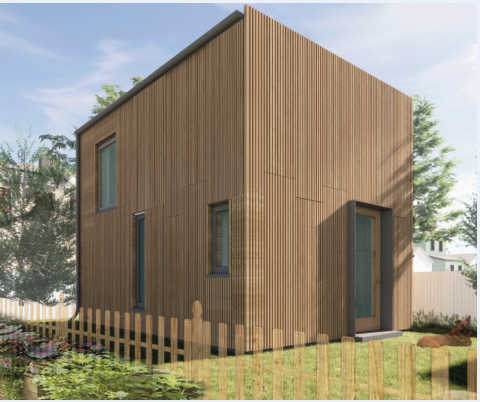
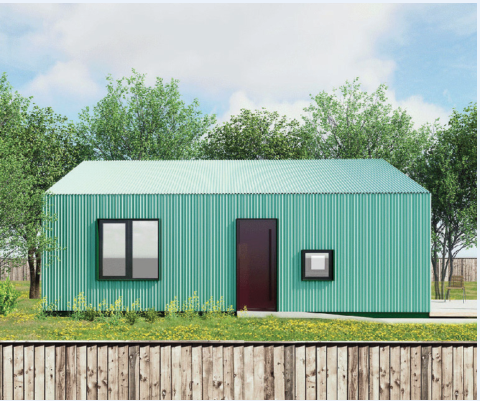
enable manufactured accessory dwelling units (ADUs) and to help legalize safe basement
apartments.
10Chapter Six: Reducing and Preventing Homelessness
Here, we focus on the connection between housing and homelessness. This includes efforts
to keep New Y orkers in their homes, such as an expansion of the Right to Counsel program.
It also includes plans to improve services for residents experiencing homelessness to provide
faster transitions into permanent housing, and plans to increase intensive, specialized sup -
port to individuals living with serious mental illness and complex medical needs. While the
administration will release a dedicated homelessness plan within the next year, this chapter
affirms the necessity of collaborating across teams and agencies to reduce and prevent
homelessness in New Y ork City.
Chapter Seven: Investing in Strong Jobs and Innovation
This chapter focuses on how the Cityâs historic housing investments lead to the creation
of strong jobs and must be paired with protections for workers as well. This chapter lays
out our plan to implement the Construction Justice Act and explore how to expand project
labor agreements to more developments in the Cityâs affordable housing pipeline. It also
includes improvements and innovation in construction, including code reform and modular
construction techniques. This chapter also establishes the Cityâs first Mayorâs Committee
on Construction Safety and an Affordable & Efficient Code Reform Task Force to identify
areas of the Construction Codes that can be reformed to encourage more and better housing
development without compromising safety.
Achieving Public Excellence
- The administration aims to build 200,000 new affordable homes and preserve 200,000 existing units over the next decade.
- The SPEED Task Force reforms intend to cut development time by eight months for standard projects and up to two years for those requiring zoning changes.
- Production goals will scale incrementally, starting with 14,000 new homes in FY27 and reaching 21,000 annually by FY31.
- Success depends on creative cost-reduction, new capital resources for 100% affordable projects, and cross-subsidizing units through mixed-income tools.
- The plan seeks to reframe the public discourse around housing from one of anxiety to one of hope and stability for all New Yorkers.
This administration strives to build a new coalition of New Yorkers for whom these loaded words can inspire hope and possibility.
Chapter Eight: Achieving Public Excellence
In this chapter, we detail how public excellence from City government can make our housing
programs even more effective and efficient in serving New Y orkers. This includes efforts to
reduce vacancies in supportive housing, to connect homeless New Y orkers to housing more
quickly, and the process reforms from the Streamlining Procedures to Expedite Equitable
Development (SPEED) Task Force â a comprehensive effort to speed housing delivery from
pre-development to lease-up â which will cut the development time for all affordable hous-
ing project by eight months, and projects requiring zoning changes by as much as two years.
Public testimony at the Bronx Rental Ripoff Hearing on March 11, 2026.
Credit: Mayoral Photography Office
11Altogether, the strategies in this plan are
designed to help us scale our work towards
meeting the most ambitious affordable
housing production goals any mayoral
administration has set to date: building
200,000 new affordable homes over the next
ten years, while simultaneously preserving
and stabilizing 200,000 existing homes over
the same period. Scaling to these levels of
affordable housing production will not be
easy and cannot be done overnight: we have
set a goal of creating over 14,000 new homes
in FY27 , ultimately scaling incrementally to
reaching over 21,000 new homes per year
by FY31. Our ability to reach this ambitious
goal will require the City to think creatively
about how to bring costs down, stretch our
dollars further, and partner with all levels of
government to unlock new resources.
As discussed further in Chapter 4, this will
also require new capital resources to scale
100% affordable projects, new and more
effective mixed-income tools that allow us
to cross-subsidize affordable homes with
market-rate units where possible, and new
land-use strategies that help us deliver af -
fordability in more neighborhoods over time.
Our ambitious preservation and stabilization goals will require equally ambitious strate -
gies to help ensure existing homes â whether
they be public housing, Mitchell-Lama, or
privately-owned â can be put on more sound
physical and financial footings. The Mamdani
administrationâs first Executive Budget in-
cludes new funding to start scaling this work
across the city, and proposals like the SPEED
reforms demonstrate our early commitment
to tackling the bureaucratic barriers that add
unnecessary time and cost to the develop -
ment of affordable homes.
New Y orkers have strong feelings about
everything, and perhaps especially about
the housing market. Our homes are where
we lay our heads at night, where we share a
meal with our loved ones. From arguing over
neighborhood boundaries to opining on the
best borough, for many of us, where we live
is an embedded part of our identity. Itâs no
surprise, then, that the words âaffordable
housing,â ârezoning,â âmy lease is up,â or
âNYCHAâ can cause a powerful reaction.
This administration strives to build a new
coalition of New Y orkers for whom these
loaded words can inspire hope and possibili-
ty. Block by block, this plan aims to usher in a
new era of housing stability for New Y orkers.
12What is Affordable Housing?
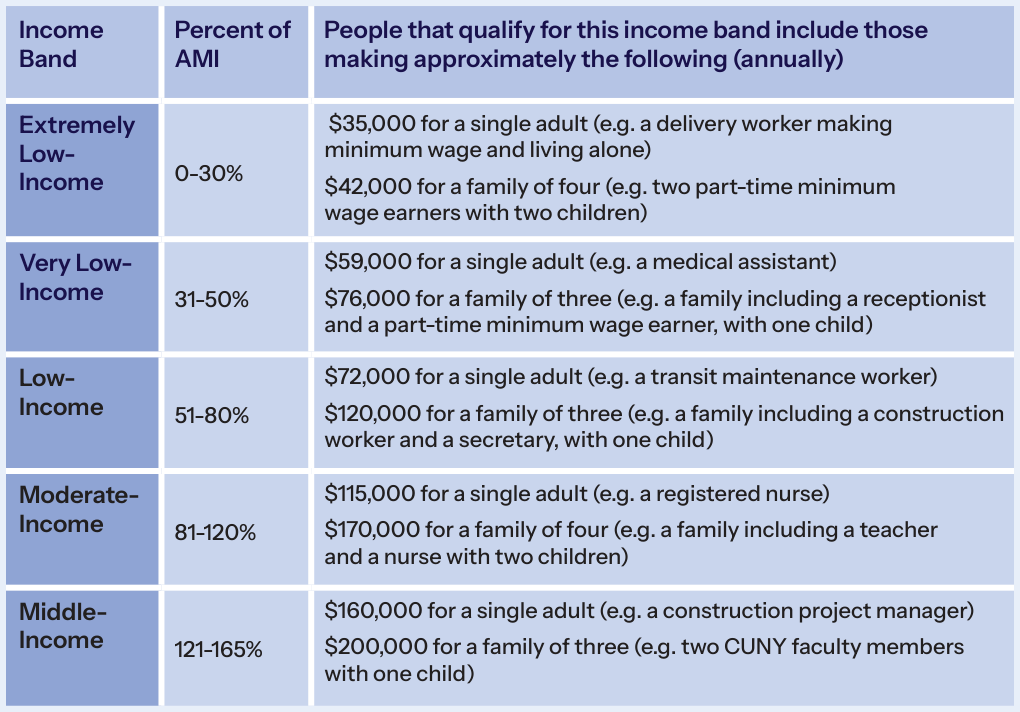
Housing is considered affordable if it costs about one-third or less of residentsâ incomes. In
this plan, we use the term âaffordable housingâ to describe housing that is regulated by the
government and which residents qualify for based on their income. We also use âlow-cost
housingâ to describe housing that is inexpensive but not necessarily income-targeted.
Both income eligibility and rent for City-financed affordable housing projects are based
Affordability Metrics and Tenant Rights
- Affordable housing eligibility is determined by Area Median Income (AMI), which is set at $152,700 for a three-person household in the NYC region for 2026.
- Housing programs categorize applicants into five income bands ranging from Extremely Low-Income (0-30% AMI) to Middle-Income (121-165% AMI).
- The majority of city-subsidized homes target households earning 80% of the AMI or less, covering professions like medical assistants and transit workers.
- Renters constitute nearly 70% of New York City's population, yet many face persistent landlord noncompliance and hazardous code violations.
- The city aims to modernize code enforcement to be more responsive, transparent, and aggressive against landlords who fail to maintain safe properties.
Rent in our city is too high â and too many people are not getting what they pay for.
on a measure called Area Median Income (AMI), which is defined each year by the federal
government. The 2026 AMI for the NYC region is $152,700 for a three-person household.
Applicants for affordable housing qualify based on what âincome bandâ they are in, deter -
mined by the householdâs income compared to that AMI, and adjusted for household size.
Rent for affordable housing is then set based on a percentage of that monthly income.
AMI helps us describe what type of household is eligible for the many different kinds of
affordable housing we build and preserve. It also ensures that affordable housing programs at
the federal, state, and city level have a common qualification metric so that they can be used
together.
The below chart provides illustrative examples of households associated with different
income bands. The vast majority of homes that New Y ork City subsidizes each year are
targeted to households earning 80% of AMI or less.
Income
BandPercent of
AMIPeople that qualify for this income band include those
making approximately the following (annually)
Extremely
Low-
Income0-30% $35,000 for a single adult (e.g. a delivery worker making
minimum wage and living alone)
$42,000 for a family of four (e.g. two part-time minimum
wage earners with two children)
Very Low-
Income31-50%$59,000 for a single adult (e.g. a medical assistant)
$76,000 for a family of three (e.g. a family including a receptionist
and a part-time minimum wage earner , with one child)
Low-
Income51-80%$72,000 for a single adult (e.g. a transit maintenance worker)
$120,000 for a family of three (e.g. a family including a construction
worker and a secretary, with one child)
Moderate-
Income8 1-1 2 0 %$115,000 for a single adult (e.g. a registered nurse)
$170,000 for a family of four (e.g. a family including a teacher
and a nurse with two children)
Middle-
Income121- 165%$160,000 for a single adult (e.g. a construction project manager)
$200,000 for a family of three (e.g. two CUNY faculty members
with one child)
13CHAPTER 1
Empowering
Tenants and
Strengthening
Enforcement
14CHAPTER 1
Empowering Tenants and
Strengthening Enforcement
Tenants are the majority in New Y ork City. Renters make up nearly 70% of the cityâs resi-
dents, and they are entitled to safe and habitable homes. Whether someone lives in public
housing or rents from a private landlord, safety and stability is only possible if tenantsâ rights
are clear and enforceable.
Too many people struggle with repeated noncompliance from their landlords for years,
without accountability for hazardous code violations. Meanwhile, families also face unlawful
and deceptive costs that drive up rents. Rent in our city is too high â and too many people are
not getting what they pay for.
Our administration is focused on empowering tenants with the tools they need to organize
with their neighbors, secure repairs directly from their landlords, and have a voice in housing
policy. This also means building a more responsive and efficient code enforcement system,
one that operates more swiftly across agencies to identify violations, require compliance,
and take corrective action if repairs are not made.
1.1 Improve housing quality and achieve public
excellence through strengthened code enforcement
The City will strengthen its inter-agency
processes for identifying housing code viola-
tions, make dealing with housing code issues
easier and faster for residents, make clearing
corrected violations easier for compliant
landlords, and take aggressive corrective
action against landlords who fail to keep up
their properties.
High-quality customer service is at the heart
of this administrationâs vision for New Y ork.
Both tenants and owners should expect a
housing code enforcement system that is
accessible, transparent, and responsive to
their inquiries. At the cityâs inaugural Rental
Ripoff Hearings (see more on p. 16), New Y orkers voiced concerns that the code en-
Empowering Tenants Against Bad Landlords
- The City administration is overhauling the housing code enforcement system to address opacity and frustration among residents.
- New technology and increased staffing at the HPD aim to hold 'bad-actor' landlords accountable while improving transparency for tenants.
- Tenant organizing is identified as the most effective tool for enforcement, as residents serve as the primary 'eyes and ears' for identifying building neglect.
- The 2026 Rental Ripoff Hearings collected testimony from over 1,600 New Yorkers regarding abusive fees, retaliation, and hazardous living conditions.
- The Mayorâs Office to Protect Tenants (MOPT) is using direct feedback from all five boroughs to bridge the gap between policy and the lived experience of renters.
No one is better suited to hold a negligent landlord accountable than the people who live with the problem every day.
forcement system was opaque and frustrat -
ing. There is also a strong desire to improve
communication and coordination between
organized resident coalitions and the Cityâs
code enforcement staff.
This administration is dedicated to address-
ing these concerns. As described in more
detail below, HPD will be better equipped to
serve New Y orkers promptly and transparent -
ly with additional staff and new technology.
These new resources will make it easier for
tenants to engage with code enforcement and
for the agency to hold persistently bad-actor
landlords accountable.
15Code enforcement is also most effective when tenants are organized; tenants are the eyes and
ears on the ground, alerting owners to problematic conditions early, and subsequently alerting
the City if owners fail to take action. That is why our efforts to empower tenants are deeply
intertwined with our efforts to improve code enforcement and housing quality. No one is better
suited to hold a negligent landlord accountable than the people who live with the problem
every day.
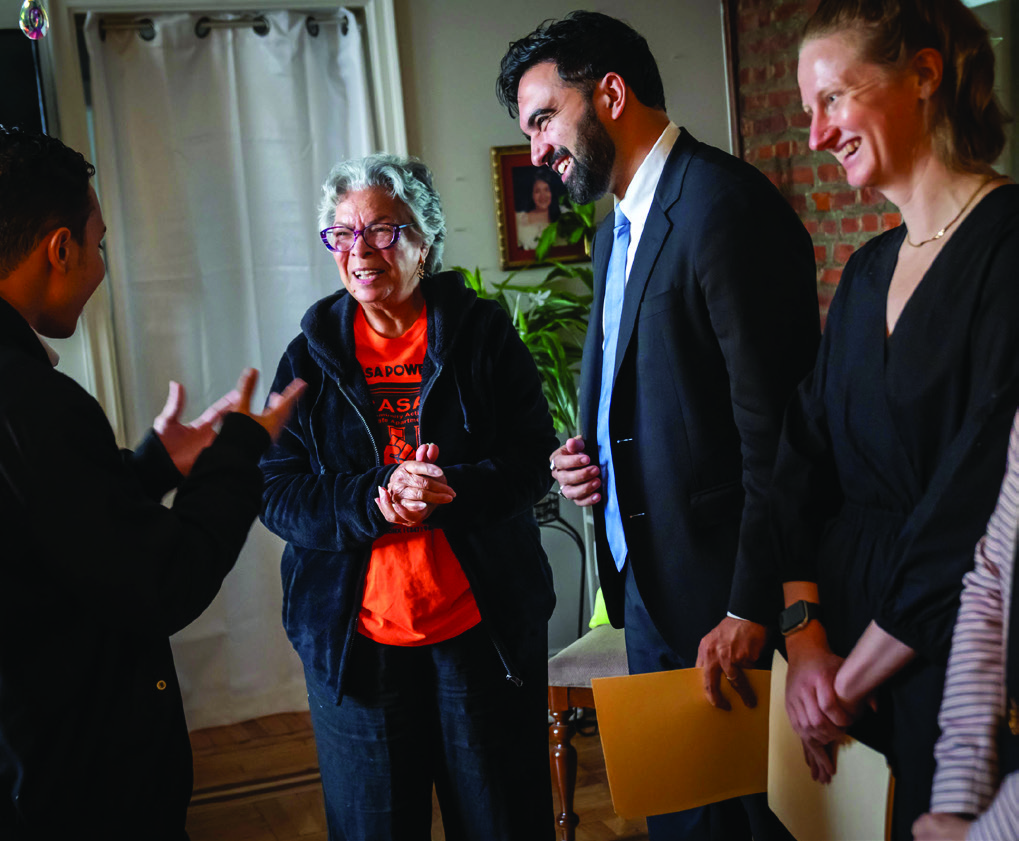
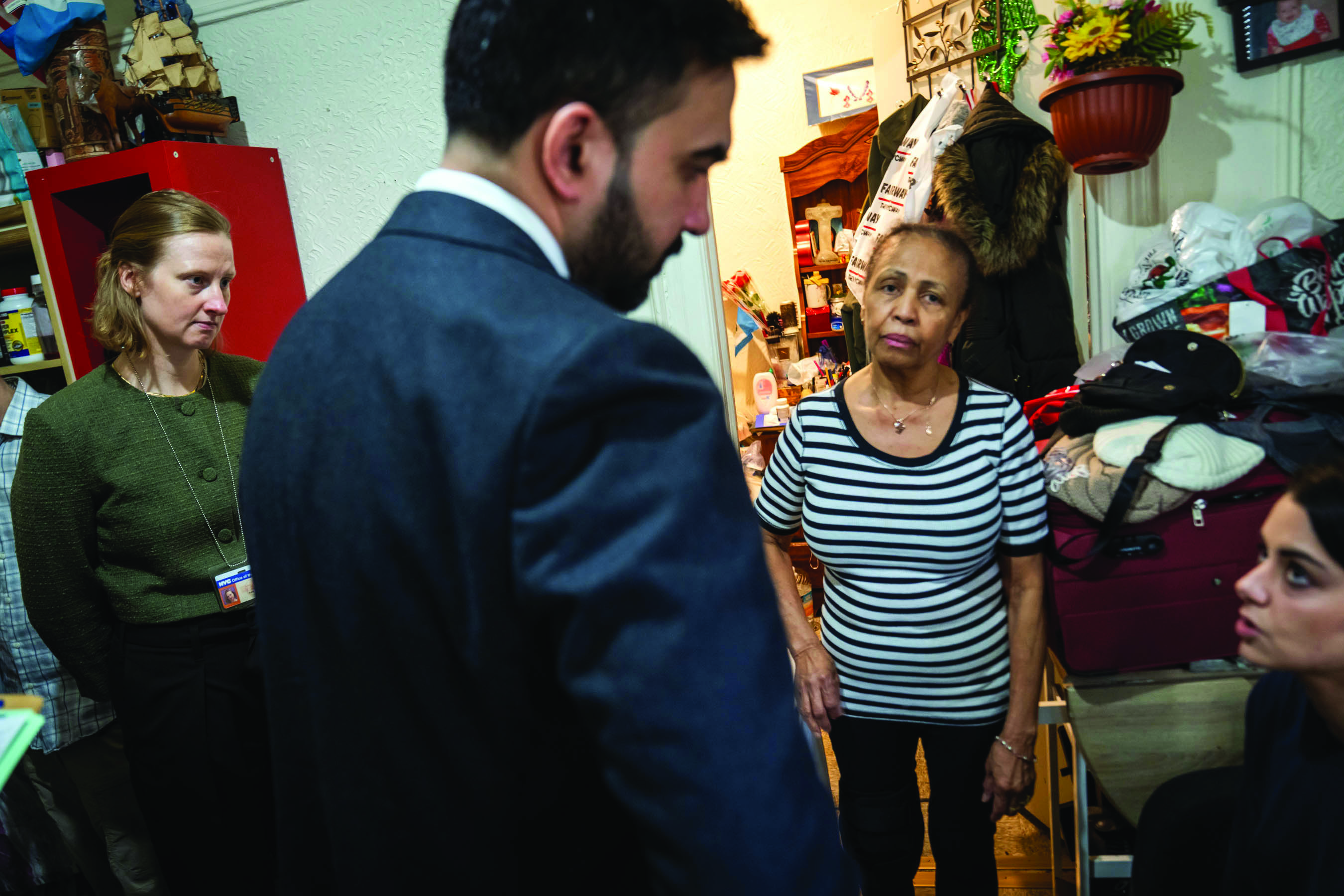
Mayor Mamdani and Mayorâs Office to Protect Tenants director Cea Weaver visit tenants of a
building owned by Emerald Equities. Credit: Mayoral Photography Office
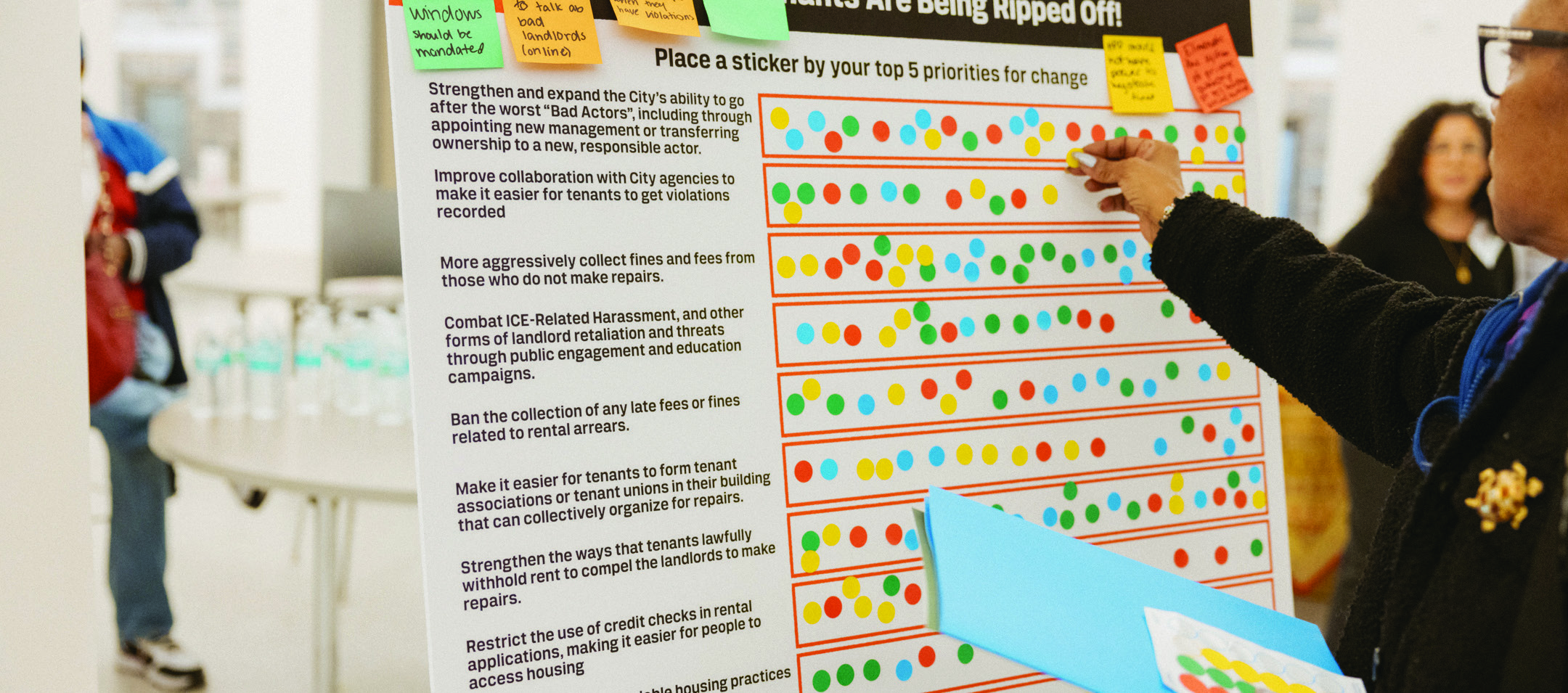
16Organizing the First Rental Ripoff Hearings
Between February and April 2026, the
Mayorâs Office to Protect Tenants (MOPT)
held a series of Rental Ripoff Hearings in each
borough. These hearings focused on abusive
landlord practices, deceptive fees, and ways in
which the City should strengthen housing and
building code enforcement. Participants had
one-on-one interactions with senior officials
from the Mayorâs Office, the Department
of Housing Preservation & Development,
the Department of Buildings, the New Y ork
City Housing Authority, the Department of
Finance, the Department of Social Services,
and other agencies to ensure that the Cityâs
leaders heard directly from New Y orkers.
Over 1,600 tenants testified either in-person
or online to share their experiences and rec-
ommendations. New Y orkers spoke of many
challenges â from frustration with City in-
spections to fears of retaliation for organizing
with neighbors to demand better conditions.
In the one-on-one sessions with the Mayor,
Commissioners, and other City leaders, partic-
ipants told stories of broken elevators, noxious
mold, and a lack of accountability.
MOPT is committed to ensuring that the testimony received helps close the gap between
New Y orkersâ everyday experiences and the Cityâs approach to improving tenant conditions.
â...Considering how much
weâre charged; these
conditions are not only
unlivable but unaccept -
able.ââ Bronx
âThe landlord doesnât
fix anything but raise the
rent every year. I feel
[that]Â have no rights â
only the landlords have
rights.ââ Staten IslandâWhen tenants follow
every recommended step
and still cannot get relief,
it raises serious concerns
about enforcement, ac-
countability, and access
to support.ââ Manhattan
âFamilies deserve to feel
safe, heard, and respected
in their homes.â
â BrooklynâI hope my testimony
contributes to meaningful
change â not just for my
family but for every tenant
in this city who is afraid
to speak up, afraid to call
311, or simply exhausted
from fighting for the right
to live safely in their own
home.ââ Queens
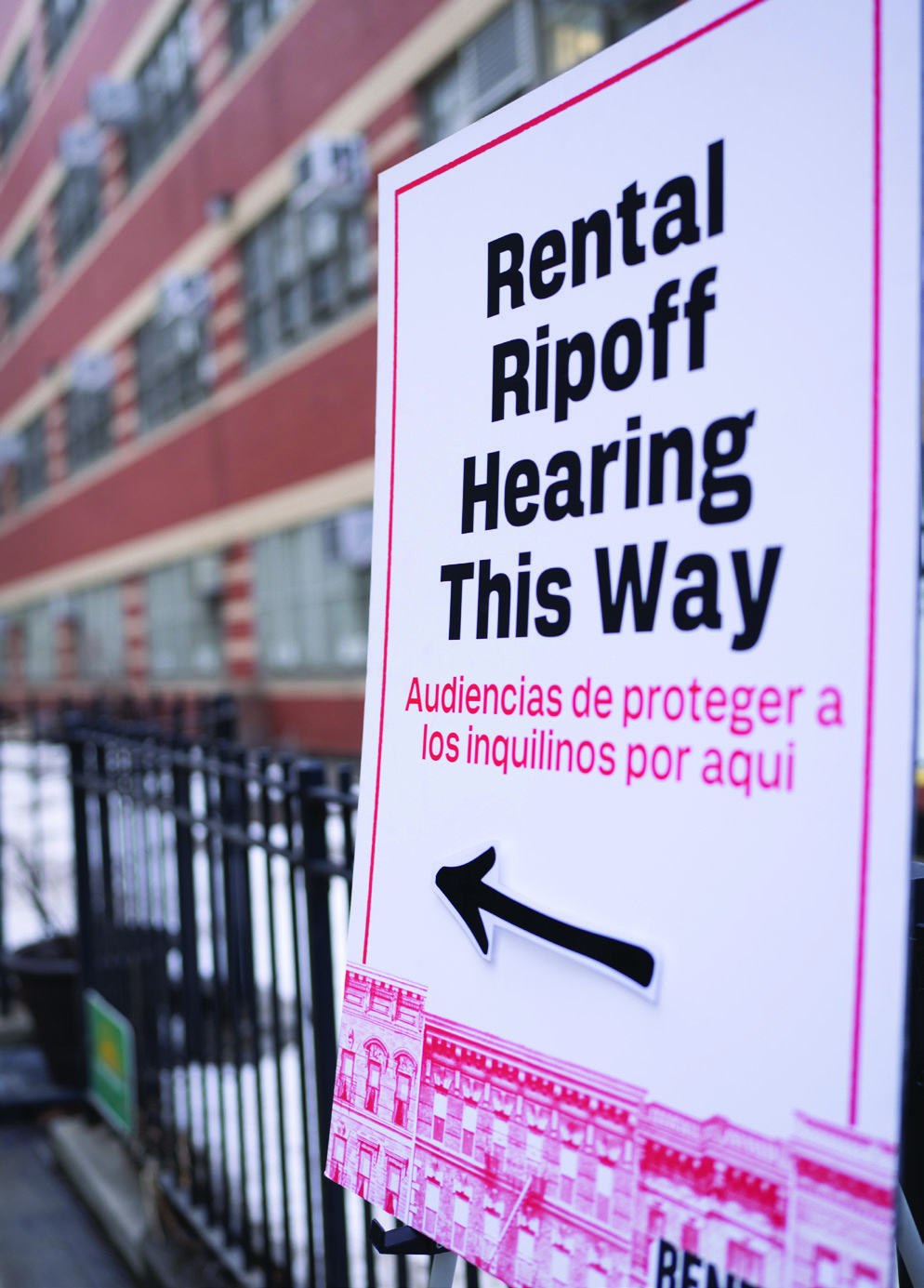
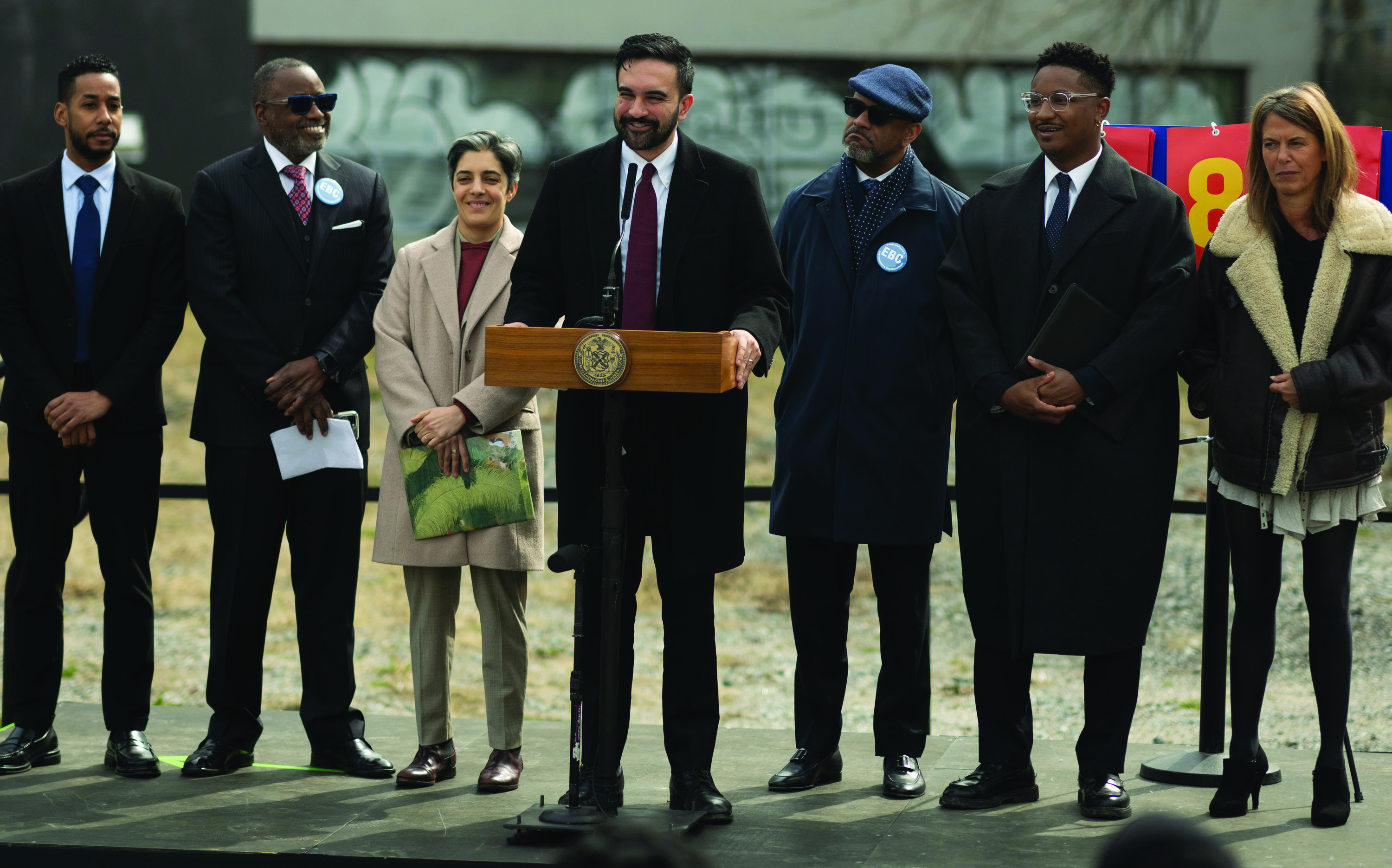
WHAT WE HEARD FROM NEW YORKERS:Directions to the Bronx Rental Ripoff Hearing
on March 11, 2026.
Credit: Mayoral Photography Office
17Fix the City: Targeted enforcement
against the cityâs worst landlords
A small group of persistent âbad actorâ land-
lords have willfully and routinely neglected
their buildings, despite ongoing and escalat -
ed code enforcement by the City and years
of tenant organizing. Tenants at the mercy
of these landlords have endured unsafe and
unhealthy living conditions for years, and in
some cases, generations.
That ends now. This moment requires an
intervention that is comprehensive, firm,
Fix the City Initiative
- The City will launch 'Fix the City' in 2026 to target landlords who speculate on buildings and persistently disregard necessary repairs.
- The program utilizes the 7A Program to legally remove negligent owners and property managers from day-to-day operations.
- HPD's Anti-Harassment Unit will coordinate with criminal prosecutorial offices to pursue charges against the city's worst property owners.
- The initiative aims to transfer distressed housing portfolios from bad actors to responsible preservation purchasers supported by tenants.
- Coordinated 'enforcement days' will involve multi-agency inspections of buildings where systemic issues affect at least a third of the units.
- Tenant unions will play a critical role in identifying underlying conditions and facilitating roof-to-cellar inspections with city agencies.
The goal will be to ensure that these buildings are transferred out of these bad actorsâ hands and conveyed to responsible preservation purchasers who are supported by both tenants and the administration.
swift, and focused on justice for tenants.
With increased funding for HPDâs signature
repair and enforcement programs, HPD will
introduce Fix the City, a dedicated program
to take enforcement actions on landlords
who speculate on buildings, persistently
disregard repairs, and refuse to improve or
change their business practices.
Bringing together the expertise and re -
sources of HPDâs Office of Enforcement and
Neighborhood Services with the commu-
nity-level engagement of MOPT and HPDâs
Partners in Preservation Program, Fix the
City will:
⢠Conduct roof to cellar inspections, sched-
uled with tenants through community
partners, in targeted buildings, to ensure
that City inspections accurately capture
distress.
⢠Aggressively use the 7A Program, through
which HPD can initiate legal action to
remove negligent owners and property
managers from day-to-day management.⢠Expedite HPDâs Emergency Repair Pro -
gram (ERP) to stabilize building conditions
by conducting repairs for immediately
hazardous conditions and diligently pur -
sue collections of fees for these repairs
through the HPDâs Housing Litigation
Unit.
⢠Direct HPDâs Anti-Harassment Unit to
coordinate with DOB, the Law Depart -
ment and criminal prosecutorial offices
like District Attorneys to pursue criminal
charges against the cityâs worst property
owners.
⢠Where appropriate, engage with lenders
to force compliance or immediately begin
foreclosure proceedings when landlords
refuse to comply.
⢠Work with the Office of Court Adminis-
tration to create an expedited litigation
process for cases brought to Housing
Court for the most serious issues related to
building conditions, including 7A proceed-
ings, lack of repairs for buildings subject to
vacate orders, and properties with build-
ing-wide Class C violations.
HPD will launch this program in 2026 and
pursue comprehensive investigations of at
least ten housing portfolios that have the
largest concentration of long-standing,
egregious violations. The goal will be to
ensure that these buildings are transferred
out of these bad actorsâ hands and conveyed
to responsible preservation purchasers
who are supported by both tenants and the
administration.
18Schedule interagency enforcement
days with coordinated tenantsâ
organizations
Tenants, organized with their neighbors
into unions, are best positioned to identify
underlying conditions (such as mold, leaks,
and pests) and report these conditions to
the building owner or manager before they
turn into full-blown enforcement emer -
gencies. When owners fail to respond to
an organized group of renters, the City will
mobilize cross-agency, roof-to-cellar en-
forcement days. MOPT will refer buildings
to HPD in collaboration with the DOB
Office of the Tenant Advocate and HPDâs
Partners in Preservation Program. Inspec-
tors from HPD, DOB, and the Department
of Health & Mental Hygiene (Health
Department) will carry out coordinated,
scheduled actions at portfolios where: ⢠Conditions are clearly systemic, affecting
at least a third of the units in a building or
building-wide mechanical systems;
⢠Tenants and/or legal service providers are
organized and have identified point-peo -
ple across the portfolio; and
⢠HPD has not already enrolled the building
in a special enforcement program.
In partnership with tenants or their rep -
resentatives, MOPT will work with HPD,
DOB, and the Health Department to sched-
ule full building inspections in advance,
leading to increased access to individu-
al units and tenant satisfaction.
Mayor Mamdani listens to a Bronx tenant at a Rental Ripoff hearing.
Credit: Mayoral Photography Office
The Power of Tenant Unions
- Tenant unions are organized groups of renters who advocate for collective interests, ranging from building repairs to state-level policy changes.
- Collective action mitigates the fear of individual retaliation and forces landlords or management to address issues they might otherwise ignore.
- Beyond housing advocacy, these unions foster civic engagement, leading to higher participation in local government and community voting.
- While some landlords resist organizing, the Mamdani administration has codified a 'Right to Organize' to protect tenants' ability to assemble and distribute information.
- The city is also addressing inefficiencies in the HPD inspection process, where missed appointments currently lead to closed complaints without resolution.
But there is power in numbers: tenantsâ unions provide a way to advocate for collective interests â when tenants come together as a group, it is easier to address shared issues.
19What is a Tenant Union?
A âtenant unionâ or âtenant associationâ is an organized group of most or all renters in a
building that come together to advocate for their collective interests. Tenants in these
types of organizations may work together to improve living conditions in their apartments,
negotiate directly with the landlord or managing agent, build social and community ties, and
advocate for local or state policy on behalf of all renters. These types of organizations have
a rich history, engaging tenants for well-over a century, with thousands of such tenant orga-
nizations in New Y ork City today. Some tenant unions organize multiple buildings together
â sometimes by geography (such as a neighborhood tenant union) or by shared ownership or
management (such as a portfolio of buildings owned by the same landlord).
Forming and maintaining a tenant union is one of the most effective ways New Y orkers
can protect their rights and advocate for higher quality in their homes. Tenant unions are a
powerful way to bring a landlordâs attention to issues in a building. Some tenants may feel too
isolated or afraid of retaliation to make complaints on their own. Even when tenants do raise
issues, they are sometimes ignored. But there is power in numbers: tenantsâ unions provide a
way to advocate for collective interests â when tenants come together as a group, it is easier
to address shared issues, get attention from landlords, management, or lawmakers, take
action in Housing Court, or secure support from City agencies.
Tenant unions also create stronger community support networks and bring neighbors
together to help build a more equitable future. They contribute to increased participation
in civic life â something that goes hand-in-hand with increased equity and reduced income
inequality. Tenant union members are more likely to participate in community board meet -
ings, local government hearings, and consistent voting.
Tenant unions can be good for property owners, too! Organized groups of residents provide
a predictable structure for building management and residents to come together and discuss
issues of mutual concern. The neighborly ties that tenant unions promote can contribute to
collective care for the building overall. But some landlords attempt to interfere with tenantsâ
rights to organize. In response, the Mamdani
administration created a âRight to Orga-
nizeâ letter directed to property owners
reminding them of the rights tenants have to
assemble in their homes, to knock on their
neighborsâ doors to discuss building issues,
and to distribute information about tenant
organizing.
The administration will continue to support
the development of tenant unions and work
collaboratively with them to hold negligent
landlords accountable and ensure that ten-
ants have a voice in public policy.
Mayor Mamdani encourages tenants to get
organized in the Bronx on April 29, 2026.
Credit: Mayoral Photography Office
20Improve tenant communication and
scheduling when HPD investigates
complaints and violations
At the Rental Ripoff Hearings, many tenants
reported challenges around coordinating in-
spections in response to housing complaints.
Inspectors often arrive when residents are
not home, causing complaints to be closed
without notice. This generates frustration
and costly inefficiencies.
At the same time, HPD fielded 835,011 code
complaints in Fiscal Y ear 2025 â an 18%
increase over FY23. Many of them require
urgent responses in timeframes mandated
by the Cityâs Housing Maintenance Code.
Inspectors require the flexibility to respond
in real-time as needs arise.
Currently, when a tenant files a complaint
to 311 and provides a phone number, they
receive a text notifying them that the com-
plaint has been registered with HPD, and
once again when the complaint is resolved.
When HPD inspectors cannot gain access to
apartments, they notify tenants by leaving a
Modernizing Housing Code Enforcement
- HPD is replacing an ineffective physical card system with automated text messaging and online scheduling to reduce wasted inspection visits.
- Starting in 2026, HPD will treat every heat complaint as an individual case rather than closing all building complaints based on a single unit's status.
- The shift to individual heat complaint tracking addresses the technical reality of unit-by-unit electric heating systems and aims to rebuild tenant trust.
- A new task force involving city agencies and stakeholders will convene in 2026 to overhaul the outdated Housing Maintenance Code.
- Reform priorities include modernizing property registration, improving proactive enforcement programs, and removing costly, unnecessary safety requirements.
- The initiative seeks to balance efficient violation clearance for 'high-road' landlords with more responsive service for frustrated tenants.
Calling 311 only to have your complaint disappear minutes later with no explanation builds resentment and frustration.
physical card that instructs the household to
follow up with HPD by phone to schedule a
follow-up appointment. We heard from many
tenants who indicated that this system does
not work â they do not receive the notice or
they do not take the time to make the call.
There is not broad uptake of this policy.
In order to reduce barriers to re-scheduling
and improve communication with New
Y orkers, HPD and 311 will implement new
systems that allow tenants to schedule
re-inspections. Starting in the fall of 2026,
when an inspector is unable to gain access,
tenants will receive an automated follow-up
text (if they provide a phone number) that
allows them to schedule an appointment. In a later phase of this initiative, this text will
include a link to an online system to handle
scheduling.
These changes will significantly reduce
inspection visits that are wasted because of a
lack of access, increase trust and satisfaction
from tenants, resolve complaints faster, and
clear violations for high-road landlords more
efficiently.
Strengthen how HPD responds to
heat complaints
Heat and hot water issues account for 35%
of all HPD-related 311 calls, with inspec-
tors fielding over 300,000 complaints in
2025. To manage this volume, HPD has
historically linked complaints that come
from the same address â even if multiple
tenants made separate 311 calls. As a result,
the inspector who responds has informa-
tion about only the initial complaint. If the
tenant who made the complaint isnât home
at the time of inspection or indicates that
heat has returned, all heat complaints at the
address are closed.
This system is inadequate: problems with
building infrastructure may mean that some
apartments have heat restored while others
do not â especially as New Y ork transitions
to electric building systems where heat
conditions may be unit-by-unit (rather
than building-wide). Even when the issues
are resolved, the lack of follow-up with the
resident(s) can erode trust: calling 311 only
to have your complaint disappear minutes
later with no explanation builds resentment
and frustration.
To address these concerns, HPD will inves-
tigate every heat complaint as an individual
case starting on October 1, 2026.
21Convene key agencies, legislators,
and stakeholders to update the
Housing Maintenance Code and
enforcement systems
Comprehensive code enforcement reform
will also require a deeper investigation into
which requirements are outdated or ineffec-
tive, diverting time, attention, and crucial
resources that should be focused on the
highest priority health and safety needs of
New Y orkers.
Starting in the summer of 2026, MOPT will
convene key agencies, Council Member
Pierina Sanchez, Chair of the Housing &
Buildings Committee, advocates, building
owners, multi-family lenders, and other
stakeholders to take on comprehensive
Housing Maintenance Code enforcement
reform. Building on the testimony received
at the Rental Ripoff Hearings, the group
will take a close look at systems and re -
quirements and make recommendations for
code enforcement reform toward efficiency,
cross-agency collaboration, and proactivity.
Priorities will include: ⢠Modernizing the property registration
process and access to owner information
â both to assist inter-agency work and for
public transparency
⢠Improving the Underlying Conditions
program, which allows HPD to perform
proactive enforcement
⢠Changing the Owner Self-Certification
program to ensure fair practice and strong
communication for tenants and owners
⢠Updating criteria and communication
related to the Alternative Enforcement
Program (AEP)
⢠Bringing pest-control requirements in line
with the time and repeated treatments that
are necessary to correct condtions
⢠Removing unnecessary requirements that
do not increase safety but are costly for
owners and the City to enforce
These efforts will complement the adminis-
Reforming Housing Court and Tenant Rights
- The administration is implementing upstream interventions to prevent needless eviction filings caused by administrative delays and rent arrears.
- Funding for the 'Right to Counsel' program will be increased starting in Fiscal Year 2028 to provide more households with legal representation.
- The city plans to expand the list of 'rent-impairing violations' that allow tenants to legally withhold rent for hazardous living conditions.
- The Mayorâs Office to Protect Tenants (MOPT) has been re-established and empowered to coordinate tenant protection across all housing types.
- New initiatives like 'Rental Ripoff Hearings' and 'Organize NYC' aim to gather direct feedback from renters to shape future housing policy.
The list of rent-impairing violations has not been updated in decades, and many serious violations that threaten New Yorkersâ health and safety are not considered 'rent impairing.'
trationâs and City Councilâs efforts to reform
design and construction requirements for
new housing, described in Chapter 7 .
221.2 Implement strategies to reduce eviction cases
and secure repairs faster in Housing Court
Too many tenants receive eviction notices
every month, and Housing Court cases can
be lengthy and frustrating for both tenants
and building owners. Many non-payment
eviction cases are filed because of rent
arrears stemming from administrative issues
that should be resolved sooner. Meanwhile,
cases can linger for years, putting tenantsâ
safety at home in jeopardy or ownersâ mort -
gages at risk.
MOPT is coordinating with HPD, DSS, and
other City agencies to improve upstream
interventions to prevent the filing of need-
less eviction cases. These interventions
include existing programs, such as the Office
of Civil Justiceâs CityFHEPS diversion pilot, as well as new proposals that would connect
tenants and owners of affordable and sup -
portive housing to financial assistance more
efficiently. These changes will decrease the
number of eviction filings and ensure that
Housing Court resources are directed to the
most complex and urgent cases.
As described in more detail in Chapter 6,
the administration is also strengthening
access to legal representation for tenants
facing eviction. New funding for the âRight
to Counselâ program beginning in Fiscal
Y ear 2028 and continuing annually will allow
legal providers to hire additional lawyers and
serve more households facing eviction in
Housing Court each year.
Mayor Mamdani was the first Mayor to visit an operational Housing Court in New York City
history. Credit: Mayoral Photography Office
23Finally, MOPT and HPD will review use of
the ârent-impairing violationâ defense in
Housing Court. Under this defense, tenants
can use the existence of certain uncorrect -
ed violations, known as ârent-impairing
violations,â as a justification to withhold
rent. In order to use this defense, tenants
are required to deposit monthly rent to an
escrow account in Housing Court. The list
of rent-impairing violations has not been
updated in decades, and many serious viola-
tions that threaten New Y orkersâ health and safety are not considered ârent impairing.â
To help tenants raise these dangerous, un-
corrected violations in Housing Court, HPD
will propose an expansion of the types of vi-
olations that justify rent withholding; as part
of this rulemaking process, HPD will hold
a hearing for both tenants and owners to
weigh in. MOPT will also launch a tenant
education campaign to ensure that tenants
understand how to use this tool properly.
1.3 Enhance accountability and affordability through
tenant engagement and civic participation
On the first day of this administration, Mayor
Mamdani re-established the Mayorâs Office
to Protect Tenants (MOPT). This office,
created in 2019 but subsequently deprior -
itized, is now tasked with coordinating the
Cityâs activities to protect tenantsâ rights and
improve the quality of housing for renters.
MOPT works with all tenants, whether their
home is rent-stabilized, unregulated, or in
public housing.
We reintroduced MOPT to New Y orkers by
organizing Rental Ripoff Hearings in all five
boroughs (see more on p. 16). These hearings
show how this administration is bringing
City government directly to New Y orkers to
hear unfiltered, honest feedback and using
that feedback to shape public policy.
Streamline tenantsâ rights
communication and outreach
through the Mayorâs Office to
Protect Tenants
New Y ork City has a robust and de -
cades-long commitment to supporting
tenantsâ rights and civic engagement through
initiatives like the Partners in Preservation
program, the Anti-Harassment Tenant
Protection legal services program, and the Public Engagement Unitâs Tenant Helpline.
In May 2026, the Administration launched
âOrganize NYC,â a new, volunteer-led ini-
Empowering New York City Tenants
- The Mayor's Office of Public Trust (MOPT) will centralize tenant protection efforts by coordinating communication, outreach, and training strategies across multiple city agencies.
- The administration aims to help thousands of tenants form associations to negotiate repairs and potentially facilitate the transfer of distressed buildings to responsible owners.
- A major educational campaign will focus on 'Good Cause Eviction' protections, informing 1.5 million market-rate tenants of their new legal rights established in 2024.
- The city seeks to revitalize NYCHA Resident Associations, which currently suffer from low engagement with voter turnout typically ranging between only 3% and 5%.
- The 'NYCHA in Your Neighborhood' initiative, launched in 2026, provides local forums for residents to receive one-on-one assistance with repairs, safety, and social services.
These tenant associations will play a critical role in strengthening the Cityâs ability to proactively address unsafe living conditions and even facilitate transfer of distressed buildings to more responsible owners.
tiative to give thousands of New Y orkers the
trainings and resources they need to orga-
nize with their neighbors and get involved in
shaping public policy where they live.
MOPTÂ will streamline the Cityâs tenant
protection efforts by coordinating these
projects under one comprehensive com-
munication, outreach, and training strategy.
MOPT will:
⢠Bring renewed focus, attention and
support from City Hall to NYCâs Tenant
Helpline. In partnership with the Public
Engagement Unit (PEU), MOPT will
streamline and strengthen the Cityâs
response to issues that tenants face, to
better tackle the problems that tenants in
New Y ork City face today.
⢠Coordinate tenant organizing campaigns
with the Office of Mass Engagement,
PEUâs Tenant Support Unit, the Partners
in Preservation program, and the Office of
the Tenant Advocate at the Department
of Buildings (DOB). We will support
thousands of tenants to form tenant asso -
24ciations in the buildings and negotiate with
their landlords for repairs, decision-mak -
ing, and input about their buildings. These
tenant associations will play a critical role
in strengthening the Cityâs ability to pro -
actively address unsafe living conditions
and even facilitate transfer of distressed
buildings to more responsible owners.
⢠Conduct widespread Know Y our Rights
campaigns about âGood Cause Evictionâ
protections, which are new rights estab -
lished by New Y ork State in 2024 for the
1.5 million New Y orkers living in previously
unregulated (or âmarket rateâ) housing.
The campaigns will ensure that the New
Y orkers protected by âGood Causeâ know
what they need to do to enforce their
rights with their landlord and in Housing
Court.
Boost participation in NYCHA
Resident Associations
NYCHA residents benefit from a unique and
meaningful resident leadership and gover -
nance structure. From Resident Associations
at the development level to the Citywide
Council of Presidents (CCOP), NYCHA
residents are offered structured opportuni-
ties for significant input and decision making
in their homes.
NYCHAâs public housing residents are
represented by approximately 200 Resident
Associations. However, elections for Resi-
dent Association members typically see only
3-5% voter turnout, and only a small number
of residents regularly attend Resident Asso -
ciation meetings. Opportunities to engage in
a meaningful way can help NYCHAÂ residents
be more closely connected to their neigh-
bors and offer clarity about important NY -
CHA processes and services NYCHAÂ offers
to residents. Through a partnership between NYCHA
and City Hall, the Mamdani administra-
tion will encourage NYCHA residents
to participate more fully in their Resident
Associations and communities. Resident
Association meetings are critical spaces for
debate and discussion about public housing
in New Y ork City. The administration will
work together with NYCHA to encourage
increased voter turnout and participation in
Resident Association meetings.
Inaugurate âNYCHA in Y our
Neighborhoodâ Engagements
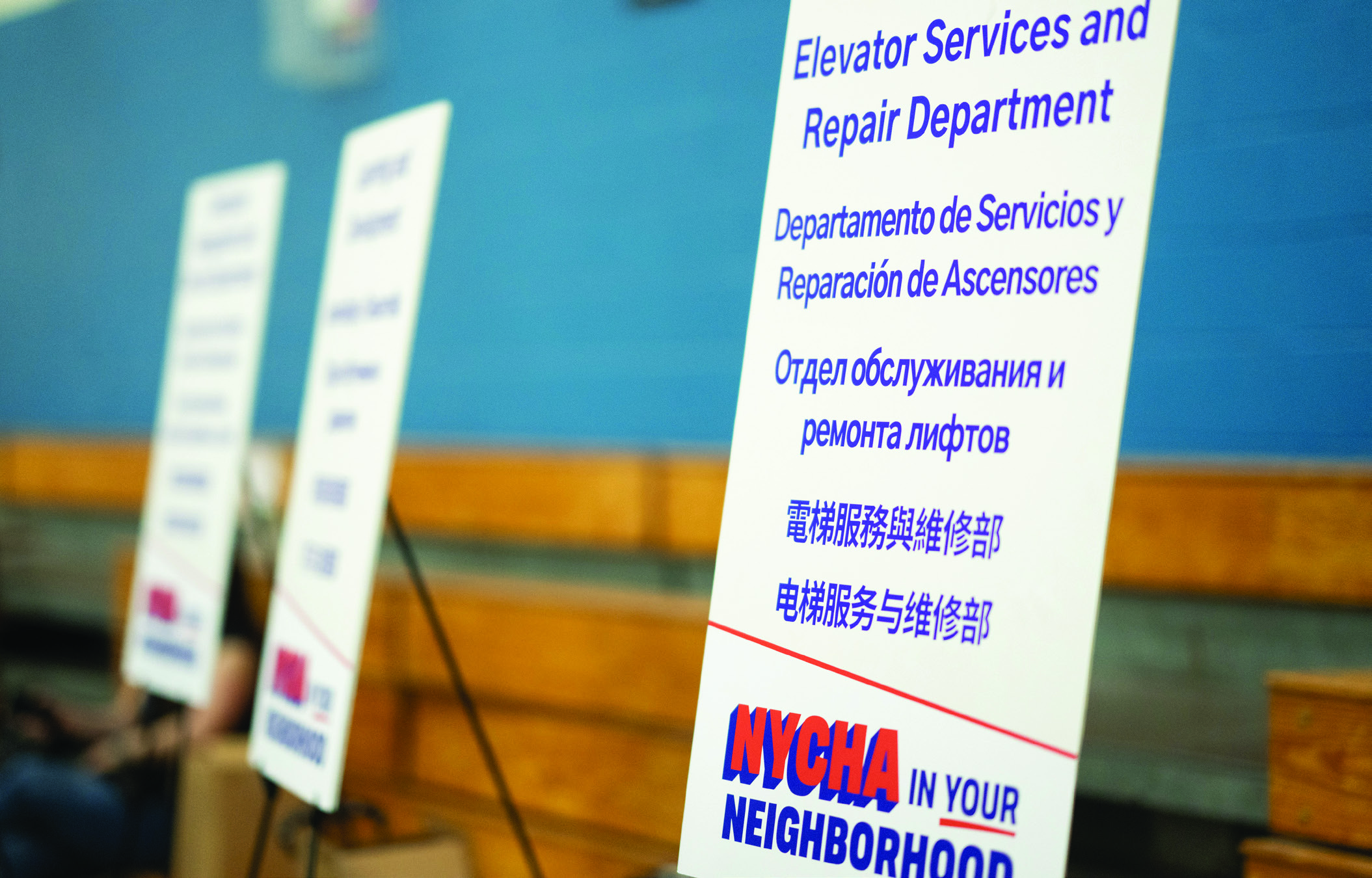
As part of its commitment to meet New
Y orkers where they are, our administration
and NYCHA launched âNYCHA in Y our
Neighborhoodâ in May 2026. This new
series of local forums will continue NYCHAâs
commitment to resident engagement by
connecting residents to in-person support
from NYCHA for any individual housing
issues and provide access to services from
multiple City agencies.
At each event, senior NYCHA represen-
tatives lead small group discussions on a
variety of policy topics, including but not
limited to heat, pests and waste, elevators,
mold, lead, and public safety. NYCHA staff
also host resource tables to provide resi-
dents with one-on-one assistance regarding
apartment repairs, tenancy concerns, envi-
ronmental issues, and more.
Representatives from multiple City agencies
will also be available to connect residents to
NYCHA Housing and Immigrant Outreach
- The city is launching a Critical Repairs Initiative (CRI) modeled after the successful Mold and Leaks Ombudsperson Call Center.
- The CRI will address long-standing habitability issues such as structural damage, unusable fixtures, and severe floor or ceiling deficiencies.
- NYCHA is expanding the PACT program, which uses Section 8 funding to stabilize properties while maintaining city ownership and oversight.
- New 'Post-Conversion Resident Partnership Meetings' will be established to improve communication between tenants and private-sector management partners.
- A dedicated outreach strategy will be implemented to help immigrant communities navigate housing rights and access city services regardless of status.
- Interagency collaboration involving the Mayorâs Office to Protect Tenants aims to confront harassment and provide trusted housing resources.
CRI will serve public housing residents who are experiencing critical, long-standing conditions in their homes that impact habitability, including major structural damage, missing or unusable fixtures or cabinetry, significant floor or ceiling damage, or other serious deficiencies identified through inspection.
additional services and support, including
the Mayorâs Office to Protect Tenants,
the Department of Social Services, the
Department of Health and Mental Hygiene,
the Department of Y outh and Community
Development, the Department for the Aging,
and the New Y ork City Police Department.
25Launch a new Ombudsman Call
Center model for a new âCritical
Repairs Initiativeâ at NYCHA
NYCHAâs Mold and Leaks Ombudsperson
Call Center (OCC) provides dedicated sup -
port to NYCHA residents who are experi-
encing mold or leaks in their homes. Repairs
are completed by NYCHAâs Mold Response
Unit, a specialized case management team
that solely focuses on OCC cases. Since its
creation in 2019, the OCC has assisted nearly
30,000 NYCHA households. The OCC is
available for residents of buildings owned
and managed by NYCHA, as well as those
owned by NYCHA with private management
and those that transitioned through the
PACT program.
With new funding in the Mayorâs first Exec-
utive Budget, and modeled on the existing
OCC, NYCHA will create a Critical Repairs
Initiative (CRI) to serve public housing
residents who are experiencing critical,
long-standing conditions in their homes that
impact habitability, including major struc-
tural damage, missing or unusable fixtures or
cabinetry, significant floor or ceiling damage,
or other serious deficiencies identified
through inspection. CRI will expand upon
the OCCâs effective model to improvements
beyond mold and leaks. (This parallel initia-
tive will be executed and governed entirely
separately from the Baez consent decree that
originally established the OCC for mold and
leaks only.)
Under CRI, a NYCHA resident experiencing
one of these critical, long-standing repair
issues can call the OCC and expect clear
communication and stronger case manage -
ment to ensure that repairs are completed. Deliver deeper NYCHA resident
engagement at PACT developments
after conversion
To improve conditions for NYCHA residents
despite decades of federal disinvestment,
NYCHA taps into a more stable funding
source through the Permanent Affordability
Commitment Together (PACT) program,
which converts properties from Section 9
to Section 8 via RAD. Residents who live
in PACT developments receive compre -
hensive improvements, enhanced property
management by private-sector partners, and
expanded on-site social services. At PACT
developments, NYCHA maintains owner -
ship and oversight while a management team
is responsible for construction and day-to-
day management.
While NYCHA and PACT partners conduct
intensive engagement throughout planning,
conversion, and construction, more will be
done to foster an effective, collaborative
relationship between residents and PACT
partners.
To address this issue, NYCHA and City
Hall will launch âPost-Conversion Resident
Partnership Meetingsâ, delivering expanded
outreach at PACT developments through
resident meetings and devoted resources
from the Mayorâs Office to Protect Tenants.
NYCHA will also continue to provide
detailed reporting on the PACT program
to maintain transparency about work order
requests at PACT developments.
26Support New Y orkâs immigrant
communities with dedicated,
intensive outreach
Immigrant New Y orkers have unique chal-
lenges engaging with government and often
rely on informal and community networks
for housing support. This can lead to in-
complete information about tenantsâ rights
and a lack of uptake in City-offered services
â which are generally available regardless of
immigration status.
MOPT will work with the Department of
Housing Preservation and Development
(HPD), the Mayorâs Office of Immigrant
Affairs, the Commission on Human Rights,
the Interagency Response Committee (IRC),
and trusted community-based institutions to
confront harassment and ensure immigrant
New Y orkers have access to the housing
resources they need.
Preserving Affordability and Tenant Rights
- The HPD is launching targeted outreach in high-density immigrant neighborhoods like Sunset Park and Corona to educate tenants on housing rights and resources.
- New initiatives aim to protect tenants in small, unregulated buildings where legal protections are often weaker and landlord harassment is a risk.
- The City is threatening swift legal action against landlords who use immigration status as a tool for retaliation or discrimination.
- A new 'Expanded Energy Affordability Program' (EEAP) requires manual enrollment to help low-income residents offset rising electric heating costs.
- New York City has lost over 600,000 units with rents under $1,500 since 1993, making the preservation of remaining low-cost housing critical.
- Many rent-stabilized buildings are currently struggling with operating expenses that exceed revenue due to aggressive, highly leveraged acquisitions in previous decades.
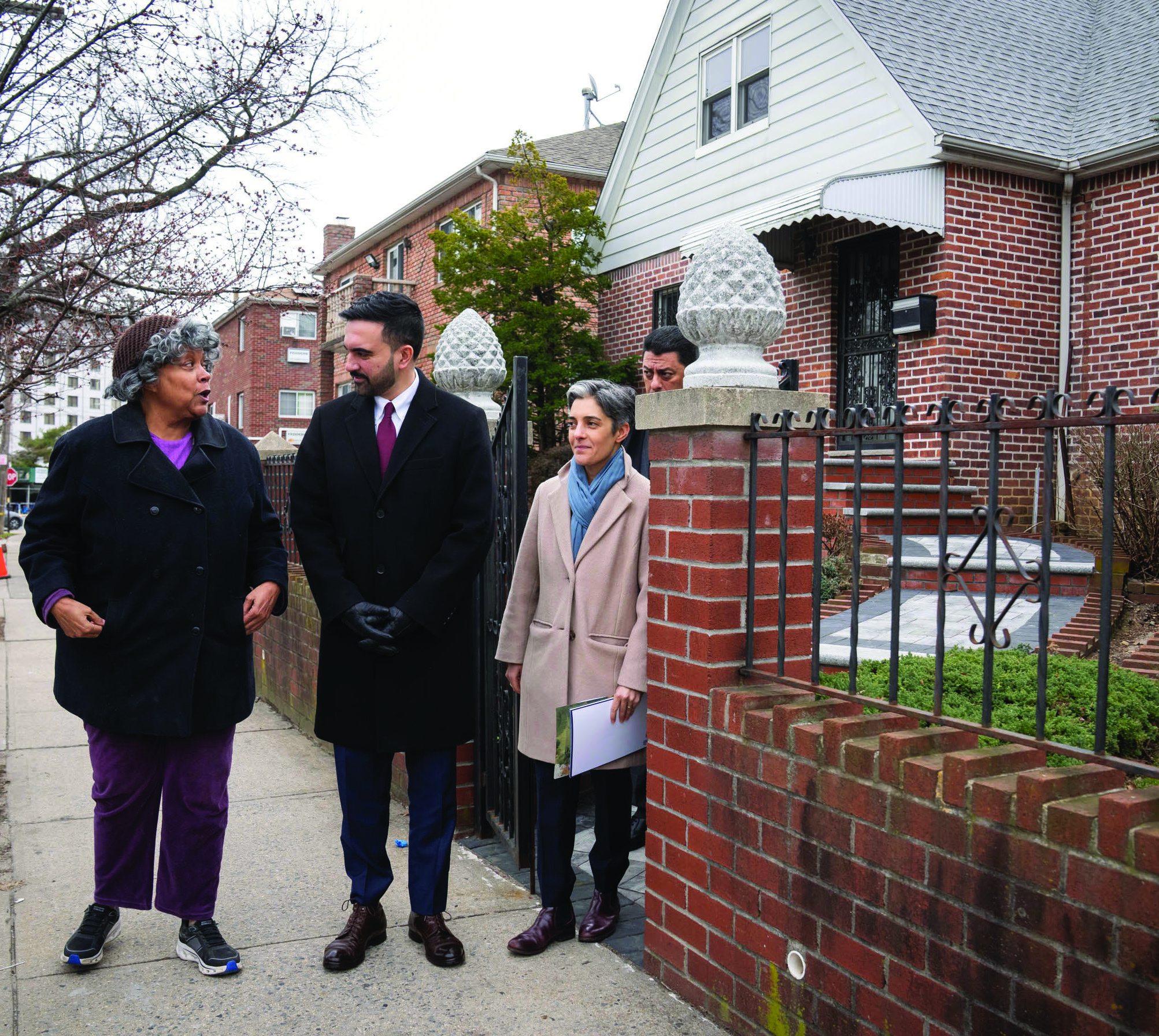
Where owners threaten to call ICE or otherwise retaliate against New Yorkers who report housing code violations based on their immigration status, the City will take swift action to hold those landlords accountable.
As part of this effort, HPD will engage in
targeted outreach initiatives in neighbor -
hoods with a high density of immigrant New
Y orkers. Starting in two neighborhoods â
Sunset Park, Brooklyn and Corona/Elmhurst,
Queens â HPD will raise awareness about
housing rights and resources and develop
networks of solidarity that are capable of
implementing and enforcing tenant protec-
tions. The initiatives will include multilingual
efforts to help tenants navigate unsafe hous-
ing conditions, respond to landlord harass-
ment, and apply for affordable housing.
In many of New Y ork Cityâs low-density
immigrant neighborhoods, the housing stock
consists of small, unregulated buildings
with weaker tenant protections. HPD will
offer targeted classes, clinics, and informa-
tion campaigns to educate tenants about their housing rights and educate home -
owners and small landlords about tenant
rights. HPD will also share broader hous-
ing resources with homeowners and land-
lords to help access government resources
and services.
It is illegal to discriminate against tenants
based on their immigration status. Where
owners threaten to call ICE or otherwise
retaliate against New Y orkers who report
housing code violations based on their immi-
gration status, the City will take swift action
to hold those landlords accountable.
Drive enrollment in new energy
benefits programs to lower tenantsâ
utility bills
As more buildings install electric heating,
many tenants are facing higher electric
bills â driving up their total monthly housing
costs. In 2025, the Public Service Commis-
sion required utility companies to launch an
âExpanded Energy Affordability Programâ
(EEAP) to provide energy discounts to
low-income New Y orkers who struggle to
pay their monthly energy bills. While the
older Energy Affordability Program â which
serves 450,000 households annually â was
automatically matched to qualifying resi-
dents through HRA, the new EEAP requires
eligible New Y orkers to self-enroll.
The Mayorâs Office of Climate & Environ-
mental Justice (MOCEJ) and the Mayorâs
Office of Mass Engagement (OME) will
expand City-led communications on these
programs to drive enrollment in EEAP and
lower New Y orkersâ energy bills.
27CHAPTER 2
Preserving
Affordability
and Improving
Housing Quality
28CHAPTER 2
Preserving Affordability and
Improving Housing Quality
The cityâs supply of low-cost and regulated affordable housing is a vital but aging resource.
Every low-cost home matters â not only for current occupants, but also for future residents.
Yet rapidly rising costs have made it harder than ever to operate and maintain these buildings.
Approximately 365,000 homes are publicly supported, City-financed, and governed by
long-term regulatory agreements that ensure their affordability and oversight. In recent
years, many of these affordable housing developments have struggled as operating costs have
outpaced rents, and owners have faced ongoing challenges with rent collection.
Similar issues also confront parts of the unregulated, rent-stabilized housing stock. These
buildings differ in size, condition, and location across the five boroughs, and a small-but-
crucial subset of them are struggling with operating expenses that exceed rental revenue. In
many cases, rent-stabilized buildings still reflect the consequences of highly leveraged acqui-
sitions in the 2000s and 2010s, when gaps in rent-stabilization laws allowed investors to buy
these buildings based on aggressive assumptions about tenant turnover, displacement, and
rent growth.
Net Change in Monthly Rents for Rental Homes: 1993 â 2023
(Inflation-Adjusted and Shown in 2023 Dollars)
Over this 30-year period, New Y ork City has experienced a net loss of over 600,000
units with rents of $1,500 or less (in inflation-adjusted, 2023 dollars), emphasizing
the necessity of preserving and stabilizing our remaining low-cost homes.
Preserving New York's Affordable Housing
- NYCHA faces a staggering $78 billion backlog in capital repairs due to decades of federal disinvestment.
- The city administration plans to preserve or stabilize 200,000 existing homes through historic reinvestment and financial restructuring.
- A primary strategy involves lowering the four major operating costs for landlords: insurance, utilities, maintenance, and property taxes.
- Insurance premiums for city-financed rental units have tripled since 2018, rising from $600 to $1,800 per unit.
- The City is investing $100 million to launch a new insurance program by 2027 to stabilize building finances and redirect subsidies toward deeper affordability.
- Expansion of the Multifamily Water Assistance Program aims to provide relief for 75,000 low-income households facing rising utility costs.
Currently, for every $100 increase in annual insurance costs, the City must invest $1,200 in additional City capital subsidy when completing a new affordable housing project.
29And, of course, NYCHAâs 177 ,000 homes
face the consequences of decades of federal
disinvestment, which have left the Authority
with a backlog of over $78 billion in capital
repairs needed to address a range of condi-
tions.
Over the next decade, our administration
will make historic investments to stabilize
the cityâs current stock of regulated af -
fordable and low-cost housing, including
reinvesting in tens of thousands of NYCHA
homes â as described in detail in Chapter 3 â to ensure NYCHA is a 21st century
model of publicly-owned and stewarded,
permanently affordable housing. The result
will be 200,000 existing homes preserved
or stabilized with meaningful improvements
to existing housing conditions and stronger
building finances. The administration will
also launch innovative programs and expand
existing initiatives to address skyrocketing
operating costs, without compromising
affordability for renters who are struggling to
get by.
2.1 Lower the cost of operating existing buildings
The most important step to preserving our
existing low-cost housing is lowering operat -
ing costs. Operating costs are the bundle of
expenses that landlords incur to keep their
buildings running and, ideally, maintained
well for tenants. These costs for multi-family
buildings in New Y ork City have increased
significantly since 2020 â partially because
overall inflation has increased significantly,
and partially because certain expenses,
including insurance, have skyrocketed.
Our administration will use the Cityâs
investment and regulatory powers to lower
the burden associated with the four most
expensive operating costs for most build-
ings: insurance, utilities, maintenance and
repair, and property taxes. Lowering these
costs will benefit both struggling owners and
low-income tenants, who cannot afford to
shoulder significant rent increases on top of
their existing rent burdens.
Launch a new City-backed
insurance program
for regulated housing
The dramatic increase in insurance costs for
New Y ork Cityâs affordable and rent-stabi-
lized housing stock has placed growing strain on building finances and undermined the
Cityâs housing investments. From 2018 to
2025, annual insurance premiums for prop -
erty and liability coverage increased from
about $600 per rental unit to about $1,800
per rental unit in City-financed buildings.
This increase has caused financial distress
for buildings and owners of affordable and
rent-stabilized housing.
To address this problem, the City is investing
$100 million to back a new, lower-cost in-
surance program. The City expects to launch
the new program in 2027 with approximately
20,000 regulated homes, expanding to
100,000 homes in 2030.
In addition to stabilizing expenses for exist -
ing housing, this investment will also pro -
duce efficiencies for new affordable housing.
Currently, for every $100 increase in annual
insurance costs, the City must invest $1,200
in additional City capital subsidy when
completing a new affordable housing project.
Once the new insurance program reverses
recent cost trends, the City will have millions
of dollars more each year to subsidize deeper
affordability rather than subsidizing more
expensive insurance premiums.
30Expand water affordability benefits
for multi-family buildings
Water and sewer costs are another growing
and unpredictable operating expense for
affordable housing providers, and owners
of affordable housing have limited ability to
absorb sudden utility cost spikes.
In 2016, the Water Board created the Multi-
family Water Assistance Program (MW AP)
to provide some cost relief and predictability
for affordable housing. This year, the pro -
gram is expected to benefit 75,000 low-in-
come households â an increase from 48,000
households in 2025. Beyond 2026, the City
will continue to work with the Water Board
to provide operating cost relief for affordable
Modernizing Housing Maintenance and Incentives
- The Department of Buildings is streamlining facade repair requirements by extending inspection cycles and focusing sidewalk shed placement on truly hazardous conditions.
- A new pilot program will explore the use of human-monitored drones to conduct safer and more cost-efficient building inspections.
- The J-51 tax abatement program has been extended through 2036 to help owners fund major capital improvements and energy efficiency upgrades required by Local Law 97.
- The NYC Accelerator program provides end-to-end technical and financial support for building owners navigating decarbonization and tax filing processes.
- Data from the NYC Housing and Vacancy Survey indicates that low-cost, low-quality vacant units represent less than 1% of the total housing stock.
- The Unlocking Doors pilot program, which offers up to $50,000 for in-unit upgrades, has seen almost no engagement from owners of vacant rent-stabilized homes.
To date, there has been little to no engagement with the program and there are still no eligible, completed applications.
housing and find additional ways to manage
unpredictable water expenses.
Streamline façade repair
requirements
Following an 18-month study that concluded
in January 2026, the DOB will modernize
the process of facade inspection and
repair, which will help to reduce costs for
owners and stabilize our housing stock
while maintaining safety protections. Key
improvements will include, among many
initiatives:
⢠Focusing the placement of sidewalk sheds
on buildings with actually unsafe and
hazardous conditions
⢠Extending the baseline filing frequency
from every 5 years to every 6 years, and
allowing buildings that are fewer than 40
years old to complete a 12-year cycle for
more costly, hands-on inspections
⢠Developing a pilot program to explore po -
tential use of human-monitored drones to
qualify buildings for exemptions, allowing
safer and more cost-efficient inspections Incentivize investments in housing
quality and energy efficiency
The 2026 New Y ork State budget includes
provisions to extend and expand the J-51
program, which helps to address the cost
of major capital improvements and protect
long-term affordability through targeted tax
abatements. This extension runs through
2036, providing building owners with long-
term security to utilize the program for larger
capital projects that often take multiple
years to plan and complete.
In addition to helping multi-family rental
building owners make deferred health
and safety improvements, J-51 supports
low-to-moderate cost buildings and
residents of income-restricted co-ops
and condos in paying for energy efficiency
and decarbonization improvements to their
building so they can achieve Local Law 97
compliance and avoid costly penalties.
The NYC Accelerator program will as-
sist owners with end-to-end support
navigating the process, from identifying el-
igible upgrades and incentives to accessing
technical assistance, to securing bridge and
long-term financing needed to undertake
major capital improvements, and filing for
the J-51 tax abatement.
Workers take down a shed. Credit: Mayoral
Photography Office
31Making unused and underutilized apartments available for New Y orkers
Over the last several years, there has been significant public discussion about the possibility
that owners of rent-stabilized homes are keeping low-cost homes offline for extended
periods of time â with a range of narratives to explain why. The NYC Housing and Vacancy
Survey (NYCHVS), the only representative data source that captures information about the
entire supply of rent stabilized homes and their occupants, has shown that low-cost homes
are incredibly rare, very few of them are vacant, and, when they become vacant, they are
leased up quickly. Data from the 2021 and 2023 NYCHVS show that low-cost, low-quality
units represent less than 1% of our total housing stock.
Low-cost homes are, however, an incredibly important resource. The City launched the
Unlocking Doors pilot program to respond to concerns that owners could not afford the
necessary upgrades to rent low-cost, vacant, poor-quality units. After receiving no eligible
applications during the first round of the program, the City increased the money available for
in-unit upgrades to $50,000 per unit in 2025. To date, there has been little to no engagement
with the program and there are still no eligible, completed applications.
It is vital that any and all low-cost homes are available to New Y orkers in need. The City
remains ready to work with owners of any such homes to address housing quality challenges
that may prevent them from being rented.
Evaluate how property taxes are
calculated for majority rent-
stabilized buildings
While property taxes are generally deter -
mined by State law, the City is able to take
limited action on its own when calculating
property taxes for multi-family housing. For
example, since the State Legislature passed
Preserving New York's Housing Legacy
- The Housing Stability and Tenant Protection Act of 2019 has shifted the economics of rent-stabilized buildings, leading the Department of Finance to lower property tax calculations for 15,000 buildings.
- New York City is increasing capital funding for preservation programs by over 35%, totaling more than $2 billion for fiscal years 2027 and 2028.
- The administration aims to clear a massive backlog in the HPD preservation pipeline caused by staff shortages and surging demand from building owners.
- The Mitchell-Lama program, a cornerstone of middle-class affordable housing since 1955, currently oversees 44,000 city-supervised homes.
- Mitchell-Lama developments have reached a critical inflection point, requiring massive capital investments for aging infrastructure and sustainability upgrades required by Local Law 97.
The program is at an inflection point. Most developments are over 50 years old and are reaching their first major capital investment cycle, at a time when they need more than a typical moderate rehabilitation.
the Housing Stability and Tenant Protec-
tion Act of 2019, the economics of many
rent-stabilized buildings have changed. With
landlords no longer incentivized to harass
tenants out of their long-time apartments to
raise rents at turnover, purchases of majority
rent-stabilized buildings have decreased. In
turn, growth in the value of many of these
buildings has also decreased. In 2026, the Department of Finance (DOF)
recognized these altered values as part of
its annual property tax calculations. DOF
changed the assumed capitalization rate of
approximately 15,000 majority rent-stabi-
lized buildings. This change will mean that,
on average, majority rent-stabilized build-
ingsâ property taxes will be 1.3% less in FY27
than they would have been absent this new
capitalization rate.
Over the next year, DOF will explore ad-
ditional changes to how it calculates the
property taxes of majority rent-regulated
buildings.
322.2 Expand the scale and speed of existing
preservation programs
Double down on preservation
strategies that work
HPDâs preservation programs stabilize
existing affordable housing, provide tax
relief and capital subsidies to owners who
commit to long-term regulatory agreements,
and bring previously unregulated buildings
under public stewardship through ownership
transfers. Preservation has always been a
core part of HPDâs mission and is an import -
ant complement to strong enforcement. The
agencyâs preservation programs improve
tenantsâ lives where they live, right now.
But with consistent agency staff shortages
and surging demand from building owners
over the past several years, HPDâs preserva-
tion pipeline has grown at a pace and volume
faster and bigger than the agency could
support. Beginning in 2026, our administra-
tion will provide additional resources to this
central function of HPD to clear its backlog
of applications and take in new preservation
requests more quickly. The Mayorâs first
Executive Budget prioritized more than $2
billion in capital funds for HPDâs preser -
vation of existing low-cost and affordable
housing across FY27 and FY28, more than a
35% increase from the average in FYs 24-25.
This represents a historic commitment that
will allow HPD to preserve thousands of
affordable homes â preventing displacement,
maintaining community stability, and meet -
ing the needs of residents.Invest in Mitchell-Lama buildings
across New Y ork City
The Mitchell-Lama Program is a cornerstone
of New Y ork Cityâs affordable housing sys-
tem. Established in 1955 by New Y ork State,
the program provided low-interest mortgag -
es and property tax exemptions to incentiv -
ize the construction of limited-profit rental
and cooperative housing for middle-class
households. The program was hugely suc-
cessful, producing more than 130,000 homes
in the five boroughs between the mid-1950s
and the late 1970s.
Today, the City oversees approximately
44,000 Mitchell-Lama homes across 90 de -
velopments (New Y ork State supervises an-
other 48,000 Mitchell-Lamas). Two-thirds
of these City-supervised developments
are cooperatives, making the program the
keystone of affordable cooperative housing
in the country, a pioneer of mixed-income
development, and a model for resident voice
in building governance.
The program is at an inflection point. Most
developments are over 50 years old and are
reaching their first major capital investment
cycle, at a time when they need more than a
typical moderate rehabilitation. Beyond base
repairs to roofs, façades, elevators, kitch-
ens, and bathrooms, developments often
need a first-time replacement of plumbing,
electrical, heating, and hot water systems,
work that requires opening apartment walls
and remediating lead, asbestos, and other
hazards. Additionally, Mitchell-Lamas must
make sustainability investments under Local
Law 97 , including solar, hot water electrifi-
Preserving Affordable Housing Infrastructure
- The City is committing hundreds of millions of dollars in FY27 and FY28 to address physical distress in the Mitchell-Lama housing portfolio.
- A major rehabilitation of the Second Atlantic Terminal Housing co-op will modernize 300 homes using $38 million in public investment for energy and solar upgrades.
- The new TOOLS initiative will allow property owners to pool financial reserves to address immediate capital needs and rising operating costs.
- HPD is streamlining property tax exemptions and connecting tenants to financial aid earlier to prevent eviction proceedings and stabilize building finances.
- The administration is developing acquisition tools to transition distressed rent-stabilized portfolios to responsible landlords, community land trusts, or tenant cooperatives.
The portfolioâs capital needs are significant and risk accelerating without action.
cation, and roof insulation by 2035, and heat
pumps, wall insulation, and full electrifica-
tion by 2050.
33The portfolioâs capital needs are significant and risk accelerating without action. The City
will dedicate hundreds of millions of dollars across FY27 and FY28 specifically to address
physical distress in City-supervised Mitchell Lamas, which are expected to preserve upwards
of 2,800 units.
The City is also committed to taking a holistic, portfolio-wide approach to addressing the
capital needs and broader challenges facing this critical housing stock. The City will develop
a comprehensive set of tools to put the Mitchell-Lama portfolio on a more sustainable path.
34Second Atlantic Terminal Housing
In 2025, HPD and the New Y ork City Housing Development Corporation (HDC) closed
financing for the rehabilitation of Second Atlantic Terminal Housing Corporation, a City-su-
pervised Mitchell-Lama co-op in Fort Greene, Brooklyn. The project includes three residen-
tial buildings with more than 300 affordable homes and three commercial spaces, helping
preserve long-term affordable homeownership opportunities for low- and moderate-income
New Y orkers while addressing critical building infrastructure and capital needs. Supported
by $38 million of public investment, the rehabilitation will deliver significant building and
sustainability upgrades. Planned improvements include roof and façade restoration, boiler
and plumbing system upgrades, energy-efficiency measures, and the installation of solar
panels. The project reflects the Cityâs continued commitment to preserving and modernizing
affordable housing while advancing resiliency and sustainability goals for communities
across New Y ork City.
2.3 Leverage new preservation tools to secure
affordability, stability, and quality
Launch âTargeted Owner Options
for Long-term Stabilityâ (TOOLS)
to stabilize and fortify the financial
health of affordable housing
The affordable housing stock is facing his-
toric increases in operating costs; incomes
have stagnated, and residents have more
difficulty paying rent, leading to high arrears.
HPD will implement several stabilizing tools
to improve buildingsâ finances and protect
tenants.
First, HPD will explore allowing owners to
pool existing reserves into one, flexible pot
of funds that can be used to address imme -
diate capital and operating needs. Currently,
owners are not allowed to transfer reserves
between buildings or pool them to access
lower-cost loans. If owners choose to use
these reserves for capital improvements,
HPD will also coordinate for expedited
Housing Maintenance Code violation re -
moval when underlying conditions are cured.Second, for projects financed with Low In-
come Housing Tax Credits but do not benefit
from a full 420-c property tax exemption,
projects will be able to benefit from an
expedited process to receive the as-of-right
exemption more quickly.
Third, HPD will connect tenants to financial
assistance prior to entering Housing Court
for non-payment of rent, freeing up right-
to-counsel attorneys to focus on the most
challenging Housing Court cases.
Develop new acquisition options for
at-risk buildings and portfolios
Escalating operating costs and real estate
speculation has put several large, mostly
rent-stabilized portfolios at risk of financial
and physical distress. Working with orga-
nized tenants, the Mamdani administration
will support the creation of new acquisition
and stabilization tools to help preserve and
protect this housing.
35Specifically, HPD will work with vetted,
responsible landlords who can immediately
stabilize and improve portfolios under new
ownership â including, where appropriate,
with community land trusts (CLTs) and
tenants who want to pursue limited-equity
cooperative ownership. HPD can facilitate
these sales with capital investments and
discretionary tax abatements.
These ownership transfers will embed public
Preservation and Social Housing Initiatives
- The City is establishing a pre-development fund to help non-profits and HDFC cooperatives cover emergency repairs and due diligence required for long-term financing.
- A new Supportive Housing Preservation Program will be launched to provide additional investment for service-enriched housing facing increased operational costs.
- The Universal Affordability Preference (UAP) will allow for greater density on affordable housing campuses to generate revenue for preservation without public subsidies.
- The SAFER Homes Act aims to reinvent the Third-Party Transfer program to move distressed properties from negligent landlords to mission-driven owners.
- New legislative efforts focus on holding the city's worst landlords accountable while protecting homeowner equity and improving living conditions for tenants.
Ultimately, the proposed legislation will stabilize some of the most distressed buildings in the city and hold many of the worst landlords accountable.
stewardship, tenant-oversight, long-term
affordability, and higher quality housing in
these portfolios, providing immediate and
long-term benefits to tenants and neighbor -
hoods across the city.
Create a preservation pre-
development fund for affordable
housing non-profits and HDFC
cooperatives
The Cityâs partners in affordable housing
preservation and rehabilitation vary in size,
capacity, resources, and experience. HPD
is committed to supporting a diversity of
buildings and organizations, so that the Cityâs
development partners reflect the diversity of
New Y ork City itself.
With funding from philanthropic organi-
zations and financial institutions, HPD will
partner with these groups to create a fund
for non-profit building owners and HDFC
cooperatives that want to take part in HPDâs
programs but not do not have sufficient
funds available to qualify for long-term HPD
financing. For example, the pre-development
fund could help owners pay for emergency
repairs and critical due diligence steps that
are required to receive City financing and will
help stabilize their buildings for the long-term.Launch the Supportive Housing
Preservation Program
HPD will create a new Supportive Housing
Preservation Program to bolster existing,
service-enriched housing opportunities.
This critical piece of the affordable housing
stock, described in more detail in Chapters
4 and 8, needs additional investment to
respond to increased costs.
Accelerate the use of the Universal
Affordability Preference for
preservation
Enacted as part of the âCity of Y esâ zoning
reforms in 2024, the Universal Affordability
Preference (âUAPâ) provides buildings that
include qualifying affordable housing with
greater allowable densities than market-rate
housing in all medium- and high-density
neighborhoods.
In collaboration with owners of large, afford-
able housing campuses across the city, the
administration will use this framework to
encourage the construction of new housing
that can generate dedicated revenue to
preserve existing affordable housing on
such campuses. That means deeper and
permanent affordability for at-risk affordable
housing without additional public subsidy.
This preservation pathway will give res-
idents of affordable housing campuses
additional options to strengthen and pre -
serve affordable housing for the long-term.
Crucially, this pathway will only be available
for development that generates revenue
dedicated to preserving existing affordable
housing or creating new affordable housing.
362.4 Support local legislation to enable new forms
of social housing
SAFER Homes Act
The administration will work with Council
Member Pierina Sanchez, Chair of the City
Councilâs Housing & Building Committee
and lead sponsor, to pass and implement
the SAFER Homes Act. The legislation will
reinvent the Third-Party Transfer (TPT)
program, a key enforcement and preser -
vation program by which the City may
transfer distressed properties to qualified,
mission-driven owners for rehabilitation
and long-term affordability. Building on
key recommendations from the 2021 TPT
Working Group, The SAFER Homes Act will
focus on the Cityâs most distressed buildings
where owners have consistently failed to
pay municipal chargesâincluding property
taxes and water billsâand have accumulated
a large number of serious Housing Mainte -
nance Code violations.
The SAFER Homes Act will give the City
stronger tools to deliver safe and dignified
living conditions for New Y orkers. The bill
responds to concerns with past adminis-
tration of TPT and, paired with resources
from HPD, will support owners who seek
to redeem their properties. Ultimately, the
proposed legislation will stabilize some of
the most distressed buildings in the city and
hold many of the worst landlords account -
able, while preserving homeowner equity
and providing new pathways to resident
Housing Equity and Bronx Revitalization
- The Community Opportunity to Purchase Act (COPA) aims to give qualified affordable housing organizations first-refusal rights to prevent speculative displacement.
- The Bronx faces the city's most severe housing crises, with 10% of households facing annual eviction filings and 26% reporting major maintenance deficiencies.
- Historical disinvestment, redlining, and environmental racism have created compounding health and safety risks for Black and Brown residents in the Bronx.
- While over 42,000 affordable homes have been financed since 2014, new development alone is insufficient to reverse decades of systemic neglect.
- A new 'Bronx Plan' launching in 2026 will coordinate an all-of-government approach to improve housing quality and reduce health disparities in high-need neighborhoods.
10% of households in the borough are subject to an eviction filing every year, and 26% of households reported three or more key maintenance deficiencies in their home.
ownership.Community Opportunity to
Purchase Act (COPA)
The administration will also work with
Council Member Sandy Nurse to pass the
Community Opportunity to Purchase Act
(COPA). COPA would give qualified buyers
with a proven track record in managing
affordable housing an exclusive window to
purchase certain properties when they go on
the market and an opportunity to match the
terms of an offer once that window clos-
es. By doing so, COPA allows qualified orga-
nizations to more easily acquire buildings in
need of responsible ownership.
COPA provides an extra layer of protection
for tenants of distressed properties, who
may be at particular risk for displacement or
further declining conditions if their buildings
were to be purchased by speculative buyers.
37Spotlight on the Bronx
Nowhere in New Y ork City are housing quali-
ty and stability issues more pronounced than
the Bronx. 10% of households in the borough
are subject to an eviction filing every year,
and 26% of households reported three or
more key maintenance deficiencies in their
home in the 2023 NYC Housing & Vacancy
Survey. Most recently, Bronxites have been
shaken by a series of devastating residential
fires â displacing residents, fracturing com-
munities, and causing a tragic loss of life.
These challenges are related to the Cityâs
legacy of racial and ethnic discrimination
and segregation, particularly acute in parts
of the South and Northwest Bronx. They are
the result of redlining, disinvestment, and
the siting of polluting uses in these neighbor -hoods, which are disproportionately home to
Black and Brown New Y orkers, poor housing
quality has been exacerbated by neighbor -
hood disparities, such as heat vulnerability,
asthma risks, and access to broadband inter -
net. Despite these compounding challenges,
generations of residents, community-based
organizations, and elected officials have
fought for their neighborhoods and pushed
the City to do better.
Since 2014, HPD has financed over 42,000
new affordable homes in the Bronx, bringing
high-quality and affordable homes to thou-
sands of existing and new residents. NYCHA
has comprehensively renovated or is in the
process of comprehensively renovating over
9,000 homes in the Bronx at developments,
Mayorâs Office of Equity and Racial Justice Commissioner Afua Atta-Mensah delivers remarks.
Credit: Mayoral Photography Office
38including Betances, Baychester, Edenwald Houses, Bronx River Addition, and Eastchester
Gardens. These investments have produced and preserved tens of thousands of affordable
homes and transformed lots left vacant for decades. However, affordable housing devel-
opment alone cannot address the generations of disinvestment. Thriving neighborhoods
require a wide range of resources and amenities, and more investment is needed to support
existing buildings and their residents.
In the Fall 2026, HPD, MOPT, and the Mayorâs Office of Equity & Racial Justice, in collabo -
ration with other City agencies, local elected officials, and community leaders, will launch
an intensive planning process to coordinate proactive government actions in the Bronx,
targeting the neighborhoods with the highest-needs: the South Bronx (Mott Haven, Mel-
rose, Tremont, Crotona) and Northwest Bronx (Fordham, University Heights, Kingsbridge,
Bedford Park).
This Bronx Plan will bring an all-of-government approach to improve housing quality, reduce
health disparities, and build equity for low-income and working-class Bronxites. The Plan
will promote healthy buildings and healthy neighborhoods and will include:
⢠Proactive interagency outreach and enforcement actions in buildings where systemic
health conditions like asthma and elevated lead levels have been identified.
⢠Targeted HPD assistance to building owners with low-cost interventions to improve
conditions and prevent further deterioration, which leads to more serious housing quality
Community Investment and NYCHA's Future
- The city is launching a pilot tenant-based equity program to allow long-term renters to build wealth from the value they contribute to their buildings.
- New initiatives focus on the intersection of health and housing through expanded tenant engagement workshops and community improvement plans.
- Vacant retail and community spaces in affordable housing and NYCHA campuses are being evaluated for conversion into childcare centers and essential services.
- NYCHA remains the nation's largest public housing agency, housing 1 in 17 New Yorkers with an average monthly rent of $621.
- The administration is addressing a critical inflection point for NYCHA following decades of federal funding constraints and a shift toward voucher-based models.
- Efforts are being made to empower tenants through collective organizing and self-determination to reduce disparities in access to opportunity.
With a housing stock that spans all five boroughs, NYCHA is a city within a city.
and safety concerns.
⢠Together with the Health Department, expand tenant and owner engagement workshops
will be created addressing the intersection of health and housing, shaped with input from
community-based organizations targeting gaps in relevant housing resources.
⢠Coordinated community improvement plans in targeted areas with significant prior afford-
able housing investments where quality of life barriers remain. HPD will partner with local
stakeholders and other City agencies to pursue interventions, including improved mainte -
nance of vacant lots and low-cost design changes to improve sidewalk cleanliness, lighting,
safety, accessibility, landscaping, and public art.
⢠Determining the suitability of vacant retail and community facility spaces in HPD-regulat -
ed affordable housing buildings and on NYCHA campuses for new or expanded childcare
centers or other community services, in collaboration with the Mayorâs Office of Child-
care, the Health Department, and partners in philanthropy.
⢠Piloting a tenant-based equity program, in partnership with philanthropy and banks,
with the goal of ensuring that long-term tenants can build wealth without ownership risk.
Today, renters contribute to their buildingsâ stability by paying rent, maintaining their
apartment, and building community with their neighbors. Y et the value created by those
contributions is not shared with tenants, with all appreciated value flowing to the owner.
This pilot will aim to address that imbalance, which has a particular impact on Black New
Y orkers, who have been especially harmed by racial exclusion in the housing market
39As the City doubles down on its investments in creating and preserving affordable hous-
ing, we must also work with communities to ensure that these investments are coupled
with infrastructure and amenities that support thriving communities and reduce disparities
in access to opportunity. As part of this work, we will support communities and tenants in
organizing and exercising their collective power of self-determination.
The community districts in the Bronx that this plan will focus on.
40CHAPTER 3
Securing
NYCHAâs
Future
41CHAPTER 3
Securing NYCHAâs Future
The New Y ork City Housing Authority (NYCHA) is the largest public housing agency in the
nation. With nearly half a million residents, NYCHA has a population similar to Atlanta and
larger than Miami.
Today, NYCHA is home to 1 in 17 New Y orkers, providing affordable housing to over
500,000 authorized residents through public housing and Permanent Affordability
Commitment Together (PACT) programs as well as Section 8 housing. NYCHA has over
177 ,000 apartments in 2,410 buildings across 335 conventional public housing and PACT
developments. With a housing stock that spans all five boroughs, NYCHA is a city within a
city. NYCHAâs deeply affordable homes â with tenant rents averaging $621 per month â are
critical to keeping New Y ork City inclusive and diverse. NYCHA also employes over 12,000
workers, about 10,000 supporting daily operations in developments, and 13% of NYCHA
employees are themselves NYCHA residents. NYCHA maintains a robust pool of in-house
skilled trades and provides training programs for union jobs both at NYCHA and in the
private sector.
NYCHAâs History
The past twenty-five years have been
defined by attempts to stabilize NYCHAâs
needs amidst growing funding constraints.
NYCHA is now at a critical inflection point,
and the Mamdani Administration is commit -
ted to playing an active role in supporting
NYCHA and NYCHA residents towards a
more stable and dignified future.
NYCHA was created in 1934, and through
the 1970s was actively acquiring, rehabil-
itating and building public housing, pre -
dominantly with federal resources. In 1973,
federal funding for newly constructed public
housing units was temporarily suspended,
marking the beginning of a shift towards a
voucher-based model with the creation of
NYCHA Funding and Federal Oversight
- Federal funding for public housing shifted in the 1990s from performance-based grants to per-unit subsidies, triggering a long-term decline in support for NYCHA.
- The agency was forced to absorb 20,000 state and city-built units without additional operating or capital funding, further straining its financial stability.
- A 2019 federal agreement appointed a Monitor to oversee critical compliance areas including heat, lead abatement, mold, and elevator maintenance.
- The City has committed record capital funding, including $3.6 billion through 2035, to help the agency meet the rigorous terms of the HUD Agreement.
- NYCHAâs 20-year capital needs peaked at $78.3 billion in 2023, though recent modernization efforts have finally begun to slow the growth of this deficit.
- Despite systemic disinvestment, the agency is attempting to transition back to its original role as a public developer through creative redevelopment tools.
Despite significant improvements in service delivery since the initiation of the HUD Agreement, no amount of reform can wholly counterbalance the systemic disinvestment in public housing by the federal government that NYCHA has experienced over the course of the last six decades.
the Section 8 program in 1974. In the 1990s,
federal funding for public housing moved
from a single, performance-based subsidy
grant to separate, per-unit operating and
capital subsidies, starting a gradual decline in federal funding to support even the capital
and operating costs of existing NYCHA
homes. Exacerbating these funding chal-
lenges, between 1990 and the early 2000s,
New Y ork State and New Y ork City stopped
financially supporting 20,000 units of State
and City-built developments in New Y ork
City, shifting responsibility for their opera-
tions and maintenance to NYCHA, without
any operating or capital funding to take on
the increased property management and
ownership responsibilities.
In January of 2019, to resolve a federal law -
suit against NYCHA, the US Department of
Housing and Urban Development (HUD),
the Southern District of New Y ork (SDNY),
the City, and NYCHA signed an agreement
(HUD Agreement or Agreement) which
appointed a Federal Monitor to oversee NY -
CHA and established compliance require -
ments in the areas of heat, elevators, lead,
mold, pest control and waste management,
and unit inspections. The Agreement estab -
42lished clear compliance goals and require -
ments for day-to-day maintenance, as well as
numerous obligations and timelines for cap -
ital investments, including system replace -
ment timelines related to heat and elevators,
lead abatement, and waste management. The
Agreement also required an organizational
assessment and a full reorganization of the
agency to improve business practices and
provide better services to residents. More
information about the Agreement and
NYCHAâs progress towards compliance
goals can be found in the Monitorâs quarterly
public reports and additional data is available
on NYCHAâs public dashboards.
Since 2019, the City has provided $3.6
billion in City Capital funding through 2035
to facilitate NYCHAâs ability to meet the
Agreementâs terms. In 2026, with a total of
$5.6 billion in the 5-Y ear Capital Plan across
existing funds, investments made in the
2026 preliminary plan, and new additions in
the Mayorâs first Executive Budget, we are
dedicating the most City capital to NYCHA
in recent history.
January 2029 will mark the 10-year anniver -
sary of the HUD Agreement, and NYCHA
must make significant strides over the next
three years to come further into compliance
and improve day-to-day conditions for
residents as they await long-term full-scale
renovations.
NYCHAâs Physical Needs Assessment
Despite significant improvements in service
delivery since the initiation of the HUD
Agreement, no amount of reform can wholly
counterbalance the systemic disinvestment
in public housing by the federal government
that NYCHA has experienced over the
course of the last six decades. NYCHA saw
a steep increase in capital needs that peaked
in 2023, as demonstrated by the continuous
increase in the Physical Needs Assessment (PNA), an evaluation of the physical condi-
tions of NYCHA properties, and assessment
of the associated cost to repair or replace
components and building systems beyond
their useful lives. In 2023, NYCHAâs PNA
increased to $78.3 billion over a 20-year
horizon; up from $45 billion of capital need
in 2017 .
Since 2023, however, NYCHAâs modern-
ization efforts and capital investments have
begun to slow the growth of NYCHAâs PNA
for the first time in recent history. While the
capital need across the portfolio remains
high, NYCHAâs 20-year PNA decreased
slightly in 2026, despite aging properties and
high inflation. These figures demonstrate
NYCHAâs ability to recapitalize the portfolio
and address critical property needs over
time, given access to capital funds and cre -
ative redevelopment tools.
As NYCHAâs capabilities have matured,
NYCHA has an opportunity to return to its
roots as a public developer â in addition to
its roles as a public property manager and
NYCHA Preservation and Modernization Strategies
- NYCHA is utilizing three primary initiativesâPACT, the Trust, and Comp Modâto address long-term preservation and capital needs.
- The PACT program converts public housing to Section 8 funding, bringing in private management while NYCHA retains ownership and oversight.
- The Public Housing Preservation Trust allows for comprehensive repairs while keeping management under NYCHA, requiring a resident opt-in vote.
- Comprehensive Modernization (Comp Mod) allows for holistic renovations but lacks the scalability of other programs due to a lack of private capital access.
- Approximately 25% of NYCHA's 177,000 units have already been renovated or have an identified path to improvement through these programs.
- The administration is shifting toward a dual focus on improving existing resident conditions and helping solve the city's broader housing affordability crisis.
A developmentâs residents must opt-in to the Trust through a certified voting procedure.
Section 8 administrator â by taking on a more
active role in creating additional housing for
current residents and other low-income New
Y orkers.
NYCHAâs three modernization initiatives
â Permanent Affordability Commitment
Together (PACT), the Public Housing Pres-
ervation Trust (Trust), and Comprehensive
Modernization (Comp Mod) â form the
cornerstone of NYCHAâs long-term pres-
ervation strategy. PACT utilizes the federal
Rental Assistance Demonstration (RAD)
program to convert Section 9 public housing
units to the Project-Based Section 8 funding.
Properties converted through PACT engage
private property managers for day-to-day
building management, but the land and
buildings remain under the ownership of NY -
CHA. Moreover, NYCHA retains significant
43oversight of PACT property management
vendors.
Continuing the evolution of improvement,
and created through New Y ork State leg -
islation sponsored by Senator Julia Salazar
in 2022, the Public Housing Preservation
Trust is a public entity that provides another
pathway to converting public housing devel-
opments to Section 8 through federal mech-
anisms such as RAD. Following conversion,
the Trust conducts comprehensive repairs
and NYCHA continues to manage the prop -
erty. Under the Public Housing Preservation
Trust, the land and buildings continue to be
owned by NYCHA, and property manage -
ment remains under NYCHAâs purview. A
developmentâs residents must opt-in to the
Trust through a certified voting procedure.
In both PACT and the Preservation Trust, all
residentsâ rights are preserved.
Under Comp Mod, NYCHA is able to ho -
listically renovate buildings and refine best
practices for how the agency performs direct capital investments. However, without the
ability to access additional private capital
afforded through PACT and the Trust, and
without the higher operating subsidies of -
fered by the Section 8 program, Comp Mod
is not a scalable alternative to PACT or the
Trust for delivering capital investment with-
out a significant infusion of additional federal
funding.
Over the past seven years, NYCHA has an-
nounced public goals to convert and renovate
62,000 units through the PACT program and
25,000 units through the Trust program. To
date, roughly 44,600 units of NYCHAâs over
177 ,000 apartments (25%) have already been
renovated or have an identified path to im-
proved conditions through PACT, the Trust,
or Comp Mod.
NYCHA is now at a critical inflection point.
While the Authority must still maintain a
clear-eyed focus on improving conditions for
residents through day-to-day improvements
and preservations programs, NYCHA can
Mayor Mamdani makes an announcement at Highbridge Gardens in the Bronx.
Credit: Mayoral Photography Office
44also begin to implement initiatives that can
both provide new opportunities for NYCHA
residents and help the City tackle its broader
housing affordability crisis. As such, the Mamdani administrationâs approach to NY -
CHA will encompass the following four broad
strategies.
3.1 Address major capital needs and support
effective operations in Section 9 properties, while
increasing accountability to resident experiences
and participation
NYCHA is currently investing over $6 billion
(using City, State, and Federal sources) in
its Section 9 properties across 500 capital
projects. These are major investments in
building systems that are key to both imme -
diate improvements in resident quality of life
and preserving buildings for future genera-
tions: heating system renovations, including
boiler replacements and upgrades to new
technologies such as heat pumps; elevator
replacements; roof replacements; waste and
pest management upgrades; building facade
repairs that allow for sidewalk shed removal;
and property flood protection. NYCHA is
also making investments in other areas that
are key to resident safety and quality of
Modernizing NYCHA Infrastructure
- NYCHA is implementing a systemic Waste Plumbing Initiative to replace deteriorated lines and renovate kitchens and bathrooms to eliminate the root causes of mold.
- The Mold & Leaks Restore & Renew (MLRR) program coordinates multiple trades to provide immediate relief for residents with long-standing maintenance issues.
- A targeted initiative will modernize aging elevator infrastructure, which averages over 25 years in age, to ensure accessibility for older adults and those with mobility challenges.
- The 'Clean Heat for All' program aims to provide 20,000 families with sustainable, resident-controlled heating and cooling via specialized window heat pump units.
- These infrastructure investments are designed to reduce long-term operating costs while significantly improving the daily quality of life for public housing residents.
The MLRR program brings together all necessary trades â plumbers, plasterers, bricklayers, carpenters, and painters â to fully resolve leaks and restore apartments in a coordinated effort.
life, including CCTV cameras and lighting;
community center renovations; and new and
improved playgrounds and sport courts.
But more work is necessary. To continue
to make significant improvements to its
properties, NYCHA will address persistent
issues through targeted investment in NY -
CHAâs primary areas of physical need, while
innovating in how NYCHA modernizes and
manages its properties.
Ensure healthy NYCHA homes by
fixing leaks and fighting mold
Waste plumbing lines that serve bathrooms
and kitchens are the primary drivers of leaks
and mold in NYCHA apartments. NYCHAâs Waste Plumbing Initiative is a cost-effective,
systemic approach to target the develop -
ments with the worst plumbing, replacing
deteriorated lines and renovating kitchens
and bathrooms to address root causes at
scale. By combining plumbing line replace -
ments with kitchen and bath renovations,
the program improves resident quality of life,
significantly reduces maintenance needs and
operating costs, and protects buildings over
the long-term by preventing future leaks
and mold. To achieve a leak- and mold-free
future for residents, NYCHAâs Waste Plumb -
ing Initiative will bring upgraded conditions
to a number of new developments across the
city.
At the same time, NYCHA will expand the
specialized Mold & Leaks Restore & Renew
Program (MLRR) to deliver immediate relief
for residents with long-standing issues, re -
gardless of whether their development is a
part of the Waste Plumbing Initiative. The
MLRR program brings together all necessary
trades â plumbers, plasterers, bricklayers,
carpenters, and painters â to fully resolve
leaks and restore apartments in a coordi-
nated effort, prioritizing residents with the
longest-standing issues. Building on proven
results and with support from the City, NY -
CHAÂ will expand its centralized MLRR
teams to focus on high-need developments,
working closely with residents as partners.
45Improve NYCHAâs elevator
performance
Reliable elevator service is essential to
safe and accessible housing â particularly
for older adults and residents with mo -
bility challenges. To ensure residents can
consistently access their homes, the City
will fund a targeted initiative to modernize
and rehab NYCHAâs aging elevator infra-
structure, which is older than 25 years on
average. This investment will support
upgrades and replacements of critical com-
ponents to âlike newâ condition. Together,
these improvements will enhance reliability,
reduce outages, lower long-term operating
and maintenance costs, and improve quality
of life for residents.
Deliver NYCHAâs âClean Heat for
Allâ programâŻto 20,000 families
NYCHAâs Clean Heat for All program deliv -
ers reliable and sustainable heating, cooling,
and hot water to families who live in public
housing. A partnership between NYCHA,
the New Y ork Power Authority, and New
Y ork State Energy Research and Develop -
ment Authority, the program brings window
heat pump units developed specifically for
retrofitting multi-family residential buildings
to NYCHAÂ developments. These pumps
provide stable, quiet, environmentally-sound
heating and cooling in each unit, and give
residents the ability to control temperature
in their homes.
To meet NYCHAâs Clean Heat for All com-
mitment and deliver on its obligations under
NYCâs Cooling Law (Local Law 23 of 2026),
this administration will support NYCHA
in its plan to bring window heat pumps to
20,000 NYCHA families over the next five
years. NYCHA has already installed heat
pumps at Woodside Houses and is planning
heat pump projects at several additional
developments, including Beach 41st Street Houses. The coming years will also see the
installation of thousands of heat pumps at
PACT developments, including Bay View
Houses and Campos Plaza II.
Boost participation in NYCHA
Resident Associations
NYCHA residentsâŻbenefitâŻfrom a unique
NYCHA Resident Governance and Repairs
- NYCHA maintains a structured governance system through approximately 200 Resident Associations and a City-wide Council of Presidents.
- Despite these structures, resident engagement is low, with voter turnout for association elections typically ranging between only 3% and 5%.
- The Mamdani administration launched 'NYCHA in Your Neighborhood' in 2026 to provide in-person support and direct access to various City agencies.
- A new Critical Repairs Initiative (CRI) will be established to address long-standing habitability issues like structural damage and unusable fixtures.
- The CRI model expands upon the existing Mold and Leaks Ombudsperson Call Center, which has assisted nearly 30,000 households since 2019.
However, elections for Resident Association members typically see only 3-5% voter turnout, and only a small number of residents regularly attend Resident Association meetings.
and meaningful resident leadership and
governance structure. From Resident Asso -
ciations at the development level to the City -
wide Council of Presidents (CCOP), NY -
CHAÂ residents are offered structured
opportunities forâŻsignificant input and deci-
sionâŻmaking in their homes.
NYCHAâs public housing residents are rep -
resented by approximately 200 Resident
Associations. However, elections for
Resident Association members typically
see only 3-5% voter turnout, and only a
small number of residents regularly attend
Resident Association meetings. Opportu-
nities to engage in a meaningful way can
help NYCHAâŻresidents be moreâŻclosely con-
nectedâŻto their neighbors and offer clarity
about important NYCHA processes and ser -
vices NYCHAâŻoffers to residents.
Through a partnership between NY -
CHA and City Hall, the Mamdani admin-
istration will encourage NYCHA residents
to participate more fully in their Resident
Associations and communities. Resident
Association meetings are critical spaces for
debate and discussion about public housing
in New Y ork City. The administration will
work together with NYCHA to encourage in-
creased voter turnout and participation
in Resident Association meetings.
Inaugurate âNYCHA in Y our
Neighborhoodâ Engagements
As part of its commitment to meet New
Y orkers where they are, our administration
and NYCHA launched âNYCHAÂ in Y our
46Neighborhoodâ in May 2026. As mentioned
in Chapter 1, this new series of local forums
will continue NYCHAâs commitment to res-
ident engagement by connecting residents
to in-person support from NYCHA for any
individual housing issues and provide access
to services from multiple City agencies.
At each event, senior NYCHA representa-
tives lead small group discussions on a vari-
ety of policy topics, including but not limited
to heat, pests and waste, elevators, mold,
lead, and public safety. NYCHA staff also
host resource tables to provide residents
with one-on-one assistance regarding apart -
ment repairs, tenancy concerns, environ-
mental issues, and more.
Representatives from multiple City agen-
cies are available to connect residents to
additional services and support, including
the Mayorâs Office to Protect Tenants, the Department of Social Services, the
Department of Health and Mental Hygiene,
the Department of Y outh and Community
Development, the Department for the Aging,
and the New Y ork City Police Department.
Launch a new Ombudsman Call
Center model for a new âCritical
Repairs Initiativeâ
NYCHAâs Mold and Leaks Ombudsperson
Call Center (OCC) provides dedicated sup -
port to NYCHA residents who are experi-
encing mold or leaks in their homes. Repairs
are completed by NYCHAâs Mold Response
Unit, a specialized case management team
that solely focuses on OCC cases. Since its
creation in 2019, the OCC has assisted nearly
30,000Â NYCHAÂ households. The OCC is
available for residents of buildings owned
and managed by NYCHA, as well as those
owned by NYCHA with private management
Mayor Mamdani and NYCHA CEO Lisa Bova-Hiatt announce the NYCHA Sustainability Agenda.
Credit: Mayoral Photography Office
47and those that transitioned through the
PACT program.
With new funding in the Mayorâs first Exec-
utive Budget, NYCHA will create a Critical
Repairs Initiative (CRI) to serve public
housing residents who are experiencing
critical, long-standing conditions in their
homes that impact habitability, including
major structural damage, missing or unus-
able fixtures or cabinetry, significant floor or
ceiling damage, or other serious deficiencies
identified through inspection. CRI will
expand upon the OCCâs effective model to
improvements beyond mold and leaks. (This
parallel initiative will be executed and
governed entirely separately from the Baez
consent decree that originally established
the OCC for mold and leaks only.)
Under CRI, a NYCHAÂ resident experiencing
NYCHA Housing Restoration and Modernization
- NYCHA has significantly improved vacant unit turnaround, increasing move-ins by 50 percent and reducing turnaround time by 73 days.
- The average cost to make a vacant apartment move-in ready is $59,000, covering critical asbestos abatement, lead removal, and general repairs.
- The City is making its largest-ever capital commitment of $256 million to restore vacant units, specifically targeting families experiencing homelessness.
- The Public Housing Preservation Trust and PACT programs are the primary vehicles for gut-renovating 25,000 and 62,000 homes respectively.
- Modernization efforts include infrastructure upgrades like elevators and heating, while ensuring rents remain capped at 30% of household income.
- Resident engagement is being prioritized, allowing tenants to select kitchen finishes and provide input on community facility upgrades.
The lead and asbestos work is time-consuming and costly: the average cost to make each apartment move-in ready is about $59,000.
one of these critical, long-standing repair
issues can call the CRI and expect clear com-
munication and stronger case management
to ensure that repairs are completed.
Accelerate vacant unit readiness
In recent years, NYCHA has made significant
progress turning over vacant units to be
occupied â boosting annual move-ins by
over 50 percent since 2023, cutting average
turnaround time by 73 days since August
2024, and standardizing environmental test -
ing and abatement to ensure every âturned-
overâ apartment is lead free, mold-free, and asbestos safe. Nevertheless, roughly 6,088
units remain vacant as of May 20, 2026.
This is due to the extensive repair and envi-
ronmental safety work required after long
tenancies (25 years on average), and because
most move-ins are transfers from other
NYCHA apartments, which creates another
unit for NYCHA to turn over.
The lead and asbestos work is time-con-
suming and costly:âŻthe average cost
toâŻmake each apartment move-in ready
isâŻaboutâŻ$59,000âŻ($25,000 for asbestos
abatement, $15,000 for lead abatement, and
$19,000 for general repairs).âŻHowever,âŻall
that work meansâŻthat every resident will
move into aâŻnewly renovated and safe home.
The City is investing $256 million in capital
funds and $118 million in expense funds
through FY30 to restore vacant NY -
CHAÂ apartments and prepare them for
tenancy. This represents the largest capital
commitment to vacant unit turnover in
the Cityâs history. With this addition-
al funding, NYCHA will be able to renovate
more units, serving more New Y orkers
who need homes. Families experiencing
homelessness in particular will benefit from
these investments, as about half of all new
admissions to NYCHA public housing in
2025 were referred by DHS and moved from
shelter into permanently affordable NY -
CHAÂ homes.
3.2 Deliver comprehensive repairs and long-term
stability through PACT and the Public Housing
Preservation Trust
In conversions to both PACT and the Preser -
vation Trust, all apartments are updated and
modernized, while ensuring that rents re -
main at 30% of resident householdsâ income and that all resident rights and protections
are preserved. Resident voices are a critical
part of the process and residents will partner
with the Trust and PACT Partners during the
48renovation process. The main differences
between the Trust and PACT programs are
that the Trust is a public entity created under
State law, and it retains a public workforce:
NYCHA employees continue to manage the
buildings through a contract the Trust enters
with NYCHA.
Under this administration, the Preservation
Trust will take aggressive steps toward
meeting its goal of 25,000 apartments.
NYCHA and the Preservation Trust will
soon finalize terms and begin construction
at its first developments â Nostrand Houses
in Brooklyn and Bronx River Addition in the
Bronx â gut renovating apartments, modern-
izing infrastructure (like elevators, heating
and cooling), and upgrading community fa-
cilities like community centers and Resident
Association offices. At both sites, residents
will pick out kitchen finishes, provide input
on community partners, and begin the pro -cess of reinvesting in their communities for
the next generation of NYCHA.
NYCHA will also continue to make prog -
ress towards the goal of comprehensively
renovating 62,000 homes and putting them
on stronger financial footing through PACT
conversions, but the administration will
work with NYCHA, PACT Partners, and
residents to ensure the program remains
accountable to residents.
Strengthen the PACT program as
it enters its tenth year
In 2016, NYCHA launched the PACT pro -
gram, which allows NYCHA and private
development partners to access billions
in private and federal dollars to repair
and maintain public housing by converting
developments to the Section 8 program via
RAD. Following conversion, NYCHA retains
Strengthening NYCHA PACT Partnerships
- The PACT program has facilitated over $10 billion in capital repairs across 32,000 homes, with nearly 14,000 more in the planning pipeline.
- Residents in PACT developments retain the same basic rights as traditional public housing tenants, with protections that exceed federal standards.
- Resident Associations now drive project priorities, including the selection of partner teams and the creation of community vision plans.
- New initiatives like 'Post-Conversion Resident Partnership Meetings' aim to ensure long-term accountability and transparency after renovations are complete.
- NYCHA is launching a 'Pathway to Authorization Program' to help unauthorized occupants gain legal status during the conversion process.
- Technical Roundtables will be established to dispel misinformation and clarify the differences between Section 8 and Section 9 programs.
Resident Associations play a key role in developing community plans that memorialize a vision for design, property management, social services, and more.
ownership over the buildings and land, and
A wayfinding sign at New York Cityâs first-ever NYCHA in Your Neighborhood event.
Credit: Mayoral Photography Office
49PACT residents have the same basic rights as
traditional public housing residents. Through
the 2016 âRAD Roundtable,â NYCHA adopt -
ed rights and protections for residents that
far exceeded federal standards.
Since PACT began, over 32,000 homes
across 117 developments have received re -
pairs or are currently in renovation, and over
$10Â billion in capital repairs have been com -
pleted or are underway. An additional nearly
14,000Â homes across 57 developments are in
the planning or pre-development stages.
As PACT enters its tenth year, City Hall
and NYCHA will engage a range of stake -
holders to understand lessons that can help
strengthen the program. Since PACTâs incep -
tion, the program has evolved and improved
significantly. T oday, the PACT planning
process includes years-long resident en -
gagement, led by Resident Associations with
technical assistance from the PACT Resource
T eam â an independent group of planning,
policy, housing, and/or urban design advi -
sors. Resident Associations play a key role in
developing community plans that memorial -
ize a vision for design, property management,
social services, and more. Resident Associ -
ations drive the project priorities, including
the selection of the PACT partner team.
Given this significant investment in up-front
planning and engagement, it is critical to
ensure that PACT partners follow through.
At this 10-year juncture, we will look at how
PACT has delivered critical modernization to
thousands of NYCHA tenants, and where it
may fall short of meeting its goals. The City
and NYCHA will launch deeper engagement
opportunities for PACT residents following
the completion of renovations to make sure
that residents are aware of their rights, that
community plans are being implemented to
the full extent of residentsâ visions, and ten -
ants are experiencing improved conditions
and management of their properties. NYCHA is also reviewing internal and ex -
ternal processes with development partners
who manage PACT properties following
their conversion. For example, NYCHA and
its partners will determine best practices to
support the completion of various federal -
ly-required processes for tenants to remain
in good standing under Section 8. NYCHA
will also assess how to simplify the process
for securing family members with succession
rights. In addition, NYCHA will launch the
âPathway to Authorization Programâ that
builds off of a previous pilot program and
provides a limited-time opportunity for
occupants of units to gain authorized status
upon conversion, provided they meet certain
eligibility requirements. Finally, the City and
NYCHA will begin PACT T echnical Round -
tables for NYCHA residents and community
groups. These briefings will offer oppor -
tunities for NYCHA staff to describe the
technical aspects of Section 8 and Section
9 programs for residents in detail and dispel
misinformation about residentsâ rights under
each option.
Deliver deeper NYCHA
resident engagement at PACT
developments after conversion
While NYCHA and PACT partners conduct
intensive engagement throughout planning,
conversion, and construction, more will be
done to foster an effective, collaborative
relationship between residents and PACT
partners.
To address this issue, NYCHA and City
Hall will launch âPost-Conversion Resident
Partnership Meetings,â delivering expand-
ed outreach at PACT developments through
resident meetings and devoted resources
from the Mayorâs Office to Protect Ten-
ants. NYCHA will also continue to provide
detailed reporting on the PACT program
to maintain transparency about work order
requests at PACT developments.
503.3 Reboot NYCHAâs role as a public developer
and explore new models of affordable housing
development
NYCHA's New Development Strategies
- NYCHA is shifting from a period of federal disinvestment toward creative redevelopment of its 2,400 acres of land to generate revenue and housing.
- The 'Build First' model aims to minimize displacement by constructing new apartments for existing residents before they are required to move out of older units.
- A 'Transfer of Assistance' pilot uses Section 8 subsidies to allow residents to move into newly built HPD affordable housing while maintaining their rights and protections.
- Vacated units under the transfer program allow NYCHA to access new funding sources to rehabilitate and lease the older apartments to new families.
- NYCHA is collaborating with City Hall and the Housing Development Corporation to create a package of new financing tools to address the massive backlog of capital repairs.
This 'Build First' model applies lessons learned from failed past programs, like HOPE VI, by minimizing displacement, while replacing existing NYCHA apartments one-for-one and adding new housing.
Over 90 years ago, 122 households moved
into NYCHAâs âFirst Houses,â the nationâs
first public housing. Over the following
decades, particularly between 1945 and
1970, NYCHA built nearly 150,000 apart -
ments, providing much-needed housing to
low-income New Y orkers. As discussed in
the introduction of this chapter, decades of
federal disinvestment starting in the 1970s
forced the Authority to focus primarily on
sustaining its existing housing stock.
NYCHA collectively owns nearly 2,400
acres of land across the city, with significant
potential for creative redevelopment that
can both support its operations through in-
creased revenue, while also increasing hous-
ing opportunities for existing residents and
other New Y orkers. Over the last decade,
NYCHA and HPD have partnered to create
nearly 1,600Â new affordable homes across
11 buildings on NYCHA land, including on
surface parking lots and by replacing storage
spaces. The lessons from these initiatives
and more recent preservation programs that
use federal tools unique to public housing
agencies are now informing a new generation
of development strategies.
While many of these tools require rigorous
investigation and further analysis and en-
gagement, there are several strategies that
could be pursued to advance this evolution:Identify additional âBuild Firstâ
redevelopment sites
By leveraging its land and partnerships,
NYCHA can add more housing for NYCHA
residents and other low-income New Y ork -
ers. New buildings can also enable NYCHA
to thoughtfully redevelop existing housing
by providing new apartments for existing
residents before they have to move. This
âBuild Firstâ model applies lessons learned
from failed past programs, like HOPE VI, by
minimizing displacement, while replacing
existing NYCHA apartments one-for-one
and adding new housing. NYCHA will iden-
tify the next tranche of sites for this model
and work with residents, the City and other
partners to execute on them.
Pilot and scale Transfer of
Assistance
NYCHA is also exploring new housing
opportunities for existing NYCHA residents
by piloting the use of a tool called âTransfer
of Assistance.â Through this program, the
Authority can use HUDâs Rental Assistance
Demonstration (âRADâ) program to offer
newly constructed apartments to NYCHA
residents. Under Transfer of Assistance,
eligible households will have the opportunity
to apply to move into a subset of units in
newly-built affordable housing, and federal
subsidy will be transferred in the form of
Section 8 from the NYCHA unit to the new
location. In turn, NYCHA will be able to
explore other funding sources to rehab and
lease up the newly-vacated NYCHA unit.
51Under this program, NYCHA can work with
HPD to offer residents new apartments in
HPD new construction units specifically set
aside for NYCHA residents. The residentsâ
subsidy, rights, and protections will travel
with them to the new apartment via Section
8. This program allows NYCHA tenants to
access new housing opportunities, allows
NYCHA the opportunity to renovate a newly
vacant unit for a new family, and allows New
Y ork City more access to scarce federal
subsidy to make a dent in the housing crisis.
Through the âDevelopment Partnership
Opportunitiesâ RFEI, NYCHA expects to
accelerate its role as public developer by
further refining Transfer of Assistance meth-
ods and identifying new Build First sites in
partnership with residents.
Introduce creative financing
to support more PACT and Trust
projects
Although NYCHA has completed or initi-
ated much-needed capital repairs across
over 32,000 apartments, tens of thousands
more remain in need of immediate repairs.
Gathering the financing needed to achieve
these repairs requires an all-hands-on-deck
approach. NYCHA, City Hall, and the New
Y ork City Housing Development Corpo -
ration (HDC) will collaborate to create a
package of new financing tools and program
Innovative Financing and Resident Inclusion
- The City is introducing the Subordinate Market Rate Revolving Term Loan (SMRRT) to provide flexible gap financing for housing projects.
- Unlike one-time subsidies, the SMRRT loan functions as a revolving investment tool where repayments are recycled into future affordable housing.
- The Fulton and Elliott-Chelsea Houses will be the first to use SMRRT loans to build new apartments without relying on high-cost private equity.
- A new policy shift aims to proactively include NYCHA residents in neighborhood and citywide planning initiatives led by other agencies.
- The administration plans to scale economic mobility programs through the REES office to build generational wealth for residents.
This means that the SMRRT loan will enable value created by new mixed-income housing development to flow back to the public sector â supporting future affordable housing project financing and preserving the long-term public benefit of new housing.
structures to further stretch scarce funding
and reduce the cost of borrowing for reno -
vation projects, addressing both short- and
long-term capital needs as fast as possible.
The first of these tools that is ready for
deployment is the Subordinate Market Rate
Revolving Term Loan (âSMRRT Loanâ). The
SMRRT Loan is a City-controlled, public-
ly-funded loan product designed to provide
flexible gap financing for PACT and related
housing projects. It is designed as a revolving
investment tool rather than a one-time capital subsidy allocation. This means that
the SMRRT loan will enable value created by
new mixed-income housing development to
flow back to the public sector â supporting
future affordable housing project financing
and preserving the long-term public benefit
of new housing.
As SMRRT loans are repaid, the proceeds
will revolve back to the government, creating
a renewable source of publicly-controlled
funding that can be reinvested into future
affordable and public housing developments.
This approach provides a more cost-effec-
tive alternative to deploying limited City
capital or relying on higher-cost private
equity financing, while ensuring that value
created through this public investment can
support additional affordable and public
housing needs over time.
The SMRRT Loan will be used for the first
time at Fulton and Elliott-Chelsea Houses.
Under this plan, the SMRRT Loan will allow
the City to build new public and affordable
housing with modern apartments and im-
proved community spaces without relying
on private equity lenders. In this project,
NYCHA will first build replacements for
2,056 existing public housing apartments. In
later stages of the redevelopment, NYCHA
aims to create thousands of new mixed-in-
come homes (including approximately 1,000
new permanently affordable apartments)
to help address the broader housing crisis.
As the SMRRT loan is repaid from revenues
generated by the new mixed-income housing
components and ongoing project income,
the proceeds are recycled back to the City:
enabling additional public and affordable
housing investment.
52Incorporate NYCHA into holistic
neighborhood and citywide
planning initiatives
NYCHA has enhanced its resident and stake -
holder engagement efforts for more than a
decade, beginning with the PACT Round-
tables in 2014. In too many cases, however,
NYCHA residents have not generally been
considered relevant stakeholders in neigh-
borhood and citywide planning initiatives
led by other agencies.
At the neighborhood level, NYCHA
residents will be proactively included in neighborhood planning happening outside of
their developments. For citywide initiatives,
whether it is through planning efforts de -
scribed in Chapter 4, planning for new City-
owned grocery stores or sharing the latest
updates on expanded access to free childcare
slots, the administration will use every
opportunity to invite NYCHA residents
into key processes and ensure information
is disseminated effectively to NYCHA com-
munities. Additional capacity in the Mayorâs
Office dedicated to NYCHA will enable this
continuous centering of NYCHA residents
across agencies.
3.4 Support economic mobility for NYCHA
residents
NYCHA operates a range of partnerships
and programs to support residents to
strengthen their economic well-being. Driv -
en by NYCHAâs Office of Resident Economic
Empowerment & Sustainability (REES),
this work spans career training and adult
education, asset building, resident business
development, and youth leadership, and is
often done in collaboration with public and
private partners, including the Public Hous-
ing Community Fund.
The Mamdani administration and NYCHA
will scale proven programs and innovate new
ones to build tangible, generational wealth.
Decades of federal disinvestment have often
meant that investments in economic mobility
programs have had to be paused to prioritize
Empowering NYCHA Resident Success
- The Childcare Business Pathways Program provides a 10-week training course to help NYCHA residents launch licensed home-based childcare businesses.
- The City is seeking philanthropic partnerships to scale proven models that address the regulatory and logistical hurdles faced by low-income entrepreneurs.
- The Save for College Program automatically provides NYC public school students with scholarship accounts, already benefiting over 20,000 NYCHA children.
- Small financial assets have a disproportionate impact on educational outcomes, with modest savings accounts significantly increasing college graduation rates.
- The administration aims to leverage billions in housing investments to create an equitable pipeline of middle-class jobs for residents earning an average of $26,000.
- Future initiatives focus on expanding resident training programs like Housing Career Pathways to ensure sustained access to high-quality employment.
Research shows that a child in a low-income household with a college savings account of just $1,500 is three times more likely to go to college and over four times more likely to graduate than a child without an account.
basic health and safety investments. The City
will engage with private philanthropic part -
ners to further expand programs that benefit
NYCHA residents and will continuously
look for opportunities to connect NYCHA
residents with existing city and non-profit
services. The non-exhaustive list of initia-
tives included here demonstrate the range of
opportunity for philanthropic investments. Expand Childcare Business
Pathways
The Childcare Business Pathways Program
(CBP) is a 10-week training and technical
assistance program that equips NYCHA
residents and Section 8 voucher holders to
launch home-based childcare businesses.
The program is structured to guide partici-
pants through required business preparation,
health and safety compliance, and state
licensing application readiness. Participants
receive instruction on meeting compliance
requirements and on building the organi-
zational, financial, and operational systems
needed to run a small business successfully.
NYCHA residents pursuing licensed
childcare businesses navigate a set of
interconnected regulatory, administrative,
and logistical requirements that shape how
quickly and successfully a business can
launch. These realities are not unique to
NYCHA residents, but particularly impact
aspiring providers who are balancing family
responsibilities, employment, and compli-
ance processes simultaneously.
53The program has launched 42 new business-
es to date, accomplishing the dual objectives
of expanding childcare access and support -
ing small-business development for NYCHA
residents. In 2026, the administration dedi-
cated $100,000 to expand this program and
will actively seek philanthropic partners to
further scale this proven model as a demon-
stration of an all-of-government approach to
expanding access to high-quality childcare
slots, especially home-based and culturally
competent settings.
Build wealth by leveraging NYC
Scholarship Accounts
NYCHA Resident Leaders in Queensbridge,
Ravenswood, Astoria and Woodside Houses
helped to co-create the Save for College
Program. This unique platform provides fam-
ilies, schools, and communities with a way to
work together to invest in and save for their
childrenâs futures. Starting in kindergarten,
every student enrolled in NYC public ele -
mentary schools automatically receives an
NYC Scholarship Account invested in a NY
529 Direct Plan with an initial $100. There are over 20,000 children living in
NYCHA developments who already have
more than $4.7 million invested for their
futures in their NYC Scholarship Accounts.
Each year, as more kindergartners receive an
NYC Scholarship Account, more students
in NYCHA have a financial asset for their
college and career future.
Private philanthropy can directly contribute
to the NYC Scholarship Accounts through
âCommunity Scholarship,â building tangible
wealth for children living in NYCHA that can
grow and compound over time. Research
shows that a child in a low-income household
with a college savings account of just $1,500
is three times more likely to go to college and
over four times more likely to graduate than a
child without an account. The administration
will actively pursue philanthropic partners
to invest directly into the NYC Scholarship
Accounts of students in NYCHA develop -
ments.
Scale NYCHAâs resident training
programs
The billions of dollars that the City invests in
building and preserving affordable housing
must also create an equitable pipeline of
middle-class jobs for New Y orkers. Nowhere
is this more important than in public hous-
ing, whose households earn just $26,000 per
year on average.
Public housing residents need sustained
access to high-quality training, employ -
ment and entrepreneurship opportunities. In
partnership with philanthropic organi-
zations, the City will help to extend and
expand NYCHA-led programs for residents,
including Housing Career Pathways and
Building Neighborhoods for Working People
- New York City is facing a historic housing shortage with a rental vacancy rate of 1.4%, the lowest in half a century.
- The crisis disproportionately affects low-income households, with 86% of those earning under $50,000 being rent-burdened.
- Middle-class public servants, including teachers and nurses, are increasingly being priced out of the city they serve.
- The administration aims to create 200,000 new affordable homes over the next decade, the most ambitious target in modern city history.
- Proposed initiatives include historic investments in deeply affordable housing and land-use changes to increase density near public transit.
- Workforce development programs like the NYCHA Resident Training Academy are being integrated to provide career growth in the construction trades.
The vacancy rate was less than one percent for apartments renting for all but the highest-quartile of rents; a mere 0.4% of the lowest-rent apartments was available.
the NYCHA Resident Training Academy â
Construction Track, to offer career growth
opportunities to over 400Â NYCHAÂ residents
each year.
The local 1 pre-training program prepares
participants for a union apprenticeship in the
bricklaying and PCC trades. Credit: The NYCHA
Journal, Vincent Echavaria
54CHAPTER 4
Building
Neighborhoods
for Working
People
55CHAPTER 4
Building Neighborhoods
for Working People
New Y ork Cityâs housing crisis is unavoidable for almost all New Y orkers, and in particular for
the 100,000 New Y orkers who slept in shelter on an average night in 2026; for the 135,000
public school students who were temporarily housed last school year; and for the families
who double-up, who spend the majority of each paycheck on rent, who commute four hours
per day to find cheaper housing farther from work.
At the heart of these challenges is a severe shortage of homes New Y orkers can afford. The
most recent NYC Housing and Vacancy Survey found a rental vacancy rate of just 1.4%, the
lowest in half a century. The vacancy rate was less than one percent for apartments renting for
all but the highest-quartile of rents; a mere 0.4% of the lowest-rent apartments was available.
This dearth of homes forces New Y orkers into shelter or subpar and overcrowded living con-
ditions, and leaves tenants facing harassment or neglect little leverage to seek better options.
The housing shortage is worst for those who earn the least. 86% of households earning less
than $50,000 areârent burdened,â meaning they paid more than 30% of their pre-tax income
toward rent, and 68% of these households are severely rent burdened, meaning they paid
more than 50% of their pre-tax income toward rent. These alarming ratios leave little money
for food, healthcare, and savings, and have driven many New Y orkers out of the city in search
of cheaper housing. We need to build new affordable and supportive housing for these fami-
lies.
But the housing crisis also impacts working class and middle-class New Y orkers, many of
whom serve their neighbors day in and day out. CUNY faculty members, public school teach-
ers, transit workers or NYC Health + Hospital nurses are being priced out of our city. Building
new housing at a range of income levels is necessary for the public servants who wake up
every day to keep New Y ork City running.
For the New Y orkers who need to move within the five boroughs or people who dream of
living here, there are vanishingly few options. Our vacancy rate makes it difficult for new
parents to accommodate a growing family and gives tenants too-little leverage when faced
with landlord malfeasance, harassment, or neglect.
This chapter highlights the many initiatives this administration will take to supercharge the
creation of new housing in New Y ork City, beginning with the biggest investment in deeply
affordable housing in the cityâs history. The chapter also details the land-use changes that
will deliver tens of thousands of new affordable and market-rate homes, located in the areas
where New Y orkers want to live and are best served by public transit. Together, these changes
will allow new neighborhoods to grow and will allow existing neighborhoods to become
stronger with more affordable housing and greater amenities.
564.1 Build 200,000 new affordable homes
with just wages and benefits for workers
Affordable housing for low-income and
working-class New Yorkers is the most direct
way to address their rent burden and ensure
that working people can stay in New York
City. Affordable housing is the essential
infrastructure of New York City: providing
people a place to call home, supporting
and revitalizing lively neighborhoods and
communities, and generating economic
opportunities.
Our administration will set the city on a path
to create 200,000 new affordable homes
over the next decade â the most ambitious
target set by a mayoral administration in the
cityâs modern history â through a historic
Historic Capital Commitment to Housing
- The Mayorâs Executive Budget allocates $5 billion in capital funds for FY27 and FY28 to maximize federal subsidies and accelerate affordable housing construction.
- The Construction Justice Act (CJA) will mandate a $40 per hour minimum wage and benefit standard for workers on targeted City-assisted housing projects.
- HPD plans to increase subsidized housing production by 35%, aiming for 8,000 new homes annually with half reserved for extremely and very low-income households.
- A new policy will reduce the rent burden for the lowest-income residents from the national 30% standard to 25% of their monthly income to ensure long-term stability.
- The city is expanding housing specifically for New Yorkers in the shelter system, with a projected 40% increase in reserved units compared to previous years.
For these households, HPD will size their monthly rent at 25% of their monthly income.
capital commitment to affordable housing, a
land use agenda that meets the scale of need,
and additional regulatory actions to boost
housing supply of all types.The Mayorâs first Executive Budget priori -
tized over $2.5 billion in additional capital
funds for the construction of new affordable
housing across FY27 and FY28. The total
amount in these years â nearly $5 billion â is
a historic commitment that will allow HPD to
maximize precious federal housing subsidies,
such as the Low-Income Housing Tax Credit
that Congress expanded in 2025 after years
of advocacy from the City and State.
Investment in the Cityâs housing capital
budget also ensures that all applicable
projects will provide good jobs through the
Construction Justice Act (CJA), which estab -
lishes a combined wage and essential benefits
minimum standard of $40 per hour for con -
struction workers on targeted City-assisted
housing projects. As further described in
Chapter 7 , CJA implementation will expand
access to quality jobs and increase account -
ability on these projects.
Rent Burden, by Household Income
57Develop new, deeply affordable
housing and reduce new rents for
the lowest income households
IIn FY27 and FY28, HPDâs expanded capital
budget will allow it to grow its subsidized
affordable housing by more than 35% com-
pared to FY24 and FY25, to approximately
8,000 homes per year. This growth will lift
all of HPDâs new construction programs,
which serve New Y orkers across a range of
incomes and needs.
HPD is also committed to ensuring that its
growing pipeline of housing opportunities
specifically serves the lowest-income New
Y orkers: of the approximately 8,000 homes
per year it will finance, 30% will serve ex -
tremely low-income households, or those
that are earning less than 30% of area median
income (AMI), and 20% will serve very
low-income households, or those that earn
between 31% of AMI and 50% of AMI. In
addition, the number of new homes that will
be reserved for New Y orkers currently living in shelter is expected to grow by nearly 40%
in FY27 and FY28, compared to FY24-FY25
averages.
Affordable homes targeted to extremely
low-income households have qualifying
incomes ranging from $34,000 per year for
a single adult to $48,000 for a family of four
â meaning these homes are available to a de -
livery worker living on their own or two New
Y orkers working part-time, minimum-wage
jobs with two children. For homes targeted
to very low-income households, the broader
range of incomes (from $35,000 for a single
adult to $97 ,000 for a family of four) bring
in a full-time security guard or a third-year
teacher and their two children.
When New Y orkers move into affordable
housing, their monthly rent is typically sized
around 30% of their monthly income â as
is standard across the country. However,
New Y orkers who are extremely low-income
often still struggle to make ends meet with
the money left after paying rent.
Mayor Mamdani, elected officials, and the project development team break ground at the future site
of the Timbale Terrace affordable housing development. Credit: Mayoral Photography Office
58To address these challenges, HPD will
change the way rent is calculated for New
Y orkers earning less than 30% of AMI if they
receive a new, HPD-financed home and are
not otherwise supported by rental assis-
tance, such as a housing voucher. For these
households, HPD will size their monthly rent
at 25% of their monthly income. This change
will apply to projects closing on financing
after June 2026, and is intended to help the
lowest-income New Y orkers who move into
new HPD housing remain stably housed for
the long-term.
Invest in service-enriched
affordable housing and new models
of senior housing
New Y ork City has a long and proud history
of developing supportive housing to stabilize
the lives of individuals and families facing
Expanding Supportive and Senior Housing
- The City is increasing its supportive housing commitment to $1 billion for FY27 and FY28, a 60% increase aimed at addressing homelessness and chronic illness.
- Senior housing production will rise to 1,000 new homes annually, featuring an inter-generational pilot to reduce social isolation by mixing age groups.
- New 'Community Resiliency Hubs' will be integrated into senior buildings to provide refuge and emergency support during climate-related disasters.
- The historic Stewart Hotel in Midtown South is being converted into permanent housing for over 550 formerly homeless and low-income households.
- The administration is prioritizing housing for justice-impacted individuals, recognizing that stable shelter is a prerequisite for successful reentry and public safety.
These new projects will include an inter-generational pilot initiative to build senior-restricted apartments alongside non-age restricted apartments â intentionally creating multi-generational communities within a single housing development.
complex challenges, including homelessness,
chronic illness, mental health conditions, or
transitions from foster care. The City will
double down on the proven and permanent
supportive housing models that we know
work, while making key adjustments to
ensure these programs succeed.
The Mayorâs first Executive Budget expands
the Cityâs commitment to create and pre -
serve supportive housing to $1 billion across
FY27 and FY28, approximately 60% more
than FYs 24-25. These additional funds will
bolster the nonprofit-led Supportive Housing
Loan Program and stabilize older buildings through the new Supportive Housing
Preservation Program, described in Chapter 2.
The City is also committed to expanding the
development of safe, affordable housing and
services for our aging populations. Older
adults represent one of the fastest growing
segments of New Y ork Cityâs population, and
the City will continue to expand and fortify
housing options to meet the diverse needs
of older New Y orkers by advancing a multi-
prong strategy. Specifically, the City will
increase senior housing production to 1,000
new homes per year â a 20% increase from
FY24-FY25 averages â in FY27 and FY28.
These new projects will include an inter-gen-
erational pilot initiative to build senior-re -
stricted apartments alongside non-age
restricted apartments â intentionally creat -
ing multi-generational communities within
a single housing development, fostering
meaningful connections across age groups,
and reducing social isolation among older
adults and residents alike.
Finally, HPD will use federal disaster recov -
ery funds to create at least two âCommunity
Resiliency Hubsâ within new senior build-
ings across New Y ork City and in communi-
ties that do not currently have them. These
hubs will provide safe refuge to residents and
community members during climate emer -
gencies and support response and recovery
by assisting the Cityâs emergency operations.
59Stewart Hotel
The City and State are partnering with Slate Property Group and Breaking Ground to con-
vert the historic Stewart Hotel at 371 7th Avenue in Midtown South into permanent housing
for over 550 households.
In the coming years, the vacant 31-story, 611-room hotel will be converted into full apart -
ments, with roughly half the homes providing affordable, supportive housing for formerly
homeless adults, and the balance rented as affordable housing for low-income households.
New office space will also be constructed for on-site social services, with all formerly home -
less tenants receiving support to maintain housing stability and improve wellbeing.
Public and private partners provided bridge financing to enable the joint venture to acquire
the site, which is now in pre-development. Future funding from HPD and HDC will then
facilitate the efficient transformation of this historic Midtown property remains into a source
of affordable housing â serving for formerly homeless and low-income New Y orkers for
decades to come.
The Stewart Hotel. Credit: Housing Preservation and Development
60Expand transitional and permanent
housing opportunities for justice-
impacted individuals and families
Housing is a fundamental building block for
safety and is crucial for the well-being and
stability of individuals involved in the justice
system. People leaving jail or prison often
need assistance with housing as they transi-
tion back into their communities. Without
safe housing, it is difficult for individuals
to engage in vocational, educational, and
therapeutic services, and successful reentry
is severely compromised.
Currently, the Mayorâs Office of Criminal
Justice coordinates a transitional housing
program with three non-profit organizations
that provide 782 beds across 14 sites in
Brooklyn, the Bronx, Queens, and Manhattan
to justice-involved individuals leaving prison
or jail. In 2026, the Mamdani administration
Housing Justice and Development Innovation
- The city is launching a new Brooklyn transitional housing site to provide vocational and therapeutic services for 81 justice-involved individuals.
- The 'Just Home' project in the Bronx is moving forward to provide specialized medical care for formerly incarcerated New Yorkers with complex health needs.
- A $4.8 million investment in Justice-Involved Supportive Housing (JISH) aims to create over 350 homes for those with behavioral health histories.
- The administration is exploring a revolving loan fund to catalyze private market investment and finance shovel-ready projects on difficult or unique sites.
- New strategies aim to bypass high-cost private equity by offering repayable construction financing as a flexible alternative for mixed-income developments.
- The city is partnering with philanthropic organizations to provide pre-development funding for M/WBE and faith-based developers who have been systemically excluded.
This first-of-its-kind project to serve formerly incarcerated New Yorkers with complex medical needs had been long delayed before Mayor Mamdani took office in January 2026.
will open a new transitional housing site in
Brooklyn, which will help 81 justice-involved
individuals land safely in community and
access vocational, educational, and thera-
peutic services.
In addition, the administration and NYC
Health + Hospitals are moving forward with
the Just Home project in the Bronx. This
first-of-its-kind project to serve formerly
incarcerated New Y orkers with complex
medical needs had been long delayed before
Mayor Mamdani took office in January 2026.
With his support and a commitment to fund
$1 million annually for on-site services, Just
Home will finally serve households who des-
perately need dedicated care and support.
The NYC Health Department is also expand-
ing its Justice-Involved Supportive Housing
(JISH) initiative, which funds new support -
ive housing for people with behavioral health
needs and who have histories with the crim-
inal justice and homelessness systems. With
Just Home and $4.8 million in funding for JISH, the City is on a path to fund more than
350 supportive homes for justice-involved
New Y orkers in the coming years.
Create innovative tools to finance
more affordable housing and
increase the pipeline of emerging
developers
The Mayorâs ambitious commitment to
create 200,000 new affordable homes over
the next 10 years requires a comprehensive
and creative approach to jump-starting more
housing development. To complement its
growing pipeline of 100% affordable projects,
the City will introduce new mixed-income
strategies to stretch its resources further and
use subsidy strategically, building as much
deeply affordable housing as possible. The
City will also seek to increase the number
and diversity of emerging developers who
make our critical affordable housing projects
become reality.
Explore the creation of a new fund to
catalyze the private market and acceler -
ate housing supply
To create more mixed-income housing, the
City needs innovative new tools. In 2026 the
City will explore how it can dedicate capital
funds to attract matching investment into a
revolving loan fund to finance shovel-ready
developments that are struggling to assem-
ble the necessary financing. Additionally, the
fund will assist projects that would not have
otherwise been feasible because of difficult
or unique site conditions such as misshapen
lot lines or developments that are on a steep
grade.
This new initiative would seek to offer
repayable construction or short-term per -
manent financing as a cost-effective, flexible
alternative to high-cost, private equity. The
fund would also aim to offer mixed-income
sites access to lower-cost, repayable gap
61financing to allow the project to complete its
capital stack that can be reinvested in future
housing development.
Support emerging developers, particular -
ly faith-based organizations and M/WBE
entities, to build and preserve affordable
housing
Achieving the Cityâs affordable housing goals
also depends upon an expansion of the num-
ber of partners who can create and preserve
affordable housing opportunities for New
Y orkers. This expansion is especially critical
for emerging developers who have been
systemically excluded from advancement
opportunities in the past, including women-
and minority-led businesses.
While our administration is doing everything
it can to simplify and expedite the process to
create affordable housing, smaller develop -
ers and building owners may still have insuf -
ficient resources to conduct the advanced
work necessary to get a project ready for
City financing. HPD will also partner with
philanthropic organizations and financial
institutions who can provide funds to emerg -
ing developers and non-profit building own-
ers to take part in HPDâs programs but not do
not have the funds available to do required
preparatory work.
In addition, HPD is awarding $1 million to
Enterprise Community Partnersâ Faith-Based
Expanding Affordable Housing Initiatives
- The Faith-Based Development Initiative provides technical assistance and financial tools to help mission-based organizations build affordable housing on their land.
- A new small buildings development program will offer low-interest loans to facilitate construction on underutilized sites that lack economies of scale.
- The city is prioritizing support for emerging developers to diversify the housing market and bring affordable units to a wider variety of neighborhoods.
- Federal funding from HUD is identified as a critical lifeline for NYCHA operations, senior housing, and tenant protection programs.
- The administration is actively advocating against federal funding cuts and policy changes that threaten the housing stability of vulnerable New Yorkers.
This program will aim to facilitate development of smaller building types for which developers often struggle to secure sources of financing or reach economies of scale.
Development Initiative to provide prede -
velopment technical assistance to faith- and
mission-based organizations across New
Y ork City. This technical assistance will
build on a training series that HPD launched
in spring 2026 â in collaboration with DCP,
LPC, and DOB â to educate these organiza-
tions about the affordable housing develop -
ment process.
The goal of the Faith-Based Development
Initiative is to assist faith- and mission-based institutions, particularly those that own land,
to advance affordable housing development
on those sites. Enterprise will help these
organizations navigate the housing develop -
ment process, providing access to pre-de -
velopment tools, resources, and financial
capacity and support in identifying potential
development partners.
Create a small buildings development
program
HPD will explore a new development
program providing low-interest loans to
small and mid-sized buildings to create new
affordable housing. This program will aim to
facilitate development of smaller building
types for which developers often struggle to
secure sources of financing or reach econo -
mies of scale.
This program could also open the door for
emerging developers to work with HPD
and allow for the development of smaller,
difficult to develop, and underutilized sites,
bringing affordable units to a wider variety of
neighborhoods.
Advocate to expand the resources
we need at the federal level
Federal funding and programs are indispens-
able to delivering safe, affordable housing
in New Y ork City. NYCHA and HPD rely
on federal resources to accelerate housing
production and preservation, protect ten-
ants from harassment and hazardous living
conditions, and provide stability to some of
the most vulnerable New Y orkers.
The City has long pioneered financing
innovations that stretch, expand, and lever -
age federal assistance, layering programs
together to deliver more housing and deeper
affordability. That work will continue in
earnest as this administration harnesses
every available resource to meet the urgent
housing needs of New Y orkers. The City will
62also guard against federal rules or actions
that could undermine New Y orkersâ housing
stability or the values that define New Y ork
City.
Protecting core HUD programs that
shore up the Cityâs efforts to house New
Y orkers
Funding from the U.S. Department of Hous-
ing and Urban Development (HUD) is essen-
tial to the day-to-day operations of the Cityâs
housing agencies and play an important role
in advancing the Cityâs housing goals.
Federal rental assistance programs help hun-
dreds of thousands of New Y orkers maintain
stable housing, primarily serving families
with children, seniors, and individuals living
with a disability. HUD provides a vital lifeline
to NYCHA â funding not just outstanding capital needs and ongoing operations, but
also comprehensive renovations of develop -
ments across the city through PACT and the
Preservation Trust. And HPD deploys feder -
al funds to produce senior housing, provide
down-payment assistance to first-time
homebuyers, and enforce housing quality
and protect tenants throughout the city.
Although federal investment is critical to
addressing a national housing and homeless-
ness crisis, HUD programs are increasingly
vulnerable to funding cuts and harmful
proposed program changes that would jeop -
ardize the housing stability of New Y orkers.
The City will continue to work with our
partners across the housing community to
protect and expand funding for these crucial
HUD programs and protect their integrity.
Mayor Mamdani announces his commitment to the âJust Homeâ program at Jacobi Medical
Center in the Bronx. Credit: Mayoral Photography Office
63Increase affordable housing production
through improvements to federal
financing resources
Low-Income Housing Tax Credits (LIHTC)
and Tax-Exempt Private Activity Bonds
Streamlining Affordable Housing Finance
- The City is leveraging federal tax credit reforms and advocating for increased equity to support housing for extremely low-income families.
- The SPEED Task Force has identified seven key initiatives to eliminate bureaucratic red tape and reduce the timeline for housing production.
- HPD is implementing a public-facing prioritization framework to ensure transparency and cost-efficiency in how limited capital is allocated.
- New construction models, such as modular housing, are being explored to lower development costs while maintaining safety and job standards.
- Historical zoning and regulatory changes since 1961 have reduced citywide housing capacity by 80 percent, often serving exclusionary ends.
The comprehensive 1961 rezoning reduced citywide housing capacity by 80 percent and marked the start of decades of regulatory change â historic districting in the mid-1960s, environmental review in the mid-1970s, modern-day Uniform Land Use Review Procedure (ULURP) in the late-1980s â that made housing far harder to build.
serve as the financing backbone of the Cityâs
affordable housing pipeline. The City has led
federal reforms that increased New Y orkâs al-
location and use of these limited credits and
bonds. Congress enacted a change in 2025
that enabled the City to grow the affordable
housing units financed with certain tax
credits. The City will continue to champion
legislative proposals that improve and ex -
pand these vital resources, such as increasing
the amount of tax credit equity for projects
serving extremely low-income families.
The City will also pursue regulatory reforms
and flexibilities to key federal housing
financing programs, such as the Federal
Financing Bank (FFB) HUD Risk-Share and
Opportunity Zone programs, to unlock
additional production and preservation of
affordable housing.
Investigate new efficiencies in
affordable housing development
On Day 1 of this Administration, the Mayor
signed Executive Order 5 to create the
Streamlining Procedures to Expedite Eq-
uitable Development (SPEED) Task Force.
The Task Force was asked to identify the red
tape, duplicative processes, and communi-
cation gaps that slow down housing produc-
tion. SPEED took a whole-of-government
approach to generate solutions, leading to
the development of seven key initiatives that
will dramatically shorten the timeline for
the planning, construction, and marketing of
affordable housing in New Y ork City â de -
scribed in detail in Chapter 8. The seven key SPEED initiatives will save
hundreds of thousands of dollars on every
affordable housing project. However, more
can be done to ensure that the City is achiev -
ing the most efficient use of precious capital
investments.
To further reduce costs, HPD will evaluate
its program Term Sheets and prioritize
financing projects based on how cost-effec-
tive the project is. And as laid out in Chapter
7 , HPD will explore lower cost models of
construction, such as modular housing, while
simultaneously creating strong jobs at safe
work sites.
Release a public-facing,
prioritization framework for
HPDâs projects
HPD has a large pipeline of projects that
await the Cityâs financing and incentives in
order to create new affordable housing op -
portunities for New Y orkers. This queue of
projects demonstrates both the urgent need
for affordable housing and the commitment
of our partners to delivering it.
However, HPD can only advance so many
projects each year. To ensure that the City
is meeting its goals with every dollar spent
on affordable housing, HPD will release a
public-facing, prioritization framework for
its projects. This framework will include
cost-efficiency, operational, and policy and
fair housing criteria to outline how projects
will be assessed.
Laying out these priorities will bring trans-
parency, fairness, and strategic alignment
to how limited resources are allocated, and
ensure projects meet the Cityâs goals, while
giving our partners clarity so they can best
prioritize their own resources and provide
affordable housing for the City.
644.2 Create more housing for the working class
through ambitious zoning and planning actions
New Y ork Cityâs dire housing shortage and
high housing costs have been decades in the
making. The comprehensive 1961 rezoning
reduced citywide housing capacity by 80
percent and marked the start of decades
of regulatory change â historic districting
in the mid-1960s, environmental review in
the mid-1970s, modern-day Uniform Land
Use Review Procedure (ULURP) in the
late-1980s â that made housing far harder
to build. These regulatory tools are meant
to serve important community planning
and environmental objectives, but they too
frequently have been used for exclusionary
ends, especially in the cityâs wealthiest,
resource-rich neighborhoods. Â Â Since the 1990s, New Y ork Cityâs strong
economy, vibrant cultural life, and low crime
rates have led to a resurgent population that
New York's Housing Crisis
- Decades of underbuilding have created a severe housing shortage, pushing new market rents to nearly double the citywide average.
- The city is shifting toward ambitious rezonings to allow private and public actors to build more housing without relying solely on public subsidies.
- A new 'Fair Housing Growth Strategy' will set specific production targets for every neighborhood to ensure equitable development.
- Wealthy, resource-rich neighborhoods often add virtually no new housing, while some are actually losing units as apartments are combined.
- The strategy aims to dismantle the legacy of segregation and discriminatory practices that lock working families out of high-opportunity areas.
Some high-cost, resource-rich neighborhoods, like parts of the Upper East Side, the West Village, and Park Slope, are even losing housing as wealthy New Yorkers combine existing apartments faster than new apartments are built.
strains against this regulatory reality. City
population passed its post-war peak in the
early 2000s and has not looked back. The
Covid-19 pandemic led to a dip that looks
to be temporary, but also to an increase in
demand for larger homes as more people
work from home.
Decades of underbuilding have produced one
of the most severe housing shortages in the
cityâs history.With fewer apartments avail-
able, new units that do come on the market
rent for about $3,000 per month, far above
the citywide average of roughly $1,650. This
scarcity drives gentrification, displacement,
segregation, and homelessness.
50,00 0100,00 0150,00 0200,00 0250,00 0300,00 035 0,00 0400,00 0
2021 - 2025
2016 - 2020
2011 - 2015
2006 - 2010
2001 - 2005
1996 - 2000
1991 - 1995
1986 - 1990
1981 - 1985
1976 - 1980
1971 - 1975
1966 - 1970
1961 - 1965
1956 - 1960
1951 - 1955
1946 - 1950
1941 - 1945
1936 - 1940
1931 - 1935
1926 - 1930
1921 - 1925New Housing Production, 1921-2025
65In addition to the historic investments in
building and preserving affordable housing
described at the beginning of this chapter,
this administration will spearhead ambitious
and equitable rezonings that allow more
housing to be built by the City and private
actors alike. These zoning actions will create
new affordable homes without relying on the
availability of public subsidy.
Complete the first Fair Housing
Growth Strategy
Housing production is and has always been
geographically inequitable. While some
neighborhoods add significant amounts of
housing, many resource-rich neighborhoods
add virtually none. And when communities
donât build new housing, rents stay high,
housing choice stays limited, and many New
Y orkers are locked out of neighborhoods
where their families can thrive.
To confront disparities in housing access
and growth, the City Council passed Local
Law 167 of 2023 to require a comprehensive
fair housing plan and three subsequent
deliverables â collectively termed the âNYC
Fair Housing Growth Strategyâ â every five
years. The City has already begun this work,
releasing a revitalized Where We Live NYC
plan, in fall 2025.
In 2026, the City will complete the first
annual progress report on Where We Live
2025 and deliver the NYC Fair Housing
Growth Strategy. The Fair Housing Growth
Strategy will turn the promise of equitable
development into action, setting specific
growth targets for every neighborhood and
providing a holistic approach to evaluating
the scale of our housing problem. The report
will have three components (as required by
Local Law 167):1. The Cityâs Long-term Housing Needs
Assessment;
2. 5-year Citywide and Community Dis-
trict-level Housing Production Targets
guided by fair housing principles;Â and
3. The Strategic Equity Framework to assess
obstacles to fair housing and design strat -
egies to overcome them.
The Fair Housing Growth Strategy seeks
to activate the entire city, ensuring that all
communities contribute to addressing New
Y orkâs housing crisis, responding to the
long-lingering impacts of racial and ethnic
segregation, and removing specific obstacles
to fair housing that seniors, homeless New
Y orkers, and other marginalized groups
experience.
Use the Affordable Housing Fast
Track to produce housing in
neighborhoods with the least new
affordable housing
As described above, housing production
across the city reflects a legacy of discrim-
inatory practices that persist today. While
some neighborhoods are adding significant
amounts of housing, other neighborhoods
add virtually none. Some high-cost, re -
source-rich neighborhoods, like parts of the
Upper East Side, the West Village, and Park
Slope, are even losing housing as wealthy
New Y orkers combine existing apartments
faster than new apartments are built. That
status quo worsens our housing shortage and
locks working families out of opportunity.
Accelerating Affordable Housing Development
- New York City voters approved charter amendments to fast-track affordable housing reviews from seven months to just 90 days in specific districts.
- Twelve community districts with the lowest historical rates of development will be targeted for proactive, City-sponsored land use actions.
- The Mamdani administration is prioritizing Transit-Oriented Development (TOD) to increase density in areas with high access to mass transit.
- Proposed zoning reforms include density bumps near transit hubs and repurposing underutilized surface parking lots for residential use.
- The repeal of a 60-year-old state law allows the City to finally exceed previous density caps in central areas with high job and transit access.
Citywide TOD will also look at the housing potential locked up in required but underutilized surface parking lots in areas well-served by mass transit.
In November 2025, New Y ork City voters
passed amendments to the City Charter
that streamline the review process for new
affordable housing projects in multiple ways.
Starting January 1, 2027 , affordable housing
66projects in the 12 community districts with
the lowest recent rates of affordable housing
development will benefit from a shortened
review process; specifically, the fast-track
public review process will be capped at 90
days, rather than the normal seven months,
and review will conclude with the City Plan-
ning Commissionâs vote.
On April 13, 2026, the City Planning Com-
mission finalized the rulemaking as to how
these 12 community districts will be calcu-
lated. After these districts are determined
and published on or before October 1, 2026,
DCP and HPD will seek to use these tools
proactively, exploring City-sponsored land
use actions in these districts. This will de -
liver affordable housing where it is urgently
needed and deliver more fair and balanced
growth across neighborhoods.
Pursue Citywide Transit-Oriented
Development (TOD)
All neighborhoods must contribute to
housing production, but appropriate densi-
ty varies by neighborhood. Among the many
things considered during a planning process,
access to well-functioning mass transit
is a key factor, enabling a bustling population
to get where it needs to go while minimizing
congestion and its attendant costs.
The Mamdani administration will pursue
policies that significantly increase housing
capacity in areas with excellent access to
mass transit, especially restrictively zoned and under-contributing areas. These efforts
will represent a suite of complementary
proposals, with both targeted rezonings
and changes to underlying zoning text that
address similar conditions across a much
wider geography. Individual initiatives could
include:
⢠A citywide proposal that meaningfully
increases the amount of housing allowed
near transit across the city;
⢠Extending to medium- and high-density
areas the âqualifying residential sitesâ
framework created for low-density areas
as a part of the âCity of Y esâ zoning reform,
which grants density bumps to certain
sites close to transit;
⢠Zoning changes in conjunction with transit
improvements, like the Interborough
Express (IBX) and new Bus Rapid Transit
(BRT) routes; and
⢠Improvements to the Zoning for Acces-
sibility (ZFA) initiative, which harnesses
private development to support the MTAâs
ambitious plan to achieve elevator accessi-
bility throughout the subway system.
Citywide TOD will also look at the housing
potential locked up in required but underuti-
lized surface parking lots in areas well-served
by mass transit. These may be residential,
commercial, or other lots built in eras with
far higher parking requirements and less
desperate housing shortages.
67Creating More Affordable Homes with R12
For over 60 years, State law capped how much housing the City could allow in new devel-
opments, even in central areas with the best access to jobs and transit. With this law finally
repealed, the Mamdani administration is committed to using the Cityâs new, high-density
Ambitious City-Sponsored Rezonings
- The administration aims to update outdated land use regulations that have frozen neighborhoods in place and exacerbated housing shortages.
- A new emphasis on equity and fairness seeks to open wealthy, high-opportunity areas that have historically used zoning for exclusionary ends.
- The 395 Flatbush project serves as a model, transforming a vacant commercial building into 1,200 apartments without requiring City capital subsidies.
- Comprehensive Neighborhood Plans will be launched in the Bronx and Brooklyn to align local zoning with transit access and citywide housing needs.
- The introduction of 'Micro Plans' will target smaller geographies to drive housing production where full-scale neighborhood rezonings are not feasible.
- The City intends to maximize the potential of its 15,000 owned properties to deliver permanently affordable housing at speed and scale.
In other, wealthier and high-opportunity areas, outdated zoning has often served exclusionary ends, closing off neighborhoods to growth and limiting their racial and economic diversity.
zoning districts at speed and scale to alleviate our housing shortage and deliver permanently
affordable housing in central parts of the city â many of which produce relatively little or no
such housing today.
A perfect example is 395 Flatbush in Brooklyn, which received its new zoning approvals on
March 10, 2026. The new zoning district will allow a largely vacant, six-story commercial
building on City-owned land to welcome over 1,200 apartments, including around 350 deep -
ly affordable homes, near 13 subway lines, several bus lines, and regional rail â all without any
City capital subsidy.
Under older zoning rules, the building would have accommodated close to 800 apartments
with no requirement for affordable homes, which would have been a substantially less desir -
able outcome than what the City Council approved.
Rendering of a future mixed-use development at 395 Flatbush Avenue in Brooklyn.
Credit: Binyan Studio and TenBerke Architects
68Advance an ambitious slate of
City-sponsored rezonings
Comprehensive Neighborhood Plans
Across much of the city, outdated land use
regulations have frozen neighborhoods in
place. In some areas, this has exacerbated
existing challenges, such as a lack of afford-
able housing and limited job opportunities.
In other, wealthier and high-opportunity
areas, outdated zoning has often served
exclusionary ends, closing off neighborhoods
to growth and limiting their racial and eco -
nomic diversity.
As we know, New Y ork City is a dynamic and
ever-changing place. At a reasonable inter -
val, neighborhoods deserve a comprehensive
look, including all stakeholders, to ensure
that zoning policies and capital investments
in areas like transportation, open space, and
resiliency are supporting growing, thriving
community and aligning with citywide
needs.
Under the Mamdani administration, the
Department of City Planning, in conjunction
with HPD, EDC, and the full complement of
capital agencies, will advance this core plan-
ning work with a new emphasis on equity,
fairness, and neighborhood need.
These efforts begin along White Plains Road
in the north Bronx and along McDonald and
Coney Island Avenues in neighborhoods
south of Prospect Park in Brooklyn. These
key neighborhood corridors offer ready
access to public transit but are hampered by
restrictive zoning that has limited new hous-
ing and deepened affordability challenges.
In both cases, local Council Members have
stepped up to advocate for neighborhood
changes that allow for increased housing
potential and other neighborhood improve -
ments.The Mamdani administration will partner
with the City Council to develop plans that
deliver a significant number of new homes,
mandate affordability, support economic
development, and direct investments that
address community needs. These plans serve
as the first of a broader set of planning efforts
spanning a range of neighborhoods across
the city.
Focused âMicro Plansâ
Neighborhood plans like those discussed
above are complex, resource-intensive
undertakings that often take several years to
complete. This leaves a wide planning gap
between site-specific rezonings for indi-
vidual projects and full-scale neighborhood
plans.
To address this gap, the Mamdani adminis-
tration will explore smaller-scale, publicly
led planning actions that can collectively
drive substantial housing production
citywide. A âMicro Planâ could consist of
several blocks, non-contiguous opportunity
areas within a Community District, or other
focused geographies that advance the core
neighborhood planning goals outlined above
â on a smaller scale. These strategic actions
will help the City effectively plan in partner -
ship with communities, even in areas where a
larger neighborhood rezoning is not feasible.
Maximize the potential of
City-owned land
The City of New Y ork controls approximate -
ly 15,000 properties, totaling nearly 47 ,000
Unlocking Public Land for Housing
- The LIFT Task Force was established to identify public sites capable of producing 25,000 housing units over the next decade.
- The Neighborhood Builders Fast Track program aims to reduce pre-development timelines by 2.5 years for non-profit and minority-owned developers.
- The City plans to create entirely new 'micro-neighborhoods' by redeveloping large publicly controlled facilities and infrastructure.
- Major redevelopment projects at Roosevelt Island, Brooklyn Marine Terminal, and Sunnyside Yards are expected to deliver over 20,000 housing units.
- Strategic partnerships with State and Federal agencies will focus on master planning for massive sites like the 100-acre Aqueduct Racetrack.
- To expedite 'mega-projects,' the City will separate infrastructure and remediation financing from housing construction to simplify execution.
The Neighborhood Builders Fast Track, in addition to other streamlined processes such as the Expedited Land Use Review Procedure (ELURP), will reduce the overall pre-development process by approximately 2.5 years.
acres. This land portfolio includes essential
public assets, including hospitals, schools,
water treatment plants, firehouses, parks,
and other infrastructure, as well as a smaller
set of vacant or underutilized sites that can
support new housing.
69On Day 1 of this Administration, the Mayor
signed Executive Order 4 to create the Land
Inventory Fast Track (LIFT) Task Force. The
Mayor asked LIFT to review all land in the
Cityâs control; develop strategies for ac-
commodating housing on appropriate sites;
and identify public sites that can produce at
least 25,000 units over the next 10 years. By
taking a portfolio-wide strategy, the City can
maximize the potential of its land for new
housing production, public services, and
other neighborhood needs.
The administration will be rolling out a suite
of programs and initiatives to transform
underutilized publicly controlled land into
new housing opportunities and amenities for
New Y orkers, beginning with the following:
Launch the Neighborhood Builders
Fast Track
HPD will partner with not-for-profit and mi-
nority- or women-owned developers to build high quality, affordable housing through
a new expedited process, the Neighborhood
Builders Fast Track. HPD will establish a
pre-qualified list of community developers
that will be paired with a streamlined bid -
ding process for specific, City-owned sites.
The Neighborhood Builders Fast Track, in
addition to other streamlined processes
such as the Expedited Land Use Review
Procedure (ELURP), will reduce the overall
pre-development process by approximately
2.5 years. These efficiencies will drive down
costs and speed up the process of creat -
ing new affordable housing on City-owned
land.
Build new neighborhoods on
public land
Densifying our existing neighborhoods,
especially those with excellent transit access
and restrictive zoning that prevents housing
development, is critical to building the
Mayor Mamdani announces the Neighborhood Builders Fast Track program in Brooklyn.
Credit: Mayoral Photography Office
70homes needed to ease our housing crisis. We
can also build new neighborhoods, or extend
the boundaries of current neighborhoods,
by redeveloping large publicly controlled
facilities.
By investing in the infrastructure and envi-
ronmental remediation needed to unlock
development and coordinating with other
City and State agencies as well as private
non-profit partners, HPD, EDC and inter -
agency partners will take a holistic approach
to building out micro-neighborhoods that
are anchored by affordable housing and in-
clude critical community resources. We will
build communities that people want to live
in and that include a mix of uses to support a
thriving neighborhood.
The City, in partnership with State and
Federal partners, will launch planning efforts
for NYC Health + Hospitals / Coler campus
on Roosevelt Island and will begin the rede -velopment of the Brooklyn Marine Terminal
project in Brooklyn and the creation of a new
neighborhood on top of Sunnyside Yards.
When fully built, these projects are expected
to deliver more than 20,000 units of housing
along with new parks, schools, and other
community amenities. The City will also
partner with the State on the development of
a master plan for the 100-acre State-owned
Aqueduct Racetrack site in South Ozone
Park.
Additionally, the City will prioritize com-
pleting long-planned mega-projects like
Arverne East on the Rockaways, Gowanus
Green in Brooklyn, and Willets Point in
Queens. In order to expedite development of
these sites, HPD will work with designated
development teams to separate the financing
of infrastructure and remediation from hous-
ing projects to make multi-phase projects
easier to execute.
71A New Vision for Sunnyside Yard
Sunnyside Yard is one of the most significant undeveloped public sites in New Y ork City,
Unlocking Public Land for Housing
- The Sunnyside Yard project represents a massive 180-acre opportunity to build a new, sustainable neighborhood over existing rail infrastructure.
- A proposed 115-acre deck would connect Astoria, Long Island City, Sunnyside, and Woodside while providing housing, schools, and greenways.
- The Mamdani administration plans to prioritize 100% affordable housing on city-owned land across all five boroughs.
- To maximize limited resources, the city will utilize mixed-income projects where market-rate units cross-subsidize affordable ones.
- Development partners will be required to reinvest land-purchase savings into additional affordable units or public service infrastructure.
- The strategy includes co-locating new housing with existing public assets like libraries and schools during necessary capital upgrades.
Building the deck creates new public âlandâ that will support a new complete neighborhood to be built in phases over the yard.
representing a once-in-a-generation opportunity to confront the cityâs housing crisis in the
heart of the Worldâs Borough. It is a 180-acre complex of critical rail infrastructure used by
Amtrak, Long Island Rail Road, and New Jersey Transit on the nationâs busiest rail corridor.
The Yard is surrounded by diverse neighborhoods that have long been a welcoming home to
generations of working- and middle-class New Y orkers from all over the world.
In the 2010s, the City of New Y ork, MTA, and Amtrak developed a concept design for a
115-acre deck that could be constructed over a large portion of the rail yard. Building the
deck creates new public âlandâ that will support a new complete neighborhood to be built in
phases over the yard. The plan proposes a new street grid that would connect neighborhoods
currently disconnected by the yard, such as Astoria, Long Island City, Sunnyside, and Wood-
side, and the deck itself gives us an enormous opportunity to create a new neighborhood
on which we can build housing, commercial space, and social infrastructure like schools and
libraries , plus public open spaces, greenways, and streets designed to prioritize walking,
biking, and public transit.
The new Sunnyside Yard is intended to embody the best practices in urban design and envi-
ronmentally sustainable development, and there will be extensive engagement from Queens
residents in the planning process to ensure the density and robust mix of uses reflect the
vibrancy of Queens.
When complete, Sunnyside Yard will create over a hundred acres of publicly controlled land,
giving New Y orkers a powerful opportunity to build a more affordable, climate-resilient, and
equitable future. However, this extraordinary opportunity also comes with extraordinary
cost, more than the City and State can fund on their own; a partnership with the federal
government is required for this project to advance.
An overhead view of Sunnyside Yard.
Credit: New York City Economic Development Corporation
72Develop both 100% affordable
and mixed-income housing on
City-owned land
Under the Mamdani administration, the
City will deliver a robust pipeline of 100%
affordable housing projects on City-owned
land across the five boroughs. However,
there will still be more potential projects on
City-owned land that need public financing
than what the City can support with finite
resources. To deliver new homes as quickly
as possible, the City will also utilize public-
ly-owned land to deliver thousands of afford-
able homes with no or limited City capital.
The City will do this by developing
mixed-income projects on sites that may not
have otherwise been available for housing,
where market-rate homes can cross-subsi-
dize affordable ones. Land can sell for tens of
millions of dollars in some neighborhoods in
New Y ork City. To capitalize on this, the City
will require development partners to use
what they would have paid to buy the site
for funding for additional affordable units
and/or replacing important public services
that were previously housed on the site.
This creates opportunities for substantial
mixed-income projects with large numbers
of affordable homes â more than what
Mandatory Inclusionary Housing would otherwise require in many cases â and with
little or no City capital needed to make the
project feasible.
By unlocking additional development
through the use of City-owned land, more
homes can be built than would have other -
wise been developed through zoning pro -
grams or tax incentives. This model can also
pay for enhancements to the public realm
and other vital public goods like open space
and community centers.
Co-located housing with libraries,
schools, and other public assets
City-owned buildings and facilities that were
not originally designed for housing will even-
tually require capital upgrades. Major needs
â such as roof repairs, building systems
replacement, accessibility improvements,
Leveraging Public Assets for Housing
- The City is adopting a 'double duty' capital planning strategy by co-locating new housing with essential community facilities like schools and libraries.
- The redevelopment of 100 Gold Street demonstrates how aging, high-maintenance office buildings can be converted into thousands of residential units.
- Proceeds from the disposition of underutilized public real estate are being used to fund agency relocations into higher-quality, modern spaces.
- The City plans to sell unused development rights from landmarked sites and 'right-sized' facilities to generate revenue for affordable housing elsewhere.
- New accelerated land-use review processes (ELURP) will be used to offload unbuildable land fragments, reducing maintenance liabilities for taxpayers.
- Strategic asset management is being integrated with climate adaptation efforts to protect residents in disproportionately burdened Environmental Justice areas.
100 Gold illustrates how smart structuring of asset disposition and housing policy can turn a fiscal liability into a multiplierâdelivering housing, modern civic infrastructure, and long-term fiscal value for New York taxpayers.
and HVAC upgrades â arise as buildings age.
This creates an opportunity. When the
City plans a substantial renovation or new
construction of these public assets, it will
also explore the possibility of co-locating
new housing with a school, library, or other
community facility. This type of coordinated
capital planning allows taxpayer dollars to
serve double duty: modernizing City facili-
ties while also creating new homes.
73Remaking 100 Gold Street
100 Gold Street in Manhattan has served many purposes since it was built as a private office
building in the mid-1960s. The City leased space in the building for decades before pur -
chasing it in 1993 for approximately $37 million to consolidate agency operations that were
previously spread across the Financial District. Today, 100 Gold houses various City agen-
cies, including HPD, the Mayorâs Office, the Department of Education, and the Department
of Parks and Recreation, as well as a below-grade older adult center operated by Hamilton
Madison House on behalf of the Department for the Aging.
Sitting on approximately 2 acres directly adjacent to the Brooklyn Bridge, 100 Gold Street
is a perfect example of how the City can strategically leverage its real estate assets to avoid
wasteful spending while advancing housing production. Over the next decade, the existing
building would require hundreds of millions of dollars in City capital investment simply to re -
main functional as an office. Continuing to pour limited taxpayer dollars into an aging facility
with limited long-term utility would divert resources from other critical City needs. Instead,
the City pursued disposition of the site, generating resources to relocate the agencies and
unlocking its huge potential for housing.
The proceeds from the disposition of 100 Gold will fund the relocation of City agencies into
higher quality space, while enabling 100 Gold to be transformed into a mixed-use residential
development with approximately 3,700 units, over 900 of which will be permanently af -
fordable homes. 100 Gold illustrates how smart structuring of asset disposition and housing
policy can turn a fiscal liability into a multiplierâdelivering housing, modern civic infrastruc-
ture, and long- term fiscal value for New Y ork taxpayers.
74Finding value on unbuildable sites
Even sites that are poor candidates for hous-
ing can be used to catalyze development
elsewhere. By selling undesirable land or
unneeded development rights, the City can
generate revenue that can support affordable
housing development on more viable hous-
ing sites.
Many City-owned landmarks and âright-
sizedâ facilities â like schools and clinics
built to meet specific needs rather than to
the maximum size allowed by zoning â pos-
sess significant unused floor area. Tradition-
ally, the time-intensive and costly ULURP
process renders these sales infeasible when
adjacent private owners are ready to build.
To fix this, by the end of 2026, the City will
begin the land-use review process for dispo -
sition of multiple landmarked, City-owned
sites. This will grant the City preemptive au-
thority to transact quickly on development
rights that would otherwise remain stranded.
In addition, for sites that are too small or
landlocked for housing development, the
City will prioritize dispositions through the
new, accelerated ELURP process. By offload-
ing these unbuildable fragments, the City can
shed maintenance liabilities and generate
revenue.
Promote climate adaptation and
environmental justice planning
Climate change is not a distant threat â it
is already affecting New Y orkersâ daily lives
today. More severe storms and rising tem-peratures place added strain on residents
and existing housing, particularly in âEnvi-
ronmental Justice areas,â which are parts of
the city disproportionately burdened by en-
vironmental hazards, negative public health
effects, and climate risks. The daily effects
Resilient Housing and Historic Growth
- Climate change disproportionately impacts low-income communities of color, necessitating a place-based approach to infrastructure and housing.
- The Climate Strong Communities program aims to integrate resilient infrastructure with community services through neighborhood-level planning.
- The Jewel Streets resilience plan addresses severe flooding through drainage upgrades, rezoning for 5,200 homes, and a $20 million homeowner pilot.
- The city is balancing historic preservation with growth by identifying opportunities for new housing and adaptive reuse within landmarked districts.
- The Landmarks Preservation Commission is launching a study to increase housing production and map where accessory dwelling units can be built.
The close relationship between housing quality, climate risk, and unequal outcomes underscores the need for a coordinated, place-based approach to climate adaptation.
of climate change can damage buildings,
displace families, and deepen environmental
injustices by disproportionately burdening
low-income communities of color and com-
munities that have never seen their fair share
of infrastructure investment.
Advancing the Cityâs goals of expanding eq-
uitable housing and preventing displace -
ment will require strengthening climate
resilience at the neighborhood level. The
close relationship between housing quality,
climate risk, and unequal outcomes under -
scores the need for a coordinated, place-
based approach to climate adaptation that
integrates resilient infrastructure with com-
munity investments and services.
This year, MOCEJ will launch a new set of
neighborhood climate adaptation planning
processes through its Climate Strong Com-
munities program, which conducts com-
munity engagement and planning to focus
resources on projects that protect against
climate threats while also improving com-
munity spaces. The Mamdani administration
will also prioritize completing the Jewel
Street neighborhood plan and identifying
additional communities for targeted climate
change adaptation and environmental justice
planning.
75Resilient Jewel Streets
HPD and the Cityâs infrastructure agencies are moving forward with a community-driven
resilience plan in the Jewel Streets, a severely flood-impacted, unsewered area on the border
of East New Y ork, Brooklyn and Lindenwood, Queens. Building on four years of collab -
oration between residents, advocates, and City agencies, the plan outlines targeted City
interventions to address long-standing inequities, upgrade infrastructure, and unlock new
housing opportunities through:
⢠Long-term drainage solution for the Jewel Streets
⢠Areawide rezoning proposal for 5,200 homes
⢠Master plan and Request for Proposals (RFP) for a 17-acre City-owned site with affordable
housing, retail, and green infrastructure investments
⢠Safety improvements and expanded bus service on Linden Boulevard
⢠Resilient Acquisitions Pilot: $20 million to help flood prone Jewel Streets homeowners
relocate or retrofit their homes
The next phase of the plan in 2026 and 2027 will focus on releasing the RFP to develop the
City-owned site, advancing homeowner engagement for the Resilient Acquisitions Pilot,
and pursuing conceptual design for the infrastructure project.
Deputy Mayor for Operations Julia Kerson and staff from the Department of Environmental
Protection and HPD visit the Jewel Streets neighborhood. Credit: Julia Kerson
76Identify opportunities to help
historic districts grow
New Y ork Cityâs Landmarks Law plays a
critical role in preserving the cityâs historic
architecture, rich history, and culture. There
are about 38,500 buildings designated by the
Landmarks Preservation Commission (LPC)
for protection across all five boroughs, most
of which are located in historic districts. At
the same time, historic districts must remain
part of the living, growing city, and some
sites within them are appropriate for devel-
opment.
While LPC by law canât consider use, such
as amount of housing, in its landmarking
determinations, the Commission has long
approved new housing, whether through
approving new buildings or additions, or
through work that allows the adaptive reuse
of manufacturing, commercial, or institu-
tional buildings to housing. LPC is also con-
sidering a range of opportunities to increase
housing production in historic districts and
to capitalize on opportunities to transfer
development rights from some individual
landmarks.
In the Mamdani administration, LPC will
undertake a general study of housing pro -
duction in historic districts to identify po -
tential opportunities. As discussed in more
detail in Chapter 5, LPC will also release an
online map that identifies where accessory
dwelling units (ADUs) can be built in historic
districts and will create a dedicated team
Development Rights and Homeownership Equity
- The Landmarks Preservation Commission (LPC) is streamlining the transfer of development rights (TDRs) to help smaller property owners monetize unused space.
- NYCHA is successfully utilizing TDR sales to fund critical infrastructure repairs, as seen in the $19.5 million generated for Campos Plaza II renovations.
- TDR transfers are being leveraged as a 'win-win' strategy to finance public housing rehabilitation while creating new mixed-income and affordable private housing.
- New York City faces extreme racial disparities in homeownership, with Black and Hispanic residents each accounting for only 10% of recent home purchases.
- The city aims to increase homeownership opportunities by 85% through programs like Open Door and the Affordable Neighborhood Cooperative Program (ANCP).
The sale of NYCHAâs development rights was a win-win: NYCHA received approximately $19.5 million from the sale of its development rights in 2024, providing approximately 20% of the upfront financing needed to comprehensively rehabilitate Campos Plaza II.
to help homeowners create ADUs on their
properties.Streamline the transfer of
development rights from individual
landmarks
Recent changes to the Cityâs Zoning Resolu-
tion make it easier for individual landmarks
to sell their development rights. LPC has
already approved three proposals and has
many more applications in the pipeline. Thus
far, the receiving sites for the development
rights have been residential developments.
While some sales of Transferable Develop -
ment Rights (TDRs) are multi-million dollar
deals involving very large projects, LPC will
work to ensure smaller property owners are
also able to take advantage of new opportu-
nities. In 2026, LPC will:
⢠Release a fact sheet on TDR transfers with
new guidance for applicants, focused on
smaller properties.
⢠Release technical guidance for applicants
considering a TDR transfer, including
model restrictive declaration language.
⢠Consider future rules to make the LPC
approvals process faster for TDR transfers.
77Funding NYCHA Repairs through Sales of Development Rights
Campos Plaza II in the East Village in Manhattan needed over $92 million in repairs and was
selected for comprehensive renovations through NYCHAâs Permanent Affordability Com-
mitment Together (PACT) program in 2023. The campus also had significant unused devel-
opment rights in a neighborhood that had grown increasingly expensive and desperately in
need of new housing. NYCHAâs Real Estate Development Department â which organizes the
sale of NYCHAâs development rights to developers on adjacent lots â came into action.
The sale of NYCHAâs development rights was a win-win: NYCHA received approximately
$19.5 million from the sale of its development rights in 2024, providing approximately 20%
of the upfront financing needed to comprehensively rehabilitate Campos Plaza II through
a PACT conversion to Project-Based Section 8. The owner of neighboring 644 East 14th
Street was able to build 196 apartments on their property â including 60 affordable units,
with a 25 percent preference for NYCHA residents from anywhere in the city.
As NYCHA strives to address $78 billion in capital repairs for its properties, the City and
NYCHA are working together to expand innovative tools like the sale of development rights
to raise needed funds that benefit NYCHA residents, while also creating more affordable
housing for the city as a whole.
The Campos Plaza II development and adjacent, new mixed-income housing. Credit: Eli Marias
78CHAPTER 5
Expanding
and Stabilizing
Homeownership
79CHAPTER 5
Expanding and Stabilizing
Homeownership
New Y orkers have extremely unequal access
to homeownership â and to the stability
and wealth-building opportunities that it
provides â with low homeownership rates in
many neighborhoods and very few affordable
homes available for purchase citywide.
These disparities are especially stark when
looking at recent homeownership opportu-
nities by race: According to Home Mortgage
Disclosure Act (HMDA) data from 2024,
which accounts for loans commonly used
for buying owner-occupied, 1-4 unit homes,
40% of purchasers in New Y ork City were
White, 39% were Asian/Pacific Islander, 10%
were Hispanic, and 10% were Black.
Growing the number of affordable home -
ownership opportunities is a key part of the
Mayorâs commitment to build 200,000 new
affordable homes over the next 10 years.
With the Mayorâs historic first housing
budget, HPD is expected to grow home -ownership opportunities by 85% across
FY27 and FY28 as compared to FY24-FY25.
This includes newly constructing affordable
cooperatives and 1-4 family homes via the
Open Door program, converting City-owned
Tenant Interim Lease (TIL) buildings into
resident-owned cooperatives via the Afford-
able Neighborhood Cooperative Program
(ANCP), and creating additional homeown-
ership opportunities via the new programs
and expanded initiatives described below.
Expanding New York Homeownership Opportunities
- The administration plans to double the production of new homeownership units through the Open Door program by FY27 and FY28.
- A new program called 'Our Home' will launch in 2026 to facilitate the conversion of rental buildings into resident-controlled cooperatives.
- The city is increasing support for Community Land Trusts (CLTs) to ensure long-term affordability and community control of land.
- The 'ADU for You' initiative provides financial and technical tools for homeowners to build accessory dwelling units for extra income and housing capacity.
- Efforts include protecting existing homeowners from scams, rising costs, and outdated regulations through centralized resources.
As tenants of Our Home buildings become homeowners, they will gain control over the future of their homes.
Creating new homeownership opportunities
is only one side of the coin; our adminis-
tration is also committed to protecting
existing homeowners from scams and fraud,
rising costs, and outdated regulations. By
launching new homeowner resources and
ensuring that existing resources are easily
navigable and centralized, the administration
will provide comprehensive assistance to
homeowners in need.
5.1 Deliver deep investments in new affordable
homeownership opportunities in all five boroughs
Double new construction
homeownership opportunities
through the Open Door program
HPDâs Open Door program promotes access
to homeownership by funding the con-
struction of cooperative buildings and 1-4
family homes affordable to low-, moderate-,
and middle-income families. Open Door is
a critical tool for furthering the Cityâs fair housing goals by increasing the number of
homeownership opportunities, especially in
parts of the City where access to homeown-
ership is particularly out of reach.
Given demands for new construction
homeownership projects, in FY27 and FY28,
HPD will double the production of these
new homeownership units across the city,
as compared to FY24-FY25 averages. This
80means twice as many homeowners and
families can be stably housed while building
equity and establishing roots in their com-
munities.
Launch Our Home program to
create new, affordable co-ops
In 2026, HPD will launch Our Home, a
new affordable housing program that will
facilitate the conversion of rental buildings
into resident-controlled cooperatives. Our
Home will complement and expand upon
the long-standing Affordable Neighborhood
Cooperative Program (ANCP), which
supports the conversion and renovation of
City-owned rental buildings into safe and
affordable co-operatives.
As tenants of Our Home buildings become
homeowners, they will gain control over
the future of their homes. The program will
ensure that tenants of eligible buildings
can afford the initial purchase price, as well
as ongoing housing costs associated with
homeownership. HPD expects to support
300 new affordable, co-op units through
Our Home in FY27 and FY28.
Support Community Land
Trusts (CLTs)
Community Land Trusts (CLTs) are nonprof -
it organizations that own and steward land to
provide permanently affordable housing or
other public benefits. In New Y ork City, CLTs
work with HPD help to enforce affordability
requirements, ensure fairness, and empower
residents. They are typically governed by
tripartite boards of directors that include
representation of CLT residents, the sur -
rounding community, and the public at large.
By connecting residents to the governance of
their housing, CLTs are one way to formalize community control of land and stabilize
neighborhoods.
HPD will continue to collaborate with CLTs
to advance affordable housing projects,
especially cooperative and other homeown-
ership projects that may derive particular
benefit from the oversight and support that
CLTs provide. HPD will identify new public
land that may be suitable for transfer to CLT
control, especially when creating 1-4 family
homeownership opportunities. The agency
will also provide technical assistance and
other support to ensure that CLTs are con-
nected to opportunities to acquire private
sites and are equipped to provide long-term
stewardship effectively.
Provide financial and technical
support to homeowners who want
to add new, low-cost homes to their
properties
In March 2026, the Mayor, HPD, and DOB
launched âADU for Y ou,â a new set of tools
to make it easier for homeowners to stay in
their communities and bring in extra income
by creating an ADU on their property. For
too long, New Y orkers were highly restricted
in what they were allowed to build on their
property, but thanks to recent regulatory
changes, homeowners in many neighbor -
hoods with a little extra space are now able
to add an additional home.
Expanding ADU Access and Safety
- The City has launched the 'ADU for You' website, offering pre-approved plans, cost estimators, and technical assistance to simplify the permitting process for homeowners.
- Financial barriers are addressed through the Plus One ADU program, providing up to $395,000 in support for eligible homeowners in partnership with New York State.
- Specific guidelines are being established for historic districts, allowing conversions of cellars, attics, and garages while prohibiting new backyard structures.
- The city is leveraging federal 'HUD Code' manufactured homes to bypass varied local construction codes, significantly reducing costs and installation time.
- A new basement legalization pilot program aims to bring over 100,000 illegal apartments up to code to prevent future tragedies related to fire and flooding.
- The Department of Buildings will streamline permitting for manufactured units, enabling homeowners to install new housing in as little as one month.
The savings are so large, in fact, that some manufactured homes are an order of magnitude cheaper than similarly sized homes built with traditional methods.
The Cityâs new âADU for Y ouâ website fea-
tures a comprehensive guidebook, a growing
library of pre-approved plans that homeown-
ers can use to get expedited permits, and site
feasibility and cost estimating tools to help
homeowners navigate the bureaucratic and
financing details, and access to live technical
assistance provided by industry experts.
81Not all homeowners have the financial re -
sources to build an ADU on their own, which
is why HPD â in partnership with New Y ork
Stateâs Department of Homes and Communi-
ty Renewal â has created the Plus One ADU
program to provide homeowners with up to
$395,000 in financial support and technical
assistance to build an ADU.
For homeowners who live in historic
districts, the Landmarks Preservation
Commission (LPC) is planning an initiative to complement ADU for Y ou. While new
backyard ADUs are prohibited in historic
districts, all other ADU types are allowed,
including converted cellars, attics, and de -
tached garages.
In 2026, LPC will release an online map that
identifies where ADUs in historic districts
can be built; create a dedicated LPC team in
the preservation department that will help
property owners; and consider rules to make
the review process easier.
Mayor Mamdani and Deputy Mayor Bozorg visit a homeowner receiving assistance through the ADU
for You program. Credit: Mayoral Photography Office
82Bringing Manufactured ADUs to NYC
Construction codes in America are notoriously varied, which makes it difficult for a builder
to lower costs by replicating successful techniques from one city to the next. There is one
housing typology, though, that provides an exception to this rule: so-called âHUD Codeâ
manufactured homes. The federal government created its own set of specifications for man-
ufacturers to follow when building homes inside a factory and, if the units comply with those
specifications, the resulting homes are permissible regardless of nuances in a local building
code. Therefore, anybody in America can buy one of these homes to install on their property,
as long as it complies with local zoning.
And manufacturers, instead of building homes to fit the intricacies of each unique city code,
can build the same home for every market in America. They donât have to create a new design
every time, they can order exactly the right parts in exactly the right quantities, they can
fabricate indoors safe from the elements, and they can manufacture in bulk thanks to the
continent-wide market available to themâall of which brings down the cost of building a
new home. The savings are so large, in fact, that some manufactured homes are an order of
magnitude cheaper than similarly sized homes built with traditional methods.
In New Y ork City, HUD Code manufactured homes make for ideal ADUs and can be pur -
chased and installed in a month. Later this year, DOB will promulgate rules to streamline the
permitting process for manufactured homes, allowing any homeowner to take this type of
project on with ease. In addition, HPD will work with homeowners through its PlusOne ADU
program to address the significant cost and time savings of manufactured units, partnering
with builders and providing financing to bring these new, low-cost homes to backyards all
across the city.
Pre-approved ADU available through the Cityâs âADU for YOUâ website.
Credit (Left): Michael Jerome Brotherton and SITU
Credit (Right): Boram Lee Jung and EEREE
83Launch the basement legalization
pilot program
Some estimates suggest that over 100,000
New Y orkers live in illegal basement apart -
ments, and manyâif not mostâare not
code-compliant and are at elevated risk of
fire and flooding. During Hurricane Ida in
2021, eleven New Y orkers lost their lives in
illegal basement apartments, a tragedy that
we refuse to repeat.
In 2026, the Mamdani administration will fi-
nally implement a program to support home -
owners with basement apartments that was
Expanding Homeownership and Safety
- The city is launching a pilot program to bring illegal basement apartments into code compliance, providing homeowners with financial support for safety upgrades.
- A shift in policy moves away from punitive measures toward basement units, aiming to keep residents housed rather than forcing evictions.
- The HomeFirst program is expanding its capacity to assist up to 300 first-time homebuyers annually with down payment assistance for those earning up to 120% AMI.
- The newly created Mayorâs Office of Deed Theft Prevention will combat scammers who target vulnerable homeowners in gentrifying neighborhoods.
- Strategic enforcement and data-sharing will be used to protect Black and Brown homeowners who have been disproportionately affected by property theft crimes.
However, if our only tool is punishment â generally leading to eviction for residents â then those units will simply stay in the shadows and will be less safe for residents and neighbors.
first authorized by the State Legislature and
City Council two years ago. This program
will equip homeowners with the resources
they need to bring existing basement homes
into code compliance, ultimately resulting in
additional safe homes for New Y orkers.
First, DOB will promulgate rules that op -
erationalize the program and enable it to
accept applicants for the first time, including
establishing eligibility criteria, application
procedures, and designated program areas
in targeted neighborhoods. Homeowners
in 15 Community Districts will be invited to
participate at first, and the administration
will continue to advocate to expand the pilot
to the entire city through State legislation.
Second, as part of the FY27 Executive Bud-
get, the Mayor included $1.2 million in base -
line funding for homeowners who want to
participate in the pilot. Participating home -
owners will be able to access simple, upfront
financial support to help offset early-stage
costs, such as installing smoke and flood
alarms, testing for radon and vapor levels,
and hiring a registered design professional
to help plan renovations. Later, if residents must be temporarily relocated to allow for
the unit to be improved, the City will help
tenants pay for moving costs or cover the
differential in rent.
In a housing market with so few affordable
options, many New Y orkers have been
forced to live in illegal and unsafe units.
However, if our only tool is punishment â
generally leading to eviction for residents
â then those units will simply stay in the
shadows and will be less safe for residents
and neighbors. This program will help bring
these homes up to code, ensuring safety for
residents, homeowners, and first responders.
Assist first-time homebuyers with
Down Payment Assistance
For New Y orkers with lower incomes who
live in rentals, homeownership may seem
fully out of reach. And even for those pro -
spective homebuyers who save toward the
dream of owning their own homes, many
struggle with the initial higher costs of own-
ing versus renting, especially when interest
rates are high.
To give more New Y orkers a chance at
purchasing their own piece of the city, HPD
will expand the HomeFirst downpayment
assistance program to eventually serve up
to 300 first-time homebuyers annually. The
program has long used federal HOME funds
to provide access to homeownership for
households earning up to 80% AMI. In recent
years, the City committed local funds to the
program to also serve households earning
up to 120% AMI. This commitment will
continue, as the program further expands its
operational capacity to serve more buyers.
845.2 Provide comprehensive supports for existing
homeowners
Create the first Mayorâs Office of
Deed Theft Prevention
New Y orkers deserve to be protected and
safe in their homes, and this includes protec-
tion from the crime of deed theft. Scammers
target homeowners â especially low-income
Black and Brown homeowners in gentrifying
neighborhoods â who are in foreclosure
or behind on their mortgage payments,
property taxes, or water bills. Victims may
be tricked into signing documents that allow
scammers to force a quick sale.
On April 24, 2026, the Mayor signed Exec-
utive Order 16 and created the first Mayorâs
Office of Deed Theft Prevention. The Office
will expand strategic enforcement against
deed theft, flag suspicious property filings,
coordinate with law enforcement, conduct
public education and outreach, promote
preventative safeguards and improve da-
ta-sharing across agencies. Over the last
decade, thousands of deed theft com-
plaints have been filed across New Y ork
City, with the highest concentration in
Brooklyn and Queens. Black homeowners
and neighborhoods have been dispropor -
tionately targeted, deepening racial wealth
gaps and destabilizing communities.
The Office is housed in the Department of
Finance (DOF), which records property
Strengthening New York Homeownership Support
- The city is establishing a new Office of Deed Theft Prevention to proactively investigate property fraud and protect homeowner equity.
- A comprehensive Homeowner Handbook will be released by 2027 in eight languages to centralize resources on regulations and legal aid.
- The Mortgage Assistance Program (MAP) will offer no-interest loans to help low-income residents resolve arrears and avoid foreclosure.
- HPD is increasing HomeFix loan maximums from $60,000 to $100,000 to help owners address critical repairs and maintain housing quality.
- Technological upgrades to the SCHE and DHE filing systems aim to simplify property tax exemptions for senior and disabled homeowners.
Those who are unable to get back on track risk foreclosure and losing the stable housing and equity they worked hard to build.
documents, and will work closely with the
Sheriffâs Office, the New Y ork City Commis-
sion on Human Rights, the Department of
Consumer and Worker Protection, and HPD,
along with other local and state partners. Re -
cent state legislation has strengthened tools
to investigate and prosecute deed theft. The
new office will leverage those authorities
while building a proactive, preventive ap -
proach across agencies.   Release a new Homeowner
Handbook to provide easily
navigable, centralized resources
By 2027 , HPD will release a new Homeown-
er Handbook, available in eight languages,
that will serve as a centralized resource for
homeowners. It will guide homeowners
where to turn for help and how to navigate
regulations affecting small homes. The
Handbook will highlight the recently an-
nounced Office of Deed Theft Prevention
and the new tools for homeowners who want
to create an ancillary dwelling unit (ADU) on
their property.
This new Handbook will complement the
Homeowner Help Desk, the Cityâs signature
program providing wraparound support
for homeowners citywide. Homeowners
can access free legal and housing coun-
seling, whether they canât afford to make
needed repairs, are facing foreclosure, have
experienced scams, are concerned about
flood risks, or need help creating a will to
pass their home on to the next generation.
HPD partners with the Center for NYC
Neighborhoods and more than a dozen local
community-based organizations to conduct
outreach and connect struggling homeown-
ers with individualized assistance.
Help homeowners manage their
mortgages by launching a Mortgage
Assistance Program (MAP)
As interest rates, insurance premiums,
utilities, and other costs have continued to
rise, many lower-income homeowners have
struggled to keep up with their mortgage
payments. Those who are unable to get
back on track risk foreclosure and losing the
stable housing and equity they worked hard
to build.
85In response, HPD will launch the Mortgage
Assistance Program (MAP), which will
provide repayable, no-interest loans to help
low-income homeowners resolve mortgage
arrears, bring their payments current, and
avoid foreclosure. Serving up to 100 home -
owners annually, MAP will function as an
early intervention strategy to help owners
stay in their homes. It will also enable partic-
ipants to access other critical housing quality
programs, such as HPDâs HomeFix program,
that require mortgage payments to be cur -
rent as a condition of eligibility.
Support homeowners to make
critical repairs by enhancing
HomeFix
HPDâs HomeFix Program provides compre -
hensive support for existing homeowners
that need to address critical home repairs.
The program provides access to affordable
low- or no-interest loans for eligible owners
of one- to four-family homes in New Y ork
City.
This administration will enhance the funding
that HomeFix can offer by increasing the
maximum loan amount from $60,000 to
$100,000 per home, with an additional
$30,000 for each additional rental unit on
the property. This will help New Y orkers
remain in their communities and preserve
the equity that is core to the value of home -
ownership. Improve access to key benefits for
senior and disabled homeowners
The City manages two targeted tax programs
for low-income New Y orkers that helps at-
risk homeowners maintain housing stability:
the Senior Citizen Household Exemption
(SCHE) and the Disabled Homeowner
Exemption (DHE). These vital programs
benefit over 53,000 households each year,
providing property tax abatements on
owner-occupied, 1-3 family homes, co-ops,
and condos, most of whom receive a 50%
tax exemption for household incomes up to
$50,000 per year.
In 2026, DOF will continue to enhance its
electronic filing system for SCHE and DHE,
allowing homeowners to apply for or requali-
fy for benefits more easily. DOF is also expe -
Addressing Homelessness and Tax Inequity
- The administration aims to reform New York City's property tax system, which currently forces homeowners in lower-income neighborhoods to pay double the effective tax rate of those in wealthier areas.
- New York City faces a critical housing shortage with a rental vacancy rate of only 1.4%, leading to over 100,000 people sleeping in city shelters nightly as of 2026.
- A commitment has been made to build 200,000 affordable homes over the next decade, with a 40% increase in units specifically set aside for those experiencing homelessness.
- The city is expanding the 'Right to Counsel' program with an additional $55.6 million in annual funding to provide legal representation for tenants facing eviction.
- Prevention efforts are being prioritized through the Homebase program, which connects at-risk households to benefits and services to avoid shelter entry.
In neighborhoods like Canarsie, East New York, and Cambria Heights, homeowners pay double the effective tax rate of homeowners in much wealthier communities, including Park Slope and the East Village.
diting its approvals process, so homeowners
are aware of their eligibility status faster.
End inequitable property taxes
across neighborhoods
For decades, owners of 1-to-3 family proper -
ties across New Y ork City have faced ineq-
uitable property tax rates due to State rules
that divorce tax calculations from the market
value of New Y orkersâ homes. In neighbor -
hoods like Canarsie, East New Y ork, and
Cambria Heights, homeowners pay double
the effective tax rate of homeowners in much
wealthier communities, including Park Slope
and the East Village.
Myriad reports from the NYU Furman
Center, the Community Service Society, and
others have highlighted these inequities. This
administration will fight to finally end them.
86CHAPTER 6
Reducing
and Preventing
Homelessness
87CHAPTER 6
Reducing and Preventing
Homelessness
Homelessness in New Y ork City is fundamentally a housing problem. A rental vacancy rate of
1.4% â and essentially no vacancies in low-cost apartments â has created an increasingly un-
forgiving housing market where too many New Y orkers are pushed into instability. On most
nights so far in 2026, over 100,000 New Y orkers have slept in City shelters, and hundreds of
thousands of households are doubled-up or otherwise live in unstable arrangements.
This plan advances a comprehensive approach to address these critical and long-standing
challenges. By growing housing production, preserving affordable housing, empowering
tenants, and investing in public excellence, New Y ork City will move toward a future where
homelessness is rare, brief, and nonrecurring, and where more New Y orkers have the stability
and dignity of a permanent home.
As described in Chapter 4, Mayor Mamdaniâs commitment to building 200,000 new afford-
able homes over the next 10 years will have immediate impacts on the pipeline of deeply
affordable homes that are available to high-needs New Y orkers experiencing homelessness.
In FY27 and FY28, HPD expects to increase the production of homes set aside for New
Y orkers experiencing homelessness by nearly 40%, compared to FY24-FY25 averages. These
additional homes will provide thousands of new, direct pathways for New Y orkers in shelter
to move into permanent housing.
This chapter outlines additional ways that the administration will prevent New Y orkers from
losing their homes, connect New Y orkers experiencing homelessness with permanent hous-
ing, and improve the shelter system.
In the next year, the administration will also release a dedicated homelessness plan and ap -
pend it to this chapter to ensure coordinated and cohesive housing and homelessness plans.
6.1 Keep New Y orkers in their homes
Reducing homelessness at a citywide scale
requires preventing housing loss before it
occurs. The administration will strengthen
prevention efforts to support New Y orkers
experiencing housing instability or at risk of
eviction, helping more households remain in
their homes.
The administration will increase access to
legal representation in Housing Court for tenants facing eviction, ensuring that more
New Y orkers have the support they need
to remain in their homes. The Mayorâs first
Executive Budget added $55.6 million in
additional funds to the âRight to Counselâ
program and anti-harassment legal services
beginning in FY28 and continuing annually.
These new resources will increase âRight to
Counselâ funding by more than 20% once
88fully implemented, allowing the City to serve
additional households facing eviction in
Housing Court.
The City will also explore opportunities
to strengthen and sustain Homebase, its
primary homelessness prevention program,
which connects New Y orkers to public ben-
efits, legal assistance, and community-based
services that help households avoid entering
shelter. DSS will continue working with
providers, advocates, and agency partners
to assess future needs, evaluate program
effectiveness, and identify ways to ensure
Accelerating Pathways to Permanent Housing
- The City is investing $3.2 million in Peer and Housing Navigator services to provide mentorship from young adults with lived experience of homelessness.
- A new 'MATCH' pilot program will launch in 2026 to directly connect shelter households with available affordable housing units to reduce administrative delays.
- The CityFHEPS rental assistance process will be streamlined through expedited inspections and technology upgrades to speed up the transition from voucher to lease.
- The 'Street to Home' pilot will be expanded, utilizing a 'housing first' approach that prioritizes immediate placement for unsheltered individuals before administrative tasks.
- The Affordable Housing Services (AHS) program will be refined to help non-profits secure long-term leases and create deeply affordable housing with integrated social services.
Programs such as the Street to Home pilot prioritize immediate placement into housing, allowing individuals the time they need to stabilize before completing administrative processes.
Homebase remains responsive to changing
housing pressures across the city.
Finally, the City recognizes the importance
of specialized supports for runaway and homeless youth. The Department of Y outh
& Community Development (DYCD) will
fund Peer and Housing Navigator services
for youth experiencing homelessness,
dedicating approximately $3.2 million in
FY27 . Located in DYCD-funded runaway and
homeless youth drop-in centers, Peer Navi-
gators are young adults with lived experience
of homelessness who provide mentorship,
coaching, and systems navigation support to
help youth and young adults achieve stability
and transition toward permanent housing.
These expanded and continued investments
will reduce entries into shelter, improve
housing stability, and limit the need for more
costly and disruptive interventions down-
stream.
6.2 Accelerate pathways from shelter and street
to housing
For New Y orkers in shelter, every day spent
waiting for permanent housing is a day
without stability. Reducing the time it takes
for individuals and families to move from
shelter into permanent housing is one of the
most immediate ways the City can improve
outcomes and reduce homelessness.
As described in Chapter 8, the adminis-
tration will focus on reducing vacancies in
supportive housing and homeless set-aside
units, accelerating placements into available
units, and shortening the time it takes for
households to move from shelter to perma-
nent housing.
⢠Beginning in Fall 2026, DSS will launch
a âMATCHâ (Making Accelerated Tran-
sitions to Coordinated Housing) pilot
program that directly connect households
in shelter to available housing. Over the
programâs two-year pilot phase, DSS
will measure if direct matching between shelter providers and affordable housing
providers reduces delays and allows af -
fordable homes reserved for New Y orkers
experiencing homelessness to be filled
more quickly.
⢠Second, DSS will further streamline the
CityFHEPS rental assistance process.
CityFHEPS currently serves over 65,000
households, with thousands more in
shelter actively searching for housing. The
administration will expedite inspections
and invest in technology improvements to
minimize errors and delays. These changes
will make it faster and easier for house -
holds to move from voucher issuance to
signed lease.
⢠Third, DSS will strengthen support for
housing search and lease-up for both
voucher holders and landlords. This
includes improving coordination with
landlords, clarifying policies/procedures
89around required documentation for
CityFHEPS, and ensuring that households
have the support they need to successfully
secure housing in a highly competitive
market.
The City will also expand âhousing firstâ
approaches that connect unsheltered New
Y orkers directly to housing. Programs
such as the Street to Home pilot prioritize
immediate placement into housing, allowing
individuals the time they need to stabilize
before completing administrative processes.
DSS will expand the Street to Home pilot,
helping more unsheltered New Y orkers move
directly from the street into permanent
housing.Finally, DSS will explore how to improve
its groundbreaking Affordable Housing
Services (AHS) program, which leverages
CityFHEPS vouchers to create high-quality
homes for New Y orkers in shelter who have
faced significant, long-term barriers to find-
ing stable housing.
Through AHS, the City helps non-profits
purchase or enter long-term, building-wide
leases to create deeply affordable housing
with social services dollars â locking in long-
term affordability with strong protections
for tenants.
DSS has created 835 deeply affordable
homes through AHS to date. In 2026, DSS
will work with partners to develop new
terms for the program.
Mayor Mamdani visits a new Safe Haven shelter in Lower Manhattan that accommodates 106 New
Strengthening the Housing Continuum
- The administration aims to transform the shelter system from emergency relief into a functional bridge toward permanent housing for over 100,000 New Yorkers.
- Key initiatives include closing emergency asylum seeker shelters and phasing out the use of hotels for families with children in favor of purpose-built facilities.
- New shelter designs will prioritize improved living conditions and the potential for future conversion into permanent housing units.
- The City is expanding low-barrier stabilization options to better engage unsheltered individuals with healthcare and social services.
- A coordinated clinical initiative across multiple agencies will target individuals with complex needs, such as serious mental illness and substance use disorders.
- The 'Bridge to Home' model will be expanded to provide specialized transitional housing for homeless patients being discharged from municipal hospitals.
The shelter system must function not only as emergency relief, but as a bridge to permanent housing.
Yorkers in need of service. Credit: Mayoral Photography Office
906.3 Strengthen shelter as a bridge to
permanent housing
For more than 100,000 New Y orkers each
night, shelter serves as a temporary home.
The shelter system must function not only
as emergency relief, but as a bridge to per -
manent housing.
This administration will take a comprehen-
sive approach to improving shelter condi-
tions, strengthening housing placement out -
comes, and ensuring shelter better supports
the transition to long-term stability. This
includes closing the remaining emergency
âasylum seekerâ shelters and continuing to
develop sufficient shelter capacity so that
families with children are no longer served in
hotel shelters.
Over time, the City will expand the pipeline
of purpose-built shelters designed to better serve residents and improve living condi-
tions. Some of these facilities may also be
designed to support future conversion to
permanent housing as housing needs evolve
over time. The City will also standardize
and expand shelter provider best practices
that improve housing placement quality and
rates, helping New Y orkers move successful-
ly from shelter to permanent housing.
The City will expand low-barrier and stabi-
lization options to better serve unsheltered
New Y orkers and support engagement with
services, health care, and housing. These
investments recognize that a well-function-
ing shelter system is a critical part of the
housing continuum and must operate with
dignity, effectiveness, and a clear pathway to
permanent housing.
6.4 Expand specialized supports for New Y orkers
with complex needs
Some New Y orkers experiencing homeless-
ness require intensive, specialized support
to achieve long-term stability, particularly
individuals living with serious mental illness,
co-occurring substance use, behavioral
health conditions, and complex medical
needs. The City will strengthen coordination
across homelessness, health care, and be -
havioral health systems to better serve these
New Y orkers and reduce cycling between
hospitals, shelters, and the street.
The administration will launch a coordinated
clinical and care management initiative
across Health + Hospitals, DSS, DOHMH,
and the State Office of Mental Health
focused on this population who require
sustained, intensive, interventions and long-term support. This effort will leverage
existing programs such as DOHMHâs Inten-
sive Mobile Treatment (IMT) teams. Many
people referred to IMT are unhoused when
they start the program and these teams help
participants apply for and move into housing.
Health + Hospitals will facilitate this work
across partners.
The City will also expand Bridge to Home,
a transitional housing model that provides
for a new discharge option for New Y orkers
experiencing homelessness leaving Health
+ Hospitals and diagnosed with a serious
mental illness. Following the successful
launch of the first site in 2025, the City will
open a second Bridge to Home location in
September 2026 and a third location in early
202 7.
91Housing is Healthcare
Stable, quality and affordable housing impacts the wellbeing of New Y orkers. NYC Health
+ Hospitals, the nationâs largest municipal health system, recognizes this and continues to
invest in Housing for Health. Housing for Health offers bespoke housing supports for H+Hâs
vulnerable and medically complex patients experiencing homelessness. Referrals to their
Housing Engagement Location Placement Service (HELPS) offer intensive housing naviga-
Housing Stability and Economic Growth
- The Housing for Health program provides clinical support and medical respite to ensure vulnerable patients transition from hospitals to permanent housing.
- A new Housing and Homelessness Task Force integrates feedback from advocates and individuals with lived experience to improve shelter operations and supportive housing.
- Specialized working groups are developing tailored strategies for high-need populations, including those with serious mental illness or recent justice involvement.
- The administration's commitment to building 200,000 affordable homes is projected to support 30,000 annual construction jobs and 12,700 permanent operations roles.
- The Construction Justice Act (Local Law 21 of 2026) mandates just wages, benefits, and robust oversight for workers on City-financed construction sites.
To date, the program has stably housed over 1,800 households to help end a cycle between shelter, hospital, and the street.
tion supports to assure that patients are on the right housing pathway whether its supportive
housing or use of a rental subsidy. Clinicians can also safely discharge patients to medical
respite so the most vulnerable have somewhere to heal and recover, where both their clinical
and housing needs can be taken care of. Housing for Health also assures patients stay con-
nected to care and succeed in permanent housing.
Housing for Health closely collaborates with City and State agencies and nonprofit partners
to reduce barriers of entry to housing and provides services to over 1,000 patients annually.
To date, the program has stably housed over 1,800 households to help end a cycle between
shelter, hospital, and the street.
6.5 Improve partnership and accountability
across systems
Addressing homelessness requires coordi-
nation across government agencies, service
providers, advocates, and New Y orkers
with lived experience of homelessness. The
administration has launched a Housing and
Homelessness Task Force to strengthen
collaboration between City Hall, agencies,
advocacy organizations, and impacted New
Y orkers on key homelessness and housing
initiatives. The Task Force includes both ad-
vocacy representatives and individuals with
lived experience of homelessness and will
provide ongoing feedback on issues includ-
ing unsheltered homelessness, supportive housing placements, CityFHEPS implemen-
tation, and shelter operations.
In addition, the City is convening working
groups focused on developing specialized
strategies to support housing and social sta-
bility for New Y orkers returning from justice
involvement, individuals experiencing seri-
ous mental illness, and people experiencing
chronic unsheltered homelessness. While
these populations may overlap, each faces
distinct challenges that require tailored,
coordinated approaches across housing,
health care, behavioral health, and social
service systems.
92CHAPTER 7
Investing
in Strong Jobs
and Innovation
93CHAPTER 7
Investing in Strong Jobs
and Innovation
The Cityâs unparalleled investments in creat -
ing and preserving housing are major sources
of strong jobs across New Y ork City. Building
affordable housing and creating good,
sustainable jobs for the workers who build,
operate, and maintain that affordable hous-
ing are both important goals, and the Mam-
dani administration is working to achieve
each of them. This plan seeks to deliver for
residents, workers, and communities alike.
On its own, the Mayorâs commitment to
build 200,000 new affordable homes will
support an average of 30,000 construction
jobs annually, and â once completed â these
new homes will create 12,700 permanent
operations jobs. The City works to tie
these construction and operations jobs to
high labor standards wherever possible. As
described more fully below, the Cityâs newly
passed Construction Justice Act (Local
Law 21 of 2026) will ensure that workers on
City-financed construction sites will be paid just wages and benefits and will be protected
by robust oversight and enforcement mech-
anisms.
The City must also ensure that New Y orkers
â and particularly the New Y orkers who have
been systemically excluded from stable, mid-
dle-class job opportunities â have clear and
equitable pathways to accessing strong jobs
in the housing industry. As the City invests in
growing the rate and kinds of housing being
built in all five boroughs, these investments
will be coupled with programs and policies
that protect workers and strengthen career
pathways in the construction and building
management sectors.
This chapter also outlines the innovative
steps that the City will take to accelerate
better, faster, and more efficient housing
development, in conjunction with the pro -
cess reforms described in Chapter 8.
7 .1 Support workers and the supply chain
Implement the Construction Justice
Act to provide good jobs at City-
The Construction Justice Act
- The Construction Justice Act (CJA) mandates a minimum wage and benefit standard of $40 per hour for workers on targeted City-assisted housing projects.
- Developers must submit Community Hiring Plans to the NYC Comptroller, who serves as the primary enforcement authority for wage compliance and local hiring goals.
- The HPD will integrate CJA requirements into project financing and closing processes to ensure developer obligations are defined upfront.
- The City is forming an interagency working group to evaluate model Project Labor Agreements (PLAs) specifically for affordable housing projects.
- NYCHA is expanding union apprenticeship and training programs for residents, focusing on green technology installations like heat pumps and electric compactors.
By embedding accountability mechanisms throughout the project lifecycle, the CJA advances a more equitable and transparent construction environment while ensuring that public investment in housing projects delivers meaningful economic benefits to New Yorkers.
financed construction sitess
The Construction Justice Act (CJA) es-
tablishes a combined wage and essential
benefits minimum standard of $40 per
hour for construction workers on target -
ed City-assisted housing projects. The CJA
will expand access to quality jobs and in-
crease accountability on these City-assisted housing projects.
Under the CJA, developers will be re -
quired to submit Community Hiring Plans
to the New Y ork City Comptrollerâs Office,
outlining strategies to meet local hiring goals
and ensure compliance with wage and ben-
efit requirements on required projects. The
Comptroller will serve as the primary
enforcement authority, responsible for mon-
itoring compliance, conducting investiga-
94tions, and initiating corrective actions where
violations occur. This authority includes
the ability to require cure periods, impose
financial penalties, and pursue enforcement
actions to ensure workers receive fair wages
and benefits.
HPD will support implementation by inte -
grating CJA requirements into its project
financing and closing processes for required
projects, ensuring that developers are aware
of obligations upfront and that compliance
expectations are clearly defined. HPD will
coordinate closely with the Comptroller and
the Department of Consumer and Worker
Protection to align project data and facili-
tate consistent reporting across projects. It
will also support transparency by contribut -
ing to publicly available datasets that track
hiring outcomes, contractor participation,
and compliance status.
Together, these efforts will strengthen over -
sight of contractors, improve wage compli-
ance, and expand access to construction jobs
for local residents. By embedding account -
ability mechanisms throughout the project
lifecycle, the CJA advances a more equita-
ble and transparent construction environ-ment while ensuring that public investment
in housing projects delivers meaningful
economic benefits to New Y orkers.
Explore potential affordable
housing Project Labor Agreements
for targeted City-financed projects
Over the past decade, the City, NYCHA, and
EDC and their partners have entered into
Project Labor Agreements (PLAs) with the
Building and Construction Trades Council
of Greater New Y ork (BCTC) to deliver
critical infrastructure and other large-scale
projects. PLAs are pre-hire, collective bar -
gaining agreements that establish standard
terms and conditions of employment for all
workers on these City-financed construction
projects.
The administration will kick-off an inter -
agency working group led by the Deputy
Mayor for Housing and Planning and the
Deputy Mayor for Economic Justice to work
with partners in labor and the affordable
housing industry to examine these PLAs and
evaluate options for model PLAs that can
work for appropriate City-financed afford-
able housing projects.
Construction workers build a home. Credit: Mayoral Photography Office
95Investing in Union Jobs and Apprenticeships at NYCHA
In 2024, NYCHA signed a Project Labor Agreement (PLA) with the Building & Construction
Trades Council of Greater New Y ork (BCTC) and the unions that BCTC represents. The PLA
establishes standard terms and conditions of employment for all workers on NYCHAâs major
rehabilitation projects.
Building on that agreement and in partnership with construction unions, NYCHA will con-
tinue to help NYCHA residents train for and enter unions to help maximize the placement of
residents into construction jobs on NYCHAâs campuses. NYCHA will also continue to en-
sure that contractors meet the requirement to hire NYCHA residents and other low-income
New Y orkers across NYCHAâs many projects and ongoing maintenance and repair work.
Finally, NYCHA is planning new construction programs for trades involved in installing
innovative green technologies like in-apartment heat pumps, and electric auger compactors,
Modernizing Construction and Worker Safety
- The EDC plans to invest in workforce development for modular and industrialized construction methods to improve job quality and worker safety.
- New training programs will focus on hybrid construction, mass timber installation, and digital fabrication in partnership with labor unions.
- The City aims to utilize City-owned assets to establish local modular manufacturing and staging facilities to reduce logistical costs and emissions.
- Industrial Development Agency (IDA) incentives will be used to catalyze private investment in local supply chains and ensure stable housing production.
- While construction-related injuries have reached a 10-year low, a recent rise in site fatalities has prompted the creation of a new safety committee.
Even one death on a construction site is one too many, and reversing this increase in work site fatalities continues to be DOBâs top priority.
as well as comprehensive building and apartment renovations.
Bronx resident Dwayne Morris was among the PCC (pointer, caulker, cleaner) apprentices
hired for jobs at NYCHA construction sites. Credit: NYCHA Journal, Vincent Echavaria
96Strengthen supply chain resiliency
and scale local, unionized labor
through manufacturing investments
and incentives
Modernizing housing delivery must be
accompanied by protecting workers and
strengthening career pathways in the
construction sector. EDC will invest in work -
force development strategies that align with
modular and other industrialized construc-
tion methods, while leveraging technologies
to improve worker safety and job quality.
EDC will expand training and upskilling
programs to prepare workers for hybrid
construction and mass timber installation
and will explore training opportunities for
offsite manufacturing and digital fabrication.
These programs will be developed jointly
with labor organizations, training providers,
and employers with the goal of ensuring that
industrialized construction methods com-
plement the existing area labor standards
while creating pathways into stable, well-
paid jobs.
New Y ork City can also invest in physical
supply chains. The limited availability
of high-capacity factories and sites for
construction staging have constrained the
growth of modular construction and its potential time and cost benefits on projects.
EDC will identify opportunities to site mod-
ular manufacturing, assembly, and staging
facilities on City-owned or controlled assets,
particularly in industrialized areas well suited
for production and logistics. By aligning land
use, infrastructure, and permitting support,
the City aims to reduce barriers to factory
development and create industrial jobs.
To catalyze private investment, EDC will
deploy tools such as Industrial Development
Agency (IDA) incentives and pipeline com-
mitments tied to City-supported housing
projects, along with strong labor standards
and provisions to ensure the uninterrupted
delivery of services wherever possible.
These mechanisms are intended to help
manufacturers justify upfront capital invest -
ments while ensuring local job creation and
increased housing output. City-supported
supply chain investments will focus on en-
abling resiliency â aiding not just final as-
sembly, but also materials reuse, processing,
and logistics. By anchoring these activities
locally, the City can locally capture more of
the supply chain to create industrial jobs,
reduce reliance on long distance suppliers,
lower transportation costs and emissions,
and stabilize housing production timelines.
7 .2 Advance construction safety
Many parts of this plan have emphasized the
urgency and speed that New Y orkers deserve
from the Cityâs work to solve the cityâs hous-
ing crisis. But no matter how pressing the
need, we cannot and will not compromise
workersâ safety on construction sites.
A mix of federal, state, and local agencies
supervise construction work in New Y ork
City, with the NYC Department of Buildings
(DOB) having primary responsibility within City government. In its most recent analysis
of construction worksite safety for 2025,
DOB identified several divergent trends,
particularly when compared to previous
years. On the positive side, construction-re -
lated injuries dropped significantly, to their
lowest level in over 10 years. Despite this
major decline in work site injuries, building
construction-related fatalities increased by
three from the previous year, rising to 10
fatalities in 2025. Even one death on a con-
97struction site is one too many, and reversing
this increase in work site fatalities continues
to be DOBâs top priority.
Launch interagency and stakeholder
committee to identify root causes of
persistent construction injuries and
fatalities
In Fall 2026, the Mayorâs Committee on
Construction Safety will convene for
Construction Safety and Code Reform
- A new committee led by city officials and labor voices will investigate root causes of construction fatalities to reform local laws and enforcement.
- The city plans to integrate advanced technologies like robotics and wearable sensors to protect workers from extreme weather and hazardous tasks.
- The Buildings Tech Lab will utilize data analytics to identify and penalize 'bad actors' who manage unsafe sites or poorly maintained buildings.
- New procurement strategies will allow the city to pilot and scale construction innovations in real-world scenarios before full implementation.
- The city emphasizes that technology must complement, not replace, core safety standards, worker training, and the right to refuse unsafe work.
- The Affordable & Efficient Code Reform Task Force will launch in 2026 to modernize building codes and reduce the costs of housing production.
Innovations such as robotics, sensor-enabled wearable equipment, and digital construction management tools can reduce hazardous tasks on construction sites, reduce time spent in extreme heat or cold, and enable safer, more predictable workflows.
the first time under the leadership of the
Deputy Mayor for Housing & Planning, the
Deputy Mayor for Economic Justice, and
the Commissioner of the Department of
Buildings. The Committee will include
City employees, worker voices, union lead-
ers, and industry experts. The Committee
will seek to identify the root causes of
persistent construction injuries and fatalities
and will recommend changes to local laws,
agency resources, enforcement practices,
and contractor accountability standards
to prevent injuries and fatalities. The
Committee will report on recommenda-
tions and whether any changes to local laws
or agency resources should be adopted.
Implement construction innovation
to speed up development and
increase worker safety
As climate impacts intensify, New Y ork City
must ensure that housing production pro -
tects the health and safety of construction
workers while maintaining delivery time -
lines. The City will partner with contractors,
labor organizations, and other stakeholders
to leverage emerging hardware and software
construction technologies to reduce ex -
posure to extreme weather conditions and improve jobsite safety.
Innovations such as robotics, sensor-en-
abled wearable equipment, and digital
construction management tools can reduce
hazardous tasks on construction sites, re -
duce time spent in extreme heat or cold, and
enable safer, more predictable workflows.
In addition, DOBâs Buildings Tech Lab â a
collaboration with the Partnership Fund for
New Y ork City â is pursuing several pilot
projects using enhanced data analytics to
identify, investigate, and hold accountable
bad actors who run unsafe construction sites
or own poorly maintained buildings.
To responsibly test and deploy new technol-
ogies, the City will use innovative procure -
ment approaches, including challenge-based
procurement and other EDC-led piloting
programs, to evaluate technologies in real
world scenarios before scaling. Successful
solutions can then be incorporated into
City-supported housing projects and future
procurement pathways to enable the devel-
opment of housing production at scale in a
manner that prioritizes worker safety.
The City recognizes that the most reliable
protections against construction injuries
and fatalities are well-enforced safety stan-
dards, ownership buy-in and accountability,
comprehensive worker training (including in
workersâ primary languages), and workersâ
ability to refuse unsafe work without fear of
reprisal or retaliation. The City will work to
ensure technology will complement these
protections and best practices, not substi-
tute for them.
987 .3 Reform building, construction, and housing
codes to increase accessibility, lower costs, and
allow for more housing options
Chapter 4 highlighted the financing and
zoning tools that the City will use to unlock
hundreds of thousands of new homes over
the next 10 years. An important complement
to these initiatives is analyzing and improv -
ing the requirements surrounding the design
of these homes. Most people take for grant -
ed the size of the elevator in their building,
or the size and type of piping in their walls.
But these requirements are choices that
often differ across jurisdictions, and they are
deeply connected to the cost of new housing
and the availability of crucial accessibility
features, such as elevators.
Launch the Affordable & Efficient
Code Reform Task Force
To address these crucial code and design
aspects of housing construction, DOB will
convene an Affordable & Efficient Code
Reform (AECR) Task Force in late 2026.
AECR will work in collaboration with the
City Councilâs Advisory Group on Housing
Affordability, Council Member Kevin Riley,
Chair of the Committee on Land Use, and
Council Member Pierina Sanchez, Chair of
the Committee on Housing and Buildings, to
identify specific areas of the NYC Construc-
Modernizing Building Codes for Affordability
- The AECR will conduct a time-limited review of building codes to identify cost-saving measures that do not compromise safety.
- The city plans to explore smaller elevator requirements to increase accessibility in low-cost, mid-rise buildings, aligning with international standards.
- A 2026 pilot program will test the feasibility of adding smaller elevators to existing walk-up buildings to assist aging populations.
- Plumbing code revisions will evaluate the use of cost-effective plastic piping and material-saving innovations used in other national codes.
- The administration aims to reintroduce shared housing options, such as rooming houses, to meet the needs of a growing number of single-adult households.
But smaller elevators are common in new buildings throughout Europe and Asia, and AECR will explore how to incorporate international practices in New York City.
tion Codes for cost-saving measures that can
be achieved without compromising safety.
AECR will conduct a time-limited review
of specific proposals in collaboration with
the building trades, contractors, engineers,
researchers, and housing developers to seek
alignment with national or international
standards, identify industry best practices,
and propose the removal of outdated restric-
tions.This process will run parallel to the current
cycle of code updating, so as not to delay
any required updates and will complement
the service that code committee volunteers
dedicate to the city. Once policy proposals
have been evaluated and selected, DOB will
lead legislative drafting and will solicit feed-
back on proposed legislation from relevant
stakeholders. A few likely topics that AECR
will consider are described below.
Elevators: New Y ork Cityâs aging population
and New Y orkers with mobility challenges
desperately need more accessible housing
options, particularly low-cost options. Y et
only 34% of apartments in New Y ork City are
step-free â and this number is only 21% when
considering pre-1974 buildings that are more
relatively affordable.
As part of AECR, the City will explore
expanding access to smaller elevators in
new construction buildings. Currently, New
Y ork Cityâs code includes requirements for
elevator car sizes to accommodate emergen-
cy medical access, including a seven-foot
stretcher, and wheelchair maneuverability,
which can limit the feasibility of elevators in
smaller buildings and the viability of fitting
new, mid-rise apartment buildings into ex -
isting neighborhoods. But smaller elevators
are common in new buildings throughout
Europe and Asia, and AECR will explore how
to incorporate international practices in New
Y ork City.
Second, DOB will launch a pilot program in
2026 to allow smaller-than-currently-per -
missible elevators to be added to existing
walk-up buildings. This program will help
99identify current obstacles to sourcing and
adding smaller elevators to existing walk-
ups, as the City prepares to make wider code
changes in the future.
Plumbing: The New Y ork City Plumbing
Code restricts the use of plastic piping mate -
rials in various ways across systems. Plastic
piping is not permitted for interior water
distribution, which is generally limited to me -
tallic systems, and its use in sanitary drainage
is limited to certain lower-rise residential
buildings. In addition, other plumbing codes
across the country have adopted materi-
al-saving innovations in interior distribution,
such as smaller pipe sizing rules. These
requirements can have significant impacts on
construction and maintenance costs. AECR
will evaluate these provisions alongside na-
tional model codes to identify opportunities
to expand the use of cost-effective materials
and methods where appropriate, while main-
taining safety and performance.
Bring back shared housing options
for the 21st century
In the early 20th century, rooming houses,
boardinghouses, and single-room occupancy
(SRO) hotels played a critical role in New
Y ork Cityâs housing landscape, providing
affordable and secure homes that provided a
safe harbor for generations of single individ-
uals looking for independence, employment
and opportunity. However, policies imple -
mented in the mid-20th century â intended
to improve housing quality â led to a pro -
hibition on the construction of new shared
housing and a sharp reduction in the existing
stock.
The impacts of these policies reverberate
across the city today. New Y ork Cityâs aver -
age household size is shrinking, but the cityâs
housing supply is not adjusting to meet the
needs of these small households. Growing numbers of single adults live with room-
mates to mitigate high housing costs.
The administration will work with Council
Member Virginia Maloney to pass legislation
that will bring back safe, affordable, and
Industrialized Construction and Housing
- New York City aims to utilize industrialized construction, including prefabricated and offsite methods, to build affordable housing faster and at lower costs.
- Standardizing technical specifications and components is essential to move away from bespoke project designs and achieve economies of scale.
- The strategy requires deep inter-agency coordination to streamline codes, permitting, and inspections for manufactured housing.
- The NYC Mass Timber Studio has demonstrated that sustainable materials can meet building codes while lowering carbon emissions and accelerating timelines.
- Future initiatives include partnering with manufacturers to develop pre-approved modules and launching new cohorts to train design teams in modular delivery.
Establishing standardized technical specifications will allow builders to achieve efficiencies by reusing technologies, designs, and delivery models across projects rather than reinventing them each time.
diverse shared housing options across New
Y ork City and ensure that policies are in
place to allow for the development of afford-
able shared housing, consistent with HPDâs
Shared Housing Roadmap.
Unlock the benefits of
industrialized construction to
deliver affordable housing faster
To address New Y ork Cityâs acute shortage
of available and affordable housing, the City
must employ innovative approaches to build
faster and at lower cost. One promising strat -
egy is industrialized construction, including
prefabricated and offsite methods in which
housing components are manufactured
in a factory and later assembled on-site.
These approaches can reduce construction
timelines and material waste while creating
safer, more predictable jobsites for the Cityâs
construction workforce. Over time, by
standardizing components, streamlining lo -
gistics, and scaling operations and supply
chains, the City can achieve significant cost
savings while expanding its capacity to
deliver affordable housing.
While the City has some experience with
industrialized construction, the success of
these methods requires a sharper focus on
replication to enable scale. Establishing stan-
dardized technical specifications will allow
builders to achieve efficiencies by reusing
technologies, designs, and delivery models
across projects rather than reinventing
them each time. Realizing meaningful cost
and time savings will also require stronger
coordination across agencies responsible for
housing policy, codes, permitting, inspec-
100tions, financing, and labor, along with deeper
collaboration with industry partners to
mitigate the risks associated with adoption
of innovative practices and create the condi-
tions for a scalable delivery model.
The City will pursue a multi-pronged strate -
gy to unlock these benefits while upholding
strong labor standards and protections. In
the near term, the administration will partner
with a manufacturer to develop specifica-
tions to facilitate the use of manufactured housing and promulgate rules through DOB
to support their approval and installation in
accordance with applicable federal and state
law and New Y ork City Construction Codes.
In the medium term, the City will issue a
solicitation for scalable, pre-approved mod-
ules or components to spur local investment
and industry capacity, and organize an inter -
agency effort to streamline code, permitting,
and inspection processes, aligning local
requirements with national industrialized
construction standards.
101NYC Mass Timber Studio
In 2023, EDC launched the first cohort of the New Y ork City Mass Timber Studio, supporting
developers, designers, and manufacturers in navigating project delivery by providing reg -
ulatory guidance, technical assistance, and real-time problem solving. The 14 participating
projects demonstrated that mass timber can successfully meet building code requirements,
lower carbon emissions, and be cost competitive, making mass timber an exciting and sus-
tainable option to deliver public infrastructure and housing on accelerated timelines.
In 2026, EDC will launch a third cohort of its Mass Timber Studio to support a pipeline of
new housing projects that will be delivered more efficiently and sustainably. The Studio will
train design and development teams in the technical components of modular delivery and
provide regulatory support, in partnership with DOB and the Fire Department, as teams
advance modular housing within New Y ork Cityâs complex regulatory environment. EDC will
release a solicitation for active projects looking to participate later this year.
Interior rendering of the New Stapleton Waterfront mass timber residential development on Staten
Island. Credit: GF55/NYC Mass Timber Studio
102CHAPTER 8
Achieving
Public
Excellence
103CHAPTER 8
Achieving Public Excellence
In his inaugural address, Mayor Mamdani said:
Achieving Public Excellence
- The administration aims to restore public trust by demanding the same level of excellence from government services as is expected from the private and creative sectors.
- A significant breakdown in trust has occurred due to visible failures, such as vacant lots and empty regulated apartments existing alongside a massive shelter population.
- The housing crisis is exacerbated by extreme bureaucratic delays, where it can take over eight years from a building's proposal to tenant move-in.
- The SPEED Task Force was established to identify and eliminate the 'red tape' and duplicative processes that currently slow down housing production.
- A whole-of-government approach involving over 100 agency experts and 100 external groups was used to generate recommendations for shortening development timelines.
- The reform strategy targets four specific stages of development: environmental review, pre-development, permitting, and marketing.
In particularly egregious cases, over eight years can pass between the day a new affordable housing building is proposed to the day tenants are able to move in.
For too long, we have turned to the private sector for greatness, while accepting
mediocrity from those who serve the public. I cannot blame anyone who has come
to question the role of government, whose faith in democracy has been eroded by
decades of apathy. We will restore that trust by walking a different path: one where
government is no longer solely the final recourse for those struggling, one where
excellence is no longer the exception.
We expect greatness from the cooks wielding a thousand spices, from those who
stride out onto Broadway stages, from our starting point guard at Madison Square
Garden. Let us demand the same from those who work in government. In a city where
the mere names of our streets are associated with the innovation of the industries that
call them home, we will make the words âCity Hallâ synonymous with both resolve
and results.
This breakdown in trust between the government and the public is vividly felt when New
Y orkers see vacant lots grow tall with weeds while 100,000 of their neighbors sleep in
shelters each night; when they hear about regulated apartments that are reserved for the
lowest-income New Y orkers but sit empty; when they struggle to complete the required
paperwork in order to get an affordable home.
Achieving public excellence is a core part of this entire plan. It runs through all of the propos-
als laid out here, from the reforms that the City will undertake to improve the code enforce -
ment system (Chapter 1) to the plan to build 25,000 new homes on City-owned land over the
next decade (Chapter 4).
This chapter specifically focuses on eliminating impediments within government that
prevent New Y orkers from accessing housing in a timely and dignified way. In particularly
egregious cases, over eight years can pass between the day a new affordable housing building
is proposed to the day tenants are able to move in. This timeline, filled with unnecessary
delays, is a key cause of our historic housing crisis and will no longer be accepted. While
specific reforms to address these delays are laid out below, our administration is committed
to continually examining and improving City processes of all types. The significant amount
of City resources dedicated to addressing our housing crisis must be put to effective use.
1048.1 Streamlining Procedures to Expedite Equitable
Development (SPEED)
On his first day in office, the Mayor signed
Executive Order 5 to create the Streamlining
Procedures to Expedite Equitable Develop -
ment (SPEED) Task Force. The Task Force
was asked to identify the red tape, duplica -
tive processes, and communication gaps that
slow down housing production. SPEED took
a whole-of-government approach to generate
solutions â creating working groups with
over 100 agency experts from more than 20
agencies to refine recommendations.
The Task Force also met with over 100 exter -
nal groups, including advocates, non-profits,
non-profit and for-profit housing developers,
architects, general contractors, think tanks,
and marketing agents, and it solicited anony -
mous recommendations from industry ex -
perts. The result is a set of recommendations
that will significantly shorten the amount of
time it takes to produce housing in New York
City. The full SPEED report was published on May
13, 2026. The report is divided into the four
stages that make up the housing develop -
ment process: Environmental Review and
Planning; Pre-Development and Financing;
Permitting and Approvals; and Marketing
and Lease-Up. Within each stage, SPEED
identified outdated requirements, critically
understaffed offices, and overly burdensome
paperwork that cause New Yorkers unneces -
sary delays in accessing housing.
Supported by changes to the State Envi -
ronmental Quality Review Act (SEQRA)
that are expected to be a part of the State
budget, the SPEED report advances seven
major initiatives that will cut timelines for all
Accelerating Affordable Housing Development
- The City aims to slash zoning pre-certification timelines from an average of two years down to just six months for most housing projects.
- A new dedicated review team will be established within the Department of City Planning to prioritize and fast-track housing proposals into public review.
- Interagency task forces and project management teams will be expanded to shepherd 100% affordable housing projects through complex financial and permitting hurdles.
- The City is investing in additional staff across multiple agencies, including DOT and DEP, to expedite environmental reviews and prevent development bottlenecks.
- Reforms to the Stormwater Pollution Prevention Plan (SWPPP) review process are being implemented to protect infrastructure while maintaining construction speed.
Pre-certification has historically taken an average of two years, even for modest housing projects like a proposal to build a four-story building with just six apartments.
affordable housing projects by eight months.
For projects that require a zoning change, the
reforms will reduce timelines by as much as
two years.
Mayor Mamdani joins Deputy Mayors Kerson and Bozorg, commissioners and advocates
to announce the release of the SPEED report. Credit: Mayoral Photography Office
1051. Cut the Cityâs pre-certification time -
line for zoning actions from two years
to six months.
âPre-certificationâ is the process by which
the Department of City Planning (DCP)
prepares projects involving land-use changes
to begin public review. Pre-certification has
historically taken an average of two years,
even for modest housing projects like a
proposal to build a four-story building with
just six apartments.
Building on changes to SEQRA that are
expected to be adopted as a part of the 2026
State budget, DCP will establish a new,
dedicated review team that will exclusively
focus on advancing most housing projects
into public review within six months.
For very large projects that will still require
longer timelines, the City is investing in
agency resources and staff to make this
process as fast and smart as possible. New
staff at DCP, HPD, the Department of
Transportation (DOT), the Department of
Environmental Protection (DEP), and the
Department of Parks and Recreation (DPR)
will expedite environmental review and
ensure communities are protected.
2. Assign dedicated central project
management teams to shepherd City-
financed affordable projects.
Most newly-built 100% affordable housing
projects in New Y ork City receive subsidies
from HPD and must receive approvals from a
variety of agencies to close on loans that will
allow them to begin construction. Projects
go through lengthy pre-development pro -
cesses prior to and concurrent with receiving
various agency approvals.
In 2025, the City piloted an interagency task
force to increase coordination between the
permitting offices at all agencies and public
utilities involved in the final signoffs needed to complete affordable housing construction.
This pilot successfully expedited the com-
pletion of almost 4,000 affordable homes.
Now, the City will expand this work by wid-
ening its scope to include all approvals need-
ed before a building can receive a financial
loan and by adding additional HPD-financed
affordable housing projects nearing the end
of construction.
A new team at HPD and the Mayorâs Office
will manage the ongoing interagency coor -
dination needed for pre-financial closing
approvals, construction completion approv -
als, and the provision of supportive housing
services. New staff at DOB will expand the
Affordable Housing HUB program so that
every affordable project constructed on
City-owned land receives a DOB project
advocate to help navigate DOBâs permitting
process. These targeted project manage -
ment investments will increase the speed
at which the City can finance and construct
more affordable housing by reducing approv -
al bottlenecks and development delays.
3. Accelerate the review process
for Stormwater Pollution
Prevention Plans (SWPPP).
DEP requires stormwater management as a
part of construction on public and private
properties to help protect City infrastructure
from polluted stormwater runoff generated
from construction activities, reduce or slow
down stormwater entering sewers during
wet weather, and improve the quality of
NYCâs waterways.
Pursuant to the Cityâs Unified Stormwater
Rule (and as required under the Stateâs
Construction General Permit) development
projects that disturb 20,000 square feet or
more of soil, or that add 5,000 square feet
or more of hard surfaces that canât absorb
stormwater, need to submit a Stormwater
Pollution Prevention Plan (SWPPP) to DEP.
106While a SWPPP is supposed to take 45 days
for DEP to review, the time for review varies
depending on project complexity and the
quality of the submission; typically, DEP
Accelerating Housing Delivery Systems
- The City is streamlining stormwater management reviews by clarifying project definitions and adding staff to maintain a 45-day response window.
- Office-to-residential conversions are being expedited through increased staffing in the Asbestos Technical Review Unit, aiming to cut permit approval times by two months.
- The Bureau of Fire Prevention is receiving additional capacity to prevent fire alarm inspections from delaying final Certificates of Occupancy for new developments.
- A major overhaul of the Housing Connect lottery is planned to reduce the median applicant approval time from 210 days to fewer than 100 days.
- Technical reforms to the lottery include shortening application periods, streamlining income verification, and digitizing paper application reviews.
- New initiatives are being launched to more efficiently transition homeless New Yorkers from shelters into permanent supportive housing.
The median time to complete applicant approvals for lottery projects in FY25 was 210 days â delays that deny housing opportunities to New Yorkers who need them most and make projects more expensive.
reviews and responds to a submission in 45
days and the total SWPPP acceptance pro -
cess takes 5-7 months.
The City will expedite these reviews by
(1) clarifying what activities constitute a
covered development project, including
how to determine whether a covered devel-
opment project is greater than or equal to
20,000 square feet and therefore subject
to the Unified Stormwater Rule; (2) devel-
oping a process by which initial stormwater
construction permits can be issued for lim-
ited preliminary development activity; and
(3) adding additional staffing and front-end
technology improvements to maintain or
to improve the current 45-day review time
and give applicants and agency staff more
tools to better communicate comments and
revisions.
4. Streamline office-to-residen-
tial building conversions.
Over the past two years, the city has expe -
rienced a huge increase in the conversion of
older office buildings into new, mixed-in-
come housing â thanks to zoning changes
passed as part of âCity of Y es for Housing
Opportunityâ and the Stateâs enactment of
the 467-m tax exemption. While estimates
vary, the City expects to see at least 12,000
new apartments from office-to-residential
conversions in the coming years.
Many of the older office buildings that are the
best candidates for conversion to housing are
also those that require asbestos remediation.
In New Y ork City, this process requires DEPâs
Asbestos Technical Review Unit (ATRU) to
review asbestos remediation plans to ensure
workers and future residents are protected
during and after asbestos removal.Currently, the ATRU is a small team of seven
with limited capacity. The Mayorâs Execu-
tive Budget increased staffing for ATRU to
reduce the average workload by 50%, which
is estimated to reduce the time it takes to
review and approve permits by two months.
5. Improve the fire alarm inspection
process.
Fire alarm system inspections and Emer -
gency Plan approvals are often one of the
last approvals needed before a new housing
development can obtain a Certificate of
Occupancy, thus allowing the building to
lease-up with new residents.
Inspections and approvals of this critical life
safety system in buildings have been delayed
â which leaves fully constructed affordable
housing projects unable to complete inspec-
tions and begin the lease-up process on time.
The Mayorâs Executive Budget increased
capacity in the Fire Departmentâs Bureau
of Fire Prevention (BFP) to expedite these
approvals.
6. Reimagine the affordable housing
lottery from the ground up.
The goal of New Y ork Cityâs affordable
housing âlease-upâ system, supported by the
Housing Connect lottery, is to match eligible
New Y orkers with affordable homes fairly,
quickly, and transparently. Despite these
admirable goals, the current process is not
working for any party in the lease-up pro -
cess: building owners, prospective tenants or
homeowners, or the City. The median time
to complete applicant approvals for lottery
projects in FY25 was 210 days â delays that
deny housing opportunities to New Y orkers
who need them most and make projects
more expensive.
In 2026 and 2027 , HPD is committed to
reimagining the ways in which New Y orkers
qualify for and receive affordable housing,
107beginning with its Housing Connect lottery.
In the near term, HPD will make a series of
technical changes that will shorten the lot -
tery application period, streamline income
verification processes, and improve cum-
bersome paper application reviews. Over
the next year, HPD will reimagine the entire
lottery process from the ground up, with the
goal of reducing the median lease-up time
from 210 days to fewer than 100 days.
7 . Launch new and fix existing
programs to more efficiently
move homeless New Y orkers from
shelters into permanent affordable
homes, including supportive housing.
The burden of lease-up delays falls especially
Accelerating Homeless Placements and Renovations
- The City is launching the MATCH pilot program in 2026 to bypass bureaucratic hurdles by allowing direct coordination between landlords and shelter providers.
- Technological upgrades and the elimination of duplicative inspections aim to automate the manual and burdensome homeless placement process.
- NYCHA has significantly reduced apartment turnaround times but still faces a backlog of over 6,000 vacant units requiring extensive environmental remediation.
- A historic investment of $374 million is being allocated to renovate vacant public housing units, which cost an average of $59,000 each to make move-in ready.
- An internal working group aims to reduce the supportive housing vacancy rate to 5% by 2026 by identifying and removing systemic placement bottlenecks.
The lead and asbestos work is time-consuming and costly: the average cost to make each apartment move-in ready is about $59,000.
hard on those living in shelters, where coor -
dination between HPD and DSS to qualify
households for affordable homes set-aside for shelter residents is complex and burden-
some.
To improve this process, DSS is launching a
new homeless lease-up pilot program, Mak -
ing Accelerated Transitions to Coordinated
Housing (MATCH), which will allow land-
lords and marketing agents to work directly
with shelter providers to match clients with
available homes faster. This pilot will launch
in fall 2026 and is expected to last two years.
The City will also eliminate duplicative
apartment inspections to allow CityFHEPS
voucher holders to move into new, City-fi-
nanced homes more quickly, and will create
a new, integrated technology system to
expedite, automate, and better connect all
partners in the formerly manual homeless
placements process.
8.2 Accelerate vacant unit readiness at NYCHA
As described above in Chapter 3, NYCHA
has made significant progress in recent years
turning over vacant units to be occupied â
boosting annual move-ins by over 50 percent
since 2023, cutting average turnaround time
by 73 days since August 2024, and standard-
izing environmental testing and abatement
to ensure every âturned-overâ apartment
is lead free, mold-free, and asbestos safe.
Nevertheless, roughly 6,088 units remain
vacant as of May 20, 2026. This is due to the
extensive repair and environmental safety
work required after long tenancies (25 years
on average), and because most move-ins are
transfers from other NYCHA apartments,
which creates another unit for NYCHA to
turn over.
The lead and asbestos work is time-consum-
ing and costly: the average cost to make each
apartment move-in ready is about $59,000 ($25,000 for asbestos abatement, $15,000
for lead abatement, and $19,000 for general
repairs). However, all that work means that
every resident will move into a newly reno -
vated and safe home.
The City is investing $256 million in capital
funds and $118 million in expense funds
through FY30 to restore vacant NYCHA
apartments and prepare them for tenancy.
This represents the largest capital commit -
ment to vacant unit turnover in the Cityâs his-
tory. With this additional funding, NYCHA
will be able to renovate more units, serving
more New Y orkers who need homes. Fami-
lies experiencing homelessness in particular
will benefit from these investments, as about
half of all new admissions to NYCHA public
housing in 2025 were referred by DHS and
moved from shelter into permanently afford-
able NYCHA homes.
1088.3 Reduce vacancies in supportive housing
New Y ork City has approximately 39,000
units of supportive housing, a type of afford-
able housing with social services in place for
individuals and families who are experienc-
ing homelessness or at risk of homelessness.
Supportive housing is an essential piece of
housing for our most vulnerable New Y ork -
ers, which the administration is strength-
ening in a variety of ways as described
throughout this plan. From helping residents
and owners to avoid evictions (Chapter 1), to
creating a new Supportive Housing Preser -
vation Program (Chapter 2), to bringing new
supportive homes online faster (Chapter 4),
the City is taking a comprehensive approach
to supportive housing.
The administration has also convened an
internal working group with DSS, DOHMH,
and HPD to improve the process by which
New Y orkers apply for and are placed in sup -
portive housing â with the goal of reducing the vacancy rate of City-funded supportive
housing units to 5% by the end of 2026.
Currently, approximately 2,600 supportive
homes are vacant and ready for a tenant to
move in.
The working group and its participants are
engaging with supportive housing providers,
tenants, advocates, and State partners to
identify the primary bottlenecks that impede
supportive housing placements and develop
solutions to these problems. Bottlenecks al-
Streamlining Housing Recovery and Access
- The city has launched the Back Home Unit to provide a centralized hub for residents displaced by fires and natural disasters.
- New guidance has been issued to supportive housing providers to help tenants avoid eviction and streamline administrative processes.
- The Department of Social Services is investing in technology like Access HRA and CurRent to provide real-time tracking of housing applications.
- Targeted support is being expanded for vulnerable populations, including veterans and people with disabilities, to reduce housing placement delays.
- The administration is implementing a multi-phase housing plan that includes deed theft prevention and stricter enforcement against negligent landlords.
- Future progress will be tracked through updates to the Mayorâs Management report to ensure transparency and accountability in housing goals.
For far too long, affected tenants lacked coordinated City services and were forced to navigate a web of agencies and the American Red Cross without dedicated assistance.
ready identified include the lease-up process
for new supportive housing buildings, sched-
uling apartment viewings, and requirements
to âunsealâ an apartment after someone
tragically passes away inside. DOHMH, DSS,
and HRA also recently published guidance
for supportive housing providers outlining
ways they can support tenants to avoid
eviction.
109Supporting Displaced Tenants through the Back Home Unit
In March 2026, Mayor Mamdani announced the launch of the Back Home Unit, a dedicated
team in the Office of Housing Recovery Operations (HRO) that coordinates services for
residents displaced by fires and other disasters. For far too long, affected tenants lacked
coordinated City services and were forced to navigate a web of agencies and the American
Red Cross without dedicated assistance.
The Back Home Unit serves as a centralized hub and single point of contact to coordinate
services, responds to resident needs, shares real time updates on inspections, facilitates
access to belongings, and notifies residents when vacate orders are lifted. This team will
make government easier and faster for New Y orkers at one of the most difficult moments in
their lives.
The FDNY responds to a fire. Credit: Mayoral Photography Office
1108.4 Invest in the technology and systems that
connect homeless New Y orkers to housing
Navigating New Y ork Cityâs housing market
is difficult for almost everyone, given the
high costs and low vacancy rate, but it is
particularly challenging for New Y orkers
who are struggling with homelessness.
The Department of Social Services (DSS)
provides a range of in-person and techno -
logical services to support New Y orkers in
shelters to find a permanent home. But these
services can and must be improved. The
Administration will invest in technology and
service improvements to give households
clearer, real-time insight into their housing
journey. This includes expanding the in-
formation available through Access HRA,
improving internal systems such as CurRent,
and strengthening customer support options so households can better understand the
status of their program applications and
benefits, and next steps.
In addition, DSSÂ will take targeted steps
to better support households who may
face additional barriers to securing housing,
including older adults, people with disabili-
ties, veterans, families with young children
and other uniquely situated households.
By identifying and addressing these barriers
early, DSSÂ can improve placement outcomes
and reduce delays.
Together, these efforts will make the housing
search and lease-up process more transpar -
ent, more navigable, and more humane.
111Implementation
Block by Block: The Housing Plan for A New Era has detailed the many ambitious initiatives
that will make up this administrationâs work. Some have already begun, such as the release of
the SPEED report and the launch of the Mayorâs Office of Deed Theft Prevention. Some will
begin soon, including HPDâs targeted enforcement actions against the cityâs worst landlords
and the interagency Bronx planning initiative. And others will take require deeper prepara-
tory work, such as the reimagining of HPDâs housing lottery system and the release of DCPâs
Citywide Transit-Oriented Development proposals.
The administration will closely track the progress of these initiatives, and this summer, will
explore updates to the Mayorâs Management report to ensure that New Y orkers are kept
up-to-date on progress being made to achieve the goals listed here.
112