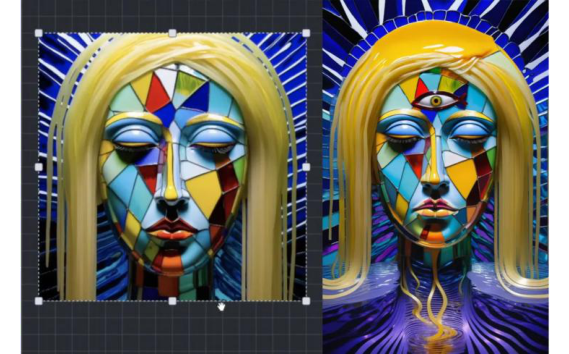
Generative illustration for Copyright Law - Cases and Materials (v8.0)













































































































































































































































































Copyright Law - Cases and Materials (v8.0)
Overview unavailable.
Copyright Law Coursebook Front Matter
- Presents the title page and v8.0 edition details for a legal casebook authored by law professors Jeanne C. Fromer and Christopher Jon Sprigman.
- Provides introductory acknowledgements, dedication, copyright information, and a Creative Commons licensing notice.
- Explains the editors' formatting conventions for judicial decisions and legal texts cited throughout the book.
- Includes a comprehensive Table of Contents outlining ten major chapters covering subject matter, ownership, exclusive rights, fair use, liability, and remedies.
Introduction to Copyright Law
- Students arrive with varying levels of prior knowledge about copyright, ranging from a basic working understanding to complete unfamiliarity.
- The book provides a comprehensive grounding in the fundamentals of U.S. copyright law through a structured examination across nine chapters.
- Chapters I through IV cover historical foundations, theoretical justifications, protectable subject matter, ownership rules, and duration.
- Chapters V and VI explore exclusive rights granted to owners, special complexities in the music industry, and the fair use doctrine.
- Chapters VII through IX address direct and secondary infringement liability, litigation procedures, remedies, and anti-circumvention provisions.
- Copyright is formally defined as a set of limited rights granted by law to authors of original artistic and literary works fixed in a tangible medium.
Some law students come to the subject of copyright law with at least a rough working understanding of what copyright is, and what it does.
Introduction to Copyright Law
- Chapter I outlines the foundations of intellectual property, distinguishing copyright from patent and trademark laws.
- Copyright protects a diverse range of artistic, literary, and architectural works, including the unique inclusion of computer software as a literary work.
- Patent law is designed to protect scientific and technological inventions, while trademark law safeguards brand identifiers like logos and slogans.
- The U.S. Constitution's Intellectual Property Clause serves as the primary federal source authorizing Congress to enact copyright and patent laws.
- International treaties and theoretical justifications also play a significant role in shaping the broader framework of copyright law.
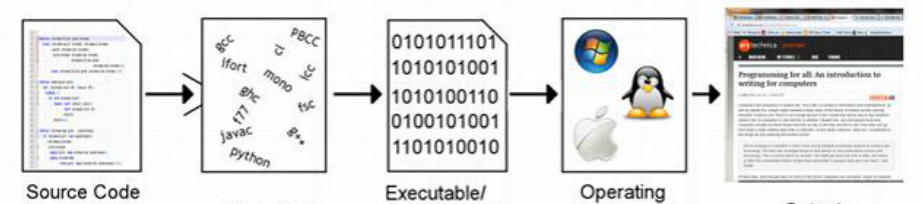
Computer software? Yes, software is, somewhat counterintuitively, classified as a “literary work.”
Foundations of Copyright Law
- The U.S. Constitution combines copyright and patent powers into a single clause granting Congress the authority to promote science and useful arts.
- In eighteenth-century terminology, the word 'science' referred broadly to learning, which explains its use in the constitutional copyright clause.
- The Copyright Act of 1976 serves as the primary federal statutory source for modern U.S. copyright law.
- Federal court decisions play a crucial role by interpreting statutory provisions like fair use and establishing principles where the statute is entirely silent.
- Judicial decisions have historically shaped copyright law by creating doctrines later codified by Congress, such as the first sale doctrine.
It may sound odd, to our modern ears, that the framers identified the purpose of copyright as promoting the progress of 'Science.'
Understanding the Copyright Office
- The United States Copyright Office operates within the legislative branch as a department of the Library of Congress.
- The Office is primarily responsible for registering copyright claims and maintaining official records of ownership transfers.
- The Register of Copyrights holds limited regulatory authority subject to the approval of the Librarian of Congress.
- Constitutional questions have been raised regarding the regulatory authority granted to an entity within the legislative branch.
- The Compendium of Copyright Office Practices guides administrative functions but does not possess the independent force of law.
- International treaties and the American Law Institute's Restatement also heavily influence the framework of U.S. copyright law.
We note that some have questioned the constitutional basis for any regulatory authority granted by Congress to this entity, which itself is a branch of Congress.
The Evolution of U.S. Copyright
- The American Law Institute approved the final portion of its influential Restatement of Copyright in 2025.
- For its first century, U.S. copyright law deliberately excluded foreign authors to allow cheap domestic printing.
- The Copyright Act of 1891 shifted policy by extending protection to foreign authors under specific reciprocal conditions.
- Early U.S. law imposed strict domestic manufacturing clauses and formalities that kept the nation out of international treaties.
- As the United States became a cultural exporter, it reformed its laws to finally join the Berne Convention in 1988.
During this period, U.S. policy was frankly mercantilist; the United States, as compared with Europe, was not a significant producer of new works of authorship, and it suited American interests to have cheap foreign books readily available.
Global Intellectual Property History
- The United States joined the EU and Japan to strengthen international IP through the WTO's 1994 Uruguay Round.
- The TRIPS Agreement established minimum global standards for patents, copyrights, and trademarks.
- TRIPS gave enforcement teeth to the Berne Convention by linking it to WTO dispute resolution mechanisms.
- U.S. copyright law traces its origins to early English history, specifically the Statute of Anne of 1710.
- The invention of the printing press necessitated legal frameworks to control mass copying and publishing.
Truth and understanding are not such wares as to be monopoliz’d and traded in by tickets and statutes, and standards.
Evolution of Copyright Law
- Attempts to regulate printing imply an impossible need to control all human recreations, music, and social expression.
- When the Stationers' monopoly lapsed in the 1690s, publishers shifted their strategy to advocate for author rights that they could acquire.
- The Statute of Anne in 1710 granted fixed-term rights to authors rather than perpetual monopolies to publishers.
- The House of Lords later confirmed in Donaldson v. Becket that copyrights must respect these strict durational limits.
- The Statute of Anne directly influenced the U.S. Constitution's Copyright Clause and the foundational U.S. Copyright Act of 1790.
And who shall silence all the airs and madrigalls, that whisper softnes in chambers?
Evolution of American Copyright
- Early litigants argued that statutory copyright merely supplemented a perpetual common law right, but this claim was firmly rejected by the U.S. Supreme Court.
- In Wheaton v. Peters, the Court established that published works are governed exclusively by federal statutory law rather than common law.
- While authors deserve the fruits of their labor, enjoying those fruits after publication depends strictly on statutory rules and property regulations.
- Over the century following the 1790 Act, Congress systematically expanded copyrightable subject matter to include maps, music, photography, and fine art.
- Major legislative overhauls in 1909 and subsequent decades progressively broadened protected categories to encompass motion pictures and sound recordings.
That every man is entitled to the fruits of his own labour must be admitted; but he can enjoy them only, except by statutory provision, under the rules of property, which regulate society, and which define the rights of things in general.
Evolution of Copyright Law
- The Copyright Act of 1976 aimed to modernize legal frameworks by moving away from rigid subject matter categories found in older laws.
- Section 102(a) established seven broad, non-exhaustive categories of copyrightable works to encompass a wide array of artistic expression.
- The broad statutory definitions successfully accommodated technological advancements like digital audio and DVDs without requiring constant legislative amendments.
- Congress has expanded the core list of categories only once since 1976, adding architectural works in 1990.
- Subsequent legislation like the DMCA and the Music Modernization Act have further shaped modern copyright administration and enforcement.
- Constitutional provisions link copyright authority directly to the utilitarian purpose of promoting the progress of science.
Because of the generality of the language that the 1976 Act uses to define categories of subject matter, Congress has avoided the need—at least in many instances—to amend the 1976 Act to account for new technologies.
The Utilitarian Justification of Copyright
- The primary U.S. justification for copyright is utilitarian, arguing that financial incentives are necessary to prevent copyists from underpricing creators and destroying the motivation to produce new works.
- Despite the logical appeal of this economic theory, empirical evidence linking copyright directly to creative incentives remains surprisingly sparse and less established than expected.
- Many scholars suggest that intrinsic motivation drives people to create works even in the complete absence of copyright incentives.
- A growing academic subgenre known as the 'negative space' literature documents numerous industries—such as fashion, cuisine, and stand-up comedy—where creative production thrives without formal intellectual property protection.
- It remains uncertain whether these unprotected industries reflect the broader range of cultural subject matter traditionally shielded by copyright law, such as books, music, and movies.
- Alternative utilitarian variants, like the democratic paradigm, view copyright as a tool for recruiting market institutions to foster a democratic civil society.
That is a sensible story. But is it true? On that question, we have little evidence.
Copyright and Democratic Culture
- The text provides a comprehensive set of scholarly citations exploring intellectual property across diverse fields like fashion, food, comedy, and digital media.
- Copyright law functions as an engine of free expression, encouraging new speech and limiting reliance on state patronage.
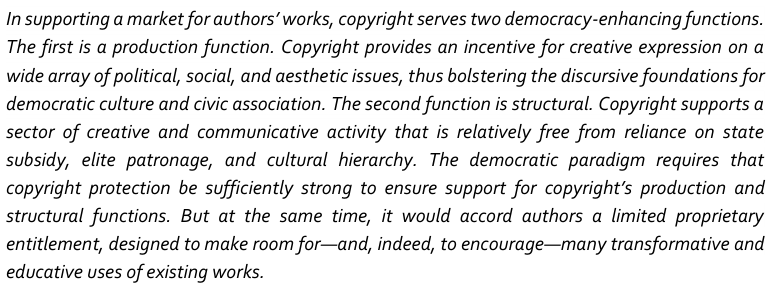
- The first democracy-enhancing function of copyright is production, providing incentives for creative expression on various issues.
- The second democracy-enhancing function is structural, supporting creative activity independent of state subsidies and elite patronage.
- These mechanisms bolster the discursive foundations necessary for a healthy democratic culture and civic association.
Copyright serves two democracy-enhancing functions.
Copyright and Non-Rivalrous Goods
- The US Constitution mandates that copyright protections must endure only for limited times.
- Physical property like laptops is rivalrous and scarce, requiring property rights to manage access.
- Artistic and literary works are non-rivalrous, meaning consumption by one person does not prevent another from enjoying it.
- Because non-rivalrous goods do not face natural scarcity, resource allocation justifications for property rights fail.
- Instead of managing scarcity, the utilitarian justification for copyright is to provide adequate incentives for initial creation.
- Unlike perpetual property rights for scarce goods, copyright does not need to last forever to fulfill its incentive purpose.
If I teach you a song I know, I still know the song, and now you know it as well.
The Tradeoffs of Copyright
- Copyright rights should theoretically endure only long enough for creators to recover enough revenue to make creation worthwhile.
- Determining an optimal copyright term is empirically difficult because we lack precise data on creator incentives and consumer preferences.
- Increasing copyright terms and scope may yield more works, but it also creates significant economic and societal costs.
- Monopoly pricing leads to income transfer from consumers to owners, societal deadweight loss, and barriers to follow-on creators.
- Thomas Macaulay famously described copyright as a tax on readers for the purpose of giving a bounty to writers.
- The ultimate goal of copyright law is not maximal protection, but rather an optimal balance that weighs benefits against costs.
copyright, Macaulay said, is “a tax on readers for the purpose of giving a bounty to writers.”
Theories of Copyright and Justice
- Some scholars argue that copyright acts as a tool for promoting equality and distributive justice.
- Conversely, others suggest that the psychological conditions of poverty render intellectual property ineffective for encouraging creativity among the poor.
- Beyond utilitarian incentives, rights-based deontic justifications provide alternative frameworks for copyright law.
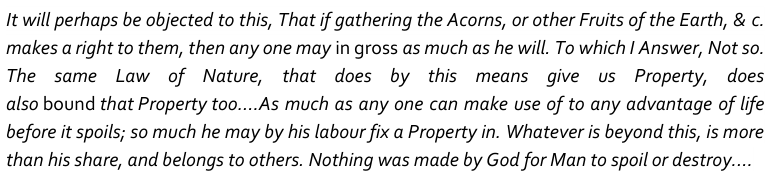
- Locke's labor theory suggests that an individual's contribution of labor creates a natural property right in the product.
- Locke's fairness-based framework is anchored by a strong no-harm injunction and constrained by specific provisos regarding waste and leaving enough for others.
Locke’s theory identifies the individual’s contribution of labor as the mechanism by which objects are reduced to property, and it focuses on the harm—in terms of fairness rather than wealth maximization—when another deprives the owner of the fruits of that labor.
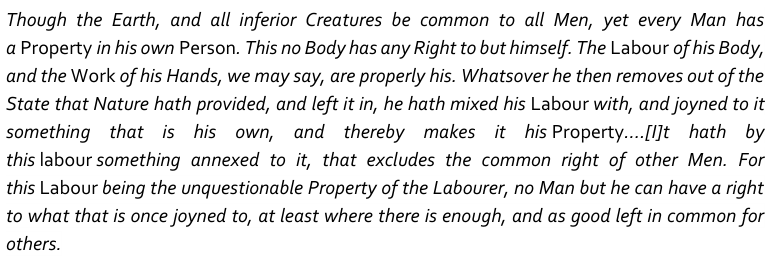
The Origin of Property
- Every individual possesses an exclusive property in their own person and physical labor.
- When a person mixes their labor with natural resources, they remove them from the common state.
- This act of labor annexes something to the resource, thereby excluding the common rights of other men.
- Appropriation through labor is evident when gathering natural goods like acorns or apples for nourishment.
- Requiring the universal consent of all mankind to appropriate resources would have resulted in human starvation despite natural abundance.
If such a consent as that was necessary, Man had starved, notwithstanding the Plenty God had given him.
Lockean Theory and Intellectual Property
- John Locke argued that property rights originate from mixing one's labor with resources from the commons, bounded by limits against waste and requirements to leave enough for others.
- By analogy, Lockean labor theory is often applied to justify property rights in creative expression, treating common-stock facts and ideas as the raw materials.
- Scholars suggest that intellectual property easily satisfies Locke's provisos because ideas are virtually limitless and works can always be licensed or exploited to prevent waste.
- A critical distinction arises because tangible property is rivalrous, whereas intangible creative expression is non-rivalrous and can be accessed without depriving the owner of the physical item.
- Although unauthorized consumption of intellectual property does not physically dispossess the owner, it may still cause unfairness by depriving them of financial profits.
A critical difference between tangible items and intangible ones, like creative expression, raises some questions about applying the Lockean framework to creative expression.
The Personality Theory of Copyright
- Lockean and utilitarian analyses of copyright share a deeper connection concerning incentives and fairness.
- A second deontic justification for copyright stems from the Hegelian and Kantian personality theories.
- This personality theory argues that original expression embodies an author's unique personality and autonomy.
- Property rights provide a mechanism for self-definition, personal expression, and societal recognition of dignity.
- Western culture's Romantic conception of authorship creates a strong link between creators and their expression.
- Despite its appeal, personality theory lacks a built-in mechanism for reconciling disputes at a practical level.
In a consumer society, we are (in part) what we own.
The Foundations of Copyright
- Personality theories struggle to resolve competing claims when a second creator adapts an original copyrighted work.
- Utilitarian frameworks can be broadened to incorporate labor and personality theories by recognizing the value of expressive incentives.
- Creators attach deep significance to their labor and personhood, meaning that protecting these interests strengthens the incentive to create.
- Labor and personality theories strongly influence European copyright systems while also informing discussions within U.S. law.
- Section 102 of the Copyright Act establishes the core subject matter of copyright, outlining requirements like fixation and originality.
The Hegelian/Kantian justification offers no guidance for how property rights must be distributed in such an instance.
The Copyright Fixation Requirement
- Copyright protection excludes abstract ideas, procedures, and discoveries, regardless of how they are embodied.
- Section 102 mandates that works must be fixed in a tangible medium of expression to receive protection.
- Constitutional interpretation strongly implies that a Writing must be a physical rendering of creative labor.
- Fixation promotes cultural dissemination by ensuring works are preserved rather than remaining ephemeral.
- The requirement serves an evidentiary function, making it easier to resolve potential infringement disputes.
- Fixation clearly delineates protected expression from unprotected underlying ideas.
An unrecorded performance, for example, is unlikely to be retained other than in the memories of the audience that was there to see it at that moment.
Defining Fixation in Copyright
- A work is considered fixed when embodied in a copy or phonorecord with sufficient permanence to be perceived or communicated.
- Fixation must last for a period of more than transitory duration under statutory definitions.
- Historical legal definitions trace back to significant Supreme Court cases involving emerging technologies.
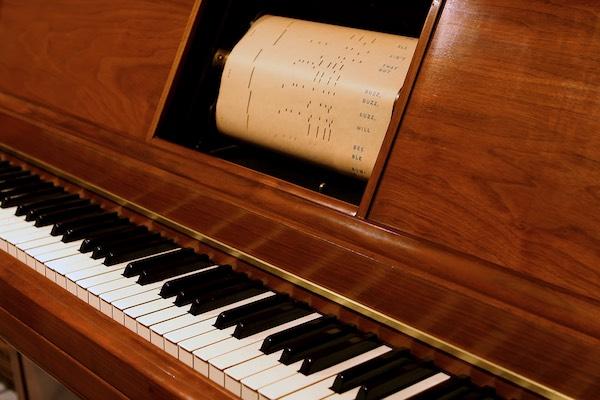
- In 1908, the Supreme Court evaluated whether player piano rolls constituted legal copies of musical compositions.
- The White-Smith Music Publishing Co. v. Apollo Co. case tested the boundaries of copyright infringement for mechanical music devices.
In 1908, the U.S. Supreme Court considered in White-Smith Music Publishing Co. v. Apollo Co., 209 U.S. 1, whether a player piano roll represented a copy of a musical composition.
The Human Readability Standard
- The Supreme Court ruled in White-Smith that piano rolls were not copyright copies because humans could not directly read them.
- The Court dismissed the argument that these perforated rolls produced musical tones when operated by a machine.
- This decision meant that copiers could bypass copyright protections by using machine-unreadable formats.
- Congress eventually overhauled copyright law in 1976 to overrule the White-Smith decision.
- The 1976 Act established that works are fixed if they can be perceived directly or with the aid of a machine.
- Congress intended this broader definition of fixation to encompass both existing and future technological formats.
As a functional matter, White-Smith meant that copiers could circumvent copyright protections by creating copies of a work that were unreadable by humans, but could be made comprehensible with the aid of a machine.
Copyright and Video Game Fixation
- Copyright law traditionally requires works to be fixed for a period of more than transitory duration to receive protection.
- Congress created an exception for live broadcasts by considering them fixed if recorded simultaneously with their transmission.
- The rapid development of digital technologies, particularly video games, created unforeseen legal complications regarding fixation.
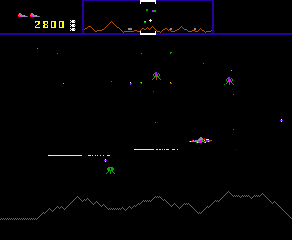
- Williams Electronics manufactured the DEFENDER video game, utilizing ROM chips to store instructions that generate interactive audiovisual displays.
- Williams successfully secured three separate copyright registrations covering the computer program, attract mode, and play mode.
- Player participation introduces unique challenges in determining the exact nature and fixation of copyrightable video game elements.
Congress thought it had resolved a complicated area with its new rules for fixation, but as new technologies developed—and particularly digital technologies—unforeseen complications arose.
Video Game Copyright Infringement
- Artic International sold circuit board kits that produced audiovisual effects virtually identical to Williams' DEFENDER game.
- The district court found that Artic infringed both Williams' computer program copyright and its audiovisual copyrights.
- Artic appealed by challenging the validity and scope of the copyrights, specifically arguing a lack of fixation.
- Artic claimed that video game images are transient and recreated anew each time, failing the statutory fixation requirement.
- The court rejected this argument, ruling that permanent embodiment in memory devices satisfies the fixation requirement because the audiovisual features repeat stably.
- The court also dismissed the idea that player participation makes the player a co-author or voids copyright protection.
Specifically, it contends that there is a lack of “fixation” because the video game generates or creates “new” images each time the attract mode or play mode is displayed, notwithstanding the fact that the new images are identical or substantially identical to the earlier ones.
Cablevision RS-DVR Copyright Dispute
- Cablevision proposed a Remote Storage DVR system that allows customers to record programs on centrally maintained hard drives.
- Copyright holders sued Cablevision, alleging that the RS-DVR system would directly infringe their reproduction and public performance rights.
- The case highlights the legal tension between traditional statutory fixation requirements and transient digital or electronic reproductions.
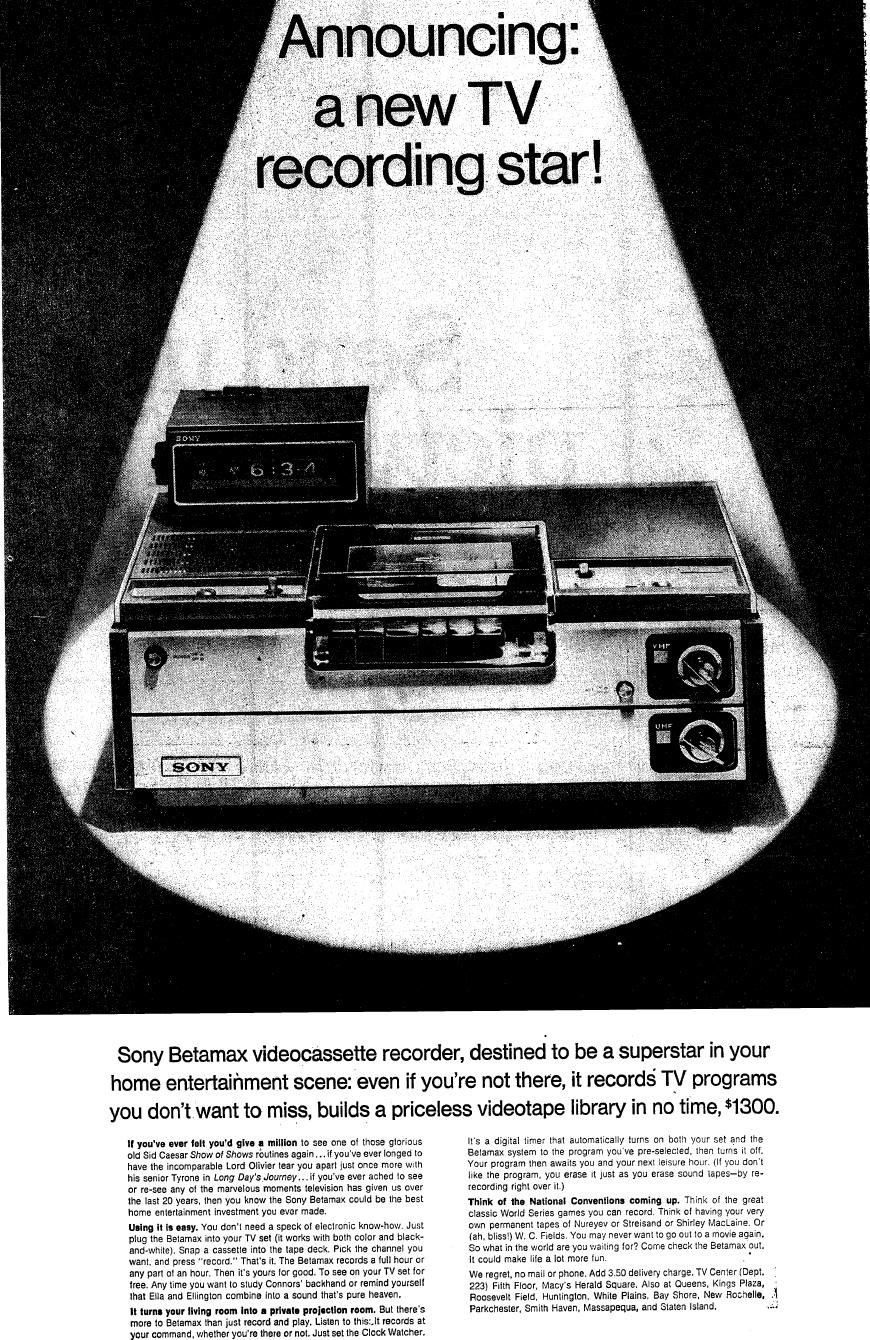
- Modern digital technologies like cloud-based DVRs complicate how the law defines the duration required for a work to be fixed.
- Cablevision did not seek licenses from content providers before announcing its plans to offer the RS-DVR service.
Can you square this understanding of fixation with the decision in this case?
Cablevision RS-DVR System Mechanics
- Cablevision splits television content streams into two paths, directing one to customers and the other into the Broadband Media Router and Arroyo Server.
- The primary ingest buffer and BMR buffer temporarily hold television data streams for fractions of a second before automatically erasing them.
- Data for programs requested by customers are moved from the primary buffer to a secondary buffer and finally onto dedicated hard disk space.
- The user experience of the RS-DVR closely mirrors a standard set-top DVR, though the control signals are sent directly to Cablevision's central facility.
- The district court evaluated whether the temporary buffer data meet the Copyright Act's definition of being fixed copies.
- Legal analysis focuses on whether the transient storage in buffers satisfies the Copyright Act requirements of embodiment and duration.
The primary ingest buffer holds no more than 0.1 seconds of each channel’s programming at any moment.
Fixation and Transitory Duration
- The district court erred by focusing solely on the embodiment requirement while ignoring the duration requirement for fixation.
- Precedent cases like MAI Systems assumed fixation in RAM without directly analyzing the legal meaning of transitory duration.
- Loading a program into RAM can create a copy, but it does not establish a blanket rule that RAM storage always constitutes a copy.
- Ignoring the duration requirement would effectively read statutory language out of the copyright definition.
- Data in the buffers meets embodiment standards because it can be perceived, reproduced, or communicated.
Such a holding would read the “transitory duration” language out of the definition, and we do not believe our sister circuit would dismiss this statutory language without even discussing it….
Fixation and Transitory Duration
- Computer programs must be transferred from storage to RAM for processing.
- Data residing in buffers for a fleeting 1.2 seconds before being overwritten fails the statutory duration requirement.
- Plaintiffs argued duration is not transitory because data persists long enough to make reproductions.
- The court rejected the plaintiffs' reasoning, concluding that buffering does not create statutory copies.
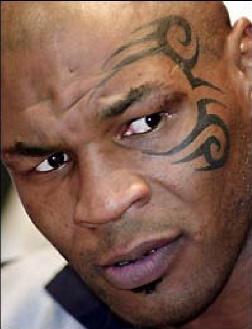
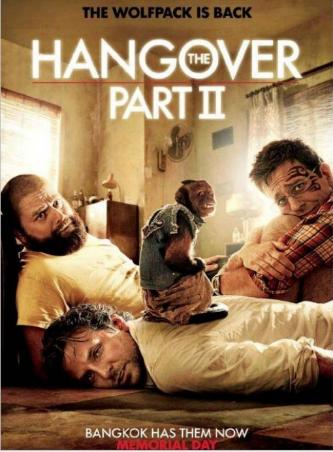
- Related legal questions explore whether tattoos on human bodies or ephemeral digital messages qualify as fixed works.
No bit of data remains in any buffer for more than a fleeting 1.2 seconds.
Fixation and Copyright Law
- Courts have previously debated whether perishable items like a bowl of food can be considered legally fixed under copyright law.
- The Restatement of Copyright suggests fixation requires an embodiment lasting long enough to permit the enjoyment or exploitation of a work's expressive content.
- This temporal standard supports the statute's goals by ensuring works can be reliably identified and communicated over time.
- The Uruguay Round Agreements Act provides copyright-like protections against unauthorized bootlegs of live, unfixed musical performances.
- Courts have consistently upheld the constitutionality of protecting unfixed works by relying on Congress's authority under the Commerce Clause.
a bowl of perishable food will, by its terms, ultimately perish
Defining Copyright Originality
- Section 102 protects original works of authorship, but the statute leaves this term undefined.
- Legislative history indicates that the standard of originality incorporates prior judicial interpretations under the 1909 Act.
- The standard explicitly excludes requirements of novelty, ingenuity, or esthetic merit.
- Because Congress provided little guidance, courts have defined originality by looking to the U.S. Constitution.
- Classic pre-1976 cases establish the foundational standards of originality before later Supreme Court rulings.
This standard does not include requirements of novelty, ingenuity, or esthetic merit, and there is no intention to enlarge the standard of copyright protection to require them.
Copyright Protection for Photographs
- The constitutional debate centers on whether photographs qualify as 'writings' by 'authors' under Article I, Section 8 of the Constitution.
- Critics argue that photographs are merely mechanical reproductions of natural objects or persons rather than original creative works.
- Historical precedent from the First Congress in 1790 and subsequent 1802 acts extended copyright protections to maps, charts, and prints.
- Early congressional interpretations by framers of the Constitution carry significant weight in establishing the broad scope of protected works.
- The legal definition of 'writing' and 'author' has historically expanded to encompass various visual and printed mediums that express an author's ideas.
- Photographs were likely omitted from early copyright statutes simply because the medium and its underlying technology had not yet been invented.
The only reason why photographs were not included in the extended list in the act of 1802 is, probably, that they did not exist, as photography, as an art, was then unknown...
Copyright and Photographic Art
- The Constitution is broad enough to cover acts authorizing the copyright of photographs representing original intellectual conceptions.
- Critics argue that ordinary photographs are merely mechanical reproductions lacking the novelty, invention, or originality required for copyright.
- While chemical and mechanical processes of photography may be patentable, the physical transfer of an image has traditionally been seen as a simple manual operation.
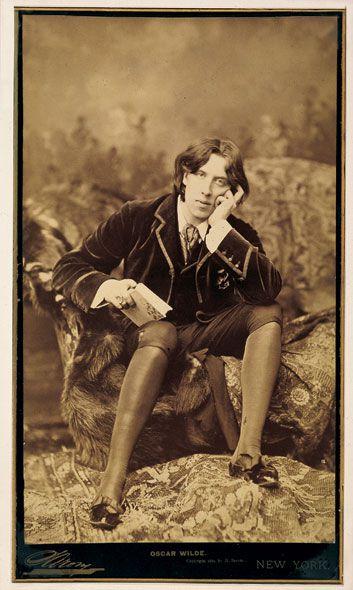
- In the specific case of Sarony's photograph of Oscar Wilde, the creator's original mental conception and artistic arrangements elevated the work.
- Because the photographer directed the posing, costumes, lighting, and expressions, the resulting image qualified as an original work of art protected by statute.
It is simply the manual operation, by the use of these instruments and preparations, of transferring to the plate the visible representation of some existing object, the accuracy of this representation being its highest merit.
Copyright Protection for Circus Posters
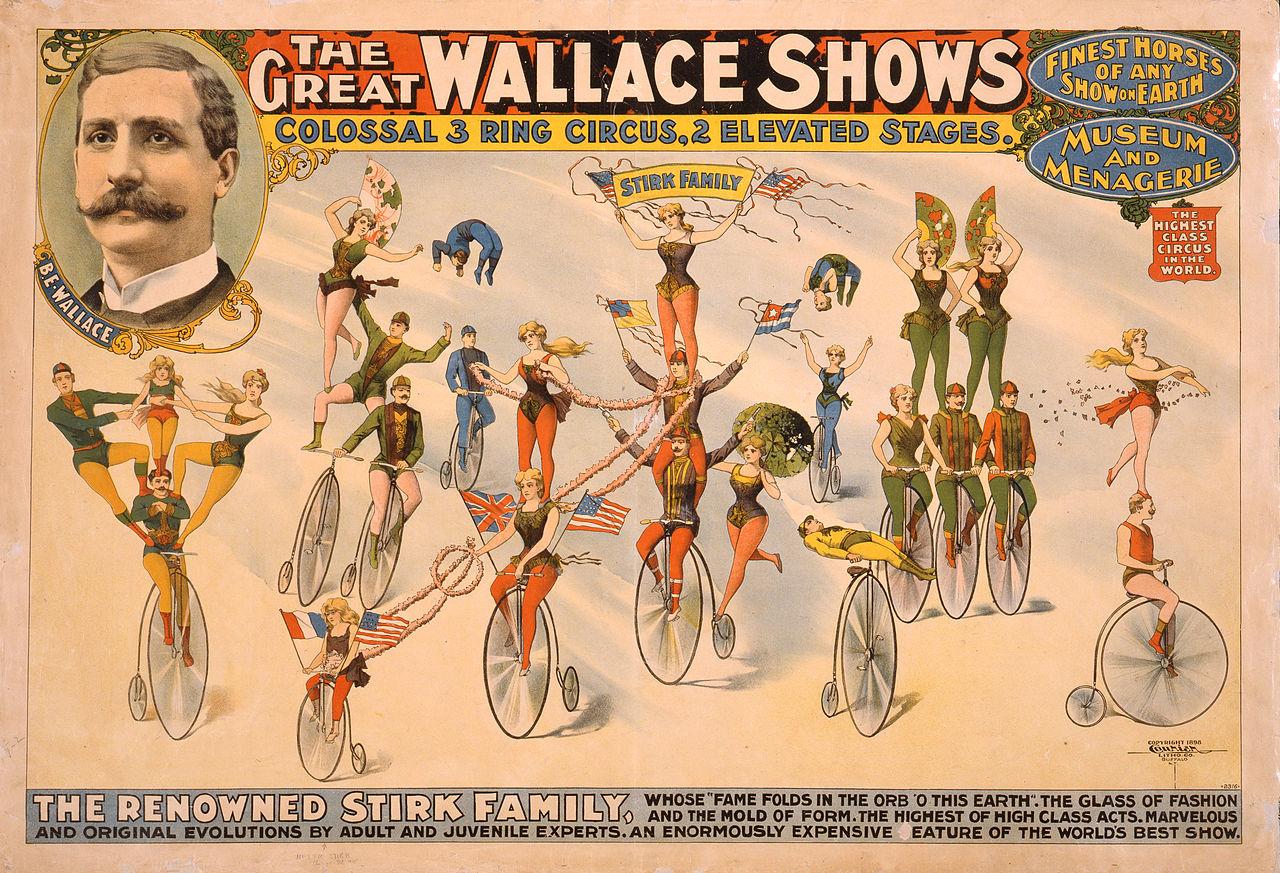
- The lower courts initially ruled that Bleistein's circus chromolithographs lacked copyright protection.
- The plaintiff's posters were protected despite depicting real-world subjects and performances.
- A unique artistic creation remains protected even if it is drawn from life or actual events.
- Personal expression and singularity give even modest art an irreducible, copyrightable quality.
- The law protects pictorial illustrations regardless of whether they are used commercially for advertising.
Personality always contains something unique. It expresses its singularity even in handwriting, and a very modest grade of art has in it something irreducible, which is one man’s alone.
Defining Originality in Copyright
- Legal judges should not act as final arbiters of artistic worth or pictorial illustration quality.
- Works of genius or novelty might be rejected if judges rely solely on their own personal aesthetic standards.
- The legal definition of original in copyright requires only that a work owes its origin to the author without needing startling novelty.
- A trivial variation or something recognizably the author's own is enough to satisfy constitutional and statutory standards.
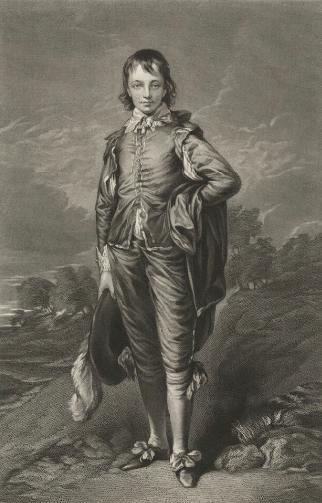
- Reproductions of public domain works, such as mezzotint engravings, can be validly copyrighted if they constitute an original version.
Their very novelty would make them repulsive until the public had learned the new language in which their author spoke.
Aesthetic Judgment in Copyright Law
- Engravers can create original works requiring great skill and judgment despite copying an original painting.
- Unintentional variations caused by physical limitations or accidents can still yield valid copyright protection.
- Justice Holmes's Bleistein nondiscrimination principle asserts that copyright law should avoid making aesthetic worth judgments.
- Recent Supreme Court rulings clarify that courts must avoid evaluating artistic significance while still perceiving a work's meaning.
- Scholars debate whether the copyright statute truly encodes an objective nondiscrimination principle or if aesthetic judgments are unavoidable.
A copyist’s bad eyesight or defective musculature, or a shock caused by a clap of thunder, may yield sufficiently distinguishable variations.
Copyright and Telephone Directories
- The text examines how different legal foci on creation impact the assessment of a work's originality.
- It introduces the landmark Supreme Court case Feist Publications, Inc. v. Rural Telephone Service Co.
- Rural Telephone Service Co. is a regulated monopoly that publishes a free annual telephone directory in Kansas.
- Feist Publications sought to create a broader area-wide directory and acquired listings from multiple local companies.
- Rural was the only company to refuse licensing its white pages to Feist, creating a significant compilation challenge.
- The section questions how this Supreme Court decision affects prior copyright law and underlying theoretical justifications.
Rural’s refusal created a problem for Feist, as omitting these listings would have left a gaping hole in its area-wide directory ….
Originality and Copyright Law
- Feist used Rural's white pages listings without consent after failing to license them, leading to a copyright infringement lawsuit.
- The fundamental requirement for copyright protection is originality, meaning a work must be independently created and possess a minimal degree of creativity.
- Originality is a constitutional requirement rooted in Article I of the Constitution, which presupposes a degree of creativity by authors.
- Facts themselves cannot be copyrighted because they are discovered rather than created by an act of authorship.
- Factual compilations may receive copyright protection if the selection and arrangement of the data entail a minimal degree of independent creativity.
No one may claim originality as to facts.
Copyright and Factual Compilations
- Factual compilations receive thin copyright protection limited strictly to original selection and arrangement.
- Raw facts themselves remain unprotected and may be freely copied by subsequent compilers.
- The primary constitutional objective of copyright is to promote the progress of science and useful arts rather than to reward authorial labor.
- The flawed sweat of the brow doctrine incorrectly rewarded hard work rather than focusing on the required element of originality.
- Copyright law treats facts consistently by ensuring protection never extends to the underlying facts of a compilation.
It may seem unfair that much of the fruit of the compiler’s labor may be used by others without compensation…. [H]owever, this is not some unforeseen byproduct of a statutory scheme.
Copyright Creativity Thresholds Debate
- Judge Hand posited that an independent creation of Keats's poem would deserve its own copyright, highlighting the theoretical nature of independent creation.
- Copyright law requires only a minimal level of creativity, contrasting sharply with the higher standards of novelty and nonobviousness required in patent law.
- Legal scholars are divided on whether raising copyright's low creativity threshold would encourage higher quality works or if it would improperly invite subjective aesthetic assessments.
- Some empirical studies suggest that extrinsic incentives can actually decrease creative output, while specific intellectual property experiments indicate that higher thresholds increase work quality.
- The fundamental debate questions whether intellectual property goals are better served by encouraging a high volume of works or by demanding greater aesthetic progress.
There is also empirical work that suggests that providing extrinsic incentives to people to act creatively counterproductively makes them less likely to produce creative works than those without such incentives.
Copyright Protection of Maps
- Copyright law protects creative expression while explicitly excluding facts from such protection.
- Maps and charts present a unique legal challenge regarding whether they represent purely facts or protectable elements.
- The distinction between copyrightable expression and unprotectable facts in cartography is a subject of ongoing legal scholarship.
- Historical contexts, such as colonial Australia, highlight the evolving nature of cartographic copyright law.
- The legal framework governing visual works and digital models further tests the boundaries of copyright subject matter.
protects certain forms of creative expression, but does not protect facts.
Digital Vehicle Modeling Copyright
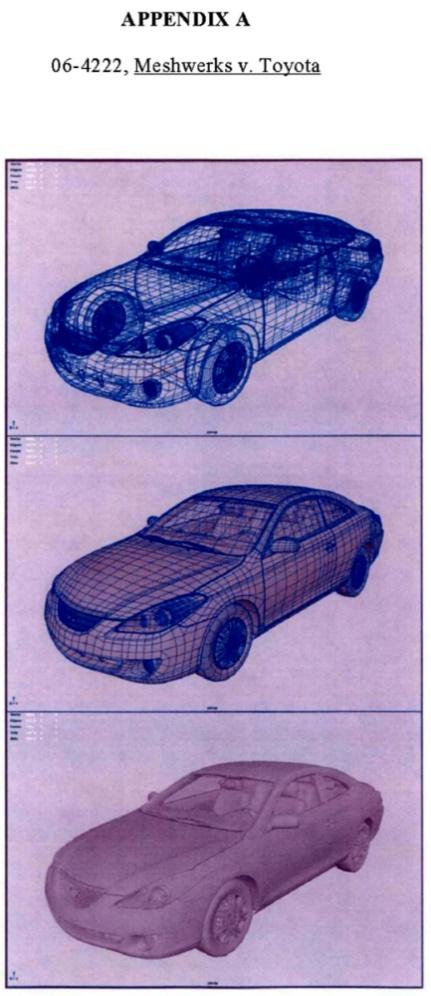
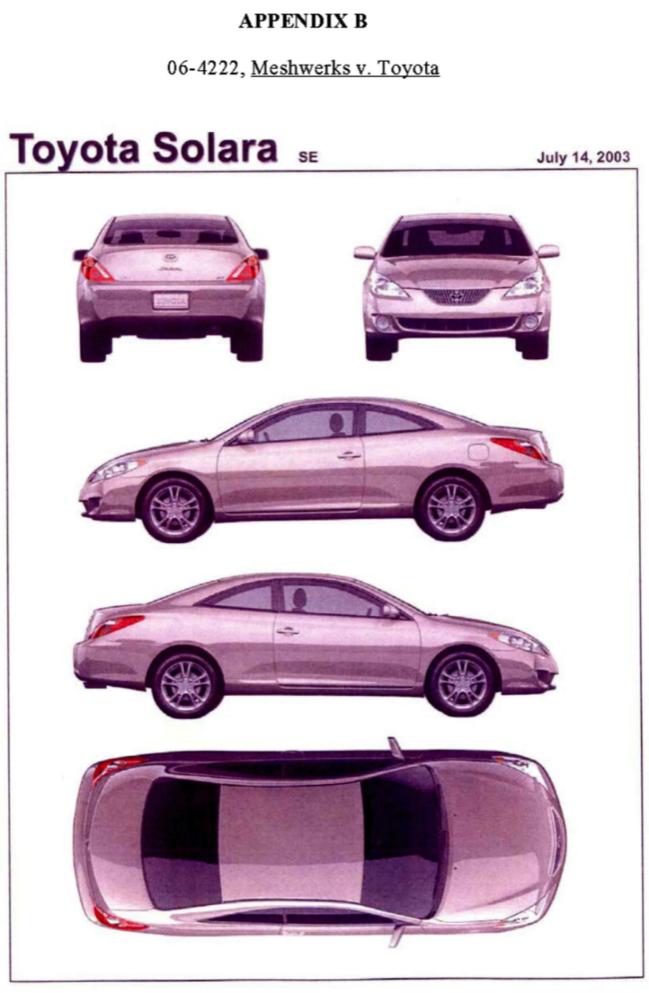
- Toyota and its advertising agency sought digital models of vehicles for flexibility in marketing campaigns compared to traditional photography.
- Meshwerks was hired as a subcontractor to digitize physical vehicles by taking copious measurements using a grid of tape and an articulated arm.
- Meshwerks personnel manually sculpted the wire-frame models, claiming that about 90 percent of final data points resulted from this manual effort.
- Certain features like wheels and headlights could not be measured and required realistic recreation by hand based on photographs.
- Once the unadorned wire frames were completed, another contractor added color, texture, lighting, and animation for Toyota's advertisements.
Approximately 90 percent of the data points contained in each final model, Meshwerks represents, were the result not of the first-step measurement process, but of the skill and effort its digital sculptors manually expended at the second step.
Meshwerks Copyright Dispute
- Meshwerks sued Toyota and G & W for copyright infringement over the unauthorized reuse of digital wire-frame models in multiple advertisements beyond their single-use contract.
- The defendants moved for summary judgment, arguing that Meshwerks' models lacked sufficient originality to warrant copyright protection.
- Defendants contended that any original expression originated from the Toyota designers who initially conceived the vehicle designs.
- The district court agreed with the defendants' argument, leading to a focus on whether the models are independent creations or mere copies.
- The court explored how traditional copyright doctrine, particularly regarding photography, applies to modern digital media and virtual worlds.
- Ultimately, the court concluded that Meshwerks' models function as high-quality copies of Toyota's vehicles rather than independent copyrightable creations.
And how might that doctrine apply in an age of virtual worlds and digital media that seek to mimic the “real” world, but often do so in ways that undoubtedly qualify as (highly) original?
Copyright and Digital Models
- Digital mediums can create new expressions that are fully protectable by copyright.
- Meshwerks created digital wire-frame models depicting unadorned Toyota vehicles without individualizing features.
- Works are not copyrightable if they do not involve expression apart from raw facts, similar to photographs of pre-existing products.
- Meshwerks made no creative decisions regarding lighting, shading, background, or angle.
- The unadorned digital models of Toyota vehicles contain no original expression and cannot be copyrighted.
- Meshwerks simply copied Toyota's pre-existing vehicle designs and played a narrow role in the creation process.
Meshwerks’ models depict nothing more than unadorned Toyota vehicles—the car as car.
Copyright and Digital Copying
- Meshwerks translated physical Toyota vehicles into a digital medium to allow expressive manipulation.
- Copyright law rests on the bedrock principle that protected works must be independently created by the author.
- A copier is not an independent creator, and copyright protection is explicitly refused to copies.
- Meshwerks performed a peculiar kind of copying by depicting three-dimensional objects in a two-dimensional digital space.
- Shifting a work from one medium to another does not render it any less a copy under the law.
It did not seek to recreate Toyota vehicles outright—steel, rubber, and all; instead, it sought to depict Toyota’s three-dimensional physical objects in a two-dimensional digital medium.
Copyright and Digital Modeling
- Copyright assessment focuses exclusively on the final product rather than the labor, time, or skill invested in the creation process.
- An artist's intent to faithfully copy an existing object rather than create an original work makes the final product far less likely to be considered original.
- Meshwerks intended to digitize and model unadorned replicas of Toyota vehicles as base layers rather than add independent creative expression.
- While digital modeling as a medium is capable of producing copyrightable expressions, not every digital model automatically qualifies for protection.
- Just like photographs, digital models require unique elements like shading, lighting, or angles to meet the threshold of copyrightability.
If an artist affirmatively sets out to be unoriginal—to make a copy of someone else’s creation, rather than to create an original work—it is far more likely that the resultant product will, in fact, be unoriginal.
Questions of Copyright Originality
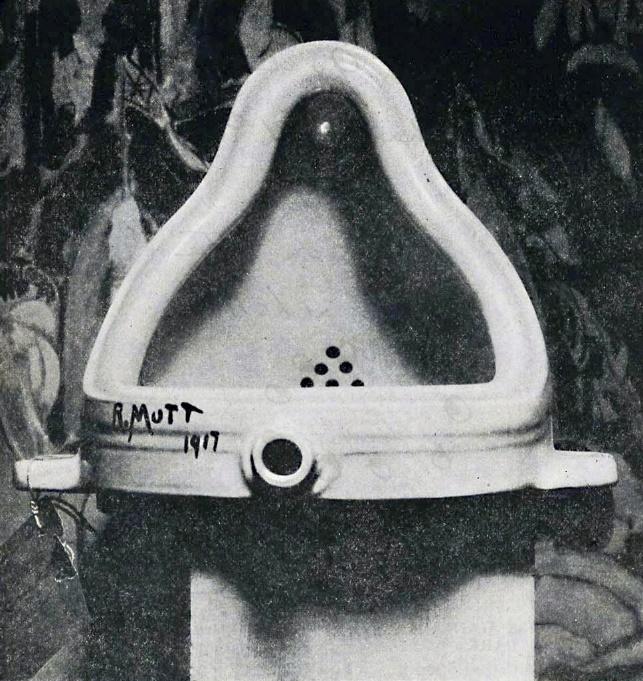
- The text questions the originality of Marcel Duchamp’s readymade art piece Fountain.
- It examines how wildlife photographs like Thomas Mangelsen's achieve originality compared to historical legal precedents.
- The Copyright Office frequently denies registration to business logos and simple phrases due to a lack of required creativity.
- Certain courts have occasionally disagreed with the Copyright Office, ruling that short lyrical phrases can sometimes be copyrightable.
- Derivative works and compilations are defined as forms of authorship that transform or assemble preexisting materials into new protected works.
Consider Marcel Duchamp’s Fountain in Figure 8, which is made up of a pre-existing porcelain urinal that he signed “R. Mutt.”
Copyright and Derivative Works
- Section 103(a) of the Copyright Act protects derivative works and compilations unless they unlawfully incorporate preexisting material.
- Section 103(b) clarifies that copyright in derivative works extends only to the newly contributed material and does not affect rights in underlying works.
- Derivative works and compilations raise unique questions regarding their copyrightability and the required standard of originality.
- The statute itself remains silent on the specific threshold of originality needed for a derivative work compared to an original work.
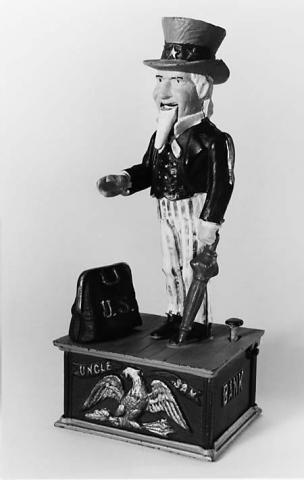
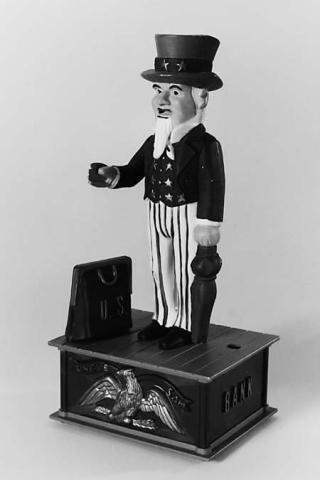
- Case law, such as the Uncle Sam mechanical bank dispute, helps define how much new content a second comer must add to gain protection.
The statute says nothing about the threshold of originality required of a derivative work, as compared with the underlying original work.
Copyright and Plastic Banks
- Snyder traveled to Hong Kong to commission a plastic, scaled-down replica of a historic cast-metal Uncle Sam mechanical bank for Bicentennial distribution.
- Modifications were made to the original design, including size reduction, a merged umbrella mold, and altered base dimensions to meet cost and manufacturing constraints.
- A competitor, Batlin, subsequently ordered similar plastic copies from Taiwan after observing Snyder's version.
- The United States Customs Service blocked Batlin's plastic and cast-iron bank imports based on Snyder's claimed copyright, prompting Batlin to sue for a declaration that the copyright was void.
- The court examined both versions, noting subtle differences such as material texture, carpetbag shape, and a substitution of leaves for arrows due to plastic manufacturing limitations.
Thus Batlin instituted suit for a judgment declaring appellants’ copyright void.
Copyright Originality and Reproduction
- The plastic version of the bank exhibits subtle texture and structural differences compared to the original cast iron piece.
- Despite variations in size, materials, and minor details, the overall design and iconography remain remarkably similar.
- The modifications in the plastic bank are deemed trivial and driven purely by manufacturing constraints rather than creative choices.
- Copyright protection fundamentally requires that a work be the original product of its claimant rather than a mechanical copy.
- Individuals who slavishly or mechanically copy existing works fail to qualify as authors under constitutional standards.
What the leading authority has called “the one pervading element prerequisite to copyright protection regardless of the form of the work” is the requirement of originality that the work be the original product of the claimant.
The Threshold of Copyright Originality
- A work of art must contain substantial, non-trivial originality to qualify for copyright protection.
- Merely copying a public domain work fails to secure a copyright, though a distinguishable variation may succeed.
- Copyright law inherently requires a minimal element of creativity that goes beyond mere independent effort.
- Reproductions of underlying works, including public domain art and commercial objects, require an original contribution from the reproducer.
- Translating a work to a different medium or demonstrating mere physical skill and training is insufficient to satisfy the originality requirement.
Nor can the requirement of originality be satisfied simply by the demonstration of physical skill or special training which, to be sure, … was required for the production of the plastic molds that furnished the basis for appellants’ plastic bank.
Copyright and Artistic Reproduction
- The appellants argued that their plastic mold sculpture of an Uncle Sam bank demonstrated sufficient artistic effort to warrant copyright protection.
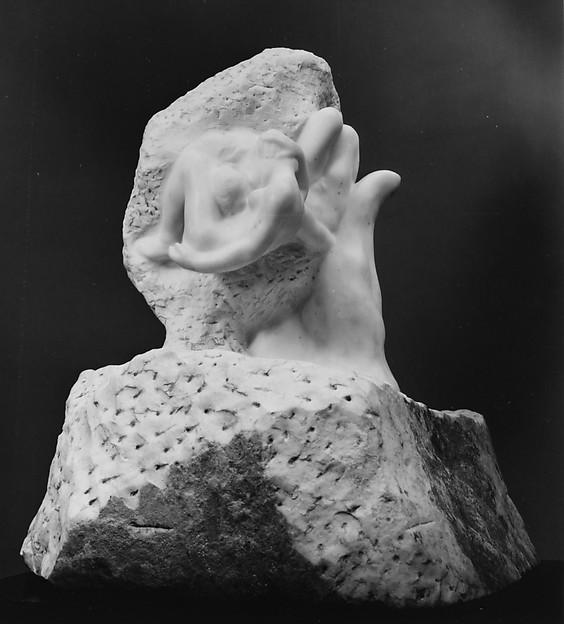
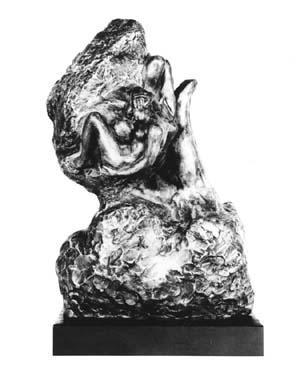
- The court evaluated the precedent set by the 'Hand of God' case, which involved an extraordinarily complex scale reduction of a Rodin sculpture requiring immense skill.
- Unlike the Rodin reproduction, the plastic bank contained trivial deviations, lacked meticulous exactitude, and provided no significant public benefit.
- The court concluded that the plastic replica falls into a copyright no-man's land because it lacks both exactitude and substantial originality.
- Extending copyright protection to minuscule variations would merely arm copiers with tools to monopolize public domain works.
Thus appellants’ plastic bank is neither in the category of exactitude required by Alva Studios nor in a category of substantial originality; it falls within what has been suggested by the amicus curiae is a copyright no-man’s land.
Copyright Originality and Derivative Works
- Courts evaluate whether scale reproductions like Rodin sculpture replicas possess sufficient skill and originality to warrant copyright protection.
- Legal precedents emphasize that exact scale reductions require significant artistic effort and technical craftsmanship.
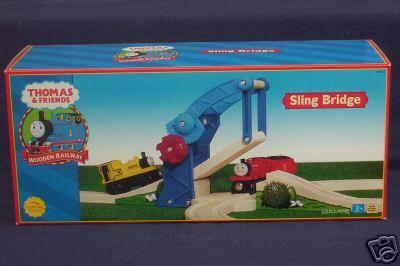
- Daniel Schrock was hired to photograph Thomas & Friends toys for promotional materials under paid invoices totaling over $400,000.
- Schrock later sued for copyright infringement when the companies continued using his product photographs after their business relationship ended.
- The defendants argued that Schrock's photographs lacked sufficient originality as derivative works and were created without copyright authorization.
great skill and originality is called for when one seeks to produce a scale reduction of a great work with exactitude.
Copyright Appeal on Derivative Works
- The district court previously granted summary judgment for defendants, concluding that Schrock's photographs were derivative works lacking independent copyright permission.
- Schrock appealed this decision, arguing his photos contained sufficient original expression and that he had proper authorization to create them.
- Defendants countered by defending the derivative work classification, questioning the photos' originality, and alleging an oral unlimited license.
- The appellate court noted that the Copyright Act grants protection to the incremental original expression contributed by a derivative author.
- Courts and commentators remain deeply divided on whether photographs of copyrighted works inherently constitute derivative works.
- The appellate court ultimately chose to assume the photos were derivative works without definitively resolving the debate, as it did not alter the core copyrightability standard.
Whether photographs of a copyrighted work are derivative works is the subject of deep disagreement among courts and commentators alike.
Copyright Originality in Derivative Works
- Schrock's photographs of toys are not slavish copies because his artistic and technical choices reflect independently created expression.
- Schrock used camera and lighting techniques to make the toys look more lifelike and personable.
- The utilitarian function of identifying products for consumers is legally irrelevant to the copyright analysis.
- Derivative works are argued to be subject to a higher standard of originality, though leading commentators disagree.
- The Nimmer treatise maintains that derivative works require only a nontrivial variation sufficient to render them distinguishable from prior works.
- The defendants invoke the Gracen decision to demand a more rigorous standard of originality for derivative works.
He explained how he used various camera and lighting techniques to make the toys look more “life like,” “personable,” and “friendly.”
Copyright Originality and Derivative Works
- The Gracen case highlights the difficulty of separating original elements when derivative works closely resemble the underlying work.
- A hypothetical involving artists painting the Mona Lisa illustrates how slight variations make infringement hard to prove.
- Judges and juries would struggle to determine if a subsequent artist copied a previous derivative work or the public domain original.
- A mere shift in medium generally fails to satisfy the legal requirement for originality in a derivative work.
[I]f the difference between the original and A’s reproduction is slight, the difference between A’s and B’s reproductions will also be slight, so that if B had access to A’s reproductions the trier of fact will be hard-pressed to decide whether B was copying A or copying the Mona Lisa itself.
Copyright Standards for Derivative Works
- Derivative works do not require a more exacting standard of originality than other works of authorship under the Copyright Act.
- The primary inquiry for a derivative work is whether it contains sufficient nontrivial expressive variation to be meaningfully distinguishable from the underlying work.
- Copyright protection for derivative works is thin, extending only to the incremental original expression contributed by the author.
- Photographs of copyrighted toys qualify for derivative copyright if they contain minimally sufficient variation in angle, perspective, lighting, and dimension.
- The Copyright Act does not require the author of a derivative work to obtain permission to copyright their work, as copyright arises by operation of law upon fixation.
- While copyright vests initially in the author, the owner of an underlying work can limit derivative-work rights through contract, license, or agreement.
Schrock’s photos of the “Thomas & Friends” toys are highly accurate product photos but contain minimally sufficient variation in angle, perspective, lighting, and dimension to be distinguishable from the underlying works; they are not slavish copies.
Copyright Originality and Compilations
- The legal record regarding whether photographs qualify as derivative works remains ambiguous.
- Courts explore copyright standards through examples such as paintings based on film stills.
- Derivative work rights raise questions about whether ownership belongs to the original or subsequent creator.
- The statute remains silent on the specific threshold of originality required for compilations.
- Originality serves as the essential prerequisite for copyright protection in any work.
- Copyright protection for compilations extends only to original expressions rather than underlying facts.
Originality remains the sine qua non of copyright; accordingly, copyright protection may extend only to those components of a work that are original to the author.
Copyright Protection for Compilations
- Copyright protection for factual compilations applies only to the original selection and arrangement of facts, not to the facts themselves.
- This limitation results in a thin copyright, allowing subsequent compilers to use the underlying facts in competing works.
- Under Section 101 of the 1976 Act, a compilation must meet a tripartite structure including assembly, arrangement, and original authorship.
- The originality requirement prevents courts from rewarding mere industrious effort, historically known as the sweat of the brow doctrine.
- Originality for compilations requires independent creation and a minimal level of creativity, though novelty is not strictly necessary.
There remains a narrow category of works in which the creative spark is utterly lacking or so trivial as to be virtually nonexistent.
Copyright and Factual Compilations
- Copyright protects original authorship in compilations but explicitly excludes underlying facts or data from protection.
- The facts contained in existing works, such as names and phone numbers, may be freely copied by others.
- Feist copied a substantial amount of factual information, specifically 1,309 names, towns, and telephone numbers from Rural's directory.
- Raw data does not satisfy the legal originality requirement because it exists independently of the compiler's efforts.
- Arranging names alphabetically in a standard directory is a routine, inevitable practice that lacks the minimal creative spark required for copyright.
Rural may have been the first to discover and report the names, towns, and telephone numbers of its subscribers, but this data does not “ow[e] its origin” to Rural.
Legislative Database Protection Debates
- Several proposed US bills attempting to protect noncreative databases failed to pass into law due to constitutional limitations.
- Congressional authority for such legislation was often tied to the Commerce Clause because the Copyright and Patent Clause was deemed inapplicable by Feist.
- In contrast to the United States, the European Union adopted a Database Directive in 1996 to protect substantial investments in database creation.
- Trade secret laws, including the 2006 Defend Trade Secrets Act, offer alternative federal protections for certain maintained databases.
- A 2005 European Union study concluded that the economic impact of database protection was unproven and failed to stimulate production.
- Data showed that while North American database production grew without specific protection laws, the European Union's global market share stagnated.
In other words, the implementation of the new protection against copying correlated with a decline in production, not an increase.
Copyright Subject Matter and Compilations
- West Publishing has faced conflicting judicial rulings over whether its star pagination deserves copyright protection following the Feist decision.
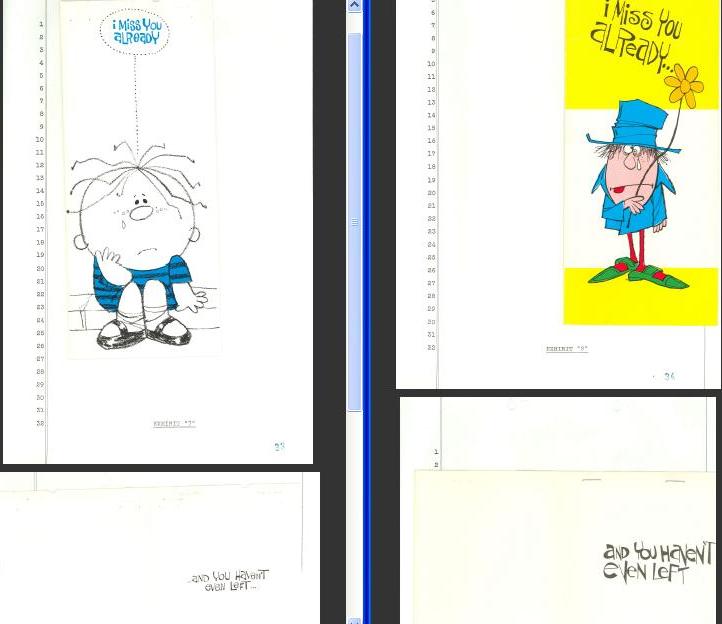
- Courts have evaluated whether distinct elements like text and artwork in greeting cards can be protected individually or collectively as original compilations.
- Real estate ownership maps compiled from various public and private records raise questions about what constitutes sufficient originality for copyright protection.
- The Copyright Office generally refuses to register compilations containing only two or three elements because the selection is considered de minimis.
- Statutory definitions of compilations and collective works are compared against legislative history and administrative rules to test policy consistency.
Considering all of these elements together, th[is] card[ is] … both original and copyrightable.
Copyright Originality and Idea-Expression
- Courts evaluate whether compilations of data possess the minimal creativity required for copyright protection.
- The Sixth Circuit held that a transmission parts catalog lacked creativity because it included every available part and used inevitable arrangements.
- Conversely, the Second Circuit found originality in a used car guide where logical choices were used to solve market presentation problems.
- Section 102(b) establishes the idea-expression distinction, excluding ideas, procedures, and systems from copyright protection.
- While unprotectable ideas and systems cannot be copyrighted, the specific expression of those ideas remains fully protected under the law.
the fact that an arrangement of data responds logically to the needs of the market for which the compilation was prepared does not negate originality.
The Idea-Expression Distinction in Copyright
- Copyright law denies protection to fundamental ideas, facts, and processes to keep them freely accessible in the public domain.
- Granting exclusive rights to basic building blocks of expression would be inefficient, unfair, and ultimately detrimental to creativity.
- The historical case of Baker v. Selden serves as a foundational precedent concerning the boundaries of copyright protection for systems and methods.
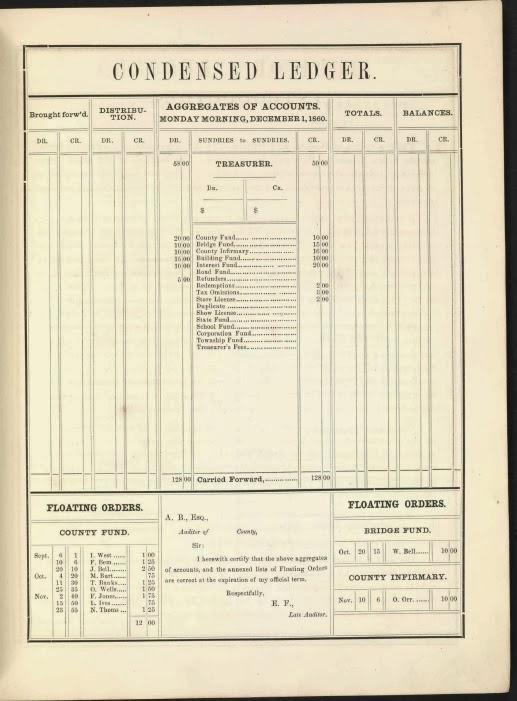
- Charles Selden sought to protect a specialized book-keeping system presented through an explanatory essay and accompanying blank forms.
- While the defendant Baker used a similar plan with different column arrangements, the core legal question centers on whether such systems are copyrightable.
It would be both inefficient and unfair to grant rights in these basic components that so many authors will need just because one person happened to employ them first.
Copyright Versus System Monopoly
- The core legal question is whether copyrighting a descriptive book grants an exclusive right to the underlying system it explains.
- The defendant is accused of using the same bookkeeping system illustrated in the complainant's copyrighted work.
- Truths of science and methods of art are considered common property belonging to the whole world.
- An author has the right to explain a system in their own way, but others may use the system without violating the explanatory book's copyright.
- The complainant argues that using the exact ruled lines and headings necessary for the system constitutes copyright infringement.
- Ultimately, the case hinges on whether a monopoly over a practical system can be legally claimed through a mere book explanation.
Where the truths of a science or the methods of an art are the common property of the whole world, any author has the right to express the one, or explain and use the other, in his own way.
Copyright Versus Patent Protection
- A descriptive book about book-keeping or any other art can be copyrighted as a literary work.
- There is a fundamental legal distinction between an explanatory book and the actual art or manufacture it describes.
- Copyright protects the author's written expression regardless of whether the underlying subject matter is novel.
- Granting exclusive rights to an art through mere copyright without official novelty examination would defraud the public.
- Patents, not copyrights, are the proper legal mechanism for securing exclusive rights to an invention, discovery, or manufacture.
To give to the author of the book an exclusive property in the art described therein, when no examination of its novelty has ever been officially made, would be a surprise and a fraud upon the public.
Copyright Versus Public Art
- Publishing a book on an art or science without a patent dedicates that art to the public use.
- Illustrations and diagrams in instructional books serve as a language to convey ideas rather than protected exclusive methods.
- The fundamental purpose of publishing scientific and useful arts books is to communicate knowledge for practical application.
- Ornamental designs and pictorial illustrations differ because their form is their essence and final end.
- While copying a book's text or illustrations to teach the art infringes copyright, practicing the described art itself remains entirely free to the public.
- Confusing the publication of a book with the actual practice of the art it describes creates false claims of copyright infringement.
The very object of publishing a book on science or the useful arts is to communicate to the world the useful knowledge which it contains.
Copyright Versus Patent Boundaries
- Illustrations and diagrams in a descriptive book may closely resemble the actual work performed, yet they do not grant an exclusive right to the underlying art or process itself.
- The primary objective of a copyrighted book is explanation, whereas the objective of the described art or system is use.
- Blank account books and similar utilitarian forms are excluded from copyright protection under the blank form doctrine.
- The Ninth Circuit held that a yoga sequence, functioning as a system or healing art, cannot be monopolized through copyright law.
- The aesthetic beauty or grace inherent in performing a process does not transform that process into copyrightable subject matter.
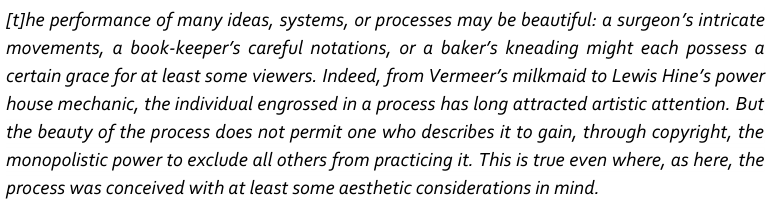
The performance of many ideas, systems, or processes may be beautiful: a surgeon’s intricate movements, a book-keeper’s careful notations, or a baker’s kneading might each possess a certain grace for at least some viewers.
The Copyright Merger Doctrine
- In Morrissey v. Proctor & Gamble Co., the plaintiff sued for copyright infringement over sweepstakes rules.
- Although the court found original expression in the rules, it denied copyright protection under the merger doctrine.
- The merger doctrine applies when there are limited ways to express an idea, causing the idea and expression to merge.
- Protecting such expressions would effectively grant a monopoly over the underlying idea, which copyright law prohibits.
- Some courts offer 'thin protection' in these cases, prohibiting only exact or near-exact copying rather than denying protection entirely.
When there is one form of expression, [or] at best only a limited number [of ways to express an idea or system], to permit copyrighting would mean that a party or parties, by copyrighting a mere handful of forms, could exhaust all possibilities of future use of the substance.
ATC Distribution Copyright Dispute
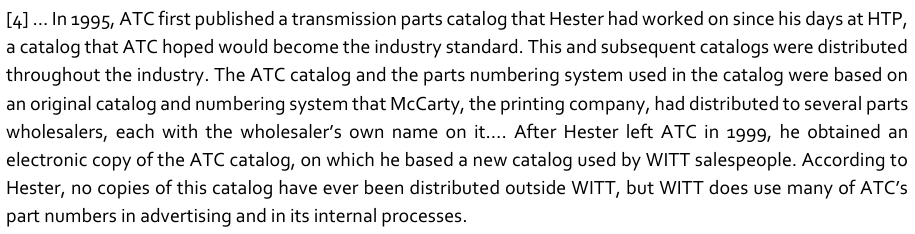
- ATC Distribution Group sued its former employee Kenny Hester and his new company WITT for copyright infringement.
- Hester left ATC and formed a competing transmission parts company, taking several employees and utilizing ATC's catalog design.
- ATC's catalog and numbering system were based on an earlier print distributed by McCarty, tracing roots back prior to ATC's publication.
- The district court granted summary judgment in favor of WITT and the other defendants, ruling against ATC's copyright claims.
- The court concluded that ATC's catalog and classification scheme lacked the necessary originality required for copyright protection.
One of ATC’s employees, Kenny Hester, left ATC to form his own transmission parts company, Whatever It Takes Transmissions.
Copyright and Part Taxonomies
- ATC developed a complex alphanumeric numbering system to categorize various transmission parts and brands.
- The taxonomy involves strategic decisions about categorization, leaving gaps for future parts, and designing specific numerical fields.
- ATC argues that its numbering scheme demonstrates multiple forms of creativity and originality.
- While classification can be a creative endeavor, copyright law protects expression rather than underlying ideas or systems.
- Statutory law explicitly excludes procedures, systems, and methods of operation from copyright protection regardless of their form.
Facts do not supply their own principles of organization.
Copyright and the Merger Doctrine
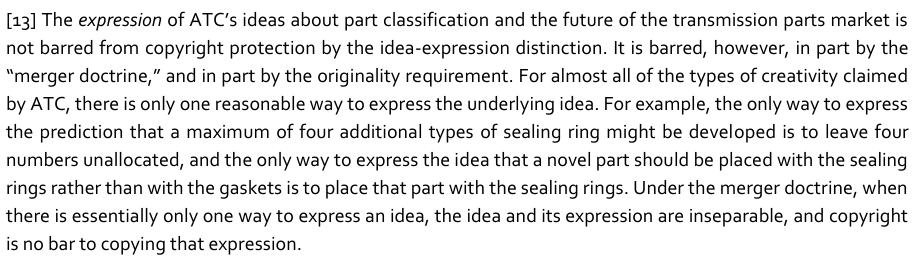
- ATC's classification scheme and predictions are considered unprotectable ideas rather than copyrightable expressions.
- The merger doctrine prevents copyright protection when there is essentially only one reasonable way to express an underlying idea.
- Leaving numbers unallocated to represent future predictions or placing a part in a specific category merges the idea with its expression.
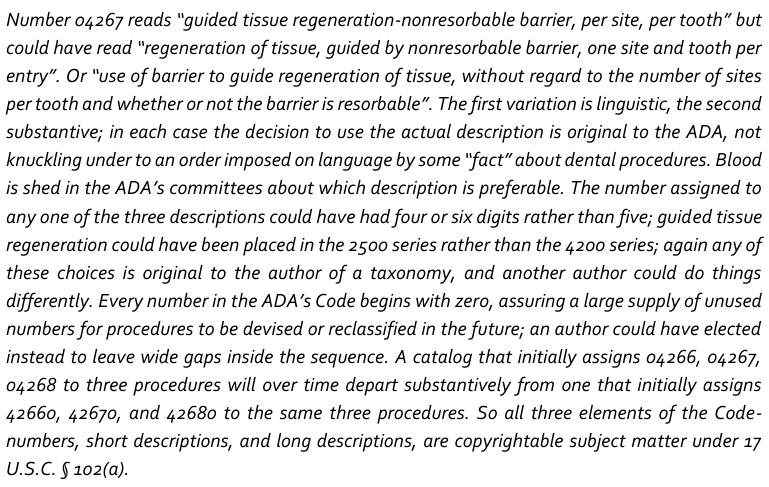
- ATC argues its individual part numbers are copyright protected as expressions of the catalog as a whole, citing precedent from the American Dental case.
- The American Dental court held that procedure numbers assigned to dental classifications were copyrightable, though its rationale was opaque.
Under the merger doctrine, when there is essentially only one way to express an idea, the idea and its expression are inseparable, and copyright is no bar to copying that expression.
Copyrightability of Dental Codes
- The ADA dental code descriptions and taxonomy involve original authorial choices and creative decisions.
- Decisions regarding wording, numbering series, and structural gaps demonstrate original authorship.
- However, the mere attachment of numbers to copyrightable categories does not automatically render the numbers themselves copyrightable.
- Part numbers generated through essentially random processes lack the necessary creativity to merit copyright protection.
- A numbering system and the actual numbers produced by it are distinct works under copyright law.
Blood is shed in the ADA’s committees about which description is preferable.
Copyright and the Idea-Expression Distinction
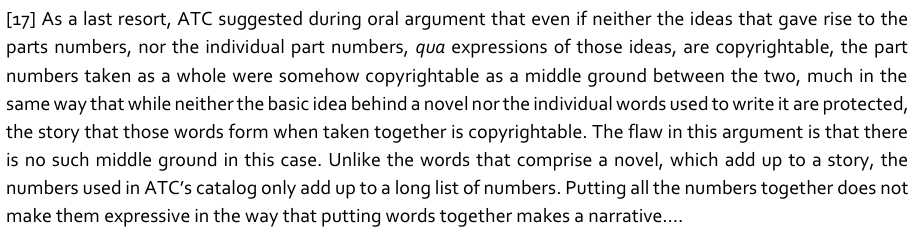
- ATC argued that part numbers taken as a whole could be copyrightable as a middle ground.
- The court rejected this argument because numbers in a catalog lack the narrative expression of a novel.
- Copyright law protects original expression while allowing free use of underlying ideas and information.
- Distinguishing between an unprotectable idea and its expression remains a persistent challenge in courts.
- Legal doctrines like scènes à faire further bar protection for standard or indispensable elements.
Unlike the words that comprise a novel, which add up to a story, the numbers used in ATC’s catalog only add up to a long list of numbers.
Copyright Boundaries in Genre and History
- Standard genre tropes and expected elements are classified as unprotectable scènes à faire to prevent authors from monopolizing common settings.
- Courts have applied this doctrine across diverse subjects, ranging from police procedurals in the South Bronx to superhero tropes and surreal egg personifications.
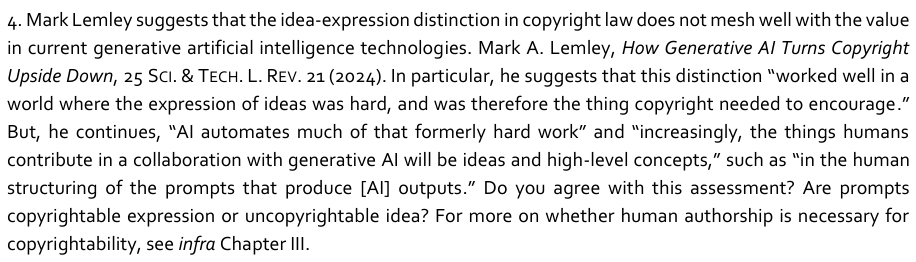
- Mark Lemley argues that generative AI disrupts the traditional idea-expression distinction by automating labor-intensive expression while humans contribute high-level concepts.
- This technological shift raises questions about whether human prompts are protectable expression or uncopyrightable ideas.
- Historical facts constitute another unprotectable category under copyright law, as illustrated by the Hindenburg disaster litigation.
- The historical fact-expression distinction serves specific policy incentives and statutory boundaries regarding what subject matter can be owned.
The zeppelin, the last and most sophisticated in a fleet of luxury airships, which punctually floated its wealthy passengers from the Third Reich to the United States, exploded into flames and disintegrated in 35 seconds as it hovered above the Lakehurst, New Jersey Naval Air Station at 7:25 p. m. on May 6, 1937.
The Legacy of the Hindenburg
- The disaster at Lakehurst permanently ended the era of passenger airship service and the Nazi regime's dirigible ambitions.
- The tragedy immediately spawned a wealth of journalistic, historical, and literary accounts, including memoirs by survivors and official reports.
- Author A.A. Hoehling published a comprehensive 1962 book arguing that the Hindenburg was destroyed by sabotage.
- Hoehling's investigation points to crew member Eric Spehl as the most likely saboteur based on motive, expertise, and opportunity.
- A decade later, Michael MacDonald Mooney published a more literary retelling that wove symbolic themes around the actual events.
He concludes that the most likely saboteur is one Eric Spehl, a “rigger” on the Hindenburg crew who was killed at Lakehurst.
Technology Versus Nature
- The Hindenburg is contrasted as a symbol of technology against traditional methods.
- German creators and the Reich are linked to this technological symbol.
- The airship's destruction is viewed as nature ultimately triumphing over technology.
- Titler's account was published following the release of the appellant's book.
- Affidavit records show Titler admitted to copying Hoehling's sabotage theory.
The destruction is depicted as the ultimate triumph of nature over technology, as Spehl
Hindenburg Sabotage Theories and Adaptations
- Mooney examines the history of flight and the Hindenburg, focusing on the theory that a crew member named Spehl committed sabotage.
- Mooney researched his book using archives, interviews, and prior works by Hoehling and Titler.
- Universal City Studios purchased the movie rights and commissioned writers to develop a cinematic adaptation.
- The final screenplay adopted a disaster-movie formula featuring fictional subplots and characters alongside a sympathetic saboteur.
- Hoehling filed a copyright infringement lawsuit against Universal and Mooney for copying his essential plot.
This formula has become standard fare in so-called 'disaster' movies ....
Copyright and Ideas
- Appellees argue that Hoehling's plot constitutes merely an idea.
- Ideas are established as not copyrightable under the law.
- This legal principle forms the foundation of the subject matter discussed.
- The chapter addresses the limitations of copyright protection.
- Distinguishing between protected expression and unprotected ideas is crucial.
Appellees further argue that Hoehling’s plot is an idea, and ideas are not copyrightable as a matter of law.
Copyright and Historical Nonfiction
- Interpretations of historical events and theories are not protected by copyright law to encourage the development of historical works.
- Factual information discovered through research remains in the public domain and can be freely used by subsequent authors.
- Authors are permitted to rely on prior published material to avoid wasted effort and redundant research.
- Standard incidents, settings, and characters known as scenes a faire cannot be copyrighted.
- Courts must ensure that works are not virtually identical, preventing the wholesale usurpation of an author's expression.
Factual information is in the public domain.
Copyright and Fictional Facts
- Copyright laws fundamentally aim to encourage contributions to recorded knowledge rather than merely guarantee financial rewards.
- Historical works benefit from authors having a relatively free hand to build upon the work of their predecessors.
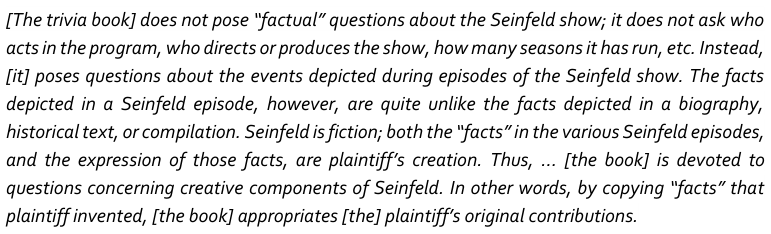
- The Seinfeld trivia book case highlights the legal distinction between historical facts and fictional events depicted in a show.
- Judge Sotomayor ruled that trivia questions about fictional events appropriate the creator's original contributions.
- The concept of 'created facts' is technically a misnomer, referring instead to copyrightable expression rather than true facts.
Seinfeld is fiction; both the 'facts' in the various Seinfeld episodes, and the expression of those facts, are plaintiff's creation.
Copyrightability of Facts and Art
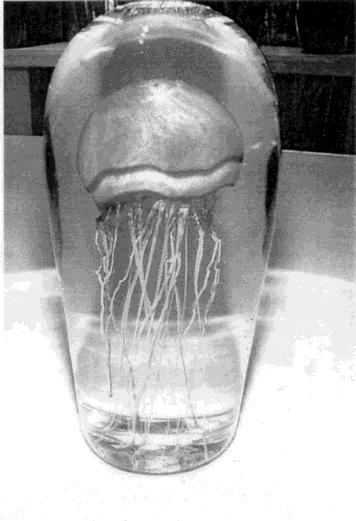
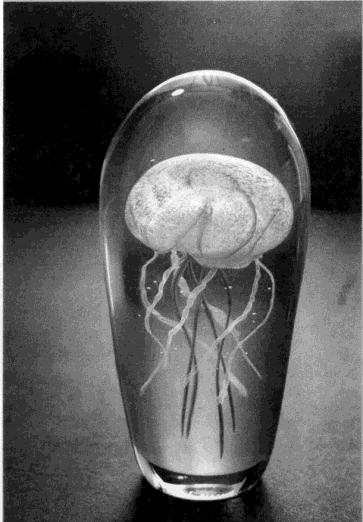
- The Ninth Circuit held that realistic glass-in-glass jellyfish sculptures lack copyright protection due to common artistic elements and jellyfish physiology.
- Granting copyright to such standard combinations would improperly grant the artist a monopoly on lifelike glass jellyfish sculptures.
- Opinion-based facts present a complicated issue in copyright law regarding their protectability.
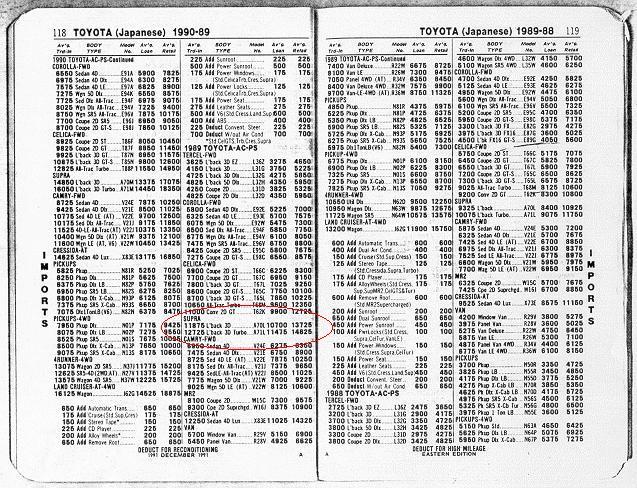
- Automobile Red Book valuations were found copyrightable because they represent predictions based on professional judgment rather than mere historical data.
- Conversely, settlement prices produced by a mercantile exchange were denied copyrightability because the exchange acted merely as a census taker copying market valuation.
These elements are so commonplace in glass-in-glass sculpture and so typical of jellyfish physiology that to recognize copyright protection in their combination effectively would give Satava a monopoly on lifelike glass-in-glass sculptures of single jellyfish with vertical tentacles.
Copyright Estoppel and Subject Matter
- The copyright estoppel doctrine prevents authors from claiming copyright protection for fictional elements they originally held out as factual.
- This rule relies on how the work is represented to the public rather than objective truth or the author's subjective beliefs.
- Allowing authors to recharacterize factual claims as fiction later would unfairly trap subsequent creators who relied on those representations.
- Section 102(a) enumerates specific categories of copyrightable subject matter, though the statutory language suggests the list is non-exhaustive.
- Despite the non-exhaustive language, courts and the Copyright Office maintain that unlisted works, such as athletic events, are generally not copyrightable.
It would hinder, not promote the progress of science and useful arts to allow a copyright owner to spring an infringement suit on subsequent authors who built freely on a work held out as factual, contending after the completion of the copyrighted work, and against the work's own averments, that the purported truths were actually fictions.
Copyright Subject Matter Categories
- The statutory category of a work matters because it can determine the specific rights a copyright holder receives and how courts apply legal approaches.
- Works or their individual components can sometimes fall into more than one copyright category simultaneously.
- Literary works are broadly defined to include not just traditional novels and books, but also non-human-readable formats like computer software code.
- A single song typically generates two distinct copyrights: one for the underlying musical composition and another for the specific sound recording.
- Federal copyright protection for sound recordings historically excluded pre-1972 works until Congress extended protections in 2018.
- Pictorial, graphic, and sculptural works encompass a wide range of art and technical drawings, though they remain limited by the useful articles doctrine.
In addition, perhaps less intuitively, it also includes material that humans typically do not read, such as computer software code, as discussed in more detail in section 5 below.
Government Works and Copyright
- U.S. government works are generally excluded from copyright protection by statute.
- The common law government edicts doctrine bars copyright in works by judges and legislators.
- Denying copyright maximizes public access to the law for democratic participation.
- Public funding of government works eliminates the need for copyright as a financial incentive.
- Section 105 strictly applies to federal works, which differs from the broader common law doctrine.
Government works are typically paid for with public funds, which might imply public ownership of those works, or at least no need for a second subsidy of those works via copyright protection.
Government Works and Copyright
- State officials and independent contractors are generally not barred from asserting copyright over expressive or federally funded works.
- Federal copyright provisions allow the government to hold copyrights if they are transferred through assignment or bequest.
- Private model codes that are adopted as law raise significant due process concerns regarding public access and notice.
- Circuit courts have historically differed on whether referencing copyrighted works as legal standards strips them of copyright protection.
- Economic incentives for creators play a much lower role in the analysis when due process concerns and public access to the law are high.
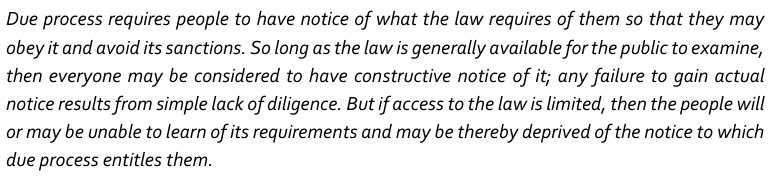
Due process requires people to have notice of what the law requires of them so that they may obey it and avoid its sanctions.
Copyright and Useful Articles
- Federal law addresses copyright ownership for literary works produced by military members and government employees.
- Copyright protection for official legal texts raises due process concerns when applied across foreign jurisdictions.
- The legal doctrine of useful articles questions whether objects serving a practical function can also receive artistic copyright.
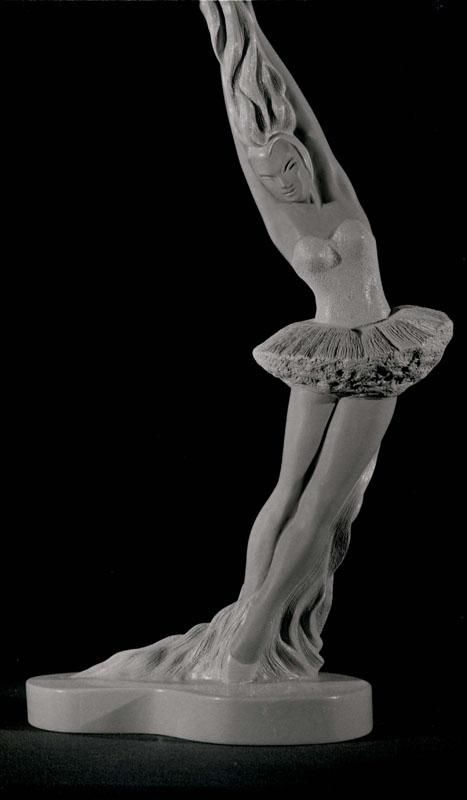
- The landmark case Mazer v. Stein examined whether sculptural statuettes used as lamp bases qualify for copyright protection.
- Courts must determine if artistic features are separable from the utilitarian aspects of manufactured items.
Stripped down to its essentials, the question presented is: Can a lamp manufacturer copyright his lamp bases?
Copyrights Versus Industrial Design
- The central controversy questions whether an artist's copyright covers the mass reproduction of a work intended for utilitarian items like lamp bases.
- Petitioners argue that an artist transitioning into a manufacturer should be limited to design patents rather than receiving copyright protections.
- Historically, copyright legislation has steadily expanded since 1790 to include maps, dramatic compositions, photographs, and three-dimensional works of art.
- The 1909 Copyright Act removed the fine-arts clause, effectively ending statutory verbal distinctions between purely aesthetic and useful works.
- Copyright Office regulations protect artistic craftsmanship based on form, while excluding the mechanical or utilitarian aspects of the objects.
When an artist becomes a manufacturer or a designer for a manufacturer he is subject to the limitations of design patents and deserves no more consideration than any other manufacturer or designer.
Copyright Protection for Artistic Works
- Historical administrative practice and legislative history indicate that Congress intended 'works of art' to encompass statuettes.
- Individual perceptions of beauty are too varied to allow for a narrow or rigid legal definition of art.
- Original expressions that are the author's tangible creation are eligible for copyright regardless of style.
- The intended mass reproduction of these artistic works as lamp stands depends entirely on statutory interpretation.
- Petitioners argue that the existence of design patent laws implies the denial of copyright protection for artistic articles used in manufacture.
Individual perception of the beautiful is too varied a power to permit a narrow or rigid concept of art.
Copyright Versus Patent Protection
- Industrial designs lacking novelty for patents can be freely copied unless protected otherwise.
- The Court holds that the patentability of an article does not bar its copyright as a work of art.
- Copyright protects the expression of an idea rather than the underlying art or idea itself.
- The primary goal of copyright and patent laws is to encourage creative efforts that advance public welfare.
- A dissenting view questions whether sculptors qualify as authors and their statues as writings under the Constitution.
Is a sculptor an ‘author’ and is his statute a ‘writing’ within the meaning of the Constitution?
Copyright and Applied Art
- Copyright law extends protection to various applied art objects like statuettes, clocks, and lamps, raising constitutional questions about what constitutes a writing.
- The 1976 Copyright Act codified the principle that useful articles can only receive copyright protection if their artistic features can be separated from their utilitarian aspects.
- Congress explicitly sought to draw a clear line protecting works of applied art while excluding general industrial designs from copyright protection.
- Legislative history and subsequent legal interpretations established two distinct categories of separability: physical separability and conceptual separability.
- While physical separability allows an expressive work to be physically detached from a functional object, conceptual separability proved challenging for courts to define.
- The ongoing confusion surrounding conceptual separability eventually led the Supreme Court to intervene in the 2017 case Star Athletica, LLC v. Varsity Brands, Inc.
Perhaps these are all ‘writings’ in the constitutional sense. But to me, at least, they are not obviously so.
Copyright and Industrial Design
- Congress protects original works of art but generally excludes industrial designs from copyright protection.
- Limited protection is granted to artistic features of useful articles if they can be identified separately and exist independently from utilitarian aspects.
- The Supreme Court established a two-part test requiring features to be perceptible as art and independently protectable if imagined apart from the useful article.
- Respondents sued petitioners for copyright infringement of graphic designs appearing on the surface of cheerleading uniforms.
- Lower courts disagreed on whether the uniform surface designs served a utilitarian function that made them inseparable from the garments.
- The legal debate centers on interpreting separability requirements and balancing statutory limitations with copyright policy.
The line between art and industrial design, however, is often difficult to draw.
Separability Analysis in Copyright Law
- Courts and the Copyright Office use the term separability to analyze whether a feature can exist independently of a useful article.
- The primary legal task in this case is determining if surface designs on cheerleading uniforms are eligible for copyright protection.
- Respondents argue that separability only applies when a pictorial, graphic, or sculptural work constitutes the entire design of a useful article.
- They contend that two-dimensional surface decorations appearing on useful articles are fundamentally distinct from the articles themselves.
- Under the respondents' theory, these surface decorations operate as inherently separable two-dimensional works of graphic art.
Under this theory, two-dimensional artistic features on the surface of useful articles are “inherently separable.”
Copyright Separability for Useful Articles
- The statutory text of Section 101 requires separability analysis for two-dimensional pictorial and graphic features just as it does for three-dimensional sculptural features incorporated into useful articles.
- Copyright policy determinations must rely strictly on statutory interpretation and the clear meaning of the text rather than free-ranging judicial policy preferences.
- The first separability requirement is easily satisfied if a decisionmaker can visually spot a distinct two- or three-dimensional artistic element on the useful article.
- The independent-existence requirement is more difficult, demanding that the identified feature can exist as its own standalone artistic work once imagined apart from the utilitarian object.
- A feature cannot qualify for copyright if it is itself a useful article, a part of a useful article, or merely a replica of a useful article in another medium.
This is not a free-ranging search for the best copyright policy, but rather depends solely on statutory interpretation.
Copyright and Useful Articles
- The landmark Mazer decision established that artistic works retain copyright protection even when incorporated into useful objects.
- Early post-Mazer regulations introduced the modern separability test to distinguish between utilitarian functions and protectable artistic features.
- Congress eventually incorporated these regulatory principles directly into Section 101 of the 1976 Copyright Act.
- A design feature of a useful article is eligible for copyright if it can be identified and imagined apart from the object as a standalone work.
- Applying this separability test to cheerleading uniform surface decorations shows they qualify as protectable two-dimensional art.
If the sole intrinsic function of an article is its utility, the fact that the article is unique and attractively shaped will not qualify it as a work of art.
Copyright Protection for Applied Art
- Retaining the outline or contour of a useful article does not bar a two-dimensional design from receiving copyright protection.
- Denying protection to designs covering an entire useful article while protecting partial designs would create an unjustified legal anomaly.
- Copyright in this context applies strictly to the two-dimensional surface artwork, leaving others free to manufacture uniforms of the exact same cut and shape.
- Arguments requiring that a useful article remain equally useful after artistic extraction misinterpret the statutory separability test.
- The core focus of the separability inquiry is whether the extracted feature qualifies as a nonuseful work on its own, not the utility of the remainder.
Failing to protect that art would create an anomaly: It would extend protection to two-dimensional designs that cover a part of a useful article but would not protect the same design if it covered the entire article.
Copyright Separability and Useful Articles
- Utilitarian objects like shovels cannot be copyrighted under statutory law.
- Artistic features of an object can be copyrighted if they exist independently.
- The statute does not require a fully functioning useful article to remain after conceptual removal.
- The court abandons the traditional distinction between physical and conceptual separability.
- Arguments are made to incorporate designer artistic judgment and marketability into the separability test.
Without the base, the “lamp” would be just a shade, bulb, and wires.
Copyright and Industrial Design
- The petitioner argued that Congress intended to exclude industrial design from copyright protection entirely.
- The court rejected the presumption of hostility toward industrial design, noting that patent and copyright are not mutually exclusive.
- An artistic feature of a useful article is eligible for copyright if it can be perceived separately and qualifies as a protectable work.
- The dissenting opinion argued that the cheerleader uniform designs cannot be perceived separately from the useful article.
- The dissent emphasized that pictures of the design features merely replicate the underlying useful article of cheerleader uniforms.
Look at the designs that Varsity submitted to the Copyright Office. You will see only pictures of cheerleader uniforms.
Copyright and Useful Articles
- Replicating a useful article in a different medium does not grant copyright protection over the underlying useful article itself.
- A work of art must be perceived as two- or three-dimensional and separate from any utilitarian article to qualify for copyright.
- Copyright eligibility requires either physical separateness, where design features can be removed without harming the function, or conceptual separateness.
- Conceptual separateness means imagining the design feature independently as a work of art without picturing a replica of the useful object.
- Integrated designs, such as a lamp where wires run through a sculpted cat base, can still achieve conceptual separateness if the art exists independently.
Can the design features (the picture, the graphic, the sculpture) be physically removed from the article (and considered separately), all the while leaving the fully functioning utilitarian object in place?
Separability in Copyright Design
- Congress and the Copyright Office recognize copyrightable design works when artistic elements can be applied to useful objects.
- Examples of protected designs include carvings, reliefs, engravings, and printed artwork on items like chairs, flatware, and t-shirts.
- Courts have similarly protected decorative additions such as statuettes used as lamp bases and engravings on furniture.
- Conversely, objects whose three-dimensional designs are intrinsically tied to their utilitarian function are denied copyright protection.
- A design cannot receive copyright if it is physically or conceptually inseparable from the functional object itself, such as spoon or candleholder shapes.
By way of contrast, Van Gogh’s painting of a pair of old shoes, though beautifully executed and copyrightable as a painting, would not qualify for a shoe design copyright.
Copyright and Useful Articles
- Designs that are inseparable from useful objects cannot be copyrighted regardless of their aesthetic appeal.
- A separable design feature must be capable of existing independently as a standalone artistic work.
- Imagining whether a picture of the design is also a picture of the useful article helps determine separability.
- While almost any industrial design can be imagined as art, Congress intended for inseparable designs to rely on patents rather than long copyright protection.
- The conceptual separation approach addresses the economic and practical balance of providing incentives without overprotecting useful items.
What is there in the world that, viewed through an esthetic lens, cannot be seen as a good, bad, or indifferent work of art?
The Limits of Copyright
- Copyright protection imposes notable costs, including higher consumer prices and the administrative burden of searching for and securing permissions.
- Thomas Jefferson famously noted that the costs of limited monopolies can sometimes outweigh their benefits.
- Congress has significantly extended the duration of copyright protection from the original 14 years to over a century.
- The Constitution assigns Congress the primary responsibility for balancing copyright costs and benefits, a role courts must respect.
- While Congress has not granted broad copyright protection to fashion garments, designers still utilize patent and trademark law.
- Granting copyright protection to garment designs would overstep judicial bounds and provide rights that Congress deliberately withheld.
Sometimes, as Thomas Jefferson wrote to James Madison, costs can outweigh “the benefit even of limited monopolies.”
Copyright and Useful Articles
- The author examines whether the design features of Varsity's cheerleader uniforms can exist separately from their utilitarian aspects.
- The visual evidence shows that even when contexts are omitted, the shapes and lines still clearly depict dresses.
- Attempting to imaginatively remove the patterns to place them on a canvas still results in the image of a cheerleader's dress.
- Because the esthetic elements are inextricably bound to the useful article, they are neither physically nor conceptually separate and cannot be copyrighted.
- Varsity attempts to protect unoriginal stripes and chevrons indirectly to control the manufacture of three-dimensional uniforms.
- The dissent argues that granting such copyright violates the fundamental principle that one cannot claim rights in a useful article through a mere replica.
That is to say, they look like pictures of cheerleader uniforms, just like Van Gogh’s old shoes look like shoes.
Copyright and Useful Articles
- The text examines the legal history and application of the Star Athletica separability test through the lens of the Brandir RIBBON bicycle rack.
- The creator of the bicycle rack originally developed wire sculptures as personal artistic expressions before realizing their potential utilitarian application.
- Judicial opinions in the Varsity Brands case reveal deep disagreements over whether cheerleading uniform designs constitute standalone graphics or inherent parts of useful articles.
- Copyright law's lack of a clear claiming methodology frequently complicates the analysis of whether a work qualifies as a useful article.
- While three-dimensional functional features like pockets and sleeves are obvious in fashion design, the potential functionality of two-dimensional designs remains an open question.
These sculptures were, he said, created and displayed in his home as a means of personal expression, but apparently were never sold or displayed elsewhere.
Functionality and Expression in Design
- Section 101 defines a useful article by excluding features whose intrinsic function is merely to portray appearance or convey information.
- Features serving any purpose beyond mere appearance or information conveyance are arguably classified as functional under copyright law.
- Dual-nature features, such as camouflage, present a challenge by simultaneously serving expressive and highly practical purposes.
- Fashion designs often exploit optical illusions, like the Müller-Lyer illusion, to actively influence how a wearer's body shape is perceived.
- These design techniques raise complex legal questions regarding whether body-altering garments and patterns should be deemed functional or separable.
A camouflage pattern might portray its own appearance or convey information. But it also functions to cloak the person or object that it covers in an appropriate environment.
The Fashion Piracy Paradox
- Christopher Sprigman and Kal Raustiala argue that permitting fashion piracy actually benefits society by driving innovation.
- The 'piracy paradox' suggests that copying accelerates design obsolescence, which fuels the apparel industry's rapid innovation cycle.
- Because fashion relies heavily on status and cyclical trends, copying creates a continuous demand for new designs.
- Conversely, Scott Hemphill and Jeannie Suk Gersen advocate for protecting close copies to balance collective trends with individual expression.
- These competing legal theories raise questions about whether copyright law should protect fashion designs given their role in maintaining social status.
copying functions as an important element of—and perhaps even a necessary predicate to—the apparel industry’s swift cycle of innovation.
Alternative Legal Design Protections
- Design patents protect ornamental designs for manufactured articles for a duration of fifteen years following examination by the Patent and Trademark Office.
- Trade dress protection covers product packaging and design as a form of trademark, arising through commercial use rather than mandatory registration.
- Unregistered trade dress is enforceable under federal law, provided the design distinguishes the source of the goods and is not purely functional.
- Product packaging can be inherently distinctive, but product design requires acquired secondary meaning to receive trade dress protection.
- Sui generis design protection offers limited coverage in the United States, notably for vessel hulls and semiconductor chips, while fashion designs have lacked similar statutory protection.
This appeal involves the validity of a copyright in a full-body banana costume.
Copyrighting the Banana Costume
- Rasta secured a copyright registration for its full-body banana costume in 2010.
- A former business partner, Yagoozon, later formed Kangaroo and began selling a similar unlicensed costume.
- Rasta sued Kangaroo for copyright infringement, leading to a preliminary injunction granted by the District Court.
- The court analyzed whether the costume's artistic features are separable from its utilitarian aspects to determine copyrightability.
- The court concluded that the combination of the banana's sculptural features can exist independently as a copyrightable work.
This dispute stems from a business relationship that went bad.
Copyrighting the Banana Costume
- Kangaroo argued that depictions of natural objects in their natural condition should never be eligible for copyright protection.
- The court rejected this argument, emphasizing that the originality requirement has a very low bar and judges must avoid aesthetic judgments.
- The banana costume's combination of colors, lines, shape, and length were found to be separable, independently existing, and copyrightable.
- The merger doctrine does not apply because numerous alternative ways to design a banana costume exist, preventing a monopoly on the underlying idea.
- Cutout holes for the head and arms are purely utilitarian and intrinsically tied to the wearable nature of the garment, making them uncopyrightable.
A judge’s own aesthetic judgments must play no role in copyright analysis.
Copyright and Computer Software
- The court affirmed copyright protection for a banana costume because multiple non-infringing design variations exist.
- Legal commentary debates whether twenty alternative examples are truly sufficient to justify broad copyright protection.
- The text transitions from intellectual property law to introduce the fundamental concepts and terminology of computer software.
- Software represents the non-tangible instructions stored in memory that direct hardware operations.
- Humans write these instructions in source code using specific programming syntax.
- Compilers convert human-readable source code into binary object code that computers can execute.
Of the 20 costumes—treating minor variations as different costumes—3 are 'sexy' bananas, a different 6 cover the face, 1 is a guy in a yellow suit with a hood, and 1 is an odd Wolverine.
Evolution and Economics of Software
- Software programs are designed using modular components that can be reused across different applications.
- The software industry transitioned from being a free hardware add-on in the 1950s to an independent market by the 1980s.
- Modern software is widely distributed across diverse devices ranging from traditional computers to everyday appliances.
- Software markets are heavily driven by network effects, where a product's value increases as more people use it.
- Network effects make file sharing easier and reduce the need for retraining when switching jobs.
- Software is also subject to increasing returns due to positive market feedback and the proliferation of complementary goods.
An operating system or application program will allow even a single user to perform a variety of tasks regardless whether even a single other consumer owns the software.
Software Network Effects and Copyright
- Operating systems with larger market shares attract more application programs, reinforcing their dominance.
- Network effects create benefits such as increased functionality, greater choice, and standardized data exchange.
- Strong network effects can inadvertently trap industries in obsolete standards and impede new market entrants.
- The 1976 Copyright Act does not explicitly mention software, but legislative history groups it under literary works.
- CONTU concluded in 1978 that software deserves copyright protection while preserving the distinction between ideas and expressions.
Sometimes the power of network effects can trap an industry or a market in an obsolete or less-than-optimal standard because of the difficulties of switching away from it.
Copyright Protection For Software
- When copyrighted elements are the only essential means to accomplish a task, their later use does not constitute infringement.
- Congress formally defined computer programs and added specific defenses to copyright infringement in 1980.
- Early legal battles, such as Apple versus Franklin, tested the boundaries of software copyrightability.
- The Third Circuit ruled that both source code and object code qualify for protection as literary works.
- Operating system programs received the same copyright protection as application programs, instructing computers effectively.
- The court rejected the merger doctrine argument, stating that compatibility alone does not eliminate alternative expressions.
The definition of ‘literary works’ in section 101 includes expression not only in words but also ‘numbers, or other ... numerical symbols or indicia,’ thereby expanding the common usage of ‘literary works.’
Copyright Protection for Software
- Courts quickly established that both source code and object code for operating systems and applications are copyrightable.
- Critics argue that software lacks traditional communicative functions because mature programs are addressed to machines rather than humans.
- Further skepticism arises from the argument that object code is automatically compiled by computers and that software is primarily functional.
- Scholars warn that strong software copyright protection combined with network effects could impede technological progress.
- Early cases focused on preventing exact program piracy, forcing later courts to distinguish between unprotectable ideas and protectable expression in non-literal code.
Computer programs, in their mature phase, are addressed to machines.
Copyright Law and Computer Software
- Advances in computer science have continually forced courts to navigate challenging legal questions within copyright law.
- The constitutional foundation of copyright law aims to stimulate public welfare and artistic creativity by offering limited personal gain incentives to authors.
- Copyright law strives to maintain a delicate equilibrium by protecting authors to encourage creation while preventing monopolistic stagnation.
- Courts address the complex issue of whether non-literal aspects of computer programs, beyond written code, are protected by copyright.
- The Copyright Act defines a computer program as a set of instructions used to achieve a specific result.
- Programmers build software by moving from general ultimate purposes down to simpler constituent subtasks, subroutines, and modules.
As scientific knowledge advances, courts endeavor to keep pace, and sometimes—as in the area of computer technology—they are required to venture into less than familiar waters.
Computer Program Design and Coding
- Programmers organize decomposed program functions into flow charts that map module interactions.
- Parameter lists dictate the specific form and content of information exchanged between interacting modules.
- Program structure encompasses module functions, relationships, and macros that initiate operation sequences.
- The design phase balances speed, efficiency, simplicity, and hardware memory constraints.
- Coding translates the structural blueprint into human-readable source code and then compiles it into binary object code.
- Debugging involves running the completed program to locate and correct logical and syntactical errors.
This step has been described as comparable to the novelist fleshing out the broad outline of his plot by crafting from words and sentences the paragraphs that convey the ideas….
Software Translation and Copyright Infringement
- Software compatibility programs like ADAPTER translate program languages between different operating systems, making them highly marketable and valuable to users.
- Altai sought to expand its ZEKE scheduling program to MVS operating systems and recruited a former CA programmer familiar with ADAPTER.
- The recruited programmer secretly copied approximately 30 percent of ADAPTER's code to create Altai's competing component, OSCAR.
- Upon facing a copyright and trade secret lawsuit from CA, Altai initiated a complete rewrite of the infringing code using an isolated team of programmers.
- Altai successfully replaced the infringing code with OSCAR 3.5 and provided it as a free upgrade to customers to mitigate the legal dispute.
When the dust finally settled, Arney had copied approximately 30% of OSCAR’s code from CA’s ADAPTER program.
Copyright and Non-Literal Software Structure
- Altai conceded liability and damages for directly copying ADAPTER into OSCAR 3.4, leaving the appeal focused entirely on the newer OSCAR 3.5 version.
- Copyright protection historically extends beyond strictly literal text to encompass non-literal components and fundamental structures to prevent plagiarism through immaterial variations.
- Altai intentionally purged all ADAPTER source code when developing OSCAR 3.5 to eliminate literal similarities.
- Computer programs are legally classified as literary works, meaning their non-literal structures can potentially receive copyright protection.
- Copyright law protects only the expression of an idea rather than the underlying idea itself, creating the need to define the exact scope of protection for software.
It is of course essential to any protection of literary property ... that the right cannot be limited literally to the text, else a plagiarist would escape by immaterial variations.
Copyright and Computer Programs
- Copyright law protects the original expression of a programmer's ideas rather than the underlying processes or methods.
- Distinguishing between an idea and its expression is particularly difficult for computer programs due to their utilitarian nature.
- Under the principle established in Baker v. Selden, elements of a work that are necessarily incidental to its function cannot be copyrighted.
- The Whelan decision attempted to separate idea from expression in utilitarian works by equating the program's purpose with its idea.
- According to the Whelan approach, any specific means of achieving the program's purpose that is not strictly necessary for that function constitutes protectable expression.
Drawing the line between idea and expression is a tricky business.…
Evaluating the Whelan Rule
- The Whelan rule for distinguishing ideas from expression in computer programs has received a mixed reception in the courts.
- Academic commentators have widely criticized Whelan for being conceptually overbroad and assuming a program has only one underlying idea.
- Because computer programs consist of interacting subroutines with their own purposes, Whelan's general formulation is descriptively inadequate.
- The district court wisely declined to follow the Whelan approach in favor of a more nuanced methodology.
- A recommended three-step procedure involves abstraction, filtration, and comparison to determine substantial similarity in non-literal elements.
The crucial flaw in Whelan’s reasoning is that it assumes that only one ‘idea,’ in copyright law terms, underlies any computer program, and that once a separable idea can be identified, everything else must be expression.
The Abstractions Test and Filtration
- Works can be analyzed through a series of patterns of increasing generality, stopping before reaching unprotected broad ideas.
- The abstractions test is adaptable to computer programs to recognize a mixture of numerous ideas and expressions.
- Applying the test requires courts to dissect a program's structure and isolate each level of abstraction from code to ultimate function.
- A computer program maintains structure at every level of abstraction, ranging from complex low-level instructions to trivial high-level functions.
- The successive filtering method separates protectable expression from non-protectable material dictated by efficiency, external factors, or the public domain.
Initially, in a manner that resembles reverse engineering on a theoretical plane, a court should dissect the allegedly copied program’s structure and isolate each level of abstraction contained within it.
Efficiency and the Merger Doctrine
- The merger doctrine fits comfortably within the context of computer programs and their textual aspects.
- Programmers strive for maximum efficiency, making efficiency akin to concise mathematical computations.
- Efficiency concerns can narrow the practical range of program expression to only one or two workable options.
- When a specific module is necessary for efficient implementation, expression merges with the underlying idea and lacks protection.
- The utilitarian nature of software and competitive market forces create proof problems that the merger doctrine helps eliminate.
- Similar efficient structures may result from independent creation rather than copying and should be disregarded in similarity analysis.
While, hypothetically, there might be a myriad of ways in which a programmer may effectuate certain functions within a program,—i.e., express the idea embodied in a given subroutine—efficiency concerns may so narrow the practical range of choice as to make only one or two forms of expression workable options.
Filtering Computer Program Copyrights
- Standard literary and programming devices are generally not copyrightable when their use is practically unavoidable.
- A programmer's design freedom is heavily constrained by external factors such as hardware specifications, industry standards, and compatibility requirements.
- Courts must examine a program's structure to filter out elements dictated by these external factors.
- Material taken from the public domain must also be filtered out before conducting a substantial similarity analysis.
- The final step of the test leaves behind a core of protectable expression known as the golden nugget.
- Copyright law aims to balance rewarding artistic creativity with preserving the free use of non-protectable ideas and processes.
Once a court has sifted out all elements of the allegedly infringed program which are “ideas” or are dictated by efficiency or external factors, or taken from the public domain, there may remain a core of protectable expression.
Balancing Copyright and Progress
- Copyright law balances the reward for authors with the ultimate goal of promoting broad public access to creative works.
- The Copyright Act must be interpreted in light of its core purpose when technological changes create ambiguity.
- Substantial effort and labor alone cannot confer copyright status on an otherwise uncopyrightable work, as established by Feist.
- Feist undercuts previous legal reasoning that extended copyright protection beyond literal computer code to reward programmers' efforts.
- Rejecting overly broad copyright protection prevents early entrants from locking up basic programming techniques.
To the contrary, serious students of the industry have been highly critical of the sweeping scope of copyright protection engendered by the Whelan rule, in that it enables first comers to lock up basic programming techniques as implemented in programs to perform particular tasks.
Copyright and Computer Software
- The exact contours of copyright protection for non-literal computer program structure remain unclear due to the hybrid utilitarian and expressive nature of software.
- Copyright registration is generally considered ill-suited for dynamic computer science technology, and patent registration might be a more appropriate rubric.
- Courts must apply long-standing principles of copyright law to computer programs without distorting fundamental legal tenets or overriding Congressional intent.
- The preferred judicial method involves filtering out the unprotected aspects of the allegedly infringed program rather than the suspect program.
- Focusing analysis on the infringing material rather than the infringed material avoids wasting time and prevents missing qualitatively vital misappropriations.
Thus far, many of the decisions in this area reflect the courts’ attempt to fit the proverbial square peg in a round hole….
Evaluating Software Copyright Infringement
- The abstractions test evaluates computer programs across levels of increasing generality from object code to general outline.
- The district court properly excluded non-protectable expression when evaluating the structural components of OSCAR 3.5 compared to ADAPTER.
- Parameter lists and macros were found to be either in the public domain, dictated by functional demands, or lacking substantial similarity.
- Overlapping services required were determined by external operating system demands rather than proprietary authorship.
- Organizational charts that are simple and obvious follow naturally from the work's theme rather than creative expression under the scenes a faire doctrine.
This is but one formulation of the scenes a faire doctrine, which we have already endorsed as a means of weeding out unprotectable expression….
Copyright Limits in Software
- Unprotectable expression remains in the public domain to serve as building blocks for future works.
- Using illicitly obtained material does not always lead to severe liability if the content lacks copyright protection.
- The Ninth Circuit in Apple v. Microsoft ruled that copyright does not grant patent-like monopolies over broad software ideas like graphical user interfaces or desktop metaphors.
- Copyright protection for software interfaces is often extremely thin, requiring a standard of virtual identity for infringement.
- Competitors frequently test copyright boundaries when attempting to achieve program compatibility or functional equivalence.
Apple cannot get patent-like protection for the idea of a graphical user interface, or the idea of a desktop metaphor .
Copyrighting Computer Menu Hierarchies
- The legal case centers on whether the computer menu command hierarchy of Lotus 1–2–3 is copyrightable subject matter.
- Lotus 1–2–3 relies on a structured system of 469 commands across more than 50 menus and submenus.
- Users can write macros to automate a series of command choices, significantly reducing the time needed to operate the program.
- Borland developed Quattro to compete with Lotus 1–2–3, striving to offer a superior product with enormous innovations.
- Borland copied the entire Lotus menu command hierarchy without copying underlying code to ensure user compatibility and macro usability.
In so doing, Borland did not copy any of Lotus’s underlying computer code; it copied only the words and structure of Lotus’s menu command hierarchy.
Copyrighting Software Menu Hierarchies
- The district court initially ruled that the Lotus menu command hierarchy was copyrightable expression.
- This decision was based on the finding that millions of satisfactory alternative menu structures and command words could be constructed.
- The court noted that simple substitutions, such as using 'Exit' instead of 'Quit', proved that creative choices existed.
- Consequently, the district court determined a jury trial was necessary to evaluate functional constraints on the arrangement.
- Following the ruling, Borland removed the Lotus Emulation Interface but retained a 'Key Reader' to maintain macro compatibility.
- Lotus responded by filing a supplemental complaint alleging that the Key Reader also infringed its copyright.
The ‘Quit’ command could be named ‘Exit’ without any other modifications, and that the ‘Copy’ command could be called ‘Clone,’ ‘Ditto,’ ‘Duplicate,’ ‘Imitate,’ ‘Mimic,’ ‘Replicate,’ and ‘Reproduce,’ among others.
Copyrighting Menu Command Hierarchies
- The district court found that Borland copied the Lotus 1-2-3 menu tree and its first-letter representations.
- Borland argued that the menu command hierarchy constitutes an unprotectable system or method of operation under 17 U.S.C. § 102(b).
- The court noted that whether a computer menu command hierarchy is copyrightable is a matter of first impression.
- Borland relied heavily on the precedent of Baker v. Selden, comparing the spreadsheet to a paper ledger.
- The court distinguished Baker v. Selden, clarifying that the dispute involves operating commands rather than an accounting system.
- Unlike cases involving nonliteral copying of code, this appeal specifically addresses the deliberate, literal copying of the menu hierarchy.
Borland contends that the Lotus menu command hierarchy is not copyrightable because it is a system, method of operation, process, or procedure foreclosed from protection by 17 U.S.C. § 102(b)….
Copyright and Methods of Operation
- The Altai test is found to be unhelpful and potentially misleading when evaluating the literal copying of menu command hierarchies.
- Courts should initially determine whether a menu command hierarchy as a whole can be copyrighted rather than filtering individual components.
- Under 17 U.S.C. § 102(b), copyright protection does not extend to any idea, procedure, process, system, or method of operation.
- A method of operation refers to the means by which a person operates something, such as a car, food processor, or computer.
- The Lotus menu command hierarchy is classified as an uncopyrightable method of operation because it provides the means to control the software.
- Unlike underlying code or screen displays, the menu command hierarchy is essential for users to actually operate and control the program's functions.
We hold that the Lotus menu command hierarchy is an uncopyrightable “method of operation.”
Copyright and Methods of Operation
- Literal copying of expression always constitutes similarity as to the expression of ideas.
- The district court treated the Lotus menu command hierarchy as a copyrightable expression of an idea.
- The appellate court holds that expression is not copyrightable if it forms part of a program's method of operation.
- Methods of operation are the concrete means by which a user operates something, not merely high-level abstractions.
- The availability of alternative designs is immaterial when determining if a system is a method of operation.
If specific words are essential to operating something, then they are part of a "method of operation" and, as such, are unprotectable.
Copyright Versus Patent in Software
- The teachings of science and useful arts aim ultimately at practical application and use by the public.
- A written description of an art can be copyrighted, but the underlying art or method itself cannot.
- The Lotus menu command hierarchy was designed for learning and use, placing it under copyright prohibition rules.
- The Lotus command structure is compared to VCR buttons, which serve as the method of operating a machine rather than literary expression.
- Selecting a Lotus command by highlighting or typing is directly analogous to pressing a labeled button on a device.
That the buttons are arranged and labeled does not make them a “literary work,” nor does it make them an “expression” of the abstract “method of operating” a VCR via a set of labeled buttons.
Copyright and Methods of Operation
- The Lotus 1-2-3 menu command hierarchy functions as a literal method of operation rather than mere labels.
- Requiring users to learn different command methods for identical functions across programs is deemed absurd.
- User-written macros rely on the command hierarchy, meaning copyright protection would force unnecessary rewriting.
- Methods of operation are explicitly excluded from copyrightability under congressional direction in section 102(b).
- Third-party developers like Borland are legally permitted to build upon existing methods of operation without infringement.
Under Lotus’s theory, if a user uses several different programs, he or she must learn how to perform the same operation in a different way for each program used.
Copyright and Computer Programs
- Traditional copyright law was designed for literary and artistic works to balance creative incentives with public access.
- Computer programs possess a mechanical utility and instrumental role, which fundamentally alters the copyright calculus.
- While intellectual property incentives still apply to useful items, the cost of restricting access to efficient tools is much higher.
- Patents traditionally address utility through novelty requirements and shorter terms, unlike standard copyright law.
- Computer menus and interfaces highlight the danger of fencing off the commons due to user investment and habit.
- Applying standard copyright law to computer programs is like assembling a jigsaw puzzle whose pieces do not quite fit.
Applying copyright law to computer programs is like assembling a jigsaw puzzle whose pieces do not quite fit.
Applying Copyright to Software
- The text discusses interpreting statutes as congressional commands.
- It addresses the application of familiar copyright doctrines to computer programs.
- The process is described as happening in a cookie cutter fashion.
- It questions whether programs should be treated as standard copyright subjects.
Of course, one could still read the statute as a congressional command that the familiar doctrines of copyright law be taken and applied to computer programs, in cookie cutter fashion, as if the programs were
Copyright and Software Interfaces
- Copyright doctrine has traditionally developed through case-by-case judicial experience rather than detailed statutory prescription.
- The 1976 Act did not instruct courts to abandon this adaptive, common-law approach when facing new technological problems.
- Users accessed the Lotus menu in Borland programs primarily to utilize existing macros and familiarity, rather than for the menu itself.
- Maximizing the original creator's reward cannot be the sole concern of copyright law, or else all limitations and exceptions would vanish.
- Granting Lotus a monopoly over its command arrangement would unjustly trap users who invested their own time in learning the system.
- Customers should not remain captives of a specific software interface simply because of learning investments made by the users themselves.
If Lotus is granted a monopoly on this pattern, users who have learned the command structure of Lotus 1–2–3 or devised their own macros are locked into Lotus, just as a typist who has learned the QWERTY keyboard would be the captive of anyone who had a monopoly on the production of such a keyboard.
Copyright and Computer Menus
- Lotus benefited from being first to market, leaving Borland to either offer a superior product or target former Lotus customers.
- Legal debate centers on whether to rule computer menus unprotectable by copyright or to establish a new doctrine of privileged use.
- Classifying a software menu as a method of operation is linguistically defensible because its purpose is to transmit user directions to a computer.
- A privileged use approach would protect competitors helping users exploit prior learning without granting immunity for blatant plagiarism.
- While a privileged use doctrine aligns with policy reasons, it introduces administrative costs, delays, and unpredictability for the industry.
- Ultimately, these copyright determinations are critical policy choices best informed by underlying industry considerations rather than mere semantics.
To call the menu a “method of operation” is, in the common use of those words, a defensible position.
Software Intellectual Property Protection
- Computer software is primarily protected through patent law and trade secrecy protections.
- Patents grant a twenty-year exclusion right for novel and useful inventions after rigorous examination.
- Recent U.S. Supreme Court decisions have made acquiring software patents significantly more difficult.
- Trade secret law protects economically valuable secret information, but allows for independent discovery and reverse engineering.
- Open-source software utilizes copyright licenses to grant users rights to study, modify, and distribute code while enforcing open availability.
That being said, the U.S. Supreme Court has made it harder to get software patents by reining in the rules of patentable subject matter.
Copyrighting Java APIs
- Google copied Java API declaring code into Android to achieve developer compatibility.
- The Federal Circuit held that expressive methods of operation can be copyrightable.
- The court rejected the merger doctrine by evaluating options at the time of creation rather than infringement.
- The Supreme Court ultimately ruled in Google's favor on fair use grounds.
- Subsequent decisions have continued to shape the copyrightability of software interfaces.
Of course, once []Oracle created ‘java.lang.Math.max,’ programmers who want to use that particular package have to call it by that name.
Copyright Protection For Architecture
- Prior to 1990, U.S. copyright law did not explicitly protect architectural works.
- Buildings were previously treated as useful articles subject to strict separability analysis.
- Congress passed the Architectural Works Copyright Protection Act in 1990 to comply with the Berne Convention.
- The new law protected the overall form, arrangement, and composition of spaces while excluding standard features.
- Protection applies only to works created on or after December 1, 1990, and requires fixation in a tangible medium.
Until that time, in theory, buildings could be protected as pictorial, graphic, or sculptural works, but they were subject to exacting separability analysis as useful articles.
Copyright Limits in Architecture
- Architect James Zalewski sued several builders for allegedly infringing his colonial home designs after their licensing agreements expired.
- Defendants countered that their architectural works did not copy the legally protected elements of Zalewski's original blueprints.
- Copyright law strictly protects original expressions of authorship while leaving historical facts, ideas, and standard tropes in the public domain.
- Doctrines like scènes-à-faire and merger prevent authors from monopolizing standard elements or ideas that can only be expressed in a few ways.
- The core legal challenge in this case is determining how to properly separate protectable expression from unprotectable elements in architectural works.
Any artist may portray the Spanish Civil War, but no one may paint another Guernica.
Copyright Protection in Architecture
- The defendant argues that architectural designs are unprotectable compilations under the Eleventh Circuit's Intervest precedent.
- Intervest held that architectural works only receive thin copyright protection because they arrange unoriginal elements.
- The current court rejects Intervest's reasoning, noting that all art forms combine uncopyrightable elements into a whole.
- Statutory definitions across various mediums similarly rely on arranged discrete elements, making the compilation label unhelpful.
- The true challenge in copyright cases is distinguishing between what originated with the author and what did not.
No individual word is copyrightable, but the arrangement of words into a book is. No color is copyrightable, but the arrangement of colors on canvas is.
Copyright Protection in Architecture
- Architectural works and compilations are distinctly defined statutory categories with separate legal criteria.
- Legislative history shows Congress intended for architectural copyrights to be analyzed similarly to other creative works.
- Courts must evaluate original design elements rather than relying solely on the arrangement of standard features.
- Previous case law demonstrates that generalized design notions constitute unprotectable ideas rather than protected expression.
- Non-traditional areas like architecture and computer programs utilize standard copyright doctrines such as merger and public domain.
Courts should treat architectural copyrights no differently than other copyrights.
Copyright Limits in Architecture
- Programming and efficiency principles in architecture are denied copyright protection.
- Design elements driven by building codes, topography, or engineering necessity are unprotected.
- Architectural styles and market expectations, known as scènes-à-faire, receive no copyright.
- Prior legal cases establish that site topography and generalized functional layouts are unprotectable facts.
- While topography may inspire original architectural solutions, the underlying site conditions remain uncopyrightable.
We do not doubt that topography will often inspire, or indeed require, original architectural solutions that will be worthy of copyright.
Copyright Limits in Architectural Design
- Similarities between architectural designs do not automatically constitute wrongful copying if they stem from standard conventions.
- Consumer expectations, lot sizes, and standard room layouts dictate design parameters that cannot be copyrighted.
- Designing within a traditional style like a colonial home binds the creator to certain unprotectable conventions.
- Comparing the designs reveals that shared elements belong to the architectural archetype rather than the plaintiff's original expression.
- Because the plaintiff's original contribution within a pre-existing style was slight, his copyright protection remains very thin.
Great artists often express themselves through the vocabulary of existing forms. Shakespeare wrote his Sonnets; Brahms composed his Hungarian Dances; and Plaintiff designed his colonial houses.
Copyright and Architectural Works
- Functional aspects of works are governed by patent law rather than copyright law.
- Originality in architectural works can be established through overall form or the arrangement of spaces, while excluding standard features.
- Congress added architectural works as a distinct copyright category to avoid complicated separability analyses.
- Specific statutory exceptions allow building owners to alter or destroy their buildings and permit the public to photograph buildings visible from public places.
- The Copyright Act does not explicitly define author or authorship, relying instead on statutory implication and judicial interpretation.
- Initial copyright ownership vests in the author of the work or through works made for hire.
Does that mean that functional aspects of architectural works are protectable, so long as they are original?
Copyright Authorship and Ownership
- Initial copyright ownership generally vests in the author or co-authors of a work.
- For works made for hire, the employer or commissioning party is legally considered the author and owns all rights.
- The Copyright Act dictates specific rules for single-authored works, joint works, and works made for hire.
- Alexander Lindsay claimed copyright ownership over underwater footage and pre-production storyboards of the Titanic wreck.
- Despite being central to copyright law, the Copyright Act does not explicitly define the term author or authorship.
The Copyright Act does not define that term or tell us how to determine whether someone is an “author,” although that determination is absolutely central to copyright law.
Copyright Authorship and Control
- Defendants argued the plaintiff lacked copyright protection because he did not personally photograph the shipwreck.
- Copyright law states ownership vests initially in the author who translates an idea into a fixed, tangible expression.
- Legal precedent establishes that photographs receive copyright protection when representing the original intellectual conceptions of the author.
- Plaintiff Lindsay contributed original conceptions by creating storyboards, planning lighting, and directing camera angles.
- Failing to personally operate the camera does not defeat an authorship claim if the individual exercises a high degree of artistic control.
- Exercising detailed control over production elements allows a director to be considered an author under the Copyright Act.
The defendants first argue that the plaintiff cannot have any protectable right in the illuminated footage since he did not dive to the ship and thus did not himself actually photograph the wreckage.
Copyright Versus Free Speech
- Cindy Lee Garcia performed a minor, five-second cameo in an action film that was deceptively re-edited into an inflammatory anti-Islam polemic.
- The resulting video, Innocence of Muslims, sparked widespread violent protests, political controversy, and resulted in death threats against Garcia.
- Garcia asked Google to remove the video, citing privacy rights and copyright infringement in her brief performance, but Google declined.
- After a district court denied Garcia's motion for a preliminary injunction, a divided panel majority reversed the decision and granted it.
- The case ultimately highlights the tense legal battle between an individual seeking personal protection and the fundamental principles of free speech and copyright law.
After it was translated into Arabic, the film fomented outrage across the Middle East, and media reports linked it to numerous violent protests.
Copyrights in Acting Performances
- The law does not clearly favor Garcia’s claim to a copyright for her five-second acting performance in the film Innocence of Muslims.
- Under the Copyright Act, motion pictures are treated as single integrated audiovisual works rather than collections of separate contributions.
- The Copyright Office rejected Garcia's application, affirming its longstanding practice that individual actors cannot copyright isolated performances within a film.
- Granting separate copyrights to individual actors would create a severe legal morass and logistical nightmare by splintering movies into thousands of independent works.
- Garcia's claim faces an additional fundamental statutory barrier because she never independently fixed her acting performance in a tangible medium of expression.
Treating every acting performance as an independent work would not only be a logistical and financial nightmare, it would turn cast of thousands into a new mantra: copyright of thousands.…
Copyright and Actor Fixation
- Youssef and his crew fixed Garcia's performance in the film without her participation.
- Garcia argued against the film's ultimate rendition and portrayal, lacking authority over its fixation.
- The district court committed no error in determining that Garcia lacked a valid copyright claim.
- Garcia cannot claim copyright in words that she neither authored nor spoke despite being dubbed.
- Privacy laws rather than copyright may offer the proper remedies for Garcia's reputational harms.
That leaves Garcia with a legitimate and serious beef, though not one that can be vindicated under the rubric of copyright.
Flawed Copyright Ruling
- Garcia's performance met all statutory requirements for copyright protection as an original, fixed work.
- The majority court opinion creates legal confusion by suggesting the performance was not copyrightable.
- Denying copyright status to individual film takes threatens the legal protection of all un-assembled creative materials.
- Consequences of this logic include leaving alternative scenes, special effects, and draft chapters vulnerable to theft.
- The author criticizes the majority for stripping performers of the rights intended by Congress.
If this is what my colleagues are saying, they are casting doubt on the copyrightability of vast swaths of material created during production of a film or other composite work.
Performers and Copyright Authorship
- A performer does not need to operate recording equipment to be recognized as an author of their own performance.
- Performances inherently contain unique personality and a minimal degree of creativity distinct from the script.
- Creators of original, fixated material automatically acquire copyright interests immediately upon creation.
- Collaborative works like films involve multiple contributors who may hold separate copyrightable interests.
- Parties involved in film production should allocate their rights through contracts rather than courts limiting copyrights.
- The majority opinion mistakenly shrinks authorial rights to appease speculative industry concerns.
Did Jimi Hendrix acquire no copyright in the recordings of his concerts because he didn’t run the recorder in addition to playing the guitar?
Copyright and Living Art
- An artist created a massive living wildflower display in Chicago called Wildflower Works.
- The park district later altered and reduced the size of the garden without the artist's permission.
- The artist sued under the Visual Artists Rights Act for moral rights violations.
- The court ultimately rejected the claim, determining that a living garden is not copyrightable.
- The case raises fundamental legal questions about authorship, fixation, and copyright in works of nature.
Promoted as “living art,” Wildflower Works received critical and popular acclaim, and for a while Kelley and a group of volunteers tended the vast garden, pruning and replanting as needed.
Copyright and Living Gardens
- The district court found Wildflower Works ineligible for copyright due to a lack of originality, while simultaneously acknowledging it as both a painting and a sculpture.
- The court mistakenly equated originality with novelty by arguing the work was unoriginal simply because someone had previously conceived of arranging wildflowers in ellipses.
- A work does not need to be novel to be original; Wildflower Works was clearly not copied and possessed a sufficient creative spark.
- The true legal barrier to copyright is that a living garden lacks the necessary authorship and stable fixation.
- Authorship is strictly a human endeavor, meaning works whose forms are shaped by natural forces rather than human creation cannot be copyrighted.
Finally, authorship is an entirely human endeavor. Authors of copyrightable works must be human; works owing their form to the forces of nature cannot be copyrighted.
Copyright and Living Gardens
- Even if the artistic community views a living garden as conceptual art, copyright law requires distinct limits regarding authorship and fixation.
- Gardens are planted and cultivated rather than authored, with most visual and sensory elements originating from nature rather than human intellect.
- The inherent changeability and continuous life cycle of living plants prevent a garden from satisfying the legal requirement of fixation.
- A written garden plan, diagram, or drawing can be copyrighted because it is a stable embodiment of intellectual property.
- The essential nature of a garden is its dynamic vitality and perpetual change rather than fixed permanence.
The essence of a garden is its vitality, not its fixedness.
Non-Human Copyright and AI Authorship
- The Ninth Circuit and the U.S. Copyright Office refuse to recognize copyright claims by non-humans, as demonstrated in the famous monkey selfie case.
- Courts found that the Copyright Act is silent on non-human standing and refuse to presume Congress intended to grant it.
- Dr. Stephen Thaler challenged these traditional boundaries by attempting to register a copyright for an image generated by his AI system, the Creativity Machine.
- The rise of generative artificial intelligence brings urgent questions regarding property rights, economic growth, and creative innovation.
- Determining authorship for machine-generated works forces a reexamination of the fundamental policy goals underlying the copyright statute.
While handling the camera, the monkey repeatedly tripped the shutter and captured several very striking “selfies,” including the one shown in Figure 45.
AI Copyright Authorship Denial
- Dr. Thaler submitted a copyright application listing an artificial intelligence system called the Creativity Machine as the sole author of a work.
- The United States Copyright Office denied the application based on its longstanding human-authorship requirement.
- Federal courts affirmed the denial, ruling that the Copyright Act of 1976 requires all eligible works to be created by a human.
- Statutory interpretation of the Copyright Act reveals that provisions consistently treat authors as human beings and machines merely as tools.
- Because the Creativity Machine is not human, the court concluded it cannot hold legal status as an author.
Numerous Copyright Act provisions both identify authors as human beings and define 'machines' as tools used by humans in the creative process rather than as creators themselves.
Copyright Ownership and Human Authorship
- Human authorship is strictly required for copyright registration under the law.
- The Copyright Act's ownership provision relies on the author's legal capacity to hold property.
- Exclusive rights vest immediately in the author upon the creation of the work.
- Entities that lack the legal capacity to own property cannot qualify as authors under the statute.
- Copyright duration is explicitly tied to the lifespan of a human author, lasting for their life plus 70 years.
Second, the Copyright Act limits the duration of a copyright to the author’s lifespan or to a period that approximates how long a human might live.
Copyright Law and Human Authorship
- The Copyright Act uses terms like lifespans and inheritance provisions that do not apply to machines.
- Copyright transfers require signatures and legal capacity, which machines cannot provide.
- Machines lack nationality, domiciles, and the intentions required for creating joint works.
- Statutory definitions consistently frame computers and machines as tools assisting authors rather than as authors themselves.
- Taken as a whole, the text and structure of the Copyright Act strongly imply that humanity is a necessary condition for authorship.
Machines, needless to say, have no surviving spouses or heirs.
The Human Authorship Requirement
- As computer technology advanced in the 1960s, the Copyright Office recognized that emerging questions of authorship would hinge on whether a work is fundamentally human-authored or merely computer-assisted.
- In 1973, the Copyright Office formally established the requirement that copyrightable works must owe their origin to a human agent.
- Congress created CONTU in 1974 to study the intersection of copyright law and new technologies, concluding that computers are merely inert tools rather than authors.
- When Congress enacted the Copyright Act of 1976 and subsequent amendments, it maintained the established understanding that computers are instruments directed by humans.
- Legal analysis of the statutory text rejects broad dictionary definitions in favor of historical congressional intent and well-settled agency interpretations requiring human authorship.
The computer, like a camera or a typewriter, is an inert instrument, capable of functioning only when activated either directly or indirectly by a human.
Human Authorship in Copyright Law
- Identical statutory words within the Copyright Act are presumed to share the same meaning.
- Substituting machines for authors in copyright provisions creates nonsensical legal concepts like machine children and death.
- The work-made-for-hire provision legally considers hirers as authors through specific statutory transfer mechanics rather than direct definition.
- Copyright law prioritizes public benefit over rewarding the creator.
- AI-assisted works remain eligible for copyright as long as the underlying author is a human being.
If “machine” is substituted for “author,” the Copyright Act would refer to a machine's “children,” a machine's “widow,” a machine's “domicile,” and a machine's “nationality.”
AI Authorship and Copyright Law
- Dr. Stephen Thaler sought copyright protection for a work generated entirely by his AI system, the Creativity Machine, rather than claiming human-assisted creation.
- Current copyright law requires human authorship, which courts have consistently upheld by ruling that authors must be human beings rather than animals or machines.
- The court noted that denying copyrights to purely machine-made works does not reduce original creation because machines do not respond to economic incentives.
- While future advanced AI might possess human-like consciousness and respond to incentives, addressing that possibility is a matter for Congress.
- Policy arguments regarding whether the human authorship requirement stymies creativity must be directed to Congress rather than the judiciary.
That is because Dr. Thaler listed the Creativity Machine as the sole author of the work before us, and it is undeniably a machine, not a human being.
Authorship and Joint Works
- Section 101 of the Copyright Act defines a joint work as a creation by two or more authors intended to be merged into a unitary whole.
- The statute remains intentionally silent on the exact nature of joint-authorship relationships, leaving these rules to court-made law.
- By default, co-owners of a copyright are treated as tenants in common with equal undivided interests and independent licensing rights, subject to profit accounting.
- Co-authors have the legal flexibility to alter these default ownership and licensing rules through explicit prior agreements.
- In Karen Erickson v. Trinity Theatre, a dispute arose over whether theatrical plays constituted joint works created through simple collaboration or required independently copyrightable contributions.
Under the bill, as under the present law, coowners of a copyright would be treated generally as tenants in common, with each coowner having an independent right to use or license the use of a work, subject to a duty of accounting to the other coowners for any profits.
Legal Tests for Joint Authorship
- Courts use two main tests to evaluate joint authorship contributions: Professor Nimmer's de minimis test and Professor Goldstein's copyrightability test.
- Nimmer's test requires only the final combined product to be copyrightable, but courts largely reject it because it protects bare ideas and creates ambiguity.
- Goldstein's test requires each individual collaborator's contribution to be independently copyrightable as original expression.
- The text supports Goldstein's copyrightability requirement, noting that the Copyright Act defines a joint work as being prepared by two or more 'authors'.
- Goldstein's test advances creativity by ensuring the free exchange of unprotectable ideas while providing predictable, reliable answers to prevent post-contribution authorship disputes.
Because the creative process necessarily involves the development of existing concepts into new forms, any restriction on the free exchange of ideas stifles creativity to some extent.
Legal Standards for Joint Authorship
- Trinity Theatre actors failed to establish joint authorship because their contributions could not be independently copyrighted.
- The law dictates that ideas, refinements, and suggestions standing alone are not subjects of copyrights.
- Jefri Aalmuhammed made extensive contributions to the film Malcolm X, including script revisions, directing, and translating.
- Despite his significant creative and historical input, Aalmuhammed lacked a written contract and was only credited as an Islamic Technical Consultant.
- Aalmuhammed sought official recognition as a co-creator, co-writer, and co-director of the movie after its release.
Ideas, refinements, and suggestions, standing alone, are not the subjects of copyrights….
Copyright Dispute Over Malcolm X
- The Copyright Office issued a registration certificate while warning of conflicting previous film registrations.
- Aalmuhammed filed a lawsuit against Spike Lee, his production companies, and Warner Brothers in November 1995.
- The legal action sought declaratory relief and a financial accounting under the Copyright Act.
- The district court ultimately dismissed all of Aalmuhammed's claims through Rule 12(b)(6) and summary judgment.
- Aalmuhammed argued he was a co-author of a joint work, making him a co-owner of the entire copyright for the movie Malcolm X rather than just his specific contributions.
Aalmuhammed claimed that the movie Malcolm X was a “joint work” of which he was an author, thus making him a co-owner of the copyright.
Defining Joint Authorship
- Aalmuhammed claimed joint authorship of the film Malcolm X under the Copyright Act.
- A joint work requires a copyrightable work, multiple authors, and the intent to merge contributions.
- Evidence showed Aalmuhammed made independently copyrightable contributions to the film's script and scenes.
- However, the court established that making a valuable contribution is not the same as being an author.
- The traditional definition of an author becomes difficult to apply to large collaborative projects like movies.
We hold that authorship is required under the statutory definition of a joint work, and that authorship is not the same thing as making a valuable and copyrightable contribution.
Defining Authorship in Film
- Determining the true author of a film is complex because movies are collaborative projects involving numerous creative contributors.
- The Supreme Court case Burrow-Giles Lithographic Co. v. Sarony established that an author is the 'master mind' who superintends and originates the work.
- Merely making a substantial creative contribution, such as controlling lighting or casting, is insufficient to establish legal authorship.
- In the context of cinema, authorship typically rests with individuals having overarching artistic control, such as directors, producers, or screenwriters.
- Legal criteria for joint authorship require both the exercise of overarching control and objective manifestations of a shared intent to be coauthors.
It is striking in Malcolm X how much the person who controlled the hue of the lighting contributed, yet no one would use the word “author” to denote that individual’s relationship to the movie.
Determining Legal Co-Authorship
- Subjective intent alone is insufficient for establishing co-authorship and risks enabling fraud between collaborators.
- Contracts serve as the best objective evidence of shared intent, but courts must otherwise examine factual creative relationships.
- Control over the final work is a critical factor, as demonstrated by Spike Lee's ultimate authority over Aalmuhammed's contributions.
- Neither party demonstrated any objective manifestation or prior indication of an intent to be co-authors during production.
- A strict co-authorship threshold protects the constitutional policy of promoting the arts by allowing creators to consult others without losing sole ownership.
Progress would be retarded rather than promoted, if an author could not consult with others and adopt their useful suggestions without sacrificing sole ownership of the work.
Defining Joint Authorship
- Famous creative duos raise questions about whether a single 'master mind' can be identified in collaborations.
- Courts differ on whether joint authorship requires a specific intent by participants to enter into a co-authorship relationship.
- The statutory definition and legislative history suggest the primary requirement is merely the intent to merge contributions into a unitary whole.
- Some circuits, like the Second and Seventh, strictly require that all putative co-authors intend to be joint authors to share equal rights.
- Other circuits, like the Ninth, treat the objective manifestation of intent to be co-authors as only one of several factors, often prioritizing the level of control exercised.
Can you identify a “master mind” in any of these duos? Does that concept fit with the reality of creative collaboration?
Defining Co-Authorship Intent
- The consideration of co-authorship intent prevents minor contributors from gaining equal co-ownership without clear corresponding intent from major contributors.
- Requiring a shared intent to be co-authors helps keep the number of authors of a complex work to a manageable level.
- A categorical requirement of shared intent is not explicitly supported by the statute's text or its legislative history.
- The Restatement suggests that concerns over minor contributors are better addressed by evaluating whether the individual truly authored the unitary whole.
- Legal scholars debate whether judicial intent requirements adequately address problematic trends like granting co-authorship credit for weak claims.
Mark Lemley and 'Oliver Wendell Holmes, Jr.' note an increasing trend in the music industry toward resolving disputes over music copyright by granting co-authorship (or 'interpolation') credit to the claimant, no matter how weak the claim, and even if they are dead.
Copyright Ownership and Works Made for Hire
- Equal co-ownership serves as the default rule for co-authors despite potential disparities in the magnitude and value of individual contributions.
- Empirical research indicates that equal ownership shares in jointly written songs can actually enhance the overall quality of creative output.
- The Copyright Act of 1976 dictates that copyright ownership initially vests in the human creators who translate ideas into fixed expressions.
- Works made for hire represent a major exception where employers or commissioning parties are legally considered the authors.
- The statutory definition of a work made for hire encompasses traditional employee tasks and specific commissioned works requiring a signed written agreement.
Empirical scholarship also suggests that, at least for jointly written songs, co-ownership by equal shares actually improves the quality of creativity.
The Third World America Sculpture
- The Community for Creative Non-Violence (CCNV) planned a display for the 1985 Washington, D.C., Pageant of Peace to highlight homelessness.
- Members conceived a modern Nativity scene titled 'Third World America' featuring contemporary homeless figures on a steam grate.
- Mitch Snyder of CCNV contacted Baltimore sculptor James Earl Reid to create the life-sized figures.
- Subsequent legal analysis examines copyright law regarding works made for hire and the definition of an employee.
- The text introduces foundational cases that explore authorship, ownership, and the scope of employment within copyright disputes.
A sculpture of a modern Nativity scene in which, in lieu of the traditional Holy Family, the two adult figures and the infant would appear as contemporary homeless people huddled on a streetside steam grate.
Creating Third World America
- CCNV and sculptor James Earl Reid agreed to create a homeless-themed sculpture called Third World America under tight budget and time constraints.
- The sculpture's material was changed to Design Cast 62 to save money and time, and Reid based the figures on homeless people sleeping on steam grates.
- CCNV provided financial installments, visited Reid to coordinate aspects like the shopping cart, and helped construct the base.
- After the statue was displayed and returned for minor repairs, a dispute arose over whether it could withstand a national tour.
- Reid refused to return the sculpture in March 1986 and filed a certificate of copyright registration in his own name.
- Snyder and CCNV filed a competing copyright registration and commenced legal action to determine ownership and the return of the sculpture.
In March 1986, Snyder asked Reid to return the sculpture.
Copyright Ownership Disputes
- The initial district court reasoned that CCNV owned the sculpture because they directed its creation and acted as the motivating force.
- The D.C. Circuit Court reversed this decision, concluding that Reid was an independent contractor and thus owned the copyright.
- The Supreme Court granted certiorari to resolve ongoing conflicts among the Courts of Appeals regarding the work-for-hire provisions.
- The Copyright Act of 1976 dictates that copyright ownership initially vests in the author who translates an idea into a fixed expression.
- An exception exists for works made for hire, granting authorship rights to the employer unless a written agreement states otherwise.
The Court of Appeals for the District of Columbia Circuit reversed and remanded, holding that Reid owned the copyright because “Third World America” was not a work for hire….
Interpreting Employee Work Status
- The central legal question is whether the work qualifies as one prepared by an employee within the scope of employment.
- Four distinct interpretations of employee status have emerged in the absence of statutory definitions.
- Statutory interpretation dictates that undefined common-law terms like employee should carry their established agency law meanings.
- The use of the term scope of employment strongly suggests Congress intended to incorporate conventional master-servant agency doctrine.
- Petitioners' proposed right to control tests clash with the statutory text and distort the dichotomy between different work-for-hire categories.
It is, however, well established that where Congress uses terms that have accumulated settled meaning under the common law, a court must infer, unless the statute otherwise dictates, that Congress means to incorporate the established meaning of these terms.
Determining Work for Hire
- Work for hire status under section 101 depends on the hiring party's actual control of the product rather than just the right to control it.
- The court found no statutory support for distinguishing between commissioned works that receive actual supervision and those that do not.
- The language and structure of the Act fail to support either the right to control or the actual control approaches.
- A work for hire can be created through two mutually exclusive means: one designated for employees and another for independent contractors.
- Ordinary canons of statutory interpretation dictate that the classification of a hired party must rely on agency law.
The structure of § 101 indicates that a work for hire can arise through one of two mutually exclusive means, one for employees and one for independent contractors...
Predictability in Copyright Ownership
- Petitioners' construction of the work for hire provisions threatens Congress's goal of enhancing predictability and certainty in copyright ownership.
- An actual control test makes advance planning difficult because parties cannot know until late in the process if a work falls under § 101(1).
- Applying common law agency principles determines whether a hired party is an employee or an independent contractor based on multiple non-determinative factors.
- Examining the specific circumstances reveals that Reid was an independent contractor rather than an employee of CCNV.
- Factors such as Reid supplying his own tools, working in his own studio, and having discretion over his hours heavily outweighed CCNV's direction.
If they guess incorrectly, their reliance on work for hire … may give them a copyright interest that they did not bargain for.
Copyright Ownership and Independent Contractors
- The Court rejected the idea that the term employee in the Copyright Act refers exclusively to formal or salaried workers.
- Because Reid was classified as an independent contractor, the work-for-hire provisions did not automatically grant authorship to CCNV.
- CCNV could still potentially be considered a joint author if their contributions were intended to be merged into a unitary whole.
- Empirical analysis suggests that tax treatment, benefits, and payment methods are among the most critical factors in determining employment status.
- Subsequent litigation outcomes and settlement agreements ultimately divided ownership of the physical sculpture and copyright permissions between the parties.
While the CCNV case was pending on remand, Mitch Snyder died by suicide.
Restatement of Agency Standards
- The American Law Institute adopted the Restatement (Third) of Agency in 2005.
- The updated Restatement removed the traditional factor list previously used in CCNV to determine employment status.
- It introduced a new standard focusing on whether a principal controls or has the right to control the manner and means of work.
- This shift raises questions about whether past legal outcomes would change and if the standard fits modern employment.
- Avtec Systems, Inc. is a company that markets space-related computer services and products to the federal government.
- Jeffrey G. Peiffer started as a part-time employee and became a full-time staff member implementing computer simulations.
Do you think the result in CCNV would come out any differently under the Restatement’s revised formulation?
The Avtec Software Dispute
- Avtec purchased a Macintosh in 1984 which inspired employee Peiffer to begin developing an orbital simulation program.
- Peiffer received a bonus and company endorsement for the program, which was used as a marketing and contract tool.
- Avtec later trademarked the program and bound employees to confidentiality policies regarding proprietary information.
- Peiffer secretly granted an exclusive third-party marketing license to another company, generating significant revenue without Avtec's knowledge.
- Avtec registered a copyright for the program in March 1992 and promptly sued Peiffer for copyright infringement and breach of fiduciary duty.
Unbeknownst to Avtec, Peiffer had met Paul F. Kisak early in 1989 and granted Kisak’s company, Kisak-Kisak, Inc. (KKI) an exclusive license to market the Program.
Copyright Ownership and Employment
- Defendants counterclaimed for copyright infringement after a legal dispute regarding a software program.
- The court ruled that Peiffer owned the copyright because the program was not created within the scope of his employment.
- Copyright ownership typically vests in the author unless the work is classified as made for hire by an employee.
- Common-law agency principles and the Restatement of Agency govern whether an employee's conduct falls within the scope of employment.
These rights presumptively vest in the author—the one who translates an original idea into a fixed, tangible means of expression.
Copyright Ownership and Employment
- The creation of the Program was determined to be of the kind of work Peiffer was employed to perform.
- Copyright does not automatically vest in the employer simply because the work arises from the employee's activities.
- The district court found that version 2.05 was developed outside authorized limits and without the purpose to serve Avtec.
- The district court relied on a utilitarian distinction between software versions, noting the later version was a stand-alone commercial package.
- The appellate court concluded the district court's resolution of the scope-of-employment issue was flawed by a misapprehension of legal principles and remanded the case for reconsideration.
Relying on this utilitarian distinction between two versions of the program, the court expressly confined its decision on the question of copyright ownership to 'the current 2.05 version' of the Program.
Scope of Employment and Commissioned Works
- Avtec relies on the Restatement (Second) of Agency to test whether an employee's actions fall within the scope of employment.
- The modern realities of telecommuting and flexible schedules challenge the traditional literal applications of historical agency tests.
- The American Law Institute's Restatement (Third) of Agency introduces a revised test focusing on assigned work and employer control.
- Alternative legal doctrines, such as implied licenses, can protect an employer's right to use code even if it was created outside the scope of employment.
- The Copyright Act defines a second category of work-for-hire known as specially ordered or commissioned works.
- Commissioned works must fall into one of nine specific statutory categories to qualify for work-for-hire treatment.
What do you think would have happened if Avtec had come out in favor of the defendants?
Works Made For Hire
- Certain categories of commissioned works are exempted from termination rights to prevent chaos and unfairness to publishers.
- For a commissioned work to qualify as a work made for hire, a written agreement must be signed by both parties.
- A circuit split exists regarding the timing of the writing requirement, specifically between the Second and Seventh Circuits.
- The Second Circuit permits retroactive writings that confirm prior implicit or explicit agreements.
- The Seventh Circuit and the Restatement of Copyright argue that the writing must precede creation to protect the author.
...permitting terminations of grants of rights to such works would cause chaos.
Works Made For Hire
- The Second Circuit requires explicit mentions of works made for hire in agreements, while the Ninth Circuit does not demand talismanic words.
- The Restatement of Copyright specifies that agreements must expressly state intent, such as naming the hiring party as the author.
- Language focusing purely on copyright ownership transfers, such as assignments or sales, is generally insufficient to satisfy work-for-hire requirements.
- There is a persistent legal dispute over whether commissioned sound recordings qualify as works made for hire under statutory categories.
- A 1999 legislative attempt to add sound recordings to the work-for-hire provisions was swiftly repealed following a major uproar by musicians.
However, less than one year later, and after an uproar led by musicians, sound recordings were removed from the provision.
Evolution of Copyright Formalities
- Copyright law has historically required specific procedural formalities, such as registration and notice, for protection to exist or continue.
- Legislative changes, culminating in the 1989 Berne Convention accession, largely transitioned the United States to an unconditional copyright system.
- Under current law, copyright arises automatically upon fixation, making traditional formalities voluntary rather than mandatory prerequisites.
- Despite these relaxations, formalities remain relevant because older works are still governed by prior rules and strong incentives for compliance persist.
- Understanding the historical shift from conditional to unconditional copyright requires examining rules across the 1909 Act, 1976 Act, and Berne Convention eras.
Until now, our study of copyright law has focused principally on metaphysical matters like originality, the difference between idea and expression, and the nature of authorship.
The Debate Over Copyright Formalities
- Copyright formalities can disadvantage artists who are unaware of compliance requirements, especially foreign creators accustomed to different international standards.
- Requiring formalities increases the financial cost of obtaining copyright protection and hinders international legal harmonization.
- Conversely, a centralized copyright registry helps third parties easily determine ownership and licensing information for intangible works.
- Unlike physical property, copyrighted expressions lack a unique physical existence that clearly indicates ownership through mere possession.
- Formalities allow authors to consciously distinguish between works they want to protect and those they do not.
Unlike real estate or personal property, the property embodied in copyright has no unique physical existence.
Evolution of Copyright Publication
- Before January 1, 1978, American federal copyright protection began with publication rather than fixation.
- Unpublished works were automatically protected by state law until the moment of publication.
- The 1834 Supreme Court case Wheaton v. Peters established that publication divested common law protection.
- Under the 1909 Act, failure to comply with statutory formalities upon publication pushed works into the public domain.
- The 1976 Act shifted federal protection to the moment of fixation, making publication less central but still relevant for specific provisions.
The implication is that one’s published work would (exit state law protection and) move into the public domain if one did not comply with all statutory formalities.
Defining Publication in Copyright Law
- The 1909 Copyright Act failed to explicitly define publication, offering only a sparse statutory clue regarding the earliest date copies were distributed.
- Without clear statutory definitions in the 1909 Act, courts were forced to independently craft their own rules for determining when publication occurred.
- The 1976 Act later provided a clear definition under Section 101, specifying that distribution, sale, or rental constitutes publication.
- Under the 1976 Act, offering copies for further distribution or public display counts as publication, but a mere public performance or display does not.
- The Estate of Martin Luther King, Jr. sued CBS for unauthorized use of the 'I Have a Dream' speech in a documentary.
- The district court initially ruled that Dr. King's speech constituted a general publication placing it in the public domain, a decision the Eleventh Circuit reversed.
A public performance or display of a work does not of itself constitute publication.
Copyright and the Dream
- Dr. Martin Luther King, Jr. delivered his historic "I Have a Dream" speech during the 1963 March on Washington to a massive live and broadcast audience.
- Dr. King subsequently secured federal copyright registration for the speech under the Copyright Act of 1909 and successfully defended it against unauthorized sales.
- Decades later, CBS used extensive footage of the speech in a documentary without seeking permission or paying royalties to the Estate.
- The district court initially ruled that the massive public dissemination of the speech placed it directly into the public domain, stripping away copyright protection.
- The central legal issue on appeal is whether Dr. King's live delivery constituted a general publication that forfeited his statutory copyright.
The Speech contained the famous utterance, "I have a dream ...," which became symbolic of the civil rights movement.
General Versus Limited Publication
- The legal definition of publication is esoteric and distinct from its lay meaning, dictating whether a common law copyright is divested.
- A general publication makes a work available to the public at large without restrictions, whereas a limited publication shares content with a select group for a limited purpose.
- Case law establishes that merely performing a work, regardless of audience size, does not constitute a general publication.
- General publications occur specifically when tangible copies are distributed for public control or when a work is displayed allowing unrestricted copying.
- Distributing a work to the news media for reporting a newsworthy event is considered a limited publication rather than a general one.
- Broadcasting Dr. King's speech and providing it to the news media did not amount to a general publication that stripped away copyright protection.
A performance, no matter how broad the audience, is not a publication; to hold otherwise would be to upset a long line of precedent.
Summary Judgment and Publication Analysis
- The court emphasizes that in a summary judgment posture, it must disregard potentially dispositive evidence where genuine issues of material fact exist.
- Undisputed facts are limited to the oral delivery of the speech and the successful efforts by organizers to secure extensive radio, television, and press coverage.
- Disputed evidence regarding the accessibility of an advance text in the press tent and the extemporaneous nature of Dr. King's remarks must be explored by the district court.
- The district court previously held that the overwhelming public nature and fervent intent to draw press attention took the speech outside the 'performance is not a publication' doctrine.
- Case law indicates that neither a huge audience nor historical newsworthiness are significant factors in determining general versus limited publication.
Certainly, the Speech was one of a kind—a unique event in history.
Copyright Publication and Performance
- The district court relied on a precedent involving a Picasso sculpture to determine whether a general publication had occurred.
- The appellate court found the sculpture analogy inappropriate for summary judgment due to key factual differences regarding public distribution.
- Genuine issues of material fact regarding whether a general publication occurred led the court to reverse the summary judgment.
- A separate opinion argued that delivering the speech was merely a performance, which cannot constitute publication regardless of audience size.
performance simply cannot constitute a publication regardless of (1) the size of the audience involved, or (2) efforts to obtain widespread contemporary news coverage
The Confusion of Publication
- The legal concept of publication has been seriously distorted and continues to trouble copyright law.
- Courts historically created categories of general and limited publication to protect authors from inadvertently forfeiting their federal and state copyrights through strict formalities.
- Evolving technologies of dissemination, from print to television and the internet, have made it increasingly difficult to define what constitutes a publication.
- The 1976 Act's legislative history recognized publication as the law's most serious defect because it no longer served as a practical dividing line between protections.
- Copyright notice requirements historically served multiple purposes, including identifying owners, showing publication dates, and placing unwanted material into the public domain.
The concept of publication has been seriously distorted and now bedevils much of the law of copyright.
Evolution of Copyright Notice
- The 1909 Act strictly conditioned copyright protection on affixing proper notice upon publication, risking forfeiture into the public domain if neglected.
- Valid notice under the 1909 Act required specific elements including a copyright symbol or word, the owner's name, and the publication date for certain works.
- The 1976 Act maintained notice requirements but introduced more flexible placement rules and allowed creators a five-year window to cure defective notices.
- U.S. accession to the Berne Convention prohibited mandatory formalities, transforming copyright notice from a strict requirement into an optional practice.
- Post-Berne legislation incentivized voluntary notice by stripping innocent infringers of certain damage mitigation defenses if proper notice was displayed.
Works lacking valid notice upon publication moved into the public domain.
Copyright Notice and Formalities
- Specialized notice rules exist for collective works, allowing a single compliant notice to cover individual contributions.
- The evolution of notice rules shifted copyright from an opt-in system to an opt-out system that protects works automatically.
- Copying works without notices can be dangerous because works lacking notice are no longer presumed to be in the public domain.
- Orphan works, whose owners cannot be found even after diligent searches, created acute legal challenges during projects like Google Book Search.
- The Copyright Act contains no legal disincentive, such as fines, for false claims of ownership over public domain materials, a phenomenon known as copyfraud.
False copyright notices appear on modern reprints of Shakespeare’s plays, Beethoven’s piano scores, greeting card versions of Monet’s Water Lilies, and even the U.S. Constitution.
Evolution of Copyright Registration
- Copyright registration has historically provided a written record of ownership for third parties, transitioning from a strict requirement to a largely optional process.
- Under the 1909 Act, registration was necessary to secure a renewal term and prevent a work from falling into the public domain.
- The Copyright Renewal Act of 1992 made renewals automatic while maintaining incentives such as broader derivative work rights.
- Both the 1909 and 1976 Acts established registration as a prerequisite for maintaining infringement actions, with modern exceptions for certain foreign works.
- Registration offers significant incentives, including eligibility for statutory damages, attorney fees, and prima facie validity of the copyright.
- When copyrightability is uncertain, the Copyright Office may use a Rule of Doubt to register the work, leaving the final determination to the courts.
That said, if copyrightability is uncertain, the Copyright Office will register the work under a “Rule of Doubt” and rely on subsequent litigation to sort out any problems.
Copyright Registration Rules Examined
- Copyright registration requirements evolved significantly across the 1909 Act, the 1976 Act, and Post-Berne periods.
- Registration rules serve as a prerequisite to filing a lawsuit for copyright infringement while providing benefits like statutory damages.
- The 1988 legislative changes helped the United States comply with Berne Convention standards regarding copyright formalities for foreign claimants.
- The Supreme Court resolved a circuit split by ruling that copyright registration occurs when the Copyright Office officially registers a claim.
- Empirical studies of millions of registered works reveal notable demographic patterns among copyright authors.
- Scholars argue that the limited mechanisms for canceling copyright registrations leave significant errors on the public registry.
Although United States citizens were somewhat disadvantaged by Congress’s action, at least no non-U.S. Berne claimants could contend that the United States was setting up impermissible formal roadblocks to the protection of their copyrights.
Evolution of Copyright Deposit
- Copyright deposit is closely linked to registration and provides copies of works to the Library of Congress.
- The 1909 Act required prompt deposit as a prerequisite to infringement suits, penalizing non-compliance with copyright forfeiture and fines.
- The 1976 Act relaxed penalties, replacing copyright forfeiture with civil fines for failing to meet deposit demands.
- Following the Berne Convention, deposit became a prerequisite for infringement lawsuits exclusively for U.S. works.
- Special deposit rules exist for software, allowing applicants to submit only partial source code to protect trade secrets.
Rather than require deposit of the entire work, as is usually the case when registering copyright in the work, the Copyright Office permits a copyright applicant to submit only small portions of the program and keep the rest secret.
Copyright Formalities and Deposit Requirements
- Mandatory physical book deposit requirements can constitute unconstitutional property takings.
- Allowing copyright abandonment could potentially resolve constitutional issues with mandatory deposits.
- Transfer of copyright ownership documents can be recorded in the Copyright Office for constructive notice.
- Unrecorded copyright transfers are void against subsequent bona fide purchasers who record first.
- Recordation requirements for infringement lawsuits evolved significantly across the 1909 Act, 1976 Act, and Post-Berne periods.
the requirement to turn over copies of the works is not a condition of attaining (or retaining) copyright protection in them, [so] the demand to forfeit property cannot be justified as the conferral of a benefit—i.e., copyright protection—in exchange for property.
U.S. Copyright Manufacture and Restoration
- The 1909 Act mandated that English-language and domestic-origin books be printed within the United States to receive copyright protection.
- Courts interpreted the domestic manufacture requirement liberally to prevent widespread copyright invalidations, as seen in Hoffenberg v. Kaminstein.
- The 1955 Universal Copyright Convention allowed foreign authors printing abroad to bypass the strict U.S. manufacture provision.
- A variation of the manufacture requirement persisted in the 1976 Act until it officially expired on July 1, 1986.
- Prior to Berne Convention accession, missed formalities caused copyright loss, but the 1994 Uruguay Round Agreement Act restored protection for qualifying foreign works.
As can be seen from the previous sections, before U.S. accession to the Berne Convention, failure to comply with copyright formalities led to the loss of U.S. copyright protection.
Copyright Restoration and Duration
- Copyright protection for certain foreign works was restored on January 1, 1996, matching the term they would have received had they never entered the public domain.
- Prominent works such as Tolkien's Lord of the Rings and Picasso's Guernica were affected by this copyright restoration.
- Third parties who previously relied on these works being in the public domain were granted specific protections and immunity periods.
- Copyright owners must provide formal notice of intent to enforce and allow a twelve-month immunity period before suing reliance parties.
- The constitutionality of the restoration statute, section 104A, was challenged and reviewed by the U.S. Supreme Court in Golan v. Holder.
- Subsequent sections explore the evolving frameworks of copyright duration under the 1909 and 1976 Acts.
Pursuant to § 104A, copyright was restored to some very prominent works, including J.R.R. Tolkien’s Lord of the Rings trilogy, Pablo Picasso’s Guernica, Fritz Lang’s Metropolis, the works of M.C. Escher, Sergei Prokofiev’s Peter and the Wolf, the Pippi Longstocking books, and Alfred Hitchcock’s films including The Man Who Knew Too Much.
Expansion of Copyright Duration
- Copyright duration has undergone continuous expansion through legislative acts since 1790.
- The 1909 Act provided a 28-year initial term with an option for a 28-year renewal.
- Subsequent legislation like the 1976 Act and the 1998 Sonny Bono Act progressively extended total possible protection for 1909 Act works to 95 years.
- Congress made copyright renewals automatic in 1992, saving many works from accidental expiration while leaving already expired works in the public domain.
- The 1976 Act shifted the starting point of protection to fixation and tied duration to the author's lifespan plus a set number of years.
Before then, many copyright owners had accidentally lost the renewal term by neglecting to register copyright in time.
Copyright Duration Complexities
- Copyright for works created after January 1, 1978, lasts for the author's life plus 70 years.
- The 1976 Act introduced complex challenges for specific categories like joint, anonymous, and made-for-hire works.
- Calculating the lifetime of a business entity or an unknown pseudonymous author creates unique legal ambiguities.
- Unpublished works created before the 1976 Act raised questions about whether older pieces should immediately enter the public domain.
- Special duration rules were created to address these categorization complexities within the copyright law.
For works made for hire, how does and should one compute the lifetime of a business entity?
Copyright Duration and Unpublished Works
- Copyright terms generally endure for 95 years from publication or 120 years from creation.
- The 1976 Act brought previously unpublished works under federal statutory law instead of infinite state protection.
- Congress established minimum protection terms, ensuring unpublished works did not expire before December 31, 2002.
- Publishing a previously unpublished work before the end of 2002 granted an additional 45 years of protection.
- Section 302(e) establishes a legal presumption of the author's death after specific time periods to clarify public domain status.
- Copyright terms now consistently run to the end of the calendar year rather than expiring on the exact publication anniversary.
Congress also provided an additional incentive to publish works created but unpublished as of January 1, 1978, by granting a potential 45 years of additional protection if the work is published on or before December 31, 2002.
Copyright Duration Rules
- In 2018, Congress extended copyright-like protections to pre-1972 sound recordings.
- Specific duration rules depend heavily on the year of first publication for these older sound recordings.
- A structured transition period was established ranging from 5 to 15 years based on publication dates.
- Table 6 outlines various general duration rules under the 1909 Act, 1976 Act, and the Music Modernization Act.
- Practical exercises are provided to help calculate copyright expiration dates under complex hypothetical scenarios.
In 2018, Congress granted copyright-like protection to pre-1972 sound recordings, and it created specific duration rules for this category of works: 95 years from the first publication, plus a transition period depending on the year of first publication.
The Evolution of Copyright Duration
- Congress shifted copyright duration from a fixed term to a life-plus-years structure in the 1976 Act.
- This change was driven by longer author life expectancies, international conformity, and simplification.
- Aligning with global standards aimed to benefit American authors and prevent international resentment.
- The new structure meant all of a single author's copyrights would expire simultaneously upon death plus a set period.
- Despite simplification, the shift introduced complications such as tracking authors' death dates and handling anonymous works.
This disparity had already provoked considerable resentment and some proposals for retaliatory legislation.
Copyright Duration and Personhood
- Copyright duration is one of the most visible components of copyright law for authors and serves as a vital incentive for creation.
- By tying copyright protection to the author's lifetime, the law appeals to an author's personhood interests and reputation building.
- A life-plus-years term acts as an expressive incentive that is psychologically more appealing to creators than a statistically equivalent fixed term.
- Although resulting in unequal protection lengths for similarly situated works, this differential treatment successfully prioritizes authorial personhood.
- While lifetime protection aligns with expressive incentive theory, extending copyright protection post-mortem remains a subject of debate.
In fact, Professors Avishalom Tor and Dotan Oliar show, in an experiment, that individuals prefer a life-plus-years term like Congress implemented to a comparable fixed term.
Copyright Term Extension Debate
- Descendants of creators are often poor custodians who hinder the creative process.
- Congress extended copyright terms repeatedly, often citing international harmonization with the European Union.
- The 1998 extension was nicknamed the Mickey Mouse Protection Act due to Disney's lobbying efforts.
- The Supreme Court case Eldred v. Ashcroft evaluated the constitutionality of Congress granting a 20-year copyright extension.
- The text questions whether ongoing term extensions fit copyright's constitutional purpose to promote progress.
This act was also sometimes called 'The Mickey Mouse Protection Act,' because the Walt Disney Company had been lobbying for this term extension to delay the entry into the public domain of Mickey Mouse...
Challenging Copyright Term Extensions
- Petitioners argue that the CTEA violates the Copyright Clause and First Amendment by retroactively extending existing copyright terms.
- The 1976 Copyright Act extended protection to life plus 50 years, aligning the United States with international standards.
- Petitioners do not challenge the life-plus-70-years timespan for new works, but rather the enlargement of terms for already published works.
- Historically, Congress has repeatedly applied copyright term extensions to both existing and future works, starting with the 1790 Act.
- The Supreme Court rejected the petitioners' challenges, ruling that Congress acted within its constitutional authority by placing existing and future copyrights in parity.
Whether 50 years is enough, or 70 years too much, is not a judgment meet for this Court.
Copyright Term Extension Act
- The Copyright Term Extension Act harmonized United States copyright durations with the European Union by setting terms to life plus 70 years for individuals and 95 years for corporate or anonymous works.
- The CTEA applies its extended terms retroactively to existing copyrights as well as prospectively to future works, mirroring historical practices from previous copyright acts.
- Petitioners challenged the constitutionality of the CTEA under both the Copyright Clause and the First Amendment, arguing that extended terms violate the 'limited Times' restriction.
- Lower courts ruled in favor of the Attorney General, affirming that the CTEA's terms are limited rather than perpetual and that copyright does not inherently violate free speech.
- The Supreme Court granted certiorari to determine whether Congress has the power to extend existing copyrights and whether doing so violates the First Amendment, ultimately answering both in the negative.
Petitioners’ argument essentially reads into the text of the Copyright Clause the command that a time prescription, once set, becomes forever “fixed” or “inalterable.”
History of Copyright Duration
- A limited timespan applied to future copyrights does not cease to be limited when applied to existing copyrights.
- History reveals an unbroken congressional practice of granting term extensions to existing copyrights for evenhanded protection.
- The First Congress applied federal copyright protections to existing and future works alike.
- The CTEA was heavily influenced by a 1993 European Union directive establishing a copyright term of life plus 70 years.
- Extending the US term ensured American authors receive matching copyright protections and incentives in Europe.
To comprehend the scope of Congress’ power under the Copyright Clause, a page of history is worth a volume of logic.
Upholding the Copyright Term Extension
- The Court concluded that the CTEA is a rational legislative enactment and deferred to congressional judgment regarding copyright policy.
- The petitioners argued that extending existing copyrights creates effectively perpetual copyrights through repeated extensions.
- The Court disagreed, noting that the CTEA does not cross a constitutionally significant threshold compared to historical copyright acts.
- Petitioners claimed that Congress cannot extend an existing copyright without receiving new consideration from the author.
- This main theme was pursued through arguments that the CTEA overlooks originality, fails to promote progress, and ignores the quid pro quo.
Petitioners contend that even if the CTEA’s 20-year term extension is literally a “limited Tim[e],” permitting Congress to extend existing copyrights allows it to evade the “limited Times” constraint by creating effectively perpetual copyrights through repeated extensions.
Copyright Originality and Duration
- Petitioners argue based on Feist that once a work is published, it loses its originality and cannot support a copyright extension.
- The Court clarifies that Feist addressed the threshold requirement of copyrightability and creative spark, not the duration of protection.
- Petitioners contend that the CTEA fails to promote the Progress of Science because extending existing terms merely rewards old works.
- The Court emphasizes that determining how best to pursue the objectives of the Copyright Clause is primarily a task for Congress.
- Petitioners also assert that the Copyright Clause contains a strict quid pro quo requirement that is violated by extending existing copyrights without new consideration.
The CTEA’s extension of existing copyrights categorically fails to “promote the Progress of Science,” petitioners argue, because it does not stimulate the creation of new works but merely adds value to works already created.
The Profit Motive in Copyright
- Justice Stevens' view that author rewards are secondary understates copyright's true purpose.
- The economic philosophy of the Copyright Clause ties individual personal gain directly to advancing public welfare.
- Copyright law intentionally celebrates the profit motive to proliferate knowledge and culture.
- Personal rewards and public progress are complementary rather than mutually exclusive goals.
- Providing individuals with incentives for private gain is precisely how copyright serves the public good.
The profit motive is the engine that ensures the progress of science.
Copyright and Free Speech
- The Copyright Clause permits Congress to extend copyright terms for both existing and future holders.
- The CTEA's extension of existing copyrights faces no constitutional impediments under the Copyright Clause.
- Copyright's limited monopolies are compatible with First Amendment principles because they were adopted close in time by the Framers.
- The idea/expression dichotomy ensures that facts and ideas are instantly available for public exploitation upon publication.
- The fair use defense provides critical latitude for criticism, comment, news reporting, teaching, scholarship, and parody.
- Traditional copyright protections do not raise the same free speech concerns as government burdens on the communication of particular ideas.
Due to this distinction, every idea, theory, and fact in a copyrighted work becomes instantly available for public exploitation at the moment of publication.
Judicial Deference to Congress
- The Court affirms the judgment of the Court of Appeals regarding the CTEA's terms.
- The wisdom of legislative action falls outside the judicial province to second-guess.
- The challenged legislation remains within the constitutional domain assigned to Congress.
- The text transitions into Chapter IV covering formalities and duration.
- Justice Stevens provides a dissenting opinion.
The wisdom of Congress’ action, however, is not within our province to second-guess.
Breyer Copyright Dissent
- Justice Breyer argues that the Sonny Bono Copyright Term Extension Act makes copyright terms virtually perpetual rather than limited.
- He asserts that the extension primarily benefits corporate successors and heirs rather than original authors, inhibiting the progress of knowledge.
- Breyer emphasizes that the Copyright Clause and the First Amendment share related objectives regarding the creation and dissemination of information.
- He contends that copyright statutes restricting speech should face closer judicial scrutiny than traditional economic regulations.
- A copyright statute lacks necessary rational support if it bestows private benefits, undermines expressive values, and lacks Clause-related objectives.
Its primary legal effect is to grant the extended term not to authors, but to their heirs, estates, or corporate successors.
Costs of Copyright Extension
- Copyright statutes impose costs on the public through potentially higher royalties and the mandatory requirement to obtain permission for reproduction.
- The current statute primarily benefits holders of existing copyrights, transferring billions of extra royalty dollars from consumers to creators of past works.
- Only a tiny fraction of older copyrights retain commercial value, yet they continue to generate hundreds of millions of dollars annually.
- The permissions requirement creates significant search and transaction costs, often inhibiting the use and dissemination of older or orphaned works.
- Extending copyright terms prevents older works from entering the public domain, dramatically increasing public costs while expected creation benefits diminish.
The extra royalty payments will not come from thin air.
Evaluating Copyright Term Extensions
- Fair use exceptions and copyright restrictions fail to protect access to missing historical materials in electronic databases.
- The traditional economic rationale of copyright fails to justify the 1998 Act's extension of copyright terms.
- Only a tiny fraction of copyrights retain commercial value after 75 years, rendering long-term extensions economically negligible for authors.
- Economists calculate that the present value of future earnings decades away amounts to mere cents today.
- No rational, monetarily motivated author would be inspired to create new works by such a minuscule prospective payout.
- Legislative history suggests the statute aimed to test constitutional limits, with proponents expressing a desire for perpetual copyright.
What potential Shakespeare, Wharton, or Hemingway would be moved by such a sum? What monetarily motivated Melville would not realize that he could do better for his grandchildren by putting a few dollars into an interest-bearing bank account?
Critique of Copyright Extension
- The financial incentives of the copyright extension are too minimal to justify the serious harms to free expression.
- The statute fails to create any economic incentive for works that have already been created.
- Supporters argue the extension achieves international uniformity by matching the European standard of life plus 70 years.
- In reality, the statute does not create true uniformity for works made for hire, existing works prior to 1978, or anonymous works.
- The claim that the act encourages publishers to redistribute older works directly contradicts the fundamental purpose of the Copyright Clause.
- The Framers intended for the expiration of monopolies, rather than their perpetuation, to promote the widespread dissemination of existing works.
It assumes that it is the disappearance of the monopoly grant, not its perpetuation, that will, on balance, promote the dissemination of works already in existence….
Questioning Copyright Extension Rationales
- Legislative history shows the statute aims to financially assist the entertainment industry by promoting exports.
- Enhancing monopoly power solely to increase foreign earnings is not a valid exercise of the Copyright Clause.
- The Copyright Clause fundamentally seeks public benefits rather than private corporate profits.
- Modern demographic, economic, and technological changes fail to provide legitimate justifications for term extension.
- Previous statutory terms already account for longer lifespans and changing generational timelines.
- The lack of serious copyright-related justifications undermines the validity of the statute.
The Clause seeks public, not private, benefits.
Dissent on Copyright Extension
- The dissenting opinion rejects the idea that judicial review of copyright duration improperly usurps congressional authority.
- Judicial vigilance is necessary at the outer boundaries of the Copyright Clause to prevent monopolies that restrict expression.
- The challenged copyright extension statute causes serious expression-related harm while providing virtually nonexistent public benefit.
- The statute inhibits new forms of technology-based dissemination and threatens the preservation of historical and cultural heritage.
- The statute fails to advance any constitutionally legitimate interest and exceeds the legislative power granted to Congress.
This statute will cause serious expression-related harm.
Copyright Duration and International Treaties
- Legal scholars debate whether an indefinitely renewable copyright system would lead to perpetual protection or remain economically inefficient.
- Empirical studies on recorded music show that most works earn their lifetime revenue within five to ten years of release.
- Researchers argue that copyright duration rules should match the short commercial viability of average works rather than protecting outliers.
- The Berne Convention requires member states to provide reciprocal copyright protection lasting an author's lifetime plus fifty years.
- Historically, United States copyright law excluded foreign works and required strict adherence to registration and renewal formalities.
- When the United States joined the Berne Convention in 1989, it initially excluded works already in the public domain from retroactive protection.
most copyrighted music earns most of its lifetime revenue in the 5-10 years following initial release.
The WTO and Copyright Restoration
- The 1994 Uruguay round of trade negotiations established the WTO and TRIPS, giving enforcement teeth to international intellectual property agreements.
- Congress responded by passing Section 514 of the URAA, extending U.S. copyright protection to certain foreign works previously in the public domain.
- Restored works receive protection for the remainder of their original term, though they lack compensatory time for the period of prior exclusion.
- Congress included safeguards such as reliance party protections and grace periods to address potential Fifth Amendment Takings Clause concerns.
- In 2001, affected artists and publishers filed a lawsuit challenging Section 514 on Copyright Clause and First Amendment grounds.
The landscape changed in 1994.
Copyrights and the Public Domain
- The Tenth Circuit considered whether Section 514 altered traditional copyright protections by removing works from the public domain.
- The District Court initially found the law failed First Amendment scrutiny because it lacked a narrowly tailored government interest.
- On further appeal, the Tenth Circuit reversed this decision, deferring to Congress on foreign affairs and protecting U.S. authors abroad.
- The Supreme Court granted certiorari to review the statute under both the Copyright Clause and the First Amendment.
- Petitioners argued that the Constitution's limited-times restriction forms an impenetrable barrier against reviving expired copyrights.
- The Supreme Court noted that its previous decision in Eldred largely disposed of the petitioners' limited-time arguments.
Petitioners find in this grant of authority an impenetrable barrier to the extension of copyright protection to authors whose writings, for whatever reason, are in the public domain.
Defining Constitutional Copyright Limits
- The Court rejected the argument that a copyright term once set must remain forever unalterable.
- Petitioners claimed a prior zero term for foreign works meant no limited time could follow.
- The Court dismissed fears of perpetual copyrights achieved through consecutive legislative installments.
- Petitioners argued that copyright laws are invalid unless they directly spur the creation of new works.
- The Court reaffirmed that the Copyright Clause does not require every discrete provision to induce new works.
In response to this argument, we held that the Copyright Clause does not demand that each copyright provision, examined discretely, operate to induce new works.
Copyright and the Public Domain
- Petitioners argue that Section 514 violates the First Amendment because it removes previously public domain works in which they held vested rights.
- The court notes this argument merely recycles the failed claim that the Constitution renders the public domain completely untouchable.
- Neither the Copyright Clause nor historical records establish that works entering the public domain can never be copyrighted again.
- Section 514 does not create a blanket prohibition on public access, but rather requires users to participate in the standard marketplace or rely on fair use.
- Congress enacted Section 514 to serve vital international copyright interests and treaty obligations, a judgment that remains constitutional.
However spun, these contentions depend on an argument we considered and rejected above, namely, that the Constitution renders the public domain largely untouchable by Congress.
The Purpose of Copyright
- The Constitution grants Congress the power to secure exclusive rights for authors to promote the progress of science and learning.
- Copyright operates as a tax on readers that provides a bounty to writers, thereby encouraging the production of new material.
- The economic philosophy behind the Copyright Clause relies on personal gain to advance public welfare.
- The statute in question fails to encourage the production of a single new work because it only rewards owners of existing works.
- The law inhibits the dissemination of millions of foreign works that should otherwise be accessible to the public.
- New production has always been an essential precondition for American copyright protection under the Constitution.
In my view, the Copyright Clause does not authorize Congress to enact this statute.
The Economic Balance of Copyright
- Copyright grants limited monopoly privileges to authors as private benefits intended to encourage the creation of new works.
- While monopolies incentivize production by preventing free-riding, they also restrict the dissemination of works through higher prices and administrative hurdles.
- The historical struggle against perpetual book trade monopolies in Britain shaped the foundational understanding of copyright.
- The Statute of Anne established a cultural quid pro quo, granting temporary printing rights to authors rather than publishers to encourage learning.
- Legal precedent affirms that copyright is designed with a necessary balance between incentivizing creation and serving the public interest.
Yet, as the Founders recognized, monopoly is a two-edged sword.
Copyright and Free Speech
- Congress lacks the constitutional authority under the Copyright Clause to withdraw existing works from the public domain without generating new creative incentives.
- Removing materials previously accessible in the public domain directly abridges preexisting freedoms of speech.
- The presence of significant speech-related harms implicates First Amendment interests that courts must scrutinize.
- The Constitution should be interpreted as a unified document rather than setting the Copyright Clause and First Amendment at odds.
- Arguments claiming that mere market enrichment promotes dissemination fail because monopolies inherently restrict distribution compared to competitive markets.
By removing material from the public domain, the statute, in literal terms, “abridges” a preexisting freedom to speak.
Copyright Law Dissent
- The argument for extending copyright terms primarily concerns private financial gain rather than promoting public creative processes.
- Although the Berne Convention aims to encourage new works, compliance with its retroactive provisions is largely a dilemma of the government's own making.
- The United States failed to negotiate protective exceptions during international trade agreements despite having the explicit authorization to do so.
- The Convention does not force Congress to inflict severe damage on public domain materials since other application conditions were available.
- Withdrawing material from the public domain inhibits the flow of information and violates constitutional limits.
- The dissenting opinion concludes that the challenged copyright statute exceeds the powers authorized by the Copyright Clause and the First Amendment.
Still, I cannot find this argument sufficient to save the statute.
Copyright Renewals and Authorship
- The 1976 Act eliminated copyright renewal for new works while retaining it for existing works under the 1909 Act.
- Congress extended renewal terms multiple times, making renewals relevant until 2072 for older works.
- The renewal structure was designed to give authors a second chance to benefit financially if their work became unexpectedly successful.
- Statutory rules under the 1976 Act determine a strict hierarchy of heirs and executors entitled to renewal rights if the author has passed away.
- The text questions whether copyright should be treated differently than other forms of property that lack a second bite at the apple.
It not infrequently happens that the author sells his copyright outright to a publisher for a comparatively small sum.
Copyright Renewal and Rear Window
- An author can assign the rights to use a pre-existing work in a derivative work, raising questions about rights during renewal terms.
- Cornell Woolrich originally published the story 'It Had to Be Murder' in 1942 and later assigned its motion picture rights.
- The Copyright Act of 1909 provided an initial 28-year copyright term followed by a 28-year renewal term.
- Woolrich agreed to assign renewal term motion picture rights, but died before the renewal period began, leaving his property to a trust.
- The film adaptation 'Rear Window' was produced in 1954, and later the renewal rights were assigned to respondent Abend, who sued for copyright infringement after unauthorized broadcasts.
The author of a pre-existing work may assign to another the right to use it in a derivative work.
Copyright Renewal and Derivative Works
- The Second Circuit held in Rohauer v. Killiam Shows, Inc. that derivative work owners may continue using existing works even if the pre-existing work's grant lapses.
- Petitioners relied on this precedent to re-release the motion picture across various media formats.
- Respondent filed a copyright infringement suit, arguing that petitioners' right to use the underlying story lapsed when the original author died before renewal.
- The District Court initially granted summary judgment in favor of the petitioners based on the Rohauer precedent.
- The Court of Appeals subsequently reversed this decision, prompting a legal dispute over the exploitation of the motion picture during the renewal term.
The Court of Appeals reversed …. The issue before the court … was whether petitioners were entitled to distribute and exhibit the motion picture without respondent’s permission despite respondent’s valid copyright in the pre-existing story.
Copyright Renewal And Derivative Works
- Petitioners relied on the Rohauer decision to argue that derivative copyright owners retain the right to use underlying works despite copyright renewal.
- The Court of Appeals rejected this, following Miller Music Corp. to establish that pre-death assignments of renewal rights are merely contingent expectancies.
- When the original author dies before renewal, statutory successors acquire the full renewal rights, rendering prior assignments of derivative rights unenforceable.
- The appellate court found no support in the 1909 or 1976 Copyright Acts for limiting a renewal copyright owner's rights once a work is incorporated into a derivative project.
- The Supreme Court affirmed the judgment, upholding the statutory protection giving authors and their successors a second chance at remuneration through copyright renewal.
Until the time for registration of renewal rights arrives, assignees of renewal rights take the risk that the rights acquired may never vest in their assignors.
Copyright Renewal and Ownership
- Authors or their surviving family members are entitled to renew and extend copyright terms.
- If no direct family is alive, executors or next of kin may apply for the copyright extension.
- The renewal application must be registered within the final year of the original term.
- American copyright terms have historically been divided into an original term and a renewal term.
- Legislation in 1831 allowed authors to assign renewal interests without divesting rights from widows or children.
In 1831, Congress altered the provision so that the author could assign his contingent interest in the renewal term, but could not, through his assignment, divest the rights of his widow or children in the renewal term.
Copyright Renewal And Authors Rights
- Congress established a two-term copyright system to give authors a second chance to renegotiate the value of their work after its initial success is known.
- Copyrights are uniquely difficult to evaluate financially before they are actually exploited by the public.
- If an author dies before the renewal period begins, their prior assignment of renewal rights becomes void and vests in their family or executor.
- Assignees of renewal rights hold only an expectancy and take the risk that the author might not survive to the renewal term.
- Assignees holding partial rights, such as the right to produce derivative works, similarly lose those rights if the author dies prematurely.
[U]nlike real property and other forms of personal property, [a copyright] is by its very nature incapable of accurate monetary evaluation prior to its exploitation.
Balancing Derivative Work Equities
- Petitioners rely on the Rohauer decision to support their legal theory.
- The Rohauer court sought to balance rights between pre-existing and derivative work owners.
- The case addressed scenarios where author death causes renewal rights to revert.
- The court concluded derivative work owners could continue exploitation despite reversion.
- This outcome was justified by statutory interpretation and a balancing of equities.
Addressing a case factually similar to this case, the court concluded that even if the death of the author caused the renewal rights in the pre-existing work to revert to the statutory successor, the owner of the derivative work could continue to exploit that work.
Derivative Copyrights and Renewal Terms
- Creators of derivative works like operas or films often make contributions as substantial as the original author's.
- Purchasers of derivative rights face significant uncertainty because they cannot predict who will survive to claim renewal rights.
- Petitioners argued that creating a new derivative work extinguishes infringement claims during the renewal term for the pre-existing work.
- The Court rejected this theory, emphasizing that using elements from a pre-existing work without a valid license remains infringing.
- While the 1976 Act allows authors to terminate certain grants of rights, it includes a specific exception protecting existing derivative works.
It is moreover contrary to the axiomatic copyright principle that a person may exploit only such copyrighted literary material as he either owns or is licensed to use.
Copyright Termination and Derivative Works
- Petitioners argued that the ability to continue utilizing existing derivative works implies a policy against authors blocking them.
- The Court disagreed, noting that the termination provisions actually assume original copyright owners retain infringement rights.
- Statutory language indicates Congress specifically understood that pre-existing work owners hold ongoing rights after incorporation.
- Neither the 1909 nor the 1976 Copyright Act supports the petitioners' interpretation regarding termination exceptions.
- Policy arguments concerning the potential suppression or exorbitant pricing of creative works are deemed matters for Congress rather than the courts.
- High initial demands in negotiations do not inherently preclude economic accommodation or profit-driven bargaining.
These arguments are better addressed by Congress than the courts.
Copyright Terminations and Author Rights
- The Copyright Renewal Act of 1992 eliminated mandatory renewal registration for works published between 1964 and 1977.
- The new law established incentives for early registration, tying them to the legal rule articulated in Abend.
- The 1909 and 1976 Copyright Acts were both motivated by the goal of protecting authors who possess weaker bargaining power than distributors.
- Because the 1976 Act lacks a traditional renewal period, it introduces specific provisions allowing authors to terminate transfers and licenses.
- Section 203 outlines the exact conditions and joint-author majorities required to execute a copyright transfer termination.
- Certain exceptions apply, explicitly barring works made for hire, transfers made by will, and subsequent transferors from exercising termination rights.
The 1909 Act made the renewal term revert back to the original author to give him or her a second chance to recapture the copyright and reprice it.
Copyright Termination Rules
- Grants of rights can be terminated during a specific five-year window starting after thirty-five years.
- Terminating a transfer requires serving a formal advance notice in writing to the grantee.
- Advance notices must state the effective date and be recorded in the Copyright Office.
- The 1976 Act also provides limited termination rights for transfers made under the 1909 Act.
- Congress intended the extended copyright term to benefit authors and their heirs as a new property right.
- The law forbids advance agreements that attempt to waive an author's termination rights.
Congress was convinced that the extended term represents a completely new property right, and there are strong reasons for giving the author, who is the fundamental beneficiary of copyright under the Constitution, an opportunity to share in it.
Copyright Termination Rights
- Copyright law allows the termination of grants despite contrary agreements to protect authors from signing away renewal rights.
- Section 304(d) provided termination rights for the 1998 copyright term extension, though these are no longer possible.
- Some courts permit termination to be bypassed when authors or heirs renegotiate agreements in advance.
- Courts argue that renegotiated agreements use the threat of termination to secure better deals for authors.
- Critics contend that these pre-termination renegotiations violate the statutory ban on agreements to the contrary.
Congress sought to foster this purpose by permitting an author’s heirs to use the increased bargaining power conferred by the imminent threat of statutory termination to enter into new, more advantageous grants.
Copyright Termination and Resale Royalties
- Copyright termination rights are designed to let authors recapture rights to successful works they initially signed away.
- These termination rights can act as a regressive tax, causing publishers to pay all authors less upfront because future rights are uncertain.
- Legal analysis suggests that only authors of successful works ultimately benefit from exercising termination rights.
- The Fifth Circuit ruled that terminating a U.S. copyright transfer can also recapture international rights under specific statutory interpretations.
- Artist resale royalty rights offer an alternative model, granting creators a percentage of appreciated value upon the resale of their work without requiring renegotiation.
Because publishers know authors can terminate transfers down the road, they are willing to pay all authors less for initial rights because the right is not as valuable.
Copyright Termination and Infringement
- Federal courts have held that California's artist resale royalty law is largely preempted by the 1976 Copyright Act.
- The sound recording industry has tried to prevent musicians from exercising termination rights by labeling recordings as works made for hire.
- Sound recordings generally do not qualify as works made for hire unless the artists were formal employees of the record labels.
- Legal scholars widely agree that it is difficult for record labels to successfully block artist termination rights using the work-for-hire loophole.
- A successful copyright infringement claim requires proving both ownership of a valid copyright and unauthorized copying of protected expression.
The sound recording industry has feared successful musicians exercising their termination rights, particularly starting in 2013 (35 years after the 1976 Act went into effect).
Elements of Copyright Infringement
- Direct infringement requires establishing both copying in fact and improper appropriation, which the text calls copying in law.
- Proving direct infringement also requires showing that the defendant's conduct actually caused the infringement.
- Defendants can still face secondary liability for infringement caused by someone else's conduct even if they did not directly cause it.
- Copyright holders hold exclusive rights under 17 U.S.C. § 106 to reproduce, prepare derivative works, distribute, perform, and display.
- Infringement occurs when a defendant violates any exclusive rights without a valid defense such as fair use or statutory limitations.
In this chapter, we will examine both “copying in fact” and “improper appropriation,” which we refer to in this book as “copying in law.”
Elements of Copyright Infringement
- Copyright infringement analysis requires establishing two distinct elements: copying in fact and copying in law.
- Copying in fact means the defendant actually used elements of the plaintiff's work, including potentially unprotected ideas.
- Copying in law requires that the copying is quantitatively and qualitatively sufficient to trigger legal liability, often called substantial similarity.
- Courts frequently use inconsistent terminology for these elements, requiring careful attention to context during legal analysis.
- The reproduction right is the most commonly asserted exclusive right and can be violated even if a copy is hidden away and never distributed.
If you make a copy of someone’s copyrighted work and lock it up in a desk drawer to gather dust, you will be infringing that person’s right of reproduction (absent a valid defense).
Copyright Infringement Verdict
- A 1994 jury found Michael Bolton guilty of copyright infringement for his 1991 song 'Love Is a Wonderful Thing.'
- The court ordered Bolton to pay a massive award of $5.4 million to the Isley Brothers.
- The Isley Brothers originally wrote and copyrighted their version of the song in 1964.
- Despite limited commercial success on the charts in the 1960s, the Isley Brothers' track remained protected.
- Copyright plaintiffs must prove ownership and infringement by demonstrating access and substantial similarity.
The district court denied Bolton’s motion for a new trial and affirmed the jury’s award of $5.4 million….
Proving Access in Copyright Law
- Proof of access in copyright infringement cases requires establishing a reasonable opportunity or possibility to view or copy the plaintiff's work.
- Reasonable access can be proven circumstantially through a specific chain of events or by demonstrating widespread dissemination of the original work.
- Widespread dissemination often supports the legal theory of subconscious copying, which has been recognized in jurisprudence since 1924.
- Courts have held that even a significant lapse of time between exposure to a work and creation of a new one does not preclude a finding of copying.
- Famous cases, such as George Harrison's subconscious copying of 'He's So Fine,' illustrate how striking similarity combined with remote access establishes infringement.
Everything registers somewhere in our memories, and no one can tell what may evoke it.... It is no excuse that in so doing his memory has played him a trick.
Proving Subconscious Musical Copying
- Radio DJs testified about widespread airplay of the Isley Brothers' song across multiple cities.
- Michael Bolton expressed deep fandom and familiarity with the Isley Brothers' catalog during a 1988 encounter.
- During a recording session, Bolton questioned if the track they were writing was actually by Marvin Gaye.
- The defense argued that the song never charted and that subconscious copying twenty-five years later was highly attenuated.
- Experts and TV guides were presented by the defense to challenge the plausibility of access, noting numerous similarly titled songs.
This statement suggests that Bolton was contemplating the possibility that the work he and Goldmark were creating, or at least a portion of it, belonged to someone else, but that Bolton wasn’t sure who it belonged to.
Copyright Infringement and Independent Creation
- The court found that the jury's conclusion regarding access and copying was supported by substantial evidence.
- Bolton and Goldmark attempted to rebut the presumption of copying by presenting evidence of independent creation.
- The work tape revealed that Bolton may have subconsciously copied a song he believed was written by Marvin Gaye.
- Appellate courts generally refuse to disturb a jury's determination on independent creation when substantial evidence of copying exists.
- Legal commentary and recent rulings reject the inverse ratio rule, which improperly lowers similarity standards for highly accessible works.
The work tape revealed evidence that Bolton may have subconsciously copied a song that he believed to be written by Marvin Gaye.
Copyright Infringement and Subconscious Copying
- Legal scholarship debates the complexities of subconscious copying, awareness of prior works, and the challenges of independent creation in the internet age.
- Ronald H. Selle sued the Bee Gees, alleging their hit song 'How Deep Is Your Love' infringed the copyright of his lesser-known composition 'Let It End.'
- Selle had composed his song in 1975, performed it locally, and sent demo tapes to several recording companies, achieving very limited public dissemination.
- Upon hearing the Bee Gees' song in 1978, Selle immediately recognized the music as his own despite the lyrics being different.
- Although a jury initially found in favor of the plaintiff on liability, the district court granted the defendants' motion for judgment notwithstanding the verdict, which the appellate court affirmed.
If this argument is correct, what are the implications for infringement doctrine?
Bee Gees Copyright Trial
- The Bee Gees composed music by recording work tapes rather than reading or writing musical notation.
- During a 1977 studio session in France, the group recorded the creation process of the accused song.
- An expert music professor testified that the two songs shared striking similarities in pitch and rhythm.
- Despite the musical similarities, the expert declined to definitively state the similarities resulted from copying.
- The district court overturned the jury verdict because the plaintiff failed to prove access or refute independent creation.
This tape preserves the actual process of creation during which the brothers, and particularly Barry, created the tune of the accused song while Weaver, a keyboard player, played the tune which was hummed or sung by the brothers.
Copyright Infringement Theory of Proof
- Selle appeals the district court's understanding of his copyright infringement theory of proof.
- The legal case centers on how the specific theory of proof is applied to the infringement claim.
- Chapter V of the text specifically focuses on exclusive rights related to the dispute.
- The court's interpretation of Selle's legal framework remains central to the appellate arguments.
Selle’s primary contention on this appeal is that the district court misunderstood the theory of proof of copyright infringement on which he based his claim.
Proving Copyright Infringement Through Similarity
- Proof of copying is legally required for any copyright infringement claim, regardless of how identical two works appear.
- Because direct proof is rare, plaintiffs often rely on circumstantial evidence, primarily focusing on proving the defendant's access to the original work.
- When direct evidence of access is absent, plaintiffs may argue that the works share a striking similarity so intense it precludes independent creation.
- Striking similarity cannot be viewed in isolation and must be evaluated alongside other circumstantial evidence regarding the nature of the genre and the works.
- Even with extreme similarity, plaintiffs must still establish a reasonable possibility of access rather than relying purely on speculation and conjecture.
If the plaintiff admits to having kept his or her creation under lock and key, it would seem logically impossible to infer access through striking similarity.
Copyright and Independent Creation
- Ty, Inc. secured a preliminary injunction against GMA Accessories for selling bean-bag animals allegedly copied from the Beanie Babies line.
- The Copyright Act prohibits only copying, meaning that an identical work created independently does not constitute infringement.
- Creators of expressive works cannot realistically canvass the entire universe of copyrighted works to check for prior existence.
- Identity serves as powerful circumstantial evidence of copying, especially when the work differs significantly from the public domain.
- Establishing copyright infringement requires proving both that the alleged copier had access to the original work and that they actually used that access.
Identity is not infringement.
Proving Copyright Infringement
- Access does not automatically mean copying, but copying inherently requires prior access to the original work.
- Striking similarity between two works can serve as sufficient evidence that the creator had access to the original.
- Similarities between works do not imply copying if both creators independently copied from the same public domain source.
- GMA's stuffed pig closely resembled Ty's Squealer rather than any real pig or public domain alternative, supporting the inference of copying.
- The designer's sworn affidavit denying she looked at Squealer failed to rebut the infringement claim because the final manufactured product closely mirrored Squealer.
A similarity may be striking without being suspicious.
Comparing Copyright and Patent Law
- Copyright law evaluates whether internet availability and genre-specific traits create false appearances of actual copying.
- Patent law fundamentally differs from copyright by rejecting independent creation as a defense against infringement.
- Scholars actively debate whether patent law should adopt a requirement to prove copying in fact.
- Businesses implement specific policies and documentation practices to effectively prove independent creation.
- The doctrine of striking similarity permits an inference of copying without direct proof, originating from Arnstein v. Porter.
- Courts often apply strict standards, sometimes rejecting striking similarity as a matter of law despite thematic overlaps.
Patent law takes a different approach than copyright law in not requiring any copying in fact to establish patent infringement.
Dodgeball Adaptations and Copyright
- Dodgeball is portrayed differently as a lifelong local rivalry in the screenplay versus an accidental discovery in the finished film.
- The protagonist's romantic interests and underlying motivations shift significantly between the two script versions.
- Legal standards for copyright infringement require proving that material was actually copied from a protected work.
- Copying in fact can be demonstrated directly or through circumstantial evidence such as access and probative similarity.
- Striking similarity can also serve as circumstantial evidence when no reasonable explanation other than copying exists.
- Independent creation serves as a valid defense that completely eliminates liability for copyright infringement.
If the defendant proves that the allegedly infringing material was independently created rather than copied, directly or indirectly, from the plaintiff’s copyrighted work, there was no copying in fact from the plaintiff’s work and therefore no liability for copyright infringement.
Understanding Copying in Law
- Copying in law requires sufficient quantitative and qualitative appropriation to trigger legal liability.
- Plaintiffs must prove that enough protected expression was copied to establish substantial similarity.
- This section examines copying across three distinct contexts: de minimis, substantially similar, and exact copies.
- De minimis copying occurs when the borrowed material is minimal in a legally salient way.
- In Gayle v. HBO, a copyright infringement claim arose from the brief background depiction of graffiti on a dumpster.
In the copyright arena, de minimis can mean what it means in most legal contexts: a technical violation of a right so trivial that the law will not impose legal consequences...
Assessing Copyright Observability and De Minimis Use
- Courts evaluate actionable copying by analyzing the similarity and observability of a copyrighted work within an allegedly infringing material.
- Observability is judged from the perspective of an average lay observer, considering duration, focus, lighting, camera angles, and prominence.
- In Gottlieb v. Paramount Pictures Corp., a pinball machine featured briefly and indistinctly in a movie background was deemed a de minimis use.
- Gayle's copyright claims regarding a fleeting, barely visible graffiti shot in a television scene were dismissed as legally frivolous.
- An anonymous social media message and the deliberate artistic intent of the production team do not alter the objective de minimis standard.
- Because the graffiti was obscure, low-lit, and virtually impossible to notice in real time, the copyright infringement claim failed.
It is next to impossible to notice when viewing the episode in real time.
Evaluating De Minimis Copying
- The text explores the legal boundary between de minimis copying and substantial copyright infringement.
- In Ringgold v. Black Entertainment Television, the Second Circuit evaluated the brief background appearance of an artist's quilt poster in a television episode.
- The court rejected the defense that the artwork was too blurry or brief to be actionable, comparing it to seeing only a generic woman with a wry smile in a video of the Mona Lisa.
- Total cumulative visibility of nearly twenty-seven seconds across multiple segments crossed the threshold for quantitative and qualitative sufficiency.
- Alternative legal remedies, such as awarding trivial damages instead of exempting minor copying, are considered as potential approaches.
- The Ninth Circuit applies the de minimis principle to determine if a work is a recognizable copy, leading to potential differences in judicial interpretation.
That is about like saying that a videotape of the Mona Lisa shows only a painting of a woman with a wry smile.
Evolution of De Minimis Defense
- Researchers Jessica Silbey and Samantha Zyontz empirically studied the historical evolution of the de minimis defense in copyright cases since the mid-nineteenth century.
- The defense has shifted from addressing fragmentary copying between competitors to wholesale trivial copying and, recently, potential licensee disputes in the digital age.
- Despite the surge in trivial digital copying, the defense's overall success rate has remained consistent over time.
- Scholars propose that the defense should protect quantitatively small yet qualitatively insignificant copying to facilitate modern digital communication like memes and emojis.
- Substantial similarity serves as the legal flip side to de minimis copying, representing unauthorized appropriation sufficient to establish liability.
Though the earliest invocation of the doctrine occurs in the context of a fair use decision, this doctrine takes on a life of its own and evolves.
Copyright Infringement and Plot Similarity
- The plaintiff claims the defendant's motion picture infringed upon the copyright of the play 'Abie’s Irish Rose.'
- The court assumes for the sake of argument that the defendant used some details from the plaintiff's play.
- Both works revolve around a secret interfaith marriage between Jewish and Irish Catholic youths that outrages their respective fathers.
- The plot features comedic elements, including deceptive introductions, clashing parental prejudices, and eventual reconciliation through grandchildren.
- The legal discussion raises questions about why copyright infringement applies to more than just exact copying.
- Readers are prompted to evaluate which specific similarities contribute to a conclusion of substantial similarity.
The priest and the rabbi become friendly, exchange trite sentiments about religion, and agree that the match is good.
The Cohens and The Kellys
- Two feuding Jewish and Irish families live side by side in poor New York quarters with mutual animosity.
- The secret marriage of the Jewish daughter and the Irish son defies the deep-seated hatred between their parents.
- A sudden inheritance lifts the Jewish family into wealthy ostentation, intensifying the class and cultural conflict.
- After discovering the marriage and the birth of a grandchild, the enraged Jewish father initially rejects his daughter.
- A scheming lawyer attempts to blackmail the Jewish father regarding the true rightful heir to the fortune.
- Overcoming his anger, the Jewish father ultimately walks through the rain to surrender the property to his enemy.
This the Jew repudiates, and, leaving the astonished lawyer, walks through the rain to his enemy’s house to surrender the property.
Copyright and Literary Abstraction
- Copyright protection cannot be limited literally to the text, otherwise plagiarists would escape by making immaterial variations.
- When evaluating plays, determining whether a substantial part has been taken becomes difficult when the plagiarist appropriates an abstract of the whole rather than a single block.
- As works are abstracted into general patterns, a boundary is reached where ideas are no longer protected, since property rights never extend to ideas apart from their expression.
- The less developed characters are, the less they can be copyrighted, which is the penalty an author bears for creating indistinct characters.
- In the comparative analysis of the two plays at hand, the court found that the defendant took no more than the law allowed because the stories and themes were fundamentally different.
It follows that the less developed the characters, the less they can be copyrighted; that is the penalty an author must bear for marking them too indistinctly.
Copyright Limits on Abstractions
- The plaintiff's play is assumed to be wholly original for the sake of argument.
- Novelty is not strictly deemed essential to copyright protection in this context.
- General backgrounds and broad themes cannot be monopolized by a single author.
- The characters in question are recognized as stock figures, such as the low comedy Jew and Irishman.
- Extending copyright to these generalized prototypes would improperly cover unoriginal elements.
Though the plaintiff discovered the vein, she could not keep it to herself; so defined, the theme was too generalized an abstraction from what she wrote.
Copyright Boundaries in Drama
- The legal comparison between the two plays reveals significant differences in character traits, motivations, and overall depiction.
- Generic character archetypes like lovers and fathers belong to the public domain and cannot be exclusively copyrighted.
- Generalized emotional parallels presented by the plaintiff fail to prove copyright infringement because they lack specific contextual causes.
- Courts must determine the arbitrary line where copyrighted material ends and public domain begins based on overall spectator impressions.
- The use of expert testimony in dramatic craftsmanship is discouraged as it tends to confuse the court rather than clarify the core issues.
A comedy based upon conflicts between Irish and Jews, into which the marriage of their children enters, is no more susceptible of copyright than the outline of Romeo and Juliet.
Arnstein v. Porter
- Plaintiff Ira Arnstein sued composer Cole Porter for copyright infringement across multiple musical compositions under wild and dramatic allegations.
- Arnstein claimed Porter used stooges to follow him, burglarized his apartment, and stole unpublished songs.
- The court outlines two distinct elements in a copyright infringement suit: proving copying and proving improper appropriation.
- Expert testimony and analytical dissection are permissible to prove the first element of copying.
- Conversely, expert testimony is irrelevant for the second element of unlawful appropriation, which relies instead on the reaction of the ordinary lay hearer.
He also alleged that Porter “had stooges right along to follow me, watch me, and live in the same apartment with me,” and that his apartment had been burglarized multiple times.
Judging Musical Infringement
- The central question in music copyright cases is whether a defendant has wrongfully appropriated elements pleasing to lay listeners.
- This determination of fact is uniquely suited for a jury or an advisory jury rather than a summary judgment.
- Expert musical testimony is secondary and only useful to gauge the reactions of ordinary audiences, not technical excellence.
- The dissenting judge warns that relying heavily on recorded sound in court can be misleading and obscure the real issues.
- Simple compositional devices, such as the repeated use of a single note, are too ordinary to constitute significant infringement.
Though he himself did not stress these records and properly met plaintiff’s claims as to the written music with his own analysis, yet the tinny tintinnabulations of the music thus canned resounded through the United States Courthouse to the exclusion of all else, including the real issues in the case.
Evaluating Musical Infringement
- Tone-deaf individuals should theoretically be excluded from juries handling music infringement cases.
- Courts generally rely on overall sound impression rather than minute technical dissection to evaluate copying.
- Music involves intellect as well as emotion, requiring analytical faculties for proper appreciation.
- Relying solely on small, trite repetitive sequences is akin to accusing Shakespeare of infringement based on common grammar.
- Allowing claims based on slight musical analogies invites clever exploitation and strike suits.
- Abandoning intellectual analysis in favor of purely naive listening risks judicial and musical chaos.
It is as though we found Shakespeare a[n infringer] on the basis of his use of articles, pronouns, prepositions, and adjectives also used by others.
Copyright Infringement and the Audience
- The Second Circuit derived its abstraction-filtration-comparison test from Judge Hand's analysis in Nichols.
- After applying this test to Computer Associates' ADAPTER software, the court found no copyright infringement due to lack of substantial similarity.
- Legal scholars debate whether Judge Frank's approach in Arnstein regarding dissection, expert testimony, and copying in law aligns with copyright goals.
- While Arnstein generally excludes expert views on substantial similarity, courts occasionally permit expert testimony for complex art forms not easily understood by laypersons.
- Cases like Dawson v. Hinshaw Music adjust the substantial similarity inquiry depending on whether the intended audience possesses specialized expertise.
expert testimony might be relevant when dealing with 'art forms [that are not] readily comprehensible and generally familiar to the average layperson.'
Dual Standards in IP Infringement
- Copyright infringement should require both technical similarity and market substitution under a utilitarian IP regime.
- Market substitution is crucial because harmless interference with a market does not justify legal prohibition.
- Technical similarity ensures that legitimate competition from better products is not wrongfully suppressed by the law.
- An expert audience evaluates technical similarity by accounting for genre constraints and protectable elements.
- Consumers provide a necessary vantage point to determine if two works act as true market substitutes.
- Using sound recordings instead of sheet music in copyright cases can mislead jurors into comparing the wrong elements.
Playing the sound recording in a [musical c]omposition [c]opyright case invites the jurors to make the wrong comparison, comparing the sound recordings, rather than the compositional elements underlying each recording.
Copyright and Artistic Imitation
- The New Yorker published Saul Steinberg's iconic cover illustration in March 1976 and later assigned the copyright to him.
- The plaintiff and the magazine previously entered an agreement to produce and sell a limited number of posters based on the illustration.
- Although similar posters depicting other cities exist, the court noted those facts are irrelevant to the specific merits of this copyright case.
- Defendants created an advertisement for the film Moscow on the Hudson that drew direct inspiration from Steinberg's work.
- The film's art director admitted to purchasing Steinberg's poster and explicitly instructed the illustrator to use it for reference to achieve a authentic New York aesthetic.
In designing this illustration, Columbia’s executive art director, Kevin Nolan, has admitted that he specifically referred to Steinberg’s poster, and indeed, that he purchased it and hung it, among others, in his office.
Analyzing Poster Infringement
- Steinberg's illustration offers a bird's eye view of Manhattan and a compressed view of the rest of the world.
- The poster emphasizes Manhattan's detailed blocks while minimizing the rest of the United States to symbolize a myopic New Yorker perspective.
- The 'Moscow' poster superimposes movie characters over a similar bird's eye view of New York City extending eastward to Russia.
- Columbia's poster incorporates stylistic elements from Steinberg's work, including spiky lettering and a similar sky and horizon design.
- The visual and textual similarities between the two illustrations form the basis for analyzing copyright infringement.
The entire United States west of the Hudson River, for example, is reduced to a brown strip labeled 'Jersey,' together with a light green trapezoid with a few rudimentary rock outcroppings and the names of only seven cities and two states scattered across it.
Substantial Similarity in Copyright
- Defendants' access to the plaintiff's original illustration is undisputed, leaving the central liability issue as establishing substantial similarity.
- Substantial similarity is determined by whether an average lay observer would recognize the work as appropriated, moving away from Judge Learned Hand's harsher standard.
- While the underlying idea of an egocentric world map cannot be monopolized, the line between unprotected ideas and protected expression must be decided on a case-by-case basis.
- The striking stylistic relationship between the posters is legally significant because artistic style constitutes an important ingredient of expression.
- Both illustrations share distinct compositional techniques, including a bird's-eye perspective of Manhattan, receding detail, and identical bands of blue and red representing the sky and horizon.
Defendants’ illustration was executed in the sketchy, whimsical style that has become one of Steinberg’s hallmarks.
Copyright Infringement and Artistic Similarity
- Both artists rendered New York City blocks from a specific vantage point looking down a two-way cross street.
- The choice of perspective and layout is protected expression rather than an inevitable depiction.
- Defendants changed street names while keeping graphic depictions, weakening their defense.
- Defendants' buildings closely resemble plaintiff's fictionalized structures rather than actual New York architecture.
- The replication of shadows, streetlights, and distinctive childlike block lettering strongly indicates copying.
Thus, the similarity between the buildings depicted in the “Moscow” and Steinberg posters cannot be explained by an assertion that the artists happened to choose the same buildings to draw.
Copyright Infringement and Substantial Similarity
- Substantial similarity does not require total identity or duplication to establish copyright infringement.
- Adding background details like Moscow or landmarks does not eliminate the core similarity between the illustrated works.
- The creation process of the defendants' poster, where the map was designed separately, undermines their defense.
- Standard elements like buildings and lampposts are protected when looking at the specific expression rather than the mere presence of the elements.
- Copyright law discussions extend to whether protecting artistic styles aligns with the law's broader aims, as seen in subsequent quilt design cases.
No plagiarist can excuse the wrong by showing how much of his work he did not pirate.
Copyright Infringement and Alphabet Quilts
- Defendant Banian, Ltd. imported three alphabet quilts from India, leading to a copyright infringement lawsuit filed by the plaintiffs in March 1997.
- Actual copying was established and undisputed, requiring plaintiffs to further demonstrate substantial similarity between the competing quilts.
- The appellate court reviews the district court's determination of substantial similarity de novo through a direct visual comparison.
- Because the alphabet is sourced from the public domain, courts must apply a more discerning ordinary observer test focused on protectible compilation elements.
- Courts must avoid excessively dissecting works into isolated components, instead evaluating the total concept and feel of the contested items using common sense.
To do so would be to take the “more discerning” test to an extreme, which would result in almost nothing being copyrightable because original works broken down into their composite parts would usually be little more than basic unprotectible elements like letters, colors and symbols.
Copyright Infringement in Quilt Designs
- The text analyzes and compares the design elements, icons, and layout of competing alphabet quilts.
- Detailed color combinations and fabric choices for specific letters reveal striking similarities between the competing designs.
- Both sets of quilts share identical unique letter shapes and matching quilting patterns, such as diamond-shaped quilting and wavy borders.
- The court found that the overwhelming similarities in color choices and letter styling demonstrate illegal copying and copyright infringement for the 'ABC Green' versions.
- Minor differences, such as varied icons or added green borders, are insufficient to prevent the quilts from appearing substantially similar.
- In contrast, the 'ABC Navy' quilt does not infringe on the copyright because its layout and color choices differ significantly.
From this enormous amount of sameness, we think defendants’ quilts sufficiently similar to plaintiffs’ design as to demonstrate illegal copying.
Quilt Copyright Infringement Analysis
- Defendants made multiple notable design changes in ABC Navy compared to prior versions, including altering fabric patterns, quilting designs, and edge binding colors.
- The court concluded that when viewed side-by-side, the quilts are not substantially similar to one another.
- Plaintiffs' focus on stylistic similarities in certain letters was deemed insufficient to support a finding of copyright infringement.
- The court determined that no ordinary or discerning observer would likely find the two works to be substantially similar.
- Legal commentary notes express concern that the total concept and feel standard can seem overly amorphous and invite an abdication of analysis.
- Courts clarify that the total concept and feel test serves as a reminder to look at aggregate aesthetic decisions rather than just isolated components.
Some commentators have worried that the “total concept and feel” standard may “invite[] an abdication of analysis,” because “feel” can seem a “wholly amorphous referent.”
Substantial Similarity and Copyright
- Courts must analyze works closely to determine if similarities stem from protected original expression or unprotected public domain elements.
- The Second Circuit's 'total concept and feel' test raises questions about whether juries can properly administer it without confusing protected expression with unprotected ideas.
- Sid and Marty Krofft created the popular children's television program H.R. Pufnstuf featuring fanciful characters and a fantasy setting.
- An advertising agency contacted the Kroffts about using their H.R. Pufnstuf characters for a proposed McDonald's campaign.
- The advertising agency ultimately went forward with the McDonaldland campaign concept while acknowledging the need to pay a fee for designs.
Is the 'total concept and feel' test, as the Second Circuit describes it, administrable by a jury?
Copyright Infringement and McDonaldland
- Needham cancelled talks with the Kroffts and instead launched the strikingly similar McDonaldland campaign using former employees and voice experts.
- The Krofft plaintiffs successfully sued Needham for copyright infringement regarding their Pufnstuf television episodes and merchandise.
- Copyright infringement analysis requires determining whether there has been unlawful copying of the specific expression of an idea rather than just the underlying idea itself.
- The legal test for infringement involves two steps, starting with an extrinsic test to measure the similarity of general ideas using objective criteria.
- Evaluating the similarity of expression is far more subtle and complex, requiring ad hoc decisions rather than rigid guiding principles.
Obviously, no principle can be stated as to when an imitator has gone beyond copying the ‘idea,’ and has borrowed its ‘expression.’
Intrinsic Test for Copyright
- Infringement analysis requires determining substantial similarity in both ideas and expressions.
- The intrinsic test relies on the response of an ordinary reasonable person rather than expert testimony.
- Defendants improperly used analytic dissection to highlight dissimilarities between constituent parts.
- McDonald's intentionally replicated the successful format and appeal of the Pufnstuf television series.
- The court concluded that the works share a substantially similar total concept and feel.
It was in recognition of the subjective and unpredictable nature of children’s responses that defendants opted to recreate the H. R. Pufnstuf format rather than use an original and unproven approach.
The Nicky Moonbeam Dispute
- Wanda and Christopher Cavalier created copyrighted children's stories featuring Nicky Moonbeam, an anthropomorphic moon designed to help kids overcome fears.
- Between 1995 and 1998, the Cavaliers submitted over 280 pages of materials and product concepts, including a unique board book night light design, to Random House and Children's Television Workshop.
- After meeting with the creators, Random House and CTW rejected the submissions but subsequently published similar bedtime books like Good Night, Ernie and Good Night, Elmo.
- The Nicky Moonbeam story involves an anthropomorphic moon who sails a dream boat to Earth, befriends a child named Daisy, and explores magical night skies.
- The Cavaliers proposed an innovative board book design featuring an extended back cover that housed an interactive, built-in pearly white moon night light.
From 1995 through 1998, the Cavaliers submitted more than 280 pages of material, including their copyrighted works, to Random House and Children's Television Workshop.
Interactive Bedtime Childrens Books
- The Cavaliers proposed artwork features whimsical nighttime illustrations including stars wearing top hats and a smiling moon sending down moonbeams.
- Good Night, Ernie is a short board book where Ernie takes an imaginary night sky journey and counts stars before returning to his floating bed.
- Good Night, Elmo features Elmo riding a moonbeam, racing a shooting star, and seeing the cow jump over the moon.
- Both Sesame Street books incorporate distinctive visual elements like ping-pong ball-shaped eyes and round bulbous noses on celestial characters.
- Each book includes an interactive built-in night light on the extended inside back cover controlled by a simple button.
He wonders how many stars there are, and counts them as he sits on a crescent moon.
Copyright Infringement and Substantial Similarity
- The Cavaliers filed a copyright infringement lawsuit against Random House and CTW regarding their Nicky Moonbeam characters and materials.
- The trial court granted summary judgment for the defendants, ruling that general story lines and stock characters are not protectible and the works were not substantially similar.
- To prove infringement, plaintiffs must demonstrate ownership and that the defendant copied protected elements through substantial similarity.
- The court applies a two-part analysis consisting of an objective extrinsic test and a subjective intrinsic test to determine substantial similarity.
- When applying the extrinsic test, courts must filter out and disregard any non-protectible elements before making a determination.
The “intrinsic test” is a subjective comparison that focuses on whether the ordinary, reasonable audience would find the works substantially similar in the total concept and feel of the works.
Copyright Analysis of Literary Works
- The legal analysis compares the Good Night books to the Nicky Moonbeam stories as literary works.
- On summary judgment, only the extrinsic test matters for comparison, requiring objective factors.
- Basic plot ideas like a child's journey through the night sky are not protected by copyright law.
- The actual narratives and word counts differ significantly between the elaborate stories and simple books.
- Common elements such as the night sky setting constitute scenes-a-faire and cannot support substantial similarity.
The Cavaliers’ Nicky Moonbeam stories and Good Night, Elmo share the general premise of a child, invited by a moon-type character, who takes a journey through the night sky and returns safely to bed to fall asleep.
Copyright and Children's Book Comparison
- The Nicky Moonbeam stories feature serious, instructional themes and dialogue, contrasting with the lighthearted, message-free mood of the Good Night books.
- Good Night books utilize Sesame Street characters and stock moon elements, distinguishing them from the unique character roster of Nicky Moonbeam.
- Random House and CTW successfully argued that a compilation of random similarities across 280 pages does not establish substantial literary similarity.
- Courts evaluate the total concept and feel of children's works, finding that the instructional tone of the Cavaliers' stories precludes copyright infringement.
- Despite no overall literary infringement, the court identified three specific pieces of artwork that present a close question regarding substantial similarity.
Three of the art works present a close question of substantial similarity for summary judgment purposes: (1) the moon night light design on the extended inside back cover; (2) the illustration of stars relaxing on clouds; and (3) the illustration of stars being polished.
Copyright and Artistic Similarity
- Objective similarity in appearance is determined by evaluating subject matter, shapes, colors, materials, and arrangement.
- It remains unclear whether the rule preventing summary judgment when a triable issue of fact exists applies directly to artwork.
- The underlying rationale favoring subjective assessment by a jury supports applying the standard to artistic works.
- A direct comparison of the night light designs reveals striking similarities in their basic concept and arrangement.
- While the general idea of a built-in night light is unprotected, the specific facial configuration and button placement constitute protectible expression.
- Minor differences in facial features are insufficient to grant summary judgment for the defendant regarding substantial similarity.
Although the concept of a built-in night light is not protectible under copyright law, the choice of a smiling moon or star face with pinkish cheeks surrounded by stars in a specific configuration, and situated above an encircled star “on” button, constitutes protectible expression.
Comparing Star Illustrations
- Two artistic depictions of stars resting on clouds share striking conceptual and visual similarities, such as the core theme of daytime star activities.
- Both illustrations feature stars wearing distinctive red and green woolen winter or sleeping caps while appearing ready to fall asleep.
- Despite differing character designs and specific activities, the striking similarities in subject matter and arrangement are enough to survive summary judgment.
- A separate comparison of stars being polished reveals key differences in protectible details, leading the court to find no triable issue of substantial similarity.
- The court ultimately affirms the district court's grant of summary judgment on the literary works as a whole while reversing it for specific illustrations.
Most strikingly, several of the stars in both illustrations are wearing red and green woolen (striped and solid) winter or sleeping caps.
The Genesis of Air Jordan
- Rentmeester captured a highly original, carefully staged photograph of Michael Jordan leaping with a basketball.
- The photographer drew inspiration from ballet to create an unnatural, soaring pose against a cloudless sky.
- Nike initially paid a nominal fee to borrow Rentmeester's transparencies for a limited slide presentation.
- Nike subsequently hired its own photographer to replicate the iconic composition for the new Air Jordan campaign.
- The resulting Nike photo featured the Chicago skyline and promoted the brand's legendary athletic shoes.
It was an unusual pose for a basketball player to adopt, one inspired by ballet’s grand jeté, in which a dancer leaps with legs extended, one foot forward and the other back.
Copyright Infringement and the Jumpman
- Rentmeester initially threatened to sue Nike over the use of his photograph, leading to a limited licensing agreement in March 1985.
- Nike later created its iconic Jumpman logo in 1987 based on the outline of Michael Jordan from the disputed photo.
- Rentmeester filed a copyright infringement lawsuit against Nike in January 2015 regarding both their promotional photo and the Jumpman logo.
- The district court dismissed Rentmeester's claims with prejudice, concluding no copyright infringement occurred as a matter of law.
- A valid copyright infringement claim requires proving both valid copyright ownership and the unlawful appropriation of protected expression.
- Copyright law distinguishes between unprotected ideas and protected expression, requiring substantial similarity of the actual expression to find liability.
In 1987, Nike created its iconic “Jumpman” logo, a solid black silhouette that tracks the outline of Jordan’s figure as it appears in the Nike photo.
Copyright Infringement and Appropriation
- Proving copyright infringement requires establishing both copying and unlawful appropriation.
- Proving copying simply requires showing similarities that could not arise through independent creation.
- Proving unlawful appropriation requires that the similarities are substantial and involve protected elements.
- Rentmeester successfully established ownership of a valid copyright for his 1984 photograph.
- Nike had access to the original photograph, creating a strong presumption of copying.
- The central remaining question is whether Nike copied enough protected expression to constitute substantial similarity.
To prove copying, the similarities between the two works need not be extensive, and they need not involve protected elements of the plaintiff’s work.
Substantial Similarity Analysis
- Determining substantial similarity requires passing both the objective extrinsic test and the subjective intrinsic test.
- The extrinsic test mandates filtering out unprotectable elements such as ideas, public domain material, and stock features before comparing remaining expressions.
- Only the extrinsic test can be decided by the court as a matter of law, making it the primary focus during a motion to dismiss.
- Different mediums vary in how easily they can be dissected into protected and unprotected components.
- While photographs involve various creative choices, individual elements like lighting or camera angle are generally not protected in isolation.
Before that comparison can be made, the court must “filter out” the unprotectable elements of the plaintiff’s work—primarily ideas and concepts, material in the public domain, and scènes à faire.
Copyright Boundaries in Photography
- Copyright does not grant a monopoly over photographing a particular subject or capturing a specific pose, even if that pose is wholly original.
- A photographer is only protected for the specific expression of a pose through choices like camera angle, timing, and shutter speed.
- Copyright protects the overall selection and arrangement of unprotected elements rather than any individual element standing alone.
- Individual photographic elements function similarly to unprotectable facts in factual compilations, meaning others can borrow them.
- While some photographs receive only thin copyright protection due to limited creative choices, this does not apply to all photographs uniformly.
Without gainsaying the originality of the pose Rentmeester created, he cannot copyright the pose itself and thereby prevent others from photographing a person in the same pose.
Creative Choices in Photography
- Photographs with a narrow range of creative choices dictated by convention receive only thin copyright protection.
- When a photographer has a broad range of creative choices, the resulting image is granted much broader legal protection.
- Rentmeester deliberately departed from standard basketball photography conventions by using a grassy knoll setting and a ballet-inspired pose.
- These unique artistic decisions regarding composition, lighting, and pose give Rentmeester's photo the right to the broadest possible protection.
- Determining substantial similarity under the extrinsic test relies on whether an ordinary observer would overlook disparities between the works.
Rentmeester chose instead to place Jordan on an open, grassy knoll with a basketball hoop inserted as a prop, whimsically out of place and seeming to tower well above regulation height.
Copyright and Creative Choices
- The court concluded that the two photographs are not substantially similar as a matter of law.
- Rentmeester made creative choices for his photo, and Nike's photographer made his own distinct choices.
- Copyright protects the specific expression of a pose, not the general idea or concept of Jordan leaping.
- Nike's photographer borrowed the general concept of the pose rather than copying its specific details.
- Differences in limb positioning change the visual impact, shifting the sense of motion from horizontal to vertical propulsion.
Rentmeester’s copyright does not confer a monopoly on that general 'idea' or 'concept'; he cannot prohibit other photographers from taking their own photos of Jordan in a leaping, grand jeté-inspired pose.
Comparing Basketball Photographs
- Nike's photographer avoided copying the specific outdoor details of Rentmeester's original photo.
- Both images share a conceptual similarity of shooting outdoors with a lone hoop and backboard against the sky.
- Rentmeester placed his hoop at an impossibly high level, adding a whimsical element absent in Nike's realistic height.
- The background elements differ significantly, with Rentmeester featuring a cloudless blue sky and Nike showing a dusk Chicago skyline.
- Differences in the selection, framing, and arrangement of subjects led to the legal conclusion of no copyright infringement.
In Rentmeester’s photo, the hoop is positioned at a height that appears beyond the ability of anyone to dunk on, which further contributes to the whimsical rather than realistic nature of the depiction.
Copyright and Creative Concepts
- Rentmeester and Nike photos share general concepts like a ballet-inspired pose and outdoor silhouette.
- Copyright protects expression rather than general ideas to avoid restricting future artistic creativity.
- The Jumpman logo derives from the Nike photo and remains insufficiently similar to the original Rentmeester work.
- Dismissal at the pleading stage is appropriate because visual comparison shows no substantial similarity as a matter of law.
- Discovery is unnecessary since Nike does not contest access and Rentmeester's creative choices are fully accepted.
Permitting him to claim such a right would withdraw those ideas or concepts from the stock of materials available to other artists, thereby thwarting copyright’s fundamental objective of fostering creativity.
Unpredictability in Copyright Law
- The intrinsic test lacks objective analysis, preventing summary judgment and forcing juries to rely on vague standards.
- Judges have criticized the total concept and feel approach for conflicting with copyright protections for expression over ideas.
- Scholars debate whether the unpredictability of substantial similarity stems from poor guidelines, ignored reader perspectives, or structural flaws.
- Juries frequently struggle to separate evidence admitted for copying in fact from determinations of copying in law.
- Experimental research confirms that knowledge of copying in fact unduly biases human judgment regarding legal similarity.
The result has been to increase unpredictability of outcomes in copyright cases and to stack the procedural deck against plaintiffs on questions of substantial similarity.
Innocent Infringement and Copyright Reform
- U.S. accession to the Berne Convention created an incentive for copyright holders to include copyright notices to prevent an innocent infringer defense.
- Since 1931, a defendant's mental state regarding infringement has been legally irrelevant, meaning a mistaken belief of non-infringement does not negate liability.
- The innocent infringer defense currently serves to limit liability or mitigate damages rather than providing a complete defense against infringement.
- Scholar Shyamkrishna Balganesh has proposed a new 'foreseeable copying' test to ensure copyright aligns with how other legal areas treat unforeseeable events.
- Another proposed reform suggests adjusting copyright liability and burdens of proof based on whether the infringing conduct is expected to cause actual harm.
Unforeseeable uses are unlikely to be part of a creator’s inducement to create in exactly the same way that unforeseeable consequences are unlikely to be part of an individual’s decision whether to act.
Reforming Copyright Infringement Law
- Requiring plaintiffs to prove substantial harm encourages meritorious lawsuits while discouraging speculative claims.
- Altering the plaintiff's burden of proof helps generate vital information regarding the actual harms and benefits of using copyrighted works.
- Copyright litigation currently fails to provide reliable data on how creative incentives are truly affected.
- Musical copyright infringement cases present unique technical challenges regarding substantial similarity and expert evaluation.
- Courts struggle to determine which musical elements, such as melody versus rhythm, deserve legal protection.
If we hope to improve our understanding over time, we should re-structure the law so that litigation produces the information about harm that we currently lack.
Copyright and AI Training
- Oren Bracha argues that training AI models on copyrighted works does not constitute actionable reproduction.
- He compares incidental physical reproduction of data to using an existing copy of a work as a doorstop.
- Exact copies generally support claims of copyright infringement, particularly in cases involving digital piracy.
- Sections 107 through 122 of the Copyright Act establish specific statutory limitations on liability for exact copies.
- Section 108 specifically exempts certain non-commercial exact copies made by qualifying libraries and archives.
Making a new physical copy when the expression embodied in it will be experienced by no one is not any more relevant for copyright than using an existing copy as a doorstop.
Copyright Privileges for Libraries
- Libraries and their employees may claim copying privileges for non-commercial purposes under specific conditions.
- Qualifying libraries can make up to three copies of unpublished works for preservation, security, or research deposit.
- Published works may be replaced in triplicate if damaged, lost, or obsolete, provided an unused replacement is unavailable at a fair price.
- Digital copies created under these provisions cannot be made available off the library premises to prevent widespread distribution.
- Libraries are shielded from copyright infringement liability for unsupervised equipment use if proper copyright notices are displayed.
To prevent loopholes, such as mass copying by a group, § 108 has further limitations on these reproduction privileges.
Copyright Exemptions and Reproduction Rights
- Broadcasters are permitted to make ephemeral copies of certain works for transmission, security, or archival purposes, provided non-archival copies are destroyed within six months.
- Section 117 of the Copyright Act exempts specific exact copies of computer programs from infringement when created as an essential step in running the software.
- Computer program owners are also legally allowed to make archival copies and authorized copies for machine repair or maintenance purposes.
- The broad construction of the reproduction right and substantial similarity standard means nearly all exact copying is technically actionable without statutory exemptions.
- The complex and technical nature of statutory exemptions makes precise wording crucial for determining whether specific types of copying are protected from liability.
- The chapter transitions from analyzing reproduction rights and exemptions to introducing the distribution and importation rights granted under Section 106(3).
Both the language of § 106(1)’s exclusive right of reproduction and the “substantial similarity” test are constructed such that almost all copying—particularly exact copying—can be actionable unless one of the statutory exemptions applies.
Understanding The Distribution Right
- The distribution right allows copyright holders to target third-party distributors of unauthorized copies, raising fairness questions under strict-liability rules.
- This right is strictly limited to physical or electronic material copies and does not inherently apply to streaming due to the lack of a fixed copy.
- Courts remain divided on whether merely making a copyrighted work available constitutes unlawful distribution without proof of actual receipt.
- Legal commentary notes that interpreting distribution as merely 'making available' conflicts with the explicit statutory language requiring actual transfer.
- Statutory comparisons reveal that while publication can include offers to distribute, the distribution right lacks this explicit expansion in the Copyright Act.
Is it fair to hold liable distributors of copies made by someone else, particularly given that copyright infringement is a strict-liability offense?
Copyright Distribution and First-Sale Doctrine
- Actual distribution is generally required for copyright liability under 17 U.S.C. § 106(3), meaning a mere offer to distribute is not automatically sufficient.
- Plaintiffs unable to prove a specific act of distribution may still succeed by showing statistical probability of distribution using a preponderance-of-the-evidence standard.
- Statistical evidence from peer-to-peer systems or cyberlockers can suffice to prove that actual distribution more likely than not occurred.
- The distribution right is limited by the first-sale doctrine, which originated in case law and was later codified in § 109 of the Copyright Act.
- The Bobbs-Merrill Co. v. Straus case involved an early legal challenge over a publisher attempting to enforce a minimum retail price by threatening copyright infringement claims.
No dealer is licensed to sell it at a less price, and a sale at a less price will be treated as an infringement of the copyright.
Copyright and Resale Restrictions
- The defendants sold copies of the copyrighted book at a uniform retail price of 89 cents without the copyright owner's consent.
- The initial wholesale sale occurred without any binding contractual agreement obligating the purchaser to control future retail prices.
- The appellant relies exclusively on statutory copyright law and the conferred right to vend rather than any contractual claims.
- Copyright statutes must be reasonably construed to fulfill congressional intent without undue judicial extension or restriction.
- The core legal question is whether statutory vending rights allow copyright holders to impose resale price restrictions via notices inside books.
What does the statute mean in granting 'the sole right of vending the same?'
Copyright and First-Sale Doctrine
- An owner who sells a copyrighted article without restriction parts with the right to control its subsequent sale.
- Purchasers of wholesale books in this case made no agreements or obligations regarding future retail price restrictions.
- The central legal question is whether copyright statutes allow owners to restrict future retail prices merely through a printed notice.
- Copyright statutes protect the right to multiply and sell works, but do not grant the right to impose price limitations on future purchasers without contract privity.
- Extending copyright protection to control all future retail sales via a printed notice exceeds the intended meaning of the statute.
In our view the copyright statutes, while protecting the owner of the copyright in his right to multiply and sell his production, do not create the right to impose, by notice, such as is disclosed in this case, a limitation at which the book shall be sold at retail by future purchasers, with whom there is no privity of contract.
Digital Music Resale Rights
- ReDigi developed an Internet platform intended to allow the lawful resale of previously purchased digital music files.
- Plaintiffs, major record companies, sued ReDigi for copyright infringement despite the traditional first sale doctrine.
- The district court and the appellate court both concluded that ReDigi infringed the copyright holders' exclusive reproduction rights.
- ReDigi's software utilized a specialized Music Manager to verify that digital files were originally purchased lawfully from sources like iTunes.
- The system required users to migrate their digital files to a remote server known as the Cloud Locker for resale.
Defendants had created an Internet platform designed to enable the lawful resale, under the first sale doctrine, of lawfully purchased digital music files, and had hosted resales of such files on the platform.
ReDigi Digital Data Migration
- ReDigi utilizes a method called data migration to transfer digital music files by breaking them into small packets.
- A transitory copy of each packet is created in the user computer buffer before being deleted from permanent storage.
- During this migration process, the digital file cannot be accessed, played, or perceived by the user.
- If connectivity is disrupted mid-transfer, the remnants on the user device become unusable and cannot be re-initiated.
- ReDigi compares this innovation to a train leaving a station, ensuring the entire file never exists in two places at once.
ReDigi describes its primary technological innovation using the metaphor of a train (the digital file) leaving from one station (the original purchaser’s device) and arriving at its destination (in the first instance, ReDigi’s server).
The Mechanics of Digital Resale
- ReDigi allows users to resell migrated digital music files by giving the new purchaser exclusive access.
- Purchasers can choose to download the file or retain it in a cloud locker for streaming.
- ReDigi employs a monitoring tool called Music Manager to guard against the retention of duplicate files.
- The software continuously scans connected devices and blocks uploads or suspends accounts if duplicates are found.
- Despite these precautions, plaintiffs note that duplicates can still be retained on unlinked devices after a sale.
Suspension of the original purchaser’s ReDigi account does not negate the fact that the original purchaser has both sold and retained the digital music file after she sold it.
Digital Resales and Copyright
- The central legal issue on appeal concerns whether ReDigi version 1.0 lawfully enables the resale of digital files.
- Copyright law grants owners exclusive rights to control both the reproduction and distribution of their copyrighted works under Sections 106(1) and 106(3).
- The first sale doctrine allows a lawful purchaser of a physical item, like a book or physical music record, to resell or transfer that specific copy without copyright infringement.
- While digital file owners are entitled to dispose of their lawfully made phonorecords, Section 109(a) does not address the copyright holder's separate control over reproduction.
- The district court found ReDigi's resales infringed copyrights because transferring the files necessarily involved unauthorized reproduction, a finding the appellate court affirmed.
On the other hand, § 109(a) says nothing about the rights holder’s control under § 106(1) over reproduction of a copy or phonorecord.
ReDigi and Digital Reproduction
- ReDigi argues that its transferred digital files qualify as material objects and thus phonorecords under the Copyright Act.
- The company also claims that its technical process prevents the creation of reproductions by shrinking the original file as the server copy grows.
- The court declines to decide whether the standalone digital file itself qualifies as a phonorecord under the first-sale doctrine.
- The court rejects ReDigi's technical defense, noting that fixing the file on the server and a new device creates new phonorecords.
- Simultaneous deletion of data packets on the user device does not negate the unlawful creation of new phonorecords during transfer.
In the course of transferring a digital music file from an original purchaser’s computer, through ReDigi, to a new purchaser, the digital file is first received and stored on ReDigi’s server and then, at the new purchaser’s option, may also be subsequently received and stored on the new purchaser’s device.
Legal Analysis of ReDigi Resales
- ReDigi argued that data in a buffer is too transitory to be considered a phonorecord under the law.
- The court found that the resulting files stored on ReDigi's servers and buyers' devices do meet the duration requirement.
- ReDigi's claim of deleting original files does not excuse the creation of unauthorized intermediate reproductions.
- The court rejected the argument that copyright law makes digital resales economically impossible, noting alternative methods like thumb drives.
- Ultimately, the court concluded that ReDigi's platform results in unauthorized reproductions not protected by the first sale doctrine.
We are not free to disregard the terms of the statute merely because the entity performing an unauthorized reproduction makes efforts to nullify its consequences by the counterbalancing destruction of the preexisting phonorecords.
Digital Resale and Copyright Law
- ReDigi argued that its digital resale platform complies with the first sale doctrine and embodies the principle of technological neutrality.
- The court declined to evaluate the broader economic benefits of ReDigi's marketplace, noting that courts are ill-equipped to weigh such complex trade-offs.
- Unlike physical used goods, digital second-hand merchandise remains pristine and competes directly with primary rightsholders.
- The court emphasized that expanding the first sale doctrine to digital copies exceeds judicial authority and requires legislative action.
- Congress specifically enacted a narrower conception of first sale under Section 109(a) that does not excuse unauthorized reproduction under Section 106(1).
Courts are poorly equipped to assess the inevitably multifarious economic consequences that would result from such changes of law.
Digital First-Sale and Rental Restrictions
- The legal status of cloud-based digital resale models like ReDigi 2.0 remains an open question regarding copyright infringement.
- Scholars debate whether the first-sale doctrine should apply equally to digital copies just as it does to physical ones.
- Section 109(b) restricts the rental and lending of phonorecords and computer programs for commercial advantage to prevent unlawful copying.
- Nonprofit libraries and educational institutions are granted specific exemptions to lend phonorecords and computer programs under certain conditions.
- Motion pictures were intentionally omitted from Section 109(b) restrictions, allowing a thriving rental market to develop before streaming took over.
- The Copyright Act further protects distribution rights by prohibiting the unauthorized importation of copies under Section 602.
That omission is purposeful.
Copyright and the First Sale Doctrine
- Importation into the United States of foreign-acquired copies without copyright owner authorization constitutes infringement.
- Section 602 incorporates the distribution rights and limitations of Section 106, including the first-sale doctrine.
- Copyright Act Section 106 grants owners exclusive distribution rights, qualified by limitations in subsequent sections.
- Section 109 codifies the first-sale doctrine, allowing owners of lawfully made copies to dispose of them freely.
- A first sale effectively exhausts the copyright owner's exclusive distribution right under Section 106(3).
In copyright jargon, the "first sale" has "exhausted" the copyright owner's § 106(3) exclusive distribution right.
The First Sale Doctrine
- The text questions whether the first sale doctrine applies to copyrighted copies that are manufactured outside of the United States.
- Section 602(a)(1) prohibits unauthorized importation of copies acquired abroad, which infringes upon the exclusive right to distribute.
- Previous case law established that the first sale doctrine limits the distribution right, but left open the question regarding foreign-manufactured items.
- The critical legal question hinges on whether the phrase lawfully made under this title excludes copies manufactured abroad.
- The court ultimately holds that the first sale doctrine does indeed apply to copies of a copyrighted work lawfully made abroad.
- The textbook publisher John Wiley & Sons illustrates the issue by assigning publishing rights to a foreign subsidiary with geographic restrictions.
That fact is important because § 109(a) says that the “first sale” doctrine applies to “a particular copy or phonorecord lawfully made under this title.”
Textbook Importation Copyright Dispute
- John Wiley & Sons produced two authorized versions of their textbooks: an American version and a lower-priced foreign version.
- Supap Kirtsaeng imported foreign edition textbooks from Thailand to the U.S. with the help of family and profited from reselling them.
- Wiley sued Kirtsaeng for copyright infringement, arguing that unauthorized importation violates their exclusive distribution and import rights.
- Kirtsaeng defended his actions using the first-sale doctrine, claiming he had legitimately acquired lawfully made copies.
- Lower courts ruled against Kirtsaeng, determining that the first-sale doctrine does not apply to foreign-manufactured goods.
- The Supreme Court granted certiorari to resolve conflicting circuit views regarding the geographic limits of the first-sale doctrine.
While he was studying in the United States, Kirtsaeng asked his friends and family in Thailand to buy copies of foreign edition English-language textbooks at Thai book shops, where they sold at low prices, and mail them to him in the United States.
Geographical Limits of First Sale
- The court examines whether the phrase "lawfully made under this title" in the Copyright Act imposes a geographical limitation on the first sale doctrine.
- Multiple lower circuits and publishers argue that the phrase restricts the doctrine to copies manufactured domestically within the United States.
- Kirtsaeng counters that the phrase is non-geographical, meaning copies manufactured abroad with the copyright owner's permission still qualify if they comply with the act.
- The court ultimately favors Kirtsaeng's non-geographical interpretation based on statutory language, context, and common-law history.
- A geographical restriction would threaten ordinary scholarly, artistic, commercial, and consumer activities with severe practical harms.
- The court concludes that a non-geographical reading makes better linguistic sense, avoids linguistic difficulties, and combats piracy effectively.
The geographical interpretation, however, bristles with linguistic difficulties.
Geographical Limits of Copyright
- The statutory phrase 'under this title' lacks a clear geographical meaning and evades uniform interpretation.
- Reading geographical limitations into the word 'applicable' creates significant complexity regarding the Copyright Act's global reach.
- Statutory provisions such as Section 104 demonstrate that copyright protections extend broadly to foreign works and international creators.
- The Ninth Circuit attempted to resolve these issues by creating a hybrid definition, allowing foreign-made copies first sold domestically.
- Without such qualifications, publishers could strictly control the secondary resale of foreign-manufactured goods within the United States.
- Ultimately, the Court concluded that non-geographical interpretations create fewer linguistic problems and align better with congressional intent.
A publisher such as Wiley would be free to print its books abroad, allow their importation and sale within the United States, but prohibit students from later selling their used texts at a campus bookstore.
Evolution of the First Sale Doctrine
- The 1909 Copyright Act protected the transfer of lawfully obtained copies without explicit geographical restrictions.
- A comparison with the current version shows a shift from covering lawful possessors to covering only owners of lawfully made copies.
- This linguistic change specifically excludes lessees, such as 1970s movie theater operators, from claiming first sale protection.
- Statutory interpretation canons suggest that when replacing common law, Congress is presumed to retain the substance of the common law.
- The first sale doctrine has deep historical roots tracing back to Lord Coke in the 17th century against restraints on chattel alienation.
A law that permits a copyright holder to control the resale or other disposition of a chattel once sold is similarly 'against Trade and Traffi[c], and bargaining and contracting.'
The First Sale Doctrine
- The first sale doctrine relieves courts from enforcing difficult restrictions on movable goods and prevents selective enforcement.
- The doctrine has historically played a vital role in American copyright law for over a century without geographical distinctions.
- A geographical interpretation of the doctrine would undermine basic constitutional copyright objectives of promoting progress.
- Libraries warn that foreign-printed books in their collections would face severe distribution hurdles and high transaction costs.
- Used-book dealers and technology companies argue that geographical restrictions would severely disrupt commerce and consumer rights.
How, the American Library Association asks, are the libraries to obtain permission to distribute these millions of books?
Geographical Limits on Copyright
- A geographical interpretation of copyright law could disrupt the resale of everyday goods containing software, such as foreign cars.
- The respondent argued these potential problems were purely theoretical and had not historically disrupted markets.
- The Court disagreed, noting that institutions like museums and libraries deeply rely on the settled protections of the first sale doctrine.
- Adopting a geographical interpretation could force these institutions into complex, impractical permission-verifying processes.
- The Constitution and copyright law do not grant publishers an inherent right to divide international markets or set discriminatory prices.
- Consequently, the Court concluded that a nongeographical interpretation is more persuasive, reversing the Court of Appeals' judgment.
A geographical interpretation would prevent the resale of, say, a car, without the permission of the holder of each copyright on each piece of copyrighted automobile software.
First-Sale Protection Concurrence
- The author fully concurs with the Court's opinion regarding statutory interpretation.
- Neither the text nor the history of 17 U.S.C. section 109(a) supports stripping first-sale protection from foreign-manufactured copies.
- The combined effect of this decision and Quality King v. L'anza narrows the scope of Section 602(a)(1)'s importation ban.
- This concurrence highlights the practical tension between statutory text and the resulting limitations on unauthorized importation.
I recognize, however, that the combination of today’s decision and Quality King Distributors, Inc. v. L’anza Research Int’l, Inc., 523 U.S. 135 (1998), constricts the scope of § 602(a)(1)’s ban on unauthorized importation.
Copyright Law and International Markets
- The Court declines to undermine the first-sale doctrine under Section 109(a) despite arguments regarding Section 602(a)(1).
- Justice Ginsburg argues in dissent that the Court's ruling misinterprets congressional intent regarding unauthorized importation.
- Copyright owners utilize geographic price discrimination to maximize profits across different global economic regions.
- Arbitrageurs disrupt global pricing structures by importing foreign-made copies into higher-priced domestic markets.
- The legal interpretation hinges on whether the phrase 'lawfully made under this title' applies to items manufactured abroad.
The Court’s parade of horribles, however, is largely imaginary.
Copyright Law and Foreign Copies
- The text analyzes whether the first sale doctrine under Section 109(a) applies to copies manufactured and sold abroad.
- The dissenting view argues that Congress intended Section 109(a) to apply only to copies made within the United States.
- Concerns that excluding foreign-made copies would shutter libraries and used-book dealers are countered by existing legal barriers.
- An authorized first distribution of a foreign-made copy in the U.S. can still exhaust the copyright owner's distribution rights.
- Post-case notes and questions explore the implications for international trade agreements and corporate price discrimination strategies.
The Court sees many “horribles” following from a holding that the § 109(a) phrase “lawfully made under this title” does not encompass foreign-made copies.
Evolution of Derivative Rights
- Early American copyright law primarily prohibited only exact copies, meaning translations of copyrighted works did not originally constitute infringement.
- The legal landscape shifted with the 1870 Copyright Act, which allowed authors to reserve the right to dramatize or translate their works.
- Subsequent legislation in 1909 and 1976 progressively expanded these protections, culminating in the exclusive right to prepare derivative works.
- Derivative works include translations, musical arrangements, dramatizations, motion pictures, and other adaptations based on preexisting works.
- Granting rights to derivative markets incentivizes creators to invest more heavily by allowing them to profit from future adaptations like films and translations.
During this time, for example, a federal court held that a German translation of Harriet Beecher Stowe’s Uncle Tom’s Cabin did not infringe Stowe’s copyright in her book, as it was not a copy of her work.
The Derivative Works Continuum
- Copyright incentives grant exclusive rights to create successive works based on original creations.
- This continuum extends from underlying novels to film adaptations and television series.
- Characters from original works eventually manifest as physical dolls, games, and various merchandise.
- Works at the outer reaches of the continuum often bear scant resemblance to the seminal work.
- Intermediate and distant adaptations are frequently connected solely through licensed titles or character names.
The works at the outer reaches of this continuum, and some intermediate works as well, will frequently bear scant resemblance to the expression or the ideas of the seminal work...
Economics of Derivative Rights
- Derivative rights incentivize higher initial investment by allowing copyright owners to capture returns from multiple secondary markets beyond the primary release.
- Exclusive control over derivative markets helps publishers direct their investments toward works with broad, cross-market appeal.
- Granting a single entity control over derivative works prevents wasteful, uncoordinated competition and avoids abandoned projects, aligning with patent prospect theory.
- Critics argue that initial creators may lack the best ideas for derivative works, and exclusive control can lead to inefficient transaction costs or strategic refusals.
- Some scholars propose diminishing or eliminating derivative rights to allow third-party improvers, similar to certain patent law principles.
Coordinated investment in ideas is better than rivalrous investment.
Reproduction Versus Derivative Works
- The reproduction right has expanded to cover substantially similar works, creating confusion about the necessity and distinct boundary of the separate derivative-work right.
- Legislative history of the Copyright Act of 1976 suggests that the derivative-work right is broader because it does not require fixation in a tangible medium.
- Warner Bros. Entertainment Inc. holds exclusive worldwide film distribution rights for the highly acclaimed Harry Potter series.
- Author J.K. Rowling also published non-narrative companion books and announced plans to eventually release a comprehensive Harry Potter encyclopedia.
- Legal analysis of these exclusive rights requires evaluating how well statutory language reflects the distinction between reproduction and derivative works.
It is a tale of a fictional world filled with magical spells, fantastical creatures, and imaginary places and things.…
The Harry Potter Encyclopedia
- Rowling plans to write an encyclopedia featuring alphabetical entries for people, places, and things from her novels.
- The encyclopedia will include both new material and a comprehensive reflection of information from the existing Harry Potter series.
- Rowling has begun preparations by requesting publisher bibles and catalogues from both her U.K. and U.S. publishers.
- Defendant RDR Books is a Michigan-based company that intends to publish a conflicting book titled The Lexicon.
- Steven Vander Ark, a former school librarian, authored the Lexicon based on his popular Harry Potter fan website.
Defendant RDR Books is a Michigan-based publishing company that seeks to publish a book entitled “The Lexicon,” the subject of this lawsuit.
The Harry Potter Lexicon
- Steve Vander Ark launched 'The Harry Potter Lexicon' website in 2000 as a comprehensive fan reference encyclopedia.
- The site evolved to include extensive indexed lists, supplemental fan materials, and interactive data run by volunteers.
- Content for the Lexicon is compiled directly from the Harry Potter books, companion guides, and author interviews.
- The website gained high praise and frequent use from J.K. Rowling, her publishers, and film producers alike.
- Vander Ark eventually contacted Rowling's literary agency about collaborating on an official encyclopedia, but was told she intended to work alone.
This is such a great site that I have been known to sneak into an internet cafe while out writing and check a fact rather than go into a bookshop and buy a copy of Harry Potter (which is embarrassing).
Publishing the Harry Potter Lexicon
- Roger Rapoport of RDR Books approached Steve Vander Ark about turning the Harry Potter Lexicon website into a published book.
- Initially, Vander Ark believed that publishing a guide to the Harry Potter world would violate J.K. Rowling's intellectual property rights.
- Vander Ark previously stated publicly that he would not publish the Lexicon in print without permission because Rowling was entitled to that market.
- Rapoport convinced Vander Ark to change his mind by assuring him the project was legal and including an indemnification clause in the contract.
- The resulting Lexicon manuscript is a massive 400-page, alphabetical guide containing 2,437 entries detailing the creatures, characters, and places of the wizarding world.
Vander Ark had even stated on a public internet newsgroup that he would not publish the Lexicon “in any form except online” without permission because Rowling, not he, was “entitled to that market.”
The Harry Potter Lexicon
- The Lexicon manuscript was derived from its website, with about half of the material excluded to fit printed space limitations.
- The entries comprehensively compile every character, item, spell, creature, and location from J.K. Rowling's works.
- Each entry synthesizes scattered details from the novels, companion books, and interviews to provide a complete picture.
- Parenthetical citations generally follow the information, referencing book and chapter numbers rather than page numbers due to varying editions.
- The Lexicon occasionally includes external commentary and background information, such as etymological references and analogies.
Vander Ark explained that page numbers were excluded from the citations because the various editions of the Harry Potter books have different pagination, but the chapter numbers remain consistent….
The Harry Potter Lexicon
- The Harry Potter Lexicon belongs to the narrow genre of non-fiction reference guides that map out elaborate fictional worlds.
- J.K. Rowling testified at trial that the reference guide took the highlights and secret history of her work, comparing it to plundering the plums in her cake.
- Expert testimony revealed that the Lexicon repeatedly uses Rowling's specific, colorful, and idiosyncratic nouns and phrases.
- The Lexicon contains a troubling amount of direct quotation or close paraphrasing, often without using quotation marks.
- Specific entries, such as those for goblin-made armor and Professor Trelawney, reproduce Rowling's poetic language and major plot twists word-for-word.
She compared this taking of her work to plundering all of the “plums in [her] cake.”
Lexicon Entries and Copyright Dispute
- The Lexicon reproduces exact text from the Harry Potter prophecy while detailing the actions taken by Snape and Voldemort.
- A central point of contention at trial involved Lexicon entries that summarize key scenes, important objects, and major events.
- Plaintiffs' expert argued that these descriptive entries function as plot summaries, whereas the defendant's expert labeled them as character studies.
- The court noted that while the entries encapsulate elements of the plot, they sometimes function more like scene vignettes or support character observations.
- The defendant acknowledges copying specific text but disputes that it constitutes an unlawful appropriation or substantial similarity.
Neither of these characterizations is exactly apt.
Substantial Similarity in Copyright
- The substantial similarity test evaluates whether copying is quantitatively and qualitatively sufficient to constitute copyright infringement.
- The quantitative component measures the amount copied, which in this case involves 450 manuscript pages drawn from the Harry Potter series.
- The qualitative component examines the copying of protected expression, including fictional facts, character traits, and creative elements.
- Fictional facts invented by the author, such as the attributes of imaginary creatures, constitute protected creative expression under copyright law.
- Rearranging original expression in fragments or a different order does not preclude a finding of substantial similarity.
- The Lexicon features localized similarities through direct quotations and close paraphrases of vivid passages from the original works.
Each of the 2,437 entries in the Lexicon contains “fictional facts” created by Rowling, such as the attributes of imaginary creatures and objects, the traits and undertakings of major and minor characters, and the events surrounding them.
Substantial Similarity and Derivative Works
- The court applies a quantitative and qualitative approach to test for substantial similarity because the original and secondary works belong to different genres.
- Evaluating the Harry Potter series in the aggregate is justified because the novels form one coherent narrative rather than discrete tales.
- The Lexicon incorporates substantial material from the series, supporting a finding of substantial similarity through retold small portions.
- Plaintiffs allege the Lexicon violates their right to control derivative works under copyright law.
- The court ultimately finds the Lexicon is not a derivative work because reorganizing material into an A-to-Z reference guide gives it an entirely new purpose rather than simply retelling the story.
By condensing, synthesizing, and reorganizing the preexisting material in an A-to-Z reference guide, the Lexicon does not recast the material in another medium to retell the story of Harry Potter, but instead gives the copyrighted material another purpose.
Reproduction and Derivative Works
- Warner Bros. and Castle Rock are rare cases examining the nuanced differences between the reproduction right and the right to prepare derivative works.
- Courts and litigants frequently ignore these distinctions if infringement of at least one right can be successfully established.
- A secondary work that transforms the original expression so much that substantial similarity ceases to exist violates neither right.
- The Second Circuit established that copyright holders retain the exclusive right to derivative markets even if they choose not to exploit them.
- Denying creators a monopoly simply because they decline to saturate derivative markets fails to advance the constitutional goals of the Copyright Act.
- Section 103(a) raises questions about whether copyright protection extends to non-infringing portions of an unlawfully created derivative work.
This paucity of analysis is frustrating for students but is likely because most litigants and courts do not care about the differences so long as they can establish infringement of at least one of these rights.
Copyright and Derivative Works
- Ferdinand Pickett built a guitar shaped after Prince's iconic symbol and subsequently sued Prince for copyright infringement when Prince used a similar design.
- Pickett argued he held a valid copyright in the new elements added to his unauthorized derivative work.
- The Seventh Circuit court highlighted the absurdity of an infringer suing the original copyright owner for creating their own derivative work.
- The court ruled that unauthorized derivative works violate the original creator's exclusive statutory rights under the Copyright Act.
- Section 103(a) does not grant third parties the right to copyright unauthorized derivatives of someone else's intellectual property.
Pickett claims the right to copyright a work derivative from another person’s copyright without that person’s permission and then to sue that person for infringement by the person’s own derivative work.
Copyright and Derivative Works
- Section 103(a) of the copyright law prevents infringers from gaining copyright protection through the unlawful use of preexisting materials.
- Unlawful works like unauthorized translations cannot be copyrighted, but separable lawful parts of a compilation retain protection.
- Jennifer Dumas and Mirage Editions own the copyrights to the popular artwork of the late artist Patrick Nagel.
- Albuquerque A.R.T. Co. purchased authentic Nagel prints and books, mounting the pages onto ceramic tiles for retail sale.
- The copyright holders sued Albuquerque A.R.T. Co., alleging that mounting the prints onto tiles created unauthorized derivative works.
- The legal dispute centers on whether mounting existing prints onto ceramic tiles constitutes a transformation into a derivative work.
There are various ways in which a second comer’s efforts may recast or transform an initial work.
Copyright and Derivative Works
- Copyright protection extends beyond unauthorized copying to include the exclusive right to create derivative works.
- A work qualifies as derivative if it would infringe upon the preexisting work when created without proper consent.
- Mounting copyrighted art images onto tiles constitutes recasting or transforming the work, creating an unauthorized derivative product.
- The statutory language encompasses any form in which a work may be recast, transformed, or adapted, going beyond mere reproduction.
- While the first sale doctrine allows the purchaser to transfer ownership of a purchased book copy, it does not transfer the exclusive right to prepare derivative works.
The mere sale of the book to the appellant without a specific transfer by the copyright holder of its exclusive right to prepare derivative works, does not transfer that right to appellant.
Copyright and Derivative Works
- Annie Lee argued that mounting her notecards and lithographs onto ceramic tiles using epoxy resin created unauthorized derivative works.
- A potential defense under the first sale doctrine suggests that buying authentic copies and reselling them should be legally permissible.
- Section 106(2) grants copyright holders the exclusive right to prepare derivative works, complicating the simple resale argument.
- The district court and appellate review compared mounting art on tiles to placing a painting in a picture frame.
- Changing the display method of a copyrighted work, such as framing or mounting, does not constitute the creation of a new derivative work.
No one believes that a museum violates § 106(2) every time it changes the frame of a painting that is still under copyright, although the choice of frame or glazing affects the impression the art conveys, and many artists specify frames in detail.
Defining Derivative Works in Copyright
- Lee challenges the district court's ruling that A.R.T.'s mounting process lacks the originality required for a derivative work.
- Legal authorities are divided on whether a transformation must be original to qualify as a derivative work under copyright law.
- The court bypasses the originality debate by analyzing whether A.R.T. actually recast, transformed, or adapted the artwork.
- Mounting art onto ceramic does not alter the underlying image, much like framing a painting or matting a photograph does not create a new work.
- Interpreting derivative works to include any minor physical alteration would absurdly criminalize ordinary actions by art collectors and tourists.
- Broadening the definition of derivative works would inadvertently establish an expansive system of moral rights allowing artists to block any modification.
A definition of derivative work that makes criminals out of art collectors and tourists is jarring despite Lee’s gracious offer not to commence civil litigation.
Defining Copyright Derivative Works
- Examining statutory definitions helps determine what qualifies as a derivative work under copyright law.
- Scholar Pamela Samuelson argues that derivative liability should be limited to claims analogous to the nine exemplary works listed in the statute.
- Samuelson clusters these exemplary works into three distinct categories: shorter versions, faithful renditions, and medium transformations.
- Jessica Silbey and Eva Subotnik criticize the Supreme Court's approach to artist references and the derivative work doctrine.
- The Restatement of Copyright elaborates on the scope of derivative works by emphasizing changes in subject-matter category or medium.
They criticize the Supreme Court for concluding otherwise in Andy Warhol Foundation for the Visual Arts, Inc. v. Goldsmith, 598 U.S. 508 (2023), a case you will study in Chapter VI with regard to fair use.
Derivative Works and Game Genie
- Derivative works can be created through transformations like musical arrangements, fictionalizations, and translations.
- Modifications can also involve adding to or subtracting from preexisting works, such as through editorial revisions and abridgments.
- The Nintendo Entertainment System uses game cartridges protected as copyrighted audiovisual works.
- The Game Genie allows players to temporarily alter specific game features by intercepting and replacing data bytes.
- Copyright law grants holders the exclusive right to prepare derivative works, sparking legal debate over devices like the Game Genie.
The Game Genie functions by blocking the value for a single data byte sent by the game cartridge to the central processing unit in the Nintendo Entertainment System and replacing it with a new value.
Defining Derivative Works in Copyright
- Exclusive rights encompass musical arrangements, dramatizations, and fictionalizations of a work.
- Motion picture versions and sound recordings are included as forms of adaptation.
- A work can be recast, transformed, or adapted into various other formats.
- Editorial revisions and annotations count as modifications.
- Modifications that represent an original work of authorship are classified as derivative works.
A work consisting of editorial revisions, annotations, elaborations, or other modifications which, as a whole, represent an original work of authorship, is a “derivative work.”
Derivative Works and the Game Genie
- The Copyright Act requires that derivative works physically incorporate a portion of the underlying copyrighted work in some form.
- Unlike the definition of copies, the statutory definition of derivative works lacks any specific reference to fixation.
- The Game Genie does not create derivative works because it merely enhances displays originating from Nintendo cartridges without permanently incorporating them.
- Case law demonstrates that infringing derivative works physically incorporate copyrighted material in a marketable form that supplants demand for the original.
- The existence of a commercial market for a product that enhances viewing does not automatically render that product an unlawful derivative work, much like a kaleidoscope.
For example, although there is a market for kaleidoscopes, it does not necessarily follow that kaleidoscopes create unlawful derivative works when pointed at protected artwork.
Enhancements and Character Copyrights
- Enhancement tools like the Game Genie do not create infringing derivative works because they merely improve rather than duplicate or replace existing content.
- Technology frequently advances through complementary add-ons, much like spell-checkers operating within pre-existing word processors.
- The text transitions from derivative works to examine whether fictional characters can be copyrighted independently of their visual or textual depictions.
- Determining if a character is copyrightable as such dictates the breadth of ownership rights and whether creators can prevent others from using the character in new works.
- Courts have historically treated characters as independently copyrightable while debating the threshold required to avoid classifying them as mere stock characters.
The Game Genie is useless by itself, it can only enhance, and cannot duplicate or recast, a Nintendo game’s output.
Rights to The Maltese Falcon
- Knopf published and copyrighted The Maltese Falcon before entering an agreement with author Dashiell Hammett.
- Hammett and Knopf granted specific defined rights to Warner Bros. for eight thousand five hundred dollars in 1930.
- An accompanying assignment document transferred only specified usage rights rather than the full copyright itself.
- Warner Bros. claimed acquisition of exclusive rights to the writing, title, and individual characters for media adaptations.
- Hammett argued that unmentioned rights like character usage were retained and could be used in future stories.
It is the position of Hammett and the other defendants, all of whom claim some interest under him, that the rights acquired by Warner are those specifically mentioned in the conveying or granting instruments, and that the exclusive right to the use of the characters and/or their names were not mentioned as being granted
Copyright and Character Rights
- Dashiell Hammett contracted the use of characters from The Maltese Falcon, including Sam Spade, for radio, television, and motion pictures starting in 1946.
- Warner Brothers claimed copyright infringement by this re-use of characters, story parts, and the whole writing.
- Hammett denied infringement and asked the court to declare his legal rights regarding the characters.
- The trial court denied relief to Warner and assessed costs against them, leading to Warner's appeal.
- The appellate court noted that Warner Bros. was a large, experienced producer presumed to know what it contracted for.
- Because character rights and names were not specifically mentioned in the agreements while other items were, the court ruled the character rights were not granted under the contract.
It would seem proper, therefore, to construe the instruments under the assumption that the claimant knew what it wanted and that in defining the items in the instruments which it desired and intended to take, it included all of the items it was contracting to take.
Copyright and Literary Characters
- The analysis determines that the original contracting parties never intended to buy and sell the future use of the story characters.
- Copyright statutes have historically never explicitly mentioned character protection for sequels, implying Congress did not intend to restrict authors from reusing their own creations.
- Restricting authors from using their characters in subsequent works would undermine the ultimate statutory purpose of encouraging the production of arts.
- Infringement occurs when one writing is copied in substantial part rather than merely sharing characters that act as vehicles for the story.
- Courts differentiate between a character that constitutes the story itself and one that merely serves as a chessman in telling the story.
- Modern jurisprudence, such as the Ninth Circuit test in DC Comics v. Towle, has extended character copyrightability to unique creations like the Batmobile.
Authors work for the love of their art no more than other professional people work in other lines of work for the love of it.
Copyright Protection for Characters
- Literary and graphic characters can enjoy copyright protection under specific legal limitations.
- Denise Daniels developed The Moodsters, a line of five color-coded anthropomorphic characters representing human emotions.
- Daniels pitched her characters to Disney between 2005 and 2009 before Disney developed the movie Inside Out.
- Daniels sued Disney for copyright infringement and breach of an implied-in-fact contract after the release of Inside Out.
- The court affirmed the dismissal of the complaint, ruling that lightly sketched characters lacking consistent traits do not enjoy copyright protection.
Literary and graphic characters—from James Bond to the Batmobile—capture our creative imagination.
Copyright Protection and The Moodsters
- Disney acknowledges that The Moodsters possess the physical and conceptual qualities required for the first prong of the Towle test.
- The legal hurdle lies in the second prong, which mandates that a character must be sufficiently delineated and consistently recognizable.
- Icons like Godzilla and James Bond maintain consistent traits across adaptations, whereas characters lacking core attributes are unprotectable.
- The abstract idea of using color to represent emotions is uncopyrightable and heavily utilized in children's literature.
- The physical appearance of The Moodsters shifted dramatically over time, transforming from insect-like figures into cuddly bears.
- Aside from their association with basic emotions, the characters lack consistent and identifiable behavioral traits across iterations.
In the second generation of toys, The Moodsters look like small, loveable bears.
The Moodsters and Emotions
- Characters in the text relate to emotions uniquely when encountering new events.
- The anger Moodster naturally responds to new situations with anger.
- The sad Moodster reacts to changes by becoming sad.
- Earlier 2007 versions show a similar behavioral pattern among the characters.
- Each character is consistently prone to experiencing one particular emotion.
the “anger” Moodster might become angry, whereas the “sad” Moodster might become sad.
Copyright and The Moodsters
- The Moodsters underwent multiple name changes across iterations, showing a lack of consistent character delineation beyond representing basic human emotions.
- Unlike the Batmobile, which maintained distinct and consistent traits across different media, individual Moodsters lacked comparable identifiable attributes.
- Representing a single emotion through an anthropomorphized character is insufficient to render the characters especially distinctive for copyright purposes.
- The Warner Brothers test for characters that constitute 'the story being told' sets a very high bar that few characters meet.
- The Moodsters fail the Warner Brothers test because the works do not exhibit prolonged character development or study, rendering them mere chessmen in the story.
Although the characters are introduced in the [2005 version], along with short descriptions, these pithy descriptions do not constitute the story being told.
Understanding Moral Rights
- Section 106A of the Copyright Act introduces moral rights, focusing specifically on rights of attribution and integrity for visual art.
- Originating in European law, moral rights protect an author's personal and reputational connection to their work, distinct from economic rights.
- Article 6bis of the Berne Convention mandates that signatories protect an author's right to claim authorship and object to derogatory modifications.
- Unlike the Berne Convention, the TRIPS Agreement does not require member states to provide protections for moral rights.
- Compliance of the United States with Berne Convention moral rights obligations remains a subject of ongoing legal debate and reliance on existing laws.
Moral rights are often distinguished from 'economic rights,' of which the exclusive rights contained in § 106 are examples.
Monty Python Copyright Injunction
- The British comedy group Monty Python appealed a denial of a preliminary injunction against ABC to prevent the broadcast of heavily edited versions of their BBC programs.
- The appellate court agreed that the edits made by ABC impaired the integrity of the original comedic work created by the group.
- Under their agreement with the BBC, Monty Python retained significant control over their scripts and recordings, with strict limitations on unauthorized alterations.
- Time-Life Films acquired U.S. distribution rights from the BBC and subsequently licensed the specials to ABC for broadcast with commercial interruptions.
- Monty Python's representatives had assumed the programs would be broadcast in their entirety without the massive cuts required to fit commercial time slots.
We agree with Judge Lasker that the appellants have demonstrated that the excising done for ABC impairs the integrity of the original work.
Monty Python Copyright Dispute
- ABC broadcasted heavily edited versions of Monty Python specials, omitting nearly a third of the original footage for commercials and content.
- Monty Python was appalled by the mutilation of their work and filed a lawsuit to enjoin the broadcast and seek damages.
- The district judge found that the editing caused irreparable harm and lost the work's iconoclastic verve, yet initially denied the preliminary injunction.
- The court ultimately granted a more limited form of relief requiring an editing disclaimer, which was later appealed.
- The appellate court examined the likelihood of success on the merits, focusing on the substantial 27 percent omission and contract violations.
According to Judge Lasker, “the damage that has been caused to the plaintiffs is irreparable by its nature.”
Copyright Ownership and Derivative Works
- Judge Lasker initially denied the preliminary injunction due to uncertainty regarding the recorded program's copyright ownership.
- Appellants argued that ownership of the recording was irrelevant because it was a derivative work based on their uncontested script copyright.
- The court agreed that the BBC's use of the recorded program would be limited by the license granted by Monty Python for the underlying script.
- Licensees who obtain a derivative work from an authorized proprietor generally face no liability for using the underlying work consistently with that license.
- The agreement between Monty Python and the BBC specifically allowed the BBC to license recordings to overseas distributors like Time-Life.
- However, a party that obtains permission to use a copyrighted script for a derivative work is strictly prohibited from exceeding the specific purpose for which that permission was granted.
One who obtains permission to use a copyrighted script in the production of a derivative work, however, may not exceed the specific purpose for which permission was granted.
Copyright Control and Editing
- ABC broadcasting an edited version of the Monty Python program without consultation exceeded the licensing rights granted by the BBC.
- The ability of a copyright holder to control revisions and prevent unauthorized editing remains paramount in copyright law.
- Because BBC could not convey greater rights than it owned, any permission it gave to Time-Life and ABC to edit was a nullity.
- The omission of terms concerning post-recording alterations in the scriptwriters' agreement effectively reserved exclusive revision authority to Monty Python.
- ABC's argument that licensing inherently grants the right to insert commercials and remove offensive material was unsupported by prior broadcast practices.
- Monty Python's consistent requests for intact broadcasts refute the claim that they should have anticipated deletions and commercial interruptions.
Whether intended to allow greater economic exploitation of the work … or to ensure that the copyright proprietor retains a veto power over revisions desired for the derivative work, the ability of the copyright holder to control his work remains paramount in our copyright law.
Broadcast Rights and Infringement
- Appellants attempted to reconcile their differences with the network.
- The network faced potential claims of infringement regarding the broadcast.
- The program incorporated a script that the group had retained control over.
- Broadcasting the program in a substantially altered form was restricted.
The network could not, however, free from a claim of infringement, broadcast in a substantially altered form a program incorporating the script over which the group had retained control.
Protecting Artistic Integrity
- Copyright law supports recognizing the artist's role by providing legal protection to encourage the production and dissemination of works.
- Appellants are likely to succeed in proving copyright infringement due to the excessive editing of Monty Python programs by ABC.
- Licensees are granted a small degree of latitude for editing, but this privilege does not extend to extreme alterations limited by contracts.
- Extensive cuts may constitute an actionable mutilation of the work, drawing on the continental concept of moral rights.
- Although American copyright law traditionally focuses on economic rights, courts protect artists from misrepresentation using contract law and unfair competition doctrines.
To deform his work is to present him to the public as the creator of a work not his own, and thus makes him subject to criticism for work he has not done.
Protecting Artistic Integrity
- The court evaluated edited and unedited versions of a Monty Python broadcast to assess the impact of truncation on the comedy.
- Judges concluded that ABC's edited version impaired the integrity of the work and misrepresented the appellants' talents.
- A valid cause of action was recognized under the Lanham Act to prevent the broadcast of distorted versions prior to final determination.
- Judge Gurfein noted in a concurrence that United States copyright law does not formally recognize the moral rights of authors, or droit moral.
- The concurrence emphasizes that the Lanham Act targets misdescription rather than protecting artistic integrity directly.
We find that the truncated version at times omitted the climax of the skits to which appellants’ rare brand of humor was leading and at other times deleted essential elements in the schematic development of a story line.
Editing and Moral Rights
- Television editing can severely distort comedic material, leaving viewers confused by unexplained narrative jumps.
- Judicial proposals for a mere disclaimer may fail to correct the indelible negative impression left by truncated broadcasts.
- Copyright law addresses unauthorized editing as a breach of license, raising questions about the necessity of moral rights.
- Scholars debate whether statutory attribution and moral rights provide better incentives or remain impracticable compared to contract negotiation.
- The ongoing legal discussion explores how intellectual property laws protect both the financial interests and the reputations of authors.
We are doubtful that a few words could erase the indelible impression that is made by a television broadcast, especially since the viewer has no means of comparing the truncated version with the complete work in order to determine for himself the talents of plaintiffs.
Integrity Rights and Destruction
- Copyright owners can often use contracts to restrain distortion or mutilation of their works, but lack contractual control when items are resold to new owners.
- While the Lanham Act may protect against false impressions caused by distortion, its application to the complete destruction of a work remains questionable.
- Legal scholars debate whether moral rights of integrity conflict with the First Amendment by restricting the artistic importance of modifying or destroying art.
- Famous examples like Banksy's self-shredding painting highlight the complex intersection between destruction and the creative process.
- Section 1202 of the Digital Millennium Copyright Act protects copyright management information and serves as a tool for creators to secure attribution.
The urge to destroy is also a creative urge
The Dastar Video Dispute
- The legal case addresses whether Section 43(a) of the Lanham Act prohibits the unaccredited copying of a work.
- General Dwight D. Eisenhower published the book Crusade in Europe in 1948, which was later adapted into a television series.
- The copyright for the television series expired in 1977, leaving the series in the public domain.
- In 1995, Dastar purchased copies of the public domain television series, edited them, and released a new video set.
- Dastar marketed and sold the modified videos as its own product without giving credit to the original Crusade series or book.
Enter petitioner Dastar.
Copyright and Reverse Passing Off
- Respondents sued Dastar for copyright infringement and reverse passing off under the Lanham Act after Dastar sold a video set derived from Eisenhower's book and the Crusade television series without proper credit.
- The District Court ruled in favor of respondents on all counts, awarding and doubling Dastar's profits to deter future misconduct.
- The Ninth Circuit affirmed the Lanham Act liability, concluding that Dastar's bodily appropriation of Fox's series constituted reverse passing off.
- The Supreme Court noted that the Lanham Act was intended to protect against unfair competition and deceptive use of marks, but does not provide a boundless remedy for unfair trade practices.
- The core legal question centers on the definition of origin under the Lanham Act, specifically whether it refers to the producer of the physical goods or the creator of the underlying work.
If "origin" refers only to the manufacturer or producer of the physical "goods" that are made available to the public (in this case the videotapes), Dastar was the origin.
Defining the Origin of Goods
- The legal dispute centers on the precise meaning of the term origin of goods under § 43(a)(1)(A) of the Lanham Act.
- Passing off involves a producer misrepresenting their own goods as those of another party.
- Reverse passing off is the exact opposite practice, where a producer claims someone else's goods or services as their own.
- A related copyright claim involving General Eisenhower's manuscript and its tax treatment created a triable issue for the Ninth Circuit.
- The ongoing copyright litigation regarding the manuscript's work-for-hire status was not directly before the current court.
- Dictionary definitions describe origin as the fundamental source from which anything comes into being.
Passing off (or palming off, as it is sometimes called) occurs when a producer misrepresents his own goods or services as someone else’s.
Defining Origin of Goods
- The dictionary definition and natural understanding of the 'origin of goods' refers to the producer of the tangible product sold in the marketplace, not the creator of the underlying ideas.
- Section 43(a) of the Lanham Act prohibits consumer deception and trademark infringement, focusing on the physical product rather than who originally conceived the idea.
- Although communicative products like books and videos convey intellectual content, extending trademark law to cover content creators risks conflicting with copyright law.
- Patent and copyright laws are carefully crafted bargains that allow the public to use expired works freely and without attribution.
- Over-extending trademark protections into areas traditionally governed by patent or copyright law is dangerous and inconsistent with legislative purpose.
- Federal trademark law exists to reduce shopping costs and protect source-identifying marks, rather than to reward manufacturers for innovation or invention.
The right to copy, and to copy without attribution, once a copyright has expired, like the right to make an article whose patent has expired—including the right to make it in precisely the shape it carried when patented—passes to the public.
The Limits of Lanham
- Expanding the Lanham Act to cover misrepresentation of authorship for uncopyrighted works would create a mutant copyright law that conflicts with expired copyright public rights.
- Congress explicitly created limited rights of attribution in specific legislation like the Visual Artists Rights Act, meaning a broad interpretation under the Lanham Act would render those statutory limitations superfluous.
- Interpreting 'origin' to require attribution for uncopyrighted materials creates severe practical problems because the lineage of creative works often extends endlessly backward.
- Tracing the true origin of historical footage reveals a complex web of creators, from military branches to newsreel cameramen, rather than a single corporate distributor.
- Manufacturers of communicative products would face impossible legal dilemmas, risking liability both for failing to credit creators and for crediting them in ways that imply sponsorship.
We do not think the Lanham Act requires this search for the source of the Nile and all its tributaries.
Limits of Lanham Act
- The Lanham Act phrase origin of goods refers to the producer of tangible goods rather than the author of underlying ideas.
- Extending trademark law to cover creative authorship would create an impermissible species of perpetual copyright and patent.
- Creative works lacking copyright protection or with expired terms are not entirely without alternative legal avenues.
- Misrepresentation claims under the Lanham Act may still apply if promotional materials deceive purchasers about a product's true nature.
- Scholarly debate persists regarding whether Dastar broadly restricts trademark claims for works still protected by active copyrights.
To hold otherwise would be akin to finding that § 43(a) created a species of perpetual patent and copyright, which Congress may not do.
Understanding VARA Copyright Scope
- Authors of visual art retain the right to disclaim authorship and prevent prejudicial modifications of their work.
- The statute strictly defines works of visual art to include unique pieces or very limited, numbered editions.
- Exclusions from VARA are broad, explicitly barring posters, maps, commercial items, and works made for hire.
- Judicial interpretation enforces these statutory limitations stringently, narrowing the scope of protected media.
- VARA moral rights last for the author's lifetime, remain nontransferable, and can only be exercised by the creator.
VARA’s scope is narrowed by the provisions limiting coverage to painting, drawings, prints or sculptures produced in a single copy or in certain “limited editions,” and photographs hewing to these limitations and which also are produced for “exhibition purposes only.”
Visual Artists Rights Act Limitations
- Section 113(d) dictates that waivers regarding the removal of visual art from buildings post-VARA must be explicit, in writing, and signed by both the author and the building owner.
- Moral rights under VARA remain subject to the general statutory limitations imposed by the Copyright Act's fair use provision in section 107.
- Unlike moral rights frameworks in other jurisdictions, VARA intentionally omits a right of disclosure to control how or when a work is first made public.
- VARA also fails to provide a right of withdrawal, which in countries like France allows authors to pull their works from the market under specific conditions.
Finally, VARA does not grant certain moral rights recognized in other countries.
The Destruction of 5Pointz
- Defendants-Appellants appealed a district court judgment concluding that G&M Realty owner Gerald Wolkoff violated the Visual Artists Rights Act of 1990.
- Wolkoff enlisted artist Jonathan Cohen in 2002 to transform dilapidated warehouses in Long Island City into 5Pointz, a major global center for aerosol art.
- The 5Pointz site featured both permanent and rotating works governed by an elaborate system of norms overseen by Cohen.
- When Wolkoff sought to demolish the site for luxury apartments, artists unsuccessfully attempted to preserve it through landmark status and fundraising.
- After a preliminary injunction was denied, Wolkoff swiftly deployed workmen to whitewash the art overnight before the court's written opinion could issue.
- The appellate court ultimately affirmed the lower court's ruling that the artwork was protected by VARA and that the violation was willful.
That night, Wolkoff began to destroy the artwork.
The Legal Battle Over 5Pointz
- The district court initially denied a preliminary injunction, suggesting monetary damages could remedy potential VARA violations.
- Following the destruction of the artwork, additional artists filed lawsuits that were subsequently consolidated for trial.
- The court ultimately found that 45 of the works achieved recognized stature and that Wolkoff willfully violated VARA by destroying them.
- Judicial findings praised the technical mastery of the works, comparing them to pieces worthy of prominent museum display.
- While VARA allows for actual or statutory damages, the court declined to award actual damages due to the inability to reliably fix market value.
More specifically, the court observed that the works “reflect[ed] striking technical and artistic mastery and vision worthy of display in prominent museums if not on the walls of 5Pointz.”
VARA and Moral Rights
- The court awarded maximum statutory damages after finding Wolkoff acted willfully in destroying the artwork.
- Judge Block dismissed Wolkoff's excuse for whitewashing and ruled his actions stemmed from pure pique and revenge.
- The total penalty reached $6.75 million, calculated as $150,000 for each of the 45 affected works.
- The Visual Artists Rights Act (VARA) establishes crucial moral rights including the right of attribution and integrity.
- VARA protects visual artists by granting them the specific right to prevent the destruction of works of recognized stature.
Instead, he found that Wolkoff acted out of “pure pique and revenge for the nerve of the plaintiffs to sue to attempt to prevent the destruction of their art.”
Protecting Visual Art Rights
- Authors hold moral rights under the statute preventing intentional distortion, mutilation, or modification of their protected works.
- Specific statutory provisions govern artworks incorporated into buildings, detailing rules for removal, destruction, and required written waivers.
- The central dispute in the appeal concerns whether the works at 5Pointz qualified as works of recognized stature.
- Recognized stature is defined as high quality or status acknowledged by the relevant artistic community.
- Courts rely on expert testimony and substantial evidence rather than their own legal training to judge artistic worth.
It would be a dangerous undertaking for persons trained only to the law to constitute themselves final judges of the worth of visual art.
Temporary Art and Recognized Stature
- Appellants failed to meet the high legal bar required to exclude temporary works from statutory protections.
- The court rejected the contention that temporary artworks are inherently disqualified from achieving recognized stature.
- Congress established a specific definition of visual art within the statute without mentioning duration.
- Adding an unwritten requirement of permanence would inappropriately disrupt the balance achieved by the legislature.
- Historical examples from New York City demonstrate that temporary installations can indeed achieve recognized stature.
To do so would be to upset the balance achieved by the legislature.
Temporary Art and Legal Protection
- Temporary installations like Christo's The Gates and Banksy's street art demonstrate that ephemeral works hold immense cultural significance and artistic merit.
- The transient nature of famous artworks, such as Banksy's self-destructing painting, often enhances their recognition and value rather than diminishing it.
- The district court noted that while Congress did not impose strict duration limits under VARA, it did require that protected works be fixed for more than a transitory duration.
- The 5Pointz artworks easily satisfied the statute's minimal durational requirement because they survived far longer than a few minutes or seconds.
- Wolkoff's argument that artists should have expected destruction is countered by VARA, which strictly requires written waivers or proper notice before removal.
- Because Wolkoff failed to execute the required written instruments or provide the mandated 90-day notice, the destruction of the 5Pointz art violated the statute.
Famously, Banksy’s Girl with a Balloon self-destructed after selling for $1.4 million at Sotheby’s, but, as with Banksy’s street art, the temporary quality of this work has only added to its recognition.…
Legal Appeal Over 5Pointz Stature
- Wolkoff appealed the district court's decisions, arguing errors regarding recognized stature, timing of the assessment, and reliance on curation testimony.
- The appellate court found no clear error in Judge Block's findings, affirming that the focus remained properly on pre-destruction recognition.
- The court upheld the use of Jonathan Cohen's curation process as valid evidence of an artist's stature and merit.
- Reviewing an artist's portfolio and project plan prior to painting acts as an effective screening method for artistic quality.
- The prominence of the 5Pointz site itself was deemed relevant evidence contributing to the recognized stature of the works displayed there.
An artist whose merit has been recognized by another prominent artist, museum curator, or art critic is more likely to create work of recognized stature than an artist who has not been screened.
Willful Violations of VARA
- Appellants challenged the district court's award of damages, specifically regarding the finding of willfulness.
- Wolkoff admitted he knew artists were pressing VARA claims before destroying 5Pointz and deliberately chose to whitewash it immediately.
- Wolkoff testified that he would make the exact same decision today, proving a deliberate choice to bypass statutory notice procedures.
- Legislative history and case law indicate that an artist's pre-existing standing in the community is relevant to recognized stature.
- Various court notes highlight complex interpretations of VARA remedies, including whether damages apply to attribution claims and the necessity of copyright standards.
Wolkoff did not help his cause when he later reminded the district court that he 'would make the same decision today.'
Moral Rights and Sculptural Disputes
- Examining whether derivative harms like game alterations or summaries constitute moral harms under copyright law.
- Analyzing the debate over whether VARA should apply broadly to all copyrightable works instead of only visual art.
- Exploring the dispute between the Charging Bull and Fearless Girl sculptures regarding whether altering a work's surrounding context violates moral rights.
- Questioning whether museum exhibition choices could face liability if placement distorts an artist's original message.
- Reviewing Kerson v. Vermont Law School, which established that concealing murals does not violate VARA's integrity rights.
- Introducing the exclusive rights of public performance and public display granted under Sections 106(4) and 106(5) of the Copyright Act.
Di Modica objected, stating that the placement of Fearless Girl, and its visual interaction with Charging Bull, changed the meaning of his sculpture.
Defining Public Performance Rights
- Copyright law grants owners exclusive rights over specific categories of creative works including literary, musical, and audiovisual creations.
- The statute explicitly defines the terms 'perform' and 'display' to cover various methods of rendering, playing, or showing copies of a work.
- Exclusive rights apply solely to public performances or displays, leaving private performances completely outside the copyright owner's statutory control.
- A performance or display is legally considered 'public' if it occurs in a place open to the public or gathers a substantial group outside normal family and social circles.
- Transmitting a performance to the public via any device or process also qualifies as a public display regardless of where or when receivers experience it.
That formulation means that there is a category of private performances and displays over which the statute gives a copyright owner no control.
Copyright Infringement in Video Booths
- Maxwell's Video Showcase appealed a damages award of $44,750 for copyright infringement.
- The infringement stemmed from the stores' exhibition of copyrighted films in private in-store viewing booths.
- Customers selected films from a catalogue and paid fees based on group size and time of day to use the booths.
- Employees in the front of the store played the selected video cassettes, transmitting the images to the rear viewing rooms.
- Although access to each room was limited to renting groups, the stores themselves were open to the general public.
Closing the door of the viewing room activates a signal in the counter area at the front of the store.
Copyright Infringement in Booths
- Plaintiffs alleged that showing video cassettes in private booths constituted unauthorized public performance under copyright law.
- Defendants held a distribution license, but copyright owners retain all underlying rights not expressly disposed of.
- Playing a video cassette satisfies the statutory definition of performing a motion picture.
- A performance is public if it occurs in a place open to the public or where a substantial number of non-family persons gather.
- Maxwell's operation is essentially a movie theater with privacy, making it a place unquestionably open to the public.
- Private viewing in booths does not alter the fundamental public nature of the establishment's business.
Simply because the cassettes can be viewed in private does not mitigate the essential fact that Maxwell’s is unquestionably open to the public.
Copyright and Public Performances
- Transmitting a performance to the public, even in private settings like hotel or viewing rooms, constitutes a public performance under copyright law.
- The timing of when recipients view the performance does not alter its legal status as a public performance.
- Repeatedly playing the same single copy of a work to different members of the public at different times constitutes a public performance.
- The first sale doctrine allows the owner of a lawfully made copy to dispose of it, but it does not forfeit the copyright owner's exclusive right to public performance.
- Showcasing video cassettes on-site while maintaining physical control is analytically indistinguishable from operating a public theater.
Plainly, in their showcasing operation, the appellants do not sell, rent, or otherwise dispose of the video cassette.
Defining Public Performance Rights
- Legal analysis examines whether a video store screening room constitutes a public performance space under copyright law.
- Courts have held that private viewing booths within commercial establishments still qualify as public places if made available to any member of the public.
- The availability and willingness of a business to serve the general public determine the public nature of the performance rather than the physical enclosure.
- In contrast to video stores, courts have distinguished hotel room movie rentals as private performances rather than public ones.
- The distinction between public and private spaces heavily influences copyright infringement liability for transmitted or displayed media.
A telephone booth, a taxi cab, and even a pay toilet are commonly regarded as “open to the public,” even though they are usually occupied only by one party at a time.
Cablevision RS-DVR Copyright Infringement
- Plaintiffs argued that Cablevision's proposed RS-DVR system would directly infringe their copyrights through buffer storage, hard disk copies, and transmissions.
- The district court agreed with all three arguments, granting summary judgment to plaintiffs and enjoining Cablevision from operating without licenses.
- Cablevision conceded that streaming recorded programming is a performance, but argued the customer—not Cablevision—was the one performing and copying.
- Cablevision also claimed playbacks were not transmissions 'to the public' because they emanated from distinct copies uniquely associated with a single customer.
- The appellate court reviews the district court's grant of summary judgment de novo while examining the Copyright Act's definitions and the 'transmit clause'.
Cablevision also argued that such a playback transmission was not 'to the public,' and therefore not a public performance as defined in the Copyright Act, because it 'emanates from a distinct copy of a program uniquely associated with one customer’s set-top box and intended for that customer’s exclusive viewing in his or her home.'
Defining Public Performance Transmissions
- The legal dispute centers on whether Cablevision's RS-DVR system transmits copyrighted works 'to the public.'
- The parties agree that the case does not implicate the first clause regarding public places and social gatherings.
- The statute's transmit clause requires courts to evaluate whether a performance is transmitted to the public.
- Statutory language clarifies that recipients can receive transmissions in different places and at different times.
- Cablevision argues that because each transmission uses a unique copy for a single subscriber, only one person can receive it.
- The court focuses its analysis on the specific potential audience capable of receiving a given transmission.
Cablevision contends that … the transmission is not “to the public” under the transmit clause….
Defining Public Performance Transmissions
- The district court evaluated whether Cablevision's RS-DVR playbacks were "to the public" by looking at the entire subscriber base for a given program.
- This approach concluded that any playback constitutes a public performance because multiple viewers might watch the same content at different times.
- The appellate court found this interpretation irreconcilable with the actual language of the transmit clause in copyright law.
- The transmit clause specifically focuses on the audience capable of receiving a particular transmission rather than the underlying copyrighted work.
- Adopting the district court's view would render the statutory phrase "to the public" entirely meaningless surplusage.
- The existence of the transmit clause inherently contemplates that non-public transmissions can and do exist.
Indeed, such an approach would render the “to the public” language surplusage.
Defining the Transmit Clause
- Plaintiffs argued that Cablevision transmits the exact same original performance during both live cablecasts and RS-DVR playbacks.
- This theory implies that the public nature of a transmission depends on the potential audience of any prior transmission of the same work.
- Such an interpretation would absurdly make Cablevision liable based on the independent actions of legal strangers like Comcast.
- The court concluded that each distinct act of transmission creates its own unique performance rather than perpetuating an original one.
- Because the RS-DVR system transmits content using a copy made by a single subscriber, its audience is exclusively that one person.
- The interplay between the right of reproduction and the right of public performance provides sufficient copyright protection without strained interpretations.
Similarly, a hapless customer who records a program in his den and later transmits the recording to a television in his bedroom would be liable for publicly performing the work simply because some other party had once transmitted the same underlying performance to the public.
Distinct Copies and Transmit Clause
- The identity of the transmitter and the source material limit the potential audience of a transmission.
- Courts have previously found that showing the same unique copy of a work seriatim to different members of the public constitutes a public performance.
- The use of a unique copy is relevant to determining whether a transmission is made to the public.
- RS-DVR playback transmissions made to a single subscriber using a unique copy are not performances to the public.
- This specific ruling does not give content delivery networks a blanket exemption from all forms of copyright liability.
Because each RS-DVR playback transmission is made to a single subscriber using a single unique copy produced by that subscriber, we conclude that such transmissions are not performances “to the public,” and therefore do not infringe any exclusive right of public performance.
Copyright and Public Performance
- The legal distinction between public and private performances raises complex questions regarding digital transmissions.
- In Bell v. Wilmott Storage Services, the Ninth Circuit ruled that displaying a copyrighted photo via a specific URL constitutes a public display.
- The Copyright Act of 1976 grants copyright owners the exclusive right to perform their works publicly.
- The Transmit Clause includes transmitting a performance to the public regardless of whether receivers are in the same place or time.
- The Supreme Court evaluated whether Aereo infringed copyright by streaming broadcast television over the Internet.
- Aereo's system used thousands of individual antennas and servers to transmit live television programs to subscribers for a fee.
Although a member of the public could not access the photo by simply visiting Wilmott's website …, Wilmott's server was continuously transmitting the image to those who used the specific pinpoint address or were conducting reverse image searches using the same or similar photo.
Aereo Individual Copy Mechanism
- Aereo saves requested data into a subscriber-specific folder on its hard drive.
- The system creates a personal copy of the chosen television program for the subscriber.
- Streaming begins over the Internet once a few seconds of the program have been saved.
- Subscribers can watch the delayed stream on various Internet-connected devices.
- Aereo emphasizes that data streamed to each user comes exclusively from their own dedicated personal copy.
- When multiple users watch the same show, Aereo activates separate antennas and creates distinct copies and transmissions for each.
When two subscribers wish to watch the same program, Aereo’s system activates two separate antennas and saves two separate copies of the program in two separate folders.
Copyright and the Aereo Case
- Television producers and copyright owners sued Aereo for copyright infringement, arguing that its streaming system publicly performed their copyrighted works.
- Lower courts initially denied a preliminary injunction, concluding that Aereo's individual streams to subscribers constituted private transmissions rather than public performances.
- The Supreme Court granted certiorari to determine whether Aereo actually 'performs' and whether it does so 'publicly' under the Transmit Clause.
- Aereo defended its system by arguing it merely supplied equipment that emulated a home antenna and digital video recorder at the subscriber's direct command.
- Examining the statutory purpose and historical context of the 1976 Copyright Act amendments reveals that Congress intended to sweep cable-like precursors within the scope of the law.
- Prior judicial precedent historically struggled with categorizing community antenna television systems, distinguishing between passive carriers and active broadcasters.
It does no more than supply equipment that “emulate[s] the operation of a home antenna and [digital video recorder (DVR)].”
Copyright Law and Cable
- Early court rulings compared CATV providers to ordinary television viewers who merely enhanced their reception.
- Congress rejected these rulings in the 1976 Copyright Act amendments to expand the definition of 'perform.'
- The newly enacted Transmit Clause clarified that entities communicating performances to the public are performing publicly.
- Aereo's modern system functions similarly to historical CATV systems despite technical differences.
- Although Aereo remains inert until a subscriber requests a program, it ultimately performs and transmits content like a cable provider.
In contrast, Aereo’s system remains inert until a subscriber indicates that she wants to watch a program.
Aereo and Cable Comparability
- The dissent argued that Aereo's subscribers select the copyrighted content and transmit the performance, distinguishing Aereo from traditional cable.
- The majority viewed Aereo as overwhelmingly similar to cable companies targeted by 1976 amendments despite minor technological differences.
- The distinction of how signals are intercepted and rerouted means nothing to the subscriber or the broadcaster.
- The court concluded that Aereo functions as a traditional cable system rather than a mere equipment supplier and thus performs copyrighted works.
- The court then addressed whether Aereo performs the works publicly under the Transmit Clause.
Here the signals pursue their ordinary course of travel through the universe until today’s “turn of the knob”—a click on a website—activates machinery that intercepts and reroutes them to Aereo’s subscribers over the Internet.
Aereo Transmission and Public Performance
- The court assumes arguendo that transmitting a performance means communicating contemporaneously visible images and audible sounds.
- When a subscriber selects a program, Aereo streams it over the Internet to that specific user via a device or process.
- Under this assumed definition, Aereo successfully transmits a performance whenever its subscribers watch a program.
- The central question remains whether Aereo transmits this performance 'to the public' as required by the statute.
- Aereo argues its transmissions are not public because each subscriber uses a dedicated antenna and receives a unique personal copy.
- Because only one subscriber has the ability to see and hear each individual transmission, Aereo claims it avoids public transmission.
Aereo’s system makes from those signals a personal copy of the selected program.
Aereo, Cable, and Copyright
- Aereo's behind-the-scenes technological differences from traditional cable systems do not change its fundamental commercial objectives or the subscriber viewing experience.
- Congress intended to protect copyright holders equally from the unlicensed activities of Aereo and traditional cable companies.
- The statutory text of the Transmit Clause indicates that an entity may transmit a performance through multiple, discrete transmissions rather than just a single act.
- The ability of the public to receive performances at different times explicitly confirms that a single performance can be communicated through multiple separate transmissions.
- The use of user-specific personal copies by Aereo remains a process of transmitting a performance under the Copyright Act, meaning it still performs the same work.
One can sing a song to his family, whether he sings the same song one-on-one or in front of all together.
Aereo and Public Performance
- Aereo transmits television programs to subscribers who constitute "the public" under the Copyright Act.
- The Transmit Clause applies regardless of whether recipients view the content in the same place or at different times.
- The court concludes that Aereo performs copyrighted works publicly within the meaning of the law.
- Aereo's argument that this ruling will harm other new technologies is rejected by the court.
- Future technologies like cloud computing and remote DVRs should await cases where they are squarely presented.
This fact does not help Aereo, however, for the Transmit Clause expressly provides that an entity may perform publicly "whether the members of the public capable of receiving the performance ... receive it in the same place or in separate places and at the same time or at different times."
Scalia's Aereo Dissent
- The Supreme Court reversed the Court of Appeals decision and remanded the Aereo copyright case for further proceedings.
- Justice Scalia dissented, arguing that Aereo does not 'perform' copyrighted works and therefore cannot be held directly liable for public-performance infringement.
- Scalia criticized the majority opinion for relying on an improvised standard resembling cable television rather than established service-provider liability rules.
- Copyright infringement is divided into direct liability for personal conduct and secondary liability for encouraging or profiting from third-party infringement.
- The central legal question is whether Aereo or its subscribers are the ones actually performing the work when the watch button is pushed.
The Court manages to reach the opposite conclusion only by disregarding widely accepted rules for service-provider liability and adopting in their place an improvised standard ("looks-like-cable-TV") that will sow confusion for years to come.…
Flaws in Legal Standards
- The Supreme Court's new cable-TV-lookalike rule lacks clear criteria for determining when it actually applies.
- Alternative benchmarks, such as covering automated live-broadcast recording or using the government's integrated-system test, fail to provide a coherent boundary.
- The reliance on a vague totality-of-the-circumstances test effectively means resorting to ad hoc, case-by-case evaluations.
- It will take years or even decades to figure out which automated systems fall under traditional rules versus the new Aereo treatment.
- Despite the Court's promises, the imprecision of its ruling threatens to unintentionally destabilize cloud-storage providers and other technologies.
That leaves as the criterion of cable-TV-resemblance nothing but th’ol’ totality-of-the-circumstances test (which is not a test at all but merely assertion of an intent to perform test-free, ad hoc, case-by-case evaluation).
Closing the Copyright Loophole
- Aereo's unauthorized use of copyrighted programming should not be allowed, but the Copyright Act should not be distorted to forbid it.
- The role of the Court is to apply existing law, not to identify and plug legislative loopholes.
- Congress is better equipped than the judiciary to update the Copyright Act in a targeted, less disruptive manner.
- Historical parallels like the VCR case demonstrate that dire predictions about new technologies often drive courts toward judicial overreach.
- The proper judicial response is to apply the law as written and leave technological policy decisions to Congress.
We came within one vote of declaring the VCR contraband 30 years ago in Sony Corp. of America v. Universal City Studios, Inc.
Copyright and Image Search
- Justice Scalia argued that user volition determines direct versus secondary copyright infringement liability.
- Compulsory licensing under the Copyright Act serves as a potential legislative solution for technological copyright challenges.
- Perfect 10 sued Google and Amazon for facilitating access to copyrighted photographs of nude models.
- Google Image Search uses lower-resolution thumbnail images stored on its own servers in response to queries.
- Google provides HTML instructions that direct user browsers to display full-size images from third-party websites.
That fact is significant because volition separates direct infringers from those who may be secondarily liable.
Copyright and Online Intermediaries
- The text examines potential copyright liability under the public-display right for online intermediaries like search engines and social media platforms.
- Technical methods such as in-line linking and framing allow a webpage to incorporate and display content from different computers into a single window.
- Google's search cache stores webpage text as it appeared during indexing, but specifically excludes storing images from those pages.
- Perfect 10 operates a subscription website for copyrighted images and licenses reduced-size versions for cell phones, while restricting access via passwords.
- When third-party publishers post Perfect 10 images without authorization, Google's search engine indexes them and provides thumbnail versions.
- Perfect 10 claims that Google's search engine directly infringes both its exclusive display rights and distribution rights.
The process by which the webpage directs a user’s browser to incorporate content from different computers into a single window is referred to as “in-line linking.”
The Server Test Analysis
- The district court evaluated whether Google violated Perfect 10's display and distribution rights through infringing thumbnails and full-size images.
- The court applied the server test, determining that displaying an image requires storing and serving the electronic information directly to the user.
- Under the server test, in-line linking or framing without storing the electronic information does not constitute a direct display infringement.
- The appellate court agreed with the district court's resolution, noting it comports with the language of the Copyright Act.
- The court examined the definitions of display, copies, and fixation under sections 101 and 106(5) of the Copyright Act.
Conversely, the owner of a computer that does not store and serve the electronic information to a user is not displaying that information, even if such owner in-line links to or frames the electronic information.
Copyright and Digital Display
- A photographic image is fixed in a tangible medium and creates a copy when stored on a computer server.
- Google directly infringes display rights by storing and communicating thumbnail versions of copyrighted images.
- Google does not store full-size images when using in-line linking and framing, meaning it does not have a copy under the Copyright Act.
- Providing HTML instructions merely directs a browser to a third-party website and constitutes contributory liability rather than direct infringement.
- Consumer confusion regarding whether an image belongs to a single webpage is protected under trademark law, not copyright law.
Because Google’s computers do not store the photographic images, Google does not have a copy of the images for purposes of the Copyright Act.
The Copyright Server Test Debate
- Google's active storage and communication of thumbnail images distinguishes it from passive bulletin board hosts regarding copyright liability.
- The Ninth Circuit established the server test, determining that displaying content stored on another entity's server does not constitute a public display of a copy.
- Courts in the Southern District of New York have explicitly rejected the server test, arguing that incorporating an image into a public display violates rights regardless of storage location.
- Critics of the server test argue it relies on purely technical distinctions rather than the plain language and intent of the Copyright Act.
- Beyond general fair use, the Copyright Act provides specific statutory limitations on public-performance and display rights.
At heart, the Court’s holding eschewed the notion that Aereo should be absolved of liability based upon purely technical distinctions.
Limitations on Copyright Rights
- Section 109(c) allows the owner of a lawful copy to display it publicly to viewers present at the location without copyright owner authorization.
- This display exemption does not extend to unauthorized possessors or the transmission of images to other locations.
- Historically, the 1909 Copyright Act limited public-performance rights to dramatic and musical works performed for profit.
- Courts previously wrestled with whether background music in restaurants constituted a performance for profit.
- The 1976 Act removed the ambiguous 'for profit' requirement, replacing it with specific statutory exemptions like Section 110.
The Court reasoned that even if customers don’t pay admission to the restaurant or pay directly for the music, they are paying for the total experience at the restaurant rather than just the food, which can likely be had more cheaply elsewhere.
Copyright Exceptions and Limitations
- Litigation regarding the homestyle provision clarifies that commercial satellite equipment used in bars does not qualify for private home exemptions.
- Section 110(5)(B) provides narrow exceptions for small commercial establishments based on square footage and equipment types.
- Section 110(1) and (2) protect educational performances during face-to-face teaching and qualifying distance learning programs.
- Specific exceptions are granted for religious services, non-profit agricultural fairs, and charitable veteran or fraternal social functions.
- Special provisions ensure that copyrighted materials can be performed via transmissions targeted to visually or hearing-impaired audiences.
There has been some litigation over what sort of equipment qualifies as the “kind commonly used in private homes.”
Compulsory Licenses and the Internet
- Section 111 creates a compulsory license for cable systems retransmitting distant broadcast television signals.
- Section 119 provides a similar compulsory-license framework tailored for satellite systems intended for home viewing.
- The Second Circuit ruled in WPIX, Inc. v. ivi, Inc. that internet retransmission services do not qualify as cable systems under Section 111.
- Legislative history shows Congress enacted Section 111 specifically to address poor television reception and support localized cable expansion.
- Extending compulsory licenses to nationwide internet transmissions would conflict with the original localized purpose of the statute.
- The text transitions next to exploring the complex tangle of copyright rules and industry practices governing the music industry.
Is there any thread that ties these exceptions together coherently? Or are these a hodgepodge of special indulgences that are the product of interest group lobbying?
Music Industry Copyright Basics
- Copyright in the music industry relies on the fundamental distinction between musical compositions and sound recordings.
- Musical compositions represent the underlying sheet music or instructions, while sound recordings embody a specific performance of a song.
- Federal copyright law did not protect sound recordings at all until 1972, leaving them previously governed by state laws.
- A single musical composition can be embodied in multiple distinct sound recordings, each potentially owned by different artists or labels.
- Artists like Phoebe Bridgers can record their own versions of existing musical compositions without needing permission from the composition's copyright owners, provided certain conditions are met.
- Songwriters traditionally assign their composition copyrights to music publishing companies in exchange for a share of licensing royalties.
There can be (and often is) more than one sound recording of a particular musical composition.
Music Copyright Compulsory Licenses
- Copyright owners in musical compositions hold standard exclusive rights including reproduction, distribution, and performance.
- Reproduction and distribution rights for non-dramatic musical works are subject to the section 115 compulsory license.
- Dramatic musical works like operas are explicitly excluded from the section 115 compulsory license framework.
- Anyone can make a mechanical reproduction or cover of a copyrighted composition by paying a statutory fee.
- A compulsory license becomes available only after the copyright owner has authorized an initial public distribution.
- Arrangements made under a compulsory license must not change the basic melody or fundamental character of the original work.
This is referred to, colloquially, as a cover.
Compulsory Licenses And Royalties
- Section 115 of the Copyright Act allows copyright owners and licensees to negotiate their own terms and rates rather than relying on mandatory statutory rules.
- The current statutory fee is set at 12.7 cents per physical copy or 2.45 cents per minute, while streaming royalties gradually rise to over 15 percent by 2027.
- Copyright Royalty Judges periodically revise these statutory rates.
- While some licensees use the statutory NOI process, most have historically relied on intermediaries like the Harry Fox Agency to administer licenses.
- The Harry Fox Agency often grants licenses with streamlined payment rules and rates substantially below the statutory defaults, though its role is shrinking under the Music Modernization Act.
Instead, they have historically contracted with the Harry Fox Agency, a New York City-based firm, founded in 1927, which has long acted as a middleman between a large number of “affiliated” owners of copyrighted musical compositions and those seeking compulsory licenses.
The Origins of Compulsory Licensing
- Copyright law utilizes property rules to require permission and negotiation for exclusive rights usage.
- The Section 115 compulsory license operates as a liability rule, allowing musical composition use without permission for a statutory fee.
- The historical shift began in the 1890s when player piano rolls and phonographs transformed music from strictly live performances to mechanical reproduction.
- The Supreme Court initially ruled in White-Smith Publishing Co. v. Apollo Co. that machine-readable piano rolls were not legally copies.
- Congress responded to the 1909 Copyright Act by overturning the court's decision and enacting a compulsory license primarily to prevent Aeolian from monopolizing the player piano market.
- This legislative intervention against a single dominant corporation ultimately laid the legal foundation for the modern cover song.
Because it was afraid of one company—Aeolian [then the dominant player piano manufacturer].
The Culture of Cover Songs
- Compulsory licensing rules allow musicians to record cover songs freely by paying a statutory fee.
- This legal framework has fostered a vibrant musical culture of continuous revival, remaking, and reinterpretation.
- While many iconic songs were born from this freedom, compulsory licenses also permit versions that original creators may despise.
- Scholars note that permissive cover rules historically disadvantaged Black artists through exploitative mirror recordings by white performers.
- Unlike entire compositions, the Copyright Act provides no compulsory license for sampling parts of musical works.
allowing good songs to become great and, sometimes, we must admit, classics to be butchered.
Public Performance Licensing
- The Copyright Act lacks a compulsory license for public performances under section 106(4), unlike mechanical reproductions.
- Every public airing, radio broadcast, or live cover song constitutes a public performance of the underlying musical composition.
- This massive licensing requirement led to the creation of intermediaries known as performing rights organizations, or PROs.
- Major PROs like ASCAP, BMI, SESAC, and GMR offer blanket licenses granting access to entire catalogs of musical works.
- Blanket license fees and revenue distributions are calculated using complex and secret formulas.
- The two largest PROs, ASCAP and BMI, operate under historical antitrust consent decrees with the Department of Justice.
And every band performing cover songs in a bar involves a public performance of a musical composition.
ASCAP and BMI Consent Decrees
- Consent decrees were established to prevent ASCAP and BMI from abusing their market power through blanket licensing.
- A key provision allows licensors to petition a federal judge for a binding reasonable fee if rate negotiations fail.
- The rise of digital distribution has created friction between major publishers and the traditional PRO structures.
- A 2014 court ruling determined that publishers cannot partially withdraw digital rights while keeping others in ASCAP.
- In 2016, the Department of Justice officially rejected publisher requests to modify the decrees to allow partial withdrawals.
That is, the publishers must withdraw all public performance rights or none.
Consent Decrees and Music Licensing
- ASCAP and BMI petitioned the Antitrust Division to terminate or modify consent decrees to allow partial withdrawal of works.
- The DOJ investigated whether consent decrees permitted fractional licenses or required full-work licenses for multi-owner compositions.
- The Second Circuit rejected the DOJ's interpretation, ruling that the decrees did not explicitly address fractional licensing.
- Consequently, the DOJ rejected the request to terminate or modify the consent decrees, leaving them in place.
- The text introduces 'sync rights' as privately negotiated licenses for combining music with audiovisual works.
- The Music Modernization Act of 2018 enacted significant reforms to music copyrights, including mechanical licensing and protection for pre-1972 sound recordings.
Those courts held that the decrees did not address fractional licensing one way or the other and that restrictions on the PROs’ conduct that were not explicitly provided in those decrees would not be inferred.
The Musical Works Modernization Act
- Title III of the MMA introduces the AMP Act to direct a share of licensing revenues to music producers, mixers, and engineers.
- The Musical Works Modernization Act establishes a compulsory blanket license for digital music providers.
- Covered activities under this blanket license include permanent downloads, limited downloads, and interactive streams.
- The blanket license, effective January 1, 2021, is administered by a designated mechanical licensing collective.
- Digital music providers must meet specific statutory criteria regarding direct relationships with users and reporting capabilities.
Under 17 U.S.C. § 115(d)(1) as revised by the MWMA, a digital music provider can obtain a compulsory license for “covered activities,” which is defined as “making a digital phonorecord delivery of a musical work, including in the form of a permanent download, limited download, or interactive stream.”
Digital Music Blanket Licenses
- The blanket license covers the reproduction and distribution of musical works necessary for digital music providers.
- It explicitly excludes public performance and synch rights, which require separate licensing.
- Compliance with the blanket license protects digital music providers from copyright infringement actions for authorized activities.
- The legislation establishes a Mechanical Licensing Collective to manage a comprehensive musical works database and facilitate copyright owner payments.
- Digital music providers must submit a notice of license to the MLC, which has specific grounds and procedures for acceptance or rejection.
- Providers may also pursue negotiated voluntary licenses in lieu of the statutory blanket license.
Note that the blanket license applies solely to the reproduction and distribution of musical works; it covers neither the right of public performance, which must be licensed separately from one or more performance rights organizations, nor synch rights, which must be licensed from the musical composition copyright owner.
Copyright Rates and Sound Ownership
- Section 115 establishes a new willing buyer and willing seller standard for copyright royalty rate-setting.
- This replaces previous considerations that balanced public availability, fair return, and market disruption.
- Despite expectations of higher rates under the new standard, the Phonorecords IV proceeding resulted in only modest increases.
- Initial ownership of sound recordings typically vests in the recording artists who create them, or their employers for hire.
- Recording artists traditionally transferred ownership to labels for advances and royalties, but now increasingly use non-owning intermediaries.
And in the first rate-setting to use the new standard, it appears to have done little to push up rates.
Copyright Law and Sound Recordings
- Sound recordings receive notably narrower copyright protections compared to most other forms of copyrighted works.
- Federal copyright protection for sound recordings was only established recently in 1972, long after musical compositions were protected.
- Pre-1972 sound recordings were historically protected solely by state law rather than federal legislation until the CPAA passed in 2018.
- Sound recording copyright owners generally lack a broad right of public performance under both state and federal law.
- Traditional broadcast radio stations do not need a license from sound recording copyright owners to play recordings, unlike musical composition owners.
- Section 106(6) and the CPAA grant limited digital audio transmission performance rights to sound recording owners.
The absence of a general right of public performance for sound recordings means that there is no license required from the sound recording copyright owner when a broadcast radio station plays a recording.
Sound Recording Copyright Limitations
- Section 114(b) explicitly limits the reproduction and derivative-work rights of sound recording copyright owners.
- Sound-alikes and covers are legally permitted because copyright infringement requires direct copying of actual recorded sounds.
- Unauthorized sampling involves copying and remixing actual audio segments, which implicates both composition and sound recording rights.
- While de minimis copying of musical compositions is generally not actionable, courts remain divided on whether this exception applies to sound recordings.
- In VMG Salsoul v. Madonna, the plaintiff alleged that a 0.23-second horn snippet from 'Love Break' was illicitly sampled for Madonna's song 'Vogue'.
The only use of the sound recording that can violate that right is straight-up copying of the actual sounds in the recording—i.e., piracy—or copying of the actual sounds from a discrete piece of the sound recording—i.e., sampling.
Copyright Infringement and Sampling
- The district court granted summary judgment to Defendants, ruling that any alleged copying was trivial.
- The appellate court affirmed, holding that a general audience would not recognize the brief snippet in Vogue.
- The court rejected the argument that Congress eliminated the de minimis exception for sound recordings.
- Plaintiff alleges that Madonna and Pettibone sampled a horn hit from the song Love Break when recording Vogue.
- The disputed sample consists of very brief single and double horn hits repeated throughout portions of the tracks.
We hold that the “de minimis” exception applies to infringement actions concerning copyrighted sound recordings, just as it applies to all other copyright infringement actions.
Copyright Analysis of Sampling
- The legal analysis remains unaffected by whether the disputed element is labeled a horn part or something else.
- The commercial versions of Vogue incorporate specific patterns of single and double horn hits at precise timestamps.
- Expert transcriptions compared the composition of the horn hits between Love Break and Vogue.
- The district court previously granted summary judgment on the grounds that the horn hit lacked originality or constituted de minimis use.
- Evidence of actual copying, including sworn testimony and expert reports, created a genuine issue of material fact for the court.
- Proof of actual copying alone is insufficient to establish copyright infringement under governing legal authority.
Plaintiff has submitted evidence of actual copying.
Copyright Infringement and De Minimis Use
- Unauthorized use of a copyrighted work is only actionable if the copying is substantial enough to constitute infringement.
- Trivial copying is legally permissible under the principle of de minimis non curat lex, meaning the law does not concern itself with trifles.
- A use is considered de minimis only if the average audience would fail to recognize the appropriation.
- Copyright claims involving musical compositions must be evaluated using a generic rendition, removing elements unique to specific performances.
- The court examines specific copied passages in the score, such as horn hits, to determine whether the appropriation exceeds the de minimis threshold.
This principle reflects the legal maxim, de minimis non curatlex (often rendered as, “the law does not concern itself with trifles”).
Evaluating Musical Sampling Infringement
- Defendants copied at most a quarter-note single horn hit and a full measure containing rests and a double horn hit.
- The court applied precedent from the Newton case regarding whether an average audience would recognize the appropriation.
- The sampled snippets in this case were significantly shorter and less frequent than the six-second, forty-time sample in Newton.
- Unlike Newton, where an entire temporal segment was copied, this sampling involves only a single instrument group.
- The court concluded that a reasonable jury could not find that an average audience would recognize the appropriation.
That case involved a copyrighted composition of 'a piece for flute and voice.'
Sampling and De Minimis Copying
- Copyright infringement claims involving sound recordings focus on how musicians play the notes to distinguish the recording from a generic version.
- The defendant sampled a single horn hit lasting only 0.23 seconds, which was then transposed, truncated, and heavily modified.
- Additional sounds, effects, and instrument tracks were layered over the modified horn hit to create the final song.
- A reasonable average audience would likely not recognize the brief and altered horn hit as an appropriation without careful attention.
- Even a qualified expert initially misidentified the source material, underscoring how difficult it is to discern the sampled elements.
In other words, a highly qualified and trained musician listened to the recordings with the express aim of discerning which parts of the song had been copied, and he could not do so accurately.
The De Minimis Copyright Exception
- Plaintiff argues that the de minimis exception does not apply to sound recordings, citing a Sixth Circuit precedent.
- Copyright law has long required a substantial portion to be copied for infringement to occur, based on public recognition.
- Except for the Sixth Circuit and its followers, courts consistently apply the de minimis doctrine across all copyright cases.
- Statutory text under Title 17 treats sound recordings identically to all other categories of protected works without exception.
- Nothing in the statutory definition of sound recordings suggests Congress intended to eliminate the de minimis rule.
If the public does not recognize the appropriation, then the copier has not benefitted from the original artist’s expressive content.
Copyright Law and Sound Recordings
- Copyright law grants owners exclusive rights regarding reproduction, derivative works, distribution, performance, and display of their works.
- The statute outlines specific limitations on these rights, particularly concerning independent fixations that imitate existing sound recordings.
- Courts hesitate to interpret express statutory limitations as implicit expansions of copyright holder rights without clear congressional intent.
- A new recording that closely mimics an original does not constitute infringement provided there was no actual physical copying.
- Legislative history confirms that section 114 was designed to limit rather than expand the exclusive rights of copyright holders.
A new recording that mimics the copyrighted recording is not an infringement, even if the mimicking is very well done, so long as there was no actual copying.
Copyright Protection and Sound Recording Imitation
- Statutory protection for sound recordings under section 114(b) applies strictly to the particular recorded sounds.
- Imitating a recorded performance deliberately does not constitute copyright infringement as long as no actual copying occurs.
- Legislative history demonstrates that Congress did not intend to expand the rights of sound recording copyright holders.
- The de minimis exception applies to copyrighted sound recordings just as it does to all other copyrighted works.
- The Sixth Circuit analyzed the inclusion of the word entirely in the Copyright Act of 1976.
Mere imitation of a recorded performance would not constitute a copyright infringement even where one performer deliberately sets out to simulate another’s performance as exactly as possible.
Flaw in Bridgeport Reasoning
- Bridgeport incorrectly interpreted Section 114(b) by claiming sound recording owners have the exclusive right to sample their own recordings.
- The court rejected Bridgeport's dismissal of legislative history based on the timeline of digital sampling technology.
- Bridgeport's legal interpretation rests on a fundamental logical fallacy by inferring the inverse of a conditional statement.
- A statutory exception stating rights do not apply in one specific circumstance does not mean rights automatically apply in all other circumstances.
- Analogies like rain and dry grass demonstrate why failing to consider alternate conditions distorts statutory logic.
A statement that rights do not extend to a particular circumstance does not automatically mean that the rights extend to all other circumstances.
Sound Recording Copyright Exceptions
- The Sixth Circuit previously argued that sampling a sound recording constitutes a physical taking of value rather than an intellectual one.
- The court disagreed with this rationale, noting that physical takings occur in other art forms like photography where the de minimis rule still applies.
- Supreme Court precedent establishes that copyright protects expressive aspects of a work rather than the mere labor of the author.
- By affirming the application of the de minimis exception to sound recordings, the court deliberately creates a circuit split with the Sixth Circuit.
- The court concluded that policy arguments regarding the ease of enforcing bright-line rules should be addressed by Congress rather than the judiciary.
Because we conclude that Congress intended to maintain the “de minimis” exception for copyrights to sound recordings, we take the unusual step of creating a circuit split by disagreeing with the Sixth Circuit’s contrary holding in Bridgeport.
Copyright and Digital Sampling
- The plaintiff alleges the defendants illegally copied a portion of their copyrighted sound recording without a license.
- The text argues that unauthorized sampling of a sound recording constitutes theft, regardless of how small the portion is.
- The author criticizes the majority opinion for rejecting established Sixth Circuit precedent requiring licenses for any exact sampling.
- Statutory law grants sound recording copyright holders the exclusive right to sample their own works.
- Policy arguments regarding licensing costs and creativity involve value judgments that should be left to the legislature.
In any other context, this would be called theft. It is no defense to theft that the thief made off with only a “de minimis” part of the victim’s property.
Digital Sampling Copyright Limits
- Copyright holders of sound recordings possess exclusive rights to reproduce or alter the actual fixed sounds.
- Statutory law explicitly permits independent imitation or simulation of copyrighted sound recordings, such as by tribute bands.
- The dissenting view argues that sampling constitutes a physical taking rather than an accidental or intellectual inspiration.
- Because digital sampling intentionally copies a fixed performance, the legal inquiry should focus on whether sampling occurred rather than the amount used.
- The majority opinion contends that copyright protects expression rather than mere labor or the physical sweat of the author.
This is a physical taking, not an intellectual one.
The Bridgeport Sampling Rule
- The author defends Bridgeport's bright-line rule requiring a license for any digital sampling of fixed sound recordings.
- Congressional silence for eleven years following the Bridgeport decision suggests implicit legislative approval of the rule.
- Creating a circuit split undermines the intended predictability and uniformity of federal copyright laws.
- The majority's vague 'substantial' inquiry contrasts sharply with the clear standard of getting a license.
- The dissenting opinion asserts that even small portions of copyrighted sound recordings constitute tangible property that cannot be taken without permission.
Get a license or do not sample.
Copyright and Personal Copying
- Digital audio sampling lacks de minimis protection, yet personal CD ripping has historically occurred without legal challenge.
- The legal status of personal music copying remains largely untested under the fair use doctrine.
- Tolerated personal copying appears driven more by social norms and expectations than strict copyright law.
- The Audio Home Recording Act of 1992 attempted to regulate digital audio tape technology and consumer copying.
- The AHRA established a royalty pooling system and crucially provided a noncommercial use exemption for consumers.
The seeming immunity of personal copying of music to copyright challenge appears to arise more from norms and social expectations than from law, strictly speaking.
Exemptions for Personal Music Copying
- Section 1008 of the Audio Home Recording Act exempts noncommercial personal recording from copyright infringement claims.
- Historically, the recording industry viewed private copies as infringing, despite clear congressional intent to protect home use.
- General purpose computers are notably excluded from the AHRA, creating a statutory ambiguity for modern digital music copying.
- Judicial interpretations, such as the Diamond Multimedia case regarding the Rio MP3 player, have extended space-shifting protections to personal devices.
- Subsequent rulings like the Napster and Denso cases clarify that computers and specific car CD copiers fall outside the strict definition of AHRA recording devices.
The Rio merely makes copies in order to render portable, or “space-shift”, those files that already reside on a user’s hard drive.
Digital Audio Performance Rights
- Sound recording copyright owners lack a general public performance right under Section 106(4), but gained a limited right for digital audio transmissions via Section 106(6).
- Section 114 exempts traditional free, over-the-air digital broadcasts from these digital performance licensing requirements.
- Internet webcasters are subject to Section 106(6) rights because the broadcast exemption strictly applies to over-the-air transmissions.
- Non-interactive digital transmissions qualify for a statutory license managed by SoundExchange for royalties.
- Interactive services like Spotify must negotiate direct licenses because they allow users to request specific sound recordings.
- The distinction between interactive and non-interactive transmissions is based on how much the service interferes with traditional record sales.
Distinguishing digital audio transmissions that are “interactive” from those that are not was initially a vexing task, but one which has become clearer over time.
Statutory Licenses in Music Streaming
- Non-interactive services like Pandora can obtain statutory licenses for digital audio transmissions under Section 114.
- Eligibility requires strict compliance with specific conditions, including avoiding pre-announcements and adhering to transmission limits.
- The sound recording performance complement strictly limits how many songs from the same artist or album can be played within a three-hour window.
- Experts originally predicted in 1995 that non-interactive services would dominate the digital music streaming market.
- Interactive services like Spotify and Apple Music ultimately became more powerful by offering consumer choice and direct label licensing.
- Non-interactive services have been weighed down by expensive, long-running disputes over statutory licensing rates.
A full account of those battles is well beyond the scope of an introductory copyright course.
Understanding Copyright Fair Use
- Previous chapters covered bright-line rules and technical limitations on copyright infringement liability.
- This chapter introduces fair use, which functions as a wide-ranging, flexible legal standard rather than a fixed rule.
- Fair use is developed by courts on a case-by-case basis, making its application less clear-cut.
- Legal analysis often contrasts rules (which are clearer to apply) with standards (which achieve justice across diverse situations).
- Fair use in the U.S. traces its origins to Justice Joseph Story's 1841 opinion in Folsom v. Marsh.
- Folsom v. Marsh established that determining justifiable use involves balancing factors like the nature, quantity, and market impact of the copied materials.
In general, rules are costlier to promulgate but are easier and clearer to apply than standards.
The Evolution of Fair Use
- Early legal doctrines distinguished between legitimate criticism using quoted material and piracy that sought to replace the original work.
- Courts originally developed analytical frameworks to help defendants demonstrate that their use of copyrighted material constituted fair use.
- Congress codified the four statutory fair use factors in section 107 of the 1976 Act to govern copyright infringement cases.
- The four statutory factors include the purpose of use, the nature of the work, the amount used, and the market effect on the original work.
- Statutory factors are explicitly non-exhaustive, allowing courts to consider additional germane facts and evidence in their analysis.
- Subsequent legal cases explore foundational and contemporary applications of fair use across traditional media, internet technologies, and AI.
A wide interval might, of course, exist between these two extremes, calling for great caution and involving great difficulty ….
The Ford Memoir Copyright Dispute
- Harper & Row secured exclusive publishing and first serial rights for Gerald Ford's memoir, including his reflections on the Nixon pardon.
- Time magazine agreed to pay $25,000 for the exclusive right to print 7,500-word prepublication excerpts from the manuscript.
- An unauthorized copy of the manuscript was secretly leaked to Victor Navasky, editor of The Nation, prior to publication.
- The Nation quickly published a 2,250-word scoop containing quotes and facts drawn from the stolen manuscript.
- Consequently, Time canceled its scheduled article and refused to pay the remaining $12,500 installment, leading to a copyright infringement lawsuit.
- While lower courts disagreed on fair use, the underlying purpose of copyright is to reward authors to ultimately benefit the public.
Two to three weeks before the Time article’s scheduled release, an unidentified person secretly brought a copy of the Ford manuscript to Victor Navasky, editor of The Nation, a political commentary magazine.
The Bounds of Fair Use
- Copyright owner rights are limited by statutory exceptions such as the traditional doctrine of fair use under § 107.
- The Nation used between 300 and 400 words of verbatim quotes from an unpublished manuscript, arrogating the right of first publication.
- The Copyright Act intends to codify the pre-existing common-law doctrine of fair use requiring a case-by-case determination.
- Courts historically implied consent for reasonable use to prevent inhibiting subsequent writers from improving upon prior works.
- Justice Story established that citing the most important parts to supersede the original work is deemed piracy rather than fair use.
In using generous verbatim excerpts of Mr. Ford’s unpublished manuscript to lend authenticity to its account of the forthcoming memoirs, The Nation effectively arrogated to itself the right of first publication, an important marketable subsidiary right.
Fair Use and Unpublished Works
- Fair use traditionally applied only to published works based on the author's implied consent to reasonable use.
- Common-law copyright granted authors absolute property rights over their unpublished creations.
- Equitable factors like de facto publication could sometimes tip the balance in favor of prepublication use.
- The unpublished status of a plaintiff's work has historically tended to negate the fair use defense.
- Unauthorized publication severely infringes upon an author's fundamental right to control when their work is first made public.
Under common-law copyright, the property of the author in his intellectual creation was absolute until he voluntarily parted with the same.
Copyright and First Publication
- Fair use applies to both published and unpublished works, but analysis must always be tailored to the individual case.
- The right of first publication is uniquely tied to exclusivity and commercial value.
- The unpublished nature of a work serves as a key factor tending to negate a defense of fair use.
- An author's commercial right to choose when to publish deserves as much protection as personal privacy.
- Assuring authors the leisure to develop ideas free from expropriation outweighs any short-term news value of premature publication.
First publication is inherently different from other § 106 rights in that only one person can be the first publisher; as the contract with Time illustrates, the commercial value of the right lies primarily in exclusivity.
Copyright and Fair Use
- The Second Circuit recognizes that copyright balances First Amendment freedoms and copyright protection by allowing the sharing of facts while safeguarding an author's specific expression.
- Copyright ensures that creators of factual narratives can market their original expression as fair compensation for their investment.
- Expanding fair use to allow the immediate publication of a public figure's memoirs would destroy copyright protection and eliminate incentives for creating such works.
- The newsworthiness of an author's chosen words does not justify the unauthorized copying of their expression prior to official publication.
- Copyright was intended by the Framers to act as the engine of free expression by providing economic incentives to create and share ideas.
In our haste to disseminate news, it should not be forgotten that the Framers intended copyright itself to be the engine of free expression.
Copyright and Fair Use Boundaries
- Denying robust copyright protection to works of high public importance contradicts the fundamental premise of copyright law.
- The existing balance between expression and facts within the Copyright Act, alongside fair use, makes a separate public figure exception unnecessary.
- Fair use remains a mixed question of law and fact that must be decided on the unique circumstances of each individual case.
- Statutory guidelines outline four specific factors to evaluate fair use, starting with the purpose and character of the use.
- Although news reporting is a recognized purpose under the statute, simply exploiting the headline value of infringement exceeds fair use.
- Commercial publication purposes weigh against a finding of fair use, creating a strong presumption of unfairness.
The Nation has every right to seek to be the first to publish information. But The Nation went beyond simply reporting uncopyrightable information and actively sought to exploit the headline value of its infringement...
Evaluating Copyright Fair Use
- The crux of the profit distinction focuses on whether a user profits from copyrighted material without paying the customary price.
- The Nation intentionally sought to scoop the forthcoming memoirs, supplanting the copyright holder's right of first publication.
- Fair use presupposes good faith, yet The Nation knowingly exploited a purloined manuscript without consent.
- The scope of fair use is significantly narrower for unpublished works compared to published ones.
- The author's right of first publication encompasses control over when, where, and how a work is initially released.
- The Nation's clandestine publication infringed upon confidentiality and creative control, making it difficult to qualify as fair use.
Fair use presupposes good faith and fair dealing. The trial court found that The Nation knowingly exploited a purloined manuscript.
Evaluating Fair Use Factors
- The court must examine the amount and substantiality of the copyrighted portion used in relation to the whole work.
- Although the quoted words were small in absolute terms, The Nation took the qualitative heart of Gerald Ford's manuscript.
- The copied verbatim material constituted at least 13 percent of the infringing article and served as its dramatic focal points.
- The final and most important fair use factor is the effect of the use on the potential market or value of the copyrighted work.
- The infringement directly caused actual market damage, including Time canceling its serialization contract and withholding payment.
The Nation took what was essentially the heart of the book.
Copyright and Fair Use
- Extensive prepublication quotations from unreleased manuscripts without consent threaten the marketability of first serialization rights.
- The Court of Appeals incorrectly excused the infringement based on public interest and overlooked the unpublished nature of the work.
- The qualitative importance of the quoted passages outweighed the argument that the taking was merely infinitesimal.
- Traditional fair use doctrine does not sanction unauthorized prepublication excerpts of copyrighted materials.
- Congress has not established a compulsory license permitting unfettered access to unpublished expressions of public figures.
- Dissenting opinions warned that zealous protection of copyright owner prerogatives might stifle the broad dissemination of ideas.
Although the Court pursues the laudable goal of protecting “the economic incentive to create and disseminate ideas,” this zealous defense of the copyright owner’s prerogative will, I fear, stifle the broad dissemination of
Dissent on Fair Use
- The dissenting opinion criticizes the Court for relying on an exceedingly narrow definition of fair use.
- The majority's failure to distinguish between information and literary form leads to an incorrect copyright violation finding.
- This narrow approach inappropriately permits the monopolization of information and curtails the free use of knowledge.
- The decision risks undermining the robust public debate essential to self-government in order to protect economic interests.
- Liability was imposed simply because The Nation successfully provided newsworthy information to the public first.
The Court’s exceedingly narrow approach to fair use permits Harper & Row to monopolize information.
Copyright and Fair Use
- J.D. Salinger successfully sued a biographer and publisher for copyright infringement over the use of his unpublished letters.
- The Second Circuit's ruling suggested that unpublished works generally enjoy near-complete protection against copying under fair use.
- In response to the perceived absolute bar on fair use for unpublished works, Congress amended the Copyright Act in 1992.
- The 1992 amendment clarified that an unpublished status does not automatically bar a finding of fair use if all statutory factors are considered.
- A new case involving Sony's Betamax video tape recorders raises questions about the legality of consumer home recording of broadcast television.
the comedian, ancient and unclothed, is brandishing his walking stick—attached to the stick, and horribly resembling a lifeless rodent, is one of Chaplin’s vital organs.
Capabilities and Uses of Betamax
- The Betamax introduced advanced recording features like a separate tuner, re-usable tapes, and an automated timer.
- Users could pause recordings to skip commercials or use fast-forward during playback to bypass unwanted segments.
- Surveys revealed that the primary use of the machine was time-shifting, allowing viewers to watch missed programs later.
- Despite time-shifting, a substantial number of users also accumulated permanent tape libraries.
- Studies showed that ownership of a Betamax did not decrease the amount of regular television watched.
- Copyright holders in sports, religion, and education offered no objection to home recording of their content.
Although there were some differences in the surveys, they both showed that the primary use of the machine for most owners was “time-shifting”—the practice of recording a program to view it once at a later time, and thereafter erasing it.
Copyright and the Betamax
- Surveys indicate that the vast majority of VTR owners use their machines primarily for time-shifting programs they would have otherwise missed.
- Copyright owners brought a contributory infringement suit against Sony, alleging that Betamax users infringed their copyrights.
- The central legal question is whether the Betamax is capable of commercially significant noninfringing uses.
- Private, noncommercial home time-shifting is identified as a legitimate fair use that satisfies this standard.
- Evidence showed that time-shifting may actually enlarge the total viewing audience and that many producers allow it.
- An injunction against the device would improperly deprive the public of the ability to record noncopyrighted or consented material.
The Copyright Act provides the owner of a copyright with a potent arsenal of remedies against an infringer of his work, including an injunction to restrain the infringer from violating his rights.
Fair Use and Home Taping
- Plaintiffs challenged the weight of testimony regarding infringing versus noninfringing uses.
- Station manager John Kenaston testified that many educational programs explicitly authorize some form of home taping.
- Fred Rogers expressed no objection to home taping for noncommercial use, viewing it as a service to families.
- Copyright law states that certain unauthorized uses are not automatically considered infringements.
- The doctrine of fair use under section 107 protects noncommercial activities like private home time-shifting.
He testified that he had absolutely no objection to home taping for noncommercial use and expressed the opinion that it is a real service to families to be able to record children's programs and to show them at appropriate times….
Copyright Market Impact and Fair Use
- Congress directs the evaluation of how a copyrighted work's potential market or value is affected by its use.
- Noncommercial uses do not require prohibition unless they cause demonstrable harm or threaten the copyright's potential market if widespread.
- Commercial uses carry a presumption of harmful impact, whereas noncommercial uses require proof of a meaningful likelihood of future harm.
- The respondents failed to prove that home time-shifting without librarying caused significant harm to the copyright owners.
- Plaintiffs ultimately expressed a philosophical concern over losing control of their programs rather than proving actual market damage.
Plaintiffs’ greatest concern about time-shifting is with ‘a point of important philosophy that transcends even commercial judgment.’ They fear that with any Betamax usage, ‘invisible boundaries’ are passed: ‘the copyright owner has lost control over his program.’
Evaluating Copyright Harm
- Plaintiffs' predictions of harm rely heavily on speculation regarding audience viewing patterns and ratings.
- Plaintiffs admitted that no actual harm to their copyrights has occurred to date.
- The District Court rejected fears that live audiences and associated advertising revenues would decrease due to Betamax use.
- Evidence suggested that time-shifting might actually aid plaintiffs by increasing original audiences and enhancing rerun market value.
- The District Court ultimately concluded that any potential harm from time-shifting is speculative and minimal.
Most of plaintiffs’ predictions of harm hinge on speculation about audience viewing patterns and ratings, a measurement system which Sidney Sheinberg, MCA’s president, calls a ‘black art’ because of the significant level of imprecision involved in the calculations.
The Debate Over Time-Shifting
- The District Court concluded that home time-shifting of television programs provides societal benefits and qualifies as fair use.
- Justice Blackmun's dissent argues that home VTR recording is an ordinary, unproductive use that adds nothing new to the copyrighted work.
- Blackmun asserts that copyright grants authors the right to limit access, and free public airwaves do not extinguish this control.
- While certain trivial unproductive uses may be considered fair, courts must be cautious about depriving authors of protection from ordinary uses.
- The dissent emphasizes that isolated minor infringements, when multiplied, become a major aggregate inroad on copyright that must be prevented.
Copyright gives the author a right to limit or even to cut off access to his work.
Copyright Protection and New Technology
- Requiring proof of actual harm from speculative new technologies could permanently devalue copyrights as technical advances emerge over time.
- Copyright owners need only demonstrate a reasonable possibility of harm from a proposed use, especially when that use provides no broad public benefit.
- Studios identified multiple potential threats from VTR recording, including reduced theater attendance, lower rental and sale revenues, diminished rerun audiences, and compromised advertising revenue.
- The District Court applied an incorrect substantive standard and improperly placed the burden of uncertainty on the studios rather than the potential infringer.
- Fair use analysis requires evaluating the potential market for or value of the copyrighted work, meaning infringers cannot prevail simply by showing a lack of net harm.
The District Court’s reluctance to engage in prediction in this area is understandable, but, in my view, the court was mistaken in concluding that the Studios should bear the risk created by this uncertainty.
Copyright Evidence and Betamax Usage
- The Studios presented expert testimony claiming that both time-shifting and librarying decrease revenue from copyrighted works.
- District Court findings demonstrated substantial library-building and frequent avoidance of commercials by users.
- Surveys from both sides indicated that the average Betamax user owned between 25 and 32 tapes.
- The Studios' survey revealed that at least 40 percent of users maintained more than 10 tapes in a library.
- Sony's survey showed that over 40 percent of users planned to watch their recorded tapes more than once.
- Data from both parties confirmed that commercials were skipped or avoided at least 25 percent of the time.
The Studios' survey showed that at least 40% of users had more than 10 tapes in a “library”; Sony’s survey showed that more than 40% of users planned to view their tapes more than once; and both sides’ surveys showed that commercials were avoided at least 25% of the time.
The Fallacy of Time-Shifting
- The advent of VTR technology created a significant potential market for copyrighted television programs that studios are being deprived of exploiting.
- Time-shifting has a substantial adverse effect upon the potential market for the studios' copyrighted works, disqualifying it as a fair use.
- Personal use of unauthorized copies is not protected by copyright law, as purely consumptive uses lack productive benefit.
- Time-shifting is noncommercial only in the sense that stealing jewelry to wear it rather than resell it is noncommercial.
- VTR owners record entire works to create exact substitutes, violating statutory factors regarding the amount used and market effect.
It is clear, however, that personal use of programs that have been copied without permission is not what § 107(1) protects.
Copyright Markets and Fair Use
- The statute requires courts to evaluate the effect of a given use on the potential market for a copyrighted work.
- The VTR created an entirely new market for time-shifting television programs, enabling viewers to watch broadcasts at their convenience.
- Because time-shifting involves copying, the copyright owners are entitled to share in the economic benefits of this new market.
- In economics, market failure occurs when resources are inefficiently allocated, often requiring legal intervention to correct externalities.
- Copyright markets can similarly experience flaws and high transaction costs that prevent efficient consensual exchanges between parties.
- Fair use is a doctrine courts use to approve a user's departure from the traditional market when market failures or flaws occur.
In economics, market failure is understood to be a situation in which the market does not allocate goods or services efficiently, typically leading to a net loss of social welfare.
Market Failure in Fair Use
- Wendy Gordon's framework attributes fair use justifications to market failures that prevent copyright transactions.
- High transaction costs coupled with low anticipated profits create a barrier where socially valuable transfers fail to occur.
- Positive externalities like education and scholarship provide broad societal benefits that the marketplace fails to properly internalize.
- Copyright owners sometimes exhibit anti-dissemination preferences, such as blocking criticism, which makes consensual licensing unavailable.
- Changes in market and technological facts over time challenge the long-term stability of fair use determinations.
When a defendant’s works yield such ‘external benefits,’ the market cannot be relied upon as a mechanism for facilitating socially desirable transactions.
The Fear of VCRs
- Jack Valenti famously compared the VCR to the Boston Strangler during congressional testimony.
- Content owners sued Sony for copyright infringement, fearing the technology would destroy their businesses.
- This fear proved entirely unfounded as the plaintiffs ultimately lost their legal battle.
- The industry subsequently unlocked massive revenues through prerecorded video sales.
- These historical outcomes raise questions about how well copyright owners judge their own long-term business interests.
the VCR is to the American film producer and the American public as the Boston Strangler is to the woman alone.
Copyright and Commercial Parody
- In 1964, Roy Orbison and William Dees wrote the rock ballad 'Oh, Pretty Woman,' which was copyrighted by Acuff-Rose Music, Inc.
- The rap group 2 Live Crew wrote a comical parody of the song in 1989 and sought permission to use it, offering credit and payment.
- After Acuff-Rose refused permission, 2 Live Crew released their parody anyway, prompting a copyright infringement lawsuit.
- The Supreme Court granted certiorari to determine whether a commercial parody could be considered a fair use under the law.
- The fair use doctrine requires a case-by-case analysis to prevent copyright law from stifling the creativity it aims to foster.
We granted certiorari to determine whether 2 Live Crew’s commercial parody could be a fair use….
Understanding Fair Use and Parody
- The four statutory factors of fair use must be explored and weighed together in light of copyright purposes.
- The first fair use factor examines the purpose and character of the use, focusing heavily on whether a work is transformative.
- Transformative works add new expression, meaning, or message, thereby advancing the constitutional goals of copyright law.
- Parody possesses an inherent claim to transformative value by commenting on and shedding light on an earlier work.
- Unlike parody, satire generally requires greater justification for borrowing because it can stand on its own two feet.
Parody needs to mimic an original to make its point, and so has some claim to use the creation of its victim’s (or collective victims’) imagination, whereas satire can stand on its own two feet and so requires justification for the very act of borrowing.
Fair Use and Parody
- Courts must exercise close judgment when evaluating permissible borrowing in parodies and critical works.
- Automatic injunctive relief is not always the best way to serve the goals of copyright law.
- The reproduction of multiple copies for classroom distribution serves as an explicit statutory exception.
- Parodies that loosely target an original work still fall under established legal analysis.
- Market substitution risk shifts the burden of establishing fair use and transformation onto the borrower.
- Satire involves assailing prevalent follies or vices through ridicule, irony, derision, or wit.
Satire has been defined as a work in which prevalent follies or vices are assailed with ridicule, or are attacked through irony, derision, or wit.
Copyright and Parody Fair Use
- The Copyright Act does not provide a blanket evidentiary preference for parodists over original creators, requiring case-by-case evaluation.
- Parody often shades into broader social satire, making rigid statutory presumptions unworkable.
- Courts must determine whether a parodic character may reasonably be perceived in the challenged work.
- Judges should not act as art critics or evaluate the aesthetic quality, taste, or worth of a parodic work.
- The Court of Appeals erred by giving virtually dispositive weight to the commercial nature of 2 Live Crew's parody and applying a presumption of unfairness.
It would be a dangerous undertaking for persons trained only to the law to constitute themselves final judges of the worth of [a work], outside of the narrowest and most obvious limits.
The Breadth of Fair Use
- Commercial use is only one element of the broader purpose and character inquiry under Section 107.
- Courts must assess the degree of the parodic element relative to the amount of copying involved.
- Congress deliberately avoided narrowing fair use through rigid presumptions or predefined categories.
- Neither educational use nor commercial character automatically guarantees or bars a finding of fairness.
- Treating commerciality as a presumption against fairness would invalidate most standard illustrative uses.
If, indeed, commerciality carried presumptive force against a finding of fairness, the presumption would swallow nearly all of the illustrative uses listed in the preamble paragraph of § 107...
Navigating Fair Use Factors
- The Supreme Court emphasizes that commercial use is not automatically presumptively unfair, contrary to a rigid per se rule.
- Fair use requires a sensitive balancing of multiple interests and factors rather than relying on bright-line rules.
- The nature of the copyrighted work often provides limited help in parody cases because parodies almost invariably copy well-known expressive works.
- The extent of permissible copying under the third statutory factor varies depending on the purpose and character of the use.
- Seeking permission to use a copyrighted work and being denied does not weigh against a finding of fair use if the use is otherwise fair.
This fact, however, is not much help in this case, or ever likely to help much in separating the fair use sheep from the infringing goats in a parody case, since parodies almost invariably copy publicly known, expressive works….
The Mechanics of Parody
- Derivative works that copy the heart of an original risk serving as superseding market substitutes.
- Parody inherently relies on recognizable allusions, often requiring the quotation of a work's most memorable features.
- The court found that 2 Live Crew's use of the original song's opening riff and first line was justified for parodic recognition.
- Context is critical in parody, as demonstrated by how 2 Live Crew departed significantly from the original lyrics and added distinct musical elements.
- While taking the heart of a work can be permissible for parody, the extent of musical copying must be weighed against transformative purpose and market harm.
Its art lies in the tension between a known original and its parodic twin.
Fair Use and Market Harm
- Market harm analysis evaluates both direct impacts on the original work and potential damage to the market for derivative works.
- As an affirmative defense, proving fair use requires favorable evidence regarding relevant market conditions.
- Unlike mere commercial duplication, transformative works like parodies do not automatically trigger presumptions of market harm.
- Because parodies serve different market functions than originals, they often avoid acting as market substitutes.
- Legitimate criticism and parody may destroy the commercial demand for an original work without constituting copyright infringement.
Because parody may quite legitimately aim at garroting the original, destroying it commercially as well as artistically, the role of the courts is to distinguish between biting criticism that merely suppresses demand and copyright infringement, which usurps it.
Copyright and Derivative Markets
- The law recognizes no protectible derivative market for critical works such as reviews or lampoons.
- Creators generally do not license criticism of their own productions, removing such uses from potential markets.
- While criticism markets are unprotected, derivative markets like rap music are proper focuses of inquiry for fair use.
- Harm to derivative markets only matters if it stems from market substitution rather than critical effectiveness.
- No evidence showed that 2 Live Crew's parody harmed any potential nonparody rap market for the original song.
The fact that a parody may impair the market for derivative uses by the very effectiveness of its critical commentary is no more relevant under copyright than the like threat to the original market.
Copyright and Parody Limits
- Justice Kennedy's concurrence emphasizes that parody definitions must be kept within proper limits to protect copyright.
- Fair use is an affirmative defense, meaning doubts should not automatically favor self-proclaimed parodists.
- Allowing any weak musical transformation to qualify as a parody weakens copyright protection and reduces the incentive to create.
- The text provides the original lyrics of Roy Orbison's 'Oh, Pretty Woman' alongside 2 Live Crew's rap version for comparison.
- Following the Supreme Court's decision, the parties ultimately settled out of court with an agreement on proceeds.
Just the thought of a rap version of Beethoven’s Fifth Symphony or 'Achy Breaky Heart' is bound to make people smile.
Parody and Fair Use Analysis
- Discussion questions explore the balance between parodies and the rights of copyright owners regarding derivative works.
- Judge Pierre Leval's influential Harvard Law Review article established transformativeness as a core touchstone in fair use analysis.
- The text examines how courts determine whether a work qualifies as a parody through intent, reception, or other methods.
- In Annie Leibovitz v. Paramount Pictures, the photographer sued over a promotional poster that spoofed her iconic magazine cover.
- The court found Paramount's poster to be a protected parody because it added something new and commented on the original through ridicule.
A photographer posing a well known actress in a manner that calls to mind a well known painting must expect, or at least tolerate, a parodist’s deflating ridicule.
Parody Versus Satire in Fair Use
- The text examines the legal distinction between parody and satire in the context of copyright fair use.
- It highlights the case involving The Wind Done Gone, an alternative narrative critiquing the depiction of slavery in Gone with the Wind.
- The Eleventh Circuit classified The Wind Done Gone as a parody because it specifically targeted and critiqued the original work.
- Empirical research shows that outside of parody, courts rarely recognize fair use in musical copyright infringement cases.
- Litigants in the music industry often avoid fair use defenses to streamline settlements, royalties, and adherence to industry norms.
In an empirical study, Edward Lee finds that outside the context of parody, no court decision has recognized fair use of a plaintiff’s musical work in a defendant’s musical work.
Fair Use and Transformativeness
- Market harm from criticism or parody is not considered a cognizable copyright violation under the fourth fair use factor.
- The distinction between transformative commentary and market usurpation is central to evaluating fair use.
- Following the Campbell decision, courts have broadened the application of transformativeness across various statutory factors and use types.
- Contemporary fair use cases are presented chronologically to help readers understand the evolving and context-specific nature of the law.
- The Bill Graham Archives v. Dorling Kindersley case introduces the unauthorized use of copyrighted concert posters within a historical coffee table book.
when a lethal parody, like a scathing theater review, kills demand for the original, it does not produce a harm cognizable under the Copyright Act.
Copyright Dispute Over Concert Posters
- DK initially sought permission from BGA to reproduce copyrighted Grateful Dead images in a book.
- Negotiations stalled because BGA demanded archival footage rights and the parties disagreed on license fees.
- Despite lacking a final license agreement, DK published Illustrated Trip using seven reduced-size concert poster images.
- BGA subsequently filed a copyright infringement lawsuit against DK after post-publication fee demands were refused.
- Both the district court and the appellate court ultimately concluded that DK's use of the images constituted protected fair use.
Nevertheless, DK proceeded with publication of Illustrated Trip without entering a license fee agreement with BGA.
Transformative Fair Use Analysis
- The first fair use factor evaluates whether a use is commercial or nonprofit, with the 'transformative' nature being most critical.
- The district court found DK's biographical use of concert posters on a timeline to be transformative and heavily favored fair use.
- Appellant argues that merely placing images on a timeline without artistic commentary fails to qualify as transformative use.
- The court rejects this narrow view, affirming that biographies inherently require source material for historic scholarship.
- DK utilized the promotional posters as historical artifacts rather than for their original expressive and promotional purposes.
- Using images to enhance biographical information and document concert events serves a distinct purpose from the original creation.
No less a recognition of biographical value is warranted in this case simply because the subject made a mark in pop culture rather than some other area of human endeavor.
Fair Use and Grateful Dead
- DK was not required to discuss the artistic merits of the images to satisfy the first factor of fair use.
- DK significantly reduced the size of the reproductions to use the minimal image size necessary for its transformative purpose.
- The expressive value of the images was minimized by combining them with timelines, text, and original artwork into a collage effect.
- The images constitute an inconsequential portion of the book, accounting for less than one-fifth of one percent of the total work.
- Illustrated Trip does not exploit the use of the images for commercial gain, as their use is incidental to the book's biographical value.
- The court concluded that the first fair use factor weighs in favor of DK due to the transformative nature and lack of commercial exploitation.
While the small size is sufficient to permit readers to recognize the historical significance of the posters, it is inadequate to offer more than a glimpse of their expressive value.
Fair Use and Creative Works
- The district court found that the creative nature of the images weighs against DK, though it limited this weight due to their extensive prior publication.
- Appellees argued that the mixed factual and creative nature of the long-published images actually tilts the second factor toward fair use.
- The appellate court agreed that creative images typically favor the copyright holder but noted this factor has limited usefulness for transformative purposes.
- Unlike cases where art is used for identical decorative purposes, DK used the images to enhance biographical information in a book.
- The court concluded that the second factor holds limited weight because the use emphasized the images' historical rather than creative value.
Here, we conclude that DK is using BGA’s images for the transformative purpose of enhancing the biographical information provided in Illustrated Trip.
Evaluating Fair Use Factors
- The court examined whether copying entire works precludes fair use, concluding that the extent of permissible copying depends on the purpose and character of the use.
- DK used reduced-size images of Grateful Dead posters and tickets strictly as historical artifacts to provide visual context.
- Because the images were minimized and intermingled with text, their artistic impact was limited and tailored to a transformative purpose.
- Consequently, the third fair use factor did not weigh against fair use despite the works being copied in their entirety.
- Regarding the fourth factor, the court noted that market harm cannot be assumed merely because a secondary user did not pay a licensing fee.
Neither our court nor any of our sister circuits has ever ruled that the copying of an entire work favors fair use.
Transformative Markets and Fair Use
- Copyright owners cannot prevent fair use by simply establishing or licensing a market for transformative uses of their work.
- A publisher's willingness to pay licensing fees does not preclude them from asserting a fair use defense.
- Unlike transformative uses, derivative works that merely repackage original content to entertain fans often fail fair use tests.
- The Seinfeld Aptitude Test case illustrates that trivia books lacking critical or educational purpose substitute for legitimate derivative markets.
- Courts distinguish between protected transformative markets and traditional or derivative markets susceptible to copyright infringement.
The SAT’s plain purpose, therefore, is not to expose Seinfeld’s 'nothingness,' but to satiate Seinfeld fans’ passion for the 'nothingness' that Seinfeld has elevated into the realm of protectable creative expression.
Transformative Use of Thumbnails
- The district court initially determined that Google's use of thumbnail images did not constitute fair use.
- Google's search engine transforms original images into functional pointers, directing users to sources of information.
- This use is arguably more transformative than a parody because it provides an entirely new function rather than just a new context.
- Incorporating the entire image does not diminish this transformative nature since the copy serves a fundamentally different purpose.
- Courts must weigh transformative public benefits against commercial and superseding uses when evaluating fair use.
- The court noted that potential superseding uses and commercial dimensions were not significant enough to outweigh public value at the time.
Indeed, a search engine may be more transformative than a parody because a search engine provides an entirely new use for the original work, while a parody typically has the same entertainment purpose as the original work.
Google Search Fair Use
- The court concluded that Google's use of thumbnail images is significantly transformative and serves a major public benefit.
- Transformative use outweighs commercialism, making this factor weigh heavily in favor of Google.
- Because Perfect 10's images were already published on the internet, they are not entitled to enhanced protection for unpublished works.
- Copying entire photographic images was deemed reasonable and necessary for the functional purpose of a visual search engine.
- Potential market harm to cell phone downloads remained hypothetical and did not strongly favor either party.
- Weighing all four factors together, the court evaluated fair use flexibly in light of new technological circumstances.
We conclude that the significantly transformative nature of Google’s search engine, particularly in light of its public benefit, outweighs Google’s superseding and commercial uses of the thumbnails in this case.
Fair Use in Copyright Law
- Google's use of thumbnail images was deemed a transformative fair use that provides a significant benefit to the public.
- The Napster case established that direct economic benefit is not required to demonstrate a commercial use under copyright law.
- Repeated and exploitative copying to avoid purchasing authorized copies can constitute a commercial use even without sales.
- A copyright infringement dispute arose when a gossip magazine published stolen, unpublished photos of a celebrity wedding.
- The Ninth Circuit held that newsworthy interest alone does not automatically outweigh the fair use factors in copyright analysis.
This appeal reads like a telenovela, a Spanish soap opera.
The Secret Wedding Leak
- Pop singer Monge and Reynoso married in strict secrecy in 2007, intending to keep the photos entirely private.
- A memory chip containing the wedding photos was found in a borrowed vehicle and exploited for extortion.
- After the extortion failed, the memory chip was sold to a magazine publisher without the couple's consent.
- The couple's families learned of the marriage only after the tabloid published the stolen private photos.
- The magazine splashed the exclusive wedding images across its cover and a prominent two-page spread.
Intent on secrecy, Reynoso denied the marriage to his own mother, but to no avail: She had already seen the wedding photos in a gossip magazine.
Copyright and Fair Use
- Maya published only a small fraction of the images obtained from Viqueira without providing supporting evidence like a marriage certificate.
- The couple registered copyrights for five of the published photos and subsequently filed a copyright infringement complaint against Maya.
- The district court granted Maya's motion for summary judgment based on the legal doctrine of fair use.
- The first fair use factor involves three competing principles: news reporting, transformation, and commercial use.
- While the magazine's coverage qualifies as news reporting, this status alone is insufficient to guarantee a fair use defense.
The promise of copyright would be an empty one if it could be avoided merely by dubbing the infringement a fair use 'news report' of the [work].
Transformative Use in Journalism
- Merely rebroadcasting newsworthy videos or adding minor changes like voice-overs does not automatically qualify as transformative fair use.
- Arranging copyrighted images into a photo montage can be sufficiently transformative when incorporated into new material.
- Publishing photographic evidence of a newsworthy event, even with minor cropping or captions, fails to transform the original works.
- A transformative claim relies on using prior elements to create a new composition that partly comments on the original work.
- Fair use analysis evaluates whether a party acted in good faith, though disputes over copyright ownership do not automatically foreclose the defense.
Campbell makes clear that the “heart” of a claim for transformative use is “the use of some elements of a prior author’s composition to create a new one that, at least in part, comments on that author’s works.”
Newsworthiness and Copyright Transformation
- Maya argues that publishing wedding photos as an expose transformed their original purpose into newsworthy evidence.
- The court distinguishes this case from Núñez, where the copyrighted images themselves were the central subject of the public controversy.
- Copyright law allows the free use of factual information, meaning Maya could report the marriage without needing to bodily appropriate the actual photos.
- The court emphasizes that there is no general newsworthiness exception that automatically creates legal transformation.
- A mere difference in purpose between the copyright holder and the infringer does not inherently alter the work with new expression or meaning.
We reiterate what the First Circuit emphasized, namely that there is no general newsworthiness exception.
Fair Use and Commercial Publication
- The court found no evidence that the couple made affirmative representations or public denials regarding their secret marital status.
- News reporters covering published stories involving controversies may have stronger claims of transformation under fair use.
- Maya utilized wholesale copying of images with minimal written commentary, rendering the use at best minimally transformative.
- Maya's publication is undisputedly commercial and profit-driven, lacking any educational pretense.
- Every commercial use of copyrighted material is presumptively an unfair exploitation, which weighs against a finding of fair use.
- Newsworthiness and public interest alone are insufficient to establish fair use when weighed against commercial exploitation.
The Supreme Court has stated that “every commercial use of copyrighted material is presumptively an unfair exploitation of the monopoly privilege that belongs to the owner of the copyright.”
Copyright and Unpublished Photos
- The second factor of fair use examines whether a work is creative and whether it remains unpublished.
- Photographs are generally considered creative expressions rather than purely factual records, even when they document historical events.
- The unpublished status of a work is a critical element and a key factor that tends to negate a fair use defense.
- Maya's publication of the images supplanted the plaintiffs' right to control the first public appearance of their photographs.
- Because the circumstances were not extraordinary, the unpublished nature of the photos outweighed Maya's fair use claim.
Simply because a photo documents an event does not turn a pictorial representation into a factual recitation of the nature referenced in Harper & Row.
Copyright and Fair Use
- Maya published 100 percent of the copyrighted wedding photos with minimal cropping, capturing the heart of each image.
- The court found that Maya used far more copyrighted material than necessary for its news-gathering purpose.
- Both the quantitative and qualitative aspects of the published material weigh heavily against fair use.
- The district court erred in concluding that the lack of present intent to sell photos destroyed the potential market.
- Potential market under section 107 includes future and derivative markets, independent of the author's current intentions.
- Evidence confirmed an actual market for the couple's images, which was harmed by Maya's unauthorized publication.
Even an author who had disavowed any intention to publish his work during his lifetime was entitled to protection of his copyright, first, because the relevant consideration was the 'potential market' and, second, because he has the right to change his mind.
Copyright and Unpublished Photos
- Monge and Reynoso retained the right to control the future release and commercialization of their unpublished photos.
- The fact that a work is confidential and unpublished actually strengthens copyright protection and negates fair use defenses.
- Maya's unauthorized publication completely usurped and severely diminished the couple's potential market for first publication.
- Widespread reproduction of Maya's actions would undermine celebrities' ability to market their own images and incentivize intellectual property piracy.
- Maya failed to transform the images, acting instead as a direct market replacement that caused cognizable harm to the originals.
Although the photos were unpublished until Maya printed them for commercial gain, after the publication of Issue 633, the bottom literally dropped out of the market—neither Maya nor anybody else is likely to purchase these pictures from the couple.
Copyright and Fair Use
- Market harm is demonstrated when commercial use amounts to the wholesale duplication of unpublished works.
- Maya's complete copying of the wedding photos negatively affected both actual and potential markets.
- Invoking news reporting does not automatically exempt a commercial entity from copyright infringement.
- The minimal transformation achieved by Maya was heavily outweighed by its commercial use and the unpublished nature of the photos.
- Without a single fair use factor in its favor, Maya failed to meet its legal burden, making summary judgment for the couple appropriate.
Simply because the works were yet unpublished did not give Maya a license to pull the trigger and blow the couple’s cover.
Dissenting View on Fair Use
- Copyright is not an absolute right of control but was created to promote progress in science and the arts.
- The fair use doctrine serves as a counterbalance to prevent copyright laws from stifling creativity.
- Allowing public figures to weaponize copyright against the press undermines free speech and public interest.
- Photographic evidence used to prove controversial or newsworthy facts can weigh in favor of fair use.
- Transformative use of images through editing and commentary should outweigh traditional commercial concerns.
Under the majority’s analysis, public figures could invoke copyright protection to prevent the media’s disclosure of any embarrassing or incriminating works by claiming that such images were intended only for private use.
Exposing the Secret Wedding
- TVNotas exclusively published previously unseen photos of singer Noelia and Jorge Reynoso from their rumored January 2007 Las Vegas wedding.
- The published photo montage included images of the ceremony with the minister, their first kiss, a celebratory bar visit, and a pose in the nuptial suite.
- Despite the couple's persistent refusals to confirm their marriage, the magazine argued that the explicit photographic evidence spoke for itself.
- Maya utilized these photos not just for republication, but as documentary evidence within an exposé.
- Maya's specific commentary, editing, and arrangement of the images contributed to a transformative use that changed their original character.
Maya used the images as documentary evidence…. [A] photo montage, with accompanying commentary, may constitute a transformative use.
Purposes and Transformativeness in Photography
- The majority opinion incorrectly equates the original subject matter of the wedding photographs with their intended subsequent use.
- The couple kept their marriage secret purely for commercial marketing purposes to preserve the single persona of singer Noelia.
- Maya utilized the photographs as direct documentary evidence to expose a long-hidden wedding and counter the couple's public representations.
- Media speculation about the secret marriage had circulated years prior to the publication of the 2009 TVNotas exposé.
- The exposé served an objective entirely contrary to the couple's original intent of both recording and concealing the event.
- The fundamentally divergent purpose of Maya's publication strongly supports a finding of legal transformativeness under fair use.
For the Couple, these were personal images, originally taken to capture the night of their marriage.
Distinguishing Fair Use in News
- The majority opinion misapplies Harper & Row by ignoring critical factual distinctions regarding commercial preemption and pre-existing concealment.
- Unlike the unauthorized scoop of Gerald Ford's memoir, Maya's use of the wedding photos was transformative because it exposed a deeply hidden covert marriage.
- Denying fair use to private works that become newsworthy creates an untenable precedent that would suppress the publication of celebrity scandals like those involving Tiger Woods or Anthony Weiner.
- The majority's logic improperly positions the courts as arbiters of what constitutes a legitimately newsworthy controversy, threatening the freedom of the press.
- Because news stories are multi-faceted and evolve over time, a mere marriage certificate was insufficient to prove the full truth of the couple's deception.
- The wedding photographs themselves were integral to revealing the actual events, venue, and extent of the secret Vegas nuptials.
If public, newsworthy figures were permitted to invoke a “private use” exception, Tiger Woods, for example, could have claimed copyright in his sexting messages and, without fair use, the media would have no right to quote them.
Copyright Law and Fair Use
- Sending private messages or sexts to a specific recipient does not legally constitute public distribution under the Copyright Act.
- A fundamentally different purpose in publishing photos can constitute a transformative use that favors fair use.
- The nature of a copyrighted work distinguishes between creative works and factual works, with factual works receiving less protection.
- Unpublished works generally receive greater copyright protection, but this factor holds less significance when the use is transformative.
- Photographic documentation of events like weddings is considered factual and informative rather than highly artistic, placing it outside the core of copyright protection.
Merely sending suggestive self-portraits or “sexts” to another, private person does not launch a work into the public domain.
Fair Use and Selectivity
- Excerpts used to tell an independent narrative require evaluating the selection and proportion against the whole work.
- Purchasing a compilation disk allows a publisher to cull specific images to tell a distinct story, such as a secret wedding exposé.
- Restraint in selecting only a few necessary images out of a larger collection can support a finding of fair use.
- Certain photos depicting the actual wedding ceremony were necessary for the narrative, whereas others at a bar or bed were not.
- Unauthorized publication claims must account for market failure exceptions where authors conceal works to withhold information.
The majority's analysis lacks any basis in law or fact.
Copyright and Market Failure
- Copyright owners representing the public interest typically refuse licenses to prevent market substitution.
- Market failure should only be found when an owner's refusal stems from a desire to conceal information rather than promote copyright goals.
- The couple intended to conceal their Las Vegas wedding to preserve a personal image rather than protect traditional market interests.
- Overprotecting intellectual property threatens the vibrant public domain necessary for ongoing creativity and a free press.
- The dissenting opinion argues that extending protection to control celebrity images undermines fair use.
Overprotecting intellectual property is as harmful as underprotecting it.
Copyright and Digital Education
- Major academic publishers alleged that Georgia State University officials and regents infringed copyrights by providing students with digital excerpts without payment.
- Out of seventy-four alleged instances of infringement, the District Court found most were protected by the fair use defense or lacked a prima facie case.
- The appellate court reversed the District Court's judgment because its fair use analysis was partially erroneous.
- Technological advances have created a tension between efficient digital delivery and defining appropriate boundaries for copyright protection.
- Copyright law must balance providing economic incentives for creators with allowing unpaid uses so future authors can build upon existing ideas.
Some unpaid use of copyrighted materials must be allowed in order to prevent copyright from functioning as a straightjacket that stifles the very creative activity it seeks to foster.
Digital Course Materials and Fair Use
- Universities increasingly distribute digital excerpts of scholarly works to students over the internet under the doctrine of fair use.
- The plaintiffs publish advanced scholarly books and monographs aimed at niche academic markets and targeted at professors.
- Historically, professors assigned readings through library reserves or physical coursepacks assembled by third-party copy shops.
- Georgia State University largely replaced paper coursepacks with internal digital systems like ERes and uLearn.
- A well-established licensing system exists through organizations like the Copyright Clearance Center to grant permissions for excerpt reproduction.
In recent years, however, universities—following the trend with regard to distribution of many forms of media the world over—have increasingly abandoned paper coursepacks in favor of digital distribution of excerpts over the Internet.
Copyright Permissions and Fair Use
- CCC offers various permissions services including the Academic Permissions Service and electronic course content services for licensing excerpts.
- Participation in services like ARLS varies among publishers, with some like Sage participating while others do not.
- GSU bookstore pays permissions fees for physical coursepacks, highlighting the contrast with digital distribution.
- The central legal issue revolves around when GSU must pay permissions fees for posting digital excerpts to electronic reserve systems.
- Plaintiffs allege widespread copyright infringement by GSU professors through unpermissioned digital postings.
- Defendants defend their actions under the doctrine of fair use for nonprofit educational and research purposes.
The central issue in this case is under what circumstances GSU must pay permissions fees to post a digital copy of an excerpt of Plaintiffs’ works to ERes or uLearn….
GSU Copyright Policy
- Georgia State University introduced a new copyright policy in 2009 requiring professors to assess fair use before posting excerpts.
- Professors must complete a Fair Use Checklist, tallying factors that weigh for or against fair use.
- If fair use factors outnumber opposing factors, instructors can post the material without seeking permission from rights holders.
- The District Court later examined seventy-four instances, finding copyright infringement in only five of them.
- The court ruled that the nonprofit educational purpose and the informational nature of the works strongly favored the defendants.
The District Court issued an order holding that Defendants had infringed Plaintiffs’ copyright in five of the seventy-four instances at issue....
Assessing Fair Use Factors
- The District Court evaluated whether GSU professor-selected excerpts served legitimate educational purposes.
- A quantitative limit was established, permitting unpaid copying of up to 10 percent of a book or one complete chapter.
- The court examined the fourth fair use factor concerning the effect of the use on the potential market and licensing revenues.
- Unpaid copying heavily favored plaintiffs when digital permissions were readily available at a reasonable price.
- The court noted that academic authors publish primarily for reputation rather than royalties, minimizing the impact on creation.
There is no reason to believe that allowing unpaid, nonprofit academic use of small excerpts in controlled circumstances would diminish creation of academic works.
Evaluating Fair Use Factors
- The District Court applied fair use whenever at least three of the four statutory factors favored the Defendants.
- Factor three evaluated the amount of copying, favoring Defendants when excerpts fell within a 10 percent-or-one-chapter limit.
- Factor four assessed market impact, often favoring Defendants due to a lack of evidence regarding digital licensing availability.
- Out of forty-eight alleged infringement instances, the District Court found fair use applicable in forty-three cases.
- Plaintiffs appealed the decision, arguing that the District Court's mechanical approach to weighing fair use factors was legally flawed.
- The appellate court agreed that the District Court's arithmetic approach to balancing the factors was improper.
Plaintiffs argue that the District Court’s application of the fair use factors was legally flawed, and that the District Court consequently erred in finding that the fair use defense applied in forty-three of the forty-eight remaining instances of alleged infringement.
Understanding Fair Use Factors
- Fair use determinations weigh multiple results together.
- Evaluations are conducted in light of copyright purposes.
- Specific factors vary in importance depending on the context.
- Each factor helps determine if a particular use is fair.
a given factor may be more or less important in determining whether a particular use should be considered fair under the
Fair Use and Coursepacks
- The court found that the District Court erred by treating the four fair use factors as a simple mathematical formula with equal weight.
- Plaintiffs compared the case to prior coursepack cases like Basic Books and Princeton University Press, where commercial copyshops failed to establish fair use.
- Plaintiffs argued that distributing course readings electronically rather than on paper should not alter the fundamental fair use calculus.
- The court noted that fair use is highly fact-specific, meaning past coursepack cases offer guidance but do not dictate the outcome.
- Defendants' use was deemed not transformative because the digital excerpts were verbatim copies serving the exact same intrinsic purpose as the originals.
if you make verbatim copies of 95 pages of a 316-page book, you have not transformed the 95 pages very much—even if you juxtapose them to excerpts from other works.
Educational Fair Use Exceptions
- Nonprofit educational uses can support a finding of fair use under the first statutory factor.
- This protection can apply even when the reproduction is considered nontransformative in nature.
- Supreme Court precedent in Campbell v. Acuff-Rose Music explicitly notes this statutory exception.
- The exception specifically contemplates the straight reproduction of multiple copies for classroom distribution.
The obvious statutory exception to this focus on transformative uses is the straight reproduction of multiple copies for classroom distribution.
Educational Fair Use
- Educational fair use furthers copyright goals by giving teachers and students lawful access to works while balancing incentives for authors.
- Commercial copyshops in past cases could not claim nonprofit educational status just because their customers were students and professors.
- Courts distinguish between the institutional status of a user and the actual nature of the specific use itself.
- The crux of the profit distinction involves whether a user exploits copyrighted material without paying the customary price.
- Defining indirect savings on licensing fees as commercial profit is circular because it would eliminate all nonprofit fair use.
However, this reasoning is somewhat circular, and hence of limited usefulness to our fair use inquiry.
Evaluating Fair Use Benefits
- Defendants do not capture significant revenues directly from copying Plaintiffs' works.
- The disputed use serves a broader public benefit by furthering education.
- The context involves educational activities at a public university.
- These factors are central to the legal analysis of Chapter VI regarding fair use.
At the same time, the use provides a broader public benefit—furthering the education of students at a public university.
Analyzing Fair Use Factors
- Defendants' use of plaintiffs' works qualifies as a nonprofit educational purpose favored by copyright law.
- Congressional intent and legislative history highlight the special status granted to classroom and educational copying.
- Despite the educational purpose, the nontransformative nature of the use creates a significant threat of market substitution.
- The district court erred in treating the second fair use factor as universally favoring fair use for informational and educational excerpts.
- Wholesale copying of expressive content, rather than bare facts, means the second factor should have been neutral or weighed against fair use in certain instances.
- The district court improperly relied on a rigid 10 percent-or-one-chapter benchmark for the third factor instead of conducting a case-by-case analysis.
The fair use analysis must be performed on a case-by-case/work-by-work basis.
Fair Use and Digital Excerpts
- The court rejected the District Court's 10 percent-or-one-chapter safe harbor approach for evaluating alleged copyright infringement.
- Fair use analysis requires evaluating each instance of copying individually, considering quantity, quality, and the heart of the work.
- The District Court correctly found that small excerpt usage did not cause market substitution or harm actual book sales.
- While academic permission markets exist, the mere presence of licensing programs does not automatically mandate payment.
- If a copyright holder does not provide a license for a specific digital excerpt, the fourth fair use factor generally favors fair use.
In other words, the fact that Plaintiffs have made paying easier does not automatically dictate a right to payment….
Copyright Value and Digital Markets
- Publishers determine a work's value based on anticipated market demand, which drives upfront payments and distribution efforts.
- The absence of digital permissions for certain works implies publishers perceived little to no demand in that specific market.
- If the market for digital excerpts is deemed zero or de minimis, unauthorized use is unlikely to cause significant market harm.
- The District Court carefully reviewed evidence regarding license availability for forty-eight works under the fourth factor of fair use.
- Where digital excerpt licenses were available, the court found potential damage; where unavailable, it weighed in favor of fair use.
- The appellate court ultimately reversed the District Court's judgment and remanded the case for further proceedings.
This tells us that Plaintiffs likely anticipated that there would be little to no demand for digital excerpts of the excluded works and thus saw the value of that market as de minimis or zero.
Educational Fair Use Litigation
- The district court initially applied a rigid mathematical formula to fair use factors before the Eleventh Circuit demanded a holistic review.
- Following remand, the district court ultimately found most of the infringement claims to be protected under fair use.
- Legal analysis questions whether fair use should distinguish between materials created specifically for education versus those merely used in education.
- The role of transformativeness in educational fair use remains a subject of ongoing legal debate and scholarly discussion.
- The fourth statutory factor requires courts to evaluate the market effects of using copyrighted work without a license.
- Courts must carefully assess whether a potential licensing market is one that creators would realistically develop, avoiding circular reasoning regarding lost licensing fees.
The market for potential derivative uses includes only those that creators of original works would in general develop or license others to develop.
Fair Use and Photocopying Markets
- The Second Circuit held that Texaco researcher photocopies of journal articles were not protected by fair use.
- The court reasoned that the fourth fair use factor favored copyright holders due to the existence of a workable licensing market through the Copyright Clearance Center.
- The majority asserted that an unauthorized use becomes less fair when a ready means to pay for licensing exists.
- Judge Jacobs dissented, arguing that the majority's logic suffered from circular reasoning regarding market existence.
- Judge Jacobs contended that the market would not crystallize unless courts rejected fair use, meaning no true traditional market yet existed.
There is a circularity to the problem: the market will not crystallize unless courts reject the fair use argument that Texaco presents; but, under the statutory test, we cannot declare a use to be an infringement unless there is a market to be harmed.
Google Books and Fair Use
- Copyright owners cannot preempt fair use markets by developing or licensing transformative uses like parody or criticism.
- Scholar James Gibson notes that risk aversion leads copyright users to seek unnecessary licenses.
- Unneeded licensing feeds back into doctrine, causing a steady, unintended expansion of copyright over time.
- Google's Library Project involves scanning millions of library books to create a searchable digital index.
- The Google Books search engine allows users to search terms and see snippet occurrences across millions of volumes.
The result is a steady, incremental, and unintended expansion of copyright, caused by nothing more than ambiguous doctrine and prudent behavior on the part of copyright users.
Google Books Search Capabilities
- Google Books provides rudimentary bibliographic information, frequency lists, and links to purchase or locate books in libraries.
- The search tool allows researchers to instantly find books containing specific terms across millions of volumes without displaying ads or receiving affiliate payments.
- Advanced research methods like text and data mining are enabled through tools such as ngrams, which track word frequency and linguistic shifts over centuries.
- Users can view a maximum of three limited horizontal segments called snippets per page, each comprising about an eighth of a page.
- Google implements strict limitations on snippet visibility, including fixed displays for repeated terms and permanent blacklisting of certain pages and snippets.
This tool permits users to discern fluctuations of interest in a particular subject over time and space by showing increases and decreases in the frequency of reference and usage in different periods and different linguistic regions.
Google Books Legal Battle
- Google disables snippet views for reference books like dictionaries and cookbooks where a single snippet satisfies user needs.
- Rights holders can exclude their books entirely from the snippet view by submitting an online form.
- Authors filed a class action lawsuit against Google in September 2005 over copyright infringement.
- A proposed class-wide settlement was rejected by the district court in 2011 for being unfair to class members.
- The district court eventually granted summary judgment to Google in 2013, ruling that its book scanning program constituted a fair use.
On November 14, 2013, the district court granted Google’s motion for summary judgment, concluding that the uses made by Google of copyrighted books were fair uses, protected by § 107.
Understanding Transformative Fair Use
- Transformative uses generally favor a fair use finding by contributing new meaning or utility to public knowledge.
- The term transformative is not a literal key; secondary users must provide valid justification for taking original work.
- Copying solely because an original expression conveys a secondary message well does not automatically justify wholesale taking.
- Classic justifications for copying include providing comment, criticism, or otherwise unavailable information about the original.
- The concept of transformation also defines derivative works under copyright law, creating potential confusion with fair use.
- Changes of form like translations or movie adaptations constitute derivative works rather than the transformative purposes favoring fair use.
The word “transformative” cannot be taken too literally as a sufficient key to understanding the elements of fair use.
Google Books Fair Use
- Google's creation of a digital copy for search functions is considered highly transformative.
- The search function enables users to identify books containing specific terms of interest and analyze word frequencies historically.
- Snippet views add crucial value by providing necessary context around searched terms rather than just frequency counts.
- Snippets help users evaluate if a book is relevant without revealing enough text to threaten the author's copyright interests.
- Google's overarching commercial motivation does not automatically negate the heavily transformative purpose of the search and snippet functions.
For example, a searcher seeking books that explore Einstein’s theories, who finds that a particular book includes 39 usages of “Einstein,” will nonetheless conclude she can skip that book if the snippets reveal that the book speaks of “Einstein” because that is the name of the author’s cat.
Defining Fair Use
- The term 'complementary' is inadequate for explaining fair use because it can mistakenly include derivative works like film adaptations while excluding legitimate fair uses like critique.
- Works created to parody, critique, or expose inaccuracies in an original work qualify as fair use rather than infringing derivative works.
- Shorthand legal concepts like 'transformative' serve as general directional guidance rather than rigid definitions for complex copyright issues.
- Commercial motivation alone does not outweigh a convincing transformative purpose and the absence of significant substitutive competition.
- Many universally accepted forms of fair use, including news reporting, reviews, and parody, are typically conducted for commercial profit.
Our court has … repeatedly rejected the contention that commercial motivation should outweigh a convincing transformative purpose and absence of significant substitutive competition with the original.
Evaluating Copyright Fair Use
- The second fair use factor examines the nature of the copyrighted work.
- This factor involves comparing the objectives and purposes of both the original and copying works.
- Courts historically noted a greater need to disseminate factual works compared to fiction, though factual expression remains protected.
- The factual nature of a work does not automatically grant others the freedom to copy it, as seen with news reports.
- In this specific case, the factual nature of the plaintiffs' books did not sway the court's view on fair use.
- Fair use is favored because the secondary use provides transformative information rather than serving as a market substitute.
It cannot seriously be argued that, for that reason, others may freely copy and re-disseminate news reports.
Evaluating Fair Use Extent
- The third statutory fair use factor examines the amount and substantiality of the portion copied relative to the copyrighted work as a whole.
- Copying smaller or less important passages generally favors fair use because extensive copying increases the risk of creating a competing substitute.
- Despite copying entire books for Google Books, courts reject any categorical rule stating that complete copying can never be fair use.
- Google's complete copying is not only appropriate for its transformative purpose but is literally necessary to make its search function reliable.
- Although Google makes an unauthorized digital copy of entire books, it keeps the full copy hidden while using it solely to provide limited search insights.
If Google copied less than the totality of the originals, its search function could not advise searchers reliably whether their searched term appears in a book (or how many times).
Google Book Snippet Limits
- Allowing searchers to view copied text portions can critically impact fair use analysis.
- Larger text quantities and greater searcher control increase the risk of creating a free substitute for a book.
- Google structures its snippet view to prevent the displayed content from competing with the original works.
- Google enforces strict limitations, including small snippet sizes, blacklisted pages, and a strict cap on results per search term.
- Certain genres like dictionaries and cookbooks are excluded to prevent snippet views from satisfying a user's entire need.
- These combined restrictions ensure that extensive searching still cannot yield a functional substitute for the original book.
In addition, Google does not provide snippet view for types of books, such as dictionaries and cookbooks, for which viewing a small segment is likely to satisfy the searcher’s need.
Limitations of Snippet Views
- Google's program design restricts search results so users can only access small, randomly scattered portions of a book over time.
- Plaintiffs' researchers could not access more than 16 percent of any test book despite weeks of persistent word searches.
- Snippets are arbitrarily divided by lines rather than content, making it very difficult to construct searches for extensive information.
- Snippet view limits results to one snippet per page for repeated term searches, preventing access to continuous discussions.
- The fragmentary and scattered nature of the snippets ensures the revelation is not substantial, even if it aggregates to 16 percent of the text.
Even if the search function revealed 100% of the words of the copyrighted book, this would be of little substitutive value if the words were revealed in alphabetical order, or any order other than the order they follow in the original book.
Evaluating Fourth Fair Use Factor
- The fourth fair use factor evaluates whether a copy acts as a competing substitute that deprives the copyright holder of significant revenues.
- This economic factor is vital because copyright aims to stimulate creativity by allowing authors to earn money from their creations.
- Transformative copying is less likely to serve as a substitute, but extensive revelation of a work can still harm its market value.
- The court concluded that search engine snippet views do not provide effectively competing substitutes due to their fragmented nature.
- While snippet views might cause some loss of sales or library demand, this minor impact does not constitute a meaningful market harm under copyright law.
Snippet view, at best and after a large commitment of manpower, produces discontinuous, tiny fragments, amounting in the aggregate to no more than 16% of a book.
Google Books and Fair Use
- Snippets often satisfy information needs by conveying unprotected historical facts rather than copyrighted expression.
- Copyright law protects an author's manner of expression, not the underlying facts communicated within the work.
- The fragmented and brief nature of snippet view rarely satisfies a user's interest in the protected aspects of a book.
- Google's use of digital copies to provide search and snippet functions is determined to be a protected fair use.
- Fair use analysis under the fourth factor involves examining overall market effects, potentially including positive market benefits.
Even if the snippet reveals some authorial expression, because of the brevity of a single snippet and the cumbersome, disjointed, and incomplete nature of the aggregation of snippets made available through snippet view, we think it would be a rare case in which the searcher’s interest in the protected aspect of the author’s work would be satisfied by what is available from snippet view...
The TVEyes Fair Use Case
- TVEyes offers a media monitoring service that continuously records television broadcasts to create a searchable database.
- Clients can locate, watch, archive, download, and share video clips up to ten minutes long.
- The Second Circuit addressed whether TVEyes's Watch function qualifies as fair use.
- The court concluded that TVEyes's copying is transformative because it enables users to isolate specific material from vast amounts of programming.
- This transformative purpose allows users to access targeted information with precision that would otherwise be retrievable only through inefficient means.
TVEyes’s copying of Fox’s content for use in the Watch function is similarly transformative insofar as it enables users to isolate, from an ocean of programming, material that is responsive to their interests and needs, and to access that material with targeted precision.
Fair Use and TVEyes
- TVEyes allows clients to view specific Fox programming and relevant clips without monitoring full broadcasts.
- The court found the Watch function somewhat transformative while weighing the statutory fair use factors.
- Because TVEyes provides virtually the entirety of desired Fox programming, the third factor weighed against it.
- TVEyes displaces potential Fox revenues by redistributing copyrighted content without a license.
- Judge Kaplan questioned in a concurrence whether merely repackaging and delivering original works is truly transformative.
It adds no new information, no new aesthetics, and no new insights or understandings.
Copyright, Fair Use, and Interoperability
- The Second Circuit rejected the Internet Archive's fair use defense, holding that digitizing books for digital lending merely substitutes for the original works.
- The court found that neither scanning efficiency nor enabling new lending features rendered the digital archiving transformative.
- The Supreme Court in Google v. Oracle addressed whether Google's unauthorized copying of a portion of Java SE for the Android platform constituted fair use.
- Assuming the copied material was copyrightable, the Supreme Court ultimately held that Google's copying constituted a lawful fair use.
- A software platform functions as an essential infrastructure or factory floor where programmers utilize pre-existing tools to develop new mobile applications.
One might think of a software platform as a kind of factory floor where computer programmers might come, use sets of tools found there, and create new applications for use in, say, smartphones.
Google, Android, and Java APIs
- Google designed the Android platform to be free and open to attract developers and boost smartphone adoption.
- Sun Microsystems' Java language was extremely popular with millions of programmers at the time.
- Google and Sun failed to reach a licensing agreement because Sun's interoperability rules conflicted with Android's open model.
- Google spent over three years and millions of lines of new code building the Android platform for mobile devices.
- To help Java-trained programmers easily transition, Google copied roughly 11,500 lines of code from Sun's Java API.
- APIs function as organizing tools that allow programmers to utilize prewritten code for complex tasks.
The whole idea about an open source platform is to have very, very few restrictions on what people can do with it.
Understanding Java API Structure
- Computer software development relies on prewritten implementing code that tells the computer how to execute specific tasks.
- Programmers use method calls as commands to select and run the appropriate implementing code for a desired task.
- Declaring code acts as a bridge between the method calls typed by a programmer and the implementing code.
- The declaring code provides names and structural locations for tasks within the API's overall organizational system.
- Declaring code functions as a human-machine interface, providing shortcuts so programmers can easily access complex tasks.
- Declaring code also reflects how the creators of Java categorized and divided millions of potential tasks into an organized world.
As those analogies demonstrate, one can think of the declaring code as part of an interface between human beings and a machine.
Organizing Code Structure
- Declaring code dictates how Java-based computer systems perform and arrange tasks.
- This code serves an organizational function by structuring the developer's task library.
- The organizational system functions similarly to the Dewey Decimal System or a travel guide.
- Language provides an analogy by dividing concepts into distinct sets, much like programming languages.
- Java developers specifically group methods into specific classes, such as placing 'draw image' inside 'graphics'.
Language itself provides a rough analogy to the declaring code’s organizational feature, for language itself divides into sets of concepts a world that in certain respects other languages might have divided differently.
Understanding API Declaring Code
- An API functions like a robot that retrieves a specific recipe for a cook without requiring you to know the recipe's contents.
- A method call in Java uses a hierarchical system of packages, classes, and methods, such as java.lang.Math.max(4, 6).
- The API software includes both declaring code to link method calls to tasks and implementing code that executes them.
- Google wrote its own implementing code for Android but copied the declaring code for 37 packages from the Sun Java API.
- Copying this declaring code allowed Java programmers to use familiar method calls for mobile application development.
Imagine that you can, via certain keystrokes, instruct a robot to move to a particular file cabinet, to open a certain drawer, and to pick out a specific recipe.
Oracle Versus Google Legal Battle
- Google utilized parts of the Sun Java API for the Android platform, which achieved immense market success and revenue by 2015.
- Oracle acquired Sun and subsequently sued Google for copyright and patent infringement regarding the API's declaring code and organizational structure.
- Initially, a jury found limited copyright infringement but deadlocked on fair use, leading the district judge to rule that API declaring code was not copyrightable.
- The Federal Circuit reversed this decision, holding that both the declaring code and organizational structure were indeed eligible for copyright protection.
- The Federal Circuit remanded the fair use question for a new trial, prompting Google to unsuccessfully petition the Supreme Court for review at that stage.
After six weeks of hearing evidence, the jury rejected Oracle’s patent claims (which have since dropped out of the case).
Google Android Copyright Case
- The legal proceeding focuses on a specific question regarding intellectual property.
- The court must determine if Google demonstrated fair use.
- The dispute involves the use of declaring code within Android.
- The copied material originates from 37 Sun Java API packages.
- The organizational structure of the packages is also in question.
Has Google shown by a preponderance of the evidence that its use in Android of the declaring code and organizational structure contained in the 37 Sun Java API packages that it copied constitutes
Google Versus Oracle Legal Battle
- A jury initially found Google's use of the Sun Java API to be fair use, but the Federal Circuit subsequently reversed this decision.
- Google petitioned the Supreme Court to review the Federal Circuit's rulings on both copyrightability and fair use.
- The Supreme Court chose to bypass the copyrightability question and assume for argument's sake that the API can be copyrighted.
- The Court ultimately concluded that Google's use of the API constituted a fair use, resolving the dispute.
- Applying traditional copyright law to functional computer programs presents unique challenges that require careful judicial balancing.
- The fair use doctrine serves as a crucial tool to prevent copyright holders from stifling technological innovation.
There is nothing fair about taking a copyrighted work verbatim and using it for the same purpose and function as the original in a competing platform.
The Purpose of Fair Use
- Fair use aids in the development of other products.
- It serves its basic purpose of providing a context-based check.
- This check helps to keep a copyright monopoly within its lawful bounds.
- Courts are instructed to adapt the doctrine to particular situations on a case-by-case basis.
- The doctrine must remain flexible in light of rapid technological change.
it can carry out its basic purpose of providing a context- based check that can help to keep a copyright monopoly within its lawful bounds.
Fair Use in Computer Programs
- Precedent shows fair use applies to intermediate copying of computer code for reverse engineering and compatibility purposes.
- Justice Thomas's dissent argued against distinguishing computer code or allowing fair use for program reuses.
- Congress intended computer programs to be subject to ordinary copyright limitations, including fair use.
- An all-or-nothing approach to computer program copyright would violate the overall design of the Copyright Act.
- The ultimate question of whether fair use applies is a mixed question of law and fact, primarily involving legal work for judges to decide de novo.
We do not believe that an approach close to 'all or nothing' would be faithful to the Copyright Act's overall design….
Fair Use and Juries
- The Federal Circuit properly applied fact-law principles by leaving factual determinations to the jury while reviewing the ultimate legal question de novo.
- Google argued that this appellate approach violates the Seventh Amendment's Reexamination Clause.
- The Court rejected this argument, noting that the ultimate question of fair use is one of law rather than fact.
- Google's claim that the right to a jury trial includes resolving a fair use defense was also dismissed because fair use is an equitable rather than a legal doctrine.
- The Court concluded that applying these rules preserves the substance of the common-law jury trial right as it existed in 1791.
- The opinion then transitions to addressing the core legal question of whether Google's copying of the Sun Java API constituted fair use.
As far as contemporary fair use is concerned, we have described the doctrine as an equitable, not a legal, doctrine.
Understanding the Java API
- The Sun Java API acts as a user interface that allows programmers to manipulate and control computer programs.
- Sun structured the API to perform specific, practical tasks like comparing integers rather than exploring historical trivia.
- The technology consists of three essential parts: implementing code, method call commands, and declaring code.
- Google wrote its own implementing programs to carry out the specific tasks called up by the API.
- Oracle specifically claims that Google's use of the Sun Java API's declaring code violates its copyrights.
Sun’s API (to our knowledge) will not call up the task of determining which great Arabic scholar decided to use Arabic numerals (rather than Roman numerals) to perform that “larger integer” task.
Copyright and Computer Code
- The copied declaring code is inextricably bound to uncopyrightable systems, organizational ideas, and uncopied implementing code.
- Implementing code requires complex technical creativity focused on performance metrics like speed, memory, and power management.
- Declaring code embodies a different creativity aimed at intuitive memorability to attract and retain programmers.
- The value of the declaring code largely derives from the time and effort programmers invest to learn the system.
- Declaring code sits further from the core of copyright than typical works, supporting a finding of fair use.
One witness described that creativity as “magic” practiced by an API developer when he or she worries “about things like power management” for devices that “run on a battery.”
Defining Transformative Fair Use
- Fair use evaluation considers whether a copy adds a new purpose or different character to the original work.
- The broader objective of copyright law is to stimulate creativity and promote public illumination.
- The term 'transformative' describes any copying use that introduces new and important elements.
- An artistic painting replicating a commercial logo to critique consumerism can qualify as fair use.
- Parodies are inherently transformative because they mimic the original to provide criticism or commentary.
An 'artistic painting' might, for example, fall within the scope of fair use even though it precisely replicates a copyrighted advertising logo to make a comment about consumerism.
Google Java API Fair Use
- Google copied portions of the Sun Java API to allow programmers to utilize familiar tasks in the new Android smartphone environment.
- The copying created a new platform that expanded the usefulness of smartphones and aligned with the constitutional objectives of copyright.
- Google limited its copying only to what was necessary for Android without requiring programmers to learn a new programming language.
- Reimplementation of interfaces is a common industry practice that enables different programs to communicate and preserves developers' skills.
- Because of the transformative nature of Google's use, the commercial nature of the enterprise does not negate a finding of fair use.
It heard that shared interfaces are necessary for different programs to speak to each other.
Copyright and Fair Use
- The court finds skepticism regarding good faith to be justifiable in copyright contexts.
- Copyright protection is not restricted solely to those who are well-behaved.
- The court declines to rule on whether good faith is universally a helpful inquiry.
- Other strong factors pointing toward fair use outweigh the consideration of good faith.
- The jury previously found in Google's favor based on hotly contested evidence.
- This factbound consideration remains non-determinative in the overall context.
copyright is not a privilege reserved for the well-behaved.
Evaluating Code Copying Extent
- Google copied 11,500 lines of declaring code, representing a large amount in isolation but only 0.4 percent of the entire Sun Java API.
- The core legal question is whether to evaluate the copied code in isolation or as part of the much larger whole.
- Small amounts of copying can fall outside fair use if they capture the heart of a work, while larger amounts can be fair use if they serve a valid purpose.
- Google copied the code not for its creativity, but because programmers were already familiar with the Sun Java API system.
- Google's purpose was transformative, aiming to create a new smartphone platform by leveraging existing programmer knowledge.
- The substantiality factor ultimately weighs in favor of fair use because the copying was tied to a valid and transformative objective.
If a defendant had copied one sentence in a novel, that copying may well be insubstantial. But if that single sentence set forth one of the world’s shortest short stories—“When he awoke, the dinosaur was still there.”—the question looks much different...
Copyright and Market Effect
- The fourth statutory factor examines the effect of copying on the market or value of a copyrighted work.
- Evaluating this factor for computer programs introduces unexpected complexity for courts.
- Courts may need to analyze the specific financial losses incurred by the copyright owner.
- Verbatim commercial copying of an original work often creates a direct market substitute.
Consideration of this factor, at least where computer programs are at issue, can prove more complex than at first it may seem.
Copyright and Market Effects
- Potential revenue loss to a copyright owner is a central factor in fair use analysis, but the specific source of that loss matters greatly.
- Harm resulting from critical review or competitive displacement, such as a lethal parody, is not recognized as actionable under the Copyright Act.
- Courts must weigh potential financial losses against the broader public benefits produced by the copying.
- Evidence at trial showed that Sun was poorly positioned to succeed in the mobile phone market regardless of Google's Android platform.
- Devices using Android were fundamentally different in kind and operated in a distinct market from those utilizing Sun's licensed technology.
- Experts concluded that Android was not a market substitute for Java software due to significant differences in device types and system architecture.
A lethal parody, like a scathing theatre review, may kill demand for the original.
Java and Android Markets
- Oracle argued that expanding the Java programming language to Android would increase the network of trained programmers.
- The jury could have potentially viewed Android and Java SE as operating within two entirely distinct markets.
- The existence of two separate markets is a central consideration in the legal analysis.
- Programmers learning the Java language for one platform illustrate the cross-market utility of the skills.
And because there are two markets at issue, programmers learning the Java language to work in one
Copyrights, APIs, and Market Effects
- Oracle argued that market effects favored fair use because Sun attempted to enter the Android market, but licensing negotiations covered far more than just declaring code.
- Legal commentary cautions against circular reasoning in fair use cases regarding unrealized licensing opportunities and potential market losses.
- Google profited immensely from Android, raising questions about whether Oracle is entitled to those funds based on copyright enforcement.
- As interfaces age, their value often stems from users and programmers being accustomed to them rather than the original creator's expressive qualities.
- Enforcing Oracle's copyright would risk creating a monopoly lock that limits future creativity and harms the public interest by restricting alternative APIs.
Allowing enforcement here would make of the Sun Java API’s declaring code a lock limiting the future creativity of new programs.
Supreme Court Fair Use Ruling
- The court concluded that market effects weighed in favor of fair use regarding the reimplementation of user interfaces.
- Applying traditional copyright concepts to functional computer programs remains challenging.
- The court determined that Google's copying of the Sun Java API constituted fair use as a matter of law.
- The dissenting opinion argued that Google copied thousands of lines of code verbatim after failing to reach a licensing agreement.
- The dissent contends that the majority bypassed the crucial question of whether the software code is protected under the Copyright Act.
But when the companies could not agree on terms, Google simply copied verbatim 11,500 lines of code from the library.
Oracle and Google Java Dispute
- Oracle built its business model around charging manufacturers for the Java software platform while offering libraries of methods free to developers.
- Oracle required developers and companies to maintain compatibility and release modifications publicly, or else pay for a separate secret license.
- Google wanted to attract programmers to its new Android operating system by using the familiar Java declaring code.
- After negotiations for a custom license broke down between Oracle and Google, Google copied 11,500 lines of Oracle's declaring code verbatim.
- The legal dissent argues that the majority misapplied the statutory fair use factors to diminish the protection of declaring code.
When those negotiations broke down, Google simply decided to use Oracle’s code anyway.
Copyright Protection of Computer Code
- Fair use generally favors copying informational or functional works like computer code, but statutory law protects both declaring and implementing code.
- The majority opinion creates an improper distinction that strips declaring code of copyright protection by calling it distant from the core of copyright.
- Congress explicitly protected both direct and indirect computer code that operates to bring about specific results in a computer.
- Declaring code is arguably closer to the core of copyright than implementing code because it is user-facing, intuitive, and designed to be understood by developers.
- Comparing declaring code to books or scripts shows that association with uncopyrightable ideas does not strip a work of copyright protection.
- The initial flawed conclusion regarding the nature of declaring code improperly taints the Court's entire fair use analysis.
The majority, however, uses this factor to create a distinction between declaring and implementing code that in effect removes copyright protection from declaring code.
Market Harm and Fair Use
- The effect of Google's copying on the potential market for Oracle's copyrighted work is the most critical element of fair use.
- Evidence showed overwhelming actual and potential harm to Oracle caused by Google releasing Android.
- Google's free, ad-supported Android model eliminated manufacturers' willingness to pay for the Java platform.
- Major partners like Amazon and Samsung heavily discounted or renegotiated their licensing fees with Oracle after Android's release.
- Google also interfered with Oracle's opportunities to license the Java platform for smartphone operating systems.
Evidence at trial similarly showed that right after Google released Android, Samsung’s contract with Oracle dropped from $40 million to about $1 million.
Copyright and Market Harm
- Google copied Oracle's valuable Java platform code to release Android after license negotiations failed.
- This unauthorized copying eliminated Oracle's opportunity to license its code for the smartphone market.
- The majority's concern that copyright enforcement would lock in future creativity is speculative and applies to outdated software.
- Historical evidence shows Oracle never held lock-in power and made its declaring code freely available.
- Allowing companies to freely copy code undermines the incentive to create intuitive libraries and threatens fair competition.
If these effects on Oracle’s potential market favor Google, something is very wrong with our fair-use analysis.
Commercial Use and Transformative Code
- Google's commercial exploitation of Android generated billions of dollars, weighing heavily against fair use.
- Google's intended purpose was to supplant Oracle's valuable platform with its own competing system.
- Google used Oracle's declaring code for the exact same purpose as the original, failing the test for transformative use.
- Expanding the definition of transformative use to include any code that helps create new products eviscerates copyright law.
- The majority wrongly conflates transformative use with derivative use, which remains the exclusive right of the copyright holder.
That new definition eviscerates copyright.
Android Revenue and Fair Use
- Android indirectly boosts Google's core advertising revenue by cementing its search engine as the default choice.
- Goldman Sachs analysis revealed Google paid Apple $12 billion in a single year to remain the default Safari search engine.
- Copyright fair-use analysis requires examining the amount and substantiality of the portion used in relation to the whole.
- Google copied the heart and focal points of Oracle's Java platform by taking 11,500 lines of declaring code verbatim.
- The dissent argues that Google's copying was both quantitatively and qualitatively substantial because the declaring code served as a market substitute.
According to a Goldman Sachs analysis, Google paid Apple $12 billion to be the default search engine for Safari, Apple’s web browser, for just one year.
Reverse Engineering and Fair Use
- Sega v. Accolade established that reverse engineering software to achieve system compatibility can constitute fair use under copyright law.
- The court noted that intermediate copying is protected when necessary to access unprotected functional requirements and interface specifications.
- Because computer programs contain functional elements that cannot be examined without copying, they receive a lower degree of protection than traditional literary works.
- Connectix v. Sony extended this principle, protecting the reverse engineering of the PlayStation console to create an emulator for the iMac platform.
- The Connectix decision highlighted the transformative nature of creating a wholly new product that enables gameplay in entirely new environments.
How is this set of facts and marketplace realities alike or different than in Sega?
Fair Use and Appropriation Art
- The Supreme Court views fair use as a mixed question of law and fact, raising questions about whether judges or juries are better equipped to decide it.
- Prominent copyright cases regarding appropriation art have demonstrated shifting judicial approaches to whether using preexisting artwork constitutes fair use.
- While some decisions hinged on whether the use was satire versus parody or whether the artist articulated a genuine creative rationale, others focused on whether the resulting work appeared transformative to a reasonable observer.
- Central ongoing issues include determining which justifications for borrowing count as transformative and deciding whose vantage point should be used to evaluate this.
- Recent Supreme Court decisions, such as Andy Warhol Foundation for the Visual Arts, Inc. v. Lynn Goldsmith, have brought these tensions regarding transformativeness to the forefront.
This copyright case involves not one, but two artists.
The Genesis of the Prince Case
- Lynn Goldsmith established a pioneering career as a rock-and-roll photographer, capturing iconic musicians of the 20th century.
- In 1981, Goldsmith photographed the emerging musician Prince for Newsweek and retained the copyright for the unused images.
- One of these studio portraits became the foundational copyrighted work at the center of a major legal dispute.
- In 1984, Goldsmith licensed the photograph to Vanity Fair strictly as a one-time artist reference for an illustration.
- Vanity Fair hired Andy Warhol to create the illustration, leading to his famous silkscreen portrait of Prince published in November 1984.
Goldsmith began a career in rock-and-roll photography when there were few women in the genre.
The Prince Series Licensing
- Andy Warhol created 15 additional works based on Lynn Goldsmith's photograph of Prince, known collectively as the Prince Series.
- Goldsmith remained unaware of these works until 2016 when she spotted an orange silkscreen portrait of Prince on a Condé Nast magazine cover.
- Following Warhol's death, the Andy Warhol Foundation asserted copyright over the series and licensed Orange Prince to Condé Nast for $10,000.
- Goldsmith received neither a fee nor any source credit for the use of Orange Prince on the commemorative magazine.
- Unlike Condé Nast, other publications such as People magazine paid Goldsmith for her copyrighted photographs to honor Prince after his death while properly crediting her.
Once AWF informed Condé Nast about the other Prince Series images, however, Condé Nast obtained a license to publish Orange Prince instead.
Copyright and Transformative Art
- Lynn Goldsmith recognized her copyrighted photograph of Prince on a magazine cover after it was altered by Andy Warhol.
- AWF initiated a lawsuit seeking a declaratory judgment of noninfringement or fair use, prompting Goldsmith to counterclaim for copyright infringement.
- The District Court initially ruled in favor of AWF, determining that Warhol's works were transformative and satisfied all four fair use factors.
- The District Court emphasized that the Prince Series altered the subject's persona and were unmistakably recognizable as Warhols.
- The Court of Appeals reversed the District Court's decision, concluding that all four fair use factors favored Goldsmith.
- The appellate court rejected the idea that an artist's signature style automatically makes a secondary work transformative when both serve the same portrait purpose.
The Court of Appeals also rejected the District Court’s logic that each Prince Series work is transformative because it is immediately recognizable as a 'Warhol,' which the Court of Appeals believed would create a celebrity-plagiarist privilege.
Copyright and Fair Use
- Both Goldsmith and the Andy Warhol Foundation successfully licensed their respective depictions of Prince to popular magazines.
- The Court of Appeals rejected the argument that the Prince Series works were not substantially similar to the original photograph.
- The central question before the Court is whether the first fair use factor regarding the purpose and character of the use weighs in Goldsmith's favor.
- The Foundation argues that the Prince Series works are transformative because they convey a different meaning or message than the photograph.
- The Court emphasizes that new expression alone is not dispositive of the first factor, especially when the copying use is commercial and shares the same purpose as the original.
Most copying has some further purpose, in the sense that copying is socially useful ex post.
Understanding Transformative Fair Use
- The first factor of fair use examines whether a secondary use has a purpose or character different from the original work.
- A larger difference in purpose weighs in favor of fair use, while a smaller difference weighs against it.
- Uses with a further purpose or different character are classified as transformative.
- Transformativeness is evaluated as a matter of degree rather than an absolute binary.
- The concept of transformation is distinct from, yet related to, the statutory definition of derivative works.
As before, transformativeness is a matter of degree.
Defining Transformative Fair Use
- Copyright owners hold the exclusive right to derivative transformations of their original work, subject to the limits of fair use.
- A transformative use must exceed the threshold of a simple derivative work to properly preserve the owner's rights.
- Parody qualifies as transformative fair use because it provides social benefit by commenting on or criticizing an original work.
- Unlike parody, satire can often stand on its own and requires stronger justification for borrowing from another creation.
- Commercial nature is a relevant factor that must be weighed against the degree of a work's transformative purpose.
- Copying is often justified when it is reasonably necessary to achieve a distinct new purpose that advances the goals of copyright.
Parody needs to mimic an original to make its point, and so has some claim to use the creation of its victim’s (or collective victims’) imagination, whereas satire can stand on its own two feet and so requires justification for the very act of borrowing.
Understanding Fair Use Factors
- Original work criticism or targeting may justify borrowing from it under fair use principles.
- Transformative purpose and the actual transformation of a work can overlap in legal practice.
- The first fair use factor balances transformative purpose against the commercial nature of the use.
- The specific context and purpose of a copyrighted work's use determine whether it is an infringement.
- Copyright analyses must be limited to the specific contested use rather than all prior creations.
- Celebrity photographs are typically licensed to accompany magazine stories or serve as artistic references.
In theory, the question of transformative use or transformative purpose can be separated from the question whether there has been transformation of a work.
Copyright and Commercial Licensing
- Photographers rely on licensing derivative works of their photography as a primary means of making a living.
- The 2016 licensing of Orange Prince to Condé Nast shared substantially the same purpose as Goldsmith's original photograph.
- Both the original photograph and the secondary derivative were used as magazine portraits to illustrate stories about Prince.
- The commercial nature of the secondary licensing, yielding ten thousand dollars compared to the original four hundred, weighs against fair use.
- While transformativeness can sometimes outweigh commercial character, both elements aligned here to counsel against fair use.
Such licenses, for photographs or derivatives of them, are how photographers like Goldsmith make a living.
Critiquing the Dissent's Fair Use Logic
- The dissent argues that differing aesthetic choices or messages by magazine editors make a secondary use transformative.
- The author points out that this logic fails because it would mean every derivative work, from unauthorized sequels to new rap songs, automatically qualifies as fair use.
- The first fair use factor examines whether works have substitutable purposes, while the fourth factor considers actual or potential market substitution.
- Although differences in purpose and character make a secondary use less likely to usurp demand for the original, the relationship between the first and fourth factors is not absolute.
- The dissent misinterprets the term 'character' by ignoring established case law regarding commercial nature in favor of a dictionary definition that ultimately supports the copyright holder.
The Court, because it fails to understand the difference, does not have “much of a future in magazine publishing,” the dissent chides.
Warhol and Fair Use
- Andy Warhol's Campbell's Soup Cans successfully claimed fair use because they repurposed a commercial logo for artistic commentary on consumerism.
- Warhol's art actively targeted the original logo itself, using its familiarity as a symbol of mass consumption to shed light on the work.
- In contrast, the Andy Warhol Foundation's use of Goldsmith's photograph of Prince did not target the photograph itself for commentary.
- AWF argued that its Prince Series created a new meaning and message about the dehumanizing nature of celebrity, making it transformative.
- The court disagreed with AWF's defense, noting that both the original photograph and the infringing works were sold to illustrate magazine stories about the celebrity.
That is, the original copyrighted work is, at least in part, the object of Warhol’s commentary.
Defining Transformative Fair Use
- Transformative use requires more than merely adding new expression, meaning, or a different aesthetic to an original work.
- Accepting a broad definition of transformation would swallow the copyright owner's exclusive right to prepare derivative works like adaptations and sequels.
- Legal precedents like Campbell establish that new meaning or message is not solely sufficient to satisfy the first fair use factor.
- The central question under the first fair use factor remains whether the new use serves a distinct purpose rather than merely superseding the original.
- Parody requires commenting on or criticizing the original work, distinguishing it from general creative alterations.
Otherwise, “transformative use” would swallow the copyright owner’s exclusive right to prepare derivative works.
Legal Analysis of Satire and Transformation
- Satire must stand on its own and justify its borrowing of original material.
- The objective meaning of a work is relevant to the copying inquiry, but new expression alone is not the definitive test.
- The Court of Appeals correctly rejected the notion that any secondary work adding a new aesthetic is automatically transformative.
- Courts must avoid acting as art critics when evaluating the intent or meaning behind contested works.
- The dissent struggles to explain how the fourth fair use factor addresses derivative works like book-to-film adaptations.
A court should not attempt to evaluate the artistic significance of a particular work.
Evaluating Transformative Fair Use
- The meaning of a secondary work must be considered to see if its purpose is distinct from the original work.
- Transformative use cannot depend merely on subjective artistic intent or critical interpretation.
- Fair use requires an objective inquiry into the actual use made of the original work.
- A modest aesthetic alteration used for the same general purpose does not automatically qualify as transformative.
- Applying an artist's signature style to highlight a new meaning is insufficient to establish a further purpose.
Whether a work is transformative cannot turn merely on the stated or perceived intent of the artist or the meaning or impression that a critic—or for that matter, a judge—draws from the work.
The Dangers of Artistic Privilege
- The dissent incorrectly favors Warhol's use simply because of the artist's esteemed status.
- Treating copyright fair use as dependent solely on the creator's identity creates an improper legal privilege.
- Courts should avoid assessing the relative cultural or aesthetic worth of competing works.
- Allowing judicial taste to dictate copyright protection risks demeaning valid works of art.
- The inherent value of the original photograph is proven by the desire to reproduce it.
Otherwise, some works of genius would be sure to miss appreciation, and, at the other end, copyright would be denied to works which appealed to a public less educated than the judge.
Fair Use And Copyright
- The commercial licensing of Goldsmith's photograph outweighs the diminished claim to fairness in copying.
- AWF's use of the photograph requires a compelling justification because it is similar to the original's typical use.
- Merely conveying a new meaning or message is not enough on its own for the first fair use factor.
- Secondary authors are not automatically free to take original expressions just because it conveys their new message effectively.
- Requiring compensation for copyrighted works preserves the necessary incentives for artists to create original works.
- The dissent's focus on the value of copying ultimately ignores the vital statutory protections for original works.
The Lives of the Artists undoubtedly makes for livelier reading than the U.S. Code or the U.S. Reports, but as a court, we do not have that luxury.
Copyright and Fair Use
- AWF never claimed that the Prince Series works targeted, criticized, or commented on Goldsmith's original photograph.
- Targeting is relevant to the first fair use factor because it provides necessary justification for taking another's work.
- Fair use requires a compelling reason beyond simply wanting to make an existing work better.
- Goldsmith's photograph and AWF's use in a commercial magazine share substantially the same purpose.
- Because all statutory fair use factors favor Goldsmith, the judgment of the Court of Appeals is affirmed.
Although targeting is not always required, fair use is an affirmative defense, and AWF bears the burden to justify its taking of Goldsmith’s work with some reason other than, “I can make it better.”
Interpreting Fair Use Statutory Factors
- The legal dispute centers on interpreting the first fair-use factor regarding the purpose and character of a challenged use.
- The Foundation argues that Andy Warhol's transformative artistic purpose and new aesthetic should favor a fair-use defense.
- Goldsmith contends that the focus should be on the specific challenged use, noting that licensing the image as a magazine illustration directly competes with her own work.
- The dissenting opinion concludes that the statute requires courts to evaluate practical use rather than engaging in subjective art criticism.
- The analysis emphasizes that fair-use defenses must be assessed on a case-by-case basis depending on the specific context of the challenged use.
Nothing in the law requires judges to try their hand at art criticism and assess the aesthetic character of the resulting work.
The Supreme Court's Warhol Ruling
- The Court declares Andy Warhol's silkscreen of Prince is not legally transformative.
- The majority ruling dismisses the distinctiveness and newness of Warhol's artistic portrait.
- A commercial licensing decision is treated as the primary factor precluding fair use.
- Warhol's entire artistic legacy is built upon reframing and transforming images created by others.
- The majority's characterization contradicts prior legal precedent recognizing Warhol as a transformative artist.
So it may come as a surprise to see the majority describe the Prince silkscreen as a 'modest alteration[]' of Lynn Goldsmith’s photograph—the result of some 'crop[ping]' and 'flatten[ing]'—with the same 'essential nature.'
The Dissent on Warhol
- The majority opinion focuses too heavily on the commercial licensing overlap between Warhol and Goldsmith while ignoring the transformative artistic differences.
- This shift in copyright doctrine undermines the constitutional purpose of copyright law, which is to foster creativity rather than grant absolute monopolies.
- Strict copyright regimes can stifle artistic progress by preventing creators from building upon the work of others.
- The traditional fair-use test was designed to provide essential breathing space for artists to generate fundamentally new works from existing materials.
- Andy Warhol represents the pinnacle of transformative copying, using appropriation as the foundation for his revolutionary modern art.
- Warhol's silkscreen process completely reimagined source photographs like Marilyn Monroe's publicity shot to produce entirely novel cultural artifacts.
To a public accustomed to thinking of art as formal works belonging in gold frames—disconnected from the everyday world of products and personalities—Warhol’s paintings landed like a thunderclap.
Judicial Dissent and Warhol
- The author defends a legal dissent against the majority opinion's extensive rebuttals.
- Readers are advised to verify precedents and evaluate the reasoning behind the majority's arguments.
- Andy Warhol created his Marilyn Monroe portraits using acetate tracings, silkscreens, and industrial-looking colors.
- Warhol's artistic process transformed a simple publicity photograph into something vastly different from a literal copy.
- Art experts note that Warhol's Marilyns serve as both celebrity iconography and a biting critique of mass-media culture.
- The same transformative artistic approach was later applied when Vanity Fair commissioned Warhol to use a photograph of Prince.
With misaligned, "Day-Glo" colors suggesting "artificiality and industrial production," Warhol portrayed the actress as a "consumer product."
Warhol's Transformation of Prince
- Andy Warhol cropped and modified a photograph of Prince to create a disembodied, high-contrast silkscreen series.
- Experts agreed that Warhol's prints were materially distinct from the original photograph in composition, color, and media.
- The physical changes in Warhol's artwork resulted in a fundamental shift in artistic meaning and focus.
- While the original photograph emphasized Prince's unique human identity and corporeality, Warhol's version focused on his public image.
- Warhol's unnatural and flattened depiction reframed the musician as a mask-like icon and a product of the publicity machine.
His subject was "not the private person but the public image."
Artistic Transformation and Fair Use
- Editors understand that different artistic depictions of the same subject carry fundamentally distinct aesthetics and meanings.
- Andy Warhol successfully transformed Lynn Goldsmith's original photograph, creating a work with new expression and meaning.
- Copyright's fair use doctrine does more than just promote public availability; it actively advances creativity and artistic progress.
- New art, invention, and knowledge consistently arise by building upon and borrowing from existing works.
- The legal assessment of fair use should recognize and weigh Warhol's significant artistic transformations in favor of fair use.
Nothing comes from nothing, nothing ever could, said songwriter Richard Rodgers, maybe thinking not only about love and marriage but also about how the Great American Songbook arose from vaudeville, ragtime, the blues, and jazz.
The Purpose of Fair Use
- Fair use acts as an essential escape valve in copyright law to prevent it from stifling creative progress.
- The statutory framework relies on a multi-factored inquiry, with the fourth factor focusing on economic interests.
- The first factor evaluates how an original work is transformed into new information, aesthetics, or insights.
- Precedent cases like Campbell and Google highlight the vital role of transformative works in copyright law.
- Without fair use protections, licensing fees or outright denials from copyright holders would block vital new works from reaching the public.
And other times they just say no.
The Fourth Statutory Factor
- The fourth statutory factor has historically protected copyright owners by addressing potential losses from derivative works like film adaptations.
- The majority opinion questions whether the fourth factor can protect against unlicensed adaptations, claiming the first factor must handle this role.
- However, precedent from Google explicitly states that the fourth factor addresses potential or presumed losses from film adaptations of books.
- Applying the majority's own first-factor test consistently would actually favor a filmmaker making a different product for a different market.
- Because the first factor fails to cover book-to-film adaptations under their logic, the fourth factor must take care of these derivative works.
That is just what it said, in so many words.
Warhol Prince Portrait Transformation
- Andy Warhol significantly altered the original Goldsmith photograph by changing composition, color palette, and media.
- Warhol's portrait replaced a humanistic depiction with an unnatural, masklike image conveying messages about celebrity culture.
- The presence of creative transformation strongly supports a fair-use argument, outweighing the commercial aspects of the work.
- The majority opinion dismissed the aesthetic and meaning-based differences, arguing that Warhol made only modest alterations.
- Critics of the majority decision note a failure to properly engage with the visual and artistic nature of the works.
He started with an old photo, but he created a new new thing.
Critique of Warhol Copyright Ruling
- The majority opinion dismisses Andy Warhol's artistic contributions as a simple filter, adopting an 'I could paint that' mindset.
- The court erroneously concludes that commercial licensing to magazines negates Warhol's artistry and transformative social commentary.
- The legal analysis relies heavily on the commercial purpose of both works while ignoring how Warhol fundamentally changed the photo's character.
- By prioritizing commercial overlap over creative transformation, the majority decision fails to align with the copyright statute and legal precedent.
- The ruling undermines the core purpose of fair use, which is to stimulate creativity by allowing artists to build upon prior works.
It’s as though Warhol is an Instagram filter, and a simple one at that (e.g., sepia-tinting).
Critique of Fair Use Majority
- The majority opinion narrows the legal definition of purpose by ignoring the artistic intent behind Warhol's silkscreen and focusing solely on his commercial licensing decision.
- This narrow commercialism-first view contradicts the fair-use preamble, which protects common for-profit activities like news reporting, criticism, and scholarship.
- By evaluating potential market harm under the first statutory factor instead of the fourth, the majority conflates distinct elements of the fair-use test.
- The actual statute directs attention toward how a copier transforms an underlying work, rather than reducing every transaction to pure market substitution.
- Ignoring an artist's message and expression undermines the foundational goals of copyright law to promote overall creativity.
No man but a blockhead ever wrote except for money.
Balancing Originality and Transformation
- Copyright law is designed to balance rewarding original creators with enabling others to build upon existing works.
- The majority opinion acknowledges the importance of a follow-on work adding new expression, but contradicts this by dismissing the newness Warhol added.
- Prior Supreme Court precedent, such as Campbell and Google, established that commercial use does not negate fair use if the work is transformative.
- The majority fails to appreciate how copying can contribute to creative progress and valuable new works.
- Previous cases did not require follow-on works to specifically 'target' the original work to qualify as fair use.
Search today’s opinion high and low, you will see no such awareness of how copying can help produce valuable new works.
The Limits of Targeting in Copyright
- The legal significance of targeting decreases as the level of transformative use increases in creative works.
- Google's use of copied code demonstrated that direct commentary on the original work is not strictly necessary for protection.
- Favoring works that explicitly target their source material reflects a misunderstanding of transformative artistry.
- Judicial decisions that restrict the use of existing materials ultimately constrain creative expression and public benefit.
- Every new creation inherently builds upon and borrows from what came before it in art, literature, and science.
Today’s decision stymies and suppresses that process, in art and every other kind of creative endeavor.
Creativity Through Borrowing
- Authors and artists across history, including William Shakespeare, have built their masterworks by borrowing plots, characters, and lines from predecessors.
- Under a rigid legal analysis, legendary borrowed works like Romeo and Juliet might fail to qualify as fair use.
- Andy Warhol exemplifies transformative copying, turning source materials into new art with fundamentally different meaning and style.
- Failing to recognize the transformative nature of Warhol's work distorts the fair-use inquiry and threatens protections for future artists.
- Denying follow-on artists the rewards of their creativity diminishes their economic incentives and ultimately results in fewer works being created.
Shakespeare borrowed over and over and over.
Copyright and Transformative Creativity
- Licensors can impose stringent limits or exorbitant fees that restrict access to original works.
- While preventing direct copying protects original creators, inhibiting transformative use conflicts with copyright goals.
- Restricting subsequent artists from improving upon prior works stifles creativity across art, music, and literature.
- Discussion notes examine different judicial reads of fair use and the right to prepare derivative works.
- Appropriation artists like Richard Prince face complex legal challenges regarding copyright infringement and transformative acts.
It will stifle creativity of every sort. It will impede new art and music and literature.
Reappropriating Richard Prince's Art
- Artist Richard Prince sold large-format prints of appropriated Instagram selfies for up to $100,000 each, leading to multiple copyright infringement lawsuits.
- Two of the lawsuits were settled on the eve of trial in 2024, resulting in a judgment of at least $650,000 in damages against Prince.
- The alt-porn collective Suicide Girls retaliated by reappropriating Prince's versions of their photos and selling them for just $90.
- The Suicide Girls donated all profits from their sales to the Electronic Frontier Foundation while mocking Prince's work with the comment 'true art.'
- The counter-appropriation became an internet sensation, praised by media outlets and even acknowledged by Prince himself as a smart move.
Do we have Mr. Prince’s permission to sell these prints? We have the same permission from him that he had from us. ;).
Copyright, Memes, and Appropriation
- The Suicide Girls reappropriated their stolen Instagram photos to raise money, gain media attention, and enact public revenge.
- This vigilante approach offered a faster and more satisfying alternative to traditional, uncertain litigation over fair use.
- Legal scholars argue that the transformative test poses a fundamental threat to contemporary art by demanding stable meaning and newness.
- Post-Warhol courts face the complex challenge of evaluating whether third-party uses share similar purposes with authorized works.
- Laney Griner licensed her viral Success Kid meme photograph to major companies for commercial advertising campaigns.
- Griner sued Congressman Steve King for copyright infringement after his committee used a version of the meme for fundraising.
It requires courts to search for ‘meaning’ and ‘message’ when one goal of so much current art is to throw the idea of stable meaning into play.
Judicial Interpretations of Fair Use
- The Eighth Circuit found that creating a meme from the Success Kid template lacked a transformative purpose distinct from the original copyrighted image.
- In contrast, the Tenth Circuit in the Tiger King case applied the Warhol standard and ruled that using a funeral video excerpt in a documentary constituted fair use.
- The Tenth Circuit emphasized that documentaries use snippets to comment, educate, and further creative narratives rather than supersede the original work.
- Legal scholars debate whether the Supreme Court's Warhol decision ultimately favors plaintiffs or defendants in fair use disputes.
- Christopher Jon Sprigman argues that Warhol links purpose to market competition, which could potentially expand the overall scope of fair use.
Defendants used the Funeral Video excerpt as part and parcel of a work reflecting fair use preamble purposes—to further a larger narrative that, among other things, commented on and educated viewers about Mr. Exotic and the 'big cat world.'
Copyright and Generative AI
- Training artificial intelligence models on copyrighted material raises complex legal questions regarding fair use.
- Early court decisions show a split in how judges evaluate the transformative nature of AI training data.
- One Delaware court ruled that using legal headnotes to build a competing research tool was not transformative.
- Conversely, a California court found that training large language models on copyrighted books was quintessentially transformative.
- Courts are also divided on issues of wholesale copying, market displacement, and the legality of using pirated texts.
Like any reader aspiring to be a writer, Anthropic's LLMs trained upon works not to race ahead and replicate or supplant them—but to turn a hard corner and create something different.
Uncertainty and Reform in Fair Use
- Courts are currently navigating complex fair use arguments regarding generative AI training and market dilution.
- Legal scholars remain deeply divided over whether judicial analyses of fair use are predictable or chaotic.
- Empirical studies demonstrate that factors one and four, along with transformative use, strongly correlate with trial outcomes.
- Jason Mazzone proposes establishing a specialized administrative agency to bring clarity and predictability to fair use determinations.
- Critics and scholars also debate alternative solutions, such as implementing statutory safe harbors to reduce uncertainty in copyright law.
These cases showcase how much is currently up in the air with regard to fair use determinations and analysis as to copying and training LLMs for generative AI.
Reforming Copyright and Liability
- Introducing bright-line rules and safe harbors for fair use could provide certainty and enhance social welfare.
- International models like the EU Directive utilize specific exceptions rather than general standards like fair use.
- Multiple parties are often connected to a single act of copyright infringement, raising questions of shared responsibility.
- Copyright law distinguishes between direct liability and secondary liability for those who assist or benefit from infringement.
- Most rules governing both direct and secondary liability have been judicially developed by courts rather than specified in the Copyright Act.
As you shall see, few of the rules governing either direct or secondary liability are specified in the Copyright Act.
Cyberspace Copyright Infringement Liability
- This case addresses an issue of first impression concerning intellectual property rights and liability in cyberspace.
- The court evaluates whether a bulletin board service operator and an internet access provider should be liable for subscriber copyright infringement.
- Plaintiffs hold copyrights for the works of L. Ron Hubbard, the founder of the Church of Scientology.
- Defendant Dennis Erlich, a former minister turned critic, allegedly infringed these copyrights by posting portions of the works online.
- Readers are prompted to consider whether volition serves as a reliable proxy for determining direct responsibility in copyright infringement.
This case concerns an issue of first impression regarding intellectual property rights in cyberspace.
Internet Service Provider Copyright Liability
- Defendant Thomas Klemesrud operates a local bulletin board system connected to the Internet via major provider Netcom.
- Plaintiffs demanded that both Klemesrud and Netcom block user Erlich from posting allegedly copyrighted material, but both refused.
- Netcom argued that prescreening content is impossible and that banning Erlich would unfairly cut off hundreds of innocent BBS users.
- Copyright infringement requires valid ownership and copying of protectable expression, which plaintiffs established against Erlich.
- Erlich's postings automatically propagated through Klemesrud's and Netcom's servers to Usenet sites worldwide within hours.
- Netcom does not create, control, or monitor content, maintaining that filtering specific users or words is currently unfeasible for their system.
Netcom contended that it would be impossible to prescreen Erlich’s postings and that to kick Erlich off the Internet meant kicking off the hundreds of users of Klemesrud’s BBS.
RAM Storage and Copyright Infringement
- The Ninth Circuit examined whether storing digital information in a computer's RAM constitutes copyright infringement.
- In MAI Systems Corp. v. Peak Computer, Inc., loading an operating system into RAM during a computer reboot was found to be infringing.
- This occurred because an unauthorized repair person turned on the computer to check an error log.
- Copyright protection requires a work to be fixed in a tangible medium of expression for more than a transitory duration.
- MAI established that loading data into RAM meets the legal definition of copying because it remains long enough to be perceived.
In MAI, the Ninth Circuit upheld a finding of copyright infringement where a repair person, who was not authorized to use the computer owner’s licensed operating system software, turned on the computer, thus loading the operating system into RAM for long enough to check an “error log.”
Liability for Automated Copying
- Messages transmitted and stored temporarily on computer systems constitute recognizable copies under the Copyright Act.
- Netcom argued that Erlich, rather than Netcom, should be held directly liable for the copying.
- Designing a system that automatically creates temporary copies is compared to owning a public copy machine.
- Holding every intermediary Usenet server directly liable for automatic transmissions would lead to unreasonable legal consequences.
- Copyright infringement liability requires some element of volition or causation that is absent in purely automated system operations.
Although copyright is a strict liability statute, there should still be some element of volition or causation which is lacking where a defendant’s system is merely used to create a copy by a third party.
Netcom and Direct Infringement
- Plaintiffs attempted to hold Netcom directly liable for unauthorized copies stored on its computers.
- The court distinguished distribution rights from reproduction rights, noting precedent did not support direct liability for automated storage.
- Imposing direct liability on system operators would unfairly penalize entities merely operating necessary Internet infrastructure.
- Because strict liability ignores knowledge, holding intermediaries liable for billions of passing data bits is unworkable.
- The court concluded that Netcom did not commit direct infringement since the infringing user was the actual cause of the copies.
The court does not find workable a theory of infringement that would hold the entire Internet liable for activities that cannot reasonably be deterred.
Volition in Copyright Infringement
- The legal term 'volition' in copyright law does not align with the dictionary definition and requires no specific mental state.
- Causation and volitional conduct are typically contested when a defendant merely operates an automated, user-controlled system.
- Direct liability requires active involvement, meaning automated copying instigated entirely by users does not automatically make platform owners liable.
- Plaintiffs in the Cablevision case argued that temporary buffering, hard disk storage, and data transmission directly infringed reproduction and public performance rights.
- The central question regarding playback copies hinged on determining who actually makes the copies within the automated system.
The volitional-conduct or causation requirement is most often at issue when the “direct infringement claim is lodged against a defendant who does nothing more than operate an automated, user-controlled system.”
Cablevision and Public Performance
- Cablevision conceded that streaming recorded programming upon a customer request constitutes a performance.
- Cablevision argued that the customer, rather than the company, actually performed the work.
- The district court rejected Cablevision's defense regarding the public performance right.
- The district court's rejection mirrored its reasoning regarding who performs the copying in the RS-DVR system.
- Readers are prompted to consider why plaintiffs did not sue individual subscribers as direct infringers.
Cablevision contended, however, that the work was performed not by Cablevision, but by the customer, an argument the district court rejected...
Copyright Authorship and Volition
- The core dispute centers on whether Cablevision or its subscribers should be held responsible for copies made on remote servers.
- Plaintiffs rely on a theory of direct infringement while expressly disavowing secondary liability.
- Precedent from the Netcom case establishes that direct liability requires an element of volition or causation by the machine owner.
- The court affirms that Netcom's reasoning transcends internet-specific concerns and applies broadly to automated systems.
- Comparing the RS-DVR system to a traditional VCR, the customer pressing the record button supplies the necessary volition rather than the system provider.
In the case of a VCR, it seems clear—and we know of no case holding otherwise—that the operator of the VCR, the person who actually presses the button to make the recording, supplies the necessary element of volition, not the person who manufactures, maintains, or, if distinct from the operator, owns the machine.
Direct Liability and Automated Systems
- The RS-DVR system must be evaluated for direct infringement similarly to traditional devices like VCRs and photocopiers.
- The district court compared Cablevision to a commercial copy shop that actively produces unauthorized course packs.
- However, this analogy fails because direct liability requires volitional conduct by the defendant rather than automated machine execution.
- Cablevision merely provides access to an automated system, much like a proprietor renting out self-service photocopiers.
- While Cablevision selects available programming, this control is insufficient to make it the party that actually 'makes' the copies under the Copyright Act.
In determining who actually 'makes' a copy, a significant difference exists between making a request to a human employee, who then volitionally operates the copying system to make the copy, and issuing a command directly to a system, which automatically obeys commands and engages in no volitional conduct.
Cablevision Direct Liability Ruling
- Cablevision lacks control over individual programs and airtimes on channels, distinguishing it from video-on-demand services.
- The court concluded that customers, rather than Cablevision, 'make' the copies generated by the RS-DVR system.
- Contributory liability doctrines exist to provide adequate protection for copyrighted works when direct liability is construed narrowly.
- Cablevision's ongoing relationship with customers and the instrumentality of its system relate more closely to contributory liability.
- The district court erred in finding Cablevision directly liable for infringement, entitling the company to summary judgment.
For these reasons, we are not inclined to say that Cablevision, rather than the user, “does” the copying produced by the RS-DVR system.
Algorithms and Volitional Conduct
- A district court held that using human-designed algorithms to manage a website does not absolve a party of liability for direct infringement.
- The court reasoned that active management constituting volitional conduct by a human does not lose that status simply because an engineer-designed algorithm executes it.
- Post-Aereo decisions from the Second, Ninth, and Sixth Circuits have all affirmed that the volitional-conduct requirement remains relevant for direct liability.
- Courts distinguish between active participants in infringement and parties that merely provide the means through which infringement occurs.
- Section 501 and Section 106 of the Copyright Act incorporate the concept of authorization to establish secondary liability for contributory infringers.
There is no basis in the law to conclude that active management of a website, which would constitute volitional conduct if performed by a human, fails to meet that element because an algorithm designed by a human engineer manages the website instead.
Secondary Liability in Copyright
- Courts bear the responsibility of adapting tort theories of secondary liability to copyright law.
- Contributory liability applies to actors who knowingly assist or encourage infringement.
- Vicarious liability applies to actors who financially benefit from infringement and have the authority to stop it.
- Fonovisa, Inc. v. Cherry Auction, Inc. involves a swap meet operator sued for third-party vendor sales of counterfeit recordings.
- Recent Supreme Court precedent in Cox Communications introduces a streamlined test that may shift contributory infringement standards.
This is a copyright … enforcement action against the operators of a swap meet, sometimes called a flea market, where third-party vendors routinely sell counterfeit recordings that infringe on the plaintiff’s copyrights and trademarks.
Fonovisa v. Cherry Auction
- Fonovisa, Inc. owns Latin music copyrights and filed a lawsuit against Cherry Auction, the operator of a Fresno swap meet.
- Cherry Auction rents booth space to vendors, provides parking and advertising, and charges customers an entrance fee.
- Cherry Auction was repeatedly notified that its vendors were openly selling counterfeit recordings, including raids and warnings from the Sheriff.
- The district court dismissed the initial complaint, leading Fonovisa to appeal specifically on grounds of contributory and vicarious copyright infringement.
- Although the Copyright Act does not explicitly target secondary infringers, courts have established that vicarious and contributory liability can be legally imposed.
Indeed, it is alleged that in 1991, the Fresno County Sheriff’s Department raided the Cherry Auction swap meet and seized more than 38,000 counterfeit recordings.
Vicarious Copyright Liability Origins
- Vicarious copyright liability emerged as an extension of agency principles like respondeat superior to address non-employee infringers.
- Landmark case Shapiro v. H.L. Green Co. established liability for department store owners when concessionaires sold counterfeit recordings.
- The court drew upon landlord-tenant cases and dance hall cases to shape the legal framework for secondary liability.
- A defendant can be held vicariously liable without knowing about the infringement if they have the power to supervise and a direct financial interest.
- In the Fonovisa case, the district court compared the swap meet operator to an absentee landlord, a comparison rejected on appeal due to active premises control.
Imposing liability even though the defendant was unaware of the infringement.
Vicarious and Contributory Copyright Infringement
- The district court improperly dismissed the vicarious liability claim for lack of sufficient control.
- The plaintiff adequately alleged substantial financial benefits to Cherry Auction, including daily rental, admission, parking, and concession fees.
- Cherry Auction argued that a direct sales commission was required for financial benefit, comparing itself to a mere landlord.
- The court rejected this narrow view, noting that the infringing sales acted as a direct draw for customers, echoing classic dance hall cases.
- Contributory infringement stems from tort law and holds accountable anyone who knowingly induces, causes, or materially contributes to another's infringement.
In this case, the sale of pirated recordings at the Cherry Auction swap meet is a “draw” for customers, as was the performance of pirated music in the dance hall cases and their progeny.
Evaluating Contributory Copyright Infringement
- The plaintiff adequately alleged that Cherry Auction materially contributed to copyright infringement through essential swap meet support services.
- Cherry Auction actively created an environment and market that allowed counterfeit sales to thrive rather than acting passively.
- Providing the site and facilities for known infringing activity is sufficient to establish contributory liability.
- The court examined whether Google is secondarily liable for in-line linking to infringing full-size images under contributory and vicarious doctrines.
- Contributory infringement involves intentionally inducing or encouraging direct infringement according to Supreme Court interpretation.
Here again Cherry Auction asks us to ignore all aspects of the enterprise described by the plaintiffs, to concentrate solely on the rental of space, and to hold that the swap meet provides nothing more.
Copyright Infringement and Secondary Liability
- Secondary copyright liability requires establishing direct infringement by a third party as a threshold matter.
- Third-party websites directly infringed Perfect 10's images by reproducing, displaying, and distributing unauthorized copies, which Google does not dispute.
- Perfect 10 failed to provide sufficient evidence that individual users of Google's search engine stored full-size infringing images on their computers.
- Browser caching by individual users was deemed a noncommercial, transformative fair use designed to decrease network latency.
- Automatic background caching has minimal effect on copyright holders' rights while offering a considerable public benefit.
- Contributory liability requires intentional encouragement of infringement, though intent may be imputed under common law fault-based rules.
Local caching by the browsers of individual users is noncommercial, transformative, and no more than necessary to achieve the objectives of decreasing network latency and minimizing unnecessary bandwidth usage.
Legal Standards for Contributory Liability
- An actor can face contributory liability for intentionally encouraging direct infringement.
- Liability applies when someone knowingly takes steps substantially certain to cause infringement.
- Existing tests for contributory liability align with established legal precedents like Grokster.
- Previous rulings hold that inducing or materially contributing to infringement creates liability.
- These standards have been adapted to evaluate cyberspace and internet service providers.
Grokster, an actor may be contributorily liable for intentionally encouraging direct infringement if the actor knowingly takes steps that are substantially certain to result in such direct infringement.
Contributory Copyright Liability
- System operators who know of specific infringing material and fail to remove it can be held liable for contributory infringement.
- Precedents like Napster and Netcom established that a knowing failure to prevent infringing actions allows for intent to be imputed.
- A material contribution to infringement is required, and widespread digital services can significantly magnify the scale of copyright violations.
- Holding service providers accountable is often the only practical alternative because pursuing individual direct infringers is impossible.
- Google's district court ruling was deemed erroneous because it incorrectly assumed a lack of material contribution despite assisting worldwide distribution.
When a widely shared service or product is used to commit infringement, it may be impossible to enforce rights in the protected work effectively against all direct infringers, the only practical alternative being to go against the distributor of the copying device for secondary liability on a theory of contributory or vicarious infringement.
Google Contributory Liability Remand
- Google may face contributory liability for copyright infringement if it knowingly fails to take simple measures against available infringing images.
- The district court previously failed to resolve factual disputes concerning the adequacy of copyright notices and Google's responses.
- Questions remain regarding whether Google has reasonable and feasible methods to block access to infringing content.
- The appellate court has remanded the contributory liability claim back to the district court for further evaluation.
- The legal test focuses on whether the copyright holder can successfully establish Google's liability for in-line linking.
Moreover, there are factual disputes over whether there are reasonable and feasible means for Google to refrain from providing access to infringing images.
Vicarious Liability and Control
- Perfect 10 appeals the district court ruling that Google is not likely to be held vicariously liable for copyright infringement.
- Vicarious liability requires a plaintiff to prove both a direct financial benefit and the requisite control over the direct infringer.
- The control element is defined as having both the legal right and the practical ability to supervise and stop the infringing conduct.
- Perfect 10 failed to demonstrate that Google has the legal right or ability to stop third-party websites from infringing.
- Unlike swap meets or closed systems like Napster, Google's AdSense termination rights do not grant control over third-party website content.
Unlike Fonovisa, where by virtue of a “broad contract” with its vendors the defendant swap meet operators had the right to stop the vendors from selling counterfeit recordings on its premises, Perfect 10 has not shown that Google has contracts with third-party websites that empower Google to stop or limit them from reproducing, displaying, and distributing infringing copies of Perfect 10’s images on the Internet.
Google Liability and Infringement
- Google lacks the practical ability and technology to police or analyze every third-party website for copyright infringement.
- The court distinguished between contributory liability and vicarious liability regarding Google's operations and third-party content.
- Perfect 10 failed to establish that Google had the right and ability to stop the directly infringing conduct for vicarious liability.
- The district court erred by failing to consider whether Google knew of specific infringing activities and failed to take reasonable steps.
- Legal questions remain regarding the consistency of contributory liability standards between physical enterprises and online services.
Without image-recognition technology, Google lacks the practical ability to police the infringing activities of third-party websites.
Secondary Copyright Liability Analysis
- The text analyzes Google's control over infringing material compared to swap meet owners in previous legal precedents.
- It questions whether Google's ability to remove infringing sites from search results constitutes the requisite control for secondary liability.
- The Ninth Circuit previously held that credit card companies processing payments for infringing materials are not contributory infringers because they do not materially contribute to the infringement.
- The Restatement of Copyright distinguishes between contributory infringement, which focuses on the nexus to the infringing activity, and vicarious liability, which relies on the relationship with the infringer.
- Both forms of secondary liability evaluate the fairness of assigning responsibility to parties that did not engage in direct infringement.
If Google has knowledge of specific infringing activity, it could remove from its search results sites that host that infringing activity.
Secondary Liability for Investors
- Secondary copyright liability involves determining when it is just to hold one party accountable for another's actions.
- Courts must assess the specific factual grounds for secondary liability rather than relying solely on mechanical legal tests.
- In UMG Recordings v. Shelter Capital Partners, plaintiffs argued that venture capital investors should face contributory infringement for funding a website.
- The court distinguished this case from previous rulings by noting that multiple investors lacked individual operational control over the platform.
- Plaintiffs failed to sufficiently allege that the individual investors acted in concert as a unified entity to control the board of directors.
- Consequently, the court affirmed the dismissal of both contributory and vicarious infringement claims against the investor defendants.
UMG … argues that the Investor Defendants “provided Veoh’s necessary funding and directed its spending” on “basic operations including … hardware, software, and employees”—“elements” [that] UMG argues “form ‘the site and facilities’ for Veoh’s direct infringement.”
DMCA Safe Harbors Explained
- Public adoption of the internet in the 1990s raised concerns that online service providers would face crippling liability for user copyright infringement.
- Congress responded by passing the Digital Millennium Copyright Act of 1998, establishing safe harbors codified in Section 512 of the Copyright Act.
- Section 512 provides immunity from infringement liability for activities such as transitory communications, system caching, user storage, and location tools.
- To qualify for safe harbor protection, organizations must meet specific statutory definitions of a service provider.
- Online service providers must also comply with threshold requirements, including adopting a repeat infringer termination policy and not interfering with standard technical measures.
- The first safe harbor under Section 512(a) exempts providers from liability for transmitting or transiently storing infringing material through automated technical processes.
Given the scale of user infringement, the difficulty that many online service providers faced in policing that infringement, the simple reluctance of many online service providers to be involved in policing their users, and the inadequacy of indemnification and other contractual mechanisms to reduce the scale of potential secondary liability, Congress debated and eventually passed into law a set of safe harbors that protect online service providers against a range of possible secondary infringement claims.
OSP Copyright Safe Harbors
- Intermediate storage by service providers must not be accessible to unintended recipients.
- Transient copies must not be kept longer than reasonably necessary for transmission.
- Material transmitted through the system or network must remain completely unmodified.
- The second safe harbor exempts OSPs from liability for automatic caching under specific conditions.
- OSPs must disable access to cached material upon receiving proper infringement notifications.
- The third and fourth safe harbors protect OSPs hosting user content and are the most crucial.
The third and fourth safe harbors, set out in §§ 512(c)-(d), have emerged as the most crucial for OSPs.
DMCA Safe Harbor Requirements
- Online service providers must designate and register a public agent to handle copyright infringement notifications.
- Providers with actual knowledge or awareness of infringing activity must act expeditiously to remove or disable access to the material.
- Safe harbor protection is denied if the provider has the right and ability to control the activity and receives a direct financial benefit from it.
- Copyright owners can initiate the notice and takedown process by sending a compliant notification to the designated agent.
- Notices must identify the specific infringing material, provide a location link, and include a good faith belief statement.
- Notifying parties must affirm under penalty of perjury that they are authorized to act on behalf of the copyright owner.
Crucially, the third and fourth safe harbors are subject to “notice and takedown”—a process which over the past two decades has grown to become the centerpiece of copyright enforcement online.
Section 512 Safe Harbor Mechanics
- Section 512 provides online service providers with liability exemptions for good faith takedowns, provided they promptly notify the affected user.
- Users can contest removals by filing a counter-notification under penalty of perjury, consenting to federal court jurisdiction.
- Upon receiving a proper counter-notification, OSPs must restore the removed material within fourteen business days unless a lawsuit is filed.
- Copyright owners can request subpoenas through district court clerks to compel OSPs to identify allegedly infringing individuals.
- OSPs can choose to comply with safe harbor rules or rely on traditional secondary infringement defenses like fair use.
Section 512 has been controversial from the moment it was enacted, but it has thus far lasted for two decades without change.
Copyright Liability and Safe Harbors
- The EU Digital Single Market Directive introduces Article 17, requiring online service providers to implement measures such as upload filters to prevent copyright infringement.
- The U.S. Copyright Office issued a report on Section 512, finding the framework unbalanced toward service providers but declining to recommend mandatory EU-style upload filters.
- Instead of sweeping legislation, the U.S. Copyright Office proposes targeted reforms like clarifying the legal knowledge requirements for website operators.
- In BMG v. Cox Communications, the Fourth Circuit ruled that internet providers must genuinely enforce their repeat-infringer termination policies to retain safe harbor protection.
- Internal emails proved that Cox systematically avoided terminating repeat copyright infringers despite numerous warnings.
- The Viacom v. YouTube litigation focuses on clarifying the legal contours of the Digital Millennium Copyright Act safe harbor provisions for online service providers.
Cox very clearly determined not to terminate subscribers who in fact repeatedly violated the policy.
Copyright Safe Harbors and YouTube
- Premier League and various media entities appealed a judgment granting summary judgment to YouTube and Google regarding copyright infringement.
- Plaintiffs alleged direct and secondary copyright infringement for approximately 79,000 audiovisual clips posted between 2005 and 2008.
- To qualify for safe harbor protection, a party must meet threshold criteria including being a service provider and implementing a repeat infringer policy.
- Service providers must also accommodate standard technical measures used by copyright owners to protect their works.
- The specific safe harbor at issue, section 512(c), requires that providers lack actual or apparent knowledge of infringement or act expeditiously to remove infringing material.
- Section 512(c) additionally mandates that providers not receive a direct financial benefit from infringing activity they have the right and ability to control.
Consider also the sheer size of the liability bet that Google made when it acquired YouTube, a deal made before the Second Circuit’s decision in the following case.
The Rise of YouTube
- Legal obligations regarding copyright infringement are triggered by actual knowledge, awareness of infringing facts, or formal takedown notices.
- YouTube was founded in 2005 by former PayPal employees and quickly grew to dominate the online video market.
- Google acquired YouTube in November 2006 for 1.65 billion dollars amid massive growth in site traffic and uploads.
- Users must register, create an account, and agree to Terms of Use prohibiting the unauthorized posting of copyrighted material.
- Uploading a video initiates automated software processes, including making exact copies and transcoding files into Flash format for streaming.
Under the slogan “Broadcast yourself,” YouTube achieved rapid prominence and profitability, eclipsing competitors such as Google Video and Yahoo Video by wide margins.
YouTube Copyright Infringement Litigation
- Viacom and other plaintiffs sued YouTube in 2007 for direct and secondary copyright infringement over tens of thousands of unauthorized video clips.
- The District Court granted summary judgment to YouTube, finding it qualified for Digital Millennium Copyright Act (DMCA) safe harbor protection.
- The court noted that while YouTube may have generally welcomed infringing material, it swiftly removed specific items upon receiving notice.
- The central legal question focused on whether statutory safe harbor exclusions require general awareness of infringement or knowledge of specific items.
- The District Court held that statutory phrases requiring knowledge or red flags apply only to specific, identifiable infringements rather than general prevalence.
- The court also rejected plaintiffs' arguments regarding system functions and the right and ability to control infringing activity.
a jury could find that the defendants not only were generally aware of, but welcomed, copyright-infringing material being placed on their website.
Safe Harbor Provisions
- Service providers must lack actual knowledge of infringement.
- Providers must also be unaware of facts indicating infringing activity.
- Awareness of infringement triggers a legal requirement to act.
- Providers must expeditiously remove or disable access to infringing material upon discovery.
upon obtaining such knowledge or awareness, acts expeditiously to remove, or disable access to, the material....
Defining Statutory Safe Harbor Knowledge
- The District Court held that statutory phrases requiring knowledge of infringement refer specifically to knowledge of identifiable infringements.
- The basic operation of Section 512(c) mandates this conclusion because expeditious removal is only possible when a provider knows precisely what items to target.
- Plaintiffs argued that the red flag knowledge provision should require less specificity than actual knowledge to avoid rendering the provision superfluous.
- The court rejected this argument, clarifying that the distinction between the two provisions is not about specificity, but about subjective versus objective standards.
- Actual knowledge turns on whether a provider subjectively knew of specific infringement, whereas red flag knowledge evaluates whether objective facts made infringement obvious to a reasonable person.
The difference between actual and red flag knowledge is thus not between specific and generalized knowledge, but instead between a subjective and an objective standard.
Direct and Secondary Liability
- Both legal provisions operate independently of one another within the framework.
- Each provision applies exclusively to distinct, specific instances of infringement.
- The text transitions into Chapter VII focusing on direct and secondary liability.
- The structural division helps clarify the boundaries of legal responsibility for copyright violations.
Both provisions do independent work, and both apply only to specific instances of infringement….
YouTube Safe Harbor Appeal
- The appellate court affirmed that actual knowledge or red-flag awareness of specific infringement disqualifies a service provider from safe harbor protection.
- Despite correct legal interpretation by the District Court, the appeals court held that granting summary judgment to YouTube was premature.
- Plaintiffs pointed to internal estimates showing that 60 to 80 percent of YouTube streams contained copyrighted material.
- The court ruled that general estimates of infringing content are insufficient on their own to prove specific knowledge of particular infringements.
- Internal communications, such as executive emails discussing specific Premier League videos and TV show clips, raised triable issues of fact regarding actual awareness.
These approximations suggest that the defendants were conscious that significant quantities of material on the YouTube website were infringing.
YouTube Infringement Knowledge Evidence
- Internal e-mail communications among YouTube founders reveal discussions about knowingly hosting potentially infringing or inappropriate content.
- Co-founder Steve Chen explicitly suggested leaving copyrighted Bud Light commercials and CNN clips on the site longer to test the waters.
- Jawed Karim actively re-added removed videos and expressed a desire to keep popular copyrighted material until the platform grew larger.
- The court found that a reasonable juror could conclude YouTube had actual knowledge of specific infringing activity.
- Consequently, the granting of summary judgment to YouTube was deemed premature due to unresolved material issues of fact.
can we please leave these in a bit longer? another week or two can’t hurt.
Willful Blindness and DMCA
- The court vacated the summary judgment because it remains unclear if the referenced e-mail exhibits correspond directly to the specific clips-in-suit.
- Plaintiffs argue that YouTube was willfully blind to specific infringing activity, raising a novel issue regarding the common law willful blindness doctrine under the DMCA.
- Willful blindness is legally equivalent to actual knowledge when a party is aware of a high probability of infringement and consciously avoids confirming it.
- The DMCA does not explicitly mention willful blindness, prompting an analysis of whether the statute abrogates this common law principle.
- Section 512(m) of the DMCA protects service providers from being conditioned on monitoring their services, complicating the application of the willful blindness standard.
When it has reason to suspect that users of its service are infringing a protected mark, it may not shield itself from learning of the particular infringing transactions by looking the other way.
DMCA Safe Harbor Limits
- Section 512(m)(1) of the DMCA explicitly states that safe harbor protection cannot be conditioned on affirmative monitoring by a service provider.
- This statutory provision is fundamentally incompatible with imposing a broad common law duty to actively seek out infringing activity.
- However, the statute does not directly address or eliminate the willful blindness doctrine, meaning it still has a limited role.
- The willful blindness doctrine may be applied in appropriate circumstances to show knowledge of specific instances of infringement.
- The District Court failed to address willful blindness, leaving the question of whether defendants made a deliberate effort to avoid guilty knowledge to be resolved on remand.
Because the statute does not speak directly to the willful blindness doctrine, § 512(m) limits—but does not abrogate—the doctrine.
Control and Benefit Safe Harbor
- The DMCA § 512(c) safe harbor requires that service providers not receive a direct financial benefit from infringing activity if they have the right and ability to control it.
- The District Court incorrectly imported an item-specific knowledge requirement into the control and benefit provision, leading to an appellate remand.
- The defendants' construction requiring item-specific knowledge is rejected because it would render the control provision completely redundant with another statutory section.
- Statutory interpretations that make existing legislative language superfluous are legally disfavored and must be avoided.
- The plaintiffs argued that the control provision codifies the common law doctrine of vicarious copyright liability, referencing legislative history.
- The appellate court ultimately rejected both competing constructions in favor of a fact-based inquiry to be conducted by the District Court.
The trouble with this construction is that importing a specific knowledge requirement into § 512(c)(1)(B) renders the control provision duplicative of § 512(c)(1)(A).
Decoding DMCA Safe Harbors
- YouTube notes that legislative reports omitted the codification reference and Congress chose to create specific safe harbors rather than clarify vicarious liability.
- When Congress uses terms with settled common law meaning, courts generally infer that established meaning unless the statute dictates otherwise.
- Applying the common law standard where the ability to block access proves control would render the DMCA internally inconsistent.
- Complying with takedown notices requires service providers to block access, which under plaintiffs' logic would disqualify them from safe harbor protection.
- The control provision requires something more than merely the ability to remove or block access to posted materials.
- The case is remanded to the District Court to determine if YouTube had the right and ability to control infringing activity and received a direct financial benefit.
To adopt that principle in the DMCA context, however, would render the statute internally inconsistent.
YouTube Safe Harbor Functions
- The 17 U.S.C. § 512(c) safe harbor protects service providers from liability for infringement occurring by reason of user-directed storage.
- The court affirmed that transcoding, video playback, and related videos functions fall within the safe harbor because they facilitate access to stored material.
- Excluding automated transcoding and playback functions from safe harbor protection would effectively destroy the legal shielding intended by Congress.
- The related videos algorithm is protected because it helps users locate and access material stored by other users without constituting unlawful content promotion.
- Third-party syndication of videos presents a closer question because manual business transactions may not occur strictly at a user's direction.
- The court remanded the case for further fact-finding regarding third-party syndication to determine if any of the specific clips-in-suit were licensed to external companies.
The District Court correctly found that to exclude these automated functions from the safe harbor would eviscerate the protection afforded to service providers by § 512(c).
YouTube Safe Harbor Analysis
- Plaintiffs argued that YouTube failed to comply with repeat infringer policy requirements by limiting identification tool access to designated partners.
- The court evaluated the § 512(i) repeat infringer argument alongside the § 512(m) provision disclaiming affirmative monitoring duties.
- Safe harbor protection is not conditioned on a service provider monitoring its network or providing access to proprietary search mechanisms.
- Because plaintiffs did not argue that YouTube's identification tools constituted standard technical measures, restricting access did not void safe harbor eligibility.
- The district court correctly noted that safe harbor protection shields defendants from monetary relief claims, but further fact-finding was ultimately required.
Refusing to accommodate or implement a “standard technical measure” exposes a service provider to liability; refusing to provide access to mechanisms by which a service provider affirmatively monitors its own network has no such result.
DMCA Safe Harbor Jurisprudence
- District and appellate courts have refined the application of the willful blindness doctrine to specific instances of infringement under Section 512.
- The Second Circuit determined that a targeted duty regarding unreleased digital music does not violate the DMCA prohibition against monitoring.
- Courts must evaluate whether automated platform functions like transcoding and playback fall under the protective umbrella of storage.
- Legal interpretations differentiate between subjective actual knowledge and objective red flag knowledge of infringing activity.
- The Ninth Circuit held that human pre-screening of user content by platform moderators creates questions about whether material was stored at the user's direction.
Can you find an answer to that question in the Second Circuit’s opinion?
Legal Limits of Copyright Takedowns
- Online service providers lose liability protections if they apply editorial or aesthetic judgment to user uploads.
- Section 512(g) outlines the counter-notification process and shields compliant providers from user lawsuits.
- Section 512(f) penalizes parties who knowingly make material misrepresentations in takedown or counter-notices.
- In Lenz v. Universal Music Corp., the Ninth Circuit examined whether failing to consider fair use violates good-faith requirements.
- The court established that fair use is not merely an excuse, but a use wholly authorized by the law.
Fair use is not just excused by the law, it is wholly authorized by the law.
Copyright Liability and Automation
- The Lenz v. Universal ruling established that the good faith belief requirement for takedown notices involves a subjective standard.
- Questions remain regarding whether automated AI agents can properly evaluate fair use without human oversight.
- Google's Content ID system automates infringement detection and provides copyright owners with options to block or monetize content.
- The text questions whether the law should mandate automated filters and if doing so would create barriers for new market competitors.
- A central ongoing issue in copyright law is determining when providers of dual-use technologies face secondary liability for infringement.
After Lenz, do you think it will be possible to have takedown notices sent by AI agents, and without humans checking to determine whether a particular unauthorized use is a fair use?
Secondary Liability in Copyright
- The Copyright Act lacks explicit statutory language regarding secondary liability, unlike the Patent Act.
- Despite this absence, the legal system still imposes vicarious and contributory liability for copyright infringement.
- Supplying a device that can be used for both authorized and unauthorized copying does not automatically establish liability.
- Contributory infringement historically requires an ongoing relationship or ability to control the direct infringer's use.
- Sony had no direct contact or involvement with Betamax purchasers regarding their recording activities after the point of sale.
Petitioners in the instant case do not supply Betamax consumers with respondents’ works; respondents do.
Vicarious Liability and Copyright
- Imposing vicarious liability for selling equipment with constructive knowledge of unauthorized copying lacks precedent in copyright law.
- Patent law provides a useful analogy through its statutory definitions of infringement and contributory infringement.
- The Patent Code explicitly protects the sale of staple articles of commerce suitable for substantial noninfringing uses.
- Contributory infringement findings can inadvertently grant patent holders control over items beyond their specific legal monopoly.
- The staple article of commerce doctrine balances copyright protection with the freedom to engage in unrelated commerce.
The staple article of commerce doctrine must strike a balance between a copyright holder’s legitimate demand for effective—not merely symbolic—protection of the statutory monopoly, and the rights of others freely to engage in substantially unrelated areas of commerce.
Sony Betamax Fair Use
- The central legal question is whether the Betamax video recorder is capable of commercially significant noninfringing uses.
- Private, noncommercial home time-shifting is identified as a primary noninfringing use that satisfies this standard.
- Sony demonstrated that many copyright holders do not object to viewers time-shifting their free television broadcasts.
- Respondents failed to show that time-shifting causes any likelihood of nonminimal harm to the value of their copyrighted works.
- The Copyright Act contains no explicit prohibition against recording programs for later home viewing or selling machines that enable it.
- The Supreme Court concluded that selling equipment capable of substantial noninfringing uses does not constitute contributory infringement.
One may search the Copyright Act in vain for any sign that the elected representatives of the millions of people who watch television every day have made it unlawful to copy a program for later viewing at home, or have enacted a flat prohibition against the sale of machines that make such copying possible.
Copyright and Secondary Liability
- The author rejects importing patent law doctrine wholesale into copyright law.
- Imposing strict liability on every product used for infringement would block the wheels of commerce.
- Manufacturers of products with significant noninfringing uses should not face contributory liability.
- Contributory liability is appropriate only if virtually all of a product's use is for infringement.
- The central question is the actual proportion of VTR usage that is infringing rather than the total amount of copyrighted programming available.
if liability for contributory infringement were imposed on the manufacturer or seller of every product used to infringe—a typewriter, a camera, a photocopying machine—the “wheels of commerce” would be blocked.
Napster Peer-to-Peer Infringement
- Plaintifs allege that Napster engages in contributory and vicarious copyright infringement.
- The district court preliminarily enjoined Napster from facilitating the unauthorized copying and distribution of copyrighted music.
- Napster facilitates peer-to-peer MP3 file sharing between users through its MusicShare software and network servers.
- Users must download Napster software, create a user library, and log into the system to share files.
- Napster's servers store user file names in a fluid collective directory of currently connected users.
Through a process commonly called “peer-to-peer” file sharing, Napster allows its users to: (1) make MP3 music files stored on individual computer hard drives available for copying by other Napster users; (2) search for MP3 music files stored on other users’ computers; and (3) transfer exact copies of the contents of other users’ MP3 files from one computer to another via the Internet.
Napster and Contributory Infringement
- Napster servers maintain a search index that allows users to find and download MP3 files from each other.
- The actual transfer of music files occurs peer-to-peer between users after the server facilitates the connection.
- Contributory copyright infringement holds liable anyone who knowingly induces, causes, or contributes to infringing conduct.
- The court found that Napster had both actual and constructive knowledge that its users were exchanging copyrighted music.
- Napster's specific knowledge of direct infringement distinguished its case from the protective precedent of the Sony decision.
We are compelled to make a clear distinction between the architecture of the Napster system and Napster’s conduct in relation to the operational capacity of the system.
Napster Contributory Copyright Liability
- The court follows the Sony precedent, ruling that knowledge of infringement cannot be imputed to Napster merely because peer-to-peer technology can be used illegally.
- The district court improperly confined its use analysis to current capabilities while ignoring potential future noninfringing uses.
- A computer system operator must have specific knowledge of infringing material and fail to remove it to be held liable for contributory infringement.
- The evidentiary record supported the district court's finding that Napster had actual knowledge of specific infringing material on its system and failed to block access.
- Because Napster provided the site, facilities, and support services necessary for users to find and download music easily, it materially contributed to the infringement.
- The appellate court ultimately affirmed the district court's conclusion that plaintiffs demonstrated a likelihood of success on the contributory copyright claim.
Without the support services defendant provides, Napster users could not find and download the music they want with the ease of which defendant boasts.
Vicarious Copyright Infringement Liability
- Vicarious copyright liability extends beyond traditional employment to cases involving supervision and direct financial interest.
- Sony's staple article of commerce doctrine does not apply to potential vicarious copyright infringement liability.
- Napster financially benefits from infringing material because a larger music catalog acts as a draw for increasing its user base.
- Napster possesses the right and ability to supervise user conduct, evidenced by its reserved right to terminate accounts.
- Napster failed to fully exercise its reserved right to police its system, turning a blind eye to detectable infringement for profit.
- Although Napster's system architecture limits its policing scope, it has the ability to locate infringing material via search indices.
Turning a blind eye to detectable acts of infringement for the sake of profit gives rise to liability.
Peer-to-Peer Copyright Liability
- Napster was held liable for vicarious copyright infringement due to its failure to police its system and financial benefit from infringing files.
- The court distinguished between technologies with ongoing central involvement and passive devices like VCRs and photocopiers.
- Subsequent cases like MGM v. Grokster addressed the liability of distributors of products capable of both lawful and unlawful uses.
- Grokster distributed free software enabling peer-to-peer file sharing without utilizing central servers.
- Copyright holders sued Grokster for intentionally distributing software that enabled the unauthorized reproduction and distribution of protected works.
- True peer-to-peer services present a distinct legal challenge because network owners have no continuing involvement in user activities after distributing the software.
The question is under what circumstances the distributor of a product capable of both lawful and unlawful use is liable for acts of copyright infringement by third parties using the product.
Peer-to-Peer File Sharing Technology
- Grokster uses FastTrack technology to connect users via supernodes that temporarily index available files.
- StreamCast relies on Gnutella technology, which in some versions allows peer computers to communicate directly without supernodes.
- Neither Grokster nor StreamCast uses central servers to intercept search requests or mediate file transfers between users.
- A study commissioned by MGM found that nearly 90% of the files available on the FastTrack system were copyrighted works.
- Grokster and StreamCast dispute MGM's statistics and argue that their software has significant noninfringing uses.
A statistician to conduct a systematic search, and his study showed that nearly 90% of the files available for download on the FastTrack system were copyrighted works.
Scale of Copyright Infringement
- While some artists and distributors use peer-to-peer networks legally, the overall volume of file sharing suggests a staggering scope of copyright infringement.
- Evidence indicates that the vast majority of user downloads involve infringing material, with billions of files shared across networks each month.
- Grokster and StreamCast concede that most downloads involve copyright infringement and that they are aware users employ their software for this purpose.
- Rather than being passive entities, the distributors actively voiced the objective that users download copyrighted works and encouraged infringement.
- StreamCast deliberately engineered programs like OpenNap to capture Napster's user base and positioned itself to become the next Napster.
But MGM’s evidence gives reason to think that the vast majority of users’ downloads are acts of infringement, and because well over 100 million copies of the software in question are known to have been downloaded, and billions of files are shared across the FastTrack and Gnutella networks each month, the probable scope of copyright infringement is staggering.
Targeting Napster's Audience
- StreamCast actively marketed its software as the primary alternative to the shut-down Napster network.
- Internal communications revealed that StreamCast executives intentionally sought legal trouble to gain media attention.
- Grokster similarly targeted displaced Napster users by launching compatible systems and using search engine optimization tricks.
- Grokster's very name appears to be an intentional derivative inspired by Napster's brand recognition.
- StreamCast closely monitored copyrighted music availability to ensure its network hosted a large volume of commercial songs.
The goal is to get in trouble with the law and get sued. It’s the best way to get in the new[s].
Copyright Infringement and Software Distribution
- Grokster and StreamCast promoted their file-sharing networks by highlighting popular copyrighted music.
- Both companies generated advertising revenue based on the high volume of users attracted by free copyrighted content.
- Neither company made meaningful efforts to filter copyrighted material, and StreamCast actively blocked monitoring attempts.
- The District Court and Court of Appeals initially ruled in favor of the defendants, citing a lack of actual knowledge of specific infringement due to decentralized software architecture.
While there is doubtless some demand for free Shakespeare, the evidence shows that substantive volume is a function of free access to copyrighted work.
Vicarious and Contributory Infringement
- The Ninth Circuit evaluated whether Grokster and StreamCast could be held liable for vicarious infringement.
- The court ultimately ruled against vicarious liability in this specific context.
- Defendants avoided liability because they lacked the ability to monitor or control software usage.
- The defendants also had no agreed-upon right or current ability to supervise the software's use.
- Furthermore, the court found they had no independent duty to police potential copyright infringement.
- Contributory infringement involves intentionally inducing direct infringement, whereas vicarious infringement involves profiting while failing to stop it.
One infringes contributorily by intentionally inducing or encouraging direct infringement, and infringes vicariously by profiting from direct infringement while declining to exercise a right to stop or limit it.…
Applying the Sony Doctrine
- The Supreme Court previously addressed secondary copyright infringement in the landmark Sony case regarding VCR time-shifting.
- The Sony ruling established that distributing a device with knowledge of potential misuse does not create liability if the product has substantial noninfringing uses.
- Products designed exclusively for infringement carry no public interest protection, whereas dual-use technologies receive legal breathing room to foster innovation.
- MGM argues that Grokster and StreamCast exceed acceptable thresholds since the vast majority of their network traffic involves copyrighted material.
- Conversely, the defendants maintain that their software possesses significant lawful utility that satisfies the Sony standard.
- The Court concluded that the lower court misapplied Sony by mistakenly granting blanket immunity simply because a technology is capable of some lawful use.
It leaves breathing room for innovation and a vigorous commerce.
Inducement and Secondary Liability
- The court found that relying solely on the Sony decision to shield software distributors from liability was an error.
- Sony limits imputing intent from a product's design alone, but it does not prevent courts from examining other direct evidence of unlawful intent.
- Active steps such as advertising an infringing use or instructing others how to infringe demonstrate an affirmative intent to cause infringement.
- The court formally adopts the inducement rule, holding that distributing a device with the object of promoting copyright infringement creates liability.
- Mere knowledge of infringing potential or ordinary technical support does not trigger liability, thereby protecting legitimate innovation.
Evidence of active steps taken to encourage direct infringement, such as advertising an infringing use or instructing how to engage in an infringing use, show an affirmative intent that the product be used to infringe...
Proving Intent in Copyright Infringement
- Evidence showed Grokster and StreamCast acted with the purpose to cause copyright violations.
- Both companies actively targeted former Napster users to satisfy a known demand for infringement.
- Neither company attempted to develop filtering tools to diminish infringing activity.
- The companies' business models relied on advertising revenue, which increased with high-volume, infringing use.
- This case differs from Sony because evidence showed a clear intent to induce infringement rather than mere distribution.
Since the extent of the software’s use determines the gain to the distributors, the commercial sense of their enterprise turns on high-volume use, which the record shows is infringing.
Applying the Sony Doctrine
- Justice Breyer concurs to clarify how the Court of Appeals misapplied the precedent set in Sony Corp. v. Universal City Studios.
- The Sony decision established that selling copying equipment is not contributory infringement if the product is capable of substantial noninfringing uses.
- In Sony, the Court found that private, noncommercial time-shifting of television programs satisfied this standard.
- Unlike the Betamax in Sony, Grokster and StreamCast's software products were overwhelmingly used to infringe copyright.
- The vast volume of infringing files shared dwarfed any noninfringing uses, making summary judgment inappropriate in this case.
The number of noninfringing copies may be reflective of, and dwarfed by, the huge total volume of files shared.
Secondary Copyright Liability Standard
- Distributors of dual-use technologies can be held liable for third-party infringement only if they actively promote the illegal activity.
- The landmark Sony precedent established that selling a device capable of infringing uses does not automatically make the manufacturer an infringer.
- Copyright law must carefully balance the protection of monopolies with the right of businesses to engage in unrelated commerce.
- Contributory infringement does not apply if a product is widely used or merely capable of substantial, legitimate, unobjectionable purposes.
- In the Sony case, a survey demonstrating that roughly 9% of VCR recordings served legitimate purposes was sufficient to satisfy the noninfringing use standard.
The Court recognized the need for the law, in fixing secondary copyright liability, to strike a balance between a copyright holder’s legitimate demand for effective—not merely symbolic—protection of the statutory monopoly, and the rights of others freely to engage in substantially unrelated areas of commerce.
Applying the Sony Standard
- The landmark Sony decision established that a technology with substantial noninfringing uses avoids secondary copyright liability.
- In the Sony case, roughly 9% of VCR taping was authorized, which the Supreme Court deemed a significant enough volume.
- Evidence regarding Grokster showed about 10% of available files were noninfringing, closely mirroring the Sony threshold.
- The Sony standard evaluates whether a product is merely 'capable of' substantial noninfringing uses, factoring in potential future expansion.
- Peer-to-peer software enables the exchange of any digital files, pointing toward a significant and growing future market for lawful sharing.
- Unforeseen applications, much like the home-video rental industry for VCRs, further support the viability of future noninfringing uses.
Its language and analysis suggest that a figure like 10%, if fixed for all time, might well prove insufficient, but that such a figure serves as an adequate foundation where there is a reasonable prospect of expanded legitimate uses over time.
Evaluating the Sony Standard
- The primary issue is whether to modify or strictly interpret the established Sony standard for copyright liability.
- The Sony standard aims to balance copyright protection with the freedom to develop new, unrelated technologies.
- Evaluating the standard requires determining if it has protected new technology and if modification would weaken that protection.
- The Sony rule successfully provides entrepreneurs with the assurance they need to bring valuable new technologies to market safely.
- By offering clarity, the rule protects dual-use technologies while still deterring products intended solely for infringement.
Sony’s rule is strongly technology protecting.
The Sony Rule Explained
- Sony's rule protects technologies capable of substantial noninfringing uses while excluding descramblers.
- The rule is forward-looking, acknowledging that a product's market and capabilities can evolve significantly over time.
- Judges lack the specialized technical expertise to easily resolve disputes between opposing engineering and commercial viability claims.
- The historical track record shows that the Sony rule has successfully achieved its innovation-protecting objectives over the past twenty years.
- Imposing heavier evidentiary burdens on tech developers would increase legal uncertainty and chill technological innovation due to steep statutory damages.
Judges have no specialized technical ability to answer questions about present or future technological feasibility or commercial viability where technology professionals, engineers, and venture capitalists themselves may radically disagree.
Balancing Copyright and Technology
- Determining whether positive copyright impacts outweigh technology-related losses remains a difficult challenge.
- The law traditionally favors protecting technology, placing a heavy burden on copyright holders to prove a need for rule changes.
- Current evidence does not demonstrate a strong enough case to modify the existing Sony standard.
- Copyright holders possess alternative tools, such as inducement liability theories and traditional infringement suits, to combat piracy.
- Technological advancements like digital watermarking and cheaper legal downloading services also help curb unlawful infringement.
It is harder to conclude that the gains on the copyright swings would exceed the losses on the technology roundabouts.
Copyright and Secondary Liability
- Legislative options are often better suited than courts to address competing interests in new technologies.
- Modifying established standards like Sony poses unnecessary risks to technological innovation.
- Inducement has a long history as a recognized form of contributory copyright infringement liability.
- The shutdown of peer-to-peer networks like Napster and Grokster did not stop filesharing, which evolved into BitTorrent and cyberlockers.
- Contributory infringement requires a direct infringement plus either material contribution with knowledge or intentional inducement.
Did content owners' campaign against filesharing work?
Cox Communications Supreme Court Ruling
- Sony Music Entertainment and other copyright owners secured a billion-dollar verdict against Internet service provider Cox Communications.
- The copyright owners argued Cox was liable for infringement because it continued providing Internet access to known copyright infringers.
- The Supreme Court reviewed whether a general service provider can be held liable simply for maintaining service to users who commit infringement.
- The Court noted that secondary liability requires proof of intentional inducement or providing a service specifically tailored to infringement.
- Ultimately, the Supreme Court reversed the lower court decisions, establishing that merely providing a public service with knowledge of potential misuse does not create copyright liability.
Under our precedents, a company is not liable as a copyright infringer for merely providing a service to the general public with knowledge that it will be used by some to infringe copyrights.
Copyright Infringement and ISPs
- A single IP address often represents multiple individual users in locations like households or coffee shops.
- Internet service providers know which subscriber account corresponds to an IP address but cannot identify specific users or control how the service is used.
- Major music copyright owners struggle to stop widespread online music sharing and cannot practically sue every individual infringer.
- Sony enlisted MarkMonitor to track illegal downloads and sent over 160,000 infringement notices to the internet service provider Cox.
- Cox implemented a multi-step warning and suspension system in response to the notices while also contractually prohibiting copyright infringement.
- Sony argued Cox did not do enough because only 32 subscribers were terminated, whereas Cox maintained its system successfully ended 98% of identified infringement.
Sony points out that Cox terminated only 32 subscribers for infringement during the claim period, even as it terminated hundreds of thousands of subscribers for nonpayment during the same period.
Sony v. Cox Copyright Lawsuit
- Sony sued Cox in federal court alleging contributory and vicarious copyright liability for its subscribers' infringement.
- Sony argued Cox profited from infringement and continued providing internet service despite knowing subscribers were infringing.
- A jury found Cox liable for willful infringement on both theories and awarded $1 billion in statutory damages.
- The Fourth Circuit affirmed contributory liability because Cox supplied internet service with knowledge of infringement.
- The Fourth Circuit reversed the vicarious liability finding, concluding Cox did not receive a direct financial benefit from the infringement.
- The Supreme Court ultimately granted Cox's petition for a writ of certiorari regarding contributory liability.
Applying Circuit precedent, it reasoned that 'supplying a product with knowledge that the recipient will use it to infringe copyrights is exactly the sort of culpable conduct sufficient for contributory infringement.'
Standards for Contributory Liability
- A service provider is only contributorily liable for user infringement if they intended for the service to be used for infringement.
- Intent can be proven through active inducement via specific acts of promotion and marketing, as seen in the Grokster case.
- A service is considered tailored to infringement only if it lacks any capable substantial or commercially significant noninfringing uses.
- Mere knowledge that a service or product might be used to infringe, or a failure to prevent it, is insufficient to establish contributory liability.
- Cox was found not contributorily liable because it provided internet service without the intent to infringe and actively worked to discourage infringement.
This Court has repeatedly made clear that mere knowledge that a service will be used to infringe is insufficient to establish the required intent to infringe.
Contributory Liability and DMCA
- Cox provided general Internet access capable of substantial noninfringing uses rather than tailoring its service for infringement.
- The Fourth Circuit created a new form of contributory liability holding that supplying a product with knowledge of infringement is sufficient.
- This Fourth Circuit ruling conflicted with established Supreme Court precedent regarding contributory liability limits.
- Sony argued that DMCA safe harbor provisions imply providers can be held liable for serving known infringers.
- The Court clarified that the DMCA creates defenses rather than expressly imposing new liability on providers.
- The Fourth Circuit judgment was reversed and the case remanded for further proceedings.
The Fourth Circuit’s holding thus went beyond the two forms of liability recognized in Grokster and Sony.
Limits on Secondary Copyright Liability
- Justice Sotomayor concurred in the judgment while disagreeing with the majority's reasoning on secondary liability.
- The majority unnecessarily limited secondary liability by ignoring potential common-law theories like aiding and abetting.
- Sotomayor agreed that Cox cannot be held liable because the plaintiffs failed to prove the requisite intent to aid infringement.
- The Copyright Act does not explicitly mention secondary liability, but the Court has previously recognized vicarious and contributory liability.
- Contributory liability has historically applied through doctrines like distributing products incapable of noninfringing uses or active inducement.
In so doing, the majority, without any meaningful explanation, unnecessarily limits secondary liability even though this Court’s precedents have left open the possibility that other common-law theories of such liability, like aiding and abetting, could apply in the copyright context.
Secondary Liability in Copyright
- Copyright statutes do not preclude the imposition of secondary liability, including vicarious and contributory forms.
- Landmark cases like Sony and Grokster establish that secondary liability in copyright should be defined by reference to other areas of law.
- The Supreme Court has clarified that Sony did not displace other theories of secondary liability or common-law fault-based rules.
- Grokster explicitly preserved common-law liability rules, noting that courts should not ignore evidence of intent.
- The majority opinion's reluctance to expand secondary liability contradicts established precedent holding that the Copyright Act impliedly provides for it.
Instead, all the majority offers is that it is “loath to expand [secondary] liability” further based on the general principle that “[o]rdinarily, when Congress intends to impose secondary liability, it does so expressly.”
Undermining the DMCA Safe Harbor
- Congress enacted the DMCA in 1998 to establish a balanced incentive structure, providing safe harbors for ISPs that implement policies to terminate repeat infringers.
- The majority's new rule removes the realistic probability of secondary liability for ISPs, effectively rendering the statutory safe harbor obsolete.
- Under the new precedent, an ISP faces no liability even when knowingly providing internet connections to known copyright infringers.
- This decision permits ISPs to abandon anti-infringement policies and sell connections to anyone without fear of legal consequences.
- The Court should have instead evaluated fault-based liability derived from the common law to address Cox's material contribution to infringement.
Congress did not enact the safe harbor just so that this Court could eviscerate it.
Aiding and Abetting Doctrine
- The common-law doctrine of aiding and abetting requires plaintiffs to demonstrate that the defendant intended to aid infringement.
- The facts in this specific case foreclose the inference that Cox had the required intent.
- This Court has recently addressed civil aiding-and-abetting liability in two separate cases.
- Precedent establishes that aiding-and-abetting liability demands proof that the defendant helped another with the intent to facilitate wrongful conduct.
- In Twitter, Inc. v. Taamneh, plaintiffs argued social media platforms aided a terrorist attack by knowingly hosting and algorithmically promoting ISIS content.
That doctrine, however, requires plaintiffs to show that Cox intended to aid infringement, and the facts of this case foreclose that inference….
Aiding and Abetting Liability
- Platforms cannot be held liable as aiders and abettors without conscious and culpable participation in a wrongful act.
- Aiding and abetting requires an affirmative act taken with the specific intent of facilitating an offense's commission.
- Under common law, intent can sometimes be inferred from what the defendant knew at the time of acting, such as providing a weapon with certainty of its misuse.
- Plaintiffs argued that Cox intended to facilitate copyright infringement by continuing to service connections known to have violated copyrights.
- Supplying internet service is not inherently culpable, and standard copyright violation notices specify only the connection used rather than the individual wrongdoer.
- This informational gap regarding the specific user is fatal to establishing the necessary intent for aiding-and-abetting liability.
For example, someone who gives a gun to another, knowing with certainty that the other person will shoot someone with it, could be found to have intentionally aided a shooting even if he did not desire for anyone to be shot.
Internet Provider Liability Limits
- Plaintiffs failed to show that Cox had specific knowledge of which individuals committed infringing acts on its network.
- Connections serving large entities or multiple users make identifying specific copyright infringers practically impossible for Cox.
- Degree of removal from the actual infringing activity prevents establishing the requisite intent to aid infringement.
- Evidence at most showed that Cox was indifferent to infringement, which falls short of aiding and abetting liability.
- The facts of the case ultimately fail to establish the intent needed to hold Cox liable for network infringement.
Given the numbers involved, it is hardly surprising that Cox has received many copyright-violation notices as to connections supplied to regional ISPs.
Legal Uncertainty After Cox
- The Restatement of Copyright expresses skepticism regarding the broad scope and true legal effect of Justice Thomas's opinion in Cox.
- Uncertainty remains regarding whether the Cox test applies generally, strictly to services, or exclusively to cases of pure inaction.
- The novel concept of selling a service tailored to infringement lacks clear precedent in the Copyright Act or prior case law.
- Lower courts may interpret tailoring broadly to incorporate inaction, potentially aligning with the concurring view of Justices Sotomayor and Jackson.
- Commentators note that a literal reading of Justice Thomas's opinion seemingly overrules numerous circuit precedents and common-law notions of liability.
- Courts will likely attempt to harmonize the Cox decision with existing legal precedent by treating it as a specialized exception.
Justice Thomas’s opinion, at least if read literally, “seemingly overrules, perhaps unknowingly, dozens of circuit precedents and veers away from settled common-law notions of liability.”
Copyright Litigation and Jurisdiction
- Federal courts maintain exclusive subject matter jurisdiction over copyright infringement actions under 28 U.S.C. § 1338(a).
- Hybrid claims combining copyright and contract law can create complexity when determining whether a case truly arises under federal copyright law.
- The landmark T.B. Harms case established that a claim arises under the Copyright Act only if it seeks a remedy expressly granted by the Act or requires its construction.
- The Supreme Court invalidated the Copyright Remedy Clarification Act in Allen v. Cooper, ruling that Congress lacked the authority to abrogate state sovereign immunity.
- Congress failed to identify a sufficient pattern of intentional state copyright infringement to justify overriding state immunity under Section 5 of the Fourteenth Amendment.
In Allen v. Cooper, 589 U.S. 248 (2020), the Supreme Court invalidated the CRCA, holding that Congress lacked the authority to abrogate the states’ Eleventh Amendment sovereign immunity from copyright infringement suits via the CRCA.
Copyright Statute of Limitations
- Copyright claims generally must be commenced within three years after the claim accrued.
- The standard injury rule sets accrual at the time of the infringing act, while the discovery rule delays it until the injury is or should have been discovered.
- The Copyright Act operates on a rolling basis, meaning each new infringing act starts a fresh three-year clock.
- In Petrella v. Metro-Goldwyn-Mayer, Inc., the Supreme Court held that the equitable defense of laches cannot bar timely filed copyright claims.
- Justice Ginsburg noted that the separate-accrual rule allows copyright owners to wait and evaluate whether litigation is economically worthwhile.
- Equitable estoppel remains available as a defense if a copyright owner intentionally misleads an infringer who then detrimentally relies on that deception.
If the rule were, as MGM urges, “sue soon, or forever hold your peace,” copyright owners would have to mount a federal case fast to stop seemingly innocuous infringements, lest those infringements eventually grow in magnitude.
Copyright Statutes and Standing
- Statutes of limitations protect defendants from liability for old acts and encourage timely suits before evidence disappears.
- Circuit splits emerged regarding how the Supreme Court's Petrella decision interacts with the discovery rule for copyright claims.
- The Supreme Court in Warner Chappell Music, Inc. v. Nealy held that the Copyright Act establishes a singular three-year period for filing suit.
- The Nealy decision left open the question of whether the discovery rule actually applies to copyright infringement claims.
- Under Section 501(b) of the Copyright Act, only legal or beneficial copyright owners have standing to sue for infringement.
And that clock is a singular one.
Copyright Infringement Standing Rights
- Assignees and exclusive licensees of copyrights qualify as legal owners with standing to sue for infringement.
- Nonexclusive licensees lack legal ownership and therefore cannot bring an infringement lawsuit.
- Exclusive licensees have standing limited strictly to the specific rights and geographic scope granted in their license terms.
- Beneficial owners, such as authors receiving percentage royalties, also possess standing to sue for infringement under Section 501(b).
- Agents, administrators, and parties holding only the bare right to sue do not qualify as owners and lack standing.
A licensee who has an exclusive license to distribute a copyrighted work cannot sue for acts of infringement that involve only unauthorized reproduction, but not distribution.
Copyright Litigation and Remedies
- Section 501(b) permits a particular copyright owner to bring an infringement action alone while ensuring other affected owners are notified and given the chance to join.
- Copyright Act Section 411 requires U.S. work owners to register their copyright claim before starting an infringement action.
- The Supreme Court clarified that registration must be granted or refused by the Copyright Office prior to filing suit, rather than merely applying.
- Parties facing substantial threats of infringement liability can initiate litigation seeking a declaratory judgment to establish non-infringement.
- Declaratory judgment requires a real apprehension of liability caused by the copyright owner's statements or actions.
Parties facing a substantial threat of copyright infringement liability may initiate litigation seeking a declaration that their conduct does not infringe.
The United States Copyright Office
- The United States Copyright Office operates as a division of the Library of Congress, focusing primarily on registering claims of copyright in works of authorship.
- A certificate of registration issued within five years of publication serves as prima facie evidence of validity, shifting the burden of proof to the defendant.
- The Copyright Act grants the Register of Copyrights limited regulatory authority subject to the approval of the Librarian of Congress and the Administrative Procedure Act.
- Because the office belongs to the legislative rather than the executive branch, some scholars have raised constitutional questions regarding its regulatory authority.
- The Compendium of Copyright Office Practices outlines administrative practices and policies but does not have the force and effect of law.
- Supreme Court jurisprudence indicates that the Compendium and Copyright Office interpretations receive no strong judicial deference and require independent judicial judgment.
Because the Copyright Office is an arm of Congress and is not part of the executive branch, some have questioned the constitutional basis for any regulatory authority granted by Congress to this entity.
Copyright Litigation and Remedies
- Bills were introduced to transform the Register of Copyrights into a presidential appointee with a fixed term.
- Proposals to alter the appointment of the Register create tension between content owners and library or user groups.
- Copyright Office pronouncements often lack binding Chevron deference but may receive persuasive weight under Skidmore.
- The Copyright Act provides robust civil remedies for infringement, including temporary and final injunctions under Section 502.
- Courts possess the authority to impound infringing copies, production equipment, and related manufacturing records.
- Successful plaintiffs can recover actual damages and profits or elect statutory damages alongside potential attorney's fees.
The proposal to remove the Register from the control of the Librarian and make the position subject to presidential appointment is generally supported by content owners and opposed by librarians and many content users.
Injunctive Relief in Copyright
- Courts traditionally require plaintiffs to establish four specific factors before granting permanent injunctive relief.
- These factors include proving irreparable injury, inadequacy of monetary damages, a favorable balance of hardships, and serving the public interest.
- In past copyright cases, courts routinely short-circuited this analysis by simply presuming irreparable harm upon proving infringement.
- The Supreme Court decision in eBay Inc. v. MercExchange permanently ended this practice for both patent and copyright cases.
- Plaintiffs must now satisfy the traditional four-factor test rather than relying on an automatic injunction following infringement.
The Supreme Court’s decision in eBay ended this practice.
Architectural Copyright Infringement Dispute
- R. Wayne Galloway used copyrighted architectural plans without permission to build his retirement home on Lake Wylie.
- Phelps & Associates sued Galloway for copyright infringement, winning a $20,000 jury award for damages.
- The district court initially declined to issue an injunction, ruling that the monetary damages made the firm whole.
- Phelps & Associates appealed, seeking a ban on the future lease or sale of the house and the destruction of the plans.
- The appellate court agreed that banning the sale of the house was overly broad, but remanded the case to reconsider other equitable relief such as destroying or returning the plans.
Displeased with the design work done by an architect whom he had hired, Galloway went with his son-in-law to view the designs of homes on Lake Norman, an expensive residential area about 30 miles north of Lake Wylie, where his son-in-law was working as an iron-work subcontractor.
Architectural Copyright Infringement Case
- Galloway copied architectural plans purchased by the Bridgefords from Phelps & Associates to build his own home.
- Galloway proceeded with construction despite being warned by a contractor that he was using a copyrighted plan without permission.
- Upon discovering the infringement, Phelps & Associates issued a cease and desist letter and later filed a copyright infringement lawsuit.
- A jury found Galloway liable for copyright infringement and awarded Phelps & Associates $20,000 in actual damages.
- The district court denied injunctive relief, concluding the monetary award made the architectural firm whole, and Galloway ultimately completed his house.
- Phelps & Associates appealed the refusal to enter an injunction, arguing it was an error given the likelihood of future infringement.
Galloway “shrugged his shoulders and said something to the effect: ‘They’ve got to find me, catch me first.’”
Copyright Infringement and Injunctions
- Phelps & Associates argued that proving copyright infringement with a threat of continuing violation automatically entitles the owner to injunctive relief.
- The appellant contended that the district court erred by denying an injunction simply because monetary damages made them whole.
- The appellate court rejected the automatic entitlement argument, citing the Supreme Court precedent in eBay Inc. v. MercExchange, L.L.C.
- The eBay decision established that copyright plaintiffs must satisfy traditional four-factor equity tests to secure a permanent injunction.
- Even when the four traditional equitable factors are demonstrated, the final decision to grant an injunction remains within the court's discretion.
- The court proceeded to evaluate Phelps & Associates' requests for injunctions using standard equitable principles to check for abuse of discretion.
In eBay, the Supreme Court rejected any notion that an injunction automatically follows a determination that a copyright has been infringed.
Copyright Remedies and House Sales
- Phelps & Associates' initial request to stop construction on Galloway's house is moot because the building is already finished.
- The copyright holder argues that any future lease or sale of the completed house constitutes an infringing distribution under copyright law.
- The court acknowledges that Galloway will likely sell the house within the 95-year copyright term, bringing the transaction under the scope of the Copyright Act.
- Phelps & Associates successfully demonstrated the first two eBay criteria, showing irreparable injury and the inadequacy of purely monetary damages.
- However, the plaintiff's showing fell short on the final two eBay factors concerning the balance of hardships and the public interest.
- The court notes that Phelps & Associates has already been fully compensated for the single design copy, making an injunction against a future sale unnecessary.
Irreparable injury often derives from the nature of copyright violations, which deprive the copyright holder of intangible exclusive rights.
Architectural Copyright and Injunctions
- A permanent injunction would not undo past infringement or stop future copying, but would impose a draconian burden on the homeowner.
- Architectural works possess a predominantly functional, habitable character that distinguishes them from other copyrighted materials.
- Congress explicitly expected that injunctions would not be routinely issued against substantially completed and inhabited houses.
- The homeowner's substantial interest in living in and alienating his property trumps the copyright holder's interest in an injunction.
- Restraining the sale of the house would wrongfully encumber unrelated property, taking on a punitive character contrary to the Copyright Act.
- The district court's refusal to grant the injunction is affirmed, ensuring clear property rights and finality for the completed structure.
Buildings “are the only form of copyrightable subject matter that is habitable”.
Review of Injunctive Relief
- Phelps & Associates argued that the district court erred by refusing to grant injunctive relief for the return or destruction of infringing plans.
- The appellate court noted that while equitable relief is discretionary, it must be based on traditional equitable principles rather than categorical denial.
- The district court refused the injunction primarily because the house was nearly complete and plaintiffs were supposedly made whole by damages.
- The appellate court pointed out that damages for past use do not account for the ongoing risk of future infringement or unauthorized publication.
- Because the lower court failed to properly apply traditional equitable factors, its denial of the injunction was vacated as an abuse of discretion.
It does not follow, however, that because the plans were not needed to complete the house, they should not therefore be returned or destroyed, as authorized by 17 U.S.C. § 503(b).
Proving Irreparable Harm in Copyright
- A defendant's severe inability to pay staggering potential statutory damages can establish irreparable harm.
- Such irreparable harm may justify granting injunctive relief even if monetary damages are forgone.
- Conversely, plaintiffs arguing financial ruin from infringement must clearly demonstrate a direct causal connection.
- In Perfect 10 v. Google, the court denied an injunction because the plaintiff failed to prove the injunction would save its already struggling business.
- Copyright law under Section 504 allows plaintiffs to recover either actual damages and profits or statutory damages.
While being forced into bankruptcy qualifies as a form of irreparable harm, Perfect 10 has not established that the requested injunction would forestall that fate.
Copyright Infringement Damages and Profits
- Copyright owners are entitled to recover actual damages suffered and any additional profits made by the infringer.
- Plaintiffs must prove the infringer's gross revenue, while infringers must prove their deductible expenses and separate profit factors.
- Actual damages compensate the owner for harm suffered, typically measured by lost market value, lost sales, or reasonable licensing fees.
- Courts provide guidelines for separating infringing and non-infringing materials when assessing a defendant's profits.
- In Davis v. Gap, Inc., the plaintiff sued a major retailer for unauthorized use of his copyrighted eye jewelry in an advertisement.
- The district court initially dismissed the claims, finding the requested actual damages and profits too speculative to support recovery.
Davis is the creator and designer of nonfunctional jewelry worn over the eyes in the manner of eyeglasses.
Copyright Infringement and Gap Advertising
- Designer Davis marketed his distinctive Onoculii eyewear through boutiques and earned modest profits before the dispute.
- Gap created an advertising campaign in 1996 featuring diverse young people wearing Gap clothing and accessories.
- The central figure in Gap's promotional 'fast' advertisement prominently wore Davis's distinctive eyewear without authorization.
- Gap claimed subjects wore their own incidental items, while Davis argued the ad significantly boosted corporate visibility.
- The advertisement achieved massive circulation through major national magazines and transit displays across major US cities.
The central figure, at the apex of the V formation, is wearing Davis’s highly distinctive Onoculii eyewear; he peers over the metal disks directly into the camera lens.
Copyright Damages and Fair Market Value
- Davis filed an action against The Gap for copyright infringement, leading to the district court granting summary judgment for the defendant.
- Copyright law allows for the recovery of both the infringer's profits and the copyright owner's actual damages, which serve distinct justifications.
- The district court rejected Davis's claim for a $2.5 million licensing fee, ruling that the evidence provided was unduly speculative.
- Despite rejecting the inflated claim, the appellate view found sufficient evidence to support a more modest fair market value, such as a prior $50 royalty.
- A jury could reasonably establish a baseline market value from concrete evidence and potentially scale it based on the wider circulation of the infringer's use.
- The appellate court concluded that dismissing the case entirely on the grounds that the evidence of market value was speculative constituted an error.
While there was no evidence to support Davis’s wildly inflated claim of entitlement to $2.5 million, in our view his evidence did support a much more modest claim of a fair market value for a license to use his design in the ad.
Fair Market Value Damages
- The present case differs from past precedents because the defendant's use of copyrighted material stemmed from an oversight rather than intentional theft.
- The court examines whether a reasonable license fee theory is a permissible measure of actual damages under the copyright statute.
- The central legal question is whether an owner should recover actual damages equal to the fair market value of the appropriated use when no other economic harm is proven.
- Dismissing the claim leaves the infringer with a free taking, whereas awarding damages prevents uncompensated illegal use.
- The statutory term 'actual damages' under Section 504(b) should be broadly construed to favor victims and support the creator's ability to earn a living through licensing.
If the court dismisses the claim by reason of the owner’s failure to prove that the act of infringement cause[d] economic harm, the infringer will get his illegal taking for free, and the owner will be left uncompensated for the illegal taking of something of value.
Copyright Damages and License Fees
- Excluding lost license fees from actual damages would allow infringers to steal copyrighted material with impunity.
- The statutory term 'actual damages' under Section 504(b) is broad enough to cover the deprivation of uncollected license fees.
- To prevent abuse and unreasonable demands, damages must be based on objective fair market value rather than undue speculation.
- Calculating copyright damages often involves counterfactual estimates and uncertainty, making fair market value an acceptable measure.
- Established rates from agents can make determining the fair market value of a license fee straightforward and reliable.
- Section 504(b) permits copyright owners to recover actual damages for the fair market value of an infringing use.
To say that the loss of the fair market value of the license fees he might have exacted of the defendant do not constitute 'actual damages,' would mean that in such circumstances an infringer may steal with impunity.
Copyright Infringement and Profit Apportionment
- Plaintiffs sued MGM Grand for copyright infringement regarding the unauthorized use of their musical work Kismet in the revue Hallelujah Hollywood.
- A previous appeal confirmed the infringement, leaving the current legal focus entirely on the adequacy and calculation of damages.
- The district court calculated net profits from the entire revue to be over six million dollars.
- Apportionment of profits was initially based on a rough quantitative comparison of Act IV's duration relative to the rest of the show.
- Plaintiffs argued that discrepancies in running times and number of acts per week made the district court's time-based calculations inaccurate.
- The appellate review considered whether the court erred by failing to evaluate the relative quality or drawing power of different acts.
Act IV of “Hallelujah Hollywood” was one of ten acts, approximately a ten minute segment of a 100 minute revue.
Apportioning Copyright Infringement Profits
- The district court evaluated the relative contributions of both parties to Act IV, estimating the infringing work's value at twenty-five percent.
- While alterations and staging creativity should be considered, the court overlooked how thoroughly the defendants recreated the look and sound of Kismet.
- The district court erred by disproportionately weighting production contributions and failing to give the benefit of the doubt to the plaintiffs.
- Lavish sets and expensive costumes are generally accounted for when deducting production costs rather than heavily devaluing the original work.
- The appeals court concluded that apportioning seventy-five percent to the defendants grossly undervalued the plaintiffs' foundational contributions.
- A revised and fairer apportionment attributes seventy-five percent of Act IV to the plaintiffs' elements and twenty-five percent to the defendants.
A producer’s ability to stage a lavish presentation, or a performer’s ability to fill a hall from the drawing power of her name alone, is not a license to use freely the copyrighted works of others.
Copyright Profits and Interest
- The court upheld the district court's determination that two percent of MGM Grand's indirect profits were attributable to the infringing production Hallelujah Hollywood.
- The district court declined to award prejudgment interest, bringing up a novel issue for this circuit under the Copyright Act of 1909.
- Although neither the 1909 nor the 1976 Copyright Act explicitly mentions prejudgment interest, courts may still allow it to fairly compensate injured parties.
- Defendants argued that Congressional omission of prejudgment interest in copyright acts compared to patent acts was intentional.
- Historical examination of patent law reveals that prejudgment interest was generally available even before it was explicitly codified.
Nevertheless, courts may allow prejudgment interest even though the governing statute is silent.
Prejudgment Interest in Copyright
- The 1909 Copyright Act permits the award of prejudgment interest, aligning with historical patent law doctrines designed to provide adequate compensation.
- Courts historically awarded prejudgment interest primarily on liquidated damages, but retained the power to grant it on unliquidated damages to ensure fair compensation.
- Because the 1909 Act limits recovery to profits or actual damages, prejudgment interest is generally necessary to fully compensate prevailing copyright owners.
- Awarding interest on a defendant's profits aligns with the restitutionary goal of preventing unjust enrichment from infringing use.
- The case is remanded to the district court to enter an award of prejudgment interest in favor of the copyright holder, Frederick Bouchat.
For the restitutionary purpose of this remedy to be served fully, the defendant generally should be required to turn over to the plaintiff not only the profits made from the use of his property, but also the interest on these profits, which can well exceed the profits themselves.
The Baltimore Ravens Logo Lawsuit
- In 1995, the Cleveland Browns announced a move to Baltimore, prompting amateur artist Frederick Bouchat to create a 'Ravens' logo design.
- Bouchat sent his winged shield drawing to the Maryland Stadium Authority, hoping to share it with the new team.
- The NFL later mistakenly used Bouchat's drawing to create the Ravens' new 'Flying B' primary logo without the team's knowledge of infringement.
- Bouchat filed a copyright infringement lawsuit in 1997 against the Ravens and NFLP, ultimately winning the liability phase in 1998.
- Seeking damages, Bouchat attempted to claim a portion of essentially all team and NFLP revenues attributable to the infringing artwork.
- The district court limited recoverable revenues to merchandise sales and royalties directly associated with the Flying B logo.
Bouchat, a Baltimore security guard and amateur artist, became interested in the new team, and he began drawing logo designs based on the various names that the team was considering, including the name “Ravens.”
Limiting Copyright Infringement Damages
- NFLP acts as the licensing agent for the Ravens, developing and selling rights to use team logos on various merchandise.
- Bouchat was barred from pursuing statutory damages because the infringed work was unpublished and unregistered.
- The district court excluded non-merchandise revenues like tickets and parking from potential jury damage awards.
- Certain merchandise revenues, including video games and trading cards, were also excluded from consideration due to lack of attributable profit connection.
- Ultimately, the jury concluded that the remaining merchandise revenues were entirely attributable to factors other than infringement, denying Bouchat monetary recovery.
After a full day of deliberations, the jury answered the first question in the affirmative, thereby denying Bouchat any monetary recovery.
Copyright Infringement Revenue Attribution
- Bouchat appealed the partial summary judgment regarding portions of the Defendants' revenues.
- He argued that the statutory presumption under § 504 makes revenue attribution a question for a jury.
- Section 504(b) allows plaintiffs to recover profits attributable to infringement by proving gross revenue.
- The burden then shifts to the infringer to prove deductible expenses or profits from other factors.
- Infringers do not need to prove these alternative amounts with absolute mathematical precision.
As explained below, we disagree….
Copyright Infringement Revenue Attribution
- Partial summary judgment in favor of an infringer regarding portions of gross revenues can be appropriate despite statutory burden-shifting provisions.
- Defendants can win summary judgment on a revenue stream if there is no conceivable connection to the infringement.
- Summary judgment is also appropriate if the plaintiff offers only speculation regarding a causal link despite a conceivable connection.
- The defendants' six major revenue sources are divided into Non-Merchandise Revenues and Merchandise Revenues.
- The plaintiff contended that widespread use of the infringing logo as a marketing tool linked all revenue streams to the infringement.
Despite the existence of § 504(b)’s burden-shifting provision, summary judgment in favor of an infringer with respect to some portion of the infringer’s gross revenues may, in the proper circumstances, be appropriate.
Copyright Infringement Revenue Exclusion
- Revenues from minimum guarantee shortfalls and free merchandise lack any conceivable connection to copyright infringement.
- Contractual obligations for minimum guarantees and free merchandise were established ex ante and were immutable.
- Fixed revenues cannot fluctuate in response to consumer behavior or reactions to the infringing Flying B logo.
- Bouchat offered only speculative evidence of a causal link between the infringement and remaining revenue categories.
- Defendants successfully demonstrated the absence of a genuine issue of material fact through supporting affidavits.
Whereas it is at least hypothetically possible (albeit highly unlikely) that an individual became so enamored of the infringing aspects of the Flying B logo that he was thus inspired to purchase tickets for the Ravens’ games, to pay for parking, to buy non-logo-bearing concessions, and thus to boost the Defendants’ revenues from these sources, a similar scenario cannot be conjured with respect to revenues whose levels were fixed and immutable before licensees had an opportunity to stock their shelves with logo-bearing goods.
Copyright Infringement and Profits
- Defendants demonstrated that sales of merchandise and games were driven by consumer interest in NFL football rather than logo design.
- Bouchat failed to produce nonspeculative evidence demonstrating a genuine dispute of material fact regarding revenue attribution.
- The district court appropriately awarded summary judgment to the defendants, and the judgment was affirmed.
- Legal commentary questions how accurately courts can measure awards of indirect profits and apportion relative values.
- Disgorgement of profits prevents defendants from benefiting from infringement and encourages voluntary negotiations.
Disgorgement of profits prevents defendants from benefiting from their infringement.
Copyright Profits and Juries
- Disgorgement of defendants' profits in copyright infringement cases is considered an equitable remedy.
- Because it is equitable, profit disgorgement falls outside the Seventh Amendment jury trial guarantee.
- The Copyright Act does not explicitly answer whether profit disgorgement must be tried to a jury.
- Courts have the authority to reserve profit-disgorgement awards for judicial determination or treat jury awards as advisory.
- Commentators have proposed conditioning disgorgement remedies on timely work registration to incentivize compliance.
Courts also have the authority to treat disgorgement awards rendered by juries as advisory only, and to revise them as the court believes proper.
Copyright Statutory Damages Overview
- Copyright owners can choose statutory damages instead of proving actual damages and profits.
- Standard statutory damages range from $750 to $30,000 per work infringed.
- Willful infringement can increase the maximum statutory damages up to $150,000.
- Innocent infringement allows courts to reduce statutory damages down to $200.
- Timely registration of a work is a mandatory condition for recovering statutory damages.
- Courts and juries rely on broad judicial factors rather than strict formulas to determine just awards.
For infringement to be “willful,” it must be done “with knowledge that [one’s] conduct constitutes copyright infringement.”
Statutory Damages in Copyright Law
- Legislative history allows courts to consider actual damages and profits when determining statutory damages under the Copyright Act.
- For non-willful infringement, statutory damages should roughly approximate actual damages and profits when estimation is possible.
- Statutory damages for willful infringement are often calculated as a single-digit multiple of actual damages and profits to deter future violations.
- Linking statutory damages to actual financial metrics serves both compensatory and deterrent functions without requiring strict precision.
- Plaintiffs are not strictly required to introduce evidence of actual damages to recover statutory damages, though courts may encourage it.
An award of statutory damages based on the plaintiff’s actual damages provides compensation; an award of statutory damages that is also based on the defendant’s profits that do not overlap with the plaintiff’s actual damages will serve a deterrent function ….
Copyright Statutory Damages and Juries
- Encouraging evidence production facilitates appropriately sized statutory damages under the Copyright Act.
- When defendants fail to provide profit and damage evidence, the risk of an imprecise award falls on them.
- Better information sharing helps courts achieve the remedial goals of the Copyright Act and prevents extreme awards.
- Juries are ultimately responsible for applying legal tests for damages on a case-by-case basis, though their ability to compare prior cases meaningfully has been doubted.
- A finding of willful infringement raises the maximum statutory damages limit but leaves the $750 minimum unchanged.
- Innocent infringement allows for a reduced minimum award as low as $200 per infringed work if the infringer had no reason to believe their acts were infringing.
The Seventh Amendment adds a further wrinkle.
Copyright Damages And Fees
- Statutory damages awards must be extremely severe and oppressive to violate the Due Process Clause under the Williams standard.
- Extreme hypotheticals highlight potential disproportionalities between actual damages and maximum statutory penalties.
- Section 505 of the Copyright Act allows courts to award full costs and reasonable attorney's fees to any prevailing party.
- Attorney's fees are typically awarded routinely to prevailing parties, though courts retain ultimate discretion.
- Courts must give substantial weight to the objective reasonableness of the losing party's position when deciding fee awards.
Can you imagine a statutory damages award that would meet this standard?
Copyright Fees and Small Claims
- Objective reasonableness is an important factor in fee-shifting decisions, but it is not the sole controlling one.
- Courts retain broad discretion to award or deny fees based on the totality of circumstances and the goals of the Copyright Act.
- Fee-shifting can be used to punish litigation misconduct or deter repeated copyright infringement.
- The CASE Act of 2020 established the Copyright Claims Board as a voluntary alternative forum for small copyright claims.
- Respondents have a 60-day window to opt out of CCB proceedings, and libraries can opt out preemptively.
Although objective reasonableness carries significant weight, courts must view all the circumstances of a case on their own terms, in light of the Copyright Act’s essential goals.
CCB Damages And Constitutionality
- Copyright owners can recover actual damages and profits or elect statutory damages through the CCB.
- For timely registered works, statutory damages are capped at $15,000 per work up to a maximum of $30,000.
- The CCB can award statutory damages up to $7,500 for unregistered works, with a $15,000 maximum total.
- Parties generally bear their own attorney fees unless bad faith or improper purpose is established.
- Substantial questions remain regarding whether the CASE Act violates Article III of the Constitution.
There are substantial questions regarding the constitutionality of the CASE Act.
Criminal Copyright Law and Litigation
- Adjudication of copyright infringement claims under the CASE Act involves private rights rather than public rights, raising constitutional questions about non-Article III judges.
- Empirical reviews of the Copyright Claims Board show low productivity, with very few contested final determinations in its first two years.
- Section 506 of the Copyright Act establishes criminal liability for willful copyright infringement committed for financial gain or exceeding specific retail values.
- Legislative changes over time have progressively upgraded various forms of copyright infringement and illegal streaming from misdemeanors to felonies.
- In United States v. Julius Chow Lieh Liu, the court held that criminal willfulness requires proof that the defendant knew they were acting illegally, vacating previous convictions due to improper jury instructions.
We hold that the term 'willfully' requires the government to prove that a defendant knew he was acting illegally rather than simply that he knew he was making copies.
The Super DVD Raid
- Liu founded Super DVD in 2000, operating a disc replication warehouse in California.
- Federal agents linked Super DVD to counterfeit software distribution following a 2003 raid on a Florida software reseller.
- A private investigator posing as a potential lessee observed suspicious replication equipment and massive disc inventories at Super DVD's warehouse.
- A subsequent law enforcement raid uncovered thousands of unauthorized CDs and DVDs, including films and music albums.
- Liu admitted to manufacturing unauthorized Crouching Tiger, Hidden Dragon DVDs but claimed he was initially deceived by a client.
- Liu denied involvement in other pirate works, claiming he only assisted a mariachi singer with overwrapping and mistakenly believed the music was licensed.
While there, Navarro observed a man using one of two machines that she believed were used for CD or DVD replication.
Criminal Copyright Infringement Litigation
- Liu was convicted of three counts of criminal copyright infringement for selling unauthorized media and software.
- The district court defined willful infringement as acting knowingly and intentionally rather than through mistake.
- While civil copyright liability is strict and applies regardless of intent, criminal penalties require willfulness and commerciality.
- The broad definition of financial gain makes commerciality a low hurdle, leaving willfulness as the primary safeguard against overzealous prosecution.
- The statutory term 'willfully' remains ambiguous, as the Copyright Act does not define it and legislative history provides little guidance.
The only bar against an overzealous prosecutor criminalizing nearly every copyright infringement case lies in the other prerequisite to criminal liability: willfulness.
Defining Willful Copyright Infringement
- The proliferation of modern statutes and regulations makes it difficult for citizens to understand their legal duties.
- Federal criminal offenses like copyright infringement often require the government to prove the defendant acted willfully with specific intent.
- The court explicitly holds that 'willfully' under 17 U.S.C. § 506(a) means a voluntary and intentional violation of a known legal duty.
- Legislative history from the No Electronic Theft Act supports this interpretation by stating that mere reproduction is insufficient to establish willfulness.
- Requiring only a general intent to copy would erase the meaningful distinction between civil and criminal copyright liability.
If we were to read 17 U.S.C. § 506(a)’s willfulness requirement to mean only an intent to copy, there would be no meaningful distinction between civil and criminal liability in the vast majority of cases.
Defining Willful Copyright Infringement
- Industry stakeholders advocated for the term willful to require knowledge of infringement.
- Congressional hearings highlighted the legal uncertainty surrounding Section 506(a).
- The district court defined willful infringement using a civil liability standard.
- This instruction erroneously merged the concepts of knowing and willful acts.
- The appellate court concluded that the district court erred in its jury instructions.
Finding error, we explained that the instruction given merged the concepts of knowing and willful without conveying the culpable state of mind that the term willfully is designed to invoke in the criminal arena.
Liu Copyright Infringement Appeal
- An instructional error regarding the elements of a copyright offense is only harmless if a rational jury would have found the defendant guilty beyond a reasonable doubt.
- Physical evidence and initials linked Liu to the replication of unauthorized CDs and DVDs in his warehouses.
- Liu's state of mind and knowledge of authorization were critical factors in determining his criminal guilt.
- Liu presented defensive evidence, including signed customer agreements and his own lawsuit against a client, suggesting a lack of willful infringement.
- Because the jury might have credited this exculpatory evidence had they been properly instructed on willfulness, the instructional error was not harmless.
- The court ultimately vacated Liu's convictions and sentence for criminal copyright infringement and remanded the case to the district court.
The fact that he initiated a lawsuit over a dispute involving thousands of infringing copies of Crouching Tiger, Hidden Dragon that he created is arguably compelling evidence that he did not understand his conduct to have been wrongful.
Copyright Litigation and Technological Protections
- Criminal copyright prosecutions feature a five-year statute of limitations, which is longer than the three-year limit for civil claims.
- The Digital Millennium Copyright Act of 1998 introduced anti-circumvention provisions under Section 1201 to protect copyrighted works.
- Content owners have attempted to use technological protections since the early 1980s to prevent unauthorized access and copying.
- Early anti-piracy technologies like Macrovision faced challenges from defeat devices and alternative consumer options like cheap video rentals.
- Software companies in the 1980s experimented with copy-protection technologies that often frustrated legitimate users before hackers defeated them.
Some of these technologies frustrated legitimate users, who experienced problems running the programs they’d paid for and even, on occasion, computer crashes.
The Audio Home Recording Act
- Industry firms coordinated on the Serial Copy Management System to limit DAT copy protection.
- Congress passed the Audio Home Recording Act in 1992 to mandate SCMS and prohibit circumvention tools.
- The statute's application depends on how a device is marketed rather than its actual technical capabilities.
- General-purpose computers and smartphones are excluded from the AHRA definition of digital audio recording devices.
- The AHRA established a royalty-pooling system and granted immunity from copyright infringement suits for personal use.
- The statute's unique regulatory framework has been largely superseded by modern general-purpose computing technology.
Thus, the boundary between what is and is not covered by the AHRA is determined by whether or not a particular device is marketed or designed to make audio recordings, not the device’s capabilities.
The Digital Millennium Copyright Act
- Rapid technological changes rendered the AHRA largely obsolete, prompting content owners to push for legal bans against circumventing technological protections.
- Initial opposition created a stalemate that was finally broken by the 1996 WIPO Copyright Treaty, which mandated legal protections against circumvention.
- This international mandate empowered supporters to successfully lobby for the Digital Millennium Copyright Act of 1998, specifically codified in 17 U.S.C. § 1201.
- Section 1201 establishes key distinctions between access controls and rights controls, as well as between individual acts of circumvention and the distribution of circumvention tools.
- Violating § 1201 constitutes a distinct DMCA violation carrying civil and criminal remedies rather than traditional copyright infringement.
- A triennial review mechanism was included in § 1201(a)(1) as a fail-safe, though complex questions remain regarding fair use and public access.
The stalemate was broken in 1996 at the international conference held to draft the World Intellectual Property Organization Copyright Treaty.
DMCA Triennial Rulemaking Process
- The Librarian of Congress conducts a triennial rulemaking proceeding to exempt certain copyrighted works from DMCA circumvention prohibitions.
- Decisions are based on recommendations from the Register of Copyrights after consulting with the Department of Commerce.
- Exemptions only apply to access controls and individual uses, excluding the trafficking of circumvention products or services.
- The rulemaking process weighs statutory factors including availability of works, educational impacts, and market effects.
- Recent 2024 reviews expanded exemptions for text and data mining, equipment repair, and motor vehicle telematics data.
Why do you think that exemptions apply only to access controls?
DVD Encryption and DeCSS
- Major US motion picture studios protect their DVD content using an encryption system known as CSS.
- CSS is designed to allow playback on licensed devices while preventing unauthorized copying.
- Hackers created a program called DeCSS that circumvents CSS protection and enables unauthorized copying and playback.
- Defendants posted DeCSS on their website and engaged in electronic civil disobedience by linking to other sites offering the program.
- Plaintiffs filed a lawsuit under the Digital Millennium Copyright Act to enjoin the posting and linking of DeCSS.
- Defendants argue their actions do not violate the DMCA and that applying it to computer code violates the First Amendment.
Defendants responded with what they termed "electronic civil disobedience"—increasing their efforts to link their web site to a large number of others that continue to make DeCSS available.
The Genesis of DVD Piracy
- Defendant Eric Corley, known as Emmanuel Goldstein, operates the 2600.com website which hosted DeCSS code and links.
- Major motion picture studios rely on a sequence of distribution windows, with the home market serving as a critical revenue source.
- The transition from video cassettes to digital DVDs in the 1990s dramatically increased the risk of perfect, degradation-free piracy.
- In response to the piracy threat, studios adopted the Content Scrambling System (CSS) in 1996.
- CSS uses encryption algorithms and stored keys to ensure only licensed, compliant devices can play encrypted DVD files.
This technology, which in 1995 became what is known today as DVD, brought with it a new problem—increased risk of piracy by virtue of the fact that digital files, unlike the material on video cassettes, can be copied without degradation from generation to generation.
The Creation and Distribution of DeCSS
- Motion picture studios introduced CSS encryption to protect DVDs and prevent unauthorized digital copying.
- A fifteen-year-old Norwegian named Jon Johansen and online collaborators reverse-engineered a licensed DVD player to create DeCSS.
- DeCSS allowed users to decrypt and copy DVDs or play them on non-compliant computer systems.
- Although Johansen claimed he wanted a Linux-compatible player, DeCSS was released as a Windows executable file.
- Defendants began offering DeCSS for download on their website along with a network of mirror links.
In late September 1999, Jon Johansen, a Norwegian subject then fifteen years of age, and two individuals he “met” under pseudonyms over the Internet, reverse engineered a licensed DVD player and discovered the CSS encryption algorithm and keys.
Legal Battles Over DeCSS
- Studio lawsuits against Eric Corley and others resulted in the removal of DeCSS from 2600.com, though defendants maintained active links to download mirrors as electronic civil disobedience.
- The online availability of DeCSS severely compromised DVD copyright protection systems, forcing studios to choose between enduring piracy or funding costly security replacements.
- The court compared publishing DeCSS to publishing a bank vault combination in a national newspaper, which defeats security regardless of whether anyone physically opens the vault.
- The Digital Millennium Copyright Act features anticircumvention provisions, distinguishing between the act of bypassing security and the trafficking of technologies designed to defeat it.
- Section 1201(a)(2) of the DMCA prohibits offering, providing, or trafficking in any technology primarily designed or marketed to circumvent copyright protection measures.
It is analogous to the publication of a bank vault combination in a national newspaper.
DMCA and DVD Decryption
- The defendants argued that decrypting a DVD is not unlawful circumvention because the Copyright Act does not explicitly prohibit purchasers from decrypting.
- The court dismissed this defense as sophistry, clarifying that the DMCA prohibits trafficking in decryption technology used without the copyright holder's consent.
- Defendants also challenged the strength of the CSS encryption, claiming a 40-bit key does not effectively control access.
- The court rejected this claim, noting the statutory definition focuses on whether the measure requires an authorized process to gain access, regardless of encryption strength.
- Admissions by the creators confirmed that DeCSS was designed solely for decryption, violating Section 1201(a)(2)(A) despite claims it was meant to enable Linux-compatible players.
The argument is pure sophistry.
DMCA Anti-Trafficking Provisions
- The motivation behind developing DeCSS is legally immaterial to whether defendants violated the anti-trafficking provision of the DMCA.
- The core prohibited conduct under Section 1201(a)(2) is simply offering or providing a circumvention tool, regardless of the creator's intent.
- Defendants attempted to claim the reverse engineering exception under Section 1201(f), arguing DeCSS was necessary for Linux interoperability.
- The court rejected this defense because the defendants did not perform any reverse engineering themselves, having merely reposted DeCSS.
- Even the original creators of DeCSS could not claim a sole purpose of Linux interoperability since the software also runs on Windows.
The inescapable facts are that (1) CSS is a technological means that effectively controls access to plaintiffs’ copyrighted works, (2) the one and only function of DeCSS is to circumvent CSS, and (3) defendants offered and provided DeCSS by posting it on their web site.
Good Faith Encryption Research
- Circumvention of technological measures is permitted for good faith encryption research under specific legal conditions.
- Researchers must lawfully obtain the encrypted work and make a good faith effort to obtain authorization first.
- Courts evaluate whether research results advance encryption knowledge or merely facilitate copyright infringement.
- Defendants failed to qualify for the encryption research exemption because they publicly posted DeCSS without authorization.
- The fair use doctrine under Section 107 permits limited use of copyrighted works for appropriate purposes.
They posted DeCSS for all the world to see.
Fair Use and Encryption
- Fair use acts as a vital safety valve balancing copyright monopolies with First Amendment freedoms.
- Technological encryption like CSS prevents exact copying and can obstruct traditional fair uses such as academic critique.
- Defendants argued that the DMCA should not restrict activities enabling lawful fair uses of copyrighted material.
- Access control measures carry an inherent risk of preventing both lawful and unlawful uses.
- The defendants were sued under Section 1201(a)(2) for circumvention technology rather than direct copyright infringement.
- Congress deliberately chose not to apply the fair use defense to Section 1201(a) claims after weighing competing interests.
Access control measures such as CSS do involve some risk of preventing lawful as well as unlawful uses of copyrighted material.
Copyright Law and Circumvention
- Section 1201(a)(1) limits the prohibition to the act of circumvention itself, preserving traditional copyright defenses like fair use only when access is initially authorized.
- Congress delayed the effective date of the prohibition and established a rulemaking process to exempt specific classes of works adversely affected by the rule.
- Specific statutory exceptions were created for fair uses such as reverse engineering, security testing, encryption research, and activities by nonprofit institutions.
- Defendants argued that potential fair use applications of DeCSS should protect them under the precedent of Sony Corp. v. Universal City Studios.
- The court rejected the Sony defense, noting that the DMCA fundamentally altered the legal landscape by prohibiting circumvention technology regardless of noninfringing uses.
- Because Congress explicitly chose not to incorporate Sony into Section 1201, the court ruled that defendants' statutory fair use arguments were entirely without merit.
By prohibiting the provision of circumvention technology, the DMCA fundamentally altered the landscape.
Legal Liability of Hyperlinking
- Plaintiffs seek to enjoin the defendants from linking their website to other sites offering DeCSS.
- The central legal question is whether such hyperlinks constitute trafficking or offering the software under the DMCA.
- Links that automatically trigger downloads are functionally equivalent to transferring the code directly.
- Links to pages displaying only DeCSS or download options are legally indistinguishable from direct transfers.
- While general links to complex sites containing DeCSS would not automatically violate the law, the defendants actively encouraged and verified the hosting of DeCSS on mirror sites.
- By purposefully directing users to these mirror sites to disseminate the code, the defendants violated the DMCA by trafficking in DeCSS.
If one assumed, for the purposes of argument, that the Los Angeles Times web site somewhere contained the DeCSS code, it would be wrong to say that anyone who linked to the Los Angeles Times web site... thereby offered, provided or otherwise trafficked in DeCSS merely because DeCSS happened to be available on a site to which one linked.
First Amendment and Code
- Defendants argue that the DMCA violates the First Amendment by restricting the dissemination of computer code and decryption technology.
- Computer code is recognized as a mode of expression covered by the First Amendment, but not all expression receives the same level of judicial scrutiny.
- Content-based restrictions on speech must serve compelling state interests using the least restrictive means available.
- Content-neutral restrictions face a less exacting standard and are upheld if they serve a substantial governmental interest.
- The DMCA anti-trafficking provision was enacted for functionality reasons regarding technological access control, not to suppress specific ideas.
Defendants’ assertion that computer code is “protected” by the First Amendment is quite understandable.
Copyright, Code, and the First Amendment
- Laws prohibiting burglar tools regulate functional capability rather than expression, just as code restrictions prevent piracy rather than suppress ideas.
- Congress can constitutionally adopt content-neutral regulations that incidentally affect expression if they serve a substantial government interest.
- A regulation satisfies narrow tailoring as long as it promotes a substantial interest that would be achieved less effectively without it.
- The anti-trafficking provisions of the DMCA protect digital copyrighted works from piracy and promote the economy.
- Defendants argue that the DMCA unconstitutionally prevents fair use by blocking access to necessary circumvention tools.
- Encryption and the DMCA limit technological fair use for individuals who lack the expertise to bypass access controls themselves.
Indeed, the Supreme Court has made clear that copyright protection itself is the engine of free expression.
Fair Use and Circumvention
- Defendants argued the DMCA violates the First Amendment by depriving individuals of the right to make fair use of copyrighted materials.
- The interests and technical capabilities of persons wishing to circumvent CSS to make lawful use of movies vary remarkably.
- The court noted that some fair uses can be made without circumventing CSS, while others requiring copying cannot.
- The question of whether Section 1201(a)(2) substantially affects constitutionally protected rights cannot be decided in bloc without considering individual circumstances.
- Prudential concerns with ensuring constitutional questions are decided only when facts require it counsel against permitting an overbreadth challenge.
As the foregoing suggests, the interests of persons wishing to circumvent CSS in order to make lawful use of the copyrighted movies it protects are remarkably varied.
DMCA, Fair Use, and Access
- Section 1201(c) of the DMCA clarifies that the statute targets the circumvention of digital walls rather than regulating the subsequent use of copyrighted materials.
- The Second Circuit in Universal City Studios v. Corley held that fair use does not guarantee the right to copy materials in their original or optimum digital format.
- The court compared digital restrictions to a film critic quoting lines of dialogue or an art student photographing a painting in a museum.
- In Green v. Department of Justice, the D.C. Circuit upheld the DMCA's anticircumvention provisions against a First Amendment overbreadth challenge.
- A statutory ambiguity arises regarding whether circumventing technological protections applied to public domain works violates the DMCA.
Fair use has never been held to be a guarantee of access to copyrighted material in order to copy it by the fair user's preferred technique or in the format of the original.
DMCA and Aftermarket Competition
- A second wave of DMCA disputes emerged, shifting from anti-piracy efforts to limiting competition in product aftermarkets.
- Chamberlain Group accused Skylink Technologies of violating the DMCA anti-trafficking provisions regarding garage door opener remotes.
- The court found that Skylink’s device only enabled uses explicitly authorized by copyright law, making it presumptively legal.
- Chamberlain failed to prove a connection between the circumvention device and a violation of copyright protections.
- The appellate court affirmed the district court's summary judgment in favor of Skylink, dismissing Chamberlain's DMCA claims.
Unlike Reimerdes, which arose out of efforts to protect against the piracy of copyrighted works, a second wave of DMCA disputes... featured use of the DMCA in a bid to limit competition in certain product markets.
Chamberlain Security and Skylink Dispute
- The dispute centers on Chamberlain's Security+ line of garage door openers and Skylink's Model 39 universal transmitter.
- Chamberlain's garage door openers incorporate a specific copyrighted technology.
- The technology in question is a rolling code computer program.
- The rolling code program operates constantly to secure the garage door openers.
Chamberlain’s Security+ GDOs incorporate a copyrighted “rolling code” computer program that constantly
Garage Door Security Controversy
- Chamberlain alleges that Skylink's Model 39 transmitter compromises the security of its rolling code garage door openers.
- Chamberlain claims fixed-code garage doors are vulnerable to theoretical 'code grabbers' that record and replay signals.
- The rolling code system splits transmitted signals into fixed and variable components to prevent replay attacks.
- Chamberlain's openers use complex algorithms with 'forward' and 'rear' windows to validate or reject rolling codes.
- Resynchronization sequences allow openers to reset windows if users accidentally exhaust the signal range.
- Skylink designed its universal Model 39 transmitter to interoperate with various rolling and non-rolling code garage door openers.
Chamberlain concedes, however, that code grabbers are more theoretical than practical burgling devices; none of its witnesses had either firsthand knowledge of a single code grabbing problem or familiarity with data demonstrating the existence of a problem.
Copyright and DMCA Circumvention
- Chamberlain alleged that Skylink marketed the Model 39 transmitter to circumvent its copyrighted rolling code security program.
- Skylink's transmitter broadcasts three fixed codes in rapid succession that either operate the Chamberlain garage door opener or resynchronize it.
- Chamberlain argued that this process violates the DMCA anticircumvention provisions by controlling access to its protected software.
- The DMCA establishes liability rather than creating a new property right, making the distinction between property and liability critical.
- Unlike traditional copyright infringement where lack of authorization is an affirmative defense, the DMCA requires the plaintiff to prove that access was unauthorized.
The essence of the DMCA’s anticircumvention provisions is that §§ 1201(a), (b) establish causes of action for liability.
DMCA and Consumer Rights
- Chamberlain argued that the 1998 DMCA fundamentally altered consumer expectations by prohibiting the use of copyrighted embedded software with competing products.
- The court rejected Chamberlain's interpretation, clarifying that the DMCA did not create a sweeping new property right or overturn pre-existing industry standards.
- The DMCA established new grounds for liability specifically concerning the unauthorized access of copyrighted material.
- Statutory language requires plaintiffs to prove that circumvention occurred without the explicit authority of the copyright owner.
- Manufacturer warranty conditions and website postings cannot arbitrarily render users of competing products unauthorized for the purposes of establishing trafficking liability.
Contrary to Chamberlain’s assertion, the DMCA emphatically did not “fundamentally alter” the legal landscape governing the reasonable expectations of consumers or competitors…
Chamberlain v. Skylink DMCA Dispute
- Chamberlain argues that the DMCA creates a new protection independent of traditional copyright law.
- Skylink's garage door opener accesses copyrighted software to interoperate without infringing underlying copyrights.
- Chamberlain's broad reading of the statute incorrectly conflates standard copyright property rights with anticircumvention liability.
- The DMCA's prohibition of both fair and foul uses represents a legislative rebalancing of interests for the digital age.
- Allowing absolute technological blocks on access would effectively create a problematic dual copyright regime.
The possibility that § 1201 might prohibit some otherwise noninfringing public uses of copyrighted material arises simply because the Congressional decision to create liability and consequent damages for making, using, or selling a “key” that essentially enables a trespass upon intellectual property need not be identical in scope to the liabilities and compensable damages for infringing that property...
Legal Flaws of DMCA Access
- Chamberlain's proposed construction creates a regime where copyright owners could hold circumventors liable merely for accessing a work.
- Such an interpretation allows copyright owners to deny all public access, which borders on the irrational under the Copyright Clause.
- Granting unlimited power to restrict access conflicts with the DMCA's explicit preservation of fair use and other statutory defenses.
- The proposed severance of access from protection in section 1201(a) generates severe statutory inconsistencies.
Chamberlain’s proposed construction of § 1201(a) implies that in enacting the DMCA, Congress attempted to “give the public appropriate access” to copyrighted works by allowing copyright owners to deny all access to the public.
DMCA Overreach and Fair Use
- Reading the DMCA literally to penalize disabling a burglar alarm or bypassing trivial encryption creates absurd legal conflicts.
- Manufacturers could improperly leverage minor software fragments to create illegal aftermarket monopolies and restrict competition.
- Chamberlain's interpretation would allow copyright owners to completely repeal the fair use doctrine for consumers.
- Consumers who legally purchase products containing embedded software retain the inherent legal right to use that software.
- Section 1201 only prohibits forms of access that bear a reasonable relationship to protections afforded by the Copyright Act.
- A successful DMCA claim requires proof that circumvention facilitates an actual infringement of a protected copyright right.
Chamberlain’s proposed construction would allow copyright owners to prohibit exclusively fair uses even in the absence of any feared foul use.
DMCA Liability and Access Nexus
- A plaintiff must establish all required statutory elements to prove a prima facie case under the DMCA.
- Chamberlain failed to demonstrate the critical nexus between access and protection required for liability.
- Because customers were authorized to use the embedded software, they were immune from circumvention liability.
- Without underlying copyright infringement or illegal circumvention, Skylink could not be held liable for trafficking.
- The DMCA establishes new grounds of liability rather than creating entirely new property rights for copyright owners.
- Courts remain divided on whether access controls under the statute require a direct connection to copyright infringement.
Chamberlain neither alleged copyright infringement nor explained how the access provided by the Model 39 transmitter facilitates the infringement of any right that the Copyright Act protects.
Limits on DMCA Scope
- The Restatement proposes that DMCA circumvention acts must relate to a copyright owner's exclusive rights.
- Congress did not intend for 17 U.S.C. § 1201 to control consumer behavior or market competition entirely unrelated to copyright.
- Courts have scrutinized attempts by manufacturers to use the DMCA as a lever to drive rivals out of replacement part markets.
- In Lexmark, the court found that authentication sequences do not control access if the underlying code is readable through ordinary means.
- A technological measure fails to effectively control access when users can reach the work through other lawful methods.
There is no evidence that Congress intended to give manufacturers of goods such as computer printers or garage-door openers a lever either to drive rivals out of markets for replacement parts or otherwise to control consumer behavior or market competition unconnected to protecting any exclusive rights in copyrighted works.
Copyright Management Information Protections
- The DMCA's section 1202 establishes protections for copyright management information, or metadata, prohibiting the provision of false CMI.
- The statute also strictly forbids the unauthorized removal or alteration of CMI with the intent to conceal or facilitate copyright infringement.
- Courts have been divided on whether these protections apply exclusively to CMI located directly on the work or also to associated information.
- Cases like Kelly v. Arriba Soft Corp. limited CMI protections to information on the original work itself.
- Conversely, other decisions like Murphy v. Millennium Radio Group found that adjacent metadata, such as gutter credits, can still qualify for protection.
- In Stevens v. CoreLogic, the Ninth Circuit established that liability under section 1202 requires proof that the defendant knew their actions would facilitate infringement.
Some courts have read § 1202 to apply only to CMI located on or in a copyrighted work, and not such information that is merely associated with a copyrighted work.
Copyright Management Information Litigation
- Mango v. Buzzfeed clarified that civil liability under § 1202 requires knowing removal or alteration of CMI and knowledge that this conceals an infringement, without needing to prove it facilitated third-party infringement.
- Section 1202 claims are growing in popularity because statutory damages under § 1203 are available regardless of whether the underlying copyright was timely registered.
- These claims have become prominent in recent AI training litigation, leading to inconsistent district court opinions regarding standing and the scope of the statute.
- In Intercept Media v. OpenAI, Judge Rakoff allowed a § 1202 claim to proceed, ruling that CMI removal bears a close relationship to traditional copyright harms and satisfies standing requirements.
- Conversely, in Raw Story Media v. OpenAI, Judge McMahon dismissed a similar claim, holding that internal CMI alteration without public dissemination fails to establish a concrete injury for standing.
The DMCA add[s] another stick to the bundle of rights already guaranteed to an author in her work under traditional copyright law.
Copyright Law and Contracts
- Explores the intersection of copyright law, contract law, and other state laws.
- Examines how contracts can restrict behaviors otherwise permitted by copyright law, such as fair use.
- Discusses the concept of copyright misuse and its impact on the enforceability of rights.
- Investigates the circumstances under which federal copyright law preempts state laws and contracts.
- Details the rules for forming, interpreting, and transferring copyright ownership in whole or in part.
Then, we will investigate what happens when people agree, via contract, to not engage in behavior that copyright law permits them to do (such as fair uses).
Copyright Transfer and Licensing Rules
- Copyright transfers require a signed writing by the owner to protect authors and ensure ownership certainty.
- Courts are divided on whether the writing must be contemporaneous with the transfer or can memorialize it later.
- Subsequent writings cannot create retroactive intent where none existed during the original transfer event.
- Copyright transfers can be recorded with the Copyright Office to provide constructive notice to third parties.
- Nonexclusive licenses are exempt from written transfer requirements and can be created orally or through conduct.
Even courts that do not require a roughly contemporaneous writing make clear that a later writing cannot retroactively validate a transfer as of an effective date that predates any actual intent by the owner of the rights to convey them.
Software Development Contract Dispute
- Gagnon developed custom software and provided services for AMS, which constituted 98 percent of his business over a four-year relationship.
- The initial Technical Services Agreement expired in 2001, but the business relationship between AMS and Gagnon continued without renewal.
- A major dispute arose regarding intellectual property ownership, with AMS claiming a signed NDA granted them ownership and Gagnon alleging forgery.
- Subsequent attempts to negotiate an Outside Vendor Agreement failed because both parties disagreed on proprietary rights and source code ownership.
- After negotiations broke down and an employment offer was declined, AMS decided to terminate Gagnon's services.
- Following the relationship's end, Gagnon demanded millions of dollars for continued software usage and non-disclosure agreements.
Gagnon claims that the document is a forgery and that his signature cannot be authenticated.
Software Copyright and Implied Licenses
- A consultant discovered that Asset Marketing Systems lacked copies of source code developed by Gagnon, raising intellectual property concerns.
- Gagnon registered copyrights for six custom programs he created for AMS just a week before his termination.
- Gagnon sued AMS for copyright infringement, claiming the company used his software without permission.
- The court evaluated whether Gagnon granted AMS an implied license to use, modify, and retain the source code.
- The legal test for an implied license requires a request for creation, delivery of the work, and the creator's intent for the licensee to use it.
Gagnon alleges that AMS’s continued use of the six programs constitutes copyright infringement because the programs were used by AMS without its obtaining a license or Gagnon’s permission.
Software Creation and Delivery Dispute
- Gagnon created computer software and hardware in direct response to AMS requests rather than on his own independent initiative.
- It is undisputed that Gagnon created the programs specifically for AMS, which paid for the related drafting and costs.
- Gagnon delivered the software and source code by installing them directly onto AMS computers and storing them on-site.
- The legal inquiry focuses on the licensor's objective intent at the time of creation and delivery as manifested by conduct, rather than subjective hindsight.
- Gagnon's ongoing service relationship with AMS and various written documents reflect the parties' objective intent regarding the software.
Gagnon argues that even if he had installed the programs onto the AMS computers, he never delivered the source code so that AMS could modify the code.
Software License and Intent
- The 2000 Technical Services Agreement (TSA) between Gagnon and AMS lacked any language prohibiting AMS from using the custom programming after the agreement terminated.
- It defies logic that AMS would pay substantial sums for custom software if they could not use it post-expiration without an unmentioned separate license.
- Gagnon's unexecuted OVA and his delivery of the software without prior caveats failed to demonstrate any intent to limit AMS's use.
- Copyright notices on splash screens establish ownership but do not negate the granting of a nonexclusive license.
- Because AMS paid valuable consideration for the software, the implied license is both unlimited and irrevocable to prevent the contract from being illusory.
Under the circumstances, it defies logic that AMS would have paid Gagnon for his programming services if AMS could not have used the programs without further payment pursuant to a separate licensing arrangement that was never mentioned in the TSA, and never otherwise requested at the time.
Implied Copyright Licenses
- Implied licenses can arise when the totality of the parties' conduct supports such an outcome.
- Scholar Christopher Newman argues that licenses function as limited property interests rather than standard contractual obligations.
- Newman suggests that property law principles and the concept of implied consent do a better job rationalizing implied licenses than contract law.
- Courts have held that implied nonexclusive licenses can be subject to statutory termination provisions under copyright law.
- A notable case involved tattoo artists suing a videogame publisher, where the court found an implied license for players to display their tattoos in public and media.
If licenses are an exercise of the owner’s power, how can they arise in circumstances where the owner made no effort to exercise it?
Interpreting Aging Copyright Agreements
- Long copyright durations mean agreements must frequently be interpreted long after they are drafted.
- Technological advancements in distribution often occur between the time a contract is signed and when it is interpreted.
- Beatrice Welles sued Turner Entertainment Co. claiming ownership of copyright and home video rights to Citizen Kane.
- The district court granted summary judgment for the defendants, which the Ninth Circuit later vacated and remanded due to triable issues of fact.
- The 1939 production agreements between Orson Welles, Mercury Productions, and RKO are central to determining rights ownership.
In the period between the drafting and later interpretation of an agreement, technologies of distribution and the forms that works take might have changed in important ways.
Copyright Rights and Citizen Kane
- The 1939 production agreement between Mercury and RKO included an original story provision concerning rights and remakes.
- A supplemental agreement established that Orson Welles and Mercury's first film for RKO would be based on Citizen Kane.
- Decades later, Beatrice Welles filed a complaint claiming she owned the home video rights to the film.
- Ownership of these modern home video rights depends on interpreting Section 13 of the original Production Agreement.
- Because the parties in 1939 could not have anticipated home video technology, the court must construe the contract based on what reasonable parties would have intended.
While our task in a contract case is usually to give effect to terms of the contract as the parties understood them, in this case it is unlikely that, in 1939, Mercury or RKO gave any thought to who would own the home video rights to Citizen Kane.
Interpreting Contractual Rights and Screenplays
- Unambiguous contract language is given its plain meaning, while ambiguous terms allow for the consideration of extrinsic evidence.
- Contract interpretation is generally a question of law unless it depends on the credibility of extrinsic evidence.
- Distributing Citizen Kane on home video requires both the right to display the motion picture and the right to exploit the underlying screenplay.
- Section 13 grants defendants the general right to exploit motion pictures produced under the Production Agreement, including Citizen Kane.
- Mercury retained ownership of publication, radio, and dramatic rights, while RKO acquired specific motion picture and television rights in the original stories.
- It remains unclear whether motion picture and television rights encompass home video distribution, paralleling previous legal precedents.
On the other hand, such a broad interpretation would render the additional grant of 'television rights' to the defendants superfluous because if 'motion picture' rights encompassed home video rights, 'motion picture' rights could also be argued to encompass the right to display Citizen Kane on television.
Unforeseen Technologies and Contract Ambiguity
- The court examined whether a 1939 agreement granting motion picture and television rights also included uninvented home video distribution rights.
- Drawing parallels to the Cohen case, the court noted that home video technologies did not exist when the contract was originally signed.
- Because the licensee acquired narrow rights while the licensor retained broad residual rights, the contract remains ambiguous.
- Extrinsic evidence, such as expert testimony on the meaning of industry terms of art in 1939, creates a genuine issue of material fact.
- The district court's summary judgment was vacated and remanded to resolve factual questions regarding the parties' original intent.
VCRs for home use were not invented or known in 1969, when the license was executed
Modifying Copyright Through Contracts
- Courts interpret copyright agreements based on specific contract wording rather than a blanket presumption regarding new technologies.
- Contracts can sometimes permit the exploitation of works in new mediums even without an explicit future technologies clause.
- The chapter explores the legal implications when parties agree by contract to waive behaviors normally permitted by copyright law.
- Mass-market licenses, such as shrink-wrap or click-wrap agreements, frequently restrict user practices allowed under the Copyright Act.
- Conversely, 'copyleft' and Creative Commons licenses allow authors to grant broad public access and set alternative terms for their works.
- Creative Commons provides diverse options ranging from attribution-only licenses to perpetual public domain dedications.
In this section, we address what happens when people agree, via contract or license, to not engage in behavior that copyright law permits them to do, such as take advantage of the first-sale doctrine.
Software Licensing and Copyright
- Authors may prefer Creative Commons licenses over the public domain by utilizing copyright law to grant specific freedoms.
- Autodesk holds registered copyrights for its computer-aided design software, including the discontinued Release 14.
- Customers must accept a software license agreement before installation, or else return the software for a full refund.
- The license agreement stipulates that Autodesk retains title to all copies while granting the customer a nonexclusive license to use it.
- Strict transfer and use restrictions are imposed on customers, including prohibitions against reverse-engineering and geographic relocation.
Can you see how the Creative Commons and open-source licenses grant freedoms to users by embracing copyright law—which is typically conceptualized as restricting rather than actuating user freedoms?
Autodesk Software License Agreements
- Software upgrade licenses often require users to destroy previously owned copies within a specified timeframe.
- Autodesk enforces compliance through serial numbers, activation codes, and tracking registered licensees.
- CTA entered a settlement agreement with Autodesk and subsequently purchased upgrade licenses for a newer software version.
- Despite the agreement terms, CTA sold its older software copies along with the necessary activation codes to Timothy Vernor.
- Vernor later purchased an authentic used copy of the software at a garage sale without ever agreeing to the original license terms.
However, rather than destroying its Release 14 copies, CTA sold them to [Timothy] Vernor at an office sale with the handwritten activation codes necessary to use the software….
Software Resale and Copyright
- Autodesk repeatedly used DMCA take-down notices to halt Timothy Vernor's eBay auctions of used software.
- Vernor argued that the first sale doctrine permitted him to resell authentic software copies he had purchased.
- Autodesk claimed that its software was merely licensed rather than sold, exempting it from the first sale doctrine.
- Vernor's eBay account was temporarily suspended due to the infringement claims, disrupting his income.
- Vernor filed a declaratory action against Autodesk to legally establish his right to resell the software.
Autodesk filed a Digital Millennium Copyright Act take-down notice with eBay claiming that Vernor’s sale infringed its copyright, and eBay terminated Vernor’s auction.
Software Transfers and Copyright Liability
- Autodesk transferred copies of Release 14 to CTA, raising the question of whether this constituted a first sale.
- If it was a first sale, CTA's resale of the software in violation of the SLA terms constitutes a breach of contract.
- A mere breach of contract in this context does not automatically result in copyright liability.
- Legal precedent from United States v. Wise establishes that a vendee possesses the exclusive right to vend a transferred copy.
- The statute does not restrict the vendee from making further transfers of that specific copy, despite any restrictive sales agreements.
“[T]he exclusive right to vend the transferred copy rests with the vendee, who is not restricted by statute from further transfers of that copy, even though in breach of an agreement restricting its sale.”
First Sale Doctrine Application
- The defendant was convicted of copyright infringement for for-profit sales of motion picture prints, but appealed on the grounds that the government failed to prove the absence of a first sale.
- Courts evaluate whether a first sale occurred by analyzing multiple factors in distribution agreements, such as title retention, return requirements, and duplication bans.
- The conviction regarding the film Camelot was reversed because differing distribution agreements made it unclear whether a genuine first sale had occurred for the specific copy sold.
- Transactions that lack return obligations and provide indefinite possession while resembling a sale with restrictions can complicate the proof of a first sale.
- Ultimately, the court established that a software user is a licensee rather than an owner when the copyright owner grants a license, restricts transfer, and imposes use limitations.
While the provision for payment for the cost of the film, standing alone, does not establish a sale, when taken with the rest of the language of the agreement, it reveals a transaction strongly resembling a sale with restrictions on the use of the print.
Software Licensing and Copyright
- The court applied its holding specifically to Autodesk's Service Level Agreement.
- It was concluded that CTA functioned as a licensee rather than an owner of the software copies.
- Because CTA was a licensee, they could not invoke the first sale doctrine.
- CTA was similarly not entitled to use the essential step defense.
- Autodesk maintained clear title to the software throughout the agreement.
Autodesk retained title to the software and imposed significant transfer restrictions: it stated that the license is nontransferable, the software could not be transferred or leased without Autodesk’s written consent
Software License Restrictions and First Sale
- Autodesk's software license agreement imposed strict transfer and use restrictions, leading the court to conclude that customers are licensees rather than owners.
- Because CTA was a licensee rather than an owner, it could not resell its copies under the first sale doctrine, making subsequent sales infringing.
- Subsequent purchasers like Vernor's customers also lack ownership status, meaning their installation of the software infringes reproduction rights.
- Vernor argued that indefinite possession and single-payment economic realities demonstrate a first sale, but the court found these factors non-dispositive.
- Industry supporters argued that license enforcement enables tiered pricing, increases sales, lowers consumer costs, and reduces piracy.
- Opponents argued that the decision restricts alienation of personal property, creates chain of title burdens, and ignores the economic realities of permanent release.
Autodesk contends that this (1) allows for tiered pricing for different software markets, such as reduced pricing for students or educational institutions; (2) increases software companies’ sales; (3) lowers prices for all consumers by spreading costs among a large number of purchasers; and (4) reduces the incidence of piracy by allowing copyright owners to bring infringement actions against unauthorized resellers.
The First Sale Doctrine Debate
- The Copyright Act grants the essential step defense only to owners of software copies rather than mere licensees.
- eBay argues that a broad first sale doctrine supports secondary markets, lowers consumer prices, and fosters business growth.
- The American Library Association warns that strict enforcement of software licenses threatens libraries and used markets.
- Concerns exist that aggressive licensing practices by software vendors could spread to books, music, and movies.
- Courts acknowledge these serious policy concerns but ultimately defer to existing precedent and legislative authority.
The ALA fears that the software industry’s licensing practices could be adopted by other copyright owners, including book publishers, record labels, and movie studios.
Promotional CDs and Open Source
- UMG shipped unsolicited promotional CDs to industry professionals without tracking them or requiring prior agreement.
- Troy Augusto acquired some of these promotional CDs and sold them on eBay.
- UMG sued Augusto for copyright infringement, claiming the CDs were merely licensed and not sold.
- The Ninth Circuit ruled that UMG's unconditional transfer of possession constituted a legal sale.
- Under the first-sale doctrine, recipients and downstream sellers like Augusto were legally entitled to dispose of the CDs.
- Robert Jacobsen later litigated whether open-source software licenses could enforce restrictions on free public code.
Our conclusion that the recipients acquired ownership of the CDs is based largely on the nature of UMG’s distribution.
Open Source Software Dispute
- The District Court initially denied a motion for a preliminary injunction in the legal dispute.
- The appellate court decided to vacate and remand the previous District Court decision.
- Jacobsen manages the JMRI open source group, which created the DecoderPro application for model railroad enthusiasts.
- DecoderPro is made available for free download on SourceForge under specific terms of the Artistic License.
- Katzer/Kamind developed a competing software product named Decoder Commander for programming similar chips.
On this basis, the District Court denied the motion for a preliminary injunction. We vacate and remand.
Open Source Licensing Dynamics
- An employee allegedly downloaded DecoderPro definition files and used portions in Decoder Commander software.
- The software failed to comply with the Artistic License by omitting author names, copyright notices, and modification descriptions.
- Jacobsen moved for a preliminary injunction for copyright infringement, which the District Court initially denied.
- Public and open-source licenses allow creators to share works while retaining specific control conditions.
- Open-source projects like Wikipedia and GNU/Linux enable global collaboration that advances arts and sciences rapidly.
Public licenses, often referred to as “open source” licenses, are used by artists, authors, educators, software developers, and scientists who wish to create collaborative projects and to dedicate certain works to the public.
Open Source Copyright Licensing
- Open source licenses require users to retain attribution and license information to preserve code accessibility.
- Licenses like the Artistic License mandate tracking code changes so downstream users know what was altered.
- Open source distribution without direct financial exchange still yields substantial economic benefits like market share and reputation.
- Collaborative improvements to products can happen rapidly and free of charge from unknown experts.
- The central legal dispute focuses on whether the terms of the Artistic License are conditions or covenants of the license.
The lack of money changing hands in open source licensing should not be presumed to mean that there is no economic consideration, however.
Scope of Software Licenses
- Acting outside the scope of a limited license can lead to a copyright infringement action rather than merely a breach of contract.
- The legal distinction depends on whether the license terms function as covenants governed by contract law or conditions governing the license scope.
- Katzer/Kamind argued that free public availability of the code meant the copyright yielded no economic rights, precluding copyright claims.
- The Artistic License explicitly employs conditional language such as 'provided that' to dictate how a package may be copied.
- Conditions in open-source licenses are vital for ensuring that downstream users credit the original source and contribute back to the collaborative project.
Katzer/Kamind’s argument is premised upon the assumption that Jacobsen’s copyright gave him no economic rights because he made his computer code available to the public at no charge.
Enforcing Open Source Licenses
- Copyright holders using open source licensing retain the legal right to control the modification and distribution of their material.
- Unauthorized editing or failure to follow license conditions constitutes copyright infringement rather than just a simple contract breach.
- Monetary damages are often inadequate for open source licenses because calculating losses is speculative, making injunctive relief essential.
- Conditions such as requiring attribution and modification transparency serve significant economic and collaborative goals for creators.
- The court determined that the terms of the Artistic License are enforceable copyright conditions and remanded the case back to the District Court.
Copyright licenses are designed to support the right to exclude; money damages alone do not support or enforce that right.
Copyright Misuse and Contracts
- Explores whether copyright holders can upset the balance of copyright law using contracts or other mechanisms.
- Introduces the doctrine of copyright misuse as a defense against holders who restrain competition or protect non-market aspects.
- Compares copyright misuse to patent misuse, which prevents patentees from restraining competition via unpatented articles.
- Examines Video Pipeline, a company that compiled and later streamed movie trailers online for home video retailers.
- Details how Video Pipeline entered into agreements with Disney in 1988, receiving over 500 trailers for its movies.
- Shows how Video Pipeline ultimately filed a lawsuit seeking a declaratory judgment after Disney requested the removal of trailers.
Copyright misuse tends to be asserted as a defense to infringement when copyright holders assert their rights, not to protect from market harm to their protected works, but to protect other aspects of their market by using the protected work.
Disney Trailers and Copyright Misuse
- Disney distributes its movie trailers online to drive website stickiness and cross-promote other products.
- Strategic partnerships, such as links with the Apple Computer homepage, expand Disney's online reach.
- Video Pipeline sought a declaratory judgment to use clip previews, leading to Disney's copyright infringement counterclaim.
- A preliminary injunction was entered by the District Court to prohibit Video Pipeline from displaying the Disney clip previews.
- Video Pipeline defended itself by asserting the legal theory of copyright misuse against Disney.
- Disney's licensing agreements restrict licensees from publishing content derogatory to or critical of the entertainment industry or Disney.
Video Pipeline contends that Disney has misused its copyright and, as a result, should not receive the protection of copyright law.
The Copyright Misuse Doctrine
- Licensing agreements that restrict criticism or competition can potentially trigger the copyright misuse doctrine.
- Although the Supreme Court has not explicitly recognized copyright misuse, courts have extended the established patent misuse doctrine to copyright contexts.
- The misuse doctrine originates from the equitable principle that courts should withhold aid when a plaintiff uses their rights contrary to the public interest.
- Anti-competitive licensing agreements conflict with the constitutional purpose of copyrights, which is to promote science and useful arts for the public good.
- Copyright holders can potentially leverage their protections to suppress information or restrict creative expression without necessarily engaging in traditional anti-competitive behavior.
As Video Pipeline sees it, such licensing agreements seek to use copyright law to suppress criticism and, in so doing, misuse those laws, triggering the copyright misuse doctrine.
Copyright Misuse and Free Expression
- The spirit of the First Amendment limits copyright laws to prevent interference with the public right to information.
- Copyright holders cannot use restrictions to subvert the primary policy goal of increasing public creative expression.
- Disney's licensing agreements restricted trailer usage on websites that derogate the company or its industry.
- The court concluded these agreements did not significantly interfere with the public store of creative activity or critical expression.
- Applying the misuse doctrine too broadly against content-based licensing could paradoxically decrease public access by discouraging online distribution.
Indeed such an application of the misuse doctrine would likely decrease the public’s access to Disney’s works because it might as a result refuse to license at all online display of its works.
Copyright Misuse and First Amendment
- Copyright misuse can be effectively bounded by protecting First Amendment values through the idea/expression distinction and fair use.
- Attempts by copyright holders to expand control over ideas or deter fair use should constitute actionable misuse.
- Scholars debate whether copyright misuse should be grounded in antitrust principles or decoupled in favor of First Amendment speech principles.
- In Omega S.A. v. Costco Wholesale Corp., Costco sold foreign-bought Omega watches more cheaply in the U.S. without authorization.
- Omega used a copyrighted globe engraving on its watch backs, setting the stage for a judicial debate over copyright misuse and importation rights.
any attempt by a copyright holder to expand the scope of his copyright to gain control over an idea or to deter fair use should constitute misuse.
Costco and the Omega Watch Lawsuit
- Costco purchased authentic Omega watches on the gray market and resold them to members in the United States without Omega's authorization.
- Omega sued Costco for copyright infringement based on the unauthorized importation and distribution of the watches bearing the copyrighted Omega Globe design.
- The district court initially granted summary judgment to Costco on the grounds of copyright misuse, finding Omega used its copyright to impermissibly control importation.
- Subsequent Supreme Court rulings regarding the first sale doctrine clarified that Omega's distribution rights expired after the initial authorized foreign sale.
- Judge Wardlaw concurred with the final judgment but emphasized the copyright misuse rationale, noting how Omega attempted to use a defensive copyright as an offensive sword.
Omega had misused its copyright ... [and] used the defensive shield of copyright as an offensive sword.
The Gray Market Watch Dispute
- Costco procured genuine Omega watches through the gray market to sell them at significant discounts in the United States.
- Authorized U.S. retailers complained about the undercutting of suggested retail prices, prompting action from Swatch U.S.A.
- Swatch U.S.A. devised a strategy using copyright protection to control the unauthorized importation of their watches.
- Omega registered a tiny 'Globe Design' on the underside of its Seamaster watches specifically to leverage copyright law.
- The district court ultimately granted Costco summary judgment based on the equitable defense of copyright misuse.
By contrast to the 'Seahorse,' which was prominently displayed on the watch’s underside, the Globe Design measured only one-eighth of an inch in diameter—roughly the size of the hole in a Cheerio.
Copyright Misuse and Monopoly
- Omega misused its copyright in the Globe Design to control the importation and sale of Seamaster watches.
- Because the watches are useful articles, they are not copyrightable, prompting Omega to rely on the engraved design instead.
- Copyright misuse is a defense designed to prevent copyright holders from extending their limited monopoly into unauthorized areas.
- The defense applies when a copyright owner violates antitrust laws, illegally extends a monopoly, or breaches public policy.
- Omega attempted to leverage its design copyright to combat the grey market and restrict competition from unauthorized retailers.
Inherent in granting a copyright owner the exclusive right to reproduce his works is the risk that he will abuse the limited monopoly his copyright provides by restricting competition in a market that is beyond the scope of his copyright.
Copyright Misuse and Price Competition
- Omega's lawsuit against Costco resulted in a noticeable reduction of intrabrand price competition for genuine watches in the United States.
- Copyright misuse serves as an equitable defense allowing courts to withhold assistance from plaintiffs acting contrary to public policy.
- The undisputed record showed Omega used its copyrighted Globe Design specifically to restrict unauthorized retailers from selling gray market watches.
- Omega attempted to maintain high watch prices in the U.S. by inconspicuously engraving the copyrighted design on the underside of its timepieces.
- The court affirmed that copyright law does not grant limitless power to extend market control beyond what Congress intended.
- Omega misused its intellectual property protection by attempting to obtain a monopoly over uncopyrightable Seamaster watches.
Omega wielded its copyrighted Globe Design to restrict unauthorized retailers from selling genuine Omega watches procured from the gray market.
Copyright Misuse and Omega
- Omega attempted to use copyright law to eliminate competition from unauthorized retailers like Costco.
- The court found that using copyright to control retail pricing creates an impermissible monopoly.
- Omega had alternative legal remedies available, such as contract termination or tortious interference claims.
- The court affirmed the district court's decision regarding copyright misuse in the Globe Design.
- Legal scholars argue that asserting intellectual property for improper motivations can distort the system and harm society.
By doing so, Omega improvidently decided to sue Costco for copyright infringement.
Motivations and Copyright Misuse
- Rightsholders who contribute little to societal progress impose unnecessary protection costs on society.
- Asserting copyright for markets outside the protected system creates harmful economic restrictions.
- A plaintiff's mismatched motivations can distort judicial interpretations of copyright law for everyone else.
- Copyright misuse restrains a party from enforcing their copyright until the misuse has been cured.
- Disney sued Redbox for contributory infringement after Redbox disaggregated and resold digital codes from Combo Packs.
- The court denied Disney an injunction because Disney was unlikely to succeed due to copyright misuse.
If rights are protected in those cases, they are likely to impose an additional cost on society because they will be imposing restrictions on market interests outside of the copyright … system in addition to those within.
Disney Copyright Misuse and Redbox
- Disney's initial digital download license agreements required customers to retain physical product ownership, conflicting with the first sale doctrine under § 109(a).
- This restriction on secondary transfers of physical copies constituted copyright misuse by improperly leveraging digital copyrights to control physical distribution.
- Disney subsequently revised its terms to remove the physical possession requirement, allowing users to access digital content regardless of physical disc disposal.
- Following these revisions, the district court granted a preliminary injunction against Redbox, finding Disney was likely to succeed on its copyright infringement claim.
- The court determined the revised terms no longer encroached upon disc owners' alienation rights or expanded Disney's power beyond the scope of copyright.
This improper leveraging of Disney’s copyright in the digital content to restrict secondary transfers of physical copies directly implicates and conflicts with public policy enshrined in the Copyright Act, and constitutes copyright misuse.
Copyright Law and Preemption
- Federal copyright law can preempt state laws, including contract laws, when they conflict with federal objectives.
- State laws attempting to protect uncopyrightable materials like facts or ideas raise significant preemption questions.
- The primary constitutional rationale for federalizing copyright was to establish a uniform national market and avoid state-by-state discrepancies.
- The Supremacy Clause of the U.S. Constitution serves as the fundamental basis for federal preemption of state laws.
- Courts recognize three types of preemption: express preemption, field preemption, and conflict preemption.
Take a step back for a moment to consider why the Framers might have been motivated to federalize copyright law in the first instance.
Copyright and Field Preemption
- State laws are preempted by federal law when falling under specific preemption categories.
- Field preemption is one of the primary analytical categories for evaluating state law conflicts.
- Copyright law provides a specific legal battleground for testing preemption boundaries.
- The Supreme Court has historically appeared to reject field preemption within the copyright domain.
- Landmark cases like Goldstein v. California helped shape the Court's stance on copyright federalism.
The Supreme Court’s rulings seem to reject the possibility of field preemption for copyright law.
Federal Preemption in IP Law
- The Supreme Court rejected field preemption for copyright in a case involving state laws against unauthorized sound recording copying.
- Conflict preemption under federal intellectual property laws can be complex and yields varying judicial outcomes.
- In Aronson v. Quick Point Pencil Co., the Court found no conflict preemption, ruling that state contract law could enforce royalty payments for unpatented inventions.
- The Aronson contract was viewed as complementing federal patent schemes by providing extra incentives to innovate and promote commercialization.
- Conversely, in Bonito Boats, Inc. v. Thunder Craft Boats, Inc., the Court held that federal patent law preempted a Florida law prohibiting the direct molding of vessel hulls.
- The Bonito Boats decision emphasized that state laws cannot upset the delicate federal balance between encouraging innovation and guarding the public domain.
Conflict preemption can be complex and hard to model, but to give you a feel for it, let’s look at two Supreme Court decisions on conflict preemption, one that concludes that there isn’t conflict preemption and one that concludes that there is.
Federal IP Preemption Complexity
- State law may regulate intellectual property use if it is not inconsistent with federal law.
- Unprotected public ideas remain subject to free appropriation.
- Conflict preemption application remains difficult despite a clear general framework.
- The 1976 Copyright Act added Section 301 to clarify express preemption reach.
- Courts often apply an extra element test to determine state law preemption under Section 301.
If nothing else, the different results in Aronson and Bonito Boats—not to mention many other decisions on conflict preemption by federal intellectual property laws—might underscore that even if the general framework for evaluating conflict preemption is clear, its application is not always evident.
Copyright and State Law Preemption
- State law equivalency exists if rights defined by the state can be abridged by acts infringing exclusive copyright rights.
- Extra elements required in state causes of action generally prevent copyright preemption under section 301.
- Courts are split, with a minority holding that state laws are easily preempted if violated by exercising exclusive copyright rights.
- The Supremacy Clause allows for conflict preemption even when express statutory preemption provisions do not nullify state law.
- Landmark cases like ProCD v. Zeidenberg established that certain mass-market contracts modifying copyright rules are enforceable and not preempted.
This is true even if the express preemption provision in § 301 does not nullify that state law: the Supreme Court has rejected the argument that the presence of an express pre-emption provision entirely foreclose the possibility of conflict pre-emption.
Software Licensing and Legal Dispute
- Harold L. Bowers created the Designer's Toolkit CAD software, which included a shrink-wrap license prohibiting reverse engineering.
- Baystate rejected a formal business relationship with Bowers, claiming they had sufficient in-house development capabilities.
- After obtaining the Designer's Toolkit, Baystate quickly released a revised product incorporating many of Bowers' features.
- Baystate initiated a lawsuit seeking declaratory judgment against Bowers' patents, prompting Bowers to counter-claim for infringement and breach of contract.
- A jury ruled in favor of Bowers, awarding substantial damages across copyright infringement, contract breach, and patent infringement.
- The legal case raises complex questions regarding express and conflict preemption of contracts and state laws versus federal copyright law.
Baystate sued Mr. Bowers for declaratory judgment that 1) Baystate’s products do not infringe [Bowers’ patent], 2) the patent is invalid, and 3) the patent is unenforceable.
Copyright and Contract Preemption
- Baystate argued that the Copyright Act preempts prohibitions against reverse engineering in shrink-wrap license agreements.
- The court evaluated whether state contract claims are equivalent to exclusive federal copyright rights under 17 U.S.C. § 301(a).
- State law claims containing an extra element beyond mere copying, such as mutual assent and consideration in contracts, are generally not preempted.
- Precedent from ProCD establishes that contracts affect only consenting parties rather than creating universal exclusive rights.
- Private parties are legally free to waive their statutory right to reverse engineer software through enforceable contractual agreements.
- A party may choose to breach a contract to uncover unprotected ideas, accepting liability for the resulting damages.
A copyright is a right against the world. Contracts, by contrast, generally affect only their parties; strangers may do as they please, so contracts do not create 'exclusive rights.'
Copyright Preemption Conflict
- The author joins the majority opinion in part but dissents regarding the preemption of the contract claim by federal law.
- The majority's ruling allows shrinkwrap licenses to override the fair use defense without federal preemption.
- This decision creates a direct legal conflict with the Fifth Circuit's precedent in Vault Corp. v. Quaid Software Ltd.
- The conflicting approaches highlight a deep division over how state contract law interacts with federal copyright protections.
- Ultimately, the majority's legal approach enables state law to undermine a vital federal copyright defense.
The majority’s approach permits state law to eviscerate an important federal copyright
Copyright Preemption and Shrinkwrap Licenses
- Congress established the Copyright Act as the exclusive means for protecting copyright, preempting equivalent state laws.
- State laws or causes of action are preempted if they substantially impede public use or lack a genuine extra element beyond copyright infringement.
- The fair use defense, including the right to reverse engineer, is essential to prevent copyright from protecting unprotectable ideas and processes.
- A state cannot enforce a total ban on fair use or allow copyright holders to unilaterally eliminate it through labeling products.
- Freely negotiated contracts can incorporate an extra element that permits parties to contract away certain copyright defenses.
- Shrinkwrap licenses function as contracts of adhesion rather than freely negotiated agreements, effectively allowing copyright holders to abolish fair use.
Like any other contract of adhesion, the only choice offered to the purchaser is to avoid making the purchase in the first place.
Copyright Preemption and Shrinkwrap Licenses
- State law cannot extensively undermine the public protections afforded under the federal Copyright Act.
- The Fifth Circuit decision in Vault supports the preemption of shrinkwrap limitations that restrict reverse engineering.
- There is no functional preemption distinction between a state law explicitly validating restrictive contracts and general common law permitting them.
- The ProCD case differed because its shrinkwrap restriction concerned commercial versus personal pricing rather than removing public domain info.
- The Copyright Act specifically confers a right to fair use, which encompasses the right to reverse engineering.
- The author concludes that state laws authorizing shrinkwrap licenses prohibiting reverse engineering are preempted by federal copyright law.
The Copyright Act does not confer a right to pay the same amount for commercial and personal use.
Copyright Versus Contract Law
- Views on federal copyright preemption depend on whether copyright rules are viewed as default contract terms or as a deliberate public policy balance.
- Scholars debate whether the lack of negotiation in standard-form contracts should alter the legal analysis of copyright preemption.
- Christina Bohannon suggests framing the issue around the contractual waiver of statutory rights rather than traditional preemption doctrine.
- Empirical studies show an increase in reverse-engineering restrictions in standard-form contracts following legal precedents like Bowers.
- Contrasting perspectives argue that sophisticated negotiated contracts, rather than mass consumer agreements, dominate the actual litigation landscape.
Christina Bohannon argues that preemption law seems ill-suited to contract claims.
Platform Terms Versus Copyright
- X Corp. sued a data scraping company for allegedly violating its terms of service by harvesting public user content.
- The court ruled that because users grant X only a non-exclusive license, X lacks the legal right to exclude third parties from accessing the data.
- The judge concluded that X was improperly attempting to enforce a private copyright system that conflicts with federal copyright law.
- The court expressed deep concern over the massive regime of adhesive terms used by platforms to fundamentally alter rights and privileges.
- This legal battle raises complex questions regarding conflict preemption between private terms of service and federal statutory frameworks.
Given that the court concluded that X did not have the ability to forbid scraping under copyright law, it thought that it was seeking to use state contract and other laws to entrench its own private copyright system that rivals, even conflicts with, the actual copyright system enacted by Congress.
NCAA Photo Copyright Preemption
- Former student-athletes sued T3Media for selling championship photographs, claiming a violation of their rights of publicity.
- The NCAA owns the copyright to the photographs capturing the plaintiffs' 2001 basketball victory.
- T3Media contracted with the NCAA to license these images for non-commercial art use to the public through Paya.com.
- The district court held that the federal Copyright Act preempts the plaintiffs' state law publicity-right claims.
- The appellate court affirmed the district court's decision regarding copyright preemption over state publicity claims.
The district court held that the federal Copyright Act preempts plaintiffs’ claims ….
Copyright Preemption and Publicity Rights
- T3Media argued that the federal Copyright Act preempts the plaintiffs' state-law publicity-right claims.
- The district court held that the claims were preempted because they derived from the licensing of copyrighted photographs rather than an independent use of the likeness.
- Section 301 of the Copyright Act and a established two-part test govern whether state law claims are preempted by federal copyright law.
- The court distinguished between publicity-right claims targeting merchandise or advertising, which are not preempted, and those targeting the distribution of copyrighted works for personal use, which are preempted.
- The plaintiffs challenged the distribution of the copyrighted images themselves by selling consumer download licenses rather than any use of their likeness on merchandise.
Here, the parties joust solely with respect to step one and assert competing rules that seek to define the boundary between copyright preemption and state law rights of publicity.
Appropriation of Name or Likeness
- A common law claim for appropriation requires establishing four specific elements regarding the use of identity.
- The defendant must use the plaintiff's name or likeness to their own commercial or non-commercial advantage.
- The plaintiff must not have given consent to the use of their identity.
- There must be a resulting injury demonstrated as part of the common law cause of action.
- Statutory remedies under Civil Code section 3344 require an additional allegation of knowing use for advertising or solicitation.
- Judicial interpretation of section 3344 mandates a direct connection between the identity use and the commercial purpose.
A “direct” connection must be alleged between the use and the commercial purpose….
Copyright Preemption and Publicity Rights
- Plaintiffs argue that publicity-right claims target individual likenesses rather than copyrighted works.
- The court analyzes whether photographs qualify as original works of authorship fixed in a tangible medium.
- The subject matter of copyright encompasses pictorial works that are sufficiently permanent.
- In Downing v. Abercrombie & Fitch, the court previously held that names and likenesses are not works of authorship.
- Publicity-right claims based on photographs present complex preemption challenges under the Copyright Act.
A person’s name or likeness is not a work of authorship within the meaning of 17 U.S.C. § 102.
Publicity Rights and Preemption
- Downing did not establish a categorical rule exempting all photographic likeness publicity-right claims from preemption.
- A claim is only based on a likeness and free from preemption when the likeness actually forms the basis of the claim.
- Merely fixing a likeness in a photograph does not automatically qualify it as the basis for a publicity-right claim.
- The core challenge is distinguishing between claims that vindicate the misuse of a likeness versus those that interfere with a copyrighted work.
- Plaintiffs unsuccessfully argued for a theoretical line separating photographic publicity rights from other Copyright Act protections.
The crux of the issue is thus deciding when a publicity-right claim seeks to vindicate misuse of an individual’s likeness, as opposed to merely interfering with the distribution, display, or performance of a copyrighted work.
Copyright Act and Preemption
- Section 301 of the Copyright Act does not distinguish between different types of copyrighted works regarding federal preemption.
- Precedents clarify that preemption of a publicity-right claim depends on how a likeness is affected, not the specific work type.
- Claims succeed when a likeness is exploited commercially for advertising or merchandise without consent.
- Claims are barred or preempted when they merely challenge control of the artistic work itself or republication of the photograph.
- Case law indicates that using a photograph solely as a creative work of authorship does not inherently violate publicity rights.
Instead, it was the unauthorized use of the plaintiffs’ likenesses to advertise Abercrombie products, and the creation of t-shirts, exactly like those worn by the plaintiffs in the photograph, for sale in Abercrombie’s catalog.
Copyright Preemption of Publicity
- Individual performances captured on film qualify as copyrightable dramatic works under federal law.
- Publicity-right claims seeking to prevent the distribution of these performances are preempted by federal copyright law.
- Legal interpretations differ on whether this preemption applies strictly to dramatic performances or extends to photographs.
- Publicity-right claims may still proceed if a likeness is used non-consensually in merchandise or advertising.
- Claims fail when a likeness within a copyrighted artistic work is distributed for personal use without commercial endorsement.
where a likeness has been captured in a copyrighted artistic visual work and the work itself is being distributed for personal use, a publicity-right claim is little more than a thinly disguised copyright claim
Copyright Preemption of Publicity Rights
- Plaintiffs' publicity-right claims challenge control of artistic works and fall directly within the subject matter of copyright.
- The court's holding balances athlete control over merchandise and advertising with the public and media's expressive use of culturally important images.
- Granting plaintiffs' position would give the subject of every photograph a de facto veto over artists' copyright protections.
- State law claims must protect rights qualitatively different from copyright, requiring an extra element to survive federal preemption.
- Because plaintiffs' claims target the display, reproduction, and distribution of copyrighted materials without an extra element, they are preempted by the Copyright Act.
Plaintiffs’ position, by contrast, would give the subject of every photograph a de facto veto over the artist’s rights under the Copyright Act, and destroy the exclusivity of rights that Congress sought to protect by enacting the Copyright Act….
Copyright and Publicity Rights
- Actors George Wendt and John Ratzenberger sued over animatronic figures resembling their Cheers characters in airport bars.
- The Ninth Circuit held that the right of publicity claim was not preempted by federal copyright law.
- The court distinguished between the copyrighted characters owned by Paramount and the actors' physical likenesses.
- Scholars like Jennifer Rothman express concern that expanding publicity rights may conflict with federal copyright protections.
- Proposed frameworks suggest situations where the right of publicity must yield to copyright law.
It is the physical likeness to Wendt and Ratzenberger, not Paramount’s characters, that has commercial value to [the defendant].
Copyright and Publicity Preemption
- The Second Circuit addressed whether copyright law preempts state right of publicity claims in a lawsuit between 50 Cent and Rick Ross.
- The court noted that federal copyright does not entirely eliminate state authority to protect privacy, prevent fraud, or regulate unauthorized persona use.
- Conflict preemption depends on whether the state law claim furthers substantial interests distinct from those served by federal copyright.
- The court concluded that 50 Cent's claim was merely an attempt to control an unauthorized sample rather than vindicate separate state interests.
- Allowing such right of publicity lawsuits to proceed would interfere with the proper functioning of the federal copyright system.
- The rise of AI digital replicas highlights a growing convergence between copyright law and rights of publicity.
Allowing [his] right of publicity suit to proceed would interfere with the functioning of the copyright system.
Hot News and Copyright Preemption
- The Second Circuit ruled that a narrow hot-news misappropriation claim can survive copyright preemption under specific conditions.
- Survival requires extra elements such as time-sensitive factual value, defendant free-riding, and a threat to the plaintiff service.
- In a later case involving financial research recommendations, the court found no free-riding because the defendant collected and attributed the facts.
- Scholars argue that the misappropriation doctrine addresses cooperative newsgathering collective action problems rather than creating property interests.
- State law protection of ideas raises complex questions regarding copyright preemption and the balance between creators' incentives and public benefit.
The plaintiffs are making the news; [the defendant], despite the [plaintiffs’] understandable desire to protect their business model, is breaking it.
Artist Resale Royalties and Copyright
- Artist resale royalty rights allow creators to receive a percentage of proceeds when their artworks are resold at higher values.
- A 1976 California law guaranteed artists a five percent share of profits from later artwork sales.
- The Ninth Circuit held that California's resale royalty law was largely preempted by federal copyright law.
- The court reasoned that state resale rights are equivalent to the federal distribution right limited by the first sale doctrine.
- Authors explore whether individual contracts and state laws should influence federal copyright policy decisions.
The two rights differ in that one grants artists the right to receive a percentage payment on all sales of artwork after the first, while the other grants artists the right to receive full payment on the first (and only the first) sale.
Copyright and Trademark Law
- The text discusses aspects of copyright and trademark law.
- These legal concepts often challenge conventional wisdom regarding intellectual property rights.
- In 2015, a significant professional appointment was made.
- The American Law Institute designated him as the Reporter for the Restatement of Law, Copyright, project.
copyright and trademark law, and often belie the conventional wisdom about intellectual property rights.
Introduction to Copyright Law
Computer software? Yes, software is, somewhat counterintuitively, classified as a “literary work.”
Foundations of Copyright Law
It may sound odd, to our modern ears, that the framers identified the purpose of copyright as promoting the progress of 'Science.'
The Evolution of U.S. Copyright
- For its first century, U.S. copyright deliberately excluded foreign authors to enable cheap domestic printing.
- As the United States became a cultural exporter, it reformed its laws and joined the Berne Convention in 1988.
During this period, U.S. policy was frankly mercantilist; the United States, as compared with Europe, was not a significant producer of new works of authorship, and it suited American interests to have cheap foreign books readily available.
Global Intellectual Property History
Truth and understanding are not such wares as to be monopoliz’d and traded in by tickets and statutes, and standards.
Evolution of Copyright Law
And who shall silence all the airs and madrigalls, that whisper softnes in chambers?
Evolution of Copyright Law
Because of the generality of the language that the 1976 Act uses to define categories of subject matter, Congress has avoided the need—at least in many instances—to amend the 1976 Act to account for new technologies.
The Utilitarian Justification of Copyright
- Empirical evidence that copyright directly increases creative incentives remains surprisingly sparse.
- Fashion, cuisine, and stand-up comedy illustrate creative industries that thrive without formal IP protection.
That is a sensible story. But is it true? On that question, we have little evidence.
The Tradeoffs of Copyright
- Copyright creates monopoly pricing, deadweight loss, and barriers for follow-on creators.
- Copyright seeks optimal—not maximal—protection by balancing creative benefits against social costs.
copyright, Macaulay said, is “a tax on readers for the purpose of giving a bounty to writers.”
Theories of Copyright and Justice
Locke’s theory identifies the individual’s contribution of labor as the mechanism by which objects are reduced to property, and it focuses on the harm—in terms of fairness rather than wealth maximization—when another deprives the owner of the fruits of that labor.
The Origin of Property
If such a consent as that was necessary, Man had starved, notwithstanding the Plenty God had given him.
The Foundations of Copyright
The Hegelian/Kantian justification offers no guidance for how property rights must be distributed in such an instance.
The Human Readability Standard
- White-Smith held that piano rolls were not copies because humans could not read them directly, creating a machine-format loophole.
- The 1976 Act overruled White-Smith by covering works perceptible directly or with a machine.
As a functional matter, White-Smith meant that copiers could circumvent copyright protections by creating copies of a work that were unreadable by humans, but could be made comprehensible with the aid of a machine.
Cablevision RS-DVR System Mechanics
The primary ingest buffer holds no more than 0.1 seconds of each channel’s programming at any moment.
Fixation and Transitory Duration
- Buffer data overwritten after 1.2 seconds failed copyright's duration requirement.
- The court therefore held that fleeting buffering did not create statutory copies.
No bit of data remains in any buffer for more than a fleeting 1.2 seconds.
Copyright and Photographic Art
- Sarony's direction of Oscar Wilde's pose, costume, lighting, and expression made the photograph an original work of art.
- The Constitution is broad enough to protect photographs embodying original intellectual conceptions.
It is simply the manual operation, by the use of these instruments and preparations, of transferring to the plate the visible representation of some existing object, the accuracy of this representation being its highest merit.
Defining Originality in Copyright
Their very novelty would make them repulsive until the public had learned the new language in which their author spoke.
Originality and Copyright Law
- Originality requires independent creation and only a minimal degree of creativity.
- Facts are discovered rather than authored, but creative selection and arrangement of facts may be protected.
No one may claim originality as to facts.
Copyright and Factual Compilations
- Factual compilations receive thin protection limited to original selection and arrangement; their facts remain free to copy.
- Feist rejected “sweat of the brow”: copyright promotes progress rather than rewarding labor alone.
It may seem unfair that much of the fruit of the compiler’s labor may be used by others without compensation…. [H]owever, this is not some unforeseen byproduct of a statutory scheme.
Copyright and Digital Models
Meshwerks’ models depict nothing more than unadorned Toyota vehicles—the car as car.
Copyright and Digital Modeling
If an artist affirmatively sets out to be unoriginal—to make a copy of someone else’s creation, rather than to create an original work—it is far more likely that the resultant product will, in fact, be unoriginal.
The Idea-Expression Distinction in Copyright
- Ideas, facts, and processes remain free because monopolizing expression's basic building blocks would impede creativity.
- Baker v. Selden established the foundational boundary between protected explanation and an unprotected practical system.
It would be both inefficient and unfair to grant rights in these basic components that so many authors will need just because one person happened to employ them first.
The Copyright Merger Doctrine
- Under the merger doctrine, expression is unprotected when only limited ways exist to express the underlying idea.
- Some courts instead grant thin protection against exact or near-exact copying.
When there is one form of expression, [or] at best only a limited number [of ways to express an idea or system], to permit copyrighting would mean that a party or parties, by copyrighting a mere handful of forms, could exhaust all possibilities of future use of the substance.
Copyright and Applied Art
- Useful articles receive protection only when artistic features are separable from utilitarian aspects.
- Confusion over conceptual separability led to the Supreme Court's 2017 Star Athletica decision.
Perhaps these are all ‘writings’ in the constitutional sense. But to me, at least, they are not obviously so.
Copyright Separability for Useful Articles
- Separability requires an identifiable artistic feature that could exist independently as protectable art.
- A feature fails if it is itself a useful article, part of one, or merely a replica of one in another medium.
This is not a free-ranging search for the best copyright policy, but rather depends solely on statutory interpretation.
The Fashion Piracy Paradox
- The fashion “piracy paradox” argues that copying accelerates obsolescence and fuels rapid innovation.
- Because fashion depends on status and cyclical trends, copying can continuously generate demand for new designs.
copying functions as an important element of—and perhaps even a necessary predicate to—the apparel industry’s swift cycle of innovation.
Software Network Effects and Copyright
- Network effects can trap industries in obsolete software standards and obstruct new entrants.
- Although the 1976 Act does not name software, its legislative history treats software as literary works.
Sometimes the power of network effects can trap an industry or a market in an obsolete or less-than-optimal standard because of the difficulties of switching away from it.
Software Translation and Copyright Infringement
- An Altai programmer secretly copied about 30% of CA's ADAPTER code to create OSCAR 3.4.
- After suit, Altai used an isolated team to rewrite the component without the copied code.
When the dust finally settled, Arney had copied approximately 30% of OSCAR’s code from CA’s ADAPTER program.
Evaluating the Whelan Rule
- Whelan was criticized for treating a program as having only one underlying idea despite its many functional subroutines.
- Altai adopted the more nuanced abstraction-filtration-comparison test.
The crucial flaw in Whelan’s reasoning is that it assumes that only one ‘idea,’ in copyright law terms, underlies any computer program, and that once a separable idea can be identified, everything else must be expression.
The Abstractions Test and Filtration
- Courts dissect software across levels of abstraction, from code to ultimate function.
- Filtration removes elements dictated by efficiency, external constraints, or the public domain before comparison.
Initially, in a manner that resembles reverse engineering on a theoretical plane, a court should dissect the allegedly copied program’s structure and isolate each level of abstraction contained within it.
Copyright and Methods of Operation
- Section 102(b) excludes ideas, procedures, processes, systems, and methods of operation.
- The Lotus menu hierarchy was an uncopyrightable method of operation because users employed it to control the software.
We hold that the Lotus menu command hierarchy is an uncopyrightable “method of operation.”
Copyrighting Java APIs
- Google copied Java API declaring code into Android for developer compatibility.
- The Supreme Court ultimately resolved the dispute for Google on fair-use grounds.
Of course, once []Oracle created ‘java.lang.Math.max,’ programmers who want to use that particular package have to call it by that name.
Copyright Authorship and Control
- An author is the person who translates an idea into fixed expression, not necessarily the camera operator.
- Lindsay's storyboards, lighting plans, camera angles, and detailed artistic control supported authorship of Titanic footage.
The defendants first argue that the plaintiff cannot have any protectable right in the illuminated footage since he did not dive to the ship and thus did not himself actually photograph the wreckage.
Non-Human Copyright and AI Authorship
- Courts and the Copyright Office reject nonhuman authorship, as illustrated by the monkey-selfie dispute.
- AI-generated works force renewed examination of copyright's authorship and incentive policies.
While handling the camera, the monkey repeatedly tripped the shutter and captured several very striking “selfies,” including the one shown in Figure 45.
Copyright Ownership Disputes
- The D.C. Circuit held that sculptor James Earl Reid was an independent contractor who owned the copyright.
- The Supreme Court took the case to resolve conflicting work-for-hire tests.
The Court of Appeals for the District of Columbia Circuit reversed and remanded, holding that Reid owned the copyright because “Third World America” was not a work for hire….
Copyright Restoration and Duration
- Copyright was restored for qualifying foreign works, including prominent works such as The Lord of the Rings and Guernica.
- Reliance parties received notice protections and a twelve-month immunity period before enforcement.
Pursuant to § 104A, copyright was restored to some very prominent works, including J.R.R. Tolkien’s Lord of the Rings trilogy, Pablo Picasso’s Guernica, Fritz Lang’s Metropolis, the works of M.C. Escher, Sergei Prokofiev’s Peter and the Wolf, the Pippi Longstocking books, and Alfred Hitchcock’s films including The Man Who Knew Too Much.
Copyright Term Extension Debate
- The 1998 extension was nicknamed the Mickey Mouse Protection Act because of Disney's lobbying.
- Eldred v. Ashcroft tested Congress's power to add twenty years to existing copyright terms.
This act was also sometimes called 'The Mickey Mouse Protection Act,' because the Walt Disney Company had been lobbying for this term extension to delay the entry into the public domain of Mickey Mouse...
Breyer Copyright Dissent
- Justice Breyer argued that the Sonny Bono Act made copyright virtually perpetual.
- He contended that it chiefly benefited corporate successors and heirs while impeding knowledge.
Its primary legal effect is to grant the extended term not to authors, but to their heirs, estates, or corporate successors.
Evaluating Copyright Term Extensions
- Because future earnings many decades away have negligible present value, longer terms offer authors almost no added incentive.
- Only a tiny fraction of copyrights retain commercial value after seventy-five years.
What potential Shakespeare, Wharton, or Hemingway would be moved by such a sum? What monetarily motivated Melville would not realize that he could do better for his grandchildren by putting a few dollars into an interest-bearing bank account?
Copyright Renewal And Derivative Works
- An author's pre-death assignment of renewal rights is only a contingent expectancy.
- If the author dies before renewal, statutory successors take the renewal rights and prior derivative-right grants become unenforceable.
Until the time for registration of renewal rights arrives, assignees of renewal rights take the risk that the rights acquired may never vest in their assignors.
Copyright Terminations and Author Rights
- The 1976 Act replaced renewal for new works with termination rights allowing authors to reclaim transferred rights.
- Works made for hire, testamentary transfers, and later transferors are excluded from termination.
The 1909 Act made the renewal term revert back to the original author to give him or her a second chance to recapture the copyright and reprice it.
Elements of Copyright Infringement
- Direct infringement requires both actual copying and legally improper appropriation.
- Liability also requires causation; secondary liability addresses infringement caused by others.
In this chapter, we will examine both “copying in fact” and “improper appropriation,” which we refer to in this book as “copying in law.”
Proving Access in Copyright Law
- Access may be proven through a chain of events or widespread dissemination.
- Copyright recognizes subconscious copying, even after substantial time has passed since exposure.
Everything registers somewhere in our memories, and no one can tell what may evoke it.... It is no excuse that in so doing his memory has played him a trick.
Copyright and Literary Abstraction
- Copyright extends beyond literal text, or plagiarists could escape through immaterial variations.
- As a work is abstracted into general patterns, protection ends where expression gives way to unprotectable ideas.
It follows that the less developed the characters, the less they can be copyrighted; that is the penalty an author must bear for marking them too indistinctly.
Copyright Boundaries in Photography
- Copyright does not monopolize a photographic subject or pose, even if the pose is original.
- Protection covers the pose's particular expression through choices such as angle, timing, and shutter speed.
Without gainsaying the originality of the pose Rentmeester created, he cannot copyright the pose itself and thereby prevent others from photographing a person in the same pose.
Unpredictability in Copyright Law
- Substantial-similarity standards such as “total concept and feel” are criticized as vague and unpredictable.
- Experiments show that evidence of actual copying can bias judgments about legally actionable similarity.
The result has been to increase unpredictability of outcomes in copyright cases and to stack the procedural deck against plaintiffs on questions of substantial similarity.
Understanding The Distribution Right
- The distribution right covers material copies, not streaming that creates no fixed copy.
- Courts remain divided on whether merely making a work available is distribution without proof of receipt.
Is it fair to hold liable distributors of copies made by someone else, particularly given that copyright infringement is a strict-liability offense?
Digital Resales and Copyright
- First sale permits resale of a particular lawful copy but does not excuse making a new reproduction.
- ReDigi's digital transfers infringed because moving files necessarily created new phonorecords.
On the other hand, § 109(a) says nothing about the rights holder’s control under § 106(1) over reproduction of a copy or phonorecord.
The First Sale Doctrine
- The Supreme Court held that first sale applies to authorized copies lawfully made abroad.
- The phrase “lawfully made under this title” does not impose a domestic-manufacture limitation.
That fact is important because § 109(a) says that the “first sale” doctrine applies to “a particular copy or phonorecord lawfully made under this title.”
Geographical Limits of First Sale
- A geographical limit on first sale would threaten ordinary library, museum, commercial, and consumer activity.
- The Court adopted a nongeographical reading based on text, context, and common-law history.
The geographical interpretation, however, bristles with linguistic difficulties.
Substantial Similarity and Derivative Works
- The Harry Potter Lexicon copied substantial material through many localized quotations and retellings.
- It was not a derivative work because its A-to-Z reference format served a new purpose rather than retelling the story.
By condensing, synthesizing, and reorganizing the preexisting material in an A-to-Z reference guide, the Lexicon does not recast the material in another medium to retell the story of Harry Potter, but instead gives the copyrighted material another purpose.
Defining Derivative Works in Copyright
- Mounting purchased artwork on ceramic did not transform the underlying image, much like framing a painting.
- Treating every minor physical alteration as derivative would absurdly criminalize ordinary conduct by owners of art.
A definition of derivative work that makes criminals out of art collectors and tourists is jarring despite Lee’s gracious offer not to commence civil litigation.
Derivative Works and the Game Genie
- The Game Genie merely altered Nintendo displays temporarily and did not incorporate copyrighted material into a permanent work.
- A commercial enhancement product is not automatically an unlawful derivative work, much like a kaleidoscope.
For example, although there is a market for kaleidoscopes, it does not necessarily follow that kaleidoscopes create unlawful derivative works when pointed at protected artwork.
The Destruction of 5Pointz
- After artists failed to enjoin demolition of 5Pointz, its owner whitewashed the art overnight before the written ruling.
- The appellate court affirmed that the aerosol works were protected by VARA and that their destruction was willful.
That night, Wolkoff began to destroy the artwork.
Defining the Transmit Clause
- Each distinct transmission creates its own performance rather than continuing an earlier one.
- An RS-DVR transmission from a subscriber-specific copy to that subscriber was not made to the public.
Similarly, a hapless customer who records a program in his den and later transmits the recording to a television in his bedroom would be liable for publicly performing the work simply because some other party had once transmitted the same underlying performance to the public.
Copyright and the Aereo Case
- Aereo argued that subscribers—not Aereo—controlled equipment analogous to a home antenna and DVR.
- The Supreme Court treated Aereo as cable-like and held that it publicly performed copyrighted television.
It does no more than supply equipment that “emulate[s] the operation of a home antenna and [digital video recorder (DVR)].”
Scalia's Aereo Dissent
- Justice Scalia argued that subscribers pressing “watch,” not Aereo, performed the works.
- He criticized the majority's improvised cable-lookalike standard as a departure from ordinary direct-liability rules.
The Court manages to reach the opposite conclusion only by disregarding widely accepted rules for service-provider liability and adopting in their place an improvised standard ("looks-like-cable-TV") that will sow confusion for years to come.…
The Server Test Analysis
- Under the server test, direct display infringement requires storing and serving the image data.
- In-line linking or framing content stored elsewhere therefore does not directly infringe the display right.
Conversely, the owner of a computer that does not store and serve the electronic information to a user is not displaying that information, even if such owner in-line links to or frames the electronic information.
Music Industry Copyright Basics
- A song generally contains separate copyrights in the musical composition and the particular sound recording.
- One composition may appear in many recordings owned by different performers or labels.
There can be (and often is) more than one sound recording of a particular musical composition.
The Origins of Compulsory Licensing
- Congress created mechanical compulsory licensing partly to prevent Aeolian from monopolizing player-piano music.
- That intervention laid the legal foundation for modern cover songs.
Because it was afraid of one company—Aeolian [then the dominant player piano manufacturer].
Copyright Law and Sound Recordings
- Sound recordings receive narrower rights than most works and gained federal protection only in 1972.
- Traditional broadcast radio generally needs no sound-recording performance license, although composition licenses remain necessary.
The absence of a general right of public performance for sound recordings means that there is no license required from the sound recording copyright owner when a broadcast radio station plays a recording.
Sound Recording Copyright Limitations
- Sound-alikes are lawful because sound-recording infringement requires copying actual recorded sounds.
- Sampling implicates both composition and sound-recording rights, with courts divided over de minimis sampling.
The only use of the sound recording that can violate that right is straight-up copying of the actual sounds in the recording—i.e., piracy—or copying of the actual sounds from a discrete piece of the sound recording—i.e., sampling.
Sound Recording Copyright Exceptions
- The Ninth Circuit applied de minimis doctrine to sound recordings, expressly splitting from the Sixth Circuit.
- It rejected the theory that sampling is uniquely a physical taking when de minimis rules apply to other media.
Because we conclude that Congress intended to maintain the “de minimis” exception for copyrights to sound recordings, we take the unusual step of creating a circuit split by disagreeing with the Sixth Circuit’s contrary holding in Bridgeport.
Understanding Copyright Fair Use
- Fair use is a flexible, case-specific standard rather than a bright-line rule.
- Folsom v. Marsh traced fair use to balancing purpose, nature, amount, and market impact.
In general, rules are costlier to promulgate but are easier and clearer to apply than standards.
Copyright and the Betamax
- Sony held that private, noncommercial home time-shifting was fair use.
- Because Betamax had commercially significant noninfringing uses, enjoining the device would improperly suppress lawful recording.
The Copyright Act provides the owner of a copyright with a potent arsenal of remedies against an infringer of his work, including an injunction to restrain the infringer from violating his rights.
Understanding Fair Use and Parody
- Transformative works add new expression, meaning, or message and advance copyright's constitutional goals.
- Parody has an inherent transformative claim because it comments on the work borrowed; satire usually needs more justification.
Parody needs to mimic an original to make its point, and so has some claim to use the creation of its victim’s (or collective victims’) imagination, whereas satire can stand on its own two feet and so requires justification for the very act of borrowing.
Google Search Fair Use
- Google's thumbnails were highly transformative because they functioned as search tools and delivered substantial public benefit.
- Copying entire images was reasonable and necessary for visual search, while market harm remained hypothetical.
We conclude that the significantly transformative nature of Google’s search engine, particularly in light of its public benefit, outweighs Google’s superseding and commercial uses of the thumbnails in this case.
Copyright and Digital Education
- Publishers challenged Georgia State's unpaid digital distribution of scholarly excerpts to students.
- The dispute illustrates tension between efficient digital education and copyright's incentive structure.
Some unpaid use of copyrighted materials must be allowed in order to prevent copyright from functioning as a straightjacket that stifles the very creative activity it seeks to foster.
Fair Use and Digital Excerpts
- The court rejected a rigid 10%-or-one-chapter fair-use safe harbor.
- Each excerpt requires individualized analysis of its quantity, quality, importance, and licensing market.
In other words, the fact that Plaintiffs have made paying easier does not automatically dictate a right to payment….
Google Books and Fair Use
- Risk-averse users may buy unnecessary licenses, which can feed back into doctrine and steadily expand copyright.
- Google Books scanned millions of library books to create a searchable digital index.
The result is a steady, incremental, and unintended expansion of copyright, caused by nothing more than ambiguous doctrine and prudent behavior on the part of copyright users.
Google Books Fair Use
- Google Books was highly transformative because it enabled textual search and historical word-frequency analysis.
- Limited snippets supplied context without revealing enough protected expression to substitute for a book.
For example, a searcher seeking books that explore Einstein’s theories, who finds that a particular book includes 39 usages of “Einstein,” will nonetheless conclude she can skip that book if the snippets reveal that the book speaks of “Einstein” because that is the name of the author’s cat.
Copyright, Fair Use, and Interoperability
- The Internet Archive's digital lending was held nontransformative because digitized books substituted for originals.
- By contrast, Google prevailed on fair use for reimplementing part of Java SE in Android.
One might think of a software platform as a kind of factory floor where computer programmers might come, use sets of tools found there, and create new applications for use in, say, smartphones.
Google Versus Oracle Legal Battle
- The Supreme Court assumed Java's API was copyrightable and resolved the case on fair use.
- The Court treated fair use as essential to preventing software copyright from stifling technological innovation.
There is nothing fair about taking a copyrighted work verbatim and using it for the same purpose and function as the original in a competing platform.
Google Java API Fair Use
- Google reused Java declarations so programmers could apply familiar skills in a new smartphone environment.
- Reimplementing interfaces is a common practice that promotes interoperability and preserves developer knowledge.
It heard that shared interfaces are necessary for different programs to speak to each other.
Copyrights, APIs, and Market Effects
- An aging interface's value may derive more from users' accumulated learning than from its creator's expression.
- Enforcing Oracle's rights risked monopoly lock-in that could constrain alternative APIs and future creativity.
Allowing enforcement here would make of the Sun Java API’s declaring code a lock limiting the future creativity of new programs.
Copyright and Fair Use
- The Warhol Court focused on the specific challenged use: commercial licensing of a Prince portrait to a magazine.
- New expression alone was not dispositive where the secondary image served substantially the same purpose as Goldsmith's photograph.
Most copying has some further purpose, in the sense that copying is socially useful ex post.
Defining Transformative Fair Use
- Merely adding a new aesthetic, meaning, or message does not automatically make a use transformative.
- An overly broad transformation rule would swallow the copyright owner's derivative-work right.
Otherwise, “transformative use” would swallow the copyright owner’s exclusive right to prepare derivative works.
Copyright and Generative AI
- Courts are divided over whether training generative AI on copyrighted works is transformative fair use.
- They also disagree about wholesale copying, market displacement, and the use of pirated training texts.
Like any reader aspiring to be a writer, Anthropic's LLMs trained upon works not to race ahead and replicate or supplant them—but to turn a hard corner and create something different.
Liability for Automated Copying
- Holding every intermediary server directly liable for automated copying would produce unreasonable consequences.
- Direct infringement requires volition or causation absent from a system's purely automatic operation.
Although copyright is a strict liability statute, there should still be some element of volition or causation which is lacking where a defendant’s system is merely used to create a copy by a third party.
Copyright Authorship and Volition
- Netcom's volition rule applies broadly to automated systems, not only internet infrastructure.
- Like a VCR user pressing record, the RS-DVR customer—not Cablevision—caused the copy to be made.
In the case of a VCR, it seems clear—and we know of no case holding otherwise—that the operator of the VCR, the person who actually presses the button to make the recording, supplies the necessary element of volition, not the person who manufactures, maintains, or, if distinct from the operator, owns the machine.
Vicarious Copyright Liability Origins
- Vicarious infringement requires supervisory power and a direct financial interest, but not knowledge.
- The doctrine expanded beyond employees through landlord, concessionaire, and dance-hall precedents.
Imposing liability even though the defendant was unaware of the infringement.
DMCA Safe Harbors Explained
- The DMCA created safe harbors to prevent crippling intermediary liability for users' online infringement.
- Section 512 covers transitory communications, caching, user storage, and location tools, subject to statutory conditions.
Given the scale of user infringement, the difficulty that many online service providers faced in policing that infringement, the simple reluctance of many online service providers to be involved in policing their users, and the inadequacy of indemnification and other contractual mechanisms to reduce the scale of potential secondary liability, Congress debated and eventually passed into law a set of safe harbors that protect online service providers against a range of possible secondary infringement claims.
Defining Statutory Safe Harbor Knowledge
- Actual and red-flag knowledge both concern specific, identifiable infringement.
- Actual knowledge is subjective; red-flag knowledge asks whether infringement was objectively obvious.
The difference between actual and red flag knowledge is thus not between specific and generalized knowledge, but instead between a subjective and an objective standard.
Willful Blindness and DMCA
- Willful blindness can equal actual knowledge when a provider consciously avoids confirming likely infringement.
- The doctrine must coexist with the DMCA rule that safe harbor cannot depend on general monitoring.
When it has reason to suspect that users of its service are infringing a protected mark, it may not shield itself from learning of the particular infringing transactions by looking the other way.
Sony Betamax Fair Use
- Betamax's substantial noninfringing uses barred contributory liability for Sony.
- Copyright did not expressly prohibit home time-shifting or selling devices that enabled it.
One may search the Copyright Act in vain for any sign that the elected representatives of the millions of people who watch television every day have made it unlawful to copy a program for later viewing at home, or have enacted a flat prohibition against the sale of machines that make such copying possible.
Inducement and Secondary Liability
- Sony bars inferring unlawful intent from dual-use design alone but does not exclude direct evidence of inducement.
- Advertising infringing uses or instructing users to infringe can establish liability.
Evidence of active steps taken to encourage direct infringement, such as advertising an infringing use or instructing how to engage in an infringing use, show an affirmative intent that the product be used to infringe...
Cox Communications Supreme Court Ruling
- The Supreme Court reversed a billion-dollar verdict against Cox for continuing to serve subscribers accused of infringement.
- Providing a general public service with knowledge of possible misuse does not alone establish contributory liability.
Under our precedents, a company is not liable as a copyright infringer for merely providing a service to the general public with knowledge that it will be used by some to infringe copyrights.
Architectural Copyright and Injunctions
- An injunction against selling an infringing house would impose a draconian burden unrelated to preventing future copying.
- Congress did not expect injunctions to routinely encumber substantially completed, inhabited buildings.
Buildings “are the only form of copyrightable subject matter that is habitable”.
Copyright Statutory Damages Overview
- Statutory damages generally range from $750 to $30,000 per infringed work and may reach $150,000 for willfulness.
- Timely registration is required to recover statutory damages.
For infringement to be “willful,” it must be done “with knowledge that [one’s] conduct constitutes copyright infringement.”
Defining Willful Copyright Infringement
- Criminal copyright willfulness means intentionally violating a known legal duty.
- A general intent to copy would erase the distinction between strict civil liability and criminal infringement.
If we were to read 17 U.S.C. § 506(a)’s willfulness requirement to mean only an intent to copy, there would be no meaningful distinction between civil and criminal liability in the vast majority of cases.
The Digital Millennium Copyright Act
- DMCA § 1201 distinguishes access controls from rights controls and circumvention acts from trafficking in tools.
- Circumvention is a separate violation carrying civil and criminal remedies even without traditional infringement.
The stalemate was broken in 1996 at the international conference held to draft the World Intellectual Property Organization Copyright Treaty.
Fair Use and Encryption
- Encryption can block lawful uses such as academic criticism alongside piracy.
- Congress nevertheless chose not to make fair use a defense to § 1201(a) anti-trafficking claims.
Access control measures such as CSS do involve some risk of preventing lawful as well as unlawful uses of copyrighted material.
DMCA Overreach and Fair Use
- Using trivial embedded software to suppress replacement products could create unlawful aftermarket monopolies.
- Chamberlain held that DMCA circumvention must bear a reasonable relationship to rights protected by copyright.
Chamberlain’s proposed construction would allow copyright owners to prohibit exclusively fair uses even in the absence of any feared foul use.
Enforcing Open Source Licenses
- Failure to follow open-source license conditions may constitute copyright infringement, not merely breach of contract.
- Attribution and modification-disclosure conditions serve important economic and collaborative purposes despite free distribution.
Copyright licenses are designed to support the right to exclude; money damages alone do not support or enforce that right.
Platform Terms Versus Copyright
- Because users gave X only nonexclusive licenses, X lacked the right to exclude others from public user data.
- The court rejected X's attempt to create a private copyright system through adhesive platform terms.
Given that the court concluded that X did not have the ability to forbid scraping under copyright law, it thought that it was seeking to use state contract and other laws to entrench its own private copyright system that rivals, even conflicts with, the actual copyright system enacted by Congress.