Generative illustration for El Ardor



El Ardor
Overview unavailable.
Datos de edición
- Presenta la obra El ardor, de Roberto Calasso, publicada por Anagrama en la colección Panorama de narrativas.
- Incluye datos bibliográficos: título original L’ardore, edición digital de julio de 2016, ISBN y entidad responsable de la conversión digital.
- Detalla los créditos de derechos de autor y traducción, incluida la traducción de Edgardo Dobry.
- Contiene una dedicatoria a Claudio Rugafiori.
- Abre con un epígrafe del Ṛgveda y el encabezado de la primera sección: “Seres remotos”.
La Civilización de lo Invisible
- La India védica se distingue por ser una cultura remota y casi incorpórea, definida no por monumentos o imágenes, sino exclusivamente por sus textos sagrados.
- A diferencia de otras civilizaciones antiguas, los Ārya ignoraron la historia y las conquistas materiales, priorizando el conocimiento y el acto ritual sobre el evento bélico.
- El centro de su existencia giraba en torno al sacrificio y al soma, una planta embriagadora cuya identidad exacta se perdió incluso para sus propios practicantes.
- La estructura social y política se basaba en la dualidad entre el brahmán (sacerdote) y elkṣatriya (guerrero), reflejando una tensión eterna entre autoridad y poder.
- Este modelo de soberanía terrenal encontraba su justificación en una jerarquía celestial donde los dioses Indra y Bṛhaspati dependían de su alianza para sostener la vida.
Fue la civilización en la que lo invisible prevalecía sobre lo visible.
A Parthenon of Words
- The Vedic era was defined by a nomadic lifestyle without permanent temples or kingdoms, relying on chariots with spoked wheels to navigate the landscape.
- A central myth describes a cosmic war between Devas and Asuras triggered by King Soma's abduction of Tara, the wife of the high priest Brihaspati.
- Ritual life centered on the 'fire altar,' a complex brick structure shaped like a bird with spread wings, where hymns were chanted to maintain cosmic order.
- The Vedic people cleared the dense jungles of the Ganges plain using fire, personified as the god Agni, to create provisional settlements.
- Despite the lack of physical ruins or monuments, the Vedic civilization left behind a monumental linguistic legacy in the form of the Sanskrit language.
Construyeron un Partenón de palabras: la lengua sánscrita,
The Ephemeral Vedic Altar
- Vedic ritualists intentionally left no permanent architectural traces, viewing structures as provisional vehicles rather than eternal monuments.
- The fire altar, Agni, was considered a bird built for flight; once the sacrifice concluded, the physical remains were merely an inert shell to be reclaimed by nature.
- Sacred space was not fixed or umbilical but was recreated each time on neutral ground according to precise geometric and cardinal orientations.
- The selection of the sacrificial site required specific slopes to honor the gods in the east and protect the living from the pull of ancestors in the south.
- This ritual landscape represents a 'modern' concept of the scene: a stripped-down, flat backdrop designed to host a journey into the invisible.
- The world was strictly divided between the village and the forest, reflecting a semi-nomadic existence where no location was sacred forever.
Si se ponía tanto cuidado en construir un pájaro era para que pudiera volar. Lo que, entonces, quedaba en el suelo era un envoltorio de polvo, barro seco y ladrillos inertes.
The Sacrificial Ship and Sovereignty
- The sea imposes a precision of movement unknown on land because a single error can lead to total disaster.
- Vedic people viewed the sky and the Milky Way as a celestial ocean where rituals functioned as a ship navigating toward the divine.
- The sacrifice is a fragile vessel where a single unworthy priest can cause the entire spiritual enterprise to sink.
- Sacrificial objects like the wooden sword and the stake are fragments of Indra's thunderbolt, the vajra, used to defeat the monster Vṛtra.
- Power is fundamentally divided between the Brahmans (spiritual authority) and the Kṣatriya (temporal power) through the distribution of these symbolic weapons.
- The wooden sword, though appearing like a toy, represents the totality of divine radiance and can only be wielded by a Brahman.
Sólo el mar nos priva de ese «sentido de la seguridad» que induce a la imprecisión.
The Clash of Vedic Worlds
- The relationship between the Brahmins and Kshatriyas was a complex struggle between spiritual ardor and temporal power, where kings often sought esoteric knowledge from sages.
- There exists a profound gap between the rudimentary material civilization of the Vedas and the extreme intellectual complexity and audacity of their sacred texts.
- Vedic hymns were not static poetry but frenetic, high-stakes oratorical disputes where a failure to formulate a mystical truth could result in literal death.
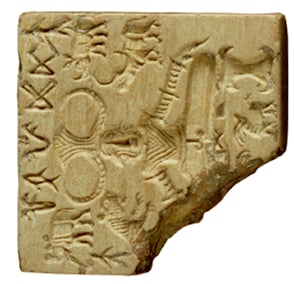
- The Indus Valley civilization remains largely anonymous and undeciphered, with the interpreter Su-ilisu being the only individual name preserved from that era.
- Modern attempts to prove that the Indo-European Vedic culture originated within the Indus Valley lack archaeological evidence, such as the presence of horses or mountain-grown soma.
- The Vedic world and the Indus civilization appear as parallel universes that must have intersected, yet the nature of their meeting remains historically obscure.
Incluso un estudioso prudente y reticente como Louis Renou reconoce que «el Veda se mueve en un terror pánico».
The Ritual Time of Vedic India
- Vedic India prioritized liturgical action over historical chronology, viewing history as a genre that only emerged centuries after Western classical historians.
- The concept of the 'archaic' was reserved almost exclusively for changes within the complex structure of rites, such as the intricate horse sacrifice (aśvamedha).
- Truth was synonymous with the ritual act (factum); anything occurring outside the liturgy was relegated to a disjointed realm of 'non-truth'.
- Salvation was viewed through a lens of rigorous exclusivism, accessible only to those participating in the sacrifice, yet it aimed for a total rescue of all living beings.
- The sacrifice functioned as a cosmic banquet where gods, men, and ancestors once drank together visibly, a connection that now persists in the invisible realm.
- Life itself was insufficient for salvation; it required a precise sequence of gestures and procedures to prevent the individual and the species from being lost.
Todo lo que se desarrollaba antes y fuera del rito pertenecía al vasto reino deshilvanado de la no-verdad.
The Isolated Vedic World
- The Vedic vision is unique among ancient civilizations for its desire to save all living beings, including plants and birds, by admitting them into the sacrificial ritual.
- Unlike Biblical traditions where humans act as dominators, the Vedic perspective seeks to continue a universal banquet in the invisible realm.
- The Vedic corpus is described as a self-sufficient and self-segregated world, lacking the cultural points of contact typically sought by modern historians.
- Scholars like Louis Renou and Abel Bergaigne argue that the Veda must be studied as a complete internal structure whose justification lies only within itself.
- The textual enterprise of the Vedic people is unparalleled in its formal rigor, liturgical omnipresence, and exclusion of historical or temporal frameworks.
- Despite their complex literature, the historical Aryas were likely small groups of semi-nomadic adventurers who brought rituals involving fire and the soma plant.
Sólo los crueles hombres védicos, mientras se dedicaban sin tregua a sus sanguinarios sacrificios, pensaron en cómo salvar, junto consigo mismo, a las plantas y a todos los otros seres vivientes.
The Primacy of Vedic Consciousness
- The Vedic civilization was defined not by territorial conquest or urban development, but by a complex cult centered on ritual and an intoxicating plant.
- Vedic life revolved around the explosive intersection of meticulous liturgy and states of altered consciousness.
- The recurring formula 'ya evaṃ veda' (he who knows thus) highlights that specific, differentiated knowledge was the supreme priority over power or pleasure.
- Vedic thought prioritized the 'primacy of consciousness' as the only path to salvation, focusing on the intense awareness of the act of thinking itself.
- Unlike archaic Rome, where ritual served law and practice, Vedic ritual was an end in itself where thinking the absolute meant becoming it.
- The author contrasts this Vedic obsession with the inherent secularism of the West, which began in Greece with idiosyncratic individuals lacking a priestly class.
La mitología, y con ella las especulaciones más temerarias, se presentaban como la consecuencia del encuentro fatal y explosivo entre una liturgia y una ebriedad.
The Sacred and the Secular
- The Greeks possessed a direct knowledge of their gods rather than mere belief, viewing atheism as being abandoned by the divine rather than a denial of existence.
- Vedic India and Archaic Greece represent mirror opposites: India preserved sacred, non-human texts through priests, while Greece produced secular, authored texts without a central priestly class.
- Both cultures share deep mythological structures involving simulacra, reflections, and twin-like resemblances, suggesting a common root in human experience.
- Modern scholarship has attempted to soften the image of Vedic Aryans as violent conquerors to avoid associations with Nazi ideology, despite archaeological ambiguities.
- The true 'Aryans' of Europe were the Roma and Sinti people, who were ironically persecuted by the Nazis despite their linguistic ties to ancient India.
- Vedic hymns celebrate the Maruts as a terrifying, thunderous force that caused the earth and mountains to tremble, regardless of the actual historical nature of their migration.
Inyectado clandestinamente en la secularidad, lo sagrado se vuelve sustancia tóxica.
The Orphic Vedic World
- The Vedic hymns represent a form of poetry that precedes the Homeric tradition, aligning with Mallarmé's concept of an 'Orphic explanation of the Earth.'
- Vedic literature presents a significant challenge to Western philology due to its lack of clear historical dates and the fluid transitions between its various genres.
- The most effective way to understand Vedic texts is through an autoreferential approach, treating each genre as a self-contained system of meaning.
- From the perspective of the Enlightenment, the Veda appears as a 'black night'—a self-absorbed world indifferent to modern values and external curiosity.
- Schopenhauer viewed the Western discovery of the Vedas and Upanishads as the greatest intellectual privilege of the 19th century.
- The Maruts are depicted as both serene shepherds and terrifying celestial warriors, embodying the intense and compact nature of Vedic imagery.
Si se contempla desde el observatorio de las Luces, el Veda es noche negra, compacta, carente de indicios de alguna inclinación a dejarse aclarar.
The Fire and the Word
- Schopenhauer's philosophical advantage in the 19th century was rooted in a single, flawed Latin translation of the Upanishads.
- The Vedic world is built upon a deceptive monotony of recurring elements like fire, water, and cattle, which contain encrypted layers of meaning.
- The term 'padá' illustrates this complexity, evolving from a literal cow's footprint to a metric foot, a ray of light, and ultimately a hidden arcane revelation.
- The myth of King Māthava and the priest Gotama depicts civilization as a path carved by fire escaping the king's mouth.
- The priest's cunning use of ritual invocations, specifically mentioning clarified butter, forced the fire Agni to manifest and consume the earth.
- Civilization is defined not by human conquest or greed, but by man following the destructive and transformative path of the fire that precedes him.
Eso es la civilización, ante todo: un camino trazado por las llamas.
The Soma and the Sacrifice
- The Vedic preference for external sacrifice over self-offering marks a fundamental break from primordial autosufficiency and the monstrous form of Vṛtra.
- Vedic society prioritized the spiritual intoxication of Soma over the construction of cities, empires, or administrative systems.
- The consumption of Soma was viewed as a protective shell that granted immortality, light, and a physiological familiarity with the divine.
- Unlike the Greeks, the Vedic people saw divine possession as a form of supreme control that held the body together like chariot harness.
- The figure of Yājñavalkya emerges as a master of sacrifice who derived his doctrine from the Sun, emphasizing that knowledge requires 'tapas' or heat.
- Yājñavalkya's intellectual authority was absolute and lethal, as demonstrated by the literal decapitation of those who failed to answer his questions.
No buscábamos el poder sino la ebriedad; si ebriedad es la palabra que se aproxima mejor al efecto del soma.
The Essence of Sacrifice
- King Yanaka attempts to challenge the sage Yājñavalkya by stripping away the physical requirements of the agnihotra ritual.
- Yājñavalkya demonstrates that sacrifice is not dependent on material substances like milk or grain, but on mental substitution.
- The ultimate components of any offering are identified as satya (truth) and śraddhā (faith/confidence).
- Śraddhā is described as a Vedic axiom where the visible and invisible realms communicate, acting as the internal fire of the rite.
- Despite Yanaka's vast knowledge of 'secret connections' (Upanishads), he remains unable to answer where he will go after death.
- The dialogue shifts the power dynamic, turning the king into a humble disciple seeking the surgeon-like precision of the sage's wisdom.
Entonces aquí no habría nada, y sin embargo se haría ofrenda de la verdad (satya) en la fe (śraddhā).
The Secret of the Pupil
- The sage Yājñavalkya challenges traditional views of Vedic India by revealing that liberation does not require knowing one's destination after death.
- Esotericism in this context is defined by the gods' love for the secret and their opposition to the obvious, contrasting with Western transparency.
- Yājñavalkya uses physiology rather than theology to explain the afterlife, identifying the 'person' reflected in the pupil as the mysterious 'Indha'.
- The internal state of the self is described as a continuous erotic union between divine figures within the heart, where sleep is the blissful insensibility following their coitus.
- The ultimate realization of the Self (ātman) is reached through negative theology—defining it as indestructible, ungraspable, and free from all bonds.
- By grounding metaphysical truth in a simple physiological observation, the sage leads King Yanaka to 'abhaya' or the state of absolute fearlessness.
Los dioses, en efecto, aman el secreto y se oponen a todo lo que es evidente.
The Eloquence of Yājñavalkya
- The relationship between King Yanaka and the sage Yājñavalkya serves as a rare model of harmonious tension between the warrior and priestly castes.
- Despite his usual brusqueness and initial desire to remain silent, Yājñavalkya is compelled by a previous vow to answer the King's deep theological inquiries.
- The resulting discourse on the doctrine of the ātman is described as the most luminous and intense exposition in the history of Indian thought.
- Yājñavalkya's respect for Yanaka stems from a previous encounter where the King proved his superior understanding of the agnihotra ritual over established brahmans.
- The sage eventually feels 'stripped' of his final doctrines by the King's skillful questioning, leading to Yanaka's symbolic transition into the status of a brahman.
El autor es un actor que atraviesa la escena y luego desaparece, como tantos otros. Al mismo tiempo es el ojo detrás del cual no hay nadie más, el ojo que deja que todo fluya frente al ojo de aquel ser sin nombre que escucha, que lee.
Yājñavalkya and the Metaphysics of Sacrifice
- The relationship between the sage Yājñavalkya and King Yanaka represents a rare and effective union between philosophical wisdom and political power.
- Yājñavalkya's teaching style is described as a state of 'lucid intoxication,' fluidly moving between prose and verse to convey complex doctrines.
- Ritual disputes often centered on the placement of offerings, reflecting deeper anxieties about metaphysical order and domestic stability.
- Yājñavalkya dismissed concerns about marital infidelity among gods or humans, prioritizing the self-sufficiency of the sacrificial act over social harmony.
- He argued that sacrifice must be autogenerated and contained within the altar, rejecting external considerations to maintain theological purity.
- The sage is compared to Zen masters, possessing a contained physical force and viewing the world with detached intensity.
Recordaba a ciertos maestros zen de la pintura china, que irradian una fuerza física apenas contenida y que miran al mundo como si fuera una hoja seca.
The Sacrificial Place and Death
- The Śatapatha Brāhmaṇa redefines the sacrificial space, asserting that the expert Brahmans themselves embody the stability and proximity to the gods rather than the physical location.
- King Yanaka organizes a grand sacrifice with a prize of a thousand gold-horned cows to identify the 'brahmiṣṭha', or the one most deeply versed in the brahman.
- Yājñavalkya claims the cows through a display of confidence, prompting a rigorous intellectual challenge from seven Brahmans and one woman, Gārgī Vācaknavī.
- The initial inquiry by the priest Aśvala focuses on the intersection of ritual and mortality, questioning how a sacrificer can escape being the prey of death.
- Yājñavalkya responds that liberation from death is achieved through the ritual act itself, specifically through the identity of the word, the fire, and the officiating priest.
Dondequiera que se encuentre un perfecto brahmán, ése es el lugar del sacrificio.
The Axiom of Liberation
- Aśvala challenges Yājñavalkya with the most primitive and essential human question: how can one escape the grasp of death and the constraints of time?
- The dialogue reveals that the sacrifice is the primary technology for liberation, where the ritual gestures and formulas serve as the vehicle to transcend 'all of this' (Idaṃ sarvam).
- Yājñavalkya posits that liberation (mukti) must be 'total liberation' (atimukti), meaning a release that goes 'beyond' the physical world and the cycle of decay.
- The ritual roles of the hotṛ, adhvaryu, and udgātṛ are identified with cosmic elements like sight and the sun, suggesting that ordinary ritual actions contain the power of transcendence.
- The text emphasizes that the goal is not to eliminate death, which would be a foolish pretense, but to find the specific mode of being that is no longer reachable by it.
No se trataba de vencer o eliminar a la muerte. Hubiera sido una pretensión necia. Se trataba de indicar el modo en que alguien «se libera totalmente (atimucyate)» de ser presa de la muerte.
The Mind of Sacrifice
- The Vedic sacrifice aims for liberation from death and time, yet paradoxically reinforces that servitude through the act of ritual killing and disappearance.
- The Brahmin priest occupies a unique role of silent scrutiny, intervening only when errors occur, much like a musician who never plays unless others falter.
- Yājñavalkya identifies the Brahmin as the 'mind' of the sacrifice, providing a celestial foothold through the lunar and mutable nature of thought.
- The mind exists on a different plane than ritual action, being simultaneously essential yet invisible to the mechanical functioning of the ceremony.
- Vedic disputes (brahmodya) are high-stakes speculative tournaments where failing to answer or asking too much could literally result in one's head exploding.
Si se comparaban los oficiantes a un cuarteto de cuerdas, el brahmán sería un músico que no toca nunca y quesólo interviene cuando los otros se equivocan.
The Perilous Quest for Brahman
- In the Vedic tradition, questioning the nature of Brahman carries a literal risk of death, symbolized by the threat of one's head exploding.
- The theologian Gārgī challenges the sage Yājñavalkya by framing metaphysical inquiries through the metaphor of weaving, her own craft.
- The prohibition against certain questions is not a mere priestly defense mechanism, but a matter of the 'mode' in which the inquiry is formulated.
- Yājñavalkya identifies space (ākāśa) as the fabric of time, and the 'indestructible' (akṣara) as the fabric upon which space itself is woven.
- The 'indestructible' is defined through a negative theology, described as something that neither eats nor is eaten by anything else.
- The author draws a historical parallel between Yājñavalkya’s ancient lyricism and Franz Kafka’s modern, dry aphorisms regarding the indestructible.
«Si no me explicas esto, tu cabeza estallará» es la amenaza que Yājñavalkya dirigió al persuasivo Śākalya.
The Indestructible Akṣara
- Yājñavalkya describes the 'indestructible' as a witness that sees without being seen and thinks without being thought.
- Human agency is presented as passive, driven by an underlying entity that remains unknowable through conventional perception.
- The only way to truly know this indestructible essence is to undergo a transformation and become the thing itself.
- The text highlights a significant philological error where the Śatapatha Brāhmaṇa is frequently published without its concluding chapters.
- These missing chapters constitute the Bṛhadāraṇyaka Upaniṣad, which is essential to the work's structural integrity.
- The author compares this textual amputation to publishing Plato's Republic without its final book or the Mahābhārata without the Bhagavad Gītā.
Es el único que ve, el único que oye, el único que piensa, el único que conoce.
Yājñavalkya and the Brahmanic Splendor
- The text refutes the theory of a radical opposition between the early Upaniṣads and the Brāhmaṇas, which was previously framed as a revolt of princes against ritualistic priests.
- Louis Renou's philological work identifies the sage Yājñavalkya as the central authorial figure connecting both the Śatapatha Brāhmaṇa and the Bṛhadāraṇyakopaniṣad.
- The authority of the Brahmin is derived from 'brahmavarcasa', a specific spiritual splendor or light that mirrors the ascent of fire and sacred verses.
- Different stages of fire represent different deities (Rudra, Varuṇa, Indra, Mitra), but the intense glow of embers without flame is identified as the 'brahman' itself.
- Achieving this spiritual splendor requires disciplined constancy, likened to digging for water in a single spot rather than scattered efforts.
- The passage concludes with a sharp transition to Baudelaire, noting how his poem 'Une charogne' scandalized Paris by juxtaposing beauty with decay.
Cuando las brasas brillan intensamente, eso es el brahman. Si alguien desea conseguir el esplendor brahmánico, que haga las ofrendas entonces.
The Scent of Soma
- The text contrasts Baudelaire's modern repulsion toward carrion with the ancient Vedic acceptance prescribed by the sage Yājñavalkya.
- According to the Śatapatha Brāhmaṇa, the foul smell of carrion in domestic animals is actually a remnant of the divine King Soma.
- The myth describes how the gods, led by Vāyu, purified the rotting corpse of the demon Vṛtra to retrieve the soma it contained.
- Ritualists are forbidden from covering their noses when encountering carrion, as they must recognize the divine presence within decomposition.
- This discipline of the senses serves to tame nature and force the mind to acknowledge the 'good' even when it is mixed with the 'evil of Death.'
- The ritualistic perspective demands that the practitioner find the sacred in the casual and the repellent, extending thought beyond mere instinct.
Ése es el olor de la carroña de los animales domésticos: por eso no debe taparse la nariz ante el olor de la carroña, ése es el olor del rey Soma.
The Origin of Duality
- Yājñavalkya describes the primordial Self (ātman) dividing into male and female to escape loneliness, a concept paralleling Aristophanes' speech in Plato's Symposium.
- The text details a cosmic 'war of the sexes' where the female principle hides through animal metamorphoses, only to be pursued by the male, creating all living species down to the ants.
- Sexual pleasure is identified as the supreme earthly experience because it mimics the original state of the ātman, where no distinction exists between 'inside' and 'outside'.
- The transition from the ritualistic Brāhmaṇa texts to the philosophical Upaniṣad is framed as a natural evolution born from the dialectic of the 'brahmodya' or theological dispute.
- The narrative shifts toward a proto-novelistic style when Yājñavalkya decides to renounce his worldly life, involving his two wives, Maitreyī and Kātyāyanī, in his spiritual transition.
Como un hombre entre los brazos de una mujer amada no sabe nada del afuera ni del adentro, así esta persona, abrazada por el ātman del conocimiento, no sabe nada del afuera ni del adentro.
The Devourer and the Food
- The text transitions from ritual disputes to an intimate domestic scene where the sage Yājñavalkya bids farewell to his two wives, Maitreyī and Kātyāyanī.
- Yājñavalkya’s final teaching emphasizes the 'love of the Self' (ātman) as the essential foundation without which even the brahman abandons the individual.
- The sage's departure into the forest is marked by a mundane, novelistic detail: his attempt to establish a legal and financial agreement between his wives.
- The story of Bhṛgu, son of Varuṇa, illustrates a journey to see what pure knowledge cannot reveal: the raw mechanics of the world's existence.
- Bhṛgu witnesses a terrifying cycle of reciprocity where men are eaten by those they once ate, representing the transformation of trees, animals, and water.
- The fundamental nature of the universe is revealed as a duality between Agni (the devourer) and Soma (the food), roles that are eternally reversible.
«Uno de los dos se volvió el devorador y el otro se volvió alimento. Agni se volvió el devorador y Soma el alimento. Aquí no hay más que devorador y devorado».
The Devourer and the Devoured
- The fundamental act of existence is consumption, a form of violence where every living thing destroys another to survive.
- Vedic thought identifies a metaphysical evil inherent in all life, extending far beyond voluntary acts to include involuntary necessities like eating.
- The law of reciprocity dictates an unchangeable chain: the eater will eventually be eaten, and the destroyer will be destroyed.
- Ritual sacrifice, specifically the agnihotra, serves as a conscious remedy to this cycle by acknowledging the disappearance of things into the invisible.
- The sacrificial fire is perceived as a predatory eye that desires the sacrificer himself, necessitating a substitution to avoid being consumed.
Siempre hay un fuego que devora y una sustancia que es devorada.
The Guilt of the Sacrifice
- The Vedic people maintained a profound connection to prehistory, viewing the era when humans were prey as the foundational fragment of history.
- The sacrificial post, or yūpa, is described as a 'lightning bolt' that terrified animals into submission, forcing them from an upright posture onto four legs.
- Sacrifice is presented as the formalization of the meat-based diet, a transition that required the resignation of animals to their role as food.
- The theological structure of sacrifice serves as a complex 'labyrinth' designed to justify the necessity of killing while housing an immense sense of guilt.
- The text identifies a radical guilt in the human decision to imitate predators, marking a 'contra natura' shift from being a prey species to a hunting one.
La fase en la que los hombres, más que devorar, eran devorados no es sino el primer, largo fragmento de su historia.
Mimesis, Technique, and Sacrifice
- Humanity is defined by the abandonment of natural instinct in favor of mimesis, or the imitation of predators.
- To compensate for physical vulnerability, humans developed 'prosthetics' such as weapons and tools, marking the birth of technique.
- The radical shift from being prey to becoming a predator created a profound internal shock within the species.
- Sacrifice emerged as a ritualistic attempt to rebalance a natural order that had been permanently violated by human artifice.
- Ritual sacrifice is not a mere deception but a conscious illusion designed to create distance between humans and the raw act of killing.
- Ancient theological myths suggest that even the physical posture of animals was altered by the terrifying presence of the sacrificial axis.
El hombre es el único ser del reino animal que abandonó su naturaleza, si por naturaleza se entiende el repertorio de comportamientos del cual cada especie aparece provista desde su nacimiento.
The Guilt of the Sacrificer
- The transition from brute force to liturgical theory was necessary to make animals resign themselves to the sacrificial act.
- The sacrificer experiences a moment of paralysis and guilt, which is mitigated by attributing his actions to divine impulses like those of Savitṛ.
- To further absolve himself, the sacrificer seeks unanimous consent from the victim's family, including its mother, father, and herd companions.
- The Śatapatha Brāhmaṇa posits that animals became quadrupeds out of fear of the sacrificial pole, while humans remained upright because they are the sacrificers.
- The text suggests that the Vedic vision of animals as 'fallen beings' offers a profound metaphysical insight that complements rather than contradicts Darwinian evolution.
- The act of sacrifice creates a sonambulistic state where the human agent is replaced by the limbs and will of the gods to avoid moral responsibility.
Quien actúa está como sonámbulo. ¿Cómo atribuirle la culpa?
The Myth of the Flayed Man
- A Vedic myth explains that humans are physically vulnerable because the gods flayed them and gave their protective skin to the cow.
- This inversion of reality serves as a psychological justification for the guilt humans feel for slaughtering and skinning animals.
- Clothing and ritual unction are viewed not as mere culture, but as the human attempt to reclaim a lost, natural protective layer.
- The cow's fear of humans is interpreted as a fear that the 'flayed' man will forcibly take back his original skin.
- Humanity is defined by this 'original guilt' and a fundamental biological fragility where even a blade of grass can cause bleeding.
- The transition from prey to predator is marked by this deep-seated trauma, making man a 'pariah of nature' who survives only through artifice.
Así el hombre fue desollado; por eso cuando un hilo de hierba o cualquier otra cosa lo corta, brota la sangre.
The Flayed Man
- Vedic ritualists believed that man is naturally a flayed being who gave his skin to the cow to sustain life on earth.
- The cow flees from a naked man not out of fear of being skinned, but because she fears the man will reclaim the skin she now wears.
- This myth provides a profound metaphysical justification for clothing, linking human nakedness to a state of extreme vulnerability and ancient trauma.
- Unlike modern views of man as a hairy primate, the Vedic perspective sees man as a 'vocational hemophiliac' whose blood can be drawn by a single blade of grass.
- The act of dressing is not seen as a move toward artificiality, but as a restoration of a lost, protective layer during sacred rites.
- The text suggests that only figures like Oscar Wilde or Lord Brummell could truly appreciate the Vedic connection between high fashion and existential fear.
Para ellos, el hombre no sólo escondía una herida sino que era una herida única.
The Ritual of the Flayed Man
- Vedic ritualism posits that man's original state is one of 'less than zero,' characterized as a flayed, impure, and incomplete being.
- The act of anointing serves as a vital ritual film that covers the universal wound of the human body, making life and movement possible.
- Sacrifice originated from the envy of flayed humans toward animals, who possessed the 'magnificent epidermis' and completeness humans lacked.
- Ritual clothing and artifice are not seen as fake, but as the necessary tools for man to temporarily reconquer his integral nature.
- The transition from killing animals for their skins to the complex Vedic sacrificial system represents a desperate attempt to justify and codify a primal act of theft.
- The text highlights a metaphysical crux regarding the consumption of animals that even modern vegetarianism struggles to resolve coherently.
La herida, para él, no es una parte lesionada de su cuerpo, sino la totalidad de ese cuerpo.
Yājñavalkya and the Sacred Cow
- The text explores the Vedic origins of the prohibition against eating beef, rooted in the myth that human skin was transferred to cattle by divine decree.
- Bovines are described as a concentration of universal vigor, meaning that to kill or eat them is equivalent to destroying the 'whole' of existence.
- The prohibition is reinforced by early doctrines of reincarnation, threatening those who eat beef with rebirth as social outcasts or sinners.
- Despite the severe ritualistic warnings, the sage Yājñavalkya provides a shocking counter-perspective by admitting he eats beef if it is tender.
- This contradiction highlights a metaphysical tension between ritual purity and the physiological reality of human pleasure, which remains inseparable from guilt.
Sin embargo, Yājñavalkya dijo: “Yo, por mi parte, la como, con tal de que sea tierna.”
The Guilt of the Sacrifice
- Sacrificial guilt extends beyond animals to the plant world, where trees and plants are treated as victims requiring ritual appeasement.
- The act of killing is masked by euphemisms and lyrical devotion, such as promising a horse it will not be harmed or telling a tree an axe leads to beatitude.
- Ritualists define various elements as a 'bolt' or 'lightning,' including the axe, water, clarified butter, and even the year itself, representing absolute power.
- The selection of the sacrificial post (yūpa) involves a complex logic of choice that avoids the nearest or farthest trees to maintain a sense of mystery.
- The Vedic ritualist seeks the 'near side of the far' and the 'far side of the near,' a spatial paradox that distinguishes Brahmanic thought from Western logic.
- Purity is achieved through minimal but potent symbols, like a blade of darbha grass, which purifies the inherently 'withered' and impure nature of man.
El oficiante tiene incluso la orden de asegurarle: «Esta hacha afilada te ha conducido hacia una gran beatitud.»
The Indecidible Choice
- The sacrificial choice seeks to eliminate pure randomness while remaining inscrutable, creating a state of 'indecidability' that defies simple logic.
- Brahmanic thought balances an exhaustive fury for classification with a profound recognition of the incommensurable and the immense.
- The specific measurements of sacrificial posts (such as five or fifteen cubits) demonstrate that while many options are valid, not everything is equivalent.
- Human history is traditionally divided into hunter-gatherers and agriculturalists, but the fundamental constant is the necessity of killing animals.
- A critical shift in human evolution occurred when humans transitioned from being 'gatherers and hunted' to 'gatherers and hunters.'
- The relationship with the victim changed from killing consanguineous peers in the wild to killing useful, domesticated subjects.
Es como si la indeterminación radical irrumpiese aquí en el pensamiento, separándose tanto de lo aleatorio como de toda ratio.
Odysseus and the Primordial Guilt
- The transition to hunting is described as an irreversible shift in human history, hidden behind the simple phrase 'hunting and gathering'.
- Odysseus is defined by his radical solitude, a condition revealed when he becomes the only one who refuses to eat the Cattle of the Sun.
- The Cattle of the Sun represent the substance of time and inexhaustible life, existing outside the cycles of reproduction and death.
- The slaughter of these animals by Odysseus's companions constitutes a 'primordial wound' where life kills life, masked by a fraudulent sacrifice.
- The horror of the event is manifested when the butchered meat begins to move and low on the spits, signaling a metaphysical transgression.
- This episode marks the definitive separation of fates: the companions perish for their hunger, while Odysseus survives as the archetypal 'man alone'.
Lo que sucedió entonces fue una herida primordial, que no iba a sanar jamás. La vida mataba a la vida.
Prajāpati and the Unknown
- Self-sacrifice is a supreme gesture practiced by both gods and animals, which humans can only hope to imitate.
- The creator god Prajāpati receives the name 'Ka' (Who?) after a dialogue with his son Indra, identifying himself with the act of questioning.
- While Indra takes over sovereignty and splendor, Prajāpati retains the 'irreducibly unknown' as his core essence.
- The existence of Ka ensures that the world remains an open question rather than a fixed sequence of answers, preventing the expulsion of mystery from life.
- Prajāpati represents a creator who lacks a fixed identity and is unsure of his own existence, serving as the source of all paradoxes.
- The gods eventually neglect their father because power requires certainty, whereas Prajāpati represents the 'abyssal life of the mind' and uncertainty.
Prajāpati: el dios creador que no está del todo seguro de existir.
The Fragile Creator Prajāpati
- Prajāpati is characterized as an insecure and anxious creator god, born from an amalgam of vital breaths rather than existing as a self-sufficient sovereign.
- Unlike the biblical Elohim, Prajāpati is not an external artisan but is the creation process itself, becoming exhausted and dismembered as he produces the world.
- The ritual use of the 'low voice' or murmur represents the indistinction of Prajāpati, connecting the sacrificer to the most mysterious and vast layer of divinity.
- Through a series of unions with Vāc (the Word), Prajāpati becomes pregnant with and gives birth to the various classes of gods: the Vasu, the Rudra, and the Āditya.
- The act of creation leads to Prajāpati's total depletion, leaving him as a forgotten thirty-fourth element, often dismissed by later thinkers as a mere ritual abstraction.
- The origins of existence are traced back to 'asat' (non-being), inhabited by the ṛṣi or vital breaths who consumed themselves through fatigue and heat to bring forth life.
Fue esto lo que marcó para siempre el carácter de Prajāpati e hizo de él elmás fantasmagórico, elmás angustiado, elmás frágil entre todos los dioses creadores.
The Birth of Prajāpati
- The origins of existence emerge from 'asat' (the unmanifested), a state of burning energy and vital breaths known as 'tapas'.
- The Seven Sages (Saptarṣi) were the first beings with physiognomy, but they lacked the power to procreate individually.
- To overcome their limitations, the Sages condensed their essences into a single composite body, creating the Progenitor, Prajāpati.
- Prajāpati represents a paradox of Vedic thought: he is both the creator of the Sages and the creation resulting from their collective sacrifice.
- After exhausting himself through the act of creation, Prajāpati becomes emaciated and unrecognized by his own creatures.
- In a final act of pathos, the weakened Progenitor invents makeup and self-anointment to regain his beauty and be noticed once more.
Enjuto, inerme, mientras se dedicaba a ungirse los ojos y los miembros, Prajāpati estaba inventando el maquillaje.
El Sacrificio de Prajāpati
- El origen del caballo (aśva) se vincula etimológicamente con la hinchazón (aśvayat) del ojo de Prajāpati al separarse de él.
- El sacrificio del caballo funciona como una expiación universal que permite a Prajāpati y al sacrificante alcanzar la completitud absoluta.
- La creación surge del deseo de Prajāpati de ser mirado por otro, intentando construir una dualidad entre el Sí y el Yo.
- Todo rito védico, desde la libación de leche hasta el sacrificio animal, se define esencialmente como un acto de matanza y ofrenda al fuego.
- Prajāpati es descrito como un dios suicida que ofrece su propio ojo para saciar el hambre de Agni en los inicios del tiempo.
- La visión occidental del siglo XIX a menudo rechazó estos mitos como extravagantes o estúpidos, ignorando su paralelismo con la kénosis cristiana.
El ojo es la más dolorosa pars pro toto elegida por un dios suicida: Prajāpati.
The Labors of Prajāpati
- Creation is depicted not as a single divine fiat, but as a grueling succession of trial and error, mirroring the human effort of ritual.
- The transition from ephemeral beings to lasting life required the invention of physical nourishment and a firm terrestrial foundation.
- Prajāpati’s creative process was an 'autistic drama' occurring in total isolation, where wonders and failures were indistinguishable from mirages.
- The physical universe and time itself emerged from the deity's ascetic heat (tapas), with stars rising like lights from his armpits.
- The birth of the firstborn, Agni, introduced the fatal necessity of consumption, inextricably linking life with hunger and death.
Drama autístico, no había conocido sosiego ni el consuelo de una mirada externa, que pudiese compadecer o condenar -daba igual-, pero en todo caso participar de lo que sucedía.
The Birth of Self-Reflection
- The primordial sacrifice originates from Prajāpati's terror of being devoured by his own son, Agni.
- Terror causes a psychic split in Prajāpati, expelling his 'greatness' in the form of Vāc, the feminine personification of Speech.
- The act of offering is established as a desperate measure of self-defense to ensure the survival of the progenitor and the birth of the world.
- The invocation 'svāhā' arises from the realization that the external command to sacrifice was actually Prajāpati's own internal voice.
- This moment marks the birth of self-reflection, creating a permanent dialogue between the 'I' and the 'Self' within the mind.
- Humanity continues the ritual of agnihotra to imitate this foundational act of escaping mortal threat through sacrifice.
Apenas se conoce la propia voz en un ser separado, se crea un Doble que dialoga para siempre con aquel que dice Yo.
The Wounded Progenitor and Ritual
- Prajāpati, the Progenitor, suffers from disjointed limbs representing the transitions of time, such as dawn, twilight, and the seasons.
- The gods established the 'agnihotra' ritual to heal Prajāpati's body and stabilize the dangerous moments of temporal passage.
- A foundational myth describes Prajāpati's incestuous union with his daughter, the Dawn, which provoked the gods to order his wounding by Rudra.
- The spilled semen of the Progenitor became a source of creation, though its raw power blinded the god Bhaga and broke the teeth of Pūṣan.
- Ritual serves as a mechanism to appease and transform this volatile primordial energy into a safe, sacrificial form.
- The gods themselves are paradoxically born from the very semen spilled during the punishment they orchestrated against their father.
Bhaga la miró: le quemó los ojos. Así sucedió. Por eso se dice: “Bhaga es ciego.”
The Wound of Sacrifice
- The gods are born from a violent and interrupted sexual act, suggesting that divinity requires a second, transgressive birth to manifest in the world.
- Sacrifice is defined as a dual movement: the infliction of a wound (ira) and the subsequent attempt to heal it (salvation).
- The 'prāśitra' or first portion of the sacrifice represents the literal flesh of the creator Prajāpati, torn by the arrow of the hunter Rudra.
- Sacrifice possesses a power that exceeds even the gods, who find themselves as mere spectators and instigators of a cosmic drama they cannot control.
- The figure of the Brahmin emerges as the 'best physician' of the sacrifice, the only being capable of consuming the dangerous, wounded flesh of the god.
- Human existence and ritual are seen as a perpetual, albeit vain, attempt to heal a wound that is inherent to the very manifestation of being.
Sacrificio es una herida, y el intento de curar una herida. Es una culpa, y el intento de sanarla.
The Brahmin and the Wound
- The Brahmin is defined by a unique physiology that allows him to absorb the world's poison, a trait shared only with the god Śiva.
- In the sacrificial ritual, the Brahmin acts as a silent guardian who intervenes only to heal liturgical errors using specific medicinal invocations.
- The Brahmin represents the 'unexplicit unlimited' (anirukta), serving as the direct earthly successor to the creator deity Prajāpati.
- Prajāpati's creative process is depicted as a struggle against Death (Mṛtyu), who seized creatures from the very moment of their conception.
- Creation is not an act of sovereign will but a result of 'tapas' (ardor) and the 'vision' of a rite used to counteract the power of Death.
The Brahmin's word is 'charged with the unexplicit unlimited, anirukta, whose emblem is silence.'
Prajāpati and the Hunger of Death
- Creation is intrinsically linked to sexual reproduction and death, where the act of generating life necessitates the eventual dissolution of the progenitor.
- The concept of 'Hunger' serves as the bridge between desire and evil, revealing that every act of self-perpetuation requires the consumption and disappearance of another.
- Prajāpati, the creator deity, embodies the paradox of being both the victim of Time (the Year) and Death itself, causing terror among both gods and men.
- The physical world, specifically water and clay, originated as a refuge for Prajāpati as he attempted to flee from the internal presence of Death.
- Despite their efforts, the gods' initial ritual sacrifices failed to grant them immortality or protect them from the temporal reach of the 'Exterminator'.
La tierra nació como refugio del miedo de Muerte.
The Pact with Death
- Prajāpati teaches the gods that immortality is only achieved through the precise architectural alignment of 10,800 bricks, representing the hours of the year.
- Mṛtyu (Death) fears obsolescence if humans imitate the gods, leading to a pact where humans can only achieve immortality after surrendering their physical bodies.
- Humans view this 'disembodied' immortality as a deception, preferring their transient physical forms over the sinister nature of discarnate spirits.
- The concept of 'punarmṛtyu' or recurring death emerges, suggesting that celestial immortality is temporary and leads back to the cycle of rebirth.
- The ultimate goal shifts from seeking celestial life to escaping the entire chain of births and deaths, a concept rooted in Vedic thought before Buddhism.
- Death is personified as an eternal figure residing within the sun, protected by the very immortality it seems to oppose.
De ahora en adelante nadie será inmortal con el cuerpo: sólo cuando hayas tomado el cuerpo como tu parte, aquel que deba volverse inmortal o por medio del conocimiento o por medio de la obra sagrada se volverá inmortal después de haberse separado del cuerpo.
The Plunder of Śrī
- The creation of the world is inextricably linked to death and exhaustion, as seen in Prajāpati's agony after giving birth to living beings.
- Śrī, representing the splendor and beauty of the world, emerges from the creator only to immediately become the first object of divine greed.
- The gods, depicted as rapacious 'parvenus' or bandits, initially seek to kill Śrī but are persuaded by Prajāpati to strip her of her attributes instead.
- Prajāpati introduces the concept of sacrifice as a strategic tool for the victim to recover what was stolen through humble offerings.
- Sacrifice is revealed not as a human invention, but as a primordial intuition to mitigate the inherent violence and plunder that accompanies existence.
- The text suggests that everything that appears in the world is instantly transformed into an object of prey.
Śrī, el esplendor del mundo, fue el primer objeto de rapiña. Era una muchacha luminosa, que temblaba en la soledad, mientras los ojos ávidos se fijaban en ella.
The Restoration of Prajāpati
- Prajāpati, the primordial creator, was depleted and disarticulated by his own creations, necessitating a perpetual cycle of sacrifice to restore the world's meaning.
- The concept of 'tapas' (ascetic heat/effort) is explored as a tool for creation, though its efficacy depends on the gods looking upon the effort with favor.
- Divine knowledge is identified as a force that the gods fear because they cannot resist the commitment of 'one who knows.'
- The fragmentation of Prajāpati's body led to different archetypal dramas, ranging from the tragic tension with Agni to the macabre comedy of the Devas.
- The emergence of the Gandharvas and Apsaras from Prajāpati's limbs represents the origin of beauty, perfume, and the first 'gallant literature.'
- Prajāpati eventually reclaims these fleeting beings by corralling them into the sun, transforming their light forms back into his own essence.
Por eso los dioses temen el conocimiento de los hombres. Saben que no pueden resistirse al conocimiento.
The Mystery of Ka
- The ritual of varuṇapraghāsa uses offerings to heal those afflicted by Varuṇa, revealing the hidden identity of the progenitor Prajāpati.
- Prajāpati is identified with the interrogative pronoun 'Ka' (Who?), representing an undefined, limitless nature beyond the traditional gods.
- Despite being a figure of torment and disarticulation, the name Ka is revealed to also signify 'happiness' (ka).
- Happiness is intrinsically linked to the act of offering (iṣṭi), as seen in the etymological connection to the altar bricks (iṣṭakā).
- The reconstruction of the Father's body through the fire altar becomes the method by which creatures access happiness.
- The Chāndogya Upaniṣad further explores these themes through the story of Upakosala, whose sorrow prompts the sacred fires to speak.
Aquel que era la imagen del tormento se convertía en el acceso a la felicidad.
The Metaphysics of Ka and Kha
- The text explores the Upanishadic identification of Brahman with 'ka' (happiness/desire) and 'kha' (space/void).
- Linguistic analysis reveals that 'ka' represents a primordial happiness and desire that precedes existence itself.
- The concept of 'kha' signifies an open space or orifice that connects the external cosmos with the internal heart of the individual.
- The relationship between the macrocosm and microcosm is visualized as a clepsidra (hourglass) where the vast exterior world passes through a tiny point in the heart.
- This internal space is described as 'the full' and 'the immutable,' representing a hidden immensity within every human being.
- The term 'arka' is introduced as a polysemic word in sacred language, signifying light, fire, hymns, and ritual plants simultaneously.
La felicidad se difundía en el espacio (kha), y el espacio permitía respirar a la felicidad.
The Metaphysics of Arka and Death
- The term 'arka' serves as a multi-layered enigma representing light, song, the human body, and the Calotropis gigantea plant.
- The Bṛhadāraṇyaka Upaniṣad describes the origin of the world as emerging from Mṛtyu (Death) through hunger and prayer.
- Creation proceeds through the solidification of water into earth and the transformation of divine exhaustion into fire.
- Mṛtyu acts as a double of Prajāpati, engaging in mental copulation with Vāc (Word) to generate Time and the Year.
- The etymology of the horse sacrifice (aśvamedha) is linked to the swelling of Mṛtyu's body, identifying the sacrifice with Death itself.
- The text introduces 'punarmṛtyu' or recurrent death as the ultimate evil that ritual knowledge seeks to overcome.
Al principio no había nadie aquí. Todo estaba envuelto de Muerte [Mṛtyu], de hambre, porque hambre es Muerte.
La Metamorfosis de Prajāpati
- La figura de la Muerte (Mṛtyu) evoluciona de ser un devorador externo a convertirse en la esencia misma de la liberación y de la divinidad Prajāpati.
- La iniciación del discípulo brahmán implica asumir el nombre de 'Ka' (Quién), integrándose en la sombra de Prajāpati para iniciar una transformación de doce años.
- La teología de Prajāpati se define fundamentalmente como una liturgia perpetua donde el sacrificio original se repite para mantener la existencia del mundo.
- La cosmogonía védica no es un relato único, sino un género literario de variantes infinitas que enriquecen la realidad a través de la multiplicidad.
- El sacrificio actúa como el núcleo convergente de todas las historias de origen, funcionando como la respiración misma de las cosmogonías.
El maestro le preguntó: «¿Ka (Quién, Cuál) es tu nombre?» La pregunta contenía la respuesta: «Ka es tu nombre».
The Ritualist and the Fourth World
- The ritualist is defined by a fundamental doubt regarding whether their actions encompass the totality of reality or leave an external world untouched.
- A 'fourth world' is hypothesized beyond the known three, existing in a state of uncertainty that can only be addressed through silent ritual acts.
- The deity Prajāpati is identified as this fourth world, suggesting that the origin of all beings is itself something whose existence is legitimately questionable.
- The theological audacity of the ritualists lies in allowing the universe to function without the absolute necessity of the mystery that sustains it.
- Prajāpati represents the 'background noise' of existence, a silent mental action that supports every event from behind the scenes.
- The ṛṣi or 'seers' represent an epistemological scandal, as they belong to the unmanifested realm while simultaneously intervening in daily affairs.
El ritualista es el hombre de la duda. Por cada acción que realiza lo acucia una pregunta: ¿será ésta la acción a realizar?
The Paradox of Vedic Non-Being
- Western scholars like Oldenberg struggled to reconcile the Vedic concept of 'asat' (non-being) with Parmenidean logic or Cartesian rationalism.
- In the Vedic worldview, non-being is not a void but a physiological and active category linked to vital breaths (prāṇa) and creative heat (tapas).
- The Ṛgveda is presented not as a new invention but as a sophisticated anthology of pre-existing knowledge revealed fitfully by capricious gods.
- The complexity of Vedic metrics and lexicon suggests a long, learned tradition that predates the texts' arrival in India.
- The concept of 'tapas' or 'ardor' is the fundamental creative force in the universe, often misinterpreted by Westerners as mere Christian-style mortification.
El no ser se pone a pensar, a actuar con tal celeridad, a despecho de todo Cogito ergo sum, como un asceta que se apresta a realizar algún truco de magia.
The Incandescence of the Ṛṣi
- Tapas is defined as a specific form of asceticism characterized by the generation of intense heat or fervor, rather than simple generic spirituality.
- The Ṛṣi are unique beings who exist outside the categories of gods, demons, or men, defined primarily by an 'incandescence of the mind.'
- Knowledge for the Ṛṣi is not a product of logical thought but an emanation of their internal heat, with Vedic hymns acting as the 'vapor' of this ardor.
- The Seven Seers (Saptarṣi) sustain the universe by injecting their reserves of tapas into its veins, yet this power can also be devastatingly destructive.
- Tapas acts as an autonomous force that can even override the will of the Ṛṣi, as seen when Vasiṣṭha's own power prevented his suicide.
- The text explores the mythological and celestial relationships between the Seers and the Pleiades, involving themes of infidelity and the primordial fire, Agni.
El ardor está antes que el pensamiento. Los pensamientos emanan como vapor de un líquido caliente.
The Ardor of the Mind
- The text explores the mythological tension between the ṛṣi (sages) and the gods Agni and Śiva, highlighting the sages' inability to ensure the fidelity of their wives, the Pleiades.
- The conflict between Brahmā and Śiva represents the struggle between established priestly order and the disruptive, erotic forces that exist beyond ritual.
- Vedic seers viewed the movement of thought as the ultimate form of travel, rendering physical exploration unnecessary compared to the mind's internal journeys.
- The concept of 'tapas' is introduced as an internal combustion or mental ardor that grants the power to conquer and transform the world.
- Sacrifice serves as the meeting point where the internal heat of the mind and the external fire of the ritual unite to create efficacy.
Lo que actúa sobre el mundo, lo que lo inviste es el tapas, el ardor interno de la mente.
The Fire of Existence
- The sensation of being alive is defined as a thermodynamic process of burning, a slow and constant fire that forms the basis of existence.
- Sacrifice serves as the visible equivalent of life's internal combustion, while the Buddhist concept of Nirvana represents its ultimate extinction.
- The ṛṣi (seers) act as both guardians of world order and the chaotic source of all epic narratives, often appearing as characters within their own stories.
- Vedic history, such as the 'War of the Ten Kings,' is framed not as mere territorial conquest but as a fundamental religious conflict against those 'without sacrifice.'
- The true power of a sovereign like Sudās stems not from military victory, but from the theological mastery and sacrificial secrets provided by his ṛṣi.
- The rivalry between ṛṣis like Vasiṣṭha and Viśvāmitra transcends the physical realm, manifesting as theological battles fought even in transformed animal states.
Reducida a su esencia al mismo tiempo propioceptiva y termodinámica, es la sensación de algo que se está quemando, algo que arde sobre un fuego lento y constante.
The Primacy of Manas
- The Vedic concept of 'manas' (mind) is defined as the divine consciousness that precedes both the manifest (sat) and the unmanifest (asat).
- Vedic thinkers viewed the mind as an infinitely fast and mobile power, existing before the world and acting as the 'air' in which consciousness breathes.
- Unlike modern positivism, which views mind as an emerging epiphenomenon of matter, Vedic thought grants the mind an absolute ontological privilege.
- The mind is described as a 'good charioteer' that can guide human impulses if its conceptions are propitious to the individual.
- The text argues that a cosmos entirely devoid of consciousness is a logical impossibility that no one has ever truly been able to represent or imagine.
La inigualable velocidad de la mente: aquí acaso por primera vez era nombrada, evocada, adorada.
The Vedic Mind and Word
- The mind (Manas) suffers from a unique existential weakness because it originated before the distinction between the manifested and unmanifested.
- Prajāpati, the deity identified with the mind, reflects this uncertainty, often acting as if he himself does not exist or count in the divine order.
- The Vedic civilization displays a unique obsession with the mind, referencing 'manasā' (mentally) over a hundred times in the Rigveda.
- The primordial couple consists of Mind and Word (Vāc), two distinct powers that must be yoked together to transport ritual offerings to the gods.
- Ritual efficacy depends on the oscillation between silence (the mind's domain) and loud recitation (the word's domain).
- Vedic ritualists preferred concrete correspondences, such as linking the masculine mind to the sacrificial ladle, over abstract metaphysical polarities.
The horse of the mind must let itself be bridled by the word, with the meters; otherwise it would be lost.
The Conflict of Mind and Word
- The Vedic ritual establishes a symbolic hierarchy where Mind (Manas) is silent and unlimited, while Word (Vac) is defined and erect.
- A metaphysical imbalance exists because Mind is heavier and more vast than Word, requiring a symbolic 'support board' for the ritual sacrifice to be effective.
- A mythological dispute between Mind and Word ends with Prajāpati favoring Mind, leading Word to feel humiliated and refuse to carry offerings to him.
- The author contrasts Indian and Greek thought, noting that while India prioritizes Mind over Word, Greece elevates the Logos (Word) to the primary position.
- The cosmic war between Devas and Asuras was partially decided by their alignment with these forces, with the gods entrenching themselves in the Mind.
Entonces Palabra, habiendo sido contradicha, quedó consternada y abortó.
The Seduction of the Word
- The cosmic conflict between Devas and Asuras is reframed as a tension between Mind (Sacrifice) and Speech (Word).
- The Devas plot to defeat the Asuras not through combat, but by seducing and capturing the feminine personification of Speech, Vāc.
- The Vedic ritualists describe the interaction between Yajña and Vāc as the archetypal 'etogram' for courtship between men and women.
- The text highlights a specific sequence of disdain, subtle signaling, and eventual approach that defines the canon of human seduction.
- Vedic irony is noted in the observation that a woman eventually seeks out a man who possesses a 'good house.'
- This ancient myth is presented as the foundational model for all romantic comedies and social interactions throughout history.
El escenario se vació, preparándose para albergar la primera comedia amorosa. Los Deva espiaban entre bambalinas. Ya no eran guerreros sino apuntadores, murmurantes.
The Rupture of Mind and Word
- The Devas secure victory over the Asuras by choosing Mind and Sacrifice, effectively turning their enemies into 'barbarians' who have lost the power of speech.
- A fundamental tenet of the rishis is that thinking is not inherently a linguistic act, though Mind seeks to incorporate and transcend Language (Vāc).
- Indra, fearing a monstrous power would be born from the union of Sacrifice (Yajña) and Word (Vāc), intervenes by entering the womb himself.
- To prevent any successor, Indra violently tears the womb of Vāc, an act symbolized by the turban and the black antelope horn in sacrificial rites.
- The relationship between Mind and Word is permanently damaged, shifting from a potential loving union to one of discord and brutal memory.
- The Devas maintain their supremacy by ensuring that the ritual power of Mind and Word never combines to create a force that could overthrow them.
Ese útero lacerado y roto permanece ahora sobre la cabeza del Sacrificio como un turbante de muchos pliegues.
Mind Versus the Logos
- The text explores the fundamental divergence between Western and Indian thought regarding the relationship between Mind (Manas) and Word (Vāc).
- In the West, the alliance of Athens and Jerusalem established the Logos as the supreme sovereign, binding thought indissolubly to discursive language.
- Conversely, Vedic India maintained the primacy of Mind over Word, viewing the non-discursive as a superior power that contains language like a hand holding fruit.
- The author suggests that the subordination of myth to ritual in India contrasts with the Greek liberation of myth into independent literature.
- Vedic ritualists viewed the Word as a substitute for the 'honey' of sacrifice, a substance the gods attempted to hide to prevent humans from reaching heaven.
- This radical divergence—the supremacy of the Logos in the West versus the supremacy of Mind in the East—is presented as the true dividing line between the two civilizations.
Desde entonces el pensamiento no discursivo entraría en la penumbra, si no en la clandestinidad.
The Dual Nature of Mind
- The Vedic ritualists viewed everything, including the splendor of the gods, as a result of composition through forms, gestures, and words.
- A fundamental concept in Vedic thought is the dual subject, represented by two birds on a single tree: one who eats and one who merely watches.
- Human consciousness is defined by the interaction between the invasive 'I' (aham) and the sovereign, hidden 'Self' (atman).
- The discovery of the Atman requires an incessant internal work to distinguish it from the ego, transforming one's perception of the world.
- True knowledge involves a reciprocal integration where the individual places the entire universe, gods, and Vedas within the Self and vice versa.
Dos pájaros, una pareja de amigos, están posados en el mismo árbol. Uno de ellos come la dulce baya del pippala; el otro, sin comer, mira.
The Birth of the I
- The relationship between the Self (atman) and the I (aham) is rooted in a primary scene of consciousness where the Self first recognizes its own existence.
- Thinking of oneself as a person (purusa) precedes the act of thinking itself, establishing a reflexive priority in the structure of the mind.
- The 'I' is described as the first creature of the Self, which eventually mistakes itself for the creator due to its identical profile and sense of omnipotence.
- Vedic doctrine suggests the mind is not a compact block but is divided between the observer and a deeper being that watches the observer.
- Recognizing this internal division reveals that the unknown within the mind is perhaps vaster than the unknown of the external world.
- The reflection in the pupil serves as a physical manifestation of the mind's capacity to mirror and internalize the external world.
En verdad Yo (aham) soy la creación, olvidando que ese Yo era sólo la primera de sus criaturas.
The Paradox of Self and Knowledge
- The concept of 'ātman' emerged as a reflexive pronoun that evolved into a central metaphysical entity, marking the beginning of Indian philosophical thought.
- The author draws a parallel between the self-referential nature of 'ātman' and Gödel's incompleteness theorems which dismantled formal logic systems from within.
- Unlike Western thinkers who feared the collapse of logic through paradoxes, Vedic ritualists embraced paradoxes as the foundational 'rocky layer' of reality and the enigma of 'brahman'.
- The dialogue between the warrior-teacher Sanatkumāra and the scholar Nārada illustrates the limitations of encyclopedic knowledge in achieving spiritual peace.
- Nārada lists an exhaustive curriculum of Vedas, sciences, and arts, yet remains a 'prototype of the unhappy student' despite his immense erudition.
Si no estuviese esa minúscula figura en la pupila el cuerpo del hombre sería una superficie compacta y no permitiría presagiar la otra vida, la que se desarrolla en la cámara sellada de la mente.
Beyond Names to Pure Consciousness
- Nārada seeks relief from suffering, confessing that despite his vast knowledge of liturgical formulas and Vedas, he lacks knowledge of the Self (ātman).
- Sanatkumāra dismisses Nārada's extensive learning as merely 'names,' initiating a hierarchical ascent through the powers of the mind.
- The progression moves from the power of Speech (Vāc) to Mind (manas), and then to Intention (saṃkalpa), which is the impulse that moves the cosmos.
- The hierarchy culminates in Consciousness (citta), defined not as reason or general thought, but as the specific act of being aware or 'waking up.'
- Vedic thought establishes the primacy of consciousness over all other faculties, suggesting that a learned person without awareness is effectively non-existent.
- The ancient sages (ṛṣi) are characterized primarily as masters of awareness whose function is to remain vigilant to protect the world and dharma.
«La palabra es en verdad más que los nombres.» Perplejidad, al principio.
The Hierarchy of Cosmic Potencies
- The text explores a speculative hierarchy of consciousness where meditation (dhyāna) is positioned as a power superior to basic awareness (citta).
- A cosmic perspective is introduced where all elements—earth, water, gods, and men—are described as participating in a form of meditation (iva).
- The progression is unexpectedly disrupted by the introduction of physical force (bala), which is stated to outweigh the discernment of a hundred sages.
- The sequence moves through elemental forces like food and space before returning to psychological states such as memory, hope, and the vital breath (prāṇa).
- The ultimate resolution links the act of sacrifice to the presence of joy (sukha), suggesting that true spiritual practice cannot occur in a state of suffering.
- The dialogue concludes that joy is found only in plenitude and the unlimited, contrasting with the inherent suffering of the finite.
Un solo hombre, con su fuerza, puede hacer temblar a cien sabios.
The Paradox of the Self
- The teaching of Sanatkumāra explores the transition from discursive thought to the non-discursive realization of the ātman or true Self.
- A critical psychological hurdle is identified in the 'ego' (ahaṃkāra), which mimics the omnipresence of the ātman and acts as a false sovereign.
- The text describes a recursive progression where the ātman is found to encompass all directions of space and all preceding mental powers.
- True liberation (mokṣa) is achieved when one moves beyond the linear mind to a state where they 'love, play, and find happiness' in the ātman.
- The realization of the ātman allows the seeker to transcend the fundamental human sufferings of death, disease, and pain.
- The progression is not linear but circular, moving through cosmic forces and memory to reach a fullness that is identical to satisfaction.
La ficticia soberanía del Yo es el obstáculo más fuerte para la percepción, simplemente porque es lo que más se parece al verdadero término último.
Beyond the Ego to Atman
- Western philosophy historically prioritized the 'I' or Cogito, whereas Sanatkumāra views the ego as a formidable obstacle to reaching the Self (Atman).
- The transition from the individual 'I' to the 'Self' involves a transfer of sovereignty, resulting in a dual subject that is both infinite and worldly.
- Uddālaka Āruṇi challenges his son Śvetaketu's pride in Vedic knowledge by introducing the concept of 'Sat' (Being) as the singular origin of the universe.
- The text contrasts the abstract elements of energy, water, and food with the traditional personified gods of the Brāhmaṇa.
- The culmination of this teaching is the phrase 'Tat tvam asi' (That thou art), which the author suggests is more profound than Descartes' 'Cogito ergo sum'.
- This philosophical shift represents a move toward a pre-Parmenidean cosmogony where Being is the primary reality, opposing earlier Vedic doctrines.
En comparación, el Cogito ergo sum parece un fruto escaso y seco.
Sat and Asat: Vedic Origins
- The Vedic concepts of sat (being) and asat (non-being) differ fundamentally from Western philosophy, where asat represents the unmanifested rather than a total absence.
- A profound distinction between Greek and Vedic thought lies in the belief that three-quarters of existence remains hidden and unmanifested.
- The cosmogonic hymn Rigveda 10.129 describes a primordial state where neither being nor non-being existed, only an 'indistinct wave' of darkness.
- The 'One' emerges from this indistinction through the power of tapas (ardor or heat), a force far more potent than the traditional translation of 'asceticism' suggests.
- The emergence of the 'One' is followed immediately by kama (desire), which is defined as the 'first seed of the mind' or consciousness.
- Vedic origins are characterized by pūrṇa (fullness) and abundance rather than the Greek concept of chaos as an opening or void.
Asat, más que el lugar de lo que no es, podría ser el lugar de lo que no se manifiesta.
The Vedic Bond of Uncertainty
- Vedic seers, or kaváyaḥ, act as the first human witnesses and participants by discovering the 'bandhu' or link between being and non-being.
- The concept of 'bandhu' serves as a vital connection between the manifested (sat) and the unmanifested (asat), preventing the stagnation of life.
- The Vedic hymns challenge Parmenidean logic by proposing a bridge between non-being and being through deep reflection within the heart.
- The text describes a 'secondary creation' (visṛsṭi) that predates the gods, leaving even the divine beings ignorant of their own origins.
- Knowledge in the Vedic tradition culminates in a 'sublime sarcasm' where absolute uncertainty is extended even to the highest supervising entity.
- The ṛṣi intentionally leaves the reader in doubt regarding the omniscience of the supreme figure to avoid overstepping the limits of human knowledge.
Aquel que supervisa este [mundo] desde elmás alto de los cielos, sólo él lo sabe, o quizá ni siquiera él.
The Ritual of Awakening
- The transition after death involves the meeting of the 'divine self' (daiva ātmā), a body painstakingly constructed through sacrificial acts performed during life.
- The Upanishadic concept of wakefulness is not the opposite of sleep, but rather a rejection of the distracted, automatic, and inert state of ordinary daily life.
- The gods are described as tireless travelers who do not sleep, seeking those who can 'crush the soma' and maintain a state of constant preparation and intoxication.
- The central Buddhist concept of 'awakening' (budh-) is deeply rooted in the older Vedic tradition, where attention was the primary support for all ritual and mental gestures.
- Ritual acts, even those that are 'wrong' or offensive like throwing sacrificial ashes into water, require the power of awakening to restore balance and seek divine attention.
- The evolution of Indian thought suggests that once the fire of desire is extinguished and returned to its source, the only remaining power is the act of awakening.
The attention intense (of us towards what happens and of the god towards us) is the support of which one has need even when the officiant is obliged to perform 'something wrong', and this happens on various occasions, because life itself is something wrong.
The Awakening of Brahman
- The Bṛhadāraṇyaka Upaniṣad describes an original state where only Brahman existed, which then manifested into gods, sages, and men through the process of awakening.
- The gods actively oppose human awakening because it reveals the fundamental unity between man and divinity, a secret they wish to guard to maintain their status.
- Unlike the gods, who must constantly fight to defend their immortality and sovereignty, Brahman is neutral, unfading, and the source from which all descends.
- Scholars have struggled to define Brahman, with failed paraphrases ranging from 'connective energy' to a 'link between life and death.'
- The only path to entering the world of Brahman is through pure consciousness and eternal wakefulness, rather than through power, holiness, or good deeds.
- This esoteric secret of Brahman as consciousness is explicitly stated in the Upaniṣads but remains implicit throughout the earlier Ṛgveda.
Aquel que piensa «la divinidad es una cosa y yo otra», ése «no sabe».
The Sacrificial Embryo
- Vedic hymns emphasize the sovereignty of wakefulness, suggesting that ritual power and the 'brahman' are only accessible to those who remain vigilant.
- The sacrificial life is conceptualized as an infinite cycle of deaths and births, where initiation serves as the primary mechanism for this transformation.
- During the consecration ritual, the initiate is not merely a symbol but is literally treated as an embryo, requiring their head to be veiled to represent the amniotic membrane.
- Ritual prescriptions demand strict literalism; for example, the initiate must use a black antelope horn to scratch themselves because the horn is identified as the womb itself.
- This identification with the embryo protects the initiate from spiritual 'death' and ensures the integrity of the rebirth process through the ritual's maternal logic.
Porque aquel que es consagrado se convierte en un embrión; y los embriones están envueltos tanto por ellíquido amniótico como por la membrana externa; por eso él se cubre la cabeza.
The Birth of the Divine Embryo
- The transition from a 'mere man' to a divine being begins with the ritual of agnyādheya, where the individual adopts the brahman as their sole, neutral father.
- The primary attribute shared between humans and gods is not power, immortality, or knowledge, but the pure state of consciousness: being awake.
- The ritualists prioritize 'staying awake' as the essential act that allows a person to become more divine, calm, and rich in tapas (sacred heat).
- The consecrated individual, or dīkṣita, undergoes a physical and symbolic transformation, being treated as a divine embryo within a ritual hut.
- Sacrifice is an invisible force that must be grasped with the mind, symbolized by the dīkṣita keeping their fists tightly closed during the ceremony.
- The culmination of the ritual is a rebirth where the practitioner ceases to be a common man and is recognized as having been born into a divine existence.
«Los dioses están despiertos»: acercarse a los dioses significa adentrarse en el estar despierto.
The Sacrifice of Knowledge
- The inherent distance between gods and humans is defined by sleep; while gods are eternally awake, humans are bound by the necessity of rest.
- The 'sacrifice of the brahman' represents a shift from visible, ritualistic gestures to the invisible, internal activity of studying the Veda.
- The practice of svādhyāya (internal recitation) marks the beginning of knowledge as an activity detached from social structures and village life.
- Vedic thought suggests that spiritual fervor (tapas) can be achieved even in comfort and luxury, challenging the notion that only asceticism leads to enlightenment.
- The Brāhmaṇa texts are often neglected by scholars because they occupy a difficult space between poetry and philosophy, heavily burdened by ritual detail.
Basta esto para volver vanas las pretensiones humanas con un toque de ironía: no sólo os espera la muerte, ni siquiera sois capaces de no dormir.
The Primacy of Ritual
- The text explores the tension between liturgical gestures and modern thought, where the West has historically viewed ritual as a burden to be lightened.
- Christianity's core is sacramental and tied to irreplaceable gestures, yet modern reforms have consistently sought to replace these acts with words.
- The Brāhmaṇa texts represent some of the oldest examples of Indo-European prose, emerging from a genre that modern scholars often find tedious or incomprehensible.
- In the Brāhmaṇa, ritual is seen as the supreme form of efficacy and myth as the essential fabric of history, contrasting sharply with modern dismissive views.
- Modernity has 'chemically separated' thought, narrative, and ritual, treating the latter as an obsolete or empty custom rather than a manifestation of thought itself.
El gesto sacramental es elmáximo obstáculo cuando se quiere instaurar el régimen de la sustitución.
The Origins of Ritual Prose
- The text establishes that Indian Vedic speculation, specifically in the Śatapatha Brāhmaṇa, clearly predates the earliest Greek presocratic philosophy.
- While Greek thought sought to name 'phýsis' through poetry or aphorisms, Indian thought remained inextricably linked to the physical gestures of ritual.
- The adhvaryu priest serves as the 'buzzing motor' of the sacrifice, managing a complex web of manual actions and broken formulas that drive the ceremony forward.
- The White Yajur Veda's separation of mantras from prose commentary marks the birth of long-form, meticulous dissertation as a literary mode.
- This obsessive, exhaustive prose style is compared to the work of Marcel Proust, where the investigation seeks to invade every corner of its subject.
- The unique 'flavor' of the Śatapatha Brāhmaṇa lies in its ability to think the gesture at the exact moment it is being performed.
La Recherche, de hecho, puede leerse como un inmenso Brāhmaṇa, dedicado a comentar e iluminar la tesitura del tiempo en el interior de ese largo rito que fue la vida de su autor.
The Labyrinth of Vedic Origins
- The Brāhmaṇas present a 'cloud of cosmogonies'—overlapping and conflicting versions of creation that defy a single foundational narrative.
- This multiplicity of origins suggests that the gods are not the beginning, but rather secondary creations emerging after various failures and mental projections.
- The figure of Prajāpati, the Progenitor, is himself a composite being requiring the conjunction of the Saptarṣi to exist, pointing toward an even deeper, undifferentiated source.
- The Śatapatha Brāhmaṇa transitions from exhaustive, technical rituals involving thousands of bricks to sudden, profound meditations on the Brahman and the Ātman.
- The 'Doctrine of Śāṇḍilya' serves as a vital bridge between the ritualistic Brāhmaṇas and the philosophical Upaniṣads, identifying the golden Puruṣa of the altar with the spirit in the heart.
No conoceréis a aquel que ha creado estos mundos: hay algo que lo vela.
The Interiorization of Sacrifice
- The Puruṣa is revealed as an immeasurable presence within the heart, representing the transition from the minute to the cosmic 'Self'.
- The relationship between the Brāhmaṇas and Upaniṣads is one of speculative continuity rather than divergence, marked by a shift in stylistic register.
- The Upaniṣads act as a high-tension discharge of energy, condensing the complex liturgical paths of the Brāhmaṇas into luminous, direct insights.
- A fundamental shift occurs from knowledge through ritual works to a 'gnosis' or knowledge independent of external action.
- The act of philosophizing is presented as the final link in a process that began with the interiorization of the agnihotra sacrifice.
Ésta es la catapulta védica que hace pasar de pronto de lo mínimo a lo inconmensurable y revela dónde encontrar algo que cada uno, que cada meditante deberá llamar «mi Sí».
The Divergence of Knowledge and Sacrifice
- The text explores the transition from liturgical action to pure contemplation, where the fire altar remains the object of study but the method shifts from ritual to mental construction.
- A fundamental distinction arises between the world of desire, which fuels sacrifice, and the state where desires disappear, accessible only through knowledge.
- This shift marks the beginning of the Upanishadic register, establishing the conceptual framework that would later influence the Buddha and even modern philosophy.
- The text describes a 'lesson of method' for curing errors in ritual: one must heal each Veda with itself, fitting the parts together like a joint rather than applying external remedies.
- Despite the complexity and importance of the Brāhmaṇa texts, many modern scholars continue to view them as an 'indigestible mass' of trivialities rather than a cohesive system.
- The ritualists' insistence on the continuity of the fire altar stands in direct opposition to the Buddha's goal of total extinction of the fire.
El conocimiento, que hasta entonces coincidía con el sacrificio, se presenta en este punto como la vía que permite llegar allí donde nunca llegará el acto sacrificial.
Staal and the Vedic Meaning
- The author critiques Frits Staal’s dismissive attitude toward the Brāhmaṇa texts, which Staal labels as mere superstition beyond the limit of scholarly charity.
- Staal’s central thesis, 'Rules Without Meaning,' argues that Vedic rituals are purely formal acts devoid of inherent semantic intention.
- The text highlights a paradox: while Staal rejects the Brāhmaṇas, they remain the primary source of knowledge for the very Vedic studies he conducts.
- Staal views the 'hypertrophy of meaning' in ancient texts as a contamination of the noble transparency found in formal science and algebra.
- The author identifies a unique tension in Vedic ritual between rigorous formalization (comparable to 20th-century systems) and an excess of semantic interpretation.
- To maintain his theory, Staal is forced to expunge fundamental concepts like 'religion' and 'sacrifice' from the study of the Vedas.
La respuesta viene enseguida, y no es precisamente benevolente: «Es verdad que deberíamos, pero incluso para la caridad hay un límite.»
The Western Misreading of Veda
- Frits Staal attempts to secularize Vedic studies by replacing the word 'religious' with 'Vedic' and 'sacrifice' with 'ritual'.
- The author argues that Staal's linguistic shifts ignore the reality that in archaic India, every detail was inextricably linked to the religious sphere.
- Western scholars often dismiss the Brāhmaṇa texts because they rely on 'identifications'—connections between entities that seem illogical to the Western mind.
- The text criticizes the arrogance of modern science in redefining ancient concepts, such as changing the title of classic essays to fit a secular 'Science of Ritual'.
- Early 20th-century scholars like Keith viewed the Vedic world as an arbitrary space where 'anything goes' because it defied Western rational categories.
- The Brāhmaṇa's core technique involves establishing equivalences between physical objects, like grass or trees, and abstract concepts like force or thought.
Matanza de una planta y del rey del Soma, que es un dios, tendido en el suelo.
The Scandal of Vedic Identification
- The author challenges the Western dismissal of Vedic thought as 'incoherent,' noting that Christian dogmas like the Eucharist are equally reliant on non-literal identifications.
- Vedic texts like the Brāhmaṇas cause 'vertigo' in Western readers because they use image-based thinking incessantly and without the safety net of metaphor.
- Unlike Western thought, which treats images as non-binding metaphors or literal pathologies, Vedic thought uses direct identification (x is z) to superimpose entities.
- The use of the particle 'iva' (as it were) allows Vedic thinkers to maintain a subtle play between different planes of reality without confusing them.
- This linguistic nuance preserves the 'anirukta' or the unexplicit, ensuring that secret thoughts and enigmas remain surrounded by a halo of indeterminacy.
Éste es el escándalo védico inaceptable, que provoca tantas reacciones de repulsa y de temor.
The Legitimation of the Brāhmaṇa
- The Brāhmaṇa texts were historically dismissed by scholars like Max Müller as nonsensical 'mutterings of idiots' before gaining formal academic recognition.
- In 1959, Karl Hoffmann formally integrated these Vedic prose works into the essential corpus of human thought, framing them as a 'pre-scientific science.'
- While German scholarship sought formal legitimation, the French school had long treated these texts as an inexhaustible quarry for understanding speculative thought.
- The text rejects the binary debate over whether myth or ritual came first, arguing instead for their total interdependence and reciprocal penetration.
- Ritual is defined as the dramatic representation of myth, while myth without ritual is described as lacking practical juice or symbolic flavor.
- The connection between story and gesture reveals a fundamental human need for the 'simulacrum'—the image that must become visible to exert power.
Era como si un puñado de pacientes fuera transferido de pronto desde un hospital psiquiátrico a la Academia.
The Line of Fires
- The Brāhmaṇa texts offer a profound lucidity regarding the intersection of myth and ritual that should guide anthropology rather than be treated as a mere relic.
- Humanity's initial condition is described as 'impure' and 'untruthful,' a state of formless existence that leaves no significant trace without intentional action.
- Meaningful action, or 'karman,' is epitomized by the sacrificial work, which serves as the model for all other human endeavors.
- The transition from generic, chaotic desire to a singular 'voto' (vrata) creates a sacred space where gestures acquire purpose and truth can be spoken.
- The ritual geography is defined by two fires: the circular 'gārhapatya' (earth) and the square 'āhavanīya' (heaven), representing the fundamental tensions of existence.
- The 'line of fires' is the invisible axis where life happens and where the 'prodigy' of things acquiring meaning actually occurs.
Sólo allí puede acontecer el prodigio que está detrás de todo lo demás: que las cosas adquieran significado.
The Recognition of the Sacrificer
- The ritual act begins when the sacrificer crosses the line between the two sacred fires, transforming human gestures into meaningful cosmic actions.
- Before this crossing, the gods are indifferent to man; he only gains existence and definition in their eyes as 'the one who offers.'
- Vedic ritualists were deeply concerned with the problem of divine recognition, fearing the complex liturgy might be performed in vain if the gods were absent.
- The dialogue between the officiants serves to verify if the invisible connection with the divine realm has been successfully established.
- The 'sadas' or sacred hut represents the earliest form of Hindu architecture, a temporary and secret space where man becomes a divinity for the duration of the rite.
- This fragile, enclosed space of the ritual serves as a precursor to the modern study, a place of separation where the invisible is engaged.
Porque los dioses no conocen a este hombre; pero cuando pasa entre los dos fuegos lo conocen y piensan: “Éste es el que está por hacernos una oblación”.
The Threshold of Truth
- The Vedic sacrifice serves as a metaphysical transition where a human becomes more than human by lighting their own ritual fire.
- Vedic thought establishes a strict binary between truth (associated with gods) and non-truth (associated with humans), with no middle ground.
- Entering the rite is described as a literal passage from the human condition of non-truth into the divine realm of truth.
- The concept of 'Rta' bridges the meaning of truth with the idea of a just articulation or cosmic order, sharing etymological roots with 'art' and 'rite'.
- Vedic practitioners viewed mental torment and 'bad dreams' as the ultimate misfortune to be inflicted upon enemies, even worse than the loss of home or progeny.
- The act of sacrifice is not merely symbolic but an 'opus' or work that sustains the world through the continuous maintenance of the ritual fire.
Doble es esto, no hay un tercero: verdad y no-verdad. La verdad son los dioses, la no-verdad son los hombres.
Ritual Order and Sacred Truth
- The Vedic concepts of ṛta and satya represent a dynamic transition from cosmic order to pure existential truth.
- Ṛta, often untranslatable, signifies the 'world order' or the regular course of things, later evolving into the concept of dharma.
- The author draws a parallel between the inscrutable excellence of ṛta and the bureaucratic, yet cosmic, atmosphere of Kafka's 'The Castle'.
- Sacrificial protocol begins with fasting and sleeping on the ground to accommodate the gods as invisible guests.
- Fasting is framed as a matter of etiquette: one must never eat before their guests have been served.
- Sleeping on the floor serves to maintain the 'incommensurable distance' between the mortal sacrificer and the superior divine presence.
«Así el mundo rige su curso y mantiene el equilibrio. Ésta es una institución excelente, de una excelencia tal que parece inconcebible, aunque desconsoladora bajo otro punto de vista.»
The Metaphysics of Yoking
- The fundamental liturgical act is the 'yoking' (yoga) of elements like water and fire, representing the mind's power to seize and act upon itself.
- This mental discipline presupposes a dual nature of the mind, where one part submits to the other, a concept central to Hindu thought from the Vedas to the Gita.
- Prajāpati, identified as 'Ka' (Who?), represents the 'anirukta' or the indistinct and unsaid that precedes all explicit forms.
- The liturgy exists as a constant tension between the defined (nirukta) and the unlimited, inexplicable origin (anirukta).
- Ritual elements like water are seen as all-pervading forces and 'thunderbolts' used to defend the sacred space from demonic interference.
Porque todo lo que es anirukta pertenece a Ka: es lo implícito que nunca podrá convertirse en explícito, es lo «inexplícito ilimitado».
The Erotics of Sacrifice
- The ritual placement of water north of the fire initiates a fecund sexual union between the two elements.
- Precise spatial distance is essential to maintain erotic tension; placing water too far or too close risks elemental rivalry or failure of desire.
- The sacrificial space is so densely populated by invisible presences and eroticized forces that physical idols are unnecessary.
- Hostile entities like the Asuras and Rakṣas constantly threaten to disrupt the rite, requiring protective measures.
- Silence and the heat of 'tapas' serve as primary defenses to ensure the continuity and protection of the liturgical act.
- Ritual objects and grass bundles act as physical anchors for deities and participants within the volatile sacred clearing.
Que nadie pase entre el agua y el fuego, para evitar que, con ese pasar, moleste el coito que está sucediendo.
The Animated Altar
- The sacrificial scene transforms from a bare space into a lush landscape, mirroring the primordial covering of the Earth with vegetation.
- The altar is personified as a beautiful woman whose nakedness is gracefully veiled by layers of sacred grass to prepare for the gods.
- Three wooden rods surrounding the fire represent the first three Agnis, gods who vanished out of fear of their own fiery nature.
- A metaphysical solution is established where anything accidentally spilled or lost during the rite belongs to these 'lost' gods, relieving humans of the fear of imperfection.
- The ritual ignition depends entirely on the spoken word; specifically, the Gayatri meter provides the power necessary for the fire to exist.
- Sacred meters are envisioned as powerful birds that transport the physical oblation from the earthly altar to the celestial realm.
Solución sutilmente metafísica: a los perdidos va aquello que se ha perdido.
The Divine Terror of Existence
- Agni, the god of fire, initially fled and hid in the water to avoid the burden of his role as the messenger of sacrifice.
- The act of creation and the maintenance of the world are portrayed as sources of profound guilt and anxiety for the gods.
- Ceremonial acts are performed in an atmosphere of latent terror because they involve manipulating dangerous forces and inherent guilt.
- Even supreme deities like Indra and Śiva experience impulses of rejection or paralysis when faced with the task of existing and functioning within the world.
- The priestly fee, or dakṣinā, serves as a mechanism to transfer and absorb the guilt generated by the sacrificial act.
- The Indian tradition of world-rejection finds its archetypal model in these moments of divine hesitation and flight from cosmic duty.
Mucho antes de que el fuego causase miedo, había sido el fuego el que tenía terror de sí mismo, y de eso que los hombres (y los dioses) le habían pedido hacer.
The Return to Untruth
- The transition out of a sacrificial vow is described as a return from the unnatural state of 'truth' to the comfortable 'non-truth' of everyday life.
- Truth (satya) is viewed as a precarious and temporary state achieved only through the artifice of ritual and intense vigilance.
- A pivotal shift in Vedic thought involves internalizing the sacrificial fires, moving from external placement to the breath and the body.
- The distinction between gods (Devas) and demons (Asuras) originated from the Devas' decision to establish the immortal fire within themselves.
- Life is defined by the capacity for something to be simultaneously itself and something else, whereas death is the rigidity of being only oneself.
- The transmission of esoteric knowledge breaks social hierarchies, as seen when a warrior king instructs a high-ranking Brahmin teacher.
Hay vida siempre que algo es, a la vez, otra cosa. Hay muerte cuando algo es sólo sí mismo, rígida tautología.
The Fire of Human Existence
- The text explores the Vedic concept of 'bandhu' or precise correspondences between the cosmos, the ritual of fire (Agni), and human biology.
- The king of Pañcāla explains that the celestial world, rain, earth, man, and woman are all manifestations of fire, each possessing its own symbolic logs, smoke, and sparks.
- The mystery of how 'waters assume a human voice' is solved through the sequence of five oblations, culminating in the act of procreation where semen becomes the embryo.
- Ritual order acts as a series of equations that link the divine and the physical, transforming biological acts into sacred offerings to the gods.
- Death is presented as the ultimate interruption of these symbolic correspondences, where the poetic metaphors collapse back into literal, physical reality.
- The transition from life to the funeral pyre is described as a 'reduction to tautology,' where fire is no longer a symbol for the eye or tongue, but simply fire itself.
Difícil imaginar una deducción de la muerte más dura, más despejada, más nítida que esta reducción a la tautología.
Ritual Borders and Vedic Erotics
- The act of traveling is defined by a ritual silence that begins and ends at the boundary of the domestic fires.
- The domestic fire represents the ultimate intimacy, surpassing even the presence of a king within the home.
- The Vedic altar is explicitly constructed with the proportions of a perfect woman to attract the gods through beauty.
- Sacrifice is conceptualized as a sexual union between the feminine altar (vedi) and the masculine fire (agni).
- Divine desire is so potent that the mere sight of a feminine form can cause the spontaneous birth of powerful seers.
- The sacrificial space functions as an erotic scene where mental abundance and physical desire are inextricably linked.
La mujer yace envolviendo al hombre. Así acontece un coito fecundo.
The Liturgy of Erotic Tension
- Vedic mythology establishes a recurring pattern where gods and sages (ṛṣis) spontaneously emit semen upon seeing a female being, such as an Apsaras.
- In the divine realm, these erotic effusions occur during sacrifices, suggesting that liturgical scenes are inherently charged with erotic tension.
- The ritual silence mandated in the Śatapatha Brāhmaṇa is explained by the sacred and silent nature of the pouring of semen.
- Liturgical objects, such as the clay vessel (kumbha) or sacrificial flames, serve as symbolic wombs or vaginas to receive the divine seed.
- The text highlights a paradox between the Indian tradition of semen retention and the frequent ancient accounts of 'effusion without contact.'
- Vedic ritualists sought to codify even the most accidental human experiences, like the erotic gaze, by integrating them into the prescribed gestures of the sacrifice.
La vasija de arcilla o las hogueras sacrificiales eran también la mente de la diosa o Apsaras sobre la que se había vertido el semen de los dioses que la miraban.
The Erotics of Sacrifice
- The ritual role of the sacrificer's wife is defined by subtle, erotic gestures that symbolize sexual union through gaze and thought.
- A 'fertile coitus' occurs when the wife looks at clarified butter, which represents semen, a necessary but polluting act that requires ritual purification by fire.
- The ritualist's primary function is to navigate and resolve the inherent contradictions and paralyzing alternatives within the sacred ceremony.
- The sacrificial space, or sadas, is treated as a site of secret intimacy where any observation other than through the 'divine door' is considered illicit voyeurism.
- The invocation 'vaṣaṭ' is equated to the moment of orgasm, requiring precise synchronization with the offering to ensure the ritual's efficacy.
- Divine eroticism in Vedic myths often links the emission of semen, such as Agni's union with the waters, to the creation of sacred substances like gold.
Todos callaban, se oía sólo el leve fluir del agua. Después, la esposa volvía a quedar oculta detrás de una cortina.
The Earthy Rigveda
- The union of Agni's seed and water represents a vital alchemy where separating gold from its source leads to a loss of regenerative power.
- Contrary to its reputation for pure sublimity, the Rigveda contains direct, irreverent, and even obscene passages that mirror human comedy.
- The hymn of Vṛṣākapi depicts a domestic dispute involving Indra and a trickster monkey-man, echoing the tone of Neapolitan comedy.
- Historical translators often censored the explicit sexual language used by Indrāṇī, which highlights the 'low style' present in Vedic texts.
- The Earth is characterized by its primordial scent, a fragrance shared by gods and nymphs that evokes the mythical wedding of the Sun's daughter.
Ninguna mujer tiene un culo más bonito que elmío, ninguna folla tan bien como yo, ninguna aprieta más estrechamente, ninguna levanta tan alto los muslos.
The Four Lovers of the Bride
- The cosmic wedding of Sūryā and Soma serves as the eternal archetype for all subsequent human marriages.
- A bride's psyche is shaped by three divine predecessors before she ever reaches her human husband: Soma, the Gandharva, and Agni.
- Soma represents the absolute and sovereign beginning, while the Gandharva Viśvāvasu embodies the mental images and erotic fantasies of solitude.
- Agni, the third lover, represents the physical heat and intimacy of the fire that caresses all women.
- The human husband is merely the fourth lover, a realization that demands humility and patience rather than virile boasting.
- The text suggests that no modern psychological research matches the precision of these ancient Vedic insights into the female psyche.
Soma la poseyó en primer lugar, el Gandharva la poseyó después, su tercer marido fue Agni, el cuarto fue el hijo del hombre.
The Universal Gesture of Libation
- The act of libation—pouring liquid into fire or onto the earth—serves as an indissoluble link across the Indo-European world, from Minoan sarcophagi to Homeric heroes.
- In the Vedic tradition, the Agnihotra is a daily ritual of libation that, despite its brevity, is considered the 'arrowhead' containing the essence of all other sacrifices.
- The core of the ritual is 'tyāga', the irreversible act of abandoning or ceding something precious to the invisible, signaling submission and readiness to yield.
- Greek terminology reveals a deep connection between libation ('spondē') and the concept of a truce or peace treaty, as seen during the Olympic Games.
- While prayer is considered a secret form of sacrifice, the libation is its manifest counterpart because the physical act of pouring cannot be hidden.
Lo que la punta es para la flecha, eso es el agnihotra respecto de los otros sacrificios.
La esencia de la libación
- La libación representa el acto de culto más antiguo, precediendo incluso a los sacrificios de sangre según la tradición de Ovidio.
- Mientras los pueblos védicos construyeron complejos tratados sobre el ritual, los griegos lo integraron en su vida cotidiana de forma implícita y sin teorizar.
- El gesto de Antígona con el 'polvo seco' ilustra que la libación es la celebración pura de lo que se pierde, independientemente de la sustancia utilizada.
- Existe una conexión histórica y mitológica entre la doctrina védica del sacrificio y las tradiciones romanas a través de la figura de Dioniso/Liber.
- Los dioses condensaron rituales de mil años en actos breves como el agnihotra para que los hombres, en su debilidad, pudieran mantener el orden sagrado.
- El agnihotra, consistente en verter leche al fuego dos veces al día, es el núcleo indivisible que concentra toda la potencia de los sacrificios milenarios.
Libación: el irrenunciable gesto de la renuncia.
The Agnihotra and the Power of Names
- The Agnihotra is a fundamental, domestic rite that mimics the continuity of life through a perpetual circle of morning and evening offerings.
- The ritual requires a double libation, representing the primordial duality of Mind (Manas) and Word (Vāc), which are both equal and distinct.
- The term 'graha' (libation) functions as a linguistic bridge between grasping and understanding, acting as a tool to seize or influence the divine.
- Names are identified as 'grahas' because they allow humans to grasp and control reality, just as a libation binds a deity to a specific desire.
- A profound equivalence is established between the Sun and Death, suggesting that the source of all light and energy is inherently destructive.
«El graha es en verdad el nombre, porque todo es aferrado por un nombre. ¿Por qué sorprenderse, entonces, si el nombre es el graha?»
The Pact with Death
- The ancient ṛṣi sought to transcend Death by establishing a cyclical sacrifice known as agnihotra, based on the alternation of fire and light.
- The ritual is founded on a primordial pact where Agni (fire) resides within man to ensure mutual preservation in both the earthly and celestial worlds.
- Death is identified with the cycle of time itself—the relentless succession of day and night that destroys all human works.
- To escape the cycle, one must use Death as a mount, standing upon it like an acrobat to be carried beyond the Sun to the realm of immortality.
- The Sun's origin as Mārtāṇḍa (the Dead Egg) reveals that life and radiance are fundamentally built upon a foundation of the formless and the dead.
En este acuerdo se encuentra la única posibilidad, para el hombre, de ir más allá de Muerte: usando a Muerte como cabalgadura, al conseguir encaramarse sobre su dorso, como un acróbata de circo.
Ritual Words and Philosophical Music
- The Vedic sacrificer uses specific mantras to traverse the dangers of the night, seeking to reach the 'limit' unscathed by demonic forces.
- Ancient liturgical scenes are underpinned by a tension where the visible world is secondary to an invisible, dangerous entanglement of celestial paths.
- Socrates views his final days as a period of 'suspended time' caused by a religious obstacle—the pilgrimage to Delos—which delayed his execution.
- In his final hours, Socrates turns to composing myths and hymns, interpreting a recurring dream's command to 'make music' in a literal rather than philosophical sense.
- The transition from 'logos' (reasoning) to 'mythos' (myth) in Socrates' final acts suggests a search for safety and divine obedience before death.
- The text draws a parallel between the Vedic rishis, modern literary wanderers, and Socrates as figures navigating perilous transitions through ritualized speech.
«Peligrosos en verdad son los caminos entre cielo y tierra.»
Socrates and the Sacred Debt
- Socrates addresses the prohibition of suicide by framing human existence as a 'post of guard' where men are the property of the gods.
- The text highlights a rare parallel between Western thought and the Vedic doctrine of 'ṛna' or existential debt.
- Philosophy is redefined as a 'katharmós' or purifying metamorphosis, aligning Socratic thought with the secret language of the Mysteries.
- Socrates' final request to sacrifice a cock to Asclepius reinforces the theme of debt and the ritualistic nature of his departure.
- By attempting a libation with the hemlock, Socrates transforms his execution into a sacrificial act that honors the invisible.
Nosotros, los hombres, estamos en una suerte de puesto de guardia y no debemos liberarnos ni escaparnos.
The Residue and the Sovereign Word
- Socrates' request to offer a libation of poison to the gods highlights a rupture in the Greek alliance between gesture and word.
- The state's refusal to allow a libation transformed a ritualized death into a secular murder, leaving the word 'orphan and sovereign.'
- Hindu tradition centers on the 'doctrine of the residue' (vāstu, ucchiṣṭa, śeṣa), representing what remains outside any sacrificial or social order.
- The residue is essential because including it within a fixed order would destabilize the system from the inside.
- In Hindu cosmogony, the residue of a destroyed era becomes the infinite serpent Śeṣa, upon which Viṣṇu rests before a new creation.
- The transition between worlds is marked by a 'superabundance' of light that awakens the divine from the void to begin a new cycle.
Desde entonces la palabra está sola, recogida en sí misma, huérfana y soberana.
The Residue and the Abandoned God
- The text explores the cosmic origins of Brahma and the gods' ascent to heaven through the mechanism of sacrifice.
- A central conflict arises when the gods abandon the deity who governs cattle (Rudra) at the sacrificial site to exclude him from their ascent.
- The concept of 'vāstu' or residue is established as the portion of the sacrifice that remains after the primary oblations are completed.
- The gods' sacrifice is depicted as a journey to a seemingly empty heaven, suggesting the efficacy of the ritual may not depend on a specific recipient.
- To prevent humans from following them, the gods selfishly 'sucked the lymph' of the sacrifice and erased their tracks using the sacrificial post.
Chuparon la linfa del sacrificio, como las abejas chupan la miel; después de haber secado y borrado sus huellas con el poste sacrificial, se escondieron.
The Exclusion of Rudra
- The gods felt a deep intolerance toward Rudra and Prajāpati, attempting to distance themselves from Rudra at the moment they ascended to heaven.
- Rudra is associated with the 'vāstu' or residue of the sacrifice, representing a powerful and threatening surplus that remains on Earth.
- To prevent Rudra's assault, the gods were forced to negotiate a pact, granting him a specific portion of the sacrifice known as 'la part du feu'.
- Rudra was initially excluded because he represented an element of pure intensity and opacity that threatened the gods' foundation of transparent knowledge.
- The conflict evolves in later eons when Rudra becomes Śiva, whose exclusion from Dakṣa's sacrifice highlights the inherent incompleteness of any sacrificial act.
- Rudra and Śiva represent a 'further sacrifice'—one inscribed in the very circulation of life and breath—that threatens to annihilate the formal rituals of the Devas.
No lo conocían acaso porque en Rudra había un elemento refractario al conocimiento, de pura intensidad, anterior al significado.
Rudra and the Sacred Residue
- Sacrifice is presented as an uninterrupted process coincident with life itself, functioning as naturally and involuntarily as breathing.
- The deity Rudra represents the radical critique of sacrifice, acting as the sovereign of both the 'place' and the 'residue' (Vāstu).
- Existence inherently secretes a residue; the Latin 'situs' and Sanskrit 'Vāstu' link the physical location of being with the dust, mold, and decay that accumulate over time.
- The residue is not merely waste but a vital link to the primordial continuum that preceded the establishment of formal order.
- While modern thought lacks a reference point for order, the Vedic perspective used the management of abundance and residue to judge the integrity of the world (ṛta).
Hay algo de rancio en la existencia, por cuanto siempre es algo que ya ha sucedido.
The Terror of Discontinuity
- The Vedic officiant recites verses without interruption to prevent the 'evil rival' from finding a gap in the fabric of time.
- Sacrifice is defined as a continuous weaving intended to counteract the primordial state of the world, which is seen as a series of fragments and tears.
- The fear of discontinuity is described as more radical than the fear of death, representing a lacerating sense of the precariousness of existence.
- To maintain this continuity, the hotṛ must recite entire verses in a single breath, as pausing for air would constitute a 'lesion' in the sacrifice.
- The ritual murmur of the adhvaryu serves to protect the breath and tap into the power of the indistinct, from which all manifest forms must emerge.
- Order inherently creates a 'residue'—that which is left out or superabundant—which remains as a persistent memory of the continuous.
Este miedo es mucho más radical que el miedo a la muerte. Incluso puede decirse que el miedo a la muerte no es otra cosa que una aplicación secundaria de aquél; podría decirse: una aplicación moderna.
The Order of Sacrifice
- The true meaning of an order is defined not by its internal structure, but by how it treats the excluded or superabundant part.
- Formal orders are equivalent in isolation, but they become unique and irreducible through their relationship with the external world and the 'cursed' residue.
- A metaphysical dispute between the Kuru and Pañcāla clans was settled by comparing the form of a sacrifice to a curled-up dog.
- The curled dog represents the elimination of gaps in the ritual, creating a continuous loop that prevents the loss of sacred nourishment.
- The concept of 'sampad' or equivalence allows for an uninterrupted chant, ensuring the sacrifice remains a seamless and infinite process.
«¿En qué medida este perro se parece al sacrificio?» Éstos no supieron contestar.
The Eternal Sacrifice and the Thousandth Cow
- Sacrifice is presented as a continuous, non-human institution that precedes and transcends the existence of man.
- The world is understood through the exchanges between humans and the thirty-three gods, as well as the 'residue' that remains outside these interactions.
- The Sāhasrī is the thousandth cow, representing Vāc (Speech) and the sum power of the word, acting as the vital residue of the ritual.
- A radical shift occurs when the Sāhasrī is liberated rather than sacrificed, turning the ritual into an ordeal of divine will.
- The direction the liberated cow chooses—east, north, west, or south—determines the sacrificer's fate, ranging from worldly glory to imminent death.
- This act of liberation places the entire sacrificial structure at risk, shifting the outcome from human control to the animal's spontaneous movement.
¿Cómo puede un animal doméstico, destinado a ser sacrificado y ofrecido como honorario ritual a los sacerdotes, ser liberado, volver a vagar como un animal del bosque?
Prajāpati and the Sacred Residue
- Prajāpati is defined as the thirty-fourth deity, representing the superabundant residue from which all necessity is born.
- The concept of the 'superfluous' is essential to time, exemplified by the viṣuvat day that acts as the trunk connecting the two wings of the year.
- Without the extra day, the symmetry of the ritual year would collapse; the residue is what allows the year to become a functional totality.
- The ritualist describes the complex liturgy as a dangerous landscape of forests and ravines where only the knowledgeable can find safety.
- The 'Stanza of Fullness' illustrates the Vedic paradox that the whole remains full even after fullness is drawn from it.
- The fundamental distinction between gods and men is rooted in the possession of this inexhaustible knowledge of the 'Full'.
Éstos son en verdad los bosques y los barrancos del sacrificio, y hacen falta centenares y centenares de días para recorrerlos con los carros.
The Birth of the Interior Man
- The Vedic concept of ultimate knowledge is described as a joyful, overflowing consciousness that makes existence possible.
- The saṃnyāsin or 'renunciant' emerges in the Upaniṣads as the archetype of the individual subject who internalizes the cosmic ritual.
- By absorbing the sacrificial fires into his own body and mind, the renunciant transforms external liturgy into the silent exercise of breathing and thought.
- This 'man-outside-the-world' represents the first figure of the intellectual, cutting social ties to gain a unique efficacy over society.
- The text suggests a provocative origin for the peaceful saṃnyāsin: the puruṣamedha, or human sacrifice.
- The transition from the village to the forest marks the shift from social coercion to the pursuit of secret, internalized doctrine.
No hay ya un fuego, no hay ya la leche que es vertida, no se oyen ya las palabras de los textos. Todo eso, sin embargo, permanece: en el silencio, en el ejercicio de la mente.
The Paradox of Puruṣamedha
- The puruṣamedha or human sacrifice is modeled structurally on the aśvamedha (horse sacrifice) but requires far fewer liturgical prescriptions.
- Unlike the royal horse sacrifice, the human sacrifice can be performed by any Brahmin or Kshatriya driven by a 'desire for excellence'.
- The ritual demands the total renunciation of the sacrificer's worldly goods, marking the transition from a social being to a forest-dwelling ascetic.
- By internalizing the sacrificial fires, the renunciante is freed from the endless ritual obligations of Brahmin life, living instead on what nature provides.
- The text suggests a supreme paradox where the path to non-violence (ahiṃsā) and spiritual excellence is theoretically predicated on the ultimate ritual violence.
- The victims of the puruṣamedha represent all social classes, mirroring the primordial Puruṣa who was the original victim bound to the sacrificial post.
Éste es el instante en el que se manifiesta la figura del renunciante: cuando da el primer paso hacia el bosque, sin mirar atrás, sabiendo que nunca volverá.
The Renunciation of Human Sacrifice
- The text describes a pivotal moment in Vedic ritual where a divine voice intervenes to stop the sacrifice of four men, paralleling the biblical story of Abraham and Isaac.
- The divine warning suggests that if human sacrifice is not halted, it will lead to a state of universal cannibalism where 'man would eat man.'
- The sacrificer is addressed as 'Puruṣa,' identifying him with the primordial being and emphasizing the metaphysical unity between the executioner and the victim.
- The act of sparing the victims marks the transition to the 'vānaprastha' or forest-dweller stage, signifying that the ultimate renunciation begins with the refusal to sacrifice another human.
- This specific ritual knowledge is treated with extreme secrecy, intended only for the initiated to prevent the dilution of its profound power.
- The figure of the renunciant (saṃnyāsin) emerges as one who transforms external ceremonial practice into an internal act of knowledge and spiritual solitude.
Entonces una voz le dijo: Puruṣa, no acabes con estas víctimas humanas: si tú acabas con ellas, el hombre comería al hombre.
The Ritual of Study
- Study and artistic creation are described as self-contained acts where the practitioner finds both the origin and the end of their existence.
- The act of study is what sustains movement and prevents inertia, aligning the individual with the constant activity of the divine.
- A crucial distinction is made between renunciation (becoming a hermit) and separation (using the world as if not using it).
- Life in its raw state is viewed as a mixture of non-being, darkness, and death that requires ritual intervention to transcend.
- Ritual acts serve to provide stability and boundaries to a human existence that is otherwise confused and oscillating like a leaf in the wind.
- The act of delimiting space for sacrifice mirrors the divine act of stabilizing the Earth, allowing the practitioner to find a firm footing.
Son Flaubert, que ruge en la soledad de su habitación en Croisset. Sin preguntarse por qué motivo o con qué objeto; absorto en elaborar un ardor -un tapas- dentro de una forma.
The Enclosure of Sacrifice
- Sacred space is defined by the act of enclosure, isolating a specific location from the rest of the divine Earth to make sacrifice possible.
- The necessity of secrecy in ritual stems from the original segregation between gods and men, requiring the sacrificer to separate themselves from humanity.
- Ritual operates as a perpetual motion without a fixed beginning, driven by the oscillation between cosmic order (rta) and existential debt (rna).
- The concept of 'residue' (ucchista) ensures that every offering contains the seed for a subsequent act, creating an endless chain of ritual events.
- Sacrifice is a universal obligation that extends even to the gods, who must perform rituals for their own ancestors, the 'earlier gods'.
- The ritual space serves as an intermediate world where the human desire for control clashes with an acute sense of precariousness.
El secreto es el lugar aislado por el cercado, como el cuadro por el marco.
The Ritual Erasure of Time
- Vedic ritualism faces a paradox where the rite seeks to occupy all time, potentially making life itself impracticable due to total prescription.
- The ritual space must be established from zero by physically and symbolically sweeping away the traces of all previous inhabitants.
- Sweeping the ground with a palāśa branch is equated to an act of the brahman, clearing the past to prevent building upon old foundations.
- Ritual gesture is defined as an imitation not of divine myths or heroics, but of the specific process by which the gods attained divinity.
- By imitating the 'form' of these divine actions, the sacrificer seeks to conquer the celestial world just as Indra and Agni did.
- This focus on imitating the form of divine processes is identified as the ancient foundation for what would eventually become secular art.
Antes de cualquier inicio es necesario un gesto que borre todo gesto precedente, toda silenciosa ocupación de los significados por parte del pasado.
The Divine Poets and Ritual Logic
- In the Vedic pantheon, poetry is not the domain of a single god but a shared attribute of all deities, essential for the efficacy of their own celestial sacrifices.
- The gods are described as 'poets' (kavi) because divine life itself would be inconceivable and unsustainable without the inspired tension of the word.
- Ritual serves as a practical mechanism to resolve metaphysical dilemmas that pure thought cannot settle, acting as a cautious response to existential mockery.
- The handling of sacrificial ashes illustrates the ritual's precision: they must be discarded to avoid mortality, yet partially retrieved to preserve the essence of Agni.
- The 'adhvaryu' acts as the tireless, whispering craftsman of the liturgy, performing the physical labor of the rite under the inflexible gaze of the silent Brahman.
El rito sirve ante todo para resolver mediante el gesto lo que el pensamiento no puede resolver.
The Ritual Ordeal
- The adhvaryu priest is described as a figure 'burning' from constant agitation around the sacrificial fire, embodying the physical intensity of the ritual.
- The story of Bhāllaveya illustrates that ritual errors, often driven by greed for excessive benefits, result in immediate physical consequences in the external world.
- For the Vedic man, the sacrificial arena is the primary zone of meaning; accidents in daily life are viewed as direct consequences of liturgical failures.
- The Vedic worldview prioritizes ritual action over historical records or 'normal' life, leading to a lack of traditional historical annals.
- The 'sattra' represents an extreme rite that can last for years, effectively invading and consuming the entirety of the participants' time and resources.
- In the 'sattra' ritual, the distinction between sacrificer and officiant vanishes, as all participants take on both roles simultaneously.
«Avec ma main brûlée, j’écris sur la nature du feu.»
The Inexhaustible Sacrifice
- The ritual reaches an absolute character where it occupies the totality of time, leaving no space for life outside the rite.
- Faced with the impossibility of a thousand-year sacrifice, the gods discovered an 'inexhaustible element' within the ritual structure.
- This inexhaustible element consists of five specific exclamations totaling seventeen syllables, numerically equivalent to the god Prajāpati.
- The concept of 'sampad' or numerical equivalence serves as the supreme intellectual weapon to resolve the tension between mortal limits and divine demands.
- Recognizing human weakness, the gods invented 'accelerated rites' that compress a millennium of sacrifice into a manageable three-year simulation.
- This divine concession allows humans to achieve the same spiritual success as the gods through a miniaturized, symbolic version of the eternal ceremony.
Inventaron ritos acelerados, como un día se inventarían cursos acelerados para los estudiantes atrasados -y todos los hombres lo son-.
The Sustenance of the Gods
- The gods are nourished not by physical blood or smoke, but by the mental tension and 'vows' (vrata) of human practitioners.
- Vedic ritualists viewed sacrifice as an inescapable secret formula that even the gods had to hide from their enemies, the Asuras.
- The dark spots on the moon are mythologically interpreted as sacrificial altars placed there by the Devas for protection before battle.
- Sacrifice is described as a 'controlled catastrophe' that creates a dangerous vacuum, potentially threatening the practitioner's domestic life.
- The ritual process involves a transition from the mundane to a state of 'intoxication' in the atmosphere, followed by a necessary return to profane reality.
- Every major sacrifice concludes with a purifying bath to shed the excess energy, guilt, and horror accumulated during the rite.
El sacrificio era una «catástrofe controlada», según la nítida fórmula de Heesterman.
The Mechanics of Vedic Sacrifice
- The sacrificer experiences a violent sense of liberation, likening the shedding of garments to a snake casting off its skin.
- Vedic rituals were characterized by a lack of possessiveness, where objects were merely provisional vehicles to be destroyed or abandoned after use.
- A sacrifice required a complex social and financial structure, including sixteen officiants and the sacrificer's wife, to avoid becoming harmful to the practitioner.
- Spatial proximity between different sacrifices posed a spiritual risk, leading to specific rules about geographic separation to prevent ritual interference.
- The act of sacrifice originates in individual desire but must navigate a landscape of communal rivalry and the potential for malevolent opposition.
- Vedic ritualists viewed the rival not just as an external threat but as a constant presence nested within the ritual gestures themselves.
Mejor deshacerse de todo, comenzando por las propias vestimentas, piel disecada de serpiente.
The Ritual of the Double
- Vedic ritual employs two identical spoons, the juhū and the upabhṛt, representing the sacrificer and their malevolent rival.
- The second spoon acts as a shadow or double that must be present to acknowledge and neutralize potential harm rather than ignoring it.
- Completeness in sacrifice requires the inclusion of both order (ṛta) and disorder (Nirṛti) to prevent the latter from sabotaging the rite.
- Nirṛti, associated with entropy and destruction, is appeased with specific offerings in cracks or crevices to protect the vulnerable, initiated sacrificer.
- The presence of the 'rival' in liturgical texts is not necessarily a historical remnant of physical combat but a recognition of invisible antagonistic forces.
- Ritual success depends on the precise management of these dualities to ensure the sacrificer is not 'eaten' by their own shadow or enemies.
La segunda cuchara es la sombra de la primera, es el doble que emana del sacrificante y no puede sino acompañarlo, amenazando con derrotarlo.
The Ritual Journey of Tyāga
- The core of Vedic ceremony is tyāga, the act of ceding or abandoning something to the gods to reconstruct one's being in the celestial realm.
- Sacrificers must navigate a tense negotiation with jealous gods who are reluctant to leave the ritual space after receiving their offerings.
- The ritual concludes with the avabhṛtha or purifying bath, a necessary return to common life to prevent madness or death from overexposure to the divine.
- The sattra represents a year-long sacrificial journey where the officiant and sacrificer are one, aimed at building a new body piece by piece.
- Ritualists acknowledge a decline in human capacity, viewing modern practitioners as fragile 'raw clay' compared to the stronger ancients.
El sacrificante alcanzaba incluso a decir, como un huésped impaciente: «Todos vosotros habéis bebido y comido.»
The Sacrificial Ocean
- The year-long Vedic rite is conceptualized as the construction of a cosmic body, where specific ceremonies correspond to physical parts like feet and the head.
- The ritual process is metaphorically described as crossing an ocean, where the opening ceremony acts as a staircase (ghat) for descending into the primordial waters.
- The progression of the rite involves varying depths of water, requiring the practitioner to swim through deep phases before reaching the 'island' of the solstice.
- Sacrifice is defined as a journey between the visible and invisible worlds, involving a necessary destruction and a return to the starting point.
- Vedic ritualists argue that while human motivations change, the physiological and structural sequence of sacrifice remains as immutable as the sexual act.
- The dialogue between Śvetaketu and Uddālaka Āruṇi emphasizes that mastery of the rite requires intimate knowledge of the 'shallows' and 'depths' of time.
La escalera, queen Occidente evoca de inmediato el ascenso al cielo, era en India, ante todo, el modo preciso para descender hacia las aguas, que son el origen.
The Essence of Sacrifice
- The Brāhmaṇa texts provide the most elaborate and clear theory of sacrifice in human history, serving as a universal template for all other cultures.
- Scholars like Sylvain Lévi and his disciples Hubert and Mauss translated Vedic ritualism into the language of modern sociology and positivism.
- The concept of 'tyāga' or abandonment of the offering represents the core of the rite, where the donor renounces the fruits of their actions.
- Modernity is caught in a dilemma: it must either abandon its foundational metaphors or accept the ancient sacrificial logic inherent within them.
- Sacrifice is defined as a gift that must be destroyed to be valid; this destruction serves as a protective measure to prevent the sacrificer from being claimed by death.
El sacrificio es un don que debe ser destruido. Si permaneciera intacto, sería algo vacío.
The Debt of Existence
- The sacrificial vision is rooted in a chemical reaction of feeling—a sense of debt toward the unknown—that precedes liturgy or metaphysics.
- Reason and epistemology are ineffective against this feeling; only an opposing sentiment, such as John Cowper Powys's cynical hostility, can supplant it.
- Gratitude for the pure fact of being alive establishes an obligation toward an unnamed counterpart, which often manifests as sacrifice.
- Sacrifice represents the collision of debt and desire, resulting in a necessary destruction that saves desire from itself.
- The ritual of sacrifice is a complex game of identity where the sacrificer must simultaneously be and not be the victim to avoid being consumed.
- Vedic thought is characterized by this 'game' where every entity is linked to another through a bond of being and non-being.
The sacrificer seeks simultaneously to show that he is the victim and is distinct from the victim.
The Organism of Sacrifice
- Sacrifice is defined not merely as a set of acts but as a living organism or character that experiences human-like emotions such as fear of nakedness and thirst.
- The ritual process is characterized by a dual movement of dispersion and collection, mirroring the biological rhythms of breathing or the alchemical 'solve et coagula'.
- While gods seek to discard the remains of sacrifice to keep their world unreachable, the ṛṣi (sages) collect these fragments to refine the instruments of the craft.
- Sacrifice serves as the ultimate model for any act that is an end in itself, suggesting that all forms of 'opus' or art descend from sacrificial logic.
- The efficacy of the ritual depends on reaching a specific threshold of complexity and 'just form,' a grace revealed by Prajāpati to humanity.
- The modern concept of the 'great poet' as a prophetic unconscious voice is linked back to the Vedic liturgical tradition of uttering words beyond one's own understanding.
Nos preguntamos por qué el sacrificio tenía miedo de la desnudez, pero enseguida intuimos la razón: en la desnudez hay algo de espantoso, tanto más si es el sacrificio mismo lo que está desnudo.
The Paradox of Sacrificial Guilt
- Vedic ritualists faced a crisis where performing sacrifices increased the practitioner's guilt while abstaining led to prosperity.
- The inherent danger of sacrifice lies in the belief that the altar and oblations are impregnated with contagious evil.
- Bṛhaspati resolved the crisis by introducing darbha grass as a protective layer, allowing for a 'sublime middle measure' of contact without direct contamination.
- The figure of the Brahmin evolved from one who bravely absorbs evil through contact to one who strictly avoids impurity.
- In the absence of formal ritual spaces, the essence of sacrifice is preserved in the two-syllable invocation 'svāhā'.
- Vedic thought represents an attempt to 'think beyond' the logical paralysis caused by the conflicting demands of purity and ritual duty.
Ésta es una de las tantas medias medidas sublimes con las que la liturgia enseñó cómo hacer y a la vez no hacer una cosa.
The Metaphysics of Sacrifice
- The invocation 'svāhā' represents the minimal vibration required to enter the sacrificial world, where the act of offering is more fundamental than the object or deity involved.
- An object or thought is considered incomplete until it includes the gesture of offering, suggesting that liturgy completes the definition of material reality.
- Sacrifice is framed as a healing process for a wound that coincides with life itself, yet it is a wound that never closes and must be perpetually renewed.
- The ritualists viewed sacrifice as an interrupted suicide, creating specific rites like the sarvasvāra for those who truly wish to die and not return from the celestial journey.
- Ancient Indian thought between the 10th and 6th centuries B.C. represents a unique crystallization of sacrificial logic that subsequent history has largely obscured.
- Sacrifice is ultimately defined not just as a rigid system of rules, but as a fundamental human attitude or disposition toward existence.
El sacrificio es una herida que se cura infligiendo otra herida, pero de una determinada manera.
Sacrifice, Shiva, and the Flood
- The text presents a dichotomy of sacrifice: either as a fierce social illusion used to appease collective tension or as a complex experimental metaphysics that mimics nature.
- Rudra acts as the primary objection to the Vedic sacrificial order, eventually transforming into Shiva, the multi-named lord who mirrors the darkness of time.
- Shiva maintains a paradoxical relationship with Kama (Desire), acting as both the one who reduces desire to ashes and the one most susceptible to its extreme impulses.
- Brahma manipulates the conflict between Shiva and Kama, hoping to see the two forces torment each other like enemy brothers.
- Following the Great Flood, Noah and the animals exit the ark in a state of suspended life, having abstained from reproduction and death during the catastrophe.
- In an act of uncertainty regarding Elohim's will upon the newly emerged earth, Noah establishes the first altar, introducing sacrifice to the post-diluvian world.
Sólo Śiva puede absorber en el propio tejido del tiempo al tiempo que mata sin remedio.
The Covenant of Blood and Meat
- Following the flood, Noah performs a systematic slaughter of pure animals as a burnt offering, an aroma that Yahweh finds pleasing.
- Despite recognizing that the human heart remains inherently evil from childhood, Yahweh decides never again to destroy the world because of man.
- A new hierarchy is established where animals will now feel 'terror and fear' toward humans, replacing the original concept of mere 'authority'.
- God grants permission for humans to eat meat for the first time, provided they do not consume the blood, which is considered the soul.
- The sanctity of human life is codified through a law of reciprocity: whoever kills a human must be killed, because man is made in God's image.
- The first alliance focuses exclusively on the acts of eating and killing, suggesting these are the primary domains of grave moral transgression.
El olor de esas carnes quemadas, horrible para los hombres, fue grato a su nariz.
La paradoja del sacrificio
- El dominio del hombre sobre la naturaleza está limitado por la reserva divina de la vida, simbolizada en la prohibición de consumir sangre.
- Existe una contradicción inherente en los preceptos divinos: el hombre debe matar para sacrificar o alimentarse, a pesar de que la vida pertenece a Elohim.
- La Biblia presenta el acto de matar por primera vez no como un crimen, sino como una ofrenda devota realizada por figuras consideradas buenas como Abel y Noé.
- El sacrificio y el asesinato aparecen entrelazados desde el origen, formando una maraña histórica y moral que resulta imposible de desentrañar.
- El sacrificio expiatorio solo funciona para culpas inadvertidas, sugiriendo que el acto de alcanzar la conciencia está intrínsecamente ligado al acto de matar.
Sacrificio y asesinato, ofrenda y matanza: desde el principio, es una maraña que la historia no consigue desentrañar.
From Sacrifice to Judgment
- The text explores the transition from animal sacrifice to the judicial death penalty as a means of expiating guilt.
- The biblical story of the man gathering wood on the Sabbath serves as a pivotal moment where sacrifice is no longer sufficient for deliberate sin.
- This transition marks a shift from the sacrificial system to a judicial one, though the author suggests this move leads into a harder, more inexplicable core of sacrifice.
- The direct intervention of Yahweh in the wood-gatherer's case highlights the limitations of divine law in covering every human eventuality.
- While Hebrew sacrificial laws are less meticulously classified than the Brahmanas, they maintain a singular, firm focus on the ritualistic use of blood.
Es como si la condena por juicio de la comunidad no nos hiciera salir del sacrificio sino, al contrario, nos metiese en sunúcleo más duro e inexplicable.
Blood, Salvation, and Social Analogies
- The ritual use of blood in the Temple, specifically the hatṭa’t and asham sacrifices, serves as a precise mechanism for expiation and maintaining a relationship with Yahvé.
- Biblical theology establishes that life resides in the blood, making it the indispensable medium for the salvation of the soul and the restoration of spiritual balance.
- The Passover transformed a cyclical nomadic shepherd's rite into a historical event of salvation, where blood on doorframes protected the firstborn from the Destroyer.
- Sacred history absorbs pluralistic traditions, shifting the focus of rituals from seasonal recurrence to the collective memory of a singular, transformative past.
- Sociological theories by Durkheim and Mauss debate whether social structures determine systems of symbolic correspondence or if the two are inextricably linked.
- The text identifies a 'vicious circle' in academic thought: while correspondences presuppose a society, a society cannot exist without these foundational symbolic networks.
Era una alta carnicería, de la que se daba razón. Imposible ignorar u omitir lo que se hacía con la sangre.
Mauss and the Mythological Turn
- Marcel Mauss critiques the 'ritological' bias of the Durkheimian school, admitting they over-prioritized social practices and rituals at the expense of mythology.
- The author highlights a paradigm shift where Mauss recognizes mythology and 'representation' as essential components for understanding human thought.
- Marcel Granet is identified as the pivotal figure who successfully integrated mythology back into the study of ancient civilizations, specifically China.
- Mauss explores the concept of 'correspondences'—ways of thinking and acting simultaneously that have historically given meaning to the world.
- The text connects these abstract sociological theories to physical talismans, such as the Maori 'hei tiki', symbolizing the intersection of myth and material culture.
Hemos cometido el error de ser demasiado ritológicos y estar demasiado preocupados por las prácticas.
Mauss and the Maori Tiki
- Marcel Mauss identifies the Maori Tiki not as a mere exotic trinket, but as a profound representation of the macrocosm and microcosm.
- The Tiki serves as a 'primordial cell' of correspondences, mapping gods, intelligence, and magic onto specific parts of the human body.
- Mauss's discovery of a detailed 19th-century chart in the British Museum validated his theories, proving the complexity of Maori cosmological classification.
- The text highlights the authenticity of these documents, which predate professional ethnography and thus remain untainted by modern sociological bias.
- Mauss suggests a cross-cultural link between the Maori Tiki and the Vedic Prajāpati, implying a shared structural logic between distant civilizations.
- Unlike the Vedic tradition which centers on the intangible fire, the Maori tradition condensed its entire world-view into a tangible jade object.
Cada vez que Mauss se refiere a estas placas de jade sentimos vibrar su mente, como si tuviera en su mano la célula originaria de las correspondencias, condensada en ese objeto minúsculo e inagotable.
The Tiki and Universal Analogy
- Marcel Mauss identifies the Maori tiki as a 'barbaric edition' of the macrocosm and microcosm, mirroring fundamental concepts found in both Eastern and Western thought.
- The tiki functions as a system of signatures where every part of the human figure corresponds to specific beings, events, and cosmic powers.
- Mauss suggests that anthropology should encompass the 'history of the human spirit' that philosophy often presupposes but fails to fully explore.
- The text argues that the rigid distinctions between 'primitive' and 'civilized' dissolve when one recognizes the complex cosmological classifications of the Maori.
- Philosophy is viewed not as the totality of thought, but as a specific form or 'trampoline' that one must occasionally exit to understand the broader human experience.
«Me atrevo a decir que la antropología comprendería en sí esa historia del espíritu humano que la filosofía presupone.»
The Violence of Connection
- The text explores the vast complexity of correspondence systems, which transcend social functionality to exist as pure 'substance of thought.'
- Marcel Mauss challenges the traditional anthropological view by treating ancient and 'primitive' thought systems with the same intellectual rigor as Spinoza or Leibniz.
- A critique of Lévy-Bruhl’s concept of 'participation' reveals it not as a vague confusion, but as a deliberate 'homoíōsis' or assimilation.
- Mauss identifies a 'Trieb' or primal drive within the mind—a self-inflicted violence used to force connections and overcome its own limits.
- The act of linking correspondences is described as a moment of stupor and fear, touching upon a forbidden 'infantile amnesia' of human knowledge.
- Mauss utilizes ethnographic objects, such as double-shuttered masks, as physical manifestations of the crisis and hidden layers of human cognition.
Desde el origen hay un Trieb, una violencia de la mente sobre sí misma para superarse a sí misma; desde el origen hay voluntad de vincular.
The Shamanic Roots of Reason
- The shamanic mask reveals a layered identity, moving from the private totem to the divine spirit through a state of possession and ecstasy.
- Marcel Mauss argues that 'homoíōsis' or mental assimilation is not a primary cognitive act but a consequence of psychic agitation and possession.
- Mauss challenges the Enlightenment view of Reason, suggesting it shares the same collective and voluntary origins as archaic participation.
- The text highlights Mauss's subversion of his discipline by declaring that 'uncivilized peoples' do not exist, replacing the term with 'archaic'.
- The 'participation' described by Lévy-Bruhl is reframed not as a pre-logical failure, but as a fundamental human effort to identify and categorize things.
- Mauss's theories struck a blow to the sociological school of Durkheim by rooting the highest forms of philosophy and science in the same origins as ancient ritual.
La razón tiene el mismo origen voluntario y colectivo en las sociedades más antiguas yen las formas más incisivas de la filosofía y de la ciencia.
The Maori Cosmological Inversion
- The text challenges the modern dogma that complex systems must evolve from simple origins, citing Simone Weil's counter-argument that the imperfect proceeds from the perfect.
- Marcel Mauss discovered in Maori mythology a cosmogonic body more coherent and better documented than those of the 'high' civilizations like Greece or Egypt.
- This discovery suggests a 'Copernican inversion' where Maori myths serve as the logical matrix for all other ancient cosmogonies rather than being a primitive outlier.
- Mauss viewed mythology as an irreducible mode of knowledge, comparable to Newtonian science but utilizing images and stories instead of numbers and functions.
- Despite the radical implications for anthropology, Mauss largely kept these views private to avoid professional conflict with his contemporaries.
- The figure of Tiki represents a totalizing concept—macrocosm and microcosm, creator and fetus—that anchors this vast mythological tree.
Lo que se vislumbraba era una inversión copernicana: no ya las mitologías egipcia, griega, mesopotámica y védica deberían ofrecer asideros para comprender ciertos rasgos de la rudimentaria y oscura mitología maorí, sino que podía decirse -al contrario- que el inmenso y bien articulado corpus de la mitología maorí era capaz de albergar en sí, como casos y desarrollos particulares, los sistemas mitológicos de la más altas civilizaciones.
Mauss and the Origins of Predation
- Marcel Mauss operated as both a rigorous social scientist and a symbolic shaman, attempting to reconstruct lost esoteric knowledge from fragmented mythologies.
- Mauss challenged European intellectual hegemony by arguing that Maori cosmogonies were more coherent and better integrated into living institutions than Hesiod's Greek 'compilations'.
- The anthropologist's true mission is identified as investigating the inextricable knot between all forms of life and the social structures that sustain them.
- Humanity is defined by its departure from biological nature, choosing to imitate predators rather than simply opposing them.
- The transition from prey to predator was facilitated by two decisive developments: mimesis (imitation) and technique (the creation of weapons as prostheses).
- Sacrificial killing is framed as a fundamental question regarding how the imbalance between the divine and the human is corrected through slaughter.
En este punto, Mauss se encontraba practicando un doble oficio: por una parte, el de riguroso científico de la sociedad; por la otra, el de un chamán o medicine man de una tribu desaparecida.
Sacrifice and the Food Chain
- Humanity represents a radical anomaly in the animal kingdom by choosing to imitate the very predators that once hunted them.
- Sacrifice emerged as a ritualistic response to the internal disturbance caused by the transition from a vegetarian to an omnivorous species.
- While killing is omnipresent in nature, humans are unique in reflecting upon the act and transforming it into a sequence of prescribed gestures.
- The complexity of sacrificial ritual serves to distinguish the sacred act from mere slaughter, which is viewed as the behavior of bandits.
- Metrical structure and mental correspondence are the final defensive barriers that transform raw meat into a 'celestial being' through ritual order.
Como dicen los ritualistas védicos, el hombre es la única entre las víctimas sacrificiales que celebra también sacrificios.
The Paradox of Puruṣa
- The soma ritual incorporates animal sacrifice to bridge the gap between sacred rites and the violent reality of 'normal' life.
- Puruṣa is a mysterious figure in the Ṛgveda, appearing rarely but serving as the cosmic victim whose dismemberment creates the universe.
- While figures like Puruṣa and Prajāpati are central to later texts, they appear only once in the Ṛgveda to establish the fundamental order and the identity of the sacrificial recipient.
- The formula 'the gods sacrificed the sacrifice through the sacrifice' represents a dense, solemn linguistic circle that defines the Vedic worldview.
- This sacrificial circularity is interpreted not as a logical flaw, but as the very foundation of self-reflective thought, prefiguring modern concepts like Gödel's incompleteness.
Los dioses sacrificaron el sacrificio mediante el sacrificio (yañéna yajñám ayajanta devā ´s).
The Primordial Sacrifice of Puruṣa
- The origin of the universe is traced back to the primordial sacrifice where gods bound and dismembered Puruṣa, who is simultaneously the victim and the sacrifice itself.
- Prajāpati, born from the golden egg, represents the totality of the sacrifice and the source from which all elements of reality—from celestial bodies to poetic meters—emerged.
- The act of sacrifice carries an inherent guilt that was initially passed from gods to men, who must imitate divine actions to alleviate the burden of the original killing.
- Animals serve as the essential bridge or 'keyboard' between the human world and the divine world, allowing the sacrificer to take possession of both realms.
- A ritual tension exists between domestic and wild animals, where wild animals are released after being circled by fire to avoid a 'violation of sacrifice' while preventing the sacrificer's death.
- The act of 'seeing' animals in the context of Prajāpati reflects the ancient perception of the prehistoric hunter, where observation is inextricably linked to the kill.
Sólo esto podía aligerar la culpa de haber matado a aquel del cual, pieza a pieza, había nacido todo: los metros, las estrofas, los cantos, pero también el cielo, el sol, la luna.
The Paradox of Sacrifice
- The text explores the metaphysical tension between domestic and wild animals in Vedic sacrifice, where killing a wild animal risks destroying the sacrificer.
- The liturgical solution of releasing a wild animal after a symbolic ritual represents a sophisticated recognition of life's unsolvable contradictions.
- Modern society is contrasted with ancient ritual, noting our inability to ethically justify mass animal slaughter despite its social necessity.
- Sacrifice is personified as a fleeing entity that even the gods had to chase and implore to return, highlighting its inherent resistance to death.
- The ritual process is described as a fragile tradition passed down like a bucket of water to contain the 'animal' of sacrifice within silence and word.
Aquí salta la chispa metafísica, como siempre en el momento en el que nos acercamos al choque con la contradicción indisoluble.
The Circulation of Medha
- The concept of 'medha' represents a sacrificial essence or marrow that flows through various beings, from humans and animals to plants like rice and barley.
- Sacrifice is viewed as a continuous process of substitution where the vital substance remains the same regardless of the physical vessel being offered.
- Vedic texts like the Śatapatha Brāhmaṇa reject euphemism by explicitly defining the preparation of grain and the pressing of Soma as acts of killing.
- The ritualists expand the definition of slaughter to include the sacrifice itself, suggesting that to celebrate a rite is to 'kill' the sacrifice to release its power.
- Vedic ritual requires a paradoxical distance from the violence, such as performing the slaughter out of sight or blindfolding witnesses during the crushing of plants.
- The text contrasts the ritualized, conscious violence of ancient sacrifice with the modern, invisible suffering of industrial livestock farming.
En vez de edulcorar el acontecimiento violento, se lo expande, aplicándolo a todo.
The Ritual Logic of Sacrifice
- Ancient sacrificial rituals employed complex physical chains of contact to navigate the paradox of touching death without being defiled by it.
- The act of killing is intentionally moved 'off-stage' or outside the sacred perimeter, mirroring the structure of Greek tragedy to handle the 'intractable event.'
- Linguistic euphemisms, such as saying 'make it accept' instead of 'kill,' serve to transform a human act into a divine or sublime ceremony.
- The validity of the sacrifice often depended on the perceived consent of the animal, a concept that persists in modern food industry ideologies.
- Ritual actions, such as washing the victim's orifices with water, were used to symbolically restore life and immortality to the dead animal for the gods.
- The primary form of evil is identified as the tangible anguish experienced by the victim in the moments preceding its execution.
Avanzando en fila, en silencio, como los ciegos de Brueghel. Un tanto inclinados, concentrados. Ese modo de proceder era la solución: así el sacrificante al mismo tiempo tocaba y no tocaba a la víctima.
El Mal y el Estoque
- El mal se describe como una energía indestructible que no se elimina, sino que se desplaza de la víctima al instrumento del sacrificio.
- Los oficiantes deben negociar con las aguas para que acepten el estoque, logrando un pacto donde el arma solo se entrega al concluir el rito.
- La culpa por el sacrificio es una fuerza radiactiva que persiste incluso en los dioses, quienes transmiten este modelo de transgresión a la humanidad.
- Para neutralizar la angustia, el estoque debe sepultarse en el punto liminal donde se encuentran lo seco y lo húmedo, buscando un equilibrio precario.
- El rito de salida requiere la destrucción de todas las herramientas y huellas del sacrificio, excepto el arma del crimen, que debe permanecer oculta.
- La figura de Mitra ilustra la paradoja del sacrificador: el amigo de todos que debe aceptar convertirse en matador para no ser excluido del orden sagrado.
La culpa no se degrada, no se dispersa, no se atenúa. Como un material radiactivo, continúa irradiando.
Complicity and the Invisible Sacrifice
- The ritual mixing of soma and milk symbolizes the reconciliation of Mitra and Varuna, illustrating that even the purest entities must participate in the sacrificial killing.
- Sacrifice is framed as an act of necessary complicity; to be excluded from the rite is to lose everything, as all possession stems from action and desire.
- The text compares sacrificial society to a criminal or secret society where the shared act of killing creates the strongest social bond.
- The Vedic ritual involves four categories of participants: the sacrificer, the sixteen officiants, the silent Brahman priest, and the invisible gods.
- Ritual precision, down to the movement of the pinky finger representing the mind, bridges the gap between the minute physical gesture and the vast metaphysical realm.
- The 'invisible' nature of the gods and the sacrifice itself requires a state of purity, as man is considered internally 'rotten' through the act of lying.
El grupo se basa en la complicidad; la complicidad más cerrada viene dada por el acto de matar.
The Metaphysics of Sacrificial Death
- Vedic culture prioritized textual and invisible legacies over physical monuments, treating the invisible as a 'prey' to be captured through liturgy.
- The central paradox of Vedic ritual is why the act of offering must always involve killing, whether it be an animal, a plant, or grain.
- Sacrifice is distinguished from individual murder by its nature as a meticulous 'opus' or composition that requires the articulation of time.
- The death of the sacrifice reflects the cosmic fragmentation of Prajāpati, the Progenitor, whose self-dismemberment allows for the existence of the world.
- The violence of the ritual acts as a necessary bridge between the visible and invisible worlds, which cannot maintain a fluid exchange without such a rupture.
- Vedic speculation suggests that without the 'death' of the sacrifice, the essential opacity and distance between the human and divine realms would collapse.
¿Por qué el sacrificio es un acto que no sólo mata sino que se mata?
The Wound of Sacrifice
- Vedic ritualism addresses a radical uncertainty where the sunrise is not guaranteed but requires the symbolic aid of the Agnihotra sacrifice.
- Violence is viewed as an irreducible necessity to bridge the gap or 'open wound' between the visible world and the invisible realm.
- The sacrificial altar, constructed of 10,800 bricks representing the hours of a year, serves as a vehicle of time that must inevitably involve killing.
- The relationship between the visible and invisible mirrors the mathematical tension between the discrete and the continuous, which never truly coincide.
- Sacrifice is not merely an ancient illusion but a recurring, camouflaged reality that persists in modern life like a black antelope among cars.
- The black antelope (Mrga) serves as a central symbol for the wild, non-domesticated world and the elusive nature of esoteric truth.
Si el sacrificio fuera sólo la ilusión de algunos grupos de hombres que vivieron en épocas y situaciones remotas, la vida que lo ignora no se encontraría obligada a recordarlo y reencontrarlo, camuflado, solapadamente recurrente y huidizo, como un antílope negro en medio de los coches.
The Black Antelope Sacrifice
- The black antelope serves as a foundational symbol in Vedic thought, representing the wild origin of the sacrificial order.
- Sacred geography defines the land of the Aryans as the specific territory where the black antelope wanders freely.
- A central ritual paradox exists where the antelope is considered non-sacrificial, yet its skin is the essential vessel for the sacrifice's completion.
- The ritual use of two antelope skins sewn together symbolizes the joining of the visible and invisible worlds at their borders.
- The different colors of the antelope's hair (black, white, and brown) are identified with the different types of Vedic verses (Rig, Saman, and Yajus).
- Ritual gestures, such as sitting on the skin, are designed to resolve intellectual aporias and ensure the 'completeness' of the cosmic order.
¿Para qué sirve el rito, sin embargo, sino para resolver con el gesto aquello que el pensamiento no puede resolver?
El Antílope y el Sacrificio
- La relación entre los dioses y el sacrificio no es natural ni inmediata, sino una conquista gradual y fatigosa para obtener la inmortalidad.
- El sacrificio se personifica en el antílope negro, un animal salvaje que huye de los dioses porque sabe que no debe ser sacrificado.
- Existe una paradoja fundamental: el antílope es el emblema del sacrificio y su piel lo representa, pero solo los animales domésticos son aptos para el rito.
- La presencia y el vagabundeo del antílope negro delimitan geográficamente el territorio de la civilización y la ley frente a la barbarie.
- Para capturar el sacrificio, los dioses debieron actuar temporalmente como cazadores, matando al antílope para luego transformar ese acto en un ritual codificado.
- El uso de la piel del antílope en los ritos posteriores sirve como un recordatorio táctil del origen salvaje y violento de la liturgia sagrada.
Sólo un animal salvaje puede trazar el perímetro de los lugares de la ley.
The Hunter and the Sacrifice
- The myth of Prajāpati and Rudra establishes the celestial origins of hunting and sacrifice, transforming a scene of pursuit into the constellations of Orion and Sirius.
- Sacrifice is presented as a secondary guilt layered upon the primary guilt of hunting, serving as a ritual response to the act of killing.
- The transition of humans from prey to predators marked a shift in power that simultaneously exposed them to the spiritual danger of consuming souls.
- Ritual actions, such as touching an antelope skin, serve as a physical link to a primordial history of flight, pursuit, and the necessity of pacifying the dead.
- The act of sacrifice is described as a 'blind threshold' where men commit a ritualized fault to heal the original trauma of the kill.
El sacrificio es una respuesta a la caza: es una culpa que se superpone a la culpa de la caza.
The Sacrifice and the Antelope
- Dakṣa's attempt to exclude Śiva from the sacrificial order leads to ruin, demonstrating that sacrifice must embrace the whole of existence or risk becoming a mere massacre.
- The sacrifice itself flees in horror when it fails to sustain the totality of being, manifesting as an antelope that ascends to the heavens.
- The act of killing remains inescapable; even as the sacrifice is suspended or flees, the arrow of Rudra inevitably finds its mark in the antelope's flesh.
- Śiva embodies the paradox of the sacrifice, acting as both the hunter (mṛgavyādha) and the prey (mṛgākṣa), representing both ritual order and the wild forest.
- The black antelope serves as a marker of civilization, which paradoxically extends only as far as the creature that fled from it can roam.
- The pursuit of Soma and its intoxicating juice represents the ultimate conquest of thought and the final frontier of Vedic ritual life.
El sacrificio podía interrumpirse, suspenderse, huir; pero no así el acto de matar.
The Lost Sovereignty of Soma
- Modern scholars often ignore the physical reality of Soma, treating it as an algebraic sign rather than a transformative substance.
- The loss of knowledge regarding Soma's identity represents a fatal amputation of understanding, as it was as fundamental as fire.
- Soma consumption induced a state of cosmic expansion where the mind viewed the world from the outside, like a puppet stage.
- Indra, the god of sovereignty, was paradoxically excluded from drinking Soma due to his transgressions, reflecting a deep tension between kings and priests.
- True nobility in the Vedic world was defined not by land or armies, but by a lineage of ancestors who had been invited to drink Soma.
- The conflict between the priest and the king is rooted in who holds the right to access this divine intoxication and its resulting power.
Quien habla no está ya dentro del mundo, sino que lo observa desde el exterior, como un juguete o un escenario de títeres.
The Radiance and Arrogance of Soma
- Soma represents a complex Vedic entity that is simultaneously an intoxicating juice, a celestial body, a king, and a god.
- The birth of Soma originated from the intense consciousness and tapas of the sage Atri, manifesting as a light so powerful it became the moon.
- The power dynamics between castes are highlighted by the kṣatriya's dependency on brahmans to be invited to drink the ritual soma.
- After being consecrated as king of the three worlds, Soma succumbed to the 'intoxication of arbitrariness,' leading to arrogance and lust.
- Soma's abduction of Tārā, the wife of the brahman Bṛhaspati, triggered the fifth great war between the Deva and the Asura.
- The conflict concluded with the birth of Budha, a child of Soma and Tārā who embodied the luminous beauty of his divine parents.
Sintió queen su mente rompían nuevas olas: arrogancia y lujuria.
The Sovereign Soma and Sacrifice
- King Soma, the celestial sovereign and essence of quality, undergoes a cycle of consumption and healing through humble service to his father Atri.
- The relationship between the Brahmin and the Kshatriya is defined by a paradoxical hierarchy where the king is supreme yet dependent on the Brahmin as his matrix.
- Soma serves as the metaphysical origin of all measurement and exchange; without this qualitative anchor, the quantitative world of money and measure loses its justification.
- Sacrifice and exchange are viewed as violent, forced actions necessary to restore the obstructed flow between heaven and earth.
- The myth of Indra's reckless consumption of Soma illustrates the dangers of unrefined power, leading to the creation of rituals to heal divine and human fragmentation.
- Soma and Agni hold a unique status among the gods as the only entities permitted to manifest in visible, material forms.
El intercambio es un acto violento porque entre cielo y tierra no hay una fluidez segura, garantizada.
The Secret Lineage of Soma
- Agni and Soma represent the most hidden and primordial elements of the Vedic cosmos, originating from the darkness of the monster Vṛtra.
- The text identifies Soma not just as a plant found in the mountains, but as the physical body of Vṛtra himself, transformed through sacrifice.
- Unlike the Devas, who were born on Earth and ascended to Heaven, Agni and Soma are celestial beings brought down to the terrestrial realm.
- The gods acquired Soma through a series of divine maneuvers involving the eagle, the Gandharvas, and the personification of speech, Vāc.
- Vāc ultimately chose the gods over the Gandharvas because she was seduced by the 'frivolity' of music and dance rather than the recitation of the Vedas.
Soma era Vṛtra: su cuerpo es el de las montañas y el de las rocas donde crece la planta llamada Uśānā.
La Conquista de Soma
- Los dioses dependen de seres femeninos y métricos como Gāyatrī y Vāc para obtener el Soma, la sustancia central del rito.
- Se establece una equivalencia metafísica entre la Palabra, la Mujer y el Dinero como base del intercambio universal.
- La astucia de los dioses triunfa sobre los Gandharva al usar la frivolidad y el arte en lugar de la rigidez de los himnos védicos.
- El texto vincula el mito arcaico con la modernidad al introducir el concepto del valor de cambio y la necesidad de 'comprar' el Soma para que sea eficaz.
- La crítica brahmánica reconoce que su propia liturgia se fundó sobre un acto de seducción y trueque mercantil.
Aquí se juega una partida metafísica, y, por primera vez, con suma claridad y con concisión, se afirma una equivalencia: Palabra-Mujer-Dinero.
The Redemption of the Word
- The Śatapatha Brāhmaṇa recounts a cosmic dispute between Suparṇī (Word) and Kadrū (Earth) regarding a distant vision across the ocean.
- Kadrū wins the wager by perceiving the rope that binds the sacrificial horse, a detail Suparṇī fails to see, symbolizing the precision of mortality.
- To redeem herself from death and regain her selfhood, Suparṇī must fly to the heavens to steal the Soma for the gods.
- The theft of Soma involves overcoming the guardians of Consecration and Ardor, represented by golden cups with cutting edges.
- This myth establishes the human condition as being born into a debt to death, which can only be redeemed through the act of sacrifice.
- The existence of Soma and its ritual acquisition transform mere life into a state of full existence and liberation.
La total precisión es una cuerda que ata a la muerte.
La Deuda Védica vs Occidente
- Occidente se fundamenta en la visión de Locke del hombre como una 'tabula rasa', un aparato perceptivo sin predeterminación que se forma solo a través de la experiencia sensorial.
- En contraste, el pensamiento védico define al ser humano a través de la 'ṛna' o deuda congénita, un desequilibrio existencial presente desde el nacimiento.
- La vida humana es vista como un depósito o usufructo otorgado por la muerte, a quien finalmente se le debe restituir la existencia.
- El hombre busca saldar sus cuatro deudas fundamentales (con dioses, sabios, antepasados y hombres) mediante el sacrificio, el estudio, la procreación y la hospitalidad.
- La eficacia del ritual depende de la 'śraddhā', una fe que instaura una obligación recíproca donde los dioses se convierten en deudores del sacrificante.
- Toda acción védica adquiere sentido al intentar aplazar el pago final de la deuda con la muerte mediante la creación de créditos ante la divinidad.
La vida es un bien que la muerte ha dejado a todo hombre en depósito (un usufructo).
El trueque sagrado del Soma
- El ritual humano imita el intercambio divino entre Vāc y Soma mediante la compra de la planta sagrada a un mercader usando una vaca como moneda.
- La equivalencia simbólica entre la vaca, la leche y el oro se fundamenta en su origen común como el semen de Agni, estableciendo la base de toda moneda.
- El acto de la venta humana se resuelve mediante una violencia ritual: el mercader es apaleado y la vaca recuperada, borrando la gravedad del comercio.
- Soma, una sustancia de pura cualidad e intensidad mental, actúa como el patrón absoluto que permite y valida el mundo de la cantidad y la medida.
- Para manipular la planta sin profanarla, los oficiantes usan oro en sus dedos, actuando como un intermediario de verdad en un mundo humano de no-verdad.
Soma, el ser que es pura cualidad, perceptible sólo como intensidad de la mente, exaltada por el zumo de esa planta, garantiza y funda el mundo de la cantidad, en el que todo se mide y se vende.
The Primacy of Debt
- The ritual purchase of Soma establishes the foundational scene of all economy, where nothing is effective unless it is bought.
- Debt precedes the gift; humans are born into debt and must perform rituals to achieve a state of being 'without debt' before the gods.
- The mythic origin of exchange involves the redemption of Soma from the Gandharvas, proving that even for gods, nothing is a simple gift.
- The distribution of ritual fees (dakṣiṇā) is not a modern addition but a primordial act initiated by Prajāpati at the dawn of the world.
- Indra intervened in the infinite distribution of ritual wealth to prevent the corrosive power of uncontrolled exchange from exhausting the universe.
- The absolute postulate of the rite is that no offering can be made without a ritual fee, linking spiritual efficacy to material compensation.
Siempre hay un rescate antes de la conquista. Porque entre el cielo y la tierra nada sucede sin obstáculos.
The Price of Gratuitousness
- The text explores the paradox of the dakṣiṇā, where a gratuitous sacrificial gesture must be accompanied by a fee or compensation.
- The myth of King Soma illustrates how exchange arises from a primal theft or violence that must be balanced to maintain cosmic equilibrium.
- The Gandharvas, former guardians of Soma, are compensated with a price for what was stolen, creating an illusion of equity through substitution.
- Exchange is characterized as a form of hubris that attempts to replace the irreplaceable, specifically the divine Soma.
- The concept of Vāc (Speech) is introduced as both a desirable woman and a currency, whose rhythmic footprints provide the measure for human imitation.
- Language and ritual are presented as external entities that humans must pursue and inhabit rather than internal possessions.
La hýbris del intercambio se desvela plenamente allí donde pretende obrar la sustitución de lo insustituible.
The Ritual Slaying of Soma
- Vedic rituals utilize complex symbolic substitutions, such as placing gold in a cow's footprint to represent fire, allowing for offerings where physical fire is absent.
- The exchange of a cow for the Soma plant involves a symbolic 'fecund coitus' through a shared gaze between the animal and the sacrificer's wife.
- The Soma plant is treated with the highest royal honors, welcomed as a guest of honor and accompanied by the 'meters' of poetry as its celestial court.
- A profound liturgical tension exists between the esoteric justification of the ritual and the blunt reality that extracting the juice is an act of killing the plant-god.
- The ritualists grapple with the protocol of placing the noble 'King Soma' upon the 'people of the stones' which are destined to crush and consume him.
Primero la fórmula esotérica; después, la descripción seca, áspera, diáfana: «Cuando lo exprimen, lo matan.»
The Sacrifice of Soma
- The ritualist laments a loss of social order, where the people's kneeling serves as a necessary response to the kingly Soma's descent and sacrifice.
- Soma is revealed to be identical to Vṛtra, the primordial monster and obstacle to life, suggesting a dual nature of the sacred substance.
- The gods, initially terrified of Vṛtra's power, only dared to claim the soma from his corpse after the wind god Vāyu confirmed his death.
- Vāyu's breath was essential to purify the intoxicating liquid, which emitted a foul stench from Vṛtra's decaying body.
- A divine dispute over the soma led to a decree that only one-fourth of language is articulated and intelligible, while the rest remains hidden.
- The text emphasizes a recurring Vedic principle: the unmanifest and invisible realm is far more vast than the manifest world.
Por deseo de Prajāpati, desde entonces, de todos los lenguajes que surcan el mundo sólo una cuarta parte es articulada, por tanto inteligible.
The Cosmic Filter of Vṛtra
- Vedic language is described as having three secret, immobile parts, while only the fourth part is accessible to human speech.
- The myth of Indra slaying Vṛtra represents the transition from a closed, static totality to the flowing, superabundant evolution of life.
- Indra's act of creation is simultaneously a supreme crime, releasing a mixture of precious and putrid fluids that contaminate the world.
- The grass known as kuśa and white wool serve as 'pavitra' (filters) to purify the cosmic impurity resulting from Vṛtra's wound.
- The theological solution to a contaminated world lies in the breath, where the two filters represent the vital cycles of inspiration and expiration.
- The practice of 'tapas' and fasting allows both gods and men to reconnect with the lost essence of the soma through its sound.
Ese líquido es precioso y a la vez pútrido. Basta para contaminarlo todo, salvo las aguas que, disgustadas, se alzaron para huir del contacto maléfico.
The Ritual of Reciprocal Generation
- The acquisition of Soma marks the transition from the divine to the human through the necessity of exchange and trade.
- Human immortality is redefined not as eternal duration, but as the achievement of a 'whole' and perfected life through ritual form.
- The 'comedy of innocence' allows the sacrificer to deflect the guilt of killing the Soma plant by mentally projecting the violence onto an enemy or even a blade of grass.
- A reciprocal generation occurs where the sacrificer brings the Soma into being through ritual, and in turn, the Soma transforms and 'engenders' the sacrificer.
- The ritual process is an exhausting accumulation of 'karman' (ritual action) that eventually leads to a desire for purification and a return to opaque normalcy.
- The final bath (avabhṛtha) acts as a symbolic shedding of skin, returning the participants to a state of innocence comparable to a toothless infant.
Si no se odia a nadie, se puede también pensar en una brizna de hierba, y así no incurre en culpa alguna.
The Wound of Action
- The ritual sacrifice concludes with a purification in running water, where participants discard all accessories to achieve a brief, hard-won innocence.
- Action is defined as inherently guilty, not because of specific harm, but because it is the sacred mechanism that disrupts the void to access light.
- The transition from the unmanifest to the manifest world is guarded by enigmatic figures like Kṛśānu and Aja Ekapād, who represent the 'No-born' or the 'Bottom'.
- The existence of the world depends on the 'infinitesimal delay' of arrows fired by divine archers who fail to stop the overflow of life and soma.
- Creation is viewed as a passage from a closed fullness to an overflowing one, made operational only through a primordial wound or transgression.
El mundo debe su existencia al retraso infinitesimal de una flecha.
Soma and the Divine Pact
- Soma serves as a dual gift of intoxication and the 'true word,' distinguishing Vedic knowledge from the purely intense, wordless ebriety of Dionysus.
- The consumption of Soma is the essential medium through which gods and men communicate, as both require its strength to maintain their respective natures.
- A hidden pact exists between Indra and humanity, rooted in the shared guilt of killing to obtain the sacred liquid—Indra's brahmanicide and man's ritual 'killing' of the Soma plant.
- Sacrifice and intoxication are inextricably linked, forming a complicity that necessitates the performance of long, extenuating Vedic rites.
- The Satapatha Brahmana serves as a foundational, albeit dense, ritual treatise that explores these inevitable thoughts on the nature of divinity and sacrifice.
Hay un pacto oculto entre Indra y los hombres, porque Indra es el dios más parecido a los hombres: ha matado a un brahmán para obtener el soma, así como los hombres matan al rey Soma para que fluya ellíquido embriagador del que está hecho.
The Eclipse of the Sacred
- The Śatapatha Brāhmaṇa represents a life entirely dedicated to reaching a different order of reality called 'truth' through ritual gestures.
- Modern religion has largely devolved into a form of 'secular identity' or political structure, losing its rigorous spiritual essence.
- True religiosity requires a direct relationship with the invisible and powers outside the social order, a connection now largely absent.
- Contemporary religious leaders often act as sociologists or social engineers rather than speakers of the profound spiritual languages of the past.
- There is a total and incommensurable incompatibility between the ancient Vedic ritualistic worldview and the modern digital, secular world.
Es la venganza de la secularidad. Después de haber vivido durante centenares y miles de años en una condición de sometimiento, como sierva de poderes que se imponían sin justificarse, ahora la secularidad ofrece a todo lo que todavía denomina lo sagrado la manera de actuar más eficaz, más actualizada, más mortal, más adaptada a los tiempos.
El Predominio de la Analogía
- El pensamiento ritualista védico se enfoca en contemplar los nudos existenciales que no se pueden desatar, superando la torpeza del iluminismo occidental.
- En el mundo védico, la noción de símbolo es redundante porque cada elemento posee una infinidad de significados y vínculos (bandhu).
- La distancia cultural entre la India moderna y Occidente es mínima comparada con la distancia abismal que separa a ambos del mundo védico.
- El Veda representa el experimento más complejo de soberanía mental basada exclusivamente en el polo analógico del pensamiento.
- Aunque el mundo actual está dominado por lo digital, el polo analógico persiste de forma clandestina debido a la fisiología del sistema nervioso humano.
- El pensamiento védico fue un intento audaz de ordenar la vida bajo leyes analógicas, sobreviviendo como una materia ajena y vulnerable a través de los siglos.
Los ritualistas no ofrecían soluciones, pero sabían aislar y contemplar los nudos que no se desatan.
The Two Modes of Thought
- Vedic mantras and rituals persist in India as living traditions, unlike the silent ruins of Greek or Egyptian civilizations.
- Human thought is fundamentally divided into two primary modes: the connective (a is connected to b) and the substitutive (a stands for b).
- These modes can be understood as analog and digital, where the digital relies on numerical codification and the analog on perceived affinities.
- The substitutive mode is based on convention and imposition, while the connective mode is rooted in affinity and resemblance.
- A mature mind does not choose between these modes but learns to apply each to its appropriate field with precision.
- The perception of affinity is an endless process, whereas convention begins and ends with the act of its own establishment.
Los dioses griegos y sus ritos hablan hoy en Grecia sólo mediante el silencio de las piedras.
The Persistence of Sacrifice
- The human mind operates through two irreducible dimensions: the connective (continuous) and the substitutive (discrete).
- Ancient sacrificial rites, once public and central to society, have transitioned into hidden or clinical practices in the modern era.
- Despite the disappearance of public ritual, the actual number of animals killed has increased rather than diminished.
- Vedic ritualism represents the most elaborate grammar of sacrifice, containing elements found in all other global traditions.
- The sacrificial vision is ubiquitous and persistent, yet it remains optional; one can choose to ignore it, though its lexicon remains.
- Sacrifice functions as a fundamental psychic current that continues to shape how the mind and the world interact.
Lo continuo es el mar; lo discreto, la arena.
The Invisible Sacrificial Workshop
- The sacrificial attitude persists as an implicit condition of life, even when it is not consciously recognized or practiced as a formal ritual.
- Vedic thought suggests that the world is an immense sacrificial workshop based on the constant exchange of energy between the interior and exterior.
- While the scientific attitude offers a description of nature devoid of inherent meaning, the sacrificial attitude assumes nature possesses a fundamental sense.
- The transition from physiological exchange to sacrifice is the decisive step that imbues the relationship between the self and the world with meaning.
- Vedic 'mind' (manas) occupies a sovereign position that, unlike scientific empiricism, is capable of hosting radical doubt about its own existence.
- A true sacrifice requires three essential elements: the destruction of an object, a relationship with an invisible counterpart, and a specific intention.
Se puede fácilmente ignorar el pensamiento mismo del sacrificio y el mundo seguirá siendo -pase lo que pase- un inmenso taller sacrificial.
The Anatomy of Sacrifice
- Sacrifice is fundamentally defined by the act of separation and the surrender of something to an invisible counterpart.
- A core, perplexing requirement of the ritual is the destructive element, often necessitating death or the effusion of blood.
- While offering gifts for reverence or fear is easily explained, the specific necessity of killing or destroying the offering remains an anthropological mystery.
- The ritual is highly plastic and adaptable, ranging from the pouring of water and burning of incense to the Roman 'devotio' or financial loss.
- Etymologically, sacrifice is a 'cesura' (caedo), a cut or slaughter that introduces a deliberate break in the continuity of life.
- Evidence of sacrificial practices dates back to the Paleolithic era, preceding verbal testimony and persisting into modern religious pilgrimages.
Si tal acto se cumpliera sobre un escenario, la mitad del mismo permanecería vacío: la mitad que debía albergar a los destinatarios del sacrificio.
Sacrifice and Secular Rituals
- The pilgrimage to Mecca illustrates the modern paradox of mass animal sacrifice managed through industrial and geometric efficiency.
- Secular society has largely abandoned the word 'sacrifice' except in high-minded contexts of war or noble renunciation.
- The fundamental question of why a contract between the human and divine requires the destruction of life remains largely unanswered by theorists.
- René Girard views sacrifice as a social mechanism to channel diffuse violence, treating the divine as a mere facade.
- Modern secularism attempts to replace ancient rites with 'lay morality' and revocable customs like birthdays or military parades.
- In the contemporary world, it is possible to live and die without participating in any true ritual, as even funerals have lost their ceremonial weight.
Ese orden iba a permitir a la masa humana aniquilar a la masa animal en nombre de Dios.
The Secular Society and Procedure
- The secular society achieved a state of indifference and formless duration, free from the mandatory gestures and rituals of the past.
- Instead of embracing this newfound freedom and stupor, society felt a sense of emptiness and inconsistency, leading it to seek new causes and obligations.
- The abandonment of canonical rituals resulted in an aesthetic decline, where free gestures became clumsy and imprecise compared to traditional forms.
- Modern secularism is defined not by shared beliefs, but by a universal network of technical procedures, exemplified by airport boarding protocols.
- These procedures are compatible with any political or social system, from theocracies to democracies, creating a common base that outweighs ideological differences.
- Secular society functions as the first truly universal society, where internal civil wars are a physiological part of its procedural nature.
Para definir a la sociedad secular es esencial aceptar cierto número de procedimientos. Las de los aeropuertos se incluyen entre los más sencillos.
The Modern Sacrifice Paradox
- Modern society claims to have abolished sacrifice while retaining its core mechanisms: substitution, exchange, and value.
- The prohibition of blood sacrifice in the West mirrors the abolition of capital punishment, yet it remains a legal and social taboo that is rarely discussed directly.
- Violence is now monopolized by the state and industry, shifting from ritualized sacrifice to the functional efficiency of the slaughterhouse.
- Anthropological theories, such as those of René Girard, suggest that sacrifice is a necessary homeostatic mechanism for managing internal social violence.
- The Vedic perspective differs by viewing sacrifice as the necessary burning of surplus energy to maintain the world's balance.
- The transition from prey to predator marks the foundational guilt of human society, where every destruction of surplus is perceived as a killing.
Matar animales debe ser prerrogativa de quienes trabajan en los mataderos, así como sólo la policía está autorizada a usar la violencia.
The Secular Religion of Sacrifice
- The transition from a vegetarian primate to a carnivorous hunter inscribed a permanent sense of guilt into the human psyche, forming the foundation of all sacrificial acts.
- The author critiques René Girard’s theory of the scapegoat, arguing it reflects a secularized worldview that fails to see any power beyond society itself.
- Modern secular society has become its own deity, demanding continuous offerings through advertising and media to maintain its own luster and self-image.
- While Vedic man viewed nature as a realm of divine exchanges, metropolitan man views it merely as a resource for production or a backdrop for leisure.
- Modern total warfare has co-opted the vocabulary of sacrifice—using terms like victim, redemption, and consecration—despite the total absence of actual sacrificial rites.
- The First World War marked the peak of this linguistic shift, where the rhetoric of sacrifice was used to justify unprecedented mass slaughter.
A la religión de la sociedad, que es la forma suprema de la superstición, la atención del pensamiento no se ha dirigido todavía, excepto por deslumbramientos.
Sacrificial Language and Modern Violence
- The term 'Holocaust' replaced 'destruction' to describe the Nazi extermination, despite its origins as a specific Jewish sacrificial rite involving burnt offerings.
- The use of sacrificial terminology for a systematic extermination represents a profound historical misunderstanding, mixing archaic religious concepts with modern industrial killing.
- The Nazi extermination functioned less like a traditional military operation and more like a 'disinfection' or waste liquidation process, rendering military terms obsolete.
- Modern terrorism, specifically the 9/11 attacks, faced similar linguistic confusion where perpetrators were inaccurately labeled as 'cowards' or 'kamikazes'.
- The Islamic suicide-assassin mirrors the ancient Roman rite of 'devotio', where an individual sacrifices their life to the gods to ensure the destruction of the enemy.
- In the 21st century, sacrifice has supplanted war, creating a new paradigm where the act of killing oneself becomes the primary weapon of combat.
La inmensidad de ese malentendido fue la señal de que la historia había entrado en una fase en la que la conmixtión y la equivocidad entre lo arcaico y lo actual llegarían muy lejos, más que nunca.
The Modern Devotio
- The ancient Roman ritual of devotio involved a leader or a designated citizen sacrificing their life to ensure the destruction of the enemy army.
- Modern suicide-assassins mirror this ritual, using voluntary death as a lethal weapon that challenges advanced technological military systems.
- While the Roman ritual targeted specific military formations, contemporary acts focus on the blind, plural multiplication of death across invisible fronts.
- The concept of substitution allows any unknown individual to take the place of the leader in the act of sacrifice.
- Both ancient and modern forms of this sacrifice are often framed as occurring within 'civil wars' where enemies share similar languages and customs.
- Despite secularization, divine names and religious invocations remain inextricably linked to the deployment of these ultimate weapons.
El arma letal del sacrificio es la muerte voluntaria. Tanto más temible cuanto esconde en sí la sustitución.
The Religion of Society
- The naming of modern missiles like Agni reflects a shift where divine names are used to evoke mortal power rather than sacred sacrifice.
- The vertical journey of ancient sacrifice has been replaced by a horizontal trajectory where the sky is merely an unobstructed path for destruction.
- Émile Durkheim's work marks the historical transition where society transformed into a religion of itself, acting as an omnipresent and invisible force.
- Durkheim posits that all collective representations, including secular ones, are products of a certain 'delirium' or hallucination.
- Modern life exists within a dense 'tissue of hallucinations'—a digital and social secretion that wraps the world like a new species of mummy.
- The 'moral ascendancy' of society is a dangerous metric, as it fails to provide a basis for rejecting the moral authority of regimes like Nazi Germany.
La sociedad es más viscosa e inminente que nunca, y sin embargo resulta difícil reconocerle un «ascendiente moral».
The Secular Society as Delirium
- Durkheim’s paradox suggests that a completely secularized society is actually the least secular because the profane world adopts the hallucinatory characteristics of religion.
- The 'social realm' functions as a fabric of hallucinations where idealistic formulas are applied almost literally to govern human existence.
- Durkheim interprets rituals not as senseless delusions, but as functional mechanisms used to periodically recreate the 'moral being' of society.
- By replacing gods with 'Society' as the supreme entity, Durkheim performed a conceptual sleight of hand that granted an invisible entity divine status.
- The concept of society as a totality serves as the abstract precursor to the 20th-century emergence of totalitarianism.
- Modern civic rituals, such as military parades and state speeches, serve the same self-affirming purpose as ancient rites: to sustain the existence of the social body.
La sociedad completamente secularizada es la menos secularizada de todas, porque lo profano, en el momento en que se expande sobre el todo, asume en sí aquellas características alucinatorias, fantasmagóricas y delirantes que Durkheim había identificado con el fenómeno religioso en general.
La cesura del sacrificio
- Existe una divergencia insalvable entre el sacrificio como rito sagrado y su uso moderno como metáfora psicológica o económica.
- La sociedad moderna ha asimilado la figura del 'dios feroz' que exige víctimas, permitiendo que se sacrifiquen individuos por el bien común.
- A pesar de ser una práctica universal en la historia de las grandes civilizaciones, el sacrificio ritual se ha vuelto impensable para el Occidente contemporáneo.
- Textos fundacionales como el Zuo Zhuan y las Leyes de Platón sitúan al sacrificio como la tarea más importante para el orden justo y la vida feliz.
- La cesura entre el pasado ritual y el presente secular genera una incomodidad inmediata ante la palabra, relegándola a lo bárbaro o primitivo.
- La desaparición de la percepción de los 'numina' (divinidades) convierte a los antiguos gestos rituales en secuencias que parecen insensatas.
Si se tratara de un dios -de un dios feroz que exige víctimas humanas-, la sociedad no tendría dificultad en tomar su puesto, como se ha podido constatar en diversas ocasiones.
The Invisible Knot of Sacrifice
- Modern society relies on the daily slaughter of millions of animals, yet enforces a strict, universal rule that these killings must remain hidden from public view.
- The concept of sacrifice creates a psychological knot of incompatible feelings, being simultaneously viewed as a barbaric act and a noble, high-minded ideal.
- Martin Luther's rejection of the Mass as a sacrifice marked a definitive turning point in Western history, labeling the practice an impious abuse.
- The Roman Catholic Church responded to the Reformation by dogmatically reaffirming that the Mass is a true, propitiatory sacrifice rather than a mere commemoration.
- The tension between sacrifice as a literal act and sacrifice as a symbolic memory defines the distance and dependence of the modern world on its predecessors.
Este nudo de sentimientos tan incompatibles como vigorosos se vuelve evidente apenas se comienza a indagar el mundo actual, que declara ignorar el sacrificio.
The Eclipse of Sacrifice
- The Roman Catholic Church faces a late surrender to Lutheran critiques, potentially viewing the sacrifice of the Mass as an outdated antiquity.
- The Eucharist represents a blinding intersection where the divine origin of sacrifice meets the secular reality of a judicial execution.
- Jesus's death is framed not as a traditional religious rite but as a death sentence sealed by plebiscite and secular Roman law.
- The transition from sacred oblation to a majority-driven community choice marks the collapse of the archaic sacrificial foundation.
- Beyond specific geography, human existence is defined by elemental acts like breathing, killing, and thinking that cultures attempt to codify.
- Modern anthropology risks reducing diverse cultural configurations to a futile 'Universal Exhibition' of indifferent, decorative differences.
El gesto de Jesús al partir el pan durante la Última Cena y pronunciar las palabras «Hoc est corpus meum» es un rayo de luz enceguecedor que desvela la presencia simultánea de dos perspectivas.
The Microphysics of the Veda
- The text challenges the modern definition of efficiency, which is currently limited to material power and conquest, suggesting that Vedic techniques offer a different, irreducible genre of efficacy.
- The Veda is proposed as a 'microphysics of the mind,' comparable to quantum mechanics in its departure from common sense while remaining fundamentally relevant to the nature of reality.
- Modern 'myths' like Faust or Don Juan are described as orphaned stories, lacking the interconnected 'sap' of the ancient mythical tree that was long ago cut down.
- True myth functions as a self-contained current that allows a person to travel through distant times and places while always returning to a foundational landscape.
- The Brāhmaṇa texts act as a healthy, disorienting shift in perspective, offering an ironic commentary on what modern society considers common sense.
Los dioses aparecen como espuma, prontos a dispersarse. Persisten sus olas.
Scholarly Citations of Vedic Texts
- This section consists of a detailed bibliographic apparatus documenting sources for a study on Indian philosophy and religion.
- It features extensive references to primary Vedic literature including the Rgveda, Satapatha Brahmana, and Brhadaranyaka Upanisad.
- The citations highlight the work of prominent Indologists such as Louis Renou, Frits Staal, and Michael Witzel.
- Interdisciplinary connections are made through references to Western thinkers like Schopenhauer, Mallarme, Kafka, and Plato.
- The focus appears to be on the intersection of language, ritual rules, and the metaphysical power of the word in ancient India.
Carta de S. Mallarmé a Paul Verlaine del 16 de noviembre de 1885, en Correspondance.
Scholarly Citations of Vedic Texts
- This section consists of a detailed bibliographic index or endnotes for a scholarly work on Indian philosophy and religion.
- The primary sources cited are the Śatapatha Brāhmaṇa and the Bṛhadāraṇyaka Upaniṣad, indicating a focus on late Vedic ritual and early philosophical thought.
- The text includes cross-references to Western classical literature, specifically Sophocles' Antigone and Homer's Odyssey, suggesting a comparative mythological approach.
- Modern academic references include works by renowned Indologists such as Louis Renou, Paul Deussen, Arthur Berriedale Keith, and Charles Malamoud.
- The citations cover a wide range of Vedic literature, including the Ṛgveda, Taittirīya Brāhmaṇa, and Jaiminīya Brāhmaṇa, tracing the evolution of concepts from ritual to metaphysics.
L. Renou, Le passage des Brāhmaṇa aux Upaniṣad (1953), en Choix d’études indiennes, cit., vol. II, p. 906.
Vedic and Upanishadic Citations
- This text consists of a dense scholarly apparatus of bibliographic references and citations from ancient Indian literature.
- The primary sources cited are the Śatapatha Brāhmaṇa and various Upaniṣads, including the Chāndogya and Bṛhadāraṇyaka.
- The references also include secondary academic works by scholars such as Louis Renou, Hermann Oldenberg, and Stella Kramrisch.
- The citations cover a wide range of Vedic texts, including the Ṛgveda, Taittirīya Saṃhitā, and Vājasaneyi Saṃhitā.
- Occasional cross-cultural references are made to classical Greek literature, specifically Homer's Iliad.
- The structure suggests a detailed index or endnote section intended to validate specific philosophical or ritualistic claims made in the main text.
A. Minard, Trois Énigmes sur les Cent Chemins, vol. I, Les Belles Lettres, París, 1949, pp. 80-81.
Vedic and Upanishadic Citations
- This section provides a comprehensive list of scholarly citations and primary source references for Vedic and Upanishadic literature.
- The Chāndogya Upaniṣad is heavily cited, particularly Chapter 7, which deals with the progressive hierarchy of meditation and knowledge.
- Significant emphasis is placed on the Ṛgveda, specifically the Nāsadīya Sūkta (10, 129), which explores the origins of the universe and the nature of non-existence.
- The list includes references to the Śatapatha Brāhmaṇa, focusing on the ritualistic and philosophical doctrines of sacrifice.
- Modern scholarly interpretations are represented through the works of Louis Renou, Karl Friedrich Geldner, and Marcel Mauss, bridging ancient texts with 20th-century philology and sociology.
Ṛgveda , 10, 129, 1 (trad. de L. Renou).
Vedic and Brahmanic Citations
- This text consists of a dense list of scholarly citations and primary source references focused on ancient Indian literature.
- Major primary sources cited include the Rgveda, Satapatha Brahmana, and the Brhadaranyaka Upanisad.
- The references highlight key scholars in Indology such as Louis Renou, Frits Staal, Michael Witzel, and Marcel Mauss.
- The citations cover diverse topics including Vedic ritual, Sanskrit grammar, and the mythological systems of ancient India.
- The inclusion of Franz Kafka's 'The Castle' suggests a comparative or thematic link between modern literature and the labyrinthine nature of Vedic thought.
M. Witzel, How to Enter the Vedic Mind? Strategies in Translating a «Brāhmaṇa» Text.
Scholarly Citations and Vedic Sources
- The text consists of a dense list of bibliographic citations primarily focused on ancient Indian Vedic literature.
- The Śatapatha Brāhmaṇa is the most frequently cited source, indicating a focus on ritualistic and mythological commentary.
- References to the Chāndogya and Bṛhadāraṇyaka Upaniṣads suggest an exploration of early Indian philosophical and metaphysical thought.
- The inclusion of Greek classical authors like Plato, Sophocles, and Hesiod implies a comparative study between Indo-European traditions.
- Citations from the Ṛgveda and Atharvaveda highlight the foundational poetic and liturgical texts of the Vedic period.
- Modern scholarly works by authors such as Renou, Malamoud, and von Schroeder are used to provide contemporary context to the ancient verses.
R. Wagner, Das Rheingold, Preludio.
Vedic and Classical Citations
- This text serves as a comprehensive bibliographic apparatus, primarily documenting references to the Śatapatha Brāhmaṇa and other Vedic texts.
- The citations include a wide range of ancient Indian literature such as the Ṛgveda, Atharvaveda, and various Upaniṣads.
- Modern scholarly works by authors like Louis Renou, Charles Malamoud, and J.C. Heesterman are integrated alongside primary sources.
- The list features cross-cultural literary references, including mentions of Simone Weil, Gustave Flaubert, and Ingeborg Bachmann.
- The documentation focuses heavily on ritualistic and philosophical treatises, specifically those concerning sacrifice and kingship.
L. Dumont, «La Genèse chrétienne de l’individualisme moderne», Le Débat, 15, septiembre-octubre de 1981, p. 126.
Sacred Citations and Ritual Sources
- This section provides a comprehensive bibliographic index of primary religious and sociological texts.
- The references span ancient Vedic literature, including the Rigveda, Satapatha Brahmana, and various Upanishads.
- Biblical sources from the Old Testament, such as Genesis, Exodus, and Leviticus, are cited alongside the Epic of Gilgamesh.
- A significant portion of the citations focuses on the sociological works of Marcel Mauss and Émile Durkheim regarding primitive mentality and sacrifice.
- The text links classical theological concepts of sacrifice and cosmology with modern anthropological interpretations of collective categories.
M. Mauss, La Polarité religieuse et la division du macrocosme (1933), en Œuvres, cit., vol. II, 1969, p. 144.
Scholarly Citations and Vedic References
- The text consists of a dense bibliographic index of primary and secondary sources related to ancient religious studies.
- A significant portion of the references focuses on the Śatapatha Brāhmaṇa, a key prose text describing Vedic rituals.
- The citations include major Indological works by scholars such as Sylvain Lévi, Charles Malamoud, and Émile Benveniste.
- References span across diverse sacred texts including the Ṛgveda, Upaniṣads, and the Manusmṛti legal code.
- The inclusion of the Delphic Oracle and Eskimo culture reports suggests a comparative approach to the study of sacrifice and ritual.
H. Hubert-M. Mauss, Essai sur la nature et la fonction du sacrifice , cit., p. 253.
Scholarly Citations and Sanskrit Pronunciation
- The text consists of a dense bibliographic index citing foundational religious and philosophical works, including the Śatapatha Brāhmaṇa and the Ṛgveda.
- Citations span a diverse range of cultural traditions, referencing Euripides, Livy, Plato, and Martin Luther.
- Modern sociological and theological perspectives are represented through references to Émile Durkheim and Saint Augustine.
- The section concludes with a technical linguistic guide for the phonetic pronunciation of Sanskrit terms.
- Specific phonetic instructions clarify that 'c' is always soft (as in 'chakra') and 'g' is always hard (as in 'gita').
La c es siempre suave: por ejemplo cakra se pronuncia chacra; j es la g suave; Arjuna se pronuncia Argiuna.
Sanskrit Phonetics and Acknowledgments
- The text provides specific phonetic instructions for pronouncing Sanskrit consonants and vowels, including the aspiration of 'h' and the placement of the 'udātta' musical tone.
- Rules for accentuation are detailed, explaining how the accent shifts based on vowel length and the presence of consonant groups.
- The author acknowledges a team of collaborators who assisted with digital registration, typography, linguistic verification, and Sanskrit citations.
- The book is dedicated to Claudio Rugafiore as a gesture of gratitude for his significant contributions to the work.
- A comprehensive list of images is provided, detailing historical artifacts and artworks from various periods and regions, including Mohenjo-Daro and the Tang dynasty.
- The cover art features a 10th-century sculpture of Malli, the only female Tīrthaṇkara in the Śvetāmbara Jain tradition, noted as an 'unexpected event'.
Según los Śvetāmbara, el nacimiento de un iluminado femenino era uno de los diez «acontecimientos inesperados».
Artistic Credits and Image Index
- The text provides a detailed list of artistic works and artifacts used to illustrate various chapters of a publication.
- It features a diverse range of mediums including opaque watercolor, gold on paper, sandstone murals, jade pendants, and steel sacrificial swords.
- The geographical scope of the artifacts spans from India and Java to Istanbul and New Zealand.
- Historical periods represented range from the 5th century Dashavatara Temple to 19th-century Bengali temple tools.
- The document serves as a formal record of provenance, citing institutions like the Mehrangarh Museum Trust and the Chester Beatty Library.
Śiva hace descender sobre su cabeza las aguas del Ganges, personificado en la diosa Gan ·gā, gouache sobre papel, Himachal Pradesh, siglo XVIII d. C.
La Civilización de lo Invisible
- Vedic India was a remote, almost incorporeal culture, defined not by monuments or images but by sacred texts.
- Unlike other ancient civilizations, the Ārya ignored history and material conquest, placing knowledge and ritual above war.
Fue la civilización en la que lo invisible prevalecía sobre lo visible.
The Ephemeral Vedic Altar
Si se ponía tanto cuidado en construir un pájaro era para que pudiera volar. Lo que, entonces, quedaba en el suelo era un envoltorio de polvo, barro seco y ladrillos inertes.
The Ritual Time of Vedic India
Todo lo que se desarrollaba antes y fuera del rito pertenecía al vasto reino deshilvanado de la no-verdad.
The Primacy of Vedic Consciousness
- Vedic life revolved around the explosive intersection of meticulous liturgy and altered states of consciousness.
- Vedic thought gave consciousness primacy: salvation depended on intense awareness of thinking itself.
La mitología, y con ella las especulaciones más temerarias, se presentaban como la consecuencia del encuentro fatal y explosivo entre una liturgia y una ebriedad.
The Origin of Duality
- Yājñavalkya describes the primordial Self dividing into male and female to escape loneliness, paralleling Aristophanes in Plato’s Symposium.
- Sexual pleasure is supreme because it mimics the original ātman, where no distinction exists between inside and outside.
Como un hombre entre los brazos de una mujer amada no sabe nada del afuera ni del adentro, así esta persona, abrazada por el ātman del conocimiento, no sabe nada del afuera ni del adentro.
The Myth of the Flayed Man
- A Vedic myth says humans are vulnerable because the gods flayed them and gave their protective skin to the cow.
- This inversion psychologically justifies the guilt humans feel for slaughtering and skinning animals.
Así el hombre fue desollado; por eso cuando un hilo de hierba o cualquier otra cosa lo corta, brota la sangre.
Prajāpati and the Unknown
- Prajāpati receives the name Ka—“Who?”—identifying the creator with the act of questioning.
- Ka keeps the world an open question rather than a fixed chain of answers, preserving mystery within life.
Prajāpati: el dios creador que no está del todo seguro de existir.
The Birth of Self-Reflection
- The invocation svāhā arises when Prajāpati realizes the external command to sacrifice was his own inner voice.
- This marks the birth of self-reflection: a permanent dialogue between the I and the Self within the mind.
Apenas se conoce la propia voz en un ser separado, se crea un Doble que dialoga para siempre con aquel que dice Yo.
The Pact with Death
- Death fears becoming obsolete if humans imitate the gods, so a pact allows humans immortality only after surrendering the body.
- The goal shifts from celestial life to escaping the whole chain of births and deaths, before Buddhism formalizes the idea.
De ahora en adelante nadie será inmortal con el cuerpo: sólo cuando hayas tomado el cuerpo como tu parte, aquel que deba volverse inmortal o por medio del conocimiento o por medio de la obra sagrada se volverá inmortal después de haberse separado del cuerpo.
The Incandescence of the Ṛṣi
- The ṛṣi are beings outside gods, demons, and men, defined by an incandescence of the mind.
- For the ṛṣi, knowledge is not logical production but an emanation of inner heat; the Vedic hymns are the vapor of tapas.
El ardor está antes que el pensamiento. Los pensamientos emanan como vapor de un líquido caliente.
Mind Versus the Logos
- The West made Logos sovereign, binding thought to discursive language through Athens and Jerusalem.
- Vedic India kept Mind above Word, treating the non-discursive as a superior power that contains language like a hand holding fruit.
Desde entonces el pensamiento no discursivo entraría en la penumbra, si no en la clandestinidad.
The Paradox of Self and Knowledge
- The self-referential ātman is compared to Gödel’s incompleteness theorems, which dismantled formal logic from within.
- Where Western thinkers feared paradox, Vedic ritualists embraced it as the rocky foundation of reality and the enigma of brahman.
Si no estuviese esa minúscula figura en la pupila el cuerpo del hombre sería una superficie compacta y no permitiría presagiar la otra vida, la que se desarrolla en la cámara sellada de la mente.
Sat and Asat: Vedic Origins
- A deep divide between Greek and Vedic thought lies in the claim that three-quarters of existence remains hidden and unmanifested.
- Desire, kāma, appears immediately after the One and is called the first seed of mind or consciousness.
Asat, más que el lugar de lo que no es, podría ser el lugar de lo que no se manifiesta.
The Awakening of Brahman
- The gods oppose human awakening because it reveals the unity of man and divinity, a secret they guard to preserve their status.
- Entry into Brahman’s world requires pure consciousness and eternal wakefulness, not power, holiness, or good deeds.
Aquel que piensa «la divinidad es una cosa y yo otra», ése «no sabe».
Rudra and the Sacred Residue
- Existence secretes residue: Sanskrit Vāstu and Latin situs link place with the dust, mold, and decay that gather over time.
- Residue is not waste but a vital link to the primordial continuum that preceded formal order.
Hay algo de rancio en la existencia, por cuanto siempre es algo que ya ha sucedido.
The Birth of the Interior Man
- By absorbing the sacrificial fires into body and mind, the renunciant transforms external liturgy into breathing and thought.
- The peaceful saṃnyāsin is provocatively traced back to the puruṣamedha, the human sacrifice.
No hay ya un fuego, no hay ya la leche que es vertida, no se oyen ya las palabras de los textos. Todo eso, sin embargo, permanece: en el silencio, en el ejercicio de la mente.
The Essence of Sacrifice
- Modernity must either abandon its foundational metaphors or accept the ancient sacrificial logic embedded in them.
- Sacrifice is a gift that must be destroyed to be valid, protecting the sacrificer from being claimed by death.
El sacrificio es un don que debe ser destruido. Si permaneciera intacto, sería algo vacío.
The Wound of Sacrifice
- Vedic ritualism begins from radical uncertainty: even sunrise is not guaranteed without the symbolic aid of the Agnihotra.
- Sacrifice persists in modern life as a camouflaged reality, like a black antelope moving among cars.
Si el sacrificio fuera sólo la ilusión de algunos grupos de hombres que vivieron en épocas y situaciones remotas, la vida que lo ignora no se encontraría obligada a recordarlo y reencontrarlo, camuflado, solapadamente recurrente y huidizo, como un antílope negro en medio de los coches.
The Lost Sovereignty of Soma
- The loss of Soma’s identity is a fatal amputation of understanding, since Soma was as fundamental as fire.
- Soma induced cosmic expansion, letting the mind view the world from outside, like a puppet stage.
Quien habla no está ya dentro del mundo, sino que lo observa desde el exterior, como un juguete o un escenario de títeres.
La Deuda Védica vs Occidente
- Against Locke’s tabula rasa, Vedic thought defines the human through ṛna: congenital debt present from birth.
- Human life is a deposit or usufruct granted by Death, to whom existence must finally be returned.
La vida es un bien que la muerte ha dejado a todo hombre en depósito (un usufructo).
El Predominio de la Analogía
- The Veda is the most complex experiment in mental sovereignty based entirely on the analogical pole of thought.
- Even in a digital world, the analog pole persists clandestinely through the physiology of the human nervous system.
Los ritualistas no ofrecían soluciones, pero sabían aislar y contemplar los nudos que no se desatan.
The Secular Religion of Sacrifice
- Modern secular society has become its own deity, demanding continual offerings through advertising and media to sustain its self-image.
- The First World War marked the peak of sacrificial rhetoric used to justify unprecedented mass slaughter.
A la religión de la sociedad, que es la forma suprema de la superstición, la atención del pensamiento no se ha dirigido todavía, excepto por deslumbramientos.