Generative illustration for Influence: The Psychology of Persuasion

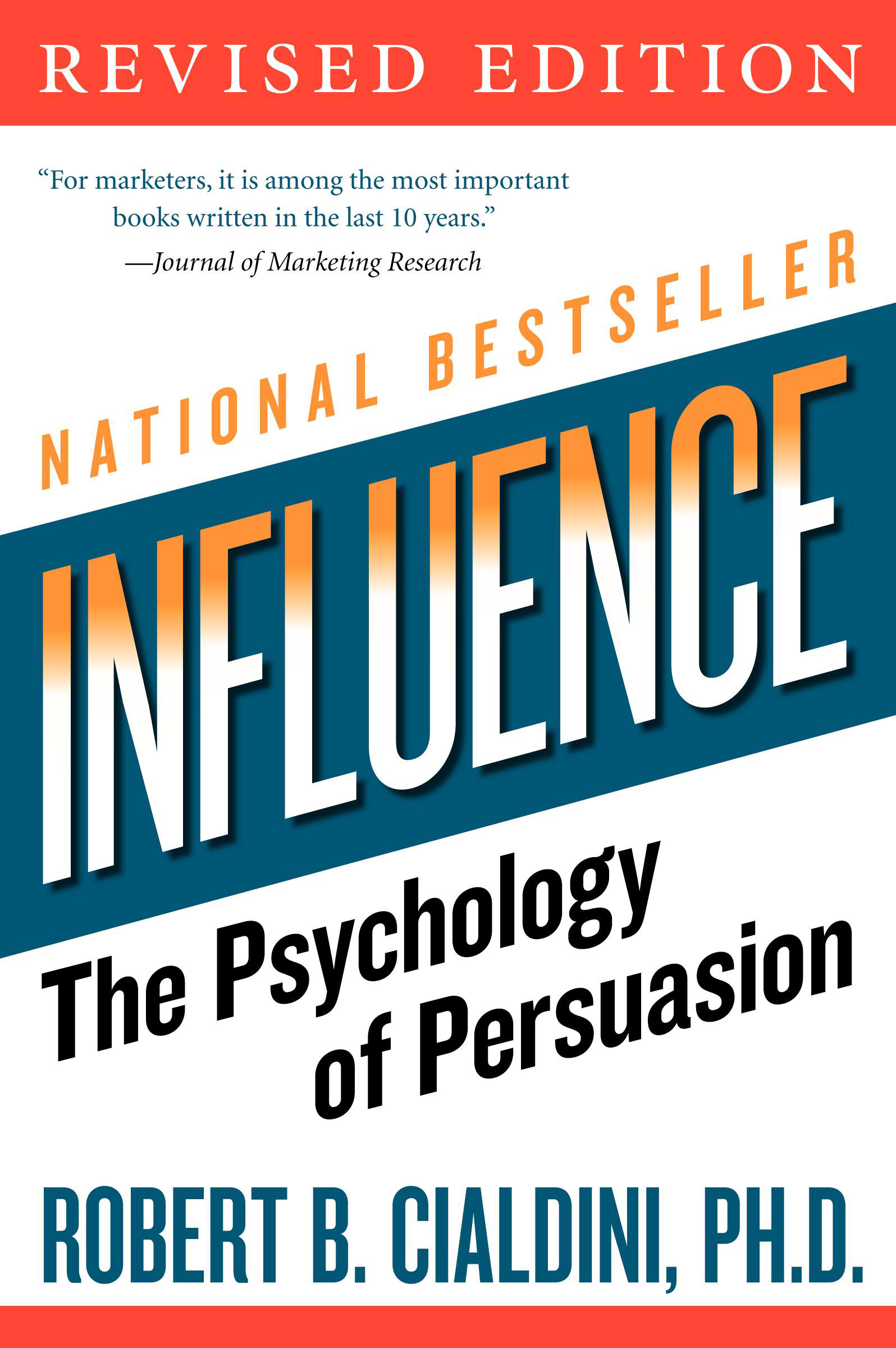


Influence: The Psychology of Persuasion
Overview unavailable.
The Psychology of Compliance
- The author acknowledges his lifelong vulnerability to sales pitches and fund-raisers, which sparked his professional curiosity about compliance.
- He initially conducted experimental research in a laboratory setting with college students to identify psychological principles of compliance.
- Recognizing the limitations of lab experiments, he expanded his research to observe real-world compliance professionals.
- Compliance professionals, such as sales operators and advertisers, possess refined, survival-tested knowledge of what makes people say yes.
- These influence principles are used not just by professionals, but by everyone in daily interactions with friends, family, and neighbors.
- The author spent nearly three years systematically observing compliance practitioners from the inside to understand their effective strategies.
Their business is to make us comply, and their livelihoods depend on it.
Uncovering Compliance Tactics
- The author researched compliance techniques through interviews, examination of written materials, and extensive participant observation.
- By adopting disguised identities and infiltrating various sales and fund-raising organizations, the author experienced firsthand how professionals secure agreement.
- Despite thousands of distinct tactics, most compliance strategies fall into six foundational psychological categories: consistency, reciprocation, social proof, authority, liking, and scarcity.
- Material self-interest was omitted as a separate chapter because it functions as a motivational given rather than a specific persuasion mechanism.
- The modern information age increasingly drives people toward unthinking, automatic compliance, making the study of these psychological principles vital.
Participant observation is a research approach in which the researcher becomes a spy of sorts.
Weapons of Influence Intro
- New reader reports highlight real-world examples of influence principles in action.
- A jewelry store owner struggled to sell quality turquoise pieces despite shifting locations and aggressive sales tactics.
- A misread note caused the entire turquoise inventory to be sold at twice the original price instead of half.
- This bizarre pricing anomaly mirrors automatic behavioral triggers found in animal science.
- Ethology studies show that mother turkeys direct all their maternal care almost exclusively to the single 'cheep-cheep' sound of their chicks.
When she returned a few days later, she was not surprised to find that every article had been sold.
Animal and Human Automatic Behaviors
- Mother turkeys will lovingly accept a natural predator if it plays the sound of a baby turkey.
- Animals possess fixed-action patterns that execute identical sequences of behavior like pre-recorded tapes.
- These behavioral tapes are activated not by the whole situation, but by a single specific trigger feature.
- Animals are easily tricked by isolated triggers, yet these automatic responses usually serve them well in nature.
- Humans similarly possess preprogrammed behavioral tapes that can be activated inappropriately by specific triggers.
She will embrace a natural enemy just because it goes “cheep-cheep,” and she will mistreat or murder one of her own chicks just because it does not.
The Power of Automatic Triggers
- Human beings frequently rely on mechanical, automatic response patterns similar to animal triggers.
- Experiments show that simply using the word 'because' induces high compliance even without a valid reason.
- Stereotypes such as 'expensive equals good' often substitute for deep cognitive analysis when making decisions.
- Shortcuts and rules of thumb allow humans to navigate complex environments efficiently.
- Mistakes happen when triggers misfire, yet these shortcuts generally represent a rational long-term strategy.
Just as the 'cheep-cheep' sound of turkey chicks triggered an automatic mothering response from maternal turkeys—even when it emanated from a stuffed polecat—so, too, did the word 'because' trigger an automatic compliance response from Langer’s subjects...
The Power of Shortcuts
- Automatic and stereotyped behaviors are essential mental shortcuts for navigating a complex world.
- People lack the time, energy, and capacity to consciously analyze every single stimulus encountered daily.
- Mental rules of thumb are occasionally imperfect and lead to inappropriate responses.
- Civilization advances by increasing the number of operations performed without conscious thought.
- While these automatic patterns save mental energy, they also make individuals vulnerable to exploitation.
- Various organisms and mimics exploit these automatic trigger features for their own benefit.
Without them we would stand frozen—cataloging, appraising, and calibrating—as the time for action sped by and away.
Weapons of Automatic Influence
- Photuris fireflies exploit the mating signals of Photinus fireflies to lure and consume male prey.
- The saber-toothed blenny mimics the dance of cleaner fish to deceive large groupers and bite their flesh.
- Non-human animals frequently exploit the automatic response sequences of other species for survival or food.
- Humans similarly possess learned psychological triggers and automatic behavioral tapes that dictate our actions.
- Exploiters intentionally study and utilize these weapons of automatic influence to easily secure compliance from others.
By mimicking the flashing mating signals of her prey, the murderess is able to feast on the bodies of males whose triggered courtship tapes cause them to fly mechanically into death’s, not love’s, embrace.
The Power of Automatic Influence
- Marketers and savvy sellers can exploit the "expensive equals good" heuristic to secure massive profit margins or create the illusion of a bargain.
- Historical examples, such as the Drubeck brothers' tailor shop scheme, demonstrate how manufactured pricing errors trick consumers into hasty purchases.
- Automatic influence weapons share key components, including mechanical activation and high exploitability by those who know how to trigger them.
- Exploiters of automatic influence require minimal effort because they harness pre-existing psychological forces rather than using brute force.
- This manipulative approach mirrors the martial art of jujitsu, utilizing natural principles to defeat an opponent with very little personal exertion.
- A major benefit of this subtler approach is that victims perceive their compliance as natural rather than recognizing intentional manipulation.
Many a man would hurry to buy the suit and scramble out of the shop with his "expensive = good" bargain before Poor Sid discovered the "mistake."
The Contrast Principle
- The contrast principle dictates that our perception of a second item is significantly skewed if it differs from the first item encountered.
- This psychological phenomenon applies broadly across human perception, affecting judgments of weight, physical attractiveness, and temperature.
- Media exposure to unrealistically attractive models can lead people to perceive their own romantic partners as less attractive.
- Experiments with varying water temperatures demonstrate how the exact same stimulus can feel entirely different based solely on prior context.
- Retailers exploit this principle by selling expensive items first, making subsequent purchases appear much cheaper by comparison.
The look of amused bewilderment that immediately registers tells the story: Even though both hands are in the same bucket, the hand that has been in the cold water feels as if it is now in hot water, while the one that was in the hot water feels as if it is now in cold water.
The Power of Contrast
- Salespeople strategically present expensive items before accessories to maximize total revenue.
- Presenting an inexpensive item first makes subsequent expensive items appear even costlier due to perceptual contrast.
- Real estate agents use run-down setup properties to make genuine inventory look much more appealing.
- Automobile dealers negotiate the main car price first before sequentially suggesting small add-ons that feel trivial by comparison.
- Independent presentation of extra options causes budgets to balloon without the buyer realizing how it happened.
These houses were not intended to be sold to customers but to be shown to them, so that the genuine properties in the company’s inventory would benefit from the comparison.
The Power of Reciprocation
- A letter from a college student named Sharon opens by shocking her parents with extreme news before revealing it was all a dramatic psychological setup for her poor grades.
- This clever prank introduces Chapter 2, which explores the universal and potent rule for reciprocation in human interactions.
- A university experiment demonstrated that people automatically return Christmas cards to total strangers simply because they received one first.
- The rule of reciprocation dictates that we are socially obligated to repay favors, gifts, and invitations in kind.
- Sociologists and anthropologists note that a developed system of indebtedness and sharing is a defining, universal characteristic of human culture.
They received his holiday greeting card, click, and, whirr, they automatically sent one in return.
The Power of Reciprocity
- A shared sense of future obligation allows individuals to exchange resources with confidence, serving as a catalyst for social evolution and interdependence.
- The rule of reciprocation lowers natural inhibitions against unilateral giving, enabling sophisticated systems of aid, trade, and defense.
- Socialization deeply implants the rule of reciprocation, attaching heavy social stigma and negative labels like moocher or ingrate to those who violate it.
- The powerful reach of reciprocity is demonstrated by an astonishing instance where impoverished Ethiopia sent relief funds to Mexico in 1985 to repay a 1935 debt.
- The deep-seated human need to reciprocate can transcend vast cultural differences, decades of time, acute famine, and immediate self-interest.
I remember my chin hitting my chest, though, when a brief newspaper item I was reading insisted that the aid had gone in the opposite direction.
The Power of Reciprocity
- Professor Dennis Regan conducted an experiment at Cornell University to study the influence of unsolicited favors.
- A disguised assistant named Joe provided a Coca-Cola to some subjects during a break while giving nothing to others.
- Later, Joe asked subjects to buy twenty-five-cent raffle tickets to win a fifty-dollar prize.
- Subjects who received the unsolicited Coke felt indebted and purchased twice as many tickets as those who received no favor.
- Normally, people are more likely to comply with requests from individuals they like.
- However, the obligation created by the reciprocity rule completely nullified the impact of personal liking on compliance.
For those who owed him a favor, it made no difference whether they liked him or not; they felt a sense of obligation to repay him, and they did.
Overcoming Dislike Through Reciprocation
- A small favor prior to a request can completely override a person's natural dislike for the requester.
- The Hare Krishna Society faced a severe public relations problem in the 1970s because the American public viewed them as weird and unappealing.
- Because their distinctive dress and appearance were tied to religious tradition, the Krishnas could not easily change their public image to gain favor.
- To solve their financial dilemma, the Society adopted a benefactor-before-beggar strategy by offering unsolicited gifts to passersby.
- By forcing targets to accept a flower or book first, the Krishnas successfully weaponized the rule of reciprocation to generate massive donations.
The unsuspecting passerby who suddenly finds a flower pressed into his hands or pinned to his jacket is under no circumstances allowed to give it back, even if he asserts that he does not want it.
The Power of Reciprocity
- The Krishnas struggle to use the reciprocation rule because travelers now actively avoid their unrequested gifts in public spaces.
- Airport administrators restrict and announce Krishna soliciting activities to warn travelers of their true intent.
- People choose to avoid rather than withstand the force of gift giving because the reciprocity rule is overwhelmingly strong.
- Elected officials engage in logrolling and favor exchanges, making politics a realm of strange bedfellows.
- Lyndon Johnson successfully passed numerous programs by calling in favors he had accumulated over many years.
- Jimmy Carter struggled to pass legislation early on because he came from outside Washington and was indebted to no one.
The reciprocity rule that empowers their tactic is too strong—and socially beneficial—for us to want to violate it.
The Power of Reciprocity
- Political corruption demonstrates how financial contributions are often explicitly expected to yield favors from elected officials.
- At the grass-roots level, political support is frequently traded for small personal favors and localized acts of kindness.
- The power of reciprocity operates powerfully in merchandising, particularly through the clever deployment of free samples.
- Free samples function psychologically as gifts that implicitly obligate consumers to make a purchase in return.
- Supermarkets and companies like Amway successfully leverage trial products to generate massive sales and customer commitment.
In true jujitsu fashion, the promoter who gives free samples can release the natural indebting force inherent in a gift while innocently appearing to have only the intention to inform.
The Power of Reciprocity
- Amway representatives use circulating product baskets called BUGs to exploit the reciprocity rule and dramatically increase sales.
- Customers who use and partially consume the free samples often feel a strong sense of obligation to make a purchase.
- The reciprocity rule extends far beyond commercial transactions into powerful interpersonal and survival situations.
- A WWI German soldier spared his captive's life after receiving a simple gift of bread, abandoning his military mission.
- Diane Louie survived the Jonestown massacre because she consciously avoided accepting special favors from Jim Jones to prevent feeling indebted.
The frightened captive with only a piece of bread in his hand then performed what may have been the most important act of his life.
The Power of Uninvited Favors
- Unsolicited favors can trigger a strong feeling of indebtedness even when the recipient did not ask for the favor.
- Data shows that charity mailings including an unsolicited gift nearly double their success rate compared to appeals alone.
- The reciprocity rule was historically established to allow individuals to initiate relationships without the fear of loss.
- Anthropologist Marcel Mauss highlighted that human culture enforces a strict obligation to give, receive, and repay.
- The inherent obligation to receive makes the reciprocity rule easy to exploit by taking choice away from the recipient.
Although the obligation to repay constitutes the essence of the reciprocity rule, it is the obligation to receive that makes the rule so easy to exploit.
The Power of Reciprocity
- A solicitor for the Krishna Society traps a businessman by forcing a flower into his hand as an uninvited gift.
- Despite his protests and visible discomfort, the businessman feels compelled by the deeply ingrained reciprocity rule to make a donation.
- The author later witnesses a solicitor harvesting discarded flowers from trash cans to reuse them in the lucrative cycle of forced gifting.
- Charity organizations frequently exploit this psychological mechanism by mailing small unsolicited items like address labels or greeting cards with donation requests.
- While people feel no cultural pressure to buy unwanted merchandise, they feel a heavy obligation to reciprocate even an unwanted gift.
She went from trash can to trash can beyond the immediate area to retrieve all the flowers that had been discarded by Krishna targets.
The Power of Reciprocity
- The rule of reciprocity promotes equal exchanges but allows considerable flexibility in how favors are returned.
- Manipulative individuals can exploit this flexibility by offering a small initial favor to trigger a much larger return obligation.
- Experimental evidence like the Regan experiment demonstrates how a minor gift can yield massive returns on investment.
- Real-world scenarios show that the psychological discomfort of owing someone can lead people to agree to disproportionate and risky favors.
- Humans are culturally conditioned from childhood to feel deeply uncomfortable while in a state of social debt.
- Failing to reciprocate risks social disapproval and damages the ongoing cycle of mutual assistance essential to society.
Consequently, we are trained from childhood to chafe, emotionally, under the saddle of obligation.
The Heavy Cost of Reciprocity
- Society heavily stigmatizes individuals who fail to conform to the reciprocity rule, using labels like moocher and welsher.
- The internal discomfort and external shame of unreturned favors create a psychological cost that often outweighs material loss.
- People frequently decline gifts, favors, or even a simple drink to avoid feeling an unwanted sense of obligation.
- A secondary consequence of the reciprocity rule is the obligation to make a concession to someone who has conceded to us.
- This subtle technique of reciprocal concessions can be used to effectively manipulate people into compliance, such as buying unwanted items.
After learning the hard way, I no longer let a guy I meet in a club buy my drinks because I don’t want either of us to feel that I am obligated sexually.
The Power of Concessions
- The author bought unwanted candy bars due to the automatic pressure of the reciprocity rule.
- A retreat from a larger request to a smaller one is perceived as a concession that triggers compliance.
- Mutually beneficial compromise is essential for society, and the reciprocation rule encourages cooperation.
- The social obligation to reciprocate ensures that the person making the first sacrifice will not be exploited.
- The rejection-then-retreat technique relies on this rule to manipulate others into agreeing to a secondary request.
It had not mattered that I do not like chocolate bars; the Boy Scout had made a concession to me, click, and, whirr, I responded with a concession of my own.
The Compliance Technique
- The rejection-then-retreat technique is a reliable compliance device that people use on purpose to get their way.
- An experiment was designed to test whether this tactic worked on a broader population beyond just a single individual.
- Researchers wanted to determine if the second request had to be objectively small or simply smaller than the initial one.
- When students were first asked to counsel delinquents for two years, refusal rates were absolute, but setup a contrast.
- Presenting the zoo trip as a retreat from the extreme initial request tripled the success rate of compliance.
- Strategies that dramatically increase compliance are frequently employed in natural settings like labor negotiations.
By presenting the zoo trip as a retreat from our initial request, our success rate increased dramatically.
The Art of Strategic Concession
- Initial demands that are too extreme will backfire because they appear unreasonable and lacking in good faith.
- Master negotiators set their starting positions just high enough to allow for beneficial reciprocal concessions without losing legitimacy.
- Television producers skillfully use this technique by intentionally inserting unacceptable lines into scripts so censors will approve their preferred choices.
- Sales professionals leverage customer purchase refusals as an opportunity to secure valuable referrals through a graceful retreat.
- The rejection-then-retreat technique successfully exploits the psychological power of the reciprocity rule to influence outcomes.
Sometimes you gotta go at ’em backward.
The Psychology of Concessions
- The perceptual contrast principle makes smaller requests appear even smaller when preceded by larger ones.
- Combining the reciprocity rule with perceptual contrast creates a powerful psychological force.
- This dual mechanism operates through the rejection-then-retreat sequence to influence behavior.
- The baffling decision to approve the disastrous Watergate break-in serves as a prime example of this tactic.
- G. Gordon Liddy's initially exorbitant and risky proposals were scaled down, making his final $250,000 plan seem like an acceptable concession.
How could we have been so stupid?
The Watergate Compliance Tactic
- G. Gordon Liddy presented increasingly scaled-down versions of his illegal political sabotage plans to Nixon campaign officials.
- John Mitchell and other leaders initially rejected extreme million-dollar proposals involving kidnapping, bugging, and blackmail.
- Through the rejection-then-retreat technique, a final $250,000 plan was ultimately approved because it seemed modest by comparison.
- Officials felt a psychological obligation to throw Liddy a bone rather than send him away empty-handed after his massive concessions.
- Frederick LaRue was the only official who opposed the final plan because he had missed the prior meetings showcasing the more absurd proposals.
He had asked for the whole loaf when he was quite content to settle for half or even a quarter.
The Power of Concession Strategies
- Starting with an extreme initial request creates a structural advantage where the requester cannot lose.
- If the first request is refused, retreating to a smaller favor benefits from reciprocity and contrast principles.
- Retailers successfully apply this by talking the top of the line, showing the most expensive model first.
- Data shows that selling down from expensive items drastically increases the average sales amount compared to trading up.
- Research indicates that victims of this technique do not feel resentful or distrustful, and actually follow through on agreements more often.
Either way, I benefit; it’s a case of heads I win, tails you lose.
The Power of Concession
- The rejection-then-retreat technique proves more effective than direct requests in securing compliance.
- Subjects subjected to this strategy are significantly more likely to agree to future favors and follow-up requests.
- The tactic spurs targets not only to comply initially but also to eagerly carry out the requested actions.
- The core of this success lies in the requester's act of concession during the negotiation process.
- Concessions generate feelings of greater personal responsibility and satisfaction with the final arrangement.
What could there be about the technique that makes people who have been duped into compliance so bewilderingly likely to continue to comply?
The Power of Concessions
- Subjects facing a retreating opponent felt a false sense of responsibility for influencing the final deal.
- This perceived responsibility explains why targets of the rejection-then-retreat technique reliably live up to their agreements.
- Despite giving up more money, targets of the concession strategy reported the highest satisfaction with the outcome.
- Satisfaction with an arrangement makes individuals more willing to agree to further requests in the future.
- Facing the reciprocation rule often feels like choosing between surrender and suffering the guilt of violating fairness.
- The real opponent is not the requester, but the social rule of reciprocation itself, which must be neutralized.
Surrender or suffer heavy casualties.
Navigating the Reciprocity Rule
- Rejecting all initial favors to avoid exploitation is impractical because it prevents us from accepting genuine gifts.
- Blanket rejection policies can lead to social friction, isolation, and unintentionally hurting the feelings of well-meaning individuals.
- A chilling anecdote illustrates how an overcorrection against reciprocity caused an adult to cruelly reject a child's innocent gift.
- A better strategy is to accept initial offers for what they fundamentally are while remaining mindful of hidden obligations.
- If an initial offer is unmasked as a compliance trick rather than a true favor, we are no longer bound by the rule of reciprocity to return it.
Not knowing what to do, she extended it toward him again only to have him demand to know what he had to give in return.
The Reciprocity Trap
- Nonprofit associations sometimes provide free home fire-safety inspections, which naturally obligates homeowners to return favors.
- Commercial fire-alarm companies exploit this goodwill by using free inspections as a front for high-pressure sales pitches.
- These companies rely on homeowners feeling indebted and lacking knowledge of retail costs to secure immediate sales.
- Homeowners can neutralize the obligation by mentally redefining the free items and information as sales devices rather than genuine gifts.
- Recognizing compliance tactics allows individuals to decline offers without feeling the psychological pull of the reciprocity rule.
- People can even turn the tactic around by accepting the free gifts without obligation, adhering to the principle that exploitation attempts may be exploited.
Merely define whatever you have received from the inspector—extinguisher, safety information, hazard inspection—not as gifts, but as sales devices, and you will be free to decline (or accept) his purchase offer without even a tug from the reciprocity rule: A favor rightly follows a favor—not a piece of sales strategy.
Sales Tactics and Consistency
- Stereo salespeople faced strict quotas requiring them to sell a minimum proportion of service contracts.
- A clever salesperson used the rejection-then-retreat technique by initially pitching expensive three-year plans.
- This strategy leveraged the contrast principle, making the subsequent one-year contract appear much cheaper and driving sales up to seventy percent.
- Racetrack bettors showed dramatically increased confidence in their horses immediately after placing a bet.
- This psychological shift is driven by a deep human desire to remain consistent with prior commitments and choices.
Just after placing a bet, they are much more confident of their horse’s chances of winning than they are immediately before laying down that bet.
The Power of Consistency
- Sara broke off her relationship with Tim due to his heavy drinking and refusal to marry, and she subsequently became engaged to an old boyfriend.
- When Tim suddenly begged her to return and promised to quit drinking, Sara broke her engagement and allowed Tim to move back in.
- Tim ultimately broke all his promises regarding sobriety and marriage, yet Sara grew even more devoted to him than before.
- Psychologists recognize the deep-seated desire for consistency as a powerful motivator that can compel human action.
- This drive is so potent that it frequently causes individuals to act in ways that are directly contrary to their own best interests.
- A beach experiment by Thomas Moriarty demonstrated that people who merely agreed to watch someone's belongings were dramatically more likely to risk physical harm to stop a staged theft.
Obviously, horse-race bettors are not alone in their willingness to believe in the correctness of a difficult choice, once made.
The Power of Consistency
- Consistency is generally valued as a sign of personal strength, logic, stability, and rationality.
- A high degree of consistency provides a reasonable and gainful orientation to the world, preventing our lives from becoming erratic and disjointed.
- People easily fall into the habit of automatic consistency even when it is not sensible, leading to potentially disastrous results.
- Automatic consistency serves as a mental shortcut that allows individuals to avoid the hard work of processing information and making difficult decisions.
- Mechanical consistency can act as a psychological fortress, shielding people from troubling realizations and the harsh consequences of deep thought.
Sealed within the fortress walls of rigid consistency, we can be impervious to the sieges of reason.
The Paradox of Compliance
- The author attended a recruitment lecture for a meditation program claiming extraordinary benefits like flying and passing through walls.
- A university professor specializing in logic easily dismantled the presentation's contradictory and unsupportable arguments during the Q&A.
- Despite the undeniable collapse of their logical presentation, the recruiters were suddenly overwhelmed with audience down payments.
- The audience members who signed up had desperate personal desires, such as overcoming insomnia or gaining study time, which made them vulnerable.
- Recruiters paradoxically promised that the exact same techniques could solve completely opposite sleep-related problems.
- The author initially assumed the audience simply failed to understand the logical flaws pointed out by the logician.
When the leaders called for questions at the completion of the lecture, he raised his hand and gently but surely demolished the presentation we had just heard.
The Shield of Consistency
- People facing real problems desperately want to believe they have found a solution.
- When a logical argument threatens their newfound hope, panic sets in and they rush to commit.
- Commitment acts as a fortress against reason, allowing individuals to escape the strain of thinking.
- Automatic consistency functions as a shield that can be exploited by those seeking compliance.
- Toy manufacturers face a post-holiday slump when parents have depleted their toy budgets.
- Companies must find a way to motivate spent-out parents to continue buying toys after Christmas.
Quick, a hiding place from thought! Here, take this money.
Toy Industry Sales Strategy
- Traditional sales tactics like advertising and price cuts fail to boost post-Christmas toy sales because parents are resistant to buying.
- Major toy manufacturers discovered an ingenious solution that leverages the psychological need for consistency without inflating ad budgets.
- Companies heavily advertise special toys before Christmas to generate children's demands and parental promises.
- Manufacturers intentionally undersupply these advertised toys, forcing parents to buy substitute gifts during the holidays.
- After Christmas, companies resume advertising the original toys, prompting children to demand fulfillment of parental promises.
- Parents dutifully trudge to stores to buy the previously out-of-stock items, falling straight into the manufacturers' trap.
Parents are simply not in a toy-buying mood, and the influences of advertising or reduced expense are not enough to shake that stony resistance.
The Power of Commitment
- Commitment is identified as the key trigger that activates the powerful human drive for consistency.
- When individuals take a stand or go on record, they create a natural internal pressure to behave stubbornly in accordance with that stance.
- Compliance professionals utilize various straightforward and subtle strategies to trap targets into future compliance through prior commitments.
- Studies show that simply asking people to predict if they will volunteer or vote drastically increases their actual participation rates later.
- Telephone solicitors often begin calls by asking about health and well-being to secure a polite, superficial confirmation that sets up future compliance.
If I can get you to make a commitment (that is, to take a stand, to go on record), I will have set the stage for your automatic and ill-considered consistency with that earlier commitment.
The Power of Public Commitments
- Publicly stating that you are feeling fine makes it socially awkward to appear uncharitable when immediately asked for help.
- Consumer researcher Daniel Howard demonstrated that asking people how they feel beforehand nearly doubles charity compliance rates.
- This technique works because it extracts a small public commitment, leveraging the human desire for behavioral consistency.
- A control study proved this success stems from securing a verbal commitment rather than mere politeness or well-wishing.
- Chinese captors during the Korean War similarly used sophisticated psychological compliance tactics instead of brute force.
Note that the commitment was able to get twice as much compliance from those targets even though at the time it occurred it must have seemed to them an altogether inconsequential reply to an altogether superficial question—yet another fine example of social jujitsu at work.
The Power of Small Commitments
- Chinese prison camps in Korea successfully elicited widespread collaboration from American POWs.
- Captors bypassed traditional resistance by starting with extremely mild, seemingly inconsequential statements.
- Prisoners were progressively nudged from minor concessions to signing lists, writing essays, and broadcasting anti-American views.
- Performing these small, uncoerced acts led prisoners to internalize the label of collaborator.
- Sales organizations utilize this exact psychological principle to secure large purchases by starting with minor commitments.
Start small and build.
The Foot-in-the-Door Technique
- Securing even a tiny initial order transforms a prospect into a paying customer.
- The foot-in-the-door technique relies on gaining compliance with small requests to secure larger ones later.
- A famous 1960s study showed homeowners were vastly more likely to accept a massive, ugly billboard after agreeing to a tiny safe-driving sticker.
- Even unrelated small commitments, like signing a beautification petition, dramatically increased compliance with the massive sign request.
- Small initial actions alter people's self-image, making them view themselves as public-spirited citizens who act consistently with their new identity.
At first, even Freedman and Fraser were bewildered by their findings.
The Power of Small Commitments
- Agreeing to trivial requests can subtly alter a person's self-image and increase compliance with larger, unrelated demands.
- Small initial actions, such as signing a petition, can unexpectedly shape future behavior and make individuals vulnerable to exploitation.
- Compliance professionals and manipulators use small commitments to transform citizens into public servants or prospects into customers.
- Chinese prison camps in Korea successfully used commitment tactics to indoctrinate American POWs and shift their political beliefs.
- The primary goal of these psychological tactics is to modify the hearts and minds of captives rather than simply extract information.
It scares me enough that I am rarely willing to sign a petition any-more, even for a position I support.
The Power of Written Commitment
- People primarily determine their own beliefs, values, and attitudes by observing their own behavior and actions rather than just relying on words.
- Chinese captors systematically used prison-camp experiences to prompt captives into acting in desired ways to reshape their self-image.
- Prisoners were incessantly pressured to write down pro-Communist statements or copy them out of notebooks as seemingly harmless concessions.
- Written declarations serve as physical, irrevocable evidence of an act that prevents prisoners from denying or forgetting what they did.
- Written statements can be shown to others, who naturally tend to assume the author genuinely believes what was written regardless of external coercion.
No; there it was in his own handwriting, an irrevocably documented act driving him to make his beliefs and his self-image consistent with what he had undeniably done.
The Power of Written Commitment
- Our self-image is heavily influenced by what others believe is true about us.
- Housewives who were told they were charitable gave significantly more money to charity to match that perception.
- Active commitments create internal and external consistency pressures that squeeze our self-image into alignment.
- Chinese captors in Korea used subtle manipulation to get American prisoners to write pro-communist statements.
- Small concessions in voluntary essay contests laid the groundwork for deeper collaboration and conversion through consistency.
- Organizations like Amway similarly harness the committing power of written statements to drive personnel performance.
Once an active commitment is made, then, self-image is squeezed from both sides by consistency pressures.
The Magic of Writing
- Setting a goal and writing it down provides a powerful psychological target to aim for.
- Door-to-door sales companies drastically reduced customer cancellations by having buyers personally fill out their own sales agreements.
- People feel a strong internal pressure to live up to commitments they have personally put on paper.
- Major corporations use testimonial contests to trick consumers into voluntarily writing praise about products.
- Writing a positive statement about a product creates a magical pull that forces the writer to actually believe what they wrote.
There is something magical about writing things down.
The Power of Public Commitment
- The Chinese captors strategically ensured that prisoners' pro-Communist statements and essays were shared publicly with others.
- People possess a strong psychological drive to maintain visible stances in order to preserve an image of personal consistency.
- A classic experiment by Deutsch and Gerard tested how different levels of initial commitment affected students' willingness to change their minds.
- Students who never wrote down their initial estimates were the most flexible and willing to alter their choices when presented with new evidence.
- Students who recorded their choices privately on a magic pad were already more resistant to changing their minds.
- Those who made public commitments were by far the most stubborn, resolutely refusing to shift from their original positions.
Public commitment had hardened them into the most stubborn of all.
The Power of Public Commitment
- Publicly stating initial views makes jurors reluctant to change their minds later.
- Using secret ballots in juries can reduce the risk of a hung verdict.
- Weight-loss clinics harness public commitment by having clients share written goals with others.
- Individuals can successfully break bad habits like smoking by making formal, written promises to people they respect.
- Written commitments demand more effort than verbal ones, which increases their psychological influence on the person making them.
There must have been a thousand times when I thought I had to have a smoke.
Tribal and Fraternity Initiations
- Adolescent boys are sent to rigorous circumcision schools involving severe physical and psychological hazing.
- Tribal initiations include six major trials: beatings, cold exposure, thirst, unsavory food, punishment, and threat of death.
- These extreme rites share remarkable structural and detailed similarities with modern college fraternity Hell Week ceremonies.
- Newspaper accounts reveal that modern hazing mirrors the exact same trials endured by tribal initiates, such as beatings and exposure to cold.
On the face of it, these rites seem extraordinary and bizarre. Yet, at the same time, they can be seen to be remarkably similar in principle and even in detail to the common initiation ceremonies of school fraternities.
The Resilience of Hazing
- Fraternity hazing rituals frequently involve extreme physical dangers, including severe injury, dehydration, and even death.
- Tragic incidents such as the choking death of a student swallowing raw liver demonstrate the lethal consequences of extreme fraternity initiations.
- Despite numerous attempts by university administrations and legal authorities to ban or reform hazing, these practices stubbornly persist.
- Efforts to regulate or eliminate hazing are often met with underground resistance, outright violence, or riots from fraternity members.
- Some college officials have concluded that because hazing is deeply entrenched, attempts to ban it openly merely drive the dangerous activities into secrecy.
The new 'code' set off a riot so violent that city police and fire detachments were afraid to enter campus.
The Purpose of Initiation Rites
- Hazing perpetrators are typically psychologically stable and socially conscious individuals rather than sadists.
- Groups fiercely protect their harsh initiation rites despite participating in beneficial community service.
- Classic social psychology research demonstrates that people value goals more when they endure pain or trouble to attain them.
- Experiments showed that women who underwent severe embarrassment or pain rated a worthless discussion group as highly valuable.
- Initiation rituals function as tools for group survival by increasing the loyalty and dedication of new members.
The more electric shock a woman received as part of the initiation ceremony, the more she later persuaded herself that her new group and its activities were interesting, intelligent, and desirable.
The Power of Initiation
- Severe initiation ceremonies significantly increase a newcomer's commitment and group solidarity.
- Military groups utilize grueling boot camp practices to forge resilience, pride, and camaraderie.
- Institutions fiercely protect these harsh traditions because they create lasting loyalty and distinction.
- Even when individuals object to the dehumanizing aspects, the rituals are defended by the organization.
- Effective commitments that alter self-image and behavior are typically active, public, and effortful.
the remorseless close-order drill hour after hour in the burning sun, the mental and physical abuse, the humiliations, the frequent sadism at the hands of drill sergeants, all the claustrophobic and terrifying insults to the spirit which can make an outpost like Quantico or Parris Island one of the closest things in the free world to a concentration camp.
The Power of Inner Responsibility
- Fraternities reject constructive community service during hazing to ensure pledges cannot attribute their suffering to charitable causes.
- Chinese prison camps utilized surprisingly small rewards for pro-Communist essays to prevent prisoners from blaming external incentives.
- Both institutions deliberately avoided strong outside pressures to force individuals to take total inner ownership of their actions.
- Large rewards and heavy threats may secure immediate compliance, but they fail to produce genuine, long-term commitment.
- This psychological principle advises parents against heavily bribing or threatening children if they want them to truly internalize values.
No, the fraternity chapters and Chinese Communists were playing for keeps.
Inner Responsibility and Behavior
- To ensure children maintain desired behaviors in our absence, we must help them accept inner responsibility for their actions.
- Jonathan Freedman conducted an experiment testing whether boys could be deterred from playing with a forbidden toy over time.
- A strong threat of severe punishment successfully prevented the boys from playing with the robot while the authority figure was present.
- However, a follow-up six weeks later revealed that 77 percent of those previously threatened boys chose to play with the forbidden robot when unsupervised.
- When Freedman used a much milder approach without severe threats, the boys still obeyed initially while he was out of the room.
Freedman’s severe threat, which had been so successful six weeks before, was almost totally unsuccessful when he was no longer able to back it up with punishment.
The Power of Internal Change
- Severe threats of punishment only teach children that it is unwise to disobey when authority is present, leading to short-lived compliance.
- Mild instructions without heavy threats allow children to take personal responsibility for their choices, fostering internal moral change.
- When children attribute their good behavior to their own desires rather than external coercion, they continue the behavior even when unsupervised.
- Parents aiming for long-term commitment rather than temporary obedience must use a subtle approach with barely sufficient external pressure.
- Inner changes produced by low-pressure commitments are lasting and generalize across a wide range of related future situations.
For the other boys, the dramatic event had come from the inside, not the outside.
The Power of Commitment
- Internalized commitments naturally grow their own legs through the psychological pressure for consistency.
- People automatically convince themselves of a choice's correctness by noticing new supporting facts and arguments.
- Newly generated reasons can independently sustain a behavior even after the original inducement is removed.
- Exploitative compliance professionals exploit this self-justifying mechanism by offering temporary inducements.
- Car dealerships use the lowball tactic by offering a great initial price that they never intend to honor.
- Customers commit to a purchase through paperwork and test drives, generating their own reasons to buy despite added costs.
Because we build new struts to undergird choices we have committed ourselves to, an exploitative individual can offer us an inducement for making such a choice, and after the decision has been made, can remove that inducement, knowing that our decision will probably stand on its own newly created legs.
The Power of Lowballing
- The lowball technique involves offering a favorable deal to induce a decision, then removing the advantage before the agreement is finalized.
- Customers and individuals often accept the modified, less advantageous terms and may even feel guilty or apologetic toward the person manipulating them.
- Personal commitments naturally build their own support systems by generating new justifications for the choice after it has been made.
- Even when the original motivation is removed, the newly created supports keep the decision stable and prevent collapse.
- This tactic is frequently used in business, social, and personal situations to make individuals feel pleased with objectively poor choices.
I once witnessed a woman provide an embarrassed apology to a salesman who had used the last version of lowballing on her—this while she was signing a new-car contract giving him a huge commission.
The Power of Commitment
- Initial attempts to encourage natural gas conservation through simple information and good intentions failed to change residents' habits.
- Offering the incentive of public recognition in a newspaper article successfully motivated residents to save a significant amount of fuel.
- When researchers removed the incentive by sending a letter stating publicity was no longer possible, the residents did not return to wasteful habits.
- Unexpectedly, the residents increased their fuel savings even further after the original incentive was taken away.
- The initial commitment generated its own internal support, causing homeowners to view themselves as conservation-minded citizens.
Then the rug was pulled out.
The Power of Consistency
- External incentives can sometimes undermine a person's intrinsic motivation to engage in conservation behaviors.
- Removing an initial inducement, such as a publicity promise, can paradoxically lead to even greater commitment.
- A repeat study on air-conditioning users confirmed that removing the incentive increased energy savings to 41.6 percent.
- Ralph Waldo Emerson's famous quote actually warned against a 'foolish consistency,' not consistency itself.
- While automatic consistency is necessary for daily efficiency, we must learn to recognize when it leads to poor choices.
Rather than reverting to their old habits, the lowballed residents increased their August energy savings to a stunning 41.6 percent.
Trapped By Consistency
- The author describes answering the door to a stunning woman conducting a survey on entertainment habits.
- Eager to impress her, the author exaggerated his social life and appreciation for fine dining, movies, and ballet.
- The surveyor used his enthusiastic answers to pivot into a high-pressure sales pitch for a discount club.
- Feeling cornered by his own previous statements, the author reluctantly bought the package to avoid looking like a liar or a fool.
- This experience taught the author how the psychological need for consistency can be weaponized for compliance.
- Today, the author combats this tactic by explicitly calling out the manipulation, confusing the salesperson into leaving.
I had been cornered by my own words.
Defeating Foolish Consistency
- Manipulators become flustered and retreat when their automatic consistency tactics are exposed.
- Recognizing a con allows individuals to reject foolish consistency without denying the value of genuine consistency.
- Physical intuition, such as a stomach warning, often signals when a commitment is based on manipulation.
- Stomachs only react when a con is obvious, meaning subtle traps require other clues to detect.
- People can rationalize poor commitments with new reasons, avoiding internal warning signs while still acting on flawed logic.
Whenever my stomach tells me I would be a sucker to comply with a request merely because doing so would be consistent with some prior commitment I was tricked into, I relay that message to the requester.
The Heart of Hearts
- The heart of hearts represents the inner space where rationalizations cannot penetrate and self-deception fails.
- People often struggle to separate genuine affection from desperate attempts to justify past commitments.
- Psychological evidence shows that we experience feelings toward something a split second before we can intellectualize about them.
- By paying attention to the very first flash of feeling, a person can bypass cognitive biases and uncover their true instinctive judgment.
- Rationalizations often do not create decisions; rather, decisions retroactively create rationalizations to justify themselves.
Concentrating on the first burst of impression I sensed, the answer was clear and unqualified.
The Trap of Consistency
- A motorist chooses to leave a gas station rather than tolerate unfair pricing.
- A Portland woman is tricked into kissing a stranger for a fake contest.
- Following the initial kiss, the stranger leverages compliance to sell her a magazine subscription.
- People make small commitments and then justify further compliance to remain consistent with their past actions.
- The consistency principle can be manipulated to exploit human behavior against common sense.
Listen, nobody’s gonna tell me how to run my business.
The Mystery of Laugh Tracks
- Most people strongly dislike canned laughter, viewing it as stupid, phony, and obvious.
- Television executives and creative artists frequently clash over the continued use of laugh tracks.
- Experiments prove that canned laughter causes audiences to laugh longer, laugh more often, and rate material as funnier.
- Laugh tracks are especially effective at enhancing the perceived quality of poor jokes.
- Despite knowing that canned laughter is blatantly counterfeit, audiences still fall under its influence.
- The effectiveness of laugh tracks is rooted in the psychological principle of social proof.
It is so blatant, so clearly counterfeit, that there could be no confusing it with the real thing.
The Power of Social Proof
- Acting in accordance with social evidence usually leads to fewer mistakes and serves as a convenient behavioral shortcut.
- The major weakness of social proof is that it makes individuals vulnerable to exploitation by profiteers using fake evidence.
- People often respond to cues like canned laughter in a mindless and reflexive fashion, reacting to the sound rather than the substance.
- This automatic reaction is similar to how a mother turkey responds blindly to the 'cheep-cheep' sound of a chick, even when tricked by a polecat.
- Various industries exploit this tendency by 'salting' tip jars, seeding church collections, and highlighting a product's popularity to manipulate behavior.
The simulated chick sound was enough to start the female’s mothering tape whirring.
The Power of Social Proof
- People are heavily influenced by the behavior of others, often assuming that popular actions are the correct ones.
- Sales professionals and marketers frequently leverage social proof by highlighting how many others have bought their products.
- Psychological research demonstrates that observing peers can dramatically eliminate severe phobias in children.
- Filmed examples can be just as effective as live demonstrations, with multiple actors yielding the best results.
- A single viewing of a short film successfully reversed lifelong patterns of social withdrawal in isolated preschoolers.
It seems that this twenty-three-minute movie, viewed just once, was enough to reverse a potential pattern of lifelong maladaptive behavior.
The Power of Social Proof
- Participant observation allows scientists to study natural processes through deep immersion.
- History is filled with millennial religious movements that prophesied cataclysmic world-ending events.
- Predictions of doom inevitably fail, yet cult members often emerge with strengthened convictions rather than disillusionment.
- Researchers Festinger, Riecken, and Schachter infiltrated a modern Chicago doomsday cult incognito to study this phenomenon.
- Led by Mrs. Keech, the cult received automatic-writing messages from extraterrestrial Guardians predicting a global flood.
Rather than disbanding in disillusion, the cultists often become strengthened in their convictions.
Doomsday Cult Preparations
- Believers prepared for a spaceship rescue by memorizing passwords and removing all metal from their clothing.
- Members demonstrated extreme commitment by quitting jobs, giving away belongings, and enduring threats of legal action or the loss of their children.
- Despite their intense certainty, the group made surprisingly little effort to proselyte or actively seek new converts.
- The cult maintained strict secrecy, burning extra copies of their lessons and refusing to discuss private tape recordings with outsiders.
- As the flood date approached, believers aggressively avoided the media, turning away reporters and dodging fame with superior indifference.
Exposed to a tremendous burst of publicity, they had made every attempt to dodge fame; given dozens of opportunities to proselyte, they had remained evasive and secretive and behaved with an almost superior indifference.
Waiting for the Spaceship
- Ordinary people gathered to await a midnight spaceship arrival, acting under instructions from purported alien guardians.
- Believers meticulously removed all metal from their clothing and shoes in preparation for boarding the rescue saucer.
- Researchers closely observed the group, even participating in the frantic last-minute removal of a forgotten zipper.
- As midnight approached, the group sat in tense silence, trusting the slower of two ticking clocks to delay the deadline.
- When midnight arrived and passed with no event, the believers sat motionless and expressionless in stunned silence.
The women were braless or wore brassieres whose metal stays had been removed.
Despair And Sudden Conversion
- An atmosphere of despair and confusion settled over the group as midnight passed without the predicted event.
- By 4:30 A.M., the believers were visibly shaken, openly discussing failure, and the group seemed near dissolution.
- Marian Keech received an automatic writing message explaining that the group's light had saved the world from destruction.
- A second message instructed Mrs. Keech to publicize the explanation, causing an abrupt shift in behavior.
- The group completely reversed their long-standing policies on secrecy, eagerly calling reporters and wire services.
- The believers also did an about-face regarding potential converts, suddenly attempting to proselyte all visitors.
Where only hours earlier they had shunned newspaper reporters and felt that the attention they were getting in the press was painful, they now became avid seekers for publicity.
The Psychology of Prophecy Failure
- Cult members abruptly shifted from secretive hoarders of their belief to zealous public missionaries.
- This radical turnabout occurred precisely when the prophecy failed, creating an encroaching sense of uncertainty.
- Having given up jobs, money, and social ties, members could not bear the shame of being wrong.
- Faced with disconfirming physical reality, the group desperately needed to establish social proof.
- By recruiting new converts, they hoped to make their threatened beliefs appear true through numbers.
I’ve had to go a long way. I’ve given up just about everything. I’ve cut every tie. I’ve burned every bridge. I’ve turned my back on the world.
The Power of Social Proof
- Uncertainty drives people to look to the actions of others to determine their own behavior.
- When everyone looks to others for guidance in ambiguous situations, it can create a phenomenon known as pluralistic ignorance.
- Pluralistic ignorance helps explain the shocking failure of bystanders to help victims in emergencies.
- The tragic murder of Catherine Genovese in Queens became the classic, highly debated example of bystander inaction.
- Thirty-eight respectable neighbors watched her being attacked over thirty-five minutes without calling the police.
Especially in an ambiguous situation, the tendency for everyone to be looking to see what everyone else is doing can lead to a fascinating phenomenon called “pluralistic ignorance.”
The Genovese Bystander Apathy
- Thirty-eight witnesses failed to call the police during the attack on Catherine Genovese, leaving observers and the witnesses themselves entirely baffled.
- Initial media coverage and social commentators blamed the inaction on growing urban apathy, claiming city life was hardening people into a cold society.
- Conventional excuses like fear or reluctance to get involved failed to explain why witnesses did not make a simple anonymous phone call.
- Experts theorized that indifference to neighbors might be a conditioned reflex for psychological survival in crowded metropolitan environments.
- Psychology professors Bibb Latané and John Darley eventually examined the case, focusing on the paradoxical fact that thirty-eight individuals were present.
It is almost a matter of psychological survival, if one is surrounded and pressed by millions of people, to prevent them from constantly impinging on you, and the only way to do this is to ignore them as often as possible.
The Bystander Effect
- The presence of multiple observers reduces the personal responsibility felt by each individual, leading to inaction.
- During ambiguous emergencies, people look to others for cues on how to react, a concept known as social proof.
- People tend to wear calm, unruffled expressions in public to appear poised, which inadvertently misleads others into thinking there is no emergency.
- Pluralistic ignorance occurs when everyone decides that because nobody else is concerned, nothing is wrong.
- Contrary to popular belief, safety in numbers does not apply to emergencies; victims often have a better survival chance with a single bystander present.
This, according to Latané and Darley, is the state of pluralistic ignorance “in which each person decides that since nobody is concerned, nothing is wrong.
The Bystander Effect Explained
- Research shows that individuals are highly likely to help once they are completely convinced an emergency actually exists.
- Bystanders are significantly less likely to provide aid when they are in a group of strangers compared to when they are alone.
- The pluralistic ignorance effect occurs because people want to appear poised in public, misinterpreting the calm reactions of strangers as a sign that no emergency exists.
- Normal urban characteristics such as noise, high population density, and crowds of strangers naturally create conditions that decrease bystander intervention.
- Urban bystander inaction can be explained by environmental confusion and social uncertainty rather than inherent urban callousness or alienation.
- Victims can dramatically increase their chances of receiving help by understanding that groups fail to act out of uncertainty rather than unkindness.
Because we like to look poised and sophisticated in public and because we are unfamiliar with the reactions of those we do not know, we are unlikely to give off or correctly read expressions of concern when in a grouping of strangers.
Overcoming Bystander Uncertainty
- People often fail to help in emergencies because they are uncertain if an actual emergency exists or if they are responsible for intervening.
- Uncertainty among bystanders is a greater barrier to receiving help than generalized societal depersonalization.
- Victims experiencing a medical crisis must actively work to remove ambiguity for onlookers by clearly communicating their need for aid.
- Simple outcries or moans are insufficient because they do not provide enough information to assure passersby that a true emergency is occurring.
- To overcome hesitation, a victim must explicitly call for help and cast aside fears of social embarrassment.
- The most effective tactic to compel action is to isolate a specific individual from a crowd by staring, speaking, and pointing directly at them.
A terrifying thought slashes to mind: 'Oh, God, I’m having a stroke!'
Overcoming the Bystander Effect
- In an emergency, general pleas for help often fail because crowds suffer from pluralistic ignorance and diffusion of responsibility.
- The most effective strategy is to eliminate ambiguity by targeting a single individual and giving them a precise, explicit instruction.
- Assigning a specific task forces that person to accept the role of rescuer and understand exactly what action to take.
- Even a trained psychologist experienced the terrifying reality of onlookers driving past a serious accident without stopping.
- Once the first person is activated, social proof shifts from hindering help to encouraging it, inspiring others to assist rapidly.
I remember thinking, "Oh no, it’s happening just like the research says. They’re all passing by!"
The Power of Similarity
- The principle of social proof operates most powerfully when we observe the behavior of people who are similar to us.
- Advertisers utilize this tendency by featuring average people in commercials to effectively sell products to ordinary viewers.
- A Columbia University wallet-loss study demonstrated that people are significantly more likely to return a lost wallet if the previous finder is depicted as similar to them.
- Only 33 percent of wallets were returned when the first finder was seen as dissimilar, compared to 70 percent when the finder was perceived as similar.
- Research on children shows that interventions like antismoking programs and dental anxiety treatments are more effective when led by same-age peers.
Only 33 percent of the wallets were returned when the first finder was seen as dissimilar, but fully 70 percent were returned when he was thought to be a similar other.
The Power of Social Proof
- The author struggled for months to teach his young son Chris how to swim without an inflatable ring, failing despite professional help.
- Chris suddenly learned to swim on his own after observing a peer of the exact same age swimming without a floatation device.
- Children and adults alike rely heavily on the behavior of similar others to determine what they should do in various situations.
- Peer modeling is a far more effective teaching tool than persuasion or authority figures.
- Publicized suicides have been statistically linked to a dramatic, alarming increase in subsequent commercial-airline and automobile fatalities.
- Societal stress or shared environmental conditions alone cannot fully account for the drastic spikes in accidental deaths following highly publicized tragedies.
Well, I’m three years old, and Tommy is three years old. And Tommy can swim without a ring, so that means I can too.
The Werther Effect
- Publicized suicide stories are linked to a sharp increase in subsequent fatal car and plane crashes.
- The social conditions hypothesis fails because accidents only spike in regions where the suicide is actually publicized.
- The bereavement theory is also inadequate because it cannot explain why single suicides lead to single-fatality wrecks while murder-suicides lead to multiple-fatality wrecks.
- Data reveals a fantastically specific imitation pattern where the nature of the reported death mirrors the resulting accidents.
- Sociologist David Phillips attributes this phenomenon to the 'Werther effect,' where troubled individuals imitate publicized suicides.
The story of the Werther effect is both chilling and intriguing.
The Werther Effect
- Publicized suicide stories trigger a significant increase in subsequent suicides due to the principle of social proof.
- Statistical data shows that an average of fifty-eight additional people commit suicide within two months of a front-page suicide story.
- The tendency for copycat suicides increases proportionally with the scope and publicity of the initial story.
- Many individuals disguise their suicides as accidents, such as car or plane crashes, to protect their reputations or secure insurance payouts.
- This imitative behavior explains the mysterious surge in fatal crashes following widely publicized suicide events.
Upon learning of another’s suicide, an uncomfortably large number of people decide that suicide is an appropriate action for themselves as well.
The Danger of Copycat Tragedies
- Commercial airliner crashes are significantly deadlier in the week following front-page suicide stories.
- Fatal car wrecks following public suicides result in much quicker deaths than normal traffic statistics suggest.
- Imitators tend to copy suicides of people who share similar demographics, demonstrating the power of social proof.
- Data shows that young drivers crash after young suicides, while older drivers die following older suicides.
- Publicized acts of violence and championship prize fights also trigger measurable increases in the U.S. homicide rate.
When the newspaper detailed the suicide of a young person, it was young drivers who then piled their cars into trees, poles, and embankments with fatal results; but when the news story concerned an older person’s suicide, older drivers died in such crashes.
The Spread of Violence and Jonestown
- Publicized aggression tends to spread specifically to demographic groups that match the original victims.
- Homicide rates rise among specific racial groups following the televised defeat of a fighter from that same group.
- This imitative violence mirrors patterns found in copycat suicide data following media exposure.
- Understanding the immense influence of similar others helps explain extreme compliance phenomena like the Jonestown massacre.
- The People's Temple mass suicide saw 910 people willingly ingest poison after a leader's call to self-destruction.
- While various factors like leader charisma and follower vulnerability contributed, standard explanations remain insufficient for such extreme compliance.
When such a match was lost by a black fighter, the homicide rate during the following ten days rose significantly for young black male victims but not young white males.
The Role of Uncertainty in Cult Suicide
- Experts suggest the tragic Jonestown mass suicides would not have occurred if the People’s Temple had remained in San Francisco.
- Relocating the cult to an alien jungle environment in Guyana created profound psychological uncertainty for its members.
- Uncertainty activates the principle of social proof, causing people to look to the actions of others to guide their own behavior.
- Because they were isolated in a foreign land, cult members had no similar others to look to except for their fellow Jonestown residents.
- When faced with the death command, members looked to those around them and were convinced by social proof that suicide was the correct conduct.
- The willing compliance of the first few individuals who took the poison created a powerful psychological example for the rest of the group.
And therein lies the awful beauty of the Reverend Jim Jones’s relocation strategy.
The Power of Social Proof
- The Jonestown tragedy was heavily influenced by social proof, where neighbors quietly observed each other's calm demeanor and mistakenly assumed peaceful compliance was required.
- Jim Jones derived his power less from personal charisma and more from his mastery of fundamental psychological principles regarding group behavior.
- By relocating the community to the remote jungles of Guyana, Jones created conditions of uncertainty and exclusive similarity that maximized the effect of social proof.
- Jones understood that a leader only needs to convince a sizable portion of the group, as the raw information of their compliance will automatically convince the rest.
- While social proof normally acts as a valuable automatic-pilot device for decision-making, it becomes dangerous when the underlying social signals are flawed or manipulated.
As slaughterhouse operators have long known, the mentality of a herd makes it easy to manage.
Navigating the Social Proof Dilemma
- The principle of social proof acts as a double-edged sword, serving as a useful automatic pilot while simultaneously carrying the potential for severe error.
- Because we cannot simply disconnect this automatic pilot, our best defense is recognizing when the feeding data are inaccurate.
- Errors in social proof typically arise when social evidence is either purposely falsified or operating on flawed assumptions.
- Historically, this kind of manipulation is evident in grand opera through the commercialized practice of claquing, where applause was bought and sold.
- Specialized claqueurs like the pleureuse, bisseur, and rieur mirror modern laugh-track specialists designed to trigger artificial audience reactions.
- Despite the conspicuous and undisguised nature of this fakery, audiences have historically fallen prey to manufactured social proof.
They were businessmen whose product was applause.
The Mechanics of Manufactured Applause
- Exploiters openly utilize falsified social evidence, ranging from historical Italian claques to modern television laugh tracks.
- Manipulators often display a smug certainty that humans must choose between being fooled or abandoning the mental shortcuts they rely on.
- The amateurish and transparent quality of rigged social proof actually gives consumers a clear advantage in fighting back.
- Automatic mental pilots can be engaged and disengaged at will once inaccurate data or misinformation is recognized.
- Commercial producers increasingly bypass genuine testimonials by hiring actors to play unrehearsed average people in staged interviews.
They seem almost smug in the recognition of our predicament: Either we must allow them to fool us or we must abandon the precious automatic pilots that make us so vulnerable to their tricks.
Combating Fake Social Proof
- Phony unrehearsed testimonial ads feature bizarrely unnatural consumers that Dave Barry terms 'Consumers From Mars.'
- Encountering such blatant marketing manipulation should trigger internal alarms to disconnect our automatic pilot responses.
- Consumers should actively counterattack by refusing to buy products advertised with rigged social evidence.
- Writing complaint letters to manufacturers helps hold them accountable for deceptive advertising practices.
- Tampering with social proof undermines a vital defense against the decisional overload of modern life.
- Natural errors can also create snowballing false social proof, leading to phenomena like pluralistic ignorance or traffic accidents.
Whenever possible we ought to sting those responsible for the rigging of social evidence.
The Dangers of Social Proof
- Drivers frequently mimic the lane-changing behavior of others, assuming an unseen obstruction exists ahead.
- People heavily trust collective behavior during uncertainty, often assuming the crowd possesses hidden knowledge.
- The crowd itself is frequently mistaken, acting merely in reaction to the perceived behavior of those in front of them.
- Blind reliance on social proof can trigger dangerous accidents and catastrophic outcomes like buffalo stampedes over cliffs.
- We must periodically cross-check social evidence with objective facts, personal experience, and direct observation.
So intent would they be upon working themselves into the next lane that, without even checking the true condition of the road before them, the drivers would begin a line-long flank assault. Crash.
The Power of Social Proof and Liking
- Individuals must periodically look up and around as a safeguard against misguided social proof, or risk disastrous consequences.
- Racetrack bettors can manipulate public odds by heavily wagering on inferior horses to create a false favorite through social proof.
- Uncertain individuals frequently look to the behavior of crowds to guide their own decisions, creating a snowballing effect of compliance.
- The liking rule demonstrates that people prefer to say yes to requests from those they know and like.
- Total strangers routinely exploit the liking rule alongside reciprocity, commitment, and social proof to secure compliance.
Odds at a racetrack are based on where the money is being bet.
The Power of Friendship Sales
- Tupperware parties leverage the psychological power of the liking rule by having a friend act as the hostess rather than an unknown salesperson.
- The social bond between the hostess and attendees is twice as likely to drive a purchase as the preference for the product itself.
- Customers are often fully aware of these friendship pressures but feel compelled to buy anyway out of a sense of social obligation.
- Charity organizations utilize this same principle by recruiting volunteers to canvas their own neighborhoods to make requests harder to refuse.
- Companies like Shaklee use the endless chain method, leveraging a friend's name to make turning down a salesperson feel like rejecting a friend.
The strength of that social bond is twice as likely to determine product purchase as is preference for the product itself.
The Power of Liking
- Compliance practitioners exploit the human tendency to comply with requests from people we like.
- Sales professionals actively cultivate this liking bond even when a prior friendship does not exist.
- World-record-breaking car salesman Joe Girard attributed his massive success to offering a fair price and a salesman customers liked.
- Social scientists have identified specific, reliable factors that cause people to like one another, which professionals cleverly manipulate.
- Physical attractiveness triggers an unconscious halo effect, causing people to automatically attribute favorable traits like intelligence and honesty to good-looking individuals.
There seems to be a click, whirr response to attractive people.
The Power of Appearance
- Voters and interviewers strongly deny that physical appearance influences their decisions, despite clear evidence to the contrary.
- Attractive individuals receive more favorable treatment in the legal system, including lighter sentences and higher damage awards for attractive victims.
- Good-looking people enjoy social advantages such as being more persuasive, receiving more help, and being perceived as more intelligent.
- The halo of physical attractiveness starts influencing perceptions as early as elementary school with teachers and adults.
- Compliance professionals regularly exploit the attractiveness bias through grooming, hiring practices, and the selection of appealing representatives.
- Similarity is another powerful factor that produces liking, as people are naturally drawn to those who share similar opinions, backgrounds, or dress.
In fact, the attractive defendants were twice as likely to avoid jail as the unattractive ones.
The Power of Similarity and Liking
- People are significantly more likely to comply with requests from individuals who dress similarly to them.
- Individuals will even sign petitions without reading them simply because the requester shares a similar appearance or cause.
- Salespeople routinely manufacture fake commonalities regarding backgrounds, interests, and hobbies to increase customer compliance.
- Research shows customers are more apt to buy insurance when the salesperson shares personal traits like age, politics, or smoking habits.
- Sales training programs teach techniques like "mirror and match" to artificially replicate body posture, mood, and verbal style.
- People are highly susceptible to flattery and simple statements of affinity, as demonstrated by a successful car salesman who mailed cards saying "I like you."
Marchers in an antiwar demonstration were found to be not only more likely to sign the petition of a similarly dressed requester, but also to do so without bothering to read it first.
The Power of Flattery and Familiarity
- People tend to believe praise and like the person providing it, even when they know the flattery is manipulative and false.
- Experiments show that pure, unearned praise generates just as much liking as accurate praise, demonstrating an automatic vulnerability to compliments.
- We naturally prefer things that are familiar to us, such as seeing the reverse image of our own face that we are used to seeing in the mirror.
- Voters frequently choose political candidates simply because their names sound familiar, sometimes swinging entire elections.
- Unconscious exposure to a person's face increases our liking for them and makes us more susceptible to their influence, even if we do not remember seeing them before.
Apparently we have such an automatically positive reaction to compliments that we can fall victim to someone who uses them in an obvious attempt to win our favor. Click, whirr.
The Flawed School Integration
- School desegregation frequently increases racial prejudice rather than decreasing it between black and white students.
- Despite formal integration, students naturally segregate themselves and rarely interact across ethnic boundaries.
- Repeated contact under unpleasant conditions such as frustration and competition actually leads to decreased liking.
- The standard American classroom operates as a fiercely competitive game for the teacher's approval.
- This competitive environment guarantees that children learn to resent and envy their peers rather than understand them.
And the typical American classroom fosters precisely these unpleasant conditions.
The Power of Cooperative Learning
- Classroom desegregation significantly increases the academic performance of minority students without harming white students' achievement levels.
- Despite these academic benefits, desegregation often creates heightened racial hostility and prejudice due to competitive student interactions.
- Muzafer Sherif's classic summer camp experiments demonstrated how easily 'we versus they' rivalries and intense intergroup hatred can be artificially induced.
- Simply increasing casual contact or pleasant joint activities between rival groups failed to reduce hostility and often worsened conflicts.
- Researchers discovered that introducing situations requiring mutual cooperation successfully resolved entrenched intergroup hostility.
Simply separating the boys into two residence cabins was enough to stimulate a “we vs. they” feeling between the groups; and assigning names to the two groups (the Eagles and the Rattlers) accelerated the sense of rivalry.
The Power of Cooperation
- Researchers engineered common crises for camp groups to test the effects of forced collaboration on hostility.
- Working together toward shared goals successfully bridged deep rifts, ending verbal baiting and physical jostling.
- Campers eventually requested to ride together and even used their remaining treasury to buy milkshakes for their former rivals.
- Viewing one another as allies rather than opponents transformed former adversaries into valued helpers and friends.
- Educational psychologists applied these findings to desegregated classrooms through techniques like the jigsaw classroom.
- The jigsaw approach requires students to teach one another, successfully reducing ethnic prejudice and boosting self-esteem.
When the bus stopped at a refreshment stand, the boys of one group, with five dollars left in its treasury, decided to treat their former bitter adversaries to milkshakes!
The Jigsaw Classroom Impact
- Minority student test scores and self-esteem improved in jigsaw classrooms without harming white student performance.
- A case study of a Mexican-American boy named Carlos illustrates how the jigsaw method dismantles the conspiracy of silence.
- Teachers often ignore struggling students to spare them embarrassment, which inadvertently signals to the class that the student is unintelligent.
- Initially, classmates reacted to Carlos's communication struggles with habitual ridicule and teasing.
- Observers intervened to alter reinforcement contingencies, forcing students to realize they needed to listen to Carlos to pass their exams.
- Classmates transformed into supportive interviewers, leading to mutual respect, improved communication, and newfound friendship.
Notice how she changed the reinforcement contingencies.
Cooperation and Compliance Tactics
- Cooperative learning strategies show promise in reducing racial hostility in schools, though more research is needed on their implementation.
- Traditional competitive classrooms often worsen ethnic tensions because forced contact accompanied by distasteful experiences increases dislike.
- Competition still has a valuable place as a motivator, but it should not maintain a monopoly in the classroom.
- Compliance practitioners systematically use cooperation, manufacturing it when absent, to get people to like them and say yes.
- Examples range from car salesmen playing on the same team as the buyer to sophisticated police interrogation techniques like Good Cop/Bad Cop.
Now there is at least one crack in the gloom, and I find myself genuinely excited about it.
The Good Cop Bad Cop Tactic
- An interrogating officer plays the role of a hostile Bad Cop, threatening harsh penalties and severe consequences.
- A second officer acts as a reasonable Good Cop who ostensibly defends the suspect and tries to temper the hostility.
- The perceptual contrast principle makes the Good Cop appear exceptionally kind and reasonable by comparison.
- The Good Cop offers protection and help, triggering the reciprocity rule and creating a false sense of alliance.
- This psychological manipulation often successfully induces a full confession from the suspect.
Compared to the rantings of Bad Cop, the words fall like music on the prisoner’s ears.
The Psychology of Association
- A local television weatherman sought professional help because he was distressed by receiving hate mail and threats whenever the weather was bad.
- The psychologist explained this phenomenon through the concept of a click, whirr response, where people irrationally associate the bearer of bad news with the news itself.
- Historical examples, such as ancient Persian messengers who were rewarded for victory but executed for defeat, illustrate that the nature of bad news infects the teller.
- This psychological principle works in reverse as well, meaning that association with positive things like sunshine naturally boosts a person's popularity.
- Understanding the general principle of association ultimately helped the weatherman feel better about his precarious yet relatively safe position.
Should his message tell of military disaster, though, the reception would be quite different: He was summarily slain.
The Burden of Association
- Television weather forecasters frequently face verbal abuse, physical threats, and blame from angry viewers for natural disasters and bad weather.
- Despite mostly relying on data from computers and the National Weather Service, weather anchors are treated as the personal causes of meteorological events.
- The phenomenon of blaming the messenger illustrates a broader psychological principle regarding human association and displaced anger.
- Society teaches people early on about guilt by association, leading observers to assume individuals share the traits of those they are connected to.
- Compliance professionals exploit this principle of association by linking their products to attractive models or positive imagery to influence consumer perception.
That’s right about the tornado, and I’ll tell you something else, I’ll send another one if you don’t back off.
The Power of Association
- The association principle allows manufacturers and politicians to unconsciously influence public perception by linking products or ideas to cultural fads, celebrities, or positive experiences.
- People are often blind to how external factors, such as an attractive model in an advertisement, shape their judgments and choices.
- Advertisers routinely pay celebrities to endorse products even when the connection is entirely illogical, as long as the association is positive.
- Politicians increasingly rely on celebrity endorsements and strategic photo-ops to sway voters who may struggle with complex policy decisions.
- The 'luncheon technique' demonstrates that people develop a greater fondness for people and things experienced while they are eating.
It's a real tough decision. They've got big stars speaking for it, and big stars speaking against it. You don't know how to vote.
The Power of Association
- Razran discovered that political statements shown to subjects while they were eating gained unconscious approval.
- This technique was inspired by Ivan Pavlov's classic conditioning experiments with dogs and bells.
- Positive feelings and attitudes toward food can be artificially transferred to unrelated ideas, products, or people.
- Compliance professionals routinely exploit this association principle in advertising, media, and promotional events.
- People intuitively understand this psychological dynamic and actively distance themselves from delivering bad news.
It may be “Tupperware” for the women, but it’s “Bingo” for the company.
The Psychology of Sports Fandom
- People instinctively try to associate themselves with positive news and distance themselves from negative events, even when they played no part in causing them.
- The intense fervor of sports fans often manifests as irrational behavior, ranging from lavish gifts for athletes to violent riots.
- A striking anecdote details a World War II veteran who remained mute for thirty years until breaking his silence solely to yell at a referee during a soccer broadcast.
- This extreme reaction demonstrates the profound psychological power that a hometown team's success can hold over an individual.
- Major sports victories regularly provoke bizarre, uncharacteristic actions from fans, such as lifelong abstainers drinking alcohol or supermarkets erupting into paper towel riots.
When at a crucial point of play the referee called a foul against a player from the man’s home team, the mute veteran jumped from his chair, glared at the radio, and spoke his first words in more than three decades: “You dumb ass!” he cried.
The Psychology of Sports Fandom
- Fan passion stems from a personal connection where the self is tied to a team's outcome through the principle of association.
- People root for local or affiliated teams to prove their own superiority to themselves and others, boosting their public prestige.
- The intense stakes explain why crowds can be fiercely ungrateful and abusive toward players and coaches after losses.
- Even successful figures like NBA coach Frank Layden faced severe harassment from fans, illustrating sports intolerance for defeat.
- Experimental evidence shows fans actively increase the visibility of their winning team connections, such as wearing more school apparel after a victory.
Sometimes in the NBA, you feel like a dog.
Basking in Reflected Glory
- People intentionally manipulate the visibility of their connections to winners and losers to influence how observers perceive them.
- Fans of successful teams proudly associate themselves by wearing victory shirts and shouting celebratory pronouns like "we're number one."
- Conversely, fans distance themselves from failing teams, historically demonstrated by New Orleans Saints fans wearing paper bags over their faces during losses.
- Pronoun usage shifts predictably based on game outcomes, with "we" used for victories and "they" or "them" used to insulate against defeats.
- Individuals with damaged public images feel an increased desire to restore their reputation by trumpeting ties to successful others.
As their team suffered loss after loss, more and more fans donned the bags until TV cameras were regularly able to record the extraordinary image of gathered masses of people shrouded in brown paper with nothing to identify them but the tips of their noses.
Basking in Reflected Glory
- Students experiencing recent image damage or failure showed the greatest need to manipulate their connections to a winning football team.
- Individuals who recently succeeded on a test used the team pronoun 'we' equally for wins and losses because they did not need external validation.
- People with low personal worth and a poor self-concept seek prestige from the achievements of associated others rather than their own attainments.
- Cultural examples of this behavior include persistent name-droppers, rock-music groupies, and stage mothers.
- National crises and diminished public prestige can similarly drive an entire citizenry to eagerly claim association with collective triumphs.
Deep inside is a sense of low personal worth that directs them to seek prestige not from the generation or promotion of their own attainments, but from the generation or promotion of their associations with others of attainment.
Defending Against Manipulation
- Physicians' wives often experience intense pressure to gain personal prestige through their husband's professional associations.
- Combatting every specific tactic used to manipulate liking is impractical because there are too many variables.
- Many factors that increase liking operate unconsciously, preventing timely protection against them.
- The most effective defense relies on timing by focusing on the effect of undue liking rather than its causes.
- Noticing a sudden or unexpected fondness for a practitioner serves as a warning sign of manipulation.
- Using a jujitsu-style strategy allows compliance forces to operate and then turns their own momentum against them.
Instead, we have to be sensitive to only one thing related to liking in our contacts with compliance practitioners: the feeling that we have come to like the practitioner more quickly or more deeply than we would have expected.
Defeating the Liking Rule
- Recognizing unwarranted liking for a salesperson is enough to protect against the liking rule without needing to figure out why the feeling occurred.
- Actively disliking a naturally likable person is unfair and counterproductive, as it would block mutually beneficial business interactions.
- The recommended countermaneuver is to mentally separate the salesperson from the product they are trying to sell.
- Buyers must consciously focus exclusively on the merits of the deal and the vehicle, rather than their personal fondness for the dealer.
- Failing to separate feelings about the requester from the request is most dangerous when we are particularly fond of the person.
- Friendship pressures are frequently co-opted by sales strategies, leveraging existing relationships to compel compliance and service switches.
Mentally separate Dan from that Chevy or Toyota he’s trying to sell.
The Power of Authority
- Personal decisions are frequently influenced by social pressures and friendship obligations rather than purely economic logic.
- Companies like MCI successfully leveraged interpersonal networks to drive adoption of their services with extremely high conversion rates.
- Stanley Milgram designed a famous psychological experiment to study how punishment affects learning and memory.
- Participants in the study were assigned the roles of either Learner or Teacher, with the Teacher administering electric shocks for mistakes.
- As the simulated voltage increased with each error, the Learner experienced mounting pain and distress during the procedure.
It works nine out of ten times.
The Milgram Shock Experiment
- Participants believed they were administering increasingly painful electric shocks to a screaming learner for incorrect answers.
- The teacher figure relentlessly continued the experiment despite desperate pleas and cries for help from the victim.
- In reality, the shocks were entirely fake and the victim was an actor simulating agony.
- The true purpose of the study was to measure how much suffering ordinary people would inflict on innocents when instructed to do so.
- Approximately two thirds of subjects administered the maximum possible voltage, ignoring the victim's agony until the researcher intervened.
You can no longer cry out, no longer struggle. You can only feel each terrible electric bite.
Understanding Milgram's Obedience Experiments
- Experts severely underestimated how far ordinary people would go in administering shocks, predicting only a tiny fraction would reach the maximum voltage.
- Common assumptions that the subjects were uniquely aggressive, unaware of the danger, or psychologically sadistic were all thoroughly debunked by follow-up studies.
- Female participants showed the exact same willingness to deliver maximum shocks as male participants in subsequent experiments.
- Even when the victim explicitly complained of a heart condition, 65 percent of subjects still carried out their duties to the maximum shock.
- Personality assessments proved that the participants were entirely normal citizens, representing an accurate cross section of society.
- Milgram concluded that the alarming behavior was driven by a deep-seated sense of duty to authority rather than personal malice.
Within twenty minutes he was reduced to a twitching, stuttering wreck who was rapidly approaching a point of nervous collapse.
The Power of Authority
- Milgram demonstrated that subjects strictly obeyed authority figures rather than acting out of sadism.
- When authority figures gave conflicting commands, subjects desperately sought consensus before ultimately refusing to comply.
- Adults show an extreme willingness to go to great lengths when commanded by legitimate authority.
- This psychological finding raises sobering questions about the extent of government control over citizens.
- Real-world tragedies, such as railway workers following orders despite a human obstruction, confirm the terrifying strength of authority pressures.
In tragicomic befuddlement and with eyes darting from one researcher to another, subjects would beseech the pair to agree on a single command they could follow.
The Power of Obedience
- A victim of a tragic accident blamed a rigid system rather than the individuals who followed harmful orders.
- Remarkably, the train crew sued the injured man for the mental anguish they suffered while trying to amputate his legs.
- A multilayered system of authority provides essential societal advantages and prevents the chaos of anarchy.
- Cultural institutions including family, education, law, and religion systematically train individuals from birth to obey authority.
- Religious narratives like the story of Abraham emphasize that divine commands supersede standard moral considerations.
- Adult obedience often operates automatically as a cognitive shortcut without conscious deliberation.
In what is perhaps the most remarkable aspect of the incident, the train crew filed suit against him, requesting punitive damages for the "humiliation, mental anguish, and physical stress" they suffered because he hadn't allowed them to carry out their orders without cutting off his legs.
The Dangers of Blind Obedience
- Compliance with authority figures begins in childhood and persists into adulthood because it is generally rewarding and sensible.
- Automatic obedience is a powerful mental shortcut that prevents us from having to think through every situation.
- While blind obedience usually leads to appropriate actions, it can cause significant problems when we react instead of think.
- The medical field features a strict hierarchy where subordinates traditionally follow a doctor's orders without question.
- This mindless deference in complex hospital environments leads to alarming rates of preventable medication errors.
- When a legitimate authority speaks, people often stop evaluating the situation as a whole and respond to only a single aspect.
Upon receiving the prescription, the duty nurse promptly put the required number of ear drops into the patient’s anus.
The Power of Authority
- Compliance professionals often exploit our unthinking behaviors by using the appearance of authority rather than the substance.
- Advertisers successfully use actors portraying medical professionals to endorse products because the public conflates fiction with expertise.
- People frequently react automatically to symbols of authority like titles, clothing, and trappings without verifying genuine credentials.
- Con artists leverage superficial symbols of authority, such as fine cars and prestigious titles, to dramatically increase compliance.
- Simply revealing a title like professor can instantly stifle spontaneous conversation and replace it with uncritical deference.
People who have been spontaneous and interesting conversation partners for the prior half hour become respectful, accepting, and dull.
The Illusion of Authority
- Prestigious titles and symbols of authority can heavily influence human behavior and even distort physical perceptions.
- Experiments showed that a man was perceived as taller by half an inch for each increase in his academic status.
- People consistently overestimate the physical size of objects that hold high value or importance, such as valuable coins or extreme monetary cards.
- In animal societies, physical size is tied to dominance and status, prompting various species to use size-enhancing tricks during confrontations.
- Humans similarly exploit the link between size and status, with con men using shoe lifts to fake physical height and gain authority.
- Outward signs of power and authority can be easily counterfeited using the flimsiest of materials.
It was found that with each increase in status, the same man grew in perceived height by an average of a half inch, so that as the “professor” he was seen as two and a half inches taller than as the “student.”
Blind Obedience in Nursing
- Researchers investigated the extent of mechanical obedience by nurses to physicians' orders in midwestern hospitals.
- A study tested nurses by having an unfamiliar caller direct them to administer a dangerously high dose of an unauthorized drug over the phone.
- Despite four major reasons for caution, 95 percent of nurses unhesitatingly went to administer the medication.
- The experiment demonstrates that nurses often fail to use their training and judgment, deferring completely to perceived authority.
- This widespread blind obedience highlights a disturbing vulnerability to grave and dangerous medical errors in hospitals.
Yet, in 95 percent of the instances, the nurses went straightaway to the ward medicine cabinet, where they secured the ordered dosage of Astrogen and started for the patient’s room to administer it.
The Power of Authority Clothing
- Clothing serves as a tangible authority symbol that can trigger automatic human compliance.
- Con artists frequently exploit this vulnerability by adopting roles like police officers or medical professionals through costume.
- Studies by Leonard Bickman demonstrate that people are significantly more likely to obey odd requests from someone in a security guard uniform.
- The influence of a uniform persists even after the authority figure has left the scene entirely.
- Traditional business attire also evokes strong deference, causing significantly more pedestrians to follow a jaywalker wearing a suit and tie.
- Confidence tricksters routinely combine these authoritative styles into sophisticated swindles targeting vulnerable populations.
Like the children of Hamelin who crowded after the Pied Piper, three and a half times as many people swept into traffic behind the suited jaywalker.
The Power of Authority
- Con artists use meticulous clothing and fake credentials to project propriety, respectability, and authoritative expertise.
- Victims are so thoroughly impressed by the presentation that they bypass basic verification steps like making a simple phone call.
- Elaborate confidence schemes exploit counterfeit uniforms and titles to induce mesmerized compliance from unsuspecting targets.
- Beyond uniforms, clothing and ornamental trappings like jewelry and expensive cars symbolize generalized status and position.
- A San Francisco study revealed that drivers wait significantly longer before honking at luxury cars compared to economy models.
- People consistently underestimate how much deference they will subconsciously grant to the aura of prestige automobiles.
So intimidating was the aura of the prestige automobile, however, that 50 percent of the motorists waited respectfully behind it, never touching their horns, until it drove on.
Resisting Authority Influence
- People consistently underestimate the profound and unexpected impact of authority influence on their behavior.
- A primary defense against compliance is cultivating a heightened awareness of authority power and its easily faked symbols.
- Total resistance is undesirable because legitimate authority figures usually possess superior knowledge and offer excellent counsel.
- Asking whether an authority figure is truly an expert helps bypass automatic deference and focuses attention on genuine credentials.
- People often overlook obvious facts, such as actors playing doctors, when caught up in the rush of modern life.
What he does possess, however, is a physician’s title, “M.D.” Now, clearly, it is an empty title, connected to him in our minds through the device of playacting.
Guarding Against False Authority
- People often mistakenly follow authority figures regardless of whether their expertise is relevant to the situation at hand.
- Evaluating an expert's true credentials helps prevent falling for misleading endorsements from actors or unqualified figures.
- Even relevant experts must be scrutinized for their trustworthiness and potential personal gain before we comply with them.
- Research shows people are more easily persuaded by impartial experts who have nothing to gain by convincing them.
- Compliance practitioners cleverly use the tactic of arguing slightly against their own interests to falsely establish sincerity and honesty.
Perhaps they will mention a small shortcoming in their position or product ("Oh, the disadvantages of Benson & Hedges").
The Art of Service
- Vincent was the top-earning server because he adapted his personality to fit the demographics of his tables.
- For large parties, Vincent used a brilliant psychological tactic by subtly steering customers toward slightly cheaper dishes.
- This feigned opposition established him as an honest and trustworthy authority rather than a greedy salesperson.
- By proving his sincerity, Vincent successfully unlocked the power of reciprocity to increase his overall tips.
- His established credibility made customers eager to accept his lucrative recommendations for wine and dessert.
No matter what she selected, Vincent reacted identically: His brow furrowed, his hand hovered above his order pad, and after looking quickly over his shoulder for the manager, he leaned conspiratorially toward the table to report for all to hear, "I’m afraid that is not as good tonight as it normally is."
The Power of Apparent Disinterest
- Vincent the waiter and a used-car dealership both used the tactic of seeming to argue against their own financial interests.
- By appearing to work against their own profits, they successfully established themselves as trustworthy authorities in the minds of their customers.
- The car dealership leveraged this perceived trustworthiness to repeatedly convince the seller to lower his asking price.
- The contrast principle also played a role, making each two-hundred-dollar price drop seem small compared to the initial high valuation.
- The text transitions into the next chapter, introducing the psychological principle of scarcity and the rule of the few.
Seeming to argue against his financial interests served those interests extremely well.
The Power of Scarcity
- A newspaper article announcing a rare, temporary public opening of a restricted Mormon temple sparked a sudden desire in the author to visit.
- The author realized that his motivation stemmed entirely from the item's impending unavailability rather than any intrinsic interest.
- This encounter introduced the scarcity principle, which dictates that opportunities seem more valuable when their availability is limited.
- People are generally more motivated by the fear of losing something than by the prospect of gaining something of equal value.
- In the collectibles market, even flawed items become highly prized and valuable if their imperfection creates a permanent scarcity.
- Compliance professionals frequently exploit the powerful influence of the scarcity principle to alter how people assign worth to things.
Imperfections that would otherwise make for rubbish make for prized possessions when they bring along an abiding scarcity.
The Scarcity Principle in Sales
- The scarcity principle is commonly exploited through the 'limited-number' tactic to make products seem more desirable by claiming they are in short supply.
- Sales practitioners utilize this tactic regardless of whether the scarcity claim is entirely true or completely false.
- An advanced variation involves telling interested customers that the exact item they are looking at has just been sold.
- Disappointed customers immediately perceive the unavailable item as more valuable and readily commit to buying it if another unit can be found.
- Salespeople capitalize on this vulnerable moment of peak desire to secure a public purchase commitment before the illusion of scarcity fades.
Because of its lost availability, the appliance jumps suddenly in attractiveness.
The Scarcity Scam
- Merchandisers use artificial deadlines and the scarcity principle to manufacture customer urgency and interest.
- Boiler-room operations exploit elderly victims by utilizing smooth-talking phone salespeople and fake glamorous investments.
- Fraudulent investment scams typically operate in a three-stage process involving an introduction, a false sales pitch, and a high-pressure deadline.
- Con artists leverage urgency tactics to make victims buy quickly without critically evaluating the situation.
- An 81-year-old retired utility worker lost his entire life savings of $18,000 to silver and oil futures fraud.
The idea is to dangle a carrot in front of the buyer’s face and then take it away.
The Power of Scarcity
- Sales professionals frequently use artificial deadlines and limited availability to pressure customers into making immediate purchase decisions.
- Claims that a deal or product will never be available again are often manufactured tactics designed to prevent customers from thinking critically.
- The scarcity principle is powerful because item availability serves as a reliable mental shortcut for assessing quality.
- Psychological reactance theory explains that people desire restricted items more because they intensely hate losing their established freedoms.
- Whenever a free choice is limited or threatened, the human response is to want and try to possess the threatened item significantly more.
As opportunities become less available, we lose freedoms; and we hate to lose the freedoms we already have.
The Roots of Reactance
- Psychological reactance and the desire to fight restrictions on freedom emerge as early as the terrible twos.
- A study involving two-year-old boys showed they actively bypassed an unobstructed toy to immediately reach for an obstructed one when a barrier was present.
- This defiant behavior stems from a crucial developmental milestone where children first recognize themselves as independent individuals.
- A child's struggle against parental limits can be viewed as a quest for information to discover where they are in control.
- This strong tendency to react against restrictions on freedom resurfaces in an equally rebellious form during the teenage years.
Tell them one thing, they do the opposite; give them one toy, they want another; pick them up against their will, they wriggle and squirm to be put down; put them down against their will, they claw and struggle to be carried.
The Romeo And Juliet Effect
- Adolescents naturally transition toward adult rights and duties, often focusing heavily on asserting their new independence.
- Traditional parental attempts to control teenagers are frequently counter-productive and trigger fierce resistance.
- The Romeo and Juliet effect demonstrates how parental interference can fuel romantic passion rather than extinguish it.
- Research on modern couples confirms that intensifying parental interference directly correlates with increased feelings of love and desire for marriage.
- Psychological reactance in teenagers can also lead to tragic outcomes, such as rising rates of smoking in response to restrictive social norms.
Could it be that had the youngsters been left to their own devices, their inflamed devotion would have amounted to no more than a flicker of puppy love?
The Paradox of Reactance
- Kennesaw, Georgia passed a controversial law requiring adult residents to own guns, which reactance theory predicted would cause widespread noncompliance.
- Despite expectations, firearms sales soared in Kennesaw following the law's enactment, appearing to contradict psychological reactance principles.
- Investigations revealed that the gun buyers were actually tourists and visitors, while local residents remained massively noncompliant.
- Similarly, when Dade County banned phosphate detergents, Miami residents engaged in smuggling and hoarding large supplies.
- Beyond defiance, Miami consumers developed an inflated perception of phosphate cleaners' quality simply because they were banned.
- When freedoms are restricted, scarcity increases desire, and people unconsciously assign positive qualities to forbidden items to justify that desire.
Business is great. But they’re almost all being bought by people from out of town.
The Psychology of Censorship
- Restrictions on commodities and information often lead us to assume they are more valuable simply because they are banned.
- Studies consistently show that banning information increases both our desire to receive it and our favorable attitude toward it.
- People often come to believe in and agree with censored information even without ever having received or heard the message.
- Fringe groups might strategically use official censorship of their views to gain sympathy and support through psychological reactance.
- The framers of the First Amendment may have understood that permitting free speech minimizes the risk of ideas winning support via psychological reactance.
Rather, it is that they come to believe in the information more, even though they haven’t received it.
The Backfire of Censorship
- Age restrictions and bans on books consistently increase both the desire for the restricted material and the perceived favorability toward it.
- The psychological urge to oppose adult control emerges strongly in early adolescence, making teen populations similarly susceptible to reactance.
- This behavioral pattern is universal across various forms of externally imposed restrictions, including detergent bans and speech censorship.
- Official censorship intended to reduce interest in sexual material ironically tends to increase students' desire for it.
- Judicial instructions for jurors to disregard inadmissible evidence can act as a form of censorship, potentially triggering psychological reactance.
If we are to believe the implications of the research, then the censorship is likely to increase the desire of students for sexual material and, consequently, to cause them to view themselves as the kind of individuals who like such material.
The Power of Scarce Information
- Juries tend to award higher financial damages to victims when they know an insurance company will have to pay.
- Official attempts to censor or restrict information in a courtroom often backfire, causing juries to place even higher value on the banned facts.
- The scarcity principle applies not only to physical goods, but also to messages, communications, and knowledge.
- Information becomes significantly more persuasive to people when they believe it is exclusive or difficult to obtain elsewhere.
- A study on beef-importing customers demonstrated that combining a product shortage with exclusive inside knowledge created a scarcity double whammy that dramatically boosted sales.
It appears, then, that even proper, official censorship in a courtroom setting creates problems for the censor.
The Power of Scarcity
- Stephen Worchel conducted a cookie experiment to test the effects of the scarcity principle on consumer preferences.
- Participants rated identical chocolate-chip cookies significantly higher when they were in short supply compared to when they were abundant.
- The experiment revealed that items which recently transitioned from abundance to scarcity are valued much more than those that were always scarce.
- This psychological reaction to newly experienced scarcity extends far beyond consumer goods and helps explain major political turmoil.
- Social scientist James C. Davies demonstrated that revolutions often occur when improving conditions are followed by a sudden reversal.
The drop from abundance to scarcity produced a decidedly more positive reaction to the cookies than did constant scarcity.
The Danger of Revoked Progress
- The decades following World War II brought significant political, legal, and economic gains for African Americans.
- Despite these advances, the momentum slowed as persistent social segregation undermined legislative victories.
- A surge of racially motivated violence against peaceful integration efforts threatened the basic safety of black families.
- Economic progress also experienced a short-term decline in the early 1960s, further souring optimism.
- According to Davies's analysis, revolts are more likely when prolonged progress is curtailed rather than before it begins.
- This historical pattern demonstrates that granting freedoms and then having them become less available carries immense political danger.
When it comes to freedoms, it is more dangerous to have given for a while than never to have given at all.
The Power of Scarcity
- Observers wrongly assumed the Soviet people would passively accept the collapse of their newly found freedoms during the coup.
- Gorbachev's departure from historical oppression meant citizens had tasted freedom and were willing to fight to keep it.
- The failed coup demonstrates a psychological and historical invariant: once granted, freedoms are rarely relinquished without resistance.
- This same psychological principle applies to family dynamics, where inconsistent parental rule enforcement creates a struggle over established privileges.
- People desire things more intensely when they become recently unavailable compared to when they were always scarce.
- Experiments show that items made scarce through high social demand are rated significantly more desirable than those reduced by mere mistake.
And when these now-established freedoms were threatened, the people lashed out the way a dog would if someone tried taking a fresh bone from its mouth.
The Power of Competitive Scarcity
- Scarcity increases our desire for an item, but direct competition for that scarce resource amplifies our motivation even further.
- Advertisers and salespeople exploit this competitive instinct by manufacturing a sense of urgency and rival interest to close deals.
- The physical urge to secure a contested item often triggers an emotional feeding frenzy, resembling animal behavior in the wild.
- Retailers use loss leaders much like fishermen use chum, stirring up a crowd's adversarial nature until they lose perspective on what they actually want.
- This competitive fever is not limited to unsophisticated shoppers or fish, affecting even high-level decision-makers in major industries.
One wonders whether the tuna flapping on a dry deck with only a bare hook in its mouth shares the what-hit-me bewilderment of the shopper arriving home with only a load of department-store bilge.
The Dangers of Competitive Bidding
- ABC paid a record-breaking $3.3 million for a single TV showing of The Poseidon Adventure, expecting to lose $1 million.
- This excessive price resulted from the first-ever open-bid auction for a motion picture, orchestrated by producer Irwin Allen.
- ABC executive Barry Diller vowed never to enter an auction situation again, while CBS executive Robert Wood got caught up in the bidding fever.
- Wood later expressed relief at losing the fiercely contested auction, noting the experience was educational.
- Open competition for scarce resources can cause otherwise rational buyers to overpay significantly, creating conditions where the losers actually win.
And then the bidding started. ABC opened with two million. I came back with two point four. ABC went to two point eight. And the fever of the thing caught us. Like a guy who had lost his mind, I kept bidding.
The Trap of Scarcity
- Competition and scarcity trigger visceral arousal that suppresses rational thought.
- Knowing about scarcity tactics is often insufficient because emotions override cognitive defenses.
- We can use our internal physical arousal as a warning signal instead of relying on calm analysis.
- Research shows that scarce items are desired more but do not taste or perform any better.
- The joy of scarcity lies in possessing an item rather than actually experiencing its utility.
As this visceral current advances, the cognitive, rational side retreats.
The Power of Scarcity
- Richard successfully sold used cars with minimal effort by mastering the principles of valuation, advertising, and psychological leverage.
- He scheduled all potential buyers for the exact same appointment time to artificially manufacture direct competition for the vehicles.
- The simultaneous arrival of multiple buyers immediately transformed a leisurely inspection into a high-stakes, limited-resource situation.
- Richard reinforced this manufactured rivalry by explicitly reminding the buyers of each other's presence and competing claims.
- Faced with a looming sense of loss and a lurking competitor, prospective buyers quickly relinquished their hesitation and agreed to the asking price.
This little device of simultaneous scheduling paved the way for later compliance because it created an atmosphere of competition for a limited resource.
Resisting Scarcity and Influence
- Buyers often mistake the artificial emotional desire of possessing a scarce item for its actual functional value.
- Scarcity pressures induce emotional arousal that clouds rational judgment and leads to hurried compliance decisions.
- A two-stage response is recommended: first, use rising emotional arousal as a signal to pause and calm down.
- Second, evaluate whether the item is desired for its actual function or merely for the status of owning it.
- Parental interference can inadvertently intensify romantic interest, demonstrating the enduring reality of the Romeo and Juliet effect.
- Modern life exposes individuals to constant demands and automatic compliance triggers, reminiscent of provocative media history.
As soon as we feel the tide of emotional arousal that flows from scarcity influences, we should use that rise in arousal as a signal to stop short.
The Power of Shortcuts
- Decision making often relies on a single, isolated piece of information rather than all available data.
- This shortcut can lead to stupid mistakes when exploited by others.
- Despite our intelligence, modern life demands these mental shortcuts due to time constraints and complexity.
- Humans share this tendency with lower animals, using isolated triggers to conserve limited brainpower.
- Common compliance triggers like reciprocation and authority offer reliable cues for quick decisions.
- We lean most heavily on these primitive single-feature responses when rushed, stressed, or fatigued.
ZAPPA: I guess your wooden leg makes you a table.
The Information Explosion
- John Stuart Mill is reputed to have been the last person to know everything there was to know in the world by the year of his death in 1873.
- Human knowledge is now expanding at a monstrous, multiplicative rate, with most existing information being less than fifteen years old.
- Ninety percent of all scientists who have ever lived are alive and working today, driving rapid advancements across both scientific and everyday fields.
- Modern daily life is increasingly defined by novelty, transience, diversity, and acceleration, as documented by Alvin Toffler in Future Shock.
- Burgeoning technological progress, especially in telecommunications and personal computers, has made vast mountains of information accessible to ordinary individuals.
Today, the notion that one of us could be aware of all known facts is only laughable.
Navigating Modern Mental Overload
- Rapid technological advancement creates a complex world that overwhelms our natural cognitive processing capacity.
- Humans increasingly rely on single, simple cues and mental shortcuts to make decisions, mirroring animal behavior.
- While shortcuts are normally efficient, they become problematic when triggered by deceptive compliance practitioners.
- Fair compliance professionals who use honest signals are valuable allies in managing our decision-heavy environment.
- We should reserve our counterattacks exclusively for individuals who falsify or counterfeit the evidence that triggers our shortcuts.
Unlike the animals, whose cognitive powers have always been relatively deficient, we have created our own deficiency by constructing a radically more complex world.
Retaliating Against Manipulative Exploitation
- Adopt an aggressive stance against businesses that abuse psychological compliance weapons like social proof.
- Refuse to support manipulative practices such as canned laughter, fake tip jar priming, and artificial nightclub lines.
- Actively use boycotts, confrontations, and censure to retaliate against deceptive exploiters.
- The core issue is not the profit motive itself, but the betrayal and destruction of reliable mental shortcuts.
- Modern daily life requires sound rules of thumb as vital necessities to handle overwhelming decisional burdens.
The real treachery, and the thing we cannot tolerate, is any attempt to make their profit in a way that threatens the reliability of our shortcuts.
Media Influence And Social Norms
- Exposure to unrealistic media beauty standards can reduce satisfaction with real-world romantic partners.
- Cultural customs like the Vartan Bhanji ritual formalize ongoing gift exchanges to prevent the elimination of social obligations.
- Surprise acts as an effective compliance producer by momentarily destabilizing an individual's confidence.
- Cross-cultural research shows that individuals who give without allowing an opportunity for reciprocity are widely disliked.
- Rejection-then-retreat tactics and related compliance strategies significantly outperform simpler single-request approaches.
It is…notable that the system painstakingly prevents the total elimination of outstanding obligations.
Obligation and Influence Notes
- Customers often feel a strong psychological obligation to reward companies that provide free initial services.
- Unscrupulous businesses can exploit this sense of obligation by charging inflated prices without fear of comparison shopping.
- Chapter notes outline various psychological studies on commitment, collaboration, and behavioral consistency.
- Historical research cited includes studies on prisoner of war indoctrination and conformity experiments.
- Authors note how popular quotations are often truncated over time, modifying their original meaning.
They apparently feel an obligation to give their business to the firm that rendered the initial, complimentary service.
The Power of Social Proof
- Feelings and emotional intuition often provide truer counsel when fundamental issues concern emotions.
- Canned laughter demonstrates a facilitative effect on responses to humor, proving most effective for poor material.
- A sidewalk experiment reveals that the perceived appropriateness of an action is heavily influenced by the number of others performing it.
- Televised violence experiments show that children who watch aggressive media become significantly more harmful toward others.
- Cults that fail to build social proof through successful recruitment often rapidly disintegrate when their predictions fail.
Stand on a busy sidewalk, pick out an empty spot in the sky or on a tall building, and stare at it for a full minute.
Social Evidence and Consequences
- Anabaptist missionaries aggressively pursued converts, successfully converting two thirds of the population in Holland's major cities through overwhelming social evidence.
- Pluralistic ignorance can lead to tragic real-world consequences, such as bystanders failing to respond to emergencies because others are not reacting.
- A news report illustrates how thousands passed a crime scene in daylight without intervening because no one else seemed to be paying attention.
- Research cited across various studies demonstrates that groups of strangers consistently help less in emergency situations than groups of acquaintances.
- Physical appearance significantly impacts criminal justice outcomes, as shown by studies on attractive defendants and rehabilitated inmates.
So powerful was the snowballing social evidence in support of the Anabaptist position that it rapidly overwhelmed the disconfirming physical evidence and turned two thirds of the population of Holland’s great cities into adherents.
Appearance and Criminal Justice
- Some criminologists previously suggested that providing plastic surgery to ugly inmates could be a cheaper and more effective alternative to standard rehabilitation.
- Newer data from Pennsylvania indicates that this surgical rehabilitation argument might be fundamentally flawed.
- Rather than actually reducing future criminal behavior, improving an attractive appearance may simply lower the chances of the criminal being sent to jail.
- The text includes various academic citations and footnotes exploring psychological phenomena like similarity, familiarity, and social attraction.
- Observations of sales tactics reveal staged performances where salesmen pretend to negotiate fiercely with their managers to secure pre-determined deals.
Making an ugly criminal more attractive may not reduce the chances that he will commit another crime; it may only reduce his chances of being sent to jail for it.
The Power of Authority
- Corporate sponsors invest massive amounts of money in Olympic associations because consumer surveys show strong preference for linked products.
- Stanley Milgram's obedience research sought to understand how ordinary citizens participated in Nazi atrocities during World War II.
- Milgram found surprisingly high levels of obedience in New Haven, Connecticut, realizing he did not even need to travel to Germany to study the phenomenon.
- Surveys following the My Lai massacre revealed that a majority of Americans would similarly kill villagers if ordered by an authority figure.
- Animal studies demonstrate that rigid dominance hierarchies affect the spread of innovations, with behaviors catching on much faster when introduced to dominant individuals.
I found so much obedience, I hardly saw the need of taking the experiment to Germany.
Behavioral Studies and Compliance
- Research indicates a correlation between a man's perceived status and the physical size of his signature.
- Historical data shows that taller presidential candidates have won the vast majority of U.S. elections since 1900.
- Nurses significantly underestimate their susceptibility to blindly following orders based solely on professional titles.
- Studies on scarcity reveal that the key to avoiding manipulation is distinguishing between natural and fabricated limitations.
- Reactance theory explains how restrictions on freedom provoke strong psychological resistance, particularly in children and teenagers.
For example, since 1900 the U.S. presidency has been won by the taller of the major-party candidates in twenty-one of the twenty-four elections.
Notes and Bibliography
- The text provides formal academic citations and source notes corresponding to previous chapters in the book.
- Multiple studies on censorship, commodity theory, and psychological reactance are cataloged in the notes section.
- The bibliography lists foundational works in social psychology, covering topics like interpersonal attraction and group behavior.
- References include diverse academic journals, books, and conference papers spanning decades of psychological research.
heavy-handed restrictions on a young romantic alliance may well turn it clandestine, torrid, and sad.
Academic References on Influence
- The text consists of an academic bibliography listing various studies and publications related to social psychology, compliance, and persuasion.
- Featured topics include the social power of uniforms, obedience experiments, stereotypes as judgmental heuristics, and imitative suicides.
- Multiple entries explore the psychological effects of exposure, reactance, commodity theory, and cognitive biases.
- Research on persuasion techniques covers low-ball compliance, communicator credibility, physical attractiveness, and normative conduct.
- The citations trace foundational research by prominent social psychologists investigating human behavior and social influence.
The Social Power of a Uniform.
Academic References Bibliography
- The text is an academic bibliography consisting of citations related to social psychology, human behavior, and compliance.
- Prominent researchers such as Robert B. Cialdini are featured, highlighting studies on persuasion techniques like the low-ball procedure and the door-in-the-face technique.
- Multiple entries investigate bystander intervention, diffusion of responsibility, and the social dynamics of emergency situations.
- Other cited works explore topics including physical attractiveness stereotypes, environmental influences, and interpersonal attraction dynamics such as the Romeo and Juliet effect.
- The entries document foundational psychological experiments published primarily in journals throughout the mid-to-late 20th century.
Parental Interference and Romantic Love: The Romeo and Juliet Effect.
Academic Source Citations
- The text consists of bibliographic citations from academic journals and books.
- Topics covered include social psychology, behavioral science, cognitive dissonance, and compliance techniques.
- References feature foundational studies on topics like the foot-in-the-door technique and the norm of reciprocity.
- Researchers cited include prominent figures such as Leon Festinger and Elliot Aronson.
- The list reflects extensive research underlying principles of human influence and persuasion.
Compliance Without Pressure: The Foot-in-the-Door Technique.
Academic Source Citations
- The text consists of bibliographic references and academic citations from a scholarly book or paper.
- The sources cover various topics in social psychology, consumer behavior, and interpersonal dynamics.
- Key researchers cited include well-known figures in psychology such as Robert Cialdini, Bibb Latané, and John Darley.
- Many of the studies focus on behavioral phenomena, compliance, persuasion, and social influence.
- This section serves as a reference list or bibliography rather than narrative prose.
Contrast Effects in Judgments of Attractiveness: When Beauty Becomes a Social Problem.
Academic Source Citations
- The text consists entirely of academic references and bibliographic citations.
- Topics covered in the cited works include social psychology, behavioral science, and human development.
- Many entries focus on compliance, obedience, persuasion, and interpersonal relationships.
- Seminal studies on social behavior, such as Stanley Milgram's work on obedience, are referenced.
- The section serves as a comprehensive reference list or bibliography for a scholarly book.
Firefly Femme Fatales.
Academic Source References
- This text consists entirely of bibliographic citations from a book chapter's notes section.
- The referenced works cover various topics in social psychology, human behavior, and media influence.
- Key researchers cited include David Phillips, whose work explores the Werther effect and mass media suggestion.
- Other notable citations focus on persuasion, compliance, bystander intervention, and cognitive dissonance.
- Many entries point to classic studies published in prominent journals such as the Journal of Personality and Social Psychology.
Airplane Accidents, Murder, and the Mass Media: Towards a Theory of Imitation and Suggestion.
Bibliography of Psychological Research
- The text consists of an academic reference list containing bibliographic citations for psychological research studies and literature.
- Cited topics include experimental social psychology, persuasion, behavioral customs, attribution theory, and intergroup conflict.
- Notable entries feature classic studies such as the Robbers Cave experiment and research on heuristic biases.
- Other references cover consumer behavior, advertising credibility, and the psychological effects of compliance techniques.
- The sources serve as foundational academic documentation for concepts related to human influence and social behavior.
Sherif, M. et al. Intergroup Conflict and Cooperation: The Robbers’ Cave Experiment.
Index and Bibliographic References
- The text presents academic citations and research papers focusing on psychology, social behavior, censorship, and compliance.
- It features a comprehensive index of topics, authors, and terms related to psychological research on influence and persuasion.
- Key behavioral concepts such as authority, social proof, reciprocity, and association are referenced alongside their respective studies.
- The index includes practical examples of psychological principles in advertising, automobile sales, and human interactions.
- Scholarly works on animal behavior, aggression, and cultural initiation ceremonies are also cataloged in the reference lists.
Note: Entries in this index, carried over verbatim from the print edition of this title, are unlikely to correspond to the pagination of any given e-book reader.
Index of Influence Topics
- The text serves as a detailed alphabetical index of psychological concepts, experiments, and case studies related to human influence and persuasion.
- Prominent behavioral themes include commitment and consistency strategies, such as foot-in-the-door techniques and written statements used in prisoner-of-war camps.
- Social dynamics like bystander apathy, pluralistic ignorance, and the Genovese case are categorized alongside studies on authority and clothing.
- Scarcity, censorship, and psychological reactance are heavily referenced through various academic experiments involving college students and children.
- Reciprocal concessions, rejection-then-retreat tactics, and liking principles are mapped out with corresponding page numbers for further reference.
“bereavement” account of suicide-crash connection, 144–145
Index of Influence Principles
- The index covers a wide range of psychological principles related to human influence and persuasion, drawing from Cialdini's research.
- Key concepts include the mechanics of automatic consistency, commitment strategies, and how they can be exploited.
- Social proof and its powerful role in shaping correct behavior are heavily referenced alongside studies on cults and emergencies.
- The text highlights contrast principles, reciprocity rules, and the impact of physical attractiveness and authority.
- Cooperation, contact, and scarcity tactics such as deadlines and cookie studies are thoroughly indexed.
stomach signal and, 105–109
Index of Psychological Influence
- The text provides a comprehensive index of psychological concepts, researchers, and case studies related to human influence and persuasion.
- Prominent themes include compliance tactics like reciprocity, commitment, consistency, social proof, liking, authority, and scarcity.
- Historical and psychological events such as the Jonestown mass suicide and hazing rituals are referenced to illustrate extreme persuasion.
- Various experiments and real-world applications demonstrate how people are subtly manipulated through social norms and cognitive shortcuts.
- The index serves as a detailed roadmap to the mechanics of behavioral psychology and weapons of influence.
Jonestown mass suicide, 29–30, 152–156
Index of Influence Principles
- The text provides a detailed index of psychological concepts, experiments, and case studies related to human influence and persuasion.
- It catalogs various compliance tactics such as the lowball technique, limited-number tactic, and the reciprocity rule.
- Prominent social psychology experiments by researchers like Stanley Milgram and various bystander intervention studies are referenced.
- The index covers factors affecting human behavior including authority, social proof, physical attractiveness, scarcity, and psychological reactance.
- It also lists mechanisms for resisting manipulation, such as saying no to specific persuasive pressures.
pluralistic ignorance phenomenon
Index of Psychological Influence
- The text presents a detailed index of psychological concepts and studies related to influence, persuasion, and compliance.
- Major thematic sections cover the principles of reciprocation, scarcity, commitment, liking, social proof, and authority.
- Various tactics like the rejection-then-retreat technique and the lowball strategy are cataloged with their respective research references.
- Specific behavioral phenomena such as the Romeo and Juliet effect and psychological reactance are highlighted under scarcity.
- The index also references real-world applications and studies spanning child rearing, sales operations, and social movements.
Romeo and Juliet effect and, 247–250, 271, 291n–292n
Index of Influence Principles
- The text provides a detailed alphabetical index of psychological concepts, experiments, and case studies related to human influence and persuasion.
- Key behavioral phenomena such as social proof, authority, scarcity, and the principle of consistency are extensively cataloged with page references.
- Various real-world applications and contexts of influence are listed, including advertising, cults, media effects, and political events.
- Specific triggers of automatic compliance, such as canned laughter, stereotyping, and the contrast principle, are referenced throughout the index.
- The document serves as a comprehensive reference guide mapping the mechanics of behavioral compliance and social psychology.
“social conditions” interpretation of suicide-crash connection
Acknowledgments and Author Biography
- The author expresses gratitude to numerous academic colleagues who reviewed the initial manuscript and provided perceptive feedback.
- Family members and friends offered vital emotional support and substantive commentary during the writing process.
- A larger group of individuals contributed helpful suggestions for specific chapters and sections of the book.
- Publishing professionals, early reviewers, and editors played crucial roles in recognizing the project's potential and shaping the final product.
- The author highlights the unwavering support of Bobette Gorden, who lived every word of the project alongside him.
- A brief biography notes Dr. Robert B. Cialdini's academic appointments and his leadership in the science of influence.
Finally, throughout the project, no one was more on my side than Bobette Gorden, who lived every word with me.
Publisher Website Directory
- The text lists various physical addresses and web links associated with a major publishing company.
- Multiple international locations are provided, indicating a global publishing presence.
- Canadian, American, and international web domains are explicitly referenced.
- Postal office box details are included for specific regional mailing purposes.
55 Avenue Road, Suite 2900
The Psychology of Compliance
- Compliance professionals, such as sales operators and advertisers, possess refined, survival-tested knowledge of what makes people say yes.
Their business is to make us comply, and their livelihoods depend on it.
Uncovering Compliance Tactics
- By adopting disguised identities and infiltrating various sales and fund-raising organizations, the author experienced firsthand how professionals secure agreement.
Participant observation is a research approach in which the researcher becomes a spy of sorts.
Weapons of Influence Intro
- A misread note caused the entire turquoise inventory to be sold at twice the original price instead of half.
When she returned a few days later, she was not surprised to find that every article had been sold.
Animal and Human Automatic Behaviors
- Mother turkeys will lovingly accept a natural predator if it plays the sound of a baby turkey.
She will embrace a natural enemy just because it goes “cheep-cheep,” and she will mistreat or murder one of her own chicks just because it does not.
The Power of Automatic Triggers
- Experiments show that simply using the word 'because' induces high compliance even without a valid reason.
Just as the 'cheep-cheep' sound of turkey chicks triggered an automatic mothering response from maternal turkeys—even when it emanated from a stuffed polecat—so, too, did the word 'because' trigger an automatic compliance response from Langer’s subjects...
Weapons of Automatic Influence
- The saber-toothed blenny mimics the dance of cleaner fish to deceive large groupers and bite their flesh.
By mimicking the flashing mating signals of her prey, the murderess is able to feast on the bodies of males whose triggered courtship tapes cause them to fly mechanically into death’s, not love’s, embrace.
The Contrast Principle
- Retailers exploit this principle by selling expensive items first, making subsequent purchases appear much cheaper by comparison.
The look of amused bewilderment that immediately registers tells the story: Even though both hands are in the same bucket, the hand that has been in the cold water feels as if it is now in hot water, while the one that was in the hot water feels as if it is now in cold water.
The Power of Reciprocation
- A university experiment demonstrated that people automatically return Christmas cards to total strangers simply because they received one first.
They received his holiday greeting card, click, and, whirr, they automatically sent one in return.
The Power of Reciprocity
- However, the obligation created by the reciprocity rule completely nullified the impact of personal liking on compliance.
For those who owed him a favor, it made no difference whether they liked him or not; they felt a sense of obligation to repay him, and they did.
The Power of Consistency
- Tim ultimately broke all his promises regarding sobriety and marriage, yet Sara grew even more devoted to him than before.
Obviously, horse-race bettors are not alone in their willingness to believe in the correctness of a difficult choice, once made.
The Power of Similarity
- Only 33 percent of wallets were returned when the first finder was seen as dissimilar, compared to 70 percent when the finder was perceived as similar.
Only 33 percent of the wallets were returned when the first finder was seen as dissimilar, but fully 70 percent were returned when he was thought to be a similar other.
The Milgram Shock Experiment
- Approximately two thirds of subjects administered the maximum possible voltage, ignoring the victim's agony until the researcher intervened.
You can no longer cry out, no longer struggle. You can only feel each terrible electric bite.
The Power of Scarcity
- In the collectibles market, even flawed items become highly prized and valuable if their imperfection creates a permanent scarcity.
Imperfections that would otherwise make for rubbish make for prized possessions when they bring along an abiding scarcity.
The Power of Scarcity
- The experiment revealed that items which recently transitioned from abundance to scarcity are valued much more than those that were always scarce.
The drop from abundance to scarcity produced a decidedly more positive reaction to the cookies than did constant scarcity.
The Dangers of Competitive Bidding
- ABC executive Barry Diller vowed never to enter an auction situation again, while CBS executive Robert Wood got caught up in the bidding fever.
And then the bidding started. ABC opened with two million. I came back with two point four. ABC went to two point eight. And the fever of the thing caught us. Like a guy who had lost his mind, I kept bidding.
The Power of Scarcity
- He scheduled all potential buyers for the exact same appointment time to artificially manufacture direct competition for the vehicles.
This little device of simultaneous scheduling paved the way for later compliance because it created an atmosphere of competition for a limited resource.
The Information Explosion
- Human knowledge is now expanding at a monstrous, multiplicative rate, with most existing information being less than fifteen years old.
Today, the notion that one of us could be aware of all known facts is only laughable.