Generative illustration for Lifetime Health









































































































































































































































































































































































































































































































































































































Lifetime Health
Overview unavailable.
Lifetime Health Publication Credits
- This document serves as the front matter and copyright page for the textbook 'Lifetime Health' published by Holt, Rinehart and Winston.
- The textbook features contributions from a diverse panel of medical doctors, PhDs, and health educators from various American universities.
- Legal protections are established for the content, prohibiting unauthorized reproduction or transmission of the material.
- The publication includes collaborations with major organizations such as CNN Student News and the National Science Teachers Association.
- A wide range of health specialties is represented among the authors, including physiology, pharmacology, family medicine, and nutritional sciences.
No part of this publication may be reproduced or transmitted in any form or by any means, electronic or mechanical, including photocopy, recording, or any information storage and retrieval system, without permission in writing from the publisher.
Academic Contributors and Reviewers
- The text lists a diverse group of contributing writers and authors from various educational and medical institutions.
- Academic reviewers represent a wide range of disciplines including neurobiology, public health, nursing, and psychiatry.
- The contributors are affiliated with prestigious organizations such as Johns Hopkins University, Columbia University, and the United States Military Academy.
- The document serves as an acknowledgment of the professional expertise used to develop the educational content.
- The inclusion of specialists in addiction research and child abuse suggests a comprehensive approach to health and wellness topics.
Nigel Atkinson, Ph.D. Associate Professor of Neurobiology Institute for Neuroscience Institute for Cellular and Molecular Biology Waggoner Center for Alcohol and Addiction Research The University of Texas Austin, Texas
Comprehensive Health Education Overview
- The text outlines a structured curriculum covering the foundational pillars of physical, mental, and social health.
- A significant portion of the material focuses on behavioral skills, such as decision-making, goal setting, and resisting peer pressure.
- The curriculum addresses critical safety and social issues, including violence prevention, substance abuse, and infectious diseases.
- Mental health is prioritized through dedicated sections on self-esteem, communication skills, and understanding mental disorders.
- The content spans the human lifecycle, from adolescent development and reproductive health to marriage and parenthood.
Making GREAT Decisions . . . . . . . . . . . . . . . . . . . . . . . . . . . . . . . . . . . 29
Health and Wellness Curriculum
- The curriculum addresses mental health challenges including stress management, coping with loss, and suicide prevention.
- A significant portion of the text focuses on safety through conflict resolution and the recognition of abuse and violence.
- Physical health is categorized into fitness planning, sleep hygiene, and comprehensive nutritional education.
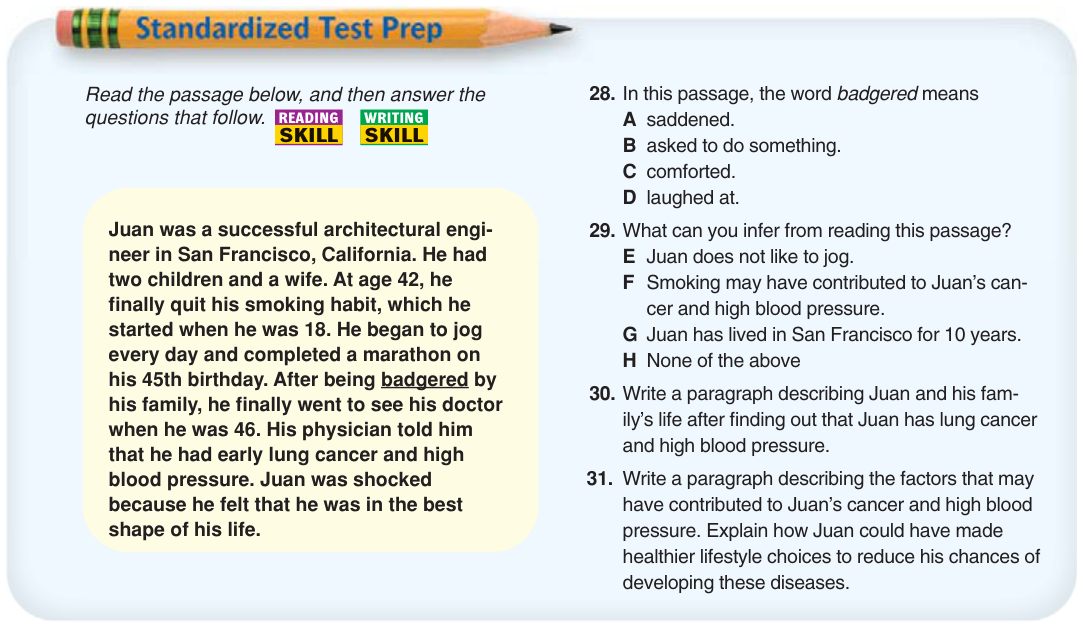
- The material covers weight management and the medical and social implications of eating disorders.
- A major unit is dedicated to substance use, covering the biological effects and social consequences of alcohol, tobacco, and illegal drugs.
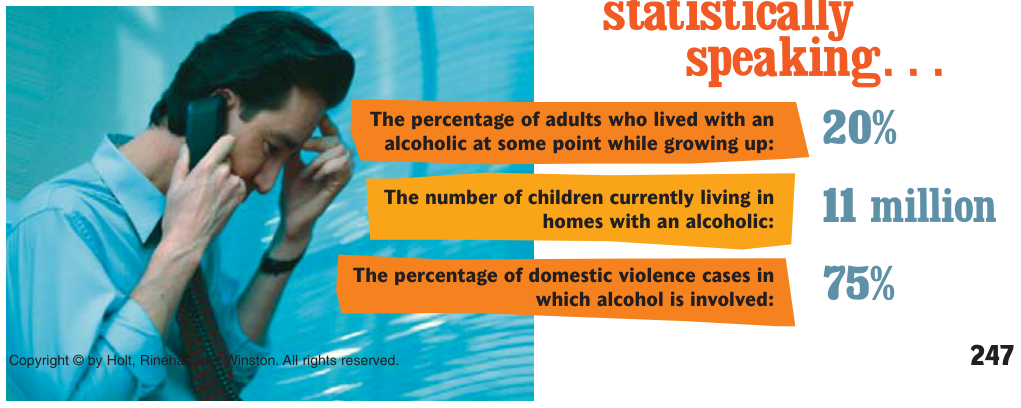
Alcoholism Affects the Family and Society . . . . . . . . . . . . . . . . . . . . 247
Health and Life Stages
- The text outlines a comprehensive health curriculum covering infectious and lifestyle-related diseases.
- It details the biological and social transitions occurring during adolescence and adulthood.
- A significant portion of the content focuses on family dynamics, including marriage and parenthood.
- The curriculum addresses reproductive health, covering both male and female systems and early development.
- Emphasis is placed on building responsible relationships and understanding the benefits of abstinence.
- The final sections address the risks of sexual activity, including STDs and HIV/AIDS.
Building Responsible Relationships 454
Health Handbook Table of Contents
- The text outlines a comprehensive health handbook covering critical topics such as HIV/AIDS awareness and prevention.
- A significant portion of the content focuses on 'How Your Body Works,' detailing various biological systems from the nervous to the endocrine system.
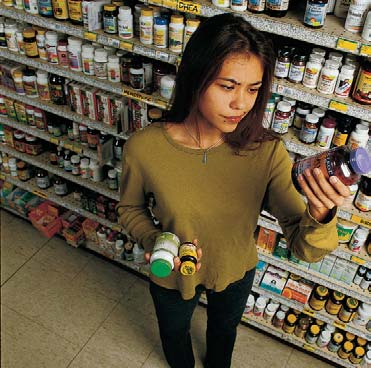
- Practical consumer health guidance is provided, including how to evaluate healthcare products and health-related websites.
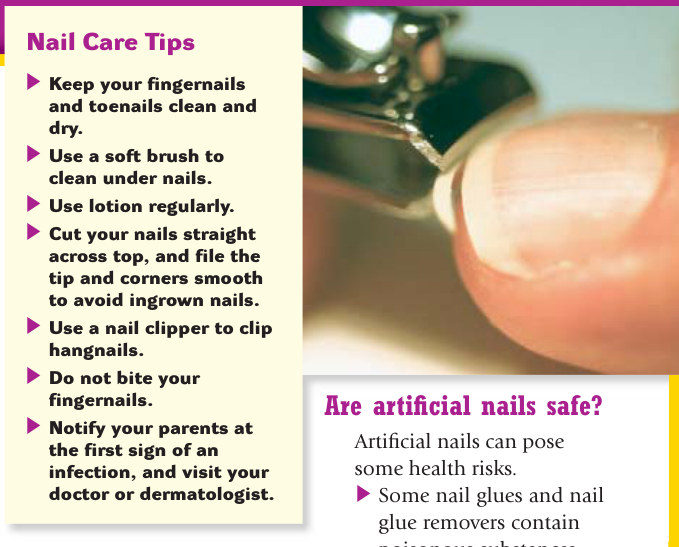
- The handbook includes specific sections on personal hygiene and maintenance, such as dental care and the health of skin, hair, and nails.
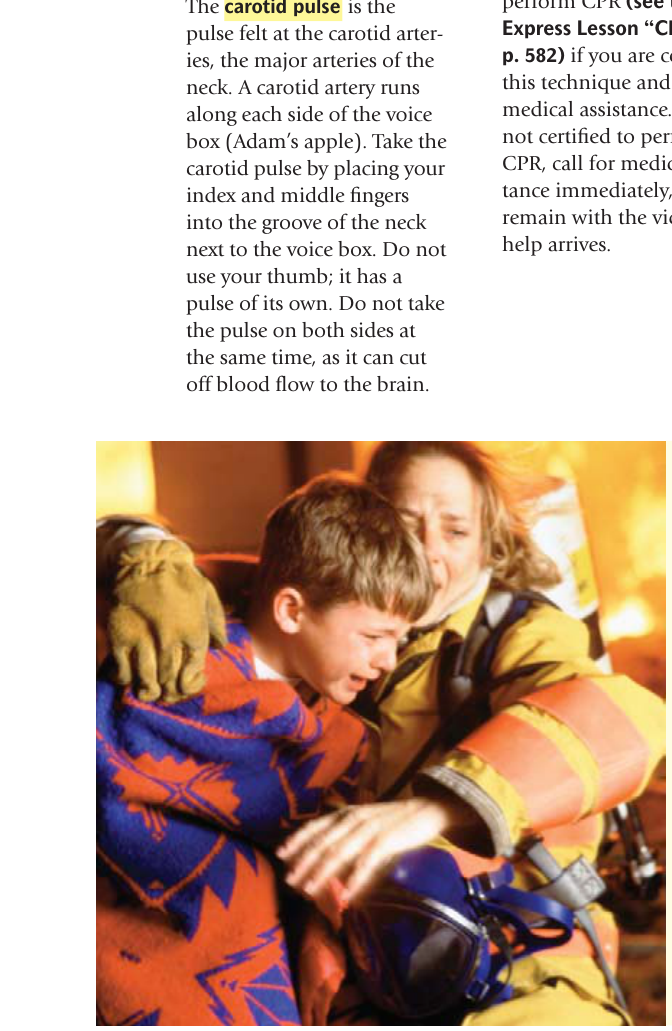
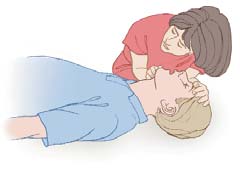
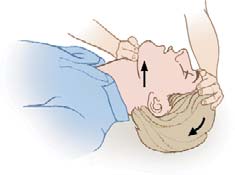
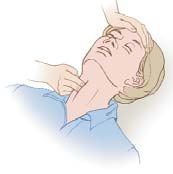
- Emergency preparedness is addressed through instructions on first aid, rescue breathing, and CPR techniques.
Evaluating Health Web Sites . . . . . . . . . . . . . . . . . . . . . . . . . . . . . . . . 564
Health and Safety Reference
- The text outlines comprehensive emergency response protocols for choking, bleeding, burns, and poisoning.
- It details safety guidelines across various environments, including motor vehicles, bicycles, homes, and workplaces.
- A significant portion is dedicated to life skills such as making great decisions, using refusal skills, and building self-esteem.
- The reference section provides practical data on calorie content, health agencies, and career opportunities in the medical field.
- The material emphasizes proactive communication strategies for stopping abuse and interacting effectively with parents.
You’ll use these skills every day to enhance your health.
Health and Life Skills
- The text outlines a comprehensive table of contents focused on critical health interventions and peer support strategies.
- Key topics include managing serious social and physical challenges such as steroid abuse, eating disorders, and drug confrontation.
- A significant portion of the curriculum is dedicated to navigating interpersonal relationships, including peer pressure and supporting grieving friends.
- The material emphasizes data analysis skills, teaching students how to interpret health statistics and food labels.
- Public health issues like STD prevention, vaccination, and the societal costs of substance abuse are highlighted as core learning areas.
Interpret health data, and draw accurate conclusions.
Road Map for Lifetime Health
- The text outlines a comprehensive health curriculum covering topics from fitness and nutrition to drug abuse and financial budgeting.
- It emphasizes the critical role of media, technology, and cultural diversity in shaping individual health perceptions and behaviors.
- Practical study strategies are provided, such as using section objectives as test preparation guides and maintaining an organized health notebook.
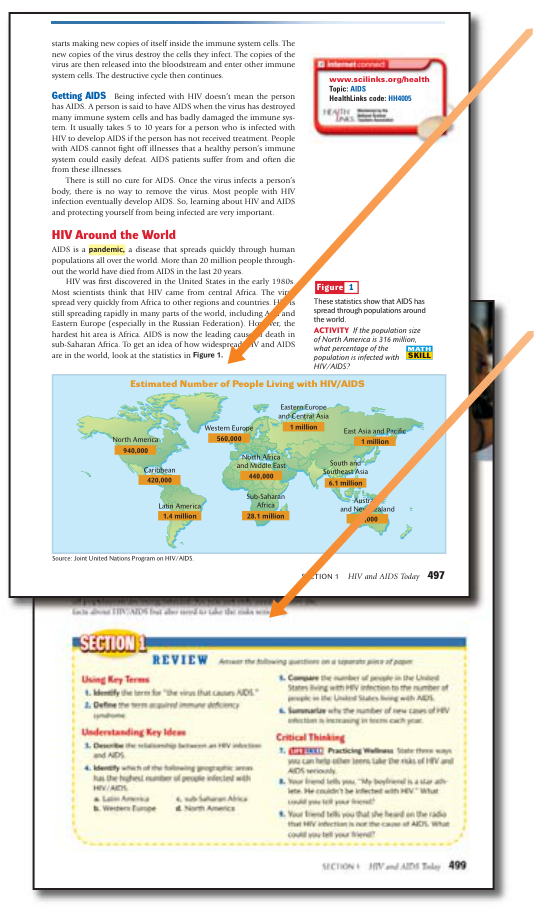
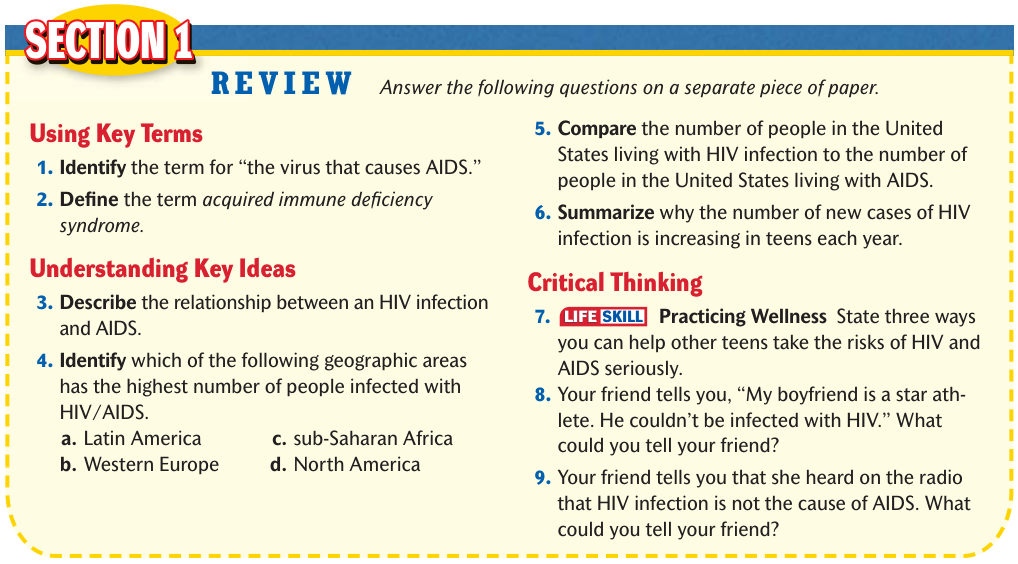
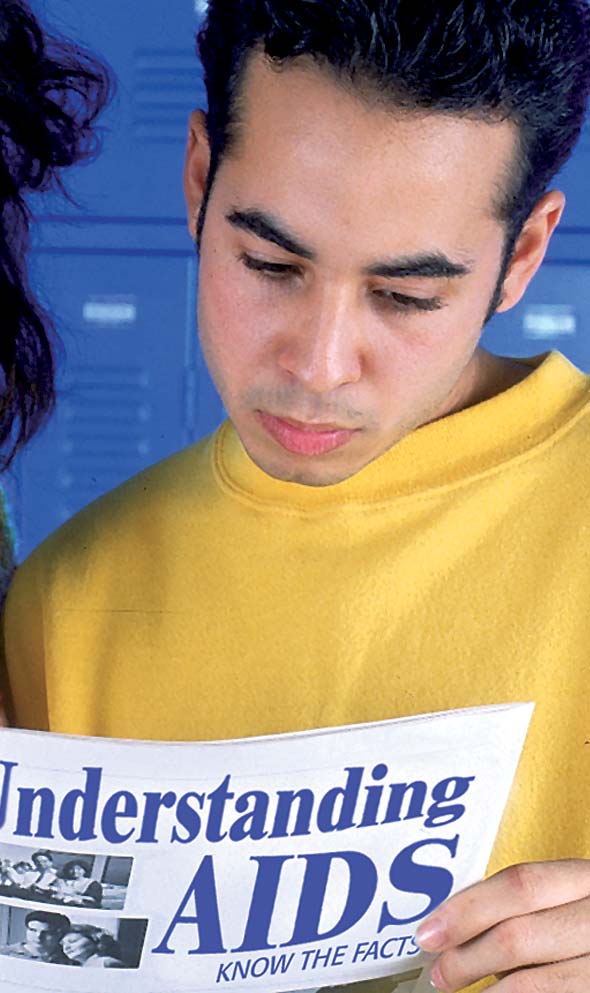
- A specific focus is placed on the global HIV/AIDS epidemic, distinguishing between the virus (HIV) and the resulting immune system disease (AIDS).
- The curriculum encourages students to analyze the influence of advertising on alcohol consumption and body image.
- Educational tools like 'Analyzing Data' and 'Real Life Activities' are integrated to help students apply health concepts to the real world.
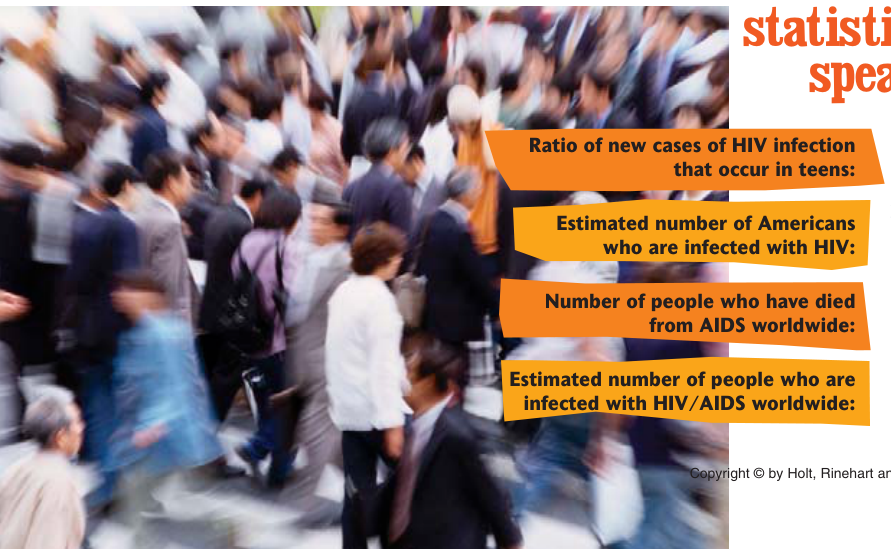
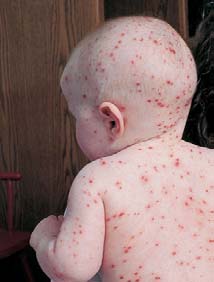
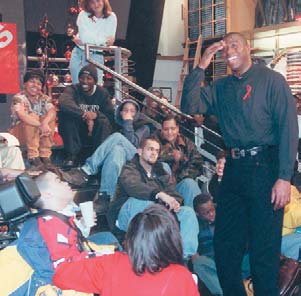
Every day, about 1 10 Americans are infected with HIV. Three million people died from AIDS in 2000.
HIV and AIDS Fundamentals
- HIV is a virus that specifically targets and destroys cells within the human immune system, leading to the development of AIDS.
- The global impact of the virus is classified as a pandemic, with an estimated 40 million people infected and 22 million deaths worldwide.
- Teens represent a significant demographic of concern, accounting for one out of every four new HIV infections.
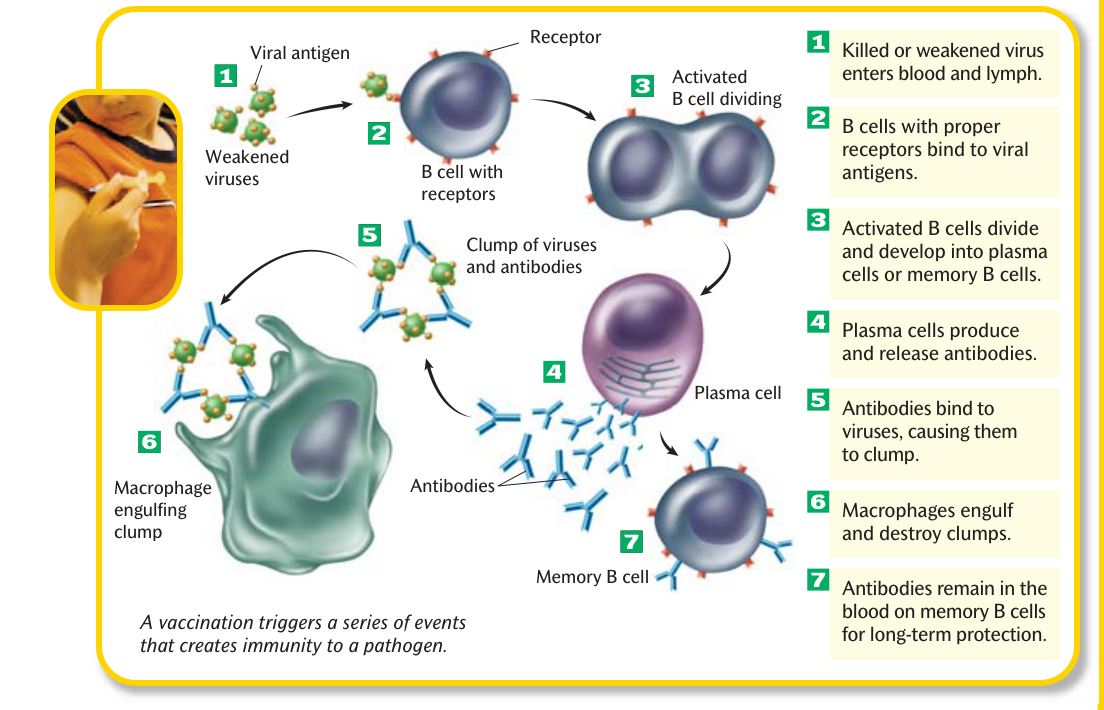
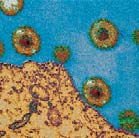
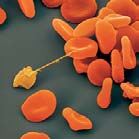
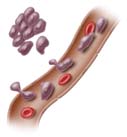
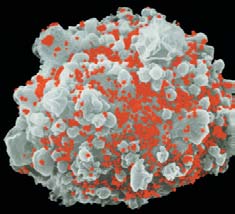
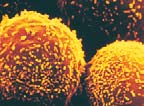
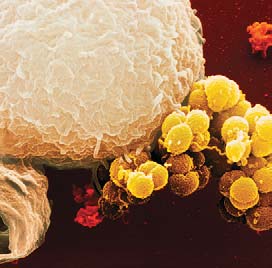
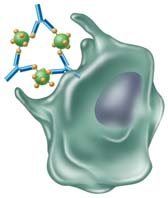
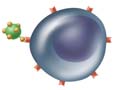
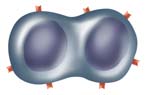
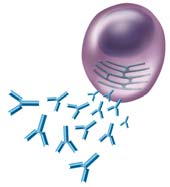
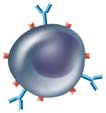
- The biological process of the disease involves the virus hijacking immune cells to replicate, subsequently destroying the host cells and spreading through the bloodstream.
- Educational resources and digital tools are emphasized as critical methods for students to research and understand the complexities of the epidemic.
The new copies of the virus destroy the cells they infect. The copies of the virus are then released into the bloodstream and enter other immune system cells. The destructive cycle then continues.
The Global HIV/AIDS Pandemic
- AIDS occurs when HIV destroys the immune system, leaving the body unable to fight off common illnesses.
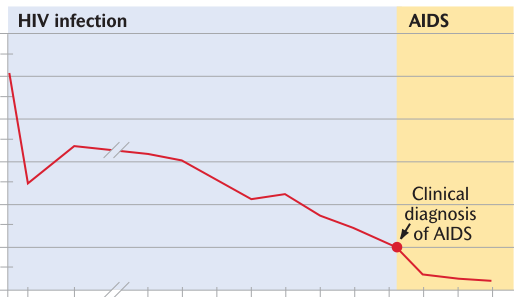
- Without treatment, it typically takes 5 to 10 years for an HIV infection to progress to AIDS.
- There is currently no cure for AIDS, and once a person is infected, the virus cannot be removed from the body.
- The disease has caused over 20 million deaths globally in two decades, with sub-Saharan Africa being the most severely affected region.
- While first identified in the United States in the 1980s, the virus is believed to have originated in central Africa before spreading worldwide.
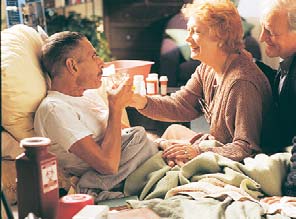
Once the virus infects a person’s body, there is no way to remove the virus.
Evolution of Modern Health
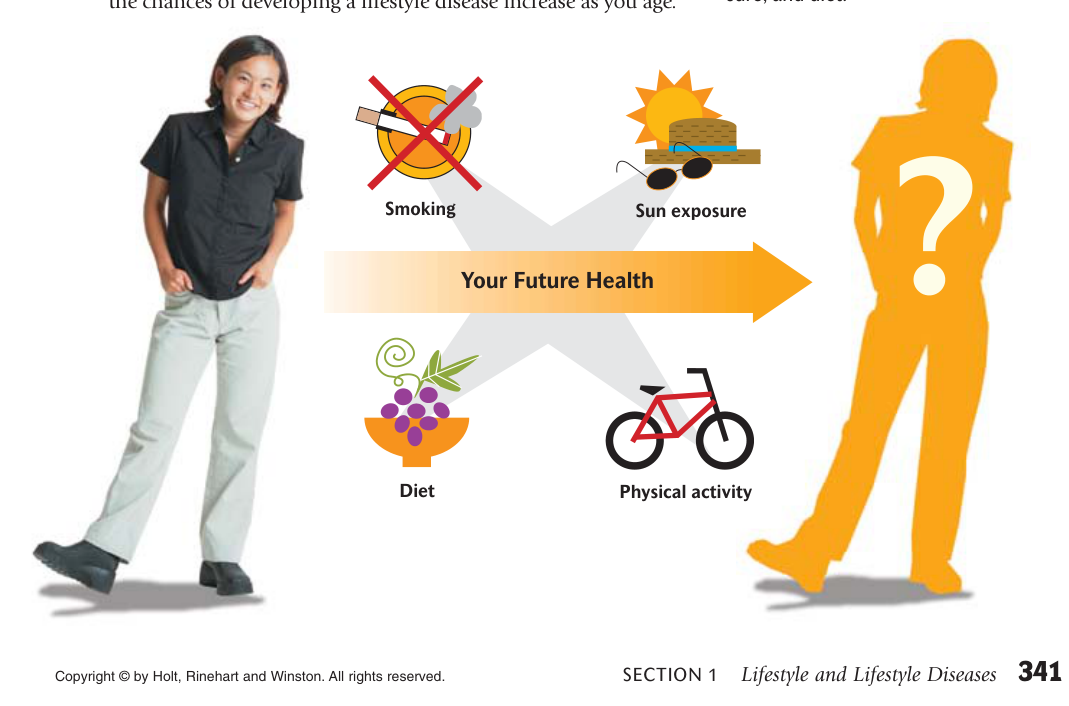
- The definition of health has shifted from the mere absence of disease to a focus on lifestyle choices and prevention.
- In the 19th and early 20th centuries, infectious diseases like polio and tuberculosis were the primary causes of death.
- Modern medical advances and better living conditions have largely replaced infectious disease threats with lifestyle diseases.
- Lifestyle diseases, such as certain heart conditions and cancers, are heavily influenced by personal behaviors and choices.
- Health risk factors are categorized into controllable behaviors, like diet and exercise, and uncontrollable factors, like genetics.
- Teens have the power to protect their future health by identifying and mitigating specific risk behaviors early in life.
Today, most health problems in the United States are related to the way we live, or our lifestyle.
Managing Health Risk Factors
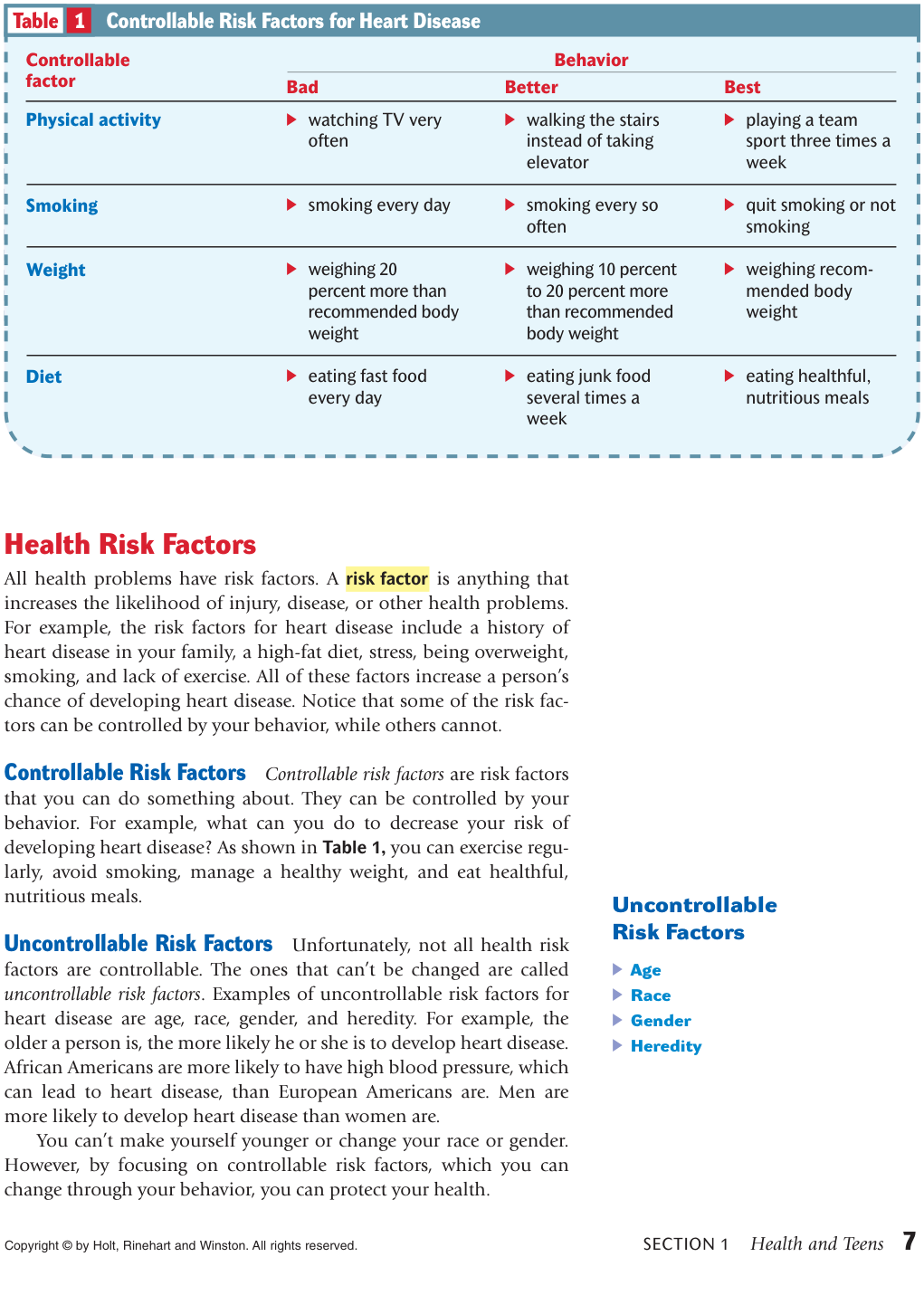
- Health risk factors are categorized into uncontrollable elements like age, race, and heredity, and controllable elements driven by behavior.
- While heart disease is the leading cause of death for those over 65, the primary threats to teens and children are motor vehicle accidents, homicide, and suicide.
- Controllable behaviors such as physical activity, diet, and smoking status can be modified on a scale from 'bad' to 'best' to improve long-term outcomes.
- Sedentary lifestyles increase the risk of chronic diseases like diabetes and heart disease, even in individuals who are not overweight.
- Alcohol and drug use are significant contributors to immediate dangers like car accidents and the spread of sexually transmitted diseases.
- Adopting healthy behaviors early in life serves as a protective measure against the leading causes of adult mortality, such as cancer.
You can’t make yourself younger or change your race or gender. However, by focusing on controllable risk factors, which you can change through your behavior, you can protect your health.
Leading Causes of Death
- The primary causes of death for teenagers (ages 15-24) are dominated by external factors like motor vehicle accidents, homicide, and suicide.
- In contrast to youth, the leading causes of death for the general population are chronic conditions such as heart disease, cancer, and respiratory disease.
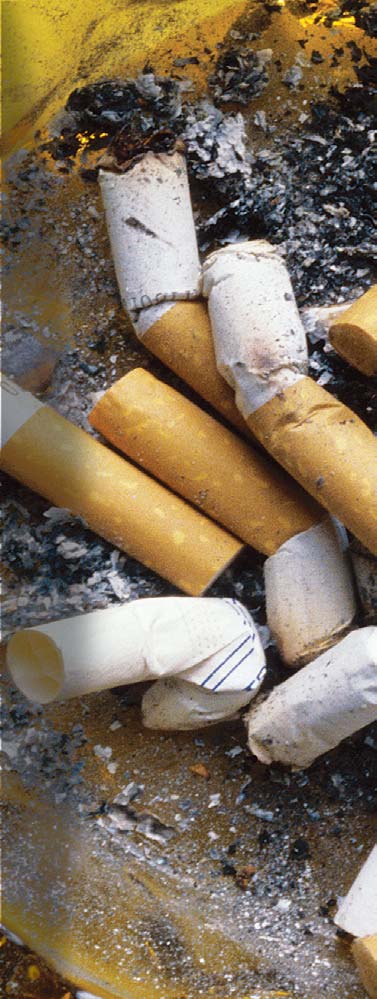
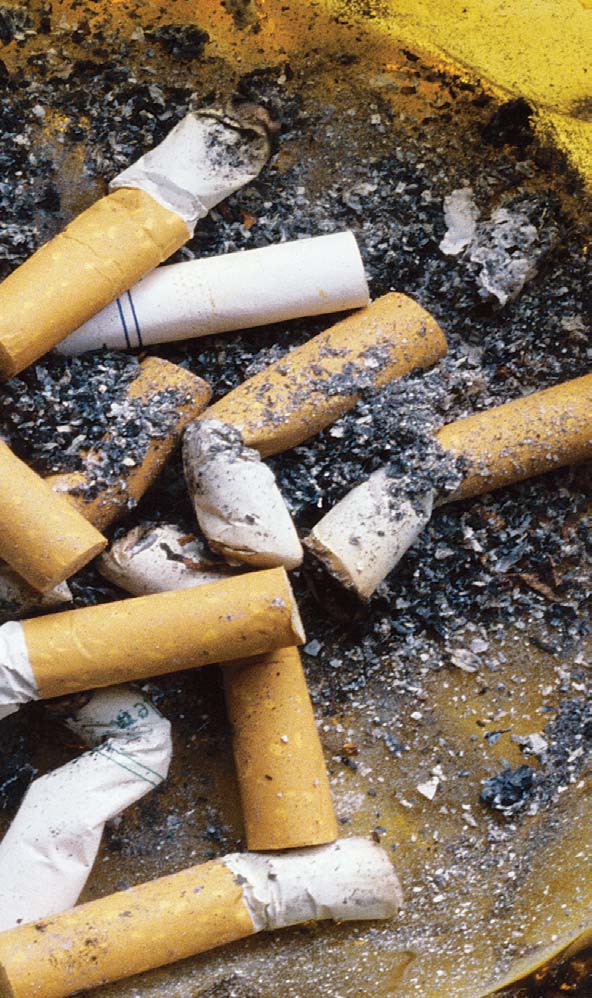
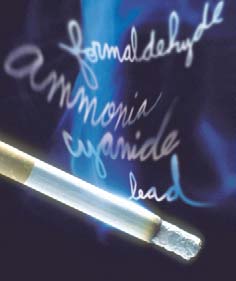
- Tobacco use is identified as the single leading preventable cause of death in the United States, contributing heavily to heart disease and cancer.
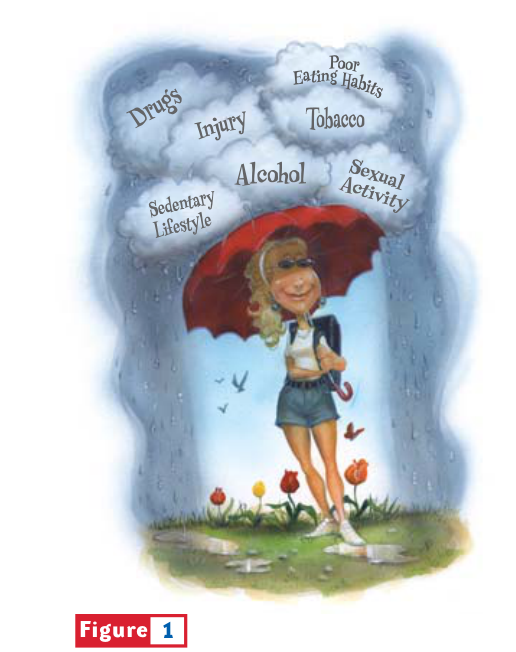
- Controllable risk behaviors, including poor eating habits and lack of physical activity, significantly influence the likelihood of developing lifestyle diseases.
- Health education emphasizes that individuals have the power to protect themselves by modifying behaviors like wearing seat belts and eating more fruits and vegetables.
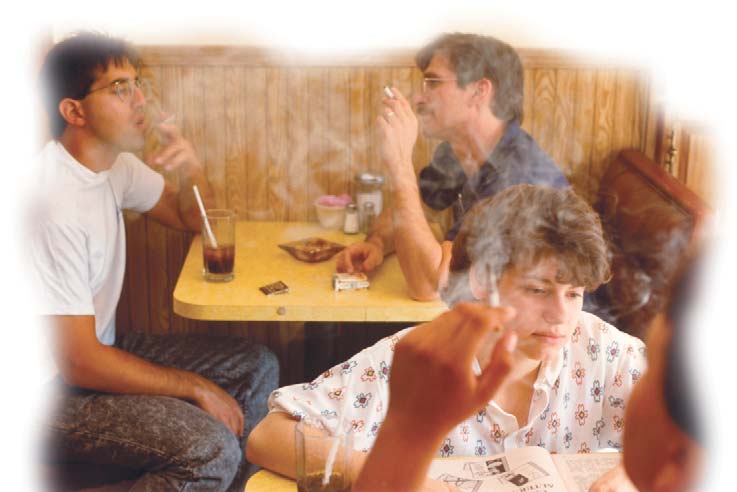
The choice to smoke often takes place in high school, if not before then.
The Six Components of Health
- Health is defined as a state of well-being where physical, emotional, social, mental, spiritual, and environmental components are in balance.
- Physical health involves more than just fitness; it includes proper nutrition, weight management, and the avoidance of drugs and alcohol.
- Emotional health is characterized by the ability to express feelings in a positive way and cope with unpleasant emotions without becoming overwhelmed.
- Social health focuses on the quality of relationships and the ability to respect others while avoiding those who are disrespectful or abusive.
- Mental health involves recognizing reality, coping with daily demands, and maintaining high self-esteem regardless of peer influence.
- True wellness is achieved only by striving for optimal health across all six components rather than focusing on a single aspect like physical strength.
A person who is popular can be socially unhealthy!
The Six Components of Wellness
- Health is defined as a balance across six distinct components: physical, emotional, social, mental, spiritual, and environmental.
- Spiritual health involves maintaining harmonious relationships, having a sense of purpose, and living according to one's ethics and values.
- Environmental health focuses on the safety and cleanliness of one's surroundings, including access to clean air, water, and land.
- Wellness is the achievement of a person's best across all six components, though it is rarely a static or perfect state.
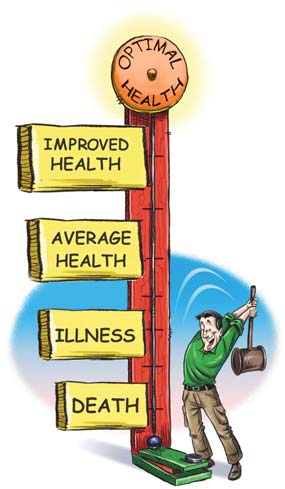
- The wellness continuum illustrates that health is a sliding scale ranging from optimal wellness to illness and death.
- Individuals have the power to move toward optimal health by changing their behaviors and making smarter lifestyle decisions.
Think of the wellness continuum as resembling the scale on a bellringer, commonly seen at amusement parks.
Influences on Personal Wellness
- Hereditary factors provide a baseline risk for certain diseases, but controllable lifestyle choices can mitigate these genetic predispositions.
- Social circles and family dynamics significantly shape health behaviors through peer pressure and modeled conflict resolution.
- Cultural backgrounds dictate dietary habits and values that can either protect against or increase the risk of chronic conditions like heart disease.
- Environmental health is determined by physical surroundings, including air and water quality as well as government-enforced safety regulations.
- Health literacy is the foundation of wellness, requiring individuals to stay informed through reliable resources to make better life choices.
- The most critical step in wellness is translating health knowledge into consistent lifestyle actions, such as regular exercise and proper nutrition.
If your parents or grandparents deal with anger by talking out their problems instead of yelling and fighting, you will be more likely to talk out your problems.
Attitude and Health Outcomes
- Poor lifestyle choices, such as frequent soda consumption or cramming for exams, lead to direct negative physical and academic consequences.
- A person's attitude is a primary driver of health, influencing how they manage stress and respond to uncontrollable situations.
- A positive outlook is a critical factor in recovery for individuals suffering from long-term illnesses.
- Self-esteem is identified as a foundational component of wellness; without self-respect, physical health cannot be fully achieved.
- True wellness requires balancing six health components through conscious decision-making and personal accountability.
- Health knowledge is insufficient on its own; it must be translated into action and positive behavior to be effective.
However, if you don’t feel good about yourself, you will never be truly healthy.
Public Health and Society
- Public health is defined as the collective practice of protecting and improving the health of people within a community.
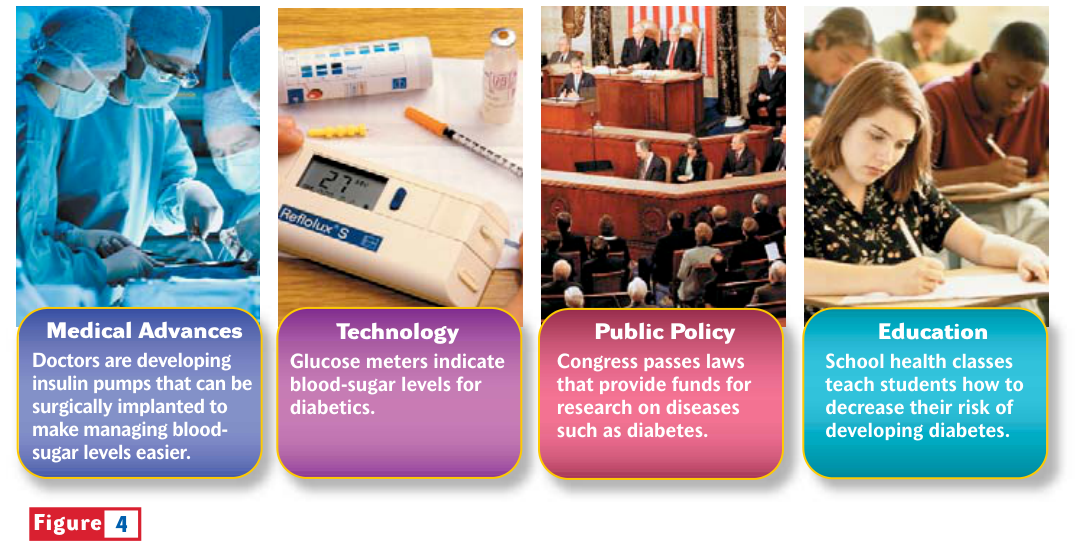
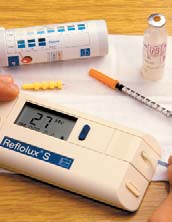
- Medical advances, such as the development of implanted insulin pumps, help manage chronic diseases like diabetes more effectively.
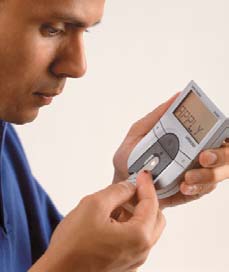
- Technological innovations like the glucose meter allow patients to monitor their health conditions with greater ease and precision.
- Public policy and government regulations, including tobacco taxes and age limits, serve as legal tools to prevent disease.
- Education remains a primary preventative measure, using school curriculums to teach students about nutrition and the risks of substance abuse.
A microchip embedded in the pump makes monitoring and controling blood-sugar levels possible.
Advocacy and Public Health
- Society addresses health issues like diabetes through a combination of medical advances, technology, public policy, and education.
- Advocacy is defined as speaking out or arguing in favor of something to improve the wellness of oneself and others.
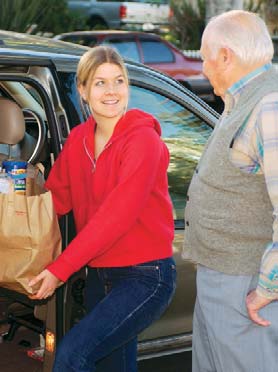
- Individuals can become advocates by volunteering at clinics, participating in school health initiatives, or pursuing careers in health fields.
- Public service announcements (PSAs) serve as educational tools to reach large audiences via radio, television, or print media.
- Effective health communication requires researching accurate information and tailoring the message to a specific target audience.
Although few people devote their lives to being advocates, we all have the potential to better our own wellness as well as the wellness of others.
Advocacy and Health Trends
- Effective health advocacy requires sensitivity to the audience's feelings and opinions to ensure the message is received positively.
- Modern health problems have shifted from infectious diseases to lifestyle-related issues, which are often influenced by controllable risk factors.
- Society addresses public health through four primary pillars: medical advances, technology, public policy, and education.
- The leading causes of death vary significantly by age group, with motor vehicle accidents being the primary threat to teens and children.
- Advocating for wellness involves being well-informed, understanding personal values, and utilizing tools like public service announcements.
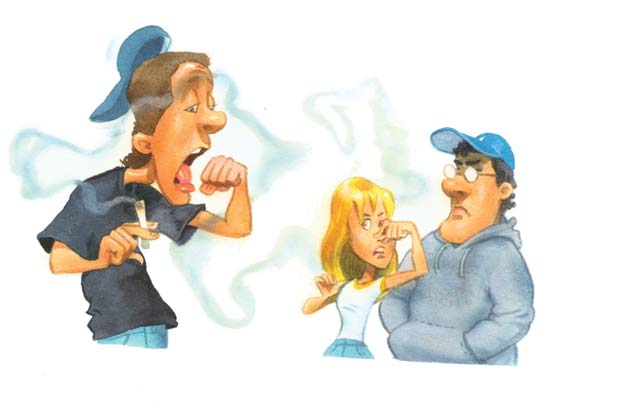
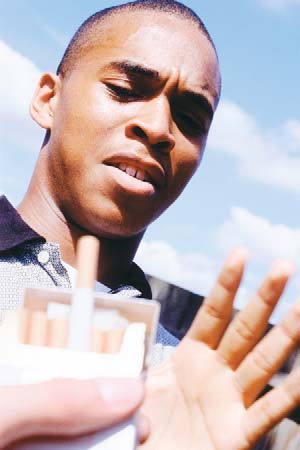
How would she react if you told her that she should quit because her clothes smell and her breath stinks?
Components of Personal Wellness
- Wellness is defined as the achievement of an individual's best across six specific components: physical, emotional, social, mental, spiritual, and environmental.
- A person's state of wellness is shaped by four primary influences: heredity, social environment, culture, and physical surroundings.
- Individuals can actively improve their wellness by focusing on lifestyle choices, maintaining a positive attitude, and increasing their health literacy.
- Modern health challenges have shifted from infectious diseases to lifestyle diseases, which are often influenced by controllable risk factors like physical activity and tobacco use.
- Public health efforts utilize advocacy and public service announcements to educate communities and influence policy regarding health issues.
Wellness is the achievement of your best in all of the components of health.
Skills for a Healthy Life
- The text outlines practical assignments for students to analyze health influences across hereditary, social, cultural, and environmental categories.
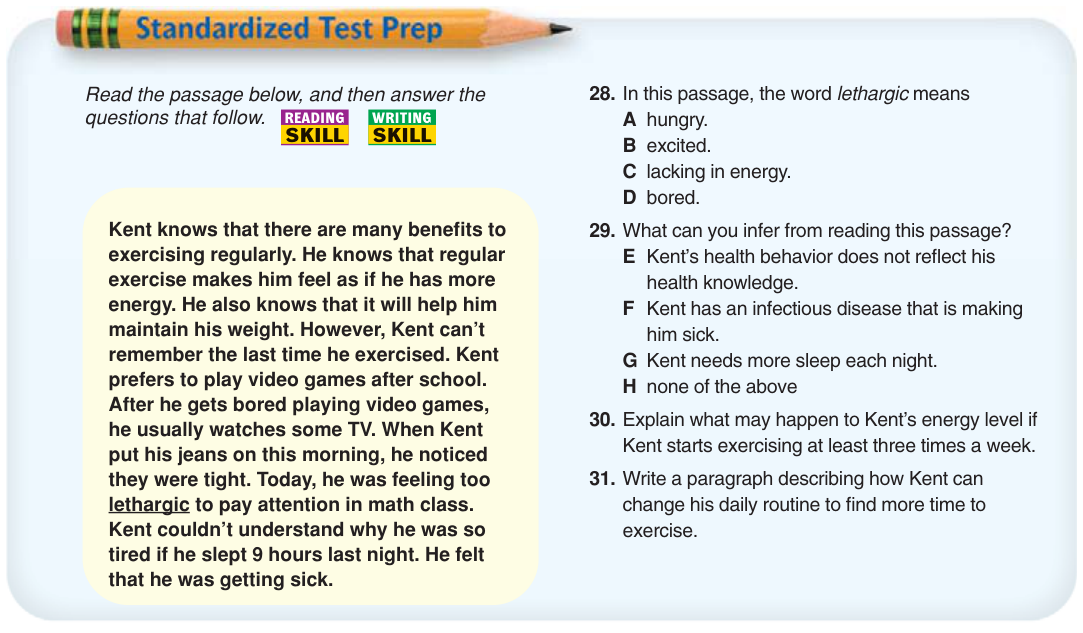
- A case study of a student named Kent illustrates the disconnect between health knowledge and actual behavior, specifically regarding sedentary habits and lethargy.
- Statistical data highlights motor vehicle-related death rates, showing a significant spike in risk for the 15–24 age demographic.
- A self-assessment behavior scale is provided to help students evaluate their decision-making processes and accountability.
- The curriculum emphasizes the development of 'Life Skills' including resisting pressure, setting goals, and making 'GREAT' decisions.
Kent knows that there are many benefits to exercising regularly... However, Kent can’t remember the last time he exercised.
Tools for a Healthy Life
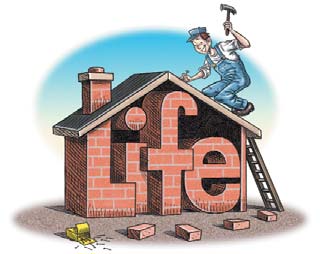
- Life skills are defined as essential tools required to build and maintain a happy, healthy life, much like physical tools are needed to build a house.
- These skills address the six components of health: physical, emotional, social, mental, spiritual, and environmental.
- Practicing life skills, such as effective communication and decision-making, can improve overall wellness and help individuals navigate difficult personal situations.
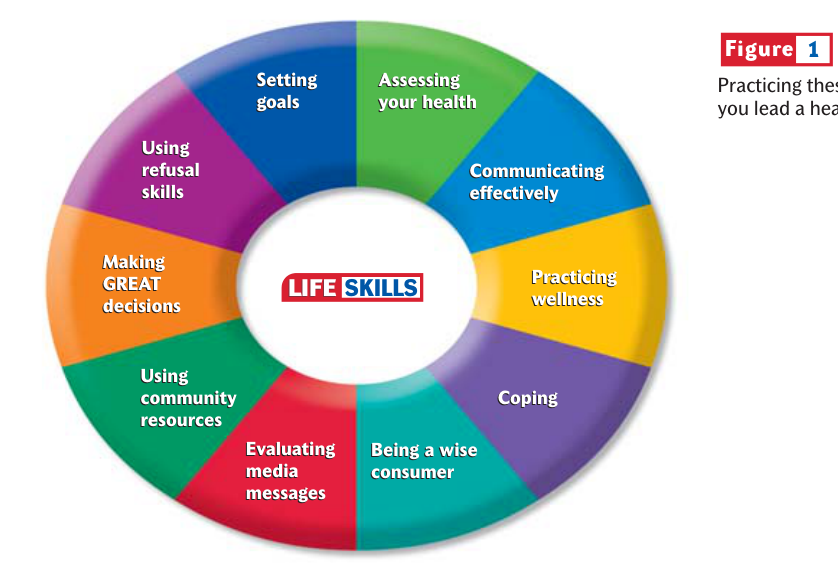
- The text identifies ten specific life skills, including assessing your health, coping, and being a wise consumer, which require consistent practice to master.
- Learning to evaluate how personal actions and behaviors affect health is a foundational step in achieving lifelong wellness.
Just like you need skills to build a house, you also need skills to build a happy, healthy life.
Ten Essential Life Skills
- Effective communication involves both listening and speaking to improve relationships with family, peers, and authority figures.
- Practicing wellness focuses on daily habits like sleep and nutrition to ensure long-term physical health.
- Coping skills provide a framework for managing difficult emotions such as anger, depression, and grief.
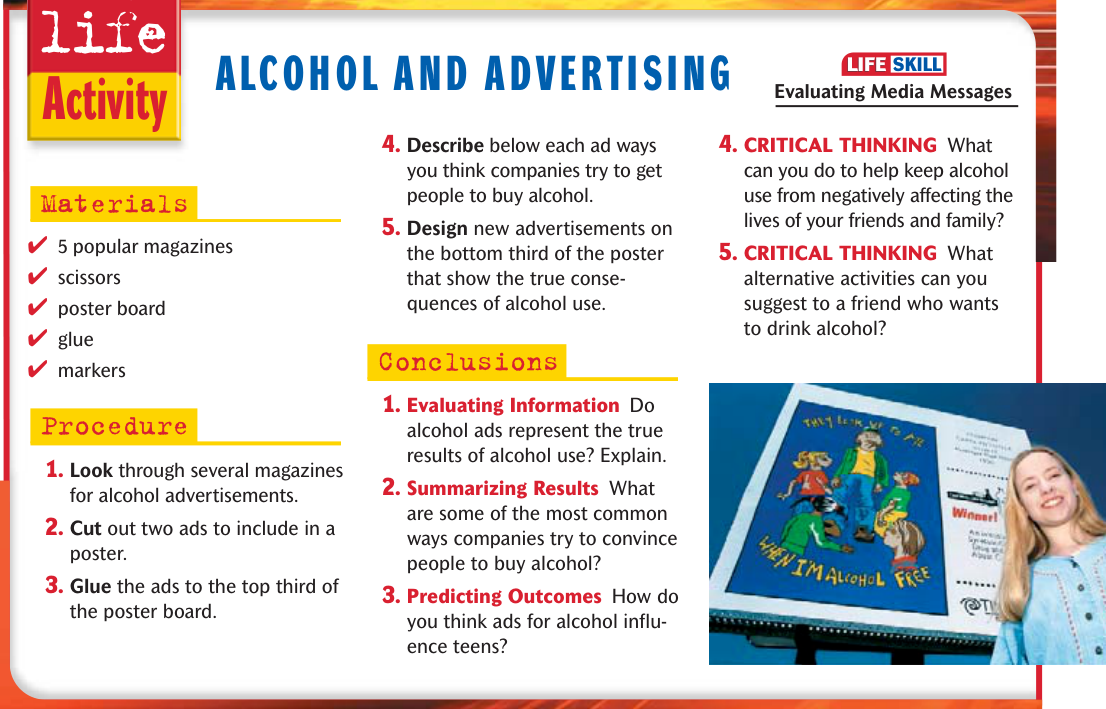
- Media literacy and consumer awareness empower individuals to analyze public messages and make informed purchasing decisions.
- Community resources like libraries and clinics serve as vital tools for achieving personal health goals.
- Advanced skills including refusal techniques and goal setting are highlighted as critical for maintaining personal autonomy and success.
The media have a sig-nificant influence on what you learn about the world.
The Power of Decisions
- While minor daily choices are often made on impulse, significant decisions require careful thought to avoid life-altering negative consequences.
- Consequences are defined as the direct results of actions, which can impact not only the individual but also the health and safety of the community.
- The 'Making GREAT Decisions' model provides a structured framework to help individuals pause and evaluate choices before acting impulsively.
- The first step of the model, 'Give thought to the problem,' is designed to prevent the snap judgments that often lead to regret.
- Effective decision-making involves identifying multiple alternatives beyond the most obvious options, such as suggesting a later meeting instead of skipping school.
Sina froze as she quickly tried to decide what she should do.
The GREAT Decisions Model
- The GREAT Decisions model provides a structured framework for evaluating short-term and long-term consequences of personal choices.
- Values like honesty and self-respect serve as critical benchmarks for determining which choice is the most appropriate and least stressful.
- Evaluating long-term risks, such as legal records or physical safety, is essential when faced with peer pressure or risky behaviors like drinking and driving.
- Reflecting on a decision after it is made helps reinforce positive behaviors and provides relief from the potential guilt of compromising one's values.
- Seeking advice and collaborating with trusted adults or peers can reveal hidden consequences and provide support for making unpopular but healthy choices.
If you make a decision that goes against your values, you will feel bad about the decision later. Respecting your values is respecting yourself.
Correcting Poor Decisions
- Collaborative decision-making is a lifelong skill applicable to both professional environments and family dynamics.
- Even with practice, individuals will inevitably make poor decisions that may lead to embarrassing or dangerous consequences.
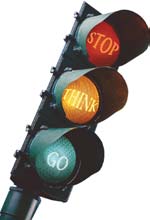
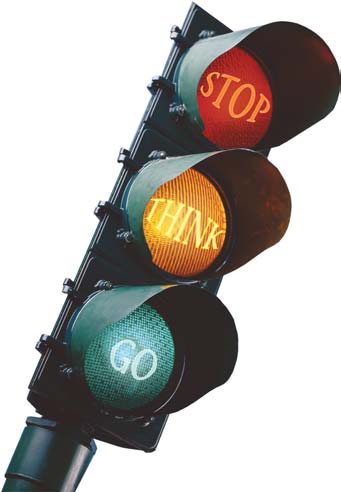
- The 'Stop, Think, and Go' process provides a structured framework for taking responsibility and correcting mistakes.
- Admitting a wrong decision is the first step toward taking responsibility, even when facing potential trouble or social friction.
- Seeking guidance from trusted adults or friends is essential for discussing ways to rectify a situation and learn from it.
Sometimes, the consequences of wrong decisions are embarrassing or humiliating.
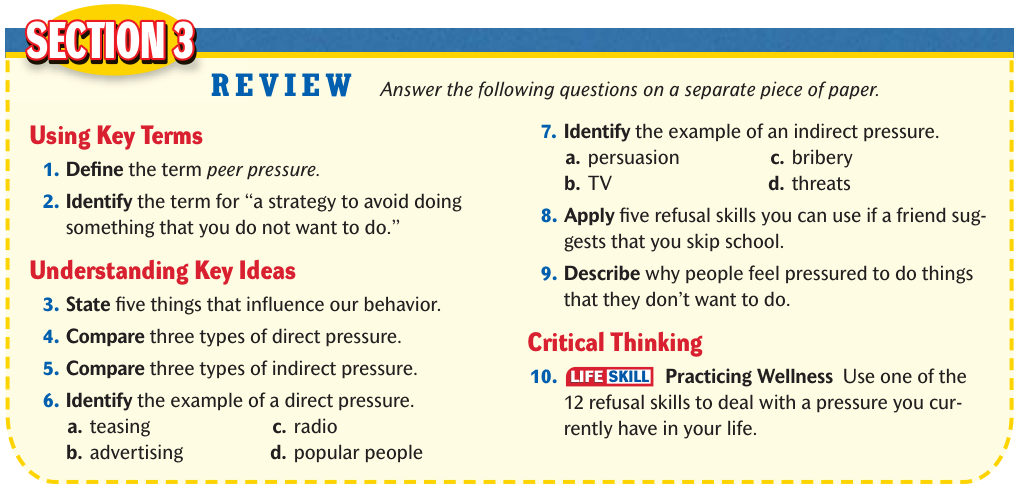
The Dynamics of Peer Pressure
- Behavioral choices are constantly shaped by external influences including friends, family, and various forms of media.
- Influence can be positive, such as when friends encourage healthy activities like joining a sports team to improve physical fitness.
- Direct pressure involves explicit attempts to convince someone to act, utilizing tactics like teasing, persuasion, threats, or bribery.
- Indirect pressure is more subtle and occurs when an individual feels compelled to mimic the actions of those they admire without being asked.
- Negative pressure can lead to life-threatening behaviors, including substance abuse or criminal activity like theft.
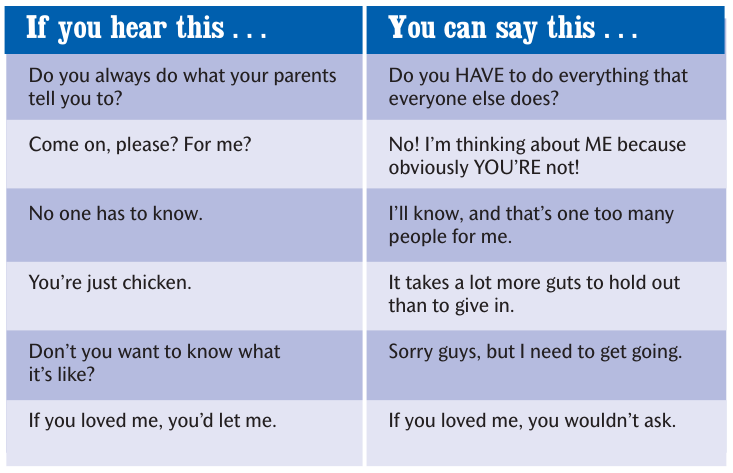
- Developing refusal skills and evaluating decisions against personal values are essential strategies for maintaining autonomy.
Indirect pressure is much more subtle than direct pressure. When you are pressured indirectly, you are not directly told or asked to do something. However, you may still feel pushed to do it.
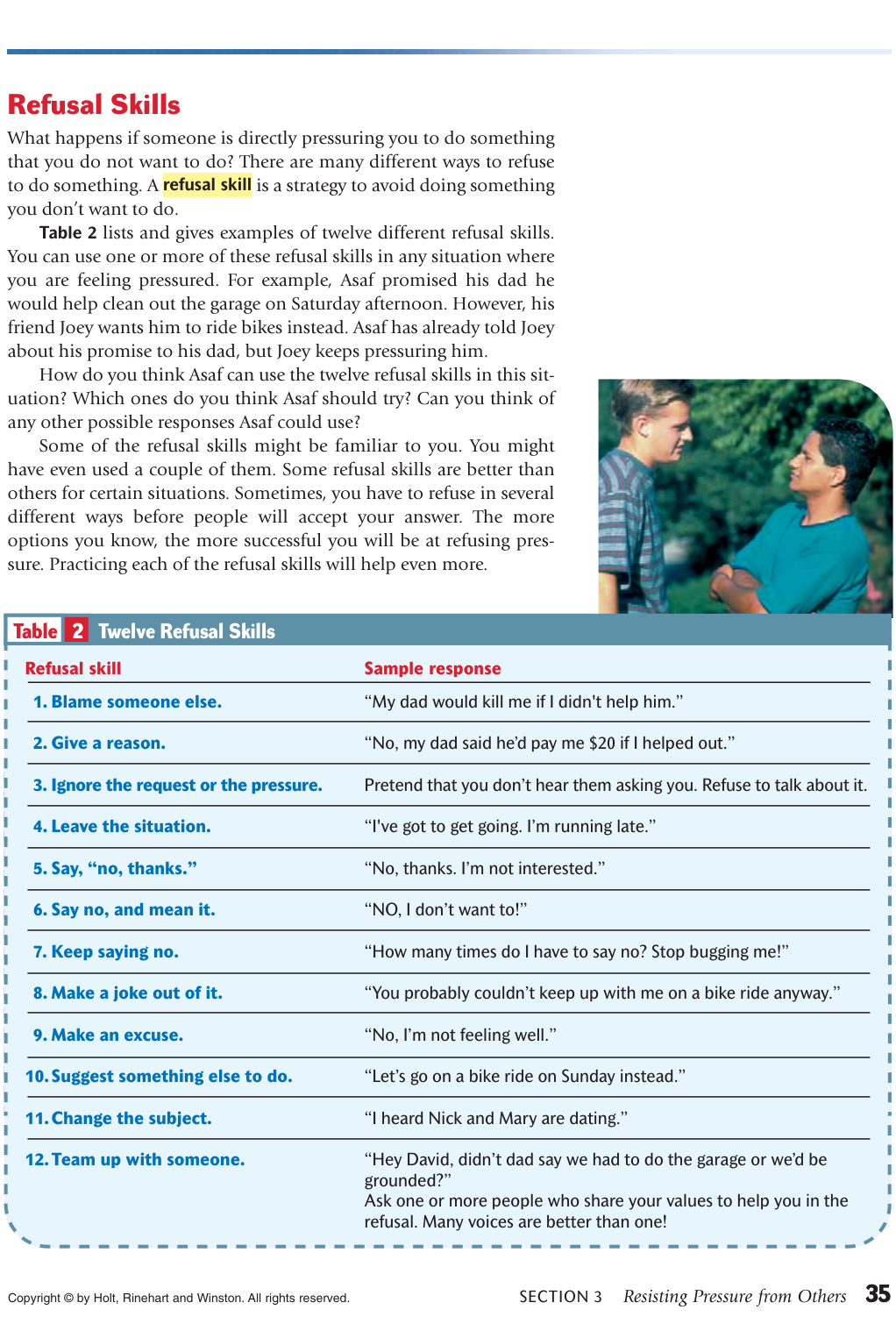
Mastering Refusal Skills
- Social pressure manifests in various forms, from media influence and celebrity role models to direct peer persuasion.
- A refusal skill is defined as a specific strategy used to avoid participating in activities that one does not wish to do.
- Twelve distinct refusal techniques are identified, ranging from making excuses and blaming others to suggesting alternative activities.
- Effective resistance often requires using multiple skills in combination or repeating a refusal until the pressure subsides.
- Practicing these skills through role-playing, such as in scenarios involving underage drinking, prepares individuals for real-world challenges.
Sometimes, you have to refuse in several different ways before people will accept your answer.
Mastering Refusal Skills
- Repetition and practice make refusal skills feel natural and help individuals make independent decisions under pressure.
- Peer pressure is a lifelong challenge that extends beyond adolescence into professional and adult social environments.
- Effective refusal requires a balance of firmness and respect, avoiding insults or put-downs to maintain positive interactions.
- True confidence in saying no often discourages others from attempting to apply pressure in the first place.
- Persistent pressure may require physically leaving a situation or re-evaluating the health of a friendship.
- Refusal skills are essential tools for protecting personal values and reducing overall life stress.
If someone gets angry with you for saying no, you should not feel as if you should have said yes.
Setting Healthy Goals
- Goals act as a life map, providing direction and focus to prevent aimless living.
- Short-term goals are objectives achievable within days or weeks, such as saving for a purchase or passing an exam.
- Long-term goals require months or years of persistence and are often composed of a series of smaller, manageable short-term goals.
- The 'Six S's' framework is introduced to help individuals evaluate and structure their personal objectives effectively.
- Safety is the primary criterion for a goal, ensuring that the pursuit of an achievement does not cause physical or mental harm.
- Successful goal setting involves creating an action plan that makes large, intimidating dreams feel attainable through incremental steps.
If you set your goals for the future, you will have a map of where to go. Instead of driving aimlessly around, you know where you are going and what you have to do to get there.
The Six S's of Goals
- Goals must be satisfying, meaning they are achieved through honest effort rather than shortcuts like cheating.
- Sensible goals are realistic and manageable, often requiring long-term objectives to be broken down into smaller, daily tasks.
- New goals should be similar to previous ones to avoid internal contradictions, such as trying to lose weight while learning to bake desserts.
- Specificity is crucial for success; vague desires like 'being happy' should be replaced with clear, actionable steps.
- Seeking support from responsible adults ensures that goals are safe and provides a secondary perspective on potential problems.
- An action plan serves as a step-by-step map that includes a specific deadline for reaching the final objective.
Something should tell you that these goals might not work well together.
Action Plans and Goal Achievement
- Creating a list of rewards helps maintain motivation by reminding you of the personal satisfaction, respect, or success you will gain.
- Identifying both positive and negative influences is crucial for navigating obstacles like risky behaviors or leveraging family support.
- Tracking progress through a journal or notebook allows for the celebration of small wins and the identification of recurring setbacks.
- Breaking long-term goals into smaller, manageable short-term goals makes the overall objective feel more attainable and organized.
- Regularly reviewing and adjusting your action plan helps solve specific problems, such as finding time to practice or prepare for upcoming steps.
If we did all the things we are capable of, we would literally astound ourselves.
Life Skills and Goal Setting
- The text outlines ten essential life skills, including effective communication, coping, and making 'GREAT' decisions, to improve overall wellness.
- Goal setting is categorized into short-term objectives achieved in weeks and long-term goals requiring months or years of determination.
- The 'Six S’s' for setting effective goals are defined as safe, satisfying, sensible, similar, specific, and supported.
- Decision-making is framed through a five-step model: Give thought, Review choices, Evaluate consequences, Assess/choose, and Think it over.
- Social dynamics are addressed by distinguishing between direct pressures like bribery or threats and indirect pressures from media and role models.
- Refusal skills are presented as vital strategies for resisting peer pressure with confidence and respect while maintaining personal boundaries.
If you make a wrong decision, STOP and take responsibility for it.
Health and Life Skills Review
- The text outlines essential life skills for long-term wellness, including effective communication, refusal skills, and coping mechanisms.
- It introduces the 'Making GREAT Decisions' model, emphasizing the importance of evaluating consequences and taking responsibility for wrong choices.
- Social influences from family, friends, and media are categorized into direct and indirect pressures that shape individual behavior.
- Goal-setting strategies are defined by differentiating between short-term and long-term objectives while ensuring they are safe, specific, and satisfying.
- Practical exercises encourage students to map out action plans and visualize overcoming challenges on the path to their goals.
Draw and label a road to show the path you will take. Use symbols such as rivers for challenges you expect to face.
Dangers of Internet Self-Diagnosis
- While the Internet offers convenient self-diagnosis tools like symptom charts, it is not a substitute for professional medical evaluation.
- A University of Michigan study found that many skin cancer websites provide incomplete or even dangerously incorrect information.
- Unscrupulous merchants use medical websites to sell worthless products, potentially causing patients to ignore serious conditions.
- Some well-meaning sites offer untested cures that lack the objectivity and rigor of trained medical professionals.
- The rapid appearance and disappearance of 'bogus' sites makes it difficult for consumers to verify the credibility of health information.
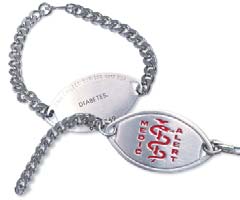
If you buy the bracelet, you may be using a useless trinket to ignore a serious condition.
Self-Diagnosis and Self-Esteem
- Relying solely on the Internet for medical self-diagnosis can lead to dangerous errors, such as mistaking Lyme disease for Bell's Palsy.
- Doctors provide critical context and diagnostic accuracy that search engines cannot replicate through symptom lists alone.
- The Internet should be used as a supplementary tool for education after a professional consultation rather than a primary diagnostic source.
- Self-esteem is defined as the measure of how much an individual values, respects, and feels confident about themselves.
- High self-esteem acts as a protective factor in health, enabling better communication and the confidence to use refusal skills in social situations.
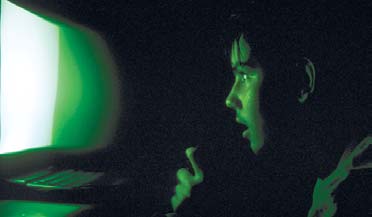
Your doctor is less likely to make a mistake than you are while you are sitting and worrying in front of a computer.
The Power of Self-Esteem
- High self-esteem fosters self-respect, leading individuals to avoid harmful substances and prioritize physical health through exercise and rest.
- Confidence in one's abilities increases the likelihood of setting realistic goals and persisting through challenges to achieve them.
- Individuals with high self-esteem are more resilient to peer pressure and are more likely to engage in community service and seek help when needed.
- Low self-esteem is linked to significant mental health risks, including depression, suicide, eating disorders, and destructive behaviors.
- Self-esteem is an internal measure of value and integrity that cannot be determined simply by observing a person's outward appearance.
One characteristic of high self-esteem is not being afraid to try new things.
Building Healthy Self-Esteem
- Self-esteem is a dynamic measure of self-worth that fluctuates based on life situations and self-concept.
- The way individuals interpret messages from others—ranging from constructive criticism to hurtful remarks—significantly shapes their self-view.
- Personal agency is emphasized as the ultimate factor in self-esteem, as individuals have the power to control how they feel about themselves regardless of external opinions.
- Positive self-talk acts as a form of internal coaching that can counteract negative thoughts and reinforce a person's sense of value.
- Practical strategies for improvement include volunteering, setting goals to address weaknesses, and surrounding oneself with supportive friends.
Remember that self-esteem is how you feel about yourself, not how others feel about you or what others say about you.
Integrity and Self-Acceptance
- Integrity involves acting on one's values and doing what is right even when faced with social pressure.
- High self-esteem is linked to the ability to stand up for personal beliefs and resist being swayed by others.
- Choosing supportive friends who acknowledge your strengths is essential for maintaining a positive self-image.
- Self-acceptance requires recognizing imperfections while still viewing oneself as a valuable person.
- Focusing on unchangeable physical traits or weaknesses can actively lower an individual's self-esteem.
- Effective communication is a two-way process that, when unclear, can lead to social misunderstandings and isolation.
Until you accept who you are, you will never be happy with what you have.
The Power of Communication
- Miscommunication often leads to unintended negative outcomes like hurt feelings and conflict, even when intentions are positive.
- Effective communication is the foundation for building healthy, caring relationships with family, friends, and colleagues.
- Communication skills are essential for expressing personal needs, wants, and emotions to ensure others understand how to help.
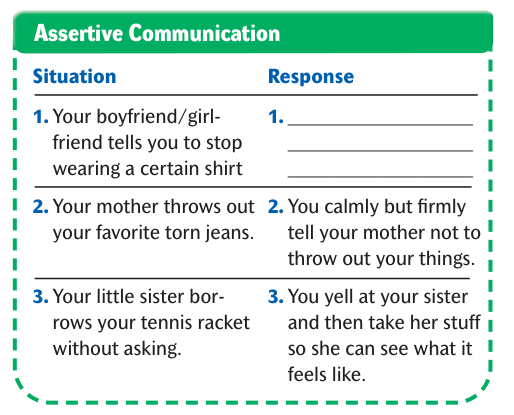
- The text identifies three primary communication styles: passive, aggressive, and assertive.
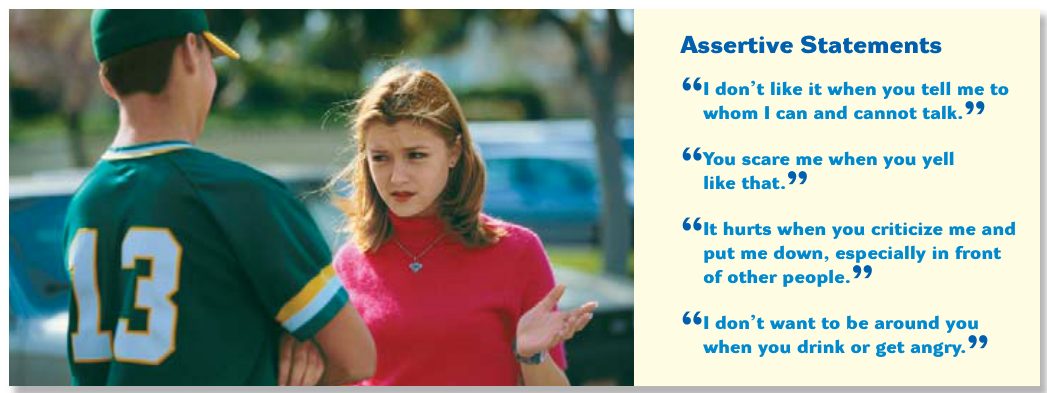
- Assertiveness is the healthiest style, characterized by direct and respectful expression that avoids hostility or silent resentment.
- Practicing assertive responses helps individuals manage difficult situations calmly without escalating conflict.
If you had a passive response, you would give your brother the silent treatment and then just throw your shirt away.
Mastering Verbal Communication Skills
- Effective speaking involves more than just words; it requires awareness of voice volume, tone, and pitch to convey the intended attitude.
- Voice volume serves as a non-verbal cue, where increased loudness often signals anger while whispering suggests secrecy or caution.
- The same phrase can take on entirely different meanings—such as questioning, arrogant, or upset—based solely on which words are emphasized.
- Assertive communication is best achieved through 'I' messages, which focus on expressing personal feelings and needs without attacking others.
- In contrast, 'You' messages often sound like blame or personal attacks, which frequently escalate conflicts rather than resolving them.
See if you can say, 'What are you doing?' and sound questioning, angry, arrogant, and upset.
Mastering Effective Communication Skills
- Empathy involves understanding another person's feelings and attitudes to foster more cooperative interactions.
- Using 'I' messages instead of 'you' messages helps prevent defensiveness and improves dialogue between parents and teens.
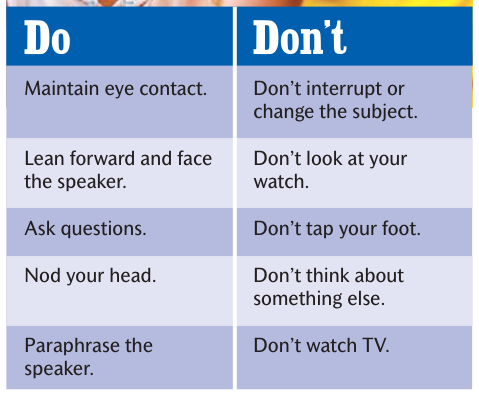
- Active listening requires giving full attention and using verbal cues to clarify the speaker's message without interrupting.
- Paraphrasing allows a listener to restate ideas in their own words to ensure accurate understanding and show they care.
- Effective communication is a two-way process that involves both sending clear messages and being an attentive receiver.
Paraphrasing may seem like restating the obvious, but you would be amazed how sometimes you hear something differently from what the speaker means.
The Power of Body Language
- Active listening involves specific physical cues such as maintaining eye contact, leaning forward, and nodding to demonstrate engagement.
- Nonverbal communication, or body language, reveals internal feelings through facial expressions, gestures, and posture without the need for words.
- Mixed messages occur when verbal statements contradict physical cues, often leading to confusion or suspicion in social interactions.
- People generally prioritize nonverbal signals over spoken words when interpreting the true intent or emotion of a speaker.
- Developing awareness of one's own body language is essential for effective communication and for accurately reading the emotions of others.
Usually, when body language is giving a message that is different from what you are saying, people tend to believe the body language message.
Mental Health and Self-Actualization
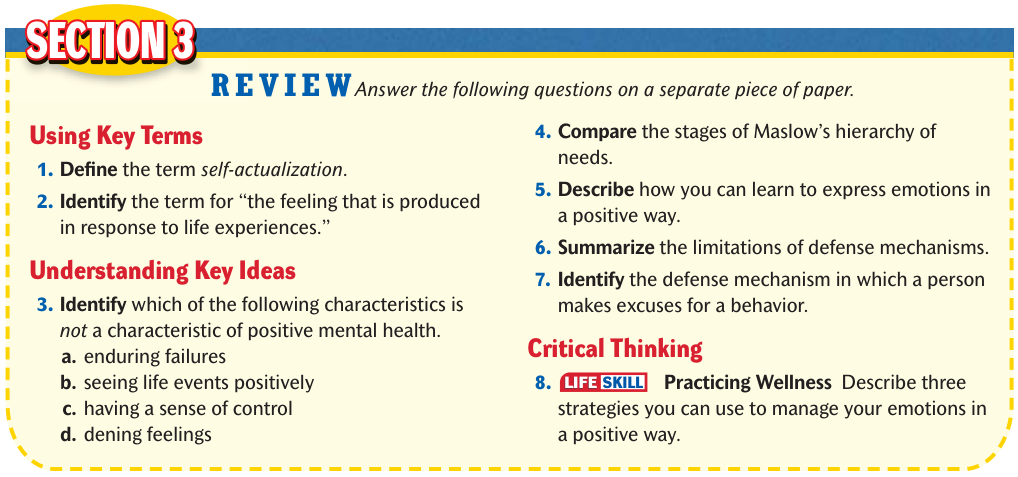
- Mental health is defined as the state of well-being where an individual can effectively cope with the demands of daily life.
- Key characteristics of mentally healthy people include a sense of personal control, the ability to endure failure, and an optimistic outlook.
- Emotional health is a prerequisite for mental health, requiring the expression of feelings in positive ways rather than suppressing them.
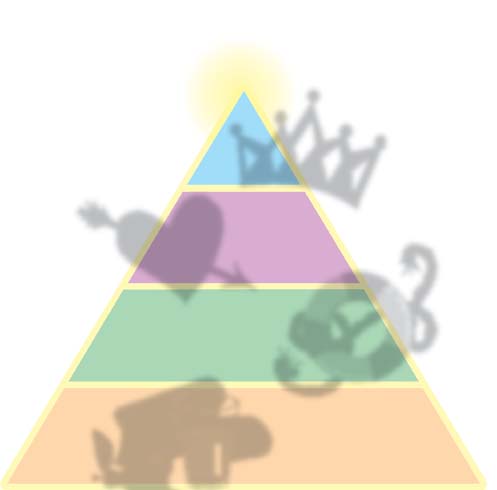
- Abraham Maslow's hierarchy of needs suggests that basic physical and safety requirements must be met before social and esteem needs.
- Self-actualization represents the pinnacle of personal development, where an individual achieves their full potential and feels they have gotten the most out of life.
- Suppressing emotions is identified as a destructive behavior, whereas seeking support and acknowledging feelings are signs of strength.
Mentally healthy people are more likely to persist through setbacks because they understand that frustrations are part of learning.
Mental Health and Emotional Expression
- Self-actualization is a continuous process that can be pursued even when basic needs like love and safety are not fully met.
- Emotions themselves are neither good nor bad, but the way they are expressed determines their positive or negative impact.
- Denying or suppressing emotions often leads to internal buildup and eventual negative outbursts.
- Emotional expression is largely learned from family and peers, but can be relearned through practice and role-playing.
- Managing overwhelming feelings can be achieved through talking with trusted individuals, physical activity, or creative outlets.
But if you run around the house tearing at your hair and screaming, you probably won’t get a positive response from your family.
Managing Difficult Emotions
- Anger often stems from helplessness and requires self-recognition of physical cues like a racing heart to prevent impulsive reactions.
- Individuals are solely responsible for how they express their emotions, regardless of external triggers or other people's actions.
- Fear serves as a protective mechanism against danger, but irrational fears can be managed through self-talk and gradual exposure.
- Guilt acts as a moral compass that alerts you when your behavior contradicts your personal values, necessitating amends to find relief.
- Jealousy is rooted in the fear of loss and can become destructive if it leads to possessiveness or a lack of trust in relationships.
- Constructive communication, such as using 'I' messages, is essential for resolving emotional conflicts with others.
A person may make you angry, but that person doesn’t make you hit him or her.
Loneliness and Defense Mechanisms
- Loneliness is defined as emotional isolation rather than physical solitude, and the ability to enjoy time alone is a sign of mental health.
- Managing loneliness requires proactive social engagement, such as joining groups, volunteering, or starting a job.
- Defense mechanisms are unconscious thoughts or behaviors used to avoid experiencing unpleasant or overwhelming emotions.
- Common mechanisms include denial, displacement, and projection, which shift or mask feelings rather than resolving them.
- While some mechanisms like sublimation can be positive, most offer only short-term relief and do not make the underlying emotions disappear.
- Long-term reliance on defense mechanisms can be problematic because they tend to mask unwanted feelings rather than addressing their root causes.
You can be in a room of people, but if you don’t feel close to any of them or feel rejected, you can still feel lonely.
Managing Emotions and Mental Disorders
- Defense mechanisms like displacement can provide temporary relief but often strain relationships and leave the root cause of frustration unresolved.
- Healthy emotional management requires finding a balance between using defense mechanisms and practicing positive coping strategies.
- Relying exclusively on defense mechanisms indicates that a person is not managing their emotions effectively.
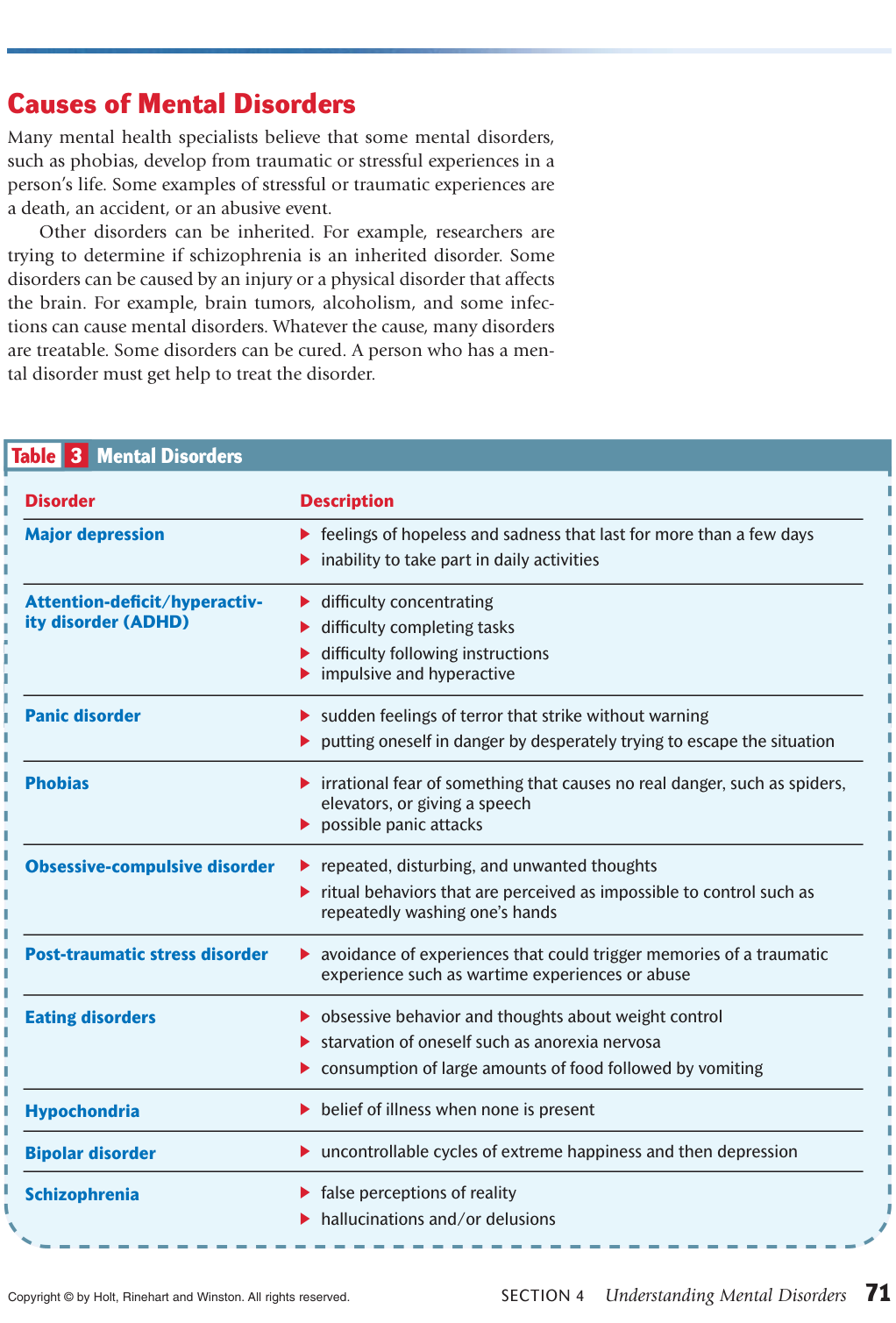
- A mental disorder is defined as an illness that significantly impacts a person's thoughts, emotions, and behaviors.
- Common symptoms of mental disorders include a lack of energy for daily routines, difficulty building relationships, and a persistent sense of hopelessness.
- Misunderstanding and fear often prevent individuals from seeking treatment for mental disorders, most of which are treatable.
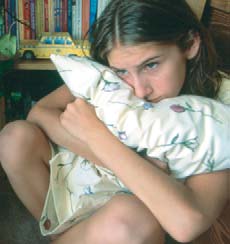
It is just after noon, and Lisa is still in bed. She doesn’t see any point in getting up. She doesn’t want to do anything.
Understanding Mental Disorders
- Mental disorders are illnesses that significantly impact a person's thoughts, emotions, and behaviors.
- Symptoms of mental health issues range from physical changes like sleep disturbances to emotional shifts like extreme anxiety or personality changes.
- Depression is defined as persistent sadness and hopelessness that prevents an individual from performing everyday activities.
- Professional diagnosis is essential because symptoms like lack of energy or withdrawal can indicate serious underlying biological or situational issues.
- Active recovery strategies include seeking professional help, identifying root causes, and engaging in physical activity to trigger positive chemical changes.
- Statistics show that 20% of children and 54 million total Americans suffer from some form of mental disorder.
Depression, also known as major depressive disorder, is a serious disorder that if left untreated can lead a person to consider suicide.
Understanding Mental Disorders
- ADHD is a lifelong condition characterized by inattentiveness or hyperactivity that interferes with daily tasks and academic performance.
- Anxiety disorders are distinguished from normal nervousness by their frequency, intensity, and ability to disrupt daily life or cause terror.
- Specific anxiety disorders include panic disorder, phobias, obsessive-compulsive disorder (OCD), and post-traumatic stress disorder (PTSD).
- Mental disorders can stem from various origins, including traumatic life experiences, genetic inheritance, or physical brain injuries and infections.
- A wide range of conditions, from eating disorders to schizophrenia, are treatable and sometimes curable with professional help and medication.
In a panic attack, the person may feel extreme fear for his or her life even though they are not really in danger.
Treating Mental Disorders
- Seeking help from a trusted adult is the essential first step in identifying community resources for mental health treatment.
- Psychotherapy and group therapy provide professional counseling to help individuals resolve trauma and find comfort in shared experiences.
- Medication can manage symptoms for conditions like depression, schizophrenia, and ADHD, but it is often used in conjunction with therapy.
- Mental disorders are defined as illnesses of the mind that disrupt daily routines and affect thinking, behavior, and mood.
- Early identification of symptoms and understanding causes—such as heredity or injury—are critical for effective intervention.
Those in the group find it comforting to talk about their problems with others who are experiencing the same problem.
Self-Esteem and Communication Skills
- High self-esteem enables individuals to respect themselves and others, achieve personal goals, and recover effectively from disappointments.
- Self-esteem is a dynamic trait influenced by external messages and can be improved through integrity, self-talk, and supportive social circles.
- Assertive communication is identified as the most effective interaction style because it remains direct while maintaining respect for others.
- Effective speaking involves more than words, requiring awareness of voice volume, tone, pitch, and the strategic use of 'I' messages.
- Active listening and body language are critical components of communication that prevent misunderstandings and build healthy relationships.
- Mental health is defined by the ability to manage emotions and navigate life's challenges, with disorders often requiring specific treatments like medication.
Misunderstandings can happen if your body language communicates a different message than what you say.
Communication and Stress Management
- The text provides exercises to distinguish between assertive and aggressive communication styles through real-world scenarios.
- Students are encouraged to practice optimism and community building by sharing anonymous positive feedback with classmates.
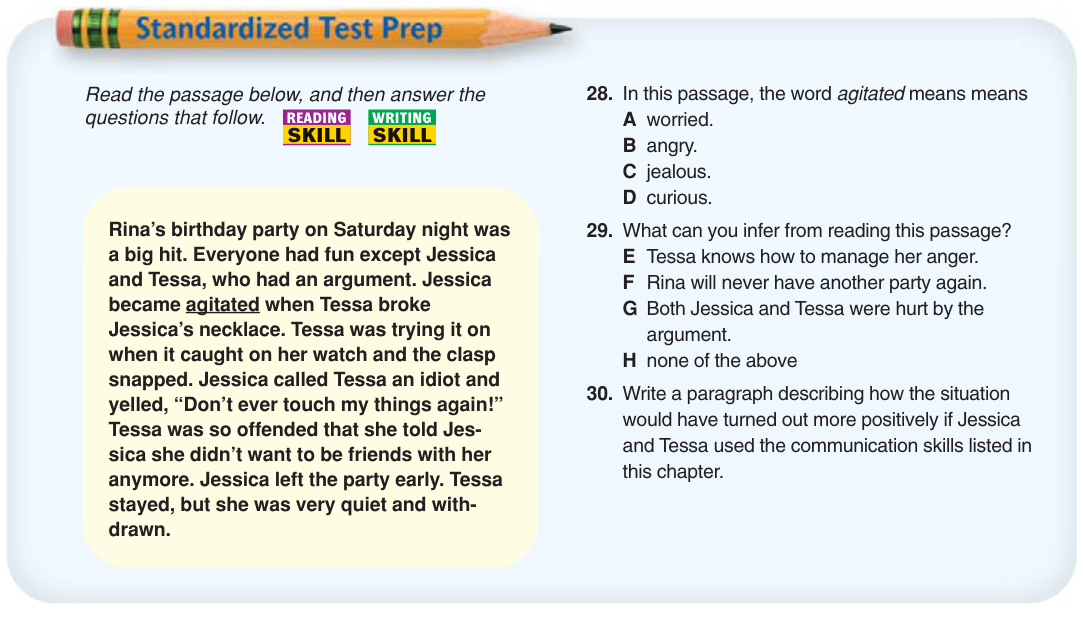
- A case study of a conflict at a birthday party illustrates how poor communication can damage friendships and emotional well-being.
- The material introduces strategies for managing stress, including physical exercise, time management, and seeking social support.
- A self-assessment behavior scale helps students quantify their current ability to cope with life changes and professional boundaries.
- The chapter outlines critical health topics including dealing with loss, preventing suicide, and maintaining an optimistic outlook.
Jessica called Tessa an idiot and yelled, “Don’t ever touch my things again!”
Understanding Stress and Its Sources
- Stress is defined as the physical and mental response to any demand placed upon the body or mind.
- Environmental stressors include external physical factors such as pollution, noise, crowding, and natural disasters.
- Biological and thinking stressors involve physical conditions like illness or injury and mental challenges like academic testing.
- Behavioral stressors often stem from poor time management or unhealthy habits like lack of sleep and substance use.
- Life change stressors encompass major transitions, both positive and negative, ranging from marriage to the death of a loved one.
- The teen years are identified as a period of high stress due to the frequency of significant life changes and new responsibilities.
You may not even be aware that you are under stress until you get a headache, as Paula did.
The Mechanics of Stress
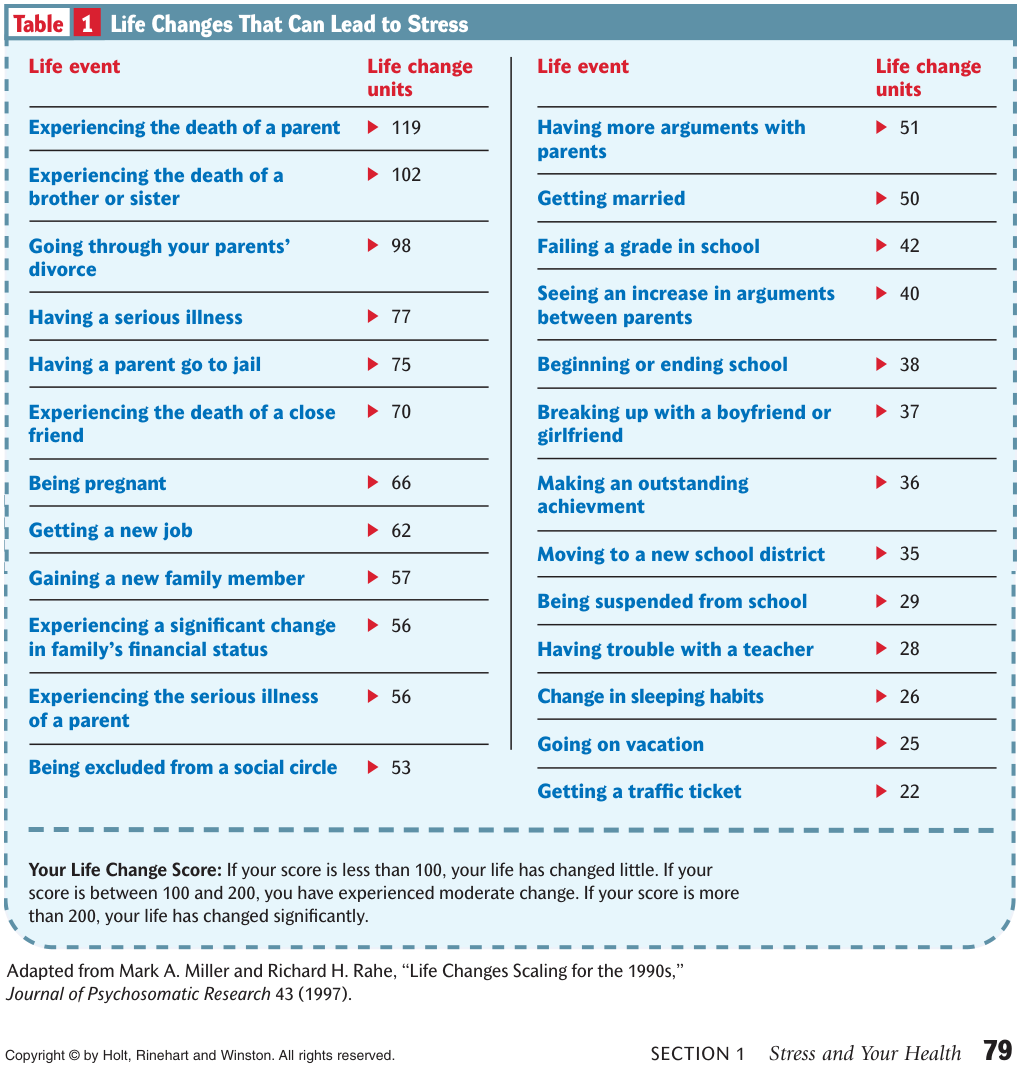
- A standardized scale measures life changes, such as moving or school issues, to quantify an individual's stress levels and predict health impacts.
- The fight-or-flight response is an automatic physical reaction that provides the energy and strength needed to confront or flee from a stressor.
- During stress, the body releases epinephrine (adrenaline), which triggers physiological changes like increased heart rate, tensed muscles, and dilated pupils.
- Stress is not inherently negative; it is categorized as either eustress (positive) or distress (negative) based on an individual's perception.
- Eustress acts as a motivator that can improve performance, making a person feel alert, confident, and in control during challenging tasks.
- Physical responses to stress include the suspension of non-essential functions, such as digestion, to prioritize immediate survival or action.
The physical changes that prepare your body to respond quickly and appropriately to stressors is called the fight-or-flight response.
Managing Stress and Disease
- Distress is a negative emotional response that can impair performance, causing individuals to lose concentration and confidence even when they are well-prepared.
- The physical fight-or-flight response is universal, but the outcome depends on whether an individual perceives the stressor as eustress (positive) or distress (negative).
- Adopting an optimistic mindset and focusing only on controllable factors can help transform a stressful situation into a motivating experience.
- Long-term stress leads to physical ailments by tensing muscles and weakening the immune system, increasing vulnerability to infections and heart disease.
- The general adaptation syndrome model outlines three stages of stress: alarm (alertness), resistance (temporary coping), and exhaustion (organ damage and illness).
- Effective stress management is essential for preventing a wide range of disorders, including tension headaches, ulcers, and clinical depression.
You become exhausted, not in the normal sense like after a long, busy day, but in a more serious way.
Managing Stress and Self-Care
- The text distinguishes between stress and stressors, highlighting 'eustress' as a positive force that energizes individuals toward goals.
- The fight-or-flight response prepares the body for physical action, but modern stressors like exams often leave this physical tension unreleased.
- Chronic stress without physical release can lead to serious health issues, including tension headaches, heart disease, and a weakened immune system.
- Regular exercise is presented as a vital tool for relieving the muscular tension and physiological alertness caused by the stress response.
- Preventative self-care, including proper nutrition and getting at least nine hours of sleep, is essential to avoid the stage of exhaustion.
- Building resiliency and learning to prioritize tasks are key life skills for managing long-term stress and recovering from hardship.
Keeping the body in a heightened state of alertness when you don’t need to run or fight stresses your heart, muscles, and immune system.
Managing Stress and Building Resiliency
- Prioritizing sleep and nutrition ensures the body has the energy and immune strength to handle daily stressors.
- Deep breathing exercises increase oxygen flow to the brain and muscles, effectively lowering heart rate and blood pressure.
- Progressive muscle relaxation helps individuals identify and release physical tension that often goes unnoticed until it causes pain.
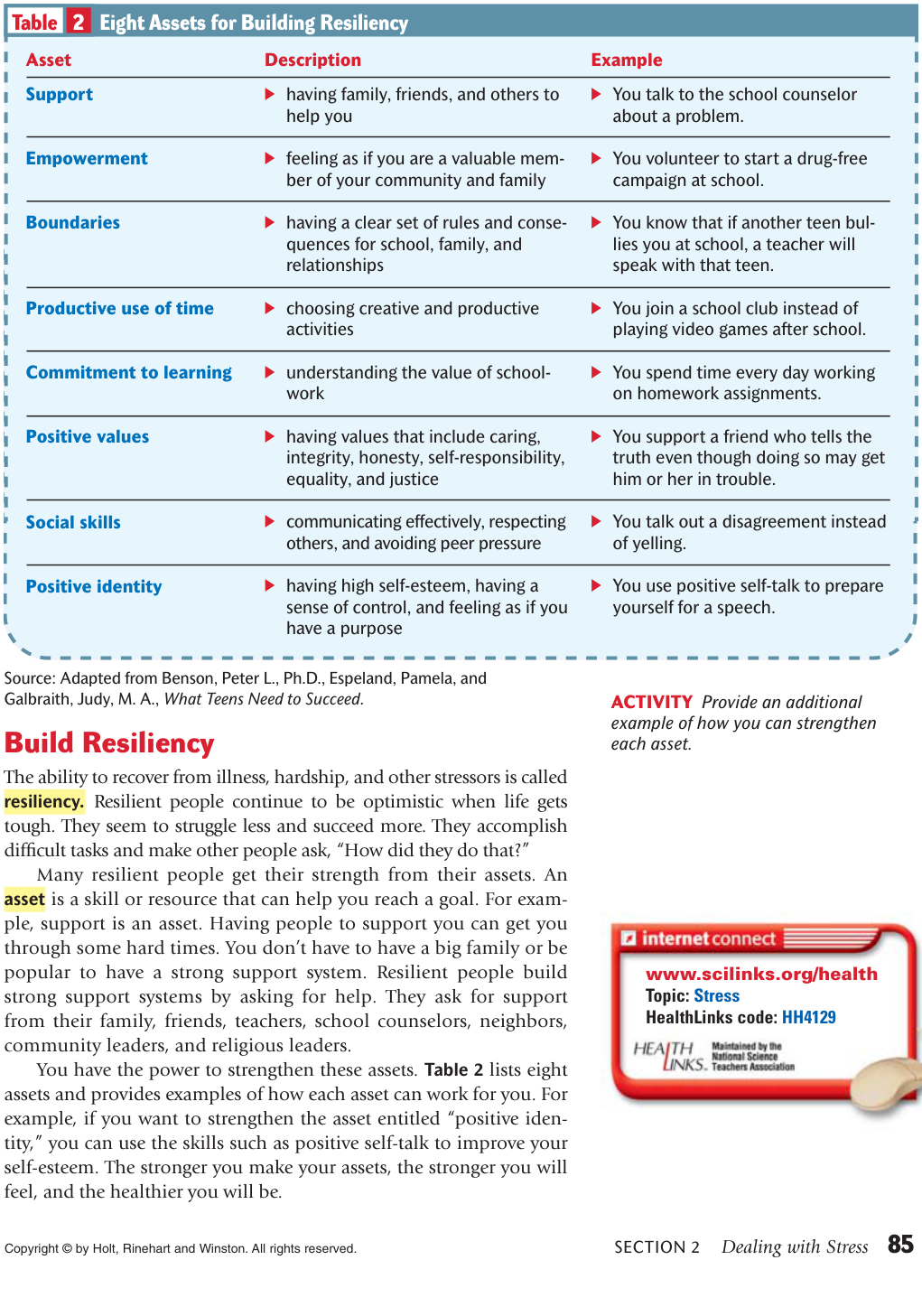
- Resiliency is defined as the ability to recover from hardship and maintain an optimistic outlook during difficult times.
- Building a strong support system by asking for help is a key asset that helps resilient people navigate challenges.
- Strengthening personal assets like positive identity and social skills improves overall health and the ability to manage stress symptoms.
Resilient people continue to be optimistic when life gets tough. They seem to struggle less and succeed more.
Building Resiliency and Positive Attitude
- Resiliency is built through external support systems like family, friends, and clear community rules.
- Internal assets such as integrity, self-responsibility, and a sense of purpose are critical for navigating teen stressors.
- Stress perception can be transformed by viewing potentially threatening situations as challenges rather than problems.
- Positive self-talk and visualizing successful outcomes can physically and emotionally reduce the impact of stress.
- Self-confidence is bolstered by recalling past successes, which in turn creates a more optimistic perception of new challenges.
- Conserving energy by accepting uncontrollable factors allows for better focus on manageable life aspects like time management.
Because stress is caused by how you perceive a new or potentially threatening situation, you can choose to see the situation as a challenge instead of as a problem.
Mastering Time Management
- The feeling of time scarcity is a primary stressor that can be mitigated by regaining a sense of control through organization.
- Prioritizing tasks allows individuals to focus on essential goals while identifying activities that can be eliminated or delegated.
- Setting personal limits and learning to say no are vital health-preserving skills that prevent schedule overload.
- Effective scheduling involves placing difficult tasks during peak productivity hours and breaking long-term goals into manageable steps.
- A realistic schedule must account for potential problems and include buffer time rather than being crammed with back-to-back activities.
However, saying no sometimes is a healthy way of taking care of yourself.
Managing Stress and Coping with Loss
- Effective time management involves prioritizing goals, learning to say no, and scheduling time for relaxation to protect physical health.
- The 'just do it' approach helps prevent the paralysis and overwhelm that comes from overthinking a long list of tasks.
- Loss takes many forms, including death, divorce, breakups, or moving, and triggers a wide range of intense, fluctuating emotions.
- Emotional reactions to loss, such as anger or numbness, are healthy and normal responses that facilitate the coping process.
- Unmanaged grief can manifest as physical stress symptoms like tension headaches and high blood pressure, potentially leading to illness.
You may not be prepared for how intense your emotions may be or how suddenly your moods may change. You may even begin to doubt your mental stability.
The Grieving Process
- Grieving is a vital healing process that allows individuals to recover from the emotional pain and stress caused by a significant loss.
- The journey of recovery involves unpredictable emotions including agitation, anger, guilt, and withdrawal from social circles.
- The five stages of grief—denial, anger, bargaining, depression, and acceptance—provide a framework for understanding the path to recovery.
- While the stages of grief are common, individuals experience them in different orders and may not go through every single stage.
- Ceremonies such as wakes, funerals, and memorial services serve as cultural tools to honor the deceased and provide emotional support for the living.
During this time, you may be prone to sudden outbursts of tears that are triggered by reminders and memories of this person.
Coping with Loss and Grief
- Funerals, wakes, and memorial services serve as formal ceremonies to honor the deceased and provide a structured environment for mourning.
- Memorial services differ from funerals in that they can occur long after the death and may involve physical structures like the Vietnam Veterans Memorial.
- Self-care during the grieving process involves maintaining routines, sharing memories, and expressing emotions through crying or journaling.
- Avoiding self-blame is crucial for healing, as blaming often serves as a mechanism to avoid the painful truth of the loss.
- Supporting others requires simple, kind actions like offering practical help or providing a listening ear without judgment.
- Recognizing signs of severe depression or social withdrawal in a grieving friend is important for seeking intervention from a trusted adult.
Small, kind actions such as the touch of a hand on a shoulder is a powerful way to show your support.
Understanding and Preventing Teen Suicide
- Suicide is often a desperate attempt to end emotional pain rather than a genuine desire to die, making it a preventable tragedy.
- Common myths are debunked by the fact that most survivors are grateful to be alive and that suicidal intent almost always includes warning signs.
- Teens are at a higher risk due to developmental factors such as impulsivity, intense emotions, and a narrow focus on immediate problems.
- Substance use significantly increases the risk of acting on suicidal thoughts by impairing judgment and lowering inhibitions.
- The most critical intervention is communication, whether it is asking for help for oneself or reporting a friend's intentions to a trusted adult.
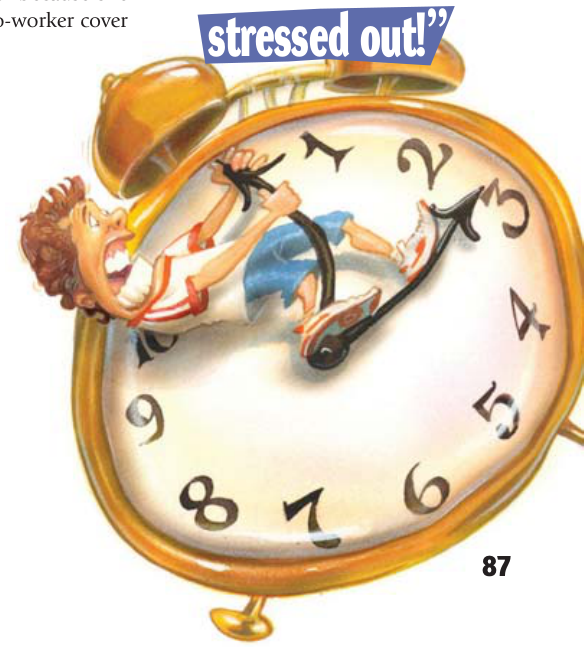
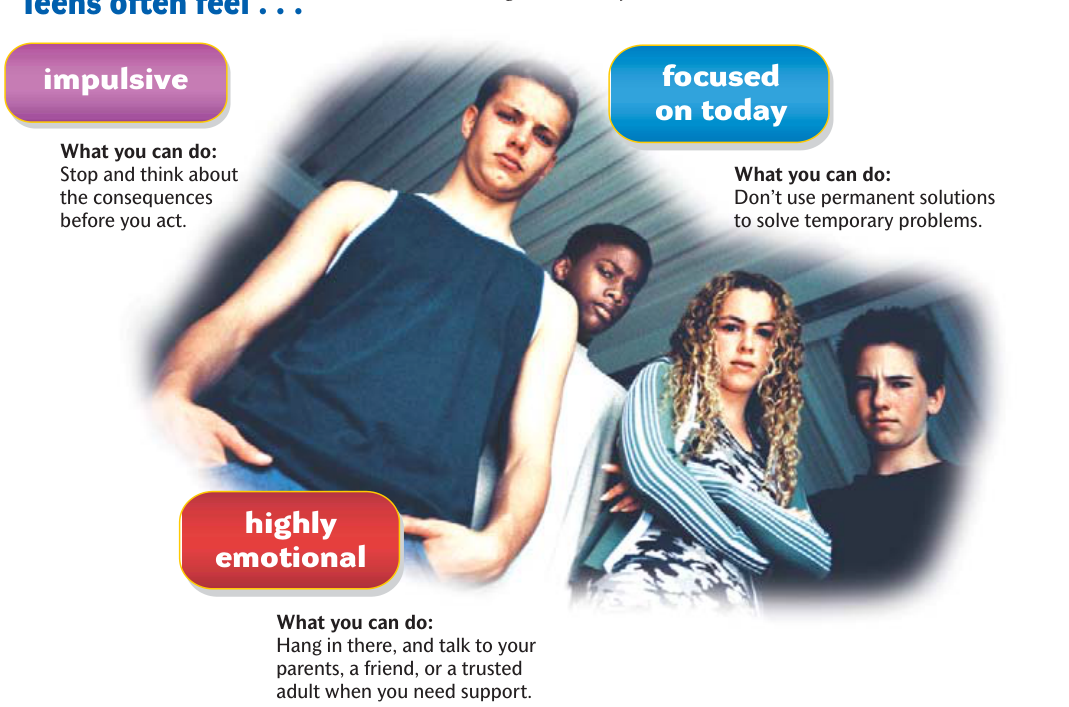
Don’t use permanent solutions to solve temporary problems.
Recognizing and Preventing Suicide
- Warning signs of suicidal ideation include withdrawal from social circles, neglect of personal hygiene, and sudden loss of energy or interest in activities.
- Reckless behavior, substance abuse, and the act of giving away precious belongings are critical indicators that a person may be planning to end their life.
- Verbal cues such as 'I won't be a problem for you much longer' should be treated as urgent cries for help rather than mere expressions of sadness.
- Suicide is a permanent response to temporary problems, and learning to manage emotional pain is a vital part of human development.
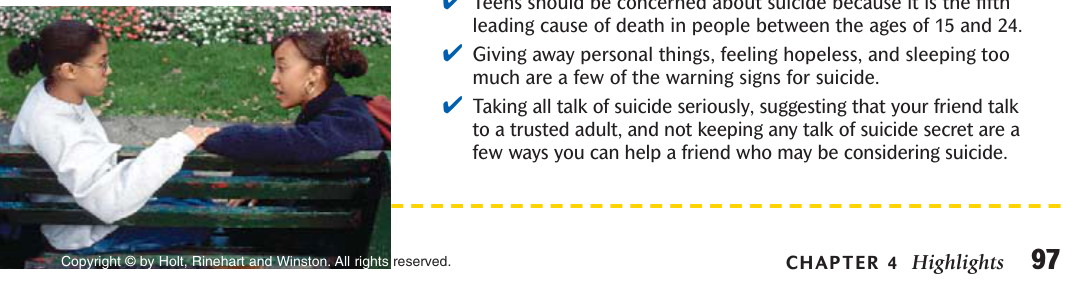
- If a friend mentions suicide, it is imperative to tell a trusted adult immediately and never agree to keep such thoughts a secret.
Giving away personal belongings is a way to say goodbye without words.
Managing Stress and Suicide Prevention
- Suicide is a critical concern for adolescents, ranking as the fifth leading cause of death for individuals aged 15 to 24.
- Warning signs of suicidal ideation include giving away personal belongings, feelings of hopelessness, and significant changes in sleep patterns.
- Effective stress management involves physical wellness, deep breathing, and building resiliency through personal assets and positive self-talk.
- The grieving process typically follows five stages: denial, anger, bargaining, depression, and acceptance.
- Seeking help from trusted adults or health organizations is essential, as suicidal thoughts should never be handled alone or kept secret.
“I know what it feels like to be really down. I’m glad I talked with someone.”
Stress and Coping Review
- The text provides a comprehensive vocabulary for understanding mental health, including terms like eustress, distress, resiliency, and epinephrine.
- It outlines the physiological and psychological responses to stress, specifically highlighting the fight-or-flight response and the general adaptation syndrome.
- Practical stress management techniques are emphasized, such as prioritizing tasks, deep breathing, regular exercise, and positive self-talk.
- The material covers the grieving process and various ceremonies, such as wakes and memorial services, used to honor loss.
- A significant portion is dedicated to suicide prevention, identifying warning signs like giving away possessions and the importance of taking verbal threats seriously.
- The review includes critical thinking exercises that apply time management and resiliency-building assets to daily life.
Explain why giving away personal things might be a sign of someone considering suicide.
Grief, Stress, and Violence
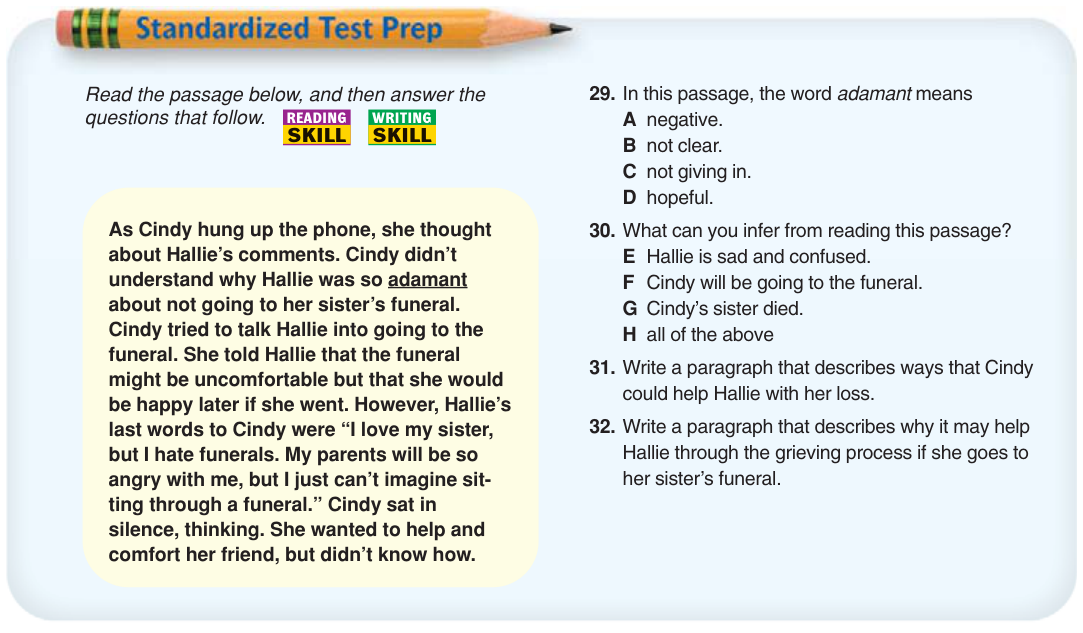
- The text explores the complexities of grief through a narrative about a girl named Hallie who refuses to attend her sister's funeral despite social pressure.
- It provides practical health education exercises focused on stress management techniques and self-assessment of interpersonal behaviors.
- Statistical data highlights that service and manufacturing industries account for the highest percentages of work-related stress cases.
- The passage introduces the cycle of violence, illustrated by a student named Milos who joins a gang for protection after being bullied.
- It critiques the normalization of violence in modern society, noting its prevalence in media, entertainment, and as a perceived problem-solving tool.
My parents will be so angry with me, but I just can’t imagine sitting through a funeral.
The Cycle of Violence
- Exposure to violence often leads to desensitization, making individuals apathetic toward the suffering of others.
- Experiencing violence firsthand can create a cycle where victims become perpetrators, as seen in the case of Milos.
- Violence is an ineffective conflict resolution tool that typically escalates problems and provokes revenge.
- Key factors contributing to teen conflict include feeling threatened, unmanaged anger, and a lack of respect for others.
- Environmental stressors like fatigue and overcrowding can increase irritability and the likelihood of angry outbursts.
- Personal responsibility and seeking help from trusted adults are essential for managing anger and preventing dangerous situations.
Violence does not solve a problem, it makes the problem worse.
Preventing Bullying and Gangs
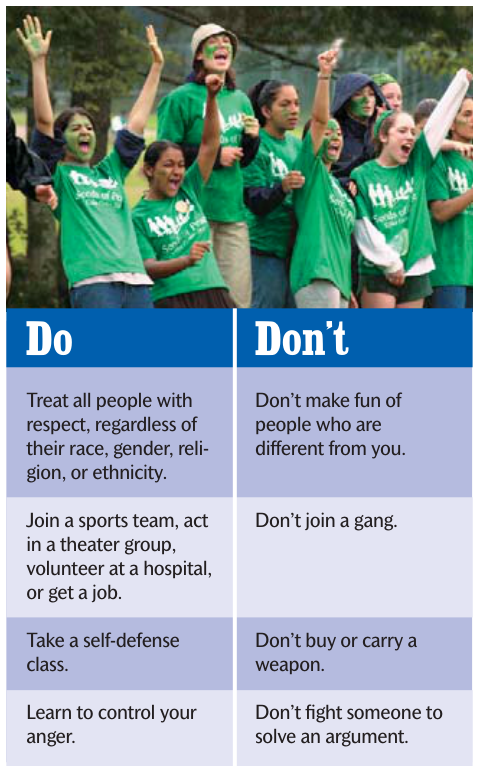
- Hate crimes are violent acts targeting individuals based on race, religion, or culture, often preventable through tolerance.
- Bullying involves using physical force, verbal humiliation, or social manipulation like spreading rumors and forming exclusive cliques.
- Effective responses to bullying include being assertive rather than aggressive and seeking help from trusted adults to remove the bully's power.
- Gangs are territorial peer groups that often engage in vandalism, drug use, and weapon possession, causing community-wide destruction.
- People often join gangs seeking a sense of belonging, safety, or power, though media portrayals frequently glamorize the lifestyle.
- Alternative paths to community support include joining sports teams, school clubs, or volunteering for neighborhood watch groups.
No matter what bullies may say to you, stand by what you believe and be proud of who you are.
Nonviolent Conflict Resolution Strategies
- Recognizing early physical and verbal signs of anger, such as clenched fists or rising voice volume, is essential for de-escalating a situation.
- Calming techniques like deep breathing and using 'I' messages can prevent a disagreement from spiraling into a physical confrontation.
- Leaving a situation immediately is a valid and necessary safety measure if you lose control of your own anger or feel the environment is unsafe.
- Offering non-physical alternatives or making excuses to leave can diffuse a potential fight while maintaining personal safety.
- Reporting threats of violence to responsible adults is a critical responsibility, even if the threat appears to be a joke.
- True conflict resolution requires negotiation and the courage to remain respectful even when the other party is not.
That’s why resolving a conflict nonviolently takes more courage and strength than using violence does.
Effective Conflict Resolution Strategies
- Effective communication requires a balance of assertiveness and respect while avoiding personal attacks or raised voices.
- Using 'I' messages and active listening helps participants focus on the real issues rather than making assumptions about others.
- Peer mediation provides a structured, nonviolent environment where trained students facilitate fair discussions between conflicting parties.
- The mediation process involves brainstorming solutions, signing a formal contract, and following up to ensure the agreement is honored.
- Peer-led programs are often more appealing to students because they offer a safe space supervised by adults but driven by peers.
Their job is to ensure that everyone has a voice to guide the group toward a solution and to make sure things are worked out 'fair and square.'
Recognizing and Preventing Abuse
- Abuse is defined as physical or emotional harm and can occur in various settings, including schools, homes, and public spaces.
- The most common forms of abuse are perpetrated by trusted individuals such as family members, friends, or romantic partners.
- Abusers often repeat cycles of violence, having learned abusive behavior as a normal response to conflict during their own upbringing.
- Warning signs of an abusive personality include controlling behavior, obsessive jealousy, manipulation, and the use of coercion or threats.
- Victims often find it difficult to leave because of the established trust or the belief that the behavior must be tolerated, despite many forms of abuse being illegal.
- Effective decision-making and learning to identify disrespectful behavior are critical skills for avoiding and escaping abusive relationships.
You may be surprised to find out that the abuser is often someone who was once abused himself or herself.
Patterns and Effects of Abuse
- Child abuse is categorized into four primary types: physical, emotional, sexual, and neglect, with children often targeted due to their inability to respond appropriately.
- Domestic violence is defined as the use of force to maintain power over a partner and is estimated to occur every 15 seconds in the United States.
- Abusive relationships often follow a three-stage cycle: the tension-building phase, the violent episode, and a 'honeymoon' reconciliation phase that often prevents victims from leaving.
- Elderly individuals and newcomers to groups (via hazing) are also frequent targets of abuse, often involving humiliation, theft, or physical harm.
- The consequences of abuse extend far beyond physical injury, leading to long-term psychological effects such as depression, isolation, and feelings of worthlessness.
This phase is often the reason people stay in abusive relationships.
Recognizing and Preventing Abuse
- Abuse manifests in various forms, including emotional and physical, and can lead to long-term psychological issues like PTSD, anxiety, and eating disorders.
- Victims are encouraged to report abuse to authorities or trusted adults, as abusers often stop when faced with the threat of legal or social consequences.
- Building a supportive network of respectful friends and family provides essential safety nets and options for those facing abusive situations.
- Assertiveness is a key defense mechanism, as setting clear boundaries makes it more difficult for abusers to target individuals they perceive as vulnerable.
- Showing active disapproval, such as refusing to laugh at offensive jokes or yelling for help, signals that abusive behavior will not be tolerated.
- Abusers rarely stop their behavior voluntarily, necessitating repeated boundary setting and intervention from outside authorities.
Assertive people set down boundaries that let others know they will not accept hurtful behavior.
Recognizing and Preventing Abuse
- Assertiveness and disapproval skills can be developed through role-playing scenarios to stop potential abuse before it begins.
- Victims of abuse are encouraged to immediately seek help from trusted adults such as parents, coaches, or school administrators.
- Safety is a priority; victims in immediate danger should seek supervised locations rather than running away, which often leads to worse outcomes.
- Counseling is essential for addressing the long-term mental and emotional scars, such as low self-esteem and guilt, that persist after physical safety is secured.
- Abusers also require professional intervention to recognize that their behavior is illegal and to learn how to change their harmful patterns.
Runaways almost always find themselves in situations that are worse than the one they left.
Understanding Sexual Abuse and Harassment
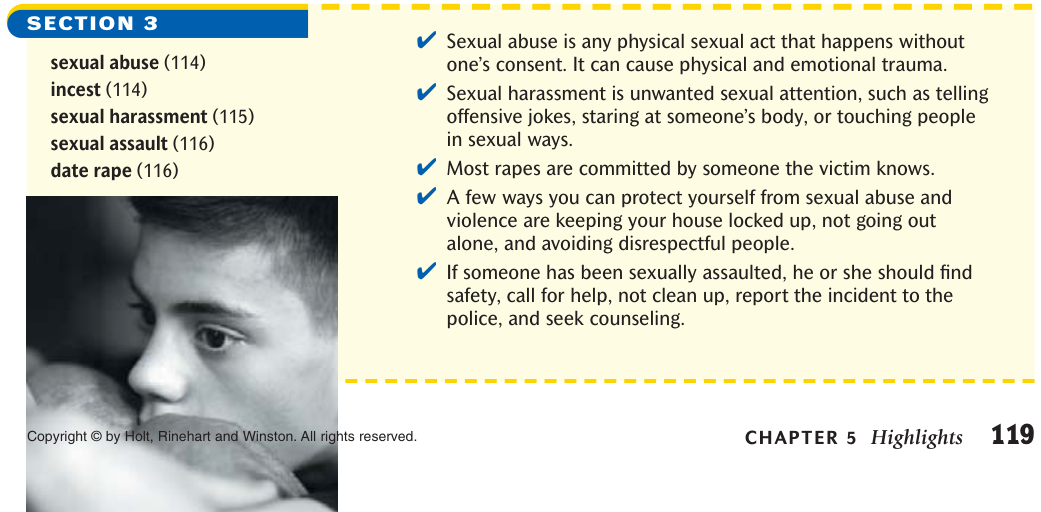
- Sexual abuse is defined as any sexual act performed without consent, ranging from unwanted touching and fondling to forced intercourse.
- Incest involves sexual activity between family members and is particularly damaging because it violates the victim's trust in a caregiver.
- Abusers often manipulate children by starting with seemingly innocent affection, leading victims to feel responsible or ashamed of the progression.
- Sexual harassment includes unwanted remarks or behaviors that create an intimidating, hostile, or offensive environment at school or work.
- Both males and females can be victims of sexual abuse and harassment, and all such illegal acts should be reported to trusted adults or police.
Because the child is being abused by someone he or she knows and trusts, the child may find it difficult to tell when he or she is being abused.
Understanding Sexual Harassment and Assault
- The distinction between flirting and harassment is defined by the recipient's comfort and consent rather than the initiator's intent.
- Sexual harassment is particularly dangerous when involving power imbalances, as victims often fear professional or personal retaliation.
- Effective responses to harassment include directly telling the harasser to stop and reporting the behavior to higher authorities or legal entities.
- Sexual assault and rape are primarily motivated by a desire for power and control rather than sexual gratification.
- Approximately 80 percent of sexual assault victims know their attacker, contradicting the common myth that these crimes are usually committed by strangers.
- Substance use is a significant risk factor, with nearly half of rapists being under the influence and some using 'date-rape drugs' to incapacitate victims.
The truth is that about 80 percent of victims of sexual assault and rape know their attacker.
Preventing Sexual Abuse and Violence
- Victims of sexual assault face severe physical and emotional trauma, including potential PTSD, guilt, and shame.
- Common myths about rape are debunked, clarifying that it is an act of power and control rather than sexual frustration.
- Safety at home involves securing entry points, knowing neighbors, and never disclosing to callers that one is alone.
- Street safety emphasizes walking purposefully, staying in groups at night, and having emergency resources ready.
- Most sexual violence is committed by acquaintances, making it vital to recognize and avoid hostile or disrespectful individuals.
- Effective self-protection includes using clear refusal skills, loud vocalization, and calling for help to draw attention during an attack.
Rapists are often motivated to make the person feel powerless, degraded, dirty, and ashamed.
Safety and Post-Assault Recovery
- Proactive dating safety includes meeting in public, communicating clear limits, and avoiding substances that could be tampered with.
- Immediate post-assault protocols emphasize preserving physical evidence by not showering, changing clothes, or cleaning the scene.
- Reporting an assault creates a legal record that allows for future prosecution even if the victim is not ready to go to trial immediately.
- Seeking professional counseling is vital to combat the shame and humiliation intentionally inflicted by abusers.
- Denial and silence prevent victims from receiving necessary medical treatment and allow perpetrators to potentially harm others.
Don’t change anything about your body or your environment. Don’t shower or go to the bathroom.
Violence and Abuse Prevention
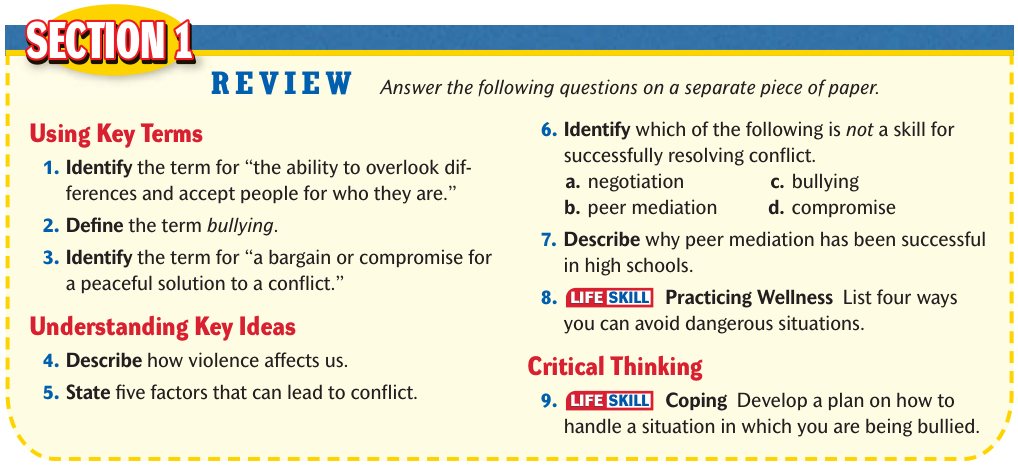
- Violence is often fueled by factors such as lack of anger management, bullying, and the presence of gangs.
- Conflict resolution techniques like peer mediation and negotiation offer effective, nonviolent alternatives to physical confrontation.
- Abuse manifests in various forms, including domestic violence, neglect, and hazing, often leading to long-term psychological trauma.
- Sexual abuse and harassment are defined by a lack of consent and can be perpetrated by both strangers and acquaintances.
- Protective strategies include maintaining assertiveness, recognizing disrespectful behaviors, and establishing supportive social networks.
Besides causing physical injury, some effects of abuse are depression, low self-esteem, guilt, shame, anxiety, distrust, and difficulty developing relationships.
Health and Safety Review
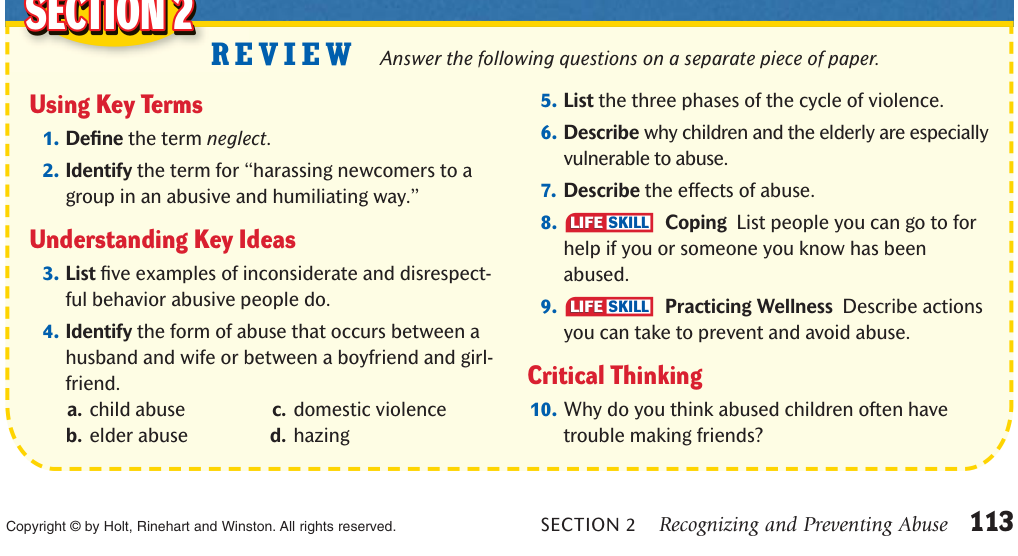
- The text provides a comprehensive review of topics related to abuse, including signs of manipulation, neglect of the elderly, and the vulnerability of children.
- It outlines critical safety protocols for sexual assault survivors, emphasizing the importance of seeking safety and contacting authorities over immediate hygiene.
- The material includes data interpretation exercises focused on homicide rates, highlighting that the 15-24 age group faces the highest risk.
- Practical life skills are emphasized through prompts for creating action plans for bullying, conflict resolution, and community neighborhood watch programs.
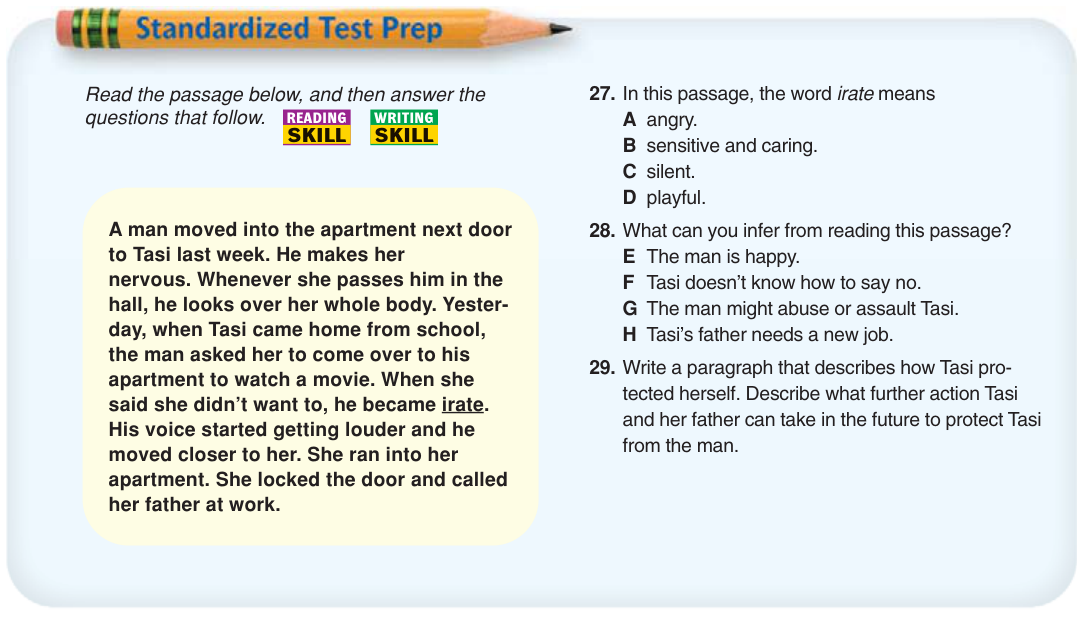
- A narrative reading comprehension exercise illustrates a scenario of potential predatory behavior and the importance of setting boundaries and seeking help.
When she said she didn’t want to, he became irate. His voice started getting louder and he moved closer to her.
Physical Fitness and Your Health
- Physical fitness is defined as the body's ability to perform daily activities without excessive fatigue, soreness, or breathlessness.
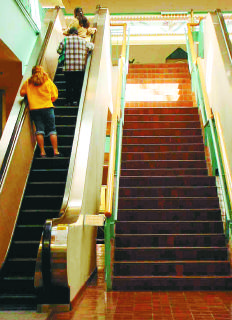
- Modern conveniences like cars, elevators, and remote controls have contributed to an increasingly unfit population by reducing daily movement.
- A sedentary lifestyle is directly linked to the development of chronic diseases, which are long-term conditions that develop gradually.
- Exercise serves as a vital tool for maintaining health and can range from formal training to informal play or everyday chores like raking leaves.
- Physical activity provides holistic benefits beyond the physical, including improved mental health and opportunities for social interaction.
The makers of such products claim to have the secret to a long healthy life. Well, the secret is out, and as you’ll discover, it’s not really much of a secret.
Benefits of Physical Fitness
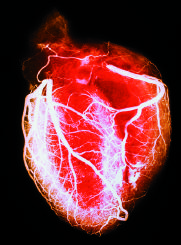
- Regular exercise prevents chronic diseases such as type 2 diabetes, stroke, and coronary heart disease.
- Physical activity strengthens the heart and lungs while increasing the body's metabolic rate through muscle mass gain.
- Mental health is improved via the release of endorphins, which reduce stress and promote a sense of wellness.
- Fitness enhances social health by boosting self-esteem and providing opportunities for team-based communication.
- Health-related fitness is categorized into five components: muscular strength, endurance, cardiorespiratory endurance, flexibility, and body composition.
Endorphins can give you a feeling of wellness and happiness after a good, hard workout.
Components of Physical Fitness
- Muscular strength and endurance are interdependent qualities developed through anaerobic weight training and are essential for both sports and daily tasks.
- Cardiorespiratory endurance is the most vital component of health-related fitness, measuring the efficiency of the heart, lungs, and blood in delivering oxygen.
- Aerobic activities, characterized by rhythmic movement of large muscle groups, improve cardiorespiratory health and lower resting heart rates.
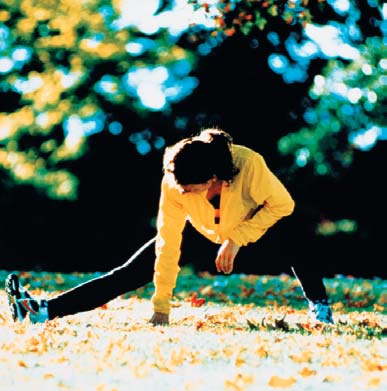
- Flexibility involves the range of motion in joints and is maintained through stretching to prevent stiffness and reduce the risk of muscle injuries.
- Body composition is the ratio of lean tissue to fat, which naturally shifts with age as muscle mass decreases and body fat increases.
As your cardiorespiratory endurance increases, your heart beats slower and stronger.
Fitness Components and Sports
- Excess body fat increases the risk of lifestyle diseases and joint pain, but can be managed through exercise and nutrition.
- Skill-related fitness consists of coordination, balance, agility, power, speed, and reaction time, which are essential for athletic performance.
- Participating in organized sports fosters social skills, communication, and conflict resolution while improving overall physical health.
- Choosing a sport involves considering personal interests, the choice between individual or team dynamics, and the availability of local facilities.
- Competition, whether formal or informal, helps develop vital life skills such as leadership, motivation, and cooperation.
- Good sportsmanship requires respecting officials and treating opponents with consideration regardless of the game's outcome.
Whether you compete in informal or formal play, competition will help develop your motivation, leadership, and cooperation skills.
Lifelong Fitness and Inclusion
- Lifelong physical activity is essential for delaying or preventing chronic conditions like cardiovascular disease and osteoporosis.
- Strength training at any age is vital for maintaining bone density, muscle tone, and overall flexibility.
- Good sportsmanship, including being a gracious winner and a respectful loser, is a fundamental aspect of participating in sports.
- Physical activity serves as a critical treatment component for managing chronic conditions such as asthma and diabetes.
- Organizations like the Special Olympics and Paralympics demonstrate that physical and mental disabilities are not barriers to world-class athleticism.
- The ultimate goal of fitness is to achieve a longer, healthier life regardless of age or physical ability.
The Special Olympics and Paralympics show us that mental and physical disabilities do not stop people from becoming world-class athletes.
Planning Your Fitness Program
- Physical activity is essential for all ages to reduce the risk of chronic diseases and improve overall well-being.
- Before starting a program, individuals should consult a doctor to assess health concerns like asthma or diabetes and evaluate physical readiness.
- Selecting enjoyable and affordable activities is crucial for long-term adherence and avoiding boredom.
- A successful fitness program should be built on a foundation of cardiorespiratory endurance.
- Key metrics for program design include calculating resting heart rate, target heart rate zones, and utilizing the FITT formula.
- Renting or borrowing equipment initially can save money and help determine if a specific activity is a good personal fit.
You don’t have to be an athlete to be physically fit, and you do not have to be fit to start a fitness program.
Calculating Target Heart Rate
- Resting heart rate (RHR) typically ranges from 50 to 80 bpm for adults, though elite endurance athletes may drop below 40 bpm.
- The target heart rate zone, essential for cardiorespiratory health, is generally calculated as 60 to 85 percent of an individual's maximum heart rate.
- Maximum heart rate (MHR) can be estimated by subtracting one's age from 220, providing a baseline for safe exercise intensity.
- Fitness goals should be divided into short-term and long-term objectives that are realistic, written down, and based on personal physical abilities.
- Maintaining an activity log to record training duration, exercise types, and physical feelings is vital for tracking progress and maintaining motivation.
- Healthy Fitness Zones (HFZ) provide age-specific standards for muscular strength, endurance, and flexibility to measure overall physical health.
Some of the world’s best endurance athletes have resting heart rates below 40 bpm.
The FITT Formula Basics
- The FITT formula provides a framework for exercise planning based on frequency, intensity, time, and type.
- Cardiorespiratory endurance requires aerobic activity 3 to 5 times per week for 20 to 60 minutes depending on intensity.
- Muscular strength and endurance are developed through resistance training 2 to 3 times per week using 8 to 12 repetitions.
- The Activity Pyramid suggests balancing daily household chores with structured aerobic and flexibility exercises while minimizing sedentary time.
- Exercise intensity is inversely related to duration; higher intensity workouts require less time to achieve health benefits.
The higher the intensity of the exercise, the less time you need to do it.
Designing Your Fitness Plan
- Developing a comprehensive fitness plan requires integrating all five components of physical fitness with at least 60 minutes of daily activity.
- The FITT principle provides a framework for strength training, emphasizing specific repetitions and sets to target either muscular endurance or power.
- Flexibility training should be performed 3 to 5 days a week, focusing on holding stretches for 15 to 30 seconds without bouncing.
- Physical changes from a new exercise regimen typically become noticeable after about six weeks of consistent effort.
- Critical thinking in fitness involves identifying community resources, overcoming barriers like bad weather, and establishing self-reward systems.
- There is no physiological difference in strength between male and female muscle tissue of the same volume.
There is no difference between the same amount of male muscle and female muscle in terms of strength.
Preventing Sports Injuries
- Consistency and realistic goal-setting are essential for maintaining a long-term fitness program without burnout.
- Sports injuries are categorized as acute, which have sudden onset, or chronic, which develop over long periods.
- Common fitness myths like 'no pain, no gain' are debunked, as pain is actually a signal of injury rather than progress.
- Conditioning, warming up, and staying hydrated are the primary methods for avoiding physical strain and overtraining.
- Proper safety equipment and clothing are vital to prevent heat exhaustion and physical trauma during exercise.
Exercise can sometimes be uncomfortable but should never be painful. Pain means injury.
Principles of Safe Conditioning
- The progressive overload principle drives physical improvement by gradually increasing demands to trigger muscle growth and increased blood flow.
- Proper recovery periods are essential for healing fatigued muscle cells and preventing injuries caused by excess overload.
- Warming up and cooling down for 5 to 10 minutes each prepares the heart and muscles for exertion and prevents post-workout stiffness or dizziness.
- Regular, slow stretching of major muscle groups improves flexibility and prevents tightness when performed without bouncing.
- Maintaining hydration is critical for blood circulation and temperature regulation, as dehydration poses a major health threat in any weather.
- Overtraining by exceeding the FITT formula can lead to long-term negative effects and injuries that may take months to recover from.
“Records are meant to be broken, not athletes.” —Cal Ripken, Jr.
Exercising the Safe Way
- Overtraining manifests through chronic fatigue, irritability, and physical indicators like an increased resting heart rate and poor performance.
- Adolescents are particularly susceptible to overuse injuries because their bones and tissues are still in the growth phase.
- Proper equipment and clothing, including moisture-wicking fabrics and activity-specific shoes, are essential for preventing sports-related injuries.
- The RICE principle (Rest, Ice, Compression, Elevation) is the standard protocol for controlling swelling and accelerating the healing process.
- Acute injuries like fractures and concussions result from sudden stress, while chronic injuries like tendinitis develop from repetitive strain over time.
Damage to growing bones and other tissues can cause lifelong weakness and loss of flexibility.
Injury Management and Performance Enhancers
- Common physical injuries such as concussions, stress fractures, and tendonitis require specific protocols including rest, immobilization, and the RICE method.
- The RICE principle (Rest, Ice, Compression, Elevation) serves as both immediate first aid and a foundational component of the long-term recovery process.
- Rehabilitation is essential for regaining strength and coordination, as returning to activity prematurely significantly increases the risk of reinjury.
- The text warns against the use of performance-enhancing substances like anabolic steroids and amphetamines due to severe risks like organ damage and circulatory collapse.
- Common stimulants like caffeine and ephedrine can mask fatigue and increase alertness but may lead to dangerous side effects like dehydration and abnormal heartbeats.
Returning to activity before an injury is fully healed and rehabilitated puts you at risk of reinjury.
Supplements and Anabolic Steroids
- Dietary supplements are not regulated by the FDA, allowing manufacturers to make performance claims without scientific proof.
- Performance improvements attributed to supplements are often actually the result of consistent training rather than the product itself.
- Anabolic steroids are synthetic versions of testosterone used illegally by over a million athletes to increase muscle mass.
- Steroid abuse carries severe health risks including heart damage, liver cysts, stunted growth, and gender-specific hormonal disruptions.
- Despite being illegal and dangerous, steroid use is estimated to be as high as 11 percent among high school athletes.
- A balanced diet provides sufficient nutrients for most athletes, making specialized performance supplements unnecessary.
A steroid abuser may take as much as 100 mg a day.
The Importance of Sleep
- Sleep is an essential biological function for health and safety rather than just a period of inactivity.
- Sleep deprivation significantly impairs cognitive performance in school, sports, and daily tasks.
- Chronic lack of sleep increases the risk of stress-related issues, physical illness, and fatal accidents.
- While most adults require approximately 8 hours of sleep, teens biologically require more, averaging about 9 hours and 15 minutes.
- The body's internal clock, or circadian rhythm, regulates sleeping and waking patterns and is affected by puberty.
Even mild sleepiness has been shown to hurt all types of performance—in school, sports, and even when playing video games!
Teen Sleep and Circadian Rhythms
- Puberty causes a natural delay in the circadian rhythm, making teenagers biologically inclined to stay up later and wake up later.
- Many high school students experience a lack of alertness during early morning classes because their internal clocks have not yet shifted to a waking state.
- Teens require significantly more sleep than many realize, with a recommended range of 8.5 to 9.25 hours per night to function optimally.
- Sleep is divided into NREM, where the body recovers from physical stress, and REM, which is characterized by dreaming and rapid eye movement.
- Common sleep disorders like insomnia and sleep apnea can be exacerbated by lifestyle factors such as caffeine, stress, and obesity.
- Adjusting the body's internal clock for the school year is possible but requires several weeks of consistent habit changes and monitoring.
Greg rolled out of bed after hitting the snooze button for the 10th time.
Sleep and Fitness Fundamentals
- Sleep deprivation is defined as a lack of sleep that can lead to increased stress, reduced productivity, and a higher risk of accidents and illness.
- The human sleep cycle consists of alternating patterns between REM (dream sleep) and NREM (non-dreaming) sleep.
- Teens generally require more sleep than adults and children to function optimally and support their physical development.
- Effective fitness programs should be tailored to individual abilities and monitored using metrics like the resting heart rate and the FITT formula.
- Common sleep disorders include insomnia, characterized by the inability to fall asleep, and sleep apnea, which involves interrupted breathing patterns.
- Healthy sleep hygiene involves maintaining a consistent routine, limiting caffeine after lunch, and reserving the bed strictly for sleeping.
Say no to all-nighters. Staying up all night, even to study for an exam, will disturb your sleep pattern and your ability to function the next day.
Fitness and Health Review
- The text provides a comprehensive review of physical fitness concepts, including the FITT formula and the distinction between health-related and skill-related fitness.
- It emphasizes the physiological aspects of exercise, such as calculating target heart rate zones and understanding resting heart rate (RHR).
- Safety and recovery are highlighted through discussions on overtraining, the RICE method for injuries, and the dangers of anabolic steroid abuse.
- Sleep is categorized as a critical component of health, addressing the body's circadian rhythm and the consequences of sleep deprivation and apnea.
- The review encourages critical thinking regarding long-term health, challenging the idea that future medical cures can replace the current need for exercise.
A friend says, 'I don’t have to bother to exercise. There’ll be a cure for all of those diseases by the time I’m old!'
Nutrition and Lifestyle Fundamentals
- The text emphasizes the importance of setting specific fitness goals and exercise contracts to maintain physical health.
- A case study of a student named Jorge illustrates the negative cycle of sleep deprivation, stress, and declining academic performance.
- Statistical data links leading causes of death, such as heart disease and stroke, to lifestyle factors like inactivity, poor diet, and smoking.
- Nutrition is defined as the science of how the body uses food and the study of nutrients necessary for life and growth.
- The material challenges common dietary myths regarding protein intake, cholesterol sources, and the biological importance of fiber and water.
Although he was exhausted, he found it difficult to fall asleep before midnight. However, he would often fall asleep much later in front of the flickering TV.
The Science of Nutrition
- There are six essential classes of nutrients: carbohydrates, fats, proteins, vitamins, minerals, and water.
- Carbohydrates, fats, and proteins are the primary energy-giving nutrients, while vitamins, minerals, and water support metabolism without providing energy.
- Metabolism is the sum of chemical processes that keep the body alive, and its energy is measured in Calories.
- Dietary choices during the teenage years have long-term consequences, influencing the risk of chronic diseases like diabetes and heart disease later in life.
- Excess energy from any nutrient source is stored as body fat, which increases the risk of high blood pressure and other health disorders.
The diet you eat during your teens can affect your risk of developing obesity, heart disease, diabetes, osteoporosis, and cancer when you are in your 30s, 40s, or 50s.
Understanding Carbohydrates and Sugars
- Carbohydrates are categorized into simple and complex types, both of which are fundamentally composed of sugar molecules.
- Glucose is the most vital single-unit sugar as it circulates in the blood to provide immediate energy for the body's cells.
- Refined sugars found in processed foods like soda and candy provide energy but lack the essential nutrients found in unrefined sources like fruit.
- Complex carbohydrates, or starches, consist of many linked sugar molecules and are found in plant-based foods like potatoes, beans, and grains.
- Glycogen serves as the body's internal storage system for glucose, kept in the muscles and liver for quick energy access.
- Dietary guidelines suggest that 45 to 65 percent of daily caloric intake should come from carbohydrates, primarily from complex sources.
Refined sugar provides energy but hardly any nutrients. When you eat a lot of these foods you may be missing out on foods rich in nutrients.
Carbohydrates, Fiber, and Fats
- Excess carbohydrates are stored as glycogen for quick energy, but once storage is full, the body converts them into fat.
- Fiber is an indigestible carbohydrate essential for intestinal health, preventing constipation, and potentially reducing risks of colon cancer and heart disease.
- Soluble fiber traps cholesterol to lower blood levels, while insoluble fiber adds necessary bulk to waste for digestive efficiency.
- Fats are essential lipids composed of fatty acids and glycerol, providing necessary functions and flavor despite their reputation for health risks.
- Saturated fats, typically solid at room temperature and found in animal products, are linked to higher cholesterol and heart disease risk.
- Unsaturated fats contain double bonds between carbon atoms, are usually liquid at room temperature, and are primarily derived from plant sources.
Soluble fibers help protect you against heart disease by “trapping” cholesterol from eaten food, therefore lowering blood cholesterol.
Fats and Cholesterol Essentials
- Dietary fats are mixtures of saturated and unsaturated fatty acids, with monounsaturated and polyunsaturated fats generally offering protection against heart disease.
- Fats serve critical biological functions including cushioning organs, stabilizing body temperature, and forming cell membranes and nerve coatings.
- Trans fats, created during the hardening of vegetable oils, and excessive saturated fats are linked to increased risks of cardiovascular issues.
- Cholesterol is a vital lipid produced by the body and found in animal products, necessary for synthesizing vitamin D and various hormones.
- Blood cholesterol is managed by LDL ('bad cholesterol'), which can form artery-blocking plaque, and HDL ('good cholesterol'), which removes cholesterol from the blood.
- Teens are advised to maintain a total fat intake of 25 to 35 percent of their daily calories while limiting saturated and trans fats.
When levels of LDL cholesterol in the blood get too high, deposits called plaque (PLAK) form on the walls of blood vessels.
The Role of Proteins
- Proteins are essential for building and repairing body tissues, including muscles, skin, and hair, as well as forming hormones and enzymes.
- The body requires twenty different amino acids, nine of which are 'essential' because they cannot be produced by the body and must be obtained through diet.
- Animal products are considered complete proteins because they contain all essential amino acids, while most plant proteins are incomplete.
- Vegetarians can achieve a complete amino acid profile by combining different plant sources, such as grains and legumes.
- Contrary to popular belief, muscle growth is triggered by strength training rather than simply increasing protein consumption.
The amino acids are linked together like beads on a necklace to make each type of protein.
Essential Micronutrients and Water
- Vitamins, minerals, and water are essential nutrients that do not provide energy directly but are required for normal body function and growth.
- Vitamins are carbon-based nutrients categorized as either fat-soluble or water-soluble, which determines how they are stored and eliminated.
- Fat-soluble vitamins (A, D, E, and K) can be stored in the body's fat tissues for long periods, supporting bone health, vision, and blood clotting.
- Water-soluble vitamins, including the B-complex and Vitamin C, are generally not stored well and must be consumed regularly to assist in energy release and cellular protection.
- Antioxidants like Vitamin C play a critical role in protecting body structures from free radicals, which are reactive byproducts of metabolism.
An antioxidant is a substance that is able to protect body structures from a highly chemically reactive form of oxygen called a free radical.
Vitamins, Minerals, and Supplements
- Water-soluble vitamins are essential for energy production from macronutrients, nervous system health, and the formation of red blood cells.
- Minerals are chemical elements required in small amounts for critical biological processes like enzyme activity, bone formation, and fluid balance.
- A balanced diet typically provides all necessary nutrients, making supplements unnecessary for most healthy individuals.
- Nutrient toxicities and malnutrition can occur from the misuse of supplements or an inability to absorb nutrients properly.
- Sodium is a critical mineral for water regulation and nerve impulses, though many people consume it in excess of their actual needs.
Most nutrient toxicities result from misuse of vitamin and mineral supplements.
Essential Minerals and Hydration
- Sodium is a vital electrolyte for nerve and muscle function, but excessive intake from processed foods can lead to high blood pressure and heart disease.
- Calcium is critical for bone development, especially between ages 9 and 17, when nearly half of the skeleton is formed.
- A lack of calcium during youth significantly increases the risk of osteoporosis, a condition where bones become brittle and break easily.
- Iron is necessary for producing hemoglobin to transport oxygen; a deficiency leads to anemia, causing persistent fatigue and weakness.
- While iron is essential, it can be toxic in high doses and is a leading cause of poisoning in young children.
- Water is the body's most critical nutrient, making up 60 percent of body mass and facilitating nearly every life-sustaining function.
About 45 percent of your skeleton forms between the ages of 9 and 17.
Hydration and Nutrient Balance
- The human body requires approximately 2.5 quarts of water daily to balance losses from excretion, breathing, and perspiration.
- While caffeine and alcohol increase water excretion, healthy sources of fluids include water, juice, low-fat milk, and water-rich fruits or vegetables.
- Dehydration occurs when fluid loss exceeds intake, leading to symptoms ranging from headaches and fatigue to severe confusion or even death.
- Thirst is considered a late sign of dehydration, meaning mental and physical performance may already be impaired by the time a person feels thirsty.
- Data indicates a significant deficiency in calcium intake among teenagers, which is critical for building bone density and preventing future osteoporosis.
However, thirst is a late sign of dehydration.
Meeting Your Nutritional Needs
- The Dietary Reference Intakes (DRIs) are modern guidelines designed to prevent nutrient deficiencies and avoid toxicities while promoting optimal health.
- Recommended Dietary Allowances (RDAs) serve as general targets for nutrient intake that meet the needs of nearly all healthy individuals.
- Tolerable Upper Intake Levels (ULs) establish the maximum safe amount of a nutrient to consume, which is particularly useful for evaluating supplement safety.
- Food labels utilize Daily Values (DVs) based on a 2,000 Calorie diet to help consumers understand how specific products fit into their overall daily intake.
- Nutritional guidelines are tailored to specific demographics, including variations for gender, age groups, and conditions like pregnancy.
The Tolerable Upper Intake Levels (ULs) are the largest amount of a nutrient you can take without risking toxicity.
Decoding Nutrition Facts Labels
- The Nutrition Facts label uses Daily Values (DV) based on a 2000-Calorie diet to help consumers gauge nutrient density.
- Specific guidelines suggest looking for low percentage DV for fat, cholesterol, and sodium to maintain a healthy cardiovascular system.
- Ingredients are listed by weight in descending order, which is crucial for identifying whole grains or managing food allergies.
- Protein is typically listed only in grams because it is already plentiful in the standard American diet.
- Food additives are utilized to prevent spoilage and enhance the sensory qualities or nutritional profile of products.
- Labeling terms like 'light' or 'low calorie' have specific regulatory definitions based on caloric reduction compared to standard versions.
The ingredients in a product are listed on the label in order of weight—those present in the largest amounts are listed first.
Decoding Food Labels and Pyramids
- Food labels use specific legal definitions for terms like 'low calorie,' 'fat free,' and 'cholesterol free' to regulate nutritional claims.
- Added sugars are often disguised under various names such as maltose, dextrose, and fruit juice concentrate to hide high sugar content.
- Labels distinguish between 'enriched' foods, which restore lost nutrients, and 'fortified' foods, which add new nutrients entirely.
- Processing methods like irradiation and pasteurization are disclosed to indicate how microorganisms and spoilage are controlled.
- The Food Guide Pyramid serves as a visual hierarchy, prioritizing grains, fruits, and vegetables over dairy, meat, and fats.
- Health claims on packaging, such as those regarding heart disease, must meet government-approved standards to be included.
It is important to remember that even though a food may be labeled low fat, it can still be high in Calories.
The Food Guide Pyramid
- The Food Guide Pyramid organizes nutrition into six categories where the base level should be consumed most frequently.
- Calorie needs vary by individual, with active teenagers requiring servings from the high end of the suggested ranges.
- The bread, cereal, rice, and pasta group forms the foundation, providing complex carbohydrates, fiber, and B vitamins.
- Fruits and vegetables occupy the second level, offering essential vitamins and minerals while remaining low in fat and cholesterol.
- Dairy and protein groups provide calcium and protein but require careful selection to avoid high levels of saturated fat.
- The pyramid's tip consists of fats, oils, and sweets, which provide low nutritional value and should be used sparingly.
Foods at the bottom of the pyramid should be eaten more often, while foods at the top of the pyramid should be eaten less often.
Dietary Guidelines for Americans
- The Dietary Guidelines for Americans are a set of lifestyle recommendations designed to improve health and reduce disease risk for everyone over age two.
- The guidelines are organized into the 'ABCs for Good Health': Aim for fitness, Build a healthy base, and Choose sensibly.
- Building a healthy base involves using the Food Guide Pyramid to prioritize whole grains, fruits, and vegetables while ensuring food safety.
- Sensible choices focus on moderating the intake of saturated fats, cholesterol, sugars, salt, and alcohol.
- Small dietary adjustments, such as replacing soda with water, can significantly reduce sugar intake without requiring a complete lifestyle overhaul.
The foods you choose can make the difference between a diet that provides all of your nutrient needs and protects you from disease and one that does not.
Nutrient Density and Smart Snacking
- Junk food is defined by low nutrient density, meaning it provides high calories from fat and sugar with few essential nutrients.
- No food is inherently 'junk' and can be part of a balanced diet if consumed in moderation and balanced with nutrient-dense meals.
- Common fast foods like pizza and tacos can be healthy depending on preparation, as they contain multiple food groups like grains, dairy, and vegetables.
- Preparing meals at home allows for better control over sodium and fat levels while preserving vitamins through proper cooking methods.
- Snacking is a beneficial habit for maintaining energy and weight if planned ahead with options like fruit, yogurt, or nuts.
- Simple substitutions, such as choosing salsa over creamy dips or water over soda, significantly improve overall dietary quality.
The key to whether a food is a healthy food or a junk food is how many nutrients it provides relative to how many Calories it contains.
Nutrition Throughout Life
- Nutritional requirements evolve significantly across different life stages, including infancy, childhood, adolescence, and adulthood.
- Infants require a high-fat diet for rapid brain development and growth, primarily sourced from breast milk or formula for the first six months.
- Childhood nutrition focuses on following the Food Guide Pyramid with portion sizes adjusted for the child's size and activity level.
- Adolescence triggers a major growth spurt that increases the demand for energy, protein, and specific minerals like calcium and iron.
- Many teenagers suffer from nutrient deficiencies due to busy schedules, skipped meals, and the consumption of sodas over milk.
- Excessive caloric intake and high fat consumption in the American diet are linked to weight gain and an increased risk of certain cancers.
It is higher in fat than diets recommended for older children and adults are because infants need fat to provide energy and to allow their rapid growth and brain development.
Dietary Tracking and Special Needs
- A detailed three-day food log is recommended to compare actual intake against nutritional guidelines for various food groups.
- As adults stop growing and become less active, their caloric needs decrease, making nutrient-dense foods essential to avoid weight gain.
- Athletes require extra energy and fluids, primarily through complex carbohydrates rather than the common misconception of needing excessive protein.
- Iron intake is critical for athletes to prevent muscle fatigue, with female athletes needing to be particularly mindful due to monthly iron loss.
- Pre-exercise nutrition should consist of a high-carbohydrate snack roughly two hours before activity to avoid nausea while maintaining energy.
A common misconception is that athletes need to eat large amounts of protein to build larger muscles.
Nutrition for Performance and Health
- Maintaining blood glucose through sugar-based drinks or snacks is essential for sustaining energy during prolonged athletic events.
- Dehydration poses severe risks to athletes by thickening the blood and increasing the danger of overheating, yet some still use it dangerously for weight cutting.
- Dietary supplements are largely unregulated by the FDA and are generally unnecessary for athletes who maintain a well-balanced, nutrient-dense diet.
- Pregnancy requires a significant increase in caloric intake and specific nutrients like folate and iron to ensure the health of both mother and fetus.
- Fluid intake is the most critical nutritional factor during short-term illness, while long-term diseases require precise management of energy and carbohydrates.
Dehydration causes the blood to lose water and thicken, which makes the job of pumping the blood to the muscles more difficult.
The Vegetarian Diet Landscape
- Vegetarianism encompasses a spectrum of dietary choices, ranging from semivegetarians who avoid red meat to strict vegans who exclude all animal products.
- Plant-based diets are typically higher in fiber and vitamins A and C while being lower in saturated fat and cholesterol, which can reduce the risk of chronic diseases.
- While animal proteins are complete, vegans must strategically combine different plant sources to ensure they consume all essential amino acids.
- A common misconception is that all vegetarian diets are inherently healthy; poor choices like junk food can still lead to high fat and sugar intake.
- Vegans face specific challenges in obtaining sufficient iron, zinc, calcium, and vitamins D and B12, often requiring higher intakes of fortified foods or specific plant sources.
A common misconception about vegetarian diets is that they are always healthier than diets in which meats are eaten.
Nutritional Essentials and Dietary Planning
- Vegans must carefully manage their intake of calcium, vitamin D, and vitamin B12 through fortified foods or supplements since these are primarily found in animal products.
- A well-planned vegetarian diet can be both healthy and easy to prepare, provided it addresses specific nutrient risks like osteoporosis prevention.
- The body's nutritional requirements are categorized into six essential classes: carbohydrates, fats, proteins, vitamins, minerals, and water.
- Food labeling and the Recommended Dietary Allowances (RDAs) serve as critical tools for consumers to evaluate energy intake and nutrient density.
- Dietary choices, such as opting for low-fat dairy or fiber-rich foods, directly impact long-term health risks including heart disease and dehydration.
Vitamin B12 is found only in animal foods, so vegans must eat foods fortified with vitamin B12 such as breakfast cereals or take a vitamin B12 supplement to meet their needs.
Nutrition and Dietary Review
- Healthy snacking involves choosing nutrient-dense options like fresh fruit and low-fat yogurt over salty or sugary alternatives.
- Nutritional requirements peak during the teenage years and vary significantly based on activity levels and life stages like pregnancy.
- Simple dietary substitutions, such as switching to low-fat dairy, can effectively reduce the intake of harmful fats and sodium.
- The text outlines fundamental nutritional concepts including the six classes of nutrients, fat-soluble versus water-soluble vitamins, and the role of minerals.
- Dietary tools like the Food Guide Pyramid and RDAs serve as frameworks for planning balanced meals and understanding daily values.
- Teenage diets in the U.S. are often deficient in fiber and dairy, highlighting a need for intentional food choices to prevent future health issues.
Can your current diet affect your future health? Explain.
Nutrition and Portion Control
- The text highlights the dramatic increase in restaurant and fast-food portion sizes over the last decade, shifting the cultural norm toward 'more is better.'
- A significant disparity exists in food advertising, where billions are spent on processed foods like potato chips rather than whole foods like potatoes.
- The passage emphasizes that dietary habits formed in youth, such as those of 14-year-old Mark, have long-term implications for heart health and chronic disease prevention.
- Practical health activities are suggested to help families reduce fat, sugar, and salt while increasing fiber and essential minerals in their daily meals.
- Data on beverage consumption shows a historical shift in American habits, specifically the rising intake of soda compared to the declining consumption of milk.
One convenience store now sells a soda portion that is 64 ounces—a half gallon—and that contains more than 600 Calories.
Portion Sizes and Food Culture
- Fast-food advertising often prioritizes the value of a 'deal' over the nutritional quality of the meal.
- The dramatic increase in serving sizes contributes to a culture where people are encouraged to eat more for less money.
- Cultural training, such as the pressure to 'clean one's plate,' leads individuals to consume excessive portions regardless of hunger.
- Health experts suggest that modern food portions significantly exceed the actual caloric requirements for good health.
- Strategies for healthy eating include serving oneself 'family style' to control portions and maintaining awareness of pervasive media messages.
- Developing a critical eye toward advertising helps individuals reclaim control over their dietary decisions and long-term health.
Recognize that the modern world is telling you to eat, eat, eat.
Hunger Versus Appetite
- Hunger is the body's physical response to a biological need for nutrients and energy, often signaled by a growling stomach or lightheadedness.
- Appetite is a psychological desire to eat specific foods triggered by external factors like smell, mood, or social settings rather than physical need.
- The body achieves satiety when the brain receives signals from the digestive tract, such as the stomach stretching, indicating it is time to stop eating.
- Food choices are influenced by a complex mix of personal factors including family traditions, advertising, cost, and emotional state.
- Maintaining a healthy weight depends on balancing the signals of hunger and satiety to ensure the body receives proper fuel without overindulging.
Have you ever found yourself feeling full after a meal and then digging into a piece of pie for dessert?
Food Choices and Energy Storage
- Food choices are influenced by a variety of factors including convenience, cultural traditions, regional availability, and emotional states like boredom or stress.
- Energy in food is measured in Calories, with fats providing more than double the energy per gram (9 Calories) compared to carbohydrates and proteins (4 Calories).
- The body stores excess energy primarily as fat and glycogen, with fat serving as the main long-term energy reserve while glycogen provides quick glucose.
- Eating a balanced breakfast containing protein and fat is essential for maintaining energy levels and brain function after an overnight fast.
- Basal Metabolic Rate (BMR) represents the minimum energy required for life-sustaining functions like breathing and circulation while at rest.
- Daily caloric needs vary significantly based on activity levels, age, and gender, with active teenage boys generally requiring more calories than active teenage girls.
If you go to school without breakfast, you must depend on stored energy to fuel your body and brain.
Energy Balance and Body Weight
- The body stores excess dietary fats, proteins, and carbohydrates as body fat once glycogen stores are full.
- Energy balance is achieved when food energy intake equals the amount of energy used through physical activity.
- The amount of energy burned depends on the intensity of the activity, the duration, and the individual's body weight.
- Essential body fat is necessary for insulation and organ protection, with healthy ranges differing between men and women.
- Obesity is defined as weighing more than 20 percent above the recommended weight range and is linked to chronic diseases like type 2 diabetes and heart disease.
- Statistics show a significant rise in overweight and obesity rates in the United States, affecting over 60 percent of adults and 14 percent of youth.
However, an overweight person who is active regularly is at lower risk than a person of correct weight who is not active.
The Rise of Obesity
- Fast-food portion sizes and calorie counts have increased dramatically over the years, contributing to higher obesity rates.
- Modern conveniences like cars, television, and video games have significantly decreased the average person's daily physical activity.
- Easy access to high-calorie snacks and processed foods in supermarkets and vending machines encourages poor dietary choices.
- A high percentage of Americans attempt to lose weight annually, but many fail due to unrealistic goals and overly strict dieting cycles.
- Effective weight management requires a personalized plan that balances energy intake with regular physical exercise.
- Preventing weight gain through early habit formation is more effective than trying to lose weight after becoming overweight.
High-Calorie snack foods, drinks, baked goods, and candy tempt us at the checkout counter of the supermarket.
Heredity and Weight Management
- Heredity plays a significant role in determining body shape, size, and how the body processes energy.
- Genes influence weight by controlling signals for hunger, satiety, and the regulation of body fat storage.
- While genetics increase the risk of obesity, lifestyle choices like diet and exercise can mitigate inherited tendencies.
- Healthy weight is defined as a range rather than a single number to account for individual biological differences.
- Body composition is a more accurate health metric than weight alone because it distinguishes between fat tissue and lean muscle.
- Health risks are primarily linked to the amount of excess body fat rather than total body weight.
Someone who has obese parents but who makes healthy food choices and exercises regularly may never be overweight.
Measuring Body Composition and BMI
- Body fat percentage can be measured through various methods including skinfold calipers, electric current flow, and expensive laboratory equipment.
- Body Mass Index (BMI) is a widely used index of weight in relation to height that generally correlates well with body composition measurements.
- Standard BMI ranges can be misleading for athletes with high muscle mass, as they may be classified as obese despite having low body fat and low disease risk.
- BMI guidelines for children and teens differ from adults, utilizing age-specific and gender-specific charts to account for varying growth rates.
- Healthy weight management for youth focuses on slowing weight gain to allow them to 'grow into' their weight rather than pursuing aggressive weight loss.
- Regular exercise is considered just as vital as a healthful diet when developing a long-term weight management program.
So, an athlete who is 5 feet 11 inches tall and weighs 240 pounds would appear to be obese!
Maintaining a Healthy Weight
- Weight management is best achieved by reducing portion sizes and choosing lower-calorie alternatives like frozen yogurt or sherbet over ice cream.
- Teens are encouraged to engage in at least 60 minutes of moderate daily activity to increase energy needs and improve overall fitness.
- Effective weight loss should target fat rather than muscle, with a recommended rate of 0.5 to 1 pound per week to ensure sustainability.
- Keeping a detailed log of food intake and exercise helps identify behavioral patterns and obstacles to maintaining a healthy lifestyle.
- Underweight individuals should consult doctors to rule out illness and focus on nutrient-dense, high-calorie foods and strength training to gain lean mass.
- Quick-fix diet programs and products often fail to promote long-term health and can be dangerous by ignoring the need for permanent habit changes.
Faster weight loss is usually due to the loss of water and muscle, not fat.
Risks of Fad Weight Loss
- Fad diets promise quick results through major habit changes or specific food combinations but often fail to meet essential nutrient needs.
- Low-carbohydrate diets and liquid formulas can be dangerous long-term, potentially leading to muscle mass loss and medical complications.
- Diet pills and stimulants like ephedra may reduce appetite but carry severe risks including heart attacks, seizures, and weight regain once stopped.
- Surgical interventions like gastric bypass are high-risk procedures reserved only for those whose obesity poses a greater threat than the surgery itself.
- Diuretics cause weight loss solely through water depletion and dehydration rather than the reduction of actual body fat.
- The only reliable method for weight management is balancing caloric intake with exercise and implementing sustainable lifestyle habit changes.
Side effects can range from nervousness, dizziness, and headache to increased blood pressure, heart attacks, and seizures.
Understanding Eating Disorders
- Eating disorders are complex illnesses characterized by an unhealthy preoccupation with body weight and shape.
- Abnormal eating patterns, such as excessive dieting or ignoring hunger cues, serve as primary warning signs.
- Body image is defined as how an individual perceives and feels about their physical appearance, which can fluctuate based on mood and environment.
- A distorted body image often leads individuals to see themselves as overweight even when they are dangerously thin.
- Common disorders include anorexia nervosa, bulimia nervosa, and binge eating, each involving different methods of weight control or food consumption.
- Safe weight management requires sustainable lifestyle changes like portion control and exercise rather than extreme behaviors.
Jenny didn’t listen when her friends said that she was too thin. She hated how “fat” she looked.
Body Image and Eating Disorders
- Societal standards for attractiveness have shifted from the curvy figures of the 1950s to the modern ideal of a thin, muscular, and perfectly toned body.
- Media representations of beauty are highly unrealistic, as the models featured on magazine covers represent less than 1 percent of the actual population.
- A healthy body image involves accepting one's hereditary size, listening to physical cues, and recognizing that teen bodies change rapidly.
- Eating disorders often emerge during adolescence and are influenced by a complex mix of genetics, culture, personality, and family dynamics.
- Specific groups, including perfectionists, overachievers, and athletes in weight-dependent sports like gymnastics or wrestling, are at a higher risk.
- Common disorders such as anorexia and bulimia can lead to severe physical consequences including organ failure, bone density loss, and death.
But in fact, the women and men on magazine covers represent less than 1 percent of the population!
Understanding Common Eating Disorders
- Anorexia nervosa is characterized by an obsession with thinness and extreme caloric restriction, often driven by low self-esteem and a need for control.
- Bulimia nervosa involves cycles of binge eating followed by purging behaviors, with caloric intake during binges reaching as high as 20,000 Calories.
- Binge eating disorder involves frequent overeating without purging and is a common but often undiagnosed condition in weight-loss clinics.
- Disordered eating patterns include behaviors like deliberate dehydration and hiding food that, while less severe than clinical disorders, still pose serious health risks.
- Recovery requires a multidisciplinary approach involving medical, psychological, and nutritional therapy to address both physical health and emotional triggers.
- Early intervention is often hindered by denial, as many sufferers view their dangerous behaviors as a chosen lifestyle rather than a medical problem.
Unfortunately, people with eating disorders often deny that they have a problem and believe that their behavior is normal and a chosen lifestyle.
Eating Disorders and Digestion
- Supporting a friend with an eating disorder requires prioritizing their safety over promises of secrecy.
- Educational assessments focus on defining body image and identifying symptoms of anorexia and bulimia.
- The decision-making process for intervention involves evaluating consequences and assessing the best course of action.
- Physical signs of eating disorders include extreme weight loss, fatigue, and a distorted perception of being fat.
- Digestive health depends on proper nutrient absorption, though common issues like heartburn are usually minor.
- Persistent or severe digestive symptoms necessitate professional medical consultation.
When a life is in danger, there is no confidentiality to keep.
Common Digestive Disorders
- Heartburn is caused by stomach acid leaking into the esophagus, often triggered by overeating fatty foods or stress.
- Ulcers are open sores in the digestive lining primarily caused by bacterial infections rather than just diet or stress.
- Intestinal gas is the byproduct of bacteria in the large intestine feasting on undigested materials like fiber from beans.
- Diarrhea can lead to life-threatening dehydration by reducing blood volume and the body's ability to transport oxygen.
- Constipation is often preventable through a combination of high-fiber diets, adequate hydration, and regular exercise.
The bacteria produce a lot of gas while feasting on the beans.
Food Allergies and Intolerances
- Food allergies are immune system overreactions that treat specific foods as harmful microorganisms, potentially causing life-threatening symptoms.
- Diagnosis often involves a 'food challenge' under medical supervision, though peanut allergies are too dangerous for this method due to extreme sensitivity.
- Food intolerances, such as lactose intolerance, differ from allergies because they do not involve the immune system but rather digestive irritation or enzyme deficiencies.
- Lactose intolerance prevalence varies significantly by global region, affecting nearly 100 percent of some Asian and African populations compared to 5 percent in northwestern Europe.
- Food-borne illnesses affect millions annually and are primarily caused by pathogens like bacteria or viruses, often originating from home-prepared meals.
Individuals who are allergic to peanuts can be so sensitive that exposure to tiny amounts, such as contamination from peanut-containing foods nearby, can cause serious reactions.
Preventing Food-Borne Illness
- Food-borne illness symptoms like nausea and vomiting are frequently mistaken for the stomach flu but can be life-threatening for vulnerable populations.
- Cross-contamination, the transfer of contaminants between foods, is a primary cause of illness and can occur at home, in restaurants, or in processing plants.
- Strict federal hygiene regulations are in place for commercial food facilities to minimize public health risks from large-scale contamination.
- Safe kitchen practices include maintaining a refrigerator temperature of 41°F and washing hands and surfaces between every food preparation step.
- Proper food storage and selection, such as avoiding damaged cans and never defrosting at room temperature, are essential for safety.
- The fundamental rule for food safety when dealing with potentially spoiled items is: 'When in doubt, throw it out.'
If you suspect a food is unsafe, play it safe. When in doubt, throw it out.
Nutrition and Weight Management Review
- Eating disorders like anorexia and bulimia are often driven by distorted body image and are prevalent among overachievers and athletes.
- Body size and shape are influenced by a combination of inherited genetic factors and individual lifestyle choices.
- Healthy weight management requires sustainable eating and exercise habits rather than dangerous, short-term fad diets.
- Digestive issues and food-borne illnesses can range from common discomforts like heartburn to life-threatening dehydration from diarrhea.
- Food allergies involve specific immune system reactions, whereas food intolerances cause similar symptoms without an immune response.
Eating disorders are more common in teenage girls, especially overachievers who have a poor self-image, and in athletes who must restrict their weight.
Health and Nutrition Chapter Review
- The text provides a comprehensive review of eating disorders, body image, and the psychological factors that contribute to unhealthy eating habits.
- It addresses digestive health concerns, including the prevention of heartburn, constipation, and the life-threatening risks associated with diarrhea.
- Practical life skills are emphasized through scenarios involving food allergies, food-borne illness prevention, and interpreting caloric expenditure data.
- A case study of a student named Ann illustrates the relationship between boredom, sedentary behavior, and emotional eating during stressful periods.
- The section concludes by transitioning from nutrition and weight management to upcoming units on drugs, alcohol, and tobacco.
When she discovers she has finished off the bag of chips too, she is angry with herself.
Understanding Drugs and Medicines
- A drug is defined as any substance that alters a person's physical or psychological state, ranging from common caffeine to potent medications.
- Medicines are a specific category of drugs used to cure, prevent, or treat illness and discomfort.
- To be considered an effective medicine, a drug must successfully carry out its intended task and maintain a high level of safety for the user.
- The text highlights that drugs can originate from both natural products and synthetic chemicals, though natural does not always mean safer.
- Side effects are unintended consequences of drug use that differ from the primary purpose of the medication.
- The distinction between prescription and over-the-counter (OTC) medicines is based on the need for a doctor's written order for specific treatments.
What do aspirin, caffeine, cortisone, and cocaine all have in common? They are all drugs.
Understanding Drugs and Medicines
- Medicines are chemicals intended to treat conditions, but they often carry side effects ranging from minor headaches to severe allergic reactions.
- Drugs of abuse are substances taken for mind-altering effects rather than medical purposes, which can lead to a loss of behavioral control.
- Historically, drugs were derived from natural sources like plants and fungi, such as aspirin originating from willow tree bark.
- Modern pharmacology relies on scientists in laboratories to synthesize new chemicals and refine existing drug structures for mass production.
- Medicines are categorized by their function, such as analgesics for pain relief, antihistamines for allergies, and antibiotics for bacterial infections.
Over time, any drug that affects the brain can change your behavior so that you can’t control your behavior.
Understanding Drugs and Medicines
- Medicines are categorized into prescription drugs, which require a doctor's written order, and over-the-counter (OTC) drugs, which can be purchased freely.
- Common types of medicines include analgesics for pain relief, antihistamines for allergy symptoms, and antacids for stomach acid neutralization.
- Drug delivery methods vary widely—including ingestion, inhalation, injection, and transdermal patches—to ensure the correct concentration reaches the target area.
- The Food and Drug Administration (FDA) was established in 1906 to regulate the safety and effectiveness of food, drugs, and cosmetics.
- Historically, unregulated 'cures' sold by traveling salesmen were often ineffective or even lethal before government intervention.
Men traveled across the country selling cures they had created themselves. Most of the time these cures did nothing but cost people money.
Drug Approval and Prescription Safety
- The FDA requires a rigorous multi-stage testing process involving laboratories, animals, and human clinical trials to prove drug safety and efficacy.
- Clinical trials compare new drugs against existing treatments to determine if they are effective enough for public sale.
- Prescription medicines are restricted to doctor supervision because they are often powerful or treat serious health conditions.
- Following prescription instructions is critical, as improper use can lead to treatment failure or physical harm.
- Completing a full course of antibiotics is essential to prevent surviving bacteria from causing a recurring infection.
- Dietary supplements are not regulated by the FDA in the same way as medicines and do not require proof of effectiveness before sale.
If you stop taking the antibiotic too soon, the remaining bacteria can cause the infection to return.
Prescription and OTC Safety
- Prescription medications are strictly intended for the individual named on the label to avoid risks of incorrect dosage or allergic reactions.
- Psychoactive drugs, which alter perception and mood, carry a high risk of abuse and must only be used under medical supervision.
- Patients should actively engage with healthcare providers by asking specific questions about side effects, interactions, and generic alternatives.
- Over-the-counter (OTC) medicines provide relief for minor ailments but require careful selection based on active ingredients rather than brand names.
- Generic medicines are chemically identical to brand-name versions and contain the same active ingredients at potentially lower costs.
- Common myths suggest that OTC or natural herbal medicines are inherently safe, but improper use can lead to dangerous health complications.
For example, even if you and your friend think you have the same illness, never take your friend’s prescription medicine.
Understanding OTC and Herbal Medicines
- Over-the-counter (OTC) medicines are designed to treat symptoms rather than cure the underlying diseases.
- The primary difference between generic and brand-name medicines lies in inactive ingredients like fillers, colors, and flavorings.
- Long-term use of OTC painkillers can be dangerous because it may mask symptoms of a more serious medical condition.
- Unlike prescription drugs, herbal remedies and dietary supplements are not regulated by the FDA for safety or effectiveness.
- Scientific research and clinical trials remain the only reliable methods for determining if a drug is truly safe to consume.
However, long-term use of OTC medicines can cover up pain or discomfort that is your body’s way of telling you something is wrong.
Risks of Medicinal Use
- Natural products and supplements are not inherently safer than laboratory-made medicines, as some of the most toxic compounds are natural.
- Allergic reactions represent the most serious risk, ranging from mild skin rashes to life-threatening anaphylactic shock.
- Side effects are common occurrences where drugs affect the body in unintended ways, such as antibiotics causing diarrhea or aspirin damaging the stomach lining.
- Children and teens should avoid aspirin during viral illnesses due to the risk of Reye’s syndrome, a potentially fatal condition affecting the liver and brain.
- Drug interactions occur when a medication reacts with other drugs, food, or supplements, altering the effectiveness of the substances.
- Immediate medical attention is required for symptoms like swelling of the throat, wheezing, or fainting after taking a medicine.
Some of the most toxic compounds known to science are completely natural!
Using Medicines Wisely
- Combining certain drugs like antihistamines can cause extreme drowsiness and dangerous loss of coordination.
- Patients should act as active members of their own healthcare team rather than passive recipients of care.
- It is essential to disclose all current medications, herbal remedies, and dietary supplements to doctors to avoid interactions.
- Reading prescription labels and drug information sheets is critical for understanding dosages, side effects, and refill information.
- Patients should never suddenly stop taking a prescribed drug without medical advice unless experiencing an allergic reaction.
Once you realize that you are part of the team, and not just a passive recipient of care, you have taken a big step towards ensuring your own health and safety.
Medicine Safety and Brain Chemistry
- Patients must act as active members of their healthcare team by communicating openly with doctors and pharmacists.
- Knowledge of drug interactions and adherence to full antibiotic courses are critical for safe medicine usage.
- The brain processes information through billions of neurons connected by tiny gaps called synapses.
- Chemical messengers known as neurotransmitters, such as dopamine and serotonin, facilitate communication between neurons.
- Drugs can alter thoughts, feelings, and physical responses by interfering with the brain's chemical signaling process.
Don’t hide health information from your doctor—even the embarrassing stuff.
Drugs and Brain Chemistry
- Drugs alter human perception and behavior by mimicking, blocking, or changing the levels of neurotransmitters in the brain's synapses.
- Neurotransmitters like serotonin are the biological basis for moods, and imbalances can lead to conditions such as depression.
- While antidepressants can medically correct chemical imbalances, drugs of abuse disrupt brain function and impair a person's judgment of reality.
- Addiction is defined as the loss of control over drug use, often resulting in a physical dependence where the body requires the substance to function.
- The brain reward system reinforces behaviors by releasing dopamine, a neurotransmitter that creates feelings of pleasure.
- Repeated drug use can lead to tolerance, requiring higher doses to achieve the same effect and causing withdrawal symptoms upon cessation.
No one abuses a drug because of what it does to his or her stomach, lungs, or liver.
The Biology of Addiction
- Drugs of abuse hijack the brain's reward system by producing pleasure signals far more powerful than natural activities like eating.
- Adolescent brains are uniquely vulnerable to permanent biological changes because they are still in a critical stage of development.
- Repeated use leads to drug tolerance, requiring higher doses to achieve the same effect and setting the stage for physical dependence.
- Physical dependence occurs when body cells and neurons adapt to the drug's presence and can no longer function normally without it.
- Addiction is classified as a brain disorder because it fundamentally alters brain chemistry and replaces healthy coping skills with drug-seeking behaviors.
- Withdrawal symptoms arise when a dependent user stops taking a drug, causing neurons to function abnormally and creating intense physical and psychological distress.
The pleasure that these drugs produce tricks the brain into believing that taking the drug is good for the body.
The Mechanics of Addiction
- Addiction is a complex disorder involving both physical and psychological needs where the user can no longer function normally without the drug.
- The progression to addiction typically follows a path from initial drug use to tolerance, physical dependence, and finally full addiction.
- Withdrawal symptoms create a cycle of addiction by driving the user to consume more of the drug simply to alleviate physical and mental distress.
- While addiction causes significant brain changes, it is a treatable disease through a combination of detoxification and counseling.
- Statistical data suggests that the majority of teenagers do not use illegal substances, contradicting common peer pressure myths.
- The only guaranteed method to prevent the difficult process of recovery is to avoid the use of addictive substances entirely.
By now, the addict feels normal only when he or she has the drug in his or her body.
Understanding Drugs and Addiction
- Drugs are substances that alter physical or emotional states, encompassing both beneficial medicines and harmful drugs of abuse.
- The brain reward system is central to addiction, as drugs of abuse stimulate pleasure centers by altering neurotransmitter signaling.
- Addiction is defined as a brain disorder involving a cycle of drug tolerance, physical dependence, and painful withdrawal symptoms.
- The FDA regulates the safety of medicines, but herbal remedies and dietary supplements often lack scientific backing for their health claims.
- Effective addiction treatment requires addressing physical dependence while teaching new behaviors to prevent relapse.
- Decision-making steps, such as evaluating consequences and assessing choices, are vital tools for navigating drug-related social situations.
The unpleasant physical and mental effects of withdrawal can keep an addiction going.
Drug Education and Review
- The text provides a comprehensive review of pharmacology basics, including the distinction between drugs and medicines and the characteristics of effective treatments.
- It outlines the regulatory and safety aspects of healthcare, such as clinical trials, prescription requirements, and the selection of over-the-counter medications.
- The material addresses the physiological and behavioral aspects of drug abuse, focusing on brain chemistry, withdrawal, and addiction prevention.
- Critical thinking exercises encourage students to evaluate healthcare participation and the societal impact of drug marketing and misuse.
- A specific case study on 'Star Energy' challenges readers to analyze the claims of natural supplements versus laboratory-made drugs.
We have created a product to blast your body with pure energy.
Prescription Drugs and the Media
- Medical communication has shifted from a 450-year tradition of secrecy to a modern era of direct-to-consumer (DTC) advertising.
- Pharmaceutical companies spend billions annually on DTC advertising, with television being the primary medium for reaching patients.
- Advertising significantly influences patient behavior, with 30 percent of viewers asking their doctors for specific advertised medications.
- Doctors often feel pressured by patients to prescribe requested drugs, with nearly half of physicians complying with these specific requests.
- Proponents argue that drug ads educate consumers and fund research, while critics claim they blur the line between marketing and healthcare.
- To maintain health, consumers are encouraged to view drug advertisements with skepticism and treat their physicians as partners in care.
In 1555, the Royal College of Physicians in London declared that no doctor could tell a patient anything about a medicine, including its name.
Alcohol and the Body
- Alcohol is classified as a drug because it induces significant changes in a person's physical and emotional state.
- Intoxication refers to the specific physical and mental changes produced by drinking, regardless of the type of beverage consumed.
- A common misconception is that beer is safer than liquor, yet a standard serving of beer, wine, or vodka contains the same amount of alcohol.
- Short-term effects of alcohol use include impaired judgment and loss of coordination, which can lead to fatal consequences like overdose or accidents.
- Social pressures and myths, such as the idea that coffee can sober someone up, often lead to dangerous decisions regarding alcohol consumption.
Would others think he wasn’t cool if they found out he wouldn’t drink?
Short-Term Effects of Alcohol
- Alcohol is rapidly absorbed into the bloodstream, causing immediate physiological changes such as blood vessel dilation and increased heart strain.
- The liver can only process approximately one drink per hour, leading to toxic buildup and organ stress when consumption exceeds this rate.
- Severe dehydration occurs as the body diverts water to process alcohol, causing brain cells to shrink and resulting in the physical symptoms of a hangover.
- As a depressant, alcohol lowers inhibitions and impairs the nervous system, leading to poor decision-making and loss of physical coordination.
- Even low Blood Alcohol Concentrations (BAC) as small as 0.02 can significantly impair a person's ability to operate a vehicle safely.
- Excessive consumption can lead to extreme outcomes including blackouts, coma, and death.
The water used to break down alcohol is taken from the rest of the body, including the brain. The cells of the brain shrink and may even begin to die.
Dangers of Alcohol Consumption
- Binge drinking can lead to fatal alcohol poisoning by depressing the brain's control over breathing and heart rate.
- Blood Alcohol Concentration (BAC) is influenced by body weight and sex, with females generally reaching higher levels than males of the same weight.
- Impairment begins at a BAC as low as 0.02, debunking the myth that driving is safe as long as one is under the legal limit.
- Emergency protocols for alcohol overdose include seeking medical help immediately and turning the victim on their side to prevent choking on vomit.
- Long-term alcohol use causes permanent damage to vital organs, including brain cell death, liver cirrhosis, and heart enlargement.
If a person has passed out from drinking alcohol, get medical help immediately. Then turn the victim onto his or her side.
Long-Term Effects of Alcoholism
- Chronic alcohol use leads to cirrhosis, a scarring of the liver that ranks as the 12th leading cause of death in the United States.
- Alcohol abuse causes severe damage to the digestive system, including stomach bleeding and an increased risk of mouth, esophageal, and pancreatic cancers.
- Heavy drinking results in permanent brain damage and cell death, making alcoholism the second leading cause of dementia in the country.
- The immune system is weakened by alcohol, reducing the body's ability to fight off diseases and absorb essential nutrients.
- Alcoholism is defined as a disease where the individual is physically and emotionally addicted, experiencing intense cravings and withdrawal symptoms.
- The impact of alcohol abuse extends beyond the individual, often causing significant emotional distress and conflict within family units.
Eva was in her room when she heard the arguing begin. “Where have you been?” her mother asked. “Don’t start with me again,” said her father, “I can have a beer if I want to.”
The Progression of Alcoholism
- Alcoholism is defined as a physical and emotional addiction where a person loses control over their drinking behavior.
- The condition develops through four distinct stages: problem drinking, tolerance, dependence, and full-blown alcoholism.
- Social drinking often transitions into abuse when individuals use alcohol to escape anxiety, boredom, or depression.
- Family dynamics are frequently damaged by enabling and codependency, where loved ones sacrifice their own needs for the addict.
- The societal impact is significant, contributing to 75% of domestic violence cases and affecting millions of children in alcoholic homes.
- Physical dependence is marked by withdrawal symptoms like shaking and nausea, leading the addict to prioritize alcohol over basic needs like food.
Drinkers become secretive, paranoid, and defensive as they try to hide their drinking behavior.
Risk Factors and Alcoholism
- Alcoholism results from a complex interplay of psychological, environmental, behavioral, and physical factors.
- Age is a critical risk factor, with those starting before age 15 being four times more likely to develop addiction than those who wait until 21.
- Genetics significantly influence risk, as male children of alcoholic fathers face a 25 percent chance of becoming alcoholics.
- Denial is a core component of addiction, often preventing the individual from recognizing their own symptoms or the deterioration of their relationships.
- The disease creates a ripple effect of guilt, unpredictable behavior, and potential violence that deeply impacts the family unit.
- Personal choice remains a factor in prevention regardless of genetic or environmental predispositions.
The families of alcoholics never know what to expect. An alcoholic may be depressed in the morning, happy in the afternoon, and violently angry by nighttime.
The Ripple Effects of Alcoholism
- Alcoholism creates a cycle of enabling and codependency where family members sacrifice their own needs to shield the addict from consequences.
- Teenage alcoholism introduces unique stressors to the family unit, including illegal activity, deception, and abusive behavior toward parents.
- Fetal Alcohol Syndrome (FAS) remains the leading preventable cause of mental retardation, resulting from alcohol consumption during pregnancy.
- The societal impact of alcohol abuse includes a high correlation with violent crimes such as murder, child abuse, and domestic violence.
- Alcoholism imposes a massive financial burden on society through lost productivity, medical expenses, and the increased need for public services like law enforcement.
FAS is the leading preventable cause of mental retardation in our country.
Alcoholism Treatment and Teen Risks
- Overcoming alcohol addiction requires significant support because the substance fundamentally changes the brain's chemistry.
- Withdrawal is a physically grueling process characterized by symptoms such as seizures, tremors, and extreme nervousness.
- Treatment options range from inpatient centers to the 12-step recovery model used by Alcoholics Anonymous.
- Support organizations like Al-Anon and Alateen focus on helping the families and children of alcoholics cope with the disease.
- Motor vehicle accidents, often involving alcohol, remain the leading cause of death among the teenage population.
- Alcohol consumption severely impairs critical driving skills by slowing reaction times and reducing physical coordination.
During withdrawal, a person may suffer extreme nervousness, headaches, chills, nausea, seizures, and uncontrollable shaking.
Alcohol, Driving, and the Law
- Even a single drink can significantly impair judgment and motor skills, making a driver unsafe behind the wheel.
- Alcohol is involved in approximately 39 percent of fatal motor vehicle crashes in the United States.
- Zero tolerance laws in all 50 states make it illegal for anyone under 21 to drive with any amount of alcohol in their system.
- Legal consequences for DUI or DWI include heavy fines, license suspension, community service, and potential jail time.
- Safety strategies include using a designated driver, arranging parent pick-ups, or calling a cab to avoid riding with intoxicated individuals.
- Drunk driving is identified as the most frequently committed violent crime in the nation.
If all else fails, take their keys. They will probably be angry with you, but at least they’ll be alive to thank you later.
Risks of Teen Alcohol Use
- Underage drinking carries severe legal consequences including Minor in Possession (MIP) charges and permanent criminal records that impact future employment.
- Alcohol consumption significantly impairs judgment, leading to high-risk behaviors such as unplanned sexual activity, date rape, and physical accidents like drowning.
- Teenage brains are particularly vulnerable to alcohol, which can cause more potent damage and increase the long-term risk of alcoholism during development.
- Peer pressure is often indirect, stemming from media influence or the desire to fit in, requiring active decision-making strategies to resist.
- The most effective prevention strategy is avoiding environments where alcohol is present and surrounding oneself with peers who support a sober lifestyle.
The effects of alcohol are much more potent in brains that are still rapidly developing, such as the brains of teens.
Strategies for Resisting Peer Pressure
- Buying time by stepping away to a private space can help a person collect their thoughts and make saying no easier.
- Providing logical reasons or stating potential negative consequences, such as safety risks or parental discipline, reinforces a refusal.
- Using firm body language and direct eye contact ensures that a 'no' is communicated clearly and unmistakably.
- Suggesting alternative activities like dancing can redirect the social situation away from alcohol consumption.
- Walking away is a final, necessary option when others refuse to respect personal values and boundaries.
- Analyzing alcohol advertisements helps teens recognize how media messages often mask the true consequences of drinking.
I’m worried about how I’ll look with my head in the toilet.
Alcohol Awareness and Prevention
- Organizations like MADD and SADD actively combat drunk driving and underage drinking through advocacy and school-based programs.
- Motor vehicle accidents, the majority of which are alcohol-related, represent the primary cause of death among teenagers.
- Underage individuals face severe legal consequences for alcohol possession, including charges of DUI and public intoxication.
- Alcohol consumption significantly increases risks of long-term physical damage to the heart, liver, and brain, alongside immediate dangers like memory loss and coma.
- Social and media pressures often glamorize alcohol, necessitating the development of strong refusal skills and the promotion of alcohol-free activities.
Life’s healthiest and happiest activities never include drinking alcohol.
Understanding Alcoholism and Its Impact
- Alcoholism is defined as a progressive disease characterized by a loss of control over drinking, developing through stages of problem drinking, tolerance, and dependence.
- The condition is identified by specific warning signs such as drinking alone, changing social circles, and requiring more alcohol to achieve the same effect.
- Alcohol abuse extends beyond the individual, causing systemic issues like codependency and enabling within family units.
- Maternal alcohol consumption during pregnancy can lead to fetal alcohol syndrome (FAS), resulting in permanent physical and mental defects for the child.
- Societal consequences of alcohol misuse include increased crime, lower economic productivity, and a higher frequency of motor vehicle accidents.
- Recovery is possible through treatment, allowing individuals to regain their health and lead productive lives.
Alcoholism is a disease that affects the entire family.
Substance Abuse Prevention and Education
- The text outlines practical strategies for avoiding alcohol, including setting personal goals and forming social groups committed to sobriety.
- A tragic case study of a fatal drunk driving accident involving high school students illustrates the severe consequences of failing to intervene when someone is impaired.
- The material provides exercises for developing refusal skills to counter peer pressure, emphasizing the importance of firm responses in social situations.
- A section on tobacco debunks common myths, clarifying that herbal cigarettes and smokeless tobacco still pose significant health risks.
- The content highlights the dangers of secondhand smoke and the toxic nature of nicotine as a nerve poison.
- Educational resources and interactive activities are suggested to help students navigate the social pressures associated with drinking and smoking.
Although others at the party knew that the driver was impaired by alcohol, nobody thought to take his keys.
The Dangers of Tobacco Products
- All tobacco products, including cigarettes, smokeless tobacco, and cigars, contain the highly addictive stimulant nicotine.
- Cigarette smoke is a complex mixture of over 4,000 chemicals, including at least 40 known carcinogens such as cyanide, formaldehyde, and lead.
- Tar and carbon monoxide are primary hazards; tar coats the airways with toxins while carbon monoxide prevents oxygen from entering the bloodstream.
- Smokeless tobacco products like snuff and chew deliver higher concentrations of nicotine than cigarettes and can lead to disfiguring oral cancers.
- Herbal cigarettes and cigars are not safe alternatives, as they still contain tobacco, carcinogens, and flavorings designed to appeal to teenagers.
- The case of Gruen Von Behrens illustrates the severe physical consequences of tobacco use, involving dozens of surgeries to treat tumors.
Sixty milligrams of nicotine are enough to kill most people.
The Dangers of Nicotine Addiction
- Cigarette smoking is responsible for over 400,000 deaths annually in the United States, with lung cancer and heart disease being the primary causes.
- Nicotine is a highly addictive substance that creates physical dependence, often leading users to continue smoking despite severe health consequences.
- Most smokers begin their habit as teenagers, frequently underestimating the risk of becoming addicted to tobacco products.
- The case of Debbie Austin illustrates the power of addiction, as she continued to smoke even after losing her larynx to throat cancer.
- Tobacco smoke contains numerous dangerous chemicals, including tar and various carcinogens that coat the airways and damage the body.
- Quitting tobacco is notoriously difficult due to unpleasant withdrawal symptoms, yet the long-term health risks of continued use are far more severe.
Even after losing her larynx to throat cancer, Debbie Austin, pictured above, still continued to smoke.
Immediate and Long-Term Tobacco Effects
- Nicotine enters the bloodstream in seconds, immediately increasing heart rate, blood pressure, and blood-sugar levels while stimulating the brain's reward system.
- Carbon monoxide and tar cause immediate respiratory interference by blocking oxygen absorption and irritating lung tissue, leading to chronic coughing.
- Smokeless tobacco products like dip and snuff cause rapid damage to oral tissues, resulting in raw gums, open sores, and increased cancer risks.
- Tobacco use is the leading cause of preventable death in the United States, accounting for twenty percent of annual fatalities.
- Smoking paralyzes and eventually kills the cilia in the lungs, causing a buildup of mucus and toxins that leads to chronic bronchitis and emphysema.
- Long-term addiction is driven by nicotine-induced changes in brain function, specifically within the areas that register pleasure.
Cigarette smoke paralyzes and then kills cilia. As a result, mucus and inhaled particles (along with tar and other chemicals from tobacco products) build up deep within the lungs, which gives smokers a chronic cough.
Long-Term Effects of Tobacco
- Tobacco use causes Chronic Obstructive Pulmonary Disease (COPD), which leads to respiratory failure through chronic bronchitis and emphysema.
- Nicotine significantly increases the risk of heart attack and stroke by narrowing blood vessels and hardening arteries.
- Cigarette smoke introduces carcinogens that cause various cancers, with lung cancer being the leading cause of cancer deaths.
- Smoking suppresses the immune system, making the body less effective at fighting infections and removing cancer cells.
- Beyond internal damage, tobacco use causes premature skin aging, tooth decay, and the loss of the senses of smell and taste.
- Tobacco companies historically claimed products were safe, despite users like Ronald Bowell requiring permanent oxygen tanks after long-term use.
Smoking breaks down the proteins that give skin elasticity. This leads to wrinkles and premature aging of the skin.
Dangers of Secondhand Smoke
- Environmental tobacco smoke is composed of sidestream smoke from the cigarette tip and mainstream smoke exhaled by the smoker.
- Secondhand smoke is lethal, causing approximately 3,000 lung cancer deaths among nonsmokers in the United States annually.
- Exposure to smoke can cause immediate physical ailments in healthy individuals, including reduced heart function, headaches, and nausea.
- Children in smoking households suffer higher rates of respiratory infections, asthma, and ear infections compared to those in smoke-free homes.
- Smoking during pregnancy introduces nicotine and chemicals to the fetus, increasing risks of miscarriage, low birth weight, and SIDS.
- Infants born to smoking mothers may suffer from physical nicotine dependence and long-term developmental or learning difficulties.
For every eight people killed by their own smoke, a nonsmoker is killed by exposure to secondhand smoke.
The Costs of Tobacco
- Social influences such as family habits and peer pressure are primary drivers for initial tobacco use among young people.
- Tobacco advertising historically utilized attractive imagery and 'cool' personas to mask the health risks of addiction.
- Misconceptions about tobacco persist because the most severe health consequences, like cancer, are often invisible until they are advanced.
- Tobacco use imposes a massive financial burden on families, including over $1,500 annually for products plus medical and funeral expenses.
- Society bears an estimated $138 billion annual cost due to smoking-related medical care, insurance hikes, and accidental fires.
- Tobacco is responsible for twenty percent of all premature deaths in the United States, causing profound emotional devastation for surviving family members.
But you can’t prove your independence by becoming addicted to tobacco.
The Reality of Tobacco Use
- Tobacco use carries significant legal and financial consequences, including fines for minors and a $138 billion annual cost to society.
- Common myths about smoking, such as it looking 'mature' or 'sexy,' are countered by physical realities like premature skin aging, stained teeth, and gum disease.
- Nicotine addiction is both physical and psychological, making quitting difficult due to withdrawal symptoms like irritability and daily triggers.
- Successful cessation strategies include setting a firm quit date, removing paraphernalia, and utilizing nicotine substitutes under medical supervision.
- Adopting healthy lifestyle changes, such as regular exercise and a balanced diet, can help distract from cravings and manage potential weight gain during recovery.
Smokers get stained teeth, receding gum lines, bad breath, wrinkled skin, and stained fingers—traits not usually considered sexy.
Strategies for Quitting and Refusing
- Quitting tobacco can be incentivized by setting weekly goals and using the money saved on cigarettes for personal rewards.
- Support systems including parents, medical professionals, and specialized organizations like the American Cancer Society are vital for long-term success.
- Effective refusal skills involve being honest, providing a clear reason, and suggesting an alternative activity to maintain social bonds.
- The physical benefits of quitting range from improved taste and whiter teeth to the elimination of chronic coughing and chemical dependency.
- Practicing specific responses to peer pressure helps individuals maintain their confidence and unique identity in high-pressure social situations.
“Tiff, I spent all afternoon getting ready for this party. I’m wearing my favorite perfume. I really don’t want to smell like a cigarette.”
The Benefits of Tobacco-Free Living
- Choosing a tobacco-free lifestyle significantly lowers the risk of chronic diseases such as lung cancer, heart disease, and emphysema.
- Immediate physical improvements occur within thirty minutes of quitting, including stabilized blood pressure and heart rate.
- Beyond long-term health, non-users enjoy sensory benefits like an improved sense of taste and smell, and social benefits like fresher breath.
- Staying tobacco-free prevents the brain from undergoing the structural changes associated with nicotine addiction.
- Supporting others in quitting involves setting specific milestones, removing temptations, and providing rewards for self-discipline.
- While social pressure or curiosity may lead to initial use, addiction is the primary reason users struggle to stop despite known dangers.
Within half an hour after quitting smoking, your blood pressure and heart rate will fall back to normal.
Tobacco Risks and Recovery
- Tobacco products contain highly addictive nicotine and numerous carcinogens like tar, cyanide, and formaldehyde.
- Short-term physiological effects include increased heart rate and blood pressure, while long-term use causes emphysema, heart disease, and various cancers.
- Environmental tobacco smoke, or secondhand smoke, poses significant health risks to non-smokers and can lead to developmental issues in infants.
- The economic burden of tobacco use includes billions of dollars in healthcare costs and lost productivity for families and society.
- Quitting is challenging due to addiction, but success can be improved through setting dates, using nicotine substitutes, and practicing refusal skills.
- Choosing a tobacco-free lifestyle leads to immediate and long-term improvements in quality of life, including increased longevity and better physical appearance.
All forms of tobacco are dangerous because they contain many harmful chemicals and carcinogens, including nicotine, tar, carbon monoxide, cyanide, and formaldehyde.
Tobacco Health and Prevention Review
- The text outlines fundamental definitions of tobacco-related terms including nicotine, tar, carcinogens, and emphysema.
- It categorizes the health impacts of tobacco into short-term effects and long-term consequences like heart disease and cancer.
- The material addresses the specific dangers of secondhand smoke and the risks associated with smoking during pregnancy.
- It explores the social and psychological barriers to quitting, such as the influence of smoking parents and peers.
- The review emphasizes practical life skills, including refusal techniques and advocating for smoke-free environments.
- Critical analysis is applied to tobacco advertising and how it uses sophisticated imagery to target young audiences.
Explain why smokers generally cannot smell tobacco smoke on their clothes.
The Dangers of Drug Abuse
- The financial burden of addiction is illustrated through a dialogue about the rising costs of cigarettes and the loss of personal savings.
- Illegal drug use is defined as the intentional improper or unsafe use of substances for recreational purposes.
- Media and pop culture often glamorize drug use, creating a false perception that it is normal or safe.
- Drug abuse carries severe physical risks, including permanent brain damage, addiction, and the potential for fatal overdoses.
- Social and legal consequences of drug use include increased risks of crime, infectious diseases like HIV, and impaired judgment leading to accidents.
“Yeah, but I spent it on cigarettes.” “Man, that just doesn’t seem worth it. If you have a finite income, you should save it for the stereo system you want.”
Risks of Illegal Drug Use
- Drug abuse is defined as the intentional improper or unsafe use of a drug, which can lead to overdose, permanent damage, or death.
- People experiment with illegal drugs for various reasons, including a desire to escape depression, peer pressure, and the glamorization of drug use in the media.
- Initial drug use often stems from seeking a specific feeling, but repeated use can lead to addiction where the user needs the drug just to feel normal.
- Adolescence is a high-risk period for drug use due to the unique stresses of social expectations, the desire for freedom, and intense peer pressure.
- Teens face a significantly higher risk of addiction than adults because their developing brains are more susceptible to irreversible changes caused by drug use.
Altering brain development with drug use can result in a lifetime of struggle to overcome addiction and to remain drug free.
Commonly Abused Illegal Drugs
- All illegal drugs share three core characteristics: they alter brain function, pose significant health risks, and can lead to physical or psychological dependence.
- Commonly abused substances include marijuana, inhalants, club drugs like Ecstasy and GHB, and anabolic steroids, each with distinct methods of ingestion and physiological effects.
- The text identifies and debunks common myths, such as the belief that marijuana is safe or that drug use only affects the individual user.
- Inhalants and certain drugs like crack cocaine are highlighted as being potentially fatal even after a single instance of use.
- Social influences, including media portrayals in music and movies, are noted as factors that can advocate for or normalize drug use among teenagers.
Some people start using drugs to get away from their problems and then can’t get away from their drug problem.
Effects of Marijuana and Hashish
- Marijuana is derived from the Cannabis sativa plant and contains the active chemical THC, which can remain detectable in the body for weeks.
- Short-term effects include impaired thinking, distorted sensory perception, loss of coordination, and potential panic attacks.
- Long-term use is linked to chronic respiratory issues, including bronchitis and lung cancer, due to carcinogens similar to those found in tobacco.
- Regular use can lead to physical dependence, characterized by tolerance and withdrawal symptoms such as depression and lack of motivation.
- The drug significantly impairs driving ability by affecting judgment of time and distance, a danger that is compounded when mixed with alcohol.
- Law enforcement efforts in the 'war on drugs' focus heavily on the destruction of marijuana crops to limit supply.
People high on marijuana can show the same lack of coordination on standard drunk-driver tests as people who are drunk.
Commonly Abused Drugs and Inhalants
- Hashish is a concentrated resin from cannabis plants that produces stronger effects than marijuana when smoked.
- Statistical data from the late 1990s shows a significant upward trend in marijuana-related emergency room visits.
- Inhalants include a wide range of substances from medical anesthetics to common household chemicals like glue and gasoline.
- Abusing inhalants can lead to severe physical consequences, including permanent organ damage, hearing loss, and the death of brain cells due to oxygen deprivation.
- Sudden Sniffing Death Syndrome is a fatal risk where the heart stops beating immediately upon exposure to certain solvents.
- Inhalants are considered gateway drugs for teenagers because they are legal, inexpensive, and easily accessible.
The heart may suddenly stop beating, and the person may die. This is called sudden sniffing death syndrome.
The Dangers of Club Drugs
- Club drugs, formerly known as designer drugs, are synthetic substances created in secret labs to mimic the effects of illegal drugs while bypassing legal restrictions.
- Because these drugs are manufactured in unregulated environments, their chemical strength and quality are unpredictable, making overdoses difficult for medical professionals to treat.
- Ecstasy (MDMA) acts as both a stimulant and hallucinogen, notably impairing the body's ability to regulate temperature, which can lead to fatal heatstroke.
- GHB is a potent depressant that can cause respiratory failure and is frequently used in sexual assaults due to its ability to incapacitate victims and cause memory loss.
- Ketamine, or 'Special K,' induces a state of dissociation and numbness so severe that users may inadvertently injure themselves because they cannot feel pain.
People dancing in a nightclub, such as those shown in Figure 2, can pass out and even die from heatstroke while high on Ecstasy.
PCP, Look-Alikes, and Steroids
- PCP use can lead to violent behavior, psychotic episodes, and severe medical emergencies like seizures or coma.
- Look-alike drugs like PMA and DXM are often sold as cheaper, more dangerous substitutes for substances like Ecstasy.
- Anabolic steroids are synthetic versions of testosterone used illegally for muscle development rather than psychoactive effects.
- Steroid abuse causes severe physical damage including liver cancer, heart disease, and stunted growth in adolescents.
- In addition to physical health risks, steroid users face social and professional consequences such as being banned from sports.
As with any street drug, users can never know exactly what drug they are getting, how strong it is, and what other drugs might be in it.
Steroid Risks and Drug Categories
- Anabolic steroid abuse can lead to 'roid rage,' characterized by extreme aggression, violent behavior, and severe psychological issues like paranoia and suicidal urges.
- Athletic success achieved through natural means is presented as superior to drug-enhanced performance, especially given the risk of being banned from sports.
- Stimulants and depressants are categorized by their effects on energy and relaxation, respectively, and both carry high risks of addiction and overdose.
- Opiates, derived from the poppy plant, serve medical purposes as anesthetics but are highly addictive when used outside of clinical supervision.
- Hallucinogens distort a person's perception of reality, causing them to see or hear things that do not exist.
- While many controlled substances have legitimate medical applications, such as Ritalin for ADHD, their nonmedical use is dangerous and often illegal.
Aggression caused by steroid abuse is called roid rage.
Classification of Illegal Drugs
- Stimulants like methamphetamine and cocaine increase energy and alertness but can lead to heart failure, brain damage, and extreme addiction.
- Depressants such as Rohypnol cause relaxation and drowsiness, with severe risks including coma and dangerously slowed breathing.
- Opiates, derived from the poppy plant, are highly addictive pain relievers that can result in fatal respiratory suppression.
- Hallucinogens distort reality and sensory perception, potentially causing chronic mental disorders and recurring flashbacks.
- Methamphetamine is highlighted as a particularly destructive lab-produced stimulant that causes permanent damage to the brain, kidneys, and liver.
Methamphetamine’s intense effects, which can last for hours, include euphoria, loss of appetite, increased alertness, and hyperactivity.
Stimulants, Depressants, and Opiates
- Methamphetamine production creates hazardous byproducts including poisonous gases and explosive substances.
- Cocaine and its crystallized form, crack, cause intense agitation and aggression, leading to a difficult-to-escape cycle of addiction.
- Depressants like Rohypnol slow brain activity and are frequently associated with date rape due to their ability to cause disorientation and memory loss.
- Dextromethorphan (DXM), a common cough syrup ingredient, can cause hallucinations and loss of muscular control when abused in high doses.
- Opiates derived from the opium poppy serve as vital medicines but are highly addictive, causing severe withdrawal symptoms like panic attacks and physical pain.
Rohypnol, also called roofies or the forget pill, has developed a reputation as the most frequently used date-rape drug.
Heroin and Hallucinogens
- Heroin is a highly addictive morphine derivative that causes a rapid development of tolerance, often leading users from snorting to injection.
- The social and physical consequences of heroin addiction include job loss, crime, and the risk of contracting HIV/AIDS or hepatitis through shared needles.
- Opium, morphine, and codeine are related substances used for pain relief but carry significant risks of slowed vital functions and addiction.
- Hallucinogens like LSD and psilocybin mushrooms distort reality and can cause unpredictable emotional swings, paranoia, and extreme anxiety.
- Users of hallucinogens may experience 'flashbacks,' where the drug's effects recur days or months after the initial experience.
It may seem like nothing matters until you’re living on the street, infected with HIV/AIDS, or dying from an overdose.
The Consequences of Drug Abuse
- Drug abuse poses severe risks to personal health and can lead to fatal consequences or permanent bodily damage.
- Addiction often results in the destruction of long-term life goals, such as education and career aspirations, for the sake of temporary intoxication.
- Substance use is linked to high-risk behaviors including violence, criminal activity, unplanned pregnancy, and accidental injury.
- Neonatal abstinence syndrome illustrates the tragic impact of maternal drug use on newborn infants who suffer through withdrawal.
- The financial burden of addiction frequently drives individuals toward illegal activities like theft and drug distribution to fund their habit.
- Recovery is a complex process involving intervention, treatment, and the constant risk of relapse.
“My poor baby. I’m so sorry,” Tina whispered as she rocked her baby.
The Ripple Effects of Drug Abuse
- Drug abuse is a major driver of violent crime, with up to three-quarters of those arrested for violence being under the influence at the time of the offense.
- The family unit is severely compromised by drug use through the erosion of trust, financial theft, and a significant increase in domestic violence.
- Neonatal abstinence syndrome occurs when infants are born physically dependent on drugs, leading to painful withdrawal and developmental risks.
- Societal drug use in the U.S. exploded from 4 million users in 1962 to nearly 90 million by 1999, creating a massive public health burden.
- The economic impact of drug abuse is staggering, costing the United States over $110 billion annually in healthcare, lost productivity, and accidents.
Drug withdrawal occurring in newborn infants whose mothers were frequent drug users during pregnancy is called neonatal abstinence syndrome.
The Societal Toll of Drugs
- Drug-related crime costs have escalated dramatically, with the prisoner ratio for drug offenses shifting from 1 in 11 to 1 in 4 over two decades.
- The financial burden of drug-related crime in 1995 equaled the total amount all 50 states spent on state-supported colleges in 2002.
- Drug abuse extends far beyond the user, causing domestic violence, neonatal health issues, and loss of job productivity.
- The legal system has been forced to create specialized drug courts to manage the overwhelming volume of nonviolent drug possession cases.
- Recovery from addiction is a complex process that typically requires professional intervention and long-term support systems like 12-step programs.
Therefore, how can anyone say that drug use is only dangerous to the abuser?
Principles of Recovery and Refusal
- Effective drug treatment requires a multifaceted approach that addresses medical, legal, and mental health needs beyond the addiction itself.
- Group therapy is a cornerstone of recovery, helping individuals build interpersonal skills and relationships that do not revolve around substance use.
- Recovery is often a long-term process that may involve multiple periods of treatment to combat the risk of relapse.
- Treatment does not necessarily need to be voluntary to be effective, and interventions by loved ones are often necessary to initiate the process.
- Maintaining a drug-free life involves choosing friends who respect your boundaries and practicing firm refusal skills to resist social pressure.
If someone stops being your friend just because you refuse to take drugs, that person was not a true friend to begin with.
Refusal Skills and Drug Prevention
- The text provides specific scripts and strategies for teens to resist peer pressure, ranging from witty rebuttals to stating personal consequences.
- Effective refusal techniques include suggesting alternative activities, such as getting food, to redirect social energy away from drug use.
- Walking away is presented as a final, necessary tactic when persistence or personal resolve begins to weaken in a high-pressure situation.
- Organizations like MADD and SADD are highlighted as essential support systems that provide safe, drug-free social environments for youth.
- The transition to adulthood is framed as a period of high risk for addiction because the adolescent brain is still undergoing rapid development.
Nobody can pressure you to do drugs if you aren’t there.
Dangers of Illegal Drug Abuse
- Illegal drugs are categorized into stimulants, depressants, hallucinogens, and opiates, each carrying severe risks of addiction and unpredictable brain effects.
- Substances like marijuana and inhalants cause immediate cognitive impairment and long-term damage to vital organs such as the brain, liver, and kidneys.
- Drug abuse extends beyond the individual, causing neonatal abstinence syndrome in infants and costing society billions in medical expenses and lost productivity.
- Intravenous drug use is identified as a primary vector for the transmission of life-threatening diseases like HIV/AIDS and hepatitis.
- Recovery is a complex process involving interventions and the risk of relapse, though refusal skills are highlighted as a key preventative measure.
Look-alike drugs are especially dangerous because there is no way to know what is in them.
Drug Abuse and Prevention Review
- The text provides a comprehensive review of the physiological and psychological impacts of stimulants, depressants, and hallucinogens.
- It examines the social and economic consequences of drug abuse, including the strain on family dynamics and the high financial cost of addiction.
- A case study of a young man named Wayne illustrates the progression from experimentation to criminal activity and incarceration.
- The material emphasizes prevention strategies, such as developing refusal skills, setting future goals, and identifying healthy alternative activities for teens.
- A comparative cost analysis highlights that a one-month cocaine habit can exceed the price of major consumer electronics like computers and big-screen TVs.
Do the costs of a stereo and a computer combined equal the cost of cocaine?
Understanding Infectious Diseases
- Infectious diseases are caused by pathogens, which are agents that invade the body and can be transmitted via people, food, water, or animals.
- Pathogens include a diverse range of organisms such as viruses, bacteria, fungi, protozoa, and animal parasites.
- Bacteria are single-celled organisms that exist almost everywhere; while many are harmless or beneficial, others cause illness by releasing toxins or damaging cells.
- Preventative behaviors, such as hand washing, completing antibiotic prescriptions, and maintaining a healthy diet, are critical in stopping the spread of infection.
- Antibiotic resistance is a growing concern where bacteria evolve to survive treatments that previously killed them.
Paul didn’t know, however, that a hidden army of organisms was starting an attack on his cut.
Pathogens and Disease Transmission
- Viruses are tiny genetic particles that replicate by hijacking living cells and forcing them to produce new viral copies.
- Fungi are organisms that absorb nutrients from hosts, causing conditions like athlete's foot and ringworm.
- Protozoans are complex single-celled organisms responsible for major global health threats such as malaria.
- Animal parasites like lice and tapeworms survive by feeding directly on other living organisms.
- Pathogens spread through four main routes, including person-to-person contact via airborne droplets from sneezing or coughing.
- Environmental surfaces can become contaminated by infected droplets, serving as a secondary source of transmission.
They reproduce by taking control of body cells and forcing them to make many new viruses.
How Infectious Diseases Spread
- Pathogens can be transmitted through direct person-to-person contact, including kissing, sharing drinks, or sexual activity.
- Contaminated food and water serve as common vehicles for diseases like hepatitis A, botulism, and cholera.
- The environment is a reservoir for pathogens, which can survive on everyday objects like money or enter the body through cuts in the skin.
- Animals and insects act as vectors, with mosquitoes and ticks transmitting serious illnesses such as malaria and Lyme disease.
- Improper use of antibiotics can lead to the survival and multiplication of resistant bacteria, making infections harder to treat.
These pathogens are on the phone you used this morning and even the money in your pocket.
Treating Infectious Pathogens
- Antibiotics revolutionized medicine by killing or slowing bacterial growth, preventing once-deadly infections from minor injuries.
- Antibiotic resistance is a growing global health threat caused by the improper use of medication, allowing resistant bacteria to survive and spread.
- Viral infections cannot be treated with antibiotics; instead, antiviral drugs focus on symptom relief and inhibiting viral reproduction within cells.
- Fungal and protozoan infections require specific antifungal or prescription treatments, often emphasizing hygiene and sanitation as primary defenses.
- Parasitic infections like head lice are common in the United States and are typically managed through medicated shampoos and avoiding shared personal items.
- Patients can combat antibiotic resistance by finishing entire prescriptions and never using antibiotics for viral illnesses like the common cold.
Before the discovery of antibiotics, even a small cut on your finger could lead to a deadly bacterial infection!
Protecting Yourself from Infectious Diseases
- The human body employs a multi-layered defense system to combat pathogens such as bacteria, viruses, and fungi.
- The skin acts as a primary physical barrier, utilizing chemical defenses like sweat and oil to kill pathogens and repairing itself quickly to prevent entry.
- Mucous membranes provide additional protection by lining internal tracts and trapping potential invaders.
- Specialized internal defenses include the inflammatory response, the lymphatic system, and white blood cells that target specific infections.
- Antibiotic resistance is a critical health concern caused by the improper use of medication, allowing bacteria to evolve and survive treatments.
- Preventative measures such as maintaining a healthy lifestyle, using vaccines, and practicing proper hygiene are essential for staying well.
Your head aches, your throat burns, and your muscles feel like you’ve just been tackled by a football team.
The Body's Defense Systems
- The skin and mucous membranes act as primary physical barriers, using mucus and cilia to trap and transport pathogens out of the body.
- Chemical defenses including sweat, tears, and stomach acid create hostile environments that inhibit or destroy bacterial growth.
- The inflammatory response serves as a secondary defense, using increased blood flow and white blood cells to attack pathogens at the site of an injury.
- The lymphatic system acts as a filtration network, sweeping up viruses and bacteria to be processed by white blood cells in the lymph nodes.
- The immune system provides a targeted response using specialized white blood cells and antibodies that recognize and destroy specific pathogens.
- While physical barriers and inflammation are general responses, the immune system takes more time to develop a specific attack against a particular invader.
Like an escalator, the waving cilia move the mucus and its bacterial passengers to the back of your throat.
Defending Against Infectious Diseases
- Maintaining a healthy lifestyle through balanced nutrition, hydration, and regular exercise is the first line of defense for the immune system.
- Chronic stress and lack of sleep significantly weaken the body's ability to fight off common illnesses like colds.
- Vaccines function by introducing killed or weakened pathogens to trigger the production of memory cells and antibodies.
- Periodic boosters and annual vaccinations, such as for the flu, are necessary to maintain immunity as protection fades or viruses evolve.
- Common myths, such as the belief that being cold causes illness, are debunked by the fact that pathogens, not temperature, cause infections.
When a vaccine is injected or swallowed, the immune system responds to the vaccine material by making white blood cells called memory cells.
Managing and Preventing Infection
- Symptoms of infection can arise either from the pathogens multiplying within the body or as a deliberate defensive response by the immune system.
- Fever acts as a biological defense mechanism by raising body temperature to a level where certain bacteria can no longer function or survive.
- Effective self-care during illness involves staying home to prevent transmission, maintaining hydration, and strictly following medical prescriptions.
- Specific warning signs, such as difficulty breathing or a high fever lasting over two days, indicate the necessity of professional medical intervention.
- Vaccinations and consistent hygiene practices, like frequent handwashing, remain the most effective public health tools for controlling the spread of viral and bacterial diseases.
For example, some bacteria can’t function or survive at higher temperatures, so your body temperature rises in an attempt to stunt their growth.
Preventing Infectious Diseases
- Handwashing is the most effective defense against pathogens, specifically when rubbing with soap for at least ten seconds.
- Personal hygiene habits such as covering coughs and avoiding the sharing of toothbrushes or drinks significantly reduce transmission risks.
- Outdoor safety measures, including wearing long sleeves and using insect repellent, help prevent diseases carried by animals and insects.
- While healthy habits like diet and exercise are beneficial, no one is entirely immune to infectious diseases due to the ubiquity of pathogens.
- The young and the elderly are the most susceptible to serious complications from infections, though everyone remains at risk.
No matter how healthy we are, we all become ill from infectious diseases sometime during our lives.
Common Infectious Diseases
- Bacterial infections like strep throat and sinus infections are common because bacteria thrive in the dark, warm, and moist environments of the human body.
- Tetanus is a severe bacterial disease found in soil that causes muscle spasms and requires regular vaccinations and boosters for prevention.
- Meningitis involves the dangerous inflammation of membranes covering the brain and spinal cord and can be caused by bacteria, viruses, or fungi.
- Foodborne illnesses like salmonellosis cost the United States billions of dollars annually in medical expenses and lost productivity.
- Viral diseases range from manageable conditions like the common cold and flu to more serious infections such as hepatitis and mumps.
Many bacteria, however, prefer to live in dark, warm, and moist places such as inside our bodies.
Common Viral and Parasitic Infections
- A detailed table outlines common viral diseases like mononucleosis and hepatitis, emphasizing their transmission through bodily fluids and saliva.
- Prevention for most viral infections relies on vaccinations, regular hand washing, and avoiding shared food or drinks.
- Fungal infections such as athlete's foot and ringworm thrive in warm, moist environments and are typically managed with hygiene and over-the-counter treatments.
- Protozoan diseases represent a significant global health threat, with malaria alone causing approximately one million deaths annually.
- Malaria is transmitted via mosquitoes and remains the most widespread and serious protozoan infection worldwide.
- While many viral and fungal issues are self-limiting or easily treated, certain conditions like hepatitis B and C currently have no cure.
The most widespread and serious of the protozoan infections worldwide is malaria.
Parasites and Global Health
- Animal parasites such as hookworms, lice, and tapeworms infect humans through contaminated food, water, soil, or insect bites.
- Body lice represent a common infection in the United States that requires a multi-step treatment of medication and environmental sanitation.
- Modern international air travel has significantly accelerated the global spread of infectious diseases between countries.
- Public health organizations like the CDC and NIH monitor for new diseases, but global progress is hindered by unequal financial resources.
- While smallpox has been eradicated, the emergence of drug-resistant strains and new pathogens requires constant vigilance and healthy lifestyles.
- Tapeworms utilize specialized suckers and hooks to anchor themselves to the human intestinal wall.
Tapeworms attach to the intestinal wall using suckers and hooks on their heads.
Understanding Infectious Diseases
- Infectious diseases are caused by pathogens such as bacteria, viruses, fungi, protozoa, and parasites that invade the body.
- Pathogens spread through various channels including person-to-person contact, contaminated food and water, environmental factors, and animals.
- The body defends itself through physical barriers like skin, the inflammatory response, and specialized immune cells within the lymphatic system.
- Antibiotic resistance is highlighted as a significant and growing global health threat that complicates the treatment of bacterial infections.
- Public health is increasingly challenged by global travel and poverty, necessitating international cooperation and preventative measures like vaccinations.
- Individual health maintenance relies on a balanced diet, regular exercise, stress reduction, and practicing good hygiene such as frequent hand washing.
Antibiotic resistance is a growing problem that is a threat to everyone’s health.
Infectious Disease Chapter Review
- The text provides a comprehensive review of infectious diseases, focusing on the biological differences between bacteria and viruses.
- It outlines the body's defense mechanisms, including the first line of defense like skin and the inflammatory response such as swelling.
- The review emphasizes the importance of public health systems and personal hygiene in preventing the spread of pathogens.
- Students are tasked with interpreting global health data regarding deaths from respiratory infections, AIDS, and tuberculosis.
- Practical activities encourage students to research their own immunization records and identify common objects that harbor pathogens.
- A case study about a character named Tanita illustrates the dangers of improper antibiotic use and the risk of recurring infections.
Explain why it is important to have an efficient public health system if an outbreak of a disease occurs.
Lifestyle and Chronic Diseases
- The primary causes of death in the United States have shifted from infectious diseases to lifestyle diseases over the last century.
- Lifestyle diseases are defined as conditions caused by a combination of unhealthy behaviors and external factors.
- Major examples of lifestyle diseases include cardiovascular disease, various cancers, and types of diabetes.
- Risk factors are categorized into controllable behaviors, such as diet and exercise, and uncontrollable factors like age, gender, and genetics.
- Early intervention and healthy habits established during youth can significantly reduce the risk of developing chronic conditions later in life.
A hundred years ago, the main causes of death in the United States were infectious diseases, such as tuberculosis (TB) and the flu.
Managing Lifestyle Disease Risks
- Lifestyle diseases are caused by a combination of unhealthy behaviors and uncontrollable factors like genetics.
- Controllable risk factors include diet, physical activity, sun exposure, and the avoidance of smoking and alcohol.
- Uncontrollable risk factors such as age, gender, ethnicity, and heredity significantly influence disease susceptibility.
- Demographic trends show that changes in diet can increase disease rates even in populations historically at lower risk.
- Having a genetic predisposition does not guarantee illness, but it may require more effort to maintain health.
- Early adoption of healthy habits is critical to mitigating long-term risks that accumulate with age.
In the same way that genes determine your natural hair color, genes can also determine your chances of developing certain lifestyle diseases.
Understanding Cardiovascular Diseases
- Cardiovascular diseases (CVDs) result from progressive damage to the heart and blood vessels and remain the leading cause of death in the United States.
- Risk factors are categorized into controllable behaviors, such as diet and smoking, and uncontrollable factors, such as age, gender, ethnicity, and heredity.
- While CVD deaths primarily occur in individuals over 40, the physiological damage often begins as early as childhood, necessitating early preventative care.
- Common forms of CVD include heart attack, stroke, atherosclerosis, and high blood pressure, often linked to lifestyle choices like salt intake and physical activity.
- Even individuals with a genetic predisposition can mitigate their risks through proactive health management and lifestyle adjustments.
The damage that leads to CVD builds up over many years and may begin as early as childhood.
Understanding Cardiovascular Diseases
- Cardiovascular diseases are the leading cause of death in America, claiming approximately 1 million lives annually, which is double the mortality rate of cancer.
- Strokes occur when blood flow to the brain is interrupted by clots or internal bleeding, requiring immediate medical attention for symptoms like sudden numbness or dizziness.
- Hypertension is known as the 'silent killer' because it strains the heart and blood vessels without obvious symptoms until a major event occurs.
- Heart attacks result from blocked coronary arteries, causing heart muscle damage that is fatal in about one-third of all cases.
- Atherosclerosis involves the buildup of fatty plaques in arteries, which can restrict blood flow or release dangerous clots into the bloodstream.
- Early detection and treatment are critical factors in reducing the long-term damage and mortality associated with these lifestyle diseases.
Doctors call high blood pressure, or hypertension, the silent killer, because many people don’t know that their blood pressure is high until they have a heart attack or stroke.
Diagnosing and Treating CVD
- Healthcare providers use blood pressure readings to measure systolic and diastolic pressure, which indicate heart contraction and rest states.
- Normal blood pressure typically ranges from 80/50 to 130/85 mm Hg, while readings over 140/90 are classified as high.
- Diagnostic tools like EKGs, ultrasound, and angiography allow doctors to visualize heart activity and identify arterial blockages.
- Treatment strategies for cardiovascular disease emphasize lifestyle changes such as low-fat, low-salt diets and supervised exercise.
- Medical interventions include specific drugs to prevent vessel constriction and surgical procedures like coronary artery bypass for severe blockages.
The cuff is inflated until it is tight enough to stop blood flow through the main artery in the arm.
Treating and Preventing Cardiovascular Disease
- Surgical interventions for heart disease include bypass surgery to detour blood flow and angioplasty to flatten plaque using balloons and stents.
- Technological aids like artificial pacemakers and heart transplants are used when the heart's rhythm or muscle strength fails.
- Diagnostic tools such as EKG machines allow doctors to monitor electrical impulses and detect heart damage or irregular beats.
- Prevention strategies focus on dietary changes, specifically reducing saturated fats, cholesterol, and salt while increasing whole grains and vegetables.
- Lifestyle choices including regular exercise, weight management, and avoiding smoking are critical for reducing the risk of atherosclerosis and stroke.
- Managing psychological factors like stress, hostility, and anger is essential as they can physically raise blood pressure and lead to poor health habits.
Stress, feelings of aggression, hostility, and anger have been shown to increase the risk of CVD.
The Nature of Cancer
- Cancer is defined as a disease of uncontrolled cell growth where the body's normal repair and maintenance processes break down.
- It is the second leading cause of death in the United States, following cardiovascular disease, with over one million new diagnoses annually.
- Tumors are categorized as either malignant, which invade and destroy healthy tissue, or benign, which are typically harmless but can grow large enough to cause issues.
- Cancer cells are highly destructive, physically crushing neighboring tissues and stealing nutrients from healthy cells.
- Metastasis is the dangerous process where cancer cells travel through the blood or lymph systems to create new tumors in distant organs.
They tear through and crush neighboring tissues, strangle blood vessels, and take nutrients that are needed by healthy cells.
Understanding Cancer and Carcinogens
- Cancer originates from damage to genes that regulate cell division, leading to uncontrolled growth and the formation of tumors.
- Genetic mutations can be inherited from parents or caused by environmental carcinogens such as UV radiation, tobacco smoke, and asbestos.
- While some carcinogens are unavoidable in daily life, many lifestyle-related cancers can be prevented by avoiding known triggers.
- Cancerous cells possess the ability to break away from a primary tumor and travel through blood or lymph vessels to invade other parts of the body.
- Different types of cancer, such as respiratory or skin cancer, vary significantly in their prevalence, mortality rates, and ease of treatment.
- Early detection is facilitated through annual medical exams and regular self-examinations of the skin, breasts, or other areas.
Cancer cells break away from the tumor and invade blood and lymph vessels.
Detecting and Treating Cancer
- Early detection is critical for cancer survival, utilizing tools like biopsies, mammograms, CAT scans, and MRIs to identify malignant tumors.
- The CAUTION acronym serves as a mnemonic for warning signs, including changes in bowel habits, sores that don't heal, and unusual bleeding.
- Standard medical treatments include surgery to remove tumors, chemotherapy using drugs, and radiation therapy to destroy cancer cells.
- Newer research focuses on 'starving' tumors by cutting off their blood supply or developing vaccines to stimulate the immune system.
- Supporting cancer patients requires patience and a positive outlook, as the disease and its treatments cause significant physical and emotional strain.
- Community resources and regular screenings are essential life skills for long-term health and cancer prevention.
One promising treatment scientists are developing is to “starve” tumors by cutting off their blood supply.
Preventing Cancer Through Lifestyle
- Tobacco use remains the most significant controllable risk factor, accounting for approximately one-third of all cancer deaths in the United States.
- Skin protection through sunscreen and the avoidance of tanning beds is essential to mitigate damage from UV radiation.
- Dietary choices, specifically increasing fiber and reducing saturated fats, are linked to lower risks of colon and rectal cancers.
- Maintaining a healthy weight and achieving at least 60 minutes of daily physical activity provides a protective effect against various cancer types.
- Regular medical checkups and screenings are vital for early detection and professional guidance on personal risk factors.
No butts about it: don’t smoke.
Understanding Diabetes and Insulin
- Diabetes is a metabolic disorder where cells cannot effectively obtain glucose from the blood, leading to dangerously high blood-sugar levels.
- Insulin, a hormone produced by the pancreas, is the essential key that allows cells to remove glucose from the bloodstream for energy.
- Type 1 diabetes is an autoimmune condition where the body destroys its own insulin-producing cells, often requiring daily injections.
- Type 2 diabetes is the most common form and occurs when the body's cells fail to respond properly to the insulin being produced.
- Untreated diabetes can lead to a diabetic coma, a life-threatening loss of consciousness caused by toxic substance buildup in the blood.
- While Type 1 is often linked to genetics and viruses, Type 2 is most prevalent in adults over 40 and those who are overweight.
Cells then use the body’s fat and protein for energy, which causes a buildup of toxic substances in the bloodstream.
Understanding and Managing Diabetes
- Diabetes is categorized into three main types: Type 1 (insulin deficiency), Type 2 (insulin resistance), and Gestational (pregnancy-related).
- Early detection through lab tests like urinalysis and glucose-tolerance tests is critical to prevent severe complications such as blindness, kidney disease, and amputations.
- Type 1 diabetes management requires frequent blood-glucose testing and daily insulin injections to maintain normal levels.
- Type 2 diabetes is primarily managed through lifestyle modifications, specifically focusing on weight control, exercise, and a diet low in fat and sugar.
- Gestational diabetes risk factors include maternal obesity, being over age 25, or a history of giving birth to infants weighing over nine pounds.
- Current medical research is exploring innovative treatments such as new insulin delivery methods and the transplantation of insulin-producing cells.
Scientists are also working on ways to transplant insulin-producing cells into people with type 1 diabetes.
Managing and Preventing Lifestyle Diseases
- Genetics and ethnicity play significant roles in diabetes risk, particularly for African Americans, Hispanics, and Native Americans.
- While type 1 diabetes is currently unpreventable, type 2 diabetes risk can be significantly lowered through weight management and regular exercise.
- Lifestyle diseases are influenced by a combination of controllable factors like diet and smoking, and uncontrollable factors like age and genes.
- Cardiovascular diseases and cancer are often linked to behavioral habits, but early detection and medical screenings improve survival rates.
- Maintaining a healthy lifestyle can mitigate the risks even for individuals who have inherited a genetic predisposition for chronic diseases.
People who inherit a tendency for a lifestyle disease can still do a lot to reduce their chances of developing such a disease.
Understanding Lifestyle Diseases
- Diabetes is characterized by the body's inability to manage blood glucose levels, often resulting from autoimmune responses or lifestyle choices.
- Lifestyle diseases have replaced infectious diseases as the leading causes of death, driven by factors like diet, exercise, and tobacco use.
- Cardiovascular diseases and cancer represent significant health risks that can often be mitigated through proactive behavioral changes.
- Early detection through methods like self-examinations and medical imaging is critical for managing malignant cell growth.
- Type 2 diabetes is largely preventable by controlling risk factors such as weight and physical activity levels.
Explain why infectious diseases have become less common and why lifestyle diseases are the most common causes of death.
Lifestyle Diseases and Genetic Technology
- Heart disease remains the leading cause of death in the United States, accounting for 40 percent of all annual fatalities.
- Mortality rates for heart disease have declined significantly due to improved diagnosis, treatment, and lifestyle risk factor management.
- Genetic technology is defined as the application of gene knowledge to meet human needs, such as curing hereditary disorders.
- Scientists have identified over 4,000 human disorders caused by genetic errors, including cystic fibrosis and sickle cell anemia.
- Establishing healthy living patterns during adolescence is a critical life skill for reducing the long-term risk of lifestyle diseases.
- Future medical breakthroughs in cancer treatment are expected to emerge directly from current research into the human genome.
In fact, more than 4,000 different human disorders are caused by errors in our genes.
Genetics and Modern Technology
- Genetic engineering allows scientists to transplant human genes into bacteria to mass-produce essential medicines like insulin and growth hormones.
- Genetic fingerprinting uses electric currents to separate DNA fragments into unique patterns for criminal evidence and medical research.
- The rapid pace of genetic discovery offers the potential to eventually eliminate hereditary diseases like sickle cell anemia and Tay-Sachs.
- Future advancements may allow parents to select specific traits for their children, raising significant ethical and social questions.
- Citizens are encouraged to stay informed through diverse media sources while maintaining a skeptical eye toward sensationalized reporting.
The possibility of real change is awesome. For example, will you be able to ensure that your children have certain traits?
Understanding Hereditary Diseases
- Hereditary diseases are caused by abnormal chromosomes or defective genes inherited from parents rather than by external pathogens.
- Genes are segments of DNA that act as instructions for the body's growth, development, and overall function.
- Mutations occur when a gene carries incorrect instructions, which can directly cause a disease or increase a person's susceptibility to one.
- The Human Genome Project is a major research effort aimed at mapping all human genes to better understand and treat genetic conditions.
- Genetic counseling serves as a vital resource for informing individuals about their specific genetic makeup and potential health risks.
Occasionally, the instructions that a gene is carrying contain an error.
Understanding Single-Gene Hereditary Diseases
- Hereditary diseases are caused by genetic mutations and are classified as single-gene, complex, or chromosomal.
- Single-gene diseases occur when one specific gene out of tens of thousands contains a harmful mutation.
- Huntington’s disease is a fatal single-gene disorder that causes brain cell degeneration and loss of mental and physical control in middle age.
- Sickle cell anemia involves faulty hemoglobin that causes red blood cells to clog vessels, particularly affecting the African American population.
- While treatments exist to manage symptoms for diseases like hemophilia and cystic fibrosis, most single-gene diseases currently have no cure.
- Gene therapy is an emerging technique that attempts to treat these conditions by replacing defective genes with healthy copies.
When people with Huntington’s disease reach the age of 35 to 40, cells in their brain begin to die.
Understanding and Coping with Hereditary Diseases
- Cystic fibrosis is a single-gene disorder that causes thick mucus buildup, leading to lung damage and malnutrition.
- Complex diseases like cancer and heart disease are influenced by both multiple genes and lifestyle choices such as diet and exercise.
- Chromosomal diseases occur from inheriting the wrong number of chromosomes, with Down syndrome being the most common non-fatal example.
- Genetic counseling helps families understand their genetic makeup and the risks of passing on hereditary conditions to children.
- Maintaining detailed personal health records and family medical histories is crucial for managing long-term health risks.
- The Human Genome Project represents a major scientific advancement in identifying how genes contribute to various diseases.
Because you have control over your lifestyle, you can help lower your risk of developing a complex disease by making healthy lifestyle choices.
The Human Genome Project
- The Human Genome Project, completed in 2003, mapped all human genes to create a comprehensive 'instruction manual' for human beings.
- Genetic information allows for the development of targeted drugs, preventative medicine, and advanced genetic testing for future health risks.
- Gene therapy aims to treat hereditary conditions like cystic fibrosis and sickle cell anemia by inserting functional genes to override defective ones.
- Early detection of genetic predispositions enables individuals to mitigate risks through lifestyle changes such as diet and exercise.
- The rise of genetic testing introduces ethical dilemmas, including the potential for genetic discrimination by insurance companies.
- Society faces difficult decisions regarding the use of genetic engineering for non-medical traits like height, eye color, or intelligence.
Some people worry that insurance companies might discriminate against people based on results of genetic tests.
Immune Disorders and Autoimmune Diseases
- The immune system consists of specialized cells that patrol the body to identify and attack foreign particles like viruses and bacteria.
- Immune disorders occur when the immune system fails to function properly, ranging from mild allergies to life-threatening conditions like HIV or SCID.
- Autoimmune diseases are specific conditions where the immune system mistakenly attacks the body's own healthy cells, such as joints in arthritis or nerve insulation in MS.
- Genetic information from projects like the Human Genome Project offers potential for improved disease diagnosis, gene therapies, and customized drugs.
- Allergies represent an overreaction of the immune system to harmless environmental substances like pollen, dust, or animal dander.
- Management of these conditions often involves preventive medications to control symptoms and maintain quality of life.
Imagine that your body begins to destroy its own cells. Even though this idea sounds far fetched, many common diseases occur when the immune system does just this.
Allergies, Asthma, and Autoimmunity
- Allergies range from minor nuisances like runny noses to life-threatening reactions involving plummeting blood pressure and constricted airways.
- Management strategies for allergies include environmental avoidance, antihistamines, and long-term desensitization through gradual injections.
- Asthma is characterized by the narrowing and clogging of bronchioles, often triggered by environmental irritants, stress, or exercise.
- Modern asthma treatment relies on a combination of daily long-term control drugs and emergency quick-relief inhalers to maintain normal activity levels.
- Autoimmune diseases occur when the immune system fails to distinguish between foreign pathogens and the body's own healthy cells.
Asthmatics often explain that breathing during an asthma attack is like trying to breathe through a straw.
Immune and Autoimmune Disorders
- Arthritis involves the inflammation of joints caused by the damage or deterioration of smooth cartilage layers.
- Rheumatoid arthritis is an autoimmune disease where the immune system attacks joint linings, leading to stiffness and bone deterioration.
- Osteoarthritis is a wear-and-tear condition where joints degrade over time, similar to a mechanical hinge wearing out.
- Asthma attacks occur when muscles surrounding the bronchioles constrict, often peaking in prevalence among children and adolescents.
- Multiple sclerosis is an autoimmune disorder that destroys myelin insulation on nerves, disrupting electrical signals in the brain and spinal cord.
This is similar to the way that a hinge on a car door will wear out if it is opened and closed enough times.
Managing Disorders and Understanding Disabilities
- Patients should take an active role in their treatment by asking questions and seeking multiple medical opinions.
- Honesty and reporting new symptoms are critical for doctors to provide accurate advice and adjust treatment plans.
- Societal attitudes are shifting from discrimination toward recognizing that people with disabilities can succeed in all areas of life.
- Common myths, such as the idea that people with disabilities always need help, are being challenged by those living independently.
- Physical activity remains important for those with autoimmune diseases, such as multiple sclerosis, to maintain their health.
In the past, people with disabilities were often discriminated against. They were believed to be unable to hold jobs or participate in other activities.
Understanding and Overcoming Disabilities
- High-profile advocates and professionals across various fields demonstrate that physical or mental impairments do not limit a person's ability to achieve significant goals.
- Education is identified as the primary tool for eliminating myths and fostering a positive, inclusive atmosphere for all members of society.
- The Americans with Disabilities Act (ADA) serves as a critical legislative framework designed to increase accessibility across American society.
- Disabilities are classified by the body function affected, with vision impairments alone affecting nearly 10 million Americans in varying degrees of severity.
- Common causes of vision loss in the United States include accidents, diabetes, glaucoma, and macular degeneration.
Limits caused by disabilities do not limit a person’s ability to achieve their goals.
Sensory and Motor Disabilities
- Vitamin A deficiency is a leading cause of blindness, but many visual impairments are manageable through regular checkups and corrective technologies like laser surgery.
- Hearing loss affects nearly 28 million Americans, primarily those over 65, due to cumulative damage to inner ear cells from noise exposure.
- Tinnitus is a common condition characterized by phantom buzzing or ringing sounds, affecting approximately 20% of people in industrialized nations.
- Treatment for hearing impairment ranges from traditional hearing aids that amplify sound to cochlear implants that provide direct electrical stimulation to the auditory nerve.
- Motor disabilities often stem from nervous system injuries or disorders, making basic physical actions like walking or lying down difficult or impossible.
- Coping with permanent disabilities involves proactive medical communication, self-education on emerging research, and finding peer support groups.
A lifetime of excessive noise begins to destroy the cells of the inner ear that are involved in hearing.
Understanding Movement and Disabilities
- Movement disorders like Rett and Tourette's syndromes often require complex diagnostics including imaging and surgery.
- Spinal cord injuries (SCI) are a leading cause of movement disability, disproportionately affecting young men in their late 20s and early 30s.
- Paralysis is categorized as paraplegia for the lower body or quadriplegia for both upper and lower body involvement.
- Modern medical advancements and intense physical therapy have significantly improved the recovery outlook for those with spinal cord injuries.
- The Americans with Disabilities Act (ADA) has fundamentally reshaped society by mandating physical accessibility and legal protections.
- Coping with a disability involves a combination of education, maintaining a positive outlook, and active participation in treatment.
In the past, most people did not recover from paralysis due to SCI. New treatments make it more likely that a person will regain some movement after injury.
Hereditary, Immune, and Disability Overview
- Hereditary diseases result from single-gene mutations, chromosomal abnormalities, or complex interactions between genetics and lifestyle factors.
- Immune disorders include allergies and asthma, while autoimmune diseases like multiple sclerosis occur when the body attacks its own healthy tissues.
- Physical disabilities such as blindness and deafness are often caused by environmental factors, accidents, or chronic conditions like diabetes.
- The Americans with Disabilities Act (ADA) and increased public education have significantly improved societal accessibility and support for disabled individuals.
- Advancements in medical science, including the Human Genome Project and gene therapy, offer promising future treatments for genetic and chronic conditions.
Multiple sclerosis is caused by the body attacking myelin, the fatty insulation on nerves in the brain and spinal cord.
Health and Disease Review
- The text outlines educational review questions regarding hereditary diseases, gene therapy, and the importance of personal health records.
- It distinguishes between immune system disorders like allergies and autoimmune diseases such as multiple sclerosis and rheumatoid arthritis.
- A significant portion focuses on disabilities, emphasizing the need to debunk myths and create positive environments for those with physical impairments.
- Critical thinking exercises address the risks of consanguinity in hereditary disease and the psychological impact of misconceptions regarding spinal cord injuries.
- The passage includes a specific case study on sickle cell anemia, highlighting its prevalence in people of African descent and the necessity of early diagnosis.
Why might a misconception that recovery cannot occur after a spinal cord injury prevent a person from maximizing his or her potential for recovery?
Navigating the Adolescent Transition
- Adolescence is defined as the developmental bridge between the onset of puberty and full maturation, involving physical, emotional, and social shifts.
- Puberty is triggered by the release of specific hormones—testosterone in males and estrogen and progesterone in females—enabling reproductive capability.
- The timing of puberty varies by gender, typically beginning between ages 8 and 14 for girls and ages 10 and 16 for boys.
- The text highlights that the transition to adulthood brings increased responsibilities, such as driving, which can cause feelings of nervousness and uncertainty.
- Mental and social changes during this period often lead to teens feeling awkward, though understanding these processes can help normalize the experience.
Franco was both excited and nervous about his driving test. He thought to himself, Am I ready for this?
Physical and Mental Adolescence
- Adolescence is defined as the developmental period between the onset of puberty and reaching full maturation.
- Both sexes experience common changes such as facial acne, growth spurts, and increased muscle strength.
- Girls typically experience menarche around age 12, accompanied by widening hips and increased body fat necessary for development.
- Boys undergo physical changes driven by testosterone, including the deepening of the voice and the enlargement of the testes.
- Mental and emotional changes occur as the brain continues to develop, requiring new coping mechanisms for internal shifts.
- The dramatic physical growth during this period necessitates increased nutritional intake and the establishment of healthy exercise habits.
Coping with mental and emotional changes can be difficult because they are felt by the person but are not visible to others.
Adolescent Cognitive and Emotional Growth
- Early adolescence is characterized by simple, one-sided thinking and a lack of perspective-taking.
- Middle adolescents often experience a sense of invincibility, believing negative consequences only apply to others.
- Late adolescence brings sophisticated reasoning, allowing for long-term planning and increased compassion through empathy.
- The drive for independence creates internal conflict as teens navigate the scary transition from dependence to a new identity.
- Emotional volatility and feelings of being misunderstood by parents are normal results of changing self-perception and social roles.
- Effective communication and conflict resolution skills are essential for managing the inevitable friction between teens and parents.
The process of leaving dependence behind and forming a new identity is complex and sometimes scary.
Navigating Adolescent Social Maturity
- Adolescents must learn to separate intense internal feelings from outward behaviors to achieve emotional maturity.
- Effective conflict resolution involves listening to parents' perspectives and proactively planning to build trust.
- Social changes occur as family and peers react to the 'new person' evolving during the transition to adulthood.
- Maturing involves negotiating expectations like curfews while accepting that some societal rules remain nonnegotiable.
- The shift in focus from family to peer relationships can cause stress and feelings of hurt for parents.
Successfully separating feelings from behaviors makes a teen truly more mature and independent.
Evaluating Adolescent Relationships
- Teens are encouraged to evaluate whether their friendships foster personal growth or demand unhealthy conformity.
- Healthy relationships require mutual encouragement, while toxic dynamics like cliques or gangs can lead to rejection and harm.
- Independence is defined as taking responsibility for one's own feelings, thoughts, and behaviors within the family unit.
- Mature communication involves active listening and showing genuine concern for the emotional states of parents and siblings.
- Trust from parents is not a given but must be earned through consistent demonstrations of responsibility and trustworthiness.
Cliques are small, exclusive groups of friends that are judgmental of both their friends and others.
Transitioning to Adulthood
- Entering the workforce requires teens to transition from home-based responsibilities to professional accountability where performance impacts employment status.
- Workplace expectations demand a higher level of maturity, including adherence to non-negotiable rules, professional dress, and consistent hygiene.
- Adolescence involves significant physical and hormonal shifts, such as the onset of puberty and changes in cognitive processing.
- Young adulthood, defined as the period between ages 21 and 35, represents the peak of physical health and the beginning of complete independence.
- Developing decision-making skills is critical for navigating social pressures and ethical dilemmas during the teenage years.
The consequences of a job poorly done can range from receiving a pay cut to being fired.
Transitioning to Young Adulthood
- Young adults often experience a sense of settling as adolescent emotional conflicts fade and independence from family grows.
- Cognitive development shifts toward abstract thinking, enabling more consistent, mature, and responsible decision-making.
- Establishing a clear identity is a prerequisite for making major life commitments like marriage or starting a family.
- Financial independence offers both the excitement of pursuing dream jobs and the responsibility of managing personal budgets.
- Seeking guidance from older adults with successful relationships can help young adults overcome fears of commitment.
- Educational choices made during adolescence directly impact future career opportunities and financial stability.
While such independence can be scary, it can also be exciting.
Adulthood and Maintaining Wellness
- Unintentional injuries, primarily auto accidents involving alcohol, remain the leading cause of death for young adults aged 15 to 24.
- Healthy habits established in young adulthood are critical because the negative effects of smoking, drinking, and inactivity often remain hidden until they are irreversible later in life.
- Middle adulthood, spanning ages 35 to 65, is characterized by physical changes such as menopause in women and a gradual decline in hormone production for men.
- While muscle tone and strength naturally diminish during middle age, regular exercise and proper diet can maintain physical stamina and mitigate risks like osteoporosis.
- A midlife crisis involves a sense of uncertainty about identity and values, often rooted in a fear of losing youth rather than accepting the maturation process.
- Emotional maturity in middle age involves reflecting on life's mistakes, accepting mortality, and finding satisfaction in career and family accomplishments.
Adults may feel that their life is slipping away and that they are losing their youth.
Stages of Adulthood and Aging
- Middle adulthood is characterized by a strong sense of identity and the assumption of leadership roles in both family and career.
- Financial responsibilities peak during middle age, offering both the satisfaction of providing for others and the strain of increased economic pressure.
- Chronic stress during these years can manifest as physical ailments, including heart disease, high blood pressure, and depression.
- Preventative wellness through diet, exercise, and regular medical screenings becomes critical as the cumulative effects of youthful habits emerge.
- The population of older adults is growing rapidly due to medical advances, yet they often face unfair cultural stereotypes regarding their productivity.
- Older adulthood often brings increased emotional stability and a refined perspective on the meaning of life following years of experience.
Many young adults do not feel the effects of eating a poor diet, smoking or chewing tobacco, not exercising, and being overweight. As these young adults grow older, however, they may begin to experience the ill effects of these habits.
Challenges of Older Adulthood
- Older adulthood is characterized by accumulated wisdom but is often plagued by risks of loneliness, depression, and social isolation.
- Contrary to common myths, most older adults do not lose their intelligence, and Alzheimer's disease affects only a small percentage of those aged 65 to 80.
- Alzheimer's disease is a progressive condition that erodes memory and mental capacity, causing significant emotional pain for both patients and families.
- Retirement represents a major lifestyle shift that can be both enjoyable and stressful as individuals struggle to reorient their focus away from lifelong careers.
- Financial planning is critical for the elderly to manage potential healthcare costs and the possible loss of independence when moving to retirement homes.
- Maintaining healthy habits remains vital as cancer and heart disease continue to be the leading health threats during the later stages of life.
Believe it or not, when an adult has focused for many years on a career, shifting that focus onto an enjoyable hobby or recreation can be difficult.
Healthy Aging and Lifespan Myths
- Health risks shift from accidental injuries in adolescence to chronic illnesses like cancer and heart disease in older adulthood.
- Establishing healthy habits such as regular exercise, not smoking, and maintaining weight during youth significantly impacts long-term health outcomes.
- Mental and physical health are deeply interconnected, with physical activity serving as a tool to reduce psychological depression.
- The 'tragic myth' of cognitive decline is countered by the reality that maturity often brings greater wisdom and life satisfaction.
- Active mental stimulation through reading and social interaction is essential for maintaining intellectual sharpness during the aging process.
- Statistical realities debunk common stereotypes, showing that only 2 percent of people aged 65 to 80 suffer from Alzheimer’s disease.
One of the tragic myths of aging is that as we age, we lose our intellectual sharpness and our ability to enjoy life and be productive.
Stages of Human Development
- Adolescence is defined by puberty, hormonal changes, and the gradual acceptance of responsibility for one's own thoughts and feelings.
- Mental maturity in teens allows for complex thinking and the ability to view life from perspectives other than their own.
- Young adulthood focuses on independence and the reduction of health risks through proactive lifestyle choices.
- Middle adulthood is characterized by increased stability in career and family, alongside greater financial responsibilities.
- Older adulthood should be viewed as a positive, natural process where wisdom and productivity can lead to great life satisfaction.
- Maintaining physical, mental, and social activity is essential for ensuring health and enjoyment throughout the aging process.
Growing older is a privilege and process worthy of our respect and care.
Human Development and Aging Review
- The text outlines the physiological and psychological transitions of adolescence, including hormonal changes and the development of mature communication skills.
- It emphasizes the importance of separating feelings from behaviors and taking increased personal responsibility during the teenage years.
- The review covers young adulthood challenges, identifying unintentional injuries as the primary health risk for this demographic.
- Middle and late adulthood transitions are addressed, specifically focusing on menopause, osteoporosis prevention, and financial concerns for the elderly.
- Statistical trends in American life expectancy are highlighted, showing a significant increase in longevity since 1960.
- The material encourages proactive health habits, such as regular exercise and avoiding substance abuse, to ensure long-term wellness.
Establishing healthy patterns of living during adolescence reduces the risks of dying early and makes life more enjoyable.
Rites of Passage and Health
- The text explores how various cultures utilize rites of passage to mark the transition from childhood to adulthood.
- Informal rituals in modern society include obtaining a driver's license or reaching the legal voting age of 18.
- Formal religious ceremonies, such as Catholic confirmation, signify a young person's readiness to make independent decisions about faith.
- Global examples of coming-of-age include the Maasai warrior training in Kenya and the Mexican quinceañera celebration.
- A health-focused case study illustrates that lifestyle changes later in life may not fully offset the long-term effects of previous habits like smoking.
Juan was shocked because he felt that he was in the best shape of his life.
Coming of Age Rituals
- The Navaho Kinaalda ceremony involves a four-day cycle of songs and the baking of a corn cake to symbolize the hard work of adulthood.
- Jewish traditions mark the transition to 'commandment age' through bar and bat mitzvahs, requiring years of religious preparation.
- Japan celebrates Seijin-no-hi as a national holiday for 20-year-olds, granting them legal voting rights and social recognition.
- These diverse cultural rituals share a common theme of societal enthusiasm and the formal acceptance of youth into the adult community.
- Healthy marriages and family structures are built on the foundations of commitment, compromise, and emotional intimacy.
Although the message that one is becoming an adult is serious, the rites and rituals themselves can be exciting and show that the adults accept the youth as one of their own.
Foundations of Healthy Marriage
- Marriage is defined as a lifelong union requiring deep emotional intimacy and the shared responsibility of meeting a partner's needs.
- Healthy love is characterized by consistent actions rather than fluctuating feelings, often growing stronger after overcoming hardships.
- Commitment involves a mutual pledge to remain faithful and a willingness to change one's own habits for the benefit of the relationship.
- Effective compromise requires partners to prioritize collective needs over individual desires, resulting in a more resilient bond.
- Emotional maturity is the essential ability to assess situations and act in the best interest of both oneself and the other person.
- Successful marriages are possible even for those without positive role models if they practice communication and sacrifice.
Often, a couple’s love grows deeper and stronger after the couple has worked through a hard time.
Foundations of Lasting Marriage
- Mature love is characterized by the acceptance of a partner's flaws and the emotional stability to foster relationship growth.
- The engagement period serves as a critical time for couples to discuss core values, financial expectations, and plans for children.
- Premarital education and counseling can help couples identify irreconcilable differences or red flags like abuse before marriage.
- Teen marriages face high risks because individuals are still undergoing significant psychological and behavioral changes.
- Financial stress and the interruption of educational goals are primary factors that lead to resentment in early marriages.
- Divorce often results from a combination of serious issues like addiction and abuse, or interpersonal failures like emotional immaturity.
“We never thought being married could be so hard.”
Divorce and Family Transitions
- Divorce often stems from communication breakdowns, unfulfilled expectations regarding personal change, and conflicting financial habits.
- Teens experiencing parental divorce may face financial stress, feelings of abandonment, and misplaced guilt for the family's situation.
- The introduction of a stepparent or step-siblings can trigger resentment and disrupt a teen's hope for their biological parents' reconciliation.
- Effective coping strategies for teens include separating themselves from their parents' problems and seeking constructive outlets for anger.
- Counseling and open communication with trusted adults are recommended to help teens navigate the complex emotional landscape of remarriage.
Recognize that being mad at parents and loving them at the same time is normal.
Responsibilities and Realities of Parenthood
- Parenthood is described as a lifelong commitment that is simultaneously joyful, meaningful, and physically exhausting.
- Parental responsibility begins during pregnancy, as a mother's and father's habits directly impact the health and development of the fetus.
- Parents are the primary influence on a child's well-being and must provide for their physical, financial, mental, and emotional needs.
- Emotional security in children is fostered through dedicated time and the constant assurance of being loved by their parents.
- The text emphasizes that parenting requires specific traits such as patience, discipline, and the ability to provide correction through reinforcement.
- A case study highlights the long-term psychological impact of divorce on children, affecting their future views on marriage and commitment.
Nothing in life is as joyful, meaningful, or exhausting as being a parent.
Responsibilities and Impact of Parenting
- Parents bear the primary responsibility for child safety, as accidents in the home are the leading cause of death for toddlers.
- Financial stability is a prerequisite for parenthood to ensure basic needs like food, clothing, and medicine are met.
- Effective discipline involves a balance of rules and reinforcement to help children mature into secure and happy individuals.
- Children are highly sensitive to their parents' emotional states, often feeling anxious or flawed if a parent is unhappy or unavailable.
- Healthy self-esteem is built through consistent parental attention, clear limits, and the praise of positive choices.
- The parent-teen relationship requires a shift in communication and mutual understanding as the child's needs for independence grow.
When parents are happy, children can feel secure about themselves. If a parent is unhappy, children can feel anxious and uncertain.
The Power of Family Relationships
- Family relationships serve as the primary foundation for learning how to love, be loved, and understand personal identity.
- Parents who lack emotional connection skills can still raise children who develop positive parenting behaviors through external resources like mentors and classes.
- Families are responsible for meeting both the physical and emotional needs of their members while instilling core moral values.
- Healthy family dynamics require active energy and time, which are often neglected in favor of easier pursuits like friendships or schoolwork.
- As individuals mature, they must take personal responsibility for repairing and strengthening strained family bonds.
- Family structures vary widely—including nuclear and extended forms—but the quality of the internal relationships remains the most critical factor.
Family relationships are powerful because they influence our emotions and help shape our character, either positively or negatively.
Modern Family Structures
- The core of any family unit is the quality of relationships between its members, regardless of the specific household makeup.
- Nuclear families represent the traditional structure of parents and children, while blended families arise from remarriage and include step-parents.
- Single-parent families, most often headed by mothers but increasingly by fathers, result from divorce, widowhood, or remaining unmarried.
- Extended families incorporate relatives like grandparents and cousins, providing a broader emotional support network and shared responsibilities.
- Alternative arrangements such as adoptive and foster families provide legal or temporary guardianship for children whose biological parents cannot care for them.
- Healthy families are defined by their ability to cope with difficulties through effective communication, respect, commitment, and love.
Regardless of the makeup of a family, the relationships between family members are the most important part of the family.
Foundations of Healthy Families
- Effective communication is a skill that must be taught by parents to prevent frustration and build family unity.
- Respect involves honoring privacy and possessions while maintaining self-control during moments of anger.
- Commitment requires hard work and the dedication to accept family members despite their differences.
- Love is defined as both the reception of unconditional support and the active effort to strengthen relationships.
- Healthy family dynamics require mutual effort, as children often feel helpless under parental authority.
- External stresses like financial problems or grief affect the entire unit and require collective problem-solving.
If you feel frustrated in your relationship with your family members, you can be sure that they hurt too.
Coping with Family Problems
- Violence and abuse within the family should never be accepted, and victims should seek help from trusted adults immediately.
- Effective coping strategies include confronting the problem directly, evaluating what can be changed, and taking persistent action.
- Emotional support can be found by communicating with peers who have shared experiences or by engaging in hobbies that provide a mental break.
- Family counseling offers a neutral third-party perspective to help members understand each other's viewpoints and resolve deep-seated conflicts.
- While it is ideal for the entire family to attend counseling together, individuals should not hesitate to seek help alone if others are unwilling.
- Maintaining healthy family relationships is essential for both emotional and physical well-being, requiring effort and encouragement from all members.
But the real work comes from the family members themselves.
Family Dynamics and Responsibilities
- Healthy family units are built on effective communication, respect, commitment, and mutual love across various structures like nuclear, extended, and blended families.
- Successful marriages require emotional maturity, compromise, and realistic expectations, whereas teen marriages often struggle due to rapid developmental changes.
- Divorce is frequently caused by poor communication, unfulfilled expectations, and financial disagreements, requiring healthy coping strategies for affected children.
- Parental responsibility begins before birth and involves providing for a child's physical, financial, and emotional needs through discipline and support.
- Children learn primarily through parental behavior, making the parents' actions a critical factor in a child's development and moral values.
Because children learn from their parents, parents’ behavior greatly affects children.
Family Dynamics and Relationship Review
- The text provides a comprehensive review of family structures, focusing on the qualities necessary for maintaining healthy household relationships.
- It includes statistical data on household types, highlighting that dual-income married couples with children represent a significant portion of the demographic.
- Critical thinking exercises prompt students to analyze the long-term impact of parental behavior on child development and the role of family counseling.
- A case study of a married couple, Anne and Collin, illustrates the necessity of compromise and 'relenting' to resolve conflicting career and family goals.
- The section concludes with preparatory material for upcoming units on human reproduction, pregnancy, and the risks associated with adolescent sexual activity.
Both Anne and Collin told each other what they wanted. Then, each decided to relent.
Reproduction and Male Health
- The male reproductive system's primary functions are the production of sperm and its delivery to the female reproductive system.
- Fertilization is defined as the specific process where the genetic material of a sperm and an egg join to initiate a new human life.
- Testicular cancer awareness is highlighted through the story of Lance Armstrong, who recovered from the disease to win the Tour de France.
- Key male reproductive organs include the testes, which produce sperm and testosterone, and the penis, which handles both urine removal and sperm delivery.
- Maintaining reproductive health is framed as a vital component of a person's total physical well-being and long-term health.
- The text introduces fundamental biological terms such as semen, ova, and the nine-month gestation period of human reproduction.
Winning the race after recovering from testicular cancer was even more incredible!
The Male Reproductive System
- The testes are the primary male reproductive organs responsible for producing testosterone and hundreds of millions of sperm daily within seminiferous tubules.
- The scrotum acts as a temperature regulator, using muscles to move the testes closer to or farther from the body to ensure sperm develop at a temperature cooler than the internal body.
- The penis serves a dual purpose in the excretory and reproductive systems, acting as the conduit for both urine and semen through the urethra.
- Sperm mature in the epididymis before traveling through the vas deferens, where they mix with fluids from accessory glands to form semen.
- Accessory organs like the seminal vesicles and prostate gland provide secretions that nourish sperm and protect them from the acidic environment of the female reproductive system.
The small muscles in the scrotum move the testes closer or farther from the body.
Male Reproductive Health and Disorders
- The bulbourethral glands secrete a clear fluid prior to ejaculation to protect sperm from the acidic environment of the male urethra.
- Sperm maturation involves movement through the reproductive system where they mix with fluids from various accessory organs to form semen.
- Common male reproductive issues range from minor fungal infections like jock itch to serious bacterial infections such as cystitis and prostatitis.
- Structural emergencies like inguinal hernias and testicular torsion require immediate medical intervention or surgery to prevent permanent damage.
- Cancers of the prostate and testes are characterized by abnormal cell division and may be influenced by hereditary factors.
- Maintaining reproductive health requires good hygiene, preventive healthcare, and prompt medical attention to any physical changes or symptoms.
Twisting of a testis on the nerves and blood vessels attached to it; can happen during athletic or other physical activities.
Male Reproductive Health Maintenance
- Preventative measures for jock itch include wearing cotton clothing and maintaining dryness to avoid fungal growth.
- Trauma to the genitals can be minimized by wearing protective gear like a cup during sports and physical activities.
- Hernias are caused by abdominal strain and can be prevented by using proper lifting techniques involving the knees rather than the back.
- Infertility risks are reduced by protecting the testes from physical injury and avoiding exposure to high temperatures.
- Testicular cancer is the most common cancer for males aged 15 to 35 but is highly treatable if detected early through monthly self-exams.
- A proper testicular self-exam involves checking for lumps or changes in consistency while the scrotal skin is relaxed after a warm shower.
In fact, testicular cancer is the most common cancer in males between the ages of 15 and 35.
Reproductive Health and Awareness
- Prostate health is a critical concern for aging males, as testosterone can lead to cancerous or noncancerous enlargement of the gland.
- Early detection of prostate cancer through physical exams and blood tests is essential for effective treatment and survival.
- The male reproductive system involves a complex path for sperm, moving from the testes through the epididymis, vas deferens, and urethra.
- The female reproductive system is designed to produce eggs and provide a nourishing environment for a developing human.
- Advocacy and public awareness, exemplified by Ann Curry's work, highlight the life-saving importance of early detection for breast cancer.
- Maintaining reproductive health requires understanding organ functions, recognizing potential problems, and practicing preventative wellness skills.
Ann Curry was scared when she found out her sister had breast cancer. . . A sister’s love is saving thousands of lives!
The Female Reproductive System
- The female reproductive system consists of internal and external organs designed to produce eggs and support human development.
- Ovaries serve as the primary reproductive organs, producing both eggs and the essential hormones estrogen and progesterone.
- Unlike males, females are born with all the eggs they will ever have already stored within their ovaries.
- Estrogen is responsible for the maturation of reproductive organs during puberty and the development of secondary sex characteristics.
- The uterus is a muscular, fist-sized cavity that provides the necessary environment to support a developing fetus.
- The menstrual cycle is a monthly, hormone-driven process that prepares the uterine lining for a potential pregnancy.
All of the eggs that a female will ever have are in her two ovaries when she is born.
The Female Menstrual Cycle
- The menstrual cycle is driven by hormonal changes, specifically FSH and LH, which trigger the maturation and release of an egg during ovulation.
- Estrogen and progesterone levels rise to thicken the uterine lining in preparation for a potential pregnancy to nourish a growing human.
- If fertilization does not occur, hormone levels drop, leading to menstruation—the breakdown and discharge of the uterine lining.
- While the average cycle is 28 days, timing can be influenced by external factors such as stress, diet, illness, and exercise.
- Various health conditions can affect the system, ranging from common menstrual cramps to serious issues like Toxic Shock Syndrome or cervical cancer.
Environmental factors, such as stress, diet, travel, exercise, weight gain or loss, and illness, can influence the timing of a female’s cycle.
Female Reproductive Health Maintenance
- The text outlines various symptoms of reproductive issues, ranging from hormonal imbalances and infections to severe conditions like cervical and ovarian cancer.
- Preventative measures for vaginal irritation include wearing loose cotton clothing and avoiding scented hygiene products or detergents.
- Menstrual cramps can be managed through lifestyle choices such as regular exercise, reduced caffeine intake, and over-the-counter anti-inflammatory medications.
- Infertility can be caused by genetic factors, but it is also frequently linked to preventable issues like endometriosis and sexually transmitted diseases.
- Annual pelvic exams and Pap smears are critical for the early detection of cervical cancer, which is increasingly affecting younger women.
- Ovarian cancer is particularly dangerous because it is difficult to detect in early stages and is often only found during late-stage physical examinations.
Cervical cancer rates are higher among older women. However, this cancer is on the rise in younger women due to certain STDs and the lack of regular screening with a Pap test.
Female Health and Early Detection
- Maintaining reproductive health involves daily hygiene, regular medical checkups, and lifestyle choices like wearing loose clothing.
- Breast cancer risk increases with age, particularly after 50, but it can affect individuals of any age regardless of family history.
- Early detection through mammograms and monthly self-examinations significantly improves the effectiveness of breast cancer treatment.
- Monthly breast self-exams should include visual inspections for dimpling and physical checks for unusual lumps or thickening.
- Most breast lumps are noncancerous cysts, but any changes should be reported to a doctor immediately for professional evaluation.
- The female reproductive system is uniquely designed to support the complex biological process of developing a new human life.
Recognizing breast cancer early is important. It could save your life!
The Process of Human Conception
- Human life begins with fertilization, the union of a single sperm and an egg, which typically occurs within the fallopian tubes.
- Upon penetration by a sperm, the egg undergoes a chemical change to block other sperm, forming a single-celled zygote containing all necessary genetic information.
- The zygote undergoes rapid cell division as it travels toward the uterus, eventually becoming an embryo that implants in the uterine wall.
- The placenta serves as a vital blood vessel-rich organ that provides the developing human with oxygen and nutrients while removing waste.
- During the first trimester, the embryo experiences rapid growth, with the heart beginning to beat and major organs starting to form by the fourth week.
Once a sperm penetrates the egg, a chemical change prevents other sperm from entering the egg.
Stages of Fetal Development
- The first trimester is the most critical period of development, where all major body parts like the heart, brain, and lungs are formed.
- Early signs of pregnancy include missed periods, nausea, breast tenderness, and the presence of the HCG hormone.
- During the second trimester, the fetus begins to move, develops recognizable facial features, and can hear voices.
- The third trimester is characterized by rapid weight gain, the accumulation of body fat, and the near-completion of organ systems.
- Medical myths are debunked, emphasizing that most drugs can cross the placenta and that regular prenatal doctor visits are essential.
- Healthy habits for both parents are vital even before conception to ensure the health of the sperm, egg, and resulting embryo.
By 4 months, the mother can feel the fetus move or “kick.”
Essential Prenatal Care Guidelines
- Pregnant women must avoid alcohol, tobacco, and caffeine to prevent developmental interruptions, miscarriage, and low birth weight.
- Nutritional needs increase by approximately 450 calories daily, emphasizing quality over quantity and the critical intake of folic acid to prevent birth defects.
- Regular moderate exercise is encouraged to improve circulation and prepare for labor, provided it is medically supervised to avoid injury.
- Routine medical screenings for STDs, HIV, and rubella are vital to prevent the transmission of diseases that cause heart defects or mental retardation.
- Prenatal visits involve monitoring blood pressure, fetal heartbeat, and utilizing diagnostic tools like ultrasound and amniocentesis to track development.
- Despite proper care, complications such as fetal alcohol syndrome, ectopic pregnancy, and gestational diabetes remain potential risks.
A pregnant woman needs up to 450 extra Calories a day, but she should not eat for two people.
Pregnancy Complications and Childbirth
- Various medical conditions can complicate pregnancy, including fetal alcohol syndrome, gestational diabetes, and Rh incompatibility between mother and fetus.
- Fetal alcohol syndrome is a preventable condition that causes physical and mental deficiencies, requiring total avoidance of alcohol during pregnancy.
- The process of childbirth is divided into three distinct stages: dilation, expulsion, and the placental stage.
- Dilation involves uterine contractions that open the cervix to 10 centimeters and the rupturing of the amniotic sac.
- The expulsion stage concludes with the delivery of the baby, sometimes requiring an episiotomy to facilitate the birth.
- The final stage of labor involves the expulsion of the placenta and umbilical cord, followed by immediate medical assessment of the mother and newborn.
The contractions feel like a bad cramp, which is why mothers call them “labor pains.”
Childbirth and Early Development
- Breast-feeding is recommended for its nutritional benefits and immune protection, though bottle-feeding remains a valid alternative for mothers.
- Childbirth occurs either through natural vaginal delivery or via Cesarean section, a surgical procedure used when health risks or positioning issues like breech birth arise.
- The first year of life is the fastest period of growth, characterized by rapid nervous system development and the acquisition of motor skills like crawling and walking.
- The 'terrible twos' represent a pivotal stage of social independence where children begin toilet training and may exhibit temper tantrums.
- Late childhood, spanning ages 6 to 12, focuses on intellectual growth and social development within the school environment.
- Parental roles shift during childhood toward modeling positive behavior, encouraging communication, and establishing healthy nutritional habits.
The nervous system undergoes extraordinary development during the first year of life.
Human Reproduction and Development
- The male reproductive system is designed to produce sperm and testosterone while providing a passage for both semen and urine.
- The female reproductive system produces eggs and hormones like estrogen and progesterone to support and nourish a developing baby.
- Human development occurs over three trimesters, with all major body structures forming by the end of the first three months.
- Healthy pregnancy outcomes depend on prenatal care, including proper diet, exercise, and the avoidance of alcohol and drugs.
- Early childhood development is marked by significant milestones such as gaining head control, walking, and social learning.
The joining of an egg from a female and a sperm from a male begins the process of a pregnancy and the development of a new human life.
Reproductive Health and Development Review
- The text provides a comprehensive review of male and female reproductive systems, covering anatomy, common injuries, and hygiene practices.
- It outlines the biological stages of human development, including the three trimesters of pregnancy and the specific stages of childbirth.
- Critical thinking exercises focus on hormonal fluctuations during the menstrual cycle, specifically the roles of estrogen and progesterone.
- The material emphasizes prenatal care and the impact of environmental toxins like lead, alcohol, and tobacco on fetal health.
- A narrative passage illustrates the physical challenges of pregnancy, such as nausea, swelling, and the necessity of dietary management.
Being pregnant is laborious . This is something Roberta and her husband, Ben, know firsthand.
Building Responsible Teen Relationships
- Teen relationships are a fundamental part of identity formation and social development during adolescence.
- Dating serves multiple purposes, including seeking companionship, exploring future spouse characteristics, and developing communication skills.
- Healthy dating allows teens to learn how to resolve disagreements and provides emotional support during challenging times.
- The text emphasizes that refraining from sexual activity is a key component in sustaining healthy teen relationships.
- External factors such as parental rules, personal values, and social pressures significantly influence dating choices and timing.
Developing relationships with others of the same age is part of forming your own identity.
Developing Healthy Relationships
- Healthy relationships follow a gradual progression from initial attraction and shared interests to mutual trust and lifelong commitment.
- The foundation of any positive dating experience is mutual respect and the ability to make sound decisions about a partner's character.
- Desirable traits in a partner include unselfishness, tolerance, and shared values, which contribute to personal growth and self-esteem.
- Warning signs such as physical or emotional harm, lack of respect for values, and possessive jealousy are reasons to avoid or end a relationship.
- Personal integrity is essential, as being a trustworthy and honest person makes one a better partner and fosters self-respect.
- A relationship can be satisfying even if it stops at any stage of the progression, such as remaining good friends rather than pursuing marriage.
It doesn’t matter how attractive or popular a person is if he or she is selfish, inconsiderate, or abusive.
Responsible Dating and Relationships
- Group dating is recommended for teenagers as it reduces the pressure of being alone and lowers the risk of engaging in sexual activity or substance use.
- Healthy dating etiquette involves being prompt, respectful of a partner's independence, and considering their interests when planning activities.
- Adhering to parental rules is essential for maintaining trust and ensuring continued dating privileges from both families.
- Most adolescent dating relationships eventually end, requiring emotional resilience and patience during the healing process.
- If feelings of depression persist for more than a few days after a breakup, teens are encouraged to seek support from a trusted adult.
Breaking a date just because something better came along is not acceptable.
Understanding Sexual Abstinence
- Abstinence is defined as the conscious decision to avoid sexual activity and the development of skills to support that choice.
- Teen relationships should prioritize emotional intimacy, which involves sharing thoughts and building trust, over sexual intimacy.
- A common misconception is that avoiding intercourse alone constitutes abstinence, but other sexual activities still carry risks of STDs.
- Abstinence is a valid and beneficial choice for both teens who have never been active and those who choose to stop being active until marriage.
- Choosing abstinence helps individuals avoid the risks of unplanned pregnancy, single parenthood, and sexually transmitted diseases.
- Remaining abstinent until a committed marriage helps prevent future regret and ensures a healthier start to a long-term relationship.
This mistaken idea can put teens in very dangerous situations.
Benefits of Sexual Abstinence
- Abstinence provides significant health benefits by eliminating the risks of teen pregnancy and the transmission of potentially fatal or life-altering STDs.
- The text emphasizes that emotional intimacy, trust, and mutual respect are often missing in teen sexual relationships, leading to negative feelings.
- Social advantages of abstinence include the freedom to pursue diverse friendships and the ability to build relationships based on interpersonal connection rather than physical contact.
- Emotional benefits involve increased self-control, reduced stress regarding health risks, and the preservation of personal values and self-respect.
- Statistical data suggests that a significant portion of teens view sexual activity as unacceptable for their age group and that substance use often accompanies teen sexual encounters.
- The 'Three Rs'—Respect for self, Respect for others, and Responsibility—are presented as a framework for maintaining abstinence.
Teens have enough to juggle in their lives without having to deal with the stress of being sexually active.
Benefits of Sexual Abstinence
- Abstinence allows adolescents to focus on long-term educational and career goals without the distractions or financial burdens of early parenthood.
- Choosing to wait can foster a deeper sense of trust and mutual respect between partners by validating their shared values and decision-making skills.
- Sexual activity in adolescence introduces complex emotional risks and makes relationship breakups significantly more difficult to navigate.
- Waiting until marriage is presented as the most effective way to eliminate the health, emotional, and social risks associated with teen sexual activity.
- Teens face both internal biological impulses and external social pressures, requiring proactive planning and self-control to maintain their boundaries.
- Surveys indicate that a majority of sexually active teens express regret, often stating they wish they had waited longer.
“I wish I had waited.” This was the general response of the majority of sexually active teens in a survey about sexual activity.
Coping with Sexual Pressures
- Distinguishing between emotional intimacy and sexual activity is crucial, as teen sexual activity can often complicate relationships rather than strengthen them.
- Pressure to be sexually active manifests as internal impulses or external influences from peers, partners, and media.
- Setting firm personal limits involves committing to abstinence and communicating those boundaries early in a dating relationship.
- Avoiding high-risk situations, such as being alone in remote areas or using substances that impair judgment, is a key strategy for maintaining abstinence.
- Effective refusal involves both verbal clarity and nonverbal actions, such as suggesting alternative activities like going to a movie.
- Protective factors include choosing dating partners and peer groups who share similar values regarding abstinence.
Remember, people who want you to go against your morals are usually not concerned with your well-being.
Mastering Refusal Skills
- Effective refusal requires explaining the consequences of continued pressure and being prepared to leave the situation entirely.
- Nonverbal communication must align with verbal statements, utilizing firm eye contact and upright posture to avoid sending mixed messages.
- Practicing specific responses to common pressure lines, such as 'Everybody's doing it,' helps individuals maintain their boundaries under stress.
- Protective factors like strong parental relationships and school involvement significantly decrease the likelihood of engaging in risky sexual behaviors.
- A personal commitment to abstinence is considered one of the most vital protective factors for teenagers.
- Persistent pressure from a partner is a sign of disrespect, and the text advises ending relationships where boundaries are not honored.
If you practice refusal lines ahead of time, figuring out what to say when you hear pressure lines is easy.
Building Responsible Relationships
- Risk factors such as alcohol and drug use increase the likelihood of sexual activity by lowering personal inhibitions.
- Social dynamics, including dating older individuals or associating with sexually active peers, can create significant external pressure on teens.
- Previous sexual activity does not mandate future behavior; teens can choose to return to a commitment of abstinence at any time.
- Healthy relationships are built through nonsexual affection, such as shared interests, conversation, and emotional support during difficult times.
- Protective factors like parental involvement and personal morals help individuals resist internal and external pressures.
However, teens who have been sexually active can choose to be sexually abstinent. This decision is the healthiest one.
Healthy Relationships and Abstinence
- Healthy dating relationships are built on unselfishness, respect, tolerance, and effective communication.
- Abstinence is defined as both the conscious decision to avoid sexual activity and the development of skills to support that choice.
- Practicing abstinence eliminates the risk of teenage pregnancy and the contraction of sexually transmitted diseases.
- Choosing abstinence provides emotional and social benefits, such as increased self-respect and less complicated interpersonal relationships.
- Maintaining abstinence allows adolescents to focus on long-term goals, including education and building strong friendships.
- Internal and external pressures, along with substance use, are significant factors that can influence a teen's decision-making regarding sexual activity.
Abstinence is defined as the conscious decision not to participate in sexual activity and the skills to support that decision.
Teen Relationships and Historical Dating
- A survey indicates that morals, values, and beliefs are the primary drivers for teen abstinence, accounting for 39% of responses.
- Critical thinking exercises encourage students to analyze risk factors for sexual activity and the benefits of responsible decision-making.
- A case study of high school seniors Kim and Rich illustrates the tension between peer pressure and the potential consequences of skipping school.
- The text contrasts modern dating with early American life, where limited travel and heavy work responsibilities restricted social opportunities.
- Early American teenagers were expected to approach life and relationships with the same level of seriousness as adults due to harsher living conditions.
Going on a date can be fun, awful, wonderful, and nerve wracking all at the same time.
Evolution of American Dating
- Early American society viewed dating as a serious precursor to marriage, with little tolerance for lighthearted teenage romance.
- The 1800s introduced formal dating rituals where boys brought gifts and socialized under the watchful eyes of parents.
- The 20th century brought increased mobility via cars and casual social settings like drugstores, shifting the focus toward peer socialization.
- Modern dating allows for greater gender equality, such as girls initiating dates, but introduces significant emotional and social pressures.
- Despite the shift from rigid parental control to personal freedom, teenagers today face unique stresses regarding appearance, money, and social status.
A date meant that things were getting really serious—and everyone in town knew it.
Risks of Adolescent Sexual Activity
- Teenagers often ignore the emotional and social consequences of sexual activity, such as loss of self-esteem and the stress of deceiving parents.
- Sexual activity before marriage carries significant physical risks, primarily unplanned pregnancy and the transmission of infectious diseases like HIV/AIDS.
- Common myths among teens, such as the belief that pregnancy cannot occur during the first sexual encounter, are debunked by medical realities.
- The United States has one of the highest teen pregnancy and birth rates among industrialized nations, with approximately 1 in 10 female teenagers becoming pregnant annually.
- Teenage pregnancy poses specific health risks because the adolescent body is often not yet physically mature enough to handle the stresses of gestation.
- Abstinence is presented as the primary method for eliminating the risks associated with adolescent sexual activity and protecting future life goals.
Sex is not a game, and neither is having a baby or a sexually transmitted disease.
Risks of Teen Parenthood
- The text outlines a life-mapping exercise where students compare past milestones with future goals like buying a car or finishing school.
- Teen parenthood often forces the interruption of education, with only 30 percent of pregnant teenagers ever finishing high school.
- Babies born to teen mothers face higher risks of low birth weight and subsequent physical or mental health problems due to delayed medical care.
- Teen parents face significant financial and social sacrifices, including limited job options and legal responsibilities they are often unprepared for.
- Abstinence is presented as the only method that completely eliminates the risks of teen sexual activity and protects future goals.
- Healthy relationships can be built through nonsexual affection, shared hobbies, and mutual respect rather than sexual attractiveness.
Teen parents must take on adult responsibilities at an early age.
Abstinence and the Silent Epidemic
- Abstinence is presented as a proactive choice that protects a teenager's health, education, and future career options.
- Sexually transmitted diseases (STDs) are described as a 'silent epidemic' because many infections are asymptomatic, meaning they show no outward signs.
- Teenagers are disproportionately affected by STDs, accounting for 25 percent of all new cases despite being only 8 percent of the population.
- The 'silent' nature of the epidemic is exacerbated by social stigma and embarrassment, which prevents individuals from seeking necessary medical treatment.
- Untreated STDs can lead to long-term health complications and facilitate the unintentional spread of infections to others.
The doctor explained that many STDs are asymptomatic. Asymptomatic means 'showing no signs of a disease or disorder even though an infection or disease is present.'
Teenagers and STD Risks
- Untreated STDs can lead to severe long-term consequences including infertility, serious illness, or death.
- High-risk behaviors such as multiple sexual partners and substance use significantly increase the likelihood of infection among teens.
- Biological factors make teenage females more susceptible to STDs due to larger mucous membrane exposure and developing cervical cells.
- Statistical data shows that the 15-19 age group faces higher rates of chlamydia infection compared to older adults.
- Abstinence is presented as the only definitive method to eliminate the risk of contracting a sexually transmitted disease.
Teenage females are especially at risk because the cells on the cervix of teenage females are more susceptible to infection than the cells of the adult cervix.
Preventing the Silent Epidemic
- Abstinence and avoiding substances like alcohol and drugs are primary strategies for preventing the spread of STDs.
- Self-esteem and positive peer influence play critical roles in resisting pressure to engage in risky behaviors.
- The 'silent epidemic' refers to the high prevalence of STDs that often go unnoticed due to lack of symptoms or knowledge.
- Group dating and maintaining emotional awareness are practical social strategies to reduce the pressure of making difficult sexual decisions.
- Effective decision-making involves a structured process: giving thought to the problem, reviewing choices, evaluating consequences, and assessing the best path forward.
- Early detection is vital, as many individuals may be asymptomatic or dismissive of physical symptoms like pain or discharge.
Knowledge helps you know the risks. Knowledge helps you make good decisions.
Understanding STD Transmission and Risks
- Sexually transmitted diseases are caused by bacteria, viruses, or parasites and are primarily spread through contact with infected body fluids or mucous membranes.
- Common transmission routes include sexual activity, direct contact with open sores, and mother-to-child transmission during birth or breastfeeding.
- While some STDs are curable with antibiotics, others like herpes are permanent and can cause recurring symptoms throughout a person's life.
- Untreated STDs can lead to severe long-term health consequences, including brain damage, various cancers, infertility, and death.
- Infants born to infected mothers are at risk for blindness and miscarriage, leading to the standard practice of using medicated eyedrops on all newborns in the U.S.
The drops are given to all babies, even if the mother is not believed to be infected.
Bacterial STDs and Myths
- Early diagnosis and professional medical treatment are essential to prevent long-term health consequences like infertility and ectopic pregnancy.
- Common myths, such as the belief that washing after sex or using birth control pills prevents STDs, are debunked as dangerous misconceptions.
- Bacterial STDs like chlamydia and gonorrhea often present no symptoms, making regular screening vital for sexually active individuals.
- Chlamydia is the most frequently reported STD in the United States, with the highest infection rates occurring among 15- to 19-year-olds.
- Effective treatment requires both partners to take antibiotics simultaneously to prevent reinfection and further transmission.
- Untreated infections can lead to Pelvic Inflammatory Disease (PID), which causes permanent scarring of the reproductive tract that antibiotics cannot repair.
“I took a risk as a teen and didn’t see a doctor when I should have. As a result, my wife and I are unable to have children.”
Bacterial and Viral STDs
- Bacterial STDs like gonorrhea and syphilis can be cured with antibiotics, though antibiotic resistance is making gonorrhea increasingly difficult to treat.
- Untreated syphilis progresses through three distinct phases, potentially leading to heart damage, blindness, and death years after the initial infection.
- Viral STDs, including HPV and genital herpes, currently have no cure, meaning infected individuals remain carriers for life.
- HPV is the most common STD in the United States and is a primary cause of genital warts and cervical cancer.
- Infants born to infected mothers face severe risks, including blindness, mental disabilities, and life-threatening infections.
- Preventative measures include vaccines for Hepatitis B and routine medical screenings like Pap smears to detect early signs of HPV-related cancer.
Syphilis can spread through the blood, damaging the nervous system and other body organs.
Viral and Parasitic STDs
- Viral STDs like genital herpes and hepatitis B and C are serious conditions that can be transmitted sexually and, in some cases, passed to newborns.
- HIV is a progressive virus that attacks the immune system through body fluid exchange, leading to AIDS and potentially fatal opportunistic infections.
- Parasitic STDs such as pubic lice and scabies are spread through skin-to-skin contact and require both medication and the sanitization of linens.
- Trichomoniasis is a protozoan infection that often presents no symptoms in males, making them unwitting carriers who can infect partners.
- Responsibility regarding STDs involves seeking immediate medical help, completing all medication, and abstaining from sexual activity during treatment.
Sometimes people are too embarrassed or frightened to ask for help or information about sexually transmitted diseases.
STD Prevention and Management
- Sexual partners must be notified and treated simultaneously to prevent the cycle of reinfection within a relationship.
- Abstinence is identified as the only certain method for preventing the transmission of sexually transmitted diseases.
- Bacterial STDs like chlamydia and syphilis are generally curable with antibiotics, whereas viral STDs such as HPV and HIV can be managed but not cured.
- Teenagers face a higher risk of contracting STDs due to both behavioral factors and biological vulnerabilities compared to adults.
- Early detection through immediate medical testing is critical to preventing long-term health damage from asymptomatic or symptomatic infections.
One partner in a current relationship may be free of the sexually transmitted disease, but the other partner may not.
STD and Teen Pregnancy Review
- The text provides a comprehensive review of sexually transmitted diseases (STDs), focusing on common bacterial and viral infections like chlamydia, gonorrhea, and HPV.
- It highlights the 'silent epidemic' of STDs among teenagers, noting that 25 percent of all new cases occur in the 15-to-19 age demographic.
- The review emphasizes the risks of teen pregnancy, including health problems for infants and significant lifestyle changes for young parents.
- Prevention strategies are discussed, specifically the roles of abstinence and avoiding substance abuse in reducing infection risks.
- The material outlines the responsibilities of infected individuals, such as seeking treatment and notifying partners to prevent further spread.
Suppose your friend says she is not worried about STDs because her boyfriend doesn’t seem like the type of guy who would have an STD.
Health Education and HIV Awareness
- The text presents a reading comprehension exercise about a student named Gloria who must sacrifice social activities to balance parenting and education.
- It provides a statistical overview of Chlamydia rates in the U.S. from 1984 to 1996 to illustrate public health trends.
- A true/false assessment is included to debunk common myths regarding the transmission of HIV through casual contact.
- The material distinguishes between HIV as the virus and AIDS as the resulting disease that weakens the immune system.
- The text highlights that teens are one of the fastest-growing groups infected with HIV and emphasizes the lack of a current cure.
“I wish I could go to the movie. I never realized that I would have to make so many sacrifices.”
The Global HIV/AIDS Pandemic
- HIV is a virus that destroys immune system cells by forcing them to produce new copies of the virus in a destructive cycle.
- AIDS is the advanced stage of HIV infection, typically developing 5 to 10 years after initial infection if left untreated.
- The disease has reached pandemic status, with over 40 million people infected worldwide and 20 million deaths recorded in two decades.
- Sub-Saharan Africa is the hardest-hit region, where AIDS is the leading cause of death and infection rates exceed 30 percent in some countries.
- Beyond the health crisis, the epidemic threatens global economies by depleting the workforce in essential fields like teaching and farming.
- In the United States, nearly 1 million people are living with HIV, with approximately 40,000 new infections occurring annually.
The new copies of the virus destroy the cells they infect. The copies of the virus are then released into the bloodstream and enter other immune system cells. The destructive cycle then continues.
HIV and AIDS in Teens
- Teenagers represent one of the fastest-growing demographics for new HIV infections in the United States.
- Many young adults diagnosed with AIDS likely contracted the virus during their teenage years but remained unaware of their status.
- The rising infection rate among teens is attributed to high-risk behaviors and a lack of perceived risk.
- Common myths, such as the belief that an infected person will look sick or that the virus only affects specific groups, contribute to the spread.
- The demographic profile of the epidemic is shifting, with heterosexual females representing a growing number of new cases.
However, many HIV-infected people look “normal” and healthy, especially in the early stages of infection.
HIV and the Immune System
- HIV targets helper T cells, which are the white blood cells responsible for activating the body's immune response.
- The virus hijacks the T cell's genetic machinery to replicate itself, eventually destroying the host cell and spreading to others.
- Unlike common infections like a cold, the human immune system is unable to completely defeat or eliminate HIV.
- The progression to AIDS is marked by a significant drop in helper T cell counts, specifically falling below 200 per milliliter of blood.
- A weakened immune system becomes vulnerable to opportunistic infections and certain cancers that healthy bodies typically fight off.
Eventually, HIV destroys enough helper T cells to cripple the body’s immune system.
Phases of HIV Infection
- HIV infection typically progresses through three distinct phases, beginning with an asymptomatic stage that can last a decade or more.
- Phase II is marked by the onset or worsening of symptoms such as fatigue, weight loss, and potential mental changes like abnormal thinking patterns.
- The clinical diagnosis of AIDS occurs in Phase III when the helper T cell count drops to 200 or less per milliliter of blood.
- AIDS patients become vulnerable to opportunistic infections and rare cancers, such as Kaposi’s sarcoma, which a healthy immune system would normally fight off.
- HIV is transmitted through specific body fluids including blood, semen, vaginal fluid, and breast milk, but not through casual contact, insects, or saliva.
However, although infected people may feel well, they can still transmit the virus to others.
HIV Transmission and Prevention
- HIV is primarily transmitted through sexual activity where infected fluids enter the bloodstream via small cuts or sores.
- The sharing of needles for drug use, tattoos, or piercings provides a direct route for the virus to enter the bloodstream.
- Infected mothers can pass the virus to infants during birth or through breast milk, though medical testing has significantly reduced these cases.
- Healthcare workers face a small but real risk of infection through accidental needle sticks or contact with infected fluids.
- Modern screening processes and sterile equipment have virtually eliminated the risk of HIV from blood transfusions or donations in the United States.
- Casual contact such as hugging, shaking hands, or sharing utensils does not result in HIV exposure or infection.
Infected fluids may enter the bloodstream of an uninfected person through tiny cuts, open sores, or tears in the lining of the mouth, vagina, rectum, or opening of the penis.
HIV Risk and Prevention
- HIV is not transmitted through casual contact such as sharing utensils, using public facilities, or playing contact sports.
- Teens and young adults represent nearly one-third of the global population living with HIV/AIDS, making it a significant health concern for this demographic.
- High-risk behaviors are the primary drivers of infection, and the only definitive way to determine infection status is through medical testing.
- While modern medical treatments can manage the virus for years, AIDS remains fatal as there is currently no vaccine or cure.
- Prevention through education and the avoidance of risky behaviors is the only absolute defense against the virus.
If you don’t take care of yourself, who else will?
HIV Prevention and Universal Precautions
- Abstinence is presented as the only method that is 100 percent effective in preventing the sexual transmission of HIV.
- Risk reduction strategies include maintaining monogamous relationships and avoiding the sharing of needles for drugs, tattoos, or piercings.
- Alcohol and illegal drugs are identified as significant risk factors because they impair judgment and lead to high-risk behaviors.
- Universal precautions are a standardized set of medical procedures, such as wearing gloves and masks, designed to prevent contact with potentially infected body fluids.
- Healthcare professionals operate under the assumption that every patient is a potential carrier of pathogens to ensure consistent safety standards.
- Testing and treatment involve HIV-antibody tests and drug combination therapies to manage the progression of the virus.
“Remember— it’s not who you are but what you do that puts you at risk for HIV.”
HIV Testing and Social Dilemmas
- A social scenario explores the ethical dilemma of defending an HIV-positive friend against peer stigma and misinformation.
- The primary method for diagnosing HIV is the antibody test, which identifies proteins produced by the immune system in response to the virus.
- Testing accuracy is subject to a 'window period,' meaning a retest after six months is often necessary to confirm a negative result.
- Confidentiality and professional counseling are essential components of the testing process to ensure patients are informed and supported.
- Doctors monitor the progression of the disease using T cell counts to measure immune strength and viral load tests to measure the amount of virus in the blood.
An initial negative test can be misleading if the test is done too soon after infection.
HIV Treatment and Management
- Modern drug regimens developed since the 1990s can control HIV for years by decreasing viral load and maintaining T cell counts.
- Combination therapy, often involving AZT and protease inhibitors, is more effective than single-drug treatments because it attacks the virus at multiple replication stages.
- Despite medical advances, HIV drugs are not a cure and can cause severe side effects like kidney and liver damage in up to 30 percent of patients.
- Treatment is complicated by high costs, strict daily pill schedules, and the risk of the virus developing drug resistance over time.
- Community involvement and personal commitment to risk-avoidance are essential components in stopping the spread of the epidemic.
In some rare cases, treatment can reverse the disease and allow the body’s immune system to repair itself.
Community Action and HIV Living
- Community involvement through AIDS walks and memorial quilts provides essential funding and emotional support for local organizations.
- Maintaining health through medical treatment, diet, and exercise is critical for delaying the progression from HIV infection to AIDS.
- HIV-infected individuals can continue most daily activities, including work and school, provided they avoid behaviors that transmit body fluids.
- Public figures like Magic Johnson serve as vital activists, emphasizing that HIV infection can happen to anyone regardless of status.
- The high cost of treatment, ranging from $10,000 to $15,000 annually per person, underscores the importance of community fundraising efforts.
He stresses that HIV infection can happen to anyone, even a famous athlete.
Understanding HIV and AIDS
- HIV is a virus that targets helper T cells, leading to the fatal condition known as AIDS by weakening the immune system.
- The infection progresses through three phases, often beginning with an asymptomatic stage where the carrier shows few or no symptoms.
- Transmission occurs primarily through sexual contact, shared drug equipment, or from mother to child, but not through casual contact.
- Teenagers represent one of the fastest-growing groups of infected individuals due to high-risk behaviors.
- While drug combination therapy can slow the replication of the virus and delay progression, there is currently no cure for AIDS.
- Prevention through abstinence and avoiding high-risk behaviors remains the most effective way to combat the global pandemic.
Teenagers are one of the fastest-growing groups with HIV and AIDS because they engage in high-risk behaviors.
HIV Education and Prevention Review
- The text provides a comprehensive review of HIV/AIDS education, focusing on risk behaviors, prevention methods, and medical testing.
- It emphasizes abstinence and avoiding drug use as primary strategies for eliminating the risk of infection.
- The material covers medical aspects of the disease, including drug combination therapy and its role in prolonging life by increasing T cell counts.
- A personal narrative from a character named Lena highlights the emotional toll of the virus and the dangerous misconception of youth invincibility.
- The review encourages community involvement and research into local infection rates and support programs to combat the spread of the virus.
I never thought anyone around my age would get HIV. I thought we were invincible and that nothing would happen to us.
The Body's Control Center
- The nervous system acts as a communication network, coordinating thoughts, senses, and movements through specialized cells called neurons.
- The system is divided into the Central Nervous System (CNS), consisting of the brain and spinal cord, and the Peripheral Nervous System (PNS), which connects the CNS to the rest of the body.
- Neurons communicate across tiny gaps called synapses by releasing neurotransmitters that bind to receptors on adjacent cells.
- Sensory nerves carry information from the environment toward the brain, while motor nerves carry response signals back to muscles and glands.
- Body responses are categorized as voluntary, such as walking, or involuntary, such as shivering and automatic reflexes.
A synapse is a tiny space across which nerve impulses pass from one neuron to the next.
Nerve Repair and Brain Function
- Recent studies challenge the old belief that nerves cannot heal, showing that sensory and motor nerves can recover completely, albeit slowly.
- Spinal cord injuries often result in permanent paralysis because spinal nerves generally do not grow well enough to repair significant damage.
- The olfactory nerve is unique for its ability to heal rapidly even when completely severed, a mechanism researchers hope to replicate in other nerve tissues.
- The brain is divided into three main areas: the cerebrum for thought and emotion, the cerebellum for balance, and the brain stem for automatic functions.
- Reflexes provide immediate, involuntary responses to stimuli, often bypassing the brain entirely by processing signals directly through the spinal cord.
The olfactory nerve, which creates the sense of smell, is unique among all nerves. It is able to heal rapidly, even after being completly severed.
Vision and Hearing Mechanics
- The eye functions by focusing light onto the retina, where specialized cells called rods and cones convert light into nerve signals for the brain.
- Colorblindness is typically a deficiency in specific cone types (red, green, or blue) rather than a total absence of color vision.
- The brain performs complex processing to correct images that are naturally formed upside down on the retina due to the eye's lens.
- Nearsightedness, or myopia, occurs when an elongated eye shape causes light from distant objects to focus in front of the retina.
- The ear uses a three-part system of membranes, tiny bones, and fluid-filled tubes to translate sound vibrations into auditory signals.
- Balance is maintained by sensory receptors in the inner ear's semicircular canals that detect gravity, speed, and rotational motion.
It is interesting to note that images form upside down on the retina. The brain corrects the images, and thus we see things right side up.
Sensory Mechanics and Male Reproduction
- The eustachian tubes regulate air pressure in the ear, causing a popping sensation when pressure equalizes after rapid altitude changes.
- The male reproductive system is responsible for producing sperm and testosterone to facilitate fertilization.
- Sperm production occurs in the seminiferous tubules within the testes, which are housed in the scrotum to maintain a temperature lower than the body cavity.
- Mature sperm consist of a head containing genetic material, a midpiece for energy production, and a tail for mobility.
- Semen is formed when sperm mix with protective and nourishing fluids from the seminal vesicles, prostate gland, and bulbourethral glands.
The scrotum contracts and relaxes to make the testes move closer to or farther from the body.
Human Reproductive Systems and Hormones
- The male reproductive system utilizes testosterone to trigger puberty, resulting in physical changes like muscle growth and sperm production.
- A specialized flap in the male urethra prevents the simultaneous passage of urine and semen during ejaculation.
- The female reproductive system is designed to produce eggs, provide a site for fertilization, and nurture a developing fetus.
- Females are born with approximately two million immature eggs, which begin to mature and release during ovulation starting at puberty.
- The uterus is a muscular organ that prepares for potential pregnancy by thickening its lining with blood vessels to support a growing baby.
- If fertilization does not occur, the uterine lining breaks down and is expelled from the body through the process of menstruation.
Tiny hairs around the opening of a fallopian tube draw an egg into the tube.
Reproductive and Skeletal Systems
- The menstrual cycle is a monthly process involving hormones like estrogen and progesterone that prepare the uterus for potential pregnancy.
- Human eggs are among the largest cells in the body, yet they are only about the size of a period at the end of a sentence.
- The skeletal system provides structural support, organ protection, and serves as the production site for new blood cells.
- Bones grow through the replacement of cartilage at growth plates, a process that continues until a person reaches their full height.
- Infant skulls contain soft spots called fontanels that allow the head to compress during birth before eventually fusing into sutures.
- Bone is a living tissue containing osteoblasts that constantly form new bone, allowing for the healing of fractures and adaptation to physical stress.
Without bones, you would be a shapeless blob pooled on the floor.
The Human Skeletal System
- The human skeleton consists of 206 bones, including 30 in the spine, and is organized into various types such as the cranium, ribs, and femur.
- Bones are composed of three distinct layers: the protective periosteum, the strong bony layer made of calcium rings, and the marrow where blood cells are produced.
- The healing process for broken bones involves blood clotting, white blood cell cleanup, and the gradual replacement of cartilage with compact bone.
- Joints are categorized by their mobility, ranging from fixed skull joints to highly flexible ball-and-socket joints in the hips and shoulders.
- Connective tissues like ligaments and tendons, along with synovial fluid and cartilage, facilitate movement and provide structural stability.
- The audible 'pop' of cracking knuckles is caused by the bursting of tiny air bubbles in joint fluid rather than bone damage.
The human femur (upper leg bone) is stronger than a bar of iron of the same weight.
Skeletal and Muscular Systems
- The skeletal system relies on various joint types, including ball-and-socket, hinge, and pivot joints, to facilitate movement.
- Bones serve as a vital storage site for calcium, which the body will extract from the skeleton if dietary intake is insufficient.
- Muscles function through the contraction of protein strands within fibers, operating like an extension ladder to shorten the muscle.
- The body utilizes three distinct muscle types: voluntary skeletal muscle, involuntary smooth muscle, and specialized cardiac muscle.
- Muscles typically work in pairs across joints, where one contracts to pull the bone while the other relaxes.
- When muscles lack oxygen during intense activity, they produce lactic acid for energy, creating an 'oxygen debt' that requires rest to resolve.
But if you’re running from a tiger, you can’t quit just because your muscles run out of oxygen.
Muscles and the Circulatory System
- Muscles and tendons work together to stabilize joints and connect tissue to bone, providing structural support for physical activity.
- The circulatory system acts as the body's internal transport network, using blood to carry oxygen, carbon dioxide, and nutrients.
- Hemoglobin's interaction with oxygen determines blood color, while the blue appearance of veins is an optical illusion caused by light penetration in the skin.
- The heart functions as a dual-pump system, moving blood through two loops: one to the lungs for gas exchange and one to the rest of the body.
- Cardiac contractions are regulated by electrical signals from the sinoatrial node, which acts as the body's natural pacemaker.
- The distinct 'lub-dub' sounds of a heartbeat are produced by the rhythmic closing of the heart's valves during the pumping process.
These veins appear to be blue because different colors of light reach different depths in the skin.
The Circulatory and Respiratory Systems
- The heart functions as a dual pump, moving blood to the lungs for oxygenation and then throughout the rest of the body.
- Blood vessels are categorized into thick-walled arteries for high-pressure transport, thin-walled veins with valves to prevent backflow, and microscopic capillaries.
- Capillaries are so narrow that blood cells must pass through them in single file, facilitating the exchange of nutrients and waste.
- Blood is composed of plasma and three specialized cell types: red blood cells for oxygen transport, white blood cells for immune defense, and platelets for clotting.
- The respiratory system works in tandem with the circulatory system to bring in oxygen and expel carbon dioxide through the lungs.
The diameter of a capillary is so small that blood cells can move through the capillary only in single file.
The Human Respiratory System
- The respiratory system consists of a network of tubes including the trachea, bronchi, and bronchioles that transport air to the lungs.
- Gas exchange occurs in the alveoli, where oxygen enters the capillaries and carbon dioxide is removed from the blood.
- Breathing is physically driven by the diaphragm and rib muscles, which change the pressure in the chest cavity to move air in and out.
- The brain stem regulates breathing rates by monitoring carbon dioxide levels, as the gas is toxic if allowed to accumulate in tissues.
- Mucus serves a dual role by moisturizing incoming air and trapping harmful particles or bacteria to prevent lung infections.
- Hiccups are identified as involuntary spasms of the diaphragm, though their exact cause remains a subject of scientific study.
Because carbon dioxide is toxic to tissues, it must not build up in the blood.
The Human Digestive System
- Digestion is the process of breaking down food into nutrients for energy, growth, and repair while eliminating waste.
- The digestive tract uses rhythmic waves of motion called peristalsis to move food through the esophagus, stomach, and intestines.
- The stomach uses strong acids and enzymes to create chyme, while a protective mucus lining prevents the organ from digesting itself.
- The small intestine utilizes villi to absorb nutrients into the bloodstream with help from liver and pancreas secretions.
- The large intestine, or colon, houses beneficial bacteria that produce essential vitamins and recovers water before waste is expelled.
- The liver and pancreas act as vital accessory organs that regulate blood sugar, store energy, and neutralize toxins.
Without a coat of mucus, the stomach would digest itself.
The Excretory System Functions
- The excretory system maintains the body's internal balance by removing nitrogen wastes, salts, and excess water while regulating blood pressure and acid-base levels.
- While the kidneys are the primary organs of excretion, the lungs and skin also participate by removing carbon dioxide and sweat.
- Millions of tiny units called nephrons filter the entire blood supply approximately ten times per day, reclaiming 99 percent of the water before waste is concentrated into urine.
- The urinary tract consists of the kidneys, ureters, a muscular storage bladder, and the urethra for final expulsion.
- The bladder typically triggers the urge to urinate at 200–300 mL, but exceeding 1,000 mL can cause dangerous swelling or potential stroke due to increased blood pressure.
- Loss of voluntary control over the muscles regulating urine flow is known as incontinence, which can be caused by stress, illness, or injury.
Before wastes leave a kidney, capillaries in the kidney reclaim about 99 percent of the water removed by the nephrons.
The Body's Defense Systems
- The kidneys use nephrons to filter waste from the blood, requiring consistent water intake to prevent toxin buildup.
- The immune system identifies and destroys foreign invaders like viruses and bacteria while also removing damaged body cells.
- The lymphatic system collects leaked fluid called lymph and filters it through bean-shaped nodes to remove pathogens before returning it to circulation.
- The spleen acts as a specialized filter for the blood, using white blood cells to remove unwanted particles.
- Bone marrow serves as the primary production site for red blood cells, white blood cells, and platelets.
- Specific lymphocytes like B cells and T cells target viruses directly or attack infected cells to stop the spread of disease.
The ‘swollen glands’ that go with some infections are lymph glands that have grown larger from ȑltering out many germ particles and damaged cells.
The Body's Defense Mechanisms
- The immune system identifies foreign invaders like viruses and bacteria by recognizing unique proteins called antigens that are not present on the body's own cells.
- Different types of white blood cells serve specialized roles, such as neutrophils and macrophages that engulf pathogens, and T cells that directly attack foreign particles.
- B cells respond to antigens by producing antibodies that bind to pathogens, preventing them from invading cells and marking them for destruction by macrophages.
- Vaccinations work by introducing weakened pathogens to trigger the production of memory B cells, providing long-term immunity against future infections.
- The immune system can occasionally malfunction, leading to autoimmune diseases where the body attacks its own healthy cells or rejects transplanted organs.
- The endocrine system complements the nervous system by using hormones to regulate growth, development, and body chemistry over longer periods.
An autoimmune disease is one in which the immune system attacks the cells of the body that the immune system normally protects.
The Endocrine System Functions
- The endocrine system uses hormones to send long-lasting chemical signals through the bloodstream to specific cell receptors.
- Major endocrine glands include the pituitary, thyroid, adrenal, and pancreas, each regulating vital processes like growth and metabolism.
- Diabetes management varies by type, with type 2 often controlled through diet and exercise while type 1 requires insulin injections.
- Hypoglycemia can be triggered by high-carbohydrate diets, causing excessive insulin release and resulting in weakness or cognitive interference.
- Both men and women possess 'male' and 'female' sex hormones, which serve distinct physiological roles regardless of gender.
Low blood sugar makes you feel weak and interferes with your ability to think.
Hormones and Environmental Health
- Genes and Human Growth Hormone (HGH) produced by the pituitary gland are the primary determinants of physical growth and height.
- The 'fight-or-flight' response is triggered by epinephrine and norepinephrine, which prepare the body for stress by increasing heart rate and oxygen flow to muscles.
- Human health is inextricably linked to the health of the surrounding environment, including clean air, clear water, and fertile land.
- Ecosystems are communities of living and nonliving parts that depend on each other; damage to one part can compromise the entire system's health.
- Pollutants like CFCs and smog pose direct health risks, such as respiratory issues and increased skin cancer risk due to ozone depletion.
These stress hormones raise your heart rate, blood pressure, and breathing rate and slow your digestion—just in case you have to run for your life!
Conservation and Environmental Health
- Conservation is defined as the wise use and protection of natural resources like water, air, minerals, and land to ensure future availability.
- Pollutants in water, air, and soil—ranging from sewage and pesticides to smog and radiation—pose severe health risks including cancer, respiratory illness, and nerve disorders.
- The ozone layer provides a critical health benefit by absorbing harmful ultraviolet radiation that causes skin cancer and premature aging.
- Natural resources are categorized as renewable, such as trees and crops, or nonrenewable, such as oil and natural gas which can be used up faster than they replenish.
- Overpopulation occurs when a population exceeds its carrying capacity, leading to famine, poverty, poor sanitation, and the rapid spread of disease.
Carbon monoxide prevents red blood cells from carrying oxygen; causes weakness, loss of consciousness, or death.
Environmental Protection and Public Health
- Overpopulation drives the depletion of non-renewable resources and necessitates the clearing of tropical forests for farmland.
- Deforestation and overfishing are global challenges exacerbated by the lack of international regulation and nutrient-poor tropical soils.
- The United States government utilizes taxes and legislative acts, such as the Clean Air and Clean Water Acts, to limit pollution.
- The Environmental Protection Agency (EPA) serves as the primary body for setting and enforcing environmental safety standards.
- Individual actions, including recycling, water conservation, and local activism, play a crucial role in maintaining ecosystem health.
- Public health is defined as the collective practice of protecting and improving the well-being of people within a community.
Because oceans do not belong to any one country, regulating the amount of fishing in oceans is difficult.
Public Health and Disease Prevention
- Public health focuses on identifying and treating disease outbreaks quickly to prevent them from escalating into widespread epidemics.
- Noninfectious or lifestyle diseases are often harder to eliminate because they require environmental improvements or significant changes in human behavior.
- High-risk populations for epidemics include those suffering from poor sanitation, malnutrition, overcrowding, and low immunization rates.
- In the United States, leading public health concerns include lifestyle diseases like cardiovascular disease and cancer, which are linked to common unhealthy behaviors.
- Government agencies at local, state, and federal levels, such as the CDC and FDA, work to monitor health trends and ensure the safety of food and medicine.
- International organizations like the WHO and UNICEF coordinate global efforts to control infectious diseases and support child healthcare and nutrition.
Noninfectious diseases are harder to eliminate because their treatment requires an improvement in the environment or a change in people’s lifestyle.
Public Health Agencies and Policies
- National and international agencies like the WHO and FDA regulate food, drugs, and sanitation to combat global health crises.
- Private organizations such as the Red Cross provide critical humanitarian aid during wars and natural disasters through donations and volunteers.
- Public health policies, including mandatory school immunizations, have been instrumental in eliminating diseases like smallpox and polio.
- Government regulations extend to waste disposal, workplace safety standards via OSHA, and mandatory medical licensing for doctors.
- The Healthy People 2010 initiative sets national objectives to improve health by targeting preventable risk factors and personal habits.
- Environmental protections, such as water contamination laws and sanitation standards, are essential components of community health infrastructure.
These laws and programs have been very effective in eliminating diseases such as smallpox and polio and controlling other diseases such as measles and whooping cough.
Selecting a Healthcare Provider
- Choosing a primary care physician is the first step in managing general medical care and navigating insurance requirements.
- Healthcare providers include Doctors of Medicine (M.D.), Doctors of Osteopathy (D.O.), Physician’s Assistants (PA), and Nurse Practitioners (NP).
- Specialists provide expert care for specific body parts or complex conditions through a process known as a referral.
- Patients should verify a doctor's qualifications by ensuring they are licensed and, ideally, board certified by a professional association.
- Preparing for a visit involves interviewing office staff about practice operations, emergency procedures, and insurance handling.
After spending the weekend hiking with his friends, Isaac woke up Monday morning to find his legs covered with red, itchy bumps.
Choosing and Evaluating Healthcare
- Patients should prepare for visits by documenting medical history, current medications, allergies, and specific questions for the doctor.
- Selecting a healthcare provider involves evaluating their credentials, insurance compatibility, office convenience, and communication style.
- Effective communication is essential; patients must ensure they understand their diagnosis and treatment plan before leaving the office.
- The evaluation process includes assessing wait times and whether the physician appears too rushed to provide thorough care.
- Patients possess fundamental rights, including the right to informed decision-making, respectful care, and the confidentiality of their medical information.
If your doctor’s advice is unclear, you may not be able to follow the treatment plan.
Navigating Healthcare and Insurance
- Choosing a primary care physician requires finding a provider who has sufficient time to address patient concerns without rushing.
- Medical care is categorized into inpatient care for overnight stays, outpatient care for short-term treatment, and home healthcare services.
- Health insurance serves as a financial safeguard against high medical costs by allowing patients to pay monthly premiums for coverage.
- Insurance can be obtained through employer-sponsored benefits or by purchasing individual plans directly.
- Fee-for-service plans offer flexibility in choosing providers but require patients to pay premiums and deductibles before coverage begins.
If your doctor has to rush through your evaluation to hurry on to the next patient, you may not feel that you’re getting the best care.
Navigating Health Insurance Systems
- Managed-care plans like HMOs and PPOs offer lower fees by contracting with specific groups of doctors, though they often limit patient choice.
- Essential insurance terminology includes premiums, deductibles, copayments, and exclusions, which determine the total out-of-pocket cost for the consumer.
- Government-assisted programs like Medicare and Medicaid provide coverage for the elderly, disabled, and low-income individuals with dependent children.
- The Children’s Health Insurance Program (CHIP) serves as a safety net to ensure quality healthcare for children not covered by private insurance.
- Consumers must evaluate policies by asking critical questions regarding preexisting conditions, emergency room costs, and coverage portability after job loss.
Each year, consumers are cheated out of billions of dollars for healthcare information, services, and products that don’t work.
Understanding Quackery and Health Fraud
- Quackery is defined as the promotion of worthless or unproven healthcare products and services through false claims.
- Fraudulent companies exploit vulnerable populations by using scientific-sounding jargon, emotional manipulation, and promises of miracle cures.
- While some fraud only results in financial loss, it can be fatal if it delays proven medical treatment or if the product itself is toxic.
- Government agencies like the FDA, FTC, and CPSC work to regulate labeling, prevent false advertising, and recall dangerous products.
- Consumers can identify fraud by looking for red flags such as 'secret remedies,' claims of being suppressed by the medical community, or lack of a physical address.
Companies take advantage of people’s emotions, illnesses, weaknesses, and fears to sell fraudulent products.
Evaluating Health Web Sites
- The Internet allows anyone to publish health advice or sell products, making it difficult to distinguish between scientific facts and fraudulent claims.
- Reliable health websites are typically authored by medical professionals, sponsored by government agencies like the NIH or CDC, or hosted by educational institutions.
- Key indicators of a site's credibility include the presence of scientific references, the frequency of content updates, and the absence of aggressive sales tactics.
- Users should be skeptical of websites that rely solely on personal testimonials, use pop-up ads, or require credit card information for 'free' trials.
- The Health On the Net (HON) Foundation provides a code of ethics and a recognizable symbol for websites that commit to transparency and scientific evidence.
Web sites that sell products based on only the testimony of people who used the product are often fraudulent.
Skin Anatomy and Health
- Critical evaluation of online health information requires cross-checking multiple reliable sources and consulting professionals.
- The skin is the body's largest organ, performing vital functions such as temperature regulation, germ protection, and vitamin D synthesis.
- The skin consists of three primary layers: the epidermis for protection, the dermis containing nerves and glands, and the subcutaneous layer for insulation.
- Body and foot odors are primarily caused by the waste products of bacteria living in sweat rather than the sweat itself.
- Acne is a common adolescent skin inflammation resulting from pores becoming clogged with dirt and excess oil.
The waste products of these bacteria are what cause body odor.
Skin Care and UV Safety
- Acne is primarily caused by hormonal changes during adolescence that lead to excess oil production and clogged pores.
- Contrary to popular belief, research shows that foods like chocolate and French fries do not directly cause acne.
- Proper skin management involves gentle washing and avoiding the picking or squeezing of pimples to prevent permanent scarring.
- Melanin provides some natural protection, but everyone requires sunscreen to prevent DNA damage, premature aging, and skin cancer.
- Tanning beds use UVA radiation which penetrates deeper than UVB rays and is linked to increased cancer risks.
- Skin cancers are categorized into carcinomas, which are often treatable if caught early, and melanomas, which can spread rapidly.
The UVA radiation, which is used in commercial tanning beds, penetrates deeper into the skin than UVB rays do.
Body Art and Hair Health
- Tattooing and body piercing carry significant health risks, including the transmission of bloodborne diseases like hepatitis and AIDS through non-sterile needles.
- Professional artists must adhere to strict hygiene protocols, such as using individual sterile needle packets and disposing of materials in biohazard containers.
- Specific body areas like the upper ear and navel are particularly prone to infection due to low blood flow or constant friction from clothing.
- Tattoo removal is a difficult process involving expensive and painful laser treatments that often result in permanent scarring.
- Hair is composed of keratin-rich dead cells growing from living roots in the dermis, with its texture determined by the shape of the hair shaft.
- The structure of a hair strand consists of three distinct layers: the medulla, the cortex, and the protective outer cuticle.
The upper ear is mostly cartilage and has little blood flow. If bacteria enter here, it is difficult for the body to fight the infection.
Hair and Nail Hygiene
- Hair health is maintained by protecting the cuticle from heat, harsh chemicals, and mechanical damage like rough brushing.
- Dandruff consists of flaky dead skin cells often caused by dry weather, while head lice are parasites that spread through shared personal items.
- Fingernails grow approximately one-eighth of an inch per month, influenced by factors like age, genetics, and nutrition.
- Artificial nails carry specific risks including exposure to poisonous glues, flammable chemicals, and potential fungal infections from salon tools.
- Proper nail maintenance involves keeping them dry, cutting them straight across to prevent ingrown nails, and avoiding biting.
The chemicals used to apply artificial nails are highly flammable.
Anatomy and Care of Teeth
- The human tooth is composed of four distinct layers: enamel, cementum, dentin, and the living pulp which contains nerves and blood vessels.
- Tooth decay occurs when bacteria, food, and saliva form plaque that hardens into tartar, producing acids that dissolve tooth surfaces.
- If a cavity reaches the pulp, it causes infection and pain, often requiring a root canal or complete tooth extraction if the damage is too severe.
- Gingivitis is an inflammatory condition where gums pull away from teeth, potentially leading to tooth loss if the resulting bacterial pockets are not treated.
- Preventative care involves brushing at a 45-degree angle, flossing daily, eating a balanced diet, and receiving professional dental checkups twice a year.
Because the pulp contains nerves, cavities can be painful.
Protecting Your Hearing and Vision
- The ears are delicate organs that cannot shut out loud noises, making them susceptible to permanent damage from sounds above 70 decibels.
- Hearing loss is cumulative; while symptoms like muffled speech or tinnitus (ringing in the ears) may seem temporary, the damage adds up over a lifetime.
- Sound intensity is measured in decibels, with immediate and irreversible hearing loss occurring at 180 decibels and pain beginning at 140 decibels.
- Eye strain from computers or reading is often caused by a lack of blinking, which leads to dryness and irritation rather than permanent damage.
- Maintaining sensory health involves practical habits such as wearing safety goggles, choosing UV-blocking sunglasses, and getting annual professional checkups.
The effect usually disappears in a day or two, but damage from noise adds up over time.
Emergency Response and First Aid
- Eye injuries require immediate professional medical attention even if symptoms like vision loss are not initially apparent.
- When encountering a medical emergency, the first priority is surveying the scene for hazards to ensure the safety of the rescuer.
- Rescuers must obtain consent before touching a victim, though consent is implied if the individual is unresponsive.
- The 'ABC' acronym (Airway, Breathing, Circulation) serves as a critical checklist for assessing a victim's vital signs.
- Deciding whether to leave a victim to seek help depends on the proximity of a phone and the victim's likelihood of survival without immediate intervention.
Do not touch the person without consent. If there is no response, you have implied consent to help.
Emergency Response and ABCs
- The 'ABCs' of emergency care involve checking the Airway, Breathing, and Circulation of an unresponsive person.
- Airway management differs based on potential spinal injuries, requiring a jaw lift instead of a head tilt to prevent further damage.
- Circulation is assessed via the carotid pulse, with specific warnings not to use the thumb or press both sides of the neck simultaneously.
- Good Samaritan laws provide legal protection for rescuers who act in good faith, with reasonable skill, and without negligence.
- Shock is identified as a life-threatening condition characterized by symptoms like cold, clammy skin, dilated pupils, and rapid respiration.
Do not take the pulse on both sides at the same time, as it can cut off blood flow to the brain.
Treating Shock and Respiratory Failure
- Shock is a life-threatening condition where organs are deprived of oxygenated blood due to heart failure, blood loss, or nervous system damage.
- Standard shock treatment involves laying the victim on their back, elevating the legs 8 to 12 inches, and maintaining body temperature with blankets.
- Specific injuries require modified positioning: victims with breathing difficulties should be placed in a half-sitting position, while those with spinal injuries must not have their head or feet raised.
- Unconscious shock victims should be rolled onto their left side into a recovery position to maintain an open airway.
- Rescue breathing, or artificial respiration, is a critical emergency technique used to provide oxygen to a victim who has stopped breathing.
- When performing rescue breathing on someone with a suspected spinal injury, the jaw-thrust maneuver should be used instead of tilting the head.
If the victim has spinal injuries, do not raise the head or feet.
Techniques for Rescue Breathing
- Rescue breathing involves sealing the mouth over a victim's airway and blowing gently to manually inflate the lungs.
- If the chest does not rise during the procedure, the rescuer must retilt the head or check for airway obstructions using abdominal thrusts.
- Procedures for children and infants require modifications, including less head tilt and shorter, more frequent breaths.
- For infants, the rescuer must seal their mouth over both the victim's nose and mouth simultaneously.
- Rescue breathing should continue until the victim breathes independently or professional medical help arrives.
- Cardiopulmonary resuscitation (CPR) differs from rescue breathing by combining breaths with chest compressions to artificially pump blood.
Blow gently into the victim’s mouth for 2 seconds and watch for the chest to rise.
Cardiac Arrest and CPR
- Cardiac arrest occurs when the heart stops beating, often triggered by a heart attack, stroke, or severe trauma.
- Key indicators of cardiac arrest include unconsciousness, lack of pulse, and poor circulation signs like blue-gray skin or cool temperature.
- The carotid pulse should be checked in the neck groove using the index and middle fingers, avoiding the use of the thumb which has its own pulse.
- CPR is a critical life-saving technique that involves a cycle of opening the airway, providing rescue breaths, and performing chest compressions.
- Adult CPR requires depressing the chest 1.5 to 2 inches at a specific rhythm and should only be performed by those certified in the technique.
- Immediate medical help is vital, as cardiac arrest can lead to death within minutes without intervention.
Do not use your thumb; it has a pulse of its own.
Pediatric CPR and Defibrillation
- Rescue breathing for children and infants requires sealing the mouth or both the mouth and nose while blowing gently until the chest rises.
- Chest compression techniques vary by age, using the heel of one hand for children and two fingers for infants to achieve specific depths.
- The ratio for pediatric CPR involves one slow rescue breath after every five compressions, with pulse checks performed after one minute.
- Automated external defibrillators (AEDs) are designed for public use and can guide minimally trained individuals through the process of restoring heart rhythm.
- Early defibrillation significantly impacts survival, potentially raising the cardiac arrest survival rate from 5 percent to over 30 percent.
The American Heart Association estimates that defibrillating a victim within minutes after cardiac arrest could raise his or her survival rate to 30 percent or higher.
Emergency Choking Response Procedures
- Choking is identified by the universal sign of grabbing the throat, along with coughing, wheezing, and skin turning red or bluish.
- Abdominal thrusts, or the Heimlich maneuver, should be used immediately if a conscious victim cannot speak, breathe, or cough effectively.
- Specific modifications for the maneuver are required for pregnant women, obese individuals, and children between the ages of one and eight.
- If a victim becomes unconscious, they should be lowered to the floor to begin a cycle of checking the airway and performing rescue breathing or CPR.
- Infant choking requires a specialized sequence of five forceful back blows followed by five chest thrusts while keeping the head lower than the body.
- Individuals alone while choking can self-administer thrusts using their hands or by leaning forcefully against a firm object like a chair back.
If a chair, table, or other firm object is available, lean over the back of the chair or edge of the object and swiftly press your abdomen upward and inward.
Choking and Wound Care
- If you are choking and alone, you can perform self-abdominal thrusts by leaning over a chair and pressing your abdomen upward and inward.
- Infant choking response requires a specific technique involving turning the infant face down and administering back blows.
- Wounds are categorized as open (breaking the skin surface) or closed (internal bleeding such as bruises).
- Minor wounds should be cleaned with mild soap and water, treated with antibacterial ointment, and covered with a sterile dressing.
- Severe bleeding requires immediate medical help, elevation of the wound above the heart, and the application of direct pressure.
- If direct pressure fails to stop severe bleeding, pressure should be applied at a pressure point where an artery lies over a bone.
If you are choking and are alone, lean over a chair and press your abdomen upward and inward.
Emergency First Aid Procedures
- Internal bleeding is a life-threatening condition indicated by blood from body orifices or coughing/vomiting blood, requiring specific positioning and immediate medical help.
- Severe external bleeding can be managed by applying pressure to specific points between the heart and the wound to restrict blood flow.
- Hyperthermia progresses from heat exhaustion, characterized by moist skin and fatigue, to the life-threatening stage of heatstroke where the body stops sweating.
- Treatment for heat-related illnesses involves rapid cooling through shade, wet towels, and hydration, though unconscious victims should never be given fluids.
- Frostbite occurs when body tissues freeze and circulation is cut off, resulting in skin discoloration and potentially severe pain during the rewarming process.
- Prevention of heat-related emergencies relies heavily on consistent hydration, specifically drinking 6 to 8 ounces of water at least 10 times a day during activity.
Heatstroke is a condition in which the body loses its ability to cool itself by sweating because the victim has become dehydrated.
Cold Injuries and Fractures
- Frostbite treatment requires gentle handling and slow warming in warm water, avoiding any rubbing that could damage tissue.
- Hypothermia occurs when the body loses heat faster than it can generate it, leading to brain dysfunction and system shutdown.
- Treating hypothermia involves removing wet clothing and using passive warming like blankets rather than direct heat sources.
- Fractures are categorized as closed or open, with the latter involving broken skin and visible bone ends.
- Splinting is a critical first aid skill used to stabilize fractures or dislocations using rigid materials or adjacent body parts.
- Effective splints must extend beyond the joints above and below the injury and be tied securely without cutting off circulation.
When hypothermia occurs, the brain loses its ability to function at cold body temperatures, and body systems shut down.
First Aid for Injuries
- Sprains involve ligament damage between bones, while strains involve muscle or tendon injuries.
- The RICE technique (Rest, Ice, Compression, Elevation) is the standard protocol for treating minor bone, joint, and muscle injuries.
- Spinal injuries require extreme caution; victims should not be moved unless absolutely necessary to prevent permanent nerve damage.
- Proper splinting requires padding and must extend beyond the joints above and below the fracture site.
- Burns are classified by depth, with first-degree burns affecting the outer skin and second-degree burns involving blistering and deeper tissue damage.
If the victim was injured in a way that is likely to have caused a neck or spinal injury, assume that such an injury exists.
Recognizing and Treating Burns
- Burns are classified into three degrees based on severity, with third-degree burns involving full-thickness damage to skin, tissue, and nerves.
- First- and second-degree burns should be treated by cooling the area with water until pain-free, while third-degree burns require immediate medical attention and shock prevention.
- Treatment protocols vary significantly by source: thermal burns require cooling, liquid chemical burns need flushing, and dry chemical burns must be brushed off to avoid activation by water.
- Electrical burn safety requires shutting off the power source before approaching the victim to prevent further injury.
- Critical safety warnings include never applying ointment to severe burns and treating all burns on the face, hands, or feet as medical emergencies.
Water may activate a dry chemical and cause more damage than has already occurred.
Poisoning Identification and First Aid
- Poisons are substances that cause illness or death through ingestion, inhalation, skin contact, or injection from bites and stings.
- Sudden illness without an apparent cause should trigger a search for clues like chemical odors, suspicious containers, or physical symptoms like mouth burns.
- Poisoning is a medical emergency requiring immediate calls to 911 and the Poison Control Center at 1-800-222-1222.
- First responders should move inhalation victims to fresh air and exercise extreme caution during rescue breathing to avoid contact with poisons on the victim's mouth.
- Prevention strategies focus on keeping chemicals and medications in original containers and using child-safety latches in kitchens, bathrooms, and garages.
If you need to give rescue breaths or administer CPR, be certain that no poison is on the victim’s mouth.
Motor Vehicle Safety and Behavior
- Automobile accidents are identified as the primary cause of death for individuals between the ages of 15 and 20.
- Driver behavior, rather than mechanical failure, is the most significant factor contributing to vehicle accidents.
- Specific high-risk behaviors include speeding, aggressive driving, and operating a vehicle while impaired by substances or fatigue.
- Younger drivers under age 30 are disproportionately involved in nearly two-thirds of all drowsy-driving crashes.
- Defensive driving involves maintaining a safe following distance, obeying speed limits, and remaining courteous to avoid road rage incidents.
- Safety measures such as wearing seat belts can reduce the risk of death in a car crash by fifty percent.
Drivers aged 29 years and younger are involved in nearly two-thirds of all drowsy-driving crashes.
Motor Vehicle Safety Guidelines
- Proper passenger positioning and restraint use are critical, including keeping children under 12 in the back seat and maintaining a 10-inch distance from airbags.
- Preparation for travel involves route planning, notifying others of schedules, and carrying essential emergency equipment tailored to weather conditions.
- Motorcyclists face higher risks due to lack of structural protection and must use specialized gear like helmets, leather jackets, and ankle-high boots.
- Visibility is a primary safety concern for motorcycles and small recreational vehicles, necessitating bright clothing, reflective materials, and safety flags.
- Safe operation of recreational vehicles like snowmobiles and ATVs requires mechanical inspections, weather monitoring, and avoiding loose clothing like scarves.
- Professional training and defensive driving are emphasized as essential for mitigating risks associated with driver inexperience and intersection collisions.
A motorcyclist has no vehicle surrounding him or her, no air bag, and no seat belts.
Motor Vehicle Safety Guidelines
- Recreational vehicle safety requires local knowledge of terrain, ice thickness, and hidden underwater obstacles.
- Operators of small, open vehicles should never ride alone and must avoid alcohol, drugs, or drowsiness.
- Distracted driving behaviors such as eating, wearing headphones, or using a phone significantly increase accident risks.
- Drivers must pull over to a safe area to address distractions like dropped items or children in the back seat.
- Maintaining clear visibility is essential, requiring regular windshield cleaning and pulling over during heavy rain.
- Bicycle safety is largely dependent on the rider following traffic rules, as most car-bike collisions are caused by cyclist error.
If you are riding over frozen lakes, ponds, or streams, be sure that the ice is thick enough to support your weight and that of your vehicle.
Bicycle Safety and Responsibility
- Adhering to traffic laws and signals is mandatory for cyclists to ensure predictability and safety on the road.
- Visibility and awareness are critical, requiring the use of reflectors, lights, bright clothing, and the avoidance of headphones.
- Maintaining a safe distance from parked cars and debris helps prevent accidents caused by opening doors or road hazards.
- Bicycle-related head injuries are a major public health concern, accounting for over 500 deaths and 153,000 emergency room visits annually.
- Proper equipment maintenance and the consistent use of certified helmets are the most effective ways to reduce injury risk.
Leave 3 feet between you and parked cars to avoid being hit by an opening car door.
Home and Workplace Safety
- Common fatal home injuries include electrocution, suffocation, and incidents involving fires or falls.
- Fire prevention strategies involve maintaining appliances, keeping heaters clear of flammable materials, and establishing clear escape routes.
- Suffocation risks are highest for infants and can be mitigated by using firm mattresses and removing pillows, comforters, and plastic bags.
- Electrocution can be prevented by installing Ground Fault Circuit Interrupters (GFCIs) and never reaching for appliances in water unless they are unplugged.
- Workplace safety is largely governed by OSHA, which has helped reduce work-related deaths by half since 1970 through strict regulations and training.
If your clothes catch fire when you are escaping, stop, drop, and roll.
Workplace and Firearm Safety
- Employees are responsible for following OSHA guidelines, using protective equipment, and reporting hazardous conditions or injuries.
- If a firearm is discovered in public, it should not be touched or disturbed as it may be evidence in a crime; the location should be reported to police immediately.
- Safe firearm storage requires keeping guns unloaded and locked in a case or safe, separate from ammunition.
- Used or inherited firearms should never be fired until they have been inspected and cleared by a reputable gunsmith.
- Personal protective equipment, specifically ear and eye protection, is essential when firing guns to prevent hearing loss and injury from debris.
- Safety in hunting areas involves wearing high-visibility colors like blaze orange and using a whistle to signal presence to hunters.
If you find a gun, do NOT touch it. Also, do not disturb anything in the area surrounding it.
Firearm and Weather Safety
- Strict adherence to firearm safety rules, such as separate storage of ammunition and proper barrel direction, is essential to prevent mishaps.
- Hazardous weather is defined as atmospheric conditions that put human life and property in peril, potentially leading to natural disasters.
- Lightning safety involves avoiding tall objects, metal structures, and bodies of water while seeking shelter in large buildings or vehicles.
- During a lightning storm, indoor safety requires avoiding conductive substances like metal window frames and running water.
- Tornado preparedness distinguishes between a 'watch' (possible conditions) and a 'warning' (actual sighting or radar indication).
- Visual and auditory signs of an approaching tornado include a dark greenish sky, large hail, and a distinct loud roar.
If you can hear thunder, you are close enough to be struck by lightning.
Safety in Weather Disasters
- Tornado safety requires immediate relocation to underground shelters or interior rooms, specifically advising against staying in mobile homes or vehicles.
- Hurricane preparedness involves securing outdoor items, boarding windows, and establishing evacuation plans before winds exceed 75 miles per hour.
- Blizzard survival focuses on maintaining body heat through layered clothing and avoiding travel, while keeping emergency supplies in car trunks if transit is necessary.
- Flood protocols emphasize moving to higher ground immediately and abandoning stalled vehicles to avoid being swept away by rising water.
- A universal emergency kit should include three days of water, battery-powered lights, a weather radio, first-aid supplies, and non-perishable food.
If your car stalls in rising water, abandon it and walk or climb to higher ground.
Water and Recreational Safety
- Recreational activities require specific safety precautions to prevent common annual injuries.
- Swimming safety involves buddy systems, avoiding unknown waters, and refraining from swimming during electrical storms.
- Drownproofing is a four-stage survival floating technique designed to conserve energy while keeping the airway clear.
- Safe diving requires a minimum water depth of six feet in pools and a manual check for hidden hazards in natural bodies of water.
- Watercraft operators should complete safety courses, wear properly fitted life jackets, and maintain a wide berth from other vessels.
- Alcohol and drug use are strictly prohibited during all water-based activities to ensure proper judgment and coordination.
Relax while you float with your face in the water, and dangle your arms and legs freely.
Sports and Wilderness Safety
- Warming up and cooling down are essential practices to prepare muscles and joints while gradually managing heart rate to prevent injury.
- Proper safety gear, particularly well-fitting helmets and sport-specific padding, is mandatory for high-impact activities like biking and skating.
- Wilderness safety requires advanced planning, including checking weather forecasts, carrying navigation tools, and leaving detailed itineraries with responsible adults.
- Essential survival supplies for hiking include extra food, water, fire starters, first-aid kits, and signaling devices like whistles or mirrors.
- Responsible campfire management involves clearing debris, avoiding overhanging branches, and ensuring the fire is completely cool before leaving.
A helmet that fits well touches your head all around, is comfortably snug but not tight, and should not move more than an inch in any direction.
Ten Essential Life Skills
- Health is defined as a balance between physical, emotional, social, mental, spiritual, and environmental components.
- Life skills are presented as essential tools for building a healthy life and navigating daily challenges.
- Effective communication involves both expressing oneself clearly and developing active listening skills to avoid misunderstandings.
- Coping skills are necessary for dealing with negative emotions and accepting that life does not always go as planned.
- Being a wise consumer and evaluating media messages allows individuals to judge the validity of advertising and make better financial choices.
- Decision-making and refusal skills empower individuals to say no to peer pressure and align their actions with their personal values.
Coping means dealing with troubles or problems in an effective way. Things don’t always go the way that we would like them to.
The Art of Making Decisions
- Goal setting is a fundamental life skill that helps individuals maintain focus on their future aspirations and long-term achievements.
- The GREAT model provides a structured five-step approach to decision-making: Give thought, Review choices, Evaluate consequences, Assess the best option, and Think it over.
- Teens face high-stakes choices daily, ranging from academic priorities to social pressures like smoking or getting tattoos.
- Even with a structured model, making mistakes is a normal part of life, though some errors carry more serious consequences than others.
- The STOP, THINK, GO process offers a recovery strategy for wrong decisions by emphasizing accountability and seeking guidance from trusted adults.
Stop and admit that you made a wrong decision. Take responsibility for what you’ve done.
Mastering Refusal Skills
- Refusal skills are specific strategies designed to help individuals avoid activities that conflict with their personal values or safety.
- Practicing these skills in low-pressure environments builds the necessary confidence to stand firm during high-stakes social situations.
- Effective techniques include making excuses, using humor to change the subject, or establishing a secret code with parents for a quick exit.
- Persistent pressure may require seeking help from a trusted adult or ending a friendship with the person who refuses to respect boundaries.
- The text provides twelve specific verbal tactics, such as blaming parents or suggesting alternative activities, to say no while maintaining social standing.
Practicing these skills in low-pressure situations increases the odds that you’ll have the confidence to hold your ground when it really matters to you.
Building Your Self-Esteem
- Self-esteem is defined as a personal measure of how much an individual values, respects, and feels confident about themselves.
- While external compliments can help, true self-esteem is an internal influence gained through trying new things and self-improvement.
- High self-esteem leads to better self-care, increased persistence with goals, and more active participation in the community.
- Practical strategies for improvement include practicing positive self-talk, maintaining good health habits, and surrounding oneself with supportive friends.
- Volunteering and helping others can provide a sense of purpose and put personal problems into a healthier perspective.
- Resilience is key; individuals are encouraged to learn from defeat rather than dwelling on failures or replaying them mentally.
Avoid people who put you down, even if they are joking.
Calorie and Nutrient Content Guide
- This reference handbook provides a detailed nutritional breakdown for various food categories including beverages, grains, and cereals.
- The data tracks thirteen different metrics per serving, ranging from basic calories and fats to specific vitamins and minerals like Vitamin A and Iron.
- Beverage data highlights the high sugar and caloric content of sodas and milkshakes compared to the zero-calorie profile of diet drinks and bottled water.
- The dairy section illustrates the significant variance in fat and cholesterol between whole milk and skim alternatives while maintaining similar protein levels.
- Grain and bread statistics reveal the nutritional differences between processed items like glazed doughnuts and more nutrient-dense options like whole wheat bread.
This table is organized into 14 categories: beverages; breads and grains; cereals; condiments; crackers; dairy and eggs; desserts; fast foods; fruits; meat, fish, poultry, and eggs; mixed dishes; nuts and seeds; snack foods; and vegetables.
Nutritional Reference Handbook Data
- The text provides a comprehensive nutritional breakdown for various food categories including condiments, dairy, desserts, and fast food.
- Data points include total calories, calories from fat, cholesterol, carbohydrates, protein, and essential vitamins and minerals.
- High-fat items like cheesecake and quarter-pound cheeseburgers show significant caloric density and high saturated fat content.
- The table highlights the nutritional disparity between similar items, such as fat-free versus regular cream cheese.
- Fast food entries like beef and bean burritos are noted for high sodium-adjacent profiles and substantial protein counts.
Cheesecake, 1 piece 660 414 63 46.0 28.0 220 52 0.2 1 1.0 106 2.0 1 520
Nutritional Profiles of Common Foods
- The data provides a detailed breakdown of calories, fats, and essential nutrients across fast food, fruits, and meat categories.
- Fast food items like the double meat hamburger and supersize fries show high caloric density and significant saturated fat content.
- Fresh fruits generally offer low caloric intake with high levels of Vitamin C and dietary fiber, contrasting sharply with processed meats.
- Meat preparation methods significantly alter nutritional value, as seen in the difference between grilled skinless chicken and fried chicken with skin.
- Processed meats such as chorizo and hot dogs are characterized by a high percentage of calories derived from fat, often exceeding 70%.
Chicken breast fried with skin, 1 split breast 364 166 46 18.5 4.9 1 19 13 0.4 34.8 28 1.8 0 17
Nutritional Reference Data
- This reference handbook provides detailed nutritional breakdowns for various meats, mixed dishes, nuts, and snack foods.
- The data highlights significant variations in fat content, with pork ribs reaching 97% calories from fat compared to roast beef at 33%.
- Mixed dishes like lasagna and pizza are identified as significant sources of calcium and vitamin A, though they often carry high caloric loads.
- The table compares processed snacks like cheese puffs and potato chips against whole foods like sunflower seeds and asparagus.
- Nutritional metrics include calories, saturated fat, cholesterol, dietary fiber, and essential vitamins like A and C.
Ribs, pork, 3 oz 315 306 97 34.0 12.6 100 0 0.0 20.6 38 1.2 1 2
Nutritional Data and Health Resources
- A comprehensive nutritional table lists caloric, fat, fiber, and vitamin content for various vegetables and snack foods.
- The data highlights significant nutritional variances, such as the high Vitamin A content in carrots and collards compared to other vegetables.
- Caloric density increases significantly in processed vegetable dishes like potato salad and French fries compared to raw counterparts.
- The text transitions into a reference directory for major national health agencies and organizations.
- Contact information is provided for specialized groups addressing issues ranging from substance abuse and eating disorders to chronic diseases like cancer and diabetes.
The list of health agencies and organizations below can provide you sources for answering your health-related questions and finding information on a variety of health-related topics.
National Health Resource Directory
- The text provides a comprehensive list of contact information for major American health organizations and foundations.
- It includes government agencies such as the CDC, FDA, and EPA, highlighting the infrastructure of public health oversight.
- Many entries focus on specific chronic conditions, including the Juvenile Diabetes Foundation, Lupus Foundation, and the American Lung Association.
- The directory features several emergency and advocacy hotlines, such as the National Child Abuse Hotline and Mothers Against Drunk Driving.
- The resources are categorized as a 'Reference Handbook,' designed to connect individuals with specialized medical and social support services.
Mothers Against Drunk Driving 51 1 E. John Carpenter Freeway Suite 700 Irving, TX 75062 (800) GET-MADD (438-6233)
National Health Resource Directory
- This section provides an extensive directory of national health agencies and organizations across the United States.
- The list covers a broad spectrum of health concerns, including mental health, substance abuse, chronic illnesses, and physical disabilities.
- Many organizations offer specialized toll-free hotlines, such as the National Institute of Mental Health's '64-PANIC' line.
- The directory includes both government-run entities like the NIH and non-profit foundations like the Susan G. Komen Breast Cancer Foundation.
- Contact information is provided to facilitate public access to health education, prevention programs, and support services.
National Institute of Mental Health (NIMH) RM 8184 MSC 9663 6001 Executive Boulevard Bethesda, MD 20892 (800) 64-PANIC (647-2642)
Healthcare Professions and Requirements
- Registered nurses interpret patient symptoms, provide emotional support, and may specialize in areas like obstetrics or public health.
- Physicians are licensed to perform surgery and prescribe medications, requiring extensive education including medical school and residency.
- Emergency Medical Technicians (EMTs) provide critical care during crises and act as the primary link between the field and hospital staff.
- Dental laboratory technicians use specialized materials like acrylic and porcelain to construct dentures and crowns based on dentist prescriptions.
- Educational requirements for these roles vary significantly, ranging from high school apprenticeships to nearly a decade of post-secondary training.
They drive ambulances, give emergency medical care, and, if necessary, transport patients to hospitals.
Healthcare Administration and Support Roles
- Healthcare administrators coordinate diverse staff, from housekeepers to directors, to ensure optimal patient care.
- Medical coders translate patient charts into standardized classification systems for insurance reimbursement and clinical research.
- Medical transcriptionists convert audio recordings of patient treatments into precise, permanent written records.
- Claims examiners review health-related charges to verify cost reasonableness and resolve errors before insurance payments are issued.
- These specialized roles require varying levels of education, ranging from high school diplomas and certifications to bachelor's degrees.
A medical coding professional uses a classification system to assign code numbers and letters to each symptom, diagnosis, disease, procedure, and operation that appears in a patient’s chart.
Healthcare Support and Education Roles
- Systems analysts optimize organizational technology by ensuring hardware and software compatibility and maximizing equipment investment.
- Specialized systems analysts in healthcare manage data flow within hospitals, insurance agencies, and health maintenance organizations.
- Mental health counselors provide therapy for emotional trauma, addiction, and family issues, often requiring advanced postgraduate degrees.
- Community health educators focus on public wellness by teaching disease prevention and managing environmental health risks.
- Education is a fundamental component integrated into the responsibilities of almost every healthcare professional.
- Dietitians and other specialists provide targeted guidance to help individuals manage their physical and mental health through lifestyle changes.
Education is part of almost any healthcare worker’s job.
Healthcare and Community Careers
- Dietitians design personalized nutrition plans and oversee food services in clinical settings to manage conditions like diabetes.
- Health writers and editors translate complex medical information for specific audiences across digital and print media.
- Home health aides provide essential daily living support and emotional care for elderly or recovering patients in private residences.
- Medical social workers act as advocates, helping families navigate legal, financial, and social challenges related to chronic illness.
- Educational requirements for these roles range from specialized certifications for aides to advanced degrees for dietitians and social workers.
The aide also helps the patient remember to take his or her medication, helps with housecleaning and meal preparation, and provides emotional support.
Health and Medical Careers
- Biomedical equipment technicians maintain, repair, and install complex medical machinery like EKG units and artificial kidney machines.
- Health insurance agents act as intermediaries, helping clients select coverage and navigate the claims process with insurance companies.
- The sports and recreation sector is expanding rapidly due to the recognized benefits of exercise for stress reduction and lifelong health.
- Certified athletic trainers specialize in the prevention, immediate treatment, and long-term rehabilitation of sports-related injuries.
- These diverse roles require varying levels of education, ranging from technical certifications to specialized bachelor's degrees and state-mandated continuing education.
The ability of exercise to reduce stress has also created an important new field of jobs.
Health Careers and Knowledge
- Occupational therapists assist patients with physical injuries by teaching them adaptive techniques for daily living and workplace tasks.
- High school coaches focus on athletic training, sportsmanship, and the safety of student-athletes during competitions and travel.
- Recreational therapists utilize creative outlets like art, music, and dance to treat individuals with disabilities or those recovering from abuse.
- Most of these health-related professions require at least a bachelor's degree and specific clinical training or certification.
- Health literacy is measured through a 'Health IQ' scoring system that encourages individuals to improve their knowledge to make better life choices.
Therapists use art, music, recreation, and dance to help patients relieve stress, express themselves, and build self-confidence.
Health IQ Scoring and Assessment
- The text provides a scoring rubric for self-evaluating health behaviors across multiple categories including mental health, stress management, and violence prevention.
- Point ranges categorize individuals into three tiers: those performing excellently, those doing well with room for improvement, and those requiring major lifestyle changes.
- Specific chapters are recommended as remedial reading for individuals scoring in the lowest brackets to help them develop better decision-making skills.
- The section includes a 'Health IQ' true/false key that addresses common misconceptions about physical fitness, such as the effects of weightlifting on women and the legality of steroids.
- Nutritional and medical myths are debunked, clarifying that plant foods lack cholesterol and that prescription painkillers carry a high risk of addiction.
- The assessment emphasizes that health is holistic, covering everything from interpersonal conflict resolution to the chemical nature of all drugs.
false, girls will increase their muscle mass but willnot develop bulky muscles typical of males
Health IQ Assessment Key
- The text provides answer keys and scoring rubrics for health-related assessments covering tobacco, illegal drugs, and infectious diseases.
- It debunks common myths, such as the idea that herbal cigarettes are tobacco-free or that marijuana is non-addictive.
- Specific physiological consequences of substance abuse are highlighted, including the permanent nature of drug-induced brain damage and the hormonal effects of anabolic steroids.
- Scoring tiers for infectious and lifestyle diseases categorize student behaviors into 'excellent,' 'well overall,' or needing 'major changes.'
- The material addresses developmental health, noting that unintentional injuries are the leading cause of death for young adults while cancer leads for middle-aged adults.
false, anabolic steroids can actually cause males to develop breasts, have a lower sperm count, and have shrunken testes
Health IQ and Glossary
- The text provides answer keys for 'Health IQ' quizzes covering reproduction, relationships, adolescent sexual activity, and HIV/AIDS.
- Key biological facts are clarified, such as the age range for testicular cancer risk and the timeline for fetal development during pregnancy.
- The material emphasizes behavioral choices, noting that abstinence is the only method that eliminates all risks associated with teen sexual activity.
- Misconceptions regarding HIV transmission are addressed, confirming that the virus cannot be spread through casual contact or blood donation in the U.S.
- A glossary section defines critical health terms ranging from life-saving techniques like the Heimlich maneuver to chronic conditions like addiction and Alzheimer's disease.
Many HIV-infected people are unaware of their infection and therefore cannot warn anyone else of their infection.
Health and Medical Glossary
- The text provides formal definitions for various physiological structures, including the heart's atrium, arteries, and the brain's control centers.
- It details several psychological and behavioral health conditions such as anorexia nervosa, bulimia, and binge drinking.
- The glossary explains complex immune system functions, defining antigens, antibodies, and the nature of autoimmune diseases.
- Chronic medical conditions like asthma, atherosclerosis, and cancer are defined by their physical effects on the body's systems.
- Social and personal development terms, such as assertiveness and bullying, are included alongside biological definitions.
autoimmune disease a disease in which the immune system attacks the cells of the body that the immune system normally protects
Health and Medical Glossary
- The text provides formal definitions for critical biological systems, including the central nervous system, the cardiovascular system, and the reproductive organs.
- It outlines various health risks and diseases, ranging from chronic conditions like diabetes and cirrhosis to infectious diseases like chlamydia.
- Emergency medical procedures and life-saving techniques, such as CPR and the role of a designated driver, are defined to emphasize safety and intervention.
- The glossary covers psychological and social concepts, including defense mechanisms, coping strategies, and the dynamics of codependency in addiction.
- Environmental and lifestyle factors are addressed through terms like chlorofluorocarbons, deforestation, and the importance of daily nutrient values.
codependency a condition in which a family member or friend sacrifices his or her own needs to meet the needs of an addict
Health and Biological Glossary
- Defines physiological structures including the diaphragm, digestive tract, and the layers of the skin.
- Distinguishes between eustress, which energizes a person, and distress, which can cause illness or impede goals.
- Outlines social and behavioral concepts such as domestic violence, emotional intimacy, and empathy.
- Covers pharmacological terms including drug interaction, tolerance, and the risks of drug abuse.
- Explains reproductive and developmental biology from the role of estrogen to the early embryo stage.
- Identifies environmental health factors like secondhand smoke and the definition of an epidemic.
eustress a positive stress that energizes a person and helps a person reach a goal
Health and Wellness Glossary
- Defines biological terms related to human reproduction and development, including fertilization, the fetus, and the function of the fallopian tubes.
- Outlines various health risks and conditions such as fetal alcohol syndrome, food-borne illnesses, and the transmission of gonorrhea.
- Covers nutritional concepts and dietary tools like the Food Guide Pyramid, fats, and the risks associated with fad diets.
- Identifies social and psychological factors including external pressure, hazing, and the process of grieving.
- Explains medical and safety terminology ranging from first-degree burns and fractures to insurance plans and generic medicines.
hazing harassing newcomers to a group in an abusive and humiliating way
Medical and Health Glossary
- Defines critical medical conditions ranging from acute emergencies like heart attacks and heatstroke to chronic issues like hepatitis and insomnia.
- Outlines the mechanisms of the immune system, specifically identifying helper T cells as the primary target for HIV infection.
- Distinguishes between various types of social and psychological influences, such as indirect pressure from role models versus internal impulses.
- Covers reproductive and genetic terminology, including the Human Genome Project and the biological definitions of heredity and sperm.
- Explains healthcare infrastructure terms like HMOs, inpatient care, and the ethical standards set by the Health on the Net Foundation.
integrity the characteristic of doing what one knows is right
Health and Medical Glossary
- Defines critical physiological structures including the trachea, urinary bladder, and the uterus as the site for human development.
- Explains various medical conditions and injuries ranging from third-degree burns and strokes to multiple sclerosis and syphilis.
- Outlines behavioral and psychological terms such as stress, negotiation, neglect, and the dual definitions of tolerance.
- Identifies specific biological components like T cells for immune defense and tendons for muscular attachment.
- Describes environmental and external risks including ultraviolet radiation, tobacco tar, and natural disasters.
third -degree burn a burn that penetrates all layers of skin as well as the tissue beneath the skin andappears pearly white, tan colored, or charred
Health and Biological Glossary
- Defines fundamental biological units such as neurons and neurotransmitters that facilitate electrical and chemical signaling.
- Outlines nutritional concepts including nutrient density, obesity, and the science of how the body utilizes food.
- Covers reproductive health terms such as ovulation, the placenta, and pelvic inflammatory disease.
- Addresses substance use and recovery through definitions of nicotine, opiates, physical dependence, and overdosing.
- Identifies public health and safety concerns ranging from pandemics and pathogens to OSHA regulations.
- Explores social and developmental factors like peer pressure, parental responsibility, and the nuclear family structure.
pandemic a disease that spreads quickly through human populations all over the world
Health and Medical Glossary
- Provides definitions for essential biological components like platelets, proteins, and red blood cells.
- Outlines various healthcare terms including PPOs, primary care physicians, and prenatal care.
- Defines psychological and behavioral concepts such as resiliency, refusal skills, and self-actualization.
- Covers public health and safety topics including sanitation, PSAs, and emergency rescue breathing.
- Identifies risks and negative health behaviors like quackery, purging, and sedentary lifestyles.
quackery a type of fraud; the promotion of healthcare services or products that are worthless or not proven effective
Health and Anatomy Glossary
- The text provides formal definitions for psychological concepts like self-esteem and self-concept, emphasizing personal value and confidence.
- It outlines critical medical emergencies and injuries, including strokes, third-degree burns, and the physiological state of shock.
- A significant portion of the glossary defines terms related to sexual health, reproduction, and the legal definitions of sexual assault and harassment.
- The document details anatomical structures such as the spinal cord, tendons, and the skeletal framework that supports the body.
- It addresses substance-related terminology, defining stimulants, the harmful effects of tar in tobacco, and the nature of drug side effects.
third -degree burn a burn that penetrates all layers of skin as well as the tissue beneath the skin andappears pearly white, tan colored, or charred
Health and Medical Glossary
- The text provides a comprehensive list of health-related definitions ranging from anatomical structures to behavioral concepts.
- It covers biological systems including the respiratory, reproductive, and circulatory systems through terms like trachea, uterus, and ventricle.
- Social and psychological health terms are defined, such as tolerance, values, and the concept of wellness as a balance of six health components.
- The glossary includes safety and medical procedures like universal precautions, trigger locks, and abdominal thrusts.
- A transition occurs in the text from an English-only glossary to a bilingual Spanish-English format for key medical terms.
wellness the achievement of a person’s best in all six components of health
Spanish Health and Medical Glossary
- A comprehensive bilingual glossary defining critical health terms from alcoholism to blood pressure.
- Covers physiological structures such as the alveolus, atrium, and arteries involved in gas exchange and circulation.
- Defines various psychological and behavioral conditions including anorexia nervosa, binge eating, and assertive communication.
- Explains complex biological processes like antibiotic resistance, autoimmune diseases, and the basal metabolic rate.
- Includes legal and social frameworks such as the Americans with Disabilities Act (ADA) designed for societal accessibility.
anorexia nervosa/anorexia nerviosa trastorno alimenticio en el que la persona deja de comer, tiene una imagen distorsionada de su cuerpo y sufre una pérdida de peso extrema
Spanish Health and Anatomy Glossary
- A comprehensive bilingual glossary defining essential anatomical structures such as the brain, heart, and respiratory system.
- Covers critical health conditions including cancer, cardiovascular disease, and eating disorders like bulimia nervosa.
- Includes terminology related to physical fitness and self-perception, such as Body Mass Index (BMI) and body image.
- Defines emergency medical procedures and interventions like cardiopulmonary resuscitation (CPR) and cardiac pacemakers.
- Addresses environmental and social health factors ranging from carcinogens and CFCs to the definition of bullying.
bullying/gandallismo acción de asustar o manipular a otra persona mediante amenazas o la fuerza física
Spanish Health Glossary Terms
- A comprehensive glossary defining medical and social health terms in Spanish, ranging from physiological structures to psychological conditions.
- Covers serious health consequences of substance abuse, including cirrhosis of the liver and the dangers of designer club drugs.
- Defines interpersonal and psychological concepts such as codependency, defense mechanisms, and coping strategies for emotional health.
- Includes environmental and nutritional terminology like deforestation, dietary supplements, and the importance of daily values in food labeling.
- Addresses critical safety and social issues including date rape, the role of a designated driver, and the impact of direct peer pressure.
codependencia condición en la que un integrante de la familia o un amigo sacrifica sus necesidades para satisfacer las necesidades de un adicto
Spanish Health and Biology Glossary
- The text provides bilingual definitions for medical and psychological terms ranging from 'discipline' to 'extended family'.
- It distinguishes between 'distress' (negative stress causing illness) and 'eustress' (positive stress that energizes a person).
- A significant portion of the glossary focuses on drug-related terminology, including abuse, tolerance, and interaction effects.
- Biological definitions cover human development stages like the embryo and reproductive components such as the ovum and endometrium.
- The glossary includes social and relational terms, defining concepts like emotional intimacy, empathy, and domestic violence.
eustress/estrés positivo estrés positivo que energiza a la persona y le ayuda a alcanzar una meta
Spanish Health and Medical Glossary
- The text provides a bilingual glossary of health-related terms ranging from family dynamics to biological processes.
- It defines critical reproductive concepts such as fertilization, the function of fallopian tubes, and fetal development stages.
- Nutritional and dietary terms are covered, including the definition of fats, food allergies, and the risks of fad diets.
- Medical conditions and injuries are detailed, including first-degree burns, fractures, frostbite, and fetal alcohol syndrome.
- The glossary includes psychological and social terms like family counseling, peer pressure, and the grieving process.
- Pharmacological and genetic concepts are explained, distinguishing between generic medicines and advanced gene therapy.
hallucinogen/alucinógeno una droga que desfigura percepción, capaz de hacer que la persona que lastoma vea o escuche cosas que no son reales
Spanish Health and Medical Glossary
- Provides bilingual definitions for essential health terms ranging from physical safety signals to complex medical conditions.
- Defines holistic health as a balance of physical, emotional, social, mental, spiritual, and environmental components.
- Covers critical infectious diseases and immunology, specifically focusing on HIV, T cells, and hepatitis.
- Includes administrative and public health concepts such as HMOs, health literacy, and the Healthy People 2010 initiative.
- Explains physiological processes and genetic concepts including hemoglobin function, hormones, and the Human Genome Project.
health/salud estado de bienestar en el que todos los componentes de la salud (físicos, emocionales,sociales, mentales, espirituales y ambientales) están en equilibrio
Spanish Health and Medical Glossary
- A bilingual glossary defining critical medical terms ranging from viral infections like HPV to physiological responses like hunger.
- Covers psychological and social concepts including integrity, internal pressure, and the dynamics of intervention for substance abuse.
- Defines biological structures and systems such as the lymphatic system, joints, and the role of insulin in glucose regulation.
- Includes lifestyle and environmental health factors like secondhand smoke, life expectancy, and the definition of lifestyle diseases.
- Addresses serious pathological conditions including leukemia, malignant tumors, and internal bleeding.
integrity/integridad característica de hacer lo que uno sabe que es correcto
Spanish Health and Anatomy Glossary
- The text provides Spanish translations and definitions for critical medical terms ranging from healthcare programs like Medicaid and Medicare to anatomical structures like the spinal cord and tendons.
- It defines various physical injuries and conditions, including sprains, strains, strokes, and third-degree burns, detailing their physiological impacts.
- The glossary covers psychological and behavioral health terms such as stress, stressors, and suicide, emphasizing the body's response to perceived threats.
- Substance-related terminology is included, specifically defining stimulants, the carcinogenic nature of tar in tobacco, and the physiological concept of drug tolerance.
- Reproductive health and infectious diseases are addressed through definitions of testosterone, testes, and the progression of syphilis if left untreated.
alquitrán sustancia negra y pegajosa del humo del tabaco que cubre el interior de las vías respiratorias y que contiene muchos carcinógenos
Spanish Health Glossary Terms
- The text provides bilingual definitions for critical health and medical concepts ranging from nutrition to reproductive biology.
- It defines serious health risks such as obesity, opportunistic infections, and drug overdoses.
- Public health and safety terms are covered, including the roles of OSHA and the implementation of universal precautions.
- The glossary explains social and psychological dynamics like peer pressure and parental responsibility.
- Biological processes and systems are detailed, including ovulation, the peripheral nervous system, and the effects of UV radiation.
overdose/sobredosis consumo excesivo de una droga que produce enfermedad, pérdida del conocimiento, daño permanente o hasta la muerte
Spanish Health and Medical Glossary
- A bilingual glossary defining essential biological terms such as the placenta, platelets, and the prostate gland.
- Explains healthcare administration concepts including PPOs, premiums, and the role of primary care physicians.
- Defines psychological and behavioral terms like psychoactive substances, resiliency, and refusal skills.
- Covers nutritional and dietary concepts including proteins, purging, and Recommended Dietary Allowances (RDAs).
- Addresses public health and safety topics such as quackery, rescue breathing, and environmental recycling.
psychoactive/psicoactivo describe a una droga o un medicamento que afecta al cerebro, que cambia cómo percibimos, pensamos o sentimos
Spanish Health and Anatomy Glossary
- The text provides bilingual definitions for various anatomical structures, including the retina, skeletal system, and spinal cord.
- It defines psychological and social concepts such as self-esteem, self-actualization, and the dynamics of sexual harassment and consent.
- Medical conditions and injuries are categorized, ranging from salmonellosis and sleep apnea to second-degree burns and sprains.
- The glossary covers reproductive health terms, detailing the biological processes of sexual intercourse and the function of sperm.
- Public health and lifestyle factors are addressed through definitions of sanitation, sedentary behavior, and the risks of sidestream smoke.
self-actualization/autorealización máximo potencial de una persona
Spanish Health and Medical Glossary
- The text provides a Spanish-language glossary of essential medical and health-related terminology, ranging from physiological structures to pathological conditions.
- It defines critical emergency conditions such as stroke (apoplejía), suffocation (sofocación), and third-degree burns (quemadura de tercer grado).
- The glossary covers reproductive health and biological development, including definitions for the uterus (matriz), testosterone, and the vagina.
- It addresses public health and safety concepts, such as universal precautions for disease prevention and the use of trigger locks for firearm safety.
- The entries explore the intersection of physical and mental health, defining stress, symptoms, and the concept of personal values.
alquitrán sustancia negra y pegajosa del humo del tabaco que cubre el interior de las vías respiratorias y que contiene muchos carcinógenos
Health Glossary and Index
- The text provides a bilingual Spanish-English glossary of essential health terms ranging from biological structures like ventricles to social concepts like wellness.
- It defines withdrawal and addiction as both physical and psychological phenomena resulting from drug dependency.
- The index highlights a comprehensive focus on adolescent development, covering physical, emotional, and social changes during puberty.
- Significant attention is given to preventative health measures, including the benefits of abstinence, the use of antibiotics, and the role of vaccines.
- The document addresses chronic conditions and lifestyle diseases such as AIDS, asthma, and atherosclerosis, linking them to long-term management.
withdrawal/supresión síntomas psicológicos y físicos molestos que se producen cuando una persona que tiene dependencia a una droga deja de consumirla
Health and Wellness Index
- The index covers a broad spectrum of physical health topics, including cardiovascular anatomy, skeletal structures like ball-and-socket joints, and the mechanics of the respiratory system.
- Significant focus is placed on substance use and abuse, detailing the physiological effects of alcohol, tobacco, and anabolic steroids on the brain and body.
- Nutritional and metabolic concepts are highlighted, specifically basal metabolic rate (BMR), body mass index (BMI), and the importance of a balanced diet.
- The text addresses infectious and chronic diseases, ranging from bacterial infections and STDs like HIV/AIDS to autoimmune disorders and various forms of cancer.
- Safety and emergency response topics are included, such as first aid for bleeding, bicycle safety, and the legal implications of blood alcohol concentration (BAC).
alcohol and sexual activity, 255, 468, 481, 482, 506; alcohol and pregnancy, 250–251, 446; alcohol and rape, 116.
Health and Wellness Index
- The text provides a comprehensive index of medical conditions ranging from chronic diseases like cancer and cardiovascular disease to infectious illnesses like chlamydia and cholera.
- It details emergency response procedures and first aid, including CPR, chest compressions, and treatments for burns, choking, and cold-related emergencies.
- Nutritional and physiological topics are heavily featured, covering caloric intake, cholesterol management, and the functions of the circulatory and central nervous systems.
- The index highlights lifestyle risk factors and social issues, specifically focusing on tobacco use, substance abuse, child development, and communication skills.
- Reproductive health and developmental milestones are indexed, including childbirth, cervical cancer, and the anatomy of the male and female reproductive systems.
cardiopulmonary resuscitation (CPR), 578, 582–585, 583f, 584 f
Health and Wellness Index
- The text serves as a comprehensive index for a health textbook, covering topics from physical fitness and nutrition to mental health and safety.
- Extensive entries on chronic conditions like diabetes, cardiovascular disease, and COPD highlight the focus on lifestyle-related illnesses.
- Social and behavioral health topics are prominent, including conflict resolution, dating behaviors, coping skills, and substance abuse.
- Emergency procedures and medical care are indexed, featuring CPR, first aid for dislocations, and the roles of different medical professionals.
- Environmental and societal factors affecting health are noted, such as consumer safety, cultural influences on wellness, and deforestation.
Making GREAT Decisions model, 30–31, 30 f, 615, 616–617
Health and Wellness Index
- The text serves as a comprehensive index covering the biological, social, and legal aspects of substance abuse, including alcohol, marijuana, and prescription drugs.
- It details the physiological impact of drugs on the brain, specifically focusing on the mechanisms of neurotransmitter interference and the path to physical dependence.
- Significant emphasis is placed on reproductive health, covering embryonic development, the female and male reproductive systems, and the risks of substance use during pregnancy.
- The index highlights lifestyle diseases and preventative measures, such as the role of exercise and nutrition in managing cardiovascular disease and diabetes.
- Social and familial dynamics are addressed, including the effects of addiction on family units and the importance of healthy family relationships for overall well-being.
interference with neurotransmitters, 230; path to addiction, 232–233, 233 f; physical dependence, 233, 233 f
Holt Health Index Excerpts
- The index covers a broad spectrum of physical health topics, including the female reproductive system, fetal development, and cardiorespiratory endurance.
- Emotional and mental well-being are categorized alongside physical health, with specific references to emotional maturity, intimacy, and stress management.
- Nutritional guidance is a major focus, detailing energy requirements, food labeling, and the functions of various vitamins and minerals.
- Safety and emergency preparedness are addressed through entries on first aid, firearm safety, and the 'GREAT' decision-making model.
- The text outlines the infrastructure of public health, referencing the FDA, FTC, and various local and state health departments.
GREAT decisions model, 30–31, 30f, 615, 616–617
Health and Wellness Index
- The index covers a broad spectrum of physiological topics, ranging from genetic disorders and hereditary diseases to the mechanics of the immune and cardiovascular systems.
- Significant emphasis is placed on lifestyle-related health risks, including the physiological impacts of alcohol, tobacco, and illegal drugs like GHB and heroin.
- Nutritional and dietary concepts are detailed, including functional foods, genetically modified organisms, and the role of various sugars and proteins in the body.
- Emergency medical responses and first aid procedures, such as the Heimlich maneuver, CPR for infants, and treatments for heat-related illnesses, are cross-referenced.
- The text highlights the intersection of health and society, touching on health insurance, genetic discrimination, and the role of the Federal Trade Commission in consumer protection.
Genetic discrimination, 370; genetic engineering, 363; genetic fingerprinting, 363.
Health and Wellness Index
- The text provides a comprehensive index of medical conditions ranging from common environmental pathogens to chronic lifestyle diseases.
- Extensive sub-entries for HIV/AIDS highlight its global impact, transmission methods, and the specific vulnerabilities of teenagers.
- Nutritional topics are covered in detail, including dietary minerals like iron, the role of insulin, and the effects of 'junk food' on health.
- The index lists various drug categories and their delivery methods, such as ingested, inhaled, and injected substances, alongside specific inhalants like 'huffing.'
- Public health and safety topics include home safety, emergency responses to natural disasters like hurricanes, and the evaluation of medical information on the internet.
internal pressure, to be sexually active, 464
Health and Wellness Index
- This index covers a vast range of medical topics, from emergency procedures and licensing to specific diseases like melanoma and meningitis.
- It details pharmacological categories including prescription drugs, over-the-counter medicines, and the risks of drug interactions.
- The text highlights developmental stages and life transitions, such as adolescence, middle adulthood, and the complexities of marriage.
- Nutritional and physiological concepts are indexed, including metabolic rates, mineral requirements, and the anatomy of various body systems.
- Safety and prevention are emphasized through entries on motor vehicle safety, the 'Making GREAT Decisions' model, and organizations like MADD.
Making GREAT Decisions model, 30–31, 30f, 615, 616–617
Comprehensive Health and Biology Index
- The text provides a detailed index of human anatomy and physiological systems, including the nervous, respiratory, digestive, and reproductive systems.
- It covers a wide range of medical conditions and public health concerns, from chronic diseases like obesity and cancer to infectious pathogens and pandemics.
- Nutritional science is highlighted through topics such as nutrient density, food labeling, and specific dietary needs for athletes, pregnant women, and teens.
- The index lists various pharmacological and substance-related entries, including over-the-counter medicines, nicotine addiction, and hallucinogenic drugs.
- Social and behavioral health topics are addressed, including parental responsibilities, peer pressure, communication styles, and mental health disorders.
- Public health infrastructure is represented by entries for national agencies like the NIH and OSHA, as well as environmental factors like overpopulation and natural disasters.
neonatal abstinence syndrome, 303... nicotine, 219, 231, 264, 265, 267... nocturnal emissions, 431
Health and Wellness Index
- The text provides a comprehensive index of health topics ranging from physiological systems like the nervous and endocrine systems to behavioral health issues.
- Physical fitness is highlighted as a major category, covering health-related benefits, skill-related fitness, and the design of fitness programs.
- Significant attention is given to reproductive health, including puberty, pregnancy, prenatal care, and the risks associated with substance use during gestation.
- The index details various safety and social issues such as refusal skills for peer pressure, drug abuse recovery, and public health policies.
- Medical and nutritional concepts are cataloged, including dietary allowances, prescription medicine safety, and the functions of different glands and organs.
refusal skills and, 35–37, 618, 619; types of, 34, 34 t; pressure point, 588f, 589
Health and Wellness Index
- The text serves as a comprehensive index for a health textbook, covering topics from reproductive health and prostate cancer to respiratory diseases.
- It highlights various medical conditions including sexually transmitted diseases (STDs), sickle cell anemia, and rheumatoid arthritis.
- The index lists lifestyle and fitness factors such as resting heart rate, weight training repetitions, and the social benefits of physical activity.
- Emergency procedures and safety measures are documented, including rescue breathing, the RICE technique for injuries, and smoke detector usage.
- Psychological and social health topics are addressed, ranging from psychotherapy and resiliency to the responsibilities of parenthood and teen development.
roid rage, 294
Health and Wellness Index
- The text serves as a comprehensive index for a health textbook, covering topics from reproductive anatomy to psychological well-being.
- Significant focus is placed on adolescent health risks, including substance abuse, sexual activity, and the leading causes of teen mortality.
- Nutritional and physical fitness concepts are detailed, ranging from dietary fiber and sodium intake to sports injury prevention and weight training.
- Social and emotional health themes are prominent, highlighting self-esteem, communication skills, and the impact of family dynamics like divorce.
- Medical and biological terms are cataloged, including descriptions of the nervous system, immune response (T cells), and various infectious diseases.
Copyright © by Holt, Rinehart and Winston. All rights reserved.
Health and Wellness Index
- The index covers a broad spectrum of physical health topics, ranging from reproductive health and testicular cancer to common infectious diseases like tetanus and strep throat.
- Significant emphasis is placed on stress management, detailing its physiological causes, emotional responses, and various coping mechanisms such as time management and resiliency building.
- The text highlights the systemic impact of substance use, specifically detailing the short-term and long-term health consequences of alcohol and tobacco on the body.
- Nutritional guidelines and physical fitness are addressed through entries on vitamins, minerals, strength training, and the importance of hydration for athletes.
- Public health and safety concerns are indexed, including suicide prevention, weather disasters, and the role of international organizations like UNICEF and SAMHSA.
Stop, Think, and Go process, to correct mistakes, 32
Health and Wellness Index
- The text provides a comprehensive index of health topics ranging from weight management and nutrition to reproductive anatomy.
- It highlights the multifaceted nature of wellness, including cultural, environmental, hereditary, and social influences.
- Safety and prevention are emphasized through entries on vaccinations, universal precautions, and violence avoidance.
- The document lists various physiological systems and conditions, such as the urinary tract, viral diseases, and visual impairments.
- A significant portion of the text identifies academic and medical contributors from institutions like Harvard and Stanford who oversaw the content.
wellness continuum, 13, 13 f... taking charge of yourself, 15–16, 15 t
Academic and Professional Contributors
- The text lists a diverse group of medical and academic professionals who served as reviewers for a health-related publication.
- Contributors include specialists from prestigious institutions such as Stanford University School of Medicine and The University of Texas.
- The roster features a wide range of expertise, including behavioral science, psychiatry, epidemiology, and adolescent sports medicine.
- Professional reviewers include counselors, nutrition educators, and emergency medical services personnel from various states.
- A significant portion of the list is dedicated to secondary education teachers and coaches who provide practical classroom perspectives.
Lincoln LaRoe, Coach, United States Olympic Rowing Team, Milwaukee, Oregon.
Textbook Staff and Illustration Credits
- The text lists the extensive editorial and production team responsible for a Holt, Rinehart and Winston biological sciences textbook.
- It identifies key educational contributors, including principals and curriculum coordinators from various high schools across the United States.
- The credits detail specialized departments such as image acquisitions, graphic services, and electronic publishing that facilitate modern textbook creation.
- A comprehensive list of illustration credits specifies the artists and design firms responsible for the visual content of individual chapters.
- The document highlights the collaborative nature of educational publishing, involving dozens of roles from copyeditors to quality control analysts.
Copyright © by Holt, Rinehart and Winston. All rights reserved.
Illustration and Photography Credits
- This section provides a comprehensive list of artistic credits for a health-related textbook, organized by chapter and unit.
- It identifies numerous medical illustrators such as Leslie Kell, Christy Krames, and John Karapelou who contributed to technical sections like 'How Your Body Works.'
- The text details specific photography sources, including major agencies like Getty Images, Corbis, and PhotoEdit, alongside individual photographers.
- A specialized section for 'First Aid and Safety' attributes all illustrations to Marcia Hartsock of The Medical Art Company.
- The credits include precise page locations and directional abbreviations to identify the placement of every visual element on a page.
- The inclusion of stock imagery from 2004 suggests the publication era and the reliance on digital archives like EyeWire and PhotoDisc.
FIRST AID AND SAFETY: All illustrations in the chapter done by Marcia Hartsock/The Medical Art Company.
Visual Credits and Image Index
- The text provides a comprehensive list of photographic and illustration credits for a textbook or publication.
- It identifies specific page numbers and layout positions, such as top-left (tl) and bottom-right (br), for each image.
- Major stock photography agencies like Getty Images, PhotoDisc, and CORBIS are cited as primary sources.
- The credits are organized by chapter and unit, spanning from Chapter 8 through Chapter 12.
- Individual photographers and specialized sources, such as the Associated Press and medical stock photo libraries, are acknowledged.
- The document serves as a legal and administrative record of intellectual property usage for the publication.
Chapter 9: 216-217 (all), ©Romilly Lockyer/Getty Images/ The Image Bank; 218 (cl), Bob Daemmrich/Stock Boston; 219 (tc), Digital Image ©2004 Artville.
Visual Credits and Image Sources
- The text provides a comprehensive list of photography and illustration credits for a published work, organized by chapter and unit.
- Major stock photography agencies such as Getty Images, CORBIS, and PhotoDisc are cited as primary sources for the book's visual content.
- Specific photographers and news organizations, including AP/Wide World Photos and David Young-Wolff, are credited for individual images.
- The document tracks image placement using precise page numbers and directional abbreviations like 'tl' for top-left and 'br' for bottom-right.
- The credits highlight a reliance on diverse visual archives ranging from medical stock photos to journalistic imagery from the Patriot-News.
127 (cr), ©SPL/Photo Researchers, Inc.; 127 (br), ©Photo Researchers, Inc.; 128 (bl), ©Lawrence Migdale/Getty Images/Stone; 129 (tr), ©Michael Darter/ Photonica.
Publication Photo Credits
- This text serves as a comprehensive index of photographic credits for a textbook published by Holt, Rinehart and Winston.
- It lists specific page numbers and locations alongside the photographers or agencies responsible for the images.
- Major stock photo agencies cited include Getty Images, Corbis, PhotoDisc, and Photo Researchers, Inc.
- The credits cover a wide range of subjects including food, medical imagery, and general lifestyle photography.
- Internal staff credits for HRW (Holt, Rinehart and Winston) are frequently interspersed with professional freelance work.
Copyright © by Holt, Rinehart and Winston. All rights reserved.
Textbook Photographic Credits
- This section provides a comprehensive list of photographic credits and licensing information for a textbook.
- It details specific image sources for Chapter 15, Chapter 16, and Unit 5, ranging from page 359 to page 602.
- The credits include major stock agencies such as CORBIS, Getty Images, Photo Researchers, Inc., and PhotoDisc.
- Academic and medical institutions like Addenbrookes Hospital and the Children’s Hospital of Pittsburgh are cited for specialized clinical imagery.
- Notable individual artists and photographers, such as Chuck Close and Ed Kashi, are credited for specific portraits and works of art.
Chuck Close, Self-Portrait, 1993, oil on canvas, 72 x 60”, Portrait of the artist with work in progress, Photograph by Ellen Page Wilson, Courtesy of PaceWildenstein ©Chuck Close
Textbook Photography Credits
- This section serves as a comprehensive index of photography and illustration credits for a health or life skills textbook.
- It lists specific page numbers and positions (such as top-right or bottom-left) alongside the respective photographers or agencies.
- Major stock photo agencies cited include CORBIS, Getty Images, PhotoEdit, and PhotoDisc, reflecting the visual diversity of the publication.
- The credits cover specialized sections including 'Life Skills Quick Review', 'Health Careers', and various chapters on human development.
- The frequent mention of 'HRW' (Holt, Rinehart and Winston) indicates these are proprietary images belonging to the textbook's publisher.
445 (tl, tc, tr), Lennart Nilsson/Albert Bonniers Publishing Co.; 446 (bl), ©Leland Bobbe/Getty Images/Stone.
Visual Credits and Copyright
- This section provides a comprehensive list of image credits and copyright attributions for a textbook.
- The credits cover multiple chapters, specifically focusing on Chapter 20, Chapter 21, and a Health Handbook.
- A wide variety of stock photo agencies are represented, including PhotoDisc, CORBIS, Getty Images, and PhotoEdit.
- The text identifies specific medical and scientific imagery sources such as Custom Medical Stock Photo and Visuals Unlimited.
- The final copyright notice attributes the entire work to the publisher Holt, Rinehart and Winston.
Copyright © by Holt, Rinehart and Winston. All rights reserved.
Lifetime Health Publication Credits
No part of this publication may be reproduced or transmitted in any form or by any means, electronic or mechanical, including photocopy, recording, or any information storage and retrieval system, without permission in writing from the publisher.
Health and Life Stages
Building Responsible Relationships 454
Health Handbook Table of Contents
Evaluating Health Web Sites . . . . . . . . . . . . . . . . . . . . . . . . . . . . . . . . 564
Health and Life Skills
Interpret health data, and draw accurate conclusions.
Evolution of Modern Health
- Modern medical advances and better living conditions have shifted many major health threats from infectious diseases to lifestyle diseases.
- Teen choices can protect future health by identifying and reducing risky behaviors early.
Today, most health problems in the United States are related to the way we live, or our lifestyle.
Managing Health Risk Factors
- For teens and children, the leading threats are motor vehicle accidents, homicide, and suicide, not the chronic diseases most common in older adults.
- Alcohol and drug use contribute to immediate dangers such as car crashes and the spread of sexually transmitted diseases.
You can’t make yourself younger or change your race or gender. However, by focusing on controllable risk factors, which you can change through your behavior, you can protect your health.
The Six Components of Wellness
Think of the wellness continuum as resembling the scale on a bellringer, commonly seen at amusement parks.
Advocacy and Health Trends
How would she react if you told her that she should quit because her clothes smell and her breath stinks?
Tools for a Healthy Life
- Life skills are essential tools for building and maintaining a happy, healthy life.
- Practicing skills such as communication and decision-making improves wellness and helps people navigate difficult situations.
Just like you need skills to build a house, you also need skills to build a happy, healthy life.
The Power of Decisions
Sina froze as she quickly tried to decide what she should do.
The GREAT Decisions Model
- The GREAT Decisions model helps evaluate short- and long-term consequences of personal choices.
- Long-term risks, such as legal records or physical safety, must be weighed when facing peer pressure or risky behaviors like drinking and driving.
If you make a decision that goes against your values, you will feel bad about the decision later. Respecting your values is respecting yourself.
The Dynamics of Peer Pressure
Indirect pressure is much more subtle than direct pressure. When you are pressured indirectly, you are not directly told or asked to do something. However, you may still feel pushed to do it.
Mastering Refusal Skills
If someone gets angry with you for saying no, you should not feel as if you should have said yes.
The Six S's of Goals
Something should tell you that these goals might not work well together.
Health and Life Skills Review
Draw and label a road to show the path you will take. Use symbols such as rivers for challenges you expect to face.
Dangers of Internet Self-Diagnosis
- The Internet can aid health research, but symptom charts are not a substitute for professional medical evaluation.
- Unscrupulous medical websites may sell worthless products and cause people to ignore serious conditions.
If you buy the bracelet, you may be using a useless trinket to ignore a serious condition.
The Power of Self-Esteem
- Low self-esteem is linked to major risks, including depression, suicide, eating disorders, and destructive behaviors.
- High self-esteem helps people resist peer pressure, pursue goals, seek help, and serve their communities.
One characteristic of high self-esteem is not being afraid to try new things.
Building Healthy Self-Esteem
Remember that self-esteem is how you feel about yourself, not how others feel about you or what others say about you.
Mastering Verbal Communication Skills
See if you can say, 'What are you doing?' and sound questioning, angry, arrogant, and upset.
The Power of Body Language
- Body language reveals feelings through facial expressions, gestures, and posture without words.
- People often trust nonverbal signals more than spoken words when judging a speaker’s true intent or emotion.
Usually, when body language is giving a message that is different from what you are saying, people tend to believe the body language message.
Managing Difficult Emotions
- People are responsible for how they express emotions, regardless of external triggers or others’ actions.
- Guilt can act as a moral signal when behavior conflicts with personal values, prompting amends.
A person may make you angry, but that person doesn’t make you hit him or her.
Managing Emotions and Mental Disorders
It is just after noon, and Lisa is still in bed. She doesn’t see any point in getting up. She doesn’t want to do anything.
Treating Mental Disorders
Those in the group find it comforting to talk about their problems with others who are experiencing the same problem.
Communication and Stress Management
Jessica called Tessa an idiot and yelled, “Don’t ever touch my things again!”
The Mechanics of Stress
The physical changes that prepare your body to respond quickly and appropriately to stressors is called the fight-or-flight response.
Managing Stress and Disease
- Long-term stress can tense muscles and weaken the immune system, raising vulnerability to infection and heart disease.
- General adaptation syndrome has three stages: alarm, resistance, and exhaustion, which can lead to organ damage and illness.
You become exhausted, not in the normal sense like after a long, busy day, but in a more serious way.
Mastering Time Management
However, saying no sometimes is a healthy way of taking care of yourself.
The Grieving Process
- Grieving is a vital healing process after significant loss.
- The five stages of grief—denial, anger, bargaining, depression, and acceptance—provide a framework, though people experience them differently.
During this time, you may be prone to sudden outbursts of tears that are triggered by reminders and memories of this person.
Coping with Loss and Grief
Small, kind actions such as the touch of a hand on a shoulder is a powerful way to show your support.
Understanding and Preventing Teen Suicide
- Suicide is often an attempt to end emotional pain rather than a true desire to die, making it preventable.
- Most suicidal intent includes warning signs, and most survivors are grateful to be alive.
Don’t use permanent solutions to solve temporary problems.
Grief, Stress, and Violence
My parents will be so angry with me, but I just can’t imagine sitting through a funeral.
Preventing Bullying and Gangs
No matter what bullies may say to you, stand by what you believe and be proud of who you are.
Patterns and Effects of Abuse
- Abusive relationships often follow a cycle: tension-building, a violent episode, and a “honeymoon” reconciliation phase that can keep victims from leaving.
- Abuse can cause long-term psychological harm, including depression, isolation, and feelings of worthlessness.
This phase is often the reason people stay in abusive relationships.
Understanding Sexual Harassment and Assault
- Flirting becomes harassment when the recipient feels uncomfortable or does not consent, regardless of the initiator’s intent.
- About 80 percent of sexual assault victims know their attacker, challenging the myth that attackers are usually strangers.
The truth is that about 80 percent of victims of sexual assault and rape know their attacker.
Physical Fitness and Your Health
- Modern conveniences such as cars, elevators, and remote controls reduce daily movement and contribute to poor fitness.
- A sedentary lifestyle is directly linked to chronic diseases that develop gradually over time.
The makers of such products claim to have the secret to a long healthy life. Well, the secret is out, and as you’ll discover, it’s not really much of a secret.
Components of Physical Fitness
- Cardiorespiratory endurance is the most vital health-related fitness component, measuring how efficiently the heart, lungs, and blood deliver oxygen.
- Aerobic activities use rhythmic movement of large muscle groups to improve cardiorespiratory health and lower resting heart rate.
As your cardiorespiratory endurance increases, your heart beats slower and stronger.
Lifelong Fitness and Inclusion
The Special Olympics and Paralympics show us that mental and physical disabilities do not stop people from becoming world-class athletes.
Calculating Target Heart Rate
Some of the world’s best endurance athletes have resting heart rates below 40 bpm.
Supplements and Anabolic Steroids
- Dietary supplements are not regulated by the FDA, so manufacturers can make performance claims without scientific proof.
- Steroid abuse can cause heart damage, liver cysts, stunted growth, and gender-specific hormonal disruptions.
A steroid abuser may take as much as 100 mg a day.
The Importance of Sleep
Even mild sleepiness has been shown to hurt all types of performance—in school, sports, and even when playing video games!
Teen Sleep and Circadian Rhythms
- Puberty naturally delays the circadian rhythm, making teens biologically inclined to stay up later and wake later.
- Teens generally need 8.5 to 9.25 hours of sleep per night to function well.
Greg rolled out of bed after hitting the snooze button for the 10th time.
The Science of Nutrition
- The six essential nutrient classes are carbohydrates, fats, proteins, vitamins, minerals, and water.
- Teen dietary choices can affect later risk of chronic diseases such as diabetes and heart disease.
The diet you eat during your teens can affect your risk of developing obesity, heart disease, diabetes, osteoporosis, and cancer when you are in your 30s, 40s, or 50s.
Fats and Cholesterol Essentials
- Fats cushion organs, stabilize body temperature, and help form cell membranes and nerve coatings.
- LDL can form artery-blocking plaque, while HDL helps remove cholesterol from the blood.
When levels of LDL cholesterol in the blood get too high, deposits called plaque (PLAK) form on the walls of blood vessels.
The Role of Proteins
The amino acids are linked together like beads on a necklace to make each type of protein.
Essential Minerals and Hydration
- Ages 9 to 17 are critical for calcium intake because nearly half the skeleton is formed during that period.
- Water is the body’s most critical nutrient, making up about 60 percent of body mass and supporting nearly every life-sustaining function.
About 45 percent of your skeleton forms between the ages of 9 and 17.
Hydration and Nutrient Balance
However, thirst is a late sign of dehydration.
Meeting Your Nutritional Needs
The Tolerable Upper Intake Levels (ULs) are the largest amount of a nutrient you can take without risking toxicity.
Decoding Nutrition Facts Labels
The ingredients in a product are listed on the label in order of weight—those present in the largest amounts are listed first.
Decoding Food Labels and Pyramids
It is important to remember that even though a food may be labeled low fat, it can still be high in Calories.
The Food Guide Pyramid
Foods at the bottom of the pyramid should be eaten more often, while foods at the top of the pyramid should be eaten less often.
Nutrient Density and Smart Snacking
The key to whether a food is a healthy food or a junk food is how many nutrients it provides relative to how many Calories it contains.
Nutrition Throughout Life
It is higher in fat than diets recommended for older children and adults are because infants need fat to provide energy and to allow their rapid growth and brain development.
Nutrition for Performance and Health
- Dehydration endangers athletes by thickening the blood and increasing the risk of overheating.
- Dietary supplements are largely unregulated by the FDA and are usually unnecessary for athletes with balanced, nutrient-dense diets.
Dehydration causes the blood to lose water and thicken, which makes the job of pumping the blood to the muscles more difficult.
Nutritional Essentials and Dietary Planning
Vitamin B12 is found only in animal foods, so vegans must eat foods fortified with vitamin B12 such as breakfast cereals or take a vitamin B12 supplement to meet their needs.
Nutrition and Portion Control
One convenience store now sells a soda portion that is 64 ounces—a half gallon—and that contains more than 600 Calories.
Hunger Versus Appetite
Have you ever found yourself feeling full after a meal and then digging into a piece of pie for dessert?
Energy Balance and Body Weight
However, an overweight person who is active regularly is at lower risk than a person of correct weight who is not active.
Heredity and Weight Management
Someone who has obese parents but who makes healthy food choices and exercises regularly may never be overweight.
Maintaining a Healthy Weight
Faster weight loss is usually due to the loss of water and muscle, not fat.
Risks of Fad Weight Loss
Side effects can range from nervousness, dizziness, and headache to increased blood pressure, heart attacks, and seizures.
Body Image and Eating Disorders
- Media beauty standards are highly unrealistic; magazine-cover models represent less than 1 percent of the population.
- Eating disorders often emerge during adolescence and are influenced by genetics, culture, personality, and family dynamics.
But in fact, the women and men on magazine covers represent less than 1 percent of the population!
Understanding Common Eating Disorders
- Bulimia involves cycles of binge eating followed by purging, with binges reaching as high as 20,000 Calories.
- Recovery requires medical, psychological, and nutritional therapy to address both physical health and emotional triggers.
Unfortunately, people with eating disorders often deny that they have a problem and believe that their behavior is normal and a chosen lifestyle.
Eating Disorders and Digestion
When a life is in danger, there is no confidentiality to keep.
Common Digestive Disorders
The bacteria produce a lot of gas while feasting on the beans.
Food Allergies and Intolerances
Individuals who are allergic to peanuts can be so sensitive that exposure to tiny amounts, such as contamination from peanut-containing foods nearby, can cause serious reactions.
Preventing Food-Borne Illness
If you suspect a food is unsafe, play it safe. When in doubt, throw it out.
Understanding Drugs and Medicines
Men traveled across the country selling cures they had created themselves. Most of the time these cures did nothing but cost people money.
Drug Approval and Prescription Safety
- The FDA requires multi-stage testing in laboratories, animals, and human clinical trials to prove drug safety and effectiveness.
- Dietary supplements are not regulated like medicines and do not need proof of effectiveness before sale.
If you stop taking the antibiotic too soon, the remaining bacteria can cause the infection to return.
Understanding OTC and Herbal Medicines
However, long-term use of OTC medicines can cover up pain or discomfort that is your body’s way of telling you something is wrong.
Using Medicines Wisely
Once you realize that you are part of the team, and not just a passive recipient of care, you have taken a big step towards ensuring your own health and safety.
Drugs and Brain Chemistry
- Drugs alter perception and behavior by mimicking, blocking, or changing neurotransmitter levels in synapses.
- The brain’s reward system reinforces behaviors by releasing dopamine, creating feelings of pleasure.
No one abuses a drug because of what it does to his or her stomach, lungs, or liver.
The Biology of Addiction
- Drugs of abuse hijack the brain’s reward system with pleasure signals far stronger than natural activities like eating.
- Adolescent brains are especially vulnerable to permanent biological changes because they are still developing.
The pleasure that these drugs produce tricks the brain into believing that taking the drug is good for the body.
The Mechanics of Addiction
By now, the addict feels normal only when he or she has the drug in his or her body.
Drug Education and Review
We have created a product to blast your body with pure energy.
Prescription Drugs and the Media
In 1555, the Royal College of Physicians in London declared that no doctor could tell a patient anything about a medicine, including its name.
Short-Term Effects of Alcohol
- The liver processes about one drink per hour, so faster drinking causes toxic buildup and organ stress.
- Even a BAC as low as 0.02 can significantly impair safe driving.
The water used to break down alcohol is taken from the rest of the body, including the brain. The cells of the brain shrink and may even begin to die.
Dangers of Alcohol Consumption
If a person has passed out from drinking alcohol, get medical help immediately. Then turn the victim onto his or her side.
The Progression of Alcoholism
Drinkers become secretive, paranoid, and defensive as they try to hide their drinking behavior.
Risk Factors and Alcoholism
- People who start drinking before age 15 are four times more likely to develop addiction than those who wait until 21.
- Genetics influence risk, but personal choices still matter for prevention.
The families of alcoholics never know what to expect. An alcoholic may be depressed in the morning, happy in the afternoon, and violently angry by nighttime.
Risks of Teen Alcohol Use
The effects of alcohol are much more potent in brains that are still rapidly developing, such as the brains of teens.
Alcohol Awareness and Prevention
Life’s healthiest and happiest activities never include drinking alcohol.
Understanding Alcoholism and Its Impact
Alcoholism is a disease that affects the entire family.
The Dangers of Tobacco Products
- Cigarette smoke contains more than 4,000 chemicals, including at least 40 known carcinogens such as cyanide, formaldehyde, and lead.
- Smokeless tobacco can deliver more nicotine than cigarettes and may cause disfiguring oral cancers.
Sixty milligrams of nicotine are enough to kill most people.
Immediate and Long-Term Tobacco Effects
Cigarette smoke paralyzes and then kills cilia. As a result, mucus and inhaled particles (along with tar and other chemicals from tobacco products) build up deep within the lungs, which gives smokers a chronic cough.
Dangers of Secondhand Smoke
- Secondhand smoke causes about 3,000 lung cancer deaths among nonsmokers in the United States each year.
- Children in smoking households have higher rates of respiratory infections, asthma, and ear infections.
For every eight people killed by their own smoke, a nonsmoker is killed by exposure to secondhand smoke.
The Benefits of Tobacco-Free Living
Within half an hour after quitting smoking, your blood pressure and heart rate will fall back to normal.
Risks of Illegal Drug Use
- Initial drug use may seek a feeling, but repeated use can become addiction, where the user needs the drug just to feel normal.
- Teens face higher addiction risk than adults because developing brains are more susceptible to irreversible drug-related changes.
Altering brain development with drug use can result in a lifetime of struggle to overcome addiction and to remain drug free.
Effects of Marijuana and Hashish
People high on marijuana can show the same lack of coordination on standard drunk-driver tests as people who are drunk.
The Dangers of Club Drugs
- Unregulated club drugs vary unpredictably in strength and quality, making overdoses difficult to treat.
- Ecstasy impairs temperature regulation and can lead to fatal heatstroke.
People dancing in a nightclub, such as those shown in Figure 2, can pass out and even die from heatstroke while high on Ecstasy.
Classification of Illegal Drugs
Methamphetamine’s intense effects, which can last for hours, include euphoria, loss of appetite, increased alertness, and hyperactivity.
Stimulants, Depressants, and Opiates
Rohypnol, also called roofies or the forget pill, has developed a reputation as the most frequently used date-rape drug.
The Consequences of Drug Abuse
“My poor baby. I’m so sorry,” Tina whispered as she rocked her baby.
Pathogens and Disease Transmission
They reproduce by taking control of body cells and forcing them to make many new viruses.
How Infectious Diseases Spread
These pathogens are on the phone you used this morning and even the money in your pocket.
Treating Infectious Pathogens
- Antibiotic resistance is a growing global threat caused by improper medication use, allowing resistant bacteria to survive and spread.
- Patients can help prevent resistance by finishing prescriptions and never using antibiotics for viral illnesses like colds.
Before the discovery of antibiotics, even a small cut on your finger could lead to a deadly bacterial infection!
The Body's Defense Systems
Like an escalator, the waving cilia move the mucus and its bacterial passengers to the back of your throat.
Defending Against Infectious Diseases
- Vaccines introduce killed or weakened pathogens to trigger memory cells and antibodies.
- Boosters and annual vaccines may be needed as protection fades or viruses evolve.
When a vaccine is injected or swallowed, the immune system responds to the vaccine material by making white blood cells called memory cells.
Preventing Infectious Diseases
No matter how healthy we are, we all become ill from infectious diseases sometime during our lives.
Common Viral and Parasitic Infections
The most widespread and serious of the protozoan infections worldwide is malaria.
Parasites and Global Health
Tapeworms attach to the intestinal wall using suckers and hooks on their heads.
Understanding Infectious Diseases
Antibiotic resistance is a growing problem that is a threat to everyone’s health.
Infectious Disease Chapter Review
Explain why it is important to have an efficient public health system if an outbreak of a disease occurs.
Understanding Cardiovascular Diseases
- Cardiovascular diseases are the leading cause of death in the United States.
- Although CVD deaths usually occur after age 40, damage can begin in childhood, making early prevention important.
The damage that leads to CVD builds up over many years and may begin as early as childhood.
Understanding Cardiovascular Diseases
Doctors call high blood pressure, or hypertension, the silent killer, because many people don’t know that their blood pressure is high until they have a heart attack or stroke.
Treating and Preventing Cardiovascular Disease
Stress, feelings of aggression, hostility, and anger have been shown to increase the risk of CVD.
The Nature of Cancer
- Cancer is uncontrolled cell growth caused by breakdowns in the body’s normal repair and maintenance processes.
- Metastasis occurs when cancer cells travel through blood or lymph to form new tumors in distant organs.
They tear through and crush neighboring tissues, strangle blood vessels, and take nutrients that are needed by healthy cells.
Understanding Cancer and Carcinogens
Cancer cells break away from the tumor and invade blood and lymph vessels.
Preventing Cancer Through Lifestyle
No butts about it: don’t smoke.
Understanding Diabetes and Insulin
Cells then use the body’s fat and protein for energy, which causes a buildup of toxic substances in the bloodstream.
Understanding and Managing Diabetes
Scientists are also working on ways to transplant insulin-producing cells into people with type 1 diabetes.
Lifestyle Diseases and Genetic Technology
In fact, more than 4,000 different human disorders are caused by errors in our genes.
Genetics and Modern Technology
The possibility of real change is awesome. For example, will you be able to ensure that your children have certain traits?
Understanding and Coping with Hereditary Diseases
Because you have control over your lifestyle, you can help lower your risk of developing a complex disease by making healthy lifestyle choices.
The Human Genome Project
- The Human Genome Project mapped all human genes, creating an “instruction manual” for human beings.
- Genetic testing raises ethical concerns, including possible genetic discrimination by insurance companies.
Some people worry that insurance companies might discriminate against people based on results of genetic tests.
Immune Disorders and Autoimmune Diseases
Imagine that your body begins to destroy its own cells. Even though this idea sounds far fetched, many common diseases occur when the immune system does just this.
Managing Disorders and Understanding Disabilities
In the past, people with disabilities were often discriminated against. They were believed to be unable to hold jobs or participate in other activities.
Navigating the Adolescent Transition
Franco was both excited and nervous about his driving test. He thought to himself, Am I ready for this?
Adolescent Cognitive and Emotional Growth
The process of leaving dependence behind and forming a new identity is complex and sometimes scary.
The Process of Human Conception
- Fertilization joins a sperm and egg, usually in the fallopian tubes.
- After one sperm penetrates the egg, a chemical change blocks others, forming a zygote with all necessary genetic information.
Once a sperm penetrates the egg, a chemical change prevents other sperm from entering the egg.
Essential Prenatal Care Guidelines
- Pregnancy increases nutritional needs by about 450 Calories daily, emphasizing nutrient quality and folic acid to help prevent birth defects.
- Prenatal visits monitor blood pressure and fetal heartbeat and may use ultrasound or amniocentesis to track development.
A pregnant woman needs up to 450 extra Calories a day, but she should not eat for two people.
The Global HIV/AIDS Pandemic
- HIV/AIDS has reached pandemic status, with over 40 million infections worldwide and 20 million deaths in two decades.
- Sub-Saharan Africa is hardest hit, with AIDS as the leading cause of death and infection rates above 30 percent in some countries.
The new copies of the virus destroy the cells they infect. The copies of the virus are then released into the bloodstream and enter other immune system cells. The destructive cycle then continues.
HIV Prevention and Universal Precautions
- Universal precautions use procedures such as gloves and masks to prevent contact with potentially infected body fluids.
- Healthcare professionals assume every patient could carry pathogens to maintain consistent safety standards.
“Remember— it’s not who you are but what you do that puts you at risk for HIV.”
The Body's Control Center
- The nervous system coordinates thoughts, senses, and movement through specialized cells called neurons.
- Neurons communicate across synapses by releasing neurotransmitters that bind to receptors on nearby cells.
A synapse is a tiny space across which nerve impulses pass from one neuron to the next.
Pediatric CPR and Defibrillation
- Automated external defibrillators can guide minimally trained people through attempts to restore heart rhythm.
- Early defibrillation may raise cardiac arrest survival from about 5 percent to over 30 percent.
The American Heart Association estimates that defibrillating a victim within minutes after cardiac arrest could raise his or her survival rate to 30 percent or higher.
Safety in Weather Disasters
- Tornado safety requires immediate shelter underground or in interior rooms, not in mobile homes or vehicles.
- A basic emergency kit should include three days of water, battery-powered lights, a weather radio, first-aid supplies, and nonperishable food.
If your car stalls in rising water, abandon it and walk or climb to higher ground.