Primary Colors
Overview unavailable.
Primary Colors Front Matter
- Identifies the book as a Level 4 Penguin Readers edition of Primary Colors, retold by Brent Furnas and originally published anonymously.
- Provides publication details, copyright information, ISBN, printing details, and reproduction restrictions.
- Lists the contents, including ten chapters, an introduction, and activities.
- Introduces the story: Governor Jack Stanton wants to become President and recruits Henry Burton, who becomes uneasy about Stanton’s willingness to do anything to win.
- Notes that the novel is fictional but based on the author’s knowledge of a real American President, and that it was adapted into a successful film starring John Travolta.
Primary Colors
Anonymous
Level 4
Retold by Brent Furnas
Series Editors: Andy Ho pkins and Jocelyn Potter
Pearson Education Limited
Edinburgh Gate, Harlow,
Essex CM20 2JE, England
and Associated Companie s throughout the world.
ISBN 0 582 468256
First published in Great Britain by Chatto and Windus, one of the
publishers in Random House UK Ltd 1996
Published by Addison Wesley Longman Limited and Penguin Books Ltd. 1998
This edition first published 2000
The moral right of the adapter and of the illustrator has been asserted
Original copyright © Machiavelliana Inc. 1996
Text copyright © Brent Furnas 1999
Illustrations copyright © Chris Chaisty 1999
Typeset by Digital Type, London
Set in ll/14pt Bembo
Printed in Spain by Mateu Cromo, S. A. Pinto (Madrid)
All right reserved; no part of this publication may be reproduced, stored
in a retrieval system, or transmitted in any form or by any means,
electronic, mechanical, photocopying, recording or otherwise, without the
prior written permission of the Publishers.
Published by Pearson Education Limited in association with
Penguin Books Ltd., both companies being subsidiaries of Pearson Plc
For a complete list of the titles available in the Penguin Readers series please write to your local
Pearson Education office or to: Marketing Department, Penguin Longman Publishing,
5 Bentinck Street, London W1M 5RN.
Contents
page
Introduction v
Chapter 1 Governor Jack Stanton: The Best 1
Chapter 2 Trouble with the Press 7
Chapter 3 Cashmere McLeod 11
Chapter 4 Fat Willie 22
Chapter 5 Lies on the Radio 28
Chapter 6 Honest Freddy Picker 31
Chapter 7 Bribes and Drugs 35
Chapter 8 Libby’s Test 42
Chapter 9 A Bullet in the Heart 47
Chapter 10 A Strange Sort of Luck 50
Activities 54
Introduction
I wasn’t sure that I wanted to work for Jack. Still, there was something
different about him . . .
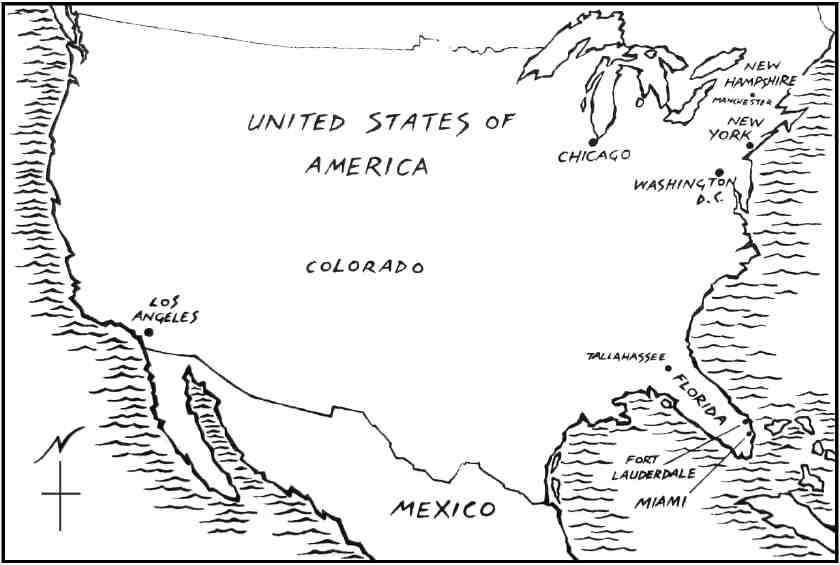
Jack Stanton is the governor of a state in the southern USA. He
wants to be President, and he wants Henry Burt on to help him.
At first, Henry is happy to work with Jack, but he begins to
worry when he sees that Stanton will do anything to win . . .
The author of Primary Colors is an American journalist. Althoug h
it is a fictional story, the author used his personal knowledge of a
real American President to write it. That is why he decided to
keep his name a secret. Primary Colors was made into a successful
movie, with John Travolta as Governor Stanton.
v
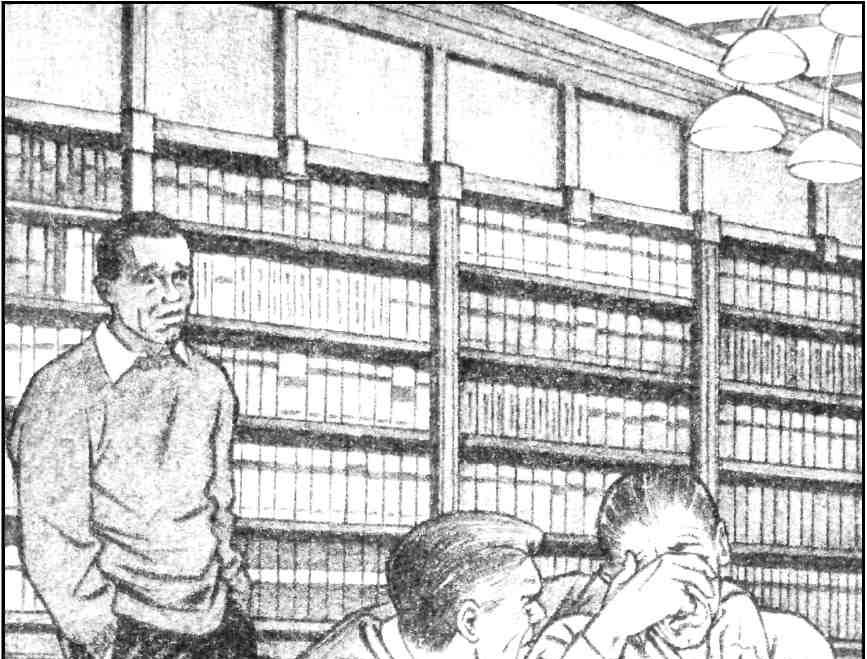
“This is Governor Jack Stanton,” sa id the teacher. “He’s now running
for President. Would you like to s ay a few words, Governor Stanton?”
Chapter 1 Governor Jack Stanton: The Best
The Stanton Handshake
- Henry, a disillusioned former political staffer, meets Governor Jack Stanton at a literacy program in Harlem.
- Stanton displays an uncanny physical charisma, using his left hand to create instant, intimate connections with strangers.
- Unlike other white politicians who prioritize Wall Street, Stanton's visit to Harlem signals a different kind of political focus.
- The Governor uses a personal story about his Uncle Charlie, a war hero who couldn't read, to empathize with adult students.
- Stanton's ability to show genuine emotion and physical affection toward the marginalized sets him apart from typical politicians.
- Despite his initial reluctance to return to politics, Henry is deeply intrigued by Stanton's unique brand of populist charm.
It’s actually his left hand that makes him so good. He might put it on your elbow to show you that he’s interested in you.
I’ll always remember the moment that I met Jack Stanton outside
the library in Harlem, New York City. My first thought was that
he looked strange in Harlem. Stanton is white and most of the
people who live in Harl em are black, like me.
“You’re the guy that I’ve been h earing about,” he said as he
shook my hand. All politicians are good at shaki ng hands but Jack
Stanton is the best. I’ve seen hi m do it two million times now and I
still don’t understand exactly how he does it. It’s actually his left hand
that makes him so good. He might put it on your elbow to show
you that he’s interested in you. He might squeeze you r shoulder
with it and tell you a joke. He mi ght just hold your wrist and look
into your eyes. I remember th at he squeezed my shoulder th at day
in Harlem, and then he was gone, shaking so meone else’s hand. I
followed Howard Ferguson into the library where a teacher began
to tell us about her program. She taught adults how to read.
Howard leaned over and whispered, “I’m glad you’re here, Henry.
Jack really wants you to work for him. He thinks you’re the best.”
I wasn’t sure that I wanted to work for Jack. I was tired of
politics. I had quit working for Senator William Larkin after six
years and I was happy with my job as a college teacher.
Still, there was something different about Jack Stanton. When
most white politicians arrive in New York City, they go to Wall
Street—that’s where the businessmen work and that’s where the
money is—but Jack Stanton had g one to Harlem instead. That
interested me.
The students were waiting for their reading lesson to begin.
“This is Governor Jack Stanto n,” said the teacher. “He’s now
running for President. Would you like to say a few words,
Governor Stanton?”
1
He smiled and said, “Not just yet,” in his sl ow, southern accent.
We watched the lesson. When it was over the students told the
Governor about themselves. The last student to speak was a
young man named Dewayne Smith. He we ighed at least three
hundred pounds.
“I failed in school because I couldn ’t read,” he said. “I kept going
to school but I still didn’t learn to read. I felt stupid as a rock and
nobody cared. Nobody said, ‘Dewayne, you can’t read, you need
help.’ I saw all the other kids reading books and it made me so sad.”
I looked at Jack Stanton. His face was red and there were tears
in his eyes. “Dewayne,” he said. “I am very grateful that you
shared that with us. Now let me tell you a story about my Uncle
Charlie. Charlie was a hero in World War Two. He saved twenty
American soldiers in a battle wi th the Japanese. When he came
home he was famous; the whole town had a big party for him.
People said. ‘Charlie, what are y ou going to do now?’ A rich man
offered to pay for him to go to college. Someone else offered hi m
a job as the manager of a bank. Everybody want ed to give
Charlie a job. Do you know what Charli e did?”
“No,” said Dewayne. “What did he do?”
“Nothing. He just lay on the sofa and sm oked his cigarettes.”
“Was he a little crazy because of the war?” asked a woman.
“No,” said Stanton. “It was because he couldn’t read.”
“What?”
“That’s right,” said Stanton. “H e couldn’t read and he was too
embarrassed to tell anyone. He was brave enough to be a hero in
World War Two but he wasn’t brav e enough to do what you people
are doing right now. When people ask me, ‘Jack Stanton, why do
you spend so much money on government programs to teach adults
to read?’ I tell them that it give s me a chance to meet real heroes.
People like you. I am very grateful you let me visit you today.”
They loved him. They shook hi s hand and put th eir arms around
2
him. He didn’t back away the way that most politician do. He
loved them just as much as they l oved him. I think that’s one of the
things that makes Stanton so special; he just loves people.
“He’s very good,” Howard Ferguson whispered to me. “Don’t
The Campaign Whirlwind
- Henry Burton visits Jack Stanton's busy campaign headquarters at the Regency Hotel, where the atmosphere is chaotic and high-energy.
- Henry discovers Stanton in a compromising situation with Ms. Baum, the teacher from the Harlem library, highlighting the candidate's personal indiscretions.
- Stanton demonstrates a manipulative charm, using his staff as excuses for his own failures to communicate with his wife, Susan.
- Despite Henry's hesitation to join the campaign, Stanton aggressively recruits him, dismissing his professional obligations as a teacher.
- The group makes a sudden, late-night departure for New Hampshire to manage political relations and meet Stanton's wife.
He put his hand on her shoulder then leaned over and whispered something in her ear. She smiled and walked away.
you want to work for him?”
Stanton walked up to us. “Whe re do we go now, Howard?”
“The Times offices. We have to hurry.”
Stanton looked at me and said, “H enry, can you meet us at the
Regency Hotel at eleven o’clock tonight?”
“Eleven o’clock?” It seemed very late.
“What’s the matter?” laughed Stanton. “Are you going to a
party?”
“No.”
“Then we’ll see you at the Regency at eleven.”
♦
Stanton had several rooms at the Regency and they were all busy.
There were a dozen campaign wo rkers talking on telephones,
typing on computers and eating sandwiches.
“Henry Burton!”
I turned and saw a man that I knew.
“It’s good to see you,” he said . “I’m glad you’re working for
Stanton too.”
“Well, I’m not sure that I’m going to . . .”
“He thinks you’re great, Henry. Just great! We’re going to win
this, you know. Jack Stanton is going to be the ne xt President of
the United States of America.”
“I hope so!” said a voice behind us.
We both turned around to see Jack Stanton. He had just
opened his bedroom door and was buttoning his shirt.
“Hello, Henry!” he laughed. “I’m glad you’re working for us.”
“Well, I’m not sure . . .” I stopped speaking because I saw
3
there was a woman in the bedro om with Stanton. She was
getting dressed too.
“Henry,” said Stanton, “you remember Ms. Baum don’t you?”
I did. She was the teacher at the library in Ha rlem. When she
had finished buttoning her blouse, she walked to the bedroom
door and said, “Well Governor. It was nice to . . .”
“Don’t you think that Ms. Baum has a great program there in
Harlem, Henry?” asked Stanton.
He put his hand on he r shoulder then leaned over and
whispered something in her ear. She smiled and walked away.
“Governor!” shouted one of the campaign work ers. “Your
wife is on the phone.”
He handed Stanton a pocket tele phone. Stanton took a bite
from a sandwich, then spoke into the phone. “Hi, honey . . . I
know and I’m sorry. I tried to call you from Harlem . . .
Tonight?” He put his hand over the phone. “Charlie?”
A little old man walked up to Stanton.
“Charlie,” said Stanton. “Did you forget about a meeting with
some people from the New Ha mpshire Democratic Party*
tonight?”
Charlie just smiled.
“Charlie!” Stanton put the phone to his ear. “Susan? I’m sorry.
Charlie forgot. I meant to call you fro m Harlem . . . Su san, liste n
. . . Su san ? Of co urse I lo ve you . . . Listen , honey, everything’s
going to be okay. I me an it. Susan? . . .”
* Most Americans who vote for President are members of one of the two main
political parties: the Democratic Party or the Republican Party. Before the final
election for President, there are smaller elections called primary elections in
every state. In the primary elections Americans vote for a politician who is a
member of their own party—the Democrats vote for Democratic politicians
and the Republicans vote for Republican politicians. The winners of these
primary elections then run against each other in the final Presidential election
that is held over the whole nation a few months later.
4
“Susan? I’m sorry. Charlie forgot. I meant to call you from Harlem . . .
Susan, everything’s going to be okay. I mean it. Susan? . . .”
He put the telephone do wn. “I’d better go to New
Hampshire. Where’s the airplane?”
“Teteboro Airport,” answered somebody.
“Okay! Let’s go! Let’s go! Are you coming Henry?”
“What?” New Hampshire was a long way from New York. I
wasn’t ready to travel.
Stanton went in the bathroom . When he came out again he
handed me a toothbrush and a comb.
“Is there anything else you need?”
“I have to teach tomorrow.”
“Tell them you’re sick. Let’s go.”
“I have all your clothes right here, Gove rnor,” said Charlie. He
was carrying a suitcase.
“Henry,” said Stanton. “This is my Uncle Charlie, the war hero.”
♦
Jack Stanton’s wife was waiting for us at Manches ter Airport in
New Hampshire.
“Susan Stanton,” she said as she shook my hand.
The Campaign Begins
- Susan Stanton emphasizes the critical importance of the New Hampshire primary and demands perfection from her husband.
- Henry Burton joins the campaign team as Jack Stanton begins his run for President of the United States.
- Campaign staffer Richard Jemmons expresses deep anxiety about potential scandals, suggesting they investigate their own candidate first.
- A journalist from the Los Angeles Times questions Stanton about a possible arrest during a 1968 anti-Vietnam War protest in Chicago.
- Stanton denies being arrested, claiming the police made a mistake and released him after a brief encounter.
- The campaign faces increasing scrutiny as the press begins to follow the candidate's every move through New Hampshire.
“I think we should investigate Stanton. That way we’ll know about the bad things he’s done before the press does.”
“Henry Burton.”
“I’m glad you’re here. Jack Stanton needs someone like you
because he doesn’t have a brain in his head!”
“Aw, honey,” said Stanton. He tried to put his arm on her
shoulder, but she pushed him away.
“Jack,” she said, “in the American primary elec tion, the first
state to vote is New Hampshire. It’s very important that you wi n
here in New Hampshire. But if you’re going to win the election
here in New Hampshire, you have to be perfect. You can’t tell
people you’ll meet them and then not do it.”
“Aw, honey,” said Stanton. “We wo rked hard in New York.
Henry and I went to a library in Harlem wher e adults were
learning to read. The teacher was . . .”
6
“She was what ?” said Susan.
“She was a wonderful teacher,” I said quickly.
“That’s right,” said Stanton. “S he was a wonderful teacher.”
We walked toward a waiting car.
“Are you going to work for us?” Susan Stanton asked me.
“What do you want me to do?”
“Help Jack. Help him run for President of the United States.
He’s going to win.”
Chapter 2 Trouble with the Press
Jack Stanton was the governor of a state in the southern United
States. The biggest city in the state was Mamm oth Falls. During
the first few months of the camp aign, I spent about half of my
time there.
My best friend in Mammoth Falls was Richard Jemmons. He
also worked for Stanton. He was very intelligent , very nervous,
very thin, and always worrying. He worried about scandals. He
used to call me several times a day.
“Did you hear anything, Henry? he asked one day. “I’m
worried that the press is going to find something.”
“What are they going to find?”
“That’s the problem. We don’ t know! Maybe drugs! Maybe
women! I think we should inves tigate Stanton. That way we’ll
know about the bad things he’s done before the press does.”
“We’re doing fine, Richard,” I said. “Stop worrying.”
But Richard was right to worry. Our problems started after
the first television debate in New Hampshire on January 17th.
When the debate was over I no ticed one of Stanton’s workers
talking to a tall journalist. She looked a little frightened, so I went
to see what was wrong.
7
“Hi.” I said.
“Mr. Burton.” said the journa list, “maybe you can help me.
Was Governor Stanton arrested during the Vietnam War*?”
The Vietnam War was something that we were wo rried about.
The Americans who had fought in it were the same age as
Stanton. But instead of fighting in Vietnam, Stanton had stayed in
America and protested against the war.
“I don’t know,” I answered. “I ca n ask him and tell you later.”
“All right.” He handed me a card that said Los Angeles Times.
I found Stanton with Susan and Uncle Charlie. He looked
nervous. “Let’s go, let’s go, let’s go!” he said. We went outside and
hurried across the snow.
The reporter was waiting for us by our van. “Governor
Stanton,” he said calmly, “were you ever arrested in a protest
against the Vietnam War ?”
“No,” said Stanton.
“Are you sure? ”
“I protested against the war. Everyone knows that.”
“But you weren’t arrested on Au gust 16, 1968, in Chicago
during a protest led by Abbie Hoffman?”
Stanton didn’t seem worried. “I wasn’t arrested. The police
stopped me and then let me go. They made a mistake.”
“So you weren’t arrested?”
“No. I was in Chicago visiting fr iends. I joined a protest. The
police made a mistake.”
We got into the va n and drove away.
That Saturday we drove through New Ha mpshire followed by
* In 1965 the United States sent American soldiers to help South Vietnam fight
against its communist neighbor, North Vietnam. But the American army had
very little success and by 1968, the wa r had become unpopular with the
American people. The Americans finally left Vietnam in 1973 and, two years
later, North Vietnam won the war.
8
two vans full of reporters. In a small town named Laconi a I
The Investigation Begins
- Governor Stanton faces intense media scrutiny following a Los Angeles Times report about a 1968 arrest in Chicago.
- Stanton's campaign team realizes they are 'doing their jobs blind' and need to uncover his past secrets before the press does.
- The staff debates the necessity of hiring a detective to investigate their own candidate to prepare for future scandals.
- Daisy Green and Henry Burton share a romantic moment while monitoring the fallout of the news coverage.
- Susan Stanton agrees to the investigation and recruits Libby Holden, a volatile but loyal old friend, to lead the search.
- Libby Holden arrives at the campaign office, boisterously confirming Stanton's past guilt while dismissing the Chicago incident as a minor issue.
She was an enormous woman with angry blue eyes and long gray hair. Everyone in the office stopped working to look at her.
watched Stanton at work, shaking hands with people and
listening to their problems. I watched an old woman put her
arms around him. “You remind me of Presiden t Kennedy,” she
said. “He came to Laconia too. You ’re not as thin as he was, but
you’re just as handsome.”
We were about to get back insi de the van when a reporter ran
up and said, “Governor Stanton, the Los Angeles Times says that
you were arrested during a protest against the Vietnam war in
1968.”
“Yes, I know,” said Stanton. “The police stopped me, but they
didn’t arrest me. They made a mistake.”
“The Los Angeles Times also says that you called a United States
Senator who was a friend of your s. You asked him to tell the
police to let you go.”
“I don’t know about that,” said Stanton.
♦
The next morning we had breakfast in the Stanto ns’ hotel room.
There was coffee and eggs and bacon.
“The Los Angeles Times story is terrible,” said Susan. “Jack
wasn’t a criminal.”
“No,” said my friend Richard, “but people think he was a
criminal.”
“People don’t care about that ki nd of thing,” said Susan.
“The press cares about that kind of thing,” said Richard, “so we
have to care about that kind of thing too. The problem is, we ’re
doing our jobs blind!”
“What are you talki ng about?” asked Susan.
Daisy Green, a thin, intelligen t young woman who worked as
one of Stanton’s advisors, answered. “I think Ri chard means that
we need to know more about Governor St anton, and not just the
9
good things. We need to know the bad things to o. That way we’ll
be more prepared to answer questions from the press.”
“You mean we need a de tective to investigate my husband?”
asked Susan.
“Yes,” said Richard.
My pocket telephone rang.
“Hello?”
“Henry!” I recognized the voice of one of Stanton’s campaign
workers. “I’m waiting for Stanton. He’s about to come out of a
church, but there are at least forty journalists here. They’ve all
read the Los Angeles Times story and they’re waitin g to ask him
about what happened in Chicago.”
“Okay, listen,” I said. “Go in and tell him the press is outside.
Tell him to act like he has nothing to hide, okay?”
“Thanks, Henry.”
I put my telephone away. “The press is waiting for him,” I said.
“They’re going to ask him about Chicago.”
“You see, Susan?” said Richard. “We need to know about
things like Chicago. We’re blind right now.”
♦
It was rainy and cold that evening when Daisy knocked on my
hotel door.
“Are you still awake?” She pushed past me, sat down on my bed
and turned on my TV. “The television in my room is broken.”
“Daisy,” I said. “I’m really tired.”
“Then go to sleep.”
I did. But when I woke up an hou r later, Daisy was lying next
to me, her hand on my chest.
“Stanton’s arrest in Chicago was on the news,” she said.
“Richard’s right. We need someone to investigate Stanton.”
Then she kissed me. It was our first kiss and it went on for a
10
long time. Finally she stopped and said, “I don’t think the Los
Angeles Times story will hurt Stanton.”
♦
The next morning Richard, Daisy, and I met with Susan Stanton
in her hotel room.
“Okay” Susan said slowly. “We’ll investigate Jack, but we’ll tell
him about it. And we’ll get Libby Holden to do it.”
“Libby Holden?” asked Richard.
Susan nodded.
“Is she okay? Is she out of the hospital?”
Susan nodded.
“Is she still crazy?”
Susan just smiled.
Chapter 3 Cashmere McLeod
Two days later I was back in th e campaign office in Mammoth
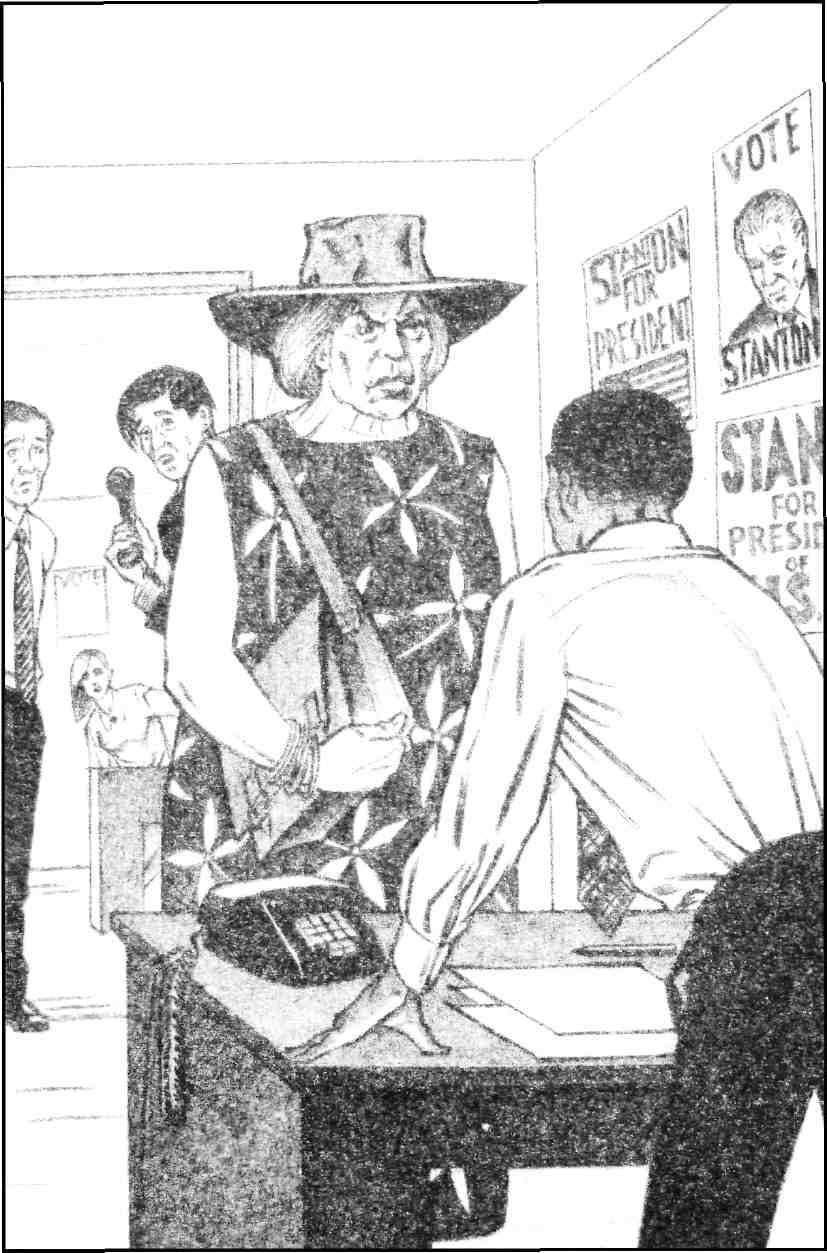
Falls when Libby Holden walked in. She was an enormous
woman with angry blue eyes and lo ng gray hair. Everyone in the
office stopped working to look at her. She stormed up to my
desk and shouted, “I’m HERE!”
“Hello, I’m Henry Burton.”
“Ah HAH!” she answered.
“Was Stanton arrested in Chicago?” I asked.
“OF COURSE he was!” shouted Libby.
“Did he ask a Senator to te ll the police to let him go?”
“Of COURSE he did! He’s guilty, guilty, GU ILTY! But we
don’t have to worry about CHICAGO ! Chicago is a LITTLE
The Cashmere McLeod Scandal
- Libby, a volatile campaign staffer, reveals that a woman named Cashmere McLeod is selling a story about an affair with Jack Stanton to a tabloid.
- The scandal escalates when it is revealed that McLeod possesses 'love tapes'—recordings of sexually explicit phone conversations with the Governor.
- Upon hearing the news of the tapes, Susan Stanton reacts with immediate violence, striking Jack across the face in their hotel room.
- Despite the private turmoil, the Stantons present a united front during a high-stakes television interview to deny the allegations.
- Jack Stanton attempts to discredit the source by mocking the tabloid's reputation for sensationalist and impossible headlines.
Susan stood up, raised her hand, and hit her husband hard across his face. It was a perfect shot and made an ugly noise.
problem. We have a BIG problem—Cashmere McLeod.”
“Who’s Cashmere McLeod?”
11
Libby was an enormous woman with angry blue eyes and long gray
hair. Everyone in the office st opped working to look at her.
“Jack Stanton’s lover!”
“His lover?”
“Yes, stupid, his lover! She’s going to tell the National Flash all
about Jack Stanton. The National Flash is going to pay her a
hundred and seventy-fiv e thousand dollars. Sh e’s working with a
lawyer named Randy Culligan on this.”
“Are you sure abou t this?” I asked.
“NO! I’m telling you this because I’m crazy. OF COURSE
I’M SURE!”
“When did this happen?” I aske d. “When did Stanton meet
her?”
“1989. Maybe it was 1988.” Sh e took a book out of her big
leather bag and quickly turned th e pages. “Here,” she said. “Jack
Stanton drove Cashmere McLeod home from a pa rty on the
night of April 12, 1989. He stayed at her house for an hour. What
do you think they did during that hour? Do you think they
PLAYED CARDS?”
♦
As one problem got better the ot her got worse. That Thursday
morning, just as people were st arting to forget about Chicago,
Cashmere McLeod’s picture appeared on the co ver of the
National Flash. I was in the hotel in New Hampshire when I saw
it. I was surprised at the phot ograph; Cashmere McLeod had an
odd nose and strange lips. The telephone in my hotel room rang
while I was reading the story.
“We have TROUBLE, Henry! We have big TROUBLE!”
“Good morning, Libby,” I said.
“She’s got tape recordings!”
“Who does?”
“CASHMERE MCLEOD!”
“Tape recordings of what?”
13
“Try not to be so STUPID! What do you think are on her
tape recordings? The Beatles? Sh e’s got tapes of Jack Stanton
talking to her on the telephone! LOVE tapes, Henry. They talked
about SEX!”
“What’s she going to do with them?”
“She’s going to play them for th e press tomorrow. It will be on
television! Come back to Mammot h Falls as fast as you can,
Henry. Go wake up Jack and Susan Stanton. Tell them that
Cashmere has love tapes, then ge t on a plane for Mammoth Falls.”
“You think I should tell them now?” I said. “They’re going to
be interviewed on television in three hours. Maybe I should wait
until they’re finished.”
“BRILLIANT, Henry. You’re BRILLIANT. Do you want
someone to tell Jack a nd Susan that Cashmere has sex tapes while
they’re on TELEVISION? In front of MILLIONS OF
AMERICANS?”
I went down the hall and knock ed on the Stantons’ door.
Susan was sitting at a table drinking t ea and reading a newspaper.
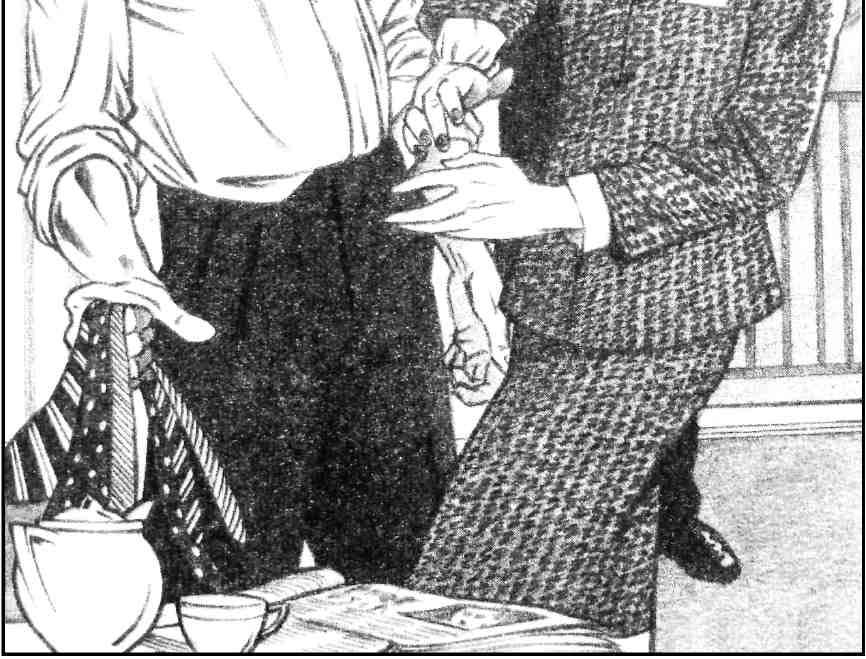
Jack was trying to decide which tie to wear.
“Governor,” I said. “I just talked to Libby. She says that
Cashmere McLeod has tape recordings of you an d her talking
on the telephone. She’s going to play them for the press
tomorrow.”
Susan stood up, raised her hand, and hit her husband hard
across his face. It was a perfec t shot and made an ugly noise.
Stanton was still for a moment, th en he reached up and gently
touched the skin on his cheek.
“I’m sorry,” he said.
“Henry,” said Susan, “would you please excuse us?
♦
I saw the interview on television.
14
Susan stood up, raised her h and, and hit her husband
hard across his face.
“Were you arrested in Chicago during the Vi etnam War?”
asked the interviewer.
Susan and Jack looked calm. Jack said, “I protes ted against it
but I never broke the law. I was never arrested.”
“And what about Cashme re McLeod, Governor?”
Jack looked shocked. “You don’t believe what you read in the
National Flash, do you? I mean look at the rest of the paper:
‘GIANT HORSES LIVE ON THE MOON!!’ I don’ t think
the American people are really in terested in that. I think they’re
interested in a be tter government and a better future.”
Susan smiled and held his hand.
“So you deny being Cashmere McLeod’s lover?” asked the
interviewer.
“Yes, I do,” said Stanton. He looked angry now. “It never
happened. My wife and I have had some problems in the pa st,
The Cashmere McLeod Tapes
- Henry and Libby visit a technical expert to analyze televised tape recordings of Governor Stanton's alleged affair with Cashmere McLeod.
- The recordings appear to capture Stanton expressing love for McLeod and discussing the need for secrecy during his campaign.
- Libby expresses intense frustration and disbelief at Stanton's perceived stupidity for allowing himself to be recorded.
- Henry recognizes a specific phrase about calling from Harlem that Stanton actually said to his wife on the day they first met.
- The team realizes the tapes have been manipulated by splicing real conversations with Stanton's wife into a fake dialogue with McLeod.
- Despite the discovery of the forgery, Libby worries that the campaign cannot prove the tapes were altered to the public's satisfaction.
“I remember!” I shouted. “He was talking to his wife!”
but they’re over now.”
“That’s right,” said Susan. “The American people have nothing
to worry about with Jack Stanton. He’ll be a wonderful President.”
♦
I flew from New Hampshire to Mammoth Falls. When I walked
into Libby’s office she said, “H ENRY! We’ve got to move. We’re
going to a friend’s house to watch Cashmere Mc Leod play her
tape recordings. Come on!”
“Who’s your friend?” I asked when we were in her car.
“He’s an electrician. He migh t be able to help us with
Cashmere McLeod.”
Libby’s friend lived in a house in the forest. He was a friendly-
looking man with long hair and a beard. His house was full of
tape recorders, cameras, and televisions. We sat down to watch
Cashmere McLeod while he made a tape recording.
Cashmere appeared on the televisi on next to her lawyer. She
16
was a short, heavy woman, an d she wore too much make-
up.
“Governor Stanton was my lover,” she said. Her voice
sounded like a mouse. “I have tape recordings to prove it.”
Her lawyer coughed and said, “I will now play a tape
recording that Miss McLeod made in November.”
He pressed a button on a tape r ecorder. I recognized Stanton’s
voice.
♦
JACK: We’re going to have to stop this for now.
CASHMERE: But you sa id you loved me.
JACK: I just have to be carefu l, honey. I’m spending almost all
of my time in New Hampshire now.
CASHMERE: You said I could come to New Ha mpshire and
see you.
JACK: I’ve got to go.
♦
Libby turned to her friend and said, “Is that a real tape recording?
Did they change anything?”
“No. That was a real tape recording.”
“How could Jack be so STUPID?”
We looked back at the television . Cashmere’s lawy er was holding
up another tape recording. He said , “This is one from last summer.”
We heard the voice of Jack Stanton again.
♦
JACK: Hi, honey
CASHMERE: You said you would call me yesterday
JACK: I know and I’m sorry. I tried to call you from Harlem.
CASHMERE: Don’t you lo ve me any more?
17
JACK: Of course I love you. Honey, everything’ s going to be
okay. I mean it.
♦
“He was calling from a pocket te lephone on that one,” said the
electrician. “It’s easy to change a recording of a conversation on a
pocket phone. I’ll have to listen to it again.”
“How could he be so stup id?” asked Libby again.
My pocket telephone r ang. It was Richard. “Did you see it?”
he asked. “What did you think?”
“I . . . There was something,” I said. “There was a sentence or a
word in the tape recording th at reminded me of something. Hey,
could you play that again?”
“Who are you talking to?” asked Richard.
“Richard, I’ve got to go.”
I put my telephone away.
“The second tape recording,” I said.
The man pressed a few buttons and we listened again.
♦
JACK: Hi, honey.
CASH MERE: You said you would ca ll me yesterday.
JACK: I know and I’m sorry I tr ied to call you from Harlem.
CASHMERE: Don’t you love me any more?
JACK: Of course I love you. Honey, everything’s going to be
okay. I mean it.
♦
“Play it again,” I said.
“What is it, Henry?” asked Libby.
“There’s something . . . Again!”
“I know and I’m sorry. I trie d to call you from Harlem. ”
18
That was it. I knew what it was.
“Of course I love you. Honey, everything’s going to be okay. I
mean it. ”
“I remember!” I shouted. “He was talking to his wife!”
Libby gave me a strange look. “What?”
“It was the day I first met Jack Stanton last summer in New
York. In Harlem. Later that night his wife calle d and Jack said,
‘I’m sorry. I tried to call you from Harlem.’ Th ey changed the
tape! Everything’s okay!”
“No, it’s not,” said Libby. “We can tell the pr ess that they
changed the tape recordin g, but we can’t prove it. They won’ t
believe us. Unless . . .”
“Unless what?” I said.
She didn’t answer.
♦
“I don’t know why Cashmere Mc Leod and her lawyer were so
stupid,” said Libby. “They had enough real tape recordings of Jack
Guns and New Scandals
- Libby takes Henry to a lawyer's office where she uses a large gun to intimidate Randy Culligan into confessing to tape manipulation.
- The forced confession successfully neutralizes the Cashmere McLeod scandal in the national press.
- A new crisis emerges when Fat Willie, a local restaurant owner, informs Henry that Governor Stanton has impregnated his teenage daughter.
- Henry suspects Willie approached him with this sensitive information specifically because they are both Black.
- Despite the looming threat of this new scandal, Stanton remains jovial and oblivious during a flight to a Democratic meeting in Los Angeles.
“YES I AM,” Libby shouted back. “Crazy people can do what they want! They don’t get in trouble “
Stanton and Cashmere McLeod. They didn’t have to change
anything.”
“Where are we going?” I asked. It was later th at same day and
we were driving down the highway in Libby’s car.
“I can’t tell you,” she said.
We parked in front of a la rge, old office building.
“Where are we?” I asked.
“Don’t ask questions,” she said. “L isten, Henry. I’m going to go
into that building and do something crazy. It’s probably better if
you don’t go with me.”
“I’ll go,” I said.
We walked into the building and went up some stairs. Libby
knocked on a door that said , “LAW OFFICES OF RANDY
CULLIGAN.” When there was no answer, she stepped back and
19
kicked the door open.
Randy Culligan, Cashmere McLe od’s lawyer, was sitting
behind a desk talking on the tele phone. He looked up and said
“What the . . .”
“HI, RANDY!” said Libby. “Are you talking to Cashmere?
Let me say hi!”
“No . . .” said Culligan. He put the phone down.
It was a small, dirty office. On the wall behind the desk, there
was a photograph of Culligan shak ing hands with Jack Stanton.
Both men were smiling.
Libby sat down in a chair. “I didn’t know you were an
electrician, Randy.”
“I don’t know what you . . .”
“You’ve been making tape reco rdings of Governor Stanton’s
telephone conversations.”
“I have not. Why would I do that?”
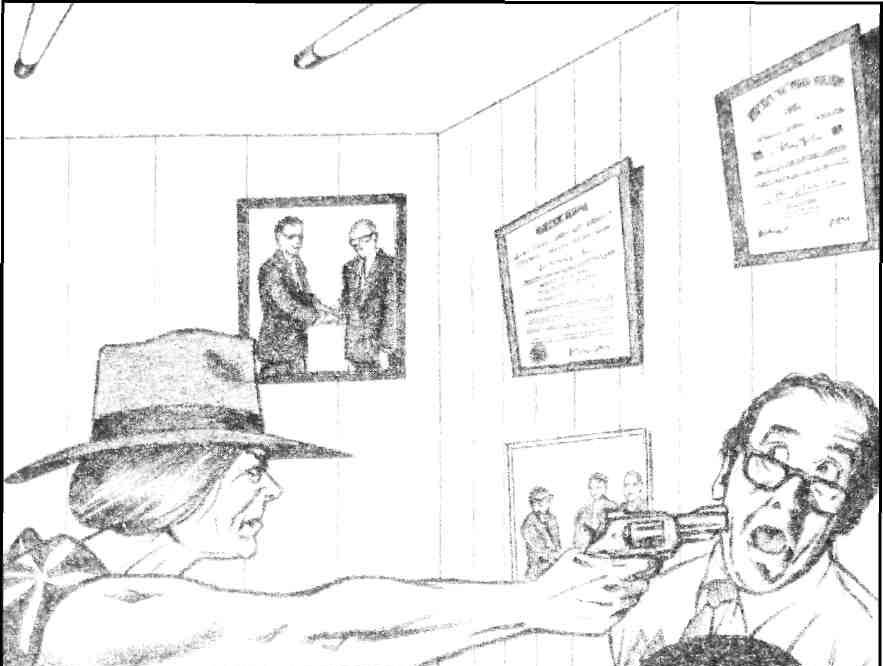
“I’m not in the mood to argue” said Libby She reached into
her leather bag and pulled out a big gun. “Randy ,” she said
calmly, “I want you to write a letter to the pres s. I want you to
tell them the truth. Tell them that you changed those tape
recordings.”
Randy looked shocked. “You ’re crazy!” he shouted.
“YES I AM,” Libby shouted b ack. “Crazy people can do
what they want! They don’t get in trouble “
Randy looked at me. “You’ll get arrested too,” he said.
“No, he won’t,” said Libby. “H e didn’t know I had this gun.
Now, are you going to write that letter?”
She pointed the gun straight at him. His eyes grew wide—it
really was a big gun.
“OKAY!” he said. “O kay, okay, okay!”
“Thank you, Randy,” Libby sm iled. “That’s very wise.”
20
She pointed the gun straight at him. His eyes grew wide.
“OKAY!” he said. “Okay, okay, okay!”
Chapter 4 Fat Willie
Two days later Randy Culligan’s letter appeared in almost all of
the newspapers in America. Af ter that, the Cashmere McLeod
scandal was not such a big problem for us.
A few days after Cashmere McLeod’s television show, I was
back in my office in Mammoth Falls. I was getting ready to fly to
California for a Democratic meeting in Los Angel es and I had a
lot to do. My mother and father lived in Los Angeles, and I
wanted to have time to visit them.
One of Stanton’s campaign work ers opened the door and said,
“Henry, there’s a large black ge ntleman named Mr. McCollister
here. He says he want s to talk with you.”
“What does he want?”
“He won’t tell me. But he says he ’ll kick down the door if you
don’t see him right now.”
When McCollister came in I recognized him immediately. He
was Fat Willie. He owned the Governor’s favorite restaurant in
Mammoth Falls. I had eaten ther e many times and I had met Fat
Willie’s wife and his pretty te enage daughter. Today, he looked
worried.
“What can I do for you, Mr. McCollister?” I asked.
“It’s about my daughter Loretta . . .”
“Yes?”
“She’s going to have a baby a nd she says Jack Stanton is the
father.”
♦
I couldn’t talk to Stanton on th e airplane to California because
Susan was sitting next to him. He was in a good mood during
the flight. He sang songs, told j okes, and cheated at cards while I
worried. We had real problems if Jack Stanton was the father of
22
that baby. I didn’t unders tand why Willie had told me about it. I
supposed it was because I was black like him.
My mother and father were wa iting when we landed at Santa
Monica Airport in Los Angeles. I introduced them to Stanton.
“Your son is the best,” he said.
Scandal and Blood Tests
- Henry informs Governor Stanton that Fat Willie's teenage daughter is pregnant and naming the Governor as the father.
- Stanton's initial reaction to the news is a frustrated lament about his lack of luck rather than a direct denial.
- During a televised debate in New Hampshire, Lawrence Harris attacks Stanton's character, questioning if a man plagued by scandals is fit for the presidency.
- Despite losing the New Hampshire primary to Harris, Stanton remains a strong contender and returns home to Mammoth Falls.
- Stanton arranges a secret blood test in Grace Junction to prove he is not the father of the girl's baby.
- Henry spends time with Stanton's mother, who remains fiercely confident that her son will become the next President.
He turned and hit the wall. 'I just don’t have any luck, do I?' he said.
When we were in the airport bui lding, I followed Stanton into
the men’s room.
“Governor,” I said when we were alone.
“They’re great,” said Stanton. “Your parents are just great!”
“Governor.”
“What is it?” He could see that I was worried.
“Fat Willie came to my office this morning. His daughter is
going to have a baby. She says that you’re the father.”
He turned and hit the wall. “I just don’t have any luck, do I?”
he said. “Will Fat Willie tell the press?”
“I don’t know.”
“I just don’t have any luck.”
♦
The Democratic meeting in Los Angeles did not go well. Most of
the people who came seemed more interested in their clothes
than in Stanton. Stanton didn’t seem to care. He didn’t shake
many hands that night.
We flew from Los Angeles to New Hampshire. It felt cold
after California, so cold that it hurt. I went to the hotel
and slept. In the late after noon, Stanton knocked on my
door.
“Okay, Henry,” he said . “We’ve got to call Willie. You make
sure no one comes in while I’m talking. Where’s Susan?”
“Meeting with some people at a hospital.”
“Good.” He sat down and picked up the telephone. “Willie?”
he said into the phone. “How ar e things? . . . Look, I know this
23
must be just awful for you. We’re old friends Willie and I’m going
to help you . . . No Willie, I am not the father . . . Well, she’s a
teenager. You know how teenagers are. I’ll be back in Mammoth
Falls next week and we’ll talk then.”
He hung up and stared at the wall.
♦
The last debate in New Hamp shire was held just a few day s before
the New Hampshire prim ary election. I watc hed it on television.
Stanton did well until the end wh en somebody asked, “What do
you think the American people want from a President?”
One of the other politicians in the debate, Lawrence Harris,
looked at Stanton and said, “I think the American people want
someone honest. Governor Stanton is intelligent an d kind. But is
a man who has to fight off s candals the best man the Democrats
have? I don’t think he is.”
♦
The New Hampshire primary el ection was on February 17th.
Lawrence Harris won, bu t Stanton got a lot of votes. We all flew
back to Mammoth Falls feeling very tired.
Early the next morning, Stant on knocked on the door of my
apartment. “Wake up, Henry! Wake up! We’re going for a drive to
Grace Junction.”
“Why are we going to Grace Junction?”
“My mother lives there. We’ll visit her and we’ll see the
countryside. Come on!”
When we got into Stanton’s car, Uncle Charlie was sitting in
the back. We drove south for about thirty miles, then turned west
onto a smaller road. When we were about ten miles from Grace
Junction, Stanton said, “H enry, I want you to vi sit my mother
while I go over to Doctor Hastings’ office for a blood test.”
24
“Why are you getting a blood test ?” I asked. “Is it because of
Fat Willie’s daughter?”
“Yeah. I want to prove that I’m not the father of her baby.”
Stanton drove up to a small hous e and got out of the car. His
mother came out and shouted, “H ooray! Hooray! You did great
in New Hampshire.”
“We did okay in New Hampshire, Momma,” said Stanton.
“We didn’t win.”
“You’re going to win the big one,” she said. “My boy is going
to be the next President of the United States!”
“Momma, I’ve got to go see Doctor Hastings,” said Stanton.
“Uncle Charlie and Henry will stay here with you.”
“I’ll come with you, Go vernor,” said Uncle Charlie. “I ha ve
some business with Jerr y Conway He lives near Doctor
Hastings.”
When Jack and Uncle Charlie were gone, Momma Stanton
and I went inside.
“Do you have any pictures of Jack’s father?” I asked.
“Yes,” she said. She showed me an old photograph of a young
man in a soldier’s uniform.
“What was he like?”
“Oh, he was wonderful. Will St anton was wonderful. We met
during World War Two when I went up to Kansas City to visit
Pressure and Political Rivals
- Governor Stanton denies paternity of a teenager's baby but undergoes a blood test to confirm the results.
- Henry and Howard are tasked with intimidating Fat Willie to ensure his daughter retracts her claim against the Governor.
- The interaction with Fat Willie leaves Henry feeling morally compromised and physically ill.
- Stanton’s campaign suffers significant losses in Maine, South Dakota, and Colorado to Lawrence Harris.
- The political landscape shifts as former Florida Governor Freddy Picker unexpectedly returns to public life to support Harris.
Again Fat Willie looked at me, and again I looked away. Howard and I stood up and got in the car. I felt sick.
Jack’s Uncle Charlie. We fell madly in love and got married the
next week. Then he and Charlie went off to the war. Jack was
born after his father was killed in the Pacific War at Iwo Jima.”
♦
Half an hour later Stanton returned.
“Okay,” he said. “I’ll take you and Momma to lunch at the
Florida Restaurant.”
“Where’s Uncle Charlie?” I asked.
25
“Oh,” laughed Stanton. “He’s still arguing with Jerry Conway.”
“Governor” I whispered so that Momma couldn’t hear. “Did
you get the blood test?”
“Yes,” he said, “but we won’t have the results for a few weeks.
Don’t worry Henry, I’m not the father of that baby.”
I wanted to believe him.
“Listen, Henry,” he said as he put his hand on my shoulder. “I
want you and Howard to go and talk to Fat W illie about this
tomorrow.”
“Why do I have to go? Why can’t Howard do it alone?”
“Because Fat Willie went to you. He didn’t talk to anybody else.
He went to you. Now, I want you and Howard to make
him understand that I am not the father. Make hi m understand that
his daughter made a mistake. I wa nt you to frighten him a little.”
♦
The next morning Howard came to my office. Together we
walked to his car.
“You drive,” he said.
We found Fat Willie outside his restaurant cl eaning some
tables and chairs. He smiled when he saw me, but he stopped
smiling when he saw Howard.
“Morning,” he said nervously.
“Willie,” I said. “This is Howard Ferg uson. He works for
Governor Stanton too. C ould we sit and talk to you for a minute?”
“Sure,” said Willi e. “Do you want anything? Coffee?”
“No thanks,” I said.
We sat down at one of the tables.
“Mr. McCollister,” said Howard . “Governor Stanton is very
worried about what people will say if they think he is the father
of your daughter’s baby. The Governor has en emies who might
use this story against him. He w ants your daughter to think about
26
“Mr. McCollister” said Howard. “Governor Stant on is very
worried about what people w ill say if they think he is th e
father of your daughter’s baby.”
who the real father is. Your daughter is a teenager, Mr.
McCollister. Sometimes teenagers say things that aren’t true.”
Fat Willie looked at me. He wanted me to say something, but I
didn’t. Instead, I looked down at the table.
“Now,” said Howard. “Has your daughter told any of her
friends about this?”
“No,” said Fat Willie. “I told her not to.”
“Good. Remember, the Governor is your friend. He is going
to help you and your daughter, bu t you must not say anything to
anybody. Do you understand?”
Again Fat Willie looked at me, and again I looked away.
“Thank you for your ti me,” said Howard.
Howard and I stood up and got in the car. I felt sick.
Chapter 5 Lies on the Radio
We lost the primary election in Maine, and we lost in South
Dakota. We hoped to do better in Colorado, but Lawr ence Harris
did some wonderful television shows in that state and he won. It
seemed that Harris was going to win everywhere.
“What are we going to do about Harris?” as ked Richard
Jemmons. “What are we going to do?”
We went to Florida withou t any answers. In Florid a, Freddy
Picker joined Harris’s campaign. Twenty years earlier Picker had
been the Governor of Florida. He had been a very popular
governor and many people wanted him to run for President, but
in 1978 he had quit politics. Nobod y knew why. Now he was
back.
I watched Harris and Picker together on tele vision. „I am
very proud,” said Harris, “that Fred Picker has joined my
campaign.”
28
Freddy Picker stood up and looked at the journalists. He said,
“You guys are still ugly.”
“Governor,” asked a blonde woma n who was not ugly. “Why
have you decided to return to politics?”
“Well,” said Picker. “I think we need to get serious about this
Scandals and Sudden Shifts
- Freddy Picker emerges as a popular and charismatic new threat to Jack Stanton's presidential campaign.
- A heated radio confrontation between Stanton and Senator Harris ends abruptly when Harris suffers a serious heart attack.
- Stanton expresses deep guilt over Harris's condition and briefly considers pausing his campaign.
- Henry is confronted by a distraught Susan Stanton regarding his role in intimidating Fat Willie.
- The tension between Henry and Susan culminates in an unexpected and brief romantic encounter.
- The campaign team relocates to Washington, D.C., as the political landscape continues to shift.
She stepped inside and hit me across the face like I had seen her do to her husband.
campaign. I think that Senator Harris is th e only serious
politician running for President.”
“What about Jack Stanton?” aske d another reporter. “Is he a
serious politician?”
“Well,” said Picker, “he has serious hair.”
The journalists laughed.
“Look,” continued Picker, “I’m sure that Jack Stanton is a
good man. It’s just that Lawrence Harris is a wonderful man.”
My pocket te lephone rang.
“Henry?” It was Daisy. “W e have a new problem.”
“What problem is that, Daisy?”
“People love Freddy Picker.”
♦
Stanton knew that he had a new problem and he began to
campaign harder in Florida. On e afternoon, Stanton was talking
to a local radio station on his te lephone while we were riding in
the van. I had a small radio next to my ear and could hear him
telling the interviewer about Momm a’s favorite movie. Suddenly,
the interviewer said, “Governor, you won’t believe this. We have
Senator Harris on the telephone. Senator Harris, does yo ur
mother have a favorite movie?”
“My mother is dead,” said Harris coldly.
“Oh, I’m sorry . . .”
“I just called because I think Jack Stanton shou ld be ashamed
of the way he’s lying to the people here in Florida.”
“What do you me an?” said Stanton.
29
“I mean, why don’t you tell th e truth? You say you weren’t
arrested in Chicago. You say y ou didn’t know Ca shmere McLeod.
You just lie and lie and lie! Why don’t you . . . ah.” He coughed.
“Ah . . . excuse me.”
He didn’t say anything else.
When the radio interview was over Stanton aske d, “Did you
hear? I wonder what happened to Ha rris. Do you think he’s okay?”
He wasn’t okay. We were b ack in Mammoth Falls when we
learned that Lawrence Harris had become very sick while he was
talking to Stanton on the radi o. Something was wrong with hi s
heart, and he was in the hospital. The doctors thought that he
might die.
♦
I went to see Stanton with Richard Jemmons. We were walking
up the steps to Stanton’s office when Susan Stan ton walked out
of the door with her arm around a woman—Fat W illie’s wife. I
could tell that both women h ad been crying. When Susan saw
me, her eyes turned angry and cold. I was so shocked that I
couldn’t speak. I just watched them walk by.
“Who was that?” asked Richard.
“I don’t know.”
“You’re lying, Henry,” he said. “You’re getting like Stanton. Is
there another scandal that I don’t know about?”
“Of course not, Richard ,” I said, but he knew it was a lie.
When we went into Stant on’s office, Stanton looked ve ry
unhappy. “Harris is in the hospital because of me,” he said.
“When I was talking on that radio show, I made Harris so angry
that it hurt his heart. I’m going to stop the campaign.”
“We can’t stop the cam paign,” said Richard.
“Just for a few days.”
♦
30
Late that night I was talking to Daisy on the telephone.
“I wish I was there with you, Henry,” she said.
“I wish you were here too.”
There was a knock at my door.
“Somebody’s here. I’ll call you later.”
“If it’s Jack Stanton, it’ll be a lot la ter” she said.
But it wasn’t Jack; it was Susan.
“Aren’t you going to invite me in?” she said.
She stepped inside and hit me across the face like I had seen
her do to her husband.
“How could you do that?” she sa id. “How could you go with
Howard Ferguson to try to fr ighten Fat Willie like that?”
Suddenly she started to cry. Sh e put her arms around me, then
turned her face toward mine and kissed me. Oh no, I thou ght,
then I returned her kiss.
She got dressed and left before the sun came up. She didn’t say
anything at all.
Chapter 6 Honest Freddy Picker
“It’s strange to be back here,” said Richard Jemmons.
“Why?” asked Daisy. The three of us were sitting at a table
in a Mexican restaurant in Wa shington, D.C. Daisy looked
A New Rival Emerges
- The Stanton campaign faces internal frustration over a lack of momentum while waiting for Lawrence Harris's health status.
- Concerns persist regarding a potential paternity scandal involving Fat Willie’s daughter and its impact on Stanton's reputation.
- Lawrence Harris officially withdraws from the race, and his wife endorses Freddy Picker to take his place.
- Freddy Picker’s sudden entry into the race creates a new, unpredictable challenge for the Stanton team.
- Stanton orders an investigation into Picker’s mysterious 1978 retirement from politics to find potential leverage.
- Picker remains vague during television interviews, citing 'personal problems' as the reason for his long absence from public life.
She started to cry. Freddy Picker appeared next to her. He was crying too.
wonderful. It was the first time I had seen her in a skirt.
“In Washington it’s just politics, politics, and more politics.
That’s all anybody talks about. My taxi driver today knew more
about Jack Stanton than I do! Po litics is the only hobby in this
town! Everybody’s talking about politics but us.”
“What do you mean?” I asked.
“I mean we’re not doing anything. Stanton isn’t doing
anything. We’re just sitting here waiting to lose the election. All
because Lawrence Harris is in the hospital.”
31
“Did you hear what that journalist from The Boston Globe
asked?” said Daisy.
“No,” I said.
“She asked Stanton if he had apologized to Lawrence Harris.”
“What did Stanton say?” asked Richard.
“He said,’ Apologize for what?”
“That was smart,” I said.
“It would be smarter if he got back to work,” said Richard.
“They’re having primary election s in Michigan and Illinois
very soon and we’re going to lose them!”
♦
After lunch Daisy and I went to her apartment. She turned on all
the lights. I turned them off and kissed her.
“Why didn’t you tell me about Fat Willie’s d aughter?” she
asked some time later.
“Stanton told me not to tell you,” I said. “He wa s afraid that
you might tell Susan. He doesn’t want her to know. He says he’s
not the father.”
“Do you believe him?”
“I’m not sure. I mean, he did have his blood tested.”
“Do they know the re sult of the test?”
“No, not for a couple of week s” I said. “But Stanton doesn’t
seem worried.”
“Even if Stanton’s not the father, the girl c ould tell her
friends,” said Daisy. “That woul d be bad enough. We can’t have
another scandal. Not af ter Cashmere McLeod.”
♦
Stanton won the elections in Illinois and Michigan. On the same
day as the elections, Lawrence Ha rris’s wife made a speech on
television.
32
“First I want to thank the Amer ican people for all the cards
and letters that you’ve sent my husband,” she said. “L awrence is
still in the hospital and it’s obvious th at he will not be able to
continue his campaign for Presiden t. For that reason I have asked
Freddy Picker to continue the campaign for him. Both Lawrence
and I love Freddy Picker. He un derstands what his c ountry needs
and he is honest.”
She started to cry. Freddy Picke r appeared next to her. He was
crying too.
“I hope you’ll excuse me,” he said as he wipe d the tears from
his eyes. “I am very sad about what has happen ed to Lawrence. I
love him like a brother and when Mr s. Harris asked me if I would
continue his campaign, I said yes. I think Senator Harris was doing
something important for America an d I want to continue that.”
♦
We had a meeting that afternoon. Stanton, Rich ard, and Daisy
were all there.
“Okay,” said Stanton. “The firs t thing we have to do is start
campaigning again.”
“What about Picker ?” asked Daisy.
“What about him? ” said Richard.
“We don’t know anything about him. Why did he quit po litics
in 1978? Did he do so mething wrong? Was he afraid of a scandal?”
“We don’t know,” said Stanton. “In 1978, when he was
Governor of Florida, he made a speech and said that he was
quitting politics. He di dn’t say why. It was very strange.”
“What’s he been doing since 1978?” I asked.
“He’s been living on his farm near Tallahassee, Florida.”
“I think he did something wrong and was afraid of a scandal,”
said Richard.
“Well,” said Stanton. “I’ll ask Libby to investigate him.
33
♦
The next morning, Fr eddy Picker was interv iewed on television.
Richard Jemmons and I watched together.
“Governor, why did you quit politics in 1978?” asked the
interviewer.
“Well,” said Picker, “it was a lot of things. It was . . . Well, I was
a younger man then and . . . I had some person al problems.
Family problems.”
Scandals and Secrets
- Freddy Picker gains public trust by confessing a personal failure, making Stanton's reputation for dishonesty look worse by comparison.
- A new scandal emerges as Kendra Mason claims Governor Stanton is the father of Fat Willie's teenage daughter's baby.
- Following a loss in the Connecticut election and the departure of key staff, Susan Stanton personally asks Henry to stay with the campaign.
- Blood tests eventually clear Stanton of the paternity charges, providing a brief moment of relief for the campaign team.
- Libby uncovers a potential bribery scandal from Freddy Picker's past involving a construction company and a state senator.
- The campaign shifts focus toward investigating Picker's history in Florida to find leverage against his rising popularity.
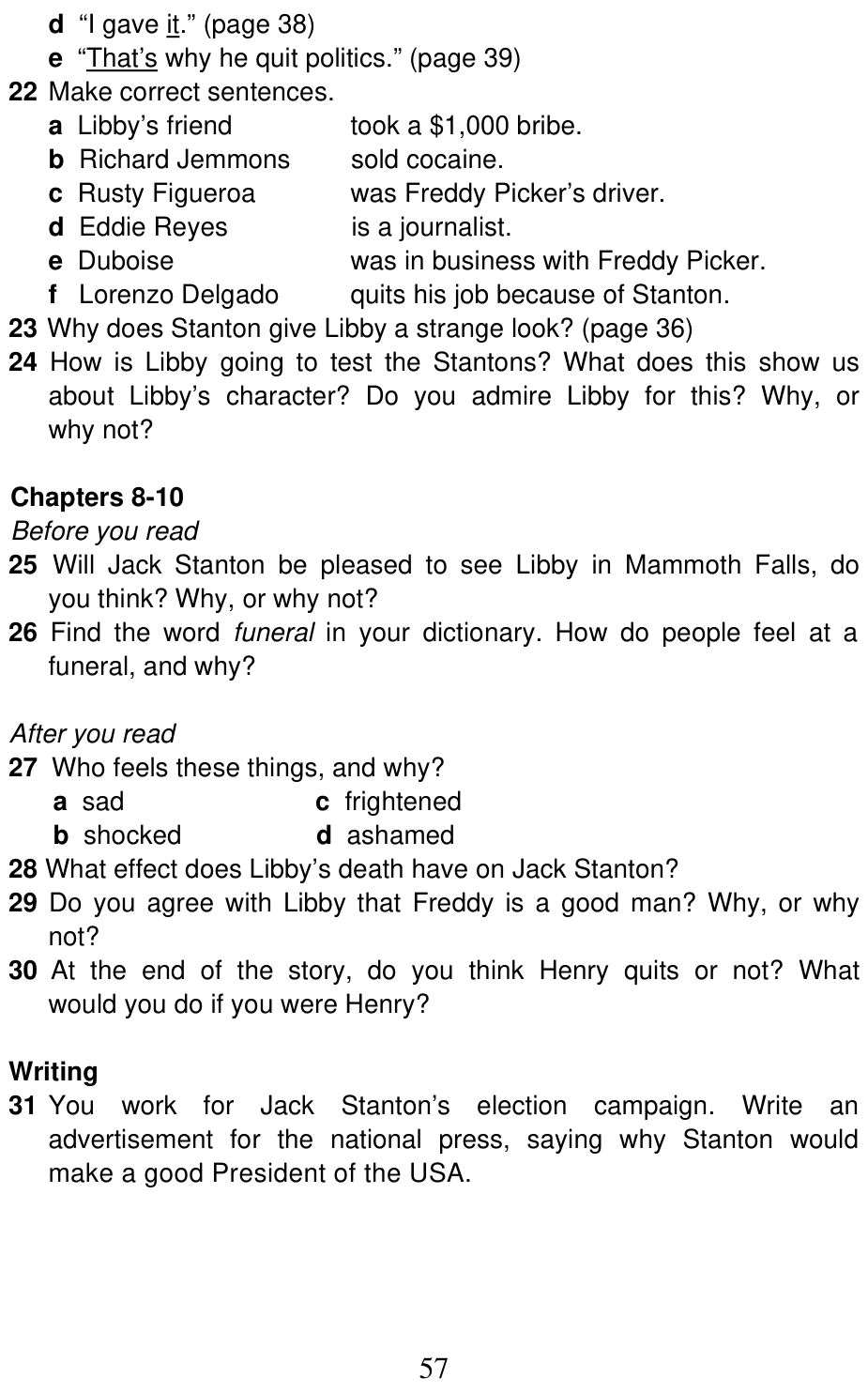
“Picker just told us his most embarrassing secret, on television! The American people are going to think that he’s the most honest man in the world.”
“I know this isn’t easy for yo u to talk about,” said the
interviewer.
“No, it isn’t, but I have to be honest with the American people.
When I was Governor of Florida, I didn’t have time for my wife
and children and my wife—well, she fell in love with another man.
I quit politics so that I could spen d more time with my two sons.”
Richard turned and l ooked at me. “Henry, we ’re in big trouble.”
“Why?”
“Picker just told us his mo st embarrassing secret, on television !
The American people are going to think that he’s the most
honest man in the world. And those same Am erican people think
Jack Stanton just tells lies!”
♦
Libby stormed into my office that afternoon.
“I DON’T BELIEVE WHAT YOU DID!” she shouted.
“What did I do?”
“You and Howard went to frighten Fat Willie!”
“I had to” I said. “The Governor told me to.”
“Really? Yeah, well, the Governor has another problem!”
“What?”
“Kendra Mason.”
“Who is Kendra Mason?”
34
“Quit asking questions. LISTEN TO ME! Kend ra Mason
goes to school with Loretta Mc Collister, Fat Willie’s daughter.
And Kendra Mason now knows that Loretta is go ing to have a
baby and that Governor Stanton is the father.”
“Is he the father?”
“I don’t think so” said Libby, “but that doesn’t matter because
Kendra Mason is going to te ll the press that he is!”
Chapter 7 Bribes and Drugs
Things got worse. Kendra Mason did talk to the press.
“STANTON FATHER OF TEENAGER’ S BABY!” said
the New York Post. Then Stanton lost the election in Connecticut.
Daisy and Richard both quit wo rking for him, and I was
thinking about quitting too.
One night in New York, Susan ca me to my hotel room. It was
the first time I’d been alone with her since that strange night
when she had knock ed on my door.
“I came to ask you not to leave,” she said. “I know things
aren’t going well. I know you mu st be lonely now that Richard
and Daisy are gone. But, Henry, if Jack Stanton is going to be the
next President, we need you to help.”
“Does Jack need me or do you need me?”
“I’m sorry about the other night,” she said.
“Why did you do it?” I asked. “Did you want to or was it to
hurt Jack?”
“Listen, Henry, Jack and I both need you. Will you promise to
stay until the end of the election?”
“Okay,” I said.
♦
35
After we lost the election in New York, nobody felt like working.
We were all too tired. I was si tting in my office in Mammoth
Falls staring at the walls when Libby walked in.
“Hey, kid,” she said. “I got the resu lts of Stanton’s blood tests
from Doctor Hastings. Do you want to come with me to tell the
Governor?”
It was a perfect spring day. We could smell the flowers as we
walked to the Governor’s office . We found Stanton sitting behind
his desk.
“Well, Jack,” Libby said quietly. “Everything’s okay. You’re not
the father of Loretta McCollister’s baby.”
“That’s good,” said Stanton.
“Uncle Charlie’s not the father either.”
He gave her a strange look but didn’t say anything.
“The Doctor will tell Fat Willie,” said Libby.
“Fat Willie’s going to be feeli ng bad about this,” said Stanton.
“Maybe we should all go to his restaura nt for dinner tonight”
“Jack,” said Libby, “you know that I’ve been sort of
investigating Picker?”
“Yeah?”
“Well, I called an old friend of mine in Flor ida. She owns a
small newspaper called the Time and Tides in Fort Lauderdale.
Anyway, her husband is a cop an d he knows this state senator
who . . .”
“Who what?” asked Stanton.
It was the first time I’d seen Libby look nervous. “Well,” she
said. “The senator says that Freddy Picker once gave him a bribe.”
“You mean when he wa s Governor of Florida?”
“Yeah,” said Libby. “There was a company called the Sunshine
Brothers and they wanted to build a new buildi ng, but they
needed a road.”
“What do you mean, they needed a road?”
36
The Florida Investigation
- Libby and Henry travel to Florida to investigate a past bribery scandal involving Freddy Picker and a state senator.
- Senator Rusty Figueroa admits to accepting a thousand-dollar bribe from the Sunshine Brothers Company to build a road.
- Eddie Reyes, Picker's former brother-in-law, confesses to delivering the bribe but claims Picker was aware of the transaction.
- Reyes reveals a much more damaging secret: Picker was a heavy cocaine user during his time as governor.
- The investigation suggests that Picker's sudden departure from politics in 1978 was due to his drug addiction rather than personal reasons.
- Reyes offers to go public with the bribery story but leaves the decision of exposing the drug use to Jack Stanton's campaign.
“He loved cocaine. We all loved cocaine, but he’s the only one who wants to be President.”
“There was no road to the building, so they wanted the
Florida government to build one.”
“So why did Picker bribe the senator?”
“Because Picker and his wife an d his wife’s brother owned the
Sunshine Brothers Company. Picker bribed the senator so that
the senator would get the Florida government to build a road to
the new building.”
“Wow,” said Stanton. “Who is the senator? Will he talk?”
Libby didn’t say anything.
“Libby!” said Stanton. “What’s the matter with you?”
“I’m trying to decide . . .”
“Decide what?”
“Whether I want to help you with this. I’m not interested in
hurting Freddy Picker. He’s a ni ce man. Should we hurt him just
because he once bribed a s enator a long time ago?”
“I think we should find out what Pick er did before the
Republicans do,” said Stanton. “D o it for the Democratic Party,
Libby.” He turned to me and sm iled. “Henry, would you like to
go on a vacation to Florida with Libby?”
♦
Libby and I flew to Fort Lauderdale, Florida, then drove to the office
of the Time and Tides. Libby’s friend was sitting at her desk. She
looked up when we came and said, “W ho’s your little friend, Libby?”
“This is Henry Burton.”
“Nice to meet you.”
“How’s your husband, the cop?” asked Libby.
“He’s doing fine.”
“So what’s going on here in Fo rt Lauderdale? Who is the state
senator?”
“His name is Rusty Figueroa.”
♦
37
Rusty Figueroa lived in a big h ouse near the ocean. His hair and
mustache had turned silver long ago, but he was still thin and
handsome. He invited us into his living room.
“So,” said Libby. “Freddy Picker offered you a bribe to get the
state of Florida to build a road to his new building.”
“It was only a little bribe,” he sa id. “A thousand dollars. That’s
how much I charged in those days.”
“Can you prove that Picker bribed you?”
Figueroa laughed. “Well, I didn’t give him a receipt, but if you
investigate, you’ll see that I go t some money from the Sunshine
Brothers.”
“Did Picker actually bring you the money?”
“Of course not.”
“Who did?”
Figueroa laughed again. “You’ll have to ask Eddie Reyes. He’s
the brother of the woman Picker was married to.”
♦
Eddie Reyes’ office was full of expensive art. He wore an
expensive white suit and a lot of gold jewelry. He wanted us to
know that he was rich.
“So,” he said, “Rusty Figueroa told you that the Sunshine
Brothers bribed him. You thi nk that’s a terrible crime?”
“I just want to find out who gave the bribe and why,”
answered Libby.
“I gave it,” said Reyes.
“You owned the Sunshine Brothers with the governor and his
wife.”
“Yes,” said Reyes. “My sister wa s Picker’s wife. Yeah, we bribed
Senator Figueroa. And now Picker may become President of this
country. It’s terrible.”
“Did Picker know you gave Figueroa the bribe?”
38
“HA!” he laughed. “He did, but he probably forgot. He couldn’t
even remember his telephone num ber when he was governor.”
“Why not?”
“Drugs.”
Libby looked shocked. “Drugs?” she said. “What sort of drugs?”
Reyes touched his nose. “Cocaine.”
“Cocaine?” said Libby. “He took cocaine?”
Reyes nodded. “He loved cocaine. We all loved cocaine, but he’s
the only one who wa nts to be President.”
“Cocaine!” I said. “It doesn’t fit.”
Reyes laughed. “No. Now it doesn’t fit, chiquito*. But where
were you twenty years ago? Yo u were a baby. You,” he said to
Libby, “you remember. In th e 1970s nobody knew how bad
cocaine was. Everybody was taking it. Some people say even the
President was taking it. Freddy Picker took it and couldn’t stop
taking it. That’s why he quit politics in 1978.” He smiled. “Look,
I’ll tell the reporters about the brib e, but not the cocaine. If Jack
Stanton’s a nice man, he won’ t tell anybody about th e cocaine
either. I really don’t care what he does because I don’t care about
Freddy Picker.”
The Test for the Stantons
- Libby and Henry investigate rumors that Freddy Picker's political retirement was actually caused by cocaine use rather than personal family issues.
- They track down Duboise, a former police officer and driver for Picker, who confirms that he and the former governor used cocaine together.
- Duboise reveals that the drugs were supplied by a Cuban lawyer named Lorenzo Delgado but defends Picker as a good man who has long since changed.
- Libby decides to use this damaging information about drugs and bribery as a moral 'test' for Jack and Susan Stanton.
- The plan is to see if the Stantons will leak the scandal to the press; if they do, Libby and Henry intend to quit the campaign immediately.
- The chapter concludes with Libby aggressively clearing the room to confront the Stantons with their findings.
If they use the information—if they tell the press, then we’ll know that they’re bad people!
“I don’t believe it,” said Libb y as we drove away from Reyes’
office. “Picker quit politics because he was afraid the press would
find out about the cocaine.”
“He said he quit because his wi fe left him for another man.”
“Of course he did!” laughed Libb y. “He couldn’t very well say,
‘I’m sorry people, but I just can’t stop taking cocaine,’ could he?”
“Yeah, well,” I said, “what if nobody can prove he took
cocaine?”
“It won’t matter. The Sunshi ne Brothers’ bribe is enough.”
♦
*chiquito Spanish for ‘young boy’.
39
“Cocaine?” said Libby. “Picker took cocaine?”
We had dinner that night in a restaurant with Libby’s fri end and
her husband. He looked like a typical Florida cop—big with
short hair.
“There were rumors about Picker,” he said.
“What sort of ru mors?” asked Libby.
“Cocaine.”
“We know about that,” said Libby, “but we can’t prove it”
Everybody was quiet for a minute.
“There was a cop I knew who had a problem with cocaine,”
said the husband slowly. “He used to be Picker’s driver when
Picker was governor. He and Picker used to take cocaine
together.”
“So where is this cop now?” asked Libby.
“He helps kids who are in troubl e. They call him the Mayor of
Liberty City.”
We found the Mayor of Liberty C ity the next morning. He was
picking up garbage in a field with about twenty twelve-year-olds.
“Hi,” he said when Libby and I drove up. “We’re cleaning up
this field so that we can play sports on it.”
He was a big black man with a gray beard. He wore a T-shirt
with a picture of Nels on Mandela on the front.
“We’ll help,” said Libby, and for several hours we worked with
the kids. When we were finished, Libby, Duboise, and I went to a
MacDonald’s for hamburgers.
“So you drove for Picker when he was governor?” asked Libby.
“Yes I did,” said Duboise. “And I enjoyed it. Freddy Picker is
one of the nicest men on earth.”
“Did he take cocaine?”
“Look,” said Duboise. “I don’t wa nt to hurt Picker. Yes, Picker
took cocaine. We took it together. But it’s not like you think. We
didn’t know what coca ine was back then.”
“Where did he get the cocaine?” asked Libby.
41
“From a Cuban lawyer named Lorenzo Delgado.”
“What happened to Lorenzo Delgado?”
“He got arrested. Look, I don’t know what you’re going to do
with this information. If yo u’re good people, you won’t us e it
against Picker. He’s a nice man. He stopped taking cocaine a long
time ago.”
♦
“HA!” said Libby as we drove to the airport. “T his is good! We
got the information on Picker. Drugs! Bribery! No w, we’ll use it
as a test!”
“Who are we going to test?”
“THEM, Henry! THEM!”
“Who?”
“JACK AND SUSAN STANTON, STUPID! We’r e
going to give them the information about Picker. We’ll tell them
that he bribed a senator and had trouble with cocaine. If they use
the information—if they tell th e press, then we’ll know that
they’re bad people!”
“And what if they are bad people?”
“Then we QUIT, Henry! We quit and hope that Jack Stanton
never becomes President of the United States.”
We flew back to Mammoth Falls that afternoon.
Chapter 8 Libby’s Test
The next evening the Stantons ha d a meeting at their house.
Howard Ferguson, Susan, and Jack Stanton were in the Stantons’
living room when I arrived. Susan kissed me on the cheek.
“Henry,” she laughed, “you didn’t bring us bac k any jelly?”
She turned to the Governor. “Do you remember, Jack?
42
Whenever my parents went to Florida they alwa ys brought back
three jars of jelly. O ne was orange, one was . . .”
“OUT!”
We all turned to see Libby st orm into the room. She was
pointing her finger at Howard. “GET OUT!”
“But Libby,” said Howard.
“OUT!”
Howard left the room.
“Can I stay?” asked Susan.
“Yes, you can stay,” said Libby.
The Price of Power
- Libby presents the Stantons with damaging evidence regarding Freddy Picker's past involvement with cocaine and a bribe.
- The Stantons immediately plan to leak the information to the press to destroy Picker's candidacy and secure Jack's path to the presidency.
- Libby argues against the leak, asserting that Picker is a good man and that the information is both unprovable and unethical to use.
- The tension escalates as Libby reveals she knows about Susan's infidelity and Jack's awareness of it.
- In a final power move to protect Picker, Libby reveals she has stolen medical records proving that Dr. Hastings is Jack's biological father.
- Libby exposes a conspiracy where Dr. Hastings falsified a blood test using Uncle Charlie's blood to protect Jack from a paternity scandal.
“The American people don’t care about one little bribe. Cocaine will interest them. Cocaine will get Freddy Picker on the front of the National Flash,” said Susan.
“Libby,” said Jack. “Y ou’re being silly.”
“OF COURSE I’m being silly ! I’m CRAZY! HERE!
Read this!”
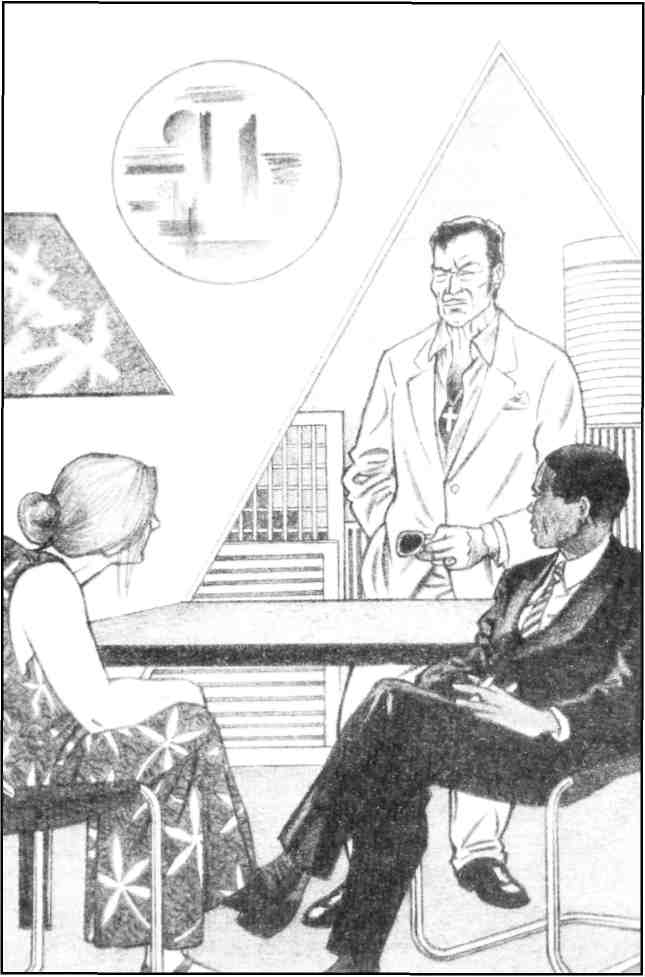
She gave the Stantons and me some pieces of paper with the
information about Freddy Picker. I saw the names EDDIE
REYES, RUSTY FIGUEROA and LORENZO DELGADO.
I watched the Stantons read. Their eyes were wide.
“I don’t believe it,” said the Governor. “What will we do with
this information?”
“Give it to the press,” said Susan. “Let’s give it to the Times or
The Wall Street Journal.”
Libby looked at me. The Stantons had failed her test.
“I don’t think you should tell a nybody,” said Libby. Her voice
sounded sad.
Susan looked shocked. “What do you mean, Libby?”
“I mean that you’re not going to be able to prove anything
about the cocaine or the bribe. Nobody is going to ta lk to the
press or to the police about th e cocaine. And Picker didn’t
actually bribe that sena tor. Eddie Reyes did.”
“We don’t have to prove anything,” said Stanton. “If the
newspapers print the story, nobody will vote for Picker.”
“Freddy Picker is a good man. We shouldn’t do this to him !”
43
“Libby” said Susan. “If we don’t gi ve this information to the
press, Picker may win. If Picker wins, Jack can’t be President.”
“Yeah, maybe,” said Libby. I cou ld see that there were tears in
her eyes. She was trying not to cry. “But it’s not the right thing to
do.”
“Maybe we could tell the press about the bribe but not about
the cocaine,” said Stanton.
“Jack, that’s stupid,” said Susa n. “Nobody is really interested in
a bribe. The American people don’t care about one little bribe.
Cocaine will interest them. Cocaine w ill get Freddy Picker on the
front of the National Flash .”
“Susan!” I said. “I’m surprised at you.”
“Oh, come on, Henry,” said Libby. “ You know what Susan’s
like. You know how she’s not afraid to hurt people. You know
how she needs to be loved when her husband is too busy for
her.”
The Governor looked at me with angry eyes. Now he knew
that Susan had come to my room that night.
“Enough!” he said. “We have to d ecide what to do with this
information.”
“There is NOTHING to decide,” said Libby. “Henry and I
have already made a decision. We have decided that nobody is
going to tell the press about the cocaine or the bribe.”
“No,” said Susan. “We’re go ing to tell the press”
“Wrong,” said Libby. “Here’s why.”
She reached into her big leathe r bag and pulled out some
more papers. “I didn’t want to do this,” she said.
“What do you have there Libby?” asked Stanton.
“Well,” said Libby. “Doctor Hastings doesn’t lock th e windows
of his office and I thought I’d go in and have a look at a few
things.”
Suddenly Stanton looked frightened.
44
“The American people don’t care about one little bribe. Cocaine
will interest them. Co caine will get Freddy Picker on the front
of the National Flash,” said Susan.
“Doctor Hastings had a lot of informati on about you, Jack,”
Libby continued. “I guess he was very interest ed in you. Does
Susan know?”
The Governor nodded.
“Oh, well,” said Libby. “Then it’s only He nry who doesn’t
know.”
“I don’t know what?”
“That Doctor Hastings is Jack’ s real father.”
“What? But what abou t Momma’s husband? The one who
was killed in Wo rld War Two ?”
“Oh, she was married to him,” Li bby answered. “But he wasn’t
Jack’s father. Doctor Hastings and Momma didn’t tell anybody
because Doctor Hastings was alre ady married. Isn’t that right,
Jack?”
Jack nodded quietly.
“But Doctor Hastings has been a good father . When Jack
needed a blood test to prove that he wasn’t the father of Loretta
McCollister’s baby . . .”
“You mean Fat Willie’s daughter?”
“That’s right, Henry. Well, when Jack and Uncl e Charlie went
to have Jack’s blood tested, Do ctor Hastings tested Uncle
Charlie’s blood instead. When the test results proved that Jack
A Bullet in the Heart
- Libby Holden confronts Governor Stanton with proof that he is the father of Loretta McCollister’s baby and cheated on a blood test.
- Devastated by the campaign's lack of morality and their willingness to destroy Freddy Picker, Libby burns the evidence and commits suicide.
- Henry decides to quit the campaign after Libby's death, disillusioned by the ruthless nature of the Stantons.
- In a surprising move, Stanton visits Freddy Picker to hand over the damaging evidence personally rather than leaking it to the press.
- Freddy Picker reveals he is withdrawing from the race anyway, admitting his past addiction to cocaine and the inevitability of public discovery.
The bullet that went into Libby’s heart broke all of our hearts.
wasn’t the father, what they really proved was that Charlie wasn’t
the father.”
“Wait a minute,” I said. “You mean Jack Stanton is the father
of Loretta McCollister’s baby?”
“Yes,” said Libby.
The Governor looked ashamed.
“So,” Libby said. She was crying no w. “If you’re going to tell
the press about Picker and his cocaine, I’m going to tell the press
that you cheated on the blood test . I’m going to tell them that
you’re the father of Loretta McCollis ter’s baby.”
46
She ran out of the room. I found her waiting for me in her car.
“You drive,” she said.
I got in her car, drove to my apartme nt, and parked the car.
“How did I do?” she asked.
“Fine,” I said. “Even better than with Randy Culligan.”
“I didn’t have my gun this time,” she laughed. “Henry, you’re
going to quit, aren’t you?”
“Yes.”
“You saw what they did,” she said. “They didn’t even think
about it. When they knew Freddy Picker had taken cocaine, they
were ready to te ll the press.”
She put her hand out for the car keys. Like a fool, I gave them
to her.
“Henry,” she said. There were tears running down her cheeks.
“Don’t become like them “
“I won’t,” I said. “Are you going to be okay?”
“Of course,” she said . “I’m always okay.”
She drove away.
Chapter 9 A Bullet in the Heart
What a fool I was.
Somebody found her body the next day on a dirt road in the
forest. She had made a fire and bu rned the papers about Stanton’s
blood test. Then she had sh ot herself in the heart.
The police asked me questions beca use I was the last person to
have seen her alive. “If I knew, I wo uld have tried to stop her,” I told
them. “But with Libby, you never knew and you could never stop
her.” Then I started to cry. “She was a ver y close friend of mine.”
♦
47
“You saw what they did,” Libby said.
“They didn’t even think about it. ”
The funeral was held in a church in North Mammoth Falls. Jack
Stanton stood up and made a speech.
“Libby Holden was the older sister that I never had,” he said. “It
seemed that whenever I had a prob lem, she was there to help me.
The bullet that went into Libby’s heart br oke all of our hearts.”
I walked back to my apartment w ith Daisy. I told her about
Libby, I told her about what we had found in Florida, and I told
her about the blood test.
“Do you think Stanton will win?” she asked.
“Maybe,” I said, “but he’ll have to do it without me.”
“What do you mean?”
“I’m going to the Gover nor’s house to quit.”
♦
I found Jack Stanton in hi s kitchen eating a sandwich.
“Hi, Henry,” he said. “I’ve called Picker. I’m going to fly to
Florida in about fifteen minutes and give him all the information
that Libby had. I know you want to quit but, please, will you go
to Florida with me?”
♦
We flew to Florida in a small airp lane and landed at an airport just
north of Tallahassee. Freddy Picker’s driver was waiting for us.
When we arrived at Picker’s house, one of his sons let us in.
Picker served us drinks.
“I’ve decided to quit the election,” said Stanton.
“That’s what I hea rd on the news.”
“You heard about my frie nd?” asked Stanton. “The one who
died?”
Picker nodded.
“She and Henry found this in formation.” Stanton handed
Picker the papers. “She killed herself because she thought I was
49
going to give this information to the press. Bu t I’m giving it to
you. I want you to have it, so you’ll know what the journalists
might find.”
“Did you ever try cocai ne, Jack?” asked Picker.
Stanton nodded. “Yeah, I tried it once, but I didn’t like it.”
“I did,” said Picker. “I lov ed it. That’s why I’m quitting the
election.”
Stanton looked surprised. “Nob ody needs to know about the
cocaine,” he said.
“The press will find out about it, Ja ck,” said Picker. “If you don’t
The Final Resignation
- Picker publicly confesses his past cocaine addiction and withdraws from the presidential race.
- In a surprising move, Picker thanks Stanton for his supposed discretion, boosting Stanton's reputation.
- Henry confronts Stanton about his willingness to use dirt on Picker, citing it as a failure of Libby's moral test.
- Despite Stanton's impending victory and invitation to the White House, Henry remains firm in his decision to quit.
- Henry chooses a personal life with Daisy over the moral compromises of the political campaign.
"Henry!" laughed Stanton. "We're politicians! We're not Boy Scouts."
tell them, somebody else will. And my sons will find out too.”
He started to cry. Stanton got up from his ch air and put his
arms around him. He held hi m for a long time. When Picker
finally stopped crying, he looked up at Stanton and said, “Jack, I
don’t think you should quit the election.”
Chapter 10 A Strange Sort of Luck
The next morning I woke up in my apartment in Mammoth
Falls. Daisy was there making coffee in my kitc hen. She kissed
me and asked, “What happened in Florida yesterday?”
“Picker is quitting,” I said. “Stanton is not.”
“Stanton seems to have a strange sort of luck. So what are you
going to do?”
“I’m quitting, then I’m going with you to Ja maica. Or
wherever you want to go.”
She smiled. “Really?”
“Yes,” I said. “I love you, Da isy. I’ll go over and see the
Governor now.”
♦
50
Picker started to cry. Stanton got up from his chair and
put his arms around him.
The Stantons were in their liv ing room watching television
when I arrived,
“Thanks for going to Florida with me last night,” Stanton said
as I came in.
I sat down next to Susan on the sofa and said, “I’m
quitting.”
“You can’t quit,” said Stanton. “Listen, Richard Jemmons is
coming back. We’re going to . . .”
“Governor,” I said. “I’m quitting because you failed Libby’s test.
You were going to tell the press about Picker and his cocaine.”
“Henry!” laughed Stanton. “We’re politicians ! We’re not Boy
Scouts*.”
“Quiet!” said Susan. “There’s Picker.”
We looked at Picker on TV. He looked serious an d proud. He
took a piece of paper from his pocket and sa id, “Today I am
quitting my campaign to be President.”
“Why?” someone shouted. “Why are you quitting?”
“For the same reason that I quit politics in 1978. Now, I know
I said that I quit in 1 978 because I was having family problem s,
but that wasn’t th e real reason. The real reason was that I had a
problem with cocaine.”
There was a moment of silence before Picker continued.
“There’s one more thing I want to say. I want to thank Jack
Stanton. He knew about my cocain e problem, but he didn’t tell
the press. I’ve gotten to know Jack Stanton very well and I can
say that he would make a good President. Th ank you and
goodbye.”
Jack turned off the television and looked at me. “You still want
to quit, Henry?”
“Yes,” I said.
* Members of the Boy Scouts are taught to be honest and to help other people.
52
“Henry,” he said. “I’m going to be the next President of the
United States. I’m going to the White House! Don’ t you want to
go with me?”
I stood up to leave.
“Come on, Henry,” sa id Stanton. “You can’t quit. This is silly!
You can’t quit!”
ACTIVITIES
Chapters 1-2
Before you read
1 Who are the most recent Presidents of the USA? What problems
have they faced?
2 Find these words in your dictionary.
campaign governor press scandal senator
Which of them go in the following sentences?
a When the politician fell in love with his secretary, it caused a
………. in the ……….. , and he had to give up his job.
b A …….. is a politician who works in Washington and helps to
decide the laws in the USA.
c The ………. of Texas wanted to stand for President, so he ran an
expensive advertising ………… on TV.
3 Find these words in your dictionary.
arrest debate in vestigate protest
Which of them are connected with
a the police? b disagreement?
4 Which words connected with the word primary go in the following
spaces?
a Red, green and blue are primary ……… .
b A person who wants to become Pres ident of the USA first has to
win the state primary ……… .
After you read
5 Look at these people and answer the following questions.
Henry Burton Howard Ferguson Dewayne Smith
Richard Jemmons Daisy Green Abbie Hoffman
Who
Political Study and Discussion Guide
- The text provides a series of comprehension and discussion questions based on the narrative of Jack Stanton's political campaign.
- It explores the moral complexities of Stanton's character, focusing on his history of scandals and his ability to inspire loyalty despite his flaws.
- Key plot points addressed include the investigation of Libby Holden, the allegations by Cashmere McLeod, and the emergence of Freddy Picker.
- The guide prompts readers to analyze the ethical dilemmas of political life, specifically the necessity of lying and the impact of personal scandals on a spouse.
- Character studies are emphasized through role-playing exercises and questions about the motivations of supporting figures like Henry and Libby.
Senator Harris tells Jack Stanton: “You just lie and lie and lie!” Is it possible to be a successful politician and not lie, do you think?
a works for Jack Stanton?
b led protests against the Vietnam War?
c cannot read or write?
d is telling this story?
e asks Henry to work for Stanton?
f is always worried about scandals?
54
6 How are these important to the st ory, and what do they tell us
about Jack Stanton’s character?
a Harlem b Chicago c Uncle Charlie d Ms Baum
7 What makes Stanton special, in the writer’s opinion?
Chapters 3-4
Before you read
8 How will Jack feel when he is told about Libby Holden, do you
think? Do you think that it’s a good idea to tell him about the
investigation? Why, or why not?
After you read
9 Are these people helpful or dangerous to Stanton? Why?
a Cashmere McLeod d Fat Willie
b Randy Culligan e Lawrence Harris
c Libby Holden
10 Who says these things, who to, and why?
a “He’s guilty.”
b “You’re brilliant.”
c “I’m sorry.”
d “How could Jack be so stupid?”
e “Giant horses live on the moon!”
f “I want you to frighten him.”
11 Why does Cashmere McLeod tell her story to the new spapers, do
you think? If you were her, would you do the same? Why, or why
not?
12 Work with another student. Act out this conversation between Jack
Stanton and his wife, Susan.
Student A: You are Susan. You are angry with Jack about
Cashmere McLeod. You have also found out about
the teacher at the library in Harlem. Ask your
husband about them, and tell hi m that you want to
leave him.
Student B: You are Jack. You don’t want Susan to leave you. Tell
her why she should stay.
55
Chapters 5-6
Before you read
13 If you were Henry, would you go on working for Jack Stanton?
Why, or why not?
14 Find the word quit in your dictionary. What should Jack Stanton
quit doing if he wants to be President, do you think?
After you read
15 Which of these sentences ar e true? Correct the false ones.
a Freddy Picker is the Governor of Florida.
b Stanton loses the first four primary elections.
c Stanton tells his wife about Fat Willie.
d Stanton stops campaigning in Florida because of Fat Willie.
e Stanton is worried about t he result of the blood test.
f Henry never tells lies.
16 Why is Libby worried about Kendra Mason?
17 Why doesn’t Jack Stanton tell his wife about Fa t Willie, do you
think? Do you think he is right not to tell her? Why, or why not?
18 Senator Harris tells Jack Stanton: “Y ou just lie and lie and lie!” Is it
possible to be a successful politician and not lie, do you think?
Why, or why not?
Chapter 7
Before you read
19 Will Kendra Mason talk to the news papers, do you think? Why, or
why not? What would you advise St anton to do if she did? Why?
20 Find these words in your dictionary. bribe cocaine
Which is worse - taking cocaine or taking bribes? Why?
After you read
21 Who says these things, and what do the underlined words mean?
a “Why did you do it ?” (page 35)
b “Fat Willie’s going to be feeling bad about this.” (page 36)
c “I’m trying to decide . . . whether I want to help you with this.”
(page 37)
56
d “I gave it.” (page 38)
e “That’s why he quit politics.” (page 39)
22 Make correct sentences.
a Libby’s friend took a $1,000 bribe.
b Richard Jemmons sold cocaine.
c Rusty Figueroa was Freddy Picker’s driver.
d Eddie Reyes is a journalist.
e Duboise was in business with Freddy Picker.
f Lorenzo Delgado quits his job because of Stanton.
23 Why does Stanton give Li bby a strange look? (page 36)
24 How is Libby going to test the St antons? What does this show us
about Libby’s character? Do you admire Libby for this? Why, or
why not?
Chapters 8-10
Before you read
25 Will Jack Stanton be pleased to see Libby in Mammoth Falls, do
you think? Why, or why not?
26 Find the word funeral in your dictionary. How do people feel at a
funeral, and why?
After you read
27 Who feels these things, and why?
a sad c frightened
b shocked d ashamed
Discussion and Writing Activities
- The text presents a series of critical thinking questions regarding the moral character of Freddy and the impact of Libby's death on Jack Stanton.
- It prompts readers to consider Henry's ultimate decision regarding his employment and the ethical dilemmas he faces.
- Several creative writing assignments are proposed, including drafting a presidential advertisement and a public confession speech for Jack Stanton.
- The activities encourage exploring Susan Stanton's internal perspective on her marriage and future through personal correspondence.
- The text concludes with a debate on the ethics of investigative journalism and the role of scandal in political reporting.
You are Jack Stanton. You decide to talk on TV to the American public about all your past mistakes.
28 What effect does Libby’ s death have on Jack Stanton?
29 Do you agree with Libby that Freddy is a good man? Why, or why
not?
30 At the end of the story, do you think Henry quit s or not? What
would you do if you were Henry?
Writing
31 You work for Jack Stanton’s el ection campaign. Write an
advertisement for the national press, saying why Stanton would
make a good President of the USA.
57
32 You are Jack Stanton. You decide to talk on TV to the American
public about all your past mistakes . Write your speec h. Talk about
Chicago, Cashmere McLeod, Fat Willie’s daughter and say why you
think people should still trust you.
33 You are Susan Stanton. Write a letter to a close and trusted friend.
Tell her about life with your husband, how you feel about him and
why. Write about your plans after th e elections. Will you stay with
Jack? Why, or why not?
34 Write a conversation between Henry and Jack Stanton. Henry has
decided to quit his job. He tells Jack why. Jack wants him to stay.
35 Would you vote for Jack Stanton? Write to your local newspaper,
explaining why or why not.
36 Journalists often investigate politicians in the hope of finding a
scandal. Do you think this right? Write for a student magazine,
explaining why or why not.
Answers for the Activities in this book are published in our free resour ce packs for teachers, the
Penguin Readers Factsheets, or ava ilable on a separate sheet. Please write to your local Pearson
Education office or to: Marketing Department, Penguin Longman Publishing, 5 Bentinck Street.
London W1M5RN.