Generative illustration for Principles of Chemistry














































































































































































































































































































































































































































































































Principles of Chemistry
Overview unavailable.
OpenStax Chemistry Publication Details
- This text serves as the front matter for a chemistry textbook published by OpenStax College at Rice University.
- The content is licensed under Creative Commons Attribution 4.0, requiring specific digital and print attributions for redistribution.
- OpenStax College is a non-profit organization dedicated to improving student access to high-quality, peer-reviewed learning materials.
- The OpenStax CNX technology platform allows for free online access and provides tools for instructors to customize course content.
- The project is supported by Rice University and various philanthropic organizations, including the Laura and John Arnold Foundation.
- Specific trademarks such as logos and book covers are excluded from the open license and require express written consent for use.
Without their strong engagement, the goal of free access to high-quality textbooks would remain just a dream.
Philanthropic Support and Foundations
- The Hewlett Foundation focuses on global social and environmental issues, including education and the performing arts, with a specific emphasis on the San Francisco Bay Area.
- The Bill & Melinda Gates Foundation operates on the principle of equal life value, targeting global health improvements and domestic educational reform.
- The Maxfield Foundation prioritizes high-impact projects within the realms of science, sustainability, and social importance.
- The Twenty Million Minds Foundation aims to eliminate financial barriers to education by promoting open educational resources and disruptive technologies.
- The text transitions from listing philanthropic sponsors to a detailed table of contents for a scientific textbook, beginning with essential chemistry concepts.
Guided by the belief that every life has equal value, the Bill & Melinda Gates Foundation works to help all people lead healthy, productive lives.
Foundations of Chemical Composition
- The text outlines the quantitative relationships in chemistry, beginning with formula mass and the mole concept.
- It details the mechanics of chemical reactions, including balancing equations and calculating reaction yields.
- Thermochemistry is introduced as a core topic, focusing on energy basics, calorimetry, and enthalpy.
- The curriculum transitions from macroscopic reactions to microscopic electronic structures and quantum theory.
- Advanced bonding theories and molecular geometry are established as the final stage of this foundational sequence.
Chapter 6: Electronic Structure and Periodic Properties of Elements
Chemistry Table of Contents
- The text outlines advanced chemical bonding theories, including Valence Bond and Molecular Orbital theories.
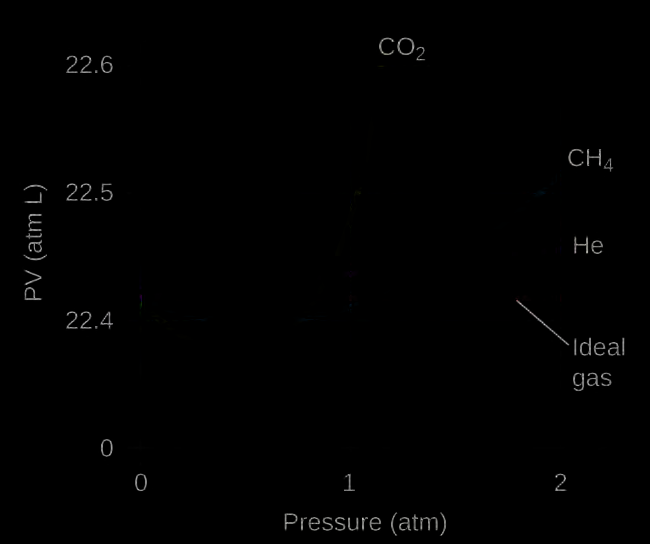
- A comprehensive study of gases is detailed, covering the Ideal Gas Law, kinetic-molecular theory, and non-ideal behaviors.
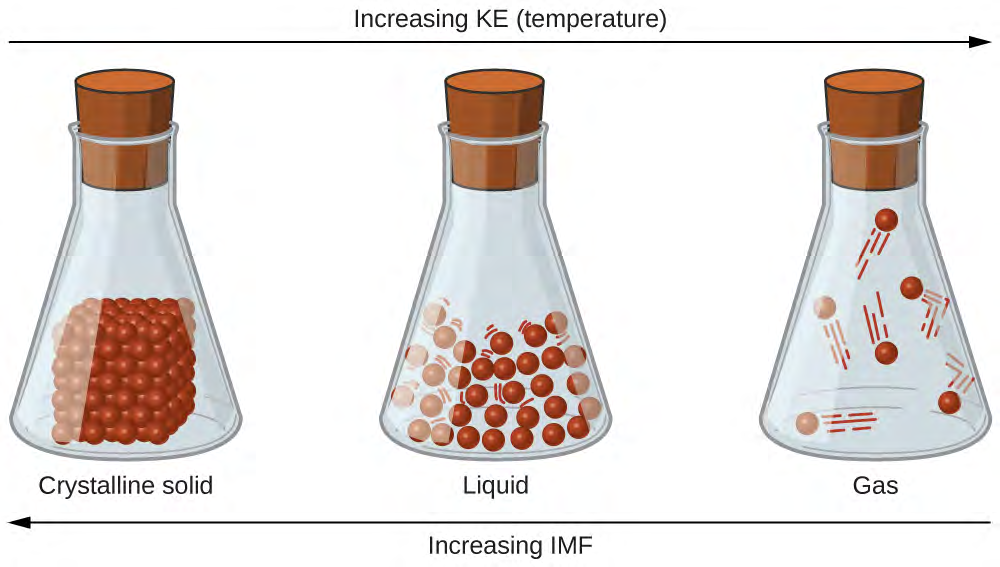
- The properties of liquids and solids are explored through intermolecular forces, phase transitions, and crystalline lattice structures.
- The behavior of solutions and colloids is categorized by dissolution processes, solubility, and colligative properties.
- The sequence concludes with an introduction to chemical kinetics, focusing on the rates of chemical reactions.
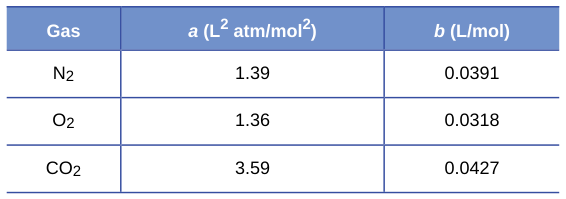
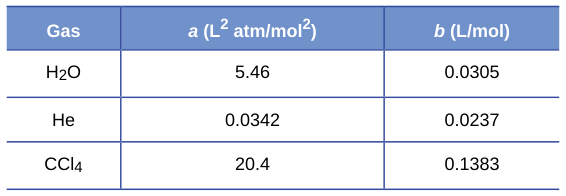
9.6 Non-Ideal Gas Behavior . . . . . . . . . . . . . . . . . . . . . . . . . . . . . . . . . 506
Advanced Chemical Dynamics and Equilibrium
- The text outlines the study of chemical kinetics, focusing on reaction rates, rate laws, and the mechanisms that govern how reactions occur.
- A significant portion is dedicated to fundamental equilibrium concepts, including the mathematical constants and principles used to predict shifts in chemical systems.
- Acid-base chemistry is explored in depth, covering pH scales, relative strengths, and the practical application of buffers and titrations.
- The scope extends to specialized reaction classes such as precipitation, dissolution, and the behavior of Lewis acids and bases.
- Thermodynamic principles are introduced to explain the spontaneity of reactions through the lenses of entropy and free energy.
13.3 Shifting Equilibria: Le Châtelier’s Principle
Advanced Chemistry Table of Contents
- The text outlines the final chapters of a comprehensive chemistry textbook, focusing on electrochemistry and the behavior of various element groups.
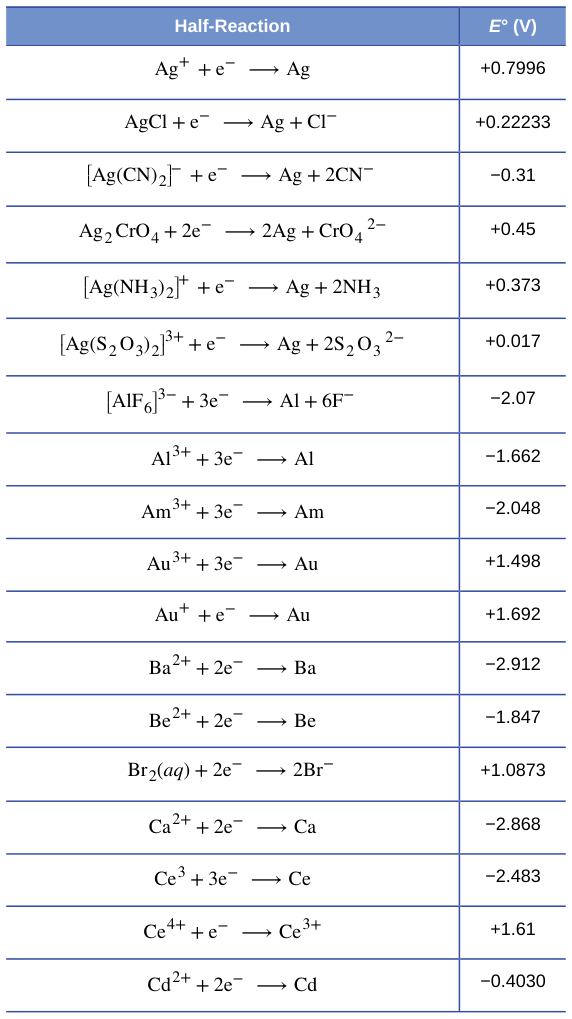
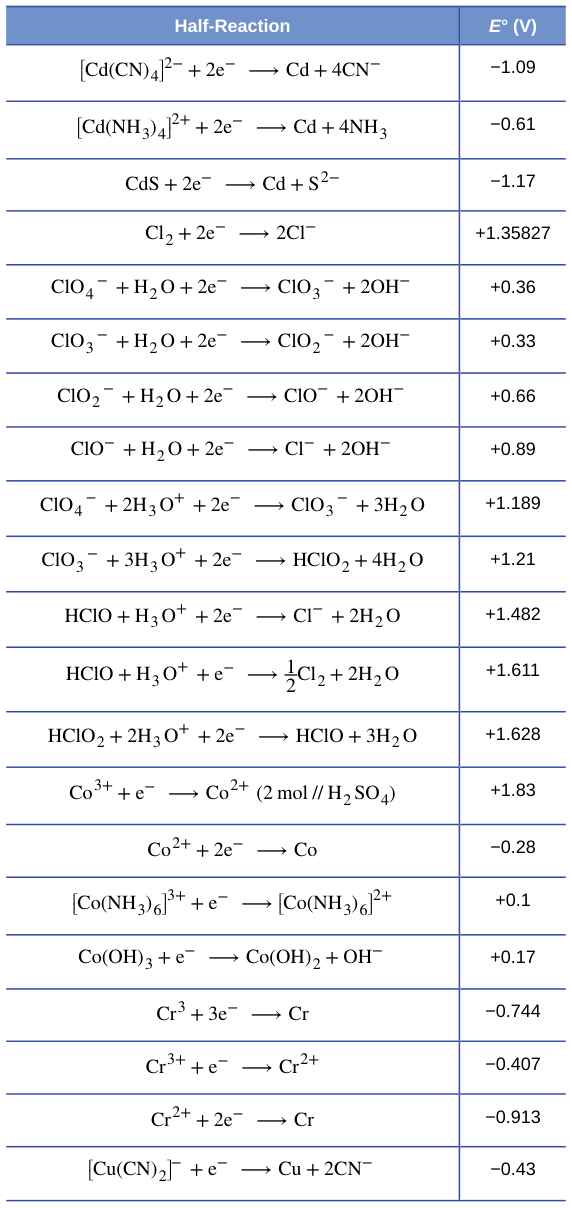
- Chapter 17 covers electrochemistry, ranging from balancing redox reactions to practical applications like batteries, fuel cells, and corrosion.
- Chapter 18 provides an extensive survey of representative metals, metalloids, and nonmetals, detailing their occurrence, preparation, and specific chemical properties.
- Chapter 19 explores transition metals and the complex field of coordination chemistry, including spectroscopic and magnetic properties.
- The final sections introduce organic chemistry, categorizing functional groups like hydrocarbons, alcohols, and amines, followed by an introduction to nuclear chemistry.
17.5 Batteries and Fuel Cells . . . . . . . . . . . . . . . . . . . . . . . . . . . . . . . . . 960
Nuclear Chemistry and Resources
- The text outlines the final chapters of a chemistry curriculum, focusing heavily on nuclear structure, stability, and equations.
- It details the practical and hazardous aspects of nuclear science, including radioactive decay, transmutation, and biological effects of radiation.
- A comprehensive set of appendices provides essential data for students, ranging from thermodynamic properties to ionization constants and solubility products.
- The document introduces 'Chemistry' by OpenStax College, an open-source textbook designed for accessibility and high academic scholarship.
- The resource emphasizes customization and student engagement as core pillars of its educational philosophy.
This textbook has been created with several goals in mind: accessibility, customization, and student engagement—all while encouraging students toward high levels of academic scholarship.
OpenStax College Educational Mission
- OpenStax College is a non-profit initiative of Rice University focused on providing free, high-quality, peer-reviewed textbooks to improve student access to higher education.
- The resources are uniquely 'living' documents that can be customized by instructors to fit specific curricula, localized applications, or thematic goals.
- Under a Creative Commons Attribution license, the academic community is encouraged to curate and update the content with emerging research and feedback.
- The Chemistry textbook is specifically designed for two-semester general courses, serving as both a career foundation and a primary science requirement.
- By partnering with philanthropic foundations, the organization offers materials for free online and at minimal cost for print editions to reduce financial barriers.
Unlike traditional textbooks, OpenStax College resources live online and are owned by the community of educators using them.
Chemistry Textbook Pedagogical Framework
- The textbook follows a standard national scope and sequence, moving logically from fundamental chemical principles to advanced scientific concepts.
- Content is contextualized through familiar experiences and real-world applications to make the discipline more accessible and engaging for students.
- Specialized feature boxes like 'Chemistry in Everyday Life' and 'How Sciences Interconnect' bridge the gap between theory and practical or interdisciplinary reality.
- The curriculum includes a 'Portrait of a Chemist' series to humanize the field by highlighting historical and contemporary contributors.
- A comprehensive art program and digital 'Link to Learning' features, such as PhET simulations and TED talks, provide visual and interactive reinforcement.
- The structure supports active learning through 'Check Your Learning' exercises and an optional 'Atom-First' alternate sequencing for instructors.
Portrait of a Chemist features present a short bio and an introduction to the work of prominent figures from history and present day so that students can see the “face” of contributors in this field as well as science in action.
Flexible Pedagogy and Authorship
- The textbook is designed with a modular structure that allows instructors to adapt the topical sequence to fit different teaching styles.
- A specific 'atoms-first' or 'molecules-first' sequence is proposed for professors who prefer prioritizing microscopic theory over macroscopic observation.
- The authors caution that while the text is flexible, instructors must ensure students have the necessary preparation when reordering chapters.
- A variety of ancillary resources, including PowerPoint slides and solution manuals, are provided to support both students and instructors.
- The project is led by a team of experienced PhDs from diverse academic backgrounds, specializing in analytical, inorganic, and solid-state chemistry.
Please consider, however, that the chapters were not written to be completely independent, and that the proposed alternate sequence should be carefully considered for student preparation and textual consistency.
Chemistry Textbook Contributors and Introduction
- The text lists an extensive group of academic contributors and reviewers from diverse universities and colleges across North America.
- William R. Robinson, PhD, is identified as the Senior Contributing Author for the educational material.
- The content is part of an open-access resource available for free through the CNX platform.
- Chapter 1, titled 'Essential Ideas,' serves as the foundational entry point for the study of chemistry.
- The curriculum covers fundamental topics including the classification of matter, physical and chemical properties, and the precision of measurements.
Chemical substances and processes are essential for our existence, providing sustenance, keeping us clean and healthy, fabricating electronic devices, enabling transportation, and much more.
Chemistry in Everyday Context
- Chemistry is an integral part of daily life, from the chemical processes of making coffee and cooking breakfast to the composition of soaps and gasoline.
- The study of chemistry involves understanding the essential principles that underlie modern-day life and the substances we encounter.
- Human history is defined by the evolution from changing the shape of matter to changing its chemical composition, such as converting clay into pottery or ore into metal.
- Early chemical practices began with the control of fire for cooking, smelting, and the extraction of natural dyes and medicines.
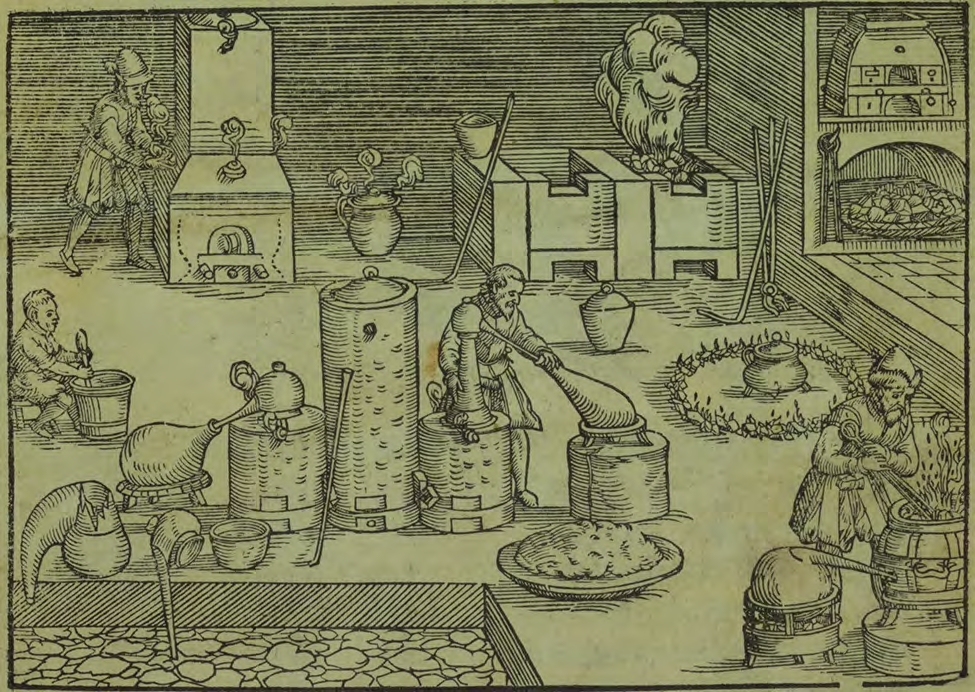
- The roots of modern chemistry trace back over 2,500 years to Greek philosophical postulates and the experimental, though unscientific, pursuits of alchemists.
- Alchemy bridged the gap between ancient technology and modern science by attempting to transform base metals into gold and creating medicinal elixirs.
Humans began to practice chemistry when they learned to control fire and use it to cook, make pottery, and smelt metals.
Chemistry: The Central Science
- Chemistry is defined as the study of the composition, properties, and interactions of matter.
- It is known as the central science because it bridges various STEM disciplines, including biology, physics, and engineering.
- The field's historical roots trace back to early human endeavors like metallurgy, dye production, and medicinal plant use.
- Chemical principles are foundational to modern life, from the synthesis of polymers for electronics to the refining of crude oil.
- The practice of chemistry occurs naturally whenever matter undergoes change, extending far beyond the confines of a laboratory.
The practice of chemistry is not limited to chemistry books or laboratories: It happens whenever someone is involved in changes in matter or in conditions that may lead to such changes.
The Scientific Method
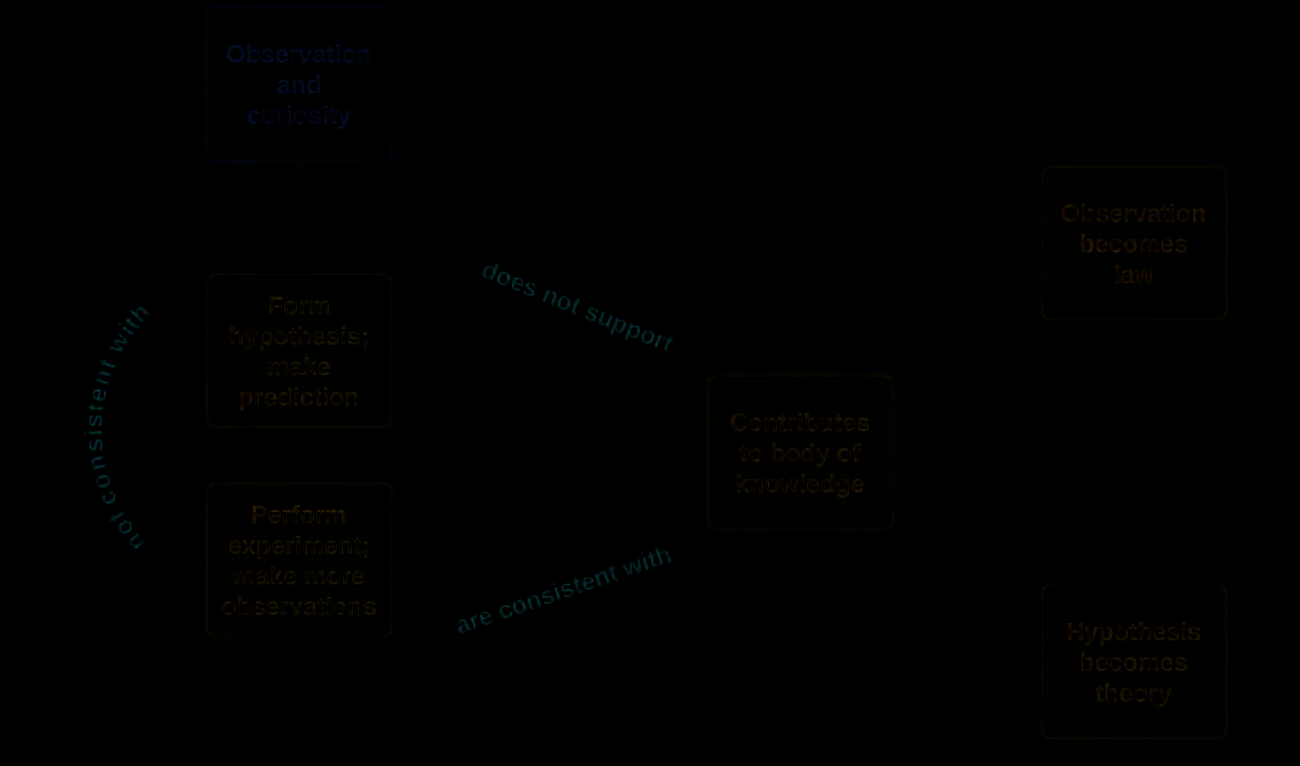
- Chemistry relies on observation and experimentation to answer questions about the natural world.
- Scientific knowledge is built upon reproducible experiments that verify results across the community.
- Hypotheses serve as tentative explanations that guide the gathering and checking of information.
- Scientific laws summarize vast amounts of experimental data to describe or predict natural phenomena.
- Theories are comprehensive, testable explanations that are refined or modified as new data emerges.
- The scientific method is a non-linear path of discovery involving constant inquiry and the reworking of ideas.
Scientific progress is seldom neat and clean: It requires open inquiry and the reworking of questions and ideas in response to findings.
The Three Domains of Chemistry
- Chemistry is studied through three distinct lenses: the macroscopic, the microscopic, and the symbolic domains.
- The macroscopic domain encompasses everyday experiences and laboratory observations that can be sensed directly by human sight or touch.
- The microscopic domain involves entities like atoms, molecules, and chemical bonds that are often too small to see and must be pictured in the imagination.
- The symbolic domain uses specialized language, such as chemical formulas and periodic table symbols, to represent and calculate chemical behavior.
- A central challenge and fascination of chemistry is using the imagined microscopic domain to explain the observable macroscopic world.
- Water serves as a primary example, where its liquid state is macroscopic, its molecular structure is microscopic, and the formula H2O is symbolic.
One of the features that makes chemistry fascinating is the use of a domain that must be imagined to explain behavior in a domain that can be observed.
Phases and Classification of Matter
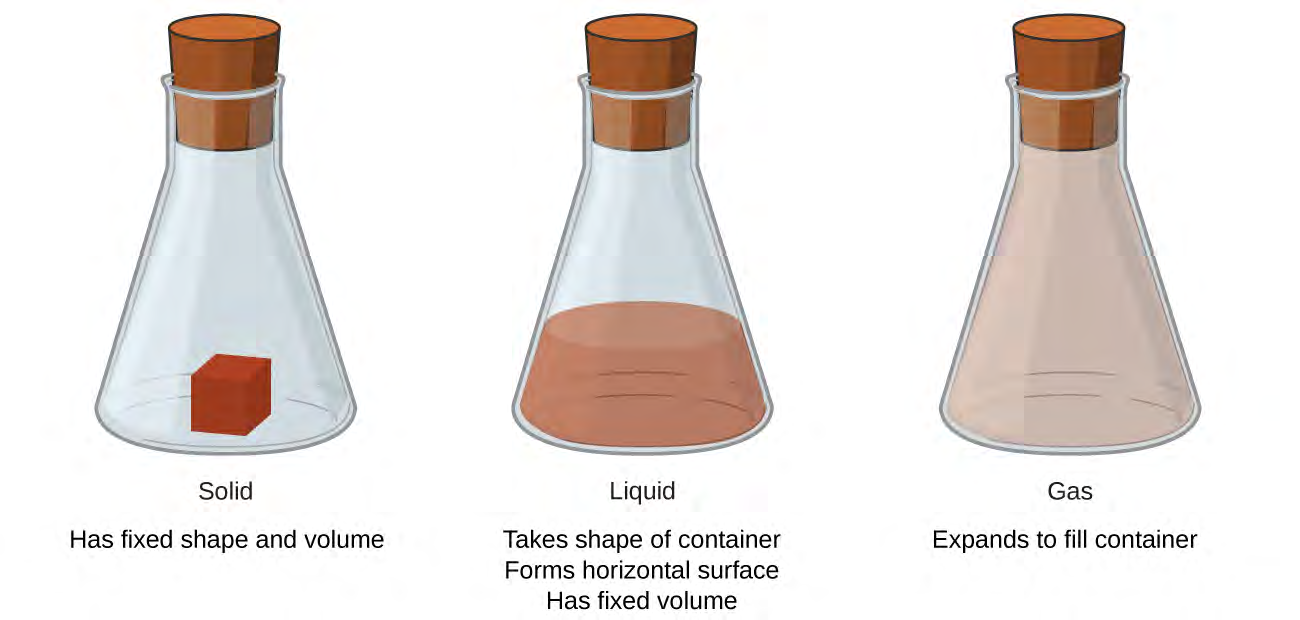
- Matter is defined as anything that occupies space and has mass, encompassing solids, liquids, and gases.
- Solids are characterized by their rigidity and definite shape, while liquids flow to take the shape of their container with a flat upper surface.
- Gases are unique in that they expand to take both the shape and the total volume of their container.
- Plasma is a distinct fourth state of matter consisting of electrically charged particles, found in stars, lightning, and specialized technology.
- The volume of solids and liquids remains nearly constant regardless of pressure, unlike the highly compressible nature of gases.
A plasma is a gaseous state of matter that contains appreciable numbers of electrically charged particles.
Properties and Conservation of Matter
- Certain materials like sand and clouds exhibit properties of multiple states of matter simultaneously due to their composition.
- Mass is a fundamental measure of the amount of matter in an object, distinct from weight which is the force of gravity acting upon it.
- The law of conservation of matter states that the total quantity of matter remains constant during both physical and chemical changes.
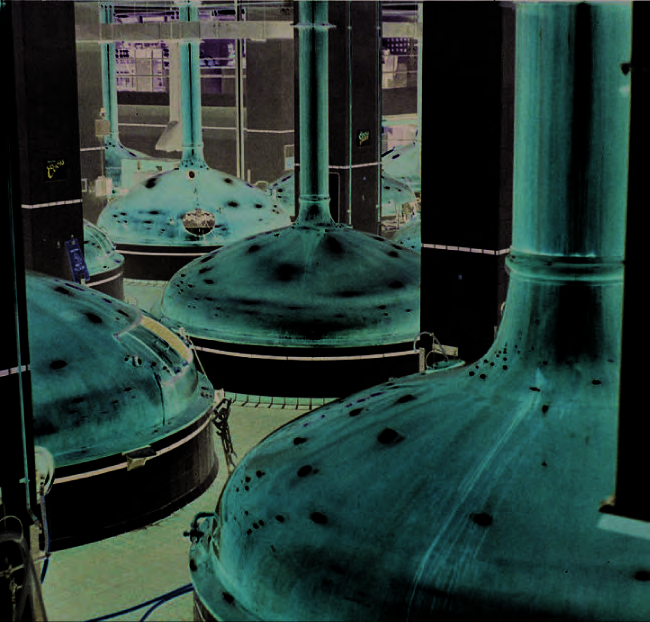
- Practical examples of conservation include the brewing of beer and the chemical reactions within a lead-acid car battery.
- Verifying the conservation of matter in daily life is difficult because it is rare to collect all resulting waste and byproducts outside a lab.
- An object's mass remains constant regardless of its location in the universe, even if its weight changes due to varying gravitational pull.
She may feel “weightless” during her trip when she experiences negligible external forces (gravitational or any other), although she is, of course, never “massless.”
The Nature of Atoms
- An atom is the smallest unit of an element that retains its specific chemical properties.
- The concept of the atom originated with Greek philosophers Leucippus and Democritus in the 5th century BCE.
- John Dalton transformed the atomic hypothesis into a scientific theory through quantitative measurements in the 19th century.
- Atoms are incredibly small, with a single carbon atom measuring approximately 0.000000015 centimeters in diameter.
- Modern technology like scanning-tunneling microscopes allows scientists to visualize individual atoms as spherical structures.
To put this in perspective, if a carbon atom were the size of a dime, the cross-section of one strand would be larger than a football field.
Atoms, Molecules, and Pure Substances
- Atoms possess such negligible mass that even 300 trillion lead atoms weigh only a fraction of a microgram.
- While some elements exist as individual atoms, many form molecules where two or more atoms are held together by chemical bonds.
- Molecules function as discrete units, ranging from simple pairs like oxygen to complex structures like glucose.
- Matter is classified into mixtures and pure substances, with the latter having constant composition and properties regardless of source.
- Pure substances are further divided into elements, which cannot be simplified, and compounds, which can be chemically decomposed.
If an ordinary glass of water were enlarged to the size of the earth, the water molecules inside it would be about the size of golf balls.
Compounds and Mixtures
- Chemical compounds can be broken down into simpler substances through thermal or photochemical decomposition.
- The physical and chemical properties of a compound differ drastically from the properties of its constituent elements.
- Mixtures consist of two or more types of matter that can be separated by physical changes rather than chemical reactions.
- Heterogeneous mixtures, like Italian dressing or granite, have a composition that varies from point to point.
- Homogeneous mixtures, or solutions, maintain a uniform composition throughout regardless of where a sample is taken.
Free sodium, an element that is a soft, shiny, metallic solid, and free chlorine, an element that is a yellow-green gas, combine to form sodium chloride (table salt), a compound that is a white, crystalline solid.
Classifications and Compositions of Matter
- Tens of millions of chemical compounds are formed from just over 100 basic elements, each possessing unique physical and chemical properties.
- Oxygen and silicon are the most abundant elements on Earth, collectively making up nearly three-quarters of the crust and atmosphere's mass.
- Matter is classified into four major categories: homogeneous mixtures, heterogeneous mixtures, compounds, and elements.
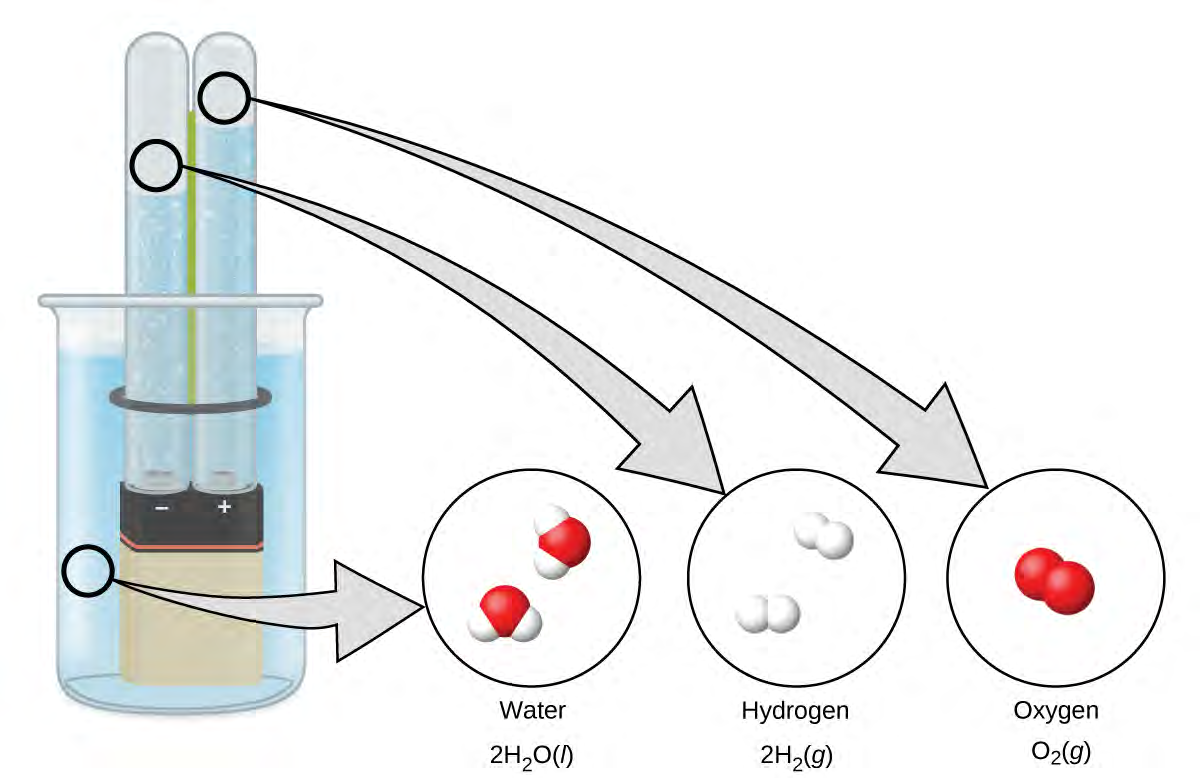
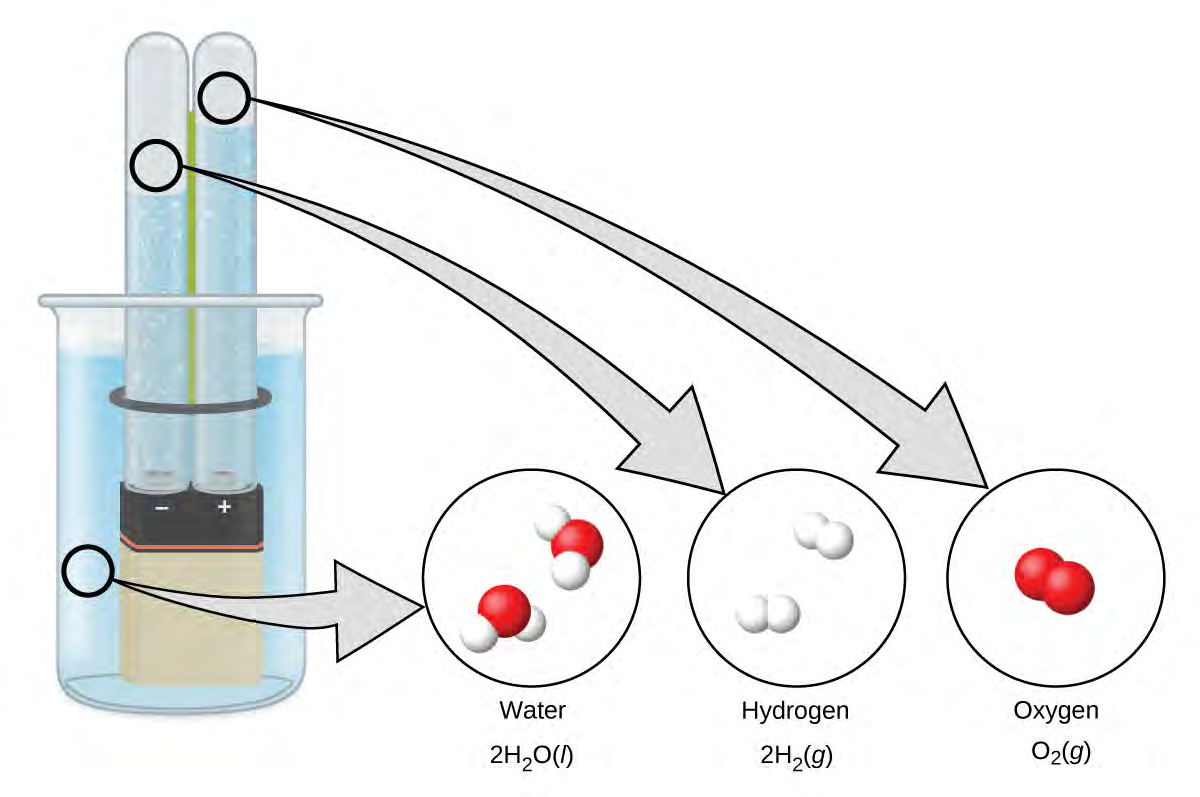
- Chemical compounds like water can be decomposed into their constituent elements through the addition of energy, such as electrolysis.
- Hydrogen produced from water decomposition offers a potential clean energy source for fuel-cell vehicles, though economic viability remains a challenge.
Oxygen constitutes nearly one-half and silicon about one-quarter of the total quantity of these elements.
Chemistry of Smart Devices
- Modern cell phones are complex assemblies of numerous chemical substances that require precise extraction and purification.
- Approximately 30% of all naturally occurring elements are found within a single typical smartphone.
- The physical structure of a phone relies on a blend of durable polymers like ABS and structural metals such as magnesium and aluminum.
- Display screens utilize specialized silica glass strengthened with aluminum, sodium, and potassium, then coated with conductive indium tin oxide.
- Internal components and batteries utilize a diverse range of elements, from common gold and copper to rare earth elements like gadolinium and yttrium.
About 30% of the elements that are found in nature are found within a typical smart phone.
Physical and Chemical Properties
- Physical properties like density and color can be observed without altering a substance's chemical identity.
- A physical change involves a shift in state or form, such as wax melting or sugar dissolving, while keeping the chemical composition intact.
- Chemical properties describe a substance's potential to undergo changes into entirely new types of matter, such as flammability or acidity.
- Chemical changes, like rusting iron or exploding nitroglycerin, result in the production of matter that differs from the original substances.
- Common processes like cooking food, digesting, or a banana rotting are all examples of complex chemical changes.
- The distinction between physical and chemical changes is fundamental to identifying and categorizing different substances.
Nitroglycerin is very dangerous because it explodes easily; neon poses almost no hazard because it is very unreactive.
Matter Properties and Safety
- Matter properties are classified as extensive if they depend on the amount of substance, such as mass and volume, or intensive if they do not, such as temperature.
- The distinction between heat and temperature illustrates these properties: while a drop and a pot of oil can share the same temperature, the pot contains more total heat.
- The NFPA 704 Hazard Diamond is a standardized system used to communicate flammability, health, reactivity, and special risks of chemical substances.
- Hazard levels in the diamond system are rated on a scale from 0 to 4, with 4 representing the most extreme danger.
- Elements are categorized into metals, nonmetals, and metalloids based on their ability to conduct heat and electricity.
- The periodic table serves as a foundational tool for grouping elements with similar physical and chemical behaviors.
A drop of hot cooking oil spattered on your arm causes brief, minor discomfort, whereas a pot of hot oil yields severe burns.
Fundamentals of Scientific Measurement
- Measurements provide the macroscopic data necessary to formulate chemical hypotheses, theories, and laws.
- Every measurement consists of three essential components: a numerical magnitude, a standard unit of comparison, and an indication of uncertainty.
- Scientific notation is utilized to represent extremely large or small values, such as the mass of an airliner versus that of a mosquito.
- The International System of Units (SI) provides a standardized framework of base units, including the meter, kilogram, and second.
- Units are critical for safety and clarity; for instance, omitting units in medical dosages can lead to lethal consequences.
- SI prefixes based on powers of ten allow for the convenient scaling of units from the subatomic to the astronomical level.
Without units, a number can be meaningless, confusing, or possibly life threatening.
SI Base Units and Prefixes
- The International System of Units (SI) evolved from the metric system established during the French Revolution in 1799.
- Metric prefixes like giga-, mega-, and centi- allow for the expression of vast scales of measurement using powers of ten.
- The meter, originally based on the Earth's dimensions, is now precisely defined by the distance light travels in a vacuum.
- The kilogram is the standard unit of mass and was historically defined by a specific platinum-iridium alloy cylinder kept in France.
- Temperature in the SI system is measured in kelvins, which share the same magnitude as Celsius degrees but use a different zero point.
- Derived units, such as volume and density, are created by mathematically combining the seven fundamental SI base units.
A meter was originally specified as 1/10,000,000 of the distance from the North Pole to the equator.
Measuring Volume and Density
- Volume is defined as the amount of space an object occupies, with the cubic meter (m3) serving as the standard SI unit.
- Commonly used volume units include the liter (L), which is equivalent to one cubic decimeter, and the milliliter (mL), equivalent to one cubic centimeter.
- Density is a derived property calculated as the ratio of an object's mass to its volume.
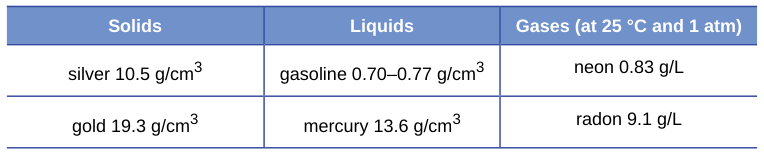
- While the SI unit for density is kg/m3, scientists typically use g/cm3 for solids and liquids and g/L for gases due to practical scale.
- Density serves as a characteristic physical property that can distinguish substances, such as differentiating gold from lead.
In order to swindle people into paying for a brick of gold without actually investing in a brick of gold, people have considered filling the centers of hollow gold bricks with lead to fool buyers into thinking that the entire brick is gold.
Density and Measurement Uncertainty
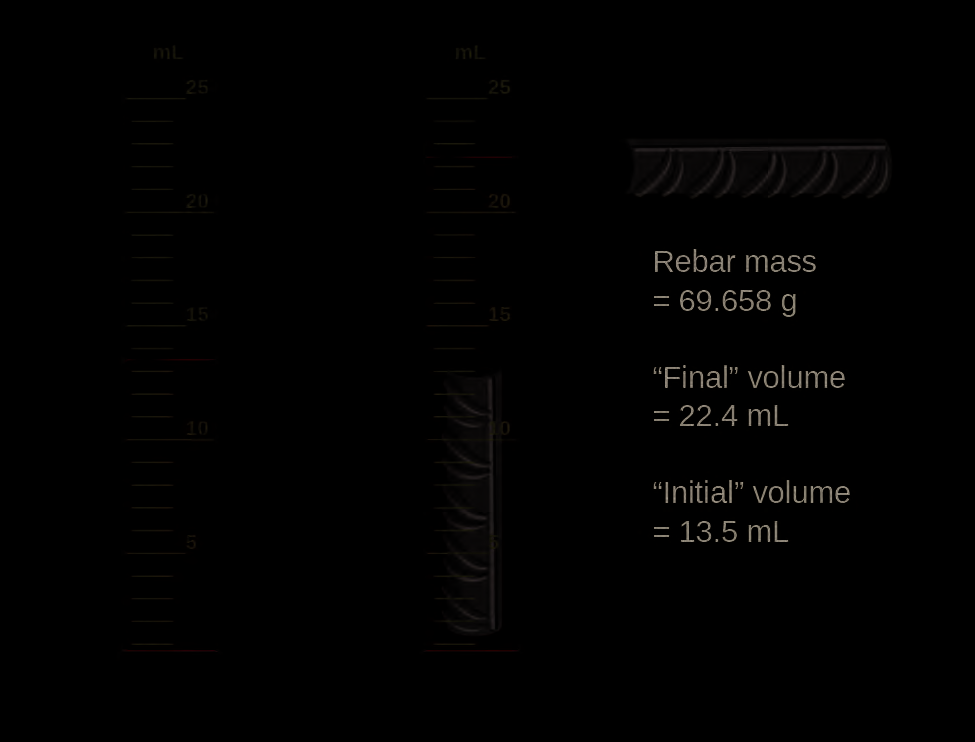
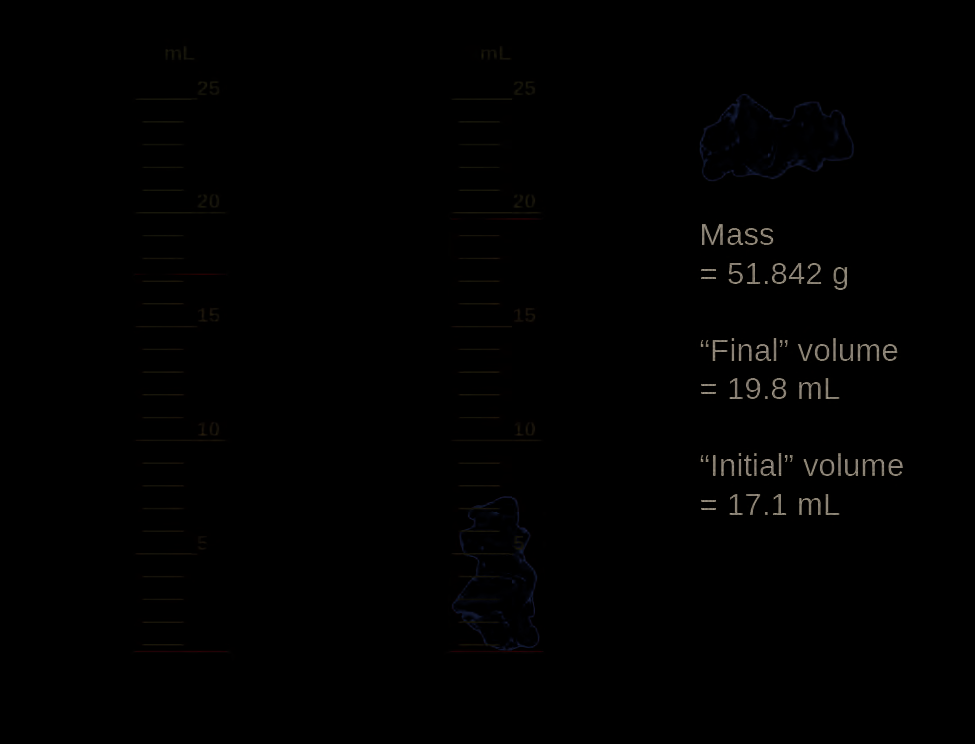
- Density is calculated by dividing an object's mass by its volume, often determined through geometric calculation or water displacement.
- The displacement method requires an object to be fully submerged to accurately measure its total volume.
- Floating objects only displace a volume of water equal to their mass, necessitating manual submersion to find their true density.
- Counting and defined unit conversions are the only forms of measurement considered exact numbers.
- All other physical measurements contain inherent uncertainty due to the practical limitations of the tools and processes used.
- Significant figures and rounding rules are essential for correctly representing the degree of uncertainty in scientific data.
Counting is the only type of measurement that is free from uncertainty, provided the number of objects being counted does not change while the counting process is underway.
Measurement Uncertainty and Significant Figures
- Measured quantities are never exact and always contain a degree of uncertainty based on the device and the user's estimation.
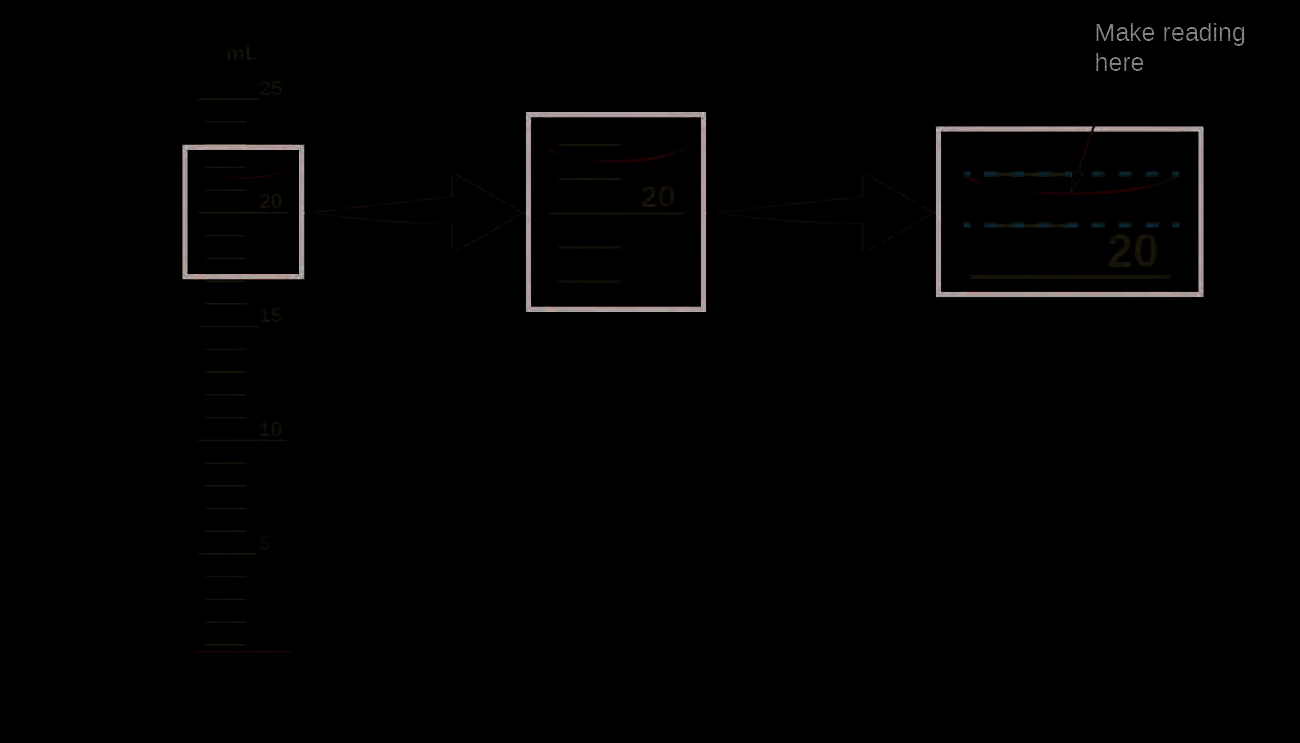
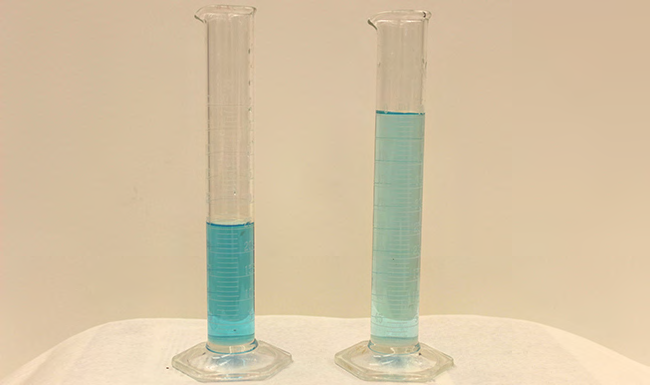
- When reading manual scales, such as a meniscus in a graduated cylinder, the final digit is an estimate made to one-tenth of the smallest scale division.
- Significant figures include all certain digits in a measurement plus the final estimated or uncertain digit.
- Nonzero digits are always significant, while the significance of zeros depends on whether they are leading, captive, or trailing.
- Leading zeros serve only as placeholders for the decimal point and are never considered significant figures.
- Measurements ending in zeros to the left of a decimal point are inherently ambiguous without further notation to clarify their significance.
In the number 21.6, then, the digits 2 and 1 are certain, but the 6 is an estimate.
Precision and Significant Figures
- Exponential notation is the most effective way to resolve ambiguity regarding the significance of trailing zeros in large numbers.
- Reported data, such as national census figures, often imply a level of precision that is statistically impossible due to constant fluctuations.
- Calculated results are inherently limited by the uncertainty of the original measurements used in the computation.
- Mathematical operations require specific rounding rules: addition and subtraction focus on decimal places, while multiplication and division focus on total significant figures.
- A specialized rounding rule for the digit 5 suggests rounding to the nearest even number to eliminate statistical bias over large datasets.
Do you think the US population was correctly determined to the reported nine significant figures, that is, to the exact number of people?
Rules of Significant Figures
- Rounding rules for significant figures are essential for accurately representing the certainty of scientific measurements.
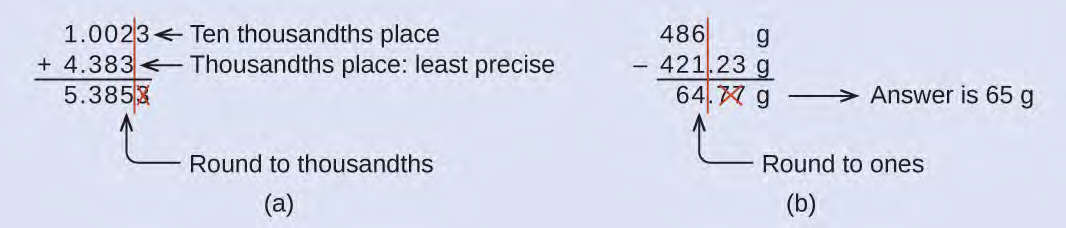
- When adding or subtracting, the result is rounded to the same number of decimal places as the least precise value.
- In multiplication and division, the result must match the number of digits of the value with the fewest significant figures.
- Calculated results should never be represented as being more certain than the least certain value used in the computation.
- Practical applications include determining volume and density, such as using water displacement to identify the material composition of rebar.
In the midst of all these technicalities, it is important to keep in mind the reason why we use significant figures and rounding rules—to correctly represent the certainty of the values we report.
Accuracy, Precision, and Dimensional Analysis
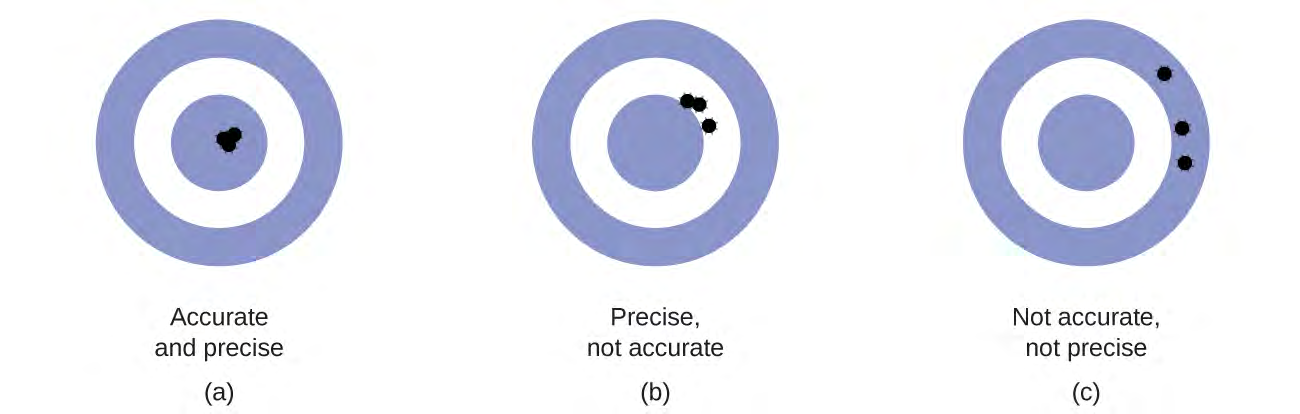
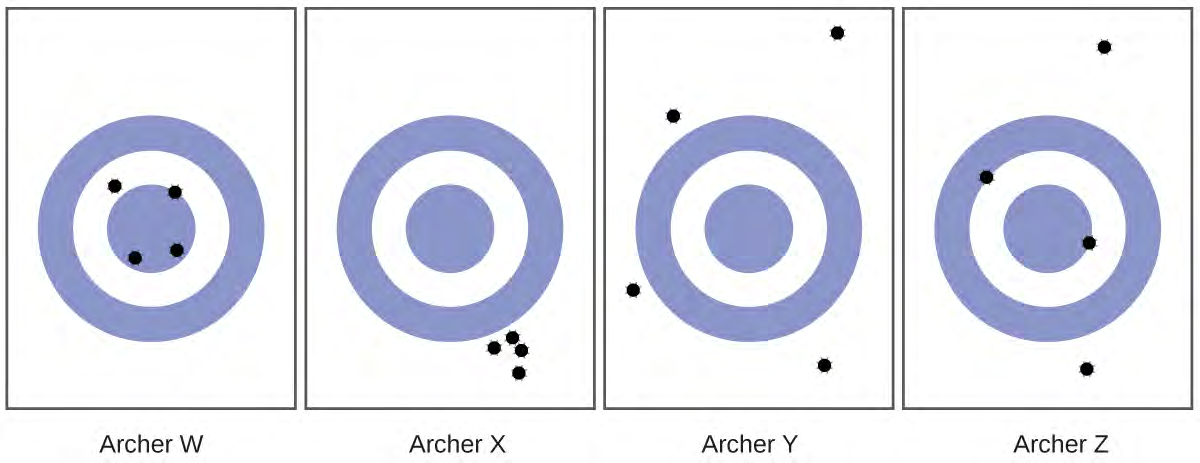
- Precision refers to the consistency of repeated measurements, while accuracy measures how close a result is to the true or accepted value.
- A measurement can be precise without being accurate, such as a machine that consistently dispenses the wrong volume of liquid.
- The distinction between these concepts is often illustrated using the analogy of arrows hitting or missing a bull's eye.
- Mathematical treatment of measurements often requires calculating values from direct properties, such as determining speed from distance and time.
- Dimensional analysis, or the factor-label approach, is introduced as a method for unit conversions and complex property computations.
Precise values agree with each other; accurate values agree with a true value.
Principles of Dimensional Analysis
- Dimensional analysis, or the factor-label method, treats units as algebraic quantities that undergo the same mathematical operations as their associated numbers.
- The core premise of this method is that identical units divided by one another 'cancel' out, effectively equaling one.
- Unit conversion factors are ratios derived from two equivalent quantities expressed in different measurement units, such as 2.54 cm and 1 inch.
- Correct setup of a conversion factor is verified by ensuring the original unit cancels and the desired unit remains in the final result.
- The method is versatile, applicable to everything from simple single-step conversions to complex multi-step scientific calculations.
Dimensional analysis is based on this premise: the units of quantities must be subjected to the same mathematical operations as their associated numbers.
The Factor-Label Method
- The factor-label method involves orienting conversion factors so that units cancel out to yield the desired result.
- Complex problems, such as calculating density from pounds and quarts, can be solved by chaining multiple conversion factors.
- Sequential calculations allow for a streamlined approach where mass and volume units are converted simultaneously.
- Practical applications include determining fuel economy (mpg) and total travel costs for vehicles like the Lamborghini Aventador.
- The method ensures mathematical accuracy by treating units as algebraic quantities that must be balanced.
Regardless of the details, the basic approach is the same—all the factors involved in the calculation must be appropriately oriented to insure that their labels (units) will appropriately cancel.
Measuring Temperature and Scales
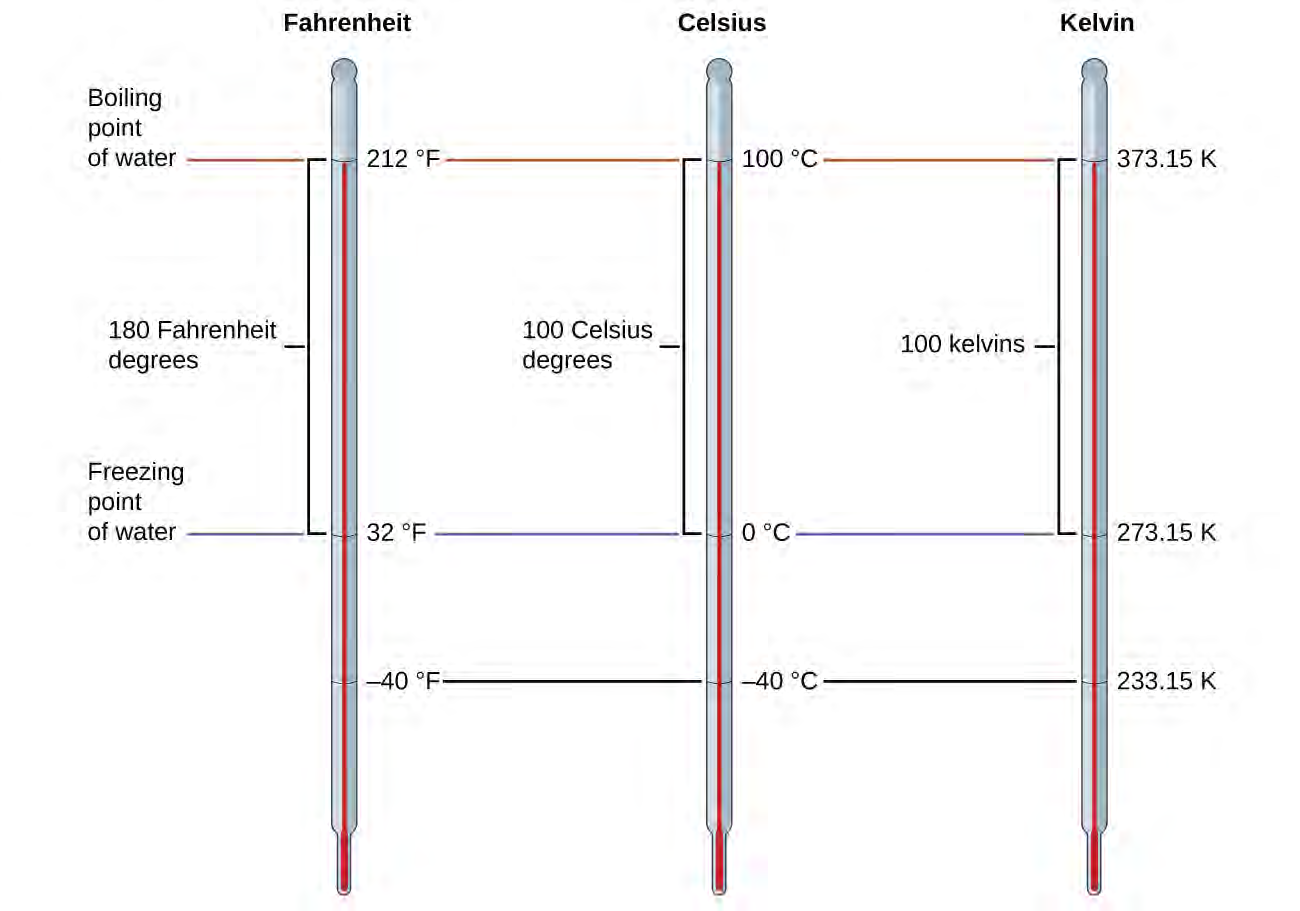
- Temperature is defined as the hotness or coldness of a substance, often measured by the thermal expansion and contraction of liquids like mercury.
- The Celsius and Fahrenheit scales are defined by the freezing and boiling points of water, but they use different zero points and degree intervals.
- Unlike most unit conversions that are directly proportional, converting between Celsius and Fahrenheit requires a linear equation (y = mx + b) to account for the offset zero points.
- The Kelvin scale is an absolute temperature scale where 0 K represents the theoretical lowest possible temperature, derived from the behavior of gas volumes.
- While the Kelvin and Celsius scales have different starting points, they share the same magnitude for their degree intervals, making the conversion a simple addition of 273.15.
The Celsius and Fahrenheit temperature scales, however, do not share a common zero point, and so the relationship between these two scales is a linear one rather than a proportional one.
Temperature Scales and Conversions
- The kelvin (K) is the official SI unit of temperature, while Celsius (°C) is the standard for most scientific and international contexts.
- Mathematical formulas allow for precise conversion between kelvin, Celsius, and Fahrenheit scales.
- The value 273.15 used in kelvin conversions is experimentally determined rather than an exact defined number.
- Only a small number of countries, including the United States, continue to use the Fahrenheit scale for daily applications like weather and cooking.
- Practical examples demonstrate how to apply significant figure rules when converting temperatures for medical or culinary purposes.
Very few countries (the U.S. and its territories, the Bahamas, Belize, Cayman Islands, and Palau) still use Fahrenheit for weather, medicine, and cooking.
Essential Ideas of Chemistry
- Chemistry is defined as the study of the composition, structure, and properties of matter and its interconversions.
- The scientific method serves as a path of discovery involving observation, hypothesis testing, and the development of laws and theories.
- Chemists operate across three distinct domains: the macroscopic (visible), the microscopic (atomic), and the symbolic (chemical language).
- Matter is categorized by its physical state—solid, liquid, gas, or plasma—and its composition as either a pure substance or a mixture.
- The Law of Conservation of Matter dictates that there is no detectable change in the total amount of matter during physical or chemical changes.
- Measurement in chemistry relies on SI units and the management of uncertainty through precision, rounding, and significant figures.
Chemists use the scientific method to perform experiments, pose hypotheses, and formulate laws and develop theories, so that they can better understand the behavior of the natural world.
Foundations of Matter and Measurement
- Matter is defined by its mass and volume, existing primarily as solids, liquids, gases, or high-temperature plasma.
- Substances are classified as pure elements and compounds or as heterogeneous and homogeneous mixtures.
- Physical properties describe characteristics without changing composition, while chemical properties involve the formation of new substances.
- Extensive properties like mass depend on quantity, whereas intensive properties like density remain constant regardless of amount.
- Scientific measurements require a numerical value, a unit of comparison, and an indication of uncertainty through significant figures.
- Dimensional analysis, or the factor-label method, is the primary mathematical tool for converting units and calculating chemical quantities.
Heat is an example of an extensive property, and temperature is an example of an intensive property.
Foundations of Chemical Classification
- The text presents exercises designed to distinguish between scientific hypotheses, laws, and theories based on their scope and predictive nature.
- It introduces the three domains of chemistry: macroscopic (observable), microscopic (atomic level), and symbolic (chemical notation).
- Students are asked to differentiate between phases of matter and the fundamental properties of mass versus weight.
- The material covers the classification of matter into elements, compounds, homogeneous mixtures, and heterogeneous mixtures.
- Exercises challenge the reader to identify the structural differences between individual atoms and multi-atom molecules.
Identify each of the underlined items as a part of either the macroscopic domain, the microscopic domain, or the symbolic domain of chemistry.
Essential Ideas in Matter
- The text presents a series of conceptual problems designed to distinguish between mass and weight in various environments.
- It explores the law of conservation of matter through practical examples like rusting iron, baking bread, and fermenting glucose.
- Students are challenged to identify different classifications of matter, including elements, compounds, and mixtures, within daily life.
- The exercises require differentiating between physical changes, such as phase transitions, and chemical changes, such as combustion and oxidation.
- Historical scientific milestones, such as Antoine Lavoisier's experiments with sealed flasks, are used to illustrate fundamental chemical laws.
The dough is cooked in an oven at 350 °F releasing a wonderful aroma of freshly baked bread during the cooking process. Is the mass of the baked loaf less than, greater than, or the same as the one pound of original dough?
Properties and Measurement Fundamentals
- The text distinguishes between intensive properties, which are independent of the amount of substance, and extensive properties, which depend on sample size.
- Density is explored as an intensive property derived from the ratio of two extensive properties: mass and volume.
- Standard SI units and prefixes are introduced for measuring physical quantities like length, mass, volume, and temperature.
- Practical applications are provided through density calculations and identification of substances based on physical measurements.
- Interactive simulations are utilized to demonstrate how mass and volume relationships determine whether an object floats or sinks in various liquids.
- The section transitions into the mathematical rigor of scientific notation and the importance of significant figures in measurement.
Considering that mass and volume are both extensive properties, explain why their ratio, density, is intensive.
Measurement and Significant Figures
- The text presents a series of chemistry exercises focused on the conversion of standard numbers into exponential notation.
- It distinguishes between exact numbers, such as the count of items, and measured quantities that carry inherent uncertainty.
- A significant portion of the material is dedicated to identifying and applying the rules of significant figures in mathematical operations.
- The exercises cover rounding techniques and the precision required for reporting calculations in scientific contexts.
- Conceptual problems address the differences between accuracy and precision using practical examples like archery and laboratory measurements.
- The final section introduces dimensional analysis through the derivation of conversion factors between metric and English units.
Indicate whether each of the following can be determined exactly or must be measured with some degree of uncertainty: (a) the number of eggs in a basket (b) the mass of a dozen eggs
Unit Conversion Practice Problems
- The text provides a series of practical chemistry exercises focused on converting measurements between English and metric systems.
- Problems cover diverse physical dimensions including length, mass, volume, area, and density.
- Real-world applications range from sports equipment specifications and medical dosages to geographical data and automotive engineering.
- The exercises emphasize the correct use of significant figures and scientific notation when performing mathematical transformations.
- Specific SI unit prefixes such as giga-, tera-, pico-, and micro- are tested through various conversion tasks.
Many chemistry conferences have held a 50-Trillion Angstrom Run (two significant figures). How long is this run in kilometers and in miles?
Chemistry Unit Conversions and Atoms
- The text presents a series of practical chemistry problems focused on unit conversions between metric and imperial systems.
- Calculations involve physical properties such as density, mass, and volume for various substances like mercury, osmium, and octane.
- Temperature conversion exercises require shifting between Celsius, Fahrenheit, and Kelvin scales for extreme values like boiling gold and dry ice.
- Real-world applications are highlighted through problems involving lumber dimensions, racing speeds, and environmental safety limits for mercury.
- The section transitions from fundamental mathematical ideas to Chapter 2, which introduces atomic theory and molecular structure.
Osmium is one of the densest elements known. What is its density if 2.72 g has a volume of 0.121 cm3?
Molecular Identity and Atomic Theory
- Health outcomes are determined by the complex interplay between genetic makeup and environmental exposures.
- Exhaled breath contains specific molecular biomarkers that can signal exposure to contaminants or the presence of diseases like lung cancer.
- Scientists are developing 'fingerprints' of disease based on the unique identity, number, and bonding of atoms within molecules.
- Chemistry utilizes a specialized language of symbols, formulas, and equations to describe the composition and transformation of matter.
- The study of atomic theory, isotopes, and chemical bonds provides the foundational framework for understanding these molecular identities.
- The periodic table serves as a primary tool for organizing chemical knowledge and predicting the behavior of elements.
Scientists are working to develop biomarker “fingerprints” that could be used to diagnose a specific disease based on the amounts and identities of certain molecules in a patient’s exhaled breath.
Foundations of Atomic Theory
- Ancient Greek philosophers Leucippus and Democritus first proposed that matter is composed of indivisible particles called 'atomos'.
- Aristotle's competing theory of the four elements—fire, earth, air, and water—dominated scientific thought for over two millennia.
- In 1807, John Dalton revolutionized chemistry by transitioning atoms from philosophical concepts into a formal scientific hypothesis.
- Dalton's postulates define atoms as the smallest units of elements that maintain unique identities and characteristic masses.
- The theory explains chemical changes as the rearrangement of atoms into compounds with fixed, whole-number ratios.
- Dalton’s framework provides a microscopic basis for the law of conservation of matter, asserting that atoms are neither created nor destroyed.
Interestingly, these philosophers thought about atoms and “elements” as philosophical concepts, but apparently never considered performing experiments to test their ideas.
Dalton and Chemical Laws
- Dalton's atomic theory posits that atoms are neither created nor destroyed during chemical changes, only redistributed.
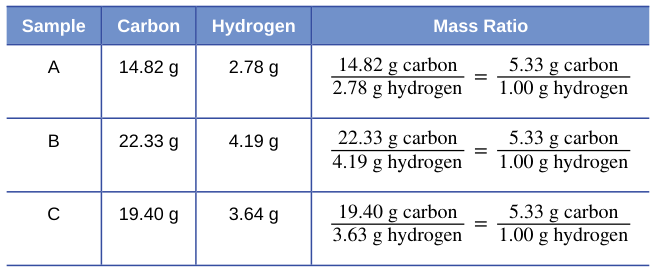
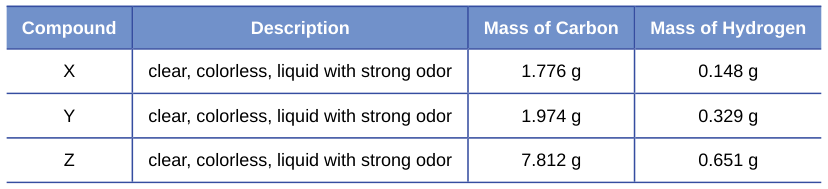
- The law of definite proportions states that all samples of a pure compound contain the same elements in the same mass ratio.
- Isooctane serves as an example of constant composition, consistently maintaining a carbon-to-hydrogen mass ratio of 5.33:1.
- The law of multiple proportions explains how two elements can form different compounds using small, whole-number ratios of mass.
- While a specific compound always has the same mass ratio, different substances can occasionally share the same ratio.
- Experimental data from Joseph Proust and Dalton himself provided the empirical foundation for these fundamental chemical laws.
These ratios by themselves may not seem particularly interesting or informative; however, if we take a ratio of these ratios, we obtain a useful and possibly surprising result: a small, whole-number ratio.
Laws of Multiple Proportions
- The Law of Multiple Proportions is demonstrated by comparing mass ratios of elements in different compounds, such as copper-chlorine and carbon-oxygen pairs.
- Atomic theory explains these fixed ratios by suggesting that atoms combine in simple, whole-number increments like 1:1 or 1:2.
- Mathematical analysis of gas samples shows that different compounds can be formed from the same elements by varying the atomic ratios.
- The transition from Dalton's initial ideas to modern atomic theory was driven by seminal experiments focusing on internal atomic structure.
- Key milestones in atomic evolution include the work of Thomson, Millikan, and Rutherford regarding subatomic particles and isotopes.
This 2-to-1 ratio means that the brown compound has twice the amount of chlorine per amount of copper as the green compound.
Discovery of the Electron
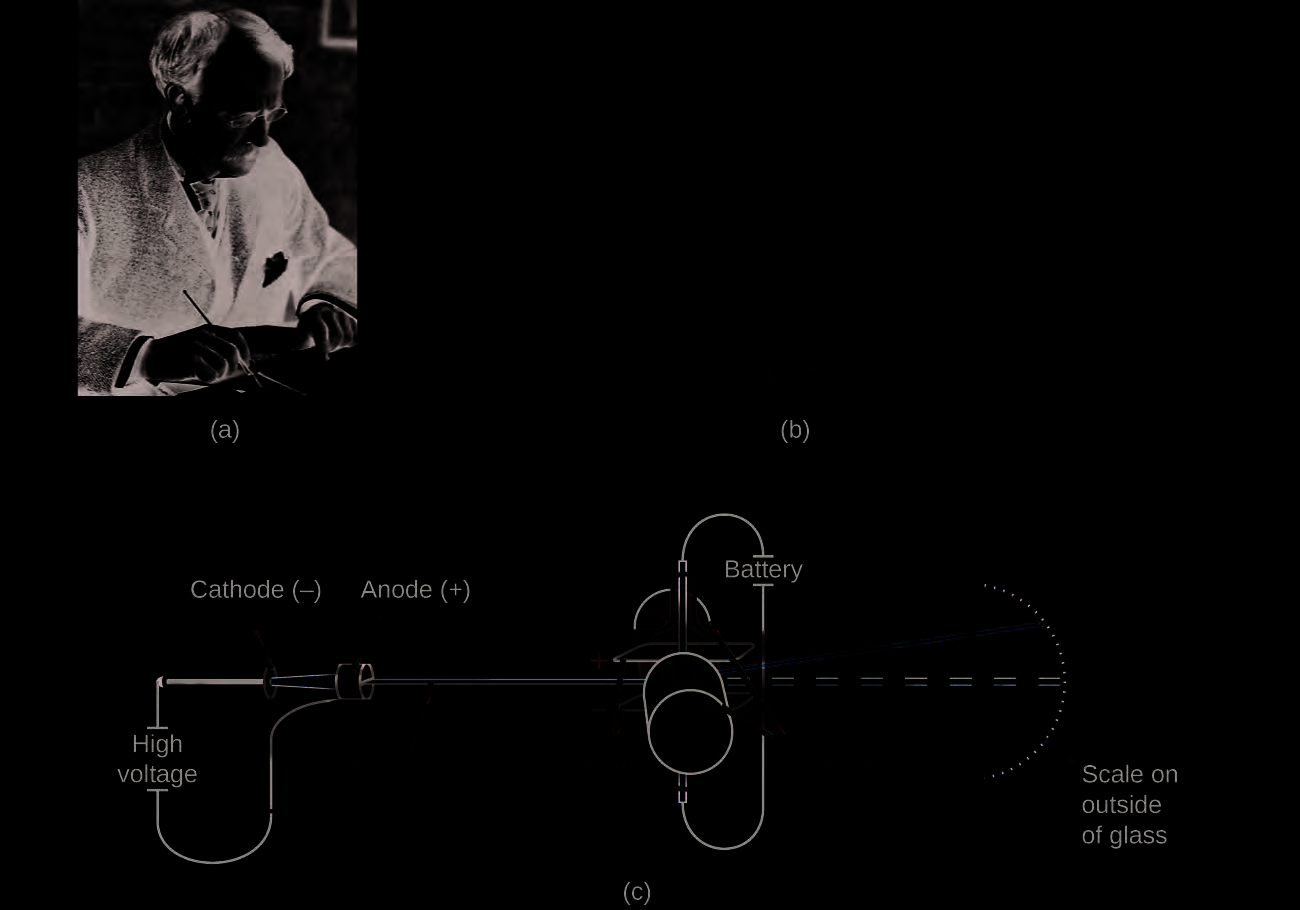
- Physicist J. J. Thomson used cathode ray tubes to investigate whether atoms were composed of even smaller particles.
- The cathode ray beam was consistently deflected toward positive charges, indicating the particles carried a negative charge.
- Thomson calculated the charge-to-mass ratio, proving these particles were significantly lighter than any known atom.
- The identical behavior of rays from different metal electrodes suggested these particles were universal components of all matter.
- Thomson's 'cathode ray particles' were eventually renamed electrons, a term originally coined by George Stoney.
The particles are attracted by positive (+) charges and repelled by negative (−) charges, so they must be negatively charged.
Measuring the Electron and Atom
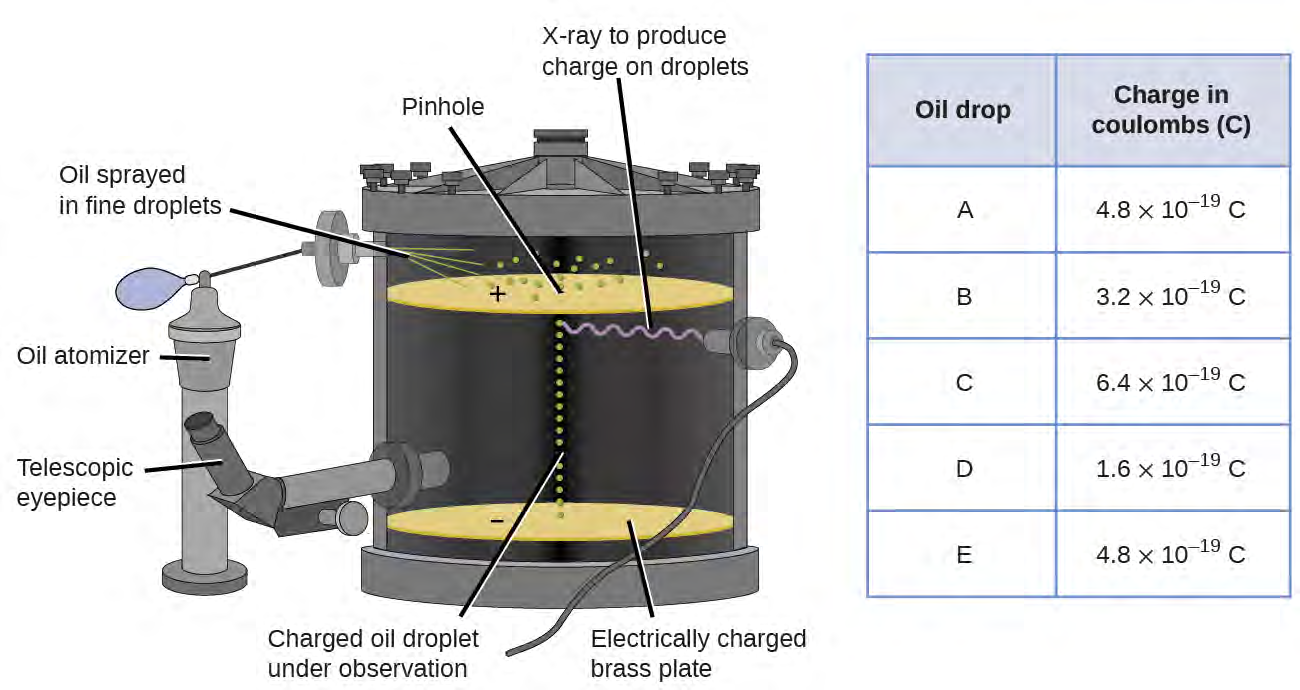
- Robert Millikan's 1909 oil drop experiment successfully determined the fundamental charge of a single electron as 1.6 x 10^-19 C.
- By combining Millikan's charge data with J.J. Thomson's charge-to-mass ratio, scientists calculated the incredibly small mass of the electron.
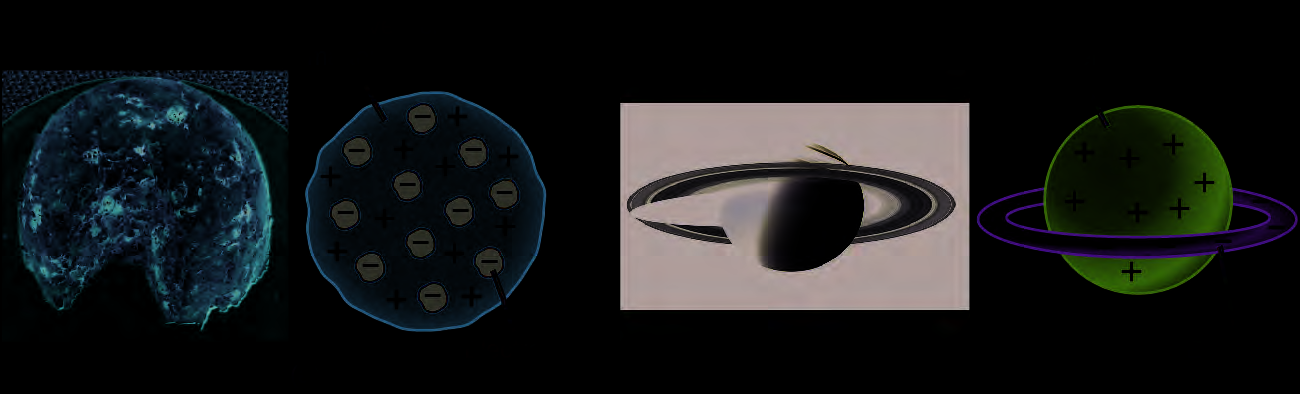
- Early 20th-century atomic theories included the 'plum pudding' model and the 'Saturn-like' model to explain how positive and negative charges coexisted.
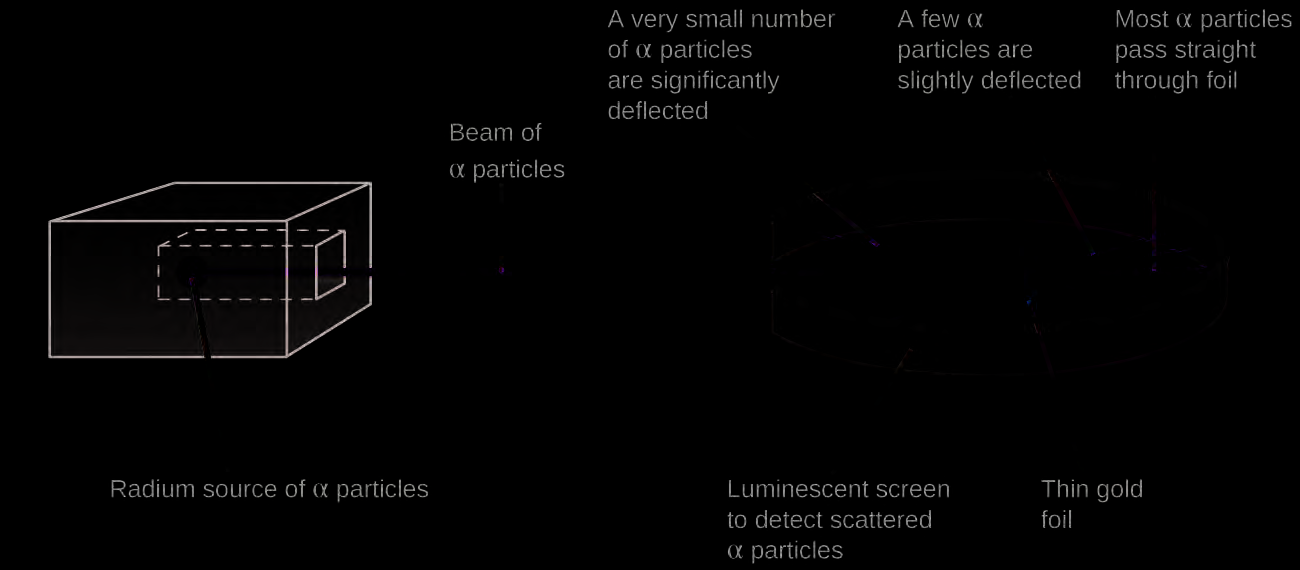
- Ernest Rutherford tested these models by firing high-speed alpha particles at a thin sheet of gold foil.
- The gold foil experiment revealed that while most particles passed through, a tiny fraction were deflected at extreme angles, challenging existing theories.
It was quite the most incredible event that has ever happened to me in my life. It was almost as incredible as if you fired a 15-inch shell at a piece of paper and it came back and hit you.
Rutherford's Gold Foil Experiment
- Ernest Rutherford observed that most alpha particles passed through gold foil, while a tiny fraction were deflected at extreme angles.
- The experiment proved that atoms are composed primarily of empty space rather than solid matter.
- Rutherford deduced the existence of a small, dense, and positively charged center called the nucleus.
- The findings led to a new atomic model where mass is concentrated in the center, surrounded by negatively charged electrons.
- Rutherford later identified the hydrogen nucleus as a fundamental building block of all nuclei, naming it the proton.
It was almost as incredible as if you fired a 15-inch shell at a piece of tissue paper and it came back and hit you.
Isotopes and Atomic Architecture
- Frederick Soddy discovered isotopes by identifying atoms that were chemically identical but possessed different atomic masses.
- The mystery of missing nuclear mass was resolved in 1932 when James Chadwick discovered the neutron, an uncharged subatomic particle.
- Isotopes are now defined as atoms with the same number of protons but varying numbers of neutrons.
- The physical scale of an atom is dominated by empty space, with the nucleus occupying only a tiny fraction of the total volume.
- Standardized units like the atomic mass unit (amu) were developed to measure the incredibly small masses of subatomic particles.
If the nucleus were the size of a blueberry, the atom would be about the size of a football stadium.
Properties of Subatomic Particles
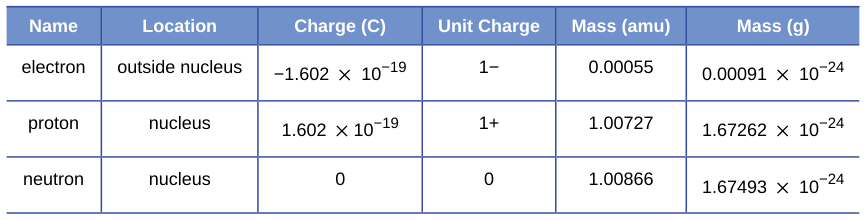
- Atoms are composed of protons, neutrons, and electrons, each defined by specific mass in atomic mass units (amu) and electrical charge.
- The atomic number (Z) represents the number of protons and is the fundamental defining characteristic of an element's identity.
- The mass number (A) is the sum of protons and neutrons, though the actual mass of an atom is slightly less than the sum of its parts due to mass defect.
- Neutral atoms contain equal numbers of protons and electrons, while ions are formed when atoms gain or lose electrons to become anions or cations.
- The physical manifestation of chemical imbalances, such as iodine deficiency leading to goiters, highlights the biological importance of specific elements.
An observant student might notice that the sum of an atom’s subatomic particles does not equal the atom’s actual mass.
Chemical Symbols and Atomic Structure
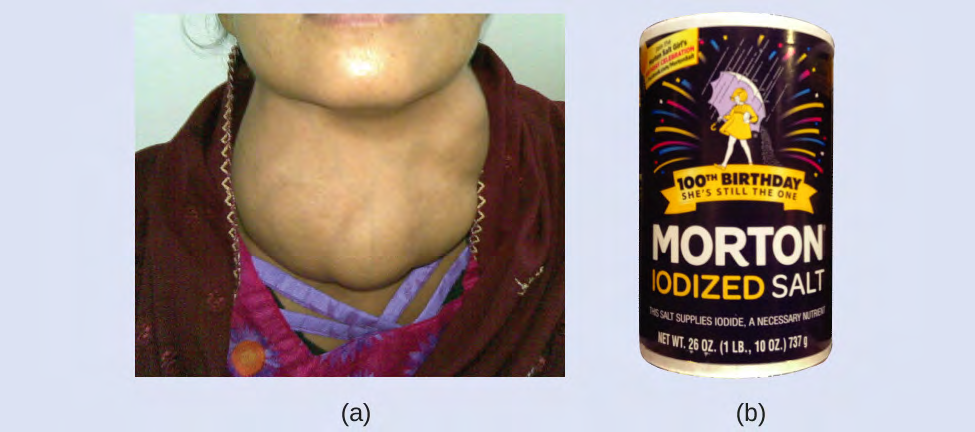
- Iodine deficiency remains a global health risk for 40% of the population, though it is largely mitigated in the U.S. through iodized table salt.
- The subatomic composition of ions can be determined by using the atomic number for protons and adjusting the electron count based on the net charge.
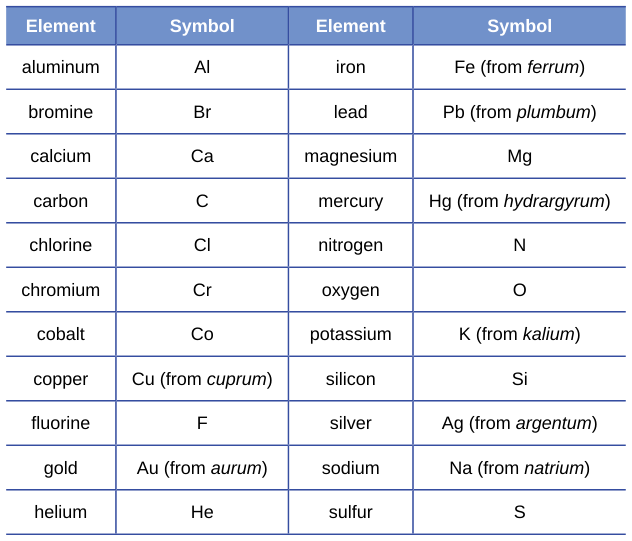
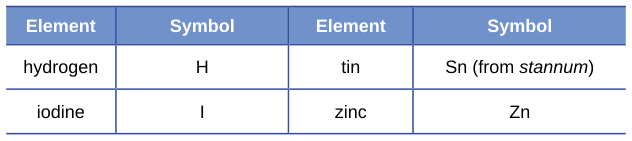
- Chemical symbols serve as universal abbreviations representing elements in both the microscopic domain of single atoms and the macroscopic domain of bulk matter.
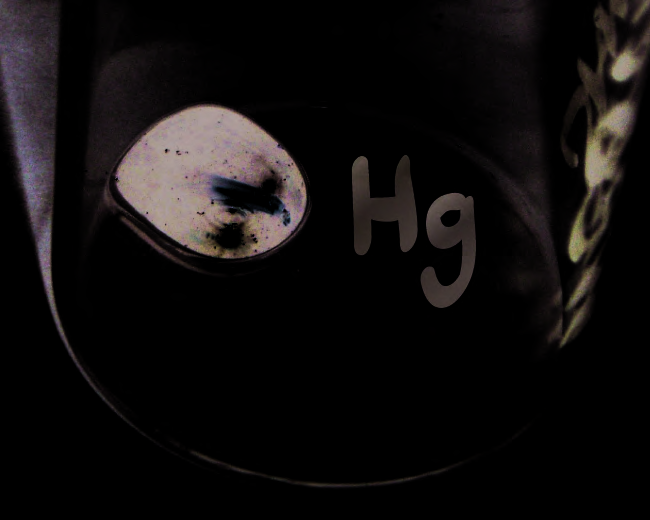
- Many element symbols are derived from Latin roots, such as 'Fe' for iron (ferrum) and 'Hg' for mercury (hydrargyrum).
- Strict capitalization rules for symbols, such as 'Co' for cobalt versus 'CO' for carbon monoxide, are essential to distinguish between elements and compounds.
- The International Union of Pure and Applied Chemistry (IUPAC) oversees the naming process for new elements, often transitioning from Latin placeholders to names honoring scientists.
To avoid confusion with other notations, only the first letter of a symbol is capitalized.
Isotope Symbols and Atomic Mass
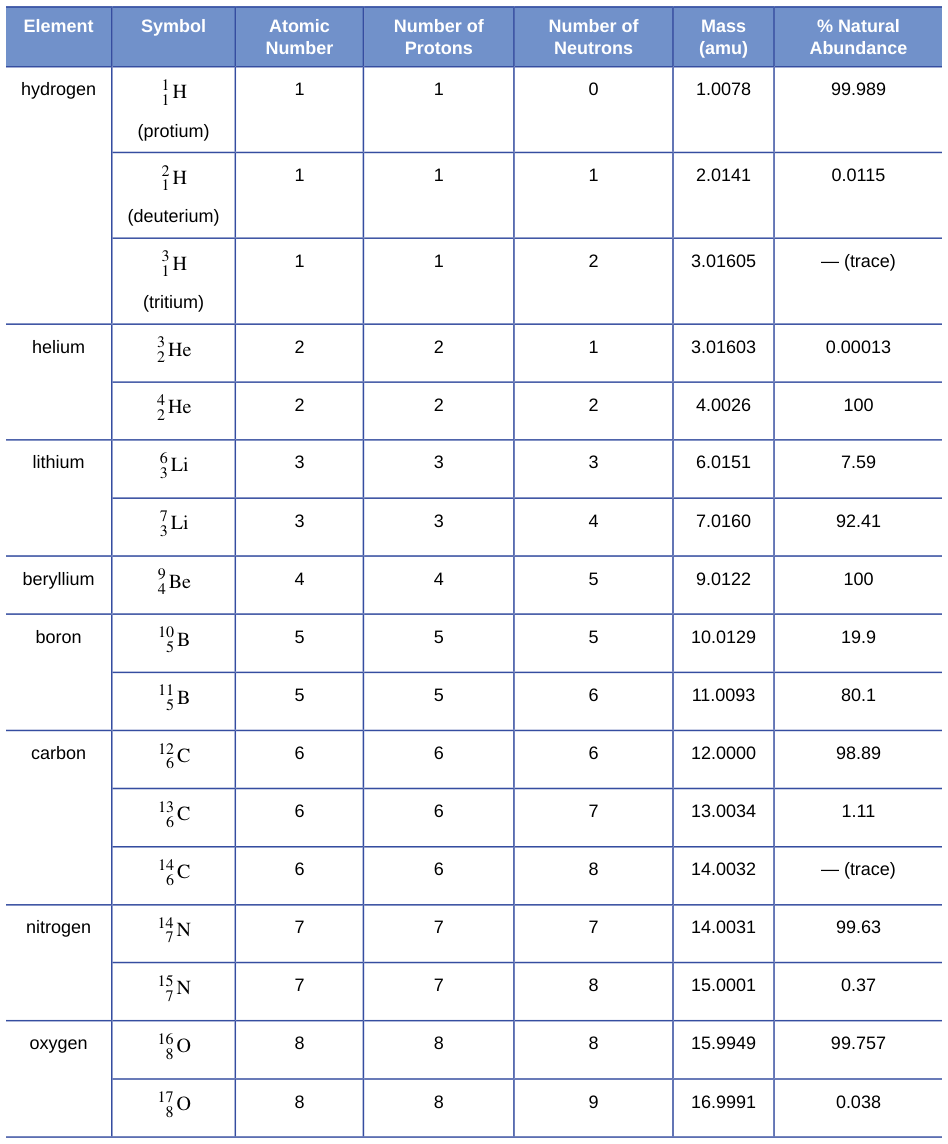
- Isotopes are identified by their mass number written as a superscript to the left of the element symbol, while the atomic number is often omitted as it is redundant.
- While isotopes of the same element share the same number of protons, they differ in their neutron count, which alters their physical mass.
- Hydrogen is unique among the elements for having specific common names for its isotopes: deuterium for hydrogen-2 and tritium for hydrogen-3.
- The atomic mass of a single atom is roughly equal to its mass number because protons and neutrons each contribute approximately one amu.
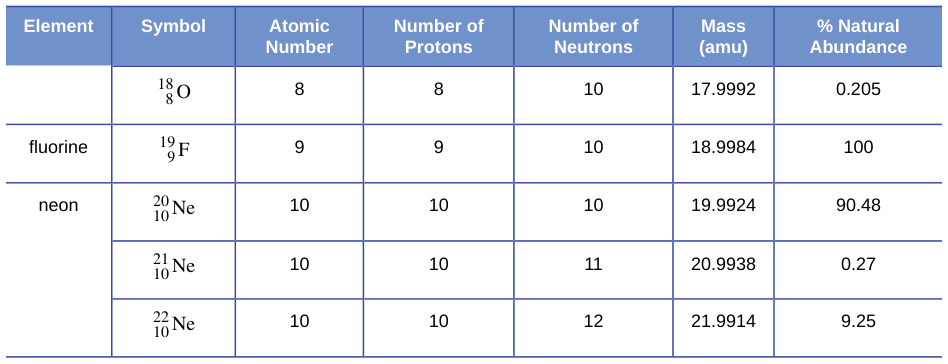
- The periodic table lists a weighted average mass for each element, calculated by multiplying the mass of each natural isotope by its fractional abundance.
Hydrogen-2, symbolized 2H, is also called deuterium and sometimes symbolized D. Hydrogen-3, symbolized 3H, is also called tritium and sometimes symbolized T.
Calculating Average Atomic Mass
- Average atomic mass is a weighted average calculated from the masses and relative abundances of an element's naturally occurring isotopes.
- No single atom of an element actually possesses the average atomic mass; for instance, boron atoms weigh roughly 10 or 11 amu, but never the average 10.81 amu.
- Isotopic abundances can vary slightly depending on the source of the material, such as the difference between neon found in solar wind versus terrestrial neon.
- Mathematical variations of mass calculations allow scientists to determine the percent composition of isotopes if the average mass and individual isotopic masses are known.
- The sum of the fractional abundances of all isotopes for a given element must always equal one.
It is important to understand that no single boron atom weighs exactly 10.8 amu; 10.8 amu is the average mass of all boron atoms, and individual boron atoms weigh either approximately 10 amu or 11 amu.
Principles of Mass Spectrometry
- Mass spectrometry is a versatile analytical technique used across diverse fields like forensics, medicine, and environmental science.
- The process begins by vaporizing a sample and using a high-energy electron beam to create positively charged cations.
- An electric or magnetic field deflects these ions based on their specific mass-to-charge ratios.
- The resulting mass spectrum plots the relative abundance of ions, where peak height represents the fraction of each isotope present.
- Modern mass spectrometry has evolved from a foundational tool of atomic theory into a sophisticated method for identifying complex substances.
These cations then pass through a (variable) electric or magnetic field that deflects each cation’s path to an extent that depends on both its mass and charge (similar to how the path of a large steel ball bearing rolling past a magnet is deflected to a lesser extent that that of a small steel BB).
Molecular and Structural Formulas
- Molecular formulas use chemical symbols and subscripts to identify the specific number and types of atoms within a molecule.
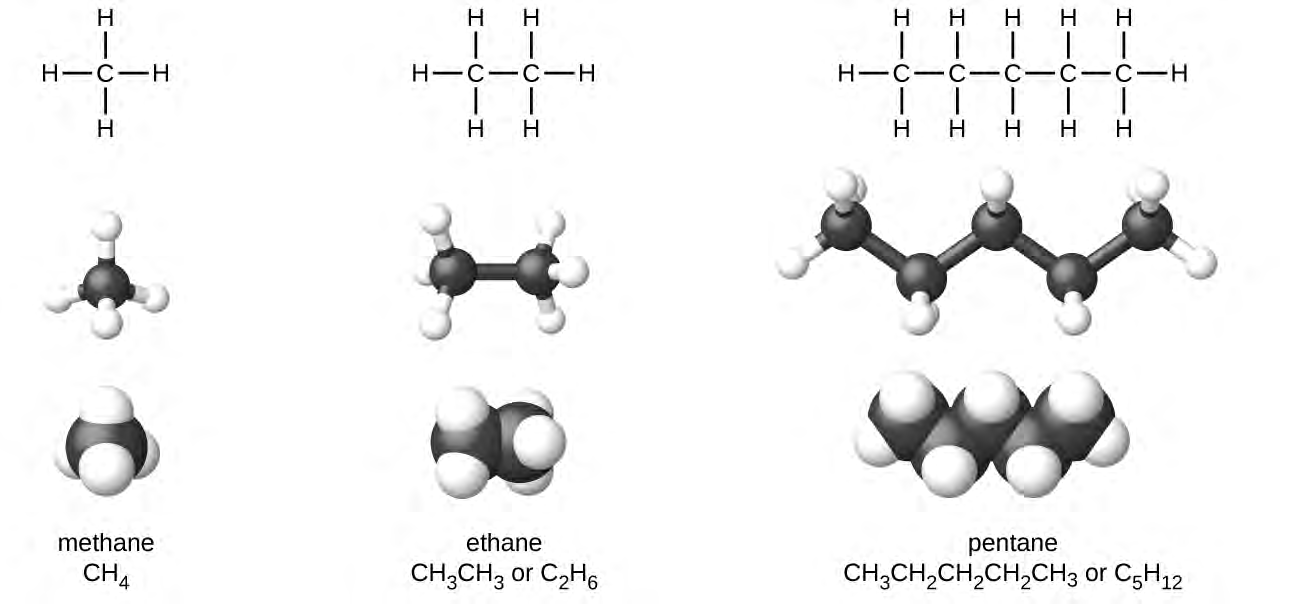
- Structural formulas provide a visual map of atomic connectivity, using lines to represent the chemical bonds holding atoms together.
- Visualizations like ball-and-stick and space-filling models help illustrate the geometric arrangement and relative sizes of atoms.
- Many elements naturally exist as diatomic molecules, such as H2 and O2, or polyatomic forms like the eight-atom sulfur molecule S8.
- Chemical notation distinguishes between bonded atoms and separate atoms; for example, H2 represents a single molecule while 2H represents two isolated atoms.
- Empirical formulas define compounds by the simplest whole-number ratio of their constituent elements rather than the exact count of atoms.
The symbols H, 2H, H 2, and 2H 2represent very different entities.
Empirical and Molecular Formulas
- Molecular formulas represent the actual number of atoms of each element present in a single molecule of a compound.
- Empirical formulas represent the simplest whole-number ratio of atoms in a compound, often derived from experimental data.
- A molecular formula is always a whole-number multiple of its corresponding empirical formula.
- Common substances like benzene and acetic acid demonstrate how different molecular structures can share or differ in their simplest ratios.
- Modern chemists like Lee Cronin are exploring the future of 'app-ing' chemistry to create complex molecules through reverse engineering.
He wonders if we could “make a really cool universal chemistry set” by what he calls “app-ing” chemistry.
Chemical Toolkits and Isomerism
- Chemist Lee Cronin proposes a 'universal toolkit of chemistry' using 3D printers to fabricate reaction vessels and custom-tailored drugs.
- The concept of 'printing' medicine aims to personalize pharmaceuticals based on an individual's unique genetic makeup and environment.
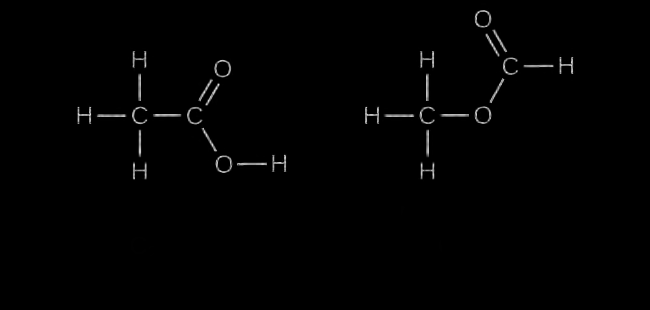
- Isomers are compounds that share the same molecular formula but possess different atomic arrangements and chemical properties.
- Structural isomers, such as acetic acid and methyl formate, differ in how their atoms are connected, leading to vastly different uses.
- Spatial isomers differ in the orientation of atoms in space, which can result in distinct sensory experiences like the different scents of carvone isomers.
What Apple did for music, I’d like to do for the discovery and distribution of prescription drugs.
Evolution of the Periodic Law
- Early chemists identified groups of elements, such as alkali metals and halogens, that share distinct chemical and physical behaviors.
- Dimitri Mendeleev and Lothar Meyer independently discovered that elemental properties exhibit a periodic relationship when arranged by atomic mass.
- Mendeleev gained prominence by successfully predicting the existence and properties of then-unknown elements like gallium and germanium.
- The modern periodic law shifted the organizational focus from atomic mass to atomic number, creating the structure used in chemistry today.
- The contemporary periodic table organizes elements into horizontal periods and vertical groups based on increasing atomic number and shared characteristics.
But Mendeleev went one step further than Meyer: He used his table to predict the existence of elements that would have the properties similar to aluminum and silicon, but were yet unknown.
Classifying the Periodic Table
- Elements are categorized into three broad classes based on physical properties: metals, nonmetals, and metalloids.
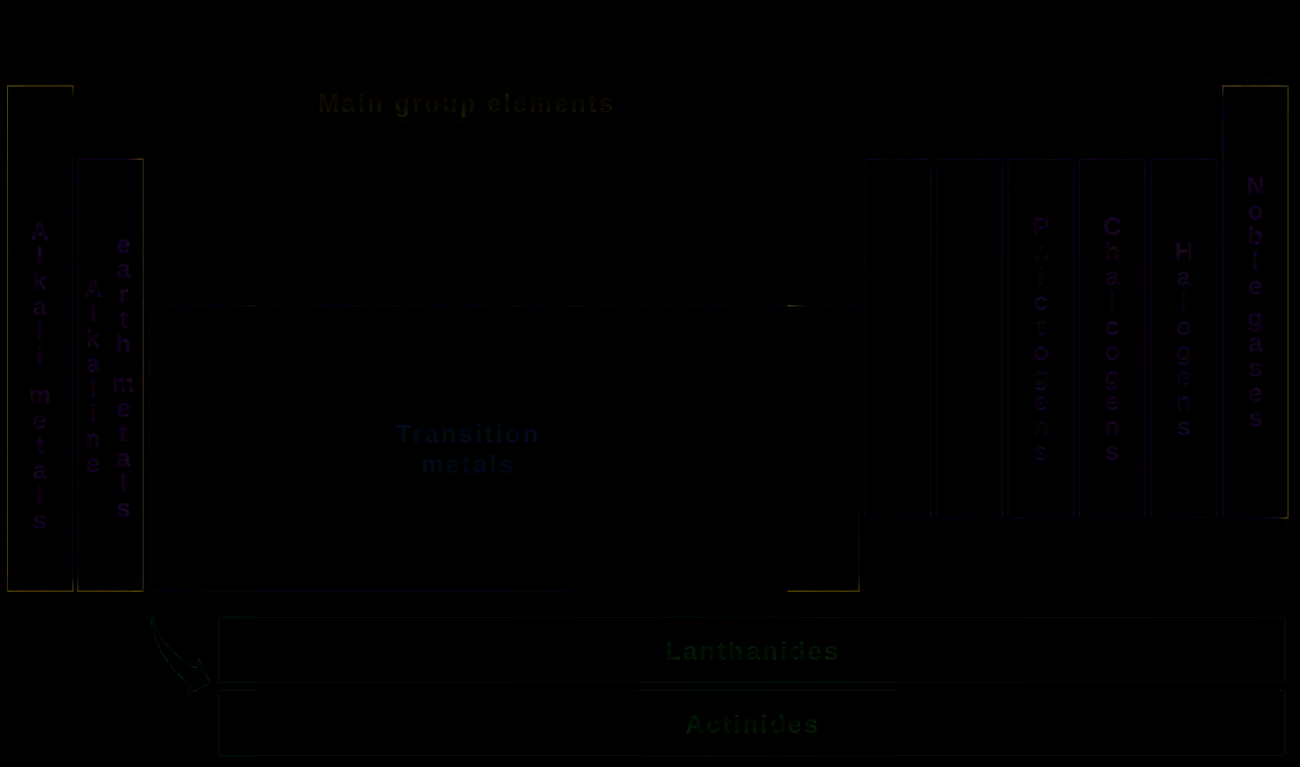
- The table is structured into main-group elements, transition metals, and inner transition metals (lanthanides and actinides).
- Vertical columns, known as groups, contain elements with similar chemical behaviors and specific family names like alkali metals or halogens.
- Unique naming conventions exist for specific groups, such as pnictogens (group 15) and chalcogens (group 16).
- Hydrogen is a unique nonmetallic element that defies standard grouping, often sharing properties with both group 1 and group 17.
Hydrogen is a unique, nonmetallic element with properties similar to both group 1A and group 7A elements.
Isotopes and Chemical Bonding
- Elements with atomic masses in square brackets consist entirely of unstable, radioactive isotopes.
- The bracketed number represents the atomic mass number of the most stable isotope rather than a natural average.
- Chemical identity is preserved in ordinary reactions because the atomic nucleus remains unchanged.
- The transfer or sharing of electrons between atoms is the fundamental driver of chemical behavior.
- Atoms that gain or lose electrons during compound formation become electrically charged particles known as ions.
The transfer and sharing of electrons among atoms govern the chemistry of the elements.
Predicting Ion Formation and Charge
- Atoms form ions by gaining or losing electrons to achieve the same electron count as the nearest noble gas.
- Main-group metals typically lose electrons to form cations with a positive charge equal to their group number.
- Nonmetal elements generally gain electrons to form anions with a negative charge based on their distance from the noble gases.
- The periodic table serves as a predictive map for ionic charges, though its reliability decreases toward the center of the table.
- Transition metals like copper and iron are exceptions to simple group rules and often exhibit variable ionic charges.
- The identity of an element remains constant during ion formation because the number of protons in the nucleus does not change.
In fact, transition metals and some other metals often exhibit variable charges that are not predictable by their location in the table.
Ionic Compounds and Polyatomic Ions
- Metals like magnesium lose electrons to form positive cations while nonmetals like nitrogen gain electrons to form negative anions.
- The charge of a monatomic ion is determined by its group position on the periodic table relative to the nearest noble gas.
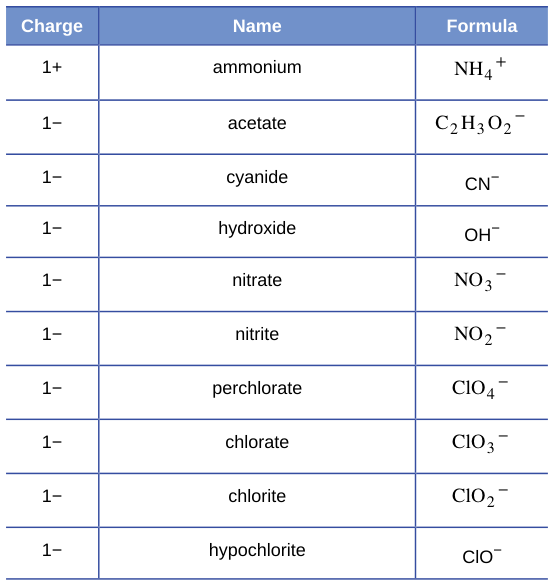
- Monatomic ions consist of a single atom, whereas polyatomic ions are electrically charged molecules acting as discrete units.
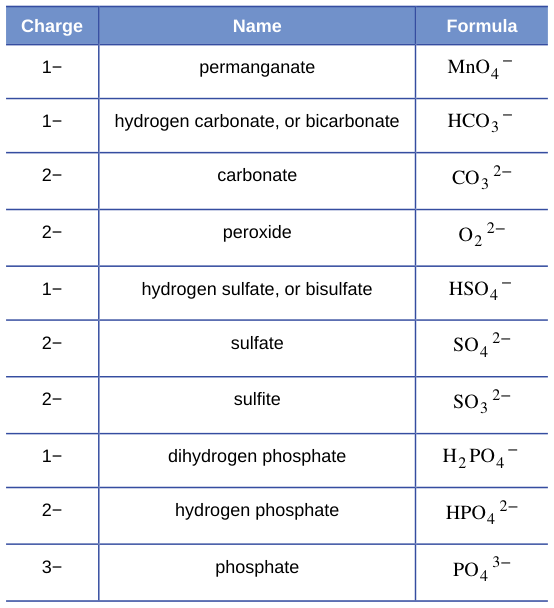
- Oxyanions are a specific class of polyatomic ions that contain one or more oxygen atoms.
- Students are encouraged to memorize common polyatomic ions, such as ammonium and phosphate, due to their frequent appearance in chemistry.
These ions, which act as discrete units, are electrically charged molecules (a group of bonded atoms with an overall charge).
Chemical Bonding and Ionic Compounds
- Polyatomic ion nomenclature uses prefixes like per- and hypo- and suffixes like -ate and -ite to indicate relative oxygen atom counts.
- Chemical bonds are classified as ionic when electrons are transferred between atoms or covalent when electrons are shared.
- Ionic bonds are electrostatic forces of attraction between cations and anions, typically forming when metals react with nonmetals.
- The periodic table serves as a guide for predicting ionic compounds, though exceptions like aluminum chloride exist.
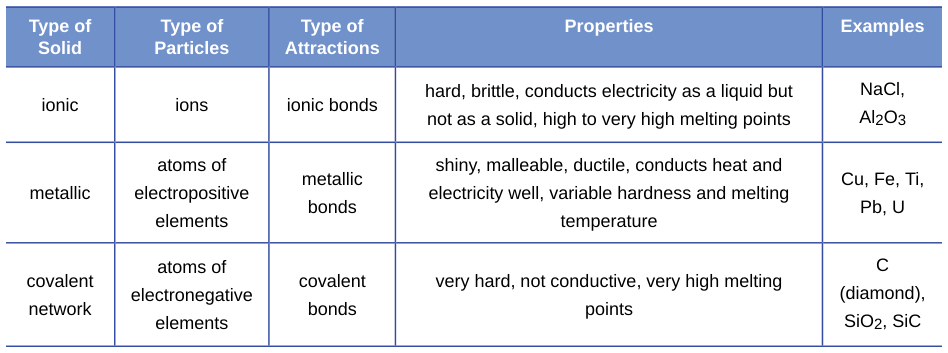
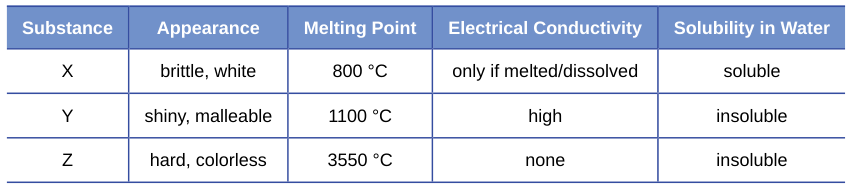
- Ionic compounds are characterized by high melting and boiling points and the ability to conduct electricity only when molten or dissolved.
- In solid form, ionic compounds do not conduct electricity because the ions are locked in place and cannot flow.
In solid form, an ionic compound is not electrically conductive because its ions are unable to flow (“electricity” is the flow of charged particles).
Formulas of Ionic Compounds
- Ionic compounds are electrically neutral because the total positive charge of cations must equal the total negative charge of anions.
- The chemical formula of an ionic compound reflects the simplest ratio of ions required to achieve this electrical balance.
- Polyatomic ions act as discrete units within a compound and are enclosed in parentheses when more than one is present in a formula.
- Predicting formulas involves calculating the least common multiple of the ion charges, such as using two Al3+ and three O2- to form Al2O3.
- Common substances like sapphires, baking powder, and bone minerals are all examples of ionic compounds with specific charge-balanced structures.
We use parentheses in a formula to indicate a group of atoms that behave as a unit.
Ionic and Molecular Compounds
- Ionic compounds are represented by formulas indicating the relative numbers of cations and anions rather than discrete molecular units.
- While many ionic formulas are empirical, some containing polyatomic ions like sodium oxalate (Na2C2O4) use subscripts that reflect the specific polyatomic structure.
- Molecular or covalent compounds consist of neutral molecules formed when atoms share electrons instead of transferring them.
- Physical properties such as low boiling and melting points often distinguish molecular compounds from their ionic counterparts.
- The periodic table serves as a predictive tool where metal-nonmetal combinations typically form ionic bonds, while nonmetal-nonmetal combinations form covalent bonds.
- Chemical bonding exists on a spectrum, with 'shades of gray' between purely ionic and purely molecular classifications.
Shades of gray exist between ionic and molecular compounds, and you’ll learn more about those later.
Fundamentals of Inorganic Nomenclature
- Nomenclature provides a standardized set of IUPAC rules for naming ionic and molecular compounds based on their chemical composition.
- Binary ionic compounds are named by combining the metal cation name with the nonmetal anion, which is modified with an -ide suffix.
- Compounds containing polyatomic ions follow similar naming conventions but retain the specific existing names of the complex ions.
- The classification process for naming requires identifying whether a compound is ionic or molecular and determining the charge variability of the metal.
- Inorganic nomenclature is a practical tool for identifying common household substances ranging from table salt to antacids and cleaning agents.
Look at the label or ingredients list on the various products that you use during the next few days, and see if you run into any of those in this table, or find other ionic compounds that you could now name or write as a formula.
Naming Variable Charge Metals
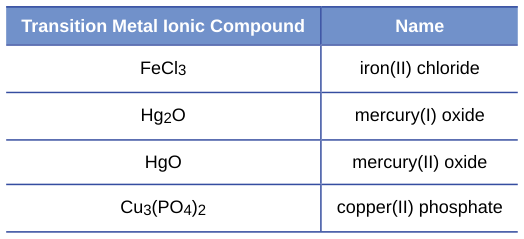
- Transition metals often form multiple cations with different charges, requiring specific naming conventions to avoid ambiguity.
- The modern Stock system uses Roman numerals in parentheses to indicate the specific charge of the metal ion within a compound.
- Metal charges are mathematically deduced from the known fixed charges of the anions to ensure the compound remains electrically neutral.
- Older nomenclature used suffixes like '-ous' and '-ic' to distinguish between lower and higher oxidation states, such as ferrous and ferric.
- While largely abandoned by scientists, archaic naming conventions like 'stannous fluoride' persist in commercial industries and consumer products.
- Accurate naming is essential for distinguishing between substances with vastly different chemical properties, such as different chlorides of iron.
The simplest name, “iron chloride,” will, in this case, be ambiguous, as it does not distinguish between these two compounds.
Chromium Toxicity and Molecular Nomenclature
- The legal battle led by Erin Brockovich against PG&E resulted in a record $333 million settlement over Cr(VI) groundwater contamination in Hinckley, California.
- Chromium exists in two primary forms: the relatively safe and insoluble Cr(III) and the highly toxic, water-soluble Cr(VI).
- Despite historical legal victories, Cr(VI) remains a persistent environmental threat, with a 2010 study finding it in the tap water of 31 out of 35 major US cities.
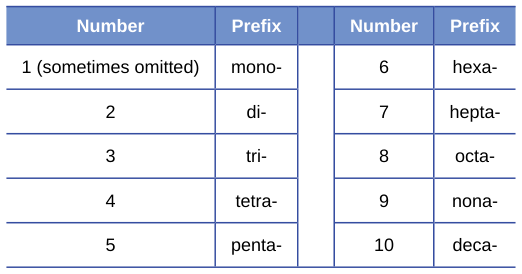
- Unlike ionic compounds, molecular (covalent) compounds require a specific naming system using Greek prefixes to account for varying atom combination ratios.
- Molecular nomenclature rules dictate that the more metallic element is listed first, followed by the more nonmetallic element with an '-ide' suffix.
- Prefixes such as mono-, di-, and tri- are essential for distinguishing between different compounds made of the same elements, like carbon monoxide and carbon dioxide.
The settlement they won in 1996—$333 million—was the largest amount ever awarded for a direct-action lawsuit in the US at that time.
Naming Molecular Compounds and Acids
- Molecular compounds composed of two nonmetals are named using numerical prefixes like mono-, di-, and tri- to indicate atom counts.
- Common names such as water and nitrous oxide often supersede systematic IUPAC nomenclature in everyday scientific practice.
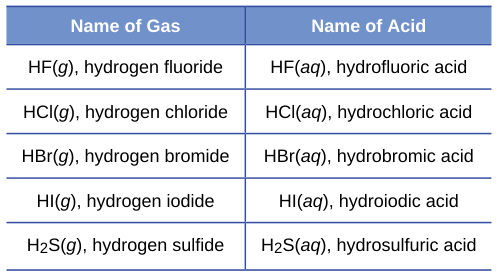
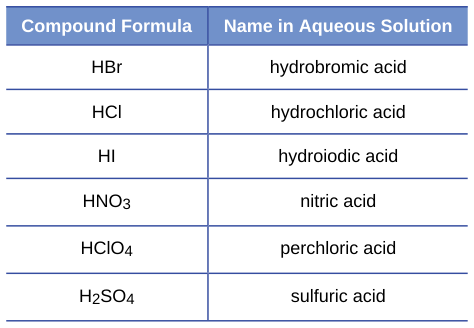
- Binary acids are named by adding the prefix 'hydro-' and the suffix '-ic' to the nonmetallic element when dissolved in water.
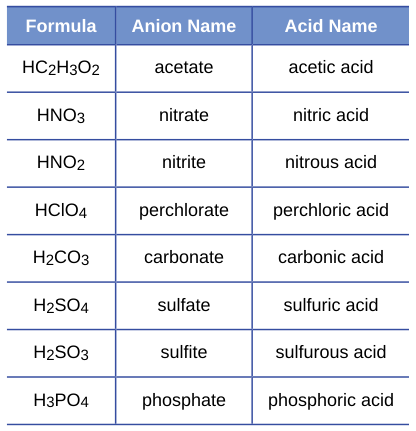
- Oxyacids, which contain hydrogen and oxygen, are named by modifying the suffix of the polyatomic anion from '-ate' to '-ic' or '-ite' to '-ous'.
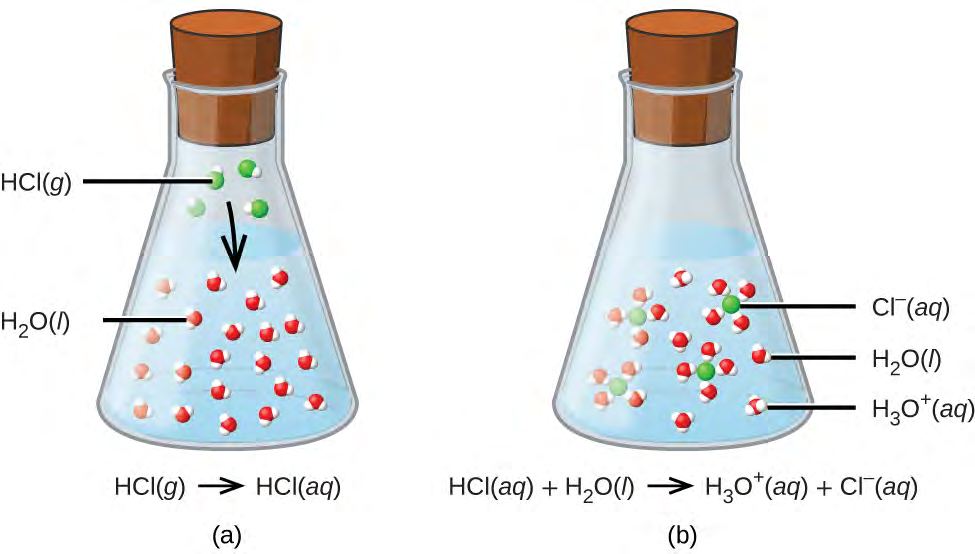
- The distinction between a gas and its acidic aqueous solution is critical, as seen in the transition from hydrogen chloride to hydrochloric acid.
And H 2O is usually called water, not dihydrogen monoxide.
Nomenclature and Atomic Fundamentals
- The text outlines specific rules for naming oxyacids, where the suffix of the anion determines the acid's name, such as changing '-ate' to '-ic acid'.
- Common chemical formulas like H2CO3 and H2SO4 are used to illustrate naming conventions and their specific linguistic exceptions.
- A comprehensive glossary defines foundational atomic concepts, including the distinction between cations (positive) and anions (negative).
- The section details the physical properties of subatomic particles, specifically the electron's charge and the composition of alpha particles.
- Key chemical laws are introduced, such as the law of definite proportions, which states that pure compounds always contain the same ratio of elements.
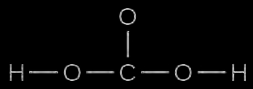
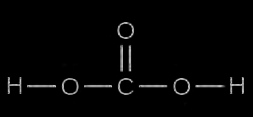
To name this correctly, “hydrogen” is omitted; the –ate of carbonate is replace with –ic ; and acid is added—so its name is carbonic acid.
Foundations of Atomic Theory
- The Law of Definite Proportions establishes that pure compounds always contain the same elements in identical mass ratios.
- Dalton's postulates define atoms as unique to each element and indestructible during chemical transformations.
- Subatomic discovery progressed from Thomson's electrons to Rutherford's dense, positively charged nucleus.
- The Law of Multiple Proportions explains how elements combine in small, whole-number ratios to form different compounds.
- Isotopes are identified as atoms of the same element that differ in mass due to varying numbers of neutrons.
- The periodic law organizes elements by atomic number, revealing recurring chemical and physical properties.
Although no one has actually seen the inside of an atom, experiments have demonstrated much about atomic structure.
Atomic Structure and Periodicity
- Atoms are composed of a dense, positively charged nucleus containing protons and neutrons, surrounded by a much larger cloud of light electrons.
- The atomic number, defined by the number of protons, determines an element's identity, while isotopes vary by neutron count.
- Chemical formulas range from empirical ratios and molecular counts to structural diagrams and 3D models that reveal bonding arrangements.
- Isomers represent a unique chemical phenomenon where compounds share the same molecular formula but possess different spatial arrangements.
- The periodic table organizes elements by increasing atomic number, grouping them by similar chemical properties into families like halogens and noble gases.
- Elements are broadly categorized as metals, nonmetals, or metalloids, and further divided into main-group, transition, and inner transition metals.
The nucleus contains protons and neutrons; its diameter is about 100,000 times smaller than that of the atom.
Ionic and Covalent Nomenclature
- Metals and nonmetals achieve stability by losing or gaining electrons to mimic the electron configuration of noble gases.
- Ionic compounds are formed through the attraction of cations and anions, while covalent compounds consist of atoms bonded into uncharged molecules.
- Binary ionic nomenclature lists the metal first, followed by the nonmetal with an -ide suffix, using Roman numerals for metals with variable charges.
- Molecular compounds utilize numerical prefixes like hexa- and tetra- to distinguish between different ratios of the same elements.
- Acids follow specific naming conventions, such as using the prefix hydro- for binary acids or changing anion suffixes to -ic for oxyacids.
- Dalton's atomic theory provides the foundational postulates for understanding chemical changes and the laws of definite and multiple proportions.
If the metal can form ions with different charges, a Roman numeral in parentheses follows the name of the metal to specify its charge.
Atomic Models and Simulations
- The text presents a series of conceptual exercises comparing Dalton's atomic theory with the discovery of isotopes.
- It requires students to differentiate between subatomic particles including protons, neutrons, and electrons.
- A significant portion focuses on predicting alpha particle behavior within the Thomson 'plum pudding' model versus the Rutherford model.
- Interactive simulations are utilized to test hypotheses regarding how particle energy and nuclear size affect scattering paths.
- The section concludes with practical problems on atomic symbolism, requiring the calculation of ion charges and mass numbers.
Predict and test the behavior of α particles fired at a “plum pudding” model atom.
Atomic Structure and Isotopes
- The text outlines interactive exercises using simulations to build atoms by manipulating protons, neutrons, and electrons.
- Students are tasked with identifying the relationship between subatomic particles and an atom's net charge, mass number, and stability.
- Exercises focus on the creation of specific ions and isotopes, such as Oxygen-16 and Lithium-6, through the addition or removal of electrons.
- Mathematical problems require calculating subatomic particle counts for medical isotopes and dietary elements based on atomic and mass numbers.
- The simulation activities extend to exploring natural isotopic abundance and predicting average atomic mass for elements like boron.
Select “Nature’s” mix of isotopes and compare it to your prediction.
Atomic Mass and Chemical Formulas
- The average atomic mass of an element is calculated based on the relative abundance and mass of its naturally occurring isotopes.
- Variations in average atomic mass can occur depending on the geographic or commercial source of the element, such as lithium from military recycling or boron from different countries.
- Isotopic ratios in extraterrestrial materials, like meteorites, can differ from terrestrial standards, resulting in different average atomic masses.
- Chemical symbols for individual atoms often differ from the molecular formulas of elements that exist as multi-atom molecules, such as oxygen and sulfur.
- Empirical formulas represent the simplest whole-number ratio of atoms in a compound, whereas molecular formulas show the actual number of each atom present.
- Structural formulas and 3D modeling demonstrate how the same set of atoms can be rearranged to form different molecules known as isomers.
The actual atomic mass of boron can vary from 10.807 to 10.819, depending on whether the mineral source is from Turkey or the United States.
Chemical Classification and Periodicity
- Students are tasked with building and identifying structural isomers using specific molecular formulas like C3H7Cl.
- Exercises require classifying elements as metals or nonmetals and identifying their specific subgroups such as transition or inner transition metals.
- The text emphasizes the use of the periodic table to locate elements based on group names like chalcogens, halogens, and noble gases.
- Problems involve determining the identity of neutral isotopes by calculating atomic and mass numbers from proton, neutron, and electron counts.
- A significant portion of the material focuses on predicting whether chemical compounds are ionic or covalent based on their constituent elements.
- The exercises bridge the gap between abstract periodic trends and the practical identification of specific ions within complex compounds.
Can you arrange these atoms to make a different molecule? If so, draw its structural formula and state its name.
Chemical Nomenclature and Composition
- The text provides extensive practice exercises for writing chemical formulas based on pairs of cations and anions.
- It covers the naming conventions for binary ionic compounds, molecular compounds, and acids.
- Specific focus is given to metals with variable oxidation states, requiring the use of Roman numerals in their names.
- The exercises bridge the gap between theoretical chemistry and everyday life by identifying ionic compounds found in common household products.
- The transition to Chapter 3 introduces the quantitative study of substances, including formula mass, the mole concept, and molarity.
The water in a swimming pool is a complex mixture of substances whose relative amounts must be carefully maintained to ensure the health and comfort of people using the pool.
Composition of Substances and Solutions
- Swimming pool maintenance serves as a practical example of why quantitative chemical measurements are necessary for safety and infrastructure preservation.
- Modern chemical science is defined by the shift from qualitative observations to quantitative measurements of matter.
- Formula mass is calculated by summing the average atomic masses of all atoms represented in a chemical formula.
- For covalent substances, the formula mass is specifically referred to as the molecular mass because it represents a single molecule.
- The chapter introduces the mole concept and Avogadro’s number as essential tools for relating macroscopic mass to the number of atoms or molecules.
We can argue that modern chemical science began when scientists started exploring the quantitative as well as the qualitative aspects of chemistry.
Calculating Molecular and Formula Mass
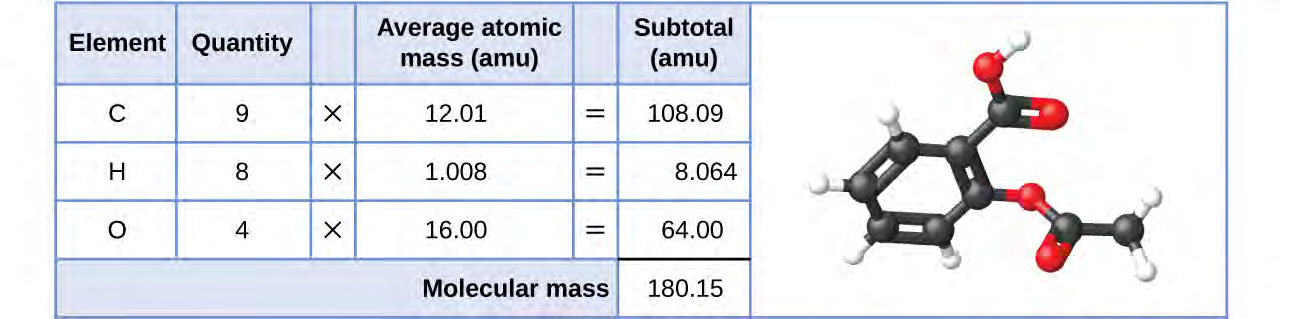
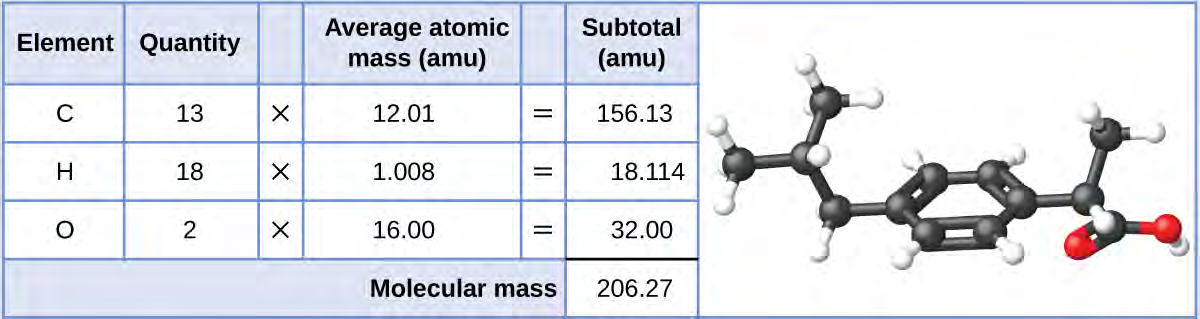
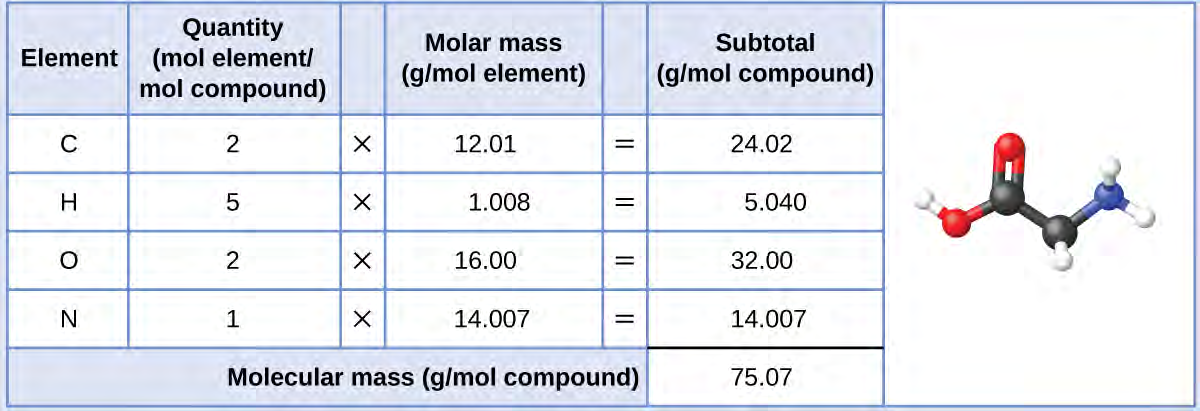
- Molecular mass is determined by summing the average atomic masses of all atoms in a covalent compound's formula, such as Ibuprofen or Acetaminophen.
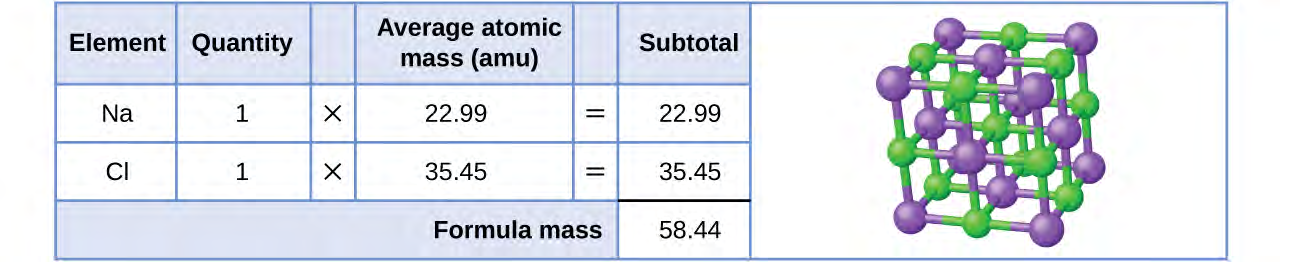
- For ionic compounds like sodium chloride, the term 'formula mass' is used instead of 'molecular mass' because they do not consist of discrete molecules.
- The calculation for ionic compounds remains the same as covalent ones, totaling the masses of all atoms represented in the chemical formula.
- When calculating mass for ions, the loss or gain of electrons is considered negligible because an electron's mass is too small to impact the significant digits of the total.
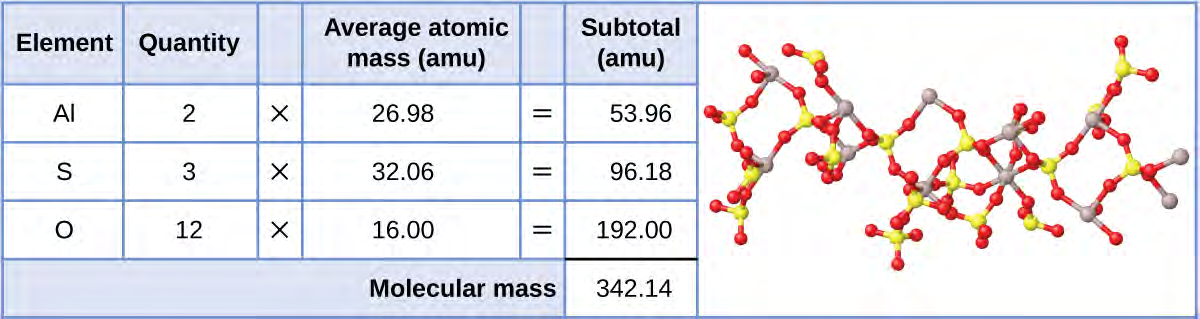
- Complex ionic formulas, such as aluminum sulfate, can be simplified into a total count of each element to streamline the mass calculation process.
Even though a sodium cation has a slightly smaller mass than a sodium atom (since it is missing an electron), this difference will be offset by the fact that a chloride anion is slightly more massive than a chloride atom.
The Mole and Avogadro's Number
- Substances are defined by the specific quantity and type of atoms they contain, which determines their unique chemical properties.
- The mole serves as a bridge between macroscopic measurements like bulk mass and the microscopic reality of individual atoms.
- Avogadro's number, approximately 6.022 x 10^23, defines the number of discrete entities found within one mole of any substance.
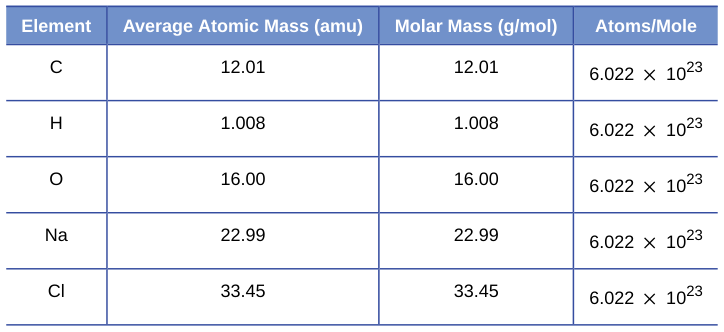
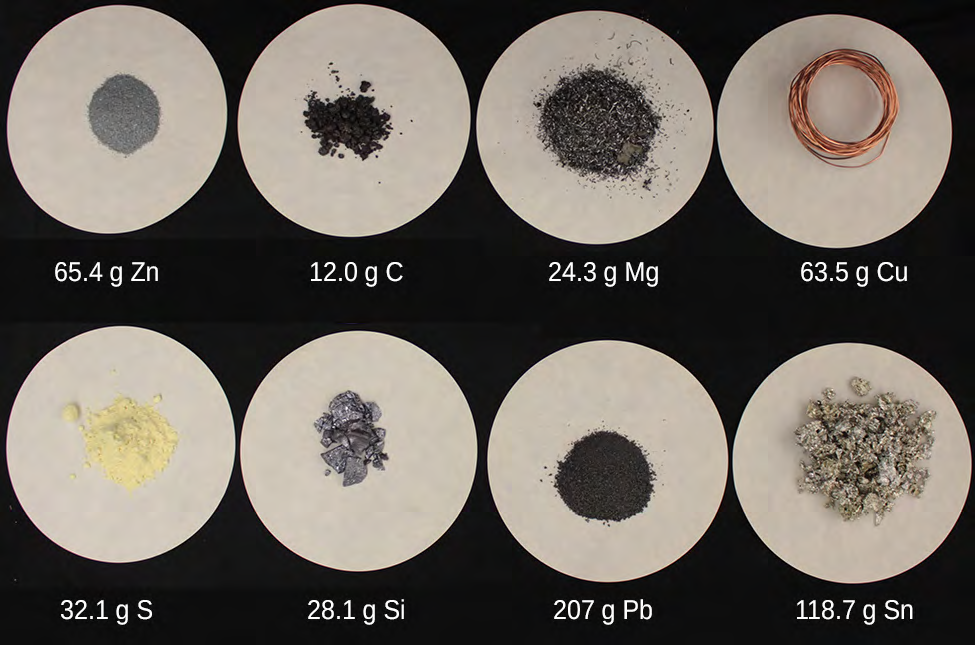
- While one mole of any element contains the same number of atoms, the molar mass varies significantly based on the weight of the individual atoms.
- The molar mass of a substance in grams is numerically equivalent to its atomic or formula weight in atomic mass units (amu) due to their shared reference to Carbon-12.
The mole provides a link between an easily measured macroscopic property, bulk mass, and an extremely important fundamental property, number of atoms, molecules, and so forth.
The Enormity of the Mole
- Atomic mass and molar mass are numerically identical but represent vastly different physical scales (amu versus grams).
- The mole represents Avogadro's number (6.022 x 10^23), a magnitude so large it is difficult for the human mind to conceptualize.
- A single 0.03 g drop of water contains enough molecules to give every person on Earth over 100 billion molecules each.
- The relationship between mass, moles, and Avogadro's number allows for precise calculations of atomic and molecular quantities.
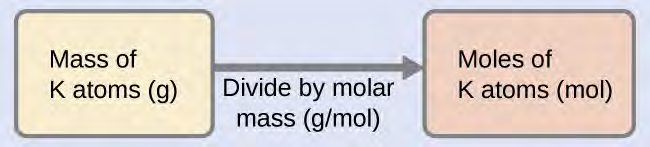
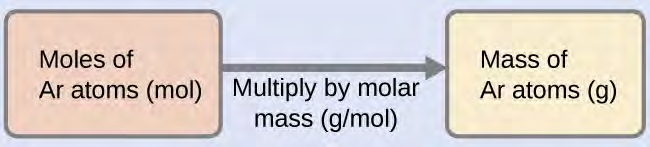
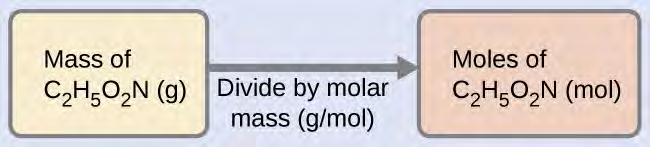
- The factor-label method is used to convert between grams and moles by utilizing the molar mass of an element from the periodic table.
If the molecules were distributed equally among the roughly seven billion people on earth, each person would receive more than 100 billion molecules.
Chemical Mass and Mole Conversions
- The text outlines the two-step process for converting the mass of an element into the total number of atoms using Avogadro’s number.
- It demonstrates how to calculate the molar mass of complex compounds like glycine by summing the atomic masses of their constituent elements.
- The factor-label method is emphasized as a reliable way to ensure units cancel correctly during chemical computations.
- Practical examples illustrate how to derive the number of moles from a given mass for substances ranging from gold to vitamin C.
- The material highlights the importance of using rough estimation to verify that calculated results are scientifically plausible.
Copper wire is composed of many, many atoms of Cu.
Molecular Counting and Neurotransmission
- The number of molecules in a substance is calculated by converting mass to moles and then multiplying by Avogadro’s number.
- Chemical formulas allow for the precise determination of individual atom counts within a specific mass of a compound.
- Neuroscience utilizes these chemical principles to understand how the brain monitors and controls bodily functions through complex physiological processes.
- Information is transmitted between neurons via chemical signals called neurotransmitters that diffuse across the synaptic gap.
- Neurotransmitters are stored in vesicles and released into the synapse through a cellular process known as exocytosis.
- The BRAIN Initiative represents a major collaborative effort to accelerate our understanding of brain anatomy and physiology.
These neurotransmitter molecules are stored in small intracellular structures called vesicles that fuse to the cell wall and then break open to release their contents when the neuron is appropriately stimulated.
Dopamine Signaling and Chemical Composition
- Dopamine is a critical neurotransmitter linked to human behavior and serious neurological conditions like Parkinson’s and schizophrenia.
- The number of dopamine molecules released during exocytosis is a primary factor in determining neurological responses and subsequent human actions.
- Recent advancements using miniaturized probes allow scientists to measure dopamine at the zeptomole level within individual vesicles.
- Studies show that mouse brain vesicles contain roughly 30,000 dopamine molecules, but drug therapies can alter this count by up to three-fold.
- Research indicates that vesicles do not release their entire dopamine payload, suggesting new avenues for pharmaceutical regulation of neurotransmitter fractions.
- Determining the chemical identity of unknown substances begins with measuring the mass of constituent elements to calculate percent composition.
Using miniaturized probes that can selectively detect dopamine molecules in very small amounts, scientists have determined that the vesicles of a certain type of mouse brain neuron contain an average of 30,000 dopamine molecules per vesicle.
Calculating Percent Composition
- Percent composition is determined by dividing the mass of each individual element by the total mass of the compound and multiplying by 100%.
- This calculation can be performed using experimental data from a physical sample or theoretically using the chemical formula and atomic masses.
- The method is applicable across different scales, whether calculating for a single molecule using atomic mass units (amu) or for a mole using grams.
- Practical applications include comparing the nitrogen content in different fertilizers to determine their economic and agricultural value.
- The sum of the mass percentages of all elements in a compound must equal 100% when rounded appropriately.
- Percent composition serves as a foundational step for determining the empirical formula of unknown substances.
The element nitrogen is the active ingredient for agricultural purposes, so the mass percentage of nitrogen in the compound is a practical and economic concern for consumers choosing among these fertilizers.
Deriving Empirical Formulas
- Chemical formulas represent the relative numbers of atoms in a substance rather than their masses.
- Experimentally derived mass data must be converted into moles using the molar mass of each constituent element.
- A tentative formula is created by dividing all molar amounts by the smallest value to establish a ratio.
- If the resulting subscripts are not whole numbers, they must be multiplied by a common integer to achieve the smallest whole-number ratio.
- The empirical formula represents the simplest ratio of atoms, which may differ from the actual molecular formula of the compound.
In this case, dividing by the smallest subscript still leaves us with a decimal subscript in the empirical formula.
Deriving Empirical and Molecular Formulas
- Percent composition data can be converted into an empirical formula by assuming a 100-gram sample, which makes mass percentages numerically equivalent to mass in grams.
- The process involves converting the mass of each element into moles using their respective molar masses.
- A tentative empirical formula is established by dividing each molar amount by the smallest molar value to find the simplest whole-number ratio.
- Determining a molecular formula requires both the empirical formula and the compound's experimental molecular or molar mass.
- The ratio 'n' is calculated by dividing the actual molecular mass by the empirical formula mass, representing the number of formula units per molecule.
- The final molecular formula is produced by multiplying the subscripts of the empirical formula by this integer 'n'.
The calculation is “most convenient” because, per the definition for percent composition, the mass of a given element in grams is numerically equivalent to the element’s mass percentage.
Determining Molecular Formulas
- The molecular formula of a compound is a whole-number multiple of its empirical formula, determined by comparing their respective masses.
- To find the multiplier, the compound's actual molecular or molar mass is divided by the calculated empirical formula mass.
- The process for determining nicotine's formula involves converting percent composition into molar amounts to find the empirical ratio C5H7N.
- By calculating nicotine's molar mass (162.3 g/mol) and comparing it to the empirical mass (81.13 g/mol), a factor of two is identified.
- The final molecular formula for nicotine is derived by doubling the empirical subscripts, resulting in C10H14N2.
Nicotine, an alkaloid in the nightshade family of plants that is mainly responsible for the addictive nature of cigarettes, contains 74.02% C, 8.710% H, and 17.27% N.
Mixtures and Molar Concentrations
- Mixtures are more common in nature than pure substances and their properties are dictated by their relative composition.
- Solutions are defined as homogeneous mixtures where the composition and properties remain uniform throughout the entire volume.
- The component present in the largest amount is the solvent, while components at lower concentrations are called solutes.
- Aqueous solutions, where water acts as the solvent, are particularly prevalent in both natural and technological contexts.
- Molarity (M) is a quantitative measure of concentration defined as the number of moles of solute per liter of solution.
- Concentration can be described qualitatively as dilute or concentrated, but chemistry requires precise mathematical units for application.
The relative amount of oxygen in a planet’s atmosphere determines its ability to sustain aerobic life.
Calculating Molarity and Mass
- Molarity is defined as the moles of solute per liter of solution and can be rearranged to solve for any of the three variables.
- To find molarity from a given mass, one must first convert the mass of the solute to moles using its molar mass.
- Calculating the mass of a solute in a specific volume requires multiplying the volume by the molarity and then by the molar mass.
- Rounding intermediate calculation results can lead to significant errors in the final answer, such as a 0.3 g discrepancy in a NaCl calculation.
- Using 'guard digits' or performing computations in a single algebraic step helps maintain accuracy and prevents rounding errors.
- The text provides practical examples using common substances like distilled white vinegar (acetic acid) and table salt (NaCl).
If we had not retained this guard digit, the final calculation for the mass of NaCl would have been 77.1 g, a difference of 0.3 g.
Principles of Solution Dilution
- Dilution is the process of reducing a solution's concentration by adding more solvent without changing the total amount of solute.
- The process is commonly used in both domestic settings, like melting ice in tea, and industrial applications, such as preparing pesticides from concentrated stock solutions.
- The fundamental mathematical relationship for dilution is expressed as n1 = n2, meaning the moles of solute remain constant before and after the process.
- The dilution equation, C1V1 = C2V2, allows for the calculation of unknown concentrations or volumes across various units of measurement.
- Practical laboratory preparation often involves adding solvent to a measured portion of a concentrated stock solution to reach a desired molarity.
Since the dilution process does not change the amount of solute in the solution, n1 = n2.
Dilution Calculations and Concentration Units
- The dilution equation, C1V1 = C2V2, is used to calculate unknown volumes or concentrations when a stock solution is diluted.
- Estimation techniques, such as comparing concentration ratios, serve as a practical check to ensure calculated results are reasonable.
- Practical examples demonstrate how to solve for the final volume of a diluted solution and the required volume of a concentrated stock solution.
- Molarity is a primary measure of concentration, but other units are necessary for specific scientific and industrial applications.
- Mass percentage is introduced as a concentration unit defined by the ratio of a component's mass to the total mass of the solution.
- The text transitions from molarity to alternative units including volume percentage, parts-per-million (ppm), and parts-per-billion (ppb).
Since the diluted concentration (0.12 M) is slightly more than one-fourth the original concentration (0.45 M), we would expect the volume of the diluted solution to be roughly four times the original concentration, or around 44 mL.
Understanding Mass Percentage
- Mass percentage measures the concentration of a solute relative to the total mass of the solution.
- Commonly used in consumer products like bleach, it is often denoted as %mass, %weight, or (w/w)%.
- Calculations require identical mass units for both solute and solution to ensure the resulting ratio is dimensionless.
- Density can be used as a conversion factor to determine the mass of a solute when only the volume of the solution is known.
- The concept is versatile enough to compute the mass percentage of either the solute or the solvent within a mixture.
Use of these more detailed symbols can prevent confusion of mass percentages with other types of percentages, such as volume percentages.
Measuring Solution Concentrations
- Volume percentage is a common way to express the concentration of liquid solutes in liquid solvents using inexpensive laboratory equipment.
- Calculating the mass of a solute from a volume percentage requires multiplying the total solution volume by the percentage and then by the solute's density.
- Mass-volume percentage is a 'mixed' unit frequently used in medical contexts, such as physiological saline or blood glucose levels.
- Blood sugar is typically measured in milligrams of glucose per deciliter of blood, which is a specific form of mass-volume ratio.
- For extremely dilute solutions, scientists use parts per million (ppm) or parts per billion (ppb) to express concentration based on mass, volume, or particle count.
The concentration of glucose in blood (commonly referred to as “blood sugar”) is also typically expressed in terms of a mass-volume ratio.
Measuring Trace Contaminants
- Parts per million (ppm) and parts per billion (ppb) are the standard units for reporting trace pollutants in water.
- The EPA sets strict safety thresholds for contaminants like fluoride and lead to prevent adverse health effects.
- Mathematical conversion between these units relies on the fact that 1 ppm is 1,000 times greater than 1 ppb.
- Calculating the mass of a solute in a specific volume of water requires assuming a density of approximately 1.00 g/mL for dilute solutions.
- Water filtration systems are essential tools for reducing these trace-level concentrations to safe drinking levels.
According to the EPA, when the concentration of lead in tap water reaches 15 ppb, certain remedial actions must be taken.
Substance Composition and Solution Concentration
- The mole concept provides a bridge between the microscopic scale of atomic mass units and the macroscopic scale of grams using Avogadro’s number.
- Molar mass and formula mass are numerically equivalent, allowing for direct conversion between the number of molecules and the mass of a substance.
- Percent composition data is used to derive empirical formulas, which can be scaled to molecular formulas using molar mass ratios.
- Molarity is the primary unit for measuring solute concentration in aqueous solutions, defined as moles of solute per liter of solution.
- The dilution equation (C1V1 = C2V2) describes the mathematical relationship between concentration and volume when adding solvent to a solution.
- Trace concentrations in environmental or medical contexts are often expressed in parts per million (ppm) or parts per billion (ppb) rather than molarity.
Due to the use of the same reference substance in defining the atomic mass unit and the mole, the formula mass (amu) and molar mass (g/mol) for any substance are numerically equivalent.
Chemical Composition and Stoichiometry Exercises
- The text provides a series of quantitative chemistry problems focused on calculating molecular and formula masses for various substances.
- Exercises require students to differentiate between the mass of individual atoms and the total mass of specific elements within a compound.
- Several problems explore the concept of the mole, asking students to convert between mass in grams and molar quantities for complex molecules.
- The material covers a wide range of substances, from simple gases like oxygen to complex minerals like turquoise and biological molecules like hemoglobin.
- Conceptual questions challenge students to compare the number of molecules and total mass across different substances with equal molar amounts.
A 55-kg woman has 7.5 × 10⁻³ mol of hemoglobin (molar mass = 64,456 g/mol) in her blood.
Chemical Composition and Formulas
- The text presents a series of quantitative chemistry problems focused on calculating the number of atoms and moles in specific masses of substances.
- Exercises involve real-world applications, such as calculating carbon atoms in the historic Cullinan diamond and sodium content in breakfast cereals.
- A significant portion of the material covers the determination of percent composition for various chemical compounds, including TNT and ammonia.
- The problems guide students through the process of deriving empirical formulas from percentage data of constituent elements.
- Advanced exercises require finding molecular formulas by combining empirical data with known molar masses for substances like asbestos and dry cleaning solvents.
- The section concludes with the application of these chemical principles to industrial polymers like Lucite, Saran, and polyethylene.
The Cullinan diamond was the largest natural diamond ever found (January 25, 1905). It weighed 3104 carats (1 carat = 200 mg).
Principles of Solution Molarity
- The text provides a series of quantitative problems focused on calculating the molarity of various chemical solutions.
- It explores the conceptual relationship between solute mass, molar mass, and total solution volume.
- Several exercises require students to distinguish between intensive properties like concentration and extensive properties like total mass.
- Practical applications are highlighted through examples involving blood serum, acid rain, household ammonia, and drinking water safety limits.
- The problems emphasize the multi-step process of converting units such as milligrams, kilograms, and milliliters into moles and liters.
What does it mean when we say that a 200-mL sample and a 400-mL sample of a solution of salt have the same molarity?
Solution Concentration and Dilution Problems
- The text provides a series of quantitative chemistry problems focused on calculating molarity, volume, and mass for various chemical solutions.
- Several exercises require the application of the dilution equation (M1V1 = M2V2) to determine final concentrations or required stock volumes.
- The problems transition from simple molarity calculations to complex scenarios involving evaporation and density-based mass percentages.
- Environmental and medical contexts are introduced, such as EPA limits on toxic substances and blood glucose measurements in different units.
- The section covers diverse concentration units including parts per million (ppm), parts per billion (ppb), and mass percentages.
The level of mercury in a stream was suspected to be above the minimum considered safe (1 part per billion by weight).
Stoichiometry and Chemical Reactions
- The text transitions from calculating solution molarity to the fundamental principles of stoichiometry and chemical reactions.
- Rocket propulsion is used as a real-world example of how precisely measured chemical mixtures generate the thrust necessary for space travel.
- Chemical equations serve as a symbolic language to represent both the identities and the relative quantities of substances in a reaction.
- The chapter outline includes balancing equations, classifying reaction types, and calculating reaction yields and quantitative analysis.
- Balancing equations requires representing the transformation of reactants, such as methane and oxygen, into products like carbon dioxide and water.
Igniting the mixture initiates a vigorous chemical reaction that rapidly generates large amounts of gaseous products.
Basics of Chemical Equations
- Chemical equations represent reactants on the left and products on the right, separated by an arrow indicating the direction of the reaction.
- Coefficients are used to denote the relative numbers of molecules involved, typically expressed as the smallest possible whole numbers.
- The ratios established by coefficients remain constant regardless of the scale, whether measuring individual molecules, dozens, or moles.
- A balanced equation must have an equal number of atoms for each element on both sides to satisfy the law of conservation of matter.
- The number of atoms is calculated by multiplying the coefficient by the element's subscript and summing totals across all formulas on one side.
- Balancing by inspection is a common qualitative approach used to transform an unbalanced description into a mathematically accurate equation.
Regardless of the absolute number of molecules involved, the ratios between numbers of molecules are the same as that given in the chemical equation.
Balancing Chemical Equations
- Chemical equations must be balanced by adjusting coefficients to ensure the number of atoms for each element is equal on both the reactant and product sides.
- Subscripts within a chemical formula define the identity of a substance and cannot be changed during balancing without altering the substance itself.
- The process often involves an iterative approach where balancing one element may temporarily upset the balance of another.
- Using the least common multiple of atom subscripts is a strategic way to determine necessary coefficients for elements like oxygen.
- Fractional coefficients can be used as helpful intermediate steps, provided they are later multiplied by a whole number to achieve an all-integer balanced equation.
Keep in mind, of course, that the formula subscripts define, in part, the identity of the substance, and so these cannot be changed without altering the qualitative meaning of the equation.
Refining Chemical Equations
- Standard chemical equations require the smallest possible whole-number coefficients to represent the relative numbers of reactants and products.
- Physical states are denoted using parenthetical abbreviations such as (s) for solids, (l) for liquids, (g) for gases, and (aq) for aqueous solutions.
- Special reaction conditions, such as the application of heat, are indicated by symbols like the Greek letter delta placed over the reaction arrow.
- Molecular equations provide a simplified view of reactions, whereas complete ionic equations explicitly represent dissolved ions as dissociated species.
- In aqueous reactions, substances that do not dissolve significantly are marked as solids, distinguishing them from the surrounding dissociated ions.
Explicitly representing all dissolved ions results in a complete ionic equation.
Net Ionic Equations and Reaction Classification
- Spectator ions are chemical species that appear unchanged on both sides of a reaction and are removed to create a net ionic equation.
- The net ionic equation provides a succinct representation of a chemical change, focusing only on the species directly involved in the reaction.
- Molecular and complete ionic equations offer additional context by identifying the specific source compounds used for the reacting ions.
- Chemical reactions are balanced using the smallest possible integers as coefficients to maintain stoichiometric accuracy.
- Scientists classify chemical interactions into patterns such as precipitation, acid-base, and oxidation-reduction to manage the complexity of chemical behavior.
- Solubility rules and oxidation states are essential tools for predicting the outcomes and types of various chemical reactions.
These spectator ions—ions whose presence is required to maintain charge neutrality—are neither chemically nor physically changed by the process.
Precipitation Reactions and Solubility
- Precipitation reactions occur when dissolved substances react to form solid products, often through the exchange of ions.
- These reactions are vital in natural processes like the formation of coral reefs and medical issues such as kidney stones.
- Solubility is defined as the maximum concentration of a substance that can be dissolved under specific conditions.
- Chemical analysis techniques like gravimetric methods and spot tests rely on precipitation to identify and measure matter.
- Predicting the formation of solids is possible by applying established solubility rules for common ionic compounds.
- The reaction between potassium iodide and lead nitrate produces lead iodide, a bright yellow solid used in radiation detectors.
These reactions are common in nature and are responsible for the formation of coral reefs in ocean waters and kidney stones in animals.
Precipitation and Acid-Base Reactions
- Solubility guidelines allow for the prediction of precipitation reactions by identifying all possible cation and anion pairings in a mixture.
- A precipitation reaction occurs when a specific combination of ions results in an insoluble compound, as demonstrated by the formation of silver fluoride.
- Net ionic equations are used to represent the specific chemical change where ions combine to form a solid precipitate.
- Acid-base reactions involve the transfer of a hydrogen ion from one chemical species to another, a process fundamental to both biological and industrial systems.
- In aqueous solutions, an acid is defined as a substance that reacts with water to produce hydronium ions through proton transfer.
The solubility guidelines indicate all nitrate salts are soluble but that AgF is one of the exceptions to the general solubility of fluoride salts.
Strong and Weak Electrolytes
- Strong acids like HCl react with water with nearly 100% efficiency to produce hydronium ions.
- Weak acids, such as acetic acid in vinegar, only partially ionize in water, leaving most molecules in their original form.
- Strong bases are typically ionic compounds like NaOH that dissociate completely into hydroxide ions when dissolved.
- Weak bases like ammonia produce hydroxide ions through a partial chemical reaction with water molecules rather than simple dissociation.
- The distinction between strong and weak substances is fundamental to understanding chemical equilibrium and natural phenomena like the tanginess of citrus.
Weak acids are commonly encountered in nature, being the substances partly responsible for the tangy taste of citrus fruits, the stinging sensation of insect bites, and the unpleasant smells associated with body odor.
Acid-Base and Redox Reactions
- Acid-base reactions involve the transfer of hydrogen ions (H+) between species, with water often acting as both a solvent and a reactant.
- Neutralization is a specific acid-base reaction where an acid and a base react to produce a salt and water.
- Weak acids and bases, such as ammonia and hydrogen hypochlorite, do not react completely in water, necessitating the use of double arrows in chemical equations.
- Oxidation-reduction (redox) reactions represent a broad class of reactions characterized by the transfer of electrons between reactants.
- Redox processes can be analyzed using half-reactions to individually track the loss and gain of electrons for each reactant species.
A double-arrow is appropriate in this equation because it indicates the HOCl is a weak acid that has not reacted completely.
Redox Reactions and Oxidation Numbers
- Redox reactions are defined by the complementary processes of oxidation, the loss of electrons, and reduction, the gain of electrons.
- A reducing agent provides electrons and is itself oxidized, while an oxidizing agent removes electrons and is itself reduced.
- Because some reactions result in covalent compounds rather than ionic ones, the concept of oxidation numbers is used to track electron shifts.
- Oxidation numbers represent the hypothetical charge an atom would have if the compound were entirely ionic.
- Specific rules govern the assignment of oxidation numbers, such as assigning zero to elemental substances and -2 to oxygen in most compounds.
- A formal notation convention distinguishes charge (number then sign, e.g., 2+) from oxidation number (sign then number, e.g., +2).
The oxidation number (or oxidation state) of an element in a compound is the charge its atoms would possess if the compound was ionic.
Redox Reactions and Oxidation Numbers
- Redox reactions are formally defined as chemical processes where one or more elements undergo a change in oxidation number.
- Oxidation is characterized by an increase in oxidation number, while reduction is characterized by a decrease in oxidation number.
- Combustion reactions are a subclass of redox processes where a fuel and oxidant react vigorously to produce heat and light.
- Single-displacement reactions involve the oxidation of a metallic element to replace an ion in a solution, such as zinc reacting with acid.
- Visual indicators of redox reactions include the accumulation of solid metal on a wire or the color change of a solution as ions dissolve.
- The oxidant and reductant are the specific species that facilitate the transfer of electrons and the resulting change in oxidation states.
Silver ions in solution are reduced to elemental silver at the surface of the copper wire, and the resulting Cu2+ions dissolve in the solution to yield a characteristic blue color.
Identifying and Balancing Redox Reactions
- Redox reactions are defined by changes in oxidation numbers, where one element is oxidized and another is reduced.
- Disproportionation reactions represent a unique case where the same element undergoes both oxidation and reduction simultaneously.
- The half-reaction method provides a systematic framework for balancing complex redox equations, especially those in aqueous media.
- Balancing requires managing not only mass but also charge, ensuring the number of electrons lost equals the number of electrons gained.
- Specific adjustments using hydroxide ions are necessary when balancing reactions that occur in basic rather than acidic solutions.
It is a particularly interesting process, as it involves the same element, oxygen, undergoing both oxidation and reduction (a so-called disproportionation reaction).
Balancing Redox Reactions
- The process begins by balancing all elements except oxygen and hydrogen in individual half-reactions.
- Oxygen atoms are balanced by adding water molecules, while hydrogen atoms are balanced by adding hydrogen ions.
- Charge balance is achieved by adding electrons to the side of the reaction with the higher positive charge.
- Half-reactions must be multiplied by specific coefficients to ensure the number of electrons transferred is equal.
- The final balanced equation is reached by adding the half-reactions together and canceling redundant species like electrons.
- Stoichiometry is defined as the quantitative relationship between reactants and products based on mass conservation.
The requirement of “charge balance” is just a specific type of “mass balance” in which the species in question are electrons.
The Principles of Stoichiometry
- Balanced chemical equations serve as succinct tools for identifying reactants and products while establishing their quantitative relationships.
- Stoichiometry, derived from the Greek words for 'element' and 'measure,' allows for the calculation of substances consumed and produced in a reaction.
- The conceptual framework of stoichiometry is analogous to food preparation, where recipe ingredients must be scaled proportionally to achieve a desired yield.
- Coefficients in a balanced equation are used to derive stoichiometric factors, which function as ratios for converting between different chemical species.
- These mathematical ratios can be applied across various units, including individual molecules, dozens, or moles, to determine required inputs or expected outputs.
- Practical applications involve using these factors to solve for specific molar amounts or the absolute number of molecules using Avogadro’s number.
The “equation” representing the preparation of pancakes per this recipe is 1 cup mix + 3/4 cup milk + 1 egg ⟶ 8 pancakes.
Principles of Reaction Stoichiometry
- Stoichiometric factors derived from balanced chemical equations allow for the conversion between molar amounts of different substances in a reaction.
- While measuring individual atoms and molecules is impractical, stoichiometry provides the mathematical framework to relate these to measurable properties like mass.
- Calculating the mass of reactants or products requires a multi-step process involving molar mass conversions and the use of mole ratios.
- The core of all stoichiometry problems, regardless of the units provided (volume, concentration, or mass), is the essential use of stoichiometric factors.
- Practical applications of these calculations are found in safety technologies, such as determining the precise amount of sodium azide needed to inflate an automotive airbag.
The effective operation of an airbag requires that it be rapidly inflated with an appropriate amount (volume) of gas when the vehicle is involved in a collision.
Stoichiometry and Limiting Reactants
- Chemical reactions like the rapid decomposition of sodium azide in airbags rely on precise stoichiometric calculations to function safely.
- Stoichiometric amounts represent the exact ratios of reactants and products as defined by a balanced chemical equation.
- In real-world scenarios, reactants are rarely present in perfect ratios, leading to the concepts of limiting and excess reactants.
- The limiting reactant is the substance entirely consumed during a reaction, which determines the maximum amount of product possible.
- Identifying the limiting reactant involves comparing the molar amounts of reactants provided against their required stoichiometric ratios.
- An alternative method for finding the limiting reactant is calculating which reactant produces the least amount of product.
This reaction is very rapid, generating gaseous nitrogen that can deploy and fully inflate a typical airbag in a fraction of a second (~0.03–0.1 s).
Limiting Reactants and Yield
- The limiting reactant is the substance completely consumed in a chemical reaction, determining the maximum amount of product possible.
- Excess reactants remain in the mixture after the limiting reactant is exhausted, as demonstrated by the reaction between hydrogen and chlorine.
- Stoichiometric ratios are used to identify the limiting reactant by comparing provided molar amounts to the requirements of the balanced equation.
- Theoretical yield represents the maximum calculated product, while actual yield is the amount physically obtained in practice.
- Percent yield measures reaction efficiency, often falling below 100% due to side reactions, incomplete processes, or product loss during recovery.
Some products are difficult to collect without some loss, and so less than perfect recovery will reduce the actual yield.
Yield and Green Chemistry
- Percent yield is calculated by comparing the actual amount of product obtained to the theoretical yield predicted by stoichiometry.
- Green chemistry is a philosophical approach focused on minimizing hazardous substances and waste generation in chemical processes.
- Atom economy measures the efficiency of a synthesis by calculating the percentage of reactant mass that ends up in the final product.
- Unlike percent yield, which evaluates experimental performance, atom economy evaluates the theoretical efficiency of a specific chemical pathway.
- The evolution of ibuprofen synthesis demonstrates green chemistry, improving atom economy from 40% to 80% while reducing chemical waste.
Green chemistry is a philosophical approach that is being applied to many areas of science and technology, and its practice is summarized by guidelines known as the “Twelve Principles of Green Chemistry.”
Fundamentals of Titration Analysis
- Quantitative analysis determines the concentration of a substance by measuring the amount of reactant consumed or product generated.
- Early 18th-century vinegar testing used the cessation of carbon dioxide bubbling to measure acetic acid concentration.
- Modern titration involves the incremental addition of a titrant with a known concentration to an analyte until the reaction is complete.
- The equivalence point is the theoretical completion of the reaction, while the end point is the actual measured volume where a physical change occurs.
- Indicators or physical property changes are commonly used to visually signal the end point of a titration.
- Common chemical bases for titration include precipitation, acid-base, and redox reactions.
The greater the weight of potassium carbonate added to reach the point where the bubbling ended, the more concentrated the vinegar.
Titration and Gravimetric Analysis
- Reaction stoichiometry calculations for solutions rely on the relationship between molar amounts as defined by balanced chemical equations.
- Titration calculations can be simplified by expressing molarity as millimoles of solute per milliliter of solution to eliminate conversion factors.
- Gravimetric analysis involves changing the physical state of an analyte to separate it from a sample for mass measurement.
- Common gravimetric methods include evaporation to determine moisture content and precipitation reactions followed by filtration.
- The mass of an isolated precipitate, combined with stoichiometric factors, allows for the calculation of analyte concentration in a mixture.
Gravimetric methods were the first techniques used for quantitative chemical analysis, and they remain important tools in the modern chemistry laboratory.
Gravimetric and Combustion Analysis
- Gravimetric analysis uses the mass of a precipitate to determine the concentration of a specific compound within a sample mixture.
- Combustion analysis is a specialized gravimetric method used to determine the elemental composition of hydrocarbons.
- During combustion, a sample is heated in oxygen to produce gaseous products like carbon dioxide and water, which are then selectively absorbed and weighed.
- Stoichiometric calculations allow scientists to derive the molar amounts of carbon and hydrogen from the mass increase of collection devices.
- The empirical formula of a substance, such as polyethylene (CH2), can be determined by finding the smallest whole-number ratio of these molar amounts.
- The process assumes total conversion of the sample's carbon to CO2 and hydrogen to H2O, making a balanced equation unnecessary for the initial derivation.
The gaseous combustion products are swept through separate, preweighed collection devices containing compounds that selectively absorb each product.
Glossary of Chemical Stoichiometry
- Defines the fundamental components of chemical equations, including coefficients, reactants, and products.
- Explains various types of chemical reactions such as combustion, neutralization, and oxidation-reduction (redox).
- Details quantitative analysis techniques like titration, gravimetric analysis, and the determination of percent yield.
- Distinguishes between different ways of representing reactions, including molecular, complete ionic, and net ionic equations.
- Identifies the roles of limiting and excess reactants in determining the theoretical yield of a chemical process.
- Describes the behavior of ions in solution, specifically focusing on solubility, precipitates, and spectator ions.
vigorous redox reaction producing significant amounts of energy in the form of heat and, sometimes, light
Stoichiometry and Chemical Reactions
- Chemical equations serve as symbolic representations of physical and chemical changes using balanced integer coefficients.
- Reactions in aqueous solutions are often more accurately depicted through complete or net ionic equations that highlight spectator ions.
- Chemical reactions are primarily categorized into three types: precipitation, acid-base, and oxidation-reduction (redox).
- Stoichiometry uses balanced equation coefficients to derive factors for calculating the quantitative relationships between reactants and products.
- The limiting reactant determines the maximum possible product, known as the theoretical yield, which is rarely achieved in practice.
- Quantitative analysis methods like titration use known concentrations to determine the amount of an analyte in a sample.
Balanced equations are those whose coefficients result in equal numbers of atoms for each element in the reactants and products.
Quantitative Chemical Analysis Methods
- Stoichiometry provides the fundamental framework for quantitative chemical analysis methods.
- Titration measures the precise volume of a titrant needed to react with an analyte to determine its concentration.
- Gravimetric analysis relies on physical or chemical separation to determine analyte concentration through mass measurement.
- Combustion analysis is a specific gravimetric technique used to find elemental composition by weighing gaseous products.
- Balanced chemical equations are essential for these calculations as they represent the conservation of matter.
- Ionic equations distinguish between molecular species and the actual ions participating in a chemical reaction.
Combustion analysis is a gravimetric method used to determine the elemental composition of a compound by collecting and weighing the gaseous products of its combustion.
Stoichiometry and Chemical Reactions
- The text provides a series of practice problems focused on writing balanced molecular equations for various chemical decompositions and synthesis reactions.
- Specific examples include the combustion of butane, the decomposition of potassium chlorate, and the reaction of metals like magnesium and iron with oxygen.
- Practical applications of chemistry are highlighted, such as the chemical composition of colorful fireworks and the etching of glass using hydrofluoric acid.
- A multi-step industrial process for extracting magnesium metal from seawater via calcium carbonate and magnesium hydroxide is detailed.
- The exercises transition from molecular equations to more complex representations, including complete ionic and net ionic equations for aqueous reactions.
Colorful fireworks often involve the decomposition of barium nitrate and potassium chlorate and the reaction of the metals magnesium, aluminum, and iron with oxygen.
Stoichiometry and Reaction Classification
- The text presents a series of chemistry exercises focused on identifying and balancing various types of chemical reactions.
- Key reaction categories include physical changes, combustion, acid-base neutralizations, and oxidation-reduction (redox) processes.
- Students are tasked with determining oxidation states for elements in diverse compounds, ranging from simple salts to superoxides.
- The exercises require distinguishing between net ionic equations and full molecular equations while identifying oxidizing and reducing agents.
- Practical applications are explored, such as the chemical separation of silver from gold using nitric acid and the atmospheric oxidation of diamonds.
When heated to 700–800 °C, diamonds, which are pure carbon, are oxidized by atmospheric oxygen. (They burn!)
Stoichiometry and Chemical Equations
- The text provides a series of chemistry problems focused on balancing chemical equations for various industrial and laboratory reactions.
- Examples include military applications like fluorine-hydrogen lasers and life-support systems such as carbon dioxide absorption in spacecraft.
- It covers diverse reaction types including acid-base neutralizations, redox reactions, and the purification of food additives like calcium cyclamate.
- Students are tasked with writing molecular, total ionic, and net ionic equations to describe complex chemical transformations.
- A significant portion is dedicated to the half-reaction method for balancing equations in both acidic and basic solutions.
Lithium hydroxide may be used to absorb carbon dioxide in enclosed environments, such as manned spacecraft and submarines.
Chemical Balancing and Stoichiometry
- The text presents a series of complex redox equations requiring balancing via the half-reaction method in various media.
- Exercises cover reactions occurring in acidic, basic, and gas-phase environments to demonstrate chemical versatility.
- A transition is made into reaction stoichiometry, focusing on the quantitative relationships between reactants and products.
- Problems require calculating molar amounts and mass for diverse substances including industrial metals and gases.
- Practical applications are highlighted through examples like silver extraction from ores using zinc displacement.
Silver is often extracted from ores as K[Ag(CN)2] and then recovered by the reaction 2K[Ag(CN)2](aq)+Zn(s) ⟶ 2Ag(s)+Zn(CN)2(aq)+2KCN(aq).
Stoichiometry and Reaction Yields
- The text presents a series of quantitative chemistry problems focusing on mass-to-mass and volume-to-mass conversions.
- Practical applications of stoichiometry are explored, including automotive air bag inflation and the industrial manufacture of urea fertilizer.
- Environmental and safety scenarios are addressed through calculations involving acid spill neutralization and vehicle carbon emissions.
- The concept of limiting reactants is introduced to determine which substance is consumed first in a chemical process.
- Theoretical and percent yields are calculated to measure the efficiency of laboratory and industrial reactions.
Automotive air bags inflate when a sample of sodium azide, NaN 3, is very rapidly decomposed.
Stoichiometry and Percent Yield Problems
- The text presents a series of quantitative chemistry problems focused on calculating theoretical and percent yields for industrial and laboratory reactions.
- Practical applications include the production of citric acid via mold fermentation, the synthesis of food preservatives from toluene, and the isolation of uranium from ore.
- Several exercises require identifying the limiting reactant, which determines the maximum amount of product possible in a chemical reaction.
- The problems highlight the historical and industrial significance of various substances, such as the banned refrigerant Freon-12 and the early anesthetic ether.
- The section concludes with an introduction to quantitative chemical analysis, specifically focusing on titration calculations for acid-base reactions like acid rain monitoring.
Freon-12 has been banned and is no longer used as a refrigerant because it catalyzes the decomposition of ozone and has a very long lifetime in the atmosphere.
Stoichiometry and Titration Problems
- The text presents a series of quantitative chemistry problems focused on titration and reaction stoichiometry.
- Practical applications include determining chloride ion concentration in blood serum and evaluating industrial potato peeling solutions.
- Several problems involve calculating empirical and molecular formulas from combustion data of compounds like naphthalene.
- The exercises cover acid-base neutralizations, precipitation reactions, and the purification of sodium bicarbonate through solubility differences.
- Standardization techniques are highlighted, specifically using potassium acid phthalate (KHP) to determine the molarity of basic solutions.
Potatoes can be peeled commercially by soaking them in a 3-M to 6-M solution of sodium hydroxide, then removing the loosened skins by spraying them with water.
Introduction to Thermochemistry
- Chemical reactions involve fundamental changes in both matter and energy, often released as heat and light.
- In 2012, approximately 85% of United States energy consumption was derived from combustion reactions of fossil fuels and waste.
- While essential for electricity and transport, combustion is a primary driver of global climate change.
- Energy is also harnessed through non-combustion chemical reactions, such as those occurring within batteries.
- The study of thermochemistry focuses on the relationships between chemical changes and thermal energy.
- Key concepts in this field include the distinctions between heat, temperature, thermal energy, and heat capacity.
Sliding a match head along a rough surface initiates a combustion reaction that produces energy in the form of heat and light.
Fundamentals of Thermochemistry
- Chemical changes and energy exchange are fundamental to metabolism, transportation, and industrial manufacturing.
- Over 90 percent of the energy used on Earth originates from the sun, including energy stored in fossil fuels and biomass.
- The sun provides nearly 10,000 times the daily global energy requirement, posing a challenge for efficient conversion and storage.
- Thermochemistry is the study of heat absorbed or released during chemical and physical changes.
- Thermochemical principles are essential across diverse fields, from food science and biology to engineering and renewable energy.
Every day, the sun provides the earth with almost 10,000 times the amount of energy necessary to meet all of the world’s energy needs for that day.
Fundamentals of Energy and Conservation
- Energy is defined as the capacity to supply heat or perform work, such as moving matter against an opposing force.
- Energy is classified into two primary types: potential energy based on position or composition, and kinetic energy based on motion.
- The law of conservation of energy states that energy can be converted between forms but cannot be created or destroyed.
- Chemical reactions involve the conversion of potential energy stored in molecular bonds into other forms like heat, light, or mechanical work.
- While matter and energy are conserved separately in chemical reactions, nuclear reactions involve significant matter-energy conversions.
- The unified law of conservation states that the total quantity of matter and energy in the universe remains fixed.
The total quantity of matter and energy in the universe is fixed.
Thermal Energy and Heat
- Thermal energy is defined as the kinetic energy resulting from the random motion and vibration of atoms and molecules.
- Temperature serves as a quantitative measure of this average kinetic energy, where 'hot' objects possess faster-moving particles.
- Most substances undergo physical expansion when heated and contraction when cooled, a principle utilized in the design of thermometers.
- Heat is the spontaneous transfer of thermal energy between two bodies of different temperatures.
- Energy transfer occurs through molecular collisions until both substances reach thermal equilibrium at the same temperature.
Heat flow will continue until the two substances are at the same temperature.
Fundamentals of Thermochemistry and Heat
- Chemical and physical processes are classified as exothermic when they release heat and endothermic when they absorb heat.
- Energy measurement has transitioned from the calorie, based on the properties of water, to the SI unit known as the joule.
- Heat capacity is an extensive property, meaning it depends directly on the amount of matter present in an object.
- The specific heat capacity is an intensive property that measures the energy required to raise the temperature of exactly one gram of a substance by one degree.
- Practical examples of these principles include the intense heat of oxyacetylene torches and the cooling effect of chemical cold packs.
The sparks are tiny bits of the molten metal flying away.
Understanding Specific Heat Capacity
- Specific heat capacity is an intensive property, meaning it depends only on the type of substance and not the total amount present.
- The property is derived from the ratio of two extensive properties: heat and mass.
- Liquid water possesses a notably high specific heat of approximately 4.2 J/g °C, whereas most metals have values below 1 J/g °C.
- The amount of heat (q) gained or lost by a substance can be calculated using the formula q = c × m × ΔT.
- A positive q value indicates thermal energy gain and a temperature increase, while a negative q value indicates energy loss and a temperature decrease.
Note that specific heat is measured in units of energy per temperature per mass and is an intensive property, being derived from a ratio of two extensive properties (heat and mass).
Principles of Specific Heat
- The amount of heat energy (q) absorbed or released by a substance is calculated using its mass, specific heat capacity, and temperature change.
- Specific heat capacity is a constant value representing the energy required to raise one gram of a substance by one degree Celsius.
- The mathematical relationship q = c × m × ΔT allows for the identification of unknown materials by calculating their unique specific heat values.
- Positive q values indicate that a substance has absorbed heat, resulting in a temperature increase.
- Solar thermal power plants apply these thermochemical principles by using mirrors to concentrate sunlight and heat transfer fluids for energy storage.
- Molten salts are utilized in energy storage systems due to their high heat capacities, allowing power generation to continue after sunset.
After the sun goes down, the molten salt mixture can then release enough of its stored heat to produce steam to run the turbines for 6 hours.
Solar Power and Calorimetry
- The Ivanpah Solar Generating System uses 170,000 mirrors to generate steam at temperatures exceeding 538 °C.
- Water is utilized as the working fluid in solar thermal plants due to its high heat capacity and heat of vaporization.
- Calorimetry is a scientific technique used to measure the heat transferred during chemical or physical processes.
- A calorimeter functions by exchanging heat with a calibrated object to determine temperature changes within a defined system and its surroundings.
- The accuracy of heat measurement depends on the insulation of the calorimeter, ranging from precision scientific tools to simple polystyrene cups.
Its 170,000 mirrors focus huge amounts of sunlight on three water-filled towers, producing steam at over 538 °C that drives electricity-producing turbines.
Principles of Calorimetry
- Calorimeters range from simple nested polystyrene cups for student use to sophisticated, motorized vessels for industrial research.
- The core principle of calorimetry involves measuring heat transfer between substances until they reach thermal equilibrium.
- In an ideal calorimeter, the net heat change is zero because all energy is transferred between the internal substances with no loss to the surroundings.
- The mathematical relationship q_substance1 = -q_substance2 allows for the calculation of unknown thermal properties like initial temperature or specific heat.
- Practical applications involve using the known specific heat and mass of water to determine the energy changes in metals or chemical reactions.
The magnitude of the heat (change) is therefore the same for both substances, and the negative sign merely shows that qsubstance M and qsubstance W are opposite in direction of heat flow.
Principles of Calorimetry
- The text demonstrates how to calculate the initial temperature of a substance by measuring heat transfer between a metal and water.
- Specific heat capacity can be used as a diagnostic tool to identify unknown metals by comparing experimental results to known constants.
- Physical properties like color and appearance are essential secondary data points when numerical specific heat values overlap between different elements.
- The fundamental law of calorimetry states that the heat produced or consumed by a reaction must equal the negative of the heat absorbed or lost by the solution.
- In ideal calorimetry, the system is assumed to be isolated, meaning no energy is exchanged with the surrounding environment outside the calorimeter.
However, the observation that the metal is silver/gray in addition to the value for the specific heat indicates that the metal is lead.
Calorimetry and Exothermic Reactions
- Coffee cup calorimetry is used to measure the heat produced by chemical reactions in aqueous solutions.
- The heat released by a reaction is assumed to be equal to the heat absorbed by the solution, represented by the equation q_reaction = -q_solution.
- Calculations often rely on the assumption that the solution's density and specific heat are identical to those of pure water.
- Exothermic processes, such as the crystallization of sodium acetate, are the functional basis for reusable chemical hand warmers.
- The physical bending of a metal disc in a hand warmer provides nucleation sites that trigger a rapid, heat-releasing phase change.
Bending the disk creates nucleation sites around which the metastable NaC2H3O2 quickly crystallizes.
Thermochemistry of Temperature Packs
- Hand warmers utilize exothermic reactions, such as the oxidation of iron or lighter fluid, to generate heat for the user.
- Instant ice packs rely on the endothermic dissolution of ammonium nitrate in water to absorb thermal energy.
- Calculating heat flow (q) in these reactions requires measuring temperature changes within a calorimeter.
- Calculations often assume the specific heat of the resulting solution is identical to that of pure water.
- A positive value for q signifies an endothermic process where energy is absorbed from the surroundings.
- The physical flexing of a disk in some hand warmers can trigger a rapid precipitation reaction to release heat.
When the bag of water is broken, the pack becomes cold because the dissolution of ammonium nitrate is an endothermic process that removes thermal energy from the water.
Mechanics of Bomb Calorimetry
- Bomb calorimeters are specialized devices designed to measure heat flow at constant volume, particularly for high-energy combustion reactions.
- The 'bomb' refers to a robust steel container capable of withstanding vigorous reactions that produce significant heat and gaseous products.
- Accurate measurements require accounting for the heat capacity of both the water bath and the steel apparatus itself.
- Calibration is a critical step, often performed using a known quantity of benzoic acid and a nickel fuse wire to determine the system's specific heat capacity.
- Calculations for these reactions involve summing the energy absorbed by all components of the calorimeter to find the total heat released by the sample.
The term “bomb” comes from the observation that these reactions can be vigorous enough to resemble explosions that would damage other calorimeters.
Measuring Human Metabolism and Calories
- Whole-body and whole-room calorimeters have been used since 1899 to measure the heat produced by humans under various environmental and health conditions.
- A nutritional Calorie (capitalized) is equivalent to 1000 scientific calories or 1 kilocalorie, representing the energy needed to heat 1 kg of water by 1 °C.
- The energy content of food is traditionally determined via bomb calorimetry, where food samples are dried, pelletized, and burned to measure temperature changes.
- Modern food labels utilize the Atwater system, which calculates total energy by multiplying the grams of protein, carbohydrates, and fats by their average caloric densities.
- Proteins and carbohydrates provide approximately 4 Calories per gram, while fats provide significantly more at 9 Calories per gram.
The pellet is burned inside a bomb calorimeter, and the measured temperature change is converted into energy per gram of food.
Fundamentals of Enthalpy and Thermodynamics
- Thermochemistry explores the relationships between heat, work, and energy within chemical and physical processes.
- Internal energy (U) represents the total kinetic and potential energy stored within a substance, including molecular translation, vibration, and rotation.
- The first law of thermodynamics is expressed by the equation ΔU = q + w, where internal energy changes based on heat flow and work performed.
- Energy transfer occurs when a system absorbs heat from its surroundings or when work is performed on the system, increasing its internal energy.
- Expansion work, or pressure-volume work, is a key thermodynamic concept illustrated by internal combustion engines pushing pistons against external pressure.
Substances act as reservoirs of energy, meaning that energy can be added to them or removed from them.
State Functions and Enthalpy
- Internal energy is a state function, meaning its value depends only on the current state of the system rather than the path taken to reach it.
- Heat and work are not state functions because their values vary depending on the specific process or route of change.
- Enthalpy is defined as the sum of internal energy and the product of pressure and volume, making it a state function as well.
- At constant pressure, the enthalpy change of a system is equal to the heat flow, simplifying thermodynamic calculations.
- Chemists prefer enthalpy for measuring heat because most laboratory experiments occur under constant atmospheric pressure.
- Thermochemical equations explicitly list the enthalpy change alongside chemical reactions to quantify energy transfer per mole.
If you stand on the summit of Mt. Kilimanjaro, you are at an altitude of 5895 m, and it does not matter whether you hiked there or parachuted there.
Principles of Thermochemical Equations
- Enthalpy change is an extensive property, meaning it scales proportionally with the amount of reactants and products involved in a chemical reaction.
- The physical state of substances—whether solid, liquid, or gas—significantly impacts the total enthalpy change, as seen in the different heat releases for liquid versus gaseous water.
- The sign of the enthalpy change indicates the direction of heat flow: negative values represent exothermic reactions, while positive values represent endothermic ones.
- Reversing the direction of a chemical equation necessitates changing the arithmetic sign of its enthalpy value.
- Calculating molar enthalpy changes requires careful consideration of stoichiometry and the identification of limiting reactants in a given chemical system.
A process that is endothermic in one direction is exothermic in the opposite direction.
Standard Enthalpy and Combustion
- Standard states provide a reference point for enthalpy changes, typically defined by IUPAC as 1 bar of pressure and 1 M solutions.
- The symbol ΔH298° denotes an enthalpy change occurring under standard conditions at a specific temperature of 298.15 K.
- Enthalpy is an extensive property, but it is often reported as an intensive, 'normalized' per-mole value for easier comparison.
- Standard enthalpy of combustion (ΔHC°) measures the heat released when one mole of a substance burns completely in oxygen.
- Common fuels like hydrocarbons and hydrogen are characterized by their high enthalpies of combustion, making them efficient energy sources.
Standard enthalpy of combustion (ΔHC°)is the enthalpy change when 1 mole of a substance burns (combines vigorously with oxygen) under standard state conditions.
Combustion and Algae Biofuels
- The combustion of gasoline is highly exothermic, with one liter of isooctane releasing 33,100 kJ of heat, enough to melt over 200 pounds of ice.
- As fossil fuel reserves diminish, algae-based biofuels are emerging as a high-yield, sustainable alternative to petroleum.
- Algae are exceptionally efficient energy producers, capable of yielding 26,000 gallons of biofuel per hectare, far surpassing traditional crops.
- Certain algae strains can thrive in brackish water and on non-arable land, avoiding competition with food production.
- The US Department of Energy estimates that using just 0.4% of US land mass for algae could replace all domestic petroleum-based fuel.
- The production process involves using sunlight and CO2 to grow algae, followed by harvesting, oil extraction, and chemical purification.
The combustion of 1.00 L of isooctane produces 33,100 kJ of heat. (This amount of energy is enough to melt 99.2 kg, or about 218 lbs, of ice.)
Standard Enthalpy of Formation
- Standard enthalpy of formation is defined as the enthalpy change when exactly one mole of a substance is created from its elements in their most stable states.
- These values are essential for calculating enthalpy changes in reactions that are too dangerous, impractical, or difficult to measure directly in a laboratory.
- By definition, the standard enthalpy of formation for any element in its most stable form, such as graphite for carbon, is zero.
- Formation reactions can vary significantly in energy, ranging from highly exothermic processes to strongly endothermic ones driven by external energy like UV radiation.
- Reaction equations for enthalpy of formation often use fractional coefficients to ensure that exactly one mole of the product is formed.
These values are especially useful for computing or predicting enthalpy changes for chemical reactions that are impractical or dangerous to carry out.
Hess’s Law and Enthalpy
- Hess’s law allows for the calculation of heat involved in a chemical change by summing the enthalpy changes of individual stepwise processes.
- The law is valid because enthalpy is a state function, meaning it depends only on the initial and final states of a process rather than the specific path taken.
- Enthalpy changes are directly proportional to the quantities of reactants and products involved in a reaction.
- The enthalpy change for a reverse reaction is equal in magnitude but opposite in sign to the enthalpy change of the forward reaction.
- This mathematical approach is essential for determining the heat of reactions that are difficult or impossible to measure experimentally.
Enthalpy changes depend only on where a chemical process starts and ends, but not on the path it takes from start to finish.
Calculating Enthalpy with Hess's Law
- Hess's Law allows for the determination of standard enthalpy changes by summing the enthalpy values of related reactions.
- The enthalpy of formation for ferric chloride is calculated by combining the stepwise reactions of iron and chlorine gas.
- Complex thermochemical problems require manipulating equations by reversing directions or multiplying by stoichiometric coefficients.
- When a reaction is reversed, the sign of its enthalpy change must be flipped to reflect the opposite energy flow.
- Intermediate chemical species that appear as both reactants and products across different steps are cancelled out to find the net reaction.
- This method is essential for finding enthalpy values that are difficult or impossible to measure directly through experimentation.
It shows how we can find many standard enthalpies of formation (and other values of ΔH) if they are difficult to determine experimentally.
Calculating Enthalpy with Hess's Law
- Hess’s law allows for the determination of enthalpy changes in any reaction using the standard enthalpies of formation for all involved reactants and products.
- The process conceptually involves decomposing reactants into their base elements and then recombining those elements to form the desired products.
- The mathematical formula for this calculation is the sum of the products' enthalpies of formation minus the sum of the reactants' enthalpies of formation, each multiplied by their stoichiometric coefficients.
- A detailed example demonstrates that summing individual reaction steps yields the same result as applying the general enthalpy equation.
- Standard enthalpy change calculations are essential for understanding the energy dynamics of chemical processes, such as the formation of nitric acid or the combustion of ethanol.
The stepwise reactions we consider are: (i) decompositions of the reactants into their component elements, followed by (ii) re-combinations of the elements to give the products.
Fundamentals of Thermochemistry
- Thermochemistry explores the relationships between heat, work, and energy changes during chemical and physical processes.
- Energy is categorized into kinetic energy of motion and potential energy derived from position or composition.
- The First Law of Thermodynamics is expressed through internal energy changes resulting from heat flow and work performed.
- Enthalpy represents the heat content of a system at constant pressure, with Hess's Law allowing for the calculation of total changes via individual steps.
- Distinctions are made between intensive properties like specific heat and extensive properties like heat capacity.
- Standard states and state functions provide a consistent framework for measuring energy changes regardless of the path taken.
property depending only on the state of a system, and not the path taken to reach that state
Fundamentals of Thermochemistry
- Energy is defined as the capacity to do work, existing as kinetic energy of motion or potential energy based on position and composition.
- The first law of thermodynamics dictates that energy is conserved, neither created nor destroyed during conversion between forms.
- Thermal energy relates to molecular motion, where heat flows from high to low temperature through endothermic or exothermic processes.
- Calorimetry measures thermal energy transfer by monitoring temperature changes in isolated systems like coffee cup or bomb calorimeters.
- Enthalpy represents heat flow at constant pressure, where the total change can be calculated via Hess’s law by summing individual reaction steps.
- Standard enthalpy of formation measures the energy change when one mole of a substance is created from its elements in their stable states.
A burning match and a bonfire may have the same temperature, yet you would not sit around a burning match on a fall evening to stay warm.
Thermochemistry and Calorimetry Exercises
- The text provides quantitative problems for calculating heat transfer using specific heat, mass, and temperature change.
- Students are tasked with identifying unknown substances by calculating their specific heat capacities from experimental data.
- Practical applications are explored through scenarios involving aluminum kettles, waterbeds, and the cooling of beverages.
- Conceptual questions challenge students to distinguish between heat, temperature, and the rate of cooling in different volumes of water.
- The section introduces calorimetry principles, focusing on how insulation quality and calorimeter heat capacity affect experimental results.
- Mixing problems require calculating final equilibrium temperatures or required volumes when combining substances of different temperatures.
When asked which sample of water lost the most heat, one student replied that both bottles lost the same amount of heat because they started at the same temperature and finished at the same temperature.
Thermochemistry Problems and Calorimetry
- The text presents a series of practical chemistry problems focused on calculating heat transfer between substances like metal spoons and coffee.
- It explores the use of calorimeters to measure temperature changes during chemical reactions, such as the dissolution of salts like KCl and CaCl2.
- Specific heat capacity and density assumptions are used to determine final temperatures and the total heat (q) involved in various processes.
- The problems distinguish between exothermic reactions that release heat and endothermic reactions that absorb it from the surroundings.
- Advanced scenarios involve bomb calorimetry to measure the energy released during the combustion of organic compounds like fructose and TNT.
The first time a student solved this problem she got an answer of 88 °C. Explain why this is clearly an incorrect answer.
Thermochemistry and Caloric Calculations
- The text presents a series of quantitative problems focused on measuring energy changes in chemical and biological systems.
- Industrial applications are explored through bomb calorimetry calculations to determine the heat of combustion for coal used in power generation.
- Nutritional thermochemistry is addressed by calculating the caloric density and mass of fats, carbohydrates, and proteins in common foods.
- The exercises compare the economic efficiency of different energy sources, such as breakfast cereal versus isooctane fuel.
- Advanced problems introduce enthalpy changes (ΔH) for specific chemical reactions, including neutralization and dissolution processes.
- The distinction between experimental heat measurements and standard enthalpy of combustion is highlighted through practical scenarios like oxyacetylene torches.
Which is the least expensive source of energy in kilojoules per dollar: a box of breakfast cereal that weighs 32 ounces and costs $4.23, or a liter of isooctane that costs $0.45?
Thermochemistry Problems and Enthalpy Calculations
- The text presents a series of quantitative chemistry problems focused on calorimetry and the measurement of heat capacity.
- It explores phase changes, comparing the efficiency of historical refrigerants like sulfur dioxide against chlorofluorocarbons.
- Several exercises require the application of Hess's Law to determine total energy changes in multi-step industrial processes, such as nitric acid production.
- The problems distinguish between different allotropes of carbon, asking students to calculate whether graphite or diamond produces more heat upon combustion.
- Students are tasked with calculating standard molar enthalpies of formation and reaction using provided thermodynamic data and appendices.
Joseph Priestly prepared oxygen in 1774 by heating red mercury(II) oxide with sunlight focused through a lens.
Thermochemistry Practice Problems
- The text presents a series of quantitative chemistry problems focused on calculating standard enthalpy changes for various chemical reactions.
- Specific applications include the preparation of metals from oxides, such as silver, tin, and chromium, using reduction reactions.
- Industrial and aerospace fuel sources are analyzed, including the decomposition of hydrogen peroxide for space vehicle thrust and the combustion of propane and butane.
- The problems explore the production of industrial materials like white pigment (TiO2) and 'water gas' from steam and red-hot coke.
- Comparative energy analysis is required to determine which fuels, such as coal versus gasoline or methanol, provide the highest heat output per gram.
- Historical chemical applications are mentioned, such as the use of acetylene generated from calcium carbide for early automobile headlamps and cave exploration.
Though no longer used as auto headlamps, acetylene is still used as a source of light by some cave explorers.
Thermochemistry Problems and Fuel Efficiency
- The text presents a series of quantitative chemistry problems focused on calculating enthalpy changes for various combustion reactions.
- A comparison is made between ethanol and gasoline (n-octane) to determine relative automobile mileage based on heat of combustion.
- Potential rocket fuels like diborane, methane, and hydrazine are evaluated based on the specific energy released per gram of substance.
- The industrial synthesis of ethanol from ethylene and the metabolic oxidation of glucose are analyzed through thermochemical equations.
- Practical applications include calculating the volume of air required for propane combustion and the resulting temperature increase in water.
- The exercises require the use of standard enthalpies of formation and density data to solve real-world energy efficiency scenarios.
Assuming that an automobile’s mileage is directly proportional to the heat of combustion of the fuel, calculate how much farther an automobile could be expected to travel on 1 L of gasoline than on 1 L of ethanol.
Energy Calculations and Atomic Structure
- The text transitions from practical thermochemistry problems involving residential heating efficiency to the theoretical study of electronic structures.
- A detailed multi-part problem compares the efficiency and environmental impact of heating a home using natural gas, LPG, electricity, and coal.
- The introduction of Chapter 6 shifts focus to the Crab Nebula, illustrating how light analysis allows scientists to identify elements across the universe.
- Electromagnetic radiation is presented as a bridge between astronomical observations and the internal electronic configuration of atoms.
- The upcoming curriculum outlines the study of the Bohr model, quantum theory, and periodic variations in elemental properties.
Measurements of the emitted light wavelengths enabled astronomers to identify the elements in the nebula, determining that it contains specific ions including S+ and O2+.
The Evolution of Light Theory
- Isaac Newton initially proposed a corpuscular theory of light, viewing it as a stream of tiny particles governed by laws of motion.
- The nineteenth century saw a shift toward wave theory after Thomas Young's interference experiments and James Clerk Maxwell's electromagnetic equations.
- Classical physics once strictly divided the universe into two domains: matter (particles) and electromagnetic radiation (waves).
- Unexplained physical paradoxes eventually led to the modern concept of wave-particle duality, superseding classical frameworks.
- Electromagnetic radiation is essential in chemistry for inferring electron energies and powers modern technologies like microwaves and X-rays.
- Waves are defined as periodic oscillations that transport energy through a medium or space without the permanent displacement of matter.
While this wave can quickly encircle a large stadium in a few seconds, none of the fans actually travel with the wave-they all stay in or above their seats.
Properties of Electromagnetic Radiation
- Electromagnetic waves consist of oscillating electric and magnetic fields that can travel through a vacuum at the constant speed of light.
- All waves are defined by three fundamental characteristics: wavelength (λ), frequency (ν), and amplitude.
- The speed of light is the product of wavelength and frequency, establishing an inverse relationship where frequency decreases as wavelength increases.
- Amplitude determines the intensity of a wave, manifesting as brightness in light or loudness in sound.
- The electromagnetic spectrum encompasses a vast range of radiation, from long radio waves to extremely short gamma rays, with visible light occupying only a small fraction.
- Different scientific and technological fields use varied units, such as megahertz for radio and nanometers for visible light, due to historical and practical conventions.
Waves need not be restricted to travel through matter.
Waves and Wireless Communication
- The relationship between wavelength and frequency is defined by the speed of light, allowing for precise calculations of electromagnetic radiation properties.
- Radio frequency technologies utilize a wide spectrum, ranging from long-distance AM signals to high-frequency FM, Wi-Fi, and GPS signals.
- AM and FM radio differ in how they encode information, with AM varying wave amplitude and FM varying instantaneous frequency.
- Modern infrastructure, such as cell towers, is increasingly designed to blend into the environment through aesthetic disguises like artificial palm trees.
- Wave interference, characterized by constructive and destructive patterns, provides evidence for the wave-like nature of light that classical particle mechanics cannot explain.
Increasingly, cell towers are designed to blend in with the landscape, as with the Tucson, Arizona, cell tower disguised as a palm tree.
Interference and Wavelength Patterns
- The text describes interference fringe patterns created by light passing through two narrow slits.
- Fringe spacing is directly influenced by the specific wavelength of the light source.
- Shorter wavelengths, such as blue light, result in more closely spaced interference fringes.
- The visual data provided serves as a practical demonstration of wave optics principles.
- The figure credit is attributed to PASCO, a scientific equipment manufacturer.
- The mention of Dorothy Hodgkin suggests a connection to her pioneering work in X-ray crystallography.
The spacing of the fringes depends on the wavelength, with the fringes being more closely spaced for the shorter-wavelength blue light.
Crystallography and Standing Waves
- X-ray crystallography utilizes the interference patterns of scattered X-rays to map the precise atomic positions within complex molecules.
- Dorothy Crowfoot Hodgkin pioneered techniques in this field, successfully determining the structures of penicillin, vitamin B12, and insulin.
- Standing waves are stationary vibrations constrained within a region, such as a string fixed at both ends, which are fundamental to understanding electronic structure.
- Quantization occurs in these systems because only waves with an integer number of half-wavelengths can exist between fixed endpoints.
- Nodes are specific points within a standing wave that remain motionless, and the energy of the wave increases as the number of nodes increases.
This is an example of quantization, in which only discrete values from a more general set of continuous values of some property are observed.
Standing Waves and Blackbody Radiation
- Two-dimensional standing waves on surfaces like drumheads create nodal lines rather than the nodal points seen in one-dimensional waves.
- Nodal patterns in circular systems are categorized as radial nodes, which appear as circles, and angular nodes, which appear as lines through the center.
- The study of blackbody radiation emerged from the 19th-century commercial drive to improve electric lighting by mimicking natural sunlight.
- A blackbody is an ideal emitter used to model how materials radiate energy across a continuous spectrum based solely on their temperature.
- The spectral distribution of sunlight closely matches the theoretical curve of a blackbody heated to 5250 °C.
- Experimental blackbody radiation is often observed using a heated metal oven with a small aperture for spectral measurement.
Because of the circular symmetry of the drum surface, its boundary conditions result in two types of nodes: radial nodes that sweep out all angles at constant radii and, thus, are seen as circles about the center, and angular nodes that sweep out all radii at constant angles.
The Ultraviolet Catastrophe
- Classical physics failed to explain blackbody radiation, predicting that objects would emit infinite intensity at shorter wavelengths.
- This theoretical failure, known as the ultraviolet catastrophe, suggested that even room-temperature objects should emit dangerous levels of UV light.
- Max Planck resolved the paradox in 1900 by proposing that atoms vibrate at discrete, rather than continuous, energy levels.
- Planck's formula, E=nhν, introduced the concept of quantization, which accurately matched experimental data across all wavelengths.
- The extremely small value of Planck's constant explains why energy quantization is not noticeable in everyday macroscopic observations.
- Despite his success, Planck was initially disturbed by the necessity of assuming quantized energies, as it contradicted established classical laws.
Not only did the theoretical curves not show a peak, they absurdly showed the intensity becoming infinitely large as the wavelength became smaller, which would imply that everyday objects at room temperature should be emitting large amounts of UV light.
The Photoelectric Effect Paradox
- Classical wave theory failed to explain why the kinetic energy of ejected electrons depends on light frequency rather than intensity.
- Albert Einstein resolved the paradox by proposing that light behaves as a stream of discrete particles called photons.
- The energy of each photon is directly proportional to its frequency, as defined by Planck's formula E=hν.
- Increasing light brightness increases the number of photons but not their individual energy, explaining why more electrons are ejected without gaining extra speed.
- These findings established wave-particle duality, revealing that light possesses both wave-like and particle-like properties depending on the observation.
Somehow, at a deep fundamental level still not fully understood, light is both wavelike and particle-like.
Microwaves and Photoelectric Principles
- Microwave ovens operate at a specific frequency of 3 GHz to target and heat water molecules in food.
- The photoelectric effect demonstrates that light intensity only affects the quantity of ejected electrons, not their kinetic energy.
- Kinetic energy of ejected electrons is determined solely by the frequency of the incoming photons, not the brightness of the light.
- A threshold frequency must be met for any electrons to be emitted from a metal surface, regardless of light intensity.
- Increasing the frequency beyond the threshold increases electron energy but does not further increase the number of electrons ejected.
Only energy, not the number or amplitude, of the photons influences the kinetic energy of the electrons.
The Puzzle of Atomic Spectra
- Classical electromagnetic theory predicted that heated matter should only produce continuous spectra of light.
- Solids and condensed gases emit a continuous range of wavelengths, often approximating blackbody radiation.
- Gases at low pressure produce discrete line spectra when excited by heat or electricity, unique to each element.
- The existence of discrete energies in light emission contradicted the expectations of nineteenth-century physics.
- Johann Balmer and Johannes Rydberg developed empirical formulas that mathematically linked hydrogen's emission lines to whole integers.
- These mathematical patterns suggested an underlying structure to the atom that classical physics could not explain.
The origin of discrete spectra in atoms and molecules was extremely puzzling to scientists in the late nineteenth century, since according to classical electromagnetic theory, only continuous spectra should be observed.
The Bohr Model Emergence
- Spectroscopy in the late nineteenth century achieved high levels of precision in measuring hydrogen wavelengths.
- The Rydberg constant was derived with extreme accuracy due to these precise spectral measurements.
- The simplicity of the Rydberg formula was considered astounding given its ability to match complex experimental data.
- Neils Bohr's 1913 explanation of emission spectra became a pivotal moment in scientific history.
- The success of the Bohr model forced the abandonment of classical physics in favor of quantum mechanics.
That such a simple formula as the Rydberg formula could account for such precise measurements seemed astounding at the time.
The Bohr Atom Paradox
- The planetary model of the atom describes electrons orbiting a dense nucleus, analogous to planets orbiting a sun under gravitational force.
- Central potentials like the Coulomb potential exhibit spherical symmetry, making polar spherical coordinates more efficient for calculation than Cartesian coordinates.
- Classical electromagnetism predicts that accelerating electrons should continuously emit radiation, causing them to spiral into the nucleus and making atoms unstable.
- Niels Bohr resolved this instability by proposing the stationary state hypothesis, where electrons only emit or absorb energy when jumping between discrete orbits.
- Bohr's model integrated Planck's quantization and Einstein's photon theory to calculate energy changes based on light frequency and wavelength.
This loss in orbital energy should result in the electron’s orbit getting continually smaller until it spirals into the nucleus, implying that atoms are inherently unstable.
Bohr's Quantized Atomic Model
- Niels Bohr proposed that electrons exist only in discrete, quantized orbits rather than continuous energy levels.
- The model successfully derived the Rydberg constant from fundamental physical constants, providing a theoretical basis for experimental observations.
- Atoms exist in a stable 'ground state' at the lowest energy level (n=1) but can enter 'excited states' by absorbing external energy.
- Energy conservation dictates that the energy absorbed to excite an electron is exactly equal to the energy released as photons when it returns to a lower state.
- While designed for hydrogen, the model's energy and radius expressions extend to 'hydrogen-like' ions containing only a single electron.
Since the Rydberg constant was one of the most precisely measured constants at that time, this level of agreement was astonishing and meant that Bohr’s model was taken seriously, despite the many assumptions that Bohr needed to derive it.
The Bohr Model's Limits
- The Bohr model establishes that as the principal quantum number increases, the electron moves further from the nucleus and its energy approaches zero.
- Ionization is defined as the limit where the electron is completely removed from the nucleus, occurring when the quantum number and distance reach infinity.
- While Bohr successfully derived the Rydberg constant, his model failed to explain atoms more complex than hydrogen, such as helium.
- The success of Planck's constant in solving three major paradoxes signaled the fundamental failure of classical mechanics in the microscopic domain.
- Bohr's reliance on the classical concept of precise orbits was eventually found to be untenable and was superseded by modern quantum mechanics.
- Mathematical examples demonstrate how to calculate specific energy levels and the energy absorbed or emitted during electron transitions between orbits.
Bohr’s model was severely flawed, since it was still based on the classical mechanics notion of precise orbits, a concept that was later found to be untenable in the microscopic domain.
Bohr Model and Quantum Transition
- The Bohr model successfully explains the hydrogen atom's line spectra through the concept of quantized energy levels.
- Calculations demonstrate that electron transitions between energy levels release photons with specific wavelengths, often in the infrared or ultraviolet range.
- A primary limitation of the Bohr model is its inability to account for electron-electron interactions in atoms with more than one electron.
- Key features introduced by Bohr include the use of quantum numbers and the principle that electron energy increases with distance from the nucleus.
- The model's shortcomings regarding larger atoms necessitated a shift toward a quantum mechanical description involving wave-particle duality and three-dimensional orbitals.
Why did the model work so well describing hydrogen and one-electron ions, but could not correctly predict the emission spectrum for helium or any larger atoms?
The Wave-Particle Duality
- Classical physics describes macroscopic objects, like billiard balls, as particles with well-defined trajectories and momentum.
- In the macroscopic world, waves and particles are distinct phenomena, with waves uniquely exhibiting interference patterns.
- Technological advances in the 1920s revealed that microscopic matter does not follow classical rules and lacks a clear separation between wave and particle behavior.
- Louis de Broglie proposed that if light can act like a particle, then submicroscopic particles like electrons can exhibit wavelike characteristics.
- The de Broglie wavelength formula relates a particle's mass and velocity to its wavelength, bridging the gap between matter and wave mechanics.
- De Broglie's theory explains Bohr's quantization by viewing electrons as circular standing waves that must fit an integer number of wavelengths into an orbit.
The unquestionable separation of waves and particles was no longer the case for the microscopic world.
The Wave-Particle Duality Experiment
- Davisson and Germer experimentally confirmed de Broglie's hypothesis by demonstrating that electrons produce interference patterns when passed through crystalline nickel.
- The spacing of atoms in a crystal lattice acts as a diffraction grating, revealing wavelike behavior in matter at the atomic scale.
- Individual electrons arrive at detectors as localized particles, but their collective distribution over time forms a wave-based interference pattern.
- This duality suggests that while electrons are particles, their motion is governed by wave equations and probability distributions rather than classical mechanics.
- The calculated wavelength of a high-speed electron is comparable to the size of an atom, making its wavelike nature significant in chemical structures.
Initially, when only a few electrons have been recorded, they show clear particle-like behavior, having arrived in small localized packets that appear to be random.
The Heisenberg Uncertainty Principle
- The de Broglie wavelength of macroscopic objects like softballs is so infinitesimally small that it remains undetectable by any known instrument.
- Werner Heisenberg established a fundamental limit on the simultaneous measurement of a particle's position and momentum.
- The uncertainty principle dictates that increasing the precision of a position measurement inherently decreases the precision of the momentum measurement.
- While these uncertainties are negligible for large objects, they become significant and dominant for microscopic particles like electrons.
- The principle extends beyond position and momentum to other variables, such as the relationship between energy and the time required for transitions.
- Quantum mechanics fundamentally differs from classical mechanics by asserting that exact trajectories cannot be determined due to the limits of measurement.
Heisenberg’s uncertainty principle implies that such a view is untenable in the microscopic domain and that there are fundamental limitations governing the motion of quantum particles.
The Quantum-Mechanical Atom
- Erwin Schrödinger expanded de Broglie's wave-particle duality by developing a wave equation that treats electrons as three-dimensional stationary waves.
- The Schrödinger equation successfully reproduced the Rydberg formula and Bohr’s energy expressions without requiring arbitrary assumptions about quantized orbits.
- Quantization in this model is not an external rule but a natural mathematical consequence of the underlying wave equation.
- Max Born refined the theory by proposing that wavefunctions represent probability amplitudes rather than physical waves.
- The square of the wavefunction's magnitude defines the probability distribution of an electron's density around the nucleus.
- Quantum mechanics emerged from this shift toward using Hamiltonian operators and wavefunctions to define the total energy of particles.
Quantization in Schrödinger’s theory was a natural consequence of the underlying mathematics of the wave equation.
Quantum Theory and Electron Shells
- Quantum theory provides the framework for understanding electron orbitals and their discrete energy levels.
- Electrons are quantized, meaning they exist only at specific energy values and cannot reside between levels.
- The principal quantum number (n) defines the shell number and the electron's distance from the nucleus.
- Higher shell numbers correspond to greater distances from the nucleus and higher energy levels due to decreased electrostatic stabilization.
- Electronic transitions involve the absorption or emission of photons as electrons move between energy levels.
- The energy change of a transition is calculated based on the difference between final and initial states.
It is said that the energy of an electron in an atom is quantized, that is, it can be equal only to certain specific values and can jump from one energy level to another but not transition smoothly or stay between these levels.
Quantum Numbers and Orbital Shapes
- The principal quantum number (n) defines the general size and energy level of an orbital and determines the probability of an electron's location.
- The angular momentum quantum number (l) dictates the specific shape of the orbital and defines subshells such as s, p, d, and f.
- Radial nodes are specific distances from the nucleus where the probability of finding an electron is exactly zero, calculated by the formula n-l-1.
- Orbital shapes vary significantly by type, with s-orbitals being spherical, p-orbitals having a dumbbell shape, and d and f orbitals exhibiting more complex geometries.
- The magnetic quantum number relates to the orientation of an electron's angular momentum vector when a magnetic field is applied.
An atomic orbital, which is distinct from an orbit, is a general region in an atom within which an electron is most probable to reside.
Quantum Numbers and Electron Spin
- The magnetic quantum number (ml) determines the spatial orientation of an orbital and the number of orbitals within a subshell.
- In hydrogen-like atoms, orbitals with the same principal quantum number (n) are degenerate, meaning they share the same energy level.
- Electron-electron interactions in multi-electron atoms break this degeneracy, causing different subshells to possess distinct energy levels.
- The discovery of 'fine structure' in hydrogen spectra revealed small energy differences that the first three quantum numbers could not explain.
- The spin quantum number (ms) was introduced to describe an intrinsic, non-spatial property of electrons acting as tiny magnets.
- Unlike orbital properties derived from the Schrödinger equation, electron spin is a purely quantum phenomenon with only two possible states.
The electron spin is a different kind of property. It is a completely quantum phenomenon with no analogues in the classical realm.
Electron Spin and Pauli Exclusion
- Electrons possess an intrinsic property called spin, characterized by the quantum number ms with values of +1/2 (alpha state) or -1/2 (beta state).
- An electron behaves like a tiny magnet, and its energy level shifts depending on whether its magnetic moment aligns with or opposes an external magnetic field.
- The Pauli exclusion principle dictates that no two electrons in the same atom can share the exact same set of four quantum numbers.
- Because only two spin values exist, a single atomic orbital can hold a maximum of two electrons, which must have opposite spins.
- The four quantum numbers (n, l, ml, and ms) collectively define the energy, shape, orientation, and spin of an electron within an atom's structure.
An electron acts like a tiny magnet.
Quantum Numbers and Orbital Occupancy
- Subshells are identified by combining the principal quantum number (n) with the angular momentum letter (l), such as 3p or 5f.
- The total number of orbitals within any given shell is calculated as n squared, while the maximum electron capacity is 2n squared.
- Orbital degeneracy, or the number of orbitals in a subshell, is determined by the formula 2l + 1.
- Radial nodes within an orbital can be calculated using the specific formula n minus l minus 1.
- The specific arrangement of electrons in these orbitals directly dictates the chemical properties of an atom.
The specific arrangement of electrons in orbitals of an atom determines many of the chemical properties of that atom.
Atomic Orbitals and Electron Configuration
- The energy of atomic orbitals generally increases as the principal quantum number (n) increases, though electron repulsion causes subshell energies to vary within a single shell.
- In multi-electron atoms, subshell energy increases in the order s < p < d < f due to variations in how effectively electrons penetrate toward the nucleus.
- Shielding occurs when inner electrons repel outer electrons, reducing the nucleus's attractive force and destabilizing higher-energy orbitals.
- While n is the dominant factor for energy in small atoms, orbital energy levels overlap in larger atoms, such as the 4s orbital filling before the 3d orbital.
- Electron configuration is a standardized notation that identifies the principal shell, the subshell type, and the total number of electrons in that subshell.
- The Aufbau Principle dictates that electrons fill the lowest-energy orbitals first based on experimental observations and theoretical calculations.
Thus, many students find it confusing that, for example, the 5p orbitals fill immediately after the 4d, and immediately before the 6s.
The Aufbau Principle
- The Aufbau principle describes the process of 'building up' electron configurations by adding one proton and one electron at a time in order of atomic number.
- Electrons must occupy the lowest energy subshell available before moving to higher-energy levels, following a specific sequence often visualized with diagonal charts.
- The Pauli exclusion principle dictates that no two electrons in an atom can share the same four quantum numbers, requiring paired electrons to have opposite spins.
- Orbital diagrams provide a pictorial representation of these configurations, using arrows to denote electron spin and boxes to represent individual orbitals.
- The periodic table's structure is fundamentally based on these electron configurations, allowing it to serve as a map for determining an element's subshell filling order.
This procedure is called the Aufbau principle, from the German word Aufbau (“to build up”).
Electron Configurations and Shell Filling
- The progression from beryllium to boron marks the transition from filling the 2s orbital to occupying the first of three degenerate 2p orbitals.
- Hund’s rule dictates that the lowest-energy configuration for atoms like carbon and nitrogen involves maximizing unpaired electrons within degenerate orbitals.
- Neon represents a point of stability where all orbitals in the n=1 and n=2 shells are completely filled, forming a noble gas configuration.
- Valence electrons are defined as those in the outermost shell, while inner electrons are categorized as core electrons.
- Noble gas notation provides a condensed format for electron configurations, highlighting the periodic similarities between elements like lithium and sodium.
The orbitals are filled as described by Hund’s rule: the lowest-energy configuration for an atom with electrons within a set of degenerate orbitals is that having the maximum number of unpaired electrons.
Electron Configurations and Periodic Trends
- Elements in the same periodic group share analogous outer-shell electron configurations, which explains their similar chemical behaviors.
- Potassium deviates from simple shell filling by placing its 19th electron in the 4s orbital rather than the 3d orbital due to lower energy levels.
- The 4s orbital is lower in energy than the 3d orbital because it is more penetrating and less shielded from the nucleus.
- Transition metals are characterized by the successive filling of the (n – 1)d subshell, which can hold a total of 10 electrons.
- The lanthanide and actinide series involve the filling of (n – 2)f subshells, expanding the electron capacity of those inner shells to 32.
- Phosphorus serves as a practical example of ground-state configuration, ending with three unpaired electrons in the 3p subshell.
As discussed previously, the 3d orbital with no radial nodes is higher in energy because it is less penetrating and more shielded from the nucleus than the 4s, which has three radial nodes.
Predicting Electron Configurations
- The periodic table serves as a primary tool for predicting the electron configurations of elements based on atomic number.
- Exceptions to standard orbital filling rules occur frequently in transition metals like chromium and copper.
- Half-filled and completely filled subshells provide a unique stability that can cause electrons to shift from s-orbitals to d-orbitals.
- Electron-electron repulsions within an orbital can sometimes exceed the energy gap between different subshells, altering the expected configuration.
- Valence electrons in the outer shells are the primary drivers of chemical reactions and periodic properties.
- There is no simple, universal method to predict all configuration exceptions due to the complex interplay of subshell energy levels.
In the case of Cr and Cu, we find that half-filled and completely filled subshells apparently represent conditions of preferred stability.
Valence Electrons and Periodic Trends
- Valence electrons occupy the highest energy levels and are the primary drivers of an atom's chemical reactivity and physical properties.
- Elements within the same vertical group share the same number of valence electrons, explaining their similar chemical behaviors.
- The periodic table's structure, originally based on observed behavior, is now understood to be organized by electron configurations.
- Main group elements are defined by filling s or p orbitals, where only the highest n level electrons are considered valence.
- Transition and inner transition elements include d and f orbitals in their valence shells, complicating the definition of their reactive electrons.
- The Aufbau principle allows for the classification of elements into four distinct blocks based on the specific subshell being filled.
The similarity in chemical properties among elements of the same group occurs because they have the same number of valence electrons.
Electron Configurations of Ions
- Cations are formed by removing electrons from a parent atom, while anions are formed by adding them.
- In main group elements, electrons are removed from the orbital that was filled last.
- Transition and inner transition metals prioritize the removal of s-orbital electrons before d or f electrons.
- Anions follow the Aufbau principle, adding electrons to the next available orbital to achieve stability.
- Periodic groups share chemical behaviors because they possess identical valence shell electron distributions.
For transition metals and inner transition metals, however, electrons in the s orbital are easier to remove than the d or f electrons.
Periodic Trends and Atomic Radius
- Chemical behavior is governed by periodic properties including atomic size, ionization energies, and electron affinities.
- The covalent radius is defined as one-half the distance between the nuclei of two identical atoms joined by a covalent bond.
- Atomic size increases moving down a group because the principal quantum number increases, placing valence electrons further from the nucleus.
- Atomic size generally decreases moving left to right across a period despite an increase in the total number of electrons.
- The contraction of atoms across a period is driven by effective nuclear charge, where an increasing number of protons exerts a stronger pull on the valence shell.
- Inner electrons act as a shield, reducing the full pull of the nuclear charge on the outermost electrons.
This might seem counterintuitive because it implies that atoms with more electrons have a smaller atomic radius.
Atomic and Ionic Radii Trends
- Effective nuclear charge (Zeff) increases across a period because core electrons shield the nucleus more effectively than valence electrons.
- Atomic radii decrease from left to right across a period as the stronger nuclear pull draws electrons closer to the center.
- Cations are always smaller than their parent atoms due to the loss of outer electrons and a resulting increase in Zeff for the remaining electrons.
- Anions are larger than their parent atoms because added electrons increase electron-electron repulsion and decrease the effective nuclear charge per electron.
- Transition metals uniquely lose their ns electrons before their (n-1)d electrons during cation formation, despite the Aufbau filling order.
- Ionic size increases down a group as the principal quantum number increases, adding more electron shells.
The transition elements, on the other hand, lose the ns electrons before they begin to lose the (n – 1)d electrons, even though the ns electrons are added first, according to the Aufbau principle.
Isoelectronic Series and Ionization Energy
- Isoelectronic species share the same electron configuration, but their size decreases as the nuclear charge (number of protons) increases.
- First ionization energy (IE1) is the endothermic process of removing the most loosely bound electron from a gaseous atom in its ground state.
- Ionization energies generally increase across a period due to increasing nuclear charge and decrease down a group as atomic radius increases.
- Successive ionization energies (IE2, IE3, etc.) always require more energy than the preceding step to remove subsequent electrons.
- Systematic deviations in ionization energy trends occur when new subshells begin, such as boron having a lower IE1 than beryllium.
- The energy difference between s and p subshells within the same shell explains why p electrons are often easier to remove than s electrons.
Energy is always required to remove electrons from atoms or ions, so ionization processes are endothermic and IE values are always positive.
Patterns in Ionization Energies
- Oxygen exhibits a lower first ionization energy than nitrogen because removing a paired electron eliminates electron-electron repulsion, creating a stable half-filled orbital.
- Successive ionization energies for a single element always increase because it is progressively harder to remove electrons from increasingly positive cations.
- A dramatic jump in ionization energy occurs when moving from valence electrons to core electrons, which are much more tightly bound to the nucleus.
- The energy required to remove an electron decreases as the principal quantum number increases, making electrons in higher orbitals easier to dislodge.
- Electron affinity is defined as the energy change associated with adding an electron to a gaseous atom to form a negative ion.
This jump corresponds to removal of the core electrons, which are harder to remove than the valence electrons.
Dynamics of Electron Affinity
- Electron affinity (EA) measures the energy change when a gaseous atom accepts an electron, varying between exothermic and endothermic processes.
- While EA generally becomes more negative across a period due to increasing effective nuclear charge, stability in filled or half-filled subshells creates notable exceptions in groups 2, 15, and 18.
- Contrary to expectations, the second element in a group often has a higher EA than the first because the small size of n=2 shells creates intense electron-electron repulsion.
- Chlorine holds the highest electron affinity in the periodic table, surpassing fluorine because its n=3 shell offers more space for an incoming electron.
- The relationship between ionization energy and electron affinity is a primary determinant of chemical reactivity and the development of metallic character.
The reduction of the EA of the first member can be attributed to the small size of the n= 2 shell and the resulting large electron–electron repulsions.
Foundations of Atomic Structure
- The text defines fundamental quantum mechanics concepts including the Heisenberg uncertainty principle, which posits that position and momentum cannot be simultaneously known.
- It outlines the Bohr model of the atom, where electrons inhabit specific circular orbits and only emit radiation when transitioning between them.
- Key orbital characteristics are detailed, such as the principal quantum number for energy levels and the angular momentum quantum number for orbital shapes.
- The Aufbau principle and Hund's rule are introduced as the procedural framework for determining the electron configuration of elements.
- Physical properties of electromagnetic radiation are categorized, ranging from the broad electromagnetic spectrum to specific phenomena like blackbody radiation.
- Atomic energy states are distinguished between the stable ground state and the higher-energy excited states.
The uncertainty principle is a consequence of quantum particles exhibiting wave–particle duality.
Glossary of Electronic Structure
- Defines fundamental quantum mechanics concepts including wave-particle duality and the quantization of energy.
- Outlines the rules for electron configuration, such as the Pauli exclusion principle and Hund's rule.
- Explains the four quantum numbers that characterize the energy, shape, and orientation of atomic orbitals.
- Distinguishes between valence electrons in the outermost shell and the internal electronic structure of atoms.
- Provides mathematical relationships for wave properties, energy levels, and the Rydberg constant.
wave-particle duality: term used to describe the fact that elementary particles including matter exhibit properties of both particles (including localized position, momentum) and waves (including nonlocalization, wavelength, frequency)
Electromagnetic Energy and Bohr Model
- Electromagnetic radiation travels at a constant speed and exhibits wave-particle duality, behaving as both a traveling wave and a stream of photons.
- The energy of a photon is directly proportional to its frequency and inversely proportional to its wavelength, governed by Planck's constant.
- Classical mechanics failed to explain the blackbody problem, the photoelectric effect, and discrete atomic spectra, necessitating the development of quantum theory.
- Standing waves introduce the concept of quantization, where wavelengths are restricted to discrete integer multiples of characteristic lengths.
- The Bohr model describes the hydrogen atom as an electron in circular orbits with discrete energies, where transitions between orbits result in photon emission or absorption.
- Bohr's model successfully linked the quantization of light to the internal energy states of atoms, explaining the stability of the hydrogen atom.
That light demonstrates both wavelike and particle-like behavior is known as wave-particle duality.
Quantum Mechanics and Atomic Structure
- Microscopic objects like electrons exhibit wave-particle duality, meaning their positions are described by probabilistic wavefunctions rather than exact trajectories.
- Atomic orbitals are defined by four quantum numbers—n, l, ml, and ms—which dictate the energy, shape, spatial orientation, and spin of electrons.
- The Pauli exclusion principle and Hund’s rule govern how electrons fill orbitals, determining the unique electron configuration of each element.
- Valence electrons in the outermost shells are the primary drivers of chemical behavior and dictate an element's position within the periodic table.
- Periodic trends such as atomic radius, ionization energy, and electron affinity are explained by changes in effective nuclear charge and principal energy levels.
- Exceptions to standard electron filling patterns often occur to achieve the increased stability of half-filled or completely filled subshells.
The quantum mechanical model of atoms describes the three-dimensional position of the electron in a probabilistic manner according to a mathematical function called a wavefunction.
Electromagnetic Radiation and Atomic Spectra
- The text presents a series of quantitative problems focused on the relationship between wavelength, frequency, and energy of photons.
- Calculations involve diverse applications ranging from FM radio broadcasts and neon signs to surgical lasers and dental X-rays.
- Specific exercises require converting energy between joules and electron-volts (eV) and calculating total energy for a mole of photons.
- The problems explore the visible spectrum by linking specific wavelengths to colors like orange, violet, and the RGB components of television displays.
- Biological and physical interactions are addressed, such as the number of infrared photons needed to heat water or the threshold of photons required for reptile vision.
The eyes of certain reptiles pass a single visual signal to the brain when the visual receptors are struck by photons of a wavelength of 850 nm.
Atomic Structure and Bohr Models
- The text presents complex physics problems involving the application of laser technology, specifically calculating photon counts and data density for Blu-ray players.
- It explores the photoelectric effect by calculating threshold frequencies and kinetic energy for metals like sodium.
- A significant portion is dedicated to the Bohr model, requiring calculations for electron energy levels, ionization energy, and orbital radii in hydrogen-like ions.
- The problems address the concept of quantization, explaining why electron energy is restricted to specific discrete values within an atom.
- The exercises compare the Rutherford and Bohr models to highlight the evolution of atomic theory and the behavior of subatomic particles.
What does it mean to say that the energy of the electrons in an atom is quantized?
Quantum Theory and Electronic Structure
- The text presents a series of review questions focused on the transition from the Bohr model to the quantum mechanical model of the atom.
- It requires the identification and description of the four quantum numbers: principal (n), angular momentum (l), magnetic (ml), and spin (ms).
- Exercises involve distinguishing between shells, subshells, and orbitals, including the visualization of specific orbital shapes like px and dxz.
- The material covers fundamental principles of quantum mechanics, including the Heisenberg uncertainty principle and the Pauli exclusion principle.
- Practical applications include writing complete electron configurations for various elements and identifying monatomic ions in commercial products.
- Mathematical relationships are explored through equations that define particle-like and wavelike behaviors of matter and energy.
How many electrons could be held in the second shell of an atom if the spin quantum number ms could have three values instead of just two?
Electronic Structure and Periodic Properties
- The text presents a series of chemistry exercises focused on electron configurations and subshell notation.
- Students are asked to differentiate between macroscopic and microscopic properties of elements based on symbolic notation.
- Several problems require drawing orbital diagrams and identifying valence shell configurations for various transition metals and main-group elements.
- The exercises connect theoretical chemistry to real-world scenarios, such as cobalt deficiency in Australian soil and thallium poisoning in literature.
- The final section shifts focus to periodic trends, requiring predictions of atomic radii and ionization energies based on periodic table positions.
Thallium was used as a poison in the Agatha Christie mystery story “The Pale Horse.”
Periodic Properties and Bonding Foundations
- The text concludes a series of chemistry problems focused on ionic radii, isoelectronic species, and ionization energies.
- It transitions into Chapter 7, which explores chemical bonding and the geometric arrangement of molecules.
- The discovery of buckminsterfullerene (C60) is used to illustrate how bonding theory explains complex molecular structures.
- Buckminsterfullerene's structure of hexagons and pentagons mirrors the geodesic domes designed by architect R. Buckminster Fuller.
- The upcoming sections will cover ionic and covalent bonding, Lewis structures, resonance, and molecular polarity.
- Initial learning objectives focus on the formation of cations and anions and predicting their electron configurations.
These molecules have single and double carbon-carbon bonds arranged to form a geometric framework of hexagons and pentagons, similar to the pattern on a soccer ball.
Ionic Bonds and Compounds
- Ions are formed when neutral atoms gain or lose electrons from their valence shells to become anions or cations.
- Ionic compounds are held together by strong electrostatic forces called ionic bonds, resulting in rigid, brittle crystalline structures.
- The high melting and boiling points of ionic solids indicate the significant strength of the bonds between oppositely charged ions.
- While ionic solids are poor conductors, they become excellent conductors of electricity when melted or dissolved as ions gain mobility.
- The chemical properties of an ionic compound like sodium chloride differ drastically from its constituent elements, sodium and chlorine.
- Binary ionic compounds typically form between metals with low ionization potentials and nonmetals with high electron affinities.
Chlorine is poisonous, but sodium chloride is essential to life; sodium atoms react vigorously with water, but sodium chloride simply dissolves in water.
Ionic Bonding and Lattice Structures
- Ionic compounds must maintain electrical neutrality by balancing the total positive charges of cations with the total negative charges of anions.
- The chemical formula of an ionic compound represents the simplest ratio of ions rather than a discrete molecular unit.
- Attractive forces in ionic solids are isotropic, meaning they act equally in all directions and result in a three-dimensional lattice structure.
- Main group elements typically form cations by losing all valence electrons to achieve the electronic configuration of the preceding noble gas.
- The energy required to dissociate a solid ionic lattice into gaseous ions, such as 769 kJ for sodium chloride, illustrates the strength of electrostatic attraction.
- Cation charges for groups 12–17 are determined by subtracting ten from the group number, reflecting the loss of all valence electrons.
It is incorrect to refer to a sodium chloride (NaCl) “molecule” because there is not a single ionic bond, per se, between any specific pair of sodium and chloride ions.
Ion Formation and Electron Configurations
- Heavy elements in groups 13, 14, and 15 exhibit the 'inert pair effect,' where the valence s-electron pair remains unlost, resulting in lower-than-expected cation charges.
- Mercury displays unique behavior by forming a diatomic ion with a metal-metal bond in addition to its standard monatomic form.
- Transition metals prioritize the loss of outermost s-electrons before d-electrons, despite the d-orbitals being filled last during the Aufbau process.
- Inner transition metals typically form 3+ ions through the simultaneous loss of s-electrons and an additional d or f electron.
- Monatomic anions generally gain enough electrons to achieve the stable electron configuration of the next noble gas in the periodic table.
- Essential trace elements like chromium, zinc, and selenium function as ions within the human body to support healthy biological functions.
The formation of these 1+, 2+, and 3+ cations is ascribed to the inert pair effect, which reflects the relatively low energy of the valence s-electron pair for atoms of the heavy elements.
Fundamentals of Covalent Bonding
- Covalent bonds are formed when atoms with similar ionization energies and electron affinities share electrons rather than transferring them.
- The physical properties of covalent compounds, such as lower melting points and poor conductivity, result from the weak attraction between neutral molecules.
- Bond formation is an exothermic process that occurs when the attraction of shared electrons to both nuclei reaches a point of minimum potential energy.
- The specific distance between nuclei that achieves the lowest potential energy defines the bond length of a molecule.
- Breaking a chemical bond is an endothermic process requiring an energy input equal to the energy released during the bond's formation.
The strong attraction of each shared electron to both nuclei stabilizes the system, and the potential energy decreases as the bond distance decreases.
Pure and Polar Covalent Bonds
- Pure covalent bonds occur between identical atoms, such as H2 or Cl2, where electrons are shared with equal probability near each nucleus.
- In a chlorine molecule, each atom achieves a stable octet configuration similar to argon by sharing one pair of electrons.
- Polar covalent bonds arise when different atoms share electrons unequally due to varying levels of attraction for the bonding pair.
- Unequal electron distribution creates a shift in density, resulting in partial positive and partial negative charges within the molecule.
- The lowercase Greek letter delta is used as a symbolic notation to designate these partial charges in polar molecules like hydrogen chloride.
This unequal distribution of electrons is known as a polar covalent bond, characterized by a partial positive charge on one atom and a partial negative charge on the other.
Electronegativity and Chemical Bonding
- Electronegativity measures an atom's tendency to attract shared electrons, determining whether a bond is nonpolar or polar covalent.
- The distribution of electrons in a bond shifts toward the more electronegative atom, resulting in partial negative and positive charges.
- Electronegativity follows periodic trends, increasing from left to right across periods and decreasing down groups, with fluorine being the most electronegative.
- Unlike electron affinity, which is a measurable energy value in kJ/mol, electronegativity is a dimensionless scale derived by Linus Pauling.
- Linus Pauling, the developer of the electronegativity scale, is the only individual to win two unshared Nobel Prizes, for both Chemistry and Peace.
- Pauling's diverse contributions spanned from defining resonance structures to identifying the molecular basis of sickle cell anemia.
Linus Pauling, shown in Figure 7.7 , is the only person to have received two unshared (individual) Nobel Prizes: one for chemistry in 1954 for his work on the nature of chemical bonds and one for peace in 1962 for his opposition to weapons of mass destruction.
Electronegativity and Bond Character
- The absolute difference in electronegativity (ΔEN) between two atoms serves as a primary indicator of bond polarity and type.
- Bonding exists on a spectrum ranging from pure covalent (equal sharing) to ionic (no sharing), with polar covalent as the intermediate state.
- While ΔEN provides a general guide, it is not absolute; the types of atoms (metal vs. nonmetal) and their periodic positions are often more reliable predictors of bond character.
- Many substances, such as potassium nitrate, exhibit a hybrid of bonding types, containing both internal covalent bonds within polyatomic ions and external ionic attractions.
- Bond polarity is critical in biological contexts, such as determining the complex three-dimensional structures of proteins through specific atomic attractions.
The degree to which electrons are shared between atoms varies from completely equal (pure covalent bonding) to not at all (ionic bonding).
Lewis Symbols and Structures
- Lewis symbols represent valence electron configurations using an elemental symbol surrounded by dots for each valence electron.
- These symbols effectively illustrate the transfer of electrons during the formation of ionic cations and anions.
- Lewis structures depict covalent bonding in molecules by showing shared electron pairs and non-bonding lone pairs.
- The octet rule describes the tendency of main group atoms to form bonds until they are surrounded by eight valence electrons.
- While many nonmetals follow the octet rule to achieve noble gas configurations, hydrogen is a notable exception requiring only two electrons.
- The number of covalent bonds an atom forms can often be predicted by the number of electrons needed to complete its octet.
The tendency of main group atoms to form enough bonds to obtain eight valence electrons is known as the octet rule.
Multiple Bonds and Lewis Structures
- Atoms can form double or triple bonds by sharing two or three pairs of electrons to satisfy the octet rule.
- The process of drawing Lewis structures begins with calculating the total valence electrons, adjusted for ionic charges.
- A skeleton structure is formed by connecting terminal atoms to a central, typically less electronegative, atom using single bonds.
- Remaining electrons are distributed as lone pairs to complete octets for terminal atoms before being placed on the central atom.
- Multiple bonds are created by rearranging lone pairs from outer atoms when the central atom lacks a full octet.
- Specific examples like formaldehyde and the cyanide ion illustrate the necessity of multiple bonding in stable molecular configurations.
Rearrange the electrons of the outer atoms to make multiple bonds with the central atom in order to obtain octets wherever possible.
Constructing Lewis Structures
- The process of drawing Lewis structures begins with arranging atoms around a central element, typically the one with the lowest electronegativity.
- Hydrogen and fluorine are notable exceptions to central atom placement, as they almost never occupy the central position in a molecular structure.
- Electrons are distributed as lone pairs to terminal atoms first to complete their octets before any remaining electrons are assigned to the central atom.
- If the central atom lacks an octet after initial distribution, electrons from outer atoms must be rearranged to form multiple bonds.
- Practical applications of these rules are demonstrated through the chemical analysis of toxic compounds like hydrogen cyanide found on Saturn's moon, Titan.
An exception is that hydrogen is almost never a central atom. As the most electronegative element, fluorine also cannot be a central atom.
Fullerenes and Octet Exceptions
- The discovery of C60 buckminsterfullerene by Smalley, Curl, and Kroto earned a Nobel Prize and launched the field of nanotechnology.
- Fullerenes are versatile carbon structures that can encapsulate other molecules for drug delivery or hydrogen storage.
- While many molecules follow the octet rule, exceptions exist in the form of odd-electron, electron-deficient, and hypervalent molecules.
- Odd-electron molecules, known as free radicals, contain an unpaired electron and cannot satisfy the octet rule for every atom.
- Nitric oxide (NO) serves as a primary example of a free radical where electrons are distributed to give the more electronegative atom a full shell.
Upon his death in 2005, the US Senate honored him as the “Father of Nanotechnology.”
Exceptions to the Octet Rule
- Certain molecules contain central atoms like beryllium and boron that are electron-deficient, possessing fewer than eight valence electrons.
- Experimental evidence, such as bond lengths in BF3, often dictates the most accurate Lewis structure over theoretical adherence to the octet rule.
- Electron-deficient molecules are highly reactive and frequently seek out lone pairs from other molecules to complete their shells.
- Hypervalent molecules occur in elements from the third period or higher because they can utilize empty d-orbitals to hold more than eight electrons.
- Noble gases like Xenon can form stable compounds by acting as central atoms that accommodate extra lone pairs in their expanded valence shells.
Elements in the third and higher periods (n ≥ 3) have more than four valence orbitals and can share more than four pairs of electrons with other atoms because they have empty d orbitals in the same shell.
Formal Charges and Molecular Structure
- Formal charge is a hypothetical value used to track electron distribution by comparing a neutral atom's valence electrons to those assigned in a Lewis structure.
- The calculation involves subtracting the number of lone pair electrons and half the bonding electrons from the atom's free-state valence count.
- The sum of all formal charges in a molecule must equal zero, while in a polyatomic ion, the sum must equal the ion's overall charge.
- Formal charge serves as a bookkeeping tool rather than a measurement of the actual physical charge present on an atom.
- Chemists use formal charges to evaluate and select the most plausible Lewis structure when multiple valid arrangements of atoms and electrons exist.
Formal charge is only a useful bookkeeping procedure; it does not indicate the presence of actual charges.
Determining Molecular Structure via Formal Charge
- Molecular structure is determined by the arrangement of atoms and electrons, often resulting in multiple possible Lewis structures.
- Formal charge serves as a primary tool for predicting the most stable and likely molecular arrangement among competing options.
- Preferred structures typically minimize formal charges, ideally reaching zero for all atoms in a neutral molecule.
- When nonzero charges are necessary, the most stable configuration places negative charges on the most electronegative atoms.
- The concept of resonance explains why some molecules exhibit identical bond lengths despite Lewis structures suggesting a mix of single and double bonds.
- Experimental evidence, such as uniform bond strength in the nitrite ion, confirms that real molecules often exist as averages of multiple resonance structures.
A double bond between two atoms is shorter (and stronger) than a single bond between the same two atoms.
Resonance and Bond Strength
- Resonance occurs when multiple Lewis structures are needed to describe a molecule where a single structure cannot account for equivalent bonds.
- The actual electronic structure of a molecule is a resonance hybrid, representing a constant average of all possible resonance forms rather than a fluctuation between them.
- A historical analogy compares resonance hybrids to a rhinoceros, which is a real entity described by imaginary concepts like dragons and unicorns.
- Experimental evidence confirms that in ions like carbonate, all bonds are identical in length and strength, reflecting the average of multiple resonance structures.
- Bond strength is quantified as the energy required to break a covalent bond in one mole of gaseous molecules, known as bond dissociation energy.
A medieval traveler, having never before seen a rhinoceros, described it as a hybrid of a dragon and a unicorn because it had many properties in common with both.
Bond Energies and Reaction Enthalpy
- Bond energy represents the enthalpy change required to break specific chemical bonds in the gas phase.
- In polyatomic molecules, the energy required to break individual identical bonds changes as the molecular structure evolves, necessitating the use of average bond energies.
- There is a direct correlation between bond order, length, and strength: triple bonds are shorter and stronger than double or single bonds between the same atoms.
- Bond strength generally decreases as one atom bonds to progressively larger atoms further down a group in the periodic table.
- The net enthalpy change of a chemical reaction can be estimated by subtracting the sum of the energies of bonds formed from the sum of the energies of bonds broken.
- Exothermic reactions occur when the bonds in the resulting products are stronger than the bonds in the initial reactants.
Although the four C–H bonds are equivalent in the original molecule, they do not each require the same energy to break; once the first bond is broken (which requires 439 kJ/mol), the remaining bonds are easier to break.
Calculating Enthalpy via Bond Energies
- Enthalpy of reaction can be estimated by subtracting the sum of bond energies of products from the sum of bond energies of reactants.
- Bond energy (D) represents the kilojoules per mole required to break a bond and is always a positive value.
- Calculations using bond energies provide only rough estimates because the values used are typically averages across many different molecule types.
- A reaction is exothermic when the bonds formed in the products are stronger than the bonds broken in the reactants, resulting in a release of heat.
- Comparing bond energy estimates to standard molar enthalpy of formation data often reveals discrepancies due to the generalized nature of average bond strengths.
Because D values are typically averages for one type of bond in many different molecules, this calculation provides a rough estimate, not an exact value, for the enthalpy of reaction.
Mechanics of Lattice Energy
- Lattice energy measures the electrostatic attraction strength between positive and negative ions in an ionic solid.
- The value is defined as the energy required to separate one mole of a solid into its component gaseous ions, resulting in an endothermic value.
- According to Coulomb’s law, lattice energy increases significantly as ionic charges increase and as the distance between ion centers decreases.
- Doubling the charges of both the cation and anion can quadruple the lattice energy, as seen when comparing LiF to MgO.
- Because lattice energy cannot be measured directly, scientists utilize the Born-Haber cycle to calculate it using Hess’s law.
- The Born-Haber cycle incorporates various thermochemical steps including ionization energy, electron affinity, and enthalpy of sublimation.
Thus, the lattice energy of an ionic crystal increases rapidly as the charges of the ions increase and the sizes of the ions decrease.
The Born-Haber Cycle
- The Born-Haber cycle diagrams the multi-step energy pathway required to form an ionic solid from elements in their reference states.
- Key steps include the sublimation of the metal, ionization of gaseous atoms, and the dissociation of nonmetal molecular bonds.
- The process incorporates electron affinity and lattice energy, which represent the exothermic release of energy as ions form and aggregate.
- Hess’s law allows for the calculation of any single unknown thermodynamic value, such as lattice energy, if the other variables are known.
- Lattice energies for ionic compounds are significantly higher than covalent bond energies because they involve an extended network of interactions rather than a single bond between two atoms.
For ionic compounds, lattice energies are associated with many interactions, as cations and anions pack together in an extended lattice.
VSEPR Theory and Molecular Geometry
- Molecular structure is three-dimensional and defined by bond angles and bond distances between nuclei.
- Valence shell electron-pair repulsion (VSEPR) theory predicts molecular shapes based on the number of bonds and lone pairs.
- The model assumes that electron pairs adopt arrangements that minimize electrostatic repulsion by maximizing distance.
- Basic electron-pair geometries include linear, trigonal planar, tetrahedral, trigonal bipyramidal, and octahedral shapes.
- While VSEPR focuses on electron-pair repulsions, final atomic arrangements are also influenced by nuclear-nuclear and nuclear-electron interactions.
The VSEPR model assumes that electron pairs in the valence shell of a central atom will adopt an arrangement that minimizes repulsions between these electron pairs by maximizing the distance between them.
Molecular Structure and Electron Geometry
- Electron-pair geometry accounts for all regions of electron density, including both chemical bonds and lone pairs.
- Molecular structure is defined specifically by the spatial arrangement of atoms rather than the electrons themselves.
- When a central atom has no lone pairs, its electron-pair geometry and molecular structure are identical.
- Lone pairs occupy more space than bonding pairs, causing deviations from ideal bond angles due to increased repulsion.
- VSEPR theory establishes a hierarchy of repulsion where lone pair-lone pair interactions are the strongest and bonding pair-bonding pair are the weakest.
The actual bond angles deviate slightly from the idealized angles because the lone pair takes up a larger region of space than do the single bonds.
VSEPR Theory and Molecular Geometry
- Electron repulsion strength follows a specific hierarchy where lone pairs occupy the most space, followed by triple, double, and single bonds.
- The physical size of electron regions determines the deviations from ideal bond angles in molecular structures.
- In formaldehyde, the double bond's higher electron density pushes single bonds closer together, resulting in a 118 degree angle instead of the ideal 120 degrees.
- Ammonia adopts a trigonal pyramidal shape rather than a flat one due to the presence of a lone pair on the nitrogen atom.
- Lone pair-bonding pair repulsion is significantly stronger than bonding pair-bonding pair repulsion, leading to compressed bond angles in tetrahedral geometries.
- Molecular structures are identical to electron-pair geometries only when no lone pairs are present on the central atom.
The H–N–H bond angles in NH 3are slightly smaller than the 109.5° angle in a regular tetrahedron because the lone pair-bonding pair repulsion is greater than the bonding pair-bonding pair repulsion.
VSEPR Theory and Molecular Geometry
- Trigonal bipyramidal geometries feature two distinct positions: axial (90° angles) and equatorial (120° angles).
- Lone pairs of electrons always occupy equatorial positions in trigonal bipyramidal structures because the larger bond angles provide more space.
- The ClF3 molecule adopts a T-shaped structure because this arrangement places both lone pairs in the more spacious equatorial locations.
- In octahedral geometries with two lone pairs, the pairs position themselves 180° apart to minimize repulsion, resulting in a square planar structure.
- VSEPR theory provides a four-step procedure involving Lewis structures and electron density regions to predict molecular shapes.
- When no lone pairs are present on the central atom, the molecular structure is identical to the electron-pair geometry.
In a trigonal bipyramidal electron-pair geometry, lone pairs always occupy equatorial positions because these more spacious positions can more easily accommodate the larger lone pairs.
VSEPR Theory and Molecular Geometry
- VSEPR theory predicts molecular shapes based on the repulsion between regions of high electron density around a central atom.
- Linear structures like CO2 occur when two electron regions arrange themselves on opposite sides of an atom at a 180-degree angle.
- Trigonal planar geometries, such as in BCl3 and the carbonate ion, result from three electron regions spaced 120 degrees apart.
- Tetrahedral geometry is formed by four electron regions, as seen in the ammonium ion and the electron-pair geometry of water.
- Lone pairs of electrons influence molecular structure by occupying space, often resulting in 'bent' or 'trigonal pyramidal' shapes despite a tetrahedral electron-pair geometry.
The next several examples illustrate the effect of lone pairs of electrons on molecular structure.
Predicting Molecular Geometries
- Sulfur tetrafluoride (SF4) utilizes a trigonal bipyramidal electron-pair geometry, but its molecular structure is defined as a 'seesaw' due to a single lone pair in an equatorial position.
- Xenon tetrafluoride (XeF4) demonstrates that noble gases can be reactive, forming an octahedral electron arrangement with a square planar molecular structure.
- Lone pair placement is critical for minimizing electron repulsion, often dictating the final physical shape of the molecule.
- Multicenter molecules like glycine do not have a single central geometry but are instead composed of multiple 'local' structures linked together.
- Local geometries for complex molecules are determined by analyzing each interior atom independently based on its specific regions of electron density.
To minimize lone pair repulsions, the lone pair occupies one of the equatorial positions.
Molecular Geometry and Polarity
- The text provides specific examples of predicting electron-pair geometry and local structure for complex molecules like the amino acid alanine.
- Interactive molecular simulators allow students to visualize 3D structures, bond angles, and the distinction between electron geometry and molecular shape.
- The molecule HCN is used to demonstrate linear molecular structure based on its Lewis structure and triple bond configuration.
- Advanced molecular configurations, such as the square pyramidal structure of XeOF4, are explored through simulation exercises.
- Molecular polarity is defined by the bond dipole moment, which results from the separation of charge between atoms with differing electronegativities.
- The magnitude of a dipole moment is mathematically determined by the product of the partial charge magnitude and the distance between those charges.
This separation of charge gives rise to a bond dipole moment.
Molecular Polarity and Dipole Moments
- Bond moments are represented as vectors pointing from the less electronegative atom toward the more electronegative atom.
- The magnitude of a bond dipole vector is directly proportional to the electronegativity difference between the two atoms.
- A molecule's overall polarity is determined by the three-dimensional vector sum of all individual bond moments.
- Homonuclear diatomic molecules are inherently nonpolar, while heteronuclear diatomic molecules possess a dipole moment.
- Molecular geometry can cause polar bonds to cancel each other out, resulting in a nonpolar molecule like carbon dioxide.
Each of the bonds is polar, but the molecule as a whole is nonpolar.
Molecular Polarity and Geometry
- Molecular polarity is determined by both the presence of polar covalent bonds and the spatial arrangement of those bonds.
- Symmetrical molecules like CO2 or CH4 are nonpolar because their individual bond dipoles cancel each other out.
- Asymmetric structures, such as the bent shape of water or the presence of different terminal atoms like in OCS, result in a net dipole moment.
- Polar molecules align themselves within an electric field, with positive ends orienting toward negative plates.
- The principle of 'like dissolves like' applies to polarity, where polar solvents are most effective at dissolving polar substances.
In this case, however, the molecular structure is bent because of the lone pairs on O, and the two bond moments do not cancel.
Molecular Dipoles and Geometry
- Interactive simulations allow for the visualization of bond moments and molecular dipoles by adjusting electronegativity values.
- The direction of a molecular dipole in a bent molecule is determined by the relative electronegativity of the constituent atoms.
- Maximum bond dipoles are achieved when the electronegativity difference between bonded atoms is at its greatest extreme.
- The magnitude of a bond moment remains constant regardless of which atom is more electronegative, though the direction will reverse.
- Key chemical terms define the spatial arrangements of atoms, such as axial and equatorial positions in trigonal bipyramidal geometries.
- Electronegativity is defined as the tendency of an atom to attract shared electrons within a chemical bond.
The bond moments will be maximized when the electronegativity difference is greatest.
Chemical Bonding and Geometry
- The text defines fundamental molecular shapes including linear, tetrahedral, trigonal bipyramidal, and octahedral based on atom placement.
- The octet rule serves as a guideline for main group atoms to interact with eight valence electrons to achieve stability.
- Resonance occurs when a single Lewis structure cannot accurately describe a molecule, requiring an average of multiple resonance forms.
- VSEPR theory predicts molecular bond angles by positioning electron density regions as far apart as possible to minimize repulsion.
- Bond types are categorized by electron sharing, ranging from pure covalent and polar covalent to triple bonds.
- Ionic bonding involves atoms gaining or losing electrons to achieve stable noble gas or filled-shell configurations.
theory used to predict the bond angles in a molecule based on positioning regions of high electron density as far apart as possible to minimize electrostatic repulsion
Chemical Bonding and Molecular Geometry
- Covalent bonds are defined by electron sharing, with polarity determined by the electronegativity difference between participating atoms.
- Lewis structures visualize valence electron distribution, typically following the octet rule except in cases of free radicals or hypervalent molecules.
- Formal charges and resonance hybrids help identify the most stable and accurate representations of complex molecular electron distributions.
- Bond strength is quantified by dissociation energy for covalent bonds and lattice energy for ionic compounds, often calculated via the Born-Haber cycle.
- VSEPR theory predicts three-dimensional molecular shapes by assuming electron pairs arrange themselves to minimize electrostatic repulsion.
- A molecule's overall polarity is a function of both individual bond dipole moments and the geometric symmetry of the entire structure.
The actual distribution of electrons (the resonance hybrid) is an average of the distribution indicated by the individual Lewis structures (the resonance forms).
Chemical Bonding and Molecular Geometry
- The text distinguishes between polar and nonpolar molecules based on their interaction with electric fields and the arrangement of dipole moments.
- Exercises on ionic bonding focus on electron transfer, the formation of cations and anions, and the resulting electrical neutrality of compounds.
- Covalent bonding concepts are explored through the lens of electronegativity and the periodic table's role in predicting bond types.
- The material challenges the concept of 'molecules' in ionic solids like NaCl, emphasizing the lattice structure over discrete molecular units.
- Practical applications are introduced by asking students to identify ionic compounds in everyday commercial product labels.
- Comparative analysis of bond polarity is used to determine partial charges and the relative strength of atomic attractions for shared electrons.
Why is it incorrect to speak of a molecule of solid NaCl?
Chemical Bonding and Lewis Structures
- The text provides a comprehensive set of practice problems focused on identifying polar bonds in various molecules and ions.
- Exercises require students to write Lewis symbols for monatomic ions, including those commonly found in seawater like sodium and chlorine.
- A significant portion of the material focuses on drawing Lewis structures for complex molecules, ranging from simple diatomics like P2 to organic fuels like methanol.
- The problems challenge the distinction between ionic and covalent bonding, specifically regarding the distribution of valence electrons in compounds like PbCl2 and HCl.
- Practical applications are highlighted through the Lewis structures of organic chemicals found on other planets and toxic gases like phosgene.
- Advanced exercises involve completing Lewis structures for biologically significant molecules such as urea, uracil, and the amino acid serine.
Correct the following statement: “The bonds in solid PbCl 2are ionic; the bond in a HCl molecule is covalent. Thus, all of the valence electrons in PbCl 2are located on the Cl–ions, and all of the valence electrons in a HCl molecule are shared between the H and Cl atoms.”
Chemical Bonding Problem Set
- The text presents a series of chemistry exercises focused on determining molecular structures from elemental mass percentages and molar masses.
- A significant portion of the problems requires students to draw resonance forms for various ions and molecules, including ozone and benzene.
- The exercises explore the differences between single, double, and triple bonds and their implications for bond strength and length.
- Formal charge calculations are introduced as a tool to predict the most likely arrangement of atoms in molecules like nitrosyl chloride.
- Practical applications are highlighted through substances like sodium nitrite in food preservation and sodium bicarbonate in toothpaste.
Based on formal charge considerations, which of the following would likely be the correct arrangement of atoms in nitrosyl chloride: ClNO or ClON?
Chemical Bonding and Bond Strengths
- The text provides exercises for determining Lewis structures and formal charges for complex molecules like nitrous and sulfuric acid.
- It explores the relationship between bond order and strength, comparing single, double, and triple bonds across various element pairs.
- Calculations for approximate enthalpy changes are presented using bond energies for combustion and synthesis reactions.
- The material examines how bond energy and standard enthalpy of formation data can be used to predict molecular stability.
- Lattice energy and atomic structure principles are applied to explain differences in ionic radii, ionization energies, and crystal stability.
- Comparative analysis is used to determine how periodic trends like atomic radius and electron affinity influence the exothermicity of reactions.
When a molecule can form two different structures, the structure with the stronger bonds is usually the more stable form.
Chemical Bonding and Molecular Geometry
- The text presents a series of quantitative and qualitative problems regarding lattice energy, focusing on how ionic charge and interionic distance influence the stability of crystal structures.
- Students are asked to compare compounds like MgO and LiF to understand how doubling the charge of both ions significantly increases the energy required to separate them.
- The section transitions into VSEPR theory, requiring explanations for why certain molecules like water are bent while others like beryllium hydride are linear.
- It explores the distinction between electron-pair geometry and molecular structure, specifically how lone pairs of electrons affect bond angles and overall symmetry.
- The problems address molecular polarity, challenging students to identify exceptions where molecules with lone pairs can still be nonpolar.
- Extensive practice is provided for predicting the geometries of complex ions and molecules, including those with expanded octets like SF6 and XeF4.
Explain how a molecule that contains polar bonds can be nonpolar.
Molecular Geometry and Polarity Exercises
- The text consists of a series of chemistry problems focused on identifying central atoms and predicting molecular structures for various compounds and ions.
- A significant portion of the exercises requires students to distinguish between molecules with polar bonds and those that possess an overall dipole moment.
- Students are tasked with drawing Lewis structures, including resonance forms, to predict the three-dimensional shapes of molecules like CO2 and SO3.
- The problems explore how experimental measurements of dipole moments can be used to differentiate between possible structural isomers of a single formula.
- The section incorporates interactive learning by directing students to use digital simulations to visualize bond dipoles and the effects of electric fields on partial charges.
Draw them and discuss how measurements of dipole moments could help distinguish among them.
Advanced Theories of Covalent Bonding
- The text transitions from basic Lewis structures and VSEPR theory to more complex models required to explain real-world molecular behavior.
- Interactive simulators are used to explore the differences between ideal 'model' bond angles and the 'real' geometries of molecules like water and sulfur dioxide.
- A significant limitation of basic bonding theory is highlighted by the contrasting magnetic properties of liquid nitrogen and liquid oxygen.
- The phenomenon of liquid oxygen being suspended between magnetic poles suggests that standard electron-pair models are insufficient for predicting magnetic behavior.
- The chapter introduces Valence Bond Theory and Molecular Orbital Theory to reconcile atomic orbital shapes with observed molecular bond angles like 109.5 degrees.
- Key concepts to be explored include orbital hybridization and the distinction between sigma and pi bonds in covalent structures.
We can pour liquid nitrogen through a magnetic field with no visible interactions, while liquid oxygen is attracted to the magnet and floats in the magnetic field.
Foundations of Valence Bond Theory
- Scientific theories like VSEPR predict molecular shapes but fail to explain the underlying mechanics of chemical bonding.
- Valence bond theory proposes that covalent bonds form through the physical overlap of half-filled atomic orbitals from two different atoms.
- A bond is characterized by the mutual attraction between a shared electron pair and the positively charged nuclei of both participating atoms.
- The strength of a chemical bond is directly proportional to the extent of the orbital overlap between the atoms.
- Bond distance is determined by the specific point where attractive and repulsive forces reach their lowest, most stable energy state.
- If atoms are forced closer than their ideal bond distance, the energy of the system rises sharply due to nuclear and electronic repulsions.
At some specific distance between the atoms, which varies depending on the atoms involved, the energy reaches its lowest (most stable) value.
Covalent Bonding and Orbital Overlap
- Bond length is determined by the specific distance between nuclei where the system reaches its lowest and most stable energy state.
- Bond energy represents the quantity of energy released during bond formation or the energy required to break that bond.
- The strength of a covalent bond is heavily influenced by the extent of orbital overlap, which is maximized when orbitals are aligned directly between nuclei.
- Sigma bonds are formed by end-to-end orbital overlap, concentrating electron density directly along the internuclear axis.
- Pi bonds result from side-by-side orbital overlap, creating regions of electron density above and below the internuclear axis with a central node.
- While individual bond energies are microscopic, they are typically measured on a per-mole basis for practical thermochemical applications.
In a π bond, the regions of orbital overlap lie on opposite sides of the internuclear axis. Along the axis itself, there is a node, that is, a plane with no probability of finding an electron.
Sigma and Pi Bonds
- Pi bonds are formed through the side-by-side overlap of p orbitals, distinct from the end-to-end overlap of sigma bonds.
- Every multiple bond contains exactly one sigma bond, with any additional bonds being pi bonds.
- Double bonds consist of one sigma and one pi bond, while triple bonds consist of one sigma and two pi bonds.
- Individual pi bonds are generally weaker than sigma bonds because they involve a lesser degree of orbital overlap.
- The total bond strength increases with each additional pi bond, though the incremental gain is less than the strength of the initial sigma bond.
In a σ bond, there is a greater degree of orbital overlap than in a π bond.
The Necessity of Hybridization
- Valence bond theory initially fails to predict the correct bond angles for molecules like water using simple atomic orbital overlap.
- While basic p-orbital overlap suggests a 90-degree bond angle for water, experimental evidence reveals a significantly wider angle of 104.5 degrees.
- Quantum-mechanical calculations resolve this discrepancy through hybridization, where wave functions of isolated atomic orbitals combine into new shapes.
- Hybridization involves the linear combination of atomic orbitals (LCAO) to create hybrid orbitals with different geometries.
- In water, oxygen's valence orbitals form four tetrahedral hybrid orbitals, which more closely aligns with observed molecular structures.
- The inclusion of hybridization is essential for valence bond theory to provide accurate real-world predictions.
The prediction of the valence bond theory model does not match the real-world observations of a water molecule; a different model is needed.
Principles of sp Hybridization
- Hybrid orbitals are unique to covalently bonded atoms and do not exist in isolated atomic states.
- The number of hybrid orbitals produced always equals the total number of original atomic orbitals combined.
- Hybridization is dictated by electron-pair geometry as predicted by VSEPR theory, ensuring equivalent shape and energy for all orbitals in a set.
- In sp hybridization, one s and one p orbital mix to create two linear orbitals oriented 180 degrees apart.
- Hybrid orbitals are responsible for forming sigma bonds, while unhybridized orbitals are used for pi bonds.
- Common examples of sp hybridization include molecules with linear geometries such as BeCl2, CO2, and HCCH.
Hybrid orbitals do not exist in isolated atoms. They are formed only in covalently bonded atoms.
sp2 and sp3 Hybridization
- sp2 hybridization occurs when one s orbital and two p orbitals mix to create three identical hybrid orbitals arranged in a trigonal planar geometry.
- The resulting sp2 orbitals are oriented at 120-degree angles, leaving one unhybridized p orbital typically located along the z-axis.
- Borane (BH3) serves as a primary example of sp2 hybridization, where three valence electrons redistribute into hybrid orbitals to form sigma bonds with hydrogen.
- Any central atom with three regions of electron density—including lone pairs or double bonds—will exhibit sp2 hybridization, as seen in formaldehyde and ethene.
- sp3 hybridization involves the mixing of one s orbital and three p orbitals to form four identical hybrid orbitals directed toward the corners of a tetrahedron.
Although quantum mechanics yields the “plump” orbital lobes as depicted in Figure 8.10, sometimes for clarity these orbitals are drawn thinner and without the minor lobes.
Mechanics of sp3 Hybridization
- The hybridization of one s and three p orbitals creates four equivalent sp3 orbitals oriented in a tetrahedral geometry at 109.5 degrees.
- In methane (CH4), carbon's four valence electrons are distributed across these hybrid orbitals to form four identical sigma bonds with hydrogen.
- Ethane (C2H6) demonstrates that sp3 orbitals can overlap with each other to form carbon-carbon sigma bonds, allowing for easy rotation between groups.
- Hybrid orbitals are not limited to bonding; they can also house lone pairs of electrons, as seen in the nitrogen atom of ammonia and the oxygen atom of water.
- The presence of lone pairs causes physical distortion in molecular geometry, reducing bond angles from the ideal 109.5 degrees due to increased spatial requirements.
Experimental evidence shows that rotation around σ bonds occurs easily.
Trigonal Bipyramidal and Octahedral Hybridization
- Trigonal bipyramidal arrangements utilize five sp3d hybrid orbitals formed from one s, three p, and one d orbital.
- Octahedral arrangements require six sp3d2 hybrid orbitals derived from one s, three p, and two d orbitals.
- These specific hybridizations are restricted to atoms with available d orbitals in their valence subshells, excluding elements from the first and second periods.
- Phosphorus pentachloride (PCl5) serves as a primary example of sp3d hybridization, resulting in five equivalent P-Cl bonds.
- Sulfur hexafluoride (SF6) demonstrates sp3d2 hybridization, where six bonding pairs connect to fluorine atoms at the vertices of an octahedron.
- Lone pairs of electrons can also occupy these hybrid orbitals, as seen in the T-shaped geometry of ClF3 or the square planar shape of XeF4.
These hybridizations are only possible for atoms that have d orbitals in their valence subshells (that is, not those in the first or second period).
Hybridization and Molecular Geometry
- Hybridization is determined by the number of electron density regions surrounding an atom, including bonds, radicals, and lone pairs.
- While VSEPR theory predicts molecular shapes, hybrid orbital theory provides the underlying explanation for how those shapes are formed.
- The hybridization model is most effective for small central atoms where valence electron pairs are close together in space.
- Larger central atoms, such as sulfur and tellurium, often exhibit bond angles that suggest little to no hybridization is occurring.
- Hybridization is a theoretical tool used to rationalize experimentally observed geometries rather than an absolute rule for all covalent bonds.
It is important to remember that hybridization was devised to rationalize experimentally observed molecular geometries.
Multiple Bonding and Hybridization
- The hybrid orbital model extends beyond single bonds to explain the geometry of double and triple covalent bonds.
- In ethene, carbon atoms utilize sp2 hybridization to create a trigonal planar geometry for sigma bonding.
- Sigma bonds are formed through the overlap of hybrid orbitals, while pi bonds arise from unhybridized p orbitals.
- The pi bond specifically results from side-by-side overlap of p orbitals located above and below the internuclear axis.
- Resonance and electron delocalization are fundamentally linked to the behavior of these pi-bonding systems.
This unhybridized p orbital is perpendicular to the plane of the sp2 hybrid orbitals.
Hybridization and Multiple Bonds
- Ethene utilizes sp2 hybridization to form a planar structure where sigma bonds provide the framework and a pi bond is created by side-by-side p-orbital overlap.
- The planar geometry of ethene is essential for stability, as tilting the planes would disrupt the necessary alignment for pi bonding.
- Unlike single sigma bonds, which allow free rotation, multiple bonds restrict rotation because twisting would effectively break the pi bond overlap.
- Acetylene demonstrates sp hybridization, resulting in a linear molecule where one sigma bond and two pi bonds create a triple bond between carbon atoms.
- Resonance structures do not affect hybridization assignments because resonance involves the delocalization of electrons within unhybridized p-orbitals.
- Valence bond theory provides a clear model for localized sigma and pi bonds but struggles to fully describe delocalized electron systems like those in benzene.
Rotation about the internuclear axis is much more difficult for multiple bonds; however, this would drastically alter the off-axis overlap of the π bonding orbitals, essentially breaking the π bond.
Resonance and Molecular Orbital Theory
- Molecular orbital theory provides a more accurate description of bonding in molecules with resonance forms than localized models.
- In benzene, carbon atoms are sp2 hybridized with pi electrons delocalized across the entire ring structure.
- The hybridization of atoms in molecules like sulfur dioxide (SO2) is determined by electron-pair geometry, resulting in sp2 hybridization for the sulfur atom.
- Standard Lewis structures fail to explain certain properties of essential molecules, specifically the magnetic behavior of oxygen (O2).
- Molecular orbital theory uses quantum mechanics to derive bonding and antibonding orbitals from atomic orbitals to predict stability and magnetism.
The electrons in the π bonds are not located in one set of p orbitals or the other, but rather delocalized throughout the molecule.
Magnetism and Molecular Orbital Theory
- Lewis structures fail to explain the paramagnetism of oxygen, which is attracted to magnetic fields despite appearing to have only paired electrons.
- Paramagnetism occurs in molecules with unpaired electrons, while diamagnetic materials have only paired electrons and weakly repel magnetic fields.
- Experimental measurements using a Gouy balance confirm that each oxygen molecule contains two unpaired electrons, contradicting the O=O double bond model.
- Molecular orbital (MO) theory resolves this discrepancy by treating electrons as delocalized over the entire molecule rather than localized between specific atoms.
- MO theory provides a superior framework for explaining octet rule violations, electrical conductivity, and the specific energy levels of electrons.
- While valence bond theory is useful for predicting molecular shape, MO theory is essential for understanding magnetic properties and complex bonding interactions.
If you place a frog near a sufficiently large magnet, it will levitate.
Molecular Orbital Theory Fundamentals
- Molecular orbital theory uses quantum mechanics to describe electron distribution across entire molecules rather than individual atoms.
- The Linear Combination of Atomic Orbitals (LCAO) process creates molecular orbitals through the constructive and destructive interference of electron wave functions.
- Constructive interference results in bonding orbitals, which concentrate electron density between nuclei and stabilize the molecule.
- Destructive interference creates antibonding orbitals characterized by a node between nuclei and higher energy levels that pull atoms apart.
- Electrons follow the Aufbau principle in molecules, filling lower-energy bonding orbitals before occupying higher-energy antibonding orbitals.
The asterisk signifies that the orbital is an antibonding orbital.
Molecular Orbital Formation from P-Orbitals
- P-orbitals overlap in two distinct ways: end-to-end to form sigma (σ) orbitals and side-by-side to form pi (π) orbitals.
- Constructive wave interference between in-phase lobes increases electron density and creates bonding orbitals.
- Destructive interference between out-of-phase lobes creates nodes and results in higher-energy antibonding orbitals, denoted by an asterisk.
- The side-by-side overlap of py and pz orbitals creates degenerate sets of π and π* orbitals that are identical in energy but different in spatial orientation.
- A total of six molecular orbitals are generated from the combination of six atomic p-orbitals in a diatomic molecule.
- Successful orbital combination requires correct spatial alignment; mismatched phases or orientations can result in cancellation rather than new orbital formation.
When orbital lobes of the same phase overlap, constructive wave interference increases the electron density.
Walter Kohn and Computational Chemistry
- Walter Kohn received the 1998 Nobel Prize in Chemistry for developing density functional theory to compute molecular orbital properties.
- Kohn's personal history includes escaping the Nazi regime via the Kindertransport program during World War II.
- Beyond theoretical physics, Kohn has contributed to semiconductor research, gold discovery, and modern renewable energy projects.
- Computational chemistry applies bonding theories to drug design by modeling how pharmaceutical candidates fit into biological binding sites.
- The use of computer modeling allows scientists to narrow thousands of potential drug candidates down to the most effective options for testing.
- Specific medical breakthroughs, such as treatments targeting HIV-1 protease, have been significantly advanced through these computational methods.
He was born in Austria, and during World War II he was part of the Kindertransport program that rescued 10,000 children from the Nazi regime.
Molecular Orbital Theory Principles
- Molecular orbital diagrams visualize how atomic orbitals combine into lower-energy bonding and higher-energy antibonding orbitals.
- The distribution of electrons in molecules follows the same rules as atoms, including the Aufbau principle and Hund's rule.
- Molecular electronic configurations use superscripts and parentheses to denote electron occupancy and energy levels.
- Bond order is calculated by subtracting antibonding electrons from bonding electrons and dividing the result by two.
- Higher bond orders generally correlate with increased bond strength and stability between atoms.
- The molecular orbital model provides a more accurate description of electron distribution than Lewis structures, especially in complex cases.
The bond order is calculated by subtracting the destabilizing (antibonding) electrons from the stabilizing (bonding) electrons.
Molecular Orbital Energy Diagrams
- Molecular orbital (MO) diagrams predict the stability of diatomic molecules based on the distribution of electrons in bonding and antibonding orbitals.
- The dihydrogen molecule (H2) is stable because its two electrons occupy a lower-energy bonding orbital, resulting in a bond order of one.
- Dihelium (He2) does not form because the destabilizing effect of its two antibonding electrons cancels out the stabilizing effect of its two bonding electrons.
- A bond order of zero indicates that no stable bond is formed, explaining why noble gases like helium and neon exist as discrete atoms.
- For second-period elements, the relative energy levels of sigma and pi orbitals can shift depending on the number of p-orbital electrons present.
- Molecular orbital configurations follow Hund's rule, where degenerate orbitals are filled singly before electron pairing occurs.
The net energy change would be zero, so there is no driving force for helium atoms to form the diatomic molecule.
Molecular Orbitals and S-P Mixing
- Molecular orbital (MO) diagrams for second-period homonuclear diatomic molecules show decreasing orbital energies as effective nuclear charge increases.
- A phenomenon called s-p mixing occurs when s and p orbitals have similar energies, causing a shift in the expected energy ordering of molecular orbitals.
- In molecules like B2, C2, and N2, s-p mixing raises the energy of the sigma-p orbital above the pi-p orbitals.
- Heavier period 2 elements like O2 and F2 exhibit negligible s-p mixing, maintaining the standard orbital energy sequence.
- Bond order calculations derived from these MO diagrams correctly predict that Be2 and Ne2 are unstable and do not exist.
- The stability of molecules like Li2 is confirmed by their presence in elemental vapors, matching theoretical predictions of a positive bond order.
s-p mixing does not create new orbitals; it merely influences the energies of the existing molecular orbitals.
Molecular Orbitals and Oxygen
- The oxygen molecule contains two unpaired electrons in its degenerate orbitals.
- Traditional Lewis structures struggle to accurately represent the presence of these unpaired electrons.
- Molecular orbital theory provides a clear and successful explanation for oxygen's electronic configuration.
- The magnetic properties of oxygen serve as significant empirical evidence supporting molecular orbital theory.
- The text transitions from molecular orbital behavior into the foundational concepts of Band Theory.
The presence of two unpaired electrons has proved to be difficult to explain using Lewis structures, but the molecular orbital theory explains it quite well.
Band Theory and Conductivity
- Molecular orbitals in solids form continuous energy bands due to the massive number of interacting atomic orbitals.
- The valence band consists of lower-energy bonding orbitals, while the conduction band consists of higher-energy antibonding orbitals.
- Electrical conductivity is determined by the size of the 'band gap' between the valence and conduction bands.
- Conductors have very small gaps, while insulators have large gaps that prevent electron movement.
- Semiconductors possess moderate gaps that can be overcome by specific energy inputs, such as sunlight in solar cells.
The allowed energy levels for all the bonding orbitals are so close together that they form a band, called the valence band.
Molecular Orbital Theory and Magnetism
- Molecular orbital (MO) diagrams are used to predict the bond order and magnetic properties of diatomic molecules like oxygen and nitrogen.
- Oxygen is paramagnetic because its MO diagram reveals two unpaired electrons in the antibonding pi orbitals.
- The stability of ions, such as the C2 2- anion, can be determined by calculating bond order based on the difference between bonding and antibonding electrons.
- Diamagnetism occurs in molecules with only paired electrons, while paramagnetism occurs when unpaired electrons are present.
- While diatomic molecules can be modeled manually, complex molecules with more than two atoms require computer calculations to determine orbital combinations.
- Key terminology in this field includes concepts like degenerate orbitals, s-p mixing, and the linear combination of atomic orbitals.
Oxygen's paramagnetism is explained by the presence of two unpaired electrons in the (π 2py, π2pz)* molecular orbitals.
Advanced Theories of Covalent Bonding
- Valence bond theory explains chemical bonding through the physical overlap of atomic orbitals, creating shared electron pairs.
- Sigma (σ) bonds are formed by orbital overlap along the internuclear axis, while pi (π) bonds result from side-by-side overlap.
- Hybridization involves the mathematical mixing of s, p, and d atomic orbitals to create new hybrid orbitals that match observed molecular geometries.
- The specific type of hybridization (sp to sp3d2) is determined by the number of electron density regions surrounding a central atom.
- Multiple bonds are composed of a single σ bond combined with one or more π bonds formed from unhybridized orbitals.
- Molecular orbital theory introduces bonding and antibonding states, where electron density is calculated relative to the internuclear axis and potential nodes.
When the orbitals overlap along an axis containing the nuclei, they form a σ bond. When they overlap in a fashion that creates a node along this axis, they form a π bond.
Molecular Orbital Theory Fundamentals
- Molecular orbital (MO) theory describes electron behavior as wave function combinations that can extend across an entire molecule.
- Bonding orbitals are formed by in-phase combinations that stabilize molecules, while antibonding orbitals result from out-of-phase combinations that decrease stability.
- The theory distinguishes between sigma (σ) orbitals located along the internuclear axis and pi (π) orbitals with electron density on opposite sides of that axis.
- Electrons populate molecular orbitals according to the Aufbau principle and Hund’s rule, mirroring the filling process of atomic orbitals.
- A significant advantage of MO theory is its ability to accurately predict magnetic properties, such as paramagnetism and diamagnetism, which Lewis structures cannot.
Correctly predicting the magnetic properties of molecules is in advantage of molecular orbital theory over Lewis structures and valence bond theory.
Molecular Bonding and Geometry Exercises
- The text presents a series of chemistry problems focused on drawing Lewis structures and predicting molecular geometries using VSEPR theory.
- Students are tasked with determining the hybridization of central atoms in various species, ranging from simple sulfur compounds to complex industrial hydrocarbons.
- A historical case study is provided regarding the discovery of noble gas compounds, specifically the synthesis of xenon fluorides.
- The exercises explore the chemical composition of common items, such as the reactive layers of strike-anywhere matches containing potassium chlorate and phosphorus trisulfide.
- Advanced bonding concepts are introduced, including the analysis of bond energies in triple bonds and the identification of sigma and pi orbital overlaps.
- Comparative stability is examined through the existence of molecules like phosphorus pentafluoride versus the non-existence of nitrogen pentafluoride.
A mixture of xenon and fluorine gases, confined in a quartz bulb and placed on a windowsill, is found to slowly produce a white solid.
Advanced Covalent Bonding Exercises
- The text provides a series of complex chemistry problems focusing on molecular geometry and hybridization of central atoms in various compounds.
- It transitions from valence bond theory applications to the foundational principles of Molecular Orbital (MO) Theory.
- Students are tasked with comparing bonding and antibonding orbitals, specifically regarding their electron density distributions and energy levels.
- The exercises explore the magnetic properties of molecules, questioning the relationship between electron parity and paramagnetism or diamagnetism.
- Quantitative analysis is required to calculate bond orders and predict the stability of various diatomic ions across the second period of the periodic table.
Can a molecule with an even number of electrons ever be paramagnetic? Explain why or why not.
Introduction to Gas Properties
- The text transitions from advanced molecular orbital theory exercises to the fundamental study of gases and their physical properties.
- Gases are characterized by their ability to expand when heated, a property utilized in technologies like hot air balloons.
- Historical investigations into gas behavior in the 17th and 18th centuries provided the first mathematical descriptions of matter.
- Gas pressure is defined as the force exerted by gas molecules colliding with the surfaces of objects.
- Atmospheric pressure is substantial enough to crush metal containers, such as railway tanker cars, if internal pressure is not maintained.
- The chapter outlines the study of the Ideal Gas Law, kinetic-molecular theory, and the limitations of theoretical models in non-ideal conditions.
The atmosphere above us exerts a large pressure on objects at the surface of the earth, roughly equal to the weight of a bowling ball pressing on an area the size of a human thumbnail.
The Physics of Pressure
- Atmospheric pressure is the result of the weight of air molecules, comparable to an African elephant standing on a doormat.
- Pressure is defined mathematically as force divided by area, meaning it is inversely proportional to the surface area of contact.
- Counterintuitively, a 120-pound figure skater exerts more than twice the pressure on ice (30 psi) than a 7-ton elephant (14 psi) due to the small surface area of skate blades.
- The SI unit for pressure is the pascal (Pa), though various other units like psi, atm, and bar are used depending on the industry or region.
- Human evolution under constant atmospheric pressure makes us largely unaware of the massive weight of the air column above us.
At sea level, this pressure is roughly the same as that exerted by a full-grown African elephant standing on a doormat, or a typical bowling ball resting on your thumbnail.
Measuring and Converting Atmospheric Pressure
- Pressure can be expressed in multiple units including inches of Hg, torr, atm, kPa, and mbar, requiring specific conversion factors for scientific accuracy.
- A barometer measures atmospheric pressure by balancing the weight of a liquid column against the force exerted by the atmosphere on the liquid's surface.
- Mercury is the preferred liquid for barometers because its high density allows for a manageable instrument size compared to water.
- Hydrostatic pressure is calculated using the formula p = hρg, where height, density, and gravity determine the total force exerted by a fluid.
- Standard atmospheric pressure at sea level is equivalent to a 760 mm column of mercury or a water column over 10 meters high.
Using very dense liquid mercury permits the construction of reasonably sized barometers, whereas using water would require a barometer more than 30 feet tall.
Measuring Gas Pressure with Manometers
- A manometer is a U-shaped device used to measure the pressure of a gas trapped in a container using a nonvolatile liquid, typically mercury.
- Closed-end manometers measure gas pressure directly as the height difference between liquid levels in the tube's arms.
- Open-end manometers measure the difference between the gas pressure and the surrounding atmospheric pressure.
- Mercury is the preferred liquid for these devices due to its high density, allowing for more compact measurement tools.
- Calculating pressure involves converting height measurements into various units such as torr, pascals, and bars using standard conversion factors.
- The fundamental principle relies on hydrostatic pressure equality at the lowest horizontal line of the liquid in both arms of the tube.
The pressure of the gas equals the hydrostatic pressure due to a column of mercury of height 13.7 cm plus the pressure of the atmosphere at sea level.
Measuring Blood Pressure
- The sphygmomanometer, invented in 1881, remains an essential medical tool for measuring arterial pressure.
- The device functions by using an inflatable cuff to temporarily restrict blood flow in the upper arm.
- Systolic pressure represents the peak pressure in the cardiac cycle when blood first forces its way past the cuff.
- Diastolic pressure is recorded as the lowest pressure point during the heart's resting phase when sounds are no longer audible.
- Different types of manometers exist, ranging from highly accurate mercury versions to user-friendly digital models.
- Blood pressure readings are standardized globally using millimeters of mercury (mm Hg) as the unit of measurement.
When the cuff’s pressure equals the arterial systolic pressure, blood flows past the cuff, creating audible sounds that can be heard using a stethoscope.
Atmospheric Science and Meteorology
- Meteorology focuses on short-term weather prediction and atmospheric phenomena to save lives and support the economy.
- Low-pressure systems are characterized by rising moist air that condenses to form clouds and drive weather events.
- The Earth's atmosphere is a gaseous layer roughly 100–125 km thick, primarily composed of nitrogen and oxygen.
- Atmospheric structure is divided into five distinct layers: the troposphere, stratosphere, mesosphere, thermosphere, and exosphere.
- Climatology differs from meteorology by analyzing weather patterns and data over decades, centuries, and millennia.
- Atmospheric science serves as an umbrella discipline integrating meteorology, climatology, and other related fields.
The troposphere (up to 12 km above sea level, roughly 80% of the earth’s atmosphere by mass and the layer where most weather events originate).
Amontons’s Law and Gas Properties
- Early scientific exploration of gases was motivated by both natural curiosity and the practical desire to develop functional flight balloons.
- Scientists established mathematical relationships between pressure, volume, temperature, and amount, leading to the concept of an 'ideal gas.'
- Amontons’s Law (or Gay-Lussac’s Law) states that the pressure of a gas is directly proportional to its temperature on the kelvin scale when volume is constant.
- Experimental data shows that as temperature decreases, gas pressure drops linearly toward a theoretical zero point known as absolute zero (-273 °C).
- The ideal gas law eventually unified these individual observations into a single equation accurate for low pressures and moderate temperatures.
When the hydrogen-filled balloon depicted in (a) landed, the frightened villagers of Gonesse reportedly destroyed it with pitchforks and knives.
Gas Laws and Temperature
- Amontons’s Law describes the direct proportionality between the pressure and temperature of a confined gas at constant volume.
- Calculations involving gas laws must utilize the Kelvin scale to account for absolute zero and maintain mathematical accuracy.
- Practical safety warnings on aerosol cans, such as prohibitions against incineration, are based on the risk of pressure-induced explosions.
- Charles’s Law states that the volume of a gas is directly proportional to its temperature when pressure is held constant.
- Experimental data for gases like methane show a linear relationship that, when extrapolated, intersects at the origin of absolute zero.
- Jacques Charles, a pioneer in balloon flight, is credited with identifying the relationship between gas volume and thermal expansion.
High temperature could lead to high pressure, causing the can to burst.
Charles’s and Boyle’s Laws
- Charles’s law establishes that for a confined gas at constant pressure, the ratio of volume to temperature remains constant.
- Practical applications of Charles’s law include gas thermometers, which measure temperature by observing changes in gas volume.
- Calculations involving gas laws require converting temperatures from Celsius to the Kelvin scale to maintain mathematical proportionality.
- Boyle’s law describes the inverse relationship between the pressure and volume of a gas when temperature and amount are held constant.
- Mathematically, Boyle’s law is expressed as P1V1 = P2V2, meaning that decreasing volume results in a proportional increase in pressure.
- Graphical representations of Boyle’s law show a linear relationship when plotting the inverse of pressure against volume.
If we slowly push in the plunger while keeping temperature constant, the gas in the syringe is compressed into a smaller volume and its pressure increases; if we pull out the plunger, the volume increases and the pressure decreases.
Boyle’s Law and Respiration
- Boyle’s law states that the volume of a gas is inversely proportional to its pressure when held at a constant temperature.
- Scientists often linearize data by plotting the inverse of pressure against volume to improve accuracy in fitting theoretical equations.
- Mathematical calculations using the equation P1V1 = P2V2 are generally more precise than estimating values from curved graphical plots.
- The mechanics of human breathing are a direct application of Boyle’s law involving the expansion and contraction of the chest cavity.
- Inhalation occurs when increased lung volume lowers internal pressure, drawing air in from the higher-pressure external environment.
You then breathe in and out again, and again, repeating this Boyle’s law cycle for the rest of your life.
Avogadro and the Ideal Gas Law
- Avogadro’s law establishes that the volume of a gas is directly proportional to the number of moles when temperature and pressure are held constant.
- The Ideal Gas Law (PV=nRT) synthesizes the individual discoveries of Boyle, Amontons, Charles, and Avogadro into a single unified equation.
- The universal gas constant (R) serves as the proportionality factor in the equation, with its value varying based on the units used for pressure and volume.
- An 'ideal gas' is a hypothetical construct used to simplify calculations, though it only accurately describes real gas behavior at low pressures and high temperatures.
- The ideal gas equation allows for the calculation of any one of the four physical properties of a gas if the other three are known.
An ideal gas is a hypothetical construct that may be used along with kinetic molecular theory to effectively explain the gas laws.
Gas Laws and Scuba Safety
- Methane requires over 1,000 liters of volume at standard pressure to match the energy density of a single gallon of gasoline.
- The combined gas law relates pressure, volume, and temperature when the amount of gas remains constant.
- A standard 13.2-liter scuba tank pressurized to 153 atm can provide approximately 667 liters of air at a depth of 70 feet.
- Calculations for high-pressure scuba tanks often push the limits of the ideal gas law, serving as ballpark estimates rather than exact figures.
- Divers must account for the interdependence of ocean depth and pressure to manage buoyancy and physiological safety.
It would require 1020 L (269 gal) of gaseous methane at about 1 atm of pressure to replace 1 gal of gasoline.
Diving Physics and Gas Laws
- Ocean pressure increases by 1 atmosphere for every 33 feet of salt water depth.
- Rapid pressure changes during ascent and descent require divers to equalize air pockets to prevent physical injury like ruptured eardrums.
- Boyle's law dictates that as pressure decreases during ascent, air in the buoyancy compensator expands, requiring manual venting to avoid uncontrolled rising.
- Increased depth compresses the air breathed, meaning a diver at 33 feet consumes their air supply twice as fast as at the surface.
- Chemists utilize Standard Temperature and Pressure (STP) of 273.15 K and 1 atm to provide a consistent baseline for reporting gas properties.
- At STP, one mole of an ideal gas occupies a standard molar volume of approximately 22.4 liters.
The diver must vent air from the BCD or risk an uncontrolled ascent that could rupture the lungs.
Gas Density and Chemical History
- Antoine Lavoisier transformed chemistry into a quantitative science through his pioneering research on gases and the law of conservation of matter.
- The ideal gas law can be mathematically rearranged to derive a specific formula for calculating gas density in grams per liter.
- Gas density is directly proportional to molar mass and pressure, but inversely proportional to temperature.
- Calculating the molar mass of an unknown gas from its density serves as a critical tool for chemical identification.
- Because gas volume changes with environmental conditions, density must always be reported alongside specific temperature and pressure values.
It took the mob only a moment to remove his head; a century will not suffice to reproduce it.
Molar Mass and Gas Laws
- The empirical formula of a compound can be derived by converting elemental mass percentages into mole ratios.
- The ideal gas law can be rearranged to solve for molar mass by incorporating the mass and volume of a gas sample.
- Volatile liquids can have their molar mass determined experimentally by heating them into a gas, measuring the volume and pressure, and weighing the condensed liquid.
- Dalton’s law of partial pressures states that the total pressure of a gas mixture is the sum of the pressures each gas would exert individually.
- Individual gases in a non-reactive mixture behave independently, with each component contributing a partial pressure to the system.
Removing the flask from heat at the instant when the last bit of liquid becomes gas, at which time the flask will be filled with only gaseous sample at ambient pressure.
The Pressure of Gas Mixtures
- Dalton's Law of Partial Pressures states that the total pressure of a gas mixture is the sum of the individual pressures of each component gas.
- Gases in a mixture behave independently, allowing the ideal gas law to be applied to each component separately to find its partial pressure.
- The mole fraction (X) is a concentration unit defined as the moles of a specific component divided by the total moles in the mixture.
- A component's partial pressure can be calculated by multiplying its mole fraction by the total pressure of the system.
- Practical applications of these calculations are essential in fields such as medicine, specifically for determining the composition of anesthesia gas mixtures.
The gases behave independently, so the partial pressure of each gas can be determined from the ideal gas equation.
Collecting Gases Over Water
- Gases that do not react with water can be captured using an inverted bottle technique where gas displaces liquid water.
- By aligning the water levels inside and outside the collection flask, the internal gas pressure is equalized with the external atmospheric pressure.
- Gases collected this way are always mixtures containing both the target gas and water vapor due to evaporation.
- The 'dry' gas pressure is calculated by subtracting the temperature-dependent vapor pressure of water from the total measured pressure.
- Vapor pressure increases significantly with temperature, ranging from 4.6 torr at freezing to 760.0 torr at the boiling point.
- Dalton's law of partial pressures provides the mathematical framework for isolating the pressure of the pure gas from the moist mixture.
As a gas is collected over water, it becomes saturated with water vapor and the total pressure of the mixture equals the partial pressure of the gas plus the partial pressure of the water vapor.
Stoichiometry of Gaseous Reactions
- Chemical stoichiometry defines the quantitative relationships between reactants and products using mass, molarity, or gas volumes.
- The ideal gas law allows for the calculation of molar quantities from known volume, pressure, and temperature.
- Avogadro's Law simplifies gas stoichiometry by establishing that equal volumes of ideal gases contain the same number of molecules at constant conditions.
- In chemical reactions, the ratios of gas volumes are directly proportional to the coefficients in the balanced chemical equation.
- This principle allows for the calculation of required reactant volumes without needing to convert to mass first, provided conditions remain constant.
Gases combine, or react, in definite and simple proportions by volume, provided that all gas volumes are measured at the same temperature and pressure.
Gas Stoichiometry and Climate Change
- Chemical reactions involving gases utilize volume ratios based on Avogadro's law to determine the scale of industrial production.
- Stoichiometric calculations allow for the conversion of solid mass into gas volume using the ideal gas law (PV=nRT).
- The greenhouse effect is driven by less than 0.5% of atmospheric molecules which trap infrared radiation to maintain habitable temperatures.
- Major greenhouse gases including water vapor, CO2, and methane are currently increasing due to human industrial activity.
- Atmospheric CO2 concentrations have surged from historical levels below 300 ppm to nearly 400 ppm, the highest in at least 800,000 years.
The thin skin of our atmosphere keeps the earth from being an ice planet and makes it habitable.
Gas Diffusion and Susan Solomon
- Susan Solomon is a world-renowned atmospheric scientist whose research was instrumental in identifying the cause of the Antarctic ozone hole.
- Gaseous molecules travel at speeds of hundreds of meters per second but experience billions of collisions per second at room temperature.
- The 'mean free path' refers to the average distance a molecule travels between these collisions, which increases as pressure decreases.
- Diffusion is the process by which gas molecules disperse throughout a space in response to concentration gradients until equilibrium is reached.
- While molecules move randomly without awareness of gradients, net movement occurs from high to low concentration areas due to particle density.
- The rate of diffusion is defined as the amount of gas passing through a specific area over a given unit of time.
If you have ever been in a room when a piping hot pizza was delivered, you have been made aware of the fact that gaseous molecules can quickly spread throughout a room, as evidenced by the pleasant aroma that soon reaches your nose.
Diffusion and Graham's Law
- Diffusion rates are determined by concentration gradients, surface area, and the travel distance of gas particles.
- Effusion is the specific process of gas molecules escaping through a tiny hole into a vacuum, distinct from general diffusion.
- Graham's law of effusion states that the rate of gas effusion is inversely proportional to the square root of the mass of its particles.
- Lighter gases effuse more rapidly than heavier gases, which explains why helium balloons deflate faster than air-filled ones.
- Calculations involving effusion must distinguish between the rate of gas transfer and the total time required for the process.
- The ratio of effusion rates for two gases at the same temperature and pressure is equal to the square root of the inverse ratio of their molar masses.
A balloon filled with helium (the green one) partially deflates because the smaller, light helium atoms effuse through small holes in the rubber much more readily than the heavier molecules of nitrogen and oxygen found in air.
Graham's Law and Uranium Enrichment
- Graham's law relates the rate of gas effusion to the inverse square root of its molar mass, allowing for the identification of unknown gases.
- Lighter gases, such as Neon or Methane, effuse significantly faster than heavier counterparts like Xenon or Carbon Dioxide.
- Gaseous diffusion is a critical industrial process used to enrich uranium for nuclear power and weaponry.
- The process relies on the slight mass difference between Uranium-235 and Uranium-238 isotopes when converted into volatile uranium hexafluoride.
- Because a single diffusion stage only increases enrichment by about 0.4%, thousands of stages in a 'cascade' are required to reach functional concentrations.
The small difference in molecular weights between 235UF6 and 238UF6 only about 0.4% enrichment, is achieved in one diffuser.
Kinetic-Molecular Theory and Enrichment
- Gaseous diffusion was historically used to separate uranium isotopes for the Manhattan Project, requiring specialized non-reactive materials to handle corrosive UF6.
- Modern uranium enrichment is shifting from energy-intensive gaseous diffusion to more efficient gas centrifuge technology.
- The Kinetic-Molecular Theory (KMT) provides a microscopic model to explain the empirical gas laws observed at the macroscopic level.
- KMT postulates that gas molecules are in constant straight-line motion and that gas pressure is the result of molecular collisions with container walls.
- The theory assumes that gas molecules have negligible volume and exert no attractive or repulsive forces, resulting in perfectly elastic collisions.
- The average kinetic energy of gas molecules is directly proportional to the absolute temperature in Kelvin.
A current hot political issue is how to deny this technology to Iran, to prevent it from producing enough enriched uranium for them to use to make nuclear weapons.
Kinetic Molecular Theory Explained
- The Kinetic Molecular Theory (KMT) explains gas laws through the physical behavior of rapidly moving molecules colliding with container walls.
- Amontons's and Charles's laws demonstrate how temperature changes affect molecular speed and collision force, necessitating pressure or volume adjustments.
- Boyle's law is visualized as a physical reduction in wall area, which naturally increases the frequency of molecular impacts and thus pressure.
- Dalton's Law of partial pressures relies on the vast distances between gas particles, allowing different species to act independently within the same space.
- While individual molecules in a gas move at varying speeds, the bulk sample maintains a constant Maxwell-Boltzmann speed distribution.
- The root mean square speed of gas molecules provides a quantitative link between microscopic motion and macroscopic temperature measurements.
In a gas sample, individual molecules have widely varying speeds; however, because of the vast number of molecules and collisions involved, the molecular speed distribution and average speed are constant.
Molecular Velocity and Kinetic Theory
- The Kinetic-Molecular Theory (KMT) defines the root-mean-square velocity (urms) as the square root of the average of the squares of particle velocities.
- Average kinetic energy (KEavg) is directly proportional to the absolute temperature of a gas, regardless of the chemical identity of the gas molecules.
- At a constant temperature, lighter gas molecules possess higher average speeds and a broader velocity distribution compared to heavier molecules.
- Increasing the temperature of a gas shifts the molecular speed distribution to the right, meaning more molecules achieve higher velocities.
- Graham's law of effusion is derived from the relationship between molecular speed and mass, where the rate of effusion is directly proportional to urms.
- Calculations for molecular speed require converting temperature to Kelvin and mass to kilograms to maintain consistency with Joule units (kg m²/s²).
The molecular speed distribution for nitrogen gas (N2) shifts to the right and flattens as the temperature increases; it shifts to the left and heightens as the temperature decreases.
Non-Ideal Gas Behavior
- The ratio of gas effusion rates is inversely proportional to the square roots of their masses, confirming Graham's law.
- Real gases often deviate from the ideal gas law (PV = nRT) under specific physical conditions.
- The compressibility factor (Z) is used to measure deviations by comparing actual molar volume to ideal molar volume.
- Ideal gas behavior is represented by a compressibility factor of exactly 1, while any other value indicates non-ideal behavior.
- Experimental data shows that gases exhibit significant deviations from ideal predictions at high pressures.
- The van der Waals equation is introduced as a method to quantify and represent these physical deviations.
Ideal gas behavior is therefore indicated when this ratio is equal to 1, and any deviation from 1 is an indication of non-ideal behavior.
Real Gases and Van der Waals
- Ideal gases are theoretical models where particles have no volume and no intermolecular attractions.
- At high pressures, the volume of gas molecules becomes significant relative to the total space, making the gas less compressible than Boyle's law predicts.
- Intermolecular attractions become significant at high pressures and low temperatures, pulling molecules together and reducing the pressure exerted on container walls.
- The van der Waals equation introduces constants 'a' and 'b' to correct for molecular attraction and molecular volume, respectively.
- The ideal gas law remains a valid approximation only when gas density is low, rendering the correction terms negligible.
This change is more pronounced at low temperatures because the molecules have lower KE relative to the attractive forces, and so they are less effective in overcoming these attractions after colliding with one another.
Real Gas Deviations
- Intermolecular attractions (a) and molecular volume (b) are the two primary corrections needed for the ideal gas law.
- At low pressures, attractive forces dominate, making the gas more compressible than an ideal gas.
- At high pressures, the incompressible volume of the molecules themselves becomes significant, making the gas less compressible.
- The ideal gas law is most accurate under conditions of low pressure and high temperature where these factors are negligible.
- The van der Waals equation provides a more precise pressure calculation by accounting for these molecular interactions and volumes.
- At certain intermediate pressures, the opposing influences of attraction and volume can cause a gas to momentarily appear ideal.
At some intermediate pressure, the two corrections have opposing influences and the gas appears to follow the relationship given by PV = nRT over a small range of pressures.
Principles of Gaseous Behavior
- Gas pressure is defined as force exerted per unit area and can be measured using barometers or manometers in various units like pascals, torr, and atmospheres.
- The Ideal Gas Law (PV=nRT) relates pressure, volume, temperature, and molar amount, serving as a foundation for understanding gas behavior under standard conditions.
- Dalton's Law of Partial Pressures states that the total pressure of a gas mixture is the sum of the pressures exerted by each individual component.
- Graham's Law describes how the rates of diffusion and effusion are inversely proportional to the square roots of the molecular masses of the gases.
- The Kinetic Molecular Theory provides a theoretical framework for gas behavior, including the calculation of root mean square velocity and average kinetic energy.
- The van der Waals equation modifies the ideal gas law to account for non-ideal behavior by including terms for molecular volume and intermolecular forces.
The van der Waals equation is a modified version of the ideal gas equation containing additional terms to account for non-ideal gas behavior.
Principles of Gas Behavior
- The behavior of gases is governed by specific laws relating pressure, volume, temperature, and amount, all unified under the ideal gas law equation PV=nRT.
- Stoichiometry allows for the calculation of gas densities, molar masses, and partial pressures within complex gaseous mixtures.
- Diffusion and effusion describe the movement of gas particles, with Graham's law stating that rates are inversely proportional to the square root of their masses.
- The kinetic-molecular theory models gases as widely separated particles in constant motion that undergo elastic collisions.
- Real gases deviate from ideal behavior at high pressures and low temperatures due to finite molecular volume and intermolecular attractions.
- The van der Waals equation provides a mathematical correction to the ideal gas law to account for non-ideal conditions.
The theory assumes that gases consist of widely separated molecules of negligible volume that are in constant motion, colliding elastically with one another and the walls of their container.
Gas Pressure and Ideal Laws
- The text presents a series of conceptual and mathematical problems focused on the physical definition of pressure and its real-world applications.
- Students are tasked with converting atmospheric pressure readings across various units including torr, kPa, atm, psi, and millibars.
- Practical scenarios, such as walking on thin ice or bicycle tire blowouts, are used to illustrate the relationship between force, area, and temperature.
- The exercises introduce the mechanics of measuring gas pressure using both open-end and closed-end manometers containing mercury.
- The section transitions into the Ideal Gas Law by exploring the fundamental relationships defined by Boyle's and Avogadro's laws.
- Specific attention is given to the behavior of gases under extreme conditions, such as the high-pressure surface of Venus or the low-pressure atmosphere of Mars.
Why should you roll or belly-crawl rather than walk across a thinly-frozen pond?
Gas Law Problem Sets
- The text presents a series of quantitative chemistry problems focused on the behavior of gases under varying conditions.
- Exercises require the application of Boyle’s Law, Charles’s Law, and Avogadro’s Law to determine pressure, volume, and temperature changes.
- Several problems utilize the Ideal Gas Law to calculate the number of moles or mass of specific substances like butane, iodine, and boron trifluoride.
- Real-world applications are explored through scenarios involving scuba tanks, weather balloons, automobile airbags, and human oxygen consumption.
- Conceptual challenges include interpreting graphical data and explaining molecular density differences between methane and hydrogen gas.
If the can is thrown into a fire (T = 475 °C), what will be the pressure in the hot can?
Gas Stoichiometry and Mixture Problems
- The text presents a series of quantitative chemistry problems focusing on the Ideal Gas Law and its applications to real-world scenarios.
- Exercises cover the calculation of gas density, molar mass, and molecular formulas based on pressure, volume, and temperature data.
- Several problems address the behavior of gas mixtures, requiring the application of Dalton's Law of Partial Pressures.
- Practical applications include medical gas cylinders for blood gas analysis, atmospheric pollutants like mercury vapor, and the decay of radioactive radium.
- The section explores the physical properties of gases, such as the relationship between temperature and pressure at constant volume.
A balloon that is 100.21 L at 21 °C and 0.981 atm is released and just barely clears the top of Mount Crumpet in British Columbia.
Gas Stoichiometry and Chemical Reactions
- The text presents a series of quantitative chemistry problems focused on the behavior of gases during chemical reactions.
- Key concepts include calculating gas volumes using the Ideal Gas Law (PV=nRT) under various temperature and pressure conditions.
- Several problems address the collection of gases over water, requiring adjustments for the vapor pressure of the liquid.
- The exercises highlight historical and industrial chemical processes, such as Joseph Priestley's oxygen preparation and the production of methanol.
- Practical applications are explored through everyday examples like automobile air bags and historical carbide lamps for bicycle lights.
- Stoichiometric ratios are used to determine the relationships between reactant masses and the resulting volumes of gaseous products.
Cavendish prepared hydrogen in 1766 by the novel method of passing steam through a red-hot gun barrel.
Gas Stoichiometry and Diffusion
- The text presents complex stoichiometry problems involving industrial ethanol production and biological hemoglobin oxygen-binding capacities.
- Analytical chemistry techniques like the van Slyke method are detailed for determining amino acid percentages via nitrogen gas volume.
- The section introduces Graham’s law of effusion, relating the rate of gas escape to the inverse square root of molar mass.
- Practical applications of diffusion are explored, including the isotopic enrichment of uranium and the separation of heavy water.
- Experimental demonstrations of gas movement are described, such as the formation of ammonium chloride rings in glass tubes.
A balloon filled with helium gas is found to take 6 hours to deflate to 50% of its original volume.
Kinetic Theory and Gas Behavior
- The text presents problem sets exploring the kinetic molecular theory, specifically how gas molecules uniformly fill containers and the nature of molecular velocity distributions.
- It examines the relationship between temperature and average kinetic energy, questioning how changes in volume and pressure impact molecular motion.
- Practical applications are explored through hot air balloon physics, requiring calculations of density, molar mass, and lifting capacity based on temperature differentials.
- The material transitions into non-ideal gas behavior, challenging students to identify conditions where real gases deviate from the Ideal Gas Law.
- Specific scenarios involve comparing root mean square speeds of different molecules, such as hydrogen and nitrogen, at identical temperatures.
The lifting capacity of a hot air balloon is equal to the difference in the mass of the cool air displaced by the balloon and the mass of the gas in the balloon.
Transitioning to Condensed Phases
- The text transitions from the study of ideal and real gases to the properties of liquids and solids.
- Real gas behavior deviates from ideal models due to molecular volume and intermolecular attractions, especially at high pressures and low temperatures.
- Liquids and solids are characterized by significant interactions between atoms and molecules that depend heavily on chemical identity.
- Intermolecular forces such as dispersion, dipole-dipole, and hydrogen bonding are introduced as the primary drivers of physical state changes.
- The chapter outline covers phase transitions, phase diagrams, and the specific lattice structures of crystalline solids.
In the liquid and solid states, these interactions are of considerable strength and play an important role in determining a number of physical properties that do depend on the chemical identity of the substance.
Kinetic Theory and Phases
- The kinetic molecular theory explains the behavior of solids, liquids, and gases based on particle arrangement and motion.
- A substance's phase is determined by the competition between intermolecular forces (IMFs) and the kinetic energy (KE) of its particles.
- In solids, particles are tightly packed and vibrate in fixed positions, while in gases, they move independently and are far apart.
- Phase changes can be induced by altering temperature, which changes the average kinetic energy, or by altering pressure, which forces particles closer together.
- Condensation occurs when attractive forces become strong enough to hold particles together as they lose kinetic energy or are compressed.
These forces serve to hold particles close together, whereas the particles’ KE provides the energy required to overcome the attractive forces and thus increase the distance between particles.
Intermolecular Forces and Phase Transitions
- Phase transitions occur when kinetic energy is insufficient to overcome intermolecular forces (IMF), leading to the formation of liquids or solids.
- A critical distinction exists between intramolecular forces, which bond atoms within a molecule, and intermolecular forces, which attract separate molecules to one another.
- Intramolecular covalent bonds are significantly stronger than IMFs; for instance, breaking HCl bonds requires 25 times more energy than overcoming its intermolecular attractions.
- London dispersion forces are universal van der Waals forces caused by temporary, instantaneous dipoles resulting from constant electron motion.
- The strength of dispersion forces increases with the size and mass of atoms or molecules, as evidenced by the varying physical states of halogens at room temperature.
However, to break the covalent bonds between the hydrogen and chlorine atoms in one mole of HCl requires about 25 times more energy—430 kilojoules.
Halogens and Dispersion Forces
- The melting and boiling points of halogens increase significantly as their atomic mass and radius grow.
- Dispersion forces are strengthened by larger electronic structures where valence electrons are farther from the nuclei.
- Polarizability measures how easily an electron cloud can be distorted by an external electrostatic charge.
- Larger, more polarizable molecules exhibit stronger temporary dipoles and higher intermolecular attraction.
- Group 14 hydrides follow a predictable trend where boiling points rise in correlation with increasing molar mass.
A molecule that has a charge cloud that is easily distorted is said to be very polarizable and will have large dispersion forces.
Molecular Shape and Gecko Adhesion
- Dispersion forces increase with molecular size, leading to higher boiling points in larger hydrocarbons like butane compared to ethane.
- The physical shape of an isomer significantly impacts boiling points, as elongated molecules provide more surface area for intermolecular contact than compact ones.
- Geckos utilize millions of microscopic hair tips called spatulae to maximize surface area contact for adhesion.
- Research confirms that geckos rely on weak dispersion forces rather than suction or chemical glues to support their body weight.
- The transition between sticky and non-sticky states is controlled by the gecko changing the angle of its toe hairs through shear force.
Although dispersion forces are very weak, the total attraction over millions of spatulae is large enough to support many times the gecko’s weight.
Molecular Attractions and Adhesion
- Geckos utilize millions of microscopic hair tips called spatulae to adhere to surfaces through van der Waals attractions.
- Dipole-dipole attractions occur when the partial positive end of one polar molecule is electrostatically drawn to the partial negative end of another.
- Polar molecules like HCl exhibit stronger intermolecular forces than nonpolar molecules like F2, even when they share similar molecular masses.
- The strength of these intermolecular attractions directly influences physical properties such as boiling and freezing points.
- Comparing substances with similar London dispersion forces reveals that the presence of a dipole significantly increases the energy required for phase changes.
By changing how the spatulae contact the surface, geckos can turn their stickiness “on” and “off.”
The Power of Hydrogen Bonding
- Hydrogen bonding is a uniquely strong type of dipole-dipole attraction occurring when hydrogen is bonded to highly electronegative atoms like fluorine, oxygen, or nitrogen.
- Despite having a lower molecular mass than nitrosyl fluoride, water remains a liquid at room temperature due to the strength of these intermolecular forces.
- Hydrogen bonds are significantly stronger than standard dispersion forces or dipole-dipole attractions, though they are only 5 to 10% as strong as covalent bonds.
- The small size of the hydrogen atom combined with high electronegativity differences creates highly concentrated partial charges that facilitate these strong attractions.
- Standard trends in boiling points for group 15, 16, and 17 hydrides fail to predict the anomalously high boiling points of NH3, H2O, and HF.
- The stark contrast between predicted and actual boiling points for period 2 hydrides provides empirical evidence for the profound impact of hydrogen bonding on physical states.
The stark contrast between our naïve predictions and reality provides compelling evidence for the strength of hydrogen bonding.
Hydrogen Bonding and Molecular Properties
- Intermolecular forces (IMFs) determine the boiling points of substances with similar molar masses, such as propane, dimethylether, and ethanol.
- Hydrogen bonding is a uniquely strong dipole-dipole attraction that significantly raises melting and boiling points compared to nonpolar or simple polar molecules.
- The double helical structure of DNA is maintained by millions of hydrogen bonds between complementary purine and pyrimidine base pairs.
- Adenine and thymine share two hydrogen bonds, while cytosine and guanine share three, ensuring specific and stable genetic pairing.
- The relative weakness of hydrogen bonds compared to covalent bonds allows DNA strands to 'unzip' easily for replication while remaining structurally sound.
Importantly, the two strands of DNA can relatively easily “unzip” down the middle since hydrogen bonds are relatively weak compared to the covalent bonds that hold the atoms of the individual DNA molecules together.
Viscosity and Surface Tension
- Viscosity measures a liquid's resistance to flow, with substances like honey and motor oil exhibiting much higher viscosities than water or gasoline.
- The ease of liquid flow is determined by the strength of intermolecular forces (IMFs), molecular size and shape, and temperature.
- Increasing the temperature of a liquid provides molecules with more kinetic energy to overcome IMFs, thereby decreasing viscosity.
- Cohesive forces create surface tension, causing liquids to minimize their surface area and naturally form spherical shapes.
- Water possesses a high surface tension due to strong hydrogen bonding, creating a 'tough skin' capable of supporting objects denser than itself.
As a result of this high surface tension, the surface of water represents a relatively “tough skin” that can withstand considerable force without breaking.
Cohesion, Adhesion, and Capillary Action
- Surface tension is a physical property measured in mN/m, with mercury exhibiting significantly higher tension than water or organic solvents.
- Cohesive forces represent the attraction between like molecules, while adhesive forces describe the attraction between different types of molecules.
- A liquid 'wets' a surface only when the adhesive forces between the liquid and the surface are stronger than the internal cohesive forces.
- The shape of a meniscus in a glass tube is determined by these forces, resulting in a concave shape for water and a convex shape for mercury.
- Capillary action allows liquids to move upward against gravity through porous materials like paper towels or cloth.
- The interaction between water and cellulose fibers in paper towels illustrates how combined adhesive and cohesive forces facilitate liquid transport.
Mercury therefore does not wet glass, and it forms a convex meniscus when confined in a tube because the cohesive forces within the mercury tend to draw it into a drop.
Mechanics of Capillary Action
- Towels absorb water because cellulose molecules contain hydroxyl groups that form hydrogen bonds with water molecules.
- Capillary action occurs when adhesive forces between a liquid and a tube surface overcome the liquid's weight.
- The height of a liquid's rise is inversely proportional to the tube's radius and the liquid's density.
- Biological systems utilize this phenomenon to transport nutrients in plant xylem and to drain tear fluid from human eyes.
- The mathematical relationship for capillary rise incorporates surface tension, contact angle, and gravitational acceleration.
- In laboratory settings, capillary action serves as the fundamental principle behind thin layer chromatography.
You depend on a constant supply of tears to keep your eyes lubricated and on capillary action to pump tear fluid away.
Capillary Action and Phase Transitions
- Capillary action allows liquids to flow upward against gravity through narrow tubes, a principle used in medical blood collection.
- The process is driven by adhesive forces between the liquid and the tube surface, balanced by the liquid's internal cohesive forces.
- Surface tension, caused by unbalanced intermolecular attractions, allows blood to form droplets before collection.
- The height a liquid reaches in a tube is determined by the tube's diameter and the specific properties of the fluid.
- Phase transitions, such as vaporization and condensation, are physical state changes driven by intermolecular attractive forces.
- The Earth's water cycle relies on continuous phase transitions like evaporation and freezing to sustain natural systems.
This procedure can be easily done because of capillary action, the ability of a liquid to flow up a small tube against gravity.
Dynamic Equilibrium and Vapor Pressure
- Vaporization in a closed container leads to a state where gas molecules collide with and re-enter the liquid phase through condensation.
- Dynamic equilibrium is achieved when the rate of vaporization equals the rate of condensation, resulting in constant amounts of liquid and gas.
- Vapor pressure is the pressure exerted by a gas in equilibrium with its liquid phase at a specific temperature.
- The physical size of the container and the surface area of the liquid do not change the vapor pressure, only the time taken to reach equilibrium.
- Intermolecular forces (IMFs) determine vapor pressure; stronger attractions like hydrogen bonding result in lower vapor pressures compared to weak London forces.
Keep in mind that this is not a static situation, as molecules are continually exchanged between the condensed and gaseous phases.
Vapor Pressure and Boiling Points
- Intermolecular forces (IMFs), such as hydrogen bonding and London dispersion forces, directly determine a substance's vapor pressure.
- As molecular size increases within a chemical family, dispersion forces strengthen, leading to a measurable decrease in vapor pressure.
- Higher temperatures increase the average kinetic energy of molecules, allowing a larger fraction to overcome IMFs and escape into the gas phase.
- The boiling point is reached when a liquid's equilibrium vapor pressure equals the surrounding atmospheric pressure.
- Normal boiling points are specifically measured at 1 atm, but boiling points decrease at higher elevations where atmospheric pressure is lower.
- The Clausius-Clapeyron equation provides the quantitative mathematical relationship between vapor pressure and temperature.
The boiling point of a liquid is the temperature at which its equilibrium vapor pressure is equal to the pressure exerted on the liquid by its gaseous surroundings.
The Clausius-Clapeyron Equation
- The Clausius-Clapeyron equation relates the vapor pressure of a substance to its temperature and enthalpy of vaporization.
- The equation can be expressed in a linear form or a two-point format to calculate unknown variables when two sets of conditions are known.
- Calculations using this formula require temperature to be converted to Kelvin, though pressure units remain flexible as long as they are consistent.
- Practical applications include estimating the enthalpy of vaporization for substances like isooctane based on experimental pressure data.
- The equation is also used to predict boiling points at different altitudes, such as determining the boiling point of benzene in Denver's lower atmospheric pressure.
Note that the pressure can be in any units, so long as they agree for both P values, but the temperature must be in kelvin for the Clausius-Clapeyron equation to be valid.
Thermodynamics of Phase Transitions
- Vaporization is an endothermic process that absorbs heat from the surroundings, which explains the cooling effect of evaporating water on skin.
- The enthalpy of vaporization (ΔHvap) represents the energy change required to convert a liquid to a gas, while condensation is the equal and opposite exothermic process.
- Biological cooling through sweat relies on the high enthalpy of vaporization of water, capable of removing thousands of kilojoules of heat from the body daily.
- Melting occurs when thermal energy overcomes the intermolecular forces holding a crystalline solid in a fixed position.
- During a phase change such as melting, the temperature of a substance remains constant despite a continuous input of heat until the transition is complete.
- The energy added during a phase plateau is used exclusively to change the state of matter rather than increasing kinetic energy/temperature.
At this point, the temperature of the solid stops rising, despite the continual input of heat, and it remains constant until all of the solid is melted.
Phase Transitions and Equilibrium
- Solid and liquid phases reach equilibrium when melting and freezing occur at equal rates within an insulated system.
- The melting point of a substance is directly influenced by the strength of the attractive forces between its constituent particles.
- Enthalpy of fusion measures the energy required for melting, an endothermic process, while freezing is its exothermic reciprocal.
- Sublimation allows solids to transition directly into a gaseous state, bypassing the liquid phase entirely.
- Deposition is the reverse of sublimation, where gas condenses directly into a solid, such as the formation of frost.
- Enthalpy changes for phase reversals, like sublimation and deposition, are equal in magnitude but opposite in sign.
When solid iodine is warmed, the solid sublimes and a vivid purple vapor forms.
Enthalpy and Phase Transitions
- Intermolecular attractions must be partially overcome to melt a solid and completely overcome to vaporize a liquid.
- The enthalpy of sublimation can be modeled as the sum of the enthalpies of fusion and vaporization using Hess’s Law.
- During a phase transition, the temperature of a substance remains constant because heat is used to alter intermolecular attractions rather than increase kinetic energy.
- Heating curves visually represent these transitions as plateaus where heat is absorbed without a corresponding rise in temperature.
- Calculating the total heat required for a multi-phase change involves summing the specific heat calculations for temperature changes and the enthalpy calculations for phase shifts.
If the burner setting is increased to provide heat at a greater rate, the water temperature does not rise, but instead the boiling becomes more vigorous (rapid).
Thermodynamics and Phase Diagrams
- The calculation of total heat required for phase changes involves summing energy values across multiple states, often requiring unit conversion from Joules to kilojoules.
- Phase diagrams are graphical representations that combine pressure and temperature plots for liquid-gas, solid-liquid, and solid-gas equilibria.
- These diagrams allow for the identification of stable physical states of a substance under specific environmental conditions.
- Phase diagrams illustrate how phase-transition temperatures, such as boiling and melting points, depend directly on pressure.
- The study of these diagrams introduces the concept of the supercritical fluid phase, which exists beyond specific temperature and pressure thresholds.
A phase diagram combines plots of pressure versus temperature for the liquid-gas, solid-liquid, and solid-gas phase-transition equilibria of a substance.
Phase Diagrams of Water
- Phase diagrams graphically represent the physical state of a substance based on specific temperature and pressure conditions.
- The liquid-vapor curve terminates at the critical point, beyond which water exists as a supercritical fluid with properties of both liquid and gas.
- The solid-vapor curve defines the conditions for sublimation, a principle utilized in the commercial freeze-drying of food products.
- Water is unique because its solid-liquid curve has a negative slope, meaning its melting point decreases as pressure increases.
- High pressure at the base of glaciers causes ice to melt into liquid water, providing the lubrication necessary for glacial movement.
Water is an unusual substance in this regard, as most substances exhibit an increase in melting point with increasing pressure.
Phase Diagrams of Water and CO2
- The triple point represents the unique temperature and pressure where solid, liquid, and gas phases coexist in equilibrium.
- Below the triple point pressure, a substance cannot exist as a liquid regardless of the temperature applied.
- Water is a notable exception to most substances because its melting point decreases as pressure increases.
- Carbon dioxide's triple point is above 1 atm, meaning it sublimes directly from solid to gas under ambient pressure conditions.
- Phase diagrams allow for the prediction of a substance's state and phase transitions based on specific temperature and pressure coordinates.
At pressures lower than the triple point, water cannot exist as a liquid, regardless of the temperature.
The Supercritical Fluid State
- A supercritical fluid forms when a substance is heated and pressurized beyond its critical point, causing the boundary between liquid and gas to disappear.
- Above the critical temperature, a gas cannot be liquefied regardless of the amount of pressure applied to the system.
- Supercritical fluids possess unique physical properties, combining the high density and dissolving power of liquids with the low viscosity and expansiveness of gases.
- The absence of surface tension allows these fluids to penetrate solid mixtures more effectively than traditional liquid solvents.
- Supercritical carbon dioxide is a widely used industrial solvent because it is nontoxic, easily recoverable, and effective for processes like decaffeinating coffee.
All of the water in the container is now present in a single phase whose physical properties are intermediate between those of the gaseous and liquid states.
Supercritical CO2 Decaffeination
- The ability to liquefy gases like ammonia and oxygen depends on whether their critical temperature is above or below room temperature.
- Traditional decaffeination methods using hot water or chemical solvents often strip away essential flavor and aroma compounds along with caffeine.
- Chemical solvents like dichloromethane and ethyl acetate are effective but raise health concerns due to their toxicity and potential for residual traces.
- Supercritical carbon dioxide acts as both a gas and a liquid, allowing it to penetrate coffee beans deeply and dissolve caffeine efficiently.
- This supercritical method removes nearly all caffeine while leaving flavor compounds intact and allowing for easy solvent removal.
- The caffeine recovered from this environmentally friendly process is often repurposed as an additive for other food and pharmaceutical products.
Like a gas, it penetrates deep into the coffee beans; like a liquid, it effectively dissolves certain substances.
Crystalline and Amorphous Solids
- Solids are categorized as crystalline, with a repeating internal pattern, or amorphous, where particles are randomly arranged.
- Amorphous solids, such as glass or wax, often form from large molecules or mixtures with restricted movement.
- Ionic solids are held together by strong electrostatic attractions, resulting in high melting points and brittleness.
- Metallic solids consist of atomic nuclei in a 'sea' of delocalized electrons, granting them high conductivity and malleability.
- The physical properties of solids, such as hardness and melting point, are determined by the specific forces holding their particles together.
- Certain substances can transition between amorphous and crystalline states depending on production conditions like heating.
The structure of metallic crystals is often described as a uniform distribution of atomic nuclei within a “sea” of delocalized electrons.
Covalent and Molecular Solids
- Covalent network solids like diamond and silicon carbide are defined by a continuous web of strong covalent bonds, resulting in extreme hardness and high melting points.
- Graphite serves as a unique covalent solid exception, featuring planar sheets that allow for softness and electrical conductivity unlike its rigid counterparts.
- Molecular solids are composed of neutral molecules held together by varying intermolecular forces, leading to lower and more diverse melting points.
- The melting point of a molecular solid is influenced by molecular size and polarity, with polar molecules like sucrose generally having higher melting points than nonpolar ones.
- Crystalline solids exhibit precise melting temperatures due to uniform bond strengths, whereas amorphous materials soften gradually as weaker bonds break before stronger ones.
- The physical properties of solids—such as conductivity, malleability, and hardness—are direct consequences of the specific types of particles and attractions involved.
Graphite is an exceptional example, composed of planar sheets of covalent crystals that are held together in layers by noncovalent forces.
Carbon Allotropes and Crystal Defects
- Carbon is the essential element for life and exists in various structural forms known as allotropes.
- Diamond and graphite demonstrate how different atomic arrangements result in vastly different physical properties like hardness and conductivity.
- Graphene is a single-atom-thick sheet of carbon that was first isolated in 2004 using a simple tape-peeling method.
- The unique strength and conductivity of graphene earned its discoverers the 2010 Nobel Prize in Physics and promise advances in electronics.
- Crystalline solids often contain defects such as vacancies, interstitial sites, or impurities that alter their physical characteristics.
- Doping is the intentional introduction of impurities into crystals to achieve specific electrical properties, which is vital for semiconductor manufacturing.
Graphene was first isolated in 2004 by using tape to peel off thinner and thinner layers from graphite.
Crystalline Structures of Metals
- Over 90% of all solids are crystalline, forming regular patterns to maximize attractive interactions and minimize intermolecular energy.
- The macroscopic properties of metals, such as ductility and malleability, result from the regular arrangement of identical atoms.
- A unit cell is the simplest repeating unit of a crystal lattice, consisting of lattice points that represent atom or ion locations.
- The simple cubic structure is the most basic arrangement, where atoms in one layer sit directly above those in the layer below.
- Simple cubic packing is relatively inefficient, filling only 52% of available volume, with polonium being the only metal that adopts this structure.
- The coordination number represents the number of particles a single atom contacts, which is six in a simple cubic array.
The simplest way to do this would be to make layers in which the spheres in one layer are directly above those in the layer below.
Simple Cubic Lattice Structures
- A simple cubic lattice is defined by a coordination number of six, where each atom contacts six neighbors.
- The unit cell of a simple cubic structure contains only one net atom, calculated as one-eighth of an atom at each of the eight corners.
- The edge length of a simple cubic unit cell is exactly equal to two atomic radii because adjacent corner atoms touch.
- Density calculations for metals like alpha polonium involve dividing the mass of a single atom by the volume of the cubic unit cell.
- Comparison of calculated density versus actual density can determine if a specific metal, such as nickel, crystallizes in a simple cubic structure.
- Beyond simple cubic, metals commonly crystallize in more complex body-centered cubic (BCC) or face-centered cubic (FCC) arrangements.
Since an atom at a corner of a simple cubic unit cell is contained by a total of eight unit cells, only one-eighth of that atom is within a specific unit cell.
BCC and FCC Structures
- The body-centered cubic (BCC) structure features a coordination number of eight, with each atom touching four neighbors in the layers above and below.
- BCC arrangements are significantly more efficient than simple cubic structures, occupying approximately 68% of the total volume.
- Isomorphous metals like iron, tungsten, and chromium share the BCC crystalline structure at room temperature.
- The face-centered cubic (FCC) solid is a distinct arrangement where atoms occupy both the corners and the centers of each unit cell face.
- An FCC unit cell is composed of a total of four atoms, derived from one-eighth of an atom at each corner and one-half of an atom on each face.
In a body-centered cubic structure, atoms in a specific layer do not touch each other.
Closest Packing in Metallic Solids
- The face-centered cubic (FCC) structure is equivalent to cubic closest packing (CCP), featuring atoms at the corners and centers of each unit cell face.
- Closest-packed structures achieve a maximum volume occupancy of 74%, effectively minimizing intermolecular energy and maximizing atomic attractions.
- Atoms in these arrangements have a coordination number of 12, contacting six neighbors in their own layer and three in each adjacent layer.
- Hexagonal closest packing (HCP) differs from CCP by its repeating ABABAB layer sequence, whereas CCP follows an ABCABC sequence.
- Approximately two-thirds of all metals crystallize in these high-density arrays, including common elements like silver, aluminum, and magnesium.
Atoms in an FCC arrangement are packed as closely together as possible, with atoms occupying 74% of the volume.
Crystalline Structures and Ionic Packing
- The density of a crystalline solid like calcium can be calculated by dividing the mass of its unit cell by the cell's volume.
- A face-centered cubic (FCC) unit cell contains a total of four atoms based on its corner and face-centered positions.
- Unit cells are geometrically defined by three axes (a, b, and c) and three angles (alpha, beta, and gamma), resulting in fourteen distinct lattice types.
- Ionic crystal structures are more complex than metallic ones because they involve ions of different sizes and charges.
- In ionic solids, larger anions typically form a closest-packed array while smaller cations occupy tetrahedral or octahedral holes between them.
- The stability of an ionic structure depends on maximizing the contact between oppositely charged ions while minimizing empty space.
The smaller of the holes is found between three anions in one plane and one anion in an adjacent plane.
Ionic Crystal Hole Occupancy
- The size of a cation relative to an anion determines whether it occupies tetrahedral, octahedral, or larger cubic holes within a crystal lattice.
- In closest-packed arrays, there are two tetrahedral holes and one octahedral hole available for every one anion.
- The stoichiometry of an ionic compound is directly derived from the fraction of available holes filled by the cations.
- Compounds like ZnS and Li2O demonstrate how filling specific ratios of tetrahedral holes results in distinct chemical formulas.
- When cations and anions are of similar size in a 1:1 ratio, the structure typically shifts toward a simple cubic array to accommodate the larger ions.
- Similar crystal structures often emerge in different compounds if they share comparable ionic size ratios and stoichiometries.
Relatively small cations occupy tetrahedral holes, and larger cations occupy octahedral holes.
Cesium Chloride Crystal Structures
- Cesium chloride (CsCl) forms a simple cubic structure because the Cs+ and Cl- ions have very similar radii.
- The unit cell can be visualized either as chloride ions at the corners with a cesium ion in the center, or vice versa.
- Despite its appearance, CsCl is not a body-centered cubic (BCC) structure because the central ion is chemically different from the corner ions.
- The ions in this lattice arrangement touch along the body diagonals of the unit cells.
- The 1:1 stoichiometry of the compound is maintained by the presence of exactly one cesium ion and one chloride ion per unit cell.
- The choice of lattice point location is arbitrary, as different unit cell descriptions can represent the same physical structure.
Note that there is no lattice point in the center of the cell, and CsCl is not a BCC structure because a cesium ion is not identical to a chloride ion.
Ionic Crystal Lattice Structures
- Sodium chloride (NaCl) forms a face-centered cubic (FCC) structure where sodium ions occupy octahedral holes between larger chloride ions.
- Zinc blende (ZnS) utilizes an FCC lattice of sulfide ions with smaller zinc ions filling exactly half of the available tetrahedral holes.
- Calcium fluoride (CaF2) features calcium ions at FCC lattice points with fluoride ions occupying all tetrahedral sites to maintain a 1:2 stoichiometry.
- The geometric arrangement of ions in these cells is determined by the relative sizes of the cations and anions and their specific charge ratios.
- Unit cell edge lengths and ion contact points allow for the mathematical calculation of individual ionic radii using the Pythagorean theorem.
The structure cannot be described in terms of a space lattice of points on the fluoride ions because the fluoride ions do not all have identical environments.
X-Ray Crystallography and Ionic Radii
- Ionic radii can be calculated from unit cell edge lengths, though these values are approximations based on the assumption of perfectly spherical ions.
- X-ray crystallography is a technique used to determine the size of unit cells and the specific arrangement of atoms within a crystal.
- Diffraction occurs when X-rays encounter physical barriers, such as atoms, with dimensions comparable to their own wavelength.
- The Bragg equation, nλ = 2d sin θ, defines the specific conditions required for constructive interference of scattered X-rays.
- By measuring the angles of diffracted beams, scientists can calculate the precise distances between adjacent crystal planes.
It is important to realize that values for ionic radii calculated from the edge lengths of unit cells depend on numerous assumptions, such as a perfect spherical shape for ions, which are approximations at best.
X-ray Diffraction and Rosalind Franklin
- The Bragg equation (nλ = 2d sin θ) is used to calculate the distances between atomic planes in a crystal based on X-ray diffraction angles.
- An X-ray diffractometer measures the specific angles at which radiation interacts with a crystalline material to produce a unique diffraction pattern.
- Rosalind Franklin's X-ray diffraction images were the essential evidence used by Watson and Crick to confirm the double helix structure of DNA.
- Franklin identified two distinct forms of DNA—type 'A' (dry) and type 'B' (wet)—which was critical for understanding its biological structure.
- Despite her pivotal contributions to genetics and virology, Franklin died at age 37, four years before the Nobel Prize was awarded for the discovery of DNA's structure.
- The text provides a practical example of calculating copper's atomic plane spacing (0.154 nm) using a wavelength of 0.1315 nm at a 25.25° angle.
Her X-ray diffraction images of DNA provided the crucial information that allowed Watson and Crick to confirm that DNA forms a double helix, and to determine details of its size and structure.
Glossary of Liquids and Solids
- Defines the structural differences between crystalline solids with ordered patterns and amorphous solids lacking internal structure.
- Details various cubic unit cells including body-centered and face-centered lattices that serve as the simplest repeating units of crystals.
- Explains the nature of intermolecular forces such as London dispersion forces, dipole-dipole attractions, and hydrogen bonding.
- Describes phase transitions including sublimation, condensation, and the critical point where gas cannot be liquefied.
- Covers the physical properties of liquids such as surface tension, capillary action, and the relationship between vapor pressure and temperature.
hydrogen bonding occurs when exceptionally strong dipoles attract; bonding that exists when hydrogen is bonded to one of the three most electronegative elements: F, O, or N
Liquids, Solids, and Intermolecular Forces
- The physical properties of condensed matter are determined by the kinetic molecular theory and electrostatic intermolecular forces.
- Van der Waals forces, including London dispersion and dipole-dipole attractions, dictate how molecules interact in liquid and solid states.
- Hydrogen bonding is identified as a uniquely strong dipole-dipole attraction occurring specifically with fluorine, oxygen, or nitrogen.
- Cohesive forces between identical molecules result in measurable physical traits such as viscosity and surface tension.
- Adhesive forces between liquids and different surfaces drive phenomena like capillary rise and surface wetting.
- Phase transitions and crystal structures are defined by specific pressure-temperature conditions and repeating geometric unit cells.
In a liquid, intermolecular attractive forces hold the molecules in contact, although they still have sufficient KEto move past each other.
Phase Transitions and Solid Structures
- Phase transitions are categorized as endothermic or exothermic based on whether heat is absorbed to break intermolecular attractions or released as they form.
- Phase diagrams map the equilibrium between solid, liquid, and gas states, identifying unique markers like the triple point and critical point.
- Solids are classified as crystalline or amorphous, with crystalline solids possessing distinct melting points due to their highly organized internal structures.
- Crystalline defects such as vacancies or impurities can significantly alter physical properties, a principle used in the production of semiconductors.
- The geometry of crystalline metals and ionic compounds is defined by the packing of spheres into specific lattice structures like hexagonal or cubic arrays.
- X-ray diffraction is the primary experimental method used to determine the dimensions and contents of a substance's unit cell.
At pressures below the triple point, a substance cannot exist in the liquid state, regardless of its temperature.
Intermolecular Forces and Phase Changes
- The text presents a series of conceptual problems comparing the bulk and kinetic molecular properties of solids, liquids, and gases.
- It explores how intermolecular attractions, such as dispersion forces, dipole-dipole interactions, and hydrogen bonding, dictate physical properties like boiling and melting points.
- Specific exercises require analyzing why substances with similar molecular masses, such as Neon and HF, exhibit vastly different thermal behaviors.
- The material utilizes interactive simulations to visualize how potential energy and atomic forces fluctuate based on the distance between particles.
- Questions challenge the reader to rank compounds by boiling point and explain anomalies in substances like ethylene glycol and acetic acid dimers.
When do the attractive (van der Waals) and repulsive (electron overlap) forces balance? How does this relate to the potential energy versus the distance between atoms graph?
Intermolecular Forces and Liquid Properties
- The text explores how intermolecular forces (IMFs) dictate the structural arrangements of molecules, such as the formation of acetic acid dimers and protein helices.
- Physical properties of liquids, specifically viscosity and surface tension, are analyzed in relation to molecular size, shape, and the strength of internal attractions.
- The relationship between temperature and fluid dynamics is highlighted, explaining why substances like motor oil or molasses flow more easily when heated.
- Phase transitions and densities are examined, contrasting the molecular spacing in liquids versus gases and the energy requirements of boiling and sublimation.
- Capillary action and surface tension phenomena are addressed through practical examples, such as steel needles floating on water and liquid rise in glass tubes.
Explain why this is an apt idiom, using concepts of molecular size and shape, molecular interactions, and the effect of changing temperature.
Thermodynamics and Phase Transitions
- The text presents a series of chemistry problems focused on the relationship between intermolecular forces and physical properties like melting and boiling points.
- It explores how external conditions, such as altitude and atmospheric pressure, influence the boiling point of liquids and cooking times.
- Several questions address the enthalpy of vaporization, comparing different molecular structures and their respective energy requirements for phase changes.
- Practical applications of phase changes are discussed, including the cooling effect of perspiration and the use of ethyl chloride as a local anesthetic.
- The section concludes with quantitative problems involving heat transfer calculations and the interpretation of phase diagrams for substances like water and titanium tetrachloride.
When the liquid is sprayed on the skin, it cools the skin enough to freeze and numb it.
Phase Diagrams and Solid States
- The text presents problem sets focused on phase changes of water and carbon dioxide under varying pressure and temperature conditions.
- Practical applications of thermodynamics are explored, such as how pressure cookers increase boiling points and how laundry can dry in freezing temperatures through sublimation.
- Carbon's complex phase diagram is examined, highlighting the transitions between gas, liquid, and solid allotropes like graphite and diamond.
- The distinction between crystalline and amorphous solids is defined by their melting behaviors, specifically sharp melting points versus gradual softening.
- Classification exercises require identifying substances as ionic, metallic, network covalent, or molecular crystals based on their chemical composition.
In many parts of the country in the dead of winter, the clothes will quickly freeze when they are hung on the line. If it does not snow, will they dry anyway?
Classifying Solids and Lattice Structures
- The text provides exercises for classifying substances into four categories: metallic, ionic, molecular, or covalent network solids based on physical properties.
- Key diagnostic criteria for classification include melting point, electrical conductivity, malleability, and solubility in water.
- Section 10.6 introduces the geometry of crystalline solids, focusing on cubic unit cells such as body-centered and face-centered structures.
- Quantitative problems require calculating atomic radii, unit cell edge lengths, and density based on specific crystal packing arrangements.
- The concept of packing efficiency is explored by calculating the percentage of 'free space' within different cubic lattice types.
- Coordination numbers are used to describe the number of nearest neighbors for atoms in hexagonal and cubic closest packed structures.
Calculate the percentage of free space in each of the three cubic lattices if all atoms in each are of equal size and touch their nearest neighbors.
Crystalline Structures and Stoichiometry
- The text presents a series of complex chemistry problems focused on determining chemical formulas based on the occupancy of tetrahedral and octahedral holes in closest-packed arrays.
- It explores the geometric arrangements of various compounds, including semiconductors, magnetic oxides, and minerals like rutile.
- Structural comparisons are made between chemically similar and dissimilar substances, such as the differing lattice structures of NaCl and CsCl.
- Quantitative exercises involve calculating ionic radii, unit cell edge lengths, and densities for compounds like NaH and TlI.
- The final section introduces X-ray crystallography principles, requiring the application of Bragg's Law to determine plane spacing and diffraction angles.
Explain why the chemically similar alkali metal chlorides NaCl and CsCl have different structures, whereas the chemically different NaCl and MnS have the same structure.
Solutions, Colloids, and Marine Ecosystems
- The chapter transitions from solid-state physics problems, such as X-ray diffraction in gold and molybdenum, to the chemistry of solutions and colloids.
- Seawater is presented as a complex chemical solution essential for marine life, currently threatened by climate change and acidification.
- Oceanic acidification is particularly dangerous to coral reefs because the calcium carbonate exoskeletons of coral polyps are soluble in acidic solutions.
- Solutions are defined as homogeneous mixtures where a solute is uniformly dispersed within a solvent and does not settle out over time due to gravity.
- The dissolution process is illustrated through both covalent compounds like sucrose and ionic compounds like potassium dichromate.
- The text introduces colloids as systems that resemble solutions but contain larger particles that remain dispersed rather than dissolved at the molecular level.
Coral reefs are particularly sensitive to the acidification of the ocean, since the exoskeletons of the coral polyps are soluble in acidic solutions.
The Nature of Solutions
- Solutions are defined as homogeneous mixtures where components are dispersed on a molecular scale and do not settle out over time.
- While water is the most common solvent, solutions can exist in any physical state, including gaseous air and solid metal alloys like brass.
- The physical state of a solution is typically determined by the state of the solvent, which acts as the primary medium.
- Dissolution is a spontaneous process that occurs without external energy, though stirring can increase the rate of formation.
- The formation of a solution is generally favored by two thermodynamic factors: a decrease in internal energy and an increase in system disorder or entropy.
Many alloys are solid solutions of one metal dissolved in another; for example, US five-cent coins contain nickel dissolved in copper.
The Nature of Ideal Solutions
- Ideal solutions form with no net energy change because intermolecular forces between solute and solvent are identical to those in the pure components.
- The spontaneous mixing of ideal gases like helium and argon is driven by an increase in disorder rather than energy release.
- Structurally similar liquids, such as methanol and ethanol, can form ideal solutions through diffusion despite having significant intermolecular attractions.
- The dissolution process involves three types of forces: solute-solute, solvent-solvent, and solute-solvent interactions.
- Solvation is an exothermic process that releases energy when new attractions are established between solute and solvent species.
- Dissolution may fail to occur if the energy required to separate the original components far exceeds the energy released during solvation.
These examples illustrate how diffusion alone can provide the driving force required to cause the spontaneous formation of a solution.
The Energetics of Dissolution
- Dissolution is a three-step process involving endothermic separation of solute and solvent particles followed by exothermic solvation.
- Oil and water remain immiscible because the energy required to break water's hydrogen bonds far exceeds the energy released by weak oil-water attractions.
- Ethanol and water mix freely because both substances engage in hydrogen bonding, making the solvation process energetically favorable.
- Some substances like ammonium nitrate dissolve endothermically, absorbing heat from the environment to facilitate the reaction.
- Endothermic dissolution can occur spontaneously if the increase in molecular disorder outweighs the energy deficit from solute-solvent separation.
When the smaller bag is broken, a solution of NH 4NO3forms, absorbing heat from the surroundings (the injured area to which the pack is applied) and providing a cold compress that decreases swelling.
Electrolytes and Electrical Conductance
- Electrolytes are substances that produce ions when dissolved in water, while nonelectrolytes do not yield ions.
- Strong electrolytes convert nearly 100% of the dissolved compound into ions, whereas weak electrolytes only produce a small fraction of ions.
- The electrical conductivity of a solution depends on the presence and concentration of freely mobile, charged species.
- Conductivity can be measured quantitatively via current flow or qualitatively by observing the brightness of a light bulb in a circuit.
- Ion-dipole attractions between water molecules and ions are the primary force driving the dissolution of ionic compounds.
Applying a voltage to electrodes immersed in a solution permits assessment of the relative concentration of dissolved ions, either quantitatively, by measuring the electrical current flow, or qualitatively, by observing the brightness of a light bulb included in the circuit.
Dissociation and Electrolyte Formation
- Ionic compounds like potassium chloride dissolve through dissociation, where water molecules surround and solvate individual ions.
- The process of dissolution increases system disorder as ions move from fixed crystal positions to mobile, hydrated states.
- Solubility is determined by the balance between interionic electrostatic attractions and the ion-dipole forces of the solvent.
- Covalent compounds can become electrolytes if they react chemically with water to produce ions, such as the formation of hydronium from HCl.
- Strong electrolytes dissociate or react completely, while weak electrolytes only partially ionize in solution.
The water molecules penetrate between individual K+ and Cl− ions and surround them, reducing the strong interionic forces that bind the ions together and letting them move off into solution.
Solubility and Solution Equilibrium
- Solubility is defined as the maximum concentration of a solute that can be achieved in a solvent under specific conditions at equilibrium.
- A saturated solution exists in a state of dynamic equilibrium where the rates of dissolution and precipitation are equal, resulting in constant mass but changing crystal shapes.
- Solutions are categorized as unsaturated, saturated, or supersaturated based on whether the solute concentration is below, at, or above its solubility limit.
- Supersaturated solutions, such as carbonated beverages, are unstable nonequilibrium states that eventually return to equilibrium concentrations.
- Gas solubility is heavily influenced by the chemical structures of both solute and solvent, as well as external factors like temperature.
- Thermal pollution in natural water bodies can lead to decreased oxygen solubility, impacting aquatic ecosystems as water temperatures rise.
Support for the simultaneous occurrence of the dissolution and precipitation processes is provided by noting that the number and sizes of the undissolved salt crystals will change over time, though their combined mass will remain the same.
Gas Solubility and Henry’s Law
- The solubility of gases in water decreases as temperature increases, which can lead to thermal pollution and ecological damage.
- Industrial discharge of hot water into natural bodies of water reduces dissolved oxygen levels, potentially causing large-scale fish kills.
- Gas solubility is directly proportional to the partial pressure of the gas above the liquid, a relationship known as Henry’s law.
- Carbonated beverages demonstrate pressure-dependent solubility; opening a bottle releases pressure, causing dissolved CO2 to form bubbles and eventually go flat.
- Henry’s law is mathematically expressed as Cg = kPg, where the constant k depends on the specific gas, solvent, and temperature.
- Calculations using Henry’s law allow scientists to predict how much gas, such as oxygen, will remain dissolved under different atmospheric pressures.
When the beverage container is opened, a familiar hiss is heard as the carbon dioxide gas pressure is released, and some of the dissolved carbon dioxide is typically seen leaving solution in the form of small bubbles.
Gas Solubility and Henry's Law
- Henry's law dictates that the concentration of dissolved gases in a liquid is proportional to the ambient pressure of those gases.
- Scuba divers experience increased gas solubility in their blood due to high underwater pressure, leading to decompression sickness if they ascend too quickly.
- Rapid decompression causes dissolved gases to form physical bubbles in the bloodstream, resulting in symptoms ranging from joint pain to death.
- Chemical reactions between a solute and solvent, such as ammonia reacting with water, can cause deviations from the linear predictions of Henry's law.
- Natural disasters can occur when supersaturated bodies of water, like Lake Nyos, suddenly release massive quantities of trapped carbon dioxide.
- Hyperbaric oxygen therapy in recompression chambers is the primary treatment for divers suffering from the effects of the bends.
If the ascent is too rapid, the gases escaping from the diver’s blood may form bubbles that can cause a variety of symptoms ranging from rashes and joint pain to paralysis and death.
Miscibility and Liquid Solubility
- Miscible liquids, such as ethanol and water, possess infinite mutual solubility and mix in all proportions to form homogeneous solutions.
- The principle of 'like dissolves like' explains why polar substances mix with polar solvents and nonpolar substances mix with nonpolar solvents.
- Immiscible liquids, like oil and water, fail to mix because the strong attractions between polar water molecules effectively squeeze out nonpolar molecules.
- Partial miscibility occurs when liquids have moderate mutual solubility, resulting in distinct layers that are each saturated with the other substance.
- The distinction between miscibility and immiscibility is a matter of degree, as even 'immiscible' liquids usually have a very low, non-zero mutual solubility.
- Solubility of solids in liquids generally increases with temperature, though certain inorganic compounds like cerium sulfate act as exceptions to this trend.
The only strong attractions in such a mixture are between the water molecules, so they effectively squeeze out the molecules of the nonpolar liquid.
Solubility and Colligative Properties
- Supersaturated solutions are created by cooling a saturated solution without precipitating the solute, resulting in a concentration higher than the equilibrium solubility.
- The precipitation of excess solute in a supersaturated solution can be triggered by mechanical agitation or the addition of a seed crystal.
- Practical applications of supersaturation include reusable hand warmers that release heat when sodium acetate crystallizes via a mechanical shockwave.
- Colligative properties are unique solution characteristics that depend solely on the concentration of solute particles rather than their chemical identity.
- Key colligative properties include vapor pressure lowering, boiling point elevation, freezing point depression, and osmotic pressure.
- Molality and mole fraction are preferred over molarity for studying colligative properties because they are based on mass and moles, making them independent of temperature changes.
Precipitation of the solute is initiated by a mechanical shockwave generated when the flexible metal disk within the solution is “clicked.”
Mole Fraction and Molality
- Mole fraction and molality are concentration units based on mass and molar amounts, making them independent of temperature changes.
- Mole fraction is a dimensionless property calculated by dividing the moles of a specific component by the total moles of all components in the solution.
- Molality is defined as the number of moles of solute per kilogram of solvent, distinct from molarity which uses volume.
- The text demonstrates practical applications of these units through calculations involving common mixtures like automotive antifreeze.
- Conversion between concentration units requires comparing unit definitions and deriving missing mass or molar values for the solvent.
Notice that mole fraction is a dimensionless property, being the ratio of properties with identical units (moles).
Vapor Pressure and Raoult’s Law
- Dissolving a nonvolatile solute into a volatile liquid reduces the liquid's vapor pressure by decreasing the surface area available for solvent molecules to escape.
- While kinetic models explain vapor pressure lowering through surface area, a more rigorous explanation involves the increased entropy of a solution stabilizing the solvent.
- Raoult's law mathematically defines the partial pressure of a solution component as the product of its mole fraction and the vapor pressure of the pure component.
- For solutions with nonvolatile solutes, the total vapor pressure is determined solely by the solvent's mole fraction and its pure vapor pressure.
- The stabilization of solvent molecules in a solution leads to a lower vapor pressure and a correspondingly higher boiling point for the mixture.
The presence of solute decreases the surface area available to solvent molecules and thereby reduces the rate of solvent vaporization.
Principles of Boiling Point Elevation
- Boiling point elevation occurs because nonvolatile solutes lower the vapor pressure of a solvent, requiring higher temperatures to reach atmospheric pressure.
- The increase in boiling point is directly proportional to the molal concentration of the solute species present in the solution.
- This phenomenon is a colligative property, meaning it depends solely on the number of solute particles rather than their chemical identity or mass.
- The ebullioscopic constant (Kb) is a unique value for each solvent that determines the magnitude of the boiling point change.
- Calculating the new boiling point involves determining the molality of the solution and adding the resulting temperature change to the pure solvent's original boiling point.
The extent to which the vapor pressure of a solvent is lowered and the boiling point is elevated depends on the total number of solute particles present in a given amount of solvent, not on the mass or size or chemical identities of the particles.
Distillation and Freezing Point
- Distillation is a versatile separation technique used in both small-scale laboratories and massive industrial oil refineries.
- The process relies on controlled heating to selectively vaporize and then condense specific components of a mixture.
- Fractional distillation allows for the separation of crude oil into useful products like gasoline, kerosene, and diesel fuel.
- Freezing point depression is a colligative property where solutions freeze at lower temperatures than pure solvents.
- Practical applications of freezing point depression include using salt to melt ice on roads and antifreeze in car radiators.
- The magnitude of the freezing point decrease is directly proportional to the molal concentration of the solute.
Seawater freezes at a lower temperature than fresh water, and so the Arctic and Antarctic oceans remain unfrozen even at temperatures below 0 °C (as do the body fluids of fish and other cold-blooded sea animals that live in these oceans).
Colligative Properties and De-icing
- Sodium chloride and group 2 metal salts like calcium chloride are used for road de-icing because they lower the freezing point of water.
- Group 2 salts are more effective than rock salt because they dissociate into three particles per formula unit rather than two.
- Covalent compounds like ethylene glycol are preferred for vehicles and aircraft because ionic salts are highly corrosive to metal.
- Glycols provide the dual benefit of lowering the freezing point and elevating the boiling point of radiator fluids.
- Phase diagrams illustrate that solutions have lower vapor pressures and shifted phase transition temperatures compared to pure solvents.
- When a solution freezes, only the solvent molecules typically transition to the solid phase, excluding the solute particles.
Heated glycols are often sprayed onto the surface of airplanes prior to takeoff in inclement weather in the winter to remove ice that has already formed and prevent the formation of more ice, which would be particularly dangerous if formed on the control surfaces of the aircraft.
Principles of Osmotic Pressure
- Semipermeable membranes allow selective passage of molecules based on physical and chemical properties like size and charge.
- Osmosis is the diffusion-driven net transfer of solvent molecules from a region of lower solute concentration to higher solute concentration.
- Osmotic pressure is the specific hydrostatic pressure required to halt the net flow of solvent across a membrane.
- The osmotic pressure of a dilute solution is directly proportional to its molarity and absolute temperature, following the equation Π=MRT.
- Reverse osmosis occurs when applied pressure exceeds osmotic pressure, forcing solvent out of a solution to create purified water.
- Practical applications of these principles range from biological cell functions to industrial desalination of seawater.
Applying a pressure greater than the osmotic pressure of a solution will reverse osmosis.
Osmosis and Biological Solutions
- Osmosis involves the movement of water through semipermeable membranes from low to high solute concentrations.
- Reverse osmosis applies external pressure to purify water, serving critical needs in desalination, disaster relief, and military operations.
- Biological systems rely on osmotic balance; for example, limp vegetables regain crispness when water moves into their cells.
- Medical injections must be isotonic to blood serum to prevent hemolysis (cell bursting) or crenation (cell shriveling).
- Colligative properties like osmotic pressure and freezing point depression allow scientists to calculate the molar mass of unknown solutes.
If a less concentrated solution, a hypotonic solution, is injected in sufficient quantity to dilute the blood serum, water from the diluted serum passes into the blood cells by osmosis, causing the cells to expand and rupture.
Calculating Molar Mass and Electrolytes
- The text outlines mathematical procedures for determining the molar mass of unknown substances using colligative properties like boiling point elevation and osmotic pressure.
- A detailed example demonstrates how to calculate the high molar mass of hemoglobin (6.2 x 10^4 g/mol) starting from a measured osmotic pressure of only 5.9 torr.
- Colligative properties are shown to depend strictly on the total number of solute particles rather than their specific chemical identity.
- Electrolytes like sodium chloride (NaCl) are highlighted because they dissociate into multiple ions, thereby exerting a greater effect on freezing and boiling points than nonelectrolytes.
- The freezing point of seawater is approximated by calculating the molality of ions in a sodium chloride solution and applying the freezing point depression constant.
Each individual ion produces the same effect on the freezing point as a single molecule does.
The van’t Hoff Factor
- Experimental measurements of freezing point depression in ionic solutions often yield lower values than theoretical calculations based on complete dissociation.
- The van’t Hoff factor (i) is an experimentally derived parameter that accounts for the actual ratio of solute particles in a solution versus the formula units dissolved.
- Discrepancies between predicted and measured values increase with solute concentration, suggesting that ions do not behave as entirely independent particles.
- The Debye-Hückel theory explains this phenomenon by citing residual interionic attractions that create 'ion pairs' and reduce the effective concentration, or activity, of the ions.
- As solutions become more dilute, the ions move further apart, causing the measured van’t Hoff factor to approach the ideal predicted value.
The residual attractions prevent the ions from behaving as totally independent particles.
Properties of Colloidal Systems
- Colloids represent a unique class of mixtures with properties intermediate between homogeneous solutions and heterogeneous suspensions.
- Unlike suspensions, colloidal particles are small enough to remain dispersed indefinitely without settling out under the influence of gravity.
- The Tyndall effect allows colloids to scatter light, making beams visible in substances like fog, smoke, or clouds.
- Colloidal particles can be massive single molecules, such as proteins, or aggregates of thousands of smaller molecules.
- Colloids are categorized by a dispersed phase and a dispersion medium, spanning all physical states including aerosols, emulsions, and foams.
The term “colloid”—from the Greek words kolla , meaning “glue,” and eidos , meaning “like”—was first used in 1861 by Thomas Graham to classify mixtures such as starch in water and gelatin.
Preparation and Stability of Colloids
- Colloidal systems are created through dispersion by breaking down large particles or condensation by aggregating molecules and ions.
- Certain substances like gelatin and dehydrated milk disperse spontaneously in water because their particles are already of colloidal size.
- Emulsions are formed by blending immiscible liquids, but they often require an emulsifying agent to prevent the droplets from coalescing.
- Condensation methods must be carefully controlled, as excessive growth leads to precipitation or rain rather than a stable colloid.
- Chemical reactions such as the reduction of gold(III) chloride can produce highly stable colloidal sols.
- The longevity of colloids is demonstrated by gold sols prepared in 1857 that remain intact today without settling.
Some gold sols prepared in 1857 are still intact (the particles have not coalesced and settled), illustrating the long-term stability of many colloids.
Chemistry of Soaps and Detergents
- Pioneers produced soap by boiling animal fats with potassium carbonate leached from wood ashes.
- Soaps are salts of fatty acids consisting of a nonpolar hydrocarbon chain and an ionic carboxylate group.
- Detergents serve as soap substitutes by using sulfate or sulfonate groups to avoid forming insoluble compounds in hard water.
- The amphiphilic nature of these molecules allows them to act as a bridge between nonpolar grease and polar water.
- Cleaning occurs when dirt particles are suspended as colloidal particles and washed away through emulsification.
Molecules such as this are termed amphiphilic since they have both a hydrophobic (“water-fearing”) part and a hydrophilic (“water-loving”) part.
Deepwater Horizon and Colloidal Chemistry
- The 2010 Deepwater Horizon blowout released approximately 4.9 million barrels of oil, marking the largest marine spill in petroleum history.
- Cleanup efforts utilized physical barriers like booms and burns alongside chemical dispersants like Corexit 9527 to manage the slick.
- Corexit 9527 uses amphiphilic molecules like 2-butoxyethanol to emulsify oil into small droplets, increasing surface area for bacterial digestion.
- While dispersants reduce immediate coastal hazards, they risk long-term ecological damage by introducing toxic petroleum components into the food chain.
- Colloidal particles often carry electrical charges, which prevents them from clumping together due to mutual electrostatic repulsion.
- Industrial applications, such as the Cottrell precipitator, exploit these electrical charges to remove dust and smoke particles from gas streams.
While this approach avoids many of the immediate hazards that bulk oil poses to marine and coastal ecosystems, it introduces the possibility of long-term effects resulting from the introduction of the complex and potential toxic components of petroleum into the ocean’s food chain.
Colloidal Applications and Gels
- Frederick Cottrell, a chemistry prodigy, developed the electrostatic precipitator to remove colloidal particles from industrial air emissions.
- The electrostatic precipitator functions by attracting charged particles to electrodes, where they are neutralized and collected as dust.
- Beyond pollution control, Cottrell's technology allows for the recovery of valuable materials from the smoke of smelters and furnaces.
- Gels are defined as a specific type of colloid where a liquid phase is dispersed within a solid three-dimensional network of fibers.
- Common examples of gels include gelatin desserts, fruit pectin used in jelly, and 'Canned Heat' made from alcohol and calcium acetate.
Frederick Cottrell devoured textbooks as if they were novels and graduated from high school at the age of 16.
Glossary of Solutions and Colloids
- The text defines fundamental chemical concepts including molality, solubility, and the distinction between electrolytes and nonelectrolytes.
- It details colligative properties such as boiling point elevation, freezing point depression, and osmotic pressure which depend on solute concentration.
- The behavior of colloids is explored, including the Tyndall effect and the role of emulsifying agents in stabilizing immiscible liquids.
- Biological implications of osmosis are highlighted through terms like hemolysis and crenation, describing the physical response of cells to osmotic pressure.
- Thermodynamic and physical states of solutions are categorized into saturated, unsaturated, and the nonequilibrium state of supersaturation.
crenation: process whereby biological cells become shriveled due to loss of water by osmosis
Solutions and Colloids Fundamentals
- Solutions are homogeneous mixtures where the solvent determines the physical state and solutes are the minor components.
- Electrolytes produce ions through chemical reaction or dissociation, with their strength determined by the extent of ionization.
- Solubility is the maximum concentration at equilibrium, influenced by intermolecular forces, temperature, and partial pressure.
- Colligative properties, such as boiling point elevation and osmotic pressure, depend solely on the concentration of solute particles rather than their identity.
- Colloids consist of relatively large particles that remain dispersed without settling, often carrying electrical charges.
- Supersaturated solutions exist in an unstable, nonequilibrium state where solute concentration exceeds its natural solubility limit.
A supersaturated solution is one in which a solute’s concentration exceeds its solubility—a nonequilibrium (unstable) condition that will result in solute precipitation when the solution is appropriately perturbed.
Chemistry of Solutions and Electrolytes
- The text presents a series of problems exploring the thermodynamics of dissolution, specifically distinguishing between endothermic and exothermic processes.
- It examines the principle of 'like dissolves like' by asking students to predict solubility based on the polarity of solvents and solutes.
- The section on electrolytes focuses on the molecular behavior of ions in polar versus nonpolar solvents and how this affects electrical conductivity.
- Quantitative exercises require calculating molarity, molality, and mass percent for complex solutions like hydrogen gas dissolved in palladium metal.
- The material covers the physical states of solutions, including gaseous, liquid, and solid-in-solid mixtures.
- It introduces the concepts of unsaturated, saturated, and supersaturated solutions and the thermal methods used to achieve these states.
Explain why solutions of HBr in benzene (a nonpolar solvent) are nonconductive, while solutions in water (a polar solvent) are conductive.
Solution Chemistry and Colligative Properties
- The text presents a series of quantitative problems focused on gas solubility and Henry's Law constants.
- It introduces the transition from solubility concepts to colligative properties, such as boiling point elevation and osmosis.
- Students are asked to distinguish between the macroscopic domain of observable phenomena and the microscopic domain of molecular interactions.
- The exercises require calculating mole fractions and molality for various chemical mixtures, including industrial and medical solutions.
- A distinction is drawn between molarity (M) and molality (m) as different measures of concentration.
- Practical applications include analyzing carbonation in beverages and the composition of automobile battery acid.
Which is/are part of the macroscopic domain of solutions and which is/are part of the microscopic domain: boiling point elevation, Henry’s law, hydrogen bond, ion-dipole attraction, molarity, nonelectrolyte, nonstoichiometric compound, osmosis, solvated ion?
Colligative Properties Problem Set
- The text provides a series of quantitative chemistry problems focused on calculating the molality of various solutions, ranging from battery acid to medical saline.
- It explores colligative properties including boiling point elevation, freezing point depression, and osmotic pressure across different solvents like water, benzene, and ethanol.
- Several problems require students to determine the molar mass of unknown organic compounds based on observed changes in physical properties.
- The exercises distinguish between electrolytes and nonelectrolytes, asking students to account for dissociation when predicting freezing point changes.
- Practical applications are highlighted through examples involving spinal fluid glucose levels, insulin solutions, and the preparation of instant ice packs.
Why does 1 mol of sodium chloride depress the freezing point of 1 kg of water almost twice as much as 1 mol of glycerin?
Colligative Properties and Colloids
- The text presents complex chemistry problems focused on colligative properties, including boiling point elevation, freezing point depression, and osmotic pressure.
- Calculations are used to determine the molar mass and molecular formulas of substances like lysozyme, insulin, and fructose.
- Practical applications of these principles are explored, such as the osmotic pressure of human blood and why meat remains unfrozen at sub-zero temperatures.
- The transition from solutions to colloids introduces the study of dispersed phases and dispersion mediums in everyday items like fog, milk, and soap.
- The section concludes by shifting focus to chemical kinetics, using the metabolic rate of a basking lizard as a biological example of reaction speed.
Meat can be classified as fresh (not frozen) even though it is stored at −1 °C. Why wouldn’t meat freeze at this temperature?
Introduction to Chemical Kinetics
- Chemical kinetics focuses on the speed of reactions and the molecular-level processes that drive them.
- Temperature significantly impacts reaction rates, as seen in biological examples like lizards requiring solar heat for muscle movement.
- A reaction's practical utility is determined not just by its products, but by how rapidly those products are formed.
- Reaction rates are defined as the change in the amount of a reactant or product per unit of time.
- Rates can be measured experimentally through changes in volume, pressure, light absorption, or electrical conductivity.
- For substances in solution, reaction rates are typically expressed as changes in molar concentration over a specific time interval.
A reaction that takes 50 years to produce a product is about as useful as one that never gives a product at all.
Chemical Reaction Rate Expressions
- Reaction rates are mathematically defined as the change in species concentration over a specific time interval.
- Molar concentrations are denoted by brackets, while the delta symbol signifies the difference between two points in time.
- A negative sign is applied to reactant rate expressions to ensure the final rate value is positive, as reactant concentration naturally decreases.
- Experimental data on hydrogen peroxide decomposition shows that reaction rates are not constant over time.
- As the concentration of a reactant decreases, the overall rate of the reaction also tends to decrease.
Since the reactant concentration decreases as the reaction proceeds, Δ[H2O2] is a negative quantity; we place a negative sign in front of the expression because reaction rates are, by convention, positive quantities.
Chemical Reaction Rates and Kinetics
- Chemical reactions typically slow down over time, necessitating a distinction between average and instantaneous rates.
- The initial rate is the instantaneous rate measured at the exact moment a reaction commences.
- Instantaneous rates can be determined by calculating the slope of a tangent line on a concentration-versus-time graph.
- A car decelerating toward a stop sign serves as a physical analogy for the diminishing rate of a chemical reaction.
- Practical applications of kinetics are seen in medical urinalysis strips, where precise timing is required for accurate color readings.
- The glucose test in urine involves a two-step catalytic process that produces a measurable color change.
Consider the analogy of a car slowing down as it approaches a stop sign.
Chemical Kinetics and Reaction Rates
- Glucose test strips utilize a two-step enzymatic oxidation process to produce a visible color change indicating glucose levels in urine.
- The timing of diagnostic tests is critical, as reading results too early or too late can lead to false-negative or false-positive conclusions.
- Reaction rates are fundamentally linked to stoichiometry, allowing the rate of consumption of reactants to be mathematically related to the rate of formation of products.
- Negative signs are applied to reactant rate expressions to account for the decrease in concentration over time compared to the increase in products.
- Instantaneous rates of change can be visually and mathematically determined by calculating the slopes of tangents on a concentration-versus-time graph.
Reading the result too soon might lead one to conclude that the glucose concentration of the urine sample is lower than it actually is (a false-negative result).
Chemical Kinetics and Reaction Rates
- Stoichiometric relationships allow for the calculation of relative rates of consumption and formation for all species in a chemical reaction.
- The chemical nature of substances dictates inherent reactivity, such as the explosive reaction of sodium with water compared to the moderate reaction of calcium.
- Reaction rates are significantly influenced by the state of subdivision, where increased surface area in solids leads to faster reactions.
- Five primary factors govern reaction kinetics: chemical nature, physical state, temperature, concentration, and catalysis.
- The interface between phases serves as the primary site for reactions involving solids, making particle size a critical variable.
Large pieces of wood smolder, smaller pieces burn rapidly, and saw dust burns explosively.
Factors Influencing Reaction Rates
- Temperature significantly impacts chemical kinetics, with a 10 °C increase often doubling the reaction rate in homogeneous systems.
- The concentration of reactants is a primary driver of reaction speed, as seen in the accelerated deterioration of calcium carbonate in highly polluted air.
- Pure oxygen environments demonstrate concentration effects by causing substances like phosphorus to burn much more rapidly than in standard atmospheric conditions.
- Catalysts accelerate reactions by providing alternative pathways with lower activation energy without being consumed in the process.
- Biological catalysts in human tissue cause immediate foaming of hydrogen peroxide, a process that would otherwise take months in a storage bottle.
- Molecular collisions are the fundamental basis of chemical transformations, which can be predicted through modeling simulations of temperature and concentration.
Hydrogen peroxide solutions foam when poured onto an open wound because substances in the exposed tissues act as catalysts, increasing the rate of hydrogen peroxide’s decomposition.
Chemical Kinetics and Rate Laws
- Rate laws are mathematical expressions that define the relationship between reactant concentrations and the speed of a chemical reaction.
- The rate constant (k) is specific to a reaction and varies with temperature and surface area but remains independent of reactant concentrations.
- Reaction orders, represented by exponents in the rate law, must be determined experimentally rather than derived from stoichiometric coefficients.
- The overall reaction order is calculated by summing the individual orders of all reactants present in the rate equation.
- A zero-order reactant does not affect the reaction rate, meaning its concentration can be omitted from the final rate law expression.
The rate constant k and the exponents m, n, and p must be determined experimentally by observing how the rate of a reaction changes as the concentrations of the reactants are changed.
Determining Reaction Rate Laws
- The method of initial rates is an algebraic approach used to determine the order of reaction for individual reactants.
- By comparing trials where only one reactant concentration varies, researchers can isolate the effect of that specific substance on the reaction speed.
- The overall order of a reaction is the sum of the individual orders of the reactants involved in the rate law.
- Experimental data involving nitric oxide and ozone demonstrates that both reactants are first-order, resulting in a second-order overall rate law.
- The rate constant 'k' is calculated by substituting experimental data into the determined rate law, with high values indicating faster reactions.
- Understanding these kinetics is critical for environmental science, specifically in modeling the depletion of the ozone layer by nitrogen oxides.
The large value of k tells us that this is a fast reaction that could play an important role in ozone depletion if [NO] is large enough.
Determining Reaction Rate Laws
- The initial rates method uses experimental data to determine the specific rate law and rate constant for a chemical reaction.
- By comparing trials where only one reactant concentration varies, the reaction order for each individual component can be calculated mathematically.
- Natural logarithms are a useful tool for solving for exponents when the relationship between concentration changes and rate changes is not immediately obvious.
- The units for the rate constant (k) must be carefully derived to ensure the final rate is expressed in moles per liter per second.
- Reaction orders are determined experimentally and often do not match the stoichiometric coefficients found in the balanced chemical equation.
In some of our examples, the reaction orders in the rate law happen to be the same as the coefficients in the chemical equation for the reaction. This is merely a coincidence and very often not the case.
Kinetics and Integrated Rate Laws
- Rate laws are determined strictly through experimental observation rather than being predicted by reaction stoichiometry.
- The units for the rate constant k vary significantly depending on the overall reaction order, ranging from s⁻¹ for first-order to complex molarity-based units for higher orders.
- Integrated rate laws provide a mathematical relationship between reactant concentration and elapsed time, allowing for predictions of reaction progress.
- These laws are practically applied in fields such as nuclear safety to determine how long radioactive materials must be stored before they reach safe levels.
- For first-order reactions, the natural logarithm of the ratio of initial to current concentration is directly proportional to the rate constant and time.
It is important to note that rate laws are determined by experiment only and are not reliably predicted by reaction stoichiometry.
Integrated Rate Laws and Kinetics
- All radioactive decay processes, such as the decay of Iodine-131 into Xenon-131, follow first-order reaction kinetics.
- First-order reactions can be identified graphically; a plot of the natural log of concentration versus time results in a straight line.
- The rate constant for a first-order reaction is determined by calculating the negative slope of the linear natural log plot.
- Second-order reactions involve more complex equations, where the rate is proportional to the square of a single reactant's concentration.
- The integrated rate law for second-order reactions uses the reciprocal of concentration to relate time and the rate constant.
- Mathematical modeling of these reactions allows for the precise calculation of remaining reactant concentrations over specific time intervals.
A plot of ln[ A] versus tfor a first-order reaction is a straight line with a slope of − kand an intercept of ln[ A]0.
Determining Chemical Reaction Orders
- The integrated rate law for second-order reactions follows a linear equation where the inverse of concentration is plotted against time.
- Graphing is a primary method for distinguishing between first-order and second-order kinetics by checking for linearity in specific data transformations.
- A reaction is confirmed as second-order if a plot of 1/[A] versus time yields a straight line with a slope equal to the rate constant k.
- Zero-order reactions maintain a constant rate regardless of reactant concentration, resulting in a linear plot of concentration versus time.
- The physical environment, such as the surface material in a decomposition reaction, can change the reaction order for the same chemical species.
If the plot is not a straight line, then the reaction is not second order.
Chemical Kinetics and Half-Life
- The half-life of a reaction is defined as the time required for exactly half of a reactant's current concentration to be consumed.
- In first-order reactions, the half-life is a constant value that is independent of the initial concentration of the reactant.
- The rate constant for a first-order reaction can be derived simply by dividing 0.693 by the half-life.
- Second-order reaction half-lives are more complex because they are inversely proportional to the initial concentration, meaning the half-life increases as the reaction progresses.
- Zero-order reaction half-lives are directly proportional to the initial concentration, meaning they decrease as the reactant is consumed.
- A summary of rate laws and half-life equations provides a mathematical framework for distinguishing between zero-, first-, and second-order kinetics.
The decomposition of hydrogen peroxide is a first-order reaction, and, as can be shown, the half-life of a first-order reaction is independent of the concentration of the reactant.
Foundations of Collision Theory
- Chemical kinetics are governed by the mathematical relationships of zero-, first-, and second-order reactions, each with distinct integrated rate laws and half-life formulas.
- Collision theory posits that the rate of a chemical reaction is directly proportional to the frequency of reactant collisions.
- Successful reactions require specific molecular orientations to ensure the correct atoms make contact for bond formation.
- Reactants must collide with sufficient kinetic energy to penetrate valence shells and allow for electron rearrangement.
- The concepts of activation energy and transition states are essential for understanding how temperature and concentration influence reaction speeds.
- Practical applications of these principles are seen in catalytic converters and the combustion of gunpowder.
The reacting species must collide in an orientation that allows contact between the atoms that will become bonded together in the product.
Molecular Orientation and Activation Energy
- Chemical reactions require specific molecular orientations during collisions to successfully form products.
- Even with correct orientation, a reaction will only proceed if the collision possesses sufficient activation energy.
- The transition state or activated complex is a highly unstable, temporary arrangement of atoms that is difficult to isolate.
- Collision theory posits that higher reactant concentrations increase reaction rates by increasing the frequency of molecular encounters.
- Activation energy represents the minimum kinetic energy threshold required to break existing bonds and initiate a transformation.
The gas-phase reaction occurs too rapidly to isolate any such chemical compound.
Activation Energy and Kinetics
- The rate of a chemical reaction is determined by the ratio of activation energy to the average kinetic energy of the molecules.
- A transition state represents a high-energy peak that reactants must overcome before they can transform into products.
- Energy released during the formation of products can be transferred to neighboring molecules, sustaining the reaction chain.
- The enthalpy change (ΔH) defines the energy difference between reactants and products, influencing the activation energy of the reverse reaction.
- The Arrhenius equation mathematically links the rate constant of a reaction to its activation energy and temperature.
After the transition state has been reached, and as C and D begin to form, the system loses energy until its total energy is lower than that of the initial mixture.
The Arrhenius Equation and Kinetics
- The Arrhenius equation quantifies reaction rates by integrating the frequency factor (A) and the activation energy (Ea).
- The frequency factor represents the rate of collisions with correct molecular orientation, while the exponential term represents the fraction of collisions with sufficient energy.
- Higher activation energy leads to a smaller rate constant, whereas increasing temperature effectively mimics a decrease in activation energy by boosting the fraction of reactive molecules.
- At extreme energy levels, reactions can range from non-existent to nearly instantaneous depending on whether the activation barrier is overcome.
- The equation can be rearranged into a linear form (y = mx + b) to determine activation energy by plotting the natural log of the rate constant against the inverse of temperature.
At the other extreme, the system has so much energy that every collision with the correct orientation can overcome the activation barrier, causing the reaction to proceed.
Activation Energy and Mechanisms
- The activation energy (Ea) of a chemical reaction can be calculated using a simplified two-point Arrhenius equation instead of a full plot.
- This one-step calculation method is particularly effective when experimental data for temperature-dependent rate constants is limited.
- A reaction mechanism describes the specific sequence of steps, known as elementary reactions, that lead to the overall chemical change.
- Intermediates are chemical species produced in one step of a mechanism and consumed in a later step, leaving them absent from the final balanced equation.
- Elementary reactions are classified by their molecularity, which is defined by the number of reactant species involved in that specific step.
Species that are produced in one step and consumed in a subsequent step are called intermediates.
Unimolecular and Bimolecular Reactions
- Unimolecular reactions involve the decomposition of a single reactant molecule into products, often serving as steps in complex mechanisms.
- Energy for unimolecular reactions is acquired through high-energy collisions that distort molecules into an activated complex geometry.
- The rate of a unimolecular reaction is directly proportional to reactant concentration, resulting in first-order kinetic behavior.
- Bimolecular reactions occur when two molecules or atoms collide and combine to form an activated complex.
- Bimolecular rate laws are determined by the collision of two species, resulting in overall second-order kinetics.
- Elementary reactions can exist as standalone processes or as individual steps within a larger, multistep chemical mechanism.
In effect, a particularly energetic collision knocks a C4H8 molecule into the geometry of the activated complex.
Mechanisms and Rate-Determining Steps
- Termolecular reactions are rare because the statistical probability of three particles colliding simultaneously is extremely low.
- The overall speed of a multistep chemical reaction is governed by its slowest component, known as the rate-determining step.
- Rate laws for complex reactions must be determined experimentally rather than simply inferred from the balanced chemical equation.
- Temperature changes can shift a reaction's mechanism, as seen in the reaction of nitrogen dioxide and carbon monoxide.
- When the rate-determining step is preceded by an equilibrium step, algebraic manipulation is required to derive the final rate law.
A cattle chute is a nonchemical example of a rate-determining step. Cattle can only be moved from one holding pen to another as quickly as one animal can make its way through the chute.
Deriving Multistep Rate Laws
- Intermediates are species produced in one step and consumed in another, and they cannot appear in the final overall rate law expression.
- The rate-determining step of a mechanism dictates the overall rate law, but it often contains intermediates that must be substituted out.
- Algebraic expressions derived from preceding fast equilibrium steps are used to replace intermediate concentrations with reactant or product concentrations.
- The decomposition of nitryl chloride demonstrates how multiple equilibrium steps can be combined to simplify a complex rate expression.
- Final rate laws can exhibit an inverse dependence on product concentrations, which is a hallmark of mechanisms involving equilibrium steps.
- The stoichiometry of elementary reactions directly determines their individual rate laws, unlike the overall reaction which must be determined experimentally.
Notice that this rate law shows an inverse dependence on the concentration of one of the product species, consistent with the presence of an equilibrium step in the reaction mechanism.
Mechanisms of Chemical Catalysis
- Catalysts accelerate reaction rates by providing alternative pathways with lower activation energies without being consumed in the process.
- While catalysts speed up both forward and reverse reactions, they do not alter the final position of chemical equilibrium or the equilibrium constant.
- Catalyzed mechanisms often involve multiple steps and the formation of intermediate species, represented as valleys between transition states on energy diagrams.
- Homogeneous catalysts operate in the same phase as the reactants, forming temporary intermediates before being regenerated.
- Catalytic hydrogenation is a key example where hydrogen is added to an alkene to create a saturated alkane at a reasonable rate.
- The Arrhenius equation describes how the reduction in activation energy directly results in the observed increase in the reaction rate.
Consequently, the presence of a catalyst will permit a system to reach equilibrium more quickly, but it has no effect on the position of the equilibrium as reflected in the value of its equilibrium constant.
Catalytic Decomposition of Ozone
- Ozone is an unstable molecule that naturally decomposes into diatomic oxygen through a two-step mechanism.
- Nitric oxide (NO) acts as a catalyst in the atmosphere, accelerating ozone depletion without being permanently consumed.
- Chlorine atoms from human-made chlorofluorocarbons (CFCs) function as highly efficient catalysts for ozone destruction.
- A single monatomic chlorine radical is capable of breaking down thousands of ozone molecules before becoming inactive.
- The research of Nobel laureates Molina and Rowland led to the Montreal Protocol, an international treaty to phase out ozone-depleting substances.
A single monatomic chlorine can break down thousands of ozone molecules.
Enzymatic and Heterogeneous Catalysis
- G6PD deficiency is the most common human enzyme deficiency, leading to a shortage of NADPH and making red blood cells vulnerable to oxidative damage.
- Without sufficient glutathione, hemoglobin can be metabolized into bilirubin, resulting in severe jaundice and requiring dietary and medicinal restrictions.
- Heterogeneous catalysts operate in a different phase than reactants, typically providing a solid surface for gas or liquid phase reactions.
- The catalytic process involves four distinct steps: adsorption, activation, reaction, and desorption of the product from the surface.
- Industrial applications of heterogeneous catalysis include the hydrogenation of fats using nickel and the reduction of emissions via automobile catalytic converters.
A disruption in this pathway can lead to reduced glutathione in red blood cells; once all glutathione is consumed, enzymes and other proteins such as hemoglobin are susceptible to damage.
Catalysts in Industry and Biology
- Catalytic converters utilize all five factors affecting reaction speed to transform toxic engine emissions into safer gases like carbon dioxide and nitrogen.
- Modern three-way converters use platinum-rhodium surfaces to simultaneously perform oxidation and reduction reactions on exhaust components.
- Preheating mechanisms in automobiles ensure that catalytic metals reach peak efficiency before the engine exhaust provides sufficient heat.
- Enzymes serve as biological catalysts, primarily proteins that regulate metabolic reaction rates through specific active sites.
- The 'lock-and-key' and 'induced fit' models describe how enzyme flexibility and molecular shape determine substrate specificity.
This is particularly impressive when we consider that one step involves adding more oxygen to the molecule and the other involves removing the oxygen.
Chemical Kinetics Key Terms
- The text defines the fundamental vocabulary of chemical kinetics, focusing on how reaction rates are measured and mathematically expressed.
- It distinguishes between different types of catalysts, noting that homogeneous catalysts share a phase with reactants while heterogeneous catalysts provide a surface for reaction.
- The concept of collision theory is introduced, emphasizing that molecular orientation and energy are the primary drivers of successful reactions.
- Reaction mechanisms are described as stepwise sequences where the slowest step, the rate-determining step, dictates the overall speed.
- Key mathematical equations are provided for zero, first, and second-order reactions, linking reactant concentration to elapsed time and half-life.
activated complex (also, transition state) unstable combination of reactant species representing the highest energy state of a reaction system
Principles of Chemical Kinetics
- Reaction rates are determined by the change in reactant or product concentration over time and are influenced by surface area, temperature, and concentration.
- Rate laws are mathematical descriptions of reaction speed that must be determined experimentally rather than predicted from stoichiometry.
- The half-life of a reaction behaves differently depending on the reaction order, with first-order reaction half-lives being uniquely independent of concentration.
- Collision theory dictates that reactant species must collide with both the correct orientation and sufficient energy to form products.
- The Arrhenius equation mathematically links a reaction's rate constant to its activation energy and temperature.
- Reaction mechanisms consist of elementary steps, where the overall rate is governed by the slowest step, known as the rate-determining step.
The overall rate of a reaction is determined by the rate of the slowest step, called the rate-determining step.
Chemical Kinetics and Reaction Rates
- The text outlines fundamental concepts of chemical kinetics, specifically distinguishing between average, initial, and instantaneous reaction rates.
- Mathematical exercises require relating the rates of disappearance of reactants to the rates of formation of products using stoichiometric coefficients.
- Practical data sets are provided to calculate dimerization rates and analyze the concentration changes of chemical species over time.
- Environmental and physical factors such as molarity, temperature, and surface area are explored through their direct impact on reaction speed.
- The influence of atmospheric pressure on boiling points is used as a real-world example of how external conditions affect the rate of cooking an egg.
- Interactive simulations are introduced to demonstrate how collision angles and molecular orientation are critical factors in successful chemical reactions.
Explain why an egg cooks more slowly in boiling water in Denver than in New York City.
Chemical Kinetics and Rate Laws
- The text explores the relationship between temperature and reaction rates through molecular simulations and energy curves.
- It provides practice problems for determining reaction orders based on how changes in reactant concentration affect the overall rate.
- Specific chemical equations, such as the reaction between carbon monoxide and nitrogen dioxide, are used to demonstrate the application of rate laws.
- Environmental and biological contexts are introduced, including the impact of supersonic aircraft exhaust on the ozone layer.
- The section covers radioactive decay kinetics, specifically calculating instantaneous rates for isotopes like Phosphorus-32 and Carbon-14.
- Metabolic processes, such as the removal of alcohol from the human bloodstream, are presented as real-world examples of kinetic data.
Nitric oxide reacts with ozone, and it has been suggested that this could contribute to depletion of the ozone layer.
Chemical Kinetics Problem Sets
- The text presents a series of quantitative chemistry problems focused on determining rate equations and rate constants from experimental data.
- Several exercises explore zero-order reactions, such as the decomposition of ammonia on metal surfaces, where the reaction rate remains constant regardless of concentration.
- Complex multi-reactant systems are analyzed, including the formation of 'laughing gas' (dinitrogen monoxide) and the industrial production of nitric acid.
- The problems require students to calculate reaction orders by observing how changes in reactant molarity affect the overall rate of reaction.
- A transition occurs at the end of the section toward integrated rate laws, introducing graphical methods for analyzing concentration changes over time.
Hydrogen reacts with nitrogen monoxide to form dinitrogen monoxide (laughing gas) according to the equation: H2(g)+2NO(g) ⟶ N2O(g)+H2O(g)
Chemical Kinetics and Half-Life Exercises
- The text provides a series of quantitative problems focused on determining reaction orders and rate constants using graphical methods.
- Several exercises require calculating the half-lives of radioactive isotopes, including phosphorus-32, carbon-14, and fluorine-18.
- The problems distinguish between first-order and second-order reaction kinetics, applying these concepts to chemical decompositions and isomerizations.
- Real-world applications are highlighted, such as the enzymatic degradation of penicillin by penicillinase in antibiotic-resistant bacteria.
- Medical imaging contexts are explored through the decay rates of technetium-99 and thallium-201 used in cardiac diagnostics.
Some bacteria are resistant to the antibiotic penicillin because they produce penicillinase, an enzyme with a molecular weight of 3 ×10⁴g/mol that converts penicillin into inactive molecules.
Chemical Kinetics and Collision Theory
- Radioactive decay applications range from medical brain imaging using fluorine-18 to the carbon-14 dating of historical remains like King Richard III.
- First-order reaction kinetics are used to calculate the biodegradation of substances in the human body, such as steroids or medicinal glucose.
- Industrial chemical processes, including the isomerization of cyclobutene to butadiene for synthetic rubber, rely on precise rate constant measurements.
- Collision theory posits that chemical reactions require reactant collisions with sufficient energy and proper orientation to be successful.
- The Arrhenius relationship explains how activation energy and temperature increases exponentially influence the rate of chemical decomposition.
- Graphical methods and frequency factors allow scientists to determine the energy barriers and molecular collision frequencies of specific reactions.
Recently, the skeleton of King Richard III was found under a parking lot in England.
Chemical Kinetics and Activation Energy
- The text presents several quantitative problems focused on determining activation energy using the Arrhenius equation across various chemical systems.
- Clinical applications are highlighted through the measurement of alkaline phosphatase (ALP) levels, where reaction rates serve as a proxy for enzyme concentration.
- Collision theory is explored, emphasizing that reaction rates are proportional to the frequency of effective molecular collisions per second.
- Complex kinetic scenarios are introduced, such as the first-order hydrolysis of sucrose into glucose and fructose and the reduction of Cobalt complexes.
- Interactive simulations are utilized to visualize how total energy and collision geometry (angles) affect the crossing of the transition state barrier.
The level of serum ALP is so low that it is very difficult to measure directly; however, ALP catalyzes a number of reactions, and its relative concentration can be determined by measuring the rate of one of these reactions.
Chemical Kinetics and Reaction Mechanisms
- The text presents a series of problems focused on distinguishing between elementary reactions and overall reaction stoichiometry.
- It explores the rarity of termolecular reactions and the necessity of multi-step mechanisms for complex chemical transformations.
- Students are tasked with deriving rate laws from experimental data and identifying rate-determining steps within proposed mechanisms.
- The section introduces the role of catalysts, specifically highlighting how chlorine atoms and nitric oxide accelerate ozone decomposition.
- Practical applications include the kinetics of phosgene formation and the reduction of nitrogen(II) oxide by hydrogen.
Why are elementary reactions involving three or more reactants very uncommon?
Kinetics and Chemical Equilibrium
- The text transitions from kinetic exercises involving catalysts and activation energy to the fundamental concepts of chemical equilibrium.
- Chemical equilibrium is defined as a state where the forward and reverse reaction rates are equal, resulting in constant concentrations of reactants and products.
- All chemical reactions are inherently reversible, though they are often written as proceeding in a single direction.
- A closed system is necessary for equilibrium to be established, as it prevents the escape of products and allows for a non-100% yield.
- The concept is illustrated through the analogy of sunbathers and swimmers, where the total number in each group remains constant despite individual movement.
- The dissociation of dinitrogen tetroxide into nitrogen dioxide serves as a visual example of a system reaching a balanced state.
If these two rates of transfer (sunbathers entering the water, swimmers leaving the water) are equal, the number of sunbathers and swimmers would be constant, or at equilibrium, although the identities of the people are constantly changing.
Nature of Chemical Equilibrium
- Reversible reactions are characterized by the ability of products to reform reactants, denoted by a double arrow symbol.
- Chemical equilibrium is a dynamic process where forward and reverse reactions continue to occur at identical rates.
- At the point of equilibrium, the concentrations of reactants and products remain constant over time despite ongoing molecular flux.
- The transition toward equilibrium can often be observed physically, such as the color change from colorless N2O4 to brown NO2.
- It is critical to distinguish true equilibrium from reactions that simply appear static due to extremely slow reaction rates.
- Analogies like jugglers or swimmers illustrate how constant macroscopic numbers can mask continuous microscopic movement.
Chemical equilibrium is a dynamic process: As with the swimmers and the sunbathers, the numbers of each remain constant, yet there is a flux back and forth between them.
Chemistry of Carbonation and Equilibrium
- Joseph Priestley pioneered carbonation in 1767 by infusing water with carbon dioxide generated from sulfuric acid and chalk.
- Carbonated drinks rely on a delicate chemical equilibrium where dissolved CO2 reacts with water to form carbonic acid.
- Opening a beverage container triggers a cascade of equilibrium shifts as CO2 gas escapes, eventually leaving the drink 'flat.'
- Chemical equilibrium can exist in physical changes, such as the transition between liquid and gas phases in a sealed container.
- A closed system is essential for maintaining equilibrium; otherwise, reactants or products escape and the reaction continues until depleted.
The paper describes dripping oil of vitriol (today we call this sulfuric acid, but what a great way to describe sulfuric acid: “oil of vitriol” literally means “liquid nastiness”) onto chalk.
The Law of Mass Action
- The reaction quotient (Qc) provides a mathematical way to express the ratio of product concentrations to reactant concentrations at any point in a reaction.
- Each concentration in the Qc expression is raised to the power of its stoichiometric coefficient from the balanced chemical equation.
- As a reaction progresses from pure reactants, Qc starts at zero and increases as products are formed and reactants are consumed.
- At equilibrium, the reaction quotient reaches a constant value known as the equilibrium constant (Kc).
- The law of mass action dictates that for a given temperature, the reaction quotient at equilibrium will always be the same regardless of initial concentrations.
- The magnitude of the equilibrium constant is intrinsically linked to the specific chemical system and the temperature at which it is measured.
When the reaction reaches equilibrium, the value of the reaction quotient no longer changes because the concentrations no longer change.
Fundamental Equilibrium Concepts
- The equilibrium constant (Kc) is a unitless magnitude that indicates the extent of a reaction's yield at equilibrium.
- A large Kc value suggests reactants are mostly converted to products, while a small Kc indicates minimal conversion.
- The reaction quotient (Qc) is compared to Kc to predict the direction in which a non-equilibrium system will shift.
- Equilibrium can be reached starting from pure reactants, pure products, or a mixture of both.
- A reaction shifts right if Qc is less than Kc and shifts left if Qc is greater than Kc.
- Consistency in the final value of the reaction quotient across different starting conditions confirms a system has reached true equilibrium.
In fact, one technique used to determine whether a reaction is truly at equilibrium is to approach equilibrium starting with reactants in one experiment and starting with products in another.
Equilibrium Quotients and Homogeneous Systems
- The reaction quotient (Qc) is used to predict the direction of a chemical shift by comparing it to the equilibrium constant (Kc).
- While molar concentrations are commonly used for calculations, the use of 'activities' provides a more accurate measure of effective concentration in non-ideal or concentrated solutions.
- Activities are dimensionless quantities, and because the activity of pure solids and liquids is equal to 1, they are omitted from equilibrium expressions.
- Homogeneous equilibria occur when all reactants and products exist within a single phase, such as liquid-phase solutions or gaseous mixtures.
- In aqueous solutions, water is typically the solvent and its concentration is excluded from the Kc expression even if it participates in the reaction.
The activity of a substance is a measure of its effective concentration under specified conditions.
Gas-Phase and Heterogeneous Equilibria
- Partial pressures of gases can be used in place of molar concentrations for reaction quotients because pressure is directly proportional to concentration at constant temperature.
- The equilibrium constant Kp is derived using partial pressures and may have a different numerical value than the concentration-based constant Kc.
- The mathematical relationship between Kp and Kc is defined by the equation Kp = Kc(RT)^Δn, where Δn is the change in the number of moles of gas.
- In reactions where the number of moles of gaseous products equals the number of moles of gaseous reactants (Δn = 0), Kp is equal to Kc.
- Heterogeneous equilibria involve substances in multiple phases, but pure solids and pure liquids are excluded from equilibrium expressions as their activities are defined as 1.
The equilibrium constant, KP, is still a constant, but its numeric value may differ from the equilibrium constant found for the same reaction by using concentrations.
Heterogeneous Equilibria and Le Châtelier’s Principle
- Heterogeneous equilibria involve reactants and products in different phases, where pure solids and liquids are excluded from the equilibrium constant expression.
- Equilibrium constants can be expressed using molar concentrations (Kc) or partial pressures (Kp) for systems involving gases.
- Le Châtelier’s principle states that a chemical system at equilibrium will counteract any disturbance or stress to re-establish equilibrium.
- A system is at equilibrium when the reaction quotient (Q) equals the equilibrium constant (K); disturbances cause Q to deviate from K.
- Adding or removing reactants or products shifts the equilibrium position to either the left or right to restore the balance of the reaction quotient.
- Visual indicators, such as color changes in iron(III) thiocyanate solutions, can demonstrate equilibrium shifts caused by concentration changes.
When a chemical system at equilibrium is disturbed, it returns to equilibrium by counteracting the disturbance.
Le Châtelier's Principle and Equilibrium
- Experimental data demonstrates that adding a reactant to a system at equilibrium causes a shift that consumes the excess substance to restore the equilibrium constant.
- Pressure changes only affect equilibrium in gaseous systems where there is a difference in the total number of moles between reactants and products.
- Increasing pressure favors the side of the reaction with fewer gas molecules, as this reduction in molecular count helps relieve the applied stress.
- Adding an inert gas increases total pressure but does not perturb the equilibrium because it does not change the partial pressures of the reacting species.
- Unlike concentration or pressure changes, a change in temperature actually alters the numerical value of the equilibrium constant itself.
- Le Châtelier's principle can qualitatively predict temperature effects by treating heat as either a reactant or a product depending on whether the reaction is endothermic or exothermic.
Some changes to total pressure, like adding an inert gas that is not part of the equilibrium, will change the total pressure but not the partial pressures of the gases in the equilibrium constant expression.
Temperature and Chemical Equilibrium
- Temperature changes shift chemical equilibrium by treating heat as either a reactant in endothermic reactions or a product in exothermic reactions.
- Unlike changes in concentration or pressure, temperature shifts actually alter the value of the equilibrium constant (K).
- In the exothermic HI synthesis, cooling the system increases the equilibrium constant and favors the formation of hydrogen iodide.
- Catalysts increase the speed at which equilibrium is reached but do not change the final concentrations or the equilibrium constant itself.
- The Haber process utilizes these principles to synthesize ammonia, a critical component for global fertilizer production and nitrogen fixation.
At higher temperatures, the gas mixture has a deep brown color, indicative of a significant amount of brown NO2 molecules.
Fritz Haber and Chemical Equilibrium
- Fritz Haber developed the Haber process, which synthesizes ammonia from atmospheric nitrogen and hydrogen under high pressure and temperature.
- The invention revolutionized agriculture by enabling mass production of synthetic fertilizers, increasing the human carrying capacity of arable land significantly.
- Haber is a controversial historical figure who pioneered the development of poisonous gases for trench warfare during World War I.
- The scientist defended his wartime contributions by stating that a scientist belongs to the world in peace but to his country during war.
- The Haber process illustrates the 'double-edged sword' of science, as ammonia products are used for both life-sustaining fertilizers and deadly explosives.
- Industrial ammonia production requires a delicate balance of equilibrium and kinetics, as high temperatures increase reaction rates but decrease the overall yield.
He stands as an example of the ethical dilemmas that face scientists in times of war and the double-edged nature of the sword of science.
Calculating Chemical Equilibrium Changes
- Catalysts allow chemical reactions to reach equilibrium faster, compensating for the slower rates associated with lower operating temperatures.
- Industrial ammonia production balances temperature, pressure, and catalyst use to optimize yield against the high costs of heavy equipment.
- The reaction quotient (Q) and equilibrium constant (K) serve as the mathematical foundation for performing quantitative equilibrium calculations.
- Changes in the concentration of reactants and products are directly proportional to their stoichiometric coefficients in a balanced chemical equation.
- Algebraic variables, such as 'x', can represent unknown concentration changes, with signs indicating whether a substance is being consumed or produced.
- In a closed system, all species on one side of a reaction arrow will share the same sign of change, while those on the opposite side will have the inverse sign.
The chemical equation tells us that the change in the concentration of H2 is three times the change in the concentration of N2 because for each mole of N2 produced, 3 moles of H2 are produced.
Calculating Chemical Equilibrium Concentrations
- The coefficients from balanced chemical equations determine the relative changes in concentration for reactants and products.
- Concentration changes are assigned positive signs when increasing and negative signs when decreasing during a reaction shift.
- The law of mass action (Qc = Kc) serves as the mathematical foundation for solving equilibrium problems.
- Equilibrium calculations generally fall into three categories: finding the constant, finding a missing concentration, or deriving equilibrium states from initial values.
- The ICE chart (Initial, Change, Equilibrium) is introduced as a systematic tool for tracking stoichiometric shifts in concentration.
This technique, commonly called an ICE chart—for Initial, Change, and Equilibrium–will be helpful in solving many equilibrium problems.
Calculating Chemical Equilibrium Constants
- The text demonstrates how to determine the equilibrium constant (Kc) by calculating changes in reactant and product concentrations from initial states.
- A step-by-step methodology is introduced using a table to track initial concentrations, the change (represented by x), and final equilibrium values.
- The equilibrium constant is derived by substituting the final molar concentrations into the reaction quotient expression (Qc).
- The text illustrates that if the equilibrium constant is already known, it can be used to solve for a single missing concentration of a reactant or product.
- Practical examples include the formation of triiodide ions, the synthesis of ethyl acetate, and the production of nitrogen oxide pollutants at high temperatures.
- Verification of results is performed by substituting calculated values back into the equilibrium expression to ensure they match the given constant.
Nitrogen oxides are air pollutants produced by the reaction of nitrogen and oxygen at high temperatures.
Calculating Chemical Equilibrium Concentrations
- The text outlines a standardized four-step procedure for calculating the concentrations of reactants and products once a system reaches equilibrium.
- Initial steps involve determining the direction of the reaction by comparing the reaction quotient (Qc) to the equilibrium constant (Kc).
- Changes in concentration are represented algebraically, typically using 'x' to denote the smallest change based on stoichiometric coefficients.
- The process often utilizes an ICE (Initial, Change, Equilibrium) table to organize data and visualize the transition to equilibrium.
- Solving for equilibrium concentrations frequently requires the use of the quadratic formula to find the value of 'x' from the equilibrium constant expression.
- A final verification step is essential, where calculated concentrations are plugged back into the equilibrium expression to ensure they yield the correct constant.
We can write the equation as a quadratic equation and solve for x using the quadratic formula.
Solving Chemical Equilibrium Equations
- Quadratic equations in chemistry often yield two roots, requiring the identification of an 'extraneous root' that is physically impossible.
- A negative concentration value is a primary indicator of a physically impossible solution in equilibrium calculations.
- Verification of results is performed by substituting calculated concentrations back into the equilibrium constant expression.
- Equilibrium problems can be approached from two extremes: starting with all reactants or starting with all products.
- Both the 'all reactant' and 'all product' starting points yield identical equilibrium concentrations despite different mathematical setups.
- Chemical insight can sometimes simplify complex equilibrium problems by allowing for approximations that avoid quadratic solutions.
Quadratic equations often have two different solutions, one that is physically possible and one that is physically impossible (an extraneous root).
Approximating Chemical Equilibrium Solutions
- Chemical equilibrium can be reached from different starting points, but systems starting closer to equilibrium require smaller changes in concentration.
- A small equilibrium constant (Kc) indicates that very little reactant is converted to product, allowing for mathematical simplifications.
- The 'small x' approximation assumes that if the change in concentration is less than 5% of the initial value, it can be neglected in calculations.
- Using chemical intuition to shift starting concentrations toward the 'all product' side is beneficial when the equilibrium constant is very large.
- The validity of an approximation is verified by calculating the percent error relative to the initial concentration.
In this case, chemical intuition can provide a simpler solution.
Equilibrium Calculations and Concepts
- The text demonstrates a mathematical shortcut for solving equilibrium concentrations by starting with the maximum possible amount of product.
- The '5% rule' is applied to validate assumptions that the change in concentration (x) is negligible compared to initial values.
- A large equilibrium constant (Kc) indicates that the system will favor product formation, resulting in extremely low reactant concentrations.
- Key terms are defined, including Le Châtelier's principle, which describes how systems respond to external stresses to regain balance.
- Chemical equilibrium is characterized as a dynamic process where forward and reverse reaction rates are equal, resulting in stable concentrations.
By starting with the maximum amount of product, this system was near equilibrium and the change (x ) was very small.
Fundamental Equilibrium Concepts
- Chemical equilibrium is reached when the reaction quotient Q equals the equilibrium constant K, resulting in constant reactant and product concentrations.
- Pure solids, pure liquids, and solvents are excluded from the equilibrium constant expression because their concentrations do not change.
- Le Châtelier’s principle dictates that a system at equilibrium will respond to disturbances in temperature, concentration, or pressure by counteracting the change.
- Changes in volume or pressure only shift the equilibrium if there is a difference in the number of moles of gas between reactants and products.
- While catalysts increase the rate of reaction, they do not alter the equilibrium constant or the final position of the equilibrium.
- Temperature is the only disturbance listed that results in a change to the actual value of the equilibrium constant K.
The system's response to these disturbances is described by Le Châtelier's principle: The system will respond in a way that counteracts the disturbance.
Fundamental Equilibrium Concepts Exercises
- The text presents a series of conceptual and mathematical problems regarding the behavior of chemical systems at equilibrium.
- It distinguishes between the reaction quotient (Q), which varies with concentration, and the equilibrium constant (K), which is fixed for a specific temperature.
- Practical applications are explored through commercial chemical synthesis, titration effectiveness, and gravimetric analysis requirements.
- Exercises require students to write equilibrium expressions for diverse reactions, including those involving gases, pure solids, and liquids.
- The material covers solubility rules and the direction of reaction shifts based on initial concentrations and pressures.
For a titration to be effective, the reaction must be rapid and the yield of the reaction must essentially be 100%.
Fundamental Equilibrium Concepts and Calculations
- The text provides a series of quantitative exercises focused on calculating the reaction quotient (Q) to predict the direction of chemical shifts.
- Students are tasked with distinguishing between homogeneous and heterogeneous equilibria in various chemical systems.
- Mathematical conversions between concentration-based equilibrium constants (Kc) and pressure-based constants (Kp) are emphasized.
- The material introduces Le Châtelier’s Principle, asking how changes in pressure, temperature, and concentration affect a system at equilibrium.
- Practical applications include analyzing phase changes, such as the vapor pressure of water and diethyl ether, within the context of equilibrium constants.
Under what conditions will decomposition in a closed container proceed to completion so that no CaCO3 remains?
Chemical Equilibrium and Le Chatelier's Principle
- The text presents a series of chemistry problems focused on how external changes affect chemical systems at equilibrium.
- It explores the inverse relationship between reaction rates and equilibrium yields in the industrial production of sulfur trioxide.
- Multiple exercises require applying Le Chatelier's Principle to predict shifts caused by changes in temperature, pressure, and volume.
- The problems distinguish between endothermic and exothermic reactions and their specific responses to thermal energy shifts.
- Several scenarios examine the impact of adding or removing reactants and products, as well as the role of catalysts in equilibrium systems.
- Industrial applications are highlighted through the synthesis of methanol and the production of 'water gas' from steam and carbon.
At high temperatures, the rate of formation of SO 3is higher, but the equilibrium amount (concentration or partial pressure) of SO 3is lower than it would be at lower temperatures.
Fundamental Equilibrium Concepts and Calculations
- The text presents a series of chemistry problems focused on Le Châtelier's principle and how systems respond to stress.
- It explores how changes in concentration, pressure, and temperature shift the equilibrium position of various chemical reactions.
- Specific examples include the industrial reduction of iron oxide, the ionization of weak acids and bases like ammonia and acetic acid, and the solubility of silver salts.
- The problems distinguish between the effects of adding solids versus gases or aqueous ions in a reversible reaction.
- The section transitions into quantitative equilibrium calculations, requiring students to derive Kc expressions and determine concentration sets.
- Thermodynamic data, such as enthalpy changes (ΔH), are provided to help predict the direction of shifts when temperature is altered.
What will happen to the concentration of each reactant and product at equilibrium if the pressure on the system is increased by reducing the volume of the reaction vessel?
Fundamental Equilibrium Concepts Exercises
- The text presents a series of quantitative chemistry problems focused on calculating equilibrium constants (Kc and Kp) for various gaseous and heterogeneous reactions.
- Specific industrial and laboratory processes are highlighted, including the commercial preparation of hydrogen from methane and the decomposition of phosphorus pentachloride.
- Several exercises require students to determine partial pressures and molar concentrations for systems involving ammonia, iodine vapor, and nitrogen oxides.
- The material introduces the concept of 'x' as a variable for change in concentration or pressure within stoichiometric tables (ICE tables).
- Conceptual questions address why solid reactants, such as nickel or ammonium hydrosulfide, do not have concentration changes specified in the same way as gases in equilibrium expressions.
Why are there no changes specified for Ni in Exercise 13.61, part (f)? What property of Ni does change?
Equilibrium Calculation Problems
- The text presents a series of quantitative chemistry problems focused on calculating partial pressures and molar concentrations at equilibrium.
- Several problems involve heterogeneous equilibria, such as the reduction of metal oxides and the dehydration of salt hydrates.
- Students are challenged to verify their results using equilibrium constant expressions (Kc and Kp) without fully re-solving the algebraic equations.
- The exercises introduce the 'small change approximation' method, where initial concentrations are assumed to remain constant if the equilibrium constant is sufficiently small.
- Advanced problems require handling large equilibrium constants by assuming a reaction goes to completion before shifting back to equilibrium.
Assume that the change in concentration of N2O4 is small enough to be neglected in the following problem.
Fundamental Equilibrium Problem Sets
- The text presents a series of quantitative chemistry problems focused on calculating equilibrium concentrations and pressures for various gaseous reactions.
- It covers diverse chemical systems including smog formation, butane isomerization, and the decomposition of calcium carbonate.
- Specific problem-solving strategies are suggested, such as assuming reactions go to completion before returning to equilibrium when constants are extremely large or small.
- The exercises explore the effects of changing system conditions, such as total pressure increases and the removal or addition of specific reactants or products.
- Le Chatelier's principle is applied through qualitative predictions and subsequent mathematical verification of partial pressure shifts.
Hint: KP is large; assume the reaction goes to completion then comes back to equilibrium.
Equilibrium Concepts and Applications
- The text presents a series of complex chemical equilibrium problems involving gas-phase reactions, aqueous solutions, and biological systems.
- Quantitative exercises require calculating partial pressures and concentrations using equilibrium constants (Kc and Kp) across varying volumes and temperatures.
- Qualitative problems explore Le Chatelier's principle, such as how pressure changes or reaction quotients (Q) predict the direction of a chemical shift.
- Biological applications are highlighted through the regulation of oxygen binding in hemoglobin by carbon dioxide and hydronium ions.
- The distinction between reaction kinetics and thermodynamics is illustrated by the slow hydrolysis of sucrose compared to its large equilibrium constant.
- Advanced scenarios include the decomposition of N2O3 and the determination of equilibrium constants from vapor density measurements.
Explain why the production of lactic acid and CO2 in a muscle during exertion stimulates release of O2 from the oxyhemoglobin in the blood passing through the muscle.
Introduction to Acid-Base Equilibria
- The text transitions from solving equilibrium constants using osmotic pressure to a comprehensive study of acid-base chemistry.
- Acid-base reactions are fundamental to biological processes, including the composition of proteins, enzymes, and genetic material.
- Common household items like cleaners and food additives such as citrus fruits and vinegar rely on the chemical properties of acids and bases.
- Industrial production of chemicals like sulfuric acid, ammonia, and phosphoric acid reaches millions of metric tons annually in the United States.
- The Brønsted-Lowry definition is introduced as a framework for identifying acids, bases, and conjugate pairs.
- The chapter aims to provide quantitative tools for calculating concentrations and understanding the behavior of amphiprotic substances.
Sinkholes such as this are the result of reactions between acidic groundwaters and basic rock formations, like limestone.
Evolution of Acid-Base Theory
- The historical understanding of acids and bases evolved from Robert Boyle's 1680 observations of color changes and dissolution to the identification of hydrogen as a key constituent by Humphry Davy.
- The Arrhenius definition specifically identifies acids as substances yielding hydronium ions and bases as those yielding hydroxide ions in water, though this model is considered limited.
- The Brønsted-Lowry theory generalizes these roles, defining an acid as a proton donor and a base as a proton acceptor, regardless of the solvent.
- Acid-base reactions are fundamentally characterized as the transfer of a proton from a donor to an acceptor, creating conjugate pairs in the process.
- A wide variety of species including neutral molecules, anions, and cations can function as acids or bases depending on their ability to donate or accept protons.
- The concept of conjugate pairs illustrates that every acid has a corresponding base formed after proton donation, and every base has a corresponding acid formed after proton acceptance.
Gay-Lussac concluded that acids are substances that can neutralize bases and that these two classes of substances can be defined only in terms of each other.
Water Autoionization and Equilibrium
- Acid and base ionization reactions in water are equilibrium processes involving the transfer of protons to or from water molecules.
- Water is amphiprotic, meaning it can function as either a Brønsted-Lowry acid or a base depending on the solute present.
- Autoionization occurs when water molecules react with each other to produce hydronium and hydroxide ions, even in pure water.
- The ion-product constant for water (Kw) is 1.0 x 10^-14 at 25 °C, reflecting the very slight extent of this internal ionization.
- Because autoionization is endothermic, the concentrations of hydronium and hydroxide ions increase significantly as temperature rises.
- The relationship between hydronium and hydroxide ions is inversely proportional; as the concentration of one increases, the other must decrease to maintain the Kw constant.
Only about two out of every 10^9 molecules in a sample of pure water are ionized at 25 °C.
Amphiprotism and Logarithmic Scales
- The autoionization of water maintains a constant ion product (Kw), meaning hydronium and hydroxide concentrations are inversely proportional.
- Amphiprotic species, such as bicarbonate and hydrogen sulfate, possess the unique ability to either donate or accept protons depending on the reaction environment.
- The term 'amphoteric' serves as a broader classification for substances that can act as either an acid or a base under any chemical definition.
- The pH and pOH scales utilize logarithmic p-functions to express ion concentrations that span many orders of magnitude.
- At the standard temperature of 25 °C, the sum of a solution's pH and pOH always equals 14.00.
Such species are said to be amphiprotic. Another term used to describe such species is amphoteric, which is a more general term for a species that may act either as an acid or a base by any definition.
pH Scales and Temperature Dependence
- The pH and pOH of a neutral solution are exactly 7.00 at the standard temperature of 25 °C.
- Acidic solutions are defined by a hydronium ion concentration greater than 1.0 x 10^-7 M, while basic solutions have a lower concentration.
- Because the autoionization constant of water is temperature-dependent, the pH of a neutral solution shifts to 6.31 at 80 °C.
- Calculations for pH involve taking the negative logarithm of the hydronium ion molarity, maintaining decimal places equal to the significant figures of the input.
- Environmental factors, such as dissolved carbon dioxide, naturally lower the pH of rainwater and air-saturated water to between 5 and 6.
- Understanding non-standard pH values is critical for biological processes, such as enzyme reactions in warm-blooded organisms.
Since the autoionization constant Kw is temperature dependent, these correlations between pH values and the acidic/neutral/basic adjectives will be different at temperatures other than 25 °C.
Acid Rain and pH Measurement
- Acid rain is defined as rainwater with a pH below 5, caused by nonmetal oxides like CO2, SO2, and NOx reacting with water to form carbonic, sulfuric, and nitric acids.
- While some precursors like volcanic sulfur and metabolic CO2 occur naturally, human activities such as burning fossil fuels and metal smelting significantly increase atmospheric acid levels.
- The environmental impact of acid rain includes the destruction of forests, soil nutrient depletion, and the sterilization of freshwater lakes, leaving them uninhabitable for most species.
- Beyond ecological damage, acid rain chemically corrodes cultural heritage and infrastructure, specifically targeting structures made of marble and limestone.
- Regulatory measures in North America and Europe have successfully reduced acid rain severity since the 1980s, though it remains a growing threat in rapidly industrializing regions like China and India.
- In laboratory settings, acidity is typically assessed by measuring pH directly with meters, from which the pOH can be mathematically derived.
Acid rain also corrodes statuary and building facades that are made of marble and limestone.
Measuring Acid and Base Strength
- The pH of a solution can be visually estimated using universal indicators or pH paper, which change color based on hydronium ion concentration.
- Acid strength is defined by the extent of ionization in aqueous solution, with strong acids ionizing nearly 100% and weak acids ionizing only partially.
- The acid-ionization constant (Ka) provides a quantitative measure of strength, where a larger Ka indicates a stronger acid and a higher concentration of hydronium ions.
- Percent ionization is an alternative measure of acid strength, calculated as the ratio of ionized acid to the initial concentration.
- Unlike the equilibrium constant Ka, the percent ionization of a weak acid varies with its initial concentration, decreasing as the concentration increases.
A strong acid yields 100% (or very nearly so) of H3O+ and A− when the acid ionizes in water; Figure 14.6 lists several strong acids.
Acid-Base Ionization and Conjugates
- Percent ionization is calculated by comparing the concentration of hydronium ions at equilibrium to the initial concentration of the acid.
- Base strength is determined by the tendency of a substance to form hydroxide ions in aqueous solution, measured by the base-ionization constant (Kb).
- Strong bases like NaOH dissociate completely in water, while weak bases yield only a small proportion of hydroxide ions.
- The mathematical product of the ionization constants for a conjugate acid-base pair (Ka × Kb) is always equal to the autoionization constant of water (Kw).
- There is an inverse relationship between the strength of an acid and its conjugate base: strong acids produce very weak conjugate bases and vice versa.
If A− is a strong base, any protons that are donated to water molecules are recaptured by A−.
Relative Strengths of Conjugate Pairs
- Strong acids dissociate completely in water because their conjugate bases are weaker than water itself.
- Weak acids exist in an equilibrium state where both hydronium ions and nonionized acid molecules are present.
- Compounds weaker than water show no observable acidic behavior because their conjugate bases are stronger than hydroxide.
- The strength of a conjugate acid-base pair is mathematically linked by the relationship Ka × Kb = Kw.
- In weak acid solutions, the nonionized acid remains the species with the highest concentration.
Those acids that lie between the hydronium ion and water in Figure 14.8 form conjugate bases that can compete with water for possession of a proton.
Dynamics of Weak Acid-Base Equilibria
- Weak acids and bases exist in a state of dynamic equilibrium where molecules ionize and reform at the same rate.
- Unlike strong acids which fully ionize, weak acids remain primarily in their nonionized molecular form in aqueous solutions.
- The ionization constant Ka or Kb serves as a quantitative measure of the strength of a weak acid or base at equilibrium.
- Experimental pH measurements demonstrate that weak acids like acetic acid produce significantly lower hydronium ion concentrations than strong acids of the same molarity.
- Weak bases such as trimethylamine increase hydroxide ion concentration only partially compared to strong bases like sodium hydroxide.
- The relative strength of these substances is cataloged through specific constants measured at standard temperatures like 25 °C.
This equilibrium, like other equilibria, is dynamic; acetic acid molecules donate hydrogen ions to water molecules and form hydronium ions and acetate ions at the same rate that hydronium ions donate hydrogen ions to acetate ions to reform acetic acid molecules and water molecules.
Calculating Acid-Base Equilibrium Constants
- The equilibrium constant (Ka or Kb) for weak acids and bases can be determined by calculating the reaction quotient using known equilibrium concentrations.
- Acetic acid, the sour component of vinegar, is used as a primary example to demonstrate how to solve for Ka using molarity values.
- The text illustrates that caffeine acts as a weak base, requiring the calculation of Kb from its equilibrium state in solution.
- pH values can be converted into hydronium ion concentrations to find the equilibrium constant for substances like nitrous acid.
- The ICE (Initial, Change, Equilibrium) table method is introduced as a systematic way to track concentration changes during chemical ionization.
- Initial hydronium concentrations in pure water are often approximated as zero when calculating the ionization of weak acids.
Acetic acid is the principal ingredient in vinegar; that's why it tastes sour.
Calculating Weak Acid-Base Equilibria
- Formic acid is identified as the chemical irritant responsible for the painful reaction to ant stings.
- The concentration of hydronium ions and pH in weak acid solutions can be determined using the acid dissociation constant (Ka) and ICE tables.
- A mathematical simplification is often used where the change in concentration (x) is assumed to be negligible if it is less than 5% of the initial concentration.
- The same logical steps and equilibrium principles applied to weak acids are used to calculate the hydroxide ion concentration in weak bases using Kb.
- Percent ionization represents the fraction of the original acid or base that has reacted with water to form ions at equilibrium.
Formic acid, HCO 2H, is the irritant that causes the body’s reaction to ant stings.
Calculating pH and Quadratic Equilibria
- The text demonstrates the step-by-step process for calculating the pH of weak base solutions by first determining pOH and using the relationship pH + pOH = 14.00.
- A critical threshold in acid-base chemistry is the 5% rule, which determines if the change in initial concentration (x) can be safely ignored during calculations.
- When the ionization of a weak acid or base is significant relative to its initial concentration, the simplifying assumption fails and the quadratic formula must be employed.
- The example of sodium bisulfate (NaHSO4) illustrates a scenario where the calculated x is 15% of the initial concentration, necessitating a more rigorous mathematical approach.
- Solving the quadratic equation for equilibrium concentrations requires selecting the positive root, as negative concentrations are physically impossible in a chemical system.
The value of x is not less than 5% of 0.50, so the assumption is not valid. We need the quadratic formula to find x.
The Leveling Effect and Molecular Structure
- Water acts as a leveling agent that makes all strong acids appear equally strong by facilitating complete ionization.
- The true differences in acid strength between HCl, HBr, and HI only become apparent in solvents less basic than water, such as ethanol.
- Water similarly levels strong bases like oxide and amide ions, which both react completely to yield hydroxide ions.
- Acid strength of binary hydrogen compounds increases down a periodic group as bond strength decreases.
- Across a periodic row, acidity increases with the electronegativity of the nonmetal atom due to increased bond polarity.
- The acidity or basicity of hydroxyl compounds depends on the position and nature of the central atom in the periodic table.
The inability to discern differences in strength among strong acids dissolved in water is known as the leveling effect of water.
Electronegativity and Acid-Base Behavior
- The chemical behavior of hydroxy compounds is determined by the electronegativity of the central atom and its bond strength with oxygen.
- Metallic elements with low electronegativity form ionic hydroxides that release hydroxide ions, acting as bases.
- Nonmetallic elements with high electronegativity create strong covalent bonds with oxygen, weakening the oxygen-hydrogen bond and releasing hydrogen ions as oxyacids.
- Higher oxidation numbers in the central atom increase the acidity of an oxyacid by further attracting electrons away from the O-H bond.
- Elements with intermediate electronegativities can form amphoteric compounds, such as aluminum hydroxide, which react as either acids or bases depending on the environment.
Increasing the oxidation number of the central atom E also increases the acidity of an oxyacid because this increases the attraction of E for the electrons it shares with oxygen and thereby weakens the O-H bond.
The Nuance of Neutralization
- Neutralization reactions do not always result in a neutral pH, as the resulting salts can possess their own acidic or basic properties.
- A strong acid combined with a strong base creates a neutral solution because the conjugate partners are of negligible strength.
- Strong acids paired with weak bases result in acidic solutions, while weak acids paired with strong bases result in basic solutions due to conjugate ion behavior.
- The outcome of mixing a weak acid and a weak base is complex and depends on the relative K values of the resulting conjugate pairs.
- Common antacids like calcium carbonate and magnesium hydroxide function by providing bases to neutralize corrosive stomach acid in the esophagus.
The reaction, CaCO3(s)+2HCl(aq) ⇌ CaCl2(aq )+H2O(l)+CO2(g ) not only neutralizes stomach acid, it also produces CO 2(g), which may result in a satisfying belch.
Culinary and Medicinal Acid-Base Chemistry
- Antacids utilize magnesium and aluminum hydroxides to neutralize stomach acid, often combining them to balance side effects like laxative properties and constipation.
- Baking soda and baking powder facilitate the rising of dough by reacting with acids to produce carbon dioxide gas bubbles.
- The application of acidic lemon juice or vinegar to fish neutralizes volatile amines, effectively reducing fishy odors by converting them into involatile salts.
- Pickling preserves food through fermentation, where beneficial bacteria produce lactic acid to create an environment hostile to harmful bacteria.
- The acidity of a salt solution formed from a weak base and a strong acid is determined by the conjugate acid's reaction with water.
- The ionization constant for a conjugate acid can be calculated using the relationship between the ionization constant of water and the base's ionization constant.
Cooking is essentially synthetic chemistry that happens to be safe to eat.
pH of Salt Solutions
- Salts formed from weak bases and strong acids, such as aniline hydrochloride, produce acidic solutions through the hydrolysis of the conjugate acid.
- The acid ionization constant (Ka) for a conjugate acid can be derived from the base ionization constant (Kb) of its parent weak base using the relationship Ka × Kb = Kw.
- Salts derived from weak acids and strong bases, like sodium acetate, create basic solutions because the anion acts as a weak base in water.
- Calculating the pH or equilibrium concentrations of these salt solutions requires identifying the relevant conjugate species and its corresponding ionization constant.
- Many chemical handbooks only list Ka values, necessitating the use of the Kw relationship to find the Kb values required for basic salt calculations.
The sodium ion, as the conjugate acid of a strong base, has no effect on the acidity of the solution.
Acid-Base Properties of Salts
- The pH of a salt solution depends on the relative strengths of the acid and base from which the salt was formed.
- Spectator ions, such as those from strong acids or strong bases, do not influence the pH of a solution.
- Amphiprotic ions can act as either acids or bases, requiring a comparison of Ka and Kb values to determine the solution's nature.
- When a salt contains both a weak acid and a weak base, the solution's acidity or basicity is determined by which equilibrium constant is larger.
- Hydrated metal ions, such as aluminum, can act as weak acids by donating protons from their water-solvation shells.
- Metal ion ionization often occurs in multiple stages, similar to the behavior of polyprotic acids.
When aluminum nitrate dissolves in water, the aluminum ion reacts with water to give a hydrated aluminum ion, Al(H2O)63+, dissolved in bulk water.
Metal Ion and Polyprotic Hydrolysis
- Hydrated metal ions, particularly those with high charges like aluminum and iron, act as weak acids by donating protons to water.
- The acidity of these metal ions increases as the charge of the ion increases or as the ionic radius decreases.
- Ionization of multi-charged cations is typically limited to the first stage, as subsequent proton losses are significantly less favorable.
- Acids are classified by the number of ionizable protons they possess, ranging from monoprotic to polyprotic varieties.
- In polyprotic acids like sulfuric acid, the first ionization step always occurs to a much greater extent than subsequent steps.
In spite of the unusual appearance of the acid, this is a typical acid ionization problem.
Ionization of Polyprotic Acids
- Polyprotic acids like carbonic acid undergo a stepwise ionization process where each hydrogen ion is lost in a separate equilibrium stage.
- The first ionization constant is typically much larger than the second, making the parent acid the dominant source of hydronium ions.
- If the first ionization constant exceeds the second by a factor of 20 or more, the stages can be calculated independently to simplify chemical analysis.
- In a pure solution of a weak diprotic acid, the concentrations of the hydronium ion and the first conjugate base are practically equal.
- The concentration of the second conjugate base in such solutions is often numerically equal to the second ionization constant (Ka2).
The solution is acidic because CO2 reacts with water to form carbonic acid, H2CO3.
Polyprotic Acids and Buffer Systems
- Polyprotic acids, such as phosphoric acid, undergo stepwise ionization where each successive dissociation occurs to a significantly lesser degree.
- Successive ionization constants in polyprotic acids typically differ by a factor of 10^5 to 10^6, allowing complex equilibrium calculations to be simplified into discrete steps.
- Polyprotic bases, like the carbonate ion, can accept multiple protons, often resulting in highly alkaline solutions.
- A buffer solution consists of a weak acid and its conjugate base (or vice versa) and is designed to resist changes in pH upon the addition of strong acids or bases.
- Buffers function by neutralizing added hydronium or hydroxide ions through reactions with the existing weak acid or conjugate base components of the mixture.
Buffer solutions resist a change in pH when small amounts of a strong acid or a strong base are added.
Buffer Action and pH Stability
- Buffers consist of a weak acid and its conjugate base, or a weak base and its conjugate acid, which work together to resist changes in pH.
- When a strong base is added to a buffer, the weak acid component neutralizes the hydroxide ions, converting them into water and the conjugate base.
- When a strong acid is added, the weak base component reacts with the hydronium ions to minimize the increase in acidity.
- Acetate buffers are specifically highlighted for their role in biochemical studies to maintain the activity of enzymes and cellular components.
- Mathematical modeling shows that adding a small amount of strong base to an acetate buffer results in a negligible pH shift (from 4.74 to 4.75).
Thus the addition of the base barely changes the pH of the solution.
Buffer Capacity and pH Stability
- Unbuffered solutions experience drastic pH shifts when small amounts of strong acid or base are added, such as a jump from 4.74 to 10.99.
- Buffered solutions maintain a nearly constant pH by utilizing a mixture of a weak acid and its conjugate base to neutralize added ions.
- Buffer capacity is defined as the specific amount of acid or base a solution can absorb before the pH changes significantly, typically by one unit.
- The effectiveness of a buffer is finite and diminishes rapidly as the buffering components approach depletion.
- Higher concentrations of the weak acid and conjugate base result in a greater buffer capacity, even if the initial pH of the solutions is identical.
If we add so much base to a buffer that the weak acid is exhausted, no more buffering action toward the base is possible.
Buffer Solutions and pH Control
- A buffer is most effective when the concentrations of its acid and base components are approximately equal.
- The useful range of a buffer is generally limited to within one pH unit of its pKa, beyond which it loses its capacity.
- Weak acids are preferred for acidic buffers, while weak bases are better suited for maintaining basic pH levels.
- Human blood uses a carbonic acid-bicarbonate system to maintain a strictly regulated pH near 7.35.
- The Henderson-Hasselbalch equation provides a mathematical relationship between pH, pKa, and the ratio of conjugate species.
- Small deviations in blood pH can be fatal, highlighting the critical biological role of chemical buffering.
The pH of human blood thus remains very near 7.35, that is, slightly basic. Variations are usually less than 0.1 of a pH unit. A change of 0.4 of a pH unit is likely to be fatal.
The Henderson-Hasselbalch Legacy
- Lawrence Joseph Henderson discovered the carbonic acid-carbonate buffer system that regulates human blood pH.
- Karl Albert Hasselbalch refined Henderson's work by converting his equation into logarithmic terms to align with the pH scale.
- The blood's buffer system maintains a higher concentration of base than acid to neutralize acidic metabolic by-products.
- The body utilizes respiratory regulation to adjust blood pH by altering CO2 levels through breathing rates.
- The Henderson-Hasselbalch equation remains a fundamental tool for calculating the equilibrium of acid-base systems in physiology.
If the pH of the blood decreases too far, an increase in breathing removes CO2 from the blood through the lungs driving the equilibrium reaction such that [H3O+] is lowered.
Strong Acid-Base Titration Curves
- Titrations are used to quantitatively analyze the concentrations of acidic or basic species in a solution.
- A titration curve tracks the changes in pH as a titrant is added, moving beyond simple stoichiometric equivalence.
- In a strong acid-strong base titration, the pH is initially determined by the concentration of the excess hydronium ions from the acid.
- At the equivalence point, the hydronium and hydroxide ions mutually neutralize, resulting in a pH of 7.00 due to the autoionization of water.
- Beyond the equivalence point, the pH is determined by the concentration of excess hydroxide ions introduced by the base titrant.
- Mathematical modeling of these curves requires accounting for the changing total volume of the solution as the titrant is added.
At this point, the only hydronium ions left are those from the autoionization of water, and there are no OH− particles to neutralize them.
Acid-Base Titration Dynamics
- The text provides a detailed comparison of pH changes during the titration of strong and weak acids with a strong base (NaOH).
- For a strong acid-strong base titration, the equivalence point occurs exactly at pH 7.00 when stoichiometric amounts are equal.
- Titration curves are characterized by a slow initial pH increase, followed by a rapid vertical surge near the equivalence point.
- Weak acids like acetic acid begin at a higher initial pH and exhibit different curve characteristics compared to strong acids like hydrochloric acid.
- Post-equivalence point pH values for both strong and weak acids eventually converge as the excess strong base dominates the solution.
The pH increases slowly at first, increases rapidly in the middle portion of the curve, and then increases slowly again.
Weak Acid Titration Dynamics
- Titrating a weak acid with a strong base results in a higher initial pH and higher overall pH values compared to strong acid titrations.
- The equivalence point for a weak acid-strong base titration occurs at a pH greater than 7.00 due to the hydrolysis of the conjugate base.
- At the equivalence point, the weak acid is entirely converted to its conjugate base, which reacts with water to produce hydroxide ions.
- The pH at the half-equivalence point is determined by the equal concentrations of the weak acid and its conjugate base.
- Post-equivalence point pH levels are identical for both weak and strong acids as they depend solely on the excess concentration of hydroxide ions.
The pH at the equivalence point is also higher (8.72 rather than 7.00) due to the hydrolysis of acetate, a weak base that raises the pH.
Titration Calculations and Indicators
- At the halfway point of a weak acid titration, the pH is equal to the pKa because the concentrations of the acid and its conjugate base are identical.
- Once the titration passes the equivalence point, the pH is determined by the concentration of excess strong base, mirroring the behavior of strong acid-strong base titrations.
- Acid-base indicators are weak organic acids or bases that change color based on the hydronium ion concentration in a solution.
- The color change in an indicator like methyl orange is governed by Le Châtelier’s principle, shifting between nonionized and ionized forms as acid or base is added.
- The visible color of an indicator is determined by the ratio of its two species, which can be calculated using a variation of the Henderson-Hasselbalch equation.
The anion of methyl orange, In−, is yellow, and the nonionized form, HIn, is red.
Acid-Base Indicator Equilibria
- The Henderson-Hasselbalch equation describes the equilibrium of indicators between their conjugate acid and base forms.
- When the hydronium ion concentration equals the acid dissociation constant (Ka), the indicator exists in a 50/50 ratio of its two color forms.
- Methyl orange exhibits a specific color-change interval between pH 3.1 and 4.4, transitioning from red to yellow.
- Beyond the specific pH boundaries of an indicator's range, further changes in acidity or alkalinity produce no visible color shift.
- Universal indicators and pH papers utilize mixtures of different indicators to provide a broad spectrum of color changes across various pH levels.
The pH range between 3.1 (red) and 4.4 (yellow) is the color-change interval of methyl orange; the pronounced color change takes place between these pH values.
Selecting Acid-Base Indicators
- Effective indicators must have a color change interval that brackets the specific pH at the titration's equivalence point.
- Phenolphthalein is versatile because its color change interval aligns with the equivalence points of both strong and weak acid titrations.
- Litmus is suitable for strong acid titrations but fails in weak acid titrations due to a gradual, premature color change over a wide volume range.
- Methyl orange provides poor results for strong acids and is entirely useless for weak acids as its transition ends long before the equivalence point.
- The choice of indicator is mathematically determined by calculating the pH of the salt solution formed at the point of equimolar mixing.
The color change would be very gradual, taking place during the addition of 13 mL of NaOH, making litmus useless as an indicator of the equivalence point.
Acid-Base Equilibria Fundamentals
- Brønsted-Lowry theory defines acids as proton donors and bases as proton acceptors, forming conjugate pairs through the transfer of hydrogen ions.
- Water is a vital amphiprotic substance that can act as both an acid and a base, undergoing autoionization to produce hydronium and hydroxide ions.
- The pH and pOH scales provide logarithmic measures of ion concentrations, where their sum equals 14 at 25 degrees Celsius.
- Buffer solutions, composed of weak acids or bases and their salts, utilize the Henderson-Hasselbalch equation to resist significant changes in pH.
- The leveling effect of water dictates that any acid stronger than hydronium or base stronger than hydroxide will react with water to form those respective ions.
- Polyprotic acids and bases, such as diprotic or triprotic species, undergo ionization in sequential, stepwise stages rather than all at once.
Water acts as a base to make all strong acids appear equally strong, and it acts as an acid to make all strong bases appear equally strong.
Principles of Acid-Base Equilibria
- The strength of Brønsted-Lowry acids and bases is inversely related to the strength of their conjugate partners.
- Periodic trends and oxidation numbers dictate the relative strengths of binary acids and oxyacids.
- Salt solutions can exhibit acidic or basic properties through the process of ion hydrolysis.
- Polyprotic acids ionize in successive steps, typically with ionization constants differing by several orders of magnitude.
- Buffer solutions resist significant changes in hydronium ion concentration when small amounts of acid or base are added.
- Titration curves and indicator selection are determined by the specific pH at the equivalence point of a reaction.
Weak acids are only partially ionized because their conjugate bases are strong enough to compete successfully with water for possession of protons.
Acid-Base Equilibria Exercises
- The text provides a series of chemistry exercises focused on Brønsted-Lowry acid-base theory and conjugate pairs.
- Students are asked to demonstrate the amphiprotic nature of specific species, showing they can act as both acids and bases.
- Several problems require identifying conjugate acid-base pairs within complex net ionic equations involving metal complexes and organic molecules.
- The exercises transition into quantitative calculations involving the self-ionization constant of water (Kw) at varying temperatures.
- Practical applications include calculating pH, pOH, and ion concentrations for common substances like lime juice, wine, and rainwater.
Explain why a sample of pure water at 40 °C is neutral even though [H 3O+] = 1.7×10⁻⁷M.
Acid-Base Equilibria Exercises
- The text presents a series of conceptual and quantitative problems regarding the neutralization reactions of strong and weak acids and bases.
- Students are asked to identify and rank the relative strengths of various industrial compounds, including common acids like H2SO4 and bases like NaOH.
- Exercises require the prediction of species concentration in solutions of weak acids like vinegar and weak bases like household ammonia.
- The material covers the comparison of ionization constants (Ka and Kb) based on molecular structure and periodic trends.
- Practical applications are explored through chemical equations for stomach acid neutralization and the production of copper(II) nitrate for algae control.
- Comparative analysis is required to rank the acidity and basicity of various oxyacids and binary hydrides based on electronegativity and oxidation states.
The odor of vinegar is due to the presence of acetic acid, CH 3CO2H, a weak acid.
Acid-Base Equilibrium Exercises
- The text presents a series of quantitative and qualitative problems focused on the behavior of weak and strong acids and bases in aqueous solutions.
- It explores the chemical properties of salicylic acid, the active ingredient in aspirin, highlighting its dual acidic functional groups.
- Several problems require the application of Le Châtelier’s principle to predict how shifts in equilibrium affect ion concentrations and percent ionization.
- The exercises distinguish between strong electrolytes, which dissociate completely, and weak electrolytes, which require equilibrium constant (Ka or Kb) calculations.
- Students are tasked with calculating ionization constants from provided equilibrium concentrations or from the constants of conjugate acid-base pairs.
The carboxyl group (−CO 2H) acts as a weak acid. The phenol group (an OH group bonded to an aromatic ring) also acts as an acid but a much weaker acid.
Acid-Base Equilibria Exercises
- The text presents a series of quantitative chemistry problems focused on calculating pH, pOH, and equilibrium concentrations for various acids and bases.
- It covers complex scenarios including the ionization of water in very dilute solutions and the behavior of mixtures of weak acids or bases.
- Specific chemical substances mentioned include common household items like white vinegar and ammonia, as well as biological compounds like lactic acid and nicotine.
- Students are tasked with determining ionization constants (Ka and Kb) from experimental pH data for substances such as caffeine and hydrofluoric acid.
- The section introduces the hydrolysis of salt solutions, requiring students to predict whether resulting solutions will be acidic, basic, or neutral.
- Advanced problems involve polyprotic acids and the calculation of all solute species present in a solution at equilibrium.
Nicotine, C 10H14N2, is a base that will accept two protons ( K1= 7×10⁻⁷,K2= 1.4×10⁻¹¹).
Acid-Base Equilibria and Buffers
- The text presents complex quantitative problems regarding diprotic acids like carbonic, hydrosulfuric, and phthalic acid.
- It explores the historical and chemical properties of salicylic acid, noting its natural origins in willow bark and its laboratory isolation in 1838.
- A comparison is made between salicylic acid and aspirin (acetylsalicylic acid), focusing on how chemical modification reduces acidity to decrease stomach irritation.
- The concept of amphiprotic species is introduced through the HTe- ion, which can function as both an acid and a base.
- The section transitions into buffer chemistry, defining how mixtures of weak acids/bases and their salts resist pH changes.
- Practical exercises require calculating hydronium and hydroxide ion concentrations in various buffered systems, such as ammonia/ammonium nitrate.
Aspirin was discovered as a result of efforts to produce a derivative of salicylic acid that would not be irritating to the stomach lining.
Acid-Base Equilibria Exercises
- The text presents a series of quantitative problems focused on calculating the pH of various buffer solutions using weak acids and their conjugate bases.
- Students are tasked with determining the specific masses of reagents, such as sodium acetate or ammonium chloride, required to achieve a target pH.
- Several exercises require selecting the most appropriate acid or base from reference tables based on desired pH levels and pKa values.
- The problems explore the impact of adding strong acids or bases to existing buffer systems to test their buffering capacity.
- Theoretical questions address the selection of acid-base indicators and the conditions under which the autoionization of water can be ignored in calculations.
- Advanced problems involve complex substances like saccharin and glutamic acid, as well as the construction of concentration curves for weak electrolytes.
Explain why an acid-base indicator changes color over a range of pH values rather than at a specific pH.
Equilibria of Other Reaction Classes
- The text transitions from acid-base titration problems to the study of complex equilibria involving precipitation and dissolution.
- Fluorite (CaF2) is introduced as a primary example of a mineral formed through hydrothermal precipitation in volcanic environments.
- Solubility is framed as a dynamic equilibrium rather than a simple set of binary rules, allowing for precise calculations of ionic concentrations.
- The chapter outline includes precipitation, Lewis acids and bases, and the interactions of multiple simultaneous equilibria.
- Key learning objectives involve writing chemical equations for solubility and performing equilibrium computations for slightly soluble solids.
In this process, the fluorite remains dissolved in solution, usually in hot water heated by volcanic activity deep below the earth, until conditions arise that allow the mineral to come out of solution and form a deposit.
Solubility Product and Chemical Equilibrium
- Controlling the equilibrium between slightly soluble ionic solids and aqueous solutions is essential for medical, industrial, and domestic applications.
- Chemical processes like tooth decay demonstrate how external factors, such as lactic acid from bacteria, can shift equilibrium to promote unwanted dissolution.
- The solubility product constant (Ksp) represents the equilibrium between an undissolved solid and its constituent ions in a saturated solution.
- In Ksp expressions, the solid reactant is omitted because its activity is constant, leaving only the product of the ion concentrations.
- A small Ksp value indicates that the equilibrium lies heavily toward the solid phase, resulting in a very dilute concentration of ions.
- Le Châtelier’s principle can be applied to these systems to either prevent or encourage the dissolution of substances like antacids or tooth enamel.
This equilibrium, like other equilibria, is dynamic; some of the solid AgCl continues to dissolve, but at the same time, Ag+ and Cl– ions in the solution combine to produce an equal amount of the solid.
Solubility Products and Equilibrium
- The solubility product constant (Ksp) represents the equilibrium between a slightly soluble ionic compound and its constituent ions in a saturated solution.
- Ionic equations for dissolution must account for the stoichiometry of the solid, which directly dictates the exponents in the Ksp expression.
- Molar solubility is defined as the maximum concentration of a solute in moles per liter that can exist in a solution at a specific temperature and pressure.
- Ksp values can range significantly, from relatively low values like silver iodide (1.5e-16) to extremely insoluble substances like iron(III) hydroxide (4e-38).
- Calculating Ksp requires determining the equilibrium concentrations of all ions, often involving doubling or tripling concentrations based on the chemical formula.
Fluorite, CaF 2, is a slightly soluble solid that dissolves according to the equation: CaF2(s) ⇌ Ca2+(aq)+2F−(aq)
Calculating Molar Solubility and Ksp
- The solubility product constant (Ksp) is used to determine the molar solubility of sparingly soluble ionic compounds.
- ICE tables are employed to track concentration changes, though the solid reactant is excluded as it does not contribute to the equilibrium expression.
- Stoichiometry plays a critical role in the calculation, as seen in calcium hydroxide where the hydroxide concentration is doubled and squared.
- Solubility measurements provided in grams per liter must be converted to molarity using molar mass before calculating the Ksp.
- Common artistic pigments like chrome yellow and Prussian blue serve as real-world examples of substances with extremely low water solubility.
Many of the pigments used by artists in oil-based paints are sparingly soluble in water.
Solubility and Medical Applications
- Calomel (mercury(I) chloride) was historically used as medicine because its extremely low solubility prevented mercury poisoning in patients.
- The molar solubility of a compound can be calculated using its solubility product constant (Ksp) and an ICE table to determine ion concentrations.
- Comparing the reaction quotient (Q) to the Ksp allows scientists to predict whether a solid will precipitate or dissolve under specific conditions.
- Barium sulfate is utilized in medical imaging because its low solubility ensures it safely coats the digestive tract without being absorbed into the body.
- Barium-based X-rays and fluoroscopy provide high-contrast visual detail necessary for diagnosing conditions like Crohn's disease and ulcers.
Their patients rarely suffered any mercury poisoning from the treatments because calomel is quite insoluble.
Predicting Precipitation and Chemical Equilibrium
- Chemical equilibrium in ionic solutions is governed by the relationship between the reaction quotient (Q) and the solubility product constant (Ksp).
- Precipitation occurs when the concentrations of ions in a mixture result in a Q value that exceeds the Ksp, causing the reaction to shift toward the solid phase.
- If Q is less than Ksp, the solution remains unsaturated and no solid precipitate will form.
- The practical application of these principles is demonstrated in industrial processes, such as extracting magnesium metal from seawater using lime.
- When mixing solutions, total volume changes must be accounted for as they dilute ion concentrations and directly impact the calculation of the reaction quotient.
The first step in the preparation of magnesium metal is the precipitation of Mg(OH) 2from sea water by the addition of lime, Ca(OH) 2, a readily available inexpensive source of OH–ion.
Predicting Precipitation and Equilibrium
- Precipitation occurs in a chemical mixture when the reaction quotient (Q) exceeds the solubility product constant (Ksp).
- Supersaturated solutions are inherently unstable and will shed excess solute as precipitate until the system returns to equilibrium.
- The concentration of a specific ion required to initiate precipitation can be calculated by setting Q equal to Ksp.
- Practical applications of these calculations include medical procedures, such as using oxalate ions to remove calcium from blood plasma to prevent clotting.
- Solubility product constants allow chemists to determine the precise concentration of ions remaining in a solution after a precipitation reaction is complete.
Blood will not clot if calcium ions are removed from its plasma.
Selective Precipitation and Wastewater Treatment
- Manganese concentrations above 0.1 mg/L can stain laundry, but this can be prevented by adding bases like sodium silicate to raise the pH and precipitate the metal.
- Selective precipitation occurs when a reagent is added to a solution, causing the least soluble compound to precipitate first based on its solubility product constant (Ksp).
- When Ksp values differ by two orders of magnitude or more, one ion can be almost entirely removed from a solution before the other begins to precipitate.
- This chemical principle is essential for manufacturing materials like fiber optics and photochromic lenses, which require specific mixtures of silver halides.
- Wastewater treatment facilities utilize selective precipitation to remove harmful contaminants like phosphate ions that cause toxic algae blooms in natural water bodies.
When the Ksp values of the two compounds differ by two orders of magnitude or more (e.g., 10–2 vs. 10–4), almost all of the less soluble compound precipitates before any of the more soluble one does.
Selective Precipitation and Solubility Equilibria
- Phosphates are removed from wastewater using calcium hydroxide to form hydroxylapatite, which precipitates out and is filtered away.
- Selective precipitation serves as a tool in qualitative analysis to identify the presence of specific ions in an unknown mixture.
- The order of precipitation for different salts depends on both their solubility product constants (Ksp) and the initial concentrations of the ions involved.
- Calculations involving the reaction quotient (Q) determine the exact concentration of a reagent needed to initiate the formation of a solid precipitate.
- The common ion effect describes how adding an ion already present in an equilibrium mixture shifts the reaction, typically decreasing the solubility of a salt.
The salt that forms at the lower [Ag+] precipitates first.
Common Ion Effect and Lewis Acids
- The common ion effect describes how adding a substance that shares an ion with a dissolved salt shifts the equilibrium to favor precipitation.
- Le Châtelier’s principle explains this shift as a reaction to counteract the excess concentration of the shared ion.
- Mathematical simplifications can often be made in solubility calculations when the solubility product (Ksp) is significantly smaller than the initial ion concentration.
- G. N. Lewis expanded acid-base theory by defining acids as electron pair acceptors and bases as electron pair donors.
- Lewis acid-base reactions result in the formation of an adduct through a coordinate covalent bond, where one atom provides both bonding electrons.
- This generalized definition allows for acid-base behavior in molecules that do not involve proton transfer, such as boron trifluoride reacting with fluoride ions.
A coordinate covalent bond (or dative bond) occurs when one of the atoms in the bond provides both bonding electrons.
Lewis Acids and Complex Ions
- Lewis acid-base theory encompasses Brønsted-Lowry reactions as displacement processes where more stable adducts are formed.
- The solubility of ionic solids can be significantly increased through the formation of complex ions in Lewis acid-base reactions.
- Complex ions consist of a central metal cation surrounded by ligands that donate electron pairs via coordinate covalent bonds.
- The stability of these coordination complexes is measured by the formation constant (Kf), where higher values indicate greater stability.
- The specific structure and composition of a complex ion cannot be predicted theoretically and must be determined through experimentation.
A Brønsted-Lowry acid such as HCl is an acid-base adduct according to the Lewis concept, and proton transfer occurs because a more stable acid-base adduct is formed.
Dissolution by Complex Ion Formation
- The addition of aqueous ammonia to silver chloride facilitates dissolution by forming the complex ion Ag(NH3)2+.
- A high formation constant (Kf) indicates that most free silver ions will bind with ammonia, significantly reducing the concentration of free Ag+.
- When the reaction quotient falls below the solubility product (Ksp) due to complexation, more solid silver chloride is forced to dissolve.
- Mathematical modeling of these systems requires calculating the dissociation of complex ions using equilibrium concentrations and the formation constant.
- In many cases, the stability of the complex ion is so high that the change in initial concentration (x) can be assumed to be negligible for simplified calculations.
- Multiple equilibria systems involve simultaneous chemical reactions where the product of one reaction serves as a reactant for another.
If the concentration of ammonia is great enough, all of the silver chloride dissolves.
Multiple Equilibria and Acidification
- Complex chemical systems often involve multiple simultaneous equilibrium reactions, such as the interaction between atmospheric CO2 and seawater.
- The dissolution of CO2 in the ocean creates carbonic acid, leading to increased hydrogen ion concentrations and significant ocean acidification.
- Acidification prevents coral reefs from absorbing calcium carbonate, threatening their skeletal structures and the global marine food chain.
- Current oceanic pH changes are occurring at a rate faster than any observed in the last 20 million years.
- Le Châtelier’s principle explains how slightly soluble solids like tooth enamel dissolve when exposed to acids as basic anions react to form weak acids.
The world’s oceans are presently in the midst of a period of intense acidification, believed to have begun in the mid-nineteenth century, and which is now accelerating at a rate faster than any change to oceanic pH in the last 20 million years.
Fluoride and Acidic Dissolution
- Tooth decay occurs when acidic waste from bacteria dissolves the hydroxylapatite in tooth enamel according to Le Châtelier’s principle.
- Fluoride treatments convert hydroxylapatite into fluorapatite, a substance that is less soluble and more resistant to acid attacks.
- While beneficial for dental health, excessive fluoride intake can lead to skeletal fluorosis, a debilitating bone disease affecting millions globally.
- The US EPA regulates fluoride in drinking water to a maximum of 4 ppm to balance dental benefits against the risk of bone thickening and joint stiffness.
- Acid rain causes similar chemical damage to limestone and marble structures by converting carbonate ions into soluble calcium hydrogen carbonate.
The most serious side effect of excess fluoride is the bone disease, skeletal fluorosis.
Managing Precipitation via Multiple Equilibria
- Precipitation of metal hydroxides can be prevented by adding ammonium ions to shift the ammonia-water equilibrium and reduce hydroxide concentration.
- The reaction quotient (Q) must be kept below the solubility product (Ksp) to ensure that a solid does not form in a given solution.
- Complex ion formation, such as the reaction between silver bromide and sodium thiosulfate, can be used to dissolve otherwise insoluble solids.
- Calculating the required concentration of a complexing agent involves balancing the solubility product of the solid with the formation constant (Kf) of the complex ion.
- Precise solubility calculations are often limited to systems where the primary reaction is the simple dissociation of the solid into its constituent ions.
Unexposed silver halides are removed from photographic film when they react with sodium thiosulfate (Na2S2O3, called hypo) to form the complex ion Ag(S2O3)23−.
Solubility and Complex Ion Equilibria
- The text details the quantitative calculation of the mass of sodium thiosulfate required to dissolve a specific amount of silver bromide through complex ion formation.
- Le Châtelier’s principle is applied to explain how adjusting pH can control the concentration of metal ions in solution, such as manganese(II).
- Increasing hydroxide ion concentration shifts the equilibrium of manganese(II) hydroxide to the left, effectively reducing dissolved manganese to prevent laundry staining.
- The formation of complex ions, such as silver-ammonia complexes, significantly enhances the solubility of otherwise insoluble salts like silver chloride.
- The text introduces a systematic approach to predicting how various additives, including acids and common ions, affect the solubility of magnesium hydroxide.
This could be important to a laundry because clothing washed in water that has a manganese concentration exceeding 0.1 mg per liter may be stained by the manganese.
Solubility and Le Châtelier’s Principle
- Adding a common ion to a saturated solution shifts the equilibrium toward the solid phase, decreasing the overall solubility of the compound.
- The reaction quotient (Q) serves as a quantitative measure to predict whether a precipitate will form or if more solid will dissolve.
- Introducing an acid can increase the solubility of a basic salt by consuming hydroxide ions and shifting the equilibrium to the right.
- Inert salts that do not share common ions generally have a negligible effect on the equilibrium concentrations of the dissolved species.
- The amount of excess solid present in a mixture does not affect the concentration of dissolved ions because solids are excluded from the reaction quotient expression.
- The common ion effect is a specific application of Le Châtelier’s principle that results in decreased ionization or solubility.
The concentration of Mg(OH) 2 does not appear in the equation for the reaction quotient: Q= [Mg2+][OH−]2
Solubility and Complex Ion Equilibria
- The solubility product constant (Ksp) defines the equilibrium between a slightly soluble ionic solid and its dissolved ions in an aqueous solution.
- Precipitation occurs when the reaction quotient (Q) exceeds the Ksp, continuing until the system reaches a state of balance.
- The common ion effect reduces the molar solubility of a compound by shifting the equilibrium toward the solid phase according to Le Châtelier’s principle.
- Lewis acids and bases are defined by their ability to accept or donate electron pairs, respectively, forming coordinate covalent bonds in complex ions.
- Complex ions consist of a central metal cation acting as a Lewis acid surrounded by ligands acting as Lewis bases, governed by a formation constant (Kf).
- Multiple equilibria systems, such as those found in acid rain or seawater, involve simultaneous processes where individual constants must be combined to understand the total system.
Complex ions form by sharing electron pairs to form coordinate covalent bonds.
Equilibria of Slightly Soluble Salts
- The text provides practice problems for calculating changes in ion concentrations during the dissolution of slightly soluble ionic compounds.
- It explores the common ion effect, asking how adding a salt like K2S affects the solubility of an existing saturated solution of PbS.
- Students are tasked with writing ionic equations and solubility product (Ksp) expressions for various chemical compounds.
- The exercises include calculating molar solubility from Ksp and converting mass-based solubility (g/100 mL) into equilibrium constants.
- The material addresses complex factors like temperature changes and the hydrolysis of anions which can cause actual solubility to deviate from calculated Ksp values.
Which of the following slightly soluble compounds has a solubility greater than that calculated from its solubility product because of hydrolysis of the anion present?
Solubility and Common Ion Equilibria
- The text presents a series of quantitative chemistry problems focused on calculating the solubility of various salts in the presence of common ions.
- It distinguishes between scenarios where initial common ion concentrations can be safely neglected and cases where they must be factored into the equilibrium calculation.
- Practical applications of solubility products (Ksp) are explored, such as the medical use of poisonous barium compounds in X-rays due to low solubility.
- Environmental and public health standards are addressed through calculations of sulfate levels in natural 'gyp' water compared to drinking water limits.
- The exercises require the use of solubility product constants to determine molar concentrations and mass-based solubility for various minerals and compounds.
Most barium compounds are very poisonous; however, barium sulfate is often administered internally as an aid in the X-ray examination of the lower intestinal tract.
Solubility Product and Precipitation Problems
- The text presents a series of quantitative chemistry problems focused on calculating the solubility product constant (Ksp) for various slightly soluble ionic compounds.
- Several exercises require determining whether a precipitate will form by comparing ion concentration products to established Ksp values.
- Calculations are provided to find the specific threshold concentration of an ion required to initiate the precipitation process in a given solution.
- Advanced problems explore selective precipitation, where a reagent is added to separate two different metal ions based on their differing solubilities.
- Practical applications are mentioned, such as removing iron from laundry water to prevent staining and the role of calcium ions in human blood coagulation.
What reagent might be used to separate the ions in each of the following mixtures, which are 0.1 M with respect to each ion?
Chemical Equilibrium and Solubility Problems
- The text presents complex chemistry problems involving the solubility product constant (Ksp) in biological and industrial contexts.
- It details the chemical prevention of blood coagulation using potassium oxalate to precipitate calcium ions.
- The formation of kidney stones is explored through the equilibrium of calcium phosphate in human urine at specific pH levels.
- Industrial magnesium extraction from seawater is described as a multi-step process involving precipitation and electrolysis.
- Various exercises challenge students to calculate molar solubility, ion concentrations, and precipitation sequences for different salts.
- The section concludes with an introduction to Lewis Acids and Bases following the quantitative equilibrium problems.
What is the maximum concentration of phosphate ion that urine can contain before a calculus begins to form?
Complex Ion Equilibria Exercises
- The text presents a series of quantitative problems focused on the solubility of ionic solids in the presence of complexing agents like ammonia and nitric acid.
- It introduces the relationship between dissociation constants (Kd) and formation constants (Kf) for various complex ions such as AlF63- and Co(NH3)62+.
- Several exercises require calculating equilibrium concentrations of metal ions and ligands using extremely small dissociation constants, some as low as 10^-44.
- Practical applications are explored through photographic chemistry, specifically the dissolution of silver bromide using sodium thiosulfate.
- The section transitions into theoretical chemistry by contrasting macroscopic definitions of acids with microscopic Brønsted-Lowry and Lewis definitions.
- Students are tasked with identifying Lewis acids and bases by drawing Lewis structures for reactions involving species like CO2, BF3, and SO3.
What mass of Na 2S2O3∙5H2O (sodium thiosulfate pentahydrate or hypo) in 1.0 L of developer is required to dissolve the AgBr as Ag(S2O3)23−?
Chemical Equilibria and Solubility Problems
- The text explores the unique behavior of liquid hydrogen fluoride, which acts as a strong acid and can have its acidity further enhanced by Lewis acids like BF3.
- It examines the amphoteric nature of glycine, detailing how its amine and carboxylic acid groups react in acidic and basic environments.
- Boric acid is identified as a Lewis acid rather than a Brønsted-Lowry acid, requiring an understanding of molecular geometry and hybridization.
- A significant portion of the text is dedicated to calculating equilibrium concentrations of metal ions in complex ion solutions and saturated electrolytes.
- The problems address the concept of multiple equilibria, specifically focusing on how pH and buffer solutions influence the molar solubility of various hydroxides and salts.
In liquid HF, HNO3 acts like a base and accepts protons.
Chemical Equilibrium Problem Sets
- The text presents a series of complex quantitative problems focused on solubility product constants (Ksp) and precipitation reactions.
- Students are asked to calculate specific ion concentrations and the mass of substances required to dissolve or precipitate various salts.
- Several problems explore the common ion effect and the influence of pH on the solubility of compounds like magnesium hydroxide and calcium carbonate.
- The exercises include practical applications, such as the physiological effects of magnesium-based laxatives in the basic environment of the small intestine.
- Advanced concepts are introduced through AP Chemistry exam questions involving temperature-dependent solubility and thermodynamic predictions.
- The section concludes with qualitative assessments of how adding different reagents affects equilibrium systems according to Le Chatelier's principle.
Why do magnesium hydroxide and magnesium citrate, two very different substances, have the same effect in your small intestine.
Thermodynamics and Spontaneity
- Thermodynamics provides the predictive framework to determine if a chemical or physical process will occur under specific conditions.
- A spontaneous process occurs naturally without external intervention, while a nonspontaneous process requires a continuous input of energy.
- Spontaneity is directional; a process that is spontaneous in one direction is inherently nonspontaneous in the reverse direction under the same conditions.
- The spontaneity of a process is entirely independent of its speed, ranging from instantaneous reactions to those taking billions of years.
- Spontaneous changes often involve a characteristic dispersal of matter and energy within a system.
A spontaneous change may be so rapid that it is essentially instantaneous or so slow that it cannot be observed over any practical period of time.
Thermodynamics Versus Kinetics
- Diamonds are thermodynamically unstable at ambient pressure and spontaneously convert to graphite, though the rate is too slow to observe.
- The distinction between thermodynamic stability and kinetic stability explains why diamonds persist despite being 'unstable' under normal conditions.
- Spontaneity is not always driven by energy changes, as seen in gas expanding into a vacuum where internal energy remains constant.
- The dispersal of matter into a more uniform distribution acts as a primary driving force for spontaneous processes in isolated systems.
- Heat transfer between objects of different temperatures illustrates the spontaneous dispersal of thermal energy from hot to cold.
In this particular case, diamonds are said to be thermodynamically unstable but kinetically stable under ambient conditions.
Spontaneity and Energy Dispersal
- Spontaneous processes are characterized by the redistribution of thermal energy or matter toward a more uniform state.
- Heat naturally flows from hotter objects to colder ones until energy is more evenly dispersed throughout the system.
- The transition of a solid to a gas, known as sublimation, significantly increases the dispersal of matter as molecules occupy a larger volume.
- Condensation represents a decrease in matter dispersal as low-density gas molecules transition into a high-density liquid state.
- Dilution, such as food coloring spreading in water, results in a more uniform concentration of matter across the available space.
- The extent of change in the distribution of matter and energy is a primary factor in determining if a process will occur spontaneously.
In each case, a spontaneous process took place that resulted in a more uniform distribution of matter or energy.
The Evolution of Entropy
- Sadi Carnot's 1824 study of steam engine efficiency laid the groundwork for Rudolf Clausius to define entropy as the ratio of reversible heat to temperature.
- A reversible process is a theoretical formalism where a system remains at equilibrium and can be reversed by an infinitesimal change, though all real processes are irreversible.
- Ludwig Boltzmann expanded the concept by developing a statistical model relating entropy to the number of possible microstates in a system.
- Entropy is a state function, meaning its change depends only on the initial and final states of the system, regardless of the path taken.
- The probability of a system existing in a specific distribution is proportional to its number of microstates, making the state of highest entropy the most probable.
- Boltzmann's constant (k) serves as the mathematical link between the macroscopic property of entropy and the microscopic configuration of atoms.
Since entropy increases logarithmically with the number of microstates, the most probable distribution is therefore the one of greatest entropy.
Microstates and Spontaneous Entropy
- The probability of a system's configuration is determined by the number of microstates, with uniform distribution being the most likely outcome.
- As the number of particles in a system increases toward macroscopic levels, the number of possible microstates grows exponentially.
- Spontaneous processes, such as a gas expanding into a vacuum, occur because they lead to configurations with the highest probability and greatest matter dispersal.
- Heat flow between objects follows the same statistical logic, where energy transfer continues until it reaches the most probable, uniform distribution.
- The increase in entropy during these spontaneous processes is mathematically linked to the increase in the number of available microstates.
Regardless of the number of particles in the system, however, the distributions in which roughly equal numbers of particles are found in each box are always the most probable configurations.
Predicting Entropy and Phase Changes
- Entropy is a measure of microstates, with positive changes occurring when a final state offers more possible configurations than the initial state.
- Phase transitions from solid to liquid to gas represent a progression of increasing entropy due to greater freedom of particle motion and volume.
- Solids have the lowest entropy because particles are restricted to fixed positions, whereas gases have the highest entropy due to vast available space.
- Temperature is directly proportional to entropy because higher kinetic energy leads to a broader distribution of molecular speeds and vibrations.
- The processes of melting, vaporization, and sublimation always result in a positive entropy change (ΔS > 0).
In the solid phase, the atoms or molecules are restricted to nearly fixed positions with respect to each other and are capable of only modest oscillations about these positions.
Factors Influencing System Entropy
- Entropy is significantly influenced by atomic mass and molecular complexity, with heavier atoms and more complex molecules possessing higher entropy due to increased energy levels and vibrational modes.
- The mixing of different particle types increases entropy compared to pure substances because of the additional orientations and interactions possible between nonidentical components.
- Dissolving a solid into a liquid typically results in a positive entropy change as particles gain freedom of motion and matter becomes more uniformly dispersed.
- Predicting the sign of entropy changes involves analyzing temperature shifts, phase transitions, and changes in the total number of gaseous species in a reaction.
- The second law of thermodynamics suggests that spontaneity is determined by the total entropy change of the universe, which includes both the system and its surroundings.
This is because of the additional orientations and interactions that are possible in a system comprised of nonidentical components.
The Second Law of Thermodynamics
- Spontaneous processes are characterized by heat flowing from hotter to cooler objects, resulting in a net increase in the entropy of the universe.
- Nonspontaneous processes, such as heat flowing from a cooler to a hotter object, would decrease the entropy of the universe and are never observed in nature.
- Reversible processes occur when temperature differences are infinitesimally small, resulting in zero net change to the entropy of the universe.
- The second law of thermodynamics formally states that all spontaneous changes cause an increase in the entropy of the universe.
- For practical calculations, the surroundings are often treated as a vast reservoir where heat transfer is approximately reversible.
- The spontaneity of physical changes, like ice melting, can be mathematically predicted by summing the entropy changes of the system and its surroundings.
These results lead to a profound statement regarding the relation between entropy and spontaneity known as the second law of thermodynamics: all spontaneous changes cause an increase in the entropy of the universe.
The Third Law and Standard Entropy
- The Third Law of Thermodynamics establishes that a pure, perfectly crystalline substance at absolute zero (0 K) has an entropy of zero.
- At absolute zero, a perfect crystal is described by a single microstate (W = 1), meaning there is no disorder or kinetic energy dispersal.
- Standard entropy values (S°298) are determined for one mole of substance at 1 bar and 298 K, providing a baseline for thermodynamic calculations.
- The standard entropy change (ΔS°) for a chemical reaction is calculated by subtracting the sum of the reactants' entropies from the sum of the products' entropies.
- Phase changes, such as the condensation of water vapor into liquid, result in a negative entropy change due to the reduction in matter dispersal.
- Stoichiometric coefficients from balanced chemical equations must be used as multipliers when calculating the total entropy change of a reaction.
This limiting condition for a system’s entropy represents the third law of thermodynamics: the entropy of a pure, perfect crystalline substance at 0 K is zero.
Introduction to Gibbs Free Energy
- Gibbs free energy (G) was developed by Josiah Willard Gibbs to determine process spontaneity using only system properties rather than the surroundings.
- The free energy change is defined by the mathematical relationship ΔG = ΔH − TΔS, where H is enthalpy, T is temperature, and S is entropy.
- A negative ΔG indicates a spontaneous process, while a positive ΔG indicates a nonspontaneous process.
- When ΔG equals zero, the system is considered to be in a state of equilibrium or undergoing a reversible process.
- Standard free energy changes can be calculated using standard state thermodynamic data, such as enthalpies of formation and standard entropies.
One of the challenges of using the second law of thermodynamics to determine if a process is spontaneous is that we must determine the entropy change for the system and the entropy change for the surroundings.
Calculating Gibbs Free Energy
- The standard free energy change (ΔG°) determines the spontaneity of a chemical process at a given temperature.
- Boiling water at 298 K is shown to be nonspontaneous because the calculated ΔG° is greater than zero.
- Standard free energy of formation (ΔGf°) is defined as the change when one mole of a substance forms from its elements in their standard states.
- ΔG° can be calculated using two methods: subtracting reactant free energies from product free energies, or using the enthalpy and entropy equation (ΔH° - TΔS°).
- Elemental substances in their standard states have a standard free energy of formation of exactly zero.
- The decomposition of yellow mercury(II) oxide is nonspontaneous at room temperature, as confirmed by both calculation methods.
At 298 K (25 °C) ΔG298° > 0, and so boiling is nonspontaneous (not spontaneous).
Temperature and Chemical Spontaneity
- The spontaneity of a chemical process is determined by the Gibbs free energy equation, which balances enthalpy, entropy, and absolute temperature.
- Endothermic processes with increasing entropy are only spontaneous at high temperatures where the TΔS term outweighs ΔH.
- Exothermic processes with decreasing entropy, such as iron oxidation in hand warmers, are spontaneous only at lower temperatures.
- Processes that are both exothermic and involve an increase in entropy remain spontaneous across all possible temperatures.
- Conversely, endothermic processes that result in decreased entropy are nonspontaneous regardless of how much heat is applied.
- The transition between spontaneous and nonspontaneous states can be modeled as a linear function where ΔG is plotted against temperature.
A process that is nonspontaneous at one temperature but spontaneous at another will necessarily undergo a change in “spontaneity” (as reflected by its ΔG) as temperature varies.
Thermodynamics and Equilibrium Temperature
- The spontaneity of a process depends on the temperature when enthalpy and entropy changes share the same arithmetic sign.
- At the specific temperature where the Gibbs free energy change (ΔG) equals zero, a system is considered to be at equilibrium.
- Phase transitions, such as the boiling point of water, can be estimated by calculating the ratio of standard enthalpy change to standard entropy change.
- The free energy change serves as a measure of the driving force for a reaction in either the forward or reverse direction.
- Nonstandard free energy changes are calculated by adjusting the standard free energy change with the reaction quotient (Q) and temperature.
- When the reaction quotient Q equals the equilibrium constant K, the driving forces of the forward and reverse reactions are equal.
The free energy change for a process may be viewed as a measure of its driving force.
Free Energy and Equilibrium
- The relationship between free energy change (ΔG) and standard free energy change (ΔG°) is defined by the reaction quotient (Q), allowing for the determination of reaction spontaneity under non-standard conditions.
- At equilibrium, the free energy change is zero, establishing a direct mathematical link between the standard free energy change and the equilibrium constant (K).
- The sign and magnitude of ΔG° indicate whether products or reactants will be more abundant when a system reaches its equilibrium state.
- Standard free energies of formation can be utilized to calculate solubility products (Ksp) and other equilibrium constants for chemical reactions.
- Chemical systems spontaneously progress toward a state of minimum free energy, which corresponds to the point of chemical equilibrium.
Nonequilibrium systems will proceed spontaneously in whatever direction is necessary to minimize free energy and establish equilibrium.
Principles of Chemical Thermodynamics
- Spontaneous processes occur naturally in a specific direction without requiring a continuous external energy source.
- Entropy is a state function measuring the dispersal of matter and energy, often interpreted as the degree of disorder within a system.
- The second law of thermodynamics dictates that the total entropy of the universe must increase for any spontaneous process to occur.
- The third law of thermodynamics defines a baseline for entropy, stating that a perfect crystal at absolute zero has an entropy of zero.
- Gibbs free energy combines enthalpy and entropy to determine reaction spontaneity, where a decrease in free energy indicates a spontaneous process.
- Entropy levels are influenced by physical state, molecular complexity, and temperature, typically increasing from solid to liquid to gas.
The second law of thermodynamics states that a spontaneous process increases the entropy of the universe, Suniv > 0.
Gibbs Free Energy and Entropy
- Gibbs free energy (G) serves as a state function that uses system-specific quantities to predict whether a chemical or physical process will occur spontaneously.
- The sign of the change in free energy (ΔG) determines the direction of a process: negative values indicate spontaneity, positive values indicate nonspontaneity, and zero indicates equilibrium.
- Spontaneity does not necessarily equate to speed, as evidenced by organic polymers like plastics which are thermodynamically unstable but persist in the environment.
- Entropy (S) is explored through microstates and particle distributions, illustrating how the probability of specific states changes as system size increases.
- Entropy changes (ΔS) are influenced by physical states, molecular complexity, and temperature, generally increasing as substances move from solid to gas or become more complex.
The oxidation of these plastics in air to form carbon dioxide and water is a spontaneous process; however, plastic materials tend to persist in the environment.
Thermodynamics Exercises and Applications
- The text presents a series of quantitative problems focused on predicting and calculating enthalpy and entropy changes in chemical reactions.
- It distinguishes between standard state conditions and non-standard conditions using notation such as ΔS, ΔS°, and ΔS298°.
- Exercises cover diverse chemical processes including combustion of hydrocarbons, phase changes of metal chlorides, and the high-energy thermite reaction.
- The concept of Gibbs free energy (ΔG) is introduced to determine the spontaneity of reactions at various temperatures.
- Students are required to use thermodynamic data from appendices to solve for the entropy of the universe and identify equilibrium points where ΔG equals zero.
Explain what happens as a reaction starts with ΔG < 0 (negative) and reaches the point where ΔG = 0.
Thermodynamics and Chemical Equilibrium
- The text presents a series of quantitative problems focused on calculating standard free energy changes (ΔG°) for various chemical reactions.
- Students are tasked with determining the spontaneity of reactions, such as the formation of ozone and the decomposition of mercury(II) oxide, under standard conditions.
- A practical application involves evaluating potential space vehicle thruster fuels based on their ability to undergo spontaneous exothermic decomposition.
- The exercises explore the mathematical relationship between the Gibbs free energy change and the equilibrium constant (Kp) across a wide range of temperatures.
- Phase changes, such as the boiling point of dichloroethane and the vaporization of tin(IV) chloride, are analyzed through thermodynamic principles.
Among other things, an ideal fuel for the control thrusters of a space vehicle should decompose in a spontaneous exothermic reaction when exposed to the appropriate catalyst.
Thermodynamics Problem Set
- The text presents a series of advanced chemistry problems focusing on the relationship between equilibrium constants and Gibbs free energy.
- Calculations involve diverse chemical processes, including the self-ionization of water, the decomposition of calcium carbonate, and the industrial synthesis of benzene.
- Several problems address environmental and industrial chemistry, such as the removal of hydrogen sulfide pollutants and the production of nitric acid.
- The exercises explore the concept of spontaneity, specifically why certain thermodynamically favored reactions, like diamond converting to graphite, do not occur at observable rates.
- Practical laboratory scenarios are modeled, such as calculating the maximum partial pressure of escaping ammonia and hydrogen chloride gases.
Determine the standard enthalpy change, entropy change, and free energy change for the conversion of diamond to graphite. Explain why diamond spontaneously changing into graphite is not observed.
Thermodynamics and Biochemical Coupling
- The text explores the spontaneity of physical processes like water evaporation under varying partial pressures and standard conditions.
- Biochemical pathways such as glycolysis are examined, specifically how the hydrolysis of ATP is coupled to nonspontaneous reactions to drive them forward.
- Thermodynamic principles are applied to industrial processes, such as the roasting of copper ore (chalcocite) by coupling decomposition with sulfur oxidation.
- The relationship between temperature, entropy, and free energy is analyzed through various chemical reactions involving gas phase changes.
- Qualitative assessments of enthalpy and entropy are made using observable phenomena, such as the cooling effect of dissolving ammonium chloride.
- The section concludes by transitioning from thermodynamic equilibrium and spontaneity into the principles of electrochemistry and battery technology.
If the evaporation of water were always nonspontaneous at room temperature, wet laundry would never dry when placed outside.
Fundamentals of Electrochemistry
- Electrochemistry focuses on chemical reactions involving electron transfer, specifically oxidation-reduction or redox reactions.
- Electrochemical systems utilize cells and electrodes to convert spontaneous chemical reactions into useful electrical work.
- Electric current is defined as the rate of flow of charge, measured in amperes, where one ampere equals one coulomb per second.
- Electrical potential, measured in volts, represents the ability of an electric field to do work on a charge as it moves through a circuit.
- The study of electrochemistry includes practical applications such as metal purification, electroplating, and powering modern devices like smartphones and pacemakers.
Electricity includes such diverse things as lightning, static electricity, the current generated by a battery as it discharges, and many other influences on our daily lives.
The Half-Reaction Method
- Electrochemistry focuses on oxidation-reduction reactions, defined by the loss and gain of electrons respectively.
- The half-reaction method is essential for balancing complex equations and understanding the specific mechanics of electron transfer.
- Chemical reactions in electrochemistry are heavily influenced by the pH of the solution, whether it is acidic, basic, or neutral.
- In acidic solutions, hydrogen ions and water are frequently used to balance oxygen and hydrogen atoms within a half-reaction.
- Mass and charge must both be balanced in a half-reaction, with electrons appearing as products in oxidation and reactants in reduction.
The half-reaction method splits oxidation-reduction reactions into their oxidation “half” and reduction “half” to make finding the overall equation easier.
Balancing Redox Half-Reactions
- The process of balancing a reduction half-reaction requires ensuring both mass balance of atoms and charge balance through the addition of electrons.
- In a reduction half-reaction, electrons are always represented as reactants on the left side of the equation, signifying a gain of electrons.
- To combine oxidation and reduction half-reactions into a single overall equation, the number of electrons lost must exactly equal the number of electrons gained.
- The lowest common multiple of the transferred electrons is used as a multiplier for the half-reactions to ensure electrons cancel out in the final balanced equation.
- While equations are often balanced for acidic solutions using hydrogen ions, converting them to basic solutions requires accounting for the presence of hydroxide ions.
- Chemical species often behave differently or precipitate as hydroxides when shifting from acidic to basic conditions, complicating the balancing process.
The electrons do not appear in the final answer because the oxidation electrons are the same electrons as the reduction electrons and they “cancel.”
Balancing Redox Reactions
- Redox reactions in basic solutions can be balanced by first treating them as acidic reactions and then converting them.
- Conversion to a basic reaction involves adding hydroxide ions (OH-) to both sides to neutralize hydrogen ions (H+).
- When H+ and OH- combine, they form water molecules, which must then be simplified across the chemical equation.
- The process requires careful verification of mass balance for every element involved in the reaction.
- Charge balance is equally critical, ensuring the total electrical charge is identical on both the reactant and product sides.
- Half-reactions are used to isolate oxidation and reduction processes before combining them into a final balanced equation.
To convert to a basic reaction, it is necessary to add the same number of hydroxide ions to each side of the equation so that all the hydrogen ions (H+) are removed and mass balance is maintained.
Balancing Redox Reactions
- The text demonstrates the half-reaction method for balancing complex oxidation-reduction equations in both acidic and basic environments.
- Balancing in acidic solution requires adding water molecules to balance oxygen and hydrogen ions to balance hydrogen atoms.
- The least common multiple of transferred electrons is used to scale half-reactions before combining them into a final balanced equation.
- To convert an equation balanced for acidic conditions into a basic one, hydroxide ions are added to neutralize hydrogen ions into water.
- Rigorous verification of mass and charge balance on both sides of the equation is essential for ensuring the accuracy of the final chemical model.
For a basic solution, add one hydroxide ion to each side and simplify: OH−(aq)+MnO4−(aq)+ Cr(OH)3(s) ⟶ CrO42−(aq )+MnO2(s)+2H2O(l )
Balancing Redox and Galvanic Cells
- The text demonstrates the final verification steps for balancing redox equations by checking mass and charge equality.
- Practice problems are provided to balance reactions in both acidic and basic solutions, emphasizing the role of oxidizing and reducing agents.
- Galvanic cells, or voltaic cells, are defined as systems that generate electrical energy from spontaneous redox reactions.
- The use of half-reactions is introduced as a method to isolate oxidation and reduction processes for easier analysis.
- A specific example involving copper metal and silver nitrate illustrates the physical transformation and electron transfer in a spontaneous reaction.
- The presence of copper ions in solution is visually confirmed by a change to a blue color during the reaction.
Galvanic cells, also known as voltaic cells, are electrochemical cells in which spontaneous oxidation-reduction reactions produce electrical energy.
Mechanics of Galvanic Cells
- Galvanic or voltaic cells utilize spontaneous oxidation-reduction reactions by separating half-reactions into distinct compartments called half-cells.
- The anode is the electrode where oxidation occurs, while the cathode is the site of reduction, with electrons flowing between them via an external wire.
- A salt bridge is essential for maintaining electrical neutrality by allowing ions to migrate between half-cells, preventing charge buildup that would stop the current.
- Cell potential, measured in volts, represents the energy per unit charge available from the reaction and is indicated by a positive value in spontaneous systems.
- The physical movement of ions and electrons converts chemical energy into electrical work, as demonstrated by the displacement of silver by copper.
Without the salt bridge, the compartments would not remain electrically neutral and no significant current would flow.
Mechanics of Galvanic Cells
- Galvanic cells operate by directing electron flow from the anode, where oxidation occurs, to the cathode, where reduction occurs.
- A salt bridge or solution interface is essential to complete the electrical circuit by allowing the migration of ions to maintain charge balance.
- Cell notation provides a standardized shorthand using vertical lines for phase boundaries and double lines for salt bridges to describe electrochemical systems.
- The Daniell cell demonstrates that a battery can function without a physical salt bridge by layering solutions of different densities.
- Inert electrodes, such as platinum or gold, are utilized when the reacting species are poor conductors and cannot serve as physical electrodes themselves.
- Active electrodes participate directly in the chemical reaction, whereas inert electrodes merely provide a surface for electron transfer.
A zinc sulfate solution is floated on top of the copper sulfate solution; then a zinc electrode is placed in the zinc sulfate solution.
Cell Notation and Standard Potentials
- Cell notation provides a shorthand method for describing galvanic cells, starting with the anode reaction on the left.
- Inert electrodes like platinum are required when the redox species are not conductive metals.
- The standard hydrogen electrode (SHE) serves as the universal reference point with a defined potential of zero volts.
- Standard reduction potentials are measured under specific conditions of 1 M concentration and 1 atm pressure.
- The difference in electrical potentials between two electrodes determines the overall cell potential.
It is necessary to use an inert electrode, such as platinum, because there is no metal present to conduct the electrons from the anode to the cathode.
Standard Reduction Potentials
- The Standard Hydrogen Electrode (SHE) serves as the universal reference point for electrochemistry, assigned a potential of exactly zero volts.
- Standard cell potential is calculated by subtracting the anode's reduction potential from the cathode's reduction potential.
- Standard reduction potentials are intensive properties, meaning their values do not change even when a half-reaction is multiplied by a stoichiometric factor.
- While the SHE is the theoretical foundation for the scale of reduction potentials, it is rarely used in practice due to safety hazards.
- A comprehensive list of standard reduction potentials allows scientists to predict the voltage and spontaneity of any combination of half-cells.
The SHE is rather dangerous and rarely used in the laboratory. Its main significance is that it established the zero for standard reduction potentials.
Standard Potentials and Thermodynamics
- Standard reduction potential tables list the voltage of half-reactions, ranging from highly reactive metals like Lithium to noble metals like Gold.
- Galvanic cell potentials are calculated by subtracting the anode's standard reduction potential from the cathode's potential.
- The half-reaction with the more negative reduction potential acts as the anode (oxidation) in a spontaneous galvanic cell.
- Stoichiometric coefficients used to balance the overall redox equation do not scale the standard reduction potential values.
- Cell potential is directly linked to thermodynamics, where the maximum electrical work is defined by the product of charge and voltage.
- The Gibbs free energy change (ΔG) for an electrochemical system is calculated using the relationship ΔG = −nFEcell.
The reduction potentials are not scaled by the stoichiometric coefficients when calculating the cell potential, and the unmodified standard reduction potentials must be used.
Thermodynamics and the Nernst Equation
- Standard cell potential is directly related to Gibbs free energy change and the equilibrium constant through the fundamental equation ΔG° = −nFE°cell.
- Spontaneous reactions are characterized by a positive cell potential, a negative free energy change, and an equilibrium constant greater than one.
- At the standard temperature of 298.15 K, the relationship between cell potential and the equilibrium constant can be simplified using the constants 0.0257 V (for natural logs) or 0.0592 V (for base-10 logs).
- The Nernst equation allows for the calculation of cell potentials under nonstandard conditions by incorporating the reaction quotient Q.
- The number of moles of electrons transferred in a redox reaction, denoted as n, is a critical variable in determining the magnitude of the potential and energy changes.
With the Nernst equation, it is possible to calculate the cell potential at nonstandard conditions.
Spontaneity and Concentration Cells
- The spontaneity of a chemical process can be determined by calculating the cell potential, where a positive value indicates a spontaneous reaction.
- The Nernst equation is used to calculate cell potentials under non-standard conditions by accounting for reaction quotients and electron transfer.
- Concentration cells are unique electrochemical cells where both electrodes are made of the same material but differ in electrolyte concentration.
- In any concentration cell, the standard cell potential is always zero because the oxidation and reduction reactions are identical.
- Spontaneity in concentration cells is driven solely by the concentration gradient, requiring a reaction quotient less than one to produce a positive voltage.
- Batteries are categorized as primary or secondary based on their ability to be recharged and their specific chemical limitations.
In a concentration cell, the standard cell potential will always be zero.
Fundamentals of Primary Batteries
- Batteries are electrochemical cells designed to balance ideal performance with practical constraints like mass, cost, and reliability.
- Primary batteries are categorized as single-use systems because their chemical reactions cannot be efficiently reversed through recharging.
- The zinc-carbon dry cell utilizes a zinc container as the anode, but it is prone to leaking as the zinc oxidizes and degrades over time.
- Alkaline batteries serve as superior replacements for dry cells, offering three to five times the energy capacity using a potassium hydroxide electrolyte.
- Battery voltage is independent of size, meaning AAA and D batteries provide the same initial voltage but differ in their total electron capacity.
- Attempting to recharge non-rechargeable alkaline batteries is hazardous and can lead to structural rupture and caustic chemical leaks.
As the zinc container oxidizes, its contents eventually leak out, so this type of battery should not be left in any electrical device for extended periods.
Secondary Batteries and Electrochemistry
- Secondary batteries are distinguished by their ability to be recharged, making them essential for modern portable electronics and vehicles.
- Nickel-cadmium (NiCd) batteries utilize a unique 'jelly-roll' design to deliver higher current than alkaline batteries, though they contain toxic heavy metals.
- Lithium-ion batteries are favored for portable devices due to their light weight, constant voltage discharge, and slow charge loss during storage.
- Lead-acid batteries remain the standard for automobiles because they are inexpensive and provide the high current density required to start engines.
- Environmental safety is a critical concern for secondary batteries, as components like cadmium and lead require specialized disposal to prevent toxic contamination.
This is a “jelly-roll” design and allows the NiCd cell to deliver much more current than a similar-sized alkaline battery.
Fuel Cells and Corrosion
- Fuel cells convert chemical energy into electricity through continuous fuel supply, offering higher efficiency than internal combustion engines.
- Hydrogen fuel cells are environmentally friendly, producing only water as exhaust, though they currently face challenges with cost and durability.
- Corrosion is the electrochemical degradation of metals, resulting in massive economic impacts exceeding half a trillion dollars annually in the U.S.
- The Statue of Liberty’s iconic blue-green patina is a result of multi-step copper oxidation and reactions with environmental sulfur and carbon dioxide.
- The formation of a patina can actually protect underlying metal from further decay through a process known as passivation.
- Iron corrosion, or rusting, occurs via an electrochemical process requiring both oxygen and water to facilitate the oxidation of iron.
The change in appearance was a direct result of corrosion. The copper that is the primary component of the statue slowly underwent oxidation from the air.
Corrosion Prevention and Electrolysis
- Rust forms when iron(II) ions react with oxygen to create hydrated iron(III) oxide, which flakes off and leaves fresh iron vulnerable.
- Protective coatings like paint or chromium alloys (stainless steel) prevent corrosion by blocking oxygen and water from reaching the metal surface.
- Galvanization uses zinc as a more active metal that oxidizes preferentially to iron, even when the surface coating is damaged.
- Cathodic protection involves connecting a metal to a sacrificial anode, such as magnesium, making the primary structure the cathode to prevent oxidation.
- Electrolytic cells use electrical energy to drive nonspontaneous chemical reactions, effectively reversing the process seen in galvanic cells.
Unlike the patina on copper, the formation of rust does not create a protective layer and so corrosion of the iron continues as the rust flakes off and exposes fresh iron to the atmosphere.
Principles of Industrial Electrolysis
- Molten sodium chloride is electrolyzed to produce sodium metal and chlorine gas, requiring a minimum of 4 volts to overcome the negative cell potential.
- Water can be decomposed into hydrogen and oxygen gas through electrolysis, often using sulfuric acid as a catalyst to increase ion concentration.
- The electrolysis of aqueous sodium chloride is complex because multiple species compete for oxidation and reduction at the electrodes.
- The phenomenon of overpotential explains why chlorine gas forms at the anode instead of oxygen, despite theoretical predictions favoring water oxidation.
- In aqueous salt solutions, water is reduced at the cathode instead of sodium ions because sodium has a significantly more negative reduction potential.
- The stoichiometry of water electrolysis results in the production of twice the volume of hydrogen gas compared to oxygen gas.
The unexpected process is so common in electrochemistry that it has been given the name overpotential.
Industrial Applications of Electrolysis
- Electrolysis facilitates the production of sodium hydroxide, a versatile chemical used in everything from drain cleaners to paper manufacturing.
- Electroplating uses electrolytic cells to deposit a thin layer of precious or protective metal onto a conductive surface.
- The process of silver-plating involves transferring silver from an anode to a cathode (such as a spoon) through a silver nitrate solution.
- The quality of electroplated goods is primarily determined by the thickness of the metal layer and the rate at which it is deposited.
- Quantitative electrolysis relies on the relationship between current, time, and Faraday's constant to calculate the exact mass of metal produced.
- Stoichiometry allows chemists to predict the specific amount of electrons needed to reduce metal ions into solid coatings.
The spoon, which is made of an inexpensive metal, is connected to the negative terminal of the voltage source and acts as the cathode.
Calculations in Electroplating and Electrolysis
- The text demonstrates how to calculate the mass of metal recovered from aluminum ions during electrolysis using current and time.
- A detailed example outlines the multi-step process for determining the time required to deposit a specific thickness of chromium over a given surface area.
- Key variables in these electrochemical calculations include current (Amperes), time, density of the metal, and the stoichiometry of the reduction half-reaction.
- The relationship between total charge (Q), current (I), and time (t) is central to solving deposition problems in electroplating.
- The section provides a glossary of fundamental electrochemical terms such as anode, cathode, and cathodic protection to define the components of these systems.
In a long problem like this, a single check is probably not enough.
Fundamentals of Electrochemistry
- Electrochemical cells are categorized into galvanic cells, which utilize spontaneous reactions to produce current, and electrolytic cells, which require external energy to drive nonspontaneous processes.
- Batteries are classified as primary (single-use) or secondary (rechargeable), with specific examples including lead-acid, lithium-ion, and nickel-cadmium systems.
- The Nernst equation serves as a critical tool for relating reaction quotients and equilibrium constants to cell potentials under nonstandard conditions.
- Corrosion prevention techniques, such as galvanization and the use of sacrificial anodes, rely on the preferential oxidation of more active metals to protect structural materials like iron.
- Fuel cells represent a highly efficient alternative to internal combustion engines by producing continuous current as long as fuel and oxidizers are supplied.
Fuel cells: devices that produce an electrical current as long as fuel and oxidizer are continuously added; more efficient than internal combustion engines.
Principles of Electrochemistry
- Electric current is defined as the flow of charge through a closed circuit, driven by a difference in electrical potential measured in volts.
- Oxidation-reduction reactions are balanced using the half-reaction method, ensuring both atom counts and total charges are equal on both sides.
- The Standard Hydrogen Electrode (SHE) serves as the universal reference point for reduction potentials, assigned a value of exactly 0 V.
- Standard cell potential is calculated by finding the difference between the reduction potentials of the cathode and the anode.
- The Nernst equation relates the cell potential to the reaction quotient, allowing for the calculation of voltage under non-standard conditions.
- Sacrificial anodes made of active metals like magnesium or zinc are used in cathodic protection to prevent the corrosion of other metals.
The electrode consists of hydrogen gas bubbling through hydrochloric acid over an inert platinum electrode whose reduction at standard conditions is assigned a value of 0 V.
Principles of Electrochemical Cells
- Electrochemical cells function by physically separating oxidation and reduction half-reactions into distinct half-cells connected by an external wire and a salt bridge.
- Cell notation provides a shorthand for describing reactions, using single lines for phase boundaries and double lines to represent the salt bridge.
- Standard reduction potentials are measured against the standard hydrogen electrode (SHE) and are not scaled by stoichiometric coefficients when calculating cell potential.
- The Nernst equation connects cell potential to the reaction quotient, allowing for the calculation of electrical work and free energy changes under nonstandard conditions.
- Concentration cells demonstrate that a voltage can be generated solely through differences in solute concentration between identical half-cells.
Inert electrodes are often made from platinum or gold, which are unchanged by many chemical reactions.
Batteries and Corrosion Prevention
- Batteries are galvanic cells classified as primary (single-use) or secondary (rechargeable) based on their chemical reversibility.
- Fuel cells differ from standard batteries by requiring a continuous external supply of fuel and oxidizer to generate current.
- Corrosion is an electrochemical degradation process that can be self-limiting in metals like aluminum but destructive in iron.
- Protective coatings like paint or galvanization prevent corrosion by blocking metal contact with water and oxygen.
- Cathodic protection uses a sacrificial anode of more active metal to ensure the protected metal remains the unoxidized cathode.
The rust that forms on iron metal flakes off, exposing fresh metal, which also corrodes.
Principles of Electrolysis
- Electrolysis uses an external power supply to force nonspontaneous chemical processes to occur by driving electrons in the nonspontaneous direction.
- Electrolytic cells are characterized by negative cell potentials and positive Gibbs free energy, distinguishing them from spontaneous galvanic cells.
- In complex aqueous solutions, standard reduction potentials are used to predict which species will be oxidized or reduced among multiple possibilities.
- Overpotential represents the extra voltage required beyond theoretical values to overcome kinetic barriers, sometimes leading to unexpected chemical reactions.
- Quantitative analysis of electrolysis relies on the relationship between current, time, and Faraday’s constant to calculate the moles of electrons transferred.
- Balancing redox reactions in acidic or basic solutions requires specific accounting for hydrogen and hydroxide ions to maintain charge and mass balance.
Sometimes unexpected half-reactions occur because of overpotential.
Principles of Electrochemical Cells
- The text presents a series of exercises focused on balancing redox reactions in acidic and basic solutions.
- It details the use of cell notation to represent galvanic systems, identifying anodes, cathodes, and solute concentrations.
- Practical problems address the physical changes in electrodes, such as mass gain at the cathode and mass loss at the anode.
- The role of the salt bridge is highlighted as a fundamental component for maintaining charge balance in galvanic cells.
- Calculations for standard cell potential at 25 °C are introduced to determine the spontaneity of various chemical reactions.
- Distinctions are made between active electrodes that participate in the reaction and inert electrodes that merely facilitate electron transfer.
An active (metal) electrode was found to gain mass as the oxidation-reduction reaction was allowed to proceed. Was the electrode part of the anode or cathode?
Electrochemical Calculations and Battery Dynamics
- The text outlines quantitative problems for determining standard cell potentials and spontaneity in galvanic cells involving various metals and ions.
- It introduces the Nernst equation to calculate Gibbs free energy (ΔG) and cell potentials under non-standard concentration conditions.
- Equilibrium constants for solubility and complexation reactions are derived using electrochemical data from standard reference tables.
- The section explores practical battery design, including material selection, voltage requirements for consumer electronics, and the impact of chemical additives.
- Theoretical scenarios compare traditional batteries to fuel cells and evaluate the feasibility of using hydrogen electrodes in portable technology.
- Environmental factors, such as the effect of low temperatures on battery performance, are analyzed through the lens of electrochemical kinetics.
An inventor proposes using a SHE (standard hydrogen electrode) in a new battery for smartphones that also removes toxic carbon monoxide from the air.
Corrosion and Electrolysis Principles
- The text explores the electrochemical principles of corrosion, specifically comparing the oxidation tendencies of different metal pairs.
- Sacrificial anodes are discussed as a method of cathodic protection, where a more active metal is used to prevent the corrosion of steel structures.
- A paradox is noted regarding aluminum, which is more easily oxidized than iron yet exhibits superior environmental resistance due to protective oxide layers.
- The section introduces electrolysis calculations, focusing on determining the mass of products and the time required for ion reduction based on current and charge.
- Practical applications of electrochemistry are highlighted through problems involving the galvanization of irregular metal parts and the production of hydrogen gas.
- The transition to Chapter 18 introduces the importance of high-purity materials, such as silicon wafers, in modern electronics manufacturing.
Aluminum is more easily oxidized than iron, and yet when both are exposed to the environment, untreated aluminum has very good corrosion resistance while the corrosion resistance of untreated iron is poor.
Periodicity of Representative Elements
- The periodic table organizes elements based on recurring relationships between their physical and chemical properties.
- Representative elements are defined as those where the s and p orbitals are being filled, including group 12 elements.
- Metallic character is determined by an element's ability to lose outer valence electrons, leading to high conductivity.
- Metalloids serve as a middle ground between metals and nonmetals, often functioning as semiconductors in electronics.
- Nonmetals differ from metals by typically forming anions or molecular compounds rather than cations.
- The chemical reaction between a metal and a nonmetal generally results in the formation of an ionic salt.
Metallic character results from an element’s ability to lose its outer valence electrons and results in high thermal and electrical conductivity, among other physical and chemical properties.
Properties of Representative Metals
- Representative metals are generally too reactive to exist in an uncombined state in nature, often requiring isolation from minerals.
- Certain metals like aluminum and magnesium undergo passivation, forming a protective oxide film that allows for their use in household items.
- The use of specific metals such as lead, mercury, and cadmium is strictly limited due to their high levels of toxicity.
- Alkali metals in Group 1 are characterized by large atomic radii and low ionization energies, making them highly reactive and prone to forming 1+ cations.
- Due to their extreme reactivity with water and oxygen, alkali metals must be stored under mineral oil or in sealed containers to prevent combustion.
- The reactivity of alkali metals increases with their atomic number, making the reduction process necessary for isolation difficult to achieve.
The solid alkali metals are very soft; lithium, shown in Figure 18.3 , has the lowest density of any metal (0.5 g/cm3).
Alkali and Alkaline Earth Metals
- Alkali metals are unsuitable for structural use due to their softness and high reactivity, but they are essential for reducing compounds in the production of titanium and zirconium.
- Sodium vapor is utilized in streetlights because its characteristic yellow emission spectrum penetrates fog more effectively than white light.
- The alkali metals produce distinct flame colors, ranging from lithium's bright crimson to the pale violet of heavier group members.
- Alkaline earth metals are smaller and less reactive than alkali metals due to higher nuclear charges and ionization energies.
- The reactivity of group 2 metals increases with atomic size, typically resulting in the loss of two valence electrons to reach a 2+ oxidation state.
Streetlights sometime employ sodium vapor lights because the sodium vapor penetrates fog better than most other light.
Properties of Alkaline Earth Metals
- Alkaline earth metals are typically produced via electrolysis and exhibit characteristic flame colors such as red for calcium and green for barium.
- Magnesium is a lightweight structural metal that undergoes passivation, forming a protective oxycarbonate layer when exposed to air.
- Heavier alkaline earth metals act as strong reducing agents, reacting with water to produce hydrogen gas and metal hydroxides.
- Many alkaline earth metal salts are water-insoluble due to high lattice energies resulting from their divalent metal ions.
- Magnesium possesses such a high affinity for oxygen that it can react with carbon dioxide, rendering CO2 fire extinguishers ineffective against magnesium fires.
- The intense white light produced by burning magnesium makes it a primary component in flares and pyrotechnics.
Indeed, magnesium’s affinity for oxygen is so great that burning magnesium reacts with carbon dioxide, producing elemental carbon.
Properties of Group 12 Metals
- Group 12 elements are classified as post-transition metals because their last added electron is an s-electron rather than a d-electron.
- These metals typically form 2+ cations with pseudo-noble gas electron configurations, though mercury can also exist in a 1+ oxidation state.
- Unlike groups 1 and 2, reactivity in group 12 decreases as the atomic number increases, with zinc being the most reactive and mercury the least.
- Zinc and cadmium react with acids to produce hydrogen gas, whereas mercury's chemical behavior differs significantly from its group counterparts.
- Zinc is widely utilized for corrosion protection through galvanization and sacrificial anodes, which convert a protected metal into a cathode.
- Both cadmium and mercury are notably toxic in their elemental and compound forms.
Zinc is a silvery metal that quickly tarnishes to a blue-gray appearance.
Sacrificial Anodes and Mercury
- Cathodic protection involves attaching a more active metal to a structure to ensure oxidation occurs at the sacrificial anode rather than the cathode.
- Magnesium is the preferred sacrificial anode for freshwater environments due to its highly negative reduction potential.
- Zinc and aluminum are more effective in saltwater, though aluminum's performance can be hindered by a passivating oxide coating.
- Mercury is a unique liquid metal that forms alloys known as amalgams and is notably resistant to oxidation by standard acids.
- Mercury reacts only with strong oxidizing acids like nitric acid, producing toxic nitrogen oxide gases.
- All mercury compounds are highly toxic and typically feature mercury in a 2+ oxidation state or the polyatomic Hg2 2+ ion.
Mercury is a nonreactive element that is more difficult to oxidize than hydrogen.
Amalgams and Group 13 Elements
- Amalgams are mercury-based alloys used historically in gold mining and currently in dental fillings due to their durability and low cost.
- Despite mercury's toxicity, the FDA and CDC consider dental amalgams safe for adults and children over six, as mercury levels remain below harmful thresholds.
- Group 13 elements range from the semiconducting metalloid boron to metals like aluminum, gallium, indium, and thallium.
- Aluminum and gallium are amphoteric, meaning their oxides and hydroxides can react with both acids and bases, reflecting a mix of metallic and nonmetallic traits.
- Gallium possesses a remarkably low melting point of approximately 30 °C, allowing it to liquefy from the warmth of a human hand.
- Heavier Group 13 elements often exhibit an oxidation state of 1+ in addition to the expected 3+, a phenomenon known as the inert pair effect.
The melting point of gallium is unusually low (about 30 °C) and will melt in your hand.
Group 13 Metals and Passivation
- The inert pair effect leads to stable oxidation states two levels lower than expected, particularly in thallium.
- Group 13 metals are naturally reactive but develop a protective oxide film through a process called passivation.
- Mercury can disrupt this protective layer by forming an amalgam, causing the metal to corrode rapidly in air or water.
- Aluminum's combination of lightness, strength, and corrosion resistance makes it vital for construction and transportation.
- Beyond structural uses, aluminum serves as a powerful reducing agent for isolating metals like molybdenum and chromium.
Some of the metal dissolves in the mercury to form an amalgam, which sheds the protective oxide layer to expose the metal to further reaction.
Properties of Group 14 and 15 Metals
- Group 14 contains a diverse mix of nonmetals, metalloids, and metals including tin, lead, and flerovium.
- Tin and lead exhibit the inert pair effect, resulting in stable divalent cations despite a group oxidation state of 4+.
- Tin exists as two allotropes, white and grey, with the latter causing a structural breakdown known as tin pest in cold temperatures.
- Common applications for these metals include tin plating for food cans, bronze alloys, and lead storage batteries.
- Bismuth, the heaviest of Group 15, is a less reactive metal that typically forms tri-positive ions due to the inert pair effect.
In a way, this effect is similar to the spread of an infection in a plant or animal body, leading people to call this process tin disease or tin pest.
Isolation of Representative Metals
- Representative metals are too reactive to exist freely in nature and are typically found in minerals like silicates, carbonates, and sulfates.
- Electrolysis and chemical reduction are the two primary techniques used to isolate these metals from their natural compounds.
- Metals in groups 1 and 2, such as sodium and magnesium, require electrolysis because their ions are exceptionally difficult to reduce chemically.
- The Downs cell process isolates sodium by electrolyzing molten sodium chloride, using calcium chloride to lower the operating temperature.
- Aqueous electrolysis cannot be used for sodium because hydrogen ions reduce more easily than sodium ions, resulting in hydrogen gas instead of metal.
- The electrolysis process yields both pure liquid metal and valuable gaseous byproducts like chlorine.
Beryllium occurs as the mineral beryl, Be3Al2Si6O18, which, with certain impurities, may be either the gemstone emerald or aquamarine.
Isolating Representative Metals
- The Hall-Héroult process, independently discovered in 1886, remains the primary electrolytic method for producing aluminum from bauxite.
- Aluminum production involves a multi-step purification process including the formation of sodium aluminate and the subsequent heating of aluminum hydroxide to create aluminum oxide.
- Magnesium is primarily extracted from seawater via the precipitation of magnesium hydroxide and the electrolysis of molten magnesium chloride.
- Chemical reduction is often preferred over electrolysis for metal isolation because it is significantly less expensive.
- The Pidgeon process utilizes elemental silicon at high temperatures to reduce magnesium oxide into pure magnesium vapor.
- Volatile metals like potassium and rubidium can be isolated using sodium as a reducing agent by distilling the metal vapor to shift chemical equilibrium.
This may be surprising given that these metals are more reactive than sodium; however, the metals formed are more volatile than sodium and can be distilled for collection.
Extraction of Metals and Metalloids
- Magnesium production relies on Le Châtelier’s principle to overcome unfavorable thermodynamics by removing magnesium vapor.
- Zinc is prepared by roasting ores into zinc oxide and then reducing it with coal to create a vapor for distillation.
- The purification of zinc involves careful redistillation to separate it from impurities like cadmium, lead, and arsenic based on boiling points.
- Tin has been known since antiquity because its oxide is easily reduced by the heat of a simple campfire.
- Metalloids like silicon and boron act as semiconductors because their electrons are more tightly bound to the nuclei than those in true metals.
- The six metalloids occupy a unique position on the periodic table, separating the metals from the nonmetals.
The ready reduction of tin(IV) oxide by the hot coals of a campfire accounts for the knowledge of tin in the ancient world.
Chemical Behavior of Metalloids
- Metalloids exhibit intermediate electronegativity, leading to properties that bridge the gap between metals and nonmetals.
- Boron is uniquely electron-deficient, possessing fewer valence electrons than valence orbitals, which allows for fractional oxidation states.
- Silicon and germanium utilize empty d-orbitals to act as Lewis acids, a capability that carbon lacks due to its orbital configuration.
- The crystal structures of metalloids are defined by covalent bonding, resulting in diamond-like lattices or layered, puckered sheets.
- Tellurium shows a marked resistance to reaching its maximum oxidation state of 6+, preferring states of 2+ or 4+.
- Elemental metalloids often appear as lustrous, metallic solids despite their nonmetal-like covalent crystal structures.
Single crystals of silicon and germanium are giant, three-dimensional molecules.
Structures of Boron and Silicon
- Crystalline boron is characterized by transparent icosahedral structures where twelve atoms form twenty equilateral triangular faces.
- While carbon is the foundation of biological life through C-C bonds, silicon's primary importance lies in the mineral world via Si-O-Si bonding.
- Boron is rare in the earth's crust and is found primarily in volcanic or dry lake regions as boric acid or borates like borax.
- Elemental boron is chemically inert at room temperature but becomes highly reactive with most nonmetals and metals at elevated temperatures.
- Silicon is the second most abundant element in the earth's crust, forming the tetrahedral building blocks of most rocks, soils, and clays.
- Both boron and silicon can be produced through high-temperature reduction processes using agents like magnesium or carbon.
This bonding capability is in contrast to the nonmetal carbon, whose ability to form carbon-carbon bonds gives it prime importance in the plant and animal worlds.
Silicon Purification and Halide Chemistry
- The manufacture of semiconductor devices requires extremely pure silicon, achieved through chemical conversion and the physical process of zone refining.
- Zone refining utilizes a moving heat source to concentrate impurities into a molten region that is eventually discarded, leaving behind a rod of high-purity silicon.
- Silicon exhibits passivation via a thin oxide film, but this protective layer can be destroyed by hot aqueous bases, leading to the dissolution of the element.
- Unlike carbon, silicon rarely forms multiple bonds and instead acts as a Lewis acid to form six-coordinate complexes like the octahedral hexafluorosilicate ion.
- Boron and silicon halides are primarily covalent, nonpolar molecules that react vigorously with water or other halides to form acids and complex ions.
- The chemical properties of metalloids like antimony and arsenic demonstrate increasing metallic character as one moves down Group 15 of the periodic table.
As this thin, molten region moves, impurities in the silicon dissolve in the liquid silicon and move with the molten region.
Boron and Silicon Chemical Properties
- Hydrofluoric acid is uniquely capable of reacting with silicon dioxide because the silicon-fluorine bond is stronger than the silicon-oxygen bond.
- Silicon halides, with the exception of silicon tetrafluoride, are highly sensitive to water and decompose into silicon dioxide via unstable orthosilicic acid.
- Boric oxide is a critical component in the production of heat-resistant borosilicate glass, which prevents thermal shock during rapid temperature changes.
- Boric acid functions as a weak Lewis acid by accepting electron pairs from hydroxide ions rather than acting as a traditional proton donor.
- The dehydration of boric acid at increasing temperatures leads to the formation of metaboric acid, tetraboric acid, and eventually boric oxide.
- Borates are versatile salts used in industrial applications, most notably borax, which serves as a key ingredient in laundry detergents.
This reaction occurs because the silicon-fluorine bond is the only bond that silicon forms that is stronger than the silicon-oxygen bond.
Borates and Silicon Structures
- Borax is primarily sourced from dry lakes or processed from the mineral kernite.
- Silicon dioxide exists in various forms, including crystalline quartz and amorphous opal.
- Quartz's physical properties make it ideal for diverse uses ranging from jewelry to radio frequency control.
- A fundamental structural difference exists between carbon dioxide and silicon dioxide due to bonding capabilities.
- Carbon forms strong double bonds resulting in discrete molecules, whereas silicon forms a continuous covalent network of single bonds.
- The inability of silicon to form strong pi bonds compared to carbon dictates its solid, macromolecular nature.
In contrast, silicon dioxide is a covalent network solid. In silicon dioxide, each silicon atom links to four oxygen atoms by single bonds directed toward the corners of a regular tetrahedron, and SiO 4tetrahedra share oxygen atoms.
Properties of Silica and Silicates
- Quartz melts at 1600 °C to form a viscous liquid that typically supercools into a random tetrahedral arrangement known as silica glass.
- Silica glass is highly transparent to both visible and ultraviolet light, making it essential for specialized optical instruments and UV lamps.
- The low coefficient of expansion in silica glass prevents fracturing during rapid temperature changes, a property utilized in ceramic cookware like CorningWare.
- Silicates are salts where sp3-hybridized silicon atoms sit at the center of oxygen tetrahedra, forming diverse structures through shared corners.
- The vast variety of silicate minerals is a result of different silicon-to-oxygen ratios and the inclusion of various metal cations.
- Ceramic materials are often silicate-based, with properties modified by adding small amounts of other compounds to suit specific industrial needs.
The coefficient of expansion of silica glass is very low; therefore, rapid temperature changes do not cause it to fracture.
Properties of Nonmetal Elements
- Nonmetals occupy the upper right of the periodic table and display a vast range of physical states, including the softest and hardest solids.
- Electronegativity trends dictate bonding: large differences between metals and nonmetals create ionic solids, while small differences between nonmetals create covalent molecules.
- Unlike metals, nonmetals do not form monatomic cations due to high ionization energies; they exclusively form anions in monatomic states.
- The first element in each nonmetal group behaves uniquely because it lacks d-orbitals and has a smaller atomic size, limiting its total number of bonds.
- Small atomic size in first-row nonmetals allows for superior orbital overlap, facilitating the formation of stable pi bonds compared to heavier group members.
- Nonmetals frequently act as oxidizing agents in redox reactions, typically gaining electrons to achieve negative oxidation states when reacting with metals.
The nonmetals exhibit a rich variety of chemical behaviors. They include the most reactive and least reactive of elements, and they form many different ionic and covalent compounds.
Nonmetal Oxidation and Acidity
- Electronegativity determines the oxidizing power of nonmetals, with more electronegative elements typically oxidizing those to their left or below them.
- Fluorine and oxygen are the most powerful oxidizing agents, with fluorine never exhibiting a positive oxidation state and oxygen only doing so when bonded to fluorine.
- Most nonmetal oxides are acidic anhydrides that react with water to form oxyacids, though some exceptions like CO and NO exist.
- Disproportionation reactions occur when a nonmetal oxide with an uncommon oxidation state is both oxidized and reduced simultaneously upon reacting with water.
- The acidity of binary hydrogen compounds increases both across a period from left to right and down a group within the periodic table.
- Stronger oxidizing nonmetals form more stable negative ions, making their anions significantly harder to re-oxidize.
Fluorine does not form compounds in which it exhibits positive oxidation states; oxygen exhibits a positive oxidation state only when combined with fluorine.
Structures of Nonmetals
- Nonmetals differ from metals by utilizing localized covalent bonds and forming individual molecules rather than closely packed atomic arrays.
- The physical state of halogens changes from gas to solid down the group due to increasing London forces and molecular polarizability.
- Oxygen, phosphorus, sulfur, and carbon exhibit allotropy, existing in multiple distinct physical forms such as ozone or graphene.
- Diamond's extreme hardness and high melting point result from a three-dimensional network of strong sp3 hybridized carbon-carbon bonds.
- Carbon exists in numerous elemental forms including diamond, graphite, fullerenes, and the recently discovered carbon nanotubes.
Carbon-carbon single bonds are very strong, and, because they extend throughout the crystal to form a three-dimensional network, the crystals are very hard and have high melting points (~4400 °C).
Forms of Elemental Carbon
- Graphite consists of carbon layers arranged in a trigonal planar structure with sp2-hybrid orbitals.
- The weak London dispersion forces between graphite layers allow them to slide, making the material an effective lubricant and pencil lead.
- Electrical conductivity in graphite is caused by loosely held electrons moving through resonating pi bonds.
- Amorphous carbon forms like carbon black, charcoal, and coke are produced through incomplete combustion or high-heat processing.
- Buckminsterfullerene (C60) is a recently discovered icosahedral carbon molecule shaped like a soccer ball.
One of these new forms, first isolated by Professor Richard Smalley and coworkers at Rice University, consists of icosahedral (soccer-ball-shaped) molecules that contain 60 carbon atoms, C60.
Graphene and Carbon Nanotubes
- Graphene is a single-atom-thick layer of graphite characterized by its exceptional strength and conductivity.
- The 2010 Nobel Prize in Physics was awarded for the characterization of graphene, which was originally isolated using simple adhesive tape.
- Carbon nanotubes are cylindrical allotropes that can be harder than diamond and function as either conductors or semiconductors.
- While graphene lacks current commercial applications, its high electron mobility makes it a prime candidate for future electronic devices.
- Carbon nanotubes are already used to reinforce consumer goods like bicycle parts, skis, and baseball bats.
- Future applications of nanotubes may include high-strength threads capable of supporting enormous weight.
The simplest procedure for preparing graphene is to use a piece of adhesive tape to remove a single layer of graphene from the surface of a piece of graphite.
Properties of Phosphorus Allotropes
- Phosphorus is named from the Greek for 'light bringing' due to its ability to glow in the dark and ignite in air.
- Unlike other group members, phosphorus is never found in an uncombined state in nature and exists in several allotropic forms.
- White phosphorus is a highly reactive, toxic, waxy solid composed of P4 molecules arranged in a regular tetrahedron.
- Due to its extreme reactivity and tendency to burst into flame upon contact with air, white phosphorus must be stored underwater.
- Red phosphorus is a denser, safer, and less reactive polymer formed by heating white phosphorus in the absence of air.
- The structural difference between the two forms lies in the arrangement of P4 units, which are discrete in white phosphorus but networked in red phosphorus.
Because white phosphorus bursts into flame in air, it is stored in water.
The Complex Allotropy of Sulfur
- Sulfur exhibits the most extensive and complex allotropy of any element, ranging from biblical 'brimstone' to a component of the atmospheres of Venus and Io.
- The most stable form at room temperature is yellow rhombic sulfur, which consists of crown-shaped S8 rings held together by covalent single bonds.
- Heating sulfur causes a dramatic change in viscosity and color as S8 rings break and reform into long, tangled polymeric chains.
- Rapidly cooling molten sulfur creates 'plastic sulfur,' a rubberlike amorphous mass that differs significantly from its crystalline counterparts.
- At extremely high temperatures, sulfur vapor becomes paramagnetic and structurally similar to oxygen, featuring weak sulfur-sulfur double bonds.
- The structural behavior of nonmetals like sulfur is driven by the octet rule, where atoms form specific numbers of covalent bonds to complete their valence shells.
The liquid gradually darkens in color and becomes so viscous that finally (at about 230 °C) it does not pour easily.
Properties and Preparation of Hydrogen
- Hydrogen is the most abundant element in the universe, making up an estimated 90% of all atoms and existing as a primary component of stars.
- Unlike other elements, hydrogen's three isotopes—protium, deuterium, and tritium—possess unique names and chemical symbols due to significant physical differences.
- Industrial production of hydrogen often utilizes the 'water gas shift reaction,' which involves passing steam over coke or hydrocarbons at extreme temperatures.
- Electrolysis provides a method to decompose water into hydrogen and oxygen gas using direct current electricity and an electrolyte.
- In laboratory settings, hydrogen is most conveniently produced by reacting metals that have low reduction potentials with dilute acids.
- Active metal hydrides containing the strongly basic H− anion can also react with water to release hydrogen gas.
Hydrogen is composed of three isotopes, and unlike other elements, these isotopes have different names and chemical symbols: protium, 1H, deuterium, 2H (or “D”), and tritium 3H (or “T”).
Chemical Properties of Hydrogen
- Metal hydrides serve as compact, portable hydrogen sources for inflating life-saving equipment like life rafts and military balloons.
- The majority of global hydrogen production is utilized for ammonia synthesis, which is critical for fertilizer and nitric acid manufacturing.
- Hydrogen is a potent, nonpolluting fuel that releases significant energy when reacted with oxygen, powering rocket engines and high-temperature torches.
- Due to its unique electronic structure, hydrogen can behave like an alkali metal or a halogen, making it a singular element in the periodic table.
- Hydrogen reacts vigorously with active metals to form ionic hydrides and can react explosively with nonmetals like fluorine and oxygen.
In reality, hydrogen is a unique element that almost deserves its own location in the periodic table.
Hydrogen and Nitrogen Compounds
- Hydrogen acts as a powerful reducing agent, capable of extracting pure metals from heated oxides or lowering the oxidation states of metal ions.
- Ammonia is synthesized commercially via the Haber process and naturally through the decomposition of organic matter in anaerobic conditions.
- Due to strong intermolecular hydrogen bonding, ammonia possesses an exceptionally high enthalpy of vaporization, making it an effective refrigerant.
- Ammonia exhibits dual chemical nature, acting primarily as a Brønsted base but also as a very weak acid capable of forming amides, imides, or nitrides at high temperatures.
- Hydrazine, a derivative of ammonia, is a fuming liquid with physical properties similar to water that releases significant energy when burned in air.
Ammonia is a colorless gas with a sharp, pungent odor. Smelling salts utilize this powerful odor.
Hydrides of Nonmetals
- Hydrazine acts as a weaker base than ammonia and is utilized as a high-energy rocket fuel.
- Phosphine is a highly toxic, fish-scented gas used primarily for grain fumigation and semiconductor manufacturing.
- Unlike ammonia, phosphine is a very weak base that cannot be formed by direct union of its elements.
- Hydrogen sulfide is a dangerous toxin that paralyzes olfactory nerves, making it impossible to detect by smell after initial exposure.
- Hydrogen sulfide serves as a potent reducing agent and is a weak diprotic acid that forms basic solutions when dissolved.
- The oxidation of hydrogen sulfide is a natural process responsible for sulfur deposits in volcanic regions and the purification of natural gas.
Hydrogen sulfide is particularly deceptive because it paralyzes the olfactory nerves; after a short exposure, one does not smell it.
Chemistry of Hydrogen Halides
- Hydrogen halides (HF, HCl, HBr, and HI) are binary gaseous compounds that form hydrohalic acids when dissolved in water.
- Industrial preparation involves direct reaction of halogens with hydrogen or the displacement of halides from salts using nonvolatile acids.
- Sulfuric acid cannot be used to prepare HBr or HI because it oxidizes the halide ions; weaker oxidizing agents like phosphoric acid are required instead.
- Hydrofluoric acid is uniquely capable of etching glass by reacting with silicon dioxide to form volatile silicon tetrafluoride.
- Hydrochloric acid is the most industrially significant halide, used in everything from oil well activation to 'pickling' steel to remove oxide coatings.
- The heavier halide ions act as reducing agents, with their reactivity following a clear electrochemical gradient where lighter halogens can oxidize heavier ones.
Because hydrogen fluoride attacks glass, it can frost or etch glass and is used to etch markings on thermometers, burets, and other glassware.
Chemistry of Metal Carbonates
- Metal carbonates and hydrogen carbonates are formed primarily by groups 1 and 2 metals, as well as specific transition metals like zinc and lead.
- While most group 1 and 2 carbonates can be synthesized by reacting oxides or hydroxides with carbon dioxide, group 12 and lead(II) carbonates are insoluble and must be precipitated from solution.
- The geological formation of caves, stalactites, and stalagmites is driven by the solubility of calcium carbonate in water containing dissolved carbon dioxide.
- Sodium carbonate and calcium carbonate are the most commercially significant carbonates, with the former often extracted from the mineral trona.
- Carbonates act as moderately strong bases in aqueous solutions and react with acids to produce metal salts, water, and carbon dioxide gas.
Stalactites and stalagmites, like those shown in Figure 18.30, form in caves when drops of water containing dissolved calcium hydrogen carbonate evaporate to leave a deposit of calcium carbonate.
Carbonates and Nitrogen Fixation
- Hydrogen carbonates exhibit amphoteric properties, acting as both weak acids and weak bases depending on the reaction environment.
- The chemical reaction between baking soda and solid acids in baking powder produces carbon dioxide gas, which creates the texture of baked goods.
- Nitrogen constitutes 78% of Earth's atmosphere but remains largely unreactive due to the exceptionally strong triple bond between nitrogen atoms.
- Nitrogen fixation is a critical biological process where specific bacteria convert atmospheric nitrogen into chemicals essential for proteins and DNA.
- Natural phenomena such as lightning also contribute to nitrogen fixation by forcing atmospheric nitrogen to react with oxygen to form oxides.
The general lack of reactivity of nitrogen makes the remarkable ability of some bacteria to synthesize nitrogen compounds using atmospheric nitrogen gas as the source one of the most exciting chemical events on our planet.
Nitrogen Chemistry and Applications
- Biological nitrogen fixation is exclusively performed by microorganisms using nitrogenase enzymes to convert atmospheric nitrogen into nutrients.
- The inert properties of elemental nitrogen are utilized in food preservation to prevent oxidation and extend the shelf life of produce and meats.
- Nitrogen exhibits a wide range of oxidation states from 3- to 5+, making it central to various complex oxidation-reduction reactions.
- Ammonium nitrate is highly volatile and has caused numerous industrial disasters when heated, due to the nitrate ion oxidizing the ammonium ion.
- Nitrogen oxides serve diverse roles, ranging from dental anesthetics like nitrous oxide to products of lightning strikes like nitric oxide.
No one should ever attempt this reaction—it can be very explosive.
Properties of Nitrogen Oxides
- Nitric oxide (NO) is a thermally stable, colorless gas with an unpaired electron that forms dimers in its liquid and solid states.
- Nitrogen dioxide (NO2) is a paramagnetic brown gas that exists in a temperature-dependent equilibrium with its colorless dimer, dinitrogen tetraoxide (N2O4).
- Dinitrogen trioxide (N2O3) is a blue liquid stable only at low temperatures, reverting to NO and NO2 when heated.
- Dinitrogen pentaoxide (N2O5) is a white, unstable solid produced by dehydrating nitric acid with phosphorus(V) oxide.
- Nitrogen oxides act as acid anhydrides, reacting with water to form nitrous acid (HNO2) or nitric acid (HNO3) depending on the oxidation state.
At low pressures or at high temperatures, nitrogen dioxide has a deep brown color that is due to the presence of the NO 2molecule.
Nitrogen Oxides and Phosphorus Chemistry
- Nitrogen oxides demonstrate versatile oxidation-reduction behaviors, with nitrous oxide (N2O) supporting combustion more effectively than air.
- Nitric oxide (NO) is chemically flexible, acting as both an oxidizing and reducing agent depending on the reaction environment.
- Industrial phosphorus is extracted from calcium phosphate using sand and coke in a high-heat furnace process.
- Phosphorus is a highly active nonmetal essential for manufacturing fertilizers, alloys, pesticides, and strike-anywhere matches.
- Phosphorus(III) oxide is a toxic, garlic-scented solid that spontaneously inflames at 70 °C to form the more stable phosphorus(V) oxide.
- Phosphorus(V) oxide (P4O10) is an extremely powerful desiccant, reacting violently with water to produce orthophosphoric acid.
Dropping P4O10 into water produces a hissing sound, heat, and orthophosphoric acid.
Phosphorus Halides and Oxygen Properties
- Phosphorus reacts with halogens to form stable trihalides and pentahalides, unlike nitrogen which cannot form pentahalides.
- Phosphorus trichloride (PCl3) and pentachloride (PCl5) are the most significant halides, existing as a liquid and a sublimating solid respectively.
- Both phosphorus chlorides react vigorously with water to produce hydrogen chloride and specific oxyacids like phosphorous or phosphoric acid.
- Phosphorus pentahalides act as Lewis acids due to empty d orbitals, allowing them to react with halide ions to form complex anions.
- While phosphorus pentafluoride is molecular, other solid pentahalides like PCl5 exhibit ionic structures such as [PCl4+][PCl6-].
- The text transitions into the study of oxygen, focusing on its preparation, properties, and the formation of metal oxides and peroxides.
X-ray studies show that solid phosphorus pentachloride is an ionic compound, [PCl4+][PCl6−], as are phosphorus pentabromide, [PBr4+][Br−], and phosphorus pentaiodide, [PI4+][I−].
Oxygen: Earth's Essential Element
- Oxygen is the most abundant element in the Earth's crust, making up 50% of its mass and nearly 90% of the mass of water.
- Commercial oxygen is primarily isolated through the fractional distillation of liquefied air or the electrolysis of water.
- The element is vital for medical treatments, steel production, metal fabrication, and as a liquid oxidizing agent in rocket engines.
- Biological respiration relies on oxygen to oxidize chemical compounds for energy, a process facilitated by hemoglobin in the blood.
- Photosynthesis in green plants creates a continuous cycle by converting carbon dioxide and water back into oxygen using light energy.
- Ozone is an allotrope of oxygen formed through endothermic reactions involving electrical discharge or ultraviolet light.
Oxygen is a colorless, odorless, and tasteless gas at ordinary temperatures.
Ozone and Oxygen Reactivity
- Ozone acts as a vital stratospheric barrier, absorbing harmful ultraviolet radiation through a continuous chemical decomposition and recombination cycle.
- Human-made chlorofluorocarbons (CFCs) deplete the ozone layer by releasing chlorine atoms that catalyze the destruction of O3 molecules.
- While beneficial in the upper atmosphere, ozone is a toxic pollutant when found in the troposphere as a component of photochemical smog.
- Elemental oxygen is a powerful oxidizing agent that reacts with nearly all elements except noble gases, halogens, and specific low-reactivity transition metals.
- Oxygen can further oxidize compounds where elements are not yet at their maximum oxidation state, such as converting hydrogen sulfide into sulfur dioxide.
The sharp odor associated with sparking electrical equipment is due, in part, to ozone.
Oxides of Representative Metals
- Representative metals form various oxygen compounds including oxides, peroxides, superoxides, and hydroxides based on their group classification.
- Oxides are typically produced by heating metal hydroxides or carbonates, though alkali metals require specific oxidation-reduction reactions due to their high stability.
- The 'inert pair effect' causes the heaviest members of groups 13–15, such as thallium and lead, to form oxides with oxidation states two less than their group number.
- Burning group 1 and 2 metals in open air is problematic because they react with atmospheric nitrogen to form unwanted ionic nitrides.
- Most ionic oxides act as powerful hydrogen ion acceptors, reacting with acids to form salts or with water to form hydroxides.
- While alkali metal oxides have limited industrial use, calcium oxide (quicklime) was historically used to produce intense theater lighting.
Blocks of calcium oxide heated by gas flames were the stage lights in theaters before electricity was available. This is the source of the phrase “in the limelight.”
Metal Oxides and Hydroxides
- Calcium oxide and hydroxide are cost-effective, versatile bases derived from limestone and used extensively in chemical processing.
- Aluminum oxide, or corundum, serves industrial roles as an abrasive and aesthetic roles as the primary component of rubies and sapphires.
- Zinc oxide has transitioned from a paint pigment to a critical ingredient in rubber manufacturing and nanoparticle-based sunscreens.
- Peroxides and superoxides, formed by reacting group 1 and 2 metals with pure oxygen, act as powerful oxidizing agents and disinfectants.
- Soluble metal hydroxides are typically produced by reacting metal oxides with water to avoid the violent reactions of pure metals with water.
- The stability of alkali metal peroxides and superoxides is directly influenced by the increasing size of the cation.
Corundum is important to the jewelry trade as ruby and sapphire.
Metal Hydroxides and Industrial Bases
- Metal oxides function as base anhydrides, reacting with water to form hydroxides or with acids to form salts.
- Insoluble hydroxides can be synthesized by adding sodium hydroxide to metal salt solutions, though excess hydroxide can cause certain metals to redissolve as complex ions.
- Sodium hydroxide is a top-ten industrial chemical produced primarily through the electrolysis of sodium chloride via the chlor-alkali process.
- The chlor-alkali process is a dual-purpose electrochemical method that simultaneously generates gaseous chlorine and sodium hydroxide.
- Common hydroxides like calcium and magnesium hydroxide are utilized extensively in commercial applications, ranging from industrial acid neutralization to medicinal antacids.
An excess of hydroxide must be avoided when preparing aluminum, gallium, zinc, and tin(II) hydroxides, or the hydroxides will dissolve with the formation of the corresponding complex ions.
Electrolysis and Sulfur Oxides
- Electrolysis of aqueous sodium chloride produces hydrogen gas and hydroxide ions rather than metallic sodium due to the high reactivity of sodium with water.
- The overall chemical process converts brine into sodium hydroxide, chlorine gas, and hydrogen gas.
- Nonmetals generally react with oxygen to form various oxides, including unique cases like oxygen fluoride where oxygen has a positive oxidation state.
- Sulfur dioxide is commercially produced by burning sulfur or roasting sulfide ores, a process often used in metal extraction.
- Sulfur oxides act as Lewis acids, reacting with oxides and hydroxides to form sulfites, sulfates, and their hydrogen counterparts.
- While sulfur dioxide is a gas at room temperature, sulfur trioxide can exist in several polymeric forms in its solid state.
Recall that metallic sodium is active enough to react with water and hence, even if produced, would immediately react with water to produce sodium ions again.
Halogen Oxides and Nitric Acid
- Halogens do not react directly with oxygen but can form binary compounds through reactions with other oxygen-containing substances.
- While most halogen oxides are unstable, chlorine oxides are commercially significant for water treatment and bleaching pulp or flour.
- Nitric acid, historically known as aqua fortis, has been used since the eighth century to separate gold from silver due to its selective solubility.
- The Ostwald process is the primary industrial method for synthesizing nitric acid via the catalytic oxidation of ammonia.
- Nitric acid acts as a powerful oxidizing agent that typically reduces nitrogen rather than releasing hydrogen gas when reacting with metals.
- Concentrated nitric acid can oxidize nonmetallic elements like sulfur and carbon into their respective oxyacids or oxides.
Alchemists, as early as the eighth century, knew nitric acid (shown in Figure 18.50 ) as aqua fortis (meaning "strong water").
Nitrogen and Phosphorus Acids
- Nitric acid is a powerful oxidizing agent used in the production of explosives, dyes, plastics, and fertilizers.
- Aqua regia, a potent mixture of nitric and hydrochloric acids, is uniquely capable of dissolving noble metals like gold and platinum.
- Nitrous acid is highly unstable and exists only in solution, where it can act as both an oxidizing and reducing agent.
- Sodium nitrite is used as a meat preservative to prevent food poisoning and maintain color, though its link to carcinogenic nitrosamines makes it controversial.
- Phosphoric acid is commercially produced from phosphate rock and is commonly used as an additive in soft drinks.
A mixture of one part concentrated nitric acid and three parts concentrated hydrochloric acid (called aqua regia , which means royal water) reacts vigorously with metals.
Phosphorus and Sulfur Oxyacids
- Orthophosphoric acid is produced by diluting phosphate rock products or by dissolving phosphorus pentoxide in water.
- Pure phosphorous acid is best prepared through the hydrolysis of phosphorus trichloride, resulting in garlic-scented, deliquescent crystals.
- Phosphorous acid is diprotic rather than triprotic because the hydrogen atom directly bonded to phosphorus is not acidic.
- At high temperatures, phosphorous acid undergoes disproportionation to form phosphine gas and orthophosphoric acid.
- Sulfuric acid is the most widely manufactured industrial compound and acts as a powerful dehydrating agent due to its affinity for water.
- Concentrated sulfuric acid reaches a constant boiling point at 98.33% concentration, fuming as it decomposes into water and sulfur trioxide.
The crystals are deliquescent, very soluble in water, and have an odor like that of garlic.
Sulfur and Halogen Oxyacids
- Sulfuric acid is a strong diprotic acid that ionizes completely in its first stage and forms both sulfate and hydrogen sulfate salts.
- Hot, concentrated sulfuric acid acts as a versatile oxidizing agent, capable of being reduced to various forms including sulfur dioxide and hydrogen sulfide.
- Sulfurous acid is an unstable, moderately strong diprotic acid that cannot be isolated in anhydrous form and is easily oxidized by air into sulfuric acid.
- The acidity of halogen oxyacids increases significantly with the addition of oxygen atoms, ranging from very weak hypohalous acids to very strong perhalic acids.
- Fluorine's chemistry is unique among halogens in that it forms only one highly unstable oxyacid, hypofluorous acid, through the reaction of fluorine gas with ice.
The only known oxyacid of fluorine is the very unstable hypofluorous acid, HOF, which is prepared by the reaction of gaseous fluorine with ice.
Chemistry of Halogen Oxyacids
- Hypofluorous acid (HOF) is exceptionally unstable, decomposing above -40 °C, and may be more accurately described as hydrogen hypofluorite.
- Hypohalous acids are weak acids that exist primarily in solution and produce hypohalite ions when reacted with bases.
- Hypohalites are prone to disproportionation, a process that is slow for hypochlorite but rapid for hypobromite and hypoiodite.
- Chlorous acid is the only definitely known halous acid, and its salt, sodium chlorite, is a powerful oxidizing agent used in paper bleaching.
- Halic acids like chloric and bromic acid are strong acids and active oxidizing agents, while iodic acid is a stable white solid.
- Perchloric acid is prepared by treating perchlorate salts with sulfuric acid under reduced pressure to allow for distillation.
The compound is very unstable and decomposes above −40 °C.
Perchlorates and Sulfur Extraction
- Perchloric acid is a powerful oxidizing agent that becomes dangerously unstable and explosive at concentrations exceeding 60%.
- While perchlorates are common, perbromates are difficult to synthesize and periodic acids exist in multiple forms like metaperiodic and paraperiodic acid.
- Sulfur is an essential element for life, found naturally in elemental deposits, sulfides, sulfates, and volcanic gases.
- The Frasch process utilizes superheated water and compressed air to extract high-purity sulfur from deep underground deposits.
- Sulfur exhibits distinctly nonmetallic behavior, existing as S8 rings at room temperature and reacting readily with both metals and strong oxidizing agents.
Serious explosions have occurred when heating concentrated solutions with easily oxidized substances.
Occurrence and Preparation of Halogens
- Halogens are highly reactive group 17 elements that do not occur freely in nature but are widely distributed as halide ions in seawater and mineral deposits.
- Fluorine is the most difficult halogen to oxidize and is primarily prepared through the electrolytic oxidation of a molten potassium hydrogen fluoride mixture.
- Chlorine is commercially produced via the chlor-alkali process or as a byproduct of metal production from fused chlorides.
- Bromine is typically produced by using chlorine as an oxidizing agent to convert bromide ions into liquid bromine.
- Iodine is unique among the halogens as it is often prepared through the reduction of sodium iodate rather than the oxidation of a halide salt.
- Halogens serve critical biological and industrial roles, ranging from stomach acid components to essential thyroid nutrients.
It is necessary to keep the two gases separated to prevent their explosive recombination to reform hydrogen fluoride.
Properties of the Halogens
- The halogens exhibit distinct physical states and colors, ranging from pale yellow fluorine gas to grayish-black solid iodine.
- Fluorine is the most powerful oxidizing agent known, capable of causing water to inflame and wood to ignite on contact.
- Solubility and chemical reactivity vary significantly across the group, with iodine forming unique triiodide ions in aqueous iodide solutions.
- The reactivity of halogens decreases with atomic weight, as seen in their varying ability to oxidize sulfur to different states.
- Chlorine is a strong but less aggressive oxidant than fluorine, requiring light or heat to trigger explosive reactions with hydrogen or metals.
- In water, chlorine undergoes a disproportionation reaction to form an equilibrium mixture containing hypochlorous acid and chloride ions.
Fluorine is such a strong oxidizing agent that many substances ignite on contact with it. Drops of water inflame in fluorine and form O2, OF 2, H2O2, O3, and HF.
Halogens and Metal Halide Synthesis
- Chlorine is a powerful oxidizing agent used extensively in water purification, bleaching, and the production of chemical intermediates like phosphorus(V) chloride.
- The reactivity and oxidizing strength of halogens decrease down the group, with bromine being weaker than chlorine and iodine being the least reactive.
- Binary halides are primarily ionic salts that can be synthesized through direct reaction between metals and halogens, though some metals form covalent bonds.
- The stoichiometry of a reaction must be carefully controlled when a metal possesses multiple oxidation states to ensure the desired halide is produced.
- Active representative metals react with both gaseous and aqueous hydrogen halides to yield metal halides and hydrogen gas.
- Metal halides can also be formed through the neutralization of hydroxides, carbonates, and oxides with hydrogen halide solutions.
Reactions of the alkali metals with elemental halogens are very exothermic and often quite violent.
Halides and Interhalogen Compounds
- Soluble salts of representative metals can be prepared through metathesis reactions when mixing solutions of other soluble salts.
- Natural sources like oceans and underground brines provide massive quantities of halides, including magnesium chloride and sodium chloride.
- Interhalogens are unique compounds formed by bonding a heavier halogen atom with an odd number of lighter halogen atoms.
- The maximum oxidation state for halogens in these compounds is 7+, achieved only when fluorine oxidizes iodine.
- The physical structure and stability of interhalogens depend on the atomic radii of the constituent halogens.
- Polyhalide anions, such as the triiodide ion, are closely related to interhalogens and enhance the solubility of iodine in water.
Interhalogen molecules consist of one atom of the heavier halogen bonded by single bonds to an odd number of atoms of the lighter halogen.
Applications of Halogen Elements
- Fluorine compounds serve as modern refrigerants and are essential in dental health by chemically altering tooth enamel to resist decay.
- Chlorine acts as a powerful bleaching agent and disinfectant, while also serving as a primary building block for polymers like PVC.
- Bromine finds specialized use in the creation of industrial dyes and was historically significant in the development of photographic film.
- Iodine is a critical nutrient for thyroid function and is widely utilized in medical antiseptics and weather modification techniques.
- The chemical transition from Freons to hydrofluorocarbons represents a shift toward more environmentally conscious refrigerant alternatives.
Fluoride partially converts teeth from Ca 5(PO 4)3(OH) into Ca 5(PO 4)3F.
The Noble Gases
- The noble gases were historically considered nonreactive due to their filled valence shells until Dr. Neil Bartlett disproved this in 1962.
- Helium is primarily sourced from natural gas fields in the United States, while other noble gases like argon and neon are obtained through the fractional distillation of liquid air.
- Radon is a radioactive gas that can accumulate in well-insulated buildings, posing a significant health risk for lung cancer.
- The extremely low boiling and melting points of these elements result from weak London dispersion forces that only hold atoms together at very low temperatures.
- Helium serves critical roles as a non-flammable lifting gas, a component in breathing mixtures for divers to prevent nitrogen narcosis, and a coolant for superconducting magnets in MRI machines.
- Neon and argon are widely utilized in lighting technology, including neon signs and gas-filled incandescent bulbs, due to their unique emission spectra and chemical inertness.
Using a helium-oxygen mixture avoids the disoriented mental state known as nitrogen narcosis, the so-called rapture of the deep.
Noble Gas Compounds and Chemistry
- Xenon reacts with fluorine to form stable fluorides such as XeF2, XeF4, and XeF6 through controlled heating and cooling.
- Xenon trioxide (XeO3) is a highly dangerous byproduct of XeF6 reacting with water, known for its extreme explosive instability.
- In basic solutions, xenon compounds can disproportionate to reach a maximum oxidation state of 8+ in perxenate salts.
- While krypton and radon form unstable or tracer-detected fluorides, helium and neon have no known stable compounds.
- The chemical reactivity of noble gases challenges the traditional view of these elements as completely inert.
- Industrial and chemical terms like disproportionation and nitrogen fixation define the processes used to manipulate these representative elements.
Dry, solid xenon trioxide, XeO 3, is extremely explosive—it will spontaneously detonate.
Periodicity of Representative Elements
- The representative elements occupy groups 1, 2, and 12 through 18, where electrons fill the s and p orbitals.
- Alkali metals are highly reactive, forming 1+ ions and reacting vigorously with water to produce hydrogen gas.
- Alkaline earth metals and group 12 elements typically exhibit a 2+ oxidation state, though they are less reactive than group 1.
- Metals like aluminum, tin, and lead show varying oxidation states and are often easier to oxidize than hydrogen.
- Due to high reactivity, representative metals must be isolated from natural compounds via electrolysis or chemical reduction.
- Metalloids serve as a bridge between metals and nonmetals, often functioning as semiconductors.
The alkali metals (group 1) are very reactive, readily form ions with a charge of 1+ to form ionic compounds that are usually soluble in water, and react vigorously with water to form hydrogen gas and a basic solution of the metal hydroxide.
Properties of Nonmetals and Metalloids
- Metalloids like boron and silicon bridge the gap between metals and nonmetals, functioning as electrical semiconductors.
- Nonmetals differ from metals due to higher electronegativity and tightly bound electrons, often forming acidic oxides.
- Hydrogen is the universe's most abundant element, exhibiting unique chemistry that bridges alkali metal and nonmetal behaviors.
- Carbonates and hydrogen carbonates are commonly prepared via carbon dioxide reactions and are known for decomposing under heat or acid.
- Nitrogen's chemical stability is defined by its powerful triple bond, requiring significant energy to form new compounds.
- Phosphorus exhibits multiple oxidation states and forms complex oxides and triprotic orthophosphoric acid.
Because of the stability of the N≡N triple bond, it requires a great deal of energy to make compounds from molecular nitrogen.
Reactivity of Group Elements
- Oxygen is highly reactive and forms three distinct categories of compounds with representative metals: oxides, peroxides/superoxides, and hydroxides.
- Nonmetal oxides typically act as acid anhydrides, where the strength of the resulting oxyacid increases with the number of oxygen atoms not bonded to hydrogen.
- Halogens react with metals and nonmetals to form halides, which range from ionic to covalent depending on the electronegativity of the bonding partner.
- Noble gases are defined by their chemical inactivity, though the heaviest members can react with fluorine to form specific fluorides.
- Sulfur readily reacts with nearly all metals and most nonmetals, typically forming the sulfide ion with a 2- oxidation state.
The most significant property of the noble gases (group 18) is their inactivity.
Chemistry Exercises on Representative Elements
- The text presents a series of quantitative problems involving stoichiometry, molarity, and the calculation of fatal mercury dosages from contaminated fish.
- Qualitative questions explore periodic trends such as electronegativity, atomic size, and the chemical reactivity of alkali and alkaline earth metals.
- Industrial chemistry processes are highlighted, specifically the electrolytic production of sodium, lithium, and aluminum from molten salts.
- The material covers the physical properties and structural applications of active metals, questioning why magnesium and aluminum are viable for construction despite their reactivity.
- Advanced chemical bonding concepts are applied to metalloids, requiring the determination of hybridization, molecular geometry, and Lewis structures for various compounds.
Magnesium is an active metal; it burns in the form of powder, ribbons, and filaments to provide flashes of brilliant light. Why is it possible to use magnesium in construction?
Chemistry Exercises on Metalloids
- The text presents a series of academic problems focusing on the molecular geometry and hybridization of boron and silicon compounds.
- Students are tasked with determining empirical and molecular formulas through stoichiometric calculations and gas law applications.
- The exercises explore the chemical reactivity of elemental boron and silicon with various halogens and chalcogens at high temperatures.
- Comparative structural analysis is required to explain why silicon lacks a graphite allotrope and why phosphorus forms P4 rather than P2 molecules.
- Thermodynamic properties, including standard enthalpy and free energy changes, are calculated for reactions involving boron halides and hydrides.
- The section concludes with conceptual questions regarding oxidation states and the Lewis acid-base nature of metal hydride reactions.
Suppose you discovered a diamond completely encased in a silicate rock. How would you chemically free the diamond without harming it?
Chemical Properties of Nonmetals
- The text presents a series of quantitative problems involving stoichiometry, gas laws, and the reactivity of metal hydrides with water.
- Structural chemistry exercises focus on Lewis structures, hybridization, and molecular geometry for nitrogen and phosphorus compounds.
- Comparative chemistry questions explore why certain elements like carbon and silicon, or nitrogen and phosphorus, exhibit different bonding behaviors despite being in the same group.
- Practical applications of chemical reactions are highlighted, including the hardening of plaster, flue gas desulfurization, and the leavening of bread.
- Redox and acid-base theories are applied to complex molecules, requiring the determination of oxidation states and the identification of Lewis acid-base pairs.
Although PF 5 and AsF 5 are stable, nitrogen does not form NF 5 molecules. Explain this difference among members of the same group.
Chemistry Exercises on Phosphorus and Oxygen
- The text presents a series of quantitative stoichiometry problems involving phosphorus compounds, such as calculating yields for phosphoric acid production.
- It requires the application of molecular geometry and Lewis structure theory to various phosphorus fluorides and oxides.
- A significant portion focuses on the chemical properties and reactivity of representative metals like aluminum, zinc, and cadmium when exposed to air or acids.
- The exercises challenge students to explain periodic trends, such as why phosphorous acid is diprotic despite having three hydrogen atoms.
- Comparative acid-base chemistry is explored through questions regarding the relative strengths of oxyacids like sulfuric and selenic acid.
- The section concludes with conceptual inquiries into the physical states and bonding behaviors of oxygen versus sulfur.
Why does phosphorous acid form only two series of salts, even though the molecule contains three hydrogen atoms?
Chemistry Exercises on Nonmetals
- The text presents a series of advanced chemistry problems focusing on the structural and chemical properties of sulfur compounds and halogens.
- Students are tasked with determining Lewis structures, molecular geometries, and hybridization states for complex molecules like IF5 and XeF4.
- The exercises explore the physical states of halogens, asking for explanations of why fluorine is a gas while iodine is a solid at room temperature.
- Quantitative problems include calculating the mass of sodium chloride in physiological saline and determining empirical formulas from titration data.
- The section covers the reactivity of noble gases, specifically xenon, highlighting their oxidation states and roles as powerful oxidants in basic solutions.
Explain why, at room temperature, fluorine and chlorine are gases, bromine is a liquid, and iodine is a solid.
Transition Metals and Coordination Chemistry
- Transition metals are essential to daily life, found in everything from household cutlery and bicycle frames to biological hemoglobin.
- These elements are defined by their partially filled d-orbitals, encompassing groups 3 through 11 of the periodic table.
- Unlike main group metals, transition metals often possess multiple stable oxidation states due to their complex valence shell structures.
- The absorption of visible light during electron transitions results in the vibrantly colored complexes characteristic of these elements.
- While group 12 elements have full d-orbitals, they are frequently included in transition metal discussions due to shared chemical properties.
- Applications of transition metal compounds range from industrial friction materials to life-saving cancer-fighting drugs like cisplatin.
Transition metals often form vibrantly colored complexes. The minerals malachite (green), azurite (blue), and proustite (red) are some examples.
Transition Metals and Lanthanides
- The d-block elements are categorized into four transition series, while f-block elements comprise the lanthanide and actinide series.
- Lanthanum and actinium are often grouped with the f-block series due to their chemical behavior, despite their electronic configurations.
- When forming ions in transition and inner transition metals, s-valence electrons are removed before d or f electrons.
- Rare earth elements, including the lanthanides, are actually relatively abundant in the Earth's crust but were historically difficult to isolate.
- Modern ion exchange resin techniques have made the commercial extraction and separation of individual lanthanides economically viable.
- Lanthanides are critical components in modern technology, ranging from smartphone displays and hard drives to wind turbines and hybrid engines.
Thulium, the rarest naturally occurring lanthanoid, is more common in the earth’s crust than silver.
Transition Metals and Lanthanides
- The rapid increase in demand for lanthanide materials has led to significant price spikes, such as dysprosium quadrupling in cost over six years.
- Securing a stable supply of lanthanoid elements is a critical challenge for industries dependent on their unique optical and magnetic properties.
- Transition metals are characterized as hard, high-melting solids that are excellent conductors of heat and electricity.
- These elements frequently form stable coordination compounds by acting as Lewis acids that accept electron pairs from various ligands.
- Chemical behavior among transition metals varies widely, ranging from strong reducing agents to elements with very low reactivity.
In 2008, dysprosium cost $110/kg; by 2014, the price had increased to $470/kg.
Transition Metal Oxidation States
- Alkaline earth metals oxidize easily, whereas noble metals like gold and platinum have high reduction potentials, making them ideal for jewelry and circuits.
- Lighter d-block elements form stable, colorful hydrated ions, while heavier counterparts often require the formation of oxyanions to remain stable in water.
- Transition metals react with nonmetals and halogens to form binary compounds, though noble metals resist direct oxidation by oxygen gas even when heated.
- Oxidation state variety peaks in the middle of the transition series, with recent research pushing boundaries such as the synthesis of iridium in a 9+ state.
- Stability of higher oxidation states increases down a group because larger atomic radii make it easier to remove electrons located further from the nucleus.
- The first half of the transition series typically reaches its highest oxidation state by losing all valence s and d electrons, a trend that becomes impossible for later elements like iron.
For example, in 2014, researchers were successful in synthesizing a new oxidation state of iridium (9+).
Transition Metal Reactivity and History
- Standard reduction potentials determine the relative strength of transition metal oxides as oxidizing agents.
- Permanganate is identified as a stronger oxidizer than dichromate or titanium dioxide in acidic solutions.
- The reactivity of metals like cobalt and platinum with acids depends on their specific reduction potentials.
- Ancient civilizations first utilized noble metals like gold and silver because they occur naturally in elemental form.
- Early iron tools were crafted from extraterrestrial meteorites because smelting technology for terrestrial ores had not yet been developed.
- The transition from the Bronze Age to the Iron Age reflects human progress in chemical extraction and metallurgy.
Surviving iron artifacts dating from approximately 4000 to 2500 BC are rare, but all known examples contain specific alloys of iron and nickel that occur only in extraterrestrial objects, not on earth.
Metallurgy of Transition Elements
- Transition elements are extracted from ores through processes that vary in difficulty based on elemental concentration and chemical reactivity.
- The standard isolation procedure for d-block metals involves three primary stages: preliminary treatment, smelting, and refining.
- While carbon is a sufficient reducing agent for most d-block elements, f-block elements require more intensive methods like electrolysis or reduction with active metals.
- Iron production historically evolved from using charcoal to coke, significantly expanding its utility in tools and weaponry.
- The blast furnace operates as a continuous chemical reactor where roasted ore, coke, and limestone react to produce molten iron and slag.
- In the blast furnace, preheated air oxidizes coke to carbon dioxide, which is then reduced to carbon monoxide to serve as the primary reducing agent.
The hot carbon dioxide passes upward through the overlying layer of white-hot coke, where it is reduced to carbon monoxide.
Refining Iron and Copper
- Iron oxides are reduced by carbon monoxide in a blast furnace, while limestone decomposes to form slag that removes impurities.
- Molten iron and slag collect in layers at the bottom of the furnace, where the less dense slag floats on top to prevent the iron from re-oxidizing.
- Steel production requires the removal of excess carbon from iron to prevent brittleness and the addition of alloying metals like manganese or nickel.
- Copper extraction involves roasting sulfide ores to remove sulfur, followed by heating with a limestone flux to separate iron and silica as slag.
- The final reduction of copper(I) sulfide with air produces 'blister copper,' which contains air pockets and must undergo further electrolytic refining.
The copper obtained in this way is called blister copper because of its characteristic appearance, which is due to the air blisters it contains.
Silver Extraction and Transition Chemistry
- Silver and gold naturally occur as nuggets due to their low reactivity, though silver is more commonly found in veins.
- Hydrometallurgy is the primary industrial process for separating silver from ores by converting it into soluble ions.
- The use of alkali metal cyanides creates soluble dicyanoargentate(I) ions, which are then reduced to pure metal using zinc or iron.
- Oxygen acts as a critical oxidizing agent in the refining process, allowing silver atoms to transition from a 0 to a 1+ oxidation state.
- Transition metals exhibit diverse bonding behaviors, forming ionic compounds in lower oxidation states and covalent compounds in higher ones.
- Anhydrous metal halides are synthesized through direct reaction with halogens or by heating halides with additional metal to reduce oxidation states.
The discovery of platinum was due to Spanish explorers in Central America mistaking platinum nuggets for silver.
Bonding in Transition Metal Compounds
- The stoichiometry of metal halides is dictated by the relative amounts of reactants and the halogen's oxidizing strength, with fluorine typically inducing the highest oxidation states.
- Stable water solutions of transition metal halides are commonly prepared by reacting hydrohalic acids with basic metal compounds like carbonates or hydroxides.
- Bond polarity in transition metal compounds exists on a spectrum where lower oxidation states favor ionic bonding and higher oxidation states favor covalent bonding.
- The physical properties of halides, such as melting point and volatility, shift dramatically as the metal's oxidation state increases and bonds become more covalent.
- Electronegativity is not a fixed value for transition metals; it increases with the oxidation state, causing metals in high oxidation states to behave more like nonmetals.
- Transition metal oxides can be synthesized by heating metals in air or by the thermal decomposition of hydroxides, carbonates, and oxalates in inert atmospheres.
Transition metal halides with low oxidation numbers form more ionic bonds... but titanium(IV) chloride (TiCl 4) is a volatile liquid, consistent with having covalent titanium-chlorine bonds.
Reactivity of Transition Metal Compounds
- Transition metal oxides exhibit varying chemical properties based on their oxidation states, ranging from basic at low states to acidic at high states.
- Most transition metal oxides are insoluble in water, with notable exceptions like CrO3 and Mn2O7 which react to form acids.
- Adding soluble hydroxides to transition metal salt solutions typically results in the formation of gelatinous precipitates or hydrated oxides.
- Transition metal carbonates are generally insoluble and behave similarly to active metal carbonates by decomposing into oxides when heated.
- The chemical behavior of first-series transition metals often mirrors that of main group metals in the preparation of simple ionic salts.
- Careful control of hydroxide ion concentration is necessary during precipitation to prevent the unwanted formation of complex ions.
When a soluble hydroxide is added to an aqueous solution of a salt of a transition metal of the first transition series, a gelatinous precipitate forms.
High Temperature Superconductors
- Superconductors conduct electricity with zero resistance, eliminating energy loss during transmission and potentially reducing electricity costs.
- Traditional superconductors require liquid helium for cooling below 23 K, which is prohibitively expensive and difficult to manage.
- The discovery of yttrium-barium-copper oxides (YBa2Cu3O7) allows for superconductivity at temperatures above 90 K.
- Liquid nitrogen can be used to cool these newer materials, reducing cooling costs by approximately 1000 times compared to liquid helium.
- Despite their brittle nature, these materials offer potential for long-distance power lines, maglev trains, and more powerful microchips.
This lack of resistance means that there is no energy loss during the transmission of electricity.
Coordination Compounds and Bonding
- Coordination compounds are essential to biological and industrial processes, including hemoglobin, chlorophyll, and polyethylene production.
- Transition metals are the primary candidates for forming these complexes due to their unique electron configurations.
- The distinctive colors of these compounds are typically determined by the presence of partially filled d subshells in the metal ions.
- Unlike main group elements that follow the octet rule, transition metals bond through coordinate covalent interactions.
- In these complexes, the central metal ion acts as a Lewis acid that accepts electron pairs from Lewis base donors.
Metal ions that contain partially filled d subshell usually form colored complex ions; ions with empty d subshell (d0) or with filled d subshells (d10) usually form colorless complexes.
Coordination Chemistry and Ligands
- Coordination complexes are formed when ligands donate electron pairs to a central metal ion through coordinate covalent bonds.
- The coordination sphere includes the central metal and its attached ligands, typically denoted within brackets in chemical formulas.
- Ligands are classified by the number of donor atoms they possess, ranging from monodentate (one tooth) to polydentate (many teeth).
- Chelating ligands act like a 'claw,' binding to a metal center at multiple points to create highly stable structures.
- Common coordination numbers like two, four, and six correspond to specific geometric shapes such as linear, tetrahedral, and octahedral.
- Biological systems utilize complex chelates, such as the heme group in hemoglobin, which uses four nitrogen donor atoms to bind iron.
A chelating ligand holds the metal ion rather like a crab’s claw would hold a marble.
Nomenclature of Coordination Complexes
- Ligands are classified by the number of donor atoms they possess, ranging from bidentate to hexadentate structures like heme.
- The naming system for coordination compounds was established by Nobel laureate Alfred Werner over a century ago.
- Naming rules require listing ligands alphabetically before the central metal, with specific suffixes like -o for anions.
- Numerical prefixes such as di-, tri-, or bis- are used to indicate the quantity of each ligand type present.
- The central metal's name is modified with the suffix -ate if the complex is an anion, often utilizing Latin stems like ferrate or plumbate.
- Oxidation states of the central metal are calculated based on the total charge and are denoted by Roman numerals in parentheses.
Sometimes, the Latin name of the metal is used when the English name is clumsy.
Coordination Chemistry and Molecular Geometry
- The text provides a systematic approach to naming coordination complexes by identifying counter ions, ligand charges, and metal oxidation states.
- Coordination numbers, which represent the number of donor atoms bonded to a central metal, directly dictate the geometric structure of the complex.
- Specific prefixes like 'tris' are used in nomenclature when a ligand name begins with a vowel or to avoid ambiguity with complex ligands.
- Common molecular geometries range from linear (coordination number 2) to more complex structures like square antiprisms for higher coordination numbers.
- Unlike main group elements, the nonbonding d-electrons in transition metals do not influence the spatial arrangement of the ligands.
- Anions or cations located outside the coordination sphere brackets serve to balance charge but are not directly bonded to the central metal ion.
Unlike main group atoms in which both the bonding and nonbonding electrons determine the molecular shape, the nonbonding d-electrons do not change the arrangement of the ligands.
Transition Metal Coordination Geometries
- Transition metal complexes commonly adopt octahedral, tetrahedral, or square planar geometries based on their coordination number.
- Unlike main group elements, transition metal geometries require Crystal Field Theory rather than VSEPR for accurate prediction.
- Geometric isomers, such as cis and trans configurations, possess the same chemical formula but different spatial orientations.
- Spatial arrangement significantly alters physical properties, including color, dipole moments, solubility, and chemical reactivity.
- Optical isomers or enantiomers represent a distinct class of isomerism where molecules are non-superimposable mirror images of one another.
For example, the two isomers of [Co(NH 3)4Cl2]NO 3differ in color; the cisform is violet, and the trans form is green.
Isomerism and Coordination Complexes
- Optical isomers, or enantiomers, are non-superimposable mirror images that share identical physical properties like boiling points and solubility.
- Living systems are highly selective, often incorporating only one specific optical isomer while excluding its mirror image.
- Linkage isomers arise when a single ligand, such as cyanide or thiocyanate, can bind to a metal center through different atoms.
- Ionization isomers occur through the exchange of anionic ligands between the inner coordination sphere and the outer counter-ion sphere.
- Coordination complexes like chlorophyll utilize metal centers to absorb specific light frequencies, powering essential biological processes like photosynthesis.
For example, DNA helices are optical isomers, and the form that occurs in nature (right-handed DNA) will bind to only one isomer of [M(en) 3]n+ and not the other.
Transition Metals as Catalysts
- Transition metals serve as essential industrial catalysts by lowering activation energy and regenerating through catalytic cycles.
- Over 90% of all manufactured products, including plastics and detergents, rely on the aid of one or more catalysts.
- The unique ability of transition metals to bind ligands and change oxidation states makes them ideal for chemical applications.
- Vanadium oxide facilitates the annual production of 230 million tons of sulfuric acid used in fertilizers and food packaging.
- Modern pharmaceutical manufacturing utilizes highly selective catalysts to target specific chemical bonds within complex molecules.
- Ongoing research focuses on developing new catalysts to make industrial processes more economical and environmentally friendly.
Over 90% of all manufactured products are made with the aid of one or more catalysts.
Applications of Coordination Chemistry
- Dr. Deanna D’Alessandro integrates inorganic chemistry and materials engineering to develop transition metal compounds for carbon capture.
- Innovative photoactive materials act as molecular sponges that change pore size when exposed to light, potentially revolutionizing hydrogen fuel storage.
- Coordination complexes like phthalocyanine blue serve as essential industrial pigments for everyday items such as blue jeans and inks.
- The biological importance of transition metals is highlighted by heme, the iron-containing complex responsible for oxygen transport in blood.
- The functionality of hemoglobin is oxidation-state dependent, as iron must remain in the Fe2+ state to successfully bind and transport oxygen.
The absorption of light causes the pores of the sponge to change size, allowing gas diffusion to be controlled.
Applications of Coordination Chemistry
- Coordination complexes like EDTA are essential in industry for water softening and preserving food by sequestering metal ions that catalyze spoilage.
- The ligand EDTA is a versatile hexadentate complexing agent used in paper production, textiles, detergents, and pharmaceuticals.
- Chelation therapy utilizes ligands such as British Anti-Lewisite (BAL) to treat heavy metal poisoning by forming water-soluble complexes for kidney elimination.
- Enterobactin helps manage fatal iron buildup in patients with blood diseases like Cooley’s anemia by binding excess iron from frequent transfusions.
- While life-saving, chelation therapy carries risks as it can disrupt the balance of essential biological metals like calcium, zinc, and copper.
As the transfused blood breaks down, the usual metabolic processes that remove iron are overloaded, and excess iron can build up to fatal levels.
Applications and Theories of Coordination
- Ligands play a crucial role in electroplating by keeping metal atoms isolated to ensure smooth and uniform surface coatings.
- The discovery of cisplatin revealed that specific cis-isomers of platinum complexes can effectively inhibit cell division and treat cancer.
- Traditional valence bond theory fails to explain the unique geometries, colors, and magnetic properties observed in transition metal complexes.
- Crystal Field Theory (CFT) was developed to address these gaps by focusing on electrostatic interactions between ligands and d-orbitals.
- CFT specifically examines nonbonding electrons on the central metal ion rather than the metal-ligand bonds themselves.
- The theory explains why d-orbitals in complexes are not degenerate but instead exist at different energy levels, resulting in distinct spectral properties.
The observed colors indicate that the d orbitals often occur at different energy levels rather than all being degenerate, that is, of equal energy, as are the three p orbitals.
Crystal Field Splitting Theory
- Crystal Field Theory treats ligands and metal ions as infinitesimal point charges where electron repulsion dictates energy levels.
- In an octahedral complex, the five d-orbitals of a metal ion lose their energy degeneracy as ligands approach along the axes.
- The dz2 and dx2-y2 orbitals (eg) experience greater repulsion because their lobes point directly at the incoming ligands.
- The dxy, dxz, and dyz orbitals (t2g) maintain lower potential energy as their lobes are oriented between the ligand paths.
- The resulting energy gap between these two sets of orbitals is defined as the crystal field splitting (Δoct).
- The magnitude of this splitting is determined by the specific metal ion and the ligands' position in the spectrochemical series.
As six ligands approach the metal ion along the axes of the octahedron, their point charges repel the electrons in the dorbitals of the metal ion.
Crystal Field Splitting and Spin
- The spectrochemical series ranks ligands from weak-field to strong-field based on their ability to split d-orbital energy levels.
- The relative magnitude of crystal field splitting (Δoct) versus pairing energy (P) determines the electron configuration of a complex.
- Strong-field ligands like cyanide create large splittings, forcing electrons to pair in lower orbitals and forming low-spin complexes.
- Weak-field ligands like water result in smaller splittings, allowing electrons to occupy higher orbitals singly to form high-spin complexes.
- The number of unpaired electrons in a coordination complex is directly predictable by analyzing the metal's d-electron count and the ligand strength.
Complexes in which the electrons are paired because of the large crystal field splitting are called low-spin complexes because the number of unpaired electrons (spins) is minimized.
Crystal Field Theory Geometries
- Crystal Field Theory (CFT) explains electron arrangements in tetrahedral and square planar geometries beyond standard octahedral complexes.
- In tetrahedral complexes, the energy splitting is significantly smaller than in octahedral ones, typically resulting in high-spin configurations.
- Square planar geometry is modeled as an octahedral structure with trans ligands removed, creating a more complex orbital energy distribution.
- Magnetic measurements, such as paramagnetism and diamagnetism, provide experimental evidence for the number of unpaired electrons in these complexes.
- The magnitude of a substance's magnetic moment is directly proportional to its number of unpaired electrons.
- Light absorption in transition metals occurs when photons excite electrons between split d-orbital energy levels.
Since CFT is based on electrostatic repulsion, the orbitals closer to the ligands will be destabilized and raised in energy relative to the other set of orbitals.
Color in Coordination Compounds
- The color of coordination compounds arises from the absorption of specific visible light photons that excite electrons between d-orbitals.
- Human color perception is based on complementary colors; when a specific wavelength is absorbed from white light, the eye perceives the color directly across from it on the color wheel.
- The energy difference (Δ) between d-orbitals determines the specific wavelength of light absorbed, which can be calculated using Planck's equation.
- A metal ion's color is highly sensitive to its oxidation state, as different charges alter the relative energies of the electron orbitals.
- The identity of the ligands attached to a metal center significantly shifts the absorbed wavelengths, as seen in the contrast between blue-green and pale yellow iron(II) complexes.
For example, when red photons are absorbed from white light, the eyes see the color green.
Color and Crystal Field Theory
- The color of transition metal complexes is determined by the energy gap between d-orbitals, known as crystal field splitting.
- Strong-field ligands create large energy splits, causing the absorption of high-energy violet or blue light and resulting in yellow or red compounds.
- Weak-field ligands result in smaller energy splits, absorbing lower-energy red or orange light and appearing blue or green.
- Copper(I) complexes are typically colorless because their d10 configuration lacks vacancies for visible light electron excitation.
- Copper(II) complexes possess vacancies in their eg orbitals, allowing for the absorption of visible light and producing vibrant colors.
- While Crystal Field Theory explains many properties, full understanding of coordination complexes requires advanced molecular orbital theory.
No visible light is absorbed, so the eye sees no change, and the compound appears white or colorless.
Transition Metals and Coordination Chemistry
- The text defines inner transition elements and the lanthanide series, noting their unique placement in the f-block of the periodic table.
- It details the structural complexity of coordination compounds, including various types of isomers such as linkage, ionization, and optical isomers.
- Ligands are categorized by their bonding capabilities, ranging from monodentate to polydentate, and their effect on crystal field splitting.
- The distinction between high-spin and low-spin complexes is explained based on how electrons populate orbitals to maximize or minimize total spin.
- Industrial and metallurgical processes like smelting and leaching are defined as methods for extracting pure metals from ores.
- The spectrochemical series is introduced as a method for ranking ligands based on the magnitude of the crystal field splitting they induce.
optical isomer (also, enantiomer) molecule that is a nonsuperimposable mirror image with identical chemical and physical properties, except when it reacts with other optical isomers
Transition Metals and Coordination Chemistry
- Transition metals are defined by partially filled d-orbitals and exhibit a wide range of reactivity, from the highly active scandium to nearly inert platinum.
- The isolation of these metals from ores depends on their reduction difficulty, with more active metals requiring more intensive chemical processes.
- Coordination compounds form when central metal atoms bond with ligands via coordinate covalent bonds, creating complex geometries like tetrahedral and octahedral.
- Crystal field theory explains the color and magnetic properties of complexes by describing how ligand proximity splits the energy levels of metal d-orbitals.
- The magnitude of orbital splitting is determined by ligand strength, resulting in either high-spin or low-spin electronic configurations.
Both the color and the magnetic properties of a complex can be attributed to this crystal field splitting.
Transition Metal Chemistry Exercises
- The text outlines chemical equations for iron smelting, including the reduction of iron oxides and the formation of slag.
- Quantitative problems involve redox titrations, such as determining iron ore percentage using dichromate ions.
- Electrochemical concepts are explored through cell potential calculations for cadmium, nickel, and cobalt coordination complexes.
- Predictive exercises focus on the reactivity of transition metals like manganese, cobalt, and chromium with various acids and oxidizing agents.
- Industrial processes are addressed, specifically the electrolytic refining of copper and blast furnace stoichiometry.
Calculate the cell potentials to show whether the complex ions, [Co(H 2O)6]2+and/or [Co(NH 3)6]2+, can be oxidized to the corresponding cobalt(III) complex by oxygen.
Coordination Chemistry Problem Set
- The text provides a comprehensive set of exercises focusing on the oxidation states and coordination numbers of transition metal complexes.
- It introduces the concept of mixed valence compounds, such as M3O4, which can be analyzed as a combination of different oxidation states like MO and M2O3.
- Students are tasked with identifying coordination geometries including tetrahedral, square planar, and trigonal bipyramidal structures.
- The exercises cover isomerism in depth, requiring the identification and sketching of cis, trans, optical, linkage, and ionization isomers.
- Advanced problems apply Crystal Field Theory to predict magnetic properties, electronic configurations, and the spin state of various coordination ions.
Oxides of formula M3O4 are examples of mixed valence compounds in which the metal ion is present in more than one oxidation state.
Coordination Chemistry and Organic Introduction
- The text presents advanced chemistry problems focused on the electronic configurations and magnetic properties of transition metal complexes.
- It explores the relationship between ligand field strength and the stability of complexes based on orbital occupancy.
- Practical applications of coordination chemistry are discussed, including water softening and moisture indicators.
- The material transitions from inorganic coordination compounds to the fundamental study of organic chemistry.
- Key concepts include determining molecular geometry, identifying isomers, and predicting the color of ions based on photon absorption.
Would you expect salts of the gold(I) ion, Au+, to be colored? Explain.
The Foundations of Organic Chemistry
- All known life on Earth is carbon-based, leading to the historical classification of carbon-containing substances as organic compounds.
- The theory of vitalism, which claimed organic matter required a unique life force, was debunked in 1828 by Friedrich Wohler's synthesis of urea.
- Modern organic chemistry defines organic molecules as containing carbon bonded to hydrogen and other carbon atoms, encompassing both natural and synthetic materials.
- Carbon's ability to form four strong bonds allows for the creation of complex chains and rings, resulting in over 10 million known substances.
- Hydrocarbons are the simplest organic compounds, consisting only of carbon and hydrogen, and serve as the basis for fuels and common plastics.
- The potential number of organic compounds is estimated at 10 to the 60th power, demonstrating the element's incredible structural diversity.
The widespread belief called vitalism held that organic compounds were formed by a vital force present only in living organisms.
Representing Alkane Structures
- Alkanes are saturated hydrocarbons characterized by single covalent bonds and sp3 hybridized carbon atoms.
- The 109.5-degree bond angles of sp3 hybridization result in carbon chains having a zigzag shape rather than a straight line.
- Condensed structural formulas simplify molecular drawings by removing bond symbols while still suggesting the bonding arrangement.
- Skeletal structures, or line-angle structures, further streamline diagrams by representing carbon atoms as line ends or vertices.
- In skeletal drawings, hydrogen atoms attached to carbons are omitted, requiring chemists to infer their presence based on carbon's four-bond valence.
- The Beilstein database and modern tools like Reaxys serve as critical resources for managing the vast data of organic synthesis.
Because of the sp3 hybridization, the bond angles in carbon chains are close to 109.5°, giving such chains in an alkane a zigzag shape.
Properties and Structures of Alkanes
- Alkanes are hydrocarbons with the general formula CnH2n+2 and can contain an unlimited number of carbon atoms.
- Physical properties like melting and boiling points increase predictably as molecular size and dispersion forces grow.
- Structural isomers share the same molecular formula but differ in the spatial arrangement and connectivity of their atoms.
- The complexity of alkanes increases exponentially with size, as seen in octadecane having over 60,000 possible isomers.
- Distinguishing isomers requires identifying the longest continuous carbon chain rather than relying on the visual orientation of Lewis structures.
- The IUPAC system provides a standardized nomenclature to categorize these increasingly complex organic molecules.
Identifying isomers from Lewis structures is not as easy as it looks.
Nomenclature of Substituted Alkanes
- The primary name of an alkane is determined by identifying the longest continuous chain of carbon atoms, ranging from ethane to decane.
- Substituents are branches or functional groups that replace hydrogen atoms, and their positions are marked by numbering the carbon chain from the end nearest to them.
- When naming molecules with multiple substituents, they are listed in alphabetical order regardless of their numerical position on the chain.
- Electronegative substituents undergo a suffix change from '-ide' to '-o', while the number of identical substituents is indicated by prefixes like 'di-', 'tri-', or 'tetra-'.
- Alkyl groups, which are branches containing one less hydrogen than their parent alkane, are named by replacing the '-ane' suffix with '-yl'.
The bromine at position 2 will be described by adding 2-bromo-; this will come at the beginning of the name, since bromo- comes before chloro- alphabetically.
Alkyl Groups and Chemical Environments
- Hydrocarbons can form multiple types of alkyl groups depending on the specific chemical environment of the hydrogen atom being removed.
- Methane and ethane contain only equivalent hydrogen atoms, meaning removing any single hydrogen results in only one possible alkyl group.
- Propane and 2-methylpropane contain hydrogen atoms in distinct environments, allowing for the formation of different alkyl groups from the same parent molecule.
- Alkyl groups are not stable independent entities but serve as substituents within larger molecular structures.
- While alkanes are generally stable, they undergo specific reactions like combustion when C-H or C-C bonds are broken by heat or light.
Note that alkyl groups do not exist as stable independent entities. They are always a part of some larger molecule.
Alkanes and Alkenes Properties
- Alkanes serve as highly efficient fuels because their combustion in oxygen is a strongly exothermic oxidation-reduction reaction.
- Crude oil is processed via fractional distillation, which separates alkane mixtures based on boiling point differences for products like gasoline and kerosene.
- Substitution reactions allow alkanes to exchange hydrogen atoms for other groups without breaking carbon-carbon bonds or changing hybridization.
- Functional groups are specific molecular moieties that determine the chemical reactivity and classification of organic compounds.
- Unsaturated hydrocarbons, or alkenes, contain at least one carbon-carbon double bond consisting of one sigma and one pi bond.
- The geometry of double and triple bonds creates distinct molecular shapes that differentiate the properties of saturated and unsaturated fats.
The differing geometries are responsible for the different properties of unsaturated versus saturated fats.
Alkenes and Plastic Recycling
- Ethylene is a critical industrial raw material produced through the process of cracking petroleum hydrocarbons.
- Polymers are large molecules composed of repeating monomer units, which can be either natural or synthetic.
- The polymerization of ethylene gas creates polyethylene, a solid plastic widely used for packaging and films.
- Most common plastics are derived from petrochemicals and are not biodegradable, necessitating recycling efforts.
- Recycling processes recover plastic waste to create new products like furniture and carpets, reducing environmental damage.
- Standardized recycling codes have been used since the 1970s to improve the efficiency of plastic reprocessing.
The monomer ethylene (C 2H4) is a gas at room temperature, but when polymerized, using a transition metal catalyst, it is transformed into a solid material made up of long chains of –CH 2– units called polyethylene.
Isomerism and Reactivity in Alkenes
- Alkenes exhibit structural isomerism, where the arrangement of atoms differs, such as the placement of the double bond in 1-butene versus 2-butene.
- Geometric isomerism occurs in alkenes because the carbon-carbon double bond is rigid and prevents rotation, unlike single bonds.
- The cis-isomer features functional groups on the same side of the double bond, while the trans-isomer features them on opposite sides.
- Alkenes are more reactive than alkanes because the weaker pi bond is easily disrupted and replaced by stronger sigma bonds in addition reactions.
- During addition reactions, such as halogenation, the hybridization of carbon atoms changes from sp2 to sp3.
- Alkynes contain triple bonds consisting of one sigma and two pi bonds, resulting in a linear, rod-like molecular geometry with 180-degree bond angles.
Carbon atoms are free to rotate around a single bond but not around a double bond; a double bond is rigid.
Alkynes and Aromatic Hydrocarbons
- Alkynes are characterized by carbon-carbon triple bonds and follow IUPAC nomenclature using the suffix -yne.
- The triple bond in alkynes results in linear geometry and sp hybridization for the involved carbon atoms.
- Due to having two pi bonds, alkynes are highly reactive and can consume twice as much reagent in addition reactions compared to alkenes.
- Aromatic hydrocarbons like benzene feature a hexagonal ring of sp2-hybridized carbons with delocalized pi electrons.
- Benzene exhibits unique stability and equivalent bond lengths intermediate between single and double bonds, often represented by a circle within a hexagon.
- Aromatic compounds prefer substitution reactions over addition reactions to maintain the integrity of their delocalized electron system.
Each of the six bonds between its carbon atoms is equivalent and exhibits properties that are intermediate between those of a C–C single bond and a C = C double bond.
Alcohols and Ethers Fundamentals
- Alcohols are hydrocarbon derivatives where a hydroxyl (-OH) group replaces a hydrogen atom through covalent bonding.
- Unlike ionic hydroxides like NaOH, alcohols are covalent molecules and do not behave as chemical bases.
- Ethanol is a primary example of an alcohol, produced both through yeast fermentation of sugars and industrial synthesis from ethylene.
- Alcohol nomenclature involves replacing the hydrocarbon suffix '-e' with '-ol' and numbering the carbon attached to the hydroxyl group.
- Ethers contain an -O- functional group and are named by identifying the smaller alkyl group as an alkoxy substituent on a larger base chain.
- Common naming for ethers lists both alkyl branches followed by the word 'ether,' such as ethylmethyl ether.
Alcohols are covalent molecules; the –OH group in an alcohol molecule is attached to a carbon atom by a covalent bond.
Ethers and Carbohydrate Chemistry
- Ethers are named using IUPAC conventions like methoxypropane or common names like diethyl ether based on the attached alkyl groups.
- The synthesis of ethers can be achieved through the dehydration of alcohols using sulfuric acid and heat.
- Diethyl ether, once a primary anesthetic, is now mostly used as a solvent for fats and resins due to its high volatility and flammability.
- Methyl tertiary-butyl ether (MTBE) serves as a gasoline additive to increase oxygen content and improve combustion.
- Carbohydrates are 'hydrates of carbon' classified by the number of saccharide units, ranging from monosaccharides to polysaccharides.
- The chemical structure of complex sugars like lactose involves monosaccharide units linked together through ether functional groups.
The name “carbohydrate” comes from the formula of the molecules, which can be described by the general formula Cm(H2O)n, which shows that they are in a sense “carbon and water” or “hydrates of carbon.”
Carbohydrates and Carbonyl Groups
- Carbohydrates serve diverse biological functions including energy storage as glycogen or starch and structural support via cellulose and chitin.
- Sugars like ribose and deoxyribose form the essential structural backbones of RNA and DNA molecules.
- Diabetes is a metabolic disorder characterized by high blood sugar resulting from insulin deficiency or cellular resistance.
- Global health data from 2013 indicates that diabetes affected roughly 3.3% of the population, causing over a million deaths annually.
- Organic chemistry classifies aldehydes and ketones by the presence of a carbonyl group, which consists of a carbon-oxygen double bond.
- The distinction between aldehydes and ketones depends on whether the carbonyl carbon is bonded to a hydrogen atom or two carbon atoms.
The trigonal planar carbon in the carbonyl group can attach to two other substituents leading to several subfamilies.
Carbonyl Groups and Redox Reactions
- Aldehydes and ketones are characterized by a carbonyl group featuring a carbon atom with trigonal planar geometry and sp2 hybridization.
- The C=O bond is highly polar due to oxygen's electronegativity, making the carbon atom a target for Lewis base attacks.
- Oxidation in organic chemistry is defined as replacing carbon-hydrogen bonds with carbon-oxygen bonds.
- Reduction is the inverse process, where carbon-oxygen bonds are replaced by carbon-hydrogen bonds.
- Methane represents the most reduced form of a single-carbon molecule, while carbon dioxide represents the most oxidized form.
- The oxidation state of carbon shifts predictably as it transitions from an alcohol to an aldehyde and finally to a carboxylic acid.
Many of the reactions of aldehydes and ketones start with the reaction between a Lewis base and the carbon atom at the positive end of the polar C = O bond to yield an unstable intermediate.
Oxidation of Organic Compounds
- Oxidation in organic chemistry is defined by the replacement of C–H bonds with C–O bonds, simplifying calculations for complex molecules.
- The oxidation state of carbon increases progressively from methane (-4) to carbon dioxide (+4) as it bonds with more oxygen atoms.
- Primary alcohols oxidize to form aldehydes, while secondary alcohols oxidize to form ketones; tertiary alcohols are resistant to oxidation.
- Formaldehyde is a pungent gas used as a preservative and disinfectant because it coagulates proteins and halts biological decay.
- Acetone, the simplest ketone, serves as a versatile industrial solvent for products ranging from nail polish to pharmaceuticals.
If three carbons are attached to the carbon bonded to the –OH, the molecule will not have a C–H bond to be replaced, so it will not be susceptible to oxidation.
Carboxylic Acids and Esters
- Carboxylic acids and esters are organic compounds characterized by a carbonyl group bonded to a second oxygen atom.
- Esters are responsible for the pleasant aromas of fruits and flowers, whereas carboxylic acids like acetic acid provide the sharp scent of vinegar.
- Carboxylic acids are weak acids that typically only ionize about 1% in water and can be prepared through the oxidation of aldehydes or alcohols.
- Esters are formed by the reaction of a carboxylic acid with an alcohol, resulting in molecules with lower vapor pressures due to a lack of hydrogen bonding.
- Natural fats and oils, such as butter and olive oil, are complex esters derived from glycerine and large fatty acids like palmitic or oleic acid.
- Formic acid, the simplest carboxylic acid, was historically isolated from red ants and contributes to the irritation of insect stings.
Its name comes from the Latin word formicus, which means “ant”; it was first isolated by the distillation of red ants.
Structure and Properties of Amines
- Amines are organic molecules characterized by carbon-nitrogen bonds and a nitrogen atom with a lone pair of electrons.
- The nitrogen atom in an amine typically forms three bonds with either carbon or hydrogen atoms.
- Chemical nomenclature for these compounds consistently utilizes the suffix -ine to identify the class.
- Heterocyclic amines, such as pyridine, occur when a nitrogen atom replaces a carbon atom within an aromatic ring structure.
- A heterocyclic compound is defined by a ring structure containing atoms of at least two different elements.
A heterocyclic compound contains atoms of two or more different elements in its ring structure.
The Structure of DNA
- DNA is a polymer composed of four types of nucleotides, each containing a nitrogenous base, a deoxyribose sugar, and a phosphate group.
- The molecule forms a double helix structure where two sugar-phosphate backbones coil around nitrogenous bases held together by hydrogen bonds.
- Genetic information is encoded in the specific sequence of these four nucleotides, functioning similarly to an alphabet forming words.
- DNA sequences vary between species and individuals, though related individuals share more sequence similarities than unrelated ones.
- The principle of sequence similarity is the foundation for DNA fingerprinting, used in paternity testing and forensic investigations.
The genetic information, the code for developing an organism, is contained in the specific sequence of the four molecules, similar to the way the letters of the alphabet can be sequenced to form words that convey information.
Amines, Alkaloids, and Amides
- Amines are weak bases characterized by a nitrogen atom with a lone pair of electrons, found in essential biological molecules like DNA and amino acids.
- Alkaloids are a class of plant-derived cyclic amines that often serve as chemical defenses against pests but have potent physiological effects on humans.
- The chemical extraction of alkaloids relies on their basicity, allowing them to react with acids to form soluble ammonium salts.
- Small structural modifications to the morphine molecule, such as changing hydroxyl groups to ethers or esters, create drugs with varying potencies like codeine and heroin.
- Amides are formed through amidation, a reaction between carboxylic acids and amines that eliminates water.
- The formation of amide bonds is biologically fundamental as it allows amino acids to polymerize into proteins.
Notice that small changes to a part of the molecule change the properties of morphine, codeine, and heroin.
Protein Structure and Enzyme Function
- Proteins are complex biological molecules composed of long amino acid chains that perform vital tasks like DNA replication and molecular transport.
- The specific three-dimensional folding of a protein, determined by its amino acid sequence, is what dictates its biological activity.
- Amino acids link via peptide bonds formed through condensation reactions, where a water molecule is released as a byproduct.
- Enzymes act as highly specific biological catalysts that lower activation energy to speed up metabolic reactions by millions of times.
- The extreme specificity of enzymes means that even a single malfunctioning enzyme can lead to severe health conditions like phenylketonuria.
Most reactions catalyzed by enzymes have rates that are millions of times faster than the noncatalyzed version.
The Chemistry of Kevlar
- Kevlar is a synthetic polymer synthesized from 1,4-phenylene-diamine and terephthaloyl chloride, originally designed to replace steel in racing tires.
- The material's exceptional tensile strength is five times that of steel by weight, attributed to hydrogen bonding between polymer chains and aromatic stacking of p-orbitals.
- Military and civilian safety applications include body armor, combat helmets, and heat-resistant clothing for firefighters.
- Beyond structural uses, Kevlar is utilized in cryogenics because it maintains high strength and low thermal conductivity at temperatures as low as -196 °C.
- The polymer's versatility allows it to be spun into fibers for diverse products ranging from bicycle tires and sails to marine mooring lines and canoes.
The material has a high tensile strength-to-weight ratio (it is about 5 times stronger than an equal weight of steel), making it useful for many applications from bicycle tires to sails to body armor.
Fundamentals of Organic Chemistry
- Organic chemistry focuses on complex molecules containing carbon chains, branches, and rings, primarily starting with hydrocarbons.
- Hydrocarbons are classified by bond saturation: alkanes have single bonds, alkenes have double bonds, and alkynes have triple bonds.
- Functional groups, such as hydroxyl groups in alcohols or oxygen bridges in ethers, determine the chemical properties of hydrocarbon derivatives.
- The carbonyl group (C=O) is the central structural feature of aldehydes, ketones, carboxylic acids, and esters.
- Nitrogen-based organic compounds include amines and amides, which can be formed through condensation reactions between amines and carboxylic acids.
- Skeletal structures serve as a shorthand for drawing organic molecules, where carbon and hydrogen atoms are implied by line ends and vertices.
The properties of hydrocarbon derivatives are determined largely by the functional group.
Organic Chemistry Exercises and Nomenclature
- The text presents a series of academic exercises focused on the structural and chemical properties of saturated and unsaturated hydrocarbons.
- Questions explore the microscopic differences in carbon atom hybridization and the resulting geometric isomerism in alkenes versus alkanes.
- A significant portion of the material requires students to translate between IUPAC names, Lewis structures, and condensed formulas for various organic compounds.
- The exercises cover specific chemical reactions, including the halogenation of alkynes, the combustion of alkanes, and the polymerization of ethylene into polyethylene.
- Practical applications of organic chemistry are highlighted through examples like butane fuel, gasoline octane ratings, and the production of Teflon.
Explain why unbranched alkenes can form geometric isomers while unbranched alkanes cannot.
Organic Chemistry Problem Sets
- The text presents quantitative chemistry problems involving the reactivity of acetylene and the pyrolysis of ethane for industrial production.
- It introduces nomenclature and structural identification for alcohols and ethers, including common substances like antifreeze and rubbing alcohol.
- Exercises focus on the synthesis of MTBE, an oxygen source in gasoline, through the reaction of 2-methylpropene and methanol.
- The material covers chemical transformations such as the dehydration of alcohols to ethers and the hydration of alkenes.
- Advanced topics include the oxidation states of carbon atoms and the structural differences between saturated and unsaturated fatty acids.
- Students are tasked with identifying molecular geometries and IUPAC names for complex organic isomers and functional groups.
Explain why it is not possible to prepare a ketone that contains only two carbon atoms.
Organic and Nuclear Chemistry Exercises
- The text provides a series of chemistry problems focused on drawing Lewis structures and condensed formulas for various organic compounds.
- Exercises cover the chemical properties and reactions of functional groups including alcohols, ethers, carboxylic acids, and esters.
- Specific problems address the structural differences between amines and amides, including resonance structures and nitrogen hybridization.
- The material includes quantitative calculations such as determining percent yield in the production of ethyl acetate.
- The transition to a new chapter introduces nuclear chemistry, highlighting its critical role in medical diagnostic tools like PET scans.
The foul odor of rancid butter is caused by butyric acid, CH 3CH2CH2CO2H.
Introduction to Nuclear Chemistry
- Nuclear chemistry focuses on changes in the nucleus, specifically the protons and neutrons, rather than the electronic structure involved in standard chemical reactions.
- The field originated with Antoine Becquerel's discovery of radioactivity in 1896 and now underpins technologies in medicine, energy, and geology.
- Nuclei are composed of nucleons (protons and neutrons) and are characterized by their atomic number (Z) and mass number (A).
- Atomic nuclei are incredibly small and dense, with an average density of 1.8 x 10^14 grams per cubic centimeter.
- The extreme density of nuclear matter is comparable to that of neutron stars, which result from the gravitational collapse of massive stars.
- If the Earth were compressed to the density of an average atomic nucleus, its radius would shrink from 6.4 million meters to just 200 meters.
If the earth’s density were equal to the average nuclear density, the earth’s radius would be only about 200 meters.
Nuclear Forces and Binding Energy
- Atomic nuclei possess extreme densities, often exceeding 10^17 kg/m^3, which can be even greater than the density of neutron stars.
- The strong nuclear force acts as a powerful short-range attraction that overcomes the electrostatic repulsion between positively charged protons.
- The mass defect is the difference between the calculated sum of an atom's subatomic particles and its actual measured mass.
- This 'lost' mass is converted into nuclear binding energy during the formation of the nucleus, following Einstein's equation E=mc^2.
- Nuclear binding energies are vastly greater than chemical bond energies, leading to significantly more powerful energy changes in nuclear reactions.
In comparison to chemical bond energies, nuclear binding energies are vastly greater, as we will learn in this section.
Calculating Nuclear Binding Energy
- The mass defect of a Helium-4 nucleus (0.0305 amu) is used to calculate binding energy via Einstein's mass-energy equivalence equation.
- Converting a tiny mass defect of 30 milligrams into energy yields a staggering 2.74 terajoules per mole of nuclei.
- Binding energy can be expressed in various units including joules per mole, picojoules per nucleus, or megaelectron-volts (MeV).
- Nuclear binding energies are typically billions of kilojoules per mole, dwarfing the energy changes seen in ordinary chemical reactions.
- Mass changes in chemical reactions are virtually undetectable (nanogram range), whereas nuclear reactions involve measurable milligram-scale mass differences.
Note that this tremendous amount of energy is associated with the conversion of a very small amount of matter (about 30 mg, roughly the mass of typical drop of water).
The Band of Stability
- Nuclear stability is defined by a configuration that cannot be transformed without an external input of energy.
- The 'band of stability' illustrates that lighter stable nuclei maintain a 1:1 proton-to-neutron ratio, while heavier nuclei require more neutrons to offset proton-proton repulsion.
- All isotopes of elements with atomic numbers greater than 83 are inherently unstable and undergo radioactive decay.
- Nuclei with 'magic numbers' of nucleons (2, 8, 20, 28, 50, 82, and 126) are exceptionally stable, functioning similarly to noble gas electron shells.
- Stability is statistically higher in nuclei with even numbers of protons and neutrons, with only five stable isotopes having odd numbers of both.
- The relative stability of a nucleus is measured by its binding energy per nucleon, which peaks at a mass number of approximately 56.
These numbers of protons or neutrons (2, 8, 20, 28, 50, 82, and 126) make complete shells in the nucleus.
Nuclear Stability and Reactions
- Iron-56 is highlighted as one of the most stable nuclides due to its position at the peak of the binding energy curve.
- The process of calculating binding energy involves determining the mass defect between constituent particles and the observed atomic mass.
- Mass-energy equivalence (E=mc²) is used to convert mass defects into joules and subsequently into megaelectron-volts (MeV).
- Binding energy per nucleon is a key metric for comparing nuclear stability across different elements.
- Nuclear reactions involve changes in atomic numbers, mass numbers, or energy states, distinct from chemical reactions.
- Common particles in nuclear equations include protons, neutrons, alpha and beta particles, positrons, and gamma rays.
The iron nuclide 2656Fe lies near the top of the binding energy curve and is one of the most stable nuclides.
Mechanics of Nuclear Reactions
- Positrons serve as the primary example of antimatter, possessing the same mass as electrons but with an opposite charge.
- The collision of matter and antimatter results in total annihilation, converting mass into high-energy gamma ray photons.
- Gamma rays are millions of times more energetic than visible light or X-rays because they originate from nuclear rather than electronic transitions.
- Nuclear equations are balanced by ensuring the sum of mass numbers and the sum of atomic charges remain constant across reactants and products.
- By applying conservation laws, scientists can identify unknown nuclides produced during complex nuclear transmutations.
When antimatter encounters ordinary matter, both are annihilated and their mass is converted into energy in the form of gamma rays.
Milestones in Nuclear Chemistry
- Ernest Rutherford achieved the first artificial transmutation of an element in 1919 by converting nitrogen into oxygen.
- The discovery of the neutron by James Chadwick in 1932 provided a missing link in understanding nuclear reactions.
- Technetium became the first synthetic element created by humans that does not occur naturally on Earth.
- The first controlled nuclear chain reaction was successfully executed at the University of Chicago in 1942.
- Radioactive decay is defined as the spontaneous transformation of an unstable parent nuclide into a more stable daughter nuclide.
- Marie Curie coined the term radioactivity and remains the only person to win Nobel Prizes in two different sciences.
The spontaneous change of an unstable nuclide into another is radioactive decay.
Modes of Radioactive Decay
- Ernest Rutherford identified three primary types of radiation—alpha, beta, and gamma—based on their behavior in magnetic and electric fields.
- Alpha decay involves the emission of a helium nucleus, typically occurring in heavy nuclei to increase the neutron-to-proton ratio.
- Beta decay converts a neutron into a proton and an emitted electron, effectively lowering the neutron-to-proton ratio for unstable nuclei.
- Gamma emission involves the release of high-energy electromagnetic radiation as an excited nucleus transitions to a stable ground state.
- Positron emission and electron capture are processes that increase the neutron-to-proton ratio for nuclei lying below the band of stability.
The beta particle (electron) emitted is from the atomic nucleus and is not one of the electrons surrounding the nucleus.
Electron Capture and PET Scans
- Electron capture occurs when an inner shell electron merges with a proton to form a neutron, decreasing the atomic number while maintaining the mass number.
- This process competes with positron emission in proton-rich nuclei, with the outcome determined by kinetic factors and activation energy.
- Positron emission tomography (PET) utilizes radiotracers like fludeoxyglucose (FDG) to monitor physiological functions rather than just anatomical structures.
- In a PET scan, emitted positrons collide with electrons to produce gamma radiation, which is then mapped into a 3D color image.
- PET technology is vital for diagnosing Alzheimer’s disease, tracking cancer progression, and evaluating heart health by visualizing metabolic activity.
Unlike magnetic resonance imaging and X-rays, which only show how something looks, the big advantage of PET scans is that they show how something functions.
Radioactive Decay and Half-Lives
- Heavier radioactive elements belong to one of four major decay series: uranium, actinide, thorium, or the extinct neptunium series.
- Each decay chain begins with a long-lived parent isotope and undergoes successive disintegrations until reaching a stable end-product, typically lead.
- Radioactive decay follows first-order kinetics, meaning the rate of decay is directly proportional to the number of nuclei present.
- The half-life is a constant value for each specific nuclide, representing the time required for half of the atoms in a sample to decay.
- Understanding half-lives is critical for practical applications, such as determining the replacement schedule for medical isotopes like cobalt-60.
- Mathematical equations for first-order reactions allow scientists to calculate the decay constant and the remaining amount of an isotope over time.
The neptunium series is a fourth series, which is no longer significant on the earth because of the short half-lives of the species involved.
Nuclear Chemistry and Radiometric Dating
- The decay constant of Cobalt-60 is calculated using its half-life of 5.27 years to predict its remaining mass over time.
- Radioactive half-lives vary drastically across elements, ranging from fractions of a second for Roentgenium to quintillions of years for Bismuth-209.
- Specific radioisotopes like Technetium-99m and Iodine-131 are essential in medical imaging and cancer treatments due to their predictable decay modes.
- Radiometric dating utilizes the decay of isotopes to determine the age of archaeological artifacts and geological formations.
- Carbon-14 dating is a specialized technique for dating formerly living organisms up to approximately 50,000 years old.
- Carbon-14 is continuously produced in the upper atmosphere through the interaction of nitrogen atoms with cosmic ray neutrons.
The 'm' in Tc-99m stands for 'metastable,' indicating that this is an unstable, high-energy state of Tc-99.
Mechanics of Radiocarbon Dating
- Carbon-14 is a radioactive isotope naturally present in the atmosphere at a constant ratio of approximately one part per trillion relative to stable carbon-12.
- Living organisms maintain a constant carbon-14 to carbon-12 ratio by continuously incorporating atmospheric carbon through photosynthesis or consumption.
- Upon death, an organism stops taking in carbon, and the unstable carbon-14 begins to decay into nitrogen-14 via beta emission with a half-life of 5,730 years.
- The elapsed time since an organism's death can be calculated by comparing the remaining carbon-14 activity to the initial activity found in living tissue.
- Modern mass spectrometry allows for highly accurate dating using samples as small as a single milligram of material.
- Practical applications of this method include dating historical artifacts like the Dead Sea Scrolls and determining the reigns of Egyptian pharaohs.
But when the plant dies, it no longer traps carbon through photosynthesis.
Principles of Radioactive Dating
- Carbon-14 dating accuracy is challenged by the burning of fossil fuels, which releases ancient carbon and alters the atmospheric carbon isotope ratio.
- Scientists use tree-ring data to establish correction factors that maintain the precision of carbon dating up to its 57,000-year limit.
- Longer-lived isotopes like Uranium-238 and Potassium-40 allow for the dating of geological events spanning billions of years.
- The age of rocks is determined by measuring the ratio between a parent nuclide and its stable decay product, such as the U-238 to Pb-206 ratio.
- The oldest known materials on Earth, the Jack Hills zircons, have been dated to approximately 4.4 billion years using these nuclear chemistry methods.
Due to the increasing accumulation of CO2 molecules (largely 612CO2) in the atmosphere caused by combustion of fossil fuels (in which essentially all of the 614C has decayed), the ratio of 614C:612C in the atmosphere may be changing.
Nuclear Transmutation and Dating
- Radioactive decay constants and half-lives are used to calculate the absolute age of geological samples, such as dating a rock to 1.7 billion years.
- Nuclear transmutation is the process of converting one nuclide into another through radioactive decay or particle bombardment.
- Ernest Rutherford produced the first manmade nucleus in 1919 by bombarding nitrogen atoms with alpha particles to create oxygen and protons.
- Particle accelerators like the Large Hadron Collider use electromagnetic fields in a vacuum to boost particles to near-light speeds for collision experiments.
- The mid-twentieth century marked the beginning of the Nuclear Age, characterized by the ability to create new substances and harness vast amounts of energy.
Rutherford bombarded nitrogen atoms with high-speed α particles from a natural radioactive isotope of radium and observed protons resulting from the reaction.
Discovery of Transuranium Elements
- The 2012 discovery of the Higgs boson at CERN confirmed theories regarding the origin of mass, leading to a Nobel Prize for Englert and Higgs.
- Since 1940, scientists have expanded the periodic table beyond uranium by synthesizing artificial transuranium elements through neutron bombardment.
- Plutonium-239 is produced as a byproduct in nuclear reactors, starting from uranium-238 and passing through a neptunium-239 intermediate stage.
- The accumulation of plutonium isotopes presents significant societal challenges due to their use in military weaponry and their extremely long half-lives.
- Synthetic radioisotopes created through nuclear chemistry have become essential tools in modern medicine for imaging and treating internal organs.
- As of current records, 22 transuranium elements have been officially recognized, with others awaiting verification of their discovery.
Some of this highly radioactive plutonium is used to produce military weapons, and the rest presents a serious storage problem because they have half-lives from thousands to hundreds of thousands of years.
Mechanics of Nuclear Fission
- Nuclear fission is the process where heavy, unstable nuclei decompose into smaller, more stable elements with higher binding energies per nucleon.
- The process is typically induced by bombarding isotopes like Uranium-235 with slow-moving neutrons, a discovery first reported in 1939.
- Fission is characterized by a random distribution of products, often resulting in two medium-sized nuclei and several free neutrons.
- The mass lost during fission is converted into immense energy; one kilogram of uranium-235 yields 2.5 million times more energy than a kilogram of coal.
- A nuclear chain reaction occurs when the neutrons released by one fission event trigger subsequent fissions in neighboring nuclei.
The fission of 1 kilogram of uranium-235, for example, produces about 2.5 million times as much energy as is produced by burning 1 kilogram of coal.
Nuclear Fission and Chain Reactions
- Nuclear fission occurs when a large nucleus like U-235 splits, releasing neutrons that can trigger subsequent fissions in a chain reaction.
- The sustainability of a chain reaction depends on reaching a critical mass, where neutron production equals or exceeds neutron loss.
- Subcritical masses allow too many neutrons to escape to maintain a reaction, while supercritical masses lead to an increasing rate of fission.
- Atomic bombs function by rapidly compressing subcritical pieces of fissile material into a supercritical mass to trigger an explosion.
- Nuclear reactors manage fission by using moderators and control rods to sustain a steady energy release without resulting in an explosion.
- Thermal energy from controlled fission is used to produce steam, which drives turbines to generate electricity.
When the small pieces of fissionable material are brought together quickly to form a body with a mass larger than the critical mass, the relative number of escaping neutrons decreases, and a chain reaction and explosion result.
Nuclear Power and Fuel Processing
- The Diablo Canyon Nuclear Power Plant serves as a primary example of a pressurized water reactor using ocean water for cooling.
- Natural uranium ore must be enriched from 0.7% to approximately 5% U-235 to sustain a controlled nuclear chain reaction without reaching supercriticality.
- Gaseous diffusion utilizes Graham's law to separate lighter U-235 isotopes from heavier U-238 isotopes through thousands of barriers.
- Enriched uranium is processed into ceramic pellets, where a single thimble-sized pellet contains energy equivalent to a ton of coal.
- Moderators like light or heavy water are essential to slow down fast-moving neutrons so they can be effectively absorbed by the fuel.
- Coolant loops transfer fission heat to turbines while preventing the spread of radioactivity to the external environment.
The amount of energy in each of these pellets is equal to that in almost a ton of coal or 150 gallons of oil.
Reactor Control and Safety Systems
- Control rods made of neutron-absorbing elements like boron or cadmium regulate the fission rate by adjusting the availability of slow neutrons.
- A multi-layered containment system consisting of a steel vessel, high-density concrete, and personnel shielding protects against radiation and high pressure.
- Nuclear power plants are physically designed to prevent the formation of a supercritical mass, making a nuclear-style explosion impossible.
- Despite safety designs, system failures can lead to meltdowns where radioactive decay heat causes the core to melt even after the reactor is shut down.
- The Three Mile Island accident demonstrated how cooling failures lead to chemical reactions, such as zirconium cladding reacting with steam to produce hydrogen gas.
In an emergency, the chain reaction can be shut down by fully inserting all of the control rods into the nuclear core between the fuel rods.
Three Mile Island Containment
- Hydrogen gas accumulation in the confinement building created a significant risk of an atmospheric explosion.
- Radioactive noble gases, specifically krypton and xenon, were intentionally vented to stabilize the facility.
- The plant remained closed for a decade to facilitate a comprehensive cleanup of the reactor core.
- Noble gases were considered tolerable discharges because they disperse quickly and do not enter the biological food chain.
- Heavy radioactive elements were successfully contained, requiring no decontamination efforts outside the building.
Moreover, they are noble gases and are not incorporated into plant and animal matter in the food chain.
Major Nuclear Power Disasters
- The 1979 Three Mile Island accident resulted in the permanent shutdown of Unit 2, while Unit 1 remained operational for decades.
- The 1986 Chernobyl disaster was caused by an unauthorized experiment that led to an uncontrollable chain reaction and a massive steam explosion.
- Lack of a containment building at Chernobyl allowed radioactive material and burning graphite to contaminate the surrounding environment extensively.
- The 2011 Fukushima Daiichi accident was triggered by a massive earthquake and tsunami that disabled emergency cooling systems.
- Hydrogen gas explosions at Fukushima necessitated large-scale evacuations and led to the temporary shutdown of all 48 nuclear plants in Japan.
- Public sentiment regarding nuclear energy has shifted significantly toward opposition following these high-profile catastrophic failures.
The reactor has since been encapsulated in steel and concrete, a now-decaying structure known as the sarcophagus.
Nuclear Fission and Fusion
- Nuclear reactors generate energy through the fission of both uranium and plutonium, yet only 0.1% of fuel mass is actually converted into energy.
- Spent fuel rods become dangerously radioactive due to the accumulation of fission products and transuranium elements that require thousands of years to decay.
- The long-term viability of nuclear power in the United States depends on developing politically and scientifically acceptable waste storage solutions.
- Nuclear fusion involves combining light nuclei into heavier ones, such as the sun's process of fusing hydrogen into helium.
- Fusion reactions release significantly more energy than fission; for example, fusing hydrogen produces ten times more energy per mole than the fission of U-235.
- Thermonuclear fusion requires extremely high temperatures to force heavy hydrogen isotopes like deuterium and tritium to fuse.
The ultimate fate of the nuclear reactor as a significant source of energy in the United States probably rests on whether or not a politically and scientifically satisfactory technique for processing and storing the components of spent fuel rods can be developed.
Harnessing Nuclear Fusion
- Nuclear fusion releases massive amounts of energy, approximately 1.69 billion kilojoules per mole, through the formation of helium from lighter nuclei.
- Initiating fusion requires temperatures exceeding 15,000,000 K to overcome the electrostatic repulsion between positively charged nuclei.
- At these extreme temperatures, matter exists as plasma, a state where molecules dissociate and atoms become ionized.
- While humans have utilized uncontrolled fusion in thermonuclear weapons using fission triggers, controlled fusion for energy remains a major scientific challenge.
- Current research focuses on magnetic field containment and focused laser beams to stabilize plasma, as no solid material can withstand the required heat.
- Major international projects like ITER and the National Ignition Facility are working toward 'ignition,' where a reaction produces more energy than it consumes.
Because no solid materials are stable at such high temperatures, mechanical devices cannot contain the plasma in which fusion reactions occur.
Radioactive Tracers in Medicine
- Radioactive isotopes act as chemical tracers because they share properties with stable isotopes but emit detectable radiation.
- Medical professionals utilize tracers like technetium-99 and thallium-201 to visualize organ function and identify damaged tissues.
- Specific isotopes concentrate in different areas, such as iodine-131 in the thyroid and sodium-24 in the bloodstream to find obstructions.
- Medical radioisotopes often have very short half-lives, requiring them to be generated on-site rather than stored or transported.
- Technetium-99m is produced in hospitals using molybdenum-99 generators and separated through column chromatography.
A few micrograms of Mo-99 can produce enough Tc-99 to perform as many as 10,000 tests.
Applications of Radioisotopes
- Radiation therapy utilizes high-energy radioisotopes like Cobalt-60 to damage the DNA of cancer cells and inhibit their division.
- Medical treatments are categorized into external beam radiation and internal brachytherapy, which differs from chemotherapy by using radioactive rather than chemical agents.
- Radioactive tracers like Carbon-14 allow scientists to map complex biological pathways, such as the multi-step process of photosynthesis in plants.
- Industrial applications include using gamma rays to detect structural flaws in metal and measuring the thickness of thin films through radiation penetration.
- Nuclear technology is applied to agriculture and food safety through pest sterilization and the irradiation of food to eliminate spoilage-causing microorganisms.
In one form of pest control, flies are controlled by sterilizing male flies with γ radiation so that females breeding with them do not produce offspring.
Ionizing Radiation and Biological Impact
- Americium-241 is a practical application of alpha radiation used to detect smoke by ionizing air to maintain an electric current.
- Ionizing radiation possesses significantly higher energy than standard chemical bonds, allowing it to fragment or ionize biological molecules.
- The primary danger to living organisms involves the disruption of cell processes, which can overwhelm repair mechanisms and lead to illness or death.
- Radiation damage to DNA can result in uncontrolled cell division, potentially leading to the development of cancer.
- There is a critical distinction between nonionizing radiation, which primarily causes heating, and ionizing radiation, which chemically alters matter.
- Ionizing radiation can cause indirect damage by reacting with water molecules to create highly reactive hydroxyl radicals.
When these particles strike and penetrate matter, they produce ions and molecular fragments that are extremely reactive.
Biological Effects of Radiation
- Ionizing radiation causes biological damage either directly by breaking molecular bonds or indirectly by creating highly reactive hydroxyl radicals.
- Radiation damage is categorized as somatic, affecting the whole body, or genetic, affecting reproductive cells and future offspring.
- Rapidly reproducing cells, such as those in the stomach lining and bone marrow, are most vulnerable to radiation, explaining common side effects of therapy.
- The penetration power of radiation varies significantly, with alpha particles being easily blocked by skin while gamma rays can penetrate feet of concrete.
- Alpha particles possess the highest ionizing power, being roughly twenty times more effective at causing ionization than gamma rays or X-rays.
- Radon-222, a dense radioactive gas from soil, represents a major source of environmental radiation exposure as it accumulates in building basements.
Alpha particles have about twice the ionizing power of fast-moving neutrons, about 10 times that of β particles, and about 20 times that of γ rays and X-rays.
Radon Risks and Radiation Measurement
- Radon-222 is a colorless gas that seeps into buildings from uranium-bearing rocks, reaching indoor concentrations three times higher than outdoor levels.
- As the leading cause of lung cancer in nonsmokers, radon exposure is linked to over 20,000 annual deaths in the United States.
- Radiation detection relies on specialized tools like Geiger counters, which measure gas ionization, and scintillators, which convert light emissions into electrical signals.
- Dosimeters are essential personal safety devices used to track individual exposure levels through electronic, film, or thermoluminescent technology.
- Measurement units vary by purpose: the becquerel and curie track decay rates, while the gray and rad measure absorbed energy dose.
- The sievert and rem are critical for assessing biological impact, incorporating a Relative Biological Effectiveness (RBE) factor to account for specific tissue damage.
High radon levels can be as bad for health as smoking a carton of cigarettes a day.
Measuring Radiation and Biological Impact
- Radiation measurement units distinguish between source activity (Becquerels and Curies) and biological impact (Grays, Sieverts, and Rems).
- The activity of a radioactive sample like Cobalt-60 is calculated using its half-life, mass, and Avogadro's number to determine decays per second.
- Human radiation exposure comes from diverse sources including cosmic rays, radon gas, medical procedures, and even common food items like potassium-40.
- Biological damage is cumulative over a lifetime, making the minimization of unnecessary exposure critical for long-term health.
- Acute high-dose exposure leads to immediate health crises, with a 500 rem dose carrying a 50% mortality rate within 30 days.
A dose of about 500 rems is estimated to have a 50% probability of causing the death of the victim within 30 days of exposure.
Radiation Effects and Nuclear Terms
- The physiological impact of ionizing radiation is dose-dependent, ranging from diarrhea and hemorrhage at lower levels to central nervous system failure and rapid death at high exposures.
- Human exposure to radiation is inevitable due to natural background sources such as cosmic rays, geological formations, and internal biological isotopes.
- Radiation safety protocols emphasize three primary protective measures: shielding, increasing distance from the source, and minimizing exposure time.
- Nuclear fission and fusion represent two distinct methods of energy release, involving the splitting of heavy nuclei or the combining of light nuclei, respectively.
- The stability of an atom is determined by its position within the 'band of stability,' a specific ratio of protons to neutrons that prevents radioactive decay.
2000 damage to central nervous system — loss of consciousness; minutes death hours to days
Glossary of Nuclear Chemistry
- Defines fundamental nuclear processes including fission, radioactive decay, and transmutation.
- Explains the relationship between mass and energy through mass defect and Einstein’s equivalence equation.
- Details the medical and scientific applications of isotopes, such as brachytherapy and radiocarbon dating.
- Distinguishes between ionizing radiation, which can strip electrons, and nonionizing radiation, which only increases thermal energy.
- Categorizes the units of measurement for radiation dose and decay rates, including Grays, Curies, and Sieverts.
- Describes the mechanical components of nuclear reactions, such as moderators, reactor coolants, and particle accelerators.
mass defect: difference between the mass of an atom and the summed mass of its constituent subatomic particles (or the mass “lost” when nucleons are brought together to form a nucleus)
Fundamentals of Nuclear Chemistry
- The strong nuclear force overcomes electrostatic repulsion between protons to hold the nucleus together within a narrow band of stability.
- Mass defect represents the 'missing' mass converted into binding energy, calculated by Einstein's mass-energy equivalence equation, E=mc2.
- Nuclear stability is influenced by nucleon counts, with even numbers and 'magic numbers' of protons or neutrons being particularly stable.
- Radioactive decay follows first-order kinetics, where each isotope possesses a unique half-life used for medical and archaeological dating.
- Nuclear reactions must be balanced by ensuring the total mass number and total charge remain unchanged across reactants and products.
This “missing” mass is the mass defect, which has been converted into the binding energy that holds the nucleus together according to Einstein’s mass-energy equivalence equation, E=mc2.
Nuclear Chemistry and Biological Impacts
- Transmutation reactions allow for the creation of new atoms and artificial elements by bombarding nuclei with high-speed particles.
- Nuclear energy is generated through fission, which can create self-sustaining chain reactions, or fusion, which remains commercially unfeasible due to containment costs.
- Radioisotopes serve critical roles in medicine and industry, acting as tracers for diagnosis and high-energy tools for destroying cancer cell DNA.
- Ionizing radiation poses significant biological risks by breaking chemical bonds and creating reactive hydroxyl radicals that disrupt physiological processes.
- Radiation damage is categorized as somatic or genetic, with rapidly reproducing cells being the most vulnerable to exposure.
- Safety protocols for radiation exposure focus on the three pillars of shielding with dense materials, increasing distance, and limiting exposure time.
Ionizing radiation is the most harmful because it can ionize molecules or break chemical bonds, which damages the molecule and causes malfunctions in cell processes.
Nuclear Chemistry Problem Set
- The text presents a series of quantitative problems focused on nuclear density, binding energy per nucleon, and atomic mass units.
- It requires identifying specific isotopes that fall within the 'band of stability' to predict nuclear persistence.
- Students are tasked with balancing nuclear equations involving alpha particles, beta particles, positrons, and gamma rays.
- The exercises explore the fundamental differences between nuclear reactions and ordinary chemical changes.
- Specific decay scenarios, such as electron capture and neutron bombardment, are used to illustrate the transformation of elements like Technetium-99.
What are the two principal differences between nuclear reactions and ordinary chemical changes?
Nuclear Chemistry Practice Problems
- The text presents a series of quantitative and conceptual problems focused on nuclear stability and radioactive decay modes.
- Exercises require predicting decay types—such as alpha, beta, or positron emission—based on a nucleus's position relative to the band of stability.
- Several problems involve calculating the age of geological or biological samples using half-life data for isotopes like Carbon-14, Rubidium-87, and Uranium-238.
- Multi-step decay series are explored, requiring the derivation of intermediate nuclear reactions from parent to daughter isotopes.
- The material covers the energy changes in nuclear reactions, specifically calculating energy production in MeV from mass defects during electron capture or beta decay.
Why is this plutonium not likely to have been trapped at the time the solar system formed 4.7 × 10^9 years ago?
Nuclear Chemistry and Energy Applications
- The text outlines various nuclear transformations, including beta decay, electron capture, and the formation of transuranium elements like berkelium and lawrencium.
- It distinguishes between nuclear fission and fusion, noting that both are exothermic but fusion requires extreme temperatures to overcome electrostatic repulsion.
- The mechanics of nuclear reactors are explored, specifically the roles of moderators and control rods in maintaining a safe, non-explosive chain reaction.
- Practical applications of radioisotopes are discussed, ranging from medical imaging of the thyroid with iodine-131 to demonstrating dynamic equilibrium in chemical systems.
- Safety and biological concerns are addressed, focusing on the containment of gamma and beta emitters and the specific inhalation risks associated with radon-222.
Explain how it can be controlled to produce energy, but not produce an explosion.
Essential Mathematics and Exponential Notation
- Exponential notation expresses very large or small numbers as a product of a digit term and a power of ten.
- The digit term in scientific notation is typically standardized to a value between 1 and 10.
- Mathematical operations like addition and subtraction require converting all numbers to the same power of ten before adjusting the digit terms.
- Multiplication and division involve standard arithmetic on the digit terms while adding or subtracting the exponents respectively.
- Powers and roots are calculated by applying the operation to the digit term and multiplying or dividing the exponent by the relevant factor.
- The text transitions from nuclear chemistry problems to foundational mathematical appendices for scientific study.
The power (exponent) of 10 is equal to the number of places the decimal is shifted to give the digit number.
Significant Figures and Logarithms
- Numerical reporting should only include significant figures that reflect the actual accuracy of the measurement.
- In addition and subtraction, the result is limited by the least certain decimal place of the input values.
- For multiplication and division, the final product or quotient must not exceed the number of significant figures in the least precise factor.
- Specific rounding rules dictate rounding up for values over five and using the 'round to even' method when the following digit is exactly five.
- Common logarithms (base 10) and natural logarithms (base e) serve as exponents that simplify complex mathematical operations like multiplication and division.
- Logarithmic operations follow exponential rules, where the log of a product equals the sum of the logs of the individual factors.
A beekeeper reports that he has 525,341 bees. The last three figures of the number are obviously inaccurate, for during the time the keeper was counting the bees, some of them died and others hatched.
Mathematical Foundations and Unit Conversions
- Quadratic functions are second-order polynomials that can be solved using a standard formula to find two potential roots.
- In physical sciences, quadratic equations derived from data typically yield real roots, with positive values usually being the only significant ones.
- Two-dimensional graphing allows for the visualization of relationships between independent variables (x) and dependent variables (y).
- Data plots can be generated either from observed measurements or by calculating pairs from a known mathematical function.
- Standardized conversion factors are essential for translating measurements between metric and imperial units for length, volume, and mass.
- Energy and pressure units are defined through specific physical constants, such as the relationship between joules, calories, and pascals.
Quadratic equations constructed on physical data always have real roots, and of these real roots, often only those having positive values are of any significance.
Fundamental Constants and Water Properties
- The text provides exact definitions for pressure units, establishing the relationship between atmospheres, torr, pascals, and bars.
- A comprehensive list of fundamental physical constants is detailed, including Avogadro’s number, Planck’s constant, and the speed of light.
- The physical properties of water, such as density and vapor pressure, are shown to fluctuate significantly across a temperature range of 0 to 100 degrees Celsius.
- The ionization constant of water (Kw) and its pKw value are tabulated, demonstrating how water's acidity/basicity potential changes with heat.
- Thermodynamic data for water is provided, including specific heat capacities for liquid, solid, and gas phases, alongside enthalpies for phase transitions.
4 999.9720 (density maximum)
Chemical and Thermodynamic Reference Data
- Appendix E describes the spectral absorption of water and the mathematical relationship between absorption coefficients and light decay path length.
- Appendix F provides a reference table for commercial acids and bases, including density, mass percentage, and molarity for common reagents like glacial acetic acid and sulfuric acid.
- The text clarifies that 'specific gravity' in commercial labeling is the ratio of a substance's density to that of pure water under identical conditions.
- Appendix G contains extensive tables of standard thermodynamic properties, including enthalpy of formation, Gibbs free energy, and standard entropy.
- The thermodynamic data covers a wide range of elemental and compound forms for substances including aluminum, antimony, arsenic, barium, beryllium, bismuth, boron, bromine, and cadmium.
- The data serves as a foundational resource for calculating energy changes and spontaneity in chemical reactions involving these specific substances.
This solution is sometimes called “ammonium hydroxide,” although this term is not chemically accurate.
Standard Thermodynamic Properties Table
- This technical appendix provides standard molar enthalpy of formation, Gibbs free energy of formation, and standard entropy values for a wide variety of chemical substances.
- The data covers multiple physical states for the same substance, such as liquid and gaseous methanol or solid and gaseous iron, illustrating how state changes affect energy levels.
- Elemental forms in their most stable states, such as graphite for carbon or solid iron, are assigned baseline values of zero for enthalpy and Gibbs free energy.
- The table includes complex organic compounds, metal oxides, halides, and common industrial chemicals like sulfuric acid derivatives and hydrocarbons.
- Specific allotropes are distinguished, such as the energy differences between graphite and diamond or the yellow and red forms of lead(II) oxide.
C(s) (graphite) 0 0 5.740 C(s) (diamond) 1.89 2.90 2.38
Standard Thermodynamic Properties Reference
- The text provides a comprehensive reference table of standard thermodynamic properties for various chemical substances including lithium, manganese, mercury, nitrogen, and oxygen.
- Data points include standard enthalpy of formation (ΔH°), standard Gibbs free energy of formation (ΔG°), and standard molar entropy (S°) at 298.15 K.
- The table distinguishes between different physical states of the same substance, such as solid, liquid, and gas, showing how energy values shift with phase changes.
- Elemental forms in their standard states, such as Li(s), Mn(s), and N2(g), are consistently assigned values of zero for enthalpy and Gibbs free energy of formation.
- Complex compounds like P4O10(s) and H2SO4(l) exhibit significantly high negative enthalpy values, indicating highly exothermic formation processes.
- The data covers specialized forms of substances, including different allotropes like rhombic sulfur and different crystalline structures like alpha and beta silicon carbide.
Standard Thermodynamic Properties for Selected Substances Substance ΔH1°(kJ mol–)ΔG1°(kJ mol–1)S298°(J K–1mol–1)
Chemical Constants and Thermodynamic Data
- The text provides comprehensive standard thermodynamic properties, including enthalpy, Gibbs free energy, and entropy for various substances like tungsten and zinc.
- A detailed list of coordination complexes, specifically cobalt and nickel ammines, highlights the differences in thermodynamic stability between cis and trans isomers.
- Appendix H catalogs the ionization constants (Ka) for weak acids, ranging from common acetic acid to more complex polyprotic acids like phosphoric acid.
- The data includes ionization constants (Kb) for weak bases, specifically focusing on ammonia and various organic amines such as methylamine and aniline.
- Appendix J lists solubility product constants (Ksp) for various metal salts, illustrating the extreme range of solubility, such as the nearly insoluble bismuth sulfide.
Standard Thermodynamic Properties for Selected Substances: [Co(NH 3)4(NO 2)2]NO 3,cis –898.7; [Co(NH 3)4(NO 2)2]NO 3,trans –896.2.
Chemical Equilibrium and Potentials
- The text provides a comprehensive reference of solubility product constants (Ksp) for various metal salts at 25 °C.
- Formation constants (Kf) are listed for complex ions, illustrating the stability of metal-ligand coordination compounds.
- Standard electrode potentials (E°) are cataloged for half-cell reactions, indicating the relative strength of oxidizing and reducing agents.
- The data highlights extreme variations in chemical stability, with Ksp values ranging from 10^-2 to as low as 10^-57.
- The tables serve as a quantitative foundation for predicting precipitation, complexation, and redox behavior in aqueous solutions.
Sn(OH) 4 1.0×10−57
Electrochemical Potentials and Radioactive Half-Lives
- The text provides a comprehensive reference table of standard electrode (half-cell) potentials (E°) for a wide variety of chemical reduction reactions.
- Potential values range from highly positive, such as Fluorine (F2) at +2.866 V, to highly negative, such as Lithium (Li+) at -3.04 V.
- The data includes complex ions, metal hydroxides, and various oxidation states for elements like Chromium, Iron, Mercury, and Zinc.
- A secondary table lists the half-lives and emission types (alpha, beta, or proton) for several radioactive isotopes.
- Isotope stability varies drastically, from the long-lived Potassium-40 (1.27 billion years) to the nearly instantaneous decay of Fluorine-15.
F2+2e−⟶2F−+2.866
Radioactive Isotopes and Chemical Fundamentals
- The text provides a comprehensive table of radioactive isotopes, detailing their half-lives which range from fractions of a second to billions of years.
- Isotopes listed include common elements like Cobalt-60 and Uranium-238, alongside heavy synthetic elements such as Seaborgium and Lawrencium.
- The data categorizes various types of radioactive decay, specifically alpha emission, beta emission, electron capture, and spontaneous fission.
- The document transitions into an answer key for fundamental chemistry, distinguishing between scientific laws, theories, and hypotheses.
- It clarifies the distinctions between macroscopic, microscopic, and symbolic domains of chemical study.
- The material defines the physical and chemical properties of matter, emphasizing the difference between intensive and extensive properties.
The value of an extensive property depends upon the amount of matter being considered, whereas the value of an intensive property is the same regardless of the amount of matter being considered.
Chemistry Fundamentals and Atomic Theory
- The text provides an answer key for scientific measurements, covering extensive and intensive properties, SI units, and metric prefixes.
- Mathematical solutions demonstrate the calculation of density, mass, and volume to identify substances like gold, diamond, and gasoline.
- The data emphasizes the importance of significant figures and scientific notation in maintaining precision during unit conversions.
- The section transitions into Dalton’s atomic theory, explaining how the law of conservation of matter governs chemical redistributions.
- Modern modifications to atomic theory are addressed, specifically how the discovery of isotopes changed the understanding of elemental mass.
- Subatomic structures are compared, highlighting the physical similarities and electrical differences between protons and neutrons in the nucleus.
To account for the existence of isotopes, the second postulate of his atomic theory was modified to state that atoms of the same element must have identical chemical properties.
Atomic Structure and Chemical Formulas
- The behavior of alpha particles passing through an atom confirms the existence of a small, positively charged nucleus that deflects particles based on proximity and energy.
- Isotopic notation and calculations demonstrate how protons, neutrons, and electrons define specific isotopes and their average atomic masses.
- Molecular and empirical formulas distinguish between the actual number of atoms in a molecule and their simplest whole-number ratios.
- Structural isomers are identified as molecules with identical chemical compositions but distinct atomic arrangements and properties.
- Elements are categorized into groups such as metals, nonmetals, transition metals, and representative elements based on their periodic table positions.
- Chemical bonding is classified into ionic and covalent types based on the interaction between specific elemental combinations.
The more directly toward the nucleus the α particles are headed, the larger the deflection angle will be.
Chemistry Answer Key and Solutions
- The text provides a comprehensive answer key for chemistry problems involving chemical nomenclature and formula writing.
- It details calculations for atomic mass units (amu) and molar masses for various compounds like formic acid and glucose.
- The section explains the conceptual difference between molecular mass (mass of one molecule) and molar mass (mass of one mole).
- Quantitative solutions are provided for stoichiometry problems, including mass-to-mole conversions and percent composition by element.
- The text covers solution chemistry, specifically molarity calculations, dilution equations, and mass-based concentration units.
- It concludes with a fundamental definition of a balanced chemical equation based on the conservation of elements.
The two masses have the same numerical value, but the units are different: The molecular mass is the mass of 1 molecule while the molar mass is the mass of 6.022 ×10²³molecules.
Chemical Equations and Stoichiometry
- Chemical equations must be precisely balanced to satisfy the law of conservation of matter, ensuring the number of atoms remains constant.
- The text provides a comprehensive answer key for various reaction types, including oxidation-reduction, acid-base neutralization, and combustion.
- Net ionic equations are utilized to simplify complex aqueous reactions by focusing only on the species that undergo chemical change.
- Oxidation states are assigned to individual elements within compounds to track the transfer of electrons in redox processes.
- Quantitative stoichiometry is applied to calculate molar amounts and mass for reactants and products in diverse chemical scenarios.
Equations must be balanced to accurately reflect the law of conservation of matter.
Chemistry Answer Key and Thermodynamics
- The text provides a comprehensive answer key for stoichiometry problems, including calculations for limiting reactants, percent yield, and empirical formulas.
- It distinguishes between intensive and extensive properties using the example of heat produced by a match versus a bonfire.
- The definitions of heat capacity and specific heat are clarified, noting that heat capacity is extensive while specific heat is intensive.
- Thermodynamic principles are applied to calorimetry, explaining how heat loss to the environment or the calorimeter itself affects temperature calculations.
- The section includes various quantitative solutions for enthalpy changes, molarity, and energy requirements in kilowatt-hours.
The amount of wood in a bonfire is much greater than that in a match; the total amount of produced heat is also much greater, which is why we can sit around a bonfire to stay warm, but a match would not provide enough heat to keep us from getting cold.
Chemistry Answer Key and Atomic Models
- The text provides numerical solutions for thermochemical calculations, including enthalpy changes and fuel efficiency comparisons.
- It transitions into Chapter 6 material, focusing on the properties of light such as wavelength, frequency, and energy calculations for specific colors.
- The concept of quantized energy is defined as electrons possessing only discrete energy values, prohibiting intermediate states.
- A detailed comparison is made between the Rutherford and Bohr atomic models, highlighting the shift from classical mechanics to quantum theory.
- The Bohr model addresses the stability issues of the Rutherford model by proposing stationary orbits where electrons do not emit radiation unless changing levels.
If classical electromagnetic theory is applied, then the Rutherford atom would emit electromagnetic radiation of continually increasing frequency, thereby losing energy until the atom collapsed in an absurdly short time.
Atomic Models and Quantum Numbers
- The Bohr model utilizes classical mechanics and ad hoc assumptions to describe electrons in circular orbits with quantized energy levels.
- The quantum mechanical model replaces precise orbits with wavefunctions that represent the probability distribution of an electron's position.
- Unlike the Bohr model, quantum mechanics derives three spatial quantum numbers (n, l, and m) naturally from the underlying mathematics of stationary waves.
- The Bohr model successfully predicts hydrogen's energy levels but fails to accurately describe angular momentum, particularly for s orbitals.
- Quantum numbers define the energy, shape, and orientation of orbitals, while the spin quantum number describes the intrinsic property of the electron.
- Chemical properties and ion formation are dictated by the movement of outer electrons rather than changes to the nucleus.
The Bohr model gives the same expression for the energy as the quantum mechanical expression and, hence, both properly account for hydrogen’s discrete spectrum (an example of getting the right answers for the wrong reasons, something that many chemistry students can sympathize with).
Chemistry Principles and Answer Key
- The text distinguishes between metals that form cations and nonmetals that form anions based on their position in the periodic table.
- Detailed electron configurations are provided for various ions, illustrating how atoms gain or lose electrons to achieve stability.
- The distinction between ionic and covalent bonding is clarified, noting that ionic compounds like NaCl form crystal lattices rather than discrete molecules.
- Lewis structures are used to represent valence electrons, though the text notes limitations in depicting unpaired electrons in molecules like oxygen.
- Bond strength and energy are discussed, identifying that triple bonds, such as those in CO, are stronger than double or single bonds.
- Formal charge calculations and enthalpy changes are utilized to determine the most stable molecular structures and bond energies.
In this case, the Lewis structure is inadequate to depict the fact that experimental studies have shown two unpaired electrons in each oxygen molecule.
Molecular Geometry and Lattice Energy
- Lattice energy is significantly influenced by ionic charge, with MgO exhibiting four times the energy of LiF due to doubled charges on both ions.
- Ionization energy differences between calcium and potassium are explained by nuclear attraction, electron pairing, and the energy levels of the removed electrons.
- Molecular shape is determined by the repulsion of electron pairs, distinguishing between electron-pair geometry and actual molecular structure.
- The presence of lone pairs in molecules like water forces a bent shape, whereas molecules with only two bonding pairs, like HBeH, remain linear.
- A molecule containing polar bonds can still be nonpolar if the bonds are symmetrically arranged to compensate for one another.
- Specific molecular structures are categorized into geometries such as octahedral, trigonal bipyramidal, and seesaw based on electron placement.
As long as the polar bonds are compensated (for example. two identical atoms are found directly across the central atom from one another), the molecule can be nonpolar.
Molecular Geometry and Orbital Theory
- The text explains the differences between sigma and pi bonds, noting that sigma bonds result from end-to-end overlap while pi bonds result from side-by-side overlap.
- Hybridization is introduced as a necessary concept to explain the specific geometries of bonding orbitals observed in valence bond theory.
- The presence or absence of d-orbitals in an atom's valence shell determines its ability to form complex hybrid orbitals, such as sp3d.
- Bond angles are influenced by the presence of lone pairs, which occupy more space than bonding pairs and compress the surrounding bond angles.
- Molecular orbital theory is contrasted with atomic orbitals, defining them as mathematical combinations of atomic wave functions.
In the “real” mode, the lone pairs are larger, causing the hydrogens to be compressed.
Molecular Orbitals and Gas Laws
- Bonding orbitals stabilize atoms by concentrating electron density between nuclei, while antibonding orbitals destabilize the system.
- Paramagnetism is a guaranteed property of any molecule with an odd number of electrons because they can never be fully paired.
- Pressure is defined as force per unit area, explaining why sharp knives cut better and lying flat prevents breaking through thin ice.
- Boyle's law dictates that as gas bubbles rise and experience less pressure, their volume must increase.
- The ideal gas law and stoichiometry allow for the calculation of gas volumes, molar masses, and pressures in chemical reactions.
- Differences in atomic size and s-p orbital mixing significantly influence bond strength and the order of orbital filling.
Lying down distributes your weight over a larger surface area, exerting less pressure on the ice compared to standing up.
Gas Dynamics and Phase Transitions
- The text provides mathematical derivations for Graham’s law of effusion, demonstrating that gas escape rates are inversely proportional to the square root of their molar masses.
- Ideal gas behavior is most accurately observed at high temperatures and low pressures where molecular interactions and contact times are minimized.
- Deviations from ideality occur at high pressures and low temperatures, often leading to liquefaction as intermolecular attractions overcome kinetic energy.
- Liquids and solids are distinguished from gases by their incompressibility and significantly higher densities, though liquids lack the rigid structure of solids.
- All matter can condense into liquid or solid phases when cooling reduces molecular velocity enough for attractive forces to exceed kinetic energy.
At any given instant, there are a range of values of molecular speeds in a sample of gas.
Intermolecular Forces and Properties
- Intermolecular forces range from temporary London dispersion forces in large atoms to strong hydrogen bonds in polar molecules.
- The strength of these forces directly influences physical properties such as boiling points, surface tension, and viscosity.
- Hydrogen bonding is a critical force that maintains the structural integrity of DNA strands through N-H and C=O interactions.
- Temperature affects molecular kinetic energy, where higher heat allows molecules to overcome attractive forces, reducing viscosity and surface tension.
- Phase transitions, such as ice melting at 0 °C, occur as absorbed heat energy is used to break intermolecular attractions rather than raising the temperature.
- Vapor pressure is inversely related to the strength of intermolecular forces, meaning stronger attractions result in lower volatility.
The water molecules are thus attracted strongly to one another and exhibit a relatively large surface tension, forming a type of “skin” at its surface.
Thermodynamics and Crystal Structures
- Boiling points are dependent on atmospheric pressure, explaining why water boils at lower temperatures at high altitudes and requires longer cooking times.
- Evaporative cooling occurs because the thermal energy required for vaporization is removed from the skin or the surrounding body.
- Intermolecular forces, such as dispersion forces and hydrogen bonding, determine the energy required for phase changes like vaporization and melting.
- The phase of water (solid, liquid, or gas) is a function of both temperature and pressure, including the ability of ice to sublime directly into gas.
- Crystalline solids like ice melt at specific temperatures due to uniform bond strengths, whereas amorphous substances like butter melt over a range.
- Metallic, ionic, and covalent network solids are distinguished by their coordination numbers and the specific packing arrangements of their atoms.
The various, very large molecules that compose butter experience varied van der Waals attractions of various strengths that are overcome at various temperatures, and so the melting process occurs over a wide temperature range.
Chemical Solutions and Thermodynamics
- The text distinguishes between solutions and compounds, noting that solutions have variable compositions and are homogeneous at the molecular level.
- Dissolution processes are categorized as endothermic or exothermic based on the energy balance between breaking old intermolecular forces and forming new ones.
- The 'like dissolves like' principle is illustrated by NaCl's solubility in polar water versus its insolubility in nonpolar hexane.
- Electrolytes are classified by their conductivity, with strong electrolytes like Fe(NO3)3 dissociating completely into ions while covalent compounds remain nonconductive.
- Temperature affects solubility differently across phases, typically decreasing for solids upon cooling and decreasing for gases upon heating.
- Ideal solutions are defined by the lack of appreciable heat release or consumption during the mixing process.
Heat is released when the total intermolecular forces (IMFs) between the solute and solvent molecules are stronger than the total IMFs in the pure solute and in the pure solvent.
Solutions and Colloidal Systems
- The text provides mathematical solutions for calculating mole fractions, molality, and molarity across various chemical mixtures.
- It outlines the procedural steps for determining boiling point elevation and freezing point depression based on solute concentration.
- Experimental data is used to verify the ionization of substances like HCl in benzene by comparing observed and theoretical temperature changes.
- A detailed classification of colloidal systems is provided, identifying dispersed phases and dispersion mediums for substances like pearls, milk, and ruby.
- Colloids are distinguished from solutions by their particle size and their ability to scatter light despite appearing homogeneous macroscopically.
- The text introduces chemical kinetics by defining the differences between instantaneous, initial, and average reaction rates.
Colloidal particles are either very large molecules or aggregates of smaller species that usually are big enough to scatter light.
Chemical Kinetics Answer Key
- The text provides quantitative solutions for reaction rates, including average and instantaneous rates for specific chemical processes.
- It outlines how physical factors like molarity, temperature, and surface area directly influence the velocity of chemical reactions.
- Collision theory is emphasized, noting that reaction success depends on both the kinetic energy of particles and their specific spatial orientation upon impact.
- The data includes rate laws and rate constants (k) for zero, first, and second-order reactions, often determined through linear plotting of concentration over time.
- Activation energy (Ea) is defined as the minimum energy required to form an activated complex, which can be calculated using the Arrhenius equation slope.
- Elementary reactions are distinguished from overall reactions by the predictability of their rate equations based on reactant stoichiometry.
Depending on the angle selected, the atom may take a long time to collide with the molecule and, when a collision does occur, it may not result in the breaking of the bond and the forming of the other.
Chemical Kinetics and Equilibrium Principles
- Reaction rates are determined by the concentration of reactants raised to specific powers in the rate law equation.
- Catalysts function by providing an alternative reaction path with a lower transition state energy without being consumed.
- Chemical equilibrium is a dynamic state where forward and reverse reaction rates are equal, resulting in stable concentrations.
- Equilibrium cannot be maintained in an open system where components, such as vapors, are allowed to escape.
- The equilibrium constant (Kc) indicates the extent of a reaction, with values greater than one suggesting product predominance.
- The reaction quotient (Qc) is used to determine the direction in which a system will shift to reach equilibrium.
Equilibrium cannot be established between the liquid and the gas phase if the top is removed from the bottle because the system is not closed; one of the components of the equilibrium, the Br 2vapor, would escape from the bottle until all liquid disappeared.
Chemical Equilibrium Answer Key
- The text details the effects of temperature and pressure changes on chemical systems according to Le Chatelier's principle.
- It explains why dynamic systems like flames are not at equilibrium due to the continuous escape of products and addition of reactants.
- Mathematical solutions for equilibrium constants (Kc and Kp) are provided, demonstrating how to calculate concentrations and partial pressures.
- The '5% test' is applied to justify simplifying assumptions in equilibrium calculations when changes in concentration are negligible.
- The distinction between mass and activity is noted, specifically that the concentration of pure solids remains constant even as their mass changes.
Because the system is not confined, products continuously escape from the region of the flame; reactants are also added continuously from the burner and surrounding atmosphere.
Brønsted-Lowry Acid-Base Principles
- The text provides chemical equations illustrating the dissociation of acids and the protonation of bases in aqueous solutions.
- It defines Brønsted-Lowry acids as proton donors and bases as proton acceptors, identifying their corresponding conjugate pairs.
- Amphiprotic species are highlighted for their unique ability to act as either an acid or a base depending on the reaction environment.
- Mathematical relationships between pH, pOH, and ion concentrations are demonstrated, including calculations for neutral solutions at varying temperatures.
- The relative strength of acids is determined by factors such as the oxidation state of the central atom, electronegativity, and periodic trends.
Amphiprotic species may either gain or lose a proton in a chemical reaction, thus acting as a base or an acid.
Principles of Acid-Base Equilibrium
- The acidity of oxyacids increases with the number of oxygen atoms attached to the central atom due to higher oxidation states.
- In a series of oxyacids with the same structure, acidity correlates directly with the electronegativity of the central atom.
- The basicity of anions is inversely related to the acidity of their corresponding oxyacids, meaning stronger acids produce weaker conjugate bases.
- In mixtures of acids with varying strengths, the stronger acid typically dictates the hydronium ion concentration while suppressing the ionization of the weaker acid.
- Equilibrium calculations for electrolytes are only necessary when component ions behave as weak acids or bases rather than fully ionizing.
- Le Chatelier's principle governs how the addition of ions like hydronium or hydroxide shifts the equilibrium of weak acid and base solutions.
In such a solution, the stronger acid determines the concentration of hydronium ions, and the ionization of the weaker acid is fixed by the [H 3O+] produced by the stronger acid.
Chemical Equilibrium and Buffer Solutions
- The text provides detailed mathematical solutions for calculating the equilibrium concentrations of various chemical species in acid-base reactions.
- A recurring methodology is the '5% rule,' where the change in concentration (x) is neglected if it is significantly smaller than the initial concentration of the solute.
- The data covers a wide range of substances including hypochlorous acid, aniline, hydrogen cyanide, and complex iron ions.
- The section explains the mechanics of buffer solutions, specifically how excess hydronium or hydroxide ions are neutralized by phosphate species.
- It details the Le Chatelier's principle effects on acetic acid systems when adding various reagents like HCl, KOH, or salts.
- The text concludes with a fundamental rule for buffer preparation: the ratio of hydronium ion concentration to the acid dissociation constant should be near unity.
This value is less than 5% of 0.0092, so the assumption that it can be neglected is valid.
Chemical Equilibrium and Solubility Calculations
- The text provides mathematical methods for selecting the most effective buffer components by matching hydronium or hydroxide concentrations to acid or base dissociation constants.
- For basic buffers with a pH greater than 7, calculations demonstrate that methylamine is an ideal choice for a target pH of 10.65 due to its specific base dissociation constant.
- Titration principles are addressed, noting that the equivalence point of a weak base and strong acid is slightly acidic, necessitating indicators like methyl orange.
- The text introduces Chapter 15 concepts regarding solubility product constants (Ksp) and the dissolution equations for various ionic compounds.
- A '5% rule' is applied to determine if changes in concentration during chemical reactions are negligible or if more complex quadratic equations and successive approximations are required.
There is no change. A solid has an activity of 1 whether there is a little or a lot.
Chemical Equilibrium Answer Key
- The text provides quantitative solutions for solubility product constants (Ksp) and molar solubility calculations for various ionic compounds.
- It details the criteria for precipitation, explaining that a solid forms only when the ion product exceeds the Ksp value.
- Selective precipitation techniques are outlined, demonstrating how specific reagents like sulfate or barium ions can separate different metal cations in a mixture.
- The data addresses the environmental standards of 'gyp' water, concluding it fails to meet safety requirements due to high calcium sulfate concentrations.
- Le Châtelier’s principle is applied to solubility, illustrating how temperature changes and pH adjustments (via hydronium ions) shift equilibrium and affect salt dissolution.
Because added heat acts like an added reagent, when it appears on the product side, the Le Châtelier’s principle states that the equilibrium will shift to the reactants’ side to counter the stress.
Thermodynamics and Reaction Spontaneity
- Spontaneous reactions occur naturally without continuous external energy input, though their rates can be extremely slow due to kinetic stability.
- Entropy is a measure of microstates, and its change is calculated using the Boltzmann constant and the ratio of final to initial states.
- The probability of particles spontaneously congregating in one section of a system decreases exponentially as the number of particles increases.
- Physical state is a more dominant factor in determining entropy than molecular mass, with gases possessing higher entropy than liquids or solids.
- The sign of Gibbs free energy (ΔG) determines spontaneity, which can shift based on temperature thresholds for specific chemical processes.
- Standard free energy is a state function, meaning its value depends only on the initial and final states of the system rather than the reaction path.
The probability for all molecules of gas to gather in only one side of a room at room temperature and pressure is negligible since the number of gas molecules in the room is very large.
Thermodynamics and Electrochemistry Fundamentals
- Calculations for Gibbs free energy (ΔG) are derived from enthalpy, entropy, and temperature when standard values are unavailable.
- The relationship between the reaction quotient (Q) and the equilibrium constant (K) determines the direction of spontaneous reaction shifts.
- Phase changes, such as the evaporation of water, are analyzed through the lens of spontaneity and atmospheric vapor pressure saturation.
- Redox reactions are defined by the transfer of electrons, identifying specific species as oxidizing or reducing agents.
- The structural necessity of a salt bridge in electrochemical cells is highlighted to maintain electrical neutrality and complete the circuit.
- Cell potential (V) serves as a numerical indicator of whether a chemical reaction will occur spontaneously.
Without the salt bridge, the circuit would be open (or broken) and no current could flow.
Electrochemistry and Metal Reactivity
- The text provides calculated cell potentials and equilibrium constants for various redox reactions, distinguishing between spontaneous and nonspontaneous processes.
- Design considerations for batteries include material costs, toxicity, energy density, and whether the system is primary or secondary.
- Fuel cells differ from batteries because they are open systems that function as long as reactants are supplied, whereas batteries have a limited internal reagent supply.
- Cathodic protection utilizes sacrificial anodes with more negative reduction potentials to prevent the corrosion of metals like iron.
- Lithium is unsuitable as a sacrificial anode despite its high reduction potential because its extreme reactivity would cause it to deplete too rapidly.
- Alkali metals are generally more reactive than alkaline earth metals due to their single valence s-electron compared to a completed s-subshell.
Reactivity like this means the sacrificial anode would be depleted rapidly and need to be replaced frequently.
Chemical Properties and Reactions Key
- The text provides detailed chemical equations for the reactions of strontium with various elements and compounds, including oxygen, water, and phosphorus.
- It distinguishes between ionic and covalent bonding in lead chlorides based on physical properties like melting points and stability at room temperature.
- The document explains the protective nature of magnesium oxide, which allows the metal to be used in construction despite its inherent reactivity.
- Structural chemistry is addressed through the hybridization of silicon and boron, noting that boron's lack of d-orbitals limits its coordination number.
- The stability of diatomic nitrogen is attributed to its triple bond (one sigma and two pi bonds), whereas phosphorus prefers single sigma bonds.
- Acid-base theory is illustrated using ammonia, which functions as both a Brønsted base by accepting protons and a Lewis base by donating electron pairs.
Despite its reactivity, magnesium can be used in construction even when the magnesium is going to come in contact with a flame because a protective oxide coating is formed, preventing gross oxidation.
Chemical Properties and Reactions
- Nitrogen's inability to form NF5 is attributed to its lack of d-orbitals for expanded bonding.
- Acid strength in oxyacids is determined by the electronegativity of the central atom, which weakens the O-H bond.
- Sulfur's capacity for double bonding is restricted to high-temperature, endothermic conditions unlike oxygen.
- The classification of SnCl4 as a non-salt highlights the distinction between covalent and ionic bonding.
- Industrial processes like iron smelting utilize slag density and oxidation barriers for material separation.
The stronger attraction of the oxygen electron results in a stronger attraction of oxygen for the electrons in the O-H bond, making the hydrogen more easily released.
Chemistry Answer Key and Reactions
- The text provides detailed chemical equations for redox reactions involving transition metals like iron, chromium, and manganese.
- It outlines the formation of complex ions and coordination compounds, including silver cyanide and various cobalt and platinum complexes.
- The section includes nomenclature for coordination chemistry, such as tricarbonatocobaltate(III) and tetraaminecopper(II) ions.
- Structural chemistry concepts are addressed, including coordination numbers, oxidation states, and the presence of unpaired electrons in d-sublevels.
- The text transitions into organic chemistry, comparing substitution reactions in saturated hydrocarbons with addition reactions in unsaturated hydrocarbons.
- It notes physical properties of alkanes, specifically the free rotation around carbon-carbon single bonds that allows for various substituent orientations.
The two Cl ligands can be cis or trans. When they are cis, there will also be an optical isomer.
Chemistry and Nuclear Fundamentals
- The text provides an answer key for organic chemistry topics, including nomenclature for alkanes, alkenes, and alkynes.
- It distinguishes between saturated and unsaturated fatty acids based on the presence of multiple bonds in the hydrocarbon chain.
- Molecular geometry and hybridization are detailed, explaining how carbon transitions between sp, sp2, and sp3 states during reactions.
- The transition to nuclear chemistry highlights that nuclear reactions change the identity of nuclei, unlike chemical reactions which only rearrange atoms.
- Nuclear processes are characterized by significantly higher energy changes and measurable mass differences compared to chemical changes.
Nuclear reactions usually change one type of nucleus into another; chemical changes rearrange atoms.
Principles of Nuclear Chemistry
- Nuclear stability is largely determined by the neutron-to-proton (n:p) ratio, with low ratios often triggering positron emission or electron capture.
- Radioactive decay involves the emission of alpha particles, beta particles, positrons, or gamma rays to reach a more stable state.
- The half-life of a radioactive isotope is a constant measure of time required for half of a given sample to decay, independent of the initial mass.
- Nuclear fusion requires extreme temperatures to provide nuclei with enough kinetic energy to overcome the electrostatic repulsion of their positive charges.
- Radioactive dating techniques, such as uranium-strontium or carbon-14 dating, rely on the predictable decay rates of isotopes to estimate the age of geological or organic samples.
High temperatures are required to give the nuclei enough kinetic energy to overcome the very strong repulsion resulting from their positive charges.
Nuclear Components and Chemical Index
- Nuclear reactors require five essential components: fuel rods, moderators to slow neutrons, coolants for heat transfer, control rods for safety, and containment shielding.
- The fission of uranium generates thermal energy used to produce steam, which drives turbines to generate electricity.
- Alpha particles possess high ionizing potential and pose significant health risks, such as lung cancer, if inhaled due to the lack of protective internal tissue.
- Radioactive isotopes can be used to track chemical processes, such as the formation of a radioactive precipitate from a previously non-radioactive solution.
- The text includes a comprehensive index of chemical terminology ranging from 'absolute zero' and 'activation energy' to 'alkanes' and 'atomic orbitals'.
When inhaled, there is no protective skin covering the cells of the lungs, making it possible to damage the DNA in those cells and cause cancer.
Chemistry Index: A-C
- This section of the index covers fundamental chemical concepts ranging from Avogadro’s law to critical mass, spanning general, organic, and nuclear chemistry.
- It highlights key historical figures in the development of the field, including Bohr, Boyle, Boltzmann, and Chadwick.
- The entries detail various states of matter and their transitions, such as boiling points, capillary action, and condensation.
- Significant focus is placed on atomic structure and bonding, listing terms like covalent bonds, coordination numbers, and Bohr’s model of the hydrogen atom.
- The index includes specialized terminology for nuclear chemistry, such as beta decay, becquerels, and binding energy per nucleon.
binding energy per nucleon, 1181, 1228
Chemistry Textbook Index Excerpts
- The text provides a comprehensive index of chemical terminology ranging from foundational atomic theory to advanced nuclear physics.
- Key concepts in thermodynamics are highlighted, including enthalpy, entropy, and the first law of thermodynamics.
- The index covers diverse states of matter and structural chemistry, such as crystalline solids, cubic closest packing, and various orbital geometries.
- Electrochemical and nuclear processes are well-represented, featuring terms like electrolysis, galvanic cells, fission, and fusion.
- Mathematical and measurement standards are listed, including dimensional analysis, SI units, and fundamental constants like Faraday’s constant.
- Organic and coordination chemistry are addressed through functional groups, esters, ethers, and crystal field theory.
fissile (or fissionable), 1228; fission, 1201, 1228; fissionable, 1203
Chemistry Index: G to L
- This section serves as a comprehensive alphabetical index for a chemistry textbook, covering terms from 'galvanized iron' to 'lattice energy'.
- It includes foundational scientific concepts such as the ideal gas law, kinetic molecular theory, and the Heisenberg uncertainty principle.
- Key chemical processes and laws are indexed, including the Haber process, Henry’s law, Hess’s law, and the Hall-Héroult cell.
- The index tracks various states of matter and their properties, ranging from homogeneous mixtures and gels to ionic solids and hexagonal closest packing.
- Mathematical and physical constants essential to chemistry, such as the Joule, Kelvin, and the ideal gas constant (R), are cross-referenced with their respective page numbers.
Heisenberg uncertainty principle, 305, 335
Chemistry Index L through O
- This section of the index covers fundamental chemical principles ranging from Le Châtelier's principle to the laws of thermodynamics and conservation.
- It includes extensive terminology regarding atomic structure, such as Lewis structures, molecular orbital theory, and quantum numbers.
- The text highlights key concepts in nuclear chemistry, including mass defect, nuclear binding energy, and transmutation.
- Significant focus is placed on molecular geometry and bonding, specifically octahedral shapes, the octet rule, and orbital hybridization.
- The index lists various states of matter and their properties, such as molality, molarity, and osmotic pressure.
- Historical and scientific figures like Mendeleev, Millikan, and Newton are referenced alongside their specific contributions to the field.
mass-energy equivalence equation, 1178, 1229Index 1381
Chemistry Index: O to S
- This section provides a comprehensive alphabetical index of chemical terminology ranging from oxidation reactions to scintillation counters.
- Key concepts in atomic theory and quantum mechanics are listed, including the Pauli exclusion principle, quantum numbers, and orbital types.
- Extensive coverage of nuclear chemistry is evident through terms like radioactive decay, positron emission, and radiocarbon dating.
- The index highlights fundamental chemical principles such as reaction rates, equilibrium, pH, and the periodic law.
- Thermodynamic and physical chemistry topics are represented by entries for potential energy, phase diagrams, and Raoult’s law.
radioactive decay series, 1190, 1230; radioactive label, 1213; radioactive tracer, 1213, 1230; radioactivity, 1180, 1230; radiocarbon dating, 1194, 1230
Chemistry Index: S to T
- The text provides a comprehensive alphabetical index of chemical terminology ranging from 'second' to 'transuranium elements'.
- Key thermodynamic concepts are highlighted, including the second and third laws of thermodynamics, entropy, and various standard enthalpy measures.
- Significant focus is placed on molecular geometry and bonding, specifically hybrid orbitals (sp through sp3d2) and sigma bonds.
- The index covers nuclear chemistry topics such as transmutation, subcritical mass, and the strong nuclear force.
- Practical laboratory terms like titration analysis, stoichiometric factors, and standard temperature and pressure (STP) are cataloged for reference.
sigma bond (σ bond), 451; sigma bonds (σ bonds), 416; silicate, 1063; Silicates, 1010; simple cubic structure, 571, 590.
Chemistry Textbook Index Final
- The text serves as a comprehensive index for a chemistry textbook, covering topics from molecular geometry to thermodynamics.
- Key chemical theories are highlighted, including Valence Bond Theory and VSEPR theory for predicting molecular shapes.
- Physical properties of matter such as vapor pressure, viscosity, and the Tyndall effect are indexed with their corresponding page numbers.
- The index includes fundamental scientific concepts like wave-particle duality, uncertainty, and the unified atomic mass unit.
- Historical scientific figures such as Watson, Wilkins, and Wohler are referenced alongside their specific contributions to the field.
wave-particle duality, 292, 336
Foundations of Chemical Composition
Chapter 6: Electronic Structure and Periodic Properties of Elements
Chemistry Table of Contents
9.6 Non-Ideal Gas Behavior . . . . . . . . . . . . . . . . . . . . . . . . . . . . . . . . . 506
Advanced Chemical Dynamics and Equilibrium
13.3 Shifting Equilibria: Le Châtelier’s Principle
Advanced Chemistry Table of Contents
17.5 Batteries and Fuel Cells . . . . . . . . . . . . . . . . . . . . . . . . . . . . . . . . . 960
Nuclear Chemistry and Resources
This textbook has been created with several goals in mind: accessibility, customization, and student engagement—all while encouraging students toward high levels of academic scholarship.
OpenStax College Educational Mission
Unlike traditional textbooks, OpenStax College resources live online and are owned by the community of educators using them.
Chemistry Textbook Pedagogical Framework
Portrait of a Chemist features present a short bio and an introduction to the work of prominent figures from history and present day so that students can see the “face” of contributors in this field as well as science in action.
Flexible Pedagogy and Authorship
Please consider, however, that the chapters were not written to be completely independent, and that the proposed alternate sequence should be carefully considered for student preparation and textual consistency.
Chemistry in Everyday Context
- Human history shifted from reshaping matter to changing its composition, such as converting clay to pottery or ore to metal.
- Alchemy bridged ancient technology and modern science through attempts to transmute metals and make medicinal elixirs.
Humans began to practice chemistry when they learned to control fire and use it to cook, make pottery, and smelt metals.
Chemistry: The Central Science
The practice of chemistry is not limited to chemistry books or laboratories: It happens whenever someone is involved in changes in matter or in conditions that may lead to such changes.
The Three Domains of Chemistry
- Chemistry is studied through macroscopic, microscopic, and symbolic domains.
- A central challenge is using the imagined microscopic domain to explain the observable macroscopic world.
One of the features that makes chemistry fascinating is the use of a domain that must be imagined to explain behavior in a domain that can be observed.
Phases and Classification of Matter
A plasma is a gaseous state of matter that contains appreciable numbers of electrically charged particles.
Properties and Conservation of Matter
She may feel “weightless” during her trip when she experiences negligible external forces (gravitational or any other), although she is, of course, never “massless.”
The Nature of Atoms
To put this in perspective, if a carbon atom were the size of a dime, the cross-section of one strand would be larger than a football field.
Atoms, Molecules, and Pure Substances
If an ordinary glass of water were enlarged to the size of the earth, the water molecules inside it would be about the size of golf balls.
Compounds and Mixtures
Free sodium, an element that is a soft, shiny, metallic solid, and free chlorine, an element that is a yellow-green gas, combine to form sodium chloride (table salt), a compound that is a white, crystalline solid.
Classifications and Compositions of Matter
Oxygen constitutes nearly one-half and silicon about one-quarter of the total quantity of these elements.
Chemistry of Smart Devices
- A typical smartphone contains about 30% of all naturally occurring elements.
- Phone components use elements from common gold and copper to rare earths such as gadolinium and yttrium.
About 30% of the elements that are found in nature are found within a typical smart phone.
Measurement Uncertainty and Significant Figures
In the number 21.6, then, the digits 2 and 1 are certain, but the 6 is an estimate.
Rules of Significant Figures
In the midst of all these technicalities, it is important to keep in mind the reason why we use significant figures and rounding rules—to correctly represent the certainty of the values we report.
Accuracy, Precision, and Dimensional Analysis
Precise values agree with each other; accurate values agree with a true value.
The Factor-Label Method
Regardless of the details, the basic approach is the same—all the factors involved in the calculation must be appropriately oriented to insure that their labels (units) will appropriately cancel.
Measuring Temperature and Scales
The Celsius and Fahrenheit temperature scales, however, do not share a common zero point, and so the relationship between these two scales is a linear one rather than a proportional one.
Essential Ideas of Chemistry
Chemists use the scientific method to perform experiments, pose hypotheses, and formulate laws and develop theories, so that they can better understand the behavior of the natural world.
Foundations of Chemical Classification
Identify each of the underlined items as a part of either the macroscopic domain, the microscopic domain, or the symbolic domain of chemistry.
Properties and Measurement Fundamentals
Considering that mass and volume are both extensive properties, explain why their ratio, density, is intensive.
Measurement and Significant Figures
Indicate whether each of the following can be determined exactly or must be measured with some degree of uncertainty: (a) the number of eggs in a basket (b) the mass of a dozen eggs
Chemistry Unit Conversions and Atoms
Osmium is one of the densest elements known. What is its density if 2.72 g has a volume of 0.121 cm3?
Molecular Identity and Atomic Theory
- Exhaled breath contains molecular biomarkers that can signal contaminant exposure or diseases such as lung cancer.
- Scientists are developing disease “fingerprints” from the identity, number, and bonding of atoms in molecules.
Scientists are working to develop biomarker “fingerprints” that could be used to diagnose a specific disease based on the amounts and identities of certain molecules in a patient’s exhaled breath.
Foundations of Atomic Theory
Interestingly, these philosophers thought about atoms and “elements” as philosophical concepts, but apparently never considered performing experiments to test their ideas.
Dalton and Chemical Laws
These ratios by themselves may not seem particularly interesting or informative; however, if we take a ratio of these ratios, we obtain a useful and possibly surprising result: a small, whole-number ratio.
Laws of Multiple Proportions
This 2-to-1 ratio means that the brown compound has twice the amount of chlorine per amount of copper as the green compound.
Discovery of the Electron
The particles are attracted by positive (+) charges and repelled by negative (−) charges, so they must be negatively charged.
Rutherford's Gold Foil Experiment
- Rutherford’s gold foil experiment showed that most alpha particles passed through gold foil, while a tiny fraction deflected sharply.
- The results revealed that atoms are mostly empty space with mass concentrated in a small, dense, positively charged nucleus.
It was almost as incredible as if you fired a 15-inch shell at a piece of tissue paper and it came back and hit you.
Isotopes and Atomic Architecture
If the nucleus were the size of a blueberry, the atom would be about the size of a football stadium.
Calculating Average Atomic Mass
It is important to understand that no single boron atom weighs exactly 10.8 amu; 10.8 amu is the average mass of all boron atoms, and individual boron atoms weigh either approximately 10 amu or 11 amu.
Principles of Mass Spectrometry
- Mass spectrometry identifies substances by deflecting ions according to their mass-to-charge ratios.
- Modern mass spectrometry is used in forensics, medicine, and environmental science.
These cations then pass through a (variable) electric or magnetic field that deflects each cation’s path to an extent that depends on both its mass and charge (similar to how the path of a large steel ball bearing rolling past a magnet is deflected to a lesser extent that that of a small steel BB).
Molecular and Structural Formulas
The symbols H, 2H, H 2, and 2H 2represent very different entities.
Chemical Toolkits and Isomerism
- Lee Cronin proposes a “universal toolkit of chemistry” using 3D printers to fabricate reaction vessels and custom-tailored drugs.
- Isomers share a molecular formula but differ in atomic arrangement and chemical properties.
What Apple did for music, I’d like to do for the discovery and distribution of prescription drugs.
Evolution of the Periodic Law
- Mendeleev gained prominence by predicting unknown elements such as gallium and germanium.
- Modern periodic law organizes elements by atomic number rather than atomic mass.
But Mendeleev went one step further than Meyer: He used his table to predict the existence of elements that would have the properties similar to aluminum and silicon, but were yet unknown.
Chromium Toxicity and Molecular Nomenclature
- Chromium exists as relatively safe, insoluble Cr(III) and highly toxic, water-soluble Cr(VI).
- A 2010 study found Cr(VI) in tap water from 31 of 35 major U.S. cities.
The settlement they won in 1996—$333 million—was the largest amount ever awarded for a direct-action lawsuit in the US at that time.
Naming Molecular Compounds and Acids
And H 2O is usually called water, not dihydrogen monoxide.
Chemical Nomenclature and Composition
The water in a swimming pool is a complex mixture of substances whose relative amounts must be carefully maintained to ensure the health and comfort of people using the pool.
The Mole and Avogadro's Number
- The mole bridges macroscopic mass and the microscopic number of atoms or molecules.
- Avogadro’s number, about 6.022 × 10^23, defines the number of entities in one mole.
The mole provides a link between an easily measured macroscopic property, bulk mass, and an extremely important fundamental property, number of atoms, molecules, and so forth.
The Enormity of the Mole
- A single 0.03 g drop of water contains enough molecules to give every person on Earth over 100 billion molecules each.
- Atomic mass and molar mass are numerically identical but refer to vastly different scales: amu versus grams.
If the molecules were distributed equally among the roughly seven billion people on earth, each person would receive more than 100 billion molecules.
Molecular Counting and Neurotransmission
These neurotransmitter molecules are stored in small intracellular structures called vesicles that fuse to the cell wall and then break open to release their contents when the neuron is appropriately stimulated.
Dopamine Signaling and Chemical Composition
- Miniaturized probes now let scientists measure dopamine at zeptomole levels inside individual vesicles.
- Vesicles do not release their full dopamine payload, suggesting new ways to regulate neurotransmitter release.
Using miniaturized probes that can selectively detect dopamine molecules in very small amounts, scientists have determined that the vesicles of a certain type of mouse brain neuron contain an average of 30,000 dopamine molecules per vesicle.
Deriving Empirical Formulas
In this case, dividing by the smallest subscript still leaves us with a decimal subscript in the empirical formula.
Chemical Composition and Formulas
The Cullinan diamond was the largest natural diamond ever found (January 25, 1905). It weighed 3104 carats (1 carat = 200 mg).
Principles of Solution Molarity
What does it mean when we say that a 200-mL sample and a 400-mL sample of a solution of salt have the same molarity?
Basics of Chemical Equations
Regardless of the absolute number of molecules involved, the ratios between numbers of molecules are the same as that given in the chemical equation.
Precipitation Reactions and Solubility
These reactions are common in nature and are responsible for the formation of coral reefs in ocean waters and kidney stones in animals.
Precipitation and Acid-Base Reactions
The solubility guidelines indicate all nitrate salts are soluble but that AgF is one of the exceptions to the general solubility of fluoride salts.
Strong and Weak Electrolytes
Weak acids are commonly encountered in nature, being the substances partly responsible for the tangy taste of citrus fruits, the stinging sensation of insect bites, and the unpleasant smells associated with body odor.
Identifying and Balancing Redox Reactions
It is a particularly interesting process, as it involves the same element, oxygen, undergoing both oxidation and reduction (a so-called disproportionation reaction).
The Principles of Stoichiometry
The “equation” representing the preparation of pancakes per this recipe is 1 cup mix + 3/4 cup milk + 1 egg ⟶ 8 pancakes.
Principles of Reaction Stoichiometry
The effective operation of an airbag requires that it be rapidly inflated with an appropriate amount (volume) of gas when the vehicle is involved in a collision.
Stoichiometry and Limiting Reactants
This reaction is very rapid, generating gaseous nitrogen that can deploy and fully inflate a typical airbag in a fraction of a second (~0.03–0.1 s).
Limiting Reactants and Yield
Some products are difficult to collect without some loss, and so less than perfect recovery will reduce the actual yield.
Yield and Green Chemistry
- Green chemistry seeks to minimize hazardous substances and chemical waste.
- Ibuprofen synthesis improved its atom economy from 40% to 80%, reducing chemical waste.
Green chemistry is a philosophical approach that is being applied to many areas of science and technology, and its practice is summarized by guidelines known as the “Twelve Principles of Green Chemistry.”
Fundamentals of Titration Analysis
The greater the weight of potassium carbonate added to reach the point where the bubbling ended, the more concentrated the vinegar.
Stoichiometry and Percent Yield Problems
Freon-12 has been banned and is no longer used as a refrigerant because it catalyzes the decomposition of ozone and has a very long lifetime in the atmosphere.
Fundamentals of Thermochemistry
- The sun provides nearly 10,000 times the world’s daily energy requirement, making conversion and storage the challenge.
- Thermochemistry studies heat absorbed or released during chemical and physical changes.
Every day, the sun provides the earth with almost 10,000 times the amount of energy necessary to meet all of the world’s energy needs for that day.
Understanding Specific Heat Capacity
Note that specific heat is measured in units of energy per temperature per mass and is an intensive property, being derived from a ratio of two extensive properties (heat and mass).
Principles of Specific Heat
- Molten salts store energy in solar thermal plants because their high heat capacities allow power generation after sunset.
- The equation q = c × m × ΔT relates heat transfer to mass, specific heat, and temperature change.
After the sun goes down, the molten salt mixture can then release enough of its stored heat to produce steam to run the turbines for 6 hours.
Principles of Calorimetry
The magnitude of the heat (change) is therefore the same for both substances, and the negative sign merely shows that qsubstance M and qsubstance W are opposite in direction of heat flow.
Principles of Calorimetry
However, the observation that the metal is silver/gray in addition to the value for the specific heat indicates that the metal is lead.
Calorimetry and Exothermic Reactions
Bending the disk creates nucleation sites around which the metastable NaC2H3O2 quickly crystallizes.
Mechanics of Bomb Calorimetry
The term “bomb” comes from the observation that these reactions can be vigorous enough to resemble explosions that would damage other calorimeters.
Principles of Thermochemical Equations
A process that is endothermic in one direction is exothermic in the opposite direction.
Combustion and Algae Biofuels
- Algae can yield about 26,000 gallons of biofuel per hectare, far surpassing traditional crops.
- The U.S. Department of Energy estimates that 0.4% of U.S. land mass could replace all domestic petroleum-based fuel with algae biofuel.
The combustion of 1.00 L of isooctane produces 33,100 kJ of heat. (This amount of energy is enough to melt 99.2 kg, or about 218 lbs, of ice.)
Standard Enthalpy of Formation
These values are especially useful for computing or predicting enthalpy changes for chemical reactions that are impractical or dangerous to carry out.
Hess’s Law and Enthalpy
Enthalpy changes depend only on where a chemical process starts and ends, but not on the path it takes from start to finish.
Calculating Enthalpy with Hess's Law
It shows how we can find many standard enthalpies of formation (and other values of ΔH) if they are difficult to determine experimentally.
Thermochemistry and Caloric Calculations
Which is the least expensive source of energy in kilojoules per dollar: a box of breakfast cereal that weighs 32 ounces and costs $4.23, or a liter of isooctane that costs $0.45?
Thermochemistry Practice Problems
Though no longer used as auto headlamps, acetylene is still used as a source of light by some cave explorers.
The Evolution of Light Theory
- Unresolved paradoxes led to wave-particle duality, replacing the classical split between particles and waves.
- Electromagnetic radiation lets chemists infer electron energies and powers technologies from microwaves to X-rays.
While this wave can quickly encircle a large stadium in a few seconds, none of the fans actually travel with the wave-they all stay in or above their seats.
Crystallography and Standing Waves
- X-ray crystallography uses interference patterns of scattered X-rays to map atomic positions in complex molecules.
- Dorothy Crowfoot Hodgkin determined structures of penicillin, vitamin B12, and insulin.
This is an example of quantization, in which only discrete values from a more general set of continuous values of some property are observed.
The Ultraviolet Catastrophe
- Classical physics predicted infinite short-wavelength emission from blackbodies, the ultraviolet catastrophe.
- Planck resolved the paradox by proposing quantized vibrational energies, E = nhν.
Not only did the theoretical curves not show a peak, they absurdly showed the intensity becoming infinitely large as the wavelength became smaller, which would imply that everyday objects at room temperature should be emitting large amounts of UV light.
The Photoelectric Effect Paradox
- Einstein explained the photoelectric effect by proposing light behaves as photons with energy proportional to frequency.
- The findings established wave-particle duality: light shows wave-like or particle-like behavior depending on observation.
Somehow, at a deep fundamental level still not fully understood, light is both wavelike and particle-like.
Microwaves and Photoelectric Principles
Only energy, not the number or amplitude, of the photons influences the kinetic energy of the electrons.
The Bohr Atom Paradox
- Classical electromagnetism predicted orbiting electrons should radiate energy and spiral into the nucleus, making atoms unstable.
- Bohr proposed stationary states: electrons emit or absorb energy only when jumping between discrete orbits.
This loss in orbital energy should result in the electron’s orbit getting continually smaller until it spirals into the nucleus, implying that atoms are inherently unstable.
The Bohr Model's Limits
Bohr’s model was severely flawed, since it was still based on the classical mechanics notion of precise orbits, a concept that was later found to be untenable in the microscopic domain.
The Wave-Particle Duality
- De Broglie proposed that particles such as electrons can exhibit wavelike behavior.
- His theory explains Bohr quantization by treating electrons as circular standing waves fitting whole wavelengths into an orbit.
The unquestionable separation of waves and particles was no longer the case for the microscopic world.
The Wave-Particle Duality Experiment
- Davisson and Germer confirmed de Broglie’s hypothesis by showing electrons diffract from crystalline nickel.
- Individual electrons arrive as particles, but their accumulated distribution forms a wave-like interference pattern.
Initially, when only a few electrons have been recorded, they show clear particle-like behavior, having arrived in small localized packets that appear to be random.
The Heisenberg Uncertainty Principle
Heisenberg’s uncertainty principle implies that such a view is untenable in the microscopic domain and that there are fundamental limitations governing the motion of quantum particles.
The Quantum-Mechanical Atom
- Schrödinger treated electrons as three-dimensional stationary waves and reproduced hydrogen’s energy expressions without arbitrary orbit rules.
- In quantum mechanics, quantization emerges naturally from the wave equation.
Quantization in Schrödinger’s theory was a natural consequence of the underlying mathematics of the wave equation.
Electron Spin and Pauli Exclusion
- The Pauli exclusion principle says no two electrons in an atom can share the same four quantum numbers.
- Because only two spin states exist, one orbital can hold at most two electrons with opposite spins.
An electron acts like a tiny magnet.
Predicting Electron Configurations
- Half-filled and filled subshells can stabilize transition metals, causing electrons to shift from s to d orbitals.
- There is no simple universal rule for all electron-configuration exceptions.
In the case of Cr and Cu, we find that half-filled and completely filled subshells apparently represent conditions of preferred stability.
Valence Electrons and Periodic Trends
The similarity in chemical properties among elements of the same group occurs because they have the same number of valence electrons.
Atomic and Ionic Radii Trends
The transition elements, on the other hand, lose the ns electrons before they begin to lose the (n – 1)d electrons, even though the ns electrons are added first, according to the Aufbau principle.
Dynamics of Electron Affinity
- Chlorine has the highest electron affinity, exceeding fluorine because its n=3 shell has more room for an added electron.
- Electron affinity generally becomes more negative across a period, with exceptions from filled or half-filled subshell stability.
The reduction of the EA of the first member can be attributed to the small size of the n= 2 shell and the resulting large electron–electron repulsions.
Glossary of Electronic Structure
wave-particle duality: term used to describe the fact that elementary particles including matter exhibit properties of both particles (including localized position, momentum) and waves (including nonlocalization, wavelength, frequency)
Quantum Mechanics and Atomic Structure
The quantum mechanical model of atoms describes the three-dimensional position of the electron in a probabilistic manner according to a mathematical function called a wavefunction.
Periodic Properties and Bonding Foundations
These molecules have single and double carbon-carbon bonds arranged to form a geometric framework of hexagons and pentagons, similar to the pattern on a soccer ball.
Ionic Bonds and Compounds
Chlorine is poisonous, but sodium chloride is essential to life; sodium atoms react vigorously with water, but sodium chloride simply dissolves in water.
Fullerenes and Octet Exceptions
- The discovery of C60 buckminsterfullerene launched the field of nanotechnology.
- Fullerenes can encapsulate other molecules for possible drug delivery or hydrogen storage.
Upon his death in 2005, the US Senate honored him as the “Father of Nanotechnology.”
Resonance and Bond Strength
- A resonance hybrid is a real average of resonance forms, not a molecule flipping between structures.
- Carbonate’s identical bond lengths and strengths confirm the averaging described by resonance.
A medieval traveler, having never before seen a rhinoceros, described it as a hybrid of a dragon and a unicorn because it had many properties in common with both.
Mechanics of Lattice Energy
- Lattice energy increases as ionic charges rise and ion-center distance decreases, following Coulomb’s law.
- Doubling both cation and anion charges can quadruple lattice energy, as in LiF versus MgO.
Thus, the lattice energy of an ionic crystal increases rapidly as the charges of the ions increase and the sizes of the ions decrease.
Molecular Structure and Electron Geometry
The actual bond angles deviate slightly from the idealized angles because the lone pair takes up a larger region of space than do the single bonds.
VSEPR Theory and Molecular Geometry
The next several examples illustrate the effect of lone pairs of electrons on molecular structure.
Predicting Molecular Geometries
To minimize lone pair repulsions, the lone pair occupies one of the equatorial positions.
Molecular Polarity and Geometry
In this case, however, the molecular structure is bent because of the lone pairs on O, and the two bond moments do not cancel.
Molecular Dipoles and Geometry
The bond moments will be maximized when the electronegativity difference is greatest.
Advanced Theories of Covalent Bonding
- Liquid oxygen’s attraction to magnets shows that simple electron-pair models cannot predict all molecular behavior.
- Valence Bond Theory and Molecular Orbital Theory explain observations such as magnetism, hybridization, and sigma/pi bonding.
We can pour liquid nitrogen through a magnetic field with no visible interactions, while liquid oxygen is attracted to the magnet and floats in the magnetic field.
The Necessity of Hybridization
The prediction of the valence bond theory model does not match the real-world observations of a water molecule; a different model is needed.
Trigonal Bipyramidal and Octahedral Hybridization
These hybridizations are only possible for atoms that have d orbitals in their valence subshells (that is, not those in the first or second period).
Multiple Bonding and Hybridization
This unhybridized p orbital is perpendicular to the plane of the sp2 hybrid orbitals.
Magnetism and Molecular Orbital Theory
- Lewis structures fail to explain oxygen’s paramagnetism, which shows O2 has unpaired electrons.
- Molecular orbital theory explains this by treating electrons as delocalized over the whole molecule.
If you place a frog near a sufficiently large magnet, it will levitate.
Walter Kohn and Computational Chemistry
- Walter Kohn won the 1998 Nobel Prize in Chemistry for density functional theory.
- Computational chemistry helps drug design by narrowing thousands of candidates to the most promising molecules.
He was born in Austria, and during World War II he was part of the Kindertransport program that rescued 10,000 children from the Nazi regime.
Band Theory and Conductivity
- In solids, many molecular orbitals merge into continuous energy bands.
- Electrical conductivity depends on the band gap between valence and conduction bands.
The allowed energy levels for all the bonding orbitals are so close together that they form a band, called the valence band.
Advanced Covalent Bonding Exercises
Can a molecule with an even number of electrons ever be paramagnetic? Explain why or why not.
Diving Physics and Gas Laws
- At 33 feet underwater, a diver consumes air twice as fast as at the surface because pressure doubles.
- During ascent, expanding air in a buoyancy compensator must be vented to prevent uncontrolled rising.
The diver must vent air from the BCD or risk an uncontrolled ascent that could rupture the lungs.
Gas Stoichiometry and Climate Change
- Less than 0.5% of atmospheric molecules drive the greenhouse effect by trapping infrared radiation.
- Atmospheric CO2 rose from historical levels below 300 ppm to nearly 400 ppm, the highest in at least 800,000 years.
The thin skin of our atmosphere keeps the earth from being an ice planet and makes it habitable.
Graham's Law and Uranium Enrichment
- Uranium enrichment by gaseous diffusion relies on the slight mass difference between U-235 and U-238 in volatile UF6.
- Because one diffusion stage enriches only about 0.4%, thousands of cascade stages are required.
The small difference in molecular weights between 235UF6 and 238UF6 only about 0.4% enrichment, is achieved in one diffuser.
Real Gases and Van der Waals
- At high pressures and low temperatures, intermolecular attractions lower the pressure real gases exert on container walls.
- The van der Waals equation corrects ideal gas behavior using constants for attraction and molecular volume.
This change is more pronounced at low temperatures because the molecules have lower KE relative to the attractive forces, and so they are less effective in overcoming these attractions after colliding with one another.
Molecular Shape and Gecko Adhesion
- Geckos adhere using millions of microscopic spatulae that maximize surface contact.
- They rely on weak dispersion forces rather than suction or glue to support their weight.
Although dispersion forces are very weak, the total attraction over millions of spatulae is large enough to support many times the gecko’s weight.
Hydrogen Bonding and Molecular Properties
- DNA’s double helix is maintained by millions of hydrogen bonds between complementary bases.
- Hydrogen bonds are weak enough for DNA to unzip during replication yet strong enough to stabilize its structure.
Importantly, the two strands of DNA can relatively easily “unzip” down the middle since hydrogen bonds are relatively weak compared to the covalent bonds that hold the atoms of the individual DNA molecules together.
Thermodynamics of Phase Transitions
- Sweating cools the body because water’s high enthalpy of vaporization removes large amounts of heat during evaporation.
- During a phase change, temperature remains constant because added heat changes state rather than kinetic energy.
At this point, the temperature of the solid stops rising, despite the continual input of heat, and it remains constant until all of the solid is melted.
Phase Diagrams of Water
- Water’s solid-liquid phase boundary has a negative slope, so its melting point decreases as pressure increases.
- High pressure under glaciers melts ice into lubricating water that helps glaciers move.
Water is an unusual substance in this regard, as most substances exhibit an increase in melting point with increasing pressure.
The Supercritical Fluid State
- Supercritical fluids combine liquid-like density and dissolving power with gas-like low viscosity and expansion.
- Supercritical CO2 is used as a nontoxic, recoverable solvent for processes such as coffee decaffeination.
All of the water in the container is now present in a single phase whose physical properties are intermediate between those of the gaseous and liquid states.
Carbon Allotropes and Crystal Defects
- Graphene is a single-atom-thick carbon sheet first isolated in 2004 using tape peeling.
- Its strength and conductivity earned the 2010 Nobel Prize in Physics and promise advances in electronics.
Graphene was first isolated in 2004 by using tape to peel off thinner and thinner layers from graphite.
X-ray Diffraction and Rosalind Franklin
- Rosalind Franklin’s X-ray diffraction images were essential evidence for the DNA double helix.
- She identified dry A-form and wet B-form DNA, a distinction critical to understanding its biological structure.
Her X-ray diffraction images of DNA provided the crucial information that allowed Watson and Crick to confirm that DNA forms a double helix, and to determine details of its size and structure.
Solutions, Colloids, and Marine Ecosystems
- Ocean acidification threatens coral reefs because coral calcium carbonate skeletons dissolve in acidic solutions.
- Solutions are homogeneous mixtures in which solute is uniformly dispersed in a solvent and does not settle out.
Coral reefs are particularly sensitive to the acidification of the ocean, since the exoskeletons of the coral polyps are soluble in acidic solutions.
Gas Solubility and Henry's Law
- Rapid decompression can make dissolved gases form bubbles in divers’ blood, causing symptoms from joint pain to death.
- Supersaturated lakes such as Lake Nyos can suddenly release massive trapped CO2, causing natural disasters.
If the ascent is too rapid, the gases escaping from the diver’s blood may form bubbles that can cause a variety of symptoms ranging from rashes and joint pain to paralysis and death.
Deepwater Horizon and Colloidal Chemistry
- The Deepwater Horizon blowout released about 4.9 million barrels of oil, the largest marine spill in petroleum history.
- Corexit 9527 emulsified oil into droplets, increasing surface area for bacterial digestion while risking ecological harm.
While this approach avoids many of the immediate hazards that bulk oil poses to marine and coastal ecosystems, it introduces the possibility of long-term effects resulting from the introduction of the complex and potential toxic components of petroleum into the ocean’s food chain.
Catalytic Decomposition of Ozone
- NO and chlorine radicals catalyze ozone destruction without being permanently consumed.
- A single chlorine radical from CFCs can break down thousands of ozone molecules before becoming inactive.
A single monatomic chlorine can break down thousands of ozone molecules.
Fritz Haber and Chemical Equilibrium
- The Haber process revolutionized agriculture by enabling mass production of synthetic fertilizers.
- It illustrates science’s double edge: ammonia supports fertilizers but also explosives, and Haber helped develop wartime poison gases.
He stands as an example of the ethical dilemmas that face scientists in times of war and the double-edged nature of the sword of science.
Acid Rain and pH Measurement
- Acid rain destroys forests, depletes soil nutrients, sterilizes freshwater lakes, and corrodes marble and limestone structures.
- Regulation reduced acid rain in North America and Europe, but it remains a growing threat in rapidly industrializing regions.
Acid rain also corrodes statuary and building facades that are made of marble and limestone.
Buffer Solutions and pH Control
- Human blood uses a carbonic acid-bicarbonate buffer to keep pH near 7.35.
- Small deviations in blood pH can be fatal, showing the biological importance of buffering.
The pH of human blood thus remains very near 7.35, that is, slightly basic. Variations are usually less than 0.1 of a pH unit. A change of 0.4 of a pH unit is likely to be fatal.
Fluoride and Acidic Dissolution
- Fluoride converts tooth enamel hydroxylapatite into less soluble fluorapatite, improving acid resistance.
- Excess fluoride can cause skeletal fluorosis, so the U.S. EPA limits drinking-water fluoride to 4 ppm.
The most serious side effect of excess fluoride is the bone disease, skeletal fluorosis.
Thermodynamics Versus Kinetics
- Diamonds are thermodynamically unstable at ambient pressure but persist because conversion to graphite is extremely slow.
- This distinction separates thermodynamic stability from kinetic stability.
In this particular case, diamonds are said to be thermodynamically unstable but kinetically stable under ambient conditions.
The Evolution of Entropy
- Boltzmann related entropy to the number of microscopic arrangements, or microstates, available to a system.
- The most probable state is the one with the greatest number of microstates and highest entropy.
Since entropy increases logarithmically with the number of microstates, the most probable distribution is therefore the one of greatest entropy.
Introduction to Gibbs Free Energy
- Gibbs free energy predicts spontaneity using only system properties rather than explicitly tracking surroundings.
- A negative ΔG is spontaneous, positive ΔG is nonspontaneous, and ΔG = 0 indicates equilibrium.
One of the challenges of using the second law of thermodynamics to determine if a process is spontaneous is that we must determine the entropy change for the system and the entropy change for the surroundings.
Thermodynamics and Biochemical Coupling
- Glycolysis couples ATP hydrolysis to otherwise nonspontaneous reactions to drive them forward.
- Thermodynamics also explains industrial coupling, such as roasting copper ore with sulfur oxidation.
If the evaporation of water were always nonspontaneous at room temperature, wet laundry would never dry when placed outside.
Fuel Cells and Corrosion
- Fuel cells convert continuously supplied fuel into electricity and can be more efficient than internal combustion engines.
- The Statue of Liberty’s blue-green patina comes from copper oxidation and reactions with environmental sulfur and carbon dioxide.
The change in appearance was a direct result of corrosion. The copper that is the primary component of the statue slowly underwent oxidation from the air.
Boron and Silicon Chemical Properties
- Hydrofluoric acid uniquely reacts with silicon dioxide because the Si–F bond is stronger than the Si–O bond.
- Boric acid acts as a weak Lewis acid by accepting electron pairs from hydroxide rather than donating protons.
This reaction occurs because the silicon-fluorine bond is the only bond that silicon forms that is stronger than the silicon-oxygen bond.
Graphene and Carbon Nanotubes
- Graphene was characterized after being isolated with simple adhesive tape, earning the 2010 Nobel Prize in Physics.
- Carbon nanotubes can be harder than diamond and can act as conductors or semiconductors.
The simplest procedure for preparing graphene is to use a piece of adhesive tape to remove a single layer of graphene from the surface of a piece of graphite.
The Complex Allotropy of Sulfur
- Sulfur has unusually complex allotropy, with forms from crown-shaped S8 rings to rubberlike plastic sulfur.
- Heating sulfur changes its viscosity and color as S8 rings break and reform into long polymeric chains.
The liquid gradually darkens in color and becomes so viscous that finally (at about 230 °C) it does not pour easily.
Ozone and Oxygen Reactivity
- Stratospheric ozone protects Earth by absorbing harmful ultraviolet radiation through continual decomposition and recombination.
- CFC-derived chlorine atoms catalyze ozone destruction.
The sharp odor associated with sparking electrical equipment is due, in part, to ozone.
The Noble Gases
- Neil Bartlett disproved noble-gas inertness in 1962 by showing noble gases could form compounds.
- Helium is used as a nonflammable lifting gas, diver breathing-gas component, and coolant for MRI superconducting magnets.
Using a helium-oxygen mixture avoids the disoriented mental state known as nitrogen narcosis, the so-called rapture of the deep.
High Temperature Superconductors
- Yttrium-barium-copper oxides superconduct above 90 K, allowing cooling with liquid nitrogen.
- Liquid nitrogen cooling lowers costs by about 1000× compared with liquid helium.
This lack of resistance means that there is no energy loss during the transmission of electricity.
Transition Metals as Catalysts
- Over 90% of manufactured products rely on one or more catalysts.
- Transition metals are excellent catalysts because they bind ligands and change oxidation states.
Over 90% of all manufactured products are made with the aid of one or more catalysts.
Applications and Theories of Coordination
- Cisplatin showed that a specific cis-isomer of a platinum complex can inhibit cell division and treat cancer.
- Crystal Field Theory explains transition-metal complex geometries, colors, and magnetic properties that valence bond theory cannot.
The observed colors indicate that the d orbitals often occur at different energy levels rather than all being degenerate, that is, of equal energy, as are the three p orbitals.
The Foundations of Organic Chemistry
- Wöhler’s 1828 synthesis of urea undermined vitalism, the idea that organic matter required a life force.
- Carbon’s four strong bonds allow complex chains and rings, producing over 10 million known substances.
The widespread belief called vitalism held that organic compounds were formed by a vital force present only in living organisms.
The Structure of DNA
- DNA’s genetic information is encoded in the sequence of four nucleotides, like an alphabet forming words.
- Sequence similarity underlies DNA fingerprinting for paternity testing and forensic identification.
The genetic information, the code for developing an organism, is contained in the specific sequence of the four molecules, similar to the way the letters of the alphabet can be sequenced to form words that convey information.
Protein Structure and Enzyme Function
- Protein function depends on three-dimensional folding determined by amino acid sequence.
- Enzymes are highly specific biological catalysts that can speed metabolic reactions by millions of times.
Most reactions catalyzed by enzymes have rates that are millions of times faster than the noncatalyzed version.
Introduction to Nuclear Chemistry
- Atomic nuclei are extraordinarily dense, averaging about 1.8 × 10^14 g/cm³.
- If Earth were compressed to average nuclear density, its radius would shrink to about 200 meters.
If the earth’s density were equal to the average nuclear density, the earth’s radius would be only about 200 meters.
Nuclear Forces and Binding Energy
- The strong nuclear force overcomes proton-proton repulsion over very short distances.
- Nuclear binding energies vastly exceed chemical bond energies, making nuclear reactions far more energetic.
In comparison to chemical bond energies, nuclear binding energies are vastly greater, as we will learn in this section.
Electron Capture and PET Scans
- PET scans use radiotracers such as FDG to monitor physiological function rather than only anatomy.
- Emitted positrons annihilate with electrons to produce gamma rays that are mapped into 3D images.
Unlike magnetic resonance imaging and X-rays, which only show how something looks, the big advantage of PET scans is that they show how something functions.
Mechanics of Nuclear Fission
- Fission of one kilogram of U-235 releases about 2.5 million times more energy than burning one kilogram of coal.
- A chain reaction occurs when neutrons from one fission event trigger fissions in neighboring nuclei.
The fission of 1 kilogram of uranium-235, for example, produces about 2.5 million times as much energy as is produced by burning 1 kilogram of coal.
Nuclear Power and Fuel Processing
- Natural uranium must be enriched from 0.7% to about 5% U-235 to sustain controlled reactor fission.
- One thimble-sized enriched uranium pellet contains energy equivalent to a ton of coal.
The amount of energy in each of these pellets is equal to that in almost a ton of coal or 150 gallons of oil.
Major Nuclear Power Disasters
- Chernobyl’s 1986 disaster began with an unauthorized experiment that led to an uncontrollable chain reaction and steam explosion.
- Fukushima Daiichi was triggered by an earthquake and tsunami that disabled emergency cooling systems.
The reactor has since been encapsulated in steel and concrete, a now-decaying structure known as the sarcophagus.
Harnessing Nuclear Fusion
- Fusion requires temperatures above 15,000,000 K to overcome electrostatic repulsion between nuclei.
- Controlled fusion research uses magnetic fields or focused lasers because no solid material can contain the plasma.
Because no solid materials are stable at such high temperatures, mechanical devices cannot contain the plasma in which fusion reactions occur.
Radon Risks and Radiation Measurement
- Radon-222 is the leading cause of lung cancer in nonsmokers and is linked to over 20,000 U.S. deaths annually.
- Dosimeters track personal radiation exposure, while units such as sieverts and rems account for biological impact.
High radon levels can be as bad for health as smoking a carton of cigarettes a day.