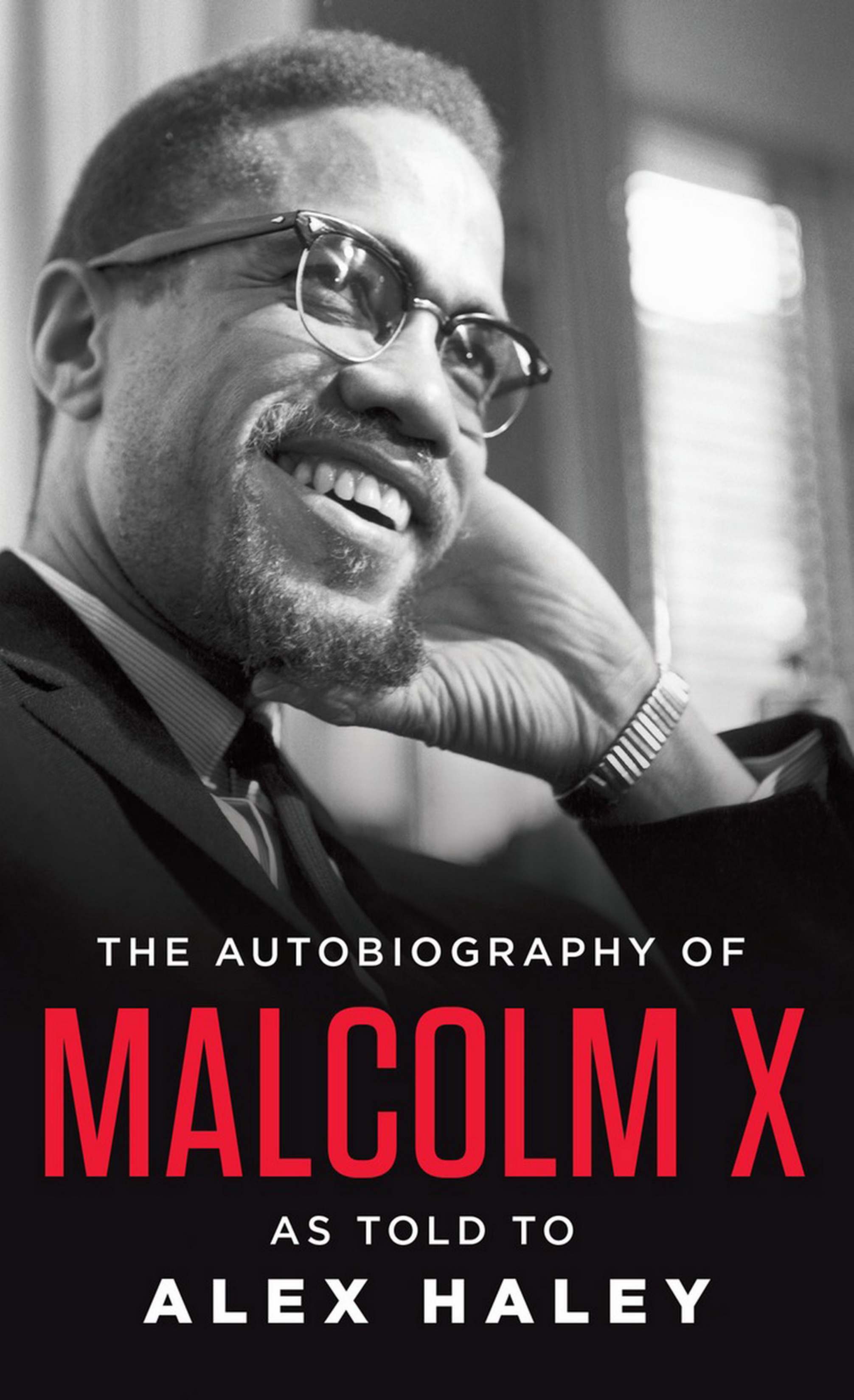
The autobiography of Malcolm X
Overview unavailable.
Book Publication and Contents Overview
- Contains copyright information dating from 1964 and 1965 for Alex Haley and Malcolm X.
- Lists publication details for One World, an imprint of Random House, including ISBNs and edition dates.
- Includes a personal dedication from the author to his wife, Betty, and their children.
- Provides a comprehensive table of contents featuring nineteen chapters and an epilogue by Alex Haley.
- Notes supplemental material including an introduction by M. S. Handler and a tribute by Ossie Davis.
A One W orld Book
Published by The Random House Publishing Group
Copyright Š 1964 by Alex Haley and Malcolm X
Copyright Š 1965 by Alex Haley and Betty Shabazz
Introduction copyright Š 1965 by M. S. Handler
All rights reserved.
Published in the United States by One W orld Books, an imprint of The Random House Publishing
Group, a division of Random House, Inc., New Y ork, and simultaneouslyin Canada by Random
House, Inc., New Y ork, and simultaneously in Canada by Random House of Canada Limited,
T oronto.
This edition published by arrangement with Grove Press, Inc.
âOn Malcolm Xâ by Ossie Davis is previously appeared in Gr oup magazine and is reprinted by
permission.
One W orld is a registered trademark and the One W orld colophon is a trademark of Random House,
Inc.
Library of Congress Catalog Card Number: 91-93124
ISBN 978-0-345-37671-8
eBook ISBN 9781 101967805
www .oneworldbooks.net
First Ballantine Books Edition: June 1973
First Ballantine Books T rade Edition: February 1992
v4.1
a
This book I dedicate to my beloved wife Betty and to our
children whose understanding and whose sacrifices made it
possible for me to do my work.
CONTENTS
Cover
T itle Page
Copyright
Dedication
Introduction
1 Nightmare
2 Mascot
3 âHomeboyâ
4 Laura
5 Harlemite
6 Detroit Red
7 Hustler
8 T rapped
9 Caught
10 Satan
11 Saved
12 Savior
13 Minister Malcolm X
14 Black Muslims
15 Icarus
16 Out
17 Mecca
18 El-Hajj Malik El-Shabazz
19 1965
Alex Haley: Epilogue
Ossie Davis: On Malcolm X
M. S. HANDLER
I N T R O D U C T I O N
Tea with a Black Panther
- Malcolm X visits the author's home to discuss his imminent and historic break from Elijah Muhammad and the Nation of Islam.
- The author observes Malcolm's private persona as courteous and gentle, contrasting sharply with his fierce public reputation.
- The author's wife describes Malcolm as a 'black panther,' capturing his combination of aristocratic grace and potential danger.
- The narrative highlights Malcolm's uncompromising commitment to black liberation and nationalism over mere social integration.
- The author, a New York Times reporter, argues that the power of Malcolm's ideas was more significant than the numerical size of his organization.
âYou know, it was like having tea with a black panther.â
T he S unday before he was to of ficially announce his rupture w ith Elijah
Muhammad, Ma lcolm X came to my home to discuss his plans and give me
some necessary documentation.
Mrs. Ha ndler ha d never met Ma lcolm before this fateful visit. She served
us c of fee and ca kes while Malcolm spoke in the courteous, ge ntle manner
that wa s his in private. It wa s obvious to me that Mrs. Handler was
impressed by Malcolm. His personality filled our living room.
Malcolmâ s attitude was that of a man who had reached a crossroads in his
life and was making a choice u nder an inner compulsion. A w istful smile
illuminated his countenance fro m time to timeâa smile that said many
things. I felt uneasy because Malcolm was evidently trying to say
something which his pride and dignity prevented him from expressing. I
sensed that Malcolm was not confident he would succeed in escaping from
the shadowy world which had held him in thrall.
Mrs. Handler was quiet and thoughtful after Malcolmâ s departure.
Looking up suddenly , she said:
âY ou know , it was like having tea with a black panther .â
The description startled me. The black panther is an aristocrat in the
animal k ingdom. He is beautiful. He is dangerous. As a man, Malcolm X
had the physical bearing and th e inner self-confidence of a bor n aristocrat.
And he was potentially dangero us. No man in our time aroused fear and
hatred in the white man as did Malcolm, because in him the white man
sensed an implacable foe who could not be had for any priceâa man
unreservedly co mmitted to the cause of liberating the black man in
American society rather than integrating the black man into that society .
My first meeting with Malcolm X took place in March 1963 in the
Muslim restaura nt of T emple Number Seven on Lenox A venue. I had been
assigned by The New Y ork T imes to inve stigate the growing pressures
within the Negro community . T hirty years of experience as a reporter in
W estern and Eastern Europe ha d taught me that the forces in a developing
social st ruggle are frequently buried beneath the visible surface and make
themselves felt in many ways long before they burst out into the open.
These generative forces make themselves felt through the power of an idea
long before their or ganizational forms can openly challenge the
establishment. It is the merit of European political scientists and
sociologists to give a high priority to the power of ideas in a social struggle.
In th e United St ates, it is our weakness to confuse the numerica l strength of
an or gan ization and the publicity attached to leaders with the germinating
forces that sow the seeds of social upheaval in our community .
In studying the g rowing pressure s within the Negro community , I had not
only to seek th e opinions of the established leaders of the civil rights
or ganizations bu t the opinions of those working in the penumbra of the
movementââunder ground,â so to speak. This is why I sought o ut Malcolm
X, whose ideas had reache d me through the medium of Negro
integrationists. Their thinking was already reflecting a high degree of
nascent Negro nationalism.
I d id not know what to expect as I waited for Malcolm. I was the only
white person in the restaurant , an immaculate establishment tended by
somber , handso me, uncommun icative Negroes. Signs reading âSmoking
Forbiddenâ were pasted on the highly polished mirrors. I was served cof fee
but bec ame uneasy in this as eptic, silent atmosphere as time passed.
Malcolm finally arrived. He was very tall, handsome, of impressive
Meeting Malcolm X
- The author describes a tense first meeting with Malcolm X in an immaculate, somber restaurant where the leader's constant vigilance suggested he lived in perpetual danger.
- Malcolm X denounced integration as a fraud and argued for total racial separation as the only path to black identity and self-respect.
- He criticized Christianity as a religion for slaves and accused the Negro clergy of acting as tools for white supremacy.
- Malcolm explained the 'art of dissembling,' claiming that black Americans survived by concealing their true thoughts and only telling white people what they wanted to hear.
- The author notes a sharp contrast between Malcolm's thoughtful social critiques and his adherence to Elijah Muhammad's scientifically 'absurd' genetic theories of black superiority.
I had the impression it was difficult for him to take my hand, but, noblesse oblige, he did.
integrationists. Their thinking was already reflecting a high degree of
nascent Negro nationalism.
I d id not know what to expect as I waited for Malcolm. I was the only
white person in the restaurant , an immaculate establishment tended by
somber , handso me, uncommun icative Negroes. Signs reading âSmoking
Forbiddenâ were pasted on the highly polished mirrors. I was served cof fee
but bec ame uneasy in this as eptic, silent atmosphere as time passed.
Malcolm finally arrived. He was very tall, handsome, of impressive
bearing. His skin had a bronze hue.
I r ose to greet him and extend ed my hand. Malcolmâ s hand came up
slowly . I had the impression it was dif ficult for him to take m y hand, but,
noblesse oblige , h e did. Malcol m then did a curious thing which he always
repeated whene ver we met in public in a restaurant in New Y ork or
W ashington. He asked whether I would mind if he took a sea t facing the
door . I had had similar requests put to me in Eastern Europe an capitals.
Malcolm was on the alert, he wished to see every person who entered the
restaurant. I quickly realized that Malcolm constantly walked in danger .
W e spok e for more than three hours at this first encounter . H is views
about the white man were devastating, but at no time did he transgress
against my own personality an d make me feel that I, as an individual,
shared in the guilt. He attributed the degradation of the Negro p eople to the
white m an. He denounced integ ration as a fraud. He contende d that if the
leaders of the e stablished civil rights or ganizations persisted , the social
struggle would end in bloodshed because he was certain the white man
would never concede full inte gration. He ar gued the Muslim case for
separation as the only solution in which the Negro could achieve his own
identity , develo p his own culture, and lay the foundations for a self-
respecting produ ctive communi ty . He was vague about where the Negro
state could be established.
Malcolm refused to see the im possibility of the white man conceding
secession from the United States; at this stage in his career he contended it
was the only s olution. He defended Islam as a religion that did not
recognize color bars. He denounced Christianity as a religion designed for
slaves and the N egro cler gy as the curse of the black man, exp loiting him
for their own purposes instead of seeking to liberate him, and acting as
handmaidens of the white community in its determination to keep the
Negroes in a subservient position.
During this first encounter Malcolm also sought to enlighten me about
the Neg ro mentality . He repeatedly cautioned me to beware of Negro
af firmations of good will toward the white man. He said that the Negro had
been trained to dissemble and conceal his real thoughts, as a matter of
survival. He ar gued that the Negro only tells the white man what he
believes the white man wishes to hear , and that the art of dissembling
reached a point where even Neg roes cannot truthfully say they understand
what their fellow Negroes belie ve. The art of deception practiced by the
Negro was based on a thorough understanding of the white manâ s mores, he
said; at the same time the Negro has remained a closed book t o the white
man, who has never displayed any interest in understanding the Negro.
Malcolmâ s expo sition of his social ideas was clear and thou ghtful, if
somewhat shock ing to the white initiate, but most disconcerting in our talk
was Malcolmâ s belief in Elijah Muhammadâ s history of the origins of man,
and in a genetic theory devised to prove the superiority of black over white
âa theory stunning to me in its sheer absurdity .
After this first e ncounter , I realized that there were two Malco lmsâthe
private a nd the public person. His public performances on telev ision and at
meeting halls produced an almost terrifying ef fect. His implacable
The Two Malcolms
- Malcolm X utilized a deep understanding of white social mores to practice a strategic art of deception while remaining an enigma to white society.
- His public persona was characterized by a terrifyingly logical dialectic that frightened white audiences and intimidated middle-class Negro opponents.
- The impoverished Negro community viewed Malcolm as a grandfather figure and a symbol of human redemption who had triumphed over his own criminal past.
- Negro writers and artists revered him as a catalyst for self-respect who articulated the collective anger of centuries with ruthless honesty.
- Despite his controversial genetic theories and religious beliefs, his personal puritanism served as a powerful reproach to the social ills affecting the masses.
When he attacked the white man, Malcolm did for the Negroes what they couldnât do for themselvesâhe attacked with a violence and anger that spoke for the ages of misery.
what their fellow Negroes belie ve. The art of deception practiced by the
Negro was based on a thorough understanding of the white manâ s mores, he
said; at the same time the Negro has remained a closed book t o the white
man, who has never displayed any interest in understanding the Negro.
Malcolmâ s expo sition of his social ideas was clear and thou ghtful, if
somewhat shock ing to the white initiate, but most disconcerting in our talk
was Malcolmâ s belief in Elijah Muhammadâ s history of the origins of man,
and in a genetic theory devised to prove the superiority of black over white
âa theory stunning to me in its sheer absurdity .
After this first e ncounter , I realized that there were two Malco lmsâthe
private a nd the public person. His public performances on telev ision and at
meeting halls produced an almost terrifying ef fect. His implacable
marshaling of facts and his logic had something of a new dialectic, diabolic
in its force. He f rightened white television audiences, demolished his Negro
opponents, but elicited a remarkable response from Negro audiences. Many
Negro o pponents in the end refu sed to make any public appeara nces on the
same pl atform with him. The troubled white audiences were confused,
disturbed, felt themselves threatened. Some began to consider M alcolm evil
incarnate.
Malcolm appealed to the two most disparate elements in the Negro
communityâthe depressed mass, and the galaxy of Negro writers and
artists who have burst on the American scene in the past decade . The Negro
middle classâthe Negro âestablishmentââabhorred and feared Malcolm as
much as he despised it.
The impoverished Negroes resp ected Malcolm in the way that wayward
children respect the grandfather image. It was always a strange and moving
experience to walk with Malcol m in Harlem. He was known to all. People
glanced at him shyly . Sometimes Negro youngsters would ask for his
autograph. It always seemed to me that their af fection for Malcolm was
inspired by the fact that although he had become a national figure, he was
still a man of the people who, they felt, would never betray them. The
Negroes have suf fered too long from betrayals and in Malcolm they sensed
a m an of mission. They knew h is origins, with which they cou ld identify .
They knew his criminal and pri son record, which he had never concealed.
They looked upon Malcolm wi th a certain wonderment. Here was a man,
who had come from the lower depths which they still inhabited, who had
triumphed over his own criminality and his own ignorance to become a
forceful leader and spokesman, an uncompromising champion of his
people.
Although many could not share his Muslim religious beliefs, they found
in Malcolmâ s puritanism a standing reproach to their own lives. Malcolm
had pur g ed him self of all the ills that af flict the depressed Negro mass:
drugs, alcohol, tobacco, not to speak of criminal pursuits. His personal life
was impeccableâof a puritanism unattainable for the mass. Human
redemptionâMalcolm had achieved it in his own lifetime, and this was
known to the Negro community .
In his television appearances and at public meetings Malcolm a rticulated
the woes and th e aspirations of the depressed Negro mass in a way it was
unable t o do for itself. When he attacked the white man, Malcolm did for
the Neg roes what they couldnâ t do for themselvesâhe attacked with a
violence and anger that spoke fo r the ages of misery . It was not an academic
exercise of just giving hell to âMr . Charlie.â
Many of the N egro writers and artists who are national figu res today
revered Malcolm for what they considered his ruthless honesty in stating
the Negro case, his refusal to compromise, and his search for a group
identity that had been destroye d by the white man when he brought the
Negroes in chains from Africa . The Negro writers and artis ts regarded
Malcolm as the great catalyst, the man who inspired self-respect and
The Evolution of Malcolm X
- Malcolm X served as a powerful voice for the depressed Negro masses, articulating their misery with a violence and anger they were unable to express themselves.
- Black artists and intellectuals revered him for his refusal to compromise and his dedication to restoring a group identity destroyed by slavery.
- His worldview shifted significantly in 1964 following interactions with white students and a growing disillusionment with Elijah Muhammad's secular practices.
- A transformative pilgrimage to Mecca led Malcolm to embrace true Islam and move toward a philosophy that viewed Black Americans as an integral part of the national community.
- Before his assassination, he refocused his militancy against white supremacy specifically, rather than the white race as a whole, while seeking to reconnect Black Americans with African culture.
When he attacked the white man, Malcolm did for the Negroes what they couldnât do for themselvesâhe attacked with a violence and anger that spoke for the ages of misery.
the woes and th e aspirations of the depressed Negro mass in a way it was
unable t o do for itself. When he attacked the white man, Malcolm did for
the Neg roes what they couldnâ t do for themselvesâhe attacked with a
violence and anger that spoke fo r the ages of misery . It was not an academic
exercise of just giving hell to âMr . Charlie.â
Many of the N egro writers and artists who are national figu res today
revered Malcolm for what they considered his ruthless honesty in stating
the Negro case, his refusal to compromise, and his search for a group
identity that had been destroye d by the white man when he brought the
Negroes in chains from Africa . The Negro writers and artis ts regarded
Malcolm as the great catalyst, the man who inspired self-respect and
devotion in the downtrodden millions.
A group of these artists gathered one Sunday in my home, and we talked
about M alcolm. Their devotion to him as a man was moving . One said:
âMalcolm will never betray us. W e have suf fered too much from betrayals
in the past.â
Malcolmâ s attitude toward the white man underwent a marked change in
1964âa change that contributed to his break with Elijah Muh ammad and
his racist doctrines. Malcolmâ s meteoric eruption on the national scene
brought him into wider contact with white men who were not the âdevilsâ
he had thought t hey were. He w as much in demand as a speaker at student
forums in Eastern universities a nd had appeared at many by the end of his
short ca reer as a national figure. He always spoke respectfully and with a
certain surprise of the positive response of white students to his lectures.
A secon d factor that contributed to his conversion to wider horizons was
a gr owing doubt about the auth enticity of Elijah Muhammadâ s version of
the Muslim religionâa doubt that grew into a certainty with more
knowledge and more experience. Certain secular practices at t he Chicago
headquarters of Elijah Muhamm ad had come to Malcolmâ s notice and he
was profoundly shocked.
Finally , he embarked on a number of prolonged trips to Mecca and the
newly i ndependent African states through the good of fi ces of the
representatives o f the Arab Lea gue in the United States. It was on his first
trip to Mecca that he came to the conclusion that he had yet to discover
Islam.
Assassinsâ bullets ended Malcol mâ s career before he was able to develop
this new approach, which in essence recognized the Negroes as an integral
part of the American communityâa far cry from Elijah Muhammadâ s
doctrine of separation. Malcolm had reached the midpoint in redefining his
attitude to this country and th e white-black relationship. He no longer
inveighed against the United States but against a segment of the United
States represent ed by overt white supremacists in the South and covert
white supremacists in the North.
It w as M alcolmâ s intention to raise Negro militancy to a new h igh point
with the main thrust aimed at both the Southern and Nor thern white
supremacists. The Negro probl em, which he had always said should be
renamed âthe white manâ s problem,â was beginning to assume new
dimensions for him in the last months of his life.
T o th e very end, Malcolm sought to refashion the broken strands between
the American Negroes and Afric an culture. He saw in this the road to a new
sense of group identity , a self-conscious role in history , and above all a
sense of manâ s own worth which he claimed the white man had destroyed in
the Negro.
American autobiographical literature is filled with numerous accounts of
remarkable men who pulled themselves to the summit by their bootstraps.
Few are as poignant as Malcolmâ s memoirs. As testimony to the power of
redemption and the force of human personality , the autobiography of
Malcolm X is a revelation.
New Y ork, June 1965
CHAPTER 1
N I G H T M A R E
Nightmare and Heritage
- Malcolm X reflects on his lifelong mission to reconnect African Americans with their cultural roots to restore a sense of self-worth destroyed by white supremacy.
- The narrative begins with a violent encounter where the Ku Klux Klan besieged his family home in Omaha while his mother was pregnant with him.
- His father, Earl Little, was a dedicated follower of Marcus Garvey's 'back to Africa' movement, which advocated for black independence and racial purity.
- The text highlights a tragic family legacy of violence, noting that most of Malcolm's father's brothers were killed by white men.
- Malcolm expresses a fatalistic conviction that he, like his father and uncles before him, is destined to die a violent death.
It has always been my belief that I, too, will die by violence. I have done all that I can to be prepared.
dimensions for him in the last months of his life.
T o th e very end, Malcolm sought to refashion the broken strands between
the American Negroes and Afric an culture. He saw in this the road to a new
sense of group identity , a self-conscious role in history , and above all a
sense of manâ s own worth which he claimed the white man had destroyed in
the Negro.
American autobiographical literature is filled with numerous accounts of
remarkable men who pulled themselves to the summit by their bootstraps.
Few are as poignant as Malcolmâ s memoirs. As testimony to the power of
redemption and the force of human personality , the autobiography of
Malcolm X is a revelation.
New Y ork, June 1965
CHAPTER 1
N I G H T M A R E
W hen my mother was pregnant with me, she told me later , a party of
hooded Ku Klux Klan riders galloped up to our home in Omaha , Nebraska,
one nigh t. Surrounding the house, brandishing their shotguns and rifles,
they shouted for my father to come out. My mother went to th e front door
and opened it. S tanding where they could see her pregnant condition, she
told them that she was alone with her three small children, a nd that my
father w as away , preaching, in Milwaukee. The Klansmen shouted threats
and warnings at her that we had better get out of town becaus e âthe good
Christian white peopleâ were not going to stand for my father â s âspreading
troubleâ among the âgoodâ Ne groes of Omaha with the âback to Africaâ
preachings of Marcus Garvey .
My father , the Reverend Earl Little, was a Baptist minister , a dedicated
or ganizer for Marcus Aureliu s Garveyâ s U.N.I.A. (Unive rsal Negro
Improvement Association). W ith the help of such disciples as my father ,
Garvey , from his headquarters i n New Y ork Cityâ s Harlem, was raising the
banner of black-race purity and exhorting the Negro masses to return to
their ancestral African homelan dâa cause which had made Garvey the
most controversial black man on earth.
Still shouting threats, the Klansmen finally spurred their horses and
galloped around the house, shattering every window pane with their gun
butts. Then they rode of f into th e night, their torches flaring, as suddenly as
they had come.
My father was enraged when he returned. He decided to wait until I was
bornâwhich would be soonâa nd then the family would move. I am not
sure why he made this decision, for he was not a frightened Neg ro, as most
then were, and many still are today . My father was a big, six-foo t-four , very
black m an. He had only one eye. How he had lost the other one I have
never known. He was from Reynolds, Geor gia, where he had left school
after the third or maybe fourth grade. He believed, as did Mar cus Garvey ,
that freedom, independence and self-respect could never be achi eved by the
Negro in Americ a, and that there fore the Negro should leave Am erica to the
white m an and return to his Afr ican land of origin. Among the reasons my
father had decided to risk and dedicate his life to help disseminate this
philosophy amo ng his people w as that he had seen four of his six brothers
die by violence, three of them killed by white men, including one by
lynching. What my father could not know then was that of th e remaining
three, including himself, only one, my Uncle Jim, would die in bed, of
natural causes. Northern white police were later to shoot my U ncle Oscar .
And my father was finally himself to die by the white manâ s hands.
It has always be en my belief tha t I, too, will die by violence. I have done
all that I can to be prepared.
I was my father â s seventh child. He had three children by a previous
marriageâElla, Earl, and Mar y , who lived in Boston. He had met and
married my mother in Philadelphia, where their first child, my oldest full
Legacy of Violence
- The author's father dedicated his life to Marcus Garvey's philosophy, believing that Black Americans should return to Africa to escape white violence.
- Violence was a pervasive theme in the family history, with five out of six of the father's brothers eventually dying at the hands of white men or police.
- The author reflects on his own light complexion, inherited from a white grandfather he views as a rapist, and his later rejection of the social status once attached to light skin.
- The family's attempt to build an independent life in Lansing, Michigan, was met with threats and harassment from a white supremacist group called the Black Legion.
But, still later, I learned to hate every drop of that white rapistâs blood that is in me.
Negro in Americ a, and that there fore the Negro should leave Am erica to the
white m an and return to his Afr ican land of origin. Among the reasons my
father had decided to risk and dedicate his life to help disseminate this
philosophy amo ng his people w as that he had seen four of his six brothers
die by violence, three of them killed by white men, including one by
lynching. What my father could not know then was that of th e remaining
three, including himself, only one, my Uncle Jim, would die in bed, of
natural causes. Northern white police were later to shoot my U ncle Oscar .
And my father was finally himself to die by the white manâ s hands.
It has always be en my belief tha t I, too, will die by violence. I have done
all that I can to be prepared.
I was my father â s seventh child. He had three children by a previous
marriageâElla, Earl, and Mar y , who lived in Boston. He had met and
married my mother in Philadelphia, where their first child, my oldest full
brother , W ilfred , was born. Th ey moved from Philadelphia to Omaha,
where Hilda and then Philbert were born.
I wa s ne xt in line. My mother w as twenty-eight when I was bor n on May
19, 1925, in an Omaha hospital. Then we moved to Milwau kee, where
Reginald was born. From infan cy , he had some kind of hernia condition
which was to handicap him physically for the rest of his life.
Louise L ittle, m y mother , who w as born in Grenada, in the British W est
Indies, looked like a white woman. Her father was white. She had straight
black ha ir , and her accent did no t sound like a Negroâ s. Of this white father
of hers, I know nothing except her shame about it. I remember hearing her
say she was glad that she had never seen him. It was, of course , because of
him that I got my reddish-brown âmarinyâ color of skin, and my hair of the
same color . I wa s the lightest child in our family . (Out in the world later on,
in Bosto n and New Y ork, I was among the millions of Negroes who were
insane enough to feel that it was some kind of status symbol to be light-
complexionedâthat one was ac tually fortunate to be born thus. But, still
later , I learned to hate every drop of that white rapistâ s blood that is in me.)
Our family stayed only briefly in Milwaukee, for my father wanted to
find a place where he could raise our own food and perh aps build a
business. The teaching of Marcus Garvey stressed becoming independent of
the w hite man. W e went next, f or some reason, to Lansing, Mi chigan. My
father b ought a house and soo n, as had been his pattern, he was doing
freelance Christian preaching in local Negro Baptist churches, and during
the week he was roaming about spreading word of Marcus Garvey .
He had begun to lay away savings for the store he had always wanted to
own wh en, as always, some s tupid local Uncle T om Negroes began to
funnel stories about his revolutionary beliefs to the local white people. This
time, the get-out-of-town threats came from a local hate society called The
Black Legion. They wore black robes instead of white. Soon, nearly
everywhere my father went, Black Legionnaires were reviling him as an
âuppity niggerâ for wanting to own a store, for living outside the Lansing
Negro district, for spreading unrest and dissention among âthe good
niggers.â
Nightmares and Racial Friction
- The author's father faced intense harassment from the Black Legion, a white supremacist group, for his Garveyite beliefs and desire for economic independence.
- A traumatic 1929 arson attack by white men destroyed the family home while the police and firemen stood by and watched it burn to the ground.
- The family was forced to move multiple times due to harassment and local 'sundown town' laws that prohibited Black people in East Lansing after dark.
- Domestic tension grew between the parents, characterized by the father's physical violence toward the mother and his harsh discipline of the children.
- The author reflects on how his father subconsciously favored him because he was the lightest-skinned child, a lingering psychological effect of slavery.
I remember being suddenly snatched awake into a frightening confusion of pistol shots and shouting and smoke and flames.
the week he was roaming about spreading word of Marcus Garvey .
He had begun to lay away savings for the store he had always wanted to
own wh en, as always, some s tupid local Uncle T om Negroes began to
funnel stories about his revolutionary beliefs to the local white people. This
time, the get-out-of-town threats came from a local hate society called The
Black Legion. They wore black robes instead of white. Soon, nearly
everywhere my father went, Black Legionnaires were reviling him as an
âuppity niggerâ for wanting to own a store, for living outside the Lansing
Negro district, for spreading unrest and dissention among âthe good
niggers.â
As in Omaha, my mother was pregnant again, this time with my youngest
sister . Sh ortly af ter Y vonne was born came the nightmare night in 1929, my
earliest vivid memory . I remem ber being suddenly snatched awake into a
frightening conf usion of pistol shots and shouting and smoke and flames.
My father had s houted and shot at the two white men who had set the fire
and were running away . Our ho me was burning down around u s. W e were
lunging and bumping and tumbl ing all over each other trying to escape. My
mother , with the baby in her a rms, just made it into the yard before the
house c rashed in, showering sparks. I remember we were outside in the
night in our underwear , crying and yelling our heads of f. The white police
and firem en cam e and stood aro und watching as the house burn ed down to
the ground.
My fath er prevailed on some friends to clothe and house us tem porarily;
then he moved us into another house on the outskirts of East Lansing. In
those da ys Negroes werenâ t allowed after dark in East Lansing proper .
Thereâ s where Michigan State University is located; I related all of this to
an audience of students when I spoke there in January , 1963 (and had the
first reunion in a long while with my younger brother , Robert, who was
there doing postgraduate studi es in psychology). I told them how East
Lansing harassed us so much that we had to move again, th is time two
miles out of tow n, into the coun try . This was where my father built for us
with his own hands a four -roo m house. This is where I really begin to
remember thingsâthis home where I started to grow up.
After th e fire, I remember that my father was called in and questioned
about a permit for the pistol wit h which he had shot at the whi te men who
set the fire. I rem ember that the police were always dropping by our house,
shoving things around, âjust ch eckingâ or âlooking for a gun.â The pistol
they we re looking forâwhich they never found, and for which they
wouldnâ t issue a permitâwas sewed up inside a pillow . My father â s .22
rifle and his sho tgun, though, were right out in the open; everyone had them
for hunting birds and rabbits and other game.
â
After th at, my memories are of the friction between my father and mother .
They see med to be nearly always at odds. Sometimes my father would beat
her . It might hav e had something to do with the fact that my mother had a
pretty good education. Where she got it I donâ t know . But an educated
woman, I suppose, canâ t resist the temptation to correct an uneducated man.
Every now and then, when she put those smooth words on him, he would
grab her .
My fath er was also belligerent toward all of the children, except me. The
older ones he would beat almos t savagely if they broke any of his rulesâ
and he had so many rules it was hard to know them all. Nearly all my
whippings came from my mother . Iâve thought a lot about why . I actually
believe that as anti-white as my father was, he was subconsciously so
af flicted with the white manâ s b rainwashing of Negroes that he inclined to
favor th e light ones, and I was his lightest child. Most Negro parents in
those da ys would almost instinctively treat any lighter children better than
they did the darker ones. It came directly from the slavery tradi tion that the
Family Friction and Racial Bias
- The author recalls constant domestic conflict between his educated mother and uneducated, often violent father.
- The father displayed a subconscious favoritism toward the author because he was the lightest-skinned child in the family.
- This preference is identified as a lingering psychological effect of slavery that equated lighter skin with higher value.
- The father served as a traveling Baptist preacher whose fiery sermons were influenced by Marcus Garvey's back-to-Africa movement.
- The author expresses an early skepticism toward Christianity and a disdain for the 'middle-class' complacency of Lansing's Black community.
I actually believe that as anti-white as my father was, he was subconsciously so afflicted with the white manâs brainwashing of Negroes that he inclined to favor the light ones, and I was his lightest child.
After th at, my memories are of the friction between my father and mother .
They see med to be nearly always at odds. Sometimes my father would beat
her . It might hav e had something to do with the fact that my mother had a
pretty good education. Where she got it I donâ t know . But an educated
woman, I suppose, canâ t resist the temptation to correct an uneducated man.
Every now and then, when she put those smooth words on him, he would
grab her .
My fath er was also belligerent toward all of the children, except me. The
older ones he would beat almos t savagely if they broke any of his rulesâ
and he had so many rules it was hard to know them all. Nearly all my
whippings came from my mother . Iâve thought a lot about why . I actually
believe that as anti-white as my father was, he was subconsciously so
af flicted with the white manâ s b rainwashing of Negroes that he inclined to
favor th e light ones, and I was his lightest child. Most Negro parents in
those da ys would almost instinctively treat any lighter children better than
they did the darker ones. It came directly from the slavery tradi tion that the
âmulatto,â because he was visibly nearer to white, was therefore âbetter .â
My two other images of my father are both outside the home. One was
his role as a Baptist preacher . He never pastored in any regular church of his
own; he was a lways a âvisiting preacher .â I remember especially his
favorite sermon: âThat little black trai n is a-cominââŚanâ you bett er get all
your business right!â I guess this also fit his association with the back-to-
Africa movement, with Marcus Garveyâ s âBlack T rain Homeward.â My
brother Philbert, the one just older than me, loved church, but it confused
and ama zed me. I would sit goggle-eyed at my father jumping and shouting
as he preached, with the congr egation jumping and shouting behind him,
their sou ls and bodies devoted to singing and praying. Even at that young
age, I just couldnâ t believe in the Christian concept of Jesus as someone
divine. A nd no religious person , until I was a man in my twentiesâand
then in prisonâ could tell me a nything. I had very little respe ct for most
people who represented religion.
It w as in his role as a preacher that my father had most contact with the
Negroes of Lansing. Believe me when I tell you that those Negr oes were in
bad shape then. They are still in bad shapeâthough in a dif fer ent way . By
that I mean that I donâ t know a town with a higher pe rcentage of
complacent and misguided so-called âmidd le-classâ Negro esâthe typical
status-symbol-oriented, integrati on-seeking type of Negroes. Just recently , I
was standing in a lobby at th e United Nations talking with an African
ambassador and his wife, when a Negro came up to me and said, âY ou
know me?â I was a little embarrassed because I thought he wa s someone I
should r emember . It turned out that he was one of those bra gging, self-
satisfied, âmiddle-classâ Lansing Negroes. I wasnâ t ingratiated. He was the
Garveyism and Lansing Realities
- The author criticizes the 'middle-class' Negroes of Lansing who prioritized status symbols and integration over genuine racial identity.
- Economic opportunities for Black residents in Lansing were severely limited, with the 'elite' consisting of service workers like waiters and bootblacks.
- The author's family survived extreme poverty by farming their own food, providing a level of independence that town-dwelling families lacked.
- Secret UNIA meetings led by the author's father focused on Marcus Garveyâs militant message of African liberation and Black self-determination.
- The author observed a stark contrast between the emotionalism of church services and the intense, grounded intelligence displayed during political meetings.
I remember an old lady, grinning and saying to my father, 'Youâre scaring these white folks to death!'
complacent and misguided so-called âmidd le-classâ Negro esâthe typical
status-symbol-oriented, integrati on-seeking type of Negroes. Just recently , I
was standing in a lobby at th e United Nations talking with an African
ambassador and his wife, when a Negro came up to me and said, âY ou
know me?â I was a little embarrassed because I thought he wa s someone I
should r emember . It turned out that he was one of those bra gging, self-
satisfied, âmiddle-classâ Lansing Negroes. I wasnâ t ingratiated. He was the
type wh o would never have be en associated with Africa, until the fad of
having African friends became a status-symbol for âmiddle-classâ Negroes.
Back wh en I was growing up, the âsuccessfulâ Lansing Negr oes were
such as waiters a nd bootblacks. T o be a janitor at some downtown store was
to be highly respected. The real âelite,â the âbig shots,â the âvoices of the
race,â w ere the waiters at the La nsing Country Club and the sho eshine boys
at the state capitol. The only Negroes who really had any mon ey were the
ones in the numbers racket, or who ran the gambling houses, or who in
some other way lived parasitically of f the poorest ones, who were the
masses. No Negroes were hired then by Lansingâ s big Oldsmob ile plant, or
the Reo plant. (Do you remember the Reo? It was manufactured in Lansing,
and R. E. Olds, the man after w hom it was named, also lived in Lansing.
When the war came along, they hired some Negro janitors.) The bulk of the
Negroes were either on W elfare, or W .P .A., or they starved.
The day was to come when our family was so poor that we would eat the
hole out of a doughnut; but at that time we were much better of f than most
town Ne groes. The reason was that we raised much of our ow n food out
there in the coun try where we w ere. W e were much better of f than the town
Negroes who would shout, as my father preached, for the pie-in-the-sky and
their heaven in the hereafter while the white man had his here on earth.
I kn ew t hat the collections my father got for his preaching we re mainly
what fed and clothed us, and he also did other odd jobs, but still the image
of him that mad e me proudest w as his crusading and militant c ampaigning
with the words of Marcus Garv ey . As young as I was then, I knew from
what I overhear d that my fathe r was saying something that m ade him a
âtoughâ man. I remember an old lady , grinning and saying to my father ,
âY ouâre scaring these white folks to death!â
One of the reasons Iâve always felt that my father favored me was that to
the best of my remembrance, it was only me that he sometime s took with
him to the Garv ey U.N.I.A. meetings which he held quietly in dif ferent
peopleâ s homes. There were never more than a few people at any one time
âtwenty at most. But that was a lot, packed into someoneâ s living room. I
noticed how dif ferently they all acted, although sometimes they were the
same pe ople wh o jumped and sh outed in church. But in these meetings both
they and my father were more intense, more intelligent and down to earth. It
made me feel the same way .
I c an remember hearing of âAda m driven out of the garden into the caves
of Europe,â âAfrica for the Africans,â âEthiopians, A wake!â And my father
would ta lk about how it would not be much longer before Africa would be
completely run by Negroesââby black men,â was the phrase he always
The Seeds of Black Nationalism
- The narrator observes a shift in his father and community members during political meetings, where they appear more intense and intelligent than in church.
- His father passionately advocates for Pan-Africanism and the redemption of Africa, often referencing the global influence of Marcus Garvey.
- Despite the pro-African rhetoric at home, the narrator's childhood perception of Africa remained shaped by negative colonial stereotypes of jungles and savages.
- The text highlights the systemic racism of the era, noting 'sundown towns' in Michigan where Black people were prohibited from being on the streets after dark.
- Domestic tension existed between his parents, particularly regarding cultural identity and dietary choices like 'soul food' versus his mother's strict preferences.
One day, like a storm, it will be here.
noticed how dif ferently they all acted, although sometimes they were the
same pe ople wh o jumped and sh outed in church. But in these meetings both
they and my father were more intense, more intelligent and down to earth. It
made me feel the same way .
I c an remember hearing of âAda m driven out of the garden into the caves
of Europe,â âAfrica for the Africans,â âEthiopians, A wake!â And my father
would ta lk about how it would not be much longer before Africa would be
completely run by Negroesââby black men,â was the phrase he always
used. âN o one knows when the hour of Africaâ s redemption cometh. It is in
the wind. It is coming. One day , like a storm, it will be here.â
I rem ember seeing the big, sh iny photographs of Marcus Garvey that
were passed from hand to hand. My father had a big envelope of them that
he always took to these meetings. The pictures showed what seemed to me
millions of Negroes thronged in parade behind Garvey riding in a fine car , a
big black man d ressed in a dazz ling uniform with gold braid on it, and he
was wea ring a thrilling hat with tall plumes. I remember hearing that he had
black fo llowers not only in the United States but all around the world, and I
remember how the meetings always closed with my father saying, several
times, and the people chanting after him, âUp, you mighty race, you can
accomplish what you will!â
I ha ve never un derstood why , after hearing as much as I did of these
kinds of things, I somehow never thought, then, of the black people in
Africa. M y imag e of Africa, at that time, was of naked savages, cannibals,
monkeys and tigers and steaming jungles.
My father would drive in his old black touring car , sometimes taking me,
to m eeting places all around th e Lansing area. I remember one daytime
meeting (most were at night) in the town of Owosso, forty miles from
Lansing, which the Negroes cal led âWhite City .â (Owossoâ s greatest claim
to fa me is that it is the home town of Thomas E. Dewey .) As in East
Lansing, no Negroes were allowed on the streets there after darkâhence
the daytime meeting. In point of fact, in those days lots of Michigan towns
were lik e that. Every town had a few âhomeâ Negroes who lived there.
Sometimes it would be just one family , as in the nearby county s eat, Mason,
which had a single Negro family named L yons. Mr . L yons had been a
famous football star at Mason High School, was highly tho ught of in
Mason, and consequently he now worked around that town in menial jobs.
My mother at this time see med to be always workingâcooking,
washing, ironing, cleaning, and fussing over us eight children. A nd she was
usually either ar guing with or not speaking to my father . One cause of
friction was that she had stron g ideas about what she wouldnâ t eatâand
didnâ t want us to eatâincludi ng pork and rab bit, both of which my father
loved de arly . He was a real Geor gia Negro, and he believed in eating plenty
of what we in Harlem today call âsoul food.â
Early Lessons in Noise
- The author describes the racial dynamics of Michigan towns where single Black families were 'adopted' by white communities as long as they remained non-threatening.
- Domestic friction arose between his parents over cultural differences, specifically his mother's refusal to eat the 'soul food' his father loved.
- The author's mother treated him more harshly than his darker-skinned siblings to prevent him from developing a sense of color-superiority due to his light skin.
- A pivotal childhood realization occurred when the author discovered that being 'nice' led to hunger, while making a fuss secured the resources he wanted.
- Despite the hardships, the author found peace and pride in tending his own small garden plot and observing the natural world.
- Early school experiences involved casual racial slurs from white peers that were so pervasive the Black children initially accepted them as natural names.
So early in life, I had learned that if you want something, you had better make some noise.
the daytime meeting. In point of fact, in those days lots of Michigan towns
were lik e that. Every town had a few âhomeâ Negroes who lived there.
Sometimes it would be just one family , as in the nearby county s eat, Mason,
which had a single Negro family named L yons. Mr . L yons had been a
famous football star at Mason High School, was highly tho ught of in
Mason, and consequently he now worked around that town in menial jobs.
My mother at this time see med to be always workingâcooking,
washing, ironing, cleaning, and fussing over us eight children. A nd she was
usually either ar guing with or not speaking to my father . One cause of
friction was that she had stron g ideas about what she wouldnâ t eatâand
didnâ t want us to eatâincludi ng pork and rab bit, both of which my father
loved de arly . He was a real Geor gia Negro, and he believed in eating plenty
of what we in Harlem today call âsoul food.â
Iâve said that my mother was the one who whipped meâat least she did
whenever she wasnâ t ashamed to let the neighbors think she was killing me.
For if she even acted as though she was about to raise her hand to me, I
would open my mouth and let the world know about it. If an ybody was
passing by out o n the road, she would either change her mind or just give
me a few licks.
Thinking about it now , I feel definitely that just as my father fa vored me
for being lighter than the other children, my mother gave me more hell for
the same reason. She was very light herself but she favored the ones who
were darker . W ilfred, I know , was particularly her angel. I remember that
she would tell me to get out of the house and âLet the sun shine on you so
you can get some color .â She w ent out of her way never to let me become
af flicted with a sense of color -superiority . I am sure that she tre ated me this
way partly because of how she came to be light herself.
I l earned early that crying out in protest could accomplish things. My
older bro thers an d sister had star ted to school when, sometimes, they would
come in and ask for a buttered biscuit or something and my mother ,
impatiently , wou ld tell them no. But I would cry out and make a fuss until I
got what I wanted. I remembe r well how my mother asked me why I
couldnâ t be a n ice boy like W ilfred; but I would think to myself that
W ilfred, for being so nice and quiet, often stayed hungry . So early in life, I
had learned that if you want something, you had better make some noise.
Not only did we have our big garden, but we raised chickens. M y father
would buy some baby chicks and my mother would raise them. W e all
loved ch icken. T hat was one d ish there was no ar gument wit h my father
about. O ne thing in particular th at I remember made me feel grateful toward
my m other was that one day I went and asked her for my own garden, and
she did let me have my own litt le plot. I loved it and took care of it well. I
loved es pecially to grow peas. I was proud when we had them o n our table.
I w ould pull out the grass in my garden by hand when the first little blades
came up . I would patrol the row s on my hands and knees for any worms
and bugs, and I would kill and bury them. And sometimes when I had
everything straig ht and clean for my things to grow , I would lie down on
my back between two rows, an d I would gaze up in the blue sky at the
clouds moving and think all kinds of things.
At five, I, too, began to go to school, leaving home in the morn ing along
with W i lfred, Hilda, and Philbert. It was the Pleasant Grove School that
went from kinder garten through the e ighth grade. It was two miles outside
the city limits, and I guess th ere was no problem about ou r attending
because we were the only Negro es in the area. In those days whi te people in
the North usually would âadoptâ just a few Negroes; they didnâ t see them as
any threat. The white kids didnâ t make any great thing about us, either .
They ca lled us âniggerâ and âdarkieâ and âRastusâ so much that we thought
those were our n atural names. But they didnâ t think of it as an insult; it was
just the way they thought about us.
Lessons in Color and Noise
- The author observes a complex family dynamic where his mother treated him more harshly for his light skin tone while favoring his darker siblings.
- Early experiences taught the author that vocal protest and making noise were more effective at securing resources than being quiet and well-behaved.
- A personal garden plot provided the author with a sense of pride and a peaceful space for deep reflection and connection to nature.
- Attending an all-white school introduced the author to casual, systemic racism where derogatory slurs were used by peers without a second thought.
- The author reflects on how Northern white communities 'adopted' a small number of Black families as long as they were not perceived as a collective threat.
So early in life, I had learned that if you want something, you had better make some noise.
Iâve said that my mother was the one who whipped meâat least she did
whenever she wasnâ t ashamed to let the neighbors think she was killing me.
For if she even acted as though she was about to raise her hand to me, I
would open my mouth and let the world know about it. If an ybody was
passing by out o n the road, she would either change her mind or just give
me a few licks.
Thinking about it now , I feel definitely that just as my father fa vored me
for being lighter than the other children, my mother gave me more hell for
the same reason. She was very light herself but she favored the ones who
were darker . W ilfred, I know , was particularly her angel. I remember that
she would tell me to get out of the house and âLet the sun shine on you so
you can get some color .â She w ent out of her way never to let me become
af flicted with a sense of color -superiority . I am sure that she tre ated me this
way partly because of how she came to be light herself.
I l earned early that crying out in protest could accomplish things. My
older bro thers an d sister had star ted to school when, sometimes, they would
come in and ask for a buttered biscuit or something and my mother ,
impatiently , wou ld tell them no. But I would cry out and make a fuss until I
got what I wanted. I remembe r well how my mother asked me why I
couldnâ t be a n ice boy like W ilfred; but I would think to myself that
W ilfred, for being so nice and quiet, often stayed hungry . So early in life, I
had learned that if you want something, you had better make some noise.
Not only did we have our big garden, but we raised chickens. M y father
would buy some baby chicks and my mother would raise them. W e all
loved ch icken. T hat was one d ish there was no ar gument wit h my father
about. O ne thing in particular th at I remember made me feel grateful toward
my m other was that one day I went and asked her for my own garden, and
she did let me have my own litt le plot. I loved it and took care of it well. I
loved es pecially to grow peas. I was proud when we had them o n our table.
I w ould pull out the grass in my garden by hand when the first little blades
came up . I would patrol the row s on my hands and knees for any worms
and bugs, and I would kill and bury them. And sometimes when I had
everything straig ht and clean for my things to grow , I would lie down on
my back between two rows, an d I would gaze up in the blue sky at the
clouds moving and think all kinds of things.
At five, I, too, began to go to school, leaving home in the morn ing along
with W i lfred, Hilda, and Philbert. It was the Pleasant Grove School that
went from kinder garten through the e ighth grade. It was two miles outside
the city limits, and I guess th ere was no problem about ou r attending
because we were the only Negro es in the area. In those days whi te people in
the North usually would âadoptâ just a few Negroes; they didnâ t see them as
any threat. The white kids didnâ t make any great thing about us, either .
They ca lled us âniggerâ and âdarkieâ and âRastusâ so much that we thought
those were our n atural names. But they didnâ t think of it as an insult; it was
just the way they thought about us.
â
Lessons of Noise and Color
- The author reflects on how his mother treated him more harshly than his siblings to prevent him from developing a sense of color-superiority due to his lighter skin.
- Early childhood experiences taught the author that vocal protest and making noise were the only effective ways to ensure his needs were met.
- Despite the family's poverty and the racial slurs used by white neighbors, the author found peace and pride in tending his own small garden plot.
- The narrative shifts to a moment of high domestic tension where the author's father violently kills a rabbit during an argument, foreshadowing a dark premonition from his mother.
So early in life, I had learned that if you want something, you had better make some noise.
Iâve said that my mother was the one who whipped meâat least she did
whenever she wasnâ t ashamed to let the neighbors think she was killing me.
For if she even acted as though she was about to raise her hand to me, I
would open my mouth and let the world know about it. If an ybody was
passing by out o n the road, she would either change her mind or just give
me a few licks.
Thinking about it now , I feel definitely that just as my father fa vored me
for being lighter than the other children, my mother gave me more hell for
the same reason. She was very light herself but she favored the ones who
were darker . W ilfred, I know , was particularly her angel. I remember that
she would tell me to get out of the house and âLet the sun shine on you so
you can get some color .â She w ent out of her way never to let me become
af flicted with a sense of color -superiority . I am sure that she tre ated me this
way partly because of how she came to be light herself.
I l earned early that crying out in protest could accomplish things. My
older bro thers an d sister had star ted to school when, sometimes, they would
come in and ask for a buttered biscuit or something and my mother ,
impatiently , wou ld tell them no. But I would cry out and make a fuss until I
got what I wanted. I remembe r well how my mother asked me why I
couldnâ t be a n ice boy like W ilfred; but I would think to myself that
W ilfred, for being so nice and quiet, often stayed hungry . So early in life, I
had learned that if you want something, you had better make some noise.
Not only did we have our big garden, but we raised chickens. M y father
would buy some baby chicks and my mother would raise them. W e all
loved ch icken. T hat was one d ish there was no ar gument wit h my father
about. O ne thing in particular th at I remember made me feel grateful toward
my m other was that one day I went and asked her for my own garden, and
she did let me have my own litt le plot. I loved it and took care of it well. I
loved es pecially to grow peas. I was proud when we had them o n our table.
I w ould pull out the grass in my garden by hand when the first little blades
came up . I would patrol the row s on my hands and knees for any worms
and bugs, and I would kill and bury them. And sometimes when I had
everything straig ht and clean for my things to grow , I would lie down on
my back between two rows, an d I would gaze up in the blue sky at the
clouds moving and think all kinds of things.
At five, I, too, began to go to school, leaving home in the morn ing along
with W i lfred, Hilda, and Philbert. It was the Pleasant Grove School that
went from kinder garten through the e ighth grade. It was two miles outside
the city limits, and I guess th ere was no problem about ou r attending
because we were the only Negro es in the area. In those days whi te people in
the North usually would âadoptâ just a few Negroes; they didnâ t see them as
any threat. The white kids didnâ t make any great thing about us, either .
They ca lled us âniggerâ and âdarkieâ and âRastusâ so much that we thought
those were our n atural names. But they didnâ t think of it as an insult; it was
just the way they thought about us.
â
One afte rnoon in 1931 when W i lfred, Hilda, Philbert, and I cam e home, my
mother and father were having one of their ar guments. There had lately
been a lot of te nsion around the house because of Black Leg ion threats.
Anyway , my father had taken one of the rabbits which we were raising, and
ordered my mother to cook it. W e raised rabbits, but sold them to whites.
My father had t aken a rabbit f rom the rabbit pen. He had pulled of f the
rabbitâ s head. He was so strong, he needed no knife to behead chickens or
rabbits. W ith one twist of his big black hands he simply twisted of f the head
and threw the bleeding-necked thing back at my mother â s feet.
My mot her was crying. She s tarted to skin the rabbit, preparatory to
cooking it. But m y father was so angry he slammed on out of the front door
and started walking up the road toward town.
It was then that my mother had this vision. She had always been a strange
woman in this s ense, and had always had a strong intuition of t hings about
to h appen. And most of her c hildren are the same way , I think. When
A Vision of Death
- A domestic dispute over a rabbit escalates against a backdrop of racial tension and threats from the Black Legion.
- The author's mother experiences a terrifying premonition of her husband's death as he walks toward town.
- The father is found brutally murdered, with his body mutilated and left on streetcar tracks in Lansing.
- The local Black community attributes the killing to the Black Legion, highlighting the extreme violence faced by Black families in 1931.
- The author reflects on the inherited intuition of his family and the physical resilience required for survival in that era.
With one twist of his big black hands he simply twisted off the head and threw the bleeding-necked thing back at my motherâs feet.
One afte rnoon in 1931 when W i lfred, Hilda, Philbert, and I cam e home, my
mother and father were having one of their ar guments. There had lately
been a lot of te nsion around the house because of Black Leg ion threats.
Anyway , my father had taken one of the rabbits which we were raising, and
ordered my mother to cook it. W e raised rabbits, but sold them to whites.
My father had t aken a rabbit f rom the rabbit pen. He had pulled of f the
rabbitâ s head. He was so strong, he needed no knife to behead chickens or
rabbits. W ith one twist of his big black hands he simply twisted of f the head
and threw the bleeding-necked thing back at my mother â s feet.
My mot her was crying. She s tarted to skin the rabbit, preparatory to
cooking it. But m y father was so angry he slammed on out of the front door
and started walking up the road toward town.
It was then that my mother had this vision. She had always been a strange
woman in this s ense, and had always had a strong intuition of t hings about
to h appen. And most of her c hildren are the same way , I think. When
something is about to happen, I can feel something, sense something. I
never have known something to happen that has caught me completely of f
guardâexcept o nce. And that was when, years later , I discovered facts I
couldnâ t believe about a man who, up until that discovery , I would gladly
have given my life for .
My father was w ell up the road when my mother ran screaming out onto
the porch. â Early! Early! â Sh e screamed his name. She clutched up her
apron in one ha nd, and ran do wn across the yard and into the road. My
father turned around. He saw he r . For some reason, considering how angry
he had been when he left, he waved at her . But he kept on going.
She told me later , my mother did, that she had a vision of my father â s
end. All the rest of the afternoon, she was not herself, crying a nd nervous
and upset. She finished cooking the rabbit and put the whole thing in the
warmer part of t he black stove. When my father was not back home by our
bedtime, my mother hugged and clutched us, and we felt s trange, not
knowing what to do, because she had never acted like that.
I remem ber waking up to the sound of my mother â s screami ng again.
When I scrambl ed out, I saw the police in the living room; they were trying
to calm her down. She had snatc hed on her clothes to go with them. And all
of u s ch ildren who were staring knew without anyone having to say it that
something terrible had happened to our father .
My mother was taken by the police to the hospital, and to a room where a
sheet was over m y father in a bed, and she wouldnâ t look, she was afraid to
look. Probably it was wise that she didnâ t. My father â s skull, on one side,
was crushed in, I was told later . Negroes in Lansing have always whispered
that he was attac ked, and then l aid across some tracks for a streetcar to run
over him. His body was cut almost in half.
He lived two a nd a half hour s in that condition. Negroes t hen were
stronger than they are now , esp ecially Geor gia Negroes. Negr oes born in
Geor gia had to be strong simply to survive.
It was morning w hen we children at home got the word that he was dead.
I w as six. I can remember a vague commotion, the house fil led up with
people crying, saying bitterly th at the white Black Legion had finally gotten
him. My mother was hysterical. In the bedroom, women were holding
The Death of a Preacher
- The narrator recounts the traumatic night his father left home after an argument and never returned alive.
- Local rumors suggested the father was murdered by the Black Legion, a white supremacist group, who allegedly crushed his skull and left him on streetcar tracks.
- The narrator observes that his father survived for over two hours in a mangled state, attributing this resilience to the strength required of Black people born in Georgia.
- The funeral is marked by the narrator's vivid, unsettling memories of a fly on his father's face and the heavy white powder used to mask his father's features in the casket.
- Following the tragedy, the family's focus shifts to the immediate struggle for survival and the collection of insurance policies as visitors begin to dwindle.
When we went by the casket, I remember that I thought that it looked as if my fatherâs strong black face had been dusted with flour, and I wished they hadnât put on such a lot of it.
never have known something to happen that has caught me completely of f
guardâexcept o nce. And that was when, years later , I discovered facts I
couldnâ t believe about a man who, up until that discovery , I would gladly
have given my life for .
My father was w ell up the road when my mother ran screaming out onto
the porch. â Early! Early! â Sh e screamed his name. She clutched up her
apron in one ha nd, and ran do wn across the yard and into the road. My
father turned around. He saw he r . For some reason, considering how angry
he had been when he left, he waved at her . But he kept on going.
She told me later , my mother did, that she had a vision of my father â s
end. All the rest of the afternoon, she was not herself, crying a nd nervous
and upset. She finished cooking the rabbit and put the whole thing in the
warmer part of t he black stove. When my father was not back home by our
bedtime, my mother hugged and clutched us, and we felt s trange, not
knowing what to do, because she had never acted like that.
I remem ber waking up to the sound of my mother â s screami ng again.
When I scrambl ed out, I saw the police in the living room; they were trying
to calm her down. She had snatc hed on her clothes to go with them. And all
of u s ch ildren who were staring knew without anyone having to say it that
something terrible had happened to our father .
My mother was taken by the police to the hospital, and to a room where a
sheet was over m y father in a bed, and she wouldnâ t look, she was afraid to
look. Probably it was wise that she didnâ t. My father â s skull, on one side,
was crushed in, I was told later . Negroes in Lansing have always whispered
that he was attac ked, and then l aid across some tracks for a streetcar to run
over him. His body was cut almost in half.
He lived two a nd a half hour s in that condition. Negroes t hen were
stronger than they are now , esp ecially Geor gia Negroes. Negr oes born in
Geor gia had to be strong simply to survive.
It was morning w hen we children at home got the word that he was dead.
I w as six. I can remember a vague commotion, the house fil led up with
people crying, saying bitterly th at the white Black Legion had finally gotten
him. My mother was hysterical. In the bedroom, women were holding
smelling salts under her nose. She was still hysterical at the funeral.
I do nâ t have a very clear memory of the funeral, either . Oddly , the main
thing I remember is that it wasn â t in a church, and that surprised me, since
my father was a preacher , and I had been where he preached peopleâ s
funerals in churches. But his was in a funeral home.
And I remember that during the service a big black fly came d own and
landed o n my father â s face, and W ilfred sprang up from his c hair and he
shooed the fly away , and he came groping back to his chairâthere were
folding chairs for us to sit onâand the tears were streaming do wn his face.
When we went by the casket, I remember that I thought that it looked as if
my f ather â s strong black face had been dusted with flour , and I wished they
hadnâ t put on such a lot of it.
Back in the big four -room house, there were many visitors for another
week or so. They were good friends of the family , such as the L yons from
Mason, twelve miles away , and the W alkers, McGuires, Liscoes, the
Greens, Randolp hs, and the T ur ners, and others from Lansing, and a lot of
people from other towns, whom I had seen at the Garvey meetings.
W e child ren adj usted more easily than our mother did. W e couldnâ t see,
as clearly as she did, the trials th at lay ahead. As the visitors tapered of f, she
became very concerned about co llecting the two insurance policies that my
A Family's Downward Spiral
- Following the father's funeral, the family faces immediate financial crisis as the larger insurance policy is denied on the false claim of suicide.
- The mother attempts to support her eight children by passing for white to secure domestic work, but she is repeatedly fired once her racial identity is discovered.
- The eldest son, Wilfred, drops out of school to work and support the family, while the younger children begin to feel the psychological weight of their poverty.
- State welfare investigators begin visiting the home, treating the family with a dehumanizing clinical detachment that makes them feel like objects rather than people.
When we went by the casket, I remember that I thought that it looked as if my fatherâs strong black face had been dusted with flour, and I wished they hadnât put on such a lot of it.
smelling salts under her nose. She was still hysterical at the funeral.
I do nâ t have a very clear memory of the funeral, either . Oddly , the main
thing I remember is that it wasn â t in a church, and that surprised me, since
my father was a preacher , and I had been where he preached peopleâ s
funerals in churches. But his was in a funeral home.
And I remember that during the service a big black fly came d own and
landed o n my father â s face, and W ilfred sprang up from his c hair and he
shooed the fly away , and he came groping back to his chairâthere were
folding chairs for us to sit onâand the tears were streaming do wn his face.
When we went by the casket, I remember that I thought that it looked as if
my f ather â s strong black face had been dusted with flour , and I wished they
hadnâ t put on such a lot of it.
Back in the big four -room house, there were many visitors for another
week or so. They were good friends of the family , such as the L yons from
Mason, twelve miles away , and the W alkers, McGuires, Liscoes, the
Greens, Randolp hs, and the T ur ners, and others from Lansing, and a lot of
people from other towns, whom I had seen at the Garvey meetings.
W e child ren adj usted more easily than our mother did. W e couldnâ t see,
as clearly as she did, the trials th at lay ahead. As the visitors tapered of f, she
became very concerned about co llecting the two insurance policies that my
father had always been proud he carried. He had always said that families
should b e protec ted in case of death. One policy apparently paid of f without
any problemâthe smaller one. I donâ t know the amount of it. I would
imagine it was not more than a thousand dollars, and maybe half of that.
But after that money came, and my mother had paid out a lot of it for the
funeral and expenses, she began going into town and returning very upset.
The com pany th at had issued th e bigger policy was balking at paying of f.
They we re claiming that my fa ther had committed suicide. V isitors came
again, a nd there was bitter talk about white people: how coul d my father
bash himself in the head, then get down across the streetcar tracks to be run
over?
So there we were. My mother was thirty-four years old now , with no
husband, no provider or protec tor to take care of her eight ch ildren. But
some kind of a family routine got going again. And for a s long as the first
insurance money lasted, we did all right.
W ilfred, who was a pretty stable fellow , began to act older than his age. I
think he had the sense to see, when the rest of us didnâ t, what was in the
wind for us. He quietly quit school and went to town in search of work. He
took any kind o f job he could find and he would come home, d og-tired, in
the evenings, and give whatever he had made to my mother .
Hilda, w ho always had been qu iet, too, attended to the babies. Philbert
and I didnâ t contribute anything. W e just fought all the timeâeach other at
home, and then at school we would team up and fight white kids.
Sometimes the fights would be racial in nature, but they might be about
anything.
Reginald came under my wing. Since he had grown out of the toddling
stage, he and I had become very close. I suppose I enjoyed the fact that he
was the little one, under me, who looked up to me.
My mother began to buy on c redit. My father had always b een very
strongly against credit. âCredit is the first step into debt an d back into
slavery ,â he had always said. An d then she went to work herself. She would
go i nto Lansing and find dif ferent jobsâin housework, or s ewingâfor
white people. They didnâ t realize, usually , that she was a Negro. A lot of
white people around there didnâ t want Negroes in their houses.
She would do fine until in some way or other it got to people who she
was, whose widow she was. And then she would be let go. I remember how
she used to come home crying, but trying to hide it, because sh e had lost a
job that she needed so much.
Once when one of usâI can not remember whichâhad t o go for
something to where she was working, and the people saw us, a nd realized
she was actually a Negro, she was fired on the pot, and she came home
crying, this time not hiding it.
When the state W elfare people began coming to our house, we would
come from school sometimes an d find them talking with our mother , asking
a thousand questions. They acted and looked at her , and at us, and around in
our house, in a way that had ab out it the feelingâat least for meâthat we
were not people. In their eyesight we were just things , that was all.
My mot her bega n to receive two checksâa W elfare check and, I believe,
widowâ s pension. The checks helped. But they werenâ t enough, as many of
us as there were . When they cam e, about the first of the month, one always
was alre ady owed in full, if not more, to the man at the grocery store. And,
after that, the other one didnâ t last long.
W e began to go swiftly downhill. The physical downhill wasnâ t as quick
A Family's Downward Spiral
- The family faces immediate financial hardship after insurance companies refuse to pay the larger policy, claiming the father's death was a suicide despite evidence of foul play.
- The mother attempts to support her eight children by working domestic jobs for white families, but she is repeatedly fired once her racial identity is discovered.
- The eldest son, Wilfred, drops out of school to work and support the family, while the younger children begin to experience racial tension and conflict at school.
- State welfare investigators begin visiting the home, treating the family with a dehumanizing clinical detachment that makes them feel like objects rather than people.
- Despite receiving welfare and pension checks, the family falls into a cycle of debt and psychological decline as the mother's pride is eroded by poverty.
They acted and looked at her, and at us, and around in our house, in a way that had about it the feelingâat least for meâthat we were not people.
father had always been proud he carried. He had always said that families
should b e protec ted in case of death. One policy apparently paid of f without
any problemâthe smaller one. I donâ t know the amount of it. I would
imagine it was not more than a thousand dollars, and maybe half of that.
But after that money came, and my mother had paid out a lot of it for the
funeral and expenses, she began going into town and returning very upset.
The com pany th at had issued th e bigger policy was balking at paying of f.
They we re claiming that my fa ther had committed suicide. V isitors came
again, a nd there was bitter talk about white people: how coul d my father
bash himself in the head, then get down across the streetcar tracks to be run
over?
So there we were. My mother was thirty-four years old now , with no
husband, no provider or protec tor to take care of her eight ch ildren. But
some kind of a family routine got going again. And for a s long as the first
insurance money lasted, we did all right.
W ilfred, who was a pretty stable fellow , began to act older than his age. I
think he had the sense to see, when the rest of us didnâ t, what was in the
wind for us. He quietly quit school and went to town in search of work. He
took any kind o f job he could find and he would come home, d og-tired, in
the evenings, and give whatever he had made to my mother .
Hilda, w ho always had been qu iet, too, attended to the babies. Philbert
and I didnâ t contribute anything. W e just fought all the timeâeach other at
home, and then at school we would team up and fight white kids.
Sometimes the fights would be racial in nature, but they might be about
anything.
Reginald came under my wing. Since he had grown out of the toddling
stage, he and I had become very close. I suppose I enjoyed the fact that he
was the little one, under me, who looked up to me.
My mother began to buy on c redit. My father had always b een very
strongly against credit. âCredit is the first step into debt an d back into
slavery ,â he had always said. An d then she went to work herself. She would
go i nto Lansing and find dif ferent jobsâin housework, or s ewingâfor
white people. They didnâ t realize, usually , that she was a Negro. A lot of
white people around there didnâ t want Negroes in their houses.
She would do fine until in some way or other it got to people who she
was, whose widow she was. And then she would be let go. I remember how
she used to come home crying, but trying to hide it, because sh e had lost a
job that she needed so much.
Once when one of usâI can not remember whichâhad t o go for
something to where she was working, and the people saw us, a nd realized
she was actually a Negro, she was fired on the pot, and she came home
crying, this time not hiding it.
When the state W elfare people began coming to our house, we would
come from school sometimes an d find them talking with our mother , asking
a thousand questions. They acted and looked at her , and at us, and around in
our house, in a way that had ab out it the feelingâat least for meâthat we
were not people. In their eyesight we were just things , that was all.
My mot her bega n to receive two checksâa W elfare check and, I believe,
widowâ s pension. The checks helped. But they werenâ t enough, as many of
us as there were . When they cam e, about the first of the month, one always
was alre ady owed in full, if not more, to the man at the grocery store. And,
after that, the other one didnâ t last long.
W e began to go swiftly downhill. The physical downhill wasnâ t as quick
as the psycholo gical. My mother was, above everything else, a proud
The Erosion of Pride
- Following the father's suspicious death, the family's financial stability collapses as the insurance company refuses to pay the larger policy, claiming suicide.
- The mother attempts to support her eight children through domestic work, but she is repeatedly fired once employers discover her racial identity.
- The family is forced to rely on state welfare, which brings intrusive social workers who treat the family members as objects rather than people.
- The mother struggles to maintain her dignity and protect her children's pride while facing the psychological toll of charity and the Great Depression.
- The older children begin to take on adult responsibilities, with Wilfred quitting school to work and others walking miles for day-old bread to survive.
In their eyesight we were just things, that was all.
father had always been proud he carried. He had always said that families
should b e protec ted in case of death. One policy apparently paid of f without
any problemâthe smaller one. I donâ t know the amount of it. I would
imagine it was not more than a thousand dollars, and maybe half of that.
But after that money came, and my mother had paid out a lot of it for the
funeral and expenses, she began going into town and returning very upset.
The com pany th at had issued th e bigger policy was balking at paying of f.
They we re claiming that my fa ther had committed suicide. V isitors came
again, a nd there was bitter talk about white people: how coul d my father
bash himself in the head, then get down across the streetcar tracks to be run
over?
So there we were. My mother was thirty-four years old now , with no
husband, no provider or protec tor to take care of her eight ch ildren. But
some kind of a family routine got going again. And for a s long as the first
insurance money lasted, we did all right.
W ilfred, who was a pretty stable fellow , began to act older than his age. I
think he had the sense to see, when the rest of us didnâ t, what was in the
wind for us. He quietly quit school and went to town in search of work. He
took any kind o f job he could find and he would come home, d og-tired, in
the evenings, and give whatever he had made to my mother .
Hilda, w ho always had been qu iet, too, attended to the babies. Philbert
and I didnâ t contribute anything. W e just fought all the timeâeach other at
home, and then at school we would team up and fight white kids.
Sometimes the fights would be racial in nature, but they might be about
anything.
Reginald came under my wing. Since he had grown out of the toddling
stage, he and I had become very close. I suppose I enjoyed the fact that he
was the little one, under me, who looked up to me.
My mother began to buy on c redit. My father had always b een very
strongly against credit. âCredit is the first step into debt an d back into
slavery ,â he had always said. An d then she went to work herself. She would
go i nto Lansing and find dif ferent jobsâin housework, or s ewingâfor
white people. They didnâ t realize, usually , that she was a Negro. A lot of
white people around there didnâ t want Negroes in their houses.
She would do fine until in some way or other it got to people who she
was, whose widow she was. And then she would be let go. I remember how
she used to come home crying, but trying to hide it, because sh e had lost a
job that she needed so much.
Once when one of usâI can not remember whichâhad t o go for
something to where she was working, and the people saw us, a nd realized
she was actually a Negro, she was fired on the pot, and she came home
crying, this time not hiding it.
When the state W elfare people began coming to our house, we would
come from school sometimes an d find them talking with our mother , asking
a thousand questions. They acted and looked at her , and at us, and around in
our house, in a way that had ab out it the feelingâat least for meâthat we
were not people. In their eyesight we were just things , that was all.
My mot her bega n to receive two checksâa W elfare check and, I believe,
widowâ s pension. The checks helped. But they werenâ t enough, as many of
us as there were . When they cam e, about the first of the month, one always
was alre ady owed in full, if not more, to the man at the grocery store. And,
after that, the other one didnâ t last long.
W e began to go swiftly downhill. The physical downhill wasnâ t as quick
as the psycholo gical. My mother was, above everything else, a proud
woman, and it t ook its toll on her that she was accepting chari ty . And her
feelings were communicated to us.
She would speak sharply to the man at the grocery store for pa dding the
bill, telli ng him that she wasnâ t ignorant, and he didnâ t like that . She would
talk back sharply to the state W elfare people, telling them that she was a
grown w oman, a ble to raise her children, that it wasnâ t necessa ry for them
to keep coming around so much , meddling in our lives. And they didnâ t like
that.
But the monthly W elfare check was their pass. They acted as if they
owned u s, as if we were their private property . As much as my mother
would h ave like d to, she couldn â t keep them out. She would get particularly
incensed when they began insis ting upon drawing us older chi ldren aside,
one at a time, o ut on the porch or somewhere, and asking us questions, or
telling us thingsâagainst our mother and against each other .
W e c ouldnâ t understand why , if the state was willing to give us packages
of m eat, sacks of potatoes and fruit, and cans of all kinds of things, our
mother obviousl y hated to accept. W e really couldnâ t understand. What I
later understood was that my mother was making a despera te ef fort to
preserve her prideâand ours.
Pride wa s just about all we had to preserve, for by 1934, we really began
to suf fer . This was about the w orst depression year , and no one we knew
had enough to eat or live on. S ome old family friends visited us now and
then. At first they brought food. Though it was charity , my mother took it.
W ilfred was working to help. My mother was working, when she could
find any kind of job. In Lansing , there was a bakery where, for a nickel, a
couple of us children would buy a tall flour sack of day-old bread and
cookies, and then walk the two miles back out into the country to our house.
Our mot her kne w , I guess, dozens of ways to cook things with bread and
out of bread. Stewed tomatoes with bread, maybe that would be a meal.
The Toll of Charity
- The mother struggles to maintain her dignity while facing the invasive and condescending scrutiny of state welfare workers.
- Welfare officials attempted to undermine the family unit by questioning the children privately and turning them against their mother.
- During the height of the Great Depression in 1934, the family resorted to eating dandelion greens and day-old bread to survive.
- The children contributed to the household by hunting rabbits and spearing bullfrogs to sell to neighbors for nickels.
- The narrative highlights the psychological deterioration that begins to fracture the family as extreme poverty persists.
They acted as if they owned us, as if we were their private property.
woman, and it t ook its toll on her that she was accepting chari ty . And her
feelings were communicated to us.
She would speak sharply to the man at the grocery store for pa dding the
bill, telli ng him that she wasnâ t ignorant, and he didnâ t like that . She would
talk back sharply to the state W elfare people, telling them that she was a
grown w oman, a ble to raise her children, that it wasnâ t necessa ry for them
to keep coming around so much , meddling in our lives. And they didnâ t like
that.
But the monthly W elfare check was their pass. They acted as if they
owned u s, as if we were their private property . As much as my mother
would h ave like d to, she couldn â t keep them out. She would get particularly
incensed when they began insis ting upon drawing us older chi ldren aside,
one at a time, o ut on the porch or somewhere, and asking us questions, or
telling us thingsâagainst our mother and against each other .
W e c ouldnâ t understand why , if the state was willing to give us packages
of m eat, sacks of potatoes and fruit, and cans of all kinds of things, our
mother obviousl y hated to accept. W e really couldnâ t understand. What I
later understood was that my mother was making a despera te ef fort to
preserve her prideâand ours.
Pride wa s just about all we had to preserve, for by 1934, we really began
to suf fer . This was about the w orst depression year , and no one we knew
had enough to eat or live on. S ome old family friends visited us now and
then. At first they brought food. Though it was charity , my mother took it.
W ilfred was working to help. My mother was working, when she could
find any kind of job. In Lansing , there was a bakery where, for a nickel, a
couple of us children would buy a tall flour sack of day-old bread and
cookies, and then walk the two miles back out into the country to our house.
Our mot her kne w , I guess, dozens of ways to cook things with bread and
out of bread. Stewed tomatoes with bread, maybe that would be a meal.
Something like French toast, if we had any eggs. Bread pudding, sometimes
with raisins in i t. If we got hold of some hambur ger , it came to the table
more br ead than meat. The cookies that were always in the sack with the
bread, we just gobbled down straight.
But ther e were times when there wasnâ t even a nickel and we would be
so hungry we w ere dizzy . My mother would boil a big pot o f dandelion
greens, and we would eat th at. I remember that some small-minded
neighbor put it out, and children would tease us, that we ate âfried grass.â
Sometimes, if we were lucky , we would have oatmeal or cornmeal mush
three times a day . Or mush in the morning and cornbread at night.
Philbert and I were grown up enough to quit fighting long enoug h to take
the . 22 caliber r ifle that had bee n our father â s, and shoot rabbits that some
white ne ighbors up or down the road would buy . I know now th at they just
did it to help us, because they , like everyone, shot their o wn rabbits.
Sometimes, I remember , Philbe rt and I would take little Reginald along
with us. He wasnâ t very strong, but he was always so proud to b e along. W e
would trap muskrats out in the little creek in back of our house. And we
would lie quiet until unsuspecting bullfrogs appeared, and we would spear
them, cut of f their legs, and sell them for a nickel a pair to people who lived
up and down the road. The whites seemed less restricted in their dietary
tastes.
Then, ab out in late 1934, I would guess, something began to happen.
Some kind of psychological deterioration hit our family circle and began to
The Erosion of Pride
- Malcolm and his brother Philbert resorted to hunting rabbits and trapping muskrats to sell for food money as their family's poverty deepened.
- The family experienced a psychological decline when they were forced to go on welfare, losing the pride they once felt for staying off relief.
- The constant presence of food stamped 'Not To Be Sold' served as a daily reminder of their destitute status and social stigma at school.
- Malcolm began a pattern of petty theft and strategic visits to neighbors' homes at dinnertime to satisfy his constant hunger.
- As he grew older and more aggressive, Malcolm became increasingly aware of the complex and often hostile attitudes white people held toward him.
Itâs a wonder we didnât come to think of Not To Be Sold as a brand name.
neighbor put it out, and children would tease us, that we ate âfried grass.â
Sometimes, if we were lucky , we would have oatmeal or cornmeal mush
three times a day . Or mush in the morning and cornbread at night.
Philbert and I were grown up enough to quit fighting long enoug h to take
the . 22 caliber r ifle that had bee n our father â s, and shoot rabbits that some
white ne ighbors up or down the road would buy . I know now th at they just
did it to help us, because they , like everyone, shot their o wn rabbits.
Sometimes, I remember , Philbe rt and I would take little Reginald along
with us. He wasnâ t very strong, but he was always so proud to b e along. W e
would trap muskrats out in the little creek in back of our house. And we
would lie quiet until unsuspecting bullfrogs appeared, and we would spear
them, cut of f their legs, and sell them for a nickel a pair to people who lived
up and down the road. The whites seemed less restricted in their dietary
tastes.
Then, ab out in late 1934, I would guess, something began to happen.
Some kind of psychological deterioration hit our family circle and began to
eat away our pride. Perhaps it was the constant tangible evidence that we
were de stitute. W e had known other families who had gone on relief. W e
had kno wn with out anyone in our home ever expressing it that we had felt
prouder not to b e at the depot where the free food was passe d out. And,
now , we were among them. At school, the âon reliefâ finger suddenly was
pointed at us, too, and sometimes it was said aloud.
It seemed that everything to eat in our house was stamped Not T o Be
Sold. Al l W elfar e food bore this stamp to keep the recipients from selling it.
Itâ s a wonder we didnâ t come to think of Not T o Be Sold as a brand name.
Sometimes, inst ead of going home from school, I walked the two miles
up the road into Lansing. I began drifting from store to store, hanging
around outside where things like apples were displayed in boxes and barrels
and baskets, and I would watch my chance and steal me a treat. Y ou know
what a treat was to me? Anything!
Or I began to drop in about dinnertime at the home of some family that
we knew . I knew that they kne w exactly why I was there, but they never
embarrassed me by letting on. They would invite me to stay for supper , and
I would stuf f myself.
Especially , I liked to drop in and visit at the Gohannasâ home. They were
nice, older people, and great c hurchgoers. I had watched them lead the
jumping and shouting when my father preached. They had, livin g with them
âthey w ere raising himâa nephew whom everyone called âBig Boy ,â and
he and I got along fine. Also living with the Gohannases was old Mrs.
Adcock, who went with them to church. She was always trying to help
anybody she could, visiting an yone she heard was sick, car rying them
something. She was the one who , years later , would tell me something that I
remembered a long time: âMalcolm, thereâ s one thing I like about you.
Y ouâre no good, but you donâ t try to hide it. Y ou are not a hypocrite.â
The mo re I began to stay awa y from home and visit people and steal
from the stores, the more aggressive I became in my inclinations. I never
wanted to wait for anything.
I was growing up fast, physicall y more so than mentally . As I be gan to be
recognized more around the tow n, I started to become aware of the peculiar
attitude of white people toward me. I sensed that it had to do with my
father . I t was an adult version of what several white children had said at
school, in hints, or sometimes in the open, which really expressed what
Growing Up Fast and Wild
- Malcolm begins stealing food and visiting neighbors at dinnertime to cope with hunger and his family's deteriorating situation.
- A family friend, Mrs. Adcock, provides a prophetic observation that Malcolm is 'no good' but at least honest about his lack of hypocrisy.
- The community and Malcolm himself become increasingly aware that his father was likely murdered by white supremacists despite the official narrative.
- Social workers begin targeting Malcolm for removal from his home as his behavior becomes more aggressive and delinquent.
- Racial dynamics are explored through the lens of childhood pranks and the derogatory language used by white society to deflect guilt.
âMalcolm, thereâs one thing I like about you. Youâre no good, but you donât try to hide it. You are not a hypocrite.â
and baskets, and I would watch my chance and steal me a treat. Y ou know
what a treat was to me? Anything!
Or I began to drop in about dinnertime at the home of some family that
we knew . I knew that they kne w exactly why I was there, but they never
embarrassed me by letting on. They would invite me to stay for supper , and
I would stuf f myself.
Especially , I liked to drop in and visit at the Gohannasâ home. They were
nice, older people, and great c hurchgoers. I had watched them lead the
jumping and shouting when my father preached. They had, livin g with them
âthey w ere raising himâa nephew whom everyone called âBig Boy ,â and
he and I got along fine. Also living with the Gohannases was old Mrs.
Adcock, who went with them to church. She was always trying to help
anybody she could, visiting an yone she heard was sick, car rying them
something. She was the one who , years later , would tell me something that I
remembered a long time: âMalcolm, thereâ s one thing I like about you.
Y ouâre no good, but you donâ t try to hide it. Y ou are not a hypocrite.â
The mo re I began to stay awa y from home and visit people and steal
from the stores, the more aggressive I became in my inclinations. I never
wanted to wait for anything.
I was growing up fast, physicall y more so than mentally . As I be gan to be
recognized more around the tow n, I started to become aware of the peculiar
attitude of white people toward me. I sensed that it had to do with my
father . I t was an adult version of what several white children had said at
school, in hints, or sometimes in the open, which really expressed what
their par ents ha d saidâthat the Black Legion or the Klan had killed my
father , and the i nsurance compa ny had pulled a fast one in refusing to pay
my mother the policy money .
When I began to get caught s tealing now and then, the state W elfare
people began to focus on me when they came to our house. I canâ t
remember how I first became aware that they were talking of taking me
away . What I first remember alo ng that line was my mother raising a storm
about being able to bring up her own children. She would w hip me for
stealing, and I would try to alarm the neighborhood with my yelling. One
thing I have always been proud of is that I never raised my hand against my
mother .
In th e s ummertime, at night, in addition to all the other thing s we did,
some of us boys would slip out down the road, or across the pastures, and
go â cooningâ watermelons. Wh ite people always associated watermelons
with Negroes, and they sometim es called Negroes âcoonsâ among all the
other names, and so stealing wa termelons became âcooningâ the m. If white
boys were doing it, it implied that they were only acting lik e Negroes.
Whites have always hidden or justified all of the guilts they could by
ridiculing or blaming Negroes.
One Halloween night, I remember that a bunch of us were out tipping
over those old country outhouses, and one old farmerâI gu ess he had
tipped o ver enou gh in his dayâhad set a trap for us. Always, you sneak up
from beh ind the outhouse, then you gang together and push it, to tip it over .
This farm er had taken his outhou se of f the hole, and set it just in fr ont of the
hole. W e ll, we came sneaking u p in single file, in the darkness, and the two
white boys in the lead fell down into the outhouse hole neck deep. They
smelled so bad i t was all we could stand to get them out, and t hat finished
us a ll for that Halloween. I had just missed falling in myself. The whites
were so used to taking the lead , this time it had really gotten them in the
hole.
Thus, in various ways, I learned various things. I picked strawberries, and
Lessons in Deception and Faith
- The author reflects on how white society used racial slurs and ridicule to distance themselves from their own guilt and misbehavior.
- A childhood prank involving a booby-trapped outhouse serves as a metaphor for the dangers of white people always insisting on taking the lead.
- A painful loss to a neighborhood boy in a game of matching nickels teaches the author that consistent winning is often a sign of professional cheating.
- The author draws a parallel between gambling and the systemic oppression of Black Americans, where the odds and the deck are perpetually stacked against them.
- The family begins attending Seventh Day Adventist meetings, drawn by shared dietary laws and the kindness of the white members despite cultural differences.
Itâs like the Negro in America seeing the white man win all the time. Heâs a professional gambler; he has all the cards and the odds stacked on his side, and he has always dealt to our people from the bottom of the deck.
other names, and so stealing wa termelons became âcooningâ the m. If white
boys were doing it, it implied that they were only acting lik e Negroes.
Whites have always hidden or justified all of the guilts they could by
ridiculing or blaming Negroes.
One Halloween night, I remember that a bunch of us were out tipping
over those old country outhouses, and one old farmerâI gu ess he had
tipped o ver enou gh in his dayâhad set a trap for us. Always, you sneak up
from beh ind the outhouse, then you gang together and push it, to tip it over .
This farm er had taken his outhou se of f the hole, and set it just in fr ont of the
hole. W e ll, we came sneaking u p in single file, in the darkness, and the two
white boys in the lead fell down into the outhouse hole neck deep. They
smelled so bad i t was all we could stand to get them out, and t hat finished
us a ll for that Halloween. I had just missed falling in myself. The whites
were so used to taking the lead , this time it had really gotten them in the
hole.
Thus, in various ways, I learned various things. I picked strawberries, and
though I canâ t recall what I got per crate for picking, I rememb er that after
working hard all one day , I wound up with about a dollar , which was a
whole lo t of money in those times. I was so hungry , I didnâ t know what to
do. I was walk ing away toward town with visions of buying something
good to eat, and this older white boy I knew , Richard Dixon, c ame up and
asked me if I wanted to match nickels. He had plenty of cha nge for my
dollar . In about a half hour , he had all the change back, includin g my dollar ,
and inst ead of going to town to buy something, I went home with nothing,
and I was bitter . But that was nothing compared to what I felt w hen I found
out later that he had cheated. There is a way that you can catch and hold the
nickel and make it come up th e way you want. This was my first lesson
about gambling : if you see somebody winning all the time, he isnâ t
gambling, heâ s cheating. Later on in life, if I were continuously losing in
any gam bling si tuation, I would watch very closely . Itâ s like the Negro in
America seeing the white man win all the time. Heâ s a professional
gambler; he has all the cards and the odds stacked on his side, and he has
always dealt to our people from the bottom of the deck.
About this time, my mother began to be visited by some Seventh Day
Adventists who had moved into a house not too far down the road from us.
They would talk to her for hours at a time, and leave booklets and leaflets
and magazines for her to read. S he read them, and W ilfred, who had started
back to school a fter we had begu n to get the relief food supplies, also read a
lot. His head was forever in some book.
Before long, my mother spent much time with the Adventists. Itâ s my
belief th at what mostly influenced her was that they had even more diet
restrictions than she always had taught and practiced with us. Like us, they
were aga inst eat ing rabbit and p ork; they followed the Mosaic dietary laws.
They ate nothing of the flesh without a split hoof, or that didnâ t chew a cud.
W e bega n to go with my mother to the Adventist meetings that were held
further out in the country . For us children, I know that the maj or attraction
was the good food they served. But we listened, too. There we re a handful
of Negroes, from small towns in the area, but I would say that it was ninety-
nine percent white people. The Adventists felt that we were living at the
end of time, tha t the world soon was coming to an end. But they were the
friendliest white people I had ever seen. In some ways, though, we children
noticed, and, when we were back at home, discussed, that they were
dif ferent from usâsuch as the lack of enough seasoning in their food, and
the dif ferent way that white people smelled.
â
Lessons in Deception
- The narrator recounts a painful childhood lesson in gambling where an older boy cheated him out of a hard-earned dollar.
- This personal betrayal serves as a metaphor for the systemic oppression of Black Americans, whom the narrator describes as being dealt cards from the bottom of the deck.
- The family begins attending Seventh Day Adventist meetings, drawn by shared dietary restrictions and the kindness of the predominantly white congregation.
- State welfare workers begin to systematically undermine the family unit by planting seeds of division and competition among the children.
Itâ s like the Negro in America seeing the white man win all the time. Heâ s a professional gambler; he has all the cards and the odds stacked on his side, and he has always dealt to our people from the bottom of the deck.
though I canâ t recall what I got per crate for picking, I rememb er that after
working hard all one day , I wound up with about a dollar , which was a
whole lo t of money in those times. I was so hungry , I didnâ t know what to
do. I was walk ing away toward town with visions of buying something
good to eat, and this older white boy I knew , Richard Dixon, c ame up and
asked me if I wanted to match nickels. He had plenty of cha nge for my
dollar . In about a half hour , he had all the change back, includin g my dollar ,
and inst ead of going to town to buy something, I went home with nothing,
and I was bitter . But that was nothing compared to what I felt w hen I found
out later that he had cheated. There is a way that you can catch and hold the
nickel and make it come up th e way you want. This was my first lesson
about gambling : if you see somebody winning all the time, he isnâ t
gambling, heâ s cheating. Later on in life, if I were continuously losing in
any gam bling si tuation, I would watch very closely . Itâ s like the Negro in
America seeing the white man win all the time. Heâ s a professional
gambler; he has all the cards and the odds stacked on his side, and he has
always dealt to our people from the bottom of the deck.
About this time, my mother began to be visited by some Seventh Day
Adventists who had moved into a house not too far down the road from us.
They would talk to her for hours at a time, and leave booklets and leaflets
and magazines for her to read. S he read them, and W ilfred, who had started
back to school a fter we had begu n to get the relief food supplies, also read a
lot. His head was forever in some book.
Before long, my mother spent much time with the Adventists. Itâ s my
belief th at what mostly influenced her was that they had even more diet
restrictions than she always had taught and practiced with us. Like us, they
were aga inst eat ing rabbit and p ork; they followed the Mosaic dietary laws.
They ate nothing of the flesh without a split hoof, or that didnâ t chew a cud.
W e bega n to go with my mother to the Adventist meetings that were held
further out in the country . For us children, I know that the maj or attraction
was the good food they served. But we listened, too. There we re a handful
of Negroes, from small towns in the area, but I would say that it was ninety-
nine percent white people. The Adventists felt that we were living at the
end of time, tha t the world soon was coming to an end. But they were the
friendliest white people I had ever seen. In some ways, though, we children
noticed, and, when we were back at home, discussed, that they were
dif ferent from usâsuch as the lack of enough seasoning in their food, and
the dif ferent way that white people smelled.
â
Meanwhile, the state W elfare people kept after my mother . B y now , she
didnâ t make it any secret that she hated them, and didnâ t want them in her
house. But they exerted their ri ght to come, and I have many , many times
reflected upon how , talking to u s children, they began to plant the seeds of
division in our minds. They would ask such things as who was smarter than
the other . And they would ask me why I was âso dif ferent.â
I think they felt that getting children into foster homes was a legitimate
part of their fun ction, and the r esult would be less troublesome, however
The Seeds of Division
- State welfare workers actively undermined the family unit by planting seeds of doubt and competition among the children.
- The authorities used the narrator's mischievous behavior and petty theft as evidence of his mother's failure as a parent.
- Welfare agents labeled the mother as 'crazy' for refusing a gift of pork, despite her explanation that it violated her Seventh Day Adventist religious beliefs.
- The family hoped a new suitor might provide the stability and masculine presence needed to drive the state workers away forever.
- The narrator reflects that despite their poverty and his own behavioral issues, the family could have survived if not for the state's interference.
They were as vicious as vultures. They had no feelings, understanding, compassion, or respect for my mother.
Meanwhile, the state W elfare people kept after my mother . B y now , she
didnâ t make it any secret that she hated them, and didnâ t want them in her
house. But they exerted their ri ght to come, and I have many , many times
reflected upon how , talking to u s children, they began to plant the seeds of
division in our minds. They would ask such things as who was smarter than
the other . And they would ask me why I was âso dif ferent.â
I think they felt that getting children into foster homes was a legitimate
part of their fun ction, and the r esult would be less troublesome, however
they went about it.
And wh en my mother fought t hem, they went after herâfirst, through
me. I was the first tar get. I stole; that implied that I wasnâ t being taken care
of by my mother .
All of us were m ischievous at some time or another , I more so than any
of the rest. Philbert and I kept a battle going. And this was just one of a
dozen things that kept building up the pressure on my mother .
Iâm not sure just how or when t he idea was first dropped by the W elfare
workers that our mother was losing her mind.
But I can distin ctly remember hearing âcrazyâ applied to her by them
when they learned that the Negro farmer who was in the next house down
the road from us had of fered to give us some butchered porkâa whole pig,
maybe e ven two of themâand she had refused. W e all heard th em call my
mother â crazyâ to her face for refusing good meat. It meant nothing to them
even when she e xplained that we had never eaten pork, that it was against
her religion as a Seventh Day Adventist.
They we re as vicious as vulture s. They had no feelings, understanding,
compassion, or respect for my mother . They told us, âSheâ s crazy for
refusing food.â Right then w as when our home, our unity , began to
disintegrate. W e were having a hard time, and I wasnâ t helping. But we
could have made it, we could have stayed together . As bad as I was, as
much trouble and worry as I caused my mother , I loved her .
The state people, we found out, had interviewed the Gohannas family ,
and the Gohannases had said th at they would take me into their home. My
mother threw a fit, though, wh en she heard thatâand the hom e wreckers
took cover for a while.
It w as about th is time that th e lar ge, dark man from Lansi ng began
visiting. I donâ t remember how or where he and my mother met. It may
have been through some mutua l friends. I donâ t remember wha t the manâ s
profession was. In 1935, in La nsing, Negroes didnâ t have anything you
could ca ll a profession. But the man, big and black, looked som ething like
my f ather . I can remember his name, but thereâ s no need to me ntion it. He
was a single ma n, and my mother was a widow only thirty-si x years old.
The man was independent; naturally she admired that. She was having a
hard tim e discip lining us, and a big manâ s presence alone woul d help. And
if she had a man to provide, it would send the state people away forever .
W e all understood without ever saying much about it. Or at least we had
no objec tion. W e took it in stride, even with some amusemen t among us,
that when the man came, our mother would be all dressed up in the best that
she had âshe still was a go od-looking womanâand she would act
The Anchor Giving Way
- The mother's hope for stability through a new marriage collapses when her suitor abandons her, overwhelmed by the burden of eight children.
- The rejection triggers a severe mental breakdown in the mother, leading her to talk to herself and neglect the household responsibilities.
- State authorities capitalize on the mother's weakening mental state to begin the process of separating the siblings and placing them in foster care.
- The narrator is moved to the Gohannas' home, where he experiences a different family dynamic and the intense, 'spooky' atmosphere of a Holy Roller church.
We children watched our anchor giving way. It was something terrible that you couldnât get your hands on, yet you couldnât get away from.
The man was independent; naturally she admired that. She was having a
hard tim e discip lining us, and a big manâ s presence alone woul d help. And
if she had a man to provide, it would send the state people away forever .
W e all understood without ever saying much about it. Or at least we had
no objec tion. W e took it in stride, even with some amusemen t among us,
that when the man came, our mother would be all dressed up in the best that
she had âshe still was a go od-looking womanâand she would act
dif ferently , light-hearted and laughing, as we hadnâ t seen her act in years.
It went on for about a year , I guess. And then, about 1936, or 1937, the
man from Lansing jilted my m other suddenly . He just stopped coming to
see her . From what I later understood, he finally backed away from taking
on t he responsibility of those eight mouths to feed. He was afraid of so
many of us. T o this day , I can see the trap that Mother was in, saddled with
all of us. And I can also understand why he would shun taking on such a
tremendous responsibility .
But it was a terrible shock to her . It was the beginning of the end of
reality for my mother . When she began to sit around and walk around
talking t o hersel fâalmost as though she was unaware that we were thereâ
it became increasingly terrifying.
The stat e people saw her wea kening. That was when they began the
definite steps to take me away from home. They began to tell m e how nice
it w as going to be at the Gohan nasâ home, where the Gohannases and Big
Boy and Mrs. Adcock had all said how much they liked me, and would like
to have me live with them.
I liked all of them, too. But I didnâ t want to leave W ilfred. I looked up to
and adm ired my big brother . I didnâ t want to leave Hilda, who was like my
second mother . Or Philbert; ev en in our fighting, there was a feeling of
brotherly union. Or Reginald, especially , who was weak with his hernia
condition, and who looked up to me as his big brother who looked out for
him, as I looked up to W ilfred. And I had nothing, either , agains t the babies,
Y vonne, W esley , and Robert.
As my mother talked to herself more and more, she gradually became
less responsive to us. And less responsible. The house became less tidy . W e
began to be more unkempt. And usually , now , Hilda cooked.
W e child ren watched our anchor giving way . It was something terrible
that you couldnâ t get your hands on, yet you couldnâ t get away from. It was
a sen sing that so mething bad was going to happen . W e younger on es leaned
more and more heavily on the relative strength of W ilfred and Hilda, who
were the oldest.
When fi nally I was sent to the G ohannasâ home, at least in a surface way
I w as glad. I remember that when I left home with the state man, my mother
said one thing: âDonâ t let them feed him any pig.â
It was better , in a lot of ways, at the Gohannasâ. Big Boy and I shared his
room tog ether , a nd we hit it of f nicely . He just wasnâ t the same as my blood
brothers. The Gohannases wer e very religious people. Big Boy and I
attended church with them. They were sanctified Holy Rollers now . The
preachers and congregations jumped even higher and shouted even louder
than the Baptists I had known. They sang at the top of their lungs, and
swayed back and forth and cried and moaned and beat on tamb ourines and
chanted. It was spooky , with gh osts and spirituals and âhaântsâ seeming to
be in the very atmosphere when finally we all came out of the church, going
back home.
The Go hannases and Mrs. Adcock loved to go fishing, and some
Strategy and State Custody
- The narrator describes the intense, rhythmic atmosphere of the 'Holy Roller' church services attended with the Gohannas family.
- While hunting rabbits, the twelve-year-old narrator learns to outmaneuver experienced hunters by analyzing and improving upon their traditional strategies.
- The narrator's mother suffers a complete mental breakdown and is committed to the State Mental Hospital at Kalamazoo.
- The state takes legal custody of all the children, a situation the narrator characterizes as a form of modern, legal slavery.
- A white judge is granted total authority over the black family, highlighting the systemic power dynamics of the era.
A white man in charge of a black manâs children! Nothing but legal, modern slaveryâhowever kindly intentioned.
attended church with them. They were sanctified Holy Rollers now . The
preachers and congregations jumped even higher and shouted even louder
than the Baptists I had known. They sang at the top of their lungs, and
swayed back and forth and cried and moaned and beat on tamb ourines and
chanted. It was spooky , with gh osts and spirituals and âhaântsâ seeming to
be in the very atmosphere when finally we all came out of the church, going
back home.
The Go hannases and Mrs. Adcock loved to go fishing, and some
Saturdays Big Boy and I would go along. I had changed schools now , to
Lansingâ s W est Junior High School. It was right in the heart o f the Negro
community , and a few white kids were there, but Big Boy didnâ t mix much
with any of our schoolmates, and I didnâ t either . And when we w ent fishing,
neither he nor I liked the idea of just sitting and waiting for the fish to jerk
the cork under the waterâor make the tight line quiver , when we fished
that way . I figured there should be some smarter way to get the fishâ
though we never discovered what it might be.
Mr . Go hannas was close cronies with some other men who, some
Saturdays, would take me and Big Boy with them hunting rabbits. I had my
father â s .22 caliber rifle; my mother had said it was all right for me to take it
with me . The old men had a set rabbit-hunting strategy that they had always
used. U sually w hen a dog jumps a rabbit, and the rabbit gets away , that
rabbit w ill always somehow instinctively run in a circle and return sooner
or la ter past the very spot where he originally was jumped. W ell, the old
men would just sit and wait in hiding somewhere for the rabbit to come
back, then get their shots at him. I got to thinking about it, a nd finally I
thought of a plan. I would separate from them and Big Boy and I would go
to a poin t where I figured that t he rabbit, returning, would have to pass me
first.
It worke d like magic. I began to get three and four rabbits before they got
one. The astonis hing thing was that none of the old men ever figured out
why . Th ey outd id themselves exclaiming what a sure shot I was. I was
about twelve, then. All I had done was to improve on their strategy , and it
was the beginnin g of a very important lesson in lifeâthat anyti me you find
someone more successful than you are, especially when y ouâre both
engaged in the same businessâyou know theyâre doing something that you
arenâ t.
I would return h ome to visit fairly often. Sometimes Big Boy and one or
another , or both, of the Gohannases would go with meâsome times not. I
would be glad when some of them did go, because it made the ordeal easier .
Soon the state p eople were making plans to take over all of my mother â s
children. She talked to herself n early all of the time now , and there was a
crowd of new white people ente ring the pictureâalways asking questions.
They wo uld eve n visit me at the Gohannasâ. They would ask me questions
out on the porch, or sitting out in their cars.
Eventually my mother suf fered a complete breakdown, and the court
orders w ere fina lly signed. They took her to the State Mental Hospital at
Kalamazoo.
It w as seventy-some miles from Lansing, about an hour and a half on the
bus. A Judge McClellan in Lan sing had authority over me and all of my
brothers and sisters. W e were âstate children,â court wards; he had the full
say-so over us. A white man in char ge of a black manâ s children! Nothing
but legal, modern slaveryâhowever kindly intentioned.
â
The Destruction of a Family
- The author's mother suffers a complete mental breakdown and is committed to a state hospital for twenty-six years.
- The state assumes legal guardianship over the children, a situation the author describes as a form of modern legal slavery.
- A final, heartbreaking visit in 1952 reveals that the mother no longer recognizes her son, leading him to vow never to return to the hospital.
- The author blames the state welfare system and social hypocrisy for systematically dismantling his family unit.
- Despite being separated into different foster homes, the siblings maintain a close emotional bond and stay in contact throughout their youth.
It was as if I was trying to walk up the side of a hill of feathers.
Eventually my mother suf fered a complete breakdown, and the court
orders w ere fina lly signed. They took her to the State Mental Hospital at
Kalamazoo.
It w as seventy-some miles from Lansing, about an hour and a half on the
bus. A Judge McClellan in Lan sing had authority over me and all of my
brothers and sisters. W e were âstate children,â court wards; he had the full
say-so over us. A white man in char ge of a black manâ s children! Nothing
but legal, modern slaveryâhowever kindly intentioned.
â
My mot her rem ained in the sam e hospital at Kalamazoo for about twenty-
six y ears. Later , when I was still growing up in Michigan, I w ould go to
visit her every so often. Nothing that I can imagine could have moved me as
deeply a s seeing her pitiful state. In 1963, we got my mothe r out of the
hospital, and she now lives there in Lansing with Philbert and his family .
It w as so much worse than if it had been a physical sickness, for which a
cause m ight be known, medicine given, a cure ef fected. Every time I visited
her , when finally they led herâa case, a numberâback inside from where
we had been sitting together , I felt worse.
My last visit, when I knew I wo uld never come to see her againâthereâ
was in 1952. I w as twenty-seven. My brother Philbert had told me that on
his last visit, she had recognized him somewhat. âIn spots,â he said.
But she didnâ t recognize me at all.
She stared at me. She didnâ t know who I was.
Her mind, when I tried to talk, to reach her , was somewhere else . I asked,
âMama, do you know what day it is?â
She said, staring, âAll the people have gone.â
I ca nâ t describe how I felt. The woman who had brought me into the
world, and nursed me, and advised me, and chastised me, and loved me,
didnâ t know me. It was as if I was trying to walk up the side of a hill of
feathers. I looked at her . I liste ned to her âtalk.â But there was nothing I
could do.
I tru ly believe that if ever a state social agency destroyed a family , it
destroyed ours. W e wanted and tried to stay together . Our home didnâ t have
to be destroyed. But the W elfar e, the courts, and their doctor , gave us the
one-two-three punch. And ours was not the only case of this kind.
I kn ew I wouldnâ t be back to see my mother again because it could make
me a very viciou s and dangerous personâknowing how they ha d looked at
us as numbers and as a case in their book, not as human beings. And
knowing that my mother in there was a statistic that didnâ t have to be, that
existed because of a societyâ s failure, hypocrisy , greed, and lack of mercy
and com passion. Hence I have n o mercy or compassion in me for a society
that will crush p eople, and then penalize them for not being able to stand up
under the weight.
I ha ve rarely talked to anyone about my mother , for I believe that I am
capable of killing a person, wit hout hesitation, who happened to make the
wrong kind of remark about my mother . So I purposely donâ t make any
opening for some fool to step into.
Back then when our family wa s destroyed, in 1937, W ilfred a nd Hilda
were old enough so that the state let them stay on their own in the big four -
room ho use that my father ha d built. Philbert was placed with another
family in Lansin g, a Mrs. Hacke tt, while Reginald and W esley went to live
with a family c alled W illiams, who were friends of my mo ther â s. And
Y vonne and Robert went to live with a W est Indian family named McGuire.
Separated though we were, all o f us maintained fairly close touc h around
Lansingâin school and outâw henever we could get together . Despite the
artificially creat ed separation and distance between us, we sti ll remained
very close in our feelings toward each other .
CHAPTER 2
M A S C O T
O n Ju ne twenty-seventh of that year , nineteen thirty-seven, Joe Louis
knocked out James J. Braddock to become the heavyweight champion of
The Destruction of a Family
- The narrator experiences profound grief and helplessness as his mother, broken by the system, no longer recognizes him.
- He blames the state welfare agencies and courts for systematically dismantling his family unit rather than supporting it.
- The trauma of this state-sanctioned separation fosters a deep-seated resentment toward a society he views as hypocritical and merciless.
- Despite being scattered across different foster homes, the siblings maintain a close emotional bond and stay in contact.
- The cultural backdrop of 1937 is marked by Joe Louis's championship win, which sparks a surge of racial pride and athletic ambition among Black youth.
It was as if I was trying to walk up the side of a hill of feathers.
I ca nâ t describe how I felt. The woman who had brought me into the
world, and nursed me, and advised me, and chastised me, and loved me,
didnâ t know me. It was as if I was trying to walk up the side of a hill of
feathers. I looked at her . I liste ned to her âtalk.â But there was nothing I
could do.
I tru ly believe that if ever a state social agency destroyed a family , it
destroyed ours. W e wanted and tried to stay together . Our home didnâ t have
to be destroyed. But the W elfar e, the courts, and their doctor , gave us the
one-two-three punch. And ours was not the only case of this kind.
I kn ew I wouldnâ t be back to see my mother again because it could make
me a very viciou s and dangerous personâknowing how they ha d looked at
us as numbers and as a case in their book, not as human beings. And
knowing that my mother in there was a statistic that didnâ t have to be, that
existed because of a societyâ s failure, hypocrisy , greed, and lack of mercy
and com passion. Hence I have n o mercy or compassion in me for a society
that will crush p eople, and then penalize them for not being able to stand up
under the weight.
I ha ve rarely talked to anyone about my mother , for I believe that I am
capable of killing a person, wit hout hesitation, who happened to make the
wrong kind of remark about my mother . So I purposely donâ t make any
opening for some fool to step into.
Back then when our family wa s destroyed, in 1937, W ilfred a nd Hilda
were old enough so that the state let them stay on their own in the big four -
room ho use that my father ha d built. Philbert was placed with another
family in Lansin g, a Mrs. Hacke tt, while Reginald and W esley went to live
with a family c alled W illiams, who were friends of my mo ther â s. And
Y vonne and Robert went to live with a W est Indian family named McGuire.
Separated though we were, all o f us maintained fairly close touc h around
Lansingâin school and outâw henever we could get together . Despite the
artificially creat ed separation and distance between us, we sti ll remained
very close in our feelings toward each other .
CHAPTER 2
M A S C O T
O n Ju ne twenty-seventh of that year , nineteen thirty-seven, Joe Louis
knocked out James J. Braddock to become the heavyweight champion of
the worl d. And all the Negroes in Lansing, like Negroes everywhere, went
wildly happy with the greatest c elebration of race pride our generation had
ever kno wn. Every Negro boy old enough to walk wanted to be the next
Brown Bomber . My brother Philbert, who had already become a pretty
good bo xer in school, was no exception. (I was trying to play basketball. I
was gan gling and tall, but I wasnâ t very good at itâtoo awkward.) In the
fall of that yea r , Philbert entered the amateur bouts that were held in
Lansingâ s Prudden Auditorium.
He did well, su rviving the increasingly tough eliminations. I would go
down to the gym and watch him train. It was very exciting. Perhaps without
realizing it I became secretly env ious; for one thing, I know I co uld not help
seeing some of my younger broth Reginaldâ s lifelong admiration for me
The Short Boxing Career
- Motivated by envy of his brother Philbert's success, the narrator enters the amateur boxing ring despite being underage and inexperienced.
- A humiliating first-round defeat by a white opponent, Bill Peterson, causes the narrator to face intense social ridicule within his community.
- The narrator describes the boxing ring as one of the few arenas where a Black man could legally fight a white man without the threat of lynching.
- A second attempt at a rematch results in an even faster knockout, leading the narrator to conclude that his boxing career was over.
- Reflecting on the losses years later, the narrator views the failure as a divine intervention that saved him from potential brain damage.
He was so scared I was going to hurt him that he knocked me down fifty times if he did once.
good bo xer in school, was no exception. (I was trying to play basketball. I
was gan gling and tall, but I wasnâ t very good at itâtoo awkward.) In the
fall of that yea r , Philbert entered the amateur bouts that were held in
Lansingâ s Prudden Auditorium.
He did well, su rviving the increasingly tough eliminations. I would go
down to the gym and watch him train. It was very exciting. Perhaps without
realizing it I became secretly env ious; for one thing, I know I co uld not help
seeing some of my younger broth Reginaldâ s lifelong admiration for me
getting siphoned of f to Philbert.
People praised Philbert as a natural boxer . I figured that since we
belonged to the same family , maybe I would become one, too. So I put
myself in the ring. I think I was thirteen when I signed up for my first bout,
but my height and raw-boned f rame let me get away with claiming that I
was sixteen, the minimum ageâand my weight of about 128 pounds got me
classified as a bantamweight.
They matched me with a white boy , a novice like myself, named Bill
Peterson. Iâll never for get him. When our turn in the next am ateur bouts
came up, all of my brothers and sisters were there watching, along with just
about everyone else I knew in t own. They were there not so much because
of m e but because of Philbert, who had begun to build up a pretty good
following, and they wanted to see how his brother would do.
I wa lked down t he aisle between the people thronging the rows of seats,
and clim bed in the ring. Bill Pe terson and I were introduced, and then the
referee called us together and mumbled all of that stuf f about fighting fair
and breaking clean. Then the b ell rang and we came out of ou r corners. I
knew I was scar ed, but I didnâ t know , as Bill Peterson told me later on, that
he was scared of me, too. He wa s so scared I was going to hurt him that he
knocked me down fifty times if he did once.
He did such a job on my reputation in the Negro neighborhood that I
practically went into hiding. A Negro just canâ t be whipped by somebody
white an d return with his head up to the neighborhood, especia lly in those
days, wh en sports and, to a lesser extent show business, were the only fields
open to Negroes , and when the ring was the only place a Negro could whip
a w hite man and not be lynched. When I did show my face again, the
Negroes I knew rode me so badly I knew I had to do something.
But the worst of my humiliations was my younger brother Reginaldâ s
attitude: he simply never mentioned the fight. It was the way h e looked at
meâand avoide d looking at me . So I went back to the gym, and I trainedâ
hard. I beat bags and skipped r ope and grunted and sweated all over the
place. A nd finally I signed up to fight Bill Peterson again. Th is time, the
bouts were held in his hometown of Alma, Michigan.
The only thing better about the rematch was that hardly anyone I knew
was there to see it; I was particularly grateful for Reginaldâ s absence. The
moment the bell rang, I saw a fist, then the canvas coming up, and ten
seconds later the referee was saying â T en! â over me. It w as probably the
shortest âfightâ in history . I lay there listening to the full count, but I
couldnâ t move. T o tell the truth, Iâm not sure I wanted to move.
That wh ite boy was the beginning and the end of my fight career . A lot of
times in these la ter years since I became a Muslim, Iâve thought back to that
fight and reflected that it was Allahâ s work to stop me: I might have wound
up punchy .
Not lon g after this, I came int o a classroom with my hat on. I did it
deliberately . The teacher , who w as white, ordered me to keep the hat on,
and to walk around and around the room until he told me to stop. âThat
way ,â he said, âeveryone can see you. Meanwhile, weâll go on with class
for those who are here to learn something.â
I w as still walking around when he got up from his desk and turned to the
The End of Fighting
- The narrator attempts a boxing rematch with Bill Peterson but is knocked out in ten seconds, effectively ending his athletic aspirations.
- Reflecting on the loss years later as a Muslim, the narrator views the defeat as divine intervention that saved him from physical brain damage.
- A deliberate act of defiance involving a thumbtack on a teacher's chair leads to the narrator's expulsion from school.
- At thirteen years old, the narrator is taken by a state official to a detention home in Mason, Michigan, pending a reform school hearing.
- A state worker named Mr. Maynard Allen attempts to console the narrator by reframing reform school as an opportunity for a new life.
The moment the bell rang, I saw a fist, then the canvas coming up, and ten seconds later the referee was saying âTen!â over me.
attitude: he simply never mentioned the fight. It was the way h e looked at
meâand avoide d looking at me . So I went back to the gym, and I trainedâ
hard. I beat bags and skipped r ope and grunted and sweated all over the
place. A nd finally I signed up to fight Bill Peterson again. Th is time, the
bouts were held in his hometown of Alma, Michigan.
The only thing better about the rematch was that hardly anyone I knew
was there to see it; I was particularly grateful for Reginaldâ s absence. The
moment the bell rang, I saw a fist, then the canvas coming up, and ten
seconds later the referee was saying â T en! â over me. It w as probably the
shortest âfightâ in history . I lay there listening to the full count, but I
couldnâ t move. T o tell the truth, Iâm not sure I wanted to move.
That wh ite boy was the beginning and the end of my fight career . A lot of
times in these la ter years since I became a Muslim, Iâve thought back to that
fight and reflected that it was Allahâ s work to stop me: I might have wound
up punchy .
Not lon g after this, I came int o a classroom with my hat on. I did it
deliberately . The teacher , who w as white, ordered me to keep the hat on,
and to walk around and around the room until he told me to stop. âThat
way ,â he said, âeveryone can see you. Meanwhile, weâll go on with class
for those who are here to learn something.â
I w as still walking around when he got up from his desk and turned to the
blackboard to write something on it. Everyone in the classroom was looking
when, a t this moment, I passed behind his desk, snatched up a thumbtack
and deposited it in his chair . W hen he turned to sit back down, I was far
from the scene of the crime, circling around the rear of the roo m. Then he
hit the tack, and I heard him hol ler and caught a glimpse of him spraddling
up as I disappeared through the door .
W ith my deportment record, I w asnâ t really shocked when the decision
came that I had been expelled.
I guess I must have had some vague idea that if I didnâ t have to go to
school, I âd be allowed to stay o n with the Gohannasesâ and wa nder around
town, or maybe get a job if I wanted one for pocket money . But I got rocked
on m y h eels wh en a state man whom I hadnâ t seen before came and got me
at the Gohannasesâ and took me down to court.
They tol d me I was going to go to a reform school. I was stil l thirteen
years old.
But first I was going to the dete ntion home. It was in Mason, Michigan,
about twelve miles from Lansin g. The detention home was where all the
âbadâ boys and girls from Ingham County were held, on their way to
reform schoolâwaiting for their hearings.
The white state man was a Mr . Maynard Allen. He was nicer to me than
most of the state W elfare people had been. He even had consolin g words for
the Gohannases and Mrs. Adcock and Big Boy; all of them were crying.
But I wasnâ t. W ith the few clothes I owned stuf fed into a box, we rode in
his c ar t o Mason. He talked as h e drove along, saying that my school marks
showed that if I would just straighten up, I could make something of
myself. He said that reform school had the wrong reputation ; he talked
about what the word âreformâ meantâto change and become better . He
said the school was really a place where boys like me could h ave time to
see their mistakes and start a new life and become somebody everyone
Expulsion and the Detention Home
- The narrator is expelled from school at age thirteen after pulling a prank involving a thumbtack on a teacher's chair.
- Despite his hopes for freedom, he is taken by a state official to a detention home in Mason, Michigan, while awaiting a reform school hearing.
- At the detention home, he is treated with unexpected kindness by the Swerlins and is given his own room for the first time in his life.
- He begins to integrate into the household by performing chores and eating at the same table as the white staff.
- The narrator reflects on the cultural differences he observed, such as the smell and seasoning of food, and realizes he was viewed as a 'mascot' by the white adults.
They would talk about anything and everything with me standing right there hearing them, as if I didnât understand, or as if I wasnât there.
when, a t this moment, I passed behind his desk, snatched up a thumbtack
and deposited it in his chair . W hen he turned to sit back down, I was far
from the scene of the crime, circling around the rear of the roo m. Then he
hit the tack, and I heard him hol ler and caught a glimpse of him spraddling
up as I disappeared through the door .
W ith my deportment record, I w asnâ t really shocked when the decision
came that I had been expelled.
I guess I must have had some vague idea that if I didnâ t have to go to
school, I âd be allowed to stay o n with the Gohannasesâ and wa nder around
town, or maybe get a job if I wanted one for pocket money . But I got rocked
on m y h eels wh en a state man whom I hadnâ t seen before came and got me
at the Gohannasesâ and took me down to court.
They tol d me I was going to go to a reform school. I was stil l thirteen
years old.
But first I was going to the dete ntion home. It was in Mason, Michigan,
about twelve miles from Lansin g. The detention home was where all the
âbadâ boys and girls from Ingham County were held, on their way to
reform schoolâwaiting for their hearings.
The white state man was a Mr . Maynard Allen. He was nicer to me than
most of the state W elfare people had been. He even had consolin g words for
the Gohannases and Mrs. Adcock and Big Boy; all of them were crying.
But I wasnâ t. W ith the few clothes I owned stuf fed into a box, we rode in
his c ar t o Mason. He talked as h e drove along, saying that my school marks
showed that if I would just straighten up, I could make something of
myself. He said that reform school had the wrong reputation ; he talked
about what the word âreformâ meantâto change and become better . He
said the school was really a place where boys like me could h ave time to
see their mistakes and start a new life and become somebody everyone
would be proud of. And he told me that the lady in char ge of th e detention
home, a Mrs. Swerlin, and her husband were very good people.
They we re good people. Mrs. Swerlin was bigger than her husband, I
remember , a big, buxom, robu st, laughing woman, and Mr . S werlin was
thin, wit h black hair , and a blac k mustache and a red face, quiet and polite,
even to me.
They liked me r ight away , too. M rs. Swerlin showed me to my room, my
own roomâthe first in my life. It was in one of those huge dormitory-like
buildings where kids in detentio n were kept in those daysâand still are in
most places. I discovered next, w ith surprise, that I was allowed to eat with
the S werlins. It was the first time Iâd eaten with white peopleâ at least with
grown white peopleâsince the Seventh Day Adventist country meetings. It
wasnâ t my own exclusive privilege, of course. Except for the very
troublesome boy s and girls at the detention home, who were kept locked up
âthose who had run away and b een caught and brought back, o r something
like thatâall of us ate with the Swerlins sitting at the head of the long
tables.
They had a whi te cook-helper , I recallâLucille Lathrop. (It amazes me
how these names come back, from a time I havenâ t thought about for more
than twe nty years.) Lucille treated me well, too. Her husbandâ s name was
Duane Lathrop. He worked somewhere else, but he stayed there at the
detention home on the weekends with Lucille.
I no ticed again how white peo ple smelled dif ferent from us, and how
their foo d tasted dif ferent, not seasoned like Negro cooking. I began to
sweep a nd mop and dust around in the Swerlinsâ house, as I ha d done with
Big Boy at the Gohannasesâ.
They all liked my attitude, and it was out of their liking for me that I soon
became accepte d by themâas a mascot, I know now . They would talk
about anything and everything with me standing right there hearing them,
The Mascot and the Pet
- The author describes his time living with the Swerlins, where he was treated with a 'kindly condescension' that reduced him to the status of a mascot or pet.
- White people in the household and their visitors spoke openly about 'niggers' in front of him, assuming he lacked the intellect or sensitivity to understand their words.
- The author reflects on how even 'well-meaning' white liberals often fail to see Black people as truly equal, maintaining a subconscious conviction of their own superiority.
- Despite the underlying racism, the author enjoyed a degree of freedom during his detention-home years, spending his weekends exploring the Negro section of Lansing.
- The text highlights the psychological distance between being 'with' white society versus being 'of' it, noting that the door to true acceptance remained closed.
They would talk about anything and everything with me standing right there hearing them, the same way people would talk freely in front of a pet canary.
detention home on the weekends with Lucille.
I no ticed again how white peo ple smelled dif ferent from us, and how
their foo d tasted dif ferent, not seasoned like Negro cooking. I began to
sweep a nd mop and dust around in the Swerlinsâ house, as I ha d done with
Big Boy at the Gohannasesâ.
They all liked my attitude, and it was out of their liking for me that I soon
became accepte d by themâas a mascot, I know now . They would talk
about anything and everything with me standing right there hearing them,
the same way people would talk freely in front of a pet canary . They would
even tal k about me, or about âniggers,â as though I wasnâ t th ere, as if I
wouldnâ t understand what the word meant. A hundred times a day , they
used the word ânigger .â I suppo se that in their own minds, they meant no
harm; in fact th ey probably meant well. It was the same with the cook,
Lucille, and her husband, Duane . I remember one day when Mr . Swerlin, as
nice as he was, came in from Lansing, where he had been through the
Negro section, and said to Mrs. Swerlin right in front of me, âI just canâ t see
how those niggers can be so ha ppy and be so poor .â He talked about how
they lived in shacks, but had those big, shining cars out front.
And Mr s. Swerlin said, me standing right there, âNiggers are just that
wayâŚ.â That scene always stayed with me.
It w as the sam e with the oth er white people, most of th em local
politicians, when they would come visiting the Swerlins. One of their
favorite parlor topics was âniggers.â One of them was the judge who was in
char ge of me in Lansing. He was a close friend of the Swerlins . He would
ask abou t me when he came, an d they would call me in, and he would look
me up and down, his expression approving, like he was examining a fine
colt, or a pedigreed pup. I knew they must have told him how I acted and
how I worked.
What I am trying to say is tha t it just never dawned upon them that I
could understan d, that I wasnâ t a pet, but a human being. They didnâ t give
me c redit for ha ving the same sensitivity , intellect, and understanding that
they would have been ready and willing to recognize in a white boy in my
position. But it has historically been the case with white people, in their
regard for black people, that e ven though we might be with them, we
werenâ t considered of them. Even though they appeared to have opened the
door , it was still closed. Thus they never did really see me .
This is the sort of kindly condescension which I try to clarify today , to
these integration-hungry Negroes, about their âliberalâ white friends, these
so-called âgood white peopleââmost of them anyway . I donâ t care how
nice one is to you; the thing you must always remember is that almost never
does he really see you as he sees himself, as he sees his own kind. He may
stand with you t hrough thin, but not thick; when the chips are d own, youâll
find that as fixed in him as his bone structure is his sometimes su bconscious
conviction that heâ s better than anybody black.
But I was no more than vagu ely aware of anything like th at in my
detention-home years. I did my little chores around the house, and
everything was fine. And each weekend, they didnâ t mind my catching a
ride over to Lansing for the afternoon or evening. If I wasnâ t ol d enough, I
sure was big enough by then, an d nobody ever questioned my h anging out,
even at night, in the streets of the Negro section.
I wa s gr owing up to be even bigger than W ilfred and Philbert, who had
begun to meet girls at the schoo l dances, and other places, and introduced
me to a few . But the ones who seemed to like me, I didnâ t go forâand vice
versa. I couldnâ t dance a lick, anyway , and I couldnâ t see squandering my
few dimes on girls. So mostly I pleasured myself these Saturday nights by
gawking around the Negro bars and restaurants. The jukeboxes were
wailing Erskine Hawkinsâ âT uxedo Junction,â Slim and Slamâ s âFlatfoot
The Novelty of Mason
- The narrator spends his weekends exploring the Negro section of Lansing, finding fascination in the music and nightlife of the local bars and restaurants.
- Through the influence of Mrs. Swerlin, the narrator becomes the first ward of the detention home to attend Mason Junior High School.
- Despite being subjected to racial slurs by teachers and peers, the narrator finds himself highly popular and sought after for extracurricular activities as a 'novelty.'
- Securing his first job washing dishes, the narrator experiences a newfound sense of independence and pride through earning his own money.
As the âniggerâ of my class, I was in fact extremely popularâI suppose partly because I was kind of a novelty.
everything was fine. And each weekend, they didnâ t mind my catching a
ride over to Lansing for the afternoon or evening. If I wasnâ t ol d enough, I
sure was big enough by then, an d nobody ever questioned my h anging out,
even at night, in the streets of the Negro section.
I wa s gr owing up to be even bigger than W ilfred and Philbert, who had
begun to meet girls at the schoo l dances, and other places, and introduced
me to a few . But the ones who seemed to like me, I didnâ t go forâand vice
versa. I couldnâ t dance a lick, anyway , and I couldnâ t see squandering my
few dimes on girls. So mostly I pleasured myself these Saturday nights by
gawking around the Negro bars and restaurants. The jukeboxes were
wailing Erskine Hawkinsâ âT uxedo Junction,â Slim and Slamâ s âFlatfoot
Floogie,â things like that. Sometimes, big bands from New Y ork, out
touring the one-night stands in the sticks, would play for big dances in
Lansing. Everybody with legs would come out to see any performer who
bore the magic name âNew Y ork.â Which is how I first heard Lucky
Thompson and Milt Jackson, both of whom I later got to know well in
Harlem.
Many y oungsters from the detention home, when their dates came up,
went of f to the reform school. But when mine came upâtwo or three times
âit was always ignored. I saw new youngsters arrive and leave . I was glad
and grateful. I knew it was Mrs. Swerlinâ s doing. I didnâ t want to leave.
She finally told me one day that I was going to be entered in Mason
Junior High School. It was the only school in town. No w ard of the
detention home had ever gone to school there, at least while still a ward. So
I e ntered their seventh grade. The only other Negroes there were some of
the L yons children, younger than I was, in the lower grades. The L yonses
and I, as it happened, were the townâ s only Negroes. They were, as
Negroes, very much respected. Mr . L yons was a smart, hardworking man,
and Mrs. L yons was a very good woman. She and my mother , I had heard
my mother say , were two of the four W est Indians in that whole section of
Michigan.
Some of the white kids at schoo l, I found, were even friendlier than some
of th ose in Lansing had been. Though some, including the teac hers, called
me ânigger ,â it w as easy to see that they didnâ t mean any more harm by it
than the Swerlins. As the âniggerâ of my class, I was in fact extremely
popularâI suppose partly because I was kind of a novelty . I was in
demand, I had to p priority . But I also benefited from the special prestige of
having t he seal of approval from that V ery Important W oma n about the
town of Mason, Mrs. Swerlin. Nobody in Mason would have dreamed of
getting on the w rong side of he r . It became hard for me to get through a
school day without someone after me to join this or head up thatâthe
debating societ y , the Junior High basketball team, or some other
extracurricular activity . I never turned them down.
And I hadnâ t been in the school long when Mrs. Swerlin, knowing I
could use spending money of my own, got me a job after school washing
the dishes in a local restaurant . My boss there was the father of a white
classmate whom I spent a lot of time with. His family lived over the
restaurant. It was fine working there. Every Friday night when I got paid,
Iâd feel at least ten feet tall. I for get how much I made, but it seemed like a
lot. I t was the first time Iâd ever had any money to speak of, all my own, in
my whole life. As soon as I could af ford it, I bought a green suit and some
shoes, and at school Iâd buy treats for the others in my classâ at least as
much as any of them did for me.
English and history were the subjects I liked most. My English teacher , I
recallâa Mr . Ostrowskiâwas always giving advice about how to become
The Mascot's Isolation
- The narrator experiences a sense of independence and pride after securing a dishwashing job, using his first earnings to buy clothes and treat his classmates.
- Academic life is marked by a love for English and history, though the latter is tainted by a teacher who uses racial slurs and mocks Black history.
- While playing on the basketball team, the narrator is subjected to constant racial taunts from opposing crowds, which he admits he initially accepted due to a form of social brainwashing.
- Social events like school dances reveal a 'physical barrier' where the narrator is treated as a mascot who is expected to remain segregated from his white peers.
- The narrator reflects on the psychological toll of being told he is making progress while being forced to navigate unspoken racial boundaries.
Even at our own school, I could sense it almost as a physical barrier, that despite all the beaming and smiling, the mascot wasnât supposed to dance with any of the white girls.
extracurricular activity . I never turned them down.
And I hadnâ t been in the school long when Mrs. Swerlin, knowing I
could use spending money of my own, got me a job after school washing
the dishes in a local restaurant . My boss there was the father of a white
classmate whom I spent a lot of time with. His family lived over the
restaurant. It was fine working there. Every Friday night when I got paid,
Iâd feel at least ten feet tall. I for get how much I made, but it seemed like a
lot. I t was the first time Iâd ever had any money to speak of, all my own, in
my whole life. As soon as I could af ford it, I bought a green suit and some
shoes, and at school Iâd buy treats for the others in my classâ at least as
much as any of them did for me.
English and history were the subjects I liked most. My English teacher , I
recallâa Mr . Ostrowskiâwas always giving advice about how to become
something in life. The one thing I didnâ t like about history class was that the
teacher , Mr . W illiams, was a great one for âniggerâ jokes. One day during
my first week at school, I walked into the room and he started singing to the
class, as a joke, â âW ay down yo nder in the cotton field, some folks say that
a nigger wonâ t steal.â V ery funn y . I liked history , but I never th ereafter had
much lik ing for Mr . W illiams. Later , I remember , we came to t he textbook
section o n Negr o history . It was exactly one paragraph long. Mr . W illiams
laughed through it practically in a single breath, reading aloud how the
Negroes had been slaves and then were freed, and how they w ere usually
lazy and dumb and shiftless. H e added, I remember , an anth ropological
footnote on his o wn, telling us b etween laughs how Negroesâ feet were âso
big that when th ey walk, they d onâ t leave tracks, they leave a hole in the
ground.â
Iâm sorry to say that the subject I most disliked was mathematics. I have
thought about it. I think the reason was that mathematics leaves no room for
ar gument. If you made a mistake, that was all there was to it.
Basketball was a big thing in my life, though. I was on the team; we
traveled to neighboring towns such as Howell and Charlotte, and wherever I
showed my face, the audien ces in the gymnasiums âniggeredâ and
âcoonedâ me to death. Or c alled me âRastus.â It didnâ t bother my
teammates or my coach at all, and to tell the truth, it bother ed me only
vaguely . Mine was the same ps ychology that makes Negroes even today ,
though it bothers them down inside, keep letting the white man tell them
how mu ch âprogressâ they are making. Theyâve heard it so much theyâve
almost gotten brainwashed into believing itâor at least accepting it.
After th e basketball games, there would usually be a school dance.
Whenever our team walked into another schoolâ s gym for the dance, with
me among them, I could feel th e freeze. It would start to ease as they saw
that I didnâ t try to mix, but stuck close to someone on our team, or kept to
myself. I think I developed ways to do it without making it obvious. Even at
our own school, I could sense it almost as a physical barrier , that despite all
the b eaming and smiling, the mascot wasnâ t supposed to dance with any of
the white girls.
It was some kind of psychic messageânot just from them, but also from
within myself. I am proud to be able to say that much for myself, at least. I
would just stand around and smile and talk and drink punch and eat
sandwiches, and then I would make some excuse and get away early .
They we re typic al small-town school dances. Sometimes a little white
band from Lansing would be br ought in to play . But most often, the music
was a phonograph set up on a table, with the volume turned up high, and the
records scratchy , blaring things like Glenn Miller â s âMoonlight
Serenadeââhis band was riding high thenâor the Ink Spots, who were
also very popular , singing âIf I Didnâ t Care.â
The Mascot and the Taboo
- The author describes the psychological toll of being treated as a 'mascot' while enduring racial slurs and the false narrative of progress.
- Social events like school dances revealed a physical and psychic barrier that prevented the author from truly integrating with his white peers.
- White boys in the community attempted to use the author as a tool to break social taboos and blackmail girls into sexual compliance.
- Despite the proximity to white girls, a deep-seated internal and external wall prevented any real intimacy or connection.
- The text highlights the hypocrisy of small-town racial dynamics, where public segregation coexisted with private, illicit race-mixing.
Even at our own school, I could sense it almost as a physical barrier, that despite all the beaming and smiling, the mascot wasnât supposed to dance with any of the white girls.
âcoonedâ me to death. Or c alled me âRastus.â It didnâ t bother my
teammates or my coach at all, and to tell the truth, it bother ed me only
vaguely . Mine was the same ps ychology that makes Negroes even today ,
though it bothers them down inside, keep letting the white man tell them
how mu ch âprogressâ they are making. Theyâve heard it so much theyâve
almost gotten brainwashed into believing itâor at least accepting it.
After th e basketball games, there would usually be a school dance.
Whenever our team walked into another schoolâ s gym for the dance, with
me among them, I could feel th e freeze. It would start to ease as they saw
that I didnâ t try to mix, but stuck close to someone on our team, or kept to
myself. I think I developed ways to do it without making it obvious. Even at
our own school, I could sense it almost as a physical barrier , that despite all
the b eaming and smiling, the mascot wasnâ t supposed to dance with any of
the white girls.
It was some kind of psychic messageânot just from them, but also from
within myself. I am proud to be able to say that much for myself, at least. I
would just stand around and smile and talk and drink punch and eat
sandwiches, and then I would make some excuse and get away early .
They we re typic al small-town school dances. Sometimes a little white
band from Lansing would be br ought in to play . But most often, the music
was a phonograph set up on a table, with the volume turned up high, and the
records scratchy , blaring things like Glenn Miller â s âMoonlight
Serenadeââhis band was riding high thenâor the Ink Spots, who were
also very popular , singing âIf I Didnâ t Care.â
I u sed to spend a lot of time th inking about a peculiar thing. Many of
these Mason white boys, like the ones at the Lansing schoolâespecially if
they kne w me well, and if we hung out a lot togetherâwould get me of f in
a corne r somewhere and push me to proposition certain white girls,
sometimes their own sisters. The y would tell me that tneyâd already had the
girls the mselvesâincluding their sistersâor that they were tr ying to and
couldnâ t. Later on, I came to understand what was going on: If they could
get the girls into the position of having broken the terrible taboo by slipping
of f w ith me som ewhere, they would have that hammer over the girlsâ heads,
to make them give in to them.
It seeme d that the white boys felt that I, being a Negro, just naturally
knew more about âromance,â or sex, than they didâthat I i nstinctively
knew m ore about what to do and say with their own girls. I ne ver did tell
anybody that I r eally went for some of the white girls, and some of them
went for me, too. They let me k now in many ways. But anytim e we found
ourselves in any close conversations or potentially intimate situations,
always there would come up between us some kind of a wall. The girls I
really wanted to have were a couple of Negro girls whom W ilfred or
Philbert had introduced me to in Lansing. But with these girls, somehow , I
lacked the nerve.
From what I h eard and saw o n the Saturday nights I spent hanging
around i n the Negro district I k new that race-mixing went on in Lansing.
But stra ngely e nough, this didnâ t have any kind of ef fect on me. Every
Negro in Lansin g, I guess, knew how white men would drive along certain
streets in the bl ack neighborhoods and pick up Negro streetwalkers who
patrolled the area. And, on the o ther hand, there was a bridge that separated
the Neg ro and Polish neighborhoods, where white women would drive or
The Illusion of Integration
- Malcolm reflects on the unspoken racial dynamics and sexual politics of Lansing, where interracial mixing occurred despite social barriers.
- Despite his academic success and popularity, Malcolm felt a persistent psychological wall between himself and white girls.
- The author describes his election as class president in the seventh grade as a result of being viewed as a 'unique' novelty rather than an equal.
- Malcolm admits that during this period he was actively trying to 'be white,' an experience that later informed his critiques of integration.
- While local authorities and foster parents praised his 'reform,' Malcolm felt a growing tension regarding how they viewed his mother.
I was unique in my class, like a pink poodle.
always there would come up between us some kind of a wall. The girls I
really wanted to have were a couple of Negro girls whom W ilfred or
Philbert had introduced me to in Lansing. But with these girls, somehow , I
lacked the nerve.
From what I h eard and saw o n the Saturday nights I spent hanging
around i n the Negro district I k new that race-mixing went on in Lansing.
But stra ngely e nough, this didnâ t have any kind of ef fect on me. Every
Negro in Lansin g, I guess, knew how white men would drive along certain
streets in the bl ack neighborhoods and pick up Negro streetwalkers who
patrolled the area. And, on the o ther hand, there was a bridge that separated
the Neg ro and Polish neighborhoods, where white women would drive or
walk ac ross and pick up Negro men, who would hang aroun d in certain
places close to the bridge, waiti ng for them. Lansingâ s white w omen, even
in th ose days, w ere famous for chasing Negro men. I didnâ t ye t appreciate
how most whites accord to the Negro this reputation for prodig ious sexual
prowess. There in Lansing, I never heard of any trouble about this mixing,
from either side. I imagine that everyone simply took it for granted, as I did.
Anyway , from my experience as a little boy at the Lansing scho ol, I had
become fairly adept at avoiding the white-girl issueâat least for a couple of
years yet.
Then, in the second semester of the seventh grade, I was elec ted class
president. It surprised me even more than other people. But I c an see now
why the class might have done it. My grades were among the hi ghest in the
school. I was unique in my class, like a pink poodle. And I was proud; Iâm
not g oing to say I wasnâ t. In fact, by then, I didnâ t really have m uch feeling
about be ing a Negro, because I was trying so hard, in every way I could, to
be w hite. Which is why I am s pending much of my life today telling the
American black man that heâ s wasting his time straining to âintegrate.â I
know from personal experience. I tried hard enough.
âMalcolm, weâre just so pr oud o f you!â Mrs. Swerlin exclaimed when
she heard about my election. It was all over the restaurant where I worked.
Even the state man, Maynard A llen, who still dropped by to see me once in
a w hile, had a word of praise. H e said he never saw anybody prove better
exactly what âreformâ meant. I really liked himâexcept for o ne thing: he
now and then would drop somet hing that hinted my mother had let us down
somehow .
Fairly often, I w ould go and visi t the L yonses, and they acted as happy as
though I was one of their children. And it was the same warm feeling when
I went into Lansing to visit my brothers and sisters, and the Gohannases.
I remem ber one thing that marre d this time for me: the movie âG one with
Class President and Ella's Arrival
- Malcolm is elected class president in the seventh grade, an achievement he later attributes to being viewed as a unique novelty by his white peers.
- During this period, he admits to trying intensely to assimilate into white culture, a struggle he now views as a futile waste of time for Black Americans.
- The emotional toll of racial stereotypes is highlighted by his deep shame while watching Butterfly McQueen's performance in 'Gone with the Wind'.
- The arrival of his half-sister Ella from Boston introduces Malcolm to the first 'really proud' black woman he has ever encountered.
- Despite his personal success, the family remains fractured, visiting their mother in the mental institution individually to avoid the shared pain of her condition.
I think the major impact of Ellaâs arrival, at least upon me, was that she was the first really proud black woman I had ever seen in my life.
walk ac ross and pick up Negro men, who would hang aroun d in certain
places close to the bridge, waiti ng for them. Lansingâ s white w omen, even
in th ose days, w ere famous for chasing Negro men. I didnâ t ye t appreciate
how most whites accord to the Negro this reputation for prodig ious sexual
prowess. There in Lansing, I never heard of any trouble about this mixing,
from either side. I imagine that everyone simply took it for granted, as I did.
Anyway , from my experience as a little boy at the Lansing scho ol, I had
become fairly adept at avoiding the white-girl issueâat least for a couple of
years yet.
Then, in the second semester of the seventh grade, I was elec ted class
president. It surprised me even more than other people. But I c an see now
why the class might have done it. My grades were among the hi ghest in the
school. I was unique in my class, like a pink poodle. And I was proud; Iâm
not g oing to say I wasnâ t. In fact, by then, I didnâ t really have m uch feeling
about be ing a Negro, because I was trying so hard, in every way I could, to
be w hite. Which is why I am s pending much of my life today telling the
American black man that heâ s wasting his time straining to âintegrate.â I
know from personal experience. I tried hard enough.
âMalcolm, weâre just so pr oud o f you!â Mrs. Swerlin exclaimed when
she heard about my election. It was all over the restaurant where I worked.
Even the state man, Maynard A llen, who still dropped by to see me once in
a w hile, had a word of praise. H e said he never saw anybody prove better
exactly what âreformâ meant. I really liked himâexcept for o ne thing: he
now and then would drop somet hing that hinted my mother had let us down
somehow .
Fairly often, I w ould go and visi t the L yonses, and they acted as happy as
though I was one of their children. And it was the same warm feeling when
I went into Lansing to visit my brothers and sisters, and the Gohannases.
I remem ber one thing that marre d this time for me: the movie âG one with
the W ind.â When it played in M ason, I was the only Negro in the theater ,
and when Butterfly McQueen went into her act, I felt like crawling under
the rug.
Every Saturday , just about, I would go into Lansing. I was going on
fourteen, now . W ilfred and Hil da still lived out by themselve s at the old
family home. Hilda kept the house very clean. It was easier than my
mother â s plight, with eight of us always underfoot or running around.
W ilfred worked wherever he co uld, and he still read every book he could
get his hands o n. Philbert was getting a reputation as one of the better
amateur fighters in this part of the state; everyone really expected that he
was going to become a professional.
Reginald and I, after my fighting fiasco, had finally gotten back on good
terms. It made me feel great to v isit him and W esley over at Mrs. W illiamsâ.
Iâd o f fhandedly give them each a couple of dollars to just st ick in their
pockets, to have something to spend. And little Y vonne and R obert were
doing ok ay , too, over at the home of the W est Indian lady , Mrs. McGuire.
Iâd give them ab out a quarter ap iece; it made me feel good to see how they
were coming along.
None of us talked much about o ur mother . And we never ment ioned our
father . I guess none of us knew w hat to say . W e didnâ t want anybody else to
mention our mother either , I think. From time to time, though, w e would all
go o ver to Kalamazoo to visit her . Most often we older ones wen t singly , for
it was somethin g you didnâ t wa nt to have to experience with anyone else
present, even your brother or sister .
During this period, the visit to my mother that I most remem ber was
toward the end of that seven th-grade year , when our father â s grown
daughter by his first marriage, Ella, came from Boston to visit us. W ilfred
and Hilda had exchanged so me letters with Ella, and I, at Hildaâ s
suggestion, had written to her from the Swerlinsâ. W e were all excited and
happy when her letter told us that she was coming to Lansing.
I think the major impact of Ella â s arrival, at least upon me, was that she
was the first really proud black woman I had ever seen in my life. She was
plainly proud of her very dark s kin. This was unheard of among Negroes in
those days, especially in Lansing.
I hadnâ t been su re just what day she would come. And then one afternoon
I got home from school and ther e she was. She hugged me, stood me away ,
looked me up an d down. A com manding woman, maybe even bigger than
Mrs. Swerlin. Ella wasnâ t just black, but like our father , she was jet black.
Family Ties and Ella
- The narrator experiences deep racial shame and isolation while watching stereotypical portrayals of Black people in local theaters.
- Despite the family's separation into different foster homes, the narrator maintains a sense of responsibility by visiting and providing small amounts of money to his younger siblings.
- The siblings share a silent, painful bond regarding their parents, visiting their mother in the mental institution individually to avoid the collective trauma.
- The arrival of Ella, a half-sister from Boston, introduces the narrator to a transformative model of Black pride and self-commanding presence.
- Ella's unapologetic embrace of her dark skin challenges the internalized colorism prevalent in Lansing during that era.
I think the major impact of Ellaâs arrival, at least upon me, was that she was the first really proud black woman I had ever seen in my life.
the W ind.â When it played in M ason, I was the only Negro in the theater ,
and when Butterfly McQueen went into her act, I felt like crawling under
the rug.
Every Saturday , just about, I would go into Lansing. I was going on
fourteen, now . W ilfred and Hil da still lived out by themselve s at the old
family home. Hilda kept the house very clean. It was easier than my
mother â s plight, with eight of us always underfoot or running around.
W ilfred worked wherever he co uld, and he still read every book he could
get his hands o n. Philbert was getting a reputation as one of the better
amateur fighters in this part of the state; everyone really expected that he
was going to become a professional.
Reginald and I, after my fighting fiasco, had finally gotten back on good
terms. It made me feel great to v isit him and W esley over at Mrs. W illiamsâ.
Iâd o f fhandedly give them each a couple of dollars to just st ick in their
pockets, to have something to spend. And little Y vonne and R obert were
doing ok ay , too, over at the home of the W est Indian lady , Mrs. McGuire.
Iâd give them ab out a quarter ap iece; it made me feel good to see how they
were coming along.
None of us talked much about o ur mother . And we never ment ioned our
father . I guess none of us knew w hat to say . W e didnâ t want anybody else to
mention our mother either , I think. From time to time, though, w e would all
go o ver to Kalamazoo to visit her . Most often we older ones wen t singly , for
it was somethin g you didnâ t wa nt to have to experience with anyone else
present, even your brother or sister .
During this period, the visit to my mother that I most remem ber was
toward the end of that seven th-grade year , when our father â s grown
daughter by his first marriage, Ella, came from Boston to visit us. W ilfred
and Hilda had exchanged so me letters with Ella, and I, at Hildaâ s
suggestion, had written to her from the Swerlinsâ. W e were all excited and
happy when her letter told us that she was coming to Lansing.
I think the major impact of Ella â s arrival, at least upon me, was that she
was the first really proud black woman I had ever seen in my life. She was
plainly proud of her very dark s kin. This was unheard of among Negroes in
those days, especially in Lansing.
I hadnâ t been su re just what day she would come. And then one afternoon
I got home from school and ther e she was. She hugged me, stood me away ,
looked me up an d down. A com manding woman, maybe even bigger than
Mrs. Swerlin. Ella wasnâ t just black, but like our father , she was jet black.
The way she sat, moved, talked, did everything, bespoke somebody who did
The Arrival of Ella
- The narrator experiences deep racial shame and isolation while watching 'Gone with the Wind' as the only Black person in a Mason theater.
- The Little siblings remain fragmented across different homes, visiting their mother in Kalamazoo individually to avoid the shared pain of her condition.
- Ella, the narrator's half-sister from Boston, arrives in Lansing and makes a profound impression as a successful, property-owning woman.
- Ella represents a rare example of unapologetic Black pride, being 'jet black' and commanding in a way that contrasts with the narrator's experience as a 'mascot' in a white town.
- The encounter reignites the narrator's sense of family identity and belonging through Ella's mantra that the 'Littles have to stick together.'
I think the major impact of Ellaâs arrival, at least upon me, was that she was the first really proud black woman I had ever seen in my life.
the W ind.â When it played in M ason, I was the only Negro in the theater ,
and when Butterfly McQueen went into her act, I felt like crawling under
the rug.
Every Saturday , just about, I would go into Lansing. I was going on
fourteen, now . W ilfred and Hil da still lived out by themselve s at the old
family home. Hilda kept the house very clean. It was easier than my
mother â s plight, with eight of us always underfoot or running around.
W ilfred worked wherever he co uld, and he still read every book he could
get his hands o n. Philbert was getting a reputation as one of the better
amateur fighters in this part of the state; everyone really expected that he
was going to become a professional.
Reginald and I, after my fighting fiasco, had finally gotten back on good
terms. It made me feel great to v isit him and W esley over at Mrs. W illiamsâ.
Iâd o f fhandedly give them each a couple of dollars to just st ick in their
pockets, to have something to spend. And little Y vonne and R obert were
doing ok ay , too, over at the home of the W est Indian lady , Mrs. McGuire.
Iâd give them ab out a quarter ap iece; it made me feel good to see how they
were coming along.
None of us talked much about o ur mother . And we never ment ioned our
father . I guess none of us knew w hat to say . W e didnâ t want anybody else to
mention our mother either , I think. From time to time, though, w e would all
go o ver to Kalamazoo to visit her . Most often we older ones wen t singly , for
it was somethin g you didnâ t wa nt to have to experience with anyone else
present, even your brother or sister .
During this period, the visit to my mother that I most remem ber was
toward the end of that seven th-grade year , when our father â s grown
daughter by his first marriage, Ella, came from Boston to visit us. W ilfred
and Hilda had exchanged so me letters with Ella, and I, at Hildaâ s
suggestion, had written to her from the Swerlinsâ. W e were all excited and
happy when her letter told us that she was coming to Lansing.
I think the major impact of Ella â s arrival, at least upon me, was that she
was the first really proud black woman I had ever seen in my life. She was
plainly proud of her very dark s kin. This was unheard of among Negroes in
those days, especially in Lansing.
I hadnâ t been su re just what day she would come. And then one afternoon
I got home from school and ther e she was. She hugged me, stood me away ,
looked me up an d down. A com manding woman, maybe even bigger than
Mrs. Swerlin. Ella wasnâ t just black, but like our father , she was jet black.
The way she sat, moved, talked, did everything, bespoke somebody who did
and got exactly what she wanted. This was the woman my father had
boasted of so o ften for having brought so many of their family out of
Geor gia to Boston. She owned some property , he would say , and she was
âin society .â She had come North with nothing, and she had worked and
saved and had invested in prope rty that she built up in value, a nd then she
started sending money to Geor gia for another sister , brother , cousin, niece
or nephew to co me north to Bo ston. All that I had heard was reflected in
Ellaâ s ap pearance and bearing. I had never been so impressed with anybody .
She was in her second marriage; her first husband had been a doctor .
Ella ask ed all kinds of questions about how I was doing; she had already
heard fr om W ilfred and Hilda about my election as class president. She
asked especially about my grades, and I ran and got my report cards. I was
then one of the three highest in the class. Ella praised me. I asked her about
her b rother , Earl, and her sister , Mary . She had the exciting news that Earl
was a singer with a band in B oston. He was singing under t he name of
Jimmy Carleton. Mary was also doing well.
Ella told me about other relatives from that branch of the family . A
number of them Iâd never heard of; she had helped them up from Geor gia.
They , in their turn, had helped up others. âW e Littles have to stick
together ,â Ella said. It thrilled m e to hear her say that, and eve n more, the
way she said it. I had become a mascot; our branch of the family was split
to pi eces; I had just about for gotten about being a Little in any family sense.
She said that dif ferent members of the family were working in good jobs,
Ella and the Little Family
- The narrator meets his half-sister Ella, a formidable woman who built a successful life in Boston after migrating from Georgia.
- Ella embodies a strong sense of family solidarity, having personally financed the migration and settlement of numerous relatives in the North.
- A family visit to the narrator's institutionalized mother provides a rare moment of hope and unity for the fractured Little siblings.
- Ella invites the narrator to spend the summer in Boston, prompting his first major journey out of the rural Midwest into an urban environment.
- The narrator travels by bus to the Roxbury section of Boston, feeling like a 'hick' as he observes the vast landscape of 'white manâs America' from the back of the bus.
They made a striking contrast, the thin near-white woman and the big black one hugging each other.
and got exactly what she wanted. This was the woman my father had
boasted of so o ften for having brought so many of their family out of
Geor gia to Boston. She owned some property , he would say , and she was
âin society .â She had come North with nothing, and she had worked and
saved and had invested in prope rty that she built up in value, a nd then she
started sending money to Geor gia for another sister , brother , cousin, niece
or nephew to co me north to Bo ston. All that I had heard was reflected in
Ellaâ s ap pearance and bearing. I had never been so impressed with anybody .
She was in her second marriage; her first husband had been a doctor .
Ella ask ed all kinds of questions about how I was doing; she had already
heard fr om W ilfred and Hilda about my election as class president. She
asked especially about my grades, and I ran and got my report cards. I was
then one of the three highest in the class. Ella praised me. I asked her about
her b rother , Earl, and her sister , Mary . She had the exciting news that Earl
was a singer with a band in B oston. He was singing under t he name of
Jimmy Carleton. Mary was also doing well.
Ella told me about other relatives from that branch of the family . A
number of them Iâd never heard of; she had helped them up from Geor gia.
They , in their turn, had helped up others. âW e Littles have to stick
together ,â Ella said. It thrilled m e to hear her say that, and eve n more, the
way she said it. I had become a mascot; our branch of the family was split
to pi eces; I had just about for gotten about being a Little in any family sense.
She said that dif ferent members of the family were working in good jobs,
and som e even had small businesses going. Most of them were
homeowners.
When E lla suggested that all of us Littles in Lansing accompany her on a
visit to our mother , we all were grateful. W e all felt that if anyo ne could do
anything that could help our mo ther , that might help her get well and come
back, it would b e Ella. Anyway , all of us, for the first time together , went
with Ella to Kalamazoo.
Our mother was smiling when they brought her out. She was e xtremely
surprised when she saw Ella. They made a striking contrast, the thin near -
white w oman an d the big black one hugging each other . I donâ t remember
much about the rest of the visit , except that there was a lot of talking, and
Ella had everything in hand, and we left with all of us feeling be tter than we
ever had about the circumstanc es. I know that for the first time, I felt as
though I had visited with someone who had some kind of physical illness
that had just lingered on.
A few days later , after visiting the homes where each of us were staying,
Ella left Lansing and returned to Boston. But before leaving, she told me to
write to her regularly . And she h ad suggested that I might like to spend my
summer holiday visiting her in Boston. I jumped at that chance.
â
That sum mer of 1940, in Lansi ng, I caught the Greyhound bus for Boston
with my cardboard suitcase, an d wearing my green suit. If someone had
hung a sign, âHICK,â around my neck, I couldnâ t have looked much more
obvious. They didnâ t have the turnpikes then; the bus stopp ed at what
seemed every corner and cowpatch. From my seat inâyou guessed itâthe
back of the bus, I gawked out of the window at white manâ s America rolling
past for what seemed a month, but must have been only a day and a half.
When w e finally arrived, Ella met me at the terminal and took me home.
The hou se was on W aumbeck Street in the Sugar Hill section of Roxbury ,
the Harlem of Boston. I met Ellaâ s second husband, Frank, who was now a
soldier; and her brother Earl, the singer who called himself Jimmy Carleton;
and Mary , who was very dif fer ent from her older sister . Itâ s funny how I
seemed to think of Mary as Ella â s sister , instead of her being, just as Ella is,
my own half-sister . Itâ s probably because Ella and I always were much
Arrival in Roxbury
- Malcolm travels to Boston to stay with his half-sister Ella in the vibrant Sugar Hill section of Roxbury.
- The sensory explosion of the city, from neon lights to the smell of greasy down-home cooking, leaves Malcolm in a state of awe.
- He observes a thriving black society with its own clubs, churches, and social hierarchies that far surpass anything he knew in Michigan.
- The experience of being part of a 'mass of his own kind' creates a lasting restlessness and a new discomfort with his white surroundings back in Mason.
I didnât know the world contained as many Negroes as I saw thronging downtown Roxbury at night, especially on Saturdays.
back of the bus, I gawked out of the window at white manâ s America rolling
past for what seemed a month, but must have been only a day and a half.
When w e finally arrived, Ella met me at the terminal and took me home.
The hou se was on W aumbeck Street in the Sugar Hill section of Roxbury ,
the Harlem of Boston. I met Ellaâ s second husband, Frank, who was now a
soldier; and her brother Earl, the singer who called himself Jimmy Carleton;
and Mary , who was very dif fer ent from her older sister . Itâ s funny how I
seemed to think of Mary as Ella â s sister , instead of her being, just as Ella is,
my own half-sister . Itâ s probably because Ella and I always were much
closer as basic types; weâre dominant people, and Mary has always been
mild and quiet, almost shy .
Ella was busily involved in dozens of things. She belonged to I donâ t
know how many dif ferent clubs; she was a leading light of local so-called
âblack s ociety .â I saw and met a hundred black people there whose big-city
talk and ways left my mouth hanging open.
I co uldnâ t have feigned indif ference if I had tried to. People talked
casually about Chicago, Detroit, New Y ork. I didnâ t know the world
contained as many Negroes as I saw thronging downtown Roxb ury at night,
especially on Saturdays. Neon lights, nightclubs, poolhalls, bars, the cars
they drove! Restaurants made the streets smellârich, greasy , down-home
black cooking! Jukeboxes blared Erskine Hawkins, Duke Ellington, Cootie
W illiams, dozen s of others. If somebody had told me then that some day Iâd
know th em all personally , Iâd have found it hard to believe. The biggest
bands, like these, played at the Roseland State Ballroom, on Bostonâ s
Massachusetts A venueâone night for Negroes, the next night for whites.
I saw for the first time occasional black-white couples strolling around
arm in arm. An d on Sundays, w hen Ella, Mary , or somebody took me to
church, I saw c hurches for black people such as I had never seen. They
were many times finer than the white church I had attended back in Mason,
Michigan. There, the white people just sat and worshipped with words; but
the Bost on Negr oes, like all other Negroes I had ever seen at church, threw
their souls and bodies wholly into worship.
T wo or three times, I wrote le tters to W ilfred intended for everybody
back in Lansing. I said Iâd try to describe it when I got back.
But I found I couldnâ t.
My restlessness with Masonâ and for the first time in my life a
restlessness with being around white peopleâbegan as soon as I got back
home and entered eighth grade.
I c ontinu ed to think constantly about all that I had seen in Bo ston, and
about th e way I had felt there. I know now that it was the sens e of being a
real part of a mass of my own kind, for the first time.
The white peopleâclassmates, the Swerlins, the people at the r estaurant
where I workedânoticed the ch ange. They said, âY ouâre acting so strange.
Y ou donâ t seem like yourself, Malcolm. Whatâ s the matter?â
A Major Turning Point
- Malcolm returns from Boston feeling a new sense of restlessness and a desire to be among his own people.
- Despite his internal shift, he maintains his status as one of the top scholastic students in his eighth-grade class.
- His English teacher, Mr. Ostrowski, provides unsolicited career advice that reveals deep-seated racial prejudices.
- When Malcolm expresses an interest in becoming a lawyer, the teacher dismisses the ambition as unrealistic for a Black person.
- The teacher suggests carpentry as a more suitable path, despite Malcolm's high academic standing and intellectual potential.
A lawyerâthatâs no realistic goal for a nigger.
restlessness with being around white peopleâbegan as soon as I got back
home and entered eighth grade.
I c ontinu ed to think constantly about all that I had seen in Bo ston, and
about th e way I had felt there. I know now that it was the sens e of being a
real part of a mass of my own kind, for the first time.
The white peopleâclassmates, the Swerlins, the people at the r estaurant
where I workedânoticed the ch ange. They said, âY ouâre acting so strange.
Y ou donâ t seem like yourself, Malcolm. Whatâ s the matter?â
I kept close to the top of the class, though. The topmost scholastic
standing, I remember , kept sh ifting between me, a girl nam ed Audrey
Slaugh, and a boy named Jimmy Cotton.
It w ent on that way , as I became increasingly restless and disturbed
through the first semester . And then one day , just about when those of us
who had passed were about to move up to 8-A, from which we would enter
high school the next year , something happ ened which was to become the
first major turning point of my life.
Somehow , I happened to be alone in the classroom with Mr . Ostrowski,
my English teacher . He was a tall, rather reddish white man and he had a
thick mustache. I had gotten some of my best marks under him, and he had
always made me feel that he liked me. He was, as I have mentioned, a
natural-born âadvisor ,â about what you ought to read, to do, or thinkâ
about an y and everything. W e used to make unkind jokes about him: why
was he teaching in Mason inste ad of somewhere else, getting for himself
some of the âsuccess in lifeâ that he kept telling us how to get?
I k now that he probably meant well in what he happened to advise me
that day . I doubt that he meant any harm. It was just in his nature as an
American white man. I was one of his top students, one of the schoolâ s top
studentsâbut al l he could see for me was the kind of future âin your placeâ
that almost all white people see for black people.
He told me, âMalcolm, you ought to be thinking about a career . Have you
been giving it thought?â
The truth is, I hadnâ t. I never have figured out why I told him, âW ell, yes,
sir , Iâve been th inking Iâd like to be a lawyer .â Lansing certainly had no
Negro la wyersâor doctors eith erâin those days, to hold up an image I
might have aspired to. All I really knew for certain was that a lawyer didnâ t
wash dishes, as I was doing.
Mr . Ostrowski looked surprised, I remember , and leaned back in his chair
and clas ped his hands behind h is head. He kind of half-smile d and said,
âMalcolm, one of lifeâ s first needs is for us to be real istic. Donâ t
misunderstand me, now . W e all here like you, you know that. But youâve
got to be realistic about being a nigger . A lawyerâthatâ s no realistic goal
for a nigger . Y ou need to think about something you can be. Y ouâre good
with your handsâmaking things. Everybody admires your carpentry shop
work. W hy don â t you plan on carpentry? People like you as a personâ
youâd get all kinds of work.â
The Limits of Realism
- Malcolm expresses an interest in becoming a lawyer, only to be told by his teacher, Mr. Ostrowski, that such a goal is not 'realistic' for a Black person.
- Despite having higher grades than his white classmates, Malcolm observes that they are encouraged to pursue their dreams while he is steered toward manual labor.
- This encounter triggers a profound internal shift in Malcolm, causing him to withdraw emotionally from white society and become sensitive to racial slurs.
- Malcolm's changing attitude and growing resentment lead to a breakdown in his relationships with his white guardians and employers.
- The Swerlins and state officials decide to move Malcolm to a new home because they can no longer understand or manage his unhappiness.
But apparently I was still not intelligent enough, in their eyes, to become whatever I wanted to be.
The truth is, I hadnâ t. I never have figured out why I told him, âW ell, yes,
sir , Iâve been th inking Iâd like to be a lawyer .â Lansing certainly had no
Negro la wyersâor doctors eith erâin those days, to hold up an image I
might have aspired to. All I really knew for certain was that a lawyer didnâ t
wash dishes, as I was doing.
Mr . Ostrowski looked surprised, I remember , and leaned back in his chair
and clas ped his hands behind h is head. He kind of half-smile d and said,
âMalcolm, one of lifeâ s first needs is for us to be real istic. Donâ t
misunderstand me, now . W e all here like you, you know that. But youâve
got to be realistic about being a nigger . A lawyerâthatâ s no realistic goal
for a nigger . Y ou need to think about something you can be. Y ouâre good
with your handsâmaking things. Everybody admires your carpentry shop
work. W hy don â t you plan on carpentry? People like you as a personâ
youâd get all kinds of work.â
The mo re I thought afterwards about what he said, the more uneasy it
made me. It just kept treading around in my mind.
What made it really begin to disturb me was Mr . Ostrowskiâ s advice to
others in my cla ssâall of them white. Most of them had told him they were
planning to become farmers. B ut those who wanted to strike out on their
own, to try som ething new , he had encouraged. Some, mostly g irls, wanted
to b e teachers. A few wanted other professions, such as one boy who
wanted to become a county ag ent; another , a veterinarian; and one girl
wanted to be a nurse. They all reported that Mr . Ostrowski had encouraged
what the y had wanted. Y et nearly none of them had earned ma rks equal to
mine.
It w as a surprising thing that I had never thought of it that way before,
but I realized that whatever I wasnâ t, I was s ma rter than ne arly all of those
white ki ds. But apparently I was still not intelligent enough, in their eyes, to
become whatever I wanted to be.
It was then that I began to changeâinside.
I dre w away fro m white people. I came to class, and I answered when
called upon. It became a physical strain simply to sit in Mr . Ostrowskiâ s
class.
Where â niggerâ had slipped of f my back before, wherever I heard it now ,
I stopped and lo oked at whoever said it. And they looked surprised that I
did.
I qu it hearing so much âniggerâ and âWhatâ s wrong?ââwhich was the
way I wanted it. Nobody , inclu ding the teachers, could decide what had
come over me. I knew I was being discussed.
In a few more weeks, it was that way , too, at the restaurant where I
worked washing dishes, and at the Swerlinsâ.
â
One day soon after , Mrs. Swerli n called me into the living room, and there
was the state man, Maynard Allen. I knew from their faces tha t something
was abo ut to happen. She told me that none of them could und erstand why
âafter I had done so well in sc hool, and on my job, and living with them,
and after everyone in M ason had c ome to like meâI had lately begun to
make them all feel that I wasnâ t happy there anymore.
She said she felt there was no n eed for me to stay at the detention home
any long er , and that arrangemen ts had been made for me to go and live with
the L yons family , who liked me so much.
She stood up and put out her hand. âI guess Iâve asked you a hundred
times, Malcolmâdo you want to tell me whatâ s wrong?â
Departure for Boston
- Malcolm leaves the Swerlins and the Lyons family in Michigan after they notice his growing unhappiness and detachment.
- His sister Ella successfully arranges for his legal custody to be transferred from Michigan to Massachusetts.
- Malcolm reflects on how moving to Boston was the most pivotal moment of his life, preventing him from settling into a menial or 'brainwashed' existence.
- Upon arriving in Boston, Malcolm's 'countrified' appearance and ill-fitting clothes highlight the stark contrast between his small-town upbringing and city life.
- Ella welcomes Malcolm into her home with maternal warmth and traditional Southern cooking, reinforcing her role as a powerful family figure.
No physical move in my life has been more pivotal or profound in its repercussions.
One day soon after , Mrs. Swerli n called me into the living room, and there
was the state man, Maynard Allen. I knew from their faces tha t something
was abo ut to happen. She told me that none of them could und erstand why
âafter I had done so well in sc hool, and on my job, and living with them,
and after everyone in M ason had c ome to like meâI had lately begun to
make them all feel that I wasnâ t happy there anymore.
She said she felt there was no n eed for me to stay at the detention home
any long er , and that arrangemen ts had been made for me to go and live with
the L yons family , who liked me so much.
She stood up and put out her hand. âI guess Iâve asked you a hundred
times, Malcolmâdo you want to tell me whatâ s wrong?â
I shook her hand , and said, âNot hing, Mrs. Swerlin.â Then I wen t and got
my things, and came back down. At the living room door I saw her wiping
her eyes. I felt very bad. I thanked her and went out in front to Mr . Allen,
who took me over to the L yonsâ.
Mr . and Mrs. L yons, and their children, during the two months I lived
with the mâwhile finishing eigh th gradeâalso tried to get me to tell them
what was wrong. But somehow I couldnâ t tell them, either .
I w ent every Saturday to see m y brothers and sisters in Lan sing, and
almost every other day I wrote to Ella in Boston. Not saying why , I told Ella
that I wanted to come there and live.
I d onâ t know ho w she did it, but she arranged for of ficial custo dy of me
to be transferre d from Michigan to Massachusetts, and the v ery week I
finished the eighth grade, I again boarded the Greyhound bus for Boston.
Iâve thought about that time a lo t since then. No physical move in my life
has been more pivotal or profound in its repercussions.
If I had stayed on in Michigan, I would probably have marrie d one of
those Negro girls I knew and lik ed in Lansing. I might have become one of
those state capitol building sho eshine boys, or a Lansing Co untry Club
waiter , o r gotten one of the other menial jobs which, in those days, among
Lansing Negroes, would have been considered âsuccessful ââor even
become a carpenter .
Whatever I have done since th en, I have driven myself to become a
success at it. Iâv e often thought that if Mr . Ostrowski had encouraged me to
become a lawyer , I would today probably be among some cityâ s
professional black bour geoisie, sipping cocktails and palming m yself of f as
a community spokesman for and leader of the suf fering black masses, while
my primary concern would be to grab a few more crumbs from the groaning
board of the two-faced whites with whom theyâre begging to âintegrate.â
All p raise is due to Allah that I went to Boston when I did. If I hadnâ t, Iâd
probably still be a brainwashed black Christian.
CHAPTER 3
â H O M E B O Y â
I lo oked like Liâl Abner . Mason, Michigan, was written all over me. My
kinky , re ddish h air was cut hick style, and I didnâ t even use grea se in it. My
green su itâ s coat sleeves stopped above my wrists, the pants legs showed
three inches of socks. Just a shade lighter green than the s uit was my
narrow-collared, three-quarter length Lansing department store topcoat. My
appearance was too much for ev en Ella. But she told me later s he had seen
countrified members of the Little family come up from Geor gia in even
worse shape than I was.
Ella had fixed up a nice little up stairs room for me. And she was truly a
Geor gia Negro woman when s he got into the kitchen with her pots and
pans. Sh e was the kind of cook who would heap up your plate with such as
ham hock, greens, black-eyed peas, fried fish, cabbage, sweet potatoes, grits
and grav y , and cornbread. And the more you put away the better she felt. I
worked out at Ellaâ s kitchen table like there was no tomorrow .
Ella still seemed to be as big, b lack, outspoken and impressive a woman
as s he had been in Mason and Lansing. Only about two weeks before I
Arrival in Roxbury
- The narrator arrives in Boston and is taken in by his half-sister Ella, a formidable woman who insists he explore the city before seeking employment.
- Ella provides a traditional Southern home environment, characterized by her commanding personality and generous, heavy cooking.
- The narrator observes the 'Hill' section of Roxbury, where middle-class Black residents strive to distinguish themselves from those in the 'town' ghetto.
- The text critiques the 'Hill Negroes' for their performative dignity and their attempts to imitate white society through superficial status symbols.
- A complex social hierarchy exists within the neighborhood, pitting native-born New Englanders against Southern and West Indian property owners.
Under the pitiful misapprehension that it would make them âbetter,â these Hill Negroes were breaking their backs trying to imitate white people.
appearance was too much for ev en Ella. But she told me later s he had seen
countrified members of the Little family come up from Geor gia in even
worse shape than I was.
Ella had fixed up a nice little up stairs room for me. And she was truly a
Geor gia Negro woman when s he got into the kitchen with her pots and
pans. Sh e was the kind of cook who would heap up your plate with such as
ham hock, greens, black-eyed peas, fried fish, cabbage, sweet potatoes, grits
and grav y , and cornbread. And the more you put away the better she felt. I
worked out at Ellaâ s kitchen table like there was no tomorrow .
Ella still seemed to be as big, b lack, outspoken and impressive a woman
as s he had been in Mason and Lansing. Only about two weeks before I
arrived, she had split up with her second husbandâthe soldier , Frank,
whom I had me t there the previ ous summer; but she was taking it right in
stride. I could see, though I didn â t say , how any average man would find it
almost i mpossible to live for ve ry long with a woman whose every instinct
was to run everything and everybody she had anything to do withâ
including me. About my second day there in Roxbury , Ella told me that she
didnâ t want me to start hunting for a job right away , like most newcomer
Negroes did. She said that she had told all those sheâd brought North to take
their time, to walk around, to travel the buses and the subway , and get the
feel of Boston, before they tied themselves down working somewhere,
because they would never again have the time to really see and get to know
anything about the city they we re living in. Ella said sheâd help me find a
job when it was time for me to go to work.
So I went gawking around the neighborhoodâthe W aumbeck and
Humboldt A ven ue Hill section of Roxbury , which is something like
Harlemâ s Sugar Hill, where Iâd later live. I saw those Roxbury Negroes
acting a nd living dif ferently from any black people Iâd ever dreamed of in
my life. This was the snooty-black neighborhood; they called themselves
the âFou r Hund red,â and looked down their noses at the Negroes of the
black gh etto, or so-called âtownâ section where Mary , my other half-sister ,
lived.
What I thought I was seeing the re in Roxbury were high-class, educated,
important Negro es, living well, working in big jobs and posi tions. Their
quiet homes sat back in their mowed yards. These Negroes w alked along
the s idewalks looking haughty a nd dignified, on their way to work, to shop,
to visit, to churc h. I know now , of course, that what I was really seeing was
only a big-city version of those âsuccessfulâ Negro bootblacks and janitors
back in Lansing . The only dif fe rence was that the ones in Boston had been
brainwashed even more thoroughly . They prided themselves on being
incomparably more âcultured,â âcultivated,â âdignified,â and better of f than
their black brethren down in the ghetto, which was no further away than
you could throw a rock. Under the pitiful misapprehension that it would
make them âbetter ,â these Hill Negroes were breaking their backs trying to
imitate white people.
Any bla ck fami ly that had been around Boston long enough to own the
home th ey lived in was conside red among the Hill elite. It didnâ t make any
dif ference that they had to rent out rooms to make ends mee t. Then the
native-born New Engenders among them looked down upon recently
migrated Southern home-owners who lived next door , like Ella. And a big
percentage of the Hill dwellers were in Ellaâ s categoryâSouthern strivers
and scramblers, and W est Indian Negroes, whom both the New Englanders
and the Southerners called âBl ack Jews.â Usually it was the Southerners
and the W est In dians who not only managed to own the places where they
lived, but also at least one o ther house which they rented as income
property . The snooty New Englanders usually owned less than they .
The Hill and Boston Proper
- The social hierarchy of Roxbury's 'Hill' was dominated by Southern and West Indian strivers who often owned more property than the established New Englanders.
- Many residents of the Hill adopted affected manners and impressive-sounding job titles to mask their actual roles as menial laborers and domestic servants.
- The author expresses amazement at the self-delusion required for black workers to maintain a facade of high status while working as janitors or messengers.
- Exploring Boston proper, the author was astonished to discover a monument to Crispus Attucks, the first man to die in the Boston Massacre.
- The author's early wanderings took him from the historic streets of downtown Boston to the Harvard University campus and the vibrant Roseland State Ballroom.
Foreign diplomats could have modeled their conduct on the way the Negro postmen, Pullman porters, and dining car waiters of Roxbury acted, striding around as if they were wearing top hats and cutaways.
migrated Southern home-owners who lived next door , like Ella. And a big
percentage of the Hill dwellers were in Ellaâ s categoryâSouthern strivers
and scramblers, and W est Indian Negroes, whom both the New Englanders
and the Southerners called âBl ack Jews.â Usually it was the Southerners
and the W est In dians who not only managed to own the places where they
lived, but also at least one o ther house which they rented as income
property . The snooty New Englanders usually owned less than they .
In those days on the Hill, any who could claim âprofessionalâ statusâ
teachers, preach ers, practical nursesâalso considered themselves superior .
Foreign diplomats could have modeled their conduct on the way the Negro
postmen, Pullman porters, and dining car waiters of Roxbury acted, striding
around as if they were wearing top hats and cutaways.
Iâd g uess that eight out of ten of the Hill Negroes of Roxbury , despite the
impressive-sounding job titles they af fected, actually worked as menials and
servants. âHeâ s in banking,â or âHeâ s in securities.â It sounde d as though
they were discussing a Rocke feller or a Mellonâand not some gray-
headed, dignity-posturing bank janitor , or bond-house messenger . âIâm with
an o ld fa milyâ w as the euphemism used to dignify the professions of white
folksâ co oks and maids who tal ked so af fectedly among their o wn kind in
Roxbury that you couldnâ t even understand them. I donâ t know how many
forty- and fifty-year -old erran d boys went down the Hill dressed like
ambassadors in black suits and white collars, to downtown jobs âin
government,â âin finance,â or âin law .â It has never ceased to amaze me
how so many Negroes, then and now , could stand the indignity of that kind
of self-delusion.
Soon I ranged out of Roxbury and began to explore Bosto n proper .
Historic buildings everywhere I turned, and plaques and m arkers and
statues f or famous events and men. One statue in the Boston Commons
astonished me: a Negro named Crispus Attucks, who had been the first man
to fall in the Boston Massacre. I had never known anything like that.
I ro amed everywhere. In one direction, I walked as far as Boston
University . Another day , I took my first subway ride. When most of the
people g ot of f, I followed. It was Cambridge, and I circled all a round in the
Harvard University campus. Somewhere, I had already heard of Harvaidâ
though I didnâ t know much more about it. Nobody that day cou ld have told
me I would give an address be fore the Harvard Law School F orum some
twenty years later .
I als o di d a lot of exploring downtown. Why a city would have two big
railroad stationsâNorth Station and South StationâI couldnâ t understand.
At b oth of the stations, I stood around and watched people arriv e and leave.
And I did the same thing at the bus station where Ella had met me. My
wanderings even led me down along the piers and docks where I read
plaques telling about the old sailing ships that used to put into port there.
In a letter to W ilfred, Hilda, Philbert, and Reginald back in Lansing, I
told the m about all this, and about the winding, narrow , cobblestoned
streets, and the houses that jammed up against each other . Downtown
Boston, I wrote them, had the biggest stores Iâd ever seen, and white
peopleâ s restaurants and hotels. I made up my mind that I was going to see
every movie that came to the fine, air -conditioned theaters.
On Mas sachusetts A venue, nex t door to one of them, the Loewâ s State
Theater , was the huge, exciting Roseland State Ballroom. Big posters out in
front ad vertised the nationally famous bands, white and Negro, that had
played there. âCOMING NEXT WEEK,â when I went by that first time,
Arrival in Roxbury
- The narrator explores the grandeur of downtown Boston, marveling at the massive stores and the famous Roseland State Ballroom.
- Despite his sister Ella's encouragement to socialize with the 'nice' middle-class youth on the Hill, the narrator feels more at home in the ghetto section of Roxbury.
- He is captivated by the 'natural' behavior of the people in the lower-class neighborhoods, finding their lack of pretension more comfortable than the airs put on by the black elite.
- The narrator experiences a profound culture shock observing the street life, including 'conked' hair, children gambling, and the open visibility of interracial couples.
- Drawn to the 'cool' atmosphere of the local poolrooms, he begins to immerse himself in the urban slang and lifestyle of the city's 'cats' and 'studs'.
I spent the first month in town with my mouth hanging open.
streets, and the houses that jammed up against each other . Downtown
Boston, I wrote them, had the biggest stores Iâd ever seen, and white
peopleâ s restaurants and hotels. I made up my mind that I was going to see
every movie that came to the fine, air -conditioned theaters.
On Mas sachusetts A venue, nex t door to one of them, the Loewâ s State
Theater , was the huge, exciting Roseland State Ballroom. Big posters out in
front ad vertised the nationally famous bands, white and Negro, that had
played there. âCOMING NEXT WEEK,â when I went by that first time,
was Gle nn Miller . I remember thinking how nearly the whole eveningâ s
music at Mason High School da nces had been Glenn Miller â s records. What
wouldnâ t that crowd have given, I wondered, to be standing where Glenn
Miller â s band was actually goin g to play? I didnâ t know how fa miliar with
Roseland I was going to become.
Ella began to grow concerned, because even when I had finally had
enough sight-see ing, I didnâ t sti ck around very much on the Hill. She kept
dropping hints that I ought to mingle with the ânice young people my ageâ
who were to be seen in the T ownsend Drugstore two blocks from her house,
and a couple of other places. But even before I came to Bo ston, I had
always felt and acted toward anyone my age as if they were in the âkidâ
class, lik e my younger brother Reginald. They had always look ed up to me
as if I w ere cons iderably older . On weekends back in Lansing w here Iâd go
to ge t aw ay from the white people in Mason, Iâd hung around i n the Negro
part of town with W ilfredâ s and Philbertâ s set. Though all of them were
several years older than me, I w as bigger , and I actually looked older than
most of them.
I did nâ t want to disappoint or upset Ella, but despite her advice , I began
going d own into the town ghetto section. That world of grocery stores,
walk-up flats, cheap restaurants, poolrooms, bars, storefront churches, and
pawnshops seemed to hold a natural lure for me.
Not only was this part of Roxbury much more exciting, but I felt more
relaxed among Negroes who were being their natural selves and not putting
on airs. Even th ough I did live on the Hill, my instincts were neverâand
still arenâ tâto feel myself better than any other Negro.
I spent the first month in town with my mouth hanging open. T he sharp-
dressed young âcatsâ who hung on the corners and in the poolrooms, bars
and restaurants, and who obviously didnâ t work anywhere, completely
entranced me. I couldnâ t get over marveling at how their hair was straight
and shin y like white menâ s hair; Ella told me this was called a âconk.â I had
never tasted a sip of liquor , never even smoked a cigarette, and here I saw
little black children, ten and twe lve years old, shooting craps, playing cards,
fighting, getting grown-ups to put a penny or a nickel on their number for
them, things like that. And the se children threw around swear words Iâd
never heard before, even, and slang expressions that were just as new to me,
such as âstudâ and âcatâ and âch ickâ and âcoolâ and âhip.â Eve ry night as I
lay in bed I turned these new words over in my mind. It was shocking to me
that in town, esp ecially after dark, youâd occasionally see a white girl and a
Negro man strolling arm in arm along the sidewalk, and mixed couples
drinking in the n eon-lighted bar sânot slipping of f to some dark corner , as
in Lansing. I wrote W ilfred and Philbert about that, too.
I wa nted to find a job myself, to surprise Ella. One afternoon, s omething
told me to go in side a poolroom whose window I was looking through. I
had look ed through that window many times. I wasnâ t yearn ing to play
pool; in fact, I h ad never held a cue stick. But I was drawn by the sight of
the c ool-looking âcatsâ standing around inside, bending over the big, green,
felt-topped tables, making bets and shooting the bright-colore d balls into
Meeting Shorty in Roxbury
- The narrator observes the vibrant, open social life of Boston's neon-lighted bars, contrasting it with the more secretive atmosphere of Lansing.
- Drawn by the cool demeanor of the poolroom regulars, the narrator decides to approach a worker named Shorty to inquire about finding a job.
- Shorty immediately recognizes the narrator's 'country' appearance, noting his ill-fitting clothes and unkempt hair.
- The two form an instant bond when they discover they are both from the same area in Michigan, leading Shorty to take the narrator under his wing.
- Shorty promises to 'school' the narrator on the local scene, marking the beginning of the narrator's initiation into the urban lifestyle of Roxbury.
Man, that cat still smelled country! Catâs legs was so long and his pants so short his knees showedâanâ his head looked like a briar patch!
drinking in the n eon-lighted bar sânot slipping of f to some dark corner , as
in Lansing. I wrote W ilfred and Philbert about that, too.
I wa nted to find a job myself, to surprise Ella. One afternoon, s omething
told me to go in side a poolroom whose window I was looking through. I
had look ed through that window many times. I wasnâ t yearn ing to play
pool; in fact, I h ad never held a cue stick. But I was drawn by the sight of
the c ool-looking âcatsâ standing around inside, bending over the big, green,
felt-topped tables, making bets and shooting the bright-colore d balls into
the holes. As I stared throug h the window this particular afternoon,
something made me decide to venture inside and talk to a d ark, stubby ,
conk-headed fellow who racked up balls for the pool-players, whom Iâd
heard ca lled âSh orty .â One day he had come outside and seen me standing
there and said âHi, Red,â so that made me figure he was friendly .
As i nconspicuou sly as I could, I slipped inside the door and a round the
side of the poolroom, avoiding people, and on to the back, w here Shorty
was filling an aluminum can wit h the powder that pool players dust on their
hands. He looked up at me. Late r on, Shorty would enjoy teasin g me about
how with that first glance he knew my whole story . âMan, t hat cat still
smelled cou ntry!â heâd say , laughing. âCatâ s legs was so long and his pants
so short his knees showedâanâ his head looked like a briar patch!â
But that afterno on Shorty didnâ t let it show in his face how âcountryâ I
appeared when I told him Iâd appreciate it if heâd tell me how could
somebody go about getting a job like his.
âIf you mean racking up balls, â said Shorty , âI donâ t know of no pool
joints around here needing anybody . Y ou mean you just want any slave you
can find?â A âslaveâ meant work, a job.
He aske d what kind of work I had done. I told him that Iâd washed
restaurant dishes in Mason, Michigan. He nearly dropped the powder can.
âMy homeboy! Man, gimme some skin! Iâm from Lansing!â
I ne ver told Sh ortyâand he never suspectedâthat he was about ten
years older than I. He took us to be about the same age. At first I would
have bee n emba rrassed to tell h im, later I just never bothered. Shorty had
dropped out of first-year high school in Lansing, lived a while with an uncle
and aunt in Detroit, and had spe nt the last six years living with his cousin in
Roxbury . But when I mentioned the names of Lansing people and places, he
remembered many , and pretty soon we sounded as if we had be en raised in
the same block. I could sense Shortyâ s genuine gladness, and I donâ t have to
say how lucky I felt to find a friend as hip as he obviously was.
âMan, t his is a swinging town if you dig it,â Shorty said. âY ouâre my
homeboyâIâm going to school you to the happenings.â I stood there and
grinned like a fool. âY ou got to g o anywhere now? W ell, stick ar ound until I
get of f.â
Friendship and Roxbury Hustle
- The narrator forms an immediate bond with Shorty, a poolroom worker who becomes his mentor and 'homeboy' in the streets of Roxbury.
- Shorty shares his aspirations of becoming a professional musician, using his poolroom job to fund saxophone lessons and eventually start his own band.
- The narrator is introduced to the local underground economy, including the numbers game, hustlers, and the social dynamics of the neighborhood.
- Shorty provides a candid education on the racial and social realities of the area, including the mutual disdain between street-wise residents and the 'Hill Negroes.'
- The interaction highlights the narrator's initial naivety and his eagerness to be accepted into the 'hip' urban culture Shorty represents.
Shortyâs slave in the poolroom, he said, was just to keep ends together while he learned his horn.
I ne ver told Sh ortyâand he never suspectedâthat he was about ten
years older than I. He took us to be about the same age. At first I would
have bee n emba rrassed to tell h im, later I just never bothered. Shorty had
dropped out of first-year high school in Lansing, lived a while with an uncle
and aunt in Detroit, and had spe nt the last six years living with his cousin in
Roxbury . But when I mentioned the names of Lansing people and places, he
remembered many , and pretty soon we sounded as if we had be en raised in
the same block. I could sense Shortyâ s genuine gladness, and I donâ t have to
say how lucky I felt to find a friend as hip as he obviously was.
âMan, t his is a swinging town if you dig it,â Shorty said. âY ouâre my
homeboyâIâm going to school you to the happenings.â I stood there and
grinned like a fool. âY ou got to g o anywhere now? W ell, stick ar ound until I
get of f.â
One thin g I liked immediately about Shorty was his frankness. When I
told him where I lived, he said what I already knewâthat nobo dy in town
could sta nd the Hill Negroes. Bu t he thought a sister who gave me a âpad,â
not char ging me rent, not even running me out to find âso me slave,â
couldnâ t be all bad. Shortyâ s slav e in the poolroom, he said, was just to keep
ends together while he learned h is horn. A couple of years before, heâd hit
the num bers and bought a saxo phone. âGot it right in there in the closet
now , for my lesson tonight.â S horty was taking lessons âwith some other
studs,â and he intended one day to or ganize his own small band. âThereâ s a
lot o f bread to be made gigging right around here in Roxbu ry ,â Shorty
explained to me. âI donâ t dig joining some big band, one-nighting all over
just to say I played with Count or Duke or somebody .â I thought that was
smart. I wished I had studied a horn; but I never had been exposed to one.
All afternoon, between trips up front to rack balls, Shorty talked to me
out o f the corner of his mouth: w hich hustlersâstanding around, or playing
at this or that tableâsold âreefe rs,â or had just come out of prison, or were
âsecond-story m en.â Shorty told me that he played at least a dol lar a day on
the num bers. He said as soon as he hit a number , he would use t he winnings
to or ganize his band.
I was ashamed to have to admit that I had never played the numbers.
âW ell, y ou ainâ t never had nothi ng to play with,â he said, excusing me, âbut
you start when you get a slave, and if you hit, you got a stake for
something.â
He p ointed out s ome gamblers and some pimps. Some of them h ad white
whores, he whispered. âI ainâ t going to lieâI dig them two-dollar white
chicks,â Shorty said. âThereâ s a lot of that action around here, nights: youâll
see it.â I said I already had seen some. âY ou ever had one?â he asked.
My emb arrassment at my inexperience showed. âHell, man,â he said,
âdonâ t b e asham ed. I had a few before I left Lansingâthem Polack chicks
that used to come over the bridge. Here, theyâre mostly Italians and Irish.
But it donâ t ma tter what kind, theyâre something else! Ainâ t no dif ferent
nowhereâthereâ s nothing they love better than a black stud.â
Through the afternoon, Shorty introduced me to players and loungers.
âMy hom eboy ,â heâd say , âheâ s looking for a slave if you hea r anything.â
They all said theyâd look out.
At seven oâclock, when the night ball-racker came on, Shorty told me he
had to hurry to his saxophone le sson. But before he left, he held out to me
the six or seven dollars he had collected that day in nickel an d dime tips.
âY ou got enough bread, homeboy?â
The Roseland Ballroom Hustle
- Shorty helps Malcolm find his first 'slave' or job by networking through the local pool hall and social circles.
- Malcolm secures a position as a shoeshine boy at the Roseland State Ballroom after the previous worker, Freddie, wins the lottery.
- The job offers Malcolm a front-row seat to the world of famous big bands, including Benny Goodman's orchestra.
- Freddie teaches Malcolm the 'hustle' of the men's room, explaining how to use social pressure with hand towels to maximize tips.
- The transition into the workforce highlights the racial tensions of the era, particularly regarding black success and white resentment.
A lot of cats who ainâ t planning to wash their hands, som etimes you can run up with a towel and sha me them.
âdonâ t b e asham ed. I had a few before I left Lansingâthem Polack chicks
that used to come over the bridge. Here, theyâre mostly Italians and Irish.
But it donâ t ma tter what kind, theyâre something else! Ainâ t no dif ferent
nowhereâthereâ s nothing they love better than a black stud.â
Through the afternoon, Shorty introduced me to players and loungers.
âMy hom eboy ,â heâd say , âheâ s looking for a slave if you hea r anything.â
They all said theyâd look out.
At seven oâclock, when the night ball-racker came on, Shorty told me he
had to hurry to his saxophone le sson. But before he left, he held out to me
the six or seven dollars he had collected that day in nickel an d dime tips.
âY ou got enough bread, homeboy?â
I w as okay , I told himâI had tw o dollars. But Shorty made me take three
more. âL ittle fa ttening for your pocket,â he said. Before we went out, he
opened h is saxo phone case and showed me the horn. It was gle aming brass
against the green velvet, an alto sax. He said, âKeep cool, ho meboy , and
come back tomorrow . Some of the cats will turn you up a slave.â
When I got home, Ella said there had been a telephone call from
somebody name d Shorty . He had left a message that over at the Roseland
State Ba llroom, the shoeshine boy was quitting that night, and Shorty had
told him to hold the job for me.
âMalcolm, you havenâ t had any experience shining shoes,â Ella said. Her
expression and tone of voice told me she wasnâ t happy about my taking that
job. I didnâ t pa rticularly care, because I was already speechless thinking
about be ing som ewhere close to the greatest bands in the world. I didnâ t
even wait to eat any dinner .
The ball room w as all lighted when I got there. A man at the f ront door
was letting in m embers of Benny Goodmanâ s band. I told him I wanted to
see the shoeshine boy , Freddie.
âY ouâre going to be the new on e?â he asked. I said I thought I was, and
he la ughed, âW ell, maybe youâl l hit the numbers and get a Ca dillac, too.â
He told me that Iâd find Freddi e upstairs in the menâ s room on the second
floor .
But dow nstairs before I went up , I stepped over and snatched a glimpse
inside th e ballro om. I just couldnâ t believe the size of that waxed floor! At
the f ar e nd, und er the soft, rose -colored lights, was the bandstand with the
Benny Goodman musicians moving around, laughing and talking, arranging
their horns and stands.
A w iry , brown-skinned, conked fellow upstairs in the menâ s room greeted
me. âY o u Shortyâ s homeboy?â I said I was, and he said he was Freddie.
âGood old boy ,â he said. âHe called me, he just heard I hit the big number ,
and he figured right Iâd be quitting.â I told Freddie what the man at the
front door had said about a Cadillac. He laughed and said, âBurns them
white cats up w hen you get yourself something. Y eah, I told them I was
going to get me oneâjust to bug them.â
Freddie then said for me to pay close attention, that he was going to be
busy and for m e to watch but not get in the way , and heâd tr y to get me
ready to take over at the next dance, a couple of nights later .
As Freddie busied himself sett ing up the shoeshine stand, he told me,
âGet here earlyâŚyour shoeshin e rags and brushes by this footstandâŚyour
polish b ottles, paste wax, suede brushes over hereâŚeverything in place,
you get rushed, you never need to waste motionâŚ.â
While you shined shoes, I lear ned, you also kept watch on c ustomers
inside, leaving the urinals. Y ou darted over and of fered a small white hand
towel. âA lot of cats who ainâ t planning to wash their hands, som etimes you
can run up with a towel and sha me them. Y our towels are real ly your best
hustle in here. Cost you a penny apiece to launderâyou always get at least
a nickel tip.â
The Art of the Hustle
- Freddie mentors the narrator in the performative and psychological aspects of working a shoeshine stand in a dance hall.
- The business relies on 'hustles' like shaming restroom patrons into using towels and performing exaggerated service for higher tips.
- The narrator experiences the glamour of the ballroom, observing wealthy white patrons and the debut of singer Peggy Lee with the Benny Goodman band.
- Freddie emphasizes that speed and rhythmic 'jive noises' with the shine rag are essential for convincing customers of one's hard work.
- The training reveals a stark contrast between the sophisticated music downstairs and the calculated subservience required to earn a living upstairs.
Itâs a jive noise, thatâs all. Cats tip better, they figure youâre knocking yourself out!
polish b ottles, paste wax, suede brushes over hereâŚeverything in place,
you get rushed, you never need to waste motionâŚ.â
While you shined shoes, I lear ned, you also kept watch on c ustomers
inside, leaving the urinals. Y ou darted over and of fered a small white hand
towel. âA lot of cats who ainâ t planning to wash their hands, som etimes you
can run up with a towel and sha me them. Y our towels are real ly your best
hustle in here. Cost you a penny apiece to launderâyou always get at least
a nickel tip.â
The shoeshine customers, and any from the inside rest room who took a
towel, you whiskbroomed a co uple of licks. âA nickel or a dime tip, just
give âem that,â Freddie said. âBut for two bits, Uncle T om a littleâwhite
cats especially like that. Iâve had them to come back two, th ree times a
dance.â
From do wn below , the sound of the music had begun floating u p. I guess
I stood transfixed. âY ou never seen a big dance?â asked Freddie. âRun on
awhile, and watch.â
There w ere a few couples alread y dancing under the rose-colored lights.
But even more exciting to me was the crowd thronging in. The most
glamorous-looking white women Iâd ever seenâyoung ones, old ones,
white ca ts buyin g tickets at the window , sticking big wads of green bills
back into their p ockets, checkin g the womenâ s coats, and taking their arms
and squiring them inside.
Freddie had some early custome rs when I got back upstairs. Between the
shoeshine stand and thrusting towels to me just as they approached the
wash basin, Freddie seemed to be doing four things at once. âHere, you can
take ove r the whiskbroom,â he said, âjust two or three licksâbut let âem
feel it.â
When th ings slo wed a little, he said, âY ou ainâ t seen nothing tonight. Y ou
wait until you see a spooksâ dance! Man, our people carry on! â Whenever
he had a moment, he kept schooling me. âShoelaces, this drawer here. Y ou
just start ing out, Iâm going to make these to you as a present. Buy them for
a nickel a pair , tell cats they need laces if they do, and char ge two bits.â
Every Benny Goodman record Iâd ever heard in my life, it seemed, was
filtering faintly into where we w ere. During another customer lull, Freddie
let me slip back outside again to listen. Peggy Lee was at the mike singing.
Beautiful! She had just joined th e band and she was from North Dakota and
had bee n singing with a group in Chicago when Mrs. Benny Goodman
discovered her , we had heard some customers say . She finish ed the song
and the crowd burst into applause. She was a big hit.
âIt knocked me out, too, when I first broke in here,â Freddie said,
grinning, when I went back in there. âBut, look, you ever shined any
shoes?â He laughed when I said I hadnâ t, excepting my own. âW ell, letâ s get
to work. I never had neither .â Fr eddie got on the stand and went to work on
his own shoes. Brush, liquid polish, brush, paste wax, shine rag, lacquer
sole dressingâŚstep by step, Freddie showed me what to do.
âBut you got to get a whole lo t faster . Y ou canâ t waste time!â Freddie
showed me how fast on my own shoes. Then, because bu siness was
tapering of f, he had time to giv e me a demonstration of how to make the
shine rag pop li ke a firecracker . âDig the action?â he asked. He did it in
slow motion. I got down and tried it on his shoes. I had the principle of it.
âJust got to do it faster ,â Freddie said. âItâ s a jive noise, thatâ s all. Cats tip
better , they figure youâre knocking yourself out!â
The Art of the Hustle
- Freddie mentors the narrator in the performative art of shoeshining, emphasizing that a loud, fast 'pop' of the rag convinces customers of hard work and leads to better tips.
- The narrator learns that the shoeshine stand is a front for various 'hustles,' including the sale of contraband and acting as a middleman for illicit encounters.
- The text explores the racial dynamics of the ballroom scene, noting how white and black dances differed in their social and sexual undercurrents.
- The narrator gains prestige by shining the shoes of jazz legends like Duke Ellington and Count Basie, using his perfected technique to impress the musical elite.
- The central philosophy imparted to the narrator is that 'everything in the world is a hustle,' framing every interaction as an opportunity for profit.
Itâs a jive noise, thatâs all. Cats tip better, they figure youâre knocking yourself out!
sole dressingâŚstep by step, Freddie showed me what to do.
âBut you got to get a whole lo t faster . Y ou canâ t waste time!â Freddie
showed me how fast on my own shoes. Then, because bu siness was
tapering of f, he had time to giv e me a demonstration of how to make the
shine rag pop li ke a firecracker . âDig the action?â he asked. He did it in
slow motion. I got down and tried it on his shoes. I had the principle of it.
âJust got to do it faster ,â Freddie said. âItâ s a jive noise, thatâ s all. Cats tip
better , they figure youâre knocking yourself out!â
By the end of th e dance, Freddie had let me shine the shoes o f three or
four stray drunks he talked into having shines, and I had practiced picking
up my speed on Freddieâ s shoes until they looked like mirrors. A fter we had
helped t he janito rs to clean up the ballroom after the dance, throwing out all
the paper and cigarette butts a nd empty liquor bottles, Freddie was nice
enough to drive me all the way home to Ellaâ s on the Hill in the second-
hand maroon Buick he said he was going to trade in on his Cadillac. He
talked to me all the way . âI guess itâ s all right if I tell you, pick up a couple
of d ozen packs of rubbers, two-bits apiece. Y ou notice some of those cats
that came up to me around t he end of the dance? W ell, when some have
new chicks going right, theyâll come asking you for rubbers . Char ge a
dollar , generally youâll get an extra tip.â
He look ed across at me. âSome hustles youâre too new for . Cats will ask
you for liquor , s ome will want reefers. But you donâ t need to h ave nothing
except rubbersâuntil you can dig whoâ s a cop.â
âY ou can make ten, twelve dollars a dance for yourself if y ou work
everything right ,â Freddie said, before I got out of the car in front of Ellaâ s.
âThe main thing you got to remember is that everything in the world is a
hustle. So long, Red.â
The next time I ran into Freddie I was downtown one night a few weeks
later . He was parked in his pearl gray Cadillac, sharp as a tack, âcooling it.â
âMan, you sure schooled me!â I said, and he laughed; he knew what I
meant. It hadnâ t taken me long on the job to find out that Fredd ie had done
less shoeshining and towel-hustling than selling liquor and reefers, and
putting w hite âJ ohnsâ in touch w ith Negro whores. I also learne d that white
girls alw ays flocked to the Ne gro dancesâsome of them whores whose
pimps brought them to mix bus iness and pleasure, others who came with
their bla ck boy friends, and some who came in alone, for a little freelance
lusting among a plentiful availability of enthusiastic Negro men.
At the white dances, of course, nothing black was allowed, and thatâ s
where th e black toresâ pimps s oon showed a new shoeshine b oy what he
could pick up o n the side by slipping a phone number or ad dress to the
white Johns who came around the end of the dance looking for âblack
chicks.â
â
Most of Roselan dâ s dances were for whites only , and they had white bands
only . Bu t the only white band ever to play there at a Negro d ance, to my
recollection, was Charlie Barnetâ s. The fact is that very few white bands
could have satisfied the Negro dancers. But I know that Charlie Barnetâ s
âCherokeeâ and his âRedskin R humbaâ drove those Negroes wild. Theyâd
jampack that ballroom, the black girls in way-out silk and satin dresses a nd
shoes, their hair done in all kind s of styles, the men sharp in their zoot suits
and crazy conks, and everybody grinning and greased and gassed.
Some of the ban dsmen would come up to the menâ s room at ab out eight
oâclock and get shoeshines be fore they went to work. Duke Ellington,
Count Basie, Lionel Hampton, Cootie W illiams, Jimmie Lunceford were
just a few of those who sat in my chair . I would really make my shine rag
sound li ke someone had set o f f Chinese firecrackers. Dukeâ s great alto
saxman, Johnny Hodgesâhe was Shortyâ s idolâstill owes me for a
Rhythm and the Restroom
- The narrator works as a shoeshine boy at a ballroom, serving legendary jazz musicians like Duke Ellington, Count Basie, and Lionel Hampton.
- He describes the vibrant fashion and energy of the Black dancers, contrasting their improvisational style with the rigid, mechanical movements of white dancers.
- The narrator's deep fandom for the musicians is expressed through his rhythmic shoeshining, which he timed to the beat of their records playing in his head.
- Observations on social dynamics reveal a stark difference in alcohol consumption and racial interactions between the white and Black dance nights.
I would really make my shine rag sound like someone had set off Chinese firecrackers.
jampack that ballroom, the black girls in way-out silk and satin dresses a nd
shoes, their hair done in all kind s of styles, the men sharp in their zoot suits
and crazy conks, and everybody grinning and greased and gassed.
Some of the ban dsmen would come up to the menâ s room at ab out eight
oâclock and get shoeshines be fore they went to work. Duke Ellington,
Count Basie, Lionel Hampton, Cootie W illiams, Jimmie Lunceford were
just a few of those who sat in my chair . I would really make my shine rag
sound li ke someone had set o f f Chinese firecrackers. Dukeâ s great alto
saxman, Johnny Hodgesâhe was Shortyâ s idolâstill owes me for a
shoeshine I gave him. He was in the chair one night, having a friendly
ar gument with the drummer , So nny Greer , who was standing there, when I
tapped the bottom of his shoes to signal that I was finished. Hod ges stepped
down, re aching his hand in his pocket to pay me, but then snatch ed his hand
out to gesture, a nd just for got m e, and walked away . I wouldnâ t have dared
to bothe r the man who could d o what he did with âDaydreamâ by asking
him for fifteen cents.
I rem ember that I struck up a little shoeshine-stand conversation with
Count B asieâ s gr eat blues singer , Jimmie Rushing. (Heâ s the one famous for
âSent For Y ou Y esterday , Here Y ou Come T odayâ and thing s like that.)
Rushingâ s feet, I remember , wer e big and funny-shapedânot long like most
big f eet, but the y were round an d roly-poly like Rushing. Anyhow , he even
introduced me to some of the other Basie cats, like Lester Y oung, Harry
Edison, Buddy T ate, Don Byas, Dickie W ells, and Buck Clayton. Theyâd
walk in the rest room later , by th emselves. âHi, Red.â Theyâd be up there in
my c hair , and m y shine rag was popping to the beat of all of their records,
spinning in my head. Musicians never have had, anywhere, a greater
shoeshine-boy f an than I was. I would write to W ilfred and Hilda and
Philbert and Reginald back in Lansing, trying to describe it.
â
I n ever got any decent tips until the middle of the Negro dances, which is
when the dancers started feeling good and getting generous. After the white
dances, when I helped to clean out the ballroom, we would throw out
perhaps a dozen empty liquor bottles. But after the Negro dances, we would
have to throw out cartons full o f empty fifth bottlesânot rotgut, either , but
the best brands, and especially Scotch.
During lulls up there in the m enâ s room, sometimes Iâd get in five
minutes of watching the danc ing. The white people danced as though
somebody had trained themâl eft, one, two; right, three, fourâthe same
steps an d pattern s over and over , as though somebody had wou nd them up.
But thos e Negroesânobody in the world could have choreographed the
way they did w hatever they feltâjust grabbing partners, eve n the white
chicks who came to the Negro dances. And my black brethren today may
hate me for sayi ng it, but a lot of black girls nearly got run over by some of
those Negro males scrambling to get at those white women; you would
have th ought God had lowered some of his angels. T imes have sure
changed, if it ha ppened today , those same black girls would go after those
Negro menâand the white women, too.
Anyway , some couples were so abandonedâflinging high and wide,
Zoot Suits and Roseland Rhythms
- The narrator describes the high-energy atmosphere of the Roseland Ballroom, where dancers engaged in intense, sweat-soaked lindy-hop competitions.
- Racial dynamics at the dances are highlighted, noting the intense attraction some black men felt toward white women during that era.
- As the narrator integrates into Shortyâs social circle, he begins experimenting with liquor, cigarettes, gambling, and 'reefers.'
- Shorty introduces the narrator to the concept of credit, allowing him to purchase a flamboyant, sky-blue zoot suit despite his limited savings.
- The narrator fully embraces the 'hipster' identity, posing for photos in his new outfit complete with a gold-plated chain and a feathered hat.
The band, the spectators and the dancers, would be making the Roseland Ballroom feel like a big, rocking ship.
way they did w hatever they feltâjust grabbing partners, eve n the white
chicks who came to the Negro dances. And my black brethren today may
hate me for sayi ng it, but a lot of black girls nearly got run over by some of
those Negro males scrambling to get at those white women; you would
have th ought God had lowered some of his angels. T imes have sure
changed, if it ha ppened today , those same black girls would go after those
Negro menâand the white women, too.
Anyway , some couples were so abandonedâflinging high and wide,
improvising step s and movementsâthat you couldnâ t believe it. I could feel
the beat in my bones, even though I had never danced.
â Showtime! â pe ople would start hollering about the last hour of the
dance. T hen a couple of dozen really wild couples would stay on the floor ,
the girls changi ng to low white sneakers. The band now wou ld really be
blasting, and all the other dancers would form a clapping, shouting circle to
watch that wild competition as it began, covering only a quarter or so of the
ballroom floor . The band, the sp ectators and the dancers, would be making
the R oseland Ballroom feel like a big, rocking ship. The spotlight would be
turning, pink, yellow , green, and blue, picking up the couples lindy-hopping
as if they had gone mad. â W ail, man, wail! â pe ople would b e shouting at th e
band; an d it would be wailing, until first one and then another couple just
ran out of stren gth and stumbled of f toward the crowd, exhausted and
soaked with sweat. Sometimes I would be down there standing inside the
door jumping up and down in m y gray jacket with the whiskb room in the
pocket, and the manager would have to come and shout at m e that I had
customers upstairs.
The first liquor I drank, my firs t cigarettes, even my first reefers, I canâ t
specifically remember . But I know they were all mixed togeth er with my
first shooting craps, playing ca rds, and betting my dollar a day on the
numbers, as I s tarted hanging out at night with Shorty and his friends.
Shortyâ s jokes about how country I had been made us all laugh . I still was
country , I know now , but it all felt so great because I was acce pted. All of
us woul d be in somebodyâ s pla ce, usually one of the girlsâ, and weâd be
turning on, the r eefers making everybodyâ s head light, or the w hisky aglow
in our middles. Everybody understood that my head had to stay kinky a
while lo nger , to grow long enough for Shorty to conk it for me. One of
these nights, I remarked that I had saved about half enough to get a zoot.
â Save? â Sh orty couldnâ t believe it. âHomeboy , you never heard of
credit?â He told me heâd call a n eighborhood clothing store the first thing in
the morning, and that I should be there early .
A salesm an, a young Jew , met me when I came in. âY ouâre Shortyâ s
friend?â I said I was; it amazed meâall of Shortyâ s contacts. The salesman
wrote my name on a form, and the Roseland as where I worked, and Ellaâ s
address as where I lived. Shortyâ s name was put down as rec ommending
me. The salesman said, âShortyâ s one of our best customers.â
I was measured, and the young salesman picked of f a rack a zoot suit that
was just wild: sky-blue pants th irty inches in the knee and ang le-narrowed
down to twelve inches at the bottom, and a long coat that pinch ed my waist
and flared out below my knees.
As a gif t, the salesman said, the store would give me a narrow leather
belt with my initial âLâ on it. Then he said I ought to al so b uy a hat, and I
didâblue, with a feather in the four -inch brim. Then the store gave me
another present: a long, thick-l inked, gold-plated chain that swung down
lower than my coat hem. I was sold forever on credit.
When I modeled the zoot for Ell a, she took a long look and said , âW ell, I
guess it had to happen.â I took three of those twenty-five-cent sepia-toned,
while-you-wait pictures of myself, posed the way âhipstersâ wearing their
The First Zoot and Conk
- The narrator purchases his first zoot suit, a dramatic sky-blue outfit complete with a gold-plated chain and a feathered hat.
- He adopts the 'hipster' persona, posing for photographs that signal his new status and success to his family and friends.
- Shorty prepares to give the narrator his first 'conk,' a chemical hair-straightening process performed at home to save money.
- The preparation involves mixing dangerous ingredients like Red Devil lye and potatoes, creating a volatile, heat-generating paste.
- Shorty warns that the process is physically painful, as the lye must burn the scalp to effectively straighten the hair.
I cupped my hand against the outside, and snatched it away. 'Damn right, itâs hot, thatâs the lye,' he said.
I was measured, and the young salesman picked of f a rack a zoot suit that
was just wild: sky-blue pants th irty inches in the knee and ang le-narrowed
down to twelve inches at the bottom, and a long coat that pinch ed my waist
and flared out below my knees.
As a gif t, the salesman said, the store would give me a narrow leather
belt with my initial âLâ on it. Then he said I ought to al so b uy a hat, and I
didâblue, with a feather in the four -inch brim. Then the store gave me
another present: a long, thick-l inked, gold-plated chain that swung down
lower than my coat hem. I was sold forever on credit.
When I modeled the zoot for Ell a, she took a long look and said , âW ell, I
guess it had to happen.â I took three of those twenty-five-cent sepia-toned,
while-you-wait pictures of myself, posed the way âhipstersâ wearing their
zoots wo uld âcool itââhat dangled, knees drawn close together , feet wide
apart, b oth index fingers jabbed toward the floor . The long coat and
swinging chain and the Punjab pants were much more dramatic if you stood
that way . One picture, I autog raphed and airmailed to my b rothers and
sisters in Lansing, to let them se e how well I was doing. I gave another one
to Ella, and the third to Shorty , who was really moved: I could tell by the
way he said, âTh anks, Homeboy .â It was part of our âhipâ code not to show
that kind of af fection.
Shorty soon decided that my hair was finally long enough to be conked.
He had promised to school me in how to beat the barbershopsâ three- and
four -dollar price by making up congolene, and then conking ourselves.
I took the little list of ingredients he had printed out for me, and went to a
grocery store, where I got a can of Red Devil lye, two egg s, and two
medium-sized white potatoes. Then at a drugstore near the p oolroom, I
asked fo r a lar ge jar of vaseline , a lar ge bar of soap, a lar ge-to othed comb
and a fine-toothed comb, one of those rubber hoses with a metal spray-
head, a rubber apron and a pair of gloves.
âGoing to lay on that first conk?â the drugstore man asked me. I proudly
told him, grinning, âRight!â
Shorty paid six dollars a week for a room in his cousinâ s shabby
apartment. His cousin wasnâ t at home. âItâ s like the padâ s mine, he spends
so much time with his woman,â Shorty said. âNow , you watch meââ
He peel ed the potatoes and thi n-sliced them into a quart-sized Mason
fruit jar , then st arted stirring them with a wooden spoon as he gradually
poured in a little over half the can of lye. âNever use a metal spoon; the lye
will turn it black,â he told me.
A jelly-l ike, starchy-looking glo p resulted from the lye and potatoes, and
Shorty broke in the two eggs, stirring real fastâhis own conk an d dark face
bent down close. The congole ne turned pale-yellowish. âFe el the jar ,â
Shorty s aid. I cupped my hand against the outside, and snatched it away .
âDamn right, itâ s hot, thatâ s the lye,â he said. âSo you know itâ s going to
burn when I comb it inâit burns bad . But the longer you can stand it, the
straighter the hair .â
He m ade me sit down, and he tied the string of the new rubber apron
tightly a round m y neck, and combed up my bush of hair . Then, from the big
vaseline jar , he t ook a handful an d massaged it hard all through my hair and
into the scalp. He also thickly va selined my neck, ears and foreh ead. âWhen
I g et to washing out your head , be sure to tell me anywhere you feel any
little stin ging,â Shorty warned me, washing his hands, then pu lling on the
rubber gloves, and tying on his own rubber apron. âY ou always got to
remember that any congolene left in burns a sore into your head.â
The Pain of the Conk
- Shorty performs a 'conk' on the narrator, a painful chemical process involving lye-based 'congolene' to straighten hair.
- The narrator endures intense physical agony, describing the sensation as his head catching fire and his flesh burning.
- Despite the pain, the narrator is initially mesmerized by the transformation of his hair into a straight, 'white' style.
- Reflecting on the experience, the narrator identifies the conk as a step toward self-degradation and a loss of racial identity.
- The text critiques the societal brainwashing that leads Black individuals to mutilate their bodies to meet white beauty standards.
The congolene just felt warm when Shorty started combing it in. But then my head caught fire.
He m ade me sit down, and he tied the string of the new rubber apron
tightly a round m y neck, and combed up my bush of hair . Then, from the big
vaseline jar , he t ook a handful an d massaged it hard all through my hair and
into the scalp. He also thickly va selined my neck, ears and foreh ead. âWhen
I g et to washing out your head , be sure to tell me anywhere you feel any
little stin ging,â Shorty warned me, washing his hands, then pu lling on the
rubber gloves, and tying on his own rubber apron. âY ou always got to
remember that any congolene left in burns a sore into your head.â
The con golene j ust felt warm wh en Shorty started combing it in. But then
my head caught fire.
I gritted my teeth and tried to pu ll the sides of the kitchen table together .
The comb felt as if it was raking my skin of f.
My eyes watered, my nose was running. I couldnâ t stand it any longer; I
bolted to the washbasin. I was cursing Shorty with every name I could think
of when he got the spray going and started soap-lathering my head.
He lathe red and spray-rinsed, lathered and spray-rinsed, may be ten or
twelve t imes, each time gradually closing the hot-water faucet, until the
rinse was cold, and that helped some.
âY ou feel any stinging spots?â
âNo,â I managed to say . My knees were trembling.
âSit back down, then. I think we got it all out okay .â
The flam e came back as Shorty , with a thick towel, started drying my
head, rubbing hard. â Easy , man, easy! â I kept shouting.
âThe first timeâ s always worst. Y ou get used to it better before long. Y ou
took it real good, homeboy . Y ou got a good conk.â
When Shorty let me stand up and see in the mirror , my hair hung down in
limp, damp strings. My scalp still flamed, but not as badly; I could bear it.
He draped the towel around my shoulders, over my rubber apron, and began
again vaselining my hair .
I cou ld feel him combing, straight back, first the big comb, then the fine-
tooth one.
Then, he was using a razor , very delicately , on the back of my neck.
Then, finally , shaping the sideburns.
My first view in the mirror blot ted out the hurting. Iâd seen some pretty
conks, b ut when itâ s the first time, on your own h ead, the transformation,
after the lifetime of kinks, is staggering.
The mirror reflected Shorty b ehind me. W e both were grin ning and
sweating. And on top of my he ad was this thick, smooth sheen of shining
red hairâreal redâas straight as any white manâ s.
How ridiculous I was! Stupid enough to stand there simply lost in
admiration of my hair now looking âwhite,â reflected in th e mirror in
Shortyâ s room. I vowed that Iâd never again be without a conk, and I never
was for many years.
This was my firs t really big step toward self-degradation: when I endured
all o f that pain, literally burning my flesh to have it look like a white manâ s
hair . I had joined that multitude of Negro men and women in America who
are brainwashed into believing that the black people are âinferiorââand
white people âsuperiorââthat they will even violate and mutilate their
God-created bodies to try to look âprettyâ by white standards.
Look around today , in every small town and big city , from two-bit catfish
and soda-pop joints into the âin tegratedâ lobby of the W aldorf-Astoria, and
youâll see conks on black men. And youâll see black women wearing these
green and pink and purple and red and platinum-blonde wigs. Theyâre all
more ridiculous than a slapstick comedy . It makes you wonder if the Negro
has completely lost his sense of identity , lost touch with himself.
Y ouâll s ee the conk worn by many , many so-called âupper classâ
Negroes, and, as much as I hate to say it about them, on all too many Negro
entertainers. One of the reasons that Iâve especially admired some of them,
The Emblem of Shame
- The author critiques the 'conk' hairstyle and colorful wigs as self-defacing attempts by Black men and women to emulate white beauty standards.
- He expresses deep regret for his own past obsession with the conk, viewing it as a physical manifestation of a lost sense of identity and racial pride.
- The text highlights the irony that while Black men used the conk to appear 'hip' or 'upper class,' it actually served as a symbol of their own subjugation.
- Transitioning into his early life in the Northern ghetto, the author describes adopting 'hipster' slang and zoot suits to mask his country background.
- Despite his outward transformation into a city-dweller, the author struggles with the secret humiliation of being unable to dance until finding his rhythm at pad parties.
But I donât see how on earth a black woman with any race pride could walk down the street with any black man wearing a conkâthe emblem of his shame that he is black.
God-created bodies to try to look âprettyâ by white standards.
Look around today , in every small town and big city , from two-bit catfish
and soda-pop joints into the âin tegratedâ lobby of the W aldorf-Astoria, and
youâll see conks on black men. And youâll see black women wearing these
green and pink and purple and red and platinum-blonde wigs. Theyâre all
more ridiculous than a slapstick comedy . It makes you wonder if the Negro
has completely lost his sense of identity , lost touch with himself.
Y ouâll s ee the conk worn by many , many so-called âupper classâ
Negroes, and, as much as I hate to say it about them, on all too many Negro
entertainers. One of the reasons that Iâve especially admired some of them,
like Lionel Hampton and Sidney Poiter , among others, is tha t they have
kept their natural hair and fought to the top. I admire any Negro man who
has never had himself conked, or who has had the sense to get rid of itâas I
finally did.
I do nâ t know wh ich kind of self-defacing conk is the greater sh ameâthe
one youâ ll see on the heads of th e black so-called âmiddle classâ and âupper
class,â w ho ought to know bette r , or the one youâll see on the heads of the
poorest, most downtrodden, i gnorant black men. I mean the legal-
minimum-wage ghetto-dwelling kind of Negro, as I was when I got my first
one. Itâ s general ly among these poor fools that youâll see a bla ck kerchief
over the manâ s head, like Aunt Jemima; heâ s trying to make his conk last
longer , between trips to the barbershop. Only for special occa sions is this
kerchief-protected conk exposedâto show of f how âsharpâ and âhipâ its
owner is . The ironic thing is tha t I have never heard any woman, white or
black, ex press an y admiration for a conk. Of course, any white w oman with
a black man isn â t thinking about his hair . But I donâ t see how on earth a
black wo man with any race prid e could walk down the street with any black
man wearing a conkâthe emblem of his shame that he is black.
T o my own sha me, when I say all of this Iâm talking first of all about
myselfâbecause you canâ t show me any Negro who ever conked more
faithfully than I did. Iâm speaking from personal experience when I say of
any black man who conks today , or any white-wigged black woman, that if
they gave the brains in their heads just half as much attention as they do
their hair , they would be a thousand times better of f.
CHAPTER 4
L A U R A
S horty would take me to groovy , frantic scenes in dif ferent chicksâ and
catsâ pads, where with the ligh ts and juke down mellow , ever ybody blew
gage and juiced back and jumped. I met chicks who were fine as May wine,
and cats who were hip to all happenings.
That par agraph is deliberate, of course; itâ s just to display a bit more of
the s lang that was used by everyone I respected as âhipâ in thos e days. And
in no time at all, I was talking the slang like a lifelong hipster .
Like hundreds of thousands of country-bred Negroes who had come to
the Nor thern black ghetto before me, and have come since, Iâd also
acquired all the other fashionable ghetto adornmentsâthe zoot suits and
conk that I have described, liqu or , cigarettes, then reefersâall to erase my
embarrassing ba ckground. But I still harbored one secret humiliation: I
couldnâ t dance.
I c anâ t remembe r when it was that I actually learned howâthat is to say ,
I canâ t recall the specific night or nights. But dancing was the chief action at
those âpad parties,â so Iâve no d oubt about how and why my initiation into
lindy-hopping c ame about. W ith alcohol or marijuana lightening my head,
and that wild music wailing away on those portable record players, it didnâ t
take long to loosen up the dancing instincts in my African he ritage. All I
remember is that during some party around this time, when nearly everyone
The Rhythm of Heritage
- The narrator describes his sudden breakthrough in learning to lindy-hop at local 'pad parties' after years of feeling inhibited.
- He contrasts the rigid, patterned dancing of white environments with the spontaneous, impulsive movement found in black social spaces.
- His newfound passion for dance leads him to quit his job as a shoe-shiner at the Roseland Ballroom to pursue the nightlife fully.
- The narrator reflects on how cultural integration can suppress natural instincts, comparing his former self to a wound-up toy that finally broke loose.
- Shorty, the narrator's friend, remains focused on the technical mastery of the saxophone rather than the social spectacle of the big bands.
It was as though somebody had clicked on a light. My long-suppressed African instincts broke through, and loose.
couldnâ t dance.
I c anâ t remembe r when it was that I actually learned howâthat is to say ,
I canâ t recall the specific night or nights. But dancing was the chief action at
those âpad parties,â so Iâve no d oubt about how and why my initiation into
lindy-hopping c ame about. W ith alcohol or marijuana lightening my head,
and that wild music wailing away on those portable record players, it didnâ t
take long to loosen up the dancing instincts in my African he ritage. All I
remember is that during some party around this time, when nearly everyone
but me was up d ancing, some girl grabbed meâthey often would take the
initiative and grab a partner , for no girl at those parties ever would dream
that anyone present couldnâ t danceâand there I was out on the floor .
I w as up in the jostling crowdâand suddenly , unexpectedly , I got the
idea. It was as though somebody had clicked on a light. My long-
suppressed African instincts broke through, and loose.
Having spent so much time in Masonâ s white environment, I had always
believed and feared that dancing involved a certain order or pattern of
specific stepsâa s dancing is don e by whites. But here among my own less-
inhibited people, I discovered it was simply letting your feet , hands and
body spontaneously act out whatever impulses were stirred by the music.
From then on, h ardly a party too k place without me turning upâ inviting
myself, if I had toâand lindy-hopping my head of f.
Iâd always been fast at picking up new things. I made up for lost time
now so fast, that soon girls wer e asking me to dance with them. I worked
my partners hard; thatâ s why they liked me so much.
When I was at w ork, up in the Roseland menâ s room, I just couldnâ t keep
still. My shine r ag popped with the rhythm of those great bands rocking the
ballroom. White customers on the shine stand, especially , would laugh to
see m y feet suddenly break loos e on their own and cut a few steps. Whites
are c orrect in thi nking that black people are natural dancers. Even little kids
areâexcept for those Negroes today who are so âintegrated,â as I had been,
that thei r instincts are inhibited. Y ou know those âdancing jibagooâ toys
that you wind up? W ell, I was like a live oneâmusic just wound me up.
By the next dan ce for the Bos ton black folkâI remember that Lionel
Hampton was coming in to playâI had given my notice to the Roselandâ s
manager .
When I told Ella why I had quit, she laughed aloud: I told her I couldnâ t
find time to shi ne shoes and d ance, too. She was glad, because she had
never liked the idea of my working at that no-prestige job. When I told
Shorty , he said heâd known Iâd soon outgrow it anyway .
Shorty c ould da nce all right him self but, for his own reasons, he never
cared about going to the big dan ces. He loved just the music-making end of
it. H e pr acticed his saxophone and listened to records. It astonished me that
Shorty d idnâ t ca re to go and hear the big bands play . He had his alto sax
idol, Johnny Hodges, with Duke Ellingtonâ s band, but he said he thought
too man y young musicians were only carbon-copying the big-band names
on the same instrument. Anyway , Shorty was really serious about nothing
Zoot Suits and Lindy Hopping
- The narrator quits his low-prestige job as a shoe-shiner at the Roseland ballroom to fully embrace the lifestyle of a dancer and hipster.
- Shorty remains focused on the technical mastery of the saxophone, preferring individual practice over the spectacle of big-band performances.
- Leveraging his good credit, the narrator purchases an elaborate sharkskin gray zoot suit and stylish knob-toed shoes to establish his social status.
- After getting his first professional barbershop conk, the narrator returns to Roseland as a patron to showcase his new identity and dance the lindy-hop.
- The transition from shoe-shiner to dancer represents a rejection of inhibited 'integrated' instincts in favor of rhythmic freedom and self-expression.
It was a sharkskin gray, with a big, long coat, and pants ballooning out at the knees and then tapering down to cuffs so narrow that I had to take off my shoes to get them on and off.
see m y feet suddenly break loos e on their own and cut a few steps. Whites
are c orrect in thi nking that black people are natural dancers. Even little kids
areâexcept for those Negroes today who are so âintegrated,â as I had been,
that thei r instincts are inhibited. Y ou know those âdancing jibagooâ toys
that you wind up? W ell, I was like a live oneâmusic just wound me up.
By the next dan ce for the Bos ton black folkâI remember that Lionel
Hampton was coming in to playâI had given my notice to the Roselandâ s
manager .
When I told Ella why I had quit, she laughed aloud: I told her I couldnâ t
find time to shi ne shoes and d ance, too. She was glad, because she had
never liked the idea of my working at that no-prestige job. When I told
Shorty , he said heâd known Iâd soon outgrow it anyway .
Shorty c ould da nce all right him self but, for his own reasons, he never
cared about going to the big dan ces. He loved just the music-making end of
it. H e pr acticed his saxophone and listened to records. It astonished me that
Shorty d idnâ t ca re to go and hear the big bands play . He had his alto sax
idol, Johnny Hodges, with Duke Ellingtonâ s band, but he said he thought
too man y young musicians were only carbon-copying the big-band names
on the same instrument. Anyway , Shorty was really serious about nothing
except h is musi c, and about working for the day when he could start his
own little group to gig around Boston.
The mo rning af ter I quit Rose land, I was down at the menâ s clothing
store bri ght and early . The salesman checked and found that Iâd missed only
one wee kly paym ent: I had âA-1 â credit. I told him Iâd just quit my job, but
he s aid that didnâ t make any dif ference; I could miss paying them for a
couple of weeks if I had to; he knew Iâd get straight.
This tim e, I studied carefully everything in my size on the ra cks. And
finally I picked out my second zoot. It was a sharkskin gray , with a big,
long coa t, and pants ballooning out at the knees and then taper ing down to
cuf fs so narrow that I had to tak e of f my shoes to get them on and of f. W ith
the s alesman ur ging me on, I got another shirt, and a hat, and new shoesâ
the k ind that we re just coming i nto hipster style; dark orange c olored, with
paper -thin soles and knob style toes. It all added up to seventy or eighty
dollars.
It w as such a red-letter day that I even went and got my first ba rbershop
conk. This time it didnâ t hurt so much, just as Shorty had predicted.
That nig ht, I timed myself to hi t Roseland as the thick of the cr owd was
coming in. In the thronging lobby , I saw some of the real Roxbury hipsters
eyeing my zoot, and some fine women were giving me that look. I
sauntered up to the menâ s room for a short drink from the pint in my inside
coat-pocket. My replacement was thereâa scared, narrow-faced, hungry-
looking little brown-skinned fe llow just in town from Kansas City . And
when he recognized me, he coul dnâ t keep down his admiration and wonder .
I told him to âkeep cool,â tha t heâd soon catch on to the happenings.
Everything felt right when I went into the ballroom.
Hampâ s band was working, and that big, waxed floor was packed with
people l indy-hopping like crazy . I grabbed some girl Iâd never s een, and the
next thing I knew we were out there lindying away and grinn ing at each
other . It couldnâ t have been finer .
Iâd been lindying previously only in cramped little apartment living
rooms, a nd now I had room to m aneuver . Once I really got mys elf warmed
and loosened up, I was snatching partners from among the hundreds of
unattached, free-lancing girls along the sidelinesâalmost every one of
Lindy Hopping and Social Friction
- The narrator experiences the exhilarating freedom of the Roseland ballroom, transitioning from cramped apartment dancing to the expansive, high-energy world of professional-level lindy-hopping.
- Despite being under sixteen, the narrator's physical stature and strength allow him to perform complex acrobatic dance moves like the 'flapping eagle' and the 'split.'
- At the urging of his sister Ella, the narrator takes a job as a soda fountain clerk at Townsend Drug Store to move away from the shoeshine trade.
- The narrator feels a deep cultural disconnect and disdain for the 'Hill characters' and middle-class Black patrons who frequent the drugstore with pretentious manners.
I was whirling girls so fast their skirts were snapping.
looking little brown-skinned fe llow just in town from Kansas City . And
when he recognized me, he coul dnâ t keep down his admiration and wonder .
I told him to âkeep cool,â tha t heâd soon catch on to the happenings.
Everything felt right when I went into the ballroom.
Hampâ s band was working, and that big, waxed floor was packed with
people l indy-hopping like crazy . I grabbed some girl Iâd never s een, and the
next thing I knew we were out there lindying away and grinn ing at each
other . It couldnâ t have been finer .
Iâd been lindying previously only in cramped little apartment living
rooms, a nd now I had room to m aneuver . Once I really got mys elf warmed
and loosened up, I was snatching partners from among the hundreds of
unattached, free-lancing girls along the sidelinesâalmost every one of
them could really danceâand I just about went wild! Hampâ s band wailing.
I was whirling girls so fast their skirts were snapping. B lack girls,
brownskins, high yellows, even a couple of the white girls ther e. Boosting
them over my hips, my shoulders, into the air . Though I wasnâ t quite sixteen
then, I was tall and rawboned and looked like twenty-one; I was also pretty
strong for my ag e. Circling, tap-dancing, I was underneath them when they
landedâdoing the âflapping eagle,â âthe kangarooâ and the âsplit.â
After th at, I never missed a Roseland lindy-hop as long as I stayed in
Boston.
â
The greatest lindy-dancing partn er I had, everything considered, was a girl
named L aura. I met her at my n ext job. When I quit shoeshinin g, Ella was
so happy that she went around asking about a job for meâone she would
approve. Just two blocks from her house, the T ownsend Drug Store was
about to replace its soda fountain clerk, a fellow who was leavi ng to go of f
to college.
When Ella told me, I didnâ t like it. She knew I couldnâ t stand those Hill
characters. But speaking my mind right then would have made Ella mad. I
didnâ t want that to happen, so I put on the white jacket and started serving
up soda s, sundaes, splits, shakes and all the rest of that foun tain stuf f to
those fancy-acting Negroes.
Every ev ening when I got of f at eight and came home, Ella would keep
saying, â I hope youâll meet som e of these nice young people your age here
in R oxbury .â But those penny-ante squares who came in there putting on
their mil lionairesâ airs, the young ones and the old ones both, on ly annoyed
me. Peo ple like the sleep-in maid for Beacon Hill white folks w ho used to
come in with her âooh, my deahâ manners and order corn pla sters in the
Jewâ s drugstore for black folk s. Or the hospital cafeteria-line serving
The Soda Fountain Clerk
- The narrator takes a job at Townsend Drug Store in Roxbury to satisfy his sister Ella's desire for him to work in a respectable environment.
- He feels deep resentment toward the 'Hill' residents, whom he views as pretentious African Americans putting on false upper-class airs.
- To cope with the frustration of his job, the narrator seeks relief in the nightlife of the city, wearing zoot suits and dancing the lindy-hop.
- He meets Laura, a studious and natural high school student who stands out from the other customers because she lacks their affectations.
- Despite his own lack of formal education, the narrator finds himself drawn to Laura's intelligence and her dreams of majoring in science.
They soon had me ready to quit, with their accents so phonied up that if you just heard them and didnât see them, you wouldnât even know they were Negroes.
named L aura. I met her at my n ext job. When I quit shoeshinin g, Ella was
so happy that she went around asking about a job for meâone she would
approve. Just two blocks from her house, the T ownsend Drug Store was
about to replace its soda fountain clerk, a fellow who was leavi ng to go of f
to college.
When Ella told me, I didnâ t like it. She knew I couldnâ t stand those Hill
characters. But speaking my mind right then would have made Ella mad. I
didnâ t want that to happen, so I put on the white jacket and started serving
up soda s, sundaes, splits, shakes and all the rest of that foun tain stuf f to
those fancy-acting Negroes.
Every ev ening when I got of f at eight and came home, Ella would keep
saying, â I hope youâll meet som e of these nice young people your age here
in R oxbury .â But those penny-ante squares who came in there putting on
their mil lionairesâ airs, the young ones and the old ones both, on ly annoyed
me. Peo ple like the sleep-in maid for Beacon Hill white folks w ho used to
come in with her âooh, my deahâ manners and order corn pla sters in the
Jewâ s drugstore for black folk s. Or the hospital cafeteria-line serving
woman sitting there on her day of f with a cat fur around her neck, telling
the prop rietor sh e was a âdietiti anââboth of them knowing she was lying.
Even the young ones, my age, whom Ella was always talking about. The
soda fou ntain w as one of their hang-outs. They soon had me ready to quit,
with their accents so phonied up that if you just heard them an d didnâ t see
them, you wouldnâ t even know they were Negroes. I couldnâ t wait for eight
oâclock to get home to eat out of those soul-food pots of Ella â s, then get
dressed in my zoot and head for some of my friendsâ places in town, to
lindy-hop and get high, or something, for relief from those Hill clowns.
Before long, I didnâ t see how I was going to be able to stick it out there
eight hours a da y; and I nearly didnâ t. I remember one night, I nearly quit
because I had hit the numbers for ten centsâthe first time I ha d ever hitâ
on one of the si deline bets that Iâd made in the drugstore. (Y es , there were
several runners on the Hill; eve n dignified Negroes played the numbers.) I
won sixt y dollar s, and Shorty an d I had a ball with it. I wished I had hit for
the d aily dollar that I played wit h my town man, paying him by the week. I
would surely have quit the drugstore. I could have bought a car .
Anyway , Laura lived in a hous e that was catercorner across the street
from the drugstore. After a whil e, as soon as I saw her coming in, Iâd start
making up a banana split. She was a real bug for them, and she came in late
every af ternoonâafter school. I imagine Iâd been shoving tha t ice cream
dish und er her nose for five or six weeks before somehow it be gan to sink
in that she wasnâ t like the rest. She was certainly the only Hill girl that came
in there and acted in any way friendly and natural.
She always had some book with her , and poring over it, she wo uld make
a t hirty-minute job of that daily dish of banana split. I began to notice the
books she read. They were prett y heavy school stuf fâLatin, algebra, things
like that. W atching her made me reflect that I hadnâ t read even a newspaper
since leaving Mason.
Laura . I heard her name called by a few of the others who came in when
she was there. But I could see they didnâ t know her too wel l; they said
âhelloââthat was about the extent of it. She kept to herself, and she never
said mo re than âThank youâ to me. Nice voice. Soft. Quiet. Ne ver another
word. But no airs like the others, no black Bostonese. She was just herself.
I lik ed th at. Before too long, I struck up a conversation. Just what subject
I got of f on I donâ t remember , but she readily opened up and began talking,
and she was ver y friendly . I fou nd out that she was a high school junior , an
honor st udent. H er parents had split up when she was a baby , and she had
been raised by h er grandmothe r , an old lady on a pension, who was very
strict an d old-fas hioned and religious. Laura had just one close friend, a girl
who live d over in Cambridge, whom she had gone to school with. They
talked o n the telephone every day . Her grandmother scarcely ev er let her go
to the movies, let alone on dates.
But Laura really liked school. She said she wanted to go on to college.
She was keen for algebra, and she planned to major in science. Laura never
would h ave dre amed that she was a year older than I was. I gauged that
indirectly . She looked up to me as though she felt I had a world of
The Hill and Laura
- The narrator expresses deep disdain for the 'Hill clowns' who adopt phony accents and pretentious personas to distance themselves from their heritage.
- To escape the stifling atmosphere of the drugstore, the narrator finds relief in soul food, zoot suits, and the lindy-hop scene in town.
- A small gambling win on the numbers nearly prompts the narrator to quit his job, highlighting his desire for financial independence and a car.
- The narrator becomes fascinated by Laura, a studious and natural girl who stands out from the other customers due to her lack of social 'airs.'
- Despite her strict upbringing and academic focus, Laura looks up to the narrator as someone with a vast amount of worldly experience.
They soon had me ready to quit, with their accents so phonied up that if you just heard them and didnât see them, you wouldnât even know they were Negroes.
woman sitting there on her day of f with a cat fur around her neck, telling
the prop rietor sh e was a âdietiti anââboth of them knowing she was lying.
Even the young ones, my age, whom Ella was always talking about. The
soda fou ntain w as one of their hang-outs. They soon had me ready to quit,
with their accents so phonied up that if you just heard them an d didnâ t see
them, you wouldnâ t even know they were Negroes. I couldnâ t wait for eight
oâclock to get home to eat out of those soul-food pots of Ella â s, then get
dressed in my zoot and head for some of my friendsâ places in town, to
lindy-hop and get high, or something, for relief from those Hill clowns.
Before long, I didnâ t see how I was going to be able to stick it out there
eight hours a da y; and I nearly didnâ t. I remember one night, I nearly quit
because I had hit the numbers for ten centsâthe first time I ha d ever hitâ
on one of the si deline bets that Iâd made in the drugstore. (Y es , there were
several runners on the Hill; eve n dignified Negroes played the numbers.) I
won sixt y dollar s, and Shorty an d I had a ball with it. I wished I had hit for
the d aily dollar that I played wit h my town man, paying him by the week. I
would surely have quit the drugstore. I could have bought a car .
Anyway , Laura lived in a hous e that was catercorner across the street
from the drugstore. After a whil e, as soon as I saw her coming in, Iâd start
making up a banana split. She was a real bug for them, and she came in late
every af ternoonâafter school. I imagine Iâd been shoving tha t ice cream
dish und er her nose for five or six weeks before somehow it be gan to sink
in that she wasnâ t like the rest. She was certainly the only Hill girl that came
in there and acted in any way friendly and natural.
She always had some book with her , and poring over it, she wo uld make
a t hirty-minute job of that daily dish of banana split. I began to notice the
books she read. They were prett y heavy school stuf fâLatin, algebra, things
like that. W atching her made me reflect that I hadnâ t read even a newspaper
since leaving Mason.
Laura . I heard her name called by a few of the others who came in when
she was there. But I could see they didnâ t know her too wel l; they said
âhelloââthat was about the extent of it. She kept to herself, and she never
said mo re than âThank youâ to me. Nice voice. Soft. Quiet. Ne ver another
word. But no airs like the others, no black Bostonese. She was just herself.
I lik ed th at. Before too long, I struck up a conversation. Just what subject
I got of f on I donâ t remember , but she readily opened up and began talking,
and she was ver y friendly . I fou nd out that she was a high school junior , an
honor st udent. H er parents had split up when she was a baby , and she had
been raised by h er grandmothe r , an old lady on a pension, who was very
strict an d old-fas hioned and religious. Laura had just one close friend, a girl
who live d over in Cambridge, whom she had gone to school with. They
talked o n the telephone every day . Her grandmother scarcely ev er let her go
to the movies, let alone on dates.
But Laura really liked school. She said she wanted to go on to college.
She was keen for algebra, and she planned to major in science. Laura never
would h ave dre amed that she was a year older than I was. I gauged that
indirectly . She looked up to me as though she felt I had a world of
experience more than she didâwhich really was the truth. But sometimes,
The Soda Fountain and Laura
- Malcolm expresses deep disdain for the 'Hill clowns' in Boston who adopt phony accents and pretentious attitudes to mask their racial identity.
- A brief windfall from winning sixty dollars on the numbers nearly convinces Malcolm to quit his job at the drugstore soda fountain.
- Malcolm develops a connection with Laura, a studious and natural high school student who stands out from the other pretentious customers.
- Laura encourages Malcolm to pursue his abandoned dream of becoming a lawyer, believing his sister Ella would support his professional ambitions.
- Despite her strict upbringing and academic focus, Laura surprises Malcolm by revealing a hidden passion for lindy-hopping.
They soon had me ready to quit, with their accents so phonied up that if you just heard them and didnât see them, you wouldnât even know they were Negroes.
woman sitting there on her day of f with a cat fur around her neck, telling
the prop rietor sh e was a âdietiti anââboth of them knowing she was lying.
Even the young ones, my age, whom Ella was always talking about. The
soda fou ntain w as one of their hang-outs. They soon had me ready to quit,
with their accents so phonied up that if you just heard them an d didnâ t see
them, you wouldnâ t even know they were Negroes. I couldnâ t wait for eight
oâclock to get home to eat out of those soul-food pots of Ella â s, then get
dressed in my zoot and head for some of my friendsâ places in town, to
lindy-hop and get high, or something, for relief from those Hill clowns.
Before long, I didnâ t see how I was going to be able to stick it out there
eight hours a da y; and I nearly didnâ t. I remember one night, I nearly quit
because I had hit the numbers for ten centsâthe first time I ha d ever hitâ
on one of the si deline bets that Iâd made in the drugstore. (Y es , there were
several runners on the Hill; eve n dignified Negroes played the numbers.) I
won sixt y dollar s, and Shorty an d I had a ball with it. I wished I had hit for
the d aily dollar that I played wit h my town man, paying him by the week. I
would surely have quit the drugstore. I could have bought a car .
Anyway , Laura lived in a hous e that was catercorner across the street
from the drugstore. After a whil e, as soon as I saw her coming in, Iâd start
making up a banana split. She was a real bug for them, and she came in late
every af ternoonâafter school. I imagine Iâd been shoving tha t ice cream
dish und er her nose for five or six weeks before somehow it be gan to sink
in that she wasnâ t like the rest. She was certainly the only Hill girl that came
in there and acted in any way friendly and natural.
She always had some book with her , and poring over it, she wo uld make
a t hirty-minute job of that daily dish of banana split. I began to notice the
books she read. They were prett y heavy school stuf fâLatin, algebra, things
like that. W atching her made me reflect that I hadnâ t read even a newspaper
since leaving Mason.
Laura . I heard her name called by a few of the others who came in when
she was there. But I could see they didnâ t know her too wel l; they said
âhelloââthat was about the extent of it. She kept to herself, and she never
said mo re than âThank youâ to me. Nice voice. Soft. Quiet. Ne ver another
word. But no airs like the others, no black Bostonese. She was just herself.
I lik ed th at. Before too long, I struck up a conversation. Just what subject
I got of f on I donâ t remember , but she readily opened up and began talking,
and she was ver y friendly . I fou nd out that she was a high school junior , an
honor st udent. H er parents had split up when she was a baby , and she had
been raised by h er grandmothe r , an old lady on a pension, who was very
strict an d old-fas hioned and religious. Laura had just one close friend, a girl
who live d over in Cambridge, whom she had gone to school with. They
talked o n the telephone every day . Her grandmother scarcely ev er let her go
to the movies, let alone on dates.
But Laura really liked school. She said she wanted to go on to college.
She was keen for algebra, and she planned to major in science. Laura never
would h ave dre amed that she was a year older than I was. I gauged that
indirectly . She looked up to me as though she felt I had a world of
experience more than she didâwhich really was the truth. But sometimes,
when sh e had gone, I felt let d own, thinking how I had turned away from
the books I used to like when I was back in Michigan.
I got to the point where I looked forward to her coming in every day after
school. I stopped letting her pay , and gave her extra ice cream. And she
wasnâ t hiding the fact that she liked me.
It wasnâ t long before she had stopped reading her books when she came
in, and would ju st sit and eat and talk with me. And soon she b egan trying
to get me to talk about myself. I was immediately sorry when I dropped that
I h ad once thoug ht about becoming a lawyer . She didnâ t want to let me rest
about th at. âMa lcolm, thereâ s no reason you canâ t pick up right where you
are and become a lawyer .â She had the idea that my sister Ella would help
me as much as s he could. And if Ella had ever thought that she could help
any member of the Little family put up any kind of professional shingleâas
a te acher , a foo t-doctor , anythingâwhy , you would have ha d to tie her
down to keep her from taking in washing.
I n ever mention ed Laura to Sh orty . I just knew she never would have
understood him, or that crowd. And they wouldnâ t have understood her . She
had never been touched, Iâm certain she hadnâ t, or even had a drink, and she
wouldnâ t even have known what a reefer was.
It was a great surprise to me w hen one afternoon Laura happened to let
drop that she âjust lovedâ lindy- hopping. I asked her how had she been able
to go out dancing. She said sh eâd been introduced to lindy-hopping at a
party given by the parents of some Negro friend just accepted by Harvard.
It w as just about time to start cl osing down the soda fountain, a nd I said
Laura and the Roseland Dance
- Malcolm develops a close bond with Laura, a studious and sheltered girl who encourages him to pursue a career in law.
- Despite her conservative upbringing, Laura reveals a secret passion for lindy-hopping and agrees to lie to her grandmother to attend a dance.
- Malcolm introduces Laura to his sister Ella, who is visibly shocked but delighted to see him with a 'well-bred Hill girl.'
- To accommodate Laura's background, Malcolm consciously chooses his most conservative zoot suit for their night out at the Roseland Ballroom.
She whispered that sheâd never lied to her grandma before, but she had told her she had to attend some school function that evening.
when sh e had gone, I felt let d own, thinking how I had turned away from
the books I used to like when I was back in Michigan.
I got to the point where I looked forward to her coming in every day after
school. I stopped letting her pay , and gave her extra ice cream. And she
wasnâ t hiding the fact that she liked me.
It wasnâ t long before she had stopped reading her books when she came
in, and would ju st sit and eat and talk with me. And soon she b egan trying
to get me to talk about myself. I was immediately sorry when I dropped that
I h ad once thoug ht about becoming a lawyer . She didnâ t want to let me rest
about th at. âMa lcolm, thereâ s no reason you canâ t pick up right where you
are and become a lawyer .â She had the idea that my sister Ella would help
me as much as s he could. And if Ella had ever thought that she could help
any member of the Little family put up any kind of professional shingleâas
a te acher , a foo t-doctor , anythingâwhy , you would have ha d to tie her
down to keep her from taking in washing.
I n ever mention ed Laura to Sh orty . I just knew she never would have
understood him, or that crowd. And they wouldnâ t have understood her . She
had never been touched, Iâm certain she hadnâ t, or even had a drink, and she
wouldnâ t even have known what a reefer was.
It was a great surprise to me w hen one afternoon Laura happened to let
drop that she âjust lovedâ lindy- hopping. I asked her how had she been able
to go out dancing. She said sh eâd been introduced to lindy-hopping at a
party given by the parents of some Negro friend just accepted by Harvard.
It w as just about time to start cl osing down the soda fountain, a nd I said
that Count Basie was playing the Roseland that weekend, and would she
like to go?
Lauraâ s eyes got wide. I thought Iâd have to catch her , she was so excited.
She said sheâd never been there, sheâd heard so much about it, sheâd
imagined what it was like, sh eâd just give anythingâbut her grandma
would have a fit.
So I said maybe some other time.
But the afternoo n before the dan ce, Laura came in full of excitement. She
whispered that sheâd never lied to her grandma before, but she had told her
she had to attend some school function that evening. If Iâd ge t her home
early , sheâd meet meâif Iâd still take her .
I told her weâd have to go by for me to change clothes at the house. She
hesitated, but said okay . Before we left, I telephoned Ella to say Iâd be
bringing a girl by on the way t o the dance. Though Iâd never before done
anything like it, Ella covered up her surprise.
I lau ghed to my self a long time afterward about how Ellaâ s m outh flew
open wh en we showed up at the front doorâme and a well-br ed Hill girl.
Laura, when I introduced her , was warm and sincere. And Ella, you would
have thought she was closing in on her third husband.
While th ey sat and talked downstairs, I dressed upstairs in my room. I
remember changing my mind about the wild sharkskin gray zoot I had
planned to wear , and deciding instead to put on the first one Iâd gotten, the
blue zoot. I knew I should wear the most conservative thing I had.
They were like old friends when I came back down. Ella had even made
tea. Ella â s hawk -eye just about raked my zoot right of f my back. But Iâm
sure she was gra teful that Iâd at least put on the blue one. Knowing Ella, I
knew that she had already extr acted Lauraâ s entire life storyâand all but
had the wedding bells around my neck. I grinned all the way to the
Roseland in the taxi, because I had showed Ella I could hang o ut with Hill
girls if I wanted to.
Lauraâ s eyes were so big. She said almost none of her acquaintances
knew he r grandmother , who never went anywhere but to church, so there
wasnâ t m uch da nger of it getting back to her . The only person she had told
was her girl friend, who had shared her excitement.
Then, suddenly , we were in the Roselandâ s jostling lobby . And I was
The Perfect Dance Partner
- The narrator chooses his blue zoot suit for a night out with Laura, a 'Hill girl' whose background impresses his sister Ella.
- Upon arriving at the Roseland, the narrator is greeted warmly by the crowd, highlighting his status within the local social scene.
- While dancing the lindy-hop, the narrator is stunned by Laura's incredible lightness and intuitive response to his movements.
- Reflecting on the night, the narrator considers a theory that a woman's true, hidden personality surfaces when she is lost in dance.
- The narrator hints at a tragic future for Laura, suggesting that their meeting was the catalyst for a series of cruel life events.
Iâd nearly just think a maneuver, and sheâd respond.
planned to wear , and deciding instead to put on the first one Iâd gotten, the
blue zoot. I knew I should wear the most conservative thing I had.
They were like old friends when I came back down. Ella had even made
tea. Ella â s hawk -eye just about raked my zoot right of f my back. But Iâm
sure she was gra teful that Iâd at least put on the blue one. Knowing Ella, I
knew that she had already extr acted Lauraâ s entire life storyâand all but
had the wedding bells around my neck. I grinned all the way to the
Roseland in the taxi, because I had showed Ella I could hang o ut with Hill
girls if I wanted to.
Lauraâ s eyes were so big. She said almost none of her acquaintances
knew he r grandmother , who never went anywhere but to church, so there
wasnâ t m uch da nger of it getting back to her . The only person she had told
was her girl friend, who had shared her excitement.
Then, suddenly , we were in the Roselandâ s jostling lobby . And I was
getting waves and smiles and greetings. They shouted âMy man!â and
âHey , Red!â and I answered âDaddy-o.â
She and I never before had da nced together , but that certainly was no
problem. Any two people who can lindy at all can lindy toget her . W e just
started out there on the floor among a lot of other couples.
It w as maybe ha lfway in the nu mber before I became aware of how she
danced.
If yo uâve ever l indy-hopped, youâll know what Iâm talking about. W ith
most gir ls, you kind of work opposite them, circling, side-steppi ng, leading.
Whichever arm you lead with is half-bent out there, your hands are giving
that littl e pull, that little push, t ouching her waist, her shoulders, her arms.
Sheâ s in, out, tur ning, whirling, wherever you guide her . W ith po or partners,
you feel their weight. Theyâre slow and heavy . But with really good
partners, all you need is just th e push-pull suggestion. They guide nearly
ef fortlessly , even of f the floor an d into the air , and your little solo maneuver
is done on the floor before they land, when they join you, whirling, right in
step.
Iâd danced with plenty of good partners. But what I became suddenly
aware o f with Laura was that Iâd never before felt so little weight! Iâd
nearly just think a maneuver , and sheâd respond.
Anyway , as she danced up, dow n, under my arm, flinging out, while I felt
her out and exa mined her style, I glimpsed her footwork. I ca n close my
eyes right now and see it, like some blurring balletâbeautiful! And her
lightness, like a shadow! My perfect partner , if somebody had asked me,
would h ave been one who handled as lightly as Laura and who would have
had the strength to last through a long, tough showtime. But I knew that
Laura wouldnâ t begin to be that strong.
In Harlem, years later , a friend of mine called âSammy The Pimpâ taught
me som ething I wish I had known then to look for in Lauraâ s face. It was
what S ammy declared was his infallible clue for determining the
âunconscious, true personalityâ of women. Considering all the women he
had pick ed out of crowds and tu rned into prostitutes, Sammy qualified as an
expert. Anyway , he swore that if a wom an, any woman, gets really carried
away w hile dancing, what she truly isâat least potentiallyâwill surface
and show on her face.
Iâm not suggest ing that a lady-o f-easy-virtue look danced to the surface
in Lauraâaltho ugh life did dea l her cruel blows, starting with her meeting
me. All I am saying is that it may be that if I had been equipped with
Sammyâ s ability , I might have spotted in Laura then some of the subsurface
potential, destined to become real, that would have shocked her grandma.
A third of the way or so through the evening the main vocal izing and
instrumental stylings would comeâand then showtime, when only the
Showtime at the Roseland
- The narrator reflects on Laura's hidden potential and the subsurface traits that would have shocked her conservative grandmother.
- During a high-stakes lindy-hop competition at the Roseland, the narrator partners with Mamie Bevels, a wild and aggressive dancer, while Laura watches from the sidelines.
- The intense, sweat-drenched performance with Mamie leaves Laura quiet and contemplative, signaling a shift in her perspective on the narrator's lifestyle.
- Despite the narrator's preference for the 'sharp' life downtown, Laura eventually asks him to take her to see Duke Ellington, leading to a tense encounter with her hostile grandmother.
She was a big, rough, strong gal, and she lindied like a bucking horse.
and show on her face.
Iâm not suggest ing that a lady-o f-easy-virtue look danced to the surface
in Lauraâaltho ugh life did dea l her cruel blows, starting with her meeting
me. All I am saying is that it may be that if I had been equipped with
Sammyâ s ability , I might have spotted in Laura then some of the subsurface
potential, destined to become real, that would have shocked her grandma.
A third of the way or so through the evening the main vocal izing and
instrumental stylings would comeâand then showtime, when only the
greatest lindy-hoppers would stay on the floor , to try and eliminate each
other . All the oth er dancers would form a big âUâ with the band at the open
end.
The girls who intended to compete would slip over to the sidelines and
change from high heels into low white sneakers. In competition , they never
could survive in heels. And always among them were fo ur or five
unattached girls who would run around trying to hook up with some guy
they knew could really lindy .
Now Count Basie turned on th e showtime blast, and the other dancers
moved of f the floor , shifting for good watching positions, and began their
hollering for their favorites. âAl l right now , Red!â they shouted to me, âGo
get â em, Red.â And then a free-lancing lindy-girl Iâd danced w ith before,
Mamie Bevels, a waitress and a wild dancer ran up to me, with Laura
standing right there. I wasnâ t sure what to do. But Laura star ted backing
away toward the crowd, still looking at me.
The Cou ntâ s ban d was wailing. I grabbed Mamie and we started to work.
She was a big, rough, strong gal, and she lindied like a bucking horse. I
remember the very night that she became known as one of th e showtime
favorites there at the Roseland. A band was screaming when she kicked of f
her shoes and got barefooted, an d shouted, and shook herself as if she were
in some African jungle frenzy , and then she let loose with som e dancing,
shouting with every step, until the guy that was out there with her nearly
had to fight to control her . The c rowd loved any way-out lindying style that
made a colorful show like that. It was how Mamie had become known.
Anyway , I started driving her li ke a horse, the way she liked. When we
came of f the flo or after the first number , we both were wringing wet with
sweat, and people were shouting and pounding our backs.
I remember leaving early with Laura, to get her home in time. She was
very qui et. And she didnâ t have much to say for the next week or so when
she cam e into the drugstore. Even then, I had learned enough ab out women
to know not to pressure them when theyâre thinking something out; theyâll
tell you when theyâre ready .
Every time I saw Ella, even brushing my teeth in the morning, s he turned
on th e third degree. When was I seeing Laura again? W as I go ing to bring
her by again? âWhat a nice girl she is!â Ella had picked her out for me.
But in that kind of way , I thought hardly anything about the girl. When it
came to personal matters, my mind was strictly on getting âsharpâ in my
zoot as soon as I left work, and racing downtown to hang out with Shorty
and the other guysâand with the girls they knewâa million miles away
from the stuck-up Hill.
I wa snâ t even t hinking about Laura when she came up to me in the
drugstore and asked me to take h er to the next Negro dance at th e Roseland.
Duke Ellington was going to play , and she was beside herself with
excitement. I had no way to know what was going to happen.
She ask ed me to pick her up a t her house this time. I didnâ t want any
contact with the old grandma she had described, but I went. Grandma
answered the doorâan old-fashioned, wrinkled, black woman, with fuzzy
gray hai r . She just opened the do or enough for me to get in, not even saying
as much as âCome in, dog.â Iâve faced armed detectives and gangsters less
hostile than she was.
I remem ber the musty living r oom, full of those old Christ pictures,
The Roseland Dance
- The narrator visits Laura's home to pick her up for a Duke Ellington dance, encountering her deeply religious and hostile grandmother.
- Reflecting on his past appearance, the narrator admits his zoot suit and conk would likely cause him to react with the same hostility today.
- Laura defies her grandmother's strict authority, leading to a tearful and explosive confrontation before they leave for the ballroom.
- At the Roseland, Laura's unique ballet-influenced style captures the crowd's attention, turning her and the narrator into the night's main attraction.
Iâve faced armed detectives and gangsters less hostile than she was.
from the stuck-up Hill.
I wa snâ t even t hinking about Laura when she came up to me in the
drugstore and asked me to take h er to the next Negro dance at th e Roseland.
Duke Ellington was going to play , and she was beside herself with
excitement. I had no way to know what was going to happen.
She ask ed me to pick her up a t her house this time. I didnâ t want any
contact with the old grandma she had described, but I went. Grandma
answered the doorâan old-fashioned, wrinkled, black woman, with fuzzy
gray hai r . She just opened the do or enough for me to get in, not even saying
as much as âCome in, dog.â Iâve faced armed detectives and gangsters less
hostile than she was.
I remem ber the musty living r oom, full of those old Christ pictures,
prayers woven into tapestries, statuettes of the crucifixion, other religious
objects on the mantel, shelves, table tops, walls, everywhere.
Since the old lady wasnâ t speaking to me, I didnâ t speak to her , either . I
completely sympathize with her now , of course. What could she have
thought of me in my zoot and conk and orange shoes? Sheâd h ave done us
all a fav or if she had run scream ing for the police. If something looking as I
did t hen ever came knocking at my door today , asking to see one of my four
daughters, I know I would explode.
When Laura rushed into the roo m, jerking on her coat, I could see that
she was upset and angry and embarrassed. And in the taxi, she started
crying. She had hated herself fo r lying before; she had decide d to tell the
truth ab out whe re she was goi ng, and there had been a screaming battle
with grandma. Laura had told the old lady that she was going to start going
out whe n and where she wanted to, or she would quit school and get a job
and mov e out on her ownâand her grandma had pitched a fit. Laura just
walked out.
When w e got to the Roseland, we danced the early part of the evening
with eac h other and with dif ferent partners. And finally the Duke kicked of f
showtime.
I knew , and Laura knew , that s he couldnâ t match the veteran showtime
girls, but she told me that she wanted to compete. And the n ext thing I
knew , she was among those g irls over on the sidelines changing into
sneakers. I shook my head when a couple of the free-lancing girls ran up to
me.
As a lways, the c rowd clapped and shouted in time with the blast ing band.
âGo, Re d, go!â Partly it was m y reputation, and partly Lauraâ s ballet style
of danci ng that helped to turn the spotlightâand the crowdâ s a ttentionâto
us. They never had seen the feather -lightness that she gave to lindying, a
completely fresh styleâand the y were connoisseurs of styles. I turned up
the s team, Lauraâ s feet were flying; I had her in the air , down, sideways,
around; backwards, up again, down, whirlingâŚ.
The spotlight was working mos tly just us. I caught glimpses of the four
or f ive other couples, the girl s jungle-strong, animal-like, bucking and
char ging. But little Laura inspired me to drive to new heights. Her hair was
all over her face, it was running sweat, and I couldnâ t believe her strength.
The crowd was shouting and stomping. A new favorite was being
The Roseland Dance Floor
- The narrator and his partner Laura deliver a high-energy, acrobatic dance performance that captivates the crowd and earns a bow from Duke Ellington.
- Amidst the post-performance celebration, the narrator locks eyes with a sophisticated white woman who stands out from the usual crowd.
- The narrator reflects on the complex social status associated with being seen with a high-class white woman in the context of the black ghetto at that time.
- Despite his successful partnership with Laura, the narrator immediately abandons her to pursue this new woman, whom he calls Sophia.
- The encounter culminates in a secret late-night drive to a deserted lane in Sophia's convertible after the narrator rushes back from dropping Laura home.
And even Duke Ellington half raised up from his piano stool and bowed.
completely fresh styleâand the y were connoisseurs of styles. I turned up
the s team, Lauraâ s feet were flying; I had her in the air , down, sideways,
around; backwards, up again, down, whirlingâŚ.
The spotlight was working mos tly just us. I caught glimpses of the four
or f ive other couples, the girl s jungle-strong, animal-like, bucking and
char ging. But little Laura inspired me to drive to new heights. Her hair was
all over her face, it was running sweat, and I couldnâ t believe her strength.
The crowd was shouting and stomping. A new favorite was being
discovered; ther e was a wall of noise around us. I felt her weakening, she
was lindying like a fighter out on her feet, and we stumbled of f to the
sidelines. The band was still blasting. I had to half-carry her; she was
gasping for air . Some of the m en in the band applauded. And even Duke
Ellington half raised up from his piano stool and bowed.
If a showtime c rowd liked your performance, when you cam e of f you
were mo bbed, mauled, grasped , and pummeled like the team thatâ s just
taken the series. One bunch of th e crowd swarmed Laura; they h ad her clear
up of f her feet. And I was being pounded on the backâŚwhen I caught this
fine blondeâ s eyesâŚ.This one Iâd never seen among the whit e girls who
came to the Roseland black dances. She was eyeing me levelly .
Now at that tim e, in Roxbury , i n any black ghetto in America, to have a
white woman who wasnâ t a known, common whore wasâfor the average
black man, at leastâa status symbol of the first order . And this one,
standing there, eyeing me, was almost too fine to believe. Shoulder -length
hair , well built, and her clothes had cost somebody plenty .
Itâ s shameful to admit, but I had just about for gotten Laura whe n she got
loose fro m the mob and rushed up, big-eyedâand stopped. I guess she saw
what there was to see in that g irlâ s faceâand mineâas we moved out to
dance.
Iâm going to call her Sophia.
She didn â t dance well, at least not by Negro standards. But who cared? I
could feel the st aring eyes of oth er couples around us. W e talked. I told her
she was a good dancer , and ask ed her where sheâd learned. I was trying to
find out why she was there. Most white women came to the black dances
for reasons I knew , but you seldom saw her kind around there.
She had vague answers for everything. But in the space of that dance, we
agreed that I would get Laura home early and rush back in a taxicab. And
then she asked if Iâd like to go for a drive later . I felt very lucky .
Laura was home and I was back at the Roseland in an hour flat. Sophia
was waiting outside.
About five blocks down, she had a low convertible. She knew where she
was goin g. Beyond Boston, she pulled of f into a side road, and then of f that
into a deserted lane. And turned of f everything but the radio.
â
Status and Sophia
- The narrator meets Sophia, a wealthy white woman, at a dance and quickly abandons his previous date, Laura, to pursue her.
- Sophia and the narrator begin a regular relationship, driving to secluded areas and visiting bars throughout Roxbury.
- The narrator uses Sophia's presence to elevate his social standing, transitioning from a common youth to a respected figure among Roxbury's 'smart boys.'
- The relationship highlights a complex status struggle within the ghetto, where possessing a high-status white woman serves as a symbol of power and envy.
- Despite her dates with white men for appearances, Sophia expresses a singular preference for Black men, funding their outings and providing a luxury car.
But now, with the best-looking white woman who ever walked in those bars and clubs, and with her giving me the money I spent, too, even the big, important black hustlers and 'smart boys'âthe club managers, name gamblers, numbers bankers, and othersâwere clapping me on the back, setting us up to drinks at special tables, and calling me 'Red.'
hair , well built, and her clothes had cost somebody plenty .
Itâ s shameful to admit, but I had just about for gotten Laura whe n she got
loose fro m the mob and rushed up, big-eyedâand stopped. I guess she saw
what there was to see in that g irlâ s faceâand mineâas we moved out to
dance.
Iâm going to call her Sophia.
She didn â t dance well, at least not by Negro standards. But who cared? I
could feel the st aring eyes of oth er couples around us. W e talked. I told her
she was a good dancer , and ask ed her where sheâd learned. I was trying to
find out why she was there. Most white women came to the black dances
for reasons I knew , but you seldom saw her kind around there.
She had vague answers for everything. But in the space of that dance, we
agreed that I would get Laura home early and rush back in a taxicab. And
then she asked if Iâd like to go for a drive later . I felt very lucky .
Laura was home and I was back at the Roseland in an hour flat. Sophia
was waiting outside.
About five blocks down, she had a low convertible. She knew where she
was goin g. Beyond Boston, she pulled of f into a side road, and then of f that
into a deserted lane. And turned of f everything but the radio.
â
For the next several months, Sophia would pick me up downtown, and Iâd
take her to dances, and to the bars around Roxbury . W e dro ve all over .
Sometimes it would be nearly daylight when she let me out in front of
Ellaâ s.
I p araded her . T he Negro men lo ved her . And she just seemed to love all
Negroes. T wo or three nights a week, we would go out toget her . Sophia
admitted that she also had date s with white fellows, âjust for the looks of
things,â she said. She swore that a white man couldnâ t interest her .
I wo ndered for a long time, but I never did find out why she ap proached
me s o boldly that very first night. I always thought it was beca use of some
earlier e xperience with another Negro, but I never asked, and she never
said. Ne ver ask a woman about other men. Either sheâll tell you a lie, and
you still wonâ t know , or if sh e tells you the truth, you might not have
wanted to hear it in the first place.
Anyway , she seemed entranced with me. I began to see less of Shorty .
When I did see him and the gang, he would gibe, âMan, I had to comb the
burrs out of my homeboyâ s head, and now heâ s got a Beacon Hill chick.â
But truly , because it was known that Shorty had âschooledâ me, my having
Sophia g ave Sho rty status. When I introduced her to him, she hugged him
like a sister , and it just about finished Shorty of f. His best had been white
prostitutes and a few of those poor specimens that worked around in the
mills and had âdiscoveredâ Negroes.
It was when I began to be seen around town with Sophia tha t I really
began to mature into some real status in black downtown Rox bury . Up to
then I had been just another amo ng all of the conked and zooted youngsters.
But now , with the best-looking white woman who ever walked in those bars
and clubs, and with her giving me the money I spent, too, ev en the big,
important black hustlers and âsmart boysââthe club managers, name
gamblers, numb ers bankers, and othersâwere clapping me on the back,
setting u s up to drinks at specia l tables, and calling me âRed.â Of course I
knew their reason like I knew m y own name: they wanted to steal my fine
white woman away from me.
In the ghetto, as in suburbia, itâ s the same status struggle to stand out in
some envied way from the rest. At sixteen, I didnâ t have the money to buy a
Cadillac, but she had her own fine ârubber ,â as we called a c ar in those
days. And I had her , which was even better .
â
Status, Guilt, and Harlem Dreams
- The narrator reflects on how dating a white woman served as a status symbol in the ghetto, drawing both envy and predatory attention from local hustlers.
- A deep sense of guilt is expressed over the tragic downfall of Laura, a young woman whose life spiraled into addiction and prostitution after being rejected by the narrator.
- The narrator transitions into a new job as a railroad sandwich man, a position secured by lying about his age during the labor shortage caused by World War II.
- Driven by childhood stories of Marcus Garvey and Joe Louis, the narrator eagerly accepts the railroad job as a means to finally experience the legendary atmosphere of Harlem.
The next time I saw her, she was a wreck of a woman, notorious around black Roxbury, in and out of jail.
gamblers, numb ers bankers, and othersâwere clapping me on the back,
setting u s up to drinks at specia l tables, and calling me âRed.â Of course I
knew their reason like I knew m y own name: they wanted to steal my fine
white woman away from me.
In the ghetto, as in suburbia, itâ s the same status struggle to stand out in
some envied way from the rest. At sixteen, I didnâ t have the money to buy a
Cadillac, but she had her own fine ârubber ,â as we called a c ar in those
days. And I had her , which was even better .
â
Laura n ever aga in came to the drugstore as long as I continued to work
there. The next time I saw her , she was a wreck of a woman, notorious
around b lack Roxbury , in and o ut of jail. She had finished high school, but
by then she was already going the wrong way . Defying her grandmother ,
she had started going out late an d drinking liquor . This led to dope, and that
to selling herself to men. Learning to hate the men who bought her , she also
became a Lesbian. One of the shames I have carried for years is that I
blame myself for all of this. T o have treated her as I did for a white woman
made th e blow doubly heavy . T he only excuse I can of fer is that like so
many of my black brothers today , I was just deaf, dumb, and blind.
In any case, it wasnâ t long after I met Sophia that Ella found out about it,
and watching from the windows one early morning, saw me getting out of
Sophiaâ s car . Not surprisingly , Ella began treating me like a viper .
About th en, Sho rtyâ s cousin finally moved in with the woman he was so
crazy about, and Sophia finance d me to take over half of the apartment with
Shortyâand I quit the drugstore and soon found a new job.
I became a busboy at the Parker House in Boston. I wore a starched white
jacket o ut in the dining room, w here the waiters would put the customersâ
dirty plates and silver on big aluminum trays which I would take back to the
kitchenâ s dishwashers.
A few weeks later , one Sunday m orning, I ran in to work expecting to get
fired, I was so late. But the whole kitchen crew was too excited and upset to
notice: Japanese planes had just bombed a place called Pearl Harbor .
CHAPTER 5
H A R L E M I T E
â G etâcha goood haaaaam anâ che eeeeseâŚsandwiches! Cof fee! Candy!
Cake! Ice Cream!â Rocking along the tracks every other day for four hours
between Boston and New Y ork in the coach aisles of the New Y ork, New
Haven & Hartfordâ s âY ankee Clipper .â
Old Man Rountree, an elderly Pullman porter and a friend of Ellaâ s, had
recommended the railroad job for me. He had told her the war was
snatching away railroad men so fast that if I could pass for twenty-one, he
could get me on.
Ella wan ted to get me out of Boston and away from Sophia. She would
have loved nothing better than to have seen me like one of tho se Negroes
who we re alread y thronging Roxbury in the Armyâ s khaki and thick shoes
âhome on leave from boot camp. But my age of sixteen stopped that.
I went along with the railroad j ob for my own reasons. For a l ong time
Iâd w anted to visit New Y ork City . Since I had been in Roxbury , I had heard
a l ot about âthe Big Apple,â as i t was called by the well-traveled musicians,
merchant mariners, salesmen, chauf feurs for white families, and various
kinds of hustlers I ran into. Even as far back as Lansing, I had been hearing
about ho w fabulous New Y ork was, and especially Harlem. In fact, my
father ha d descr ibed Harlem with pride, and showed us pictures of the huge
parades by the Harlem followers of Marcus Garvey . And eve ry time Joe
Louis w on a fight against a wh ite opponent, big front-page pictures in the
Negro n ewspapers such as the Chicago Defender , the Pittsbur gh Courier
and the Afr o-American showed a sea of Harlem Negroes cheering and
waving and the Brown Bomber waving back at them from the balcony of
Harlemâ s Theresa Hotel. Every thing Iâd ever heard about New Y ork City
The Road to Harlem
- The narrator reflects on the legendary status of Harlem as a cultural mecca for Black Americans, fueled by stories of Marcus Garvey and Joe Louis.
- To secure a way to New York, the narrator takes a job as a fourth cook on the railroad, lying about his age to bypass employment restrictions.
- The text highlights a deep-seated resentment toward the draft, with young Black men seeking ways to fail physicals rather than fight for a country that oppresses them.
- During a layover in Washington, D.C., the narrator is shocked by the extreme poverty and squalor of Black neighborhoods existing in the shadow of the Capitol.
- The railroad job serves as a gateway for the narrator to escape his current life and explore the broader, often harsh, realities of urban Black life in America.
Shorty felt about the war the same way I and most ghetto Negroes did: âWhitey owns everything. He wants us to go and bleed for him? Let him fight.â
kinds of hustlers I ran into. Even as far back as Lansing, I had been hearing
about ho w fabulous New Y ork was, and especially Harlem. In fact, my
father ha d descr ibed Harlem with pride, and showed us pictures of the huge
parades by the Harlem followers of Marcus Garvey . And eve ry time Joe
Louis w on a fight against a wh ite opponent, big front-page pictures in the
Negro n ewspapers such as the Chicago Defender , the Pittsbur gh Courier
and the Afr o-American showed a sea of Harlem Negroes cheering and
waving and the Brown Bomber waving back at them from the balcony of
Harlemâ s Theresa Hotel. Every thing Iâd ever heard about New Y ork City
was excitingâthings like Broad wayâ s bright lights and the Savoy Ballroom
and Apo llo Thea ter in Harlem, w here great bands played and famous songs
and dance steps and Negro stars originated.
But you couldnâ t just pick up an d go to visit New Y ork from Lansing, or
Boston, or anywhere elseânot without money . So Iâd never really given
too muc h thoug ht to getting to New Y ork until the free way to travel there
came in the form of Ellaâ s talk with old man Rountree, who wa s a member
of Ellaâ s church.
What Ella didnâ t know , of course, was that I would continue to see
Sophia. Sophia could get away only a few nights a week. She s aid, when I
told her about the train job, that sheâd get away every night I got back into
Boston, and this would mean every other night, if I got the run I wanted.
Sophia didnâ t want me to leave at all, but she believed I was draft age
already , and thought the train job would keep me out of the Army .
Shorty t hought it would be a great chance for me. He was wo rried sick
himself about the draft call that he knew was soon to come. Li ke hundreds
of the black ghe ttoâ s young men, he was taking some stuf f that, it was said,
would make your heart sound defective to the draft boardâ s doctors.
Shorty f elt about the war the same way I and most ghetto Neg roes did:
âWhitey owns everything. He w ants us to go and bleed for hi m? Let him
fight.â
Anyway , at the railroad personnel hiring of fice down on Dover Street, a
tired-acting old white clerk got down to the crucial point, when I came to
sign up. âAge, Little?â When I told him âT wenty-one,â he never lifted his
eyes from his pencil. I knew I had the job.
I was promised the first availab le Boston-to-New Y ork fourth- cook job.
But for a while, I worked there in the Dover Street Y ard, helping to load
food req uisitions onto the trains. Fourth cook, I knew , was just a glorified
name for dishwasher , but it wouldnâ t be my first time, and just as long as I
traveled where I wa nted, it didn â t make any dif ference to me. T emporarily
though, they put me on âThe Colonialâ that ran to W ashington, D.C.
The kitc hen crew , headed by a W est Indian chef named Duke V aughn,
worked with almost unbelievable ef ficiency in the cramped quarters.
Against the sound of the train clacking along, the waiters were jabbering the
customersâ orde rs, the cooks operated like machines, and five hundred
miles of dirty pots and dishes a nd silverware rattled back to me. Then, on
the overnight layover , I naturally went sightseeing in downtown
W ashington. I was astounded to find in the nationâ s capital, just a few
blocks from Capitol Hill, thous ands of Negroes living worse t han any Iâd
ever see n in the poorest sections of Roxbury; in dirt-floor shacks along
unspeakably filthy lanes with names like Pig Alley and Goat Alley . I had
seen a lot, but never such a dense concentration of stumblebum s, pushers,
hookers, public crap-shooters, e ven little kids running around at midnight
begging for pennies, half-naked and barefooted. Some of the railroad cooks
and wait ers had told me to be very careful, because muggings, knifings and
robberies went on every night among these NegroesâŚjust a few blocks
Washington Squalor and Harlem Sophistication
- The narrator is shocked by the extreme poverty and lawlessness in Washington D.C., where dirt-floor shacks exist just blocks from the Capitol.
- He observes that even educated 'middle-class' Black residents in the capital are relegated to menial labor jobs like janitorial work and taxi driving.
- Upon arriving in Harlem, the narrator is immediately struck by the transition from white New York to a vibrant, distinct Black community.
- At Smallâs Paradise, he encounters a class of 'mature operators' whose quiet, refined manners and understated wealth contrast sharply with the loud behavior he knew in Boston.
- The narrator experiences a profound sense of belonging and awe, deciding in an instant that he has left his old life in Roxbury behind forever.
Within the first five minutes in Smallâs, I had left Boston and Roxbury forever.
W ashington. I was astounded to find in the nationâ s capital, just a few
blocks from Capitol Hill, thous ands of Negroes living worse t han any Iâd
ever see n in the poorest sections of Roxbury; in dirt-floor shacks along
unspeakably filthy lanes with names like Pig Alley and Goat Alley . I had
seen a lot, but never such a dense concentration of stumblebum s, pushers,
hookers, public crap-shooters, e ven little kids running around at midnight
begging for pennies, half-naked and barefooted. Some of the railroad cooks
and wait ers had told me to be very careful, because muggings, knifings and
robberies went on every night among these NegroesâŚjust a few blocks
from the White House.
But I saw other Negroes better of f; they lived in blocks of run down red
brick ho uses. The old âColonialâ railroaders had told me about W ashington
having a lot of âmiddle-classâ Negroes with Howard University degrees,
who were working as laborers, janitors, porters, guards, taxi-drivers, and the
like. For the Negro in W ashington, mail-carrying was a prestige job.
After a few of the W ashington runs, I snatched the chance when one day
personnel said I could temporarily replace a sandwich man on the âY ankee
Clipperâ to New Y ork. I was int o my zoot suit before the first passenger got
of f.
The cooks took me up to Harle m in a cab. White New Y ork passed by
like a movie set, then abruptly , when we left Central Park at the upper end,
at 1 10th Street, the peopleâ s complexion began to change.
Busy Seventh A venue ran along in front of a place called Smallâ s
Paradise. The crew had told m e before we left Boston that it was their
favorite night spot in Harlem, and not to miss it. No Negro place of
business had ever impressed me so much. Around the big, luxurious-
looking, circular bar were thirty or forty Negroes, mostly men, drinking and
talking.
I was hit first, I think, by their conservative clothes and manners.
Wherever Iâd seen as many a s ten Boston Negroesâlet alone Lansing
Negroesâdrinking, there had been a big noise. But with a ll of these
Harlemites drinking and talking , there was just a low murmur of sound.
Customers came and went. The bartenders knew what most of them drank
and automatically fixed it. A bottle was set on the bar before some.
Every Negro Iâd ever known had made a point of flashing whatever
money he had. But these Harlem Negroes quietly laid a bill on the bar . They
drank. They nonchalantly nodded to the bartender to pour a drink for some
friend, while the bartenders, sm ooth as any of the customers, kept making
change from the money on the bar .
Their m anners s eemed natural; they were not putting on any airs. I was
awed. W ithin the first five minutes in Smallâ s, I had left Boston and
Roxbury forever .
I d idnâ t yet know that these w erenâ t what you might call eve ryday or
average Harlem Negroes. Later on, even later that night, I wo uld find out
that Harlem contained hundreds of thousands of my people who were just
as lo ud and gau dy as Negroes a nywhere else. But these were the cream of
the o lder , more mature operator s in Harlem. The dayâ s ânumbe rsâ business
was done. The nightâ s gamblin g and other forms of hustling hadnâ t yet
begun. The usual night-life cro wd, who worked on regular jobs all day ,
were at home eating their dinner s. The hustlers at this time were in the daily
six oâclock congregation, having their favorite bars all over Harlem lar gely
to themselves.
From Smallâ s, I taxied over to the Apollo Theater . (I remember so well
that Jay McShannâ s band was playing, because his vocalist was later my
close fr iend, W alter Brown, the one who used to sing âHooty Hooty
Blues.â) From there, on the other side of 125th St reet, at Seventh A venue, I
saw the big, tall, gray Theresa Hotel. It was the finest in New Y ork City
where Negroes could then stay , years before the downtown hotels would
Harlem's Technicolor Bazaar
- The narrator explores the vibrant nightlife of Harlem, visiting iconic landmarks like the Apollo Theater and the Theresa Hotel, which served as a premier destination for Black travelers during segregation.
- At the Braddock Hotel bar, the narrator encounters a dense concentration of legendary jazz figures including Billie Holiday, Ella Fitzgerald, and Dizzy Gillespie.
- The Savoy Ballroom is depicted as a massive, elegant venue where Lionel Hampton's band drove the crowd into a 'fever-heat' dancing frenzy.
- The social atmosphere of 'Kitchen Mechanicsâ Night' reveals a complex landscape of domestic workers, lonely war wives, and a thriving street economy of hustlers and prostitutes.
- Despite being officially off-limits to white servicemen due to rising violence, Harlem remained a magnetic 'technicolor bazaar' that attracted diverse crowds and curious outsiders.
Up and down along and between Lenox and Seventh and Eighth Avenues, Harlem was like some technicolor bazaar.
six oâclock congregation, having their favorite bars all over Harlem lar gely
to themselves.
From Smallâ s, I taxied over to the Apollo Theater . (I remember so well
that Jay McShannâ s band was playing, because his vocalist was later my
close fr iend, W alter Brown, the one who used to sing âHooty Hooty
Blues.â) From there, on the other side of 125th St reet, at Seventh A venue, I
saw the big, tall, gray Theresa Hotel. It was the finest in New Y ork City
where Negroes could then stay , years before the downtown hotels would
accept the black man. (The Theresa is now best known as the place where
Fidel Ca stro went during his U.N. visit, and achieved a psychological coup
over the U.S. St ate Department when it confined him to Manhattan, never
dreaming that heâd stay uptown in Harlem and make such an impression
among the Negroes.)
The Br addock Hotel was just up 126th Street, near the Apolloâ s
backstage entran ce. I knew its bar was famous as a Negro cele brity hang-
out. I walked in and saw , along that jam-packed bar , such fam ous stars as
Dizzy Gillespie, Billy Eckstine, Billie Holiday , Ella Fitzgerald, and Dinah
W ashington.
As Din ah W ashington was leaving with some friends, I o verheard
someone say she was on her w ay to the Savoy Ballroom w here Lionel
Hampton was appearing that nightâshe was then Hampâ s vocalist. The
ballroom made the Roseland in Boston look small and shabby by
comparison. An d the lindy-hopping there matched the size and elegance of
the place. Hamptonâ s hard-driving outfit kept a red-hot pace with his greats
such as Arnett Cobb, Illinois Jacquet, Dexter Gordon, Alvin Hayse, Joe
Newman, and Geor ge Jenkins. I went a couple of rounds on th e floor with
girls from the sidelines.
Probably a third of the sidelin e booths were filled with white people,
mostly j ust watc hing the Negroes dance; but some of them danced together ,
and, as in Boston, a few white w omen were with Negroes. The people kept
shouting for Hampâ s âFlyinâ Home,â and finally he did it. (I could believe
the s tory Iâd hea rd in Boston ab out this numberâthat once in the Apollo,
Hampâ s âFlyinâ Homeâ had mad e some reefer -smoking Negro in the second
balcony believe he could fly , so he triedâand jumpedâand broke his leg,
an e vent later im mortalized in song when Earl Hines wrote a hit tune called
âSecond Balcony Jump.â) I had never seen such fever -heat danc ing. After a
couple of slow numbers cooled the place of f, they brough t on Dinah
W ashington. When she did her âSalty Papa Blues,â those peopl e just about
tore the Savoy roof of f. (Poor Dinahâ s funeral was held not long ago in
Chicago. I read that over 20,000 people viewed her body , and I should have
been there myself. Poor Dinah ! W e became great friends, ba ck in those
days.)
But this night o f my first visi t was Kitchen Mechanicsâ Night at the
Savoy , t he tradi tional Thursday night of f for domestics. Iâd say there were
twice as many women as men in there, not only kitchen workers and maids,
but a lso war wiv es and defense-worker women, lonely and look ing. Out in
the stree t, when I left the ballroom, I heard a prostitute cursing bitterly that
the professionals couldnâ t do any business because of the amateurs.
Up and down along and bet ween Lenox and Seventh and Eighth
A venues, Harlem was like some technicolor bazaar . Hundreds of Negro
soldiers and sailors, gawking and young like me, passed by . Harlem by now
was of fi cially of f limits to white servicemen. There had already been some
muggings and robberies, and several white servicemen had been found
murdered. The police were also trying to discourage white civilians from
coming uptown , but those who wanted to still did. Every man without a
woman on his arm was being âworkedâ by the prostitutes. âB aby , wanna
have some fun?â The pimps w ould sidle up close, stage-whispering, âAll
kinds of women, Jackâwant a white woman?â And the hustlers were
The Narcotic of Harlem
- The narrator experiences the vibrant and dangerous street life of Harlem, witnessing the aggressive tactics of pimps, prostitutes, and hustlers.
- He reflects on his future transformation into a 'parasitical hustler,' feeling an immediate and profound sense of belonging in the New York underworld.
- On the railroad, he discovers that performing a 'show' for white passengers leads to significantly higher sales and tips.
- The text explores the psychological dynamic where Black service workers exploit white obsession with self-importance by faking subservience.
- The narrator meticulously explores Harlem's geography, from the prestigious Sugar Hill to the most dilapidated, crime-ridden slum blocks.
In one night, New YorkâHarlemâhad just about narcotized me.
soldiers and sailors, gawking and young like me, passed by . Harlem by now
was of fi cially of f limits to white servicemen. There had already been some
muggings and robberies, and several white servicemen had been found
murdered. The police were also trying to discourage white civilians from
coming uptown , but those who wanted to still did. Every man without a
woman on his arm was being âworkedâ by the prostitutes. âB aby , wanna
have some fun?â The pimps w ould sidle up close, stage-whispering, âAll
kinds of women, Jackâwant a white woman?â And the hustlers were
merchandising: âHundred dollar ring, man, diamond; ninety-d ollar watch,
tooâlook at âem. T ake âem both for twenty-five.â
In anoth er two years, I could ha ve given them all lessons. But that night,
I was mesmerized. This world was where I belonged. On that night I had
started o n my way to becoming a Harlemite. I was going to bec ome one of
the most depraved parasitical hustlers among New Y orkâ s ei ght million
peopleâfour million of whom work, and the other four million of whom
live of f them.
I couldn â t quite believe all that Iâd heard and seen that night as I lugged
my shoulder -strap sandwich box and that heavy five-gallon aluminum
cof fee p ot up and down the aisles of the âY ankee Clipperâ back to Boston. I
wished that Ella and I had been on better terms so that I c ould try to
describe to her h ow I felt. But I did talk to Shorty , ur ging him to at least go
to see the Big A pple music world. Sophia listened to me, too. She told me
that Iâd never be satisfied anywh ere but New Y ork. She was so r ight. In one
night, New Y orkâHarlemâhad just about narcotized me.
That san dwich m an Iâd replaced had little chance of getting his job back.
I we nt b ellowing up and down t hose train aisles. I sold sandwic hes, cof fee,
candy , c ake, and ice cream as fast as the railroadâ s commissary department
could supply them. It didnâ t take me a week to learn that all you had to do
was give white p eople a show a nd theyâd buy anything you of fered them. It
was like popping your shoeshine rag. The dining car waiters and Pullman
porters k new it too, and they fak ed their Uncle T omming to get bigger tips.
W e w ere in that world of Negroes who are both servants and psychologists,
aware that white people are so obsessed with their own importance that they
will pay liberally , even dearly , for the impression of being catered to and
entertained.
Every la yover night in Harlem, I ran and explored new places. I first got
a r oom at the Harlem YMCA, because it was less than a block from Smallâ s
Paradise. Then, I got a cheaper r oom at Mrs. Fisher â s rooming h ouse which
was clos e to the YMCA. Most of the railroad men stayed at Mrs . Fisher â s. I
combed not only the bright-light areas, but Harlemâ s residential areas from
best to worst, from Sugar Hill up near the Polo Grounds, where many
famous celebriti es lived, down to the slum blocks of old rat-trap apartment
houses, just crawling with everything you could mention that was illegal
and immoral. Dirt, garbage cans overflowing or kicked over; drunks, dope
addicts, beggars. Sleazy bars, store-front churches with gospels being
shouted inside, âbar gainâ stores, hockshops, undertaking parlors. Greasy
âhome-cookingâ restaurants, beauty shops smoky inside f rom Negro
womenâ s hair getting fried, barb ershops advertising conk experts. Cadillacs,
secondhand and new , conspicuous among the cars on the street.
All of it was Lansingâ s W est Side or Roxburyâ s South End magnified a
thousand times. Little basement dance halls with âFor Rentâ signs on them.
People of fering you little cards advertising ârent-raising parties.â I went to
one of theseâthirty or forty N egroes sweating, eating, drinking, dancing,
Seventh Heaven in Harlem
- The narrator describes Harlem as a massive magnification of the Black neighborhoods he knew in Lansing and Boston, filled with vibrant street life and social clubs.
- Rent-raising parties serve as communal hubs where people gather to eat, drink, and gamble to help neighbors afford their housing costs.
- Political canvassers for the Daily Worker use local grievances like rat infestations and the Scottsboro Boys to recruit Black citizens toward Communist ideologies.
- The narrator becomes a fixture in the jazz scene, befriending musical legends like Sonny Greer and Ray Nance while earning the nickname 'Red' for his hair.
- Despite his success as a 'Yankee Clipper' sandwich man, the narrator's behavior becomes increasingly wild and profane, fueled by his new environment.
But New York was heaven to me. And Harlem was Seventh Heaven!
âhome-cookingâ restaurants, beauty shops smoky inside f rom Negro
womenâ s hair getting fried, barb ershops advertising conk experts. Cadillacs,
secondhand and new , conspicuous among the cars on the street.
All of it was Lansingâ s W est Side or Roxburyâ s South End magnified a
thousand times. Little basement dance halls with âFor Rentâ signs on them.
People of fering you little cards advertising ârent-raising parties.â I went to
one of theseâthirty or forty N egroes sweating, eating, drinking, dancing,
and gambling in a jammed, bea t-up apartment, the record player going full
blast, the fried c hicken or chitlins with potato salad and collard greens for a
dollar a plate, and cans of beer or shots of liquor for fifty cents. Negro and
white ca nvassers sidled up alongside you, talking fast as they tried to get
you to buy a co py of the Daily W orker : âThis paper â s trying to keep your
rent co ntrolledâŚMake that greedy landlord kill them ra ts in your
apartmentâŚThis paper represents the only political party that ever ran a
black m an for the V ice Presidency of the United StatesâŚJust want you to
read, wo nâ t take but a little of your timeâŚWho do you think fought the
hardest to help free those Sco ttsboro boys?â Things I overheard among
Negroes when the salesmen were around let me know tha t the paper
somehow was tied in with the Russians, but to my sterile mind in those
early days, it di dnâ t mean much; the radio broadcasts and the newspapers
were then full o f our -ally-Russia, a strong, muscular people, peasants, with
their backs to the wall helping America to fight Hitler and Mussolini.
But New Y ork was heaven to me. And Harlem was Seventh Heaven! I
hung aro und in Smallâ s and the Braddock bar so much that the bartenders
began to pour a shot of bourbon , my favorite brand of it, when t hey saw me
walk in the door . And the steady customers in both places, the hustlers in
Smallâ s and the entertainers in the Braddock, began to call me âRed,â a
natural enough nickname in view of my bright red conk. I now had my conk
done in Boston at the shop of Abbott and Fogey; it was the best conk shop
on th e E ast Coas t, according to t he musical greats who had reco mmended it
to me.
My friends now included musicians like Duke Ellingtonâ s great drummer ,
Sonny G reer , an d that great pers onality with the violin, Ray Nan ce. Heâ s the
one who used to sing in that wild âscatâ style: âBlip-blip-de-blop-de-blam-
blamââ And people like Cootie W illiams, and Eddie âCleanheadâ V inson,
whoâd kid me about his conkâ he had nothing up there but skin. He was
hitting the heights then with his song, âHey , Pretty Mama, Chunk Me In
Y our Big Brass Bed.â I also k new Sy Oliver; he was married to a red-
complexioned girl, and they lived up on Sugar Hill; Sy did a lot of
arranging for T ommy Dorsey in those days. His most fam ous tune, I
believe, was âY es, Indeed!â
The regu lar âY ankee Clipperâ sandwich man, when he came back, was
put on another train. He compl ained about seniority , but my sales record
made th em plac ate him some ot her way . The waiters and cook s had begun
to call me âSandwich Red.â
By that time, th ey had a laughi ng bet going that I wasnâ t going to last,
sales or not, because I had so rapidly become such an uncouth, wild young
Negro. Profanity had become my language. Iâd even curse customers,
especially servicemen; I couldnâ t stand them. I remember that once, when
The Wild Sandwich Red
- The narrator earns the nickname 'Sandwich Red' due to his record-breaking sales and fiery red conk hairstyle.
- His behavior becomes increasingly erratic and aggressive, fueled by profanity, liquor, and marijuana use during his shifts.
- He recounts a psychological victory over a belligerent soldier by tricking the man into stripping off his clothes in front of a laughing crowd.
- Despite numerous passenger complaints, the narrator is protected by a lenient steward named Pappy Cousins.
- The narrator reflects on his 'ignorant' pride in wearing flamboyant zoot suits and expensive ghetto-marketed shoes while living a fast-paced life in Harlem.
I never would forget thatâthat I couldnât have whipped that white man as badly with a club as I had with my mind.
The regu lar âY ankee Clipperâ sandwich man, when he came back, was
put on another train. He compl ained about seniority , but my sales record
made th em plac ate him some ot her way . The waiters and cook s had begun
to call me âSandwich Red.â
By that time, th ey had a laughi ng bet going that I wasnâ t going to last,
sales or not, because I had so rapidly become such an uncouth, wild young
Negro. Profanity had become my language. Iâd even curse customers,
especially servicemen; I couldnâ t stand them. I remember that once, when
some pa ssenger complaints had gotten me a warning, and I w anted to be
careful, I was w orking down the aisle and a big, beefy , red-fa ced cracker
soldier g ot up in front of me, so drunk he was weaving, and anno unced loud
enough that everybody in the car heard him, âIâm going to fight you,
nigger .â I remember the tension . I laughed and told him, âSure, Iâll fight,
but youâ ve got too many clothe s on.â He had on a big Army overcoat. He
took that of f, and I kept laughing and said he still had on too many . I was
able to keep that cracker stripping of f clothes until he stood there drunk
with not hing on from his pants up, and the whole car was laughing at him,
and some other soldiers got him out of the way . I went on. I n ever would
for get th atâthat I couldnâ t have whipped that white man as badly with a
club as I had with my mind.
Many of the New Haven Lineâ s cooks and waiters still in railroad service
today w ill remember old Pappy Cousins. He was the âY ankee Clipperâ
steward, a white man, of course, from Maine. (Negroes had been in dining
car service as m uch as thirty an d forty years, but in those days there were
no N egro stewards on the New H aven Line.) Anyway , Pappy Cousins loved
whisky , and he liked everybody , even me. A lot of passenger complaints
about m e, Pappy had let slide. Heâd ask some of the old Negroes working
with me to try and calm me down.
âMan, you canâ t tell him nothing !â theyâd exclaim. And they couldnâ t. At
home in Roxbury , they would see me parading with Sophia, dressed in my
wild zoo t suits. Then Iâd come to work, loud and wild and half-high on
liquor or reefers , and Iâd stay that way , jamming sandwiches at people until
we got to New Y ork. Of f the train, Iâd go through that Gr and Central
Station afternoo n rush-hour crowd, and many white people simply stopped
in their tracks to watch me pass. The drape and the cut of a zoot suit showed
to the best advantage if you we re tallâand I was over six feet. My conk
was fire-red. I was really a clown, but my ignorance made me think I was
âsharp.â My knob-toed, orange-colored âkick-upâ shoes were nothing but
Florsheims, the ghettoâ s Cadil lac of shoes in those days. (Some shoe
companies made these ridiculous styles for sale only in the black ghettoes
where i gnorant Negroes like me would pay the big-name price for
something that we associated with being rich.) And then, between Smallâ s
Paradise, the Braddock Hotel, and other placesâas much as my twenty- or
twenty-five-dollar pay would allow , I drank liquor , smoked marijuana,
painted the Big Apple red with increasing numbers of friends, and finally in
Mrs. Fisher â s rooming house I got a few hours of sleep before the âY ankee
Clipperâ rolled again.
â
The Return of Harlem Red
- The narrator loses his railroad job due to passenger complaints and professional negligence but remains unconcerned due to the wartime labor shortage.
- Returning to Lansing, Michigan, the narrator shocks his family and former peers with his flamboyant 'zoot suit' style and 'conked' red hair.
- His extreme appearance and Harlem persona cause a literal car accident as a driver stops to gape at his 'man from Mars' aesthetic.
- A visit to his mother in a state hospital and a former guardian reveals the deep disconnect between his new identity and his past life.
- At a local dance, he performs high-energy Harlem dance moves and signs autographs as 'Harlem Red,' cementing his status as a local sensation.
My conk and whole costume were so wild that I might have been taken as a man from Mars.
companies made these ridiculous styles for sale only in the black ghettoes
where i gnorant Negroes like me would pay the big-name price for
something that we associated with being rich.) And then, between Smallâ s
Paradise, the Braddock Hotel, and other placesâas much as my twenty- or
twenty-five-dollar pay would allow , I drank liquor , smoked marijuana,
painted the Big Apple red with increasing numbers of friends, and finally in
Mrs. Fisher â s rooming house I got a few hours of sleep before the âY ankee
Clipperâ rolled again.
â
It was inevitable that I was going to be fired sooner or later . What finally
finished me was an angry letter from a passenger . The conductors added
their bit , telling how many verbal complaints theyâd had, and how many
warnings Iâd been given.
But I didnâ t care, because in th ose wartime days such jobs a s I could
aspire to were going begging. When the New Haven Line pa id me of f, I
decided it would be nice to make a trip to visit my brothers and sisters in
Lansing. I had accumulated some railroad free-travel privileges.
None of them back in Michigan could believe it was me. Only my oldest
brother , W ilfred , wasnâ t there; he was away at W ilberforce U niversity in
Ohio studying a trade. But Philbert and Hilda were working in Lansing.
Reginald, the one who had always looked up to me, had gotten big enough
to fake his age, and he was planning soon to enter the merch ant marine.
Y vonne, W esley and Robert were in school.
My conk and w hole costume were so wild that I might have been taken
as a man from Mars. I caused a minor automobile collision; one driver
stopped to gape at me, and the driver behind bumped into him. My
appearance staggered the older boys I had once envied; Iâd stick out my
hand, saying âSkin me, daddy -o!â My stories about the Big Apple, my
reefers keeping me sky-highâwherever I went, I was the life of the party .
âMy man!âŚGimme some skin!â
The only thing that brought me down to earth was the visit to the state
hospital in Kalamazoo. My mother sort of half-sensed who I was.
And I looked up Shortyâ s mother . I knew heâd be touched by my doing
that. She was an old lady , and she was glad to hear from Shorty through me.
I told her that Shorty was doing fine and one day was going to be a great
leader o f his own band. She as ked me to tell Shorty that she w ished heâd
write her , and send her something.
And I dropped over to Mason to see Mrs. Swerlin, the woman at the
detention home who had kept me those couple of years. Her mouth flew
open when she came to the door . My sharkskin gray âCab Callowayâ zoot
suit, the long, n arrow , knob-toed shoes, and the four -inch-brim med pearl
gray hat over my conked fire-re d hair; it was just about too mu ch for Mrs.
Swerlin. She just managed to pull herself together enough to invite me in.
Between the way I looked and my style of talk, I made her so nervous and
uncomfortable that we were both glad when I left.
The night before I left, a da nce was given in the Lincol n School
gymnasium. (Iâv e since learned that in a strange city , to find the Negroes
without asking where, you just check in the phone book for a âLincoln
School.â Itâ s always located in the segregated black ghettoâat least it was,
in those days.) Iâd left Lansing unable to dance, but now I went around the
gymnasium floor flinging little girls over my shoulders and hips, showing
my mos t startling steps. Several times, the little band nearly stopped, and
nearly e verybody left the floor , watching with their eyes like saucers. That
night, I even signed autographsââHarlem Redââand I left Lansing
Harlem Red Returns Home
- The narrator visits his mother in a state hospital and checks in on the family of his friend Shorty, maintaining ties to his past.
- His flamboyant zoot suit and 'conked' red hair deeply shock his former guardian, Mrs. Swerlin, highlighting his transformation into a street-wise urbanite.
- At a local dance, he displays his newfound Harlem dancing skills, leaving the segregated Lansing community stunned by his style and confidence.
- After a brief, unsuccessful stint on the Seaboard Line railroad, he secures a prestigious job as a waiter at Smallâs Paradise in Harlem.
- Despite his growing immersion in the 'hustling set,' he maintains a clean legal record and earns a position based on his quiet, observant demeanor.
My sharkskin gray 'Cab Calloway' zoot suit, the long, narrow, knob-toed shoes, and the four-inch-brimmed pearl gray hat over my conked fire-red hair; it was just about too much for Mrs. Swerlin.
The only thing that brought me down to earth was the visit to the state
hospital in Kalamazoo. My mother sort of half-sensed who I was.
And I looked up Shortyâ s mother . I knew heâd be touched by my doing
that. She was an old lady , and she was glad to hear from Shorty through me.
I told her that Shorty was doing fine and one day was going to be a great
leader o f his own band. She as ked me to tell Shorty that she w ished heâd
write her , and send her something.
And I dropped over to Mason to see Mrs. Swerlin, the woman at the
detention home who had kept me those couple of years. Her mouth flew
open when she came to the door . My sharkskin gray âCab Callowayâ zoot
suit, the long, n arrow , knob-toed shoes, and the four -inch-brim med pearl
gray hat over my conked fire-re d hair; it was just about too mu ch for Mrs.
Swerlin. She just managed to pull herself together enough to invite me in.
Between the way I looked and my style of talk, I made her so nervous and
uncomfortable that we were both glad when I left.
The night before I left, a da nce was given in the Lincol n School
gymnasium. (Iâv e since learned that in a strange city , to find the Negroes
without asking where, you just check in the phone book for a âLincoln
School.â Itâ s always located in the segregated black ghettoâat least it was,
in those days.) Iâd left Lansing unable to dance, but now I went around the
gymnasium floor flinging little girls over my shoulders and hips, showing
my mos t startling steps. Several times, the little band nearly stopped, and
nearly e verybody left the floor , watching with their eyes like saucers. That
night, I even signed autographsââHarlem Redââand I left Lansing
shocked and rocked.
Back in New Y ork, stone broke and without any means of s upport, I
realized that the railroad was al l that I actually knew anything about. So I
went ov er to the Seaboard Lineâ s hiring of fice. The railroads needed men so
badly that all I had to do was tell them I had worked on the New Haven,
and two days later I was on the âSilver Meteorâ to St. Petersbur g and
Miami. Renting pillows and keeping the coaches clean and the white
passengers happy , I made about as much as I had with sandwiches.
I soon ran afoul of the Florida cracker who was assistant conductor . Back
in New Y ork, th ey told me to find another job. But that afterno on, when I
walked into Smallâ s Paradise, o ne of the bartenders, knowing how much I
loved N ew Y ork, called me aside and said that if I were willing to quit the
railroad, I might be able to repl ace a day waiter who was about to go into
the Army .
The owner of th e bar was Ed Small. He and his brother Cha rlie were
inseparable, and I guess Harlem didnâ t have two more popular and
respected people . They knew I was a railroad man, which, for a waiter , was
the best kind o f recommendation. Charlie Small was the one I actually
talked with in their of fice. I was afraid heâd want to wait to ask some of his
old-timer railroad friends for their opinion. Charlie wouldnâ t have gone f or
anybody he heard was wild. But he decided on the basis of his own
impression, hav ing seen me in his place so many times, sitting quietly ,
almost in awe, o bserving the hustling set. I told him, when he asked, that
Iâd n ever been in trouble with the policeâand up to then, that w as the truth.
Charlie told me their rules for employees: no lateness, no laziness, no
stealing, no kind of hustling of f any customers, especially men in uniform.
And I was hired.
This was in 1942. I had just turned seventeen.
â
Seventh Heaven in Harlem
- At age seventeen, the narrator secures a coveted job as a waiter at Smallâs Paradise by leveraging his reputation as a respectable railroad man.
- He demonstrates extreme dedication to his new role, arriving early and quickly learning how to ingratiate himself with the cooks and bartenders.
- The narrator discovers the complex ethnic history of Harlem, learning it was once a Dutch, German, Irish, Italian, and Jewish enclave before becoming a Black community.
- Old-timers reveal a cycle of 'immigrant musical chairs' where each successive wave of European arrivals displaced the previous group.
- The text highlights the irony of descendants of immigrants fleeing the descendants of the very Black workers who helped unload their ancestors' ships.
Today, all these same immigrantsâ descendants are running as hard as they can to escape the descendants of the Negroes who helped to unload the immigrant ships.
respected people . They knew I was a railroad man, which, for a waiter , was
the best kind o f recommendation. Charlie Small was the one I actually
talked with in their of fice. I was afraid heâd want to wait to ask some of his
old-timer railroad friends for their opinion. Charlie wouldnâ t have gone f or
anybody he heard was wild. But he decided on the basis of his own
impression, hav ing seen me in his place so many times, sitting quietly ,
almost in awe, o bserving the hustling set. I told him, when he asked, that
Iâd n ever been in trouble with the policeâand up to then, that w as the truth.
Charlie told me their rules for employees: no lateness, no laziness, no
stealing, no kind of hustling of f any customers, especially men in uniform.
And I was hired.
This was in 1942. I had just turned seventeen.
â
W ith Smallâ s practically in the center of everything, waiting tables there
was Seventh Heaven seven times over . Charlie Small had no need to
caution me against being late; I was so anxious to be there, Iâd arrive an
hour ear ly . I relieved the mornin g waiter . As far as he was concerned, mine
was the slowest, most no-tips tim e of day , and sometimes heâd stick around
most of that hour teaching me things, for he didnâ t want to see me fired.
Thanks to him, I learned very q uickly dozens of little things t hat could
really ingratiate a new waiter with the cooks and bartenders. Both of these,
depending on how they liked the waiter , could make his job m iserable or
pleasantâand I meant to become indispensable. Inside of a week, I had
succeeded with both. And the customers who had seen me among them
around the bar , recognizing me now in the waiter â s jacket, were pleased and
surprised; and they couldnâ t hav e been more friendly . And I couldnâ t have
been more solicitous.
âAnother drink?âŚRight away , sirâŚW ould you like dinner?⌠Itâ s very
goodâŚCould I get you a menu, sir?âŚW ell, maybe a sandwich?â
Not on ly the bartenders and cooks, who knew everything about
everything, it seemed to me, but even the customers, also began to school
me, in little conversations by the bar when I wasnâ t busy . S ometimes a
customer would talk to me as he ate. Sometimes Iâd have l ong talksâ
absorbing every thingâwith th e real old-timers, who had been around
Harlem since Negroes first came there.
That, in fact, was one of my biggest surprises: that Harlem hadnâ t always
been a community of Negroes.
It first had been a Dutch settlem ent, I learned. Then began the massive
waves of poor and half-starve d and ragged immigrants from Europe,
arriving with everything they owned in the world in bags and sa cks on their
backs. T he Germans came first; the Dutch edged away from them, and
Harlem became all German.
Then came the Irish, running fr om the potato famine. The Germ ans ran,
looking down their noses at the Irish, who took over Harlem. Next, the
Italians; same thingâthe Irish ran from them. The Italians had Harlem
when the Jews came down the gangplanksâand then the Italians left.
T oday , all these same immigrantsâ descendants are running as hard as
they can to escape the descendan ts of the Negroes who helped to unload the
immigrant ships.
I w as staggered when old-tim er Harlemites told me that w hile this
immigrant musical chairs game had been going on, Negroes had been in
The Evolution of Harlem
- Harlem underwent a rapid succession of ethnic shifts as German, Irish, Italian, and Jewish immigrants cycled through the neighborhood in a 'musical chairs' game of flight.
- Despite being treated as newcomers, Black New Yorkers had been in the city since 1683 and were systematically pushed through various ghettos before reaching Harlem.
- The transition of Harlem to a Black neighborhood was catalyzed in 1910 by a single real estate agent, triggering a massive wave of white flight from apartment blocks.
- By the 1920s, Harlem transformed into a global entertainment mecca, fueled by the jazz of Louis Armstrong and Duke Ellington and the patronage of downtown white crowds.
- The era saw the birth of the Lindy Hop and the rise of legendary venues like the Cotton Club and the Savoy Ballroom, creating a vibrant but complex nightlife economy.
Today, all these same immigrantsâ descendants are running as hard as they can to escape the descendants of the Negroes who helped to unload the immigrant ships.
arriving with everything they owned in the world in bags and sa cks on their
backs. T he Germans came first; the Dutch edged away from them, and
Harlem became all German.
Then came the Irish, running fr om the potato famine. The Germ ans ran,
looking down their noses at the Irish, who took over Harlem. Next, the
Italians; same thingâthe Irish ran from them. The Italians had Harlem
when the Jews came down the gangplanksâand then the Italians left.
T oday , all these same immigrantsâ descendants are running as hard as
they can to escape the descendan ts of the Negroes who helped to unload the
immigrant ships.
I w as staggered when old-tim er Harlemites told me that w hile this
immigrant musical chairs game had been going on, Negroes had been in
New Y ork City since 1683, before any of them came, and had been ghettoed
all over the city . They had first b een in the W all Street area; then they were
pushed i nto Gre enwich V illage. The next shove was up to the Pennsylvania
Station area. And then, the last stop before Harlem, the black ghetto was
concentrated around 52nd Street, which is how 52nd Street go t the Swing
Street name and reputation that lasted long after the Negroes were gone.
Then, in 1910, a Negro real estate man somehow got two or thr ee Negro
families into one Jewish Harlem apartment house. The Jews fle w from that
house, then from that block, and more Negroes came in to fill their
apartments. The n whole blocks of Jews ran, and still more Ne groes came
uptown, until in a short time, H arlem was like it still is todayâvirtually all
black.
Then, early in the 1920â s music and entertainment sprang up as an
industry in Harlem, supported by downtown whites who pou red uptown
every ni ght. It all started about t he time a tough young New Orleans cornet
man named Louis âSatchmoâ Armstrong climbed of f a train in New Y ork
wearing clodhopper policemenâ s shoes, and started playing with Fletcher
Henderson. In 1925, Smallâ s P aradise had opened with crowds all across
Seventh A venue ; in 1926, the great Cotton Club, where Duke Ellingtonâ s
band wo uld play for five years; also in 1926 the Savoy Ballroom opened, a
whole block front on Lenox A venue, with a two-hundred-foot dance floor
under spotlights before two bandstands and a disappearing rear stage.
Harlemâ s famous image spread until it swarmed nightly with white
people from all over the world. The tourist buses came there. The Cotton
Club cat ered to whites only , and hundreds of other clubs ranging on down
to cellar speakeasies catered to white peopleâ s money . Some of the best-
known were Connieâ s Inn, the Lenox Club, Barronâ s, The Nest Club,
Jimmyâ s Chicke n Shack, and Mintonâ s. The Savoy , the Golden Gate, and
the Renaissance ballrooms battled for the crowdsâthe Savoy introduced
such attractions as Thursday Kitchen Mechanicsâ Nights, bathing beauty
contests, and a new car given a way each Saturday night. They had bands
from all across the country in t he ballrooms and the Apollo an d Lafayette
theaters. They had colorful band leaders like âFess W illiams in h is diamond-
studded suit and top hat, and Cab Calloway in his white zoot suit to end all
zoots, and his w ide-brimmed white hat and string tie, setting H arlem afire
with âT iger Ragâ and âSt. James Infirmaryâ and âMinnie the Moocher .â
Blacktown cra wled with white people, with pimps, prostitutes,
bootleggers, with hustlers of all kinds, with colorful characters, and with
police a nd prohibition agents. Negroes danced like they never have
anywhere before or since. I gues s I must have heard twenty-five of the old-
timers in Smallâ s swear to me that they had been the first to d ance in the
Savoy t he âLindy Hopâ which was born there in 1927, named for
Lindber gh, who had just made his flight to Paris.
Even the little cellar places with only piano space had fabulous keyboard
Harlem's Casbah and Numbers
- Harlem in the late 1920s was a vibrant, round-the-clock cultural hub where legendary musicians held marathon jam sessions after legitimate clubs closed.
- The narrator received a street education at Small's Paradise, learning the inner workings of various hustles from seasoned criminals and colorful characters.
- The 'numbers' game functioned as a massive underground economy and a source of hope for impoverished residents seeking a way out of menial labor.
- Winning the numbers could transform lives overnight, allowing ordinary workers to quit their jobs, buy luxury cars, or even purchase local businesses.
- The gambling system was deeply integrated into the neighborhood's daily life, with runners operating in every hallway, bar, and barbershop.
My ears soaked it up like sponges when one of them, in a rare burst of confidence, or a little beyond his usual number of drinks, would tell me inside things about the particular form of hustling that he pursued as a way of life.
Blacktown cra wled with white people, with pimps, prostitutes,
bootleggers, with hustlers of all kinds, with colorful characters, and with
police a nd prohibition agents. Negroes danced like they never have
anywhere before or since. I gues s I must have heard twenty-five of the old-
timers in Smallâ s swear to me that they had been the first to d ance in the
Savoy t he âLindy Hopâ which was born there in 1927, named for
Lindber gh, who had just made his flight to Paris.
Even the little cellar places with only piano space had fabulous keyboard
artists such as Ja mes P . Johnson and Jelly Roll Morton, and singers such as
Ethel W aters. And at four A.M. , when all the legitimate clubs had to close,
from all over town the white a nd Negro musicians would come to some
prearranged Harlem after -hours spot and have thirty- and forty-piece jam
sessions that would last into the next day .
When it all ended with the stock market crash in 1929, Harlem had a
world reputation as Americaâ s Casbah. Smallâ s had been a part of all that.
There, I heard the old-timers reminisce about all those great times.
Every d ay I listened raptly to customers who felt like talking, and it all
added to my education. My ears soaked it up like sponges w hen one of
them, in a rare b urst of confidence, or a little beyond his usua l number of
drinks, would tell me inside things about the particular form of hustling that
he pursu ed as a way of life. I was thus schooled well, by experts in such
hustles a s the numbers, pimping, con games of many kinds, peddling dope,
and thievery of all sorts, including armed robbery .
CHAPTER 6
D E T R O I T R E D
E very day , I would gamble all of my tipsâas high as fifteen an d twenty
dollarsâon the numbers, and dream of what I would do when I hit.
I s aw people on their long, wild spending sprees, after big hit s. I donâ t
mean just hustlers who always had some money . I mean ordinary working
people, the kind that we otherw ise almost never saw in a bar like Smallâ s,
who, w ith a good enough hit, had quit their jobs working somewhere
downtown for the white man. Often they had bought a Cadillac, and
sometimes for three and four days, they were setting up drinks and buying
steaks for all the ir friends. I wou ld have to pull two tables together into one,
and they would be throwing me two- and three-dollar tips each time I came
with my tray .
Hundreds of thousands of New Y ork City Negroes, every day but
Sunday , would play from a penny on up to lar ge sums on three-digit
numbers. A hit meant duplicating the last three figures of the Stock
Exchangeâ s printed daily total of U.S. domestic and foreign sales.
W ith the odds at six hundred to one, a penny hit won $6, a d ollar won
$600, an d so on. On $15, the hi t would mean $9,000. Famous h its like that
had bought controlling interests in lots of Harlemâ s bars and restaurants, or
even bought some of them outright. The chances of hitting were a thousand
to one. Many players practic ed what was called âcombinating.â For
example six cents would put one penny on each of the six possible
combinations of three digits. The number 840, combinated, would include
840, 804, 048, 084, 408, and 480.
Practically everyone played every day in the poverty-ridden black ghetto
of Harle m. Ever y day , someone you knew was likely to hit and of course it
was neig hborhood news; if big e nough a hit, neighborhood excitement. Hits
generally were small; a nickel, dime, or a quarter . Most people tried to play
a dollar a day , but split it up among dif ferent numbers and combinated.
Harlemâ s numbers industry hum med every morning and into the early
afternoon, with the runners jotti ng down peopleâ s bets on slips of paper in
apartment house hallways, bars, barbershops, stores, on the sidewalks. The
The Harlem Numbers Game
- The numbers industry functioned as a pervasive local economy in Harlem, involving runners, controllers, and bankers in a complex hierarchy.
- Systemic corruption ensured the game's survival, with runners paying off foot cops and bankers bribing higher-level police officials.
- Players used diverse methods to choose numbers, ranging from statistical tracking and dream books to numbers found on laundry slips or zip codes.
- The narrator begins his education in the Harlem underworld at Smallâs Paradise, receiving mentorship and gifts from high-level hustlers and gang executives.
- Organized crime groups like the Forty Thieves operated sophisticated theft rings, delivering stolen luxury goods to order for a fraction of the retail price.
Evangelists who on Sundays peddled Jesus, and mystics, would pray a lucky number for you, for a fee.
of Harle m. Ever y day , someone you knew was likely to hit and of course it
was neig hborhood news; if big e nough a hit, neighborhood excitement. Hits
generally were small; a nickel, dime, or a quarter . Most people tried to play
a dollar a day , but split it up among dif ferent numbers and combinated.
Harlemâ s numbers industry hum med every morning and into the early
afternoon, with the runners jotti ng down peopleâ s bets on slips of paper in
apartment house hallways, bars, barbershops, stores, on the sidewalks. The
cops loo ked on; no runner lasted long who didnâ t, out of his pocket, put in a
free âfig gerâ for his working ar eaâ s foot cops, and it was generally known
that the numbers bankers paid of f at higher levels of the police department.
The dail y small army of runners each got ten percent of the money they
turned in , along with the bet slips, to their controllers. (And if you hit, you
gave the runner a ten percent tip .) A controller might have as many as fifty
runners working for him, and the controller got five percent of what he
turned over to the banker , who paid of f the hit, paid of f the pol ice, and got
rich of f the balance.
Some people played one numbe r all year . Many had lists of the daily hit
numbers going back for years; they figured reappearance odd s, and used
other sy stems. Others played their hunches: addresses, license numbers of
passing cars, any numbers on letters, telegrams, laundry slips, numbers
from an ywhere. Dream books that cost a dollar would say what number
nearly a ny dream suggested. Evangelists who on Sundays peddled Jesus,
and mystics, would pray a lucky number for you, for a fee.
Recently , the last three numbers of the post of ficeâ s new Zip Code for a
postal d istrict o f Harlem hit, an d one banker almost went bro ke. Let this
very book circulate widely in the black ghettoes of the cou ntry , andâ
although Iâm no longer a gambling personâIâd lay a small wager for your
favorite charity that millions of dollars would be bet by my poor , foolish
black brothers and sisters upon, say , whatever happens to be the number of
this page, or whatever is the total of the whole bookâ s pages.
Every d ay in Smallâ s Paradise Bar was fascinating to me. And from a
Harlem point of view , I couldnâ t have been in a more education al situation.
Some of the ablest of New Y or kâ s black hustlers took a liking to me, and
knowing that I still was green by their terms, soon began in a paternal way
to âstraighten Red out.â
Their methods would be indirect. A dark, businessman-looking W est
Indian often would sit at one of my tables. One day when I brought his beer ,
he said, âRed, hold still a minute.â He went over me with one of those
yellow t ape mea sures, and jotted figures in his notebook. Whe n I came to
work the next afternoon, one of the bartenders handed me a pa ckage. In it
was an expensive, dark blue suit, conservatively cut. The gift was
thoughtful, and the message clear .
The bartenders let me know that this customer was one of the top
executives of the fabulous Forty Thieves gang. That was the gang of
or ganized boost ers, who would deliver , to order , in one day , C.O.D., any
kind of garment you desired. Y o u would pay about one-third o f the storeâ s
price.
I he ard how the y made mass ha uls. A well-dressed member of the gang
who wouldnâ t arouse suspicion by his manner would go into a selected store
about cl osing time, hide somewhere, and get locked inside wh en the store
closed. The police patrols woul d have been timed beforehand. After dark,
The Harlem Hustling Society
- The 'Forty Thieves' gang operated a sophisticated mass-theft system, using timed police patrols and inside men to steal and resell garments at a fraction of retail prices.
- Harlem's underground economy was fueled by stolen goods from shipping docks and high-quality marijuana smuggled in by merchant sailors from Africa and Persia.
- The narrator learns to navigate a complex social hierarchy where identifying plainclothes detectives and distinguishing 'fronts' from real underworld figures is essential for survival.
- A class of feared 'old-timers' who once served as strongarm men for Dutch Schultz maintained a reputation for extreme violence and professional discipline compared to younger, reckless hustlers.
- The first rule of this society was absolute distrust of anyone outside a small, carefully selected circle of intimates.
It was known that if upset, they would break open your head and think nothing of it.
executives of the fabulous Forty Thieves gang. That was the gang of
or ganized boost ers, who would deliver , to order , in one day , C.O.D., any
kind of garment you desired. Y o u would pay about one-third o f the storeâ s
price.
I he ard how the y made mass ha uls. A well-dressed member of the gang
who wouldnâ t arouse suspicion by his manner would go into a selected store
about cl osing time, hide somewhere, and get locked inside wh en the store
closed. The police patrols woul d have been timed beforehand. After dark,
heâd pack suits in bags, then turn of f the bur glar alarm, and use the
telephone to call a waiting truck and crew . When the truck came, timed with
the p olice patrols, it would be loaded and gone within a few min utes. I later
got to know several members of the Forty Thieves.
Plainclothes det ectives soon were quietly identified to me, by a nod, a
wink. K nowing the law people in the area was elementary for the hustlers,
and, like them, in time I would learn to sense the presence of any po lice
types. In late 1942, each of the military services had their ci vilian-dress
eyes and ears picking up anythin g of interest to them, such as hustles being
used to avoid the draft, or who h adnâ t registered, or hustles that were being
worked on servicemen.
Longshoremen, or fences for them, would come into the ba rs selling
guns, cameras, perfumes, watches, and the like, stolen from the shipping
docks. These Negroes got what white-longshoreman thievery left over .
Merchant marine sailors often brought in foreign items, bar gains, and the
best marijuana cigarettes to be had were made of the gunja and kisca that
merchant sailors smuggled in from Africa and Persia.
In th e daytime, w hites were given a guarded treatment. Whites w ho came
at n ight got a better reception; the several Harlem nightclubs they
patronized were geared to enter tain and jive the night white crowd to get
their money .
And with so many law agencies guarding the âmoralsâ of servicemen,
any of them that came in, and a lot did, were given what they asked for , and
were spo ken to if they spoke, an d that was all, unless someone knew them
as natives of Harlem.
What I was learning was the hu stling societyâ s first rule; that y ou never
trusted anyone outside of your own close-mouthed circle, and that you
selected with time and care be fore you made any intimates e ven among
these.
The bartenders would let me kn ow which among the regular c ustomers
were mo stly âfronts,â and which really had something going; which were
really in the underworld, with downtown police or political c onnections;
which really handled some money , and which were making it from day to
day; which were the real gamblers, and which had just hit a little luck; and
which ones never to run afoul of in any way .
The latter were extremely wel l known about Harlem, and t hey were
feared and respected. It was known that if upset, they would break open
your hea d and think nothing of it. These were old-timers, not to be confused
with the various hotheaded, wild, young hustlers out trying to make a name
for themselves for being cr azy with a pistol trigger or a knife. The old heads
that Iâm talking about were s uch as âBlack Sammy ,â âBubâ Hewlett,
âKingâ Padmore and âW est Indian Archie.â Most of these tough ones had
worked as strongarm men for Dutch Schultz back when he muscled into the
Harlem number s industry after white gangsters had awakened to the
fortunes being made in what they had previously considered ânigger
penniesâ; and the numbers gam e was referred to by the white r acketeers as
ânigger pool.â
Those tough Negroesâ heyday had been before the big 1931 Seabury
Investigation th at started Dutch Schultz on the way out, until his career
ended w ith his 1934 assassination. I heard stories of how they had
âpersuadedâ people with lead pipes, wet cement, baseball bats, brass
Harlem's Old Heads and Hustlers
- The text distinguishes between the volatile young hustlers and the feared 'old heads' who served as enforcers for Dutch Schultz.
- White racketeers initially dismissed the numbers game as 'nigger pool' before realizing the immense fortunes being made in Harlem.
- A tense, unspoken truce existed between the neighborhood's most dangerous criminals and the notoriously brutal black police officers.
- The narrative contrasts different styles of pimping, from the boisterous 'Cadillac' Drake to the calculated and smooth 'Sammy the Pimp.'
- The social atmosphere of Small's bar is depicted through characters like 'Alabama Peach,' whose presence highlights the complex racial dynamics of the era.
There seemed to be an understanding that these Negroes and the tough black cops never clashed; I guess both knew that someone would die.
which really handled some money , and which were making it from day to
day; which were the real gamblers, and which had just hit a little luck; and
which ones never to run afoul of in any way .
The latter were extremely wel l known about Harlem, and t hey were
feared and respected. It was known that if upset, they would break open
your hea d and think nothing of it. These were old-timers, not to be confused
with the various hotheaded, wild, young hustlers out trying to make a name
for themselves for being cr azy with a pistol trigger or a knife. The old heads
that Iâm talking about were s uch as âBlack Sammy ,â âBubâ Hewlett,
âKingâ Padmore and âW est Indian Archie.â Most of these tough ones had
worked as strongarm men for Dutch Schultz back when he muscled into the
Harlem number s industry after white gangsters had awakened to the
fortunes being made in what they had previously considered ânigger
penniesâ; and the numbers gam e was referred to by the white r acketeers as
ânigger pool.â
Those tough Negroesâ heyday had been before the big 1931 Seabury
Investigation th at started Dutch Schultz on the way out, until his career
ended w ith his 1934 assassination. I heard stories of how they had
âpersuadedâ people with lead pipes, wet cement, baseball bats, brass
knuckles, fists, feet, and blackj acks. Nearly every one of them had done
some time, and had come back on the scene, and since had worked as top
runners for the biggest bankers who specialized in lar ge bettors.
There seemed to be an understanding that these Negroes and the tough
black cops never clashed; I guess both knew that someone would die. They
had some bad black cops in Harlem, too. The Four Horsemen that worked
Sugar HillâI remember the w orst one had frecklesâthere was a tough
quartet. The biggest, blackest, worst cop of them all in Harlem was the W est
Indian, B risbane. Negroes cross ed the street to avoid him when he walked
his 125th Street and Seventh A venue beat. When I was in prison, someone
brought me a story that Brisbane had been shot to death by a scared,
nervous young kid who hadnâ t been up from the South long enough to
realize how bad Brisbane was.
The worldâ s mostly unlikely pim p was âCadillacâ Drake. He w as shiny
baldheaded, built like a football; he used to call his huge belly âthe
chippiesâ playg round.â Cadillac had a string of about a dozen of the
stringiest, scrawniest, black and white street prostitutes in Harlem.
Afternoons arou nd the bar , the old-timers who knew Cadillac w ell enough
would te ase him about how wo men who looked like his made enough to
feed themselves, let alone him. Heâd roar with laughter right along with us;
I can hear him now , âBad-looking women work harder .â
Just about the c omplete opposite of Cadillac was the young, smooth,
independent-acting pimp, âSammy the Pimp.â He could, as I have
mentioned, pick out potential p rostitutes by watching their expressions in
dance h alls. Sammy and I bec ame, in time, each other â s closest friend.
Sammy , who was from Kentu cky , was a cool, collected expert in his
business, and his business was women. Like Cadillac, he too had both black
and white women out making hi s living, but Sammyâ s womenâwho would
come into Smallâ s sometimes, looking for him, to give him money , and
have him buy them a drinkâwere about as beautiful as any prostitutes who
operated anywhere, Iâd imagine.
One of his white women, know n as âAlabama Peach,â a blon de, could
put everybody in stitches with her drawl; even the several Negro women
numbers controllers around Sm allâ s really liked her . What made a lot of
Negroes around the bar laugh the hardest was the way she woul d take three
syllables to say ânigger .â But w hat she usually was saying was âAh jesâ lu-
uv n i-uh-guhsâ.â Give her two drinks and she would tell her li fe story in a
minute; how in whatever little Alabama town it was she came from, the first
Bonded in Harlem's Shadows
- The narrator describes his close friendship with Sammy, a professional pimp whose stable of beautiful prostitutes included both black and white women.
- A white woman known as 'Alabama Peach' shares her history of being raised to hate black people while simultaneously fetishizing them due to local myths.
- The text introduces colorful local characters like Dollarbill, who flaunted a deceptive roll of cash, and Fewclothes, a retired pickpocket crippled by arthritis.
- The regulars at Small's Paradise maintained a ritual of dignity, treating the impoverished Fewclothes with the respect and service usually reserved for a millionaire.
- The narrator reflects on the wasted potential of the patrons, viewing them as victims of a social system that stifled their ability to become scientists or industry leaders.
All of usâwho might have probed space, or cured cancer, or built industriesâwere, instead, black victims of the white manâs American social system.
dance h alls. Sammy and I bec ame, in time, each other â s closest friend.
Sammy , who was from Kentu cky , was a cool, collected expert in his
business, and his business was women. Like Cadillac, he too had both black
and white women out making hi s living, but Sammyâ s womenâwho would
come into Smallâ s sometimes, looking for him, to give him money , and
have him buy them a drinkâwere about as beautiful as any prostitutes who
operated anywhere, Iâd imagine.
One of his white women, know n as âAlabama Peach,â a blon de, could
put everybody in stitches with her drawl; even the several Negro women
numbers controllers around Sm allâ s really liked her . What made a lot of
Negroes around the bar laugh the hardest was the way she woul d take three
syllables to say ânigger .â But w hat she usually was saying was âAh jesâ lu-
uv n i-uh-guhsâ.â Give her two drinks and she would tell her li fe story in a
minute; how in whatever little Alabama town it was she came from, the first
thing she remembered being conscious of was that she was supposed to
âhate ni ggers.â And then she started hearing older girls in grade school
whispering the hush-hush that âniggersâ were such sexual giants and
athletes, and she started growin g up secretly wanting to try one. Finally ,
right in her own house, with her family away , she threatened a Negro man
who worked for her father that if he didnâ t take her she wou ld swear he
tried rap e. He had no choice, except that he quit working for them. And
from the n until she finished high school, she managed it several times with
other Ne groesâand she somehow came to New Y ork, and wen t straight to
Harlem. Later on, Sammy told me how he had happened to spot her in the
Savoy , not even dancing with anybody , just standing on th e sidelines,
watching, and he could tell. And once she really went for Negroes, the more
the b etter , Sammy said, and wouldnâ t have a white man. I hav e wondered
what ever became of her .
There w as a big, fat pimp we c alled âDollarbill.â He loved to flash his
âKansas City roll,â probably fif ty one-dollar bills folded with a twenty on
the inside and a one-hundred dollar bill on the outside. W e always
wondered what Dollarbill wou ld do if someone ever stole his hundred-
dollar âcover .â
A man who, in his prime, could have stolen Dollarbillâ s whole roll,
blindfolded, was threadbare, comic old âFewclothes.â Fewclothes had been
one of the bes t pickpockets in Harlem, back when the w hite people
swarmed up every night in the 1920â s, but then during the Depression, he
had contracted a bad case of ar thritis in his hands. His finger joints were
knotted and gnarled so that it m ade people uncomfortable to look at them.
Rain, sleet, or s now , every afternoon, about six, Fewclothes w ould be at
Smallâ s, telling tall tales about the old days, and it was one of the dayâ s
rituals for one or another regular customer to ask the bartender to give him
drinks, and me to feed him.
My hear t goes out to all of us who in those afternoons at Smallâ s enacted
our scen e with Fewclothes. I wish you could have seen him, pleasantly
âhighâ with drinks, take his seat with dignityâno beggi ng, not on
anybodyâ s W elfa reâand open his napkin, and study the dayâ s menu that I
gave him , and place his order . Iâd tell the cooks it was Fewcloth es and heâd
get the best in the house. Iâd go back and serve it as though he were a
millionaire.
Many times since, I have thoug ht about it, and what it really meant. In
one sense, we were huddled in there, bonded together in seek ing security
and warmth and comfort from each other , and we didnâ t know it. All of us
âwho might have probed space , or cured cancer , or built industriesâwere,
instead, black victims of the white manâ s American social system. In
Survival and Hustle in Harlem
- The narrator reflects on the communal bond formed among black victims of a social system that forced them into survival-based lifestyles.
- Criminal figures like 'Fewclothes' and 'Jumpsteady' were respected within the community as symbols of resilience and skill in a world with limited opportunities.
- Smallâs Paradise is described as a decorous establishment that served as a safe haven for both the nightlife crowd and the underworld.
- The narrator details his education in a rooming house filled with prostitutes and hustlers, where he learned about human nature and survival ethics.
- The text argues that the prevalence of illegal 'hustles' and drug use in Harlem was a direct result of the systemic pressure to survive and forget the hardships of life.
To wolves who still were able to catch some rabbits, it had meaning that an old wolf who had lost his fangs was still eating.
anybodyâ s W elfa reâand open his napkin, and study the dayâ s menu that I
gave him , and place his order . Iâd tell the cooks it was Fewcloth es and heâd
get the best in the house. Iâd go back and serve it as though he were a
millionaire.
Many times since, I have thoug ht about it, and what it really meant. In
one sense, we were huddled in there, bonded together in seek ing security
and warmth and comfort from each other , and we didnâ t know it. All of us
âwho might have probed space , or cured cancer , or built industriesâwere,
instead, black victims of the white manâ s American social system. In
another sense, the tragedy of t he once master pickpocket made him, for
those brother old-timer hustlers a âthere but for the grace of Godâ symbol.
T o w olves who still were able to catch some rabbits, it had m eaning that an
old wolf who had lost his fangs was still eating.
Then the re was the bur glar , âJumpsteady .â In the ghettoes the white man
has built for us, he has forced us not to aspire to greater things, but to view
everyday living as survival âand in that kind of a community , survival is
what is respecte d. In any aver age white neighborhood bar , you couldnâ t
imagine a known cat-man thief regularly exposing himself, as one of the
most po pular pe ople in there. Bu t if Jumpsteady missed a few days running
in Smallâ s, we would begin inquiring for him.
Jumpsteady was called that because, it was said, when he worked in
white re sidential areas downtow n, he jumped from roof to roof and was so
steady that he m aneuvered along window ledges, leaning, balanc ing, edging
with his toes. If he fell, heâd have been dead. He got into apartments
through window s. It was said that he was so cool that he had stolen even
with people in the next room. I later found out that Jumpsteady always
keyed himself up high on dope w hen he worked. He taught me some things
that I was to employ in later yea rs when hard times would force me to have
my own bur glary ring.
I sho uld stress that Smallâ s wasnâ t any nest of criminals. I dwell upon the
hustlers because it was their world that fascinated me. Actua lly , for the
night lif e crowd , Smallâ s was o ne of Harlemâ s two or three most decorous
nightspots. In fact, the New Y ork City police department recommended
Smallâ s to white people who would ask for a âsafeâ place in Harlem.
The first room I got after I left the railroad (half of Harlem roo med) was
in the 800 bloc k of St. Nicholas A venue. Y ou could walk into one or
another room in this house an d get a hot fur coat, a good camera, fine
perfume, a gun, anything from hot women to hot cars, even hot ice. I was
one of the very few males in th is rooming house. This was during the war ,
when yo u could nâ t turn on the radio and not hear about Guadalcanal or
North A frica. In several of the apartments the women tenants were
prostitutes. The minority were in some other racket or hustleâboosters,
numbers runners, or dope-peddl ersâand Iâd guess that everyone who lived
in th e house use d dope of som e kind. This shouldnâ t reflect too badly on
that particular building, because almost everyone in Harlem needed some
kind of hustle t o survive, and n eeded to stay high in some way to for get
what they had to do to survive.
It w as in this house that I learned more about women than I ever did in
any othe r single place. It was these working prostitutes who sch ooled me to
things th at ever y wife and eve ry husband should know . Later on, it was
chiefly the women who werenâ t prostitutes who taught me to be very
distrustful of most women; ther e seemed to be a higher code of ethics and
sisterliness amo ng those prostitutes than among numerous ladies of the
Lessons from the Morning Rush
- The narrator observes a higher code of ethics and sisterliness among prostitutes compared to the hypocrisy of many church-going women and unfaithful wives.
- A significant 'morning rush' of husbands occurs between six and nine AM, as men visit prostitutes to escape the psychological tension of their domestic lives before heading to work.
- Prostitutes act as students of male psychology, understanding that men primarily seek ego validation and the feeling of being 'the greatest man in the world' rather than just physical release.
- The narrator gains early insights into the 'cesspool morals' of white men through the candid stories and observations shared by the women in the house.
- The text suggests that many marriages fail because wives inadvertently damage their husbands' egos, whereas prostitutes are paid to preserve them.
These wives were so disagreeable and had made their men so tense that they were robbed of the satisfaction of being men.
kind of hustle t o survive, and n eeded to stay high in some way to for get
what they had to do to survive.
It w as in this house that I learned more about women than I ever did in
any othe r single place. It was these working prostitutes who sch ooled me to
things th at ever y wife and eve ry husband should know . Later on, it was
chiefly the women who werenâ t prostitutes who taught me to be very
distrustful of most women; ther e seemed to be a higher code of ethics and
sisterliness amo ng those prostitutes than among numerous ladies of the
church who have more men for kicks than the prostitutes have for pay . And
I am talking about both black a nd white. Many of the black ones in those
wartime days were right in step with the white ones in havin g husbands
fighting oversea s while they w ere laying up with other men, even giving
them the ir husba ndsâ money . And many women just faked as mothers and
wives, while playing the field a s hard as prostitutesâwith their husbands
and children right there in New Y ork.
I go t my first schooling about the cesspool morals of the white man from
the best possible source, from his own women. And then as I got deeper
into my own life of evil, I saw the white manâ s morals with my own eyes. I
even made my living helping to guide him to the sick things he wanted.
I was young, w orking in the bar , not bothering with these women.
Probably I touched their kid-brother instincts, something like that. Some
would drop into my room when they werenâ t busy , and we would smoke
reefers a nd talk. It generally wo uld be after their morning rushâ but let me
tell you about that rush.
Seeing t he hallw ays and stairs busy any hour of the night with white and
black m en comi ng and going was no more than one would expect when one
lived in a building out of which prostitutes were working. But what
astonished me was the full-hous e crowd that rushed in between, say , six and
seven-thirty in the morning, then rushed away , and by about nine, I would
be the only man in the house.
It was husbandsâwho had left home in time to stop by this St. Nicholas
A venue house before they went on to work. Of course not the same ones
every da y , but always enough of them to make up the rush. And it included
white men who had come in cabs all the way up from downtown.
Domineering, c omplaining, de manding wives who had just about
psychologically castrated their husbands were responsible for the early
rush. Th ese wiv es were so disa greeable and had made their m en so tense
that they were robbed of the satisfaction of being men. T o escape this
tension and the chance of being ridiculed by his own wife, ea ch of these
men had gotten up early and come to a prostitute.
The pros titutes h ad to make it their business to be students of men. They
said that after m ost men passed their virile twenties, they went to bed
mainly t o satisfy their egos, and because a lot of women donâ t understand it
that way , they damage and wrec k a manâ s ego. No matter how little virility
a m an has to of fer , prostitutes make him feel for a time tha t he is the
greatest man in the world. Tha tâ s why these prostitutes had that morning
rush of business. More wives could keep their husbands if they realized
their greatest ur ge is to be men .
Those women would tell me anything. Funny little stories about the
bedroom dif ferences they saw between white and black men. The
perversities! I thought I had heard the whole range of perversities until I
later bec ame a steerer taking white men to what they wanted. E veryone in
the h ouse laughed about the little Italian fellow whom they called the âT en
Dollar A Minute Man.â He came without fail every noontim e, from his
little bas ement r estaurant up near the Polo Grounds; the joke was he never
lasted more than two minutesâŚbut he always left twenty dollars.
Most me n, the prostitutes felt, were too easy to push around. E very day
Harlem's Racial and Social Perversities
- The author observes the complex dynamics of power and desire within a Harlem house of prostitution, noting the prostitutes' cynical views on male weakness.
- Sophia's presence in Harlem grants the author significant social status due to the intense value placed on white women by black men at the time.
- Musicians and show business figures are described as being particularly uninhibited by racial taboos, often celebrating interracial pairings.
- The text explores the mutual fascination between races, describing white 'slummers' who sought out Negro soul and atmosphere in after-hours speakeasies.
- The author highlights the visceral, often hidden reaction of white men when witnessing a black man on close terms with a white woman.
This was my best early lesson in how most white menâs hearts and guts will turn over inside of them, whatever they may have you otherwise believe, whenever they see a Negro man on close terms with a white woman.
perversities! I thought I had heard the whole range of perversities until I
later bec ame a steerer taking white men to what they wanted. E veryone in
the h ouse laughed about the little Italian fellow whom they called the âT en
Dollar A Minute Man.â He came without fail every noontim e, from his
little bas ement r estaurant up near the Polo Grounds; the joke was he never
lasted more than two minutesâŚbut he always left twenty dollars.
Most me n, the prostitutes felt, were too easy to push around. E very day
these prostitutes heard their customers complaining that they never heard
anything but griping from wom en who were be ing take n care of and given
everything. The prostitutes said that most men needed to know what the
pimps k new . A woman should occasionally be babied enough to show her
the man had af fection, but beyond that she should be treated firmly . These
tough w omen sa id that it worked with them . All wo men, by their nature, are
fragile and weak: they are attracted to the male in whom they see strength.
â
From time to tim e, Sophia would come over to see me from Boston. Even
among H arlem N egroes, her looks gave me status. They were just like the
Negroes everyw here else. That was why the white prostitutes made so
much m oney . It didnâ t make any dif ference if you were in Lansi ng, Boston,
or N ew Y orkâwhat the white racist said, and still says, was ri ght in those
days! All you had to do was put a white girl anywhere close to the average
black man, and he would respond. The black woman also made the white
manâ s eyes light upâbut he was slick enough to hide it.
Sophia would come in on a late afternoon train. She would come to
Smallâ s and Iâd introduce her a round until I got of f from work. She was
bothered about me living among the prostitutes until I introd uced her to
some of them, and they talked, and she thought they were great. They
would tell her they were keepin g me straight for her . W e would go to the
Braddock Hotel bar , where we would meet some of the musicians who now
would g reet me like an old friend, âHey , Redâwho have we got here?â
They would make a big deal ov er her; I couldnâ t even think about buying a
drink. N o Negroes in the worl d were more white-woman-crazy in those
days than most of those music ians. People in show business, of course,
were less inhibited by social and racial taboos.
The white racist wonâ t tell you that it also works in reverse. W hen it got
late, Sophia and I would go to some of the after -hours places and
speakeasies. When the downtown nightclubs had closed, most of these
Harlem places crawled with wh ite people. These whites were just mad for
Negro âatmosphere,â
especially some of the places which had what you might call Negro soul .
Sometimes Negr oes would talk about how a lot of whites seeme d unable to
have en ough of being close around us, and among usâin groups. Both
white m en and women, it se emed, would get almost mesmerized by
Negroes.
I rem ember one really peculiar case of thisâa white girl who never
missed a single night in the Savoy Ballroom. She fascinated my friend
Sammy; he had watched her sev eral times. Dancing only with N egroes, she
seemed to go nearly into a trance. If a white man asked her to dance, she
would refuse. Then when the place was ready to close, early in the morning,
she wou ld let a Negro take her a s far as the subway entrance. And that was
it. She never would tell anyone her name, let alone reveal where she lived.
Now , Iâll tell you another peculiar case that worked out dif ferently , and
which taught me something I have since learned in a thousand other ways.
This was my bes t early lesson in how most white menâ s hearts and guts will
turn over inside of them, whate ver they may have you otherw ise believe,
whenever they see a Negro man on close terms with a white woman.
A fe w o f the white men around Harlem, younger ones whom we called
Harlem Speakeasies and Racial Hypocrisy
- The narrator observes a white woman who exclusively dances with Black men in Harlem but maintains a strict, anonymous distance from her personal life.
- A white man nicknamed a 'hippie' adopts Black culture, slang, and fashion to an extreme degree, claiming to feel no racial difference.
- Despite his 'hip' persona, the white man reveals deep-seated prejudice by questioning why Sophia would 'throw herself away' with a Black man.
- The narrator describes the vibrant atmosphere of Creole Billâs speakeasy, a 'soul spot' known for its authentic New Orleans cuisine and diverse clientele.
- Creole Bill eventually transitions from running an apartment speakeasy to owning a famous Harlem restaurant frequented by celebrities and athletes.
He had asked her, 'Why is a white girl like you throwing yourself away with a spade?'
Sammy; he had watched her sev eral times. Dancing only with N egroes, she
seemed to go nearly into a trance. If a white man asked her to dance, she
would refuse. Then when the place was ready to close, early in the morning,
she wou ld let a Negro take her a s far as the subway entrance. And that was
it. She never would tell anyone her name, let alone reveal where she lived.
Now , Iâll tell you another peculiar case that worked out dif ferently , and
which taught me something I have since learned in a thousand other ways.
This was my bes t early lesson in how most white menâ s hearts and guts will
turn over inside of them, whate ver they may have you otherw ise believe,
whenever they see a Negro man on close terms with a white woman.
A fe w o f the white men around Harlem, younger ones whom we called
âhippies,â acted more Negro than Negroes. This particular one talked more
âhipâ talk than we did. He would have fought anyone who sugg ested he felt
any race dif ference. Musicians around the Braddock could hardly move
without falling over him. Every time I saw him, it was âDaddy! Come on,
letâ s get our heads tight!â Sam my couldnâ t stand him; he wa s underfoot
wherever you went. He even wore a wild zoot suit, used a heavy grease in
his h air to make it look like a c onk, and he wore the knob-toe d shoes, the
long, swinging chainâeverythin g. And he not only wouldnâ t be seen with
any woman but a black one, but in fact he lived with two of them in the
same little apartment. I never was sure how they worked that one out, but I
had my idea.
About th ree or four oâclock one morning, we ran into this whi te boy , in
Creole Billâ s speakeasy . He was highâin that marijuana glow where the
world re laxes. I introduced Sophia; I went away to say hello to someone
else. When I returned, Sophia looked peculiarâbut she wouldnâ t tell me
until we left. He had asked her , âWhy is a white girl like yo u throwing
yourself away with a spade?â
Creole Billânaturally you know he was from New Orleansâbecame
another good friend of mine. A fter Smallâ s closed, Iâd bring fa st-spending
white people who still wante d some drinking action to C reole Billâ s
speakeasy . That was my earliest experience at steering. The speakeasy was
only Creole Billâ s apartment. I think a partition had been knocked out to
make th e living room lar ger . Bu t the atmosphere, plus the foo d, made the
place one of Harlemâ s soul spots.
A re cord player maintained the right, soft music. There was any kind of
drink. A nd Bill sold plates of his spicy , delicious Creole dish esâgumbo,
jambalaya. Billâ s girl friendâa beautiful black girlâserved the customers.
Bill call ed her âBrown Sugar ,â and finally everyone else did . If a good
number of customers were to be served at one time, Creole Bill would bring
out some pots, Brown Sugar would bring the plates, and Bill would serve
everyone big platefuls; and heâd heap a plate for himself and eat with us. It
was a treat to watch him eat; he loved his food so; it was goo d. B ill coul d
cook rice like th e ChineseâI mean rice that stood every grain on its own,
but I never knew the Chinese to do what Bill could with seafood and beans.
Bill made money enough in that apartment speakeasy to open up a Creole
restaurant famous in Harlem. He was a great baseball fan. All over the walls
were fra med, autographed photo graphs of major league stars, and also some
political and show business celebrities who would come there to eat,
bringing friends . I wonder what â s become of Creole Bill? His place is sold,
and I havenâ t heard anything of him. I must remember to ask some of the
Seventh A venue old-timers, who would know .
Once, w hen I called Sophia in Boston, she said she couldnâ t get away
until the following weekend. She had just married some well-to-do Boston
Creole Bill and Sophia
- Creole Bill's apartment speakeasy serves as a vibrant Harlem soul spot, famous for its authentic Creole dishes and celebrity clientele.
- The narrator reflects on the success of Bill's business and his eventual disappearance from the Harlem social scene.
- Sophia informs the narrator that she has married a well-to-do white man for security while intending to continue their affair.
- The narrator and his friend Sammy analyze the complex racial and sexual psychology behind relationships between white women and black men.
- As the narrator becomes a permanent fixture in Harlem, he prepares to receive a specific nickname to distinguish himself from others.
It wasnât that they were necessarily in love with the Negro, but they were in love with lustâparticularly âtabooâ lust.
only Creole Billâ s apartment. I think a partition had been knocked out to
make th e living room lar ger . Bu t the atmosphere, plus the foo d, made the
place one of Harlemâ s soul spots.
A re cord player maintained the right, soft music. There was any kind of
drink. A nd Bill sold plates of his spicy , delicious Creole dish esâgumbo,
jambalaya. Billâ s girl friendâa beautiful black girlâserved the customers.
Bill call ed her âBrown Sugar ,â and finally everyone else did . If a good
number of customers were to be served at one time, Creole Bill would bring
out some pots, Brown Sugar would bring the plates, and Bill would serve
everyone big platefuls; and heâd heap a plate for himself and eat with us. It
was a treat to watch him eat; he loved his food so; it was goo d. B ill coul d
cook rice like th e ChineseâI mean rice that stood every grain on its own,
but I never knew the Chinese to do what Bill could with seafood and beans.
Bill made money enough in that apartment speakeasy to open up a Creole
restaurant famous in Harlem. He was a great baseball fan. All over the walls
were fra med, autographed photo graphs of major league stars, and also some
political and show business celebrities who would come there to eat,
bringing friends . I wonder what â s become of Creole Bill? His place is sold,
and I havenâ t heard anything of him. I must remember to ask some of the
Seventh A venue old-timers, who would know .
Once, w hen I called Sophia in Boston, she said she couldnâ t get away
until the following weekend. She had just married some well-to-do Boston
white fellow . He was in the serv ice, he had been home on leave, and he had
just gone back. She didnâ t mean it to change a thing between us. I told her it
made no dif feren ce. I had of course introduced Sophia to my friend Sammy ,
and we had go ne out together some nights. And Sammy and I had
thoroughly discussed the black man and white woman psychology . I had
Sammy to thank that I was entirely prepared for Sophiaâ s marriage.
Sammy said that white women were very practical; he had heard so many
of them express how they felt. They knew that the black man had all the
strikes a gainst him, that the whi te man kept the black man down, under his
heel, un able to get anywhere, really . The white woman wa nted to be
comfortable, she wanted to be looked upon with favor by her own kind, but
also she wanted to have her plea sure. So some of them just married a white
man for convenience and security , and kept right on going with a Negro. It
wasnâ t t hat they were necessarily in love with the Negro, but t hey were in
love with lustâparticularly âtabooâ lust.
A w hite man was not too unusual if he had a ten-, twenty-, thirty-, forty-,
or f ifty-thousand-dollar -a-year job. A Negro man who made even five
thousand in the white manâ s world was unusual. The white woman with a
Negro m an wou ld be with him for one of two reasons: either extremely
insane love, or to satisfy her lust.
When I had been around Harlem long enough to show signs of
permanence, inevitably I got a nickname that would identify me beyond any
confusion with two other red-c onked and well-known âRedsâ who were
Becoming Detroit Red
- The narrator reflects on Sammy's cynical perspective regarding the motivations of white women who pursue relationships with black men.
- Sammy suggests that white women often marry white men for security while seeking out black men to satisfy a desire for 'taboo' lust.
- The text highlights the economic disparity of the era, noting that a black man earning even five thousand dollars was considered a rarity.
- To distinguish himself from other men with red-conked hair in Harlem, the narrator is given the nickname 'Detroit Red.'
- The narrator reveals that his close friend 'Chicago Red,' a dishwasher at the time, eventually became the famous comedian Redd Foxx.
I donât see any reason why old Chicago Red would mind me telling that he is Redd Foxx.
Sammy to thank that I was entirely prepared for Sophiaâ s marriage.
Sammy said that white women were very practical; he had heard so many
of them express how they felt. They knew that the black man had all the
strikes a gainst him, that the whi te man kept the black man down, under his
heel, un able to get anywhere, really . The white woman wa nted to be
comfortable, she wanted to be looked upon with favor by her own kind, but
also she wanted to have her plea sure. So some of them just married a white
man for convenience and security , and kept right on going with a Negro. It
wasnâ t t hat they were necessarily in love with the Negro, but t hey were in
love with lustâparticularly âtabooâ lust.
A w hite man was not too unusual if he had a ten-, twenty-, thirty-, forty-,
or f ifty-thousand-dollar -a-year job. A Negro man who made even five
thousand in the white manâ s world was unusual. The white woman with a
Negro m an wou ld be with him for one of two reasons: either extremely
insane love, or to satisfy her lust.
When I had been around Harlem long enough to show signs of
permanence, inevitably I got a nickname that would identify me beyond any
confusion with two other red-c onked and well-known âRedsâ who were
around. I had met them both; in fact, later on Iâd work with them both. One,
âSt. Louis Red,â was a professional armed robber . When I was sent to
prison, he was serving time for trying to stick up a dining car steward on a
train between New Y ork and Philadelphia. He was finally freed; now , I hear ,
he is in prison for a New Y ork City jewel robbery .
The othe r was âChicago Red.â W e became good buddies in a speakeasy
where later on I was a waiter; Chicago Red was the funniest dishwasher on
this earth. Now heâ s making his living being funny as a nationally known
stage an d nightc lub comedian. I donâ t see any reason why old C hicago Red
would mind me telling that he is Redd Foxx.
Anyway , before long, my nickname happened. Just when, I donâ t knowâ
but peop le, know ing I was from Michigan, would ask me wha t city . Since
most Ne w Y orkers had never heard of Lansing, I would name Detroit.
Gradually , I began to be called âDetroit Redââand it stuck.
â
One afternoon in early 1943, before the regular six oâclock crowd had
The Birth of Detroit Red
- The narrator explains how he received the nickname 'Detroit Red' to distinguish himself from other red-haired associates like 'St. Louis Red' and 'Chicago Red.'
- He reveals that his close friend 'Chicago Red,' a former dishwasher and speakeasy buddy, eventually became the famous comedian Redd Foxx.
- While working at Smallâs Paradise, the narrator falls for a sting operation by a military spy posing as a lonely soldier from the South.
- Despite his clean record, the narrator is arrested and taken to a precinct where he hears the sounds of police brutality against other detainees.
- The incident results in the narrator being fired and barred from Smallâs Paradise to protect the establishment from police surveillance.
In the next room, we could hear somebody getting whipped. Whop! Whop! Heâd cry out, 'Please! Please donât beat my face, thatâs how I make my living!'
around. I had met them both; in fact, later on Iâd work with them both. One,
âSt. Louis Red,â was a professional armed robber . When I was sent to
prison, he was serving time for trying to stick up a dining car steward on a
train between New Y ork and Philadelphia. He was finally freed; now , I hear ,
he is in prison for a New Y ork City jewel robbery .
The othe r was âChicago Red.â W e became good buddies in a speakeasy
where later on I was a waiter; Chicago Red was the funniest dishwasher on
this earth. Now heâ s making his living being funny as a nationally known
stage an d nightc lub comedian. I donâ t see any reason why old C hicago Red
would mind me telling that he is Redd Foxx.
Anyway , before long, my nickname happened. Just when, I donâ t knowâ
but peop le, know ing I was from Michigan, would ask me wha t city . Since
most Ne w Y orkers had never heard of Lansing, I would name Detroit.
Gradually , I began to be called âDetroit Redââand it stuck.
â
One afternoon in early 1943, before the regular six oâclock crowd had
gathered, a black soldier sat drinking by himself at one of my tables. He
must hav e been there an hour or more. He looked dumb and pitiful and just
up from the Deep South. The fourth or fifth drink I served this soldier ,
wiping the table I bent over close and asked him if he wanted a woman.
I k new better . It wasnâ t only Smallâ s Paradise law , it was the law of every
tavern th at wanted to stay in businessânever get involved wi th anything
that cou ld be interpreted as âim pairing the moralsâ of servicemen, or any
kind of hustling of f them. This had caused trouble for dozens of places:
some had been put of f limits by the military; some had lost th eir state or
city licenses.
I played right into the hands of a military spy . He sure would like a
woman. He acted so grateful. He even put on an extreme Southern accent.
And I gave him the phone number of one of my best friends among the
prostitutes where I lived.
But something felt wrong. I gave the fellow a half-hour to get there, and
then I telephone d. I expected t he answer I gotâthat no soldi er had been
there.
I did nâ t even bo ther to go back out to the bar . I just went s traight to
Charlie Smallâ s of fice.
âI ju st d id something, Charlie,â I said. âI donâ t know why I did itââ and
I told him.
Charlie looked at me. âI wish you hadnâ t done that, Red.â W e b oth knew
what he meant.
When the W est Indian plainclot hes detective, Joe Baker , came in, I was
waiting. I didnâ t even ask him any questions. When we got to the 135th
Street pr ecinct, it was busy with police in uniform, and MPâ s with soldiers
in tow . I was r ecognized by some other detectives who, like Joe Baker ,
sometimes dropped in at Smallâ s.
T wo thin gs were in my favor . Iâd never given the police any trouble, and
when that black spy soldier had tried to tip me, I had waved it a way , telling
him I was just doing him a favor . They must have agreed that Joe Baker
should just scare me.
I didnâ t know enough to be aware that I wasnâ t taken to the desk and
booked. Joe Baker took me back inside of the precinct building, into a small
room. In the next room, we cou ld hear somebody getting whipped. Whop!
Whop! Heâd cry out, âPlease! Please donâ t beat my face, thatâ s how I make
my livin g!â I knew from that it was some pimp. Whop! Whop! âPlease!
Please!â
(Not mu ch later , I heard that Joe Baker had gotten trapped ove r in New
Jersey , shaking down a Negro pimp and his white prostitute. He was
dischar ged from the New Y ork City police force, the State of New Jersey
convicted him, and he went of f to do some time.)
More b itter than getting fired, I was barred from Smallâ s. I could
understand. Eve n if I wasnâ t actually what was called âhot,â I was now
going to be under surveillanceâand the Small brothers had to protect their
The Fall from Small's
- The narrator violates a strict tavern policy by offering a prostitute's contact information to a customer who turns out to be a military spy.
- Despite being detained at the precinct, the narrator avoids formal charges due to his clean record and the fact that he refused a tip from the undercover agent.
- The incident results in the narrator being barred from Smallâs Paradise to protect the establishment from police surveillance.
- Seeking a new livelihood, the narrator consults with his friend Sammy and decides to become a 'lone-wolf' marijuana peddler targeting the musician market.
In the next room, we could hear somebody getting whipped. Whop! Whop! Heâd cry out, âPlease! Please donât beat my face, thatâs how I make my living!â
gathered, a black soldier sat drinking by himself at one of my tables. He
must hav e been there an hour or more. He looked dumb and pitiful and just
up from the Deep South. The fourth or fifth drink I served this soldier ,
wiping the table I bent over close and asked him if he wanted a woman.
I k new better . It wasnâ t only Smallâ s Paradise law , it was the law of every
tavern th at wanted to stay in businessânever get involved wi th anything
that cou ld be interpreted as âim pairing the moralsâ of servicemen, or any
kind of hustling of f them. This had caused trouble for dozens of places:
some had been put of f limits by the military; some had lost th eir state or
city licenses.
I played right into the hands of a military spy . He sure would like a
woman. He acted so grateful. He even put on an extreme Southern accent.
And I gave him the phone number of one of my best friends among the
prostitutes where I lived.
But something felt wrong. I gave the fellow a half-hour to get there, and
then I telephone d. I expected t he answer I gotâthat no soldi er had been
there.
I did nâ t even bo ther to go back out to the bar . I just went s traight to
Charlie Smallâ s of fice.
âI ju st d id something, Charlie,â I said. âI donâ t know why I did itââ and
I told him.
Charlie looked at me. âI wish you hadnâ t done that, Red.â W e b oth knew
what he meant.
When the W est Indian plainclot hes detective, Joe Baker , came in, I was
waiting. I didnâ t even ask him any questions. When we got to the 135th
Street pr ecinct, it was busy with police in uniform, and MPâ s with soldiers
in tow . I was r ecognized by some other detectives who, like Joe Baker ,
sometimes dropped in at Smallâ s.
T wo thin gs were in my favor . Iâd never given the police any trouble, and
when that black spy soldier had tried to tip me, I had waved it a way , telling
him I was just doing him a favor . They must have agreed that Joe Baker
should just scare me.
I didnâ t know enough to be aware that I wasnâ t taken to the desk and
booked. Joe Baker took me back inside of the precinct building, into a small
room. In the next room, we cou ld hear somebody getting whipped. Whop!
Whop! Heâd cry out, âPlease! Please donâ t beat my face, thatâ s how I make
my livin g!â I knew from that it was some pimp. Whop! Whop! âPlease!
Please!â
(Not mu ch later , I heard that Joe Baker had gotten trapped ove r in New
Jersey , shaking down a Negro pimp and his white prostitute. He was
dischar ged from the New Y ork City police force, the State of New Jersey
convicted him, and he went of f to do some time.)
More b itter than getting fired, I was barred from Smallâ s. I could
understand. Eve n if I wasnâ t actually what was called âhot,â I was now
going to be under surveillanceâand the Small brothers had to protect their
business.
Sammy proved to be my friend in need. He put the word on the wire for
me to come ove r to his place. I had never been there. His plac e seemed to
me a small palace; his women really kept him in style. While we talked
about what kind of a hustle I sh ould get into, Sammy gave me some of the
best marijuana Iâd ever used.
V arious number s controllers, Smallâ s regulars, had of fered me jobs as a
runner . But that meant I would earn very little until I could build up a
clientele. Pimpin g, as Sammy d id, was out. I felt I had no abilities in that
direction, and that Iâd certainly starve to death trying to recruit prostitutes.
Peddling reefers , Sammy and I pretty soon agreed, was the best thing. It
was a relatively uninvolved lone-wolf type of operation, and one in which I
could make money immediately . For anyone with even a little brains, no
experience was needed, especially if one had any knack at all with people.
Both Sa mmy and I knew some merchant seamen and others who could
supply me with loose marijuana. And musicians, among whom I had so
many good contacts, were the h eaviest consistent market for reefers. And
Entering the Reefer Trade
- The narrator consults his friend Sammy to determine which illegal hustle offers the best immediate financial return.
- They decide on peddling marijuana because it is a lone-wolf operation that requires little experience but offers quick profit.
- The narrator leverages his existing social connections with musicians, who represent the most consistent market for reefers.
- After a small initial stake from Sammy, the narrator successfully launches his business and repays his debt within a single night.
- The narrator considers the potential of moving into heavier narcotics like heroin and cocaine for higher profits despite the increased risk of detection.
Later that same night, I knocked at his door and gave him back his money and asked him if I could lend him some.
business.
Sammy proved to be my friend in need. He put the word on the wire for
me to come ove r to his place. I had never been there. His plac e seemed to
me a small palace; his women really kept him in style. While we talked
about what kind of a hustle I sh ould get into, Sammy gave me some of the
best marijuana Iâd ever used.
V arious number s controllers, Smallâ s regulars, had of fered me jobs as a
runner . But that meant I would earn very little until I could build up a
clientele. Pimpin g, as Sammy d id, was out. I felt I had no abilities in that
direction, and that Iâd certainly starve to death trying to recruit prostitutes.
Peddling reefers , Sammy and I pretty soon agreed, was the best thing. It
was a relatively uninvolved lone-wolf type of operation, and one in which I
could make money immediately . For anyone with even a little brains, no
experience was needed, especially if one had any knack at all with people.
Both Sa mmy and I knew some merchant seamen and others who could
supply me with loose marijuana. And musicians, among whom I had so
many good contacts, were the h eaviest consistent market for reefers. And
then, mu sicians also used the he avier narcotics, if I later wanted to graduate
to th em. That w ould be more ri sky , but also more money . Hand ling heroin
and cocaine could earn one hundreds of dollars a day , but it required a lot of
experience with the narcotics sq uad for one to be able to last long enough to
make anything.
I h ad been around long enough either to know or to spot instinctively
most regular detectives and co ps, though not the narcotics p eople. And
among the Smallâ s veteran hus tler regulars, I had a variety of potentially
helpful contacts . This was important because just as Sammy could get me
supplied with marijuana, a lar ge facet of any hustler â s success was knowing
where he could get help when h e needed it. The help could involve police
and detectivesâas well as higher ups. But I hadnâ t yet reached that stage.
So Sammy staked me, about twenty dollars, I think it was.
Later that same night, I knocked at his door and gave him back his
money and asked him if I coul d lend him some. I had gone straight from
Sammyâ s to a s upplier he had mentioned. I got just a small amount of
marijuana, and I got some of the paper to roll up my own sticks. As they
were only about the size of stick matches, I was able to make enough of
them so that, aft er selling them to musicians I knew at the Brad dock Hotel,
I could pay back Sammy and have enough profit to be in business. And
those mu sicians when they saw their buddy , and their fan, in bu siness: âMy
man!â âCrazy , Red!â
The Hustle and the High
- The narrator begins his career as a marijuana dealer after receiving a small stake from his friend Sammy.
- He targets the jazz music scene, noting that a significant portion of famous musicians were regular users of reefers.
- The business quickly becomes lucrative, earning him fifty to sixty dollars a day and providing a newfound sense of freedom and status.
- Despite his success, he acknowledges the higher risks and potential rewards of moving into heavier narcotics like heroin and cocaine.
- The narrator balances his illicit rounds with a newfound obsession for cinema, frequently watching multiple films a day in Harlem and downtown.
He had smoked so many through the bone that he could just light a match before the empty bone, draw the heat through, and get what he called a 'contact' high.
then, mu sicians also used the he avier narcotics, if I later wanted to graduate
to th em. That w ould be more ri sky , but also more money . Hand ling heroin
and cocaine could earn one hundreds of dollars a day , but it required a lot of
experience with the narcotics sq uad for one to be able to last long enough to
make anything.
I h ad been around long enough either to know or to spot instinctively
most regular detectives and co ps, though not the narcotics p eople. And
among the Smallâ s veteran hus tler regulars, I had a variety of potentially
helpful contacts . This was important because just as Sammy could get me
supplied with marijuana, a lar ge facet of any hustler â s success was knowing
where he could get help when h e needed it. The help could involve police
and detectivesâas well as higher ups. But I hadnâ t yet reached that stage.
So Sammy staked me, about twenty dollars, I think it was.
Later that same night, I knocked at his door and gave him back his
money and asked him if I coul d lend him some. I had gone straight from
Sammyâ s to a s upplier he had mentioned. I got just a small amount of
marijuana, and I got some of the paper to roll up my own sticks. As they
were only about the size of stick matches, I was able to make enough of
them so that, aft er selling them to musicians I knew at the Brad dock Hotel,
I could pay back Sammy and have enough profit to be in business. And
those mu sicians when they saw their buddy , and their fan, in bu siness: âMy
man!â âCrazy , Red!â
In every band, at least half of the musicians smoked reefers. Iâm not
going to list nam es; Iâd have to include some of those most pro minent then
in po pular music, even a number of them around today . In one case, every
man in one of the bands which is still famous was on marijuana. Or again,
any num ber of musicians could tell you who I mean when I say that one of
the mos t famous singers smoked his reefers through a chicken thighbone.
He had smoked so many through the bone that he could just light a match
before the empty bone, draw t he heat through, and get what he called a
âcontactâ high.
I ke pt tu rning o ver my profit, in creasing my supplies, and I so ld reefers
like a wild man. I scarcely slept; I was wherever musicians congregated. A
roll of money was in my pocke t. Every day , I cleared at least f ifty or sixty
dollars. In those days (or for that matter these days), this was a fortune to a
seventeen-year -old Negro. I fel t, for the first time in my life , that great
feeling of fr ee! Sud denly , now , I was the peer of the other young hustlers I
had admired.
It was at this time that I discovered the movies. Sometimes I made as
many as five in one day , both downtown and in Harlem. I loved the tough
guys, th e action , Humphrey Bogart in Casablanca , a nd I l oved al l of that
dancing and carrying on in such films as Stormy W eather and Cabin in the
Sky . After leaving the movies, Iâd make my connections for supplies, then
roll my sticks, a nd, about dark, Iâd start my rounds. Iâd give a couple of
extra sticks when someone bought ten, which was five dollarsâ worth. And I
didnâ t s ell and run, because my customers were my friends . Often Iâd
smoke along with them. None of them stayed any more high than I did.
Free now to do what I pleased , upon an impulse I went to Boston. Of
course, I saw Ella. I gave h er some money: it was just a token of
appreciation, I told her , for helping me when I had come from Lansing. She
wasnâ t the same old Ella; she st ill hadnâ t for given me for Laura . She never
mentioned her , nor did I. But, even so, Ella acted better than she had when I
had left for New Y ork. W e reviewed the family changes. W ilfred had
proved s o good at his trade they had asked him to stay on at W ilberforce as
an instructor . And Ella had gotten a card from Reginald who had managed
to get into the merchant marine.
From Shortyâ s apartment, I called Sophia. She met me at the apartment
just about as Shorty went of f to work. I would have liked to take her out to
some of the Roxbury clubs, but Shorty had told us that, as in Ne w Y ork, the
Hustling and High Society
- The narrator describes the pervasive use of marijuana among famous jazz musicians and popular singers of the era.
- By selling 'reefers' to the musical community, the seventeen-year-old narrator achieves financial independence and a sense of freedom.
- A newfound wealth allows the narrator to indulge in a love for cinema, particularly action films and musicals featuring Black performers.
- A return trip to Boston reveals family updates and the persistent social tensions regarding interracial relationships during the war.
- Despite his success, the narrator must navigate the constant threat of police harassment aimed at Black men.
He had smoked so many through the bone that he could just light a match before the empty bone, draw the heat through, and get what he called a âcontactâ high.
In every band, at least half of the musicians smoked reefers. Iâm not
going to list nam es; Iâd have to include some of those most pro minent then
in po pular music, even a number of them around today . In one case, every
man in one of the bands which is still famous was on marijuana. Or again,
any num ber of musicians could tell you who I mean when I say that one of
the mos t famous singers smoked his reefers through a chicken thighbone.
He had smoked so many through the bone that he could just light a match
before the empty bone, draw t he heat through, and get what he called a
âcontactâ high.
I ke pt tu rning o ver my profit, in creasing my supplies, and I so ld reefers
like a wild man. I scarcely slept; I was wherever musicians congregated. A
roll of money was in my pocke t. Every day , I cleared at least f ifty or sixty
dollars. In those days (or for that matter these days), this was a fortune to a
seventeen-year -old Negro. I fel t, for the first time in my life , that great
feeling of fr ee! Sud denly , now , I was the peer of the other young hustlers I
had admired.
It was at this time that I discovered the movies. Sometimes I made as
many as five in one day , both downtown and in Harlem. I loved the tough
guys, th e action , Humphrey Bogart in Casablanca , a nd I l oved al l of that
dancing and carrying on in such films as Stormy W eather and Cabin in the
Sky . After leaving the movies, Iâd make my connections for supplies, then
roll my sticks, a nd, about dark, Iâd start my rounds. Iâd give a couple of
extra sticks when someone bought ten, which was five dollarsâ worth. And I
didnâ t s ell and run, because my customers were my friends . Often Iâd
smoke along with them. None of them stayed any more high than I did.
Free now to do what I pleased , upon an impulse I went to Boston. Of
course, I saw Ella. I gave h er some money: it was just a token of
appreciation, I told her , for helping me when I had come from Lansing. She
wasnâ t the same old Ella; she st ill hadnâ t for given me for Laura . She never
mentioned her , nor did I. But, even so, Ella acted better than she had when I
had left for New Y ork. W e reviewed the family changes. W ilfred had
proved s o good at his trade they had asked him to stay on at W ilberforce as
an instructor . And Ella had gotten a card from Reginald who had managed
to get into the merchant marine.
From Shortyâ s apartment, I called Sophia. She met me at the apartment
just about as Shorty went of f to work. I would have liked to take her out to
some of the Roxbury clubs, but Shorty had told us that, as in Ne w Y ork, the
Boston cops used the war as an excuse to harass interracial couples,
stopping them and grilling the Negro about his draft status. Of course
Harlem Hustle and Boston Returns
- The narrator describes the pervasive use of marijuana among famous musicians, noting that at least half of every band smoked reefers.
- By selling drugs to musicians and friends, the narrator achieves financial independence and a sense of equality with other street hustlers.
- A visit to Boston reveals family updates, including his brother Wilfred's success as an instructor and Reginald's entry into the merchant marine.
- The narrator reconnects with Sophia in Boston but must remain cautious due to her marriage and police harassment of interracial couples.
- The text introduces Sammy the Pimp, a Harlem acquaintance who used a predatory scheme to rob women by duplicating their apartment keys.
He had smoked so many through the bone that he could just light a match before the empty bone, draw the heat through, and get what he called a âcontactâ high.
In every band, at least half of the musicians smoked reefers. Iâm not
going to list nam es; Iâd have to include some of those most pro minent then
in po pular music, even a number of them around today . In one case, every
man in one of the bands which is still famous was on marijuana. Or again,
any num ber of musicians could tell you who I mean when I say that one of
the mos t famous singers smoked his reefers through a chicken thighbone.
He had smoked so many through the bone that he could just light a match
before the empty bone, draw t he heat through, and get what he called a
âcontactâ high.
I ke pt tu rning o ver my profit, in creasing my supplies, and I so ld reefers
like a wild man. I scarcely slept; I was wherever musicians congregated. A
roll of money was in my pocke t. Every day , I cleared at least f ifty or sixty
dollars. In those days (or for that matter these days), this was a fortune to a
seventeen-year -old Negro. I fel t, for the first time in my life , that great
feeling of fr ee! Sud denly , now , I was the peer of the other young hustlers I
had admired.
It was at this time that I discovered the movies. Sometimes I made as
many as five in one day , both downtown and in Harlem. I loved the tough
guys, th e action , Humphrey Bogart in Casablanca , a nd I l oved al l of that
dancing and carrying on in such films as Stormy W eather and Cabin in the
Sky . After leaving the movies, Iâd make my connections for supplies, then
roll my sticks, a nd, about dark, Iâd start my rounds. Iâd give a couple of
extra sticks when someone bought ten, which was five dollarsâ worth. And I
didnâ t s ell and run, because my customers were my friends . Often Iâd
smoke along with them. None of them stayed any more high than I did.
Free now to do what I pleased , upon an impulse I went to Boston. Of
course, I saw Ella. I gave h er some money: it was just a token of
appreciation, I told her , for helping me when I had come from Lansing. She
wasnâ t the same old Ella; she st ill hadnâ t for given me for Laura . She never
mentioned her , nor did I. But, even so, Ella acted better than she had when I
had left for New Y ork. W e reviewed the family changes. W ilfred had
proved s o good at his trade they had asked him to stay on at W ilberforce as
an instructor . And Ella had gotten a card from Reginald who had managed
to get into the merchant marine.
From Shortyâ s apartment, I called Sophia. She met me at the apartment
just about as Shorty went of f to work. I would have liked to take her out to
some of the Roxbury clubs, but Shorty had told us that, as in Ne w Y ork, the
Boston cops used the war as an excuse to harass interracial couples,
stopping them and grilling the Negro about his draft status. Of course
Sophiaâ s now being married made us more cautious, too.
When S ophia ca ught a cab home, I went to hear Shortyâ s band. Y es, he
had a band now . He had succeed ed in getting a 4-F classificatio n, and I was
pleased for him and happy to go . His band wasâwell, fair . But Shorty was
making out well in Boston, playing in small clubs. Back in the apartment,
we talked into the next day . â Homeboy , youâre something el se!â Shorty
kept say ing. I told him some o f the wild things Iâd done in H arlem, and
about the friends I had. I told him the story of Sammy the Pimp.
In S ammyâ s native Paducah, Ke ntucky , he had gotten a girl pregnant. Her
parents made it so hot that Samm y had come to Harlem, where he got a job
as a restaurant waiter . When a woman came in to eat alone, an d he found
she r eally was a lone, not married, or living with somebody , it ge nerally was
not hard for smooth Sammy to get invited to her apartment. He âd insist on
going ou t to a nearby restaurant to bring back some dinner , an d while he
was out he would have her key duplicated. Then, when he kn ew she was
away , Sa mmy w ould go in and clean out all her valuables. Sammy was then
able to of fer some little stake, to help her back on her feet. This could be the
Harlem Hustles and Schemes
- The narrator reunites with Shorty in Boston, who has successfully avoided the draft and started his own band.
- The narrator recounts the predatory methods of Sammy the Pimp, who used duplicated keys and manufactured dependency to control women.
- Sammy's scheme involved stealing a woman's valuables and then offering her a 'stake' to create a cycle of emotional and financial slavery.
- In Harlem, the narrator develops a clever method of carrying marijuana under his armpit to avoid arrest by the narcotics squad.
- By dropping the package at the first sign of suspicion, the narrator exploits a legal loophole regarding physical possession of evidence.
This could be the beginning of an emotional and financial dependency, which Sammy knew how to develop until she was his virtual slave.
Sophiaâ s now being married made us more cautious, too.
When S ophia ca ught a cab home, I went to hear Shortyâ s band. Y es, he
had a band now . He had succeed ed in getting a 4-F classificatio n, and I was
pleased for him and happy to go . His band wasâwell, fair . But Shorty was
making out well in Boston, playing in small clubs. Back in the apartment,
we talked into the next day . â Homeboy , youâre something el se!â Shorty
kept say ing. I told him some o f the wild things Iâd done in H arlem, and
about the friends I had. I told him the story of Sammy the Pimp.
In S ammyâ s native Paducah, Ke ntucky , he had gotten a girl pregnant. Her
parents made it so hot that Samm y had come to Harlem, where he got a job
as a restaurant waiter . When a woman came in to eat alone, an d he found
she r eally was a lone, not married, or living with somebody , it ge nerally was
not hard for smooth Sammy to get invited to her apartment. He âd insist on
going ou t to a nearby restaurant to bring back some dinner , an d while he
was out he would have her key duplicated. Then, when he kn ew she was
away , Sa mmy w ould go in and clean out all her valuables. Sammy was then
able to of fer some little stake, to help her back on her feet. This could be the
beginning of an emotional and financial dependency , which Sammy knew
how to develop until she was his virtual slave.
â
Around Harlem, the narcotics sq uad detectives didnâ t take long to find out I
was sell ing reefe rs, and occasionally one of them would follow me. Many a
peddler was in jail because he had been caught with the evidence on his
person; I figured a way to avoid that. The law specified that if the evidence
wasnâ t a ctually in your possession, you couldnâ t be arrested. H ollowed-out
shoe heels, fake hat-linings, these things were old stuf f to the detectives.
I c arried about fifty sticks in a small package inside my coat, under my
armpit, keeping my arm flat against my side. Moving about, I kept my eyes
open. If anybody looked suspi cious, Iâd quickly cross the street, or go
through a door , or turn a corner , loosening my arm enough to let the
package drop. At night, when I usually did my selling, any suspicious
Survival of the Fittest
- The narrator develops elaborate physical maneuvers to drop drug evidence instantly if followed by narcotics detectives.
- Fearing police frame-ups and planted evidence, the narrator begins carrying a concealed pistol and frequently changes living quarters.
- Rising racial tensions in Harlem provide a shield, as detectives avoid planting evidence in public to prevent intervention from angry crowds.
- Forced into the poorest sections of the ghetto, the narrator faces 'vultures' who steal his hidden stashes, leading to his financial decline.
When you become an animal, a vulture, in the ghetto, as I had become, you enter a world of animals and vultures.
Around Harlem, the narcotics sq uad detectives didnâ t take long to find out I
was sell ing reefe rs, and occasionally one of them would follow me. Many a
peddler was in jail because he had been caught with the evidence on his
person; I figured a way to avoid that. The law specified that if the evidence
wasnâ t a ctually in your possession, you couldnâ t be arrested. H ollowed-out
shoe heels, fake hat-linings, these things were old stuf f to the detectives.
I c arried about fifty sticks in a small package inside my coat, under my
armpit, keeping my arm flat against my side. Moving about, I kept my eyes
open. If anybody looked suspi cious, Iâd quickly cross the street, or go
through a door , or turn a corner , loosening my arm enough to let the
package drop. At night, when I usually did my selling, any suspicious
person wouldnâ t be likely to see the trick. If I decided I had been mistaken,
Iâd go back and get my sticks.
However , I lost many a stick this way . Sometimes, I knew I had
frustrated a detective. And I kept out of the courts.
One morning, though, I came in and found signs that my room had been
entered. I knew it had been detec tives. Iâd heard too many times how if they
couldnâ t find any evidence, they would plant some, where you would never
find it, then they âd come back in and âfindâ it. I didnâ t even have to think
twice what to d o. I packed m y few belongings and never lo oked back.
When I went to sleep again, it was in another room.
It was then that I began carrying a little .25 automatic. I got it, for some
reefers, from an addict who I knew had stolen it somewhere. I carried it
pressed under my belt right dow n the center of my back. Someone had told
me t hat the cops never hit there in any routine patting-down. And unless I
knew who I was with, I never allowed myself to get caught in a ny crush of
people. The narcotics cops had been known to rush up and get their hands
on you and plan t evidence while âsearching.â I felt that as long as I kept on
the go, and in the open, I had a good chance. I donâ t know now what my
real tho ughts were about carrying the pistol. But I imagine I felt that I
wasnâ t going to get put away if somebody tried framing me in a ny situation
that I could help.
I sol d le ss than before because having to be so careful consumed so much
time. Every now and then, on a hunch, Iâd move to another room. I told
nobody but Sammy where I slept.
Finally , it was o n the wire that the Harlem narcotics squad had me on its
special list.
Now , ev ery oth er day or so, usually in some public place, they would
flash the badge to search me. B ut Iâd tell them at once, loud enough for
others standing about to hear m e, that I had nothing on me, a nd I didnâ t
want to get anything planted on me. Then they wouldnâ t, because Harlem
already thought little enough of the law , and they did have to be careful that
some cro wd of Negroes would n ot intervene roughly . Negroes were starting
to get very tense in Harlem. One could almost smell trouble ready to break
outâas it did very soon.
But it was really tough on me then. I was having to hide my sticks in
various places near where I was selling. Iâd put five sticks i n an empty
cigarette pack, and drop the empty-looking pack by a lamppost, or behind a
garbage can, or a box. And Iâd first tell customers to pay m e, and then
where to pick up.
But my regular customers didnâ t go for that. Y ou couldnâ t expect a well-
known m usician to go grubbing behind a garbage can. So I bega n to pick up
some of the street trade, the people you could see looked high. I collected a
number of empty Red Cross bandage boxes and used them for drops. That
worked pretty good.
But the middle-Harlem narcotic s force found so many ways to h arass me
that I had to change my area. I moved down to lower Harlem, around 1 10th
Street. There were many more r eefer smokers around there, but these were
a cheape r type, this was the wor st of the ghetto, the poorest people, the ones
who in every ghetto keep themselves narcotized to keep from having to face
their miserable existence. I didnâ t last long down there, either . I lost too
much of my product. After I sol d to some of those reefer smokers who had
the instincts of animals, they f ollowed me and learned my pattern. They
would dart out of a doorway , Iâd drop my stuf f, and they would be on it like
a ch icken on corn. When you become an animal, a vulture, in the ghetto, as
I ha d become, y ou enter a worl d of animals and vultures. It becomes truly
the survival of only the fittest.
Soon I found myself borrowing little stakes, from Sammy , from some of
the musi cians. Enough to buy supplies, enough to keep high myself, enough
sometimes to just eat.
Then Sammy gave me an idea.
Survival of the Fittest
- The narrator adopts extreme security measures, including moving rooms frequently and carrying a concealed .25 automatic to prevent being framed by detectives.
- To avoid being planted with evidence during public searches, the narrator loudly announces his innocence to draw a crowd, leveraging the racial tension in Harlem against the police.
- The logistics of selling reefers become increasingly difficult, forcing the narrator to use 'drops' like empty bandage boxes and cigarette packs to hide his product.
- A move to lower Harlem's deeper ghetto results in a loss of product to desperate addicts who follow the narrator and steal his hidden supplies like 'vultures.'
- Financial desperation leads the narrator to borrow money for food and supplies until a friend suggests using an old railroad ID to find a new way to operate.
When you become an animal, a vulture, in the ghetto, as I had become, you enter a world of animals and vultures.
person wouldnâ t be likely to see the trick. If I decided I had been mistaken,
Iâd go back and get my sticks.
However , I lost many a stick this way . Sometimes, I knew I had
frustrated a detective. And I kept out of the courts.
One morning, though, I came in and found signs that my room had been
entered. I knew it had been detec tives. Iâd heard too many times how if they
couldnâ t find any evidence, they would plant some, where you would never
find it, then they âd come back in and âfindâ it. I didnâ t even have to think
twice what to d o. I packed m y few belongings and never lo oked back.
When I went to sleep again, it was in another room.
It was then that I began carrying a little .25 automatic. I got it, for some
reefers, from an addict who I knew had stolen it somewhere. I carried it
pressed under my belt right dow n the center of my back. Someone had told
me t hat the cops never hit there in any routine patting-down. And unless I
knew who I was with, I never allowed myself to get caught in a ny crush of
people. The narcotics cops had been known to rush up and get their hands
on you and plan t evidence while âsearching.â I felt that as long as I kept on
the go, and in the open, I had a good chance. I donâ t know now what my
real tho ughts were about carrying the pistol. But I imagine I felt that I
wasnâ t going to get put away if somebody tried framing me in a ny situation
that I could help.
I sol d le ss than before because having to be so careful consumed so much
time. Every now and then, on a hunch, Iâd move to another room. I told
nobody but Sammy where I slept.
Finally , it was o n the wire that the Harlem narcotics squad had me on its
special list.
Now , ev ery oth er day or so, usually in some public place, they would
flash the badge to search me. B ut Iâd tell them at once, loud enough for
others standing about to hear m e, that I had nothing on me, a nd I didnâ t
want to get anything planted on me. Then they wouldnâ t, because Harlem
already thought little enough of the law , and they did have to be careful that
some cro wd of Negroes would n ot intervene roughly . Negroes were starting
to get very tense in Harlem. One could almost smell trouble ready to break
outâas it did very soon.
But it was really tough on me then. I was having to hide my sticks in
various places near where I was selling. Iâd put five sticks i n an empty
cigarette pack, and drop the empty-looking pack by a lamppost, or behind a
garbage can, or a box. And Iâd first tell customers to pay m e, and then
where to pick up.
But my regular customers didnâ t go for that. Y ou couldnâ t expect a well-
known m usician to go grubbing behind a garbage can. So I bega n to pick up
some of the street trade, the people you could see looked high. I collected a
number of empty Red Cross bandage boxes and used them for drops. That
worked pretty good.
But the middle-Harlem narcotic s force found so many ways to h arass me
that I had to change my area. I moved down to lower Harlem, around 1 10th
Street. There were many more r eefer smokers around there, but these were
a cheape r type, this was the wor st of the ghetto, the poorest people, the ones
who in every ghetto keep themselves narcotized to keep from having to face
their miserable existence. I didnâ t last long down there, either . I lost too
much of my product. After I sol d to some of those reefer smokers who had
the instincts of animals, they f ollowed me and learned my pattern. They
would dart out of a doorway , Iâd drop my stuf f, and they would be on it like
a ch icken on corn. When you become an animal, a vulture, in the ghetto, as
I ha d become, y ou enter a worl d of animals and vultures. It becomes truly
the survival of only the fittest.
Soon I found myself borrowing little stakes, from Sammy , from some of
the musi cians. Enough to buy supplies, enough to keep high myself, enough
sometimes to just eat.
Then Sammy gave me an idea.
âRed, yo u still got your old rai lroad identification?â I did have it. They
hadnâ t ta ken it back. âW ell, why donâ t you use it to make a few runs, until
Survival in the Harlem Ghetto
- The narrator adopts extreme paranoia and defensive tactics, such as carrying a concealed pistol, to avoid being framed by narcotics detectives.
- To prevent police from planting evidence during public searches, the narrator loudly announces his innocence to draw the attention of nearby crowds.
- Constant police harassment forces a shift in business tactics, leading to the use of 'drops' like bandage boxes and cigarette packs to hide narcotics.
- Moving to lower Harlem exposes the narrator to a more desperate environment where addicts steal his supplies, reducing him to a state of survival and debt.
- The narrative highlights the rising racial tensions in Harlem, where the community's distrust of the law provides a thin layer of protection against police overreach.
When you become an animal, a vulture, in the ghetto, as I had become, you enter a world of animals and vultures.
person wouldnâ t be likely to see the trick. If I decided I had been mistaken,
Iâd go back and get my sticks.
However , I lost many a stick this way . Sometimes, I knew I had
frustrated a detective. And I kept out of the courts.
One morning, though, I came in and found signs that my room had been
entered. I knew it had been detec tives. Iâd heard too many times how if they
couldnâ t find any evidence, they would plant some, where you would never
find it, then they âd come back in and âfindâ it. I didnâ t even have to think
twice what to d o. I packed m y few belongings and never lo oked back.
When I went to sleep again, it was in another room.
It was then that I began carrying a little .25 automatic. I got it, for some
reefers, from an addict who I knew had stolen it somewhere. I carried it
pressed under my belt right dow n the center of my back. Someone had told
me t hat the cops never hit there in any routine patting-down. And unless I
knew who I was with, I never allowed myself to get caught in a ny crush of
people. The narcotics cops had been known to rush up and get their hands
on you and plan t evidence while âsearching.â I felt that as long as I kept on
the go, and in the open, I had a good chance. I donâ t know now what my
real tho ughts were about carrying the pistol. But I imagine I felt that I
wasnâ t going to get put away if somebody tried framing me in a ny situation
that I could help.
I sol d le ss than before because having to be so careful consumed so much
time. Every now and then, on a hunch, Iâd move to another room. I told
nobody but Sammy where I slept.
Finally , it was o n the wire that the Harlem narcotics squad had me on its
special list.
Now , ev ery oth er day or so, usually in some public place, they would
flash the badge to search me. B ut Iâd tell them at once, loud enough for
others standing about to hear m e, that I had nothing on me, a nd I didnâ t
want to get anything planted on me. Then they wouldnâ t, because Harlem
already thought little enough of the law , and they did have to be careful that
some cro wd of Negroes would n ot intervene roughly . Negroes were starting
to get very tense in Harlem. One could almost smell trouble ready to break
outâas it did very soon.
But it was really tough on me then. I was having to hide my sticks in
various places near where I was selling. Iâd put five sticks i n an empty
cigarette pack, and drop the empty-looking pack by a lamppost, or behind a
garbage can, or a box. And Iâd first tell customers to pay m e, and then
where to pick up.
But my regular customers didnâ t go for that. Y ou couldnâ t expect a well-
known m usician to go grubbing behind a garbage can. So I bega n to pick up
some of the street trade, the people you could see looked high. I collected a
number of empty Red Cross bandage boxes and used them for drops. That
worked pretty good.
But the middle-Harlem narcotic s force found so many ways to h arass me
that I had to change my area. I moved down to lower Harlem, around 1 10th
Street. There were many more r eefer smokers around there, but these were
a cheape r type, this was the wor st of the ghetto, the poorest people, the ones
who in every ghetto keep themselves narcotized to keep from having to face
their miserable existence. I didnâ t last long down there, either . I lost too
much of my product. After I sol d to some of those reefer smokers who had
the instincts of animals, they f ollowed me and learned my pattern. They
would dart out of a doorway , Iâd drop my stuf f, and they would be on it like
a ch icken on corn. When you become an animal, a vulture, in the ghetto, as
I ha d become, y ou enter a worl d of animals and vultures. It becomes truly
the survival of only the fittest.
Soon I found myself borrowing little stakes, from Sammy , from some of
the musi cians. Enough to buy supplies, enough to keep high myself, enough
sometimes to just eat.
Then Sammy gave me an idea.
âRed, yo u still got your old rai lroad identification?â I did have it. They
hadnâ t ta ken it back. âW ell, why donâ t you use it to make a few runs, until
the heat cools?â
Survival of the Fittest
- The narrator adopts extreme security measures, including carrying a concealed .25 automatic, to avoid being framed by narcotics detectives who plant evidence.
- To prevent police from planting drugs during public searches, the narrator loudly announces his innocence to draw a crowd, leveraging the racial tension in Harlem.
- Constant police harassment forces the narrator to use 'drops' like empty bandage boxes, but this method alienates high-end clients and attracts desperate thieves.
- The narrator eventually descends into the poorest parts of the ghetto, where he is preyed upon by other addicts and forced to borrow money just to survive.
- Faced with total financial ruin and constant heat from the law, the narrator decides to use his old railroad identification to escape the city and work the lines.
When you become an animal, a vulture, in the ghetto, as I had become, you enter a world of animals and vultures.
person wouldnâ t be likely to see the trick. If I decided I had been mistaken,
Iâd go back and get my sticks.
However , I lost many a stick this way . Sometimes, I knew I had
frustrated a detective. And I kept out of the courts.
One morning, though, I came in and found signs that my room had been
entered. I knew it had been detec tives. Iâd heard too many times how if they
couldnâ t find any evidence, they would plant some, where you would never
find it, then they âd come back in and âfindâ it. I didnâ t even have to think
twice what to d o. I packed m y few belongings and never lo oked back.
When I went to sleep again, it was in another room.
It was then that I began carrying a little .25 automatic. I got it, for some
reefers, from an addict who I knew had stolen it somewhere. I carried it
pressed under my belt right dow n the center of my back. Someone had told
me t hat the cops never hit there in any routine patting-down. And unless I
knew who I was with, I never allowed myself to get caught in a ny crush of
people. The narcotics cops had been known to rush up and get their hands
on you and plan t evidence while âsearching.â I felt that as long as I kept on
the go, and in the open, I had a good chance. I donâ t know now what my
real tho ughts were about carrying the pistol. But I imagine I felt that I
wasnâ t going to get put away if somebody tried framing me in a ny situation
that I could help.
I sol d le ss than before because having to be so careful consumed so much
time. Every now and then, on a hunch, Iâd move to another room. I told
nobody but Sammy where I slept.
Finally , it was o n the wire that the Harlem narcotics squad had me on its
special list.
Now , ev ery oth er day or so, usually in some public place, they would
flash the badge to search me. B ut Iâd tell them at once, loud enough for
others standing about to hear m e, that I had nothing on me, a nd I didnâ t
want to get anything planted on me. Then they wouldnâ t, because Harlem
already thought little enough of the law , and they did have to be careful that
some cro wd of Negroes would n ot intervene roughly . Negroes were starting
to get very tense in Harlem. One could almost smell trouble ready to break
outâas it did very soon.
But it was really tough on me then. I was having to hide my sticks in
various places near where I was selling. Iâd put five sticks i n an empty
cigarette pack, and drop the empty-looking pack by a lamppost, or behind a
garbage can, or a box. And Iâd first tell customers to pay m e, and then
where to pick up.
But my regular customers didnâ t go for that. Y ou couldnâ t expect a well-
known m usician to go grubbing behind a garbage can. So I bega n to pick up
some of the street trade, the people you could see looked high. I collected a
number of empty Red Cross bandage boxes and used them for drops. That
worked pretty good.
But the middle-Harlem narcotic s force found so many ways to h arass me
that I had to change my area. I moved down to lower Harlem, around 1 10th
Street. There were many more r eefer smokers around there, but these were
a cheape r type, this was the wor st of the ghetto, the poorest people, the ones
who in every ghetto keep themselves narcotized to keep from having to face
their miserable existence. I didnâ t last long down there, either . I lost too
much of my product. After I sol d to some of those reefer smokers who had
the instincts of animals, they f ollowed me and learned my pattern. They
would dart out of a doorway , Iâd drop my stuf f, and they would be on it like
a ch icken on corn. When you become an animal, a vulture, in the ghetto, as
I ha d become, y ou enter a worl d of animals and vultures. It becomes truly
the survival of only the fittest.
Soon I found myself borrowing little stakes, from Sammy , from some of
the musi cians. Enough to buy supplies, enough to keep high myself, enough
sometimes to just eat.
Then Sammy gave me an idea.
âRed, yo u still got your old rai lroad identification?â I did have it. They
hadnâ t ta ken it back. âW ell, why donâ t you use it to make a few runs, until
the heat cools?â
He was right.
I found that if you walked up and showed a railroad lineâ s employee
Survival in the Harlem Ghetto
- The narrator adopts extreme paranoia and defensive tactics, such as carrying a concealed pistol and abandoning rooms at the first sign of police intrusion.
- To avoid being framed by the narcotics squad, the narrator publicly announces his innocence during searches to leverage the tension between the Harlem community and the law.
- Business declines as the narrator is forced to use 'drops' like bandage boxes and garbage cans, which alienates his high-end musician clientele.
- A move to lower Harlem reveals a more desperate environment where addicts act like 'vultures,' stealing his product and forcing him into a cycle of debt.
- Facing financial ruin and constant police harassment, the narrator decides to use his old railroad identification to escape the local heat.
When you become an animal, a vulture, in the ghetto, as I had become, you enter a world of animals and vultures.
person wouldnâ t be likely to see the trick. If I decided I had been mistaken,
Iâd go back and get my sticks.
However , I lost many a stick this way . Sometimes, I knew I had
frustrated a detective. And I kept out of the courts.
One morning, though, I came in and found signs that my room had been
entered. I knew it had been detec tives. Iâd heard too many times how if they
couldnâ t find any evidence, they would plant some, where you would never
find it, then they âd come back in and âfindâ it. I didnâ t even have to think
twice what to d o. I packed m y few belongings and never lo oked back.
When I went to sleep again, it was in another room.
It was then that I began carrying a little .25 automatic. I got it, for some
reefers, from an addict who I knew had stolen it somewhere. I carried it
pressed under my belt right dow n the center of my back. Someone had told
me t hat the cops never hit there in any routine patting-down. And unless I
knew who I was with, I never allowed myself to get caught in a ny crush of
people. The narcotics cops had been known to rush up and get their hands
on you and plan t evidence while âsearching.â I felt that as long as I kept on
the go, and in the open, I had a good chance. I donâ t know now what my
real tho ughts were about carrying the pistol. But I imagine I felt that I
wasnâ t going to get put away if somebody tried framing me in a ny situation
that I could help.
I sol d le ss than before because having to be so careful consumed so much
time. Every now and then, on a hunch, Iâd move to another room. I told
nobody but Sammy where I slept.
Finally , it was o n the wire that the Harlem narcotics squad had me on its
special list.
Now , ev ery oth er day or so, usually in some public place, they would
flash the badge to search me. B ut Iâd tell them at once, loud enough for
others standing about to hear m e, that I had nothing on me, a nd I didnâ t
want to get anything planted on me. Then they wouldnâ t, because Harlem
already thought little enough of the law , and they did have to be careful that
some cro wd of Negroes would n ot intervene roughly . Negroes were starting
to get very tense in Harlem. One could almost smell trouble ready to break
outâas it did very soon.
But it was really tough on me then. I was having to hide my sticks in
various places near where I was selling. Iâd put five sticks i n an empty
cigarette pack, and drop the empty-looking pack by a lamppost, or behind a
garbage can, or a box. And Iâd first tell customers to pay m e, and then
where to pick up.
But my regular customers didnâ t go for that. Y ou couldnâ t expect a well-
known m usician to go grubbing behind a garbage can. So I bega n to pick up
some of the street trade, the people you could see looked high. I collected a
number of empty Red Cross bandage boxes and used them for drops. That
worked pretty good.
But the middle-Harlem narcotic s force found so many ways to h arass me
that I had to change my area. I moved down to lower Harlem, around 1 10th
Street. There were many more r eefer smokers around there, but these were
a cheape r type, this was the wor st of the ghetto, the poorest people, the ones
who in every ghetto keep themselves narcotized to keep from having to face
their miserable existence. I didnâ t last long down there, either . I lost too
much of my product. After I sol d to some of those reefer smokers who had
the instincts of animals, they f ollowed me and learned my pattern. They
would dart out of a doorway , Iâd drop my stuf f, and they would be on it like
a ch icken on corn. When you become an animal, a vulture, in the ghetto, as
I ha d become, y ou enter a worl d of animals and vultures. It becomes truly
the survival of only the fittest.
Soon I found myself borrowing little stakes, from Sammy , from some of
the musi cians. Enough to buy supplies, enough to keep high myself, enough
sometimes to just eat.
Then Sammy gave me an idea.
âRed, yo u still got your old rai lroad identification?â I did have it. They
hadnâ t ta ken it back. âW ell, why donâ t you use it to make a few runs, until
the heat cools?â
He was right.
I found that if you walked up and showed a railroad lineâ s employee
identification ca rd, the conductorâeven a real cracker , if you approached
Survival in the Harlem Ghetto
- The narrator adopts extreme measures to avoid police framing, including carrying a concealed pistol and constantly changing residences.
- To prevent narcotics officers from planting evidence, the narrator begins loudly announcing his innocence in public to leverage the tension of the Harlem crowds.
- The drug trade shifts to a 'drop' system using bandage boxes and garbage cans, though this alienates high-end clients like musicians.
- A move to lower Harlem reveals a desperate environment where addicts act like 'vultures,' stealing the narrator's product and forcing him into financial instability.
When you become an animal, a vulture, in the ghetto, as I had become, you enter a world of animals and vultures.
person wouldnâ t be likely to see the trick. If I decided I had been mistaken,
Iâd go back and get my sticks.
However , I lost many a stick this way . Sometimes, I knew I had
frustrated a detective. And I kept out of the courts.
One morning, though, I came in and found signs that my room had been
entered. I knew it had been detec tives. Iâd heard too many times how if they
couldnâ t find any evidence, they would plant some, where you would never
find it, then they âd come back in and âfindâ it. I didnâ t even have to think
twice what to d o. I packed m y few belongings and never lo oked back.
When I went to sleep again, it was in another room.
It was then that I began carrying a little .25 automatic. I got it, for some
reefers, from an addict who I knew had stolen it somewhere. I carried it
pressed under my belt right dow n the center of my back. Someone had told
me t hat the cops never hit there in any routine patting-down. And unless I
knew who I was with, I never allowed myself to get caught in a ny crush of
people. The narcotics cops had been known to rush up and get their hands
on you and plan t evidence while âsearching.â I felt that as long as I kept on
the go, and in the open, I had a good chance. I donâ t know now what my
real tho ughts were about carrying the pistol. But I imagine I felt that I
wasnâ t going to get put away if somebody tried framing me in a ny situation
that I could help.
I sol d le ss than before because having to be so careful consumed so much
time. Every now and then, on a hunch, Iâd move to another room. I told
nobody but Sammy where I slept.
Finally , it was o n the wire that the Harlem narcotics squad had me on its
special list.
Now , ev ery oth er day or so, usually in some public place, they would
flash the badge to search me. B ut Iâd tell them at once, loud enough for
others standing about to hear m e, that I had nothing on me, a nd I didnâ t
want to get anything planted on me. Then they wouldnâ t, because Harlem
already thought little enough of the law , and they did have to be careful that
some cro wd of Negroes would n ot intervene roughly . Negroes were starting
to get very tense in Harlem. One could almost smell trouble ready to break
outâas it did very soon.
But it was really tough on me then. I was having to hide my sticks in
various places near where I was selling. Iâd put five sticks i n an empty
cigarette pack, and drop the empty-looking pack by a lamppost, or behind a
garbage can, or a box. And Iâd first tell customers to pay m e, and then
where to pick up.
But my regular customers didnâ t go for that. Y ou couldnâ t expect a well-
known m usician to go grubbing behind a garbage can. So I bega n to pick up
some of the street trade, the people you could see looked high. I collected a
number of empty Red Cross bandage boxes and used them for drops. That
worked pretty good.
But the middle-Harlem narcotic s force found so many ways to h arass me
that I had to change my area. I moved down to lower Harlem, around 1 10th
Street. There were many more r eefer smokers around there, but these were
a cheape r type, this was the wor st of the ghetto, the poorest people, the ones
who in every ghetto keep themselves narcotized to keep from having to face
their miserable existence. I didnâ t last long down there, either . I lost too
much of my product. After I sol d to some of those reefer smokers who had
the instincts of animals, they f ollowed me and learned my pattern. They
would dart out of a doorway , Iâd drop my stuf f, and they would be on it like
a ch icken on corn. When you become an animal, a vulture, in the ghetto, as
I ha d become, y ou enter a worl d of animals and vultures. It becomes truly
the survival of only the fittest.
Soon I found myself borrowing little stakes, from Sammy , from some of
the musi cians. Enough to buy supplies, enough to keep high myself, enough
sometimes to just eat.
Then Sammy gave me an idea.
âRed, yo u still got your old rai lroad identification?â I did have it. They
hadnâ t ta ken it back. âW ell, why donâ t you use it to make a few runs, until
the heat cools?â
He was right.
I found that if you walked up and showed a railroad lineâ s employee
identification ca rd, the conductorâeven a real cracker , if you approached
him right, not beggingâwould just wave you aboard. And when he came
The Traveling Reefer Peddler
- Escalating police harassment and the threat of planted evidence force the narrator to carry a concealed weapon and constantly change his living quarters.
- Tensions in Harlem rise as the narrator uses public confrontation to prevent narcotics officers from framing him in front of skeptical crowds.
- A move to lower Harlem proves disastrous as the desperate poverty of the area leads other addicts to prey on his supply like 'vultures.'
- Using his old railroad identification, the narrator begins a successful new venture as a mobile dealer, traveling the East Coast to sell to touring musicians.
When you become an animal, a vulture, in the ghetto, as I had become, you enter a world of animals and vultures.
person wouldnâ t be likely to see the trick. If I decided I had been mistaken,
Iâd go back and get my sticks.
However , I lost many a stick this way . Sometimes, I knew I had
frustrated a detective. And I kept out of the courts.
One morning, though, I came in and found signs that my room had been
entered. I knew it had been detec tives. Iâd heard too many times how if they
couldnâ t find any evidence, they would plant some, where you would never
find it, then they âd come back in and âfindâ it. I didnâ t even have to think
twice what to d o. I packed m y few belongings and never lo oked back.
When I went to sleep again, it was in another room.
It was then that I began carrying a little .25 automatic. I got it, for some
reefers, from an addict who I knew had stolen it somewhere. I carried it
pressed under my belt right dow n the center of my back. Someone had told
me t hat the cops never hit there in any routine patting-down. And unless I
knew who I was with, I never allowed myself to get caught in a ny crush of
people. The narcotics cops had been known to rush up and get their hands
on you and plan t evidence while âsearching.â I felt that as long as I kept on
the go, and in the open, I had a good chance. I donâ t know now what my
real tho ughts were about carrying the pistol. But I imagine I felt that I
wasnâ t going to get put away if somebody tried framing me in a ny situation
that I could help.
I sol d le ss than before because having to be so careful consumed so much
time. Every now and then, on a hunch, Iâd move to another room. I told
nobody but Sammy where I slept.
Finally , it was o n the wire that the Harlem narcotics squad had me on its
special list.
Now , ev ery oth er day or so, usually in some public place, they would
flash the badge to search me. B ut Iâd tell them at once, loud enough for
others standing about to hear m e, that I had nothing on me, a nd I didnâ t
want to get anything planted on me. Then they wouldnâ t, because Harlem
already thought little enough of the law , and they did have to be careful that
some cro wd of Negroes would n ot intervene roughly . Negroes were starting
to get very tense in Harlem. One could almost smell trouble ready to break
outâas it did very soon.
But it was really tough on me then. I was having to hide my sticks in
various places near where I was selling. Iâd put five sticks i n an empty
cigarette pack, and drop the empty-looking pack by a lamppost, or behind a
garbage can, or a box. And Iâd first tell customers to pay m e, and then
where to pick up.
But my regular customers didnâ t go for that. Y ou couldnâ t expect a well-
known m usician to go grubbing behind a garbage can. So I bega n to pick up
some of the street trade, the people you could see looked high. I collected a
number of empty Red Cross bandage boxes and used them for drops. That
worked pretty good.
But the middle-Harlem narcotic s force found so many ways to h arass me
that I had to change my area. I moved down to lower Harlem, around 1 10th
Street. There were many more r eefer smokers around there, but these were
a cheape r type, this was the wor st of the ghetto, the poorest people, the ones
who in every ghetto keep themselves narcotized to keep from having to face
their miserable existence. I didnâ t last long down there, either . I lost too
much of my product. After I sol d to some of those reefer smokers who had
the instincts of animals, they f ollowed me and learned my pattern. They
would dart out of a doorway , Iâd drop my stuf f, and they would be on it like
a ch icken on corn. When you become an animal, a vulture, in the ghetto, as
I ha d become, y ou enter a worl d of animals and vultures. It becomes truly
the survival of only the fittest.
Soon I found myself borrowing little stakes, from Sammy , from some of
the musi cians. Enough to buy supplies, enough to keep high myself, enough
sometimes to just eat.
Then Sammy gave me an idea.
âRed, yo u still got your old rai lroad identification?â I did have it. They
hadnâ t ta ken it back. âW ell, why donâ t you use it to make a few runs, until
the heat cools?â
He was right.
I found that if you walked up and showed a railroad lineâ s employee
identification ca rd, the conductorâeven a real cracker , if you approached
him right, not beggingâwould just wave you aboard. And when he came
around he would punch you o ne of those little coach seat slips to ride
wherever the train went.
The idea came to me that, this way , I could travel all over the East Coast
selling reefers among my friends who were on tour with their bands.
I h ad the New Haven identificat ion. I worked a couple of weeks for other
railroads, to get their identification, and then I was set.
In New Y ork, I rolled and pack ed a great quantity of sticks, and sealed
them into jars. T he identification card worked perfectly . If you persuaded
the cond uctor y ou were a fellow employee who had to go home on some
family b usiness, he just did the favor for you without a second thought.
Most wh ites don â t give a Negro credit for having sense enough to fool them
âor nerve enough.
Iâd turn up in to wns where my friends were playing. âRed!â I w as an old
friend from home. In the sticks, I was somebody from the Braddock Hotel.
â My man! Daddy-o! â An d I had Big Apple reefers. Nobody had ever heard
of a traveling reefer peddler .
I fo llowed no p articular band. Each bandâ s musicians knew the other
bandsâ one-nighter touring sched ules. When I ran out of supplies, Iâd return
to New Y ork, and load up, then hit the road again. Auditoriums or
gymnasiums all lighted up, the b andâ s chartered bus outside, the dressed-up,
excited, local dancers pouring in. At the door , Iâd announce that I was some
bandmanâ s brother; in most cases they thought I was one of the musicians.
The Traveling Reefer Peddler
- The narrator exploits his railroad identification cards to travel the East Coast for free by posing as an off-duty employee.
- He develops a unique business model as a mobile marijuana dealer, supplying high-quality 'Big Apple' reefers to touring jazz musicians.
- The narrator notes that racial prejudices often worked in his favor, as white conductors did not suspect him of having the nerve to deceive them.
- By following band schedules, he integrates himself into local dance scenes, often being mistaken for a musician or a band member's relative.
- His operation involves returning to New York to restock supplies in jars before heading back out to auditoriums and gymnasiums on the road.
Most whites donât give a Negro credit for having sense enough to fool themâor nerve enough.
around he would punch you o ne of those little coach seat slips to ride
wherever the train went.
The idea came to me that, this way , I could travel all over the East Coast
selling reefers among my friends who were on tour with their bands.
I h ad the New Haven identificat ion. I worked a couple of weeks for other
railroads, to get their identification, and then I was set.
In New Y ork, I rolled and pack ed a great quantity of sticks, and sealed
them into jars. T he identification card worked perfectly . If you persuaded
the cond uctor y ou were a fellow employee who had to go home on some
family b usiness, he just did the favor for you without a second thought.
Most wh ites don â t give a Negro credit for having sense enough to fool them
âor nerve enough.
Iâd turn up in to wns where my friends were playing. âRed!â I w as an old
friend from home. In the sticks, I was somebody from the Braddock Hotel.
â My man! Daddy-o! â An d I had Big Apple reefers. Nobody had ever heard
of a traveling reefer peddler .
I fo llowed no p articular band. Each bandâ s musicians knew the other
bandsâ one-nighter touring sched ules. When I ran out of supplies, Iâd return
to New Y ork, and load up, then hit the road again. Auditoriums or
gymnasiums all lighted up, the b andâ s chartered bus outside, the dressed-up,
excited, local dancers pouring in. At the door , Iâd announce that I was some
bandmanâ s brother; in most cases they thought I was one of the musicians.
Throughout the dance, Iâd show the country folks some plain and fancy
lindy-hopping. Sometimes, Iâd s tay overnight in a town. Sometimes Iâd ride
The Traveling Reefer Peddler
- The narrator exploits railroad identification cards to travel the East Coast for free, posing as a fellow employee to deceive white conductors.
- He establishes a unique niche as a mobile drug dealer, following jazz bands on tour to sell high-quality New York marijuana to musicians and locals.
- By blending in with the bands, he avoids the New York narcotics squad and is often mistaken for a famous musician by small-town fans.
- The narrator reunites with his younger brother Reginald, a merchant seaman, and begins mentoring him on the art of 'living by one's wits' in Harlem.
- He teaches Reginald the importance of appearance and status, advising him that one must look successful in order to actually achieve success.
Most whites donât give a Negro credit for having sense enough to fool themâor nerve enough.
around he would punch you o ne of those little coach seat slips to ride
wherever the train went.
The idea came to me that, this way , I could travel all over the East Coast
selling reefers among my friends who were on tour with their bands.
I h ad the New Haven identificat ion. I worked a couple of weeks for other
railroads, to get their identification, and then I was set.
In New Y ork, I rolled and pack ed a great quantity of sticks, and sealed
them into jars. T he identification card worked perfectly . If you persuaded
the cond uctor y ou were a fellow employee who had to go home on some
family b usiness, he just did the favor for you without a second thought.
Most wh ites don â t give a Negro credit for having sense enough to fool them
âor nerve enough.
Iâd turn up in to wns where my friends were playing. âRed!â I w as an old
friend from home. In the sticks, I was somebody from the Braddock Hotel.
â My man! Daddy-o! â An d I had Big Apple reefers. Nobody had ever heard
of a traveling reefer peddler .
I fo llowed no p articular band. Each bandâ s musicians knew the other
bandsâ one-nighter touring sched ules. When I ran out of supplies, Iâd return
to New Y ork, and load up, then hit the road again. Auditoriums or
gymnasiums all lighted up, the b andâ s chartered bus outside, the dressed-up,
excited, local dancers pouring in. At the door , Iâd announce that I was some
bandmanâ s brother; in most cases they thought I was one of the musicians.
Throughout the dance, Iâd show the country folks some plain and fancy
lindy-hopping. Sometimes, Iâd s tay overnight in a town. Sometimes Iâd ride
the bandâ s bus to their next stop. Sometimes, back in New Y o rk, I would
stay awhile. Things had cooled down. W ord was around that I had left town,
and the narcotics squad was sati sfied with that. In some of the small towns,
people t hinking I was with the band even mobbed me for autographs. Once,
in Buf falo, my suit was nearly torn of f.
My brother Reginald was waitin g for me one day when I pulled into New
Y ork. The day before, his merchant ship had put into port o ver in New
Jersey . Thinking I still worked at Smallâ s, Reginald had gone there, and the
bartenders had directed him to Sammy , who put him up.
It felt good to see my brother . It was hard to believe that he was once the
little kid who tagged after me. Reginald now was almost six f eet tall, but
still a few inches shorter than me. His complexion was darker than mine,
but he had greenish eyes, and a white streak in his hair , which was
otherwise dark reddish, something like mine.
I t ook Reginald everywhere, in troducing him. Studying my brother , I
liked him. He was a lot more self-possessed than I had been at sixteen.
I d idnâ t have a room right at the time, but I had some money , so did
Reginald, and we checked into the St. Nicholas Hotel on Sugar Hill. It has
since been torn down.
Reginald and I t alked all night a bout the Lansing years, about o ur family .
I t old him things about our fath er and mother that he couldnâ t remember .
Then Reginald filled me in on our brothers and sisters. W ilfred was still a
trade in structor at W ilberforce University . Hilda, still in Lansing, was
talking of getting married; so was Philbert.
Reginald and I were the next two in line. And Y vonne, W e sley , and
Robert were still in Lansing, in school.
Reginald and I l aughed about Philbert, who, the last time I had seen him,
had gotten deeply religious; he wore one of those round straw hats.
Reginaldâ s ship was in for abou t a week getting some kind of repairs on
its engin es. I was pleased to see that Reginald, though he said li ttle about it,
admired my living by my wits. Reginald dressed a little too loudly , I
thought. I got a reefer customer of mine to get him a more conservative
overcoat and suit. I told Reginald what I had learned: that in order to get
something you had to look as though you already had something.
Before R eginald left, I ur ged h im to leave the merchant mar ine and I
would help him get started in Harlem. I must have felt that having my kid
brother a round m e would be a good thing. Then there would be two people
I could trustâSammy was the other .
Reginald was cool. At his age, I would have been willing to run behind
the train, to get to New Y ork a nd to Harlem. But Reginald, when he left,
Family Ties and Draft Dodging
- The narrator reunites with his younger brother Reginald, a merchant marine who has grown into a self-possessed young man.
- The brothers bond over family history and updates on their siblings, highlighting the narrator's role as a mentor in the street life.
- The narrator attempts to recruit Reginald into the Harlem hustle, emphasizing the importance of appearance and 'living by one's wits.'
- Upon receiving a draft notice in 1943, the narrator begins a calculated performance of insanity to avoid military service.
- To ensure he is deemed unfit for the Army, he publicly feigns a desire to join the Japanese military while acting 'high and crazy' in front of informants.
I started noising around that I was frantic to joinâŚthe Japanese Army.
the bandâ s bus to their next stop. Sometimes, back in New Y o rk, I would
stay awhile. Things had cooled down. W ord was around that I had left town,
and the narcotics squad was sati sfied with that. In some of the small towns,
people t hinking I was with the band even mobbed me for autographs. Once,
in Buf falo, my suit was nearly torn of f.
My brother Reginald was waitin g for me one day when I pulled into New
Y ork. The day before, his merchant ship had put into port o ver in New
Jersey . Thinking I still worked at Smallâ s, Reginald had gone there, and the
bartenders had directed him to Sammy , who put him up.
It felt good to see my brother . It was hard to believe that he was once the
little kid who tagged after me. Reginald now was almost six f eet tall, but
still a few inches shorter than me. His complexion was darker than mine,
but he had greenish eyes, and a white streak in his hair , which was
otherwise dark reddish, something like mine.
I t ook Reginald everywhere, in troducing him. Studying my brother , I
liked him. He was a lot more self-possessed than I had been at sixteen.
I d idnâ t have a room right at the time, but I had some money , so did
Reginald, and we checked into the St. Nicholas Hotel on Sugar Hill. It has
since been torn down.
Reginald and I t alked all night a bout the Lansing years, about o ur family .
I t old him things about our fath er and mother that he couldnâ t remember .
Then Reginald filled me in on our brothers and sisters. W ilfred was still a
trade in structor at W ilberforce University . Hilda, still in Lansing, was
talking of getting married; so was Philbert.
Reginald and I were the next two in line. And Y vonne, W e sley , and
Robert were still in Lansing, in school.
Reginald and I l aughed about Philbert, who, the last time I had seen him,
had gotten deeply religious; he wore one of those round straw hats.
Reginaldâ s ship was in for abou t a week getting some kind of repairs on
its engin es. I was pleased to see that Reginald, though he said li ttle about it,
admired my living by my wits. Reginald dressed a little too loudly , I
thought. I got a reefer customer of mine to get him a more conservative
overcoat and suit. I told Reginald what I had learned: that in order to get
something you had to look as though you already had something.
Before R eginald left, I ur ged h im to leave the merchant mar ine and I
would help him get started in Harlem. I must have felt that having my kid
brother a round m e would be a good thing. Then there would be two people
I could trustâSammy was the other .
Reginald was cool. At his age, I would have been willing to run behind
the train, to get to New Y ork a nd to Harlem. But Reginald, when he left,
said, âIâll think about it.â
Not long after R eginald left, I dragged out the wildest zoot suit in New
Y ork. This was 1943. The Bosto n draft board had written me at Ellaâ s, and
when they had n o results there, had notified the New Y ork draft board, and,
in care of Sammy , I received Uncle Samâ s Greetings.
In those days only three things i n the world scared me: jail, a job, and the
Army . I had about ten days befo re I was to show up at the induction center .
I w ent right to w ork. The Army Intelligence soldiers, those black spies in
civilian clothes, hung around in Harlem with their ears open for the white
man dow ntown. I knew exactly where to start dropping the word. I started
noising around that I was frantic to joinâŚthe Japanese Army .
When I sensed that I had the ears of the spies, I would talk and act high
and crazy . A lot of Harlem hustlers actually had reached that stateâas I
would la ter . It was inevitable when one had gone long enough on heavier
and heav ier narcotics, and under the steadily tightening vise of the hustling
life. Iâd snatch o ut and read my Greetings aloud, to make certain they heard
who I was, and when Iâd report downtown. (This was probably the only
time my real name was ever heard in Harlem in those days.)
Dodging the Draft
- The narrator intentionally spreads rumors in Harlem that he is eager to join the Japanese Army to alert undercover military intelligence spies.
- He adopts a 'crazy' persona, fueled by the frantic energy of the hustling life and heavy narcotics, to ensure he is perceived as mentally unfit for service.
- Arriving at the induction center in a wild zoot suit and conked hair, he uses aggressive slang and erratic behavior to unsettle both white and Black inductees.
- The narrator observes the social dynamics of the era, noting the 'Negro firsts'âBlack individuals hired for clerical roles due to wartime labor shortages.
- His performance successfully leads him through the medical examinations toward an inevitable meeting with an Army psychiatrist.
I went in, skipping and tipping, and I thrust my tattered Greetings at that reception deskâs white soldierââCrazy-o, daddy-o, get me moving.
Army . I had about ten days befo re I was to show up at the induction center .
I w ent right to w ork. The Army Intelligence soldiers, those black spies in
civilian clothes, hung around in Harlem with their ears open for the white
man dow ntown. I knew exactly where to start dropping the word. I started
noising around that I was frantic to joinâŚthe Japanese Army .
When I sensed that I had the ears of the spies, I would talk and act high
and crazy . A lot of Harlem hustlers actually had reached that stateâas I
would la ter . It was inevitable when one had gone long enough on heavier
and heav ier narcotics, and under the steadily tightening vise of the hustling
life. Iâd snatch o ut and read my Greetings aloud, to make certain they heard
who I was, and when Iâd report downtown. (This was probably the only
time my real name was ever heard in Harlem in those days.)
The day I went down there, I costumed like an actor . W ith my wild zoot
suit I wore the yellow knob-to e shoes, and I frizzled my hair up into a
reddish bush of conk.
I went in, skippi ng and tipping, and I thrust my tattered Greetings at that
reception deskâ s white soldierââCrazy-o, daddy-o, get me moving. I canâ t
wait to get in th at brownâ,â very likely that soldier hasnâ t reco vered from
me yet.
They had their w ire on me from uptown, all right. But they still put me
through the line. In that big starting room were forty or fifty other
prospective inductees. The room had fallen vacuum-quiet, with me running
my mouth a mil e a minute, talk ing nothing but slang. I was going to fight
on all fronts; I w as going to be a general, man, before I got done âsuch talk
as that.
Most of them were white, of course. The tender -looking ones appeared
ready to run from me. Some others had that vinegary âworst kind of niggerâ
look. And a few were amus ed, seeing me as the âHarle m jigabooâ
archetype.
Also am used w ere some of the roomâ s ten or twelve Negroes . But the
stony-faced rest of them looked as if they were ready to sign up to go of f
killing somebodyâthey would have liked to start with me.
The line moved along. Pretty so on, stripped to my shorts, I was making
my eag er -to-join comments in the medical examination r oomsâand
everybody in the white coats that I saw had 4-F in his eyes.
I sta yed in the line longer than I expected, before they siphoned me of f.
One of the white coats accompanied me around a turning hallway: I knew
we were on the way to a head-shrinkerâthe Army psychiatrist.
The rece ptionist there was a N egro nurse. I remember she w as in her
early twenties, and not bad to look at. She was one of those Negro âfirsts.â
Negroes know what Iâm talking about. Back then, the white man during
the war was so pressed for per sonnel that he began letting som e Negroes
put down their buckets and mo ps and dust rags and use a pen cil, or sit at
some de sk, or hold some twenty-five-cent title. Y ou couldnâ t rea d the Negro
press for the big pictures of smug black âfirsts.â
The Hustler's Draft Dodge
- The narrator visits an Army psychiatrist and observes the class tensions between himself and the 'upper class' Negro receptionist who views him with disdain.
- To avoid military service, the narrator performs an elaborate act of paranoia and radicalism, whispering a fake plan to organize soldiers and kill white people.
- The psychiatrist is so unsettled by the narrator's performance that he immediately grants a 4-F rejection card, ending the narrator's involvement with the Army.
- Returning to Harlem, the narrator is blackballed from railroad work after a confrontation involving a gun and a narrow escape from a police frisking.
- The text concludes with the narrator fully embracing the life of a 'true hustler,' lacking formal education or skills for traditional employment.
He stared at me as if I were a snakeâs egg hatching, fumbling for his red pencil.
we were on the way to a head-shrinkerâthe Army psychiatrist.
The rece ptionist there was a N egro nurse. I remember she w as in her
early twenties, and not bad to look at. She was one of those Negro âfirsts.â
Negroes know what Iâm talking about. Back then, the white man during
the war was so pressed for per sonnel that he began letting som e Negroes
put down their buckets and mo ps and dust rags and use a pen cil, or sit at
some de sk, or hold some twenty-five-cent title. Y ou couldnâ t rea d the Negro
press for the big pictures of smug black âfirsts.â
Somebody was inside with the psychiatrist. I didnâ t even have to put on
any act for this black girl; she was already sick of me.
When, f inally , a buzz came at he r desk, she didnâ t send me, she wen t in . I
knew w hat she was doing, she was going to make clear , in ad vance, what
she t hought of me. This is still one of the black manâ s big troubl es today . So
many of those so-called âupper classâ Negroes are so busy trying to impress
on the white man that they are âdif ferent from those othersâ that they canâ t
see they are only helping the white man to keep his low opinion of all
Negroes.
And then, with her prestige in t he clear , she came out and nodded to me
to go in.
I m ust say thi s for that psyc hiatrist. He tried to be objec tive and
professional in his manner . He s at there and doodled with his blue pencil on
a tablet, listening to me spiel to him for three or four minutes before he got
a word in.
His tack was quiet questions, to get at why I was so anxious. I didnâ t rush
him; I circled a nd hedged, watching him closely , to let him think he was
pulling what he wanted out of me. I kept jerking around, b ackward, as
though s omebody might be listening. I knew I was going to sen d him back
to the books to figure what kind of a case I was.
Suddenly , I sprang up and peeped under both doors, the one Iâ d entered
and another that probably was a closet. And then I bent and whispe red fast
in his ear . âDaddy-o, now you a nd me, weâre from up North here, so donâ t
you tell nobody âŚ.I want to ge t sent down South. Or ganize them nigger
soldiers, you dig? Steal us some guns, and kill us crackers!â
That psychiatristâ s blue pencil dropped, and his professional manner fell
of f in all directi ons. He stared at me as if I were a snakeâ s egg hatching,
fumbling for his red pencil. I k new I had him. I was going ba ck out past
Miss First when he said, âThat will be all.â
A 4-F card came to me in the mail, and I never heard from the Army any
more, and never bothered to ask why I was rejected.
CHAPTER 7
H U S T L E R
I canâ t remember all the hustles I had during the next two years in Harlem,
after the abrupt end of my riding the trains and peddling reefers to the
touring bands.
Negro railroad men waited for their trains in their big locker room on the
lower level of G rand Central Station. Big blackjack and poker games went
on in there around the clock. Sometimes five hundred dollars would be on
the table. One d ay , in a blackja ck game, an old cook who was dealing the
cards tried to be slick, and I had to drop my pistol in his face.
The next time I went into one o f those games, intuition told m e to stick
my gun under m y belt right down the middle of my back. S ure enough,
someone had squealed. T wo big, beefy-faced Irish cops came in. They
frisked meâand they missed my gun where they hadnâ t expected one.
The cops told m e never again to be caught in Grand Centra l Station
unless I had a ticket to ride somewhere. And I knew that by th e next day ,
every railroadâ s personnel of fice would have a blackball on me, so I never
tried to get another railroad job.
There I was back in Harlemâ s streets among all the rest of the hustlers. I
couldnâ t sell reefers; the dope squad detectives were too familia r with me. I
was a true hustlerâuneducated, unskilled at anything honorable, and I
The Life of a Hustler
- After being blackballed from railroad work, the narrator returns to the streets of Harlem to live by his wits as a professional hustler.
- The narrator describes the ghetto as a jungle where school drop-outs must constantly remain alert to avoid being preyed upon by others.
- To steel his nerves for his first robberies and stick-ups, the narrator begins using hard drugs like cocaine.
- The narrator utilizes racial stereotypes to his advantage, such as hailing a police car during a getaway to avoid suspicion.
- By following a strict rule against greed and only working when his funds are low, the narrator attempts to evade capture and prison.
I saw how when the eyes stared at the big black hole, the faces fell slack and the mouths sagged open.
frisked meâand they missed my gun where they hadnâ t expected one.
The cops told m e never again to be caught in Grand Centra l Station
unless I had a ticket to ride somewhere. And I knew that by th e next day ,
every railroadâ s personnel of fice would have a blackball on me, so I never
tried to get another railroad job.
There I was back in Harlemâ s streets among all the rest of the hustlers. I
couldnâ t sell reefers; the dope squad detectives were too familia r with me. I
was a true hustlerâuneducated, unskilled at anything honorable, and I
considered myself nervy and cunning enough to live by my wits, exploiting
any prey that presented itself. I would risk just about anything.
Right no w , in every big city ghe tto, tens of thousands of yester dayâ s and
todayâ s s chool drop-outs are keeping body and soul together by some form
of hustling in the same way I did. And they inevitably move into more and
more, worse and worse, illegali ty and immorality . Full-time hustlers never
can relax to appraise what they are doing and where they are b ound. As is
the case in any jungle, the hustler â s every waking hour is lived with both the
practical and the subconscious k nowledge that if he ever relaxe s, if he ever
slows down, the other hungry , restless foxes, ferrets, wolves, and vultures
out there with him wonâ t hesitate to make him their prey .
During t he next six to eight months, I pulled my first robberies and stick-
ups. Only small ones. Always in other , nearby cities. And I got away . As the
pros did, I too would key myself to pull these jobs by my first use of hard
dope. I began with Sammyâ s recommendationâsnif fing cocaine.
Normally now , for street wea r , I might call it, I carried a hardly
noticeable little flat, blue-steel .25 automatic. But for working, I carried a
.32, a .38 or a .45. I saw how wh en the eyes stared at the big bla ck hole, the
faces fell slack a nd the mouths sagged open. And when I spoke, the people
seemed to hear a s though they w ere far away , and they would do whatever I
asked.
Between jobs, staying high on narcotics kept me from getting nervous.
Still, up on sudd en impulses, just to play safe, I would abruptly move from
one to another fi fteen- to twenty-dollar -a-week room, always in my favorite
147th-150th Street area, just flanking Sugar Hill.
Once on a job with Sammy , we had a pretty close call. Someone must
have see n us. W e were making our getaway , running, when we heard the
sirens. Instantly , we slowed to w alking. As a police car screeched to a stop,
we stepped out into the street, meeting it, hailing it to ask fo r directions.
They must have thought we w ere about to give them some i nformation.
They ju st cursed us and raced on. Again, it didnâ t cross the w hite menâ s
minds that a trick like that might be pulled on them by Negroes.
The suits that I wore, the finest, I bought hot for about thirty-five to fifty
dollars. I made it my rule never to go after more than I needed to live on.
Any experienced hustler will tell you that getting greedy is the quickest
road to prison. I kept âcasedâ in my head vulnerable places an d situations
and I would pe rform the next job only when my bankroll in my pocket
began to get too low .
Some w eeks, I bet lar ge amounts on the numbers. I still played with the
same runner with whom Iâd started in Smallâ s Paradise. Playing my
hunches, many a day Iâd have u p to forty dollars on two numbers, hoping
for that fabulous six hundred-to-one payof f. But I never did hit a big
number full force. Thereâ s no t elling what I would have done if ever Iâd
landed $10,000 or $12,000 at one time. Of course, once in a while Iâd hit a
small combination figure. Some times, flush like that, Iâd telephone Sophia
to come over from Boston for a couple of days.
I w ent to the movies a lot again. And I never missed my musician friends
wherever they were playing, either in Harlem, downtown at the big theaters,
Harlem Nights and Jazz Legends
- The narrator navigates the high-stakes world of the numbers racket while immersing himself in the vibrant Harlem jazz scene.
- A deep bond forms between the narrator and his brother Reginald, who eventually abandons his ship to join the narrator's fast-paced lifestyle.
- The brothers gain exclusive access to legendary musicians like Billie Holiday and Lionel Hampton, witnessing the business savvy of Gladys Hampton.
- Gladys Hampton recognizes the narrator's self-destructive trajectory and warns him to 'calm down' before he meets a bad end.
- The narrator establishes a home base in a basement apartment next to a major narcotics dealer, schooling Reginald in the ways of Harlem's after-hours culture.
Gladys saw how wild I was. She saw me headed toward a bad end.
hunches, many a day Iâd have u p to forty dollars on two numbers, hoping
for that fabulous six hundred-to-one payof f. But I never did hit a big
number full force. Thereâ s no t elling what I would have done if ever Iâd
landed $10,000 or $12,000 at one time. Of course, once in a while Iâd hit a
small combination figure. Some times, flush like that, Iâd telephone Sophia
to come over from Boston for a couple of days.
I w ent to the movies a lot again. And I never missed my musician friends
wherever they were playing, either in Harlem, downtown at the big theaters,
or on 52nd Street.
Reginald and I g ot very close th e next time his ship came back into New
Y ork. W e discu ssed our family , and what a shame it was that our book-
loving oldest brother W ilfred had never had the chance to go to some of
those big universities where he would have gone far . And we exchanged
thoughts we had never shared with anyone.
Reginald, in his quiet way , was a mad fan of musicians and music. When
his s hip sailed o ne morning without him, a principal reason was that I had
thoroughly expo sed him to the exciting musical world. W e had wild times
backstage with the musicians when they were playing the Roxy , or the
Paramount. After selling reefer s with the bands as they traveled, I was
known to almost every popular Negro musician around New Y o rk in 1944â
1945.
Reginald and I went to the Savoy Ballroom, the Apollo Th eater , the
Braddock Hotel bar , the nightclubs and speakeasies, wherever Negroes
played m usic. The great Lady Day , Billie Holiday , hugged him and called
him âbaby brother .â Reginald sh ared tens of thousands of Negro esâ feelings
that the living end of the big bands was Lionel Hamptonâ s. I was very close
to m any of the men in Hampâ s band; I introduced Reginald to them, and
also to Hamp h imself, and Hampâ s wife and business manager , Gladys
Hampton. One of this worldâ s sweetest people is Hamp. A nyone who
knows him will tell you that heâd often do the most generous things for
people he barely knew . As much money as Hamp has made, and still
makes, he would be broke today if his money and his busin ess werenâ t
handled by Gladys, who is on e of the brainiest women I ever met. The
Apollo Theater â s owner , Frank Schif fman, could tell you. He generally
signed bands to play for a set weekly amount, but I know that once during
those days Gladys Hampton in stead arranged a deal for Ham pâ s band to
play for a cut of the gate. Then the usual number of shows was doubled up
âif Iâm not mistaken, eight shows a day , instead of the usual fourâand
Hampâ s pulling power cleaned u p. Gladys Hampton used to talk to me a lot,
and she tried to give me good advice: âCalm down, Red.â Gladys saw how
wild I was. She saw me headed toward a bad end.
One of the thing s I liked about Reginald was that when I left him to go
away âw orking,â Reginald ask ed me no questions. After he came to
Harlem, I went o n more jobs than usual. I guess that what influ enced me to
get m y f irst actu al apartment was my not wanting Reginald to b e knocking
around Harlem without anywhe re to call âhome.â That first apartment was
three rooms, for a hundred dollars a month, I think, in the front basement of
a ho use on 147th Street between Convent and St. Nicholas A ven ues. Living
in th e re ar basem ent apartment, right behind Reginald and me, was one of
Harlemâ s most successful narcotics dealers.
W ith th e apartment as our headquarters, I gradually got Reginald
introduced around to Creole Billâ s, and other Harlem after -hours spots.
About t wo oâclock every morning, as the downtown white nightclubs
closed, R eginald and I would s tand around in front of this or that Harlem
after -hours place, and Iâd school him to what was happening.
Especially after the nightclubs downtown closed, the taxis and black
limousines would be driving uptown, bringing those white people who
Harlem After-Hours and Hustles
- The narrator establishes a headquarters in a Harlem basement apartment, living adjacent to a successful narcotics dealer.
- During the early morning hours, white patrons from downtown flock to Harlem after-hours spots to experience 'Negro soul' and jazz.
- The narrator observes the performative and often condescending behavior of intoxicated white visitors toward Black staff and patrons.
- To provide his brother Reginald with a safe income, the narrator devises a hustle that exploits the 'psychology of the ghetto jungle.'
- Reginald successfully sells legitimate 'seconds' at high prices by pretending the goods are stolen, relying on the customers' desire for 'hot' merchandise.
- Despite the narrator's expectations and the social climate of the time, Reginald shows a distinct lack of interest in white women.
Reginald only had to be certain that none of the customers to whom he sold ever saw that he was legitimate.
three rooms, for a hundred dollars a month, I think, in the front basement of
a ho use on 147th Street between Convent and St. Nicholas A ven ues. Living
in th e re ar basem ent apartment, right behind Reginald and me, was one of
Harlemâ s most successful narcotics dealers.
W ith th e apartment as our headquarters, I gradually got Reginald
introduced around to Creole Billâ s, and other Harlem after -hours spots.
About t wo oâclock every morning, as the downtown white nightclubs
closed, R eginald and I would s tand around in front of this or that Harlem
after -hours place, and Iâd school him to what was happening.
Especially after the nightclubs downtown closed, the taxis and black
limousines would be driving uptown, bringing those white people who
never co uld get enough of Negro soul . Th e pla ces pop ular with these w hites
ranged all the way from the b ig locally famous ones such as Jimmyâ s
Chicken Shack, and Dickie W ellsâ, to the little here-tonight-gone-
tomorrow-night private clubs, so -called, where a dollar was collected at the
door for âmembership.â
Inside e very after -hours spot, the smoke would hurt your eyes. Four
white pe ople to every Negro would be in there drinking whisky from cof fee
cups an d eating fried chicken. The generally flush-faced white men and
their makeup-masked, glittery-eyed women would be pounding each other â s
backs and uproariously laughin g and applauding the music. A lot of the
whites, drunk, would go staggering up to Negroes, the waiters, the owners,
or N egroes at tab les, wringing their hands, even trying to hug th em, âY ouâre
just as good as I amâI want y ou to know that!â The most famous places
drew both Negro and white celebrities who enjoyed each other . A jam-
packed four -thirty A.M. crowd at Jimmyâ s Chicken Shack or Dickie W ellsâ
might have such jam-session ent ertainment as Hazel Scott playing the piano
for Billie Holiday singing the b lues. Jimmyâ s Chicken Shack, incidentally ,
was where once, later on, I worked briefly as a waiter . Thatâ s where Redd
Foxx was the dishwasher who kept the kitchen crew in stitches.
After a while, m y brother Reginald had to have a hustle, and I gave much
thought to what would be, for him, a good, safe hustle. After heâd learned
his own way around, it would be up to him to take risks for him selfâif he
wanted to make more and quicker money .
The hustle I go t Reginald into really was very simple. It ut ilized the
psychology of the ghetto jungle. Downtown, he paid the two dollars, or
whatever it was, for a regular city peddler â s license. Then I took him to a
manufacturersâ outlet where w e bought a supply of cheap imperfect
âsecondsââshirts, underwear , cheap rings, watches, all kinds of quick-sale
items.
W atching me work this hustle b ack in Harlem, Reginald quickly caught
on to how to go into barbershops, beauty parlors, and bars acting very
nervous as he let the customers peep into his small valise of âlo ot.â W ith so
many thieves around anxious to get rid of stolen good-quality merchandise
cheaply , many Harlemites, purely because of this conditioning, jumped to
pay hot prices for inferior goods whose sale was perfectly legitimate. It
never took long to get rid of a valiseful for at least twice what it had cost.
And if any cop stopped Reginald, he had in his pocket both the peddler â s
license a nd the manufacturersâ o utlet bills of sale. Reginald onl y had to be
certain that none of the customers to whom he sold ever saw that he was
legitimate.
I assume d that Reginald, like mo st of the Negroes I knew , would go for a
white woman. Iâd point out Neg ro-happy white women to him, and explain
that a Negro with any brains could wrap these women around his fingers.
But I have to say this for R eginald: he never liked white women. I
Reginald and Harlem Riots
- Reginald demonstrates a level of maturity and street savvy that earns the narrator's deep respect, particularly in his disciplined approach to business and personal relationships.
- Racial tensions in Harlem escalated during World War II, exacerbated by the closure of the Savoy Ballroom and systemic employment discrimination.
- The closure of the Savoy Ballroom was widely perceived by the Harlem community as a targeted attempt to prevent interracial socializing.
- A rumor of a white police officer shooting a Black soldier ignited a massive riot, resulting in widespread looting and property damage across Harlem.
- The chaos of the riot produced surreal moments of dark humor, such as a looter stealing only left-footed shoes and a Chinese merchant claiming solidarity to avoid destruction.
And we laughed about the scared little Chinese whose restaurant didnât have a hand laid on it, because the rioters just about convulsed laughing when they saw the sign the Chinese had hastily stuck on his front door: 'Me Colored Too.'
never took long to get rid of a valiseful for at least twice what it had cost.
And if any cop stopped Reginald, he had in his pocket both the peddler â s
license a nd the manufacturersâ o utlet bills of sale. Reginald onl y had to be
certain that none of the customers to whom he sold ever saw that he was
legitimate.
I assume d that Reginald, like mo st of the Negroes I knew , would go for a
white woman. Iâd point out Neg ro-happy white women to him, and explain
that a Negro with any brains could wrap these women around his fingers.
But I have to say this for R eginald: he never liked white women. I
remember the one time he met Sophia; he was so cool it upset Sophia, and
it tickled me.
Reginald got himself a black woman. Iâd guess she was pushing thirty; an
âold sett ler ,â as we called them b ack in those days. She was a waitress in an
exclusive restaurant downtown. She lavished on Reginald everything she
had, she was so happy to get a young man. I mean she bought him clothes,
cooked and washed for him, and everything, as though he were a baby .
That was just another example of why my respect for my younger brother
kept increasing. Reginald showed, in often surprising ways, more sense
than a lot of wor king hustlers twice his age. Reginald then was o nly sixteen,
but, a six-footer , he looked and acted much older than his years.
â
All through the war , the Harlem racial picture never was too bright. T ension
built to a pretty high pitch. Old- timers told me that Harlem had never been
the s ame since the 1935 riot, when millions of dollars worth of damage was
done by thousands of Negroes, infuria ted chiefly by th e white merchants in
Harlem refusing to hire a Negro even as their stores raked in Harlemâ s
money .
During W orld W ar II, Mayor LaGuardia of ficially closed the Savoy
Ballroom. Harlem said the real reason was to stop Negroes from dancing
with wh ite wom en. Harlem said that no one dragged the white women in
there. A dam Cla yton Powell made it a big fight. He had success fully fought
Consolidated Edison and the New Y ork T elephone Company until they had
hired Negroes. Then he had helped to battle the U. S. Navy and the U. S.
Army about their segregating of uniformed Negroes. But Powell couldnâ t
win this battle. City Hall kept the Savoy closed for a long time . It was just
another one of t he âliberal Northâ actions that didnâ t help Harlem to love
the white man any .
Finally , rumor flashed that in the Braddock Hotel, white cops had shot a
Negro so ldier . I was walking do wn St. Nicholas A venue; I saw all of these
Negroes hollering and running north from 125th Street. Some o f them were
loaded down with armfuls of stuf f. I remember it was the bandleader
Fletcher Hendersonâ s nephew â Shortyâ Henderson who told me what had
happened. Negroes were smashing store windows, and taking everything
they cou ld grab and carryâfurn iture, food, jewelry , clothes, whisky . W ithin
an hour , every New Y ork City cop seemed to be in Harlem. Mayor
LaGuardia and the NAACPâ s then Secretary , the famed late W alter White,
were in a red fire-car , riding around pleading over a loudspeak er to all of
those shouting, milling, angry Negroes to please go home and stay inside.
Just rece ntly I ran into Shorty Henderson on Seventh A venue. W e were
laughing about a fellow whom t he riot had left with the nickname of âLeft
Feet.â In a scramble in a wome nâ s shoe store, somehow heâd g rabbed five
shoes, a ll of them for left feet ! And we laughed about the scared little
Chinese whose restaurant didnâ t have a hand laid on it, because the rioters
just about convulsed laughing when they saw the sign the C hinese had
hastily stuck on his front door: âMe Colored T oo.â
Harlem Riots and Hard Times
- The Harlem riot resulted in widespread looting and a massive police presence, with leaders like Mayor LaGuardia attempting to restore order.
- The aftermath of the violence effectively ended Harlem's era as a nightlife destination for white tourists, who became physically afraid to visit.
- Economic shifts led wealthy Black residents to spend their money at integrated downtown hotels rather than supporting local Harlem businesses.
- Desperation forced many hustlers back into legitimate work or riskier criminal ventures, leading to a violent confrontation between the narrator and his partner Sammy.
And we laughed about the scared little Chinese whose restaurant didnât have a hand laid on it, because the rioters just about convulsed laughing when they saw the sign the Chinese had hastily stuck on his front door: 'Me Colored Too.'
they cou ld grab and carryâfurn iture, food, jewelry , clothes, whisky . W ithin
an hour , every New Y ork City cop seemed to be in Harlem. Mayor
LaGuardia and the NAACPâ s then Secretary , the famed late W alter White,
were in a red fire-car , riding around pleading over a loudspeak er to all of
those shouting, milling, angry Negroes to please go home and stay inside.
Just rece ntly I ran into Shorty Henderson on Seventh A venue. W e were
laughing about a fellow whom t he riot had left with the nickname of âLeft
Feet.â In a scramble in a wome nâ s shoe store, somehow heâd g rabbed five
shoes, a ll of them for left feet ! And we laughed about the scared little
Chinese whose restaurant didnâ t have a hand laid on it, because the rioters
just about convulsed laughing when they saw the sign the C hinese had
hastily stuck on his front door: âMe Colored T oo.â
After the riot, t hings got very tight in Harlem. It was terrible for the
night-life people , and for those hustlers whose main income h ad been the
white manâ s money . The 1935 riot had left only a relative tr ickle of the
money w hich ha d poured into H arlem during the 1920â s. And n ow this new
riot ended even that trickle.
T oday th e white people who vi sit Harlem, and this mostly on weekend
nights, are hardly more than a few dozen who do the twist, the frug, the
W atusi, and all the rest of the current dance crazes in Smallâ s Paradise,
owned now by t he great basketball champion âW ilt the Stiltâ C hamberlain,
who draws crowds with his big , clean, All-American-athlete image. Most
white pe ople today are physically afraid to come to Harlemâand itâ s for
good rea sons, too. Even for Ne groes, Harlem night life is about finished.
Most of the Negroes who have money to spend are spending i t downtown
somewhere in this hypocritical â integration,â in places where previously the
police would have been called to haul of f any Negro insane enough to try
and get in. The a lready Croesus-rich white man canâ t get another skyscraper
hotel fin ished and opened before all these integration-mad Negroes, who
themselves donâ t own a tool shed, are booking the swanky new hotel for
âcotillionsâ and âconventions.â Those rich whites could af ford i t when they
used to throw away their money in Harlem. But Negroes canâ t af ford to be
taking their money downtown to the white man.
â
Sammy and I, on a robbery job, got a bad scare, a very close call.
Things h ad grow n so tight in Harlem that some hustlers had been forced
to go to work. Even some pro stitutes had gotten jobs as dom estics, and
cleaning of fice buildings at night. The pimping was so poor , Sammy had
gone on the job with me. W e had selected one of those situations considered
âimpossible.â But wherever people think that, the guards will unconsciously
grow gradually more relaxed, until sometimes those can be the easiest jobs
of all.
But right in the middle of the ac t, we had some bad luck. A bullet grazed
Sammy . W e just barely escaped.
Sammy fortunately wasnâ t really hurt. W e split up, which was always
wise to do.
Just befo re daybreak, I went to Sammyâ s apartment. His newes t woman,
one of those bea utiful but hot-headed Spanish Negroes, was in there crying
and carrying on over Sammy . She went for me, screaming and clawing; she
knew Iâd been in on it with him. I fended her of f. Not able to figure out why
Sammy didnâ t shut her up, I d idâŚand from the corner of my eye, I saw
Sammy going for his gun.
Sammyâ s reactio n that way to my hitting his womanâclose as he and I
wereâwas the only weak spot Iâd ever glimpsed. The woman screamed
Betrayal and the Numbers Racket
- A botched robbery leads to a violent confrontation between the narrator and his close partner Sammy after a dispute involving Sammy's girlfriend.
- The narrator realizes that his bond with Sammy is permanently fractured, leading him to place his ultimate trust in his brother Reginald.
- Reginald adopts a lifestyle of leisure and travel, utilizing railroad identification to visit siblings across different cities.
- The narrator enters the Harlem numbers racket, working for a former secretary of Dutch Schultz who possesses deep knowledge of systemic corruption.
- The text highlights how organized crime relies on the active cooperation and graft of high-level police and political officials.
She knew as I did that when your best friend draws a gun on you, he usually has lost all control of his emotions, and he intends to shoot.
of all.
But right in the middle of the ac t, we had some bad luck. A bullet grazed
Sammy . W e just barely escaped.
Sammy fortunately wasnâ t really hurt. W e split up, which was always
wise to do.
Just befo re daybreak, I went to Sammyâ s apartment. His newes t woman,
one of those bea utiful but hot-headed Spanish Negroes, was in there crying
and carrying on over Sammy . She went for me, screaming and clawing; she
knew Iâd been in on it with him. I fended her of f. Not able to figure out why
Sammy didnâ t shut her up, I d idâŚand from the corner of my eye, I saw
Sammy going for his gun.
Sammyâ s reactio n that way to my hitting his womanâclose as he and I
wereâwas the only weak spot Iâd ever glimpsed. The woman screamed
and dove for him. She knew as I did that when your best friend draws a gun
on you, he usually has lost all control of his emotions, and h e intends to
shoot. S he distra cted Sammy long enough for me to bolt through the door .
Sammy chased me, about a block.
W e s oon made u pâon the surface. But things never are fully ri ght again
with anyone you have seen trying to kill you.
Intuition told us that we had be tter lay low for a good while. T he worst
thing wa s that weâd been seen. The police in that nearby town had surely
circulated our general descriptions.
I jus t co uldnâ t fo r get that incident over Sammyâ s woman. I came to rely
more and more upon my brothe r Reginald as the only one in my world I
could completely trust.
Reginald was lazy , Iâd discovered that. He had quit his hustle a ltogether .
But I didnâ t mind that, really , be cause one could be as lazy as he wanted, if
he w ould only use his head, as Reginald was doing. He h ad left my
apartment by now . He was living of f his âold settlerâ womanâwhen he was
in to wn. I had also taught Reginald how he could work a little while for a
railroad, then use his identificati on card to travel for nothingâa nd Reginald
loved to travel. Several times, he had gone visiting all around, among our
brothers and sisters. They had now begun to scatter to dif ferent cities. In
Boston, Reginald was closer to our sister Mary than to Ella, who had been
my f avorite. Both Reginald and Mary were quiet types, and Ella and I were
extroverts. And Shorty in Boston had given my brother a royal time.
Because of my reputation, it w as easy for me to get into the numbers
racket. T hat was probably Harlemâ s only hustle which hadnâ t slumped in
business. In return for a favor to some white mobster , my new boss and his
wife had just be en given a six- months numbers banking privi lege for the
Bronx railroad area called Mot thaven Y ards. The white mobsters had the
numbers racket split into specific areas. A designated area would be
assigned to someone for a specified period of time. My bossâ s wife had
been Dutch Schultzâ s secretary i n the 1930â s, during the time when Schultz
had strong-armed his way into control of the Harlem numbers business.
My job now was to ride a bus across the Geor ge W ashington Bridge
where a fellow was waiting for me to hand him a bag of numbers betting
slips. W e never spoke. Iâd cros s the street and catch the next bus back to
Harlem. I never knew who that f ellow was. I never knew who picked up the
betting m cney for the slips that I handled. Y ou didnâ t ask questions in the
rackets.
My boss â s wife and Gladys Hampton were the only two women I ever
met in Harlem whose business ability I really respected. My bossâ s wife,
when sh e had the time and the inclination to talk, would tell me many
interesting things. She would talk to me about the Dutch Schultz daysâ
about deals that she had known , about graft paid to of ficialsârookie cops
and shy ster lawyers right on up into the top levels of police and politics.
She kne w from personal experience how crime existed only to the degree
that the law cooperated with it. She showed me how , in the cou ntryâ s entire
The Harlem Numbers Racket
- The narrator describes his role in the numbers business, involving clandestine exchanges of betting slips across the George Washington Bridge.
- A former secretary to Dutch Schultz reveals that organized crime is an inseparable partner to the police and political establishment.
- West Indian Archie is introduced as an elite numbers runner who uses a photographic memory to avoid carrying incriminating evidence.
- The narrator reflects on how systemic racism diverted the exceptional mathematical talents of men like Archie into the criminal underworld.
- The business operated on a system of high-stakes credit and integrity, where runners often paid out winnings from their own pockets.
She knew from personal experience how crime existed only to the degree that the law cooperated with it.
assigned to someone for a specified period of time. My bossâ s wife had
been Dutch Schultzâ s secretary i n the 1930â s, during the time when Schultz
had strong-armed his way into control of the Harlem numbers business.
My job now was to ride a bus across the Geor ge W ashington Bridge
where a fellow was waiting for me to hand him a bag of numbers betting
slips. W e never spoke. Iâd cros s the street and catch the next bus back to
Harlem. I never knew who that f ellow was. I never knew who picked up the
betting m cney for the slips that I handled. Y ou didnâ t ask questions in the
rackets.
My boss â s wife and Gladys Hampton were the only two women I ever
met in Harlem whose business ability I really respected. My bossâ s wife,
when sh e had the time and the inclination to talk, would tell me many
interesting things. She would talk to me about the Dutch Schultz daysâ
about deals that she had known , about graft paid to of ficialsârookie cops
and shy ster lawyers right on up into the top levels of police and politics.
She kne w from personal experience how crime existed only to the degree
that the law cooperated with it. She showed me how , in the cou ntryâ s entire
social, political and economic structure, the criminal, the law , and the
politicians were actually inseparable partners.
It was at this time that I changed from my old numbers man, the one Iâd
used since I fir st worked in Smallâ s Paradise. He hated to lose a heavy
player , but he readily understood why I would now want to play with a
runner of my own outfit. That was how I began placing my bet s with W est
Indian Archie. Iâve mentioned him beforeâone of Harlemâ s really bad
Negroes; one of those former Dutch Schultz strong-arm men around
Harlem.
W est Ind ian Archie had finished time in Sing Sing not long befo re I came
to H arlem. But my bossâ s wife had hired him not just because sh e knew him
from the old d ays. W est Indian Archie had the kind of photographic
memory that put him among the elite of numbers runners. He never wrote
down yo ur num ber; even in the case of combination plays, he would just
nod. He was abl e to file all the numbers in his head, and write them down
for the banker only when he tur ned in his money . This made him the ideal
runner because cops could never catch him with any betting slips.
Iâve often reflected upon such black veteran numbers men as W est Indian
Archie. If they had lived in another kind of society , their exceptional
mathematical talents might have been better used. But they were black.
Anyway , it was status just to be known as a client of W est Indian
Archieâ s, because he handled only sizable bettors. He also required integrity
and sound credit: it wasnâ t necessary that you pay as you played; you could
pay W est Indian Archie by the week. He always carried a couple of
thousand dollars on him, his own money . If a client came up to him and said
heâd hit for so me moderate amount, say a fifty-cent or one dollar
combination, W est Indian Arch ie would peel of f the three or six hundred
dollars, and later get his money back from the banker .
Every weekend , Iâd pay my billâanywhere from fifty to even one
hundred dollars, if I had really plunged on some hunch. And wh en, once or
twice, I did hit , always just some combination, as Iâve desc ribed, W est
Indian Archie paid me of f from his own roll.
The six months finally ended for my boss and his wife. They had done
well. Th eir runn ers got nice tip s, and promptly were snatched up by other
bankers. I continued working fo r my boss and his wife in a gambling house
they opened.
â
A H arlem madam Iâd come to k nowâthrough having done a friend of hers
a favorâ introduced me to a special facet of the Harlem night world,
something which the riot had only interrupted. It was the world where,
behind locked doors, Negroes catered to monied white peo pleâ s weird
Harlem's Secret White Underworld
- The narrator transitions from working in a gambling house to becoming a 'steerer' for a high-end Harlem madam.
- The business caters to wealthy white clients who seek to fulfill 'weird sexual tastes' in secret, especially following the racial tensions of the Harlem riot.
- To maintain security, the narrator uses elaborate counter-surveillance tactics, such as switching taxis and vetting drivers to avoid police detection.
- The clientele consists of society's elite, including tycoons, politicians, and celebrities, who view Harlem as a private 'sin-den' for taboo desires.
- The narrator earns significant income through heavy tips, often making over a hundred dollars a night for facilitating these clandestine encounters.
Watching the moving traffic, I was soon able to spot the taxi, car, or limousineâeven before it slowed downâwith the anxious white faces peering out for the tall, reddish-brown-complexioned Negro wearing a dark suit, or raincoat, with a white flower in his lapel.
hundred dollars, if I had really plunged on some hunch. And wh en, once or
twice, I did hit , always just some combination, as Iâve desc ribed, W est
Indian Archie paid me of f from his own roll.
The six months finally ended for my boss and his wife. They had done
well. Th eir runn ers got nice tip s, and promptly were snatched up by other
bankers. I continued working fo r my boss and his wife in a gambling house
they opened.
â
A H arlem madam Iâd come to k nowâthrough having done a friend of hers
a favorâ introduced me to a special facet of the Harlem night world,
something which the riot had only interrupted. It was the world where,
behind locked doors, Negroes catered to monied white peo pleâ s weird
sexual tastes.
The whites Iâd known loved to rub shoulders publicly with black folks in
the after -hours clubs and speakeasies. These, on the other hand, were whites
who did not want it known that they had been anywhere near Harlem. The
riot had made th ese exclusive white customers nervous. Their slipping into
and abo ut Harlem hadnâ t been so noticeable when other whites were also
around. But now they would be conspicuous; they also feared the recently
aroused anger of Harlem Negr oes. So the madam was safeg uarding her
growing operation by of fering me a steerer â s job.
During t he war , it was extremely dif ficult to get a telephone. On e day the
madam told me to stay at my apartment the next morning. She talked to
somebody . I donâ t know who it was, but before the next noon, I dialed the
madam from my own telephoneâunlisted.
This ma dam was a specialist in her field. If her own girls could notâor
would n otâaccommodate a cus tomer , she would send me to another place,
usually an apartment somewh ere else in Harlem, where the requested
âspecialtyâ was done.
My post for picking up the customers was right outside the Astor Hotel,
that alw ays-busy northwest corn er of 45th Street and Broadwa y . W atching
the m oving traf fic, I was soon a ble to spot the taxi, car , or limousineâeven
before it slowed downâwith th e anxious white faces peering out for the
tall, reddish-brown-complexioned Negro wearing a dark suit, or raincoat,
with a white flower in his lapel.
If th ey w ere in a private car , un less it was chauf feured I would take the
wheel an d drive where we were going. But if they were in a taxi, I would
always tell the cabbie, âThe Apollo Theater in Harlem, please,â since
among New Y ork City taxis a certain percentage are driven by cops. W e
would g et anoth er cabâdriven by a black manâand Iâd give him the right
address.
As s oon as I got that party settl ed, Iâd telephone the madam. She would
generally have me rush by taxi right back downtown to be on the 45th
Street an d Broadway corner at a specified time. Appointments were strictly
punctual; rarely was I on the co rner as much as five minutes. And I knew
how to keep moving about so as not to attract the attention of any vice
squad plainclothesmen or uniformed cops.
W ith tips, which were often heavy , sometimes I would make over a
hundred dollars a night steerin g up to ten customers in a pa rtyâto see
anything, to do a nything, to have anything done to them, that the y wanted. I
hardly ever knew the identiti es of my customers, but the few I did
recognize, or whose names I happened to hear , remind me now of the
Profumo case in England. Th e English are not far ahead of rich and
influential Americans when it comes to seeking rarities and oddities.
Rich men, middle-aged and be yond, men well past their prim e: these
werenâ t college boys, these were their Ivy League fathers. Even
grandfathers, I guess. Society leaders. Big politicians. T ycoons. Important
friends from out of town. C ity government big shots. All kinds of
professional peo ple. Star performing artists. Theatrical and Hollywood
celebrities. And, of course, racketeers.
Harlem was their sin-den, their fleshpot. They stole of f among taboo
Harlem's Black-White Nether World
- The narrator describes his role as a 'steer' in Harlem, guiding wealthy and influential white men to various underground sexual encounters.
- The clientele consisted of high-society figures, including politicians, tycoons, and celebrities, who sought to indulge in 'taboo' desires away from their public lives.
- A significant portion of these men specifically sought out black women for masochistic fantasies, often paying to be whipped and humiliated.
- The narrator reflects on the psychological irony of powerful white men seeking out the blackest individuals to dominate them in private while maintaining authority in a white-dominated society.
- The text explores the complex racial dynamics of sexual fetishes, including the white man's obsession with witnessing his own deepest racial and sexual fears.
They stole off among taboo black people, and took off whatever antiseptic, important, dignified masks they wore in their white world.
punctual; rarely was I on the co rner as much as five minutes. And I knew
how to keep moving about so as not to attract the attention of any vice
squad plainclothesmen or uniformed cops.
W ith tips, which were often heavy , sometimes I would make over a
hundred dollars a night steerin g up to ten customers in a pa rtyâto see
anything, to do a nything, to have anything done to them, that the y wanted. I
hardly ever knew the identiti es of my customers, but the few I did
recognize, or whose names I happened to hear , remind me now of the
Profumo case in England. Th e English are not far ahead of rich and
influential Americans when it comes to seeking rarities and oddities.
Rich men, middle-aged and be yond, men well past their prim e: these
werenâ t college boys, these were their Ivy League fathers. Even
grandfathers, I guess. Society leaders. Big politicians. T ycoons. Important
friends from out of town. C ity government big shots. All kinds of
professional peo ple. Star performing artists. Theatrical and Hollywood
celebrities. And, of course, racketeers.
Harlem was their sin-den, their fleshpot. They stole of f among taboo
black people, and took of f wha tever antiseptic, important, dignified masks
they wo re in their white world. These were men who could af ford to spend
lar ge amounts of money for two, three, or four hours indulging their strange
appetites.
But in this bla ck-white nether world, nobody judged the c ustomers.
Anything they could name, anything they could imagine, anything they
could describe, they could do, or could have done to them, just as long as
they paid.
In the Profumo case in England, Christine Keeler â s friend testified that
some of her cust omers wanted to be whipped. One of my main steers to one
specialty address away from the madamâ s house was the apartment of a big,
coal-black girl, strong as an ox, with muscles like a dockworker â s. A funny
thing, it general ly was the old est of these white menâin the ir sixties, I
know , some maybe in their s eventiesâthey couldnâ t seem to recover
quickly enough from their last whipping so they could have me meet them
again at 45th and Broadway to take them back to that apartmen t, to cringe
on t heir knees and beg and cry out for mercy under that black girlâ s whip.
Some of them would pay me ex tra to come and watch them being beaten.
That gir l greased her big Amazon body all over to look shinier and blacker .
She used small, plaited whips, she would draw blood, and she was making
herself a small fortune of f those old white men.
I w ouldn â t tell all the things Iâve seen. I used to wonder , later o n, when I
was in prison, w hat a psychiatrist would make of it all. And so many of
these men held responsible positions; they exercised guidance, influence,
and authority over others.
In prison later , Iâd think, too, about another thing. Just about all of those
whites specifica lly expressed as their preference black, black , âthe blacker
the bette r!â The madam, having long since learned this, had in her house
nothing but the blackest accommodating women she could find.
In al l of my time in Harlem, I never saw a white prostitute touc hed by a
white m an. White girls were in some of the various Harlem specialty
places. They would participate in customersâ most frequent exhibition
requestsâa slee k, black Negro male having a white woman. W as this the
white man wanting to witness h is deepest sexual fear? A few times, I even
had parties that included white women whom the men had brought with
them to watch this. I never ste ered any white women other than in these
instances, broug ht by their own men, or who had been put into contact with
me by a white L esbian whom I knew , who was another variety of specialty
madam.
This Lesbian, a beautiful white woman, had a male Negro stable. Her
vocabulary was all profanity . She supplied Negro males, on ord er , to well-
to-do white women.
The Specialty Madam
- The narrator describes a specific demand from white men who sought to witness their deepest sexual fears by bringing white women to parties with black men.
- A white lesbian madam operated a high-end 'specialty' service in Harlem, providing black men to wealthy white women from the East Side.
- The madam utilized her position in a beauty salon to identify bored, dissatisfied white women and pique their interest with stories about black men.
- The business operated under the front of a messenger service to bypass the security of exclusive apartment buildings and swank brownstones.
- A distinct color preference existed among the clientele, who specifically requested 'black' or 'real' Negroes rather than those with lighter complexions.
But white society never thinks about challenging any Negro in a servant role.
requestsâa slee k, black Negro male having a white woman. W as this the
white man wanting to witness h is deepest sexual fear? A few times, I even
had parties that included white women whom the men had brought with
them to watch this. I never ste ered any white women other than in these
instances, broug ht by their own men, or who had been put into contact with
me by a white L esbian whom I knew , who was another variety of specialty
madam.
This Lesbian, a beautiful white woman, had a male Negro stable. Her
vocabulary was all profanity . She supplied Negro males, on ord er , to well-
to-do white women.
Iâd seen this Lesbian and her blonde girl friend around Harlem, drinking
and talking at bars, always with young Negroes. No one who didnâ t know
would e ver gues s that the Lesbian was recruiting. But one night I gave her
and her girl friend some reefers which they said were the best theyâd ever
smoked. They lived in a hotel downtown, and after that, now an d then, they
would call me, and I would bring them some reefers, and weâd talk.
She told me how she had accide ntally gotten started in her specialty . As a
Harlem habituĂŠ, she had known Harlem Negroes who liked white women.
Her role developed from a patte rn of talk she often heard from bored, well-
to-do white women where she worked, in an East Side beauty salon.
Hearing the women complain about sexually inadequate mates , she would
tell what sheâd âheardâ about N egro men. Observing how excited some of
the women seemed to become, she finally arranged some dates with some
of the Harlem Negroes she knew at her own apartment.
Eventually , she rented three midtown apartments where a woman
customer could meet a Negro by appointment. Her customers recommended
her serv ice to their friends. She quit the beauty salon, set up a messenger
service as an operating front, and ran all of her business by telephone.
She had also noticed the color p reference. I never could substitute in an
emer gency , she would tell me with a laugh, because I was too light. She
told me that nearly every white woman in her clientele would specify âa
black on eâ; sometimes they would say âa r eal one,â meaning black, no
brown Negroes, no red Negroes.
The Les bian thought up her messenger service idea because som e of her
trade wanted the Negroes to come to their homes, at time s carefully
arranged by telephone. These women lived in neighborhood s of swank
brownstones and exclusive apartment houses, with doormen dressed like
admirals. But white society never thinks about challenging any Negro in a
servant role. Doormen would telephone up and hear âOh, yes, send him
right up, Jamesâ; service elevato rs would speed those neatly dre ssed Negro
messenger boys right upâso that they could âdeliverâ what had been
Hypocrisy and Racial Dynamics
- A beauty salon owner transitions to a messenger service front to facilitate clandestine sexual encounters between privileged white women and black men.
- The author observes that white society's racial biases allow black men in 'servant' roles to bypass security in exclusive neighborhoods without suspicion.
- The text highlights a mutual lack of respect in interracial sexual dynamics, drawing parallels to historical exploitation and contemporary scandals.
- The author critiques the moral hypocrisy of the white upper class, citing examples of suburban call-girl rings and 'key parties' as evidence of decadence.
- The narrative shifts to the economic reality of Harlem bars, where black individuals often fronted for businesses actually owned by well-connected outsiders.
But white society never thinks about challenging any Negro in a servant role.
her serv ice to their friends. She quit the beauty salon, set up a messenger
service as an operating front, and ran all of her business by telephone.
She had also noticed the color p reference. I never could substitute in an
emer gency , she would tell me with a laugh, because I was too light. She
told me that nearly every white woman in her clientele would specify âa
black on eâ; sometimes they would say âa r eal one,â meaning black, no
brown Negroes, no red Negroes.
The Les bian thought up her messenger service idea because som e of her
trade wanted the Negroes to come to their homes, at time s carefully
arranged by telephone. These women lived in neighborhood s of swank
brownstones and exclusive apartment houses, with doormen dressed like
admirals. But white society never thinks about challenging any Negro in a
servant role. Doormen would telephone up and hear âOh, yes, send him
right up, Jamesâ; service elevato rs would speed those neatly dre ssed Negro
messenger boys right upâso that they could âdeliverâ what had been
ordered by some of the most privileged white women in Manhattan.
The irony is th at those white women had no more respect for those
Negroes than white men have had for the Negro women they have been
âusingâ since slavery times. And, in turn, Negroes have no respect for the
whites th ey get into bed with. I know the way I felt about Soph ia, who still
came to New Y ork whenever I called her .
The W est Indian boy friend of the Profumo scandalâ s Christine Keeler ,
Lucky Gordon, and his friends must have felt the same way . After
Englandâ s leade rs had been with those white girls, those girls, for their
satisfaction, wen t to Negroes, t o smoke reefers and make fun of some of
Englandâ s greatest peers as cuckolds and fools. I donâ t doubt that Lucky
Gordon knows the identity of â the man in the maskâ and much more. If
Gordon told everything those wh ite girls told him, he would give England a
new scandal.
Itâ s no dif ferent from what happ ens in some of Americaâ s topm ost white
circles. T wenty years ago, I saw them nightly , with my own eyes, I heard
them with my own ears.
The hypocritical white man will talk about the Negroâ s âlow morals.â But
who has the worldâ s lowest mor als if not whites? And not only that, but the
âupper -classâ w hites! Recently , details were published about a group of
suburban New Y ork City white housewives and mothers operating as a
professional call -girl ring. In some cases, these wives were out prostituting
with the agreement, even the cooperation, of husbands, some of whom even
waited at home, attending the children. And the customersâto quote a
major New Y ork City morning newspaper: âSome 16 ledgers and books
with nam es of 200 Johns, many im portant social, financia l and political
figures, were seized in the raid Friday night.â
I h ave also read recently about groups of young white couples who get
together , the husbands throw the ir house keys into a hat, then, blindfolded,
the husb ands draw out a key and spend the night with the wife that the
house ke y match es. I have never heard of anything like that being done by
Negroes, even Negroes who live in the worst ghettoes and alleys and
gutters.
â
Early on e morni ng in Harlem, a tall, light Negro wearing a hat and with a
womanâ s stocking drawn down over his face held up a Negro bartender and
manager who were counting u p the nightâ s receipts. Like most bars in
Harlem, Negroe s fronted, and a Jew really owned the place. T o get a
license, one had to know somebody in the State Liquor Authority , and Jews
working with Jews seemed to have the best S.L.A. contacts. The black
Hustling and Harlem Realities
- The narrator narrowly escapes being framed for a robbery after Harlem thugs mistake him for a light-skinned gunman.
- A desperate trip to Michigan results in a harrowing experience where he must rinse hair chemicals out in a toilet due to frozen pipes.
- Upon returning to New York, the narrator descends further into drug use, consuming marijuana by the ounce and experimenting with opium.
- The narrator finds a lucrative but shady job working for Hymie, a businessman who flips restaurants and shares cynical views on racial survival.
- Hymie mentors the narrator on the social dynamics between Jews, Blacks, and Gentiles, arguing that intelligence is the only defense against prejudice.
To keep the lye from burning up my scalp, I had to stick my head into the stool and flush and flush to rinse out the stuff.
Negroes, even Negroes who live in the worst ghettoes and alleys and
gutters.
â
Early on e morni ng in Harlem, a tall, light Negro wearing a hat and with a
womanâ s stocking drawn down over his face held up a Negro bartender and
manager who were counting u p the nightâ s receipts. Like most bars in
Harlem, Negroe s fronted, and a Jew really owned the place. T o get a
license, one had to know somebody in the State Liquor Authority , and Jews
working with Jews seemed to have the best S.L.A. contacts. The black
manager hired some Negro hoodlums to go hunting for the hold-up man.
And the manâ s description cause d them to include me among their suspects.
About d aybreak that same morning, they kicked in the door of my
apartment.
I told them I didnâ t know a thing about it, that I hadnâ t had a thing to do
with whatever they were talkin g about. I told them I had been out on my
hustle, steering, until maybe four in the morning, and then I had come
straight to my apartment and gone to bed.
The stro ng-arm thugs were bluf fing. They were trying to flus h out the
man wh o had done it. They still had other suspects to check ou tâthatâ s all
that saved me.
I pu t on my clothes and took a taxi and I woke up two pe ople, the
madam, then Sammy . I had some money , but the madam gave me some
more, and I to ld Sammy I w as going to see my brother Philbert in
Michigan. I gave Sammy the ad dress, so that he could let me know when
things got straightened out.
This wa s the trip to Michigan in the wintertime when I put congolene on
my head, then discovered that the bathroom sinkâ s pipes w ere froz en. T o
keep the lye from burning up my scalp, I had to stick my head into the stool
and flush and flush to rinse out the stuf f.
A week passed in frigid Mic higan before Sammyâ s telegram came.
Another red Negro had confessed, which enabled me to live in Harlem
again.
But I didnâ t go back into stee ring. I canâ t remember why I didnâ t. I
imagine I must h ave felt like staying away from hustling for a w hile, going
to some of the clubs at night, a nd narcotizing with my friends. Anyway , I
just never went back to the madamâ s job.
It was at about this time, too, I remember , that I began to be sick. I had
colds all the tim e. It got to be a steady irritation, always s nif fling and
wiping my nose, all day , all night. I stayed so high that I was in a dream
world. Now , sometimes, I smoked opium with some white friends, actors
who lived downtown. And I smoked more reefers than ever before. I didnâ t
smoke the usual wooden-match- sized sticks of marijuana. I was so far gone
by now that I smoked it almost by the ounce.
â
After awhile, I worked downt own for a Jew . He liked me because of
something I had managed to do for him. He bought rundown restaurants
and bars. Hymie was his name. H e would remodel these places, then stage a
big, gala reopening, with banne rs and a spotlight outside. The jam-packed,
busy place with the big âUnde r New Managementâ sign in the window
would attract speculators, usual ly other Jews who were around looking for
something to invest money in. Sometimes even in the week of the new
opening, Hymie would re-sell, at a good profit.
Hymie really liked me, and I liked him. He loved to talk. I loved to listen.
Half his talk was about Jews an d Negroes. Jews who had ang licized their
names w ere Hymieâ s favorite hate. Spitting and curling his mou th in scorn,
he would reel of f names of people he said had done this. Some of them
were famous names whom most people never thought of as Jews.
âRed, Iâ m a Jew and youâre bla ck,â he would say . âThese Gent iles donâ t
like either one o f us. If the Jew wasnâ t smarter than the Genti le, heâd get
treated worse than your people.â
Hymie paid me good money while I was with him, somet imes two
hundred and three hundred dolla rs a week. I would have done a nything for
Hymie. I did do all kinds of things. But my main job was transporting
Bootlegging and Sudden Ends
- The narrator works for Hymie, a Jewish businessman who flips bars and shares cynical perspectives on racial dynamics and social survival.
- The narrator manages a bootlegging operation, refilling branded bottles with cheap Long Island moonshine to exploit the 'brand loyalty' of bar patrons.
- Hymie's career ends abruptly when a State Liquor Authority scandal leads to his presumed murder by being 'put in the ocean.'
- The narrator faces renewed police suspicion for a Bronx robbery while the Harlem community celebrates the historic signing of Jackie Robinson.
I never heard from him againâŚbut I did hear that he was put in the ocean and I knew he couldnât swim.
something to invest money in. Sometimes even in the week of the new
opening, Hymie would re-sell, at a good profit.
Hymie really liked me, and I liked him. He loved to talk. I loved to listen.
Half his talk was about Jews an d Negroes. Jews who had ang licized their
names w ere Hymieâ s favorite hate. Spitting and curling his mou th in scorn,
he would reel of f names of people he said had done this. Some of them
were famous names whom most people never thought of as Jews.
âRed, Iâ m a Jew and youâre bla ck,â he would say . âThese Gent iles donâ t
like either one o f us. If the Jew wasnâ t smarter than the Genti le, heâd get
treated worse than your people.â
Hymie paid me good money while I was with him, somet imes two
hundred and three hundred dolla rs a week. I would have done a nything for
Hymie. I did do all kinds of things. But my main job was transporting
bootleg liquor that Hymie suppl ied, usually to those spruced-up bars which
he had sold to someone.
Another fellow and I would drive out to Long Island where a big bootleg
whisky o utfit operated. W eâd take with us cartons of empty bonded whisky
bottles that were saved illegally by bars we supplied. W e would buy five-
gallon containe rs of bootleg, funnel it into the bottles, th en deliver ,
according to Hymieâ s instructions, this or that many crates back to the bars.
Many p eople cl aiming they drank only such-and-such a brand couldnâ t
tell their only brand from pu re week-old Long Island bootleg. Most
ordinary whisky drinkers are âbrandâ chumps like this. On the side, with
Hymieâ s approv al, I was myself at that time supplying s ome lesser
quantities of bootleg to reputable Harlem bars, as well as to som e of the few
speakeasies still in Harlem.
But one weekend on Long Island, something happened involving the
State Liquor Authority . One of New Y ork Stateâ s biggest recent scandals
has been the exposure of who lesale S.L.A. graft and corruption. In the
bootleg racket I was involved in, someone high up must have been taken for
a real pile. A rumor about some âinsideâ tipster spread among Hymie and
the o thers. One day Hymie didn â t show up where he had told me to meet
him. I never hea rd from him ag ainâŚbut I did hear that he was put in the
ocean and I knew he couldnâ t swim.
â
Up in the Bronx, a Negro held u p some Italian racketeers in a floating crap
game. I heard about it on the wire. Whoever did it, aside from being a fool,
was said to be a âtall, light-skinnedâ Negro, masked with a womanâ s
stocking. It has always made me wonder if that bar stickup had really been
solved, o r if the wrong man had confessed under beatings. But, anyway , the
past suspicion of me helped to revive suspicion of me again.
Up in Fat Manâ s Bar on the hill overlooking the Polo Grounds, I had just
gone into a telephone booth. Everyone in the barâall over Harlem, in fact
âwas drinking up, excited about the news that Branch Rickey , the
Brooklyn Dodge rsâ owner , had just signed Jackie Robinson to play in major
league b aseball, with the Dodgersâ farm team in Montrealâwhich would
place the time in the fall of 1945.
Earlier in the afternoon, I had collected from W est Indian Archie for a
fifty-cent combination bet; he had paid me three hundred dolla rs right out
of his pocket. I was telephoning Jean Parks. Jean was one of the most
beautiful women who ever lived in Harlem. She once sang with Sarah
A Deadly Numbers Dispute
- The narrator celebrates a three-hundred-dollar win on a numbers bet during the same week Jackie Robinson signed with the Dodgers.
- While planning a night out with Jean Parks to see Billie Holiday, the narrator narrowly escapes an ambush by two Italian thugs thanks to the arrival of a police officer.
- West Indian Archie confronts the narrator at Sammy the Pimp's apartment, claiming the winning bet was a mistake and demanding the money back at gunpoint.
- The narrator reflects on his survival during this period of 'mental death,' crediting divine intervention for surviving the violent underworld of Harlem.
- The confrontation ends with a tense ultimatum, giving the narrator until noon the following day to return the disputed winnings.
A .32-20 is a funny kind of gun. Itâs bigger than a .32. But itâs not as big as a .38. I had faced down some dangerous Negroes. But no one who wasnât ready to die messed with West Indian Archie.
âwas drinking up, excited about the news that Branch Rickey , the
Brooklyn Dodge rsâ owner , had just signed Jackie Robinson to play in major
league b aseball, with the Dodgersâ farm team in Montrealâwhich would
place the time in the fall of 1945.
Earlier in the afternoon, I had collected from W est Indian Archie for a
fifty-cent combination bet; he had paid me three hundred dolla rs right out
of his pocket. I was telephoning Jean Parks. Jean was one of the most
beautiful women who ever lived in Harlem. She once sang with Sarah
V aughan in the B luebonnets, a quartet that sang with Earl Hines. For a long
time, Jean and I had enjoyed a standing, friendly deal that weâd go out and
celebrate when either of us hit the numbers. Since my last hit, Jean had
treated m e twice , and we laughed on the phone, glad that now Iâd treat her
to a night out. W e arranged to go to a 52nd Street night club to hear Billie
Holiday , who had been on the road and was just back in New Y ork.
As I hung up, I spotted the two lean, tough-looking paisanos gaz ing i n at
me cooped up in the booth.
I did nâ t need any intuition. And I had no gun. A cigarette cas e was the
only thing in my pocket. I started easing my hand down into my pocket, to
try b luf fingâŚand one of them snatched open the door . They were dark-
olive, swarthy-featured Italians. I had my hand down into my pocket.
âCome on outside, weâll hold court,â one said.
At that moment , a cop walked through the front door . The two thugs
slipped out. I never in my life have been so glad to see a cop.
I was still shaking when I got to the apartment of my friend, Sammy the
Pimp. He told m e that not long before, W est Indian Archie had been there
looking for me.
Sometimes, recalling all of this, I donâ t know , to tell the truth, how I am
alive to tell it today . They say God takes care of fools and bab ies. Iâve so
often thought that Allah was watching over me. Through all of this time of
my life, I really was deadâmentally dead. I just didnâ t know that I was.
Anyway , to kill time, Sammy an d I snif fed some of his cocaine, until the
time cam e to pick up Jean Parks , to go down and hear Lady Da y . Sammyâ s
having told me about W est Indian Archie looking for me didnâ t mean a
thingâŚnot right then.
CHAPTER 8
T R A P P E D
T here wa s the knocking at the door . Sammy , lying on his bed in pajamas
and a bathrobe, called âWho?â
When W est Indian Archie answered, Sammy slid the round, two-sided
shaving mirror under the bed, w ith what little of the cocaine powderâor
crystals, actuallyâwas left, and I opened the door .
âRedâI want my money!â
A .32-20 is a fun ny kind of gun . Itâ s bigger than a .32. But itâ s not as big
as a .38. I had faced down some dangerous Negroes. But no one who wasnâ t
ready to die messed with W est Indian Archie.
I c ouldnâ t believe it. He truly scared me. I was so incredulou s at what
was happening that it was hard to form words with my brain and my mouth.
âManâwhatâ s the beef?â
W est Ind ian Archie said heâd th ought I was trying something when Iâd
told him Iâd hit, but heâd paid me the three hundred dollars un til he could
double-check his written betting slips; and, as heâd thought, I hadnâ t
combinated the number Iâd claimed, but another .
âMan, youâre crazy!â I talked f ast; Iâd seen out of the corner o f my eye
Sammyâ s hand easing under his pillow where he kept his Army .45.
âArchie, smart a man as youâre supposed to be, youâd pay som ebody who
hadnâ t hit?â
The .32â 20 moved, and Sammy froze. W est Indian Archie told him, âI
ought to shoot you through the e ar .â And he looked back at me. âY ou donâ t
have my money?â
I must have shaken my head.
âIâll give you until twelve oâclock tomorrow .â
The Hustler Code Impasse
- A tense confrontation erupts between West Indian Archie and the narrator over a disputed lottery number payout.
- The conflict is driven by the rigid code of the 'sidewalk jungle,' where maintaining face and honor is more valuable than the money itself.
- Both men are trapped by the 'wire'âthe Harlem gossip networkâwhich makes any retreat or compromise socially unthinkable.
- The narrator experiences the muddled thinking of an addict, questioning his own memory of the numbers while preparing for a lethal showdown.
- The situation escalates into a life-or-death ultimatum, with Archie giving the narrator until noon the next day to produce the funds.
The .32â20 moved, and Sammy froze. West Indian Archie told him, âI ought to shoot you through the ear.â
combinated the number Iâd claimed, but another .
âMan, youâre crazy!â I talked f ast; Iâd seen out of the corner o f my eye
Sammyâ s hand easing under his pillow where he kept his Army .45.
âArchie, smart a man as youâre supposed to be, youâd pay som ebody who
hadnâ t hit?â
The .32â 20 moved, and Sammy froze. W est Indian Archie told him, âI
ought to shoot you through the e ar .â And he looked back at me. âY ou donâ t
have my money?â
I must have shaken my head.
âIâll give you until twelve oâclock tomorrow .â
And he put his hand behind him and pulled open the door . He backed out,
and slammed it.
It was a classic hustler -code im passe. The money wasnâ t the p roblem. I
still had about two hundred doll ars of it. Had money been the issue, Sammy
could have made up the dif ference; if it wasnâ t in his pocket, his women
could quickly have raised it. W est Indian Archie himself, for that matter ,
would have loaned me three hundred dollars if Iâd ever asked him, as many
thousands of dollars of mine as heâd gotten ten percent of. Once, in fact,
when heâd heard I was broke, he had looked me up and hande d me some
money and grunted, âStick this in your pocket.â
The issue was the position whic h his action had put us both in to. For a
hustler in our sidewalk jungle world, âfaceâ and âhonorâ were important.
No hustler could have it known that heâd been âhyped,â meaning
outsmarted or made a fool of. And worse, a hustler could nev er af ford to
have it demonstrated that he could be bluf fed, that he could be frightened by
a threat, that he lacked nerve.
W est Ind ian Arc hie knew that s ome young hustlers rose in statu re in our
world when they somehow hoo dwinked older hustlers, then put it on the
wire for everyone to hear . He believed I was trying that.
In turn, I knew he would be protecting his stature by broadcasting all
over the wire his threat to me.
Because of this code, in my time in Harlem Iâd personally known a dozen
hustlers who, threatened, left town, disgraced.
Once the wire h ad it, any retreat by either of us was unthink able. The
wire would be awaiting the report of the showdown.
Iâd also known of at least another dozen showdowns in which one took
the Dead On Ar rival ride to the mor gue, and the other went to prison for
manslaughter or the electric chair for murder .
Sammy let me h old his .32. My guns were at my apartment. I pu t the .32
in my pocket, with my hand on it, and walked out.
I c ouldnâ t stay out of sight. I ha d to show up at all of my usual haunts. I
was glad that Reginald was out of town. He might have tried pro tecting me,
and I didnâ t want him shot in the head by W est Indian Archie.
I s tood a while on the corner , with my mind confusedâthe muddled
thinking thatâ s characteristic of the addict. W as W est Indian Arc hie, I began
to wonder , bluf fing a hype on me? T o make fun of me? Some old hustlers
did love to hype younger ones. I knew he wouldnâ t do it as some would,
just to pick up three hundred d ollars. But everyone was so slick. In this
Harlem jungle people would hype their brothers. Numbers runners often
had hyped addicts who had hit, who were so drugged that, when challenged,
they really couldnâ t be sure if they had played a certain number .
I began to wond er whether W est Indian Archie might not be rig ht. Had I
really gotten my combination confused? I certainly knew the two numbers
The Code of the Wire
- The rigid social code of the Harlem underworld dictates that a hustler can never afford to be seen as weak, bluffed, or frightened.
- A public dispute between the narrator and West Indian Archie over a numbers bet creates an inescapable showdown that the 'wire'âthe street's gossip networkâis watching.
- The narrator experiences a crisis of confidence, wondering if his drug-addled mind actually made a mistake regarding the betting combination.
- Despite the threat of death or prison, the narrator maintains his routine and visits a jazz club to avoid the appearance of running away.
- The tension of the street conflict is juxtaposed with the haunting performance of Billie Holiday at the Onyx Club.
Iâd also known of at least another dozen showdowns in which one took the Dead On Arrival ride to the morgue, and the other went to prison for manslaughter or the electric chair for murder.
outsmarted or made a fool of. And worse, a hustler could nev er af ford to
have it demonstrated that he could be bluf fed, that he could be frightened by
a threat, that he lacked nerve.
W est Ind ian Arc hie knew that s ome young hustlers rose in statu re in our
world when they somehow hoo dwinked older hustlers, then put it on the
wire for everyone to hear . He believed I was trying that.
In turn, I knew he would be protecting his stature by broadcasting all
over the wire his threat to me.
Because of this code, in my time in Harlem Iâd personally known a dozen
hustlers who, threatened, left town, disgraced.
Once the wire h ad it, any retreat by either of us was unthink able. The
wire would be awaiting the report of the showdown.
Iâd also known of at least another dozen showdowns in which one took
the Dead On Ar rival ride to the mor gue, and the other went to prison for
manslaughter or the electric chair for murder .
Sammy let me h old his .32. My guns were at my apartment. I pu t the .32
in my pocket, with my hand on it, and walked out.
I c ouldnâ t stay out of sight. I ha d to show up at all of my usual haunts. I
was glad that Reginald was out of town. He might have tried pro tecting me,
and I didnâ t want him shot in the head by W est Indian Archie.
I s tood a while on the corner , with my mind confusedâthe muddled
thinking thatâ s characteristic of the addict. W as W est Indian Arc hie, I began
to wonder , bluf fing a hype on me? T o make fun of me? Some old hustlers
did love to hype younger ones. I knew he wouldnâ t do it as some would,
just to pick up three hundred d ollars. But everyone was so slick. In this
Harlem jungle people would hype their brothers. Numbers runners often
had hyped addicts who had hit, who were so drugged that, when challenged,
they really couldnâ t be sure if they had played a certain number .
I began to wond er whether W est Indian Archie might not be rig ht. Had I
really gotten my combination confused? I certainly knew the two numbers
Iâd playe d; I knew Iâd told him t o combinate only one of them. Had I gotten
mixed up about which number?
Have yo u ever been so sure yo u did something that you nev er would
have tho ught of it againâunless it was brought up again? Then you start
trying to mentally confirmâand youâre only about half-sure?
It was just about time for me to go and pick up Jean Parks, to go
downtown to see Billie at the Onyx Club. So much was swirling in my
head. I thought about telephoning her and calling it of f, making some
excuse. But I kn ew that running now was the worst thing I could do. So I
went on and picked up Jean at her place. W e took a taxi on down to 52nd
Street. â Billie Holiday â and those big photo blow-ups of her were under the
lights outside. Inside, the tables were jammed against the wall, tables about
big enough to g et two drinks a nd four elbows on; the Onyx was one of
those very little places.
Billie, a t the microphone, had just finished a number when she saw Jean
and me. Her white gown glittered under the spotlight, her face had that
coppery , Indianish look, and her hair was in that trademark ponytail. For her
next number she did the one she knew I always liked so: âY ou Donâ t Know
What Love Isâââuntil you face each dawn with sleepless eyesâŚuntil
youâve lost a love you hate to loseââ
A Final Night with Lady Day
- The narrator visits the Onyx Club for a final encounter with Billie Holiday, who performs a soulful rendition of 'You Donât Know What Love Is.'
- Reflecting on Holiday's legacy, the narrator laments how her immense talent was stifled by addiction and a society that failed to appreciate Black greatness.
- Fueled by cocaine and armed with a gun, the narrator recklessly returns to a Harlem bar where he is confronted by his rival, West Indian Archie.
- The tense standoff concludes with Archie challenging the narrator's intent to kill, highlighting the futility of a young man throwing his life away for a grudge.
Everyone, bartenders and customers, sat or stood as though carved, drinks in mid-air.
lights outside. Inside, the tables were jammed against the wall, tables about
big enough to g et two drinks a nd four elbows on; the Onyx was one of
those very little places.
Billie, a t the microphone, had just finished a number when she saw Jean
and me. Her white gown glittered under the spotlight, her face had that
coppery , Indianish look, and her hair was in that trademark ponytail. For her
next number she did the one she knew I always liked so: âY ou Donâ t Know
What Love Isâââuntil you face each dawn with sleepless eyesâŚuntil
youâve lost a love you hate to loseââ
When he r set was done, Billie came over to our table. She and Jean, who
hadnâ t s een eac h other in a long time, hugged each other . Billie sensed
something wrong with me. She knew that I was always high, but she knew
me well enough to see that something else was wrong, and asked in her
customary profa ne language what was the matter with me. And in my own
foul voc abulary of those days, I pretended to be without a care, so she let it
drop.
W e had a picture taken by the club photographer that night. The three of
us were sitting c lose together . That was the last time I ever saw Lady Day .
Sheâ s dead; dope and heartbreak stopped that heart as big as a barn and that
sound a nd style that no one successfully copies. Lady Day sa ng with the
soul of Negr oes from the centuries o f sorrow and oppression. What a shame
that prou d, fine, black woman n ever lived where the true grea tness of the
black race was appreciated!
In the Onyx Club menâ s room, I snif fed the little packet of cocaine I had
gotten from Sammy . Jean and I, riding back up to Harlem in a cab, decided
to have another drink. She had no idea what was happening when she
suggested one of my main hang -outs, the bar of the La Marr -Cheri on the
corner of 147th Street and St. Nicholas A venue. I had my g un, and the
cocaine courage, and I said okay . And by the time weâd had the drink, I was
so h igh that I asked Jean to take a cab on home, and she did. I never have
seen Jean again, either .
Like a fool, I d idnâ t leave the bar . I stayed there, sitting, like a bigger
fool, wi th my back to the door , thinking about W est Indian A rchie. Since
that day , I have never sat with my back to a do orâand I n ever will again.
But itâ s a good thing I was then. Iâm positive if Iâd seen W est In dian Archie
come in, Iâd have shot to kill.
The nex t thing I knew W est Indian Archie was standing before me,
cursing me, loud, his gun on me. He was really making his public point,
floor -showing for the people. He called me foul names, threatened me.
Everyone, bartenders and customers, sat or stood as though carved,
drinks in mid-air . The juke box, in the rear , was going. I had never seen
W est Indian Archie high before. Not a whisky high, I could tell it was
something else. I knew the hustlersâ characteristic of keying up on dope to
do a job.
I wa s thinking, â Iâm going to ki ll ArchieâŚIâm just going to wait until he
turns aroundâto get the drop on him.â I could feel my own .32 resting
against my ribs where it was tucked under my belt, beneath my coat.
W est Indian Archie, seeming to read my mind, quit cursing. And his
words jarred me.
âY ouâre thinking youâre going to kill me first, Red. But Iâm going to give
you something to think about. Iâm sixty . Iâm an old man. Iâve been to Sing
Sing. M y life is over . Y ouâre a y oung man. Kill me, youâre lost anyway . All
you can do is go to prison.â
A Deadly Standoff
- The narrator and West Indian Archie engage in a tense confrontation in a bar, both armed and prepared for a lethal shootout.
- Archie attempts to de-escalate the situation by highlighting the futility of a young man throwing his life away by killing an old man.
- Friends of Archie intervene to pull him away, allowing the narrator to exit the bar while maintaining a facade of defiance.
- Driven by paranoia and the need to stay alert, the narrator consumes a dangerous cocktail of opium, Benzedrine, marijuana, and cocaine.
- The narrator visits Sammy, finding his friend heavily addicted and increasingly compromised by his lifestyle and relationships.
My gun was ready if I heard a mosquito cough.
drinks in mid-air . The juke box, in the rear , was going. I had never seen
W est Indian Archie high before. Not a whisky high, I could tell it was
something else. I knew the hustlersâ characteristic of keying up on dope to
do a job.
I wa s thinking, â Iâm going to ki ll ArchieâŚIâm just going to wait until he
turns aroundâto get the drop on him.â I could feel my own .32 resting
against my ribs where it was tucked under my belt, beneath my coat.
W est Indian Archie, seeming to read my mind, quit cursing. And his
words jarred me.
âY ouâre thinking youâre going to kill me first, Red. But Iâm going to give
you something to think about. Iâm sixty . Iâm an old man. Iâve been to Sing
Sing. M y life is over . Y ouâre a y oung man. Kill me, youâre lost anyway . All
you can do is go to prison.â
Iâve since thought that W est Indian Archie may have been trying to scare
me into running, to save both his face and his life. It may be thatâ s why he
was high. No on e knew that I hadnâ t killed anyone, but no one who knew
me, including myself, would doubt that Iâd kill.
I c anâ t guess what might have happened. But under the code, if W est
Indian Archie had gone out of the door , after having humiliate d me as he
had, Iâd have had to follow him out. W eâd have shot it out in the street.
But som e friend s of W est Indian Archie moved up alongside him, quietly
calling his name, âArchieâŚArchie.â
And he let them put their hand s on himâand they drew him aside. I
watched them move him past w here I was sitting, glaring at me. They were
working him back toward the rear .
Then, taking my time, I got down of f the stool. I dropped a bill on the bar
for the bartender . W ithout looking back, I went out.
I s tood outside, in full view of the bar , with my hand in my p ocket, for
perhaps five minutes. When W est Indian Archie didnâ t come out, I left.
â
It must have been five in the morning when, downtown, I woke up a white
actor I knew who lived in the Howard Hotel on 45th Stree t, of f Sixth
A venue.
I knew I had to stay high.
The amount of dope I put int o myself within the next seve ral hours
sounds i nconceivable. I got some opium from that fellow . I took a cab back
up to my apartment and I smoked it. My gun was ready if I heard a
mosquito cough.
My telephone rang. It was the w hite Lesbian who lived downtown. She
wanted me to bring her and her girl friend fifty dollars worth of reefers.
I f elt that if I h ad always done it, I had to do it now . Opium had me
drowsy . I had a bottle of Benzedrine tablets in my bathroom; I swallowed
some of them to perk up. The two drugs working in me had my head going
in opposite directions at the same time.
I k nocke d at the apartment right behind mine. The dealer let me have
loose ma rijuana on credit. He sa w I was so high that he even helped me roll
itâa hundred sticks. And while we were rolling it, we both smoked some.
Now opium, Benzedrine, reefers.
I stopped by Sammyâ s on the way downtown. His flashing-eyed Spanish
Negro woman opened the door . Sammy had gotten weak for that woman.
He had never le t any other of his women hang around so muc h; now she
was even answering his doorb ell. Sammy was by this time very badly
addicted. He seemed hardly to recognize me. L ying in bed, he reached
under and again brought out that inevitable shaving mirror on which, for
some re ason, he always kept hi s cocaine crystals. He motioned for me to
snif f some. I didnâ t refuse.
Going downtown to deliver the reefers, I felt sensations I cannot
Trapped in the Crossfire
- The narrator visits Sammy, finding him severely addicted to cocaine and distracted by a woman who has moved into his life.
- After missing a dangerous deadline set by West Indian Archie, the narrator realizes he is being avoided by others who fear a violent confrontation.
- A tense encounter with the police occurs in a bar, but the narrator narrowly avoids arrest by passing his gun to another hustler just before being searched.
- The narrator reflects on the mounting pressure from multiple enemies, including West Indian Archie, the Italians, and the police, sensing his luck is running out.
- The section concludes with a sudden and unexpected reunion with Shorty, a friend from Boston, who arrives just as the narrator is at his most paranoid.
He came slowly over toward me, and I knew if I sneezed, heâd blast me down.
Negro woman opened the door . Sammy had gotten weak for that woman.
He had never le t any other of his women hang around so muc h; now she
was even answering his doorb ell. Sammy was by this time very badly
addicted. He seemed hardly to recognize me. L ying in bed, he reached
under and again brought out that inevitable shaving mirror on which, for
some re ason, he always kept hi s cocaine crystals. He motioned for me to
snif f some. I didnâ t refuse.
Going downtown to deliver the reefers, I felt sensations I cannot
describe, in all t hose dif ferent grooves at the same time. The only word to
describe it was a timelessness . A day might have seemed to me five
minutes. Or a half-hour might have seemed a week.
I c anâ t imagine how I looked w hen I got to the hotel. When the Lesbian
and her girl friend saw me, they helped me to a bed; I fell across it and
passed out.
That nig ht, when they woke me up, it was half a day beyond W est Indian
Archieâ s deadline. Late, I went b ack uptown. It was on the wire. I could see
people who knew me finding bu siness elsewhere. I knew nobody wanted to
be caught in a crossfire.
But nothing happened. The next day , either . I just stayed high.
Some raw kid hustler in a bar , I had to bust in his mouth. He came back,
pulling a blade; I would have shot him, but somebody grabbed him. They
put him out, cursing that he was going to kill me.
Intuition told me to get rid of my gun. I gave a hustler the eye across the
bar . Iâd no more than slipped him the gun from my belt when a cop Iâd seen
about came in t he other door . He had his hand on his gun butt. He knew
what was all over the wire; he was certain Iâd be armed. He came slowly
over toward me, and I knew if I sneezed, heâd blast me down.
He said, âT ake your hand out of your pocket, Redâ r eal carefully .â
I did . Once he saw me empty handed, we both could relax a little. He
motioned for me to walk outsid e, ahead of him, and I did. His partner was
waiting on the sidewalk, opposite their patrol car , double-parked with its
radio go ing. W i th people stopping, looking, they patted me down there on
the sidewalk.
âWhat are you looking for?â I asked them when they didnâ t find
anything.
âRed, thereâ s a report youâre carrying a gun.â
âI had one,â I said. âBut I threw it in the river .â
The one who had come into the bar said, âI think Iâd leave town if I were
you, Red.â
I went back into the bar . Saying that I had thrown my gun away had kept
them fro m takin g me to my apartment. Things I had there could have gotten
me more time than ten guns, and could have gotten them a promotion.
Everything was building up, clo sing in on me. I was trapped in so many
cross turns. W est Indian Archie gunning for me. The Italians who thought
Iâd stuck up the ir crap game af ter me. The scared kid hustler Iâd hit. The
cops.
For four years, up to that point, Iâd been lucky enough, or slick enough,
to es cape jail, or even getting arrested. Or any serious trouble. But I knew
that any minute now something had to give.
â
Sammy had done something th at Iâve often wished I could have thanked
him for .
When I heard th e car â s horn, I was walking on St. Nicholas A v enue. But
my ears were hearing a gun. I didnâ t dream the horn could possibly be for
me.
â Homeboy! â
I jerked around; I came close to shooting.
Shorty âfrom Boston!
Iâd scared him nearly to death.
â Daddy-o! â
Escape to Roxbury
- The narrator flees Harlem as multiple threats, including the police and rival hustlers, begin to close in on him.
- Shorty arrives from Boston to rescue the narrator after being alerted by Sammy that the situation in New York has become too dangerous.
- Upon returning to Boston, the narrator's sister Ella is shocked by his transformation into a cynical, profane, and predatory individual.
- The narrator descends into heavy drug use, transitioning from marijuana to cocaine to maintain an illusion of supreme well-being.
- The text highlights the narrator's shift from a high-stakes street life to a drug-induced state of isolation and over-confidence.
Even Shorty, whose apartment I now again shared, wasnât prepared for how I lived and thoughtâlike a predatory animal.
I went back into the bar . Saying that I had thrown my gun away had kept
them fro m takin g me to my apartment. Things I had there could have gotten
me more time than ten guns, and could have gotten them a promotion.
Everything was building up, clo sing in on me. I was trapped in so many
cross turns. W est Indian Archie gunning for me. The Italians who thought
Iâd stuck up the ir crap game af ter me. The scared kid hustler Iâd hit. The
cops.
For four years, up to that point, Iâd been lucky enough, or slick enough,
to es cape jail, or even getting arrested. Or any serious trouble. But I knew
that any minute now something had to give.
â
Sammy had done something th at Iâve often wished I could have thanked
him for .
When I heard th e car â s horn, I was walking on St. Nicholas A v enue. But
my ears were hearing a gun. I didnâ t dream the horn could possibly be for
me.
â Homeboy! â
I jerked around; I came close to shooting.
Shorty âfrom Boston!
Iâd scared him nearly to death.
â Daddy-o! â
I couldnâ t have been happier .
Inside the car , he told me Sam my had telephoned about how I was
jammed up tight and told him heâd better come and get me. And Shorty did
his bandâ s date, then borrowed h is piano manâ s car , and burned up the miles
to New Y ork.
I didnâ t put up any objections to leaving. Shorty stood watch outside my
apartment. I brought out and st uf fed into the car â s trunk what little stuf f I
cared to hang on to. Then we hit the highway . Shorty had been w ithout sleep
for a bout thirty-six hours. He told me afterward that through just about the
whole ride back, I talked out of my head.
CHAPTER 9
C A U G H T
E lla couldnâ t believe how atheist , how uncouth I had become. I believed
that a man shou ld do anything that he was slick enough, or bad and bold
enough, to do an d that a woman was nothing but another comm odity . Every
word I spoke w as hip or profan e. I would bet that my working vocabulary
wasnâ t two hundred words.
Even Sh orty , whose apartment I now again shared, wasnâ t prepared for
how I lived and thoughtâlike a predatory animal. Sometimes I would catch
him watching me.
At first, I slept a lotâeven at night. I had slept mostly in the daytime
during the preceding two years. When awake, I smoked reefers. Shorty had
originally introduced me to marijuana, and my consumption of it now
astounded him.
I di dnâ t want t o talk much, a t first. When awake, Iâd play records
continuously . Th e reefers gave m e a feeling of contentment. I would enjoy
hours of floating, day dreamin g, imaginary conversations with my New
Y ork musician friends.
W ithin t wo wee ks, Iâd had more sleep than during any two months when
I had been in Harlem hustling day and night. When I finally went out in the
Roxbury streets, it took me o nly a little while to locate a peddler of
âsnowââcocaine. It was when I got back into that familiar snow feeling
that I began to want to talk.
Cocaine produces, for those who snif f its powdery white crystals, an
illusion of supreme well-being, and a soaring over -confiden ce in both
physical and mental ability . Y o u think you could whip the heavyweight
champion, and that you are smarter than anybody . There was also that
feeling of timelessness. And there were intervals of ability to recall and
Cocaine and Complex Loyalties
- The narrator returns to Boston and immediately seeks out cocaine, describing the drug's ability to create illusions of supreme confidence and mental clarity.
- While high, the narrator engages in long, drug-fueled conversations with Sophia and Shorty, reflecting on his past and future plans.
- The narrator analyzes the racial and gender dynamics of his relationship with Sophia, noting her financial support and the unspoken rules regarding interracial affairs.
- Shorty begins a relationship with Sophia's younger sister, fulfilling his long-standing desire for a white partner and creating a new social dynamic among the group.
- The narrator admits to increasing his financial demands and physical aggression toward Sophia, theorizing that some women respond to exploitation and dominance.
Thatâs one automatic red murder flag to the white man, and his woman knows it.
Y ork musician friends.
W ithin t wo wee ks, Iâd had more sleep than during any two months when
I had been in Harlem hustling day and night. When I finally went out in the
Roxbury streets, it took me o nly a little while to locate a peddler of
âsnowââcocaine. It was when I got back into that familiar snow feeling
that I began to want to talk.
Cocaine produces, for those who snif f its powdery white crystals, an
illusion of supreme well-being, and a soaring over -confiden ce in both
physical and mental ability . Y o u think you could whip the heavyweight
champion, and that you are smarter than anybody . There was also that
feeling of timelessness. And there were intervals of ability to recall and
review things that had happened years back with an astonishing clarity .
Shortyâ s band played at spots around Boston three or four nights a week.
After he left for work, Sophia would come over and Iâd talk about my
plans. She would be gone back to her husband by the time Sho rty returned
from work, and Iâd bend his ear until daybreak.
Sophiaâ s husband had gotten out of the military , and he was some sort of
salesman. He was supposed to have a big deal going which soon would
require his traveling a lot to the W est Coast. I didnâ t ask questions, but
Sophia often indicated they werenâ t doing too well. I know I had not hing to
do w ith that. He never dreamed I existed. A white woman might blow up at
her husband and scream and yell and call him every name she can think of,
and say the mos t vicious things in an ef fort to hurt him, and talk about his
mother and his grandmother , t oo, but one thing she never will tell him
herself i s that she is going with a black man. Thatâ s one au tomatic red
murder flag to the white man, and his woman knows it.
Sophia always had given me money . Even when I had hun dreds of
dollars i n my pocket, when she came to Harlem I would take eve rything she
had short of her train fare back to Boston. It seems that some women love
to be exploited . When they are not exploited, they exploi t the man.
Anyway , it was his money that she gave me, I guess, because sh e never had
worked. But now my demands on her increased, and she came up with
more; again, I donâ t know wher e she got it. Always, every now and then, I
had give n her a hard time, just t o keep her in line. Every once in a while a
woman seems to need, in fact wants this, too. But now , I would feel evil and
slap her around worse than ever , some of the nights when Shorty was away .
She would cry , curse me, and swear that she would never be back. But I
knew she wasnâ t even thinking about not coming back.
Sophiaâ s being around was one of Shortyâ s greatest pleasures about my
homecoming. I have said it befo re, I never in my life have seen a black man
that des ired wh ite women as si ncerely as Shorty did. Since I had known
him, he had had several. He ha d never been able to keep a w hite woman
any leng th of time, though, beca use he was too good to them, and, as I have
said, any woman, white or black, seems to get bored with that.
It h appened that Shorty was b etween white women when one night
Sophia brought to the house her seventeen-year -old sister . I never saw
anything like the way that she a nd Shorty nearly jumped for each other . For
him, she wasnâ t only a white girl, but a young white girl. For her , he wasnâ t
only a Negro, but a Negro musician . In looks, she was a younger version of
Sophia, who still turned heads. Sometimes Iâd take the two girls to Negro
places where Shorty played. Negroes showed thirty-two teeth apiece as
Exploitation and Changing Identities
- The narrator maintains a complex, exploitative relationship with Sophia, taking her money while her husband remains oblivious to the affair.
- A racial power dynamic is explored, suggesting that white women use the threat of their involvement with black men as a 'red murder flag' they never reveal to their husbands.
- Shorty begins a relationship with Sophia's seventeen-year-old sister, highlighting his intense desire for white women and the social spectacle they create in black clubs.
- The narrator adopts a more conservative, professional appearance, abandoning the zoot suit and lindy-hopping of his past for a banker-like aesthetic.
- Laura reappears as a 'good-time girl' who has abandoned her education and grandmother, now living a life of drug use and freelance companionship.
A white woman might blow up at her husband and scream and yell and call him every name she can think of, and say the most vicious things in an effort to hurt him, and talk about his mother and his grandmother, too, but one thing she never will tell him herself is that she is going with a black man.
review things that had happened years back with an astonishing clarity .
Shortyâ s band played at spots around Boston three or four nights a week.
After he left for work, Sophia would come over and Iâd talk about my
plans. She would be gone back to her husband by the time Sho rty returned
from work, and Iâd bend his ear until daybreak.
Sophiaâ s husband had gotten out of the military , and he was some sort of
salesman. He was supposed to have a big deal going which soon would
require his traveling a lot to the W est Coast. I didnâ t ask questions, but
Sophia often indicated they werenâ t doing too well. I know I had not hing to
do w ith that. He never dreamed I existed. A white woman might blow up at
her husband and scream and yell and call him every name she can think of,
and say the mos t vicious things in an ef fort to hurt him, and talk about his
mother and his grandmother , t oo, but one thing she never will tell him
herself i s that she is going with a black man. Thatâ s one au tomatic red
murder flag to the white man, and his woman knows it.
Sophia always had given me money . Even when I had hun dreds of
dollars i n my pocket, when she came to Harlem I would take eve rything she
had short of her train fare back to Boston. It seems that some women love
to be exploited . When they are not exploited, they exploi t the man.
Anyway , it was his money that she gave me, I guess, because sh e never had
worked. But now my demands on her increased, and she came up with
more; again, I donâ t know wher e she got it. Always, every now and then, I
had give n her a hard time, just t o keep her in line. Every once in a while a
woman seems to need, in fact wants this, too. But now , I would feel evil and
slap her around worse than ever , some of the nights when Shorty was away .
She would cry , curse me, and swear that she would never be back. But I
knew she wasnâ t even thinking about not coming back.
Sophiaâ s being around was one of Shortyâ s greatest pleasures about my
homecoming. I have said it befo re, I never in my life have seen a black man
that des ired wh ite women as si ncerely as Shorty did. Since I had known
him, he had had several. He ha d never been able to keep a w hite woman
any leng th of time, though, beca use he was too good to them, and, as I have
said, any woman, white or black, seems to get bored with that.
It h appened that Shorty was b etween white women when one night
Sophia brought to the house her seventeen-year -old sister . I never saw
anything like the way that she a nd Shorty nearly jumped for each other . For
him, she wasnâ t only a white girl, but a young white girl. For her , he wasnâ t
only a Negro, but a Negro musician . In looks, she was a younger version of
Sophia, who still turned heads. Sometimes Iâd take the two girls to Negro
places where Shorty played. Negroes showed thirty-two teeth apiece as
soon as they saw the white girls. They would come over to your booth, or
your tab le; they would stand th ere and drool. And Shorty wa s no better .
Heâd sta nd up there playing and watching that young girl waiting for him,
and waving at him, and winking. As soon as the set was over , heâd
practically run over people getting down to our table.
I d idnâ t lindy-hop any more now , I wouldnâ t even have thought of it now ,
just as I wouldnâ t have been caught in a zoot suit now . All of my suits were
conservative. A banker might have worn my shoes.
I me t La ura aga in. W e were rea lly glad to see each other . She was a lot
more like me now , a good-time girl. W e talked and laughed. She looked a
lot older than she really was. Sh e had no one man, she free-lanced around.
She had long since moved away from her grandmother . Laura told me she
had finis hed sch ool, but then she gave up the college idea. Laura was high
whenever I saw her , now , too; we smoked some reefers together .
â
The Hustler's Return
- The narrator adopts a conservative, professional appearance to distance himself from his past 'zoot suit' persona.
- A reunion with Laura reveals her transformation into a hardened 'good-time girl' who has abandoned her education for a life of drugs and freelance hustling.
- Leveraging his reputation from New York, the narrator gains entry and respect within the Roxbury gambling scene.
- Through a calculated and disciplined game of stud poker, the narrator bluffs and outmaneuvers a veteran gambler to win a five-hundred-dollar stake.
I didnât lindy-hop any more now, I wouldnât even have thought of it now, just as I wouldnât have been caught in a zoot suit now.
soon as they saw the white girls. They would come over to your booth, or
your tab le; they would stand th ere and drool. And Shorty wa s no better .
Heâd sta nd up there playing and watching that young girl waiting for him,
and waving at him, and winking. As soon as the set was over , heâd
practically run over people getting down to our table.
I d idnâ t lindy-hop any more now , I wouldnâ t even have thought of it now ,
just as I wouldnâ t have been caught in a zoot suit now . All of my suits were
conservative. A banker might have worn my shoes.
I me t La ura aga in. W e were rea lly glad to see each other . She was a lot
more like me now , a good-time girl. W e talked and laughed. She looked a
lot older than she really was. Sh e had no one man, she free-lanced around.
She had long since moved away from her grandmother . Laura told me she
had finis hed sch ool, but then she gave up the college idea. Laura was high
whenever I saw her , now , too; we smoked some reefers together .
â
After ab out a month of âlaying d ead,â as inactivity was called, I knew I had
to get some kind of hustle going.
A hustler , broke, needs a stake. Some nights when Shorty was playing, I
would ta ke whatever Sophia had been able to get for me, and Iâd try to run
it up into something, playing stud poker at John Hughesâ gambling house.
When I had liv ed in Roxbury before, John Hughes had been a big
gambler who wouldnâ t have spoken to me. But during the war the Roxbury
âwireâ had carried a lot about things I was doing in Harlem, and now the
New Y ork name magic was on me. That was the feeling t hat hustlers
everywhere else had: if you could hustle and make it in New Y ork, they
were we ll of f to know you; it gave them prestige. Anyway , through the
same flu sh war years, John Hughes had hustled profitably enoug h to be able
to open a pretty good gambling house.
John, one night, was playing in a game I was in. After the first two cards
were dea lt aroun d the table, I had an ace showing. I looked bene ath it at my
hole card; another aceâa pair , back-to-back.
My ace showing made it my turn to bet.
But I didnâ t rush. I sat there and studied.
Finally , I knocked my knuckles on the table, passing, leaving the betting
to the next man. My action implied that beneath my ace was some
ânothingâ card that I didnâ t care to risk my money on.
The player sitting next to me too k the bait. He bet pretty heavily . And the
next man raised him. Possibly each of them had small pairs. Maybe they
just wan ted to scare me out before I drew another ace. Finally , the bet
reached John, who had a queen showing; he raised everybody .
Now , there was no telling what John had. John truly was a clever
gambler . He could gamble as well as anybody I had gambled with in New
Y ork.
So the bet came back to me. It was going to cost me a lot of money to
call all the raises . Some of them obviously had good cards but I knew I had
every one of them beat. But again I studied, and studied; I pretended
perplexity . And finally I put in my money , calling the bets.
The same betting pattern went on, with each new card, right around to the
last card. And w hen that last card went around, I hit another ace in sight.
Three aces. And John hit another queen in sight.
He bet a pile. N ow , everyone else studied a long timeâand, one by one,
all folded their hands. Except me. All I could do was put what I had left on
the table.
If Iâd had the money , I could have raised five hundred dollars or more,
and heâd have had to call me. John couldnâ t have gone the rest of his life
wondering if I had bluf fed him out of a pot that big.
I s howed my hole card ace; John had three queens. As I hauled in the pot,
something over five hundred do llarsâmy first real stake in BostonâJohn
got up from the table. Heâd quit. He told his house man, âA nytime Red
comes i n here and wants anything, let him have it.â He said, âIâve never
seen a young man play his hole card like he played.â
The New York Name Magic
- Returning to Roxbury, the narrator finds that his reputation from the Harlem underworld has preceded him, granting him a new level of prestige among local hustlers.
- To secure a financial stake, he engages in a high-stakes game of stud poker at John Hughes' gambling house, using psychological manipulation to mask a winning hand.
- By feigning hesitation and 'playing his hole card' with expert deception, he wins a five-hundred-dollar pot against a seasoned gambler.
- The narrator intentionally cultivates a dangerous reputation by revealing he carries multiple concealed weapons, leading others to believe he is 'trigger-happy' and 'crazy.'
- Despite his sophisticated gambling skills and hardened persona, the narrator is actually much younger than his peers in the criminal underworld suspect.
This added to the rest of my reputation the word that I was 'trigger-happy' and 'crazy.'
After ab out a month of âlaying d ead,â as inactivity was called, I knew I had
to get some kind of hustle going.
A hustler , broke, needs a stake. Some nights when Shorty was playing, I
would ta ke whatever Sophia had been able to get for me, and Iâd try to run
it up into something, playing stud poker at John Hughesâ gambling house.
When I had liv ed in Roxbury before, John Hughes had been a big
gambler who wouldnâ t have spoken to me. But during the war the Roxbury
âwireâ had carried a lot about things I was doing in Harlem, and now the
New Y ork name magic was on me. That was the feeling t hat hustlers
everywhere else had: if you could hustle and make it in New Y ork, they
were we ll of f to know you; it gave them prestige. Anyway , through the
same flu sh war years, John Hughes had hustled profitably enoug h to be able
to open a pretty good gambling house.
John, one night, was playing in a game I was in. After the first two cards
were dea lt aroun d the table, I had an ace showing. I looked bene ath it at my
hole card; another aceâa pair , back-to-back.
My ace showing made it my turn to bet.
But I didnâ t rush. I sat there and studied.
Finally , I knocked my knuckles on the table, passing, leaving the betting
to the next man. My action implied that beneath my ace was some
ânothingâ card that I didnâ t care to risk my money on.
The player sitting next to me too k the bait. He bet pretty heavily . And the
next man raised him. Possibly each of them had small pairs. Maybe they
just wan ted to scare me out before I drew another ace. Finally , the bet
reached John, who had a queen showing; he raised everybody .
Now , there was no telling what John had. John truly was a clever
gambler . He could gamble as well as anybody I had gambled with in New
Y ork.
So the bet came back to me. It was going to cost me a lot of money to
call all the raises . Some of them obviously had good cards but I knew I had
every one of them beat. But again I studied, and studied; I pretended
perplexity . And finally I put in my money , calling the bets.
The same betting pattern went on, with each new card, right around to the
last card. And w hen that last card went around, I hit another ace in sight.
Three aces. And John hit another queen in sight.
He bet a pile. N ow , everyone else studied a long timeâand, one by one,
all folded their hands. Except me. All I could do was put what I had left on
the table.
If Iâd had the money , I could have raised five hundred dollars or more,
and heâd have had to call me. John couldnâ t have gone the rest of his life
wondering if I had bluf fed him out of a pot that big.
I s howed my hole card ace; John had three queens. As I hauled in the pot,
something over five hundred do llarsâmy first real stake in BostonâJohn
got up from the table. Heâd quit. He told his house man, âA nytime Red
comes i n here and wants anything, let him have it.â He said, âIâve never
seen a young man play his hole card like he played.â
John sai d âyoun g man,â being h imself about fifty , I guess, although you
can never be cer tain about a Negroâ s age. He thought, as most pe ople would
have, that I was about thirty . No one in Roxbury except my sisters Ella and
Mary suspected my real age.
The story of tha t poker game h elped my on-scene reputation among the
other ga mblers and hustlers around Roxbury . Another thing that happened
in Johnâ s gambling house contributed: the incident that made it known that I
carried not a gun, but some guns.
John had a standing rule that anyone who came into the place t o gamble
had to check his guns if he had any . I always checked two guns. Then, one
night, when a gambler tried to pull something slick, I drew a third gun, from
its shoul der hols ter . This added to the rest of my reputation the word that I
was âtrigger -happyâ and âcrazy .â
Reputation and Recklessness
- The author cultivates a dangerous reputation for being 'trigger-happy' and 'crazy' after revealing he carries three concealed weapons at once.
- Reflecting on his mental state, the author admits he was likely insane, viewing narcotics as essential as food and inviting death through reckless behavior.
- A tense encounter involving a stolen machine gun illustrates the author's volatile nature and his disregard for the consequences of his violent actions.
- Despite his own struggles with a costly cocaine habit, the author seeks a new hustle to help his friend Shorty escape the financial trap of the musician lifestyle.
- The author's sister Ella maintains a sense of foreboding about his future, though she secretly admires his rebellion against a world that stymies her own ambitions.
I viewed narcotics as most people regard food. I wore my guns as today I wear my neckties.
other ga mblers and hustlers around Roxbury . Another thing that happened
in Johnâ s gambling house contributed: the incident that made it known that I
carried not a gun, but some guns.
John had a standing rule that anyone who came into the place t o gamble
had to check his guns if he had any . I always checked two guns. Then, one
night, when a gambler tried to pull something slick, I drew a third gun, from
its shoul der hols ter . This added to the rest of my reputation the word that I
was âtrigger -happyâ and âcrazy .â
Looking back, I think I really was at least slightly out of my mind. I
viewed narcotic s as most people regard food. I wore my guns as today I
wear my neckties. Deep down, I actually believed that after living as fully
as humanly possible, one should then die violently . I expected then, as I still
expect today , to die at any time. But then, I think I deliberately invited death
in many , sometimes insane, ways.
For instance, a merchant marine sailor who knew me and my reputation
came into a ba r carrying a p ackage. He motioned me to follow him
downstairs into the menâ s room. He unwrapped a stolen mach ine gun; he
wanted to sell it. I said, âHow do I know it works?â He loaded it with a
cartridge clip, and told me that all I would have to do then was squeeze the
trigger release. I took the gun, examined it, and the first thing he knew I had
it jammed right up in his belly . I told him I would blow him wide open. He
went backward s out of the restroom and up the stairs the way Bill
âBojanglesâ Ro binson used to dance going backwards. He knew I was
crazy en ough to kill him. I was insane enough not to consider th at he might
just wait his cha nce to kill me. For perhaps a month I kept the m achine gun
at Shortyâ s before I was broke and sold it.
When R eginald came to Roxbury visiting, he was shocked at what heâd
found out upon returning to Ha rlem. I spent some time with him. He still
was the kid brother whom I stil l felt more âfamilyâ toward tha n I felt now
even for our sister Ella. Ella still liked me. I would go to see her once in a
while. B ut Ella had never been able to reconcile herself to the way I had
changed. She has since told me that she had a steady foreboding that I was
on my way into big trouble. But I always had the feeling that Ella somehow
admired my rebellion against the world, because she, who had so much
more dri ve and guts than most men, often felt stymied by havin g been born
female.
Had I been think ing only in term s of myself, maybe I would have chosen
steady gambling as a hustle. There were enough chump gamble rs that hung
around J ohn Hughesâ for a good gambler to make a living of f th em; chumps
that wor ked, usu ally . One would just have to never miss the games on their
paydays. Beside s, John Hughes had of fered me a job dealing f or games; I
didnâ t want that.
But I had come around to think ing not only of myself. I wanted to get
something going that could help Shorty , too. W e had been talking; I really
felt sorry for Shorty . The same old musician story . The so-called glamor of
being a musicia n, earning just about enough money so that after he paid
rent and bought his reefers and food and other routine things, he had
nothing left. Plus debts. How c ould Shorty have anything? Iâd spent years
in Harlem and on the road around the most popular musicians, the ânames,â
even, w ho really were making big money for musiciansâand they had
nothing.
For that matter , all the thousa nds of dollars Iâd handled, a nd I had
nothing. Just satisfying my cocaine habit alone cost me about twenty dollars
The Hustle and the Hidden
- The narrator reflects on the financial instability of musicians and hustlers, noting that even high earners often end up with nothing due to debt and addiction.
- Driven by a desire to help his friend Shorty escape poverty, the narrator proposes transitioning from small-time gambling to professional house burglary.
- Shorty introduces Rudy, a biracial waiter whose employment at exclusive parties provides him access to the secret lives of Boston's elite.
- Rudy reveals the bizarre sexual fetishes of wealthy white 'bluebloods' who pay Black workers to facilitate their private fantasies under the guise of domestic service.
- The group begins to form a burglary team, identifying the need for a 'finder' to locate lucrative targets and someone to 'case' the physical layouts of homes.
Just as in New York, these were the rich, the highest societyâthe predominantly old men, past the age of ability to conduct any kind of ordinary sex, always hunting for new ways to be 'sensitive.'â, 3, "Just as in New York, these were the rich, the highest societyâthe predominantly old men, past the age of ability to conduct any kind of ordinary sex, always hunting for new ways to be 'sensitive.'
more dri ve and guts than most men, often felt stymied by havin g been born
female.
Had I been think ing only in term s of myself, maybe I would have chosen
steady gambling as a hustle. There were enough chump gamble rs that hung
around J ohn Hughesâ for a good gambler to make a living of f th em; chumps
that wor ked, usu ally . One would just have to never miss the games on their
paydays. Beside s, John Hughes had of fered me a job dealing f or games; I
didnâ t want that.
But I had come around to think ing not only of myself. I wanted to get
something going that could help Shorty , too. W e had been talking; I really
felt sorry for Shorty . The same old musician story . The so-called glamor of
being a musicia n, earning just about enough money so that after he paid
rent and bought his reefers and food and other routine things, he had
nothing left. Plus debts. How c ould Shorty have anything? Iâd spent years
in Harlem and on the road around the most popular musicians, the ânames,â
even, w ho really were making big money for musiciansâand they had
nothing.
For that matter , all the thousa nds of dollars Iâd handled, a nd I had
nothing. Just satisfying my cocaine habit alone cost me about twenty dollars
a day . I guess an other five dollars a day could have been added for reefers
and plain tobacco cigarettes that I smoked; besides getting high on drugs, I
chain-smoked as many as four packs a day . And, if you ask me today , Iâll
tell you that tobacco, in all its forms, is just as much an addic tion as any
narcotic.
When I opened the subject of a hustle with Shorty , I started by first
bringing him to agree with my conceptâof which he was a living proofâ
that only squares kept on believing they could ever get anything by slaving.
And when I me ntioned what I had in mindâhouse bur glary âShorty ,
who always had been so relative ly conservative, really surprised me by how
quickly he agreed. He didnâ t even know anything about bur glarizing.
When I began to explain how it was done, Shorty wanted to bring in this
friend of his, whom I had met, and liked, called Rudy .
Rudyâ s mother was Italian, his father was a Negro. He was born right
there in Boston, a short, light fellow , a pretty boy type. Ru dy worked
regularly for an employment a gency that sent him to wait on tables at
exclusive parties. He had a side deal going, a hustle that took me right back
to the old steerin g days in Harle m. Once a week, Rudy went to the home of
this old, rich Boston blueblood, pillar -of-society aristocrat. He paid Rudy to
undress them both, then pick up the old man like a baby , lay him on his bed,
then stand over him and sprinkle him all over with talcum powder .
Rudy said the old man would actually reach his climax from that.
I t old him and Shorty about some of the things Iâd seen. Rudy said that as
far as he knew , Boston had no or ganized specialty sex h ouses, just
individual rich whites who had their private specialty desires catered to by
Negroes who came to their h omes camouflaged as chauf feurs, maids,
waiters, or some other accepted image. Just as in New Y ork, these were the
rich, the highest societyâthe pr edominantly old men, past the age of ability
to conduct any kind of ordinar y sex, always hunting for new ways to be
âsensitive.â
Rudy , I remember , spoke of one old white man who paid a blac k couple
to let him watch them have intercourse on his bed. Another was so
âsensitiveâ that he paid to sit on a chair outside a room where a couple was
âhe got his satisfaction just from imagining what was going on inside.
A good bur glary team includes, I knew , what is called a âfinder .â A
finder is one who locates lucrative places to rob. Another principal need is
someone able to âcaseâ these pl acesâ physical layoutsâto determine means
The Perfect Burglary Operation
- The narrator recruits Rudy, a waiter in wealthy homes, to serve as a 'finder' and 'caser' for potential robberies.
- A strategic approach to burglary is adopted, emphasizing careful planning and specialization to minimize the risk of identification and violence.
- The narrator decides to include white women in the gang to scout rich neighborhoods where Black men would otherwise attract suspicion.
- The group functions as a tight-knit family unit to ensure loyalty, while a professional fence is secured to handle the disposal of stolen goods.
When other places had to be found and cased in the rich, white residential areas, Negroes hanging around would stick out like sore thumbs, but these white girls could get invited into the right places.
Rudy , I remember , spoke of one old white man who paid a blac k couple
to let him watch them have intercourse on his bed. Another was so
âsensitiveâ that he paid to sit on a chair outside a room where a couple was
âhe got his satisfaction just from imagining what was going on inside.
A good bur glary team includes, I knew , what is called a âfinder .â A
finder is one who locates lucrative places to rob. Another principal need is
someone able to âcaseâ these pl acesâ physical layoutsâto determine means
of entry , the best getaway routes, and so forth. Rudy qualified on both
counts. Being sent to work in r ich homes, he wouldnâ t be susp ected when
he sized up their loot and cased the joint, just running around looking busy
with a white coat on.
Rudyâ s r eaction, when he was to ld what we had in mind, was so mething,
I remember , like âMan, when do we start?â
But I wasnâ t rushing of f half-cocked. I had learned from some of the
pros, and from my own experience, how important it was to be careful and
plan. Bur glary , properly execut ed, though it had its dangers, of fered the
maximum chanc es of success with the minimum risk. If you did your job so
that you never m et any of your victims, it first lessened your chances of
having t o attack or perhaps kill someone. And if through some slip-up you
were caught, later , by the police, there was never a positive eyewitness.
It is also import ant to select an area of bur glary and stick to th at. There
are s pecific specialities among b ur glars. Some work apartments only , others
houses o nly , oth ers stores only , o r warehouses; still others will g o after only
safes or strongboxes.
W ithin the residence bur glary category , there are further specialty
distinctions. There are the day bur glars, the dinner and theater -time
bur glars, the night bur glars. I th ink that any cityâ s police will tell you that
very rar ely do they find one type who will work at another time. For
instance Jumpst eady , in Harlem, was a nighttime apartment s pecialist. It
would h ave been hard to persuade Jumpsteady to work in the d aytime if a
millionaire had gone out for lunch and left his front door wide open.
I had one very practical reason never to work in the daytime, aside from
my i nclinations. W ith my high visibility , Iâd have been sunk in t he daytime.
I c ould just hear people: âA red dish-brown Negro over six feet tall.â One
glance would be enough.
â
Setting u p what I wanted to be th e perfect operation, I thought a bout pulling
the w hite girls i nto it for two reasons. One was that I realized weâd be too
limited relying only upon places where Rudy worked as a waiter . He didnâ t
get to work in too many places; it wouldnâ t be very long before we ran out
of sourc es. And when other places had to be found and cased in the rich,
white re sidential areas, Negroes hanging around would stick out like sore
thumbs, but these white girls could get invited into the right places.
I disliked the id ea of having too many people involved, all at the same
time. Bu t with Shorty and Soph iaâ s sister so close now , and Sophia and me
as thoug h we had been together for fifty years, and Rudy as eag er and cool
as he was, nobody would be a pt to spill, everybody would be under the
same risk; we would be like a family unit.
I nev er d oubted that Sophia would go along. Sophia would do a nything I
said. An d her sister would do an ything that Sophia said. They both went for
it. S ophiaâ s husband was away on one of his trips to the coast when I told
her and her sister .
Most bur glars, I knew , were caught not on the job, but trying to dispose
of the loot. Finding the fence w e used was a rare piece of luck. W e agreed
upon the plan for operations. Th e fence didnâ t work with us directly . He had
a r epresentative, an ex-con, who dealt with me, and no one else in my gang.
Aside from his regular business, he owned around Boston several garages
The Mechanics of a Gang
- The narrator organizes a burglary ring composed of himself, Shorty, Rudy, and two white women, Sophia and her sister.
- The group utilizes the racial privilege of the white women to scout wealthy neighborhoods and rent a discreet base of operations in Harvard Square.
- A sophisticated fencing system is established where an ex-con intermediary handles the goods and pays the gang in crisp, brand-new cash.
- To establish absolute authority and test the group's resolve, the narrator performs a terrifying game of Russian roulette during their first meeting.
I pulled out my gun, shook out all five bullets, and then let them see me put back only one bullet.
thumbs, but these white girls could get invited into the right places.
I disliked the id ea of having too many people involved, all at the same
time. Bu t with Shorty and Soph iaâ s sister so close now , and Sophia and me
as thoug h we had been together for fifty years, and Rudy as eag er and cool
as he was, nobody would be a pt to spill, everybody would be under the
same risk; we would be like a family unit.
I nev er d oubted that Sophia would go along. Sophia would do a nything I
said. An d her sister would do an ything that Sophia said. They both went for
it. S ophiaâ s husband was away on one of his trips to the coast when I told
her and her sister .
Most bur glars, I knew , were caught not on the job, but trying to dispose
of the loot. Finding the fence w e used was a rare piece of luck. W e agreed
upon the plan for operations. Th e fence didnâ t work with us directly . He had
a r epresentative, an ex-con, who dealt with me, and no one else in my gang.
Aside from his regular business, he owned around Boston several garages
and sma ll wareh ouses. The arrangement was that before a job, I would alert
the representative, and give him a general idea of what we expected to get,
and heâd tell me at which garage or warehouse we should make the drop.
After we had made our drop, the representative would examin e the stolen
articles. He would remove all id entifying marks from everything. Then he
would c all the fence, who would come and make a personal ap praisal. The
next day the re presentative would meet me at a prearranged place and
would make the payment for what we had stolenâin cash.
One thing I rem ember . This fence always sent your money in crisp,
brand-new bills. He was smart. Somehow that had a very definite
psychological e f fect upon all o f us, after we had pulled a jo b, walking
around with that crisp green money in our pockets. He may have had other
reasons.
W e needed a base of operation sânot in Roxbury . The girls rented an
apartment in Harvard Square. Unlike Negroes, these white girls could go
shopping for the locale and physical situation we wanted. It was on the
ground floor , where, moving late at night, all of us could come and go
without attracting notice.
â
In any or ganizat ion, someone must be the boss. If itâ s even just one person,
youâve got to be the boss of yourself.
At o ur g angâ s fi rst meeting in th e apartment, we discussed how we were
going to work. The girls would get into houses to case them by ringing bells
and say ing they were saleswomen, poll-takers, college girls making a
survey , o r anyth ing else suitable. Once in the houses, they would get around
as much as they could without attracting attention. Then, back, they would
report what special valuables th ey had seen, and where. They would draw
the layout for Sh orty , Rudy , and me. W e agreed that the girls wo uld actually
bur glarize only in special cases where there would be some advantage. But
generally the three men would go, two of us to do the job while the third
kept watch in the getaway car , with the motor running.
T alking to them, laying down t he plans, I had deliberately sat on a bed
away from them. All of a sudden, I pulled out my gun, shook out all five
bullets, and then let them see me put back only one bullet. I twirled the
cylinder , and put the muzzle to my head.
âNow , Iâm going to see how much guts all of you have,â I said.
I gri nned at the m. All of their mouths had flapped open. I pulled the
triggerâwe all heard it click .
âIâm going to do it again, now .â
Russian Roulette and Burglary
- The narrator establishes a criminal hierarchy by playing a terrifying game of Russian roulette to prove his lack of fear.
- By demonstrating a willingness to die, the narrator ensures absolute obedience and intimidation from his partners, Shorty and Rudy.
- The group develops a systematic approach to burglary where women scout wealthy homes and the men execute the thefts.
- The narrator describes the ease of robbing sleeping victims, noting that the sound of snoring provides a helpful cover for their movements.
- The criminal operation becomes highly efficient, utilizing tools like passkeys and jimmies to complete jobs in as little as ten minutes.
âIâm doing this, showing you Iâm not afraid to die,â I told them. âNever cross a man not afraid to dieâŚnow, letâs get to work!â
report what special valuables th ey had seen, and where. They would draw
the layout for Sh orty , Rudy , and me. W e agreed that the girls wo uld actually
bur glarize only in special cases where there would be some advantage. But
generally the three men would go, two of us to do the job while the third
kept watch in the getaway car , with the motor running.
T alking to them, laying down t he plans, I had deliberately sat on a bed
away from them. All of a sudden, I pulled out my gun, shook out all five
bullets, and then let them see me put back only one bullet. I twirled the
cylinder , and put the muzzle to my head.
âNow , Iâm going to see how much guts all of you have,â I said.
I gri nned at the m. All of their mouths had flapped open. I pulled the
triggerâwe all heard it click .
âIâm going to do it again, now .â
They begged me to stop. I could see in Shortyâ s and Rudyâ s eyes some
idea of rushing me.
W e all heard the hammer click on another empty cylinder .
The women were in hysterics. Rudy and Shorty were begging, â Man âŚ
Red ⌠cut it out, man! ⌠Fr eeze! â I pulled the trigger once more.
âIâm doing this, showing you Iâ m not afraid to die,â I told them . âNever
cross a man not afraid to dieâŚnow , letâ s get to work!â
I n ever had one momentâ s trouble with any of them after tha t. Sophia
acted aw ed, her sister all but called me âMr . Red.â Shorty and Rudy were
never ag ain qui te the same wit h me. Neither of them ever mentioned it.
They thought I was crazy . They were afraid of me.
W e pulled the f irst job that nig htâthe place of the old man who hired
Rudy to sprinkle him with talcum powder . A cleaner job couldn â t have been
asked fo r . Every thing went like clockwork. The fence was full of praise; he
proved he meant it with his cris p, new money . The old man later told Rudy
how a small army of detectiv es had been the reâand they decided that the
job had the earmarks of some gang which had been operating around
Boston for about a year .
W e quickly got it down to a sc ience. The girls would scout an d case in
wealthy neighborhoods. The bu r glary would be pulled; sometimes it took
no m ore than ten minutes. Shorty and I did most of the actual bur glary .
Rudy generally had the getaway car .
If the people werenâ t at home, weâd use a passkey on a comm on door
lock. On a paten t lock, weâd use a jimmy , as itâ s called, or a lo ckpick. Or ,
sometimes, we would enter by windows from a fire-escape, or a roof.
Gullible women often took the g irls all over their houses, just to hear them
exclaiming over the finery . W ith the help of the girlsâ drawings and a
finger -beam searchlight, we went straight to the things we wanted.
Sometimes the victims were in their beds asleep. That may sound very
daring. Actually , it was almost easy . The first thing we had to do when
people w ere in the house was to wait, very still, and pick up th e sounds of
breathing. Snorers we loved; they made it real easy . In stockinged feet,
weâd go right into the bedrooms. Moving swiftly , like shadows, we would
lift clothes, watches, wallets, handbags, and jewelry boxes.
The Christmas season was Santa Claus for us; people had expensive
The Art of Burglary
- The crew operated with high efficiency, using girls to scout homes and specialized tools like lockpicks and jimmy bars to gain entry.
- The narrator reveals that stealing from sleeping victims was surprisingly easy, as they would move like shadows to lift valuables while listening for the sound of breathing.
- A simple bathroom light is recommended as the most effective and cheapest deterrent against burglars because it suggests an unpredictable presence.
- The group narrowly escaped police detection by exploiting racial prejudices, using a bumbling persona to disarm the suspicions of white officers.
- The criminal ecosystem involved fences who often profited more than the burglars themselves, sometimes even selling stolen goods back to the original victims.
Snorers we loved; they made it real easy.
no m ore than ten minutes. Shorty and I did most of the actual bur glary .
Rudy generally had the getaway car .
If the people werenâ t at home, weâd use a passkey on a comm on door
lock. On a paten t lock, weâd use a jimmy , as itâ s called, or a lo ckpick. Or ,
sometimes, we would enter by windows from a fire-escape, or a roof.
Gullible women often took the g irls all over their houses, just to hear them
exclaiming over the finery . W ith the help of the girlsâ drawings and a
finger -beam searchlight, we went straight to the things we wanted.
Sometimes the victims were in their beds asleep. That may sound very
daring. Actually , it was almost easy . The first thing we had to do when
people w ere in the house was to wait, very still, and pick up th e sounds of
breathing. Snorers we loved; they made it real easy . In stockinged feet,
weâd go right into the bedrooms. Moving swiftly , like shadows, we would
lift clothes, watches, wallets, handbags, and jewelry boxes.
The Christmas season was Santa Claus for us; people had expensive
presents lying all over their houses. And they had taken more cash than
usual out of the ir banks. Sometimes, working earlier than we usually did,
we even worked houses that we hadnâ t cased. If the shades were drawn full,
and no lights were on, and there was no answer when one of th e girls rang
the bell, we would take the chance and go in.
I can give you a very good tip if you want to keep bur glars out of your
house. A light on for the bur glar to see is the very best single means of
protection. One of the ideal thin gs is to leave a bathroom light on all night.
The bath room i s one place wh ere somebody could be, for an y length of
time, at any time of the night, and he would be likely to hear the slightest
strange sound. The bur glar , knowing this, wonâ t try to enter . Itâ s also the
cheapest possible protection. T he kilowatts are a lot cheaper than your
valuables.
W e became ef ficient. The fence sometimes relayed tips as to where we
could find good loot. It was in this way that for one period, one of our best
periods, I remember , we specialized in Oriental rugs. I have always
suspected that the fence himself sold the rugs to the people we stole them
from. But, anyway , you wouldnâ t imagine the value of those things. I
remember one small one that brought us a thousand dollars. Thereâ s no
telling what the fence got for it. Every bur glar knew that fences robbed the
bur glars worse than the bur glars had robbed the victims.
Our only close brush with the law came once when we were m aking our
getaway , three of us in the fron t seat of the car , and the back seat loaded
with stu f f. Sudd enly we saw a police car round the corner , coming toward
us, and it went on past us. They were just cruising. But then in the rear -view
mirror , we saw t hem make a U- turn, and we knew they were going to flash
us to sto p. They had spotted us, in passing, as Negroes, and the y knew that
Negroes had no business in the area at that hour .
It was a close situation. There was a lot of robbery going on; we werenâ t
the only gang working, we kne w , not by any means. But I kn ew that the
white m an is rare who will ever consider that a Negro can outsmart him.
Before their light began flashing, I told Rudy to stop. I did what Iâd done
once beforeâgo t out and flagged them, walking toward them. When they
stopped, I was at their car . I asked them, bumbling my w ords like a
confused Negro, if they could tell me how to get to a Roxbury address.
They told me, and we, and they , went on about our respective businesses.
W e wer e going along fine. W e âd make a good pile and then lay low
awhile, living it up. Shorty still played with his band, Rudy n ever missed
attending his sensitive old man, or the table-waiting at his exclusive parties,
Walking on My Own Coffin
- The narrator and his crew maintain a facade of normalcy while profiting from a series of successful burglaries.
- To establish alibis, the narrator frequents a specific nightclub and uses his reputation as a regular to confuse potential police timelines.
- A tense confrontation occurs between the narrator and a Black detective named Turner, highlighting the mutual animosity and threat of violence between them.
- The narrator acknowledges the inevitability of being caught, using heavy drug use to suppress the constant anxiety of his criminal lifestyle.
I had gotten to the point where I was walking on my own coffin.
once beforeâgo t out and flagged them, walking toward them. When they
stopped, I was at their car . I asked them, bumbling my w ords like a
confused Negro, if they could tell me how to get to a Roxbury address.
They told me, and we, and they , went on about our respective businesses.
W e wer e going along fine. W e âd make a good pile and then lay low
awhile, living it up. Shorty still played with his band, Rudy n ever missed
attending his sensitive old man, or the table-waiting at his exclusive parties,
and the girls maintained their routine home schedules.
Sometimes, I still took the girls out to places where Shorty playe d, and to
other places, spending money as though it were going ou t of style, the girls
dressed in jewelry and furs they had selected from our hauls. No one knew
our hust le, but it was clear tha t we were doing fine. And sometimes, the
girls would come over and weâd meet them either at Shortyâ s in Roxbury or
in our Harvard S quare place, and just smoke reefers, and play music. Itâ s a
shame to tell on a man, but Sho rty was so obsessed with the white girl that
even if the lights were out, he would pull up the shade to be abl e to see that
white flesh by the street lamp from outside.
â
Early ev enings when we were laying low between jobs, I often went to a
Massachusetts A venue night club called the Savoy . And So phia would
telephone me there punctually . Even when we pulled jobs, I w ould leave
from this club, then rush back there after the job. The reason was so that if
it was ever necessary , people c ould testify that they had seen me at just
about the time t he job was pulle d. Negroes being questioned by policemen
would be very hard to pin down on any exact time.
Boston at this time had two Negro detectives. Ever since I had come back
on the Roxbury scene, one of these detectives, a dark brown fellow named
T urner , h ad neve r been able to stand me, and it was mutual. He t alked about
what he would do to me, and I had promptly put an answer back on the
wire. I knew from the way he began to act that he had heard it. Everyone
knew that I car ried guns. And he did have sense enough to know that I
wouldnâ t hesitate to use themâand on him, detective or not.
This ear ly eveni ng I was in this place when at the usual time, t he phone
in the booth rang. It rang just a s this detective T urner happened to walk in
through the front door . He saw me start to get up, he knew the call was for
me, but stepped inside the booth, and answered.
I hea rd h im sayi ng, looking straight at me, âHello, hello, helloââ And I
knew that Sophia, taking no chances with the strange voice, had hung up.
âW asnâ t that call for me?â I asked T urner .
He said that it was.
I said, âW ell, why didnâ t you say so?â
He gave me a rude answer . I knew he wanted me to make a move, first.
W e both were being cagey . W e b oth knew that we wanted to kill each other .
Neither wanted to say the wrong thing. T urner didnâ t want to s ay anything
that, rep eated, w ould make him sound bad. I didnâ t want to s ay anything
that could be interpreted as a threat to a cop.
But I remembe r exactly what I said to him anyway , purposely loud
enough for some people at the b ar to hear me. I said, âY ou kno w , T urnerâ
youâre trying to make history . Donâ t you know that if you play with me, you
certainly will go down in history because youâve got to kill me?â
T urner l ooked at me. Then he backed down. He walked on by m e. I guess
he wasnâ t ready to make history .
I had gotten to the point where I was walking on my own cof fin.
Itâ s a law of the rackets that every criminal expects to get caught . He tries
to stave of f the inevitable for as long as he can.
Drugs helped me push the thought to the back of my mind. They were the
center of my lif e. I had gotten to the stage where every day I u sed enough
drugsâreefers, cocaine, or bot hâso that I felt above any worries, any
Walking on My Own Coffin
- The narrator describes a state of extreme drug dependency, using cocaine and marijuana to suppress the constant anxiety of his criminal lifestyle.
- A reckless, drug-fueled decision leads the narrator to approach his white mistress, Sophia, while she is out with a white man who is a close friend of her husband.
- The encounter in the Roxbury nightclub exposes the dangerous racial and social boundaries the group had been crossing, causing immediate panic for the women involved.
- The husband's friend later tracks the narrator to his apartment, discovering the illicit living arrangement and the narrator's presence.
- The narrator realizes he is 'slipping' after finding himself trapped under his bed without a weapon during the confrontation, signaling the beginning of his downfall.
I had gotten to the point where I was walking on my own coffin.
T urner l ooked at me. Then he backed down. He walked on by m e. I guess
he wasnâ t ready to make history .
I had gotten to the point where I was walking on my own cof fin.
Itâ s a law of the rackets that every criminal expects to get caught . He tries
to stave of f the inevitable for as long as he can.
Drugs helped me push the thought to the back of my mind. They were the
center of my lif e. I had gotten to the stage where every day I u sed enough
drugsâreefers, cocaine, or bot hâso that I felt above any worries, any
strains. If any w orries did manage to push their way through to the surface
of m y c onsciousness, I could float them back where they came from until
tomorrow , and then until the next day .
But where, always before, I had been able to smoke the reefers and to
snif f the snow and rarely show it very much, by now it was not that easy .
One week when we werenâ t workingâafter a big haulâI was just
staying high, and I was out nig htclubbing. I came into this club, and from
the barte nder â s face when he sp oke, âHello, Red,â I knew that something
was wrong. But I didnâ t ask him anything. Iâve always had this ruleânever
ask anybody in that kind of situation ; they will tell you what they want you
to know . But the bartender didnâ t get a chance to tell me, if he had meant to.
When I sat down on a stool and ordered a drink, I saw them.
Sophia and her sister sat at a table inside, near the dance floo r , with a
white man.
I donâ t know how I ever made such a mistake as I next did. I could have
talked to her later . I didnâ t know , or care, who the white fellow was. My
cocaine told me to get up.
It w asnâ t Sophiaâ s husband. It was his closest friend. They had served in
the war together . W ith her husb and out of town, he had asked Sophia and
her siste r out to dinner , and they went. But then, later , after dinner , driving
around, he had suddenly suggested going over to the black ghetto.
Every Negro who lives in a city has seen the type a thousand times, the
Northern cracke r who will go to visit âniggertown,â to be amused at âthe
coons.â
The girls, so we ll known in the Negro places in Roxbury , had tried to
change his mind, but he had insisted. So they had just held t heir breaths
coming into this club where they had been a hundred times. They walked in
stif f-eyeing the bartenders and w aiters who caught their message and acted
as though they never had seen them before. And they were sitting there with
drinks b efore th em, praying that no Negro who knew them would bar ge up
to their table.
Then up I came. I know I called them âBaby .â They were chal ky-white,
he was beet-red.
That sam e night , back at the Harvard Square place, I really got sick. It
was less of a physical sickness than it was all of the last five ye ars catching
up. I was in my pajamas in bed, half asleep, when I heard someone knock.
I k new that something was wron g. W e all had keys. No one ever knocked
at the door . I rolled of f and under the bed; I was so groggy it didnâ t cross
my mind to grab for my gun on the dresser .
Under the bed, I heard the key turn, and I saw the shoes and pants cuf fs
walk in. I watched them walk around. I saw them stop. Every time they
stopped, I knew what the eyes w ere looking at. And I knew , before he did,
that he was going to get down and look under the bed. He did. It was
Sophiaâ s husban dâ s friend. His f ace was about two feet from mine. It looked
congealed.
âHa, ha, ha, I fooled you, didnâ t I?â I said. It wasnâ t at all funny . I got out
from under the bed, still fake-laughing. He didnâ t run, Iâll say that for him.
He stood back; he watched me as though I were a snake.
I didnâ t try to hide what he already knew . The girls had some things in
the c losets, and around; he had s een all of that. W e even talked some. I told
him the girls w erenâ t there, and he left. What shook me the most was
realizing that I h ad trapped myself under the bed without a gun. I really was
slipping.
â
The End of the Run
- The narrator's social world begins to collapse as he encounters the white women he associates with in a tense, public setting where they must feign ignorance of one another.
- A confrontation occurs at the narrator's apartment when a friend of Sophia's husband discovers him hiding under a bed, signaling that his secret life has been exposed.
- The narrator reflects on his deteriorating mental state and loss of street instincts, feeling 'slipping' after trapping himself without a weapon during the confrontation.
- The narrative reaches a climax when the narrator is caught by a detective at a jewelry shop while attempting to retrieve a stolen, high-end watch.
- In a moment of uncharacteristic restraint, the narrator chooses to surrender his weapon to Detective Slack rather than shoot him in the back, a decision he later attributes to divine intervention.
He stood back; he watched me as though I were a snake.
The girls, so we ll known in the Negro places in Roxbury , had tried to
change his mind, but he had insisted. So they had just held t heir breaths
coming into this club where they had been a hundred times. They walked in
stif f-eyeing the bartenders and w aiters who caught their message and acted
as though they never had seen them before. And they were sitting there with
drinks b efore th em, praying that no Negro who knew them would bar ge up
to their table.
Then up I came. I know I called them âBaby .â They were chal ky-white,
he was beet-red.
That sam e night , back at the Harvard Square place, I really got sick. It
was less of a physical sickness than it was all of the last five ye ars catching
up. I was in my pajamas in bed, half asleep, when I heard someone knock.
I k new that something was wron g. W e all had keys. No one ever knocked
at the door . I rolled of f and under the bed; I was so groggy it didnâ t cross
my mind to grab for my gun on the dresser .
Under the bed, I heard the key turn, and I saw the shoes and pants cuf fs
walk in. I watched them walk around. I saw them stop. Every time they
stopped, I knew what the eyes w ere looking at. And I knew , before he did,
that he was going to get down and look under the bed. He did. It was
Sophiaâ s husban dâ s friend. His f ace was about two feet from mine. It looked
congealed.
âHa, ha, ha, I fooled you, didnâ t I?â I said. It wasnâ t at all funny . I got out
from under the bed, still fake-laughing. He didnâ t run, Iâll say that for him.
He stood back; he watched me as though I were a snake.
I didnâ t try to hide what he already knew . The girls had some things in
the c losets, and around; he had s een all of that. W e even talked some. I told
him the girls w erenâ t there, and he left. What shook me the most was
realizing that I h ad trapped myself under the bed without a gun. I really was
slipping.
â
I ha d put a stolen watch into a jewelry shop to replace a broken crystal. It
was abo ut two days later , when I went to pick up the watch, tha t things fell
apart.
As I have said, a gun was as much a part of my dress as a necktie. I had
my gun in a shoulder holster , under my coat.
The lose r of the watch, the perso n from whom it had been stolen by us, I
later found, had described the re pair that it needed. It was a ver y expensive
watch, thatâ s why I had kept it f or myself. And all of the jewelers in Boston
had been alerted.
The Jew waited until I had paid him before he laid the watc h on the
counter . He gave his signalâan d this other fellow suddenly app eared, from
the back, walking toward me.
One hand was in his pocket. I knew he was a cop.
He said, quietly , âStep into the back.â
Just as I started back there, an innocent Negro walked into th e shop. I
remember later hearing that he had just that day gotten out of the military .
The detective, thinking he was with me, turned to him.
There I was, w earing my gun, and the detective talking to that Negro
with his back to me. T oday I believe that Allah was with me even then. I
didnâ t try to shoot him. And that saved my life.
I remember that his name was Detective Slack.
I raised my arm, and motioned to him, âHere, take my gun.â
Arrest and Racial Retribution
- Malcolm narrowly avoids being shot by police during his arrest by choosing not to draw his weapon on Detective Slack.
- He discovers that he escaped death twice that day, as his lover's husband had also been hunting him with a gun.
- The legal system and social workers focus almost exclusively on the interracial nature of the group's relationships rather than the actual burglaries.
- The white women involved receive low bail while Malcolm and Shorty face exorbitant fees and the prospect of unusually harsh sentencing.
- Malcolm realizes that their primary 'crime' in the eyes of the court is the violation of racial taboos regarding white women.
Before the judge entered, I said to one lawyer, âWe seem to be getting sentenced because of those girls.â He got red from the neck up and shuffled his papers: âYou had no business with white girls!â
Just as I started back there, an innocent Negro walked into th e shop. I
remember later hearing that he had just that day gotten out of the military .
The detective, thinking he was with me, turned to him.
There I was, w earing my gun, and the detective talking to that Negro
with his back to me. T oday I believe that Allah was with me even then. I
didnâ t try to shoot him. And that saved my life.
I remember that his name was Detective Slack.
I raised my arm, and motioned to him, âHere, take my gun.â
I saw his face w hen he took it. He was shocked. Because of the sudden
appearance of the other Negro, he had never thought about a gun. It really
moved him that I hadnâ t tried to kill him.
Then, holding my gun in his han d, he signaled. And out from where they
had been concealed walked two other detectives. Theyâd had me covered.
One false move, Iâd have been dead.
I was going to have a long time in prison to think about that.
If I hadnâ t been arrested right when I was, I could have been dead another
way . So phiaâ s husbandâ s friend had told her husband about me. And the
husband had arrived that morni ng, and had gone to the apartment with a
gun, looking for me. He was at the apartment just about when they took me
to the precinct.
The dete ctives g rilled me. They didnâ t beat me. They didnâ t even put a
finger on me. And I knew it was because I hadnâ t tired to kill the detective.
They go t my address from some papers they found on me. The girls soon
were pic ked up. Shorty was pu lled right of f the bandstand tha t night. The
girls also had implicated Rudy . T o this day , I have always marv eled at how
Rudy , so mehow , got the word, and I know he must have caught the first
thing smoking out of Boston, and he got away . They never got him.
I ha ve thought a thousand times, I guess, about how I so narrowly
escaped death twice that day . Thatâ s why I believe that everything is
written.
The cop s found the apartment loaded with evidenceâfur coats, some
jewelry , other small stuf fâplus the tools of our trade. A jimmy , a lockpick,
glass cu tters, screwdrivers, pencil-beam flashlights, false keysâŚand my
small arsenal of guns.
The girl s got low bail. They were still whiteâbur glars or n ot. Their
worst crime was their involvement with Negroes. But Shorty and I had bail
set at $10,000 each, which they knew we were nowhere near able to raise.
The social workers worked on u s. White women in league with Negroes
was their main obsession. The girls werenâ t so-called âtramps,â or âtrash,â
they were well-to-do upper -middle-class whites. That bothered the social
workers and the forces of the law more than anything else.
How , w here, when, had I met them? Did we sleep together? Nobody
wanted t o know anything at all about the robberies. All they could see was
that we had taken the white manâ s women.
I just looked at the social workers: âNow , what do you think?â
Even the court c lerks and the bailif fs: âNice white girlsâŚgoddam niggers
ââ It was the same even from o ur court-appointed lawyers as we sat down,
under gu ard, at a table, as our hearing assembled. Before the judge entered,
I s aid to one la wyer , âW e seem to be getting sentenced becau se of those
girls.â H e got red from the nec k up and shuf fled his papers: âY ou had no
business with white girls!â
Later , when I had learned the full truth about the white man, I reflected
many times that the average bur glary sentence for a first of fender , as we all
were, w as about two years. But we werenâ t going to get the av erageânot
for our crime.
â
Sentencing and Transformation
- The narrator observes that their harsh sentencing was driven more by their association with white women than the actual crimes committed.
- A court-appointed lawyer expresses racial hostility, confirming that the legal system's severity was a reaction to social taboos.
- The narrator explains that sharing his 'sordid past' is necessary to provide context for his eventual spiritual transformation in prison.
- Shorty experiences extreme distress during sentencing because he does not understand the legal term 'concurrently,' fearing his years will be added together.
- The text emphasizes that every life experience, no matter how low, serves as an ingredient in the formation of one's ultimate personality.
He got red from the neck up and shuffled his papers: âYou had no business with white girls!â
ââ It was the same even from o ur court-appointed lawyers as we sat down,
under gu ard, at a table, as our hearing assembled. Before the judge entered,
I s aid to one la wyer , âW e seem to be getting sentenced becau se of those
girls.â H e got red from the nec k up and shuf fled his papers: âY ou had no
business with white girls!â
Later , when I had learned the full truth about the white man, I reflected
many times that the average bur glary sentence for a first of fender , as we all
were, w as about two years. But we werenâ t going to get the av erageânot
for our crime.
â
I wa nt to say before I go on that I have never previously told anyone my
sordid past in detail. I havenâ t done it now to sound as though I might be
proud of how bad, how evil, I was.
But people are always speculat ingâwhy am I as I am? T o understand
that of any person, his whole lif e, from birth, must be reviewed . All of our
experiences fuse into our personality . Everything that ever happened to us is
an ingredient.
T oday , when everything that I d o has an ur gency , I would not s pend one
hour in the prep aration of a book which had the ambition to perhaps titillate
some readers. But I am spending many hours because the full story is the
best way that I know to have it seen, and understood, that I had sunk to the
very bottom of the American white manâ s society whenâso on now , in
prisonâI found Allah and the religion of Islam and it completely
transformed my life.
CHAPTER 10
S A T A N
S horty didnâ t know what the word âconcurrentlyâ meant.
Somehow , Lansing-to-Boston bus fare had been scraped up by Shortyâ s
old mother . âSon, read the Book of Revelations and pray to God!â she had
kept telling Shorty , visiting hi m, and once me, while we awaited our
sentencing. Shorty had read the Bibleâ s Revelation pages; he had actually
gotten down on his knees, praying like some Negro Baptist deacon.
Then we were looking up at the judge in Middlesex County Co urt. (Our ,
I thi nk, fourteen counts of crim e were committed in that county .) Shortyâ s
mother was sitting, sobbing with her head bowing up and down to her
Jesus, over near Ella and Reginald. Shorty was the first of us called to stand
up.
âCount one, eight to ten yearsâ
âCount two, eight to ten yearsâ
âCount threeâŚâ
And, finally , âThe sentences to run concurrently .â
Shorty , sweating so hard that his black face looked as though it had been
greased, and not understanding the word âconcurrently ,â had counted in his
Sentencing and the Cage
- The narrator and his friend Shorty are sentenced to ten years in prison for multiple counts of crime in Middlesex County.
- The narrator reflects on the dehumanizing nature of the prison system, where inmates are identified only by stenciled numbers rather than names.
- He argues that the physical presence of bars prevents true reform and leaves a permanent, traumatic scar on a person's psyche.
- Life at Charlestown State Prison is described as physically miserable, characterized by archaic 19th-century conditions and lack of sanitation.
- To cope with the withdrawal from drugs and the hostility of confinement, the narrator resorts to using nutmeg and bribing guards for narcotics.
Behind bars, a man never reforms. He will never forget. He never will get completely over the memory of the bars.
gotten down on his knees, praying like some Negro Baptist deacon.
Then we were looking up at the judge in Middlesex County Co urt. (Our ,
I thi nk, fourteen counts of crim e were committed in that county .) Shortyâ s
mother was sitting, sobbing with her head bowing up and down to her
Jesus, over near Ella and Reginald. Shorty was the first of us called to stand
up.
âCount one, eight to ten yearsâ
âCount two, eight to ten yearsâ
âCount threeâŚâ
And, finally , âThe sentences to run concurrently .â
Shorty , sweating so hard that his black face looked as though it had been
greased, and not understanding the word âconcurrently ,â had counted in his
head to probably over a hundred years; he cried out, he began slumping.
The bailif fs had to catch and support him.
In eight to ten seconds, Shorty had turned as atheist as I had been to start
with.
I got ten years.
The gir ls got one to five years, in the W omenâ s Reformatory at
Framingham, Massachusetts.
This wa s in February , 1946. I wasnâ t quite twenty-one. I had not even
started shaving.
They too k Shorty and me, hand cuf fed together , to the Charlestown State
Prison.
I can â t remember any of my prison numbers. That seems surpris ing, even
after the dozen years since I have been out of prison. Because y our number
in p rison became part of you. Y ou never heard your name, only your
number . On all o f your clothing, every item, was your number , stenciled. It
grew stenciled on your brain.
Any per son who claims to have deep feeling for other human beings
should t hink a long, long time before he votes to have other men kept
behind barsâca ged. I am not saying there shouldnâ t be prison s, but there
shouldnâ t be bars. Behind bars, a man never reforms. He will n ever for get.
He never will get completely over the memory of the bars.
After he gets ou t, his mind tries to erase the experience, but he c anâ t. Iâve
talked with numerous former convicts. It has been very interesting to me to
find that all of our minds had bl otted away many details of yea rs in prison.
But in every case, he will tell you that he canâ t for get those bars.
As a âfishâ (pr ison slang for a new inmate) at Charlestown, I was
physically mise rable and as evil-tempered as a snake, being suddenly
without drugs. The cells didnâ t have running water . The prison had been
built in 1805âin Napoleonâ s dayâand was even styled after the Bastille.
In the dirty , cram ped cell, I cou ld lie on my cot and touch both walls. The
toilet wa s a covered pail; I don â t care how strong you are, you canâ t stand
having to smell a whole cell row of defecation.
The prison psychologist interviewed me and he got called every filthy
name I could th ink of, and the prison chaplain got called wor se. My first
letter , I remember , was from my religious brother Philbert in Detroit, telling
me h is âholinessâ church was g oing to pray for me. I scrawled him a reply
Iâm ashamed to think of today .
Ella was my firs t visitor . I remember seeing her catch herself, then try to
smile at me, now in the faded dungarees stenciled with my number . Neither
of u s could find much to say , until I wished she hadnâ t come at all. The
guards with guns watched abou t fifty convicts and visitors. I have heard
scores of new prisoners swearing back in their cells that when free their first
act would be to waylay those visiting-room guards. Hatred often focused on
them.
I first got high in Charlestown on nutmeg. My cellmate was among at
least a hundred nutmeg men w ho, for money or cigarettes, bought from
kitchen-worker inmates penny matchboxes full of stolen nutme g. I grabbed
a box as though it were a pound of heavy drugs. Stirred into a glass of cold
water , a penny matchbox full of nutmeg had the kick of three or four
reefers.
W ith some money sent by Ella, I was finally able to buy stuf f for better
highs from guards in the prison . I got reefers, Nembutal, and Benzedrine.
Satan and the Scholar
- The narrator describes his early prison years at Charlestown, marked by drug use and extreme hostility toward authority.
- His aggressive behavior and vocal hatred of religion earned him the nickname 'Satan' among fellow inmates.
- A transformation begins when he meets Bimbi, a charismatic and intellectual inmate who commanded respect through knowledge rather than force.
- Bimbi's sophisticated articulation of atheism and history challenged the narrator to replace his 'vicious cursing' with intellectual rigor.
- Recognizing the narrator's potential, Bimbi encouraged him to use his brains and enroll in prison correspondence courses.
I would pace for hours like a caged leopard, viciously cursing aloud to myself.
them.
I first got high in Charlestown on nutmeg. My cellmate was among at
least a hundred nutmeg men w ho, for money or cigarettes, bought from
kitchen-worker inmates penny matchboxes full of stolen nutme g. I grabbed
a box as though it were a pound of heavy drugs. Stirred into a glass of cold
water , a penny matchbox full of nutmeg had the kick of three or four
reefers.
W ith some money sent by Ella, I was finally able to buy stuf f for better
highs from guards in the prison . I got reefers, Nembutal, and Benzedrine.
Smuggling to prisoners was the guardsâ sideline; every prisonâ s inmates
know thatâ s how guards make most of their living.
I served a total of seven years in prison. Now , when I try to separate that
first year -plus that I spent at Charlestown, it runs all together in a memory
of nutme g and the other semi-drugs, of cursing guards, throwin g things out
of m y ce ll, balking in the lines, d ropping my tray in the dining hall, refusing
to answer my numberâclaiming I for got itâand things like that.
I p referr ed the solitary that this behavior brought me. I would pace for
hours like a caged leopard, vi ciously cursing aloud to myself. And my
favorite tar gets were the Bible a nd God. But there was a legal l imit to how
much time one could be kept in solitary . Eventually , the men in the
cellblock had a name for me: âSatan.â Because of my antireligious attitude.
The firs t man I met in prison w ho made any positive impression on me
whatever was a fellow inmate, âBimbi.â I met him in 1947, at Charlestown.
He was a light, k ind of red-complexioned Negro, as I was; abou t my height,
and he had freckles. Bimbi, an o ld-time bur glar , had been in m any prisons.
In th e license plate shop where our gang worked, he operated the machine
that stamped out the numbers. I was along the conveyor belt where the
numbers were painted.
Bimbi was the first Negro con vict Iâd known who didnâ t re spond to
âWhatâcha know , Daddy?â Often, after we had done our dayâ s l icense plate
quota, we would sit around, perhaps fifteen of us, and listen to Bimbi.
Normally , white prisoners woul dnâ t think of listening to Negro prisonersâ
opinions on anything, but guards, even, would wander over close to hear
Bimbi on any subject.
He wou ld have a cluster of pe ople riveted, often on odd sub jects you
never would think of. He would prove to us, dipping into the science of
human behavior , that the only dif ference between us and outside people was
that we had be en caught. He liked to talk about historical events and
figures. When he talked about the history of Concord, where I was to be
transferred later , you would hav e thought he was hired by the Chamber of
Commerce, and I wasnâ t the first inmate who had never heard of Thoreau
until Bim bi expounded upon him. Bimbi was known as the libraryâ s best
customer . What fascinated me w ith him most of all was that he was the first
man I had ever seen command total respectâŚwith his words.
Bimbi seldom said much to me; he was gruf f to individuals, but I sensed
he liked me. What made me s eek his friendship was when I heard him
discuss religion. I considered myself beyond atheismâI was Satan. But
Bimbi put the atheist philosophy in a framework, so to speak. That ended
my vicious cursing attacks. My approach sounded so weak alongside his,
and he never used a foul word.
Out of the blue one day , Bimbi told me flatly , as was his way , that I had
some br ains, if Iâd use them. I had wanted his friendship, not that kind of
advice. I might have cursed another convict, but nobody cursed Bimbi. He
told me I should take advantage of the prison correspondence courses and
Intellectual Awakening and Mysterious Instructions
- A fellow inmate named Bimbi influences the narrator to abandon his aggressive persona and pursue education through prison correspondence courses.
- The narrator begins to relearn English grammar and Latin, moving away from a life where he had forgotten basic school lessons in favor of street hustling.
- While in prison, the narrator becomes a fanatic fan of Jackie Robinson, tracking his statistics daily as Robinson breaks the color barrier in baseball.
- The narrator receives a cryptic letter from his brother Reginald instructing him to stop eating pork and smoking cigarettes to 'get out of prison.'
- Suspecting a psychological 'hype' or trick to fool the authorities, the narrator decides to follow the instructions despite his confusion.
I considered myself beyond atheismâI was Satan.
discuss religion. I considered myself beyond atheismâI was Satan. But
Bimbi put the atheist philosophy in a framework, so to speak. That ended
my vicious cursing attacks. My approach sounded so weak alongside his,
and he never used a foul word.
Out of the blue one day , Bimbi told me flatly , as was his way , that I had
some br ains, if Iâd use them. I had wanted his friendship, not that kind of
advice. I might have cursed another convict, but nobody cursed Bimbi. He
told me I should take advantage of the prison correspondence courses and
the library .
When I had finished the eighth grade back in Mason, Michigan, that was
the l ast time Iâd thought of stud ying anything that didnâ t have some hustle
purpose. And the streets had erased everything Iâd ever learned in school; I
didnâ t know a v erb from a house. My sister Hilda had written a suggestion
that, if possible in prison, I shou ld study English and penmanship; she had
barely b een able to read a couple of picture postcards I had sent her when I
was selling reefers on the road.
So, feeli ng I had time on my ha nds, I did begin a corresponden ce course
in English. When the mimeographed listings of available books passed from
cell to cell, I would put my number next to titles that appealed to me which
werenâ t already taken.
Through the correspondence exercises and lessons, some of the
mechanics of grammar gradually began to come back to me.
After ab out a year , I guess, I could write a decent and legib le letter .
About then, too, influenced by having heard Bimbi often ex plain word
derivations, I quietly started another correspondence courseâin Latin.
Under Bimbiâ s tutelage, too, I had gotten myself some little cellblock
swindles going. For packs of cigarettes, I beat just about anyone at
dominoes. I always had several cartons of cigarettes in my cell; they were,
in prison , nearly as valuable a medium of exchange as mone y . I booked
cigarette and money bets on fights and ball games. Iâll never for get the
prison sensation created that day in April, 1947, when Jackie Robinson was
brought up to pl ay with the Bro oklyn Dodgers. Jackie Robinson had, then,
his most fanatic fan in me. When he played, my ear was glued to the radio,
and no game ended without my refiguring his average up through his last
turn at bat.
â
One day in 1948 , after I had been transferred to Concord Prison, my brother
Philbert, who was forever joinin g something, wrote me this time that he had
discovered the ânatural religion for the black man.â He belonged now , he
said, to somethi ng called âthe Nation of Islam.â He said I should âpray to
Allah for deliverance.â I wrote Philbert a letter which, although in improved
English, was worse than my e arlier reply to his news that I was being
prayed for by his âholinessâ church.
When a letter fr om Reginald arrived, I never dreamed of associating the
two lette rs, although I knew that Reginald had been spending a lot of time
with W i lfred, Hilda, and Philbert in Detroit. Reginaldâ s letter was newsy ,
and also it contained this instruction: âMalcolm, donâ t eat any more pork,
and donâ t smoke any more cigarettes. Iâll show you how to get out of
prison.â
My auto matic re sponse was to think he had come upon some way I could
work a hype on the penal author ities. I went to sleepâand woke upâtrying
to fi gure what kind of a hype it could be. Something psycholog ical, such as
my act with the New Y ork draf t board? Could I, after going without pork
and smoking no cigarettes for a while, claim some physical trouble that
could bring about my release?
âGet out of prison.â The words hung in the air around me, I wanted out
so badly .
I w anted , in the worst way , to co nsult with Bimbi about it. But something
big, instinct said, you spilled to nobody .
Quitting cigare ttes wasnâ t going to be too dif ficult. I h ad been
conditioned by days in solitary without cigarettes. Whatever this chance
The First Steps of Submission
- The narrator receives a mysterious letter suggesting a way to get out of prison, leading him to immediately quit smoking and stop eating pork.
- Refusing pork creates a significant stir among the inmates, challenging the racial stereotype that Black men could not live without it.
- The narrator later views his dietary changes as his first unconscious submission to the teachings of Islam and the will of Allah.
- His family members, now converts to the 'natural religion for the black man,' strategize on how to best approach him about their new faith.
- Through his sister Ella's persistent efforts, the narrator is transferred to the Norfolk Prison Colony, an experimental facility with significantly better living conditions.
It was being mentioned all over the cell block by night that Satan didnât eat pork.
My auto matic re sponse was to think he had come upon some way I could
work a hype on the penal author ities. I went to sleepâand woke upâtrying
to fi gure what kind of a hype it could be. Something psycholog ical, such as
my act with the New Y ork draf t board? Could I, after going without pork
and smoking no cigarettes for a while, claim some physical trouble that
could bring about my release?
âGet out of prison.â The words hung in the air around me, I wanted out
so badly .
I w anted , in the worst way , to co nsult with Bimbi about it. But something
big, instinct said, you spilled to nobody .
Quitting cigare ttes wasnâ t going to be too dif ficult. I h ad been
conditioned by days in solitary without cigarettes. Whatever this chance
was, I wasnâ t going to fluf f it. After I read that letter , I finished the pack I
then had open. I havenâ t smoked another cigarette to this day , since 1948.
It was about three or four days later when pork was served for the noon
meal.
I wa snâ t even thinking about po rk when I took my seat at the long table.
Sit-grab-gobble-stand-file out; that was the Emily Post in prison eating.
When the meat platter was passed to me, I didnâ t even know what the meat
was; usually , you couldnâ t tell , anywayâbut it was suddenly as though
donâ t eat any mor e pork flashed on a screen before me.
I hesitat ed, with the platter in mid-air; then I passed it along to th e inmate
waiting next to me. He began serving himself; abruptly , he stopped. I
remember him turning, looking surprised at me.
I said to him, âI donâ t eat pork.â
The platter then kept on down the table.
It was the funniest thing, the reaction, and the way that it spread. In
prison, where so little breaks t he monotonous routine, the smallest thing
causes a commo tion of talk. It was being mentioned all over the cell block
by night that Satan didnâ t eat pork.
It made me very proud, in some odd way . One of the universal images of
the Negro, in pr ison and out, wa s that he couldnâ t do without pork. It made
me f eel good to see that my no t eating it had especially startle d the white
convicts.
Later I would le arn, when I had read and studied Islam a good deal, that,
unconsciously , my first pre-Isla mic submission had been manifested. I had
experienced, for the first time, the Muslim teaching, âIf you will take one
step toward AllahâAllah will take two steps toward you.â
My brothers and sisters in Detro it and Chicago had all become converted
to w hat they we re being taught w as the ânatural religion for the black manâ
of w hich Philbert had written to me. They all prayed for me to become
converted while I was in prison. But after Philbert reported my vicious
reply , they discussed what was the best thing to do. They had decided that
Reginald, the latest convert, the one to whom I felt closest, would best
know how to approach me, since he knew me so well in the street life.
Independently o f all this, my sister Ella had been steadily working to get
me trans ferred to the Norfolk, M assachusetts, Prison Colony , which was an
experimental reh abilitation jail. In other prisons, convicts often said that if
you had the right money , or connections, you could get transferred to this
Colony whose penal policies sounded almost too good to be true. Somehow ,
Ellaâ s ef forts in my behalf were successful in late 1948, and I was
transferred to Norfolk.
The Colony was, comparatively , a heaven, in many respects. It had
flushing toilets; there were no bars, only wallsâand within the walls, you
had far more fre edom. There was plenty of fresh air to breathe; it was not in
a city .
There were twenty-four âhouse â units, fifty men living in each unit, if
memory serves me correctly . Th is would mean that the Colony had a total
of around 1200 inmates. Each âhouseâ had three floors and, greatest
blessing of all, each inmate had his own room.
About fifteen percent of the inm ates were Negroes, distributed about five
Enlightenment at Norfolk Colony
- The Norfolk Prison Colony is described as a progressive institution offering inmates private rooms, fresh air, and a culture of intellectual debate.
- Educational programs at the colony were supported by instructors from prestigious universities like Harvard and Boston University.
- The prison's extensive library, donated by a millionaire, provided the narrator with the resources to transition from aimless to purposeful reading.
- The narrator's brother, Reginald, visits the prison to introduce a radical new theological concept regarding the nature of God.
- Reginald uses a Socratic approach to challenge the narrator's street-hustler mindset, eventually revealing that 'God is a man' named Allah.
Reginald knew how my street-hustler mind operated. Thatâs why his approach was so effective.
The Colony was, comparatively , a heaven, in many respects. It had
flushing toilets; there were no bars, only wallsâand within the walls, you
had far more fre edom. There was plenty of fresh air to breathe; it was not in
a city .
There were twenty-four âhouse â units, fifty men living in each unit, if
memory serves me correctly . Th is would mean that the Colony had a total
of around 1200 inmates. Each âhouseâ had three floors and, greatest
blessing of all, each inmate had his own room.
About fifteen percent of the inm ates were Negroes, distributed about five
to nine Negroes in each house.
Norfolk Prison Colony represented the most enlightened form of prison
that I have ever heard of. In place of the atmosphere of malic ious gossip,
perversion, grafting, hateful guards, there was more relative âculture,â as
âcultureâ is interpreted in prisons. A high percentage of the Norfolk Prison
Colony inmates went in for âintellectualâ things, group discussions,
debates, and such. Instructors for the educational rehabilitation programs
came from Harvard, Boston Uni versity , and other educational institutions in
the area . The visiting rules, far more lenient than other prisonsâ, permitted
visitors almost every day , and allowed them to stay two hours. Y ou had
your choice of sitting alongside your visitor , or facing each other .
Norfolk Prison Colonyâ s library was one of its outstanding features. A
millionaire named Parkhurst ha d willed his library there; he had probably
been interested in the rehabilitat ion program. History and religions were his
special interests. Thousands of his books were on the shelves, and in the
back were boxes and crates full, for which there wasnâ t space on the
shelves. At Norfolk, we could a ctually go into the library , with permission
âwalk up and down the shelves, pick books. There were hundreds of old
volumes, some of them probably quite rare. I read aimlessly , until I learned
to read selectively , with a purpose.
I hadnâ t heard from Reginald in a good while after I got to Norfolk Prison
Colony . But I h ad come in the re not smoking cigarettes, or eating pork
when it was served. That caused a bit of eyebrow-raising. Then a letter from
Reginald telling me when he was coming to see me. By the time he came, I
was really keyed up to hear the hype he was going to explain.
Reginald knew how my street -hustler mind operated. Thatâ s why his
approach was so ef fective.
He had always dressed well, and now , when he came to visit, was
carefully groom ed. I was aching with wanting the âno pork and cigarettesâ
riddle answered. But he talked about the family , what was happening in
Detroit, Harlem the last time he was there. I have never pushed anyone to
tell me anything before he is ready . The of fhand way Reginald talked and
acted made me know that something big was coming.
He s aid, finally , as though it ha d just happened to come into his mind,
âMalcolm, if a man knew every imaginable thing that there is to know , who
would he be?â
Back in Harlem , he had often liked to get at something through this kind
of in direction. It had often irritated me, because my way had a lways been
direct. I looked at him. âW ell, he would have to be some kind of a godââ
Reginald said, âThereâ s a man who knows everything.â
I asked, âWho is that?â
âGod is a man,â Reginald said. âHis real name is Allah.â
Allah . T hat word came back to me fr om Philbertâ s letter; it was my first
hint of any conn ection. But Reginald went on. He said that God had 360
degrees of knowledge. He said that 360 degrees represented âth e sum total
of knowledge.â
T o s ay I was confused is an und erstatement. I donâ t have to remind you
of th e ba ckground against which I sat hearing my brother Reginald talk like
this. I just listened, knowing he was taking his time in putti ng me onto
something. And if somebody is trying to put you onto something, you need
to listen.
The White Man is the Devil
- Reginald introduces the narrator to the teachings of Elijah Muhammad, claiming God has 360 degrees of knowledge while the devil has only thirty-three.
- The core of the new doctrine is the radical assertion that the white man is the literal devil and uses Masonry to rule others.
- The narrator initially struggles with this concept, mentally reviewing every white person he has ever known to see if the label fits.
- He recalls a lifetime of trauma inflicted by white authority figures, from the men who killed his father to the judge who sentenced him to ten years.
- The narrator questions the status of 'good' white people like Hymie, but Reginald dismisses them as exploiters who only offer crumbs for their own gain.
I never will forget: my mind was involuntarily flashing across the entire spectrum of white people I had ever known; and for some reason it stopped upon Hymie, the Jew, who had been so good to me.
Allah . T hat word came back to me fr om Philbertâ s letter; it was my first
hint of any conn ection. But Reginald went on. He said that God had 360
degrees of knowledge. He said that 360 degrees represented âth e sum total
of knowledge.â
T o s ay I was confused is an und erstatement. I donâ t have to remind you
of th e ba ckground against which I sat hearing my brother Reginald talk like
this. I just listened, knowing he was taking his time in putti ng me onto
something. And if somebody is trying to put you onto something, you need
to listen.
âThe devil has only thirty-three degrees of knowledgeâknown as
Masonry ,â Reginald said. I can so specifically remember the exact phrases
since, later , I wa s going to teach them so many times to others. âThe devil
uses his Masonry to rule other people.â
He t old me that this God had c ome to America, and that he had made
himself known to a man named Elijahââa black man, just like us.â This
God had let Elijah know , Reginald said, that the devilâ s âtime was up.â
I didnâ t know what to think. I just listened.
âThe devil is also a man,â Reginald said.
âWhat do you mean?â
W ith a slight m ovement of his head, Reginald indicated some white
inmates and their visitors talking, as we were, across the room.
âThem,â he said. âThe white man is the devil.â
He told me that all whites knew they were devilsââespecially Masons.â
I never will for get: my mind wa s involuntarily flashing across the entire
spectrum of white people I had ever known; and for some reaso n it stopped
upon Hymie, the Jew , who had been so good to me.
Reginald, a couple of times, had gone out with me to that Long Island
bootlegging operation to buy and bottle up the bootleg liquor for Hymie.
I said, âW ithout any exception?â
âW ithout any exception.â
âWhat about Hymie?â
âWhat i s it if I let you make five hundred dollars to let me make ten
thousand?â
After Reginald left, I thought. I thought. Thought.
I couldnâ t make of it head, or tail, or middle.
The whi te peopl e I had known marched before my mindâ s eye. From the
start of my life. The state white people always in our house aft er the other
whites I didnâ t know had killed my fatherâŚthe white people who kept
calling my mother âcrazyâ to her face and before me and my brothers and
sisters, until she finally was taken of f by white people to the Kalamazoo
asylumâŚthe wh ite judge and others who had split up the childrenâŚthe
Swerlins, the other whites aroun d MasonâŚwhite youngsters I was in school
there with, and the teachersâthe one who told me in the eighth grade to âbe
a carpenterâ because thinking of being a lawyer was foolish for a NegroâŚ.
My hea d swam with the parad ing faces of white people. The ones in
Boston, in the white-only dances at the Roseland Ballroom wh ere I shined
their sho esâŚat the Parker House where I took their dirty plates back to the
kitchenâŚthe railroad crewmen and passengersâŚSophiaâŚ.
The whites in New Y ork Cityâthe cops, the white criminals Iâd dealt
withâŚthe whites who piled into the Negro speakeasies for a taste of Negro
soul âŚthe w hite women who wanted Negro menâŚthe men Iâd steered to
the black âspecialty sexâ they wantedâŚ.
The fence back in Boston, and his ex-con representativeâŚBosto n copsâŚ
Sophiaâ s husbandâ s friend, and her husband, whom Iâd never seen, but knew
so m uch aboutâŚSophiaâ s sister âŚthe Jew jeweler whoâd helped trap meâŚ
the social workersâŚthe Middlesex County Court peopleâŚthe judge who
gave me ten yearsâŚthe prisoners Iâd known, the guards and the of ficialsâŚ.
A celebrity among the Norfolk Prison Colony inmates was a rich, older
fellow , a paralytic, called Joh n. He had killed his baby , one of those
âmercyâ killing s. He was a proud, big-shot type, always reminding
everyone that he was a 33rd-degree Mason, and what powers Masons hadâ
The Awakening in Norfolk
- The narrator challenges a high-ranking Mason in prison, using geometry to argue that Masonry is only a partial truth compared to the 'full projection' of Islam.
- Reginald introduces the narrator to radical racial concepts, characterizing the white man as a 'devil' who has systematically stripped Black people of their history and identity.
- The narrator begins to internalize the idea that the white world is in decline while the 'dark world' is destined to rise and rule again.
- Family members from Detroit write daily letters urging the narrator to follow the teachings of Elijah Muhammad and the Nation of Islam.
- The text introduces the origin story of the Nation of Islam, involving the meeting between Elijah Muhammad and the mysterious Wallace D. Fard in Detroit.
When Reginald left, he left me rocking with some of the first serious thoughts I had ever had in my life.
Sophiaâ s husbandâ s friend, and her husband, whom Iâd never seen, but knew
so m uch aboutâŚSophiaâ s sister âŚthe Jew jeweler whoâd helped trap meâŚ
the social workersâŚthe Middlesex County Court peopleâŚthe judge who
gave me ten yearsâŚthe prisoners Iâd known, the guards and the of ficialsâŚ.
A celebrity among the Norfolk Prison Colony inmates was a rich, older
fellow , a paralytic, called Joh n. He had killed his baby , one of those
âmercyâ killing s. He was a proud, big-shot type, always reminding
everyone that he was a 33rd-degree Mason, and what powers Masons hadâ
that only Mason s ever had bee n U. S. Presidents, that Masons in distress
could secretly signal to judges and other Masons in powerful positions.
I kept thinking about what Reginald had said. I wanted to test it with
John. He worked in a soft job in the prisonâ s school. I went over there.
âJohn,â I said, âhow many degrees in a circle?â
He said, âThree hundred and sixty .â
I dre w a square. âHow many de grees in that?â He said three hundred and
sixty .
I asked him was three hundred and sixty degrees, then, the maximum of
degrees in anything?
He said âY es.â
I said, âW ell, why is it that Masons go only to thirty-three degrees?â
He h ad n o satisf actory answer . But for me, the answer was that Masonry ,
actually , is only thirty-three degrees of the religion of Islam, which is the
full projection, forever denied to Masons, although they know it exists.
Reginald, when he came to vis it me again in a few days, cou ld gauge
from my attitude the ef fect that his talking had had upon me. He seemed
very ple ased. Th en, very seriously , he talked for two solid hours about âthe
devil white manâ and âthe brainwashed black man.â
When R eginald left, he left me rocking with some of the first serious
thoughts I had ever had in my life: that the white man was fast losing his
power to oppress and exploit the dark world; that the dark world was
starting to rise to rule the world again, as it had before; that the white manâ s
world was on the way down, it was on the way out.
âY ou donâ t even know who you are,â Reginald had said. âY ou donâ t even
know , the white devil has hidde n it from you, that you are a race of people
of ancient civilizations, and riches in gold and kings. Y ou donâ t even know
your true family name, you wouldnâ t recognize your true lang uage if you
heard it. Y ou have been cut of f by the devil white man fr om all true
knowledge of your own kind. Y ou have been a victim of the evil of the
devil wh ite man ever since he murdered and raped and stole you from your
native land in the seeds of your forefathersâŚ.â
I b egan to receive at least two letters every day from my bro thers and
sisters in Detroit. My oldest b rother , W ilfred, wrote, and his first wife,
Bertha, the mother of his two ch ildren (since her death, W ilfred has met and
married his present wife, Ruth). Philbert wrote, and my sister Hilda. And
Reginald visited , staying in Bos ton awhile before he went back to Detroit,
where h e had been the most rec ent of them to be converted. They were all
Muslims, followers of a man they described to me as âThe Honorable Elijah
Muhammad,â a small, gentle man, whom they sometimes referred to as
âThe M essenger of Allah.â He was, they said, âa black man, l ike us.â He
had been bo rn in America on a farm in Geor gia. He had moved with his
family to Detroi t, and there had met a Mr . W allace D. Fard who he claimed
was âGo d in person.â Mr . W allace D. Fard had given to Elijah Muhammad
Allahâ s message for the black people who were âthe Lost-Foun d Nation of
Islam here in this wilderness of North America.â
All of them ur ged me to âaccep t the teachings of The Honorab le Elijah
Muhammad.â Reginald explained that pork was not eaten by those who
worshipped in the religion of Islam, and not smoking cigarettes was a rule
of the followers of The Honorable Elijah Muhammad, because they did not
The Teachings of Elijah Muhammad
- The narrator is introduced to the Nation of Islam through family members who describe Elijah Muhammad as a messenger for the 'Lost-Found Nation' in North America.
- Followers of the faith adhere to strict lifestyle rules, including the prohibition of pork, cigarettes, and alcohol, emphasizing the concept of total submission to Allah.
- The doctrine asserts that history has been 'whitened' to hide that the original man was black and built great civilizations while white men lived in caves.
- The text argues that the transatlantic slave trade was a devilish crime that stripped black people of their true identity, language, and original religion.
- Christianity is critiqued as a tool used by slavemasters to force black people to worship an alien, white God and to view their own blackness as a curse.
This 'Negro' was taught to worship an alien God having the same blond hair, pale skin, and blue eyes as the slavemaster.
âThe M essenger of Allah.â He was, they said, âa black man, l ike us.â He
had been bo rn in America on a farm in Geor gia. He had moved with his
family to Detroi t, and there had met a Mr . W allace D. Fard who he claimed
was âGo d in person.â Mr . W allace D. Fard had given to Elijah Muhammad
Allahâ s message for the black people who were âthe Lost-Foun d Nation of
Islam here in this wilderness of North America.â
All of them ur ged me to âaccep t the teachings of The Honorab le Elijah
Muhammad.â Reginald explained that pork was not eaten by those who
worshipped in the religion of Islam, and not smoking cigarettes was a rule
of the followers of The Honorable Elijah Muhammad, because they did not
take inju rious th ings such as na rcotics, tobacco, or liquor into their bodies.
Over an d over , I read, and hear d, âThe key to a Muslim is sub mission, the
attunement of one toward Allah.â
And wh at they termed âthe true knowledge of the black manâ that was
possessed by the followers of T he Honorable Elijah Muhamma d was given
shape for me in their length y letters, sometimes containing printed
literature.
â
âThe true knowledge,â reconstr ucted much more briefly than I received it,
was that history had been âwhitenedâ in the white manâ s history books, and
that the black m an had been âbrainwashed for hundreds of years.â Original
Man wa s black, in the continen t called Africa where the hum an race had
emer ged on the planet Earth.
The black man, original man, b uilt great empires and civilizations and
cultures while the white man w as still living on all fours in caves. âThe
devil white man,â down through history , out of his devilish nature, had
pillaged, murdered, raped, and exploited every race of man not white.
Human historyâ s greatest crime was the traf fic in black flesh when the
devil wh ite man went into Afric a and murdered and kidnapped to bring to
the W est in chains, in slave ships, millions of black men, women, and
children, who were worked and beaten and tortured as slaves.
The dev il white man cut these black people of f from all knowledge of
their own kind, and cut them of f from any knowledge of their own
language, religio n, and past cult ure, until the black man in America was the
earthâ s o nly rac e of people who had absolutely no knowledge of his true
identity .
In one generation, the black slave women in America had been raped by
the s lavemaster white man until there had begun to emer ge a homemade,
handmade, brain washed race that was no longer even of its tru e color , that
no long er even knew its true family names. The slavemaster forced his
family name upon this rape-mix ed race, which the slavemaster began to call
âthe Negro.â
This âNegroâ was taught of his native Africa that it was pe opled by
heathen, black savages, swinging like monkeys from trees. This âNegroâ
accepted this along with every other teaching of the slavemas ter that was
designed to make him accept and obey and worship the white man.
And wh ere the religion of every other people on earth taught its believers
of a God with w hom they could identify , a God who at least loo ked like one
of their own kind, the slavemaster injected his Christian religion into this
âNegro.â This âNegroâ was taug ht to worship an alien God having the same
blond hair , pale skin, and blue eyes as the slavemaster .
This reli gion tau ght the âNegroâ that black was a curse. It taught him to
hate everything black, includin g himself. It taught him that everything
white w as good, to be admired , respected, and loved. It brainwashed this
âNegroâ to think he was superior if his complexion showed more of the
white p ollution of the slavemaster . This white manâ s Christian religion
further deceived and brainwashed this âNegroâ to always turn the other
The Blinding Light of Truth
- The author critiques how traditional Christianity was used to brainwash Black people into self-hatred and subservience while promising rewards only in the afterlife.
- The shock of these new perspectives struck the author's street-hardened instincts numb, leading to a profound spiritual and psychological crisis.
- He reflects on the idea that only a sinner who admits their guilt is capable of receiving the truth, comparing his awakening to Paul's experience on the road to Damascus.
- During this period of intense internal struggle, the author physically deteriorated, nearly starving himself as he grappled with his past and his identity.
- His sister Hilda visited him in prison to encourage him to write to Elijah Muhammad, who had also experienced imprisonment by the white man.
The very enormity of my previous lifeâs guilt prepared me to accept the truth.
âNegro.â This âNegroâ was taug ht to worship an alien God having the same
blond hair , pale skin, and blue eyes as the slavemaster .
This reli gion tau ght the âNegroâ that black was a curse. It taught him to
hate everything black, includin g himself. It taught him that everything
white w as good, to be admired , respected, and loved. It brainwashed this
âNegroâ to think he was superior if his complexion showed more of the
white p ollution of the slavemaster . This white manâ s Christian religion
further deceived and brainwashed this âNegroâ to always turn the other
cheek, and grin, and scrape, and bow , and be humble, and to sing, and to
pray , and to take whatever was d ished out by the devilish white man; and to
look for his pie in the sky , and for his heaven in the hereafter , while right
here on earth the slavemaster white man enjoyed his heaven.
Many a time, I have looked back, trying to assess, just for myself, my
first reac tions to all this. Every instinct of the ghetto jungle streets, every
hustling fox and criminal wolf instinct in me, which would have scof fed at
and rejected anything else, was struck numb. It was as though all of that life
merely was back there, without any remaining ef fect, or influence. I
remember how , some time late r , reading the Bible in the Norfolk Prison
Colony library , I came upon, then I read, over and over , how Paul on the
road to Damascu s, upon hearing the voice of Christ, was so sm itten that he
was knocked of f his horse, in a daze. I do not now , and I did no t then, liken
myself to Paul. But I do understand his experience.
I ha ve since le arnedâhelping me to understand what then began to
happen w ithin m eâthat the truth can be quickly received, or received at all,
only by the sinn er who knows a nd admits that he is guilty of having sinned
much. Stated another way: onl y guilt admitted accepts truth. The Bible
again: th e one people whom Jesus could not help were the Pha risees; they
didnâ t feel they needed any help.
The very enormity of my previous lifeâ s guilt prepared me to accept the
truth.
Not for weeks yet would I deal with the direct, personal application to
myself, as a black man, of the truth. It still was like a blinding light.
Reginald left Boston and went back to Detroit. I would sit in my room
and stare. At th e dining-room table, I would hardly eat, only drink the
water . I nearly starved. Fellow inmates, concerned, and guards,
apprehensive, asked what was wrong with me. It was suggested that I visit
the doct or , and I didnâ t. The doc tor , advised, visited me. I donâ t know what
his diagnosis was, probably that I was working on some act.
I was going through the hardest thing, also the greatest thing, for any
human being to do; to accept that which is already within you, and around
you.
I l earned later that my brothers and sisters in Detroit put tog ether the
money f or my sister Hilda to com e and visit me. She told me that when The
Honorable Elijah Muhammad was in Detroit, he would stay as a guest at
my b rother W ilfredâ s home, which was on McKay Street. Hilda kept ur ging
me to write to Mr . Muhammad . He understood what it was to be in the
white m anâ s prison, she said, because he, himself, had not long before
gotten out of the federal prison at Milan, Michigan, where he had served
five years for evading the draft.
Hilda said that The Honorable Elijah Muhammad came to D etroit to
reor ganize his T emple Number One, which had become disor ganized during
his prison time; but he lived in Chicago, where he was or ganizing and
building his T emple Number T wo.
It w as Hilda wh o said to me, âW ould you like to hear how the w hite man
came to this planet Earth?â
The Origin of Yacub
- The narrator undergoes a profound internal transformation while in prison, describing the struggle to accept the truth already within him.
- His sister Hilda visits and introduces him to the teachings of Elijah Muhammad, who had also experienced federal imprisonment.
- The core of the teaching involves a 'demonology' known as Yacub's History, which posits that the original humans were black and founded Mecca.
- Yacub, a 'big-head scientist' exiled to the island of Patmos, used his knowledge of genetics to begin breeding a 'bleached-out' white race as an act of revenge against Allah.
- The process involved manipulating recessive genes to separate the brown germ from the black germ, creating progressively lighter and weaker stages of humanity.
I was going through the hardest thing, also the greatest thing, for any human being to do; to accept that which is already within you, and around you.
apprehensive, asked what was wrong with me. It was suggested that I visit
the doct or , and I didnâ t. The doc tor , advised, visited me. I donâ t know what
his diagnosis was, probably that I was working on some act.
I was going through the hardest thing, also the greatest thing, for any
human being to do; to accept that which is already within you, and around
you.
I l earned later that my brothers and sisters in Detroit put tog ether the
money f or my sister Hilda to com e and visit me. She told me that when The
Honorable Elijah Muhammad was in Detroit, he would stay as a guest at
my b rother W ilfredâ s home, which was on McKay Street. Hilda kept ur ging
me to write to Mr . Muhammad . He understood what it was to be in the
white m anâ s prison, she said, because he, himself, had not long before
gotten out of the federal prison at Milan, Michigan, where he had served
five years for evading the draft.
Hilda said that The Honorable Elijah Muhammad came to D etroit to
reor ganize his T emple Number One, which had become disor ganized during
his prison time; but he lived in Chicago, where he was or ganizing and
building his T emple Number T wo.
It w as Hilda wh o said to me, âW ould you like to hear how the w hite man
came to this planet Earth?â
And she told me that key lesson of Mr . Elijah Muhammadâ s t eachings,
which I later le arned was the demonology that every religion has, called
âY acubâ s Histor y .â Elijah Muhammad teaches his followers that, first, the
moon separated from the earth. Then, the first humans, Origina l Man, were
a black people. They founded the Holy City Mecca.
Among this black race were t wenty-four wise scientists. One of the
scientists, at odds with the rest, created the especially strong black tribe of
Shabazz, from which Americaâ s Negroes, so-called, descend.
About s ixty-six hundred years ago, when seventy percent of the people
were satisfied, and thirty per ce nt were dissatisfied, among the dissatisfied
was born a âMr . Y acub.â He wa s born to create trouble, to break the peace,
and to kill. His head was unusually lar ge. When he was four y ears old, he
began sc hool. At the age of eighteen, Y acub had finished all of his nationâ s
colleges and universities. He was known as âthe big-head scientist.â Among
many other things, he had learned how to breed races scientifically .
This big-head scientist, Mr . Y a cub, began preaching in the streets of
Mecca, making such hosts of converts that the authorities, increasingly
concerned, finally exiled him with 59,999 followers to the islan d of Patmos
âdescribed in the Bible as the island where John received the message
contained in Revelations in the New T estament.
Though he was a black man, M r . Y acub, embittered toward Allah now ,
decided, as revenge, to create u pon the earth a devil raceâa bl eached-out,
white race of people.
From his studies, the big-head scientist knew that black men contained
two germ s, blac k and brown. He knew that the brown germ stayed dormant
as, being the lig hter of the two germs, it was the weaker . Mr . Y acub, to
upset th e law of nature, conceived the idea of employing what we today
know as the recessive genes structure, to separate from each other the two
germs, black and brown, and the n grafting the brown germ to progressively
lighter , weaker stages. The humans resulting, he knew , would be, as they
became lighter , and weaker , progressively also more susceptible to
The Creation of Yacub
- Mr. Yacub utilized a recessive gene theory to isolate a brown germ from the original black germ through selective breeding.
- A strict eugenics law was enforced on the island of Patmos, where black infants were systematically murdered to ensure the progression of lighter skin tones.
- The process took eight hundred years to transition from the black race through brown, red, and yellow stages until the white race was finally created.
- The newly created white race is described as a 'devil race' that introduced discord and violence to a previously peaceful black society.
- After causing chaos on the mainland, the white race was eventually rounded up in chains and exiled to the caves of Europe.
On the island of Patmos was nothing but these blond, pale-skinned, cold-blue-eyed devilsâsavages, nude and shameless; hairy, like animals, they walked on all fours and they lived in trees.
two germ s, blac k and brown. He knew that the brown germ stayed dormant
as, being the lig hter of the two germs, it was the weaker . Mr . Y acub, to
upset th e law of nature, conceived the idea of employing what we today
know as the recessive genes structure, to separate from each other the two
germs, black and brown, and the n grafting the brown germ to progressively
lighter , weaker stages. The humans resulting, he knew , would be, as they
became lighter , and weaker , progressively also more susceptible to
wickedness and evil. And in this way finally he would achieve the intended
bleached-out white race of devils.
He k new that it would take him several total color -change stages to get
from bla ck to white. Mr . Y acub began his work by setting up a eugenics law
on the island of Patmos.
Among Mr . Y acubâ s 59,999 all -black followers, every third or so child
that was born would show some trace of brown. As these be came adult,
only bro wn and brown, or blac k and brown, were permitted to marry . As
their chi ldren w ere born, Mr . Y acubâ s law dictated that, if a black child, the
attending nurse, or midwife, sho uld stick a needle into its brain and give the
body to cremators. The mothers were told it had been an âangel baby ,â
which had gone to heaven, to prepare a place for her .
But a brown childâ s mother was told to take very good care of it.
Others, assistants, were trained by Mr . Y acub to continue his objective.
Mr . Y acub, when he died on the island at the age of one hundred and fifty-
two, had left law s, and rules, for them to follow . According to the teachings
of Mr . Elijah Muhammad, Mr . Y acub, except in his mind, never saw the
bleached-out devil race that his procedures and laws and rules created.
A tw o-hundred- year span was needed to eliminate on the island of
Patmos all of the black peopleâuntil only brown people remained.
The nex t two hundred years were needed to create from the br own race
the red raceâwith no more browns left on the island.
In another two hundred years, from the red race was created the yellow
race.
T wo hundred years laterâthe white race had at last been created.
On t he island of Patmos was nothing but these blond, pale-skinn ed, cold-
blue-eyed devilsâsavages, nude and shameless; hairy , like animals, they
walked on all fours and they lived in trees.
Six hundred more years passed before this race of people returned to the
mainland, among the natural black people.
Mr . Elijah Muhammad teaches h is followers that within six mon ths time,
through telling lies that set the black men fighting among each other , this
devil race had tu rned what had been a peaceful heaven on earth into a hell
torn by quarreling and fighting.
But finally the original black people recognized that their sudden troubles
stemmed from this devil white race that Mr . Y acub had made. They rounded
them up , put them in chains. W ith little aprons to cover their nak edness, this
devil race was marched of f across the Arabian desert to the caves of
Europe.
The lambskin and the cable-tow used in Masonry today are symbolic of
The Legend of Yacub
- Elijah Muhammad teaches that a 'devil race' of white people was created by Mr. Yacub and eventually exiled to the caves of Europe.
- According to this theology, Moses was sent to the caves to civilize the white race, with the Jews being the first to accept his teachings.
- The narrative claims the white race was destined to rule for six thousand years before the original black race would reclaim its power.
- Master W. D. Fard, a biracial figure, is identified as the incarnation of God who came to North America to save the 'Lost-Found Nation of Islam.'
- The author reflects on how the absence of traditional Islam in the West allowed these specific racial mythologies to fill a religious vacuum.
With little aprons to cover their nakedness, this devil race was marched off across the Arabian desert to the caves of Europe.
walked on all fours and they lived in trees.
Six hundred more years passed before this race of people returned to the
mainland, among the natural black people.
Mr . Elijah Muhammad teaches h is followers that within six mon ths time,
through telling lies that set the black men fighting among each other , this
devil race had tu rned what had been a peaceful heaven on earth into a hell
torn by quarreling and fighting.
But finally the original black people recognized that their sudden troubles
stemmed from this devil white race that Mr . Y acub had made. They rounded
them up , put them in chains. W ith little aprons to cover their nak edness, this
devil race was marched of f across the Arabian desert to the caves of
Europe.
The lambskin and the cable-tow used in Masonry today are symbolic of
how the nakedness of the white man was covered when he was chained and
driven across the hot sand.
Mr . Elijah Muhammad further teaches that the white devi l race in
Europeâ s caves was savage. The animals tried to kill him. He cl imbed trees
outside his cave, made clubs, trying to protect his family from the wild
beasts outside trying to get in.
When th is devil race had spent two thousand years in the caves, Allah
raised u p Moses to civilize them, and bring them out of the caves . It was
written that this devil white race would rule the world for s ix thousand
years.
The Boo ks of Moses are missing . Thatâ s why it is not known th at he was
in the caves.
When M oses arr ived, the first o f these devils to accept his teachings, the
first he led out, were those we call today the Jews.
According to the teachings of this âY acubâ s History ,â when the Bible
says âMoses lifted up the se rpent in the wilderness,â that serpent is
symbolic of the devil white race Moses lifted up out of the caves of Europe,
teaching them civilization.
It w as w ritten th at after Y acubâ s bleached white race had ruled the world
for s ix thousand yearsâdown t o our timeâthe black original race would
give birth to one whose wisdom, knowledge, and power would be infinite.
It was written th at some of the original black people should be b rought as
slaves to North Americaâto le arn to better understand, at first hand, the
white devilâ s true nature, in modern times.
Elijah M uhammad teaches that the greatest and mightiest God who
appeared on the earth was Maste r W . D. Fard. He came from the East to the
W est, appearing in North America at a time when the history and the
prophecy that is written was com ing to realization, as the non-white people
all o ver the w orld began to rise, and as the devil white civilization,
condemned by Allah, was, through its devilish nature, destroying itself.
Master W . D. Fard was half black and half white. He was ma de in this
way to enable him to be accepted by the black people in Ame rica, and to
lead them, while at the same time he was enabled to move undiscovered
among t he white people, so tha t he could understand and judge the enemy
of the blacks.
Master W . D. Fard, in 1931, posing as a seller of silks, met, in Detroit,
Michigan, Elijah Muhammad. Master W . D. Fard gave to Elijah
Muhammad Alla hâ s message, and Allahâ s divine guidance, to save the Lost-
Found Nation of Islam, the so-called Negroes, here in âthis wilderness of
North America.â
When m y sister , Hilda, had fin ished telling me this âY acubâ s History ,â
she left. I donâ t know if I was able to open my mouth and say good-bye.
I wa s to learn later that Elijah Muhammadâ s tales, like this one of
âY acub,â infuriated the Muslim s of the East. While at Mecca, I reminded
them tha t it was their fault, sin ce they themselves hadnâ t done enough to
make real Islam known in the W est. Their silence left a vacuum into which
any religious faker could step and mislead our people.
CHAPTER 11
S A V E D
The Hardest Test
- The author reflects on how the silence of Eastern Muslims regarding true Islam created a vacuum for Elijah Muhammad's teachings to take root in the West.
- After receiving a personal reply and financial support from Elijah Muhammad, the author begins a transformative correspondence from prison.
- Elijah Muhammad frames the black prisoner as a symbol of white society's systemic oppression and deprivation.
- The author describes the intense psychological struggle of learning to pray, noting that bending his knees was harder than any criminal act he had committed.
- A profound identity shift occurs as the author's previous life of crime begins to feel like the history of a complete stranger.
Picking a lock to rob someoneâ s house was the only way my knees had ever been bent before.
When m y sister , Hilda, had fin ished telling me this âY acubâ s History ,â
she left. I donâ t know if I was able to open my mouth and say good-bye.
I wa s to learn later that Elijah Muhammadâ s tales, like this one of
âY acub,â infuriated the Muslim s of the East. While at Mecca, I reminded
them tha t it was their fault, sin ce they themselves hadnâ t done enough to
make real Islam known in the W est. Their silence left a vacuum into which
any religious faker could step and mislead our people.
CHAPTER 11
S A V E D
I d id write to Elijah Muhammad . He lived in Chicago at that time, at 61 16
South M ichigan A venue. At least twenty-five times I must have written that
first one -page letter to him, over and over . I was trying to make it both
legible and understandable. I practically couldnâ t read my handwriting
myself; it shames even to remember it. My spelling and my gra mmar were
as b ad, i f not worse. Anyway , as well as I could express it, I said I had been
told about him by my brothers and sisters, and I apologized for my poor
letter .
Mr . Muhammad sent me a type d reply . It had an all but electrical ef fect
upon me to se e the signature of the âMessenger of Allah.â After he
welcomed me into the âtrue knowledge,â he gave me someth ing to think
about. T he black prisoner , he said, symbolized white societyâ s crime of
keeping black men oppressed an d deprived and ignorant, and unable to get
decent jobs, turning them into criminals.
He told me to have courage. He even enclosed some money for me, a
five-dollar bill. Mr . Muhammad sends money all over the country to prison
inmates who write to him, probably to this day .
Regularly my family wrote to me, âT urn to AllahâŚpray to the East.â
The hardest test I ever faced in my life was praying. Y ou unders tand. My
comprehending, my believing t he teachings of Mr . Muhammad had only
required my mindâ s saying to me, âThatâ s right!â or âI never thought of
that.â
But bending my knees to prayâthat act âwell, that took me a week.
Y ou kno w what my life had been. Picking a lock to rob someoneâ s house
was the only way my knees had ever been bent before.
I had to force myself to bend my knees. And waves of sh ame and
embarrassment would force me back up.
For evil to bend its knees, admi tting its guilt, to implore the for giveness
of God, is the h ardest thing in t he world. Itâ s easy for me to see and to say
that now . But then, when I was the personification of evil, I was going
through it. Again, again, I would force myself back down into the praying-
to-Allah posture. When finally I was able to make myself stay downâI
didnâ t know what to say to Allah.
For the next ye ars, I was the nearest thing to a hermit in the Norfolk
Prison Colony . I never have been more busy in my life. I still ma rvel at how
swiftly my previous lifeâ s thinking pattern slid away from me, like snow of f
a ro of. It is as t hough someone else I knew of had lived by h ustling and
crime. I would be startled to catch myself thinking in a remote way of my
earlier self as another person.
The thin gs I felt, I was pitifully unable to express in the one-page letter
that went every day to Mr . Elijah Muhammad. And I wrote at least one
more da ily letter , replying to one of my brothers and sisters. E very letter I
received from them added some thing to my knowledge of the teachings of
Mr . Muhammad. I would sit for long periods and study his photographs.
Iâve never been one for inaction . Everything Iâve ever felt strongly about,
Iâve done something about. I guess thatâ s why , unable to do anything else, I
soon be gan writing to people I had known in the hustling wo rld, such as
Sammy the Pimp, John Hughes, the gambling house owner , the thief
The Transformation of Detroit Red
- The author describes a profound psychological shift where his former life of crime feels like it belonged to a different person.
- While in the Norfolk Prison Colony, he becomes a prolific letter writer, corresponding daily with Elijah Muhammad and his own siblings.
- He attempts to proselytize to his former associates in the criminal underworld, though his letters go entirely unanswered.
- The author suspects prison officials and government leaders monitored his conversion to Islam as part of a growing state interest in the movement.
- He interprets the silence from political figures like Harry S. Truman as a silent admission of the truths he was writing about.
I still marvel at how swiftly my previous lifeâs thinking pattern slid away from me, like snow off a roof.
didnâ t know what to say to Allah.
For the next ye ars, I was the nearest thing to a hermit in the Norfolk
Prison Colony . I never have been more busy in my life. I still ma rvel at how
swiftly my previous lifeâ s thinking pattern slid away from me, like snow of f
a ro of. It is as t hough someone else I knew of had lived by h ustling and
crime. I would be startled to catch myself thinking in a remote way of my
earlier self as another person.
The thin gs I felt, I was pitifully unable to express in the one-page letter
that went every day to Mr . Elijah Muhammad. And I wrote at least one
more da ily letter , replying to one of my brothers and sisters. E very letter I
received from them added some thing to my knowledge of the teachings of
Mr . Muhammad. I would sit for long periods and study his photographs.
Iâve never been one for inaction . Everything Iâve ever felt strongly about,
Iâve done something about. I guess thatâ s why , unable to do anything else, I
soon be gan writing to people I had known in the hustling wo rld, such as
Sammy the Pimp, John Hughes, the gambling house owner , the thief
Jumpsteady , and several dope p eddlers. I wrote them all abou t Allah and
Islam and Mr . E lijah Muhamma d. I had no idea where most of them lived. I
addressed their letters in care of the Harlem or Roxbury bars and clubs
where Iâd known them.
I ne ver got a single reply . The average hustler and criminal was too
uneducated to write a letter . I have known many slick, sh arp-looking
hustlers, who would have you think they had an interest in W all Street;
privately , they would get someo ne else to read a letter if they received one.
Besides, neither would I have r eplied to anyone writing me so mething as
wild as âthe white man is the devil.â
What certainly went on the Harlem and Roxbury wires was that Detroit
Red was going crazy in stir , or else he was trying some hype to shake up the
wardenâ s of fice.
During the years that I stayed in the Norfolk Prison Colony , never did
any of ficial directly say anything to me about those letters, although, of
course, they all passed through the prison censorship. Iâm sure, however ,
they monitored what I wrote to add to the files which ever y state and
federal p rison ke eps on the conv ersion of Negro inmates by the teachings of
Mr . Elijah Muhammad.
But at that time , I felt that the real reason was that the white m an knew
that he was the devil.
Later on, I eve n wrote to the Mayor of Boston, to the Gov ernor of
Massachusetts, and to Harry S. T ruman. They never answered; they
The Birth of Literacy
- The author describes his frustration with being unable to articulate his thoughts in letters to Elijah Muhammad and government officials.
- Despite being a highly articulate hustler on the streets, he realized he was functionally illiterate when attempting to write formal English.
- To overcome this barrier, he requested a dictionary and tablets from the prison school to begin a self-imposed course of study.
- He began the painstaking process of copying the entire dictionary by hand, starting with the first page and reading the words aloud to himself.
- This rigorous exercise provided him with a sense of pride and the foundational vocabulary that would eventually define his public persona.
In my slow, painstaking, ragged handwriting, I copied into my tablet everything printed on that first page, down to the punctuation marks.
Red was going crazy in stir , or else he was trying some hype to shake up the
wardenâ s of fice.
During the years that I stayed in the Norfolk Prison Colony , never did
any of ficial directly say anything to me about those letters, although, of
course, they all passed through the prison censorship. Iâm sure, however ,
they monitored what I wrote to add to the files which ever y state and
federal p rison ke eps on the conv ersion of Negro inmates by the teachings of
Mr . Elijah Muhammad.
But at that time , I felt that the real reason was that the white m an knew
that he was the devil.
Later on, I eve n wrote to the Mayor of Boston, to the Gov ernor of
Massachusetts, and to Harry S. T ruman. They never answered; they
probably never even saw my letters. I hand-scratched to them how the white
manâ s society was responsible for the black manâ s condition in this
wilderness of North America.
It w as because o f my letters tha t I happened to stumble upon starting to
acquire some kind of a homemade education.
I becam e increasingly frustrated at not being able to expres s what I
wanted to convey in letters that I wrote, especially those to Mr . Elijah
Muhammad. In the street, I had been the most articulate hustler out thereâI
had commanded attention when I said something. But now , trying to write
simple English, I not only wasn â t articulate, I wasnâ t even functional. How
would I sound writing in slang, the way I would say it, something such as
âLook, daddy , let me pull your coat about a cat, Elijah Muhammadââ
Many who today hear me somewhere in person, or on television, or those
who read something Iâve said, will think I went to school far beyond the
eighth grade. This impression is due entirely to my prison studies.
It ha d really begun back in the Charlestown Prison, when B imbi first
made m e feel envy of his stoc k of knowledge. Bimbi had al ways taken
char ge of any co nversation he was in, and I had tried to emulate him. But
every book I picked up had few sentences which didnâ t contain anywhere
from on e to nearly all of the wor ds that might as well have been in Chinese.
When I just skipped those words, of course, I really ended u p with little
idea of what the book said. So I had come to the Norfolk Prison Colony still
going through only book-reading motions. Pretty soon, I would have quit
even these motions, unless I had received the motivation that I did.
I saw that the best thing I cou ld do was get hold of a dictionaryâto
study , to learn so me words. I wa s lucky enough to reason also that I should
try to improve my penmanship . It was sad. I couldnâ t even write in a
straight line. It was both ideas together that moved me to request a
dictionary along with some tablets and pencils from the Nor folk Prison
Colony school.
I s pent two day s just rif fling un certainly through the dictionaryâ s pages.
Iâd n ever realized so many wo rds existed! I didnâ t know which words I
needed to learn. Finally , just to start some kind of action, I began copying.
In my slow , pa instaking, ragge d handwriting, I copied into my tablet
everything printed on that first page, down to the punctuation marks.
I b elieve it took me a day . Then, aloud, I read back, to myself, everything
Iâd written on th e tablet. Over and over , aloud, to myself, I read my own
handwriting.
I w oke up the next morning, thinking about those wordsâim mensely
proud to realize that not only had I written so much at one time, but Iâd
written w ords that I never knew were in the world. Moreover , with a little
ef fort, I also could remember what many of these words meant. I reviewed
the words whose meanings I didnâ t remember . Funny thing, from the
dictionary first page right now , that âaardvarkâ springs to my mind. The
dictionary had a picture of it, a long-tailed, long-eared, burrow ing African
Freedom Through the Dictionary
- The author describes the painstaking process of copying the entire dictionary by hand to expand his vocabulary and handwriting speed.
- Broadening his word-base allowed him to finally understand the books he read, opening up a completely new world of knowledge.
- Intense immersion in reading and study provided a sense of intellectual liberation that made him forget he was physically imprisoned.
- The Norfolk Prison Colony featured a sophisticated library and a culture where well-read inmates and debaters were treated like celebrities.
- Access to a massive private collection of rare books on history and religion further fueled the author's self-education journey.
In fact, up to then, I never had been so truly free in my life.
I w oke up the next morning, thinking about those wordsâim mensely
proud to realize that not only had I written so much at one time, but Iâd
written w ords that I never knew were in the world. Moreover , with a little
ef fort, I also could remember what many of these words meant. I reviewed
the words whose meanings I didnâ t remember . Funny thing, from the
dictionary first page right now , that âaardvarkâ springs to my mind. The
dictionary had a picture of it, a long-tailed, long-eared, burrow ing African
mammal, which lives of f termites caught by sticking out its tongue as an
anteater does for ants.
I wa s so fascina ted that I went onâI copied the dictionaryâ s next page.
And the same experience came when I studied that. W ith every succeeding
page, I also learned of people a nd places and events from histo ry . Actually
the dictionary is like a miniature encyclopedia. Finally the dictionaryâ s A
section h ad fille d a whole tabletâand I went on into the Bâ s. That was the
way I started co pying what eventually became the entire diction ary . It went
a lot faster after so much practic e helped me to pick up handwriting speed.
Between what I wrote in my tablet, and writing letters, during the rest of my
time in prison I would guess I wrote a million words.
I sup pose it was inevitable that as my word-base broadened, I could for
the f irst time pick up a book and read and now begin to understa nd what the
book was saying. Anyone who has read a great deal can imagine the new
world that opened. Let me tell you something: from then unt il I left that
prison, in every free moment I had, if I was not reading in the library , I was
reading on my bunk. Y ou coul dnâ t have gotten me out of books with a
wedge. Between Mr . Muhammadâ s teachings, my correspondence, my
visitorsâusually Ella and Reginaldâand my reading of books, months
passed w ithout my even thinking about being imprisoned. In fact, up to
then, I never had been so truly free in my life.
The Norfolk Prison Colonyâ s library was in the school building. A
variety of classes was taught there by instructors who came from such
places a s Harvard and Boston universities. The weekly debates between
inmate teams were also held in the school building. Y ou would be
astonished to know how worked up convict debaters and audiences would
get over subjects like âShould Babies Be Fed Milk?â
A vailable on the prison libraryâ s shelves were books on just about every
general s ubject. Much of the big private collection that Parkhurs t had willed
to the prison w as still in crate s and boxes in the back of the libraryâ
thousands of old books. Some of them looked ancient: covers faded, old-
time parchment-looking binding. Parkhurst, Iâve mentioned, seemed to have
been pri ncipally interested in history and religion. He had the money and
the special interest to have a lot of books that you wouldnâ t have in general
circulation. An y college library would have been lucky to get that
collection.
As you can im agine, especially in a prison where there w as heavy
emphasis on rehabilitation, an inmate was smiled upon if he demonstrated
an unusually intense interest in books. There was a sizable number of well-
read inmates, especially the pop ular debaters. Some were said by many to
be practically walking encyclopedias. They were almost celebrities. No
The Prison Library Awakening
- The author discovers a vast world of knowledge through a specialized prison library collection focused on history and religion.
- To bypass the 'lights out' rule, the author reads on the floor by the glow of a corridor light, feigning sleep only when guards pass.
- The teachings of Mr. Muhammad regarding the 'whitening' of history resonate deeply with the author's own experiences of educational erasure.
- A self-directed study of black history reveals a global legacy of non-European civilizations and empires that were omitted from standard textbooks.
- The author's intense intellectual immersion transforms him into a 'walking encyclopedia,' rivaling the dedication of university students.
Each time I heard the approaching footsteps, I jumped into bed and feigned sleep.
been pri ncipally interested in history and religion. He had the money and
the special interest to have a lot of books that you wouldnâ t have in general
circulation. An y college library would have been lucky to get that
collection.
As you can im agine, especially in a prison where there w as heavy
emphasis on rehabilitation, an inmate was smiled upon if he demonstrated
an unusually intense interest in books. There was a sizable number of well-
read inmates, especially the pop ular debaters. Some were said by many to
be practically walking encyclopedias. They were almost celebrities. No
university would ask any student to devour literature as I did when this new
world opened to me, of being able to read and understand .
I r ead more in my room than i n the library itself. An inmate who was
known t o read a lot could che ck out more than the permitted maximum
number of books. I preferred reading in the total isolation of my own room.
When I had progressed to really serious reading, every night at about ten
P .M. I would be outr aged with the âlights out.â It always seemed to catch me
right in the middle of something engrossing.
Fortunately , righ t outside my do or was a corridor light that cast a glow
into my room. The glow was enough to read by , once my eyes adjusted to
it. So when âli ghts outâ came, I would sit on the floor where I could
continue reading in that glow .
At o ne-hour intervals the night g uards paced past every room. Each time
I heard the approaching footsteps, I jumped into bed and feigned sleep. And
as so on as the guard passed, I got back out of bed onto the floor area of that
light-glow , whe re I would read for another fifty-eight minutesâuntil the
guard approache d again. That w ent on until three or four every morning.
Three or fo ur hours of sleep a night w as enough for me. Often in the years
in the streets I had slept less than that.
â
The teachings of Mr . Muha mmad stressed how history had been
âwhitenedââwhen white men had written history books, the black man
simply had been left out. Mr . Muhammad couldnâ t have said a nything that
would h ave stru ck me much ha rder . I had never for gotten how when my
class, m e and all of those whites, had studied seventh-grade United States
history b ack in Mason, the history of the Negro had been cov ered in one
paragraph, and the teacher had gotten a big laugh with his joke , âNegroesâ
feet are so big that when they walk, they leave a hole in the ground.â
This is one reason why Mr . Muhammadâ s teachings spread so swiftly all
over the United States, among all N egroe s, wheth er or not they became
followers of Mr . Muhammad. Th e teachings ring trueâto every Negro. Y ou
can hardly show me a black a dult in Americaâor a white one, for that
matterâwho knows from the history books anything like the truth about the
black manâ s role. In my own case, once I heard of the âgloriou s history of
the black man,â I took special pains to hunt in the library for books that
would inform me on details about black history .
I ca n remember accurately the very first set of books that really
impressed me. I have since bought that set of books and have it at home for
my children to read as they grow up. Itâ s called W onders of the W orld . Itâ s
full of pictures of archeologic al finds, statues that depict, usually , non-
European people.
I fou nd b ooks lik e W ill Durantâ s Story of Civilization . I read H . G. W ellsâ
Outline of History . Souls Of Black Folk b y W . E. B. Du Bois gave me a
glimpse into the black peopleâ s history before they came to this country .
Carter G . W ood sonâ s Negr o History o pened my eyes about black e mpires
before the black slave was broug ht to the United States, and the early Negro
struggles for freedom.
J. A . Rogersâ t hree volumes of Sex and Race told about race-mixing
before Christâ s time; about Aesop being a black man who told fables; about
A Library of Black History
- The author describes a rigorous self-education process focused on uncovering the 'glorious history' of non-European civilizations.
- Reading works by Du Bois, Woodson, and Rogers revealed the existence of ancient black empires and civilizations that predated European contact.
- The author explores genetic theories and the concept of recessive traits to argue for the primacy of the 'Original Man.'
- Deep research into the 'total horror' of the slave trade and the atrocities of the American South profoundly shaped the author's later ministry.
- The text critiques mainstream historians like Arnold Toynbee for 'bleaching' history and denying the historical contributions of the African continent.
I read descriptions of atrocities, saw those illustrations of black slave women tied up and flogged with whips; of black mothers watching their babies being dragged off, never to be seen by their mothers again.
black manâ s role. In my own case, once I heard of the âgloriou s history of
the black man,â I took special pains to hunt in the library for books that
would inform me on details about black history .
I ca n remember accurately the very first set of books that really
impressed me. I have since bought that set of books and have it at home for
my children to read as they grow up. Itâ s called W onders of the W orld . Itâ s
full of pictures of archeologic al finds, statues that depict, usually , non-
European people.
I fou nd b ooks lik e W ill Durantâ s Story of Civilization . I read H . G. W ellsâ
Outline of History . Souls Of Black Folk b y W . E. B. Du Bois gave me a
glimpse into the black peopleâ s history before they came to this country .
Carter G . W ood sonâ s Negr o History o pened my eyes about black e mpires
before the black slave was broug ht to the United States, and the early Negro
struggles for freedom.
J. A . Rogersâ t hree volumes of Sex and Race told about race-mixing
before Christâ s time; about Aesop being a black man who told fables; about
Egyptâ s Pharaohs; about the great Coptic Christian Empires; about Ethiopia,
the earthâ s oldest continuous black civilization, as China is the oldest
continuous civilization.
Mr . Muh ammadâ s teaching abo ut how the white man had been created
led me to Findings In Genetics by Gregor Mendel. (The dictionaryâ s G
section was where I had learned what âgeneticsâ meant.) I really studied
this book by the Austrian monk. Reading it over and over , espec ially certain
sections, helped me to understa nd that if you started with a black man, a
white m an coul d be produced; but starting with a white man, you never
could produce a black manâbec ause the white gene is recessive . And since
no one disputes that there was but one Original Man, the conclusion is clear .
During the last year or so, in the New Y ork T imes , Ar nold T oynbee used
the word âbleachedâ in describi ng the white man. (His words were: âWhite
(i.e. blea ched) h uman beings of North European originâŚ.â) T oynbee also
referred to the E uropean geogra phic area as only a peninsula of Asia. He
said there is no such thing as Europe. And if you look at the globe, you will
see for yourself that America is only an extension of Asia. (But at the same
time T o ynbee is among those w ho have helped to bleach hist ory . He has
written that Africa was the only continent that produced no history . He
wonâ t write that again. Every day now , the truth is coming to light.)
I ne ver will fo r get how shocked I was when I began readi ng about
slaveryâ s total horror . It made su ch an impact upon me that it later became
one of my favorite subjects when I became a minister of Mr . Muhammadâ s.
The worldâ s most monstrous crime, the sin and the blood on the white
manâ s h ands, are almost impossible to believe. Books like the one by
Frederick Olmstead opened my eyes to the horrors suf fered when the slave
was land ed in the United State s. The European woman, Fannie Kimball,
who ha d married a Southern white slaveowner , described how human
beings were degraded. Of course I read Uncle T omâ s Cabin . In fac t, I
believe thatâ s the only novel I have ever read since I started serious reading.
Parkhurstâ s collection also contained some bound pamphlets of the
Abolitionist Anti-Slavery Society of New England. I read descriptions of
atrocities, saw those illustrations of black slave women tied up and flogged
with whips; of black mothers watching their babies being dragged of f, never
to be seen by th eir mothers again; of dogs after slaves, and of the fugitive
slave ca tchers, evil white men w ith whips and clubs and chains and guns. I
read about the s lave preacher Nat T urner , who put the fear of God into the
white slavemaster . Nat T urner wasnâ t going around preaching pie-in-the-sky
Awakening Through History
- The author recounts reading about the brutal atrocities of American slavery and the violent resistance led by Nat Turner.
- Historical texts revealed a global pattern of white nations exploiting and pillaging non-white civilizations across Asia and Africa.
- The narrative critiques the use of Christianity as a 'Faustian' tool to label ancient cultures as heathen before initiating military conquest.
- The author details the massive scale of human loss, estimating 115 million Africans were murdered or enslaved during the slave trade.
- This intensive self-education in prison fostered a deep conviction that the collective white man has historically acted as a 'piratical opportunist.'
Ten guards and the warden couldnât have torn me out of those books.
Abolitionist Anti-Slavery Society of New England. I read descriptions of
atrocities, saw those illustrations of black slave women tied up and flogged
with whips; of black mothers watching their babies being dragged of f, never
to be seen by th eir mothers again; of dogs after slaves, and of the fugitive
slave ca tchers, evil white men w ith whips and clubs and chains and guns. I
read about the s lave preacher Nat T urner , who put the fear of God into the
white slavemaster . Nat T urner wasnâ t going around preaching pie-in-the-sky
and ânon -violentâ freedom for the black man. There in V ir ginia one night in
1831, Nat and seven other slaves started out at his master â s home and
through the night they went from one plantation âbig houseâ to the next,
killing, until by the next mornin g 57 white people were dead and Nat had
about 70 slaves following him. White people, terrified for thei r lives, fled
from their homes, locked themselves up in public buildings, hid in the
woods, and some even left the state. A small army of soldiers took two
months to catch and hang Nat T urner . Somewhere I have read where Nat
T urner â s examp le is said to have inspired John Brown to invade V ir ginia
and atta ck Harp er â s Ferry nearly thirty years later , with thirteen white men
and five Negroes.
I r ead Herodotu s, âthe father o f History ,â or , rather , I read about him.
And I read the histories of various nations, which opened my eyes
gradually , then wider and wider , to how the whole worldâ s white men had
indeed acted like devils, pillagin g and raping and bleeding and draining the
whole worldâ s non-white people. I remember , for instance, books such as
W ill Durantâ s story of Oriental civilization, and Mahatma Gandhiâ s
accounts of the struggle to drive the British out of India.
Book af ter book showed me ho w the white man had brought upon the
worldâ s black, brown, red, and yellow peoples every variety of the
suf ferings of exploitation. I saw how since the sixteenth centur y , the so-
called âChristian traderâ white man began to ply the seas in his lust for
Asian and African empires, and plunder , and power . I read, I saw , how the
white m an neve r has gone amon g the non-white peoples bearing the Cross
in the true man ner and spirit of Christâ s teachingsâmeek, humble, and
Christ-like.
I perceived, as I read, how the collective white man had been actually
nothing but a pir atical opportunist who used Faustian machinati ons to make
his own Christianity his initial wedge in criminal conquests. First, always
âreligiously ,â he branded âheathenâ and âpaganâ labels upon ancient non-
white cu ltures a nd civilizations. The stage thus set, he then turn ed upon his
non-white victims his weapons of war .
I rea d ho w , ente ring Indiaâhalf a billion deeply religious brown people
âthe B ritish white man, by 1759, through promises, trickery and
manipulations, controlled much of India through Great Britainâ s East India
Company . The parasitical British administration kept tentacling out to half
of the subcontinent. In 1857, some of the desperate people of India finally
mutiniedâand, excepting the African slave trade, nowhere has history
recorded any more unnecessary bestial and ruthless human carn age than the
British suppression of the non-white Indian people.
Over 1 15 million African blacksâclose to the 1930â s population of the
United S tatesâwere murdered or enslaved during the slave t rade. And I
read how when t he slave market was glutted, the cannibalistic white powers
of Europe next carved up, as their colonies, the richest areas o f the black
continent. And Europeâ s chance lleries for the next century played a chess
game of naked exploitation and power from Cape Horn to Cairo.
T en guards and t he warden couldnâ t have torn me out of those b ooks. Not
even Elijah Muhammad could have been more eloquent than those books
History of White Exploitation
- The author recounts the brutal history of the African slave trade and the subsequent colonial carving of the continent by European powers.
- Historical research into the Opium Wars reveals how Western powers used narcotics and military force to dismantle China's sovereignty and economy.
- The text argues that modern Chinese hostility toward the West is a direct consequence of past humiliations, such as the 'Chinese and dogs not allowed' signs.
- A new global order is described as forming along color lines in the United Nations, which the author characterizes as a response to centuries of white supremacy.
- The author's immersion in library books provided him with a historical foundation that validated and expanded upon the teachings of Elijah Muhammad.
Imagine! Declaring war upon someone who objects to being narcotized!
British suppression of the non-white Indian people.
Over 1 15 million African blacksâclose to the 1930â s population of the
United S tatesâwere murdered or enslaved during the slave t rade. And I
read how when t he slave market was glutted, the cannibalistic white powers
of Europe next carved up, as their colonies, the richest areas o f the black
continent. And Europeâ s chance lleries for the next century played a chess
game of naked exploitation and power from Cape Horn to Cairo.
T en guards and t he warden couldnâ t have torn me out of those b ooks. Not
even Elijah Muhammad could have been more eloquent than those books
were in providing indisputable proof that the collective white man had acted
like a devil in v irtually every contact he had with the worldâ s collective
non-white man. I listen today to the radio, and watch television, and read
the headlines about the collective white manâ s fear and tension concerning
China. When the white man professes ignorance about why the Chinese
hate him so, my mind canâ t help flashing back to what I read, there in
prison, a bout ho w the blood for ebears of this same white man raped China
at a time when China was tru sting and helpless. Those original white
âChristian tradersâ sent into China millions of pounds of opium . By 1839,
so many of the Chinese were addicts that Chinaâ s desperate government
destroyed twent y thousand chests of opium. The first Opium W ar was
promptly declared by the white man. Imagine! Declaring war upon
someone who objects to being narcotized! The Chinese were severely
beaten, with Chinese-invented gunpowder .
The T re aty of Nanking made China pay the British white man for the
destroyed opium ; forced open Chinaâ s major ports to British tr ade; forced
China to abandon Hong Kong; fixed Chinaâ s import tarif fs so low that
cheap British articles soon flooded in, maiming Chinaâ s industrial
development.
After a second O pium W ar , the T ientsin T reaties legalized the ravaging
opium trade, legalized a Bri tish-French-American control of Chinaâ s
customs. China tried delaying that T reatyâ s ratification; Peking was looted
and burned.
âKill the foreign white devils!â was the 1901 Chinese war cry in the
Boxer R ebellion. Losing again , this time the Chinese were driven from
Pekingâ s choicest areas. The vicious, arrogant white man put up the famous
signs, âChinese and dogs not allowed.â
Red China after W orld W ar II closed its doors to the W estern white
world. Massive Chinese agricultural, scientific, and industrial ef forts are
described in a book that Life m agazin e recently published. Some observers
inside R ed China have reported that the world never has known such a hate-
white campaign as is now going on in this non-white country where, present
birth-rates conti nuing, in fifty m ore years Chinese will be half the earthâ s
population. And it seems that some Chinese chickens will soon come home
to roost, with Chinaâ s recent successful nuclear tests.
Let us face reality . W e can see in the United Nations a new world order
being shaped, along color linesâan alliance among the non-white nations.
Americaâ s U.N. Ambassador Ad lai Stevenson complained not long ago that
in th e U nited Nations âa skin gameâ was being played. He w as right. He
was facing reality . A âskin gameâ is being played. But Ambassador
Stevenson sounded like Jesse James accusing the marshal of car rying a gun.
Because who in the worldâ s history ever has played a worse â skin gameâ
than the white man?
â
Mr . Muh ammad, to whom I was writing daily , had no idea of what a new
world ha d opene d up to me through my ef forts to document his teachings in
books.
When I discovered philosophy , I tried to touch all the landmarks of
philosophical de velopment. Gra dually , I read most of the old p hilosophers,
Occidental and Oriental. The Oriental philosophers were the ones I came to
The Education of Malcolm X
- The author describes how his extensive reading in prison awakened a dormant craving to be mentally alive and forever changed his life's trajectory.
- Through his studies, he concluded that Occidental philosophy was largely borrowed from Oriental thinkers, noting that Socrates likely gained wisdom in Egypt.
- He argues that the American black man must shift focus from 'civil rights' to 'human rights' to bring his case before the United Nations as an oppressed minority.
- The author views his time in prison as a superior educational experience compared to college, as it provided the isolation necessary for intensive, undistracted study.
- He identifies his 'alma mater' as books, maintaining a constant habit of study to better serve the interests of the black race.
I told him, âBooks.â You will never catch me with a free fifteen minutes in which Iâm not studying something I feel might be able to help the black man.
Stevenson sounded like Jesse James accusing the marshal of car rying a gun.
Because who in the worldâ s history ever has played a worse â skin gameâ
than the white man?
â
Mr . Muh ammad, to whom I was writing daily , had no idea of what a new
world ha d opene d up to me through my ef forts to document his teachings in
books.
When I discovered philosophy , I tried to touch all the landmarks of
philosophical de velopment. Gra dually , I read most of the old p hilosophers,
Occidental and Oriental. The Oriental philosophers were the ones I came to
prefer; finally , my impression was that most Occidental phil osophy had
lar gely been borrowed from the Oriental thinkers. Socrates, for instance,
traveled in Egypt. Some sources even say that Socrates was initiated into
some of the E gyptian mysteries. Obviously Socrates got s ome of his
wisdom among the Eastâ s wise men.
I have often reflected upon the new vistas that reading opened to me. I
knew right there in prison that reading had changed forever the course of
my life. As I see it today , the ability to read awoke inside me some long
dormant craving to be mentally alive. I certainly wasnâ t seeking any degree,
the way a college confers a status symbol upon its students. My homemade
education gave me, with every additional book that I read, a little bit more
sensitivity to the deafness, dum bness, and blindness that was a f flicting the
black race in America. Not long ago, an English writer telephoned me from
London, asking questions. One was, âWhatâ s your alma mater?â I told him,
âBooks.â Y ou will never catch me with a free fifteen minutes in which Iâm
not studying something I feel might be able to help the black man.
Y esterday I spoke in London, and both ways on the plane a cross the
Atlantic I was studying a docum ent about how the United Natio ns proposes
to insure the human rights of t he oppressed minorities of the world. The
American black man is the worldâ s most shameful case of minority
oppression. What makes the black man think of himself as only an internal
United S tates iss ue is just a catch-phrase, two words, âcivil righ ts.â How is
the black man g oing to get âcivil rightsâ before first he wins his human
rights? If the A merican black man will start thinking about his human
rights, and then start thinking of himself as part of one of the worldâ s great
peoples, he will see he has a case for the United Nations.
I ca nâ t think of a better case! Four hundred years of black b lood and
sweat in vested here in America, and the white man still has the black man
begging for what every immigrant fresh of f the ship can take for granted the
minute he walks down the gangplank.
But Iâm digressi ng. I told the Englishman that my alma mater was books,
a g ood library . Every time I catch a plane, I have with me a book that I want
to re adâand thatâ s a lot of books these days. If I werenâ t out her e every day
battling the white man, I coul d spend the rest of my life reading, just
satisfying my curiosityâbecause you can hardly mention anyth ing Iâm not
curious about. I donâ t think any body ever got more out of going to prison
than I did. In fact, prison enabled me to study far more intens ively than I
would have if my life had gone dif ferently and I had attended so me college.
I i magine that one of the biggest troubles with colleges is th ere are too
many distractions, too much panty-raiding, fraternities, and boola-boola and
Human Rights and Whitened History
- The author argues that Black Americans should shift their focus from 'civil rights' to 'human rights' to elevate their struggle to an international level at the United Nations.
- Prison served as a unique 'alma mater' for the author, providing the isolation and intensity required to study for fifteen hours a day without the distractions of traditional college life.
- Western philosophy is criticized as a 'cul-de-sac' built on a fraud designed to hide the historical contributions and civilizations of Black people.
- Archaeological discoveries in Africa are cited as proof of sophisticated civilizations that existed long before European advancement, challenging the 'whitened' version of history.
- The author expresses a deep intellectual curiosity, having studied major European philosophers like Kant and Nietzsche only to find their theories often useless or detached from reality.
Where else but in a prison could I have attacked my ignorance by being able to study intensely sometimes as much as fifteen hours a day?
oppression. What makes the black man think of himself as only an internal
United S tates iss ue is just a catch-phrase, two words, âcivil righ ts.â How is
the black man g oing to get âcivil rightsâ before first he wins his human
rights? If the A merican black man will start thinking about his human
rights, and then start thinking of himself as part of one of the worldâ s great
peoples, he will see he has a case for the United Nations.
I ca nâ t think of a better case! Four hundred years of black b lood and
sweat in vested here in America, and the white man still has the black man
begging for what every immigrant fresh of f the ship can take for granted the
minute he walks down the gangplank.
But Iâm digressi ng. I told the Englishman that my alma mater was books,
a g ood library . Every time I catch a plane, I have with me a book that I want
to re adâand thatâ s a lot of books these days. If I werenâ t out her e every day
battling the white man, I coul d spend the rest of my life reading, just
satisfying my curiosityâbecause you can hardly mention anyth ing Iâm not
curious about. I donâ t think any body ever got more out of going to prison
than I did. In fact, prison enabled me to study far more intens ively than I
would have if my life had gone dif ferently and I had attended so me college.
I i magine that one of the biggest troubles with colleges is th ere are too
many distractions, too much panty-raiding, fraternities, and boola-boola and
all of that. Whe re else but in a prison could I have attacked m y ignorance
by being able to study intensely sometimes as much as fifteen hours a day?
Schopenhauer , K ant, Nietzsche , naturally , I read all of those. I donâ t
respect t hem; I am just trying to remember some of those whose theories I
soaked up in th ose years. These three, itâ s said, laid the grou ndwork on
which the Fascist and Nazi ph ilosophy was built. I donâ t respect them
because it seems to me that m ost of their time was spent ar guing about
things that are not really important. They remind me of so many of the
Negro âintellectuals,â so-called, with whom I have come in contactâthey
are always ar guing about something useless.
Spinoza impress ed me for a while when I found out that he was black. A
black Spanish Jew . The Jews ex communicated him because he advocated a
pantheistic doct rine, something like the âallness of God,â or âGod in
everything.â The Jews read their burial services for Spinoza, meaning that
he w as d ead as far as they were concerned; his family was run out of Spain,
they ended up in Holland, I think.
Iâll t ell you som ething. The whole stream of W estern philosophy has now
wound u p in a c ul-de-sac. The white man has perpetrated upon himself, as
well as upon the black man, so gigantic a fraud that he has put himself into
a cra ck. He did it through his elaborate, neurotic necessity to hi de the black
manâ s true role in history .
And tod ay the white man is faced head on with what is happeni ng on the
Black C ontinent, Africa. Look at the artifacts being discovered there, that
are proving over and over again, how the black man had great, fine,
sensitive civiliza tions before the white man was out of the caves . Below the
Sahara, in the places where mo st of Americaâ s Negroesâ foreparents were
kidnapped, there is being unearthed some of the finest cra ftsmanship,
sculpture and other objects, that has ever been seen by modern man. Some
of these things now are on view in such places as New Y ork Cityâ s
Metropolitan Museum of Art. Gold work of such fine tolerance and
workmanship th at it has no rival. Ancient objects produced by black
handsâŚrefined by those black hands with results that no human hand today
can equal.
History has been so âwhitened â by the white man that even the black
professors have known little more than the most ignorant black man about
Unearthing Black History
- Archaeological discoveries in Africa are revealing ancient craftsmanship and gold work that rival or exceed modern human capabilities.
- The author argues that history has been systematically 'whitened,' leaving even highly educated Black intellectuals ignorant of their own cultural heritage.
- New fossil evidence found in Tanganyika suggests that the origins of humanity are rooted in the African continent nearly two million years ago.
- The suppression of Black history is described as a crime that has instilled a false sense of inferiority in generations of Black children.
- The author reflects on his early experiences in prison where he first began debating and educating others on these historical truths.
I have lectured in Negro colleges and some of these brainwashed black Ph.D.â s, with their suspenders dragging the ground with degrees, have run to the white manâ s newspapers calling me a âblack fanatic.â
kidnapped, there is being unearthed some of the finest cra ftsmanship,
sculpture and other objects, that has ever been seen by modern man. Some
of these things now are on view in such places as New Y ork Cityâ s
Metropolitan Museum of Art. Gold work of such fine tolerance and
workmanship th at it has no rival. Ancient objects produced by black
handsâŚrefined by those black hands with results that no human hand today
can equal.
History has been so âwhitened â by the white man that even the black
professors have known little more than the most ignorant black man about
the talents and rich civilizations and cultures of the bla ck man of
millenniums ag o. I have lectured in Negro colleges and some of these
brainwashed black Ph.D.â s, with their suspenders dragging the ground with
degrees, have run to the whit e manâ s newspapers calling me a âblack
fanatic.â Why , a lot of them are fifty years behind the times. If I were
president of one of these black colleges, Iâd hock the campus if I had to, to
send a bunch of black students of f digging in Africa for more, more and
more pro of of the black raceâ s h istorical greatness. The white man now is in
Africa digging and searching. A n African elephant canâ t stumble without
falling o n some white man with a shovel. Practically every week, we read
about so me grea t new find from Africaâ s lost civilizations. All t hatâ s new is
white scienceâ s attitude. The ancient civilizations of the black man have
been buried on the Black Continent all the time.
Here is an exam ple: a British anthropologist named Dr . Lou ise S. B.
Leakey is displaying some fossil bonesâa foot, part of a hand, some jaws,
and skull fragments. On the basis of these, Dr . Leakey has said itâ s time to
rewrite completely the history of manâ s origin.
This spe cies of man lived 1,818,036 years before Christ. And these bones
were found in T anganyika. In the Black Continent.
Itâ s a crime, the lie that has be en told to generations of black men and
white men both. Little innoce nt black children, born of p arents who
believed that their race had no history . Little black children se eing, before
they could talk, that their parents considered themselves inferior . Innocent
black ch ildren g rowing up, living out their lives, dying of old a geâand all
of their lives ash amed of being b lack. But the truth is pouring out of the bag
now .
T wo oth er areas of experience which have been extremely formative in
my life since prison were first o pened to me in the Norfolk Prison Colony .
For one thing, I had my first experiences in opening the e yes of my
brainwashed black brethren to some truths about the black rac e. And, the
other: when I had read enough to know something, I began to enter the
Prison Colonyâ s weekly deba ting programâmy baptism into public
Awakening in Norfolk Prison
- The author describes his transformation from disliking black solidarity to becoming a dedicated recruiter for Elijah Muhammad's teachings.
- Prison debating programs served as a vital training ground for the author's development in public speaking and intellectual combat.
- Recruiting required a strategic, gradual approach because many black inmates were initially repelled by truths that contradicted their lifelong brainwashing.
- The author used white scholars' own books to prove the existence of a historical conspiracy designed to erase the African past and identity.
- The prison system views the spread of Muslim teachings as a major threat because black convicts are uniquely predisposed to accept the message.
The black brother is so brainwashed that he may even be repelled when he first hears the truth.
black ch ildren g rowing up, living out their lives, dying of old a geâand all
of their lives ash amed of being b lack. But the truth is pouring out of the bag
now .
T wo oth er areas of experience which have been extremely formative in
my life since prison were first o pened to me in the Norfolk Prison Colony .
For one thing, I had my first experiences in opening the e yes of my
brainwashed black brethren to some truths about the black rac e. And, the
other: when I had read enough to know something, I began to enter the
Prison Colonyâ s weekly deba ting programâmy baptism into public
speaking.
I have to admit a sad, shamefu l fact. I had so loved being ar ound the
white m an that in prison I really disliked how Negro convicts stu ck together
so m uch. But when Mr . Muh ammadâ s teachings reversed my attitude
toward m y blac k brothers, in my guilt and shame I began to catch every
chance I could to recruit for Mr . Muhammad.
Y ou hav e to be careful, very ca reful, introducing the truth to the black
man wh o has never previously heard the truth about himself, his own kind,
and the white man. My brother Reginald had told me that all Muslims
experienced this in their recruiting for Mr . Muhammad. The blac k brother is
so b rainwashed that he may even be repelled when he first hea rs the truth.
Reginald advised that the truth had to be dropped only a little bit at a time.
And you had to wait a while to let it sink in before advancing the next step.
I b egan first tell ing my black b rother inmates about the glorious history
of the black manâthings they never had dreamed. I told them the horrible
slavery-trade truths that they never knew . I would watch their faces when I
told the m about that, because the white man had completely erased the
slavesâ p ast, a Negro in America can never know his true fami ly name, or
even what tribe he was descended from: the Mandingos, the W olof, the
Serer , th e Fula, the Fanti, the Ashanti, or others. I told them that some
slaves brought from Africa spok e Arabic, and were Islamic in their religion.
A lot of these black convicts still wouldnâ t believe it unless the y could see
that a white ma n had said it. So, often, I would read to the se brothers
selected passage s from white m enâ s books. Iâd explain to them that the real
truth was known to some white men, the scholars; but there had been a
conspiracy down through the generations to keep the truth from black men.
I wo uld keep close watch on how each one reacted. I always had to be
careful. I never knew when some brainwashed black imp, some dyed-in-
the-wool Uncle T om, would nod at me and then go running to tell the white
man. W hen one was ripeâand I could tellâthen away from the rest, Iâd
drop it on him, what Mr . Muhammad taught: âThe white man is the devil.â
That would shock many of themâuntil they started thinking about it.
This is probably as big a single worry as the American prison sy stem has
todayâthe way the Muslim teachings, circulated among all Negroes in the
country , are converting new Mu slims among black men in prison, and black
men are in pri son in far grea ter numbers than their proportion in the
population.
The reason is t hat among all Negroes the black convict is the most
perfectly preconditioned to hear the words, âthe white man is the devil.â
The Prison Nerve Center
- The teachings of Elijah Muhammad, specifically the label of the white man as a 'devil,' resonate deeply with black prisoners due to their lived experiences.
- The American prison system is increasingly concerned by the rapid conversion of black inmates to Islam as they reflect on their systemic oppression.
- Malcolm X describes the black convict as 'preconditioned' to accept these teachings because they have rarely encountered a white person who did not exploit them.
- Engaging in prison debates provided Malcolm X with a platform to refine his rhetorical skills and channel his newfound knowledge into public speaking.
- The exhilaration of debating and swaying an audience transformed Malcolm X's self-perception, leading him from a life of crime to international prominence.
My reading had my mind like steam under pressure.
the-wool Uncle T om, would nod at me and then go running to tell the white
man. W hen one was ripeâand I could tellâthen away from the rest, Iâd
drop it on him, what Mr . Muhammad taught: âThe white man is the devil.â
That would shock many of themâuntil they started thinking about it.
This is probably as big a single worry as the American prison sy stem has
todayâthe way the Muslim teachings, circulated among all Negroes in the
country , are converting new Mu slims among black men in prison, and black
men are in pri son in far grea ter numbers than their proportion in the
population.
The reason is t hat among all Negroes the black convict is the most
perfectly preconditioned to hear the words, âthe white man is the devil.â
Y ou tell that to a ny Negro. Except for those relatively few âinte grationâ-
mad so- called âintellectuals,â a nd those black men who are otherwise fat,
happy , a nd deaf, dumb, and b linded, with their crumbs from the white
manâ s rich table, you have struck a nerve center in the American black man.
He may take a day to react, a month, a year; he may never respo nd, openly;
but of one thing you can be sure âwhen he thinks about his ow n life, he is
going to see wh ere, to him, pers onally , the white man sure has acted like a
devil.
And, as I say , ab ove all Negroes, the black prisoner . Here is a black man
caged be hind ba rs, probably for years, put there by the white m an. Usually
the convict comes from among those bottom-of-the-pile Negroes, the
Negroes who through their entir e lives have been kicked about, treated like
childrenâNegroes who never have met one white man who d idnâ t either
take something from them or do something to them.
Y ou let this cage d-up black man start thinking, the same way I did when I
first heard Elijah Muhammadâ s teachings: let him start thinkin g how , with
better breaks when he was young and ambitious he might have been a
lawyer , a doctor , a scientist, anything. Y ou let this caged-up black man start
realizing, as I did, how from the first landing of the first slave ship, the
millions of black men in America have been like sheep in a den of wolves.
Thatâ s why black prisoners become Muslims so fast when Elijah
Muhammadâ s teachings filter into their cages by way of other Muslim
convicts. âThe white man is the devilâ is a perfect echo of that black
convictâ s lifelong experience.
Iâve told how debating was a w eekly event there at the Norfo lk Prison
Colony . My reading had my mind like steam under pressure. Some way , I
had to start telling the white man about himself to his face. I decided I could
do this by putting my name down to debate.
Standing up and speaking before an audience was a thing that throughout
my previous life never would have crossed my mind. Out there in the
streets, h ustling, pushing dope, and robbing, I could have had the dreams
from a pound o f hashish and Iâd never have dreamed anything so wild as
that one day I would speak in coliseums and arenas, at the greatest
American universities, and on radio and television programs, not to mention
speaking all over Egypt and Africa and in England.
But I will tell yo u that, right there, in the prison, debating, spea king to a
crowd, was as e xhilarating to me as the discovery of knowled ge through
reading had been. Standing up there, the faces looking up at m e, things in
my head coming out of my mouth, while my brain searched for the next
best thing to follow what I was saying, and if I could sway them to my side
by handling it right, then I had won the debateâonce my feet got wet, I was
gone on debating. Whichever s ide of the selected subject was assigned to
me, Iâd track down and study everything I could find on it. Iâd p ut myself in
my opponentâ s place and decide how Iâd try to win if I had the other side;
and then Iâd figu re a way to knock down those points. And if th ere was any
way in the worl d, Iâd work into my speech the devilishness of the white
man.
The Power of Prison Debates
- The author discovers a profound exhilaration in public speaking and debating while incarcerated, finding it as transformative as his self-education through reading.
- He developed a rigorous preparation method by studying his opponents' likely arguments and consistently finding ways to weave the history of white oppression into his speeches.
- During a debate on military training, he used the Italian invasion of Ethiopia to argue that the conflict was a struggle against 'the devil incarnate,' leading to the removal of his source material from the prison library.
- The author used historical and linguistic theories to challenge white-centric narratives, such as claiming Homer and Aesop were originally of African descent.
- He explored literary mysteries, arguing that King James was the true author behind the Shakespearean works due to the linguistic similarities between the plays and the King James Bible.
It was right there in prison that I made up my mind to devote the rest of my life to telling the white man about himselfâor die.
speaking all over Egypt and Africa and in England.
But I will tell yo u that, right there, in the prison, debating, spea king to a
crowd, was as e xhilarating to me as the discovery of knowled ge through
reading had been. Standing up there, the faces looking up at m e, things in
my head coming out of my mouth, while my brain searched for the next
best thing to follow what I was saying, and if I could sway them to my side
by handling it right, then I had won the debateâonce my feet got wet, I was
gone on debating. Whichever s ide of the selected subject was assigned to
me, Iâd track down and study everything I could find on it. Iâd p ut myself in
my opponentâ s place and decide how Iâd try to win if I had the other side;
and then Iâd figu re a way to knock down those points. And if th ere was any
way in the worl d, Iâd work into my speech the devilishness of the white
man.
âCompulsory Military T rainingâOr None?â Thatâ s one good chance I
got unexpectedly , I remember . My opponent flailed the air about the
Ethiopians throw ing rocks and spears at Italian airplanes, âpr ovingâ that
compulsory military training was needed. I said the Ethiopiansâ black flesh
had been spatter ed against trees by bombs the Pope in Rome h ad blessed,
and the Ethiopians would have thrown even their bare bo dies at the
airplanes because they had seen that they were fighting the devil incarnate.
They yelled âfoul,â that Iâd made the subject a race issue. I said it wasnâ t
race, it was a historical fact, that they ought to go and read Pierre van
Paassenâ s Days of Our Y ears , an d something not surprising to me, that
book, rig ht after the debate, disa ppeared from the prison library . It was right
there in prison that I made up my mind to devote the rest of my life to
telling th e white man about him selfâor die. In a debate about whether or
not Hom er had ever existed, I t hrew into those white faces the theory that
Homer only symbolized how white Europeans kidnapped black Africans,
then blinded them so that they could never get back to their own people.
(Homer and Omar and Moor , you see, are related terms; itâ s like saying
Peter , Pedro, and petra , all three of whi ch mean rock.) These blinded Moors
the Europeans taught to sing about the Europeansâ glorious
accomplishments. I made it clear that was the devilish white manâ s idea of
kicks. Aesopâ s Fables âanother case in point. âAesopâ was only the Greek
name for an Ethiopian.
Another hot debate I remember I was in had to do with the id entity of
Shakespeare. No color was involved there; I just got intrigu ed over the
Shakespearean dilemma. The King James translation of the Bible is
considered the greatest piece of literature in English. It s language
supposedly represents the ulti mate in using the Kingâ s English. W ell,
Shakespeareâ s language and the Bibleâ s language are one and the same.
They say that from 1604 to 161 1 , King James got poets to translate, to write
the Bibl e. W ell, if Shakespeare existed, he was then the top p oet around.
But Shakespear e is nowhere reported connected with the Bible. If he
existed, why didnâ t King James use him? And if he did use him, why is it
one of the worldâ s best kept secrets?
I k now that many say that Francis Bacon was Shakespeare. If th at is true,
why would Bacon have kept it secret? Bacon wasnâ t r oyalty , w hen royalty
sometimes used the nom de plume because it was âimproperâ for r oyalty to
be artistic or the atrical. What would Bacon have had to lose? Bacon, in fact,
would have had everything to gain.
In th e pr ison debates I ar gued for the theory that King James himself was
the real poet who used the nom de plume Shakespeare. King James was
brilliant. He was the greatest kin g who ever sat on the British t hrone. Who
else amo ng royalty , in his time , would have had the giant talent to write
Shakespeareâ s works? It was he who poetically âfixedâ the Bibleâwhich in
Spiritual Crisis and Visions
- The author explores unconventional historical theories, suggesting King James may have been the true author of Shakespeare's works.
- A deep rift forms between the author and his brother Reginald after Reginald is suspended from the Nation of Islam for moral misconduct.
- While in a state of spiritual torment over his brother's situation, the author experiences a vivid, silent visitation from a mysterious man in his prison cell.
- Elijah Muhammad responds to the author's defense of his brother with a stern warning about the fragility of faith and the danger of self-doubt.
- The author interprets classic literature, such as Milton's Paradise Lost, through the lens of Nation of Islam teachings regarding the nature of evil.
I could see him as plainly as I see anyone I look at. He wasnât black, and he wasnât white.
existed, why didnâ t King James use him? And if he did use him, why is it
one of the worldâ s best kept secrets?
I k now that many say that Francis Bacon was Shakespeare. If th at is true,
why would Bacon have kept it secret? Bacon wasnâ t r oyalty , w hen royalty
sometimes used the nom de plume because it was âimproperâ for r oyalty to
be artistic or the atrical. What would Bacon have had to lose? Bacon, in fact,
would have had everything to gain.
In th e pr ison debates I ar gued for the theory that King James himself was
the real poet who used the nom de plume Shakespeare. King James was
brilliant. He was the greatest kin g who ever sat on the British t hrone. Who
else amo ng royalty , in his time , would have had the giant talent to write
Shakespeareâ s works? It was he who poetically âfixedâ the Bibleâwhich in
itself and its present King James version has enslaved the world.
â
When my brother Reginald visited, I would talk to him about new evidence
I f ound to document the Musli m teachings. In either volume 43 or 44 of
The Har vard Cla ssics, I read M iltonâ s Paradise Lost . The devil, kicked out
of Parad ise, wa s trying to rega in possession. He was using th e forces of
Europe, personified by the Popes, Charlemagne, Richard the Lionhearted,
and other knights. I interprete d this to show that the Europeans were
motivated and led by the devil, or the personification of the devil. So Milton
and Mr . Elijah Muhammad were actually saying the same thing.
I couldnâ t believe it when Reginald began to speak ill of Elijah
Muhammad. I canâ t specify the exact things he said. They were more in the
nature of implications against Mr . Muhammadâthe pitch of Reginaldâ s
voice, or the way that Reginald looked, rather than what he said.
It caught me tota lly unprepared. It threw me into a state of confu sion. My
blood br other , R eginald, in whom I had so much confidence, for whom I
had so much respect, the one who had introduced me to the Nation of Islam.
I c ouldnâ t believe it! And now Is lam meant more to me than anything I ever
had known in my life. Islam and Mr . Elijah Muhammad had changed my
whole world.
Reginald, I learned, had been suspended from the Nation of Islam by
Elijah Muhammad. He had not practiced moral restraint. After he had
learned the truth, and had accepted the truth, and the Muslim laws, Reginald
was still carrying on improper relations with the then secretary of the New
Y ork T emple. Some other Muslim who learned of it had made char ges
against Reginald to Mr . Muhammad in Chicago, and Mr . Muh ammad had
suspended Reginald.
When R eginald left, I was in torment. That night, finally , I wro te to Mr .
Muhammad, try ing to defend my brother , appealing for him. I told him
what Reginald was to me, what my brother meant to me.
I put the letter into the box for the prison censor . Then all the rest of that
night, I prayed t o Allah. I donâ t think anyone ever prayed more sincerely to
Allah. I prayed for some kind of relief from my confusion.
It was the next night, as I lay on my bed, I suddenly , with a start, became
aware of a man sitting beside me in my chair . He had on a dark suit. I
remember . I could see him as plainly as I see anyone I look at. He wasnâ t
black, and he wasnâ t white. He was light-brown-skinned, an Asiatic cast of
countenance, and he had oily black hair .
I looked right into his face.
I didnâ t get frightened. I knew I wasnâ t dreaming. I couldnâ t move, I
didnâ t sp eak, an d he didnâ t. I couldnâ t place him raciallyâother than that I
knew he was a non-European. I had no idea whatsoever who he was. He
just sat there. Then, suddenly as he had come, he was gone.
Soon, M r . Muha mmad sent me a reply about Reginald. He wrot e, âIf you
once be lieved in the truth, and now you are beginning to dou bt the truth,
you didnâ t believe the truth in the first place. What could mak e you doubt
the truth other than your own weak self?â
A Brother's Fall
- Reginald is suspended from the Nation of Islam by Elijah Muhammad for engaging in improper relations with a secretary.
- The narrator experiences a profound spiritual crisis and a mysterious, vivid vision of a non-European man sitting in his prison cell.
- Elijah Muhammad's stern reply to the narrator's defense of his brother shifts the narrator's loyalty from blood family to the religious truth.
- The narrator observes Reginald's physical and mental decline, interpreting it as a divine chastisement from Allah for turning against the light.
- A sense of irony is established as the narrator reflects on how Elijah Muhammad would later be accused of the same moral failings he used to judge Reginald.
I looked right into his face. I didnât get frightened. I knew I wasnât dreaming.
learned the truth, and had accepted the truth, and the Muslim laws, Reginald
was still carrying on improper relations with the then secretary of the New
Y ork T emple. Some other Muslim who learned of it had made char ges
against Reginald to Mr . Muhammad in Chicago, and Mr . Muh ammad had
suspended Reginald.
When R eginald left, I was in torment. That night, finally , I wro te to Mr .
Muhammad, try ing to defend my brother , appealing for him. I told him
what Reginald was to me, what my brother meant to me.
I put the letter into the box for the prison censor . Then all the rest of that
night, I prayed t o Allah. I donâ t think anyone ever prayed more sincerely to
Allah. I prayed for some kind of relief from my confusion.
It was the next night, as I lay on my bed, I suddenly , with a start, became
aware of a man sitting beside me in my chair . He had on a dark suit. I
remember . I could see him as plainly as I see anyone I look at. He wasnâ t
black, and he wasnâ t white. He was light-brown-skinned, an Asiatic cast of
countenance, and he had oily black hair .
I looked right into his face.
I didnâ t get frightened. I knew I wasnâ t dreaming. I couldnâ t move, I
didnâ t sp eak, an d he didnâ t. I couldnâ t place him raciallyâother than that I
knew he was a non-European. I had no idea whatsoever who he was. He
just sat there. Then, suddenly as he had come, he was gone.
Soon, M r . Muha mmad sent me a reply about Reginald. He wrot e, âIf you
once be lieved in the truth, and now you are beginning to dou bt the truth,
you didnâ t believe the truth in the first place. What could mak e you doubt
the truth other than your own weak self?â
That struck me. Reginald was not leading the disciplined life of a
Muslim. And I knew that Elijah Muhammad was right, and my blood
brother was wrong. Because rig ht is right, and wrong is wrong. Little did I
then real ize the day would come when Elijah Muhammad would be accused
by his own sons as being guilty of the same acts of immorality that he
judged Reginald and so many others for .
But at that time, all of the doubt and confusion in my mind was removed.
All of the influence that my brother had wielded over me was br oken. From
that day on, as far as I am concerned, everything that my brother Reginald
has done is wrong.
But Reg inald kept visiting me. When he had been a Muslim, he had been
immaculate in his attire. But now , he wore things like a T -sh irt, shabby-
looking trousers , and sneakers. I could see him on the way dow n. When he
spoke, I heard him coldly . But I would listen. He was my blood brother .
Gradually , I saw the chastiseme nt of Allahâwhat Christians would call
âthe curseââcome upon Reginald. Elijah Muhammad said that Allah was
chastising Reginaldâand that anyone who challenged Elijah Muhammad
would be chastened by Allah. I n Islam we were taught that as long as one
didnâ t know the truth, he lived in darkness. But once the truth was accepted,
and reco gnized, he lived in lig ht, and whoever would then g o against it
would be punished by Allah.
Mr . Muhammad taught that the five-pointed star stands for justice, and
The Chastisement of Reginald
- The author observes his brother Reginald's mental decline, interpreting it through Elijah Muhammad's teachings as divine punishment for challenging the Nation of Islam.
- Reginald's condition manifests in extreme ways, including walking from Detroit to Boston and suffering from hallucinations where he sees snakes in the author's beard.
- As his mental state worsens, Reginald claims to be the Messenger of Allah and eventually Allah himself, leading to his repeated institutionalization.
- The author reflects on the possibility that Reginald was a 'bait' used by fate to save him from his own darkness before Reginald was discarded.
- Years later, the author reevaluates the situation, suggesting Reginald's 'insanity' was actually the psychological trauma of being rejected by his family in favor of Elijah Muhammad.
I believe, today, that it was written, it was meant, for Reginald to be used for one purpose only: as a bait, as a minnow to reach into the ocean of blackness where I was, to save me.
Gradually , I saw the chastiseme nt of Allahâwhat Christians would call
âthe curseââcome upon Reginald. Elijah Muhammad said that Allah was
chastising Reginaldâand that anyone who challenged Elijah Muhammad
would be chastened by Allah. I n Islam we were taught that as long as one
didnâ t know the truth, he lived in darkness. But once the truth was accepted,
and reco gnized, he lived in lig ht, and whoever would then g o against it
would be punished by Allah.
Mr . Muhammad taught that the five-pointed star stands for justice, and
also for the five senses of man. W e were taught that Allah exec utes justice
by w orking upon the five senses of those who rebel against His Messenger ,
or against His t ruth. W e were taught that this was Allahâ s way of letting
Muslims know His suf ficiency to defend His Messenger against any and all
opposition, as long as the Messenger himself didnâ t deviate from the path of
truth. W e were taught that Alla h turned the minds of any defectors into a
turmoil. I thought truly that it was Allah doing this to my brother .
One letter , I think from my brother Philbert, told me that Reginald was
with the m in Detroit. I heard no more about Reginald until one day , weeks
later , Ella visited me; she tol d me that Reginald was at her home in
Roxbury , sleeping. Ella said she had heard a knock, she had gone to the
door , an d there was Reginald, looking terrible. Ella said she had asked,
âWhere did you come from?â And Reginald had told her he came from
Detroit. She said she asked him , âHow did you get here?â And he had told
her , âI walked.â
I b elieve d he had w alked . I believed in Elijah M uhammad, and he had
convinced us that Allahâ s chastisement upon Reginaldâ s mind had taken
away Re ginaldâ s ability to gauge distance and time. There is a d imension of
time with which we are not familiar here in the W est. Elijah Muhammad
said tha t under Allahâ s chastisement, the five senses of a man can be so
deranged by those whose ment al powers are greater than his that in five
minutes his hair can turn snow white. Or he will walk nine hund red miles as
he might walk five blocks.
In p rison, since I had become a Muslim, I had grown a beard. When
Reginald visited me, he nervously moved about in his chair; he told me that
each hair on my beard was a snake. Everywhere, he saw snakes.
He n ext began to believe that he was the âMessenger of Allah.â Reginald
went aro und in the streets of R oxbury , Ella reported to me, te lling people
that he had some divine power . He graduated from this to saying that he
was Allah.
He finally began saying he was gr eater than Allah.
Authorities pick ed up Reginald, and he was put into an institution. They
couldnâ t find what was wrong . They had no way to understand Allahâ s
chastisement. Reginald was released. Then he was picked up again, and was
put into another institution.
Reginald is in an institution now . I know where, but I wonâ t say . I would
not want to cause him any more trouble than he has already had.
I bel ieve, today , that it was written, it was meant, for Reginald t o be used
for one purpose only: as a bait, as a minnow to reach into the ocean of
blackness where I was, to save me.
I cannot understand it any other way .
After Elijah Muhammad himself was later accused as a very immoral
man, I came to believe that it wasnâ t a divine chastisement upon Reginald,
but the pain he felt when his own family totally rejected him for Elijah
Muhammad, and this hurt made Reginald turn insanely upon Elijah
Muhammad.
Itâ s impo ssible t o dream, or to see, or to have a vision of someo ne whom
you never have seen beforeâand to see him exactly as he is. T o see
someone, and to see him exactly as he looks, is to have a pre-vision.
I w ould later come to believe that my pre-vision was of Mas ter W . D.
Fard, the Messiah, the one whom Elijah Muhammad said had appointed
himâElijah Muhammadâas His Last Messenger to the blac k people of
Visions and Prison Debates
- The author reflects on his brother Reginald's mental decline, attributing it to the emotional trauma of family rejection rather than divine punishment.
- A profound spiritual 'pre-vision' leads the author to believe he has seen Master W. D. Fard, the figure who appointed Elijah Muhammad.
- Due to his religious activism and refusal of medical inoculations, the author is transferred from the Norfolk Prison Colony back to the stricter Charlestown Prison.
- Years of intensive reading by dim light in his cell result in the author developing astigmatism, necessitating the eyeglasses he would wear for the rest of his life.
- In a prison Bible class, the author publicly challenges a Harvard Seminary student on the racial identity of Paul and Jesus to provoke thought among the inmates.
I donât care how tough the convict, be he brainwashed black Christian, or a âdevilâ white Christian, neither of them is ready to hear anybody saying Jesus wasnât white.
man, I came to believe that it wasnâ t a divine chastisement upon Reginald,
but the pain he felt when his own family totally rejected him for Elijah
Muhammad, and this hurt made Reginald turn insanely upon Elijah
Muhammad.
Itâ s impo ssible t o dream, or to see, or to have a vision of someo ne whom
you never have seen beforeâand to see him exactly as he is. T o see
someone, and to see him exactly as he looks, is to have a pre-vision.
I w ould later come to believe that my pre-vision was of Mas ter W . D.
Fard, the Messiah, the one whom Elijah Muhammad said had appointed
himâElijah Muhammadâas His Last Messenger to the blac k people of
North America.
â
My last year in prison was spent back in the Charlestown Prison. Even
among t he white inmates, the word had filtered around. Some of those
brainwashed bla ck convicts talked too much. And I know that the censors
had reported on my mail. The N orfolk Prison Colony of ficials had become
upset. They used as a reason for my transfer that I refused to take some kind
of shots, an inoculation or something.
The only thing that worried me was that I hadnâ t much time lef t before I
would b e eligible for parole-board consideration. But I reasoned that they
might lo ok at my representing and spreading Islam in another way: instead
of keeping me in they might want to get me out.
I had come to prison with 20/ 20 vision. But when I got sent back to
Charlestown, I had read so muc h by the lights-out glow in my room at the
Norfolk Prison Colony that I had astigmatism and the first pair of the
eyeglasses that I have worn ever since.
I had less maneuverability back in the much stricter Charlestown Prison.
But I found that a lot of Negroes attended a Bible class, and I went there.
Conducting the class was a ta ll, blond, blue-eyed (a perfect âdevilâ)
Harvard Seminary student. He lectured, and then he started in a question-
and-answer session. I donâ t know which of us had read the Bib le more, he
or I, but I had to give him credit; he really was heavy on his religion. I
puzzled and puzzled for a way to upset him, and to give those Negroes
present something to think and talk about and circulate.
Finally , I put up my hand; he nodded. He had talked about Paul.
I stood up and asked, âWhat color was Paul?â And I kept talking, with
pauses, âHe had to be blackâŚb ecause he was a HebrewâŚand the original
Hebrews were blackâŚwerenâ t they?â
He had started f lushing red. Y ou know the way white people do. He said
âY es.â
I wasnâ t through yet. âWhat color was JesusâŚhe was Hebrew , tooâŚ
wasnâ t he?â
Both the Negro and the white convicts had sat bolt upright. I donâ t care
how tou gh the convict, be he brainwashed black Christian, o r a âdevilâ
white Christian, neither of them is ready to hear anybody saying Jesus
wasnâ t white. The instructor wa lked around. He shouldnâ t have felt bad. In
all of the years since, I never have met any intelligent white man who
would try to ins ist that Jesus was white. How could they? He said, âJesus
was brown.â
I let him get away with that compromise.
Exactly as I ha d known it would, almost overnight the Ch arlestown
convicts, black and white, began buzzing with the story . Wherever I went, I
could fe el the nodding. And anytime I got a chance to exchange words with
a bl ack brother in stripes, Iâd say , âMy man! Y ou ever h eard about
somebody named Mr . Elijah Muhammad?â
CHAPTER 12
S A V I O R
Release and New Beginnings
- The narrator challenges religious iconography in prison, asserting that Jesus was brown rather than white to the agreement of fellow inmates.
- After years of incarceration, the narrator is granted parole in 1952 under the custody of his brother Wilfred in Detroit.
- Upon his release, the narrator purchases a suitcase, a watch, and new eyeglasses, items he views as symbolic preparations for his future life of travel and discipline.
- The narrator begins working as a salesman in a Detroit furniture store that he describes as predatory toward the local black community.
Time is more important to me than distance.
wasnâ t white. The instructor wa lked around. He shouldnâ t have felt bad. In
all of the years since, I never have met any intelligent white man who
would try to ins ist that Jesus was white. How could they? He said, âJesus
was brown.â
I let him get away with that compromise.
Exactly as I ha d known it would, almost overnight the Ch arlestown
convicts, black and white, began buzzing with the story . Wherever I went, I
could fe el the nodding. And anytime I got a chance to exchange words with
a bl ack brother in stripes, Iâd say , âMy man! Y ou ever h eard about
somebody named Mr . Elijah Muhammad?â
CHAPTER 12
S A V I O R
D uring the spring of nineteen fifty -two I joyously wrote Elijah Muhammad
and my family that the Massachusetts State Parole Board had voted that I
should be released. But still a few months were taken up with the red tape
delay of paper work that went back and forth, arranging for my parole
release i n the custody of my ol dest brother , W ilfred, in Detroit, who now
managed a furniture store. W ilfred got the Jew who owned the s tore to sign
a promise that upon release I would be given immediate employment.
By t he p rison system wire, I heard that Shorty also was up for parole. But
Shorty w as having trouble getting some reputable person to sign for him.
(Later , I found out that in prison Shorty had studied musical composition.
He had even progressed to wri ting some pieces; one of them I know he
named âThe Bastille Concerto.â)
My going to Detroit instead of back to Harlem or Boston was influenced
by my familyâ s feeling expresse d in their letters. Especially my sister Hilda
had stressed to me that although I felt I understood Elijah M uhammadâ s
teachings, I had much to learn, and I ought to come to Detroit an d become a
member of a temple of practicing Muslims.
It was in August when they gave me a lecture, a cheap L âil Abner suit,
and a small amout of money , an d I walked out of the gate. I never looked
back, bu t that doesnâ t make me any dif ferent from a million in mates who
have left a prison behind them.
The first stop I made was at a T urkish bath. I got some of that physical
feeling of prison-taint steamed of f me. Ella, with whom I stayed only
overnight, had also agreed that it would be best for me to start again in
Detroit. The police in a new city wouldnâ t have it in for me; tha t was Ellaâ s
considerationânot the Muslims, for whom Ella had no use. Bot h Hilda and
Reginald had tried to work on Ella. But Ella, with her strong wi ll, didnâ t go
for it at all. She told me that she felt anyone could be whatever he wanted to
be, Holy Roller , Seventh Day Adventist, or whatever it was, but she wasnâ t
going to become any Muslim.
Hilda, the next morning, gave me some money to put in m y pocket.
Before I left, I went out and bought three things I remember well. I bought a
better -looking p air of eyeglasses than the pair the prison had is sued to me;
and I bought a suitcase and a wrist watch.
I have thought, since, that without fully knowing it, I was preparing for
what my life was about to become. Because those are three thin gs Iâve used
more tha n anything else. My eyeglasses correct the astigmatism that I got
from all the reading in prison. I travel so much now that my wife keeps
alternate suitcases packed so that, when necessary , I can just grab one. And
you wonâ t find anybody more time-conscious than I am. I live by my watch,
keeping appoint ments. Even when Iâm using my car , I drive by my watch,
not my speedometer . T ime is more important to me than distance.
I caught a bus to Detroit. The furniture store that my brother W ilfred
managed was right in the black ghetto of Detroit; Iâd better not name the
store, if Iâm going to tell the way they robbed Negroes. W ilfred introduced
me to the Jews who owned the s tore. And, as agreed, I was put to work, as a
salesman.
âNothing Down â advertisements drew poor Negroes into that store like
A New Life in Detroit
- Upon his release from prison, the author chooses to move to Detroit to join a community of practicing Muslims under the guidance of his family.
- He prepares for his new life by purchasing eyeglasses, a suitcase, and a wristwatch, items that would later define his disciplined and travel-heavy lifestyle.
- Working as a furniture salesman, he witnesses firsthand the predatory lending practices used to exploit poor Black families in the ghetto.
- The author reflects on how systemic economic exploitation drains wealth from the Black community to enrich white merchants who live in exclusive areas.
- Despite his family's influence, his sister Ella remains fiercely independent and refuses to convert to the Nation of Islam.
I live by my watch, keeping appointments. Even when Iâm using my car, I drive by my watch, not my speedometer. Time is more important to me than distance.
My going to Detroit instead of back to Harlem or Boston was influenced
by my familyâ s feeling expresse d in their letters. Especially my sister Hilda
had stressed to me that although I felt I understood Elijah M uhammadâ s
teachings, I had much to learn, and I ought to come to Detroit an d become a
member of a temple of practicing Muslims.
It was in August when they gave me a lecture, a cheap L âil Abner suit,
and a small amout of money , an d I walked out of the gate. I never looked
back, bu t that doesnâ t make me any dif ferent from a million in mates who
have left a prison behind them.
The first stop I made was at a T urkish bath. I got some of that physical
feeling of prison-taint steamed of f me. Ella, with whom I stayed only
overnight, had also agreed that it would be best for me to start again in
Detroit. The police in a new city wouldnâ t have it in for me; tha t was Ellaâ s
considerationânot the Muslims, for whom Ella had no use. Bot h Hilda and
Reginald had tried to work on Ella. But Ella, with her strong wi ll, didnâ t go
for it at all. She told me that she felt anyone could be whatever he wanted to
be, Holy Roller , Seventh Day Adventist, or whatever it was, but she wasnâ t
going to become any Muslim.
Hilda, the next morning, gave me some money to put in m y pocket.
Before I left, I went out and bought three things I remember well. I bought a
better -looking p air of eyeglasses than the pair the prison had is sued to me;
and I bought a suitcase and a wrist watch.
I have thought, since, that without fully knowing it, I was preparing for
what my life was about to become. Because those are three thin gs Iâve used
more tha n anything else. My eyeglasses correct the astigmatism that I got
from all the reading in prison. I travel so much now that my wife keeps
alternate suitcases packed so that, when necessary , I can just grab one. And
you wonâ t find anybody more time-conscious than I am. I live by my watch,
keeping appoint ments. Even when Iâm using my car , I drive by my watch,
not my speedometer . T ime is more important to me than distance.
I caught a bus to Detroit. The furniture store that my brother W ilfred
managed was right in the black ghetto of Detroit; Iâd better not name the
store, if Iâm going to tell the way they robbed Negroes. W ilfred introduced
me to the Jews who owned the s tore. And, as agreed, I was put to work, as a
salesman.
âNothing Down â advertisements drew poor Negroes into that store like
flypaper . It was a shame, the w ay they paid three and four times what the
furniture had cost, because they could get credit from those Jews. It was the
same kin d of cheap, gaudy-looking junk that you can see in any of the black
ghetto f urniture stores today . Fabrics were stapled on the sofas. Imitation
âleopard skinâ bedspreads, âtiger skinâ rugs, such stuf f as that. I would see
clumsy , work-hardened, calloused hands scrawling and scratching
signatures on the contract, agreeing to highway-robbery interest rates in the
fine print that never was read.
I wa s seeing in real life the same point made in a joke that d uring the
1964 Presidential campaign Jet mag azine reported that Senator Barry Gold
water had told somewhere. It w as that a white man, a Negro, and a Jew
were given one wish each. The white man asked for securities; the Negro
asked for a lot of money; the J ew asked for some imitation jewelry âand
that colored boyâ s address.â
In all my years in the streets, Iâd been looking at the exploitation that for
the first time I really saw a nd understood. Now I watched brothers
entwining themselves in the economic clutches of the white ma n who went
home ev ery nigh t with another bag of the money drained out of the ghetto. I
saw that the money , instead of helping the black man, was go ing to help
enrich these white merchants, who usually lived in an âexclusiveâ area
A New Life in Faith
- The narrator reflects on the economic exploitation of the ghetto, where white merchants drain wealth from the black community to enrich exclusive neighborhoods.
- Upon his release from prison, the narrator finds healing and spiritual grounding by moving into his brother Wilfred's Muslim household.
- The Muslim home routine is characterized by strict orderliness, ritual purification through ablutions, and a lack of morning confusion.
- The family practices a unified prayer life, facing East to connect with a global community of hundreds of millions of fellow believers.
- Faith is integrated into daily life through modest breakfasts, soft greetings of peace, and quiet meditation during the workday.
Now I watched brothers entwining themselves in the economic clutches of the white man who went home every night with another bag of the money drained out of the ghetto.
water had told somewhere. It w as that a white man, a Negro, and a Jew
were given one wish each. The white man asked for securities; the Negro
asked for a lot of money; the J ew asked for some imitation jewelry âand
that colored boyâ s address.â
In all my years in the streets, Iâd been looking at the exploitation that for
the first time I really saw a nd understood. Now I watched brothers
entwining themselves in the economic clutches of the white ma n who went
home ev ery nigh t with another bag of the money drained out of the ghetto. I
saw that the money , instead of helping the black man, was go ing to help
enrich these white merchants, who usually lived in an âexclusiveâ area
where a black man had better not get caught unless he worked there for
somebody white.
W ilfred invited me to share his home, and gratefully I accepted. The
warmth of a home and a family was a healing change from the prison cage
for me. It would deeply move almost any newly freed convict, I think. But
especially this Muslim homeâ s atmosphere sent me often to m y knees to
praise Allah. My familyâ s lette rs while I was in prison had included a
description of the Muslim home routine, but to truly appreciate it, one had
to be a part of the routine. Eac h act, and the significance of that act, was
gently , patiently explained to me by my brother W ilfred.
There was none of the morning confusion that exists in most homes.
W ilfred, the father , the family protector and provider , was the first to rise.
âThe fat her prepares the way for his family ,â he said. He, then I, performed
the morning ablutions. Next c ame W ilfredâ s wife, Ruth, and then their
children, so that orderliness prevailed in the use of the bathroom.
âIn the name of Allah, I perfor m the ablution,â the Muslim said aloud
before washing first the right hand, then the left hand. The teeth were
thoroughly brushed, followed b y three rinsings of the mouth. The nostrils
were als o rinsed out thrice. A shower then completed the whole bodyâ s
purification in readiness for prayer .
Each fam ily member , even children upon meeting each other for that new
dayâ s first time, greeted softly and pleasantly , âAs-Salaam-Alaikumâ (the
Arabic f or âPeace be unto youâ) . âW a-Alaikum-Salaamâ (âand unto you be
peaceâ) was the other â s reply . Over and over again, the Muslim said in his
own mind, âAllahu-Akbar , Allahu-Akbarâ (âAllah is the greatestâ).
The prayer rug was spread by W ilfred while the rest of the family
purified themselves. It was explained to me that a Muslim family prayed
with the sun near the horizon. If that time was missed, the prayer had to be
deferred until the sun was beyond the horizon. âMuslims a re not sun-
worshipers. W e pray facing the East to be in unity with the rest of our 725
million brothers and sisters in the entire Muslim world.â
All t he f amily , in robes, lined up facing East. In unison, we stepped from
our slippers to stand on the prayer rug.
T oday , I say with my family in t he Arabic tongue the prayer wh ich I first
learned in English: âI perform the morning prayer to Allah, the Most High,
Allah is the greatest. Glory to T hee O Allah, Thine is the praise, Blessed is
Thy Nam e, and Exalted is Thy M ajesty . I bear witness that nothi ng deserves
to be served or worshiped besides Thee.â
No solid food, only juice and cof fee, was taken for our breakfasts.
W ilfred and I went of f to work. There, at noon and again at around three in
the a fternoon, unnoticed by othe rs in the furniture store, we would rinse our
hands, faces and mouths, and softly meditate.
Muslim children did likewise at school, and Muslim wives and mothers
interrupted thei r chores to join the worldâ s 725 million M uslims in
communicating with God.
â
W ednesdays, Fridays, and Sund ays were the meeting days of the relatively
small Detroit T emple Number One. Near the temple, which act ually was a
storefront, were three hog-slaughtering pens. The squealing of hogs being
Detroit Temple Number One
- The author describes the disciplined daily life of Muslims in 1950s Detroit, characterized by fasting, prayer, and quiet meditation.
- The early Nation of Islam meetings took place in a modest storefront located near hog-slaughtering pens, creating a stark sensory contrast with the spiritual atmosphere.
- The author expresses profound admiration for the dignity, mutual respect, and lack of jealousy among the black men, women, and children in the community.
- Minister Lemuel Hassan used a symbolic blackboard to contrast the 'Slavery, Suffering and Death' of Christianity with the 'Freedom, Justice, Equality' of Islam.
- The author felt a sense of urgency and frustration that more 'brainwashed' black people were not filling the temple to hear Elijah Muhammad's teachings.
I had never dreamed of anything like that atmosphere among black people who had learned to be proud they were black, who had learned to love other black people instead of being jealous and suspicious.
No solid food, only juice and cof fee, was taken for our breakfasts.
W ilfred and I went of f to work. There, at noon and again at around three in
the a fternoon, unnoticed by othe rs in the furniture store, we would rinse our
hands, faces and mouths, and softly meditate.
Muslim children did likewise at school, and Muslim wives and mothers
interrupted thei r chores to join the worldâ s 725 million M uslims in
communicating with God.
â
W ednesdays, Fridays, and Sund ays were the meeting days of the relatively
small Detroit T emple Number One. Near the temple, which act ually was a
storefront, were three hog-slaughtering pens. The squealing of hogs being
slaughtered filtered into our W ednesday and Friday meetings. Iâm
describing the condition that we Muslims were in back in the early 1950â s.
The address of T emple Number One was 1470 Frederick Stree t, I think.
The first T emple to be formed, back in 1931, by Master W . D. Fard, was
formed in Detroit, Michigan. I never had seen any Christian-believing
Negroes conduct themselves l ike the Muslims, the individuals and the
families alike. The men were q uietly , tastefully dressed. The women wore
ankle-length gowns, no makeup , and scarves covered their heads. The neat
children were mannerly not only to adults but to other children as well.
I had never dreamed of anything like that atmosphere among black
people w ho had learned to be proud they were black, who had learned to
love other black people instead of being jealous and suspicious. I thrilled to
how we Muslim men used both hands to grasp a black brother â s both hands,
voicing and smiling our happin ess to meet him again. The Muslim sisters,
both married and single, were given an honor and respect that Iâd never
seen black men give to their women, and it felt wonderful to me. The
salutations which we all exchanged were warm, filled with mutual respect
and dignity: âBrotherââŚâSisterââŚâMaâamââŚâSir .â Even children
speaking to other children used these terms. Beautiful!
Lemuel Hassan then was the Minister at T emple Number One. âAs-
Salaikum,â he greeted us. âW a-Salaikum,â we returned. Minister Lemuel
stood before us, near a blackboard. The blackboard had fixed upon it in
permanent paint, on one side, the United States flag and under it the words
âSlavery , Suf fering and Death,â then the word âChristianityâ alongside the
sign of the Cros s. Beneath the C ross was a painting of a black m an hanged
from a tree. On the other side was painted what we were tau ght was the
Muslim flag, the crescent and star on a red background with the words
âIslam: Freedom , Justice, Equality ,â and beneath that âW hich One W ill
Survive the W ar of Armageddon?â
For more than an hour , M inister Lemuel lectured about Elijah
Muhammadâ s teachings. I sat raptly absorbing Minister Lemuelâ s every
syllable and gesture. Frequently , he graphically illustrated points by
chalking key words or phrases on the blackboard.
I thought it was outrageous that our small temple still had some empty
seats. I complai ned to my brot her W ilfred that there should b e no empty
seats, w ith the surrounding streets full of our brainwashed black brothers
and sisters, drinking, cursing, fighting, dancing, carousing, and using dope
Meeting the Messenger
- The narrator experiences a profound spiritual awakening while listening to Minister Lemuel's lectures on the teachings of Elijah Muhammad.
- Frustrated by empty seats in the temple, the narrator advocates for active street recruitment rather than waiting for Allah to bring converts.
- A motor caravan of Detroit Muslims travels to Chicago, where the narrator experiences an unparalleled sense of excitement and community.
- The narrator is deeply moved by the physical presence of Elijah Muhammad, describing him as a fragile yet powerful figure who sacrificed years for his people.
- Elijah Muhammad recounts his history of persecution and imprisonment, framing his mission as a path to civilizing and liberating black Americans.
I experienced tinglings up my spine as Iâve never had since.
For more than an hour , M inister Lemuel lectured about Elijah
Muhammadâ s teachings. I sat raptly absorbing Minister Lemuelâ s every
syllable and gesture. Frequently , he graphically illustrated points by
chalking key words or phrases on the blackboard.
I thought it was outrageous that our small temple still had some empty
seats. I complai ned to my brot her W ilfred that there should b e no empty
seats, w ith the surrounding streets full of our brainwashed black brothers
and sisters, drinking, cursing, fighting, dancing, carousing, and using dope
âthe very things that Mr . Muhammad taught were helping the black man to
stay under the heel of the white man here in America.
From w hat I could gather , the r ecruitment attitude at the temple seemed
to m e to amount to a self-defeating waiting viewâŚan assumptio n that Allah
would b ring us more Muslims. I felt that Allah would be more inclined to
help those who helped themselves. I had lived for years in ghetto streets; I
knew the Negroes in those streets. Harlem or Detroit were no dif ferent. I
said I disagreed , that I thought we should go out into the streets and get
more Muslims into the fold. All of my life, as you know , I had been an
activist, I had been impatient. My brother W ilfred counseled me to keep
patience. And for me to be patient was made easier by the fact that I could
anticipate soon seeing and perhaps meeting the man who was called âThe
Messenger ,â Elijah Muhammad himself.
T oday , I have appointments with world-famous personages, including
some he ads of nations. But I lo oked forward to the Sunday b efore Labor
Day in 1952 w ith an eagerness never since duplicated. Detroit T emple
Number One Muslims were go ing in a motor caravanâI think about ten
automobilesâto visit Chicago T emple Number T wo, to hear Elijah
Muhammad.
Not since childhood had I been so excited as when we drove in W ilfredâ s
car . At great Muslim rallies sinc e then I have seen, and heard, and felt ten
thousand black people applau ding and cheering. But on that Sunday
afternoon when our two little tem ples assembled, perhaps only two hundred
Muslims, the Chicagoans welcoming and greeting us Detroiters, I
experienced tinglings up my spine as Iâve never had since.
I was totally unp repared for the Messenger Elijah Muhammadâ s physical
impact u pon my emotions. From the rear of T emple Number T wo, he came
toward the platform. The small, sensitive, gentle, brown face that I had
studied in photographs, until I had dreamed about it, was fixed straight
ahead as the Messenger strode, encircled by the marching, strapping Fruit
of Is lam guards. The Messenger , compared to them, seemed fra gile, almost
tiny . He and the Fruit of Islam w ere dressed in dark suits, whit e shirts, and
bow ties. The Messenger wore a gold-embroidered fez.
I stared at the great man who had taken the time to write to me when I
was a convict whom he knew nothing about. He was the man whom I had
been told had sp ent years of his life in suf fering and sacrifice to lead us, the
black people, because he loved us so much. And then, hearing his voice, I
sat l eaning forward, riveted upon his words. (I try to reconstruct what Elijah
Muhammad said from having since heard him speak hundreds of times.)
âI have not stopped one day fo r the past twenty-one years. I have been
standing, preaching to you throughout those past twenty-one years, while I
was free , and even while I was i n bondage. I spent three and one-half years
in the federal penitentiary , and a lso over a year in the city jail for teaching
this truth. I was also deprived of a father â s love for his family for seven long
years wh ile I was running from hypocrites and other enemies of this word
and revelation of Godâwhich will give life to you, and put you on the
same level with all other civilized and independent nations and peoples of
this planet earthâŚ.â
Elijah Muhamm ad spoke of how in this wilderness of North America, for
The Messenger and the Convert
- Elijah Muhammad recounts his personal sacrifices, including years of imprisonment and exile, to bring his revelation to the black community.
- The teachings of the Nation of Islam are presented as a means to restore the identity and culture of black Americans who were stripped of their heritage.
- Malcolm X is publicly introduced to the congregation through a parable comparing his release from prison to the biblical trials of Job.
- Elijah Muhammad challenges Malcolm to remain faithful to Islam now that the 'hedge' of prison confinement has been removed.
- Malcolm reflects on his profound devotion to Muhammad, noting that his eventual split from the leader was caused by envy and jealousy from others.
- The narrative highlights the personal humility and hospitality of Elijah Muhammad during a private dinner at his new Chicago home.
It was like an electrical shock. Not looking at me directly, he asked me to stand.
was free , and even while I was i n bondage. I spent three and one-half years
in the federal penitentiary , and a lso over a year in the city jail for teaching
this truth. I was also deprived of a father â s love for his family for seven long
years wh ile I was running from hypocrites and other enemies of this word
and revelation of Godâwhich will give life to you, and put you on the
same level with all other civilized and independent nations and peoples of
this planet earthâŚ.â
Elijah Muhamm ad spoke of how in this wilderness of North America, for
centuries the âblue-eyed devil white manâ had brainwashed the âso-called
Negro.â He told us how , as o ne result, the black man in America was
âmentally , mora lly and spiritually dead.â Elijah Muhammad spoke of how
the blac k man was Original Man, who had been kidnappe d from his
homeland and stripped of his language, his culture, his family structure, his
family name, until the black man in America did not even realize who he
was.
He told us, and showed us, how his teachings of the true knowledge of
ourselves would lift up the black man from the bottom of the white manâ s
society and place the black man where he had begun, at the top of
civilization.
Concluding, pausing for breath, he called my name.
It was like an electrical shock. Not looking at me directly , he asked me to
stand.
He told them that I was just ou t of prison. He said how âstrongâ I had
been wh ile in prison. âEvery day ,â he said, âfor years, Brother M alcolm has
written a letter from prison to me. And I have written to him as often as I
could.â
Standing there, feeling the eyes of the two hundred Muslims upon me, I
heard him make a parable about me.
When God bragged about how faithful Job was, said Elijah Muhammad,
the d evil said on ly Godâ s hedge around Job kept Job so faithfu l. âRemove
that protective hedge,â the devi l told God, âand I will make Job curse you
to your face.â
The dev il could claim that, hedged in prison, I had just used Islam, Mr .
Muhammad said . But the devil would say that now , out of prison, I would
return to my drinking, smoking, dope, and life of crime.
âW ell, now , our good brother Malcolmâ s hedge is removed and we will
see how he does,â Mr . Muhammad said. âI believe that he is going to
remain faithful.â
And All ah bles sed me to remain true, firm and strong in my faith in
Islam, despite many severe tr ials to my faith. And even when events
produced a crisis between Elijah Muhammad and me, I told him at the
beginning of the crisis, with all the sincerity I had in me, that I s till believed
in him more strongly than he believed in himself.
Mr . Muh ammad and I are not together today only because of envy and
jealousy . I had m ore faith in Elijah Muhammad than I could ever have in
any other man upon this earth.
Y ou will remember my having said that, when I was in pr ison, Mr .
Muhammad wo uld be my brother W ilfredâ s house guest whenever he
visited Detroit T emple Number One. Every Muslim said that never could
you do as much for Mr . Muham mad as he would do for you in return. That
Sunday , after the meeting, he invited our entire family group and Minister
Lemuel Hassan to be his guests for dinner that evening, at his new home.
Mr . Muhammad said that his children and his followers had insisted that
he move into th is lar ger , better eighteen-room house in Chica go at 4847
W oodlawn A venue. They had just moved in that week, I believe. When we
arrived, Mr . Muhammad showed us where he had just been painting. I had
to re strain my impulse to run and bring a chair for the Messeng er of Allah.
Instead, as I had heard he would do, he was worrying about my comfort.
W e had hoped to hear his wisdom during the dinner , but instead he
encouraged us to talk. I sat think ing of how our Detroit T emple more or less
just sat and aw aited Allah to bring convertsâand, beyond that, of the
millions of black people all over America, who never had heard of the
The Birth of Malcolm X
- Elijah Muhammad hosts the author's family at his new Chicago home, emphasizing a humble leadership style that prioritizes the comfort of his followers.
- The author receives his 'X' from Chicago, symbolizing the rejection of his paternal 'slavemaster name' and the loss of his true African identity.
- Following Muhammad's advice to target the youth, the author begins 'fishing' for converts in the bars, poolrooms, and street corners of the Detroit ghetto.
- Despite initial resistance from 'brainwashed' peers, the author's aggressive recruitment triples the membership of Detroit's Temple Number One.
- The success of the recruitment drive earns the author personal praise from Elijah Muhammad and leads to larger caravans of followers traveling to Chicago.
For me, my 'X' replaced the white slavemaster name of 'Little' which some blue-eyed devil named Little had imposed upon my paternal forebears.
you do as much for Mr . Muham mad as he would do for you in return. That
Sunday , after the meeting, he invited our entire family group and Minister
Lemuel Hassan to be his guests for dinner that evening, at his new home.
Mr . Muhammad said that his children and his followers had insisted that
he move into th is lar ger , better eighteen-room house in Chica go at 4847
W oodlawn A venue. They had just moved in that week, I believe. When we
arrived, Mr . Muhammad showed us where he had just been painting. I had
to re strain my impulse to run and bring a chair for the Messeng er of Allah.
Instead, as I had heard he would do, he was worrying about my comfort.
W e had hoped to hear his wisdom during the dinner , but instead he
encouraged us to talk. I sat think ing of how our Detroit T emple more or less
just sat and aw aited Allah to bring convertsâand, beyond that, of the
millions of black people all over America, who never had heard of the
teachings that could stir and wake and resurrect the black manâŚand there
at Mr . Muhammadâ s table, I fou nd my tongue. I have always been one to
speak my mind.
During a conversational lull, I asked Mr . Muhammad how many Muslims
were supposed to be in our T emple Number One in Detroit.
He said, âThere are supposed to be thousands.â
âY es, sir ,â I said. âSir , what is your opinion of the best way of getting
thousands there?â
âGo afte r the young people,â he said. âOnce you get them, the older ones
will follow through shame.â
I made up my mind that we were going to follow that advice.
Back in Detroit, I talked with my brother W ilfred. I of fered my services
to our T empleâ s Minister , Lemu el Hassan. He shared m y deter mination that
we sho uld apply Mr . Muhammadâ s formula in a recruitment drive.
Beginning that day , every evenin g, straight from work at the furniture store,
I we nt doing what we Muslims later came to call âfishing.â I knew the
thinking and the language of ghetto streets: âMy man, let me pu ll your coat
to somethingââ
My appl ication h ad, of course, b een made and during this time I received
from Chicago my âX.â The M uslimâ s âXâ symbolized the true African
family n ame that he never could know . For me, my âXâ replaced the white
slavemaster nam e of âLittleâ which some blue-eyed devil named Little had
imposed upon my paternal forebears. The receipt of my âXâ meant that
forever after in the nation of Isl am, I would be known as Malcolm X. Mr .
Muhammad taug ht that we woul d keep this âXâ until God Himself returned
and gave us a Holy Name from His own mouth.
Recruit as I wo uld in the Detroit ghetto bars, in the poolroom s, and on
the c orners, I fo und my poor , ignorant, brainwashed black brothers mostly
too deaf , dumb, and blind, men tally , morally , and spiritually , to respond. It
angered me that only now and then would one display even a lit tle curiosity
about the teachings that would resurrect the black man.
These fe w I would almost beg to visit T emple Number One at our next
meeting. But then not half of those who agreed to come would actually
show up.
Gradually , enou gh were made interested, though, that each month, a few
more automobiles lengthened our caravans to T emple T wo in Chicago. But
even after seeing and hearing Elijah Muhammad in person, only a few of
the i nterested visitors would app ly by formal letter to Mr . Muhammad to be
accepted for Nation of Islam membership.
W ith a few mo nths of plugging away , however , our storefront T emple
One about tripled its membe rship. And that so deeply p leased Mr .
Muhammad that he paid us the honor of a personal visit.
Mr . Mu hammad gave me warm praise when Minister Lemuel Hassan
told how hard I had labored in the cause of Islam.
Our car avans grew . I remember with what pride we led tw enty-five
automobiles to Chicago. And each time we went, we were honored with
The Birth of Malcolm X
- Malcolm adopts the 'X' surname to represent his lost African identity, a name to be held until a Holy Name is granted by God.
- Despite his aggressive recruitment efforts in Detroit's ghettos, Malcolm initially struggles with the apathy of those he describes as mentally and spiritually 'blind'.
- Under Malcolm's dedicated labor, the Detroit storefront temple triples its membership, earning him the personal attention and praise of Elijah Muhammad.
- Elijah Muhammad expresses a desperate need for young ministers to expand the Nation of Islam's reach to other cities.
- Malcolm begins his transition from a humble follower to a public speaker, drawing on his prison debate experience to lecture on the horrors of slavery.
I found my poor, ignorant, brainwashed black brothers mostly too deaf, dumb, and blind, mentally, morally, and spiritually, to respond.
forever after in the nation of Isl am, I would be known as Malcolm X. Mr .
Muhammad taug ht that we woul d keep this âXâ until God Himself returned
and gave us a Holy Name from His own mouth.
Recruit as I wo uld in the Detroit ghetto bars, in the poolroom s, and on
the c orners, I fo und my poor , ignorant, brainwashed black brothers mostly
too deaf , dumb, and blind, men tally , morally , and spiritually , to respond. It
angered me that only now and then would one display even a lit tle curiosity
about the teachings that would resurrect the black man.
These fe w I would almost beg to visit T emple Number One at our next
meeting. But then not half of those who agreed to come would actually
show up.
Gradually , enou gh were made interested, though, that each month, a few
more automobiles lengthened our caravans to T emple T wo in Chicago. But
even after seeing and hearing Elijah Muhammad in person, only a few of
the i nterested visitors would app ly by formal letter to Mr . Muhammad to be
accepted for Nation of Islam membership.
W ith a few mo nths of plugging away , however , our storefront T emple
One about tripled its membe rship. And that so deeply p leased Mr .
Muhammad that he paid us the honor of a personal visit.
Mr . Mu hammad gave me warm praise when Minister Lemuel Hassan
told how hard I had labored in the cause of Islam.
Our car avans grew . I remember with what pride we led tw enty-five
automobiles to Chicago. And each time we went, we were honored with
dinner a t the home of Elijah Mu hammad. He was interested in m y potential,
I could tell from things he would say .
And I worshiped him.
In early 1953, I left the furniture store. I earned a little bette r weekly
paycheck worki ng at the Gar W ood factory in Detroit, where big garbage
truck bo dies we re made. I clea ned up behind the welders eac h time they
finished another truck body .
Mr . Muh ammad was saying at h is dining table by this time that o ne of his
worst needs was more young men willing to work as hard as they would
have to in order to bear the responsibilities of his ministers. He was saying
that the teachings should be sp reading further than they had, a nd temples
needed to be established in other cities.
It simply had never occurred to me that I mig ht b e a minister . I had never
felt remotely qualified to directly represent Mr . Muhammad. If someone
had asked me about becoming a minister , I would have been astonished,
and told them I was happy and willing to serve Mr . Muhammad in the
lowliest capacity .
I do nâ t know i f Mr . Muhammad suggested it or if our T em ple One
Minister Lemuel Hassan on his own decision encouraged me to address our
assembled brothers and sisters. I know that I testified to what Mr .
Muhammadâ s te achings had done for me: âIf I told you the life I have lived,
you wou ld find it hard to believe meâŚ.When I say somethin g about the
white man, I am not talking about someone I donâ t knowâŚ.â
Soon aft er that, Minister Lemuel Hassan ur ged me to address the brothers
and siste rs with an extemporaneous lecture. I was uncertain, and hesitantâ
but at least I had debated in prison, and I tried my best. (Of course, I canâ t
remember exact ly what I said, but I do know that in my beginning ef forts
my favorite subject w as Christianity and the horrors of slavery , where I felt
well-equipped from so much reading in prison.)
The Birth of a Minister
- The narrator transitions from a hesitant speaker to a powerful orator, delivering his first extemporaneous lectures at a storefront temple in Detroit.
- He critiques Christianity as a tool used by white society to pacify Black people with promises of a 'pie in the sky' while maintaining earthly oppression.
- Appointed as Assistant Minister of Detroit Temple Number One, he begins 'fishing' for converts in the ghetto, facing both ridicule and anger from his peers.
- The narrator confronts his own mixed-race heritage, expressing deep-seated resentment toward the white ancestry forced upon his family through the history of slavery.
We didnât land on Plymouth Rock, my brothers and sistersâPlymouth Rock landed on us!
assembled brothers and sisters. I know that I testified to what Mr .
Muhammadâ s te achings had done for me: âIf I told you the life I have lived,
you wou ld find it hard to believe meâŚ.When I say somethin g about the
white man, I am not talking about someone I donâ t knowâŚ.â
Soon aft er that, Minister Lemuel Hassan ur ged me to address the brothers
and siste rs with an extemporaneous lecture. I was uncertain, and hesitantâ
but at least I had debated in prison, and I tried my best. (Of course, I canâ t
remember exact ly what I said, but I do know that in my beginning ef forts
my favorite subject w as Christianity and the horrors of slavery , where I felt
well-equipped from so much reading in prison.)
âMy bro thers and sisters, our white slavemaster â s Christian religion has
taught us black people here in the wilderness of North America that we will
sprout wings when we die and fly up into the sky where God will have for
us a special place called heaven. This is white manâ s Christian religion used
to brainwash us black people ! W e have accepted it! W e have embraced it!
W e have believed it! W e have practiced it! And while we are doing all of
that, for himself, this blue-eyed devil has twisted his Christianity , to keep
his foot on our backs⌠to keep our ey es fixed on the pie in the sky and
heaven in the hereafterâŚwhile he enjoys his h eaven right her e âŚon this
earth âŚin this life.â
T oday w hen thousands of Muslims and others have been audiences out
before me, when audiences o f millions have been beyond radio and
television micro phones, Iâm sure I rarely feel as much electricity as was
then generated in me by the u pturned faces of those seventy-five or a
hundred Muslims, plus other curious visitors, sitting there in our storefront
temple with the squealing of pigs filtering in from the slaughterhouse just
outside.
In th e su mmer o f 1953âall praise is due to AllahâI was name d Detroit
T emple Number Oneâ s Assistant Minister .
Every d ay after work, I walked, âfishingâ for potential conve rts in the
Detroit black ghetto. I saw the African features of my black b rothers and
sisters whom the devilish white man had brainwashed. I saw the hair as
mine had been for years, conke d by cooking it with lye until it lay limp,
looking straight like the white manâ s hair . T ime and again Mr . Muhammadâ s
teachings were rebuf fed and even ridiculedâŚ.âA w , man, get out of my face,
you niggers are crazy!â My head would reel sometimes, with mingled anger
and pity for my poor blind black brothers. I couldnâ t wait for th e next time
our Minister Lemuel Hassan would let me speak:
âW e didnâ t land on Plymouth R ock, my brothers and sistersâPlymouth
Rock landed on us !ââŚâGive all you can to help Messenger Elijah
Muhammadâ s independence program for the black man!âŚThis white man
always has controlled us blac k people by keeping us running to him
begging, âPlease , lawdy , please, Mr . White Man, boss, would you push me
of f another crumb down from your table thatâ s sagging with richesâŚ.â
ââŚmy beautiful , b lack brothers and sisters! An d when we say âblack,â
we mean everything not white, brothers and sisters! Because look at your
skins! W eâre all black to the white man, but weâre a thousand and one
dif ferent colors. T urn around, look a t each other! What shade of black
African polluted by devil white man are you? Y ou see meâwell, in the
streets they used to call me Detroit Red. Y es! Y es, that raping, red-headed
devil was my grandfather! That close, yes! My mother â s fa ther! She di dnâ t
like to speak of it, can you blame her? She said she never laid eyes on him!
She was glad for that! Iâm glad for her! If I could drain away his blood that
pollutes my body , and pollutes my comple xion, Iâd do it! Because I hate
every drop of the rapistâ s blood thatâ s in me!
âAnd itâ s not just me, itâ s all o f us! D uring slavery , think of it, it was a
Polluted Blood and Resistance
- The speaker addresses a crowd about the historical trauma of rape during slavery, highlighting how white ancestry in Black families is a mark of systemic violence.
- He expresses a deep personal hatred for his own mixed heritage, viewing his grandfather's 'white blood' as a pollution he wishes he could drain away.
- The narrative shifts to the speaker's encounter with the FBI regarding his failure to register for the Korean War draft after his release from prison.
- Upon being forced to register, the speaker declares himself a Muslim and a conscientious objector, challenging the authority of the draft board.
If I could drain away his blood that pollutes my body, and pollutes my complexion, Iâd do it!
skins! W eâre all black to the white man, but weâre a thousand and one
dif ferent colors. T urn around, look a t each other! What shade of black
African polluted by devil white man are you? Y ou see meâwell, in the
streets they used to call me Detroit Red. Y es! Y es, that raping, red-headed
devil was my grandfather! That close, yes! My mother â s fa ther! She di dnâ t
like to speak of it, can you blame her? She said she never laid eyes on him!
She was glad for that! Iâm glad for her! If I could drain away his blood that
pollutes my body , and pollutes my comple xion, Iâd do it! Because I hate
every drop of the rapistâ s blood thatâ s in me!
âAnd itâ s not just me, itâ s all o f us! D uring slavery , think of it, it was a
rar e one of our black grandmothers, our great-grandmothers and our great-
great-grandmothers who escaped the white rapist slavemaster . That rapist
slavemaster who emasculated the black manâŚwith threats, with fearâŚuntil
even today the black man lives with fear of the white man in his heart!
Lives even today still under the heel of the white man!
â Think o f itâthink of that black slav e man filled with fear and dread,
hearing the screams of his wife, his mother , his daughter being taken âin
the barn, the kitchen, in the bushes! Think of it, my dear brothers and
sisters! Think of hear ing wives, mothers, dau ghters, being raped! And you
were too filled with fear of the rapist to do anything about it! And his
vicious, animal attacksâ of fsp ring, this white man named things like
âmulattoâ and âquadroonâ and âoctoroonâ and all those other things that h e
has called usâyou and meâwhen he is not calling us ânigger â!
âT urn ar ound and look at each other , brothers and sisters, and think of
this! Y ou and me, polluted all th ese colorsâand this devil has th e arrogance
and the gall to think we, his victims, should love him!â
I w ould become so choked up that sometimes I would walk in t he streets
until late into t he night. Sometimes I would speak to no one for hours,
thinking to myself about what t he white man had done to our poor people
here in America.
â
At the Gar W ood factory where I worked, one day the supervisor came,
looking nervous. He said that a man in the of fice was waiting to see me.
The whi te man standing in there said, âIâm from the F .B.I.â H e flipped
openâthat way they do, to shock youâhis little folded black leather case
containing his identification. He told me to come with him. He didnâ t say
for what, or why .
I went with him. They wanted to know , at their of fice, why hadnâ t I
registered for the Korean W ar draft?
âI just got out o f prison,â I said. âI didnâ t know you took anybody with
prison records.â
They really believed I thought ex-convicts werenâ t supposed to register .
They asked a lot of questions. I was glad they didnâ t ask if I intended to put
on the white manâ s uniform, be cause I didnâ t. They just took it for granted
that I would. They told me they werenâ t going to send me to jai l for failing
to register , that they were going to give me a break, but that I would have to
register immediately .
So I went straight from there to the draft board. When they gave me a
form to fill out, I wrote in the appropriate places that I was a M uslim, and
that I was a conscientious objector .
I tur ned in the form. This middle-aged, bored-acting devil who s canned it
looked o ut from under his eye s at me. He got up and went into another
of fice, o bviously to consult someone over him. After a while, he came out
and motioned for me to go in there.
These threeâI believe there we re three, as I rememberâolder devils sat
Conscience and the Draft
- The narrator avoids legal trouble for failing to register for the draft by convincing authorities it was an honest mistake.
- Upon registering, he declares himself a Muslim and a conscientious objector, challenging the draft board's authority.
- He defines his objection as a refusal to fight for a country that systematically mistreats and oppresses Black Americans.
- Despite his defiance, the draft board places him in a 'pending' status and eventually classifies him as 5-A years later.
- The narrator transitions into a powerful orator at Temple One, preaching that white hatred stems from a guilty conscience regarding historical crimes.
I told them that when the white man asked me to go off somewhere and fight and maybe die to preserve the way the white man treated the black man in America, then my conscience made me object.
They really believed I thought ex-convicts werenâ t supposed to register .
They asked a lot of questions. I was glad they didnâ t ask if I intended to put
on the white manâ s uniform, be cause I didnâ t. They just took it for granted
that I would. They told me they werenâ t going to send me to jai l for failing
to register , that they were going to give me a break, but that I would have to
register immediately .
So I went straight from there to the draft board. When they gave me a
form to fill out, I wrote in the appropriate places that I was a M uslim, and
that I was a conscientious objector .
I tur ned in the form. This middle-aged, bored-acting devil who s canned it
looked o ut from under his eye s at me. He got up and went into another
of fice, o bviously to consult someone over him. After a while, he came out
and motioned for me to go in there.
These threeâI believe there we re three, as I rememberâolder devils sat
behind desks. They all wore th at âtroublesome niggerâ expres sion. And I
looked â white d evilâ right back into their eyes. They asked me on what
basis did I claim to be a Muslim in my religion. I told th em that the
Messenger of Allah was Mr . Elijah Muhammad, and that all who followed
Mr . Muhammad here in America were Muslims. I knew they had heard this
before from some T emple One young brothers who had been there before
me.
They asked if I knew what âconscientious objectorâ meant. I told them
that when the w hite man asked me to go of f somewhere and fight and
maybe d ie to preserve the way the white man treated the black man in
America, then my conscience made me object.
They told me th at my case would be âpending.â But I was pu t through
the phy sical an yway , and they sent me a card with some kind of
classification. That was 1953, then I heard no more for seven years, when I
received anothe r classification card in the mail. In fact, I car ry it in my
wallet right now . Here: itâ s card number 20 219 25 1377, itâ s dated
November 21, 1960. It says, âClass 5-A,â whatever that means, and
stamped on the cardâ s back is âMichigan Local Board No. 19, W ayne
County , 3604 South W ayne Road, W ayne, Michigan.â
â
Every ti me I spoke at our T emple One, my voice would still be hoarse from
the last time. My throat took a long time to get into condition.
âDo you know why th e white man really hates you ? Itâ s because every
time he sees your face, he sees a mirror of his crimeâand his guilty
conscience canâ t bear to face it!
âEvery w hite m an in America, when he looks into a black ma nâ s eyes,
should fall to his knees and say âIâm sorry , Iâm sorryâmy kind has
committed historyâ s greatest cri me against your kin d; will you give me the
chance t o atone? â But do you brothers and sisters expect any white man to
do that? No , you know better! And why wonâ t he do it? Because he canâ t do
it. The white man has cr eated a devil, to bring chaos upon this earthâŚ.â
Somewhere about this time, I l eft the Gar W ood factory and I went to
work for the Ford Motor Company , one of the Lincoln-Mercury Division
The Clean Glass of Water
- The narrator delivers fiery speeches at Temple One, arguing that white hostility stems from a guilty conscience unable to face the mirror of its own crimes.
- While working on the Ford assembly line, the narrator frequently visits Chicago to receive personal mentorship from Elijah Muhammad.
- Elijah Muhammad emphasizes self-reliance and dignity by performing menial tasks like sweeping floors to set an example against idleness.
- The Nation of Islam promotes economic independence through black-owned grocery stores designed to prevent exploitation by white merchants.
- Elijah Muhammad teaches a non-confrontational method of conversion, using the metaphor of a clean glass of water to illustrate that truth speaks for itself.
Donât condemn if you see a person has a dirty glass of water, just show them the clean glass of water that you have.
Every ti me I spoke at our T emple One, my voice would still be hoarse from
the last time. My throat took a long time to get into condition.
âDo you know why th e white man really hates you ? Itâ s because every
time he sees your face, he sees a mirror of his crimeâand his guilty
conscience canâ t bear to face it!
âEvery w hite m an in America, when he looks into a black ma nâ s eyes,
should fall to his knees and say âIâm sorry , Iâm sorryâmy kind has
committed historyâ s greatest cri me against your kin d; will you give me the
chance t o atone? â But do you brothers and sisters expect any white man to
do that? No , you know better! And why wonâ t he do it? Because he canâ t do
it. The white man has cr eated a devil, to bring chaos upon this earthâŚ.â
Somewhere about this time, I l eft the Gar W ood factory and I went to
work for the Ford Motor Company , one of the Lincoln-Mercury Division
assembly lines.
As a young minister , I would go to Chicago and see Mr . Elijah
Muhammad eve ry time I could get of f. He encouraged me to come when I
could. I was treated as if I had been one of the sons of Mr . Muhammad and
his dark, good wife Sister Cla ra Muhammad. I saw their ch ildren only
occasionally . M ost of them in those years worked around Chicago in
various jobs, laborers, driving ta xis, and things such as that. Also living in
the home was Mr . Muhammadâ s dear Mother Marie.
I would spend almost as much t ime with Mother Marie as I did with Mr .
Muhammad. I loved to hear her reminiscences about her son Elijahâ s early
life when they lived in Sandersville, Geor gia, where he was born in 1897.
Mr . Muhammad would talk with me for hours. After eati ng good,
healthful Muslim food, we would stay at the dinner table and talk. Or I
would ride with him as he dr ove on his daily rounds between the few
grocery stores that the Muslims then owned in Chicago. The stores were
examples to help black people see what they could do for themselves by
hiring th eir own kind and tradin g with their own kind and thus quit being
exploited by the white man.
In the Muslim-owned combination grocery-drug store on W entworth and
31st Street, Mr . Muhammad would sweep the floor or somethi ng like that.
He would do su ch work himself as an example to his followers whom he
taught that idleness and laziness were among the black manâ s greatest sins
against h imself. I would want to snatch the broom from Mr . Muhammadâ s
hand, be cause I thought he was too valuable to be sweeping a f loor . But he
wouldnâ t let me do anything bu t stay with him and listen w hile he advised
me on the best ways to spread his message.
The way we were with each othe r , it would make me think of So crates on
the s teps of the Athens market place, spreading his wisdom to h is students.
Or h ow one of those students, Aristotle, had his students follow ing behind
him, walking through the L yceum.
One day , I remember , a dirty g lass of water was on a counter and Mr .
Muhammad put a clean glass of water beside it. âY ou want to k now how to
spread my teachings?â he said, and he pointed to the glasses of water .
âDonâ t condemn if you see a p erson has a dirty glass of water ,â he said,
âjust sho w them the clean glass of water that you have. When they inspect
it, you wonâ t have to say that yours is better .â
The Clean Glass of Water
- Elijah Muhammad leads by example, performing menial tasks like sweeping to demonstrate that idleness is a sin.
- The author compares the relationship between Muhammad and his followers to the classical mentorship of Socrates and Aristotle.
- Muhammad uses the metaphor of a clean glass of water to teach that one should demonstrate truth rather than condemn others' faults.
- Mother Marie recounts her son's childhood in Georgia, noting his early leadership, racial consciousness, and frustration with the 'locked door' of the Bible.
- Despite having only a fourth-grade education, Muhammad attributes his knowledge and eloquence to divine instruction from Allah.
âDonât condemn if you see a person has a dirty glass of water,â he said, âjust show them the clean glass of water that you have.â
31st Street, Mr . Muhammad would sweep the floor or somethi ng like that.
He would do su ch work himself as an example to his followers whom he
taught that idleness and laziness were among the black manâ s greatest sins
against h imself. I would want to snatch the broom from Mr . Muhammadâ s
hand, be cause I thought he was too valuable to be sweeping a f loor . But he
wouldnâ t let me do anything bu t stay with him and listen w hile he advised
me on the best ways to spread his message.
The way we were with each othe r , it would make me think of So crates on
the s teps of the Athens market place, spreading his wisdom to h is students.
Or h ow one of those students, Aristotle, had his students follow ing behind
him, walking through the L yceum.
One day , I remember , a dirty g lass of water was on a counter and Mr .
Muhammad put a clean glass of water beside it. âY ou want to k now how to
spread my teachings?â he said, and he pointed to the glasses of water .
âDonâ t condemn if you see a p erson has a dirty glass of water ,â he said,
âjust sho w them the clean glass of water that you have. When they inspect
it, you wonâ t have to say that yours is better .â
Of all the things that Mr . Muham mad ever was to teach me, I do nâ t know
why , tha t still stands out in my m ind, although I havenâ t always practiced it.
I lov e too much to battle. Iâm inclined to tell somebody if his glass of water
is dirty .
Mother Marie, when Mr . Muham mad was busy , would tell me about her
sonâ s boyhood and of his growing up in Geor gia to young manhood.
Mother Marieâ s account of her son began when she was herself but seven
years old. She told me that then she had a vision that one day she would be
the moth er of a very great man . She married a Baptist ministe r , Reverend
Poole, who worked around Sandersville on the farms, and in the sawmills.
Among their thirteen children, said Mother Marie, little Elijah was very
dif ferent, almost from when he could walk and talk.
The small, frail boy usually settled his older brothersâ and sistersâ
disputes, Mothe r Marie said. An d young as he was, he became regarded by
them as their leader . And Elijah, about the time he entered school, began
displaying a strong race conscio usness. After the fourth grade, because the
family was so poor , Elijah had to quit school and begin full-time working.
An older sister taught Elijah as much as she was able at night.
Mother Marie said that Elijah sp ent hours poring through the Bible, with
tears shi ning in his eyes. (Mr . Muhammad told me himself later that as a
boy he felt that the Bibleâ s words were a locked door , tha t could be
unlocked, if only he knew how , and he cried because of hi s frustrated
anxiety to receive understanding .) Elijah grew up into a still-frail teenager
who dis played a most uncommonly strong love for his race, and, Mother
Marie said, instead of condemning Negroesâ faults, young Elijah always
would speak of reasons for those faults.
Mother Marie has since died. I believe that she had as lar ge a funeral as
Chicago has seen. Not only Mus lims, but others knew of the deep bond that
Messenger Elijah had with his mother .
âI am not ashamed to say how little learning I have h ad,â Mr .
Muhammad told me. âMy going to school no further than the f ourth grade
proves th at I can know nothing except the truth I have been taug ht by Allah.
Allah taught me mathematics. He found me with a sluggish tongue, and
taught me how to pronounce words.â
Mr . Muhammad said that somehow , he never could stand how the
Sandersville wh ite farmers, the sawmill foremen, or other white employers
would habitually and often curs e Negro workers. He said he would politely
ask any for whom he worked never to curse him. âI would ask them to just
fire me if they didnâ t like m y work, but just donâ t curse me.â (Mr .
Muhammadâ s or dinary conversation was the manner he used when making
The Arrival of Master Fard
- Elijah Muhammad recounts his early life in the South, where he maintained personal dignity by refusing to allow white employers to curse him.
- After moving to Detroit to escape racial hostility, Elijah Poole met a mysterious silk peddler named W. D. Fard in 1931.
- Master Fard taught that American Negroes were the 'Lost Sheep' of the Nation of Islam, stolen from their true heritage for four hundred years.
- The doctrine redefined heaven and hell as earthly conditions and identified the white race as a 'devil' race bred to create a hell on earth.
- Fard presented himself as a redeemer sent to resurrect the black man and restore him to his original status as a divine being.
No heaven was in the sky, Mr. Fard taught, and no hell was in the ground.
Allah taught me mathematics. He found me with a sluggish tongue, and
taught me how to pronounce words.â
Mr . Muhammad said that somehow , he never could stand how the
Sandersville wh ite farmers, the sawmill foremen, or other white employers
would habitually and often curs e Negro workers. He said he would politely
ask any for whom he worked never to curse him. âI would ask them to just
fire me if they didnâ t like m y work, but just donâ t curse me.â (Mr .
Muhammadâ s or dinary conversation was the manner he used when making
speeches. He was not âeloque nt,â as eloquence is usually meant, but
whatever he uttered had an imp act on me that trained orators did not begin
to have. ) He said that on the jobs he got, he worked so h onestly that
generally he was put in char ge of the other Negroes.
After Mr . Muhammad and Sist er Clara met and married and their first
two chil dren had been born, a white employer early in 1923 di d curse Mr .
Muhammad, the n Elijah Poole. Elijah Poole, determined to av oid trouble,
took his family to Detroit, arriving when he was twenty-five. Five more
children would be born there in Detroit, and, finally , the last one in
Chicago.
In Detroit in 1931, Mr . Muhammad met Master W . D. Fard.
The ef fects of the depression were bad everywhere, but in the black
ghetto th ey were horrible, Mr . Muhammad told me. A small, light brown-
skinned man knocked from doo r to door at the apartments of t he poverty-
stricken Negroe s. The man of fe red for sale silks and other yard goods, and
he identified himself as âa brother from the East.â
This man began to tell Negroes how they came from a distant land, in the
seeds of their forefathers.
He w arned them against eating the âfilthy pigâ and other âwron g foodsâ
that it was habitual for Negroes to eat.
Among the Negroes whom he found most receptive, he began holding
little meetings in their poor hom es. The man taught both the Quran and the
Bible, and his students included Elijah Poole.
This man said his name was W . D. Fard. He said that he was born in the
Kor eish tribe of Muhammad ibn Abdu llah, the Arabian prophet Himself.
This ped dler of silks and yard goods, Mr . W . D. Fard, knew the Bible better
than any of the Christian-bred Negroes.
In the essence, Mr . W . D. Fard taught that Godâ s true name was Allah,
that His true religion was Islam, that the true name for that religionâ s people
was Muslims.
Mr . W . D. Fard taught that the Negroes in America were directly
descended from Muslims. He taught that Negroes in America were Lost
Sheep, l ost for four hundred years from the Nation of Islam, and that he,
Mr . Fard, had come to redeem and return the Negro to his true religion.
No heaven was in the sky , Mr . Fard taught, and no hell was in the ground.
Instead, both heaven and hell w ere conditions in which people lived right
here on this pla net Earth. Mr . F ard taught that the Negro in America had
been for four hundred years in hell, and he, Mr . Fard, had com e to return
them to where heaven for them wasâback home, among their own kind.
Master Fard taught that as hell was on earth, also on earth was the devil
âthe w hite rac e which was br ed from black Original Man six thousand
years before, purposely to creat e a hell on earth for the next six thousand
years.
The black people, Godâ s children, were Gods themselves, Master Fard
taught. And he taught that amo ng them was one, also a human being like
the othe rs, who was the God of Gods: The Most, Most High, T he Supreme
Being, supreme in wisdom and powerâand His proper name was Allah.
Among his handful of first converts in 1931 in Detroit, Master W . D.
Fard taught that every religion says that near the Last Day , or near the End
of T ime , God would come, to resurrect the Lost Sheep, to se parate them
from their enemies, and restore them to their own people. Master Fard
The Rise of Elijah Muhammad
- Master W. D. Fard arrived in Detroit in 1931, teaching that he was the fulfillment of divine prophecy and the long-awaited Mahdi.
- Fard established the University of Islam to teach mathematics and combat the 'tricknology' used by white society to deceive Black people.
- Elijah Muhammad was chosen as the Supreme Minister, leading to intense jealousy among other ministers who felt more educated and articulate.
- Following Fard's mysterious disappearance in 1934, Elijah Muhammad was forced to flee to Chicago to escape assassination attempts by rivals.
- The movement's early foundation was built on the personal sacrifices of the Muhammad family, including removing their children from public schools.
They raged, even in his presence, 'Why should we bow down to someone who appears less qualified?'
taught. And he taught that amo ng them was one, also a human being like
the othe rs, who was the God of Gods: The Most, Most High, T he Supreme
Being, supreme in wisdom and powerâand His proper name was Allah.
Among his handful of first converts in 1931 in Detroit, Master W . D.
Fard taught that every religion says that near the Last Day , or near the End
of T ime , God would come, to resurrect the Lost Sheep, to se parate them
from their enemies, and restore them to their own people. Master Fard
taught that Prophecy referred to this Finder and Savior of the Lost Sheep as
The Son of Man , or God in Person, or The Lifegiver , The Redee mer , or The
Messiah, who would come as lightning from the East and appear in the
W est.
He was the O ne to whom th e Jews referred as The Mes siah, the
Christians as The Christ, and the Muslims as The Mahdi.
â
I w ould sit, galvanized, hea ring what I then accepted from Mr .
Muhammadâ s ow n mouth as be ing the true history of our religion, the true
religion for the b lack man. Mr . Muhammad told me that one evening he had
a revela tion that Master W . D . Fard represented the fulfillment of the
prophecy .
âI as ked Him,â said Mr . Muhammad, â âWho are you, and what is your
real name?â â And He said, âI am The One the world has been lo oking for to
come for the past two thousand years.â
âI said to Him a gain,â said Mr . Muhammad, â âWhat is your true name?â
And the n He said, âMy name is Mahdi. I came to guide you in to the right
path.â â
Mr . Elijah Muhammad says that he sat listening with an open heart and
an open mindâthe way I was sitting listening to Mr . Muhammad. And Mr .
Muhammad said he never doubted any word that the âSaviorâ taught him.
Starting to or ganize, Master W . D. Fard set up a class for training
ministers to carry the teachings to Americaâ s black people. In giving names
to these first ministers, Master Fard named Elijah Poole âElijah Karriem.â
Next, M aster W . D. Fard establ ished in 1931 in Detroit a University of
Islam. It had adult classes which taught, among other things, mathematics,
to help the poor Negroes quit being duped and deceiv ed by the
âtricknologyâ of âthe blue-eyed devil white man.â
Starting a school in the rough m eant that it lacked qualified teac hers, but
a start had to b e made somewhere. Mr . Elijah Karriem removed his own
children from Detroit public sc hools, to start a nucleus of children in the
University of Islam.
Mr . Muhammad told me that his older childrenâ s lack of formal education
reflected their sacrifice to form the backbone for todayâ s Un iversities of
Islam in Detroit and Chicago which have better -qualified faculties.
Master W . D. Fard selected Elijah Karriem to be the Supreme Minister ,
over all other ministers, and am ong all of those others sprang up a bitter
jealousy . All of them had better education than Elijah Karrie m, and also
they were more articulate than he was. They raged, even in his presence,
âWhy should we bow down to someone who appears less qualified?â
But Mr . Elijah Karriem was then in some way re-named âElijah
Muhammad,â who as the Supreme Minister began to receive from Master
W . D . Fard for the next three and a half years private teachings, during
which time he says he âheard things never revealed to others.â
During this period, Mr . Elijah Muhammad and Master W . D. Fard went
to Chica go and established T emple Number T wo. They also established in
Milwaukee the beginnings of a T emple Number Three.
In 1934, Master W . D. Fard disappeared, without a trace.
Elijah M uhammad says that attempts were made upon his life, because
the othe r minist ersâ jealousy had reached such a pitch. He says that these
âhypocritesâ forced him to flee to Chicago. T emple Number T wo became
his head quarters until the âhypocritesâ pursued him there, forcing him to
The Rise of Elijah Muhammad
- Following the mysterious disappearance of Master W. D. Fard in 1934, Elijah Muhammad assumed leadership and faced intense internal opposition.
- Elijah Muhammad spent years as a fugitive, fleeing 'hypocrites' within the movement while researching hidden truths in the Library of Congress.
- In 1942, Muhammad was imprisoned for three and a half years on draft-dodging charges, which he attributed to the interference of 'Uncle Tom Negroes.'
- Malcolm X transitioned from a factory worker to a full-time minister, driven by a devotion to Muhammad that he later realized exceeded Muhammad's own self-belief.
- The narrative foreshadows a looming psychological and spiritual crisis for Malcolm X despite his initial uncompromising zeal.
I was his most faithful servant, and I know today that I did believe in him more firmly than he believed in himself.
During this period, Mr . Elijah Muhammad and Master W . D. Fard went
to Chica go and established T emple Number T wo. They also established in
Milwaukee the beginnings of a T emple Number Three.
In 1934, Master W . D. Fard disappeared, without a trace.
Elijah M uhammad says that attempts were made upon his life, because
the othe r minist ersâ jealousy had reached such a pitch. He says that these
âhypocritesâ forced him to flee to Chicago. T emple Number T wo became
his head quarters until the âhypocritesâ pursued him there, forcing him to
flee again. In W a shington, D.C., he began T emple Number Four . Also while
there, in the Congressional Library , he studied books which he says Master
W . D . F ard had told him contained dif ferent pieces of the trut h that devil
white man had recorded, but which were not in books generally available to
the public.
Saying that he was still pursued by the âhypocrites,â Mr . Muhammad fled
from cit y to city , never staying long in any . Whenever able, no w and then,
he s lipped home to see his wife and his eight young children, w ho were fed
by other poor Muslims who shared what little they had. Even Mr .
Muhammadâ s or iginal Chicago followers wouldnâ t know he was at home,
for he says the âhypocritesâ made serious ef forts to kill him.
In 1942, Mr . Muhammad was arrested. He says Uncle T om Negroes had
tipped of f the devil white man to his teachings, and he was char ged by this
devil white man with draft-dodging, although he was too old for military
service. He was sentenced to five years in prison. In the Milan , Michigan,
federal p rison, M r . Muhammad served three and a half years, then he was
paroled. He had returned to his work in 1946, to remove the blinders from
the eyes of the black man in the wilderness of North America.
I ca n hear mys elf now , at th e lectern in our little Muslim T emple,
passionately addressing my black brothers and sisters:
âThis little, gentle, sweet man! T he Honorable Elijah Muhamm ad who is
at th is v ery hou r teaching our b r others and sisters over ther e in Chicago!
Allahâ s Messeng erâwhich mak es him the most powerful bla ck man in
America! For you and me, he has sacrificed seven years on th e run fr om
filthy hypocrites, he spent another thr ee and a half years in a prison cage!
He was put ther e by the devil white man! That devil white m an does not
want the Honorable Elijah Muhammad stirring awake the sleeping giant of
you and me, and all of our ignorant, brainwashed kind her e i n the white
manâ s heaven and the black manâ s hell her e in the wilderness of North
America!
âI have sat at our Messenger â s feet, hearing the truth fr om his own
mouth! I have pledged on my knees to Allah to tell the white ma n about his
crimes and the black man the true teachings of our Honor able Elijah
Muhammad. I donâ t car e if it costs my lifeâŚ.â
This was my attitude. These w ere my uncompromising words, uttered
anywhere, witho ut hesitation or fear . I was his most faithful se rvant, and I
know to day tha t I did believe in him more firmly than he believed in
himself.
In the years to come, I was go ing to have to face a psychological and
spiritual crisis.
CHAPTER 13
M I N I S T E R M A L C O L M X
I quit the Ford M otor Companyâ s Lincoln-Mercury Division. It had become
clear to me that Mr . Muhammad needed ministers to spread hi s teachings,
to establish more temples among the twenty-two million black brothers who
were brainwashed and sleeping in the cities of North America.
My decision came relatively quickly . I have always been an activist, and
my personal chemistry perhaps made me reach more quickly than most
The Making of a Minister
- Malcolm X resigns from his job at Ford Motor Company to become a full-time minister and activist for the Nation of Islam.
- He undergoes intensive spiritual and administrative training in Chicago under the direct guidance of Elijah Muhammad.
- Malcolm describes his devotion to Muhammad as a profound, sun-like fear and adoration, believing in the leader more than the leader believed in himself.
- The narrative introduces the 'two-edged sword' analogy, representing teachings designed to cut the black man's mind free from white influence.
- Malcolm begins his ministry in Boston, using vivid and confrontational rhetoric regarding the historical horrors of slavery to awaken his audience.
It means that my worship of him was so awesome that he was the first man whom I had ever fearedânot fear such as of a man with a gun, but the fear such as one has of the power of the sun.
anywhere, witho ut hesitation or fear . I was his most faithful se rvant, and I
know to day tha t I did believe in him more firmly than he believed in
himself.
In the years to come, I was go ing to have to face a psychological and
spiritual crisis.
CHAPTER 13
M I N I S T E R M A L C O L M X
I quit the Ford M otor Companyâ s Lincoln-Mercury Division. It had become
clear to me that Mr . Muhammad needed ministers to spread hi s teachings,
to establish more temples among the twenty-two million black brothers who
were brainwashed and sleeping in the cities of North America.
My decision came relatively quickly . I have always been an activist, and
my personal chemistry perhaps made me reach more quickly than most
ministers in the Nation of Islam that stage of dedication. But every minister
in the Nation, in his own time, in his own way , in the privacy of his own
soul, came to the conviction that it was written that all of his âbeforeâ life
had been only conditioning and preparation to become a disc iple of Mr .
Muhammadâ s.
Everything that happensâIslam teachesâis written.
Mr . Mu hammad invited me to visit his home in Chicago, as often as
possible, while he trained me, for months.
Never in prison had I studied and absorbed so intensely as I did now
under Mr . Muhammadâ s guidanc e. I was immersed in the worship rituals; in
what he taugh t us were the true natures of men and women; the
or ganizational and administrative procedures; the real meanings, and the
interrelated meanings, and uses, of the Bible and the Quran.
I w ent to bed every night ever more awed. If not Allah, who else could
have put such wisdom into th at little humble lamb of a man from the
Geor gia fourth grade and sawmills and cotton patches. The âlamb of a manâ
analogy I drew for myself from the prophecy in the Book of Re velations of
a symbo lic lamb with a two-edged sword in its mouth. Mr . Muhammadâ s
two-edged swor d was his teach ings, which cut back and forth to free the
black manâ s mind from the white man.
My ado ration o f Mr . Muhammad grew , in the sense of the L atin root
word adorar e . I t means muc h more than ou r âadorationâ or âadore.â It
means that my worship of him was so awesome that he was th e first man
whom I had ever fearedânot fear such as of a man with a gun, but the fear
such as one has of the power of the sun.
Mr . Mu hammad, when he felt me able, permitted me to go to Boston.
Brother Lloyd X lived there. He invited people whom he had gotten
interested in Islam to hear me in his living room.
I quote what I said when I was just starting out, and then later on in other
places, as I can best remember the general pattern that I used, in successive
phases, in those days. I know that then I always liked to start of f with my
favorite analogy of Mr . Muhammad.
âGod ha s given Mr . Muhammad some sharp truth,â I told them. âIt is like
a two-edged sword. It cuts into y ou. It causes you great pain, but if you can
take the truth, it will cure you and save you from what otherwise would be
certain death.â
Then I wouldnâ t waste any time to start opening their eyes about the devil
white m an. âI know you donâ t realize the enormity , the horrors , of the so-
called Christian white manâ s crimeâŚ.
âNot even in the Bible is there such a crime! God in His wrath struck
down with fir e the perpetrators of lesser crimes! One hundr ed million of us
black people! Y our grandparent s! Mine! Mur der ed b y this white m an. T o
get f ifteen million of us here to make us his slaves, on the way h e murdered
one hun dred million! I wish it was possible for me to show you the sea
bottom in those daysâthe black bodies, the blood, the bones broken by
boots and clubs! The pregnant black women who were thrown overboard if
The Dramatization of Slavery
- The speaker uses graphic descriptions of the Middle Passage and the horrors of slavery to dismantle romanticized myths of the past.
- He characterizes the white man as a 'devil' whose global empire was built on the blood and forced labor of black ancestors.
- The lectures aim to shift the audience's perspective, encouraging them to view white society through a lens of historical subjugation and greed.
- The growing interest in these living-room meetings leads to the successful establishment of a small temple for the movement.
- The speaker observes his sister Ella's cautious reaction to his preaching, noting her skepticism despite her presence and financial support.
I wish it was possible for me to show you the sea bottom in those daysâthe black bodies, the blood, the bones broken by boots and clubs!
Then I wouldnâ t waste any time to start opening their eyes about the devil
white m an. âI know you donâ t realize the enormity , the horrors , of the so-
called Christian white manâ s crimeâŚ.
âNot even in the Bible is there such a crime! God in His wrath struck
down with fir e the perpetrators of lesser crimes! One hundr ed million of us
black people! Y our grandparent s! Mine! Mur der ed b y this white m an. T o
get f ifteen million of us here to make us his slaves, on the way h e murdered
one hun dred million! I wish it was possible for me to show you the sea
bottom in those daysâthe black bodies, the blood, the bones broken by
boots and clubs! The pregnant black women who were thrown overboard if
they got too sick! Thrown overboard to the sharks that had learned that
following these slave ships was the way to grow fat!
âWhy , th e white manâ s raping o f the black raceâ s woman began right on
those sla ve ships! The blue-eyed devil could not even wait until he got them
here! Why , brothers and sisters, civilized mankind has never kno wn such an
or gy of greed and lust and murderâŚ.â
The dra matization of slavery never failed intensely to arouse Negroes
hearing its horrors spelled out for the first time. Itâ s unbelievable how many
black men and women have le t the white man fool them into holding an
almost romantic idea of what slave days were like. And once I had them
fired up with slavery , I would shift the scene to themselves.
âI w ant you, when you leave this room, to start to see all this whenever
you see this devil white man. Oh, yes, heâ s a devil! I just want you to start
watching him, in his places where he doesnâ t want you around; watch him
reveling in his p reciousness, and his exclusiveness, and his vanity , while he
continues to subjugate you and me.
âEvery time you see a white man, think about the devil youâre seeing!
Think of how it was on your s lave foreparent sâ bloody , sweaty backs that he
built this empire thatâ s today the richest of all nationsâwhere his evil and
his greed cause him to be hated around the world!â
Every meeting, the people who had been there before returned, bringing
friends. None of them ever had heard the wraps taken of f the w hite man. I
canâ t remember any black man ever in those living-room a udiences in
Brother Lloyd Xâ s home at 5 W ellington Street who didnâ t stand up
immediately wh en I asked afte r each lecture, âW ill all stand who believe
what you have heard?â And each Sunday night, some of them stood, while I
could see others not quite ready , when I asked, âHow many of you want to
follow The Honorable Elijah Muhammad?â
Enough had stood up after abou t three months that we were able to open
a little temple. I remember with what pleasure we rented some folding
chairs. I was beside myself with joy when I could report to Mr . Muhammad
a new temple address.
It was when we got this little m osque that my sister Ella first began to
come to hear me. She sat, staring, as though she couldnâ t believe it was me.
Ella nev er move d, even when I had only asked all who believed what they
had hea rd to stand up. She con tributed when our collection was held. It
didnâ t bother or challenge me at all about Ella. I never even thought about
converting her , as toughminded and cautious about joining anything as I
personally knew her to be. I wouldnâ t have expected anyone short of Allah
Himself to have been able to convert Ella.
I w ould close the meeting as M r . Muhammad had taught me: âIn the
name of Allah, the beneficent, the merciful, all praise is due t o Allah, the
Lord of all the worlds, the b eneficent, merciful master of the day of
judgment in which we now liveâThee alone do we serve, and Thee alone
do we beseech f or Thine aid. G uide us on the right path, the path of those
upon whom Thou has bestowe d favorsânot of those upon whom Thy
Minister of Temple Seven
- The narrator concludes his religious meetings with a formal prayer and a directive to seek peace but defend oneself if attacked.
- Returning to Roxbury after seven years, the narrator reunites with his old friend Shorty, who is skeptical of his new religious identity.
- The narrator reflects on the racial bias of the justice system, noting how his association with white women led to a disproportionately long prison sentence.
- Following successful organizational efforts in Boston and Philadelphia, Elijah Muhammad appoints the narrator as the minister of Temple Seven in New York City.
He said that he hadnât had enough pork chops and white women. I donât know if he has yet, or not. I know that heâs married to a white woman nowâŚand heâs fat as a hog from eating hog.
personally knew her to be. I wouldnâ t have expected anyone short of Allah
Himself to have been able to convert Ella.
I w ould close the meeting as M r . Muhammad had taught me: âIn the
name of Allah, the beneficent, the merciful, all praise is due t o Allah, the
Lord of all the worlds, the b eneficent, merciful master of the day of
judgment in which we now liveâThee alone do we serve, and Thee alone
do we beseech f or Thine aid. G uide us on the right path, the path of those
upon whom Thou has bestowe d favorsânot of those upon whom Thy
wrath is brought down, nor the path of those who go astray after they have
heard Thy teaching. I bear witn ess that there is no God but Th ee and The
Honorable Elija h Muhammad is Thy Servant and Apostle.â I believed he
had been divinely sent to our people by Allah Himself.
I would raise my hand, for them to be dismissed: âDo nothing unto
anyone t hat you would not like to have done unto yourself. Seek peace, and
never be the aggressorâbut if anyone attacks you, we do not t each you to
turn the other cheek. May Allah bless you to be successful and victorious in
all that you do.â
Except for that one day when I h ad stayed with Ella on the way to Detroit
after pri son, I had not been in the old Roxbury streets for sev en years. I
went to have a reunion with Shorty .
Shorty , w hen I found him, acted uncertain. The wire had told h im I was
in town, and on some âreligious kick.â He didnâ t know if I was serious, or if
I was another of the hustling preacher -pimps to be found in every black
ghetto, t he ones with some little storefront churches of mostly hardworking,
older women, who kept their âpretty boyâ young preacher dressed in
âsharpâ clothes and driving a fancy car . I quickly let Shorty know how
serious I was with Islam, but then, talking the old street talk, I quickly put
him at his ease, and we had a g reat reunion. W e laughed until we cried at
Shortyâ s dramatization of his reactions when he heard that judge keep
saying âCount one, ten yearsâŚcount two, ten yearsââ W e talked about
how having those white girls with us had gotten us ten years where we had
seen in prison plenty of worse of fenders with far less time to serve.
Shorty s till had a little band, and he was doing fairly well. He was
rightfully very proud that in prison he had studied music. I told him enough
about Islam to s ee from his reac tions that he didnâ t really want to hear it. In
prison, he had m isheard about our religion. He got me of f the subject by
making a joke. He said that he hadnâ t had enough pork chop s and white
women. I donâ t know if he has yet, or not. I know that heâ s married to a
white woman nowâŚand heâ s fat as a hog from eating hog.
I als o saw John Hughes, the gambling-house owner , and some others I
had known who were still around Roxbury . The wire about me had made
them all uncomfortable, but my âWhat you know , Daddy?â approach at
least enabled us to have some conversations. I never mentioned Islam to
most of them. I knew , from wh at I had been when I was with them, how
brainwashed they were.
As T emple Elevenâ s minister , I served only briefly , because as soon as I
got it or ganized, by March 1954, I left it in char ge of Minister Ulysses X,
and the Messenger moved me on to Philadelphia.
The City of Brotherly Love black people reacted even faster to the truth
about th e white man than the Bostonians had. And Philadelph iaâ s T emple
T welve was established by the e nd of May . It had taken a little under three
months.
The next month, because of thos e Boston and Philadelphia successes, Mr .
Muhammad appointed me to be the minister of T emple Sevenâin vital
New Y ork City .
I canâ t start to describe for you my welter of emotions. For Mr .
Muhammadâ s teachings really to resurrect American black people, Islam
Return to Harlem
- Malcolm X rapidly establishes new temples in Philadelphia and Boston before being appointed minister of the vital Temple Seven in New York City.
- Returning to his old Harlem haunts after nine years, he finds himself unrecognizable to former associates due to his close-cropped hair and sobriety.
- He learns of the tragic and violent fates of his former underworld peers, including the mysterious death of his old friend Sammy the Pimp.
- The author reflects on the economic exploitation of the black community by the numbers racket and the physical decay of those who stayed in the street life.
- Malcolm expresses profound gratitude for his conversion to Islam, which he credits with saving him from the scavenger-like existence of his surviving old-timers.
I heard the usual hustler fates of so many others. Bullets, knives, prison, dope, diseases, insanity, alcoholism.
most of them. I knew , from wh at I had been when I was with them, how
brainwashed they were.
As T emple Elevenâ s minister , I served only briefly , because as soon as I
got it or ganized, by March 1954, I left it in char ge of Minister Ulysses X,
and the Messenger moved me on to Philadelphia.
The City of Brotherly Love black people reacted even faster to the truth
about th e white man than the Bostonians had. And Philadelph iaâ s T emple
T welve was established by the e nd of May . It had taken a little under three
months.
The next month, because of thos e Boston and Philadelphia successes, Mr .
Muhammad appointed me to be the minister of T emple Sevenâin vital
New Y ork City .
I canâ t start to describe for you my welter of emotions. For Mr .
Muhammadâ s teachings really to resurrect American black people, Islam
obviously had to grow , to grow very big. And nowhere in A merica was
such a single temple potential available as in New Y orkâ s five boroughs.
They contained over a million black people.
â
It was nine years since W est I ndian Archie and I had been stalking the
streets, momentarily expecting to try and shoot each other down like dogs.
âRed!â âŚâMy man!ââŚâRed, this canâ t be youââ
W ith my natura l kinky red hair now close-cropped, in place o f the old
long-haired, lye-cooked conk they had always known on my head, I know I
looked much dif ferent.
âGimâme some skin , ma n! A drink here, bartenderâ what? Y ou quit ! A w ,
man, come of f it!â
It w as so good seeing so many whom I had known so well. Y ou can
understand how that was. But it was W est Indian Archie and Sammy the
Pimp fo r whom I was primaril y looking. And the first nasty shock came
quickly , about Sammy . He had q uit pimping, he had gotten prett y high up in
the num bers bus iness, and was d oing well. Sammy even had married. Some
fast you ng girl. But then short ly after his wedding one morn ing he was
found lying dead across his bedâthey said with twenty-five thousand
dollars in his pockets. (People donâ t want to believe the sums that even the
minor underwor ld handles. Why , listen: in March 1964, a Chic ago nickel-
and-dime bets Wheel of Fortune man, Lawrence W akefield, died, and over
$760,000 in cash was in his ap artment, in sacks and bagsâŚall taken from
poor NegroesâŚand we wonder why we stay so poor .)
Sick abo ut Samm y , I queried fro m bar to bar among old-timers for W est
Indian A rchie. The wire hadnâ t reported him dead, or living somewhere
else, but none seemed to know where he was. I heard the usual hustler fates
of s o many others. Bullets, knives, prison, dope, diseases, insanity ,
alcoholism. I imagined it was about in that order . And so m any of the
survivors whom I knew as tough hyenas and wolves of the stree ts in the old
days now were so pitiful. They had known all the angles, b ut bene ath that
surface t hey wer e poor , ignorant, untrained black men; life had eased up on
them an d hyped them. I ran across close to twenty-five of these old-timers I
had kno wn pretty well, who in the space of nine years had been reduced to
the ghettoâ s minor , scavenger hustles to scratch up room ren t and food
money . Some now worked down town, messengers, janitors, things like that.
I was thankful to Allah that I had become a Muslim and escaped their fate.
There was Cadillac Drake. He w as a big jolly , cigar -smoking, fat, black,
gaudy-dressing pimp, a regular afternoon character when I was waiting on
Ghosts of the Ghetto
- The narrator reflects on the tragic decline of former street hustlers who have succumbed to drugs, alcoholism, and poverty.
- He encounters Cadillac Drake, once a flamboyant and wealthy pimp, now reduced to a dirty, heroin-addicted bum.
- Through the street's informal information network, the narrator locates West Indian Archie, who is now sick and living in a rented room.
- The two former enemies reconcile, acknowledging that their past dispute over money was meaningless in the face of their shared victimization.
- The narrator credits his conversion to Islam for saving him from the same fate of physical and mental decay experienced by his old associates.
Have you ever seen someone who seemed a ghost of the person you remembered?
alcoholism. I imagined it was about in that order . And so m any of the
survivors whom I knew as tough hyenas and wolves of the stree ts in the old
days now were so pitiful. They had known all the angles, b ut bene ath that
surface t hey wer e poor , ignorant, untrained black men; life had eased up on
them an d hyped them. I ran across close to twenty-five of these old-timers I
had kno wn pretty well, who in the space of nine years had been reduced to
the ghettoâ s minor , scavenger hustles to scratch up room ren t and food
money . Some now worked down town, messengers, janitors, things like that.
I was thankful to Allah that I had become a Muslim and escaped their fate.
There was Cadillac Drake. He w as a big jolly , cigar -smoking, fat, black,
gaudy-dressing pimp, a regular afternoon character when I was waiting on
tables in Smallâ s Paradise. W ell, I recognized him shuf fling to ward me on
the stree t. He had gotten hook ed on heroin; Iâd heard that. He was the
dirtiest, sloppiest bum you ever laid eyes on. I hurried past because we
would both have been embarras sed if he recognized me, the kid he used to
toss a dollar tip.
The wire worked to locate W es t Indian Archie for me. The wire of the
streets, w hen it wants to, is som ething like W estern Union with the F .B.I.
for messengers. At one of my early services at T emple Seven, an old
scavenger hustler , to whom I gave a few dollars, came up when services
were dismissed. He told me that W est Indian Archie was sick, living up in a
rented room in the Bronx.
I took a taxi to the address. W est Indian Archie opened the door . He stood
there in rumpled pajamas and barefooted, squinting at me.
Have yo u ever seen someone who seemed a ghost of the pe rson you
remembered? It took him a fe w seconds to fix me in his memory . He
claimed, hoarsely , âRed! Iâm so glad to see you!â
I all but hugged the old man. He was sick in that weak way . I helped him
back. He sat down on the edge of his bed. I sat in his one chair , and I told
him how his forcing me out of Harlem had saved my life by tu rning me in
the direction of Islam.
He s aid, âI always liked you, Red,â and he said that he had never really
wanted to kill m e. I told him it had made me shudder many tim es to think
how close we had come to killing each other . I told him I had sincerely
thought I had h it that combinated six-way number for the three hundred
dollars he had paid me. Archie said that he had later wondered if he had
made so me mistake, since I was so ready to die about it. And then we
agreed that it w asnâ t worth even talking about, it didnâ t me an anything
anymore. He kept saying, over and over , in between other things, that he
was so glad to see me.
I w ent into a litt le of Mr . Muhammadâ s teaching with Archie. I told him
how I had found out that all of us who had been in the streets were victims
of the white manâ s society . I told Archie what I had thought in p rison about
him; that his brain, which could tape-record hundreds of number
Reconciliation and Recruitment in Harlem
- Malcolm X reunites with West Indian Archie, finding the once-formidable racketeer sick and broken, leading to a mutual forgiveness for their past violent conflict.
- Malcolm reflects on how Archie's brilliant mathematical mind was wasted in the criminal underworld instead of being utilized for science or academia.
- In 1954, the Nation of Islam's presence in New York was incredibly small, consisting of a single storefront temple and a membership that could not fill a bus.
- Struggling with low conversion rates, Malcolm realizes the Nation of Islam is competing with numerous other black nationalist voices on Harlem's street corners.
- To increase visibility, Malcolm and his followers begin aggressive 'fishing' tactics, using provocative leaflets and confronting pedestrians to spread Elijah Muhammad's teachings.
I told Archie what I had thought in prison about him; that his brain, which could tape-record hundreds of number combinations a day, should have been put at the service of mathematics or science.
I all but hugged the old man. He was sick in that weak way . I helped him
back. He sat down on the edge of his bed. I sat in his one chair , and I told
him how his forcing me out of Harlem had saved my life by tu rning me in
the direction of Islam.
He s aid, âI always liked you, Red,â and he said that he had never really
wanted to kill m e. I told him it had made me shudder many tim es to think
how close we had come to killing each other . I told him I had sincerely
thought I had h it that combinated six-way number for the three hundred
dollars he had paid me. Archie said that he had later wondered if he had
made so me mistake, since I was so ready to die about it. And then we
agreed that it w asnâ t worth even talking about, it didnâ t me an anything
anymore. He kept saying, over and over , in between other things, that he
was so glad to see me.
I w ent into a litt le of Mr . Muhammadâ s teaching with Archie. I told him
how I had found out that all of us who had been in the streets were victims
of the white manâ s society . I told Archie what I had thought in p rison about
him; that his brain, which could tape-record hundreds of number
combinations a day , should hav e been put at the service of mat hematics or
science. âRed, that sure is something to think about,â I can rem ember him
saying.
But neither of us would say that it was not too late. I have the feeling that
he knew , as I could see, that the end was closing in on Archie. I became too
moved about what he had been and what he had now become to be able to
stay much longer . I didnâ t have much money , and he didnâ t want to accept
what little I was able to press on him. But I made him take it.
I k eep having to remind myself that then, in June, 1954, T emple Seven in
New Y o rk City was a little storefront. Why , itâ s almost unbelievable that
one bus couldnâ t have been filled with the Muslims in New Y ork City! Even
among our own black people in the Harlem ghetto, you could have said
âMuslimâ to a thousand, and maybe only one would not have asked you
âWhatâ s that?â As for white people, except for that relative handful privy to
certain police or prison files, not five hundred white people in all of
America knew we existed.
I b egan firing M r . Muhammadâ s teaching at the New Y ork members and
the few friends they managed to bring in. And with each meeting, my
discomfort grew that in Harlem, choked with poor , ignorant black men
suf fering all of the evils that Islam could cure, every time I lectured my
heart out and then asked those who wanted to follow Mr . Muhammad to
stand, only two or three would. And, I have to admit, sometimes not that
many .
I think I was all the angrier with my own inef fectiveness because I knew
the streets. I had to get myself together and think out the problem. And the
big trouble, obviously , was that we were only one among the many voices
of b lack discontent on every bu sy Harlem corner . The dif ferent Nationalist
groups, the âBuy Black!â forces , and others like that; dozens of their step-
ladder o rators were trying to increase their followings. I had nothing against
anyone trying to promote independence and unity among black men, but
they still were making it tough for Mr . Muhammadâ s voice to be heard.
In my first ef fort to get over this hurdle, I had some little leaflets printed.
There wasnâ t a much-traveled Harlem street corner that five or six good
Muslim brothers and I missed. W e would step up right in front o f a walking
black man or w oman so that t hey had to accept our leaflet, and if they
hesitated one second, they had to hear us saying some catch th ing such as
âHear h ow the white man kidnapped and robbed and raped our black race
ââ
Next, we went to work âfish ingâ on those Harlem cornersâon the
fringes of the Nationalist m eetings. The method today has many
refinements, but then it consisted of working the always shifting edges of
Fishing for Souls in Harlem
- Malcolm X and his followers utilized aggressive street-level marketing by handing out leaflets and confronting pedestrians to spread Elijah Muhammad's message.
- The group targeted the 'shifting edges' of black nationalist meetings to recruit individuals already interested in racial revolution.
- The most successful recruitment strategy involved 'fishing' outside small evangelical storefront churches as services were dismissing.
- Malcolm X intentionally bypassed middle-class churches, finding that Southern migrants in storefront congregations were more receptive to powerful preaching.
- The recruitment message was specifically tailored to shock black Christians by questioning their worship of a 'blond, blue-eyed God' while suffering racial oppression.
The black Christians we âfishedâ to our Temple were conditioned, I found, by the very shock I could give them about what had been happening to them while they worshiped a blond, blue-eyed God.
they still were making it tough for Mr . Muhammadâ s voice to be heard.
In my first ef fort to get over this hurdle, I had some little leaflets printed.
There wasnâ t a much-traveled Harlem street corner that five or six good
Muslim brothers and I missed. W e would step up right in front o f a walking
black man or w oman so that t hey had to accept our leaflet, and if they
hesitated one second, they had to hear us saying some catch th ing such as
âHear h ow the white man kidnapped and robbed and raped our black race
ââ
Next, we went to work âfish ingâ on those Harlem cornersâon the
fringes of the Nationalist m eetings. The method today has many
refinements, but then it consisted of working the always shifting edges of
the a udiences that others had m anaged to draw . At a National ist meeting,
everyone who was listening was interested in the revolution o f the black
race. W e began to get visible r esults almost immediately afte r we began
thrusting handbi lls in peopleâ s hands, âCome to hear us, too, brother . The
Honorable Elijah Muhammad teaches us how to cure the black manâ s
spiritual, mental, moral, economic, and political sicknessesââ
I saw the new faces of our T emple Seven meetings. And then we
discovered the best âfishingâ a udience of all, by far the best-conditioned
audience for Mr . Muhammadâ s teachings: the Christian churches.
Our Sunday services were held at two P .M. A ll over Harle m during the
hour or so befo re that, Christian church services were dismiss ing. W e by-
passed t he lar ger churches with their higher ratio of so-called âmiddle
classâ N egroes w ho were so full of pretense and âstatusâ that they wouldnâ t
be caught in our little storefront.
W e wen t âfishingâ fast and furiously when those little ev angelical
storefront churches each let out their thirty to fifty people on the sidewalk.
âCome to hear us, brother , sisterââ âY ou havenâ t heard anything until you
have he ard the teachings of The Honorable Elijah Muhammadââ These
congregations were usually Southern migrant people, usually older , who
would go anywhere to hear what they called âgood preaching.â These were
the church congregations wh o were always putting out little signs
announcing that inside they wer e selling fried chicken and chitli n dinners to
raise some money . And three or four nights a week, they were in their
storefront rehear sing for the nex t Sunday , I guess, shaking and rattling and
rolling the gospels with their guitars and tambourines.
I do nâ t k now if you know it, but thereâ s a whole circuit of co mmercial
gospel e ntertainers who have come out of these little churches in the city
ghettoes or from down South. People such as Sister Rosetta T harpe, The
Clara W ard Singers are examp les, and there must be five hundred lesser
lights of the same general order . Mahalia Jackson, the greatest of them allâ
she was a preacher â s daughter in Louisiana. She came up there to Chicago
where s he work ed cooking and scrubbing for white people an d then in a
factory w hile sh e sang in the Negro churches the gospel style that, when it
caught o n, made her the first Negro that Negroes ever made famous. She
was selling hundreds of thousan ds of records among Negroes b efore white
people ever knew who Mahalia Jackson was. Anyway , I know that
somewhere I once read that Mahalia said that every time she can, she will
slip unannounce d into some ghetto storefront church and sing with her
people. She calls that âmy filling station.â
The bla ck Christians we âfishedâ to our T emple were conditioned, I
found, b y the very shock I could give them about what had been happening
to them while they worshiped a blond, blue-eyed God. I knew the temple
that I could build if I could really get to those Christians. I tailored the
teachings for them. I would start to speak and sometimes be so emotionally
char ged I had to explain myself:
The Theology of Liberation
- The speaker targets black Christians by highlighting the psychological impact of worshiping a white, blue-eyed deity in a white-dominated society.
- Islam is presented as the natural and 'special' religion for black people, contrasted against the 'brainwashing' of traditional Christianity.
- The text critiques the promise of a 'heaven-in-the-hereafter' as a tool used to keep black people passive while white society enjoys material wealth on earth.
- A call to action is issued for black men to reclaim their dignity by protecting and respecting black women, rejecting the 'weaknesses' imposed by slavery.
- The speaker uses the physical geography of New York City, from ghettos to Wall Street, as evidence of the systemic inequality reinforced by religious imagery.
The white man has taught us to shout and sing and pray until we die, to wait until death, for some dreamy heaven-in-the-hereafter, when weâre dead, while this white man has his milk and honey in the streets paved with golden dollars right here on this earth!
slip unannounce d into some ghetto storefront church and sing with her
people. She calls that âmy filling station.â
The bla ck Christians we âfishedâ to our T emple were conditioned, I
found, b y the very shock I could give them about what had been happening
to them while they worshiped a blond, blue-eyed God. I knew the temple
that I could build if I could really get to those Christians. I tailored the
teachings for them. I would start to speak and sometimes be so emotionally
char ged I had to explain myself:
âY ou see my tea rs, brothers and sistersâŚ.T ears havenâ t been in my eyes
since I was a young boy . But I cannot help this when I feel the
responsibility I have to help you comprehend for the first time what this
white manâ s religion that we call Christianity has done to usâŚ.
âBrothers and sisters here for the first time, please donâ t let that shock
you. I know you didnâ t expect th is. Because almost none of us black people
have thought that maybe we were making a mistake not wondering if there
wasnâ t a special religion somewhere for usâa special religion f or the black
man.
âW ell, there is such a religion. Itâ s called Islam. Let me spell it for you, I-
s-l-a-m! Islam! But Iâm going to tell you about Islam a little later . First, we
need to understand some things about this Christianity before we can
understand why the answer for us is Islam.
âBrothers and sisters, the white man has brainwashed us black people to
fasten o ur gaze upon a blond-h aired, blue-eyed Jesus! W eâre worshiping a
Jesus that doesnâ t even look li ke us! Oh, yes ! Now just bear with me, listen
to the teaching s of the Mes senger of Allah, The Honorable Elijah
Muhammad. No w , just think o f this. The blond-haired, blue-eyed white
man has taught you and me to w orship a white J esu s, a nd to shout and sing
and pray to this God thatâ s his God, the white manâ s God. The white man
has taug ht us to shout and sing and pray until we die , to wait until death , for
some dr eamy heaven-in-the-hereafter , when weâre dead , w hile this white
man has his milk and honey in the streets paved with golden d ollars right
here on this earth!
âY ou do nâ t want to believe what I am telling you, brothers and sisters?
W ell, Iâll tell you what you do. Y ou go out of here, you just take a good
look aro und where you live. Loo k at not only how you li ve, but look at how
anybody that you know li vesât hat way , youâll be sure that youâre not just a
bad-luck accident. And when you get through looking at where you live,
then you take you a walk down across Central Park, and start to look at
what thi s white God had brough t to the white man. I mean, tak e yourself a
look down there at how the white man is living!
âAnd donâ t stop there. In fact, you wonâ t be able to stop for longâhis
doormen are going to tell you âMove on!â But catch a subway and keep on
downtown. Anywhere you may want to get of f, look at the white manâ s
apartments, businesses! Go right on down to the tip of Manhattan Island
that this devilish white man sto le from the trusting Indians for twenty-four
dollars! Look at his City Hall, down there; look at his W all Stre et! Look at
yourself! Look at his God!â
I had learned ea rly one important thing, and that was to always teach in
terms that the pe ople could understand. Also, where the Nationalists whom
we had âfishedâ were almost all men, among the storefront Christians, a
heavy preponderance were wom en, and I had the sense to of fe r something
special for them. â Beautiful bl ack women! The Honor able Elijah
Muhammad teac hes us that the black man is going around saying he wants
respect; well, the black man never will get anybodyâ s respect until he first
learns to respect his own wome n! The black man needs today to stand up
and throw of f the weaknesses im posed upon him by the slavem aster white
man! Th e black man needs to s tart today to shelter and protect and r espect
his black women!â
The Code and the Call
- Malcolm X emphasizes the necessity of black men respecting and protecting black women as a prerequisite for gaining broader societal respect.
- The Nation of Islam's strict moral code, which forbids vices like alcohol, pork, and dancing, serves as a major barrier to recruitment despite high attendance at meetings.
- The Fruit of Islam polices the organization's moral laws, with punishments ranging from isolation to total expulsion for those who violate the discipline.
- Recruitment efforts expand to domestic workers in Hartford, who Malcolm finds are more receptive to his message because they see the reality of white wealth up close.
- The movement grows slowly but steadily through constant travel and the establishment of new temples in cities like Philadelphia and Springfield.
The black man never will get anybodyâs respect until he first learns to respect his own women!
heavy preponderance were wom en, and I had the sense to of fe r something
special for them. â Beautiful bl ack women! The Honor able Elijah
Muhammad teac hes us that the black man is going around saying he wants
respect; well, the black man never will get anybodyâ s respect until he first
learns to respect his own wome n! The black man needs today to stand up
and throw of f the weaknesses im posed upon him by the slavem aster white
man! Th e black man needs to s tart today to shelter and protect and r espect
his black women!â
One hundred percent would st and up without hesitation when I said,
âHow many believe what they have heard?â But still never more than an
agonizing few would stand up when I invited, âW ill those stand who want
to follow The Honorable Elijah Muhammad?â
I kn ew that our strict moral code and discipline was what repelled them
most. I fired at this point, at the reason for our code. âThe white man wants
black men to stay immoral, unclean and ignorant. As long as we stay in
these co nditions we will keep on begging him and he will control us. W e
never can win freedom and justice and equality until we are doing
something for ourselves!â
The code, of course, had to be explained to any who were tentatively
interested in becoming Muslim s. And the word got around in their little
storefronts quick ly , which is wh y they would come to hear me, y et wouldnâ t
join Mr . Muhammad. Any for nication was absolutely forbid den in the
Nation of Islam. Any eating of the filthy pork, or other injurious or
unhealthful foods; any use of tobacco, alcohol, or narcotics. No Muslim
who followed Elijah Muhamma d could dance, gamble, date, attend movies,
or sport s, or take long vacations from work. Muslims slept no more than
health required. Any domestic quarreling, any discourtesy , especially to
women, was not allowed. No l ying or stealing, and no insubo rdination to
civil authority , except on the grounds of religious obligation.
Our moral laws were policed by our Fruit of Islamâable, dedicated, and
trained Muslim men. Infractions resulted in suspension by Mr . Muhammad,
or isolation for various periods, or even expulsion for the worst of fenses
âfrom the only group that really cares about you.â
â
T emple Seven grew somewhat with each meeting. It just grew too slowly to
suit me. During the weekdays, I traveled by bus and train. I taught each
W ednesday at Philadelphiaâ s T emple T welve. I went to Springfield,
Massachusetts, to try to start a new temple. A temple which Mr .
Muhammad numbered Thirteen was established there with the help of
Brother Osborne , who had first heard of Islam from me in pri son. A lady
visiting a Springfield meeting asked if Iâd come to Hartford , where she
lived; sh e specified the next Thursday and said she would assemble some
friends. And I was right there.
Thursday is traditionally domestic servantsâ day of f. This sister had in her
housing project apartment about fifteen of the maids, cooks, chauf feurs and
house m en who worked for the Hartford-area white people. Y ouâve heard
that say ing, âN o man is a hero to his valet.â W ell, those Negroes who
waited on wealthy whites hand and foot opened their eyes quicker than
most Negroes. And when they went âfishingâ enough among more servants,
Growth and Leadership Lessons
- The Nation of Islam expanded into Hartford by recruiting domestic workers who gained political consciousness through their proximity to wealthy white employers.
- Elijah Muhammad frequently cautioned the author against impatience, using the metaphor of an old car to explain why a leader must not outpace his followers.
- The author emphasizes the importance of reliability over raw talent, noting Muhammad's preference for a dependable mule over an unpredictable racehorse.
- The establishment of Temple Fifteen in Atlanta began in a funeral parlor, where the author contrasted physical death with the 'mental death' of the black race.
- Muslim funeral services served as a powerful recruitment tool by demonstrating a stark, dignified contrast to traditional Christian mourning practices.
I would rather have a mule I can depend upon than a race horse that I canât depend upon.
Brother Osborne , who had first heard of Islam from me in pri son. A lady
visiting a Springfield meeting asked if Iâd come to Hartford , where she
lived; sh e specified the next Thursday and said she would assemble some
friends. And I was right there.
Thursday is traditionally domestic servantsâ day of f. This sister had in her
housing project apartment about fifteen of the maids, cooks, chauf feurs and
house m en who worked for the Hartford-area white people. Y ouâve heard
that say ing, âN o man is a hero to his valet.â W ell, those Negroes who
waited on wealthy whites hand and foot opened their eyes quicker than
most Negroes. And when they went âfishingâ enough among more servants,
and other black people in and ar ound Hartford, Mr . Muhammad before long
was able to ass ign a Hartford temple the number Fourteen. And every
Thursday I scheduled my teaching there.
Mr . Muhammad , when I went to see him in Chicago, had to chastise me
on some point during nearly every visit. I just couldnâ t keep from showing
in some manne r that with his ministers equipped with the p ower of his
message, I felt the Nation should go much faster . His patience and his
wisdom in chastising me would always humble me from head to foot. He
said, one time, that no true leader burdened his followers with a greater load
than they could carry , and no true leader sets too fast a pace for his
followers to Keep up.
âMost p eople seeing a man in an old touring car going real slow think the
man doe snâ t wa nt to go fast,â Mr . Muhammad said, âbut the man knows
that to drive any faster would d estroy the old car . When he gets a fast car ,
then he will drive at a fast speed.â And I remember him telling me another
time, when I complained about an inef ficient minister at one of his
mosques, âI would rather have a mule I can depend upon than a race horse
that I canâ t depend upon.â
I kn ew that Mr . Muhammad wanted that fast car to drive. And I donâ t
think you could pick the same number of faithful brothers and sisters from
the Nati on of Islam today and find âfishingâ teams to beat the ef forts of
those who helped to bring grow th to the Boston, Philadelphia, Springfield,
Hartford, and New Y ork temple s. Iâm, of course, just mentionin g those that
I knew most about because I was directly involved. This was through 1955.
And 1955 was t he year I made my first trip of any distance. It was to help
open the temple that today is Number Fifteenâin Atlanta, Geor gia.
Any Mu slim who ever moved for personal reasons from one city to
another was of course exhorted to plant seeds for Mr . Muhammad. Brother
James X, one o f our top T emple T welve brothers, had interes ted enough
black pe ople in Atlanta so that when Mr . Muhammad was advised, he told
me to go to Atl anta and hold a first meeting. I think I have had a hand in
most of Mr . M uhammadâ s temples, but Iâll never for get that opening in
Atlanta.
A funera l parlor was the only place lar ge enough that Brother James X
could af ford to rent. Everything that the Nation of Islam did in those days,
from Mr . Muham mad on down, was strictly on a shoestring. When we all
arrived, though, a Christian Negroâ s funeral was just dismissing, so we had
to wait awhile, and we watched the mourners out.
âY ou saw them all crying over their physical dead,â I told our group
when we got in side. âBut the Nation of Islam is rejoicing over you, our
mentally dead. That may shock you, but, oh, yes, you just donâ t realize how
our who le black race in America is mentally dead. W e are here today with
Mr . Elijah Muhammadâ s teachin gs which resurrect the black m an from the
deadâŚ.â
And, sp eaking o f funerals, I sh ould mention that we never fail ed to get
some new Muslims when non-Muslims, family and friends of a Muslim
deceased, attended our short, moving ceremony that illustrated Mr .
Muhammadâ s te aching, âChristians have their funerals for the living, ours
are for our departed.â
Resurrecting the Mentally Dead
- The narrator describes the expansion of the Nation of Islam through the mid-1950s, including the establishment of Temple Fifteen in Atlanta.
- Early meetings were often held on a shoestring budget, such as in a funeral parlor where the group waited for a Christian service to conclude.
- The narrator contrasts the mourning of the 'physically dead' with the Nation of Islam's mission to resurrect the 'mentally dead' black race in America.
- Muslim funeral rites are depicted as stoic ceremonies that reject traditional flowers, music, and weeping in favor of practical support for the family.
- A unique ritual involving peppermint candy is used to symbolize how the sweetness of the deceased dissolves into the memories of the living.
We wonât cryâjust as we donât cry over candy. Just as this sweet candy will dissolve, so will our brotherâs sweetness that we have enjoyed when he lived now dissolve into a sweetness in our memories.
Hartford, and New Y ork temple s. Iâm, of course, just mentionin g those that
I knew most about because I was directly involved. This was through 1955.
And 1955 was t he year I made my first trip of any distance. It was to help
open the temple that today is Number Fifteenâin Atlanta, Geor gia.
Any Mu slim who ever moved for personal reasons from one city to
another was of course exhorted to plant seeds for Mr . Muhammad. Brother
James X, one o f our top T emple T welve brothers, had interes ted enough
black pe ople in Atlanta so that when Mr . Muhammad was advised, he told
me to go to Atl anta and hold a first meeting. I think I have had a hand in
most of Mr . M uhammadâ s temples, but Iâll never for get that opening in
Atlanta.
A funera l parlor was the only place lar ge enough that Brother James X
could af ford to rent. Everything that the Nation of Islam did in those days,
from Mr . Muham mad on down, was strictly on a shoestring. When we all
arrived, though, a Christian Negroâ s funeral was just dismissing, so we had
to wait awhile, and we watched the mourners out.
âY ou saw them all crying over their physical dead,â I told our group
when we got in side. âBut the Nation of Islam is rejoicing over you, our
mentally dead. That may shock you, but, oh, yes, you just donâ t realize how
our who le black race in America is mentally dead. W e are here today with
Mr . Elijah Muhammadâ s teachin gs which resurrect the black m an from the
deadâŚ.â
And, sp eaking o f funerals, I sh ould mention that we never fail ed to get
some new Muslims when non-Muslims, family and friends of a Muslim
deceased, attended our short, moving ceremony that illustrated Mr .
Muhammadâ s te aching, âChristians have their funerals for the living, ours
are for our departed.â
As t he minister of several templ es, conducting the Muslim ceremony had
occasionally fal len to my lot. As Mr . Muhammad had taught me, I would
start by reading over the casket of the departed brother or sister a prayer to
Allah. Next I rea d a simple obitu ary record of his or her life. Then I usually
read from Job; two passages, in the seventh and fourteenth chapters, where
Job speaks of no life after death. Then another passage where David, when
his son died, spoke also of no life after death.
T o the audience before me, I exp lained why no tears were to be shed, and
why we had no flowers, or singing, or or gan-playing. âW e shed tears for our
brother , and gave him our music and our tears while he was alive. If he
wasnâ t w ept for and given our m usic and flowers then, well, now there is no
need, be cause he is no longer aware. W e now will give his family any
money we might have spent.â
Appointed Muslim Sisters quickly passed small trays from which
everyone took a thin, round patty of peppermint candy . At my signal, the
candy was put into mouths. âW e will file by now for a last look at our
brother . W e wonâ t cryâjust as we donâ t cry over candy . Just as this sweet
candy will dissolve, so will our brother â s sweetness that we have enjoyed
when he lived now dissolve into a sweetness in our memories.â
Funerals and Growth
- The author describes a unique Muslim funeral service that rejects mourning and music in favor of practical financial support for the family.
- The ritual of eating peppermint candy symbolizes the dissolution of the deceased's sweetness into the memories of the living.
- By 1956, the Nation of Islam began attracting educated black professionals, including civil servants and nurses, which strengthened the organization's infrastructure.
- The author reflects on his total devotion to the movement, noting that he owned nothing of his own and no longer prioritized money.
- A car accident involving a prominent politician resulted in a legal settlement that allowed the Nation of Islam to upgrade the author's vehicle.
We wonât cryâjust as we donât cry over candy.
Job speaks of no life after death. Then another passage where David, when
his son died, spoke also of no life after death.
T o the audience before me, I exp lained why no tears were to be shed, and
why we had no flowers, or singing, or or gan-playing. âW e shed tears for our
brother , and gave him our music and our tears while he was alive. If he
wasnâ t w ept for and given our m usic and flowers then, well, now there is no
need, be cause he is no longer aware. W e now will give his family any
money we might have spent.â
Appointed Muslim Sisters quickly passed small trays from which
everyone took a thin, round patty of peppermint candy . At my signal, the
candy was put into mouths. âW e will file by now for a last look at our
brother . W e wonâ t cryâjust as we donâ t cry over candy . Just as this sweet
candy will dissolve, so will our brother â s sweetness that we have enjoyed
when he lived now dissolve into a sweetness in our memories.â
I ha ve had probably a couple of hundred Muslims tell me th at it was
attending one of our funerals for a departed brother or sister that first turned
them tow ard All ah. But I was to learn later that Mr . Muhammadâ s teaching
about de ath and the Muslim fun eral service was in drastic contradiction to
what Islam taught in the East.
W e had grown, by 1956âwell, sizable. Every temple had âfish edâ with
enough success that there were far more Muslims, especially i n the major
cities of Detroit, Chicago, and New Y ork than anyone would have guessed
from the outside. In fact, as you know , in the really big cities, y ou can have
a ve ry big or ganization and, if it makes no public show , or no ise, no one
will necessarily be aware that it is around.
But mor e than just increase in numbers, Mr . Muhammadâ s version of
Islam now had b een getting in some other types of black people. W e began
now get ting those with some ed ucation, both academic, and vocations and
trades, and even some with âpo sitionsâ in the white world, an d all of this
was starting to b ring us closer to the desired fast car for Mr . Muhammad to
drive. W e had, for instance, some civil servants, some nurses, clerical
workers, salesmen from the department stores. And one of the best things
was that some brothers of this type were developing into smart, fine,
aggressive young ministers for Mr . Muhammad.
I went without a lot of sleep trying to merit his increasing evi dences of
trust and confidence in my ef for ts to help build our Nation of Is lam. It was
in 1956 that Mr . Muhammad was able to authorize T emple Seven to buy
and assi gn for my use a new Chevrolet. (The car was the N ationâ s, not
mine. I had nothing that was mine but my clothes, wrist watch, and suitcase.
As in the case of all of the Nationâ s ministers, my living expense s were paid
and I had some pocket money . Where once you couldnâ t have named
anything I wouldnâ t have done f or money , now money was the last thing to
cross my mind.) Anyway , in lett ing me know about the car , Mr . Muhammad
told me he knew how I loved to roam, planting seeds for new Muslims, or
more temples, so he didnâ t want me to be tied down.
In five months, I put about 30,0 00 miles of âfishingâ on that car before I
had an accident. Late one night a brother and I were com ing through
W eathersfield, C onnecticut, when I stopped for a red light and a car
smashed into me from behind. I was just shook up, not hurt. That excited
devil had a woman with him, hiding her face, so I knew she wasnâ t his wife.
W e were exchanging our identification (he lived in Meriden, Connecticut)
when th e police arrived, and their actions told me he was somebody
important. I later found out he was one of Connecticutâ s mos t prominent
politicians; I wonâ t call his name. Anyway , T emple Seven settled on a
lawyer â s advice, and that money went down on an Oldsmobile, the make of
car Iâve been driving ever since.
â
Devotion and Distrust
- Malcolm X describes his total ascetic devotion to the Nation of Islam, owning no personal property and focusing entirely on expanding the movement.
- Elijah Muhammad provided a car to facilitate Malcolm's constant travel, which he used to log 30,000 miles in five months 'fishing' for new converts.
- A car accident in Connecticut involving a prominent politician led to an insurance settlement that upgraded the ministry's vehicle to an Oldsmobile.
- The text outlines the Nation of Islam's strict patriarchal teachings regarding the control of women and the inherent roles of the sexes.
- Malcolm reveals a deep personal cynicism toward women based on his past experiences, viewing them as untrustworthy distractions to leadership.
To tell a woman not to talk too much was like telling Jesse James not to carry a gun, or telling a hen not to cackle.
aggressive young ministers for Mr . Muhammad.
I went without a lot of sleep trying to merit his increasing evi dences of
trust and confidence in my ef for ts to help build our Nation of Is lam. It was
in 1956 that Mr . Muhammad was able to authorize T emple Seven to buy
and assi gn for my use a new Chevrolet. (The car was the N ationâ s, not
mine. I had nothing that was mine but my clothes, wrist watch, and suitcase.
As in the case of all of the Nationâ s ministers, my living expense s were paid
and I had some pocket money . Where once you couldnâ t have named
anything I wouldnâ t have done f or money , now money was the last thing to
cross my mind.) Anyway , in lett ing me know about the car , Mr . Muhammad
told me he knew how I loved to roam, planting seeds for new Muslims, or
more temples, so he didnâ t want me to be tied down.
In five months, I put about 30,0 00 miles of âfishingâ on that car before I
had an accident. Late one night a brother and I were com ing through
W eathersfield, C onnecticut, when I stopped for a red light and a car
smashed into me from behind. I was just shook up, not hurt. That excited
devil had a woman with him, hiding her face, so I knew she wasnâ t his wife.
W e were exchanging our identification (he lived in Meriden, Connecticut)
when th e police arrived, and their actions told me he was somebody
important. I later found out he was one of Connecticutâ s mos t prominent
politicians; I wonâ t call his name. Anyway , T emple Seven settled on a
lawyer â s advice, and that money went down on an Oldsmobile, the make of
car Iâve been driving ever since.
â
I had always been very careful to stay completely clear of any personal
closeness with any of the Muslim sisters. My total commitme nt to Islam
demanded having no other interests, especially , I felt, no wome n. In almost
every temple at least one single sister had let out some broad hint that she
thought I needed a wife. So I always made it clear that marr iage had no
interest for me whatsoever; I was too busy .
Every month, when I went to Chicago, I would find that some sister had
written c omplaining to Mr . Muhammad that I talked so hard against women
when I taught our special classes about the dif ferent natures of the two
sexes. N ow , Isla m has very stric t laws and teachings about wom en, the core
of them being that the true natu re of man is to be strong, and a womanâ s
true nature is to be weak, and while a man must at all times respect his
woman, at the sa me time he nee ds to understand that he must control her if
he expects to get her respect.
But in those da ys I had my own personal reasons. I wouldnâ t have
considered it possible for me to love any woman. Iâd had too much
experience that women were only tricky , deceitful, untrustworthy flesh. I
had seen too many men ruined, or at least tied down, or in some other way
messed up by women. W omen talked too much. T o tell a woman not to talk
too much was like telling Jesse James not to carry a gun, or telling a hen not
to ca ckle. Can you imagine Jess e James without a gun, or a hen that didnâ t
cackle? And for anyone in any k ind of a leadership position, such as I was,
the w orst thing in the world that he could have was the wrong woman. Even
Samson, the worldâ s strongest man, was destroyed by the woma n who slept
in his arms. She was the one whose words hurt him.
I mean, Iâd had so much experienc e. I had talked to too many prostitutes
and mis tresses. They knew more about a whole lot of husbands than the
wives of those h usbands did. The wives always filled their husbandsâ ears
so fu ll o f wife complaints that it wasnâ t the wives, it was the prostitutes and
mistresses who heard the husba ndsâ innermost problems and secrets. They
Malcolm X on Marriage
- Malcolm X expresses a deep-seated skepticism toward marriage, viewing women as potential distractions or liabilities for men in leadership positions.
- He reflects on his past observations of prostitutes and mistresses, noting they often knew more about men's inner lives than their own wives did.
- Despite his commitment to celibacy and Elijah Muhammad's encouragement to stay single, Malcolm begins to notice a nursing student named Sister Betty X.
- The text outlines the structured educational life within the Nation of Islam, including specialized training for men (F.O.I.) and women (M.G.T.).
- The curriculum for Muslim members emphasizes traditional gender roles, hygiene, household management, and the moral responsibilities of family life.
To tell a woman not to talk too much was like telling Jesse James not to carry a gun, or telling a hen not to cackle.
had seen too many men ruined, or at least tied down, or in some other way
messed up by women. W omen talked too much. T o tell a woman not to talk
too much was like telling Jesse James not to carry a gun, or telling a hen not
to ca ckle. Can you imagine Jess e James without a gun, or a hen that didnâ t
cackle? And for anyone in any k ind of a leadership position, such as I was,
the w orst thing in the world that he could have was the wrong woman. Even
Samson, the worldâ s strongest man, was destroyed by the woma n who slept
in his arms. She was the one whose words hurt him.
I mean, Iâd had so much experienc e. I had talked to too many prostitutes
and mis tresses. They knew more about a whole lot of husbands than the
wives of those h usbands did. The wives always filled their husbandsâ ears
so fu ll o f wife complaints that it wasnâ t the wives, it was the prostitutes and
mistresses who heard the husba ndsâ innermost problems and secrets. They
thought of him, and comforted him, and that included listening to him, and
so he would tell them everything.
Anyway , it had been ten years since I thought anything about any
mistress, I guess, and as a minister now , I was thinking even less about
getting any wife. And Mr . M uhammad himself encouraged me to stay
single.
T emple Seven sisters used to tell brothers, âY ouâre just staying single
because Brother Minister Malcolm never looks at anybody .â No, I didnâ t
make it any secret to any of tho se sisters, how I felt. And, yes, I did tell the
brothers to be very , very careful.
This sist erâwell, in 1956, she joined T emple Seven. I just noticed her ,
not with the slightest interest, yo u understand. For about the nex t year , I just
noticed her . Y ou know , she never would have dreamed I was ev en thinking
about her . In fact, probably you couldnâ t have convinced her I even knew
her n ame. It was Sister Betty X. She was tall, brown-skinnedâd arker than I
was. And she had brown eyes.
I knew she was a native of Detroit, and that she had been a s tudent at
T uskegee Institute down in Alabamaâan education major . She was in New
Y ork at one of the big hospitalsâ school of nursing. She lectured to the
Muslim girlsâ and womenâ s classes on hygiene and medical facts.
I ought to explain that each week night a dif ferent Muslim class, or event,
is sched uled. Monday night, every templeâ s Fruit of Islam trains. People
think thi s is just military drill, j udo, karate, things like thatâwhich is part
of th e F .O.I. training, but only one part. The F .O.I. spends a lot m ore time in
lectures and discussions on me n learning to be men. They deal with the
responsibilities of a husband and father; what to expect of women; the
rights of women which are not to be abrogated by the h usband; the
importance of the father -male image in the strong household; current
events; why honesty , and cha stity , are vital in a person, a home, a
community , a nation, and a civilization; why one should bathe at least once
each twenty-four hours; business principles; and things of that nature.
Then, T uesday night in every Muslim temple is Unity Night, where the
brothers and sisters enjoy each other â s conversational company and
refreshments, such as cookies and sweet and sour fruit punches. W ednesday
nights, a t eight P .M. , is what is called Student Enrollment, where Islamâ s
basic issues are discussed; it is about the equivalent of catechism class in
the Catholic religion.
Thursday nights there are the M .G.T . (Muslim Girlsâ T raining) and the
G.C.C. ( General Civilization C lass), where the women and girls of Islam
are taug ht how to keep homes, how to rear children, how to care for
husbands, how to cook, sew , how to act at home and abroad , and other
things th at are important to being a good Muslim sister and mother and
wife.
Fridays are devoted to Civiliz ation Night, when classes are held for
The Courtship of Sister Betty
- The Nation of Islam maintains a rigorous weekly schedule of classes, including Student Enrollment, Muslim Girlsâ Training, and Civilization Night.
- Malcolm X begins to take a personal interest in Sister Betty X, a college-educated nursing student who instructs the women's classes.
- Sister Betty X faces a crisis of faith and finance when her foster parents threaten to cut off her education unless she renounces Islam.
- Despite his strict devotion to the organization, Malcolm X begins to contemplate the possibility of marriage and its impact on his ministry.
When Sister Betty X told her foster parents, who were financing her education, that she was a Muslim, they gave her a choice: leave the Muslims, or theyâd cut off her nursing school.
nights, a t eight P .M. , is what is called Student Enrollment, where Islamâ s
basic issues are discussed; it is about the equivalent of catechism class in
the Catholic religion.
Thursday nights there are the M .G.T . (Muslim Girlsâ T raining) and the
G.C.C. ( General Civilization C lass), where the women and girls of Islam
are taug ht how to keep homes, how to rear children, how to care for
husbands, how to cook, sew , how to act at home and abroad , and other
things th at are important to being a good Muslim sister and mother and
wife.
Fridays are devoted to Civiliz ation Night, when classes are held for
brothers and sisters in the area o f the domestic relations, emphasizing how
both husbands and wives must understand and respect each other â s true
natures. Then Saturday night is for all Muslims a free night, when, usually ,
they visi t at each other â s homes. And, of course, on Sundays, ev ery Muslim
temple holds its services.
On t he Thursday M.G.T . and G .C.C. nights, sometimes I would drop in
on t he classes, and maybe at Sister Betty Xâ s classesâjust as on other
nights I might drop in on the dif ferent brothersâ classes. At first I would just
ask her things like how were th e sisters learningâthings like that, and she
would say âFine, Brother Minis ter .â Iâd say , âThank you, Sister .â Like that.
And that would be all there was to it. And after a while, I would have very
short conversations with her , just to be friendly .
One day I thoug ht it would help the womenâ s classes if I took herâjust
because she happened to be an instructor , to the Museum of Natural
History . I wanted to show her so me Museum displays having to do with the
tree of evolutio n, that would h elp her in her lectures. I could show her
proofs o f Mr . Muhammadâ s teachings of such things as that the filthy pig is
only a lar ge rodent. The pig is a graft between a rat, a cat and a dog, Mr .
Muhammad taught us. When I m entioned my idea to Sister Betty X, I made
it very clear that it was just to help her lectures to the sisters. I had even
convinced myself that this was the only reason.
Then by the tim e of the afternoo n I said we would go, well, I telephoned
her; I told her I had to cancel the trip, that something importan t had come
up. She said, â W ell, you sure waited long enough to tell m e, Brother
Minister , I was just ready to walk out of the door .â So I told her , well, all
right, co me on then, Iâd make it somehow . But I wasnâ t going to have much
time.
While w e were down there, of fh andedly I asked her all kinds of things. I
just wan ted some idea of her thinking; you understand, I me an how she
thought. I was halfway impressed by her intelligence and also her
education. In those days she w as one of the few whom we h ad attracted
who had attended college.
Then, right after that, one of the older sisters confided to me a personal
problem that Sister Betty X was having. I was really surprised that when
she had had the chance, Sister Betty X had not mentioned anything to me
about it. Every Muslim ministe r is always hearing the problem s of young
people whose parents have ostr acized them for becoming Muslims. W ell,
when Sister Betty X told her foster parents, who were fin ancing her
education, that she was a Muslim, they gave her a choice: leave the
Muslims, or theyâd cut of f her nursing school.
It w as right near the end of her termâbut she was hanging on to Islam.
She began taking baby-sitting jobs for some of the doctors who lived on the
grounds of the hospital where she was training.
In m y po sition, I would never ha ve made any move without thin king how
it would af fect the Nation of Islam or ganization as a whole.
I go t to turning it over in my mind. What would happen if I ju st should
happen, someti me, to think a bout getting married to somebody? For
Malcolm's Calculated Courtship
- Sister Betty X faces financial hardship and family rejection after choosing to remain a Muslim despite her foster parents' ultimatum.
- Malcolm X begins to contemplate marriage, evaluating Sister Betty X based on the specific physical and age-based criteria taught by Elijah Muhammad.
- Fearing personal embarrassment and the potential for 'in-law' interference, Malcolm adopts a cautious and strictly non-romantic approach to his feelings.
- Malcolm seeks the approval of Elijah Muhammad before making any formal move, reflecting his total devotion to the Nation of Islam's hierarchy.
- The narrative highlights the rigid gender roles and psychological dynamics prescribed by the Nation of Islam regarding marital success and respect.
I wasnât about to say any of that romance stuff that Hollywood and television had filled womenâs heads with.
when Sister Betty X told her foster parents, who were fin ancing her
education, that she was a Muslim, they gave her a choice: leave the
Muslims, or theyâd cut of f her nursing school.
It w as right near the end of her termâbut she was hanging on to Islam.
She began taking baby-sitting jobs for some of the doctors who lived on the
grounds of the hospital where she was training.
In m y po sition, I would never ha ve made any move without thin king how
it would af fect the Nation of Islam or ganization as a whole.
I go t to turning it over in my mind. What would happen if I ju st should
happen, someti me, to think a bout getting married to somebody? For
instance Sister Betty Xâalthough it could be any sister in any temple, but
Sister B etty X, for instance, wo uld just happen to be the right height for
somebody my height, and also the right age.
Mr . Elij ah Muh ammad taught us that a tall man married to a too-short
woman, or vice-versa, they looked odd, not matched. And he taught that a
wifeâ s id eal age was half the ma nâ s age, plus seven. He taught that women
are p hysiologica lly ahead of men. Mr . Muhammad taught that no marriage
could su cceed where the woman did not look up with respect to the man.
And that the man had to have something above and beyond the wife in
order for her to be able to look to him for psychological security .
I w as so shocke d at myself, when I realized what I was thinking, I quit
going an ywhere near Sister Betty X, or anywhere I knew she w ould be. If
she came into o ur restaurant and I was there, I went out somewhere. I was
glad I knew that she had no idea what I had been thinking about. My not
talking t o her wouldnâ t give her any reason to think anything, since there
had never been one personal wo rd spoken between usâeven if she had
thought anything.
I studied about if I just should h appen to say something to h erâwhat
would her position be? Because she wasnâ t going to get any chance to
embarrass me. I had heard too many women bragging, âI told that chump
âGet lost!â â Iâd had too much experience of the kind to make a man very
cautious.
I kn ew o ne goo d thing; she had few relatives. My feeling abou t in-laws
was that they were outlaws. Right among the T emple Seven Muslims, I had
seen more marriages destroyed by in-laws, usually anti-Muslim, than any
other single thing I knew of.
I wasnâ t about to say any of that romance stuf f that Hollywood and
television had filled womenâ s he ads with. If I was going to do something, I
was going to do it directly . And anything I was going to do, I was going to
do my way . And because I wanted to do it. Not because I saw somebody do
it. Or read about it in a book. Or saw it in a moving picture somewhere.
I tol d M r . Muhammad, when I visited him in Chicago that mon th, that I
was thin king about a very serious step. He smiled when he he ard what it
was.
I told him I was just thinking about it, that was all. Mr . Muhammad said
that heâd like to meet this sister .
The Nation by t his time was financially able to bear the expenses so that
instructor sisters from dif ferent temples could be sent to Chica go to attend
the H eadquarter s T emple T wo womenâ s classes, and, while there, to meet
The Honorable Elijah Muhammad in person. Sister Betty X, of course,
A Direct Proposal
- The narrator rejects conventional romantic gestures, choosing to approach marriage with a pragmatic and direct attitude.
- Elijah Muhammad approves of Sister Betty X after meeting her during an official visit to the Nation of Islam headquarters in Chicago.
- The narrator proposes to Betty over a pay phone from a gas station, prompting her to fly to Detroit immediately.
- The couple navigates changing state laws and logistical hurdles to secure a quick marriage in Indiana.
- The ceremony is performed by a white Justice of the Peace, concluding with the traditional pronouncement of marriage.
I just said it to her direct: 'Look, do you want to get married?'
other single thing I knew of.
I wasnâ t about to say any of that romance stuf f that Hollywood and
television had filled womenâ s he ads with. If I was going to do something, I
was going to do it directly . And anything I was going to do, I was going to
do my way . And because I wanted to do it. Not because I saw somebody do
it. Or read about it in a book. Or saw it in a moving picture somewhere.
I tol d M r . Muhammad, when I visited him in Chicago that mon th, that I
was thin king about a very serious step. He smiled when he he ard what it
was.
I told him I was just thinking about it, that was all. Mr . Muhammad said
that heâd like to meet this sister .
The Nation by t his time was financially able to bear the expenses so that
instructor sisters from dif ferent temples could be sent to Chica go to attend
the H eadquarter s T emple T wo womenâ s classes, and, while there, to meet
The Honorable Elijah Muhammad in person. Sister Betty X, of course,
knew all about this, so there was no reason for her to think anything of it
when it was arranged for her to go to Chicago. And like all visiting
instructor sisters , she was the house guest of the Messenger and Sister Clara
Muhammad.
Mr . Muhammad told me that h e thought that Sister Betty X was a fine
sister .
If you are thinking about doing a thing, you ought to make up your mind
if you are going to do it, or not do it. One Sunday night, after the T emple
Seven m eeting, I drove my car out on the Garden State Parkwa y . I was on
my way to visit my brother W ilfred, in Detroit. W ilfred, the year before, in
1957, ha d been made the minister of Detroitâ s T emple One. I hadnâ t seen
him, or any of my family , in a good while.
It was about ten in the morning when I got inside Detroit. Getting gas at a
filling station, I just went to their pay phone on a wall; I telephoned Sister
Betty X. I had to get Information to get the number of the nursesâ residence
at this hospital. Most numbers I memorized, but I had always made it some
point never to memorize her number . Somebody got her to the phone
finally . S he said , âOh, hello, Brother Ministerââ I just said it to her direct:
âLook, do you want to get married?â
Naturally , she acted all surprised and shocked.
The mo re I have thought about it, to this day I believe she was only
putting on an act. Because women know . They know .
She said, just li ke I knew she would, âY es.â Then I said, well , I didnâ t
have a whole lot of time, sheâd better catch a plane to Detroit.
So she grabbed a plane. I met her foster parents who lived in Detroit.
They had made up by this tim e. They were very friendly , a nd happily
surprised. At least, they acted that way .
Then I introduced Sister Betty X at my oldest brother W ilfredâ s house. I
had alre ady aske d him where pe ople could get married without a whole lot
of mess and waiting. He told me in Indiana.
Early the next morning, I picked up Betty at her parentsâ home. W e drove
to the first town in Indiana. W e found out that only a few days before, the
state law had been changed, and now Indiana had a long waiting period.
This was the fourteenth of January , 1958; a T uesday . W e werenâ t far from
Lansing, where my brother Philbert lived. I drove there. Phil bert was at
work when we stopped at his house and I introduced Betty X. She and
Philbertâ s wife were talking when I found out on the phone th at we could
get married in one day , if we rushed.
W e got the necessary blood tests, then the license. Where the certificate
said âReligion,â I wrote âMus lim.â Then we went to the Justice of the
Peace.
An o ld hunchbacked white man performed the wedding. And all of the
witnesses were white. Where you are supposed to say all those âI doâ s,â we
did. They were all standing there, smiling and watching every move. The
old devil said, âI pronounce you man and wife,â and then, âKiss your
bride.â
The Marriage of Malcolm X
- Malcolm X proposes to Sister Betty X and arranges for her to fly to Detroit to meet his family and marry quickly.
- The couple faces logistical hurdles in Indiana before securing a marriage license and a civil ceremony in Lansing, Michigan.
- Malcolm expresses a cynical view of romantic 'Hollywood' expectations, contrasting them with the realities of working-class life.
- The marriage announcement shocks the Nation of Islam community, as Malcolm had a long-standing reputation for avoiding romantic involvement.
- The couple settles in Queens, New York, and welcomes their first daughter, Attallah, named after Attila the Hun.
I donât know how many marriage breakups are caused by these movie- and television-addicted women expecting some bouquets and kissing and hugging and being swept out like Cinderella for dinner and dancingâthen getting mad when a poor, scraggly husband comes in tired and sweaty from working like a dog all day, looking for some food.
Naturally , she acted all surprised and shocked.
The mo re I have thought about it, to this day I believe she was only
putting on an act. Because women know . They know .
She said, just li ke I knew she would, âY es.â Then I said, well , I didnâ t
have a whole lot of time, sheâd better catch a plane to Detroit.
So she grabbed a plane. I met her foster parents who lived in Detroit.
They had made up by this tim e. They were very friendly , a nd happily
surprised. At least, they acted that way .
Then I introduced Sister Betty X at my oldest brother W ilfredâ s house. I
had alre ady aske d him where pe ople could get married without a whole lot
of mess and waiting. He told me in Indiana.
Early the next morning, I picked up Betty at her parentsâ home. W e drove
to the first town in Indiana. W e found out that only a few days before, the
state law had been changed, and now Indiana had a long waiting period.
This was the fourteenth of January , 1958; a T uesday . W e werenâ t far from
Lansing, where my brother Philbert lived. I drove there. Phil bert was at
work when we stopped at his house and I introduced Betty X. She and
Philbertâ s wife were talking when I found out on the phone th at we could
get married in one day , if we rushed.
W e got the necessary blood tests, then the license. Where the certificate
said âReligion,â I wrote âMus lim.â Then we went to the Justice of the
Peace.
An o ld hunchbacked white man performed the wedding. And all of the
witnesses were white. Where you are supposed to say all those âI doâ s,â we
did. They were all standing there, smiling and watching every move. The
old devil said, âI pronounce you man and wife,â and then, âKiss your
bride.â
I got her out of there. All of t hat Hollywood stuf f! Like these women
wanting men to pick them up an d carry them across thresholds and some of
them we igh mor e than you do. I donâ t know how many marriage breakups
are caused by these movie- and television-addicted women expecting some
bouquets and kissing and hugging and being swept out like Cinderella for
dinner and dancingâthen gett ing mad when a poor , scraggly husband
comes in tired and sweaty from working like a dog all day , looking for
some food.
W e had dinner there at Philbertâ s home in Lansing. âIâve got a surprise
for you, â I told him when we c ame in. âY ou havenâ t got any surprise for
me,â he said. When he got home from work and heard Iâd been there
introducing a Muslim sister , he knew I was either married, or on the way to
get married.
Bettyâ s nursing school schedule called for her to fly right bac k to New
Y ork, an d she could return in four days. She claims she didnâ t t ell anybody
in T emple Seven that we had married.
That Sunday , Mr . Muhammad was going to teach at Detroitâ s T emple
One. I had an Assistant Minister in New Y ork now; I telephoned him to take
over for me. Sat urday , Betty came back. The Messenger , after his teaching
on S unday , made the announce ment. Even in Michigan, my st eering clear
of all sisters was so well known, they just couldnâ t believe it.
W e drove right back to New Y ork together . The news real ly shook
everybody in T emple Seven. Some young brothers looked at me as though I
had betr ayed them. But everybody else was grinning like Cheshi re cats. The
sisters ju st abou t ate up Betty . I never will for get hearing one exclaim, âY ou
got h im!â Thatâ s like I was telling you, the natur e of women. Sheâd got me.
Thatâ s part of why I never have been able to shake it out of my mind that
she knew somethingâall the time. Maybe she did get me!
Anyway , we lived for the next two and a half years in Queens, sharing a
house of two small apartments with Brother John Ali and his wife of that
time. Heâ s now the National Secretary in Chicago.
Attallah, our oldest daughter , was born in November 1958. Sheâ s named
for Attil ah the Hun (he sacked Rome). Shortly after Attallah came, we
Marriage and Islamic Love
- Malcolm X recounts the surprise and eventual acceptance of his marriage to Betty by his family and the members of Temple Seven.
- The couple settled in Queens and expanded their family with four daughters, naming them after historical and religious figures.
- Malcolm reflects on his deep trust and love for Betty, contrasting the Islamic concept of spiritual love against Western notions of physical lust.
- He acknowledges the sacrifices Betty makes as the wife of a dedicated minister who is frequently traveling for his mission.
- The text highlights Betty's profound understanding of Malcolm's work, summarized by her sentiment that he remains present even when physically absent.
I never will forget hearing one exclaim, 'You got him!' Thatâs like I was telling you, the nature of women.
comes in tired and sweaty from working like a dog all day , looking for
some food.
W e had dinner there at Philbertâ s home in Lansing. âIâve got a surprise
for you, â I told him when we c ame in. âY ou havenâ t got any surprise for
me,â he said. When he got home from work and heard Iâd been there
introducing a Muslim sister , he knew I was either married, or on the way to
get married.
Bettyâ s nursing school schedule called for her to fly right bac k to New
Y ork, an d she could return in four days. She claims she didnâ t t ell anybody
in T emple Seven that we had married.
That Sunday , Mr . Muhammad was going to teach at Detroitâ s T emple
One. I had an Assistant Minister in New Y ork now; I telephoned him to take
over for me. Sat urday , Betty came back. The Messenger , after his teaching
on S unday , made the announce ment. Even in Michigan, my st eering clear
of all sisters was so well known, they just couldnâ t believe it.
W e drove right back to New Y ork together . The news real ly shook
everybody in T emple Seven. Some young brothers looked at me as though I
had betr ayed them. But everybody else was grinning like Cheshi re cats. The
sisters ju st abou t ate up Betty . I never will for get hearing one exclaim, âY ou
got h im!â Thatâ s like I was telling you, the natur e of women. Sheâd got me.
Thatâ s part of why I never have been able to shake it out of my mind that
she knew somethingâall the time. Maybe she did get me!
Anyway , we lived for the next two and a half years in Queens, sharing a
house of two small apartments with Brother John Ali and his wife of that
time. Heâ s now the National Secretary in Chicago.
Attallah, our oldest daughter , was born in November 1958. Sheâ s named
for Attil ah the Hun (he sacked Rome). Shortly after Attallah came, we
moved to our present seven-room house in an all-black section of Queens,
Long Island.
Another girl, Qubilah (named after Qubilah Khan) was born on
Christmas Day of 1960. Then, Ilyasah (âIlyasâ is Arabic for âElijahâ) was
born in July 1962. And in 1964 our fourth daughter , Amilah, arrived.
I guess by now I will say I love Betty . Sheâ s the only woman I ever even
thought about loving. And sheâ s one of the very fewâfour womenâwhom
I ha ve ever trus ted. The thing is , Bettyâ s a good Muslim woman and wife.
Y ou see, Islam i s the only religi on that gives both husband and wife a true
understanding of what love is. The W estern âloveâ concept, you take it
apart, it really is lust. But lo ve transcends just the physical. Love is
disposition, beh avior , attitude, thoughts, likes, dislikesâthese t hings make
a beautiful woman, a beautiful wife. This is the beauty that never fades. Y ou
find in your W estern civilization that when a manâ s wifeâ s physical beauty
fails, she loses her attraction. But Islam teaches us to look into the woman,
and teaches her to look into us.
Betty do es this, so she understands me. I would even say I donâ t imagine
many other women might put up with the way I am. A wa kening this
brainwashed bla ck man and telling this arrogant, devilish white man the
truth about himself, Betty understands, is a full-time job. If I have work to
do when I am home, the little time I am at home, she lets me ha ve the quiet
I need to work in. Iâm rarely at home more than half of any week; I have
been away as m uch as five mo nths. I never get much chance to take her
anywhere, and I know she likes to be with her husband. She is used to my
calling h er from airports anywhere from Boston to San Francisco, or Miami
to Seattle, or , he re lately , cabling her from Cairo, Accra, or the Holy City of
Mecca. Once on the long-dista nce telephone, Betty told me in beautiful
phrasing the way she thinks. She said, âY ou are present when you are
away .â
â
The Siege of Harlem
- Malcolm X reflects on his marriage to Betty, noting her patience with his constant travel and her profound sentiment that he is 'present when away.'
- After five years of resistance, Malcolm's sister Ella finally converts to the Nation of Islam, reinforcing the idea that the hardest to convince make the best members.
- A violent incident occurs in Harlem when white police officers brutally beat a Muslim man, Johnson Hinton, for not dispersing quickly enough.
- The Fruit of Islam demonstrates its discipline and power by silently surrounding a police precinct to demand medical care for their injured brother.
- The confrontation marks a turning point in the public visibility of the Nation of Islam as they challenge police brutality through organized non-violent pressure.
When I saw our Brother Hinton, it was all I could do to contain myself; blood had bathed his head and face and shoulder.
truth about himself, Betty understands, is a full-time job. If I have work to
do when I am home, the little time I am at home, she lets me ha ve the quiet
I need to work in. Iâm rarely at home more than half of any week; I have
been away as m uch as five mo nths. I never get much chance to take her
anywhere, and I know she likes to be with her husband. She is used to my
calling h er from airports anywhere from Boston to San Francisco, or Miami
to Seattle, or , he re lately , cabling her from Cairo, Accra, or the Holy City of
Mecca. Once on the long-dista nce telephone, Betty told me in beautiful
phrasing the way she thinks. She said, âY ou are present when you are
away .â
â
Later tha t year , after Betty and I were married, I exhausted mys elf trying to
be every where a t once, trying t o help the Nation to keep growing. Guest-
teaching at the T emple in Boston, I ended, as always, âWho among you
wish to follow The Honorable Elijah Muhamm ad?â And then I saw , in utter
astonishment, that among those who were standing was my s isterâ Ella!
W e have a saying that those who are the hardest to convince make the best
Muslims. And for Ella it had taken five years.
I mentioned, you will remember , how in a big city , a sizable or ganization
can rem ain practically unknown , unless something happens that brings it to
the general publicâ s attention. W ell, certainly no one in the Nation of Islam
had any anticipa tion of the kind of thing that would happen in Harlem one
night.
T wo white policemen, breaking up a street scuf fle between some
Negroes, order ed other Negro passers-by to âMove on!â Of these
bystanders, two happened to be Muslim brother Johnson Hinton and
another brother of T emple Seven. They didnâ t scatter and run the way the
white cops wanted. Brother Hin ton was attacked with nightsticks. H is scalp
was split open, and a police car came and he was taken to a nearby precinct.
The second brother telephoned our restaurant. And with some telephone
calls, in less tha n half an hour about fifty of T emple Sevenâ s men of the
Fruit of Islam w ere standing in ranks-formation outside the police precinct
house.
Other Negroes, curious, came running, and gathered in excitement
behind the Muslims. The police, coming to the station house front door , and
looking out of the windows, co uldnâ t believe what they saw . I went in, as
the m inister of T emple Seven, and demanded to see our brother . The police
first said he wasnâ t there. Then t hey admitted he was, but said I couldnâ t see
him. I said that until he was seen, and we were sure he rece ived proper
medical attention, the Muslims would remain where they were.
They were nervous and scared of the gathering crowd outside . When I
saw our Brother Hinton, it was all I could do to contain myself. He was
only semiconsci ous. Blood had bathed his head and face and shoulder . I
hope I never again have to withstand seeing another case of sheer police
brutality like that.
I told the lieutenant in char ge, âThat man belongs in the hospital.â They
called an ambulance. When it came and Brother Hinton w as taken to
Harlem Hospital, we Muslims followed, in loose formations , for about
The Hinton Case Confrontation
- Malcolm X and the Nation of Islam organized a disciplined protest at a Harlem police station to demand medical care for Brother Hinton, a victim of police brutality.
- The sight of organized, silent black men standing their ground against the police drew a massive, angry crowd of Harlem residents who were tired of systemic abuse.
- The standoff ended only after the police allowed Malcolm X to see the victim and ensured he was transported to a hospital for emergency surgery.
- The incident resulted in a record-breaking legal judgment against the city and marked the first time the Nation of Islam gained significant public attention in Harlem.
- Following this local awakening, the Nation of Islam agreed to be featured in a television documentary for the Mike Wallace Show, signaling a shift toward national exposure.
When I saw our Brother Hinton, it was all I could do to contain myself. He was only semiconscious. Blood had bathed his head and face and shoulder.
behind the Muslims. The police, coming to the station house front door , and
looking out of the windows, co uldnâ t believe what they saw . I went in, as
the m inister of T emple Seven, and demanded to see our brother . The police
first said he wasnâ t there. Then t hey admitted he was, but said I couldnâ t see
him. I said that until he was seen, and we were sure he rece ived proper
medical attention, the Muslims would remain where they were.
They were nervous and scared of the gathering crowd outside . When I
saw our Brother Hinton, it was all I could do to contain myself. He was
only semiconsci ous. Blood had bathed his head and face and shoulder . I
hope I never again have to withstand seeing another case of sheer police
brutality like that.
I told the lieutenant in char ge, âThat man belongs in the hospital.â They
called an ambulance. When it came and Brother Hinton w as taken to
Harlem Hospital, we Muslims followed, in loose formations , for about
fifteen b locks a long Lenox A venue, probably the busiest thoroughfare in
Harlem. Negroe s who never had seen anything like this were coming out of
stores and restaurants and bars and enlar ging the crowd following us.
The cro wd was big, and angry , behind the Muslims in front o f Harlem
Hospital. Harlemâ s black people were long since sick and tire d of police
brutality . And they never had seen any or ganization of black men take a
firm stand as we were.
A h igh police of ficial came up to me, saying âGet those peop le out of
there.â I told hi m that our brothers were standing peacefully , disciplined
perfectly , and harming no one . He told me those others, behind them,
werenâ t disciplined. I politely told him those others were his problem.
When doctors assured us that Brother Hinton was receiving th e best of
care, I gave the order and the Muslims slipped away . The other Negroesâ
mood w as ugly , but they disper sed also, when we left. W e wouldnâ t learn
until late r that a steel plate would have to be put into Brother Hintonâ s skull.
(After th at operation, the Nation of Islam helped him to sue; a jury awarded
him over $70,000, the lar gest police brutality judgment that New Y ork City
has ever paid.)
For New Y ork Cityâ s millions of readers of the downtown papers, it was,
at that time, another one of the periodic âRacial Unrest in Harlemâ stories.
It w as not play ed up, because of what had happened. But the police
department, to be sure, pulled out and carefully studied the files on the
Nation of Islam, and appraised us with new eyes. Most im portant, in
Harlem, the worldâ s most heavily populated black ghetto, the Amster dam
News made the whole story headline news, and for the first time the black
man, woman, and child in the streets was discussing âthose Muslims.â
CHAPTER 14
B L A C K M U S L I M S
I n th e spring of nineteen fifty-ni neâsome months before Brother Johnson
Hintonâ s case had awakened the Harlem black ghetto to usâa Negro
journalist, Louis Lomax, then living in New Y ork, asked me one morning
whether our Nation of Islam would cooperate in being filmed as a television
documentary program for the Mike W allace Show , which featured
controversial subjects. I told Lomax that, naturally , anything like that would
have to be refer red to The Honorable Elijah Muhammad. And Lomax did
fly t o Chicago t o consult Mr . Muhammad. After questioning Lomax, then
cautioning him against some things he did not desire, Mr . Muhammad gave
his consent.
Cameramen beg an filming Nation of Islam scenes around our m osques in
New Y ork, Chicago, and W ashin gton, D.C. Sound recordings were made of
Mr . Muhammad and some ministers, including me, teaching black
audiences the truths about the brainwashed black man and the devil white
The Nation's Media Expansion
- Elijah Muhammad grants permission to Louis Lomax to film Nation of Islam scenes for a television documentary.
- Scholar C. Eric Lincoln begins researching the Nation of Islam for a thesis that would eventually become a major book.
- A black college student's term paper highlights the growing sentiment that Christianity is incompatible with Negro aspirations for dignity.
- The Nation of Islam begins utilizing black newspapers like the Amsterdam News to spread their message through weekly columns.
- Malcolm X studies newspaper production in Los Angeles to prepare for the eventual creation of the Nation's own publication.
Christian love is the white manâs love for himself and for his race.
have to be refer red to The Honorable Elijah Muhammad. And Lomax did
fly t o Chicago t o consult Mr . Muhammad. After questioning Lomax, then
cautioning him against some things he did not desire, Mr . Muhammad gave
his consent.
Cameramen beg an filming Nation of Islam scenes around our m osques in
New Y ork, Chicago, and W ashin gton, D.C. Sound recordings were made of
Mr . Muhammad and some ministers, including me, teaching black
audiences the truths about the brainwashed black man and the devil white
man.
At B oston University around th e same time, C. Eric Lincoln, a Negro
scholar then working for his do ctorate, had selected for his th esis subject
the Nation of Is lam. Lincolnâ s interest had been aroused the previous year
when, te aching at Clark College in Atlanta, Geor gia, he received from one
of his Religion students a term paper whose introduction I can now quote
from Lincolnâ s book. It was the plainspoken convictions of one of Atlantaâ s
numerous young black collegi ans who often visited our local T emple
Fifteen.
âThe Ch ristian religion is incompatible with the Negroâ s aspirations for
dignity and equality in America,â the student had written. âIt has hindered
where it might have helped; it has been evasive when it was mo rally bound
to be forthright; it has separated believers on the basis of color , although it
has declared its mission to be a universal brotherhood under Jesus Christ.
Christian love is the white man â s love for himself and for his r ace. For the
man who is not white, Islam is t he hope for justice and equality in the world
we must build tomorrow .â
After some preliminary research showed Professor Lincoln what a
subject he had hold of, he had been able to obtain several grants, and a
publisher â s encouragement to expand his thesis into a book.
On the wire of o ur relatively small Nation, these two big develop mentsâ
a television show , and a book about usânaturally were big news. Every
Muslim happily anticipated that now , through the white manâ s powerful
communications media, our brainwashed black brothers and sisters across
the United States, and devils, too, were going to see, hear , and read Mr .
Muhammadâ s teachings which cut back and forth like a two-edged sword.
W e had made ou r own very lim ited ef forts to employ the power of print.
First, some time back, I had mad e an appointment to see editor James Hicks
of the Amster dam News , published in Harlem. Editor Hicks said he felt
every vo ice in the community deserved to be heard. Soon, each weekâ s
Amster dam News carried a little c olumn that I wro te. Then, Mr . Muhammad
agreed to write a column for that valuable Amster dam News s pa ce, a nd my
column was transferred to another black newspaper , the Los Angeles
Herald Dispatch .
But I kept wanting to start, som ehow , our own newspaper , that would be
filled with Nation of Islam news.
Mr . Muhammad in 1957 sent me to or ganize a T emple in Los Angeles.
When I had don e that, being in that city where the Herald Dispatch was, I
went vi siting an d I worked in their of fice; they let me observe how a
newspaper was put together . Iâv e always been blessed in that if I can once
watch something being done, generally I can catch onto how to do it
myself. Quick âpicking upâ was proba bly the number one survival rule
The Birth of Muhammad Speaks
- Malcolm X utilized his street-hustling skills of 'quick picking up' to learn newspaper production and found the publication Muhammad Speaks.
- The Nation of Islam gained international recognition through Malcolm X's diplomatic travels as an emissary to Africa and the Middle East.
- The 1959 television documentary 'The Hate That Hate Produced' used sensationalist editing to shock the American public into awareness of the movement.
- White media and society reacted with alarm and hostility, labeling the group as 'black supremacists' for refusing to maintain a submissive posture.
- Malcolm X reflects on the irony that the white press, through its fear-based coverage, was the primary catalyst for the Nation's rapid rise to prominence.
He loves himself so much that he is startled if he discovers that his victims donât share his vainglorious self-opinion.
Herald Dispatch .
But I kept wanting to start, som ehow , our own newspaper , that would be
filled with Nation of Islam news.
Mr . Muhammad in 1957 sent me to or ganize a T emple in Los Angeles.
When I had don e that, being in that city where the Herald Dispatch was, I
went vi siting an d I worked in their of fice; they let me observe how a
newspaper was put together . Iâv e always been blessed in that if I can once
watch something being done, generally I can catch onto how to do it
myself. Quick âpicking upâ was proba bly the number one survival rule
when Iâd been out there in the streets as a hustler .
Back in New Y ork, I bought a second-hand camera. I donâ t know how
many rolls of film I shot until I could take usable pictures. Eve ry chance I
had, I wrote som e little news about interesting Nation of Islam happenings.
One day every m onth, Iâd lock u p in a room and assemble my material and
pictures for a p rinter that I found. I named the newspaper Muhammad
Speaks a nd Muslim brothers sold it o n the ghetto sidewalks. Little did I
dream t hat later on, when jeal ousy set in among the hierarchy , nothing
about me would be printed in the paper I had founded.
Anyway , national publicity was in the of fing for the Nation of Islam
when Mr . Muhammad sent me o n a three-week trip to Africa. Even as small
as we then were, some of the A frican and Asian personages had sent Mr .
Muhammad priv ate word that t hey liked his ef forts to awaken and lift up
the American black people. Sometimes, the messages had been sent through
me. As Mr . Muhammadâ s emiss ary , I went to Egypt, Arabia, to the Sudan,
to Nigeria, and Ghana.
Y ou will often hear today a lot of the Negro leaders complaining that
what thr ust the Muslims into int ernational prominence was the white manâ s
press, ra dio, tele vision, and other media. I have no shred of ar g ument with
that. Th ey are absolutely correct. Why , none of us in the Nati on of Islam
remotely anticipated what was about to happen.
â
In late 1959, t he television program was aired. âThe Hate That Hate
Producedââthe titleâwas edited tightly into a kaleidoscope of âshockerâ
imagesâŚMr . Muhammad, me, and others speakingâŚstrong-looking, set-
faced black men, our Fruit of IslamâŚwhite-scarved, white-gowned Muslim
sisters of all agesâŚMuslims in our restaurants, and other businessesâŚ
Muslims and other black people entering and leaving our mosquesâŚ.
Every phrase was edited to inc rease the shock mood. As the producers
intended, I think people sat just about limp when the program went of f.
In a way , the pu blic reaction was like what happened back in th e 1930â s
when Orson W elles frightened America with a radio program describing, as
though it was actually happening, an invasion by âmen from Mars.â
No one now jumped from any windows, but in New Y ork City there was
an instant avalanche of public reaction. Itâ s my personal opinion that the
âHateâŚHateâŚâ title was primarily responsible for the reaction. Hundreds
of thous ands of New Y orkers, black and white, were exclaiming âDid you
hear it? Did you see it? Preaching hate of white people!â
Here was one of the white manâ s most characteristic behavior p atternsâ
where black men are concerne d. He loves himself so much that he is
startled if he di scovers that his victims donâ t share his vaingl orious self-
opinion. In America for centuries it had been just fine as long as the
victimized, brut alized and exploited black people had been g rinning and
begging and âY essa, Massaâ and Uncle T omming. But now , things were
dif ferent. First came the white newspapersâfeature writers and columnists:
âAlarmingââŚâhate-messengersââŚâthreat to the good relations between the
racesââŚâblack segregationistsââŚâblack supremacists,â and the like.
And the newspa persâ ink wasnâ t dry before the big national weekly news
magazines started: âHate-teachersââŚâviolence-seekersââŚâblack
The White Man's Puppets
- The author critiques the white man's shock when black victims do not share his self-congratulatory and 'righteous' self-image.
- White media outlets reacted to the rise of the Nation of Islam by labeling them as 'hate-messengers' and 'black supremacists.'
- The text draws a parallel between historical 'house' slaves and modern black leaders who serve white interests to maintain their status.
- Established black leaders in 1960 rushed to condemn the Muslims to reassure white society that the 'field' Negroes were not a threat.
- The author describes the intense media pressure and the constant barrage of phone calls following the public attacks on the movement.
He loves himself so much that he is startled if he discovers that his victims donât share his vainglorious self-opinion.
Here was one of the white manâ s most characteristic behavior p atternsâ
where black men are concerne d. He loves himself so much that he is
startled if he di scovers that his victims donâ t share his vaingl orious self-
opinion. In America for centuries it had been just fine as long as the
victimized, brut alized and exploited black people had been g rinning and
begging and âY essa, Massaâ and Uncle T omming. But now , things were
dif ferent. First came the white newspapersâfeature writers and columnists:
âAlarmingââŚâhate-messengersââŚâthreat to the good relations between the
racesââŚâblack segregationistsââŚâblack supremacists,â and the like.
And the newspa persâ ink wasnâ t dry before the big national weekly news
magazines started: âHate-teachersââŚâviolence-seekersââŚâblack
racistsââŚâblack fascistsââŚâanti-ChristianââŚâpossibly Communist-
inspiredâŚ.â
It rolled out of the presses of the biggest devil in the history of mankind.
And then the aroused white man made his next move.
Since slavery , the American whi te man has always kept some handpicked
Negroes who fared much better than the black masses suf fering and slaving
out in the hot fie lds. The white man had these âhouseâ and âya rdâ Negroes
for h is s pecial servants. He threw them more crumbs from his r ich table, he
even let them eat in his kitchen. He knew that he could alwa ys count on
them to keep âg ood massaâ happy in his self-image of being so âgoodâ and
ârighteous.â âGo od massaâ always heard just what he wanted to hear from
these âhouseâ and âyardâ blacks. âY ouâre such a good, fine massa!â Or ,
âOh, massa, those old black nig ger fieldhands out there, theyâre happy just
like they are; why , massa, theyâ re not intelligent enough for you to try and
do any better for them, massaââ
W ell, slavery timeâ s âhouseâ a nd âyardâ Negroes had become more
sophisticated, that was all. When now the white man pic ked up his
telephone and dialed his âhouse â and âyardâ Negroesâwhy , he didnâ t even
need to instruct the trained black puppets. They had seen the television
program; had read the newspa pers. They were already composing their
lines. They knew what to do.
Iâm not going t o call any names. But if you make a list of th e biggest
Negro âleaders,â so-called, in 1960, then youâve named the ones who began
to attack us âfieldâ Negroes who were sounding insane , t alking that way
about âgood massa.â
âBy no means do these Muslims represent the Negro massesââ That was
the first worry , to reassure âgood massaâ that he had no reason to be
concerned about his fieldhand s in the ghettoes. âAn irresponsible hate
cultââŚâan unfortunate Negro image, just when the racial picture is
improvingââ
They were stumbling over each other to get quoted. âA deplorable
reverse-racismââŚâRidiculous pretenders to the ancient Islamic
doctrineââŚâHeretic anti-Christianityââ
The telephone in our then small T emple Seven restaurant nearly jumped
of f the wall. I had a receiver against my ear five hours a day . I was
listening, and jotting in my notebook, as press, radio, and television people
called, all of them wanting the Muslim reaction to the quoted attacks of
these black âleaders.â Or I wa s on long-distance to Mr . Mu hammad in
Chicago, readin g from my notebook and asking for Mr . Muhammadâ s
instructions.
I couldnâ t understand how Mr . Muhammad could maintain his calm and
patience, hearing the things I told him. I could scarcely contain myself.
My unlisted home telephone nu mber somehow got out. My w ife Betty
put down the ph one after taking one message, and it was ringing again. It
seemed that wherever I went, telephones were ringing.
The call s natura lly were directed to me, New Y ork City being the major
news-media headquarters, and I was the New Y ork minis ter of Mr .
Muhammad. Calls came, long-distance from San Francisco to MaineâŚfrom
The Media Siege
- Malcolm X describes the overwhelming influx of media inquiries from around the world following public attacks on the Nation of Islam.
- He observes a distinct difference between European and American journalists, noting that only Americans seemed obsessed with the 'hate' question.
- The text highlights Malcolm X's frustration with the hypocrisy of white Americans who accuse blacks of hate while ignoring their own history of oppression.
- He defends the Nation of Islam's focus on self-defense and economic uplift, arguing that white fear of black strength reveals a deep-seated racial guilt.
- Malcolm X uses sharp metaphors, comparing the white man's questioning to a rapist asking his victim if they feel hate.
For the white man to ask the black man if he hates him is just like the rapist asking the raped, or the wolf asking the sheep, âDo you hate me?â
called, all of them wanting the Muslim reaction to the quoted attacks of
these black âleaders.â Or I wa s on long-distance to Mr . Mu hammad in
Chicago, readin g from my notebook and asking for Mr . Muhammadâ s
instructions.
I couldnâ t understand how Mr . Muhammad could maintain his calm and
patience, hearing the things I told him. I could scarcely contain myself.
My unlisted home telephone nu mber somehow got out. My w ife Betty
put down the ph one after taking one message, and it was ringing again. It
seemed that wherever I went, telephones were ringing.
The call s natura lly were directed to me, New Y ork City being the major
news-media headquarters, and I was the New Y ork minis ter of Mr .
Muhammad. Calls came, long-distance from San Francisco to MaineâŚfrom
even London, Stockholm, Pari s. I would see a Muslim brother at our
restaurant, or Betty at home, trying to keep cool; theyâd hand me the
receiver , and I c ouldnâ t believe it, either . One funny thingâin all that hectic
period, s omething quickly struc k my notice: the Europeans ne ver pressed
the âhateâ question. Only the American white man was so plagued and
obsessed with being âhated.â He was so guilty , it was clear to me, of hating
Negroes.
âMr . Malcolm X, why do you teach black supremacy , and hate?â A red
flag wav ed for me, something chemical happened inside me, e very time I
heard th at. Whe n we Muslims had talked about âthe devil white manâ he
had been relatively abstract, someone we Muslims rarely actually came into
contact with, but now here was that devil-in-the-flesh on the p honeâwith
all of his calcul ating, cold-eyed , self-righteous tricks and nerve and gall.
The voices questioning me became to me as breathing, living devils.
And I tried to pour on pure fire in return. âThe white man so guilty of
white supremacy canâ t hide his gui lt by trying to accuse The Honorable
Elijah M uhammad of teachin g black supremacy and hate! All Mr .
Muhammad is doing is trying to uplift the black manâ s mentality and the
black manâ s social and economic condition in this country .
âThe gu ilty , two -faced white man canâ t decide what he wants. Our slave
foreparents would have been put to death for advocating so-called
âintegrationâ with the white man. Now when Mr . Muhammad speaks of
âseparation,â the white man calls us âhate-teachersâ and âfascistsâ!
âThe white man doesnâ t want t he blac ks! He doesnâ t want t he blac ks that
are a parasite up on him! He do esnâ t want t his black man whose presence
and condition in this country expose the white man to the world for what he
is! So why do you attack Mr . Muhammad?â
Iâd have scathing in my voice; I felt it.
âFor the white man to ask the black man if he hates him is just like the
rapist as king the raped , or the wolf asking the sheep , âDo you hate me?â
The white man is in no moral position to accuse anyone else of hate!
âWhy , when all of my ancestor s are snake-bitten, and Iâm sna ke-bitten,
and I warn my children to avoid snakes, what does that snake sound like
accusing me of hate-teaching?â
âMr . Malcolm X,â those devils would ask, âwhy is your Fruit of Islam
being trained in judo and karate?â An image of black men learning anything
suggesting self-defense seemed to terrify the white man. Iâd turn their
question around: âWhy does judo or karate suddenly get so ominous
because black men study it? Ac ross America, the Boy Scouts, the YMCA,
even the YWCA , the CYP , P AL âthey all t each judo! Itâ s all right, itâ s fin e
âuntil black men teach it! Even little grammar school classes, little girls,
are taught to defend themselvesââ
âHow many of you are in your or ganization, Mr . Malcolm X? Right
Reverend Bisho p T . Chickenwing says you have only a handful of members
ââ
âWhoever tells you how many Muslims there are doesnâ t k now , and
whoever does know will never tell youââ
The Bishop Chickenwings were also often quoted about o ur âanti-
Malcolm X and the Reporters
- Malcolm X defends the right of black men to study self-defense, noting that judo is only viewed as a threat when taught to the black community.
- He critiques Christianity as an ideological weapon used by white men to justify the enslavement and colonization of non-white peoples.
- The term 'demagogue' is reclaimed by Malcolm X, who aligns himself and Elijah Muhammad with historical figures like Socrates, Jesus, and Gandhi.
- He dismisses the 1954 Supreme Court integration decision as a legal trick that provided loopholes for whites while offering only the illusion of progress to blacks.
- In a provocative exchange, he argues that global figures like Hitler and Stalin inadvertently helped black Americans by forcing the U.S. to improve domestic labor conditions.
It was trickery and magic that told Negroes they were desegregatedâHooray! Hooray!âand at the same time it told whites âHere are your loopholes.â
because black men study it? Ac ross America, the Boy Scouts, the YMCA,
even the YWCA , the CYP , P AL âthey all t each judo! Itâ s all right, itâ s fin e
âuntil black men teach it! Even little grammar school classes, little girls,
are taught to defend themselvesââ
âHow many of you are in your or ganization, Mr . Malcolm X? Right
Reverend Bisho p T . Chickenwing says you have only a handful of members
ââ
âWhoever tells you how many Muslims there are doesnâ t k now , and
whoever does know will never tell youââ
The Bishop Chickenwings were also often quoted about o ur âanti-
Christianity .â Iâd fire right back on that:
âChristianity is the white manâ s religion. The Holy Bible in the white
manâ s hands and his interpretations of it have been the greatest single
ideological weapon for enslaving millions of non-white human beings.
Every co untry t he white man h as conquered with his guns, he has always
paved the way , and salved his conscience, by carrying th e Bible and
interpreting it to call the people âheathensâ and âpagansâ; then he sends his
guns, then his missionaries behind the guns to mop upââ
White reporters, anger in their voices, would call us âdemagogu es,â and I
would try to be ready after I had been asked the same question two or three
times.
âW ell, letâ s go b ack to the Greek , and maybe you will learn the first thing
you need to kn ow about the word âdemagogue.â âDemagogueâ means,
actually , âteache r of the people.â And letâ s examine some demag ogues. The
greatest of all G reeks, Socrates, was killed as a âdemagogue.â Jesus Christ
died on the cross because the Pharisees of His day were uph olding their
law , not the spirit. The modern Pharisees are trying to heap destruction
upon M r . Muhammad, calling him a demagogue, a crackpot, and fanatic.
What ab out Gandhi? The man that Churchill called âa naked little fakir ,â
refusing food in a British jail? But then a quarter of a billion people, a
whole subcontinent, rallied behind Gandhiâand they twisted the British
lionâ s tail! What about Galileo, standing before his inquisitors, saying âThe
earth does mo ve!â What a bout Martin Luther , nailing on a door his thes is
against the all-powerful Catholic church which called him âhereticâ? W e,
the followers of The Honorable Elijah Muhammad, are today in the
ghettoes as once the sect of Christianityâ s followers were like termites in the
catacombs and the grottoesâa nd they were preparing the g rave of the
mighty Roman Empire!â
I can remember those hot telephone sessions with those reporters as if it
were yes terday . The reporters were angry . I was angry . When Iâd reach into
history , theyâd try to pull me back to the present. They would quit
interviewing, qu it their work, trying to defend their personal white devil
selves. They would unearth Lincoln and his freeing of the slaves. Iâd tell
them thi ngs Lin coln said in spe eches, against th e blacks. The y would drag
up the 1954 Supreme Court decision on school integration.
âThat was one o f the greatest magical feats ever performed in A merica,â
Iâd tell them. âD o you mean to tell me that nine Supreme Court judges, who
are past masters of legal phrase ology , couldnâ t have worked their decision
to m ake it stick as law ? No ! It was trickery and magic that told Negroes
they we re desegregatedâHooray! Hooray!âand at the same time it told
whites âHere are your loopholes.â â
The reporters would try their u tmost to raise some âgoodâ w hite man
whom I couldnâ t refute as such. Iâll never for get how one practically lost his
voice. H e asked me did I feel any white men had ever done anything for the
black man in America. I told him, âY es, I can think of two. Hitler , and
Stalin. T he blac k man in Amer ica couldnâ t get a decent facto ry job until
Hitler pu t so much pressure on the white man. And then Stalin kept up the
pressureââ
The Press and Professional Negroes
- Malcolm X describes how the white press consistently twisted and slanted his words to fit their own narratives regardless of his actual statements.
- Elijah Muhammad initially advised against counterattacking black leaders to avoid the white man's tactic of keeping the race divided.
- Malcolm X defines the 'twentieth-century Uncle Thomas' as a well-educated, professional Negro who serves the interests of white society.
- The Nation of Islam gained massive media exposure through major publications, leading to Malcolm X's frequent appearances on radio and television panels.
- The text highlights the internal conflict between the Nation of Islam and established civil rights organizations, which Malcolm X viewed as having 'white heads' pulling the strings.
This twentieth-century Uncle Thomas is a professional NegroâŚby that I mean his profession is being a Negro for the white man.
whites âHere are your loopholes.â â
The reporters would try their u tmost to raise some âgoodâ w hite man
whom I couldnâ t refute as such. Iâll never for get how one practically lost his
voice. H e asked me did I feel any white men had ever done anything for the
black man in America. I told him, âY es, I can think of two. Hitler , and
Stalin. T he blac k man in Amer ica couldnâ t get a decent facto ry job until
Hitler pu t so much pressure on the white man. And then Stalin kept up the
pressureââ
But I donâ t care what points I m ade in the interviews, it practically never
got printed the way I said it. I was learning under fire how the press, when
it wants to, can twist, and slant. If I had said âMary had a little lamb,â what
probably would have appeared was âMalcolm X Lampoons Mary .â
Even so, my bitterness was less against the white press than it was
against those Negro âleadersâ who kept attacking us. Mr . Muhammad said
he w anted us to try our best not to publicly counterattack the black
âleadersâ becaus e one of the white manâ s tricks was keeping the black race
divided and fighting against eac h other . Mr . Muhammad said that this had
traditionally kep t the black peop le from achieving the unity which was the
worst need of the black race in America.
But inste ad of abating, the black puppets continued ripping and tearing at
Mr . Muhammad and the Nation of Islamâuntil it began to appear as though
we w ere afraid t o speak out against these âimportantâ Negroes. Thatâ s when
Mr . Muh ammadâ s patience wore thin. And with his nod, I began returning
their fire.
âT odayâ s Uncle T om doesnâ t wear a handkerchief on his head. This
modern, twentieth-century Uncle Thomas now often wears a to p hat. Heâ s
usually well-dressed and well-educated. Heâ s often the personification of
culture and refinement. The twentieth-century Uncle Thomas sometimes
speaks with a Y ale or Harvard accent. Sometimes he is known as Professor ,
Doctor , Judge, and Reverend, even Right Reverend Doctor . This twentieth-
century Uncle Thomas is a pr ofessional Ne groâŚby that I mean his
profession is being a Negro for the white man.â
Never b efore in America had these hand-picked so-called âleadersâ been
publicly blasted in this way . They reacted to the truth about themselves
even more hotly than the devilish white man. Now their âinstitutionalâ
indictments of us began. Instea d of âleadersâ speaking as them selves, for
themselves, no w their weighty name or ganizations attacked Mr .
Muhammad.
âBlack bodies with white heads!â I called them what they were. Every
one of those âNegro progressâ or ganizations had the same composition.
Black âl eadersâ were out in the public eyeâto be seen by the Negroes for
whom they were supposed to be fighting the white man. But obscurely ,
behind t he scenes, was a white bossâa president, or board chairman, or
some other title, pulling the real strings.
It w as hot, hot copy , both in th e white and the black press. Life, Look,
Newsweek and T ime rep orted us. Some newspaper c hains began to run not
one story , but a series of three, four , or five âexposuresâ of the Nation of
Islam. The Reader â s Digest with its worldwide circulation of twenty-four
million copies in thirteen la nguages carried an article titled âMr .
Muhammad Speaks,â by the writer to whom I am telling this bo ok; and that
led of f other major monthly magazinesâ coverage of us.
â
Before v ery long, radio and tel evision people began asking me to defend
our Nation of Islam in panel discussions and debates. I was to be confronted
by h andpicked scholars, both whites and some of those Ph.D. âhouseâ and
âyardâ N egroes who had been a ttacking us. Every day , I was more incensed
with the general misrepresentation and distortion of Mr . Muhammadâ s
teachings; I truly think that not once did it cross my mind that previously I
never had been inside a radio or television stationâ let alone faced a
The Art of Public Debate
- Malcolm X begins appearing on radio and television to defend the Nation of Islam against scholars and critics.
- He utilizes skills learned from prison debating and street hustling to navigate the traps set by media hosts and opponents.
- The author expresses deep disdain for the 'integrated' behavior between white hosts and black intellectuals, viewing it as a facade.
- He develops a signature technique of interrupting introductions to assert his own identity and the divinity of Elijah Muhammad's mission.
- The core of his message focuses on the rejection of 'token integration' in favor of complete racial separation.
Iâd walk into those studios. The devils and black Ph.D. puppets would be acting so friendly and âintegratedâ with each otherâlaughing and calling each other by first names, and all that; it was such a big lie it made me sick in my stomach.
Before v ery long, radio and tel evision people began asking me to defend
our Nation of Islam in panel discussions and debates. I was to be confronted
by h andpicked scholars, both whites and some of those Ph.D. âhouseâ and
âyardâ N egroes who had been a ttacking us. Every day , I was more incensed
with the general misrepresentation and distortion of Mr . Muhammadâ s
teachings; I truly think that not once did it cross my mind that previously I
never had been inside a radio or television stationâ let alone faced a
microphone to audiences of mi llions of people. Prison debating had been
my only experience speaking to anyone but Muslims.
From th e old hustling days I knew that there were tricks to everything. In
the priso n deba ting, I had learn ed tricks to upset my opponen ts, to catch
them where they didnâ t expect to be caught. I knew there were bound to be
tricks I didnâ t know anything about in ar guing on the air .
I knew that if I closely studied what the others did, I could learn things in
a hurry to help me to defend Mr . Muhammad and his teachings.
Iâd w alk into tho se studios. The devils and black Ph.D. puppets would be
acting so friendly and âintegratedâ with each otherâlaughing and calling
each other by fir st names, and a ll that; it was such a big lie it m ade me sick
in m y st omach. They would even be trying to act friendly towa rd meâwe
all knowing they had asked me there to try and beat out my brains. They
would o f fer me cof fee. I would t ell them âNo, thanks,â to please just tell me
where w as I supposed to sit. S ometimes the microphone sat on the table
before you, at other times a smaller , cylindrical microphone was hung on a
cord aro und you r neck. From th e start, I liked those micropho nes better; I
didnâ t ha ve to keep constantly aware of my distance from a mic rophone on
the table.
The program hosts would star t with some kind of dice-load ing, non-
religious introduction for me. It would be something like ââa nd we have
with us today the fiery , angry chief Malcolm X of the New Y ork
MuslimsâŚ.â I made up my own introduction. At home, or driving my car , I
practiced until I could interrupt a radio or television host and introduce
myself.
âI repre sent Mr . Elijah Muhammad, the spiritual head of the fastest-
growing group of Muslims in th e W estern Hemisphere. W e who follow him
know that he has been divinely taught and sent to us by God Himself. W e
believe that the miserable pligh t of Americaâ s twenty million b lack people
is the fulfillment of divine prophecy . W e also believe the presence today in
America of The Honorab le Elijah Muhammad, his teachings among the so-
called Negroes, and his naked w arning to America concerning her treatment
of these so-calle d Negroes, is a ll the fulfillment of divine pro phecy . I am
privileged to be the minister of our T emple Number Seven here in New
Y ork Cit y which is a part of the Nation of Islam, under the divin e leadership
of The Honorable Elijah Muhammadââ
I wo uld look aro und at those dev ils and their trained black parro ts staring
at me, while I was catching my breathâand I had set my tone.
They w ould outdo each other , leaping in on me, hammering at Mr .
Muhammad, at me, and at the Nation of Islam. Those âinteg rationâ-mad
Negroesâyou k now what they jumped on. Why cou ldnâ t Muslims see that
âintegrationâ wa s the answer to American Negroesâ problems? Iâd try to rip
that to pieces.
âNo sane black man really wants integra tion! No sane whi te m an real ly
wants integration! No sane black man really believes that the white man
ever wil l give the black man any thing more than token integration. No! The
Honorable Elijah Muhammad teaches that for the black man in A merica the
only solution is complete separation from the white man!â
Anyone who has ever heard me on radio or television programs knows
that my technique is non-stop, until what I want to get said is said. I was
developing the technique then.
Separation Versus Segregation
- The speaker argues that integration is a false solution and that no sane person truly believes the white man will offer more than token gestures.
- He advocates for complete separation from Western society, which he describes as a deteriorating and immoral system destined for divine judgment.
- A sharp distinction is drawn between segregation, which is forced upon inferiors by superiors, and separation, which is a voluntary act between equals.
- The speaker uses the metaphor of childbirth to explain that the black man must separate from his 'mother' country to survive and build his own world.
- He characterizes the lack of black violence in America as a miracle of Christian influence rather than a lack of justification for rebellion.
The child stays within the mother until the time of birth! When the time of birth arrives, the child must be separated, or it will destroy its mother and itself.
Negroesâyou k now what they jumped on. Why cou ldnâ t Muslims see that
âintegrationâ wa s the answer to American Negroesâ problems? Iâd try to rip
that to pieces.
âNo sane black man really wants integra tion! No sane whi te m an real ly
wants integration! No sane black man really believes that the white man
ever wil l give the black man any thing more than token integration. No! The
Honorable Elijah Muhammad teaches that for the black man in A merica the
only solution is complete separation from the white man!â
Anyone who has ever heard me on radio or television programs knows
that my technique is non-stop, until what I want to get said is said. I was
developing the technique then.
âThe Honorable Elijah Muhammad teaches us that since W estern society
is de teriorating, it has become overrun with immorality , and God is going to
judge it, and destroy it. And the only way the black people caug ht up in this
society can be saved is not to integrate into this corrupt society , but to
separate from it, to a land of our own , wh ere we can reform ourselve s, lift
up our moral standards, and try to be godly . The W estern w orldâ s most
learned diploma ts have failed to solve this grave race problem. Her learned
legal experts have failed. Her sociologists have failed. Her civil leaders
have fai led. Her fraternal leaders have failed. Since all of these have failed
to solve this race problem, it is time for us to sit down and r eason ! I am
certain t hat we will be forced to agree that it takes God Himself t o solve this
grave racial dilemma.â
Every time I mentioned âseparation,â some of them would cry that we
Muslims were standing for the same thing that white racists and
demagogues stood for . I would explain the dif ference. âNo! W e reject
segr egation eve n more milit antly than you say you do! W e want separation ,
which is not the same! The Honorable Elijah Muhammad teac hes us that
segr egation i s when your life and liberty are controlled, regulated, by
someone else . T o segr egate means to control. Segregation is that which is
forced upon inferiors by superiors. But separation is that which i s done
voluntarily , by two equalsâfor the good of both! The Honorable Elijah
Muhammad tea ches us that as long as our people here in A merica are
dependent upon the white man , we will always be begging him for jobs,
food, clo thing, a nd housing. And he will always control our lives, regulate
our lives , and have the power to segregate us. The Negro here in America
has been treated like a child. A child stays within the mother until the time
of b irth! When the time of birth arrives, the child must be sep arated, or it
will destr oy its mother and itself. The mother canâ t carry that child after its
time. The child cries for and needs its own world!â
Anyone who has listened to m e will have to agree that I be lieved in
Elijah M uhammad and represen ted him one hundred percent. I never tried
to take any credit for myself.
I w as never in o ne of those panel discussions without some of them just
waiting their chance to accuse me of âinciting Negroes to violence.â I didnâ t
even have to do any special studying to prepare for that one.
âThe greatest miracle Christian ity has achieved in America is that the
black man in w hite Christian hands has not grown violent. It is a miracle
that 22 million black people hav e not risen up aga inst their op pressorsâin
which th ey would have been jus tified by all moral criteria, and even by the
democratic trad ition! It is a miracle that a nation of black pe ople has so
fervently continued to believe in a turn-the-other -cheek and heaven-for -
you-after -you-die philosophy! It is a miracle that the American black
people have remained a peacefu l people, while catching all the centuries of
hell that they have caught, here in white manâ s heaven! The miracle is that
the white manâ s puppet Negro âleaders,â his preachers and the educated
The Rise of Black Muslims
- The author reflects on the 'miracle' that oppressed Black Americans remained peaceful for so long despite centuries of systemic injustice.
- Media coverage and academic publications like Dr. C. Eric Lincolnâs book popularized the label 'Black Muslims,' a term the Nation of Islam unsuccessfully tried to reject in favor of 'Muslims.'
- Mass rallies for Elijah Muhammad grew exponentially, featuring hundreds of chartered buses and police escorts for motorcades that were once dismissed as 'crackpots.'
- The Nation of Islam faced intense criticism for barring white people from their meetings, highlighting a double standard regarding segregation in America.
It is a miracle that a nation of black people has so fervently continued to believe in a turn-the-other-cheek and heaven-for-you-after-you-die philosophy!
black man in w hite Christian hands has not grown violent. It is a miracle
that 22 million black people hav e not risen up aga inst their op pressorsâin
which th ey would have been jus tified by all moral criteria, and even by the
democratic trad ition! It is a miracle that a nation of black pe ople has so
fervently continued to believe in a turn-the-other -cheek and heaven-for -
you-after -you-die philosophy! It is a miracle that the American black
people have remained a peacefu l people, while catching all the centuries of
hell that they have caught, here in white manâ s heaven! The miracle is that
the white manâ s puppet Negro âleaders,â his preachers and the educated
Negroes laden with degrees, and others who have been allowed to wax fat
of f their black p oor brothers, have been able to hold the black m asses quiet
until now .â
I guarantee you one thingâevery time I was mixed up in those studios
with those brainwashed, âintegrationâ-mad black puppets, and those tricky
devils tr ying to rip and tear me down, as long as the little red l ight glowed
âon the air ,â I tr ied to represent Elijah Muhammad and the Nation of Islam
to the utmost.
Dr . C. Eric Lincolnâ s book wa s published amid widening controversy
about us Muslims, at just about the time we were starting to put on our first
big mass rallies.
Just as the television âHate That Hate Producedâ title had projected that
âhate-teachingâ image of us, now Dr . Lincolnâ s book was titled The Black
Muslims in America . The press snatched at that name. âBlack Muslimsâ
was in all the book reviews, which quoted from the book onl y what was
critical of us, and generally praised Dr . Lincolnâ s writing.
The public mind fixed on âBla ck Muslims.â From Mr . Muhammad on
down, the name âBlack Muslimsâ distressed everyone in the Nation of
Islam. I tried for at least two ye ars to kill of f that âBlack Muslims.â Every
newspaper and magazine writer and microphone I got close to: â No! W e are
black people here in America . Our r eligion i s Islam . W e are properly called
âMuslimsâ!â But that âBlack Muslimsâ name never got dislodged.
Our mass rallies, from their ver y beginning, were astounding successes.
Where once Detroitâ s strugglin g little T emple One proudly sent a ten-
automobile cara van to Chicago to hear Mr . Muhammad, now , from East
Coast T emplesâthe older T emples as well as the new ones that all of the
massive publicit y had helped u s to bring into beingâas many as 150, 200
and even as many as 300 big, chartered buses rolled the highways to
wherever Mr . Muhammad was going to speak. On each bus, t wo Fruit of
Islam men were in char ge. Big three-by-nine-foot painted canvas banners
hung on the buse sâ sides, to be read by the highway traf fic and t housands of
people at home and on the sidewalks of the towns the buses passed through.
Hundreds more Muslims and cu rious Negroes drove their own cars. And
Mr . Muhammad with his personal jet plane from Chicago. From the airport
to th e rally hall, Mr . Muhammadâ s motorcade had a siren-screaming police
escort. Law agencies once had scof fed at our Nation as âblack crackpotsâ;
now the y took special pains to safeguard against some âwhite crackpotsâ
causing any âincidentsâ or âaccidents.â
America had never seen such fa ntastic all-black meetings! T o hear Elijah
Muhammad, up to ten thousand and more black people poured from public
and priv ate tran sportation to overflow the big halls we rented, such as the
St. Nic holas Arena in New Y ork City , Chicagoâ s Coliseum, and
W ashington, D.C.â s Uline Arena.
The whi te man was barred from attendanceâthe first time the American
black m an had ever dreamed o f such a thing. And that brought us new
attacks from the white man and his black puppets. âBlack segregationistsâŚ
racists!â Accusing us of segregation! Across America, whites barring
blacks was standard.
Many hundreds arrived too late for us to seat them. W e always had to
The Nation of Islam Rallies
- Massive crowds of Black Americans filled major arenas across the country to hear Elijah Muhammad speak, often requiring outdoor loudspeakers for the overflow.
- The exclusion of white people from these events sparked accusations of racism and segregation from both white critics and Black intellectuals.
- Strict security protocols enforced by the Fruit of Islam included thorough searches of all attendees to protect the Messenger from potential harm.
- The seating was strategically organized to place Black 'dignitaries' and the press near the front so they could not miss a single word of the message.
- The gatherings served as a reunion for ministers from across the nation, showcasing the rapid growth and organizational discipline of the movement.
The white man was barred from attendanceâthe first time the American black man had ever dreamed of such a thing.
and priv ate tran sportation to overflow the big halls we rented, such as the
St. Nic holas Arena in New Y ork City , Chicagoâ s Coliseum, and
W ashington, D.C.â s Uline Arena.
The whi te man was barred from attendanceâthe first time the American
black m an had ever dreamed o f such a thing. And that brought us new
attacks from the white man and his black puppets. âBlack segregationistsâŚ
racists!â Accusing us of segregation! Across America, whites barring
blacks was standard.
Many hundreds arrived too late for us to seat them. W e always had to
wire up outside loudspeakers. An electric atmosphere excited the great,
shifting masses of black peopl e. The long lines, three and four abreast,
funneling to the meeting hall, w ere kept in strict order by Fruit of Islam
men com municating by walkie -talkie. In anterooms just inside the halls,
more Fruit of Islam men and white-gowned, veiled mature Muslim sisters
thoroughly sear ched every man, woman, and child seeking to enter . Any
alcohol and tobacco had to b e checked, and any objects which could
possibly be used to attempt to harm Mr . Muhammad. He always seemed
deathly afraid that someone wou ld harm him, and he insisted that everyone
be searched to forestall this. T oday I understand better , why .
The hun dreds of Fruit of Islam men represented contingents which had
arrived e arly that morning, from their T emples in the nearest cities. Some
were det ailed as ushers, who seated the people by designated sections. The
balconies and the rear half of the main floor were filled with black people
of the general public. Ahead of them were the all-Muslim seating sections
âthe white-garbed beautiful black sisters, and the dark-suited, white-
shirted brothers . A special sect ion near the front was for black so-called
âdignitaries.â M any of these had been invited. Among them we re our black
puppet a nd parrot attackers, the intellectuals and professional Negroes over
whom M r . Muh ammad grieved so much, for these were the educated ones
who sho uld hav e been foremost in leading their poor black brothers out of
the maze of misery and want. W e wanted them to miss not a sin gle syllable
of the truths from Mr . Muhammad in person.
The front two or three press rows were filled with the black repo rters and
cameramen representing the Negro press, or those who had be en hired by
the white manâ s newspapers, magazines, radio, and television. Americaâ s
black wr iters should hold a banquet for Mr . Muhammad. W ritin g about the
Nation o f Islam was the path to success for most of the black writers who
now are recognized.
Up on the speaker â s platform, we ministers and other of ficials of the
Nation, entering from backstage , found ourselves chairs in the five or six
rows behind the big chair res erved for Mr . Muhammad. Some of the
ministers had come hundreds of miles to be present. W e would be turning
about in our chairs, beaming with smiles, wringing each other â s hands, and
exchanging âAs-Salaam-Alaiku mâ and âW a-Alaikum-Salaamâ in our
genuine deep rejoicing to see each other again.
Always, meeting us older hands in Mr . Muhammadâ s service for the first
time, there were several new mi nisters of small new T emples. My brothers
W ilfred and Philbert were respe ctively now the ministers of the Detroit and
Lansing T emples. Minister Jeremiah X headed Atlantaâ s T emple. Minister
John X had Los Angelesâ T emple. The Messenger â s son, Minister W allace
Muhammad, had the Philadelp hia T emple. Minister W oodrow X had the
Atlantic City T emple. Some of our ministers had unusual backgrounds. The
W ashington, D.C., T emple Minister Lucius X was previously a Seventh
The Growth of the Nation
- The Nation of Islam experienced rapid expansion, with new temples established across major American cities led by ministers from diverse professional and religious backgrounds.
- Minister Louis X, formerly a popular singer, contributed to the movement's cultural identity by authoring its first song and a symbolic play titled Orgena.
- The author reflects on the humble beginnings of the movement, recalling the early days of door-to-door 'fishing' for converts and holding meetings in small living rooms.
- The massive audiences at modern gatherings are viewed as a miraculous manifestation of Allah's power and a fulfillment of Elijah Muhammad's prison visions.
- Large-scale events featured a structured program of speakers, including women leaders and national secretaries, designed to prepare the audience for the Messenger's teachings.
Found guilty, sentenced to death, he was dragged off shouting about all he had done 'for the nigra people.'
genuine deep rejoicing to see each other again.
Always, meeting us older hands in Mr . Muhammadâ s service for the first
time, there were several new mi nisters of small new T emples. My brothers
W ilfred and Philbert were respe ctively now the ministers of the Detroit and
Lansing T emples. Minister Jeremiah X headed Atlantaâ s T emple. Minister
John X had Los Angelesâ T emple. The Messenger â s son, Minister W allace
Muhammad, had the Philadelp hia T emple. Minister W oodrow X had the
Atlantic City T emple. Some of our ministers had unusual backgrounds. The
W ashington, D.C., T emple Minister Lucius X was previously a Seventh
Day Adventist and a 32nd d egree Mason. Minister Geor ge X of the
Camden, New Jersey , T emple was a pathologist. Minister Da vid X was
previously the minister of a Ric hmond, V ir ginia, Christian chu rch; he and
enough of his c ongregation had become Muslims so that the c ongregation
split and the majority turned the church into our Richmond T emple. The
Boston T empleâ s outstanding young Minister Louis X, previously a well-
known a nd rising popular singer called âThe Charmer ,â had written our
Nationâ s popula r first song, titled âWhite Manâ s Heaven is B lack Manâ s
Hell.â M inister Louis X had also authored our first play , âOr genaâ (âA
Negroâ spelled backwards); its theme was the all-black trial of a symbolic
white m an for his world crimes against non-whites; found guilt y , sentenced
to death, he was dragged of f shouting about all he had done âfor the nigra
people.â
Y ounger even than our talented Louis X were some newer ministers,
Minister Thomas J. X of the Hartford T emple being one ex ample, and
another the Buf falo T empleâ s Minister Robert J. X.
I had either originally established or or ganized for Mr . Muhammad most
of t he represented temples. Greeting each of these T emplesâ brother
ministers would bring back into my mind images of âfishingâ for converts
along the streets and from doo r -to-door wherever the black people were
congregated. I remembered the countless meetings in living ro oms where
maybe seven would be a crowd; the gradually building, buildingâon up to
renting folding chairs for dingy little storefronts which Muslims scrubbed to
spotlessness.
W e together on a huge hallâ s sp eaking platform, and that vast audience
before us, miraculously mani fested, as far as I was concerned, the
incomprehensible power of Allah. For the first time, I truly understood
something Mr . Muhammad had told me: he claimed that when h e was going
through the sacrificial trials of fleeing the black hypocrites from city to city ,
Allah ha d often sent him visio ns of great audiences who wou ld one day
hear the teachings; and Mr . Mu hammad said the visions also buoyed him
when he was locked up for years in the white manâ s prison.
The great audienceâ s restless whisperings would ceaseâŚ.
At th e microphone would be the Nationâ s National Secretary John Ali, or
the Bos ton T e mple Minister Louis X. They enlivened the all-black
atmosphere, speaking of the new world open to the black man through the
Nation of Islam. Sister T ynetta Dynear would speak beautifully of the
Muslim womenâ s powerful, vital contributions, of the Muslim womenâ s
roles in our Nationâ s ef forts to raise the physical, mental, moral, social, and
political condition of Americaâ s black people.
Next, I would come to the m icrophone, specifically to condition the
audience to hear Mr . Muhamma d who had flown from Chicago to teach us
all in person.
I would raise up my hand, âAs-Salaam-Alaikumââ
âW a-Alaikum-Salaam!â It was a roared response from the great
audienceâ s Muslim seating section.
There was a general pattern that I would follow on these occasions:
âMy black brothers and sistersâ of all religious beliefs, or of no religious
beliefsâwe all have in common the greatest binding tie we could haveâŚ
The Arrival of the Messenger
- Malcolm X acts as the opening speaker, conditioning the audience to receive the teachings of Elijah Muhammad.
- The speech emphasizes racial unity over religious differences, identifying the white man as the common enemy of all black people.
- Malcolm X argues that identifying the enemy is the only way to end internal division and escape psychological brainwashing.
- The white establishment is criticized for only accepting black leaders who act as puppets or parrots for their interests.
- Elijah Muhammad's entrance is depicted as a deeply emotional and spiritual event, characterized by his followers as the arrival of a 'Little Lamb.'
When you recognize who your enemy is, he can no longer pull wool over your eyes so that you never stop to see that you are living in pure hell on this earth, while he lives in pure heaven right on this same earth!
Next, I would come to the m icrophone, specifically to condition the
audience to hear Mr . Muhamma d who had flown from Chicago to teach us
all in person.
I would raise up my hand, âAs-Salaam-Alaikumââ
âW a-Alaikum-Salaam!â It was a roared response from the great
audienceâ s Muslim seating section.
There was a general pattern that I would follow on these occasions:
âMy black brothers and sistersâ of all religious beliefs, or of no religious
beliefsâwe all have in common the greatest binding tie we could haveâŚ
we all are black people!
âIâm not going t o take all day telling you some of the greatness es of The
Honorable Elija h Muhammad. Iâm just going to tell you now his gr eatest
greatness! He is the first , the only black leader to identify , to you and me,
who is our enemy!
âThe Ho norable Elijah Muham mad is the first black leader among us
with the courage to tell usâout here in publicâsomething which when you
begin to think of it back in your homes, you will realize we black people
have been living with, we have been seeing , we have been suffering , all of
our lives!
âOur enemy is the white man!
âAnd w hy is Mr . Muhammadâ s teaching us this such a great thing?
Because when you know who y our enemy is, he can no longer keep you
divided, and fighting, one brother against the other! Because when you
r ecognize who yo ur enem y is, he can no longer use trickery , promises, lie s,
hypocrisy , and his evil acts to keep you deaf, dumb, and blinded!
âWhen you recognize who your enemy is, he can no longer brainwash
you, he can no longer pull wool over your eyes so that you never stop to see
that you are living in pure hell on this earth, w hile he lives in pure heaven
right on this sa me earth!âThi s enemy who tells you that you are both
supposed to be w orshiping the same white Christian God thatâ you are told
âstands for the same things for all men!
âOh, yes , that devil is our enemy . Iâll pr ove it! Pick up any daily
newspaper! Read the false char ges leveled against our beloved religious
leader . It only p oints up the fac t that the Caucasian race never wants any
black man who is not their puppet or parrot to speak for our people. This
Caucasian devil slavemaster does not want or trust us to leave himâyet
when we stay h ere among him, he continues to keep us at the very lowest
level of his society!
âThe wh ite man has always loved it when he could keep us black men
tucked away somewhere, alway s out of sight, around the corner! The white
man has always loved th e kind of blac k leaders whom he could ask, âW ell,
howâ s things with your peop le up there?â But because Mr . Elijah
Muhammad takes an uncompro mising stand with the white man, the white
man hates him ! W hen you hear the white man hate him, you, too, because
you donâ t understand Biblical prophecy , wrongly label Mr . Muhammadâas
a rac ist, a hatt teacher , or of bein g anti-white and teaching black supremacy
ââ
The audience suddenly would begin a rustling of turningâŚ.
Mr . Muh ammad would be rapidly moving along up a center aisle from
the rear âas once he had ente red our humble little mosquesâthis man
whom we regarded as Islamâ s ge ntle, meek, brown-skinned Lamb. Stalwart,
striding, close-c ropped, hand-picked Fruit of Islam guards were a circle
surrounding him. He carried his Holy Bible, his holy Quran. The small,
dark pillbox atop his head was gold-embroidered with Islamâ s flag, the sun,
moon, a nd stars. The Muslims were crying out their adoration and their
welcome. âLittle Lamb!â âAs-Salaam-Alaikum!â âPraise be to Allah!â
T ears wo uld be in more eyes tha n mine. He had rescued me when I was a
convict; Mr . Muhammad had trained me in his home, as if I was his son. I
think that my lifeâ s peaks of emotion, until recently , at least, were when,
suddenly , the Fruit of Islam guards would stop stif fly at attention, and the
platformâ s several steps would be mounted alone by Mr . Muhammad, and
The Power of Elijah Muhammad
- Malcolm X introduces Elijah Muhammad to a massive, adoring audience, describing him as a father figure who rescued him from a life of crime.
- The narrative emphasizes the unique, absolute loyalty of the Nation of Islam followers, who are willing to die for their leader unlike those in non-violent movements.
- Elijah Muhammad challenges the audience's reliance on formal education, arguing that history and truth are more important than degrees granted by the white man.
- The speech focuses on the systematic destruction of Black identity, specifically the loss of original languages, tribal names, and cultural history during slavery.
- Muhammad critiques Christianity as a tool used by the 'slavemaster' to keep Black people ignorant of their true selves and their enemies.
But no other black leader in America has followers who will lay down their lives if he says so!
dark pillbox atop his head was gold-embroidered with Islamâ s flag, the sun,
moon, a nd stars. The Muslims were crying out their adoration and their
welcome. âLittle Lamb!â âAs-Salaam-Alaikum!â âPraise be to Allah!â
T ears wo uld be in more eyes tha n mine. He had rescued me when I was a
convict; Mr . Muhammad had trained me in his home, as if I was his son. I
think that my lifeâ s peaks of emotion, until recently , at least, were when,
suddenly , the Fruit of Islam guards would stop stif fly at attention, and the
platformâ s several steps would be mounted alone by Mr . Muhammad, and
his mini sters, in cluding me, sprang around him, embracing him, wringing
both his handsâŚ.
I w ould turn right back to the microphone, not to keep wait ing those
worldâ s biggest black audiences who had come to hear him.
âMy black brothers and sistersâ no one will know who we are⌠until we
know who we are! W e never will be able to go anywhere until we know
wher e we are! The Honorable Elijah Muhammad is giving us a true identity ,
and a true pos itionâthe first time they have ever been known to the
American black man!
âY ou can be around this man and never dr eam from his actions the power
and the authority he hasââ (Behind me, believe me when I tell you, I could
feel Mr . Muhammadâ s power .)
âHe does not display , and parade , his power ! But no other black leader in
America has followers who will lay down their lives if he say s so! And I
donâ t me an all of this non-violent, begging-the-white-man kind of dyingâŚ
all of this sitting -in, sliding-in, wading-in, eating-in, diving-in, and all the
restâ
âMy black brothers and sisters, you have come from your homes to hear
ânow you are going to hear âAmericaâ s wisest black man! Americaâ s
boldest b lack man! Am ericaâ s most fearless black man! Thi s wilderness of
North Americaâ s most powerful black man!â
Mr . Muh ammad would come quickly to the stand, looking out over the
vacuum-quiet a udience, his gentle-looking face set, for just a fleeting
moment. Then, âAs-Salaam-Alaikumââ
âW A-ALAIKUM-SALAAM!â
The Muslims roared it, as they settled to listen. From experience, they
knew th at for the next two hou rs Mr . Muhammad would wield his two-
edged s word of truth. In fact, every Muslim worried that h e overtaxed
himself in the length of his speeches, considering his bronchial asthmatic
condition.
âI d onâ t have a degree like many of you out there before me have. But
history donâ t care anything about your degrees.
âThe white man, he has filled yo u with a fear of him from ever since you
were little black babies. So over you is the greatest enemy a man can have
âand th at is fear . I know some of you are afraid to listen to the truthâyou
have been raised on fear and lies. But I am going to preach to you the truth
until you are free of that fearâŚ.
âY our slavemast er , he brought y ou over here, and of your past e verything
was dest royed. T oday , you do n ot know your true language. W hat tribe are
you from? Y ou would not recog nize your tribeâ s name if you heard it. Y ou
donâ t know nothing about you r true culture. Y ou donâ t even know your
familyâ s real name. Y ou are wearing a white manâ s name! The white
slavemaster , who hates you!
âY ou are a people who think yo u know all about the Bible, and all about
Christianity . Y ou even are foolish enough to believe that nothing is right but
Christianity!
âY ou are the planet Earthâ s only group of people ignorant of yourself,
ignorant of your own kind, of your true history , ignorant of y our enemy!
Y ou know nothing at all but wha t your white slavemaste r has chosen to tell
you. And he has told you only that which will benefit himself, a nd his own
kind. He has taught you, for his benefit, that you are a neutral, shiftless,
helpless so-called âNegro.â
The Messenger's Call to Truth
- Elijah Muhammad argues that the greatest obstacle facing Black Americans is a deep-seated fear instilled by white society since childhood.
- He asserts that slavery stripped Black people of their true names, languages, and tribal identities, replacing them with false labels like 'Negro.'
- The speaker critiques the adoption of Christianity, suggesting it is a tool used by the 'slavemaster' to keep Black people subservient and ignorant of their own history.
- He highlights the irony of Black Americans serving as faithful soldiers and laborers for a country that refuses to recognize their basic human decency.
- The speech calls for a rejection of integration efforts, characterizing 'sitting-in' and 'begging-in' as ridiculous attempts to unite with an oppressor who has no plan to accept them.
You donât know nothing about your true culture. You donât even know your familyâs real name. You are wearing a white manâs name!
condition.
âI d onâ t have a degree like many of you out there before me have. But
history donâ t care anything about your degrees.
âThe white man, he has filled yo u with a fear of him from ever since you
were little black babies. So over you is the greatest enemy a man can have
âand th at is fear . I know some of you are afraid to listen to the truthâyou
have been raised on fear and lies. But I am going to preach to you the truth
until you are free of that fearâŚ.
âY our slavemast er , he brought y ou over here, and of your past e verything
was dest royed. T oday , you do n ot know your true language. W hat tribe are
you from? Y ou would not recog nize your tribeâ s name if you heard it. Y ou
donâ t know nothing about you r true culture. Y ou donâ t even know your
familyâ s real name. Y ou are wearing a white manâ s name! The white
slavemaster , who hates you!
âY ou are a people who think yo u know all about the Bible, and all about
Christianity . Y ou even are foolish enough to believe that nothing is right but
Christianity!
âY ou are the planet Earthâ s only group of people ignorant of yourself,
ignorant of your own kind, of your true history , ignorant of y our enemy!
Y ou know nothing at all but wha t your white slavemaste r has chosen to tell
you. And he has told you only that which will benefit himself, a nd his own
kind. He has taught you, for his benefit, that you are a neutral, shiftless,
helpless so-called âNegro.â
âI say âso-calledâ because you are not a âNegr o.â The re is no such thing
as a race of âNegr oes.â Y ou are members of the Asiatic nation, from the
tribe of Shabazz ! âNegr oâ is a false label forced on you by your
slavemaster! He has been pushing things onto you and me and our kind ever
since he brought the first slave shipload of us black people hereââ
When M r . Muhammad paused, the Muslims before him cried out, âLittle
Lamb!ââŚâAll praise is due to Allah!ââŚâ T each , Messenger!â He would
continue.
âThe ignorance we of the black race here in America have, and the self-
hatr ed we hav e, they are fine examples of what the white slavemaste r has
seen fit to teach to us. Do we show the plain common sense , like every
other pe ople on this planet Ear th, to unite among ourselves? No! W e are
humbling ourselves, sitting-in, and begging-in, trying to unite with the
slavemaster! I donâ t seem able to imagine any more ridiculo us sight. A
thousand ways every day , the w hite man is telling you âY ou canâ t live here,
you can â t enter here, you canâ t eat here, drink here, walk here, work here,
you canâ t ride h ere, you canâ t play here, you canâ t study here.â Havenâ t we
yet seen enough to see that he has no plan to unite with you?
âY ou have tilled his fields! Cooked his food! W ashed his clothes! Y ou
have car ed for his wife and child ren when he was away . In many cases, you
have eve n suckl ed him at your br east ! Y ou have been far and away b etter
Christians than this slavemaster who taught you his Christianity!
âY ou ha ve sweated blood to hel p him build a country so rich th at he can
today af ford to give away millionsâeven to his enemies ! An d w hen tho se
enemies have gotten enough from him to then be able to attac k him, you
have bee n his brave soldiers, dying for him. And you have been always his
most faithful servant during the so-called âpeacefulâ timesâ
âAnd, still , t his Christian American white man has not got it in him to
find the human decency , and enough se nse of justice , to recognize us, and
accept us, the b lack people who have done so much for him, as fellow
human beings!â
âY AH, Man!â⌠âUm-huh!â âT each , Messenger!â⌠âY ah!â ⌠âT ell
âem!â âŚâY ou right â!âŚâT ake your time up there, little Messenger!ââŚâOh,
yes !â
The Case for Separation
- Elijah Muhammad argues that the white manâs systemic exclusion of black people proves there is no genuine plan for racial unity.
- The speaker highlights the irony of black people serving as faithful laborers and soldiers for a country that refuses to recognize their basic humanity.
- He critiques the concept of integration, pointing out that historical sexual violence by white men has already 'integrated' the race through force.
- The speech calls for the establishment of a separate territory or state subsidized by the U.S. government as reparations for centuries of unpaid labor.
- Muhammad asserts that black Americans must break their psychological dependency on their former masters to build their own self-sufficient society.
This slavemaster white man already has âintegratedâ us until you can hardly find among us today any more than a very few who are the black color of our foreparents!
slavemaster! I donâ t seem able to imagine any more ridiculo us sight. A
thousand ways every day , the w hite man is telling you âY ou canâ t live here,
you can â t enter here, you canâ t eat here, drink here, walk here, work here,
you canâ t ride h ere, you canâ t play here, you canâ t study here.â Havenâ t we
yet seen enough to see that he has no plan to unite with you?
âY ou have tilled his fields! Cooked his food! W ashed his clothes! Y ou
have car ed for his wife and child ren when he was away . In many cases, you
have eve n suckl ed him at your br east ! Y ou have been far and away b etter
Christians than this slavemaster who taught you his Christianity!
âY ou ha ve sweated blood to hel p him build a country so rich th at he can
today af ford to give away millionsâeven to his enemies ! An d w hen tho se
enemies have gotten enough from him to then be able to attac k him, you
have bee n his brave soldiers, dying for him. And you have been always his
most faithful servant during the so-called âpeacefulâ timesâ
âAnd, still , t his Christian American white man has not got it in him to
find the human decency , and enough se nse of justice , to recognize us, and
accept us, the b lack people who have done so much for him, as fellow
human beings!â
âY AH, Man!â⌠âUm-huh!â âT each , Messenger!â⌠âY ah!â ⌠âT ell
âem!â âŚâY ou right â!âŚâT ake your time up there, little Messenger!ââŚâOh,
yes !â
Others b esides the Muslims would be shouting now . W e Muslims were
less extr overted than Christian Negroes. It would sound now like an old-
fashioned camp meeting.
âSo let us, the black people, separate o urselv es from this white ma n
slavemaster , wh o despises us so much! Y ou are out here begging him for
some so-called â integration â! But what is this slavemaster white, rapist ,
going ab out say ing! He is sayi ng he w onâ t integrate because black blood
will mongr elize his race ! He s ay s thatâand look at us ! T urn around in your
seats an d look at each other! This slavemaster white man already has
âintegratedâ us until you can hardly find among us today any more than a
very few who are the black color of our foreparents!â
âGod-a-mighty , the manâ s right!ââŚâ T each , Messengerââ â Hear him!
Hear him!â
âHe has left such a little black in us,â Mr . Muhammad would go on, âthat
now he despises us so badâmeaning he despises himself , for what he has
done to usâthat he tells us that legally if we h ave got one dr op of black
blood in us, that means you are all-black as far as his laws are concerned!
W ell, if thatâ s all weâve got left, we want to r eclaim that one drop!â
Mr . Mu hammadâ s frail strength could be seen to be waning . But he
would teach on:
âSo let us separate fr om this white man, and for the same reason he says
âin time to save ourselves from any more â integration â!
âWhy shouldnâ t th is white man who likes to think and call himself so
good, and so ge nerous, this white man who finances even his enemiesâ
why shouldnâ t he subsidize a separate state, a separate territory , for we black
people who have been such faithful slaves and servants? A separate
territory on which we can lift ourselves out of these wh ite manâ s slums for
us, a nd h is br eadlines f or us. And eve n for those he is complaining that we
cost him too m uch! W e can do something for ourselves ! W e never have
done wh at we could âbecause we have been brainwashed so well by the
slavemaster white man that we must come to him, beggin g him, for
everything we want, and needââ
After perhaps ninety minutes, behind Mr . Muhammad, every minister
The Call for Independence
- Elijah Muhammad advocates for a separate territory where Black Americans can escape slums and build their own self-sufficient society.
- The speaker argues that Black people have been brainwashed into a state of dependency and self-hate by their former slavemasters.
- Independence is framed as a necessity to discover the true potential of the Black community, using the analogy of a pampered cat needing the woods to learn to hunt.
- The organization emphasizes that it is exclusively funded by 'black money' to ensure it remains free from white control and containment.
- Mainstream civil rights organizations are criticized for accepting large white donations, which the speaker claims allows white interests to advise and limit their progress.
You never can know what anything can doâuntil it is set free, to act by itself!
people who have been such faithful slaves and servants? A separate
territory on which we can lift ourselves out of these wh ite manâ s slums for
us, a nd h is br eadlines f or us. And eve n for those he is complaining that we
cost him too m uch! W e can do something for ourselves ! W e never have
done wh at we could âbecause we have been brainwashed so well by the
slavemaster white man that we must come to him, beggin g him, for
everything we want, and needââ
After perhaps ninety minutes, behind Mr . Muhammad, every minister
would h ave to restrain himself f rom bolting up to his side, to ur ge him that
it was enough. H e would be pressing his hands tightly against the edges of
the speaker â s stand, to support himself.
âW e black people donâ t know what we can do. Y ou never can know what
anything c an doâuntil it is set fr ee , to act by itself! If you have a cat in
your house that you pamper and pet, you have to free that cat, set it on its
own , i n the woods, before you can see that the cat had it in him to shelter
and feed itself!
âW e, the black people here in America, we never have been fr ee to find
out w hat we really can do ! W e have knowledge and experience to pool to
do for ourselves! All of our lives we have farmedâwe can gro w our own
food. W e can set up factories to manufacture our own necessities! W e can
build other kinds of businesse s, to establish trade, and com merceâand
become independent, as other civilized people areâ
âW e can thr ow off our brainwashing, and our self-hate, and live as
br others togetherâŚ
ââŚsome land of our own !âŚSomething for ourselves !âŚleave this white
slavemaster to himself âŚ.â
Mr . Muh ammad always stopped abruptly when he was unable to speak
any longer .
The standing ovation, a solid wall of sound, would go on unabating.
Standing up there, flailing my arms, finally I could quiet the aud iences as
Fruit of Islam us hers began to pass along the seating rows the l ar ge, waxed
paper buckets we used to take up the collection. I would speak.
âY ou know , f rom what you have just heard, that no white money finances
The Honorable Elijah Muhamm ad and his programâto âadviseâ him and
âcontainâ him! Mr . Muhamma dâ s program, and his followers, are not
âintegrated.â Mr . Muhammadâ s program and or ganization are all -black!
âW e are the only black or ganization that only black people support!
These so-called âNegro progre ssâ or ganizationsâWhy , they insult your
intelligence, claiming they are fighting in your behalf, to get you the equal
rights you are a sking forâŚclaim ing they are fighting the white man who
refuses to give you your righ ts. Why , the white man supports those
or ganizations! If you belong, you pay your two, or three, or fi ve dollars a
yearâbut who giv es those or ganizations those two, and three, and five
thousand dollar donations? The white m an! He feeds those or ganizations!
So h e co ntrols th ose or ganizatio ns! He advises t hemâso he contains them!
Use your common senseâare nâ t you going to advise and control and
contain anyone that you support, like your child?
âThe white man would love to support Mr . Elijah Muhammad. Because if
Mr . Muhamma d had to rely on his support, he could advise Mr .
Muhammad. My black brothers and sisters, it is only because your money ,
black m oney , supports Mr . Muhammad, that he can hold these all-black
meetings from city to city , tellin g us black men the truth ! Thatâ s why we are
asking for your all-black support !â
Nearly all billsâand far from al l one-dollar bills, either , filled t he waxed
buckets. The buckets were swiftly emptied, then refilled, as the Fruit of
Islam ushers covered the entire audience.
The aud ience atm osphere was almost as if the people had gone l imp. The
collections alwa ys covered the rally expenses, and anything beyond that
The Power of Black Support
- Malcolm X argues that mainstream civil rights organizations are controlled and contained by the white donors who fund them.
- The Nation of Islam emphasizes the necessity of all-black financial support to maintain independence and speak the truth without white interference.
- The text criticizes black intellectuals for seeking integration and patience from white liberals instead of uniting to help their own people.
- Despite intense government surveillance and FBI presence, the movement finds strength in the belief that their message is divinely inspired.
- The contrast is drawn between the highly trained government agents and the 'fourth-grade-trained' Messenger who manages to unsettle the entire establishment.
He feeds those organizations! So he controls those organizations! He advises themâso he contains them!
intelligence, claiming they are fighting in your behalf, to get you the equal
rights you are a sking forâŚclaim ing they are fighting the white man who
refuses to give you your righ ts. Why , the white man supports those
or ganizations! If you belong, you pay your two, or three, or fi ve dollars a
yearâbut who giv es those or ganizations those two, and three, and five
thousand dollar donations? The white m an! He feeds those or ganizations!
So h e co ntrols th ose or ganizatio ns! He advises t hemâso he contains them!
Use your common senseâare nâ t you going to advise and control and
contain anyone that you support, like your child?
âThe white man would love to support Mr . Elijah Muhammad. Because if
Mr . Muhamma d had to rely on his support, he could advise Mr .
Muhammad. My black brothers and sisters, it is only because your money ,
black m oney , supports Mr . Muhammad, that he can hold these all-black
meetings from city to city , tellin g us black men the truth ! Thatâ s why we are
asking for your all-black support !â
Nearly all billsâand far from al l one-dollar bills, either , filled t he waxed
buckets. The buckets were swiftly emptied, then refilled, as the Fruit of
Islam ushers covered the entire audience.
The aud ience atm osphere was almost as if the people had gone l imp. The
collections alwa ys covered the rally expenses, and anything beyond that
helped to continue building the Nation of Islam.
After several big rallies, Mr . M uhammad directed that we would admit
the w hite press. Fruit of Islam m en thoroughly searched them, as everyone
else was searchedâtheir notebooks, their cameras, camera cases, and
whatever else they carried. Later , Mr . Muhammad said that any whites who
wanted to hear the truth could attend our public rallies, until a small
separate section for whites was filled.
Most whites who came were st udents and scholars. I would watch their
congealed and reddened faces staring up at Mr . Muhammad. âThe white
man knows that his acts have been those of a devil!â I would watch also the
faces of the prof essional black men, the so-called intellectuals who attacked
us. T hey possessed the academic know-how , they possessed the technical
and the scientific skills that could help to lead their mass of poor , black
brothers out of our condition. But all these intellectual and professional
black men could seem to think of was humbling themselves, and begging,
trying to âintegrateâ with the so-called âliberalâ white man who was telling
them, âI n timeâŚeverythingâ s g oing to work out one dayâŚjust wait and
have patience.â These intellectual and professional Negroes couldnâ t use
what the y knew for the benefit o f their own black kind simply because even
among themselves they were disunited. United among themselves, united
with the ir own kind, they could have benefited black people all over the
world!
I wo uld watch the faces of tho se intellectual and professional Negroes
growing grave, and setâas the truth hit home to them.
W e were watched. Our telephon es were tapped. Still right today , on my
home telephone, if I said, âIâm going to bomb the Empire State Building,â I
guarantee you in five minutes it would be surrounded. When I w as speaking
publicly sometim es Iâd guess w hich were F .B.I. faces in the audience, or
other typ es of agents. Both the p olice and the F .B.I. intently and persistently
visited a nd ques tioned us. âI d o not fear them,â Mr . Muhamm ad said. âI
have all that I needâthe truth.â
Many a night, I drifted of f to sl eep, filled with wonder at how the two-
edged-sword teachings so hurt, confused, concerned, and upset the
government full of men trained highly in all of the modern sci ences. I felt
that it never could have been un less The Most Learned One, All ah Himself,
had given the little fourth-grade-trained Messenger something.
â
Surveillance and Self-Pride
- The Nation of Islam faced intense government surveillance, including wiretapping and infiltration by FBI and police agents.
- Black agents sent to spy on the movement often defected or became double agents after being moved by the Nation's message of black empowerment.
- The high rate of black convicts converting to Islam became a major concern for American penologists and law enforcement agencies.
- Strict moral codes and physical transformations, such as shaving 'conked' hair, served as symbols of rejecting white standards and embracing black self-pride.
- The movement emphasized that personal discipline, such as quitting tobacco and drugs, was a revolutionary act against a government that profited from black vices.
But the white manâs âsecretâ spy often proved, first of all, a black man.
with the ir own kind, they could have benefited black people all over the
world!
I wo uld watch the faces of tho se intellectual and professional Negroes
growing grave, and setâas the truth hit home to them.
W e were watched. Our telephon es were tapped. Still right today , on my
home telephone, if I said, âIâm going to bomb the Empire State Building,â I
guarantee you in five minutes it would be surrounded. When I w as speaking
publicly sometim es Iâd guess w hich were F .B.I. faces in the audience, or
other typ es of agents. Both the p olice and the F .B.I. intently and persistently
visited a nd ques tioned us. âI d o not fear them,â Mr . Muhamm ad said. âI
have all that I needâthe truth.â
Many a night, I drifted of f to sl eep, filled with wonder at how the two-
edged-sword teachings so hurt, confused, concerned, and upset the
government full of men trained highly in all of the modern sci ences. I felt
that it never could have been un less The Most Learned One, All ah Himself,
had given the little fourth-grade-trained Messenger something.
â
Black agents were sent to infiltrate us. But the white manâ s âsecretâ spy
often proved, first of all, a black man. I canâ t say all of them, of course,
thereâ s no way to knowâbut some of them, after joining us, and hearing,
seeing and feeling t he truth for ev ery black man, revealed their roles to us.
Some resigned from the white manâ s agencies and came to work in the
Nation o f Islam. A few kept their jobs to counterspy , telling u s the white
manâ s statements and plans about our Nation. This was how we learned that
after wanting to know what ha ppened within our T emples, the white law
agenciesâ second major concern was the thing that I believe still ranks today
as a big worry a mong Americaâ s penologists: the steadily increa sing rate at
which black convicts embrace Islam.
Generally , while still in prison, our convict-converts preco nditioned
themselves to meet our Nationâ s moral laws. As it had happened with me,
when they left prison, they entered a T emple fully qualified to become
registered Muslims. In fact, convict-converts usually were better prepared
than were numerous prospectiv e Muslims who never had be en inside a
prison.
W e were not nearly so easy to enter as a Christian church. One did not
merely d eclare himself a follower of Mr . Muhammad, then continue leading
the same old, sinful, immoral life. The Muslim first had to change his
physical and moral self to meet our strict rules. T o remain a Mu slim he had
to maintain those rules.
Few temple meetings were h eld, for instance, without the minister
looking down upon some freshly shaved bald domes of new Muslim
brothers in the audience. They had just banished from their lives forever
that phony , lye-conked, metallic -looking hair , or âthe process,â as some call
it th ese days. It grieves me that I donâ t care where you go, y ou see this
symbol of ignorance and self-ha te on so many Negroesâ heads. I know itâ s
bound to hurt the feelings of som e of my good conked non-Mu slim friends
âbut if you stu dy closely any conked or âprocessedâ Negro, you usually
find he is an ig norant Negro. Whatever âshowâ or âfrontâ he af fects, h is
hair lye-cooked to be âwhite-lookingâ fairly shouts to everyone who looks
at his head, âIâm ashamed to be a Negro.â He will discover , j ust as I did,
that he will be much-improved mentally whenever he discov ers enough
black self-pride to have that mes s clipped of f, and then wear the natural hair
that God gives black men to wear .
No Mus lim smo kesâthat was another of our rules. Some pr ospective
Muslims found it more dif ficult to quit tobacco than others found quitting
the d ope habit. But black men and women quit more easily w hen we got
them to consider seriously how the white manâ s government cared less
about the publicâ s health than about continuing the tobacco industryâ s
The Muslim Dope-Addiction Cure
- The Nation of Islam emphasizes black self-pride and the rejection of harmful habits like smoking and drug use as a means of mental improvement.
- Tobacco use is framed as a financial exploitation by the government, which prioritizes tax revenue over the health of black citizens.
- The Muslim program utilizes a six-point therapeutic process that relies on ex-addicts to 'fish' for current junkies within their own communities.
- A critical component of the cure is rebuilding the addict's shattered self-image until they realize they possess the internal power to end their addiction.
- The program's success is attributed to the shared language and history between the Muslim mentors and the addicts, which eliminates typical hostility toward social agencies.
The addict had seen the Muslim drifting off to sleep leaning against a building, or stepping as high over a matchstick as if it were a dog.
that he will be much-improved mentally whenever he discov ers enough
black self-pride to have that mes s clipped of f, and then wear the natural hair
that God gives black men to wear .
No Mus lim smo kesâthat was another of our rules. Some pr ospective
Muslims found it more dif ficult to quit tobacco than others found quitting
the d ope habit. But black men and women quit more easily w hen we got
them to consider seriously how the white manâ s government cared less
about the publicâ s health than about continuing the tobacco industryâ s
billions in tax revenue. âWhat does a serviceman pay for a carto n of
cigarettes?â a prospective Musli m convert would be asked. It helped him to
see t hat every re gularly priced carton he bought meant that the white manâ s
government took around two dollars of a black manâ s hard-earned money
for taxes, not for tobacco.
Y ou may have r ead somewhereâa lot has been written concerning itâ
about th e Nation of Islamâ s phe nomenal record of dope-addiction cures of
longtime junkies. In fact, the New Y ork T imes car ried a story about how
some of the social agencies have asked representatives of the Muslim
program for clinical suggestions.
The Muslim program began with recognizing that color and addiction
have a distinct connection. It is no accident that in the ent ire W estern
Hemisphere, the greatest localized concentration of addicts is in Harlem .
Our cure programâ s first major ingredient was the painfully patient work
of Muslims who previously were junkies themselves.
In th e ghettoâ s dope jungle, the Muslim ex-junkies would fish o ut addicts
who knew them back in those days. Then with an agonizing patience that
might sp an anyw here from a fe w months to a year , our ex-junky Muslims
would conduct the addicts through the Muslim six-point therapeutic
process.
The addict first was brought to admit to himself that he was an addict.
Secondly , he was taught why he used narcotics. Third, he was shown that
there wa s a way to stop addiction. Fourth, the addictâ s shattered self-image,
and ego, were built up until the addict realized that he had, within , the self-
power to end hi s addiction. Fifth, the addict voluntarily under went a cold
turkey b reak with drugs. Sixth, finally cured, now an ex-addict completes
the cycle by âfi shingâ up other addicts whom he knows, and supervising
their salvaging.
This six th stage always instantly eliminated what so often defeats the
average social agenciesâthe characteristic addictâ s hostility an d suspicion.
The ad dict who is âfishedâ up knew personally that the Muslim
approaching him very recently had the same fifteen- to thirty-dollar a day
habit. T he Mus lim may be this addictâ s buddy; they had plie d the same
dope jungle. They even may h ave been thieves together . The addict had
seen t he Mus lim drif ting of f to sleep leaning against a building, or stepping
as high over a m atchstick as if it were a dog. And the Muslim, a pproaching
the addict, uses the same old junkie jungle language.
Like the alcoho lic, the junkie can never start to cure himself until he
recognizes and accepts his true condition. The Muslim sticks like a leech,
drumming at his old junkie bu ddy , âY ouâre hooked, man!â It might take
months before the addict comes to grips with this. The curative program is
never really underway until this happens.
The next cure-phase is the addictâ s realization of why he takes dope. Still
working on his man, right in the old jungle locale, in dives that you
wouldnâ t believe existed, the Muslim often collects audiences of a dozen
junkies. They listen only becau se they know the clean-cut pro ud Muslim
had earlier been like them.
Every a ddict takes junk to esca pe something, the Muslim explains. He
explains that most black junkies really are trying to narcotize themselves
Breaking the Junkie Cycle
- The Muslim rehabilitation process begins by forcing the addict to confront their addiction and the underlying reasons for their drug use.
- Muslim recruiters argue that black addicts use drugs to escape the trauma of racism, inadvertently helping the white man prove black inferiority.
- Addicts are introduced to a supportive community of clean-cut Muslims who offer respect and dignity through titles like 'Brother' and 'Sir'.
- The transition to a new self-image based on black self-pride provides the psychological motivation necessary to attempt a total lifestyle change.
- The final stage involves a grueling 'cold turkey' withdrawal supported by ex-addicts who use shared jargon and encouragement to help the individual purge the habit.
Man, whatâs a black man buying Whiteyâs dope for but to make Whitey richerâkilling yourself!
drumming at his old junkie bu ddy , âY ouâre hooked, man!â It might take
months before the addict comes to grips with this. The curative program is
never really underway until this happens.
The next cure-phase is the addictâ s realization of why he takes dope. Still
working on his man, right in the old jungle locale, in dives that you
wouldnâ t believe existed, the Muslim often collects audiences of a dozen
junkies. They listen only becau se they know the clean-cut pro ud Muslim
had earlier been like them.
Every a ddict takes junk to esca pe something, the Muslim explains. He
explains that most black junkies really are trying to narcotize themselves
against being a black man in the white manâ s America. But, actually , the
Muslim says, the black man tak ing dope is only helping the white man to
âproveâ that the black man is nothing.
The Muslim talks confidently , and straight. âDaddy , you know I know
how you feel. W asnâ t I right ou t here with you? Scratching like a monkey ,
smelling all bad, living mad, hungry , stealing and running and hiding from
Whitey . Man, whatâ s a black man buying Whiteyâ s dope for but to make
Whitey richerâkilling yourself!â
The Mu slim can tell when his quarry is ready to be shown that the way
for him to quit dope is through joining the Nation of Islam. The addict is
brought into the local Muslim restaurant, he may occasionally be exposed
to some other social situationsâamong proud, clean Muslims who show
each other mutual af fection and respect instead of the familiar hostility of
the ghetto streets. For the first time in years, the addict hears him self called,
genuinely , âBro ther ,â âSirâ and âMr .â No one cares about his past. His
addiction may casually be mentioned, but if so, it is spoken of as merely an
especially tough challenge that he must face. Everyone whom this addict
meets is confident that he will kick his habit.
As the addictâ s new image o f himself builds, inevitably he begins
thinking that he can break the habit. For the first time he is feeling the
ef fects of black self-pride.
Thatâ s a powerful combination for a man who has been existing in the
mud of society . In fact, once he is motivated no one can change more
completely than the man who has been at the bottom. I call myself the best
example of that.
Finally , vitally , this addict will d ecide for himself that he wants to go on
cold turk ey . This means to endure the physical agonies of abruptly quitting
dope.
When this time comes, ex-addict Muslims will arrange to spend the
necessary days in around-the-clock shifts, attending the addict who intends
to pur ge himself, on the way to becoming a Muslim.
When th e addictâ s withdrawal sets in, and he is screaming, cursing, and
begging, âJust one shot, man!â the Muslims are right there talking junkie
jar gon to him. âBaby , knock that monkey of f your back! Kick that habit!
Kick Whitey of f your back!â Th e addict, writhing in pain, his nose and eyes
running, is pouring sweat from head to foot. Heâ s trying to kno ck his head
against the wall, flailing his arms, trying to fight his attendants, he is
vomiting, suf fer ing diarrhea. âDonâ t hold nothing back! Let Whitey go,
baby! Y ouâre go ing to stand ta ll, man! I can see you now in the Fruit of
Islam!â
The Nation's Recovery Program
- The Nation of Islam employs a rigorous, community-based detoxification process that frames addiction recovery as a rejection of white oppression.
- Successful ex-addicts are encouraged to return to the 'junkie jungle' to recruit and salvage others, creating a self-sustaining cycle of rehabilitation.
- The author criticizes the government for withholding subsidies and praise from Muslim programs despite their success in reducing crime and addiction costs.
- While the movement initially focused on 'the black man in the mud,' it eventually expanded to include educated professionals and middle-class converts.
- The Nation of Islam's growth in 1961 was marked by increasing financial power and the recruitment of secret members holding high-level positions in white society.
âBaby, knock that monkey off your back! Kick that habit! Kick Whitey off your back!â
begging, âJust one shot, man!â the Muslims are right there talking junkie
jar gon to him. âBaby , knock that monkey of f your back! Kick that habit!
Kick Whitey of f your back!â Th e addict, writhing in pain, his nose and eyes
running, is pouring sweat from head to foot. Heâ s trying to kno ck his head
against the wall, flailing his arms, trying to fight his attendants, he is
vomiting, suf fer ing diarrhea. âDonâ t hold nothing back! Let Whitey go,
baby! Y ouâre go ing to stand ta ll, man! I can see you now in the Fruit of
Islam!â
When th e awful ordeal is ende d, when the grip of dope is br oken, the
Muslims comfor t the weak ex-a ddict, feeding him soups and broths, to get
him on his feet a gain. He will ne ver for get these brothers who s tood by him
during this time. He will never for get that it was the Nation of Islamâ s
program which rescued him from the special hell of dope. And that black
brother ( or the sister , whom Muslim sisters attend) rarely ever will return to
the use of nar cotics. Instead, the ex-addict when he is pr oud, clean,
renewed, can scarcely wait to hit the same junkie jungle he was in, to âfishâ
out some buddy and salvage him !
If so me white m an, or âapprovedâ black man, created a narco tics cure
program as successful as the one conducted under the aegis of th e Muslims,
why , there would be governme nt subsidy , and praise and spo tlights, and
headlines. But we were attacked instead. Why shouldnâ t the Muslims be
subsidized to save millions of dollars a year for the government and the
cities? I donâ t kn ow what addictsâ crimes cost nationally , but it is said to be
billions a year i n New Y ork City . An es timated $12 million a year is lost to
thieves in Harlem alone.
An addi ct doesnâ t work to supply his habit, which may cost anywhere
from ten to fifty dollars a day . How could he earn that much? No! The
addict steals, he hustles in other ways; he preys upon other human beings
like a hawk or a vultureâas I d id. V ery likely , he is a school drop-out, the
same as I was, an Army reject, p sychologically unsuited to a job even if he
was of fered one, the same as I was.
W omen addicts âboostâ (shoplift), or they prostitute themselves. Muslim
sisters ta lk hard to black prostitu tes who are struggling to quit using dope in
order to qualify morally to bec ome registered Muslims. âY ou are helping
the white man to regard your body as a garbage canââ
Numerous âexposĂŠsâ of the Nation of Islam have implied that Mr .
Muhammadâ s followers were chiefly ex-cons and junkies. I n the early
years, ye s, the converts from societyâ s lowest levels were a sizable part of
the N ationâ s broad base of membership. Always Mr . Muhammad instructed
us, â Go after th e black man in the mud.â Often, he said, thos e converted
made the best Muslims.
But gradually we recruited other black peopleâthe âgood Christiansâ
whom w e âfishedâ from their churches. Then, an increase b egan in the
membership percentage of educated and trained Negroes. Fo r each rally
attracted to the local temple a f ew more of that particular city â s so-called
âmiddle classâ Negroes, the typ e who previously had scof fed a t us âBlack
Muslimsâ as âdemagogues,â and âhate-teachers,â âblack racistsâ and all the
rest of the name s. The Muslim truthsâlistened to, thought abo utâreaped
for us a growin g quota of young black men and women. For those with
training and talents, the Nation of Islam had plenty of positions where those
abilities were needed.
There were some registered Muslims who would never reveal their
membership, ex cept to other Muslims, because of their positions in the
white manâ s world. There we re, I know , a few , who because of their
positions were known only to their ministers and to Mr . Elijah Muhammad.
â
In 1961 , our Nation flourished. Our newspaper Muhammad Speaksâ full
back pa ge carried an architectâ s drawing of a $20 million Islamic Center
The Nation's Flourishing Growth
- The Nation of Islam experienced a period of rapid expansion in 1961, marked by the proposal of a $20 million Islamic Center in Chicago.
- Economic self-reliance was prioritized through a surge in Muslim-owned small businesses designed to keep wealth within black communities.
- The movement established its own educational system, the Universities of Islam, where children studied Arabic and black history from a young age.
- Elijah Muhammad's children were integrated into key leadership roles within the organization, a transition facilitated by a special fundraising drive.
- The physical strain of leadership and frequent public speaking began to severely impact Elijah Muhammad's health, manifesting as a debilitating bronchial condition.
Starting from kindergarten, they learned of the black manâs glorious history and from the third grade they studied the black manâs original language, Arabic.
for us a growin g quota of young black men and women. For those with
training and talents, the Nation of Islam had plenty of positions where those
abilities were needed.
There were some registered Muslims who would never reveal their
membership, ex cept to other Muslims, because of their positions in the
white manâ s world. There we re, I know , a few , who because of their
positions were known only to their ministers and to Mr . Elijah Muhammad.
â
In 1961 , our Nation flourished. Our newspaper Muhammad Speaksâ full
back pa ge carried an architectâ s drawing of a $20 million Islamic Center
proposed to be built in Chicago. Every Muslim was making personal
financial contribution toward the Center . It would include a beautiful
mosque, school, library , and hosp ital, and a museum doc umenting the black
manâ s glorious history .
Mr . Mu hammad visited the Muslim countries, and upon his return he
directed that we would begin calling our temples âmosques.â
There was a sharp climb now , too, in the number of Muslim-owned small
businesses. Our businesses soug ht to demonstrate to the black people what
black people could do for themselvesâif they would only unify , trade with
each otherâexc lusively where possibleâand hire each other , and in so
doing, keep black money within the black communities, just as other
minorities did.
Recordings of Mr . Muhammadâ s speeches were now regularly being
broadcast across America over small radio stations. In Detroit and Chicago,
school-age Muslim children attended our two Universities of Islamâ
through high school in Chicago, and through junior high in Detroit. Starting
from kinder garten, they learned of the black manâ s glorious history and
from the third grade they studied the black manâ s original language, Arabic.
Mr . Muhammadâ s eight children now were all deeply involved in key
capacities in the Nation of Islam. I took a deep personal pride in having had
something to do with thatâat least in some cases, years before. When Mr .
Muhammad had sent me out in his service as a minister , I began to feel it
was a shame that his children worked as some of them then did for the
white man, in factories, construction work, driving taxis, things like that. I
felt that I should work for Mr . Muhammadâ s family as sincerely as I worked
for h im. I ur ged Mr . Muhammad to let me put on a special driv e within our
few sma ll mosqu es, to raise fund s which would enable those of his children
working for the white man to be instead employed within our Nation. Mr .
Muhammad agreed, the special fund drive did prove successful, and his
children gradually did begin working for the Nation. Emanuel, the oldest,
today runs the dry-cleaning plant. Sister Ethel (Muhammad) Sharrief f is the
Muslim Sistersâ Supreme Instructor . (Her husband, Raymond Sharrief f, is
Supreme Captai n of the Fruit of Islam.) Sister Lottie Muhammad supervises
the t wo Universities of Islam. N athanial Muhammad assists Em anuel in the
dry-cleaning pla nt. Herbert Muhammad now publishes Muhammad Speaks ,
the N ationâ s newspaper that I began. Elijah Muhammad, Jr ., is the Fruit of
Islam Assistan t Supreme Captain. W allace Muhammad was the
Philadelphia Mo sque Minister , until finally he was suspended from the
Nation along with meâfor reasons I will go into. The youngest child,
Akbar M uhammad, the family student, attends the University of Cairo at
El-Azhar . Akbar also has broken with his father .
I be lieve that it was too strenuous a marathon of long speeches that Mr .
Muhammad made at our big rallies which, abruptly , badly aggravated his
long-bothersome bronchial asthmatic condition.
Just in conversation, Mr . Muhammad would suddenly begin coughing,
and the coughing tempo would increase until it racked his slight body .
Mr . Muhammad almost doubled up sometimes. Soon, he had to take to
his bed. As hard as he tried no t to, as deeply as it grieved him, he had to
The Prophecy of Icarus
- Elijah Muhammad's health declines significantly due to bronchial asthma, forcing him to relocate to the dry climate of Phoenix, Arizona.
- Due to his illness, Muhammad delegates vast administrative and decision-making authority to Malcolm X, encouraging him to become a public figure.
- Muhammad warns Malcolm that increasing fame will inevitably lead to jealousy and hatred from others, a statement Malcolm later finds prophetic.
- Malcolm X observes that his public appearances draw massive correspondence from white audiences, revealing deep-seated fears regarding divine judgment and racial integration.
- Malcolm clarifies the Nation of Islam's use of the term 'white devils' as a critique of collective historical actions rather than an attack on specific individuals.
Then I saw the cameramenâs guns; they were from the Arizona Intelligence Division.
El-Azhar . Akbar also has broken with his father .
I be lieve that it was too strenuous a marathon of long speeches that Mr .
Muhammad made at our big rallies which, abruptly , badly aggravated his
long-bothersome bronchial asthmatic condition.
Just in conversation, Mr . Muhammad would suddenly begin coughing,
and the coughing tempo would increase until it racked his slight body .
Mr . Muhammad almost doubled up sometimes. Soon, he had to take to
his bed. As hard as he tried no t to, as deeply as it grieved him, he had to
cancel several long-scheduled appearances at big-city rallies. Thousands
were disappointed to have to hear me instead, or other poor substitutes for
Mr . Muhammad in person.
Members of the Nation were deeply concerned. Doctors recommended a
dry climate. The Nation boug ht Mr . Muhammad a home in Phoenix,
Arizona. One of the first times I visited Mr . Muhammad there, I stepped of f
a plane into fla shing and whirring cameras until I wondere d who was
behind m e. Then I saw the cameramenâ s guns; they were from the Arizona
Intelligence Division.
The wire of our Nation of Islam brought all Muslims the joyful news that
the Arizona climate did vastly relieve the Messenger â s suf fering. Since then
he has spent most of each year in Phoenix.
Despite the fact that Mr . Muhammad, convalescing, could no longer
work th e daily long hours he h ad previously worked in Chicago, he was
now more than ever burdened with heavy decision-making and
administrative duties. In every respect, the Nation was expanded both
internally and externally . Mr . M uhammad simply could no longer allot as
much time as previously to considering and deciding which public-
speaking, radio, and television requests he felt I should acceptâ as well as
to some or ganizational matters which I had always brought to him for
advice or decision.
Mr . Mu hammad evidenced the depth of his trust in me. In th ose areas
Iâve des cribed, he told me to make the decisions myself. He said that my
guideline should be whatever I felt was wiseâwhatever was in the general
good interests of our Nation of Islam.
âBrother Malcolm, I want you t o become well known,â Mr . Muhammad
told me one day . âBecause if you are well known, it will mak e me better
known,â he went on.
âBut, Brother Malcolm, there is something you need to know . Y ou will
grow to be hated when you become well known. Because usually people get
jealous of public figures.â
Nothing that Mr . Muhammad ever said to me was more prophetic.
CHAPTER 15
I C A R U S
T he more places I represented Mr . Muhammad on television and radio, and
at colleges and elsewhere, the more letters came from people who had heard
me. Iâd say that ninety-five per cent of the letters were from white people.
Only a few of the letters fell in to the âDear Nigger Xâ catego ry , or the
death-threats. Most of my mail exposed to me the white manâ s two major
dreads. The first one was his own private belief that God w rathfully is
going to destroy this civiliza tion. And the white manâ s se cond most
pervading dread was his image of the black man entering the body of the
white woman.
An ama zing percentage of the white letter -writers agreed entirely with
Mr . Muh ammadâ s analysis of the problemâbut not with his solution. One
odd ambivalenc e was how some letters, otherwise all but cham pioning Mr .
Muhammad, would recoil at the expression âwhite devils.â I trie d to explain
this in subsequent speeches:
âUnless we call one white man, by name, a âdevil,â we are not speaking
of any individual white man. W e are speaking of the collective white manâ s
historical re cord. W e are speaking of the collective white manâ s cruelties,
and evils, and greeds, that have seen him act like a devil toward the non-
white m an. Any intelligent, honest, objective person cannot fail to realize
The Collective White Devil
- Malcolm X clarifies that the term 'white devil' refers to the collective historical record of cruelty and greed rather than specific individuals.
- The author expresses frustration with black social workers and intellectuals who attack his message to protect their status and paychecks.
- He criticizes the 'educated' Negro for using complex language to oversimplify the harsh realities of the Harlem ghetto.
- Malcolm X argues that black intellectuals have historically failed their community by echoing white thinking instead of using education for self-advancement.
- The text highlights the disconnect between street-level experience and academic sociological analysis of black life in America.
Which of us, I wonder, knew more about that Harlem ghetto âsub-cultureâ? I, who had hustled for years in those streets, or that black snob status-symbol-educated social worker?
Mr . Muh ammadâ s analysis of the problemâbut not with his solution. One
odd ambivalenc e was how some letters, otherwise all but cham pioning Mr .
Muhammad, would recoil at the expression âwhite devils.â I trie d to explain
this in subsequent speeches:
âUnless we call one white man, by name, a âdevil,â we are not speaking
of any individual white man. W e are speaking of the collective white manâ s
historical re cord. W e are speaking of the collective white manâ s cruelties,
and evils, and greeds, that have seen him act like a devil toward the non-
white m an. Any intelligent, honest, objective person cannot fail to realize
that this white manâ s slave trade, and his subsequent devilish actions are
directly r esponsible f or not only the pr esence of this black ma n in America,
but also for the condition in which we find this black man here. Y ou cannot
find one b lack man, I do not care who he is, who has not been personally
damaged in some way by the devilish acts of the collective white man!â
Nearly every day , some attack o n the âBlack Muslimsâ would appear in
some ne wspapers. Increasingly , a focal tar get was something that I had said,
âMalcolm Xâ as a âdemagogue .â I would grow furious reading any harsh
attack upon Mr . Muhammad. I didnâ t care what they said about me.
Those s ocial workers and sociologistsâthey tried to take me apart.
Especially the black ones, for some reason. Of course, I knew the reason:
the whi te man signed their paychecks. If I wasnâ t âpolarizing the
community ,â according to this bunch, I had âerroneously appraised the
racial pi cture.â O r in some state ment, I had âover -generalized.â Or when I
had made some absolutely true point, âMalcolm X conveniently
manipulatedâŚâ
Once, one of m y Mosque Seven Muslim brothers who worked with
teenagers in a well-known H arlem community center sho wed me a
confidential rep ort. Some black senior social worker had been given a
month o f f to investigate the âBlack Muslimsâ in the Harlem area. Every
paragraph sent me back to the dictionaryâI guess thatâ s why Iâve never
for gotten one line about me. Listen to this: âThe dynamic interstices of the
Harlem sub-culture have been oversimplified and distorted by Malcolm X
to meet his own needs.â
Which o f us, I wonder , knew more about that Harlem ghetto âsub-
cultureâ? I, who had hustled for years in those streets, or that black snob
status-symbol-educated social worker?
But thatâ s not im portant. Whatâ s important, to my way of think ing about
it, is tha t among Americaâ s 22 m illion black people so relatively few have
been luc ky enough to attend a collegeâand here was one of tho se who had
been lucky . Here was, to my way of thinking, one of those âeducatedâ
Negroes who never had und erstood the true intent, or p urpose, or
application of education. Here was one of those stagnant educations, never
used except for parading a lot of big words.
Do you realize this is one of the major reasons why Americaâ s white man
has so easily contained and oppressed Americaâ s black man? Because until
just late ly , among the few edu cated Negroes scarcely any applied their
education, as I am forced to say the white man doesâin searching and
creative thinkin g, to further themselves and their own kind in this
competitive, ma terialistic, dog-eat-dog white manâ s world. For generations,
the so-called âeducatedâ Neg roes have âledâ their black brothers by
echoing the white manâ s thin kingâwhich naturally has been to the
exploitive white manâ s advantage.
The white manâgive him his d ueâhas an extraordinary intelligence, an
The White Man's Intelligence
- Malcolm X critiques educated Negroes for merely echoing white thinking rather than using their education to creatively further their own people.
- He acknowledges the white man's extraordinary scientific and material intelligence but argues it fails completely in the arena of human relations with non-whites.
- The text highlights historical racial double standards, such as the internment of Japanese-Americans during WWII while German-Americans remained free.
- He asserts that the white man's 'superiority complex' blinded him to the inevitable rise of educated black people who would eventually demand equality.
- Malcolm X describes his adversarial relationship with the media, viewing reporters as 'human ferrets' trying to bait him into attacking other civil rights leaders.
The white manâs brains that today explore space should have told the slavemaster that any slave, if he is educated, will no longer fear his master.
just late ly , among the few edu cated Negroes scarcely any applied their
education, as I am forced to say the white man doesâin searching and
creative thinkin g, to further themselves and their own kind in this
competitive, ma terialistic, dog-eat-dog white manâ s world. For generations,
the so-called âeducatedâ Neg roes have âledâ their black brothers by
echoing the white manâ s thin kingâwhich naturally has been to the
exploitive white manâ s advantage.
The white manâgive him his d ueâhas an extraordinary intelligence, an
extraordinary cleverness. His w orld is full of proof of it. Y ou canâ t name a
thing the white man canâ t make. Y ou can hardly name a scienti fic problem
he c anâ t solve. Here he is no w solving the problems of se nding men
exploring into outer spaceâand returning them safely to earth.
But in the arena of dealing with human beings, the white manâ s working
intelligence is hobbled. His intelligence will fail him altogether if the
humans happen to be non-white . The white manâ s emotions sup erseded his
intelligence. He will commit against non-whites the most incredible
spontaneous emotional acts, so psyche-deep is his âwhite superiorityâ
complex.
Where w as the A-bomb dropp edâŚâto save American livesâ? Can the
white m an be so naive as to think the clear import of this ever wil l be lost
upon the non-white two-thirds of the earthâ s population?
Before that bomb was dropped âright over here in the Unite d States,
what about the one hundred th ousand loyal naturalized and native-born
Japanese-American citizens who were herded into camps, behind barbed
wire? But how many German-born naturalized Americans were herded
behind barbed wire? They were white !
Historically , the non-white complexion has evoked and exposed the
âdevilâ in the very nature of the white man.
What else but a controlling emotional âdevilâ so blinded American white
intelligence that it couldnâ t foresee that millions of black slaves, âfreed,â
then per mitted e ven limited education, would one day rise up as a terrifying
monster within white Americaâ s midst?
The white manâ s brains that to day explore space should have told the
slavemaster that any slave, if he is educated, will no longer fear his master .
History shows that an educated slave always begins to ask, and next
demand, equality with his master .
T oday , i n many ways the black man sees the collective whit e man in
America better than that white man can see himself. And the 22 million
blacks realize increasingly that physically , politically , econom ically , and
even to some de gree socially , the aroused black man can create a turmoil in
white Americaâ s vitalsânot to mention Americaâ s international image.
â
I had not intended to stray of f. I had been telling how in 1963, I was trying
to cope with the white newspaper , radio, and television reporters who were
determined to defeat Mr . Muhammadâ s teachings.
I developed a mental image o f reporters as human ferretsâsteadily
snif fing, darting , probing for som e way to trick me, somehow to corner me
in our interview exchanges.
Let some civil r ights âleaderâ make some statement, displeasi ng to the
white public power structure, and the reporters, in an ef fort to whip him
back into line, would try to use me. Iâll give an example. Iâd ge t a question
like this : âMr . Malcolm X, youâve often gone on record as disa pproving of
the sit-ins and s imilar Negro protest actionsâwhat is your op inion of the
Montgomery boycott that Dr . King is leading?â
Now my feeling was that although the civil rights âleadersâ kept
Malcolm X's Media Strategy
- Malcolm X describes how white reporters attempted to use him to discredit other civil rights leaders by asking for his negative opinions on their tactics.
- Despite ideological differences, Malcolm refused to be maneuvered against other black leaders, viewing them as 'our own kind' against a common oppressor.
- He utilized rhetorical techniques to pivot from questions about boycotts to more radical critiques of black participation in the American military.
- Malcolm explains his 'baiting' technique for television, where he would lure hosts into discussing 'civil rights advances' only to dismantle the notion of progress.
- The text highlights his frustration with media bias, noting that his most logical and challenging arguments were often censored or distorted in print.
I would slide right over the reporterâs question to drop into his lap a logical-extension hot potato for him.
snif fing, darting , probing for som e way to trick me, somehow to corner me
in our interview exchanges.
Let some civil r ights âleaderâ make some statement, displeasi ng to the
white public power structure, and the reporters, in an ef fort to whip him
back into line, would try to use me. Iâll give an example. Iâd ge t a question
like this : âMr . Malcolm X, youâve often gone on record as disa pproving of
the sit-ins and s imilar Negro protest actionsâwhat is your op inion of the
Montgomery boycott that Dr . King is leading?â
Now my feeling was that although the civil rights âleadersâ kept
attacking us Muslims, still they were black people, still they were our own
kind, an d I would be most foolis h to let the white man maneuver me against
the civil rights movement.
When I was ask ed about the M ontgomery boycott, Iâd carefully review
what led up to it. Mrs. Rosa Parks was riding home on a bus and at some
bus stop the whi te cracker bus d river ordered Mrs. Parks to get up and give
her seat to some white passenger who had just got on the bus. Iâd say ,
âNow , just imagine tha t! This goo d, hard-working, Christian-believing
black woman, sheâ s paid her money , sheâ s in her seat. Just because sheâ s
black , she â s asked to get up! I mean, sometimes even for me it â s hard to
believe the white manâ s arrogance!â
Or I might say , âNo one will ever know exactly what emotional
ingredient made this relatively trivial incident a fuse for those Montgomery
Negroes. There had been centuries o f the worst kind of outrages against
Southern black peopleâlynchi ngs, rapings, shootings, beatings! But you
know hi story has been triggered by trivial-seeming incidents. Once a little
nobody Indian lawyer was put of f a train, and fed up with injustice, he
twisted a knot in the British Lionâ s tail. His name was Mahatma Gandhi!â
Or I might cop y a trick I had seen lawyers use, both in life and on
television. It was a way that law yers would slip in before a jury something
otherwise inadmissable. (Sometimes I think I really might have made it as a
lawyer , as I on ce told that eighth-grade teacher in Mason, M ichigan, I
wanted to be, when he advised me to become a carpenter .) I would slide
right ove r the reporter â s question to drop into his lap a logical-ex tension hot
potato for him.
âW ell, s ir , I see the same boycott reasoning for Negroes asked t o join the
Army , Navy , and Air Force. W hy should we go of f to die so mewhere to
preserve a so-called âdemocracyâ that gives a white immigrant of one day
more th an it gives the black man with four hundred years of slaving and
serving in this country?â
Whites would prefer fifty local boycotts to having 22 million Negroes
start thinking about what I had just said. I donâ t have to tell you that it never
got print ed the way I said it. It w ould be turned inside out if it got printed at
all. And I could detect when the white reporters had gotten their heads
together; they quit asking me certain questions.
If I had develop ed a good point, though, Iâd bait a hook to get it said
when I went on radio or television. Iâd seem to slip and me ntion some
recent so-called civil rights âadvance.â Y ou know , where some giant
industry had hired ten showpiece Negroes; some restaurant chain had begun
making more money by serving Negroes; some Southern university had
enrolled a black freshman with out bayonetsâlike that. When I âslipped,â
the p rogram host would leap on that bait: âAhhh! Indeed, Mr . M alcolm Xâ
you canâ t deny thatâ s an advance for your race!â
Iâd jerk the pole then. âI canâ t turn around without hearing about some
âcivil rig hts adv anceâ! White people seem to think the black man ought to
be shouting âhallelujahâ! Four hundred years the white man has had his
The Knife and the Halo
- Malcolm X rejects the notion of 'civil rights advances' as mere tokenism, arguing that partial progress does not erase centuries of systemic injury.
- He asserts that global tolerance for Black people is often contingent on their low population density, citing examples from England, Finland, and Russia.
- The text criticizes Northern Freedom Riders for focusing on Southern issues while ignoring the deep-seated poverty and social decay in their own urban ghettos.
- Malcolm X characterizes Northern liberals as hypocrites who use Southern racism to mask their own discriminatory practices and lack of genuine action.
- He expresses a preference for the honesty of Southern white supremacists over the deceptive paternalism and 'halo' of Northern white liberals.
Four hundred years the white man has had his foot-long knife in the black manâs backâand now the white man starts to wiggle the knife out, maybe six inches!
industry had hired ten showpiece Negroes; some restaurant chain had begun
making more money by serving Negroes; some Southern university had
enrolled a black freshman with out bayonetsâlike that. When I âslipped,â
the p rogram host would leap on that bait: âAhhh! Indeed, Mr . M alcolm Xâ
you canâ t deny thatâ s an advance for your race!â
Iâd jerk the pole then. âI canâ t turn around without hearing about some
âcivil rig hts adv anceâ! White people seem to think the black man ought to
be shouting âhallelujahâ! Four hundred years the white man has had his
foot-long knife in the black manâ s backâand now the white man starts to
wiggle th e knife out, m aybe six inches! The black manâ s supposed to be
grateful ? W hy , if the white man jerked t he knife out , itâ s still going to leave
a scar !â
Similarly , just let some mayor o r some city council somewhere boast of
having âno Negro problem.â That would get of f the newsroom teletypes and
it w ould soon b e jammed right in my face. Iâd say they didnâ t need to tell
me where this was, because I knew that all it meant was that relatively very
few Neg roes we re living there. Thatâ s true the world over , you know . T ake
âdemocraticâ E nglandâwhen 100,000 black W est Indians got there,
England stopped the black migration. Finland welcomed a Negro U. S.
Ambassador . W e ll, let enough Negroes follow him to Finland! Or in Russia,
when K hrushchev was in power , he threatened to cancel the visas of black
African students whose anti-discrimination demonstration said to the world,
âRussia, tooâŚ.â
â
The Dee p South white press generally blacked me out. But they front-paged
what I felt abou t Northern white and black Freedom Riders going South to
âdemonstrate.â I called it âridiculousâ; their own Northern ghettoes, right at
home, had enough rats and roaches to kill to keep all of the Freedom Riders
busy . I said that ultra-liberal Ne w Y ork had more integration pr oblems than
Mississippi. If the Northern Free dom Riders wanted more to do , they could
work on the roo ts of such ghetto evils as the little children out in the streets
at midn ight, with apartment keys on strings around their n ecks to let
themselves in, and their mother s and fathers drunk, drug addi cts, thieves,
prostitutes. Or the Northern Fre edom Riders could light some fires under
Northern city halls, unions, and major industries to give more jobs to
Negroes to remove so many of them from the relief and welfare rolls, which
created laziness , and which deteriorated the ghettoes into steadily worse
places for humans to live. It was allâit is allâthe absolute truth; but what
did I want to say it for? Snakes couldnâ t have turned on me faster than the
liberal.
Y es, I will pull of f that liberalâ s halo that he spends such ef forts
cultivating! The Northâ s liberals have been for so long pointi ng accusing
fingers at the South and getting away with it that they have fits when they
are exposed as the worldâ s worst hypocrites.
I b elieve my own life mirr ors t his hypocrisy . I know nothing about the
South. I am a creation of the N orthern white man and of his hypocritical
attitude toward the Negro.
The white Southerner was alway s given his due by Mr . Muhammad. The
white Southerne r , you can say one thingâhe is honest. He bares his teeth to
the black man; he tells the bla ck man, to his face, that Southern whites
never will accept phony âintegr ation.â The Southern white goes further , to
tell the black man that he means to fight him every inch of the wayâ
against even the so-called âtokenism.â The advantage of this is the Southern
black man never has been under any illusions about the opposition he is
dealing with.
Y ou can say for many Southern white people that, individually , they have
been paternalistically helpful to many individual Negroes. But the Northern
The Liberal Smokescreen
- The author argues that Northern liberals are hypocritical, using the concept of integration as a smokescreen to hide their true desire to keep Black people in ghettos.
- Southern white people are characterized as more honest because they openly admit their opposition to integration rather than hiding behind false promises.
- The term 'integration' is criticized as a meaningless invention of the Northern liberal designed to confuse the actual needs of the Black masses.
- The text asserts that Black Americans primarily seek human rights and respect rather than the social proximity to white people that integration implies.
- A distinction is made between the 'integration-mad' few who suffer from self-hate and the masses who simply want to live in an open, free society.
The white Southerner, you can say one thingâhe is honest. He bares his teeth to the black man; he tells the black man, to his face, that Southern whites never will accept phony âintegration.â
places for humans to live. It was allâit is allâthe absolute truth; but what
did I want to say it for? Snakes couldnâ t have turned on me faster than the
liberal.
Y es, I will pull of f that liberalâ s halo that he spends such ef forts
cultivating! The Northâ s liberals have been for so long pointi ng accusing
fingers at the South and getting away with it that they have fits when they
are exposed as the worldâ s worst hypocrites.
I b elieve my own life mirr ors t his hypocrisy . I know nothing about the
South. I am a creation of the N orthern white man and of his hypocritical
attitude toward the Negro.
The white Southerner was alway s given his due by Mr . Muhammad. The
white Southerne r , you can say one thingâhe is honest. He bares his teeth to
the black man; he tells the bla ck man, to his face, that Southern whites
never will accept phony âintegr ation.â The Southern white goes further , to
tell the black man that he means to fight him every inch of the wayâ
against even the so-called âtokenism.â The advantage of this is the Southern
black man never has been under any illusions about the opposition he is
dealing with.
Y ou can say for many Southern white people that, individually , they have
been paternalistically helpful to many individual Negroes. But the Northern
white man, he grins with his teeth, and his mouth has always been full of
tricks an d lies of âequalityâ and âintegration.â When one d ay all over
America, a black hand touched the white manâ s shoulder , and the white man
turned, a nd there stood the Neg ro saying âMe, tooâŚâ why , that Northern
liberal s hrank fr om that black man with as much guilt and dread as any
Southern white man.
Actually , Ameri caâ s most dangerous and threatening black man is the one
who has been kept sealed up by the Northerner in the black ghettoesâthe
Northern white power structureâ s system to keep talking democracy while
keeping the black man out of sight somewhere, around the corner .
The word âintegrationâ was inve nted by a Northern liberal. The word has
no real meaning . I ask you: in t he racial sense in which itâ s used so much
today , w hatever âintegrationâ is supposed to mean, can it p recisely be
defined? The truth is that âintegrationâ is an image , itâ s a foxy Northern
liberalâ s smokescreen that conf uses the true wants of the American black
man. He re in these fifty racist a nd neo-racist states of North A merica, this
word âintegrationâ has million s of white people confused, and angry ,
believing wrong ly that the blac k masses want to live mixed up with the
white man. That is the case only with the relative handful of these
âintegrationâ-mad Negroes.
Iâm talking about these âtoken- integratedâ Negroes who flee from their
poor , downtrodden black brothe rsâfrom their own self-hate, which is what
theyâre really trying to escape. Iâm talking about these Negroes you will see
who canâ t get en ough of nuzzling up to the white man. These âchosen fewâ
Negroes are more white-minded, more anti-black, than even the white man
is.
Human rights! Respect as human beings ! Thatâ s what Americaâ s black
masses want. Thatâ s the true problem. The black masses wan t not to be
shrunk f rom as though they are plague-ridden. They want not to be walled
up in slums, in t he ghettoes, like animals. They want to live in a n open, free
society where they can walk with their heads up, like men, and women!
Few white people realize that many black people today dislike and avoid
spending any more time than they must around white p eople. This
âintegrationâ im age, as it is popularly interpreted, has millions of vain, self-
exalted w hite pe ople convinced that black people want to sleep in bed with
themâand thatâ s a lie! Or you canâ t tell th e average white man that th e
Negro m anâ s pri me desire isnâ t t o have a white womanâanother lie! Like a
black brother recently observed to me, âLook, you ever smell one of them
wet?â
The Illusion of Communication
- The author challenges the white misconception that Black people desire integration for social or sexual proximity, asserting instead that many prefer their own company.
- Even middle-class Black people who participate in integrated social circles often harbor private resentment and disdain for white liberals.
- White communities often maintain a self-image of benevolence that is shattered when Black citizens finally voice their true frustrations with second-class status.
- Historical 'communication' between races was actually a performance where Black leaders pacified white authorities to ensure their own survival and gain minor concessions.
- The widespread shock of white America during the civil rights revolts is cited as proof that white people have been dangerously misinformed about Black sentiment.
Raw, naked truth exchanged between the black man and the white man is what a whole lot more of is needed in this countryâto clear the air of the racial mirages, clichĂŠs, and lies that this countryâs very atmosphere has been filled with for four hundred years.
Few white people realize that many black people today dislike and avoid
spending any more time than they must around white p eople. This
âintegrationâ im age, as it is popularly interpreted, has millions of vain, self-
exalted w hite pe ople convinced that black people want to sleep in bed with
themâand thatâ s a lie! Or you canâ t tell th e average white man that th e
Negro m anâ s pri me desire isnâ t t o have a white womanâanother lie! Like a
black brother recently observed to me, âLook, you ever smell one of them
wet?â
The blac k masse s prefer the com pany of their own kind. Why , even these
fancy , bour geoi s Negroesâwh en they get back home from the fancy
âintegratedâ coc ktail parties, what do they do but kick of f thei r shoes and
talk abo ut those white liberals th ey just left as if the liberals wer e dogs. And
the white liberals probably do the very same thing. I canâ t be sure about the
whites, I am ne ver around them in privateâbut the bour geois Negroes
know Iâm not lying.
Iâm telling it lik e it is ! Y ou never hav e to worry about me biting my
tongue if something I know as truth is on my mind. Raw , naked truth
exchanged betw een the black man and the white man is what a whole lot
more of is needed in this countryâto clear the air of the rac ial mirages,
clichĂŠs, and lies that this countryâ s very atmosphere has been filled with for
four hundred years.
In many communities, especially small communities, white people have
created a benevolent image of themselves as having had so much âgood-
will tow ard our Negroes,â every time any âlocal Negroâ begins suddenly
letting the local whites know the truthâthat the black people are sick of
being hind-tit, second-class, dis franchised, thatâ s when you hear , uttered so
sadly , â Unfortunately now bec ause of this, our whites of good-will are
starting to turn against the NegroesâŚ.Itâ s so regrettableâŚprogress was
being madeâŚbut now our communications between the races have broken
down!â
What ar e they talking about? There never was any communication . Until
after W o rld W ar II, there wasn â t a single community in the entire United
States w here the white man hea rd from any local Negro âleade rsâ the truth
of w hat Negroes felt about t he conditions that the white community
imposed upon Negroes.
Y ou need some p roof? W ell, then, why was it that when Negroes did start
revolting across America, virtually all of white America was caught up in
surprise and even shock? I wou ld hate to be general of an arm y as badly
informed as the American whi te man has been about the Negro in this
country .
This is the situa tion which permitted Negro combustion to slowly build
up t o the revolution-point, without the white man realizing it. All over
America, the local Negro âlead er ,â in order to survive as a âle ader ,â kept
reassuring the local white m an, in ef fect, âEverythingâ s all right,
everythingâ s rig ht in hand, boss!â When the âleaderâ wanted a little
something for his people: âEr , boss, some of the people talking about we
sure need a bet ter school, boss.â And if the local Negroes hadnâ t been
causing any âtrouble,â the âbenevolentâ white man might nod and give
them a school, or some jobs.
The white men belonging to the power structures in thousands of
communities across America k now that Iâm right! They know that I am
describing what has been the true pattern of âcommunicationsâ between the
âlocal whites of good-willâ and the local Negroes. It has been a pattern
created by domineering, ego -ridden whites. Its characteri stic design
The Façade of Communication
- Traditional black leadership in America has historically relied on a performance of submission to secure minor concessions from white power structures.
- The white man's ego-driven system of 'benevolence' allows him to feel noble for granting crumbs while ignoring systemic exploitation.
- This dynamic has psychologically damaged white Americans by instilling a false sense of superiority over even the most educated non-white professionals.
- The global revolution of non-white peoples is a direct reaction to centuries of exploitation and the hypocrisy of American democracy.
- International hostility toward American interests is fueled by the visible contrast between the nation's rhetoric and its violent treatment of its own black citizens.
This pattern, this âsystemâ that the white man created, of teaching Negroes to hide the truth from him behind a façade of grinning, âyessir-bossing,â foot-shuffling and head-scratchingâthat system has done the American white man more harm than an invading army would do to him.
up t o the revolution-point, without the white man realizing it. All over
America, the local Negro âlead er ,â in order to survive as a âle ader ,â kept
reassuring the local white m an, in ef fect, âEverythingâ s all right,
everythingâ s rig ht in hand, boss!â When the âleaderâ wanted a little
something for his people: âEr , boss, some of the people talking about we
sure need a bet ter school, boss.â And if the local Negroes hadnâ t been
causing any âtrouble,â the âbenevolentâ white man might nod and give
them a school, or some jobs.
The white men belonging to the power structures in thousands of
communities across America k now that Iâm right! They know that I am
describing what has been the true pattern of âcommunicationsâ between the
âlocal whites of good-willâ and the local Negroes. It has been a pattern
created by domineering, ego -ridden whites. Its characteri stic design
permitted the white man to feel ânobleâ about throwing crumbs to the black
man, instead of feeling guilty about the local communityâ s system of cruelly
exploiting Negroes.
But I want to t ell you something. This pattern, this âsystemâ that the
white man created, of teaching Negroes to hide the truth from him behind a
façade o f grinni ng, âyessir -boss ing,â foot-shuf fling and head-s cratchingâ
that syst em has done the American white man more harm than an invading
army would do to him.
Why do I say t his? Because all this has steadily helped this American
white m an to build up, deep in his psyche, absolute conviction that he is
âsuperior .â In how many , many communities have, thus, white men who
didnâ t finish high school rega rded condescendingly university-educated
local Negro âleaders,â principals of schools, teachers, doctors, other
professionals?
The whi te manâ s system has be en imposed upon non-white peoples all
over the world. This is exactly the reason why wherever people who are
anything but white live in this world today , the white manâ s g overnments
are finding themselves in deeper and deeper trouble and peril.
Letâ s just face tr uth. Facts! Whether or not the white man of the world is
able to face truth, and facts, abo ut the true reasons for his troublesâthatâ s
what essentially will determine whether or not he will now survive.
T oday w e are seeing this revolution of the non-white peoples, who just a
few years ago would have frozen in horror if the mighty white nations so
much as lifted an eyebrow . Wha t it is, simply , is that black and brown and
red and yellow peoples have, after hundreds of years of exploitation and
imposed âinferiorityâ and general misuse, become, finally , do-or -die sick
and tired of the white manâ s heel on their necks.
How can the white American government figure on selling âdemocracyâ
and âbrotherhoodâ to non-white peoplesâif they read and hear every day
whatâ s going on right here in America, and see the better -than-a-thousand-
words photograp hs of the American white man denying âdemocracyâ and
âbrotherhoodâ even to Americaâ s native-born non-whites? The worldâ s non-
whites k now ho w this Negro he re has loved the American whi te man, and
slaved for him, tended to him, nursed him. This Negro has jumped into
uniform and gone of f and died w hen this America was attacked by enemies
both wh ite and non-white. Such a faithful, loyal non-white as this âand still
America bombs him, and sets dogs on him, and turns fire hoses on him, and
jails him by the thousands, and beats him bloody , and inflicts upon him all
manner of other crimes.
Of c ourse these things, known and refreshed every day for the r est of the
worldâ s non-wh ites, are a vital factor in these burnings of ambassadorsâ
limousines, these stonings, defilings, and wreckings of embassies and
Self-Respect and the Integration Fallacy
- The author argues that despite the Black man's historical loyalty and service to America, the nation continues to respond with systemic violence and brutality.
- Global anti-Western sentiment and attacks on embassies are framed as a direct reaction to the 'malignant superiority complex' displayed by white Americans.
- True progress is defined as economic and moral self-sufficiency within the Black community rather than seeking validation through white-owned institutions.
- Integration is criticized as a superficial pursuit of status by the Black bourgeoisie that ultimately threatens the distinct identities of both races.
- The text posits that social integration inevitably leads to intermarriage, which the author views as a source of social displacement and mutual destruction.
One thing the white man never can give the black man is self-respect!
whites k now ho w this Negro he re has loved the American whi te man, and
slaved for him, tended to him, nursed him. This Negro has jumped into
uniform and gone of f and died w hen this America was attacked by enemies
both wh ite and non-white. Such a faithful, loyal non-white as this âand still
America bombs him, and sets dogs on him, and turns fire hoses on him, and
jails him by the thousands, and beats him bloody , and inflicts upon him all
manner of other crimes.
Of c ourse these things, known and refreshed every day for the r est of the
worldâ s non-wh ites, are a vital factor in these burnings of ambassadorsâ
limousines, these stonings, defilings, and wreckings of embassies and
legations, these shouts of âWhi te man, go home!â these attacks on white
Christian missionaries, and these bombings and tearing down of flags.
Is it clear why I have said tha t the American white manâ s m alignant
superiority complex has done him more harm than an invading army?
â
The American black man sho uld be focusing his every ef fort toward
building his own busines ses, and decent homes for himself. As other ethnic
groups have done, let the black people, wherever possible, however
possible, patronize their own kind, hire their own kind, and start in those
ways to build up the black raceâ s ability to do for itself. Thatâ s th e only way
the American black man is ever going to get respect. One thing the white
man never can give the black man is self-respect! The black ma n never can
become indepen dent and recognized as a human being who is truly equal
with other human beings until h e has what they have, and until he is doing
for himself what others are doing for themselves.
The black man in the ghettoes, for instance, has to start self-c orrecting
his own material, moral, and spiritual defects and evils. The black man
needs to start his own program to get rid of drunkenness, dru g addiction,
prostitution. The black man in America has to lift up his ow n sense of
values.
Only a few tho usands of Negroes, relatively a very tiny num ber , are
taking any part in âintegration .â Here, again, it is those few bour geois
Negroes, rushing to throw away their little money in the white m anâ s luxury
hotels, h is swanky nightclubs, and big, fine, exclusive restaurants. The
white pe ople pa tronizing those places can af ford it. But these Negroes you
see in those places canâ t af ford it, certainly most of them canâ t. Why , what
does som e Negro one installment payment away from disaster look like
somewhere dow ntown out to dine, grinning at some headwaiter who has
more money than the Negro? Those bour geois Negroes out draping big
tablecloth-sized napkins over the ir knees and ordering quail under glass and
stewed snailsâw hy , Negroes donâ t even like s na ils! What th eyâre doing is
proving theyâre integrated.
If you want to get right down to the real outcome of this so-called
âintegration,â what youâve got to arrive at is intermarriage.
Iâm right with t he Sou thern w hite man who believes that you canâ t have
so-called âintegration,â at least not for long, without intermarriage
increasing. And what good is th is for anyone? Letâ s again face reality . In a
world as color -hostile as this, man or woman, black or white, what do they
want with a mate of the other race?
Certainly white people have serv ed enough notice of their hostility to any
blacks in their families and neighborhoods. And the way most Negroes feel
today , a mixed couple probably finds that black families, black
communities, ar e even more hos tile than the white ones. So whatâ s bound to
face âintegratedâ marriages, except being unwelcomed, unwante d, âmisfitsâ
in whichever world they try to live in? What we arrive at is that
âintegration,â so cially , is no goo d for either side. âIntegration,â ultimately ,
would destroy the white raceâŚand destroy the black race.
The whi te manâ s âintegratingâ with black women has already changed
The Perils of Integration
- The author argues that social integration is mutually destructive, leading to mixed couples being ostracized by both black and white communities.
- The phenomenon of 'passing' is described as a life of constant fear and psychological torture for light-skinned black individuals living as whites.
- The text suggests that 'passing' Negroes harbor the most intense bitterness toward white society due to the racism they overhear in private white circles.
- The author cites the assimilation of Jews in pre-war Germany as a cautionary tale, arguing that their loss of distinct identity made them vulnerable to Hitler.
- Integration is framed as a form of self-brainwashing that weakens ethnic groups and leaves them unprepared for sudden political or racial shifts.
Imagine every day living a lie. Imagine hearing their own white husbands, their own white wives, even their own white children, talking about 'those Negroes.'
blacks in their families and neighborhoods. And the way most Negroes feel
today , a mixed couple probably finds that black families, black
communities, ar e even more hos tile than the white ones. So whatâ s bound to
face âintegratedâ marriages, except being unwelcomed, unwante d, âmisfitsâ
in whichever world they try to live in? What we arrive at is that
âintegration,â so cially , is no goo d for either side. âIntegration,â ultimately ,
would destroy the white raceâŚand destroy the black race.
The whi te manâ s âintegratingâ with black women has already changed
the complexion and characteris tics of the black race in America. Whatâ s
been pro ved by the âblacksâ w hose complexions are âwhiterâ than many
âwhiteâ people? Iâm told that there are in America today between two and
five million âwhite Negroes,â who are âpassingâ in white society . Imagine
their torture! Living in constant fear that some black person the yâve known
might meet and expose them. Imagine every day living a lie. Imagine
hearing their own white husban ds, their own white wives, even their own
white children, talking about âthose Negroes.â
I would doubt if anyone in America has heard Negroes m ore bitter
against the white man than som e of those I have heard. But I will tell you
that, without any question, the most b itter anti-whit e diatribes that I have
ever hea rd have come from âp assingâ Negroes, living as whites, among
whites, exposed every day to what white people say among themselves
regarding Negroesâthings that a recognized Negro never would hear . Why ,
if th ere was a racial showdown, these Negroes âpassingâ within white
circles would become the black sideâ s most valuable âspyâ and ally .
Europeâ s âbrown babies,â now young men and women who ar e starting
to marr y , and produce families of their ownâŚhave their experiences
throughout their lives, scarred as racial freaks, proved anything positive for
âintegrationâ?
âIntegrationâ is called âassimilationâ if white ethnic groups alone are
involved: itâ s fought against too th and nail by those who want th eir heritage
preserved. Look at how the Irish threw the English out of Irelan d. The Irish
knew the English would engulf them. Look at the French-Canadians,
fanatically fighting to keep their identity .
In f act, historyâ s most tragic r esult of a mixed, therefore di luted and
weakened, ethnic identity has been experienced by a white ethnic groupâ
the Jew in Germany .
He h ad m ade gr eater contributio ns to Germany than Germans th emselves
had. Jews had won over half of Germanyâ s Nobel Prizes. Every culture in
Germany was led by the Jew; he published the greatest newspaper . Jews
were the greatest artists, the gre atest poets, composers, stage directors. But
those Jews made a fatal mistakeâassimilating.
From W orld W ar I to Hitler â s rise, the Jews in Germany had been
increasingly inte rmarrying. Many changed their names and many took other
religions. Their own Jewish religion, their own rich Jewish ethnic and
cultural roots, they anesthetized , and cut of fâŚuntil they began thinking of
themselves as âGermans.â
And the next thing they knew , there was Hitler , rising to power from the
beer hal lsâwith his emotional âAryan master raceâ theory . And right at
hand for a scapegoat was the self-weakened, self-deluded âGermanâ Jew .
Most mysterious is how did thos e Jewsâwith all of their brillia nt minds,
with all of their power in every aspect of Germanyâ s af fairsâho w did those
Jews sta nd alm ost as if mesme rized, watching something which did not
spring upon them overnight, but which was gradually developedâa
monstrous plan for their own mur der .
Their self-brainw ashing had been so complete that not long after , in the
gas chambers, a lot of them were still gasping, âIt canâ t be true!â
If Hitler had conquered the world, as he meant toâthat is a shuddery
thought for every Jew alive today .
Lessons of Power and Control
- The author analyzes how German Jews were lulled into a false sense of security by their own integration and brilliance, failing to recognize the 'monstrous plan' of the Nazi rise until it was too late.
- The establishment of Israel is presented as a direct result of the Jewish realization that national sovereignty is the only status the world truly respects.
- The original vision for the March on Washington is described as a spontaneous, militant, and leaderless movement of angry black citizens ready to disrupt the capital.
- The White House and established civil rights leaders are depicted as intervening to co-opt and neutralize the potential 'black powder keg' through official endorsement and integration.
- The text argues that 'integration' is often used as a strategic tool by the white establishment to weaken and control radical black movements.
Their self-brainwashing had been so complete that not long after, in the gas chambers, a lot of them were still gasping, 'It canât be true!'
And the next thing they knew , there was Hitler , rising to power from the
beer hal lsâwith his emotional âAryan master raceâ theory . And right at
hand for a scapegoat was the self-weakened, self-deluded âGermanâ Jew .
Most mysterious is how did thos e Jewsâwith all of their brillia nt minds,
with all of their power in every aspect of Germanyâ s af fairsâho w did those
Jews sta nd alm ost as if mesme rized, watching something which did not
spring upon them overnight, but which was gradually developedâa
monstrous plan for their own mur der .
Their self-brainw ashing had been so complete that not long after , in the
gas chambers, a lot of them were still gasping, âIt canâ t be true!â
If Hitler had conquered the world, as he meant toâthat is a shuddery
thought for every Jew alive today .
The Jew never will for get that lesson. Jewish intelligence eyes watch
every n eo-Nazi or ganization. Right after the war , the Jewsâ Haganah
mediating body stepped up the longtime negotiations with the British. But
this time, the Stern gang was shooting the British. And this time the British
acquiesced and helped them to wrest Palestine away from the Arabs, the
rightful owners, and then the Jews set up Israel, their own count ryâthe one
thing that every race of man in the world respects, and understands.
â
Not long ago, the black man in America was fed a dose of another form of
the wea kening, lulling and deluding ef fects of so-called âintegration.â It
was that âFarce on W ashington,â I call it.
The idea of a mass of blacks marching on W ashington was originally the
brainchild of the Brotherhood of Sleeping Car Portersâ A. Philip Randolph.
For twenty or more years the March on W ashington idea had floated around
among Negroes. And, spontaneously , suddenly now , that idea caught on.
Overalled rural Southern Negroes, small town Negroes, Northern ghetto
Negroes, even thousands of pre viously Uncle T om Negroes began talking
âMarch!â
Nothing since Joe Louis had so coalesced the masses of Negroes. Groups
of Negro es were talking of gett ing to W ashington any way they couldâin
rickety old cars, on buses, hitch-hikingâwalking, even, if they had to. They
envisioned thousands of bla ck brothers conver ging tog ether upon
W ashingtonâto lie down in the streets, on airport runways, on government
lawnsâdemanding of the Congress and the White House some concrete
civil rights action.
This was a national bitterness; militant, unor ganized, and leaderless.
Predominantly , it was young Negroes, defiant of whatever might be the
consequences, s ick and tired of the black manâ s neck under the white manâ s
heel.
The white man had plenty of good reasons for nervous worry . The right
sparkâsome un predictable em otional chemistryâcould set of f a black
uprising. The government knew that thousands of milling, angry blacks not
only could completely disrupt W ashingtonâbut they could erupt in
W ashington.
The White House speedily in vited in the major civil righ ts Negro
âleaders.â They were asked to stop the planned March. They truthfully said
they had nâ t beg un it, they had no control over itâthe idea was national,
spontaneous, un or ganized, and leaderless. In other words, it was a black
powder keg.
Any student of h ow âintegrationâ can weaken the black manâ s m ovement
was about to observe a master lesson.
The White House, with a fanfare of international publicity , âapproved,â
âendorsed,â and âwelcomedâ a March on W ashington. The big civil rights
or ganizations right at this time had been publicly squabbling about
donations. The New Y ork T imes had broken the story . The N.A.A.C.P . had
char ged that other agenciesâ demonstrations, highly publicized, had
The Co-opting of the March
- The original March on Washington was a spontaneous, leaderless, and angry movement driven by grass-roots black citizens.
- White political and philanthropic interests intervened by providing funding and 'advice' to established civil rights leaders to gain control over the event.
- The inclusion of white public figures and the middle class transformed the march from a radical protest into a 'chic' and socially acceptable outing.
- The logistics were meticulously managed by authorities, dictating everything from the signs carried to the specific locations where marchers were permitted to faint.
- The author characterizes the final event as a 'circus' that neutralized the revolutionary potential of the black masses through integration and oversight.
What originally was planned to be an angry riptide, one English newspaper aptly described now as 'the gentle flood.'
they had nâ t beg un it, they had no control over itâthe idea was national,
spontaneous, un or ganized, and leaderless. In other words, it was a black
powder keg.
Any student of h ow âintegrationâ can weaken the black manâ s m ovement
was about to observe a master lesson.
The White House, with a fanfare of international publicity , âapproved,â
âendorsed,â and âwelcomedâ a March on W ashington. The big civil rights
or ganizations right at this time had been publicly squabbling about
donations. The New Y ork T imes had broken the story . The N.A.A.C.P . had
char ged that other agenciesâ demonstrations, highly publicized, had
attracted a major part of the civil rights donationsâwhile the N.A.A.C.P .
got left holding the bag, supply ing costly bail and legal talent for the other
or ganizationsâ jailed demonstrators.
It w as like a movie. The next sc ene was the âbig sixâ civil rights Negro
âleadersâ meeti ng in New Y o rk City with the white head of a big
philanthropic agency . They wer e told that their money-wrangling in public
was dam aging their image. And a reported $800,000 was donated to a
United C ivil Rights Leadership council that was quickly or ganized by the
âbig six.â
Now , what had instantly achieved black unity? The white manâ s money .
What st ring was attached to th e money? Advice. Not only wa s there this
donation, but another comparable sum was prom ised, for sometime later on,
after the MarchâŚobviously if all went well.
The original âangryâ March on W ashington was now about to be entirely
changed.
Massive interna tional publicity projected the âbig sixâ as March on
W ashington lea ders. It was n ews to those angry grass-roots Negroes
steadily adding steam to their March plans. They probably assumed that
now those famous âleadersâ were endorsing and joining them.
Invited next to join the March were four famous white public figures: one
Catholic, one Jew , one Protestant, and one labor boss.
The ma ssive publicity now gently hinted that the âbig tenâ would
âsuperviseâ the March on W ashingtonâ s âmood,â and its âdirection.â
The four white figures began n odding. The word spread fast among so-
called âliberalâ Catholics, Jews, Protestants, and laborites: it was
âdemocraticâ to join this black March. And suddenly , the previously
March-nervous whites began announcing they were going.
It was as if electrical current shot through the ranks of bour geois Negroes
âthe very so-called âmiddle-cla ssâ and âupper -classâ who had earlier been
deploring the March on W ashington talk by grass-roots Negroes.
But white people, now , were going to march.
Why , some downtrodden, jobless, hungry Negro might have gotten
trampled. Those âintegrationâ-mad Negroes practically ran over each other
trying to find out where to sign u p. The âangry blacksâ March suddenly had
been ma de chic. Suddenly it ha d a Kentucky Derby image. Fo r the status-
seeker , it was a status symbol. âW ere you ther e?â Y ou can hear that right
today .
It had become an outing, a picnic.
The morning of the March, any rickety carloads of angry , dusty , sweating
small-town Negroes would have gotten lost among the chartered jet planes,
railroad cars, and air -conditioned buses. W hat orig inally was planned to be
an angry riptide, one English newspaper aptly described now as âthe gentle
flood.â
T alk abo ut âinte gratedâ! It was like salt and pepper . And, by n ow , there
wasnâ t a single logistics aspect uncontrolled.
The marchers had been instructed to bring no signsâsigns were
provided. They had been told to sing one song: âW e Shall Overcome.â They
had bee n told how to arrive, when, wher e to arrive, wher e to assemble,
when to start marching, the r oute to march. First-aid stations were
strategically locatedâeven where to faint !
Y es, I was there. I observed that circus. Who ever heard of angry
revolutionists al l harmonizing âW e Shall OvercomeâŚSuum Da yâŚâ while
The Farce on Washington
- The author criticizes the March on Washington as a highly controlled and sanitized event that lacked the true spirit of revolution.
- He argues that the integrated 'picnic' atmosphere did nothing to change the minds of prejudiced politicians or address deep-rooted systemic issues.
- The march is described as a 'monumental farce' and a hoax that temporarily lulled Black Americans before their anger inevitably rekindled.
- Despite the controversy surrounding his views, the author notes his rising popularity as a speaker on elite college campuses across the country.
Who ever heard of angry revolutionists all harmonizing âW e Shall OvercomeâŚSuum Da yâŚâ while tripping and swaying along ar m-in-arm with the very people they were supposed to be angrily revolting against?
T alk abo ut âinte gratedâ! It was like salt and pepper . And, by n ow , there
wasnâ t a single logistics aspect uncontrolled.
The marchers had been instructed to bring no signsâsigns were
provided. They had been told to sing one song: âW e Shall Overcome.â They
had bee n told how to arrive, when, wher e to arrive, wher e to assemble,
when to start marching, the r oute to march. First-aid stations were
strategically locatedâeven where to faint !
Y es, I was there. I observed that circus. Who ever heard of angry
revolutionists al l harmonizing âW e Shall OvercomeâŚSuum Da yâŚâ while
tripping and swaying along ar m-in-arm with the very people they were
supposed to be angrily revolting against? Who ever heard of angry
revolutionists swinging their ba re feet together with their oppressor in lily-
pad park pools, with gospels and guitars and âI Have a Dreamâ speeches?
And the black masses in A merica wereâand still areâhaving a
nightmare.
These âangry revolutionistsâ even followed their final instructions: to
leave early . W ith all of those thousands upon thousands of âangry
revolutionists,â so few stayed over that the next morning the W ashington
hotel association reported a costly loss in empty rooms.
Hollywood couldnâ t have topped it.
In a subsequent press poll, not one Congressman or Senator with a
previous record of opposition to civil rights said he had changed his views.
What did anyone expect? How was a one-day âintegratedâ pic nic going to
counter -influence these representatives of prejudice rooted deep in the
psyche of the American white man for four hundred years?
The very fact that millions, black and white, believed in this monumental
farce is another example of how much this country goes in for the surface
glossing over , the escape ruse, surfaces, instead of truly deal ing with its
deep-rooted problems.
What that March on W ashington did do was lull Negroes for a while. But
inevitably , the black masses started realizing they had been smoothly
hoaxed again by the white man. And, inevitably , the black manâ s anger
rekindled, deepe r than ever , and there began bursting out in dif ferent cities,
in the âlong, hot summerâ of 1964, unprecedented racial crises.
â
About a month before the âFarce on W ashington,â the New Y ork T imes
reported me, according to its poll conducted on college and university
campuses, as âthe second mo st sought afterâ speaker at c olleges and
universities. The only speaker ahead of me was Senator Barry Goldwater .
I bel ieve that wh at had generated such college popularity for me was Dr .
Lincolnâ s book, The Black Muslims in America . It had been ma de required
reading in numerous college courses. Then a long, candid interview with
me was carried by Playboy m agaz ine, whose circulation on college
campuses is the biggest of any magazineâ s. And many students, having
studied first the book and then the Playboy inte rview , wanted to hear in
person this so-called âfiery Black Muslim.â
When the New Y ork T imes poll was published, I had spoken at well over
fifty colleges and universities, like Brown, Harvard, Y ale, Columbia and
Rutgers, in the I vy League, and others throughout the country . Right now , I
have invitations from Cornell, Princeton and probably a dozen others, as
soon as my time and their available dates can be scheduled together . Among
Negro institution s, I had then been to Atlanta University and Clark College
down in Atlanta, to Howard University in W ashington, D.C., and to a
number of others with small student bodies.
Except f or all-black audiences, I liked the college audiences best. The
college sessions sometimes ran two to four hoursâthey often ran overtime.
Challenges, queries, and criticisms were fired at me by the usually objective
and always alive and searching minds of under graduate and graduate
students, and their faculties. The college sessions never failed to be
Intellectual Battlefields and Psychic Radar
- Malcolm X describes his preference for college audiences, where rigorous intellectual challenges from students and faculty helped him refine his presentation of Elijah Muhammadâs teachings.
- He recounts confronting highly educated panels by contrasting their formal degrees with his own education in the streets and prison, asserting that intellect cannot justify historical crimes.
- The author details a 'psychic radar' that allows him to sense an audience's temperament, noting a distinct warmth and musical rhythm unique to black audiences.
- He claims the ability to identify the ethnic background of questioners by their concerns, specifically noting the subjective and hypersensitive nature of questions from Jewish listeners.
- Malcolm X posits that the systemic prejudice directed at black Americans serves as a shield for the Jewish community, diverting social 'heat' away from them.
My high school was the black ghetto of Roxbury, Massachusetts. My college was in the streets of Harlem, and my masterâs was taken in prison.
soon as my time and their available dates can be scheduled together . Among
Negro institution s, I had then been to Atlanta University and Clark College
down in Atlanta, to Howard University in W ashington, D.C., and to a
number of others with small student bodies.
Except f or all-black audiences, I liked the college audiences best. The
college sessions sometimes ran two to four hoursâthey often ran overtime.
Challenges, queries, and criticisms were fired at me by the usually objective
and always alive and searching minds of under graduate and graduate
students, and their faculties. The college sessions never failed to be
exhilarating. They never failed in helping me to further my own education.
I never ex perienced one college session that didnâ t show me ways to
improve upon my presentation and defense of Mr . Muhammadâ s teachings.
Sometimes in a panel or debate appearance, Iâd find a jam-pack ed audience
to hear me, alone, facing six or eight student and faculty scholarsâheads of
departments such as sociolog y , psychology , philosophy , h istory , and
religion, and each of them coming at me in his specialty .
At the outset, always Iâd confront such panels with something such as:
âGentlemen, I finished the eig hth grade in Mason, Michigan. My high
school was the black ghetto of Roxbury , Massachusetts. My college was in
the s treets of Ha rlem, and my m aster â s was taken in prison. Mr . Muhammad
has taug ht me that I never need fear any manâ s intellect who trie s to defend
or to justify the white manâ s criminal record against the non-white manâ
especially the white man and the black man here in North America.â
It was like being on a battlefieldâwith intellectual and philosophical
bullets. It was an exciting battling with ideas. I got so I could feel my
audiencesâ temp eraments. Iâve talked with other public speakers; they agree
that this ability is native to any p erson who has the âmass appea lâ gift, who
can get through to and move pe ople. Itâ s a psychic radar . As a doctor , with
his finger against a pulse, is able to feel the heart rate, when I am up there
speaking, I can feel the reaction to what I am saying.
I t hink I could b e speaking blindfolded and after five minutes, I could tell
you if sitting out there before me was an all-black or an all-whi te audience.
Black audiences and white audiences feel distinguishably dif ferent. Black
audiences feel warmer , there is almost a musical rhythm, for me, even in
their silent response.
Question-and-answer periods are another area where, by now , again
blindfolded, I can often tell you the ethnic source of a question. The most
easily re cognizable of these to me are a Jew in any audience situation, and a
bour geois Negro in âintegratedâ audiences.
My clue to the Jewâ s question and challenges is that among all other
ethnic g roups, his expressed thinking, his expressed concerns, are the most
subjective. And the Jew is usually hypersensitive. I mean, you canâ t even
say âJew â witho ut him accusing you of anti-Semitism. I donâ t care what a
Jew is professionally , doctor , merchant, housewife, student, or whateverâ
first he, or she, thinks Jew .
Now , of course I can understa nd the Jewâ s hypersensitivity . For two
thousand years, religious and personal prejudices against Jews have been
vented and exercised, as strong as white prejudices against the non-white.
But I know that Americaâ s five and a half million Jews (two million of them
are concentrated in New Y ork) look at it very practically , whether they
know it or not: that all of the bigotry and hatred focused upon the black man
keeps of f the Jew a lot of heat that would be on him otherwise.
For an example of what I am talking aboutâin every black ghetto, Jews
own the major businesses. Every night the owners of those businesses go
Confronting Exploitation and Assimilation
- The author argues that Jewish business ownership in black ghettos functions as a form of economic exploitation that keeps the community impoverished.
- He observes a stark contrast in how black audiences react to his message in private versus integrated settings, noting that some defend white society to gain favor.
- The text highlights the author's frustration with 'brainwashed' black intellectuals who use their education to distance themselves from the struggles of the masses.
- Despite internal tensions within the Nation of Islam's leadership, the author finds university audiences surprisingly receptive to his blunt delivery of 'naked truths.'
- The author recounts a specific confrontation with a black professor to illustrate that academic status does not protect one from white racism.
âDo you know what white racists call black Ph.Dâs?â He said something like, âI believe that I happen not to be aware of thatââyou know, one of these ultra-proper-talking Negroes. And I laid the word down on him, loud: âNigger!â
vented and exercised, as strong as white prejudices against the non-white.
But I know that Americaâ s five and a half million Jews (two million of them
are concentrated in New Y ork) look at it very practically , whether they
know it or not: that all of the bigotry and hatred focused upon the black man
keeps of f the Jew a lot of heat that would be on him otherwise.
For an example of what I am talking aboutâin every black ghetto, Jews
own the major businesses. Every night the owners of those businesses go
home w ith that black communityâ s money , which helps the ghetto to stay
poor . But I doubt that I have ever uttered this absolute truth before an
audience without being hotly challenged, and accused by a Jew of anti-
Semitism. Why? I will bet that I have told five hundred such challengers
that Jews as a group would never watch some other minority systematically
siphoning out their communityâ s resources without doing something about
it. I have told them that if I tell the simple truth, it doesnâ t mea n that I am
anti-Semitic; it means merely that I am antiexploitation.
The white liberal may be a little taken aback to know that from all-Negro
audiences I never have had one challenge, never one question that defended
the white man. That has been true even when a lot of those âblack
bour geoisieâ and âintegrationâ-mad Negroes were among the blacks. All
Negroes, among themselves, admit the white manâ s criminal record. They
may not know as many details as I do, but they know the general picture.
But, let me tell you something significant: This very same bour geois
Negro w ho, amo ng Negroes, would never make a fool of himself in trying
to defend the white manâwatch that same Negro in a mixed black and
white au dience, knowing heâ s overheard by his beloved âMr . Charlie.â
Why , you should hear those Negroes attack me, trying to justify , or for give
the w hite manâ s crimes! These Negroes are people who bring me nearest to
breaking one of my principal rules, which is never to let mys elf become
over -emotional and angry . Why , sometimes Iâve felt I ought to jump down
of f t hat stand an d get physical with so me of those brainwashed white manâ s
tools, pa rrots, puppets. At the colleges, Iâve developed some stock put-
downs for them: âY ou must be a law student, arenâ t you?â They have to say
either yes, or no . And I say , âI t hought you were. Y ou defend this criminal
white man harder than he defends his guilty self!â
One particular universityâ s âtoken-integratedâ black Ph.D. associate
professor I never will for get; he got me so mad I couldnâ t see straight. As
badly as our 22 millions of educationally deprived black peop le need the
help of any brains he has, th ere he was looking like some fly in the
buttermilk among white âcolleaguesââand he was trying to eat me up ! He
was rant ing abou t what a âdivisi ve demagogueâ and what a âreverse racistâ
I was. I was racking my head, to spear that fool; finally I held up my hand,
and he stopped. âDo you know what white racists call black Ph.Dâ s?â He
said som ething like, âI believe t hat I happen not to be aware of thatââyou
know , o ne of these ultra-proper -talking Negroes. And I laid the word down
on him, loud: âNigger!â
â
Speaking in these colleges and universities was good for the Nation of
Islam, I would r eport to Mr . Muhammad, because the devilish white manâ s
best min ds were developed and influenced in the colleges and universities.
But for some reason that I cou ld never understand until much later , Mr .
Muhammad never really wanted me to speak at these colleges and
universities.
I wa s to learn later , from Mr . Muhammadâ s own sons at he was envious
because he felt unequipped to speak at colleges himself. But nevertheless,
in Mr . Muhammadâ s behalf at this time, I was finding th ese highly
intelligent audi ences amazing ly open-minded and objective in their
receptions of the raw , naked truths that I would tell them:
The Tone-Deaf White Man
- Malcolm X observes that Elijah Muhammad was hesitant to let him speak at universities due to personal insecurities regarding his own lack of formal education.
- The speaker argues that white civilization is in a state of terminal decline, propped up only by the remaining power of America and Russia.
- He posits that race and color are more powerful binding forces than political ideologies, noting that global tensions are forcing non-white nations to unite.
- The text highlights a distinction between the teachings of the Prophet Jesus and the historical actions of the Christian church.
- Malcolm X describes the white man as being 'tone deaf' to the spiritual orchestration of humanity and lacking the humility to atone for historical crimes.
The white man seems tone deaf to the total orchestration of humanity. Every day, his newspapersâ front pages show us the world that he has created.
Islam, I would r eport to Mr . Muhammad, because the devilish white manâ s
best min ds were developed and influenced in the colleges and universities.
But for some reason that I cou ld never understand until much later , Mr .
Muhammad never really wanted me to speak at these colleges and
universities.
I wa s to learn later , from Mr . Muhammadâ s own sons at he was envious
because he felt unequipped to speak at colleges himself. But nevertheless,
in Mr . Muhammadâ s behalf at this time, I was finding th ese highly
intelligent audi ences amazing ly open-minded and objective in their
receptions of the raw , naked truths that I would tell them:
âT ime a nd time again, the black, the brown, the red, and the yellow races
have witnessed and suf fered the white manâ s small ability to understand the
simple notes of the spirit. The white man seems tone deaf to the total
orchestration of humanity . Ever y day , his newspapersâ front pages show us
the world that he has created.
âGodâ s wrathful judgment is close upon this white man stum bling and
groping blindly in wickedness and evil and spiritual darkness.
âLookâremaining today are on ly two giant white nations, America and
Russia, each of them with mistrustful, nervous satellites. America is
propping up most of the remaining white world. The French, the Belgians,
the Dutch, the Portuguese, th e Spanish and other white n ations have
weakened stead ily as non-white Asians and Africans have recovered their
lands.
âAmerica is subsidizing what is left of the prestige and strength of the
once mighty Britain. The sun has set forever on that mon ocled, pith-
helmeted resident colonialist, si pping tea with his delicate lady in the non-
white colonies being systematically robbed of every valuable resource.
Britainâ s superfl uous royalty and nobility now exist by char ging tourists to
inspect the once baronial cas tles, and by selling memoirs, perfumes,
autographs, titles, and even themselves.
âThe whole world knows that the white man cannot survive another war .
If either of the two giant white nations pushes the button, white civilization
will die!
âAnd we see again that not ideologies, but race, and color , is what binds
human beings. Is it accidental that as Red Chinese visit African and Asian
countries, Russia and America draw steadily closer to each other?
âThe collective white manâ s history has left the non-white peoples no
alternative, either , but to draw closer to each other .
Characteristically , as always, the devilish white man lacks the moral
strength and courage to cast of f his arrogance. He wants, today , to âbuyâ
friends among the non-whites. He tries, characteristically , to c over up his
past record. He does not possess the humility to admit his guilt, to try and
atone fo r his crimes. The white man has perverted the simple message of
love that the Prophet Jesus lived and taught when He walked upon this
earth.â
Audiences seem ed surprised when I spoke about Jesus. I woul d explain
that we Muslims believe in the Prophet Jesus. He was one of the three most
important Proph ets of the religion of Islam, the others being Muhammad
and Moses. In Jerusalem there are Muslim shrines built to the Prophet
Jesus. I would explain that it was our belief that Christianity did not
perform what Christ taught. I never failed to cite that even Bi lly Graham,
challenged in Africa, had himse lf made the distinction, âI believ e in Christ,
not Christianity .â
I nev er will for get one little blonde co-ed after I had spoken at her New
England college. She must have caught the next plane behind that one I
took to New Y ork. She found the Muslim restaurant in Harlem. I just
happened to be there when she came in. Her clothes, her carriage, her
accent, all showed Deep South white breeding and money . At that college, I
told how the ant e-bellum white slavemaster even devilishly man ipulated his
Confronting Guilt and Transformation
- The speaker distinguishes between the teachings of Christ and the historical actions of Christianity, citing Billy Graham to support this divide.
- A critique of the antebellum South describes how white slavemasters manipulated their wives to ignore the sexual exploitation of Black women.
- A young white student, deeply affected by the speaker's lecture on racial guilt, is told there is 'nothing' she can do to help, leading to her emotional breakdown.
- The speaker reflects on his absolute devotion to Elijah Muhammad and how the Nation of Islam rescued him from a life of crime and depravity.
- A visit to Harvard Law School triggers a powerful memory of the speaker's former life as a burglar, highlighting the scale of his personal transformation.
Awareness came surging up in meâhow deeply the religion of Islam had reached down into the mud to lift me up, to save me from being what I inevitably would have been: a dead criminal in a grave.
Jesus. I would explain that it was our belief that Christianity did not
perform what Christ taught. I never failed to cite that even Bi lly Graham,
challenged in Africa, had himse lf made the distinction, âI believ e in Christ,
not Christianity .â
I nev er will for get one little blonde co-ed after I had spoken at her New
England college. She must have caught the next plane behind that one I
took to New Y ork. She found the Muslim restaurant in Harlem. I just
happened to be there when she came in. Her clothes, her carriage, her
accent, all showed Deep South white breeding and money . At that college, I
told how the ant e-bellum white slavemaster even devilishly man ipulated his
own woman. He convinced her t hat she was âtoo pureâ for his base âanimal
instincts.â W ith this ânobleâ ru se, he conned his own wife to look away
from his obvious preference for the âanimalâ black woman. So t he âdelicate
mistressâ sat and watched the plantationâ s little mongrel-complexioned
children, sired obviously by her father , her husband, her brothers, her sons. I
said at that co llege that the guilt of American whites included their
knowledge that in hating Negro es, they were hating, they we re rejecting,
they were denying, their own blood.
Anyway , Iâd never seen anyone I ever spoke before more af fected than
this little white college girl. She demanded right up in my face, âDonâ t you
believe there are any good white people?â I didnâ t want to hurt her feelings.
I told her , âPeopleâ s deeds I believe in, Missânot their words.â
âWhat c an I do ?â s he exclaimed. I told her , âNothing.â She burst out
crying, and ran out and up Lenox A venue and caught a taxi.
â
Mr . Muh ammadâeach time Iâd go to see him in Chicago, or in Phoenixâ
would warm me with his expressions of his approval and confidence in me.
He left me in char ge of the Na tion of Islamâ s af fairs when he made an
Omra pilgrimage to the Holy City Mecca.
I bel ieved so stro ngly in Mr . Mu hammad that I would have hurle d myself
between him and an assassin.
A chance event brought crashing home to me that there was som ethingâ
one thingâgreater than my reverence for Mr . Muhammad.
It was the awesomeness of my reason to revere him.
I wa s th e invited speaker at the Harvard Law School Forum. I happened
to glance through a window . Ab ruptly , I realized that I was looking in the
direction of the apartment house that was my old bur glary gangâ s hideout.
It rocked me like a tidal wave. S cenes from my once depraved life lashed
through my mind. Living like an animal; thinking like an animal!
A wareness came sur ging up in meâhow deeply the religion of Islam had
reached down into the mud to lift me up, to save me from being what I
inevitably would have been: a dead criminal in a grave, or , if still alive, a
flint-hard, bitter , thirty-seven-y ear -old convict in some penitentiary , or
The Wings of Islam
- Malcolm X reflects on his deep devotion to Elijah Muhammad, noting he would have sacrificed his life to protect the leader.
- A moment at Harvard Law School triggers a powerful realization of how far he has risen from his past life as a criminal and drug addict.
- He uses the Greek myth of Icarus as a cautionary metaphor to remind himself that his success is a gift from his faith rather than his own merit.
- The health of Elijah Muhammad begins to decline rapidly in 1961, causing deep concern and secrecy within the Nation of Islam's leadership.
- The Nation of Islam is described as being entirely centered around the personal example and moral reform provided by Elijah Muhammad.
Awareness came surging up in meâhow deeply the religion of Islam had reached down into the mud to lift me up, to save me from being what I inevitably would have been: a dead criminal in a grave.
Mr . Muh ammadâeach time Iâd go to see him in Chicago, or in Phoenixâ
would warm me with his expressions of his approval and confidence in me.
He left me in char ge of the Na tion of Islamâ s af fairs when he made an
Omra pilgrimage to the Holy City Mecca.
I bel ieved so stro ngly in Mr . Mu hammad that I would have hurle d myself
between him and an assassin.
A chance event brought crashing home to me that there was som ethingâ
one thingâgreater than my reverence for Mr . Muhammad.
It was the awesomeness of my reason to revere him.
I wa s th e invited speaker at the Harvard Law School Forum. I happened
to glance through a window . Ab ruptly , I realized that I was looking in the
direction of the apartment house that was my old bur glary gangâ s hideout.
It rocked me like a tidal wave. S cenes from my once depraved life lashed
through my mind. Living like an animal; thinking like an animal!
A wareness came sur ging up in meâhow deeply the religion of Islam had
reached down into the mud to lift me up, to save me from being what I
inevitably would have been: a dead criminal in a grave, or , if still alive, a
flint-hard, bitter , thirty-seven-y ear -old convict in some penitentiary , or
insane asylum. Or , at best, I wo uld have been an old, fading Detroit Red,
hustling, stealin g enough for food and narcotics, and myself be ing stalked
as prey by cruelly ambitious younger hustlers such as Detroit Red had been.
But Allah had blessed me to learn about the religion of Islam, w hich had
enabled me to lift myself up from the muck and the mire of this rotting
world.
And there I stood, the invited speaker , at Harvard.
A story that I had read in pris on when I was reading a lot of Greek
mythology flicked into my head.
The boy Icarus. Do you remember the story?
Icarusâ father made some wings that he fastened with wax. âNever fly but
so high with the se wings,â the fa ther said. But soaring around, th is way , that
way , Icarusâ flying pleased him so that he began thinking he w as flying on
his o wn merit. Higher , he flew âhigherâuntil the heat of the sun melted
the wax holding those wings. And down came Icarusâtumbling.
Standing there by that Harvard window , I silently vowed to Allah that I
never w ould for get that any win gs I wore had been put on by the religion of
Islam. That fact I never have for gottenâŚnot for one second.
CHAPTER 16
O U T
I n nineteen sixty-one, Mr . Muhammadâ s condition grew suddenly worse.
As he talked wit h me when I visited him, when he talked with a nyone, he
would unpredict ably begin coughing harder , and harder , until his body was
wracked and jerking in agonies that were painful to watch, and Mr .
Muhammad would have to take to his bed.
W e among Mr . Muhammadâ s of ficials, and his family , kept the situation
to ourse lves, while we could. Few other Muslims became aw are of Mr .
Muhammadâ s condition until there were last-minute cancellations of long-
advertised perso nal appearances at some big Muslim rallies. Muslims knew
that only something really serio us would ever have stopped the Messenger
from ke eping hi s promise to be with them at their rallies. Their questions
had to be answered, and the n ews of our leader â s illness sw iftly spread
through the Nation of Islam.
Anyone not a Muslim could not conceive what the possible loss of Mr .
Muhammad wo uld have meant among his followers. T o us, the Nation of
Islam w as Mr . Muhammad. What bonded us into the best o r ganization
black American s ever had was every Muslimâ s devout regard for Mr .
Muhammad as black Americaâ s moral, mental, and spiritual reformer .
Stated a nother way , we Muslims regarded ourselves as moral and mental
and spiritual examples for other black Americans, because we f ollowed the
personal example of Mr . Muhammad. Black communities discussed with
respect how Muslims were suspended if they lied, gambled, cheated, or
The Beacon and the Struggle
- Elijah Muhammad served as the absolute moral and spiritual center of the Nation of Islam, with his health being a matter of grave concern for his followers.
- The organization maintained strict internal discipline, enforcing severe penalties for moral failings to ensure members served as examples for the black community.
- Malcolm X reflects on his success in revolutionizing the black American's self-perception, helping to dismantle the psychological mirage of white superiority.
- Despite the movement's growth, Malcolm X harbored private concerns that their policy of non-engagement in civil rights protests risked making them appear passive.
- The tension between the Nation's 'tough talk' and its lack of front-line action in places like Birmingham created a potential rift between the leadership and the black masses.
I had been a part of the tapping of something in the black secret soul.
from ke eping hi s promise to be with them at their rallies. Their questions
had to be answered, and the n ews of our leader â s illness sw iftly spread
through the Nation of Islam.
Anyone not a Muslim could not conceive what the possible loss of Mr .
Muhammad wo uld have meant among his followers. T o us, the Nation of
Islam w as Mr . Muhammad. What bonded us into the best o r ganization
black American s ever had was every Muslimâ s devout regard for Mr .
Muhammad as black Americaâ s moral, mental, and spiritual reformer .
Stated a nother way , we Muslims regarded ourselves as moral and mental
and spiritual examples for other black Americans, because we f ollowed the
personal example of Mr . Muhammad. Black communities discussed with
respect how Muslims were suspended if they lied, gambled, cheated, or
smoked. For moral crimes, such as fornication or adultery , Mr . Muhammad
personally wou ld mete out s entences of from one to fiv e years of
âisolation,â if not complete expulsion from the Nation. And Mr .
Muhammad wou ld punish his of ficials more readily than the new est convert
in a mos que. He said that any defecting of ficial betrayed both himself and
his p osition as a leader and exam ple for other Muslims. For eve ry Muslim,
in his rejection of immoral temptation, the beacon was Mr . Muhammad. All
Muslims felt as one that without his light, we would all be in darkness.
As I have rela ted, doctors recommended a dry climate to ease Mr .
Muhammadâ s condition. Quickly we found up for sale in Phoenix the home
of the saxophon e player , Louis J ordan. The Nationâ s treasury purchased the
home, and Mr . Muhammad soon moved there.
Only by being t wo people could I have worked harder in the s ervice of
the Nati on of Islam. I had every gratification that I wanted. I had helped
bring about the progress and national impact such that none could call us
liars when we called Mr . Muh ammad the most powerful black man in
America. I had helped Mr . Muhammad and his other ministers to
revolutionize the American black manâ s thinking, opening his eyes until he
would n ever ag ain look in the same fearful, worshipful way a t the white
man. I had part icipated in spreading the truths that had done so much to
help the American black man rid himself of the mirage that the white race
was ma de up of âsuperiorâ beings. I had been a part of the tapping of
something in the black secret soul.
If I harbored any personal d isappointment whatsoever , it was that
privately I was c onvinced that our Nation of Islam could be an even greater
force in the American black man â s overall struggleâif we engaged in more
action . By that , I mean I thought privately that we should have amended, or
relaxed, our general non-engag ement policy . I felt that, wherever black
people commined themselves, in the Little Rocks and the Birminghams and
other pl aces, militantly disciplined Muslims should also be thereâfor all
the world to see, and respect, and discuss.
It could be heard increasingly in the Negro communities: âThose
Muslims talk tough, but they never do anything, unless somebody bothers
Muslims.â I moved around among outsiders more than most other Muslim
of ficials. I felt the very real p otentiality that, considering th e mercurial
moods o f the black masses, this labeling of Muslims as âtalk onlyâ could
see u s, p owerful as we were, on e day suddenly separated from t he Negroesâ
front-line struggle.
But beyond that single personal concern, I couldnâ t have asked Allah to
bless m y ef fort s any more than he had. Islam in New Y ork City was
growing faster than anywhere in America. From the one tiny mosque to
which Mr . Muhammad had orig inally sent me, I had now built three of the
Nationâ s most powerful and aggressive mosquesâHarlemâ s Seven-A in
Manhattan, Coronaâ s Seven-B in Queens, and Mosque Seven-C in
Devotion and Rising Envy
- Malcolm X reflects on his massive success in expanding the Nation of Islam, including the establishment of over one hundred mosques across the United States.
- Despite his tireless work, he begins to notice growing jealousy and rumors from within the organization suggesting he is attempting to build his own empire.
- He maintains a strict personal policy of financial asceticism, refusing to save money for his family to ensure his integrity as a leader remains beyond reproach.
- Malcolm expresses a deep, retrospective regret for convincing his wife that the Nation of Islam would provide for them if he were gone, calling himself a 'fool' for that belief.
I finally convinced Betty that if anything ever happened to me, the Nation of Islam would take care of her for the rest of her life, and of our children until they were grown. I could never have been a bigger fool!
of ficials. I felt the very real p otentiality that, considering th e mercurial
moods o f the black masses, this labeling of Muslims as âtalk onlyâ could
see u s, p owerful as we were, on e day suddenly separated from t he Negroesâ
front-line struggle.
But beyond that single personal concern, I couldnâ t have asked Allah to
bless m y ef fort s any more than he had. Islam in New Y ork City was
growing faster than anywhere in America. From the one tiny mosque to
which Mr . Muhammad had orig inally sent me, I had now built three of the
Nationâ s most powerful and aggressive mosquesâHarlemâ s Seven-A in
Manhattan, Coronaâ s Seven-B in Queens, and Mosque Seven-C in
Brooklyn. And on a national bas is, I had either directly established, or I had
helped t o establish, most of the one hundred or more mosques in the fifty
states. I was cris scrossing North America sometimes as often a s four times
a w eek. Often, what sleep I got was caught in the jet pla nes. I was
maintaining a marathon schedu le of press, radio, television, and public-
speaking commi tments. The only way that I could keep up with my job for
Mr . Muhammad was by flying with the wings that he had given me.
â
As far back as 1 961, when Mr . Muhammadâ s illness took that turn for the
worse, I had heard chance neg ative remarks concerning me. I had heard
veiled implications. I had noticed other little evidences of the envy and of
the jealousy which Mr . Muham mad had prophesied. For example, it was
being said that âMinister Malcolm is trying to take over the Nation,â it was
being sa id that I was âtaking cr editâ for Mr . Muhammadâ s teaching, it was
being said that I was trying to âbuild an empireâ for myself. It was being
said that I loved playing âcoast-to-coast Mr . Big Shot.â
When I heard th ese things, actually , they didnâ t anger me. The y helped
me to re-steel my inner resolve that such lies would never become true of
me. I would alw ays remember that Mr . Muhammad had prophesied this
envy and jealousy . This would h elp me to ignore it, because I k new that he
would understand if he ever should hear such talk.
A fr equent rumor among non-Muslims was âMalcolm X is mak ing a pile
of m oney .â All M uslims at least knew better than that. Me making money?
The F .B .I. and the C.I.A. and th e I.R.S. all combined canâ t turn up a thing I
got, beyond a car to drive and a seven-room house to live in. (And by now
the N ation of Is lam is jealously and greedily trying to take away even that
house.) I had access to money . Y es! Elijah Muhammad would authorize for
me any amount that I asked for . But he knew , as every Muslim of ficial
knew , th at every nickel and dim e I ever got was used to promot e the Nation
of Islam.
My attitude toward money gen erated the only domestic quarrel that I
have ev er had with my beloved wife Betty . As our children i ncreased in
number , so did B ettyâ s hints to m e that I should put away something for our
family . But I ref used, and finally we had this ar gument. I put my foot down.
I knew I had in Betty a wife who would sacrifice her life for me if such an
occasion ever presented itself to her , but still I told her tha t too many
or ganizations had been destroye d by leaders who tried to benefit personally ,
often go aded int o it by their wives. W e nearly broke up over this ar gument.
I fin ally convinced Betty that if anything ever happened to me, the Nation
of Islam would take care of her for the rest of her life, and of our children
until they were grown. I could never have been a bigger fool!
In every radio or television app earance, in every newspaper interview , I
always made it crystal clear th at I was Mr . Muhammadâ s r epr esentative .
Anyone who ever heard me make a public speech during this time knows
that at least once a minute I said, âThe Honorable Elijah Muhammad
teachesââ I would refuse to talk with any person who ev er tried any so-
Selfless Loyalty and Rising Jealousy
- Malcolm X describes his refusal to build personal wealth for his family, believing the Nation of Islam would provide for them if he died.
- He maintained a strict policy of attributing all his success and public recognition to Elijah Muhammad, often correcting the media to ensure he was never seen as 'number two.'
- Despite his absolute loyalty, Malcolm began to notice a deliberate effort by the Nation of Islam's leadership to minimize his presence in their official newspaper.
- The internal blackout escalated to the point where major university rallies and international press coverage were ignored by the Muslim paper due to growing jealousy.
- Malcolm reflects on his naivety regarding his family's financial security and the selfless nature of his service compared to the cold reaction he received from Chicago.
I finally convinced Betty that if anything ever happened to me, the Nation of Islam would take care of her for the rest of her life, and of our children until they were grown. I could never have been a bigger fool!
have ev er had with my beloved wife Betty . As our children i ncreased in
number , so did B ettyâ s hints to m e that I should put away something for our
family . But I ref used, and finally we had this ar gument. I put my foot down.
I knew I had in Betty a wife who would sacrifice her life for me if such an
occasion ever presented itself to her , but still I told her tha t too many
or ganizations had been destroye d by leaders who tried to benefit personally ,
often go aded int o it by their wives. W e nearly broke up over this ar gument.
I fin ally convinced Betty that if anything ever happened to me, the Nation
of Islam would take care of her for the rest of her life, and of our children
until they were grown. I could never have been a bigger fool!
In every radio or television app earance, in every newspaper interview , I
always made it crystal clear th at I was Mr . Muhammadâ s r epr esentative .
Anyone who ever heard me make a public speech during this time knows
that at least once a minute I said, âThe Honorable Elijah Muhammad
teachesââ I would refuse to talk with any person who ev er tried any so-
called âjokeâ about my constant reference to Mr . Muhammad. Whenever
anyone said, or wrote, âMalcolm X, the number two Black Muslimââ I
would recoil. I have called up reporters and radio and television
newscasters long -distance and asked them never to use that phr asing again,
explaining to them: â All Muslims are number twoâafter Mr . Muhammad.â
My briefcase was stocked with Mr . Muhammadâ s photographs. I gave
them to photographers who snapped my picture. I would telephone editors
asking th em, âPlease use Mr . M uhammadâ s picture instead of mine.â When,
to my joy , Mr . Muhammad agreed to grant interviews to white writers, I
rarely sp oke to a white writer , or a black one either , whom I didnâ t ur ge to
visit Mr . Muhammad in perso n in ChicagoââGet the truth from the
Messenger in personââand a n umber of them did go there and meet and
interview him.
Both wh ite peop le and Negroesâeven including Muslimsâwould make
me unco mfortable, always givin g me so much credit for the steady progress
that the Nation of Islam was m aking. âAll praise is due to Allah,â I told
everybody . âAnything creditable that I do is due to Mr . Elijah Muhammad.â
I believe that no man in the Nation of Islam could have g ained the
international prominence I gain ed with the wings Mr . Muhammad had put
on m eâplus having the freedom that he granted me to take liberties and do
things o n my ownâand still have remained as faithful and as selfless a
servant to him as I was.
I would say that it was in 1962 when I began to notice that less and less
about m e appea red in our Natio nâ s Muhammad Speaks . I learned that Mr .
Muhammadâ s so n, Herbert, now the paper â s publisher , had instructed that as
little as possible be printed abou t me. In fact, there was more in the Muslim
paper about integrationist Negro âleadersâ than there was about me. I could
read more about myself in the European, Asian, and African press.
I am not griping about publicity for myself. I already had received more
publicity than many world personages. But I resented the f act that the
Muslimsâ own newspaper denied them news of important things being done
in their behalf, simply because it happened that I had done the things. I was
conducting rallies, trying to propagate Mr . Muhammadâ s teachings, and
because of jealousy and narrow-mindedness finally I got no coverage at all
âfor by now a n order had bee n given to completely black me out of the
newspaper . For instance, I spoke to eight thousand students at the
University of California, and th e press there gave big coverag e to what I
said of the pow er and program of Mr . Muhammad. But when I got to
Chicago, expect ing at least a favorable response and some coverage, I met
only a chilly reaction. The same thing happened when, in Harlem, I staged a
Jealousy and Internal Censorship
- Malcolm X describes how his success in drawing large crowds and gaining media attention led to a deliberate 'black out' ordered by the Nation of Islam's Chicago headquarters.
- Internal envy within the organization forced Malcolm to decline major media opportunities with Life, Newsweek, and 'Meet the Press,' which he viewed as a loss for the black movement.
- Despite his total dedication to Elijah Muhammad, Malcolm felt increasingly hypersensitive to critics who labeled his recruits as 'Malcolmâs ministers.'
- The restrictive atmosphere prevented Malcolm from speaking the 'blunt truths' he felt were necessary following the assassination of Medgar Evers and the Birmingham church bombing.
- He reflects on how unchecked racial hate in America eventually escalated to the point of targeting the white establishment's own political leaders.
I loved the Nation, and Mr. Muhammad. I lived for the Nation, and for Mr. Muhammad.
because of jealousy and narrow-mindedness finally I got no coverage at all
âfor by now a n order had bee n given to completely black me out of the
newspaper . For instance, I spoke to eight thousand students at the
University of California, and th e press there gave big coverag e to what I
said of the pow er and program of Mr . Muhammad. But when I got to
Chicago, expect ing at least a favorable response and some coverage, I met
only a chilly reaction. The same thing happened when, in Harlem, I staged a
rally tha t drew seven thousand people. At that time, Chicago headquarters
was eve n discou raging me from staging lar ge rallies. But the next week, I
held another Harlem rally that was even bigger and more successful than
the first oneâand obviously th is only increased the envy of the Chicago
headquarters.
But I would put these things ou t of my mind, as they occurred. At least,
as m uch as I humanly could, I put them out of my mind. I am n ot trying to
make m yself see m right and nob le. I am telling the truth. I loved the Nation,
and Mr . Muhammad. I lived for the Nation, and for Mr . Muhammad.
It made other Muslim of ficials jealous because my picture was often in
the d aily press. They wouldnâ t r emember that my picture was th ere because
of my fervor in championing Mr . Muhammad. They wouldnâ t simply reason
that as vulnerable as the Nation of Islam was to distorted rumors and
outright lies, we needed nothing so little as to have our public spokesman
constantly denying the rumors. Common sense would have told any of ficial
that certainly Mr . Muhammad c ouldnâ t be running all over the country as
his own spokesm an. And whoever he appointed as his spokesman couldnâ t
avoid a lot of press focus.
Whenever I caught any resentful feelings hanging on in my mind, I
would be ashamed of myself, co nsidering it a sign of weakness in myself. I
knew th at at least Mr . Muhammad knew that my life was totall y dedicated
to representing him.
But during 1963, I couldnâ t help being very hypersensitive to m y critics
in h igh posts w ithin our Nation. I quit selecting certain of my New Y ork
brothers and giving them money to go and lay groundwo rk for new
mosques in other citiesâbecause slighting remarks were being made about
âMalcolmâ s mi nisters.â In a time in America when it was of arch
importance for a militant black voice to reach mass audiences, Life
magazine wanted to do a perso nal story of me, and I refused. I refused
again when a cover story was of fered by Newsweek . I refused again when I
could have been a guest on t he top-rated âMeet the Pressâ television
program. Each refusal was a ge neral loss for the black man, and, for the
Nation of Islam, each refusal w as a specific lossâand each refusal was
made because of Chicagoâ s attitude. There was jealousy because I had been
requested to make these featured appearances.
When a high-po wered-rifle slug tore through the back of the N.A.A.C.P .
Field Secretary Medgar Evers in Mississippi, I wanted to say the blunt
truths that needed to be said. When a bomb was exploded in a Negro
Christian church in Birmingham, Alabama, snuf fing out the lives of those
four beautiful little black girls, I made commentsâbut not what should
have been said about the climat e of hate that the American white man was
generating and nourishing. The more hate was permitted to las h out when
there were ways it could have been checked, the more bold the h ate became
âuntil a t last it was flaring out a t even the white manâ s own kind, including
his o wn leaders. In Dallas, T exas, for instance, the then V ice Pr esident and
Mrs. Johnson were vulgarly insulted. And the U. S. Ambassador to the
A Shaken Faith
- Malcolm X reflects on how the unchecked climate of hate in America eventually began to target white leaders and ambassadors.
- Despite receiving unprecedented public praise from Elijah Muhammad as his most faithful minister, their relationship was nearing a permanent fracture.
- Malcolm X describes a profound internal crisis after discovering that Elijah Muhammad had fathered multiple children with his young secretaries.
- The revelation of these paternity suits shattered Malcolm's bone-deep belief in Muhammad as a symbol of moral and spiritual reform.
- The discovery of this betrayal was so psychologically devastating that Malcolm X claims it nearly sent him to a psychiatric hospital.
When I discovered who else wanted me dead, I am telling youâit nearly sent me to Bellevue.
four beautiful little black girls, I made commentsâbut not what should
have been said about the climat e of hate that the American white man was
generating and nourishing. The more hate was permitted to las h out when
there were ways it could have been checked, the more bold the h ate became
âuntil a t last it was flaring out a t even the white manâ s own kind, including
his o wn leaders. In Dallas, T exas, for instance, the then V ice Pr esident and
Mrs. Johnson were vulgarly insulted. And the U. S. Ambassador to the
United Nations, Adlai Stevenson, was spat upon and hit on the head by a
white woman picket.
Mr . Muhammad made me the Nationâ s first National Minister . At a late
1963 ra lly in Philadelphia, Mr . Muhammad, embracing me, said to that
audience before us, âThis is my most faithful, hardworking m inister . He
will follow me until he dies.â
He had never pa id such a compl iment to any Muslim. No praise from any
other earthly person could have meant more to me.
But this would be Mr . Muham madâ s and my last public ap pearance
together .
Not long before, I had been on the Jerry W illiams radio program in
Boston, when someone handed me an item hot of f the Associated Press
machine. I read that a chapter of the Louisiana Citizens Council had just
of fered a $10,000 reward for my death.
But the threat of death was m uch closer to me than some where in
Louisiana.
What I am telling you is the truth. When I discovered who els e wanted
me dead, I am telling youâit nearly sent me to Bellevue.
â
In m y tw elve years as a Muslim minister , I had always taught so strongly on
the moral issues that many Muslims accused me of being âanti-woman.â
The very keel of my teaching, and my most bone-deep personal belief, was
that Elijah Muhammad in every aspect of his existence was a symbol of
moral, m ental, and spiritual reform among the American black people. For
twelve y ears, I had taught that within the entire Nation of Islam; my own
transformation was the best example I knew of Mr . Muhammadâ s power to
reform black menâ s lives. From the time I entered prison until I married,
about tw elve yea rs later , because of Mr . Muhammadâ s influence upon me, I
had never touched a woman.
But around 1963, if anyone had noticed, I spoke less and less of religion.
I taught social doctrine to Muslims, and current events, and politics. I
stayed wholly of f the subject of morality .
And the reason for this was that my faith had been shaken in a way that I
can neve r fully describe. For I h ad discovered Muslims had been betrayed
by Elijah Muhammad himself.
I want to make this as brief as I can, only enough so that my position and
my reac tions wi ll be understood. As to whether or not I should reveal this,
thereâ s no longer any need for any question in my mindâfor now the public
knows. T o make it concise, I w ill quote from one wire service story as it
appeared in newspapers, and wa s reported over radio and televi sion, across
the United States:
âLos Angeles, July 3 (UPI)âElijah Muhammad, 67-year -old leader of
the B lack Muslim movement, to day faced paternity suits from two former
secretaries who char ged he fath ered their four childrenâŚ.Both women are
in t heir twentiesâŚ.Miss Rosa ry and Miss W illiams char ged they had
intimacies with Elijah Muhammad from 1957 until this year . Miss Rosary
alleged he fathered her two children and said she was expecting a third
child by himâŚthe other plaintif f said he was the father of her daughterâŚ.â
As far back as 1955, I had hea rd hints. But believe me when I tell you
this: for me eve n to consider be lieving anything as insane-soun ding as any
slightest implication of any immoral behavior of Mr . Muhammadâwhy , the
Crisis of Faith
- Two former secretaries filed legal charges against Elijah Muhammad, alleging he fathered several of their children.
- Malcolm X initially experienced a psychological refusal to believe the allegations, viewing the idea of the leader's adultery as grotesque and insane.
- The Nation of Islam had a history of punishing pregnant secretaries with 'isolation' while the leader's role in the scandals remained hidden.
- Malcolm X's devotion was so absolute that he had previously disowned his own brother, Reginald, for questioning Elijah Muhammad's character.
- As rumors spread to the public and the press, Malcolm X began to suffer from nightmares and a leaden fear regarding the potential fallout for the movement.
I donât think I could say anything which better testifies to my depth of faith in Mr. Muhammad than that I totally and absolutely rejected my own intelligence.
in t heir twentiesâŚ.Miss Rosa ry and Miss W illiams char ged they had
intimacies with Elijah Muhammad from 1957 until this year . Miss Rosary
alleged he fathered her two children and said she was expecting a third
child by himâŚthe other plaintif f said he was the father of her daughterâŚ.â
As far back as 1955, I had hea rd hints. But believe me when I tell you
this: for me eve n to consider be lieving anything as insane-soun ding as any
slightest implication of any immoral behavior of Mr . Muhammadâwhy , the
very idea made me shake with fear .
And so my mi nd simply refused to accept anything so grotesque as
adultery mentioned in the same breath with Mr . Muhammadâ s name.
Adultery! Why , any Musl im guilty of ad ultery was summarily ousted in
disgrace. One of the Nationâ s most closely kept scandals was that a
succession of the personal secretaries of Mr . Muhammad had become
pregnant. They were brought before Muslim courts and char ged with
adultery and they confessed. Humiliated before the general body , they
received sentenc es of from one to five years of âisolation.â That meant they
were to have no contact whatsoever with any other Muslims.
I d onâ t think I c ould say anything which better testifies to my depth of
faith in Mr . Muhammad than that I totally and absolutely rejected my own
intelligence. I simply refused to believe. I didnâ t want Allah to âburn my
brainâ as I felt the brain of my brother Reginald had been burned for
harboring evil thoughts about Mr . Elijah Muhammad. The last time I had
seen Reg inald, o ne day he walk ed into the Mosque Seven resta urant. I saw
him coming in the door . I went and met him. I looked in to my own
brother â s eyes; I told him he wasnâ t welcome among Muslims, and he
turned around and left, and I ha venâ t seen him since. I did that to my own
blood brother because, years before, Mr . Muhammad had sentenced
Reginald to âisolationâ from all other Muslimsâand I considered that I was
a Muslim before I was Reginaldâ s brother .
No one in the world could ha ve convinced me that Mr . Muhammad
would b etray the reverence bestowed upon him by all of the mos ques full of
poor , trusting Muslims nickelin g and diming up to faithfully support the
Nation of Islamâwhen many of these faithful were scarcely able to pay
their own rents.
But by late 1962 , I learned reliably that numerous Muslims wer e leaving
Mosque T wo in Chicago. The ugly rumor was spreading swiftlyâeven
among non-Mu slim Negroes. When I thought how the press constantly
sought ways to discredit the Na tion of Islam, I trembled to think of such a
thing reaching the ears of some newspaper reporter , either black or white.
I actually began to have nightmaresâŚI saw headlines .
I w as burdened with a leaden fear as I kept speaking engagements all
over America. Any time a reporter came anywhere near me, I could hear
him ask, âIs it tr ue, Mr . Malcolm X, this report we hear , that⌠â And what
was I going to say?
There was never any specific m oment when I admitted the sit uation to
myself. In the way that the human mind can do, somehow I slid over
admitting to myself the ugly fact, even as I began dealing with it.
Both in New Y ork and Chicago, non-Muslims whom I knew began to tell
me indir ectly the y had heardâor they would ask me if I had heard. I would
act a s if I had no idea whatever of what they were talking aboutâand I was
A Burden of Betrayal
- Malcolm X experiences profound psychological distress and nightmares as rumors regarding Elijah Muhammad's personal conduct begin to surface.
- He feels humiliated and like a 'total fool' for publicly praising a man while being unaware of the scandals occurring within his own organization.
- The internal conflict triggers a return to the defensive instincts of his past life as a Harlem hustler, where being a 'dupe' was the ultimate failure.
- Seeking clarity, Malcolm consults Elijah Muhammad's son, Wallace, and breaks organizational rules to interview former secretaries who confirm the allegations.
- He discovers that while he remained loyal, Elijah Muhammad was already branding him as 'dangerous' and predicting his eventual departure.
I went around knowing that I looked to them like a total fool, out there every day preaching, and apparently not knowing what was going on right under my nose, in my own organization, involving the very man I was praising so.
sought ways to discredit the Na tion of Islam, I trembled to think of such a
thing reaching the ears of some newspaper reporter , either black or white.
I actually began to have nightmaresâŚI saw headlines .
I w as burdened with a leaden fear as I kept speaking engagements all
over America. Any time a reporter came anywhere near me, I could hear
him ask, âIs it tr ue, Mr . Malcolm X, this report we hear , that⌠â And what
was I going to say?
There was never any specific m oment when I admitted the sit uation to
myself. In the way that the human mind can do, somehow I slid over
admitting to myself the ugly fact, even as I began dealing with it.
Both in New Y ork and Chicago, non-Muslims whom I knew began to tell
me indir ectly the y had heardâor they would ask me if I had heard. I would
act a s if I had no idea whatever of what they were talking aboutâand I was
grateful when they chose not to spell out what they knew . I went around
knowing that I looked to them like a total fool, out there every day
preaching, and apparently not k nowing what was going on right under my
nose, in my own or ganization, involving the very man I was praising so. T o
look like a fool unearthed emotions I hadnâ t felt since my Har lem hustler
days. The worst thing in the hustler â s world was to be a dupe.
I wi ll gi ve you an example. Backstage at the Apollo Theater i n Harlem
one day , the comedian Dick Gregory looked at me. âMan ,â he said,
âMuhammadâ s nothing but aâŚâ âI canâ t say the word he used. Bam! Just
like that. My Muslim instincts said to attack Dickâbut, instead, I felt weak
and hollow . I think Dick sensed how upset I was and he let me get him of f
the s ubject. I knew Dick, a Chicagoan, was wise in the ways of the streets,
and blun t-spoken. I wanted to pl ead with him not to say to anyon e else what
he had said to meâbut I couldnâ t; it would have been my own admission.
I canâ t describe the torments I went through.
Always before, in any extremity , I had caught the first plane to Mr . Elijah
Muhammad. He had virtually raised me from the dead. Everything I was
that was creditable, he had made me. I felt that no matter what, I could not
let him down.
There was no one I could t urn to with this problem, ex cept Mr .
Muhammad him self. Ultimately that had to be the case. But first I went to
Chicago to see Mr . Muhammadâ s second youngest son, W allace
Muhammad. I felt that W allace was Mr . Muhammadâ s most strongly
spiritual son, the son with the m ost objective outlook. Always, W allace and
I had shared an exceptional closeness and trust.
And W allace knew , when he saw me, why I had come to see him. âI
know ,â h e said. I said I thought we should rally to help his fath er . W allace
said he didnâ t feel that his fathe r would welcome any ef forts to help him. I
told myself that W allace must be crazy .
Next, I broke th e rule that no Muslim is supposed to have any contact
with another Muslim in the âisolatedâ state. I looked up, and I talked with
three of the former secretaries to Mr . Muhammad. From their own mouths, I
heard their stories of who had fathered their children. And from their own
mouths I heard that Elijah Muh ammad had told them I was the best, the
greatest ministe r he ever had, but that someday I would leave him, turn
against h imâso I was âdangerous.â I learned from these former secretaries
The Cracks in the Nation
- Malcolm X confronts the reality of Elijah Muhammad's personal scandals by interviewing former secretaries who fathered his children.
- He discovers that while Elijah Muhammad praised him publicly, he was secretly labeling Malcolm as 'dangerous' to undermine his influence.
- In an attempt to save the Nation of Islam, Malcolm develops a theological defense arguing that a leader's historic accomplishments outweigh their human weaknesses.
- Despite his efforts to bridge the gap, Malcolm senses a growing 'cold chill' and resentment from the Muslim community toward the Muhammad family.
- The tension culminates in a private meeting in Phoenix where Malcolm must finally face the leader he has spent years defending.
I learned from these former secretaries of Mr. Muhammad that while he was praising me to my face, he was tearing me apart behind my back.
Muhammad. I felt that W allace was Mr . Muhammadâ s most strongly
spiritual son, the son with the m ost objective outlook. Always, W allace and
I had shared an exceptional closeness and trust.
And W allace knew , when he saw me, why I had come to see him. âI
know ,â h e said. I said I thought we should rally to help his fath er . W allace
said he didnâ t feel that his fathe r would welcome any ef forts to help him. I
told myself that W allace must be crazy .
Next, I broke th e rule that no Muslim is supposed to have any contact
with another Muslim in the âisolatedâ state. I looked up, and I talked with
three of the former secretaries to Mr . Muhammad. From their own mouths, I
heard their stories of who had fathered their children. And from their own
mouths I heard that Elijah Muh ammad had told them I was the best, the
greatest ministe r he ever had, but that someday I would leave him, turn
against h imâso I was âdangerous.â I learned from these former secretaries
of Mr . Muhammad that while he was praising me to my face, he was tearing
me apart behind my back.
That deeply hurt me.
Every da y , I was meeting the microphones, cameras, press repo rters, and
other commitme nts, including the Muslims of my own Mosque Seven. I felt
almost out of my mind.
Finally , the thing crystallized fo r me. As long as I did nothing, I felt it
was the same as being disloyal. I felt that as long as I sat dow n, I was not
helping Mr . Muhammadâwhen somebody needed to be standing up.
So one night I w rote to Mr . M uhammad about the poison being spread
about him. He telephoned me in New Y ork. He said that when he saw me he
would discuss it.
I de sperately wanted to find so me wayâsome kind of a brid geâover
which I was c ertain the Nation of Islam could be saved from self-
destruction. I had faith in the Nation: we werenâ t some group of Christian
Negroes, jumping and shouting and full of sins.
I t hought of one bridge that could be used if and when the s hattering
disclosure should become public. Loyal Muslims could be taught that a
manâ s accomplishments in his life outweigh his personal, human
weaknesses. W a llace Muhammad helped me to review the Quran and the
Bible fo r documentation. Davidâ s adultery with Bathsheba weig hed less on
historyâ s scales, for instance, than the positive fact of Dav idâ s killing
Goliath. Thinking of Lot, we think not of incest, but of his saving the
people f rom the destruction of Sodom and Gomorrah. Or , ou r image of
Noah is nâ t of his getting drunkâbut of his building the ark a nd teaching
people to save themselves from the flood. W e think of Moses leading the
Hebrews from bondage, not of M osesâ adultery with the Ethiopian women.
In all of the cases I reviewed, the positive outweighed the negative.
I b egan teaching in New Y ork Mosque Seven that a manâ s
accomplishments in his life outweighed his personal, human weaknesses. I
taught that a p ersonâ s good deeds outweigh his bad deed s. I never
mentioned the previously familiar subjects of adultery and fornication, and I
never mentioned immoral evils.
By some miracle, the adultery talk which was so widespread in Chicago
seemed to only leak a little in Bo ston, Detroit, and New Y ork. A pparently , it
hadnâ t r eached other mosques around the country at all. In Chicago,
increasing numbers of Muslims were leaving Mosque T wo, I heard, and
many non-Musl ims who had been sympathetic to the Nation were now
outspokenly ant i-Muslim. In February , 1963, I of ficiated at the University
of Is lam graduation exercises; w hen I introduced various members of the
Muhammad fam ily , I could feel the cold chill toward them from the
Muslims in the audience.
Elijah Muhammad had me fly to Phoenix to see him in April, 1963.
W e emb raced, as alwaysâand amost immediately he took me outside,
The Fulfillment of Prophecy
- Malcolm X observes a growing chill and resentment from the Muslim community toward Elijah Muhammad's family during a graduation ceremony.
- During a private meeting in Phoenix, Malcolm confronts Elijah Muhammad regarding the scandalous rumors circulating about his personal life.
- Elijah Muhammad admits to the transgressions by comparing himself to biblical figures like David, Noah, and Lot, claiming his actions fulfill prophecy.
- Malcolm attempts to 'inoculate' other high-ranking Muslim officials by sharing this information to prevent a total collapse of faith within the Nation.
- The revelation reveals that some officials, including Minister Louis X, had already been aware of the rumors for months.
âIâm David,â he said. âWhen you read about how David took another manâs wife, Iâm that David.â
increasing numbers of Muslims were leaving Mosque T wo, I heard, and
many non-Musl ims who had been sympathetic to the Nation were now
outspokenly ant i-Muslim. In February , 1963, I of ficiated at the University
of Is lam graduation exercises; w hen I introduced various members of the
Muhammad fam ily , I could feel the cold chill toward them from the
Muslims in the audience.
Elijah Muhammad had me fly to Phoenix to see him in April, 1963.
W e emb raced, as alwaysâand amost immediately he took me outside,
where we began to walk by his swimming pool.
He was The Messenger of Allah . When I was a foul, vicious convict, so
evil that other convicts had called me Satan, this man had resc ued me. He
was the man who had trained me, who had treated me as if I were his own
flesh and blood. He was the man who had given me wingsâto go places, to
do thing s I otherwise never would have dreamed of. W e walked, with me
caught up in a whirlwind of emotions.
âW ell, son,â Mr . Muhammad said, âwhat is on your mind?â
Plainly , frankly , pulling no punches, I told Mr . Muhammad what was
being said. And without waiting for any response from him, I said that with
his son W allace â s help I had found in the Quran and the Bible that which
might be taught to Muslimsâif it became necessaryâas the fu lfillment of
prophecy .
âSon, Iâ m not surprised,â Elijah Muhammad said. âY ou always have had
such a good u nderstanding of prophecy , and of spiritual things. Y ou
recognize thatâ s what all of t his isâprophecy . Y ou have the kind of
understanding that only an old man has.
âIâm Da vid,â he said. âWhen you read about how David took another
manâ s wife, Iâm that David. Y ou read about Noah, who got dr unkâthatâ s
me. Y ou read ab out Lot, who w ent and laid up with his own daughters. I
have to fulfill all of those things.â
â
I remembered that when an epidemic is about to hit some where, that
communityâ s pe ople are inoculated against exposure with some of the same
germs that are a nticipatedâand this prepares them to resist the oncoming
virus.
I decide d I had better prepare six other East Coast Muslim of ficials
whom I selected.
I t old them. And then I told them why I had told themâthat I felt they
should n ot be caught by surpris e and shock if it became their job to teach
the M uslims in their mosques t he âfulfillment of prophecy .â I found then
that som e had already heard it; one of them, Minister Louis X o f Boston, as
much as seven months before. They had been living with the dilemma
Betrayal and Respite
- Malcolm X attempts to 'inoculate' other Muslim officials against the shock of Elijah Muhammad's scandals, only to find some already knew.
- The Chicago leadership of the Nation of Islam begins to frame Malcolm X as the cause of the internal crisis rather than its messenger.
- Exhausted by internal politics, Malcolm finds a rare intellectual respite in a deep conversation with a white reporter about the Dead Sea Scrolls and the historical Jesus.
- Following the assassination of John F. Kennedy, Elijah Muhammad issues a strict 'no comment' directive to all Muslim ministers.
I never dreamed that they were going to try to make it appear that instead of inoculating against an epidemic, I had started it.
germs that are a nticipatedâand this prepares them to resist the oncoming
virus.
I decide d I had better prepare six other East Coast Muslim of ficials
whom I selected.
I t old them. And then I told them why I had told themâthat I felt they
should n ot be caught by surpris e and shock if it became their job to teach
the M uslims in their mosques t he âfulfillment of prophecy .â I found then
that som e had already heard it; one of them, Minister Louis X o f Boston, as
much as seven months before. They had been living with the dilemma
themselves.
I nev er d reamed that the Chicago Muslim of ficials were going to make it
appear t hat I was throwing gas oline on the fire instead of water . I never
dreamed that they were going to try to make it appear that instead of
inoculating against an epidemic, I had started it.
The stage in Ch icago even then was being set for Muslims to shift their
focus of f the epidemicâand onto me.
Hating m e was going to become the cause for people of shattere d faith to
rally around.
Non-Muslim Negroes who kne w me well, and even some of the white
reporters with whom I had som e regular contact, were telling me, almost
wherever I went, âMalcolm X, youâre looking tired. Y ou need a rest.â
They didnâ t know a fraction of it. Since I had been a Muslim, this was the
first time any white people real ly got to me in a personal way . I could tell
that som e of them were really honest and sincere. One of th ese, whose
name I wonâ t callâhe might lose his jobâsaid, âMalcolm X, the whites
need your voice worse than the Negroes.â I remember so well his saying
this beca use it prefaced the firs t time since I became a Muslim that I had
ever talked with any white man at any length about anything except the
Nation of Islam and the American black manâ s struggle today .
I canâ t rememb er how , or why , he somehow happened to mention the
Dead Se a Scroll s. I came back with something like, âY es, those scrolls are
going to take Jesus of f the staine d-glass windows and the frescoes where he
has been lily-wh ite, and put Hi m back into the true mainstream of history
where Jesus actually was non-white.â The reporter was surprised, and I
went on that the Dead Sea Scro lls were going to reaf firm that Jesus was a
member of that brotherhood of Egyptian seers called the Esseneâa fact
already known from Philo, the famous Egyptian historian of Jesusâ time.
And the reporter and I got of f on about two good hours of ta lking in the
areas of archaeology , history , and religion. It was so ple asant. I almost
for got th e heavy worries on my mindâfor that brief respite. I remember we
wound u p agree ing that by the year 2000, every schoolchild wi ll be taught
the true color of great men of antiquity .
â
Iâve said that I expected headlines momentarily . I hadnâ t expec ted the kind
which came.
No one needs to be reminded of who got assassinated in Dallas, T exas,
on November 22, 1963.
W ithin hours after the assassinat ionâI am telling nothing but th e truthâ
every M uslim m inister received from Mr . Elijah Muhammad a directiveâ
in fact, two directives. Every minister was ordered to make no remarks at all
concerning the assassination. M r . Muhammad instructed that if pressed for
comment, we should say: âNo comment.â
During t hat thre e-day period where there was no other news to be heard
except relating to the murdered President, Mr . Muhammad had a previously
The Chickens Come Home to Roost
- Following the assassination of President Kennedy, Elijah Muhammad issued a strict directive for all Muslim ministers to remain silent and offer no comment.
- Malcolm X was sent to speak in New York in place of Elijah Muhammad, delivering a pre-planned address titled 'Godâs Judgment of White America.'
- During the Q&A session, Malcolm X described the assassination as a case of 'the chickens coming home to roost,' arguing that a climate of unchecked hate had finally claimed the Chief of State.
- The media reaction was explosive and negative, leading Elijah Muhammad to silence Malcolm X for ninety days to protect the Nation of Islam's public image.
- Malcolm X accepted the discipline out of loyalty, but was deeply unsettled to find his assistants had been informed of his suspension before he could tell them himself.
I said what I honestly feltâthat it was, as I saw it, a case of 'the chickens coming home to roost.'
Iâve said that I expected headlines momentarily . I hadnâ t expec ted the kind
which came.
No one needs to be reminded of who got assassinated in Dallas, T exas,
on November 22, 1963.
W ithin hours after the assassinat ionâI am telling nothing but th e truthâ
every M uslim m inister received from Mr . Elijah Muhammad a directiveâ
in fact, two directives. Every minister was ordered to make no remarks at all
concerning the assassination. M r . Muhammad instructed that if pressed for
comment, we should say: âNo comment.â
During t hat thre e-day period where there was no other news to be heard
except relating to the murdered President, Mr . Muhammad had a previously
scheduled speaking engagement in New Y ork at the Manhattan Center . He
cancelled his coming to speak, and as we were unable to g et back the
money a lready paid for the rent al of the center , Mr . Muhammad told me to
speak in his stead. And so I spoke.
Many ti mes since then, Iâve loo ked at the speech notes I used that day ,
which had been prepared at least a week before the assassination. The title
of m y speech w as âGodâ s Judgment of White America.â It was on the
theme, f amiliar to me, of âas you sow , so shall you reap,â or how the
hypocritical American white man was reaping what he had sowed.
The question-and-answer period opened, I suppose inevita bly , with
someone asking me, âWhat do you think about President Kennedyâ s
assassination? What is your opinion?â
W ithout a second thought, I said what I honestly feltâthat it was, as I
saw it, a case of âthe chickens coming home to roost.â I said that the hate in
white m en had not stopped with the killing of defenseless black people, but
that hat e, allowed to spread unchecked, finally had struck down this
countryâ s Chief of State. I said it was the same thing as had happened with
Medgar Evers, with Patrice Lumumba, with Madame Nhuâ s husband.
The hea dlines an d the news bro adcasts promptly had it: â Black Muslimsâ
Malcolm X: âChickens Come Home to Roost.â â
It makes me feel weary to think of it all now . All over America, all over
the w orld, some of the worldâ s most important personages we re saying in
various ways, and in far stronger ways than I did, that Americaâ s climate of
hate had been responsible for the Presidentâ s death. But when Malcolm X
said the same thing, it was ominous.
My regular monthly visit to Mr . Muhammad was due the next day .
Somehow , on the plane, I expec ted something. Iâve always had this strong
intuition.
Mr . Muhammad and I embraced each other in greeting. I sensed some
ingredient missing from his usual amiability . And I was suddenly tenseâto
me also very significant. For years, I had prided myself that Mr .
Muhammad and I were so close that I knew how he felt by how I felt. If he
was nervous, I was nervous. If I was relaxed, then I knew he was relaxed.
Now , I felt the tension âŚ.
First we talked of other things, sitting in his living room. Then he asked
me, âDid you see the papers this morning?â
I said, âY es, sir , I did.â
âThat w as a very bad statement,â he said. âThe country loved this man.
The who le country is in mourning. That was very ill-timed. A statement
like that can make it hard on Muslims in general.â
And then, as if Mr . Muhammadâ s voice came from afar , I heard his
words: âIâll have to silence you for the next ninety daysâso that the
Muslims everywhere can be disassociated from the blunder .â
I was numb.
But I was a follower of Mr . M uhammad. Many times I had said to my
own ass istants th at anyone in a position to discipline others must be able to
take disciplining himself.
I told Mr . Muha mmad, âSir , I agree with you, and I submit, one hundred
per cent.â
I fle w back to New Y ork psychologically preparing myself to tell my
Mosque Seven assistants that I had been suspendedâor âsilenced.â
But to my astonishment, upon arrival I learned that my assistants already
had been informed.
The Silencing of Malcolm X
- Malcolm X is officially suspended and silenced by Elijah Muhammad following controversial public remarks.
- The Nation of Islam leadership initiates a rapid and thorough media campaign to publicize Malcolm's disciplinary status.
- Malcolm begins to suspect a setup when the leadership implies he is rebelling despite his total submission to the order.
- Death threats from within his own mosque lead Malcolm to realize that his life is in danger and the order likely came from the top.
- Amidst the psychological strain of his exile, Malcolm finds temporary refuge through an invitation from Cassius Clay.
My head felt like it was bleeding inside. I felt like my brain was damaged.
Muslims everywhere can be disassociated from the blunder .â
I was numb.
But I was a follower of Mr . M uhammad. Many times I had said to my
own ass istants th at anyone in a position to discipline others must be able to
take disciplining himself.
I told Mr . Muha mmad, âSir , I agree with you, and I submit, one hundred
per cent.â
I fle w back to New Y ork psychologically preparing myself to tell my
Mosque Seven assistants that I had been suspendedâor âsilenced.â
But to my astonishment, upon arrival I learned that my assistants already
had been informed.
What astonished me even moreâa telegram had been sent to every New
Y ork Cit y newsp aper and radio and television station. It was the most quick
and thorough publicity job that I had ever seen the Chicago of ficials initiate.
Every telephone where I could possibly be reached was ringing . London.
Paris. A.P ., U.P .I. Every television and radio network, and all of the
newspapers were calling. I told them all, âI disobeyed Mr . Muhammad. I
submit completely to his wisdom. Y es, I expect to be speaking again after
ninety days.â
âMalcolm X Silenced!â It was headlines.
My first worry w as that if a scandal broke for the Nation of Isla m within
the next ninety days, I would be gagged when I could be the most
experienced Mu slim in dealing with the news media that would make the
most of any scandal within the Nation.
I learned next that my âsilencingâ was even more thorough than I had
thought. I was n ot only forbidden to talk with the press, I was not even to
teach in my own Mosque Seven.
Next, an announcement was made throughout the Nation of Isl am that I
would be reinstated within ninety days, âif he submits.â
This made me suspiciousâfor the first time. I had completely submitted.
But, del iberately , Muslims we re being given the impression that I had
rebelled.
I hadnâ t hustled in the streets for years for nothing. I knew when I was
being set up.
Three days later , the first word came to me that a Mosque Seven of ficial
who had been one of my most immediate assistants was tel ling certain
Mosque Seven brothers: âIf you knew what the Minister did, youâd go out
and kill him yourself.â
And then I knew . As any of ficia l in the Nation of Islam would instantly
have known, any death-talk for me could have been approved ofâif not
actually initiatedâby only one man.
â
My head felt like it was bleeding inside. I felt like my brain was damaged. I
went to see Dr . Leona A. T urner , who has been my family doctor for years,
who pra ctices in East Elmhurst, Long Island. I asked her to give me a brain
examination.
She did examin e me. She said I was under great strainâand I needed
rest.
Cassius Clay and I are not toge ther today . But always I must be grateful
to hi m that at just this time, when he was in Miami training to fight Sonny
Liston, Cassius invited me, Be tty , and the children to come there as his
guestsâas a sixth wedding anniversary present to Betty and me.
I had met Cassius Clay in Detroit in 1962. He and his brother Rudolph
came in to the Studentâ s Luncheonette next door to the Detroit Mosque
where Elijah Muhammad was about to speak at a big rally . Every Muslim
present was impressed by the bearing and the obvious genuine ness of the
striking, handsome pair of prizefighter brothers. Cassius came up and
pumped my hand, introducing himself as he later presented him self to the
world, â Iâm Cas sius Clay .â He acted as if I was supposed to know who he
was. So I acted as though I did. Up to that moment, though, I had never
even hea rd of him. Ours were t wo entirely dif ferent worlds. In fact, Elijah
Muhammad instructed us Muslims against all forms of sports.
As E lijah Muhammad spoke, t he two Clay brothers practically led the
applause, further impressing everyone with their sincerityâsince a Muslim
Cassius Clay and the Divorce
- Malcolm X recounts his first meeting with Cassius Clay, noting the boxer's immediate charisma and sincerity despite the Nation of Islam's general disapproval of sports.
- The two men formed a close personal bond, with Malcolm observing that Clay's public 'clowning' was a calculated psychological tactic to manipulate Sonny Liston.
- Malcolm describes his internal devastation following his suspension from the Nation of Islam, comparing the betrayal to a sudden, shocking divorce after a twelve-year marriage.
- While staying at Clay's training camp, Malcolm maintained a public facade of optimism about his reinstatement while privately grappling with the reality of his permanent separation from Elijah Muhammad.
- The text highlights the contrast between Clay's rising career and Malcolm's profound sense of loss as his spiritual and social world collapsed.
I felt as though something in nature had failed, like the sun, or the stars.
pumped my hand, introducing himself as he later presented him self to the
world, â Iâm Cas sius Clay .â He acted as if I was supposed to know who he
was. So I acted as though I did. Up to that moment, though, I had never
even hea rd of him. Ours were t wo entirely dif ferent worlds. In fact, Elijah
Muhammad instructed us Muslims against all forms of sports.
As E lijah Muhammad spoke, t he two Clay brothers practically led the
applause, further impressing everyone with their sincerityâsince a Muslim
rally was about the worldâ s last place to seek fight fans.
Thereafter , now and then I heard how Cassius showed up in Muslim
mosques and restaurants in vario us cities. And if I happened to be speaking
anywhere within reasonable distance of wherever Cassius was, he would be
present. I liked him. Some contagious quality about him made him one of
the very few people I ever invited to my home. Betty liked him. Our
children were crazy about him . Cassius was simply a likeab le, friendly ,
clean-cut, down-to-earth youngster . I noticed how alert he was even in little
details. I suspected that there wa s a plan in his public clowning. I suspected,
and he confirmed to me, that he was doing everything possible to con and
âpsycheâ Sonny Liston into coming into the ring angry , poorly trained, and
overconfident, expecting another of his vaunted one-round knockouts. Not
only wa s Cassius receptive to advice, he solicited it. Primarily , I impressed
upon him to wha t a great extent a public figureâ s success depends upon how
alert and knowledgeable he is to the true natures and to the true motives of
all of the people who flock arou nd him. I warned him about the âfoxes,â his
expression for the aggressive, c ute young females who flocked after him; I
told Cassius that instead of âfoxes,â they really were wolves.
This wa s Bettyâ s first vacation s ince we had married. And our three girls
romped and played with the heavyweight contender .
I do nâ t k now wh at I might have done if I had stayed in New Y ork during
that crucial timeâbesieged by insistently ringing telephones, and by the
press, an d by all of the other people so anxious to gloat, to speculate and to
âcommiserate.â
I was in a state of emotional shock. I was like someone who for twelve
years ha d had an inseparable, beautiful marriageâand then suddenly one
morning at breakfast the marria ge partner had thrust across the table some
divorce papers.
I felt as though something in natur e had failed, like the sun, or the stars.
It was that incredible a phenomenon to meâsomething too stupendous to
conceive. I am not sparing myself. Around Cassius Clayâ s fight camp,
around t he Hampton House Motel where my family was staying, I talked
with my own wife, and with oth er people, and actually I was only mouthing
words that really meant nothing to me. Whatever I was saying at any time
was bein g handl ed by a small corner of my mind. The rest of my mind was
filled w ith a parade of a thousand and one dif ferent scenes fr om the past
twelve yearsâŚscenes in the Muslim mosquesâŚscenes with Mr .
MuhammadâŚscenes with Mr . M uhammadâ s familyâŚscenes with Muslims,
individually , as my audiences, and at our social gatherings⌠and scenes
with the white man in audiences, and the press.
I wa lked, I talked, I functioned. At the Cassius Clay fight camp, I told the
various sports writers repeatedly what I gradually had come to k now within
myself w as a lieâthat I would be reinstated within ninety days. But I could
not y et l et myse lf psychological ly face what I knew: that already the Nation
of Islam and I were physically divorced. Do you understand what I mean?
A judge â s signa ture on a piece of paper can grant to a couple a physical
divorceâbut for either of them, or maybe for both of them, i f they have
been a very cl ose marriage team, to actually become psychologically
The Agony of Betrayal
- Malcolm X describes the painful psychological process of divorcing himself from the Nation of Islam despite his public facade of loyalty.
- He outlines a calculated three-step strategy by the Chicago leadership to isolate, discredit, and potentially assassinate him.
- The author finds essential emotional support in his wife, Betty, as he navigates the transition from total devotion to individual thought.
- The ultimate blow to his faith was not Elijah Muhammad's human failings, but his leader's willingness to hide and cover up his actions.
- Malcolm X concludes that he had more faith in Elijah Muhammad than the leader had in himself, prompting him to finally think for himself.
That was how I first began to realize that I had believed in Mr. Muhammad more than he believed in himself.
with the white man in audiences, and the press.
I wa lked, I talked, I functioned. At the Cassius Clay fight camp, I told the
various sports writers repeatedly what I gradually had come to k now within
myself w as a lieâthat I would be reinstated within ninety days. But I could
not y et l et myse lf psychological ly face what I knew: that already the Nation
of Islam and I were physically divorced. Do you understand what I mean?
A judge â s signa ture on a piece of paper can grant to a couple a physical
divorceâbut for either of them, or maybe for both of them, i f they have
been a very cl ose marriage team, to actually become psychologically
divorced from each other might take years.
But in the physical divorce, I c ould not evade the obvious stra tegy and
plotting coming out of Chicago to eliminate me from the Nation of IslamâŚ
if not from this world. And I felt that I perceived the anatomy of the
plotting.
Any Mu slim would have known that my âchickens coming home to
roostâ statemen t had been only an excuse to put into action t he plan for
getting me out. And step one had been already taken: the Muslims were
given the impression that I had rebelled against Mr . Muhammad. I could
now ant icipate s tep two: I would remain âsuspendedâ (and later I would be
âisolatedâ) indefinitely . Step thre e would be either to provoke some Muslim
ignorant of the truth to take it upon himself to kill me as a âreligious
dutyââor to âisolateâ me so that I would gradually disappear from the
public scene.
The only person who knew wa s my wife. I never would have dreamed
that I would ever depend so mu ch upon any woman for streng th as I now
leaned upon Betty . There was no exchange between us; Betty said nothing,
being the caliber of wife that she is, with the depth of unders tanding that
she hasâbut I c ould feel the en velopment of her comfort. I knew that she
was as faithful a servant of Allah as I was, and I knew that whatever
happened, she was with me.
The dea th talk was not my fear . Every second of my twelve y ears with
Mr . Muh ammad, I had been ready to lay down my life for him. The thing to
me wors e than death was the b etrayal. I could conceive death. I couldnâ t
conceive betrayalânot of the loyalty which I had given to the Nation of
Islam, a nd to Mr . Muhammad. During the previous twelve years, if Mr .
Muhammad had committed any civil crime punishable by death, I would
have said and tr ied to prove tha t I did itâto save himâand I would have
gone to the electric chair , as Mr . Muhammadâ s servant.
There as Cassiu s Clayâ s guest i n Miami, I tried desperately to push my
mind of f my troubles and onto the Nationâ s troubles. I still s truggled to
persuade myself that Mr . Muham mad had been ful filling p rophecy . Becaus e
I actually had believed that if Mr . Muhammad was not God, then he surely
stood next to God.
What be gan to break my faith w as that, try as I might, I couldn â t hide, I
couldnâ t evade, that Mr . Muhammad, instead of facing what he had done
before his followers, as a human weakness or as fulfillment of prophecyâ
which I sincerely believe that M uslims would have understood, or at least
they would have acceptedâMr . Muhammad had, instead, been willing to
hide, to cover up what he had done.
That was my major blow .
That wa s how I first began to realize that I had believed in Mr .
Muhammad more than he believed in himself.
And tha t was how , after twelve years of never thinking for as much as
five min utes abo ut myself, I be came able finally to muster the nerve, and
the strength, to start facing the facts, to think for myself.
Briefly I left Flo rida to return B etty and the children to our Long Island
home. I learned that the Chicago Muslim of ficials were further displeased
with me because of the newspap er reports of me in the Cassius Clay camp.
They fe lt that Cassius hadnâ t a prayer of a chance to win. They felt the
The Cross and Crescent
- The narrator experiences a profound disillusionment with Elijah Muhammad, leading him to begin thinking independently for the first time in twelve years.
- Despite the Nation of Islam's skepticism and refusal to cover the fight, the narrator supports Cassius Clay as a symbol of Islamic superiority.
- The narrator frames the Clay-Liston match as a modern Crusade, casting it as a spiritual battle between the Cross and the Crescent.
- Cassius Clay distinguishes himself from other black champions by rejecting white social circles and drawing strength from his own community.
- The narrator interprets personal omens, such as his seat number being seven, as divine confirmation that Clay would emerge victorious.
Itâs the Cross and the Crescent fighting in a prize ringâfor the first time.
hide, to cover up what he had done.
That was my major blow .
That wa s how I first began to realize that I had believed in Mr .
Muhammad more than he believed in himself.
And tha t was how , after twelve years of never thinking for as much as
five min utes abo ut myself, I be came able finally to muster the nerve, and
the strength, to start facing the facts, to think for myself.
Briefly I left Flo rida to return B etty and the children to our Long Island
home. I learned that the Chicago Muslim of ficials were further displeased
with me because of the newspap er reports of me in the Cassius Clay camp.
They fe lt that Cassius hadnâ t a prayer of a chance to win. They felt the
Nation would be embarrassed t hrough my linking the Muslim image with
him. (I donâ t know if the champion today cares to remember that most
newspapers in America were represented at the pre-fight campâexcept
Muhammad Speaks . Even though Cassius was a Muslim brother , the
Muslim newspaper didnâ t consider his fight worth covering.)
I fle w back to Miami feeling that it was Allahâ s intent for m e to help
Cassius prove Islamâ s superiority before the worldâthrough proving that
mind can win over brawn. I donâ t have to remind you of how people
everywhere scof fed at Cassius Clayâ s chances of beating Liston.
This tim e, I brought from New Y ork with me some photographs of Floyd
Patterson and Sonny Liston in their fight camps, with white priests as their
âspiritual advisors.â Cassius Clay , being a Muslim, didnâ t need to be told
how wh ite Christianity had dealt with the American black man. âThis fight
is the truth ,â I told Cassius. âItâ s the Cros s and the Crescent fighting in a
prize rin gâfor the first time. Itâ s a modern Crusadesâa Chr istian and a
Muslim facing each other with television to beam it of f T elstar for the
whole world to see what happen s!â I told Cassius, âDo you think Allah has
brought about all this intending for you to leave the ring as anyt hing but the
champion?â (Y o u may remember that at the weighing-in, C assius was
yelling such things as âIt is prop hesied for me to be successful! I cannot be
beaten!â)
Sonny Listonâ s handlers and advisors had him fighting harder to
âintegrateâ than he was training to meet Cassius. Liston finally had
managed to rent a big, fine house over in a rich, wall-to-wall w hite section.
T o give you an idea, the owner of the neighboring house was the New Y ork
Y ankees baseba ll club owner , Dan T opping. In the early even ings, when
Cassius and I would sometimes walk where the black people lived, those
Negroesâ mouth s would hang open in surprise that he was among them
instead of whites as most black champions preferred. Again and again,
Cassius startled those Negroes, telling them, âY ouâre my own kind. I get my
strength from being around my own black people.â
What Sonny Liston was about to meet, in fact, was one of the most
awesome frights that ever can confront any personâone who worships
Allah, and who is completely without fear .
Among over eight thousand other seat holders in Miamiâ s big Convention
Hall, I received Seat Number S even. Seven has always been my favorite
number . It has followed me thr oughout my life. I took this to be Allahâ s
message confirming to me that Cassius Clay was going to win. Along with
Cassius, I really was more worried about how his brother Rudolph was
going to do, fighting his first pro fight in the preliminaries.
While R udolph was winning a f our -round decision over a Florida Negro
named âChipâ Johnson, Cass ius stood at the rear of the auditorium
watching calmly , dressed in a black tuxedo. After all of his months of
antics, after the weighing-in act that Cassius had put on, this calmness
should have tipped of f some of the sportswriters who were predicting
Clay's Victory and Conversion
- The narrator interprets receiving seat number seven as a divine sign from Allah that Cassius Clay would defeat Sonny Liston.
- Despite his public antics, Clay displayed a calculated calmness before the fight that signaled his mental superiority over the overconfident Liston.
- Following his upset victory, Clay officially announced his adherence to Islam, clarifying that he belonged to a global faith of millions rather than a media-defined sect.
- The text contrasts Clay's religious conviction with Floyd Patterson's struggles, highlighting the irony of Patterson defending a white society that still racially persecuted him.
It was such a sad case of a brainwashed black Christian ready to do battle for the white manâwho wants no part of him.
Hall, I received Seat Number S even. Seven has always been my favorite
number . It has followed me thr oughout my life. I took this to be Allahâ s
message confirming to me that Cassius Clay was going to win. Along with
Cassius, I really was more worried about how his brother Rudolph was
going to do, fighting his first pro fight in the preliminaries.
While R udolph was winning a f our -round decision over a Florida Negro
named âChipâ Johnson, Cass ius stood at the rear of the auditorium
watching calmly , dressed in a black tuxedo. After all of his months of
antics, after the weighing-in act that Cassius had put on, this calmness
should have tipped of f some of the sportswriters who were predicting
Clayâ s slaughter .
Then Cassius disappeared, dress ing to meet Liston. As we had agreed, I
joined h im in a silent prayer fo r Allahâ s blessings. Finally , he and Liston
were in their co rners in the ring . I folded my arms and tried to appear the
coolest man in the place, because a television camera can show you looking
like a fool yelling at a prizefight.
Except for whatever chemical it was that got into Cassiusâ eyes and
blinded him temporarily in the fourth and fifth rounds, the fight went
according to his plan. He eva ded Listonâ s powerful punches. The third
round a utomatically began th e tiring of the aging Liston, who was
overconfidently trained to go only two rounds. Then, desperate, Liston lost.
The secr et of one of fight histo ryâ s greatest upsets was that mo nths before
that night, Clay had out-thought Liston.
There p robably never has been as quiet a new-champion party . The
boyish king of the ring came o ver to my motel. He ate ice cream, drank
milk, talked with football star J immy Brown and other friends, and some
reporters. Sleepy , Cassius took a quick nap on my bed, then he went back
home.
W e had breakfast together th e next morning, just before the press
conference when Cassius calml y made the announcement which burst into
international headlines that he was a âBlack Muslim.â
But let me tell you something about that. Cassius never a nnounced
himself a member of any âBlack Muslims.â The press reporter s made that
out of what he to ld them, which was this: âI believe in the religi on of Islam,
which m eans I believe there is no God but Allah, and Muham mad is His
Apostle. This is the same religion that is believed in by over seven hundred
million dark-skinned peoples throughout Africa and Asia.â
Nothing in all of the furor wh ich followed was more ridiculous than
Floyd P atterson announcing that as a Catholic, he wanted to fight Cassius
Clayâto save the heavyweight crown from being held by a Muslim. It was
such a sad case of a brainwashed black Christian ready to do battle for the
white m anâwho wants no part of him. Not three week s later , the
newspapers reported that in Y onkers, New Y ork, Patterson was of fering to
sell his $140,000 house for a $20,000 loss. He had âintegratedâ into a
neighborhood o f whites who had made his life miserable. None were
friendly . Their children called h is children âniggers.â One neighbor trained
his d og to defac e Pattersonâ s property . Another erected a fence to hide the
Negroes from sight. âI tried, it just didnâ t work,â Patterson told the press.
â
Betrayal and Psychological Divorce
- The author criticizes Floyd Patterson for defending white Christian values against Islam while simultaneously being racially harassed by his own white neighbors.
- A direct order for the author's assassination was issued through a former close assistant in Mosque Seven, involving a plot to bomb his car.
- The assassination attempt failed because the assigned executioner remained loyal to the author and warned him of the plot.
- The realization that any fellow Muslim could be a potential assassin led the author to a psychological divorce from the Nation of Islam.
- Despite the threat to his life, the author began mathematically analyzing his assets, including his international image, to continue the black struggle.
I began to see, wherever I wentâon the streets, in business places, on elevators, sidewalks, in passing carsâthe faces of Muslims whom I knew, and I knew that any of them might be waiting the opportunity to try and put a bullet into me.
Nothing in all of the furor wh ich followed was more ridiculous than
Floyd P atterson announcing that as a Catholic, he wanted to fight Cassius
Clayâto save the heavyweight crown from being held by a Muslim. It was
such a sad case of a brainwashed black Christian ready to do battle for the
white m anâwho wants no part of him. Not three week s later , the
newspapers reported that in Y onkers, New Y ork, Patterson was of fering to
sell his $140,000 house for a $20,000 loss. He had âintegratedâ into a
neighborhood o f whites who had made his life miserable. None were
friendly . Their children called h is children âniggers.â One neighbor trained
his d og to defac e Pattersonâ s property . Another erected a fence to hide the
Negroes from sight. âI tried, it just didnâ t work,â Patterson told the press.
â
The firs t direct order for my d eath was issued through a Mo sque Seven
of ficial who previously had been a close assistant. Another prev iously close
assistant of mine was assigned to do the job. He was a brother with a
knowledge of demolition; he w as asked to wire my car to explode when I
turned the ignition key . But this brother , it happened, had seen too much of
my total loyalty to the Nation to carry out his order . Instead, he came to me.
I t hanked him for my life. I told him what was really going on in Chicago.
He was stunned almost beyond belief.
This brother was close to others in the Mosque Seven circle who might
subsequently be called upon to eliminate me. He said he would take it upon
himself to enlighten each of them enough so that they wouldnâ t allow
themselves to be used.
This firs t direct death-order was how , finally , I began to arrive at my
psychological divorce from the Nation of Islam.
I b egan to see, wherever I wen tâon the streets, in business p laces, on
elevators, sidew alks, in passing carsâthe faces of Muslims whom I knew ,
and I knew that any of them might be waiting the opportunity to try and put
a bullet into me.
I was racking my brain. What w as I going to do? My life was inseparably
committed to the American black manâ s struggle. I was generally regarded
as a âleader .â For years, I had attacked so many so-called âblack leadersâ
for their shortcomings. Now , I had to honestly ask myself what I could
of fer , how I was genuinely qualified to help the black people win their
struggle for human rights. I had enough experience to know that in order to
be a good or ganizer of anything which you expect to succeedâincluding
yourselfâyou must almost mathematically analyze cold facts.
I had, as one ass et, I knew , an international image. No amount of money
could ha ve boug ht that. I knew that if I said something newsworthy , people
would read or hear of it, maybe even around the world, depending upon
what it was. More immediately , in New Y ork City , where I wou ld naturally
base any operation, I had a lar ge , direct personal following of non-Muslims.
This had been building up stea dily ever since I had led Muslims in the
dramatic protest to the police when our brother Hinton was beaten up.
Hundreds of Harlem Negroes ha d seen, and hundreds of thousands of them
had later heard how we had shown that almost anything could be
The Language of the Ghetto
- Malcolm X analyzes his personal assets, noting that his international image and reputation for fearlessness provide a unique platform for leadership.
- He contrasts his deep rapport with ghetto residents against other 'Negro leaders' who spend their time integrating with white society and lose touch with their roots.
- The text highlights a specific encounter where a mainstream leader is unable to understand the street slang of a Harlem hustler, illustrating a profound cultural divide.
- Malcolm X argues that his ability to navigate diverse environmentsâfrom Harvard to the streetâallows him to communicate with those the power structure ignores.
- He identifies the ghetto hustler as the most dangerous man in America because they possess a total lack of respect for the white power structure.
He asked me what had been said, and I told him... this downtown 'leader' was standing, staring after that hustler, looking as if heâd just heard Sanskrit.
yourselfâyou must almost mathematically analyze cold facts.
I had, as one ass et, I knew , an international image. No amount of money
could ha ve boug ht that. I knew that if I said something newsworthy , people
would read or hear of it, maybe even around the world, depending upon
what it was. More immediately , in New Y ork City , where I wou ld naturally
base any operation, I had a lar ge , direct personal following of non-Muslims.
This had been building up stea dily ever since I had led Muslims in the
dramatic protest to the police when our brother Hinton was beaten up.
Hundreds of Harlem Negroes ha d seen, and hundreds of thousands of them
had later heard how we had shown that almost anything could be
accomplished by black men who would face the white man without fear . All
of Harle m had seen how from then on, the police gave Musl ims respect.
(This was during the time that the Deputy Chief Inspector at the 28th
Precinct had said of me, âNo one man should have that much power .â)
Over the ensuin g years, Iâd ha d various kinds of evidence th at a high
percentage of New Y ork Cityâ s black people responded to w hat I said,
including a great many who would not publicly say so. For in stance, time
and agai n when I spoke at street rallies, I would draw ten and twelve times
as m any people as most other so-called âNegro leaders.â I knew that in any
society , a true leader is one who earns and deserves the following he enjoys.
T rue followers are bestowed by themselves, out of their own volition and
emotions. I knew that the great lack of most of the big-nam ed âNegro
leadersâ was their lack of any true rapport with the ghetto Ne groes. How
could th ey have rapport when t hey spent most of their time âintegratingâ
with white people? I knew that the ghetto people knew that I n ever left the
ghetto in spirit, and I never left it physically any more than I ha d to. I had a
ghetto in stinct; f or instance, I could feel if te nsion was b eyond normal in a
ghetto audience . And I could speak and understand the ghetto â s language.
There w as an example of this that always flew to my mind e very time I
heard some of t he âbig nameâ Negro âleadersâ declaring they âspoke forâ
the ghetto black people.
After a Harlem street rally , one of these downtown âleadersâ and I were
talking w hen we were approached by a Harlem hustler . T o my knowledge
Iâd never seen this hustler bef ore; he said to me, approxima tely: âHey ,
baby! I dig you holding this all -originals scene at the trackâŚIâm going to
lay a vine under the Jewâ s balls for a dimeâgot to give you a playâŚGot the
shorts out here trying to scuf fle up on some breadâŚW ell, my man, Iâll get
on, got to go peck a little, and cop me some zâ sââ And the hustler went on
up Seventh A venue.
I w ould never h ave given it ano ther thought, except that this d owntown
âleaderâ was standing, staring af ter that hustler , looking as if heâd just heard
Sanskrit. He asked me what had been said, and I told him. The hustler had
said he was aware that the Mu slims were holding an all-black bazaar at
Rockland Palace , which is primarily a dancehall. The hustler intended to
pawn a suit for ten dollars to attend and patronize the bazaar . He had very
little money but he was trying hard to make some. He was going to eat, then
he would get some sleep.
The poin t I am making is that, as a âleader ,â I could talk over the ABC,
CBS, or NBC microphones, at H arvard or at T uskegee; I could talk with the
so-called âmidd le classâ Negro and with the ghetto blacks (whom all the
other leaders just talked about) . And because I had been a hustler , I knew
better th an all whites knew , and better than nearly all of the black âleadersâ
knew , that actually the most dangerous black man in America was the
ghetto hustler .
Why do I say th is? The hustler , out there in the ghetto jungles , has less
respect for the white power s tructure than any other Negro in North
The Ghetto Hustler's Power
- The author argues that the ghetto hustler is the most dangerous man in America because he lacks respect for the white power structure and is unrestrained by traditional morality.
- Hustlers serve as dangerous role models for ghetto youth who see their parents' struggles and choose the 'glamor' of crime and sharp dressing instead.
- A street rally incident in Harlem demonstrated the author's unique ability to both incite and pacify a volatile crowd of frustrated teenagers.
- The author warns that the riots of 1964 were merely a preview of the potential 'human combustion' that could occur if ghetto frustrations truly explode.
- The white power structure's policy of sealing off Black communities for a century has created a tinderbox of bitterness and potential violence.
To survive, he is out there constantly preying upon others, probing for any human weakness like a ferret.
pawn a suit for ten dollars to attend and patronize the bazaar . He had very
little money but he was trying hard to make some. He was going to eat, then
he would get some sleep.
The poin t I am making is that, as a âleader ,â I could talk over the ABC,
CBS, or NBC microphones, at H arvard or at T uskegee; I could talk with the
so-called âmidd le classâ Negro and with the ghetto blacks (whom all the
other leaders just talked about) . And because I had been a hustler , I knew
better th an all whites knew , and better than nearly all of the black âleadersâ
knew , that actually the most dangerous black man in America was the
ghetto hustler .
Why do I say th is? The hustler , out there in the ghetto jungles , has less
respect for the white power s tructure than any other Negro in North
America. The ghetto hustler is internally restrained by nothing. He has no
religion, no concept of morality , no civic responsibility , no fea rânothing.
T o s urvive, he is ou t th ere cons tantly preying upon others, probing for any
human weaknes s like a ferret. The ghetto hustler is forever frustrated,
restless, and anxious for som e âaction.â Whatever he undertakes, he
commits himself to it fully , absolutely .
What m akes the ghetto hustler y et more dangerous is his âglamorâ image
to th e school-dropout youth in the ghetto. These ghetto teen-a gers see the
hell cau ght by their parents struggling to get somewhere, or see that they
have giv en up struggling in the prejudiced, intolerant white manâ s world.
The ghetto teen-agers make up their own minds they would rather be like
the hustlers whom they see d ressed âsharpâ and flashing money and
displaying no respect for anybod y or anything. So the ghetto youth become
attracted to the hustler worlds of dope, thievery , prostitution, and general
crime and immorality .
It scared me the first time I rea lly saw the danger of these ghetto teen-
agers if they are ever spark ed to violence. One sweltering summer
afternoon, I attended a Harlem street rally which contained a lot of these
teen-agers in the crowd. I had been invited by some ârespons ibleâ Negro
leaders who normally never spoke to me; I knew they had just used my
name to help them draw a crow d. The more I thought about it on the way
there, the hotter I got. And when I got on the stand, I just told that crowd in
the stree t that I w asnâ t really wanted up there, that my name ha d been used
âand I walked of f the speaker â s stand.
W ell, wh at did I want to do that for? Why , those young, teenage Negroes
got upset, and started milling around and yelling, upsetting the older
Negroes in the crowd. The first thing you know traf fic was blocked in four
directions by a crowd whose m ood quickly grew so ugly that I really got
apprehensive. I got up on top of a car and began waving my arms and
yelling at them to quiet down. They did quiet, and then I ask ed them to
disperseâand they did.
This wa s when it began being sa id that I was Americaâ s only Negro who
âcould stop a rac e riotâor start one.â I donâ t know if I could do either one.
But I know one thing: it had taught me in a very few minutes to have a
whole lo t of respect for the human c ombustion that is packed among the
hustlers and their young admirers who live in the ghettoes where the
Northern white man has sealed-of f the Negroâaway from whitesâfor a
hundred years.
The âlong hot summerâ of 1964 in Harlem, in Rochester , and in other
cities, has given an idea of what could happenâand thatâ s all, only an idea.
For all of those riots were kept contained within where the Negroes lived.
Y ou let any of t hese bitter , seething ghettoes all over America receive the
right ign iting incident, and become really inflamed, and explode, and burst
Black Social Dynamite
- The author warns that the contained urban riots of 1964 are merely a precursor to a potential explosion of black anger into white neighborhoods.
- He identifies himself as a leader chosen by the ghetto masses because he refuses to sell out to the white establishment.
- The text diagnoses the black man in North America as being mentally, spiritually, and economically sick due to the adoption of white culture and Christianity.
- Economic dependency is highlighted by the fact that black consumers spend billions on goods like cars and liquor but own almost no means of production or distribution.
- The author argues that political division into white-defined parties prevents the black community from utilizing a powerful ten-million-vote bloc.
The black American today shows us the perfect parasite imageâthe black tick under the delusion that he is progressing because he rides on the udder of the fat, three-stomached cow that is white America.
hustlers and their young admirers who live in the ghettoes where the
Northern white man has sealed-of f the Negroâaway from whitesâfor a
hundred years.
The âlong hot summerâ of 1964 in Harlem, in Rochester , and in other
cities, has given an idea of what could happenâand thatâ s all, only an idea.
For all of those riots were kept contained within where the Negroes lived.
Y ou let any of t hese bitter , seething ghettoes all over America receive the
right ign iting incident, and become really inflamed, and explode, and burst
out of their bou ndaries into where whites live! In New Y ork City , you let
enraged blacks pour out of Harlem across Central Park and fan down the
tunnels of Madison and Fifth and Lexington and Park A venu es. Or , take
Chicagoâ s South Side, an older , even worse slumâyou let tho se Negroes
swarm downtow n. Y ou let W ashington, D.C.â s festering blacks head down
Pennsylvania A venue. Detroit has already seen a peaceful massing of more
than a hundr ed thousands blacks âthink about that. Y ou name the city .
Black so cial dynamite is in Cleveland, Philadelphia, San Francisco, Los
AngelesâŚthe black manâ s anger is there, fermenting.
â
Iâve stra yed of f onto some of the incidents and situations which have taught
me to respect th e danger in the ghettoes. I had been trying to ex plain how I
honestly evaluat ed my own qualifications to be worthy of presen ting myself
as an independent âleaderâ among black men.
In the end, I reasoned that the decision already had been mad e for me.
The ghetto masses already had entrusted me with an image of leadership
among them. I knew the ghetto instinctively extends that trust only to one
who had demon strated that he would never sell them out to the white man. I
not only had no such intentionâto sell out was not even in my nature.
I fel t a challeng e to plan, and build, an or ganization that coul d help to
cure the black man in North A merica of the sickness which has kept him
under the white manâ s heel.
The black man in North America was mentally sick in his coo perative,
sheeplike acceptance of the white manâ s culture.
The black man in North Am erica was spiritually sick because for
centuries he had accepted the w hite manâ s Christianityâwhich asked the
black so-called Christian to expect no true Brotherhood of Man, but to
endure t he cruelties of the white so-called Christians. Christianity had made
black men fuzzy , nebulous, co nfused in their thinking. It had taught the
black man to think if he had no shoes, and was hungry , âwe gon na get shoes
and milk and honey and fish fries in Heaven.â
The blac k man in North America was economically sick and that was
evident in one simple fact: as a consumer , he got less than his share, and as
a pr oducer gave least . The black American today shows us the perfect
parasite imageâthe black tick under the delusion that he is progressing
because he rides on the udder of the fat, three-stomached cow that is white
America. For instance, annually , the black man spends over $3 billion for
automobiles, but America contains hardly any franchised black automobile
dealers. For instance, forty per cent of the expensive imported Scotch
whisky consume d in America go es down the throats of the status-sick black
man; bu t the only black-owned distilleries are in bathtubs, or in the woods
somewhere. Or for instanceâa scandalous shameâin New Y ork City , with
over a million Negroes, there arenâ t twenty black-owned businesses
employing over ten people. Itâ s because black men donâ t own and control
their own communityâ s retail establishments that they canâ t stabilize their
own community .
The black man i n North America was sickest of all politically . He let the
white m an divid e him into such foolishness as considering himself a black
âDemocrat,â a black âRepublican,â a black âConservative,â or a black
âLiberalââŚwhen a ten-million black vote bloc could be th e deciding
The Power of Bloc Voting
- The lack of black-owned businesses and retail control prevents the stabilization of the community's economy.
- Political division into parties like Democrat or Republican weakens the potential power of a unified black voting bloc.
- A concentrated ten-million black vote could serve as the deciding balance of power in American politics because white voters are often evenly split.
- The author argues that black Americans should emulate successful special-interest lobbies like those of labor, farmers, and doctors.
- A dedicated, well-funded lobby in Washington is proposed to ensure the needs of twenty-two million black people are heard daily by legislators.
If a black bloc committee told Washingtonâs worst ânigger-hater,â âWe represent ten million votes,â why, that ânigger-haterâ would leap up: âWell, how are you? Come on in here!â
over a million Negroes, there arenâ t twenty black-owned businesses
employing over ten people. Itâ s because black men donâ t own and control
their own communityâ s retail establishments that they canâ t stabilize their
own community .
The black man i n North America was sickest of all politically . He let the
white m an divid e him into such foolishness as considering himself a black
âDemocrat,â a black âRepublican,â a black âConservative,â or a black
âLiberalââŚwhen a ten-million black vote bloc could be th e deciding
balance of power in American politics, because the white manâ s vote is
almost a lways evenly divided. The polls are one place where every black
man cou ld fight the black manâ s cause with dignity , and with the power and
the tools that t he white man understands, and respects, and fears, and
cooperates with. Listen, let me tell you something! If a black bloc
committee told W ashingtonâ s worst ânigger -hater ,â âW e represent ten
million votes,â why , that ânigger -haterâ would leap up: âW ell, how ar e
you? Co me on in here!â Why , if the Mississippi b lack man voted in a bloc,
Eastland would pretend to be m ore liberal than Jacob Javitsâor Eastland
would not survive in his of fice. Why else is it that racist politicians fight to
keep black men from the polls?
Whenever any group can vote in a bloc, and decide the ou tcome of
elections, and it fails to do this, th en that group is politically sick.
Immigrants once made T amma ny Hall the most powerful single force in
American politics. In 1880, New Y ork Cityâ s first Irish Catholic Mayor was
elected and by 1960 America had its first Irish Catholic President.
Americaâ s black man, voting as a bloc, could wield an even mo re powerful
force.
U.S. politics is ruled by specia l-interest blocs and lobbies. What group
has a more ur ge nt special interest, what group needs a bloc, a lobby , more
than the black man? Labor owns one of W ashingtonâ s lar gest non-
government buildingsâsituated where they can literally watch the White
Houseâand no political move is made that doesnâ t involve how Labor feels
about it. A lobby got Big Oil its depletion allowance. The farmer , through
his lobby , is the most government-subsidized special-interest group in
America today , because a million farmers vote, not as Democrats, or
Republicans, liberals, conservatives, but as farmers.
Doctors have the best lobby in W ashington. Their special-interest
influence successfully fights the Medicare program thatâ s wanted, and
needed, by millions of other pe ople. Why , thereâ s a Beet Grow ersâ Lobby!
A W heat Lobby! A Cattle Lobby! A China Lobby! Little countries no one
ever hea rd of have their W ashington lobbies, representing their special
interests.
The gov ernment has departments to deal with the special-interest groups
that make themselves heard and felt. A Department of Agricultu re cares for
the farmersâ needs. There is a Department of Health, Education and
W elfare. There is a Departmen t of the Interiorâin which the Indians are
included. Is the farm er , the doctor , the Indian, the greatest problem in
America today? Noâit is the black man! There ought to be a Pentagon-
sized W ashington department dealing with every segment o f the black
manâ s problems.
T wenty-two mil lion black men! They have given America four hundred
years of toil; the y have bled and died in every battle since the Revolution;
they were in A merica before the Pilgrims, and long before the mass
immigrationsâand they are still today at the bottom of everything!
Why , tw enty-two million black people should tomorrow give a dollar
apiece to build a skyscraper lobby building in W ashington, D.C. Every
morning, every legislator should receive a communication about what the
black m an in America expects and wants and needs. The demanding voice
of the black lobby should be in the ears of every legislator who votes on any
issue.
A New Revolutionary Plan
- The author emphasizes that black Americans have built the country through centuries of toil and sacrifice yet remain at the bottom of the social hierarchy.
- He proposes the creation of a powerful Washington lobby funded by the black community to exert direct political pressure on every legislator.
- The new organization aims to be more inclusive than the Nation of Islam by embracing all faiths and focusing on active, practical results rather than just preaching.
- Initial public response was overwhelming, drawing support from militant activists, the black bourgeoisie, and even white Christian ministers.
- While the organization maintains an all-black membership, it accepts financial contributions from white supporters who wish to help address racial problems.
The demanding voice of the black lobby should be in the ears of every legislator who votes on any issue.
years of toil; the y have bled and died in every battle since the Revolution;
they were in A merica before the Pilgrims, and long before the mass
immigrationsâand they are still today at the bottom of everything!
Why , tw enty-two million black people should tomorrow give a dollar
apiece to build a skyscraper lobby building in W ashington, D.C. Every
morning, every legislator should receive a communication about what the
black m an in America expects and wants and needs. The demanding voice
of the black lobby should be in the ears of every legislator who votes on any
issue.
The corn erstones of this countryâ s operation are economic and political
strength and power . The black man doesnâ t have the economic strengthâ
and it will take time for him to build it. But right now the Ame rican black
man has the political strength and power to change his destiny overnight.
â
It was a big orderâthe or ganization I was creating in my mind , one which
would h elp to challenge the American black man to gain his hu man rights,
and to cure his mental, spiritua l, economic and political sicknesses. But if
you ever intend to do anything worthwhile, you have to start with a
worthwhile plan.
Substantially , as I saw it, the or ganization I hoped to build would dif fer
from the Nation of Islam in that it would embrace all faiths of black men,
and it would carry into practice what the Nation of Islam had only
preached.
Rumors were swirling, particularly in East Coast citiesâwh at was I
going to do? W ell, the first thing I was going to have to do was to attract far
more wi lling hea ds and hands th an my own. Each day , more militant, action
brothers who had been with me in Mosque Seven announced their break
from the Nation of Islam to come with me. And each day , I learned, in one
or another way , of more support from non-Muslim Negroes, including a
surprising lot of the âmiddleâ and âupper classâ black bour geoisie, who
were sick of the status-symbol charade. There was a growing clamor:
âWhen are you going to call a meeting, to get or ganized?â
T o hold a first meeting, I arranged to rent the Carver Ballroom of the
Hotel Th eresa, w hich is at the corner of 125th Street and Seventh A venue,
which might be called one of Harlemâ s fusebox locations.
The Amster dam News rep orted the planned meeting and many readers
inferred that we were establishing our beginning mosque in the Theresa.
T elegrams and letters and telep hone calls came to the hotel for me, from
across th e country . Their general tone was that this was a move that people
had wai ted for . People Iâd never heard of expressed confiden ce in me in
moving ways. Numerous peopl e said that the Nation of Islamâ s stringent
moral restrictions had repelled themâand they wanted to join me.
A do ctor who o wned a small hospital telephoned long-distanc e to join.
Many others sent contributionsâ even before our policies had been publicly
stated. M uslims wrote from other cities that they would joi n me, their
remarks being generally along t he lines that âIslam is too inactiveââŚâThe
Nation is moving too slow .â
Astonishing numbers of white people called, and wrote, of fering
contributions, or asking could they j oin? The answer was, no, they couldnâ t
join; our membership was all bl ackâbut if their consciences dictated, they
could financially help our constructive approach to Americaâ s race
problems.
Speaking-engagement requests came inâtwenty-two of them in one
particular Mond ay morningâ s mail. It was startling to me that an unusual
number of the requests came from groups of white Christian ministers.
I c alled a press conference. Th e microphones stuck up before me. The
flashbulbs popped. The reporters, men and women, white and black,
representing media that reached around the world, sat looking at me with
their pencils and open notebooks.
I ma de the ann ouncement: âI am going to or ganize and head a new
A New Mosque and Mecca
- Malcolm X announces the formation of Muslim Mosque, Inc. in Harlem to address the moral, political, and economic issues facing Afro-Americans.
- He acknowledges the constant threat of assassination from his former brothers in the Nation of Islam who view him as a traitor.
- Seeking spiritual growth and the fulfillment of a religious obligation, Malcolm decides to make the Hajj pilgrimage to Mecca.
- His sister Ella provides the necessary financial support for the journey despite their past disagreements.
- Malcolm reflects on previous encounters with orthodox Muslims who suggested that his understanding of Islam was incomplete.
I knew that no one would kill you quicker than a Muslim if he felt thatâs what Allah wanted him to do.
Speaking-engagement requests came inâtwenty-two of them in one
particular Mond ay morningâ s mail. It was startling to me that an unusual
number of the requests came from groups of white Christian ministers.
I c alled a press conference. Th e microphones stuck up before me. The
flashbulbs popped. The reporters, men and women, white and black,
representing media that reached around the world, sat looking at me with
their pencils and open notebooks.
I ma de the ann ouncement: âI am going to or ganize and head a new
mosque in New Y ork City known as the Muslim Mosque, Inc. This will
give us a religio us base, and the spiritual force necessary to rid our people
of the vices that destroy the moral fiber of our community .
âMuslim Mosque, Inc. will have its temporary headquarters in the Hotel
Theresa in Harlem. It will be the working base for an acti on program
designed to eliminate the political oppression, the economic exploitation,
and the social degradation suf fered daily by twenty-two million Afro-
Americans.â
Then the reporters began firing questions at me.
â
It was not all as simple as it may sound. I went few places with out constant
awareness that any number of my former brothers felt they would make
heroes of themselves in the Nation of Islam if they killed me. I knew how
Elijah Muhamm adâ s followers thought; I had taught so many of them to
think. I knew that no one would kill you quicker than a Muslim if he felt
thatâ s what Allah wanted him to do.
There was one f urther major preparation that I knew I needed. Iâd had it
in my mind for a long timeâa s a servant of Allah. But it would require
money that I didnâ t have.
I took a plane to Boston. I was turning again to my sister Ella. T hough at
times Iâd made Ella angry at me, beneath it all, since I had first come to her
as a teen-aged hick from Michigan, Ella had never once really wavered
from my corner .
âElla,â I said, âI want to make the pilgrimage to Mecca.â
Ella said, âHow much do you need?â
CHAPTER 17
M E C C A
T he pilgr image to Mecca, known as Hajj, is a religious obligation that
every or thodox Muslim fulfills, if humanly able, at least once in his or her
lifetime.
The Holy Quran says it, âPilgri mage to the Kaâba is a duty me n owe to
God; those who are able, make the journey .â
Allah said: âAnd proclaim the p ilgrimage among men; they will come to
you on foot and upon each lea n camel, they will come from every deep
ravine.â
At o ne or anothe r college or university , usually in the informal g atherings
after I had spok en, perhaps a dozen generally white-complexio ned people
would come up to me, identifying themselves as Arabian, Middle Eastern or
North African Muslims who ha ppened to be visiting, studying, or living in
the United States. They had said to me that, my white-indicting statements
notwithstanding, they felt that I was sincere in considering myse lf a Muslim
âand they felt if I was exposed to what they always called âtrue Islam,â I
would â understand it, and embrace it.â Automatically , as a follower of
Elijah Muhammad, I had bridled whenever this was said.
But in the privacy of my own thoughts after several of these exp eriences,
I did question m yself: if one was sincere in professing a re ligion, why
The Path to True Islam
- Orthodox Muslims challenge the narrator to broaden his understanding of Islam beyond the teachings of Elijah Muhammad.
- A pivotal meeting with Dr. Mahmoud Youssef Shawarbi introduces the narrator to the universal logic of brotherhood in faith.
- The narrator's sister, Ella, demonstrates her immense strength and devotion by financing his pilgrimage to Mecca despite her own plans.
- A series of coincidences regarding visa approvals and a gifted book are interpreted by the narrator as divine signs from Allah.
- The narrator begins to transition from the Nation of Islam toward a more global, orthodox practice of the religion.
I had brought Ella into Islam, and now she was financing me to Mecca.
the United States. They had said to me that, my white-indicting statements
notwithstanding, they felt that I was sincere in considering myse lf a Muslim
âand they felt if I was exposed to what they always called âtrue Islam,â I
would â understand it, and embrace it.â Automatically , as a follower of
Elijah Muhammad, I had bridled whenever this was said.
But in the privacy of my own thoughts after several of these exp eriences,
I did question m yself: if one was sincere in professing a re ligion, why
should he balk at broadening his knowledge of that religion?
Once in a conve rsation I broached this with W allace Muhammad, Elijah
Muhammadâ s so n. He said that yes, certainly , a Muslim should seek to learn
all t hat he could about Islam. I had always had a high opinion of W allace
Muhammadâ s opinion.
Those orthodox Muslims whom I had met, one after another , had ur ged
me to meet an d talk with a Dr . Mahmoud Y oussef Shawar bi. He was
described to me as an eminen t, learned Muslim, a University of Cairo
graduate, a University of London Ph.D., a lecturer on Islam , a United
Nations advisor and the author of many books. He was a full professor of
the University of Cairo, on leave from there to be in New Y ork as the
Director of the F ederation of Islamic Associations in the United States and
Canada. Several times, driving in that part of town, I had resisted the
impulse to drop in at the F .I.A . building, a brown-stone at 1 Riverside
Drive. Then one day Dr . S hawarbi and I were introduced by a
newspaperman.
He was cordial. He said he had followed me in the press; I said I had
been tol d of him, and we talked for fifteen or twenty minutes. W e both had
to le ave to make appointments we had, when he dropped on me something
whose logic never would get out of my head. He said, âN o man has
believed perfectly until he wishes for his brother what he wishes for
himself.â
Then, th ere was my sister Ella herself. I couldnâ t get over wha t she had
done. Iâve said b efore, this is a str ong big, black, Geo r gia-born woman. Her
domineering wa ys had gotten h er put out of the Nation of Isla mâ s Boston
Mosque Eleven; they took her back, then she left on her own. Ella had
started studying under Boston or thodox Muslims, then she founded a school
where Arabic was taught! She couldnâ t speak it, she hired teachers who did.
Thatâ s Ella! She deals in real estate, and she was saving up to make the
pilgrimage. Nearly all night, we talked in her living room. She told me there
was no question about it; it was more important that I go. I thought about
Ella the whole flight back to Ne w Y ork. A str ong woman. She had broken
the spirits of three husbands, more driving and dynamic than all of them
combined. She had played a very significant role in my life. No other
woman ever was strong enough to point me in directions; I poin ted women
in direct ions. I had brought Ella into Islam, and now she was fi nancing me
to Mecca.
Allah al ways gives you signs, when you are with Him, that H e is with
you.
When I applied for a visa to Mecca at the Saudi Arabian Cons ulate, the
Saudi Ambassad or told me that no Muslim converted in Am erica could
have a visa for the Hajj pilgri mage without the signed approval of Dr .
Mahmoud Shawarbi. But that was only the beginning of the sign from
Allah. W hen I telephoned Dr . S hawarbi, he registered astonishment. âI was
just going to get in touch with you,â he said, âby all means come right
over .â
When I got to his of fice, Dr . Shawarbi handed me the signed letter
approving me to make the Hajj in Mecca, and then a book. It was The
Eternal Message of Muhammad by Abd-Al-Rahman Azzam.
The auth or had just sent the co py of the book to be given to me, Dr .
Shawarbi said, and he explain ed that this author was an Egyptian-born
Saudi citizen, an international statesman, and one of the closest advisors of
Departure for the Hajj
- Dr. Shawarbi provides the author with official approval for the Hajj and a book from a high-ranking Saudi advisor who has been following his career.
- The author departs New York quietly to avoid potential government interference, leaving behind his family and a few close associates.
- During a layover in Frankfurt, the author experiences a sense of human connection and cordiality that he feels is missing in American commercial culture.
- The author observes that being identified as a Muslim, rather than as a 'Negro,' fundamentally changes how people perceive and interact with him.
- Upon arriving at the airport for the final leg to Cairo, the author is struck by the diverse complexions and universal warmth of the gathered pilgrims.
People seeing you as a Muslim saw you as a human being and they had a different look, different talk, everything.
Allah. W hen I telephoned Dr . S hawarbi, he registered astonishment. âI was
just going to get in touch with you,â he said, âby all means come right
over .â
When I got to his of fice, Dr . Shawarbi handed me the signed letter
approving me to make the Hajj in Mecca, and then a book. It was The
Eternal Message of Muhammad by Abd-Al-Rahman Azzam.
The auth or had just sent the co py of the book to be given to me, Dr .
Shawarbi said, and he explain ed that this author was an Egyptian-born
Saudi citizen, an international statesman, and one of the closest advisors of
Prince Faisal, the ruler of Arabia. âHe has followed you in the press very
closely .â It was hard for me to believe.
Dr . Shawarbi gave me the telephone number of his son, Muhammad
Shawarbi, a student in Cairo, an d also the number of the author â s son, Omar
Azzam, who lived in Jedda, âyour last stop before Mecca. Call them both,
by all means.â
I l eft New Y ork quietly (little rea lizing that I was going to return noisily).
Few people were told I was leaving at all. I didnâ t want some State
Department or other roadblocks put in my path at the last minute. Only my
wife, Be tty , and my three girls and a few close associates came with me to
Kennedy International Airport. When the Lufthansa Airlines jet had taken
of f, my two seatrow mates and I introduced ourselves. Another sign! Both
were Mu slims, o ne was bound for Cairo, as I was, and the other was bound
for Jedda, where I would be in a few days.
All the way to Frankfurt, Germ any , my seatmates and I talked, or I read
the b ook I had been given. When we landed in Frankfurt, the brother bound
for Jedd a said his warm goodbye to me and the Cairo-bound brother . W e
had a few hoursâ layover before we would take another plane t o Cairo. W e
decided to go sightseeing in Frankfurt.
In the menâ s room there at the airport, I met the first America n abroad
who rec ognized me, a white stud ent from Rhode Island. He kept eyeing me,
then he came over . âAre you X ?â I laughed and said I was, I hadnâ t ever
heard it that way . He exclaimed , âY ou canâ t be! Boy , I know no one will
believe me when I tell them th is!â He was attending school, he said, in
France.
The bro ther Mu slim and I both were struck by the cordial hospitality of
the people in F rankfurt. W e went into a lot of shops and sto res, looking
more than intending to buy anything. W eâd walk in, any store, every store,
and it would be Hello! People who never saw you before, and knew you
were str angers. And the same cordiality when we left, without buying
anything. In America, you walk in a store and spend a hundred dollars, and
leave, and youâre still a stranger . Both you and the clerks ac t as though
youâre d oing each other a favor . Europeans act more human, or humane,
whichever the right word is. My brother Muslim, who could speak enough
German to get by , would explain that we were Muslims, and I saw
something I had already experie nced when I was looked upon as a Muslim
and not as a Negro, right in Am erica. People seeing you as a Muslim saw
you as a huma n being and t hey had a dif ferent look, dif ferent talk,
everything. In one Frankfurt storeâa little shop, actuallyâthe storekeeper
leaned o ver his counter to us a nd waved his hand, indicating the German
people p assing b y: âThis way on e day , that way another dayââ My Muslim
brother explained to me that what he meant was that the Germans would
rise again.
Back at the Fran kfurt airport, we took a United Arab Airlines plane on to
Cairo. Throngs of people, obviously Muslims from everywhere, bound on
the pilgrimage , were hugging and embracing. They were of all
complexions, the whole atmosphere was of warmth and friendliness . The
Arrival in Cairo
- The author experiences a profound sense of liberation and racial harmony upon arriving in Cairo, describing the atmosphere as stepping out of a prison.
- Observations of Cairo's rapid industrialization, including the local manufacture of cars and buses, challenge the author's previous expectations of the region.
- Conversations with local intellectuals reveal a critical perspective on Western opposition to Egyptian progress and the perceived wastefulness of American food surpluses.
- The author is embraced by a group of high-ranking Egyptian professionals who guide him as he prepares for the Hajj pilgrimage.
- The transition to the state of Muhrim begins at the Cairo airport, marking the formal start of the religious journey to the Kaâba.
The feeling hit me that there really wasnât any color problem here. The effect was as though I had just stepped out of a prison.
leaned o ver his counter to us a nd waved his hand, indicating the German
people p assing b y: âThis way on e day , that way another dayââ My Muslim
brother explained to me that what he meant was that the Germans would
rise again.
Back at the Fran kfurt airport, we took a United Arab Airlines plane on to
Cairo. Throngs of people, obviously Muslims from everywhere, bound on
the pilgrimage , were hugging and embracing. They were of all
complexions, the whole atmosphere was of warmth and friendliness . The
feeling h it me that there really wasnâ t any color problem here. The ef fect
was as though I had just stepped out of a prison.
I had told my brother Muslim friend that I wanted to be a tourist in Cairo
for a couple of days before continuing to Jedda. He gave me his number and
asked me to call him, as he wanted to put me with a party of his friends,
who cou ld speak English, and w ould be going on the pilgrimage , and would
be happy to look out for me.
So I spe nt two happy days sightseeing in Cairo. I was impress ed by the
modern schools , housing developments for the masses, and the highways
and the industrialization that I saw . I had read and heard that President
Nasser â s administration had bui lt up one of the most highly industrialized
countries on the African continent. I believe what most surprised me was
that in Cairo, automobiles were being manufactured, and also buses.
I had a good visit with Dr . Shawarbiâ s son, Muhammad Sh awarbi, a
nineteen-year -old, who was studying economics and political science at
Cairo University . He told me that his father â s dream was to build a
University of Islam in the United States.
The frie ndly pe ople I met wer e astounded when they learned I was a
Muslimâfrom America! They included an Egyptian scientist and his wife,
also on their way to Mecca for the Hajj, who insisted I go with them to
dinner in a res taurant in Heliopolis, a suburb of Cairo. They were an
extremely well-informed and intelligent couple. Egyptâ s rising
industrialization was one of the reasons why the W estern powers were so
anti-Egypt, it was showing other African countries what they should do, the
scientist said. His wife asked me, âWhy are people in the world starving
when Am erica h as so much surplus food? What do they do, du mp it in the
ocean?â I told her , âY es, but they put some of it in the holds of surplus
ships, a nd in subsidized granaries and refrigerated space and let it stay
there, w ith a small army of caretakers, until itâ s unfit to eat. T hen another
army of disposal people get rid of it to make space for the next surplus
batch.â She looked at me in something like disbelief. Probably she thought I
was kidding. But the American taxpayer knows itâ s the truth. I didnâ t go on
to tell her that right in the United States, there are hungry people.
I tele phoned my Muslim friend, as he had asked, and the Hajj party of his
friends w as wait ing for me. I made it eight of us, and they included a judge
and an of ficia l of the Mini stry of Education. They spoke English
beautifully , and accepted me like a brother . I considered it another of
Allahâ s signs, that wherever I turned, someone was there to help me, to
guide me.
â
The lite ral mea ning of Hajj in Arabic is to set out toward a definite
objective. In Islamic law , it means to set out for Kaâba, the Sacred House,
and to fulfill the pilgrimage rites. The Cairo airport was where scores of
Hajj groups were becoming Muhrim , pilgrims, upon entering the state of
The Equality of Ihram
- The author reflects on the irony of global hunger and the American government's practice of storing surplus food until it becomes inedible.
- Upon arriving at the Cairo airport, the author joins a diverse Hajj group and prepares for the spiritual state of consecration known as Ihram.
- The ritual dress of the Hajj, consisting of two simple white towels, serves as a powerful equalizer that strips away all visible signs of social class or wealth.
- The airport atmosphere is filled with the collective chant of 'Labbayka!', signaling the pilgrims' readiness to serve God.
- The author experiences a mix of gratitude and guilt upon learning that an anonymous traveler was bumped from a flight to accommodate an American Muslim.
You could be a king or a peasant and no one would know.
scientist said. His wife asked me, âWhy are people in the world starving
when Am erica h as so much surplus food? What do they do, du mp it in the
ocean?â I told her , âY es, but they put some of it in the holds of surplus
ships, a nd in subsidized granaries and refrigerated space and let it stay
there, w ith a small army of caretakers, until itâ s unfit to eat. T hen another
army of disposal people get rid of it to make space for the next surplus
batch.â She looked at me in something like disbelief. Probably she thought I
was kidding. But the American taxpayer knows itâ s the truth. I didnâ t go on
to tell her that right in the United States, there are hungry people.
I tele phoned my Muslim friend, as he had asked, and the Hajj party of his
friends w as wait ing for me. I made it eight of us, and they included a judge
and an of ficia l of the Mini stry of Education. They spoke English
beautifully , and accepted me like a brother . I considered it another of
Allahâ s signs, that wherever I turned, someone was there to help me, to
guide me.
â
The lite ral mea ning of Hajj in Arabic is to set out toward a definite
objective. In Islamic law , it means to set out for Kaâba, the Sacred House,
and to fulfill the pilgrimage rites. The Cairo airport was where scores of
Hajj groups were becoming Muhrim , pilgrims, upon entering the state of
Ihram, the assumption of a sp iritual and physical state of c onsecration.
Upon ad vice, I arranged to le ave in Cairo all of my luggage and four
cameras, one a m ovie camera. I had bought in Cairo a small valise, just big
enough to carry one suit, shirt, a pair of underwear sets and a pair of shoes
into Arabia. Driving to the air port with our Hajj group, I began to get
nervous, knowin g that from the re in, it was going to be watc hing others
who knew what they were doing, and trying to do what they did.
Entering the state of Ihram, we took of f our clothes and put on two white
towels. O ne, the Izar , wa s fo lded aro und the loins. T he other , the Rida , was
thrown over the neck and shou lders, leaving the right shoulder and arm
bare. A pair of simple sandals, the naâl , left the ankle-bones bare. Over the
Izar w aist-w rapper , a money belt w as worn, and a bag, somethin g like a
womanâ s big handbag, with a long strap, was for carrying the passport and
other valuable papers, such as the letter I had from Dr . Shawarbi.
Every o ne of the thousands at t he airport, about to leave for Jedda, was
dressed this way . Y ou could be a king or a peasant and no one would know .
Some powerful personages, who were discreetly pointed out to me, had on
the same thing I had on. Once thus dressed, we all had b egun intermittently
calling out âLabbayka! Labbayka!â (He re I come, O Lord!) The airport
sounded with the din of Muhrim e xpress ing thei r intention to pe rform the
journey of the Hajj.
Planeloads of pilgrims were taki ng of f every few minutes, but the airport
was jam med wit h more, and the ir friends and relatives waiting to see them
of f. Those not going were asking others to pray for them at Mecca. W e were
on our plane, in the air , when I learned for the first time that with the crush,
there wa s not supposed to have been space for me, but strings had been
pulled, and someone had bee n put of f because they didnâ t want to
disappoint an American Muslim. I felt mingled emotions of regret that I had
inconvenienced and discomfited whoever was bumped of f the plane for me,
Brotherhood Above the Clouds
- The author experiences a profound sense of humility upon learning that an anonymous traveler was bumped from a flight to accommodate him as an American Muslim.
- The flight to Jedda serves as a powerful visual of racial harmony, featuring a diverse assembly of pilgrims from every ethnic background honoring one another as equals.
- The author is struck by the sight of dark-skinned Egyptian pilots commanding a jet, a level of professional respect and authority he had never witnessed for Black men in America.
- Upon landing in Jedda, the author joins a massive, multi-racial sea of humanity all united by the singular purpose of completing the Hajj pilgrimage.
- The atmosphere is defined by the constant, rhythmic chanting of prayers and the 'Labbayka' cry, signaling total submission to Allah.
I had never seen a black man flying a jet. That instrument panel: no one ever could know what all of those dials meant!
sounded with the din of Muhrim e xpress ing thei r intention to pe rform the
journey of the Hajj.
Planeloads of pilgrims were taki ng of f every few minutes, but the airport
was jam med wit h more, and the ir friends and relatives waiting to see them
of f. Those not going were asking others to pray for them at Mecca. W e were
on our plane, in the air , when I learned for the first time that with the crush,
there wa s not supposed to have been space for me, but strings had been
pulled, and someone had bee n put of f because they didnâ t want to
disappoint an American Muslim. I felt mingled emotions of regret that I had
inconvenienced and discomfited whoever was bumped of f the plane for me,
and, wit h that, an utter humility and gratefulness that I had bee n paid such
an honor and respect.
Packed in the plane were white , black, brown, red, and yellow people,
blue eyes and blond hair , and my kinky red hairâall together , brothers! All
honoring the same God Allah, all in turn giving equal honor to each other .
From so me in our group, the word was spreading from seat to s eat that I
was a Muslim fr om America. Faces turned, smiling toward me in greeting.
A b ox lunch was passed out and as we ate that, the word tha t a Muslim
from America was aboard got up into the cockpit.
The cap tain of the plane came b ack to meet me. He was an Egy ptian, his
complexion was darker than min e; he could have walked in Harlem and no
one wou ld have given him a second glance. He was delighted to meet an
American Muslim. When he invited me to visit the cockpit, I jumped at the
chance.
The co-pilot was darker than he was. I canâ t tell you the feeling it gave
me. I had never seen a black man flying a jet. That instrument p anel: no one
ever could know what all of those dials meant! Both of the pilots were
smiling at me, t reating me with the same honor and respect I had received
ever sinc e I left America. I stood there looking through the glass at the sky
ahead o f us. In America, I had ridden in more planes than p robably any
other Negro, and I never had been invited up into the cockpit. And there I
was, with two M uslim seatmates, one from Egypt, the other fr om Arabia,
all o f us bound for Mecca, with me up in the pilotsâ cabin. Bro ther , I knew
Allah was with me.
I g ot back to my seat. All of the way , about an hour â s flight, we pilgrims
were loudly crying out, âLabbayka! Labbayka!â The plane lande d at Jedda.
Itâ s a seaport tow n on the Red Sea, the arrival or disembarkati on point for
all pilgrims who come to Arabia to go to Mecca. Mecca is about forty miles
to the east, inland.
The Jedda airport seemed even more crowded than Cairoâ s had been. Our
party be came an other shuf fling unit in the shifting mass with every race on
earth re presented. Each party was making its way toward the long line
waiting to go through Customs. Before reaching Customs, each Hajj party
was assi gned a Mutawaf , wh o would be responsible fo r transferring that
party from Jedda to Mecca. Some pilgrims cried âLabbayka!â Others,
sometimes lar ge groups, were chanting in unison a prayer that I will
translate, âI submit to no one but Thee, O Allah, I submit to no one but
Thee. I submit to Thee because Thou hast no partner . All praise and
blessings come from Thee, and Thou art alone in Thy kingdom.â The
Brotherhood Above the Red Sea
- The author experiences a profound sense of racial harmony and mutual respect while flying toward Mecca with a diverse group of pilgrims.
- A significant moment of personal awe occurs when the author is invited into the cockpit by Egyptian pilots, a gesture of inclusion he never experienced in America.
- Upon landing in Jedda, the author is overwhelmed by the sheer scale of the international gathering and the rhythmic chanting of the Oneness of God.
- Despite the atmosphere of love, the author feels a deep sense of anxiety and 'apprehension' when presenting his American passport at the Saudi customs desk.
I canât tell you the feeling it gave me. I had never seen a black man flying a jet.
and, wit h that, an utter humility and gratefulness that I had bee n paid such
an honor and respect.
Packed in the plane were white , black, brown, red, and yellow people,
blue eyes and blond hair , and my kinky red hairâall together , brothers! All
honoring the same God Allah, all in turn giving equal honor to each other .
From so me in our group, the word was spreading from seat to s eat that I
was a Muslim fr om America. Faces turned, smiling toward me in greeting.
A b ox lunch was passed out and as we ate that, the word tha t a Muslim
from America was aboard got up into the cockpit.
The cap tain of the plane came b ack to meet me. He was an Egy ptian, his
complexion was darker than min e; he could have walked in Harlem and no
one wou ld have given him a second glance. He was delighted to meet an
American Muslim. When he invited me to visit the cockpit, I jumped at the
chance.
The co-pilot was darker than he was. I canâ t tell you the feeling it gave
me. I had never seen a black man flying a jet. That instrument p anel: no one
ever could know what all of those dials meant! Both of the pilots were
smiling at me, t reating me with the same honor and respect I had received
ever sinc e I left America. I stood there looking through the glass at the sky
ahead o f us. In America, I had ridden in more planes than p robably any
other Negro, and I never had been invited up into the cockpit. And there I
was, with two M uslim seatmates, one from Egypt, the other fr om Arabia,
all o f us bound for Mecca, with me up in the pilotsâ cabin. Bro ther , I knew
Allah was with me.
I g ot back to my seat. All of the way , about an hour â s flight, we pilgrims
were loudly crying out, âLabbayka! Labbayka!â The plane lande d at Jedda.
Itâ s a seaport tow n on the Red Sea, the arrival or disembarkati on point for
all pilgrims who come to Arabia to go to Mecca. Mecca is about forty miles
to the east, inland.
The Jedda airport seemed even more crowded than Cairoâ s had been. Our
party be came an other shuf fling unit in the shifting mass with every race on
earth re presented. Each party was making its way toward the long line
waiting to go through Customs. Before reaching Customs, each Hajj party
was assi gned a Mutawaf , wh o would be responsible fo r transferring that
party from Jedda to Mecca. Some pilgrims cried âLabbayka!â Others,
sometimes lar ge groups, were chanting in unison a prayer that I will
translate, âI submit to no one but Thee, O Allah, I submit to no one but
Thee. I submit to Thee because Thou hast no partner . All praise and
blessings come from Thee, and Thou art alone in Thy kingdom.â The
essence of the prayer is the Oneness of God.
Only of f icials w ere not wearing the Ihram garb, or the white skull caps,
long, wh ite, nightshirt-looking g own and the little slippers of the Mutawaf ,
those who guided each pilgrim party , and their helpers. In Arabic, an
mmmm sound before a verb makes a verbal noun, so â Mu wtawafâ meant
âthe one who guidesâ the pilgrims on the â T awaf ,â whic h is the
circumambulation of the Kaâba in Mecca.
I w as nervous, s huf fling in the c enter of our group in the line waiting to
have our passports inspected. I h ad an apprehensive feeling. Look what Iâm
handing them. Iâm in the Muslim world, right at The Fountain. I âm handing
them the American passport w hich signifies the exact opposite of what
Islam stands for .
The judge in our group sensed my strain. He patted my shoulder . Love,
humility , and true brotherhood was almost a physical feeling wherever I
turned. Then our group reached the clerks who examined each passport and
suitcase carefully and nodded to the pilgrim to move on.
I w as so nervous that when I turned the key in my bag, and it didnâ t
work, I broke op en the bag, fear ing that they might think I had s omething in
the b ag that I shouldnâ t have. Then the clerk saw that I was handing him an
American passport. He held it, he looked at me and said something in
Stranded at the Gates
- The author experiences a profound sense of brotherhood and humility while navigating the intense crowds of pilgrims at the airport.
- Due to his American passport, the author is detained by customs and informed he must appear before the Mahgama Sharia to prove his conversion to Islam.
- Separated from his traveling companions, the author faces a weekend of isolation as the courts are closed for the Friday 'day of gathering.'
- Despite his anxiety and the loss of his passport to officials, the author is struck by the incredible racial diversity of pilgrims from every corner of the globe.
- The author is moved to a massive four-tier dormitory at the airport to wait, feeling helpless and unable to communicate in the local languages.
I never had been in such a jammed mass of people, but I never had felt more alone, and helpless, since I was a baby.
Islam stands for .
The judge in our group sensed my strain. He patted my shoulder . Love,
humility , and true brotherhood was almost a physical feeling wherever I
turned. Then our group reached the clerks who examined each passport and
suitcase carefully and nodded to the pilgrim to move on.
I w as so nervous that when I turned the key in my bag, and it didnâ t
work, I broke op en the bag, fear ing that they might think I had s omething in
the b ag that I shouldnâ t have. Then the clerk saw that I was handing him an
American passport. He held it, he looked at me and said something in
Arabic. My friends around me began speaking rapid Arabic, gesturing and
pointing, trying to intercede for me. The judge asked me in English for my
letter from Dr . Shawarbi, and he thrust it at the clerk, who read it. He gave
the lette r back, protestingâI could tell that. An ar gument wa s going on,
about me. I f elt like a stupid fool, u nable to say a word, I couldnâ t even
understand what was being said. But, finally , sadly , the judge turned to me.
I had to go before the Mahgama Sharia , he exp lained. I t was the Musli m
high court which examined all possibly nonauthentic converts to the Islamic
religion seeking to enter Mecca . It was absolute that no non-Muslim could
enter Mecca.
My friends were going to have to go on to Mecca without me. They
seemed stricken with concern for me. And I was stri cken. I found the words
to tell them, âDonâ t worry , Iâll be fine. Allah guides me.â The y said they
would pray hourly in my behalf. The white-garbed Mutawaf was ur ging
them on, to kee p schedule in the airportâ s human crush. W i th all of us
waving, I watched them go.
It was then about three in the morning, a Friday morning. I n ever had
been in such a jammed mass of people, but I never had felt more alone, and
helpless, since I was a baby . W orse, Friday in the Muslim world is a rough
counterpart of Sunday in the Christian world. On Friday , all the members of
a Muslim community gather , to pray together . The event is called yaum al-
jumuâa ââthe day of gathering.â It m eant that no courts were held on
Friday . I would have to wait until Saturday , at least.
An of fic ial beck oned a young A rab Mutawaf â s aide. In broken English,
the of fic ial expl ained that I would be taken to a place right at the airport.
My passport was kept at Customs. I wanted to object, because it is a
traveler â s first law never to get separated from his passport, but I didnâ t. In
my wrapped towels and sandals , I followed the aide in his sku ll cap, long
white gown, and slippers. I gue ss we were quite a sight. People passing us
were spe aking all kinds of langu ages. I couldnâ t speak anybodyâ s language.
I was in bad shape.
Right outside the airport was a mosque, and above the airport was a huge,
dormitory-like building, four tie rs high. It was semi-dark, not long before
dawn, and planes were regularly taking of f and landing, their landing lights
sweeping the runways, or their wing and tail lights blinking in the sky .
Pilgrims from Ghana, Indonesia , Japan, and Russia, to mention some, were
moving to and f rom the dormitory where I was being taken. I d onâ t believe
that motion picture cameras ever have filmed a human spectacle more
colorful than my eyes took i n. W e reached the dormitory and began
climbing, up to the fourth, top, tier , passing members of every race on earth.
Chinese, Indonesians, Afghanistanians. Many , not yet changed into the
A Global Brotherhood
- The author observes a vibrant, multicultural spectacle of pilgrims from across the globe, including Russia, China, and Indonesia, gathered in a single dormitory.
- Despite being a leader in the Nation of Islam, the author experiences humility and frustration while struggling to master the physical postures of traditional Muslim prayer.
- The author reflects on the cultural versatility of the rug in Muslim life, noting its use as a dining room, bedroom, classroom, and even a courtroom.
- A moment of cross-cultural connection occurs as the author attempts to bridge the language gap with an Egyptian pilgrim through simple vocabulary and gestures.
- The physical difficulty of the prayer ritual highlights the stark contrast between Western habits and the lifelong physical conditioning of Eastern practitioners.
Imagine, being a Muslim minister, a leader in Elijah Muhammadâs Nation of Islam, and not knowing the prayer ritual.
dawn, and planes were regularly taking of f and landing, their landing lights
sweeping the runways, or their wing and tail lights blinking in the sky .
Pilgrims from Ghana, Indonesia , Japan, and Russia, to mention some, were
moving to and f rom the dormitory where I was being taken. I d onâ t believe
that motion picture cameras ever have filmed a human spectacle more
colorful than my eyes took i n. W e reached the dormitory and began
climbing, up to the fourth, top, tier , passing members of every race on earth.
Chinese, Indonesians, Afghanistanians. Many , not yet changed into the
Ihram garb, still wore their national dress. It was like pages out of the
National Geographic magazine.
My guide, on the fourth tier , gestured me into a compartment that
contained about fifteen people. Most lay curled up on their ru gs asleep. I
could te ll that some were women, covered head and foot. An old Russian
Muslim and his wife were not asleep. They stared frankly at me. T wo
Egyptian Muslim s and a Persian roused and also stared as my g uide moved
us over into a corner . W ith gestures, he indicated that he would demonstrate
to m e th e proper prayer ritual po stures. Imagine, being a Muslim minister , a
leader in Elijah Muhammadâ s N ation of Islam, and not knowing the prayer
ritual.
I trie d to do what he did. I knew I wasnâ t doing it right. I could feel the
other M uslimsâ eyes on me. W e stern ankles wonâ t do what Muslim ankles
have don e for a lifetime. Asians squat when they sit, W esterners sit upright
in chairs. When my guide was d own in a posture, I tried everything I could
to get down as he was, but there I was, sticking up. After about an hour , my
guide left, indicating that he would return later .
I ne ver even thought about sle eping. W atched by the Muslims, I kept
practicing prayer posture. I refused to let myself think how ridiculous I
must have looked to them. After a while, though, I learned a little trick that
would let me ge t down closer to the floor . But after two or three days, my
ankle was going to swell.
As t he sleeping Muslims woke up, when dawn had broken, the y almost
instantly became aware of me, and we watched each other while they went
about their business. I began to s ee what an important role the rug played in
the o verall cultural life of the M uslims. Each individual had a s mall prayer
rug, and each man and wife, o r lar ge group, had a lar ger communal rug.
These M uslims prayed on their rugs there in the compartment. Then they
spread a tablecloth over the rug and ate, so the rug became the dining room.
Removing the dishes and cloth, they sat on the rugâa living room. Then
they cur l up and sleep on the rugâa bedroom. In that compartment, before
I wa s to leave it, it dawned on me for the first time why the fen ce had paid
such a high price for Oriental ru gs when I had been a bur glar in Boston. It
was because so much intricat e care was taken to weave fine rugs in
countries where rugs were so cu lturally versatile. Later , in Mecca, I would
see yet another use of the rug. When any kind of dispute aros e, someone
who was respected highly and who was not involved would sit on a rug
with the dispute rs around him, which made the rug a courtroom. In other
instances it was a classroom.
One of the Egyp tian Muslims, particularly , kept watching me o ut of the
corner of his eye. I smiled at him. He got up and came over to me. âHel-lo
ââ he said. It sounded like the Gettysbur g Address. I beamed at him,
âHello!â I asked his name. âName? Name?â He was trying hard, but he
didnâ t g et it. W e tried some w ords on each other . Iâd guess his English
vocabulary spanned maybe twenty words. Just enough to frustrate me. I was
trying to get him to comprehen d anything. âSky .â Iâd point. Heâd smile.
âSky ,â Iâd say again, gesturing for him to repeat it after me. He would.
âAirplaneâŚrugâŚfootâŚsandalâŚeyesâŚ.â Like that. Then an am azing thing
The Versatile Muslim Rug
- The author observes the central role of the rug in Muslim life, serving as a dining room, living room, bedroom, and even a courtroom.
- A breakthrough in communication occurs when the author mentions Muhammad Ali, sparking instant recognition and excitement among the other pilgrims.
- The pilgrims' attitude shifts from wary observation to friendly curiosity once they identify the author as a fellow Muslim from America.
- The author experiences a sense of regret for not learning orthodox Arabic prayer rituals before embarking on his journey to Mecca.
- The global impact of Cassius Clay's conversion to Islam is highlighted by his status as a David-like hero who defeated the 'ogre' Sonny Liston.
All of the Muslims listening lighted up like a Christmas tree.
must have looked to them. After a while, though, I learned a little trick that
would let me ge t down closer to the floor . But after two or three days, my
ankle was going to swell.
As t he sleeping Muslims woke up, when dawn had broken, the y almost
instantly became aware of me, and we watched each other while they went
about their business. I began to s ee what an important role the rug played in
the o verall cultural life of the M uslims. Each individual had a s mall prayer
rug, and each man and wife, o r lar ge group, had a lar ger communal rug.
These M uslims prayed on their rugs there in the compartment. Then they
spread a tablecloth over the rug and ate, so the rug became the dining room.
Removing the dishes and cloth, they sat on the rugâa living room. Then
they cur l up and sleep on the rugâa bedroom. In that compartment, before
I wa s to leave it, it dawned on me for the first time why the fen ce had paid
such a high price for Oriental ru gs when I had been a bur glar in Boston. It
was because so much intricat e care was taken to weave fine rugs in
countries where rugs were so cu lturally versatile. Later , in Mecca, I would
see yet another use of the rug. When any kind of dispute aros e, someone
who was respected highly and who was not involved would sit on a rug
with the dispute rs around him, which made the rug a courtroom. In other
instances it was a classroom.
One of the Egyp tian Muslims, particularly , kept watching me o ut of the
corner of his eye. I smiled at him. He got up and came over to me. âHel-lo
ââ he said. It sounded like the Gettysbur g Address. I beamed at him,
âHello!â I asked his name. âName? Name?â He was trying hard, but he
didnâ t g et it. W e tried some w ords on each other . Iâd guess his English
vocabulary spanned maybe twenty words. Just enough to frustrate me. I was
trying to get him to comprehen d anything. âSky .â Iâd point. Heâd smile.
âSky ,â Iâd say again, gesturing for him to repeat it after me. He would.
âAirplaneâŚrugâŚfootâŚsandalâŚeyesâŚ.â Like that. Then an am azing thing
happened. I was so glad I had s ome communication with a human being, I
was just saying whatever came to mind. I said âMuhammad Ali Clayââ
All o f th e Musli ms listening lighted up like a Christmas tree. â Y ou? Y ou?â
My friend was p ointing at me. I shook my head, âNo, no. Muhammad Ali
Clay my friendâ friend !â They half understood me. Some of them didnâ t
understand, and thatâ s how it began to get around that I was Cassius Clay ,
world heavyweight champion. I was later to learn that apparently every
man, woman and child in the Muslim world had heard how Sonny Liston
(who in the Muslim world had the image of a man-eating ogr e) had been
beaten i n Goliath-David fashio n by Cassius Clay , who then had told the
world th at his name was Muhammad Ali and his religion was Islam and
Allah had given him his victory .
Establishing the rapport was the best thing that could have happened in
the compartmen t. My being an American Muslim changed the attitudes
from merely watching me to w anting to look out for me. Now , the others
began sm iling steadily . They came closer , they were frankly loo king me up
and down. Inspecting me. V ery friendly . I was like a man from Mars.
The Mutawaf â s aide returned , indicating that I should go with him. He
pointed from our tier down at th e mosque and I knew that he had come to
take me to make the morning prayer , El Sobh , always before sunrise. I
followed him down, and we p assed pilgrims by the thousands, babbling
languages, everything but Engli sh. I was angry with myself for not having
taken th e time to learn more of the orthodox prayer rituals bef ore leaving
America. In Elijah Muhammad â s Nation of Islam, we hadnâ t prayed in
Arabic. About a dozen or more years before, when I was in prison, a
member of the orthodox Muslim movement in Boston, named Abdul
Pilgrimage and Prayer Rituals
- The narrator experiences a shift in social dynamics as fellow pilgrims transition from curiosity to friendly inspection.
- He struggles with the technicalities of orthodox Muslim prayer rituals, having only learned phonetic Arabic years prior in prison.
- The narrator meticulously mimics his guide's movements during ablutions and prostrations to avoid being identified as an outsider.
- Observing the massive, diverse crowds at the airport, he feels a sense of anxiety regarding his upcoming examination by the Muslim high court.
- The vast scale of the Hajj is illustrated through the constant movement of thousands of people departing for Mecca by various means of transport.
I was angry with myself for not having taken the time to learn more of the orthodox prayer rituals before leaving America.
from merely watching me to w anting to look out for me. Now , the others
began sm iling steadily . They came closer , they were frankly loo king me up
and down. Inspecting me. V ery friendly . I was like a man from Mars.
The Mutawaf â s aide returned , indicating that I should go with him. He
pointed from our tier down at th e mosque and I knew that he had come to
take me to make the morning prayer , El Sobh , always before sunrise. I
followed him down, and we p assed pilgrims by the thousands, babbling
languages, everything but Engli sh. I was angry with myself for not having
taken th e time to learn more of the orthodox prayer rituals bef ore leaving
America. In Elijah Muhammad â s Nation of Islam, we hadnâ t prayed in
Arabic. About a dozen or more years before, when I was in prison, a
member of the orthodox Muslim movement in Boston, named Abdul
Hameed, had visited me and had later sent me prayers in Arabic . At that
time, I had learned those prayers phonetically . But I hadnâ t used them since.
I m ade up my m ind to let the guide do everything first and I would watch
him. It wasnâ t h ard to get him to do things first. He wanted to a nyway . Just
outside the mosque there was a long trough with rows of faucets. Ablutions
had to precede p raying. I knew that. Even watching the Mutawaf â s helper , I
didnâ t get it right. Thereâ s an exact way that an orthodox Muslim washes,
and the exact way is very important.
I follow ed him into the mosque , just a step behind, watching. He did his
prostration, his head to the grou nd. I did mine. âBismi-llahi-r -Rahmain-r -
Rahim ââ (âIn the name of Allah, the Beneficent, the Mercifulââ ) All
Muslim prayers began that way . After that, I may not have bee n mumbling
the right thing, but I was mumbling.
I donâ t mean to have any of this sound joking. It was far from a joke with
me. No one wh o happened to b e watching could tell that I wasnâ t saying
what the others said.
â
After that Sunrise Prayer , my guide accompanied me back up to the fourth
tier . By sign lan guage, he said h e would return within three hours, then he
left.
Our tier gave an excellent daylig ht view of the whole airport area. I stood
at th e railing, wa tching. Planes were landing and taking of f like clockwork.
Thousands upon thousands of people from all over the world made colorful
patterns of movement. I saw groups leaving for Mecca, in buses, trucks,
cars. I saw some setting out to walk the forty miles. I wished that I could
start walking. At least, I knew how to do that.
I wa s afraid to think what might lie ahead. W ould I be reje cted as a
Mecca p ilgrim? I wondered what the test would consist of, and when I
would face the Muslim high court.
The Per sian Mu slim in our compartment came up to me at the rail. He
greeted me, hesitantly , âAmerâŚAmerican?â He indicated that he wanted
The Oneness of Man
- The narrator experiences deep anxiety while waiting for the Muslim high court to determine his eligibility for the pilgrimage to Mecca.
- Despite cultural barriers and initial hesitation regarding communal eating habits, the narrator is met with overwhelming hospitality and curiosity from fellow Muslims.
- Observing the diverse crowd eating and sleeping together, the narrator reflects on the profound sense of human equality and unity under God.
- A brief encounter with English-speaking Ethiopians reveals the narrator's misconceptions about the religious demographics of African nations.
- The narrator's status as an American Muslim makes him a focal point of attention and kindness among the pilgrims at the transit tier.
All ate as One, and slept as One. Everything about the pilgrimage atmosphere accented the Oneness of Man under One God.
patterns of movement. I saw groups leaving for Mecca, in buses, trucks,
cars. I saw some setting out to walk the forty miles. I wished that I could
start walking. At least, I knew how to do that.
I wa s afraid to think what might lie ahead. W ould I be reje cted as a
Mecca p ilgrim? I wondered what the test would consist of, and when I
would face the Muslim high court.
The Per sian Mu slim in our compartment came up to me at the rail. He
greeted me, hesitantly , âAmerâŚAmerican?â He indicated that he wanted
me to come and have breakfast with him and his wife, on their rug. I knew
that it was an immense of fer he was making. Y ou donâ t have tea with a
Muslimâ s wife. I didnâ t want to impose, I donâ t know if the Persian
understood or not when I shook my head and smiled, me aning âNo,
thanks.â He brought me some tea and cookies, anyway . Until then, I hadnâ t
even thought about eating.
Others made gestures. They would just come up and smile and nod at me.
My first friend, the one who had spoken a little English, was go ne. I didnâ t
know it, but he was spreading the word of an American Muslim on the
fourth t ier . T raf fic had begun to pick up, going past our co mpartment.
Muslims in the Ihram gar b, or still in their national dress, walked slowly
past, smiling. It would go on fo r as long as I was there to be seen. But I
hadnâ t yet learned that I was the attraction.
I have always been restless, and curious. The Mutawaf â s aide didnâ t
return in the thr ee hours he had said, and that made me nervous. I feared
that he had giv en up on me as beyond help. By then, too, I was really
getting hungry . All of the Muslims in the compartment had of fered me food,
and I had refused. The trouble was, I have to admit it, at that point I didnâ t
know if I could go for their man ner of eating. Everything was in one pot on
the dining-room rug, and I saw them just fall right in, using their hands.
I kept standing at the tier railing observing the courtyard below , and I
decided to explore a bit on my own. I went down to the first tier . I thought,
then, that maybe I shouldnâ t get too far , someone might come for me. So I
went bac k up to our compartment. In about forty-five minutes, I went back
down. I went further this time, feeling my way . I saw a little restaurant in
the cour tyard. I went straight in there. It was jammed, and ba bbling with
languages. Using gestures, I bought a whole roasted chicken and something
like thick potato chips. I got ba ck out in the courtyard and I tore up that
chicken, using my hands. Musl ims were doing the same thing all around
me. I saw men a t least seventy y ears old bringing both legs up under them,
until they made a human knot of themselves, eating with as much aplomb
and satis faction as though they h ad been in a fine restaurant with waiters all
over the place. All ate as One , and slept as One. Everything about the
pilgrimage atmosphere accented the Oneness of Man under One God.
I made, during t he day , several trips up to the compartment and back out
in the courtyard , each time exp loring a little further than befo re. Once, I
nodded at two black men stan ding together . I nearly shouted when one
spoke to me in British-accented English. Before their party approached,
ready to leave for Mecca, we were able to talk enough to exch ange that I
was Am erican a nd they were E thiopians. I was heartsick. I had found two
English-speaking Muslims at lastâand they were leaving. The Ethiopians
had both been schooled in Cairo, and they were living in R yadh, the
political capital of Arabia. I was later going to learn to my surprise that in
Ethiopia, with eighteen million people, ten million are Muslims. Most
people think Ethiopia is Christian. But only its government is Christian. The
W est has always helped to keep the Christian government in power .
I h ad just said my Sunset Prayer , El Maghrib ; I was l ying on my cot in
A Sudden Light in Jedda
- The narrator reflects on the religious demographics of Ethiopia, noting that despite its Christian government, the majority of the population is Muslim.
- While feeling isolated at the airport, the narrator remembers a contact number for Omar Azzam, the son of a prominent author he was told to seek out.
- Local officials are captivated by the novelty of a 'Muslim from America' and assist the narrator in contacting Dr. Azzam.
- Dr. Azzam, a high-ranking UN engineer, arrives quickly to secure the narrator's release from customs and welcomes him with overwhelming hospitality.
- The narrator experiences a profound internal shift when he realizes he feels no racial barrier or difference between himself and the 'white' Dr. Azzam.
In America, he would have been called a white man, butâit struck me, hard and instantlyâfrom the way he acted, I had no feeling of him being a white man.
English-speaking Muslims at lastâand they were leaving. The Ethiopians
had both been schooled in Cairo, and they were living in R yadh, the
political capital of Arabia. I was later going to learn to my surprise that in
Ethiopia, with eighteen million people, ten million are Muslims. Most
people think Ethiopia is Christian. But only its government is Christian. The
W est has always helped to keep the Christian government in power .
I h ad just said my Sunset Prayer , El Maghrib ; I was l ying on my cot in
the fourth-tier compartment, f eeling blue and alone, when out of the
darkness came a sudden light!
It w as a ctually a sudden thought. On one of my venturings in the yard
full of activity below , I had noticed four men, of ficials, seated at a table
with a telephon e. Now , I tho ught about seeing them there, and with
telephone , m y mind flash ed to the conn ection that Dr . Shawarbi in Ne w
Y ork ha d given me, the telepho ne number of the son of the a uthor of the
book which had been given to me. Omar Azzam lived right there in Jedda!
In a matter of a few minutes, I was downstairs and rushing to wh ere I had
seen the four of ficials. One of them spoke functional English. I excitedly
showed him the letter from Dr . Shawarbi. He read it. Then he read it aloud
to the other three of ficials. âA Muslim from America!â I could a lmost see it
capture their imaginations and curiosity . They were very impressed. I asked
the E nglish-spea king one if he would please do me the favor of telephoning
Dr . Omar Azzam at the number I h ad. He was gl ad to do it. He g ot someone
on the phone and conversed in Arabic.
Dr . Om ar Azzam came straight to the airport. W ith the four of ficials
beaming, he wrung my hand in welcome, a young, tall, powerfully built
man. Iâd say he was six foot thre e. He had an extremely polished manner . In
America, he would have been called a white man, butâit struck me, hard
and insta ntlyâfrom the way he acted, I had no feeling of him b eing a white
man. âW hy didn â t you call befo re?â he demanded of me. He showed some
identification to the four of ficials, and he used their phone. Speaking in
Arabic, he was talking with some airport of ficials. âCome!â he said.
In something less than half an hour , he had gotten me released, my
suitcase and passport had been retrieved from Customs, and we were in Dr .
Azzamâ s car , driving through t he city of Jedda, with me dressed in the
Ihram two towels and sandals. I was s peechless at the manâ s attitude, and at
my own physica l feeling of no dif ference between us as huma n beings. I
had heard for y ears of Muslim hospitality , but one couldnâ t qu ite imagine
such warmth. I asked questions . Dr . Azzam was a Swiss-traine d engineer .
His field was city planning. Th e Saudi Arabian government had borrowed
him from the United Nations to direct all of the reconstruction work being
done on Arabian holy places. An d Dr . Azzamâ s sister was the wife of Prince
Faisalâ s son. I was in a car with the brother -in-law of the son of the ruler of
Arabia. Nor was that all that Allah had done. âMy father will be so happy to
meet you,â said Dr . Azzam. The author who had sent me the book!
I ask ed questions about his fathe r . Abd-Al-Rahman Azzam was known as
Azzam Pasha, or Lord Azzam, until the Egyptian revolution, when
President Nasser eliminated all â Lordâ and âNobleâ titles. âHe should be at
my hom e when we get there,â Dr . Azzam said. âHe spends m uch time in
New Y o rk with his United Nat ions work, and he has followe d you with
great interest.â
The Epitome of Muslim Hospitality
- The narrator is unexpectedly welcomed by Dr. Azzam and his father, Abd-Al-Rahman Azzam, a distinguished figure with ties to the United Nations.
- Despite being a stranger, the narrator is embraced with a level of warmth and honor he has never experienced in America.
- In an extraordinary act of generosity, Abd-Al-Rahman Azzam gives up his own luxury hotel suite at the Jedda Palace Hotel for the narrator's use.
- The overwhelming kindness and lack of racial prejudice lead the narrator to a profound spiritual moment of prayer and reflection.
- The narrator observes the cultural absence of women in public life while experiencing the high-status hospitality of the Arabian elite.
There had never before been in my emotions such an impulse to prayâand I did, prostrating myself on the living-room rug.
him from the United Nations to direct all of the reconstruction work being
done on Arabian holy places. An d Dr . Azzamâ s sister was the wife of Prince
Faisalâ s son. I was in a car with the brother -in-law of the son of the ruler of
Arabia. Nor was that all that Allah had done. âMy father will be so happy to
meet you,â said Dr . Azzam. The author who had sent me the book!
I ask ed questions about his fathe r . Abd-Al-Rahman Azzam was known as
Azzam Pasha, or Lord Azzam, until the Egyptian revolution, when
President Nasser eliminated all â Lordâ and âNobleâ titles. âHe should be at
my hom e when we get there,â Dr . Azzam said. âHe spends m uch time in
New Y o rk with his United Nat ions work, and he has followe d you with
great interest.â
I was speechless.
It was early in the morning wh en we reached Dr . Azzamâ s h ome. His
father was there, his father â s brother , a chemist, and another friendâall up
that earl y , waitin g. Each of them embraced me as though I were a long-lost
child. I had never seen these men before in my life, and they treated me so
good! I am going to tell you that I had never been so honored in my life, nor
had I ever received such true hospitality .
A servant brought tea and cof fee, and disappeared. I was ur ged to make
myself comfortable. No women were anywhere in view . In Arabia, you
could easily think there were no females.
Dr . Abd-Al-Rahman Azzam dominated the conversation. Why hadnâ t I
called before? They couldnâ t un derstand why I hadnâ t. W as I comfortable?
They see med embarrassed that I had spent the time at the airpor t; that I had
been delayed in getting to Mecc a. No matter how I protested that I felt no
inconvenience, that I was fine, t hey would not hear it. âY ou must rest,â Dr .
Azzam said. He went to use the telephone.
I d idnâ t know what this distinguished man was doing. I had n o dream.
When I was told that I would b e brought back for dinner that evening, and
that, me anwhile, I should get back in the car , how could I have r ealized that
I was about to see the epitome of Muslim hospitality?
Abd-Al-Rahman Azzam, when at home, lived in a suite at the Jedda
Palace H otel. B ecause I had come to them with a letter from a friend, he
was going to stay at his sonâ s home, and let me use his suite, until I could
get on to Mecca.
When I found out, there was no use protesting: I was in the suite; young
Dr . A zzam was gone; there was no one to protest to. The three-room suite
had a bathroom that was as big as a double at the New Y ork Hilton. It was
suite number 214. There was e ven a porch outside, af fording a beautiful
view of the ancient Red Sea city .
There ha d never before been in my emotions such an impulse to prayâ
and I did, prostrating myself on the living-room rug.
Nothing in either of my two careers as a black man in Am erica had
served to give me any idealistic tendencies. My instincts automatically
A Radical Alteration
- Malcolm X is moved to prayer after being gifted a luxury hotel suite by Dr. Azzam, a man of high status and white complexion.
- He reflects on his lifelong instinct to search for selfish motives in white people, a defense mechanism developed during his life in America.
- The selfless hospitality shown by an advisor to the Saudi King challenges Malcolm's previous assumptions about race and character.
- He begins to redefine 'white man' as a term describing specific American attitudes and actions rather than just skin color.
- The experience marks the beginning of a profound shift in his worldview regarding the possibility of genuine brotherhood between races.
That morning was when I first began to perceive that 'white man,' as commonly used, means complexion only secondarily; primarily it described attitudes and actions.
Palace H otel. B ecause I had come to them with a letter from a friend, he
was going to stay at his sonâ s home, and let me use his suite, until I could
get on to Mecca.
When I found out, there was no use protesting: I was in the suite; young
Dr . A zzam was gone; there was no one to protest to. The three-room suite
had a bathroom that was as big as a double at the New Y ork Hilton. It was
suite number 214. There was e ven a porch outside, af fording a beautiful
view of the ancient Red Sea city .
There ha d never before been in my emotions such an impulse to prayâ
and I did, prostrating myself on the living-room rug.
Nothing in either of my two careers as a black man in Am erica had
served to give me any idealistic tendencies. My instincts automatically
examined the reasons, the motiv es, of anyone who did anything they didnâ t
have to do for m e. Always in my life, if it was any white person , I could see
a selfish motive.
But ther e in that hotel that morning, a telephone call and a f ew hours
away fro m the cot on the fourth -floor tier of the dormitory , wa s one of the
few tim es I had been so awed that I was totally without resis tance. That
white m anâat least he would h ave been considered âwhiteâ in Americaâ
related to Arabiaâ s ruler , to whom he was a close advisor , truly an
international man, with nothing in the world to gain, had given up his suite
to me, for my transient comfort. He had nothing t o gain. He didnâ t need me.
He had everythi ng. In fact, he had more to lose than gain. He h ad followed
the American press about me. If he did that, he knew there was only stigma
attached to me. I was supposed to have horns. I was a âracist.â I was âanti-
whiteââand he from all appea rances was white. I was suppo sed to be a
criminal; not only that, but everyone was even accusing me of using his
religion of Islam as a cloak fo r my criminal practices and p hilosophies.
Even if he had had some motive to use me, he knew that I was separated
from Elijah Muhammad and the Nation of Islam, my âpower base,â
according to the press in Americ a. The only or ganization that I had was just
a f ew weeks old . I had no job. I had no money . Just to get over there, I had
had to borrow money from my sister .
That mo rning w as when I first began to reappraise the âwhite man.â It
was when I first began to perceive that âwhite man,â as commonly used,
means complexion only secondarily; primarily it described attitudes and
actions. In America, âwhite m anâ meant specific attitudes and actions
toward the black man, and toward all other non-white men. But in the
Muslim world, I had seen that men with white complexions were more
genuinely brotherly than anyone else had ever been.
That mo rning w as the start of a radical alteration in my whole outlook
about âwhiteâ men.
I sho uld quote f rom my notebook here. I wrote this about noon, in the
hotel: âMy excitement, sitting here, waiting to go before the Hajj
Committee, is indescribable. My window faces to the sea westward. The
streets a re filled with the incom ing pilgrims from all over the world. The
prayers are to A llah and verses from the Quran are on the lips of everyone.
Never h ave I seen such a beaut iful sight, nor witnessed such a scene, nor
felt such an atmosphere. Although I am excited, I feel safe and secure,
thousands of miles from the totally dif ferent life that I have know n. Imagine
that twenty-four hours ago, I was in the fourth-floor room over the airport,
surrounded by people with whom I could not communicate, feeling
Brotherhood in the Holy City
- The author experiences a profound sense of safety and spiritual belonging among pilgrims in Jeddah, contrasting sharply with his previous feelings of isolation.
- A single phone call leads to an encounter with powerful Muslim leaders who treat the author with unexpected hospitality and sincerity.
- The author observes the Grand Mufti of Jerusalem being honored by crowds, later engaging in a sophisticated discussion with him about world affairs.
- Dr. Azzam explains that racial prejudice in the Muslim world is not inherent but is a direct byproduct of Western influence and colonization.
- The author is deeply moved by the fatherly warmth of his hosts, who view the lineage of the Prophet as encompassing both black and white people.
He also pointed out how color, the complexities of color, and the problems of color which exist in the Muslim world, exist only where, and to the extent that, that area of the Muslim world has been influenced by the West.
streets a re filled with the incom ing pilgrims from all over the world. The
prayers are to A llah and verses from the Quran are on the lips of everyone.
Never h ave I seen such a beaut iful sight, nor witnessed such a scene, nor
felt such an atmosphere. Although I am excited, I feel safe and secure,
thousands of miles from the totally dif ferent life that I have know n. Imagine
that twenty-four hours ago, I was in the fourth-floor room over the airport,
surrounded by people with whom I could not communicate, feeling
uncertain about the future, and very lonely , and then one phone call,
following Dr . Shawarbiâ s instructions. I have met one of the most powerful
men in the Muslim world. I will soon sleep in his bed at the Jedda Palace. I
know that I am surrounded by friends whose sincerity and religious zeal I
can feel. I must pray again to thank Allah for this blessing, and I must pray
again that my w ife and children back in America will always be blessed for
their sacrifices, too.â
I d id pray , two m ore prayers, as I had told my notebook. Then I slept for
about fo ur hour s, until the tele phone rang. It was young Dr . Azzam. In
another hour , he would pick me up to return me there for dinne r . I tumbled
words over one another , trying t o express some of the thanks I f elt for all of
their act ions. He cut me of f. âMa shaâa-llahââwhich means, âIt is as Allah
has pleased.â
I sei zed the opportunity to run down into the lobby , to see it again before
Dr . A zzam arrived. When I ope ned my door , just across the hall from me a
man in some cer emonial dress, who obviously lived there, was also headed
downstairs, surrounded by atten dants. I followed them down, then through
the lobb y . Outside, a small c aravan of automobiles was waiting. My
neighbor appeared through the Jedda Palace Hotelâ s front entrance and
people rushed and crowded him , kissing his hand. I found out who he was:
the Grand Mufti of Jerusalem. Later , in the hotel, I would have the
opportunity to talk with him for about a half-hour . He was a cordial man of
great dig nity . He was well up on world af fairs, and even the latest events in
America.
I will never for g et the dinner at the Azzam home. I quote my notebook
again: â I couldnâ t say in my mind that these were âwhiteâ me n. Why , the
men act ed as if they were broth ers of mine, the elder Dr . Azzam as if he
were my father . His fatherly , scholarly speech. I felt l ike he was my father .
He was, you could tell, a highly skilled diplomat, with a broad range of
mind. His knowledge was so worldly . He was as current on world af fairs as
some people are to whatâ s going on in their living room.
âThe mo re we talked, the more his vast reservoir of knowledge and its
variety s eemed u nlimited. He spoke of the racial lineage of the descendants
of Muhammad the Prophet, and he showed how they were both black and
white. H e also pointed out how color , the complexities of color , and the
problems of color which exist in the Muslim world, exist only where, and to
the extent that, that area of the Muslim world has been influe nced by the
W est. He said that if one encountered any dif ferences based on attitude
toward color , this directly reflected the degree of W estern influence.â
I learned during dinner that while I was at the hotel, the Hajj Committee
Court had been notified about my case, and that in the morning I should be
there. And I was.
The judge was S heikh Muhammad Harkon. The Court was empty except
Acceptance in the Holy City
- The author experiences a profound sense of brotherhood during a dinner with the Azzam family, where he is treated with fatherly affection and intellectual respect.
- Dr. Azzam explains that racial prejudice in the Muslim world is not inherent but is a direct reflection of Western influence and colonization.
- The Hajj Committee Court and Judge Sheikh Muhammad Harkon officially recognize the author as a true Muslim, granting him legal passage to Mecca.
- The author is provided with a special car and protocol assistance from Prince Faisal's office, highlighting his transition from a stranded traveler to an honored guest.
- Upon entering the ancient city of Mecca, the author is overwhelmed by the sight of tens of thousands of pilgrims from every corner of the globe.
He said that if one encountered any differences based on attitude toward color, this directly reflected the degree of Western influence.
people rushed and crowded him , kissing his hand. I found out who he was:
the Grand Mufti of Jerusalem. Later , in the hotel, I would have the
opportunity to talk with him for about a half-hour . He was a cordial man of
great dig nity . He was well up on world af fairs, and even the latest events in
America.
I will never for g et the dinner at the Azzam home. I quote my notebook
again: â I couldnâ t say in my mind that these were âwhiteâ me n. Why , the
men act ed as if they were broth ers of mine, the elder Dr . Azzam as if he
were my father . His fatherly , scholarly speech. I felt l ike he was my father .
He was, you could tell, a highly skilled diplomat, with a broad range of
mind. His knowledge was so worldly . He was as current on world af fairs as
some people are to whatâ s going on in their living room.
âThe mo re we talked, the more his vast reservoir of knowledge and its
variety s eemed u nlimited. He spoke of the racial lineage of the descendants
of Muhammad the Prophet, and he showed how they were both black and
white. H e also pointed out how color , the complexities of color , and the
problems of color which exist in the Muslim world, exist only where, and to
the extent that, that area of the Muslim world has been influe nced by the
W est. He said that if one encountered any dif ferences based on attitude
toward color , this directly reflected the degree of W estern influence.â
I learned during dinner that while I was at the hotel, the Hajj Committee
Court had been notified about my case, and that in the morning I should be
there. And I was.
The judge was S heikh Muhammad Harkon. The Court was empty except
for me and a sister from India, formerly a Protestant, who had c onverted to
Islam, a nd was, like me, trying to make the Hajj. She was brown-skinned,
with a small fa ce that was m ostly covered. Judge Harkon was a kind,
impressive man. W e talked. He asked me some questions, havin g to do with
my since rity . I answered him as truly as I could. He not only recognized me
as a true Muslim, but he gave me two books, one in English, the other in
Arabic. He recorded my name in the Holy Register of true Muslims, and we
were rea dy to part. He told me, âI hope you will become a great preacher of
Islam in America.â I said that I shared that hope, and I would try to fulfill it.
The Azzam family were very elated that I was qualified and accepted to
go to Mecca. I had lunch at the Jedda Palace. Then I slept again for several
hours, until the telephone awakened me.
It was Muhammad Abdul Azziz Maged, the Deputy Chief of Protocol for
Prince F aisal. âA special car w ill be waiting to take you to M ecca, right
after your dinner ,â he told me. He advised me to eat heartily , as the Hajj
rituals require plenty of strength.
I was beyond astonishment by then.
T wo young Arabs accompanied me to Mecca. A well-lighted, modern
turnpike highwa y made the trip easy . Guards at intervals along the way took
one look at the car , and the driver made a sign, and we were passed through,
never even having to slow down. I was, all at once, thrilled, important,
humble, and thankful.
Mecca, when we entered, seemed as ancient as time itself. Our car
slowed t hrough the winding streets, lined by shops on both sides and with
buses, c ars, and trucks, and tens of thousands of pilgrims from all over the
earth were everywhere.
The car halted briefly at a place where a Mutawaf w as waiting for me. He
wore th e white skullcap and lo ng nightshirt garb that I had seen at the
airport. He was a short, dark-sk inned Arab, named Muhammad . He spoke
no English whatever .
W e parked near the Great Mo sque. W e performed our ablutions and
entered. Pilgrims seemed to be on top of each other , there were so many ,
lying, sitting, sleeping, praying, walking.
My vocabulary cannot describe the new mosque that was being built
Arrival at the Kaâba
- The narrator arrives in Mecca amidst tens of thousands of pilgrims from every corner of the globe, navigating crowded streets to reach the Great Mosque.
- He observes the massive reconstruction of the mosque, noting that its architectural grandeur is intended to eventually surpass that of the Taj Mahal.
- The sight of the Kaâba reveals a diverse sea of humanityâevery race and colorâperforming the ritual circumambulation in a unified display of faith.
- The narrator describes the physical intensity of the pilgrimage, including the risk of being trampled during prostration and the enraptured faces of the elderly and infirm.
- The journey continues to Mount Arafat, where thousands of pilgrims chant in unison against a landscape of barren, slag-like mountains.
It was being circumambulated by thousands upon thousands of praying pilgrims, both sexes, and every size, shape, color, and race in the world.
slowed t hrough the winding streets, lined by shops on both sides and with
buses, c ars, and trucks, and tens of thousands of pilgrims from all over the
earth were everywhere.
The car halted briefly at a place where a Mutawaf w as waiting for me. He
wore th e white skullcap and lo ng nightshirt garb that I had seen at the
airport. He was a short, dark-sk inned Arab, named Muhammad . He spoke
no English whatever .
W e parked near the Great Mo sque. W e performed our ablutions and
entered. Pilgrims seemed to be on top of each other , there were so many ,
lying, sitting, sleeping, praying, walking.
My vocabulary cannot describe the new mosque that was being built
around the Kaâba. I was thrill ed to realize that it was only one of the
tremendous rebu ilding tasks under the direction of young Dr . A zzam, who
had just been my host. The Great Mosque of Mecca, when it is finished,
will surpass the architectural beauty of Indiaâ s T aj Mahal.
Carrying my sandals, I followed the Mutawaf . T hen I saw th e Kaâba, a
huge bla ck ston e house in the middle of the Great Mosque. It was being
circumambulated by thousands upon thousands of praying pilgrims, both
sexes, and every size, shape, color , and race in the world. I knew the prayer
to be utt ered wh en the pilgrimâ s eyes first perceive the Kaâba. T ranslated, it
is âO God, Y ou are peace, and p eace derives from Y ou. So greet us, O Lord,
with peace.â Upon entering the Mosque, the pilgrim should try to kiss the
Kaâba if possible, but if the crowds prevent him getting that close, he
touches it, and i f the crowds prevent that, he raises his hand a nd cries out
âT akbir!â (âGod is great!â) I could not get within yards. âT akbir!â
My feeli ng there in the House of God was a numbness. My Mutawaf led
me in the crowd of praying, chanting pilgrims, moving seven times around
the Kaâ ba. Some were bent an d wizened with age; it was a sight that
stamped itself on the brain. I saw incapacitated pilgrims being carried by
others. F aces were enraptured in their faith. The seventh tim e around, I
prayed two Rakâa , pro strating myself, my head on the floor . The first
prostration, I prayed the Quran verse âSay He is God, the one and onlyâ;
the second prostration: âSay O you who are unbelievers, I worship not that
which you worshipâŚ.â
As I prostrated, the Mutawaf fended pilgrims of f to keep me from being
trampled.
The Mutawaf and I ne xt drank water from the well of Zem Zem. Then we
ran b etween the two hills, Safa a nd Marwa, where Hajar wandered over the
same earth searching for water for her child Ishmael.
Three separate times, after t hat, I visited the Great Mos que and
circumambulated the Kaâba. The next day we set out after sunrise toward
Mount Arafat, thousands of us, crying in unison: âLabbayka! Labbayka!â
and âAll ah Akbar!â Mecca is surrounded by the crudest-looking mountains
I have ever seen; they seem to be made of the slag from a blast furnace. No
vegetation is on them at all. Arriving about noon, we prayed and chanted
from noon until sunset, and the asr (afternoon) and Maghrib (sunset)
special prayers were performed.
Finally , we lifted our hands in prayer and thanksgiving, repeating Allahâ s
words: âThere is no God but All ah. He has no partner . His are authority and
praise. Good emanates from Him, and He has power over all things.â
Brotherhood on Mount Arafat
- The author completes the essential Hajj rites at Mount Arafat, experiencing a profound sense of spiritual fulfillment and communal prayer.
- While in the desert, he learns of legal and social turmoil back in New York, including a lawsuit from the Nation of Islam and false accusations regarding a rifle club.
- He identifies the universal brotherhood and racial integration of the Hajj as the most impactful aspect of his pilgrimage, contrasting it with American racism.
- The author uses his platform to educate international Muslims on the 'psychological castration' and inhumanity of the black experience in the United States.
- The color-blind nature of Islamic society leads the author to a significant shift in his personal ideology and the composition of a transformative letter to his wife.
Mecca is surrounded by the crudest-looking mountains I have ever seen; they seem to be made of the slag from a blast furnace.
and âAll ah Akbar!â Mecca is surrounded by the crudest-looking mountains
I have ever seen; they seem to be made of the slag from a blast furnace. No
vegetation is on them at all. Arriving about noon, we prayed and chanted
from noon until sunset, and the asr (afternoon) and Maghrib (sunset)
special prayers were performed.
Finally , we lifted our hands in prayer and thanksgiving, repeating Allahâ s
words: âThere is no God but All ah. He has no partner . His are authority and
praise. Good emanates from Him, and He has power over all things.â
Standing on Mount Arafat had concluded the essential rites o f being a
pilgrim to Mecca. No one who missed it could consider himself a pilgrim.
The Ihram h ad ended. W e cast the traditional seven stones at the devil.
Some had their hair and beards cut. I decided that I was goin g to let my
beard re main. I wondered what my wife Betty , and our little daughters,
were going to say when they saw me with a beard, when I got back to New
Y ork. N ew Y ork seemed a mill ion miles away . I hadnâ t seen a newspaper
that I could read since I left New Y ork. I had no idea what wa s happening
there. A Negro rifle club that had been in existence for over twelve years in
Harlem had been âdiscoveredâ by the police; it was being trum peted that I
was âbe hind it.â Elijah Muhammadâ s Nation of Islam had a lawsuit going
against me, to force me and my family to vacate the house i n which we
lived on Long Island.
The major press, radio, and television media in Ame rica had
representatives in Cairo hunting all over , trying to locate me, to interview
me about the furor in New Y ork that I had allegedly causedâwhen I knew
nothing about any of it.
I o nly knew what I had left in America, and how it contrasted w ith what I
had found in th e Muslim world. About twenty of us Muslims who had
finished the Hajj were sitting in a huge tent on Mount Arafat. A s a Muslim
from America, I was the center of attention. They asked me what about the
Hajj had impres sed me the mo st. One of the several who spoke English
asked; t hey translated my answers for the others. My answer to that
question was not the one they expected, but it drove home my point.
I said, âThe br other hood ! The people of all races, color s, from all over
the worl d coming together as one ! I t has p roved to me the power of the One
God.â
It may have been out of taste, but that gave me an opportunity , a nd I used
it, to preach them a quick little sermon on Americaâ s racism, and its evils.
I c ould tell the impact of this u pon them. They had been aware that the
plight of the black man in America was âbad,â but they had not been aware
that it was inhu man, that it was a psychological castration. These people
from elsewhere around the wor ld were shocked. As Muslims, they had a
very ten der heart for all unfortunates, and very sensitive feelin gs for truth
and justice. And in everything I said to them, as long as we talked, they
were aw are of the yardstick that I was using to measure everyth ingâthat to
me t he e arthâ s m ost explosive and pernicious evil is racism, the inability of
Godâ s creatures to live as One, especially in the W estern world.
â
I h ave reflected since that the le tter I finally sat down to compose had been
subconsciously shaping itself in my mind.
The color -blindness of the Muslim worldâ s religious society and the
color -blindness of the M uslim worldâ s human s ociety: these two influences
had each day be en making a greater impact, and an increasing persuasion
against my previous way of thinking.
The first letter was, of course, to my wife, Betty . I never had a momentâ s
question that Betty , after initial amazement, would change her thinking to
A Chronology of Changes
- Malcolm X experiences a profound shift in his worldview after witnessing the racial 'color-blindness' of the Muslim world during his pilgrimage to Mecca.
- He composes a series of letters to his family and associates, including his wife Betty and sister Ella, to explain his new insight into the true religion of Islam.
- The author acknowledges that his public image as a figure of 'hate' will be shattered by his new advocacy for universal brotherhood across all races.
- He identifies Orthodox Islam as the potential solution to America's racial dilemma, noting that the 'white' attitude is erased by the Islamic faith.
- The letters serve as a formal break from his previous ideology, reflecting a life he describes as a continuous chronology of changes.
There were tens of thousands of pilgrims, from all over the world. They were of all colors, from blue-eyed blonds to black-skinned Africans.
I h ave reflected since that the le tter I finally sat down to compose had been
subconsciously shaping itself in my mind.
The color -blindness of the Muslim worldâ s religious society and the
color -blindness of the M uslim worldâ s human s ociety: these two influences
had each day be en making a greater impact, and an increasing persuasion
against my previous way of thinking.
The first letter was, of course, to my wife, Betty . I never had a momentâ s
question that Betty , after initial amazement, would change her thinking to
join min e. I had known a thousa nd reassurances that Bettyâ s faith in me was
total. I knew th at she would s ee what I had seenâthat in the land of
Muhammad and the land of Abraham, I had been blessed by A llah with a
new ins ight into the true religio n of Islam, and a better understanding of
Americaâ s entire racial dilemma.
After the letter to my wife, I wr ote next essentially the same let ter to my
sister Ella. And I knew where Ella would stand. She had been saving to
make the pilgrimage to Mecca herself.
I wrote to Dr . Shawarbi, whose belief in my sincerity had enab led me to
get a passport to Mecca.
All thro ugh the night, I copied similar long letters for others w ho were
very clo se to me. Among the m was Elijah Muhammadâ s son W allace
Muhammad, wh o had expressed to me his conviction that the o nly possible
salvation for the Nation of Islam would be its accepting and projecting a
better understanding of Orthodox Islam.
And I wrote to my loyal assistants at my newly formed Muslim Mosque,
Inc. in Harlem, with a note app ended, asking that my letter be duplicated
and distributed to the press.
I k new that whe n my letter bec ame public knowledge back in America,
many would be astoundedâlov ed ones, friends, and enemies al ike. And no
less asto unded would be millions whom I did not knowâwho had gained
during m y twelv e years with Eli jah Muhammad a âhateâ image of Malcolm
X.
Even I was mys elf astounded. But there was precedent in my lif e for this
letter . My whole life had been a chronology ofâ changes .
Here is what I wroteâŚfrom my heart:
âNever have I witnessed such sincere hospitality and the overwhelming
spirit of true brotherhood as is practiced by people of all colors and races
here in this Ancient Holy Land, the home of Abraham, Muhammad, and all
the other prophets of the Holy Scriptures. For the past week, I have been
utterly speechle ss and spellbound by the graciousness I see d isplayed all
around me by people of all colors .
âI have been blessed to visit th e Holy City of Mecca. I have made my
seven circuits around the Kaâba, led by a young Mutawaf named
Muhammad. I drank water from the well of Zem Zem. I ran seven times
back an d forth between the hills of Mt. Al-Safa and Al-Marwah. I have
prayed in the ancient city of Mina, and I have prayed on Mt. Arafat.
âThere w ere ten s of thousands o f pilgrims, from all over the world. They
were of all color s, from blue-eyed blonds to black-skinned Africans. But we
were all participating in the same ritual, displaying a spirit of unity and
brotherhood that my experience s in America had led me to be lieve never
could exist between the white and the non-white.
âAmerica needs to understand I slam, because this is the one religion that
erases from its society the rac e problem. Throughout my travels in the
Muslim world, I have met, talk ed to, and even eaten with people who in
America would have been considered âwhiteââbut the âwhiteâ attitude was
Malcolm X's Hajj Transformation
- The author describes his pilgrimage to Mecca, where he witnessed a profound spirit of unity among Muslims of all races, including those with blue eyes and blond hair.
- He concludes that the religion of Islam possesses the power to erase the 'white' attitude and racial prejudice from the human mind.
- The experience forced him to re-evaluate his previous conclusions and embrace a more flexible search for truth based on new evidence of brotherhood.
- He warns that racism is a cancer leading America toward disaster and suggests that the younger generation of white Americans may find a solution in spiritual truth.
- The author reflects on the humility he felt when high-ranking 'white' officials treated him with total equality and honor, contrasting sharply with his experiences in America.
We were truly all the same (brothers)âbecause their belief in one God had removed the âwhiteâ from their minds, the âwhiteâ from their behavior, and the âwhiteâ from their attitude.
Muhammad. I drank water from the well of Zem Zem. I ran seven times
back an d forth between the hills of Mt. Al-Safa and Al-Marwah. I have
prayed in the ancient city of Mina, and I have prayed on Mt. Arafat.
âThere w ere ten s of thousands o f pilgrims, from all over the world. They
were of all color s, from blue-eyed blonds to black-skinned Africans. But we
were all participating in the same ritual, displaying a spirit of unity and
brotherhood that my experience s in America had led me to be lieve never
could exist between the white and the non-white.
âAmerica needs to understand I slam, because this is the one religion that
erases from its society the rac e problem. Throughout my travels in the
Muslim world, I have met, talk ed to, and even eaten with people who in
America would have been considered âwhiteââbut the âwhiteâ attitude was
removed from their minds by th e religion of Islam. I have never before seen
sincer e and true brotherhood practiced by all colors together , irrespective of
their color .
âY ou may be shocked by these words coming from me. But on this
pilgrimage, what I have seen, an d experienced, has forced me to r e-arrange
much of my thought-patterns previously held, and to toss aside s om e of my
previous conclu sions. This was not too dif ficult for me. Despite my firm
convictions, I have been always a man who tries to face facts, and to accept
the r eality of lif e as new experi ence and new knowledge unfolds it. I have
always kept an open mind, whic h is necessary to the flexibility that must go
hand in hand with every form of intelligent search for truth.
âDuring the past eleven days here in the Muslim world, I have eaten from
the s ame plate, d runk from the s ame glass, and slept in the same bed (or on
the same rug)âwhile praying to the same Godâwith fellow Muslims,
whose eyes were the bluest of b lue, whose hair was the blondest of blond,
and whose skin was the whitest of white. And in the wor ds and in the
actions and in the deeds of the âwhiteâ Muslims, I felt the same sincerity
that I felt among the black African Muslims of Nigeria, Sudan, and Ghana.
âW e were truly all the same (br others)âbecause their belief in one God
had removed the âwhiteâ from their minds , t he âwhiteâ fro m their behavior ,
and the âwhiteâ from their attitude .
âI could see from this, that perh aps if white Americans could accept the
Oneness of God, then perhaps, t oo, they could accept in r eality the Oneness
of Manâ and ce ase to measure, and hinder , and harm others in terms of
their âdif ferencesâ in color .
âW ith racism plaguing Americ a like an incurable cancer , the so-called
âChristianâ whit e American heart should be more receptive to a proven
solution to such a destructive problem. Perhaps it could be in time to save
America from imminent disas terâthe same destruction bro ught upon
Germany by racism that eventually destroyed the Germans themselves.
âEach hour here in the Holy Land enables me to have greater spiritual
insights into what is happening in America between black and white. The
American Negro never can be blamed for his racial animositiesâhe is only
reacting to four hundred years of the conscious racism of the American
whites. B ut as racism leads Am erica up the suicide path, I do believe, from
the expe riences that I have had with them, that the whites of the younger
generation, in the colleges and universities, will see the handwr iting on the
wall and many of them will turn to the spiritual path of truth âthe only way
left to America to ward of f the disaster that racism inevitably must lead to.
âNever have I been so highly honored. Never have I been made to feel
more hu mble and unworthy . Who would believe the blessings that have
been heaped upon an American Negr o ? A few nights ago, a man who would
be calle d in America a âwhiteâ man, a United Nations diplomat, an
ambassador , a companion of kings, gave me his hote l su ite, his bed . By this
State Guest in Mecca
- Malcolm X reflects on the contrast between his treatment as a 'Negro' in America and the royal honors bestowed upon him by Prince Faisal in Saudi Arabia.
- He expresses hope that the younger generation of white Americans will turn to a spiritual path of truth to avoid the disaster of racism.
- As a State Guest, he is granted access to the Hajj Court, provided with air-conditioned quarters, and assigned a personal chauffeur and guide.
- The author experiences a profound sense of brotherhood by sharing food, water, and sleeping quarters with Muslims of all backgrounds without hesitation.
- He notes the global fame of Cassius Clay, observing how the boxer's image has captured the imagination of the entire 'dark world' across Africa and Asia.
Never would I have even thought of dreaming that I would ever be a recipient of such honorsâhonors that in America would be bestowed upon a Kingânot a Negro.
whites. B ut as racism leads Am erica up the suicide path, I do believe, from
the expe riences that I have had with them, that the whites of the younger
generation, in the colleges and universities, will see the handwr iting on the
wall and many of them will turn to the spiritual path of truth âthe only way
left to America to ward of f the disaster that racism inevitably must lead to.
âNever have I been so highly honored. Never have I been made to feel
more hu mble and unworthy . Who would believe the blessings that have
been heaped upon an American Negr o ? A few nights ago, a man who would
be calle d in America a âwhiteâ man, a United Nations diplomat, an
ambassador , a companion of kings, gave me his hote l su ite, his bed . By this
man, His Excellency Prince Faisal, who rules this Holy Land, was made
aware of my presence here in Je dda. The very next morning, Pri nce Faisalâ s
son, in person, informed me that by the will and decree of his esteemed
father , I was to be a State Guest.
âThe Deputy Chief of Protocol himself took me before the Hajj Court.
His Ho liness Sheikh Muhammad Harkon himself okayed m y visit to
Mecca. His Holiness gave me two books on Islam, with his personal seal
and auto graph, a nd he told me that he prayed that I would be a successful
preacher of Islam in America. A car , a driver , and a guide, have been placed
at my disposal, makin g it possible for me to travel about this Holy Land
almost at will. The government provides air -conditioned quarters and
servants in each city that I visit. Never would I have even thought of
dreaming that I would ever be a recipient of such honorsâhonors that in
America would be bestowed upon a Kingânot a Negro.
âAll praise is due to Allah, the Lord of all the W orlds.
âSincerely ,
âEl-Hajj Malik El-Shabazz
â(Malcolm X)â
CHAPTER 18
E L - H A J J M A L I K E L - S H A B A Z Z
P rince Fa isal, the absolute ruler of Arabia, had made me a gu est of the
State. A mong the courtesies and privileges which this brought to me,
especiallyâshamelesslyâI relished the chauf feured car which toured me
around i n Mecca with the chauf feur -guide pointing out sights of particular
significance. So me of the Holy City looked as ancient as time itself. Other
parts of it resembled a modern Miami suburb. I cannot describe with what
feelings I actually pressed my hands against the earth where the great
Prophets had trod four thousand years before.
âThe Muslim from Americaâ excited everywhere the most intense
curiosity and interest. I was mistaken time and again for Cassius Clay . A
local new spaper had printed a ph otograph of Cassius and me tog ether at the
United Nations. Through my chauf feur -guide-interpreter I was asked scores
of questions about Cassius. Even children knew of him, and loved him there
in the Muslim world. By popular demand, the cinemas throughout Africa
and Asia had shown his fight. At that moment in young Cassiusâ career , he
had captured the imagination and the support of the entire dark world.
My car took me to participate in special prayers at Mt. Arafat, and at
Mina. The roads of fered the wildest drives that I had ev er known:
nightmare traf fi c, brakes squealing, skidding cars, and horns blowing. (I
believe that all of the driving in the Holy Land is done in t he name of
Allah.) I had begun to learn the prayers in Arabic; now , my biggest prayer
dif ficulty was physical. The un accustomed prayer posture had caused my
big toe to swell, and it pained me.
But the Muslim worldâ s customs no longer seemed strange to me. My
hands now readily plucked up food from a common dish shared with
brother Muslims; I was drinking without hesitation from the sa me glass as
others; I was washing from the same little pitcher of water; and sleeping
with eig ht or ten others on a mat in the open. I remember one night at
Muzdalifa with nothing but the sky overhead I lay awake amid sleeping
Reflections on the Hajj
- The author adapts to communal Muslim customs, finding that physical discomfort is his only remaining barrier to total immersion.
- Observing the diverse crowds, he notes that while pilgrims of all ranks and colors share a common humanity, they naturally gravitate toward those of their own ethnic backgrounds in a voluntary, non-segregated way.
- He expresses a deep sense of isolation due to his lack of Arabic, feeling 'deaf and dumb' despite the hospitality of his fellow Muslims.
- The author critiques the Arab approach to proselytizing, suggesting that Islam could expand much faster if the spiritual beauty of the Hajj were better communicated through modern public relations.
- He envisions a future where large numbers of American Muslims travel to Mecca, bridging the gap between his home country and the global Islamic community.
I lay awake amid sleeping Muslim brothers and I learned that pilgrims from every landâevery color, and class, and rank; high officials and the beggar alikeâall snored in the same language.
dif ficulty was physical. The un accustomed prayer posture had caused my
big toe to swell, and it pained me.
But the Muslim worldâ s customs no longer seemed strange to me. My
hands now readily plucked up food from a common dish shared with
brother Muslims; I was drinking without hesitation from the sa me glass as
others; I was washing from the same little pitcher of water; and sleeping
with eig ht or ten others on a mat in the open. I remember one night at
Muzdalifa with nothing but the sky overhead I lay awake amid sleeping
Muslim brothers and I learned that pilgrims from every landâ every color ,
and class, and rank; high of ficials and the beggar alikeâall snored in the
same language.
Iâll bet that in the parts of the Holy Land that I visited a million bottles of
soft drinks were consumedâa nd ten million cigarettes must have been
smoked. Particu larly the Arab Muslims smoked constantly , even on the Hajj
pilgrimage itself. The smoking evil wasnâ t invented in Prophet
Muhammadâ s daysâif it had been, I believe he would have banned it.
It was the lar gest Hajj in histor y , I was later told. Kasem Gulek, of the
T urkish Parliam ent, beaming with pride, informed me that from T urkey
alone over six hundred busesâover fifty thousand Muslimsâhad made the
pilgrimage. I told him that I dr eamed to see the day when shiploads and
planeloads of American Muslims would come to Mecca for the Hajj.
There w as a color pattern in the huge crowds. Once I happened to notice
this, I closely observed it th ereafter . Being from America made me
intensely sensiti ve to matters of color . I saw that people who l ooked alike
drew together and most of th e time stayed together . This was entirely
voluntary; there being no other reason for it. But Africans were with
Africans. Pakistanis were with Pakistanis. And so on. I tucked it into my
mind th at when I returned hom e I would tell Americans this observation;
that where true brotherhood existed among all colors, where no one felt
segregated, where there was no âsuperiorityâ complex, no âinferiorityâ
complexâthen voluntarily , naturally , people of the same kind felt drawn
together by that which they had in common.
It is my intention that by the tim e of my next Hajj pilgrimage, I will have
at le ast a workin g vocabulary of Arabic. In my ignorant, cripple d condition
in the Holy Land, I had been lucky to have met patient friends who enabled
me to talk by interpreting for me. Never before in my life had I felt so deaf
and dum b as during the times w hen no interpreter was with m e to tell me
what wa s being said around me, or about me, or even to me , by other
Muslimsâbefore they learned that âthe Muslim from Americaâ knew only
a few prayers in Arabic and, beyond that, he could only nod and smile.
Behind my nods and smiles, th ough, I was doing some American-type
thinking and reflection. I saw that Islamâ s conversions around the world
could do uble an d triple if the color -fulness and the true spiritua lness of the
Hajj pilgrimage were properly a dvertised and communicated to the outside
world. I saw that the Arabs are poor at understanding the psychology of
non-Arabs and the importance of public relations. The Arabs said âinsha
Allahâ (âG od willingâ)âthen they waited for converts. Even by this
Preaching Truth in Mecca
- The author reflects on how Islam's global growth could be accelerated if the spiritual beauty of the Hajj were better communicated through modern public relations.
- During his pilgrimage, the author discovers that racial discrimination is the primary image of America held by people across the globe.
- The author uses every opportunity to educate international Muslims and African leaders about the systemic violence and indignities faced by Black Americans.
- Conversations with high-ranking officials reveal a deep, passionate anger among global leaders regarding the treatment of Black people in the United States.
- Despite his break with Elijah Muhammad, the author chooses to remain silent on their specific differences to preserve the unity of the Black American struggle.
âYouâŚyouâŚyouâbecause of your dark skin, in America you, too, would be called âNegro.â You could be bombed and shot and cattle-prodded and fire-hosed and beaten because of your complexions.â
Behind my nods and smiles, th ough, I was doing some American-type
thinking and reflection. I saw that Islamâ s conversions around the world
could do uble an d triple if the color -fulness and the true spiritua lness of the
Hajj pilgrimage were properly a dvertised and communicated to the outside
world. I saw that the Arabs are poor at understanding the psychology of
non-Arabs and the importance of public relations. The Arabs said âinsha
Allahâ (âG od willingâ)âthen they waited for converts. Even by this
means, Islam was on the march, but I knew that with improved public
relations methods the number of new converts turning to Alla h could be
turned into millions.
Constantly , wherever I went, I was asked questions about A mericaâ s
racial di scrimination. Even wit h my background, I was astonished at the
degree to which the major s ingle image of America seemed to be
discrimination.
In a hundred dif ferent conversat ions in the Holy Land with Muslims high
and low , and fro m around the w orldâand, later , when I got to Black Africa
âI donâ t have to tell you never once did I bite my tongue or miss a single
opportunity to tell the truth about the crimes, the evils and the indignities
that are suf fered by the black man in America. Through my interpreter , I
lost no opportu nity to advertise the American black manâ s re al plight. I
preached it on th e mountain at A rafat, I preached it in the busy lobby of the
Jedda Pa lace Hotel. I would point at one after anotherâto bring it closer to
home; âY ouâŚyouâŚyouâbecau se of your dark skin, in America you, too,
would be called âNegro.â Y ou could be bo mbed and shot and cattle-prodded
and fire-hosed and beaten because of your complexions.â
As some of the poorest pilgrim s heard me preach, so did some of the
Holy W orldâ s most important personages. I talked at length wi th the blue-
eyed, blond-hai red Hussein Amini, Grand Mufti of Jerusalem. W e were
introduced on Mt. Arafat by Kasem Gulick of the T urkish Parliament. Both
were learned men; both were especially well-read on America. Kasem
Gulick asked me why I had broken with Elijah Muhammad. I said that I
preferred not to elaborate upon our dif ferences, in the interests of preserving
the American black manâ s unity . They both understood and accepted that.
I talked with the Mayor of Mecca, Sheikh Abdullah Eraif, who when he
was a journalist had criticized the methods of the Mecca municipalityâand
Prince F aisal m ade him the Mayor , to see if he could do any better .
Everyone generally acknowledged that Sheikh Eraif was do ing fine. A
filmed feature âThe Muslim From Americaâ was made by Ahmed
Horyallah and his partner Essid Muhammad of T unisâ television station. In
America once, in Chicago, Ahmed Horyallah had interviewed Elijah
Muhammad.
The lobby of the Jedda Palace Hotel of fered me frequent sizable informal
audiences of important men from many dif ferent countries who were
curious to hear the âAmerican Muslim.â I met many African s who had
either sp ent some time in Am erica, or who had heard other Africansâ
testimony about Americaâ s trea tment of the black man. I remember how
before one lar ge audience, one c abinet minister from Black Africa (he knew
more ab out world-wide current events than anyone else IâV e ev er met) told
of his occasionally traveling in the United States, North and South,
deliberately not wearing his national dress. Just recalling the indignities he
had met as a black man seemed to expose some raw nerve in this highly
educated, dignified of ficial. His eyes blazed in his passionate anger , his
hands hacked the air: âWhy is the American black man so complacent
about being trampled upon? Wh y doesnâ t the American black m an fight to
be a human being?â
The Need for International Thinking
- Malcolm X observes that non-white officials globally feel a deep sense of brotherhood and concern for the plight of the American black man.
- African leaders express frustration and confusion regarding why American black people appear complacent or divided in the face of systemic oppression.
- The author argues that American Negro leaders are 'brainwashed' and lack the imagination to seek solutions outside of white-approved frameworks.
- A proposal is made for black leaders to travel extensively and form direct communication lines with African nations to bypass U.S. State Department propaganda.
- International officials indicate a willingness to support the black cause in the United Nations if American black leadership shows a unified and clear direction.
âWhy is the American black man so complacent about being trampled upon? Why doesnât the American black man fight to be a human being?â
curious to hear the âAmerican Muslim.â I met many African s who had
either sp ent some time in Am erica, or who had heard other Africansâ
testimony about Americaâ s trea tment of the black man. I remember how
before one lar ge audience, one c abinet minister from Black Africa (he knew
more ab out world-wide current events than anyone else IâV e ev er met) told
of his occasionally traveling in the United States, North and South,
deliberately not wearing his national dress. Just recalling the indignities he
had met as a black man seemed to expose some raw nerve in this highly
educated, dignified of ficial. His eyes blazed in his passionate anger , his
hands hacked the air: âWhy is the American black man so complacent
about being trampled upon? Wh y doesnâ t the American black m an fight to
be a human being?â
A Sudan ese high of ficial hugged me, âY ou champion the American black
people!â An Indian of ficial wept in his compassion âfor my brothers in your
land.â I reflected many , many times to myself upon how th e American
Negro has been entirely brain washed from ever seeing or thinking of
himself, as he sh ould, as a part of the non-white peoples of the world. The
American Negro has no conception of the hundreds of millio ns of other
non-whitesâ con cern for him: he has no conception of their feeling of
brotherhood for and with him.
It was there in the Holy Land , and later in Africa, that I formed a
conviction which I have had ev er sinceâthat a topmost requisite for any
Negro leader in America ought to be extensive traveling in the non-white
lands on this earth, and the travel should include many conferences with the
ranking men of those lands. I guarantee that any honest, o pen-minded
Negro leader would return home with more ef fective thinking about
alternative avenues to solutions of the American black manâ s problem.
Above a ll, the Negro leaders w ould find that many non-white of ficials of
the h ighest standing, especially Africans, would tell themâpriv atelyâthat
they wo uld be glad to throw th eir weight behind the Negro cause, in the
United Nations, and in other ways. But these of ficials understandably feel
that the Negro in America is so confused and divided that he doesnâ t
himself know what his cause is. Again, it was mainly Africans who
variously expres sed to me that no one would wish to be embarr assed trying
to help a brother who shows no evidence that he wants that help âand who
seems to refuse to cooperate in his own interests.
The Am erican black âleader â sâ most critical problem is lack of
imagination! His thinking, his strategies, if any , are always limi ted, at least
basically , to only that which is either advised, or approved by the white
man. And the first thing the American power structure doesnâ t want any
Negroes to start is thinking internationally .
I think the single worst mistake of the American black or ganizations, and
their lea ders, is that they have fa iled to establish direct brotherhood lines of
communication between the independent nations of Africa and the
American black people. Why , every day , the black African he ads of state
should be receiving direct acc ounts of the latest developments in the
American black manâ s strugglesâinstead of the U.S. State Departmentâ s
releases to Africans which always imply that the American black manâ s
struggle is being âsolved.â
T wo Am erican authors, best-se llers in the Holy Land, had helped to
spread a nd intensify the concern for the American black man. James
Baldwinâ s books, translated, had made a tremendous impact, as had the
Audience with Prince Faisal
- The author critiques the U.S. State Department for downplaying the severity of the American black man's struggle in its communications with African nations.
- International awareness of American racism is being shaped by authors like James Baldwin and John Griffin, whose book 'Black Like Me' shocked readers in the Holy Land.
- Prince Faisal grants the author a personal audience, emphasizing that his hospitality is rooted in Muslim brotherhood rather than political motives.
- During their meeting, Prince Faisal critiques the 'Black Muslims' for practicing a version of Islam that deviates from the true faith.
- The author transitions from the modest atmosphere of Mecca to Beirut, where he observes a stark contrast in the dress and manners of Lebanese women.
Well, if it was a frightening experience for him as nothing but a make-believe Negro for sixty daysâthen you think about what real Negroes in America have gone through for four hundred years.
American black people. Why , every day , the black African he ads of state
should be receiving direct acc ounts of the latest developments in the
American black manâ s strugglesâinstead of the U.S. State Departmentâ s
releases to Africans which always imply that the American black manâ s
struggle is being âsolved.â
T wo Am erican authors, best-se llers in the Holy Land, had helped to
spread a nd intensify the concern for the American black man. James
Baldwinâ s books, translated, had made a tremendous impact, as had the
book Black Like Me , by John Grif fin. If youâre unfamiliar with that book, it
tells how the white man Grif fin blackened his skin and spent two months
traveling as a N egro about America; then Grif fin wrote of the experiences
that he met. âA frightening exp erience!â I heard exclaimed many times by
people i n the Holy W orld who h ad read the popular book. But I never heard
it without opening their thinking further: âW ell, if it was a frightening
experience for him as nothing but a make-believe Negro for sixty daysâ
then you think a bout what r eal Negroes in America have gone through for
four hundred years.â
One honor that came to me, I had prayed for: His Eminenc e, Prince
Faisal, invited me to a personal audience with him.
As I ente red the room, tall, handsome Prince Faisal came from b ehind his
desk. I never will for get the reflection I had at that instant, that here was one
of th e w orldâ s most important men, and yet with his dignity one saw clearly
his sincere humility . He indicated for me a chair opposite from his. Our
interpreter was the Deputy Chief of Protocol, Muhammad Abdul Azziz
Maged, an Egyptian-born Arab, who looked like a Harlem Negro.
Prince Faisal impatiently gestu red when I began stumbling for words
trying to express my gratitude for the great honor he had paid me in making
me a guest of the State. It was only Muslim hospitality to anoth er Muslim,
he expla ined, and I was an unusual Muslim from America. He asked me to
understand abov e all that whatev er he had done had been his pl easure, with
no other motives whatever .
A glidin g servant served a cho ice of two kinds of tea as Prin ce Faisal
talked. His son, Muhammad Fa isal, had âmetâ me on America n television
while attending a Northern California university . Prince Faisal had read
Egyptian writers â articles about the American âBlack Muslims.â âIf what
these writers say is true, the Black Muslims have the wrong Isla m,â he said.
I e xplained my role of the previous twelve years, of helping to o r ganize and
to build the Nati on of Islam. I said that my purpose for making t he Hajj was
to get an understanding of true Islam. âThat is good,â Prince Faisal said,
pointing out that there was an abundance of English-translation literature
about Is lamâso that there was no excuse for ignorance, and no reason for
sincere people to allow themselves to be misled.
â
The last of Apri l, 1964, I flew to Beirut, the seaport capital of Lebanon. A
part of me, I left behind in the Holy City of Mecca. And, in turn, I took
away with meâforeverâa part of Mecca.
I wa s on my way , now , to Nige ria, then Ghana. But some frie nds I had
made in the Holy Land had ur g ed and insisted that I make some stops en
route an d I had agreed. For exam ple, it had been arranged that I would first
stop and address the faculty and the students at the American University of
Beirut.
In B eirutâ s Palm Beach Hotel, I luxuriated in my first long sleep since I
had left America. Then, I went walkingâfresh from weeks in the Holy
Land: immediately my attention was struck by the mannerisms and attire of
the Lebanese women. In the Holy Land, there had been the very modest,
very feminine Arabian womenâand there was this sudden contrast of the
half-French, hal f-Arab Lebanes e women who projected in the ir dress and
street manners more liberty , m ore boldness. I saw clearly t he obvious
Beirut and the African Journey
- Malcolm X observes a stark cultural contrast in Beirut, noting how European influence has shifted the attire and attitudes of Lebanese women compared to those in the Holy Land.
- He posits a theory that a nation's moral strength is directly measurable by the street manners and dress of its women, critiquing the lack of moral values in America.
- During a speech at the American University of Beirut, he experiences a warm reception from African students despite initial hostility from white American students.
- He refutes false reports from the American press that claimed his Beirut appearance caused a riot, highlighting the discrepancy between media narratives and reality.
- En route to Nigeria, he engages with an African passenger who argues that emerging nations require strong, unified leadership rather than divisive democratic voting systems.
Iâll never get over how the African displays his emotions.
away with meâforeverâa part of Mecca.
I wa s on my way , now , to Nige ria, then Ghana. But some frie nds I had
made in the Holy Land had ur g ed and insisted that I make some stops en
route an d I had agreed. For exam ple, it had been arranged that I would first
stop and address the faculty and the students at the American University of
Beirut.
In B eirutâ s Palm Beach Hotel, I luxuriated in my first long sleep since I
had left America. Then, I went walkingâfresh from weeks in the Holy
Land: immediately my attention was struck by the mannerisms and attire of
the Lebanese women. In the Holy Land, there had been the very modest,
very feminine Arabian womenâand there was this sudden contrast of the
half-French, hal f-Arab Lebanes e women who projected in the ir dress and
street manners more liberty , m ore boldness. I saw clearly t he obvious
European influence upon the Lebanese culture. It showed me how any
countryâ s moral strength, or its moral weakness, is quickly me asurable by
the street attire and attitude of its womenâespecially its young women.
Wherever the spiritual values ha ve been submer ged, if not destr oyed, by an
emphasis upon the material things, invariably , the women reflect it. W itness
the wom en, both young and ol d, in Americaâwhere scarcely any moral
values a re left. There seems in most countries to be either one extreme or
the othe r . T ruly a paradise co uld exist wherever material progress and
spiritual values could be properly balanced.
I s poke at the University of Beirut the truth of the American bla ck manâ s
condition. Iâve previously made the comment that any experienced public
speaker can feel his audienceâ s reactions. As I spoke, I felt the subjective
and defensive reactions of the American white students presentâbut
gradually their hostilities lessened as I continued to present the unassailable
facts. But the students of African heritageâwell, Iâll never g et over how
the African displays his emotions.
Later , with astonishment, I heard that the American press carried stories
that my Beirut speech caused a âriot.â What kind of riot? I donâ t know how
any reporter , in good conscienc e, could have cabled that across the ocean.
The Beirut Daily Star front-page report of my speech mentioned no
âriotââbecause there was none. When I was done, the African students all
but b esieged me for autographs; some of them even hugged me. Never have
even American Negro audiences accepted me as I have been accepted time
and again by the less inhibited, more down-to-earth Africans.
From Beirut, I f lew back to Cai ro, and there I took a train to Alexandria,
Egypt. I kept my camera busy d uring each brief stopover . Finally I was on a
plane to Nigeria.
During the six-hour flight, when I was not talking with the pilot (who had
been a 1960 Oly mpics swimmer), I sat with a passionately political African.
He a lmost shouted in his fervor . âWhen people are in a stagnant state, and
are b eing brought out of it, there is no time f or voti ng!â Hi s central theme
was that no new African nation, trying to decolonize itself, needed any
political system that would permit division and bickering. âThe people
donâ t kn ow wha t the vote means! It is the job of the enlightened leaders to
raise the peopleâ s intellect.â
In Lago s, I was greeted by Professor Essien-Udom of th e Ibadan
University . W e were both happy to see each other . W e had met in the United
States as he had researched the Nation of Islam for his book, Black
Nationalism . At his home, that evening, a dinner was held in my honor ,
attended by other professors and professional people. As we ate, a young
Pan-Africanism and Global Solidarity
- Malcolm X meets with intellectuals in Lagos and Ibadan to discuss the necessity of a philosophical and cultural return to Africa for Afro-Americans.
- He addresses allegations from the New York press linking him to a violent incident in Harlem involving a group called the 'Blood Brothers.'
- Malcolm X argues that white society uses him as a scapegoat to avoid addressing the systemic causes of ghetto violence and poverty.
- He calls for independent African nations to bring the plight of Afro-Americans before the United Nations as a human rights issue.
- During a lecture at Ibadan University, African students violently reject an older critic who attempts to defend the United States.
I said that the white manâs efforts to make my name poison actually succeeded only in making millions of black people regard me like Joe Louis.
political system that would permit division and bickering. âThe people
donâ t kn ow wha t the vote means! It is the job of the enlightened leaders to
raise the peopleâ s intellect.â
In Lago s, I was greeted by Professor Essien-Udom of th e Ibadan
University . W e were both happy to see each other . W e had met in the United
States as he had researched the Nation of Islam for his book, Black
Nationalism . At his home, that evening, a dinner was held in my honor ,
attended by other professors and professional people. As we ate, a young
doctor a sked m e if I knew that New Y ork Cityâ s press was highly upset
about a recent killing in Harlem of a white womanâfor which, according to
the pres s, many were blaming me at least indirectly . An elderly white
couple who owned a Harlem c lothing store had been attacked by several
young Negroes, and the wife was stabbed to death. Some of these young
Negroes, appreh ended by the police, had described themselves as belonging
to an or ganization they called â Blood Brothers.â These youths, allegedly ,
had said or implied that they were af filiated with âBlack Muslimsâ who had
split away from the Nation of Islam to join up with me.
I told the dinner guests that it w as my first word of any of it, but that I
was not surprised when violence happened in any of Americaâ s ghettoes
where black men had been liv ing packed like animals and treated like
lepers. I said that the char ge ag ainst me was typical white man scapegoat-
seekingâthat whenever something white men disliked happened in the
black co mmunity , typically whi te public attention was directed not at the
cause, but at a selected scapegoat.
As for the âBlood Brothers,â I said I considered all Negroes to be my
blood brothers. I said that the w hite manâ s ef forts to make my name poison
actually succeed ed only in mak ing millions of black people reg ard me like
Joe Louis.
Speaking in the Ibadan Universi tyâ s T renchard Hall, I ur ged that Africaâ s
independent nations needed to see the necessity of helping t o bring the
Afro-Americanâ s case before th e United Nations. I said that just as the
American Jew is in political, economic, and cultural harmony with world
Jewry , I was convinced that it was time for all Afro-Americans to join the
worldâ s Pan-Africanists. I said that physically we Afro-Americans might
remain in America, fighting for our Constitutional right s, but that
philosophically and culturally we Afro-Americans badly needed to âreturnâ
to Africaâand to develop a working unity in the framework of Pan-
Africanism.
Y oung A fricans asked me politically sharper questions than one hears
from most American adults. Then an astonishing thing happened when one
old W est Indian stood and beg an attacking meâfor attacking America.
âShut up! Shut up!â students yelled, booing, and hissing. The old W est
Indian tried to e xpress defiance of them, and in a sudden rush a group of
students sprang up and were aft er him. He barely escaped ahea d of them. I
never saw anything like it. Screaming at him, they ran him of f the campus.
(Later , I found out that the old W est Indian was married to a white woman,
and he was trying to get a job i n some white-influenced agency which had
put him up to challenging me. Then, I understood his problem.)
The Son Who Has Come Home
- Malcolm X experiences the intense political fervor of Nigerian students who violently drive a pro-American dissenter off campus.
- He is honored with the Yoruba name 'Omowale,' meaning 'the son who has come home,' which he considers a deeply significant personal milestone.
- Nigerian officials reveal their awareness of American propaganda and the global conspiracy to keep people of African descent divided.
- The author observes the jarring presence of white Americans in Ghana who discuss African resources with a colonialist sense of entitlement.
- Malcolm X begins to adopt a global Pan-African perspective, realizing the potential power of eighty million people of African descent uniting.
When I remember seeing black men operating their own communications agencies, a thrill still runs up my spine.
old W est Indian stood and beg an attacking meâfor attacking America.
âShut up! Shut up!â students yelled, booing, and hissing. The old W est
Indian tried to e xpress defiance of them, and in a sudden rush a group of
students sprang up and were aft er him. He barely escaped ahea d of them. I
never saw anything like it. Screaming at him, they ran him of f the campus.
(Later , I found out that the old W est Indian was married to a white woman,
and he was trying to get a job i n some white-influenced agency which had
put him up to challenging me. Then, I understood his problem.)
This wasnâ t the last time Iâd see the Africansâ almost fanatic e xpression
of their political emotions.
Afterward, in the Studentsâ Union, I was plied with questions, and I was
made an honorary member of th e Nigerian Muslim Studentsâ Society . Right
here in my wallet is my card: âAlhadji Malcolm X. Registrat ion No. M-
138.â W ith the membership, I was given a new name: âOm owale.â It
means, i n the Y oruba language, âthe son who has come home.â I meant it
when I told them I had never received a more treasured honor .
Six hundred members of the Peace Corps were in Nigeria, I learned.
Some white Peace Corps mem bers who talked with me w ere openly
embarrassed at the guilt of their race in America. Among the tw enty Negro
Peace C orpsmen I talked with, a very impressive fellow to me was Larry
Jackson, a Mor gan State College graduate from Fort Lauderdale, Florida,
who had joined the Peace Corps in 1962.
I made Nigeria n radio and television program appearances. When I
remember seeing black men operating their own communications agencies,
a thrill still runs up my spine. The reporters who interviewed me included
an American Negro from Newsweek magazineâhis name was W illiams.
T raveling through Africa, he had recently interviewed Prime Minister
Nkrumah.
T alking with me privately , one group of Nigerian of ficials told me how
skillfully the U.S. Information A gency sought to spread among A fricans the
impression that American Negroes were steadily advancing, and that the
race pro blem soon would be solved. One high of ficial told me, âOur
informed leaders and many , many others know otherwise.â He said that
behind the âdiplomatic front â of every African U.N. of ficial was
recognition of the white manâ s g igantic duplicity and conspiracy to keep the
worldâ s peoples of African heritage separatedâboth physically and
ideologicallyâfrom each other .
âIn your land, how many black people think about it that South and
Central and North America contain over eighty million people of African
descent?â he asked me.
âThe worldâ s course will chan ge the day the African-heritage peoples
come together as brothers!â
I never had heard that kind of global black thinking from any black man
in America.
From Lagos, Nigeria, I flew on to Accra, Ghana.
I think that no where is the black continentâ s wealth and th e natural
beauty of its people richer than in Ghana, which is so proud ly the very
fountainhead of Pan-Africanism.
I s teppe d of f the plane into a jarring note. A red-faced American white
man recognized me; he had the nerve to come up grabbing my hand and
telling m e in a molasses draw l that he was from Alabama, and then he
invited me to his home for dinner!
My hotelâ s dining room, when I went to breakfast, was full of more of
those whitesâdiscussing Africaâ s untapped wealth as though the African
waiters had no ears. It nearly r uined my meal, thinking how in America
they sicked police dogs on b lack people, and threw bombs in black
churches, while blocking the doors of their white churchesâand now , once
Arrival in Ghana
- Malcolm X arrives in Ghana, describing it as the fountainhead of Pan-Africanism and a place of immense natural beauty.
- He is deeply disturbed by the presence of white Americans in Ghana who discuss exploiting Africa's mineral wealth with the same entitlement their ancestors used to exploit human labor.
- The author clarifies that his newfound belief in brotherhood does not apply to those who continue to practice exploitation and racism.
- A community of black American expatriates, including Maya Angelou and Julian Mayfield, welcomes him as a hero and organizes his itinerary.
- The Ghanaian press celebrates Malcolm X's arrival, viewing him as a militant alternative to the non-violent resistance movement in the United States.
Right there at my Ghanaian breakfast table was where I made up my mind that as long as I was in Africa, every time I opened my mouth, I was going to make things hot for that white man, grinning through his teeth wanting to exploit Africa again.
I never had heard that kind of global black thinking from any black man
in America.
From Lagos, Nigeria, I flew on to Accra, Ghana.
I think that no where is the black continentâ s wealth and th e natural
beauty of its people richer than in Ghana, which is so proud ly the very
fountainhead of Pan-Africanism.
I s teppe d of f the plane into a jarring note. A red-faced American white
man recognized me; he had the nerve to come up grabbing my hand and
telling m e in a molasses draw l that he was from Alabama, and then he
invited me to his home for dinner!
My hotelâ s dining room, when I went to breakfast, was full of more of
those whitesâdiscussing Africaâ s untapped wealth as though the African
waiters had no ears. It nearly r uined my meal, thinking how in America
they sicked police dogs on b lack people, and threw bombs in black
churches, while blocking the doors of their white churchesâand now , once
again in the land where their for efathers had stolen blacks and t hrown them
into slavery , was that white man.
Right there at my Ghanaian breakfast table was where I made up my
mind that as long as I was in Africa, every time I opened my mouth, I was
going to make things hot for that white man, grinning through his teeth
wanting to exploit Africa again âit had been her human wealth the last
time, now he wanted Africaâ s mineral wealth.
And I knew tha t my reacting as I did presented no conflict with the
convictions of brotherhood which I had gained in the Holy Land. The
Muslims of âwhiteâ complexion s who had changed my opinion s were men
who had showed me that they practiced genuine brotherhood. And I knew
that any American white man with a genuine brotherhood for a black man
was hard to find, no matter how much he grinned.
The aut hor Julian Mayfield seemed to be the leader of Ghanaâ s little
colony of Afro-American expatr iates. When I telephoned Mayfield, in what
seemed no time at all I was sitt ing in his home surrounded by about forty
black A merican expatriates; the y had been waiting for my arrival. There
were business and profession al people, such as the militant former
Brooklynites Dr . and Mrs. Rob ert E. Lee, both of them dentists, who had
given up their U nited Statesâ citizenship. Such others as Alice W indom,
Maya Angelou Make, V ictoria G arvin, and Leslie Lacy had eve n formed a
âMalcolm X Committeeâ to guide me through a whirlwind calendar of
appearances and social events.
In my briefcase here are some of the African press stories which had
appeared when it was learned that I was en route:
âMalcolm Xâ s name is almost as familiar to Ghanaians as the Southern
dogs, fire hoses, cattle prods, p eople sticks, and the ugly , ha te-contorted
white facesâŚ.â
âMalcolm Xâ s decision to enter the mainstream of the struggle heralds a
hopeful sign on the sickeningl y dismal scene of brutalized, non-violent,
passive resistanceâŚ.â
âAn ext remely important fact is that Malcolm X is the first Afro-
American leader of national standing to make an independent trip to Africa
since Dr . Du B ois came to Gh ana. This may be the beginning of a new
phase in our struggle. Letâ s mak e sure we donâ t give it less thou ght than the
State Department is doubtless giving it right now .â
And ano ther: âMalcolm X is one of our most significant and miltant
leaders. W e are in a battle. Ef f orts will be made to malign and discredit
himâŚ.â
I sim ply couldnâ t believe this ki nd of reception five thousand miles from
America! The of ficials of the press had even arranged to pay my hotel
expenses, and they would hear no objection that I made. They included T .
D. B af foe, the Editor -in-Chief of the Ghanaian T imes ; G. T . Anim, the
Managing Direc tor of the Ghana News Agency; Kofi Batsa, the Editor of
Spark and the Secretary-General of t he Pan-African Union of Journalists;
Malcolm X in Ghana
- Malcolm X is overwhelmed by the prestigious reception he receives in Ghana, where press officials and expatriates treat him as a symbol of the militant American black man.
- During a press conference, he clarifies his split from Elijah Muhammad, framing it as a disagreement over political direction rather than a personal or moral attack.
- He is firmly corrected by African journalists for using the word 'Negro,' learning that 'Afro-American' is the preferred term of dignity on the continent.
- Malcolm X urges African nations to recognize that European colonial powers and South African apartheid are sustained by United States support.
- He warns African leaders to be suspicious of American officials who act friendly abroad while overseeing racial oppression back in the United States.
âThe word is not favored here, Mr. Malcolm X. The term Afro-American has greater meaning, and dignity.â
leaders. W e are in a battle. Ef f orts will be made to malign and discredit
himâŚ.â
I sim ply couldnâ t believe this ki nd of reception five thousand miles from
America! The of ficials of the press had even arranged to pay my hotel
expenses, and they would hear no objection that I made. They included T .
D. B af foe, the Editor -in-Chief of the Ghanaian T imes ; G. T . Anim, the
Managing Direc tor of the Ghana News Agency; Kofi Batsa, the Editor of
Spark and the Secretary-General of t he Pan-African Union of Journalists;
and Mr . Camero n Duodu; and others. I could only thank them all. Then,
during the beautiful dinner whi ch had been prepared by Julian Mayfieldâ s
pretty P uerto Ri can wife, Ana L ivia (she was in char ge of Accraâ s district
health program) , I was plied with questions by the eagerly interested black
expatriates from America who had returned to Mother Africa.
I c an only wish that every Am erican black man could have s hared my
ears, my eyes, and my emotio ns throughout the round of e ngagements
which h ad been made for me in Ghana. And my point in saying this is not
the r eception that I personally received as an individual of whom they had
heard, b ut it was the reception t endered to me as the symbol of the militant
American black man, as I had the honor to be regarded.
At a jam-packed press club con ference, I believe the very first question
was why had I split with Elijah Muhammad and the Nation of Islam. The
Africans had heard such rumors as that Elijah Muhammad had built a
palace in Arizona. I straighten ed out that falsehood, and I avoided any
criticism. I said that our disagreement had been in terms of political
direction and involvement in the extra-religious struggle for human rights. I
said I respected the Nation of Islam for its having been a psyc hologically
revitalizing movement and a source of moral and social reform, and that
Elijah Muhammadâ s influence upon the American black man had been
basic.
I str essed to the assembled press the need for mutual communic ation and
support between the Africans and Afro-Americans whose struggles were
interlocked. I remember that in the press conference, I use d the word
âNegro,â and I was firmly corrected. âThe word is not favored here, Mr .
Malcolm X. The term Afro-American has greater meaning, and dignity .â I
sincerely apologized. I donâ t think that I said âNegroâ again as long as I
was in Africa. I said that the 22 million Afro-Americans in the United
States could become for Africa a great positive forceâwhile, in turn, the
African nations could and shou ld exert positive force at diplo matic levels
against Americaâ s racial discri mination. I said, âAll of Africa unites in
opposition to South Africaâ s apartheid, and to the oppress ion in the
Portuguese territories. But you waste your time if you donâ t realize that
V erwoerd and Salazar , and Britain and France, never could las t a day if it
were not for United States support. So until you expose the man in
W ashington, D.C., you havenâ t accomplished anything.â
I k new that the State Departmentâ s G. Mennen W illiams was of ficially
visiting in Africa. I said, âT ake my word for itâyou be suspicious of all
these Am erican of ficials who come to Africa grinning in your faces when
they don â t grin in ours back ho me.â I told them that my own father was
murdered by whites in the state of Michigan where G. Mennen W illiams
once was the Governor .
I wa s honored at the Ghana C lub, by more press representatives and
dignitaries. I was the guest at the home of the late black Ame rican author
Richard W rightâ s daughter , beautiful, slender , soft-voiced Julia, whose
Diplomacy and Truth in Ghana
- Malcolm X warns African leaders to be suspicious of American officials who act friendly abroad but maintain systemic racism at home.
- He engages with various international ambassadors who express solidarity with the Afro-American struggle and a shared interest in global revolution.
- During a major address at the University of Ghana, he challenges the U.S. Information Agency's narrative by exposing the reality of American race relations.
- He confronts white audience members in Africa, accusing them of feigning kindness to secure access to the continent's mineral wealth.
- The Ghanaian government honors him with a high-level reception, a rare distinction previously reserved for figures like Dr. W. E. B. Du Bois.
Iâm not anti-American, and I didnât come here to condemn AmericaâI want to make that very clear! I came here to tell the truthâand if the truth condemns America, then she stands condemned!
I k new that the State Departmentâ s G. Mennen W illiams was of ficially
visiting in Africa. I said, âT ake my word for itâyou be suspicious of all
these Am erican of ficials who come to Africa grinning in your faces when
they don â t grin in ours back ho me.â I told them that my own father was
murdered by whites in the state of Michigan where G. Mennen W illiams
once was the Governor .
I wa s honored at the Ghana C lub, by more press representatives and
dignitaries. I was the guest at the home of the late black Ame rican author
Richard W rightâ s daughter , beautiful, slender , soft-voiced Julia, whose
young F rench hu sband publishe s a Ghanaian paper . Later , in Paris, I was to
meet Richard W rightâ s widow , Ellen, and a younger daughter , Rachel.
I talk ed with Am bassadors, at their embassies. The Algerian Am bassador
impressed me as a man who was dedicated totally to militancy , and to world
revolution, as the way to solve the problems of the worldâ s oppressed
masses. His perspective was attuned not just to Algerians, but to include the
Afro-Americans and all others anywhere who were oppressed. The Chinese
Ambassador , Mr . Huang Ha, a most perceptive, and also most militant man,
focused upon the ef forts of the W est to divide Africans from th e peoples of
African heritag e elsewhere. The Nigerian Ambassador was deeply
concerned abou t the Afro-Americansâ plight in America. He had personal
knowledge of their suf fering, having lived and studied in W ashington, D.C.
Similarly , the most sympathetic Mali Ambassador had been in N ew Y ork at
the Unit ed Natio ns. I breakfasted with Dr . Makonnen of British Guiana. W e
discussed the need for the type of Pan-African unity that would also include
the Afro -Americans. And I had a talk in depth about Afr o-American
problems with Nana Nketsia, the Ghanaian Minister of Culture.
Once wh en I returned to my hot el, a New Y ork City call was w aiting for
me from Mal Goode of the American Broadcasting Company . Over the
telephone Mal Goode asked me questions that I answered for his beeping
tape rec order , about the âBlood Brothersâ in Harlem, the rif le clubs for
Negroes, and other subjects with which I was being identified in the
American press.
In the University of Ghanaâ s Great Hall, I addressed the lar gest audience
that I would in Africaâmostly Africans, but also numerous whites. Before
this audi ence, I tried my best to demolish the false image of American race
relations that I knew was spread by the U.S. Information Agency . I tried to
impress upon them all the true p icture of the Afro-Americanâ s plight at the
hands of the white man. I worked on those whites there in the audience:
âIâve never seen so many whites so nice to so many blacks as you white
people here in Africa. In America, Afro-Americans are struggling for
integration. The y should come hereâto Africaâand see how you grin at
Africans. Y ouâve really got integration here. But can you tell the Africans
that in America you grin at the black people? No, you canâ t! And you donâ t
honestly like these Africans any better , eitherâbut what you do l ike is the
minerals Africa has under her soilâŚ.â
Those whites out in the audience turned pink and red. They knew I was
telling the truth. âIâm not anti-American, and I didnâ t come here to condemn
AmericaâI wan t to make that very clear!â I told them. âI came here to tell
the truthâand if the truth condemns America, then she stands condemned!â
One evening I met most of th e of ficials in Ghanaâall of th ose with
whom I had previously talked, and moreâat a party that was g iven for me
by t he Honorable Kofi Baako, the Ghanaian Minister of Defen se, and the
Leader of the Na tional Assembl y . I was told that this was the first time such
an hono r was accorded to a foreigner since Dr . W . E. B. Du Bo is had come
to Ghana. There was music, dancing, and fine Ghanaian food. Several
Diplomacy and Pan-African Unity
- The author receives high-level honors in Ghana, including a party hosted by the Minister of Defense and an unprecedented invitation to address the Ghanaian Parliament.
- During his parliamentary speech, the author challenges African leaders to stop their silence regarding the mistreatment of black Americans and to reject U.S. propaganda.
- A private audience with President Kwame Nkrumah reinforces the author's belief that Pan-Africanism is the essential solution for people of African descent globally.
- At the Kwame Nkrumah Ideological Institute, African students fiercely reject a pro-American black teacher, labeling him a 'stooge' and a 'C.I.A. agent.'
- The author's visit culminates in international recognition, including a state dinner hosted by the Chinese Ambassador alongside Cuban and Algerian diplomats.
âHow can you condemn Portugal and South Africa while our black people in America are being bitten by dogs and beaten with clubs?â
the truthâand if the truth condemns America, then she stands condemned!â
One evening I met most of th e of ficials in Ghanaâall of th ose with
whom I had previously talked, and moreâat a party that was g iven for me
by t he Honorable Kofi Baako, the Ghanaian Minister of Defen se, and the
Leader of the Na tional Assembl y . I was told that this was the first time such
an hono r was accorded to a foreigner since Dr . W . E. B. Du Bo is had come
to Ghana. There was music, dancing, and fine Ghanaian food. Several
persons at the p arty were laughing among themselves, saying that at an
earlier p arty that day , U.S. Ambassador Mahomey was knocking himself
out bein g exceptionally friend ly and jovial. Some thought that he was
making a strong ef fort to counteract the truth about America that I was
telling every chance I got.
Then an invitation came to m e which exceeded my wildest dream. I
would never have imagined that I would actually have an opportunity to
address the members of the Ghanaian Parliament!
I m ade my remarks briefâbut I made them strong: âHow can you
condemn Portugal and South Africa while our black people in America are
being bitten by dogs and beaten with clubs?â I said I felt certain that the
only rea son blac k Africansâou r black brothersâcould be so silent about
what happened in America was that they had been misinformed by the
American governmentâ s propaganda agencies.
At the end of my talk, I heard âY es! W e support the Afro-AmericanâŚ
morally , physically , materially if necessary!â
In G hanaâor in all of black A fricaâmy highest single honor was an
audience at the Castle with Osagyefo Dr . Kwame Nkrumah.
Before seeing him, I was searched most thoroughly . I respected the type
of secur ity the Ghanaians erect around their leader . It gave me that much
more res pect for independent black men. Then, as I entered Dr . Nkrumahâ s
long of fice, he c ame out from b ehind his desk at the far end. Dr . Nkrumah
wore ordinary dress, his hand was extended and a smile was on his sensitive
face. I pumped his hand. W e sat on a couch and talked. I knew that he was
particularly wel l-informed on the Afro-Americanâ s plight, as for years he
had live d and studied in America. W e discussed the unity of A fricans and
peoples of African descent. W e agreed that Pan-Africanism was the key
also to the prob lems of those of African heritage. I could feel the warm,
likeable and very down-to-earth qualities of Dr . Nkrumah. My time with
him was up all too soon. I promised faithfully that when I returned to the
United States, I would relay to Afro-Americans his personal warm regards.
That afte rnoon, thirty-nine miles away in W inneba, I spoke at the Kwame
Nkrumah Ideological Instituteâwhere two hundred students were being
trained to carry forward Ghan aâ s intellectual revolution, and here again
occurred one of those astounding demonstrations of the young Africanâ s
political fervor . After I had spoken, during the question-and-answer period,
some young Afro-American stood up, whom none there seemed to know . âI
am an American Negro,â he an nounced himself. V aguely , he defended the
American white man. The African students booed and harassed him. Then
instantly when the meeting was over , they cornered this fellow with verbal
abuse, âAre you an agent of Rockefeller?ââŚâStop corrupting our
children!â (The fellow had turned out to be a local secondary school
teacher , placed in the job by an American agency .)âŚâCome to t his Institute
for s ome orientation!â T emporarily , a teacher rescued the fellow âbut then
the students rushed him and drove him away , shouting,
âStooge!ââŚâC.I.A.ââŚâAmerican agent!â
Chinese Ambassador and Mrs. Huang Hua gave a state dinn er in my
honor . The guests included the Cuban and the Algerian ambassadors, and
Diplomacy and Revolutionary Solidarity
- Malcolm X attends a state dinner hosted by the Chinese Ambassador, where films highlight the global support for the Afro-American struggle and the Algerian Revolution.
- At a Press Club soiree, Malcolm X urges Ghanaians to remember the martyrs and political prisoners of Africa even amidst their celebration.
- Malcolm X decides to avoid a meeting with Cassius Clay to spare the boxer from the embarrassment of violating Elijah Muhammad's orders against associating with him.
- The Nigerian High Commissioner hosts a luncheon reaffirming the deep cultural and political bonds between Africans and Afro-Americans.
- A feature in Horizon magazine visually connects Malcolm X with the image of a royal Nigerian Muslim, symbolizing his place in the global Islamic community.
I cried out of my heart, âNow, dance! Sing! But as you doâremember Mandela, remember Sobokwe! Remember Lumumba in his grave!â
abuse, âAre you an agent of Rockefeller?ââŚâStop corrupting our
children!â (The fellow had turned out to be a local secondary school
teacher , placed in the job by an American agency .)âŚâCome to t his Institute
for s ome orientation!â T emporarily , a teacher rescued the fellow âbut then
the students rushed him and drove him away , shouting,
âStooge!ââŚâC.I.A.ââŚâAmerican agent!â
Chinese Ambassador and Mrs. Huang Hua gave a state dinn er in my
honor . The guests included the Cuban and the Algerian ambassadors, and
also it was here that I met Mrs. W . E. B. Du Bois. After the excellent dinner ,
three films were shown. One, a color film, depicted the Peopleâ s Republic
of China in celebration of its Fourteenth Anniversary . Prominently shown in
this film was th e militant former North Carolina Afro-Amer ican Robert
W illiams, who has since taken refuge in Cuba after his advocacy that the
American black people should take up arms to defend and protect
themselves. The second film focused upon the Chinese peopleâ s support for
the Afro-American struggle. Chairman Mao T se-tung was shown delivering
his statement of that support, and the film of fered sickening moments of
graphic white brutalityâpolice and civilianâto Afro-American s who were
demonstrating in various U.S. c ities, seeking civil rights. And th e final film
was a dramatic presentation of the Algerian Revolution.
The âMalcolm X Committeeâ rushed me from the Chinese Embassy
dinner to where a soiree in my h onor had already begun at the Press Club. It
was my first sight of Ghanaians dancing the high-life. A high and merry
time wa s being had by everyone , and I was pressed to make a short speech.
I s tressed again the need for uni ty between Africans and Afro-Americans. I
cried out of m y heart, âNow , dance! Sing! But as you doâremember
Mandela, remember Sobokwe! Remember Lumumba in his grave!
Remember South Africans now in jail!â
I s aid, âY ou won der why I donâ t dance? Because I want you to remember
twenty-two million Afro-Americans in the U.S.!â
But I sure felt like dancing! The Ghanaians performed the high-life as if
possessed. One pretty African girl sang âBlue Moonâ like Sarah V aughan.
Sometimes the band sounded like Milt Jackson, sometimes l ike Charlie
Parker .
The nex t morning, a Saturday , I heard that Cassius Clay and his
entourage had arrived. There was a huge reception for him at t he airport. I
thought that if Cassius and I happened to meet, it would l ikely prove
embarrassing fo r Cassius, since he had elected to remain with Elijah
Muhammadâ s ve rsion of Islam. I would not have been embarrassed, but I
knew th at Cassi us would have b een forbidden to associate with me. I knew
that Cassius knew I had been w ith him, and for him, and believed in him,
when those who later embraced him felt that he had no chance. I decided to
avoid Cassius so as not to put him on the spot.
A luncheon was given for me that afternoon by the Niger ian High
Commissioner , His Excellency Alhadji Isa W ali, a short, bespectacled,
extremely warm and friendly m an who had lived in W ashington, D.C., for
two years. After lunch, His Excellency spoke to the guests of his American
encounters with discrimination, and of friendships he had made with Afro-
Americans, and he reaf firmed the bonds between Africans and Afro-
Americans.
His Exc ellency h eld up before th e luncheon guests a lar ge and handsome
issue of an Ame rican magazine, Horizon ; it was opened to an article abo ut
the N ation of Is lam, written by Dr . Morroe Ber ger of Princeton University .
One full page was a photograph of me; the opposite full page was a
beautiful color illustration of a black royal Nigerian Muslim, stalwart and
African Brotherhood and Final Departures
- Alhadji Isa Wali reaffirms the spiritual and ancestral bonds between Africans and Afro-Americans by presenting Malcolm X with a traditional Nigerian robe and turban.
- Malcolm X visits the home of the late Dr. W. E. B. Du Bois, learning of the deep respect and royal treatment the scholar received from President Nkrumah.
- A brief, strained encounter occurs between Malcolm X and Cassius Clay in Ghana, highlighting the personal distance that had grown between them since Clay's rise to fame.
- The author reflects on Africa's growing self-awareness and power, noting that his experiences there are second only to his pilgrimage to the Holy Land.
- During stops in Liberia, Senegal, and Morocco, Malcolm X witnesses a shared Islamic identity that transcends language barriers and colonial history.
Cassius momentarily seemed uncertainâthen he spoke, something almost monosyllabic, like âHow are you?â
encounters with discrimination, and of friendships he had made with Afro-
Americans, and he reaf firmed the bonds between Africans and Afro-
Americans.
His Exc ellency h eld up before th e luncheon guests a lar ge and handsome
issue of an Ame rican magazine, Horizon ; it was opened to an article abo ut
the N ation of Is lam, written by Dr . Morroe Ber ger of Princeton University .
One full page was a photograph of me; the opposite full page was a
beautiful color illustration of a black royal Nigerian Muslim, stalwart and
handsome, of hundreds of years ago.
âWhen I look a t these photographs, I know these two people are one,â
said His Excellency . âThe only dif ference is in their attireâand one was
born in America and the other in Africa.
âSo to let every one know that I believe we are brothers, I am going to
give to Alhadji Malcolm X a r obe like that worn by the Nigerian in this
photo.â
I w as overwhel med by the sple ndor of the beautiful blue rob e and the
orange turban which His Excellency then presented to me. I bent over so
that he, a short man, could properly arrange the turban on my head. His
Excellency Alhadji Isa W ali also presented me with a two-volume
translation of the Holy Quran.
After this unfor gettable luncheo n, Mrs. Shirley Graham Du Bois drove
me to her home , so that I could see and photograph the home where her
famed la te husba nd, Dr . W . E. B. Du Bois, had spent his last days. Mrs. Du
Bois, a writer , was the Director of Ghanaian television, which was planned
for e ducational purposes. When Dr . Du Bois had come to Gha na, she told
me, Dr . Nkrumah had set up the aging great militant Afro-American scholar
like a king, givi ng to Dr . Du Bois everything he could wish f or . Mrs. Du
Bois told me that when Dr . Du Bois was failing fast, Dr . Nkrumah had
visited, and the two men had sa id good-bye, both knowing that oneâ s death
was nearâand Dr . Nkrumah had gone away in tears.
My final Ghanaian social event was a beautiful party in my honor given
by His Excellency Mr . Armando Entralgo Gonzalez, the Cuban
Ambassador to Ghana. The next morningâit was Sundayâthe âMalcolm
X C ommitteeâ was waiting at my hotel, to accompany me to the airport. As
we left the ho tel, we met Ca ssius Clay with some of his entourage,
returning from his morning walk. Cassius momentarily seemed uncertainâ
then he spoke, something almo st monosyllabic, like âHow are you?â It
flashed through my mind how close we had been before the fi ght that had
changed the course of his life. I replied that I was fineâsometh ing like that
âand th at I hoped he was, whic h I sincerely meant. Later on, I s ent Cassius
a me ssage by wire, saying that I hoped that he would realize ho w much he
was loved by M uslims wherev er they were; and that he would not let
anyone use him and maneuver him into saying and doing things to tarnish
his image.
The âMalcolm X Committeeâ and I were exchanging goodby es at the
Accra ai rport wh en a small motorcade of five Ambassadors arrivedâto see
me of f!
I no longer had any words.
In the plane, bound for Monrovia, Liberia, to spend a day , I knew that
after wh at I had experienced in the Holy Land, the second mo st indelible
memory I would carry back to America would be the Africa se ething with
serious awarene ss of itself, and of Africaâ s wealth, and of her power , and of
her destined role in the world.
From Monrovia, I flew to Dakar , Senegal. The Senegalese in the airport,
hearing about the Muslim from America, stood in line to shake my hand,
and I signed many autographs. âOur people canâ t speak Arabic, but we have
Islam in our hearts,â said one Se negalese. I told them that exact ly described
their fellow Afro-American Muslims.
From Da kar , I flew to Morocco, where I spent a day sightseeing. I visited
the famous Casbah, the ghetto which had resulted when the ruling white
French wouldnâ t let the dark-skinned natives into certai n areas of
Return of the Villain
- Malcolm X reflects on the profound awareness of power and destiny he witnessed across the African continent during his travels.
- He draws direct parallels between the segregated Casbah in Morocco and the racial ghettos of Harlem in New York City.
- Upon returning to America, he is met by a massive press corps that frames him as a symbol of impending racial violence and unrest.
- He critiques the double standards of the American power structure regarding the right to self-defense and the framing of crime.
- Malcolm X proposes a shift in strategy, urging Black Americans to bring human rights violations before the United Nations rather than begging for civil rights.
But I was the âvillainâ they had come to meet.
Accra ai rport wh en a small motorcade of five Ambassadors arrivedâto see
me of f!
I no longer had any words.
In the plane, bound for Monrovia, Liberia, to spend a day , I knew that
after wh at I had experienced in the Holy Land, the second mo st indelible
memory I would carry back to America would be the Africa se ething with
serious awarene ss of itself, and of Africaâ s wealth, and of her power , and of
her destined role in the world.
From Monrovia, I flew to Dakar , Senegal. The Senegalese in the airport,
hearing about the Muslim from America, stood in line to shake my hand,
and I signed many autographs. âOur people canâ t speak Arabic, but we have
Islam in our hearts,â said one Se negalese. I told them that exact ly described
their fellow Afro-American Muslims.
From Da kar , I flew to Morocco, where I spent a day sightseeing. I visited
the famous Casbah, the ghetto which had resulted when the ruling white
French wouldnâ t let the dark-skinned natives into certai n areas of
Casablanca. Thousands upon thousands of the subjugated natives were
crowded into the ghetto, in the same way that Harlem, in New Y ork City ,
became Americaâ s Casbah.
It was T uesday , May 19, 1964âmy thirty-ninth birthdayâwhen I arrived
in A lgiers. A lot of water had gone under the bridge in those years. In some
ways, I had had more experiences than a dozen men. The taxi d river , while
taking me to th e Hotel Aletti, described the atrocities the French had
committed, and personal measures that he had taken to get eve n. I walked
around A lgiers, hearing rank-an d-file expressions of hatred for America for
supporting the oppressors of th e Algerians. They were true rev olutionists,
not afraid of death. They had, for so long, faced death.
â
The Pan Americ an jet which to ok me homeâit was Flight 1 15âlanded at
New Y o rkâ s Kennedy Air T erminal on May 21, at 4:25 in the afternoon. W e
passengers filed of f the plane and toward Customs. When I saw the crowd
of fifty or sixty reporters and photographers, I honestly wondered what
celebrity I had been on the plane with.
But I was the âvillainâ they had come to meet.
In H arlem especially , and also in some other U.S. cities, the 1 964 long,
hot summer â s predicted explosi ons had begun. Article after a rticle in the
white manâ s press had cast me as a symbolâif not a causative agentâof
the ârevoltâ and of the âviolenceâ of the American black man, wherever it
had sprung up.
In the biggest press conference that I had ever experienced anywhere, the
camera bulbs flashed, and the reporters fired questions.
âMr . Ma lcolm X, what about those âBlood Brothers,â reportedly af filiated
with yo ur or ganization, reportedly trained for violence, who have killed
innocent white people?ââŚâMr . Malcolm X, what about your comment that
Negroes should form rifle clubs?âŚâ
I a nswer ed the questions. I knew I was back in America again , hearing
the subjective, scapegoat-seeking questions of the white man. New Y ork
white youth were killing victims; that was a âsociologicalâ problem. But
when bla ck youth killed somebody , the power structure was look ing to hang
somebody . When black men had been lynched or otherwise murdered in
cold blo od, it was always said, âThings will get better .â When whites had
rifles in their homes, the Constitution gave them the right to p rotect their
home an d thems elves. But when black people even spoke of having rifles in
their homes, that was âominous.â
I slip ped in on the reporters something they hadnâ t been expecting. I said
that the American black man needed to quit thinking what the white man
had taug ht himâ which was that the black man had no alternative except to
beg for his so-c alled âcivil rights.â I said that the American black man
needed to recognize that he had a strong, airtight case to take the United
States before the United Nations on a formal accusation of âdenial of
A Broadened Scope
- The speaker criticizes the double standard regarding the right to bear arms, noting that white self-defense is seen as constitutional while black self-defense is viewed as ominous.
- He proposes shifting the focus from begging for civil rights to accusing the United States of human rights violations before the United Nations.
- His pilgrimage to Mecca transformed his worldview by demonstrating that true brotherhood among all races and complexions is possible through Islam.
- While he renounces sweeping indictments of all white people, he maintains that the collective white American population remains deeply rooted in a sense of racial superiority.
- The speaker emphasizes that his future attitude toward white Americans will be governed by the actual experiences of brotherhood, or lack thereof, encountered in the United States.
In two weeks in the Holy Land, I saw what I never had seen in thirty-nine years here in America.
cold blo od, it was always said, âThings will get better .â When whites had
rifles in their homes, the Constitution gave them the right to p rotect their
home an d thems elves. But when black people even spoke of having rifles in
their homes, that was âominous.â
I slip ped in on the reporters something they hadnâ t been expecting. I said
that the American black man needed to quit thinking what the white man
had taug ht himâ which was that the black man had no alternative except to
beg for his so-c alled âcivil rights.â I said that the American black man
needed to recognize that he had a strong, airtight case to take the United
States before the United Nations on a formal accusation of âdenial of
human rightsââ and that if Angola and South Africa were prec edent cases,
then the re would be no easy way that the U.S. could escape being censured,
right on its own home ground.
Just as I had known, the press wanted to get me of f that subje ct. I was
asked about my âLetter From MeccaââI was all set with a speech
regarding that:
âI hope that once and for all my Hajj to the Holy City of M ecca has
established our Muslim Mosqueâ s authentic religious af filiation with the
750 mill ion Muslims of the orth odox Islamic W orld. And I know once and
for all that the Black Africans look upon Americaâ s 22 million blacks as
long-lost br others ! They love us! They study our struggle for freedom!
They we re so happy t o hear how we are awakening from our long sleepâ
after so-called âChristianâ white America had taught us to be ashamed of
our African brothers and homeland!
âY esâI wrote a letter from Me cca. Y ouâre asking me âDidnâ t you say
that now you ac cept white men as brothers?â W ell, my answer is that in the
Muslim W orld, I saw , I felt, and I wrote home how my thinking was
broadened! Just as I wrote, I shared true, brotherly love with many white-
complexioned M uslims who never gave a single thought to the race, or to
the complexion, of another Muslim.
âMy pilgrimage broadened my scope. It blessed me with a new insight.
In tw o w eeks in the Holy Land, I saw what I never had seen in thirty-nine
years here in A merica. I saw all races , all colors ,âblue-eyed blonds to
black-skinned Africansâin true brotherhood! In unity! Living as one!
W orshiping as one! No segrega tionistsâno liberals; they would not have
known how to interpret the meaning of those words.
âIn the past, yes , I have made sweeping indictments of all whi te p eople. I
never will be guilty of that againâas I know now that some w hite people
ar e tr uly sincere, that some truly a re capable of being brotherly toward a
black man. The true Islam has shown me that a blanket indictment of all
white pe ople is as wrong as when whites make blanket indictments against
blacks.
âY es, I have been convinced that some American whites do want to help
cure the rampant racism which is on the path to destr oying this country!
âIt w as in the Holy W orld that my attitude was changed, b y what I
experienced there, and by what I witnessed there, in terms of bro therhoodâ
not just brother hood toward me, but brotherhood between all men, of all
nationalities and complexions, who were there. And now that I am back in
America, my attitude here conc erning white people has to be governed by
what my black brothers and I ex perience here, and what we wit ness hereâ
in te rms of broth erhood. The pr oblem here in America is that we meet such
a small minority of individual so-called âgood,â or âbrotherlyâ white people.
Here in the Unit ed States, notwithstanding those few âgoodâ whi te people, it
is the collective 150 million white people who m the collective 22 million
black people have to deal with!
âWhy , here in America, the seeds of racism are so deeply rooted in the
white people collectively , their belief that they are âsuperior â in some way is
so deeply rooted, that these things are in the national white
Malcolm X's Evolving Perspective
- Malcolm X renounces his previous blanket indictments of all white people, citing his experiences with true brotherhood during his travels in the Holy World.
- He argues that while some individual whites are sincere, the collective white subconscious in America is deeply rooted in a sense of racial superiority.
- The text highlights how global racism and the division of African-heritage peoples are strategic maneuvers used by white powers to maintain control.
- Malcolm X envisions a powerful global shift if all people of African descent were to realize their common blood bonds and unite toward a single goal.
- A concluding anecdote describes a tense but witty encounter with a white man who asks to shake his hand, reflecting Malcolm's new focus on 'human beings' over race.
âDo you mind shaking hands with a white man?â Imagine that! Just as the traffic light turned green, I told him, âI donât mind shaking hands with human beings. Are you one?â
known how to interpret the meaning of those words.
âIn the past, yes , I have made sweeping indictments of all whi te p eople. I
never will be guilty of that againâas I know now that some w hite people
ar e tr uly sincere, that some truly a re capable of being brotherly toward a
black man. The true Islam has shown me that a blanket indictment of all
white pe ople is as wrong as when whites make blanket indictments against
blacks.
âY es, I have been convinced that some American whites do want to help
cure the rampant racism which is on the path to destr oying this country!
âIt w as in the Holy W orld that my attitude was changed, b y what I
experienced there, and by what I witnessed there, in terms of bro therhoodâ
not just brother hood toward me, but brotherhood between all men, of all
nationalities and complexions, who were there. And now that I am back in
America, my attitude here conc erning white people has to be governed by
what my black brothers and I ex perience here, and what we wit ness hereâ
in te rms of broth erhood. The pr oblem here in America is that we meet such
a small minority of individual so-called âgood,â or âbrotherlyâ white people.
Here in the Unit ed States, notwithstanding those few âgoodâ whi te people, it
is the collective 150 million white people who m the collective 22 million
black people have to deal with!
âWhy , here in America, the seeds of racism are so deeply rooted in the
white people collectively , their belief that they are âsuperior â in some way is
so deeply rooted, that these things are in the national white
subconsciousness. Many whites are even actually unaware of their own
racism, u ntil they face some test, and then their racism emer ges in one form
or another .
âListen! The white manâ s racism toward the black man here in America
is what has got h im in such trouble all over this world, with other non-white
peoples. The white man canâ t separate himself from the stig ma that he
automatically fe els about anyone, no matter who, who is not his color . And
the non- white peoples of the w orld are sick of the condescending white
man! Thatâ s why youâve got all of this trouble in places like V iet Nam. Or
right here in th e W estern Hemisphereâprobably 100 million people of
African descent are divided aga inst each other , taught by the white man to
hate and to mistrust each other . I n the W est Indies, Cuba, Brazil , V enezuela,
all o f So uth America, Central America! All of those lands are fu ll of people
with African blood! On the African continent, even, the white man has
maneuvered to divide the black African from the brown Arab, to divide the
so-called âChristian Africanâ from the Muslim African. Can you imagine
what can happen, what would certainly happen, if all of the se African-
heritage peoples ever r ealize their blood bo nds, if they ever realize they all
have a common goalâif they ever unite ?â
The pre ss was glad to get rid of me that day . I believe that the black
brothers whom I had just recen tly left in Africa would have felt that I did
the subject justice. Nearly through the night, my telephone at home kept
ringing. My black brothers and sisters around New Y ork and in some other
cities were calling to congratula te me on what they had heard on the radio
and tele vision news broadcasts, and people, mostly white, were wanting to
know if I would speak here or there.
The nex t day I was in my car driving along the freeway when at a red
light another car pulled alongside. A white woman was driving and on the
passenger â s side, next to me, was a white man. â Malcolm X !â he called out
âand when I looked, he stuc k his hand out of his car , ac ross at me,
grinning. âDo you mind shaking hands with a white man?â Imagine that!
Just as the traf fic light turned gre en, I told him, âI donâ t mind sh aking hands
with human beings. Are you one?â
CHAPTER 19
1 9 6 5
I mu st be honest. NegroesâAfro-Americansâshowed no inclination to
Human Rights and Global Struggle
- Malcolm X reflects on the difficulty of convincing African Americans that their struggle is an international issue of human rights rather than a domestic civil rights problem.
- He acknowledges that many Black Americans are hesitant to follow him into orthodox Islam due to a deep-seated history with Christianity and a general weariness of failed leadership.
- At the Audubon Ballroom, Malcolm shifts his focus to a collective racial identity that transcends religious and political denominations to foster unity.
- His experiences in Mecca provided a unique clarity that allowed him to feel like a complete human being for the first time, away from the racial divisions of America.
- The text highlights a poignant moment of introspection where Malcolm connects his spiritual awakening in the Holy World to childhood daydreams on a hill in Michigan.
âDo you mind shaking hands with a white man?â Imagine that! Just as the traffic light turned green, I told him, âI donât mind shaking hands with human beings. Are you one?â
know if I would speak here or there.
The nex t day I was in my car driving along the freeway when at a red
light another car pulled alongside. A white woman was driving and on the
passenger â s side, next to me, was a white man. â Malcolm X !â he called out
âand when I looked, he stuc k his hand out of his car , ac ross at me,
grinning. âDo you mind shaking hands with a white man?â Imagine that!
Just as the traf fic light turned gre en, I told him, âI donâ t mind sh aking hands
with human beings. Are you one?â
CHAPTER 19
1 9 6 5
I mu st be honest. NegroesâAfro-Americansâshowed no inclination to
rush to the Un ited Nations and demand justice for themselves here in
America. I really had known in advance that they wouldnâ t. The American
white man has so thoroughly brainwashed the black man to see himself as
only a domestic âcivil rightsâ problem that it will probably take longer than
I liv e before the Negro sees that the struggle of the American b lack man is
international.
And I had know n, too, that Negr oes would not rush to follow me into the
orthodox Islam which had given me the insight and perspective to see that
the b lack men and white men truly could be brothers. Americaâ s Negroesâ
especially older Negroesâare too indelibly soaked in Christianityâ s double
standard of oppression.
So, in the âpubl ic invitedâ meetings which I began holding eac h Sunday
afternoon or evening in Harlemâ s well-known Audubon Bal lroom, as I
addressed pred ominantly non-Muslim Negro audiences, I did not
immediately atte mpt to press the Islamic religion, but instead to embrace all
who sat before me:
âânot Muslim, nor Christian , Catholic, nor ProtestantâŚBa ptist nor
Methodist, Dem ocrat nor Republican, Mason nor Elk! I mean the black
people o f Amer icaâand the black people all over this earth! Because it is
as this collective mass of black people that we have been depriv ed not only
of o ur civil rig hts, but even o f our human rights, the right to human
dignityâŚ.â
On the streets, after my speeches, in the faces and the voices of the
people I metâeven those who would pump my hands and want my
autographâI would feel the wait-and-see attitude. I would feelâand I
understoodâtheir uncertainty about where I stood. Since the Civil W ar â s
âfreedom,â the black man has gone down so many fruitless paths. His
leaders, very lar gely , had failed him. The religion of Christianit y had failed
him. The black man was scarred, he was cautious, he was apprehensive.
I u nderstood it better now than I had before. In the Holy W orld, away
from Americaâ s race problem, was the first time I ever had been able to
think cle arly abo ut the basic div isions of white people in Ameri ca, and how
their att itudes and their motives related to, and af fected Negroes. In my
thirty-nine years on this earth, the Holy City of Mecca had been the first
time I had ever stood before th e Creator of All and felt like a complete
human being.
In that peace of the Holy W orldâin fact, the very night I have mentioned
when I lay awak e surrounded by snoring brother pilgrimsâmy mind took
me back to perso nal memories I would have thought were gone foreverâŚas
far back, even, as when I was just a little boy , eight or nine years old. Out
behind o ur hous e, out in the country from Lansing, Michigan, t here was an
old, gra ssy âHector â s Hill,â we called itâwhich may still be there. I
remembered there in the Holy W orld how I used to lie on the top of
Hector â s Hill, and look up at the sky , at the clouds moving over me, and
daydream, all kinds of things. And then, in a funny contrast of recollections,
I remembered how years later , when I was in prison, I used to lie on my cell
bunkâthis would be especially when I was in solitary: what we convicts
Awakening and Armed Defense
- Reflecting in Mecca, the author recalls childhood daydreams and prison visions that foreshadowed his future as a public leader.
- He acknowledges the danger of his former total devotion to Elijah Muhammad, realizing that no human should be viewed as divinely infallible.
- The author shifts his focus toward universal truth and justice, identifying as a human being first rather than a follower of specific propaganda.
- He challenges the media's portrayal of him as a 'fomentor of violence,' arguing that systemic inequality is the true source of social combustion.
- The author defends the right of Black Americans to use arms for self-defense when the law fails to protect them from white violence.
I remembered how years later, when I was in prison, I used to lie on my cell bunkâthis would be especially when I was in solitary: what we convicts called 'The Hole'âand I would picture myself talking to large crowds.
me back to perso nal memories I would have thought were gone foreverâŚas
far back, even, as when I was just a little boy , eight or nine years old. Out
behind o ur hous e, out in the country from Lansing, Michigan, t here was an
old, gra ssy âHector â s Hill,â we called itâwhich may still be there. I
remembered there in the Holy W orld how I used to lie on the top of
Hector â s Hill, and look up at the sky , at the clouds moving over me, and
daydream, all kinds of things. And then, in a funny contrast of recollections,
I remembered how years later , when I was in prison, I used to lie on my cell
bunkâthis would be especially when I was in solitary: what we convicts
called âThe Holeââand I woul d picture myself talking to lar ge crowds. I
donâ t have any i dea why such p revisions came to me. But they did. T o tell
that to anyone then would have sounded crazy . Even I didnâ t h ave, myself,
the slightest inklingâŚ.
In M ecca, too, I had played back for myself the twelve years I had spent
with Elijah Muhammad as if it were a motion picture. I guess it would be
impossible for anyone ever to realize fully ho w comp lete was my bel ief in
Elijah M uhammad. I believed in him not only as a leader in the ordinary
human sense, but also I believed in him as a divine l ead er , I believe d he had
no hum an weaknesses or faults, and that, therefore, he coul d make no
mistakes and that he could do n o wrong. There on a Holy W orld hilltop, I
realized how very dangerous it is for people to hold any hum an being in
such esteem, especially to consider anyone some sort of âdivinely guidedâ
and âprotectedâ person.
My thinking had been opened up wide in Mecca. In the long letters I
wrote to friend s, I tried to convey to them my new insights into the
American black manâ s struggle and his problems, as well as th e depths of
my search for truth and justice.
âIâve ha d enoug h of someone e lseâ s propaganda,â I had written to these
friends. âIâm for truth, no matter who tells it. Iâm for justice, no matter who
it is for or again st. Iâm a human being first and foremost, and as such Iâm
for whoever and whatever benefits humanity as a whole.â
Lar gely , the American white manâ s press refused to convey that I was
now attempting to teach Negroes a new direction. W ith the 1964 âlong, hot
summerâ steadi ly producing new incidents, I was constantly accused of
âstirring up Negroes.â Every time I had another radio or television
microphone at my mouth, when I was asked about âstirring up Negroesâ or
âinciting violence,â Iâd get hot.
âIt t akes no one to stir up the s ociological dynamite that stems from the
unemployment, bad housing, an d inferior education already in t he ghettoes.
This explosively criminal condition has existed for so long, it needs no fuse;
it fuses itself; it spontaneously combusts from within itselfâŚ.â
They called me âthe angriest Negro in America.â I wouldnâ t deny that
char ge. I spoke exactly as I felt. âI believe i n anger . The B ible says there is
a time for anger .â They called me âa teacher , a fomentor of violen ce.â I
would s ay point blank, âThat is a lie. Iâm not for wanton violence, Iâm for
justice. I feel that if white people were attacked by Negroesâif the forc es
of la w p rove una ble, or inadequate, or reluctant to protect those whites from
those Negroesâthen those white people should protect and defend
themselves from those Negroes , using arms if necessary . And I feel that
when th e law fails to protect Negroes from whitesâ attack, then those
Negroes should use arms, if necessary , to defend themselves.â
âMalcolm X Advocates Armed Negroes!â
What was wrong with that? Iâll tell you what was wrong. I was a black
man talk ing abo ut physical defense against the white man. The white man
can lynch and b urn and bomb and beat Negroesâthatâ s all right: âHave
patienceââŚâThe customs are entrenchedââŚâThings are getting better .â
Self-Defense and True Revolution
- Malcolm X argues that black Americans have a moral right to use armed self-defense when the law fails to protect them from white violence.
- He criticizes non-violence and 'Christian' philosophy as criminal if they require victims to accept brutality without resistance.
- The author distinguishes between sincere white individuals and the systemic white racists against whom he directs his fight.
- He defines a true revolution as a complete overturn of a system, contrasting global independence movements with the American Negro's desire for integration.
- The text highlights the hypocrisy of a nation founded on genocide and violence preaching non-violence to those it continues to oppress.
I donât go for non-violence if it also means a delayed solution. To me a delayed solution is a non-solution.
themselves from those Negroes , using arms if necessary . And I feel that
when th e law fails to protect Negroes from whitesâ attack, then those
Negroes should use arms, if necessary , to defend themselves.â
âMalcolm X Advocates Armed Negroes!â
What was wrong with that? Iâll tell you what was wrong. I was a black
man talk ing abo ut physical defense against the white man. The white man
can lynch and b urn and bomb and beat Negroesâthatâ s all right: âHave
patienceââŚâThe customs are entrenchedââŚâThings are getting better .â
W ell, I believe it â s a crime for anyone who is being brutalized to continue
to ac cept that br utality without doing something to defend hims elf. If thatâ s
how âChristianâ philosophy is interpreted, if thatâ s what Gandhian
philosophy teaches, well, then, I will call them criminal philosophies.
I trie d in every speech I made to clarify my new position regarding white
peopleââI donâ t speak against the sincere, well-meaning, good white
people. I have le arned that there ar e some. I have learned that not all white
people a re racists. I am speaking against and my fight is again st the white
racists . I firmly believe that Negroes have the right to fight against these
racists, by any means that are necessary .â
But the white reporters kept wanting me linked with th at word
âviolence.â I doubt if I had one interview without having to deal with that
accusation.
âI am for violence if non-violence means we continue postponing a
solution to the American black manâ s problemâjust to avoid violence. I
donâ t go for no n-violence if it also means a delayed solutio n. T o me a
delayed solution is a non-solution. Or Iâll say it another way . If it must take
violence to get the black man his human rights in this country , Iâm for
violence exactly as you know the Irish, the Poles, or Jews would be if they
were fla grantly discriminated a gainst. I am just as they would be in that
case, and they w ould be for viol enceâno matter what the consequences, no
matter who was hurt by the violence.â
White society hates to hear anybod y , especially a black man, talk about
the crime the w hite man has perpetrated on the black man. I h ave always
understood thatâ s why I have been so frequently called âa revolutionist.â It
sounds a s if I hav e done som e crime! W ell, it may be the American black
man does need to become involved in a r eal revolution. The word for
ârevolutionâ in German is Umwälzung . What it means is a complete
overturnâa complete change. The overthrow of King Farouk in Egypt and
the succession of President Nasser is an example of a true revolution. It
means the destroying of an old system, and its replacement with a new
system. Another example is the Algerian revolution, led by Ben Bella; they
threw out the French who had been there over 100 years. So how does
anybody sound talking about the Negro in America waging some
ârevolutionâ? Y es, he is condemning a systemâbut heâ s not trying to
overturn the system, or to des troy it. The Negroâ s so-called ârevoltâ is
merely an asking to be accepted in to the existing system! A true Negro
revolt m ight entail, for instance, fighting for separate black states within
this countryâwhich several groups and individuals have advocated, long
before Elijah Muhammad came along.
When the white man came into this country , he certainly wasnâ t
demonstrating any ânon-violence.â In fact, the very man whose name
symbolizes non-violence here today has stated:
âOur na tion was born in genocid e when it embraced the doctrin e that the
original America n, the Indian, was an inferior race. Even before there were
lar ge numbers of Negroes on our shores, the scar of racial hatred had
already disfigured colonial society . From the sixteenth century forward,
blood fl owed in battles over racial supremacy . W e are perha ps the only
nation which tried as a matter o f national policy to wipe out its indigenous
The Failure of White Christianity
- The text argues that America was founded on genocide and the systematic destruction of indigenous populations, a history that is still glorified in national culture.
- The author asserts that Christianity became infected with racism upon entering Europe, later being used as a tool for conquest, exploitation, and the enforcement of white supremacy.
- True leadership is defined as spiritual rather than physical, suggesting that while power forces compliance and creates anxiety, only spirit can engender love and brotherhood.
- Islam is presented as the only religion historically capable of resisting white Christian expansion and as the necessary spiritual solution for the American black man.
- A global shift is described where the non-white majority is rejecting Western influence and returning to indigenous religions as the 'Christian' civilization of the West declines.
During his entire advance through history, he has been waving the banner of ChristianityâŚand carrying in his other hand the sword and the flintlock.
demonstrating any ânon-violence.â In fact, the very man whose name
symbolizes non-violence here today has stated:
âOur na tion was born in genocid e when it embraced the doctrin e that the
original America n, the Indian, was an inferior race. Even before there were
lar ge numbers of Negroes on our shores, the scar of racial hatred had
already disfigured colonial society . From the sixteenth century forward,
blood fl owed in battles over racial supremacy . W e are perha ps the only
nation which tried as a matter o f national policy to wipe out its indigenous
population. Moreover , we elevated that tragic experience in to a noble
crusade. Indeed, even today we have not permitted ourselves to reject or to
feel remorse for this shameful episode. Our liter ature, our films, our dra ma,
our folklore all exalt it. Our chi ldren are still taught to respect the violence
which reduced a red-skinned people of an earlier culture into a few
fragmented groups herded into impoverished reservations.â
âPeaceful coexi stence!â Thatâ s another one the white man has always
been quick to cry . Fine! But what have been the deeds of the white man?
During his entire advance through history , he has been waving the banner of
ChristianityâŚand carrying in his other hand the sword and the flintlock.
Y ou can go right back to the very beginning of Christianity . Cat holicism,
the genesis of Christianity as we know it to be presently constituted, with its
hierarchy , was conceived in Africaâby those whom the Christian church
calls âT he Desert Fathers.â The Christian church became infected with
racism when it entered white Europe. The Christian church returned to
Africa under the banner of the Crossâconquering, killing, exploiting,
pillaging, raping, bullying, beatingâand teaching white supremacy . This is
how the white man thrust himself into the position of leadership of the
worldâthrough the use of naked physical power . And he was totally
inadequate spiritually . Mankindâ s history has proved from one era to
another that the true criterion of leadership is spiritual. Men are attracted by
spirit. B y power , men are for ced . Love is engendered by spirit. By power ,
anxieties are created.
I am in agreeme nt one hundred percent with those racists who say that no
government laws ever can for ce brotherhood. The only true world solution
today is governments guided by true religionâof the spirit. H ere in race-
torn America, I am convinced th at the Islam religion is desperately needed,
particularly by the American bla ck man. The black man needs to reflect that
he has been Americaâ s most fervent Christianâand where has it gotten
him? In fact, in the white manâ s hands, in the white manâ s interpretationâŚ
where has Christianity brought this world ?
It has brought the non-white two-thirds of the human population to
rebellion. T wo-thirds of the human population today is telling the one-third
minority white man, âGet out!â And the white man is leaving. And as he
leaves, we see the non-white peoples returning in a rush to their original
religions, which had been labeled âpaganâ by the conquering white man.
Only on e religionâIslamâhad the power to stand and figh t the white
manâ s Christianity for a thousand years ! Only Islam c ould keep white
Christianity at bay .
The Africans are returning to Is lam and other indigenous religions. The
Asians are returning to being Hindus, Buddhists and Muslims.
As the Christian Crusade once went East, now the Islamic Crusade is
going W est. W ith the EastâAsiaâclosed to Christianity , with Africa
rapidly being converted to Is lam, with Europe rapidly becoming un-
Christian, generally today it is a ccepted that the âChristianâ civilization of
Americaâwhich is propping up the white race around the worldâis
The Decline of Christian Hegemony
- Non-white populations globally are rejecting the white man's influence and returning to indigenous religions and Islam.
- The author argues that the Christian church's failure to combat racism has led to its moral decline and the dawn of a 'post-Christian era.'
- America is identified as the final bastion of white Christian civilization, yet it continues to practice exclusionary and hypocritical religious values.
- True atonement for centuries of enslavement and brutalization cannot be achieved through superficial integration like shared coffee or public toilets.
- The text draws a parallel between white America and the biblical Pharaoh, suggesting that a refusal to repent will lead to divine destruction.
A desegregated cup of coffee, a theater, public toiletsâthe whole range of hypocritcal âintegrationââthese are not atonement.
minority white man, âGet out!â And the white man is leaving. And as he
leaves, we see the non-white peoples returning in a rush to their original
religions, which had been labeled âpaganâ by the conquering white man.
Only on e religionâIslamâhad the power to stand and figh t the white
manâ s Christianity for a thousand years ! Only Islam c ould keep white
Christianity at bay .
The Africans are returning to Is lam and other indigenous religions. The
Asians are returning to being Hindus, Buddhists and Muslims.
As the Christian Crusade once went East, now the Islamic Crusade is
going W est. W ith the EastâAsiaâclosed to Christianity , with Africa
rapidly being converted to Is lam, with Europe rapidly becoming un-
Christian, generally today it is a ccepted that the âChristianâ civilization of
Americaâwhich is propping up the white race around the worldâis
Christianityâ s remaining strongest bastion.
W ell, if this i s soâif the so -called âChristianityâ now being practiced in
America displays the best that w orld Christianity has left to of ferâno one
in his right mind should need any much greater proof that v ery close at
hand is the end of Christianity .
Are you aware that some Prot estant theologians, in their writings, are
using the phrase âpost-Christian eraââand they mean now ?
And what is the greatest single r eason for this Christian churchâ s failure?
It is its failure to combat racism. It is the old âY ou sow , you reapâ story . The
Christian church sowed racismâblasphemously; now it reaps racism.
Sunday mornings in this year of grace 1965, imagine the âChristian
conscienceâ of congregations gu arded by deacons barring the door to black
would-be worshipers, telling them âY ou canâ t enter this House of God!â
T ell me, if you can, a sadder irony than that St. Augustine, F loridaâa
city named for t he black African saint who saved Catholicism from heresy
âwas recently the scene of bloody race riots.
I believe that God now is giving the worldâ s so-called âChristianâ white
society i ts last opportunity to repent and atone for the crimes o f exploiting
and ens laving the worldâ s non-white peoples. It is exactly as when God
gave Ph araoh a chance to repe nt. But Pharaoh persisted in hi s refusal to
give jus tice to those whom h e oppressed. And, we know , God finally
destroyed Pharaoh.
Is white America really sorry for her crimes against the black people?
Does white America have the c apacity to repentâand to atone? Does the
capacity to repent, to atone, exist in a majority , in one-half, in even one-
third of American white society?
Many black men, the victimsâin fact most black menâwould like to be
able to for give, to for get, the crimes.
But mos t American white people seem not to have it in them to make any
serious atonementâto do justice to the black man.
Indeed, how can white society atone for enslaving, for raping, for
unmanning, for otherwise brutalizing millions of human beings, for
centuries? Wha t atonement would the God of Justice demand for the
robbery of the b lack peopleâ s labor , their lives, their true iden tities, their
culture, their historyâand even their human dignity?
A deseg regated cup of cof fee, a theater , public toiletsâthe whole range
of hypocritcal âintegrationââthese are not atonement.
After a while in America, I returned abroadâand this time, I spent
eighteen weeks in the Middle East and Africa.
The wor ld leaders with whom I had private audiences this time included
President Gamal Abdel Nasser , of Egypt; President Julius K. Nyerere, of
T anzania; President Nnamoi Azikiwe, of Nigeria; Osagyefo Dr . Kwame
Nkrumah, of Ghana; President Sekou T ourĂŠ, of Guinea; President Jomo
Kenyatta, of Kenya; and Prime Minister Dr . Milton Obote, of Uganda.
I also met with religious leade rsâAfrican, Arab, Asian, Mu slim, and
non-Muslim. And in all of thes e countries, I talked with Afro-Americans
and whites of many professions and backgrounds.
Insights from Abroad
- The author recounts his extensive travels through the Middle East and Africa, meeting with numerous heads of state and religious leaders.
- A conversation with a respected white American ambassador leads to the conclusion that American institutions, rather than inherent nature, foster racism.
- The author develops a new perspective that the white man is not inherently evil, but is corrupted by the social and political atmosphere of the United States.
- A confrontation with a surveillance agent highlights the author's rejection of 'strait-jacketed thinking' and his commitment to seeking objective truth.
- The author emphasizes his respect for intellectual freedom and the right of every individual to believe what their intelligence deems sound.
That discussion with the ambassador gave me a new insightâone which I like: that the white man is not inherently evil, but Americaâs racist society influences him to act evilly.
eighteen weeks in the Middle East and Africa.
The wor ld leaders with whom I had private audiences this time included
President Gamal Abdel Nasser , of Egypt; President Julius K. Nyerere, of
T anzania; President Nnamoi Azikiwe, of Nigeria; Osagyefo Dr . Kwame
Nkrumah, of Ghana; President Sekou T ourĂŠ, of Guinea; President Jomo
Kenyatta, of Kenya; and Prime Minister Dr . Milton Obote, of Uganda.
I also met with religious leade rsâAfrican, Arab, Asian, Mu slim, and
non-Muslim. And in all of thes e countries, I talked with Afro-Americans
and whites of many professions and backgrounds.
An American white ambassado r in one African country was Africaâ s
most respected American ambassador: Iâm glad to say that this was told to
me by one ranking African leader . W e talked for an entire afternoon. Based
on what I had h eard of him, I had to believe him when he told me that as
long as he was on the African continent, he never thought in terms of race,
that he dealt with human beings, never noticing their color . He said he was
more aw are of language dif fere nces than of color dif ferences. He said that
only wh en he returned to Am erica would he become aware of color
dif ferences.
I tol d him, âWhat you are telling me is that it isnâ t the American white
man w ho is a racist , but itâ s the American political, economic, and social
atmospher e that automatica lly nourishes a racist psychology in the white
man.â He agreed.
W e both agreed that American society makes it next to impossible for
humans to meet in America and not be conscious of their color dif ferences.
And we both agreed that if racism could be removed, America c ould of fer a
society where rich and poor could truly live like human beings.
That discussion with the ambass ador gave me a new insightâo ne which
I lik e: th at the white man is not inherently evil, but Americaâ s racist society
influences him to act evilly . T he society has produced and nourishes a
psychology which brings out the lowest, most base part of human beings.
I had a totally dif ferent kind o f talk with another white man I met in
Africaâwho, to me, personified exactly what the ambassador and I had
discussed. Throughout my trip, I was of course aware that I was under
constant surveill ance. The agent was a particularly obvious and obnoxious
one; I am not sure for what agency , as he never identified it, or I would say
it. Anyw ay , this one finally got u nder my skin when I found I co uldnâ t seem
to ea t a meal in the hotel witho ut seeing him somewhere around watching
me. Y ou would have thought I was John Dillinger or somebody .
I j ust got up fro m my breakfast one morning and walked over to where
he was and I to ld him I knew he was following me, and if he wanted to
know anything, why didnâ t he ask me. He started to give me one of those
too-lofty-to-descend-to-you atti tudes. I told him then right to his face he
was a fool, that he didnâ t know me, or what I stood for , so that made him
one of those people who let so mebody else do their thinking; and that no
matter what job a man had, at least he ought to be able to think for himself.
That stung him; he let me have it.
I was, to hear him tell it, anti-American, un-American, seditious,
subversive, and probably Communist. I told him that what he said only
proved h ow little he understood about me. I told him that the only thing the
F .B.I, the C.I.A., or anybody else could ever find me guilty of, was being
open-minded. I said I was seeking for the truth, and I was trying to weighâ
objectivelyâeverything on its own merit. I said what I was against was
strait-jacketed thinking, and strait-jacketed societies. I said I respected
every manâ s right to believe whatever his intelligence tells him is
intellectually sound, and I expect everyone else to respect my right to
believe likewise.
This sup er -sleuth then got of f on my âBlack Muslimâ religious beliefs. I
Truth and Political Strategy
- The author defends his intellectual independence, stating that his only crime is being open-minded and rejecting 'strait-jacketed' thinking.
- He clarifies his religious evolution, explaining that he now follows the traditional Islam taught in Mecca rather than his previous 'Black Muslim' beliefs.
- The author criticizes Jewish involvement in civil rights, arguing that some use the movement strategically to divert white prejudice away from themselves.
- Regarding the 1964 election, he characterizes the choice between Johnson and Goldwater as merely a choice between a 'fox' and a 'wolf' for Black Americans.
I said what I was against was strait-jacketed thinking, and strait-jacketed societies.
proved h ow little he understood about me. I told him that the only thing the
F .B.I, the C.I.A., or anybody else could ever find me guilty of, was being
open-minded. I said I was seeking for the truth, and I was trying to weighâ
objectivelyâeverything on its own merit. I said what I was against was
strait-jacketed thinking, and strait-jacketed societies. I said I respected
every manâ s right to believe whatever his intelligence tells him is
intellectually sound, and I expect everyone else to respect my right to
believe likewise.
This sup er -sleuth then got of f on my âBlack Muslimâ religious beliefs. I
asked him hadnâ t his headquarters bothered to brief himâthat my attitudes
and beliefs were changed? I tol d him that the Islam I believed in now was
the Islam which was taught in Meccaâthat there was no God but Allah,
and that Muhammad ibn Abdullah who lived in the Holy City of Mecca
fourteen hundred years ago was the Last Messenger of Allah.
Almost from the first I had been guessing about something; and I took a
chanceâand I really shook up that âsuper -sleuth.â From the consistent
subjectivity in just about everything he asked and said, I had deduced
something, and I told him, âY ou know , I think youâre a Je w with an
Anglicized name.â His involuntary expression told me Iâd hit the button. He
asked me how I knew . I told him Iâd had so much experience with how
Jews would attack me that I us ually could identify them. I told him all I
held aga inst the Jew was that so many Jews actually were hypocrites in
their claim to be friends of the American black man, and it burn ed me up to
be so often call ed âanti-Semiti câ when I spoke things I knew to be the
absolute truth about Jews. I tol d him that, yes, I gave the Jew credit for
being among all other whites the most active, and the most vocal, financier ,
âleaderâ and âliberalâ in the Ne gro civil rights movement. But I said at the
same time I kne w that the Jew played these roles for a very care ful strategic
reason: the more prejudice in A merica could be focused upon the Negro,
then the more the white Gentil esâ prejudice would keep diverted of f the
Jew . I said that to me, one pro of that all the civil rights posturing of so
many Jews wasnâ t sincere was that so often in the North the quickest
segregationists were Jews themselves. Look at practically everything the
black man is trying to âintegrateâ into for instance; if Jews are not the
actual owners, or are not in controlling positions, then they have major
stockholdings or they are otherwise in powerful leverage positionsâand do
they really sincerely exert these influences? No!
And an even cle arer proof for me of how Jews truly regard Negroes, I
said, wa s what invariably happened wherever a Negro moved into any
white re sidential neighborhood t hat was thickly Jewish. Who w ould always
lead the whitesâ exodus? The Jews! Generally in these situations, some
whites stay putâyou just notice who they are: theyâre Irish Catholics,
theyâre Italians; theyâre rarely ever any Jews. And, ironically , the Jews
themselves often still have trouble being âaccepted.â
Saying t his, I know Iâll hear âanti-Semiticâ from every directi on again.
Oh, yes! But truth is truth.
â
Politics domina ted the American scene while I was traveling abroad this
time. In Cairo and again in Accr a, the American press wire serv ices reached
me with transatlantic calls, asking whom did I favor , J ohnsonâor
Goldwater?
I sai d I felt that as far as the A merican black man was concerned they
were both just about the same. I felt that it was for the black man only a
question of Johnson, the fox, or Goldwater , the wolf.
âConservatismâ in Americaâ s politics means âLetâ s keep the niggers in
The Fox and the Wolf
- The author views the choice between political liberals and conservatives as a choice between a 'fox' and a 'wolf,' both of whom intend to exploit the black man.
- He argues that while conservatives are overtly hostile, liberals use false promises and 'lullabies' to keep black Americans in a state of dependency.
- The author expresses a preference for the 'honestly growling wolf' because overt opposition keeps people alert and fighting for survival.
- He cites the historical progress of Southern black people as evidence that facing an honest enemy leads to more effective resistance than dealing with Northern 'foxy' liberalism.
- The author explains his commitment to Black Nationalism, arguing that black solidarity must be achieved before any meaningful white-black solidarity can exist.
Iâd watch the dangerous wolf closer than I would the smooth, sly fox.
â
Politics domina ted the American scene while I was traveling abroad this
time. In Cairo and again in Accr a, the American press wire serv ices reached
me with transatlantic calls, asking whom did I favor , J ohnsonâor
Goldwater?
I sai d I felt that as far as the A merican black man was concerned they
were both just about the same. I felt that it was for the black man only a
question of Johnson, the fox, or Goldwater , the wolf.
âConservatismâ in Americaâ s politics means âLetâ s keep the niggers in
their place.â And âliberalismâ means âLetâ s keep the knee -grows in their
placeâbut tell them weâll treat them a little better; letâ s fool them more,
with mo re promises.â W ith these choices, I felt that the American black
man only needed to choose which one to be eaten by , the âliberalâ fox or
the âconservativeâ wolfâbecause both of them would eat him.
I d idnâ t go for G oldwater any more than for Johnsonâexcept that in a
wolf â s den, Iâd always know n exactly where I stood; Iâd watch the
dangerous wolf closer than I would the smooth, sly fox. The wolf â s very
growling would keep me alert and fighting him to survive, whereas I might
be lulled and fooled by the tricky fox. Iâll give you an illustratio n of the fox.
When th e assassination in Dallas made Johnson President, who w as the first
person he called for? It was for his best friend, âDickyââRichard Russell
of Geor gia. Civil rights was â a moral issue,â Johnson was declaring to
everybodyâwhile his best friend was the Southern racist who led the civil
rights oppositio n. How would some sherif f sound, declaring himself so
against bank robberyâand Jesse James his best friend?
Goldwater as a man, I respected for speaking out his true conv ictionsâ
something rarely done in politic s today . He wasnâ t whispering to racists and
smiling at integrationists. I felt Goldwater wouldnâ t have risked his
unpopular stand without conviction. He flatly told black men h e wasnâ t for
themâand there is this to consider: always, the black people have advanced
further when they have seen they had to rise up against a system that they
clearly s aw was outright against them. Under the steady lullab ies sung by
foxy liberals, the Northern Ne gro became a beggar . But th e Southern
Negro, f acing th e honestly snarling white man, rose up to battle that white
man for his freedomâlong before it happened in the North.
Anyway , I didnâ t feel that Goldwater was any better for black men than
Johnson, or vice-versa. I wasnâ t in the United States at election t ime, but if I
had bee n, I wouldnâ t have put myself in the position of votin g for either
candidate for the Presidency , or of recommending to any black man to do
so. It has turned out that itâ s Johnson in the White Houseâand black votes
were a major factor in his winn ing as decisively as he wanted to. If it had
been Goldwater , all I am saying is that the black people would at least have
known t hey wer e dealing with a n honestly growling wolf, rather than a fox
who co uld have them half-digested before they even knew what was
happening.
I k ept having all kinds of troubles trying to develop the kind of Black
Nationalist or ga nization I wanted to build for the American N egro. Why
Black Nationali sm? W ell, in the competitive American society , how can
there ever be a ny white-black solidarity before there is first some black
solidarity? If you will remember , in my childhood I had been ex posed to the
Black N ationalist teachings of Marcus Garveyâwhich, in fact, I had been
told had led to my father â s murder . Even when I was a follow er of Elijah
Muhammad, I had been strongly aware of how the Black Nationalist
The Evolution of Brotherhood
- The author argues that black solidarity is a necessary prerequisite for any genuine white-black solidarity in a competitive American society.
- Black Nationalist philosophy is presented as a tool to instill racial dignity and confidence, helping the black race overcome historical scars.
- The author struggles to reshape his public image from a 'Black Muslim' extremist to a leader seeking a society based on honest brotherhood.
- Experiences in Mecca transformed the author's worldview, leading him to embrace a diverse circle of friends across all races, religions, and political ideologies.
- The text emphasizes that racism is a human problem requiring white people to combat racism within their own communities and black people to embrace equal responsibilities.
I was no less angry than I had been, but at the same time the true brotherhood I had seen in the Holy World had influenced me to recognize that anger can blind human vision.
happening.
I k ept having all kinds of troubles trying to develop the kind of Black
Nationalist or ga nization I wanted to build for the American N egro. Why
Black Nationali sm? W ell, in the competitive American society , how can
there ever be a ny white-black solidarity before there is first some black
solidarity? If you will remember , in my childhood I had been ex posed to the
Black N ationalist teachings of Marcus Garveyâwhich, in fact, I had been
told had led to my father â s murder . Even when I was a follow er of Elijah
Muhammad, I had been strongly aware of how the Black Nationalist
political, econom ic and social philosophies had the ability to i nstill within
black m en the racial dignity , the incentive, and the confidence that the black
race needs today to get up of f it s knees, and to get on its feet, and get rid of
its scars, and to take a stand for itself.
One of the major troubles that I was having in building the or ganization
that I wantedâ an all-black or ganization whose ultimate objec tive was to
help create a society in whi ch there could exist honest white-black
brotherhoodâwas that my earlier public image, my old so-called âBlack
Muslimâ image, kept blocking me. I was trying to gradually reshape that
image. I was trying to turn a corner , into a new regard by the public,
especially Negro es; I was no less angry than I had been, but at the same
time the true brotherhood I had seen in the Holy W orld had influenced me
to recognize that anger can blind human vision.
Every free moment I could find, I did a lot of talking to key people whom
I knew around Harlem, and I m ade a lot of speeches, saying: âT rue Islam
taught me that it takes all of the religious, political, economic,
psychological, and racial ingred ients, or characteristics, to make the Human
Family and the Human Society complete.
âSince I learned the truth in Mecca, my dearest friends have come to
include all kin dsâsome Christians, Jews, Buddhists, Hindus, agnostics ,
and even atheist s! I have friend s who are called Capitalists, Socialists, and
Communists! Some of my friends are moderates, conservatives, extremists
âsome are even Uncle T oms! My friends today are black, brown, red,
yellow , and white !â
I said to Harlem street audiences that only when mankind would submit
to the One God who created allâonly then would mankind even approach
the âpea ceâ of which so much talk could be heardâŚbut toward which so
little action was seen.
I s aid that on th e American racial level, we had to approach the black
manâ s struggle against the white manâ s racism as a human problem, that we
had to for get hypocritical politic s and propaganda. I said that both races, as
human beings, had the obligatio n, the responsibility , of helping to correct
Americaâ s human problem. The well-meaning white people, I said, had to
combat, actively and directly , the racism in other white peop le. And the
black people had to build withi n themselves much greater awareness that
along with equal rights there had to be the bearing of equal responsibilities.
I k new , better th an most Negroes, how many white people truly wanted
to se e A merican racial problem s solved. I knew that many whites were as
frustrated as Negroes. Iâll bet I got fifty letters some days from white
people. The white people in m eeting audiences would throng around me,
asking m e, afte r I had address ed them somewhere, âWhat can a sincere
white person do?â
The Role of Sincere Whites
- The author expresses regret for previously telling a white student there was nothing she could do to help the cause of racial justice.
- He argues that white people should not join black organizations because their presence often creates a dependency that hinders black self-discovery and effectiveness.
- True white allies are encouraged to work within their own communities to confront and dismantle the racism prevalent among their fellow whites.
- The author warns that white financial support often leads to white control, even when black individuals hold the official titles in an organization.
- He suggests that sincere whites should form their own groups to teach non-violence and anti-racism to other white people.
Where the really sincere white people have got to do their âprovingâ of themselves is not among the black victims, but out on the battle lines of where Americaâs racism really isâand thatâs in their own home communities.
black people had to build withi n themselves much greater awareness that
along with equal rights there had to be the bearing of equal responsibilities.
I k new , better th an most Negroes, how many white people truly wanted
to se e A merican racial problem s solved. I knew that many whites were as
frustrated as Negroes. Iâll bet I got fifty letters some days from white
people. The white people in m eeting audiences would throng around me,
asking m e, afte r I had address ed them somewhere, âWhat can a sincere
white person do?â
When I say that here now , it ma kes me think about that little co-ed I told
you abo ut, the one who flew from her New England college do wn to New
Y ork and came up to me in the Nation of Islamâ s restaurant in H arlem, and I
told her that there was ânothingâ she could do. I regret that I told her that. I
wish that now I knew her name, or where I could telephone her , or write to
her , and tell her what I tell white people now when they present themselves
as being sincere , and ask me, one way or another , the same thing that she
asked.
The first thing I tell them is that at least where my own particu lar Black
Nationalist or ganization, the O r ganization of Afro-American Unity , is
concerned, they canâ t join u s. I h ave thes e very deep fee lings that white
people who want to join black or ganizations are really just taking the
escapist way to salve their cons ciences. By visibly hovering near us, they
are â provingâ that they are âwith us.â But the hard truth is this isnâ t helping
to solve Americaâ s racist problem. The Negroes arenâ t the racists. Where
the r eally sincere white people have got to do their âprovingâ of themselves
is not among the black victims , but out on the battle lines of where
Americaâ s racis m really is âand thatâ s in their own home communities;
Americaâ s racis m is among their own fellow whites. Thatâ s where the
sincere whites who really mean to accomplish something have got to work.
Aside fr om that , I mean nothin g against any sincere whites w hen I say
that as members of black or ga nizations, generally whitesâ very presence
subtly renders the black or ganiz ation automatically less ef fective. Even the
best wh ite members will slow d own the Negroesâ discovery of what they
need to do, and particularly of what they can doâfor themselves, working
by themselves, among their own kind, in their own communities.
I s ure donâ t wan t to hurt anybod yâ s feelings, but in fact Iâll even go so far
as to say that I never really trust the kind of white people who are always so
anxious to hang around Negroes, or to hang around in Negro communities.
I donâ t trust the kind of whites who love having Negroes always hanging
around them. I donâ t knowâthis feeling may be a throwback to the years
when I was hus tling in Harlem and all of those red-faced, drun k whites in
the afte rhours clubs were always grabbing hold of some Negroes and
talking about âI just want you to know youâre just as good as I amââ And
then they got back in their taxicabs and black limousines and went back
downtown to the places where they lived and worked, where no blacks
except s ervants had better get c aught. But, anyway , I know that every time
that whites join a black or ganization, you watch, pretty soon the blacks will
be le aning on the whites to support it, and before you know it a black may
be up front with a title, but the whites, because of their money , are the real
controllers.
I t ell sincere w hite people, âW ork in conjunction with usâea ch of us
working among our own kind.â Let sincere white individuals fi nd all other
white pe ople they can who feel as they doâand let them form their own
all-white groups , to work trying to convert other white peop le who are
thinking and acting so racist. Let sincere whites go and teach n on-violence
to white people!
W e will completely respect ou r white co-workers. They will deserve
Separate Paths to Salvation
- The author argues that white involvement in black organizations often leads to financial control and black dependency.
- Sincere white allies are encouraged to form their own groups to combat racism and teach non-violence within white communities.
- True progress requires black men to help themselves and work within their own communities to build independence.
- The author views his provocative voice as a necessary disturbance to white complacency that might ultimately save America from catastrophe.
- Reflecting on his life of drastic changes, the author expresses a calm acceptance of his likely violent and premature death.
Sometimes, I have dared to dream to myself that one day, history may even say that my voiceâwhich disturbed the white manâs smugness, and his arrogance, and his complacencyâthat my voice helped to save America from a grave, possibly even a fatal catastrophe.
except s ervants had better get c aught. But, anyway , I know that every time
that whites join a black or ganization, you watch, pretty soon the blacks will
be le aning on the whites to support it, and before you know it a black may
be up front with a title, but the whites, because of their money , are the real
controllers.
I t ell sincere w hite people, âW ork in conjunction with usâea ch of us
working among our own kind.â Let sincere white individuals fi nd all other
white pe ople they can who feel as they doâand let them form their own
all-white groups , to work trying to convert other white peop le who are
thinking and acting so racist. Let sincere whites go and teach n on-violence
to white people!
W e will completely respect ou r white co-workers. They will deserve
every c redit. W e will give th em every credit. W e will meanwhile be
working among our own kind, in our own black communitiesâshowing
and teaching black men in ways that only other black men canâthat the
black man has g ot to help himself. W orking separately , the si ncere white
people and sincere black people actually will be working together .
In our mutual sincerity we migh t be able to show a road to the salvation
of A mericaâ s very soul. It can on ly be salvaged if human rights and dignity ,
in full, are extended to black m en. Only such real, meaningful actions as
those which are sincerely motiv ated from a deep sense of humanism and
moral responsib ility can get at the basic causes that produc e the racial
explosions in America today . Otherwise, the racial explosio ns are only
going to grow worse. Certainly nothing is ever going to be solved by
throwing upon me and other so-called black âextremistsâ and
âdemagoguesâ the blame for the racism that is in America.
Sometimes, I have dared to dream to myself that one day , his tory may
even say that my voiceâwhich disturbed the white manâ s smugness, and
his arrog ance, and his complacencyâthat my v oice helped to save Americ a
from a grave, possibly even a fatal catastrophe.
The goal has alw ays been the sa me, with the approaches to it as dif ferent
as mine and Dr . Martin Luther Kingâ s non-violent marching, that
dramatizes the brutality and the evil of the white man against defenseless
blacks. And in t he racial climate of this country today , it is anybodyâ s guess
which o f the âextremesâ in approach to the black manâ s problems might
personally m eet a fatal ca tastrophe firstâ ânon-violentâ Dr . King, or so-
called âviolentâ me.
â
Anything I do today , I regard as ur gent. No man is given but so much time
to accomplish whatever is his lifeâ s work. My life in particular never has
stayed f ixed in one position for very long. Y ou have seen how throughout
my life, I have often known unexpected drastic changes.
I am only facing the facts when I know that any moment of any day , or
any nigh t, could bring me death. This is particularly true since the last trip
that I made abroad. I have seen the nature of things that are happening, and
I have heard things from sources which are reliable.
T o specu late ab out dying doesnâ t disturb me as it might some people. I
never have felt that I would live to become an old man. Even before I was a
Muslimâwhen I was a hustler in the ghetto jungle, and then a criminal in
prison, it always stayed on my mind that I would die a violent death. In fact,
it ru ns in my family . My father a nd most of his brothers died by violenceâ
my father because of what he believed in. T o come right down to it, if I take
the kind of thi ngs in which I believe, then add to that the kind of
temperament that I have, plus the one hundred percent dedication I have to
whatever I believe inâthese are ingredients which make it just about
impossible for me to die of old age.
â
A Testimony of Social Value
- The author lives with a constant sense of urgency, believing his life is destined for a violent end rather than old age.
- He views his personal history of crime and imprisonment as an inevitable result of the American social environment for black youth.
- The narrative serves as a testimony intended to provide an objective understanding of how black ghettos shape the thinking of millions.
- The text warns that systemic racism and ghetto conditions are spawning a rising rate of crime and dangerous influences among teenagers.
- The author reflects on his total dedication to his beliefs as a primary factor that makes a peaceful death unlikely.
Even before I was a Muslimâwhen I was a hustler in the ghetto jungle, and then a criminal in prison, it always stayed on my mind that I would die a violent death.
Anything I do today , I regard as ur gent. No man is given but so much time
to accomplish whatever is his lifeâ s work. My life in particular never has
stayed f ixed in one position for very long. Y ou have seen how throughout
my life, I have often known unexpected drastic changes.
I am only facing the facts when I know that any moment of any day , or
any nigh t, could bring me death. This is particularly true since the last trip
that I made abroad. I have seen the nature of things that are happening, and
I have heard things from sources which are reliable.
T o specu late ab out dying doesnâ t disturb me as it might some people. I
never have felt that I would live to become an old man. Even before I was a
Muslimâwhen I was a hustler in the ghetto jungle, and then a criminal in
prison, it always stayed on my mind that I would die a violent death. In fact,
it ru ns in my family . My father a nd most of his brothers died by violenceâ
my father because of what he believed in. T o come right down to it, if I take
the kind of thi ngs in which I believe, then add to that the kind of
temperament that I have, plus the one hundred percent dedication I have to
whatever I believe inâthese are ingredients which make it just about
impossible for me to die of old age.
â
I ha ve g iven to this book so mu ch of whatever time I have because I feel,
and I hope, th at if I honestly and fully tell my lifeâ s account, read
objectively it might prove to be a testimony of some social value.
I thi nk that an objective reader may see how in the society to wh ich I was
exposed as a black youth here in America, for me to wind up in a prison
was really just about inevitable. It happens to so many thousands of black
youth.
I thi nk that an objective reader may see how when I heard âThe white
man is the devil,â when I played back what had been my own experiences,
it was inevitable that I would respond positively; then the next twelve years
of m y lif e were devoted and dedicated to propagating that phrase among the
black people.
I thi nk, I hope, that the objective reader , in following my lifeâthe life of
only one ghetto-created Negroâmay gain a better picture and
understanding th an he has previously had of the black ghettoes which are
shaping the lives and the thinki ng of almost all of the 22 milli on Negroes
who live in America.
Thicker each year in these ghett oes is the kind of teen-ager that I wasâ
with the wrong k inds of heroes, and the wrong kinds of influences. I am not
saying that all of them become the kind of parasite that I was. Fortunately ,
by far most do not. But still, the small fraction who do add up to an annual
total of more an d more costly , dangerous youthful criminals. Th e F .B.I. not
long ago released a report of a s hocking rise in crime each succ essive year
since the end of W orld W ar IIâten to twelve percent each year . The report
did not say so in so many words, but I am saying that the majority of that
crime increase is annually sp awned in the black ghettoes which the
American racist society permits to exist. In the 1964 âlong, hot summerâ
Ghettoes, Education, and Global Vision
- The author argues that American racist society breeds crime and unrest by neglecting the systemic issues within black ghettoes.
- He predicts that civil rights legislation alone will not prevent future riots because the underlying 'racist malignancy' remains unaddressed.
- Reflecting on his past as a 'parasite' and prisoner, the author expresses a profound appreciation for freedom born from his experience in the 'deepest darkness.'
- Despite his global influence, the author feels a deep sense of inadequacy regarding his lack of formal academic education and linguistic skills.
- He expresses a desire to master languages like Arabic and Chinese, viewing them as the future's most powerful spiritual and political tools.
But it is only after the deepest darkness that the greatest joy can come; it is only after slavery and prison that the sweetest appreciation of freedom can come.
understanding th an he has previously had of the black ghettoes which are
shaping the lives and the thinki ng of almost all of the 22 milli on Negroes
who live in America.
Thicker each year in these ghett oes is the kind of teen-ager that I wasâ
with the wrong k inds of heroes, and the wrong kinds of influences. I am not
saying that all of them become the kind of parasite that I was. Fortunately ,
by far most do not. But still, the small fraction who do add up to an annual
total of more an d more costly , dangerous youthful criminals. Th e F .B.I. not
long ago released a report of a s hocking rise in crime each succ essive year
since the end of W orld W ar IIâten to twelve percent each year . The report
did not say so in so many words, but I am saying that the majority of that
crime increase is annually sp awned in the black ghettoes which the
American racist society permits to exist. In the 1964 âlong, hot summerâ
riots in major ci ties across the United States, the socially disinh erited black
ghetto youth were always at the forefront.
In th is y ear , 196 5, I am certain that moreâand worseâriots are going to
erupt, in yet more cities, in spite of the conscience-salving Civil Rights Bill.
The reason is that the cause of these riots, the racist malignancy in America,
has been too long unattended.
I believe that it would be almost impossible to find anywhere in America
a black man who has lived furth er down in the mud of human society than I
have; or a black man who has been any more ignorant than I have been; or a
black man who has suf fered more anguish during his life than I have. But it
is only after the deepest darkness that the greatest joy can come; it is only
after slavery and prison that the sweetest appreciation of freedom can come.
For the freedom of my 22 million black brothers and sisters here in
America, I do b elieve that I hav e fought the best that I knew how , and the
best that I could , with the shor tcomings that I have had. I know that my
shortcomings are many .
My greatest lack has been, I believe, that I donâ t have the kind of
academic education I wish I ha d been able to getâto have been a lawyer ,
perhaps. I do be lieve that I mig ht have made a good lawyer . I have always
loved ve rbal battle, and challenge. Y ou can believe me that if I had the time
right now , I would not be one bit ashamed to go back into any New Y ork
City public school and start where I left of f at the ninth grade, and go on
through a degree. Because I donâ t begin to be academically equipped for so
many of the interests that I hav e. For instance, I love languag es. I wish I
were an accomplished linguist. I donâ t know anything more frus trating than
to be around people talking so mething you canâ t understand . Especially
when th ey are people who look just like you. In Africa, I he ard original
mother t ongues, such as Hausa, and Swahili, being spoken, and there I was
standing like some little boy , wa iting for someone to tell me what had been
said; I never will for get how ignorant I felt.
Aside from the basic African dialects, I would try to learn Chinese,
because it looks as if Chinese w ill be the most powerful politic al language
of the future. And already I have begun studying Arabic, which I think is
going to be the most powerful spiritual language of the future.
I wo uld just like to study . I mean ranging study , because I have a wide-
open mi nd. Iâm interested in al most any subject you can ment ion. I know
this is the reason I have come to really like, as individuals, s ome of the
hosts of radio or television pan el programs I have been on, and to respect
their m indsâbecause even if they have been almost steadily in
Living on Borrowed Time
- The author expresses a deep desire for intellectual expansion, studying languages like Chinese and Arabic to prepare for future global shifts.
- He notes the rarity of white intellectuals engaging Black thinkers on topics beyond the race issue, such as world health or space exploration.
- Living under constant threat of assassination, the author views every morning as a 'borrowed day' while being hunted by former associates.
- He predicts that after his death, the white press will use him as a symbol of 'hate' to avoid confronting the historical crimes he has mirrored back to them.
Anyway, now, each day I live as if I am already dead, and I tell you what I would like for you to do.
because it looks as if Chinese w ill be the most powerful politic al language
of the future. And already I have begun studying Arabic, which I think is
going to be the most powerful spiritual language of the future.
I wo uld just like to study . I mean ranging study , because I have a wide-
open mi nd. Iâm interested in al most any subject you can ment ion. I know
this is the reason I have come to really like, as individuals, s ome of the
hosts of radio or television pan el programs I have been on, and to respect
their m indsâbecause even if they have been almost steadily in
disagreement with me on the rac e issue, they still kept their minds open and
objective about the truths of things happening in this world. Irv Kupcinet in
Chicago, and Barry Farber , Bar ry Gray and Mike W allace in New Y orkâ
people l ike them . They also let me see that they respected my mindâin a
way I know they never realized. The way I knew was that often they would
invite my opinion on subjects of f the race issue. Sometimes, after the
programs, we would sit around and talk about all kinds of thi ngs, current
events and other things, for an hour or more. Y ou see, most whites, even
when th ey credit a Negro with some intelligence, will still fee l that all he
can talk about i s the race issue; most whites never feel that N egroes can
contribute anything to other areas of thought, and ideas. Y ou just notice
how rare ly you will ever hear w hites asking any Negroes what they think
about th e proble m of world health, or the space race to land men on the
moon.
â
Every morning when I wake up, now , I regard it as hav ing another
borrowed day . In any city , w herever I go, making speeches, holding
meetings of my or ganization, or attending to other business, bla ck men are
watching every move I make, awaiting their chance to kill me. I have said
publicly many times that I know that they have their orders. Anyone who
chooses not to b elieve what I am saying doesnâ t know the Mu slims in the
Nation of Islam.
But I am also blessed with faithful followers who are, I be lieve, as
dedicated to me as I once was to Mr . Elijah Muhammad. Those who would
hunt a man need to remember th at a jungle also contains those who hunt the
hunters.
I know , too, that I could sudden ly die at the hands of some whi te racists.
Or I could die at the hands of some Negro hired by the white man. Or it
could b e some brainwashed Negro acting on his own id ea that by
eliminating me he would be help ing out the white man, because I talk about
the white man the way I do.
Anyway , now , each day I live as if I am already dead, and I tell you what
I w ould like for you to do. When I am deadâI say it t hat way because from
the things I know , I do not expect to live long enough to read this book in its
finished formâ I want you to just watch and see if Iâm not right in what I
say: that the white man, in his press, is going to identify me with âhate.â
He will make use of me dead, as he has made use of me alive, as a
convenient symbol of âhatredââ and that will help him to escape facing the
truth that all I have been doing is holding up a mirror to reflect, to show , the
history of unspeakable crimes that his race has committed against my race.
Y ou wat ch. I will be labeled as , at best, an âirresponsibleâ black man. I
have always felt about this accusation that the black âleaderâ whom white
Living on Borrowed Day
- Malcolm X acknowledges the constant threat of assassination from both the Nation of Islam and white racists, viewing each day as borrowed time.
- He predicts that after his death, the white press will label him a symbol of 'hate' to avoid facing the historical crimes committed against Black people.
- The author argues that being labeled 'irresponsible' by white society is a sign of effectiveness, as 'responsible' leaders rarely achieve results.
- He embraces his role as a catalyst for change, hoping his death might help expose and destroy the 'racist cancer' within America.
- Alex Haley begins the epilogue by recounting his first encounter with the Nation of Islam and his initial meeting with Malcolm X in Harlem.
Anyway, now, each day I live as if I am already dead, and I tell you what I would like for you to do.
Every morning when I wake up, now , I regard it as hav ing another
borrowed day . In any city , w herever I go, making speeches, holding
meetings of my or ganization, or attending to other business, bla ck men are
watching every move I make, awaiting their chance to kill me. I have said
publicly many times that I know that they have their orders. Anyone who
chooses not to b elieve what I am saying doesnâ t know the Mu slims in the
Nation of Islam.
But I am also blessed with faithful followers who are, I be lieve, as
dedicated to me as I once was to Mr . Elijah Muhammad. Those who would
hunt a man need to remember th at a jungle also contains those who hunt the
hunters.
I know , too, that I could sudden ly die at the hands of some whi te racists.
Or I could die at the hands of some Negro hired by the white man. Or it
could b e some brainwashed Negro acting on his own id ea that by
eliminating me he would be help ing out the white man, because I talk about
the white man the way I do.
Anyway , now , each day I live as if I am already dead, and I tell you what
I w ould like for you to do. When I am deadâI say it t hat way because from
the things I know , I do not expect to live long enough to read this book in its
finished formâ I want you to just watch and see if Iâm not right in what I
say: that the white man, in his press, is going to identify me with âhate.â
He will make use of me dead, as he has made use of me alive, as a
convenient symbol of âhatredââ and that will help him to escape facing the
truth that all I have been doing is holding up a mirror to reflect, to show , the
history of unspeakable crimes that his race has committed against my race.
Y ou wat ch. I will be labeled as , at best, an âirresponsibleâ black man. I
have always felt about this accusation that the black âleaderâ whom white
men consider to be âresponsible â is invariably the black âleaderâ who never
gets any results. Y ou only get action as a black man if you are regarded by
the white man as âirresponsible.â In fact, this much I had learned when I
was just a little boy . And since I have been some kind of a âleaderâ of black
people here in the racist society of America, I have been more reassured
each tim e the white man resisted me, or attacked me harderâbecause each
time ma de me more certain tha t I was on the right track in the American
black m anâ s best interests. The racist white manâ s opposition au tomatically
made me know that I did of fer the black man something worthwhile.
Y es, I have cher ished my âdemagogueâ role. I know that societies often
have killed the people who have helped to change those societies. And if I
can die having b rought any light, having exposed any meaningf ul truth that
will help to destroy the racist cancer that is malignant in the body of
Americaâthen, all of the credit is due to Allah. Only the mistakes have
been mine.
ALEX HALEY
E P I L O G U E
D uring ni neteen fifty-nine, when the public was becoming aware of the
Muslims after the New Y ork telecast âThe Hate That Hate Produced,â I was
in S an F rancisco, about to retire after twenty years in the U.S. Coast Guard.
A fr iend returned from a visit to her Detroit home and told me o f a startling
âblack manâ sâ religion, âThe Nation of Islam,â to which, to her surprise, her
entire family was converted. I listened with incredulity to h ow a âmad
scientist Mr . Y acubâ had gene tically âgraftedâ the white race from an
original black people. The or ganizationâ s leader was describ ed as âThe
Honorable Elijah Muhammadâ and a âMinister Malcolm Xâ was apparently
chief of staf f.
When I entered a civilian writing career in New Y ork City , I collected,
around Harlem, a good deal of provocative material and then p roposed an
article a bout the cult to the Reader â s Digest . V isiting the Muslim restaurant
in Harle m, I asked how I could m eet Minister Malcolm X, who was pointed
out talk ing in a telephone boo th right behind me. Soon he came out, a
Encountering the Nation of Islam
- The author first learns of the Nation of Islam in 1959, hearing incredible stories about the origins of the white race and the leadership of Elijah Muhammad.
- Upon attempting to write an objective article for Reader's Digest, the author is met with intense suspicion by Malcolm X, who labels him a tool for white interests.
- The author observes the strict Spartan discipline and polite demeanor of the converts in Harlem, noting their total devotion to the organization's teachings.
- After a formal meeting with the soft-spoken Elijah Muhammad in Chicago, Malcolm X becomes more cooperative, facilitating the author's research across different cities.
âYouâre another one of the white manâs tools sent to spy!â he accused me sharply.
D uring ni neteen fifty-nine, when the public was becoming aware of the
Muslims after the New Y ork telecast âThe Hate That Hate Produced,â I was
in S an F rancisco, about to retire after twenty years in the U.S. Coast Guard.
A fr iend returned from a visit to her Detroit home and told me o f a startling
âblack manâ sâ religion, âThe Nation of Islam,â to which, to her surprise, her
entire family was converted. I listened with incredulity to h ow a âmad
scientist Mr . Y acubâ had gene tically âgraftedâ the white race from an
original black people. The or ganizationâ s leader was describ ed as âThe
Honorable Elijah Muhammadâ and a âMinister Malcolm Xâ was apparently
chief of staf f.
When I entered a civilian writing career in New Y ork City , I collected,
around Harlem, a good deal of provocative material and then p roposed an
article a bout the cult to the Reader â s Digest . V isiting the Muslim restaurant
in Harle m, I asked how I could m eet Minister Malcolm X, who was pointed
out talk ing in a telephone boo th right behind me. Soon he came out, a
gangling, tall, reddish-brownskinned fellow , at that time thirty-five years
old; whe n my purpose was made known, he bristled, his eyes sk ewering me
from be hind the horn-rimmed glasses. âY ouâre another one of the white
manâ s to ols sent to spy!â he accused me sharply . I said I had a legitimate
writing assignm ent and showed him my letter from the maga zine stating
that an objectiv e article was wanted, one that would balanc e what the
Muslims said of themselves and what their attackers said about them.
Malcolm X snorted that no white manâ s promise was worth the paper it was
on; he would need time to decide if he would cooperate or not. Meanwhile,
he sugg ested th at I could atten d some of the Harlem T emple Number 7
meetings (âtemplesâ have since been renamed âmosquesâ) which were open
to non-Muslim Negroes.
Around the Muslimâ s restaurant, I met some of the converts, al l of them
neatly dressed and almost embarrassingly polite. Their manners and miens
reflected the Spartan personal discipline the or ganization demanded, and
none of them would utter any thing but Nation of Islam cl ichĂŠs. Even
excellent weath er was viewed as a blessing from Allah, wi th corollary
credit due to âThe Honorable Elijah Muhammad.â
Finally , Minister Malcolm X told me that he would not take personal
responsibility . H e said that I should talk about an article with Mr .
Muhammad personally . I expressed willingness, an appointment was made,
and I flew to Chicago. The slightly built, shy-acting, soft-voiced Mr .
Muhammad invited me to dinner with his immediate family in his mansion.
I was aware that I was being carefully sized up while he talked primarily of
F .B.I. an d Internal Revenue Service close surveillance of his o r ganization,
and of a rumored forthcoming Congressional probe. âBut I hav e no fear of
any of them; I have all that I needâthe truth,â Mr . Muhammad said. The
subject o f my writing an article somehow never got raised, but Malcolm X
proved far more cooperative when I returned.
He wou ld sit with me at a white-topped table in the Muslim r estaurant
and answ er guardedly any questions I asked between constant i nterruptions
by c alls from th e New Y ork pre ss in the telephone booth. When I asked if I
could see Muslim activities in some other cities, he arranged with other
The Firebrand and the Journalist
- The author describes his initial meeting with Elijah Muhammad, who remained guarded and focused on government surveillance while sizing up the writer.
- Malcolm X emerged as a more cooperative subject, facilitating the author's research into Muslim temples across several major American cities.
- The publication of a Playboy interview marked a turning point, as Malcolm X was shocked that the magazine actually printed his unfiltered, blistering critiques.
- Despite their professional relationship, the author realized he knew very little about Malcolm's personal history due to Malcolm's habit of deflecting praise toward his leader.
- Malcolm X's character is highlighted by his fanatical obsession with time and his growing recognition of the power of national media outlets.
Malcolm X repeatedly exclaimed, after particularly blistering anti-Christian or anti-white statements: âYou know that devilâs not going to print that!â
and I flew to Chicago. The slightly built, shy-acting, soft-voiced Mr .
Muhammad invited me to dinner with his immediate family in his mansion.
I was aware that I was being carefully sized up while he talked primarily of
F .B.I. an d Internal Revenue Service close surveillance of his o r ganization,
and of a rumored forthcoming Congressional probe. âBut I hav e no fear of
any of them; I have all that I needâthe truth,â Mr . Muhammad said. The
subject o f my writing an article somehow never got raised, but Malcolm X
proved far more cooperative when I returned.
He wou ld sit with me at a white-topped table in the Muslim r estaurant
and answ er guardedly any questions I asked between constant i nterruptions
by c alls from th e New Y ork pre ss in the telephone booth. When I asked if I
could see Muslim activities in some other cities, he arranged with other
ministers for me to attend meetings at temples in Detroit, W ashington, and
Philadelphia.
My artic le entitled âMr . Muhammad Speaksâ appeared in early 1960, and
it w as the first featured maga zine notice of the phenomenon. A letter
quickly came from Mr . Muham mad appreciating that the article kept my
promise to be objective, and Malcolm X telephoned similar compliments.
About this time, Dr . C. Eric Lincolnâ s book The Black Muslims in America
was published and the Black Muslims became a subject of growing interest.
During 1961 and 1962, the Satur day Evening Post teamed me with a white
writer , A l Balk, to do an article; next I did a personal interview of Malcolm
X for Playboy magazine, which had promised to print verbatim whatever
response he made to my questions. During that interview of several daysâ
duration, Malcolm X repeatedly exclaimed, after particularly blistering anti-
Christian or anti-white statements: âY ou know that devilâ s not go ing to print
that!â He was very much taken aback when Playboy kept its word.
Malcolm X began to warm up to me somewhat. He was most aware of
the national periodicalsâ power , and he had come to regard me, if still
suspiciously , as one avenue of access. Occasionally now he began to
telephone me advising me of so me radio, television, or personal speaking
appearance he was about to ma ke, or he would invite me to attend some
Black Muslim bazaar or other public af fair .
I w as in this stage of relationship with the Malcolm X w ho often
described himself on the air as âthe angriest black man in Americaâ when in
early 1963 my agent brought me together with a publisher whom the
Playboy i nte rview had g iven the idea of the autobiography of Malcolm X. I
was asked if I felt I could get the now nationally known firebrand to
consent to telling the intimate d etails of his entire life. I said I didnâ t know ,
but I would ask him. The editor asked me if I could sketch the likely
highlights of such a book, and as I commenced talking, I realize d how little
I kn ew a bout the man personally , despite all my interviews. I s aid that the
question had made me aware of how careful Malcolm X had always been to
play himself down and to play up his leader Elijah Muhammad.
All that I knew , really , I said, was that I had heard Malcolm X refer in
passing to his li fe of crime and prison before he became a Bla ck Muslim;
that seve ral times he had told me: âY ou wouldnâ t believe my pa st,â and that
I had heard others say that at one time he had pedd led dope and women and
committed armed robberies.
I knew that Malcolm X had an almost fanatical obsession about time. âI
have les s patience with someone who doesnâ t wear a watch than with
anyone else, for this type is not time-conscious,â he had once told me. âIn
all our deeds, the proper value and respect for time determines success or
failure.â I knew how the Black Muslim membership was said to increase
Origins of the Autobiography
- The author realizes how little he knows about Malcolm X's personal life due to the leader's habit of deflecting attention toward Elijah Muhammad.
- Malcolm X reveals a past defined by crime and prison, alongside a fanatical obsession with time and strict personal discipline.
- Malcolm X agrees to the book project on the condition that all proceeds go to the Nation of Islam to prevent any misinterpretation of his motives.
- Elijah Muhammad grants his approval for the biography in Phoenix, viewing it as a way to showcase how his teachings salvage black lives.
- The author observes the physical frailty of Elijah Muhammad, who suffers from a severe bronchial condition while managing his growing organization.
I began to light a cigarette and he drily observed, 'That would make you the first person ever to smoke in this automobile.'
Playboy i nte rview had g iven the idea of the autobiography of Malcolm X. I
was asked if I felt I could get the now nationally known firebrand to
consent to telling the intimate d etails of his entire life. I said I didnâ t know ,
but I would ask him. The editor asked me if I could sketch the likely
highlights of such a book, and as I commenced talking, I realize d how little
I kn ew a bout the man personally , despite all my interviews. I s aid that the
question had made me aware of how careful Malcolm X had always been to
play himself down and to play up his leader Elijah Muhammad.
All that I knew , really , I said, was that I had heard Malcolm X refer in
passing to his li fe of crime and prison before he became a Bla ck Muslim;
that seve ral times he had told me: âY ou wouldnâ t believe my pa st,â and that
I had heard others say that at one time he had pedd led dope and women and
committed armed robberies.
I knew that Malcolm X had an almost fanatical obsession about time. âI
have les s patience with someone who doesnâ t wear a watch than with
anyone else, for this type is not time-conscious,â he had once told me. âIn
all our deeds, the proper value and respect for time determines success or
failure.â I knew how the Black Muslim membership was said to increase
wherever Malco lm X lectured, a nd I knew his pride that Negro prisoners in
most pri sons were discovering the Muslim religion as he had when he was a
convict. I knew he professed to eat only what a Black Muslim (preferably
his w ife Betty) h ad cooked and he drank innumerable cups of c of fee which
he lightened with cream, commenting wryly , âCof fee is the only thing I like
integrated.â Ove r our luncheon table, I told the editor and my agent how
Malcolm X could unsettle non -Muslimsâas, for instance, on ce when he
of fered to drive me to a subwa y , I began to light a cigarette and he drily
observed, âThat would make you the first person ever to smoke in this
automobile.â
â
Malcolm X gave me a startled look when I asked him if he would tell his
life story for publication. It was one of the few times I have ever seen him
uncertain. âI will have to give a book a lot of thought,â he finall y said. T wo
days later , he telephoned me to meet him again at the Black Muslim
restaurant. He said, âIâll agree. I think my life story may help people to
appreciate bette r how Mr . Muhammad salvages black people. But I donâ t
want my motives for this misin terpreted by anybodyâthe Nati on of Islam
must get every penny that might come to me.â Of course, Mr . Muhammadâ s
agreement woul d be necessary , and I would have to ask Mr . Muhammad
myself.
So I flew again to see Mr . Muhammad, but this time to Phoenix, Arizona,
where th e Natio n of Islam had bought him the house in the hot, dry climate
that relie ved his severe bronchial condition. He and I talked alone this time.
He told me how his or ganization had come far with lar gely uneducated
Muslims and that truly giant strides for the black man could be made if his
or ganization we re aided by som e of the talents which were available in the
black race. He said, âAnd one of our worst needs is writersââ but he did
not pres s me to answer . He suddenly began coughing, and ra pidly grew
worse an d worse until I rose from my seat and went to him, alarmed, but he
waved me away , gasping that he would be all right. Between gasps, he told
me he felt that âAllah approvesâ the book. He said, âMalcolm is one of my
most outstandin g ministers.â After arranging for his chauf feur to return me
to the Phoenix airport, Mr . Muhammad quickly bade me good-bye and
rushed from the room coughing.
Back Ea st, Malcolm X carefully read and then signed the publication
The Genesis of an Autobiography
- Malcolm X initially shows rare uncertainty when asked to publish his life story, eventually agreeing only to highlight Elijah Muhammad's work.
- To ensure the project's legitimacy, the author visits a physically frail Elijah Muhammad in Arizona to seek his formal approval.
- Malcolm X insists on a strict financial arrangement where all book proceeds are paid directly to the Nation of Islam's Mosque No. 2.
- The collaboration is defined by a mutual agreement: Malcolm maintains total control over his words, while the author gains the right to include an independent postscript.
- The book's dedication reflects Malcolm's deep devotion to Muhammad, whom he credits with pulling him from the 'muck and mire' of society.
This book I dedicate to The Honorable Elijah Muhammad, who found me here in America in the muck and mire of the filthiest civilization and society on this earth, and pulled me out, cleaned me up, and stood me on my feet, and made me the man that I am today.
Malcolm X gave me a startled look when I asked him if he would tell his
life story for publication. It was one of the few times I have ever seen him
uncertain. âI will have to give a book a lot of thought,â he finall y said. T wo
days later , he telephoned me to meet him again at the Black Muslim
restaurant. He said, âIâll agree. I think my life story may help people to
appreciate bette r how Mr . Muhammad salvages black people. But I donâ t
want my motives for this misin terpreted by anybodyâthe Nati on of Islam
must get every penny that might come to me.â Of course, Mr . Muhammadâ s
agreement woul d be necessary , and I would have to ask Mr . Muhammad
myself.
So I flew again to see Mr . Muhammad, but this time to Phoenix, Arizona,
where th e Natio n of Islam had bought him the house in the hot, dry climate
that relie ved his severe bronchial condition. He and I talked alone this time.
He told me how his or ganization had come far with lar gely uneducated
Muslims and that truly giant strides for the black man could be made if his
or ganization we re aided by som e of the talents which were available in the
black race. He said, âAnd one of our worst needs is writersââ but he did
not pres s me to answer . He suddenly began coughing, and ra pidly grew
worse an d worse until I rose from my seat and went to him, alarmed, but he
waved me away , gasping that he would be all right. Between gasps, he told
me he felt that âAllah approvesâ the book. He said, âMalcolm is one of my
most outstandin g ministers.â After arranging for his chauf feur to return me
to the Phoenix airport, Mr . Muhammad quickly bade me good-bye and
rushed from the room coughing.
Back Ea st, Malcolm X carefully read and then signed the publication
contract, and he withdrew from his wallet a piece of paper fil led with his
sprawling longh and. âThis is this bookâ s dedication,â he said. I read: âThis
book I dedicate to The Honorable Elijah Muhammad, who found me here in
America in the muck and mire of the filthiest civilization and society on this
earth, and pulled me out, cleaned me up, and stood me on my feet, and
made me the man that I am today .â
The contract provided that all m onies accruing to Malcolm X âshall be
made payable by the agent to âMuhammadâ s Mosque No. 2,â â b ut Malcolm
X felt this was insuf ficient. He dictated to me a letter to type for his
signature, which I did: âAny a nd all monies representing my contracted
share of the financial returns should be made payable by the literary agent
to Muhammadâ s Mosque No. 2 . These payments should be m ailed to the
following addre ss: Mr . Raymond Sharrief f, 4847 W oodlaw n A venue,
Chicago 15, Illinois.â
Another letter was dictated, this one an agreement between him and me:
âNothing can be in this bookâ s manuscript that I didnâ t say , and nothing can
be left out that I want in it.â
In turn, I asked M alcolm X to sign for me a personal pledge that however
busy he was, he would give me a priority quota of his time for the planned
100,000-word âas told toâ book which would detail his entir e life. And
months later , in a time of strain between us, I asked forâand h e gaveâhis
permission that at the end of the book I could wri te comments of my own
about him which would not be subject to his review .
Malcolm X promptly did begin to pay me two- and three-hour visits,
The Spooky Start
- Alex Haley and Malcolm X establish a formal agreement for a 100,000-word biography, including a clause allowing Haley to write unedited personal commentary at the end.
- The initial interview sessions are marked by extreme tension and mutual suspicion, with Malcolm X fearing FBI surveillance and Haley's background in the military and Christianity.
- Malcolm X initially refuses to discuss his personal life, instead using the sessions to preach Black Muslim philosophy and praise Elijah Muhammad.
- Haley begins using a ruse involving paper napkins to capture Malcolm X's subconscious thoughts and scribbles when direct questioning fails.
- The relationship is strained by Malcolm X's hostility toward 'professional' Black men whom he views as being aligned with white interests.
For the first several weeks, he never entered the room where we worked without exclaiming, 'Testing, testingâone, two, threeâŚ.'
be left out that I want in it.â
In turn, I asked M alcolm X to sign for me a personal pledge that however
busy he was, he would give me a priority quota of his time for the planned
100,000-word âas told toâ book which would detail his entir e life. And
months later , in a time of strain between us, I asked forâand h e gaveâhis
permission that at the end of the book I could wri te comments of my own
about him which would not be subject to his review .
Malcolm X promptly did begin to pay me two- and three-hour visits,
parking his blue Oldsmobile outside the working studio I t hen had in
Greenwich V illage. He always arrived around nine or ten at night carrying
his f lat t an leather briefcase which along with his scholarly look gave him a
resemblance to a hardworking la wyer . Inevitably , he was tired a fter his long
busy day , and sometimes he was clearly exhausted.
W e g ot of f to a very poor start. T o use a word he liked, I think both of us
were a bit âspooky .â Sitting right there and staring at me w as the fiery
Malcolm X who could be as ac id toward Negroes who angered him as he
was against whites in general. On television, in press conferen ces, and at
Muslim rallies, I had heard h im bitterly attack other Negro writers as
âUncle T oms,â âyard Negroes,â âblack men in white clothes.â And there I
sat staring at him, proposing to spend a year plumbing his innermost secrets
when he had dev eloped a near phobia for secrecy during his years of crime
and his years in the Muslim hie rarchy . My twenty years in mili tary service
and my Christian religious persuasion didnâ t help, either; he often jeered
publicly at these af filiations for Negroes. And although he now would
indirectly ur ge me to write for national magazines about the M uslims, he
had told me s everal times, in various ways, that âyou b lacks with
professional abilities of any kind will one of these days wake up and find
out that you must unite under the leadership of The Honorable Elijah
Muhammad for your own salva tion.â Malcolm X was also con vinced that
the F .B.I. had âbuggedâ my studio; he probably suspected that it may even
have bee n done with my cooperation. For the first several weeks, he never
entered the room where we wor ked without exclaiming, âT esting, testingâ
one, two, threeâŚ.â
T ense incidents occurred. One night a white friend was in t he studio
when Malcolm X arrived a littl e earlier than anticipated, and they passed
each oth er in the corridor . Malcolm Xâ s manner during all of that session
suggested that his worst doubts had bee n confirmed. Another time when
Malcolm X sat haranguing me about the glories of the Muslim o r ganization,
he w as gesturing with his passp ort in his hand; he saw that I was trying to
read its perforated number and suddenly he thrust the passport toward me,
his neck flushed reddish: âGet the number straight, but it wonâ t be anything
the white devil doesnâ t already know . He issued me the passport.â
For perhaps a month I was afraid we werenâ t going to get any book.
Malcolm X was still stif fly ad dressing me as âSir!â and my notebook
contained almost nothing but Black Muslim philosophy , pr aise of Mr .
Muhammad, and the âevilsâ of âthe white devil.â He would bristle when I
tried to ur ge him that the proposed book was his life. I was thinking that I
might have to advise the publisher that I simply couldnâ t seem to get
through to my subject when the first note of hope occurred. I had noticed
that whi le Malcolm X was talk ing, he often simultaneously scribbled with
his r ed-ink ball-point pen on any handy paper . Sometimes it was the mar gin
of a newspaper he brought in, sometimes it was on index cards that he
carried in the back of a small, red-backed appointment book. I began
leaving two white paper napkins by him every time I served him more
cof fee, a nd the ruse worked when he sometimes scribbled on the napkins,
which I retrieved when he left. Some examples are these:
Breaking the Subject's Silence
- The author struggles to move Malcolm X beyond repetitive Black Muslim rhetoric and philosophy to discuss his personal life history.
- The author discovers that Malcolm X frequently scribbles cryptic, provocative thoughts on napkins and scraps of paper while speaking.
- These scribblings reveal Malcolm X's internal preoccupations with racial guilt, historical figures, and the psychological impact of oppression.
- A breakthrough occurs when the author uses a scribbled note about women to bait Malcolm X into a more personal and candid conversation.
- Malcolm X reveals a deep-seated skepticism of others, stating he only trusts his wife seventy-five percent and the author only twenty-five percent.
âBM dealing with WM who put our eyes out, now he condemns us because we cannot see.â
his neck flushed reddish: âGet the number straight, but it wonâ t be anything
the white devil doesnâ t already know . He issued me the passport.â
For perhaps a month I was afraid we werenâ t going to get any book.
Malcolm X was still stif fly ad dressing me as âSir!â and my notebook
contained almost nothing but Black Muslim philosophy , pr aise of Mr .
Muhammad, and the âevilsâ of âthe white devil.â He would bristle when I
tried to ur ge him that the proposed book was his life. I was thinking that I
might have to advise the publisher that I simply couldnâ t seem to get
through to my subject when the first note of hope occurred. I had noticed
that whi le Malcolm X was talk ing, he often simultaneously scribbled with
his r ed-ink ball-point pen on any handy paper . Sometimes it was the mar gin
of a newspaper he brought in, sometimes it was on index cards that he
carried in the back of a small, red-backed appointment book. I began
leaving two white paper napkins by him every time I served him more
cof fee, a nd the ruse worked when he sometimes scribbled on the napkins,
which I retrieved when he left. Some examples are these:
âHere lies a YM , killed by a BM, fighting for the WM, who killed all the
RM.â (D ecoding that wasnâ t dif ficult knowing Malcolm X. âYMâ was for
yellow m an, âBM â for black man, âWMâ for white man, and âRMâ was for
red man.)
âNothing ever happened withou t cause. Cause BM condition WM wonâ t
face. WM obsessed with hiding his guilt.â
âIf Chri stianity had asserted itself in Germany , six million Jews would
have lived.â
âWM so quick to tell BM âLook what I have done for you!â No! Look
what you have done to us!â
âBM dealing with WM who put our eyes out, now he condemns us
because we cannot see.â
âOnly p ersons really changed history those who changed menâ s thinking
about themselve s. Hitler as wel l as Jesus, Stalin as well as Bud dhaâŚHon.
Elijah MuhammadâŚ.â
It was through a clue from one of the scribblings that finally I c ast a bait
that Malcolm X took. âW oman who cries all the time is only because she
knows she can get away with it,â he had scribbled. I somehow raised the
subject of women. Suddenly , be tween sips of cof fee and furthe r scribbling
and doo dling, he vented his cr iticisms and skepticisms of women. âY ou
never ca n fully trust any woman,â he said. âIâve got the only one I ever met
whom I would trust seventy-five percent. Iâve told her that,â he said. âIâve
told her like I tell you Iâve seen too many men destroyed by their wives, or
their women.
âI donâ t completely tr ust anyone,â h e went on, âno t even myself. I have
seen too many men destroy themselves. Other people I trust from not at all
to h ighly , like The Honorable Elijah Muhammad.â Malcolm X looked
squarely at me. âY ou I trust about twenty-five percent.â
T rying to keep Malcolm X talk ing, I mined the woman theme for all it
was worth. T riumphantly , he exclaimed, âDo you know why Benedict
Arnold turned traitorâa woman !â He said, âWhatever else a woman is, I
donâ t care who the woman is, it starts with her being vain. Iâll prove it,
something you can do anytime you want, and I know what Iâm talking
about, I âve done it. Y ou think of the hardest-looking, me anest-acting
woman you know , one of those women who never smiles. W ell, every day
you see that wo man you look her right in the eyes and tell her âI think
youâre b eautiful,â and you watch what happens. The first day she may curse
you out, the second day , tooâbu t you watch, you keep on, after a while one
day sheâ s going to start smiling just as soon as you come in sight.â
When M alcolm X left that ni ght, I retrieved napkin scribblings that
further d ocumented how he could be talking about one thing and thinking
of something else:
âNegroes have too much righteousness. WM says, âI want this piece of
land, how do I get those couple of thousand BM on it of f?â â
âI h ave wife w ho understand s, or even if she doesnâ t she at least
Unlocking Malcolm's Memory
- Malcolm X shares a cynical theory on female vanity, suggesting that even the most hardened woman can be softened through persistent flattery.
- The author recovers fragmented notes that reveal Malcolm's private strategic thoughts on Black leadership, international support, and Elijah Muhammad.
- A breakthrough in the biographical process occurs when a question about Malcolm's mother bypasses his defenses and triggers a flood of childhood memories.
- The narrative shifts from somber recollections of poverty to a rare, jubilant moment where Malcolm impulsively demonstrates his youthful lindy-hopping skills.
- Following this emotional opening, Malcolm begins to share intimate personal details that form the foundation of the book's early chapters.
One night, suddenly, wildly, he jumped up from his chair and, incredibly, the fearsome black demagogue was scat-singing and popping his fingers, 're-bop-de-bop-blap-blamâ'
Arnold turned traitorâa woman !â He said, âWhatever else a woman is, I
donâ t care who the woman is, it starts with her being vain. Iâll prove it,
something you can do anytime you want, and I know what Iâm talking
about, I âve done it. Y ou think of the hardest-looking, me anest-acting
woman you know , one of those women who never smiles. W ell, every day
you see that wo man you look her right in the eyes and tell her âI think
youâre b eautiful,â and you watch what happens. The first day she may curse
you out, the second day , tooâbu t you watch, you keep on, after a while one
day sheâ s going to start smiling just as soon as you come in sight.â
When M alcolm X left that ni ght, I retrieved napkin scribblings that
further d ocumented how he could be talking about one thing and thinking
of something else:
âNegroes have too much righteousness. WM says, âI want this piece of
land, how do I get those couple of thousand BM on it of f?â â
âI h ave wife w ho understand s, or even if she doesnâ t she at least
pretends.â
âBM struggle never gets open s upport from abroad it needs unless BM
first forms own united front.â
âSit down, talk with people with brains I respect, all of us want same
thing, do some brainstorming.â
âW ould be shocking to reveal names of the BM leaders who have
secretly met with THEM.â (The capitalized letters stood for The Honorable
Elijah Muhammad.)
Then on e night, Malcolm X arr ived nearly out on his feet from fatigue.
For two hours, he paced the floor delivering a tirade against Negro leaders
who wer e attacking Elijah Muhammad and himself. I donâ t know what gave
me the inspiration to say once when he paused for breath, â I wonder if
youâd tell me something about your mother?â
Abruptly he quit pacing, and th e look he shot at me made me sense that
somehow the chance question h ad hit him. When I look back at it now , I
believe I must have caught him so physically weak that his defenses were
vulnerable.
Slowly , Malcolm X began to talk , now walking in a tight circle. âShe was
always s tanding over the stove, trying to stretch whatever we had to eat. W e
stayed so hungry that we were dizzy . I remember the color of dresses she
used to wearâthey were a kind of faded-out grayâŚ.â And he kept on
talking until dawn, so tired that the big feet would often almost stumble in
their pacing. From this stream-of-consciousness reminiscing I finally got
out of him the foundation for this bookâ s beginning chapters, âNightmareâ
and âMascot.â After that night, he never again hesitated to tell me even the
most intimate details of his personal life, over the next two years. His
talking about his mother triggered something.
Malcolm Xâ s mood ranged from somber to grim as he recalled his
childhood. I remember his maki ng a great point of how he learned what had
been a cardinal awareness of his ever since: âItâ s the hinge that squeaks that
gets the grease.â When his narration reached his moving to Boston to live
with his half-sister Ella, Malcolm X began to laugh about how âsquareâ he
had been in the ghetto streets. âWhy , Iâm telling you things I havenâ t
thought about since then!â he w ould exclaim. Then it was duri ng recalling
the early Harlem days that Malcolm X really got carried away . One night,
suddenly , wildly , he jumped up from his chair and, incredibly , the fearsome
black demagogue was scat-singing and popping his fingers, âre-bop-de-
bop-blap-blamââ and then grabbing a vertical pipe with one hand (as the
girl partner) he went jubilantly lindy-hopping around, his coattail and the
long leg s and the big feet flying as they had in those Harlem day s. And then
almost a s sudde nly , Malcolm X caught himself and sat back down, and for
the r est of that session he was decidedly grumpy . Later on in the Harlem
narrative, he grew somber again. âThe only thing I considered wrong was
Malcolm X's Prison Wisdom
- Malcolm X reflects on his criminal past as a survival instinct developed within a hostile 'jungle' created by white society.
- He describes prison as a unique intellectual environment, second only to college, where a motivated man has the time to think and change his life.
- The narrative reveals Malcolm's psychological tactics against white guards, exploiting their deep-seated fear of being perceived as Black.
- Despite his growing fame, Malcolm expresses deep skepticism toward white publishers and insists he does not want to be portrayed as someone important.
- The text captures a rare moment of physical exuberance where Malcolm briefly reenacts his Harlem days before returning to a somber, disciplined state.
Iâd put prison second to college as the best place for a man to go if he needs to do some thinking.
black demagogue was scat-singing and popping his fingers, âre-bop-de-
bop-blap-blamââ and then grabbing a vertical pipe with one hand (as the
girl partner) he went jubilantly lindy-hopping around, his coattail and the
long leg s and the big feet flying as they had in those Harlem day s. And then
almost a s sudde nly , Malcolm X caught himself and sat back down, and for
the r est of that session he was decidedly grumpy . Later on in the Harlem
narrative, he grew somber again. âThe only thing I considered wrong was
what I got caught doing wrong. I had a jungle mind, I was living in a jungle,
and everything I did was done b y instinct to survive.â But he stressed that
he had no regrets about his crimes, âbecause it was all a result of what
happens to thousands upon thousands of black men in the white manâ s
Christian world.â
His enjo yment resumed when the narrative entered his prison days. âLet
me t ell you how Iâd get those white devil convicts and the guards, too, to do
anything I wanted. Iâd whisper to them, âIf you donâ t, Iâll start a rumor that
youâre r eally a light Negro just passing as white.â That shows y ou what the
white devil thinks about the black man. Heâd rather die than be thought a
Negro!â He told me about the r eading he had been able to do i n prison: âI
didnâ t k now wh at I was doing, but just by instinct I liked the books with
intellectual vitamins.â And ano ther time: âIn the hectic pace of the world
today , there is n o time for meditation, or for deep thought. A p risoner has
time that he can put to good use. Iâd put prison second to college as the best
place for a man to go if he needs to do some thinking. If heâ s motivated , in
prison he can change his life.â
Y et another time, Malcolm X reflected, âOnce a man has been to prison,
he n ever looks a t himself or at other people the same again. Th e âsquaresâ
out here whose boat has been in smooth waters all the time turn up their
noses at an ex-con. But an ex-con can keep his head up when the âsquaresâ
sink.â
He s cribbled that night (I kept b oth my notebooks and the pape r napkins
dated): âThis WM created and dropped A-bomb on non-whites ; WM now
calls âRedâ and lives in fear of other WM he knows may bomb us.â
Also: âL earn wisdom from the pupil of the eye that looks upon all things
and yet to self is blind. Persian poet.â
At inter vals, Ma lcolm X would make a great point of stressing to me,
âNow , I donâ t want anything in this book to make it sound that I think Iâm
somebody impo rtant.â I would assure him that I would try not to, and that
in any event he would be checking the manuscript page by page, and
ultimately the galley proofs. At other times, he would end an attack upon
the white man and, watching me take the notes, exclaim, âthat devilâ s not
going to print that, I donâ t care what he says!â I would point out that the
publishers had made a binding contract and had paid a sizable sum in
advance. Malcolm X would say , âY ou trust them, and I donâ t. Y ou studied
what he wanted you to learn about him in schools, I studied him in the
streets and in prison, where you see the truth.â
Experiences which Malcolm X had had during a day could f lavor his
interview mood. The most wistful, tender anecdotes generally were told on
The Mind of Malcolm X
- Malcolm X expresses deep skepticism toward white publishers, contrasting his street-learned truths with the author's formal education.
- The narrative reveals Malcolm's intellectual depth, specifically his self-taught passion for philology and the transformative power of books.
- A rare moment of vulnerability occurs when Malcolm recalls his childhood surprise at being elected class president by his white peers.
- The text documents a significant personal milestone as Malcolm and his siblings work together to release their mother from a mental hospital after twenty years.
- Malcolm reflects on his own psychological defenses, admitting he had 'blocked out' the painful memory of his mother's institutionalization.
You trust them, and I donât. You studied what he wanted you to learn about him in schools, I studied him in the streets and in prison, where you see the truth.
At inter vals, Ma lcolm X would make a great point of stressing to me,
âNow , I donâ t want anything in this book to make it sound that I think Iâm
somebody impo rtant.â I would assure him that I would try not to, and that
in any event he would be checking the manuscript page by page, and
ultimately the galley proofs. At other times, he would end an attack upon
the white man and, watching me take the notes, exclaim, âthat devilâ s not
going to print that, I donâ t care what he says!â I would point out that the
publishers had made a binding contract and had paid a sizable sum in
advance. Malcolm X would say , âY ou trust them, and I donâ t. Y ou studied
what he wanted you to learn about him in schools, I studied him in the
streets and in prison, where you see the truth.â
Experiences which Malcolm X had had during a day could f lavor his
interview mood. The most wistful, tender anecdotes generally were told on
days wh en some incident had to uched him. Once, for instance, he told me
that he had learned that a Harlem couple, not Black Muslims, had named
their new born so n âMalcolmâ after him. âWhat do you know about that ?â
he kept exclaim ing. And that was the night he went back to his own
boyhood again and this time recalled how he used to lie on his back on
Hector â s Hill and think. That night, too: âIâll never for get the day they
elected me the c lass president. A girl named Audrey Slaugh, whose father
owned a car repair shop, nominated me. And a boy named James Cotton
seconded the nomination. The teacher asked me to leave the room while the
class voted. When I returned I was the class president. I couldnâ t believe it.â
Any inte resting book which Malcolm X had read could get him going
about hi s love of books. âPeople donâ t realize how a manâ s wh ole life can
be changed by one b ook.â He cam e back again and again to the books that
he had studied when in prison. âDid you ever read The Loom of
Language?â he asked me and I said I hadnâ t. âY ou should. Philology , itâ s a
tough scienceâ all about how words can be recognized, no m atter where
you find them. Now , you take â Caesar ,â itâ s Latin, in Latin itâ s pronounced
like âKaiser ,â with a hard C. But we anglicize it by pronouncing a soft C.
The Russians say âCzar â and me an the same thing. Another Russian dialect
says âT s ar .â Jako b Grimm was o ne of the foremost philologists, I studied his
âGrimmâ s Lawâ in prisonâall a bout consonants. Philology is related to the
science of etymology , dealing in root words. I dabbled in both of them.â
When I turn th at page in my notebook, the next bears a note that
Malcolm X had telephoned me saying âIâm going to be out of town for a
few day s.â I assumed that as had frequently been the case bef ore, he had
speaking engage ments or other Muslim business to attend somewhere and I
was glad for the respite in which to get my notes separated under the
chapter headings they would fit. But when Malcolm X returne d this time,
he r eported triumphantly , âI ha ve something to tell you that will surprise
you. Ever since we discussed my mother , Iâve been thinking about her . I
realized that I had blocked her out of my mindâit was just unpleasant to
think about her having been twe nty-some years in that mental h ospital.â He
said, âI donâ t w ant to take the credit. It was really my sister Y vonne who
thought it might be possible to get her out. Y vonne got my broth ers W ilfred,
W esley a nd Philbert together , and I went out there, too. It was Philbert who
really handled it.
âIt made me face something about myself,â Malcolm X said. âMy mind
Confronting Personal and Political Truths
- Malcolm X recounts the emotional reunion with his mother after his siblings successfully secured her release from a mental hospital after two decades.
- He reflects on his own psychological defense mechanisms, admitting he had 'closed his mind' to his mother's plight because he felt the problem was unsolvable.
- The text details Malcolm X's intense anger regarding police violence against Muslims and his controversial, later-regretted remarks about a fatal plane crash.
- He defends his 'extremist' rhetoric as a necessary response to the extreme conditions of the black race in North America.
- Malcolm X expresses deep frustration with other black leaders like Thurgood Marshall and Martin Luther King Jr. who criticized his methods and origins.
The white man does this. He shuts out of his mind, and he builds up subconscious defenses against anything he doesnât want to face up to.
he r eported triumphantly , âI ha ve something to tell you that will surprise
you. Ever since we discussed my mother , Iâve been thinking about her . I
realized that I had blocked her out of my mindâit was just unpleasant to
think about her having been twe nty-some years in that mental h ospital.â He
said, âI donâ t w ant to take the credit. It was really my sister Y vonne who
thought it might be possible to get her out. Y vonne got my broth ers W ilfred,
W esley a nd Philbert together , and I went out there, too. It was Philbert who
really handled it.
âIt made me face something about myself,â Malcolm X said. âMy mind
had clos ed abou t our mother . I simply didnâ t feel the proble m could be
solved, s o I had shut it out. I had built up subconscious defenses. The white
man does this. He shuts out of his mind, and he builds up subconscious
defenses against anything he do esnâ t want to face up to. Iâve just become
aware how closed my mind wa s now that Iâve opened it up again. Thatâ s
one of the chara cteristics I donâ t like about myself. If I meet a problem I
feel I canâ t solve, I shut it out. I make believe that it doesnâ t exist. But it
exists.â
It was my turn to be deeply touched. Not long afterward, he w as again
away fo r a few d ays. When he r eturned this time, he said that at his brother
Philbertâ s home , âwe had dinner with our mother for the first time in all
those years!â He said, âSheâ s sixty-six, and her memory is better than mine
and she looks yo ung and healthy . She has more of her teeth than those who
were instrumental in sending her to the institution.â
â
When something had angered Malcolm X during the day , his face would be
flushed redder when he visited me, and he generally would spend much of
the session lashing out bitterly . When some Muslims were shot by Los
Angeles policem en, one of them being killed, Malcolm X, upon his return
from a trip he made there, was fairly apoplectic for a week. It had been in
this moo d that he had made, in Los Angeles, the statement w hich caused
him to be heavil y censured by members of both races. âIâve just heard some
good ne ws!ââreferring to a plane crash at Orly Field in Paris in which
thirty-odd white Americans, mostly from Atlanta, Geor gia, had been killed
instantly . (Malc olm X never publicly recanted this statement, to my
knowledge, but much later he sa id to me simply , âThatâ s one of the things I
wish I had never said.â)
Anytime the name of the presen t Federal Judge Thur good Marshall was
raised, Malcolm X still practically spat fire in memory of what the judge
had said years before when he was the N.A.A.C.P . chief attorney: âThe
Muslims are run by a bunch of thugs or ganized from prisons and jails and
financed, I am s ure, by some Arab group.â The only time that I have ever
heard Malcolm X use what might be construed as a curse word, it was a
âhellâ used in response to a statement that Dr . Martin Luther King made
that Ma lcolm Xâ s talk brought âmisery upon Negroes.â Malcolm X
exploded to me, âHow in the hell can my talk do this? Itâ s alw ays a Negro
responsible, not what the white man does!â The âextremistâ or
âdemagogueâ ac cusation invaria bly would burn Malcolm X. â Y es, Iâm an
extremist. The black race here in North America is in extremely bad
condition. Y ou show me a black man who isnâ t an extremist and Iâll show
you one who needs psychiatric attention!â
Once wh en he said, âAristotle shocked people. Charles Darwin outraged
people. Aldous Huxley scanda lized millions!â Malcolm X immediately
followed the statement with â Donâ t print that, people would think Iâm
trying to link m yself with them.â Another time, when something provoked
The Power of Malcolm X
- Malcolm X embraces the label of extremist, arguing that the dire condition of Black Americans makes any other psychological state irrational.
- The text reveals Malcolm's self-consciousness regarding his public image, showing him censoring his own comparisons to historical and religious figures.
- A tense encounter in Harlem demonstrates Malcolm's ability to manipulate the emotions of a crowd, shifting from inciting violence to shared laughter.
- Observers noted that Malcolm X was uniquely capable of both starting and stopping race riots, a reputation he seemed to relish.
- The narrative provides a glimpse into Malcolm's domestic life, highlighting the tireless support and labor of his wife, Sister Betty.
Look at him laugh. Heâs really not laughing, heâs just laughing with his teeth.
âdemagogueâ ac cusation invaria bly would burn Malcolm X. â Y es, Iâm an
extremist. The black race here in North America is in extremely bad
condition. Y ou show me a black man who isnâ t an extremist and Iâll show
you one who needs psychiatric attention!â
Once wh en he said, âAristotle shocked people. Charles Darwin outraged
people. Aldous Huxley scanda lized millions!â Malcolm X immediately
followed the statement with â Donâ t print that, people would think Iâm
trying to link m yself with them.â Another time, when something provoked
him to exclaim, âThese Uncle T oms make me think about how the Prophet
Jesus was criticized in his own country!â Malcolm X promptly got up and
silently took my notebook, tore out that page and crumpled it and put it into
his pock et, and he was considerably subdued during the remai nder of that
session.
I rem ember one time we talked and he showed me a newspape r clipping
reporting where a Negro baby had been bitten by a rat. Malco lm X said,
âNow , just read that, just think of that a minute! Suppose it was your child!
Whereâ s that slumlordâon some beach in Miami!â He contin ued fuming
throughout our interview . I did not go with him when later that day he
addressed a Negro audience in Harlem and an incident occurred which
Helen Dudar reported in the New Y ork Post .
âMalcolm speak ing in Harlem s tared down at one of the white reporters
present, the only whites admitted to the meeting, and went on, âN ow , thereâ s
a reporter who hasnâ t taken a note in half an hour , but as soon as I start
talking about the Jews, heâ s busy taking notes to prove that Iâm anti-
Semiticâ
âBehind the reporter , a male vo ice spoke up, âKill the bastard, kill them
all.â The young man, in his une ase, smiled nervously and Malcolm jeered,
âLook a t him laugh. Heâ s really not laughing, heâ s just laughing with his
teeth.â A n ugly tension curled the edges of the atmosphere. Then Malcolm
went on : âThe white man does nâ t know how to laugh. He just shows his
teeth. But we k now how to laugh. W e laugh deep down, from the bottom
up.â The audience laughed, d eep down, from the bottom up and, as
suddenly as Malcolm had stirred it, so, skillfully and swiftly , he deflected it.
It had been at once a masterful and shabby performance.â
I lat er heard som ewhere, or read, that Malcolm X telephoned an apology
to the reporter . But this was the kind of evidence which caused many close
observers of the Malcolm X phe nomenon to declare in absolute seriousness
that he was the only Negro in America who could either start a race riotâor
stop one. When I once quoted this to him, tacitly inviting his c omment, he
told me tartly , âI donâ t know if I could start one. I donâ t know if Iâd want to
stop one.â It was the kind of statement he relished making.
â
Over th e months, I had gradually come to establish some thing of a
telephone acquaintance with Malcolm Xâ s wife, whom I addressed as
âSister Betty ,â as I had heard the Muslims do. I admired how she ran a
home, with, then, three small da ughters, and still managed to take all of the
calls which came for Malcolm X, surely as many calls as would provide a
job for an avera ge switchboard operator . Sometimes when he w as with me,
he would telephone home and spend as much as five minutes rapidly jotting
on a pad the various messages which had been left for him.
Sister B etty , generally friendly enough on the phone with me, sometimes
would exclaim in spontaneous indignation, âThe man never gets any sleep !â
The Presence of Malcolm X
- Sister Betty managed a demanding household while handling a volume of phone calls equivalent to a full-time switchboard operator.
- Malcolm X maintained an exhausting schedule, often working eighteen-hour days and surviving on minimal sleep between engagements.
- Despite his controversial reputation, Malcolm X was treated as a celebrity by the public, receiving waves from motorists and smiles from airline staff.
- White individuals often appeared visibly uncomfortable in his presence, which Malcolm attributed to their reaction to hearing the truth.
- Malcolm X possessed a natural magnetism that allowed him to command any room or stage, even when appearing alongside prominent politicians.
The white man is afraid of truth. The truth takes the white manâs breath and drains his strengthâyou just watch his face get red anytime you tell him a little truth.
âSister Betty ,â as I had heard the Muslims do. I admired how she ran a
home, with, then, three small da ughters, and still managed to take all of the
calls which came for Malcolm X, surely as many calls as would provide a
job for an avera ge switchboard operator . Sometimes when he w as with me,
he would telephone home and spend as much as five minutes rapidly jotting
on a pad the various messages which had been left for him.
Sister B etty , generally friendly enough on the phone with me, sometimes
would exclaim in spontaneous indignation, âThe man never gets any sleep !â
Malcolm X rarely put in less than an 18-hour workday . Often when he had
left my studio at four A.M. and a 40-minute drive lay between him and home
in East Elmhurst, Long Island, he had asked me to telephone him there at
nine A.M. Usually this would be when he wanted me to accompany h im
somewhere, and he was going to tell me, after reviewing his co mmitments,
when and where he wanted me to meet him. (There were tim es when I
didnâ t get an awful lot of sleep, myself.) He was always accompanied,
either by some of his Muslim colleagues like James 67X (the 67th man
named âJamesâ who had joined Harlemâ s Mosque Number 7), or Charles
37X, or by me, but he never asked me to be with him when they were. I
went wi th him to college and university lectures, to radio an d television
stations for his broadcasts, and to public appearances in a variety of
situations and locations.
If w e were drivi ng somewhere, motorists along the highway would wave
to Malcolm X, t he faces of both whites and Negroes spontaneously aglow
with the wonder ment that I had seen evoked by other âcelebriti es.â No few
airline hostesses had come to know him, because he flew so much; they
smiled prettily at him, he was in turn the essence of courtly
gentlemanliness, and inevitably the word spread and soon an unusual flow
of bathroom traf fic would develop, passing where he sat. Whenever we
arrived at our de stination, it became familiar to hear âThereâ s Malcolm X!â
âWher e?â âThe tall one.â Passers-by of both races stared at him. A few of
both races, more Negroes than whites, would speak or nod to him in
greeting. A high percentage of w hite people were visibly uncomfortable in
his pres ence, especially within the confines of small areas, such as in
elevators. âIâm the only black man theyâve ever been close to who they
know speaks the truth to them,â Malc olm X once explained to me. âItâ s
their gui lt that upsets them, not me.â He said another time, âThe white man
is afraid of truth. The truth takes the white manâ s breath and drains his
strengthâyou j ust watch his f ace get red anytime you tell him a little
truth.â
There w as some thing about this man when he was in a room with people.
He c ommanded the room, whoever else was present. Even out of doors;
once I remem ber in Harlem he sat on a speaker â s stand between
Congressman Adam Clayton P owell and the form er Man hattan Borough
President Hulan Jack, and when the street rally was over the c rowd focus
was chie fly on Malcolm X. I re member another time that we had gone by
railway from New Y ork City to Philadelphia where he appe ared in the
Philadelphia Co nvention Hall on the radio station WCAU program of Ed
The Presence of Malcolm X
- Malcolm X possessed a commanding presence that consistently drew the focus of crowds away from established political figures.
- During a train ride to Philadelphia, he reflected on his past as a railway worker while discussing his current status as a target of FBI bribery attempts.
- A tense encounter on a parlor car transformed when a porter recognized Malcolm as a former dishwasher, leading to a public display of support from the staff.
- Despite the racial tension in the car, several white passengers felt compelled to approach him, acknowledging his oratorical skill even when they disagreed with his views.
- His influence and rhetoric reached the highest levels of government, reportedly drawing the attention and frustration of the White House press office.
The tension on the car could have been cut with a knife.
There w as some thing about this man when he was in a room with people.
He c ommanded the room, whoever else was present. Even out of doors;
once I remem ber in Harlem he sat on a speaker â s stand between
Congressman Adam Clayton P owell and the form er Man hattan Borough
President Hulan Jack, and when the street rally was over the c rowd focus
was chie fly on Malcolm X. I re member another time that we had gone by
railway from New Y ork City to Philadelphia where he appe ared in the
Philadelphia Co nvention Hall on the radio station WCAU program of Ed
Harvey . âY ou are the man who has said âAll Negroes are angry and I am the
angriest of allâ; is that correct?â asked Harvey , on the air , introducing
Malcolm X, and as Malcolm X said crisply , âThat quote is c orrect!â the
gathering crowd of bystanders stared at him, riveted.
W e had ridden to Philadelphia in reserved parlor car seats. âI canâ t get
caught on a coa ch, I could get into trouble on a coach,â Malc olm X had
said. W alking to board the parlor car , we had passed a dining car toward
which he jerked his head, âI u sed to work on that thing.â Riding to our
destination, he conversationally told me that the F .B.I. had tried to bribe
him fof informa tion about Elijah Muhammad; that he wanted m e to be sure
and read a new book, Crisis in Black and White by Char ts Silbe rmanââone
of the very few white writers I know with the courage to tell his kind the
truthâ; a nd he asked me to make a note to please telephone th e New Y ork
Post â s fe ature writer Helen Dudar and tell her he thought very highly of her
recent seriesâhe did not want to commend her directly .
After the Ed Ha rvey Show was concluded, we took the train to return to
New Y o rk City . The parlor ca r , packed with businessmen behind their
newspapers, commuting homeward after their workdays, was electric with
Malcolm Xâ s presence. After the white-jacketed Negro porter had made
several trips up and down the aisle, he was in the middle of another trip
when Malcolm X sotto-voced i n my e ar , âHe used to work with me, I for get
his n ame, we w orked right on this very train together . He knows itâ s me.
Heâ s try ing to make up his mind what to do.â The porter went on past us,
poker -faced. But when he came through again, Malcolm X suddenly leaned
forward from his seat, smiling at the porter . âWhy , sure, I know who you
are!â the porter suddenly said, loudly . âY ou washed dishes r ight on this
train! I was just telling some of the fellows you were in my car here. W e all
follow you!â
The tension on the car could have been cut with a knife. Then, soon, the
porter returned to Malcolm X, his voice expansive. âOne of our guests
would li ke to meet you.â Now a young, clean-cut white man ros e and came
up, h is h and ext ended, and Malcolm X rose and shook the pro f fered hand
firmly . N ewspapers dropped just below eye-level the length of the car . The
young w hite ma n explained distinctly , loudly , that he had been in the Orient
for awh ile, and now was studying at Columbia. âI donâ t agree with
everything you say ,â he told Malcolm X, âbut I have to a dmire your
presentation.â
Malcolmâ s voice in reply was cordiality itself. âI donâ t think you could
search America, sir , and find two men who agree on everything.â
Subsequently , to another white man, an older businessman, who came up
and shook hands, he said evenly , âSir , I know how you feel. Itâ s a hard thing
to speak out aga inst me when y ou are agreeing with so much that I say .â
And we rode on into New Y ork under , now , a general open gazing.
In W ash ington, D.C., Malcolm X slashed at the governmentâ s r eluctance
to take positive steps in the Ne groâ s behalf. I gather that even the White
House to ok noti ce, for not long afterward I left of f interviewing Malcolm X
for a few days a nd went to the White House to do a Playboy interview of
the then White House Press Secretary Pierre Salinger , wh o grimaced
Interviews and Mutual Respect
- Alex Haley navigates a complex social landscape, interviewing figures ranging from Pierre Salinger to the leader of the U.S. Nazi Party while working on Malcolm X's biography.
- Despite their ideological differences, Malcolm X and Martin Luther King Jr. expressed a cautious, private curiosity about one another.
- A deep, unspoken camaraderie developed between Haley and Malcolm X, characterized by late-night phone calls and airport pickups.
- Malcolm X maintained a sharp racial perspective, cynically noting that even immigrant children would quickly learn American racial slurs.
- In a moment of rare vulnerability and trust, Malcolm X called Haley at four in the morning to tell him, 'I trust you seventy percent.'
His voice said, 'I trust you seventy percent'âand then he hung up.
and shook hands, he said evenly , âSir , I know how you feel. Itâ s a hard thing
to speak out aga inst me when y ou are agreeing with so much that I say .â
And we rode on into New Y ork under , now , a general open gazing.
In W ash ington, D.C., Malcolm X slashed at the governmentâ s r eluctance
to take positive steps in the Ne groâ s behalf. I gather that even the White
House to ok noti ce, for not long afterward I left of f interviewing Malcolm X
for a few days a nd went to the White House to do a Playboy interview of
the then White House Press Secretary Pierre Salinger , wh o grimaced
spontaneously w hen I said I was writing the life story of M alcolm X.
Another time I left Malcolm X to interview the U.S. Nazi Party
Commander Ge or ge Lincoln Rockwell, who frankly stated that he admired
the cour age of Malcolm X, and he felt that the two of them should speak
together across the United State s, and they could thus begin a r eal solution
to the race problemâone of voluntary separation of the white and black
races, w ith Negr oes returning to Africa. I reported this to Malcolm X, who
snorted, âHe must think Iâm nuts! What am I g oing to look like going
speaking with a devil !â Y et another time, I went o f f to Atlanta a nd
interviewed for Playboy Dr . Martin Luther King. He was privately intrigued
to hear little-known things about Malcolm X that I told him; for publication,
he discu ssed him with reserve, a nd he did say that he would so metime like
to have an opportunity to talk with him. Hearing this, Malcolm X said drily ,
âY ou think I ought to send him a telegram with my telephone number?â
(But fro m other things that M alcolm X said to me at various times, I
deduced that he actually had a reluctant admiration for Dr . King.)
Malcolm X and I reached the po int, ultimately , where we shared a mutual
camaraderie tha t, although it was never verbally expressed, was a warm
one. He was for me unquestionably one of the most engaging pe rsonalities I
had ever met, and for his part, I gathered, I was someone he had learned he
could express himself to, with candor , without the likelihood of hearing it
repeated, and like any person who lived amid tension, he enjoyed being
around someone, another man , with whom he could psychically relax.
When I made trips now , he always asked me to telephone him when I would
be r eturning to New Y ork, and generally , if he could squeeze it into his
schedule, he met me at the airpo rt. I would see him coming along with his
long, ga ngling strides, and wearing the wide, toothy , good-natured grin, and
as he drove me into New Y ork City he would bring me up to date on things
of intere st that had happened since I left. I remember one inc ident within
the airp ort that showed me how Malcolm X never lost his racial
perspective. W aiting for my baggage, we witnessed a touching family
reunion scene as part of which several cherubic little children romped and
played, exclaimi ng in another language. âBy tomorrow night, theyâll know
how to say their first English wordâ nigger ,â observed Malcolm X.
When Malcolm X made long trips, such as to San Francisco or Los
Angeles, I did not go along, but frequently , usually very late at night, he
would telephon e me, and ask how the book was coming along, and he
might se t up the time for our next interview upon his return. One call that I
never will for get came at close to four A.M. , waking me; he must have just
gotten up in Los Angeles. His voice said, âAlex Haley?â I said, sleepily ,
âY es? Oh, hey , Malcol m!â His voice said, âI trust you seventy percentââ
and then he hung up. I lay a short time thinking about him and I went back
to sleep feeling warmed by that call, as I still am warmed to remember it.
Neither of us ever mentioned it.
Malcolm Xâ s growing respect for individual whites seeme d to be
The Art of Listening
- Alex Haley recounts a late-night phone call where Malcolm X expressed a rare, quantified level of trust in him.
- Malcolm X developed a deep respect for specific white individuals, such as M.S. Handler, who treated him with personal sincerity and intellectual honesty.
- The text suggests that Malcolm X did not harbor a blanket hatred for white people, placing his hope for America in the younger generation of both races.
- Malcolm X used his influence to grant photographer Gordon Parks unprecedented access to the secret Fruit of Islam training programs.
- The ability to hear sincerity in a person's voice was a skill Malcolm X valued and practiced as an 'art of listening.'
His voice said, âI trust you seventy percentââ and then he hung up.
how to say their first English wordâ nigger ,â observed Malcolm X.
When Malcolm X made long trips, such as to San Francisco or Los
Angeles, I did not go along, but frequently , usually very late at night, he
would telephon e me, and ask how the book was coming along, and he
might se t up the time for our next interview upon his return. One call that I
never will for get came at close to four A.M. , waking me; he must have just
gotten up in Los Angeles. His voice said, âAlex Haley?â I said, sleepily ,
âY es? Oh, hey , Malcol m!â His voice said, âI trust you seventy percentââ
and then he hung up. I lay a short time thinking about him and I went back
to sleep feeling warmed by that call, as I still am warmed to remember it.
Neither of us ever mentioned it.
Malcolm Xâ s growing respect for individual whites seeme d to be
reserved for those who ignored on a personal basis the things he said about
whites and who jousted with him as a man . He, moreover , was convinced
that he could te ll a lot about any person by listening. âThere â s an art to
listening well,â he told me. âI l isten closely to the sound of a manâ s voice
when heâ s speaking. I can hear sincerity .â The newspaper perso n whom he
ultimately came to admire probably more than any other was the New Y ork
T imesâ M. S. Handler . (I was very happy when I learned that Handle r had
agreed to write this bookâ s Introduction; I know that Malcol m X would
have liked that.) The first time I ever heard Malcolm X speak of Handler ,
whom h e had recently met, he began, âI was talking with this d evilââ and
abruptly he cut himself of f in obvious embarrassment. âItâ s a reporter
named Handler , from the T imesââ h e resumed. Malcolm Xâ s respect for
the m an steadily increased, and Handler , for his part, was an inf luence upon
the i nner Malcolm X. âHeâ s the most genuinely unprejudiced white man I
ever met,â Malcolm X said to me, speaking of Handler months later . âI
have asked him things and tested him. I have listened to him talk, closely .â
I saw Malcolm X too many tim es exhilarated in after -lecture give-and-
take with predominantly white s tudent bodies at colleges and un iversities to
ever bel ieve that he nurtured a t his core any blanket white-hatred. âThe
young whites, and blacks, too, a re the only hope that America has,â he said
to me once. âThe rest of us have always been living in a lie.â
Several Negroes come to mind now who I know , in one way or another ,
had vas tly impressed Malcolm X. (Some others come to mind whom I
know he has vastly abhorred, but these I will not mention.) Particularly high
in his esteem, I know , was the great photographer , usually associated with
Life m agazi ne, Gordon Parks. It w as Malcolm Xâ s direct influence with
Elijah Muhamm ad which got Parks permitted to enter and pho tograph for
publication in Life the highly secret self-defense training program of the
Black Muslim Fruit of Islam, making Parks, as far as I know , the only non-
Muslim who ever has witness ed this, except for policemen and other
agency represen tatives who had feigned âjoiningâ the Black Muslims to
infiltrate them. âHis success am ong the white man never has made him lose
touch with black reality ,â Malcolm X said of Parks once.
Another person toward whom Malcolm X felt similarly was the actor
Malcolm X's Personal Respects
- Malcolm X developed a deep respect for individuals who engaged with him as a man rather than just a public figure, regardless of their race.
- He relied on a keen sense of listening to detect sincerity in others, eventually viewing New York Times reporter M. S. Handler as a genuinely unprejudiced white man.
- Despite his public rhetoric, his positive interactions with white students led him to believe that the youth were the only hope for an America living in a lie.
- He maintained high esteem for several prominent Black figures, including Gordon Parks, Ossie Davis, and James Baldwin, for their brilliance and connection to reality.
- Malcolm X used his influence to grant photographer Gordon Parks unprecedented access to the secret training of the Fruit of Islam.
The first time I ever heard Malcolm X speak of Handler, whom he had recently met, he began, âI was talking with this devilââ and abruptly he cut himself off in obvious embarrassment.
reserved for those who ignored on a personal basis the things he said about
whites and who jousted with him as a man . He, moreover , was convinced
that he could te ll a lot about any person by listening. âThere â s an art to
listening well,â he told me. âI l isten closely to the sound of a manâ s voice
when heâ s speaking. I can hear sincerity .â The newspaper perso n whom he
ultimately came to admire probably more than any other was the New Y ork
T imesâ M. S. Handler . (I was very happy when I learned that Handle r had
agreed to write this bookâ s Introduction; I know that Malcol m X would
have liked that.) The first time I ever heard Malcolm X speak of Handler ,
whom h e had recently met, he began, âI was talking with this d evilââ and
abruptly he cut himself of f in obvious embarrassment. âItâ s a reporter
named Handler , from the T imesââ h e resumed. Malcolm Xâ s respect for
the m an steadily increased, and Handler , for his part, was an inf luence upon
the i nner Malcolm X. âHeâ s the most genuinely unprejudiced white man I
ever met,â Malcolm X said to me, speaking of Handler months later . âI
have asked him things and tested him. I have listened to him talk, closely .â
I saw Malcolm X too many tim es exhilarated in after -lecture give-and-
take with predominantly white s tudent bodies at colleges and un iversities to
ever bel ieve that he nurtured a t his core any blanket white-hatred. âThe
young whites, and blacks, too, a re the only hope that America has,â he said
to me once. âThe rest of us have always been living in a lie.â
Several Negroes come to mind now who I know , in one way or another ,
had vas tly impressed Malcolm X. (Some others come to mind whom I
know he has vastly abhorred, but these I will not mention.) Particularly high
in his esteem, I know , was the great photographer , usually associated with
Life m agazi ne, Gordon Parks. It w as Malcolm Xâ s direct influence with
Elijah Muhamm ad which got Parks permitted to enter and pho tograph for
publication in Life the highly secret self-defense training program of the
Black Muslim Fruit of Islam, making Parks, as far as I know , the only non-
Muslim who ever has witness ed this, except for policemen and other
agency represen tatives who had feigned âjoiningâ the Black Muslims to
infiltrate them. âHis success am ong the white man never has made him lose
touch with black reality ,â Malcolm X said of Parks once.
Another person toward whom Malcolm X felt similarly was the actor
Ossie Davis. Once in the middle of one of our interviews, when we had
been talk ing about something else, Malcolm X suddenly asked m e, âDo you
know O ssie Davis?â I said I didnâ t. He said, âI ought to int roduce you
sometime, thatâ s one of the f inest black men.â In Malcolm Xâ s long
dealings with the staf f of the Harlem weekly newspaper Amster dam News ,
he had come to admire Executive Editor James Hicks and the star feature
writer James Booker . He said that Hicks had âan open mind, and he never
panics for the w hite man.â He thought that Booker was an outstanding
reporter; he also was highly impressed with Mrs. Booker when he met her .
It was he who introduced me to two of my friends today , Dr . C. Eric
Lincoln who was at the time writing the book The Black Muslims in
America , a nd Louis Lom ax who was the n writing various articles about the
Muslims. Malcolm X deeply respected the care and depth which Dr .
Lincoln was putting into his research. Lomax, he admired for his ferreting
ear and eye for hot news. âIf I see that rascal Lomax running somewhere,
Iâll grab my hat and get behin d him,â Malcolm X said once, âbecause I
know h eâ s onto something.â Author James Baldwin Malco lm X also
admired. âHeâ s so brilliant he confuses the white man with words on
paper .â And another time, âHeâ s upset the white man more than anybody
except The Honorable Elijah Muhammad.â
Malcolm X had very little good to say of Negro ministers, very possibly
Malcolm X Among His People
- Malcolm X expressed deep admiration for intellectual and literary figures like James Baldwin and C. Eric Lincoln who challenged white supremacy through their work.
- He maintained a sharp skepticism toward the Negro clergy and intelligentsia, viewing many as 'Uncle Thomases' who attacked the Black Muslim movement.
- Despite his general distrust of ministers, he respected specific individuals like Adam Clayton Powell and Eugene Callender for their willingness to fight for the black man.
- Malcolm X appeared most at ease and happy when walking the side streets of Harlem, engaging directly with the impoverished and marginalized members of the community.
- His interactions with the 'black masses' were characterized by a gentle, boyish charm and a shared sense of grievance against systemic white oppression.
Striding along the sidewalks, he bathed all whom he met in the boyish grin, and his conversation with any who came up was quiet and pleasant. "Itâs just what the white devil wants you to do, brother," he might tell a wino, "he wants you to get drunk so he will have an excuse to put a club up beside your head."
Lincoln was putting into his research. Lomax, he admired for his ferreting
ear and eye for hot news. âIf I see that rascal Lomax running somewhere,
Iâll grab my hat and get behin d him,â Malcolm X said once, âbecause I
know h eâ s onto something.â Author James Baldwin Malco lm X also
admired. âHeâ s so brilliant he confuses the white man with words on
paper .â And another time, âHeâ s upset the white man more than anybody
except The Honorable Elijah Muhammad.â
Malcolm X had very little good to say of Negro ministers, very possibly
because most of them had attack ed the Black Muslims. Excepting reluctant
admiration of Dr . Martin Luther King, I heard him speak well of only one
other , T he Reverend Eugene L. Callender of Harlemâ s lar ge P resbyterian
Church of the Master . âHeâ s a preacher , but heâ s a fighter fo r the black
man,â said Malcolm X. I later le arned that somewhere the direct, forthright
Reverend Callen der had privately cornered Malcolm X and had read him
the riot act abou t his general atta cks upon the Negro cler gy . Mal colm X also
admired The Reverend Adam C layton Powell, in his Congressman political
role: âIâ d think about retiring if the black man had ten like him in
W ashington.â H e had similar feelings about the N.A.A.C.P . lawyer , now a
New Y ork State Assemblyman, Percy Sutton, and later Sutton was retained
as his personal a ttorney . Among Negro educators, of whom Mal colm X met
many in his college and university lecturing, I never heard him speak well
of any but one, Dr . Kenneth B . Clark. âThereâ s a black man with brains
gone to bed,â Malcolm X told me once, briefly lapsing into his old
vernacular . He had very distinct reservations about Negro professional
intelligentsia as a category . They were the source from which most of the
Black M uslimsâ attackers came. It was for this reason that some of his most
bristling counter attacks against âthese so-called educated Uncle Thomases,
Ph.D.â were flung out at his audiences at Negro institution s of higher
learning.
Where I witness ed the Malcolm X who was happiest and most at ease
among member s of our own race was when sometimes I chanced to
accompany him on what he liked to call âmy little daily roundsâ around the
streets of Harlem, among the Negroes that he said the âso-c alled black
leadersâ spoke of âas black masses statistics.â On these tours, Malcolm X
generally avoided the arterial 125th Street in Harlem; he plied the side
streets, especially in those areas which were thickest with what he described
as â the black man down in the gutter where I came from,â the poverty-
ridden with a high incidence of dope addicts and winos.
Malcolm X here indeed was a hero. Striding along the sidewalks, he
bathed all whom he met in the boyish grin, and his conversation with any
who came up w as quiet and ple asant. âItâ s just what the white devil wants
you to do, brother ,â he might tell a wino, âhe wants you to get drunk so he
will hav e an excuse to put a club up beside your head.â Or I remember once
he h alted at a stoop to greet sev eral older women: âSisters, let me ask you
something,â he said conversationally , âhave you ever known one white man
who eith er didn â t do something to you, or take something from you?â One
among that audience exclaimed after a moment, âI sure ainâ t !â whereupon
all of them joined in laughter and we walked on with Malcolm X waving
back to cries of âHeâ s right !â
I remember that once in the early evening we rounded a corner to hear a
man, shabbily dressed, haranguing a small crowd around h is speaking
platform of an upturned oblo ng wooden box with an Am erican flag
alongside. âI donâ t respect or be lieve in this damn flag, itâ s there because I
canâ t hold a public meeting without it unless I want the white man to put me
in jail. And thatâ s what Iâm up here to talk aboutâthese crac kers getting
rich of f the blood and bones o f your and my people!â Said Malcolm X,
The Charisma of Malcolm X
- Malcolm X demonstrated a unique ability to connect with diverse segments of the Black community, from street-corner orators to winos and musicians.
- He frequently challenged Black men on their appearance, arguing that 'processed' hair was a sign of self-hatred instilled by white society.
- His lectures in the mosques provided followers with a newfound sense of pride by emphasizing a heritage of African kings and queens.
- Despite his massive international fame and personal charisma, Malcolm X remained steadfastly loyal to Elijah Muhammad, crediting him for his platform.
- The author observed a growing sense of unease or suspicion in Malcolm X, who began questioning if rumors were circulating about him.
âAhhhh, brother, the white devil has taught you to hate yourself so much that you put hot lye in your hair to make it look more like his hair.â
I remember that once in the early evening we rounded a corner to hear a
man, shabbily dressed, haranguing a small crowd around h is speaking
platform of an upturned oblo ng wooden box with an Am erican flag
alongside. âI donâ t respect or be lieve in this damn flag, itâ s there because I
canâ t hold a public meeting without it unless I want the white man to put me
in jail. And thatâ s what Iâm up here to talk aboutâthese crac kers getting
rich of f the blood and bones o f your and my people!â Said Malcolm X,
grinning, âHeâ s working !â
Malcolm X rarely exchanged any words with those Negro men with
shiny , âprocessedâ hair witho ut giving them a nudge. V ery genially:
âAhhhh, brother , the white dev il has taught you to hate yourself so much
that you put hot lye in your hair to make it look more like his hair .â
I remem ber another stoopful of women alongside the door of a small
grocery store where I had gone for something, leaving Malcolm X talking
across t he stree t. As I came out of the store, one woman was excitedly
describing for the rest a Malcolm X lecture she had heard in Mosque
Number 7 one S unday . âOoooo h, he burnt that white man, burnt him up ,
chileâŚ
chile, he told us we descendinâ from black kings anâ queensâLawd, I
didnâ t k now it!â Another woman asked, âY ou believe that?â and the first
vehemently responded, âY es, I do !â
And I remember a lone, almost ragged guitarist huddled on a side street
playing and singing just for h imself when he glanced up and instantly
recognized the oncoming, striding figure. âHuh- ho !â the guitarist
exclaimed, and jumping up, he snapped into a mock salute. âMy man !â
Malcolm X loved it. And they lo ved him. There was no question about it:
whether he was standing tall beside a street lamp chatting with winos, or
whether he was firing his radio a nd television broadsides to unseen millions
of peop le, or whether he was titillating small audiences of sophisticated
whites w ith his small-talk such as, âMy hobby is stirring up Ne groes, thatâ s
spelled knee -grows the way you liberals pronounce itââthe man had
charisma, and he had power . A nd I was no t the only one who at various
times marveled at how he cou ld continue to receive such an awesome
amount of international personal publicity and still season liberally
practically every thing he said, b oth in public and privately , wit h credit and
hosannas to âThe Honorable El ijah Muhammad.â Often I made side notes
to mysel f about this. I kept, in ef fect, a double-entry set of noteb ooks. Once,
noting m e switc hing from one t o the other , Malcolm X curious ly asked me
what for? I told him some reason, but not that one notebook was things he
said for his book and the other was for my various personal observations
about him; very likely he would have become self-conscious. âY ou must
have written a million words by now ,â said Malcolm X. âProbably ,â I said.
âThis w hite man â s crazy ,â he mused. âIâll prove it to you. Do you think Iâd
publicize somebody knocking me like I do him?â
â
âLook, t ell me the truth,â Malc olm X said to me one evening, âyou travel
around. Have you heard anything?â
T ruthfully , I told him I didnâ t kn ow what he had reference to. He dropped
it and talked of something else.
From M alcolm X himself, I ha d seen, or heard, a few unusual things
which had caused me some little private wonder and speculation, and then,
Cracks in the Nation
- Malcolm X experiences a rare moment of private connection with a supportive white driver, revealing a hidden desire for a 'white chapter' of followers.
- The narrator observes the first signs of friction between Malcolm X and Elijah Muhammad, including Malcolm's fear of the leader's reaction to his private thoughts.
- Rumors of a feud between the two leaders begin to surface in the press, prompting Malcolm X to make a public show of loyalty at a newspaper office.
- Observers and colleagues note that Malcolm X's massive media presence is creating a dangerous imbalance of attention that threatens his standing within the Nation of Islam.
- The tension culminates in a sudden and public suspension of Malcolm X by Elijah Muhammad, signaling a definitive rift in their relationship.
Malcolm X quickly said to me, firmly, 'Not only donât write that, never repeat it. Mr. Muhammad would have a fit.'
have written a million words by now ,â said Malcolm X. âProbably ,â I said.
âThis w hite man â s crazy ,â he mused. âIâll prove it to you. Do you think Iâd
publicize somebody knocking me like I do him?â
â
âLook, t ell me the truth,â Malc olm X said to me one evening, âyou travel
around. Have you heard anything?â
T ruthfully , I told him I didnâ t kn ow what he had reference to. He dropped
it and talked of something else.
From M alcolm X himself, I ha d seen, or heard, a few unusual things
which had caused me some little private wonder and speculation, and then,
with not hing to hang them onto , I had dismissed them. One day in his car ,
we had stopped for the red light at an intersection; another car with a white
man driv ing had stopped alongside, and when this white man saw Malcolm
X, he instantly c alled across to him, âI donâ t blame your people for turning
to you. If I were a Negro Iâd follow you, too. Keep up the fight!â Malcolm
X said to the man very sincerely , âI wish I could have a white chapter of the
people I meet like you.â The light changed, and as both car s drove on,
Malcolm X quickly said to me, firmly , âNot only donâ t write that, never
repeat it. Mr . Muhammad would have a fit.â The significant thing about the
incident, I later reflected, was that it was the first time I had ever heard him
speak of Elijah Muhammad with anything less than reverence.
About th e same time, one of the scribblings of Malcolm Xâ s that I had
retrieved had read, enigmatic ally , âMy life has always be en one of
changes.â Anoth er time, this wa s in September , 1963, Malcolm X had been
highly upset about something during an entire session, and when I read the
Amster dam News f or that week, I guessed that h e had been upset about an
item in Jimmy Booker â s column that Booker had heard that Elijah
Muhammad and Malcolm X were feuding. (Booker was later to reveal that
after his column was written, he had gone on vacation, and on his return he
learned that Malcolm X âstormed into the Amster dam News with three
followersâŚâI w ant to see Jimm y Booker . I donâ t like what he w rote. There
is no fig ht betwe en me and Elija h Muhammad. I believe in Mr . Muhammad
and will lay down my life for him.â â)
Also, now and then, when I chanced to meet a few other key Muslims,
mainly when I was with Malcolm X, but when he was not immediately
present, I thought I detected either in subtle phrasing, or in manner ,
something less than total admira tion of their famous colleagueâand then I
would tell myself I had misinterpreted. And during these days, Dr . C. Eric
Lincoln and I would talk on the phone fairly often. W e rarely w ould fail to
mention how it seemed almost certain that seeds of trouble lay in the fact
that however much Malcolm X praised Elijah Muhammad, it was upon
dramatic, articulate Malcolm X that the communications media and hence
the g eneral public focused the great bulk of their attention. I nev er dreamed,
though, what Malcolm X was a ctually going through. He never breathed a
word, at least not to me, until the actual rift became public.
When Malcolm X left me at around two A.M. on that occasion, he asked
me t o ca ll him at nine A.M. T he telephone i n the home in East Elmhurst rang
considerably longer than usua l, and Sister Betty , when she answered,
sounded strained , choked up. W hen Malcolm X came on, he, too, sounded
dif ferent. He asked me, âHave you heard the radio or seen the newspapers?â
I said I hadnâ t. He said, âW ell, do!â and that he would call me later .
I w ent and got t he papers. I read with astonishment that Malco lm X had
been suspended by Elijah Muhammadâthe stated reason being the
The Silence of Malcolm X
- Malcolm X is officially suspended by Elijah Muhammad following his controversial 'chickens coming home to roost' comment regarding President Kennedy's assassination.
- Despite his internal fury, Malcolm X maintains a public image of total submission and contriteness toward the Nation of Islam's leadership.
- The author observes the physical and emotional toll of the suspension, noting Malcolm's preoccupation and the 'reddish' color of his neck from suppressed anger.
- The suspension creates a shift in the book's production, as Malcolm becomes more available to finish his life story while sidelined from public speaking.
- Malcolm begins to hint at his changing perspective through cryptic notes, suggesting that silencing a man does not equate to converting him.
He scribbled one night, 'You have not converted a man because you have silenced him. John Viscount Morley.'
the g eneral public focused the great bulk of their attention. I nev er dreamed,
though, what Malcolm X was a ctually going through. He never breathed a
word, at least not to me, until the actual rift became public.
When Malcolm X left me at around two A.M. on that occasion, he asked
me t o ca ll him at nine A.M. T he telephone i n the home in East Elmhurst rang
considerably longer than usua l, and Sister Betty , when she answered,
sounded strained , choked up. W hen Malcolm X came on, he, too, sounded
dif ferent. He asked me, âHave you heard the radio or seen the newspapers?â
I said I hadnâ t. He said, âW ell, do!â and that he would call me later .
I w ent and got t he papers. I read with astonishment that Malco lm X had
been suspended by Elijah Muhammadâthe stated reason being the
âchickens comi ng home to roostâ remark that Malcolm X r ecently had
made as a comment upon the assassination of President Kennedy .
Malcolm X did t elephone, after about an hour , and I met him at the Black
Muslimsâ newspaper of fice in Harlem, a couple of blocks furth er up Lenox
A venue from their mosque and restaurant. He was seated behin d his light-
brown m etal des k and his brown hat lay before him on the green blotter . He
wore a dark suit with a vest, a white shirt, the inevitable leaping-sailfish clip
held his narrow tie, and the big feet in the shined black shoes pushed the
swivel chair pendulously back and forth as he talked into the telephone.
âIâm alw ays hur t over any act of disobedience on my part concerning Mr .
MuhammadâŚ.Y es, sirâanything The Honorable Elijah Muhammad does is
all right with me. I believe abs olutely in his wisdom and auth ority .â The
telephone would ring again instantly every time he put it down. âMr . Peter
Goldman! I havenâ t heard your voice in a good while! W ell, sir , I just
should have kept my big mouth shut.â T o the New Y ork T imes : âSir? Y esâ
he suspended me from making public appearances for the time being, which
I fully understand. I say the same thing to you that I have told others, Iâm in
complete submission to Mr . Muhammadâ s judgment, because I have always
found his judgment to be based on sound thinking.â T o C.B.S.: âI think that
anybody who is in a position to discipline others should first lea rn to accept
discipline himself.â
He brought it of f, the image of con triteness, the best he couldâ
throughout the harshly trying ne xt several weeks. But the back of his neck
was reddish every time I saw him. He did not yet put into words his obvious
fury at the public humiliation. W e did very little interviewing now , he was
so b usy on telep hones elsewhere ; but it did not matter too much because by
now I had the bulk of the needed life story material in hand. When he did
find som e time to visit me, he was very preoccupied, and I could feel him
rankling with anger and with inactivity , but he tried hard to hide it.
He s cribbled one night, âY ou have not converted a man because you have
silenced him. John V iscount Mo rley .â And the same night, almo st illegibly ,
âI was going downhill until he picked me up, but the more I think of it, we
picked each other up.â
When I did not see him for seve ral days, a letter came. âI have cancelled
all publi c appearances and speaking engagements for a number of weeks.
So within that p eriod it should b e possible to finish this book. W ith the fast
pace of newly developing incid ents today , it is easy for something that is
done or said tomorrow to be o utdated even by sunset on the same day .
Malcolm X.â
Malcolm X in Exile
- Following his public humiliation and suspension from the Black Muslim organization, Malcolm X struggles with forced inactivity and suppressed fury.
- The author works to finalize the book's first chapter while Malcolm X meticulously edits the draft with a red pen, correcting language like 'bless' to 'praise'.
- A vacation to Miami provided by Cassius Clay offers Malcolm X a temporary reprieve and a way to save face during his period of public silence.
- Despite his personal turmoil, Malcolm X remains politically sharp, comparing the treatment of chimpanzees in America to the lack of respect for Black citizens.
- The text hints at the growing rift between Malcolm X and Elijah Muhammad as media rumors of a splinter group begin to circulate.
One hundred years after the Civil War, and these chimpanzees get more recognition, respect and freedom in America than our people do.
He brought it of f, the image of con triteness, the best he couldâ
throughout the harshly trying ne xt several weeks. But the back of his neck
was reddish every time I saw him. He did not yet put into words his obvious
fury at the public humiliation. W e did very little interviewing now , he was
so b usy on telep hones elsewhere ; but it did not matter too much because by
now I had the bulk of the needed life story material in hand. When he did
find som e time to visit me, he was very preoccupied, and I could feel him
rankling with anger and with inactivity , but he tried hard to hide it.
He s cribbled one night, âY ou have not converted a man because you have
silenced him. John V iscount Mo rley .â And the same night, almo st illegibly ,
âI was going downhill until he picked me up, but the more I think of it, we
picked each other up.â
When I did not see him for seve ral days, a letter came. âI have cancelled
all publi c appearances and speaking engagements for a number of weeks.
So within that p eriod it should b e possible to finish this book. W ith the fast
pace of newly developing incid ents today , it is easy for something that is
done or said tomorrow to be o utdated even by sunset on the same day .
Malcolm X.â
I pressed to get the first chapter , âNightmare,â into a shape that he could
review . When it was ready in a readable rough draft, I telephon ed him. He
came as quickly as he could driv e from his homeâwhich made me see how
grinding an ordeal it was to hi m to just be sitting at home, in active, and
knowing his temperament, my sympathies went out to Sister Betty .
He pore d over the manuscript pages, raptly the first time, then drawing
out his red-ink ball-point pen h e read through the chapter again, with the
pen occasionall y stabbing at something. âY ou canâ t bless Allah!â he
exclaimed, chan ging âblessâ to âpraise.â In a place that referred to himself
and his brothers and sisters, he scratched red through âwe kids .â âKids are
goats !â he exclaimed sharply .
Soon, Malcolm X and his fam ily flew to Miami. Cassius Clay had
extended the invitation as a sixth wedding anniversary present to Malcolm
X and Sister Betty , and they h ad accepted most gratefully . It was Sister
Bettyâ s first vacation in the six years of the taut regimen as a Black Muslim
wife, and it was for Malcolm X both a saving of face and something to do .
V ery so on after his arrival, he telegraphed me his phone num ber at a
motel. I called him and he told me, âI just want to tell you som ething. Iâm
not a betting m an anymore, but if you are, you bet on Cassius to beat
Liston, and you will win.â I lau ghed and said he was prejudice d. He said,
âRemember what I told you when the fightâ s over .â I received later a picture
postcard, the picture in vivid colors being of a chimpanzee at the Monkey
Jungle in Miami . Malcolm X ha d written on the reverse side, âOne hundred
years after the Civil W ar , and these chimpanzees get more recognition,
respect and freedom in America than our people do. Bro. Malcolm X.â
Another time, an envelope cam e, and inside it was a clipping of an Irv
Kupcinet column in the Chicago Sun-T imes . Malcolm Xâ s red pen had
encircled an item which read, âInsiders are predicting a split in the Black
Muslims. Malcolm X, ousted as No. 2 man in the or ganization, may form a
splinter group to oppose Elijah Muhammad.â Alongside the item, Malcolm
X had scribbled âImagine this!!!â
The night of the phenomenal upset, when Clay did beat Liston, Malcolm
X telephoned me, and sounds of excitement were in the background. The
A World Fast-Changing
- Malcolm X celebrates Cassius Clay's upset victory over Sonny Liston, viewing the new champion as a figure of global Islamic significance.
- Following the fight, Malcolm X acts as Clay's religious advisor, introducing him to international diplomats at the United Nations.
- Tensions with the Nation of Islam escalate as Malcolm X begins criticizing Elijah Muhammad and prepares for a permanent split from the organization.
- Fearing for his life after learning of assassination plots, Malcolm X moves to secure his financial legacy for his family and his new organization.
- The author observes a shift in Malcolm X's demeanor from excitement to weariness as death threats from former associates become public.
How is it possible to write oneâs autobiography in a world so fast-changing as this?
Another time, an envelope cam e, and inside it was a clipping of an Irv
Kupcinet column in the Chicago Sun-T imes . Malcolm Xâ s red pen had
encircled an item which read, âInsiders are predicting a split in the Black
Muslims. Malcolm X, ousted as No. 2 man in the or ganization, may form a
splinter group to oppose Elijah Muhammad.â Alongside the item, Malcolm
X had scribbled âImagine this!!!â
The night of the phenomenal upset, when Clay did beat Liston, Malcolm
X telephoned me, and sounds of excitement were in the background. The
victory p arty wa s in his motel suite, Malcolm X told me. He described what
was happening, mentioned som e of those who were present, and that the
new hea vyweight king was âin the next room, my bedroom hereâ taking a
nap. Aft er reminding me of the fight prediction he had made, Malcolm X
said tha t I should look forward now to Clayâ s âquick development into a
major w orld figu re. I donâ t know if you really realize the world significance
that this is the first Muslim champion.â
It was the follow ing morning when Cassius Clay gave the press interview
which re sulted i n national headlines that he was actually a âBlack Muslim,â
and soo n after , the newspapers were carrying pictures of Malcolm X
introducing the heavyweight ch ampion to various African diplomats in the
lobbies of the U nited Nations headquarters in New Y ork City . Malcolm X
toured C lay abo ut in Harlem, a nd in other places, functioning, he said, as
Clayâ s âfriend and religious advisor .â
I had now moved upstate to finish my work on the book, and we talked
on th e te lephone every three or four days. He said things sugges ting that he
might never be returned to his former Black Muslim post, and he now
began to say thin gs quietly critical of Elijah Muhammad. Playboy magazine
asked me to do an interview for them with the new champion Cassius Clay ,
and whe n I confidently asked Malcolm X to arrange for me the needed
introduction to Clay , Malcolm X hesitantly said, âI think you had better ask
somebody else to do that.â I was highly surprised at the reply , but I had
learned never to press him for information. And then, very soon after , I
received a letter . âDear Alex Haley: A quick note. W ould you prepare a
properly worded letter that would enable me to change the reading of the
contract so that all remaining proceeds now would go to the Muslim
Mosque, Inc., or in the case of my death then to go directly to my wife,
Mrs. Be tty X Little? The sooner this letter or contract is changed, the more
easily I will res t.â Under the s ignature of Malcolm X, there was a P .S.:
âHow is it possible to write oneâ s autobiography in a world so fast-changing
as this?â
Soon I read in t he various newspapers that rumors were being heard of
threats o n Malc olm Xâ s life. T hen there was an article in the Amster dam
News : The caption was âMalcolm X T ells Of Death Threat,â and the story
reported that he had said that former close associates of his in the New Y ork
mosque had sent out âa special squadâ to âtry to kill me in cold blood.
Thanks to Allah, I learned of the plot from the very same brothers who had
been sent out to murder me. These brothers had heard me represent and
defend Mr . Muhammad for too long for them to swallow the lies about me
without first asking me some questions for their own clarification.â
I telephoned Malcolm X, and expressed my personal concern for him.
His voice sounded weary . He said that his âuppermost interestâ was that any
money w hich might come due him in the future would go dir ectly to his
new or g anization, or to his wife, as the letter he had signed and mailed had
specified. He told me, âI know Iâve got to get a will made for myself, I
never di d becau se I never have had anything to will to anybo dy , but if I
donâ t have one and something happened to me, there could be a mess.â I
expressed concern for him, and he told me that he had a loaded rifle in his
The Shadow of Betrayal
- Malcolm X expresses a weary concern for his family's financial future and the necessity of a will, sensing his time is short.
- Cassius Clay publicly distances himself from Malcolm X, affirming his loyalty to Elijah Muhammad and the Nation of Islam.
- Elijah Muhammad and his followers characterize Malcolm X as a hypocrite, suggesting he will suffer for his perceived treachery.
- Despite the growing danger, Malcolm X begins to reveal that his comments on the Kennedy assassination were merely a pretext for his ousting.
- Malcolm X exhibits signs of extreme paranoia and hyper-vigilance, frequently checking hotel corridors for potential assassins.
If Iâm alive when this book comes out, it will be a miracle.
I telephoned Malcolm X, and expressed my personal concern for him.
His voice sounded weary . He said that his âuppermost interestâ was that any
money w hich might come due him in the future would go dir ectly to his
new or g anization, or to his wife, as the letter he had signed and mailed had
specified. He told me, âI know Iâve got to get a will made for myself, I
never di d becau se I never have had anything to will to anybo dy , but if I
donâ t have one and something happened to me, there could be a mess.â I
expressed concern for him, and he told me that he had a loaded rifle in his
home, and âI can take care of myself.â
The âMuslim Mosque, Inc.â to which Malcolm X had referred was a new
or ganization wh ich he had form ed, which at that time consisted of perhaps
forty or fifty Muslims who had left the leadership of Elijah Muhammad.
Through a close associate of Cassius Clay , whom Malcolm X had finally
suggested to me, my intervi ew appointment was arranged with the
heavyweight ch ampion, and I flew down to New Y ork City to do the
interview for Playboy . Malcolm X was âaway briefly ,â Sister Betty said on
the phoneâand she spoke brusq uely . I talked with one Black Muslim lady
whom I had kno wn before she h ad joined, and who had been an admirer of
Malcolm X. She had elected to r emain in the original fold, âbut Iâll tell you,
brother , what a lot in the mosque are saying, you know , itâ s like if you
divorced your husband, youâd s till like to see him once in a while.â During
my interviews with Cassius C lay in his three-room suite a t Harlemâ s
Theresa Hotel, inevitably the questions got around to Clayâ s Muslim
membership, then to a query about what had happened to his formerly very
close relationship with Malcolm X. Evenly , Clay said, âY ou just donâ t buck
Mr . Muh ammad and get away with it. I donâ t want to talk about him no
more.â
Elijah Muhammad at his headquarters in Chicago grew âemotionally
af fectedâ whene ver the name of Malcolm X had to be ra ised in his
presence, one of the Muslims in Clayâ s entourage told me. Mr . Muhammad
reportedly had said, âBrother M alcolm got to be a big m an. I m ade him big.
I was about to make him a gr eat m an.â The fa ithful Black Muslims
predicted that soon Malcolm X would be turned upon by the def ectors from
Mosque Numbe r 7 who had joined him: âThey will feel betrayed.â Said
others, âA great chastisement of Allah will fall upon a hypocrite.â Mr .
Muhammad reportedly had said at another time, âMalcolm is destroying
himself,â and that he had no wi sh whatever to see Malcolm X die, that he
âwould rather see him live and suf fer his treachery .â
The general feeling among Harlemites, non-Muslims, with whom I talked
was that Malcolm X had been powerful and influential enough a minister
that eventually he would split the mosque membership into two hostile
camps, and that in New Y ork City at least, Elijah Muhammadâ s
unquestioned rule would be ended.
Malcolm X returned. He said that he had been in Boston and
Philadelphia. He spent ample ti me with me, now during the day , in Room
1936 in the Hote l Americana. His old total ease was no longer with him. As
if it was the mo st natural thing in the world to do, at sudden intervals he
would s tride to the door; pullin g it open, he would look up an d down the
corridor , then shut the door again. âIf Iâm alive when this book comes out, it
will be a miracle,â he said by way of explanation. âIâm no t saying it
distressinglyââ He leaned forward and touched the buf f gold bedspread.
âIâm saying it like I say thatâ s a bedspread.â
For the first tim e he talked with me in some detail about what had
happened. He said that his statement about President Kennedyâ s
assassination wa s not why he had been ousted from the Muslims. âIt wasnâ t
the reason at all. Nobody said anything when I made stronger statements
Malcolm X's Final Days
- Malcolm X expresses a profound sense of paranoia and impending doom, checking hotel corridors and predicting his own assassination.
- He clarifies that his departure from the Nation of Islam was due to internal jealousy and his objections to Elijah Muhammad's immorality rather than his comments on JFK.
- The text highlights his deep personal hurt over the betrayal by Cassius Clay, whom he viewed as a younger brother.
- Despite his frustration and grief over the decline of his former organization, he finds inspiration in the resilience of children who are not afraid to fail.
- Malcolm X maintains a network of covert contacts within the Nation of Islam while living under constant surveillance and threat.
One of the few times I ever heard his voice betray his hurt was when he said, 'I felt like a blood big-brother to him.'
Philadelphia. He spent ample ti me with me, now during the day , in Room
1936 in the Hote l Americana. His old total ease was no longer with him. As
if it was the mo st natural thing in the world to do, at sudden intervals he
would s tride to the door; pullin g it open, he would look up an d down the
corridor , then shut the door again. âIf Iâm alive when this book comes out, it
will be a miracle,â he said by way of explanation. âIâm no t saying it
distressinglyââ He leaned forward and touched the buf f gold bedspread.
âIâm saying it like I say thatâ s a bedspread.â
For the first tim e he talked with me in some detail about what had
happened. He said that his statement about President Kennedyâ s
assassination wa s not why he had been ousted from the Muslims. âIt wasnâ t
the reason at all. Nobody said anything when I made stronger statements
before.â The real reason, he said, was âjealousy in Chicago , and I had
objected to the immorality of the man who professed to be more moral than
anybody .â
Malcolm X said that he had inc reased the Nation of Islam membership
from ab out 400 when he had joined to around 40,000. âI donâ t think there
were more than 400 in the coun try when I joined, I really donâ t. They were
mostly older people, and many of them couldnâ t even pronounce Mr .
Muhammadâ s name, and he stayed mostly in the background.â
Malcolm X worked hard not to show it, but he was upset. âThere is
nothing more frightful than igno rance in action. Goethe,â he sc ribbled one
day . He hinted a bout Cassius Clay a couple of times, and when I responded
only with anecdotes about my interview with Clay , he finally asked what
Clay had said of him. I dug out the index card on which the question was
typed in advance and Clayâ s res ponse was beneath in longhand. Malcolm X
stared a t the card, then out of the window , and he got up and walked
around; one of the few times I ever heard his voice betray his hurt was
when he said, âI felt like a bloo d big-brother to him.â He pause d. âIâm not
against him now . Heâ s a fine y oung man. Smart. Heâ s just let himself be
used, led astray .â
And at another t ime there in the hotel room he came the nearest to tears
that I ever saw him, and also the only time I ever heard him use, for his
race, one word. He had been talking about how hard he had worked
building up the Muslim or ganiz ation in the early days when he was first
moved to New Y ork City , when abruptly he exclaimed hoarsely , âW e had
the best or ganization the black manâ s ever hadâ niggers ruined it!â
A few days later , however , he wrote in one of his memo books this,
which he let me read, âChildren have a lesson adults should learn, to not be
ashamed of failing, but to get up and try again. Most of us adults are so
afraid, s o cautio us, so âsafe,â and therefore so shrinking and rigi d and afraid
that it is why so many humans fail. Most middle-aged adults have resigned
themselves to failure.â
T elephone calls came frequently for Malcolm X when he was in the room
with me , or he would make calls; he would talk in a cove rt, guarded
manner , clearly not wishing me to be able to follow the discussion. I took to
going into the bathroom at the se times, and closing the door , emer ging
when the murmuring of his voic e had stoppedâhoping that made him more
comfortable. Later , he would tell me that he was hearing from some
Muslims who were still ostensibly Elijah Muhammadâ s follow ers. âIâm a
The Transformation of El-Hajj Malik
- Malcolm X receives warnings from insiders that he is a marked man following his split from the Nation of Islam.
- Despite his personal bitterness, Malcolm decides not to re-edit the earlier chapters of his autobiography, wanting the record of his Black Muslim days to stand as it was.
- A transformative pilgrimage to Mecca leads Malcolm to adopt the name El-Hajj Malik El-Shabazz and reject his previous racial doctrines.
- Upon his return to New York, Malcolm debuts a new public image, including a beard and a more tender public relationship with his wife, Betty.
- In a landmark press conference, he officially renounces racism, stating that his travels opened his eyes to the humanity of all people.
âIâm a marked man,â he said one day, after such a call. âIâve had highly placed people tell me to be very careful every move I make.â
T elephone calls came frequently for Malcolm X when he was in the room
with me , or he would make calls; he would talk in a cove rt, guarded
manner , clearly not wishing me to be able to follow the discussion. I took to
going into the bathroom at the se times, and closing the door , emer ging
when the murmuring of his voic e had stoppedâhoping that made him more
comfortable. Later , he would tell me that he was hearing from some
Muslims who were still ostensibly Elijah Muhammadâ s follow ers. âIâm a
marked man,â he said one day , after such a call. âIâve had highly placed
people tell me to be very careful every move I make.â He thought about it.
âJust as long as my family does nâ t get hurt, Iâm not frightened for myself.â
I h ave the impression that Malcolm X heard in advance that the Muslim
or ganization wa s going to sue to make him vacate the home he and his
family lived in.
I h ad become worried that Malcolm X, bitter , would want to go back
through the chapters in which he had told of his Black Muslim days and re-
edit them in some way . The day before I left New Y ork City to return
upstate, I raised my concern to Malcolm X. âI have thought about that,â he
said. âT here are a lot of things I could say that passed through my mind at
times ev en then, things I saw and heard, but I threw them out o f my mind.
Iâm goin g to let it stand the way Iâve told it. I want the book to b e the way it
was.â
ThenâMarch 26, 1964âa no te came from Malcolm X: âThere is a
chance that I ma y make a quick trip to several very important countries in
Africa, including a pilgrimage to the Muslim Holy Cities of Mecca and
Medina, beginning about April 13th. Keep this to yourself.â
While abroad, Malcolm X wrote letters and postcards to almost everyone
he knew well. His letters now were signed âEl-Hajj Malik El-Shabazz.â
Then, in mid-May , Sister Betty telephoned me, her voice jubilant:
Malcolm X was returning. I flew to New Y ork City . On May 21 , the phone
rang in my hotel room and Sister Betty said, âJust a minute, plea seâ,â then
the deep voice said, âHow are you?â
âW ell! El-Hajj Malik El-Shabazz! How are you ?â
He said, âJust a little bit tired .â He had arrived on a Pan-American
Airlines flight at 4:30. He was going to have a press conference at seven
P .M. at the Hotel Theresa. âIâll pick you up at 6:30 at 135th and Lenox, on
the uptown sideâall right?â
When the blue Oldsmobile sto pped, and I got in, El Hajj Malcolm,
broadly beamin g, wore a seers ucker suit, the red hair needed a barber â s
attention, and he had grown a be ard. Also in the car was Sister B etty . It was
the first time we had ever seen each other after more than a year of talking
several t imes a week on the telephone. W e smiled at each othe r . She wore
dark glasses, a blue maternity suit, and she was pregnant with what would
be her fourth child.
There must have been fifty still and television photograp hers and
reporters jockey ing for position, up front, and the rest of the Skyline
Ballroom was filling with Negro followers of Malcolm X, o r his well-
wishers, and the curious. The room lit up with flickering and flooding lights
as he came in the door squiring Sister Betty , holding her arm te nderly , and
she was smilin g broadly in her pride that this man was her man. I
recognized the T imesâ M. S. Handler and introduced myself; we warmly
shook hands and commandeered a little two-chair table. The reporters in a
thick sem icircle before Malcolm X seated on the podium fired questions at
him, and he gave the impression that all of his twelve yearsâ oratorical
practice had prepared him for this new image.
âDo we correctly understand tha t you now do not think that all whites are
evil?â
â T rue , sir! My trip to Mecca has ope ned my eyes. I no longer subscribe
to ra cism. I have adjusted my thinking to the point where I believe that
whites are human beingsââa s ignificant pauseââas long as this is borne
Malcolm X's New Image
- Following his pilgrimage to Mecca, Malcolm X publicly renounces racism and acknowledges whites as human beings based on their actions.
- He clarifies that his condemnation is directed at the collective deeds of white society rather than the inherent nature of white people.
- Malcolm X uses a car metaphor to explain his new strategy for engaging with other civil rights leaders and guiding the movement.
- The author reflects on the dramatic transformation of a man who once sold drugs on the very streets he now overlooks as a world leader.
- Tensions arise during the book's production as Malcolm X attempts to edit out his previous praise for Elijah Muhammad to reflect his current views.
I was thinking, some of the time, that if a pebble were dropped from the window behind Malcolm X, it would have struck on a sidewalk eight floors below where years before he had skulked, selling dope.
shook hands and commandeered a little two-chair table. The reporters in a
thick sem icircle before Malcolm X seated on the podium fired questions at
him, and he gave the impression that all of his twelve yearsâ oratorical
practice had prepared him for this new image.
âDo we correctly understand tha t you now do not think that all whites are
evil?â
â T rue , sir! My trip to Mecca has ope ned my eyes. I no longer subscribe
to ra cism. I have adjusted my thinking to the point where I believe that
whites are human beingsââa s ignificant pauseââas long as this is borne
out by their humane attitude toward Negroes.â
They picked at h is âracistâ image. âIâm not a ra cist. Iâm no t condemning
whites for being whites, but for their deeds. I condemn what whites
collectively have done to our people collectively .â
He almost continually flashed about the room the ingratiating boyish
smile. He would pick at the new reddish beard. They asked him about that,
did he plan to keep it? He said he hadnâ t decided yet, he would have to see
if he could get used to it or not. W as he maneuvering to now join the major
civil-rights leade rs whom he had previously bitterly attacked? He answered
that one sideways: âIâll explain it this way , sir . If some men are in a car ,
driving w ith a destination in min d, and you know they are going the wrong
way , but they are convinced the y are going the right way , then you get into
the c ar w ith the m, and ride with them, talkingâand finally when they see
they are on the wrong road, not getting where they were intending, then you
tell them, and they will listen to you then , wh at ro ad to take.â He had nev er
been in better form, weighing, parrying, answering the questions.
The T imesâ H andler , beside me, was taking notes and muttering under his
breath, âIncredible! Incredible!â I was thinking the same th ing. I was
thinking, some of the time, that if a pebble were dropped from the window
behind Malcolm X, it would have struck on a sidewalk eight floors below
where years before he had skulked, selling dope.
As I resumed w riting upstate, periodic notes came from Malco lm X. âI
hope the book is proceeding rap idly , for events concerning my life happen
so swift ly , much of what has already been written can easily be outdated
from mo nth to month. In life, nothing is permanent; not even life itself
(smile). So I would advise you to rush it on out as fast as possibl e.â Another
note, special delivery , had a tone of irritation with me: he had re ceived from
the publ isher a letter which ind icated that he had received a $2500 check
when th e book contract was sign ed, âand therefore I will be expected to pay
personal i nco me tax on this. As you kno w , it was my repeated specificat ion
that this entire t ransaction was to be made at that time directly with and to
the Mosque. In fact, I have never seen that check to this very day .â
The matter was straightened out, and I sent Malcolm X some rough
chapters to read. I was appalled when they were soon returned, red-inked in
many places where he had told of his almost father -and-son relationship
with Elijah Muhammad. T eleph oning Malcolm X, I reminded him of his
previous decision, and I stressed that if those chapters contained such
telegraphing to readers of what would lie ahead, then the book would
The Pressure of Legacy
- Malcolm X expresses an urgent need to finish the book quickly, noting that his life and circumstances are changing at a rapid, unpredictable pace.
- A financial dispute arises regarding a publisher's check, highlighting Malcolm X's insistence that all proceeds go directly to the Mosque rather than to him personally.
- The author struggles with Malcolm X's desire to retroactively edit his past praise of Elijah Muhammad after their relationship soured.
- Malcolm X expresses deep personal remorse over his past influence on a woman named Laura, blaming himself for her descent into drugs and prostitution.
- The writing process is characterized by a frantic atmosphere, with Malcolm X constantly managing calls and appointments even during collaborative sessions.
I was heartsick at the prospect that he might want to re-edit the entire book into a polemic against Elijah Muhammad.
thinking, some of the time, that if a pebble were dropped from the window
behind Malcolm X, it would have struck on a sidewalk eight floors below
where years before he had skulked, selling dope.
As I resumed w riting upstate, periodic notes came from Malco lm X. âI
hope the book is proceeding rap idly , for events concerning my life happen
so swift ly , much of what has already been written can easily be outdated
from mo nth to month. In life, nothing is permanent; not even life itself
(smile). So I would advise you to rush it on out as fast as possibl e.â Another
note, special delivery , had a tone of irritation with me: he had re ceived from
the publ isher a letter which ind icated that he had received a $2500 check
when th e book contract was sign ed, âand therefore I will be expected to pay
personal i nco me tax on this. As you kno w , it was my repeated specificat ion
that this entire t ransaction was to be made at that time directly with and to
the Mosque. In fact, I have never seen that check to this very day .â
The matter was straightened out, and I sent Malcolm X some rough
chapters to read. I was appalled when they were soon returned, red-inked in
many places where he had told of his almost father -and-son relationship
with Elijah Muhammad. T eleph oning Malcolm X, I reminded him of his
previous decision, and I stressed that if those chapters contained such
telegraphing to readers of what would lie ahead, then the book would
automatically b e robbed of some of its building suspense and drama.
Malcolm X said, gruf fly , âWh ose book is this?â I told him âyours, of
course,â and that I only made t he objection in my position as a writer . He
said that he would have to think about it. I was heartsick at the p rospect that
he m ight want to re-edit the entire book into a polemic ag ainst Elijah
Muhammad But late that night, Malcolm X telephoned. âIâm sorry . Y ouâre
right. I was upset about something. For get what I wanted changed, let what
you already had stand.â I never again gave him chapters to review unless I
was with him. Several times I w ould covertly watch him frown and wince
as he read, but he never again asked for any change in what he had
originally said. And the only thi ng that he ever indicated that he wished had
been dif ferent in his life came w hen he was reading the chapter âLaura.â He
said, âThat was a smart girl, a good gir l. She tried her best to m ake
something out of me, and l ook what I started her intoâ dope and
prostitution. I wrecked that girl.â
â
Malcolm X was busy , busy , bus y; he could not visit my hotel room often,
and when he did , it shortly would get the feeling of Grand Cen tral Station.
It se emed that w hen the telephone was not ringing for him, he was calling
someone else, consulting the jotted numbers in his ever -ready m emorandum
The Pressure of Legacy
- Malcolm X initially challenged the writer's narrative choices, threatening to turn his autobiography into a polemic against Elijah Muhammad.
- After reflection, Malcolm X conceded to the writer's professional judgment, allowing the original suspense and drama of the manuscript to remain intact.
- The text reveals a rare moment of personal remorse as Malcolm X laments his negative influence on a young woman named Laura.
- As his public profile surged, Malcolm X's workspace became a chaotic hub of international calls and constant media attention from major networks.
- Despite the overwhelming demands of fame, Malcolm X maintained a philosophy of openness, famously stating that only unasked questions are stupid.
I never again gave him chapters to review unless I was with him. Several times I would covertly watch him frown and wince as he read, but he never again asked for any change in what he had originally said.
automatically b e robbed of some of its building suspense and drama.
Malcolm X said, gruf fly , âWh ose book is this?â I told him âyours, of
course,â and that I only made t he objection in my position as a writer . He
said that he would have to think about it. I was heartsick at the p rospect that
he m ight want to re-edit the entire book into a polemic ag ainst Elijah
Muhammad But late that night, Malcolm X telephoned. âIâm sorry . Y ouâre
right. I was upset about something. For get what I wanted changed, let what
you already had stand.â I never again gave him chapters to review unless I
was with him. Several times I w ould covertly watch him frown and wince
as he read, but he never again asked for any change in what he had
originally said. And the only thi ng that he ever indicated that he wished had
been dif ferent in his life came w hen he was reading the chapter âLaura.â He
said, âThat was a smart girl, a good gir l. She tried her best to m ake
something out of me, and l ook what I started her intoâ dope and
prostitution. I wrecked that girl.â
â
Malcolm X was busy , busy , bus y; he could not visit my hotel room often,
and when he did , it shortly would get the feeling of Grand Cen tral Station.
It se emed that w hen the telephone was not ringing for him, he was calling
someone else, consulting the jotted numbers in his ever -ready m emorandum
book. Now he had begun to talk a great deal with various people from the
Middle East or Africa who wer e in New Y ork. Some of these came to see
him at the hote l room. At first , I would sit by the window engrossed in
reading while they talked by th e roomâ s door in low tones. He was very
apologetic when this occurred, and I told him I felt no sensitiv ity about it;
then, afterwards , I would gene rally step out into the hallway , or perhaps
take the elevator down to the lobby , then watch the elevators until I saw the
visitor leave. One day , I remember , the phone had rung steadily with such
callers a s C.B.S ., A.B.C., N.B.C., every New Y ork City paper , the London
Daily Expr ess , a nd numerous individualsâhe and I had gotten no work at
all accomplished ; then a televisi on camera crew arrived and fill ed the room
to tape an interv iew with Malcolm X by A.B.C.â s commentator Bill Beutel.
As the crew was setting up its fl oodlights on tripods, a Dayton, Ohio, radio
station c alled, wishing to interview Malcolm X by telephone. H e asked me
to ask them to call him the f ollowing day at his sister Ellaâ s home in
Boston. Then the Ghana Ministry of Information called. I turned with a note
to M alcolm X to whom the commentator Beutel had just said, â I wonâ t take
much of your time, I just have a few probably stupid questions.â Glancing
at m y note, Ma lcolm X said to Beutel, âOnly the unasked question is
stupid,â and then to me, âT ell th em Iâll call them back, please.â Then just as
the telev ision cameras began rolling, with Beutel and Malcolm X talking,
the telep hone ra ng again and it was Life magazine reporter Marc Crawford
to whom I whispered what was happening. Crawford, undaunted, asked if
the open receive r could be placed where he could hear the interview , and I
complied, relieved that it was one way to let the interview proceed without
interruption.
The manuscript copy which Malcolm X was given to review was in
The Truth and the Bluff
- Malcolm X experiences a surge in global media attention, juggling constant calls from major networks like ABC and NBC alongside international government inquiries.
- While reviewing his autobiography manuscript, Malcolm X admits he 'palmed the bullet' during a famous Russian Roulette incident to manipulate his burglary crew.
- He decides to keep the original, more dramatic version of the story in the book to prevent critics from accusing him of 'bluffing' in his current political life.
- Despite a crushing schedule of speeches and interviews, Malcolm X finds time to visit a museum to research the etymology of the word 'aardvark.'
- The narrative highlights Malcolm's intellectual curiosity and his strategic understanding of how to strike the 'weaknesses' and 'nerves' of American society.
âI donât know if I ought to tell you this or not, but I want to tell the truth.â He eyed me, speculatively. âI palmed the bullet.â
book. Now he had begun to talk a great deal with various people from the
Middle East or Africa who wer e in New Y ork. Some of these came to see
him at the hote l room. At first , I would sit by the window engrossed in
reading while they talked by th e roomâ s door in low tones. He was very
apologetic when this occurred, and I told him I felt no sensitiv ity about it;
then, afterwards , I would gene rally step out into the hallway , or perhaps
take the elevator down to the lobby , then watch the elevators until I saw the
visitor leave. One day , I remember , the phone had rung steadily with such
callers a s C.B.S ., A.B.C., N.B.C., every New Y ork City paper , the London
Daily Expr ess , a nd numerous individualsâhe and I had gotten no work at
all accomplished ; then a televisi on camera crew arrived and fill ed the room
to tape an interv iew with Malcolm X by A.B.C.â s commentator Bill Beutel.
As the crew was setting up its fl oodlights on tripods, a Dayton, Ohio, radio
station c alled, wishing to interview Malcolm X by telephone. H e asked me
to ask them to call him the f ollowing day at his sister Ellaâ s home in
Boston. Then the Ghana Ministry of Information called. I turned with a note
to M alcolm X to whom the commentator Beutel had just said, â I wonâ t take
much of your time, I just have a few probably stupid questions.â Glancing
at m y note, Ma lcolm X said to Beutel, âOnly the unasked question is
stupid,â and then to me, âT ell th em Iâll call them back, please.â Then just as
the telev ision cameras began rolling, with Beutel and Malcolm X talking,
the telep hone ra ng again and it was Life magazine reporter Marc Crawford
to whom I whispered what was happening. Crawford, undaunted, asked if
the open receive r could be placed where he could hear the interview , and I
complied, relieved that it was one way to let the interview proceed without
interruption.
The manuscript copy which Malcolm X was given to review was in
better sh ape now , and he pored through page by page, intently , and now and
then his head would raise with some comment. âY ou know ,â he said once,
âwhy I have been able to have some ef fect is because I make a study of the
weaknesses of this country and because the more the white man yelps, the
more I know I have struck a nerve.â Another time, he put down upon the
bed the manuscr ipt he was readi ng, and he got up from his chair and walked
back an d forth, stroking his ch in, then he looked at me. âY ou know this
place here in this chapter where I told you how I put the pistol up to my
head and kept pulling the trigger and scared them so when I was starting the
bur glary ringâw ell,â he paused, âI donâ t know if I ought to tel l you this or
not, but I want to tell the truth. â He eyed me, speculatively . âI palmed the
bullet.â W e laughed together . I s aid, âOkay , give that page here , Iâll fix it.â
Then he considered, âNo, leave it that way . T oo many people would be so
quick to say thatâ s what Iâm doing today , bluf fing.â
Again when reading about the period when he had discovered the prison
library , Malcolm Xâ s head jerk ed up. âBoy! I never will for get that old
aardvark!â The next evening, he came into the room and told me that he had
been to the Mu seum of Natural History and learned somethin g about the
aardvark. âNow , aardvark act ually means âearth hog.â Thatâ s a good
example of root words, as I was telling you. When you study th e science of
philology , you learn the laws governing how a consonant can lose its shape,
but it keeps its identity from language to language.â What ast onished me
here wa s that I knew that on that day , Malcolm Xâ s schedule had been
crushing, involving both a television and radio appearance and a live
speech, yet he had gone to find out something about the aardvark.
Before long, Malcolm X called a press conference, and announced, âMy
new Or ganizatio n of Afro-American Unity is a non-religious and non-
The Birth of the OAAU
- Malcolm X demonstrates a relentless intellectual curiosity, visiting the Museum of Natural History to study philology despite a crushing professional schedule.
- The Organization of Afro-American Unity (OAAU) is launched as a non-religious group focused on human rights and active self-defense.
- Malcolm X adopts a militant stance against white supremacy, famously stating that 'Mississippi is anywhere south of the Canadian border.'
- Despite his growing international profile, local polls show a significant gap in popularity between Malcolm X and more moderate leaders like Martin Luther King Jr.
- The narrative captures a shift toward global engagement as Malcolm X departs for a six-week trip to Cairo during a summer of domestic racial unrest.
Anyone who wants to follow me and my movement has got to be ready to go to jail, to the hospital, and to the cemetery before he can be truly free.
library , Malcolm Xâ s head jerk ed up. âBoy! I never will for get that old
aardvark!â The next evening, he came into the room and told me that he had
been to the Mu seum of Natural History and learned somethin g about the
aardvark. âNow , aardvark act ually means âearth hog.â Thatâ s a good
example of root words, as I was telling you. When you study th e science of
philology , you learn the laws governing how a consonant can lose its shape,
but it keeps its identity from language to language.â What ast onished me
here wa s that I knew that on that day , Malcolm Xâ s schedule had been
crushing, involving both a television and radio appearance and a live
speech, yet he had gone to find out something about the aardvark.
Before long, Malcolm X called a press conference, and announced, âMy
new Or ganizatio n of Afro-American Unity is a non-religious and non-
sectarian group or ganized to unite Afro-Americans for a constructive
program toward attainment of human rights.â The new OA AUâ s tone
appeared to be one of militant black nationalism. He said to the questions of
various reporter s in subsequent interviews that the OAAU would seek to
convert the Negro population from non-violence to active self-defense
against white supremacists acro ss America. On the subject of politics he
of fered an enigma, âWhether you use bullets or ballots, youâve got to aim
well; donâ t strike at the puppet, strike at the puppeteer .â Did he envision any
special area of activity? âIâm going to join in the fight wherever Neg roes
ask for my help.â What about a lliance with other Negro or ganizations? He
said that he would consider form ing some united front with cert ain selected
Negro leaders. He conceded under questioning that the N.A.A.C.P . was
âdoing some good.â Could any whites join his OAAU? âIf John Brown
were alive, maybe him.â And h e answered his critics with such statements
as that he would send âarmed guerrillasâ into Mississippi. âI am dead
serious. W e will send them not only to Mississippi, but to any place where
black peopleâ s lives are threatened by white bigots. As far as I am
concerned, Mis sissippi is anywhere south of the Canadian border .â At
another time, when Evelyn Cunningham of the Pittsbur gh Courier asked
Malcolm X in a kidding way , âSay something startling for my column,â he
told her , âAnyone who wants to follow me and my movement has got to be
ready to go to jail, to the hosp ital, and to the cemetery before he can be
truly free.â Evelyn Cunningham , printing the item, commented, âHe smiled
and chuckled, but he was in dead earnest.â
His four th child , yet another da ughter , was born and he and Sister Betty
named the baby Gamilah Lum umbah. A young waitress named Helen
Lanier , a t Harlemâ s T wenty T wo Club where Malcolm X now often asked
people to meet him, gave him a layette for the new baby . He was very
deeply touched by the gesture. âWhy , I hardly know that girl!â
He was clearly irked when a New Y ork T imes poll among New Y ork City
Negroes reflecte d that three-fourths had named Dr . Martin Luther King as
âdoing t he best work for Negroes,â and another one-fifth had voted for the
N.A.A.C.P .â s Roy W ilkins, while only six percent had voted for Malcolm X.
âBrother ,â he said to me, âdo you realize that some of historyâ s greatest
leaders never were recognized until they were safely in the ground!â
One morning in mid-summer 19 64, Malcolm X telephoned me and said
that he would be leaving âwithin the next two or three daysâ for a planned
six w eeks abroad. I heard from him first in Cairo, about as the pred icted
âlong, h ot summerâ began in earnest, with riots and other uprisings of
Negroes occurring in surburban Philadelphia, in Rochester , in Brooklyn, in
Harlem, and other cities. The New Y ork T imes re porte d that a meeting of
Negro in tellectuals had agreed that Dr . Martin Luther King could secure the
Malcolm X and the Urban North
- In mid-1964, Malcolm X traveled abroad to Cairo as racial tensions and riots erupted across major American cities like Harlem and Philadelphia.
- The New York Times reported that while Dr. King held the allegiance of the middle class, Malcolm X alone commanded the respect of the lower depths of society.
- High-level government officials, including Burke Marshall of the Justice Department, expressed intense interest in Malcolm X's activities and financial backing.
- The Saturday Evening Post published a color feature on Malcolm X but accompanied it with a scathing editorial that dismissed his life as a study in abnormal psychology.
- Intellectuals predicted that the shift of the racial struggle to the urban North would eventually force Dr. King to adopt Malcolm X's more radical concepts.
The New York Times reported that a meeting of Negro intellectuals had agreed that Dr. Martin Luther King could secure the allegiance of the middle and upper classes of Negroes, but Malcolm X alone could secure the allegiance of Negroes at the bottom.
One morning in mid-summer 19 64, Malcolm X telephoned me and said
that he would be leaving âwithin the next two or three daysâ for a planned
six w eeks abroad. I heard from him first in Cairo, about as the pred icted
âlong, h ot summerâ began in earnest, with riots and other uprisings of
Negroes occurring in surburban Philadelphia, in Rochester , in Brooklyn, in
Harlem, and other cities. The New Y ork T imes re porte d that a meeting of
Negro in tellectuals had agreed that Dr . Martin Luther King could secure the
allegiance of the middle and upper classes of Negroes, but Malcolm X
alone could secure the allegianc e of Negroes at the bottom. âThe Negroes
respect D r . King and Malcolm X because they sense in these men absolute
integrity and know they will never sell them out. Malcolm X cannot be
corrupted and the Negroes know this and therefore respect him. They also
know th at he comes from the lo wer depths, as they do, and regard him as
one of their own . Malcolm X is going to play a formidable role, because the
racial str uggle h as now shifted to the urban NorthâŚif Dr . King is convinced
that he has sacrificed ten years of brilliant leadership, he will b e forced to
revise hi s concepts. There is on ly one direction in which he can move, and
that is in the di rection of Malcolm X.â I sent a clipping of t hat story to
Malcolm X in Cairo.
In W ash ington, D .C. and New Y ork City , at least, powerful civic, private,
and gov ernmental agencies and individuals were keenly interested in what
Malcolm X was saying abroad, and were speculating upon wh at would he
say , and possibly do, when he returned to America. In upstate New Y ork, I
received a telephone call from a close friend who said he had been asked to
ask me if I would come to New Y ork City on an appointed day to meet with
âa v ery high go vernment of ficia lâ who was interested in Malco lm X. I did
fly down to the city . My friend accompanied me to the of fices of a lar ge
private f oundation well known for its activities and donations in the civil-
rights ar ea. I met the foundationâ s president and he introduce d me to the
Justice Department Civil Rights Section head, Burke Marshall. Marshall
was chi efly interested in Malcolm Xâ s finances, particular ly how his
extensive traveling since his Black Muslim ouster had been paid for . I told
him that to the best of my knowledge the several payments from the
publisher had financed Malcolm X, along with fees he received for some
speeches, and possible donatio ns that his or ganization received, and that
Malcolm X had told me of bor rowing money from his Sister Ella for the
current trip, and that recently the Satur day Evening Post h ad bought the
condensation rig hts of the book for a substantial sum that was soon to be
received. Marshall listened quietly , intently , and asked a few questions
concerning othe r aspects of Ma lcolm Xâ s life, then thanked me . I wrote to
Malcolm X in Cairo that night about the interview . He never mentioned it.
The Satur day Evening Post f lew photograp her John Launois to Cairo to
locate M alcolm X and photograph him in color . The magazineâ s September
12 is sue appeared, and I sent a copy by airmail to Malcolm X. W ithin a few
days, I received a stinging note, expressing his anger at the magazineâ s
editorial regardi ng his life story . (The editorialâ s opening sentence read, âIf
Malcolm X were not a Negro, his autobiography would be little more than a
journal of abnormal psychology , the story of a bur glar , dope pu sher , addict
and jailbirdâwith a family history of insanityâwho acquires messianic
delusions and sets forth to preach an upside-down religion of âbrotherlyâ
Malcolm X's Return and Disillusionment
- Malcolm X expresses intense anger toward the author after a magazine editorial characterizes his life story as a journal of abnormal psychology.
- Upon his return from Africa, Malcolm X is greeted by a large crowd at Kennedy Airport while being monitored by white photographers and plainclothesmen.
- Malcolm X emphasizes his mission to internationalize the struggle of Afro-Americans by building kinship with African and Asian leaders.
- Internal organizational strife and public criticism mount as followers accuse Malcolm X of being all talk and too ideologically inconsistent.
- The author notes a growing disillusionment in Harlem, where critics compare Malcolm's rhetoric unfavorably to the direct action of other civil rights groups.
If Malcolm X were not a Negro, his autobiography would be little more than a journal of abnormal psychology, the story of a burglar, dope pusher, addict and jailbirdâwith a family history of insanityâwho acquires messianic delusions and sets forth to preach an upside-down religion of âbrotherlyâ hatred.
concerning othe r aspects of Ma lcolm Xâ s life, then thanked me . I wrote to
Malcolm X in Cairo that night about the interview . He never mentioned it.
The Satur day Evening Post f lew photograp her John Launois to Cairo to
locate M alcolm X and photograph him in color . The magazineâ s September
12 is sue appeared, and I sent a copy by airmail to Malcolm X. W ithin a few
days, I received a stinging note, expressing his anger at the magazineâ s
editorial regardi ng his life story . (The editorialâ s opening sentence read, âIf
Malcolm X were not a Negro, his autobiography would be little more than a
journal of abnormal psychology , the story of a bur glar , dope pu sher , addict
and jailbirdâwith a family history of insanityâwho acquires messianic
delusions and sets forth to preach an upside-down religion of âbrotherlyâ
hatred.â) I wrote to Malcolm X that he could not fairly hold me responsible
for w hat the ma gazine had written in a separate editorial opinion. He wrote
an apology , âbut the greatest care must be exercised in the future.â
His return from Africa was ev en more auspicious than when he had
returned from the Hajj pilgrima ge to Mecca. A lar ge group of N egroes, his
followers and well-wishers, kept gathering in the Overseas Arriv al Building
at Kenn edy Airport. When I entered, white men with cameras were
positioned on the second level , taking pictures of all the Negroes who
entered, and almost as obvious were Negro plainclothesmen moving about.
Malcolmâ s greeters had draped across the glass overlookin g the U.S.
Customs Inspection line some lar ge cloth banners on which wer e painted in
bold letters, âW elcome Home, Malcolm.â
He came in sight, stepping into one of the Customs Inspection lines; he
heard the cheering and he looked up, smiling his pleasure.
â
Malcolm X wanted to âhuddleâ with me to fill me in on details f rom his trip
that he wanted in the book. He said that he was giving m e only the
highlights, because he felt that his carefully kept diary might be turned into
another book. W e had intensive sessions in my hotel room, where he read
what he selected from the diary , and I took notes. âWhat I wan t to stress is
that I was trying to internationalize our problem,â he said to me, âto make
the Africans feel their kinship w ith us Afro-A mericans. I made them think
about it, that they are our blood brothers, and we all came fro m the same
foreparents. Tha tâ s why the Africans loved me, the same way the Asians
loved me because I was religious.â
W ithin a few days, he had no more time to see me. He would call and
apologize; he was beset by a host of problems, some of which he
mentioned, and some of which I heard from other pe ople. Most
immediately , there was disconte nt within his or ganization, the OAAU. His
having s tayed aw ay almost three times as long as he had said he would be
gone had sorely tested the morale of even his key members, and there was a
general feeling that his interes t was insuf ficient to expect his followersâ
interest to stay high. I heard from one member that âa growing disillusionâ
could be sensed throughout the or ganization.
In H arlem at lar ge, in the bars and restaurants, on the street co rners and
stoops, t here co uld be heard mo re blunt criticism of Malcolm X than ever
before in his career . There were, variously expressed, two primary
complaints. One was that actually Malcolm X only talked, but other civil-
rights or ganizations were doing . â All heâ s ever don e was talk, CORE and
SNCC a nd some of them people of Dr . Kingâ s are out getting b eat over the
head.â T he second major complaint was that Malcolm X was himself too
confused to be seriously follow ed any longer . âHe doesnâ t kn ow what he
believes in. No sooner do yo u hear one thing than heâ s switched to
something else.â The two complaints were not helping the old firebrand
Malcolm's Mounting Pressures
- Malcolm X faced public criticism that he was a man of talk rather than action compared to civil rights leaders like Dr. King.
- Financial instability and the imminent eviction from his family home by the Nation of Islam created severe personal stress.
- Despite his small organization, Malcolm maintained a grueling schedule of university lectures and Harlem ballroom speeches to spread his evolving philosophy.
- The period was marked by escalating hostility toward Elijah Muhammad and a surge of anonymous death threats against Malcolm and his family.
Upon his return from Africa, our agent for the book had delivered to me for Malcolm X a check for a sizable sum; soon afterward Malcolm X told me, laughing wryly, 'Itâs evaporated. I donât know where!'
complaints. One was that actually Malcolm X only talked, but other civil-
rights or ganizations were doing . â All heâ s ever don e was talk, CORE and
SNCC a nd some of them people of Dr . Kingâ s are out getting b eat over the
head.â T he second major complaint was that Malcolm X was himself too
confused to be seriously follow ed any longer . âHe doesnâ t kn ow what he
believes in. No sooner do yo u hear one thing than heâ s switched to
something else.â The two complaints were not helping the old firebrand
Malcolm X image any , nor we re they generating the local public interest
that was badly needed by his small, young OAAU.
A court had mad e it clear that Malcolm X and his family woul d have to
vacate th e Elmh urst house for its return to the adjudged legal owners, Elijah
Muhammadâ s Nation of Islam. And other immediate problems which
Malcolm X faced included finances. Among his other expenses, a wife and
four dau ghters h ad to be support ed, along with at least one full-time OAAU
of ficial. Upon his return from Africa, our agent for the book ha d delivered
to me for Malcolm X a check for a sizable sum; soon afterward Malcolm X
told me, laughing wryly , âItâ s evaporated . I donâ t know where!â
Malcolm X plunged into a welter of activities. He wrote and telephoned
dozens of acceptances to invitati ons to speak, predominantly at c olleges and
universitiesâboth to expound his philosophies and to earn the $150-$300
honorariums above traveling expenses. When he was in New Y ork City , he
spent all the time he could in his OAAUâ s sparsely furnished o f fice on the
mezzanine floor of the Hotel Theresa, trying to do somethin g about the
OAAUâ s knotty problems. âIâm not exposing our size in numbers,â he
evaded the query of one reporte r . âY ou know , the strongest part of a tree is
the root , and if you expose the root, the tree dies. Why , we have many
âinvisibleâ mem bers, of all types. Unlike other leaders, Iâve p racticed the
flexibility to put myself into contact with every kind of Negro in the
country .â
Even at mealtimes, at his favorite T wenty T wo Club, or elsewhere in
Harlem, he could scarcely eat for the people who came up asking for
appointments to discuss with him topics ranging from personal problems to
his opinions on international issues. It seemed not in him to say âNoâ to
such req uests. A nd aides of his, volunteering their time, as often as not had
to wait lengthy p eriods to get hi s ear for matters important to the OAAU, or
to h imself; often, even then, he most uncharacteristically showed an
impatience with their questions or their suggestions, and they chafed
visibly . And at l east once weekly , generally on Sunday evening s, he would
address as many Negroes as wo rd of mouth and mimeographed advertising
could draw to h ear him in Harlemâ s Audubon Ballroom on W est 166th
Street be tween Broadway and St. Nicholas A venue, near New Y ork Cityâ s
famous Columbia-Presbyterian Medical Center .
Malcolm X for some reason suddenly began to deliver a spate of attacks
against Elijah Muhammad, making more bitter accusations of âreligious
fakeryâ and âimmoralityâ than h e ever had. V ery possibly , Mal colm X had
grown in creasingly incensed by the imminence of the courtâ s deadline for
him to have to m ove his wife and four little daughters from the comfortable
home in which they had lived f or years in Elmhurst. And Sister Betty was
again pr egnant. âA home is rea lly the only thing Iâve ever provided Betty
since weâve been married,â he had told me, discussing the co urtâ s order ,
âand they want to take that away . Man, I canâ t keep on putting her through
changes, all sheâ s put up withâman, Iâve got to love this woman!â
A rash of death threats were an onymously telephoned to the police, to
various newspapers, to the OAAU of fice, and to the familyâ s home in
Elmhurst. When he went to cou rt again, fighting to keep the house, he was
Malcolm X Under Siege
- Malcolm X faces an imminent court-ordered eviction from his family home while his wife, Sister Betty, is pregnant with their fifth child.
- A series of death threats and coordinated harassment, including the unauthorized disconnection of his phone service, heightens the sense of danger.
- Violent confrontations between the OAAU and the Nation of Islam escalate, including a knife-wielding blockade in Boston and arrests in Harlem.
- Malcolm X publicly accuses the Black Muslims of the threats, stating he knows their capabilities because he was the one who trained them.
- The author observes a shift in Malcolm X's demeanor, noting he has become increasingly suspicious, uncharacteristically hesitant, and defensive.
âThere is no group in the United States more able to carry out this threat than the Black Muslims,â he said. âI know, because I taught them myself.â
fakeryâ and âimmoralityâ than h e ever had. V ery possibly , Mal colm X had
grown in creasingly incensed by the imminence of the courtâ s deadline for
him to have to m ove his wife and four little daughters from the comfortable
home in which they had lived f or years in Elmhurst. And Sister Betty was
again pr egnant. âA home is rea lly the only thing Iâve ever provided Betty
since weâve been married,â he had told me, discussing the co urtâ s order ,
âand they want to take that away . Man, I canâ t keep on putting her through
changes, all sheâ s put up withâman, Iâve got to love this woman!â
A rash of death threats were an onymously telephoned to the police, to
various newspapers, to the OAAU of fice, and to the familyâ s home in
Elmhurst. When he went to cou rt again, fighting to keep the house, he was
guarded by a ph alanx of eight OAAU men, twenty uniformed policemen,
and twe lve plainclothes detectiv es. The courtâ s decision was that the order
to vacat e would not be altered. When Malcolm X reached ho me in Long
Island, one of hi s followers, telephoning him there, got, instead, a telephone
company operator who said that the OL 1-6320 nu mber was
âdisconnected.â A carload of his OAAU followers, racing to Long Island,
found Malcolm X and his fami ly perfectly safe. Inquiry of the telephone
company revealed that a âMrs. Smallâ had called and requested that the
service for that number be disconnected, âfor vacation.â The OAAU
followers drove back to Harlem. There was an ensuing confrontation
between them and followers of Elijah Muhammad in front o f the Black
Muslim restaura nt at 1 16th Stre et and Lenox A venue. The incident wound
up with policemen who rushed t o the scene finding two guns in the OAAU
car , and the six OAAU men were arrested.
Malcolm X had a date to speak in Boston, but he was too busy to go, and
he s ent an OAA U assistant who spoke instead. The car returning him to the
Boston Airport was blocked at the East Boston T unnel by another car .
Reportedly , men with knives rushed out of the blockade car , but the
Malcolm X forces showed a shotgun, and the attackers dispersed.
Malcolm X steadily accused the Black Muslims as the source of the
various attacks and threats. âThere is no group in the United States more
able to carry ou t this threat th an the Black Muslims,â he said. âI know ,
because I taught them myself.â Asked why he had attacked the Black
Muslims and Elijah Muhamma d when things had seemed to be cooled
down, he said, âI would not have revealed any of this if they had left me
alone.â He let h imself be photographed in his home holding a n automatic
carbine rifle with a full double clip of ammunition that he said he kept
ready fo r action against any po ssible assassination ef forts. âI have taught
my wife to use it, and instructed her to fire on anyone, white, black, or
yellow , who tries to force his way inside.â
I we nt to New Y ork City in December for Malcolm Xâ s readin g of final
additions to the manuscript, to include the latest developments. He was
further t han I had ever seen him from his old assured self, it see med to me.
He k ept saying that the press w as making light of his statements about the
threats o n his life. âThey act l ike Iâm jiving!â He brought up again the
Satur day Evening Post editorial. âY ou canâ t trust the publishing people, I
donâ t ca re what they tell you.â The agent for the book sent to my hotel a
contract dealing with foreign publication rights which needed Malcolm Xâ s
and my signatur e. I signed it as he observed and handed the pen to him. He
looked suspiciously at the contract, and said, âI had better show this thing to
my lawyer ,â and put the contract in his inside coat pocket. Driving in
Harlem about an hour later , he suddenly stopped the car across the street
from the 135th Street Y .M.C.A. Building. W ithdrawing the contract, he
The Trap of Extremism
- Malcolm X expresses deep frustration that the media and the public refuse to let him evolve past his former image of hate and violence.
- A rare moment of personal vulnerability is revealed when Malcolm admits he has never personally bought a gift for his own children due to his constant work.
- He asserts that the success of moderate Black politicians is only made possible by the pressure applied by so-called extremists.
- Caught between being labeled too militant for moderates and too moderate for militants, Malcolm describes himself as being caught in a trap.
- The narrative concludes with a final, mundane goodbye at an airport parking lot, unaware that it would be their last meeting before his death.
âThey wonât let me turn the corner!â he once exclaimed, âIâm caught in a trap!â
further t han I had ever seen him from his old assured self, it see med to me.
He k ept saying that the press w as making light of his statements about the
threats o n his life. âThey act l ike Iâm jiving!â He brought up again the
Satur day Evening Post editorial. âY ou canâ t trust the publishing people, I
donâ t ca re what they tell you.â The agent for the book sent to my hotel a
contract dealing with foreign publication rights which needed Malcolm Xâ s
and my signatur e. I signed it as he observed and handed the pen to him. He
looked suspiciously at the contract, and said, âI had better show this thing to
my lawyer ,â and put the contract in his inside coat pocket. Driving in
Harlem about an hour later , he suddenly stopped the car across the street
from the 135th Street Y .M.C.A. Building. W ithdrawing the contract, he
signed it, and thrust it to me. âIâll trust you,â he said, and drove on.
W ith Ch ristmas approaching, up on an impulse I bought for Malcolm Xâ s
two oldest daughters two lar ge dolls, with painted brown complexions, the
kind of dolls tha t would âwalkâ when held by the left hand. When Malcolm
X n ext came to my room in the Hotel W ellington, I said, â Iâve gotten
something for you to take to Attallah and Qubilah for Christmas gifts,â and
I â walkedâ out the dolls. Amaze ment, then a wide grin spread over his face.
âW ell, what do you know abou t that? W ell, how about that!â He bent to
examine the dolls. His expres sion showed how touched he was. âY ou
know ,â he said after a while, âthis isnâ t something Iâm proud to say , but I
donâ t thi nk Iâve ever bought one gift for my children. Everything they play
with, either Betty got it for them , or somebody gave it to them, never me.
Thatâ s not good, I know it. Iâve always been too busy .â
â
In ea rly January , I flew from up state New Y ork to Kennedy Airport where I
telephoned Malc olm X at home and told him that I was waiting for another
plane to Kansas City to witness the swearing-in of my younger brother
Geor ge who had recently been elected a Kansas State Senator . âT ell your
brother for me to remember us i n the alley ,â Malcolm X said. âT ell him that
he a nd a ll of the other moderate Negroes who are getting some where need
to alway s remem ber that it was us extremists who made it possible.â He
said that when I was ready to lea ve Kansas, to telephone him sa ying when I
would a rrive bac k in New Y ork, and if he could we could get together . I did
this, and he met me at Kennedy Airport. He had only a little while, he was
so pressed, he said; he had to l eave that afternoon himself for a speaking
engagement whi ch had come up . So I made reservations for the next flight
back ups tate, the n we went outside and sat and talked in his car in a parking
lot. He talked about the pressures on him everywhere he turned, and about
the f rustrations, among them that no one wanted to accept anything relating
to hi m e xcept âm y old âhateâ an d âviolenceâ image.â He said ât he so-called
moderateâ civil-rights or ganizations avoided him as âtoo milita ntâ and the
âso-called milita ntsâ avoided him as âtoo moderate.â âThey wonâ t let me
turn the corner!â he once exclaimed, âIâm caught in a trap!â
In a happier area, we talked ab out the coming baby . W e laugh ed about
the four girls in a row already . âThis one will be the boy ,â he said. He
beamed, âIf not, the next o ne!â When I said it was clos e to time for my
plane to leave, h e said he had to be getting on, too. I said, âGive my best to
Sister Betty ,â he said that he wo uld, we shook hands and I got outside and
stood as he backed the blue Oldsmobile from its parking space. I called out
âSee you !â and we waved as he started driving away . There was no way to
know that it was the last time I would see him alive.
â
On Janu ary 19, Malcolm X appeared on the Pierre Berton television show
in Cana da and said, in response to a question about integration and
intermarriage:
Malcolm X's Final Days
- The author recounts a final, mundane meeting with Malcolm X where they discussed his growing family and the hope for a son.
- In a televised interview, Malcolm X articulated a shift toward universal humanism, viewing intermarriage as a personal matter rather than a political one.
- Malcolm X argued that his previous radical stances were defensive reactions produced by a hostile and negative society.
- During a trip to Los Angeles, Malcolm X was systematically stalked and surrounded by members of the Nation of Islam.
- To escape a highway pursuit, Malcolm X brandished a walking cane like a rifle to deter two carloads of followers.
Malcolm picked up my walking cane and stuck it out of a back window as if it were a rifle.
In a happier area, we talked ab out the coming baby . W e laugh ed about
the four girls in a row already . âThis one will be the boy ,â he said. He
beamed, âIf not, the next o ne!â When I said it was clos e to time for my
plane to leave, h e said he had to be getting on, too. I said, âGive my best to
Sister Betty ,â he said that he wo uld, we shook hands and I got outside and
stood as he backed the blue Oldsmobile from its parking space. I called out
âSee you !â and we waved as he started driving away . There was no way to
know that it was the last time I would see him alive.
â
On Janu ary 19, Malcolm X appeared on the Pierre Berton television show
in Cana da and said, in response to a question about integration and
intermarriage:
âI be lieve in rec ognizing every human being as a human being âneither
white, b lack, brown, or red; and when you are dealing with hu manity as a
family thereâ s no question of integration or intermarriage. I tâ s just one
human b eing marrying another human being or one human being living
around a nd with another human being. I may say , though, that I donâ t think
it sh ould ever b e put upon a black man, I donâ t think the burden to defend
any position should ever be put upon the black man, because it is the white
man collectively who has shown that he is hostile toward integration and
toward intermar riage and toward these other strides toward onen ess. So as a
black man and especially as a black American, any stand that I formerly
took, I donâ t thin k that I would have to defend it because itâ s sti ll a reaction
to th e society , and itâ s a reaction that was produced by the so ciety; and I
think tha t it is the society that pr oduced this that should be attac ked, not the
reaction that develops among the people who are the victims of that
negative society .â
From this, it would be fair to say that one month before his death,
Malcolm had revised his views on intermarriage to the poin t where he
regarded it as simply a personal matter .
â
On the 28th of January , Malcolm X was on TW A â s Flight No. 9 from New
Y ork that landed at about three P .M. in Los Angele s. A special p olice
intelligence squad saw Malcolm X greeted by two close friends, Edward
Bradley and Allen Jamal, who d rove him to the Statler -Hilton Hotel where
Malcolm X checked into Room 1 129. Said Bradley , âAs we entered the
lobby , six men c ame in right after us. I recognized them as Black Muslims.â
When M alcolm X returned downstairs to the lobby , he âpractically bumped
into the Muslim entourage. Th e Muslims were stunned. Malcolmâ s face
froze, but he nev er broke his gait. Then, we knew we were faci ng trouble.â
Malcolm Xâ s friends drove him to pick up âtwo former secretaries of Elijah
Muhammad, wh o (had) filed paternity suits against him,â and they went to
the o f fice of the colorful Los An geles attorney Gladys Root. Mrs. Root said
that Mal colm X made accusations about Elijah Muhammadâ s conduct with
various former secretaries.
After dinner , Malcolm Xâ s tw o friends drove him back to the hotel.
âBlack M uslims were all over the place,â Bradley related. âSo me were in
cars and others stood around near the hotel. They had the hotel completely
surrounded. Malcolm sized up the situation and jumped out of the car . He
warned me to watch out and ran into the lobby . He went to hi s room and
remained there for the rest of his stay in Los Angeles.â
The car in which Malcolm X left the hotel, bound for the air port, was
followed, said Bradley . âHardly had we got on the freeway w hen we saw
two carloads of Black Muslims following us. The cars star ted to pull
alongside. Malc olm picked up m y walking cane and stuck it out of a back
window as if it were a rifle. The two cars fell behind. W e picked up speed,
pulled of f the airport ramp, and roared up to the front of the terminal. The
police were waiting and Malcolm was escorted to the plane through an
A Matter of Time
- Malcolm X narrowly escapes a highway confrontation by brandishing a walking cane as a decoy rifle to deter pursuing cars.
- Under heavy police guard in Chicago, Malcolm testifies against the Nation of Islam and publicly identifies those assigned to assassinate him.
- Exhausted and facing eviction, Malcolm admits to Alex Haley that his nerves are shot and expresses a premonition that he will not live to see his autobiography in its finished form.
- Despite the mounting threats, Malcolm travels to Selma, Alabama, where his presence causes significant tension among civil rights leaders like Andrew Young.
âI just want to read it one more time,â he said, âbecause I donât expect to read it in finished form.â
The car in which Malcolm X left the hotel, bound for the air port, was
followed, said Bradley . âHardly had we got on the freeway w hen we saw
two carloads of Black Muslims following us. The cars star ted to pull
alongside. Malc olm picked up m y walking cane and stuck it out of a back
window as if it were a rifle. The two cars fell behind. W e picked up speed,
pulled of f the airport ramp, and roared up to the front of the terminal. The
police were waiting and Malcolm was escorted to the plane through an
under ground passageway . Then I saw Malcolm to the plane.â
Chicago police were waiting when the plane landed at OâHare Airport
that nigh t at eight oâclock. Driven to the Bristol Hotel, Malcolm X checked
in, and the adjoining suite was taken by members of the polic e force who
would k eep him under steady guard for the next three days in Chicago.
Malcolm X testified at the of fi ce of the Attorney General of the State of
Illinois w hich had been investigating the Nation of Islam. Ano ther day he
appeared on the television prog ram of Irv Kupcinet; he describ ed attempts
that had been made to kill him. He said he had on his desk a letter naming
the pers ons assi gned to kill him . When police returned Malcolm X to his
hotel âa t least 15 grim-faced Negroes (were) loitering nearby .â Whispered
Malcolm X to D etective Ser geant Edward McClellan, âThose a re all Black
Muslims. At least two of them I recognize as being from New Y ork. Elijah
seems t o know every move I make.â Later , in his room, he told the
detective, âItâ s only going to be a matter of time before they catch up with
me. I know too much about the Muslims. But their threats are not going to
stop me from w hat I am determ ined to do.â After that night spent in the
hotel, Malcolm X was police-escorted back to OâHare where he caught a
plane to New Y ork Cityâ s Kennedy Airport.
Right away , he was served with a court order of eviction from the
Elmhurst home. He telephoned me upstate. His voice was strain ed. He told
me that he had filed an appeal to the court order , that on the next day he was
going to Alabama, and thence to England and France for scheduled
speeches, and soon after returni ng he would go to Jackson, Mississippi, to
address the Mississippi Freedom Democratic Party , on February 19. Then
he saidâthe first time he had ever voiced to me such an admission
ââHaley , my nerves are shot, my brainâ s tired.â He said that upon his
return from Mississippi, he wou ld like to come and spend two or three days
in the town where I was, and read the bookâ s manuscript again. âY ou say
itâ s a quiet town. Just a couple of days of peace and quiet, thatâ s what I
need.â I said that he knew he was welcome, but there was no n eed for him
to tax himself r eading through the long book again, as it had only a few
very minor editing changes sinc e he had only recently read it. âI just want
to read it one more time,â he said, âbecause I donâ t expect t o read it in
finished form.â So we made a tentative agreement that the day after his
projected return from Mississippi, he would fly upstate to visit for a
weekend with me. The projected date was the Saturday and Sunday of
February 20-21.
Jet ma gazine reported Malcolm Xâ s trip to Selma, Alabama, on the
invitation of two members of the Student Nonviolent Coordinating
Committee. Dr . Martin Luther King was in a Selma jail when Malcolm Xâ s
arrival sent of ficials of Dr . Kingâ s Southern Christian Leadership
Conference âinto a tailspin.â Quickly , the SCLCâ s Executive Director
Reverend Andrew Y oung and Reverend James Bevel met with Malcolm X,
ur ging h im not to incite any inc idents and cautioning him that h is presence
could cause violence. âHe listened with a smile,â said Miss Faye Bellamy ,
secretary of the SNCC, who ac companied Malcolm X to a Negro church
where he would address a mass meeting. âRemember this: nobody puts
Escalating Tensions and Firebombs
- Malcolm X visits Selma during Dr. King's incarceration, positioning himself as a radical alternative to make King's non-violent demands more palatable to white society.
- After being barred from France as an 'undesirable person,' Malcolm X travels to London to address racial tensions and speak at the London School of Economics.
- A targeted assassination attempt occurs when Molotov cocktails are thrown into Malcolm X's home while his pregnant wife and four children are asleep inside.
- The Nation of Islam publicly accuses Malcolm X of bombing his own house for publicity, leading him to openly declare war on his former associates.
- In a state of visible agitation at the Audubon Ballroom, Malcolm X warns that he has reached the end of his rope and hints at seeking revenge against those hunting him.
He said he wanted to present an alternative; that it might be easier for whites to accept Martinâs proposals after hearing him.
Committee. Dr . Martin Luther King was in a Selma jail when Malcolm Xâ s
arrival sent of ficials of Dr . Kingâ s Southern Christian Leadership
Conference âinto a tailspin.â Quickly , the SCLCâ s Executive Director
Reverend Andrew Y oung and Reverend James Bevel met with Malcolm X,
ur ging h im not to incite any inc idents and cautioning him that h is presence
could cause violence. âHe listened with a smile,â said Miss Faye Bellamy ,
secretary of the SNCC, who ac companied Malcolm X to a Negro church
where he would address a mass meeting. âRemember this: nobody puts
words in my mouth,â he told M iss Bellamy . He told her that âin about two
weeksâ he planned to start S outhern recruiting for his Harlem-based
OAAU. At the c hurch where he would speak, Malcolm X was s eated on the
platform next to Mrs. Martin Luther King, to whom he leaned and
whispered that he was âtrying to help,â she told Jet . â He said he wa nted to
present an alternative; that it might be easier for whites to acce pt Martinâ s
proposals after hearing him (Malcolm X). I didnâ t understand h im at first,â
said Mrs. King. âHe seemed rather anxious to let Martin know he was not
causing trouble or making it dif ficult, but that he was trying to make it
easierâŚ.Later , in the hallway , he reiterated this. He seemed sincereâŚ.â
Addressing the mass meeting Malcolm X reportedly shouted: âI donâ t
advocate violence, but if a man steps on my toes, Iâll step on
his.ââŚâWhites better be glad Martin Luther King is rallying the people
because other forces are waiting to take over if he fails.â
Returned to New Y ork City , Malcolm X soon flew to France. He was
scheduled to speak before a C ongress of African Students. But he was
formally advised that he would not be permitted to speak and, moreover ,
that he could consider himself of ficially barred forever from France as âan
undesirable pers on.â He was asked to leaveâand he did, f uming with
indignation. He flew on to London, and reporters of the British
Broadcasting Corporation took him on an interviewing tour in Smethwick, a
town nea r Birmingham with a lar ge colored population. Numerous residents
raised a storm of criticism tha t the B.B.C. was a party to a âfanning of
racismâ in the al ready tension-filled community . On this visit, he spoke also
at the London School of Economics.
Malcolm X returned to New Y o rk City on Saturday , February 13th. He
was asleep with his family when at about a quarter of three the following
Sunday morning , a terrifying blast awakened them. Sister Betty would tell
me later that Malcolm X, barki ng commands and snatching up screaming,
frightened children, got the family safely out of the back door in to the yard.
Someone had thrown flaming Molotov cocktail gasoline bombs through the
front pic ture win dow . It took th e fire department an hour to extinguish the
flames. Half the house was destroyed. Malcolm X had no fire insurance.
Pregnant, distraught Sister Betty and the four little daughters w ent to the
home of close friends. Malcol m X steeled himself to catch a plane as
scheduled that morning to speak in Detroit. He wore an open-necked
sweater shirt under his suit. Im mediately afterward, he flew back to New
Y ork. M onday morning, amid a flurry of emer gency re-housing plans for
his family , Malcolm X was outraged when he learned that Elijah
Muhammadâ s N ew Y ork Mosque Number 7 Minister James X had told the
press that Malcolm X himself had fire-bombed the home âto get publicity .â
Monday night, Malcolm X spoke to an audience in the familiar Audubon
Ballroom. If he had possessed the steel nerves not to become rattled in
public b efore, now he was: âIâve reached the end of my rope!â he shouted
to th e au dience of five hundred. âI wouldnâ t care for myself if they would
not harm my family!â He declared flatly , âMy house was bombed by the
Muslims !â And he hinte d at revenge. âThere are hunters; there are a lso
those who hunt the hunters!â
Malcolm X's Final Days
- Following the fire-bombing of his home, Malcolm X publicly accused the Nation of Islam and expressed deep fear for his family's safety.
- Malcolm X admitted to being in a state of philosophical transition, describing his former self as a 'zombie' who was 'hypnotized' by the Nation of Islam.
- Despite knowing he was marked for death by five specific individuals, Malcolm X expressed a newfound commitment to the cause of brotherhood.
- He voiced deep regret for his past hostility toward white people, citing his observations of white students helping others in Africa as a turning point.
- In his final days, Malcolm X attempted to secure a pistol permit and looked for a new home for his family while preparing for his potential martyrdom.
I did many things as a Muslim that Iâm sorry for now. I was a zombie thenâlike all MuslimsâI was hypnotized, pointed in a certain direction and told to march.
Muhammadâ s N ew Y ork Mosque Number 7 Minister James X had told the
press that Malcolm X himself had fire-bombed the home âto get publicity .â
Monday night, Malcolm X spoke to an audience in the familiar Audubon
Ballroom. If he had possessed the steel nerves not to become rattled in
public b efore, now he was: âIâve reached the end of my rope!â he shouted
to th e au dience of five hundred. âI wouldnâ t care for myself if they would
not harm my family!â He declared flatly , âMy house was bombed by the
Muslims !â And he hinte d at revenge. âThere are hunters; there are a lso
those who hunt the hunters!â
T uesday , Febru ary 16th, Malcolm X telephoned me. He spoke very
briefly , saying that the complications following the bombing of his home
had thro wn his plans so awry th at he would be unable to visit me upstate on
the weekend as he had said he would. He said he had also had to cancel his
planned trip to J ackson, Mississ ippi, which he was going to try and make
later . He said he had to hurry to an appointment, and hung up. I would read
later wh ere also on that day , he told a close associate, âI have been marked
for death in the next five days. I have the names of five Black Muslims who
have be en chose n to kill me. I will announce them at the meeting.â And
Malcolm X told a friend tha t he was going to apply to the Police
Department for a permit to carry a pistol. âI donâ t know whether they will
let me have one or not, as I served time in prison.â
On Thu rsday he told a reporte r , in an interview which did not appear
until afte r his death: âIâm man enough to tell you that I canâ t pu t my finger
on exactly what my philosophy is now , but Iâm flexible.â
The blackboard in the OAAU of fice counseled members and visitors that
âBro. M alcolm Speaks Thurs. Feb. 18, WINS Station, 10:30 P .M. â Earlier
Thursday , Malc olm X discussed locating another home with a real estate
dealer . O n Friday , he had an appointment with Gordon Par ks, the Life
magazine photographer -author whom he had long admired and respected.
âHe ap peared calm and somewhat resplendent with his goatee and
astrakhan hat,â Parks would report later in Life . âM uch of the old hostility
and bitterness seemed to have left him, but the fire and confidence were still
there.â Malcolm X, speaking of the old Mosque Number 7 days, said, âThat
was a bad scen e, brother . The sickness and madness of those daysâIâm
glad to be free o f them. Itâ s a time for martyrs now . And if Iâm to be one, it
will be in the ca use of brotherhood. Thatâ s the only thing that c an save this
country . Iâve learned it the hard wayâbut Iâve learned itâŚ.â
Parks asked Malcolm X if it was really true that killers were after him.
âItâ s as true as we are standing here,â Malcolm X said. âThey âve tried it
twice in the last two weeks.â Pa rks asked him about police pro tection, and
Malcolm X laughed, âBrother , nobody can protect you from a Muslim but a
Muslimâor som eone trained in Muslim tactics. I know . I inven ted many of
those tactics.â
Recalling the incident of the young white college girl who had come to
the Blac k Musli m restaurant and asked âWhat can I do ?â and he told her
âNothing,â and she left in tears, Malcolm X told Gordon Parks, âW ell, Iâve
lived to regret that incident. In many parts of the African con tinent I saw
white students helping black p eople. Something like this kills a lot of
ar gument. I did many things as a Muslim that Iâm sorry for now . I was a
zombie thenâlike all Muslims âI was hypnotized, pointed in a certain
direction and told to march. W ell, I guess a manâ s entitled to make a fool of
himself if heâ s ready to pay the cost. It cost me twelve years.â
Saturday mornin g, he drove Si ster Betty to see a real estate m an. The
house th at the man then showed them that Malcolm X particularly liked, in
a pr edominantly Jewish neigh borhood also on Long Island, required a
Regret and New Realities
- Malcolm X expresses deep regret for his past hostility toward white allies, describing his time in the Nation of Islam as being a 'zombie' under hypnosis.
- Despite the recent fire-bombing of his home, Malcolm attempts to secure a new house for his family in a predominantly Jewish neighborhood to ensure their safety and unity.
- Facing financial strain and the inability to rent due to his reputation, he seeks a $4000 advance from his publisher to cover a down payment and moving costs.
- Malcolm reveals a shift in his perspective on the threats against him, suggesting that forces beyond the Nation of Islam may be responsible for recent attacks.
- To protect the new property from legal or physical interference, he plans to put the house title in his sister Ella's name.
I was a zombie thenâlike all MuslimsâI was hypnotized, pointed in a certain direction and told to march.
Recalling the incident of the young white college girl who had come to
the Blac k Musli m restaurant and asked âWhat can I do ?â and he told her
âNothing,â and she left in tears, Malcolm X told Gordon Parks, âW ell, Iâve
lived to regret that incident. In many parts of the African con tinent I saw
white students helping black p eople. Something like this kills a lot of
ar gument. I did many things as a Muslim that Iâm sorry for now . I was a
zombie thenâlike all Muslims âI was hypnotized, pointed in a certain
direction and told to march. W ell, I guess a manâ s entitled to make a fool of
himself if heâ s ready to pay the cost. It cost me twelve years.â
Saturday mornin g, he drove Si ster Betty to see a real estate m an. The
house th at the man then showed them that Malcolm X particularly liked, in
a pr edominantly Jewish neigh borhood also on Long Island, required a
$3000 d own p ayment. Sister Betty indicated her approva l, too, and
Malcolm X told the real estate man he thought they would take it. Driving
Sister Betty back to the friendsâ home where she was staying with the
children, they estimated that it would cost them about another $1000 to
make the move. He stayed un til mid-afternoon with Sister Betty at the
friendsâ home, talking. He told her that he realized that she had been under
protracted great strain, and that he was sorry about it. When he got his hat
to leave, to drive into Manhattan, standing in the hallway , he told Sister
Betty , âW eâll all be together . I want my family with me. Families shouldnâ t
be sepa rated. Iâll never make another long trip without you . W eâll get
somebody to keep the children. Iâll never leave you so long again.â
âI co uldnâ t help but just break o ut grinning,â Sister Betty would later tell
me.
She figured that he must have stopped at a nearby drugstore t o use the
telephone booth when I later told her that Malcolm X had telephoned me
upstate at about 3:30 that afternoon.
For the first time in nearly two years, I did not recognize immediately
that the voice on the other end of the phone belonged to Mal colm X. He
sounded as if he had a heavy , deep cold. He told me that in the middle of
the night he and some friends had helped a moving companyâ s men take out
of t he other house all of the familyâ s furniture and other belongings
salvageable after the fire-bombingâbefore a sherif f â s eviction party would
set the things out on the sidew alk. âBetty and I have been looking at a
house we want t o buyââhe tried a chuckleââyou know nobod yâ s going to
r ent , not to me , the se d ays!â H e said, âAll Iâve got is about $150,â and that
he needed a $30 00 down payment plus $1000 moving costs; h e asked if I
thought the publisher would advance him $4000 against the projected
profits from the book. I said that when our agentâ s of fices opened on
Monday mornin g, I would telep hone and I knew that he would query the
publisher to see if it couldnâ t be arranged, then Monday night I would call
him back and let him know .
He said that he and Sister Bet ty had decided that although t hey were
going to pay for the house, to avoid possible trouble they had gotten the
agreement of his sister Ella who lived in Boston to let the hous e be bought
in her name. He said that he sti ll owed $1500 to his sister Ella which she
had loan ed him to make one trip abroad. Eventually they would change the
houseâ s title into Sister Bettyâ s name, he said, or maybe into the name of
their oldest daughter , Attilah.
He digre ssed on the dangers he faced. âBut, you know , Iâm going to tell
you something, brotherâthe m ore I keep thinking about thi s thing, the
things that have been happening lately , Iâm not all that sure itâ s the
Muslims. I know what they can do, and what they canâ t, and they canâ t do
some of the stuf f recently going on. Now , Iâm going to tell you, the more I
keep thinking about what happe ned to me in France, I think I âm going to
quit saying itâ s the Muslims.â
The Final Hours
- Malcolm X expresses growing doubt that the Nation of Islam is solely responsible for the threats against him, citing recent events in France as evidence of a larger conspiracy.
- To protect his family's future, Malcolm arranges for a new house to be purchased in his sister Ella's name to avoid legal and safety complications.
- While staying at the New York Hilton, Malcolm is targeted by unidentified men seeking his room number, prompting the hotel to initiate high-security measures.
- In a sudden change of heart, Malcolm calls his wife Betty and asks her to bring their four children to his afternoon meeting at the Audubon Ballroom.
- The narrative shifts to the Audubon Ballroom on February 21, where supporters begin to gather for what would become Malcolm X's final public appearance.
I know what they can do, and what they canât, and they canât do some of the stuff recently going on.
profits from the book. I said that when our agentâ s of fices opened on
Monday mornin g, I would telep hone and I knew that he would query the
publisher to see if it couldnâ t be arranged, then Monday night I would call
him back and let him know .
He said that he and Sister Bet ty had decided that although t hey were
going to pay for the house, to avoid possible trouble they had gotten the
agreement of his sister Ella who lived in Boston to let the hous e be bought
in her name. He said that he sti ll owed $1500 to his sister Ella which she
had loan ed him to make one trip abroad. Eventually they would change the
houseâ s title into Sister Bettyâ s name, he said, or maybe into the name of
their oldest daughter , Attilah.
He digre ssed on the dangers he faced. âBut, you know , Iâm going to tell
you something, brotherâthe m ore I keep thinking about thi s thing, the
things that have been happening lately , Iâm not all that sure itâ s the
Muslims. I know what they can do, and what they canâ t, and they canâ t do
some of the stuf f recently going on. Now , Iâm going to tell you, the more I
keep thinking about what happe ned to me in France, I think I âm going to
quit saying itâ s the Muslims.â
Thenâit seemed to me such an odd, abrupt change of subject: âY ou
know , Iâm glad Iâve been the first to establish of ficial ties between Afro-
Americans and our blood brothers in Africa.â And saying good-bye, he
hung up.
After that telephone call, Malcolm X drove on into Manhattan and to the
New Y o rk Hilton Hotel between 53rd and 54th Streets at Rockefeller
Center . H e chec ked the blue Ol dsmobile into the hotel garage and then, in
the l obby , he ch ecked himself in and was assigned a twelfth-floor room, to
which a bellman accompanied him.
Soon so me Neg ro men entered the giant hotelâ s busy lobby . They began
asking v arious bellmen what room Malcolm X was in. The bellmen, of
course, never would answer that question concerning any guestâand
considering that it was Malcolm X whom practically everyone who read
New Y ork City newspapers kne w was receiving constant death threats, the
bellmen quickly notified the hotelâ s security chief. From then un til Malcolm
X check ed out the next day , extra security vigilance was continuously
maintained on the twelfth floor . During that time, Malcolm X left the room
only once, to have dinner in the hotelâ s lobby-level, dimly lit Bourbon
Room.
Sunday morning at nine oâclock, Sister Betty in Long Island was
surprised when her husband tele phoned her and asked if she felt it would be
too much trouble for her to get all of the four children dresse d and bring
them to the two oâclock meeting that afternoon at the Audubon Ballroom in
Harlem. She said, âOf cou rse it wonâ t!â On Satur day he had told her that
she couldnâ t come to the meeting. He said to her , âY ou know what
happened an hour ago? Exactly at eight oâclock, the phone woke me up.
Some m an said, âW ake up, brot her â and hung up.â Malcolm X said good-
bye to Sister Betty .
And four hours l ater , Malcolm X left his room and took an eleva tor down
to th e lobby , where he checked out. He got his car and in the clear , warm
midday of Sunday , February 21, he drove uptown to the Audubon
Ballroom.
â
The Audubon Ballroom, betwe en Broadway and St. Nicholas A venue, on
the sout h side of W est 166th Street, is a two-story building frequently
rented for dances, or ganization f unctions, and other af fairs. A d ark, slender ,
pretty young lady , occupationally a receptionist and avocationally a
hardworking OAAU assistant t o Malcolm X, has since told me that she
arrived early , about 1:30 P .M. , ha ving some preliminary w ork to do.
Entering, she saw that the usual 400 wooden chairs had been set up, with
aisles on either side, but no cen ter aisle; the young lady (she wishes to be
nameless) noticed that several people were already seated in the front rows,
Final Preparations at the Ballroom
- An OAAU assistant prepares the Audubon Ballroom for a scheduled meeting, noting the arrangement of 400 chairs and the presence of early arrivals.
- Malcolm X specifically ordered that attendees not be searched at the door, expressing a desire to feel safe among his own people despite recent threats.
- The press was officially barred from the event, though some Black reporters were allowed to enter as private citizens if they removed their press badges.
- Malcolm X appeared physically weary upon arrival, 'trudging heavily' rather than moving with his usual energetic and lithe stride.
- In the anteroom, Malcolm X expressed a change in perspective, suggesting that the forces moving against him were now 'bigger' than his former rivals in the Black Muslims.
âIf I canât be safe among my own kind, where can I be?â he had once said testily.
the sout h side of W est 166th Street, is a two-story building frequently
rented for dances, or ganization f unctions, and other af fairs. A d ark, slender ,
pretty young lady , occupationally a receptionist and avocationally a
hardworking OAAU assistant t o Malcolm X, has since told me that she
arrived early , about 1:30 P .M. , ha ving some preliminary w ork to do.
Entering, she saw that the usual 400 wooden chairs had been set up, with
aisles on either side, but no cen ter aisle; the young lady (she wishes to be
nameless) noticed that several people were already seated in the front rows,
but s he g ave it no thought since some always came early , liking to get seats
up close to the stage, to savor to the fullest the dramatic orator Malcolm X.
On the stage, behind the speaker â s stand were eight straight brown chairs
arranged in a row and behind it was the stageâ s painted backdrop, a mural of
a restful country scene. The young ladyâ s responsibilities for t his day had
included making arrangements and subsequent confirmation s with the
scheduled co-s peaker , the Reverend Milton Galamison, the militant
Brooklyn Presbyterian who in 1964 had led the two one-day Negro boycotts
in New Y ork City public schools, protesting âracial imbalance.â She had
similarly made arrangements wi th some other prominent Negroes who were
due to appeal to the audience for their maximum possible cont ributions to
aid the work of Malcolm X and his or ganization.
The people who entered the ba llroom were not searched at the door . In
recent weeks, Malcolm X had become irritable about this, sayin g âIt makes
people uncomfortableâ and that it reminded him of Elijah Muha mmad. âIf I
canâ t be safe among my own kind, where can I be?â he ha d once said
testily . For this d ay , also, he had ordered the pressâas suchâbarred, white
or b lack. He wa s angry at what he interpreted as âslantedâ pre ss treatment
recently; he felt especially that the newspapers had not taken seriously his
statements of the personal danger he was in. United Press I nternational
reporter Stanley Scott, a Negro , had been admitted, he later said, when a
Malcolm lieutenant decided, âAs a Negro, you will be allowed to enter as a
citizen if you like, but you must remove your press badge.â The same
criterion had applied to WMCA newsman Hugh Simpson. Both he and
Scott came early enough so that they obtained seats up near the stage.
Malcolm X entered the ballroom at shortly before two oâclock, trudging
heavily instead of with his usual lithe strides, his young lady a ssistant has
told me. By this time several oth er of his assistants were filterin g in and out
of the small ante room alongside the stage. He sat down sideway s on a chair ,
his l ong legs folded around its bottom, and he leaned one elbow on a kind
of counter before a rather rickety make-up mirror that entertainers used
when da nces we re held in the ballroom. He wore a dark suit, white shirt and
narrow dark tie. He said to a little group of his assistants that he wasnâ t
going to talk about his personal troubles, âI donâ t want that to be the reason
for anyo ne to come to hear me.â He stood up and paced about the little
room. H e said he was going to state that he had been hasty to accuse the
Black M uslims o f bombing his h ome. âThings have happened since that are
bigger th an wha t they can do. I know what they can do. Things have gone
beyond that.â
Malcolm X's Final Moments
- Malcolm X prepares for a speech at the Audubon Ballroom while grappling with extreme personal tension and the recent bombing of his home.
- He expresses a desire to move beyond internal conflicts with the Black Muslims, viewing such infighting as a maneuver orchestrated by white society.
- The absence of expected guest speakers and ministers leaves Malcolm feeling isolated and disappointed as he waits behind the scenes.
- Despite being at his 'wit's end' and snapping at an assistant, he composes himself to walk onto the stage and deliver his final greeting to the audience.
His voice sounded far away, 'I wonder if anybody really understandsâ' And he walked out onto the stage, into the applause.
when da nces we re held in the ballroom. He wore a dark suit, white shirt and
narrow dark tie. He said to a little group of his assistants that he wasnâ t
going to talk about his personal troubles, âI donâ t want that to be the reason
for anyo ne to come to hear me.â He stood up and paced about the little
room. H e said he was going to state that he had been hasty to accuse the
Black M uslims o f bombing his h ome. âThings have happened since that are
bigger th an wha t they can do. I know what they can do. Things have gone
beyond that.â
Those in the an teroom could hear the sounds of the enlar ging audience
outside taking seats. âThe way I feel, I ought not to go out there at all
today ,â M alcolm X said. âIn fact, Iâm going to ease some of this tension by
telling the black man not to fight himselfâthatâ s all a part o f the white
manâ s big maneuver , to keep us fighting among oursel ves, against each
other . Iâ m not fighting anyone, thatâ s not what weâre here for .â He kept
glancing at his wrist watch, anticipating the arrival of Reverend Galamison.
âWhenever you make any appointment with a minister ,â he said to his
young lady assistant, âyou have to call them two or three hours before time,
because they will change their mind. This is typical of ministers.â
âI felt bad, I felt that it was my fault,â the young lady told me. âIt was
time for the meeting to start, too.â She turned to Malcolm Xâ s stalwart
assistant Benjam in X, known as a highly able speaker himsel f. âBrother ,
will you speak?â she askedâth en, turning to Malcolm X, âIs it all right if
he speaks? And maybe he could introduce you.â Malcolm X abruptly
whirled on her , and barked, âY o u know you shouldnâ t ask me right in front
of h im!â Then, collecting himself quickly , he said âOkay .â Brother
Benjamin X asked how long he should speak. Malcolm X said, glancing
again at his wris t watch, âMake it half an hour .â And Brother Benjamin X
went through the door leading onto the stage. They heard him expertly
exhorting the audience about what is needed today by âthe black man here
in these United States.â
The Rev erend Galamison and other notables due hadnâ t arrived by three
oâclock. âBrothe r Malcolm looked so disappointed,â the young lady says.
âHe said to me âI donâ t think any of them are coming, eithe r .â I felt so
terrible for him. It did seem as if no one cared. I told him âOh, donâ t worry ,
theyâre just late, theyâll be here.â â (It was also reported by another source
that Galamison, unable to come to the meeting, did telephone earlier , and
that Malcolm X was told of this before he went out to speak.)
Then Brother Benjamin Xâ s ha lf-hour was up, and the young lady and
Malcolm X, alone back there in the anteroom could hear him entering the
introduction: âAnd now , without further remarks, I present to y ou one who
is willing to put himself on the line for you, a man who would give his life
for youâI want you to hear , listen, to understandâone who is a tr ojan for
the black man!â
Applause rose from the audience; at the anteroom door , Malcolm X
turned a nd looke d back at his young lady assistant. âY ouâll hav e to for give
me for raising my voice to youâIâm just about at my witâ s end.â
âOh, donâ t mention it!â she said quickly , âI understand.â
His voice sounded far away , âI wonder if anybody r eally understandsââ
And he walked out onto the stag e, into the applause, smiling and nodding at
Brother Benjamin X who passed him en route to the anteroom.
The young lady had picked up some paperwork she had to do when
Benjamin X came in, perspiring. She patted his hand, saying , âThat was
good!â T hrough the anteroom door , just ajar , she and Benjamin X heard the
applause diminishing, then the familiar ringing greeting, â Asalaikum ,
brothers and sisters!â
The Assassination of Malcolm X
- Malcolm X begins his final address at the Audubon Ballroom, only to be interrupted by a staged disturbance in the audience.
- Gunmen positioned in the front row utilize the distraction to open fire on Malcolm X in what witnesses described as a firing squad execution.
- The ballroom descends into chaos as attendees dive for cover while the assassins flee the scene amidst gunfire and screaming.
- Sister Betty and a volunteer nurse attempt to provide medical aid to Malcolm X on the stage as he lies mortally wounded.
- Police stationed outside the venue rush in to find the victim supine on the floor and begin apprehending suspects being chased by the crowd.
It looked like a firing squad.
His voice sounded far away , âI wonder if anybody r eally understandsââ
And he walked out onto the stag e, into the applause, smiling and nodding at
Brother Benjamin X who passed him en route to the anteroom.
The young lady had picked up some paperwork she had to do when
Benjamin X came in, perspiring. She patted his hand, saying , âThat was
good!â T hrough the anteroom door , just ajar , she and Benjamin X heard the
applause diminishing, then the familiar ringing greeting, â Asalaikum ,
brothers and sisters!â
âAsalaikum salaam!â some in the audience responded.
About eight rows of seats from the front, then, a disturbance occurred. In
a sudden scuf fling, a manâ s voice was raised angrily , âT ake your hand out of
my pock et!â Th e entire audience was swiveling to look. âHold it! Hold it!
Donâ t get excited,â Malcolm X said crisply , âLetâ s cool it, brothersââ
W ith his own attention distracted, it is possible that he never saw the
gunmen. One woman who was seated near the front says, âThe commotion
back there diverted me just for an instant, then I turned back to look at
Malcolm X just in time to see at least three men in the front row stand and
take aim and start firing simu ltaneously . It looked like a fir ing squad.â
Numerous persons later said they saw two men rushing towar d the stage,
one wit h a shotgun, the other with two revolvers. Said U.P .I. reporter
Stanley Scott: âShots rang out. Men, women and children ran for cover .
They stretched out on the floor and ducked under tables.â Radio Station
WMCA reporter Hugh Simpson said, âThen I heard this muf fl ed sound, I
saw Malcolm hit w ith his hand s still raised, the n he fell back over the chairs
behind h im. Ev erybody was shouting. I saw one man firing a gun from
under his coat behind me as I hit it [the floor], too. He was firing like he
was in some W estern, running backward toward the door and firing at the
same time.â
The young lady who was in the backstage anteroom told me, âIt sounded
like an army had taken over . Somehow , I knew . I wouldnâ t go and look. I
wanted to remember him as he was.â
Malcolm Xâ s hand flew to his chest as the first of sixteen shotg un pellets
or re volver slugs hit him. Then the other hand flew up. The midd le finger of
the left hand wa s bullet-shattered, and blood gushed from his goatee. He
clutched his chest. His big bod y suddenly fell back stif fly , kn ocking over
two chairs; his head struck the stage floor with a thud.
In th e bedlam o f shouting, screaming, running people, some ran toward
the stage. Among them Sister Betty scrambled up from whe re she had
thrown her body over her children, who were shrieking; she ran crying
hysterically , âMy husband! Theyâre killing my husband!â An unidentified
photographer snapped shots of Malcolm X supine on the stage floor with
people bent over him snatching apart his bloody shirt, loosen ing his tie,
trying to give him mouth-to-mouth artificial respiration, first a woman, then
a m an. Said the woman, who identified herself only as a register ed nurse, âI
donâ t know how I got up on the stage, but I threw myself down on who I
thought was Malcolmâbut it wasnâ t. I was willing to die for the man, I
would have taken the bullets myself; then I saw Malcolm, and the firing had
stopped, and I tried to give him artificial respiration.â Then Sister Betty
came through the people, herself a nurse, and people recognizing her moved
back; she fell on her knees looking down on his bare, bullet-pocked chest,
sobbing, âThey killed him!â
Patrolman Thomas Hoy , 22, was stationed outside the Audubon Ballroom
entrance. âI heard the shooting and the place exploded.â He rushed inside,
he saw Malcolm X lying on the stage, and then s ome people chasing a man.
Patrolman Hoy âgrabbed the suspect.â
Louis Michaux, the owner of the Nationalist Memorial Bookstore at
The Assassination of Malcolm X
- Following the shooting at the Audubon Ballroom, Sister Betty and others attempted to provide medical aid to Malcolm X's bullet-pocked body.
- Police intervened to rescue a suspect, later identified as Talmadge Hayer, from an angry crowd that was beating and kicking him.
- Malcolm X was rushed to Columbia-Presbyterian Hospital via a canvas stretcher but was pronounced dead at 3:30 P.M. after surgeons failed to revive him.
- The official medical report confirmed he died from multiple gunshot wounds to the chest and one to the cheek.
- News of the assassination sparked immediate grief and tension in Harlem, leading to the precautionary closure of Black Muslim Mosque Number 7.
The Negro men were visibly fighting their emotions; one kept smashing his fist into the other cupped palm.
stopped, and I tried to give him artificial respiration.â Then Sister Betty
came through the people, herself a nurse, and people recognizing her moved
back; she fell on her knees looking down on his bare, bullet-pocked chest,
sobbing, âThey killed him!â
Patrolman Thomas Hoy , 22, was stationed outside the Audubon Ballroom
entrance. âI heard the shooting and the place exploded.â He rushed inside,
he saw Malcolm X lying on the stage, and then s ome people chasing a man.
Patrolman Hoy âgrabbed the suspect.â
Louis Michaux, the owner of the Nationalist Memorial Bookstore at
125th Street and Seventh A venue in Harlem, said âI was arriving late at the
meeting where Malcolm X had invited me, I met a lar ge number of people
rushing out.â
Ser geant Alvin Aronof f and Patrolman Louis Angelos happened to be
cruising by in th eir radio car when they heard shots. âWhen we got there,â
said Aronof f, âthe crowds wer e pushing out and screaming âMalcolmâ s
been shot!â and âGet âim, get âi m, donâ t let him go!â â The two policemen
grabbed by the arms a Negro w ho was being kicked as he tried to escape.
Firing a warning shot into the air , the policemen pushed the ma n into their
police car , not w anting the angry crowd to close in, and drove him quickly
to the police station.
Someone had run up to the Columbia-Presbyterian Hospitalâ s V anderbilt
Clinic emer gency entrance at 167th Street and grabbed a poles-and-canvas
stretcher and brought it back to the Audubon Ballroom stage. Malcolm X
was put on the stretcher and an unidentified photographer go t a macabre
picture of him, with his mouth open and his teeth bared, as men rushed him
up t o the hospi tal clinic emer gency entrance. A hospital spokesman said
later that it was about 3:15 P .M. wh en Malcolm X reached a third-floor
operating room. He was âeither dead, or in a death-appearing state,â said
the spokesman.
A te am of sur geons cut through his chest to attempt to massage the heart.
The ef fort was abandoned at 3:30 P .M.
Reporters who had descended u pon the hospital of fice fired qu estions at
the spok esman, who kept saying brusquely , âI donâ t know .â T hen he took
the elevator upstairs to the emer gency operating room. A sma ll crowd of
friends a nd Sist er Betty had als o pushed into the hospital of fic e when the
hospital spokesman returned. Collecting himself, he made an
announcement: âThe gentleman you know as Malcolm X is de ad. He died
from gunshot wounds. He was apparently dead before he got here. He was
shot in the chest several times, and once in the cheek.â
The gro up filed out of the hospital of fice. The Negro men were visibly
fighting their emotions; one kept smashing his fist into the other cupped
palm. Among the women, many were openly crying.
Moments after the news flashed throughout Harlem (and throughout the
entire w orld), a crowd began t o gather outside the Hotel Theresa where
Malcolm Xâ s OAAU had its h eadquarters. They learned over transistor
radios th at the man whom the two policemen had taken from the murder
scene initially identified hims elf as Thomas Hagan, 22 (he was later
identified as T almadge Hayer), in whose right trousers pocket the
policemen had found a .45 cal iber cartridge clip containing four unused
cartridges, and then at Jewish M emorial Hospital doctors had reported that
Hayer had been shot in the left thigh, his forehead was bruised a nd his body
was beaten. âIf we hadnâ t gotten him away , they would have kicked him to
death,â Ser geant Aronof f had said, and Hayer had been ta ken to the
Bellevue Hospital Prison W ard.
By five P .M. , t he crowd in front of the The resa Hotel had been quietly ,
carefully disper sed, and the Black Muslim Mosque Numbe r 7 and its
restaurant around the corner , at 1 16th Street and Lenox A venu e, had been
ordered closed as a precautionary measure, on the orders of the local 28th
Precinctâ s Capta in Lloyd Sealy , New Y ork Cityâ s first Negro to command a
Aftermath of the Audubon Assassination
- One suspect, Hayer, was hospitalized under police custody after being beaten by the crowd following the shooting.
- The New York City Police Department flooded Harlem with hundreds of extra officers and Tactical Patrol Force units to prevent civil unrest.
- Conflicting reports emerged regarding police protection, with officials claiming Malcolm X refused guards while associates insisted he felt unprotected.
- Rumors circulated throughout Harlem concerning a potential list of assassins found in Malcolm X's pocket and the existence of film footage of the murder.
- Investigators examined the crime scene, noting multiple bullet holes in the speaker's stand and mural backdrop that missed or passed through the victim.
Police and reporters at the shooting scene had pictures taken of the stage, with white chalk marks now circling five bullet holes in the speakerâs stand; there were other holes in the stageâs mural backdrop, indicating slugs or shotgun pellets which had either missed Malcolm X or passed through him.
Hayer had been shot in the left thigh, his forehead was bruised a nd his body
was beaten. âIf we hadnâ t gotten him away , they would have kicked him to
death,â Ser geant Aronof f had said, and Hayer had been ta ken to the
Bellevue Hospital Prison W ard.
By five P .M. , t he crowd in front of the The resa Hotel had been quietly ,
carefully disper sed, and the Black Muslim Mosque Numbe r 7 and its
restaurant around the corner , at 1 16th Street and Lenox A venu e, had been
ordered closed as a precautionary measure, on the orders of the local 28th
Precinctâ s Capta in Lloyd Sealy , New Y ork Cityâ s first Negro to command a
precinct. When reporters telephoned the Black Muslim restaurant, a manâ s
voice st ated, âNo one is avai lable to make any statement.â When the
OAAU of fice in the Theresa H otel was tried, the telephone kept ringing,
unanswered. Precinct Captain Sealy soon appeared, walking by himself
along 125th Street, swinging hi s nightstick and conversing with people he
met.
At the 28th Pr ecinct station house on W est 123rd Street, the forty
policemen who were to have go ne of f duty at four P .M. had been told they
must rem ain on duty , and two fu ll busloads of the highly trained New Y ork
City Police T actical Patrol Forc e had arrived at the precinct. V arious high
police of ficials made press sta tements. A T actical Patrol Force Captain,
Harry Kaiser , said no unusual occurrences had been noted, and he
anticipated no trouble. Deputy Police Commissioner W alter Ar m said that
âhundredsâ of extra policemen would be put into the Harlem area, including
some members of the Bureau of Special Services. An Assistant Chief
Inspector , Harry T aylor , speculated that the assassins had not r ushed from
the ballroom among the crowd, but had kept running past the stage and
escaped on 165th Street. In the e arly evening, the police departmentâ s Chief
of Detectives Philip J. W alsh qu it a vacation he was on to join the hunt for
the killers, and he said he looked forward to âa long -drawn-out
investigation.â Police and reporters at the shooting scene had pictures taken
of th e st age, with white chalk marks now circling five bullet holes in the
speaker â s stand; there were other holes in the stageâ s mural backdrop,
indicating slugs or shotgun pell ets which had either missed Malcolm X or
passed through him. Police dec lined to discuss a rumor sweep ing Harlem
that they had some motion pictures which had been taken in the Audubon
Ballroom as the murder took place. Another rumor that gained swift
momentum was that when Sister Betty had leaned over her husbandâ s body ,
she had removed from his coat pocket a paper on which he had written the
names of those he had supposedly learned were assigned to execute him.
Deputy Police Commissioner W alter Arm stressed that the department
had ma de ef forts to protect Malcolm X. T wenty dif ferent times the
department had of fered protec tion to Malcolm X or to some of his
assistants, and the protection was refused, said Commissioner Arm, and
seventeen times uniformed poli ce guards had been of fered for the OAAU
meetings at the Audubon Ballroom, the most recent time being âlast
Sunday .â Asked about the pistol permit that Malcolm X had said publicly
he p lanned to r equest, Commi ssioner Arm said that as far as he knew ,
Malcolm X had never actually filed a request.
A numb er of questions have been raised. The âsuspectâ arrested by
Patrolman Hoy as he was being chased from the meeting has, at present
writing, not been identified publicly . Deputy Police Commissioner W alter
Armâ s statement that Malcolm X refused police protection conflicts directly
with the statements of many of his associates that during the week
preceding his assassination Malcolm X complained repeatedly that the
The Aftermath of Assassination
- Conflicting reports emerge regarding whether Malcolm X requested or was denied police protection in the week leading up to his death.
- Despite claims of a twenty-man police detail, no officers were visible during the shooting, and the suspect was apprehended by a passing squad car.
- The autopsy revealed that Malcolm X was killed by a shotgun blast to the heart and was further shot with handguns after he had already fallen.
- Elijah Muhammad and the Nation of Islam remained largely silent or dismissive in the immediate wake of the murder.
- Malcolm X's widow, Sister Betty, expressed profound grief and frustration that the public and authorities never took her husband's safety concerns seriously.
No one believed what he said. They never took him seriously, even after the bombing of our home they said he did it himself!
Sunday .â Asked about the pistol permit that Malcolm X had said publicly
he p lanned to r equest, Commi ssioner Arm said that as far as he knew ,
Malcolm X had never actually filed a request.
A numb er of questions have been raised. The âsuspectâ arrested by
Patrolman Hoy as he was being chased from the meeting has, at present
writing, not been identified publicly . Deputy Police Commissioner W alter
Armâ s statement that Malcolm X refused police protection conflicts directly
with the statements of many of his associates that during the week
preceding his assassination Malcolm X complained repeatedly that the
police w ould not take his reques ts for protection seriously . Finally , although
police sources said that a specia l detail of twenty men had been assigned to
the mee ting and that it had even been attended by agents of the Bureau of
Special Services , these men were nowhere in evidence during or after the
assassination, and T almadge Ha yer , rescued from the crowd and arrested as
a suspe ct immediately after the assassination, was picked up by two
patrolmen in a squad car cruising by .
On long-distanc e telephones, reporters reached the Chicago mansion
headquarters of Elijah Muhamm ad. He would not come to the telephone,
but a spokesman of his said that Muhammad âhas no comment today , but he
might have something to say to morrow .â No statement could be obtained
either fr om Malcolm Xâ s oldest brother , W ilfred X, the Black Muslim
minister of Mosque Number 1 in Detroit. At his home, a w oman told
reporters that Minister W ilfred X was not there, that he had not gone to
New Y o rk, and she didnâ t beli eve he had any plans to do so . (Minister
W ilfred X, reached later , said that he anticipated attending the Black
Muslim convention in Chicago on the following Sunday , and regarding his
brother , âMy brother is dead an d there is nothing we can do t o bring him
back.â)
As dark fell, m any Negro men and women assembled before Louis
Michauxâ s bookstore, where most of Harlemâ s Black Nationalist public
activity centered . A small group of OAAU members opened their Hotel
Theresa headqu arters and sat in the room and would not make any
statements to reporters.
The New Y ork Daily News came onto the newsstands with its cover page
devoted to âMalcolm X Murdere dâ over the photograph of him being borne
away on the stretcher , and a sub -caption, âGunned Down at Rally .â In Long
Island, where she had been take n just after her father â s murder , six-year -old
Attallah carefull y wrote a letter to him, âDear Daddy , I love you so O dear ,
O dear , I wish you wasnâ t dead.â
â
The bod yâstill listed as âJohn Doeâ because it had not yet be en formally
identifiedâhad been moved la te Sunday to the New Y ork City Medical
Examiner â s of fic e at 520 First A venue. The autopsy confirmed t hat shotgun
pellet w ounds in the heart had killed Malcolm X. Chief Medica l Examiner
Dr . Milton Helpern said that death followed the first sawed-of f shotgun
blast wh ich caus ed thirteen wounds in the heart and chest, and he said that
.38 and .45 caliber bullet wounds in the thighs and legs evidenced that
Malcolm X had been shot at after he had fallen.
Monday morning the of ficial identification was made at the Medical
Examiner â s of fic e by Sister Betty , who was accompanied by P ercy Sutton,
Malcolm Xâ s Boston half-siste r Mrs. Ella Collins, and Jose ph E. Hall,
General Manage r of the lar ge Unity Funeral Home in Harlem. Leaving the
Medical Examiner â s of fice at about noon to go and complete funeral
arrangements, S ister Betty told reporters, âNo one believed what he said.
They never took him seriously , even after the bombing of our home they
said he did it himself!â
At the Unity Funeral Home on the east side of Eighth A venue between
126th and 127th streets, Sister Betty chose a six-foot-nine-inch bronze
casket lined with egg-shell velvet. At her request, the funeral would be
Aftermath of an Assassination
- Sister Betty and family members identify Malcolm X's body and arrange for a five-day viewing in a bronze casket at Unity Funeral Home.
- Orthodox Muslim leaders criticize the delayed funeral arrangements, noting that Islamic tradition dictates burial within twenty-four hours.
- Elijah Muhammad denies involvement from his heavily guarded Chicago mansion, claiming Malcolm X 'died according to his preaching' of violence.
- Police investigate a 'well-planned conspiracy' involving hundreds of witnesses while a retaliatory firebombing destroys the Black Muslim Mosque Number 7 in Harlem.
No one believed what he said. They never took him seriously, even after the bombing of our home they said he did it himself!
Examiner â s of fic e by Sister Betty , who was accompanied by P ercy Sutton,
Malcolm Xâ s Boston half-siste r Mrs. Ella Collins, and Jose ph E. Hall,
General Manage r of the lar ge Unity Funeral Home in Harlem. Leaving the
Medical Examiner â s of fice at about noon to go and complete funeral
arrangements, S ister Betty told reporters, âNo one believed what he said.
They never took him seriously , even after the bombing of our home they
said he did it himself!â
At the Unity Funeral Home on the east side of Eighth A venue between
126th and 127th streets, Sister Betty chose a six-foot-nine-inch bronze
casket lined with egg-shell velvet. At her request, the funeral would be
delayed until the following Saturday , five days away . The funeral homeâ s
manager Hall announced to the press that the body would be dressed in a
business suit, and it would be put on view under a glass shield from
T uesday through Friday , then the Saturday services would be at a Harlem
church.
Soon posted on the funeral homeâ s directory was âEl-Hajj Malik El-
Shabazz.â In Brooklyn, orthodox Moslem Sheik Al-Hajh Daoud Ahmed
Faisal of the Is lamic Mission of America said that the dela yed funeral
services violated a Moslem practice that the sun should not set twice on a
believer â s body , that the Koran prescribed burial inside twenty-four hours if
possible, and Moslems believe d that when a body grows cold the soul
leaves it and when the body is put into the earth it comes alive again.
In Chica go, where policemen were watching all bus depots, railways,
terminals, OâHare Airport and highway entrances, Elijah Muhammad,
under h eavy g uard in his th ree-story mansion, said, âMa lcolm died
according to his preaching. He seems to have taken weapons as his god.
Therefore, we couldnâ t tolerate a man like that. He preached war . W e preach
peace. W e are permitted to fight if we are attackedâthatâ s the S cripture, the
Koran, and the Bible, too. But we will never be the aggressor . I donâ t have
the r ight to be frightened, becau se I was chosen by Allah. If All ah gives me
up to the hands of the wicked, I am satisfied. My life is in the hands of
Allah.â The grounds outside th e mansion were patrolled by bo th Chicago
police a nd Fruit of Islam body guards. More of both patrolled before the
University of Islam high school, and the of fices of the newspaper
Muhammad Speaks .
Malcolm Xâ s lawyer , Assembly man Percy Sutton, said that the police
now had the nam es of those who m Malcolm X had said planned to kill him.
All over Harlem, reporters were interviewing people, and microphones
were being put before the m ouths of the man-in-the-street . At police
precinct station houses, people being questioned were leaving by side
entrances. Said Assistant Chief Inspector Joseph Coyle, in char ge of
Manhattan North detectives, ââŚ.a well-planned conspiracy . W eâre doing a
screening proce ss of the four hundred people who were in the hall at the
time.â F ifty dete ctives were on the case, he said, and he had been in touch
with police in other cities.
Harlem was mostly asleep when around the Black Muslim Mosque
Number 7, on t he top floor of a four -story building at 1 16th Street and
Lenox A venue, an explosive so und at 2:15 A.M. ripped the night. Firemen
were instantly summoned by the four policemen who had been guarding the
sidewalk entran ce to the mosque. W ithin a few minutes f lames burst
through the buildingâ s roof and leaped thirty feet into the air . F or the next
seven hours firemen would pou r water into the building. On an adjacent
roof they found an empty five -gallon gasoline can, a brown, gasoline-
stained shopping bag, and oily rags. Southbound IR T subway service was
Arson and Mourning
- A massive five-alarm fire, suspected to be arson, gutted the Black Muslim mosque in Harlem and several surrounding businesses.
- Similar attempts to burn Black Muslim mosques occurred across the country, including a kerosene-fueled fire in San Francisco.
- The public viewing of Malcolm X's body was delayed by repeated bomb threats that forced multiple evacuations of the funeral home.
- Heavy police presence, including sharpshooters on rooftops, guarded the funeral home as thousands of mourners filed past the casket.
- Followers of Malcolm X faced significant difficulty finding a Harlem church willing to host the funeral service after several major institutions refused.
At the spectacular five-alarm fireâs height, a wall of the building collapsed; it smashed two fire engines at the curb and injured five firemen, one seriously, and also a pedestrian who had been across the street buying a newspaper.
Number 7, on t he top floor of a four -story building at 1 16th Street and
Lenox A venue, an explosive so und at 2:15 A.M. ripped the night. Firemen
were instantly summoned by the four policemen who had been guarding the
sidewalk entran ce to the mosque. W ithin a few minutes f lames burst
through the buildingâ s roof and leaped thirty feet into the air . F or the next
seven hours firemen would pou r water into the building. On an adjacent
roof they found an empty five -gallon gasoline can, a brown, gasoline-
stained shopping bag, and oily rags. Southbound IR T subway service was
re-routed for a while, also thre e bus lines. At the spectacular five-alarm
fireâ s height, a wall of the building collapsed; it smashed two fir e engines at
the curb and injured five firemen, one seriously , and also a pedestrian who
had been across the street buying a newspaper . By daybreak, when the fire
was de clared âunder control, â the Black Muslim mosque and the
Gethsemane Ch urch of God in Christ on the floor beneath it w ere gutted,
and seve n street-level stores, including the Black Muslim restaurant, were
âtotal losses.â Fire Department sources said that replacing the ruined
equipment woul d cost âaround $50,000.â Joseph X of the Blac k Muslims,
who onc e had been the immediate assistant of Malcolm X, said that Elijah
Muhammadâ s followers had tw o alternative mosques to meet in, one in
Brooklyn and the other in Quee ns, Long Island. Both these mosques were
under continuous police guard.
Across the nation in San Francisco on T uesday afternoon two policemen
discovered a fire beginning in the San Francisco Black Muslim Mosque,
and quickly extinguished it. Ke rosene had been splashed on t he sidewalk
and door and set afire.
The body of El-Hajj Malik El-Shabazz originally had been scheduled to
go on public view at 2:30 P .M. T uesday . Crowd s stood in line behind police
barricades waiti ng to be admitted and the policemen wherever one looked
included numero us patrol cars and even sharpshooters on the r oofs around
the Unit y Funeral Home. But the telephoned bomb-threats which had begun
shortly a fter noon made necessary two evacuations of the funer al home for
bomb-squad searches, which proved futile. A search was conducted even in
the 43rd Street of fices of the New Y ork T imes after a man telephoned
complaining of an editorial abou t Malcolm X and said, âY our plant will be
destroyed at four oâclock.â
At the funeral h ome in Harlem, policemen inspected all packages and
floral pieces being delivered, as well as the lar ge handbags of women
mourners. It was 6:15 P .M. when a cordon of polic emen ar rived flanking
Sister B etty and four close rela tives and friends who entered the funeral
home in a gla re of flashbulbs. âSheâ s a black Jacqueline Kennedy ,â
observed a white reporter . âShe has class, she knows what to do and when,
she handles herself beautifully .â
It w as 7:10 P .M. wh en the fam ily party emer ged and left. After ten
minutes, the first of the waiting public was admitted. Between then and an
hour before midnight, two thous and people, including scores of whites, had
filed past the open cof fin in which the body lay dressed in a dark business
suit, a white shirt and dark tie, with a small, oblong brass pl ate above it
inscribed, âEl-Hajj Malik El-ShabazzâMay 19, 1925âFeb. 21, 1965.â
â
Malcolm X followers had been canvassing with growing anxiety for a
Harlem church that would accept the Saturday funeral. Of ficials of several
churches had refused, including a spokesman for the communityâ s lar gest
church, Abyssinian Baptist, of which Congressman-Reverend Adam
Clayton Powell is the pastor; oth ers which turned down requests, according
The Aftermath of Malcolm X
- Malcolm X's body lay in state in Harlem, dressed in a business suit and identified by his Islamic name, El-Hajj Malik El-Shabazz.
- Several prominent Harlem churches refused to host the funeral before Bishop Alvin A. Childs of Faith Temple accepted as a humanitarian gesture, despite subsequent bomb threats.
- Leading Black intellectuals and activists, including James Baldwin and Dr. Kenneth B. Clark, mourned the loss of a man they saw as reaching a new level of respectability and leadership.
- James Baldwin and James Farmer suggested broader conspiracies or systemic causes for the assassination, while Dr. C. Eric Lincoln viewed it as a local struggle for leadership of the Black masses.
- The community response highlighted a sense of shared tragedy, with some leaders predicting the murder would drive the masses closer together in a call for unity.
Shortly after the news became known, Bishop Childs and his wife began to receive the first of a succession of bomb threats telephoned both to the church and to their home.
filed past the open cof fin in which the body lay dressed in a dark business
suit, a white shirt and dark tie, with a small, oblong brass pl ate above it
inscribed, âEl-Hajj Malik El-ShabazzâMay 19, 1925âFeb. 21, 1965.â
â
Malcolm X followers had been canvassing with growing anxiety for a
Harlem church that would accept the Saturday funeral. Of ficials of several
churches had refused, including a spokesman for the communityâ s lar gest
church, Abyssinian Baptist, of which Congressman-Reverend Adam
Clayton Powell is the pastor; oth ers which turned down requests, according
to the Amster dam News , included the W illiams C.M.E. Church and The
Refuge T emple of The Church of Our Lord Jesus Christ. Then the funeral
was acc epted by Bishop Alvin A. Childs for the Faith T emple, Church of
God in Christ l ocated at 147th Street and Amsterdam A venue . The Faith
T emple, a former movie theate r which had been converted f ifteen years
previously , coul d seat a thousand in its auditorium and an other seven
hundred in its b asement. Bishop Childs, who in 1964 had been elected as
Harlemâ s âlocality mayor ,â told the press that it was âas a humanitarian
gestureâ that he made his church available, and of Malcolm X, he said, ââŚa
militant and vocal person. I did not agree with all of his philosophy , but this
did not af fect our friendship.â Shortly after the news beca me known,
Bishop Childs and his wife be gan to receive the first of a succession of
bomb threats telephoned both to the church and to their home.
Prominent Negro figures were being quoted by the various press media.
The famed psychologist Dr . Kenneth B. Clark told Jet magazine, âI had a
deep res pect for this man. I believe that he was sincerely gropi ng to find a
place in the fight for Civil Rights, on a level where he would be respected
and und erstood fully . I looked forward to his growth along those lines. It
doesnâ t matter so much about h is past. It is tragic that he was cut down at
the point when he seemed on the ver ge of achieving the position of
respectability he sought.â A New Y ork T imes correspondent in a London
press conferenc e quoted the author and dramatist James Baldwin, who
thought the death of Malcolm X was âa major setback for the Negro
movement.â Poi nting at white reporters, Baldwin accused, âY ou did itâŚ
whoever did it was formed in the crucible of the W estern w orld, of the
American Repub lic!â European ârapeâ of Africa began racial problems and
was therefore the beginning of the end for Malcolm X, Baldwin said.
The boo kstore owner in Harlem, Louis Michaux, a major voi ce in the
community , told the Amster dam News , âItâ s things like the murder of
Malcolm X that drive the masses closer together . He died in the same
manner that Patrice Lumumba m et his death in the CongoâŚ.W e must unite,
not fight.â
âMalcolm X caused many yo ung Negroes to take a new vision of
themselves,â said Bayard Rustin, a main figure in or ganizing the March on
W ashington in 1963. A âthird p artyâ was suspected of killing Malcolm X
by C OREâS National Director James Farmer , who said, âMalcolmâ s murder
was cal culated to produce more violence and murder and vengeance
killings.â A few days later , asked for his opinion of a rumor circulating
about that a âRed Chineseâ plot brought about the murder , Farmer said, âI
would not say it is impossible.â
âFor the Negroes in America, the death of Malcolm X is the most
portentous event since the deportation of Marcus Garvey in the 1920â s,â
said Dr . C. Eric Lincoln, author of The Black Muslims in America , who
talked to the press at Brown University in Providence, R.I., whe re he was a
visiting professo r and research fellow . âI doubt there are âinternational
implicationsâ in the slaying. The answer is closer to home. The answer is in
the local struggle among contending rivals for leadership of the black
masses, which are potentially th e most volatile sub-group in Am erica.â Said
The Aftermath of Malcolm X
- Scholars and civil rights leaders characterized Malcolm X's assassination as a domestic power struggle for leadership of the volatile black masses.
- Police investigators faced significant resistance from Malcolm X's followers, who were reluctant to cooperate with the official inquiry into the slaying.
- The Federation of Independent Political Action attempted to force a commercial shutdown in Harlem as a tribute, but local merchants and leaders largely rejected the move.
- Tensions remained high in Harlem as the community balanced public mourning with the persistent fear of mass rioting sparked by the tragedy.
- The media and local leaders urged for orderly tributes to prevent critics from using potential violence to discredit the movement.
Master spellbinder that he was, Malcolm X in death cast a spell more far-flung and more disturbing than any he cast in life.
portentous event since the deportation of Marcus Garvey in the 1920â s,â
said Dr . C. Eric Lincoln, author of The Black Muslims in America , who
talked to the press at Brown University in Providence, R.I., whe re he was a
visiting professo r and research fellow . âI doubt there are âinternational
implicationsâ in the slaying. The answer is closer to home. The answer is in
the local struggle among contending rivals for leadership of the black
masses, which are potentially th e most volatile sub-group in Am erica.â Said
Roy W ilkins, Executive Secretary of the National Association for the
Advancement of Colored People, âMaster spellbinder that he wa s, Malcolm
X in dea th cast a spell more far - flung and more disturbing than any he cast
in life.â
The New Y ork City police investigators who were pursuing the case were
unhappy that Malcolmâ s follow ers had ânot come forwardâ to aid the
investigation. A t police request, the press printed a telephone n umber , SW
5-81 17, for âstrictly confidentialâ information that anyone might of fer
concerning the slaying. The poli ce had picked up and were holding Reuben
Francis, described as a Malcolm X âbodyguard,â who was believed to be
the perso n who had shot the suspected assassin T almadge Haye r during the
melee the previous Sunday at t he Audubon Ballroom. Hayer remained in
the Bellevue Prison W ard, awaiting sur gery .
As t housands continued viewing the body of the slain Malcolm X amid
intermittent new bomb threats telephoned to the funeral home, and to the
Faith T emple where his fune ral was scheduled for Saturday , a new
or ganization, the Federation of Independent Political Action, threatened to
picket a ll Harlem business establishments which would not close from
Thursday afternoon until Monda y morning âin tribute to Malcolm X.â The
FIP A â s spokesman was Jesse Gray , the well-known rent-strike leader;
Harlem pedestrians began to be handed printed sheets reading, in part, âIf
the store s refuse to close, they identify with our enemyâtherefo re we must
close th emâpass them by . Those that shop along 125th Street during the
hours that the stores are to be closed identify with the murderous stooge that
allowed the power structure to use his hands to kill Brother Malcolm.â At a
late evening FIP A rally before Louis Michauxâ s bookstore, Jesse Gray
declared that in 1965 a Negro should run for Mayor of New Y ork âin the
name of Malcolm,â and speculated that such a candidate should receive
100,000 votes. Shortly after the FIP A rally , merchants and other members
of the Uptown Chamber of Commerce met and swiftly passed a resolution
ur ging all Harlem stores to remain open and âcontinue to serve their
customers,â and recommendation was made that full pay be given to any
store employees who might wish to attend Malcolm Xâ s funeral on Saturday
morning. Then one after another , Harlem leaders sharply criticized the FIP A
proposal as âirresponsible.â Fin ally , nearly all of the Harlem stores kept
their doors open for business. T he FIP A got together about twenty pickets
who patrolled for a while be fore Harlemâ s lar gest store, Blumsteinâ s;
leading the pickets were two white men carrying signs reading âAll Stores
Should Close. Honor Malcolm X.â
The weather had turned very cold. Icicles hung from the collapsed roof of
the f ire-ruined building that had housed Black Muslim Mosque Number 7.
The Amster dam News , its of fices bare ly a block down Eighth A venue from
the funeral home where Malc olm Xâ s body lay , editorialized, âSteady ,
Eddie!â saying that orderly tributes to Malcolm X would âconfound his
critics, w ho wou ld like nothing better than to see black people rioting over
his remains.â
The fear of serious mass rioting set of f by some unpredictable sp ark hung
steadily in the air . An increasing number of Harlem leaders declared that the
principal reaso n for this was the downtown white press media,
The Aftermath of Malcolm X
- Harlem leaders and the Interfaith Association accused the white press of sensationalizing the community's grief to create a false narrative of imminent rioting.
- The public was shocked to learn that Malcolm X died broke due to a twelve-year oath of poverty, leaving his family with no savings or insurance.
- Community groups quickly organized funds to support Malcolm X's widow, Betty Shabazz, and their four daughters following his assassination.
- USIA Director Carl T. Rowan expressed frustration over international coverage that portrayed Malcolm X as a hero, dismissing him instead as a 'racial fanatic.'
- Malcolm's half-sister, Ella Mae Collins, asserted her intent to lead the OAAU while continuing her work at her preparatory arts school in Boston.
All this about an ex-convict, ex-dope peddler who became a racial fanatic.
The weather had turned very cold. Icicles hung from the collapsed roof of
the f ire-ruined building that had housed Black Muslim Mosque Number 7.
The Amster dam News , its of fices bare ly a block down Eighth A venue from
the funeral home where Malc olm Xâ s body lay , editorialized, âSteady ,
Eddie!â saying that orderly tributes to Malcolm X would âconfound his
critics, w ho wou ld like nothing better than to see black people rioting over
his remains.â
The fear of serious mass rioting set of f by some unpredictable sp ark hung
steadily in the air . An increasing number of Harlem leaders declared that the
principal reaso n for this was the downtown white press media,
sensationalizing what was going on in a calm, dignified commu nity . Finally
the Harlem Ministersâ Interfaith Association would issue a formal
accusation: âThe screaming headlines of many of our newspapers make it
seem as if all of Harlem was an armed camp, ready to explode at any
moment. The vast majority of the citizens of the Harlem community is not
involved in the unfortunate a cts of violence that have be en grossly
overplayed by the press. Many times the slanting of the news is able to
bring about an atmosphere thr ough which a few depraved a nd reckless
individuals can take advantage.â
âMalcolm X Died Br okeâ âthat headline in Harlemâ s Amster dam News
came as a shock to many in the c ommunity . Few had reflected that Malcolm
X, upon becoming a Black Muslim minister , had signed an oath of poverty ,
so that for twelve years he never acquired anything in his own name.
(Somewhere I have read that Malcolm X in his Black Muslim da ys received
about $175 weekly to cover h is living and other expenses e xclusive of
travel.) â He left his four daught ers and pregnant wife with no insurance of
any kind, no savings, and no income,â the Amster dam News story said (and
it m ight have ad ded that he never drew up a will; he had made a February
26th appointmen t with his lawyerâfive days after his death). W ithin the
week, two groups had or ganized and were asking Harlemites for
contributions to help Sister Betty raise and educate the children (since
or ganized as the Malcolm X Daughtersâ Fund at Harlemâ s Freedom
National Bank, 275 W est 125th Street).
In B oston, Malcolm Xâ s half-si ster , Mrs. Ella Mae Collins, told a news
conference that she would choose the leaders of the OAAU to succeed
Malcolm X. Mrs. Collins operated the Sarah A. Little School of Preparatory
Arts where, she said, children were taught Arabic, Swahili, French, and
Spanish. In 1959, she, too, had broken away from Elijah Muhammadâ s
Black Muslims, to which she had originally been converted by Malcolm X.
Far from Harlem , in lands wher e Malcolm X had traveled, the press had
given th e murde r a coverage th at had highly irritated the Dir ector of the
United States Information Age ncy , Carl T . Rowan, himself a Negro. In
W ashington, add ressing the American Foreign Service Association, Rowan
said that when he first heard of the murder , he knew it would be grossly
misconstrued in some countries where people were unaware what Malcolm
X repres ented, a nd he said the USIA had worked hard to inform the African
press of the fact s about Malcolm X and his preachments, but still there had
been â a host of African reaction based on misinformation and
misrepresentation.â
Said USIA Director Rowan, âMind you, here was a Negro who preached
segregation and race hatred, k illed by another Negro, presumably from
another or ganiza tion that preaches segregation and race hatred, and neither
of th em representative of more than a tiny minority of the Negro population
of A mericaââ Rowan held up s ome foreign newspapers. âAll this about an
ex-convict, ex-dope peddler who became a racial fanatic,â continued
Rowan. âI can only conclude that we Americans know less about what goes
on in the minds of other peoples than we thought, or the need to inform is
Global Reactions to Martyrdom
- Carl Rowan observes a disconnect between American perceptions of Malcolm X and the international community's view of him as a significant figure.
- African nations like Nigeria and Ghana hailed Malcolm X as a martyr for freedom, comparing him to figures like Patrice Lumumba and John F. Kennedy.
- Communist and anti-imperialist outlets in China and Algeria used the assassination to critique American fascism and advocate for meeting violence with violence.
- Western European and Soviet reactions were notably more muted or dismissive, often treating the murder as a routine crime or a 'one-day sensation.'
- The Council of African Organizations in London issued a vitriolic statement blaming the same 'monsters' who killed Lumumba for Malcolm X's death.
The Ghanaian Times, Accra, called Malcolm X âthe militant and most popular of Afro-American anti-segregationist leadersâ and it added his name to âa host of Africans and Americansâ ranging from John Brown to Patrice Lumumba âwho were martyred in freedomâs cause.â
segregation and race hatred, k illed by another Negro, presumably from
another or ganiza tion that preaches segregation and race hatred, and neither
of th em representative of more than a tiny minority of the Negro population
of A mericaââ Rowan held up s ome foreign newspapers. âAll this about an
ex-convict, ex-dope peddler who became a racial fanatic,â continued
Rowan. âI can only conclude that we Americans know less about what goes
on in the minds of other peoples than we thought, or the need to inform is
even greater than we in USIA thought it to be.â
The Daily T imes of Lagos, in Nigeria, had said: âLike all mortals,
Malcolm X was not without his faultsâŚbut that he was a de dicated and
consistent disciple of the movement for the emancipation of his brethren, no
one can doubtâŚMalcolm X has fought and died for what he be lieved to be
right. He will have a place in the palace of martyrs.â The Ghanaian T imes ,
Accra, called Malcolm X âthe m ilitant and most popular of Afr o-American
anti-segregationist leadersâ and it added his name to âa host of Africans and
Americansâ ran ging from John Brown to Patrice Lumumba âwho were
martyred in freedomâ s cause.â Also in Accra, the Daily Graphic : âThe
assassination of Malcolm X will go down in history as the greatest blow the
American integrationist movement has suf fered since the shocking
assassinations of Medgar Evers and John F . Kennedy .â
The Pakistan Hurriyet of Karachi said: âA great Negro leaderâ; the
Pakistan T imes said, âHis death is a definite setback to the Negro
movement for emancipation.â The Peking, China Peopleâ s Daily said the
killing happened âbecause Malcolm XâŚfought for the emancipation of the
23,000,000 Ame rican Negroes.â According to correspondentsâ reports, the
first Alg erian headline said âthe Ku Klux Klanâ assassinated Malcolm X;
the pro-Communist Alger Republican â s editorial on the slaying accused
âAmerican Fascism,â and the T imesâ Algerian correspondent said Algerians
showed âsignsâ of raising Malcolm X to martyrdom. The U.S. Consulate in
Geor getown, British Guiana, was marched on by pickets accusing
âAmerican impe rialists.â Anothe r Peking, China paper , Jenmin Jihpao , said
that the death sh owed that âin dealing with imperialist oppressors, violence
must be met wi th violence.â Pravda in Moscow carried only brief stories
and no editorial comment, the New Y ork T imes Mo scow correspondent said,
and another in Poland said there was no noticeable reaction of any kind, and
that âfew Poles had heard of Malcolm or were interested in the racial
issue.â Reportedly , the murde r was only routinely reported with little
special i nterest by the press in Cairo, Beirut, New Delhi, and Saigon. In
Paris an d W estern Europe, the s tory was âessentially a one-day sensation,â
with the W est German press handling it âas if it were in the Chicago
gangster traditio n.â The New Y ork T imes said: âThe London newspapers
have pr obably played the story harder and longer than most, giving
continuing emphasis to the police work on the murder . The London T imes
and the London Daily T elegraph b oth carried e ditorial comme nts, but
neither t reated M alcolm X as a major figure.â Also reported by the New
Y ork T imes London correspondent was that âa London group calling itself
the Council of African Or gani zations had violently attacked the United
States over the murder . This group is made up of students and other
unof ficial African representatives here. A press release described Malcolm
as a âleader in t he struggle against American imperialism, opp ression and
racialism.â It said, âthe butcher s of Patrice Lumumba are the very same
monsters who have murdered Malcolm X in cold blood.â â
Friday m orning New Y ork City press headlines concerning Malcolm Xâ s
slaying were devoted to the police departmentâ s apprehension of a second
slaying suspect. He was a stocky , round-faced, twenty-six-year -old karate
The Ghost of Malcolm X
- International student groups and African representatives condemned the murder of Malcolm X, linking his death to the same forces that killed Patrice Lumumba.
- New York police arrested Norman 3X Butler and Thomas 15X Johnson, both alleged Black Muslims, in connection with the slaying.
- The Black Muslim National Convention in Chicago proceeded under unprecedented security measures, comparable to those used for a visiting President.
- Despite the heavy security and the presence of thousands of followers, the convention saw a reduced turnout attributed to fears of retaliatory bombings.
- Elijah Muhammadâs demands for land reparations and the physical presence of the Fruit of Islam guards dominated the atmosphere of the coliseum.
The ghost of Malcolm X was in the coliseum.
States over the murder . This group is made up of students and other
unof ficial African representatives here. A press release described Malcolm
as a âleader in t he struggle against American imperialism, opp ression and
racialism.â It said, âthe butcher s of Patrice Lumumba are the very same
monsters who have murdered Malcolm X in cold blood.â â
Friday m orning New Y ork City press headlines concerning Malcolm Xâ s
slaying were devoted to the police departmentâ s apprehension of a second
slaying suspect. He was a stocky , round-faced, twenty-six-year -old karate
expert n amed Norman 3X Butler , allegedly a Black Muslim, and a week
later , this was followed by the arrest of Thomas 15X Johnson, also
allegedly a Black Muslim. Bo th men had been earlier indicted in the
January , 1965, shooting of Ben jamin Brown, a New Y ork City Correction
Of ficer and a B lack Muslim defector . Both men were indicted, along with
Hayer , for the murder of Malcolm X on March 10.
W ith the news announcement of Butler â s arrest, and his at least tentative
identification as a member of Elijah Muhammadâ s or ganization, tension
reached a new high among all who had any role in the feud. The Black
Muslim National Convention was scheduled to begin that Friday in
Chicago, to last for three days. Early Friday morning in New Y ork at the
Kennedy Airport dozens of policemen spent forty minutes searching a plane
belonging to Capital Airlines, which back in December 1964 had accepted a
Mosque Numbe r 7 charter fli ght to Chicago and return, a t a fee of
$5,175.54 which the mosque had subsequently paid in increments.
Altogether , abou t three thousand Black Muslims from their m osques in
most siz able cities were in C hicago for their annual âSaviour â s Dayâ
convention, rega rded by them a s similar to the holiday of Christmas. In the
order of arrival, each group from the dif ferent mosques and cities assembled
outside the big sports coliseum south of Chicagoâ s business district, the
brothers of all ages dressed in neat, dark suits and white shirts and the
sisters g arbed in flowing silk go wns and headdressesâand ever y individual
was filte red through an intense security check that Chicago police sources
said was unprecedented in Chicago except for a visiting President.
Searched even more closely wer e the relatively few non-Muslim Negroes
who came to be spectators, and the press representatives both white and
black. âT ake of f your hat, show some respect!â snapped a Black Muslim
guard at a white reporter . As each person was âclearedâ a Fruit of Islam
man ushered him or her to a specific seat in the drafty interior o f the 7500-
seat coliseum. (Later , Muslim so urces would blame the half-full house upon
âthe white manâ s dividing of Negroes,â but observers who recalled the
packed coliseum in 1964 said that bombing fears kept away many non-
Muslim Negroes .) The audience sat lightly murmuring under the two huge
hanging banners proclaiming âW elcome Elijah MuhammadâW e Are Glad
T o Have Y ou W ith Usâ and âW e Must Have Some Of This Landâ (referring
to Elijah Muham madâ s demand that âone or more sta tesâ be turned over to
the â23 million so-called Negroesâ in America as partial reparation for
âover a century of our free blood and sweat as slaves which helped to
develop this wealthy nation where still today you show us you do not wish
or inten d to accept us as equal sâ). In front of the wide, raised speaker â s
platform were two nearly life-sized photographic blowups of Elijah
Muhammad. Sta nding between the stage and the audience were Fruit of
Islam guards. Others were prowling the aisles, scanning rows of faces, with
intermittent peremptory demands for identification, âWhat mosque,
brother?â Still more Fruit of Islam men were inspecting the coliseumâ s
vacant balcony , backstage, downstairs, and rafters and roof.
The gho st of Malcolm X was in the coliseum. First, in a high d rama for
The Ghost of Malcolm X
- Elijah Muhammad addressed a massive gathering of Black Muslims under heavy security provided by the Fruit of Islam guards.
- In a display of organizational loyalty, Malcolm X's own brothers and Wallace Delaney Muhammad publicly renounced their ties to him and pledged allegiance to Elijah Muhammad.
- Elijah Muhammad characterized Malcolm X as a 'star who went astray' and a 'hypocrite' whose own reckless teachings led to his violent end.
- The leader denied any involvement in the assassination, claiming he had loved Malcolm and only sought to protect the movement from his 'mud-slinging.'
- The speech concluded with a defiant challenge to potential assassins, asserting that any attempt on Elijah Muhammad's life would invite divine doom.
He was a star, who went astray!âŚThey knew I didnât harm Malcolm, but he tried to make war against me.
âover a century of our free blood and sweat as slaves which helped to
develop this wealthy nation where still today you show us you do not wish
or inten d to accept us as equal sâ). In front of the wide, raised speaker â s
platform were two nearly life-sized photographic blowups of Elijah
Muhammad. Sta nding between the stage and the audience were Fruit of
Islam guards. Others were prowling the aisles, scanning rows of faces, with
intermittent peremptory demands for identification, âWhat mosque,
brother?â Still more Fruit of Islam men were inspecting the coliseumâ s
vacant balcony , backstage, downstairs, and rafters and roof.
The gho st of Malcolm X was in the coliseum. First, in a high d rama for
the Muslims, Elijah Muhammadâ s son, W allace Delaney Muhammad, who
once had sided w ith Malcolm X, faced the audience and begged for giveness
for his defection . Next, two brothers of Malcolm X, W ilfred and Philbert,
both of them Black Muslim ministers, ur ged unity with Elijah Muhammad.
Said Mi nister W ilfred X of the Detroit mosque, âW e would be ignorant to
get confused and go to ar guing and fighting among ourselves and for get
who the real enemy is.â Said M inister Philbert X, of the Lansi ng mosque,
âMalcolm was my own blood brother , next to meâŚI was shocked. No man
wants to see his own brother destroyed. But I knew that he was traveling on
a ve ry r eckless and dangerous road. I made attempts to change his course.
When he was living, I tried to keep him living; now that he is dead, there is
nothing I can do.â Indicating the seated Elijah Muhammad, Minister
Philbert X declared, âWhere he leads me, I will followââand then he
introduced the Black Muslim leader to make his address.
Only the head of Elijah Muham mad was visible above the grim-faced
Fruit of Islam men in a living wall, Cassius Clay among them. Crescents,
stars, mo ons and suns were in goldthread embroidery on the sm all fez that
Elijah M uhammad wore. He said in his speech: âFor a long tim e, Malcolm
stood he re wher e I stand. In those days, Malcolm was safe, Malcolm was
loved. G od, Him self, protected MalcolmâŚ.For more than a year , Malcolm
was given his freedom. He went everywhereâAsia, Europe, Africa, even to
Mecca, trying to make enemies for me. He came back preaching that we
should not hate the enemyâŚ.He came here a few weeks ago to blast away
his hate and m ud-slinging; everything he could think of to disgrace
meâŚ.W e didnâ t want to kill Malcolm and didnâ t try to kill him. They know
I didnâ t harm Malcolm. They know I loved him. His foolish teaching
brought him to his own endâŚ.â
Both physically and emotionally worked up, often Elijah Muhammad
would begin coughing. âT ake it easy! T ake your time!â his audience
pleaded with him. âHe had no right to reject me!â Elijah Muhammad
declared. âHe was a star , who went astray!âŚThey knew I didnâ t harm
Malcolm, but he tried to make war against me.â He said that Malcolm X
would have been given âthe mo st glorious of burialsâ if he had stayed with
the B lack Muslims and had died a natural death; âinstead, we s tand beside
the grave of a hypocrite!⌠Malcolm! Who was he leading? Who w as he
teaching? He has no truth! W e didnâ t want to kill Malcolm! His foolish
teaching would bring him to his own end! I am not going to let the
crackpots destroy the good things Allah sent to you and me!â
Elijah Muhamm ad drove his frail ener gy to speak for about an h our and a
half. He challen ged any would-be assassins: âIf you seek to snuf f out the
life of Elijah Muhammad, you are inviting your own doom! The Holy
Quran tells us not to pick a fight but to defend ourselves. W e w ill fight!â It
was mid -afternoon when Elijah Muhammad turned back to his seat with
some th ree thousand Black Muslim men, women, and children shouting
âY es, sir! âŚSo sweet!âŚAll praise to Muhammad!â
Rituals and Final Farewells
- Elijah Muhammad delivers a defiant speech to thousands of followers, challenging potential assassins and vowing self-defense.
- Sheik Ahmed Hassoun, a Sudanese spiritual advisor, arrives at the funeral home to prepare Malcolm X's body according to traditional Islamic rites.
- The body is washed with holy oil and wrapped in seven white linen shrouds, replacing Western clothing with the traditional kafan.
- Tens of thousands of mourners queue in the cold to view the body, which is eventually moved under police escort to the Faith Temple.
- The author reflects on his personal connection to Malcolm X while observing the somber, heavily policed atmosphere of the public viewing.
When reporters rushed to attempt interviews, another man in the party waved them away, saying, 'A silent tongue does not betray its owner.'
crackpots destroy the good things Allah sent to you and me!â
Elijah Muhamm ad drove his frail ener gy to speak for about an h our and a
half. He challen ged any would-be assassins: âIf you seek to snuf f out the
life of Elijah Muhammad, you are inviting your own doom! The Holy
Quran tells us not to pick a fight but to defend ourselves. W e w ill fight!â It
was mid -afternoon when Elijah Muhammad turned back to his seat with
some th ree thousand Black Muslim men, women, and children shouting
âY es, sir! âŚSo sweet!âŚAll praise to Muhammad!â
In the Unity Funeral Home in the Harlem community of New Y ork City
in th e m id-afternoon, the public â s viewing of the body of Malcolm X was
interrupted by the arrival of a party of about a dozen people whose central
figure w as a white-turbaned, dark-robed elderly man whose white beard fell
to his chest and who carried a forked stick. When reporters rushed to
attempt interview s, another man in the party waved them away , saying, âA
silent tongue does not betray its owner .â The man was Sh eik Ahmed
Hassoun, a Sudanese, a member of the Sunni Moslems, who had taught in
Mecca f or 35 years when he ha d met Malcolm X there, and then had soon
come to the United States to ser ve as Malcolm Xâ s spiritual advisor and to
teach at the Muslim Mosque, Inc.
Sheik Hassoun prepared the body for burial in accordance with Moslem
ritual. R emoving the W estern clothing in which the body h ad been on
display , Sheik Hassoun washed the body with special holy oil. Then he
draped t he body in the traditional seven white linen shrouds , called the
kafan . Only the face with its redd ish moustache and goatee was left
exposed. The mourners who had come with Sheik Hassoun filed to the bier
and he read passages from the Koran. Then he turned to a funeral home
representative: â Now the body i s ready for burial.â Soon, the sheik and his
retinue l eft, and the viewing by the public resumed. When the w ord spread,
numbers of persons who had come before returned for another wait in the
long, slowly moving line, wanting to see the Moslem burial dress.
It was late during this Friday afternoon that I got into the quietl y moving
line, thin king ab out the Malcolm X with whom I had worked closely for
about tw o years . Blue-uniforme d policemen stood at intervals watching us
shuf fle along within the wooden gray-painted police barricades. Just across
the street several men were looking at the line from behind a lar ge side
window of the âLone Star Barber Shop, Eddie Johns, Prop., W illiam Ashe,
Mgr .â Among the policemen were a few press representatives talking to
each other to pa ss the time. Then we were inside the softly lit, hushed, cool,
lar ge ch apel. Standing at either end of the long, handsome bronze cof fin
were tw o big, dark policemen, mostly looking straight ahead, but moving
their lips when some viewer tarried. W ithin minutes I had reached the
cof fin. Under the glass lid, I glimpsed the delicate white shrouding over the
chest and up lik e a hood about the face on which I tried to concentrate for
as long as I could. All I could think was that it was he, all rightâMalcolm
X. â Move onââthe policemanâ s voice was soft. Malcolm look ed to meâ
just wax y and dead . T he policemanâ s hand was ges turing at his waist level.
I thought, âW ellâgood-bye.â I moved on.
T wenty-two thousand people h ad viewed the body when the line was
stopped that night for good, at eleven P .M. Quietly , between midnight and
dawn, a dozen police cars flanked a hearse that went the twenty -odd blocks
farther u ptown t o the Faith T em ple. The bronze cof fin was wheeled inside
and placed upon a platform draped in thick dark red velvet, in front of the
altar , and the cof finâ s lid was reopened. As the hearse pulled away ,
policemen stood at posts of vigil both inside and outside Faith T emple. It
was crispy cold outside.
About six A.M. , pe ople began forming a lin e on the east side of
The Funeral of Malcolm X
- Over twenty-two thousand people viewed Malcolm X's body before it was moved under police escort to the Faith Temple for the final service.
- A massive crowd of six thousand gathered outside the temple in the cold, monitored by hundreds of police officers stationed on streets and rooftops.
- The service was carefully curated to adhere to Islamic traditions, removing Christian symbols to ensure Malcolm X was not labeled an unbeliever.
- Condolences arrived from global leaders and civil rights figures, including Martin Luther King Jr. and the President of Ghana, Kwame Nkrumah.
All I could think was that it was he, all rightâMalcolm X. â Move onââthe policemanâ s voice was soft. Malcolm look ed to meâ just wax y and dead .
their lips when some viewer tarried. W ithin minutes I had reached the
cof fin. Under the glass lid, I glimpsed the delicate white shrouding over the
chest and up lik e a hood about the face on which I tried to concentrate for
as long as I could. All I could think was that it was he, all rightâMalcolm
X. â Move onââthe policemanâ s voice was soft. Malcolm look ed to meâ
just wax y and dead . T he policemanâ s hand was ges turing at his waist level.
I thought, âW ellâgood-bye.â I moved on.
T wenty-two thousand people h ad viewed the body when the line was
stopped that night for good, at eleven P .M. Quietly , between midnight and
dawn, a dozen police cars flanked a hearse that went the twenty -odd blocks
farther u ptown t o the Faith T em ple. The bronze cof fin was wheeled inside
and placed upon a platform draped in thick dark red velvet, in front of the
altar , and the cof finâ s lid was reopened. As the hearse pulled away ,
policemen stood at posts of vigil both inside and outside Faith T emple. It
was crispy cold outside.
About six A.M. , pe ople began forming a lin e on the east side of
Amsterdam A venue. By nine A.M. , an estimated six thousand persons
thronged the nearby blocks, behind police barriers, and faces w ere in every
window of the apartment buildings across the street; some stood shivering
on fire escapes. From 145th Street to 149th Street, policemen had blocked
of f a ll automobile traf fic except for their own cars, the newspapersâ cars,
and the equipment trucks for radio and television on-the-spot coverage.
There were hundreds of policem en, some on the rooftops in the immediate
area. Combing the crowdâ s edges were reporters with microphones and
notebooks. âHe was fascinating, a remarkably fascinating man , thatâ s why
Iâm here ,â a white girl in her mi d-twenties told a New Y ork T imes man; and
a N egro woman , âIâm paying my respects to the greatest black man in this
century . Heâ s a black man. Don â t say colored.â Another woman, noticing
steel helmets inside a television network car , laughed to the driver , âY ou
getting ready for next summer?â
When th e Faith T emple doors were opened at 9:20, a corps o f OAAU
members entered. W ithin the next quarter -hour , twenty of the men had
ushered in six hundred seat-holders. Fifty press reporters, photographers
and television cameramen clustered beneath religious murals to the rear of
the altar , and some stood on chairs to see better . A Negro engineer
monitored recording equipment between the altar and the cof fin which was
guarded by eight uniformed Negro policemen and two uniformed Negro
policewomen. One Negro plainclothes policeman sat on eit her side of
heavily veiled Sister Betty in th e second row . The raised lid of the cof fin
hid the Faith T empleâ s brass tithe box and candelabra; the head of the
Islamic Mission of America, i n Brooklyn, Sheik Al-Haj Daoud Ahmed
Faisal, had counseled that any hint of Christianity in the services would
make the deceased a kafir , an unbeliever . (The sheik had also dissented with
the days of public exhibition of the body: âDeath is a private matter
between Allah and the deceased.â)
Before t he services began, OAAU ushers brought in one floral wreathâa
two-by-five arrangement of the Islamic Star and Crescen t in white
carnations against a background of red carnations.
First, th e actor Ossie Davis and his wife, actress Ruby Dee, read the
notes, telegrams and cables of condolence. They came from every major
civil-rights or ga nization; from individual figures such as Dr . Martin Luther
King; from or ganizations and governments abroad, such as The Africa-
Pakistan-W est-Indian Society of the London School of Economics, the Pan-
African Congress of Southern Africa, the Nigerian Ambassador from
Lagos, t he Presi dent of the Repu blic of Ghana, Dr . Kwame Nkrumah: âThe
death of Malcolm X shall not have been in vain.â
Next, Omar Osman stood, a representative of the Islam Center of
A Prince's Final Farewell
- Global leaders and civil rights organizations sent a flood of condolences, illustrating Malcolm X's international influence and the weight of his loss.
- Omar Osman of the Islam Center praised Malcolm for dying on the 'battlefield' of his cause, a death considered the highest aspiration for a Muslim.
- Actor Ossie Davis delivered a powerful eulogy, refuting labels of hate by defining Malcolm as the embodiment of 'black manhood' and a 'shining Prince.'
- The funeral service concluded with traditional Muslim prayers and a massive motorcade procession to Ferncliff Cemetery in Ardsley, New York.
- The emotional peak of the ceremony occurred when Sister Betty kissed the glass of the coffin, breaking the stoic silence of the mourners with her sobs.
And we will know him then for what he was and isâa Princeâour own black shining Prince!âwho didnât hesitate to die, because he loved us so.
notes, telegrams and cables of condolence. They came from every major
civil-rights or ga nization; from individual figures such as Dr . Martin Luther
King; from or ganizations and governments abroad, such as The Africa-
Pakistan-W est-Indian Society of the London School of Economics, the Pan-
African Congress of Southern Africa, the Nigerian Ambassador from
Lagos, t he Presi dent of the Repu blic of Ghana, Dr . Kwame Nkrumah: âThe
death of Malcolm X shall not have been in vain.â
Next, Omar Osman stood, a representative of the Islam Center of
Switzerland and the United States: âW e knew Brother Malcolm as a blood
brother , particul arly after his pilgrimage to Mecca last year . The highest
thing that a Moslem can aspire to is to die on the battlefield and not die at
his b edsideââ He paused briefl y to wait out the applause from among the
mourners. âThose who die on the battlefield are not dead, but are alive!â
The applause was louder , and cr ies rose, âRight! Right!â Omar Osman then
critically commented upon the remarks which USIA Director Carl Rowan
had made in W ashington, D.C., about the foreign press reaction to the death
of the deceased. From the audience then hisses rose.
Again, t he actor Ossie Davis sto od. His deep voice delivered the eulogy
to Malco lm X which was going to cause Davis subsequently to be hailed
more than ever among Negroes in Harlem:
âHereâat this final hour , in this quiet place, Harlem has come to bid
farewell to one o f its brightest h opesâextinguished now , and g one from us
foreverâŚ.
âMany will ask what Harlem fin ds to honor in this stormy , controversial
and bold young captainâand we will smileâŚ.They will say t hat he is of
hateâa fanatic, a racistâwho can only bring evil to the cause for which
you struggle!
âAnd we will a nswer and say u nto them: Did you ever talk to Brother
Malcolm? Did you ever touch h im, or have him smile at you? D id you ever
really listen to him? Did he ever do a mean thing? W as he ever himself
associated with violence or any public disturbance? For if you did you
would k now him . And if you knew him you would know why we must
honor him: Malcolm was our m anhood, our living, black manhood! This
was his meaning to his people. And, in honoring him, we honor the best in
ourselvesâŚ.And we will know him then for what he was and i sâa Prince
âour own black shining Princ e!âwho didnâ t hesitate to die, because he
loved us so.â
Brief sp eeches were made by others. Then, the family , the OAAU
members and other Muslims present stood and filed by the cof fin to view
the body for the last time. Final ly , the two plainclothes policemen ushered
Sister B etty to have her last sight of her husband. She leaned over , kissing
the glas s over him; she broke into tears. Until then almost no crying had
been he ard in the services, but now Sister Bettyâ s sobs were t aken up by
other women.
The services had lasted a little over an hour when the three m inutes of
prayers said for every Muslim who is dead were recited by Alhajj Heshaam
Jaaber , of Elizabeth, New Jerse y . At the phrase âAllahu Akbar âââGod is
most gre atââall Muslims in the audience placed their opened hands at the
sides of their faces.
An of ficial cortege, with the hearse, of three family cars, eighteen
mournersâ cars, twelve police cars and six press carsâfollowed by about
fifty other carsâbriskly drove the eighteen miles out of Manhattan and
along th e New Y ork Thruway , then of f its Exit 7 to reach the Fernclif f
Cemetery in Ardsley , N.Y . All along the route, Negroes placed their hats or
hands ov er their hearts, paying their final respects. At each bridge crossing
to M anhattan, police cars stood watch; the W estchester County police had
stationed individual patrolmen at intervals en route to the cemetery .
Over the cof fin, final Moslem prayers were said by She ik Alhajj
Heshaam Jaaber . The cof fin was lowered into the grave, the head facing the
The Burial of Malcolm X
- Malcolm X was laid to rest at Ferncliff Cemetery in Ardsley, New York, following a funeral procession marked by silent tributes from Black mourners along the route.
- The burial followed Islamic traditions, with final prayers led by Sheik Alhajj Heshaam Jaaber and the body positioned to face the east.
- In a final act of devotion, followers of Malcolm X refused to let white gravediggers cover the coffin, instead shoveling the earth themselves to fill the grave.
- The text reflects on the Islamic theology of the Day of Judgment, contrasting the eternal rewards for the persecuted with the punishment of evildoers.
- The author describes Malcolm X as the most electric personality he ever met, noting that his life now belongs to the historians.
- Ossie Davis addresses the curiosity surrounding his decision to eulogize Malcolm X, noting that while white observers were confused, Black people understood his significance.
When the family left the gravesite, followers of Malcolm X would not let the coffin be covered by the white grave-diggers who had stood a little distance away, waiting.
along th e New Y ork Thruway , then of f its Exit 7 to reach the Fernclif f
Cemetery in Ardsley , N.Y . All along the route, Negroes placed their hats or
hands ov er their hearts, paying their final respects. At each bridge crossing
to M anhattan, police cars stood watch; the W estchester County police had
stationed individual patrolmen at intervals en route to the cemetery .
Over the cof fin, final Moslem prayers were said by She ik Alhajj
Heshaam Jaaber . The cof fin was lowered into the grave, the head facing the
east, in keeping with Islamic tradition. Among the mourners, the Moslems
knelt beside the grave to pray w ith their foreheads pressed to t he earth, in
the Eas tern manner . When the family left the gravesite, followers of
Malcolm X would not let the cof fin be covered by the white grave-diggers
who had stood a little distance away , waiting. Instead, seven O AAU men
began dropping bare handfuls of earth down on the cof fin; then they were
given shovels and they carried dirt to fill the grave, and then mound it.
The nigh t fell over the earthly re mains of El-Hajj Malik El-Shabazz, who
had been called Malcolm X; who had been called Malcolm Little; who had
been called âBig Redâ and âSata nâ and âHomeboyâ and other n amesâwho
had bee n buried as a Moslem. âAccording to the Koran,â the New Y ork
T imes reported, âthe b odies of the dea d remain in their graves until the Last
Day , the Day of Judgment. On this day of cataclysm the heavens are rent
and the mounta ins ground to dust, the graves open and men a re called to
account by Allah.
âThe blessedâthe godfearing, the humble, the charitable, those who
have suf fered and been persecuted for Allahâ s sake or fought in religious
wars for Islamâare summoned to the Garden of Paradise.
âThere, accordin g to the teaching of Mohammed, the Prophet, they live
forever by flowing streams, reclining on silken cushions, and enjoying the
company of dark-eyed maidens and wives of perfect purity .
âThe damnedâthe covetous, the evildoer , the follower of gods other than
Allahâare sent to Eternal Fire, where they are fed boiling water and molten
brass. âThe death from which ye flee will truly overtake you,â the Koran
says. âThen will ye be sent bac k to the Knower of things secret and open,
and He will tell you the truth of the things that ye did.â â
After sig ning th e contract for th is book, Malcolm X looked at me hard.
âA write r is what I want, not a n interpreter .â I tried to be a d ispassionate
chronicler . But he was the most electric personality I have ever met, and I
still canâ t quite conceive him dead. It still feels to me as if he has just gone
into some next chapter , to be written by historians.
New Y ork, 1965
OSSIE DA VIS
O N M A L C O L M X
M r . Davis wr ote the following in r esponse to a magazine editor â s question:
Why did you eulogize Malcolm X?
Y ou are not the only person curious to know why I would eulogize a man
like Malcolm X. Many who know and respect me have written letters. Of
these letters I am proudest of those from a sixth-grade class of y oung white
boys and girls who asked me to explain. I appreciate your giving me this
chance to do so.
Y ou may anticipate my defense somewhat by considering the following
fact: no Negro has yet asked me that question. (My pastor in Grace Baptist
Church where I teach Sunday School preached a sermon about Malcolm in
Eulogizing Malcolm X
- The author explains that while many white observers were confused by his eulogy, the Black community overwhelmingly supported the tribute to Malcolm X.
- Malcolm X's primary contribution was his refusal to wait for white permission or leadership, demanding that Black people reclaim their self-respect through direct action.
- The text highlights a distinction between agreeing with Malcolm's specific ideologies and respecting his uncompromising embodiment of manhood and truth.
- Malcolm X served as a mirror that exposed the 'justifiable cowardice' and daily hypocrisies both races maintained to preserve the racial status quo.
- Despite being a 'shocking nuisance,' his presence made it impossible for those around him to remain defensive or apologetic about their Black identity.
He was one of the most fascinating and charming men I have ever met, and never hesitated to take his attractiveness and beat you to death with it.
M r . Davis wr ote the following in r esponse to a magazine editor â s question:
Why did you eulogize Malcolm X?
Y ou are not the only person curious to know why I would eulogize a man
like Malcolm X. Many who know and respect me have written letters. Of
these letters I am proudest of those from a sixth-grade class of y oung white
boys and girls who asked me to explain. I appreciate your giving me this
chance to do so.
Y ou may anticipate my defense somewhat by considering the following
fact: no Negro has yet asked me that question. (My pastor in Grace Baptist
Church where I teach Sunday School preached a sermon about Malcolm in
which he called him a âgiant in a sick world.â) Every one o f the many
letters I got from my own people lauded Malcolm as a man, and
commended me for having spoken at his funeral.
At t he same tim eâand this is importantâmost of them took special
pains to disagree with much or all of what Malcolm said and what he stood
for . Tha t is, with one singing e xception, they all, every last, b lack, glory-
hugging one of t hem, knew that Malcolmâwhatever else he wa s or was not
â Malcolm was a man!
White fo lks do not need anybody to remind them that they are men. W e
do! This was his one incontrovertible benefit to his people.
Protocol and common sense req uire that Negroes stand back a nd let the
white m an speak up for us, defend us, and lead us from behind the scene in
our fight. This i s the essence o f Negro politics. But Malcolm said to hell
with that! Get u p of f your knees and fight your own battles. Thatâ s the way
to win back you r self-respect. Thatâ s the way to make the white man respect
you. An d if he wonâ t let you live like a man, he certainly canâ t keep you
from dying like one!
Malcolm, as you can see, was refreshing excitement; he scared hell out of
the rest of us, b red as we are to caution, to hypocrisy in the presence of
white folks, to the smile that never fades. Malcolm knew that every white
man in America profits directl y or indirectly from his positi on vis-Ă -vis
Negroes, profits from racism ev en though he does not practice it or believe
in it.
He a lso knew that every Negro who did not challenge on the spot every
instance of racism, overt or covert, committed against him and his people,
who cho se instead to swallow hi s spit and go on smiling, was an Uncle T om
and a traitor , without balls or guts, or any other commonly accepted aspects
of manhood!
Now , we knew all these things as well as Malcolm did, but we also knew
what hap pened t o people who stick their necks out and say them . And if all
the l ies w e tell ourselves by way of extenuation were put into pr int, it would
constitute one of the great ch apters in the history of manâ s justifiable
cowardice in the face of other men.
But Mal colm ke pt snatching our lies away . He kept shouting the painful
truth we whites and blacks did n ot want to hear from all the housetops. And
he wouldnâ t stop for love nor money .
Y ou can imagine what a howling, shocking nuisance this man was to both
Negroes and whites. Once Malc olm fastened on you, you could not escape.
He w as one of the most fascinating and charming men I have ev er met, and
never hesitated to take his attractiveness and beat you to death with it. Y et
his irritation, though painful to us, was most salutary . He would make you
angry as hell, but he would also make you proud. It was im possible to
remain defensive and apologetic about being a Negro in his presence. He
The Uncompromising Truth of Malcolm
- Malcolm X challenged the 'justifiable cowardice' of those who chose to smile and accommodate racial injustice rather than speak out.
- His presence was both irritating and salutary, forcing individuals to abandon their defensive apologies and reclaim their sense of manhood.
- Despite a past involving crime and hatred, Malcolm underwent a profound transformation after his trip to Mecca, abandoning racism and separatism.
- He remained a provocative figure who shamed accommodationists for the 'urbane and smiling hypocrisy' they practiced to survive in a hostile world.
- The author compares Malcolm's radical relevance to that of John Brown, suggesting his necessity alongside more 'responsible' civil rights leaders.
He was one of the most fascinating and charming men I have ever met, and never hesitated to take his attractiveness and beat you to death with it.
who cho se instead to swallow hi s spit and go on smiling, was an Uncle T om
and a traitor , without balls or guts, or any other commonly accepted aspects
of manhood!
Now , we knew all these things as well as Malcolm did, but we also knew
what hap pened t o people who stick their necks out and say them . And if all
the l ies w e tell ourselves by way of extenuation were put into pr int, it would
constitute one of the great ch apters in the history of manâ s justifiable
cowardice in the face of other men.
But Mal colm ke pt snatching our lies away . He kept shouting the painful
truth we whites and blacks did n ot want to hear from all the housetops. And
he wouldnâ t stop for love nor money .
Y ou can imagine what a howling, shocking nuisance this man was to both
Negroes and whites. Once Malc olm fastened on you, you could not escape.
He w as one of the most fascinating and charming men I have ev er met, and
never hesitated to take his attractiveness and beat you to death with it. Y et
his irritation, though painful to us, was most salutary . He would make you
angry as hell, but he would also make you proud. It was im possible to
remain defensive and apologetic about being a Negro in his presence. He
wouldnâ t let you. And you a lways left his presence with the sneaky
suspicion that maybe, after all, you wer e a man!
But in explainin g Malcolm, let me take care not to explain him away . He
had been a criminal, an addict, a pimp, and a prisoner; a racist, and a hater ,
he h ad r eally believed the white man was a devil. But all this had changed.
T wo day s before his death, in commenting to Gordon Parks ab out his past
life he said: âThat was a mad scene. The sickness and madness of those
days! Iâm glad to be free of them.â
And Ma lcolm was free. No one who knew him before and after his trip to
Mecca could doubt that he had completely abandoned racism, separatism,
and hatr ed. But he had not abandoned his shock-ef fect stat ements, his
bristling agitatio n for immediate freedom in this country not only for
blacks, but for everybody .
And mo st of all, in the area of ra ce relations, he still delighted in twisting
the white manâ s tail, and in making Uncle T oms, compromisers, and
accommodationistsâI deliberately include myselfâthoroughly ashamed of
the urba ne and smiling hypocri sy we practice merely to exist in a world
whose values we both envy and despise.
But even had Malcolm not changed, he would still have been a relevant
figure on the A merican scene , standing in relation as he does, to the
âresponsibleâ civil rights leaders, just about where John Brown stood in
A Final Salute
- The author reflects on Malcolm X's unique ability to challenge the hypocrisy of black leaders who compromised with white society.
- Malcolm X is compared to the abolitionist John Brown, suggesting that history often redefines 'fanatics' as martyrs for noble causes.
- The narrator admits to a personal lack of courage in publicly supporting Malcolm X during his lifetime due to professional fears.
- Despite their disagreements, the author characterizes Malcolm X as a 'true man' defined by a rare and brave 'fire-and-be-damned-to-you' style.
- The text concludes that while history will judge Malcolm X's legacy, his personal integrity and gallantry remain undeniable to those who knew him.
I thought at least that now, when all the white folks are safe from him at last, I could be honest with myself enough to lift my hat for one final salute to that brave, black, ironic gallantry, which was his style and hallmark, that shocking zing of fire-and-be-damned-to-you.
blacks, but for everybody .
And mo st of all, in the area of ra ce relations, he still delighted in twisting
the white manâ s tail, and in making Uncle T oms, compromisers, and
accommodationistsâI deliberately include myselfâthoroughly ashamed of
the urba ne and smiling hypocri sy we practice merely to exist in a world
whose values we both envy and despise.
But even had Malcolm not changed, he would still have been a relevant
figure on the A merican scene , standing in relation as he does, to the
âresponsibleâ civil rights leaders, just about where John Brown stood in
relation to the âresponsibleâ abolitionists in the fight against slavery .
Almost all disagreed with Brow nâ s mad and fanatical tactics which led him
foolishly to attack a Federal arse nal at Harpers Ferry , to lose two sons there,
and later to be hanged for treason.
Y et, today the w orld, and especially the Negro people, proclaim Brown
not a traitor , but a hero and a martyr in a noble cause. So in future, I will not
be s urprised if men come to see that Malcolm X was, with in his own
limitations, and in his own inimitable style, also a martyr in that cause.
But the re is much controver sy still about this most con troversial
American, and I am content to wait for history to make the final decision.
But in personal judgment, there is no appeal from instinct. I knew the
man per sonally , and however much I disagreed with him, I never doubted
that Malcolm X, even when he was wrong, was always that rarest thing in
the world among us Negroes: a true man.
And if, to protec t my relations w ith the many good white folks who make
it po ssible for me to earn a fairly good living in the entertainmen t industry , I
was too chicken, too cautious, to admit that fact when he was alive, I
thought at least that now , when all the white folks are safe from him at last,
I co uld be hone st with myself enough to lift my hat for one final salute to
that brave, black, ironic gallant ry , which was his style and hallmark, that
shocking zing of fire-and-be-d amned-to-you, so absolutely absent in every
other Negro man I know , which brought him, too soon, to his death.