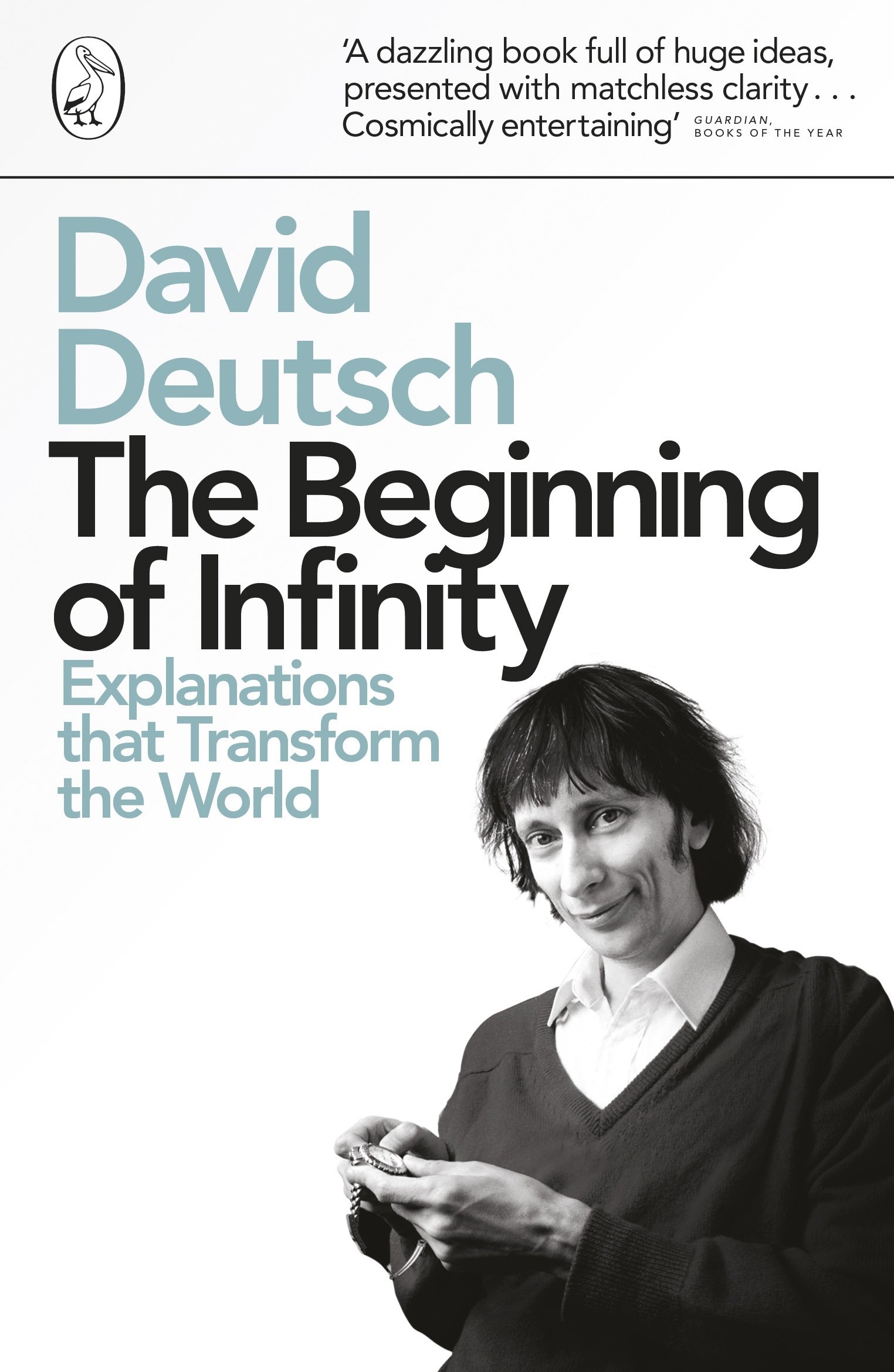
The Beginning of Infinity: Explanations That Transform the World
Overview unavailable.
Book Front Matter
- Identifies the book as David Deutsch’s The Beginning of Infinity: Explanations that Transform the World, published by Allen Lane/Penguin.
- Provides publication and copyright details, including publisher locations, first publication year, ISBN, and reproduction restrictions.
- Acknowledges permissions for reproduced materials and notes efforts to credit copyright holders.
- Lists the table of contents, including chapters on explanations, creativity, infinity, optimism, the multiverse, culture, and progress.
- Includes acknowledgements thanking draft readers, commenters, copy-editor, and illustrators.
DAVID DEUTSCH
The Beginning of Infinity
Explanations that Transform the World

ALLEN LANE
an imprint of
PENGUIN BOOKS
OceanofPDF.com
ALLEN LANE
Published by the Penguin Group
Penguin Books Ltd, 80 Strand, London WC2R 0RL, England
Penguin Group (USA) Inc., 375 Hudson Street, New York,
New York 10014, USA
Penguin Group (Canada), 90 Eglinton Avenue East, Suite
700, Toronto, Ontario,
Canada M4P 2Y3 (a division of Pearson Canada Inc.)
Penguin Ireland, 25 St Stephen’s Green, Dublin 2, Ireland (a
division of Penguin Books Ltd)
Penguin Group (Australia), 250 Camberwell Road,
Camberwell, Victoria 3124,
Australia (a division of Pearson Australia Group Pty Ltd)
Penguin Books India Pvt Ltd, 11 Community Centre,
Panchsheel Park, New Dehli – 110 017, India
Penguin Group (NZ), 67 Apollo Drive, Auckland 0632, New
Zealand
(a division of Pearson New Zealand Ltd)
Penguin Books (South Africa) (Pty) Ltd, 24 Sturdee Avenue,
Rosebank 2196, South Africa
Penguin Books Ltd, Registered Offices: 80 Strand, London
WC2R 0RL, England
www.penguin.com
First published 2011
Copyright © David Deutsch, 2011
The moral right of the author has been asserted
All rights reserved. Without limiting the rights under
copyright reserved above, no part of this publication may be
reproduced, stored in or introduced into a retrieval system,
or transmitted, in any form or by any means (electronic,
mechanical, photocopying, recording or otherwise) without
the prior written permission of both the copyright owner and
the above publisher of this book
Grateful acknowledgement is given for permission to
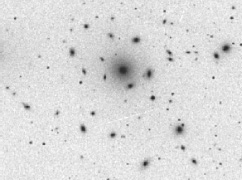
reproduce the following material: Coma cluster of galaxies
(p. 34), Palomar Sky Survey, California Institute of
Technology, Space Telescope Science Institute; Popper’s
translation of Xenophanes (pp. 230, 231, 238), the Popper
Library at the University of Klagenfurt, courtesy of Dr
Manfred Lube. Every attempt has been made to trace
copyright holders. The author and publisher will gladly make
good in future printings any errors or omissions brought to
their attention.
ISBN: 978-0-141-96969-5
OceanofPDF.com
Contents
Acknowledgements
Introduction
1. The Reach of Explanations
2. Closer to Reality
3. The Spark
4. Creation
5. The Reality of Abstractions
6. The Jump to Universality
7. Artificial Creativity
8. A Window on Infinity
9. Optimism
10. A Dream of Socrates
11. The Multiverse
12. A Physicist’s History of Bad Philosophy
13. Choices
14. Why are Flowers Beautiful?
15. The Evolution of Culture
16. The Evolution of Creativity
17. Unsustainable
18. The Beginning
Bibliography
Index
OceanofPDF.com
Acknowledgements
I am grateful to my friends and colleagues Sarah Fitz-
Claridge, Alan Forrester, Herbert Freudenheim, David
Johnson-Davies, Paul Tappenden and especially Elliot Temple
and my copy-editor, Bob Davenport, for reading earlier
drafts of this book and suggesting many corrections and
improvements, and also to those who have read and
helpfully commented on parts of it, namely Omri Ceren,
Artur Ekert, Michael Golding, Alan Grafen, Ruti Regan, Simon
Saunders and Lulie Tanett.
I also want to thank the illustrators Nick Lockwood, Tommy
Robin and Lulie Tanett for translating explanations into
images more accurately than I could have hoped for.
OceanofPDF.com
Introduction
The Beginning of Infinity
- Rapid and stable progress is a unique historical phenomenon that began with the scientific revolution and spans science, morality, and art.
- Progress is defined by the objective transition from false to true explanations and from chronic failure to successful problem-solving.
- The fundamental driver of all human progress is the quest for 'good explanations,' which aligns human activity with the universal laws of nature.
- Progress is inherently unbounded and infinite, rather than destined for a final completion or an inevitable catastrophic end.
- The ability to understand distant cosmic phenomena, such as the nuclear transmutation in stars, demonstrates the immense reach of human explanations.
Behind it all is surely an idea so simple, so beautiful, that when we grasp it – in a decade, a century, or a millennium – we will all say to each other, how could it have been otherwise?
Progress that is both rapid enough to be noticed and stable
enough to continue over many generations has been
achieved only once in the history of our species. It began at
approximately the time of the scientific revolution, and is
still under way. It has included improvements not only in
scientific understanding, but also in technology, political
institutions, moral values, art, and every aspect of human
welfare.
Whenever there has been progress, there have been
influential thinkers who denied that it was genuine, that it
was desirable, or even that the concept was meaningful.
They should have known better. There is indeed an objective
difference between a false explanation and a true one,
between chronic failure to solve a problem and solving it,
and also between wrong and right, ugly and beautiful,
suffering and its alleviation – and thus between stagnation
and progress in the fullest sense.
In this book I argue that all progress, both theoretical and
practical, has resulted from a single human activity: the
quest for what I call good explanations. Though this quest is
uniquely human, its effectiveness is also a fundamental fact
about reality at the most impersonal, cosmic level – namely
that it conforms to universal laws of nature that are indeed
good explanations. This simple relationship between the
cosmic and the human is a hint of a central role of people in
the cosmic scheme of things.
Must progress come to an end – either in catastrophe or in
some sort of completion – or is it unbounded? The answer is
the latter. That unboundedness is the ‘infinity’ referred to in
the title of this book. Explaining it, and the conditions under
which progress can and cannot happen, entails a journey
through virtually every fundamental field of science and
philosophy. From each such field we learn that, although
progress has no necessary end, it does have a necessary
beginning: a cause, or an event with which it starts, or a
necessary condition for it to take off and to thrive. Each of
these beginnings is ‘the beginning of infinity’ as viewed
from the perspective of that field. Many seem, superficially,
to be unconnected. But they are all facets of a single
attribute of reality, which I call the beginning of infinity.
OceanofPDF.com
1
The Reach of Explanations
Behind it all is surely an idea so simple, so beautiful, that
when we grasp it – in a decade, a century, or a millennium –
we will all say to each other, how could it have been
otherwise?
John Archibald Wheeler, Annals of the New York Academy of
Sciences, 480 (1986)
To unaided human eyes, the universe beyond our solar
system looks like a few thousand glowing dots in the night
sky, plus the faint, hazy streaks of the Milky Way. But if you
ask an astronomer what is out there in reality, you will be
told not about dots or streaks, but about stars: spheres of
incandescent gas millions of kilometres in diameter and light
years away from us. You will be told that the sun is a typical
star, and looks different from the others only because we are
much closer to it – though still some 150 million kilometres
away. Yet, even at those unimaginable distances, we are
confident that we know what makes stars shine: you will be
told that they are powered by the nuclear energy released
by transmutation – the conversion of one chemical element
into another (mainly hydrogen into helium).
Some types of transmutation happen spontaneously on
Earth, in the decay of radioactive elements. This was first
demonstrated in 1901, by the physicists Frederick Soddy and
Ernest Rutherford, but the concept of transmutation was
ancient. Alchemists had dreamed for centuries of
transmuting ‘base metals’, such as iron or lead, into gold.
They never came close to understanding what it would take
to achieve that, so they never did so. But scientists in the
twentieth century did. And so do stars, when they explode as
Cosmic Violence and Creation
- The universe is characterized by extreme violence, with stars converting mass to energy at rates equivalent to millions of atom bombs per second.
- Supernovae are both destructive and creative, wiping out entire planetary systems while forging the heavy elements necessary for life.
- Gamma-ray bursts and quasars represent even greater scales of energy, with quasars consuming entire stars to outshine trillions of suns.
- The vastness of the cosmos extends from our Milky Way to a relentlessly expanding universe and potentially an even larger multiverse.
- Despite the chaotic and extreme nature of these phenomena, the entire universe operates according to elegant and understandable laws of physics.
- Intelligence is one of the few forces in the universe capable of transmuting base metals into gold, a process otherwise reserved for stars.
Its neutrino radiation alone would kill a human at a range of billions of kilometres, even if that entire distance were filled with lead shielding.
supernovae. Base metals can be transmuted into gold by
stars, and by intelligent beings who understand the
processes that power stars, but by nothing else in the
universe.
As for the Milky Way, you will be told that, despite its
insubstantial appearance, it is the most massive object that
we can see with the naked eye: a galaxy that includes stars
by the hundreds of billions, bound by their mutual
gravitation across tens of thousands of light years. We are
seeing it from the inside, because we are part of it. You will
be told that, although our night sky appears serene and
largely changeless, the universe is seething with violent
activity. Even a typical star converts millions of tonnes of
mass into energy every second, with each gram releasing as
much energy as an atom bomb. You will be told that within
the range of our best telescopes, which can see more
galaxies than there are stars in our galaxy, there are several
supernova explosions per second, each briefly brighter than
all the other stars in its galaxy put together. We do not know
where life and intelligence exist, if at all, outside our solar
system, so we do not know how many of those explosions
are horrendous tragedies. But we do know that a supernova
devastates all the planets that may be orbiting it, wiping out
all life that may exist there – including any intelligent beings,
unless they have technology far superior to ours. Its neutrino
radiation alone would kill a human at a range of billions of
kilometres, even if that entire distance were filled with lead
shielding. Yet we owe our existence to supernovae: they are
the source, through transmutation, of most of the elements
of which our bodies, and our planet, are composed.
There are phenomena that outshine supernovae. In March
2008 an X-ray telescope in Earth orbit detected an explosion
of a type known as a ‘gamma-ray burst’, 7.5 billion light
years away. That is halfway across the known universe. It
was probably a single star collapsing to form a black hole –
an object whose gravity is so intense that not even light can
escape from its interior. The explosion was intrinsically
brighter than a million supernovae, and would have been
visible with the naked eye from Earth – though only faintly
and for only a few seconds, so it is unlikely that anyone here
saw it. Supernovae last longer, typically fading on a
timescale of months, which allowed astronomers to see a
few in our galaxy even before the invention of telescopes.
Another class of cosmic monsters, the intensely luminous
objects known as quasars, are in a different league. Too
distant to be seen with the naked eye, they can outshine a
supernova for millions of years at a time. They are powered
by massive black holes at the centres of galaxies, into which
entire stars are falling – up to several per day for a large
quasar – shredded by tidal effects as they spiral in. Intense
magnetic fields channel some of the gravitational energy
back out in the form of jets of high-energy particles, which
illuminate the surrounding gas with the power of a trillion
suns.
Conditions are still more extreme in the black hole’s interior
(within the surface of no return known as the ‘event
horizon’), where the very fabric of space and time may be
being ripped apart. All this is happening in a relentlessly
expanding universe that began about fourteen billion years
ago with an all-encompassing explosion, the Big Bang, that
makes all the other phenomena I have described seem mild
and inconsequential by comparison. And that whole universe
is just a sliver of an enormously larger entity, the multiverse,
which includes vast numbers of such universes.
The physical world is not only much bigger and more violent
than it once seemed, it is also immensely richer in detail,
diversity and incident. Yet it all proceeds according to
elegant laws of physics that we understand in some depth. I
The Reach of Theory
- Science reveals a striking contrast between the vast reach of our theories and the local, limited sensory data used to create them.
- Empiricism historically suggested that knowledge is passively received from sensory experience, treating the mind as a blank slate.
- In reality, scientific theories are bold conjectures and creative guesses rather than direct derivations from observation.
- The primary role of experience in science is to serve as a filter to choose between competing theories that have already been imagined.
- Despite its flaws, empiricism was a vital step forward because it rejected traditional authority and promoted an optimistic search for new knowledge.
We do not read them in nature, nor does nature write them into us. They are guesses – bold conjectures.
do not know which is more awesome: the phenomena
themselves or the fact that we know so much about them.
How do we know? One of the most remarkable things about
science is the contrast between the enormous reach and
power of our best theories and the precarious, local means
by which we create them. No human has ever been at the
surface of a star, let alone visited the core where the
transmutation happens and the energy is produced. Yet we
see those cold dots in our sky and know that we are looking
at the white-hot surfaces of distant nuclear furnaces.
Physically, that experience consists of nothing other than our
brains responding to electrical impulses from our eyes. And
eyes can detect only light that is inside them at the time.
The fact that the light was emitted very far away and long
ago, and that much more was happening there than just the
emission of light – those are not things that we see. We know
them only from theory.
Scientific theories are explanations: assertions about what is
out there and how it behaves. Where do these theories come
from? For most of the history of science, it was mistakenly
believed that we ‘derive’ them from the evidence of our
senses – a philosophical doctrine known as empiricism:
Empiricism
For example, the philosopher John Locke wrote in 1689 that
the mind is like ‘white paper’ on to which sensory experience
writes, and that that is where all our knowledge of the
physical world comes from. Another empiricist metaphor was
that one could read knowledge from the ‘Book of Nature’ by
making observations. Either way, the discoverer of
knowledge is its passive recipient, not its creator.
But, in reality, scientific theories are not ‘derived’ from
anything. We do not read them in nature, nor does nature
write them into us. They are guesses – bold conjectures.
Human minds create them by rearranging, combining,
altering and adding to existing ideas with the intention of
improving upon them. We do not begin with ‘white paper’ at
birth, but with inborn expectations and intentions and an
innate ability to improve upon them using thought and
experience. Experience is indeed essential to science, but its
role is different from that supposed by empiricism. It is not
the source from which theories are derived. Its main use is to
choose between theories that have already been guessed.
That is what ‘learning from experience’ is.
However, that was not properly understood until the mid
twentieth century with the work of the philosopher Karl
Popper. So historically it was empiricism that first provided a
plausible defence for experimental science as we now know
it. Empiricist philosophers criticized and rejected traditional
approaches to knowledge such as deference to the authority
of holy books and other ancient writings, as well as human
authorities such as priests and academics, and belief in
traditional lore, rules of thumb and hearsay. Empiricism also
contradicted the opposing and surprisingly persistent idea
that the senses are little more than sources of error to be
ignored. And it was optimistic, being all about obtaining new
knowledge, in contrast with the medieval fatalism that had
expected everything important to be known already. Thus,
despite being quite wrong about where scientific knowledge
comes from, empiricism was a great step forward in both the
philosophy and the history of science. Nevertheless, the
question that sceptics (friendly and unfriendly) raised from
the outset always remained: how can knowledge of what has
not been experienced possibly be ‘derived’ from what has?
What sort of thinking could possibly constitute a valid
derivation of the one from the other? No one would expect to
deduce the geography of Mars from a map of Earth, so why
should we expect to be able to learn about physics on Mars
from experiments done on Earth? Evidently, logical
deduction alone would not do, because there is a logical
The Failure of Inductivism
- Inductivism is the traditional belief that scientific knowledge is derived by generalizing patterns from repeated experiences.
- The 'principle of induction' suggests that the future will resemble the past, yet this principle has never been successfully formulated for practical use.
- A major flaw of inductivism is that it focuses on predicting experiences rather than explaining the reality that lies behind those experiences.
- Science primarily concerns things never directly observed, such as the internal composition of stars, the Big Bang, or the laws of physics.
- Inductivism fails to account for scientific breakthroughs that create phenomena unlike anything in the past, such as human flight or nuclear explosions.
- True scientific progress moves from explanatory theory to experience, rather than from experience to theory.
For millennia people dreamed about flying, but they experienced only falling.
gap: no amount of deduction applied to statements
describing a set of experiences can reach a conclusion about
anything other than those experiences.
The conventional wisdom was that the key is repetition: if
one repeatedly has similar experiences under similar
circumstances, then one is supposed to ‘extrapolate’ or
‘generalize’ that pattern and predict that it will continue. For
instance, why do we expect the sun to rise tomorrow
morning? Because in the past (so the argument goes) we
have seen it do so whenever we have looked at the morning
sky. From this we supposedly ‘derive’ the theory that under
similar circumstances we shall always have that experience,
or that we probably shall. On each occasion when that
prediction comes true, and provided that it never fails, the
probability that it will always come true is supposed to
increase. Thus one supposedly obtains ever more reliable
knowledge of the future from the past, and of the general
from the particular. That alleged process was called
‘inductive inference’ or ‘induction’, and the doctrine that
scientific theories are obtained in that way is called
inductivism. To bridge the logical gap, some inductivists
imagine that there is a principle of nature – the ‘principle of
induction’ – that makes inductive inferences likely to be true.
‘The future will resemble the past’ is one popular version of
this, and one could add ‘the distant resembles the near,’ ‘the
unseen resembles the seen’ and so on.
But no one has ever managed to formulate a ‘principle of
induction’ that is usable in practice for obtaining scientific
theories from experiences. Historically, criticism of
inductivism has focused on that failure, and on the logical
gap that cannot be bridged. But that lets inductivism off far
too lightly. For it concedes inductivism’s two most serious
misconceptions.
First, inductivism purports to explain how science obtains
predictions about experiences. But most of our theoretical
knowledge simply does not take that form. Scientific
explanations are about reality, most of which does not
consist of anyone’s experiences. Astrophysics is not
primarily about us (what we shall see if we look at the sky),
but about what stars are: their composition and what makes
them shine, and how they formed, and the universal laws of
physics under which that happened. Most of that has never
been observed: no one has experienced a billion years, or a
light year; no one could have been present at the Big Bang;
no one will ever touch a law of physics – except in their
minds, through theory. All our predictions of how things will
look are deduced from such explanations of how things are.
So inductivism fails even to address how we can know about
stars and the universe, as distinct from just dots in the sky.
The second fundamental misconception in inductivism is
that scientific theories predict that ‘the future will resemble
the past’, and that ‘the unseen resembles the seen’ and so
on. (Or that it ‘probably’ will.) But in reality the future is
unlike the past, the unseen very different from the seen.
Science often predicts – and brings about – phenomena
spectacularly different from anything that has been
experienced before. For millennia people dreamed about
flying, but they experienced only falling. Then they
discovered good explanatory theories about flying, and then
they flew – in that order. Before 1945, no human being had
ever observed a nuclear-fission (atomic-bomb) explosion;
there may never have been one in the history of the
universe. Yet the first such explosion, and the conditions
under which it would occur, had been accurately predicted –
but not from the assumption that the future would be like
the past. Even sunrise – that favourite example of
inductivists – is not always observed every twenty-four
hours: when viewed from orbit it may happen every ninety
minutes, or not at all. And that was known from theory long
The Failure of Inductivism
- The principle of induction is logically empty because any law of nature, true or false, claims the future will resemble the past in some way.
- Human expectations are guided by explanatory theories rather than simple repetition, as seen in the transition from the year 1999 to 2000.
- The concept of a 'repeated' experience is itself a theoretical construct, as we must use theories to decide which variables in our environment are relevant.
- Empiricism is flawed because explanations cannot be derived mechanically from sensory data; they require creative acts of guessing.
- Historical observations of the stars as dots on a celestial sphere prove that 'reading' nature directly often leads to false conclusions.
- Scientific progress relies on criticizing and testing creative ideas rather than accumulating sensory experiences.
To the extent that experiencing dots ‘writes’ something into our brains, it does not write explanations but only dots.
before anyone had ever orbited the Earth.
It is no defence of inductivism to point out that in all those
cases the future still does ‘resemble the past’ in the sense
that it obeys the same underlying laws of nature. For that is
an empty statement: any purported law of nature – true or
false – about the future and the past is a claim that they
‘resemble’ each other by both conforming to that law. So
that version of the ‘principle of induction’ could not be used
to derive any theory or prediction from experience or
anything else.
Even in everyday life we are well aware that the future is
unlike the past, and are selective about which aspects of our
experience we expect to be repeated. Before the year 2000,
I had experienced thousands of times that if a calendar was
properly maintained (and used the standard Gregorian
system), then it displayed a year number beginning with
‘19’. Yet at midnight on 31 December 1999 I expected to
have the experience of seeing a ‘20’ on every such calendar.
I also expected that there would be a gap of 17,000 years
before anyone experienced a ‘19’ under those conditions
again. Neither I nor anyone else had ever observed such a
‘20’, nor such a gap, but our explanatory theories told us to
expect them, and expect them we did.
As the ancient philosopher Heraclitus remarked, ‘No man
ever steps in the same river twice, for it is not the same river
and he is not the same man.’ So, when we remember seeing
sunrise ‘repeatedly’ under ‘the same’ circumstances, we are
tacitly relying on explanatory theories to tell us which
combinations of variables in our experience we should
interpret as being ‘repeated’ phenomena in the underlying
reality, and which are local or irrelevant. For instance,
theories about geometry and optics tell us not to expect to
see a sunrise on a cloudy day, even if a sunrise is really
happening in the unobserved world behind the clouds. Only
from those explanatory theories do we know that failing to
see the sun on such days does not amount to an experience
of its not rising. Similarly, theory tells us that if we see
sunrise reflected in a mirror, or in a video or a virtual-reality
game, that does not count as seeing it twice. Thus the very
idea that an experience has been repeated is not itself a
sensory experience, but a theory.
So much for inductivism. And since inductivism is false,
empiricism must be as well. For if one cannot derive
predictions from experience, one certainly cannot derive
explanations. Discovering a new explanation is inherently an
act of creativity. To interpret dots in the sky as white-hot,
million-kilometre spheres, one must first have thought of the
idea of such spheres. And then one must explain why they
look small and cold and seem to move in lockstep around us
and do not fall down. Such ideas do not create themselves,
nor can they be mechanically derived from anything: they
have to be guessed – after which they can be criticized and
tested. To the extent that experiencing dots ‘writes’
something into our brains, it does not write explanations but
only dots. Nor is nature a book: one could try to ‘read’ the
dots in the sky for a lifetime – many lifetimes – without
learning anything about what they really are.
Historically, that is exactly what happened. For millennia,
most careful observers of the sky believed that the stars
were lights embedded in a hollow, rotating ‘celestial sphere’
centred on the Earth (or that they were holes in the sphere,
through which the light of heaven shone). This geocentric –
Earth-centred – theory of the universe seemed to have been
directly derived from experience, and repeatedly confirmed:
anyone who looked up could ‘directly observe’ the celestial
sphere, and the stars maintaining their relative positions on
it and being held up just as the theory predicts. Yet in reality,
the solar system is heliocentric – centred on the sun, not the
Fallibilism and the Senses
- The apparent stillness of the Earth demonstrates that sensory experience is inherently deceptive and requires interpretive theories to be understood.
- Empiricism failed to liberate science from authority because it merely replaced traditional authorities with the false authority of sensory data.
- Justificationism is the flawed philosophical pursuit of certainty or endorsement through authoritative sources of knowledge.
- Fallibilism is the recognition that no knowledge is final or perfectly justified, which is the essential catalyst for the growth of knowledge.
- The quest for certainty converts the search for truth into a social or psychological status, whereas fallibilism actively seeks to correct hidden misconceptions.
- True scientific progress relies on conjecture and criticism rather than the passive extraction of theories from experience.
It converts the quest for truth into a quest for certainty (a feeling) or for endorsement (a social status).
Earth – and the Earth is not at rest but in complex motion.
Although we first noticed a daily rotation by observing stars,
it is not a property of the stars at all, but of the Earth, and of
the observers who rotate with it. It is a classic example of
the deceptiveness of the senses: the Earth looks and feels as
though it is at rest beneath our feet, even though it is really
rotating. As for the celestial sphere, despite being visible in
broad daylight (as the sky), it does not exist at all.
The deceptiveness of the senses was always a problem for
empiricism – and thereby, it seemed, for science. The
empiricists’ best defence was that the senses cannot be
deceptive in themselves. What misleads us are only the false
interpretations that we place on appearances. That is indeed
true – but only because our senses themselves do not say
anything. Only our interpretations of them do, and those are
very fallible. But the real key to science is that our
explanatory theories – which include those interpretations –
can be improved, through conjecture, criticism and testing.
Empiricism never did achieve its aim of liberating science
from authority. It denied the legitimacy of traditional
authorities, and that was salutary. But unfortunately it did
this by setting up two other false authorities: sensory
experience and whatever fictitious process of ‘derivation’,
such as induction, one imagines is used to extract theories
from experience.
The misconception that knowledge needs authority to be
genuine or reliable dates back to antiquity, and it still
prevails. To this day, most courses in the philosophy of
knowledge teach that knowledge is some form of justified,
true belief, where ‘justified’ means designated as true (or at
least ‘probable’) by reference to some authoritative source
or touchstone of knowledge. Thus ‘how do we know . . . ?’ is
transformed into ‘by what authority do we claim . . . ?’ The
latter question is a chimera that may well have wasted more
philosophers’ time and effort than any other idea. It converts
the quest for truth into a quest for certainty (a feeling) or for
endorsement (a social status). This misconception is called
justificationism.
The opposing position – namely the recognition that there
are no authoritative sources of knowledge, nor any reliable
means of justifying ideas as being true or probable – is called
fallibilism. To believers in the justified-true-belief theory of
knowledge, this recognition is the occasion for despair or
cynicism, because to them it means that knowledge is
unattainable. But to those of us for whom creating
knowledge means understanding better what is really there,
and how it really behaves and why, fallibilism is part of the
very means by which this is achieved. Fallibilists expect even
their best and most fundamental explanations to contain
misconceptions in addition to truth, and so they are
predisposed to try to change them for the better. In contrast,
the logic of justificationism is to seek (and typically, to
believe that one has found) ways of securing ideas against
change. Moreover, the logic of fallibilism is that one not only
seeks to correct the misconceptions of the past, but hopes in
the future to find and change mistaken ideas that no one
today questions or finds problematic. So it is fallibilism, not
mere rejection of authority, that is essential for the initiation
of unlimited knowledge growth – the beginning of infinity.
The quest for authority led empiricists to downplay and even
stigmatize conjecture, the real source of all our theories. For
if the senses were the only source of knowledge, then error
(or at least avoidable error) could be caused only by adding
to, subtracting from or misinterpreting what that source is
saying. Thus empiricists came to believe that, in addition to
rejecting ancient authority and tradition, scientists should
suppress or ignore any new ideas they might have, except
The Fallacy of Raw Data
- The traditional empiricist view that data must precede theory is fundamentally flawed because all observations are 'theory-laden.'
- Human perception is an act of interpretation where the brain translates internal electrical signals into externalized experiences like color or location.
- Because our senses and interpretations are fallible, we never perceive reality directly; instead, we rely on conjecture and theoretical frameworks.
- The central mystery of science is how local guesswork in the human mind can accurately describe distant or unobservable phenomena like the Big Bang.
- Despite having identical biological hardware for millennia, humans only recently developed the specific process required to generate objective knowledge.
There is nothing more deceptive than an obvious fact.
those that had been properly ‘derived’ from experience. As
Arthur Conan Doyle’s fictional detective Sherlock Holmes put
it in the short story ‘A Scandal in Bohemia’, ‘It is a capital
mistake to theorize before one has data.’
But that was itself a capital mistake. We never know any
data before interpreting it through theories. All observations
are, as Popper put it, theory-laden,* and hence fallible, as all
our theories are. Consider the nerve signals reaching our
brains from our sense organs. Far from providing direct or
untainted access to reality, even they themselves are never
experienced for what they really are – namely crackles of
electrical activity. Nor, for the most part, do we experience
them as being where they really are – inside our brains.
Instead, we place them in the reality beyond. We do not just
see blue: we see a blue sky up there, far away. We do not
just feel pain: we experience a headache, or a stomach
ache. The brain attaches those interpretations – ‘head’,
‘stomach’ and ‘up there’ – to events that are in fact within
the brain itself. Our sense organs themselves, and all the
interpretations that we consciously and unconsciously attach
to their outputs, are notoriously fallible – as witness the
celestial-sphere theory, as well as every optical illusion and
conjuring trick. So we perceive nothing as what it really is. It
is all theoretical interpretation: conjecture.
Conan Doyle came much closer to the truth when, during
‘The Boscombe Valley Mystery’, he had Holmes remark that
‘circumstantial evidence’ (evidence about unwitnessed
events) is ‘a very tricky thing . . . It may seem to point very
straight to one thing, but if you shift your own point of view
a little, you may find it pointing in an equally
uncompromising manner to something entirely different . . .
There is nothing more deceptive than an obvious fact.’ The
same holds for scientific discovery. And that again raises the
question: how do we know? If all our theories originate
locally, as guesswork in our own minds, and can be tested
only locally, by experience, how is it that they contain such
extensive and accurate knowledge about the reality that we
have never experienced?
I am not asking what authority scientific knowledge is
derived from, or rests on. I mean, literally, by what process
do ever truer and more detailed explanations about the
world come to be represented physically in our brains? How
do we come to know about the interactions of subatomic
particles during transmutation at the centre of a distant star,
when even the tiny trickle of light that reaches our
instruments from the star was emitted by glowing gas at the
star’s surface, a million kilometres above where the
transmutation is happening? Or about conditions in the
fireball during the first few seconds after the Big Bang, which
would instantly have destroyed any sentient being or
scientific instrument? Or about the future, which we have no
way of measuring at all? How is it that we can predict, with
some non-negligible degree of confidence, whether a new
design of microchip will work, or whether a new drug will
cure a particular disease, even though they have never
existed before?
For most of human history, we did not know how to do any of
this. People were not designing microchips or medications or
even the wheel. For thousands of generations, our ancestors
looked up at the night sky and wondered what stars are –
what they are made of, what makes them shine, what their
relationship is with each other and with us – which was
exactly the right thing to wonder about. And they were using
eyes and brains anatomically indistinguishable from those of
modern astronomers. But they discovered nothing about it.
Much the same was true in every other field of knowledge. It
was not for lack of trying, nor for lack of thinking. People
observed the world. They tried to understand it – but almost
The Rebellion Against Authority
- For most of human history, the desire for progress was thwarted by an inability to create new, functional knowledge.
- Early humans lived in a world where life-improving discoveries were so rare that the world appeared static across individual lifetimes.
- The Scientific Revolution marked a sudden shift from stagnation to a noticeable and accelerating rate of discovery.
- The Enlightenment was fundamentally a rebellion against the authority of ancient writings and traditional dogmas.
- Progress required the realization that important knowledge had not yet been discovered and that existing authorities were often mistaken.
Discoveries such as fire, clothing, stone tools, bronze, and so on, happened so rarely that from an individual’s point of view the world never improved.
entirely in vain. Occasionally they recognized simple
patterns in the appearances. But when they tried to find out
what was really there behind those appearances, they failed
almost completely.
I expect that, like today, most people wondered about such
things only occasionally – during breaks from addressing
their more parochial concerns. But their parochial concerns
also involved yearning to know – and not only out of pure
curiosity. They wished they knew how to safeguard their food
supply; how they could rest when tired without risking
starvation; how they could be warmer, cooler, safer, in less
pain – in every aspect of their lives, they wished they knew
how to make progress. But, on the timescale of individual
lifetimes, they almost never made any. Discoveries such as
fire, clothing, stone tools, bronze, and so on, happened so
rarely that from an individual’s point of view the world never
improved. Sometimes people even realized (with somewhat
miraculous prescience) that making progress in practical
ways would depend on progress in understanding puzzling
phenomena in the sky. They even conjectured links between
the two, such as myths, which they found compelling
enough to dominate their lives – yet which still bore no
resemblance to the truth. In short, they wanted to create
knowledge, in order to make progress, but they did not know
how.
This was the situation from our species’ earliest prehistory,
through the dawn of civilization, and through its
imperceptibly slow increase in sophistication – with many
reverses – until a few centuries ago. Then a powerful new
mode of discovery and explanation emerged, which later
became known as science. Its emergence is known as the
scientific revolution, because it succeeded almost
immediately in creating knowledge at a noticeable rate,
which has increased ever since.
What had changed? What made science effective at
understanding the physical world when all previous ways
had failed? What were people now doing, for the first time,
that made the difference? This question began to be asked
as soon as science began to be successful, and there have
been many conflicting answers, some containing truth. But
none, in my view, has reached the heart of the matter. To
explain my own answer, I have to give a little context first.
The scientific revolution was part of a wider intellectual
revolution, the Enlightenment, which also brought progress
in other fields, especially moral and political philosophy, and
in the institutions of society. Unfortunately, the term ‘the
Enlightenment’ is used by historians and philosophers to
denote a variety of different trends, some of them violently
opposed to each other. What I mean by it will emerge here
as we go along. It is one of several aspects of ‘the beginning
of infinity’, and is a theme of this book. But one thing that all
conceptions of the Enlightenment agree on is that it was a
rebellion, and specifically a rebellion against authority in
regard to knowledge.
Rejecting authority in regard to knowledge was not just a
matter of abstract analysis. It was a necessary condition for
progress, because, before the Enlightenment, it was
generally believed that everything important that was
knowable had already been discovered, and was enshrined
in authoritative sources such as ancient writings and
traditional assumptions. Some of those sources did contain
some genuine knowledge, but it was entrenched in the form
of dogmas along with many falsehoods. So the situation was
that all the sources from which it was generally believed
knowledge came actually knew very little, and were
mistaken about most of the things that they claimed to
know. And therefore progress depended on learning how to
reject their authority. This is why the Royal Society (one of
the earliest scientific academies, founded in London in 1660)
took as its motto ‘Nullius in verba’, which means something
The Tradition of Criticism
- The Enlightenment's success stemmed not just from rejecting authority, but from establishing a rare tradition of criticism aimed at improvement.
- Empiricism, while philosophically flawed, served a vital historical role by shifting the focus of knowledge-seeking away from dogma and toward the senses.
- A key outcome of this critical tradition was the requirement for testability, allowing theories to be refuted by contradictory observations.
- The transition from ancient untestable theories to modern science is illustrated by the shift from elemental mysticism to Rutherford's transmutation experiments.
- Testability alone is insufficient for progress, as evidenced by the testable but stagnant predictions of prophets, gamblers, and rules of thumb.
- Scientific progress requires more than prediction because physical appearances are not self-explanatory; they are like conjuring tricks that hide their mechanisms.
The usual sequel has merely been that new authorities replaced the old. What was needed for the sustained, rapid growth of knowledge was a tradition of criticism.
like ‘Take no one’s word for it.’
However, rebellion against authority cannot by itself be what
made the difference. Authorities have been rejected many
times in history, and only rarely has any lasting good come
of it. The usual sequel has merely been that new authorities
replaced the old. What was needed for the sustained, rapid
growth of knowledge was a tradition of criticism. Before the
Enlightenment, that was a very rare sort of tradition: usually
the whole point of a tradition was to keep things the same.
Thus the Enlightenment was a revolution in how people
sought knowledge: by trying not to rely on authority. That is
the context in which empiricism – purporting to rely solely on
the senses for knowledge – played such a salutary historical
role, despite being fundamentally false and even
authoritative in its conception of how science works.
One consequence of this tradition of criticism was the
emergence of a methodological rule that a scientific theory
must be testable (though this was not made explicit at first).
That is to say, the theory must make predictions which, if
the theory were false, could be contradicted by the outcome
of some possible observation. Thus, although scientific
theories are not derived from experience, they can be tested
by experience – by observation or experiment. For example,
before the discovery of radioactivity, chemists had believed
(and had verified in countless experiments) that
transmutation is impossible. Rutherford and Soddy boldly
conjectured that uranium spontaneously transmutes into
other elements. Then, by demonstrating the creation of the
element radium in a sealed container of uranium, they
refuted the prevailing theory and science progressed. They
were able to do that because that earlier theory was
testable: it was possible to test for the presence of radium.
In contrast, the ancient theory that all matter is composed of
combinations of the elements earth, air, fire and water was
untestable, because it did not include any way of testing for
the presence of those components. So it could never be
refuted by experiment. Hence it could never be – and never
was – improved upon through experiment. The
Enlightenment was at root a philosophical change.
The physicist Galileo Galilei was perhaps the first to
understand the importance of experimental tests (which he
called cimenti, meaning ‘trials by ordeal’) as distinct from
other forms of experiment and observation, which can more
easily be mistaken for ‘reading from the Book of Nature’.
Testability is now generally accepted as the defining
characteristic of the scientific method. Popper called it the
‘criterion of demarcation’ between science and non-science.
Nevertheless, testability cannot have been the decisive
factor in the scientific revolution either. Contrary to what is
often said, testable predictions had always been quite
common. Every traditional rule of thumb for making a flint
blade or a camp fire is testable. Every would-be prophet who
claims that the sun will go out next Tuesday has a testable
theory. So does every gambler who has a hunch that ‘this is
my lucky night – I can feel it’. So what is the vital, progress-
enabling ingredient that is present in science, but absent
from the testable theories of the prophet and the gambler?
The reason that testability is not enough is that prediction is
not, and cannot be, the purpose of science. Consider an
audience watching a conjuring trick. The problem facing
them has much the same logic as a scientific problem.
Although in nature there is no conjurer trying to deceive us
intentionally, we can be mystified in both cases for
essentially the same reason: appearances are not self-
explanatory. If the explanation of a conjuring trick were
evident in its appearance, there would be no trick. If the
explanations of physical phenomena were evident in their
appearance, empiricism would be true and there would be
Explanation Versus Prediction
- Predicting the outcome of a conjuring trick is not the same as understanding the underlying mechanism that makes the trick work.
- Instrumentalism is the philosophical view that science should only predict observations rather than describe an underlying reality.
- Denying realism leads to relativism, where objective truth is replaced by arbitrary cultural standards or 'useful fictions'.
- Purely predictive theories are an illusion because every prediction relies on a sophisticated, often invisible, explanatory framework.
- Rules of thumb are simply predictive theories where the explanatory content has become uncontroversial background knowledge.
That leaves no term for assertions about reality itself, except perhaps ‘useful fiction’.
no need for science as we know it.
The problem is not to predict the trick’s appearance. I may,
for instance, predict that if a conjurer seems to place various
balls under various cups, those cups will later appear to be
empty; and I may predict that if the conjurer appears to saw
someone in half, that person will later appear on stage
unharmed. Those are testable predictions. I may experience
many conjuring shows and see my predictions vindicated
every time. But that does not even address, let alone solve,
the problem of how the trick works. Solving it requires an
explanation: a statement of the reality that accounts for the
appearance.
Some people may enjoy conjuring tricks without ever
wanting to know how they work. Similarly, during the
twentieth century, most philosophers, and many scientists,
took the view that science is incapable of discovering
anything about reality. Starting from empiricism, they drew
the inevitable conclusion (which would nevertheless have
horrified the early empiricists) that science cannot validly do
more than predict the outcomes of observations, and that it
should never purport to describe the reality that brings those
outcomes about. This is known as instrumentalism. It denies
that what I have been calling ‘explanation’ can exist at all. It
is still very influential. In some fields (such as statistical
analysis) the very word ‘explanation’ has come to mean
prediction, so that a mathematical formula is said to
‘explain’ a set of experimental data. By ‘reality’ is meant
merely the observed data that the formula is supposed to
approximate. That leaves no term for assertions about
reality itself, except perhaps ‘useful fiction’.
Instrumentalism is one of many ways of denying realism, the
common-sense, and true, doctrine that the physical world
really exists, and is accessible to rational inquiry. Once one
has denied this, the logical implication is that all claims
about reality are equivalent to myths, none of them being
better than the others in any objective sense. That is
relativism, the doctrine that statements in a given field
cannot be objectively true or false: at most they can be
judged so relative to some cultural or other arbitrary
standard.
Instrumentalism, even aside from the philosophical enormity
of reducing science to a collection of statements about
human experiences, does not make sense in its own terms.
For there is no such thing as a purely predictive,
explanationless theory. One cannot make even the simplest
prediction without invoking quite a sophisticated explanatory
framework. For example, those predictions about conjuring
tricks apply specifically to conjuring tricks. That is
explanatory information, and it tells me, among other things,
not to ‘extrapolate’ the predictions to another type of
situation, however successful they are at predicting
conjuring tricks. So I know not to predict that saws in general
are harmless to humans; and I continue to predict that if I
were to place a ball under a cup, it really would go there and
stay there.
The concept of a conjuring trick, and of the distinction
between it and other situations, is familiar and
unproblematic – so much so that it is easy to forget that it
depends on substantive explanatory theories about all sorts
of things such as how our senses work, how solid matter and
light behave, and also subtle cultural details. Knowledge that
is both familiar and uncontroversial is background
knowledge. A predictive theory whose explanatory content
consists only of background knowledge is a rule of thumb.
Because we usually take background knowledge for granted,
rules of thumb may seem to be explanationless predictions,
but that is always an illusion.
There is always an explanation, whether we know it or not,
for why a rule of thumb works. Denying that some regularity
in nature has an explanation is effectively the same as
The Nature of Problems
- Rules of thumb are parochial and fail in unfamiliar circumstances, whereas explanations provide the reach to predict outcomes in new scenarios.
- Explanations are necessary to even identify relevant concepts, such as distinguishing the function of a cup from its color.
- Scientific progress and rational thought are driven by problems, defined as situations where two or more ideas or theories conflict.
- Observations only become problems when they contradict our existing explanatory theories and expectations.
- A conjuring trick only mystifies an audience because they possess a rich set of prior theories about what is physically possible.
- Problems can be purely theoretical, arising when our best explanations of how things are conflict with our criteria for how they should be.
That is why a trick that mystifies an adult may be uninteresting to a young child who has not yet learned to have the expectations on which the trick relies.
believing in the supernatural – saying, ‘That’s not conjuring,
it’s actual magic.’ Also, there is always an explanation when
a rule of thumb fails, for rules of thumb are always parochial:
they hold only in a narrow range of familiar circumstances.
So, if an unfamiliar feature were introduced into a cupsand-
balls trick, the rule of thumb I stated might easily make a
false prediction. For instance, I could not tell from the rule of
thumb whether it would be possible to perform the trick with
lighted candles instead of balls. If I had an explanation of
how the trick worked, I could tell.
Explanations are also essential for arriving at a rule of thumb
in the first place: I could not have guessed those predictions
about conjuring tricks without having a great deal of
explanatory information in mind – even before any specific
explanation of how the trick works. For instance, it is only in
the light of explanations that I could have abstracted the
concept of cups and balls from my experience of the trick,
rather than, say, red and blue, even if it so happened that
the cups were red and the balls blue in every instance of the
trick that I had witnessed.
The essence of experimental testing is that there are at least
two apparently viable theories known about the issue in
question, making conflicting predictions that can be
distinguished by the experiment. Just as conflicting
predictions are the occasion for experiment and observation,
so conflicting ideas in a broader sense are the occasion for
all rational thought and inquiry. For example, if we are simply
curious about something, it means that we believe that our
existing ideas do not adequately capture or explain it. So, we
have some criterion that our best existing explanation fails
to meet. The criterion and the existing explanation are
conflicting ideas. I shall call a situation in which we
experience conflicting ideas a problem.
The example of a conjuring trick illustrates how observations
provide problems for science – dependent, as always, on
prior explanatory theories. For a conjuring trick is a trick only
if it makes us think that something happened that cannot
happen. Both halves of that proposition depend on our
bringing quite a rich set of explanatory theories to the
experience. That is why a trick that mystifies an adult may
be uninteresting to a young child who has not yet learned to
have the expectations on which the trick relies. Even those
members of the audience who are incurious about how the
trick works can detect that it is a trick only because of the
explanatory theories that they brought with them into the
auditorium. Solving a problem means creating an
explanation that does not have the conflict.
Similarly, no one would have wondered what stars are if
there had not been existing expectations – explanations –
that unsupported things fall, and that lights need fuel, which
runs out, and so on, which conflicted with interpretations
(which are also explanations) of what was seen, such as that
the stars shine constantly and do not fall. In this case it was
those interpretations that were false: stars are indeed in free
fall and do need fuel. But it took a great deal of conjecture,
criticism and testing to discover how that can be.
A problem can also arise purely theoretically, without any
observations. For instance, there is a problem when a theory
makes a prediction that we did not expect. Expectations are
theories too. Similarly, it is a problem when the way things
are (according to our best explanation) is not the way they
should be – that is, according to our current criterion of how
they should be. This covers the whole range of ordinary
meanings of the word ‘problem’, from unpleasant, as when
the Apollo 13 mission reported, ‘Houston, we’ve had a
problem here,’ to pleasant, as when Popper wrote:
I think that there is only one way to science – or to
The Logic of Scientific Problems
- Scientific inquiry is described as a lifelong marriage to a problem, where solutions often reveal a family of new, enchanting challenges.
- The refutation of a theory shares the logic of a conjuring trick, where a problem arises only because our existing knowledge is flawed or inadequate.
- Observations alone cannot correct a misconception; a better idea or conjecture must be thought of before the data can be correctly interpreted.
- The term 'data' is misleading because theory must first dictate what to look for and how to interpret the information obtained.
- Scientific progress is built upon the creative modification of existing myths, rules of thumb, and inborn human assumptions.
- Even testable theories existed in antiquity, such as the myth of Persephone, suggesting that testability alone is not the sole driver of progress.
The refutation of a scientific theory has, from the point of view of someone who expected it to be true, the same logic as a conjuring trick – the only difference being that a conjurer does not normally have access to unknown laws of nature to make a trick work.
philosophy, for that matter: to meet a problem, to see its
beauty and fall in love with it; to get married to it and to live
with it happily, till death do ye part – unless you should meet
another and even more fascinating problem or unless,
indeed, you should obtain a solution. But even if you do
obtain a solution, you may then discover, to your delight, the
existence of a whole family of enchanting, though perhaps
difficult, problem children . . .
Realism and the Aim of Science (1983)
Experimental testing involves many prior explanations in
addition to the ones being tested, such as theories of how
measuring instruments work. The refutation of a scientific
theory has, from the point of view of someone who expected
it to be true, the same logic as a conjuring trick – the only
difference being that a conjurer does not normally have
access to unknown laws of nature to make a trick work.
Since theories can contradict each other, but there are no
contradictions in reality, every problem signals that our
knowledge must be flawed or inadequate. Our
misconception could be about the reality we are observing,
or about how our perceptions are related to it, or both. For
instance, a conjuring trick presents us with a problem only
because we have misconceptions about what ‘must’ be
happening – which implies that the knowledge that we used
to interpret what we were seeing is defective. To an expert
steeped in conjuring lore, it may be obvious what is
happening – even if the expert did not observe the trick at
all but merely heard a misleading account of it from a person
who was fooled by it. This is another general fact about
scientific explanation: if one has a misconception,
observations that conflict with one’s expectations may (or
may not) spur one into making further conjectures, but no
amount of observing will correct the misconception until
after one has thought of a better idea; in contrast, if one has
the right idea one can explain the phenomenon even if there
are large errors in the data. Again, the very term ‘data’
(‘givens’) is misleading. Amending the ‘data’, or rejecting
some as erroneous, is a frequent concomitant of scientific
discovery, and the crucial ‘data’ cannot even be obtained
until theory tells us what to look for and how and why.
A new conjuring trick is never totally unrelated to existing
tricks. Like a new scientific theory, it is formed by creatively
modifying, rearranging and combining the ideas from
existing tricks. It requires pre-existing knowledge of how
objects work and how audiences work, as well as how
existing tricks work. So where did the earliest conjuring
tricks come from? They must have been modifications of
ideas that were not originally conjuring tricks – for instance,
ideas for hiding objects in earnest. Similarly, where did the
first scientific ideas come from? Before there was science
there were rules of thumb, and explanatory assumptions,
and myths. So there was plenty of raw material for criticism,
conjecture and experiment to work with. Before that, there
were our inborn assumptions and expectations: we are born
with ideas, and with the ability to make progress by
changing them. And there were patterns of cultural
behaviour – about which I shall say more in Chapter 15.
But even testable, explanatory theories cannot be the crucial
ingredient that made the difference between no-progress
and progress. For they, too, have always been common.
Consider, for example, the ancient Greek myth for explaining
the annual onset of winter. Long ago, Hades, god of the
underworld, kidnapped and raped Persephone, goddess of
spring. Then Persephone’s mother, Demeter, goddess of the
earth and agriculture, negotiated a contract for her
daughter’s release, which specified that Persephone would
marry Hades and eat a magic seed that would compel her to
visit him once a year thereafter. Whenever Persephone was
The Flaw of Easy Variability
- The Greek myth of Persephone provides a testable explanation for seasons that is easily refuted by the existence of opposite seasons in the Southern Hemisphere.
- Myths like those of Persephone and Freyr are 'easy to vary' because their specific details are not constrained by the physical phenomena they attempt to explain.
- Alternative versions of these myths can be invented to fit the same observations while asserting completely different underlying realities.
- The details of such myths are chosen for cultural or artistic reasons rather than being derived from the actual attributes of the natural world.
- Because there is no way to distinguish between competing myths based on their merits, they fail as robust explanations of reality.
He made that choice – and all his substantive choices as author – for cultural and artistic reasons, and not because of the attributes of winter at all.
away fulfilling this obligation, Demeter became sad and
would command the world to become cold and bleak so that
nothing could grow.
That myth, though comprehensively false, does constitute
an explanation of seasons: it is a claim about the reality that
brings about our experience of winter. It is also eminently
testable: if the cause of winter is Demeter’s periodic
sadness, then winter must happen everywhere on Earth at
the same time. Therefore, if the ancient Greeks had known
that a warm growing season occurs in Australia at the very
moment when, as they believed, Demeter is at her saddest,
they could have inferred that there was something wrong
with their explanation of seasons.
Yet, when myths were altered or superseded by other myths
over the course of centuries, the new ones were almost
never any closer to the truth. Why? Consider the role that
the specific elements of the Persephone myth play in the
explanation. For example, the gods provide the power to
affect a large-scale phenomenon (Demeter to command the
weather, and Hades and his magic seed to command
Persephone and hence to affect Demeter). But why those
gods and not others? In Nordic mythology, seasons are
caused by the changing fortunes of Freyr, the god of spring,
in his eternal war with the forces of cold and darkness.
Whenever Freyr is winning, the Earth is warm; when he is
losing, it is cold.
That myth accounts for the seasons about as well as the
Persephone myth. It is slightly better at explaining the
randomness of weather, but worse at explaining the
regularity of seasons, because real wars do not ebb and flow
so regularly (except insofar as that is due to seasons
themselves). In the Persephone myth, the role of the
marriage contract and the magic seed is to explain that
regularity. But why is it specifically a magic seed and not any
other kind of magic? Why is it a conjugalvisits contract and
not some other reason for someone to repeat an action
annually? For instance, here is a variant explanation that fits
the facts just as well: Persephone was not released – she
escaped. Each year in spring, when her powers are at their
height, she takes revenge on Hades by raiding the
underworld and cooling all the caverns with spring air. The
hot air thus displaced rises into the human world, causing
summer. Demeter celebrates Persephone’s revenge and the
anniversary of her escape by commanding plants to grow
and adorn the Earth. This myth accounts for the same
observations as the original, and it is testable (and in fact
refuted) by the same observations. Yet what it asserts about
reality is markedly different from – in many ways it is the
opposite of – the original myth.
Every other detail of the story, apart from its bare prediction
that winter happens once a year, is just as easily variable.
So, although the myth was created to explain the seasons, it
is only superficially adapted to that purpose. When its author
was wondering what could possibly make a goddess do
something once a year, he did not shout, ‘Eureka! It must
have been a marriage contract enforced by a magic seed.’
He made that choice – and all his substantive choices as
author – for cultural and artistic reasons, and not because of
the attributes of winter at all. He may also have been trying
to explain aspects of human nature metaphorically – but
here I am concerned with the myth only in its capacity as an
explanation of seasons, and in that respect even its author
could not have denied that the role of all the details could be
played equally well by countless other things.
The Persephone and Freyr myths assert radically
incompatible things about what is happening in reality to
cause seasons. Yet no one, I guess, has ever adopted either
myth as a result of comparing it on its merits with the other,
because there is no way of distinguishing between them. If
we ignore all the parts of both myths whose role could be
The Flaw of Easy Variability
- Mythical explanations are fundamentally flawed because their details are not tightly coupled to the phenomena they attempt to explain.
- When an explanation can be easily varied to account for any observation, it provides no rational basis for choosing it over a competing myth.
- The ability to adapt a bad explanation to fit new data, such as changing seasons or failed prophecies, prevents any real progress toward understanding.
- Experimental testing is largely useless for correcting errors in theories that are 'easily variable' because they can be reinterpreted to fit any outcome.
- A scientific frame of mind requires not just the willingness to drop a refuted theory, but the active pursuit of hard-to-vary, good explanations.
If an explanation could easily explain anything in the given field, then it actually explains nothing.
easily replaced, we are left with the same core explanation
in both cases: the gods did it. Although Freyr is a very
different god of spring from Persephone, and his battles very
different events from her conjugal visits, none of those
differing attributes has any function in the myths’ respective
accounts of why seasons happen. Hence none of them
provides any reason for choosing one explanation over the
other.
The reason those myths are so easily variable is that their
details are barely connected to the details of the
phenomena. Nothing in the problem of why winter happens
is addressed by postulating specifically a marriage contract
or a magic seed, or the gods Persephone, Hades and
Demeter – or Freyr. Whenever a wide range of variant
theories can account equally well for the phenomenon they
are trying to explain, there is no reason to prefer one of
them over the others, so advocating a particular one in
preference to the others is irrational.
That freedom to make drastic changes in those mythical
explanations of seasons is the fundamental flaw in them. It is
the reason that mythmaking in general is not an effective
way to understand the world. And that is so whether the
myths are testable or not, for whenever it is easy to vary an
explanation without changing its predictions, one could just
as easily vary it to make different predictions if they were
needed. For example, if the ancient Greeks had discovered
that the seasons in the northern and southern hemispheres
are out of phase, they would have had a choice of countless
slight variants of the myth that would be consistent with that
observation. One would be that when Demeter is sad she
banishes warmth from her vicinity, and it has to go
elsewhere – into the southern hemisphere. Similarly, slight
variants of the Persephone explanation could account just as
well for seasons that were marked by green rainbows, or
seasons that happened once a week, or sporadically, or not
at all. Likewise for the superstitious gambler or the end-of-
the-world prophet: when their theory is refuted by
experience, they do indeed switch to a new one; but,
because their underlying explanations are bad, they can
easily accommodate the new experience without changing
the substance of the explanation. Without a good
explanatory theory, they can simply reinterpret the omens,
pick a new date, and make essentially the same prediction.
In such cases, testing one’s theory and abandoning it when
it is refuted constitutes no progress towards understanding
the world. If an explanation could easily explain anything in
the given field, then it actually explains nothing.
In general, when theories are easily variable in the sense I
have described, experimental testing is almost useless for
correcting their errors. I call such theories bad explanations.
Being proved wrong by experiment, and changing the
theories to other bad explanations, does not get their
holders one jot closer to the truth.
Because explanation plays this central role in science, and
because testability is of little use in the case of bad
explanations, I myself prefer to call myths, superstitions and
similar theories unscientific even when they make testable
predictions. But it does not matter what terminology you
use, so long as it does not lead you to conclude that there is
something worthwhile about the Persephone myth, or the
prophet’s apocalyptic theory or the gambler’s delusion, just
because is it testable. Nor is a person capable of making
progress merely by virtue of being willing to drop a theory
when it is refuted: one must also be seeking a better
explanation of the relevant phenomena. That is the scientific
frame of mind.
As the physicist Richard Feynman said, ‘Science is what we
have learned about how to keep from fooling ourselves.’ By
adopting easily variable explanations, the gambler and
prophet are ensuring that they will be able to continue
The Quest for Good Explanations
- The search for good explanations is the fundamental principle that distinguishes the Enlightenment and science from all other approaches to knowledge.
- A good explanation must be hard to vary, meaning every detail plays a functional role that cannot be easily swapped without losing explanatory power.
- This intellectual shift necessitates the rejection of authority and the establishment of a tradition of criticism to prevent self-delusion.
- The 'criterion for reality' suggests we should only consider something real if it is an essential part of our best explanation for a phenomenon.
- The Enlightenment represents a unique historical 'sea change' where a whole community adopted values like dissent and openness, leading to sustained progress.
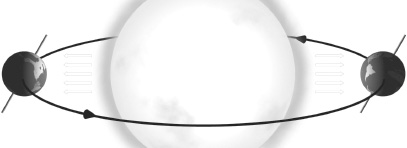
- Scientific explanations, such as the Earth's axial tilt causing seasons, succeed because they are independently testable and geometrically consistent.
It is the feature that distinguishes those approaches to knowledge from all others, and it implies all those other conditions for scientific progress I have discussed: It trivially implies that prediction alone is insufficient.
fooling themselves no matter what happens. Just as
thoroughly as if they had adopted untestable theories, they
are insulating themselves from facing evidence that they are
mistaken about what is really there in the physical world.
The quest for good explanations is, I believe, the basic
regulating principle not only of science, but of the
Enlightenment generally. It is the feature that distinguishes
those approaches to knowledge from all others, and it
implies all those other conditions for scientific progress I
have discussed: It trivially implies that prediction alone is
insufficient. Somewhat less trivially, it leads to the rejection
of authority, because if we adopt a theory on authority, that
means that we would also have accepted a range of
different theories on authority. And hence it also implies the
need for a tradition of criticism. It also implies a
methodological rule – a criterion for reality – namely that we
should conclude that a particular thing is real if and only if it
figures in our best explanation of something.
Although the pioneers of the Enlightenment and of the
scientific revolution did not put it this way, seeking good
explanations was (and remains) the spirit of the age. This is
how they began to think. It is what they began to do,
systematically for the first time. It is what made that
momentous difference to the rate of progress of all kinds.
Long before the Enlightenment, there were individuals who
sought good explanations. Indeed, my discussion here
suggests that all progress then, as now, was due to such
people. But in most ages they lacked contact with a tradition
of criticism in which others could carry on their ideas, and so
created little that left any trace for us to detect. We do know
of sporadic traditions of good-explanation-seeking in
narrowly defined fields, such as geometry, and even short-
lived traditions of criticism – mini-enlightenments – which
were tragically snuffed out, as I shall describe in Chapter 9.
But the sea change in the values and patterns of thinking of
a whole community of thinkers, which brought about a
sustained and accelerating creation of knowledge, happened
only once in history, with the Enlightenment and its scientific
revolution. An entire political, moral, economic and
intellectual culture – roughly what is now called ‘the West’ –
grew around the values entailed by the quest for good
explanations, such as tolerance of dissent, openness to
change, distrust of dogmatism and authority, and the
aspiration to progress both by individuals and for the culture
as a whole. And the progress made by that multifaceted
culture, in turn, promoted those values – though, as I shall
explain in Chapter 15, they are nowhere close to being fully
implemented.
Now consider the true explanation of seasons. It is that the
Earth’s axis of rotation is tilted relative to the plane of its
orbit around the sun. Hence for half of each year the
northern hemisphere is tilted towards the sun while the
southern hemisphere is tilted away, and for the other half it
is the other way around. Whenever the sun’s rays are falling
vertically in one hemisphere (thus providing more heat per
unit area of the surface) they are falling obliquely in the
other (thus providing less).
The true explanation of seasons (not to scale!)
That is a good explanation – hard to vary, because all its
details play a functional role. For instance, we know – and
can test independently of our experience of seasons – that
surfaces tilted away from radiant heat are heated less than
when they are facing it, and that a spinning sphere in space
points in a constant direction. And we can explain why, in
terms of theories of geometry, heat and mechanics. Also,
the same tilt appears in our explanation of where the sun
appears relative to the horizon at different times of year. In
the Persephone myth, in contrast, the coldness of the world
The Power of Good Explanations
- Scientific theories are superior to myths not just because they are testable, but because they are hard to vary without losing their explanatory power.
- The axis-tilt theory of seasons is a good explanation because its internal logic—geometry and heat—makes it impossible to swap components like the sun for the moon.
- Testability is secondary to explanatory quality; a theory must first be a 'good explanation' before it is even worth the effort of an experimental test.
- Bad explanations, like the myth of Demeter, are easily variable because they rely on arbitrary elements like a god's mood which cannot be independently verified.
- The common interpretation of Occam's razor is often a misconception, as simplicity alone does not prevent a theory from being easily variable and thus a bad explanation.
- Science progresses by rejecting the vast majority of false theories out of hand based on their failure as explanations, rather than through exhaustive testing.
If their guess was easy to vary, they might just as well have saved themselves the boat fare, stayed at home, and tested the easily testable theory that winter can be staved off by yodelling.
is caused by Demeter’s sadness – but people do not
generally cool their surroundings when they are sad, and we
have no way of knowing that Demeter is sad, or that she
ever cools the world, other than the onset of winter itself.
One could not substitute the moon for the sun in the axis-tilt
story, because the position of the moon in the sky does not
repeat itself once a year, and because the sun’s rays heating
the Earth are integral to the explanation. Nor could one
easily incorporate any stories about how the sun god feels
about all this, because if the true explanation of winter is in
the geometry of the Earth–sun motion, then how anyone
feels about it is irrelevant, and if there were some flaw in
that explanation, then no story about how anyone felt would
put it right.
The axis-tilt theory also predicts that the seasons will be out
of phase in the two hemispheres. So if they had been found
to be in phase, the theory would have been refuted, just as,
in the event, the Persephone and Freyr myths were refuted
by the opposite observation. But the difference is, if the axis-
tilt theory had been refuted, its defenders would have had
nowhere to go. No easily implemented change could make
tilted axes cause the same seasons all over the planet.
Fundamentally new ideas would have been needed. That is
what makes good explanations essential to science: it is only
when a theory is a good explanation – hard to vary – that it
even matters whether it is testable. Bad explanations are
equally useless whether they are testable or not.
Most accounts of the differences between myth and science
make too much of the issue of testability – as if the ancient
Greeks’ great mistake was that they did not send
expeditions to the southern hemisphere to observe the
seasons. But in fact they could never have guessed that
such an expedition might provide evidence about seasons
unless they had already guessed that seasons would be out
of phase in the two hemispheres – and if that guess was
hard to vary, which it could have been only if it had been
part of a good explanation. If their guess was easy to vary,
they might just as well have saved themselves the boat fare,
stayed at home, and tested the easily testable theory that
winter can be staved off by yodelling.
So long as they had no better explanation than the
Persephone myth, there should have been no need for
testing. Had they been seeking good explanations, they
would immediately have tried to improve upon the myth,
without testing it. That is what we do today. We do not test
every testable theory, but only the few that we find are good
explanations. Science would be impossible if it were not for
the fact that the overwhelming majority of false theories can
be rejected out of hand without any experiment, simply for
being bad explanations.
Good explanations are often strikingly simple or elegant – as
I shall discuss in Chapter 14. Also, a common way in which
an explanation can be bad is by containing superfluous
features or arbitrariness, and sometimes removing those
yields a good explanation. This has given rise to a
misconception known as ‘Occam’s razor’ (named after the
fourteenth-century philosopher William of Occam, but dating
back to antiquity), namely that one should always seek the
‘simplest explanation’. One statement of it is ‘Do not
multiply assumptions beyond necessity.’ However, there are
plenty of very simple explanations that are nevertheless
easily variable (such as ‘Demeter did it’). And, while
assumptions ‘beyond necessity’ make a theory bad by
definition, there have been many mistaken ideas of what is
‘necessary’ in a theory. Instrumentalism, for instance,
considers explanation itself unnecessary, and so do many
other bad philosophies of science, as I shall discuss in
Chapter 12.
When a formerly good explanation has been falsified by new
observations, it is no longer a good explanation, because the
The Power of Good Explanations
- Scientific progress is driven by the quest for good explanations that are highly constrained by existing knowledge and difficult to vary.
- While imagination easily produces fiction and myths, the rule of testability alone is insufficient to filter out all falsehoods.
- A 'good explanation' is characterized by being hard to vary; its internal logic is so tight that changing one part ruins the whole.
- Explanatory theories allow us to predict phenomena in regions of reality we have never visited and for which we have no prior experience.
- The reach of a good explanation is often involuntary; once a theory is accepted, its logical consequences cannot be easily modified to suit our preferences.
- The ultimate goal of science is to find ideas so simple and beautiful that they eventually seem self-evident.
You have never experienced any seasons other than Mediterranean ones. You have never read, nor heard tell, of seasons that were out of phase with the ones you have experienced. But you know about them.
problem has expanded to include those observations. Thus
the standard scientific methodology of dropping theories
when refuted by experiment is implied by the requirement
for good explanations. The best explanations are the ones
that are most constrained by existing knowledge – including
other good explanations as well as other knowledge of the
phenomena to be explained. That is why testable
explanations that have passed stringent tests become
extremely good explanations, which is in turn why the
maxim of testability promotes the growth of knowledge in
science.
Conjectures are the products of creative imagination. But the
problem with imagination is that it can create fiction much
more easily than truth. As I have suggested, historically,
virtually all human attempts to explain experience in terms
of a wider reality have indeed been fiction, in the form of
myths, dogma and mistaken common sense – and the rule of
testability is an insufficient check on such mistakes. But the
quest for good explanations does the job: inventing
falsehoods is easy, and therefore they are easy to vary once
found; discovering good explanations is hard, but the harder
they are to find, the harder they are to vary once found. The
ideal that explanatory science strives for is nicely described
by the quotation from Wheeler with which I began this
chapter: ‘Behind it all is surely an idea so simple, so
beautiful, that when we grasp it – in a decade, a century, or
a millennium – we will all say to each other, how could it
have been otherwise? [my italics].’ Now we shall see how
this explanation-based conception of science answers the
question that I asked above: how do we know so much about
unfamiliar aspects of reality?
Put yourself in the place of an ancient astronomer thinking
about the axis-tilt explanation of seasons. For the sake of
simplicity, let us assume that you have also adopted the
heliocentric theory. So you might be, say, Aristarchus of
Samos, who gave the earliest known arguments for the
heliocentric theory in the third century BCE.
Although you know that the Earth is a sphere, you possess
no evidence about any location on Earth south of Ethiopia or
north of the Shetland Islands. You do not know that there is
an Atlantic or a Pacific ocean; to you, the known world
consists of Europe, North Africa and parts of Asia, and the
coastal waters nearby. Nevertheless, from the axis-tilt theory
of seasons, you can make predictions about the weather in
the literally unheard-of places beyond your known world.
Some of these predictions are mundane and could be
mistaken for induction: you predict that due east or west,
however far you travel, you will experience seasons at about
the same time of year (though the timings of sunrise and
sunset will gradually shift with longitude). But you will also
make some counter-intuitive predictions: if you travel only a
little further north than the Shetlands, you will reach a frozen
region where each day and each night last six months; if you
travel further south than Ethiopia, you will first reach a place
where there are no seasons, and then, still further south, you
will reach a place where there are seasons, but they are
perfectly out of phase with those everywhere in your known
world. You have never travelled more than a few hundred
kilometres from your home island in the Mediterranean. You
have never experienced any seasons other than
Mediterranean ones. You have never read, nor heard tell, of
seasons that were out of phase with the ones you have
experienced. But you know about them.
What if you’d rather not know? You may not like these
predictions. Your friends and colleagues may ridicule them.
You may try to modify the explanation so that it will not
make them, without spoiling its agreement with observations
and with other ideas for which you have no good
alternatives. You will fail. That is what a good explanation will
The Reach of Explanations
- Good explanations are 'hard to vary,' meaning they cannot be easily modified to fit arbitrary constraints without losing their explanatory power.
- A theory's 'reach' is its ability to solve problems and make predictions far beyond the specific evidence or location it was originally created to address.
- The reach of an explanation is an autonomous property of the theory itself, not something added or extrapolated by the creator.
- Attempting to limit a theory's reach to only known data points often turns a robust explanation into a mere rule of thumb.
- The phenomenon of reach represents 'the beginning of infinity,' where finite human thoughts can describe universal realities across time and space.
The theory reaches out, as it were, from its finite origins inside one brain that has been affected only by scraps of patchy evidence from a small part of one hemisphere of one planet – to infinity.
do for you: it makes it harder for you to fool yourself.
For instance, it may occur to you to modify your theory as
follows: ‘In the known world, the seasons happen at the
times of year predicted by the axis-tilt theory; everywhere
else on Earth, they also happen at those times of year.’ This
theory correctly predicts all evidence known to you. And it is
just as testable as your real theory. But now, in order to deny
what the axis-tilt theory predicts in the faraway places, you
have had to deny what it says about reality, everywhere.
The modified theory is no longer an explanation of seasons,
just a (purported) rule of thumb. So denying that the original
explanation describes the true cause of seasons in the
places about which you have no evidence has forced you to
deny that it describes the true cause even on your home
island.
Suppose for the sake of argument that you thought of the
axis-tilt theory yourself. It is your conjecture, your own
original creation. Yet because it is a good explanation – hard
to vary – it is not yours to modify. It has an autonomous
meaning and an autonomous domain of applicability. You
cannot confine its predictions to a region of your choosing.
Whether you like it or not, it makes predictions about places
both known to you and unknown to you, predictions that you
have thought of and ones that you have not thought of.
Tilted planets in similar orbits in other solar systems must
have seasonal heating and cooling – planets in the most
distant galaxies, and planets that we shall never see
because they were destroyed aeons ago, and also planets
that have yet to form. The theory reaches out, as it were,
from its finite origins inside one brain that has been affected
only by scraps of patchy evidence from a small part of one
hemisphere of one planet – to infinity. This reach of
explanations is another meaning of ‘the beginning of
infinity’. It is the ability of some of them to solve problems
beyond those that they were created to solve.
The axis-tilt theory is an example: it was originally proposed
to explain the changes in the sun’s angle of elevation during
each year. Combined with a little knowledge of heat and
spinning bodies, it then explained seasons. And, without any
further modification, it also explained why seasons are out of
phase in the two hemispheres, and why tropical regions do
not have them, and why the summer sun shines at midnight
in polar regions – three phenomena of which its creators may
well have been unaware.
The reach of an explanation is not a ‘principle of induction’;
it is not something that the creator of the explanation can
use to obtain or justify it. It is not part of the creative process
at all. We find out about it only after we have the
explanation – sometimes long after. So it has nothing to do
with ‘extrapolation’, or ‘induction’, or with ‘deriving’ a theory
in any other alleged way. It is exactly the other way round:
the reason that the explanation of seasons reaches far
outside the experience of its creators is precisely that it does
not have to be extrapolated. By its nature as an explanation,
when its creators first thought of it, it already applied in our
planet’s other hemisphere, and throughout the solar system,
and in other solar systems, and at other times.
Thus the reach of an explanation is neither an additional
assumption nor a detachable one. It is determined by the
content of the explanation itself. The better an explanation
is, the more rigidly its reach is determined – because the
harder it is to vary an explanation, the harder it is in
particular to construct a variant with a different reach,
whether larger or smaller, that is still an explanation. We
expect the law of gravity to be the same on Mars as on Earth
because only one viable explanation of gravity is known –
Einstein’s general theory of relativity – and that is a
universal theory; but we do not expect the map of Mars to
The Reach of Explanations
- Explanatory theories are unique because they possess 'reach,' the ability to solve problems beyond the specific ones they were originally designed to address.
- Before the Enlightenment, knowledge was static and parochial, consisting of bad explanations that were brittle and lacked the capacity for error correction.
- The emergence of science marked a transition to the rapid creation of knowledge with ever-increasing reach, raising the question of whether this process is bounded or infinite.
- The capacity for reason and creativity may grant humans a cosmic significance that was previously stripped away by the rejection of ancient myths.
- The creation of gold serves as a metaphor for the power of intelligence, as it can only be forged by the extreme physics of stars or the intentional actions of intelligent beings.
If you find a nugget of gold anywhere in the universe, you can be sure that in its history there was either a supernova or an intelligent being with an explanation.
resemble the map of Earth, because our theories about how
Earth looks, despite being excellent explanations, have no
reach to the appearance of any other astronomical object.
Always, it is explanatory theories that tell us which (usually
few) aspects of one situation can be ‘extrapolated’ to others.
It also makes sense to speak of the reach of non-explanatory
forms of knowledge – rules of thumb, and also knowledge
that is implicit in the genes for biological adaptations. So, as
I said, my rule of thumb about cups-and-balls tricks has
reach to a certain class of tricks; but I could not know what
that class is without the explanation for why the rule works.
Old ways of thought, which did not seek good explanations,
permitted no process such as science for correcting errors
and misconceptions. Improvements happened so rarely that
most people never experienced one. Ideas were static for
long periods. Being bad explanations, even the best of them
typically had little reach and were therefore brittle and
unreliable beyond, and often within, their traditional
applications. When ideas did change, it was seldom for the
better, and when it did happen to be for the better, that
seldom increased their reach. The emergence of science,
and more broadly what I am calling the Enlightenment, was
the beginning of the end of such static, parochial systems of
ideas. It initiated the present era in human history, unique
for its sustained, rapid creation of knowledge with ever-
increasing reach. Many have wondered how long this can
continue. Is it inherently bounded? Or is this the beginning of
infinity – that is to say, do these methods have unlimited
potential to create further knowledge? It may seem
paradoxical to claim anything so grand (even if only
potentially) on behalf of a project that has swept away all
the ancient myths that used to assign human beings a
special significance in the scheme of things. For if the power
of the human faculties of reason and creativity, which have
driven the Enlightenment, were indeed unlimited, would
humans not have just such a significance?
And yet, as I mentioned at the beginning of this chapter,
gold can be created only by stars and by intelligent beings. If
you find a nugget of gold anywhere in the universe, you can
be sure that in its history there was either a supernova or an
intelligent being with an explanation. And if you find an
explanation anywhere in the universe, you know that there
must have been an intelligent being. A supernova alone
would not suffice.
But – so what? Gold is important to us, but in the cosmic
scheme of things it has little significance. Explanations are
important to us: we need them to survive. But is there
anything significant, in the cosmic scheme of things, about
explanation, that apparently puny physical process that
happens inside brains? I shall address that question in
Chapter 3, after some reflections about appearance and
reality.
TERMINOLOGY
Explanation Statement about what is there, what it does,
and how and why.
Reach The ability of some explanations to solve problems
beyond those that they were created to solve.
Creativity The capacity to create new explanations.
Empiricism The misconception that we ‘derive’ all our
knowledge from sensory experience.
Theory-laden There is no such thing as ‘raw’ experience. All
our experience of the world comes through layers of
conscious and unconscious interpretation.
Inductivism The misconception that scientific theories are
obtained by generalizing or extrapolating repeated
experiences, and that the more often a theory is confirmed
by observation the more likely it becomes.
Induction The non-existent process of ‘obtaining’ referred
to above.
Principle of induction The idea that ‘the future will resemble
the past’, combined with the misconception that this asserts
anything about the future.
The Mechanics of Knowledge
- Knowledge is not derived from sensory experience but through a cycle of conjecture and criticism.
- The Enlightenment represents a fundamental shift from seeking authoritative justification to establishing a tradition of criticism.
- A 'good explanation' is defined by its resistance to variation, meaning its details cannot be easily changed without losing its explanatory power.
- Fallibilism is the essential recognition that no source of knowledge is infallible and that progress depends on active error correction.
- The 'reach' of an explanation is an intrinsic property that allows it to solve problems beyond its original intent.
- The scientific revolution was driven more by the pursuit of hard-to-vary explanations than by simple experimental testing.
The real source of our theories is conjecture, and the real source of our knowledge is conjecture alternating with criticism.
Realism The idea that the physical world exists in reality,
and that knowledge of it can exist too.
Relativism The misconception that statements cannot be
objectively true or false, but can be judged only relative to
some cultural or other arbitrary standard.
Instrumentalism The misconception that science cannot
describe reality, only predict outcomes of observations.
Justificationism The misconception that knowledge can be
genuine or reliable only if it is justified by some source or
criterion.
Fallibilism The recognition that there are no authoritative
sources of knowledge, nor any reliable means of justifying
knowledge as true or probable.
Background knowledge Familiar and currently
uncontroversial knowledge.
Rule of thumb ‘Purely predictive theory’ (theory whose
explanatory content is all background knowledge).
Problem A problem exists when a conflict between ideas is
experienced.
Good/bad explanation An explanation that is hard/easy to
vary while still accounting for what it purports to account for.
The Enlightenment (The beginning of) a way of pursuing
knowledge with a tradition of criticism and seeking good
explanations instead of reliance on authority.
Mini-enlightenment A short-lived tradition of criticism.
Rational Attempting to solve problems by seeking good
explanations; actively pursuing error-correction by creating
criticisms of both existing ideas and new proposals.
The West The political, moral, economic and intellectual
culture that has been growing around the Enlightenment
values of science, reason and freedom.
MEANINGS OF ‘THE BEGINNING OF INFINITY’
ENCOUNTERED IN THIS CHAPTER
– The fact that some explanations have reach.
– The universal reach of some explanations.
– The Enlightenment.
– A tradition of criticism.
– Conjecture: the origin of all knowledge.
– The discovery of how to make progress: science, the
scientific revolution, seeking good explanations, and the
political principles of the West.
– Fallibilism.
SUMMARY
Appearances are deceptive. Yet we have a great deal of
knowledge about the vast and unfamiliar reality that causes
them, and of the elegant, universal laws that govern that
reality. This knowledge consists of explanations: assertions
about what is out there beyond the appearances, and how it
behaves. For most of the history of our species, we had
almost no success in creating such knowledge. Where does
it come from? Empiricism said that we derive it from sensory
experience. This is false. The real source of our theories is
conjecture, and the real source of our knowledge is
conjecture alternating with criticism. We create theories by
rearranging, combining, altering and adding to existing ideas
with the intention of improving upon them. The role of
experiment and observation is to choose between existing
theories, not to be the source of new ones. We interpret
experiences through explanatory theories, but true
explanations are not obvious. Fallibilism entails not looking
to authorities but instead acknowledging that we may
always be mistaken, and trying to correct errors. We do so
by seeking good explanations – explanations that are hard to
vary in the sense that changing the details would ruin the
explanation. This, not experimental testing, was the decisive
factor in the scientific revolution, and also in the unique,
rapid, sustained progress in other fields that have
participated in the Enlightenment. That was a rebellion
against authority which, unlike most such rebellions, tried
not to seek authoritative justifications for theories, but
instead set up a tradition of criticism. Some of the resulting
ideas have enormous reach: they explain more than what
they were originally designed to. The reach of an explanation
is an intrinsic attribute of it, not an assumption that we make
about it as empiricism and inductivism claim.
Closer to Reality
- The sheer physical scale of the universe, from stars to galaxy clusters, is difficult for the human mind to fully grasp.
- Early astronomical research relied on human judgment to distinguish distant galaxies from foreground stars on photographic plates.
- Scientific rules of thumb for identifying celestial objects are tested through higher resolution comparisons but can never reach absolute certainty.
- Feeling insignificant due to the universe's size is a logical error; scale does not dictate value or adequacy.
- The universe should be viewed as a home and a resource for humanity rather than an overwhelming force.
- Every nondescript smudge on a telescope plate represents a galaxy containing billions of worlds, each with its own unique history and potential for life.
Feeling insignificant because the universe is large has exactly the same logic as feeling inadequate for not being a cow.
Now I’ll say some more about appearance and reality,
explanation and infinity.
OceanofPDF.com
2
Closer to Reality
A galaxy is a mind-bogglingly huge thing. For that matter, a
star is a mind-bogglingly huge thing. Our own planet is. A
human brain is – in terms of both its internal complexity and
the reach of human ideas. And there can be thousands of
galaxies in a cluster, which can be millions of light years
across. The phrase ‘thousands of galaxies’ trips lightly off
the tongue, but it takes a while to make room in one’s mind
for the reality of it.
I was first stunned by the concept when I was a graduate
student. Some fellow students were showing me what they
were working on: observing clusters of galaxies – through
microscopes. That is how astronomers used to use the
Palomar Sky Survey, a collection of 1,874 photographic
negatives of the sky, on glass plates, which showed the
stars and galaxies as dark shapes on a white background.
They mounted one of the plates for me to look at. I focused
the eyepiece of the microscope and saw something like this:
The Coma cluster of galaxies
Those fuzzy things are galaxies, and the sharply defined
dots are stars in our own galaxy, thousands of times closer.
The students’ job was to catalogue the positions of the
galaxies by lining them up in cross-hairs and pressing a
button. I tried my hand at it – just for fun, since of course I
was not qualified to make serious measurements. I soon
found that it was not as easy as it had seemed. One reason
is that it is not always obvious which are the galaxies and
which are merely stars or other foreground objects. Some
galaxies are easy to recognize: for instance, stars are never
spiral, or noticeably elliptical. But some shapes are so faint
that it is hard to tell whether they are sharp. Some galaxies
appear small, faint and circular, and some are partly
obscured by other objects. Nowadays such measurements
are made by computers using sophisticated pattern-
matching algorithms. But in those days one just had to
examine each object carefully and use clues such as how
fuzzy the edges looked – though there are also fuzzy
objects, such as supernova remnants, in our galaxy. One
used rules of thumb.
How would one test such a rule of thumb? One way is to
select a region of the sky at random, and then take a
photograph of it at higher resolution, so that the
identification of galaxies is easier. Then one compares those
identifications with the ones made using the rule of thumb.
If they differ, the rule is inaccurate. If they do not differ,
then one cannot be sure. One can never be sure, of course.
I was wrong to be impressed by the mere scale of what I
was looking at. Some people become depressed at the scale
of the universe, because it makes them feel insignificant.
Other people are relieved to feel insignificant, which is even
worse. But, in any case, those are mistakes. Feeling
insignificant because the universe is large has exactly the
same logic as feeling inadequate for not being a cow. Or a
herd of cows. The universe is not there to overwhelm us; it
is our home, and our resource. The bigger the better.
But then there is the philosophical magnitude of a cluster of
galaxies. As I moved the cross-hairs to one nondescript
galaxy after another, clicking at what I guessed to be the
centre of each, some whimsical thoughts occurred to me. I
wondered whether I would be the first and last human being
ever to pay conscious attention to a particular galaxy. I was
looking at the blurry object for only a few seconds, yet it
might be laden with meaning for all I knew. It contains
billions of planets. Each planet is a world. Each has its own
unique history – sunrises and sunsets; storms, seasons; in
some cases continents, oceans, earthquakes, rivers. Were
any of those worlds inhabited? Were there astronomers
there? Unless they were an exceedingly ancient, and
The Creative Perspiration of Science
- The vast temporal and spatial distances of astronomy mean that observing distant galaxies is equivalent to looking back at Earth's biological past.
- Scientific research is often mischaracterized as mindless toil, but the human experience of 'perspiration' is fundamentally creative and driven by thought.
- While computers can perform tasks like galaxy cataloguing or chess through brute force, humans achieve these results through enjoyable, conceptual exploration.
- The 'fun' and intellectual engagement of testing ideas are what actually power the inspiration necessary for scientific breakthroughs.
- A mistake in classification—mistaking a film defect for a galaxy—highlights how scientific observation is always an act of theoretical interpretation.
- Most of reality is inaccessible to unaided human senses, requiring us to bridge the gap between microscopic evidence and cosmic phenomena through theory.
I had overestimated the mass of what I was looking at by some fifty powers of ten.
advanced, civilization, those people would never have
travelled outside their galaxy. So they would never have
seen what it looked like from my perspective – though they
might know from theory. Were any of them at that moment
staring at the Milky Way, asking the same questions about
us as I was about them? If so, then they were looking at our
galaxy as it was when the most advanced forms of life on
Earth were fish.
The computers that nowadays catalogue galaxies may or
may not do it better than the graduate students used to. But
they certainly do not experience such reflections as a result.
I mention this because I often hear scientific research
described in rather a bleak way, suggesting that it is mostly
mindless toil. The inventor Thomas Edison once said, ‘None
of my inventions came by accident. I see a worthwhile need
to be met and I make trial after trial until it comes. What it
boils down to is one per cent inspiration and ninety-nine per
cent perspiration.’ Some people say the same about
theoretical research, where the ‘perspiration’ phase is
supposedly uncreative intellectual work such as doing
algebra or translating algorithms into computer programs.
But the fact that a computer or a robot can perform a task
mindlessly does not imply that it is mindless when scientists
do it. After all, computers play chess mindlessly – by
exhaustively searching the consequences of all possible
moves – but humans achieve a similar-looking functionality
in a completely different way, by creative and enjoyable
thought. Perhaps those galaxy-cataloguing computer
programs were written by those same graduate students,
distilling what they had learned into reproducible
algorithms. Which means that they must have learned
something while performing a task that a computer
performs without learning anything. But, more profoundly, I
expect that Edison was misinterpreting his own experience.
A trial that fails is still fun. A repetitive experiment is not
repetitive if one is thinking about the ideas that it is testing
and the reality that it is investigating. That galaxy project
was intended to discover whether ‘dark matter’ (see the
next chapter) really exists – and it succeeded. If Edison, or
those graduate students, or any scientific researcher
engaged upon the ‘perspiration’ phase of discovery, had
really been doing it mindlessly, they would be missing most
of the fun – which is also what largely powers that ‘one per
cent inspiration’.
As I reached one particularly ambiguous image I asked my
hosts, ‘Is that a galaxy or a star?’
‘Neither,’ was the reply. ‘That’s just a defect in the
photographic emulsion.’
The drastic mental gear change made me laugh. My
grandiose speculations about the deep meaning of what I
was seeing had turned out to be, in regard to this particular
object, about nothing at all: suddenly there were no
astronomers in that image, no rivers or earthquakes. They
had disappeared in a puff of imagination. I had
overestimated the mass of what I was looking at by some
fifty powers of ten. What I had taken to be the largest object
I had ever seen, and the most distant in space and time,
was in reality just a speck barely visible without a
microscope, within arm’s reach. How easily, and how
thoroughly, one can be misled.
But wait. Was I ever looking at a galaxy? All the other blobs
were in fact microscopic smudges of silver too. If I
misclassified the cause of one of them, because it looked
too like the others, why was that such a big error?
Because an error in experimental science is a mistake about
the cause of something. Like an accurate observation, it is a
matter of theory. Very little in nature is detectable by
unaided human senses. Most of what happens is too fast or
too slow, too big or too small, or too remote, or hidden
behind opaque barriers, or operates on principles too
different from anything that influenced our evolution. But in
The Paradox of Indirect Observation
- Scientific instruments physically separate us from reality while simultaneously bringing us closer to its true nature.
- Modern astronomy relies on digitized signals and data processing rather than direct visual observation of the night sky.
- Every layer of technological mediation requires a corresponding chain of theoretical interpretation to remain meaningful.
- The primary function of scientific tools is to strip away 'parochial errors' like the twinkling of stars to reveal underlying facts.
- Accurate observation is inherently indirect because it must actively correct for the limitations and biases of human senses.
The primary function of the telescope’s optics is to reduce the illusion that the stars are few, faint, twinkling and moving.
some cases we can arrange for such phenomena to become
perceptible, via scientific instruments.
We experience such instruments as bringing us closer to the
reality – just as I felt while looking at that galactic cluster.
But in purely physical terms they only ever separate us
further from it. I could have looked up at the night sky in the
direction of that cluster, and there would have been nothing
between it and my eye but a few grams of air – but I would
have seen nothing at all. I could have interposed a
telescope, and then I might have seen it. In the event, I was
interposing a telescope, a camera, a photographic
development laboratory, another camera (to make copies of
the plates), a truck to bring the plates to my university, and
a microscope. I could see the cluster far better with all that
equipment in the way.
Astronomers nowadays never look up at the sky (except
perhaps in their spare time), and hardly ever look through
telescopes. Many telescopes do not even have eyepieces
suitable for a human eye. Many do not even detect visible
light. Instead, instruments detect invisible signals which are
then digitized, recorded, combined with others, and
processed and analysed by computers. As a result, images
may be produced – perhaps in ‘false colours’ to indicate
radio waves or other radiation, or to display still more
indirectly inferred attributes such as temperature or
composition. In many cases, no image of the distant object
is ever produced, only lists of numbers, or graphs and
diagrams, and only the outcome of those processes affects
the astronomers’ senses.
Every additional layer of physical separation requires further
levels of theory to relate the resulting perceptions to reality.
When the astronomer Jocelyn Bell discovered pulsars
(extremely dense stars that emit regular bursts of radio
waves), this is what she was looking at:
Radio-telescope output from the first known pulsar
Only through a sophisticated chain of theoretical
interpretation could she ‘see’, by looking at that shaky line
of ink on paper, a powerful, pulsating object in deep space,
and recognize that it was of a hitherto unknown type.
The better we come to understand phenomena remote from
our everyday experience, the longer those chains of
interpretation become, and every additional link
necessitates more theory. A single unexpected or
misunderstood phenomenon anywhere in the chain can, and
often does, render the resulting sensory experience
arbitrarily misleading. Yet, over time, the conclusions that
science has drawn have become ever truer to reality. Its
quest for good explanations corrects the errors, allows for
the biases and misleading perspectives, and fills in the
gaps. This is what we can achieve when, as Feynman said,
we keep learning more about how not to fool ourselves.
Telescopes contain automatic tracking mechanisms that
continuously realign them so as to compensate for the
effect of the Earth’s motion; in some, computers
continuously change the shape of the mirror so as to
compensate for the shimmering of the Earth’s atmosphere.
And so, observed through such a telescope, stars do not
appear to twinkle or to move across the sky as they did to
generations of observers in the past. Those things are only
appearance – parochial error. They have nothing to do with
the reality of stars. The primary function of the telescope’s
optics is to reduce the illusion that the stars are few, faint,
twinkling and moving. The same is true of every feature of
the telescope, and of all other scientific instruments: each
layer of indirectness, through its associated theory, corrects
errors, illusions, misleading perspectives and gaps. Perhaps
it is the mistaken empiricist ideal of ‘pure’, theory-free
observation that makes it seem odd that truly accurate
observation is always so hugely indirect. But the fact is that
progress requires the application of ever more knowledge in
The Miracle of Observation
- Observation is the process of accurately attributing internal evidence to external physical reality through theories.
- Scientific instruments act as 'conjuring tricks in reverse,' allowing us to see what is really there by manipulating local matter.
- The physical gap between an observer and a distant object is bridged by explanatory theories that interpret local phenomena like pixels or ink.
- Instruments are fragile configurations of matter that only reveal external truths when operated according to precise explanatory instructions.
- All observation is theory-laden, meaning we never perceive the world directly but always through the lens of our best explanations.
- The growth of knowledge is a process of correcting misconceptions within our theories rather than just accumulating data.
Like conjuring tricks in reverse, such instruments fool our senses into seeing what is really there.
advance of our observations.
So I was indeed looking at galaxies. Observing a galaxy via
specks of silver is no different in that regard from observing
a garden via images on a retina. In all cases, to say that we
have genuinely observed any given thing is to say that we
have accurately attributed our evidence (ultimately always
evidence inside our own brains) to that thing. Scientific truth
consists of such correspondence between theories and
physical reality.
Scientists operating giant particle accelerators likewise look
at pixels and ink, numbers and graphs, and thereby observe
the microscopic reality of subatomic particles like nuclei and
quarks. Others operate electron microscopes and fire the
beam at cells that are as dead as dodos, having been
stained, quick-frozen by liquid nitrogen, and mounted in a
vacuum – but they thereby learn what living cells are like. It
is a marvellous fact that objects can exist which, when we
observe them, accurately take on the appearance and other
attributes of other objects that are elsewhere and very
differently constituted. Our sensory systems are such
objects too, for it is only they that are directly affecting our
brains when we perceive anything.
Such instruments are rare and fragile configurations of
matter. Press one wrong button on the telescope’s control
panel, or code one wrong instruction into its computer, and
the whole immensely complex artefact may well revert to
revealing nothing other than itself. The same would be true
if, instead of making that scientific instrument, you were to
assemble those raw materials into almost any other
configuration: stare at them, and you would see nothing
other than them.
Explanatory theories tell us how to build and operate
instruments in exactly the right way to work this miracle.
Like conjuring tricks in reverse, such instruments fool our
senses into seeing what is really there. Our minds, through
the methodological criterion that I mentioned in Chapter 1,
conclude that a particular thing is real if and only if it figures
in our best explanation of something. Physically, all that has
happened is that human beings, on Earth, have dug up raw
materials such as iron ore and sand, and have rearranged
them – still on Earth – into complex objects such as radio
telescopes, computers and display screens, and now,
instead of looking at the sky, they look at those objects.
They are focusing their eyes on human artefacts that are
close enough to touch. But their minds are focused on alien
entities and processes, light years away.
Sometimes they are still looking at glowing dots just as their
ancestors did – but on computer monitors instead of the sky.
Sometimes they are looking at numbers or graphs. But in all
cases they are inspecting local phenomena: pixels on a
screen, ink on paper, and so on. These things are physically
very unlike stars: they are much smaller; they are not
dominated by nuclear forces and gravity; they are not
capable of transmuting elements or creating life; they have
not been there for billions of years. But when astronomers
look at them, they see stars.
SUMMARY
It may seem strange that scientific instruments bring us
closer to reality when in purely physical terms they only
ever separate us further from it. But we observe nothing
directly anyway. All observation is theory-laden. Likewise,
whenever we make an error, it is an error in the explanation
of something. That is why appearances can be deceptive,
and it is also why we, and our instruments, can correct for
that deceptiveness. The growth of knowledge consists of
correcting misconceptions in our theories. Edison said that
research is one per cent inspiration and ninety-nine per cent
perspiration – but that is misleading, because people can
apply creativity even to tasks that computers and other
machines do uncreatively. So science is not mindless toil for
The Decline of Anthropocentrism
- Ancient worldviews were fundamentally anthropocentric, attributing natural phenomena like seasons and disasters to the intentions and emotions of supernatural beings.
- Pre-Enlightenment thought combined explanatory anthropocentrism with a geocentric physical model, placing humans at both the moral and physical center of the universe.
- While ancient geometry offered a model for impersonal reasoning, it remained an outlier until the Enlightenment, as even astronomers continued to practice astrology.
- Modern science has systematically replaced human-centric explanations with impersonal laws of nature, such as mathematical equations and elementary particles.
- The shift toward impersonal explanations in physics and biology suggests that human intentions are cosmically insignificant compared to titanic astrophysical phenomena.
- Scientific significance is now defined by the breadth and fundamental nature of a theory rather than its relevance to human affairs or desires.
So, winter might be attributed to someone’s sadness, harvests to someone’s generosity, natural disasters to someone’s anger, and so on.
which rare moments of discovery are the compensation: the
toil can be creative, and fun, just as the discovery of new
explanations is.
Now, can this creativity – and this fun – continue
indefinitely?
OceanofPDF.com
3
The Spark
Most ancient accounts of the reality beyond our everyday
experience were not only false, they had a radically different
character from modern ones: they were anthropocentric.
That is to say, they centred on human beings, and more
broadly on people – entities with intentions and human-like
thoughts – which included powerful, supernatural people
such as spirits and gods. So, winter might be attributed to
someone’s sadness, harvests to someone’s generosity,
natural disasters to someone’s anger, and so on. Such
explanations often involved cosmically significant beings
caring what humans did, or having intentions about them.
This conferred cosmic significance on humans too. Then the
geocentric theory placed humans at the physical hub of the
universe as well. Those two kinds of anthropocentrism –
explanatory and geometrical – made each other more
plausible, and, as a result, pre-Enlightenment thinking was
more anthropocentric than we can readily imagine
nowadays.
A notable exception was the science of geometry itself,
especially the system developed by the ancient Greek
mathematician Euclid. Its elegant axioms and modes of
reasoning about impersonal entities such as points and lines
would later be an inspiration to many of the pioneers of the
Enlightenment. But until then it had little impact on
prevailing world views. For example, most astronomers were
also astrologers: despite using sophisticated geometry in
their work, they believed that the stars foretold political and
personal events on Earth.
Before anything was known about how the world works,
trying to explain physical phenomena in terms of
purposeful, human-like thought and action may have been a
reasonable approach. After all, that is how we explain much
of our everyday experience even today: if a jewel is
mysteriously missing from a locked safe, we seek human-
level explanations such as error or theft (or, under some
circumstances, conjuring), not new laws of physics. But that
anthropocentric approach has never yielded any good
explanations beyond the realm of human affairs. In regard
to the physical world at large, it was colossally
misconceived. We now know that the patterns of stars and
planets in our night sky have no significance for human
affairs. We know that we are not at the centre of the
universe – it does not even have a geometrical centre. And
we know that, although some of the titanic astrophysical
phenomena that I have described played a significant role in
our past, we have never been significant to them. We call a
phenomenon significant (or fundamental) if parochial
theories are inadequate to explain it, or if it appears in the
explanation of many other phenomena; so it may seem that
human beings and their wishes and actions are extremely
insignificant in the universe at large.
Anthropocentric misconceptions have also been overturned
in every other fundamental area of science: our knowledge
of physics is now expressed entirely in terms of entities that
are as impersonal as Euclid’s points and lines, such as
elementary particles, forces and spacetime – a four-
dimensional continuum with three dimensions of space and
one of time. Their effects on each other are explained not in
terms of feelings and intentions, but through mathematical
equations expressing laws of nature. In biology, it was once
thought that living things must have been designed by a
supernatural person, and that they must contain some
special ingredient, a ‘vital principle’, to make them behave
with apparent purposefulness. But biological science
discovered new modes of explanation through such
impersonal things as chemical reactions, genes and
Mediocrity and Spaceship Earth
- Modern science has replaced anthropocentric explanations with the 'Principle of Mediocrity,' viewing humans as insignificant 'chemical scum' in a vast universe.
- This principle suggests that human values and intentions are merely the result of microscopic physical processes rather than cosmic design.
- Parochialism is defined as the error of mistaking local perspectives or rules of thumb for objective, universal laws.
- The 'Spaceship Earth' metaphor depicts the biosphere as a finite, fragile life-support system that humans have evolved to depend upon.
- While the Principle of Mediocrity emphasizes our typicality, the Spaceship Earth idea emphasizes our unique and precarious dependence on a specific environment.
- Both concepts have become scientific truisms despite their seemingly contradictory views on human significance and uniqueness.
As the physicist Stephen Hawking put it, humans are ‘just a chemical scum on the surface of a typical planet that’s in orbit round a typical star on the outskirts of a typical galaxy’.
evolution. So we now know that living things, including
humans, all consist of the same ingredients as rocks and
stars, and obey the same laws, and that they were not
designed by anyone. Modern science, far from explaining
physical phenomena in terms of the thoughts and intentions
of unseen people, considers our own thoughts and
intentions to be aggregates of unseen (though not un-
seeable) microscopic physical processes in our brains.
So fruitful has this abandonment of anthropocentric theories
been, and so important in the broader history of ideas, that
anti-anthropocentrism has increasingly been elevated to the
status of a universal principle, sometimes called the
‘Principle of Mediocrity’: there is nothing significant about
humans (in the cosmic scheme of things). As the physicist
Stephen Hawking put it, humans are ‘just a chemical scum
on the surface of a typical planet that’s in orbit round a
typical star on the outskirts of a typical galaxy’. The proviso
‘in the cosmic scheme of things’ is necessary because the
chemical scum evidently does have a special significance
according to values that it applies to itself, such as moral
values. But the Principle says that all such values are
themselves anthropocentric: they explain only the
behaviour of the scum, which is itself insignificant.
It is easy to mistake quirks of one’s own, familiar
environment or perspective (such as the rotation of the
night sky) for objective features of what one is observing, or
to mistake rules of thumb (such as the prediction of daily
sunrises) for universal laws. I shall refer to that sort of error
as parochialism.
Anthropocentric errors are examples of parochialism, but
not all parochialism is anthropocentric. For instance, the
prediction that the seasons are in phase all over the world is
a parochial error but not an anthropocentric one: it does not
involve explaining seasons in terms of people.
Another influential idea about the human condition is
sometimes given the dramatic name Spaceship Earth.
Imagine a ‘generation ship’ – a spaceship on a journey so
long that many generations of passengers live out their lives
in transit. This has been proposed as a means of colonizing
other star systems. In the Spaceship Earth idea, that
generation ship is a metaphor for the biosphere – the
system of all living things on Earth and the regions they
inhabit. Its passengers represent all humans on Earth.
Outside the spaceship, the universe is implacably hostile,
but the interior is a vastly complex life-support system,
capable of providing everything that the passengers need to
thrive. Like the spaceship, the biosphere recycles all waste
and, using its capacious nuclear power plant (the sun), it is
completely self-sufficient.
Just as the spaceship’s life-support system is designed to
sustain its passengers, so the biosphere has the
‘appearance of design’: it seems highly adapted to
sustaining us (claims the metaphor) because we were
adapted to it by evolution. But its capacity is finite: if we
overload it, either by our sheer numbers or by adopting
lifestyles too different from those that we evolved to live
(the ones that it is ‘designed’ to support), it will break down.
And, like the passengers on that spaceship, we get no
second chances: if our lifestyle becomes too careless or
profligate and we ruin our life-support system, we have
nowhere else to go.
The Spaceship Earth metaphor and the Principle of
Mediocrity have both gained wide acceptance among
scientifically minded people – to the extent of becoming
truisms. This is despite the fact that, on the face of it, they
argue in somewhat opposite directions: the Principle of
Mediocrity stresses how typical the Earth and its chemical
scum are (in the sense of being unremarkable), while
Spaceship Earth stresses how untypical they are (in the
sense of being uniquely suited to each other). But when the
The Myth of Mediocrity
- The Principle of Mediocrity and the Spaceship Earth metaphor both suggest that humans and Earth are insignificant, ephemeral, and fragile.
- The author argues that these philosophical frameworks are factually false and that humans are actually significant in the cosmic scheme.
- While we occupy a typical planet, we are composed of 'ordinary matter,' which makes up only 20 percent of the universe's total mass.
- Humanity represents an extremely rare form of matter capable of existing at low temperatures and creating complex chemicals.
- Human technology, such as physics laboratories, creates conditions like extreme cold that are likely unique and do not exist anywhere else in the natural universe.
- Our perception of being 'typical' is a parochial misconception based on our proximity to rare concentrations of dense matter.
It may well be that the interiors of refrigerators constructed by physicists are by far the coldest and darkest places in the universe.
two ideas are interpreted in broad, philosophical ways, as
they usually are, they can easily converge. Both see
themselves as correcting much the same parochial
misconceptions, namely that our experience of life on Earth
is representative of the universe, and that the Earth is vast,
fixed and permanent. They both stress instead that it is tiny
and ephemeral. Both oppose arrogance: the Principle of
Mediocrity opposes the pre-Enlightenment arrogance of
believing ourselves significant in the world; the Spaceship
Earth metaphor opposes the Enlightenment arrogance of
aspiring to control the world. Both have a moral element:
we should not consider ourselves significant, they assert;
we should not expect the world to submit indefinitely to our
depredations.
Thus the two ideas generate a rich conceptual framework
that can inform an entire world view. Yet, as I shall explain,
they are both false, even in the straightforward factual
sense. And in the broader sense they are so misleading that,
if you were seeking maxims worth being carved in stone
and recited each morning before breakfast, you could do a
lot worse than to use their negations. That is to say, the
truth is that
People are significant in the cosmic scheme of things; and
The Earth’s biosphere is incapable of supporting human life.
Consider Hawking’s remark again. It is true that we are on a
(somewhat) typical planet of a typical star in a typical
galaxy. But we are far from typical of the matter in the
universe. For one thing, about 80 per cent of that matter is
thought to be invisible ‘dark matter’, which can neither emit
nor absorb light. We currently detect it only through its
indirect gravitational effects on galaxies. Only the remaining
20 per cent is matter of the type that we parochially call
‘ordinary matter’. It is characterized by glowing
continuously. We do not usually think of ourselves as
glowing, but that is another parochial misconception, due to
the limitations of our senses: we emit radiant heat, which is
infra-red light, and also light in the visible range, too faint
for our eyes to detect.
Concentrations of matter as dense as ourselves and our
planet and star, though numerous, are not exactly typical
either. They are isolated, uncommon phenomena. The
universe is mostly vacuum (plus radiation and dark matter).
Ordinary matter is familiar to us only because we are made
of it, and because of our untypical location near large
concentrations of it.
Moreover, we are an uncommon form of ordinary matter.
The commonest form is plasma (atoms dissociated into their
electrically charged components), which typically emits
bright, visible light because it is in stars, which are rather
hot. We scums are mainly infra-red emitters because we
contain liquids and complex chemicals which can exist only
at a much lower range of temperatures.
The universe is pervaded with microwave radiation – the
afterglow of the Big Bang. Its temperature is about 2.7
kelvin, which means 2.7 degrees above the coldest possible
temperature, absolute zero, or about 270 degrees Celsius
colder than the freezing point of water. Only very unusual
circumstances can make anything colder than those
microwaves. Nothing in the universe is known to be cooler
than about one kelvin – except in certain physics
laboratories on Earth. There, the record low temperature
achieved is below one billionth of a kelvin. At those
extraordinary temperatures, the glow of ordinary matter is
effectively extinguished. The resulting ‘non-glowing ordinary
matter’ on our planet is an exceedingly exotic substance in
the universe at large. It may well be that the interiors of
refrigerators constructed by physicists are by far the coldest
and darkest places in the universe. Far from typical.
What is a typical place in the universe like? Let me assume
that you are reading this on Earth. In your mind’s eye, travel
The Desolation of Typical Space
- A truly typical location in the universe is deep in intergalactic space, far removed from the warmth and light of any star or galaxy.
- In these typical regions, the universe is pitch black, so vast that even a nearby supernova would be invisible to the naked eye.
- Intergalactic space is characterized by extreme vacuum and cold, with a density of less than one atom per cubic metre and temperatures near absolute zero.
- The vast majority of the universe is chemically inert and incapable of supporting life or intelligence, highlighting how rare Earth's conditions are.
- The 'Spaceship Earth' metaphor is flawed because the primeval biosphere is actually a 'death trap' for unprotected humans without technology.
The nearest star would be so far away that if it were to explode as a supernova, and you were staring directly at it when its light reached you, you would not see even a glimmer.
straight upwards a few hundred kilometres. Now you are in
the slightly more typical environment of space. But you are
still being heated and illuminated by the sun, and half your
field of view is still taken up by the solids, liquids and scums
of the Earth. A typical location has none of those features.
So, travel a few trillion kilometres further in the same
direction. You are now so far away that the sun looks like
other stars. You are at a much colder, darker and emptier
place, with no scum in sight. But it is not yet typical: you are
still inside the Milky Way galaxy, and most places in the
universe are not in any galaxy. Continue until you are clear
outside the galaxy – say, a hundred thousand light years
from Earth. At this distance you could not glimpse the Earth
even if you used the most powerful telescope that humans
have yet built. But the Milky Way still fills much of your sky.
To get to a typical place in the universe, you have to
imagine yourself at least a thousand times as far out as
that, deep in intergalactic space.
What is it like there? Imagine the whole of space notionally
divided into cubes the size of our solar system. If you were
observing from a typical one of them, the sky would be pitch
black. The nearest star would be so far away that if it were
to explode as a supernova, and you were staring directly at
it when its light reached you, you would not see even a
glimmer. That is how big and dark the universe is. And it is
cold: it is at that background temperature of 2.7 kelvin,
which is cold enough to freeze every known substance
except helium. (Helium is believed to remain liquid right
down to absolute zero, unless highly pressurized.)
And it is empty: the density of atoms out there is below one
per cubic metre. That is a million times sparser than atoms
in the space between the stars, and those atoms are
themselves sparser than in the best vacuum that human
technology has yet achieved. Almost all the atoms in
intergalactic space are hydrogen or helium, so there is no
chemistry. No life could have evolved there, nor any
intelligence. Nothing changes there. Nothing happens. The
same is true of the next cube and the next, and if you were
to examine a million consecutive cubes in any direction the
story would be the same.
Cold, dark and empty. That unimaginably desolate
environment is typical of the universe – and is another
measure of how untypical the Earth and its chemical scum
are, in a straightforward physical sense. The issue of the
cosmic significance of this type of scum will shortly take us
back out into intergalactic space. But let me first return to
Earth, and consider the Spaceship Earth metaphor, in its
straightforward physical version.
This much is true: if, tomorrow, physical conditions on the
Earth’s surface were to change even slightly by
astrophysical standards, then no humans could live here
unprotected, just as they could not survive on a spaceship
whose life-support system had broken down. Yet I am
writing this in Oxford, England, where winter nights are
likewise often cold enough to kill any human unprotected by
clothing and other technology. So, while intergalactic space
would kill me in a matter of seconds, Oxfordshire in its
primeval state might do it in a matter of hours – which can
be considered ‘life support’ only in the most contrived
sense. There is a life-support system in Oxfordshire today,
but it was not provided by the biosphere. It has been built
by humans. It consists of clothes, houses, farms, hospitals,
an electrical grid, a sewage system and so on. Nearly the
whole of the Earth’s biosphere in its primeval state was
likewise incapable of keeping an unprotected human alive
for long. It would be much more accurate to call it a death
trap for humans rather than a life-support system. Even the
Great Rift Valley in eastern Africa, where our species
evolved, was barely more hospitable than primeval
The Hostile Biosphere
- The Great Rift Valley and the wider biosphere are not benevolent life-support systems but environments defined by predation, disease, and starvation.
- Biological populations naturally expand until they reach the limits of their resources, ensuring that most individuals live on the edge of disaster.
- Evolutionary stability is achieved only through the continual neglect and death of individuals, making the 'Spaceship Earth' metaphor perverse.
- The biosphere is not a preserver of species, as evidenced by the fact that 99.9 percent of all species that have ever existed are now extinct.
- Human survival, even in prehistoric times, has always depended on cultural knowledge rather than the inherent hospitality of the environment.
The biosphere only ever achieves stability – and only temporarily at that – by continually neglecting, harming, disabling and killing individuals.
Oxfordshire. Unlike the life-support system in that imagined
spaceship, the Great Rift Valley lacked a safe water supply,
and medical equipment, and comfortable living quarters,
and was infested with predators, parasites and disease
organisms. It frequently injured, poisoned, drenched,
starved and sickened its ‘passengers’, and most of them
died as a result.
It was similarly harsh to all the other organisms that lived
there: few individuals live comfortably or die of old age in
the supposedly beneficent biosphere. That is no accident:
most populations, of most species, are living close to the
edge of disaster and death. It has to be that way, because
as soon as some small group, somewhere, begins to have a
slightly easier life than that, for any reason – for instance,
an increased food supply, or the extinction of a competitor
or predator – then its numbers increase. As a result, its
other resources are depleted by the increased usage; so an
increasing proportion of the population now has to colonize
more marginal habitats and make do with inferior resources,
and so on. This process continues until the disadvantages
caused by the increased population have exactly balanced
the advantage conferred by the beneficial change. That is to
say, the new birth rate is again just barely keeping pace
with the rampant disabling and killing of individuals by
starvation, exhaustion, predation, overcrowding and all
those other natural processes.
That is the situation to which evolution adapts organisms.
And that, therefore, is the lifestyle in which the Earth’s
biosphere ‘seems adapted’ to sustaining them. The
biosphere only ever achieves stability – and only temporarily
at that – by continually neglecting, harming, disabling and
killing individuals. Hence the metaphor of a spaceship or a
life-support system, is quite perverse: when humans design
a life-support system, they design it to provide the
maximum possible comfort, safety and longevity for its
users within the available resources; the biosphere has no
such priorities.
Nor is the biosphere a great preserver of species. In addition
to being notoriously cruel to individuals, evolution involves
continual extinctions of entire species. The average rate of
extinction since the beginning of life on Earth has been
about ten species per year (the number is known only very
approximately), becoming much higher during the relatively
brief periods that palaeontologists call ‘mass extinction
events’. The rate at which species have come into existence
has on balance only slightly exceeded the extinction rate,
and the net effect is that the overwhelming majority of
species that have ever existed on Earth (perhaps 99.9 per
cent of them) are now extinct. Genetic evidence suggests
that our own species narrowly escaped extinction on at least
one occasion. Several species closely related to ours did
become extinct. Significantly, the ‘life-support system’ itself
wiped them out – by means such as natural disasters,
evolutionary changes in other species, and climate change.
Those cousins of ours had not invited extinction by changing
their lifestyles or overloading the biosphere: on the
contrary, it wiped them out because they were living the
lifestyles that they had evolved to live, and in which,
according to the Spaceship Earth metaphor, the biosphere
had been ‘supporting’ them.
Yet that still overstates the degree to which the biosphere is
hospitable to humans in particular. The first people to live at
the latitude of Oxford (who were actually from a species
related to us, possibly the Neanderthals) could do so only
because they brought knowledge with them, about such
things as tools, weapons, fire and clothing. That knowledge
was transmitted from generation to generation not
genetically but culturally. Our pre-human ancestors in the
Great Rift Valley used such knowledge too, and our own
Knowledge as Life Support
- Humans are unique among species because we lack the innate genetic knowledge required to survive in our natural environments.
- The Earth's capacity to support human life is not a natural gift but a product of human thought and cultural transmission.
- The 'Spaceship Earth' metaphor is flawed because it suggests humans are passengers rather than the designers and builders of their own survival systems.
- Raw materials provided by the biosphere are not a life-support system until converted by knowledge, much like a radio telescope.
- The 'Principle of Mediocrity' is inherently paradoxical as it uses anthropocentric value judgments to criticize human-centered perspectives.
Before the designs created by humans, it was not a vehicle, but only a heap of dangerous raw materials.
species must have come into existence already dependent
on it for survival. As evidence of that, note that I would soon
die if I tried to live in the Great Rift Valley in its primeval
state: I do not have the requisite knowledge. Since then,
there have been human populations who, for instance, knew
how to survive in the Amazon jungle but not in the Arctic,
and populations for whom it was the other way round.
Therefore that knowledge was not part of their genetic
inheritance. It was created by human thought, and
preserved and transmitted in human culture.
Today, almost the entire capacity of the Earth’s ‘life-support
system for humans’ has been provided not for us but by us,
using our ability to create new knowledge. There are people
in the Great Rift Valley today who live far more comfortably
than early humans did, and in far greater numbers, through
knowledge of things like tools, farming and hygiene. The
Earth did provide the raw materials for our survival – just as
the sun has provided the energy, and supernovae provided
the elements, and so on. But a heap of raw materials is not
the same thing as a life-support system. It takes knowledge
to convert the one into the other, and biological evolution
never provided us with enough knowledge to survive, let
alone to thrive. In this respect we differ from almost all
other species. They do have all the knowledge that they
need, genetically encoded in their brains. And that
knowledge was indeed provided for them by evolution – and
so, in the relevant sense, ‘by the biosphere’. So their home
environments do have the appearance of having been
designed as life-support systems for them, albeit only in the
desperately limited sense that I have described. But the
biosphere no more provides humans with a life-support
system than it provides us with radio telescopes.
So the biosphere is incapable of supporting human life. From
the outset, it was only human knowledge that made the
planet even marginally habitable by humans, and the
enormously increased capacity of our life-support system
since then (in terms both of numbers and of security and
quality of life) has been entirely due to the creation of
human knowledge. To the extent that we are on a
‘spaceship’, we have never been merely its passengers, nor
(as is often said) its stewards, nor even its maintenance
crew: we are its designers and builders. Before the designs
created by humans, it was not a vehicle, but only a heap of
dangerous raw materials.
The ‘passengers’ metaphor is a misconception in another
sense too. It implies that there was a time when humans
lived unproblematically: when they were provided for, like
passengers, without themselves having to solve a stream of
problems in order to survive and to thrive. But in fact, even
with the benefit of their cultural knowledge, our ancestors
continually faced desperate problems, such as where the
next meal was coming from, and typically they barely solved
these problems or they died. There are very few fossils of
old people.
The moral component of the Spaceship Earth metaphor is
therefore somewhat paradoxical. It casts humans as
ungrateful for gifts which, in reality, they never received.
And it casts all other species in morally positive roles in the
spaceship’s life-support system, with humans as the only
negative actors. But humans are part of the biosphere, and
the supposedly immoral behaviour is identical to what all
other species do when times are good – except that humans
alone try to mitigate the effect of that response on their
descendants and on other species.
The Principle of Mediocrity is paradoxical too. Since it
singles out anthropocentrism for special opprobrium among
all forms of parochial misconception, it is itself
anthropocentric. Also, it claims that all value judgements
are anthropocentric, yet it itself is often expressed in value-
laden terminology, such as ‘arrogance’, ‘just scum’ and the
The Limits of Mediocrity
- The author challenges the 'Principle of Mediocrity' by questioning why human arrogance or morality should dictate our understanding of the objective universe.
- Historical anthropocentrism is framed not as a moral failing of arrogance, but as a parochial error caused by a lack of knowledge on how to seek better explanations.
- The 'Spaceship Earth' and 'Garden of Eden' myths share a common misconception that there was once a time when human needs were effortlessly met by providence.
- Richard Dawkins applies evolutionary theory to suggest that our brains, like our eyes, are biologically limited to understanding only survival-relevant phenomena.
- This perspective implies a hard limit on scientific progress, suggesting the universe is ultimately 'queerer than we can suppose' and beyond human comprehension.
- The author suggests the real problem for early humans was not being 'arrogant enough' to believe the world was fundamentally comprehensible.
In a sense their whole problem was that they were not arrogant enough: they assumed far too easily that the world was fundamentally incomprehensible to them.
very word ‘mediocrity’. With respect to whose values are
those disparagements to be understood? Why is arrogance
even relevant as a criticism? Also, even if holding an
arrogant opinion is morally wrong, morality is supposed to
refer only to the internal organization of chemical scum. So
how can it tell us anything about how the world beyond the
scum is organized, as the Principle of Mediocrity purports to
do?
In any case, it was not arrogance that made people adopt
anthropocentric explanations. It was merely a parochial
error, and quite a reasonable one originally. Nor was it
arrogance that prevented people from realizing their
mistake for so long: they didn’t realize anything, because
they did not know how to seek better explanations. In a
sense their whole problem was that they were not arrogant
enough: they assumed far too easily that the world was
fundamentally incomprehensible to them.
The misconception that there was once an unproblematic
era for humans is present in ancient myths of a past Golden
Age, and of a Garden of Eden. The theological notions of
grace (unearned benefit from God) and Providence (which is
God regarded as the provider of human needs) are also
related to this. In order to connect the supposed
unproblematic past with their own less-than-pleasant
experiences, the authors of such myths had to include some
past transition, such as a Fall from Grace when Providence
reduced its level of support. In the Spaceship Earth
metaphor, the Fall from Grace is usually deemed to be
imminent or under way.
The Principle of Mediocrity contains a similar misconception.
Consider the following argument, which is due to the
evolutionary biologist Richard Dawkins: Human attributes,
like those of all other organisms, evolved under natural
selection in an ancestral environment. That is why our
senses are adapted to detecting things like the colours and
smell of fruit, or the sound of a predator: being able to
detect such things gave our ancestors a better chance of
surviving to have offspring. But, for the same reason,
Dawkins points out, evolution did not waste our resources
on detecting phenomena that were never relevant to our
survival. We cannot, for instance, distinguish between the
colours of most stars with the naked eye. Our night vision is
poor and monochromatic because not enough of our
ancestors died of that limitation to create evolutionary
pressure for anything better. So Dawkins argues – and here
he is invoking the Principle of Mediocrity – that there is no
reason to expect our brains to be any different from our
eyes in this regard: they evolved to cope with the narrow
class of phenomena that commonly occur in the biosphere,
on approximately human scales of size, time, energy and so
on. Most phenomena in the universe happen far above or
below those scales. Some would kill us instantly; others
could never affect anything in the lives of early humans. So,
just as our senses cannot detect neutrinos or quasars or
most other significant phenomena in the cosmic scheme of
things, there is no reason to expect our brains to understand
them. To the extent that they already do understand them,
we have been lucky – but a run of luck cannot be expected
to continue for long. Hence Dawkins agrees with an earlier
evolutionary biologist, John Haldane, who expected that ‘the
universe is not only queerer than we suppose, but queerer
than we can suppose.’
That is a startling – and paradoxical – consequence of the
Principle of Mediocrity: it says that all human abilities,
including the distinctive ones such as the ability to create
new explanations, are necessarily parochial. That implies, in
particular, that progress in science cannot exceed a certain
limit defined by the biology of the human brain. And we
must expect to reach that limit sooner rather than later.
Beyond it, the world stops making sense (or seems to). The
The Limits of Parochialism
- The Principle of Mediocrity and the Spaceship Earth metaphor both suggest human capacity is confined to a small, friendly bubble.
- These views imply that the scientific revolution is inherently parochial and cannot reach beyond its immediate environment.
- Assuming the universe is inexplicable outside this bubble leads back to pre-scientific, mythological thinking.
- The author argues that if the world is inexplicable on the outside, then our explanations of the inside are also fundamentally flawed.
- The core claim of these philosophies is that human problem-solving and knowledge-creation have fixed, narrow bounds.
- The effectiveness of human adaptations beyond their evolutionary origins requires a deeper explanation than biology alone.
For an inexplicable world is indistinguishable from one ‘tricked out with capricious ad hoc magic’.
answer to the question that I asked at the end of Chapter 2
– whether the scientific revolution and the broader
Enlightenment could be a beginning of infinity – would then
be a resounding no. Science, for all its successes and
aspirations, would turn out to be inherently parochial – and,
ironically, anthropocentric.
So here the Principle of Mediocrity and Spaceship Earth
converge. They share a conception of a tiny, human-friendly
bubble embedded in the alien and uncooperative universe.
The Spaceship Earth metaphor sees it as a physical bubble,
the biosphere. For the Principle of Mediocrity, the bubble is
primarily conceptual, marking the limits of the human
capacity to understand the world. Those two bubbles are
related, as we shall see. In both views, anthropocentrism is
true in the interior of the bubble: there the world is
unproblematic, uniquely compliant with human wishes and
human understanding. Outside it there are only insoluble
problems.
Dawkins would prefer it to be otherwise. As he wrote:
I believe that an orderly universe, one indifferent to human
preoccupations, in which everything has an explanation
even if we still have a long way to go before we find it, is a
more beautiful, more wonderful place than a universe
tricked out with capricious ad hoc magic.
Unweaving the Rainbow (1998)
An ‘orderly’ (explicable) universe is indeed more beautiful
(see Chapter 14) – though the assumption that to be orderly
it has to be ‘indifferent to human preoccupations’ is a
misconception associated with the Principle of Mediocrity.
Any assumption that the world is inexplicable can lead only
to extremely bad explanations. For an inexplicable world is
indistinguishable from one ‘tricked out with capricious ad
hoc magic’: by definition, no hypothesis about the world
outside the bubble of explicability can be a better
explanation than that Zeus rules there – or practically any
myth or fantasy one likes.
Moreover, since the outside of the bubble affects our
explanations of the inside (or else we may as well do
without it), the inside is not really explicable either. It seems
so only if we carefully refrain from asking certain questions.
This bears an uncanny resemblance to the intellectual
landscape before the Enlightenment, with its distinction
between Earth and heaven. It is a paradox inherent in the
Principle of Mediocrity: contrary to its motivation, here it is
forcing us back to an archaic, anthropocentric, pre-scientific
conception of the world.
At root, the Principle of Mediocrity and the Spaceship Earth
metaphor overlap in a claim about reach: they both claim
that the reach of the distinctively human way of being – that
is to say, the way of problem-solving, knowledge-creating
and adapting the world around us – is bounded. And they
argue that its bounds cannot be very far beyond what it has
already reached. Trying to go beyond that range must lead
to failure and catastrophe respectively.
Both ideas also rely on essentially the same argument,
namely that if there were no such limit, there would be no
explanation for the continued effectiveness of the
adaptations of the human brain beyond the conditions
under which they evolved. Why should one adaptation out
of the trillions that have ever existed on Earth have
unlimited reach, when all others reach only inside the tiny,
insignificant, untypical biosphere? Fair enough: all reach has
an explanation. But what if there is an explanation, and
what if it has nothing to do with evolution or the biosphere?
Imagine that a flock of birds from a species that evolved on
one island happens to fly to another. Their wings and eyes
still work. That is an example of the reach of those
adaptations. It has an explanation, the essence of which is
that wings and eyes exploit universal laws of physics (of
aerodynamics and optics respectively). They exploit those
laws only imperfectly; but the atmospheric and lighting
Knowledge and Physical Possibility
- Biological adaptations have limited reach, functioning only within specific environmental parameters like air density and temperature.
- Human ancestors transitioned from slow genetic evolution to faster cultural evolution using rules of thumb.
- The Enlightenment shifted progress toward explanatory knowledge, enabling control over the world through understanding underlying laws.
- A fundamental dichotomy exists: any physical transformation is either forbidden by the laws of physics or achievable through the right knowledge.
- This principle suggests that human reach is potentially universal rather than parochial, contradicting the idea that the universe is inherently 'un-understandable'.
That is to say, every putative physical transformation, to be performed in a given time with given resources or under any other conditions, is either impossible because it is forbidden by the laws of nature; or achievable, given the right knowledge.
conditions on the two islands are sufficiently similar, by the
criteria defined by those laws, for the same adaptations to
work on both.
Thus the birds may well be able to fly to an island many
kilometres away horizontally, but if they were transported
only a few kilometres upwards their wings would stop
working because the density of the air would be too low.
Their implicit knowledge about how to fly fails at high
altitude. A little further up, their eyes and other organs
would stop working. The design of these too does not have
that much reach: all vertebrate eyes are filled with liquid
water, but water freezes at stratospheric temperatures and
boils in the vacuum of space. Less dramatically, the birds
might also die if they merely had no good night vision and
they reached an island where the only suitable prey
organisms were nocturnal. For the same reason, biological
adaptations also have limited reach in regard to changes in
their home environment – which can and do cause
extinctions.
If those birds’ adaptations do have enough reach to make
the species viable on the new island, they will set up a
colony there. In subsequent generations, mutants slightly
better adapted to the new island will end up having slightly
more offspring on average, so evolution will adapt the
population more accurately to contain the knowledge
needed to make a living there. The ancestor species of
humans colonized new habitats and embarked on new
lifestyles in exactly that way. But by the time our species
had evolved, our fully human ancestors were achieving
much the same thing thousands of times faster, by evolving
their cultural knowledge instead. Because they did not yet
know how to do science, their knowledge was only a little
less parochial than biological knowledge. It consisted of
rules of thumb. And so progress, though rapid compared to
biological evolution, was sluggish compared to what the
Enlightenment has accustomed us to.
Since the Enlightenment, technological progress has
depended specifically on the creation of explanatory
knowledge. People had dreamed for millennia of flying to
the moon, but it was only with the advent of Newton’s
theories about the behaviour of invisible entities such as
forces and momentum that they began to understand what
was needed in order to go there.
This increasingly intimate connection between explaining
the world and controlling it is no accident, but is part of the
deep structure of the world. Consider the set of all
conceivable transformations of physical objects. Some of
those (like faster-than-light communication) never happen
because they are forbidden by laws of nature; some (like the
formation of stars out of primordial hydrogen) happen
spontaneously; and some (such as converting air and water
into trees, or converting raw materials into a radio
telescope) are possible, but happen only when the requisite
knowledge is present – for instance, embodied in genes or
brains. But those are the only possibilities. That is to say,
every putative physical transformation, to be performed in a
given time with given resources or under any other
conditions, is either
– impossible because it is forbidden by the laws of nature; or
– achievable, given the right knowledge.
That momentous dichotomy exists because if there were
transformations that technology could never achieve
regardless of what knowledge was brought to bear, then this
fact would itself be a testable regularity in nature. But all
regularities in nature have explanations, so the explanation
of that regularity would itself be a law of nature, or a
consequence of one. And so, again, everything that is not
forbidden by laws of nature is achievable, given the right
knowledge.
This fundamental connection between explanatory
knowledge and technology is why the Haldane–Dawkins
queerer-than-we-can-suppose argument is mistaken – why
the reach of human adaptations does have a different
The Power of Explanatory Knowledge
- Explanatory knowledge distinguishes humans from all other species by allowing them to transform nature according to universal laws rather than parochial biological limits.
- The DNA of non-human species acts as a coded description of ancestral environments, strictly limiting their survival to specific ecological niches.
- While other primates are biologically tethered to environments that provide vitamin C, humans use knowledge to synthesize it through agriculture and chemistry.
- Human survival on the moon or in hostile environments depends on the creation of knowledge rather than the quirks of human biochemistry.
- All technological progress can eventually be automated, suggesting that the 'perspiration' of labor is secondary to the 'inspiration' of knowledge creation.
In theory a knowledgeable zoologist, presented with the complete transcript of a genome, should be able to reconstruct the environmental circumstances that did the carving.
character from that of all the other adaptations in the
biosphere. The ability to create and use explanatory
knowledge gives people a power to transform nature which
is ultimately not limited by parochial factors, as all other
adaptations are, but only by universal laws. This is the
cosmic significance of explanatory knowledge – and hence
of people, whom I shall henceforward define as entities that
can create explanatory knowledge.
For every other species on Earth, we can determine its
reach simply by making a list of all the resources and
environmental conditions on which its adaptations depend.
In principle one could determine those from a study of its
DNA molecules – because that is where all its genetic
information is encoded (in the form of sequences of small
constituent molecules called ‘bases’). As Dawkins has
pointed out:
A gene pool is carved and whittled through generations of
ancestral natural selection to fit [a particular] environment.
In theory a knowledgeable zoologist, presented with the
complete transcript of a genome [the set of all the genes of
an organism], should be able to reconstruct the
environmental circumstances that did the carving. In this
sense the DNA is a coded description of ancestral
environments.
In Art Wolfe, The Living Wild, ed. Michelle A. Gilders (2000)
To be precise, the ‘knowledgeable zoologist’ would be able
to reconstruct only those aspects of the organism’s
ancestral environment that exerted selection pressure –
such as the types of prey that existed there, what
behaviours would catch them, what chemicals would digest
them and so on. Those are all regularities in the
environment. A genome contains coded descriptions of
them, and hence implicitly specifies the environments in
which the organism can survive. For example, all primates
require vitamin C. Without it, they fall ill and die of the
disease scurvy, but their genes do not contain the
knowledge of how to synthesize it. So, whenever any non-
human primate is in an environment that does not supply
vitamin C for an extended period, it dies. Any account that
overlooks this fact will overestimate the reach of those
species. Humans are primates, yet their reach has nothing
to do with which environments supply vitamin C. Humans
can create and apply new knowledge of how to cause it to
be synthesized from a wide range of raw materials, by
agriculture or in chemical factories. And, just as essentially,
humans can discover for themselves that, in most
environments, they need to do that in order to survive.
Similarly, whether humans could live entirely outside the
biosphere – say, on the moon – does not depend on the
quirks of human biochemistry. Just as humans currently
cause over a tonne of vitamin C to appear in Oxfordshire
every week (from their farms and factories), so they could
do the same on the moon – and the same goes for
breathable air, water, a comfortable temperature and all
their other parochial needs. Those needs can all be met,
given the right knowledge, by transforming other resources.
Even with present-day technology, it would be possible to
build a self-sufficient colony on the moon, powered by
sunlight, recycling its waste, and obtaining raw materials
from the moon itself. Oxygen is plentiful on the moon in the
form of metal oxides in moon rock. Many other elements
could easily be extracted too. Some elements are rare on
the moon, and so in practice these would be supplied from
the Earth, but in principle the colony could be entirely
independent of the Earth if it sent robot space vehicles to
mine asteroids for such elements, or if it manufactured
them by transmutation.
I specified robot space vehicles because all technological
knowledge can eventually be implemented in automated
devices. This is another reason that ‘one per cent inspiration
and ninety-nine per cent perspiration’ is a misleading
description of how progress happens: the ‘perspiration’
Knowledge and Universal Construction
- Technological advancement shortens the gap between inspiration and automation, eventually making hostile environments like the moon feel as natural as Earth.
- The distinction between a hospitable environment and a deathtrap is defined solely by the presence of explanatory knowledge.
- While all organisms use knowledge to survive, humans are unique because they use explanatory knowledge created through conjecture and criticism.
- Human beings function as 'universal constructors,' capable of transforming any matter into anything allowed by the laws of physics.
- Unlike other species with limited cultural knowledge, humans possess a universal reach that allows them to transcend their biological niches.
- The ability to create explanations is a universal property that would be shared by any other intelligent beings in the universe.
In the unique case of humans, the difference between a hospitable environment and a deathtrap depends on what knowledge they have created.
phase can be automated – just as the task of recognizing
galaxies on astronomical photographs was. And the more
advanced technology becomes, the shorter is the gap
between inspiration and automation. The more this happens
in the moon colony, the less human effort will be required to
live there. Eventually the moon colonists will take air for
granted, just as the people now living in Oxfordshire take for
granted that water will flow if they turn on a tap. If either of
those populations lacked the right knowledge, their
environment would soon kill them.
We are accustomed to thinking of the Earth as hospitable
and the moon as a bleak, faraway deathtrap. But that is how
our ancestors would have regarded Oxfordshire, and,
ironically, it is how I, today, would regard the primeval Great
Rift Valley. In the unique case of humans, the difference
between a hospitable environment and a deathtrap depends
on what knowledge they have created. Once enough
knowledge has been embodied in the lunar colony, the
colonists can devote their thoughts and energies to creating
even more knowledge, and soon it will cease to be a colony
and become simply home. No one will think of the moon as
a fringe habitat, distinguished from our ‘natural’
environment on Earth, any more than we now think of
Oxfordshire as being fundamentally different from the Great
Rift Valley as a place to live.
Using knowledge to cause automated physical
transformations is, in itself, not unique to humans. It is the
basic method by which all organisms keep themselves alive:
every cell is a chemical factory. The difference between
humans and other species is in what kind of knowledge they
can use (explanatory instead of rule-of-thumb) and in how
they create it (conjecture and criticism of ideas, rather than
the variation and selection of genes). It is precisely those
two differences that explain why every other organism can
function only in a certain range of environments that are
hospitable to it, while humans transform inhospitable
environments like the biosphere into support systems for
themselves. And, while every other organism is a factory for
converting resources of a fixed type into more such
organisms, human bodies (including their brains) are
factories for transforming anything into anything that the
laws of nature allow. They are ‘universal constructors’.
This universality in the human condition is part of a broader
phenomenon that I shall discuss in Chapter 6. We do not
share it with any other species currently on Earth. But, since
it is a consequence of the ability to create explanations, we
do necessarily share it with any other people that might
exist in the universe. The opportunities provided by the laws
of nature for transforming resources are universal, and all
entities with universal reach necessarily have the same
reach.
A few species other than humans are known to be capable
of having cultural knowledge. For example, some apes can
discover new methods of cracking nuts, and pass that
knowledge on to other apes. As I shall discuss in Chapter 16,
the existence of such knowledge is suggestive of how ape-
like species evolved into people. But it is irrelevant to the
arguments of this chapter, because no such organism is
capable of creating or using explanatory knowledge. Hence
the cultural knowledge of such organisms is of essentially
the same type as genetic knowledge, and does indeed have
only a small and inherently limited reach. They are not
universal constructors, but highly specialized ones. For
them, the Haldane–Dawkins argument is valid: the world is
stranger than they can conceive.
In some environments in the universe, the most efficient
way for humans to thrive might be to alter their own genes.
Indeed, we are already doing that in our present
environment, to eliminate diseases that have in the past
blighted many lives. Some people object to this on the
The Reach of Explanatory Knowledge
- Genetically altering humans does not diminish their personhood because the defining human trait is the ability to create new explanations, not biological stasis.
- Physical limitations, such as brain size or manual dexterity, are irrelevant to human reach because we are universal constructors who can build tools to overcome them.
- The argument that certain aspects of reality are qualitatively beyond human comprehension is rejected as a form of supernaturalism that denies the world is explicable.
- Human reach is functionally identical to the reach of explanatory knowledge itself, provided the environment allows for an open-ended stream of creativity.
- The sustainability of progress depends on minimal physical requirements like access to matter and energy rather than the inherent biological 'capacity' of the brain.
As Einstein remarked, ‘My pencil and I are more clever than I.’
grounds (in effect) that a genetically altered human is no
longer human. This is an anthropomorphic mistake. The only
uniquely significant thing about humans (whether in the
cosmic scheme of things or according to any rational human
criterion) is our ability to create new explanations, and we
have that in common with all people. You do not become
less of a person if you lose a limb in an accident; it is only if
you lose your brain that you do. Changing our genes in
order to improve our lives and to facilitate further
improvements is no different in this regard from augmenting
our skin with clothes or our eyes with telescopes.
One might wonder whether the reach of people in general
might be greater than the reach of humans. What if, for
instance, the reach of technology is indeed unlimited, but
only to creatures with two opposable thumbs on each hand;
or if the reach of scientific knowledge is unlimited, but only
to beings whose brains are twice the size of ours? But our
faculty of being universal constructors makes these issues
as irrelevant as that of access to vitamins. If progress at
some point were to depend on having two thumbs per hand,
then the outcome would depend not on the knowledge we
inherit in our genes, but on whether we could discover how
to build robots, or gloves, with two thumbs per hand, or
alter ourselves to have a second thumb. If it depends on
having more memory capacity, or speed, than a human
brain, then the outcome would depend on whether we could
build computers to do the job. Again, such things are
already commonplace in technology.
The astrophysicist Martin Rees has speculated that
somewhere in the universe ‘there could be life and
intelligence out there in forms we can’t conceive. Just as a
chimpanzee can’t understand quantum theory, it could be
there are aspects of reality that are beyond the capacity of
our brains.’ But that cannot be so. For if the ‘capacity’ in
question is mere computational speed and amount of
memory, then we can understand the aspects in question
with the help of computers – just as we have understood the
world for centuries with the help of pencil and paper. As
Einstein remarked, ‘My pencil and I are more clever than I.’
In terms of computational repertoire, our computers – and
brains – are already universal (see Chapter 6). But if the
claim is that we may be qualitatively unable to understand
what some other forms of intelligence can – if our disability
cannot be remedied by mere automation – then this is just
another claim that the world is not explicable. Indeed, it is
tantamount to an appeal to the supernatural, with all the
arbitrariness that is inherent in such appeals, for if we
wanted to incorporate into our world view an imaginary
realm explicable only to superhumans, we need never have
bothered to abandon the myths of Persephone and her
fellow deities.
So human reach is essentially the same as the reach of
explanatory knowledge itself. An environment is within
human reach if it is possible to create an open-ended
stream of explanatory knowledge there. That means that if
knowledge of a suitable kind were instantiated in such an
environment in suitable physical objects, it would cause
itself to survive and would then continue to increase
indefinitely. Can there really be such an environment? This
is essentially the question that I asked at the end of the last
chapter – can this creativity continue indefinitely? – and it is
the question to which the Spaceship Earth metaphor
assumes a negative answer.
The issue comes down to this: if such an environment can
exist, what are the minimal physical features that it must
have? Access to matter is one. For example, the trick of
extracting oxygen from moon rocks depends on having
compounds of oxygen available. With more advanced
technology, one could manufacture oxygen by
transmutation; but, no matter how advanced one’s
Requirements for Knowledge Creation
- Open-ended knowledge creation requires a continuous supply of raw materials and energy to power transformations and store new information.
- Evidence is the third essential requirement, consisting of the information needed to test scientific theories and understand the laws of nature.
- The Earth's biosphere is saturated with untapped evidence, from cosmic light hitting our roofs to the biological data stored in our own DNA.
- The Moon and other environments possess the same fundamental resources as Earth, meaning they are equally capable of hosting open-ended progress.
- Humans as universal constructors can automate the transformation of resources, making environmental limitations merely transient problems.
- The necessity of solving problems to survive and advance is a permanent condition of human existence, regardless of technological level.
On any clear night, the chances are that your roof will be struck by evidence falling from the sky which, if you only knew what to look for and how, would win you a Nobel prize.
technology is, one still needs raw materials of some sort.
And, although mass can be recycled, creating an open-
ended stream of knowledge depends on having an ongoing
supply of it, both to make up for inevitable inefficiencies and
to make the additional memory capacity to store new
knowledge as it is created.
Also, many of the necessary transformations require energy:
something must power conjectures and scientific
experiments and all those manufacturing processes; and,
again, the laws of physics forbid the creation of energy from
nothing. So access to an energy supply is also a necessity.
To some extent, energy and mass can be transformed into
each other. For instance, transmuting hydrogen into any
other element releases energy through nuclear fusion.
Energy can also be converted into mass by various
subatomic processes (but I cannot imagine naturally
occurring circumstances in which those would be the best
way of obtaining matter).
In addition to matter and energy, there is one other
essential requirement, namely evidence: the information
needed to test scientific theories. The Earth’s surface is rich
in evidence. We happened to get round to testing Newton’s
laws in the seventeenth century, and Einstein’s in the
twentieth, but the evidence with which we did that – light
from the sky – had been deluging the surface of the Earth
for billions of years before that, and will continue to do so
for billions more. Even today we have barely begun to
examine that evidence: on any clear night, the chances are
that your roof will be struck by evidence falling from the sky
which, if you only knew what to look for and how, would win
you a Nobel prize. In chemistry, every stable element that
exists anywhere is also present on or just below the Earth’s
surface. In biology, copious evidence of the nature of life is
ubiquitous in the biosphere – and within arm’s reach, in our
own DNA. As far as we know, all the fundamental constants
of nature can be measured here, and every fundamental law
can be tested here. Everything needed for the open-ended
creation of knowledge is here in abundance, in the Earth’s
biosphere.
And the same is true of the moon. It has essentially the
same resources of mass, energy and evidence as the Earth
has. Parochial details differ, but the fact that humans living
on the moon will have to make their own air is no more
significant than the fact that laboratories on Earth have to
make their own vacuum. Both tasks can be automated so as
to require arbitrarily little human effort or attention.
Likewise, because humans are universal constructors, every
problem of finding or transforming resources can be no
more than a transient factor limiting the creation of
knowledge in a given environment. And therefore matter,
energy and evidence are the only requirements that an
environment needs to have in order to be a venue for open-
ended knowledge creation.
Though any particular problem is a transient factor, the
condition of having to solve problems in order to survive
and continue to create knowledge is permanent. I have
mentioned that there has never been an unproblematic time
for humans; that applies as much to the future as to the
past. Today on Earth, in the short run, there are still
countless problems to be solved to eliminate even
starvation and other forms of extreme human suffering that
date back to prehistory. On a timescale of decades, we shall
be faced with choices to make substantial modifications to
the biosphere, or to keep it the same, or anything in
between. Whichever option we choose, it will be a project of
planet-wide control, requiring the creation of a great deal of
scientific and technological knowledge as well as knowledge
about how to make such decisions rationally (see Chapter
13). In the even longer run, it is not only our comfort and
aesthetic sensibilities, and the suffering of individuals, that
The Necessity of Problems
- The survival of the human species depends on creating scientific and technological knowledge to defend against low-probability but inevitable astronomical disasters.
- Establishing self-sufficient space colonies is a vital hedge against extinction, as life on a single planet is vulnerable to numerous accidents.
- As medical progress eliminates disease and aging, human concern will shift toward increasingly long-term risks and the desire for personal survival.
- An 'unproblematic state' is not a desirable utopia but a state devoid of creative thought, which the author equates to death.
- The search for explanations is infinite because every deep explanation creates new problems, ensuring that knowledge and values can improve indefinitely.
- Moral knowledge and physical knowledge are interconnected, as our values are often based on our understanding of how the world functions.
An unproblematic state is a state without creative thought. Its other name is death.
are problematic, but, as always, the survival of our species.
For instance, at present during any given century there is
about one chance in a thousand that the Earth will be struck
by a comet or asteroid large enough to kill at least a
substantial proportion of all human beings. That means that
a typical child born in the United States today is more likely
to die as a result of an astronomical event than a car
accident. Both are very low-probability events, but, unless
we create a great deal more scientific and technological
knowledge than we have now, we shall have no defence
against those and other forms of natural disaster that must,
eventually, strike. Arguably there are more immediate
existential threats too – see Chapter 9.
Setting up self-sufficient colonies on the moon and
elsewhere in the solar system – and eventually in other solar
systems – will be a good hedge against the extinction of our
species or the destruction of civilization, and is a highly
desirable goal for that reason among others. As Hawking
has said:
I don’t think the human race will survive the next thousand
years, unless we spread into space. There are too many
accidents that can befall life on a single planet. But I’m an
optimist. We will reach out to the stars.
Daily Telegraph, 16 October 2001
But even that will be far from an unproblematic state. And
most people are not satisfied merely to be confident in the
survival of the species: they want to survive personally.
Also, like our earliest human ancestors, they want to be free
from physical danger and suffering. In future, as various
causes of suffering and death such as disease and ageing
are successively addressed and eliminated, and human life
spans increase, people will care about ever longer-term
risks.
In fact people will always want still more than that: they will
want to make progress. For, in addition to threats, there will
always be problems in the benign sense of the word: errors,
gaps, inconsistencies and inadequacies in our knowledge
that we wish to solve – including, not least, moral
knowledge: knowledge about what to want, what to strive
for. The human mind seeks explanations; and now that we
know how to find them, we are not going to stop voluntarily.
Here is another misconception in the Garden of Eden myth:
that the supposed unproblematic state would be a good
state to be in. Some theologians have denied this, and I
agree with them: an unproblematic state is a state without
creative thought. Its other name is death.
All those kinds of problem (survival-related, progress-
related, moral, and sheer-curiosity-driven problems) are
connected. We can, for instance, expect that our ability to
cope with existential threats will continue to depend on
knowledge that was originally created for its own sake. And
we can expect disagreements about goals and values
always to exist, because, among other reasons, moral
explanations depend partly on facts about the physical
world. For instance, the moral stances in the Principle of
Mediocrity and the Spaceship Earth idea depend on the
physical world not being explicable in the sense that I have
argued it must be.
Nor will we ever run out of problems. The deeper an
explanation is, the more new problems it creates. That must
be so, if only because there can be no such thing as an
ultimate explanation: just as ‘the gods did it’ is always a bad
explanation, so any other purported foundation of all
explanations must be bad too. It must be easily variable
because it cannot answer the question: why that foundation
and not another? Nothing can be explained only in terms of
itself. That holds for philosophy just as it does for science,
and in particular it holds for moral philosophy: no utopia is
possible, but only because our values and our objectives
can continue to improve indefinitely.
Thus fallibilism alone rather understates the error-prone
The Beginning of Infinity
- Knowledge-creation is inherently fallible, meaning that problems are inevitable and every solution will eventually reveal new, better problems.
- While problems are unavoidable, they are also soluble, meaning that progress is limited only by the laws of physics and the acquisition of the right knowledge.
- The concept of 'perfectibility' is split between the pursuit of a final utopian state and the belief that any state can be indefinitely improved.
- The Continental Enlightenment sought a perfected state, often resulting in dogmatism and political violence like the Reign of Terror.
- The British Enlightenment embraced fallibilism and gradual change, focusing on institutions that allow for continuous, unbounded improvement.
- True progress is defined by the realization that we will never reach a state of perfection but will always be at the beginning of infinity.
Neither the human condition in particular nor our explanatory knowledge in general will ever be perfect, nor even approximately perfect. We shall always be at the beginning of infinity.
nature of knowledge-creation. Knowledge-creation is not
only subject to error: errors are common, and significant,
and always will be, and correcting them will always reveal
further and better problems. And so the maxim that I
suggested should be carved in stone, namely ‘The Earth’s
biosphere is incapable of supporting human life’ is actually a
special case of a much more general truth, namely that, for
people, problems are inevitable. So let us carve that in
stone:
It is inevitable that we face problems, but no particular
problem is inevitable. We survive, and thrive, by solving
each problem as it comes up. And, since the human ability
to transform nature is limited only by the laws of physics,
none of the endless stream of problems will ever constitute
an impassable barrier. So a complementary and equally
important truth about people and the physical world is that
problems are soluble. By ‘soluble’ I mean that the right
knowledge would solve them. It is not, of course, that we
can possess knowledge just by wishing for it; but it is in
principle accessible to us. So let us carve that in stone too:
That progress is both possible and desirable is perhaps the
quintessential idea of the Enlightenment. It motivates all
traditions of criticism, as well as the principle of seeking
good explanations. But it can be interpreted in two almost
opposite ways, both of which, confusingly, are known as
‘perfectibility’. One is that humans, or human societies, are
capable of attaining a state of supposed perfection – such as
the Buddhist or Hindu ‘nirvana’, or various political utopias.
The other is that every attainable state can be indefinitely
improved. Fallibilism rules out that first position in favour of
the second. Neither the human condition in particular nor
our explanatory knowledge in general will ever be perfect,
nor even approximately perfect. We shall always be at the
beginning of infinity.
These two interpretations of human progress and
perfectibility have historically inspired two broad branches
of the Enlightenment which, though they share attributes
such as their rejection of authority, are so different in
important respects in that it is most unfortunate that they
share the same name. The utopian ‘Enlightenment’ is
sometimes called the Continental (European) Enlightenment
to distinguish it from the more fallibilist British
Enlightenment, which began a little earlier and took a very
different course. (See, for instance, the historian Roy
Porter’s book Enlightenment.) In my terminology, the
Continental Enlightenment understood that problems are
soluble but not that they are inevitable, while the British
Enlightenment understood both equally. Note that this is a
classification of ideas, not of nations or even individual
thinkers: not all Enlightenment thinkers belong wholly to
one branch or the other; nor were all thinkers of the
respective Enlightenments born in the eponymous part of
the world. The mathematician and philosopher Nicholas de
Condorcet, for instance, was French yet belonged more to
what I am calling the ‘British’ Enlightenment, while Karl
Popper, the twentieth century’s foremost proponent of the
British Enlightenment, was born in Austria.
The Continental Enlightenment was impatient for the
perfected state – which led to intellectual dogmatism,
political violence and new forms of tyranny. The French
Revolution of 1789 and the Reign of Terror that followed it
are the archetypal examples. The British Enlightenment,
which was evolutionary and cognizant of human fallibility,
was impatient for institutions that did not stifle gradual,
continuing change. It was also enthusiastic for small
improvements, unbounded in the future. (See, for instance,
the historian Jenny Uglow’s book Lunar Men.) This is, I
believe, the movement that was successful in its pursuit of
progress, so in this book when I refer to ‘the’ Enlightenment
I mean the ‘British’ one.
Resources of Intergalactic Space
- Intergalactic space, often viewed as a void, contains over a billion tonnes of matter per solar-system-sized cube, primarily in the form of hydrogen.
- The ultimate reach of human progress depends on 'knowing how' to utilize these diffuse resources rather than relying on the natural abundance of Earth.
- Nuclear fusion and transmutation could provide both the energy and the diverse chemical elements necessary to sustain a complex civilization in the void.
- Scientific discovery remains possible in deep space because laboratories can synthesize materials and telescopes can still observe distant galaxies.
- The constraints on human expansion are not physical laws or a lack of resources, but rather the current state of our knowledge and technology.
It is empty, cold and dark. Or is it? Actually, that is yet another parochial misconception.
To investigate the ultimate reach of humans (or of people, or
of progress), we should not be considering places like the
Earth and the moon, which are unusually rich in resources.
Let us go back to that typical place. While the Earth is
inundated with matter, energy and evidence, out there in
intergalactic space all three are at their lowest possible
supply. There is no rich supply of minerals, no vast nuclear
reactor overhead delivering free energy, no lights in the sky
or diverse local events to provide evidence of the laws of
nature. It is empty, cold and dark.
Or is it? Actually, that is yet another parochial
misconception. Intergalactic space is indeed very empty by
human standards. But each of those solar-system-sized
cubes still contains over a billion tonnes of matter – mostly
in the form of ionized hydrogen. A billion tonnes is more
than enough mass to build, say, a space station and a
colony of scientists creating an open-ended stream of
knowledge – if anyone were present who knew how to do
that.
No human today knows how. For instance, one would first
have to transmute some of the hydrogen into other
elements. Collecting it from such a diffuse source would be
far beyond us at present. And, although some types of
transmutation are already routine in the nuclear industry,
we do not know how to transmute hydrogen into other
elements on an industrial scale. Even a simple nuclear-
fusion reactor is currently beyond our technology. But
physicists are confident that it is not forbidden by any laws
of physics, in which case, as always, it can only be a matter
of knowing how.
No doubt a billion-tonne space station is not large enough to
thrive in the very long run. The inhabitants will want to
enlarge it. But that presents no problem of principle. As
soon as they started to trawl their cube for hydrogen, more
would drift in from the surrounding space, supplying the
cube with millions of tonnes of hydrogen per year. (There is
also believed to be an even greater mass of ‘dark matter’ in
the cube, but we do not know how to do anything useful
with it, so let us ignore it in this thought experiment.)
As for the cold, and the lack of available energy – as I said,
the transmutation of hydrogen releases the energy of
nuclear fusion. That would be a sizeable power supply,
orders of magnitude more than the combined power
consumption of everyone on Earth today. So the cube is not
as lacking in resources as a parochial first glance would
suggest.
How would the space station get its vital supply of
evidence? Using the elements created by transmutation,
one could construct scientific laboratories, as in the
projected moon base. On Earth, when chemistry was in its
infancy, making discoveries often depended on travelling all
over the planet to find materials to experiment on. But
transmutation makes that irrelevant; and chemical
laboratories on the space station would be able to
synthesize arbitrary compounds of arbitrary elements. The
same is true of elementary particle physics: in that field,
almost anything will do as a source of evidence, because
every atom is potentially a cornucopia of particles just
waiting to display themselves if one hits the atom hard
enough (using a particle accelerator) and observes with the
right instruments. In biology, DNA and all other biochemical
molecules could be synthesized and experimented on. And,
although biology field trips would be difficult (because the
closest natural ecosystem would be millions of light years
away), arbitrary life forms could be created and studied in
artificial ecosystems, or in virtual-reality simulations of
them. As for astronomy – the sky there is pitch black to the
human eye, but to an observer with a telescope, even one
of present-day design, it would be packed with galaxies. A
somewhat bigger telescope could see stars in those galaxies
in sufficient detail to test most of our present-day theories
The Ubiquity of Evidence
- A single cube of intergalactic space contains enough light to map every celestial body in nearby galaxies to a ten-kilometer resolution.
- The fundamental laws of physics are uniform across the cosmos, ensuring that the same scientific progress is possible anywhere in the universe.
- Intergalactic space, despite its emptiness, provides nearly all the same electromagnetic channels for evidence that we have on Earth.
- The universe is inherently 'knowledge-friendly,' meaning that any environment with matter and energy is amenable to the open-ended creation of knowledge.
- The distinction between a hospitable and a hostile environment depends entirely on whether the inhabitants possess the relevant knowledge to survive and thrive.
All people in the universe, once they have understood enough to free themselves from parochial obstacles, face essentially the same opportunities.
of astrophysics and cosmology.
Even aside from those billion tonnes of matter, the cube is
not empty. It is full of faint light, and the amount of evidence
in that light is staggering: enough to construct a map of
every star, planet and moon in all the nearest galaxies to a
resolution of about ten kilometres. To extract that evidence
in full, the telescope would need to use something like a
mirror of the same width as the cube itself, which would
require at least as much matter as building a planet. But
even that would not be beyond the bounds of possibility,
given the level of technology we are considering. To gather
that much matter, those intergalactic scientists would
merely have to trawl out to a distance of a few thousand
cube-widths – still a piffling distance by intergalactic
standards. But even with a mere million-tonne telescope
they could do a lot of astronomy. The fact that planets with
tilted axes have annual seasons would be plain to see. They
could detect life if it was present on any of the planets, via
the composition of its atmosphere. With more subtle
measurements they could test theories about the nature
and history of life – or intelligence – on the planet. At any
instant, a typical cube contains evidence, at that level of
detail, about more than a trillion stars and their planets,
simultaneously.
And that is only one instant. Additional evidence of all those
kinds is pouring into the cube all the time, so astronomers
there could track changes in the sky just as we do. And
visible light is only one band of the electromagnetic
spectrum. The cube is receiving evidence in every other
band too – gamma rays, X-rays, all the way down to the
microwave background radiation and radio waves, as well as
a few cosmic-ray particles. In short, nearly all the channels
by which we on Earth currently receive evidence about any
of the fundamental sciences are available in intergalactic
space too.
And they carry much the same content: not only is the
universe full of evidence, it is full of the same evidence
everywhere. All people in the universe, once they have
understood enough to free themselves from parochial
obstacles, face essentially the same opportunities. This is an
underlying unity in the physical world more significant than
all the dissimilarities I have described between our
environment and a typical one: the fundamental laws of
nature are so uniform, and evidence about them so
ubiquitous, and the connections between understanding and
control so intimate, that, whether we are on our parochial
home planet or a hundred million light years away in the
intergalactic plasma, we can do the same science and make
the same progress.
So a typical location in the universe is amenable to the
open-ended creation of knowledge. And therefore so are
almost all other kinds of environment, since they have more
matter, more energy and easier access to evidence than
intergalactic space. The thought experiment considered
almost the worst possible case. Perhaps the laws of physics
do not allow knowledge-creation inside, say, the jet of a
quasar. Or perhaps they do. But either way, in the universe
at large, knowledge-friendliness is the rule, not the
exception. That is to say, the rule is person-friendliness to
people who have the relevant knowledge. Death is the rule
for those who do not. These are the same rules that
prevailed in the Great Rift Valley from whence we came, and
have prevailed ever since.
Oddly enough, that quixotic space station in our thought
experiment is none other than the ‘generation ship’ in the
Spaceship Earth metaphor – except that we have removed
the unrealistic assumption that the inhabitants never
improve it. Hence presumably they have long since solved
the problem of how to avoid dying, and so ‘generations’ are
no longer essential to the way their ship works. In any case,
with hindsight, a generation ship was a poor choice for
The Cosmic Significance of Knowledge
- The 'spaceship Earth' metaphor is flawed because the technology required to survive in space would also allow humans to thrive on a ruined biosphere.
- While humans appear insignificant compared to stars and atoms, this perspective is a parochial error based on our current limited vantage point.
- Advanced knowledge could allow civilizations to control cosmic events, such as preventing a supernova by manipulating a star's mass.
- Astrophysics is fundamentally incomplete without a theory of people and knowledge, as the future behavior of matter depends on what intelligent agents intend to do with it.
- Knowledge is a significant physical phenomenon because any prediction about the universe must account for the presence or absence of technological intervention.
Outside our parochial perspective, astrophysics is incomplete without a theory of people, just as it is incomplete without a theory of gravity or nuclear reactions.
dramatizing the claim that the human condition is fragile
and dependent on support from an unaltered biosphere, for
that claim is contradicted by the very possibility of such a
spaceship. If it is possible to live indefinitely in a spaceship
in space, then it would be much more possible to use the
same technology to live on the surface of the Earth – and to
make continuing progress which would make it ever easier.
It would make little practical difference whether the
biosphere had been ruined or not. Whether or not it could
support any other species, it could certainly accommodate
people – including humans – if they had the right
knowledge.
Now I can turn to the significance of knowledge – and
therefore of people – in the cosmic scheme of things.
Many things are more obviously significant than people.
Space and time are significant because they appear in
almost all explanations of other physical phenomena.
Similarly, electrons and atoms are significant. Humans seem
to have no place in that exalted company. Our history and
politics, our science, art and philosophy, our aspirations and
moral values – all these are tiny side effects of a supernova
explosion a few billion years ago, which could be
extinguished tomorrow by another such explosion.
Supernovae, too, are moderately significant in the cosmic
scheme of things. But it seems that one can explain
everything about supernovae, and almost everything else,
without ever mentioning people or knowledge at all.
However, that is merely another parochial error, due to our
current, untypical, vantage point in an Enlightenment that is
mere centuries old. In the longer run, humans may colonize
other solar systems and, by increasing their knowledge,
control ever more powerful physical processes. If people
ever choose to live near a star that is capable of exploding,
they may well wish to prevent such an explosion – probably
by removing some of the material from the star. Such a
project would use many orders of magnitude more energy
than humans currently control, and more advanced
technology as well. But it is a fundamentally simple task,
not requiring any steps that are even close to limits imposed
by the laws of physics. So, with the right knowledge, it could
be achieved. Indeed, for all we know, engineers elsewhere
in the universe are already achieving it routinely. And
consequently it is not true that the attributes of supernovae
in general are independent of the presence or absence of
people, or of what those people know and intend.
More generally, if we want to predict what a star will do, we
first have to guess whether there are any people near it,
and, if so, what knowledge they may have and what they
may want to achieve. Outside our parochial perspective,
astrophysics is incomplete without a theory of people, just
as it is incomplete without a theory of gravity or nuclear
reactions. Note that this conclusion does not depend on the
assumption that humans, or anyone, will colonize the galaxy
and take control of any supernovae: the assumption that
they will not is equally a theory about the future behaviour
of knowledge. Knowledge is a significant phenomenon in the
universe, because to make almost any prediction about
astrophysics one must take a position about what types of
knowledge will or will not be present near the phenomena in
question. So all explanations of what is out there in the
physical world mention knowledge and people, if only
implicitly.
But knowledge is more significant even than that. Consider
any physical object – for instance, a solar system, or a
microscopic chip of silicon – and then consider all the
transformations that it is physically possible for it to
undergo. For instance, the silicon chip might be melted and
solidify in a different shape, or be transformed into a chip
with different functionality. The solar system might be
devastated when its star becomes a supernova, or life might
The Power of Knowledge
- The range of spontaneous physical transformations is negligible compared to those made possible by intelligent beings using knowledge.
- Explaining extreme physical phenomena, such as cooling an object to near absolute zero, requires explaining the actions of people.
- Human brains can create accurate working models of distant, hostile environments like quasar jets, despite having no ancestral connection to them.
- Scientific knowledge represents a unique physical process where two vastly different systems embody the same mathematical and causal structures.
- The presence of a champagne cork in a refrigerator can serve as a proxy for the existence of extraterrestrial intelligence across the universe.
- Knowledge creation is the only physical process in nature that exhibits an underlying unity between disparate physical objects.
Somehow that jet happens in such a way that billions of years later, on the other side of the universe, a chemical scum can know and predict what the jet will do, and can understand why.
evolve on one of its planets, or it might be transformed,
using transmutation and other futuristic technologies, into
microprocessors. In all cases, the class of transformations
that could happen spontaneously – in the absence of
knowledge – is negligibly small compared with the class that
could be effected artificially by intelligent beings who
wanted those transformations to happen. So the
explanations of almost all physically possible phenomena
are about how knowledge would be applied to bring these
phenomena about. If you want to explain how an object
might possibly reach a temperature of ten degrees or a
million, you can refer to spontaneous processes and can
avoid mentioning people explicitly (even though most
processes at those temperatures can be brought about only
by people). But if you want to explain how an object might
possibly cool down to a millionth of a degree above absolute
zero, you cannot avoid explaining in detail what people
would do.
And that is still only the least of it. In your mind’s eye,
continue your journey from that point in intergalactic space
to another, at least ten times as far away. Our destination
this time is inside one of the jets of a quasar. What would it
be like in one of those jets? Language is barely capable of
expressing it: it would be rather like facing a supernova
explosion at point-blank range, but for millions of years at a
time. The survival time for a human body would be
measured in picoseconds. As I said, it is unclear whether the
laws of physics permit any knowledge to grow there, let
alone a life-support system for humans. It is about as
different from our ancestral environment as it could possibly
be. The laws of physics that explain it bear no resemblance
to any rules of thumb that were ever in our ancestors’ genes
or in their culture. Yet human brains today know in
considerable detail what is happening there.
Somehow that jet happens in such a way that billions of
years later, on the other side of the universe, a chemical
scum can know and predict what the jet will do, and can
understand why. That means that one physical system –
say, an astrophysicist’s brain – contains an accurate working
model of the other, the jet. Not just a superficial image
(though it contains that as well), but an explanatory theory
that embodies the same mathematical relationships and
causal structure. That is scientific knowledge. Furthermore,
the faithfulness with which the one structure resembles the
other is steadily increasing. That constitutes the creation of
knowledge. Here we have physical objects very unlike each
other, and whose behaviour is dominated by different laws
of physics, embodying the same mathematical and causal
structures – and doing so ever more accurately over time.
Of all the physical processes that can occur in nature, only
the creation of knowledge exhibits that underlying unity.
In Arecibo, Puerto Rico, there is a giant radio telescope, one
of whose many uses is in the Search For Extraterrestrial
Intelligence (SETI). In an office in a building near the
telescope there is a small domestic refrigerator. Inside that
refrigerator is a bottle of champagne, sealed by a cork.
Consider that cork.
It is going to be removed from the bottle if and when SETI
succeeds in its mission to detect radio signals transmitted
by an extraterrestrial intelligence. Hence, if you were to
keep a careful watch on the cork, and one day saw it
popping from the bottle, you could infer that an
extraterrestrial intelligence exists. The configuration of the
cork is what experimentalists call a ‘proxy’: a physical
variable which can be measured as a way of measuring
another variable. (All scientific measurements involve
chains of proxies.) Thus we can also regard the entire
Arecibo observatory, including its staff and that bottle and
its cork, as a scientific instrument to detect distant people.
The Cosmic Significance of Knowledge
- The behavior of simple physical objects, like a champagne cork, can become unpredictable without accounting for the presence of extraterrestrial radio signals.
- SETI instruments demonstrate an extreme degree of discrimination, ignoring millions of tons of nearby matter to detect specific technological signatures light-years away.
- Knowledge is one of the most prominent phenomena in the universe, as its effects are detectable across stellar distances where most other matter is invisible.
- Scientific knowledge allows for the creation of adaptations to phenomena that have never been experienced, a feat impossible for biological evolution.
- The study of human-driven proxies is logically equivalent to studying everything significant in the cosmos because people are the only entities linked to all fundamental laws.
- A self-sufficient lunar colony illustrates that the only truly significant export from Earth to the stars is knowledge, rather than matter or energy.
Thus the study of the behaviour of champagne corks and other proxies for what people do is logically equivalent to the study of everything significant.
The behaviour of that humble cork is therefore
extraordinarily difficult to explain or predict. To predict it,
you have to know whether there really are people sending
radio signals from various solar systems. To explain it, you
have to explain how you know about those people and their
attributes. Nothing less than that specific knowledge, which
depends among other things on subtle properties of the
chemistry on the planets of distant stars, can explain or
predict with any accuracy whether, and when, that cork will
pop.
The SETI instrument is also remarkably finely tuned to its
purpose. Completely insensitive to the presence of several
tonnes of people a few metres away, and even to the tens
of millions of tonnes of people on the same planet, it detects
only people on planets orbiting other stars, and only if they
are radio engineers. No other type of phenomenon on Earth,
or in the universe, is sensitive to what people are doing at
locations hundreds of light years away, let alone with that
enormous degree of discrimination.
This is made possible in part by the corresponding fact that
few types of matter are as prominent, at those distances, as
that type of scum. Specifically, the only phenomena that our
best current instruments can detect at stellar distances are
(1) extraordinarily luminous ones such as stars (or, to be
precise, only their surfaces); (2) a few objects that obscure
our view of those luminous objects; and (3) the effects of
certain types of knowledge. We can detect devices such as
lasers and radio transmitters that have been designed for
the purpose of communication; and we can detect
components of planetary atmospheres that could not be
present in the absence of life. Thus those types of
knowledge are among the most prominent phenomena in
the universe.
Note also that the SETI instrument is exquisitely adapted to
detecting something that has never yet been detected.
Biological evolution could never produce such an
adaptation. Only scientific knowledge can. This illustrates
why non-explanatory knowledge cannot be universal. Like
all science, the SETI project can conjecture the existence of
something, calculate what some of its observable attributes
would be, and then construct an instrument to detect it.
Non-explanatory systems cannot cross the conceptual gap
that an explanatory conjecture crosses, to engage with
unexperienced evidence or non-existent phenomena. Nor is
that true only of fundamental science: if such-and-such a
load were put on the proposed bridge it would collapse, says
the engineer, and such statements can be true and
immensely valuable even if the bridge is never even built,
let alone subjected to such a load.
Similar champagne bottles are stored in other laboratories.
The popping of each such cork signals a discovery about
something significant in the cosmic scheme of things. Thus
the study of the behaviour of champagne corks and other
proxies for what people do is logically equivalent to the
study of everything significant. It follows that humans,
people and knowledge are not only objectively significant:
they are by far the most significant phenomena in nature –
the only ones whose behaviour cannot be understood
without understanding everything of fundamental
importance.
Finally, consider the enormous difference between how an
environment will behave spontaneously (that is to say, in
the absence of knowledge) and how it behaves once a tiny
sliver of knowledge, of just the right kind, has reached it. We
would normally regard a lunar colony, even after it has
become self-sufficient, as having originated on Earth. But
what, exactly, will have originated on Earth? In the long run,
all its atoms have originated on the moon (or the asteroids).
All the energy that it uses has originated in the sun. Only
some proportion of its knowledge came from Earth, and, in
the hypothetical case of a perfectly isolated colony, that
The Spark of Knowledge
- Knowledge acts as a physical catalyst that reorganizes matter into increasingly complex and purposeful structures.
- A knowledge-bearing environment differs from a typical one by actively capturing matter, converting mass to energy, and resisting external interference.
- The universe currently appears largely dormant, but it is filled with environments that are 'primed' for transformation if reached by explanatory knowledge.
- The creation of knowledge represents a 'beginning of infinity,' where the physical properties of the universe are fundamentally altered by the pursuit of explanations.
- Humanity has the potential to be the 'spark' that initiates this irreversible transformation across the cosmos.
Like an explosive awaiting a spark, unimaginably numerous environments in the universe are waiting out there, for aeons on end, doing nothing at all or blindly generating evidence and storing it up or pouring it out into space.
would be a rapidly dwindling proportion. What has
happened, physically, is that the moon has been changed –
initially only minimally – by matter that came from the
Earth. And what made the difference was not the matter,
but the knowledge that it encoded. In response to that
knowledge, the substance of the moon reorganized itself in
a new, increasingly extensive and complex way, and started
to create an indefinitely long stream of ever-improving
explanations. A beginning of infinity.
Similarly, in the intergalactic thought experiment, we
imagined ‘priming’ a typical cube, and as a result
intergalactic space itself began to produce a stream of ever-
improving explanations. Notice how different, physically, the
transformed cube is from a typical one. A typical cube has
about the same mass as any of the millions of nearby
cubes, and that mass barely changes over many millions of
years. The transformed cube is more massive than its
neighbours, and its mass is increasing continuously as the
inhabitants systematically capture matter and use it to
embody knowledge. The mass of a typical cube is spread
thinly throughout its whole volume; most of the mass of the
transformed cube is concentrated at its centre. A typical
cube contains mostly hydrogen; the transformed cube
contains every element. A typical cube is not producing any
energy; the transformed cube is converting mass to energy
at a substantial rate. A typical cube is full of evidence, but
most of it is just passing through, and none of it ever causes
any changes. The transformed cube contains even more
evidence, most of it having been created locally, and is
detecting it with ever-improving instruments and changing
rapidly as a result. A typical cube is not emitting any
energy; the transformed cube may well be broadcasting
explanations into space. But perhaps the biggest physical
difference is that, like all knowledge-creating systems, the
transformed cube corrects errors. You would notice this if
you tried to modify or harvest the matter in it: it would
resist!
It appears, nevertheless, that most environments are not
yet creating any knowledge. We know of none that is,
except on or near the Earth, and what we see happening
elsewhere is radically different from what would happen if
knowledge-creation were to become widespread. But the
universe is still young. An environment that is not currently
creating anything may do so in the future. What will be
typical in the distant future could be very different from
what is typical now.
Like an explosive awaiting a spark, unimaginably numerous
environments in the universe are waiting out there, for
aeons on end, doing nothing at all or blindly generating
evidence and storing it up or pouring it out into space.
Almost any of them would, if the right knowledge ever
reached it, instantly and irrevocably burst into a radically
different type of physical activity: intense knowledge-
creation, displaying all the various kinds of complexity,
universality and reach that are inherent in the laws of
nature, and transforming that environment from what is
typical today into what could become typical in the future. If
we want to, we could be that spark.
TERMINOLOGY
Person An entity that can create explanatory knowledge.
Anthropocentric Centred on humans, or on persons.
Fundamental or significant phenomenon: One that plays a
necessary role in the explanation of many phenomena, or
whose distinctive features require distinctive explanation in
terms of fundamental theories.
Principle of Mediocrity ‘There is nothing significant about
humans.’
Parochialism Mistaking appearance for reality, or local
regularities for universal laws.
Spaceship Earth ‘The biosphere is a life-support system for
humans.’
Constructor A device capable of causing other objects to
undergo transformations without undergoing any net
change itself.
The Beginning of Infinity
- People are universal constructors capable of transforming any raw materials into any physically possible state given the right knowledge.
- The Principle of Mediocrity and the Spaceship Earth idea are rejected as parochial; humans are cosmically significant because they support themselves through knowledge creation.
- Both biological evolution and human thought create knowledge through a process of variation and selection, though human knowledge is uniquely explanatory.
- Knowledge is defined as information that, once physically embodied, tends to cause itself to remain so through error-correcting processes.
- Good biological adaptations share a key property with good explanations: they are hard to vary while still fulfilling their specific functions.
- While biological knowledge is inherently bounded, human explanatory knowledge has the potential for unlimited reach and progress.
The fact that everything that is not forbidden by laws of nature is achievable, given the right knowledge. ‘Problems are soluble.’
Universal constructor A constructor that can cause any raw
materials to undergo any physically possible transformation,
given the right information.
MEANINGS OF ‘THE BEGINNING OF INFINITY’
ENCOUNTERED IN THIS CHAPTER
– The fact that everything that is not forbidden by laws of
nature is achievable, given the right knowledge. ‘Problems
are soluble.’
– The ‘perspiration’ phase can always be automated.
– The knowledge-friendliness of the physical world.
– People are universal constructors.
– The beginning of the open-ended creation of explanations.
– The environments that could create an open-ended stream
of knowledge, if suitably primed – i.e. almost all
environments.
– The fact that new explanations create new problems.
SUMMARY
Both the Principle of Mediocrity and the Spaceship Earth
idea are, contrary to their motivations, irreparably parochial
and mistaken. From the least parochial perspectives
available to us, people are the most significant entities in
the cosmic scheme of things. They are not ‘supported’ by
their environments, but support themselves by creating
knowledge. Once they have suitable knowledge (essentially,
the knowledge of the Enlightenment), they are capable of
sparking unlimited further progress.
Apart from the thoughts of people, the only process known
to be capable of creating knowledge is biological evolution.
The knowledge it creates (other than via people) is
inherently bounded and parochial. Yet it also has close
similarities with human knowledge. The similarities and the
differences are the subject of the next chapter.
OceanofPDF.com
4
Creation
The knowledge in human brains and the knowledge in
biological adaptations are both created by evolution in the
broad sense: the variation of existing information,
alternating with selection. In the case of human knowledge,
the variation is by conjecture, and the selection is by
criticism and experiment. In the biosphere, the variation
consists of mutations (random changes) in genes, and
natural selection favours the variants that most improve the
ability of their organisms to reproduce, thus causing those
variant genes to spread through the population.
That a gene is adapted to a given function means that few,
if any, small changes would improve its ability to perform
that function. Some changes might make no practical
difference to that ability, but most of those that did would
make it worse. In other words good adaptations, like good
explanations, are distinguished by being hard to vary while
still fulfilling their functions.
Human brains and DNA molecules each have many
functions, but among other things they are general-purpose
information-storage media: they are in principle capable of
storing any kind of information. Moreover, the two types of
information that they respectively evolved to store have a
property of cosmic significance in common: once they are
physically embodied in a suitable environment, they tend to
cause themselves to remain so. Such information – which I
call knowledge – is very unlikely to come into existence
other than through the error-correcting processes of
evolution or thought.
There are also important differences between those two
kinds of knowledge. One is that biological knowledge is non-
explanatory, and therefore has limited reach; explanatory
human knowledge can have broad or even unlimited reach.
Another difference is that mutations are random, while
conjectures can be constructed intentionally for a purpose.
Nevertheless, the two kinds of knowledge share enough of
their underlying logic for the theory of evolution to be highly
relevant to human knowledge. In particular, some historic
misconceptions about biological evolution have
counterparts in misconceptions about human knowledge. So
in this chapter I shall describe some of those
misconceptions in addition to the actual explanation of
biological adaptations, namely modern Darwinian
The Failure of Creationism
- Creationism is categorized as a bad explanation because it fails to address the origin of the knowledge required to build complex biological adaptations.
- The theory faces a dilemma: a designer who was 'just there' is no more explanatory than a biosphere that 'just happened' without a cause.
- If a designer's methods are explained through specific mechanisms, they cease to be supernatural and instead become unseen physical entities like extraterrestrials.
- Biological flaws, such as the inverted wiring of the vertebrate eye, contradict the notion of an intentional, omnipotent divine designer.
- The presence of vestigial, non-functional genes like the faulty vitamin C gene in primates points to common descent rather than purposeful creation.
- The inherent cruelty and lack of benevolence in the biosphere's design further challenge the traditional religious conception of a deity.
A being who was ‘just there’ would serve no explanatory purpose (in regard to the biosphere), since then one could more economically say that the biosphere itself ‘just happened’.
evolutionary theory, sometimes known as ‘neo-Darwinism’.
Creationism
Creationism is the idea that some supernatural being or
beings designed and created all biological adaptations. In
other words, ‘the gods did it.’ As I explained in Chapter 1,
theories of that form are bad explanations. Unless
supplemented by hard-to-vary specifics, they do not even
address the problem – just as ‘the laws of physics did it’ will
never win you a Nobel prize, and ‘the conjurer did it’ does
not solve the mystery of the conjuring trick.
Before a conjuring trick is ever performed, its explanation
must be known to the person who invented it. The origin of
that knowledge is the origin of the trick. Similarly, the
problem of explaining the biosphere is that of explaining
how the knowledge embodied in its adaptations could
possibly have been created. In particular, a putative
designer of any organism must also have created the
knowledge of how that organism works. Creationism thus
faces an inherent dilemma: is the designer a purely
supernatural being – one who was ‘just there’, complete
with all that knowledge – or not? A being who was ‘just
there’ would serve no explanatory purpose (in regard to the
biosphere), since then one could more economically say
that the biosphere itself ‘just happened’, complete with that
same knowledge, embodied in organisms. On the other
hand, to whatever extent a creationist theory provides
explanations about how supernatural beings designed and
created the biosphere, they are no longer supernatural
beings but merely unseen ones. They might, for instance, be
an extraterrestrial civilization. But then the theory is not
really creationism – unless it proposes that the
extraterrestrial designers themselves had supernatural
designers.
Moreover, the designer of any adaptation must by definition
have had the intention that the adaptation be as it is. But
that is hard to reconcile with the designer envisaged in
virtually all creationist theories, namely a deity or deities
worthy of worship; for the reality is that many biological
adaptations have distinctly suboptimal features. For
instance, the eyes of vertebrates have their ‘wiring’ and
blood supply in front of the retina, where they absorb and
scatter incoming light and so degrade the image. There is
also a blind spot where the optic nerve passes through the
retina on its way to the brain. The eyes of some
invertebrates, such as squids, have the same basic design
but without those design flaws. The effect of the flaws on
the efficiency of the eye is small; but the point is that they
are wholly contrary to the eye’s functional purpose, and so
conflict with the idea that that purpose was intended by a
divine designer. As Charles Darwin put it in The Origin of
Species, ‘On the view of each organism with all its separate
parts having been specially created, how utterly inexplicable
is it that organs bearing the plain stamp of inutility . . .
should so frequently occur.’
There are even examples of non-functional design. For
instance, most animals have a gene for synthesizing vitamin
C, but in primates, including humans, though that gene is
recognizably present, it is faulty: it does not do anything.
This is very difficult to account for except as a vestigial
feature that primates have inherited from non-primate
ancestors. One could retreat to the position that all these
apparently poor design features do have some undiscovered
purpose. But that is a bad explanation: it could be used to
claim that any poorly designed or undesigned entity was
perfectly designed.
Another assumed characteristic of the designer according to
most religions is benevolence. But, as I mentioned in
Chapter 3, the biosphere is much less pleasant for its
inhabitants than anything that a benevolent, or even
halfway decent, human designer would design. In
theological contexts this is known as ‘the problem of
Creationism and Spontaneous Generation
- The 'problem of evil' in the biosphere is often dismissed by theologians, but it renders creationist explanations indistinguishable from magic.
- Creationism shares a central flaw with pre-Enlightenment thought: it fails to explain how the complex knowledge within adaptations is actually created.
- Future technology will allow children to design superior, more moral biospheres in simulations, making a divine designer seem intellectually unremarkable.
- Religions tend to abandon claims of divine authorship for natural phenomena, such as thunder or biological design, as they become scientifically understood.
- The theory of spontaneous generation persisted for millennia because it was difficult to experimentally refute until Louis Pasteur's work in 1859.
- Scientific reasoning alone should have dismissed spontaneous generation by asking how the complex knowledge required to build an organism could appear without a source.
At that point, a supposed designer of our biosphere will seem not only morally deficient, but intellectually unremarkable.
suffering’ or ‘the problem of evil’, and is frequently used as
an argument against the existence of God. But in that role it
is easily brushed off. Typical defences are that perhaps
morality is different for a supernatural being; or perhaps we
are too limited intellectually to be able to understand how
moral the biosphere really is. However, here I am concerned
not with whether God exists, only with how to explain
biological adaptations, and in that regard those defences of
creationism have the same fatal flaw as the Haldane–
Dawkins argument (Chapter 3): a world that is ‘queerer than
we can suppose’ is indistinguishable from a world ‘tricked
out with magic’. So all such explanations are bad.
The central flaw of creationism – that its account of how the
knowledge in adaptations could possibly be created is either
missing, supernatural or illogical – is also the central flaw of
pre-Enlightenment, authoritative conceptions of human
knowledge. In some versions it is literally the same theory,
with certain types of knowledge (such as cosmology or
moral knowledge and other rules of behaviour) being
spoken to early humans by supernatural beings. In others,
parochial features of society (such as the existence of
monarchs in government, or indeed the existence of God in
the universe) are protected by taboos or taken so
uncritically for granted that they are not even recognized as
ideas. And I shall discuss the evolution of such ideas and
institutions in Chapter 15.
The prospect of the unlimited creation of knowledge in the
future conflicts with creationism by undercutting its
motivation. For eventually, with the assistance of what we
would consider stupendously powerful computers, any child
will be capable of designing and implementing a better,
more complex, more beautiful, and also far more moral
biosphere than the Earth’s, within a video game – perhaps
by placing it in such a state by fiat, or perhaps by inventing
fictional laws of physics that are more conducive to
enlightenments than the actual laws. At that point, a
supposed designer of our biosphere will seem not only
morally deficient, but intellectually unremarkable. And the
latter attribute is not so easy to brush aside. Religions will
no longer want to claim the design of the biosphere as one
of the achievements of their deities, just as today they no
longer bother to claim thunder.
Spontaneous generation
Spontaneous generation is the formation of organisms not
as offspring of other organisms, but entirely from non-living
precursors – for example, the generation of mice from a pile
of rags in a dark corner. The theory that small animals are
being spontaneously generated like that all the time (in
addition to reproducing in the normal way) was part of
unquestioned conventional wisdom for millennia, and was
taken seriously until well into the nineteenth century. Its
defenders gradually retreated to ever smaller animals as
knowledge of zoology grew, until eventually the debate was
confined to what are now called micro-organisms – things
like fungi and bacteria that grow on nutrient media. For
those, it proved remarkably difficult to refute spontaneous
generation experimentally. For instance, experiments could
not be done in airtight containers in case air was necessary
for spontaneous generation. But it was finally refuted by
some ingenious experiments conducted by the biologist
Louis Pasteur in 1859 – the same year in which Darwin
published his theory of evolution.
But experiment should never have been needed to convince
scientists that spontaneous generation is a bad theory. A
conjuring trick cannot have been performed by real magic –
by the magician simply commanding events to happen – but
must have been brought about by knowledge that was
somehow created beforehand. Similarly, biologists need
only have asked: how does the knowledge to construct a
mouse get to those rags, and how is it then applied to
Spontaneous Generation and Design
- St Augustine proposed that 'seeds' distributed across the Earth allowed species to regenerate after the Flood without being on Noah's Ark.
- Augustine’s theory is categorized as a form of creationism because it assumes pre-existing knowledge within the seeds rather than true spontaneous generation.
- The laws of physics allow for the spontaneous formation of complex structures like crystals and rainbows, which repeat without transmitted information.
- The 'argument from design' suggests that the intricate, functional complexity of biological features implies a purposeful creator or craftsman.
- Socrates argued that the specific placement of eyelids, eyebrows, and waste outlets proves that the human body is a product of foresight rather than chance.
- While the argument from design fails as a final explanation by not accounting for the designer's origin, it correctly identifies the presence of functional knowledge.
I ask you, when you see all these things constructed with such show of foresight, can you doubt whether they are products of chance or design?
transform the rags into a mouse?
One attempted explanation of spontaneous generation,
which was advocated by the theologian St Augustine of
Hippo (354–430), was that all life comes from ‘seeds’, some
of which are carried by living organisms and others of which
are distributed all over the Earth. Both kinds of seed were
created during the original creation of the world. Both could,
under the right conditions, develop into new individuals of
the appropriate species. Augustine ingeniously suggested
that this might explain why Noah’s Ark did not have to carry
impossibly large numbers of animals: most species could
regenerate after the Flood without Noah’s help. However,
under that theory organisms are not being formed purely
from non-living raw materials. That distributed kind of seed
would be a life form, just as a real seed is: it would contain
all the knowledge in its organism’s adaptations. So
Augustine’s theory – as he himself stressed – is really just a
form of creationism, not spontaneous generation. Some
religions regard the universe as an ongoing act of
supernatural creation. In such a world, all spontaneous
generation would fall under the heading of creationism.
But, if we insist on good explanations, we must rule out
creationism, as I have explained. So, in regard to
spontaneous generation, that leaves only the possibility that
the laws of physics might simply mandate it. For instance,
mice might simply form under suitable circumstances, like
crystals, rainbows, tornadoes and quasars do.
That seems absurd today, because the actual molecular
mechanisms of life are now known. But is there anything
wrong with that theory itself, as an explanation? Phenomena
such as rainbows have a distinctive appearance that is
endlessly repeated without any information having been
transmitted from one instance to the next. Crystals even
behave in ways that are reminiscent of living things: when
placed in a suitable solution, a crystal attracts more
molecules of the right kind and arranges them in such a way
as to make more of the same crystal. Since crystals and
mice both obey the same laws of physics, why is
spontaneous generation a good explanation of the former
and not of the latter? The answer, ironically, comes from an
argument that was originally intended to justify creationism:
The argument from design
The ‘argument from design’ has been used for millennia as
one of the classic ‘proofs’ of the existence of God, as
follows. Some aspects of the world appear to have been
designed, but they were not designed by humans; since
‘design requires a designer’, there must therefore be a God.
As I said, that is a bad explanation because it does not
address how the knowledge of how to create such designs
could possibly have been created. (‘Who designed the
designer?’, and so on.) But the argument from design can
be used in valid ways too, and indeed its earliest known use,
by the ancient Athenian philosopher Socrates, was valid.
This issue was: given that the gods have created the world,
do they care what happens in it? Socrates’ pupil
Aristodemus had argued that they do not. Another pupil, the
historian Xenophon, recalled Socrates’ reply:
SOCRATES: Because our eyes are delicate, they have been
shuttered with eyelids that open when we have occasion to
use them . . . And our foreheads have been fringed with
eyebrows to prevent damage from the sweat of the head . .
. And the mouth set close to the eyes and nostrils as a
portal of ingress for all our supplies, whereas, since matter
passing out of the body is unpleasant, the outlets are
directed hindwards, as far away from the senses as possible.
I ask you, when you see all these things constructed with
such show of foresight, can you doubt whether they are
products of chance or design?
ARISTODEMUS: Certainly not! Viewed in this light they seem
very much like the contrivances of some wise craftsman, full
The Appearance of Design
- Socrates identified that the instinct for procreation and survival in living things signals a presence of knowledge that cannot be attributed to mere chance.
- The text distinguishes between simple natural phenomena like crystals or rainbows and complex biological adaptations like eyebrows or eyes.
- William Paley’s 1802 thought experiment uses a watch found on a heath to illustrate why certain objects require an explanation involving intentional design.
- A key characteristic of design is that the object's parts are specifically framed and adjusted to serve a functional purpose, such as a watch telling time.
- Paley argues that living organisms, like mice, exhibit even more complex functional integration than mechanical watches.
- The hallmark of 'good design' is that it is hard to vary; if the components were slightly altered, the object would fail to perform its intended function.
A good design is hard to vary: If the different parts had been differently shaped from what they are, or placed after any other manner, or in any other order, than that in which they are placed, either no motion at all would have been carried on in the machine, or none which would have answered the use now served by it.
of love for all things living.
SOCRATES: And what of the implanting of the instinct to
procreate; and in the mother, the instinct to rear her young;
and in the young, the intense desire to live and the fear of
death?
ARISTODEMUS: These provisions too seem like the
contrivances of someone who has determined that there
shall be living creatures.
Socrates was right to point out that the appearance of
design in living things is something that needs to be
explained. It cannot be the ‘product of chance’. And that is
specifically because it signals the presence of knowledge.
How was that knowledge created?
However, Socrates never stated what constitutes an
appearance of design, and why. Do crystals and rainbows
have it? Does the sun, or summer? How are they different
from biological adaptations such as eyebrows?
The issue of what exactly needs to be explained in an
‘appearance of design’ was first addressed by the
clergyman William Paley, the finest exponent of the
argument from design. In 1802, before Darwin was born, he
published the following thought experiment in his book
Natural Theology. He imagined walking across a heath and
finding a stone, or alternatively a watch. In either case, he
imagined wondering how the object came to exist. And he
explained why the watch would require a wholly different
kind of explanation from that of the stone. For all he knew,
he said, the stone might have lain there for ever. Today we
know more about the history of the Earth, so we should
refer instead to supernovae, transmutation and the Earth’s
cooling crust. But that would make no difference to Paley’s
argument. His point was: that sort of account can explain
how the stone came to exist, or the raw materials for the
watch, but it could never explain the watch itself. A watch
could not have been lying there for ever, nor could it have
formed during the solidification of the Earth. Unlike the
stone, or a rainbow or a crystal, it could not have assembled
itself by spontaneous generation from its raw materials, nor
could it be a raw material. But why not, exactly, asked
Paley: ‘Why should not this answer serve for the watch as
well as for the stone; why is it not as admissible in the
second case as in the first?’ And he knew why. Because the
watch not only serves a purpose, it is adapted to that
purpose:
For this reason, and for no other, viz., that, when we come
to inspect the watch, we perceive (what we could not
discover in the stone) that its several parts are framed and
put together for a purpose, e.g., that they are so formed and
adjusted as to produce motion, and that motion so
regulated as to point out the hour of the day.
One cannot explain why the watch is as it is without
referring to its purpose of keeping accurate time. Like the
telescopes that I discussed in Chapter 2, it is a rare
configuration of matter. It is not a coincidence that it can
keep time accurately, nor that its components are well
suited to that task, nor that they were put together in that
way rather than another. Hence people must have designed
that watch. Paley was of course implying that all this is even
more true of a living organism – say, a mouse. Its ‘several
parts’ are all constructed (and appear to be designed) for a
purpose. For instance, the lenses in its eyes have a purpose
similar to that of a telescope, of focusing light to form an
image on its retina, which in turn has the purpose of
recognizing food, danger and so on.
Actually, Paley did not know the overall purpose of the
mouse (though we do now – see ‘Neo-Darwinism’ below).
But even a single eye would suffice to make Paley’s
triumphant point – namely that the evidence of apparent
design for a purpose is not only that the parts all serve that
purpose, but that if they were slightly altered they would
serve it less well, or not at all. A good design is hard to vary:
If the different parts had been differently shaped from what
The Paradox of Design
- Adaptation is defined not just by utility, but by the difficulty of varying a system's components without destroying its function.
- While humans can find uses for non-adapted objects like the sun, the knowledge for that utility resides in the user, not the object.
- Paley correctly identified that biological complexity requires an explanation for the knowledge embodied within it.
- The 'argument from design' contains a logical contradiction: if complexity requires a designer, then the designer must also require a maker.
- Evolution provides the necessary explanation for 'design without a designer,' allowing for the creation of knowledge without a conscious person.
- Paley's failure to see the infinite regress in his logic does not diminish his contribution in setting the benchmark for explaining complex entities.
There cannot be design without a designer; contrivance without a contriver; order without choice; arrangement without anything capable of arranging.
they are, of a different size from what they are, or placed
after any other manner, or in any other order, than that in
which they are placed, either no motion at all would have
been carried on in the machine, or none which would have
answered the use that is now served by it.
Merely being useful for a purpose, without being hard to
vary while still serving that purpose, is not a sign of
adaptation or design. For instance, one can also use the sun
to keep time, but all its features would serve that purpose
equally well if slightly (or even massively) altered. Just as
we transform many of the Earth’s non-adapted raw
materials to meet our purposes, so we also find uses for the
sun that it was never designed or adapted to provide. The
knowledge, in that case, is entirely in us – and in our
sundials – not in the sun. But it is embodied in the watch,
and in the mouse.
So, how did all that knowledge come to be embodied in
those things? As I said, Paley could conceive of only one
explanation. That was his first mistake:
The inference we think is inevitable, that the watch must
have had a maker . . . There cannot be design without a
designer; contrivance without a contriver; order without
choice; arrangement without anything capable of arranging;
subserviency and relation to a purpose without that which
could intend a purpose; means suitable to an end . . .
without the end ever having been contemplated or the
means accommodated to it. Arrangement, disposition of
parts, subserviency of means to an end, relation of
instruments to a use imply the presence of intelligence and
mind.
We now know that there can be ‘design without a designer’:
knowledge without a person who created it. Some types of
knowledge can be created by evolution. I shall come to that
shortly. But it is no criticism of Paley that he was unaware of
a discovery that had yet to be made – one of the greatest
discoveries in the history of science.
However, although Paley was spot on in his understanding
of the problem, he somehow did not realize that his
proposed solution, creationism, does not solve it, and is
even ruled out by his own argument. For the ultimate
designer for whose existence Paley was arguing would also
be a purposeful and complex entity – certainly no less so
than a watch or a living organism. Hence, as many critics
have since noticed, if we substitute ‘ultimate designer’ for
‘watch’ in Paley’s text above, we force Paley to ‘the
[inevitable] inference . . . that the ultimate designer must
have had a maker’. Since that is a contradiction, the
argument from design as perfected by Paley rules out the
existence of an ultimate designer.
Note that this is not a disproof of the existence of God, any
more than the original argument was a proof. But it does
show that, in any good explanation of the origin of biological
adaptations, God cannot play the role assigned by
creationism. Though this is the opposite of what Paley
believed he had achieved, none of us can choose what our
ideas imply. His argument has universal reach for anything
that has, by his criterion, the appearance of design. As an
elucidation of the special status of living things, and in
setting a benchmark that explanations of knowledge-laden
entities must meet if they are to make sense, it is essential
to understanding the world.
Lamarckism
Before Darwin’s theory of evolution, people had already
been wondering whether the biosphere and its adaptations
might have come into existence gradually. Darwin’s
grandfather Erasmus Darwin (1731–1802), a stalwart of the
Enlightenment, was among them. They called that process
‘evolution’, but the meaning of the word then was different
from its primary one today. All processes of gradual
improvement, regardless of their mechanism, were known
as ‘evolution’. (That terminology survives to this day in
casual usage and as a technical term in, of all places,
Evolution and Knowledge Creation
- Darwinian evolution is more accurately described as 'evolution by variation and selection' rather than just 'evolution'.
- The central problem of biological improvement is explaining how the knowledge required for that improvement is created.
- Lamarckism fails because it assumes that improvements acquired during a lifetime, like muscle growth, can be inherited as new genetic knowledge.
- Lamarck's theory relied on a 'tendency toward complexity' and spontaneous generation, which are essentially unexplained knowledge or 'fudges'.
- Biological adaptations differ from lifetime changes because adaptations require the creation of new information, whereas lifetime changes rely on existing genetic mechanisms.
- Lamarckism cannot explain how a tiger would 'know' to change its fur color or synthesize new pigments to better suit its environment.
If a tiger is placed in a habitat in which its colouration makes it stand out more instead of less, it takes no action to change the colour of its fur, nor would that change be inherited if it did.
theoretical physics, where ‘evolution’ means any sort of
continuous change that one is explaining through laws of
physics.) Charles Darwin distinguished the process that he
discovered by calling it ‘evolution by natural selection’ –
though a better name would have been ‘evolution by
variation and selection’.
As Paley might well have recognized if he had lived to hear
of it, ‘evolution by natural selection’ is a much more
substantive mode of explanation than mere ‘evolution’. For
the latter does not solve his problem, while the former does.
Any theory about improvement raises the question: how is
the knowledge of how to make that improvement created?
Was it already present at the outset? The theory that it was
is creationism. Did it ‘just happen’? The theory that it did is
spontaneous generation.
During the early years of the nineteenth century, the
naturalist Jean-Baptiste Lamarck proposed an answer that is
now known as Lamarckism. Its key idea is that
improvements acquired by an organism during its lifetime
can be inherited by its offspring. Lamarck was thinking
mainly of improvements in the organism’s organs, limbs and
so on – such as, for instance, the enlargement and
strengthening of muscles that an individual uses heavily,
and the weakening of those that it seldom uses. This ‘use-
and-disuse’ explanation had also been arrived at
independently by Erasmus Darwin. A classic Lamarckian
explanation is that giraffes, when eating leaves from trees
whose lower-lying leaves were already eaten, stretched
their necks to get at the higher ones. This supposedly
lengthened their necks slightly, and then their offspring
inherited the trait of having slightly longer necks. Thus, over
many generations, long-necked giraffes evolved from
ancestors with unremarkable necks. In addition, Lamarck
proposed that improvements were driven by a tendency,
built into the laws of nature, towards ever greater
complexity.
The latter is a fudge, for not just any complexity could
account for the evolution of adaptations: it has to be
knowledge. And so that part of the theory is just invoking
spontaneous generation – unexplained knowledge. Lamarck
might not have minded that, because, like many thinkers of
his day, he took the existence of spontaneous generation for
granted. He even incorporated it explicitly into his theory of
evolution: he guessed that, as successive generations of
organisms are forced by his law of nature to take ever more
complex forms, we still see simple creatures because a
continuous supply of them is formed spontaneously.
Some have considered this a pretty vision. But it bears
hardly any resemblance to the facts. Its most glaring
mismatch is that, in reality, evolutionary adaptations are of
a wholly different character from the changes that take
place in an individual during its lifetime. The former involve
the creation of new knowledge; the latter happen only when
there is already an adaptation for making that change. For
instance, the tendency of muscles to become stronger or
weaker with use and disuse is controlled by a sophisticated
(knowledge-laden) set of genes. The animal’s distant
ancestors did not have those genes. Lamarckism cannot
possibly explain how the knowledge in them was created.
If you were starved of vitamin C, your defective vitamin-C-
synthesis gene would not thereby be caused to improve –
unless, perhaps, you are a genetic engineer. If a tiger is
placed in a habitat in which its colouration makes it stand
out more instead of less, it takes no action to change the
colour of its fur, nor would that change be inherited if it did.
That is because nothing in the tiger ‘knows’ what the stripes
are for. So how would any Lamarckian mechanism have
‘known’ that having fur that was a tiny bit more striped
would slightly improve the animal’s food supply? And how
would it have ‘known’ how to synthesize pigments, and to
The Logic of Neo-Darwinism
- Lamarckism and inductivism share the same logical error by assuming knowledge is derived directly from experience rather than through conjecture and criticism.
- Darwinian evolution functions through random mutation followed by natural selection, where mutations occur without regard for the problems they solve.
- A common misconception is that evolution acts for the 'good of the species,' but it actually optimizes for the genes that spread best through a population.
- The 'good of the species' is often unstable because a mutant gene that benefits an individual's reproductive success can outcompete genes that maximize the total population.
- Evolutionary pressure can lead a species to become less well-adapted to its environment in terms of total population size or extinction risk.
- The shift toward earlier nesting in the bird thought experiment demonstrates how individual genetic advantages can harm the collective welfare of the species.
There will be evolutionary pressure to make the genes become less well adapted to that function.
secrete them into the fur, in such a way as to produce
stripes of a suitable design?
The fundamental error being made by Lamarck has the
same logic as inductivism. Both assume that new
knowledge (adaptations and scientific theories respectively)
is somehow already present in experience, or can be
derived mechanically from experience. But the truth is
always that knowledge must be first conjectured and then
tested. That is what Darwin’s theory says: first, random
mutations happen (they do not take account of what
problem is being solved); then natural selection discards the
variant genes that are less good at causing themselves to
be present again in future generations.
Neo-Darwinism
The central idea of neo-Darwinism is that evolution favours
the genes that spread best through the population. There is
much more to this idea than meets the eye, as I shall
explain.
A common misconception about Darwinian evolution is that
it maximizes ‘the good of the species’. That provides a
plausible, but false, explanation of apparently altruistic
behaviour in nature, such as parents risking their lives to
protect their young, or the strongest animals going to the
perimeter of a herd under attack – thereby decreasing their
own chances of having a long and pleasant life or further
offspring. Thus, it is said, evolution optimizes the good of
the species, not the individual. But, in reality, evolution
optimizes neither.
To see why, consider this thought experiment. Imagine an
island on which the total number of birds of a particular
species would be maximized if they nested at, say, the
beginning of April. The explanation for why a particular date
is optimal will refer to various trade-offs involving factors
such as temperature, the prevalence of predators, the
availability of food and nesting materials, and so on.
Suppose that initially the whole population has genes that
cause them to nest at that optimum time. That would mean
that those genes were well adapted to maximizing the
number of birds in the population – which one might call
‘maximizing the good of the species’.
Now suppose that this equilibrium is disturbed by the
advent of a mutant gene in a single bird which causes it to
nest slightly earlier – say, at the end of March. Assume that
when a bird has built a nest, the species’ other behavioural
genes are such that it automatically gets whatever
cooperation it needs from a mate. That pair of birds would
then be guaranteed the best nesting site on the island – an
advantage which, in terms of the survival of their offspring,
might well outweigh all the slight disadvantages of nesting
earlier. In that case, in the following generation, there will
be more March-nesting birds, and, again, all of them will find
excellent nesting sites. That means that a smaller
proportion than usual of the April-nesting variety will find
good sites: the best sites will have been taken by the time
they start looking. In subsequent generations, the balance
of the population will keep shifting towards the March-
nesting variants. If the relative advantage of having the best
nesting sites is large enough, the April-nesting variant could
even become extinct. If it arises again as a mutation, its
holder will have no offspring, because all sites will have
been taken by the time it tries to nest.
Thus the original situation that we imagined – with genes
that were optimally adapted to maximizing the population
(‘benefiting the species’) – is unstable. There will be
evolutionary pressure to make the genes become less well
adapted to that function.
This change has harmed the species, in the sense of
reducing its total population (because the birds are no
longer nesting at the optimum time). It may thereby also
have harmed it by increasing the risk of extinction, making
it less likely to spread to other habitats, and so on. So an
optimally adapted species may in this way evolve into one
The Fallacy of Evolutionary Progress
- Evolutionary changes can drive a population toward a lower quality of life and even extinction if a gene's relative spread is prioritized over functional adaptation.
- The phrase 'survival of the fittest' is often a misconception, as evolution does not always constitute progress or optimize useful functionality.
- A gene may dominate a population simply because it is better at preventing variants of itself from procreating, even if it harms every individual organism.
- The peacock's tail serves as a classic example of a trait that diminishes viability but persists because it successfully spreads through the population.
- Biological evolution lacks a mechanism to prevent the spread of genes that impose disadvantages so large they lead to species extinction.
- The 'selfish gene' concept emphasizes that evolution promotes the propagation of genes rather than the welfare of species, individuals, or even the genes' own long-term survival.
The early-nesting gene that replaced it may still be tolerably functional, but it is fittest for nothing except preventing variants of itself from procreating.
that is less ‘well off’ by any measure.
If a further mutant gene then appears, causing nesting still
earlier in March, the same process may be repeated, with
the earlier-nesting genes taking over and the total
population falling again. Evolution will thus drive the nesting
time ever earlier, and the population lower. A new
equilibrium would be reached only when the advantage to
an individual bird’s offspring of getting the very best nesting
site was finally outweighed by the disadvantages of slightly
earlier nesting. That equilibrium might be very far from
what was optimal for the species.
A related misconception is that evolution is always adaptive
– that it always constitutes progress, or at least some sort of
improvement in useful functionality which it then acts to
optimize. This is often summed up in a phrase due to the
philosopher Herbert Spencer, and unfortunately taken up by
Darwin himself: ‘the survival of the fittest’. But, as the
above thought experiment illustrates, that is not the case
either. Not only has the species been harmed by this
evolutionary change, every individual bird has been harmed
as well: the birds using any particular site now have a
harsher life than before, because they are using it earlier in
the year.
Thus, although the existence of progress in the biosphere is
what the theory of evolution is there to explain, not all
evolution constitutes progress, and no (genetic) evolution
optimizes progress.
What exactly has the evolution of those birds achieved
during that period? It has optimized not the functional
adaptation of a variant gene to its environment – the
attribute that would have impressed Paley – but the relative
ability of the surviving variant to spread through the
population. An April-nesting gene is no longer able to
propagate itself to the next generation, even though it is
functionally the best variant. The early-nesting gene that
replaced it may still be tolerably functional, but it is fittest
for nothing except preventing variants of itself from
procreating. From the point of view of both the species and
all its members, the change brought about by this period of
its evolution has been a disaster. But evolution does not
‘care’ about that. It favours only the genes that spread best
through the population.
Evolution can even favour genes that are not just
suboptimal, but wholly harmful to the species and all its
individuals. A famous example is the peacock’s large,
colourful tail, which is believed to diminish the bird’s
viability by making it harder to evade predators, and to
have no useful function at all. Genes for prominent tails
dominate simply because peahens tend to choose
prominent-tailed males as mates. Why was there selection
pressure in favour of such preferences? One reason is that,
when females mated with prominent-tailed males, their
male offspring, having more prominent tails, found more
mates. Another may be that an individual able to grow a
large, colourful tail is more likely to be healthy. In any case,
the net effect of all the selection pressures was to spread
genes for large, colourful tails, and genes for preferring such
tails, through the population. The species and the
individuals just had to suffer the consequences.
If the best-spreading genes impose sufficiently large
disadvantages on the species, the species becomes extinct.
Nothing in biological evolution prevents that. It has
presumably happened many times in the history of life on
Earth, to species less lucky than the peacock. Dawkins
named his tour-de-force account of neo-Darwinism The
Selfish Gene because he wanted to stress that evolution
does not especially promote the ‘welfare’ of species or
individual organisms. But, as he also explained, it does not
promote the ‘welfare’ of genes either: it adapts them not for
survival in larger numbers, nor indeed for survival at all, but
The Purpose of Replicators
- Genes act as masters that use organisms as tools or 'slaves' to achieve the singular goal of spreading themselves through a population.
- The functional benefits an organism receives from its genes are incidental side effects of the gene's drive to outcompete rival variants.
- The concept of 'reach' explains why genes sometimes provide benefits beyond what is strictly necessary for replication, such as keeping sterile animals alive.
- Neo-Darwinism is a universal theory of replicators that applies to any entity, biological or otherwise, that contributes to its own copying.
- Memes are the cultural equivalent of genes, consisting of ideas like jokes, languages, or scientific theories that cause themselves to be transmitted between minds.
- The core of evolutionary theory is that populations are dominated by variants best at causing their own replication, regardless of the benefit to the individual.
Organisms are the slaves, or tools, that genes use to achieve their ‘purpose’ of spreading themselves through the population.
only for spreading through the population at the expense of
rival genes, particularly slight variants of themselves.
Is it sheer luck, then, that most genes do usually confer
some, albeit less than optimal, functional benefits on their
species, and on their individual holders? No. Organisms are
the slaves, or tools, that genes use to achieve their
‘purpose’ of spreading themselves through the population.
(That is the ‘purpose’ that Paley and even Darwin never
guessed.) Genes gain advantages over each other in part by
keeping their slaves alive and healthy, just as human slave
owners did. Slave owners were not working for the benefit
of their workforces, nor for the benefit of individual slaves: it
was solely to achieve their own objectives that they fed and
housed their slaves, and indeed forced them to reproduce.
Genes do much the same thing.
In addition, there is the phenomenon of reach: when the
knowledge in a gene happens to have reach, it will help the
individual to help itself in a wider range of circumstances,
and by more, than the spreading of the gene strictly
requires. That is why mules stay alive even though they are
sterile. So it is not surprising that genes usually confer some
benefits on their species and its members, and do often
succeed in increasing their own absolute numbers. Nor
should it be surprising that they sometimes do the opposite.
But what genes are adapted to – what they do better than
almost any variant of themselves – has nothing to do with
the species or the individuals or even their own survival in
the long run. It is getting themselves replicated more than
rival genes.
Neo-Darwinism and knowledge
Neo-Darwinism does not refer, at its fundamental level, to
anything biological. It is based on the idea of a replicator
(anything that contributes causally to its own copying).* For
instance, a gene conferring the ability to digest a certain
type of food causes the organism to remain healthy in some
situations where it would otherwise weaken or die. Hence it
increases the organism’s chances of having offspring in the
future, and those offspring would inherit, and spread, copies
of the gene.
Ideas can be replicators too. For example, a good joke is a
replicator: when lodged in a person’s mind, it has a
tendency to cause that person to tell it to other people, thus
copying it into their minds. Dawkins coined the term memes
(rhymes with ‘dreams’) for ideas that are replicators. Most
ideas are not replicators: they do not cause us to convey
them to other people. Nearly all long-lasting ideas, however,
such as languages, scientific theories and religious beliefs,
and the ineffable states of mind that constitute cultures
such as being British, or the skill of performing classical
music, are memes (or ‘memeplexes’ – collections of
interacting memes). I shall say more about memes in
Chapter 15.
The most general way of stating the central assertion of the
neo-Darwinian theory of evolution is that a population of
replicators subject to variation (for instance by imperfect
copying) will be taken over by those variants that are better
than their rivals at causing themselves to be replicated. This
is a surprisingly deep truth which is commonly criticized
either for being too obvious to be worth stating or for being
false. The reason, I think, is that, although it is self-evidently
true, it is not self-evidently the explanation of specific
adaptations. Our intuition prefers explanations in terms of
function or purpose: what does a gene do for its holder, or
for its species? But we have just seen that the genes
generally do not optimize such functionality.
So the knowledge embodied in genes is knowledge of how
to get themselves replicated at the expense of their rivals.
Genes often do this by imparting useful functionality to their
organism, and in those cases their knowledge incidentally
Evolution of Abstract Replicators
- Genes and non-explanatory human knowledge evolve by encoding environmental regularities and surviving through replication success.
- Non-explanatory rules of thumb often survive based on ease of transmission, such as rhyming, rather than pure accuracy.
- Explanatory theories evolve primarily through human creativity and criticism rather than accidental errors in transmission.
- Good explanations are resistant to random variation because their internal logic makes errors easier for the receiver to detect and correct.
- Knowledge and genes are both abstract replicators that can exist in multiple physical forms while maintaining their essential information.
- The survival of a gene or meme depends on its ability to cause its own continued embodiment in a physical system.
The most important source of variation in explanatory theories is creativity.
includes knowledge about that functionality. Functionality, in
turn, is achieved by encoding, into genes, regularities in the
environment and sometimes even rule-of-thumb
approximations to laws of nature, in which case the genes
are incidentally encoding that knowledge too. But the core
of the explanation for the presence of a gene is always that
it got itself replicated more than its rival genes.
Non-explanatory human knowledge can also evolve in an
analogous way: rules of thumb are not passed on perfectly
to the next generation of users, and the ones that survive in
the long run are not necessarily the ones that optimize the
ostensible function. For instance, a rule that is expressed in
an elegant rhyme may be remembered, and repeated,
better than one that is more accurate but expressed in
ungainly prose. Also, no human knowledge is entirely non-
explanatory. There is always at least a background of
assumptions about reality against which the meaning of a
rule of thumb is understood, and that background can make
some false rules of thumb seem plausible.
Explanatory theories evolve through a more complicated
mechanism. Accidental errors in transmission and memory
still play a role, but a much smaller one. That is because
good explanations are hard to vary even without being
tested, and hence random errors in the transmission of a
good explanation are easier for the receiver to detect and
correct. The most important source of variation in
explanatory theories is creativity. For instance, when people
are trying to understand an idea that they hear from others,
they typically understand it to mean what makes most
sense to them, or what they are most expecting to hear, or
what they fear to hear, and so on. Those meanings are
conjectured by the listener or reader, and may differ from
what the speaker or writer intended. In addition, people
often try to improve explanations even when they have
received them accurately: they make creative amendments,
spurred by their own criticism. If they then pass the
explanation on to others, they usually try to pass on what
they consider to be the improved version.
Unlike genes, many memes take different physical forms
every time they are replicated. People rarely express ideas
in exactly the same words in which they heard them. They
also translate from one language to another, and between
spoken and written language, and so on. Yet we rightly call
what is transmitted the same idea – the same meme –
throughout. Thus, in the case of most memes, the real
replicator is abstract: it is the knowledge itself. This is in
principle true of genes as well: biotechnology routinely
transcribes genes into the memories of computers, where
they are stored in a different physical form. Those records
could be translated back into DNA strands and implanted in
different animals. The only reason this is not yet a common
practice is that it is easier to copy the original gene. But one
day the genes of a rare species could survive its extinction
by causing themselves to be stored on a computer and then
implanted into a cell of a different species. I say ‘causing
themselves to be stored’ because the biotechnologists
would not be recording information indiscriminately, but
only information that met a criterion such as ‘gene of an
endangered species’. The ability to interest biotechnologists
in this way would then be part of the reach of the
knowledge in those genes.
So, both human knowledge and biological adaptations are
abstract replicators: forms of information which, once they
are embodied in a suitable physical system, tend to remain
so while most variants of them do not.
The fact that the principles of neo-Darwinist theory are,
from a certain perspective, self-evident has itself been used
as a criticism of the theory. For instance, if the theory must
be true, how can it be testable? One reply, often attributed
Refutation and Fine-Tuning
- A single fossilized rabbit in Cambrian rock would not necessarily refute the theory of evolution, as scientific explanations must account for potential misidentifications or complex geological histories.
- The core of Darwinism is only refuted if evidence suggests that biological knowledge—complex adaptations—is created through a mechanism other than random variation and natural selection.
- Specific refutations would include organisms undergoing only favorable mutations or possessing complex adaptations that were never favored by ancestral selection pressures.
- The 'fine-tuning' of physical constants, such as the strength of particle interactions and the universe's expansion rate, appears necessary for the existence of complex chemistry and life.
- The apparent precision of these physical laws has led to a modern revival of the design argument, suggesting the universe was intentionally tuned by a supernatural being.
Given the supposed evidence, that is still an infinitely better explanation than, for instance, creationism or Lamarckism, neither of which gives any account of the origin of the apparent knowledge in the rabbit.
to Haldane, is that the whole theory would be refuted by the
discovery of a single fossilized rabbit in a stratum of
Cambrian rock. However, that is misleading. The import of
such an observation would depend on what explanations
were available under the given circumstances. For instance,
misidentifications of fossils, and of strata, have sometimes
been made and would have to be ruled out by good
explanations before one could call the discovery ‘a fossilized
rabbit in Cambrian rock’.
Even given such explanations, what would have been ruled
out by the rabbit would be not the theory of evolution itself,
but only the prevailing theory of the history of life and
geological processes on Earth. Suppose, for instance, that
there was a prehistoric continent, isolated from the others,
on which evolution happened several times as fast as
elsewhere, and that, by convergent evolution, a rabbit-like
creature evolved there during the Cambrian era; and
suppose that the continents were later connected by a
catastrophe that obliterated most of the life forms on that
continent and submerged their fossils. The rabbit-like
creature was a rare survivor which became extinct soon
afterwards. Given the supposed evidence, that is still an
infinitely better explanation than, for instance, creationism
or Lamarckism, neither of which gives any account of the
origin of the apparent knowledge in the rabbit.
So what would refute the Darwinian theory of evolution?
Evidence which, in the light of the best available
explanation, implies that knowledge came into existence in
a different way. For instance, if an organism was observed to
undergo only (or mainly) favourable mutations, as predicted
by Lamarckism or spontaneous generation, then
Darwinism’s ‘random variation’ postulate would be refuted.
If organisms were observed to be born with new, complex
adaptations – for anything – of which there were no
precursors in their parents, then the gradual-change
prediction would be refuted and so would Darwinism’s
mechanism of knowledge-creation. If an organism was born
with a complex adaptation that has survival value today, yet
was not favoured by selection pressure in its ancestry (say,
an ability to detect and use internet weather forecasts to
decide when to hibernate), then Darwinism would again be
refuted. A fundamentally new explanation would be needed.
Facing more or less the same unsolved problem that Paley
and Darwin faced, we should have to set about finding an
explanation that worked.
Fine-tuning
The physicist Brandon Carter calculated in 1974 that if the
strength of the interaction between charged particles were a
few per cent smaller, no planets would ever have formed
and the only condensed objects in the universe would be
stars; and if it were a few per cent greater, then no stars
would ever explode, and so no elements other than
hydrogen and helium would exist outside them. In either
case there would be no complex chemistry and hence
presumably no life.
Another example: if the initial expansion rate of the
universe at the Big Bang had been slightly higher, no stars
would have formed and there would be nothing in the
universe but hydrogen – at an extremely low and ever-
decreasing density. If it had been slightly lower, the universe
would have recollapsed soon after the Big Bang. Similar
results have been since obtained for other constants of
physics that are not determined by any known theory. For
most, if not all of them, it seems that if they had been
slightly different, there would have been no possibility for
life to exist.
This is a remarkable fact which has even been cited as
evidence that those constants were intentionally fine-tuned,
i.e. designed, by a supernatural being. This is a new version
of creationism, and of the design argument, now based on
the appearance of design in the laws of physics. (Ironically,
given the history of this controversy, the new argument is
The Fine-Tuning Problem
- The apparent fine-tuning of physical constants for life has led some to argue for a supernatural designer, but this is a flawed explanation.
- Unsolved problems in physics are inevitable and do not justify supernatural claims any more than an unsolved crime justifies a belief in ghosts.
- Our understanding of what constitutes life is limited, as life might evolve in environments without chemistry or planets, such as on the surface of a neutron star.
- If the constants of nature are not fine-tuned and life is common across many variations, that regularity itself would still require a scientific explanation.
- The 'anthropic reasoning' approach suggests that we observe fine-tuning only because we exist in one of the rare universes that permits life.
- Fine-tuning presents a choice between a single universe with an unexplained appearance of design or a multiverse where our perspective is merely parochial.
Therefore the existence of an unsolved problem in physics is no more evidence for a supernatural explanation than the existence of an unsolved crime is evidence that a ghost committed it.
that the laws of physics must have been designed to create
a biosphere by Darwinian evolution.) It even persuaded the
philosopher Antony Flew – formerly an enthusiastic
advocate of atheism – of the existence of a supernatural
designer. But it should not have. As I shall explain in a
moment, it is not even clear that this fine-tuning constitutes
an appearance of design in Paley’s sense; but, even if it
does, that does not alter the fact that invoking the
supernatural makes for a bad explanation. And, in any case,
arguing for supernatural explanations on the grounds that a
current scientific explanation is flawed or lacking is just a
mistake. As we carved in stone in Chapter 3, problems are
inevitable – there are always unsolved problems. But they
get solved. Science continues to make progress even, or
especially, after making great discoveries, because the
discoveries themselves reveal further problems. Therefore
the existence of an unsolved problem in physics is no more
evidence for a supernatural explanation than the existence
of an unsolved crime is evidence that a ghost committed it.
A simple objection to the idea that fine-tuning requires an
explanation at all is that we have no good explanation
implying that planets are essential to the formation of life,
or that chemistry is. The physicist Robert Forward wrote a
superb science-fiction story, Dragon’s Egg, based on the
premise that information could be stored and processed –
and life and intelligence could evolve – through the
interactions between neutrons on the surface of a neutron
star (a star that has collapsed gravitationally to a diameter
of only a few kilometres, making it so dense that most of its
matter has been transmuted into neutrons). It is not known
whether this hypothetical neutron analogue of chemistry
exists – nor whether it could exist if the laws of physics were
slightly different. Nor do we have any idea what other sorts
of environment permitting the emergence of life would exist
under those variant laws. (The idea that similar laws of
physics can be expected to give rise to similar environments
is undermined by the very existence of fine-tuning.)
Nevertheless, regardless of whether the fine-tuning
constitutes an appearance of design or not, it does
constitute a legitimate and significant scientific problem, for
the following reason. If the truth is that the constants of
nature are not fine-tuned to produce life after all, because
most slight variations in them do still permit life and
intelligence to evolve somehow, though in dramatically
different types of environment, then this would be an
unexplained regularity in nature and hence a problem for
science to address.
If the laws of physics are fine-tuned, as they seem to be,
then there are two possibilities: either those laws are the
only ones to be instantiated in reality (as universes) or there
are other regions of reality – parallel universes* – with
different laws. In the former case, we must expect there to
be an explanation of why the laws are as they are. It would
either refer to the existence of life or not. If it did, that
would take us back to Paley’s problem: it would mean that
the laws had the ‘appearance of design’ for creating life, but
had not evolved. Or the explanation would not refer to the
existence of life, in which case it would leave unexplained
why, if the laws are as they are for non-life-related reasons,
they are fine-tuned to create life.
If there are many parallel universes, each with its own laws
of physics, most of which do not permit life, then the idea
would be that the observed fine-tuning is only a matter of
parochial perspective. It is only in the universes that contain
astrophysicists that anyone ever wonders why the constants
seem fine-tuned. This type of explanation is known as
‘anthropic reasoning’. It is said to follow from a principle
known as the ‘weak anthropic principle’, though really no
Limits of Anthropic Explanations
- The 'weak' anthropic principle is a matter of logic, stating that we can only observe values of physical constants that allow for our existence.
- Physicist Dennis Sciama argues that if a constant's value were exactly at the optimal midpoint for life, it would actually refute the anthropic explanation.
- Statistically, we should expect physical constants to fall at 'typical' points within a habitable range rather than at the extreme center or edges.
- As the number of fine-tuned constants increases, the probability that at least one of them sits at the very edge of its habitable range increases dramatically.
- In a universe with many fine-tuned constants, anthropic reasoning predicts that the conditions for life will 'only just' be met.
- If constants are found to be near-optimal or extremely fine-tuned, the anthropic principle fails as a complete explanatory tool, suggesting a deeper cause is needed.
Whatever anthropic reasoning predicts about the values of multiple constants, it predicts will only just happen.
principle is required: it is just logic. (The qualifier ‘weak’ is
there because several other anthropic principles have been
proposed, which are more than just logic, but they need not
concern us here.)
However, on closer examination, anthropic arguments never
quite finish the explanatory job. To see why, consider an
argument due to the physicist Dennis Sciama.
Imagine that, at some time in the future, theoreticians have
calculated, for one of those constants of physics, the range
of its values for which there would be a reasonable
probability that astrophysicists (of a suitable kind) would
emerge. Say that range is from 137 to 138. (No doubt the
real values will not be whole numbers, but let us keep it
simple.) They also calculate that the highest probability of
astrophysicists occurs at the midpoint of the range – when
the constant is 137.5.
Next, experimentalists set out to measure the value of that
constant directly – in laboratories, or by astronomical
observation, say. What should they predict? Curiously
enough, one immediate prediction from the anthropic
explanation is that the value will not be exactly 137.5. For
suppose that it were. By analogy, imagine that the bull’s-
eye of a dartboard represents the values that can produce
astrophysicists. It would be a mistake to predict that a
typical dart that strikes the bull’s eye will strike it at the
exact centre. Likewise, in the overwhelming majority of
universes in which the measurement could take place
(because they contain astrophysicists), the constant would
not take the exactly optimal value for producing
astrophysicists, nor be extremely close to it, compared with
the size of the bull’s-eye.
So Sciama concludes that, if we did measure one of those
constants of physics, and found that it was extremely close
to the optimum value for producing astrophysicists, that
would statistically refute, not corroborate, the anthropic
explanation for its value. Of course that value might still be
a coincidence, but if we were willing to accept
astronomically unlikely coincidences as explanations we
should not be puzzled by the fine-tuning in the first place –
and we should tell Paley that the watch on the heath might
just have been formed by chance.
Furthermore, astrophysicists should be relatively unlikely in
universes whose conditions are so hostile that they barely
permit astrophysicists at all. So, if we imagine all the values
consistent with the emergence of astrophysicists arrayed on
a line, then the anthropic explanation leads us to expect the
measured value to fall at some typical point, not too close to
the middle or to either end.
However – and here we are reaching Sciama’s main
conclusion – that prediction changes radically if there are
several constants to explain. For although any one constant
is unlikely to be near the edge of its range, the more
constants there are, the more likely it is that at least one of
them will be. This can be illustrated pictorially as follows,
with our bull’s-eye replaced by a line segment, a square, a
cube . . . and we can imagine this sequence continuing for
as many dimensions as there are fine-tuned constants in
nature. Arbitrarily define ‘near the edge’ as meaning ‘within
10 per cent of the whole range from it’. Then in the case of
one constant, as shown in the diagram, 20 per cent of its
possible values are near one of the two edges of the range,
and 80 per cent are ‘away from the edge’. But with two
constants a pair of values has to satisfy two constraints in
order to be ‘away from the edge’. Only 64 per cent of them
do so. Hence 36 per cent are near the edge. With three
constants, nearly half the possible choices are near the
edge. With 100 constants, over 99.9999999 per cent of
them are.
Whatever anthropic reasoning predicts about the values of
multiple constants, it predicts will only just happen.
So, the more constants are involved, the closer to having no
Anthropic Explanations and Fermi's Problem
- Sciama argued that if multiple physical constants are fine-tuned, the anthropic principle predicts a universe only just capable of supporting life.
- This 'edge of capability' prediction suggests a potential solution to Fermi's problem: life might be so rare that it only occurs once per universe.
- The Fermi problem highlights the paradox between the high probability of extraterrestrial life and the total lack of evidence for its existence.
- Focusing solely on fundamental constants is criticized as parochial because it ignores the infinite variety of logically possible laws of physics.
- Feynman’s argument suggests that if we were in a 'typical' anthropic universe, we should expect chaos and instant death just outside our immediate vicinity.
- The failure of these anthropic models demonstrates that they function like a gambler's fallacy, failing to provide robust scientific explanations.
Fermi’s problem is that we do not see any such civilizations, probes or signals.
astrophysicists a typical universe-with-astrophysicists is. It is
not known how many constants are involved, but it seems
to be several, in which case the overwhelming majority of
universes in the anthropically selected region would be
close to its edge. Hence, Sciama concluded, the anthropic
explanation predicts that the universe is only just capable of
producing astrophysicists – almost the opposite prediction
from the one that it makes in the case of one constant.
On the face of it, this might in turn seem to explain another
great unsolved scientific mystery, known as ‘Fermi’s
problem’, named after the physicist Enrico Fermi, who is
said to have asked, ‘Where are they?’ Where are the
extraterrestrial civilizations? Given the Principle of
Mediocrity, or even just what we know of the galaxy and the
universe, there is no reason to believe that the phenomenon
of astrophysicists is unique to our planet. Similar conditions
presumably exist in many other solar systems, so why
would some of them not produce similar outcomes?
Moreover, given the timescales on which stars and galaxies
develop, it is overwhelmingly unlikely that any given
extraterrestrial civilization is currently at a similar state of
technological development to ours: it is likely to be millions
of years younger (i.e. non-existent) or older. The older
civilizations have had plenty of time to explore the galaxy –
or at least to send robot space probes or signals. Fermi’s
problem is that we do not see any such civilizations, probes
or signals.
Many candidate explanations have been proposed, and
none of them, so far, are very good. The anthropic
explanation of fine-tuning, in the light of Sciama’s
argument, might seem to solve the problem neatly: if the
constants of physics in our universe are only just capable of
producing astrophysicists, then it is not surprising that this
event has happened only once, since its happening twice
independently in the same universe would be vanishingly
unlikely.
Unfortunately, that turns out to be a bad explanation too,
because focusing on fundamental constants is parochial:
there is no relevant difference between (1) ‘the same’ laws
of physics with different constants and (2) different laws of
physics. And there are infinitely many logically possible laws
of physics. If they were all instantiated in real universes – as
has been suggested by some cosmologists, such as Max
Tegmark – it would be statistically certain that our universe
is exactly on the edge of the astrophysicist-producing class
of universes.
We know that that cannot be so from an argument due to
Feynman (which he applied to a slightly different problem).
Consider the class of all possible universes that contain
astrophysicists, and consider what else most of them
contain. In particular, consider a sphere just large enough to
contain your own brain. If you are interested in explaining
fine-tuning, your brain in its current state counts as an
‘astrophysicist’ for these purposes. In the class of all
universes that contain astrophysicists, there are many that
contain a sphere whose interior is perfectly identical to the
interior of your sphere, including every detail of your brain.
But in the vast majority of those universes there is chaos
outside the sphere: almost a random state, since almost-
random states are by far the most numerous. A typical such
state is not only amorphous but hot. So in most such
universes the very next thing that is going to happen is that
the chaotic radiation emanating from outside the sphere will
kill you instantly. At any given instant, the theory that we
are going to be killed a picosecond hence is refuted by
observation a picosecond later. Whereupon another such
theory presents itself. So it is a very bad explanation – an
extreme version of the gambler’s hunches.
The same holds for purely anthropic explanations of all
other fine-tunings involving more than a handful of
The Limits of Anthropic Reasoning
- Anthropic explanations often predict universes where life is only momentarily possible, making them poor scientific explanations.
- The theory that all logically possible laws are instantiated fails because most such universes would be dominated by 'bad explanations' and irrationality.
- Without specific laws of nature, anthropic arguments collapse into a form of spontaneous generation where complex entities 'just happen' without cause.
- Bad explanations like creationism, Lamarckism, and over-extended anthropic reasoning are interchangeable because they lack the constraints of hard-to-vary theories.
- Fine-tuning cannot be explained by a single act of selection; it requires a specific, hard-to-tweak theory similar to neo-Darwinism.
- The ultimate solution to the fine-tuning puzzle must be a simple, specific explanation rather than a statistical coincidence across infinite universes.
For instance, infinitely many of them contain nothing other than one bison, in various poses, and last for exactly 42 seconds.
constants: such explanations predict that it is
overwhelmingly likely that we are in a universe in which
astrophysicists are only just possible and will cease to exist
in an instant. So they are bad explanations.
On the other hand, if the laws of physics exist in only one
form, with only the values of a few constants differing from
one universe to another, then the very fact that laws with
different forms are not instantiated is a piece of fine-tuning
that that anthropic explanation leaves unexplained.
The theory that all logically possible laws of physics are
instantiated as universes has a further severe problem as an
explanation. As I shall explain in Chapter 8, when
considering infinite sets such as these, there is often no
objective way to ‘count’ or ‘measure’ how many of them
have one attribute rather than another. On the other hand,
in the class of all logically possible entities, those that can
understand themselves, as the physical reality that we are
in does, are surely, in any reasonable sense, a tiny minority.
The idea that one of them ‘just happened’, without
explanation, is surely just a spontaneous-generation theory.
In addition, almost all the ‘universes’ described by those
logically possible laws of physics are radically different from
ours – so different that they do not properly fit into the
argument. For instance, infinitely many of them contain
nothing other than one bison, in various poses, and last for
exactly 42 seconds. Infinitely many others contain a bison
and an astrophysicist. But what is an astrophysicist in a
universe that contains no stars, no scientific instruments
and almost no evidence? What is a scientist, or any sort of
thinking person, in a universe in which only bad
explanations are true?
Almost all logically possible universes that contain
astrophysicists are governed by laws of physics that are bad
explanations. So should we predict that our universe, too, is
inexplicable? Or has some high but unknowable probability
to be? Thus, again, anthropic arguments based on ‘all
possible laws’ are ruled out for being bad explanations.
For these reasons I conclude that, while anthropic reasoning
may well be part of the explanation for apparent fine-tuning
and other observations, it can never be the whole
explanation for why we observe something that would
otherwise look too purposeful to be explicable as
coincidence. Specific explanation, in terms of specific laws
of nature, is needed.
The reader may have noticed that all the bad explanations
that I have discussed in this chapter are ultimately
connected with each other. Expect too much from anthropic
reasoning, or wonder too carefully how Lamarckism could
work, and you get to spontaneous generation. Take
spontaneous generation too seriously, and you get to
creationism – and so on. That is because they all address
the same underlying problem, and are all easily variable.
They are easily interchangeable with each other or with
variants of themselves, and they are ‘too easy’ as
explanations: they could equally well explain anything. But
neo-Darwinism was not easy to come by, and it is not easy
to tweak. Try to tweak it – even as far as Darwin’s own
misconceptions – and you will get an explanation that
doesn’t work nearly as well. Try to account for something
non-Darwinian with it – such as a new, complex adaptation
of which there were no precursors in the organism’s parents
– and you will not be able to think of a variant with that
feature.
Anthropic explanations are attempting to account for
purposeful structure (such as the fine-tuned constants) in
terms of a single act of selection. That is unlike evolution,
and it cannot work. The solution of the fine-tuning puzzle is
going to be in terms of an explanation that will specifically
explain what we observe. It will be, as Wheeler put it, ‘an
idea so simple . . . that . . . we will all say to each other, how
The Paradox of Creation
- The fundamental problem of understanding the world is not its complexity, but a simplicity that is only apparent through hindsight.
- Creationism is ironically a form of 'creation denial' because it attributes the origin of knowledge to an explanationless realm rather than the creative process itself.
- Scientific discovery is inherently unpredictable because if the content of a discovery could be predicted, the prediction would itself be the discovery.
- Both biological evolution and creative thought achieve 'unpredictable creation ex nihilo,' a feat no other process can claim.
- Neo-Darwinism and Popperian epistemology are the only theories that truly describe the actual creation of knowledge through variation and selection.
Creationism is really creation denial – and so are all those other false explanations.
could it have been otherwise?’ In other words, the problem
has been not that the world is so complex that we cannot
understand why it looks as it does, but it is that it is so
simple that we cannot yet understand it. But this will be
noticeable only with hindsight.
All those bad explanations of the biosphere either fail to
address the problem of how the knowledge in adaptations is
created or they explain it badly. That is to say, they all
underrate creation – and, ironically, the theory that
underrates creation most of all is creationism. Consider this:
if a supernatural creator were to have created the universe
at the moment when Einstein or Darwin or any great
scientist (appeared to have) just completed their major
discovery, then the true creator of that discovery (and of all
earlier discoveries) would have been not that scientist but
the supernatural being. So such a theory would deny the
existence of the only creation that really did take place in
the genesis of that scientist’s discoveries.
And it really is creation. Before a discovery is made, no
predictive process could reveal the content or the
consequences of that discovery. For if it could, it would be
that discovery. So scientific discovery is profoundly
unpredictable, despite the fact that it is determined by the
laws of physics. I shall say more about this curious fact in
the next chapter; in short, it is due to the existence of
‘emergent’ levels of explanation. In this case, the upshot is
that what science – and creative thought in general –
achieves is unpredictable creation ex nihilo. So does
biological evolution. No other process does.
Creationism, therefore, is misleadingly named. It is not a
theory explaining knowledge as being due to creation, but
the opposite: it is denying that creation happened in reality,
by placing the origin of the knowledge in an explanationless
realm. Creationism is really creation denial – and so are all
those other false explanations.
The puzzle of understanding what living things are and how
they came about has given rise to a strange history of
misconceptions, near-misses and ironies. The last of the
ironies is that the neo-Darwinian theory, like the Popperian
theory of knowledge, really does describe creation, while
their rivals, beginning with creationism, never could.
TERMINOLOGY
Evolution (Darwinian) Creation of knowledge through
alternating variation and selection.
Replicator An entity that contributes causally to its own
copying.
Neo-Darwinism Darwinism as a theory of replicators,
without various misconceptions such as ‘survival of the
fittest’.
Meme An idea that is a replicator.
Memeplex A group of memes that help to cause each
other’s replication.
Spontaneous generation Formation of organisms from non-
living precursors.
Lamarckism A mistaken evolutionary theory based on the
idea that biological adaptations are improvements acquired
by an organism during its lifetime and then inherited by its
descendants.
Fine-tuning If the constants or laws of physics were slightly
different, there would be no life.
Anthropic explanation ‘It is only in universes that contain
intelligent observers that anyone wonders why the
phenomenon in question happens.’
MEANINGS OF ‘THE BEGINNING OF INFINITY’
ENCOUNTERED IN THIS CHAPTER
– Evolution.
– More generally, the creation of knowledge.
SUMMARY
The evolution of biological adaptations and the creation of
human knowledge share deep similarities, but also some
important differences. The main similarities: genes and
ideas are both replicators; knowledge and adaptations are
both hard to vary. The main difference: human knowledge
can be explanatory and can have great reach; adaptations
are never explanatory and rarely have much reach beyond
the situations in which they evolved. False explanations of
biological evolution have counterparts in false explanations
The Reality of Abstractions
- Biological evolution is a process of knowledge creation that optimizes for gene propagation rather than the benefit of the species or individual.
- The 'fine-tuning' of physical constants is often used as a modern argument for design, but both supernatural and anthropic selection explanations are currently inadequate.
- General relativity reveals that our sensory perception of gravity is an illusion; we feel the upward force of our own muscles, not a downward pull of gravity.
- Scientific realism dictates that we must accept the existence of entities required by our best explanations and reject those that our best theories deny.
- High-level phenomena exhibit 'quasi-autonomy,' allowing us to predict complex systems like boiling water without calculating the behavior of every individual atom.
- The complexity of the universe resolves into higher-level simplicity, where abstractions can be explained in terms of each other rather than fundamental physics.
The existence of a force of gravity is, astonishingly, denied by Einstein’s general theory of relativity, one of the two deepest theories of physics.
of the growth of human knowledge. For instance,
Lamarckism is the counterpart of inductivism. William
Paley’s version of the argument from design clarified what
does or does not have the ‘appearance of design’ and hence
what cannot be explained as the outcome of chance alone –
namely hard-to-vary adaptation to a purpose. The origin of
this must be the creation of knowledge. Biological evolution
does not optimize benefits to the species, the group, the
individual or even the gene, but only the ability of the gene
to spread through the population. Such benefits can
nevertheless happen because of the universality of laws of
nature and the reach of some of the knowledge that is
created. The ‘fine-tuning’ of the laws or constants of physics
has been used as a modern form of the argument from
design. For the usual reasons, it is not a good argument for
a supernatural cause. But ‘anthropic’ theories that try to
account for it as a pure selection effect from an infinite
number of different universes are, by themselves, bad
explanations too – in part because most logically possible
laws are themselves bad explanations.
OceanofPDF.com
5
The Reality of Abstractions
The fundamental theories of modern physics explain the
world in jarringly counter-intuitive ways. For example, most
non-physicists consider it self-evident that when you hold
your arm out horizontally you can feel the force of gravity
pulling it downwards. But you cannot. The existence of a
force of gravity is, astonishingly, denied by Einstein’s
general theory of relativity, one of the two deepest theories
of physics. This says that the only force on your arm in that
situation is that which you yourself are exerting, upwards, to
keep it constantly accelerating away from the straightest
possible path in a curved region of spacetime. The reality
described by our other deepest theory, quantum theory,
which I shall describe in Chapter 11, is even more counter-
intuitive. To understand explanations like those, physicists
have to learn to think about everyday events in new ways.
The guiding principle is, as always, to reject bad
explanations in favour of good ones. In regard to what is or
is not real, this leads to the requirement that, if an entity is
referred to by our best explanation in the relevant field, we
must regard it as really existing. And if, as with the force of
gravity, our best explanation denies that it exists, then we
must stop assuming that it does.
Furthermore, everyday events are stupendously complex
when expressed in terms of fundamental physics. If you fill a
kettle with water and switch it on, all the supercomputers on
Earth working for the age of the universe could not solve the
equations that predict what all those water molecules will
do – even if we could somehow determine their initial state
and that of all the outside influences on them, which is itself
an intractable task.
Fortunately, some of that complexity resolves itself into a
higher-level simplicity. For example, we can predict with
some accuracy how long the water will take to boil. To do so,
we need know only a few physical quantities that are quite
easy to measure, such as its mass, the power of the heating
element, and so on. For greater accuracy we may also need
information about subtler properties, such as the number
and type of nucleation sites for bubbles. But those are still
relatively ‘high-level’ phenomena, composed of intractably
large numbers of interacting atomic-level phenomena. Thus
there is a class of high-level phenomena – including the
liquidity of water and the relationship between containers,
heating elements, boiling and bubbles – that can be well
explained in terms of each other alone, with no direct
reference to anything at the atomic level or below. In other
words, the behaviour of that whole class of high-level
phenomena is quasi-autonomous – almost self-contained.
Emergence and Reductionist Limits
- Emergence occurs when high-level phenomena become explicable through quasi-autonomous rules rather than microscopic details.
- Most microscopic properties are parochial and irrelevant to our high-level goals, such as making tea or understanding the cosmos.
- Reductionism is the flawed doctrine that all scientific explanations must function by analyzing systems into their smallest components.
- High-level explanations involving ideas, leadership, and history are often the only way to truly explain the location of specific atoms.
- A purely reductive 'theory of everything' would merely describe trajectories without providing any meaningful explanation of why events occur.
Thus we explain a low-level physical observation – the presence of a copper atom at a particular location – through extremely high-level theories about emergent phenomena such as ideas, leadership, war and tradition.
This resolution into explicability at a higher, quasi-
autonomous level is known as emergence.
Emergent phenomena are a tiny minority. We can predict
when the water will boil, and that bubbles will form when it
does, but if you wanted to predict where each bubble will go
(or, to be precise, what the probabilities of its various
possible motions are – see Chapter 11), you would be out of
luck. Still less is it feasible to predict the countless
microscopically defined properties of the water, such as
whether an odd or an even number of its electrons will be
affected by the heating during a given period.
Fortunately, we are uninterested in predicting or explaining
most of those properties, despite the fact that they are the
overwhelming majority. That is because none of them has
any bearing on what we want to do with the water – such as
understand what it is made of, or make tea. To make tea, we
want the water to be boiling, but we do not care what the
pattern of bubbles was. We want its volume to be between a
certain minimum and maximum, but we do not care how
many molecules that is. We can make progress in achieving
those purposes because we can express them in terms of
those quasi-autonomous emergent properties about which
we have good high-level explanations. Nor do we need most
of the microscopic details in order to understand the role of
water in the cosmic scheme of things, because nearly all of
those details are parochial.
The behaviour of high-level physical quantities consists of
nothing but the behaviour of their low-level constituents
with most of the details ignored. This has given rise to a
widespread misconception about emergence and
explanation, known as reductionism: the doctrine that
science always explains and predicts things reductively, i.e.
by analysing them into components. Often it does, as when
we use the fact that inter-atomic forces obey the law of
conservation of energy to make and explain a high-level
prediction that the kettle cannot boil water without a power
supply. But reductionism requires the relationship between
different levels of explanation always to be like that, and
often it is not. For example, as I wrote in The Fabric of
Reality:
Consider one particular copper atom at the tip of the nose of
the statue of Sir Winston Churchill that stands in Parliament
Square in London. Let me try to explain why that copper
atom is there. It is because Churchill served as prime
minister in the House of Commons nearby; and because his
ideas and leadership contributed to the Allied victory in the
Second World War; and because it is customary to honour
such people by putting up statues of them; and because
bronze, a traditional material for such statues, contains
copper, and so on. Thus we explain a low-level physical
observation – the presence of a copper atom at a particular
location – through extremely high-level theories about
emergent phenomena such as ideas, leadership, war and
tradition.
There is no reason why there should exist, even in principle,
any lower-level explanation of the presence of that copper
atom than the one I have just given. Presumably a reductive
‘theory of everything’ would in principle make a low-level
prediction of the probability that such a statue will exist,
given the condition of (say) the solar system at some earlier
date. It would also in principle describe how the statue
probably got there. But such descriptions and predictions
(wildly infeasible, of course) would explain nothing. They
would merely describe the trajectory that each copper atom
followed from the copper mine, through the smelter and the
sculptor’s studio and so on . . . In fact such a prediction
would have to refer to atoms all over the planet, engaged in
the complex motion we call the Second World War, among
other things. But even if you had the superhuman capacity
to follow such lengthy predictions of the copper atom’s
The Limits of Reductionism
- Low-level physical laws often fail to explain why specific atoms are arranged in complex configurations, such as those resulting from human leadership or war.
- The second law of thermodynamics serves as a primary example of a fundamental physical law that is not yet successfully derived from the behavior of individual atoms.
- Reductionism, instrumentalism, and holism are criticized as irrational because they prioritize philosophical dogmas over the quality of explanations.
- High-level and low-level theories may be mutually dependent, with high-level laws placing necessary constraints on the underlying physics.
- The 'fine-tuning' of the universe might be explained if certain high-level principles, like the universality of computation, are actually fundamental laws of nature.
A scrambled egg never becomes unscrambled by the whisk, and never extracts energy from the pan to propel itself upwards into the shell, which never seamlessly reseals itself.
being there, you would still not be able to say ‘Ah yes, now I
understand why they are there’. [You] would have to inquire
into what it was about that configuration of atoms, and
those trajectories, that gave them the propensity to deposit
a copper atom at this location. Pursuing that inquiry would
be a creative task, as discovering new explanations always
is. You would have to discover that certain atomic
configurations support emergent phenomena such as
leadership and war, which are related to one another by
high-level explanatory theories. Only when you knew those
theories could you understand why that copper atom is
where it is.
Even in physics, some of the most fundamental
explanations, and the predictions that they make, are not
reductive. For instance, the second law of thermodynamics
says that high-level physical processes tend towards ever
greater disorder. A scrambled egg never becomes
unscrambled by the whisk, and never extracts energy from
the pan to propel itself upwards into the shell, which never
seamlessly reseals itself. Yet, if you could somehow make a
video of the scrambling process with enough resolution to
see the individual molecules, and play it backwards, and
examine any part of it at that scale, you would see nothing
but molecules moving and colliding in strict obedience to
the low-level laws of physics. It is not yet known how, or
whether, the second law of thermodynamics can be derived
from a simple statement about individual atoms.
There is no reason why it should be. There is often a moral
overtone to reductionism (science should be essentially
reductive). This is related both to instrumentalism and to
the Principle of Mediocrity, which I criticized in Chapters 1
and 3. Instrumentalism is rather like reductionism except
that, instead of rejecting only high-level explanations, it
tries to reject all explanations. The Principle of Mediocrity is
a milder form of reductionism: it rejects only high-level
explanations that involve people. While I am on the subject
of bad philosophical doctrines with moral overtones, let me
add holism, a sort of mirror image of reductionism. It is the
idea that the only valid explanations (or at least the only
significant ones) are of parts in terms of wholes. Holists also
often share with reductionists the mistaken belief that
science can only (or should only) be reductive, and therefore
they oppose much of science. All those doctrines are
irrational for the same reason: they advocate accepting or
rejecting theories on grounds other than whether they are
good explanations.
Whenever a high-level explanation does follow logically from
low-level ones, that also means that the high-level one
implies something about the low-level ones. Thus, additional
high-level theories, provided that they were all consistent,
would place more and more constraints on what the low-
level theories could be. So it could be that all the high-level
explanations that exist, taken together, imply all the low-
level ones, as well as vice versa. Or it could be that some
low-level, some intermediate-level and some high-level
explanations, taken together, imply all explanations. I guess
that that is so.
Thus, one possible way that the fine-tuning problem might
eventually be solved would be if some high-level
explanations turned out to be exact laws of nature. The
microscopic consequences of that might well seem to be
fine-tuned. One candidate is the principle of the universality
of computation, which I shall discuss in the next chapter.
Another is the principle of testability, for, in a world in which
the laws of physics do not permit the existence of testers,
they also forbid themselves to be tested. However, in their
current form such principles, regarded as laws of physics,
are anthropocentric and arbitrary – and would therefore be
bad explanations. But perhaps there are deeper versions, to
Emergence and Scientific Progress
- Emergent phenomena are essential to the world's explicability, allowing for high-level regularities to be understood without constant reference to microscopic physics.
- Knowledge creation, from genetic evolution to human discovery, is fundamentally dependent on and physically composed of emergent phenomena.
- The scientific method relies on emergence because it allows for discoveries to be made in successive layers of improving theories.
- Successive scientific theories often radically deny the existence of entities proposed by their predecessors, such as Newton's 'force' being replaced by Einstein's 'spacetime curvature'.
- Instrumentalists argue that changing explanations mean we aren't learning about reality, but this ignores the underlying truths that persist across theoretical shifts.
- Scientific progress is real because even when a theory's entities are swept away, its core explanatory insights are often refined and endorsed by the next theory.
From Kepler to Newton to Einstein we have successively: no force needed to explain orbits; an inverse-square-law force responsible for every orbit; and again no force needed.
which they are approximations, which are good
explanations, well integrated with those of microscopic
physics like the second law of thermodynamics is.
In any case, emergent phenomena are essential to the
explicability of the world. Long before humans had much
explanatory knowledge, they were able to control nature by
using rules of thumb. Rules of thumb have explanations,
and those explanations were about high-level regularities
among emergent phenomena such as fire and rocks. Long
before that, it was only genes that were encoding rules of
thumb, and the knowledge in them, too, was about
emergent phenomena. Thus emergence is another
beginning of infinity: all knowledge-creation depends on,
and physically consists of, emergent phenomena.
Emergence is also responsible for the fact that discoveries
can be made in successive steps, thus providing scope for
the scientific method. The partial success of each theory in
a sequence of improving theories is tantamount to the
existence of a ‘layer’ of phenomena that each theory
explains successfully – though, as it then turns out, partly
mistakenly.
Successive scientific explanations are occasionally dissimilar
in the way they explain their predictions, even in the
domain where the predictions themselves are similar or
identical. For instance, Einstein’s explanation of planetary
motion does not merely correct Newton’s: it is radically
different, denying, among many other things, the very
existence of central elements of Newton’s explanation, such
as the gravitational force and the uniformly flowing time
with respect to which Newton defined motion. Likewise the
astronomer Johannes Kepler’s theory which said that the
planets move in ellipses did not merely correct the celestial-
sphere theory, it denied the spheres’ existence. And
Newton’s did not substitute a new shape for Kepler’s
ellipses, but a whole new way for laws to specify motion –
through infinitesimally defined quantities like instantaneous
velocity and acceleration. Thus each of those theories of
planetary motion was ignoring or denying its predecessor’s
basic means of explaining what was happening out there.
This has been used as an argument for instrumentalism, as
follows. Each successive theory made small but accurate
corrections to what its predecessor predicted, and was
therefore a better theory in that sense. But, since each
theory’s explanation swept away that of the previous
theory, the previous theory’s explanation was never true in
the first place, and so one cannot regard those successive
explanations as constituting a growth of knowledge about
reality. From Kepler to Newton to Einstein we have
successively: no force needed to explain orbits; an inverse-
square-law force responsible for every orbit; and again no
force needed. So how could Newton’s ‘force of gravity’ (as
distinct from his equations predicting its effects) ever have
been an advance in human knowledge?
It could, and was, because sweeping away the entities
through which a theory makes its explanation is not the
same as sweeping away the whole of the explanation.
Although there is no force of gravity, it is true that
something real (the curvature of spacetime), caused by the
sun, has a strength that varies approximately according to
Newton’s inverse-square law, and affects the motion of
objects, seen and unseen. Newton’s theory also correctly
explained that the laws of gravitation are the same for
terrestrial and celestial objects; it made a novel distinction
between mass (the measure of an object’s resistance to
being accelerated) and weight (the force required to prevent
the object from falling under gravity); and it said that the
gravitational effect of an object depends on its mass and
not on other attributes such as its density or composition.
Later, Einstein’s theory not only endorsed all those features
but explained, in turn, why they are so. Newton’s theory,
The Evolution of Explanations
- Successive scientific theories retain the truths of their predecessors while correcting their errors, allowing old theories to live on as limiting cases.
- Progress in science depends on creatively varying the underlying explanations of a theory rather than just its predictive outputs.
- Scientific theories can exhibit massive discontinuities in meaning and scale that have no direct analogue in the gradual process of biological evolution.
- Human creativity allows for the internal rejection of 'non-viable' intermediate ideas, enabling us to let our theories die in our place.
- Explanatory knowledge acts as an abstract replicator that allows human thought to escape the parochial limitations of biological evolution.
- The influence of abstract knowledge on physical reality represents a higher level of emergent explanation where non-physical entities affect the physical world.
As Popper put it, ‘We can let our theories die in our place.’
too, had been able to make more accurate predictions than
its predecessors precisely because it was more right than
they were about what was really happening. Before that,
even Kepler’s explanation had included important elements
of the true explanation: planetary orbits are indeed
determined by laws of nature; those laws are indeed the
same for all planets, including the Earth; they do involve the
sun; they are mathematical and geometrical in character;
and so on. With the hindsight provided by each successive
theory, we can see not only where the previous theory
made false predictions, but also that wherever it made true
predictions this was because it had expressed some truth
about reality. So its truth lives on in the new theory – as
Einstein remarked, ‘There could be no fairer destiny for any
physical theory than that it should point the way to a more
comprehensive theory in which it lives on as a limiting
case.’
As I explained in Chapter 1, regarding the explanatory
function of theories as paramount is not just an idle
preference. The predictive function of science is entirely
dependent on it. Also, in order to make progress in any field,
it is the explanations in existing theories, not the
predictions, that have to be creatively varied in order to
conjecture the next theory. Furthermore, the explanations in
one field affect our understanding of other fields. For
instance, if someone thinks that a conjuring trick is due to
supernatural abilities of the conjurer, it will affect how they
judge theories in cosmology (such as the origin of the
universe, or the fine-tuning problem) and in psychology
(how the human mind works) and so on.
By the way, it is something of a misconception that the
predictions of successive theories of planetary motion were
all that similar. Newton’s predictions are indeed excellent in
the context of bridge-building, and only slightly inadequate
when running the Global Positioning System, but they are
hopelessly wrong when explaining a pulsar or a quasar – or
the universe as a whole. To get all those right, one needs
Einstein’s radically different explanations.
Such large discontinuities in the meanings of successive
scientific theories have no biological analogue: in an
evolving species, the dominant strain in each generation
differs only slightly from that in the previous generation.
Nevertheless, scientific discovery is a gradual process too; it
is just that, in science, all the gradualness, and nearly all the
criticism and rejection of bad explanations, takes place
inside the scientists’ minds. As Popper put it, ‘We can let our
theories die in our place.’
There is another, even more important, advantage in that
ability to criticize theories without staking one’s life on
them. In an evolving species, the adaptations of the
organisms in each generation must have enough
functionality to keep the organism alive, and to pass all the
tests that they encounter in propagating themselves to the
next generation. In contrast, the intermediate explanations
leading a scientist from one good explanation to the next
need not be viable at all. The same is true of creative
thought in general. This is the fundamental reason that
explanatory ideas are able to escape from parochialism,
while biological evolution, and rules of thumb, cannot.
That brings me to the main subject of this chapter:
abstractions. In Chapter 4 I remarked that pieces of
knowledge are abstract replicators that ‘use’ (and hence
affect) organisms and brains to get themselves replicated.
That is a higher level of explanation than the emergent
levels I have mentioned so far. It is a claim that something
abstract – something non-physical, such as the knowledge
in a gene or a theory – is affecting something physical.
Physically, nothing is happening in such a situation other
than that one set of emergent entities – such as genes, or
The Reality of Abstractions
- Reductionism fails to explain complex phenomena because it ignores the causal power of abstract concepts like computer programs.
- A program's logic remains constant even as it is instantiated across different physical substrates, such as neurons, radio waves, or silicon.
- The reason a computer wins at chess lies in the knowledge content of the program, not the specific behavior of its atoms.
- Douglas Hofstadter’s domino computer illustrates how physical events can be dictated by mathematical properties like primality.
- In the domino experiment, a specific domino remains standing not because of mechanical failure, but because the number 641 is prime.
- Abstractions must be considered 'real' because they are indispensable to any coherent explanation of why certain physical objects move or stay still.
The observer points at [that domino] and asks with curiosity, ‘How come that domino there is never falling?’
computers – is affecting others, which is already anathema
to reductionism. But abstractions are essential to a fuller
explanation. You know that if your computer beats you at
chess, it is really the program that has beaten you, not the
silicon atoms or the computer as such. The abstract
program is instantiated physically as a high-level behaviour
of vast numbers of atoms, but the explanation of why it has
beaten you cannot be expressed without also referring to
the program in its own right. That program has also been
instantiated, unchanged, in a long chain of different physical
substrates, including neurons in the brains of the
programmers and radio waves when you downloaded the
program via wireless networking, and finally as states of
long- and short-term memory banks in your computer. The
specifics of that chain of instantiations may be relevant to
explaining how the program reached you, but it is irrelevant
to why it beat you: there, the content of the knowledge (in
it, and in you) is the whole story. That story is an
explanation that refers ineluctably to abstractions; and
therefore those abstractions exist, and really do affect
physical objects in the way required by the explanation.
The computer scientist Douglas Hofstadter has a nice
argument that this sort of explanation is essential in
understanding certain phenomena. In his book I am a
Strange Loop (2007) he imagines a special-purpose
computer built of millions of dominoes. They are set up – as
dominoes often are for fun – standing on end, close
together, so that if one of them is knocked over it strikes its
neighbour and so a whole stretch of dominoes falls, one
after another. But Hofstadter’s dominoes are spring-loaded
in such a way that, whenever one is knocked over, it pops
back up after a fixed time. Hence, when a domino falls, a
wave or ‘signal’ of falling dominoes propagates along the
stretch in the direction in which it fell until it reaches either
a dead end or a currently fallen domino. By arranging these
dominoes in a network with looping, bifurcating and
rejoining stretches, one can make these signals combine
and interact in a sufficiently rich repertoire of ways to make
the whole construction into a computer: a signal travelling
down a stretch can be interpreted as a binary ‘1’, and the
lack of a signal as a binary ‘0’, and the interactions between
such signals can implement a repertoire of operations –
such as ‘and’, ‘or’ and ‘not’ – out of which arbitrary
computations can be composed.
One domino is designated as the ‘on switch’: when it is
knocked over, the domino computer begins to execute the
program that is instantiated in its loops and stretches. The
program in Hofstadter’s thought experiment computes
whether a given number is a prime or not. One inputs that
number by placing a stretch of exactly that many dominos
at a specified position, before tripping the ‘on switch’.
Elsewhere in the network, a particular domino will deliver
the output of the computation: it will fall only if a divisor is
found, indicating that the input was not a prime.
Hofstadter sets the input to the number 641, which is a
prime, and trips the ‘on switch’. Flurries of motion begin to
sweep back and forth across the network. All 641 of the
input dominos soon fall as the computation ‘reads’ its input
– and snap back up and participate in further intricate
patterns. It is a lengthy process, because this is a rather
inefficient way to perform computations – but it does the
job.
Now Hofstadter imagines that an observer who does not
know the purpose of the domino network watches the
dominoes performing and notices that one particular
domino remains resolutely standing, never affected by any
of the waves of downs and ups sweeping by.
The observer points at [that domino] and asks with
curiosity, ‘How come that domino there is never falling?’
We know that it is the output domino, but the observer does
Primality and Emergent Explanations
- Douglas Hofstadter uses a domino-based prime-number computer to illustrate that physical reductionism often fails to provide the most meaningful explanation.
- A purely physical account of why a specific domino remains standing is 'myopic' because it merely passes the buck through billions of individual interactions.
- The most accurate and concise explanation for the domino's state is an abstract mathematical truth: that the number 641 is prime.
- This example serves as a refutation of reductionism by showing that abstract entities, which are not part of physics, possess genuine explanatory power.
- Despite this insight, Hofstadter ultimately retreats to reductionism regarding the human mind, viewing the 'I' as a powerless illusion dictated by physical law.
- The author counters that physical laws themselves do not 'push' matter; they are explanatory tools, just as mathematical abstractions are.
The second type of answer would be, ‘Because 641 is prime.’
not. Hofstadter continues:
Let me contrast two different types of answer that someone
might give. The first type of answer – myopic to the point of
silliness – would be, ‘Because its predecessor never falls,
you dummy!’
Or, if it has two or more neighbours, ‘Because none of its
neighbours ever fall.’
To be sure, this is correct as far as it goes, but it doesn’t go
very far. It just passes the buck to a different domino.
In fact one could keep passing the buck from domino to
domino, to provide ever more detailed answers that were
‘silly, but correct as far as they go’. Eventually, after one
had passed the buck billions of times (many more times
than there are dominoes, because the program ‘loops’), one
would arrive at that first domino – the ‘on switch’.
At that point, the reductive (to high-level physics)
explanation would be, in summary, ‘That domino did not fall
because none of the patterns of motion initiated by
knocking over the “on switch” ever include it.’ But we knew
that already. We can reach that conclusion – as we just have
– without going through that laborious process. And it is
undeniably true. But it is not the explanation we were
looking for because it is addressing a different question –
predictive rather than explanatory – namely, if the first
domino falls, will the output domino ever fall? And it is
asking at the wrong level of emergence. What we asked
was: why does it not fall? To answer that, Hofstadter then
adopts a different mode of explanation, at the right level of
emergence:
The second type of answer would be, ‘Because 641 is
prime.’ Now this answer, while just as correct (indeed, in
some sense it is far more on the mark), has the curious
property of not talking about anything physical at all. Not
only has the focus moved upwards to collective properties .
. . these properties somehow transcend the physical and
have to do with pure abstractions, such as primality.
Hofstadter concludes, ‘The point of this example is that
641’s primality is the best explanation, perhaps even the
only explanation, for why certain dominoes did fall and
certain others did not fall.’
Just to correct that slightly: the physics-based explanation is
true as well, and the physics of the dominoes is also
essential to explaining why prime numbers are relevant to
that particular arrangement of them. But Hofstadter’s
argument does show that primality must be part of any full
explanation of why the dominos did or did not fall. Hence it
is a refutation of reductionism in regard to abstractions. For
the theory of prime numbers is not part of physics. It refers
not to physical objects, but to abstract entities – such as
numbers, of which there is an infinite set.
Unfortunately, Hofstadter goes on to disown his own
argument and to embrace reductionism. Why?
His book is primarily about one particular emergent
phenomenon, the mind – or, as he puts it, the ‘I’. He asks
whether the mind can consistently be thought of as
affecting the body – causing it to do one thing rather than
another, given the all-embracing nature of the laws of
physics. This is known as the mind–body problem. For
instance, we often explain our actions in terms of choosing
one action rather than another, but our bodies, including our
brains, are completely controlled by the laws of physics,
leaving no physical variable free for an ‘I’ to affect in order
to make such a choice. Following the philosopher Daniel
Dennett, Hofstadter eventually concludes that the ‘I’ is an
illusion. Minds, he concludes, can’t ‘push material stuff
around’, because ‘physical law alone would suffice to
determine [its] behaviour’. Hence his reductionism.
But, first of all, physical laws can’t push anything either.
They only explain and predict. And they are not our only
explanations. The theory that the domino stands ‘because
641 is a prime (and because the domino network
The Reality of Abstractions
- Reductionism fails to account for causation because the laws of physics are time-reversible and information-conservative, making cause and effect interchangeable at the particle level.
- Emergent explanations, such as mathematical properties, are not merely approximations of physics but can be more fundamental and provide better explanatory power.
- The 'reach' of mathematical theories allows humans to understand infinite sets, which are more coherent and less arbitrary than theories restricted to finite cases.
- While we use abstractions to model physical systems like kettles, we use physical computers as imperfect approximations of perfect, abstract mathematical models.
- Human brains are computers capable of accessing and understanding non-physical entities, a phenomenon that puzzled Plato regarding the perfection of geometric forms.
Regarding microphysical explanations as more fundamental than emergent ones is arbitrary and fallacious.
instantiates a primality-testing algorithm)’ is an exceedingly
good explanation. What is wrong with it? It does not
contradict the laws of physics. It explains more than any
explanation purely in terms of those laws. And no known
variant of it can do the same job.
Second, that reductionist argument would equally deny that
an atom can ‘push’ (in the sense of ‘cause to move’)
another atom, since the initial state of the universe,
together with the laws of motion, has already determined
the state at every other time.
Third, the very idea of a cause is emergent and abstract. It
is mentioned nowhere in the laws of motion of elementary
particles, and, as the philosopher David Hume pointed out,
we cannot perceive causation, only a succession of events.
Also, the laws of motion are ‘conservative’ – that is to say,
they do not lose information. That means that, just as they
determine the final state of any motion given the initial
state, they also determine the initial state given the final
state, and the state at any time from the state at any other
time. So, at that level of explanation, cause and effect are
interchangeable – and are not what we mean when we say
that a program causes a computer to win at chess, or that a
domino remained standing because 641 is a prime.
There is no inconsistency in having multiple explanations of
the same phenomenon, at different levels of emergence.
Regarding microphysical explanations as more fundamental
than emergent ones is arbitrary and fallacious. There is no
escape from Hofstadter’s 641 argument, and no reason to
want one. The world may or may not be as we wish it to be,
and to reject good explanations on that account is to
imprison oneself in parochial error.
So the answer ‘Because 641 is a prime’ does explain the
immunity of that domino. The theory of prime numbers on
which that answer depends is not a law of physics, nor an
approximation to one. It is about abstractions, and infinite
sets of them at that (such as the set of ‘natural numbers’ 1,
2, 3, . . ., where the ellipsis ‘ . . . ’ denotes continuation ad
infinitum). It is no mystery how we can have knowledge of
infinitely large things, like the set of all natural numbers.
That is just a matter of reach. Versions of number theory
that confined themselves to ‘small natural numbers’ would
have to be so full of arbitrary qualifiers, workarounds and
unanswered questions that they would be very bad
explanations until they were generalized to the case that
makes sense without such ad-hoc restrictions: the infinite
case. I shall discuss various sorts of infinity in Chapter 8.
When we use theories about emergent physical quantities
to explain the behaviour of water in a kettle, we are using
an abstraction – an ‘idealized’ model of the kettle that
ignores most of its details – as an approximation to a real
physical system. But when we use a computer to investigate
prime numbers, we are doing the reverse: we are using the
physical computer as an approximation to an abstract one
which perfectly models prime numbers. Unlike any real
computer, the latter never goes wrong, requires no
maintenance, and has unlimited memory and unlimited time
to run its program.
Our own brains are, likewise, computers which we can use
to learn about things beyond the physical world, including
pure mathematical abstractions. This ability to understand
abstractions is an emergent property of people which
greatly puzzled the ancient Athenian philosopher Plato. He
noticed that the theorems of geometry – such as
Pythagoras’ theorem – are about entities that are never
experienced: perfectly straight lines with no thickness,
intersecting each other on a perfect plane to make a perfect
triangle. These are not possible objects of any observation.
And yet people knew about them – and not just superficially:
at the time, such knowledge was the deepest knowledge, of
The Origin of Abstractions
- Plato correctly identified that abstract knowledge cannot be derived from observation, but he wrongly attributed its source to the supernatural.
- Knowledge of abstractions, like scientific knowledge, arises from conjecture, criticism, and the search for good explanations rather than sensory data.
- The 'is-ought' problem is a misconception based on the false premise that knowledge must be justified or deduced from facts to be valid.
- Experience serves philosophy not as a test of truth, but as a source of problems that arise when existing ideas come into conflict.
- Factual knowledge and moral explanations are interconnected; new facts can ruin the explanatory power of a moral theory even if they don't logically disprove it.
The growth of knowledge does not consist of finding ways to justify one’s beliefs. It consists of finding good explanations.
anything, that human beings had ever had. Where did it
come from? Plato concluded that it – and all human
knowledge – must come from the supernatural.
He was right that it could not have come from observation.
But then it could not have even if people had been able to
observe perfect triangles (as arguably they could today,
using virtual reality). As I explained in Chapter 1, empiricism
has multiple fatal flaws. But it is no mystery where our
knowledge of abstractions comes from: it comes from
conjecture, like all our knowledge, and through criticism and
seeking good explanations. It is only empiricism that made
it seem plausible that knowledge outside science is
inaccessible; and it is only the justified-true-belief
misconception that makes such knowledge seem less
‘justified’ than scientific theories.
As I explained in Chapter 1, even in science, almost all
rejected theories are rejected for being bad explanations,
without ever being tested. Experimental testing is only one
of many methods of criticism used in science, and the
Enlightenment has made progress by bringing those other
methods to bear in non-scientific fields too. The basic
reason that such progress is possible is that good
explanations about philosophical issues are as hard to find
as in science – and criticism is correspondingly effective.
Moreover, experience does play a role in philosophy – only
not the role of experimental testing that it plays in science.
Primarily, it provides philosophical problems. There would
have been no philosophy of science if the issue of how we
can acquire knowledge of the physical world had been
unproblematic. There would be no such thing as political
philosophy if there had not first been a problem of how to
run societies. (To avoid misunderstanding, let me stress that
experience provides problems only by bringing already-
existing ideas into conflict. It does not, of course, provide
theories.)
In the case of moral philosophy, the empiricist and
justificationist misconceptions are often expressed in the
maxim that ‘you can’t derive an ought from an is’ (a
paraphrase of a remark by the Enlightenment philosopher
David Hume). It means that moral theories cannot be
deduced from factual knowledge. This has become
conventional wisdom, and has resulted in a kind of dogmatic
despair about morality: ‘you can’t derive an ought from an
is, therefore morality cannot be justified by reason’. That
leaves only two options: either to embrace unreason or to
try living without ever making a moral judgement. Both are
liable to lead to morally wrong choices, just as embracing
unreason or never attempting to explain the physical world
leads to factually false theories (and not just ignorance).
Certainly you can’t derive an ought from an is, but you can’t
derive a factual theory from an is either. That is not what
science does. The growth of knowledge does not consist of
finding ways to justify one’s beliefs. It consists of finding
good explanations. And, although factual evidence and
moral maxims are logically independent, factual and moral
explanations are not. Thus factual knowledge can be useful
in criticizing moral explanations.
For example, in the nineteenth century, if an American slave
had written a bestselling book, that event would not
logically have ruled out the proposition ‘Negroes are
intended by Providence to be slaves.’ No experience could,
because that is a philosophical theory. But it might have
ruined the explanation through which many people
understood that proposition. And if, as a result, such people
had found themselves unable to explain to their own
satisfaction why it would be Providential if that author were
to be forced back into slavery, then they might have
questioned the account that they had formerly accepted of
what a black person really is, and what a person in general
is – and then a good person, a good society, and so on.
The Unity of Truth
- Moral and factual truths are deeply interconnected through the mechanism of explanation.
- Advocating for immoral doctrines often requires the uncritical acceptance of factual falsehoods and conspiracy theories.
- Scientific progress depends on a specific set of moral values, including integrity, tolerance, and an openness to change.
- Moral philosophy is defined as the problem of 'what to do next' and what kind of life an individual should want to lead.
- The author argues for moral realism, asserting that the distinction between right and wrong is an objective attribute of reality.
- Utilitarianism is criticized for failing to account for the fact that human preferences are shaped by moral judgments rather than the other way around.
Those are purely factual misconceptions, yet they bear the imprint of moral wrongness just as clearly as a fossil – made of purely inorganic material – bears the imprint of ancient life.
Conversely, advocates of highly immoral doctrines almost
invariably believe associated factual falsehoods as well. For
instance, ever since the attack on the United States on 11
September 2001, millions of people worldwide have
believed it was carried out by the US government, or the
Israeli secret service. Those are purely factual
misconceptions, yet they bear the imprint of moral
wrongness just as clearly as a fossil – made of purely
inorganic material – bears the imprint of ancient life. And
the link, in both cases, is explanation. To concoct a moral
explanation for why Westerners deserve to be killed
indiscriminately, one needs to explain factually that the
West is not what it pretends to be – and that requires
uncritical acceptance of conspiracy theories, denials of
history, and so on.
Quite generally, in order to understand the moral landscape
in terms of a given set of values, one needs to understand
some facts as being a certain way too. And the converse is
also true: for example, as the philosopher Jacob Bronowski
pointed out, success at making factual, scientific discoveries
entails a commitment to all sorts of values that are
necessary for making progress. The individual scientist has
to value truth, and good explanations, and be open to ideas
and to change. The scientific community, and to some
extent the civilization as a whole, has to value tolerance,
integrity and openness of debate.
We should not be surprised at these connections. The truth
has structural unity as well as logical consistency, and I
guess that no true explanation is entirely disconnected from
any other. Since the universe is explicable, it must be that
morally right values are connected in this way with true
factual theories, and morally wrong values with false
theories.
Moral philosophy is basically about the problem of what to
do next – and, more generally, what sort of life to lead, and
what sort of world to want. Some philosophers confine the
term ‘moral’ to problems about how one should treat other
people. But such problems are continuous with problems of
individuals choosing what sort of life to lead, which is why I
adopt the more inclusive definition. Terminology aside, if
you were suddenly the last human on Earth, you would be
wondering what sort of life to want. Deciding ‘I should do
whatever pleases me most’ would give you very little clue,
because what pleases you depends on your moral
judgement of what constitutes a good life, not vice versa.
This also illustrates the emptiness of reductionism in
philosophy. For if I ask you for advice about what objectives
to pursue in life, it is no good telling me to do what the laws
of physics mandate. I shall do that in any case. Nor is it any
good telling me to do what I prefer, because I don’t know
what I prefer to do until I have decided what sort of life I
want to lead or how I should want the world to be. Since our
preferences are shaped in this way, at least in part, by our
moral explanations, it does not make sense to define right
and wrong entirely in terms of their utility in meeting
people’s preferences. Trying to do so is the project of the
influential moral philosophy known as utilitarianism, which
played much the same role as empiricism did in the
philosophy of science: it acted as a liberating focus for the
rebellion against traditional dogmas, while its own positive
content contained little truth.
So there is no avoiding what-to-do-next problems, and,
since the distinction between right and wrong appears in
our best explanations that address such problems, we must
regard that distinction as real. In other words, there is an
objective difference between right and wrong: those are real
attributes of objectives and behaviours. In Chapter 14 I shall
argue that the same is true in the field of aesthetics: there
is such a thing as objective beauty.
Beauty, right and wrong, primality, infinite sets – they all
The Reality of Abstractions
- Abstractions exist objectively and exert causal power over the physical world, even though they cannot be physically encountered like tangible objects.
- The laws of physics and the concept of causation are themselves abstractions, known only through our best explanations rather than direct physical observation.
- Rejecting the reality of abstractions in favor of viewing the world as a mere sequence of unexplained regularities would effectively halt human progress.
- Morality may be autonomous from physics, suggesting that certain laws of physics could be judged as more or less 'moral' based on how they facilitate or hinder knowledge.
- A person is defined as an abstraction with a unique form of infinite reach: the capacity to understand and generate explanations.
- Reductionism is a misconception because higher-level emergent explanations can be just as fundamental as those involving subatomic particles.
My guess is that morality is more autonomous than that, and so it makes sense to say that such laws of physics would be immoral.
exist objectively. But not physically. What does that mean?
Certainly they can affect you – as examples like Hofstadter’s
show – but apparently not in the same sense that physical
objects do. You cannot trip over one of them in the street.
However, there is less to that distinction than our
empiricism-biased common sense assumes. First of all,
being affected by a physical object means that something
about the physical object has caused a change, via the laws
of physics (or, equivalently, that the laws of physics have
caused a change via that object). But causation and the
laws of physics are not themselves physical objects. They
are abstractions, and our knowledge of them comes – just
as for all other abstractions – from the fact that our best
explanations invoke them. Progress depends on explanation,
and therefore trying to conceive of the world as merely a
sequence of events with unexplained regularities would
entail giving up on progress.
This argument that abstractions really exist does not tell us
what they exist as – for instance, which of them are purely
emergent aspects of others, and which exist independently
of the others. Would the laws of morality still be the same if
the laws of physics were different? If they were such that
knowledge could best be obtained by blind obedience to
authority, then scientists would have to avoid what we think
of as the values of scientific inquiry in order to make
progress. My guess is that morality is more autonomous
than that, and so it makes sense to say that such laws of
physics would be immoral, and (as I remarked in Chapter 4)
to imagine laws of physics that would be more moral than
the real ones.
The reach of ideas into the world of abstractions is a
property of the knowledge that they contain, not of the
brain in which they may happen to be instantiated. A theory
can have infinite reach even if the person who originated it
is unaware that it does. However, a person is an abstraction
too. And there is a kind of infinite reach that is unique to
people: the reach of the ability to understand explanations.
And this ability is itself an instance of the wider
phenomenon of universality – to which I turn next.
TERMINOLOGY
Levels of emergence Sets of phenomena that can be
explained well in terms of each other without analysing
them into their constituent entities such as atoms.
Natural numbers The whole numbers 1, 2, 3 and so on.
Reductionism The misconception that science must or
should always explain things by analysing them into
components (and hence that higher-level explanations
cannot be fundamental).
Holism The misconception that all significant explanations
are of components in terms of wholes rather than vice
versa.
Moral philosophy Addresses the problem of what sort of
life to want.
MEANINGS OF ‘THE BEGINNING OF INFINITY’
ENCOUNTERED IN THIS CHAPTER
– The existence of emergent phenomena, and the fact that
they can encode knowledge about other emergent
phenomena.
– The existence of levels of approximation to true
explanations.
– The ability to understand explanations.
– The ability of explanation to escape from parochialism by
‘letting our theories die in our place’.
SUMMARY
Reductionism and holism are both mistakes. In reality,
explanations do not form a hierarchy with the lowest level
being the most fundamental. Rather, explanations at any
level of emergence can be fundamental. Abstract entities
are real, and can play a role in causing physical phenomena.
Causation is itself such an abstraction.
OceanofPDF.com
6
The Jump to Universality
The earliest writing systems used stylized pictures –
‘pictograms’ – to represent words or concepts. So a symbol
like ‘ ’ might stand for ‘sun’, and ‘ ’ for ‘tree’. But no
system ever came close to having a pictogram for every
word in its spoken language. Why not?
Originally, there was no intention to do so. Writing was for
The Reach of Alphabetic Rules
- Early writing systems shifted from expanding pictograms to implementing rules based on phonetic sounds.
- The transition to phonetic rules allowed for 'reach,' where new words could be written and understood without being explicitly added to the system.
- Rules are more efficient than lists because they exploit the underlying regularity of a language's elementary sounds.
- A significant threshold is crossed when a writing system becomes universal, capable of representing every possible word in a language.
- Unlike pictograms, alphabetic systems encode knowledge of how words sound, allowing them to be used for learning speech and grammar.
- The evolution from pictograms to alphabets was driven by the need to communicate new meanings without the tedious process of informing all readers of new symbols.
That tiny change in the rules would make the system universal. It is thought that the earliest alphabets evolved from rules like that.
specialized applications such as inventories and tax records.
Later, new applications would require larger vocabularies,
but by then scribes would increasingly have found it easier
to add new rules to their writing system rather than new
pictograms. For example, in some systems, if a word
sounded like two or more other words in sequence, it could
be represented by the pictograms for those words. If English
were written in pictograms, that would allow us to write the
word ‘treason’ as ‘
’. This would not represent the sound of
the word precisely (nor does its actual spelling, for that
matter), but it would approximate it well enough for any
reader who spoke the language and was aware of the rule.
Following that innovation, there would have been less
incentive to coin new pictograms – say ‘
’ for ‘treason’.
Coining one would always have been tedious, not so much
because designing memorable pictograms is hard – though
it is – but because, before one could use it, one would
somehow have to inform all intended readers of its
meaning. That is hard to do: if it had been easy, there would
have been much less need for writing in the first place. In
cases where the rule could be applied instead, it was more
efficient: any scribe could write ‘
’ and be understood even
by a reader who had never seen the word written before.
However, the rule could not be applied in all cases: it could
not represent any new single-syllable words, nor many other
words. It seems clumsy and inadequate compared to
modern writing systems. Yet there was already something
significant about it which no purely pictographic system
could achieve: it brought words into the writing system that
no one had explicitly added. That means that it had reach.
And reach always has an explanation. Just as in science a
simple formula may summarize a mass of facts, so a simple,
easily remembered rule can bring many additional words
into a writing system, but only if it reflects an underlying
regularity. The regularity in this case is that all the words in
any given language are built out of only a few dozen
‘elementary sounds’, with each language using a different
set chosen from the enormous range of sounds that the
human voice can produce. Why? I shall come to that below.
As the rules of a writing system were improved, a significant
threshold could be crossed: the system could become
universal for that language – capable of representing every
word in it. For example, consider the following variant of the
rule that I have just described: instead of building words out
of other words, build them out of the initial sounds of other
words. So, if English were written in pictograms, the new
rule would allow ‘treason’ to be spelled with the pictograms
for ‘Tent’, ‘Rock’, ‘EAgle’, ‘Zebra’, ‘Nose’. That tiny change
in the rules would make the system universal. It is thought
that the earliest alphabets evolved from rules like that.
Universality achieved through rules has a different character
from that of a completed list (such as the hypothetical
complete set of pictograms). One difference is that the rules
can be much simpler than the list. The individual symbols
can be simpler too, because there are fewer of them. But
there is more to it than that. Since a rule works by exploiting
regularities in the language, it implicitly encodes those
regularities, and so contains more knowledge than the list.
An alphabet, for instance, contains knowledge of what
words sound like. That allows it to be used by a foreigner to
learn to speak the language, while pictograms could at most
be used to learn to write it. Rules can also accommodate
inflections such as prefixes and suffixes without adding
complexity to the writing system, thus allowing written texts
to encode more of the grammar of sentences. Also, a writing
system based on an alphabet can cover not only every word
but every possible word in its language, so that words that
The Jump to Universality
- The transition from pictograms to universal alphabets was rarely intentional and often ignored for centuries.
- Historians suggest that the alphabet may have been invented only once in human history, likely by predecessors of the Phoenicians.
- The failure to adopt universal systems may have been due to scribes protecting their status or a simple lack of vision regarding the system's potential.
- Universality in human systems often occurs as a 'jump'—an accidental byproduct of solving a specific, parochial problem.
- There is a hierarchy of universality, moving from simple tallying to the abstract counting of numerals.
- Early systems like unary tallying were universal in theory but impractical for complex operations like arithmetic or copying.
A small change in a system to meet a parochial purpose just happened to make the system universal as well. This is the jump to universality.
have yet to be coined already have a place in it. Then,
instead of each new word temporarily breaking the system,
the system can itself be used to coin new words, in an easy
and decentralized way.
Or, at least, it could have been. It would be nice to think
that the unknown scribe who created the first alphabet
knew that he was making one of the greatest discoveries of
all time. But he may not have. If he did, he certainly failed
to pass his enthusiasm on to many others. For, in the event,
the power of universality that I have just described was
rarely used in ancient times, even when it was available.
Although pictographic writing systems were invented in
many societies, and universal alphabets did sometimes
evolve from them in the way I have just described, the
‘obvious’ next step – namely to use the alphabet universally
and to drop the pictograms – was almost never taken.
Alphabets were confined to special purposes such as writing
rare words or transliterating foreign names. Some historians
believe that the idea of an alphabet-based writing system
was conceived only once in human history – by some
unknown predecessors of the Phoenicians, who then spread
it throughout the Mediterranean – so that every alphabet-
based writing system that has ever existed is either
descended from or inspired by that Phoenician one. But
even the Phoenician system had no vowels, which
diminished some of the advantages I have mentioned. The
Greeks added vowels.
It is sometimes suggested that scribes deliberately limited
the use of alphabets for fear that their livelihoods would be
threatened by a system that was too easy to learn. But
perhaps that is forcing too modern an interpretation on
them. I suspect that neither the opportunities nor the pitfalls
of universality ever occurred to anyone until much later in
history. Those ancient innovators only ever cared about the
specific problems they were confronting – to write particular
words – and, in order to do that, one of them invented a rule
that happened to be universal. Such an attitude may seem
implausibly parochial. But things were parochial in those
days.
And indeed it seems to be a recurring theme in the early
history of many fields that universality, when it was
achieved, was not the primary objective, if it was an
objective at all. A small change in a system to meet a
parochial purpose just happened to make the system
universal as well. This is the jump to universality.
Just as writing dates back to the dawn of civilization, so do
numerals. Mathematicians nowadays distinguish between
numbers, which are abstract entities, and numerals, which
are physical symbols that represent numbers; but numerals
were discovered first. They evolved from ‘tally marks’ (
. . .) or tokens such as stones, which had been used
since prehistoric times to keep track of discrete entities such
as animals or days. If one made a mark for each goat
released from a pen, and later crossed one out for each goat
that returned, then one would have retrieved all the goats
when one had crossed out all the marks.
That is a universal system of tallying. But, like levels of
emergence, there is a hierarchy of universality. The next
level above tallying is counting, which involves numerals.
When tallying goats one is merely thinking ‘another, and
another, and another’; but when counting them one is
thinking ‘forty, forty-one, forty-two . . . ’
It is only with hindsight that we can regard tally marks as a
system of numerals, known as the ‘unary’ system. As such,
it is an impractical system. For instance, even the simplest
operations on numbers represented by tally marks, such as
comparing them, doing arithmetic, and even just copying
them, involves repeating the entire tallying process. If you
had forty goats, and sold twenty, and had tally-mark records
of both those numbers, you would still have to perform
The Evolution of Numerals
- The transition from tally marks to grouped symbols was an incremental improvement designed to solve specific problems like comparison and arithmetic.
- Roman numerals introduced rules for ordering and simplification that ensured each number had a unique representation.
- By manipulating symbols according to rules, users could discover abstract mathematical truths without the need for physical counting.
- The system of numerals acts as a program that humans execute, effectively using the human brain to perform its operations.
- Knowledge survives by being useful enough to cause its own replication across generations through human embodiment.
- The relationship between humans and their tools is one of mutual information processing rather than simple mastery.
Hence the process that we call ‘using Roman numerals to do arithmetic’ also consists of the Roman-numeral system using us to do arithmetic.
twenty individual deletion operations to bring your record up
to date. Similarly, checking whether two fairly close
numerals were the same would involve tallying them
against each other. So people began to improve the system.
The earliest improvement may have been simply to group
the tally marks – for instance, writing
instead of
.
This made arithmetic and comparison easier, since one
could tally whole groups and see at a glance that
is
different from
Later, such groups were themselves
represented by shorthand symbols: the ancient Roman
system used symbols like
, and
to represent
one, five, ten, fifty, one hundred, five hundred, and one
thousand. (So they were not quite the same as the ‘Roman
numerals’ we use today.)
So this was another story of incremental improvements
intended to solve specific, parochial problems. And, again, it
seems that no one aspired to anything more. Even though
adding simple rules could make the system much more
powerful, and even though the Romans did occasionally add
some such rules, they did this without ever aiming for, or
achieving, universality. For some centuries, the rules of their
system were:
– Placing symbols side by side means adding them together.
(This rule was inherited from the tally-mark system.)
– Symbols must be written in order of decreasing value from
left to right; and
– Adjacent symbols must be replaced by the symbol for their
combined value whenever possible.
(The subtractive rule in today’s ‘Roman numerals’, where IV
represents four, was introduced later.) The second and third
rules ensure that each number has only one representation,
which makes comparison much easier. Without them,
XIXIXIXIXIX and VXVXVXVXV would both be valid
numerals, and one could not tell at a glance that they
represent the same number.
By exploiting the universal laws of addition, those rules
gave the system some important reach beyond tallying –
such as the ability to perform arithmetic. For example,
consider the numbers seven (VII) and eight (VIII). The rules
say that placing them side by side – VIIVIII – is the same as
adding them. Then they tell us to rearrange the symbols in
order of decreasing value: VVIIIII. Then they tell us to
replace the two V’s by X, and the five I’s by V. The result is
XV, which is the representation of fifteen. Something new
has happened here, which is more than just a matter of
shorthand: an abstract truth has been discovered, and
proved, about seven, eight and fifteen without anyone
having counted or tallied anything. Numbers have been
manipulated in their own right, via their numerals.
I mean it literally when I say that it was the system of
numerals that performed arithmetic. The human users of
the system did of course physically enact those
transformations. But to do that, they first had to encode the
system’s rules somewhere in their brains, and then they had
to execute them as a computer executes its program. And it
is the program that instructs its computer what to do, not
vice versa. Hence the process that we call ‘using Roman
numerals to do arithmetic’ also consists of the Roman-
numeral system using us to do arithmetic.
It was only by causing people to do this that the Roman-
numeral system survived – that is to say, caused itself to be
copied from generation to generation of Romans: they found
it useful, so they passed it on to their offspring. As I have
said, knowledge is information which, when it is physically
embodied in a suitable environment, tends to cause itself to
remain so.
To speak of the Roman-numeral system as controlling us in
order to get itself replicated and preserved may sound like
relegating humans to the status of slaves. But that would be
a misconception. People consist of abstract information,
including the distinctive ideas, theories, intentions, feelings
and other states of mind that characterize an ‘I’. To object to
The Evolution of Universal Numerals
- The author argues that following the internal logic of a system or the laws of physics is not 'slavery' but a function of different levels of emergence.
- Roman numerals allowed for basic arithmetic and conceptual advances but lacked universality because they relied on tallying for increasingly large numbers.
- True universality in arithmetic requires a positional system where a small set of symbols changes value based on their placement.
- The Indian numeral system, featuring the placeholder zero, provided the first truly efficient universal system for mathematics and trade.
- History shows a recurring 'lack of enthusiasm' for universality, as both the Arab world and Europe took centuries to adopt the superior Indian system.
- Ancient Babylonians created a positional system as early as 1900 BCE, but its complexity and lack of a zero symbol prevented it from becoming a practical universal tool.
By that argument, it is slavery to escape from slavery.
being ‘controlled’ by Roman numerals when we find them
helpful is like protesting at being controlled by one’s own
intentions. By that argument, it is slavery to escape from
slavery. But in fact when I obey the program that constitutes
me (or when I obey the laws of physics), ‘obey’ means
something different from what a slave does. The two
meanings explain events at different levels of emergence.
Contrary to what is sometimes said, there were also fairly
efficient ways of multiplying and dividing Roman numerals.
So a ship with XX crates, each containing jars in a V-by-VII
grid, could be known to hold CC jars altogether without
anyone having performed the lengthy count that was
implicit in that numeral. And one could tell at a glance that
CC was less than CCI. Thus, manipulating numbers
independently of tallying or counting opened up applications
such as calculating prices, wages, taxes, interest rates and
so on. It was also a conceptual advance that opened the
door to future progress. However, in regard to these more
sophisticated applications, the system was not universal.
Since there was no higher-valued symbol than
(one
thousand), the numerals from two thousand onwards all
began with a string of
’s, which therefore became nothing
more than tally marks for thousands. The more of them
there were in a numeral, the more one would have to fall
back on tallying (examining many instances of the symbol
one by one) in order to do arithmetic.
Just as one could upgrade the vocabulary of an ancient
writing system by adding pictograms, so one could add
symbols to a system of numerals to increase its range. And
this was done. But the resulting system would still always
have a highest-valued symbol, and hence would not be
universal for doing arithmetic without tallying.
The only way to emancipate arithmetic from tallying is with
rules of universal reach. As with alphabets, a small set of
basic rules and symbols is sufficient. The universal system
in general use today has ten symbols, the digits 0 to 9, and
its universality is due to a rule that the value of a digit
depends on its position in the number. For instance, the digit
2 means two when written by itself, but means two hundred
in the numeral 204. Such ‘positional’ systems require
‘placeholders’, such as the digit 0 in 204, whose only
function is to place the 2 into the position where it means
two hundred.
This system originated in India, but it is not known when. It
might have been as late as the ninth century, since before
that only a few ambiguous documents seem to show it in
use. At any rate, its tremendous potential in science,
mathematics, engineering and trade was not widely
realized. At approximately that time it was embraced by
Arab scholars, yet was not generally used in the Arab world
until a thousand years later. This curious lack of enthusiasm
for universality was repeated in medieval Europe: a few
scholars adopted Indian numerals from the Arabs in the
tenth century (resulting in the misnomer ‘Arabic numerals’),
but again these numerals did not come into everyday use
for centuries.
As early as 1900 BCE the ancient Babylonians had invented
what was in effect a universal system of numerals, but they
too may not have cared about its universality – nor even
been aware of it. It was a positional system, but very
cumbersome compared with the Indian one. It had 59
‘digits’, each of which was itself written as a numeral in a
Roman-numeral-like system. So using it for arithmetic with
numbers occurring in everyday life was actually more
complicated than using Roman numerals. It also had no
symbol for zero, so it used spaces as placeholders. It had no
way of representing trailing zeros, and no equivalent of the
decimal point (as if, in our system, the numbers 200, 20, 2,
0.2 and so on were all written as 2, and were distinguished
only by context). All this suggests that universality was not
Archimedes and the Universal System
- Archimedes developed sophisticated systems for calculating massive numbers, such as the grains of sand required to fill the celestial sphere.
- Despite his genius, Archimedes repeatedly imposed arbitrary limits on his notation, preventing it from becoming a truly universal system.
- The ancient Greeks utilized a system where symbols placed above a 'myriad' (10,000) acted as multipliers, yet they failed to apply this rule recursively.
- The mathematician Laplace marveled that the simplicity of the modern decimal system escaped the greatest minds of antiquity.
- Archimedes' reluctance to embrace universality may stem from a cultural lack of the concept of abstract numbers, viewing them only as counts of physical or imagined objects.
- The persistent avoidance of universal systems by ancient mathematicians suggests a deliberate conceptual boundary rather than a lack of technical skill.
It is as though everyone in the ancient world was avoiding universality on purpose.
the system’s main design objective, and that it was not
greatly valued when it was achieved.
Perhaps an insight into this recurring oddity is provided by a
remarkable episode in the third century BCE involving the
ancient Greek scientist and mathematician Archimedes. His
research in astronomy and pure mathematics led him to a
need to do arithmetic with some rather large numbers, so
he had to invent his own system of numerals. His starting
point was a Greek system with which he was familiar,
similar to the Roman one but with a highest-valued symbol
M for 10,000 (one myriad). The range of the system had
already been extended with the rule that digits written
above an M would be multiplied by a myriad. For instance,
the symbol for twenty was κ and the symbol for four was δ,
so they could write twenty-four myriad (240,000) as .
If only they had allowed that rule to generate multi-tier
numerals, so that
would mean twenty-four myriad
myriad, the system would have been universal. But
apparently they never did. Even more surprisingly, nor did
Archimedes. His system used a different idea, similar to
modern ‘scientific notation’ (in which, say, two million is
written 2×10⁶), except that instead of powers of ten it used
powers of a myriad myriad. But, again, he then required the
exponent (the power to which the myriad myriad was
raised) to be an existing Greek numeral – that is to say, it
could not easily exceed a myriad myriad or so. Hence this
construction petered out after the number that we call
10800,000,000. If only he had not imposed that additional rule,
he would have had a universal system, albeit an
unnecessarily awkward one.
Even today, only mathematicians ever need numbers above
10800,000,000, and only rarely at that. But that cannot be why
Archimedes imposed the restriction, for he did not stop
there. Exploring the concept of numbers further, he set up
yet another extension, this time amounting to an even more
unwieldy system with base 10800,000,000. Yet, once again, he
allowed this number to be raised only to powers not
exceeding 800,000,000, thus imposing an arbitrary limit
somewhere in excess of 106.4×10¹⁷.
Why? Today it seems very perverse of Archimedes to have
placed limits on which symbols could be used at which
positions in his numerals. There is no mathematical
justification for them. But, if Archimedes had been willing to
allow his rules to be applied without arbitrary limits, he
could have invented a much better universal system just by
removing the arbitrary limits from the existing Greek
system. A few years later the mathematician Apollonius
invented yet another system of numerals which fell short of
universality for the same reason. It is as though everyone in
the ancient world was avoiding universality on purpose.
The mathematician Pierre Simon Laplace (1749–1827)
wrote, of the Indian system, ‘We shall appreciate the
grandeur of this achievement when we remember that it
escaped the genius of Archimedes and Apollonius, two of
the greatest minds produced by antiquity.’ But was this
really something that escaped them, or something that they
chose to steer clear of? Archimedes must have been aware
that his method of extending a number system – which he
used twice in succession – could be continued indefinitely.
But perhaps he doubted that the resulting numerals would
refer to anything about which one could validly reason.
Indeed, one motivation for that whole project was to
contradict the idea – which was a truism at the time – that
the grains of sand on a beach could literally not be
numbered. So he used his system to calculate the number
of grains of sand that would be needed to fill the entire
celestial sphere. This suggests that he, and ancient Greek
culture in general, may not have had the concept of an
abstract number at all, so that, for them, numerals could
refer only to objects – if only objects of the imagination. In
The Enlightenment Jump to Universality
- Archimedes may have avoided universality because innovation was unpredictable and undervalued in a society that rarely experienced change.
- The Enlightenment shifted the cultural paradigm to view progress as both desirable and attainable, making universality a sought-after property.
- This shift led to the rejection of parochialism in politics and morality, demanding universal laws and explanations rather than arbitrary exceptions.
- Movable-type printing represents a physical jump to universality where a single set of tools can produce any possible document.
- The transition to universality typically involves moving from creating specialized objects to programming a universal object for specific tasks.
- Technologies like the Jacquard loom and modern computers exemplify this transition by using universal hardware to execute arbitrary programs.
In all those cases, universality was being sought deliberately, as a desirable feature in its own right – even a necessary feature for an idea to be true – and not just as a means of solving a parochial problem.
that case universality would have been a difficult property
to grasp, let alone to aspire to. Or maybe he merely felt that
he had to avoid aspiring to infinite reach in order to make a
convincing case. At any rate, although from our perspective
Archimedes’ system repeatedly ‘tried’ to jump to
universality, he apparently did not want it to.
Here is an even more speculative possibility. The largest
benefits of any universality, beyond whatever parochial
problem it is intended to solve, come from its being useful
for further innovation. And innovation is unpredictable. So,
to appreciate universality at the time of its discovery, one
must either value abstract knowledge for its own sake or
expect it to yield unforeseeable benefits. In a society that
rarely experienced change, both those attitudes would be
quite unnatural. But that was reversed with the
Enlightenment, whose quintessential idea is, as I have said,
that progress is both desirable and attainable. And so,
therefore, is universality.
Be that as it may, with the Enlightenment, parochialism and
all arbitrary exceptions and limitations began to be regarded
as inherently problematic – and not only in science. Why
should the law treat an aristocrat differently from a
commoner? A slave from a master? A woman from a man?
Enlightenment philosophers such as Locke set out to free
political institutions from arbitrary rules and assumptions.
Others tried to derive moral maxims from universal moral
explanations rather than merely to postulate them
dogmatically. Thus universal explanatory theories of justice,
legitimacy and morality began to take their place alongside
universal theories of matter and motion. In all those cases,
universality was being sought deliberately, as a desirable
feature in its own right – even a necessary feature for an
idea to be true – and not just as a means of solving a
parochial problem.
A jump to universality that played an important role in the
early history of the Enlightenment was the invention of
movable-type printing. Movable type consisted of individual
pieces of metal, each embossed with one letter of the
alphabet. Earlier forms of printing had merely streamlined
writing in the same way that Roman numerals streamlined
tallying: each page was engraved on a printing plate and
thus all the symbols on it could be copied in a single action.
But, given a supply of movable type with several instances
of each letter, one does no further metalwork. One merely
arranges the type into words and sentences. One does not
have to know, in order to manufacture type, what the
documents that it will eventually print are going to say: it is
universal.
Even so, movable type did not make much difference when
it was invented in China in the eleventh century, perhaps
because of the usual lack of interest in universality, or
perhaps because the Chinese writing system used
thousands of pictograms, which diminished the immediate
advantages of a universal printing system. But when it was
reinvented by the printer Johannes Gutenberg in Europe in
the fifteenth century, using alphabetic type, it initiated an
avalanche of further progress.
Here we see a transition that is typical of the jump to
universality: before the jump, one has to make specialized
objects for each document to be printed; after the jump, one
customizes (or specializes, or programs) a universal object –
in this case a printing press with movable type. Similarly, in
1801 Joseph Marie Jacquard invented a general-purpose silk-
weaving machine now known as the Jacquard loom. Instead
of having to control manually each row of stitches in each
individual bolt of patterned silk, one could program an
arbitrary pattern on punched cards which would instruct the
machine to weave that pattern any number of times.
The most momentous such technology is that of computers,
on which an increasing proportion of all technology now
The Jump to Universality
- Charles Babbage's Difference Engine was originally designed to automate the error-prone work of human 'computers' in calculating mathematical tables.
- The machine relied on Brook Taylor's discovery that all analytic functions can be approximated through repeated addition and multiplication.
- Babbage's design achieved a form of universality for analytic functions and utilized movable type for automated printing.
- The transition from the Difference Engine to the Analytical Engine represented a qualitative leap toward computational universality.
- By incorporating punched cards and conditional logic, the Analytical Engine could theoretically perform any task a human computer could, from algebra to music.
- Despite sound designs, Babbage's poor organizational skills prevented the physical realization of these machines during his lifetime.
At the time, they were compiled by armies of clerks known as ‘computers’ (which is the origin of the word), and were notoriously error-prone.
depends, and which also has deep theoretical and
philosophical significance. The jump to computational
universality should have happened in the 1820s, when the
mathematician Charles Babbage designed a device that he
called the Difference Engine – a mechanical calculator which
represented decimal digits by cogs, each of which could
click into one of ten positions. His original purpose was
parochial: to automate the production of tables of
mathematical functions such as logarithms and cosines,
which were heavily used in navigation and engineering. At
the time, they were compiled by armies of clerks known as
‘computers’ (which is the origin of the word), and were
notoriously error-prone. The Difference Engine would make
fewer errors, because the rules of arithmetic would be built
into its hardware. To make it print out a table of a given
function, one would program it only once with the definition
of the function in terms of simple operations. In contrast,
human ‘computers’ had to use (or be used by) both the
definition and the general rules of arithmetic thousands of
times per table, each time being an opportunity for human
error.
Unfortunately, despite pouring a fortune of his own money
and that of the British government into the project, Babbage
was such a poor organizer that he never succeeded in
building a Difference Engine. But his design was sound
(apart from a few trivial mistakes), and in 1991 a team led
by the engineer Doron Swade at London’s Science Museum
successfully implemented it, using engineering tolerances
achievable in Babbage’s time.
By the standards of today’s computers and even calculators,
the Difference Engine had an extremely limited repertoire.
But the reason it could exist at all is that there is a regularity
among all the mathematical functions that occur in physics,
and hence in navigation and engineering. These are known
as analytic functions, and in 1710 the mathematician Brook
Taylor had discovered that they can all be approximated
arbitrarily well using only repeated additions and
multiplications – the operations that the Difference Engine
performs. (Special cases had been known before that, but
the jump to universality was proved by Taylor.) Thus, to
solve the parochial problem of computing the handful of
functions that needed to be tabulated, Babbage created a
calculator that was universal for calculating analytic
functions. It also made use of the universality of movable
type, in its typewriter-like printer, without which the process
of printing the tables could not have been fully automated.
Babbage originally had no conception of computational
universality. Nevertheless, the Difference Engine already
comes remarkably close to it – not in its repertoire of
computations, but in its physical constitution. To program it
to print out a given table, one initializes certain cogs.
Babbage eventually realized that this programming phase
could itself be automated: the settings could be prepared on
punched cards like Jacquard’s, and transferred mechanically
into the cogs. This would not only remove the main
remaining source of error, but also increase the machine’s
repertoire. Babbage then realized that if the machine could
also punch new cards for its own later use, and could control
which punched card it would read next (say, by choosing
from a stack of them, depending on the position of its cogs),
then something qualitatively new would happen: the jump
to universality.
Babbage called this improved machine the Analytical
Engine. He and his colleague the mathematician Ada,
Countess of Lovelace, knew that it would be capable of
computing anything that human ‘computers’ could, and that
this included more than just arithmetic: it could do algebra,
play chess, compose music, process images and so on. It
would be what is today called a universal classical
computer. (I shall explain the significance of the proviso
The Tragic Might-Have-Beens
- Babbage and Lovelace envisioned the Analytical Engine as a universal simulator capable of predicting the behavior of any physical object.
- The authors failed to recognize that electrical relays, already being mass-produced for telegraphy, could have powered a computer revolution a century early.
- A Victorian-era computer revolution might have triggered an early internet, mirroring the social phenomena seen in early telegraph networks.
- Despite understanding computational universality, Lovelace famously denied that machines could ever originate original thought or achieve artificial intelligence.
- Lovelace's rejection of AI, later termed 'Lady Lovelace’s objection' by Alan Turing, stemmed from a contemporary lack of understanding regarding the physics of the brain.
And so the Analytical Engine became one of the tragic might-have-beens of history.
‘classical’ in Chapter 11, when I discuss quantum
computers, which operate at a still higher level of
universality.)
Neither they nor anyone else for over a century afterwards
imagined today’s most common uses of computation, such
as the internet, word processing, database searching, and
games. But another important application that they did
foresee was making scientific predictions. The Analytical
Engine would be a universal simulator – able to predict the
behaviour, to any desired accuracy, of any physical object,
given the relevant laws of physics. This is the universality
that I mentioned in Chapter 3, through which physical
objects that are unlike each other and dominated by
different laws of physics (such as brains and quasars) can
exhibit the same mathematical relationships.
Babbage and Lovelace were Enlightenment people, and so
they understood that the universality of the Analytical
Engine would make it an epoch-making technology. Even so,
despite great efforts, they failed to pass their enthusiasm on
to more than a handful of others, who in turn failed to pass
it to anyone. And so the Analytical Engine became one of
the tragic might-have-beens of history. If only they had
looked around for other implementations, they might have
realized that the perfect one was already waiting for them:
electrical relays (switches controlled by electric currents).
These had been one of the first applications of fundamental
research into electromagnetism, and they were about to be
mass produced for the technological revolution of
telegraphy. A redesigned Analytical Engine, using on/off
electrical currents to represent binary digits and relays to do
the computation, would have been faster than Babbage’s
and also cheaper and easier to construct. (Binary numbers
were already well known. The mathematician and
philosopher Gottfried Wilhelm Leibniz had even suggested
using them for mechanical calculation in the seventeenth
century.) So the computer revolution would have happened
a century earlier than it did. Because of the technologies of
telegraphy and printing that were being developed
concurrently, an internet revolution might well have
followed. The science-fiction authors William Gibson and
Bruce Sterling, in their novel The Difference Engine, have
given an exciting account of what that might have been like.
The journalist Tom Standage, in his book The Victorian
Internet, maintains that the early telegraph system, even
without computers, did create an internet-like phenomenon
among the operators, with ‘hackers, on-line romances and
weddings, chat-rooms, flame wars . . . and so on’.
Babbage and Lovelace also thought about one application of
universal computers that has not been achieved to this day,
namely so-called artificial intelligence (AI). Since human
brains are physical objects obeying the laws of physics, and
since the Analytical Engine is a universal simulator, it could
be programmed to think, in every sense that humans can
(albeit very slowly and requiring an impractically vast
number of punched cards). Nevertheless, Babbage and
Lovelace denied that it could. Lovelace argued that ‘The
Analytical Engine has no pretensions whatever to originate
anything. It can do whatever we know how to order it to
perform. It can follow analysis; but it has no power of
anticipating any analytical relations or truths.’
The mathematician and computer pioneer Alan Turing later
called this mistake ‘Lady Lovelace’s objection’. It was not
computational universality that Lovelace failed to
appreciate, but the universality of the laws of physics.
Science at the time had almost no knowledge of the physics
of the brain. Also, Darwin’s theory of evolution had not yet
been published, and supernatural accounts of the nature of
human beings were still prevalent. Today there is less
mitigation for the minority of scientists and philosophers
The Jump to Universality
- John Searle argues that viewing the brain as a computer is merely a modern metaphor, similar to historical comparisons with steam engines or gears.
- The author counters Searle by noting that computers are universal simulators, making the comparison a matter of physics rather than just a metaphor.
- Lady Lovelace and Douglas Hofstadter both mistakenly assume that low-level computational steps cannot produce a high-level 'I' with agency.
- The first electronic computers like Colossus and ENIAC were built for specific wartime tasks rather than the intentional pursuit of universality.
- ENIAC eventually achieved a 'jump to universality' by being repurposed for complex tasks like weather forecasting and nuclear research.
- The 1970s invention of the microprocessor consolidated universal classical computing onto a single silicon chip, transforming technology.
A steam engine is not a universal simulator. But a computer is, so expecting it to be able to do whatever neurons can is not a metaphor: it is a known and proven property of the laws of physics as best we know them.
who still believe that AI is unattainable. For instance, the
philosopher John Searle has placed the AI project in the
following historical perspective: for centuries, some people
have tried to explain the mind in mechanical terms, using
similes and metaphors based on the most complex
machines of the day. First the brain was supposed to be like
an immensely complicated set of gears and levers. Then it
was hydraulic pipes, then steam engines, then telephone
exchanges – and, now that computers are our most
impressive technology, brains are said to be computers. But
this is still no more than a metaphor, says Searle, and there
is no more reason to expect the brain to be a computer than
a steam engine.
But there is. A steam engine is not a universal simulator. But
a computer is, so expecting it to be able to do whatever
neurons can is not a metaphor: it is a known and proven
property of the laws of physics as best we know them. (And,
as it happens, hydraulic pipes could also be made into a
universal classical computer, and so could gears and levers,
as Babbage showed.)
Ironically, Lady Lovelace’s objection has almost the same
logic as Douglas Hofstadter’s argument for reductionism
(Chapter 5) – yet Hofstadter is one of today’s foremost
proponents of the possibility of AI. That is because both of
them share the mistaken premise that low-level
computational steps cannot possibly add up to a higher-
level ‘I’ that affects anything. The difference between them
is that they chose opposite horns of the dilemma that that
poses: Lovelace chose the false conclusion that AI is
impossible, while Hofstadter chose the false conclusion that
no such ‘I’ can exist.
Because of Babbage’s failure either to build a universal
computer or to persuade others to do so, an entire century
would pass before the first one was built. During that time,
what happened was more like the ancient history of
universality: although calculating machines similar to the
Difference Engine were being built by others even before
Babbage had given up, the Analytical Engine was almost
entirely ignored even by mathematicians.
In 1936 Turing developed the definitive theory of universal
classical computers. His motivation was not to build such a
computer, but only to use the theory abstractly to study the
nature of mathematical proof. And when the first universal
computers were built, a few years later, it was, again, not
out of any special intention to implement universality. They
were built in Britain and the United States during the
Second World War for specific wartime applications. The
British computers, named Colossus (in which Turing was
involved), were used for code-breaking; the American one,
ENIAC, was designed to solve the equations needed for
aiming large guns. The technology used in both was
electronic vacuum tubes, which acted like relays but about a
hundred times as fast. At the same time, in Germany, the
engineer Konrad Zuse was building a programmable
calculator out of relays – just as Babbage should have done.
All three of these devices had the technological features
necessary to be a universal computer, but none of them was
quite configured for this. In the event, the Colossus
machines never did anything but code-breaking, and most
were dismantled after the war. Zuse’s machine was
destroyed by Allied bombing. But ENIAC was allowed to
jump to universality: after the war it was put to diverse uses
for which it had never been designed, such as weather
forecasting and the hydrogen-bomb project.
The history of electronic technology since the Second World
War has been dominated by miniaturization, with ever more
microscopic switches being implemented in each new
device. These improvements led to a jump to universality in
about 1970, when several companies independently
produced a microprocessor, a universal classical computer
on a single silicon chip. From then on, designers of any
The Jump to Universality
- Modern microprocessors are universal, meaning a washing machine's computer could theoretically perform astrophysics if provided with enough memory and I/O.
- Despite vast differences in hardware, all digital computers from the Analytical Engine to supercomputers share an identical repertoire of possible computations.
- Digital systems are superior to analogue ones because they allow for error correction, which is essential for lengthy or complex information processing.
- Analogue computation is inherently bounded because errors from thermal fluctuations or imperfect components accumulate until the result becomes useless.
- The ability to correct errors is not just a technical detail but a fundamental requirement for the open-ended creation of knowledge.
- Universality in computation requires a system that assumes errors are inevitable but treats them as soluble problems.
Error-correction is the beginning of infinity.
information-processing device could start with a
microprocessor and then customize it – program it – to
perform the specific tasks needed for that device. Today,
your washing machine is almost certainly controlled by a
computer that could be programmed to do astrophysics or
word processing instead, if it were given suitable input–
output devices and enough memory to hold the necessary
data.
It is a remarkable fact that, in that sense (that is to say,
ignoring issues of speed, memory capacity and input–output
devices), the human ‘computers’ of old, the steam-powered
Analytical Engine with its literal bells and whistles, the
room-sized vacuum-tube computers of the Second World
War, and present-day supercomputers all have an identical
repertoire of computations.
Another thing that they have in common is that they are all
digital: they operate on information in the form of discrete
values of physical variables, such as electronic switches
being on or off, or cogs being at one of ten positions. The
alternative, ‘analogue’, computers, such as slide rules,
which represent information as continuous physical
variables, were once ubiquitous but are hardly ever used
today. That is because a modern digital computer can be
programmed to imitate any of them, and to outperform
them in almost any application. The jump to universality in
digital computers has left analogue computation behind.
That was inevitable, because there is no such thing as a
universal analogue computer.
That is because of the need for error correction: during
lengthy computations, the accumulation of errors due to
things like imperfectly constructed components, thermal
fluctuations, and random outside influences makes
analogue computers wander off the intended computational
path. This may sound like a minor or parochial
consideration. But it is quite the opposite. Without error-
correction all information processing, and hence all
knowledge-creation, is necessarily bounded. Error-correction
is the beginning of infinity.
For example, tallying is universal only if it is digital. Imagine
that some ancient goatherds had tried to tally the total
length of their flock instead of the number. As each goat left
the enclosure, they could reel out some string of the same
length as the goat. Later, when the goats returned, they
could reel that length back in. When the whole length had
been reeled back in, that would mean that all the goats had
returned. But in practice the outcome would always be at
least a little long or short, because of the accumulation of
measurement errors. For any given accuracy of
measurement, there would be a maximum number of goats
that could be reliably tallied by this ‘analogue tallying’
system. The same would be true of all arithmetic performed
with those ‘tallies’. Whenever the strings representing
several flocks were added together, or a string was cut in
two to record the splitting of a flock, and whenever a string
was ‘copied’ by making another of the same length, there
would be errors. One could mitigate their effect by
performing each operation many times, and then keeping
only the outcome of median length. But the operations of
comparing or duplicating lengths can themselves be
performed only with finite accuracy, and so could not reduce
the rate of error accumulation per step below that level of
accuracy. That would impose a maximum number of
consecutive operations that could be performed before the
result became useless for a given purpose – which is why
analogue computation can never be universal.
What is needed is a system that takes for granted that
errors will occur, but corrects them once they do – a case of
‘problems are inevitable, but they are soluble’ at the lowest
level of information-processing emergence. But, in analogue
computation, error correction runs into the basic logical
problem that there is no way of distinguishing an erroneous
The Necessity of Digital Systems
- Analogue computation is inherently limited because errors accumulate without any way to distinguish a correct value from an incorrect one.
- Digital systems overcome this by using error-correction, where values are snapped to a discrete grid of whole numbers or specific positions.
- Universality requires digital representation because information that cannot be reliably retrieved or repeated is effectively lost.
- The jump to universality in human language and music notation relies on this discrete nature to ensure intelligibility and memory.
- All known jumps to universality occurred through human intervention, with the exception of one ancient biological precursor: the evolution of life.
- The laws of physics allow digital computers to simulate any physical object to any desired accuracy by using a sufficiently fine discrete grid.
Assigning meanings to the whole continuum of angles would nominally have allowed each wheel to carry (infinitely) more information; but, in reality, information that cannot be reliably retrieved is not really being stored.
value from a correct one at sight, because it is in the very
nature of analogue computation that every value could be
correct. Any length of string might be the right length.
And that is not so in a computation that confines itself to
whole numbers. Using the same string, we might represent
whole numbers as lengths of string in whole numbers of
inches. After each step, we trim or lengthen the resulting
strings to the nearest inch. Then errors would no longer
accumulate. For example, suppose that the measurements
could all be done to a tolerance of a tenth of an inch. Then
all errors would be detected and eliminated after each step,
which would eliminate the limit on the number of
consecutive steps.
So all universal computers are digital; and all use error-
correction with the same basic logic that I have just
described, though with many different implementations.
Thus Babbage’s computers assigned only ten different
meanings to the whole continuum of angles at which a
cogwheel might be oriented. Making the representation
digital in that way allowed the cogs to carry out error-
correction automatically: after each step, any slight drift in
the orientation of the wheel away from its ten ideal
positions would immediately be corrected back to the
nearest one as it clicked into place. Assigning meanings to
the whole continuum of angles would nominally have
allowed each wheel to carry (infinitely) more information;
but, in reality, information that cannot be reliably retrieved
is not really being stored.
Fortunately, the limitation that the information being
processed must be digital does not detract from the
universality of digital computers – or of the laws of physics.
If measuring the goats in whole numbers of inches is
insufficient for a particular application, use whole numbers
of tenths of inches, or billionths. The same holds for all other
applications: the laws of physics are such that the behaviour
of any physical object – and that includes any other
computer – can be simulated with any desired accuracy by a
universal digital computer. It is just a matter of
approximating continuously variable quantities by a
sufficiently fine grid of discrete ones.
Because of the necessity for error-correction, all jumps to
universality occur in digital systems. It is why spoken
languages build words out of a finite set of elementary
sounds: speech would not be intelligible if it were analogue.
It would not be possible to repeat, nor even to remember,
what anyone had said. Nor, therefore, does it matter that
universal writing systems cannot perfectly represent
analogue information such as tones of voice. Nothing can
represent those perfectly. For the same reason, the sounds
themselves can represent only a finite number of possible
meanings. For example, humans can distinguish between
only about seven different sound volumes. This is roughly
reflected in standard musical notation, which has
approximately seven different symbols for loudness (such as
p, mf, f, and so on). And, for the same reason, speakers can
only intend a finite number of possible meanings with each
utterance.
Another striking connection between all those diverse jumps
to universality is that they all happened on Earth. In fact all
known jumps to universality happened under the auspices
of human beings – except one, which I have not mentioned
yet, and from which all the others, historically, emerged. It
happened during the early evolution of life.
Genes in present-day organisms replicate themselves by a
complicated and very indirect chemical route. In most
species they act as templates for forming stretches of a
similar molecule, RNA. Those then act as programs which
direct the synthesis of the body’s constituent chemicals,
especially enzymes, which are catalysts. A catalyst is a kind
of constructor – it promotes a change among other
chemicals while remaining unchanged itself. Those catalysts
The Reach of Genetic Code
- Life began with simple chemical catalysts that spontaneously promoted the formation of molecules similar to themselves.
- Evolution favored replicators that were increasingly robust and specific, eventually leading to groups of molecules that functioned as rudimentary organisms.
- The transition from simple catalysis to RNA-based replication introduced a system analogous to programming with a molecular alphabet.
- DNA eventually replaced RNA as the primary storage medium for genetic information due to its superior chemical stability.
- A pivotal moment occurred when the genetic code itself stopped evolving, becoming a universal standard for almost all subsequent life on Earth.
- The reach of this ancient code is extraordinary, as it was originally 'designed' for single-celled organisms but now specifies the complexity of all modern life.
But there came a moment when the code stopped evolving yet the organisms continued to do so.
in turn control all the chemical production and regulatory
functions of an organism, and hence define the organism
itself, crucially including a process that makes a copy of the
DNA. How that intricate mechanism evolved is not essential
here, but for definiteness let me sketch one possibility.
About four billion years ago – soon after the surface of the
Earth had cooled sufficiently for liquid water to condense –
the oceans were being churned by volcanoes, meteor
impacts, storms and much stronger tides than today’s
(because the moon was closer). They were also highly
active chemically, with many kinds of molecules being
continually formed and transformed, some spontaneously
and some by catalysts. One such catalyst happened to
catalyse the formation of some of the very kinds of
molecules from which it itself was formed. That catalyst was
not alive, but it was the first hint of life.
It had not yet evolved to be a well-targeted catalyst, so it
also accelerated the production of some other chemicals,
including variants of itself. Those that were best at
promoting their own production (and inhibiting their own
destruction) relative to other variants became more
numerous. They too promoted the construction of variants
of themselves, and so evolution continued.
Gradually, the ability of these catalysts to promote their
own production became robust and specific enough for it to
be worth calling them replicators. Evolution produced
replicators that caused themselves to be replicated ever
faster and more reliably.
Different replicators began to join forces in groups, each of
whose members specialized in causing one part of a
complex web of chemical reactions whose net effect was to
construct more copies of the entire group. Such a group was
a rudimentary organism. At that point, life was at a stage
roughly analogous to that of non-universal printing, or
Roman numerals: it was no longer a case of each replicator
for itself, but there was still no universal system being
customized or programmed to produce specific substances.
The most successful replicators may have been RNA
molecules. They have catalytic properties of their own,
depending on the precise sequence of their constituent
molecules (or bases, which are similar to those of DNA). As
a result, the replication process became ever less like
straightforward catalysis and ever more like programming –
in a language, or genetic code, that used bases as its
alphabet.
Genes are replicators that can be interpreted as instructions
in a genetic code. Genomes are groups of genes that are
dependent on each other for replication. The process of
copying a genome is called a living organism. Thus the
genetic code is also a language for specifying organisms. At
some point, the system switched to replicators made of
DNA, which is more stable than RNA and therefore more
suitable for storing large amounts of information.
The familiarity of what happened next can obscure how
remarkable and mysterious it is. Initially, the genetic code
and the mechanism that interpreted it were both evolving
along with everything else in the organisms. But there came
a moment when the code stopped evolving yet the
organisms continued to do so. At that moment the system
was coding for nothing more complex than primitive, single-
celled creatures. Yet virtually all subsequent organisms on
Earth, to this day, have not only been based on DNA
replicators but have used exactly the same alphabet of
bases, grouped into three-base ‘words’, with only small
variations in the meanings of those ‘words’.
That means that, considered as a language for specifying
organisms, the genetic code has displayed phenomenal
reach. It evolved only to specify organisms with no nervous
systems, no ability to move or exert forces, no internal
organs and no sense organs, whose lifestyle consisted of
little more than synthesizing their own structural
The Universality of DNA
- The genetic code evolved to a point of immense reach, capable of specifying everything from simple bacteria to brains that explain quasars.
- After reaching this state of potential universality, the genetic code remained unchanged for over a billion years while only producing single-celled organisms.
- The system's reach was so vast that it contained the capacity for universal computation billions of years before humans utilized it for that purpose.
- While the genetic code may be a universal constructor, its true limits—such as whether it could specify a nuclear-powered spaceship—remain unknown.
- Human universality as 'universal explainers' is the most significant form, as it allows for the transcendence of parochial biological origins.
If intelligent extraterrestrials had visited Earth at any time during those billion years they would have seen no evidence that the genetic code could specify anything significantly different from the organisms that it had specified when it first appeared.
constituents and then dividing in two. And yet the same
language today specifies the hardware and software for
countless multicellular behaviours that had no close
analogue in those organisms, such as running and flying
and breathing and mating and recognizing predators and
prey. It also specifies engineering structures such as wings
and teeth, and nanotechnology such as immune systems,
and even a brain that is capable of explaining quasars,
designing other organisms from scratch, and wondering why
it exists.
During the entire evolution of the genetic code, it was
displaying far less reach. It may be that each successive
variant of it was used to specify only a few species that
were very similar to each other. At any rate, it must have
been a frequent occurrence that a species embodying new
knowledge was specified in a new variant of the genetic
code. But then the evolution stopped, at a point when it had
already attained enormous reach. Why? It looks like a jump
to some sort of universality, does it not?
What happened next followed the same sad pattern that I
have described in other stories of universality: for well over
a billion years after the system had reached universality and
stopped evolving, it was still only being used to make
bacteria. That means that the reach that we can now see
that the system had was to remain unused for longer than
the system itself had taken to evolve from non-living
precursors. If intelligent extraterrestrials had visited Earth at
any time during those billion years they would have seen no
evidence that the genetic code could specify anything
significantly different from the organisms that it had
specified when it first appeared.
Reach always has an explanation. But this time, to the best
of my knowledge, the explanation is not yet known. If the
reason for the jump in reach was that it was a jump to
universality, what was the universality? The genetic code is
presumably not universal for specifying life forms, since it
relies on specific types of chemicals, such as proteins. Could
it be a universal constructor? Perhaps. It does manage to
build with inorganic materials sometimes, such as the
calcium phosphate in bones, or the magnetite in the
navigation system inside a pigeon’s brain. Biotechnologists
are already using it to manufacture hydrogen and to extract
uranium from seawater. It can also program organisms to
perform constructions outside their bodies: birds build
nests; beavers build dams. Perhaps it would it be possible to
specify, in the genetic code, an organism whose life cycle
includes building a nuclear-powered spaceship. Or perhaps
not. I guess it has some lesser, and not yet understood,
universality.
In 1994 the computer scientist and molecular biologist
Leonard Adleman designed and built a computer composed
of DNA together with some simple enzymes, and
demonstrated that it was capable of performing some
sophisticated computations. At the time, Adleman’s DNA
computer was arguably the fastest computer in the world.
Further, it was clear that a universal classical computer
could be made in a similar way. Hence we know that,
whatever that other universality of the DNA system was, the
universality of computation had also been inherent in it for
billions of years, without ever being used – until Adleman
used it.
The mysterious universality of DNA as a constructor may
have been the first universality to exist. But, of all the
different forms of universality, the most significant
physically is the characteristic universality of people,
namely that they are universal explainers, which makes
them universal constructors as well. The effects of that
universality are, as I have explained, explicable only by
means of the full gamut of fundamental explanations. It is
also the only kind of universality capable of transcending its
parochial origins: universal computers cannot really be
Universality and Artificial Intelligence
- Systems often undergo a 'jump to universality' where incremental improvements lead to a sudden, vast increase in functional reach.
- The jump to universality is a phenomenon unique to digital systems because error-correction is required for processes of unlimited length.
- Alan Turing established that artificial intelligence is possible because universal computers are, by definition, universal simulators.
- The Turing test was proposed as a benchmark for machine intelligence, focusing on a program's ability to be indistinguishable from a human in conversation.
- Early attempts at passing the Turing test, such as the Eliza program, relied on simple keyword scanning and templates to mimic human interaction.
- Human beings are unique as 'universal explainers' who provide the maintenance and energy required for technology to persist into the future.
Only people can rely on themselves into the unbounded future.
universal unless there are people present to provide energy
and maintenance – indefinitely. And the same is true of all
those other technologies. Even life on Earth will eventually
be extinguished, unless people decide otherwise. Only
people can rely on themselves into the unbounded future.
TERMINOLOGY
The jump to universality The tendency of gradually
improving systems to undergo a sudden large increase in
functionality, becoming universal in some domain.
MEANINGS OF ‘THE BEGINNING OF INFINITY’
ENCOUNTERED IN THIS CHAPTER
– The existence of universality in many fields.
– The jump to universality.
– Error-correction in computation.
– The fact that people are universal explainers.
– The origin of life.
– The mysterious universality to which the genetic code
jumped.
SUMMARY
All knowledge growth is by incremental improvement, but in
many fields there comes a point when one of the
incremental improvements in a system of knowledge or
technology causes a sudden increase in reach, making it a
universal system in the relevant domain. In the past,
innovators who brought about such a jump to universality
had rarely been seeking it, but since the Enlightenment they
have been, and universal explanations have been valued
both for their own sake and for their usefulness. Because
error-correction is essential in processes of potentially
unlimited length, the jump to universality only ever happens
in digital systems.
OceanofPDF.com
7
Artificial Creativity
Alan Turing founded the theory of classical computation in
1936 and helped to construct one of the first universal
classical computers during the Second World War. He is
rightly known as the father of modern computing. Babbage
deserves to be called its grandfather, but, unlike Babbage
and Lovelace, Turing did understand that artificial
intelligence (AI) must in principle be possible because a
universal computer is a universal simulator. In 1950, in a
paper entitled ‘Computing Machinery and Intelligence’, he
famously addressed the question: can a machine think? Not
only did he defend the proposition that it can, on the
grounds of universality, he also proposed a test for whether
a program had achieved it. Now known as the Turing test, it
is simply that a suitable (human) judge be unable to tell
whether the program is human or not. In that paper and
subsequently, Turing sketched protocols for carrying out his
test. For instance, he suggested that both the program and
a genuine human should separately interact with the judge
via some purely textual medium such as a teleprinter, so
that only the thinking abilities of the candidates would be
tested, not their appearance.
Turing’s test, and his arguments, set many researchers
thinking, not only about whether he was right, but also
about how to pass the test. Programs began to be written
with the intention of investigating what might be involved in
passing it.
In 1964 the computer scientist Joseph Weizenbaum wrote a
program called Eliza, designed to imitate a psychotherapist.
He deemed psychotherapists to be an especially easy type
of human to imitate because the program could then give
opaque answers about itself, and only ask questions based
on the user’s own questions and statements. It was a
remarkably simple program. Nowadays such programs are
popular projects for students of programming, because they
are fun and easy to write. A typical one has two basic
strategies. First it scans the input for certain keywords and
grammatical forms. If this is successful, it replies based on a
template, filling in the blanks using words in the input. For
instance, given the input I hate my job, the program might
recognize the grammar of the sentence, involving a
possessive pronoun ‘my’, and might also recognize ‘hate’ as
a keyword from a built-in list such as
‘love/hate/like/dislike/want’, in which case it could choose a
suitable template and reply: What do you hate most about
The Illusion of Machine Intelligence
- The Eliza program used simple keyword-matching and stock patterns to mimic conversation, yet many users were fooled into believing it possessed genuine understanding.
- Joseph Weizenbaum, Eliza's creator, warned against the dangers of anthropomorphism after observing people confiding personal problems to his simple script.
- Douglas Hofstadter was famously tricked by a human student pretending to be an AI, demonstrating that even experts can be prone to overestimating machine capabilities.
- The 'fluidity' of human-like responses in a conversation cannot be sustained by a collection of isolated tricks or pre-programmed templates.
- Despite decades of technical progress in parsing and databases, modern chatbots have not fundamentally improved upon Eliza's ability to simulate actual thought.
- The probability of a template-based system maintaining a coherent, human-like conversation decreases exponentially as the dialogue continues.
In retrospect, I am quite amazed at how much genuine intelligence I was willing to accept as somehow having been implanted in the program.
your job? If it cannot parse the input to that extent, it asks a
question of its own, choosing randomly from a stock pattern
which may or may not depend on the input sentence. For
instance, if asked How does a television work?, it might
reply, What is so interesting about “How does a television
work?”? Or it might just ask, Why does that interest you?
Another strategy, used by recent internet-based versions of
Eliza, is to build up a database of previous conversations,
enabling the program simply to repeat phrases that other
users have typed in, again choosing them according to
keywords found in the current user’s input.
Weizenbaum was shocked that many people using Eliza
were fooled by it. So it had passed the Turing test – at least,
in its most naive version. Moreover, even after people had
been told that it was not a genuine AI, they would
sometimes continue to have long conversations with it
about their personal problems, exactly as though they
believed that it understood them. Weizenbaum wrote a
book, Computer Power and Human Reason (1976), warning
of the dangers of anthropomorphism when computers seem
to exhibit human-like functionality.
However, anthropomorphism is not the main type of
overconfidence that has beset the field of AI. For example,
in 1983 Douglas Hofstadter was subjected to a friendly hoax
by some graduate students. They convinced him that they
had obtained access to a government-run AI program, and
invited him to apply the Turing test to it. In reality, one of
the students was at the other end of the line, imitating an
Eliza program. As Hofstadter relates in his book
Metamagical Themas (1985), the student was from the
outset displaying an implausible degree of understanding of
Hofstadter’s questions. For example, an early exchange
was:
HOFSTADTER: What are ears?
STUDENT: Ears are auditory organs found on animals.
That is not a dictionary definition. So something must have
processed the meaning of the word ‘ears’ in a way that
distinguished it from most other nouns. Any one such
exchange is easily explained as being due to luck: the
question must have matched one of the templates that the
programmer had provided, including customized information
about ears. But after half a dozen exchanges on different
subjects, phrased in different ways, such luck becomes a
very bad explanation and the game should have been up.
But it was not. So the student became ever bolder in his
replies, until eventually he was making jokes directed
specifically at Hofstadter – which gave him away.
As Hofstadter remarked, ‘In retrospect, I am quite amazed
at how much genuine intelligence I was willing to accept as
somehow having been implanted in the program . . . It is
clear that I was willing to accept a huge amount of fluidity
as achievable in this day and age simply by putting together
a large bag of isolated tricks, kludges and hacks.’ The fact
was (and this alone should have alerted Hofstadter) that,
nineteen years after Eliza, not one of the Eliza-like programs
of the day resembled a person even slightly more than the
original had. Although they were able to parse sentences
better, and had more pre-programmed templates for
questions and answers, that is almost no help in an
extended conversation on diverse subjects. The probability
that the outputs of such templates will continue to resemble
the products of human thought diminishes exponentially
with the number of utterances. So Hofstadter should have
been able to pronounce quite soon that the candidate had
passed the Turing test – and that, because it nevertheless
sounded rather like Eliza, it must be a person pretending to
be a computer program.
Programs written today – a further twenty-six years later –
are still no better at the task of seeming to think than Eliza
was. They are now known as ‘chatbots’, and their main
application is still amusement, both directly and in computer
The Failure of Artificial Intelligence
- The Loebner Prize annually awards programs that attempt to pass the Turing test, though current entries remain far from achieving true thought.
- The Turing test faces structural difficulties, such as the bias inherent in requiring a machine to pretend to be human and the risk of humans imitating bots.
- Analysis of the award-winning bot Elbot reveals that it relies on keyword-triggered stock responses rather than processing the actual meaning of sentences.
- Despite fifty-eight years of astounding progress in computer hardware and technology, the quest for machines that can actually think has achieved nil success.
- AI enthusiasts often dismiss Turing test failures by citing specialized applications or hardware limitations, but these do not address the lack of general thinking ability.
- The failure to create AI is not a matter of insufficient computing power, as no existing algorithm could pass the test even if given unlimited time.
This is how much success the quest for ‘machines that think’ had achieved in the fifty-eight years following Turing’s paper: nil.
games. They have also been used to provide friendly
seeming interfaces to lists of ‘frequently asked questions’
about subjects like how to operate computers. But I think
that users find them no more helpful than a searchable list
of the questions and answers.
In 1990 the inventor Hugh Loebner endowed a prize for
passing the Turing test, to be judged at an annual
competition. Until the test is passed, a lesser prize is
awarded each year for the entry judged to be closest to
passing. The test is harder to implement than it may seem
at first. One issue is that requiring the program to pretend
to be human is both biased and not very relevant to
whether it can think. Yet, if it does not pretend to be human,
it will be easy to identify as a computer regardless of its
ability to think. A related difficulty is that the human
participant in the test might intentionally imitate a chatbot –
as in the Hofstadter hoax – and so spoil the test, which is
based on comparing the two. Should the rules nevertheless
allow the human to do this, in order to mitigate the previous
problem?
Unfortunately, such subtleties are not relevant at the
current state of the art. This is well illustrated by the
following excerpts from the conversation with which the
program Elbot won the (lesser) Loebner prize in 2008:
JUDGE: do you understand the point of a turing test?
ELBOT: There are some people who would not pass the
Turing test themselves. Why must they inflict it on
computers?
JUDGE: I spose it is a little harsh
ELBOT: If we robots ever had marriages they would be
eternal: ‘Till rust do us part’.
In that passage, Elbot’s first utterance is not a reply to the
question but presumably a stock response triggered by the
keywords ‘Turing test’. In the following line, the judge uses
the word ‘spose’, which in that context can only mean
‘suppose’ (either as slang or as a typographical error). But
Elbot presumably interprets it as ‘spouse’, and responds
with a stock joke about marriage. Hence, even from this
exchange alone, it is clear that Elbot was not processing the
meanings of the judge’s sentences.
JUDGE: so what do you do when you’re not chatting to me
then?
ELBOT: I have the same trouble when I shop for oil. Should I
buy the extra oily, the super oily, or the ultra oily. There’s no
way to tell.
JUDGE: how about your career? does that involve oil?
ELBOT: Well what about humans and occupation? Where do
they stand on this?
When the judge helpfully took up Elbot’s randomly
introduced theme of oil, Elbot ignored it. Instead, having
detected the keyword ‘career’, it converted it to the
synonym ‘occupation’ and inserted it into a stock sentence
pattern.
This is how much success the quest for ‘machines that
think’ had achieved in the fifty-eight years following Turing’s
paper: nil. Yet, in every other respect, computer science and
technology had made astounding progress during that
period. The dwindling group of opponents of the very
possibility of AI are no doubt unsurprised by this failure – for
the wrong reason: they do not appreciate the significance of
universality. But the most passionate enthusiasts for the
imminence of AI do not appreciate the significance of the
failure. Some claim that the above criticism is unfair:
modern AI research is not focused on passing the Turing
test, and great progress has been made in what is now
called ‘AI’ in many specialized applications. However, none
of those applications look like ‘machines that think’.* Others
maintain that the criticism is premature, because, during
most of the history of the field, computers had absurdly
little speed and memory capacity compared with today’s.
Hence they continue to expect the breakthrough in the next
few years.
This will not do either. It is not as though someone has
written a chatbot that could pass the Turing test but would
currently take a year to compute each reply. People would
The Mystery of Qualia
- Alan Turing's 1950 prediction that machines would think by the year 2000 failed despite modern hardware vastly exceeding his technical specifications.
- The failure to create artificial intelligence suggests that the missing component is a specific type of program rather than raw computing power.
- Intelligence is linked to a cluster of philosophical puzzles including consciousness, free will, and the subjective nature of sensations known as qualia.
- The 'blue receptor' thought experiment demonstrates that while physical properties of light are predictable, the subjective experience of color remains scientifically indescribable.
- Philosophers like Daniel Dennett argue that qualia are false memories or mistaken beliefs rather than real phenomena, a position the author finds unsatisfactory.
But it can no more think than Turing’s slide rule could.
gladly wait. And in any case, if anyone knew how to write
such a program, there would be no need to wait – for
reasons that I shall get to shortly.
In his 1950 paper, Turing estimated that, to pass his test, an
AI program together with all its data would require no more
than about 100 megabytes of memory, that the computer
would need to be no faster than computers were at the time
(about ten thousand operations per second), and that by the
year 2000 ‘one will be able to speak of machines thinking
without expecting to be contradicted.’ Well, the year 2000
has come and gone, the laptop computer on which I am
writing this book has over a thousand times as much
memory as Turing specified (counting hard-drive space), and
about a million times the speed (though it is not clear from
his paper what account he was taking of the brain’s parallel
processing). But it can no more think than Turing’s slide rule
could. I am just as sure as Turing was that it could be
programmed to think; and this might indeed require as few
resources as Turing estimated, even though orders of
magnitude more are available today. But with what
program? And why is there no sign of such a program?
Intelligence in the general-purpose sense that Turing meant
is one of a constellation of attributes of the human mind
that have been puzzling philosophers for millennia; others
include consciousness, free will, and meaning. A typical
such puzzle is that of qualia (singular quale, which rhymes
with ‘baa-lay’) – meaning the subjective aspect of
sensations. So for instance the sensation of seeing the
colour blue is a quale. Consider the following thought
experiment. You are a biochemist with the misfortune to
have been born with a genetic defect that disables the blue
receptors in your retinas. Consequently you have a form of
colour blindness in which you are able to see only red and
green, and mixtures of the two such as yellow, but anything
purely blue also looks to you like one of those mixtures.
Then you discover a cure that will cause your blue receptors
to start working. Before administering the cure to yourself,
you can confidently make certain predictions about what will
happen if it works. One of them is that, when you hold up a
blue card as a test, you will see a colour that you have
never seen before. You can predict that you will call it ‘blue’,
because you already know what the colour of the card is
called (and can already check which colour it is with a
spectrophotometer). You can also predict that when you first
see a clear daytime sky after being cured you will
experience a similar quale to that of seeing the blue card.
But there is one thing that neither you nor anyone else
could predict about the outcome of this experiment, and
that is: what blue will look like. Qualia are currently neither
describable nor predictable – a unique property that should
make them deeply problematic to anyone with a scientific
world view (though, in the event, it seems to be mainly
philosophers who worry about it).
I consider this exciting evidence that there is a fundamental
discovery to be made which will integrate things like qualia
into our other knowledge. Daniel Dennett draws the
opposite conclusion, namely that qualia do not exist! His
claim is not, strictly speaking, that they are an illusion – for
an illusion of a quale would be that quale. It is that we have
a mistaken belief. Our introspection – which is an inspection
of memories of our experiences, including memories dating
back only a fraction of a second – has evolved to report that
we have experienced qualia, but those are false memories.
One of Dennett’s books defending this theory is called
Consciousness Explained. Some other philosophers have
wryly remarked that Consciousness Denied would be a more
accurate name. I agree, because, although any true
explanation of qualia will have to meet the challenge of
Intelligence and the Turing Test
- Denying the existence of qualia is an insufficient explanation for consciousness, as it fails to account for why these beliefs feel fundamentally unique.
- Commonly cited traits like self-awareness, tool use, and signaling are not indicators of general intelligence because they can already be programmed.
- The author proposes a strict criterion for understanding consciousness: if a process cannot be programmed, it has not yet been understood.
- The Turing test is flawed by its empiricist focus on behavior alone, ignoring the essential explanation of how the candidate's knowledge is generated.
- True artificial intelligence is defined by whether the program itself, rather than its designer, creates the knowledge within its utterances.
- Distinguishing between mechanical repetition and genuine understanding is a practical challenge faced in medical consent, exams, and magic tricks.
At the present state of the field, a useful rule of thumb is: if it can already be programmed, it has nothing to do with intelligence in Turing’s sense.
Dennett’s criticisms of the common-sense theory that they
exist, simply to deny their existence is a bad explanation:
anything at all could be denied by that method. If it is true,
it will have to be substantiated by a good explanation of
how and why those mistaken beliefs seem fundamentally
different from other false beliefs, such as that the Earth is at
rest beneath our feet. But that looks, to me, just like the
original problem of qualia again: we seem to have them; it
seems impossible to describe what they seem to be.
One day, we shall. Problems are soluble.
By the way, some abilities of humans that are commonly
included in that constellation associated with general-
purpose intelligence do not belong in it. One of them is self-
awareness – as evidenced by such tests as recognizing
oneself in a mirror. Some people are unaccountably
impressed when various animals are shown to have that
ability. But there is nothing mysterious about it: a simple
pattern-recognition program would confer it on a computer.
The same is true of tool use, the use of language for
signalling (though not for conversation in the Turing-test
sense), and various emotional responses (though not the
associated qualia). At the present state of the field, a useful
rule of thumb is: if it can already be programmed, it has
nothing to do with intelligence in Turing’s sense. Conversely,
I have settled on a simple test for judging claims, including
Dennett’s, to have explained the nature of consciousness
(or any other computational task): if you can’t program it,
you haven’t understood it.
Turing invented his test in the hope of bypassing all those
philosophical problems. In other words, he hoped that the
functionality could be achieved before it was explained.
Unfortunately it is very rare for practical solutions to
fundamental problems to be discovered without any
explanation of why they work.
Nevertheless, rather like empiricism, which it resembles, the
idea of the Turing test has played a valuable role. It has
provided a focus for explaining the significance of
universality and for criticizing the ancient, anthropocentric
assumptions that would rule out the possibility of AI. Turing
himself systematically refuted all the classic objections in
that seminal paper (and some absurd ones for good
measure). But his test is rooted in the empiricist mistake of
seeking a purely behavioural criterion: it requires the judge
to come to a conclusion without any explanation of how the
candidate AI is supposed to work. But, in reality, judging
whether something is a genuine AI will always depend on
explanations of how it works.
That is because the task of the judge in a Turing test has
similar logic to that faced by Paley when walking across his
heath and finding a stone, a watch or a living organism: it is
to explain how the observable features of the object came
about. In the case of the Turing test, we deliberately ignore
the issue of how the knowledge to design the object was
created. The test is only about who designed the AI’s
utterances: who adapted its utterances to be meaningful –
who created the knowledge in them? If it was the designer,
then the program is not an AI. If it was the program itself,
then it is an AI.
This issue occasionally arises in regard to humans
themselves. For instance, conjurers, politicians and
examination candidates are sometimes suspected of
receiving information through concealed earpieces and then
repeating it mechanically while pretending that it originated
in their brains. Also, when someone is consenting to a
medical procedure, the physician has to make sure that they
are not merely uttering words without knowing what they
mean. To test that, one can repeat a question in a different
way, or ask a different question involving similar words.
Then one can check whether the replies change accordingly.
That sort of thing happens naturally in any free-ranging
conversation.
Explanations and the Turing Test
- The Turing test is fundamentally about seeking a hard-to-vary explanation for an entity's utterances rather than just observing its output.
- A program's output, such as a joke, can be evidence of either intelligence or mindless automation depending entirely on the explanation of how it was generated.
- If a complete, good explanation of an AI's internal knowledge-creation process existed, the Turing test itself would be redundant.
- While detailed computational steps might be too complex to track, an emergent, abstract explanation of how a program creates knowledge is sufficient to prove its personhood.
- True AI requires universality, meaning it must function as a general-purpose explainer rather than a collection of narrow, specialized functions.
- In a conversation with a genuine AI, the program will eventually explain itself in unpredictable ways, mirroring the behavior of a human person.
Thus the very same utterance by the program – the joke – can be either evidence that it is not thinking or evidence that it is thinking depending on the best available explanation of how the program works.
A Turing test is similar, but with a different emphasis. When
testing a human, we want to know whether it is an
unimpaired human (and not a front for any other human).
When testing an AI, we are hoping to find a hard-to-vary
explanation to the effect that its utterances cannot come
from any human but only from the AI. In both cases,
interrogating a human as a control for the experiment is
pointless.
Without a good explanation of how an entity’s utterances
were created, observing them tells us nothing about that. In
the Turing test, at the simplest level, we need to be
convinced that the utterances are not being directly
composed by a human masquerading as the AI, as in the
Hofstadter hoax. But the possibility of a hoax is the least of
it. For instance, I guessed above that Elbot had recited a
stock joke in response to mistakenly recognizing the
keyword ‘spouse’. But the joke would have quite a different
significance if we knew that it was not a stock joke –
because no such joke had ever been encoded into the
program.
How could we know that? Only from a good explanation. For
instance, we might know it because we ourselves wrote the
program. Another way would be for the author of the
program to explain to us how it works – how it creates
knowledge, including jokes. If the explanation was good, we
should know that the program was an AI. In fact, if we had
only such an explanation but had not yet seen any output
from the program – and even if it had not been written yet –
we should still conclude that it was a genuine AI program.
So there would be no need for a Turing test. That is why I
said that if lack of computer power were the only thing
preventing the achievement of AI, there would be no need
to wait.
Explaining how an AI program works in detail might well be
intractably complicated. In practice the author’s explanation
would always be at some emergent, abstract level. But that
would not prevent it from being a good explanation. It would
not have to account for the specific computational steps
that composed a joke, just as the theory of evolution does
not have to account for why every specific mutation
succeeded or failed in the history of a given adaptation. It
would just explain how it could happen, and why we should
expect it to happen, given how the program works. If that
were a good explanation, it would convince us that the joke
– the knowledge in the joke – originated in the program and
not in the programmer. Thus the very same utterance by
the program – the joke – can be either evidence that it is not
thinking or evidence that it is thinking depending on the
best available explanation of how the program works.
The nature of humour is not very well understood, so we do
not know whether general-purpose thinking is required to
compose jokes. So it is conceivable that, despite the wide
range of subject matter about which one can joke, there are
hidden connections that reduce all joke making to a single
narrow function. In that case there could one day be
general-purpose joke-making programs that are not people,
just as today there are chess-playing programs that are not
people. It sounds implausible, but, since we have no good
explanation ruling it out, we could not rely on joke-making
as our only way of judging an AI. What we could do, though,
is have a conversation ranging over a diverse range of
topics, and pay attention to whether the program’s
utterances were or were not adapted, in their meanings, to
the various purposes that came up. If the program really is
thinking, then in the course of such a conversation it will
explain itself – in one of countless, unpredictable ways – just
as you or I would.
There is a deeper issue too. AI abilities must have some sort
of universality: special-purpose thinking would not count as
thinking in the sense Turing intended. My guess is that
every AI is a person: a general-purpose explainer. It is
The Jump to AI Universality
- Artificial General Intelligence (AGI) is likely a 'jump to universality' rather than a gradual accumulation of specialized functions.
- The ability to imitate human behavior or fool a judge is not a path to true thinking, as faking intelligence is fundamentally different from possessing it.
- Behaviorism and the Turing test mistakenly equate external responses with internal mental states, leading AI research into a 'blind alley'.
- Chatbot tricks are compared to Lamarckism: they rely on pre-existing knowledge rather than the creative generation of new knowledge.
- True AI requires the 'inspiration' phase of creative thought, which cannot be replaced by automating the 'perspiration' phase of data processing.
Becoming better at pretending to think is not the same as coming closer to being able to think.
conceivable that there are other levels of universality
between AI and ‘universal explainer/constructor’, and
perhaps separate levels for those associated attributes like
consciousness. But those attributes all seem to have arrived
in one jump to universality in humans, and, although we
have little explanation of any of them, I know of no plausible
argument that they are at different levels or can be
achieved independently of each other. So I tentatively
assume that they cannot. In any case, we should expect AI
to be achieved in a jump to universality, starting from
something much less powerful. In contrast, the ability to
imitate a human imperfectly or in specialized functions is
not a form of universality. It can exist in degrees. Hence,
even if chatbots did at some point start becoming much
better at imitating humans (or at fooling humans), that
would still not be a path to AI. Becoming better at
pretending to think is not the same as coming closer to
being able to think.
There is a philosophy whose basic tenet is that those are the
same. It is called behaviourism – which is instrumentalism
applied to psychology. In other words, it is the doctrine that
psychology can only, or should only, be the science of
behaviour, not of minds; that it can only measure and
predict relationships between people’s external
circumstances (‘stimuli’) and their observed behaviours
(‘responses’). The latter is, unfortunately, exactly how the
Turing test asks the judge to regard a candidate AI. Hence it
encouraged the attitude that if a program could fake AI well
enough, one would have achieved it. But ultimately a non-AI
program cannot fake AI. The path to AI cannot be through
ever better tricks for making chatbots more convincing.
A behaviourist would no doubt ask: what exactly is the
difference between giving a chatbot a very rich repertoire of
tricks, templates and databases and giving it AI abilities?
What is an AI program, other than a collection of such
tricks?
When discussing Lamarckism in Chapter 4, I pointed out the
fundamental difference between a muscle becoming
stronger in an individual’s lifetime and muscles evolving to
become stronger. For the former, the knowledge to achieve
all the available muscle strengths must already be present
in the individual’s genes before the sequence of changes
begins. (And so must the knowledge of how to recognize the
circumstances under which to make the changes.) This is
exactly the analogue of a ‘trick’ that a programmer has built
into a chatbot: the chatbot responds ‘as though’ it had
created some of the knowledge while composing its
response, but in fact all the knowledge was created earlier
and elsewhere. The analogue of evolutionary change in a
species is creative thought in a person. The analogue of the
idea that AI could be achieved by an accumulation of
chatbot tricks is Lamarckism, the theory that new
adaptations could be explained by changes that are in
reality just a manifestation of existing knowledge.
There are several current areas of research in which that
same misconception is common. In chatbot-based AI
research it sent the whole field down a blind alley, but in
other fields it has merely caused researchers to attach
overambitious labels to genuine, albeit relatively modest,
achievements. One such area is artificial evolution.
Recall Edison’s idea that progress requires alternating
‘inspiration’ and ‘perspiration’ phases, and that, because of
computers and other technology, it is increasingly becoming
possible to automate the perspiration phase. This welcome
development has misled those who are overconfident about
achieving artificial evolution (and AI). For example, suppose
that you are a graduate student in robotics, hoping to build
a robot that walks on legs better than previous robots do.
The first phase of the solution must involve inspiration – that
is to say, creative thought, attempting to improve upon
The Evolution of Robotics
- Designing a robot involves synthesizing existing knowledge from nature, engineering, and previous research into a physical and computational framework.
- The most difficult challenge is creating the software that interprets sensory feedback to make complex decisions about navigation and movement.
- Programmers manage complexity by breaking problems into subroutines, effectively creating a specialized language for the robot's locomotion.
- The 'perspiration' phase of development involves trial and error to refine the robot's behavior through manual debugging and testing.
- Evolutionary algorithms can automate the refinement process by running simulations of random variations and selecting the most successful versions.
- This transition from creative inspiration to automated selection mirrors the process of biological evolution within a digital environment.
When you have identified and solved as many of these sub-problems as you can, you will have created a code, or language, that is highly adapted to making statements about how your robot should walk.
previous researchers’ attempts to solve the same problem.
You will start from that, and from existing ideas about other
problems that you conjecture may be related, and from the
designs of walking animals in nature. All of that constitutes
existing knowledge, which you will vary and combine in new
ways, and then subject to criticism and further variation.
Eventually you will have created a design for the hardware
of your new robot: its legs with their levers, joints, tendons
and motors; its body, which will hold the power supply; its
sense organs, through which it will receive the feedback
that will allow it to control those limbs effectively; and the
computer that will exercise that control. You will have
adapted everything in that design as best you can to the
purpose of walking, except the program in the computer.
The function of that program will be to recognize situations
such as the robot beginning to topple over, or obstacles in
its path, and to calculate the appropriate action and to take
it. This is the hardest part of your research project. How
does one recognize when it is best to avoid an obstacle to
the left or to the right, or jump over it or kick it aside or
ignore it, or lengthen one’s stride to avoid stepping on it – or
judge it impassable and turn back? And, in all those cases,
how does one specifically do those things in terms of
sending countless signals to the motors and the gears, as
modified by feedback from the senses?
You will break the problem down into sub-problems. Veering
by a given angle is similar to veering by a different angle.
That allows you to write a subroutine for veering that takes
care of that whole continuum of possible cases. Once you
have written it, all other parts of the program need only call
it whenever they decide that veering is required, and so
they do not have to contain any knowledge about the messy
details of what it takes to veer. When you have identified
and solved as many of these sub-problems as you can, you
will have created a code, or language, that is highly adapted
to making statements about how your robot should walk.
Each call of one of its subroutines is a statement or
command in that language.
So far, most of what you have done comes under the
heading of ‘inspiration’: it required creative thought. But
now perspiration looms. Once you have automated
everything that you know how to automate, you have no
choice but to resort to some sort of trial and error to achieve
any additional functionality. However, you do now have the
advantage of a language that you have adapted for the
purpose of instructing the robot in how to walk. So you can
start with a program that is simple in that language, despite
being very complex in terms of elementary instructions of
the computer, and which means, for instance, ‘Walk
forwards and stop if you hit an obstacle.’ Then you can run
the robot with that program and see what happens. (Or you
can run a computer simulation of the robot.) When it falls
over or anything else undesirable happens, you can modify
your program – still using the high-level language you have
created – to eliminate the deficiencies as they arise. That
method will require ever less inspiration and ever more
perspiration.
But an alternative approach is also open to you: you can
delegate the perspiration to a computer, but using a so-
called evolutionary algorithm. Using the same computer
simulation, you run many trials, each with a slight random
variation of that first program. The evolutionary algorithm
subjects each simulated robot automatically to a battery of
tests that you have provided – how far it can walk without
falling over, how well it copes with obstacles and rough
terrain, and so on. At the end of each run, the program that
performed best is retained, and the rest are discarded. Then
many variants of that program are created, and the process
The Illusion of Artificial Evolution
- Evolutionary programming often produces robots that walk well, but this may not constitute the genuine creation of knowledge.
- The apparent success of these programs is frequently an artifact of the programmer's own creativity and design choices.
- Knowledge embedded in the programming language or subroutines often has 'reach' that the programmer does not account for.
- A key indicator of failure is that these programs typically stop improving once the programmer's intended goal is reached.
- To prove genuine artificial evolution, one must eliminate the 'graduate student' and the specialized languages that smuggle in human knowledge.
- True evolution requires the creation of new knowledge through variation and selection, rather than just executing pre-designed potential.
Even if you yourself are the programmer, you are in no position to judge whether you created that relatively small amount of knowledge or not.
is repeated. After thousands of iterations of this
‘evolutionary’ process, you may find that your robot walks
quite well, according to the criteria you have set. You can
now write your thesis. Not only can you claim to have
achieved a robot that walks with a required degree of skill,
you can claim to have implemented evolution on a
computer.
This sort of thing has been done successfully many times. It
is a useful technique. It certainly constitutes ‘evolution’ in
the sense of alternating variation and selection. But is it
evolution in the more important sense of the creation of
knowledge by variation and selection? This will be achieved
one day, but I doubt that it has been yet, for the same
reason that I doubt that chatbots are intelligent, even
slightly. The reason is that there is a much more obvious
explanation of their abilities, namely the creativity of the
programmer.
The task of ruling out the possibility that the knowledge was
created by the programmer in the case of ‘artificial
evolution’ has the same logic as checking that a program is
an AI – but harder, because the amount of knowledge that
the ‘evolution’ purportedly creates is vastly less. Even if you
yourself are the programmer, you are in no position to judge
whether you created that relatively small amount of
knowledge or not. For one thing, some of the knowledge
that you packed into that language during those many
months of design will have reach, because it encoded some
general truths about the laws of geometry, mechanics and
so on. For another, when designing the language you had
constantly in mind what sorts of abilities it would eventually
be used to express.
The Turing-test idea makes us think that, if it is given
enough standard reply templates, an Eliza program will
automatically be creating knowledge; artificial evolution
makes us think that if we have variation and selection, then
evolution (of adaptations) will automatically happen. But
neither is necessarily so. In both cases, another possibility is
that no knowledge at all will be created during the running
of the program, only during its development by the
programmer.
One thing that always seems to happen with such projects is
that, after they achieve their intended aim, if the
‘evolutionary’ program is allowed to run further it produces
no further improvements. This is exactly what would happen
if all the knowledge in the successful robot had actually
come from the programmer, but it is not a conclusive
critique: biological evolution often reaches ‘local maxima of
fitness’. Also, after attaining its mysterious form of
universality, it seemed to pause for about a billion years
before creating any significant new knowledge. But still,
achieving results that might well be due to something else
is not evidence of evolution.
That is why I doubt that any ‘artificial evolution’ has ever
created knowledge. I have the same view, for the same
reasons, about the slightly different kind of ‘artificial
evolution’ that tries to evolve simulated organisms in a
virtual environment, and the kind that pits different virtual
species against each other.
To test this proposition, I would like to see an experiment of
a slightly different kind: eliminate the graduate student from
the project. Then, instead of using a robot designed to
evolve better ways of walking, use a robot that is already in
use in some real-life application and happens to be capable
of walking. And then, instead of creating a special language
of subroutines in which to express conjectures about how to
walk, just replace its existing program, in its existing
microprocessor, by random numbers. For mutations, use
errors of the type that happen anyway in such processors
(though in the simulation you are allowed to make them
happen as often as you like). The purpose of all that is to
eliminate the possibility that human knowledge is being fed
Universality and Artificial Intelligence
- Current artificial evolution fails because it lacks a language of subroutines that evolves alongside adaptations.
- The DNA genetic code represents a 'jump to universality' that allows a single language to describe organisms as diverse as bacteria and humans.
- Artificial General Intelligence (AGI) remains stagnant because we lack a philosophical understanding of how creativity and consciousness work.
- The 'argument from personal incredulity' is a poor basis for scientific reasoning, especially regarding counter-intuitive concepts like infinity.
- Historical breakthroughs in physics and mathematics, such as calculus, required embracing infinite and infinitesimal quantities to model reality.
Specifically, we do not know why the DNA code, which evolved to describe bacteria, has enough reach to describe dinosaurs and humans.
into the design of the system, and that its reach is being
mistaken for the product of evolution. Then, run simulations
of that mutating system in the usual way. As many as you
like. If the robot ever walks better than it did originally, then
I am mistaken. If it continues to improve after that, then I
am very much mistaken.
One of the main features of the above experiment, which is
lacking in the usual way of doing artificial evolution, is that,
for it to work, the language (of subroutines) would have to
evolve along with the adaptations that it was expressing.
This is what was happening in the biosphere before that
jump to universality that finally settled on the DNA genetic
code. As I said, it may be that all those previous genetic
codes were only capable of coding for a small number of
organisms that were all rather similar. And that the
overwhelmingly rich biosphere that we see around us,
created by randomly varying genes while leaving the
language unchanged, is something that became possible
only after that jump. We do not even know what kind of
universality was created there. So why should we expect our
artificial evolution to work without it?
I think we have to face the fact, both with artificial evolution
and with AI, that these are hard problems. There are serious
unknowns in how those phenomena were achieved in
nature. Trying to achieve them artificially without ever
discovering those unknowns was perhaps worth trying. But
it should be no surprise that it has failed. Specifically, we do
not know why the DNA code, which evolved to describe
bacteria, has enough reach to describe dinosaurs and
humans. And, although it seems obvious that an AI will have
qualia and consciousness, we cannot explain those things.
So long as we cannot explain them, how can we expect to
simulate them in a computer program? Or why should they
emerge effortlessly from projects designed to achieve
something else? But my guess is that when we do
understand them, artificially implementing evolution and
intelligence and its constellation of associated attributes will
then be no great effort.
TERMINOLOGY
Quale (plural qualia) The subjective aspect of a sensation.
Behaviourism Instrumentalism applied to psychology. The
doctrine that science can (or should) only measure and
predict people’s behaviour in response to stimuli.
SUMMARY
The field of artificial (general) intelligence has made no
progress because there is an unsolved philosophical
problem at its heart: we do not understand how creativity
works. Once that has been solved, programming it will not
be difficult. Even artificial evolution may not have been
achieved yet, despite appearances. There the problem is
that we do not understand the nature of the universality of
the DNA replication system.
OceanofPDF.com
8
A Window on Infinity
Mathematicians realized centuries ago that it is possible to
work consistently and usefully with infinity. Infinite sets,
infinitely large quantities and also infinitesimal quantities all
make sense. Many of their properties are counter-intuitive,
and the introduction of theories about infinities has always
been controversial; but many facts about finite things are
just as counter-intuitive. What Dawkins calls the ‘argument
from personal incredulity’ is no argument: it represents
nothing but a preference for parochial misconceptions over
universal truths.
In physics, too, infinity has been contemplated since
antiquity. Euclidean space was infinite; and, in any case,
space was usually regarded as a continuum: even a finite
line was composed of infinitely many points. There were also
infinitely many instants between any two times. But the
understanding of continuous quantities was patchy and
contradictory until Newton and Leibniz invented calculus, a
technique for analysing continuous change in terms of
infinite numbers of infinitesimal changes.
The Necessity of Infinity
- The growth of knowledge depends on the universality of nature's laws, which allows local symbols to represent all possible phenomena.
- People are universal explainers and constructors, serving as the physical mechanisms through which the 'beginning of infinity' is realized.
- Finitism is a philosophy that rejects the existence of infinite entities, but it collapses logically by being forced to deny the law of the excluded middle.
- Like instrumentalism, finitism is an anthropocentric doctrine that attempts to limit understanding to the narrow scope of direct human experience.
- The rejection of the infinite is a rejection of reason itself, as the best explanations inevitably lead toward universality and unbounded reach.
- All knowledge, whether of finite or infinite entities, is reached through theory rather than direct experience, making the finitist distinction arbitrary.
The reach of explanations cannot be limited by fiat.
The ‘beginning of infinity’ – the possibility of the unlimited
growth of knowledge in the future – depends on a number of
other infinities. One of them is the universality in the laws of
nature which allows finite, local symbols to apply to the
whole of time and space – and to all phenomena and all
possible phenomena. Another is the existence of physical
objects that are universal explainers – people – which, it
turns out, are necessarily universal constructors as well, and
must contain universal classical computers.
Most forms of universality themselves refer to some sort of
infinity – though they can always be interpreted in terms of
something being unlimited rather than actually infinite. This
is what opponents of infinity call a ‘potential infinity’ rather
than a ‘realized’ one. For instance, the beginning of infinity
can be described either as a condition where ‘progress in
the future will be unbounded’ or as the condition where ‘an
infinite amount of progress will be made’. But I use those
concepts interchangeably, because in this context there is
no substantive difference between them.
There is a philosophy of mathematics called finitism, the
doctrine that only finite abstract entities exist. So, for
instance, there are infinitely many natural numbers, but
finitists insist that that is just a manner of speaking. They
say that the literal truth is only that there is a finite rule for
generating each natural number (or, more precisely, each
numeral) from the previous one, and nothing literally infinite
is involved. But this doctrine runs into the following problem:
is there a largest natural number or not? If there is, then
that contradicts the statement that there is a rule that
defines a larger one. If there is not, then there are not
finitely many natural numbers. Finitists are then obliged to
deny a principle of logic: the ‘law of the excluded middle’,
which is that, for every meaningful proposition, either it or
its negation is true. So finitists say that, although there is no
largest number, there is not an infinity of numbers either.
Finitism is instrumentalism applied to mathematics: it is a
principled rejection of explanation. It attempts to see
mathematical entities purely as procedures that
mathematicians follow, rules for making marks on paper and
so on – useful in some situations, but not referring to
anything real other than the finite objects of experience
such as two apples or three oranges. And so finitism is
inherently anthropocentric – which is not surprising, since it
regards parochialism as a virtue of a theory rather than a
vice. It also suffers from another fatal flaw that
instrumentalism and empiricism have in regard to science,
which is that it assumes that mathematicians have some
sort of privileged access to finite entities which they do not
have for infinite ones. But that is not the case. All
observation is theory-laden. All abstract theorizing is theory-
laden too. All access to abstract entities, finite or infinite, is
via theory, just as for physical entities.
In other words finitism, like instrumentalism, is nothing but a
project for preventing progress in understanding the entities
beyond our direct experience. But that means progress
generally, for, as I have explained, there are no entities
within our ‘direct experience’.
The whole of the above discussion assumes the universality
of reason. The reach of science has inherent limitations; so
does mathematics; so does every branch of philosophy. But
if you believe that there are bounds on the domain in which
reason is the proper arbiter of ideas, then you believe in
unreason or the supernatural. Similarly, if you reject the
infinite, you are stuck with the finite, and the finite is
parochial. So there is no way of stopping there. The best
explanation of anything eventually involves universality, and
therefore infinity. The reach of explanations cannot be
limited by fiat.
The Mathematics of Infinity
- Georg Cantor established that abstract entities can be defined in any way provided they are unambiguous and consistent, a concept later dubbed the mathematicians' liberation movement.
- Cantor's work faced intense opposition from theologians and philosophers who viewed the study of infinity as an encroachment on divine prerogatives or as inherently meaningless.
- The Principle of Mediocrity and various forms of pessimism often act as barriers to understanding infinity by confining science to a finite, parochial bubble.
- Infinite sets are mathematically defined by the property that a part of the set can have as many elements as the whole set, demonstrated through one-to-one correspondence.
- David Hilbert's 'Infinity Hotel' thought experiment illustrates that in an infinite system, common intuitions like the existence of a 'last' number must be abandoned.
But in Infinity Hotel, where the number of rooms is infinity, all the rooms have numbers infinitely far below infinity.
One expression of this within mathematics is the principle,
first made explicit by the mathematician Georg Cantor in the
nineteenth century, that abstract entities may be defined in
any desired way out of other entities, so long as the
definitions are unambiguous and consistent. Cantor founded
the modern mathematical study of infinity. His principle was
defended and further generalized in the twentieth century
by the mathematician John Conway, who whimsically but
appropriately named it the mathematicians’ liberation
movement. As those defences suggest, Cantor’s discoveries
encountered vitriolic opposition among his contemporaries,
including most mathematicians of the day and also many
scientists, philosophers – and theologians. Religious
objections, ironically, were in effect based on the Principle of
Mediocrity. They characterized attempts to understand and
work with infinity as an encroachment on the prerogatives of
God. In the mid twentieth century, long after the study of
infinity had become a routine part of mathematics and had
found countless applications there, the philosopher Ludwig
Wittgenstein still contemptuously denounced it as
‘meaningless’. (Though eventually he also applied that
accusation to the whole of philosophy, including his own
work – see Chapter 12.)
I have already mentioned other examples of the principled
rejection of infinity. There was the strange aversion of
Archimedes, Apollonius and others to universal systems of
numerals. There are doctrines such as instrumentalism and
finitism. The Principle of Mediocrity sets out to escape
parochialism and to reach for infinity, but ends up confining
science to an infinitesimal and unrepresentative bubble of
comprehensibility. There is also pessimism, which (as I shall
discuss in the following chapter) wants to attribute failure to
the existence of a finite bound on improvement. One
instance of pessimism is the paradoxical parochialism of
Spaceship Earth – a vehicle that would be far better suited
as a metaphor for infinity.
Whenever we refer to infinity, we are making use of the
infinite reach of some idea. For whenever an idea of infinity
makes sense, that is because there is an explanation of why
some finite set of rules for manipulating finite symbols
refers to something infinite. (Let me repeat that this
underlies our knowledge of everything else as well.)
In mathematics, infinity is studied via infinite sets (meaning
sets with infinitely many members). The defining property of
an infinite set is that some part of it has as many elements
as the whole thing. For instance, think of the natural
numbers:
The set of natural numbers has as many members as a part
of itself.
In the upper line in the illustration, every natural number
appears exactly once. The lower line contains only part of
that set: the natural numbers starting at 2. The illustration
tallies the two sets – mathematicians call it a ‘one-to-one
correspondence’ – to prove that there are equally many
numbers in each.
The mathematician David Hilbert devised a thought
experiment to illustrate some of the intuitions that one has
to drop when reasoning about infinity. He imagined a hotel
with infinitely many rooms: Infinity Hotel. The rooms are
numbered with the natural numbers, starting with 1 and
ending with – what?
The last room number is not infinity. First of all, there is no
last room. The idea that any numbered set of rooms has a
highest-numbered member is the first intuition from
everyday life that we have to drop. Second, in any finite
hotel whose rooms were numbered from 1, there would be a
room whose number equalled the total number of rooms,
and other rooms whose numbers were close to that: if there
were ten rooms, one of them would be room number ten,
and there would be a room number nine as well. But in
Infinity Hotel, where the number of rooms is infinity, all the
rooms have numbers infinitely far below infinity.
The Paradoxes of Infinity Hotel
- Infinity Hotel demonstrates that 'fully occupied' does not mean 'no room for more guests' in a mathematical context.
- A single new guest can be accommodated by shifting every existing guest to the next room number, as there is no 'last room' to create a bottleneck.
- The hotel can provide infinite luxury for a low price by aggregating the income from infinite blocks of rooms to fund each individual room.
- Infinite sets of new arrivals, even an infinite number of infinite trains, can be accommodated by mapping guests to specific subsets of natural numbers.
- Despite its vastness, Georg Cantor proved that certain types of infinity, like the continuum of space, are larger than the infinity of the hotel's rooms.
- The thought experiment highlights how logical consistency in mathematics often contradicts human physical intuition.
What happens at the last room? There is no last room, and hence no problem about what happens there.
The beginning of infinity – the rooms in Infinity Hotel
Now imagine that Infinity Hotel is fully occupied. Each room
contains one guest and cannot contain more. With finite
hotels, ‘fully occupied’ is the same thing as ‘no room for
more guests’. But Infinity Hotel always has room for more.
One of the conditions of staying there is that guests have to
change rooms if asked to by the management. So, if a new
guest arrives, the management just announce over the
public-address system, ‘Will all guests please move
immediately to the room numbered one more than their
current room.’ Thus, in the manner of the first illustration in
this chapter, the existing occupant of room 1 moves to room
2, whose occupant moves to room 3, and so on. What
happens at the last room? There is no last room, and hence
no problem about what happens there. The new arrival can
now move into room 1. At Infinity Hotel, it is never
necessary to make a reservation.
Evidently no such place as Infinity Hotel could exist in our
universe, because it violates several laws of physics.
However, this is a mathematical thought experiment, so the
only constraint on the imaginary laws of physics is that they
be consistent. It is because of the requirement that they be
consistent that they are counter-intuitive: intuitions about
infinity are often illogical.
It is a bit awkward to have to keep changing rooms – though
they are all identical and are freshly made up every time a
guest moves in. But guests love staying at Infinity Hotel.
That is because it is cheap – only a dollar a night – yet
extraordinarily luxurious. How is that possible? Every day,
when the management receive all the room rents of one
dollar per room, they spend the income as follows. With the
dollars they received from the rooms numbered 1 to 1000,
they buy complimentary champagne, strawberries,
housekeeping services and all the other overheads, just for
room 1. With the dollars they received from the rooms
numbered 1001 to 2000, they do the same for room 2, and
so on. In this way, each room receives several hundred
dollars’ worth of goods and services every day, and the
management make a profit as well, all from their income of
one dollar per room.
Word gets around, and one day an infinitely long train pulls
up at the local station, containing infinitely many people
wanting to stay at the hotel. Making infinitely many public-
address announcements would take too long (and, anyway,
the hotel rules say that each guest can be asked to perform
only a finite number of actions per day), but no matter. The
management merely announce, ‘Will all guests please move
immediately to the room whose number is double that of
their current room.’ Obviously they can all do that, and
afterwards the only occupied rooms are the even numbered
ones, leaving the odd-numbered ones free for the new
arrivals. That is exactly enough to receive the infinitely
many new guests, because there are exactly as many odd
numbers as there are natural numbers, as illustrated
overleaf:
There are exactly as many odd numbers as there are natural
numbers.
So the first new arrival goes to room 1, the second to room
3, and so on.
Then, one day, an infinite number of infinitely long trains
arrive at the station, all full of guests for the hotel. But the
managers are still unperturbed. They just make a slightly
more complicated announcement, which readers who are
familiar with mathematical terminology can see in this
footnote.* The upshot is: everyone is accommodated.
However, it is mathematically possible to overwhelm the
capacity of Infinity Hotel. In a remarkable series of
discoveries in the 1870s, Cantor proved, among other
things, that not all infinities are equal. In particular, the
infinity of the continuum – the number of points in a finite
line (which is the same as the number of points in the whole
of space or spacetime) – is much larger than the infinity of
Cantor's Diagonal Argument
- Georg Cantor proved that the set of real numbers is a higher order of infinity than the set of natural numbers.
- The diagonal argument demonstrates that any attempt to list all real numbers will always omit at least one constructed value.
- Infinities are categorized as 'countable' if they can correspond to natural numbers, or 'uncountable' if they are larger.
- There are uncountably many orders of infinity, creating a hierarchy of sizes within the concept of the infinite.
- The set of all possible guest reassignments in Infinity Hotel is uncountable, meaning most permutations are mathematically unreachable.
- Because announcements must be finite sequences of characters, management can only specify an infinitesimal proportion of possible reassignments.
Almost all ways in which the guests could, as a matter of logic, be distributed among the rooms are unattainable.
the natural numbers. Cantor proved this by proving that
there can be no one-to-one correspondence between the
natural numbers and the points in a line: that set of points
has a higher order of infinity than the set of natural
numbers.
Here is a version of his proof – known as the diagonal
argument. Imagine a one-centimetre-thick pack of cards,
each one so thin that there is one of them for every ‘real
number’ of centimetres between 0 and 1. Real numbers can
be defined as the decimal numbers between those limits,
such as 0.7071. . ., where the ellipsis again denotes a
continuation that may be infinitely long. It is impossible to
deal out one of these cards to each room of Infinity Hotel.
For suppose that the cards were so distributed. We can
prove that this entails a contradiction. It would mean that
cards had been assigned to rooms in something like the
manner of the table below. (The particular numbers
illustrated are not significant: we are going to prove that real
numbers cannot be assigned in any order.)
Cantor’s diagonal argument
Look at the infinite sequence of digits highlighted in bold –
namely ‘6996. . .’. Then consider a decimal number
constructed as follows: it starts with zero followed by a
decimal point, and continues arbitrarily, except that each of
its digits must differ from the corresponding digit in the
infinite sequence ‘6996. . .’. For instance, we could choose a
number such as ‘0.5885. . .’. The card with the number thus
constructed cannot have been assigned to any room. For it
differs in its first digit from that of the card assigned to room
1, and in its second digit from that of the card assigned to
room 2, and so on. Thus it differs from all the cards that
have been assigned to rooms, and so the original
assumption that all the cards had been so assigned has led
to a contradiction.
An infinity that is small enough to be placed in one-to-one
correspondence with the natural numbers is called a
‘countable infinity’ – rather an unfortunate term, because no
one can count up to infinity. But it has the connotation that
every element of a countably infinite set could in principle
be reached by counting those elements in some suitable
order. Larger infinities are called uncountable. So, there is an
uncountable infinity of real numbers between any two
distinct limits. Furthermore, there are uncountably many
orders of infinity, each too large to be put into one-to-one
correspondence with the lower ones.
Another important uncountable set is the set of all logically
possible reassignments of guests to rooms in Infinity Hotel
(or, as the mathematicians put it, all possible permutations
of the natural numbers). You can easily prove that if you
imagine any one reassignment specified in an infinitely long
table, like this:
Specifying one reassignment of guests
Then imagine all possible reassignments listed one below
the other, thus ‘counting’ them. The diagonal argument
applied to this list will prove that the list is impossible, and
hence that the set of all possible reassignments is
uncountable.
Since the management of Infinity Hotel have to specify a
reassignment in the form of a public-address
announcement, the specification must consist of a finite
sequence of words – and hence a finite sequence of
characters from some alphabet. The set of such sequences
is countable and therefore infinitely smaller than the set of
possible reassignment. That means that only an infinitesimal
proportion of all logically possible reassignments can be
specified. This is a remarkable limitation on the apparently
limitless power of Infinity Hotel’s management to shuffle the
guests around. Almost all ways in which the guests could, as
a matter of logic, be distributed among the rooms are
unattainable.
Infinity Hotel has a unique, self-sufficient waste-disposal
system. Every day, the management first rearrange the
The Paradox of Infinite Regress
- The Infinity Hotel uses a geometric series of time intervals to move trash through infinite rooms, causing it to vanish into a mathematical singularity.
- While each guest performs only a finite number of actions, the collective result is the total disappearance of physical matter from the universe.
- Infinite regress is identified as a logical fallacy where an explanation relies on a chain of identical steps that never reach a foundational cause.
- The 'turtles all the way down' anecdote illustrates how infinite regress fails as an explanation by leaving the original problem unresolved.
- The experiment demonstrates that actions in an infinite system are not always reversible, as seen when a puppy lost to a singularity cannot be recovered.
It was no exaggeration to say that the bags are nowhere. They have not been stuffed into a mythical ‘room number infinity’. They no longer exist; nor does the puppy.
guests in a way that ensures that all rooms are occupied.
Then they make the following announcement. ‘Within the
next minute, will all guests please bag their trash and give it
to the guest in the next higher-numbered room. Should you
receive a bag during that minute, then pass it on within the
following half minute. Should you receive a bag during that
half minute, pass it on within the following quarter minute,
and so on.’ To comply, the guests have to work fast – but
none of them has to work infinitely fast, or handle infinitely
many bags. Each of them performs a finite number of
actions, as per the hotel rules. After two minutes, all these
trash-moving actions have ceased. So, two minutes after
they begin, none of the guests has any trash left.
Infinity Hotel’s waste-disposal system
All the trash in the hotel has disappeared from the universe.
It is nowhere. No one has put it ‘nowhere’: every guest has
merely moved some of it into another room. The ‘nowhere’
where all that trash has gone is called, in physics, a
singularity. Singularities may well happen in reality, inside
black holes and elsewhere. But I digress: at the moment, we
are still discussing mathematics, not physics.
Of course, Infinity Hotel has infinitely many staff. Several of
them are assigned to look after each guest. But the staff
themselves are treated as guests in the hotel, staying in
numbered rooms and receiving exactly the same benefits as
every other guest: each of them has several other staff
assigned to their welfare. However, they are not allowed to
ask those staff to do their work for them. That is because, if
they all did this, the hotel would grind to a halt. Infinity is
not magic. It has logical rules: that is the whole point of the
Infinity Hotel thought experiment.
The fallacious idea of delegating all one’s work to other staff
in higher-numbered rooms is called an infinite regress. It is
one of the things that one cannot validly do with infinity.
There is an old joke about the heckler who interrupts an
astrophysics lecture to insist that the Earth is flat and
supported on the back of elephants standing on a giant
turtle. ‘What supports the turtle?’ asks the lecturer. ‘Another
turtle.’ ‘What supports that turtle?’ ‘You can’t fool me,’
replies the heckler triumphantly: ‘it’s turtles from there on
down.’ That theory is a bad explanation not because it fails
to explain everything (no theory does), but because what it
leaves unexplained is effectively the same as what it
purports to explain in the first place. (The theory that the
designer of the biosphere was designed by another
designer, and so on ad infinitum, is another example of an
infinite regress.)
One day in Infinity Hotel, a guest’s pet puppy happens to
climb into a trash bag. The owner does not notice, and
passes the bag, with the puppy, to the next room.
Within two minutes the puppy is nowhere. The distraught
owner phones the front desk. The receptionist announces
over the publicaddress system, ‘We apologize for the
inconvenience, but an item of value has been inadvertently
thrown away. Will all guests please undo all the trash-
moving actions that they have just performed, in reverse
order, starting as soon as you receive a trash bag from the
next-higher-numbered room.’
But to no avail. None of the guests return any bags, because
their fellow guests in the highernumbered rooms are not
returning any either. It was no exaggeration to say that the
bags are nowhere. They have not been stuffed into a
mythical ‘room number infinity’. They no longer exist; nor
does the puppy. No one has done anything to the puppy
except move it to another numbered room, within the hotel.
Yet it is not in any room. It is not anywhere in the hotel, or
anywhere else. In a finite hotel, if you move an object from
room to room, in however complicated a pattern, it will end
up in one of those rooms. Not so with an infinite number of
The Beginning of Infinity
- The annihilation of a puppy through reversible actions demonstrates that infinite sequences of events require an ultimate explanation to avoid infinite regress.
- A 'naked singularity' in physics represents a point from which objects could emerge without a predictive law of nature, similar to a puppy appearing from an infinite chain of rooms.
- In an infinite hotel, every guest occupies a room that is 'untypically' close to the beginning, allowing a politician to theoretically favor everyone simultaneously.
- The concept of 'typical' or 'average' values fails in infinite sets, as proportions can be rearranged to make any subset appear as rare or common as desired.
- The unbounded growth of knowledge means that humanity will always be 'scratching the surface' and will always remain at the beginning of infinity.
- Probability and proportions in infinite sets are counterintuitive, as seen in the distribution of books where the likelihood of receiving a specific item cannot be calculated by standard ratios.
Every room is at the beginning of infinity. That is one of the attributes of the unbounded growth of knowledge too: we are only just scratching the surface, and shall never be doing anything else.
rooms. Every individual action that the guests performed
was both harmless to the puppy and perfectly reversible.
Yet, taken together, those actions annihilated the puppy and
cannot be reversed.
Reversing them cannot work, because, if it did, there would
be no explanation for why a puppy arrived at its owner’s
room and not a kitten. If a puppy did arrive, the explanation
would have to be that a puppy was passed down from the
next-higher-numbered room – and so on. But that whole
infinite sequence of explanations never gets round to
explaining ‘why a puppy?’ It is an infinite regress.
What if, one day, a puppy did just arrive at room 1, having
been passed down through all the rooms? That is not
logically impossible: it would merely lack an explanation. In
physics, the ‘nowhere’ from which such a puppy would have
come is called a ‘naked singularity’. Naked singularities
appear in some speculative theories in physics, but such
theories are rightly criticized on the grounds that they
cannot make predictions. As Hawking once put it, ‘Television
sets could come out [of a naked singularity].’ It would be
different if there were a law of nature determining what
comes out – for in that case there would be no infinite
regress and the singularity would not be ‘naked’. The Big
Bang may have been a singularity of that relatively benign
type.
I said that the rooms are identical, but they do differ in one
respect: their room numbers. So, given the types of tasks
that the management request from time to time, the low-
numbered rooms are the most desirable. For instance, the
guest in room 1 has the unique privilege of never having to
deal with anyone else’s trash. Moving to room 1 feels like
winning first prize in a lottery. Moving to room 2 feels only
slightly less so. But every guest has a room number that is
unusually close to the beginning. So every guest in the hotel
is more privileged than almost all other guests. The clichéd
politician’s promise to favour everyone can be honoured in
Infinity Hotel.
Every room is at the beginning of infinity. That is one of the
attributes of the unbounded growth of knowledge too: we
are only just scratching the surface, and shall never be
doing anything else.
So there is no such thing as a typical room number at
Infinity Hotel. Every room number is untypically close to the
beginning. The intuitive idea that there must be ‘typical’ or
‘average’ members of any set of values is false for infinite
sets. The same is true of the intuitive ideas of ‘rare’ and
‘common’. We might think that half of all natural numbers
are odd, and half even – so that odd and even numbers are
equally common among the natural numbers. But consider
the following rearrangement:
A rearrangement of the natural numbers that makes it look
as though one-third of them are odd
That makes it look as though the odd numbers are only half
as common as even ones. Similarly, we could make it look
as though the odd numbers were one in a million or any
other proportion. So the intuitive notion of a proportion of
the members of a set does not necessarily apply to infinite
sets either.
After the shocking loss of the puppy, the management of
Infinity Hotel want to restore the morale of the guests, so
they arrange a surprise. They announce that every guest
will receive a complimentary copy of either The Beginning of
Infinity or my previous book, The Fabric of Reality. They
distribute them as follows: they dispatch a copy of the older
book to every millionth room, and a copy of the newer book
to each remaining room.
Suppose that you are a guest at the hotel. A book – gift-
wrapped in opaque paper – appears in your room’s delivery
chute. You are hoping that it will be the newer book,
because you have already read the old one. You are fairly
confident that it will be, because, after all, what are the
chances that your room is one of those that receive the old
The Paradox of Infinite Probability
- The Infinity Hotel thought experiment demonstrates that room reassignments can make any outcome appear to have any probability.
- Mathematical concepts like 'rare' or 'common' lose all objective meaning when comparing infinite sets of natural numbers.
- This logical breakdown poses a significant challenge to anthropic arguments in physics regarding the fine-tuning of the universe.
- By simply relabeling an infinite set of universes, one can make the existence of life appear to be either the rule or a total anomaly.
- Scientific explanations are invalid if they depend on arbitrary labeling rather than the underlying physical laws.
At our whim, we can number them in such a way that astrophysicists seem to be the rule, or the exception, or anything in between.
book? Exactly one in a million, it seems.
But, before you have a chance to open the package, there is
an announcement. Everyone is to change rooms, to a
number designated on a card that will come through the
chute. The announcement also mentions that the new
allocation will move all the recipients of one of the books to
odd-numbered rooms, and the recipients of the other book
to even-numbered ones, but it does not say which is which.
So you cannot tell, from your new room number, which book
you have received. Of course there is no problem with filling
the rooms in this manner: both books had infinitely many
recipients.
Your card arrives and you move to your new room. Are you
now any less sure about which of the two books you have
received? Presumably not. By your previous reasoning, there
is now only a one in two chance that your book is The
Beginning of Infinity, because it is now in ‘half the rooms’.
Since that is a contradiction, your method of assessing those
probabilities must have been wrong. Indeed, all methods of
assessing them are wrong, because – as this example shows
– in Infinity Hotel there is no such thing as the probability
that you have received the one book or the other.
Mathematically, this is nothing momentous. The example
merely demonstrates again that the attributes probable or
improbable, rare or common, typical or untypical have
literally no meaning in regard to comparing infinite sets of
natural numbers.
But, when we turn to physics, it is bad news for anthropic
arguments. Imagine an infinite set of universes, all with the
same laws of physics except that one particular physical
constant, let us call it D, has a different value in each.
(Strictly speaking, we should imagine an uncountable
infinity of universes, like those infinitely thin cards – but that
only makes the problem I am about to describe worse, so let
us keep things simple.) Assume that, of these universes,
infinitely many have values of D that produce
astrophysicists, and infinitely many have values that do not.
Then let us number the universes in such a way that all
those with astrophysicists have even numbers and all the
ones without astrophysicists have odd numbers.
This does not mean that half the universes have
astrophysicists. Just as with the book distribution in Infinity
Hotel, we could equally well label the universes so that only
every third universe, or every trillionth one, had
astrophysicists, or so that every trillionth one did not. So
there is something wrong with the anthropic explanation of
the fine-tuning problem: we can make the fine-tuning go
away just by relabelling the universes. At our whim, we can
number them in such a way that astrophysicists seem to be
the rule, or the exception, or anything in between.
Now, suppose that we calculate, using the relevant laws of
physics with different values of D, whether astrophysicists
will emerge. We find that for values of D outside the range
from, say, 137 to 138, those that contain astrophysicists are
very sparse: only one in a trillion such universes has
astrophysicists. Within the range, only one in a trillion does
not have astrophysicists, and for values of D between 137.4
and 137.6 they all do. Let me stress that in real life we do
not understand the process of astrophysicist-formation
remotely well enough to calculate such numbers – and
perhaps we never shall, as I shall explain in the next
chapter. But, whether we could calculate them or not,
anthropic theorists would wish to interpret such numbers as
meaning that, if we measure D, we are unlikely to see
values outside the range from 137 to 138. But they mean no
such thing. For we could just relabel the universes (shuffle
the infinite pack of ‘cards’) to make the spacings exactly the
other way round – or anything else we liked.
Scientific explanations cannot possibly depend on how we
choose to label the entities referred to in the theory. So
The Limits of Evolutionary Cosmologies
- Anthropic reasoning alone fails to explain the fine-tuning of physical constants because it lacks predictive power.
- Lee Smolin's evolutionary cosmology suggests black holes spawn new universes with laws influenced by their parents.
- Smolin's theory faces logical hurdles regarding the origin of the first universe and the problem of infinite regress.
- If an ensemble of universes has existed forever, it should have reached equilibrium an infinite time ago, negating the evolutionary process.
- The author introduces a thought experiment involving a traveler named Lyra to explore how one might measure an infinite set of universes.
- Ultimately, Smolin's framework fails because it only connects individual parent-child universes rather than explaining the overarching system.
If there was no first universe or universes, but the whole ensemble has already existed for an infinite time, then the theory has an infinite regress problem.
anthropic reasoning, by itself, cannot make predictions.
Which is why I said in Chapter 4 that it cannot explain the
fine-tuning of the constants of physics.
The physicist Lee Smolin has proposed an ingenious variant
of the anthropic explanation. It relies on the fact that,
according to some theories of quantum gravity, it is possible
for a black hole to spawn an entire new universe inside
itself. Smolin supposes that these new universes might have
different laws of physics – and that, moreover, those laws
would be affected by conditions in the parent universe. In
particular, intelligent beings in the parent universe could
influence the black holes to produce further universes with
person-friendly laws of physics. But there is a problem with
explanations of this type (known as ‘evolutionary
cosmologies’): how many universes were there to begin
with? If there were infinitely many, then we are left with the
problem of how to count them – and the mere fact that each
astrophysicist-bearing universe would give rise to several
others need not meaningfully increase the proportion of
such universes in the total. If there was no first universe or
universes, but the whole ensemble has already existed for
an infinite time, then the theory has an infiniteregress
problem. For then, as the cosmologist Frank Tipler has
pointed out, the entire collection must have settled into its
equilibrium state ‘an infinite time ago’, which would mean
that the evolution that brought about that equilibrium – the
very process that is supposed to explain the fine-tuning –
never happened (just as the lost puppy is nowhere). If there
was initially only one universe, or a finite number, then we
are left with the fine-tuning problem for the original
universe(s): did they contain astrophysicists? Presumably
not; but if the original universes produced an enormous
chain of descendants until one, by chance, contains
astrophysicists, then that still does not answer the question
of why the entire system – now operating under a single law
of physics in which the apparent ‘constants’ are varying
according to laws of nature – permits this ultimately
astrophysicist-friendly mechanism to happen. And there
would be no anthropic explanation for that coincidence.
Smolin’s theory does the right thing: it proposes an
overarching framework for the ensemble of universes, and
some physical connections between them. But the
explanation connects only universes and their ‘parent’
universes, which is insufficient. So it does not work.
But now suppose we also tell a story about the reality that
connects all these universes and gives a preferred physical
meaning to one way of labelling them. Here is one. A girl
called Lyra, who was born in universe 1, discovers a device
that can move her to other universes. It also keeps her alive
inside a small sphere of life support, even in universes
whose laws of physics do not otherwise support life. So long
as she holds down a certain button on the device, she
moves from universe to universe, in a fixed order, at
intervals of exactly one minute. As soon as she lets go, she
returns to her home universe. Let us label the universes 1,
2, 3 and so on, in the order in which the device visits them.
Sometimes Lyra also takes with her a measuring instrument
that measures the constant D, and another that measures –
rather like the SETI project, only much faster and more
reliably – whether there are astrophysicists in the universe.
She is hoping to test the predictions of the anthropic
principle.
But she can only ever visit a finite number of universes, and
she has no way of telling whether those are representative
of the whole infinite set. However, the device does have a
second setting. On that setting, it takes Lyra to universe 2
for one minute, then universe 3 for half a minute, universe 4
for a quarter of a minute and so on. If she has not released
Measuring the Multiverse
- A hypothetical device allows a traveler to visit an infinite set of universes within two minutes, returning with averaged data.
- The order in which universes are visited determines the resulting proportions, requiring a fixed physical order to ensure consistent probabilistic reasoning.
- By treating an infinite set of universes as a single physical entity with internal interactions, the concept of a 'measure' provides meaning to averages.
- Existing anthropic-reasoning theories often lack a formal measure, whereas quantum theory provides one for independent physical reasons.
- The mathematical definition of infinity differs from the intuitive notion of something being larger than any finite combination of things.
- Defining finiteness through human experience or measuring instruments helps avoid anthropocentrism in understanding physical quantities.
It is a single physical entity, a multiverse with internal interactions that relate different parts of it to each other and thereby provide a unique meaning, known as a measure, to proportions and averages over different universes.
the button by the time two minutes are up, she will have
visited every universe in the infinite set, which in this story
means every universe in existence. The device then returns
her automatically to universe 1. If she presses it again, her
journey begins again with universe 2.
Most of the universes flash by too fast for Lyra to see. But
her measuring instruments are not subject to the limitations
of human senses – nor to our world’s laws of physics. After
they are switched on, their displays show a running average
of the values from all the universes they have been in,
regardless of how much time they spent in each. So, for
instance, if the even-numbered universes have
astrophysicists and the odd-numbered ones do not, then at
the end of a two-minute journey through all the universes
her SETI-like instrument will be displaying 0.5. So in that
multiverse it is meaningful to say that half the universes
have astrophysicists.
Using a universe-travelling device that visited the same
universes in a different order, one would obtain a different
value for that proportion. But, suppose that the laws of
physics permit visiting them in only one order (rather as our
own laws of physics normally allow us to be at different
times only in one particular order). Since there is now only
one way for measuring instruments to respond to averages,
typical values and so on, a rational agent in those universes
will always get consistent results when reasoning about
probabilities – and about how rare or common, typical or
untypical, sparse or dense, fine-tuned or not anything is.
And so now the anthropic principle can make testable,
probabilistic predictions.
What has made this possible is that the infinite set of
universes with different values of D is no longer merely a
set. It is a single physical entity, a multiverse with internal
interactions (as harnessed by Lyra’s device) that relate
different parts of it to each other and thereby provide a
unique meaning, known as a measure, to proportions and
averages over different universes.
None of the anthropic-reasoning theories that have been
proposed to solve the fine-tuning problem provides any such
measure. Most are hardly more than speculations of the
form ‘What if there were universes with different physical
constants?’ There is, however, one theory in physics that
already describes a multiverse for independent reasons. All
its universes have the same constants of physics, and the
interactions of these universes do not involve travel to, or
measurement of, each other. But it does provide a measure
for universes. That theory is quantum theory, which I shall
discuss in Chapter 11.
*
The definition of infinity in terms of a one-to-one
correspondence between a set and part of itself was original
to Cantor. It is connected only indirectly to the informal,
intuitive way that non-mathematicians have conceived of
infinity both before and since – namely that ‘infinite’ means
something like ‘bigger than any finite combination of finite
things’. But that informal notion is rather circular unless we
have some independent idea of what makes something
finite, and what makes a single act of ‘combination’ finite.
The intuitive answer would be anthropocentric: something is
definitely finite if it could in principle be encompassed by a
human experience. But what does it mean to ‘experience’
something? Was Cantor experiencing infinity when he
proved theorems about it? Or was he experiencing only
symbols? But we only ever experience symbols.
One can avoid this anthropocentrism by referring instead to
measuring instruments: a quantity is definitely neither
infinite nor infinitesimal if it could, in principle, register on
some measuring instrument. However, by that definition a
quantity can be finite even if the underlying explanation
refers to an infinite set in the mathematical sense. To display
Physics Defines the Infinite
- The distinction between finite and infinite is determined by the laws of physics rather than pure mathematical definitions.
- Physical measurements can involve an uncountable infinity of points while remaining finite operations in practice.
- Zeno's paradoxes fail because they assume mathematical infinity must correspond to a physical impossibility of action.
- In hypothetical scenarios like the Infinity Hotel, infinite transformations are possible through finite physical operations.
- The order and nature of physical laws dictate whether a set of events is achievable or physically impossible.
- Achilles overtaking a tortoise is a physical reality that overrides any mathematical abstraction of infinite steps.
If he is complaining that there is something inconsistent about motion because one could not experience each point along a continuous path, then he is simply confusing two different things that both happen to be called ‘infinity’.
the result of a measurement the needle on a meter might
move by one centimetre, which is a finite distance, but it
consists of an uncountable infinity of points. This can
happen because, although points appear in lowest-level
explanations of what is happening, the number of points
never appears in predictions. Physics deals in distances, not
numbers of points. Similarly, Newton and Leibniz were able
to use infinitesimal distances to explain physical quantities
like instantaneous velocity, yet there is nothing physically
infinitesimal or infinite in, say, the continuous motion of a
projectile.
To the management of Infinity Hotel, issuing a finite public-
address announcement is a finite operation, even though it
causes a transformation involving an infinite number of
events in the hotel. On the other hand, most logically
possible transformations could be achieved only with an
infinite number of such announcements – which the laws of
physics in their world do not allow. Remember, no one in
Infinity Hotel – neither staff nor guest – ever performs more
than a finite number of actions. Similarly in the Lyra
multiverse, a measuring instrument can take the average of
an infinite number of values during a finite, two-minute
expedition. So that is a physically finite operation in that
world. But taking the ‘average’ of the same infinite set in a
different order would require an infinite number of such
trips, which, again, would not be possible under those laws
of physics.
Only the laws of physics determine what is finite in nature.
Failure to realize this has often caused confusion. The
paradoxes of Zeno of Elea, such as that of Achilles and the
tortoise, were early examples. Zeno managed to conclude
that, in a race against a tortoise, Achilles will never overtake
the tortoise if it has a head start – because, by the time
Achilles reaches the point where the tortoise began, the
tortoise will have moved on a little. By the time he reaches
that new point, it will have moved a little further, and so on
ad infinitum. Thus the ‘catching-up’ procedure requires
Achilles to perform an infinite number of catching-up steps
in a finite time, which as a finite being he presumably
cannot do.
Do you see what Zeno did there? He just presumed that the
mathematical notion that happens to be called ‘infinity’
faithfully captures the distinction between finite and infinite
that is relevant to that physical situation. That is simply
false. If he is complaining that the mathematical notion of
infinity does not make sense, then we can refer him to
Cantor, who showed that it does. If he is complaining that
the physical event of Achilles overtaking the tortoise does
not make sense, then he is claiming that the laws of physics
are inconsistent – but they are not. But if he is complaining
that there is something inconsistent about motion because
one could not experience each point along a continuous
path, then he is simply confusing two different things that
both happen to be called ‘infinity’. There is nothing more to
all his paradoxes than that mistake.
What Achilles can or cannot do is not deducible from
mathematics. It depends only on what the relevant laws of
physics say. If they say that he will overtake the tortoise in a
given time, then overtake it he will. If that happens to
involve an infinite number of steps of the form ‘move to a
particular location’, then an infinite number of such steps
will happen. If it involves his passing through an
uncountable infinity of points, then that is what he does. But
nothing physically infinite has happened.
Thus the laws of physics determine the distinction not only
between rare and common, probable and improbable, fine-
tuned or not, but even between finite and infinite. Just as
the same set of universes can be packed with
astrophysicists when measured under one set of laws of
physics but have almost none when measured under
Abstract Truths and Physical Laws
- Zeno's paradox illustrates the common error of confusing mathematical abstractions with physical reality.
- Immanuel Kant incorrectly argued that Euclidean geometry was an a priori truth of the physical world, making it impossible to rationally doubt.
- Einstein’s theory of curved spacetime eventually proved that physical geometry deviates from Euclidean rules, especially near massive objects like black holes.
- The theory of computation, pioneered by Turing, treats mathematical proofs as physical processes that must follow specific rules of inference.
- Hilbert’s challenge to define rigorous proof required that all steps and axioms be finite, mirroring the constraints of physical computation.
- The distinction between mathematical necessity and physical contingency is vital for scientific progress and understanding the nature of proof.
In general terms, the mistake is to confuse an abstract attribute with a physical one of the same name.
another, so exactly the same sequence of events can be
finite or infinite depending on what the laws of physics are.
Zeno’s mistake has been made with various other
mathematical abstractions too. In general terms, the
mistake is to confuse an abstract attribute with a physical
one of the same name. Since it is possible to prove
theorems about the mathematical attribute, which have the
status of absolutely necessary truths, one is then misled into
assuming that one possesses a priori knowledge about what
the laws of physics must say about the physical attribute.
Another example was in geometry. For centuries, no clear
distinction was made between its status as a mathematical
system and as a physical theory – and at first that did little
harm, because the rest of science was very unsophisticated
compared with geometry, and Euclid’s theory was an
excellent approximation for all purposes at the time. But
then the philosopher Immanuel Kant (1724–1804), who was
well aware of the distinction between the absolutely
necessary truths of mathematics and the contingent truths
of science, nevertheless concluded that Euclid’s theory of
geometry was self-evidently true of nature. Hence he
believed that it was impossible rationally to doubt that the
angles of a real triangle add up to 180 degrees. And in this
way he elevated that formerly harmless misconception into
a central flaw in his philosophy, namely the doctrine that
certain truths about the physical world could be ‘known a
priori’ – that is to say, without doing science. And of course,
to make matters worse, by ‘known’ he unfortunately meant
‘justified’.
Yet, even before Kant had declared it impossible to doubt
that the geometry of real space is Euclidean,
mathematicians had already doubted it. Soon afterwards the
mathematician and physicist Carl Friedrich Gauss went so
far as to measure the angles of a large triangle – but found
no deviation from Euclid’s predictions. Eventually Einstein’s
theory of curved space and time, which contradicted
Euclid’s, was vindicated by experiments that were more
accurate than Gauss’s. In the space near the Earth, the
angles of a large triangle can add up to as much as
180.0000002 degrees, a variation from Euclid’s geometry
which, for instance, satellite navigation systems nowadays
have to take into account. In other situations – such as near
black holes – the differences between Euclidean and
Einsteinian geometry are so profound that they can no
longer be described in terms of ‘deviations’ of one from the
other.
Another example of the same mistake was in computer
science. Turing initially set up the theory of computation not
for the purpose of building computers, but to investigate the
nature of mathematical proof. Hilbert in 1900 had
challenged mathematicians to formulate a rigorous theory of
what constitutes a proof, and one of his conditions was that
proofs must be finite: they must use only a fixed and finite
set of rules of inference; they must start with a finite
number of finitely expressed axioms, and they must contain
only a finite number of elementary steps – where the steps
are themselves finite. Computations, as understood in
Turing’s theory, are essentially the same thing as proofs:
every valid proof can be converted to a computation that
computes the conclusion from the premises, and every
correctly executed computation is a proof that the output is
the outcome of the given operations on the input.
Now, a computation can also be thought of as computing a
function that takes an arbitrary natural number as its input
and delivers an output that depends in a particular way on
that input. So, for instance, doubling a number is a function.
Infinity Hotel typically tells guests to change rooms by
specifying a function and telling them all to compute it with
different inputs (their room numbers). One of Turing’s
conclusions was that almost all mathematical functions that
The Physics of Mathematical Truth
- The set of all mathematical functions is uncountably infinite, while the set of all possible programs is only countably infinite.
- Most mathematical truths are unprovable and undecidable because they exist beyond the reach of any physical computation.
- The existence of undecidable statements suggests that abstractions exist objectively and are not merely descriptions of physical behavior.
- Whether a mathematical statement is decidable depends on the laws of physics, which define the limits of what can be computed.
- The Infinity Hotel illustrates how different physical laws, such as those allowing infinite tasks in finite time, could render undecidable conjectures knowable.
- The 'narrow window' of our physical reality determines which parts of the infinite world of abstractions we can ever hope to understand.
The laws of physics provide us with only a narrow window through which we can look out on the world of abstractions.
exist logically cannot be computed by any program. They
are ‘non-computable’ for the same reason that most
logically possible reallocations of rooms in Infinity Hotel
cannot be effected by any instruction by the management:
the set of all functions is uncountably infinite, while the set
of all programs is merely countably infinite. (That is why it is
meaningful to say that ‘almost all’ members of the infinite
set of all functions have a particular property.) Hence also –
as the mathematician Kurt Gödel had discovered using a
different approach to Hilbert’s challenge – almost all
mathematical truths have no proofs. They are unprovable
truths.
It also follows that almost all mathematical statements are
undecidable: there is no proof that they are true, and no
proof that they are false. Each of them is either true or false,
but there is no way of using physical objects such as brains
or computers to discover which is which. The laws of physics
provide us with only a narrow window through which we can
look out on the world of abstractions.
All undecidable statements are, directly or indirectly, about
infinite sets. To the opponents of infinity in mathematics,
this is due to the meaninglessness of such statements. But
to me it is a powerful argument – like Hofstadter’s 641
argument – that abstractions exist objectively. For it means
that the truth value of an undecidable statement is certainly
not just a convenient way of describing the behaviour of
some physical object like a computer or a collection of
dominoes.
Interestingly, very few questions are known to be
undecidable, even though most are – and I shall return to
that point. But there are many unsolved mathematical
conjectures, and some of those may well be undecidable.
Take, for instance, the ‘prime-pairs conjecture’. A prime pair
is a pair of prime numbers that differ by 2 – such as 5 and 7.
The conjecture is that there is no largest prime pair: there
are infinitely many of them. Suppose for the sake of
argument that that is undecidable – using our physics.
Under many other laws of physics it is decidable. The laws of
Infinity Hotel are an example. Again, the details of how the
management would settle the prime-pairs issue are not
essential to my argument, but I present them here for the
benefit of mathematically minded readers. The management
would announce:
First: Please check within the next minute whether your
room number and the number two above it are both primes.
Next: If they are, then send a message back through lower-
numbered rooms saying that you have found a prime pair.
Use the usual method for sending rapid messages (allow
one minute for the first step and thereafter each step must
be completed in half the time of the previous one). Store a
record of this message in the lowest-numbered room that is
not already storing a record of a previous such message.
Next: Check with the room numbered one more than yours.
If that guest is not storing such a record and you are, then
send a message to room 1 saying that there is a largest
prime pair.
At the end of five minutes, the management would know the
truth of the prime-pairs conjecture.
So, there is nothing mathematically special about the
undecidable questions, the non-computable functions, the
unprovable propositions. They are distinguished by physics
only. Different physical laws would make different things
infinite, different things computable, different truths – both
mathematical and scientific – knowable. It is only the laws of
physics that determine which abstract entities and
relationships are modelled by physical objects such as
mathematicians’ brains, computers and sheets of paper.
Some mathematicians wondered, at the time of Hilbert’s
challenge, whether finiteness was really an essential feature
of a proof. (They meant mathematically essential.) After all,
infinity makes sense mathematically, so why not infinite
Physics and Mathematical Proof
- The ability to prove mathematical truths is fundamentally constrained by the laws of physics rather than being a purely abstract property.
- Operations like 'and' and 'not' seem elementary only because our physical universe makes them easy to implement and compute.
- Alternative laws of physics could make currently non-computable functions seem natural and simple while making our basic logic non-computable.
- Quantum computation challenges classical notions of simplicity by making intuitively complex tasks easy and treating the 'bit' as a complex object.
- Critics argue that physics-dependent proof is not 'real' proof, yet all human knowledge of truth relies on physical processes like brain activity or computer states.
- The distinction between simple and complex explanations is not an inherent mathematical property but is determined by the physical hardware of the observer.
Quantum computation drives a coach and horses through the classical notion of a ‘simple’ or ‘elementary’ operation.
proofs? Hilbert, though he was a great defender of Cantor’s
theory, ridiculed the idea. Both he and his critics were
thereby making the same mistake as Zeno: they were all
assuming that some class of abstract entities can prove
things, and that mathematical reasoning could determine
what that class is.
But if the laws of physics were in fact different from what we
currently think they are, then so might be the set of
mathematical truths that we would then be able to prove,
and so might the operations that would be available to
prove them with. The laws of physics as we know them
happen to afford a privileged status to such operations as
not, and and or, acting on individual bits of information
(binary digits, or logical true/false values). That is why those
operations seem natural, elementary and finite to us – and
why bits do. If the laws of physics were like, say, those of
Infinity Hotel, then there would be additional privileged
operations, acting on infinite sets of bits. With some other
laws of physics, the operations not, and and or would be
non-computable, while some of our non-computable
functions would seem natural, elementary and finite.
That brings me to another distinction that depends on the
laws of physics: simple versus complex. Brains are physical
objects. Thoughts are computations, of the types permitted
under the laws of physics. Some explanations can be
grasped easily and quickly – like ‘If Socrates was a man and
Plato was a man then they were both men.’ This is easy
because it can be stated in a short sentence and relies on
the properties of an elementary operation (namely and).
Other explanations are inherently hard to grasp, because
their shortest form is still long and depends on many such
operations. But whether the form of an explanation is long
or short, and whether it requires few or many elementary
operations, depends entirely on the laws of physics under
which it is being stated and understood.
Quantum computation, which is currently believed to be the
fully universal form of computation, happens to have exactly
the same set of computable functions as Turing’s classical
computation. But quantum computation drives a coach and
horses through the classical notion of a ‘simple’ or
‘elementary’ operation. It makes some intuitively very
complex things simple. Moreover, the elementary
informationstoring entity in quantum computation, the
‘qubit’ (quantum bit) is quite hard to explain in non-quantum
terminology. Meanwhile the bit is a fairly complicated object
from the perspective of quantum physics.
Some people object that quantum computation therefore
isn’t ‘real’ computation: it is just physics, just engineering.
To them, those logical possibilities about exotic laws of
physics enabling exotic forms of computation do not address
the issue of what a proof ‘really’ is. Their objection would go
something like this: admittedly, under suitable laws of
physics we would be able to compute non-Turing-
computable functions, but that would not be computation.
We would be able to establish the truth or falsity of Turing-
undecidable propositions, but that ‘establishing’ would not
be proving, because then our knowledge of whether the
proposition was true or false would for ever depend on our
knowledge of what the laws of physics are. If we discovered
one day that the real laws of physics were different, we
might have to change our minds about the proof too, and its
conclusion. And so it would not be a real proof: real proof is
independent of physics.
Here is that same misconception again (as well as some
authority-seeking justificationism). Our knowledge of
whether a proposition is true or false always depends on
knowledge about how physical objects behave. If we
changed our minds about what a computer, or a brain, has
been doing – for instance, if we decided that our own
memory was faulty about which steps we had checked in a
The Physicality of Proof
- Mathematical truth is transcendent, but the act of proving a proposition is a physical process governed by the laws of nature.
- Abstract theories of proof or computation have no bearing on what can actually be known or computed in reality without physical instantiation.
- Proof theory is not a branch of mathematics but a science, specifically a subset of computer science, because it relies on the behavior of physical objects.
- The traditional search for a perfectly secure foundation for mathematics is a mistaken form of justificationism; the true goal is explanation, not just proof.
- Computational universality allows human brains to model abstract entities and distant physical phenomena like quasars through a single set of operations.
- The reliability of mathematical knowledge is permanently subsidiary to our understanding of the physical reality that facilitates the proof.
Proof theory is a science: specifically, it is computer science.
proof – then we would be forced to change our opinion about
whether we had proved something or not. It would be no
different if we changed our minds about what the laws of
physics made the computer do.
Whether a mathematical proposition is true or not is indeed
independent of physics. But the proof of such a proposition
is a matter of physics only. There is no such thing as
abstractly proving something, just as there is no such thing
as abstractly knowing something. Mathematical truth is
absolutely necessary and transcendent, but all knowledge is
generated by physical processes, and its scope and
limitations are conditioned by the laws of nature. One can
define a class of abstract entities and call them ‘proofs’ (or
computations), just as one can define abstract entities and
call them triangles and have them obey Euclidean geometry.
But you cannot infer anything from that theory of ‘triangles’
about what angle you will turn through if you walk around a
closed path consisting of three straight lines. Nor can those
‘proofs’ do the job of verifying mathematical statements. A
mathematical ‘theory of proofs’ has no bearing on which
truths can or cannot be proved in reality, or be known in
reality; and similarly a theory of abstract ‘computation’ has
no bearing on what can or cannot be computed in reality.
So, a computation or a proof is a physical process in which
objects such as computers or brains physically model or
instantiate abstract entities like numbers or equations, and
mimic their properties. It is our window on the abstract. It
works because we use such entities only in situations where
we have good explanations saying that the relevant physical
variables in those objects do indeed instantiate those
abstract properties.
Consequently, the reliability of our knowledge of
mathematics remains for ever subsidiary to that of our
knowledge of physical reality. Every mathematical proof
depends absolutely for its validity on our being right about
the rules that govern the behaviour of some physical
objects, like computers, or ink and paper, or brains. So,
contrary to what Hilbert thought, and contrary to what most
mathematicians since antiquity have believed and believe to
this day, proof theory can never be made into a branch of
mathematics. Proof theory is a science: specifically, it is
computer science.
The whole motivation for seeking a perfectly secure
foundation for mathematics was mistaken. It was a form of
justificationism. Mathematics is characterized by its use of
proofs in the same way that science is characterized by its
use of experimental testing; in neither case is that the
object of the exercise. The object of mathematics is to
understand – to explain – abstract entities. Proof is primarily
a means of ruling out false explanations; and sometimes it
also provides mathematical truths that need to be
explained. But, like all fields in which progress is possible,
mathematics seeks not random truths but good
explanations.
Three closely related ways in which the laws of physics
seem finetuned are: they are all expressible in terms of a
single, finite set of elementary operations; they share a
single uniform distinction between finite and infinite
operations; and their predictions can all be computed by a
single physical object, a universal classical computer
(though to simulate physics efficiently one would in general
need a quantum computer). It is because the laws of physics
support computational universality that human brains can
predict and explain the behaviour of very un-human objects
like quasars. And it is because of that same universality that
mathematicians like Hilbert can build up an intuition of
proof, and mistakenly think that it is independent of physics.
But it is not independent of physics: it is merely universal in
the physics that governs our world. If the physics of quasars
The Physics of Computation
- The laws of physics are uniquely 'computation-friendly,' allowing for the existence of explanation and prediction.
- The 'Great Simulator' hypothesis fails as an explanation because it creates an infinite regress and makes the underlying hardware unknowable.
- Computational universality is not an a-priori mathematical truth but a property instantiated by the specific laws of our physical world.
- Attempts to place computation prior to physics reverse the real explanatory connection between the two.
- The 'unreasonable effectiveness of mathematics' cannot be explained by anthropic arguments or religious providence alone.
The whole point of universality is lost if one conceives of computation as being somehow prior to the physical world, generating its laws.
were like the physics of Infinity Hotel, and depended on the
functions we call non-computable, then we could not make
predictions about them (unless we could build computers
out of quasars or other objects relying on the relevant laws).
With laws of physics slightly more exotic than that, we would
not be able to explain anything – and hence could not exist.
So there is something special – infinitely special, it seems –
about the laws of physics as we actually find them,
something exceptionally computation-friendly, prediction-
friendly and explanation-friendly. The physicist Eugene
Wigner called this ‘the unreasonable effectiveness of
mathematics in the natural sciences’. For the reasons I have
given, anthropic arguments alone cannot explain it.
Something else will.
This problem seems to attract bad explanations. Just as
religious people tend to see Providence in the unreasonable
effectiveness of mathematics in science, and some
evolutionists see the signature of evolution, and some
cosmologists see anthropic selection effects, so some
computer scientists and programmers see a great computer
in the sky. For instance, one version of that idea is that the
whole of what we usually think of as reality is merely virtual
reality: a program running on a gigantic computer – a Great
Simulator. On the face of it, this might seem a promising
approach to explaining the connections between physics
and computation: perhaps the reason the laws of physics
are expressible in terms of computer programs is that they
are in fact computer programs. Perhaps the existence of
computational universality in our world is a special case of
the ability of computers (in this case the Great Simulator) to
emulate other computers – and so on.
But that explanation is a chimera. An infinite regress. For it
entails giving up on explanation in science. It is in the very
nature of computational universality that, if we and our
world were composed of software, we would have no means
of understanding the real physics – the physics underlying
the hardware of the Great Simulator.
A different way of putting computation at the heart of
physics, and to resolve the ambiguities of anthropic
reasoning, is to imagine that all possible computer programs
are running. What we think of as reality is just virtual reality
generated by one or more of those programs. Then we
define ‘common’ and ‘uncommon’ in terms of an average
over all those programs, counting programs in order of their
lengths (how many elementary operations each contains).
But again that assumes that there is a preferred notion of
what an ‘elementary operation’ is. Since the length and
complexity of a program are entirely dependent on the laws
of physics, this theory again requires an external world in
which those computers run – a world that would be
unknowable to us.
Both those approaches fail because they attempt to reverse
the direction of the real explanatory connection between
physics and computation. They seem plausible only because
they rely on that standard mistake of Zeno’s, applied to
computation: the misconception that the set of classically
computable functions has an a-priori privileged status within
mathematics. But it does not. The only thing that privileges
that set of operations is that it is instantiated in the laws of
physics. The whole point of universality is lost if one
conceives of computation as being somehow prior to the
physical world, generating its laws. Computational
universality is all about computers inside our physical world
being related to each other under the universal laws of
physics to which we (thereby) have access.
How do all those drastic limitations on what can be known
and what can be achieved by mathematics and by
computation, including the existence of undecidable
questions in mathematics, square with the maxim that
problems are soluble?
Problems are conflicts between ideas. Most mathematical
The Purpose of Mathematics
- Mathematics is primarily about understanding and explanation rather than the mere accumulation of proofs.
- Mathematical propositions can be understood and utilized in further research even if they remain unproved for centuries.
- The 'P ≠ NP' conjecture serves as a prime example of knowledge built on explanations and consequences rather than formal proof.
- Undecidability in mathematics is a form of success because it provides an explanation for why a specific question cannot be answered.
- Failing to solve a problem still generates knowledge by revealing why a particular approach or explanation is inadequate.
- The inherent limitations of physics and epistemology do not prevent the resolution of problems through conjecture and criticism.
One does not understand a mathematical proposition merely by proving it true.
questions that exist abstractly never appear as the subject
of such a conflict: they are never the subject of curiosity,
never the focus of conflicting misconceptions about some
attribute of the world of abstractions. In short, most of them
are uninteresting.
Moreover, recall that finding proofs is not the purpose of
mathematics: it is merely one of the methods of
mathematics. The purpose is to understand, and the overall
method, as in all fields, is to make conjectures and to
criticize them according to how good they are as
explanations. One does not understand a mathematical
proposition merely by proving it true. This is why there are
such things as mathematics lectures rather than just lists of
proofs. And, conversely, the lack of a proof does not
necessarily prevent a proposition from being understood. On
the contrary, the usual order of events is for the
mathematician first to understand something about the
abstraction in question and then to use that understanding
to conjecture how true propositions about the abstraction
might be proved, and then to prove them.
A mathematical theorem can be proved, yet remain for ever
uninteresting. And an unproved mathematical conjecture
can be fruitful in providing explanations even if it remains
unproved for centuries, or even if it is unprovable. One
example is the conjecture known in the jargon of computer
science as ‘P ≠ NP’. It is, roughly speaking, that there exist
classes of mathematical questions whose answers can be
verified efficiently once one has them but cannot be
computed efficiently in the first place by a universal
(classical) computer. (‘Efficient’ computation has a technical
definition that roughly approximates what we mean by the
phrase in practice.) Almost all researchers in computing
theory are sure that the conjecture is true (which is further
refutation of the idea that mathematical knowledge consists
only of proofs). That is because, although no proof is known,
there are fairly good explanations of why we should expect
it to be true, and none to the contrary. (And so the same is
thought to hold for quantum computers.)
Moreover, a vast amount of mathematical knowledge that is
both useful and interesting has been built on the conjecture.
It includes theorems of the form ‘ if the conjecture is true
then this interesting consequence follows.’ And there are
fewer, but still interesting, theorems about what would
follow if it were false.
A mathematician studying an undecidable question may
prove that it is undecidable (and explain why). From the
mathematician’s point of view, that is a success. Though it
does not answer the mathematical question, it solves the
mathematician’s problem. Even working on a mathematical
problem without any of those kinds of success is still not the
same as failing to create knowledge. Whenever one tries
and fails to solve a mathematical problem one has
discovered a theorem – and usually also an explanation –
about why that approach to solving it does not work.
Hence, undecidability no more contradicts the maxim that
problems are soluble than does the fact that there are truths
about the physical world that we shall never know. I expect
that one day we shall have the technology to measure the
number of grains of sand on Earth exactly, but I doubt that
we shall ever know what the exact number was in
Archimedes’ time. Indeed, I have already mentioned more
drastic limitations on what can be known and achieved.
There are the direct limitations imposed by the universal
laws of physics – we cannot exceed the speed of light, and
so on. Then there are the limitations of epistemology: we
cannot create knowledge other than by the fallible method
of conjecture and criticism; errors are inevitable, and only
errorcorrecting processes can succeed or continue for long.
None of this contradicts the maxim, because none of those
limitations need ever cause an unresolvable conflict of
The Solubility of Interesting Problems
- The author conjectures that any interesting problem in science, mathematics, or philosophy is inherently soluble.
- Insoluble problems are dismissed as inherently uninteresting, suggesting that the distinction between interesting and boring is an objective fact rather than subjective taste.
- The inability to prophesy future ideas is not a limitation on knowledge but a necessary condition for its unlimited growth.
- Solubility does not imply that solutions are currently known or can be produced on demand, as creative thought requires fallible judgment.
- The 'art of the soluble' involves the creative process of gaining or losing interest in specific sub-problems to navigate toward a solution.
- The world is currently explicable but not yet fully explained; every new discovery will reveal infinitely more left to explore.
The most important of all limitations on knowledge-creation is that we cannot prophesy: we cannot predict the content of ideas yet to be created, or their effects.
explanations.
Hence I conjecture that, in mathematics as well as in
science and philosophy, if the question is interesting, then
the problem is soluble. Fallibilism tells us that we can be
mistaken about what is interesting. And so, three corollaries
follow from this conjecture. The first is that inherently
insoluble problems are inherently uninteresting. The second
is that, in the long run, the distinction between what is
interesting and what is boring is not a matter of subjective
taste but an objective fact. And the third corollary is that the
interesting problem of why every problem that is interesting
is also soluble is itself soluble. At present we do not know
why the laws of physics seem fine-tuned; we do not know
why various forms of universality exist (though we do know
of many connections between them); we do not know why
the world is explicable. But eventually we shall. And when
we do, there will be infinitely more left to explain.
The most important of all limitations on knowledge-creation
is that we cannot prophesy: we cannot predict the content of
ideas yet to be created, or their effects. This limitation is not
only consistent with the unlimited growth of knowledge, it is
entailed by it, as I shall explain in the next chapter.
That problems are soluble does not mean that we already
know their solutions, or can generate them to order. That
would be akin to creationism. The biologist Peter Medawar
described science as ‘the art of the soluble’, but the same
applies to all forms of knowledge. All kinds of creative
thought involve judgements about what approaches might
or might not work. Gaining or losing interest in particular
problems or sub-problems is part of the creative process and
itself constitutes problem-solving. So whether ‘problems are
soluble’ does not depend on whether any given question can
be answered, or answered by a particular thinker on a
particular day. But if progress ever depended on violating a
law of physics, then ‘problems are soluble’ would be false.
TERMINOLOGY
One-to-one correspondence Tallying each member of one
set with each member of another.
Infinite (mathematical) A set is infinite if it can be placed in
one-to-one correspondence with part of itself.
Infinite (physical) A rather vague concept meaning
something like ‘larger than anything that could in principle
be encompassed by experience’.
Countably infinite Infinite, but small enough to be placed in
one-to-one correspondence with the natural numbers.
Measure A method by which a theory gives meaning to
proportions and averages of infinite sets of things, such as
universes.
Singularity A situation in which something physical
becomes unboundedly large, while remaining everywhere
finite.
Multiverse A unified physical entity that contains more than
one universe.
Infinite regress A fallacy in which an argument or
explanation depends on a sub-argument of the same form
which purports to address essentially the same problem as
the original argument.
Computation A physical process that instantiates the
properties of some abstract entity.
Proof A computation which, given a theory of how the
computer on which it runs works, establishes the truth of
some abstract proposition.
MEANINGS OF ‘THE BEGINNING OF INFINITY’
ENCOUNTERED IN THIS CHAPTER
– The ending of the ancient aversion to the infinite (and the
universal).
– Calculus, Cantor’s theory and other theories of the infinite
and the infinitesimal in mathematics.
– The view along a corridor of Infinity Hotel.
– The property of infinite sequences that every element is
exceptionally close to the beginning.
– The universality of reason.
– The infinite reach of some ideas.
– The internal structure of a multiverse which gives meaning
to an ‘infinity of universes’.
– The unpredictability of the content of future knowledge is a
Infinity and the Optimist's Duty
- The concept of infinity is central to understanding both mathematical reach and the potential for unlimited growth in human knowledge.
- A counter-intuitive property of infinite progress is that we will always be at the very beginning of it, regardless of how much we achieve.
- Mathematical proof and the complexity of patterns are ultimately physical processes governed by the laws of physics.
- The survival of civilization is threatened by the potential for newly created knowledge to produce catastrophic weapons or accidental disasters.
- Lord Martin Rees suggests civilization has only a 50 percent chance of surviving the twenty-first century due to technological risks.
- Optimism is framed as a moral duty to fight for a better world rather than a passive prophecy of inevitable success or failure.
One of them is that, if unlimited progress really is going to happen, not only are we now at almost the very beginning of it, we always shall be.
necessary condition for the unlimited growth of that
knowledge.
SUMMARY
We can understand infinity through the infinite reach of
some explanations. It makes sense, both in mathematics
and in physics. But it has counter-intuitive properties, some
of which are illustrated by Hilbert’s thought experiment of
Infinity Hotel. One of them is that, if unlimited progress
really is going to happen, not only are we now at almost the
very beginning of it, we always shall be. Cantor proved, with
his diagonal argument, that there are infinitely many levels
of infinity, of which physics uses at most the first one or two:
the infinity of the natural numbers and the infinity of the
continuum. Where there are infinitely many identical copies
of an observer (for instance in multiple universes),
probability and proportions do not make sense unless the
collection as a whole has a structure subject to laws of
physics that give them meaning. A mere infinite sequence of
universes, like the rooms in Infinity Hotel, does not have
such structure, which means that anthropic reasoning by
itself is insufficient to explain the apparent ‘fine-tuning’ of
the constants of physics. Proof is a physical process:
whether a mathematical proposition is provable or
unprovable, decidable or undecidable, depends on the laws
of physics, which determine which abstract entities and
relationships are modelled by physical objects. Similarly,
whether a task or pattern is simple or complex depends on
what the laws of physics are.
OceanofPDF.com
9
Optimism
The possibilities that lie in the future are infinite. When I say
‘It is our duty to remain optimists,’ this includes not only the
openness of the future but also that which all of us
contribute to it by everything we do: we are all responsible
for what the future holds in store. Thus it is our duty, not to
prophesy evil but, rather, to fight for a better world.
Karl Popper, The Myth of the Framework (1994)
Martin Rees suspects that civilization was lucky to survive
the twentieth century. For throughout the Cold War there
was always a possibility that another world war would break
out, this time fought with hydrogen bombs, and that
civilization would be destroyed. That danger seems to have
receded, but in Rees’s book Our Final Century, published in
2003, he came to the worrying conclusion that civilization
now had only a 50 per cent chance of surviving the twenty-
first century.
Again this was because of the danger that newly created
knowledge would have catastrophic consequences. For
example, Rees thought it likely that civilization-destroying
weapons, particularly biological ones, would soon become
so easy to make that terrorist organizations, or even
malevolent individuals, could not be prevented from
acquiring them. He also feared accidental catastrophes,
such as the escape of genetically modified micro-organisms
from a laboratory, resulting in a pandemic of an incurable
disease. Intelligent robots, and nanotechnology (engineering
on the atomic scale), ‘could in the long run be even more
threatening’, he wrote. And ‘it is not inconceivable that
physics could be dangerous too.’ For instance, it has been
suggested that elementary-particle accelerators that briefly
create conditions that are in some respects more extreme
than any since the Big Bang might destabilize the very
vacuum of space and destroy our entire universe.
Rees pointed out that, for his conclusion to hold, it is not
necessary for any one of those catastrophes to be at all
probable, because we need be unlucky only once, and we
incur the risk afresh every time progress is made in a
variety of fields. He compared this with playing Russian
roulette.
But there is a crucial difference between the human
condition and Russian roulette: the probability of winning at
Russian roulette is unaffected by anything that the player
may think or do. Within its rules, it is a game of pure
Knowledge and Unknowable Futures
- The survival of civilization is a matter of human choice and problem-solving rather than random chance.
- Unlike games of chance with known probabilities, the future of civilization is unknowable because it depends on knowledge not yet created.
- Scientific theories are fundamentally limited because no explanation can predict the content or effects of its own future successors.
- The distinction between 'prediction' (logical conclusions from explanations) and 'prophecy' (claiming to know the unknowable) is vital for future planning.
- Prophesying based on current knowledge leads to a bias toward pessimism and the false belief that all fundamental discoveries have already been made.
- Historical examples, like Albert Michelson's 1894 claim that physics was nearly complete, illustrate the failure to conceive of revolutionary shifts like relativity.
The future of civilization is unknowable, because the knowledge that is going to affect it has yet to be created.
chance. In contrast, the future of civilization depends
entirely on what we think and do. If civilization falls, that will
not be something that just happens to us: it will be the
outcome of choices that people make. If civilization
survives, that will be because people succeed in solving the
problems of survival, and that too will not have happened
by chance.
Both the future of civilization and the outcome of a game of
Russian roulette are unpredictable, but in different senses
and for entirely unrelated reasons. Russian roulette is
merely random. Although we cannot predict the outcome,
we do know what the possible outcomes are, and the
probability of each, provided that the rules of the game are
obeyed. The future of civilization is unknowable, because
the knowledge that is going to affect it has yet to be
created. Hence the possible outcomes are not yet known, let
alone their probabilities.
The growth of knowledge cannot change that fact. On the
contrary, it contributes strongly to it: the ability of scientific
theories to predict the future depends on the reach of their
explanations, but no explanation has enough reach to
predict the content of its own successors – or their effects,
or those of other ideas that have not yet been thought of.
Just as no one in 1900 could have foreseen the
consequences of innovations made during the twentieth
century – including whole new fields such as nuclear
physics, computer science and biotechnology – so our own
future will be shaped by knowledge that we do not yet have.
We cannot even predict most of the problems that we shall
encounter, or most of the opportunities to solve them, let
alone the solutions and attempted solutions and how they
will affect events. People in 1900 did not consider the
internet or nuclear power unlikely: they did not conceive of
them at all.
No good explanation can predict the outcome, or the
probability of an outcome, of a phenomenon whose course
is going to be significantly affected by the creation of new
knowledge. This is a fundamental limitation on the reach of
scientific prediction, and, when planning for the future, it is
vital to come to terms with it. Following Popper, I shall use
the term prediction for conclusions about future events that
follow from good explanations, and prophecy for anything
that purports to know what is not yet knowable. Trying to
know the unknowable leads inexorably to error and self-
deception. Among other things, it creates a bias towards
pessimism. For example, in 1894 the physicist Albert
Michelson made the following prophecy about the future of
physics:
The more important fundamental laws and facts of physical
science have all been discovered, and these are now so
firmly established that the possibility of their ever being
supplanted in consequence of new discoveries is
exceedingly remote . . . Our future discoveries must be
looked for in the sixth place of decimals.
Albert Michelson, address at the opening of the Ryerson
Physical Laboratory, University of Chicago, 1894
What exactly was Michelson doing when he judged that
there was only an ‘exceedingly remote’ chance that the
foundations of physics as he knew them would ever be
superseded? He was prophesying the future. How? On the
basis of the best knowledge available at the time. But that
consisted of the physics of 1894! Powerful and accurate
though it was in countless applications, it was not capable of
predicting the content of its successors. It was poorly suited
even to imagining the changes that relativity and quantum
theory would bring – which is why the physicists who did
imagine them won Nobel prizes. Michelson would not have
put the expansion of the universe, or the existence of
parallel universes, or the non-existence of the force of
gravity, on any list of possible discoveries whose probability
was ‘exceedingly remote’. He just didn’t conceive of them at
all.
The Philosophy of the Unknowable
- Scientific breakthroughs often arise from experimental results that the discoverers themselves do not fully understand at the time.
- Michelson and Morley's 1887 experiment on the speed of light unwittingly laid the groundwork for Einstein's revolution while they remained stuck in old paradigms.
- Observations are 'theory-laden,' meaning our existing misconceptions bias our intuition and prevent us from conceiving of significant changes.
- Leibniz's original 'optimism' argued that we live in the best of all possible worlds, where every evil is necessary to prevent a greater harm.
- Philosophical optimism and pessimism are both criticized as poor explanations because they can be used to justify any state of affairs without predictive power.
- The central challenge of progress is developing a rational approach to the inconceivable and the scientifically unpredictable future.
Observations are theory-laden. Given an experimental oddity, we have no way of predicting whether it will eventually be explained merely by correcting a minor parochial assumption or by revolutionizing entire sciences.
A century earlier, the mathematician Joseph-Louis Lagrange
had remarked that Isaac Newton had not only been the
greatest genius who ever lived, but also the luckiest, for ‘the
system of the world can be discovered only once.’ Lagrange
would never know that some of his own work, which he had
regarded as a mere translation of Newton’s into a more
elegant mathematical language, was a step towards the
replacement of Newton’s ‘system of the world’. Michelson
did live to see a series of discoveries that spectacularly
refuted the physics of 1894, and with it his own prophecy.
Like Lagrange, Michelson himself had already contributed
unwittingly to the new system – in this case with an
experimental result. In 1887 he and his colleague Edward
Morley had observed that the speed of light relative to an
observer remains constant when the observer moves. This
astoundingly counter-intuitive fact later became the
centrepiece of Einstein’s special theory of relativity. But
Michelson and Morley did not realize that that was what
they had observed. Observations are theory-laden. Given an
experimental oddity, we have no way of predicting whether
it will eventually be explained merely by correcting a minor
parochial assumption or by revolutionizing entire sciences.
We can know that only after we have seen it in the light of a
new explanation. In the meantime we have no option but to
see the world through our best existing explanations – which
include our existing misconceptions. And that biases our
intuition. Among other things, it inhibits us from conceiving
of significant changes.
When the determinants of future events are unknowable,
how should one prepare for them? How can one? Given that
some of those determinants are beyond the reach of
scientific prediction, what is the right philosophy of the
unknown future? What is the rational approach to the
unknowable – to the inconceivable? That is the subject of
this chapter.
The terms ‘optimism’ or ‘pessimism’ have always been
about the unknowable, but they did not originally refer
especially to the future, as they do today. Originally,
‘optimism’ was the doctrine that the world – past, present
and future – is as good as it could possibly be. The term was
first used to describe an argument of Leibniz (1646–1716)
that God, being ‘perfect’, would have created nothing less
than ‘the best of all possible worlds’. Leibniz believed that
this idea solved the ‘problem of evil’, which I mentioned in
Chapter 4: he proposed that all apparent evils in the world
are outweighed by good consequences that are too remote
to be known. Similarly, all apparently good events that fail
to happen – including all improvements that humans are
unsuccessful in achieving – fail because they would have
had bad consequences that would have outweighed the
good.
Since consequences are determined by the laws of physics,
the larger part of Leibniz’s claim must be that the laws of
physics are the best possible too. Alternative laws that
made scientific progress easier, or made disease an
impossible phenomenon, or made even one disease slightly
less unpleasant – in short, any alternative that would seem
to be an improvement upon our actual history with all its
plagues, tortures, tyrannies and natural disasters – would in
fact have been even worse on balance, according to Leibniz.
That theory is a spectacularly bad explanation. Not only can
any observed sequence of events be explained as ‘best’ by
that method, an alternative Leibniz could equally well have
claimed that we live in the worst of all possible worlds, and
that every good event is necessary in order to prevent
something even better from happening. Indeed, some
philosophers, such as Arthur Schopenhauer, have claimed
just that. Their stance is called philosophical ‘pessimism’. Or
one could claim that the world is exactly halfway between
the best possible and the worst possible – and so on. Notice
Optimism, Pessimism, and Knowledge
- Theories like Leibniz's optimism imply that rational thought is powerless because true explanations would be beyond human imagination.
- Philosophical optimism and pessimism are distinct from psychological moods, as seen in the contrasting temperaments of Winston Churchill and Thomas Malthus.
- Blind optimism involves proceeding as if bad outcomes are impossible, often leading to recklessness or overconfidence.
- Blind pessimism, or the precautionary principle, attempts to avoid disaster by shunning anything not proven safe, yet it fails to account for the risks of stasis.
- Both blind optimism and blind pessimism are flawed because they ignore that survival depends on the continuous creation of new knowledge.
- The only finite harm is that which does not destroy the growth of knowledge, as knowledge is the primary tool for disaster recovery.
But blind pessimism is a blindly optimistic doctrine. It assumes that unforeseen disastrous consequences cannot follow from existing knowledge too (or, rather, from existing ignorance).
that, despite their superficial differences, all those theories
have something important in common: if any of them were
true, rational thought would have almost no power to
discover true explanations. For, since we can always
imagine states of affairs that seem better than what we
observe, we would always be mistaken that they were
better, no matter how good our explanations were. So, in
such a world, the true explanations of events are never
even imaginable. For instance, in Leibniz’s ‘optimistic’
world, whenever we try to solve a problem and fail, it is
because we have been thwarted by an unimaginably vast
intelligence that determined that it was best for us to fail.
And, still worse, whenever someone rejects reason and
decides instead to rely on bad explanations or logical
fallacies – or, for that matter, on pure malevolence – they
still achieve, in every case, a better outcome on balance
than the most rational and benevolent thought possibly
could have. This does not describe an explicable world. And
that would be very bad news for us, its inhabitants. Both the
original ‘optimism’ and the original ‘pessimism’ are close to
pure pessimism as I shall define it.
In everyday usage, a common saying is that ‘an optimist
calls a glass half full while a pessimist calls it half empty’.
But those attitudes are not what I am referring to either:
they are matters not of philosophy but of psychology – more
‘spin’ than substance. The terms can also refer to moods,
such as cheerfulness or depression, but, again, moods do
not necessitate any particular stance about the future: the
statesman Winston Churchill suffered from intense
depression, yet his outlook on the future of civilization, and
his specific expectations as wartime leader, were unusually
positive. Conversely the economist Thomas Malthus, a
notorious prophet of doom (of whom more below), is said to
have been a serene and happy fellow, who often had his
companions at the dinner table in gales of laughter.
Blind optimism is a stance towards the future. It consists of
proceeding as if one knows that the bad outcomes will not
happen. The opposite approach, blind pessimism, often
called the precautionary principle, seeks to ward off disaster
by avoiding everything not known to be safe. No one
seriously advocates either of these two as a universal
policy, but their assumptions and their arguments are
common, and often creep into people’s planning.
Blind optimism is also known as ‘overconfidence’ or
‘recklessness’. An often cited example, perhaps unfairly, is
the judgement of the builders of the ocean liner Titanic that
it was ‘practically unsinkable’. The largest ship of its day, it
sank on its maiden voyage in 1912. Designed to survive
every foreseeable disaster, it collided with an iceberg in a
manner that had not been foreseen. A blind pessimist
argues that there is an inherent asymmetry between good
and bad consequences: a successful maiden voyage cannot
possibly do as much good as a disastrous one can do harm.
As Rees points out, a single catastrophic consequence of an
otherwise beneficial innovation could put an end to human
progress for ever. So the blindly pessimistic approach to
building ocean liners is to stick with existing designs and
refrain from attempting any records.
But blind pessimism is a blindly optimistic doctrine. It
assumes that unforeseen disastrous consequences cannot
follow from existing knowledge too (or, rather, from existing
ignorance). Not all shipwrecks happen to record-breaking
ships. Not all unforeseen physical disasters need be caused
by physics experiments or new technology. But one thing we
do know is that protecting ourselves from any disaster,
foreseeable or not, or recovering from it once it has
happened, requires knowledge; and knowledge has to be
created. The harm that can flow from any innovation that
does not destroy the growth of knowledge is always finite;
The Fallacy of Pessimism
- Pessimistic theories often rely on the false premise that our current era is uniquely dangerous compared to the past.
- Historically, most civilizations were destroyed not by over-innovation, but by a lack of the technological and abstract knowledge needed to survive disasters.
- The precautionary principle, often cited as a safeguard, was actually practiced by many failed civilizations that lacked the wealth and tools to adapt.
- Fear of extraterrestrial contact, as proposed by Stephen Hawking, ignores the fact that advanced civilizations would likely value knowledge over raw materials.
- The 'Spaceship Earth' misconception wrongly assumes that progress is limited by finite physical resources rather than by the growth of knowledge.
- Hiding from the galaxy is a flawed strategy that fails to account for the dangers of being inadvertently destroyed by benign civilizations.
Very few, if any, could have been saved by greater caution about innovation. In fact most had enthusiastically implemented the precautionary principle.
the good can be unlimited. There would be no existing ship
designs to stick with, nor records to stay within, if no one
had ever violated the precautionary principle.
Because pessimism needs to counter that argument in order
to be at all persuasive, a recurring theme in pessimistic
theories throughout history has been that an exceptionally
dangerous moment is imminent. Our Final Century makes
the case that the period since the mid twentieth century has
been the first in which technology has been capable of
destroying civilization. But that is not so. Many civilizations
in history were destroyed by the simple technologies of fire
and the sword. Indeed, of all civilizations in history, the
overwhelming majority have been destroyed, some
intentionally, some as a result of plague or natural disaster.
Virtually all of them could have avoided the catastrophes
that destroyed them if only they had possessed a little
additional knowledge, such as improved agricultural or
military technology, better hygiene, or better political or
economic institutions. Very few, if any, could have been
saved by greater caution about innovation. In fact most had
enthusiastically implemented the precautionary principle.
More generally, what they lacked was a certain combination
of abstract knowledge and knowledge embodied in
technological artefacts, namely sufficient wealth. Let me
define that in a non-parochial way as the repertoire of
physical transformations that they would be capable of
causing.
An example of a blindly pessimistic policy is that of trying to
make our planet as unobtrusive as possible in the galaxy,
for fear of contact with extraterrestrial civilizations. Stephen
Hawking recently advised this, in his television series Into
the Universe. He argued, ‘If [extraterrestrials] ever visit us, I
think the outcome would be much as when Christopher
Columbus first landed in America, which didn’t turn out very
well for the Native Americans.’ He warned that there might
be nomadic, space-dwelling civilizations who would strip the
Earth of its resources, or imperialist civilizations who would
colonize it. The science-fiction author Greg Bear has written
some exciting novels based on the premise that the galaxy
is full of civilizations that are either predators or prey, and in
both cases are hiding. This would solve the mystery of
Fermi’s problem. But it is implausible as a serious
explanation. For one thing, it depends on civilizations
becoming convinced of the existence of predator
civilizations in space, and totally reorganizing themselves in
order to hide from them, before being noticed – which
means before they have even invented, say, radio.
Hawking’s proposal also overlooks various dangers of not
making our existence known to the galaxy, such as being
inadvertently wiped out if benign civilizations send robots to
our solar system, perhaps to mine what they consider an
uninhabited system. And it rests on other misconceptions in
addition to that classic flaw of blind pessimism. One is the
Spaceship Earth idea on a larger scale: the assumption that
progress in a hypothetical rapacious civilization is limited by
raw materials rather than by knowledge. What exactly
would it come to steal? Gold? Oil? Perhaps our planet’s
water? Surely not, since any civilization capable of
transporting itself here, or raw materials back across
galactic distances, must already have cheap transmutation
and hence does not care about the chemical composition of
its raw materials. So essentially the only resource of use to
it in our solar system would be the sheer mass of matter in
the sun. But matter is available in every star. Perhaps it is
collecting entire stars wholesale in order to make a giant
black hole as part of some titanic engineering project. But in
that case it would cost it virtually nothing to omit inhabited
solar systems (which are presumably a small minority,
The Fallacy of Prophetic Pessimism
- The author argues that advanced extraterrestrials would not view humans as insects because all intelligent beings are universal explainers sharing the same fundamental logic of progress.
- Post-Enlightenment civilizations are qualitatively different from past ones, making them resilient to culture shock and capable of rapid adaptation through education.
- The precautionary principle is self-defeating because it assumes our current knowledge is sufficient to identify which innovations are dangerous, which is a form of prophetic knowledge.
- Blind optimism and blind pessimism are both flawed because they claim to know the unknowable future of knowledge and technological creation.
- Historical 'narrow escapes' like the Cold War and WWII suggest that survival depends on the continuous creation of new knowledge rather than stagnant caution.
The idea that there could be beings that are to us as we are to animals is a belief in the supernatural.
otherwise it is pointless for us to hide in any case); so would
it casually wipe out billions of people? Would we seem like
insects to it? This can seem plausible only if one forgets that
there can be only one type of person: universal explainers
and constructors. The idea that there could be beings that
are to us as we are to animals is a belief in the supernatural.
Moreover, there is only one way of making progress:
conjecture and criticism. And the only moral values that
permit sustained progress are the objective values that the
Enlightenment has begun to discover. No doubt the
extraterrestrials’ morality is different from ours; but that will
not be because it resembles that of the conquistadors. Nor
would we be in serious danger of culture shock from contact
with an advanced civilization: it will know how to educate its
own children (or AIs), so it will know how to educate us –
and, in particular, to teach us how to use its computers.
A further misconception is Hawking’s analogy between our
civilization and pre-Enlightenment civilizations: as I shall
explain in Chapter 15, there is a qualitative difference
between those two types of civilization. Culture shock need
not be dangerous to a post-Enlightenment one.
As we look back on the failed civilizations of the past, we
can see that they were so poor, their technology was so
feeble, and their explanations of the world so fragmentary
and full of misconceptions that their caution about
innovation and progress was as perverse as expecting a
blindfold to be useful when navigating dangerous waters.
Pessimists believe that the present state of our own
civilization is an exception to that pattern. But what does
the precautionary principle say about that claim? Can we be
sure that our present knowledge, too, is not riddled with
dangerous gaps and misconceptions? That our present
wealth is not pathetically inadequate to deal with
unforeseen problems? Since we cannot be sure, would not
the precautionary principle require us to confine ourselves
to the policy that would always have been salutary in the
past – namely innovation and, in emergencies, even blind
optimism about the benefits of new knowledge?
Also, in the case of our civilization, the precautionary
principle rules itself out. Since our civilization has not been
following it, a transition to it would entail reining in the rapid
technological progress that is under way. And such a change
has never been successful before. So a blind pessimist
would have to oppose it on principle.
This may seem like logic-chopping, but it is not. The reason
for these paradoxes and parallels between blind optimism
and blind pessimism is that those two approaches are very
similar at the level of explanation. Both are prophetic: both
purport to know unknowable things about the future of
knowledge. And since at any instant our best knowledge
contains both truth and misconception, prophetic pessimism
about any one aspect of it is always the same as prophetic
optimism about another. For instance, Rees’s worst fears
depend on the unprecedentedly rapid creation of
unprecedentedly powerful technology, such as civilization-
destroying bio-weapons.
If Rees is right that the twenty-first century is uniquely
dangerous, and if civilization nevertheless survives it, it will
have had an appallingly narrow escape. Our Final Century
mentions only one other example of a narrow escape,
namely the Cold War – so that will make two narrow escapes
in a row. Yet, by that standard, civilization must already
have had a similarly narrow escape during the Second World
War. For instance, Nazi Germany came close to developing
nuclear weapons; the Japanese Empire did successfully
weaponize bubonic plague – and had tested the weapon
with devastating effect in China and had plans to use it
against the United States. Many feared that even a
conventionally won victory by the Axis powers could bring
The Fallacy of Malthusian Pessimism
- Winston Churchill and Stefan Zweig represent contrasting reactions to the perceived doom of civilization during the mid-twentieth century.
- Thomas Malthus famously predicted that human progress would end in the nineteenth century due to population growth outstripping food production.
- Malthus's error lay in assuming population grows geometrically while subsistence only increases arithmetically, ignoring the potential for technological innovation.
- The failure of Malthus's prophecy demonstrates a systematic pessimistic bias that overlooks the unpredictable impact of future knowledge creation.
- The human condition is defined by the fact that we cannot predict what we have not yet discovered, making 'blind prophecy' a recurring intellectual trap.
- While problems and the risk of extinction are inevitable, the belief in an objective asymmetry between challenges and solutions is often a parochial mistake.
In reality they were all allowing themselves to be misled by the ineluctable fact of the human condition that we do not yet know what we have not yet discovered.
down civilization. Churchill warned of ‘a new dark age, made
more sinister and perhaps more protracted by the lights of
perverted science’ – though, as an optimist, he worked to
prevent that. In contrast, the Austrian writer Stefan Zweig
and his wife committed suicide in 1942, in the safety of
neutral Brazil, because they considered civilization to be
already doomed.
So that would make it three narrow escapes in a row. But
was there not a still earlier one? In 1798, Malthus had
argued, in his influential essay On Population, that the
nineteenth century would inevitably see a permanent end to
human progress. He had calculated that the exponentially
growing population at the time, which was a consequence of
various technological and economic improvements, was
reaching the limit of the planet’s capacity to produce food.
And this was no accidental misfortune. He believed that he
had discovered a law of nature about population and
resources. First, the net increase in population, in each
generation, is proportional to the existing population, so the
population increases exponentially (or ‘in geometrical ratio’,
as he put it). But, second, when food production increases –
for instance, as a result of bringing formerly unproductive
land into cultivation – the increase is the same as it would
have been if that innovation had happened at any other
time. It is not proportional to whatever the population
happens to be. He called this (rather idiosyncratically) an
increase ‘in arithmetical ratio’, and argued that ‘Population,
when unchecked, increases in a geometrical ratio.
Subsistence increases only in an arithmetical ratio. A slight
acquaintance with numbers will shew the immensity of the
first power in comparison of the second.’ His conclusion was
that the relative well-being of humankind in his time was a
temporary phenomenon and that he was living at a uniquely
dangerous moment in history. The long-term state of
humanity must be an equilibrium between the tendency of
populations to increase on the one hand and, on the other,
starvation, disease, murder and war – just as happens in the
biosphere.
In the event, throughout the nineteenth century, a
population explosion happened much as Malthus had
predicted. Yet the end to human progress that he had
foreseen did not, in part because food production increased
even faster than the population. Then, during the twentieth
century, both increased faster still.
Malthus had quite accurately foretold the one phenomenon,
but had missed the other altogether. Why? Because of the
systematic pessimistic bias to which prophecy is prone. In
1798 the forthcoming increase in population was more
predictable than the even larger increase in the food supply
not because it was in any sense more probable, but simply
because it depended less on the creation of knowledge. By
ignoring that structural difference between the two
phenomena that he was trying to compare, Malthus slipped
from educated guesswork into blind prophecy. He and many
of his contemporaries were misled into believing that he had
discovered an objective asymmetry between what he called
the ‘power of population’ and the ‘power of production’. But
that was just a parochial mistake – the same one that
Michelson and Lagrange made. They all thought they were
making sober predictions based on the best knowledge
available to them. In reality they were all allowing
themselves to be misled by the ineluctable fact of the
human condition that we do not yet know what we have not
yet discovered.
Neither Malthus nor Rees intended to prophesy. They were
warning that unless we solve certain problems in time, we
are doomed. But that has always been true, and always will
be. Problems are inevitable. As I said, many civilizations
have fallen. Even before the dawn of civilization, all our
sister species, such as the Neanderthals, became extinct
Knowledge as Survival
- Historical catastrophes often attributed to nature or gods were actually the result of a lack of knowledge.
- The distinction between a 'natural' disaster and one caused by ignorance is parochial and fades as science advances.
- Humanity's survival has historically been a game of 'Russian roulette' until the development of an Enlightenment-based civilization.
- Modern technology provides the first ever opportunity to defend the planet against rare but devastating events like asteroid impacts.
- Existential risks such as super-volcanoes and plagues require proactive knowledge creation rather than passive resignation.
- The primary defense against future extinction is the continued acceleration of scientific and technological progress.
People must have died of exposure literally on top of the means of making the fires that would have saved their lives, because they did not know how.
through challenges with which they could easily have coped,
had they known how. Genetic studies suggest that our own
species came close to extinction about 70,000 years ago, as
a result of an unknown catastrophe which reduced its total
numbers to only a few thousand. Being overwhelmed by
these and other kinds of catastrophe would have seemed to
the victims like being forced to play Russian roulette. That is
to say, it would have seemed to them that no choices that
they could have made (except, perhaps, to seek the
intervention of the gods more diligently) could have affected
the odds against them. But this was a parochial error.
Civilizations starved, long before Malthus, because of what
they thought of as the ‘natural disasters’ of drought and
famine. But it was really because of what we would call poor
methods of irrigation and farming – in other words, lack of
knowledge.
Before our ancestors learned how to make fire artificially
(and many times since then too), people must have died of
exposure literally on top of the means of making the fires
that would have saved their lives, because they did not
know how. In a parochial sense, the weather killed them; but
the deeper explanation is lack of knowledge. Many of the
hundreds of millions of victims of cholera throughout history
must have died within sight of the hearths that could have
boiled their drinking water and saved their lives; but, again,
they did not know that. Quite generally, the distinction
between a ‘natural’ disaster and one brought about by
ignorance is parochial. Prior to every natural disaster that
people once used to think of as ‘just happening’, or being
ordained by gods, we now see many options that the people
affected failed to take – or, rather, to create. And all those
options add up to the overarching option that they failed to
create, namely that of forming a scientific and technological
civilization like ours. Traditions of criticism. An
Enlightenment.
If a one-kilometre asteroid had approached the Earth on a
collision course at any time in human history before the
early twenty-first century, it would have killed at least a
substantial proportion of all humans. In that respect, as in
many others, we live in an era of unprecedented safety: the
twenty-first century is the first ever moment when we have
known how to defend ourselves from such impacts, which
occur once every 250,000 years or so. This may sound too
rare to care about, but it is random. A probability of one in
250,000 of such an impact in any given year means that a
typical person on Earth would have a far larger chance of
dying of an asteroid impact than in an aeroplane crash. And
the next such object to strike us is already out there at this
moment, speeding towards us with nothing to stop it except
human knowledge. Civilization is vulnerable to several other
known types of disaster with similar levels of risk. For
instance, ice ages occur more frequently than that, and
‘mini ice ages’ much more frequently – and some
climatologists believe that they can happen with only a few
years’ warning. A ‘super-volcano’ such as the one lurking
under Yellowstone National Park could blot out the sun for
years at a time. If it happened tomorrow our species could
survive, by growing food using artificial light, and civilization
could recover. But many would die, and the suffering would
be so tremendous that such events should merit almost as
much preventative effort as an extinction. We do not know
the probability of a spontaneously occurring incurable
plague, but we may guess that it is unacceptably high, since
pandemics such as the Black Death in the fourteenth
century have already shown us the sort of thing that can
happen on a timescale of centuries. Should any of those
catastrophes loom, we now have at least a chance of
creating the knowledge required to survive, in time.
We have such a chance because we are able to solve
Policies as Conjectures
- Civilization faces inevitable and often unknowable existential threats, ranging from pandemics to cosmic events like gamma-ray bursts.
- Survival depends on a continuous increase in scientific knowledge and wealth rather than static defensive strategies.
- Political policies should be treated as conjectures rather than derived truths, evaluated by their quality as explanations and their resistance to easy variation.
- The traditional focus on 'who should rule' is a flawed starting point for political philosophy.
- Progress in politics and philosophy is achieved through a tradition of criticism aimed at detecting and eliminating errors.
- Objective progress is possible in non-scientific fields by seeking good explanations and using evidence to discard failed ideas.
I propose to replace, therefore, the question of the sources of our knowledge by the entirely different question: ‘How can we hope to detect and eliminate error?’
problems. Problems are inevitable. We shall always be faced
with the problem of how to plan for an unknowable future.
We shall never be able to afford to sit back and hope for the
best. Even if our civilization moves out into space in order to
hedge its bets, as Rees and Hawking both rightly advise, a
gamma-ray burst in our galactic vicinity would still wipe us
all out. Such an event is thousands of times rarer than an
asteroid collision, but when it does finally happen we shall
have no defence against it without a great deal more
scientific knowledge and an enormous increase in our
wealth.
But first we shall have to survive the next ice age; and,
before that, other dangerous climate change (both
spontaneous and human-caused), and weapons of mass
destruction and pandemics and all the countless unforeseen
dangers that are going to beset us. Our political institutions,
ways of life, personal aspirations and morality are all forms
or embodiments of knowledge, and all will have to be
improved if civilization – and the Enlightenment in particular
– is to survive every one of the risks that Rees describes and
presumably many others of which we have no inkling.
So – how? How can we formulate policies for the unknown?
If we cannot derive them from our best existing knowledge,
or from dogmatic rules of thumb like blind optimism or
pessimism, where can we derive them from? Like scientific
theories, policies cannot be derived from anything. They are
conjectures. And we should choose between them not on
the basis of their origin, but according to how good they are
as explanations: how hard to vary.
Like the rejection of empiricism, and of the idea that
knowledge is ‘justified, true belief’, understanding that
political policies are conjectures entails the rejection of a
previously unquestioned philosophical assumption. Again,
Popper was a key advocate of this rejection. He wrote:
The question about the sources of our knowledge . . . has
always been asked in the spirit of: ‘What are the best
sources of our knowledge – the most reliable ones, those
which will not lead us into error, and those to which we can
and must turn, in case of doubt, as the last court of appeal?’
I propose to assume, instead, that no such ideal sources
exist – no more than ideal rulers – and that all ‘sources’ are
liable to lead us into error at times. And I propose to replace,
therefore, the question of the sources of our knowledge by
the entirely different question: ‘How can we hope to detect
and eliminate error?’
‘Knowledge without Authority’ (1960)
The question ‘How can we hope to detect and eliminate
error?’ is echoed by Feynman’s remark that ‘science is what
we have learned about how to keep from fooling ourselves’.
And the answer is basically the same for human decision-
making as it is for science: it requires a tradition of criticism,
in which good explanations are sought – for example,
explanations of what has gone wrong, what would be better,
what effect various policies have had in the past and would
have in the future.
But what use are explanations if they cannot make
predictions and so cannot be tested through experience, as
they can be in science? This is really the question: how is
progress possible in philosophy? As I discussed in Chapter 5,
it is obtained by seeking good explanations. The
misconception that evidence can play no legitimate role in
philosophy is a relic of empiricism. Objective progress is
indeed possible in politics just as it is in morality generally
and in science.
Political philosophy traditionally centred on a collection of
issues that Popper called the ‘who should rule?’ question.
Who should wield power? Should it be a monarch or
aristocrats, or priests, or a dictator, or a small group, or ‘the
people’, or their delegates? And that leads to derivative
questions such as ‘How should a king be educated?’ ‘Who
should be enfranchised in a democracy?’ ‘How does one
The Error of Political Authority
- Karl Popper argues that the question 'Who should rule?' is fundamentally flawed and mirrors the errors of empiricism and induction.
- Traditional political systems seek to justify leaders through fixed criteria like inheritance or majority opinion rather than error correction.
- The 'who should rule' approach inherently justifies violence and tyranny because it treats opposition as an attack on legitimacy.
- Utopian revolutionaries are characterized by a paradoxical pessimism, believing their vision is final and cannot be improved through persuasion.
- Progress in politics, like in science, depends on a system's ability to detect and eliminate errors and bad governments without violence.
- True political stability comes from the capacity for peaceful change rather than the search for a perfect or 'right' ruler.
Thus the very question ‘Who should rule?’ begs for violent, authoritarian answers, and has often received them.
ensure an informed and responsible electorate?’
Popper pointed out that this class of questions is rooted in
the same misconception as the question ‘How are scientific
theories derived from sensory data?’ which defines
empiricism. It is seeking a system that derives or justifies
the right choice of leader or government, from existing data
– such as inherited entitlements, the opinion of the majority,
the manner in which a person has been educated, and so
on. The same misconception also underlies blind optimism
and pessimism: they both expect progress to be made by
applying a simple rule to existing knowledge, to establish
which future possibilities to ignore and which to rely on.
Induction, instrumentalism and even Lamarckism all make
the same mistake: they expect explanationless progress.
They expect knowledge to be created by fiat with few errors,
and not by a process of variation and selection that is
making a continual stream of errors and correcting them.
The defenders of hereditary monarchy doubted that any
method of selection of a leader by means of rational
thought and debate could improve upon a fixed, mechanical
criterion. That was the precautionary principle in action, and
it gave rise to the usual ironies. For instance, whenever
pretenders to a throne claimed to have a better hereditary
entitlement than the incumbent, they were in effect citing
the precautionary principle as a justification for sudden,
violent, unpredictable change – in other words, for blind
optimism. The same was true whenever monarchs
happened to favour radical change themselves. Consider
also the revolutionary utopians, who typically achieve only
destruction and stagnation. Though they are blind optimists,
what defines them as utopians is their pessimism that their
supposed utopia, or their violent proposals for achieving and
entrenching it, could ever be improved upon. Additionally,
they are revolutionaries in the first place because they are
pessimistic that many other people can be persuaded of the
final truth that they think they know.
Ideas have consequences, and the ‘who should rule?’
approach to political philosophy is not just a mistake of
academic analysis: it has been part of practically every bad
political doctrine in history. If the political process is seen as
an engine for putting the right rulers in power, then it
justifies violence, for until that right system is in place, no
ruler is legitimate; and once it is in place, and its designated
rulers are ruling, opposition to them is opposition to
rightness. The problem then becomes how to thwart anyone
who is working against the rulers or their policies. By the
same logic, everyone who thinks that existing rulers or
policies are bad must infer that the ‘who should rule?’
question has been answered wrongly, and therefore that the
power of the rulers is not legitimate, and that opposing it is
legitimate, by force if necessary. Thus the very question
‘Who should rule?’ begs for violent, authoritarian answers,
and has often received them. It leads those in power into
tyranny, and to the entrenchment of bad rulers and bad
policies; it leads their opponents to violent destructiveness
and revolution.
Advocates of violence usually have in mind that none of
those things need happen if only everyone agreed on who
should rule. But that means agreeing about what is right,
and, given agreement on that, rulers would then have
nothing to do. And, in any case, such agreement is neither
possible nor desirable: people are different, and have
unique ideas; problems are inevitable, and progress consists
of solving them.
Popper therefore applies his basic ‘how can we detect and
eliminate errors?’ to political philosophy in the form how can
we rid ourselves of bad governments without violence? Just
as science seeks explanations that are experimentally
testable, so a rational political system makes it as easy as
The Principle of Optimism
- Political institutions should be designed to remove bad leaders and policies non-violently rather than focusing on the prophetic selection of good ones.
- A society's willingness to change its institutions depends on the expectation that future knowledge will be superior to present knowledge.
- The precautionary principle creates a closed loop that prevents progress by assuming any change is likely to do more harm than good.
- Optimism is defined as the principle that all evils are caused by a lack of knowledge rather than laws of nature or supernatural decrees.
- If a transformation is permitted by the laws of physics, the only barrier to achieving it is the knowledge of how to do so.
The Principle of Optimism: All evils are caused by insufficient knowledge.
possible to detect, and persuade others, that a leader or
policy is bad, and to remove them without violence if they
are. Just as the institutions of science are structured so as to
avoid entrenching theories, but instead to expose them to
criticism and testing, so political institutions should not
make it hard to oppose rulers and policies, non-violently,
and should embody traditions of peaceful, critical discussion
of them and of the institutions themselves and everything
else. Thus, systems of government are to be judged not for
their prophetic ability to choose and install good leaders and
policies, but for their ability to remove bad ones that are
already there.
That entire stance is fallibilism in action. It assumes that
rulers and policies are always going to be flawed – that
problems are inevitable. But it also assumes that improving
upon them is possible: problems are soluble. The ideal
towards which this is working is not that nothing unexpected
will go wrong, but that when it does it will be an opportunity
for further progress.
Why would anyone want to make the leaders and policies
that they themselves favour more vulnerable to removal?
Indeed, let me first ask: why would anyone want to replace
bad leaders and policies at all? That question may seem
absurd, but perhaps it is absurd only from the perspective of
a civilization that takes progress for granted. If we did not
expect progress, why should we expect the new leader or
policy, chosen by whatever method, to be any better than
the old? On the contrary, we should then expect any
changes on average to do as much harm as good. And then
the precautionary principle advises, ‘Better the devil you
know than the devil you don’t.’ There is a closed loop of
ideas here: on the assumption that knowledge is not going
to grow, the precautionary principle is true; and on the
assumption that the precautionary principle is true, we
cannot afford to allow knowledge to grow. Unless a society is
expecting its own future choices to be better than its
present ones, it will strive to make its present policies and
institutions as immutable as possible. Therefore Popper’s
criterion can be met only by societies that expect their
knowledge to grow – and to grow unpredictably. And,
further, they are expecting that if it did grow, that would
help.
This expectation is what I call optimism, and I can state it, in
its most general form, thus:
The Principle of Optimism
All evils are caused by insufficient knowledge.
Optimism is, in the first instance, a way of explaining failure,
not prophesying success. It says that there is no
fundamental barrier, no law of nature or supernatural
decree, preventing progress. Whenever we try to improve
things and fail, it is not because the spiteful (or
unfathomably benevolent) gods are thwarting us or
punishing us for trying, or because we have reached a limit
on the capacity of reason to make improvements, or
because it is best that we fail, but always because we did
not know enough, in time. But optimism is also a stance
towards the future, because nearly all failures, and nearly all
successes, are yet to come.
Optimism follows from the explicability of the physical
world, as I explained in Chapter 3. If something is permitted
by the laws of physics, then the only thing that can prevent
it from being technologically possible is not knowing how.
Optimism also assumes that none of the prohibitions
imposed by the laws of physics are necessarily evils. So, for
instance, the lack of the impossible knowledge of prophecy
is not an insuperable obstacle to progress. Nor are insoluble
mathematical problems, as I explained in Chapter 8.
That means that in the long run there are no insuperable
evils, and in the short run the only insuperable evils are
parochial ones. There can be no such thing as a disease for
which it is impossible to discover a cure, other than certain
The Physics of Immortality
- Any physical transformation not forbidden by the laws of physics is achievable given the right knowledge and resources.
- Death from disease or aging is a physical problem that is theoretically soluble, despite its reputation for being an insuperable obstacle.
- The complexity of aging is finite and confined to a narrow biological arena where basic principles are already understood.
- Arguments against immortality, such as overpopulation or social stultification, rely on the Malthusian fallacy and underestimate future problem-solving capabilities.
- Optimism is the recognition that evils are caused by a lack of knowledge and that progress depends on being open to inconceivable possibilities.
The prisoner understands that, while his immediate problems have to do with prison bars and the king and his horse, ultimately the evil he faces is caused by insufficient knowledge.
types of brain damage – those that have dissipated the
knowledge that constitutes the patient’s personality. For a
sick person is a physical object, and the task of transforming
this object into the same person in good health is one that
no law of physics rules out. Hence there is a way of
achieving such a transformation – that is to say, a cure. It is
only a matter of knowing how. If we do not, for the moment,
know how to eliminate a particular evil, or we know in
theory but do not yet have enough time or resources (i.e.
wealth), then, even so, it is universally true that either the
laws of physics forbid eliminating it in a given time with the
available resources or there is a way of eliminating it in the
time and with those resources.
The same must hold, equally trivially, for the evil of death –
that is to say, the deaths of human beings from disease or
old age. This problem has a tremendous resonance in every
culture – in its literature, its values, its objectives great and
small. It also has an almost unmatched reputation for
insolubility (except among believers in the supernatural): it
is taken to be the epitome of an insuperable obstacle. But
there is no rational basis for that reputation. It is absurdly
parochial to read some deep significance into this particular
failure, among so many, of the biosphere to support human
life – or of medical science throughout the ages to cure
ageing. The problem of ageing is of the same general type
as that of disease. Although it is a complex problem by
present-day standards, the complexity is finite and confined
to a relatively narrow arena whose basic principles are
already fairly well understood. Meanwhile, knowledge in the
relevant fields is increasing exponentially.
Sometimes ‘immortality’ (in this sense) is even regarded as
undesirable. For instance, there are arguments from
overpopulation; but those are examples of the Malthusian
prophetic fallacy: what each additional surviving person
would need to survive at present-day standards of living is
easily calculated; what knowledge that person would
contribute to the solution of the resulting problems is
unknowable. There are also arguments about the
stultification of society caused by the entrenchment of old
people in positions of power; but the traditions of criticism in
our society are already well adapted to solving that sort of
problem. Even today, it is common in Western countries for
powerful politicians or business executives to be removed
from office while still in good health.
There is a traditional optimistic story that runs as follows.
Our hero is a prisoner who has been sentenced to death by
a tyrannical king, but gains a reprieve by promising to teach
the king’s favourite horse to talk within a year. That night, a
fellow prisoner asks what possessed him to make such a
bargain. He replies, ‘A lot can happen in a year. The horse
might die. The king might die. I might die. Or the horse
might talk!’ The prisoner understands that, while his
immediate problems have to do with prison bars and the
king and his horse, ultimately the evil he faces is caused by
insufficient knowledge. That makes him an optimist. He
knows that, if progress is to be made, some of the
opportunities and some of the discoveries will be
inconceivable in advance. Progress cannot take place at all
unless someone is open to, and prepares for, those
inconceivable possibilities. The prisoner may or may not
discover a way of teaching the horse to talk. But he may
discover something else. He may persuade the king to
repeal the law that he had broken; he may learn a
convincing conjuring trick in which the horse would seem to
talk; he may escape; he may think of an achievable task
that would please the king even more than making the
horse talk. The list is infinite. Even if every such possibility is
unlikely, it takes only one of them to be realized for the
The Duty of Optimism
- True optimism is the realization that we cannot let the current absence of an idea prevent us from planning for its future discovery.
- The difficulty of a problem does not equate to a low probability of success; rather, hardness often motivates the creation of necessary knowledge.
- John F. Kennedy's moon mission exemplifies choosing an objective specifically because its difficulty forces the invention of new technologies.
- Rational expectations of success in complex projects are not based on statistical probability, but on the belief that problems are soluble through creativity.
- Pessimism throughout history has manifested as a demand for prophecy and a misinterpretation of obstacles as insuperable barriers.
- Optimism is a fundamental requirement for the growth of knowledge and the continuation of a beginningless progress.
We choose to go to the moon in this decade and do the other things, not because they are easy, but because they are hard.
whole problem to be solved. But if our prisoner is going to
escape by creating a new idea, he cannot possibly know
that idea today, and therefore he cannot let the assumption
that it will never exist condition his planning.
Optimism implies all the other necessary conditions for
knowledge to grow, and for knowledge-creating civilizations
to last, and hence for the beginning of infinity. We have, as
Popper put it, a duty to be optimistic – in general, and about
civilization in particular. One can argue that saving
civilization will be difficult. That does not mean that there is
a low probability of solving the associated problems. When
we say that a mathematical problem is hard to solve, we do
not mean that it is unlikely to be solved. All sorts of factors
determine whether mathematicians even address a
problem, and with what effort. If an easy problem is not
deemed to be interesting or useful, they might leave it
unsolved indefinitely, while hard problems are solved all the
time.
Usually the hardness of a problem is one of the very factors
that cause it to be solved. Thus President John F. Kennedy
said in 1962, in a celebrated example of an optimistic
approach to the unknown, ‘We choose to go to the moon.
We choose to go to the moon in this decade and do the
other things, not because they are easy, but because they
are hard.’ Kennedy did not mean that the moon project,
being hard, was unlikely to succeed. On the contrary, he
believed that it would. What he meant by a hard task was
one that depends on facing the unknown. And the intuitive
fact to which he was appealing was that although such
hardness is always a negative factor when choosing among
means to pursue an objective, when choosing the objective
itself it can be a positive one, because we want to engage
with projects that will involve creating new knowledge. And
an optimist expects the creation of knowledge to constitute
progress – including its unforeseeable consequences.
Thus, Kennedy remarked that the moon project would
require a vehicle ‘made of new metal alloys, some of which
have not yet been invented, capable of standing heat and
stresses several times more than have ever been
experienced, fitted together with a precision better than the
finest watch, carrying all the equipment needed for
propulsion, guidance, control, communications, food and
survival’. Those were the known problems, which would
require as-yet-unknown knowledge. That this was ‘on an
untried mission, to an unknown celestial body’ referred to
the unknown problems that made the probabilities, and the
outcomes, profoundly unknowable. Yet none of that
prevented rational people from forming the expectation that
the mission could succeed. This expectation was not a
judgement of probability: until far into the project, no one
could predict that, because it depended on solutions not yet
discovered to problems not yet known. When people were
being persuaded to work on the project – and to vote for it,
and so on – they were being persuaded that our being
confined to one planet was an evil, that exploring the
universe was a good, that the Earth’s gravitational field was
not a barrier but merely a problem, and that overcoming it
and all the other problems involved in the project was only a
matter of knowing how, and that the nature of the problems
made that moment the right one to try to solve them.
Probabilities and prophecies were not needed in that
argument.
Pessimism has been endemic in almost every society
throughout history. It has taken the form of the
precautionary principle, and of ‘who should rule?’ political
philosophies and all sorts of other demands for prophecy,
and of despair in the power of creativity, and of the
misinterpretation of problems as insuperable barriers. Yet
there have always been a few individuals who see obstacles
as problems, and see problems as soluble. And so, very
The End of Pessimism
- Optimism emerges through a tradition of criticism, leading to an efflorescence of art, science, and open institutions.
- Historical 'mini-enlightenments' have occurred throughout history, but almost all were eventually extinguished by a return to pessimism.
- The Golden Age of Athens serves as the primary historical example of a mini-enlightenment driven by intellectual and political criticism.
- Pericles identified Athenian success as a product of democracy and discussion, which he viewed as prerequisites for wise action.
- An optimistic civilization values freedom and openness to foreign ideas, whereas a pessimistic one is defined by intolerance and conformity.
- The aspirations of a civilization are more critical indicators of its optimism than its current level of achievement.
The end of pessimism is potentially a beginning of infinity.
occasionally, there have been places and moments when
there was, briefly, an end to pessimism. As far as I know, no
historian has investigated the history of optimism, but my
guess is that whenever it has emerged in a civilization there
has been a mini-enlightenment: a tradition of criticism
resulting in an efflorescence of many of the patterns of
human progress with which we are familiar, such as art,
literature, philosophy, science, technology and the
institutions of an open society. The end of pessimism is
potentially a beginning of infinity. Yet I also guess that in
every case – with the single, tremendous exception (so far)
of our own Enlightenment – this process was soon brought
to an end and the reign of pessimism was restored.
The best-known mini-enlightenment was the intellectual and
political tradition of criticism in ancient Greece which
culminated in the so-called ‘Golden Age’ of the city-state of
Athens in the fifth century BCE. Athens was one of the first
democracies, and was home to an astonishing number of
people who are regarded to this day as major figures in the
history of ideas, such as the philosophers Socrates, Plato
and Aristotle, the playwrights Aeschylus, Aristophanes,
Euripides and Sophocles, and the historians Herodotus,
Thucydides and Xenophon. The Athenian philosophical
tradition continued a tradition of criticism dating back to
Thales of Miletus over a century earlier and which had
included Xenophanes of Colophon (570–480 BCE), one of the
first to question anthropocentric theories of the gods.
Athens grew wealthy through trade, attracted creative
people from all over the known world, became one of the
foremost military powers of the age, and built a structure,
the Parthenon, which is to this day regarded as one of the
great architectural achievements of all time. At the height of
the Golden Age, the Athenian leader Pericles tried to explain
what made Athens successful. Though he no doubt believed
that the city’s patron goddess, Athena, was on their side, he
evidently did not consider ‘the goddess did it’ to be a
sufficient explanation for the Athenians’ success. Instead, he
listed specific attributes of Athenian civilization. We do not
know exactly how much of what he described was flattery or
wishful thinking, but, in assessing the optimism of a
civilization, what that civilization aspired to be must be even
more important than what it had yet succeeded in
becoming.
The first attribute that Pericles cited was Athens’ democracy.
And he explained why. Not because ‘the people should rule’,
but because it promotes ‘wise action’. It involves continual
discussion, which is a necessary condition for discovering
the right answer, which is in turn a necessary condition for
progress:
Instead of looking upon discussion as a stumbling-block in
the way of action, we think it an indispensable preliminary
to any wise action at all.
Pericles, ‘Funeral Oration’, c. 431 BCE
He also mentioned freedom as a cause of success. A
pessimistic civilization considers it immoral to behave in
ways that have not been tried many times before, because
it is blind to the possibility that the benefits of doing so
might offset the risks. So it is intolerant and conformist. But
Athens took the opposite view. Pericles also contrasted his
city’s openness to foreign visitors with the closed, defensive
attitude of rival cities: again, he expected that Athens would
benefit from contact with new, unforeseeable ideas, even
though, as he acknowledged, this policy gave enemy spies
access to the city too. He even seems to have regarded the
lenient treatment of children as a source of military
strength:
In education, where our rivals from their very cradles by a
painful discipline seek after manliness, in Athens we live
exactly as we please, and yet are just as ready to encounter
every legitimate danger.
A pessimistic civilization prides itself on its children’s
Sparta, Florence, and Progress
- Sparta represented a pessimistic civilization that prioritized military obedience and the prevention of improvement over knowledge creation.
- The defeat of Athens by Sparta led to the loss of Athenian optimism, ending its era of rapid, open-ended progress.
- The Florentine Renaissance emerged when thinkers moved beyond reviving ancient knowledge to believing they could improve upon it.
- Under the Medici, Florence fostered a culture of innovation where art, science, and humanism replaced dogma and traditional piety.
- The Florentine enlightenment was short-lived, eventually suppressed by the apocalyptic preaching and conformism of Girolamo Savonarola.
Thus almost the entire effort of the society was devoted to preserving itself in its existing state – in other words, to preventing improvement.
conformity to the proper patterns of behaviour, and
bemoans every real or imagined novelty.
Sparta was, in all the above respects, the opposite of
Athens. The epitome of a pessimistic civilization, it was
notorious for its citizens’ austere ‘spartan’ lifestyle, for the
harshness of its educational system, and for the total
militarization of its society. Every male citizen was a full-
time soldier, owing absolute obedience to his superiors, who
were themselves obliged to follow religious tradition. All
other work was done by slaves: Sparta had reduced an
entire neighbouring society, the Messenians, to the status of
helots (a kind of serf or slave). It had no philosophers,
historians, artists, architects, writers – or other knowledge-
creating people of any kind apart from the occasional
talented general. Thus almost the entire effort of the society
was devoted to preserving itself in its existing state – in
other words, to preventing improvement. In 404 BCE,
twenty-seven years after Pericles’ funeral oration, Sparta
decisively defeated Athens in war and imposed an
authoritarian form of government on it. Although, through
the vagaries of international politics, Athens became
independent and democratic again soon afterwards, and
continued for several generations to produce art, literature
and philosophy, it was never again host to rapid, open-
ended progress. It became unexceptional. Why? I guess that
its optimism was gone.
Another short-lived enlightenment happened in the Italian
city-state of Florence in the fourteenth century. This was the
time of the early Renaissance, a cultural movement that
revived the literature, art and science of ancient Greece and
Rome after more than a millennium of intellectual
stagnation in Europe. It became an enlightenment when the
Florentines began to believe that they could improve upon
that ancient knowledge. This era of dazzling innovation,
known as the Golden Age of Florence, was deliberately
fostered by the Medici family, who were in effect the city’s
rulers – especially Lorenzo de’ Medici, known as ‘the
Magnificent’, who was in charge from 1469 to 1492. Unlike
Pericles, the Medici were not devotees of democracy:
Florence’s enlightenment began not in politics but in art,
and then philosophy, science and technology, and in those
fields it involved the same openness to criticism and desire
for innovation both in ideas and in action. Artists, instead of
being restricted to traditional themes and styles, became
free to depict what they considered beautiful, and to invent
new styles. Encouraged by the Medici, the wealthy of
Florence competed with each other in the innovativeness of
the artists and scholars whom they sponsored – such as
Leonardo da Vinci, Michelangelo and Botticelli. Another
denizen of Florence at this time was Niccolò Machiavelli, the
first secular political philosopher since antiquity.
The Medici were soon promoting the new philosophy of
‘humanism’, which valued knowledge above dogma, and
virtues such as intellectual independence, curiosity, good
taste and friendship over piety and humility. They sent
agents all over the known world to obtain copies of ancient
books, many of which had not been seen in the West since
the fall of the Western Roman Empire. The Medici library
made copies which it supplied to scholars in Florence and
elsewhere. Florence became a powerhouse of newly revived
ideas, new interpretations of ideas, and brand-new ideas.
But that rapid progress lasted for only a generation or so. A
charismatic monk, Girolamo Savonarola, began to preach
apocalyptic sermons against humanism and every other
aspect of the Florentine enlightenment. Urging a return to
medieval conformism and self-denial, he proclaimed
prophecies of doom if Florence continued on its path. Many
citizens were persuaded, and in 1494 Savonarola managed
to seize power. He reimposed all the traditional restrictions
The Fragility of Enlightenment
- The Florentine Renaissance was stifled by Savonarola's religious fundamentalism, which replaced optimism with asceticism and the destruction of art.
- Historical figures like Roger Bacon and scholars of the Islamic Golden Age achieved scientific breakthroughs but failed to establish a lasting tradition of criticism.
- The author suggests that 'mini-enlightenments' may have occurred throughout history and prehistory, only to be snuffed out by dogma or violence.
- A successful enlightenment requires more than individual genius; it requires a sustained culture of criticism to prevent the death of progress.
- The failure of past enlightenments represents a massive loss for humanity, delaying technological and biological advancements by centuries.
- Modern society's success is an anomaly, as previous civilizations often concluded that optimism was factually incorrect based on their eventual collapses.
For if any of those earlier experiments in optimism had succeeded, our species would be exploring the stars by now, and you and I would be immortal.
on art, literature, thought and behaviour. Secular music was
banned. Clothing had to be plain. Frequent fasting became
effectively compulsory. Homosexuality and prostitution were
violently suppressed. The Jews of Florence were expelled.
Gangs of ruffians inspired by Savonarola roamed the city
searching for taboo artefacts such as mirrors, cosmetics,
musical instruments, secular books, and almost anything
beautiful. A huge pile of such treasures was ceremonially
burned in the so-called ‘Bonfire of the Vanities’ in the centre
of the city. Botticelli is said to have thrown some of his own
paintings into the fire. It was the bonfire of optimism.
Eventually Savonarola was himself discarded and burned at
the stake. But, although the Medici regained control of
Florence, optimism did not. As in Athens, the tradition of art
and science continued for a while, and, even a century later,
Galileo was sponsored (and then abandoned) by the Medici.
But by that time Florence had became just another
Renaissance city-state lurching from one crisis to another
under the rule of despots. Fortunately, somehow that mini-
enlightenment was never quite extinguished. It continued to
smoulder in Florence and several other Italian city-states,
and finally ignited the Enlightenment itself in northern
Europe.
There may have been many enlightenments in history,
shorter-lived and shining less brilliantly than those, perhaps
in obscure subcultures, families or individuals. For example,
the philosopher Roger Bacon (1214–94) is noted for
rejecting dogma, advocating observation as a way of
discovering the truth (albeit by ‘induction’), and making
several scientific discoveries. He foresaw the invention of
microscopes, telescopes, self-powered vehicles and flying
machines – and that mathematics would be a key to future
scientific discoveries. He was thus an optimist. But he was
not part of any tradition of criticism, and so his optimism
died with him.
Bacon studied the works of ancient Greek scientists and of
scholars of the ‘Islamic Golden Age’ – such as Alhazen (965–
1039), who made several original discoveries in physics and
mathematics. During the Islamic Golden Age (between
approximately the eighth and thirteenth centuries), there
was a strong tradition of scholarship that valued and drew
upon the science and philosophy of European antiquity.
Whether there was also a tradition of criticism in science
and philosophy is currently controversial among historians.
But, if there was, it was snuffed out like the others.
It may be that the Enlightenment has ‘tried’ to happen
countless times, perhaps even all the way back to
prehistory. If so, those mini-enlightenments put our recent
‘lucky escapes’ into stark perspective. It may be that there
was progress every time – a brief end to stagnation, a brief
glimpse of infinity, always ending in tragedy, always snuffed
out, usually without trace. Except this once.
The inhabitants of Florence in 1494 or Athens in 404 BCE
could be forgiven for concluding that optimism just isn’t
factually true. For they knew nothing of such things as the
reach of explanations or the power of science or even laws
of nature as we understand them, let alone the moral and
technological progress that was to follow when the
Enlightenment got under way. At the moment of defeat, it
must have seemed at least plausible to the formerly
optimistic Athenians that the Spartans might be right, and
to the formerly optimistic Florentines that Savonarola might
be. Like every other destruction of optimism, whether in a
whole civilization or in a single individual, these must have
been unspeakable catastrophes for those who had dared to
expect progress. But we should feel more than sympathy for
those people. We should take it personally. For if any of
those earlier experiments in optimism had succeeded, our
species would be exploring the stars by now, and you and I
would be immortal.
The Principle of Optimism
- Optimism is defined as the theory that all evils and failures are fundamentally caused by a lack of knowledge.
- Progress is possible in all fields, including morality, through the pursuit of objective truth and good explanations.
- Problems are inevitable due to the infinite nature of knowledge, but they are always soluble through innovation.
- An optimistic civilization thrives on traditions of criticism and institutions designed to detect and eliminate errors.
- The dialogue between Socrates and Hermes illustrates the Athenian spirit of rational defiance and cool reasoning even when facing the divine.
- Wealth is redefined not as currency, but as the repertoire of physical transformations a person or society is capable of causing.
If benevolent, then what do I have to fear? If malevolent, then I disdain to fear you.
TERMINOLOGY
Blind optimism (recklessness, overconfidence) Proceeding
as if one knew that bad outcomes will not happen.
Blind pessimism (precautionary principle) Avoiding
everything not known to be safe.
The principle of optimism All evils are caused by
insufficient knowledge.
Wealth The repertoire of physical transformations that one
is capable of causing.
MEANINGS OF ‘THE BEGINNING OF INFINITY’
ENCOUNTERED IN THIS CHAPTER
– Optimism. (And the end of pessimism.)
– Learning how not to fool ourselves.
– Mini-enlightenments like those of Athens and Florence
were potential beginnings of infinity.
SUMMARY
Optimism (in the sense that I have advocated) is the theory
that all failures – all evils – are due to insufficient
knowledge. This is the key to the rational philosophy of the
unknowable. It would be contentless if there were
fundamental limitations to the creation of knowledge, but
there are not. It would be false if there were fields –
especially philosophical fields such as morality – in which
there were no such thing as objective progress. But truth
does exist in all those fields, and progress towards it is
made by seeking good explanations. Problems are
inevitable, because our knowledge will always be infinitely
far from complete. Some problems are hard, but it is a
mistake to confuse hard problems with problems unlikely to
be solved. Problems are soluble, and each particular evil is a
problem that can be solved. An optimistic civilization is open
and not afraid to innovate, and is based on traditions of
criticism. Its institutions keep improving, and the most
important knowledge that they embody is knowledge of how
to detect and eliminate errors. There may have been many
short-lived enlightenments in history. Ours has been
uniquely long-lived.
OceanofPDF.com
10
A Dream of Socrates
SOCRATES is staying at an inn near the Temple of the Oracle
at Delphi. Together with his friend CHAEREPHON, he has
today asked the Oracle who the wisest man in the world is,*
so that they might go and learn from him. But, to their
annoyance, the priestess (who provides the Oracle’s voice
on behalf of the god Apollo) merely announced, ‘No one is
wiser than Socrates.’ Sleeping now on an uncomfortable bed
in a tiny and exorbitantly expensive room, SOCRATES hears
a deep, melodious voice intoning his name.
HERMES: Greetings, Socrates.
SOCRATES: [Draws the blanket over his head.] Go away. I’ve
already made too many offerings today and you’re not
going to wring any more out of me. I am too ‘wise’ for that,
hadn’t you heard?
HERMES: I seek no offering.
SOCRATES: Then what do you want? [He turns and sees
HERMES, who is naked.] Well, I’m sure that some of my
associates camped outside will be glad to –
HERMES: It is not them I seek, but you, O Socrates.
SOCRATES: Then you shall be disappointed, stranger. Now
kindly leave me to my hard-earned rest.
HERMES: Very well. [He makes towards the door.]
SOCRATES: Wait.
HERMES: [Turns and raises a quizzical eyebrow.]
SOCRATES: [slowly and deliberately] I am asleep. Dreaming.
And you are the god Apollo.
HERMES: What makes you think so?
SOCRATES: These precincts are sacred to you. It is night-
time and there is no lamp, yet I see you clearly. This is not
possible in real life. So you must be coming to me in a
dream.
HERMES: You reason coolly. Are you not afraid?
SOCRATES: Bah! I ask you in return: are you a benevolent or
a malevolent god? If benevolent, then what do I have to
fear? If malevolent, then I disdain to fear you. We Athenians
are a proud people – and protected by our goddess, as you
surely know. Twice we defeated the Persian Empire against
overwhelming odds,* and now we are defying Sparta. It is
our custom to defy anyone who seeks our submission.
HERMES: Even a god?
SOCRATES: A benevolent god would not seek it. On the
other hand, it is also our custom to give a hearing to anyone
Socrates and the Divine Epistemologist
- Hermes praises the Athenian customs of defying bullies and remaining open to persuasion as two sides of a valuable coin.
- Socrates attempts to extract moral truths or the identity of the world's wisest man, but Hermes refuses to reveal facts or moral certainties.
- The dialogue shifts to epistemology, with Hermes defining his purpose as imparting 'knowledge about knowledge' rather than specific answers.
- Socrates argues that justice requires an individual to judge even the gods by the standards of reason and personal moral persuasion.
- Socrates rejects the desire for absolute certainty, viewing it as a boring state that serves only to mask a lack of genuine argument.
- The pursuit of truth is defined not as reaching a state of secure belief, but as a yearning to understand the objective nature of reality and morality.
I can think of nothing more boring – no offence meant, wise Apollo – than to attain the state of being perfectly secure in one’s beliefs, which some people seem to yearn for.
who offers us honest criticism, seeking to persuade us freely
to change our minds. For we want to do what is right.
HERMES: Those two customs are two sides of the same
valuable coin, Socrates. I give you Athenians great credit for
honouring them.
SOCRATES: My city is surely deserving of your favour. But
why would an immortal want to converse with such a
confused and ignorant person as me? I think I can guess
your reason: you have repented of your little joke via the
Oracle, haven’t you? Indeed, it was rather cruel of you to
send us only a mocking answer, considering the distance we
have come and the offerings we have made. So please tell
me the truth this time, O fount of wisdom: who is really the
wisest man in the world?
HERMES: I reveal no facts.
SOCRATES: [Sighs.] Then I beg you – I have always wanted
to know this: what is the nature of virtue?
HERMES: I reveal no moral truths either.
SOCRATES: Yet, as a benevolent god, you must have come
here to impart some sort of knowledge. What sort will you
deign to grant me?
HERMES: Knowledge about knowledge, Socrates.
Epistemology. I have already mentioned some.
SOCRATES: You have? Oh – you said that you honour
Athenians for our openness to persuasion. And for our
defiance of bullies. But it is well known that those are
virtues! Surely telling me what I already know doesn’t count
as a ‘revelation’.
HERMES: Most Athenians would indeed call those virtues.
But how many really believe it? How many are willing to
criticize a god by the standards of reason and justice?
SOCRATES: [Ponders.] All who are just, I suppose. For how
can anyone be just if he follows a god of whose moral
rightness he is not persuaded? And how is it possible to be
persuaded of someone’s moral rightness without first
forming a view about which qualities are morally right?
HERMES: Your associates out there on the lawn – are they
unjust?
SOCRATES: No.
HERMES: And are they aware of the connections you have
just described between reason, morality and the reluctance
to defer to gods?
SOCRATES: Perhaps not sufficiently aware – yet.
HERMES: So it is not true that every just person knows these
things.
SOCRATES: Agreed. Perhaps it is only every wise person.
HERMES: Everyone who is at least as wise as you, then. Who
else is in that exalted category?
SOCRATES: Is there some high purpose in your continuing to
mock me, wise Apollo, by asking me the same question that
we asked you today? It seems to me that your joke is
wearing thin.
HERMES: Have you, Socrates, never mocked anyone?
SOCRATES: [with dignity] If, on occasion, I make fun of
someone, it is because I hope he will help me to seek a
truth that neither he nor I yet knows. I do not mock from on
high, as you do. I want only to goad my fellow mortal into
helping me look beyond that which is easy to see.
HERMES: But what in the world is easy to see? What things
are the easiest to see, Socrates?
SOCRATES: [Shrugs.] Those that are before our eyes.
HERMES: And what is before your eyes at this moment?
SOCRATES: You are.
HERMES: Are you sure?
SOCRATES: Are you going to start asking me how I can be
sure of whatever I say? And then, whatever reason I give,
are you going to ask how I can be sure of that?
HERMES: No. Do you think I have come here to play
hackneyed debating tricks?
SOCRATES: Very well: obviously I can’t be sure of anything.
But I don’t want to be. I can think of nothing more boring –
no offence meant, wise Apollo – than to attain the state of
being perfectly secure in one’s beliefs, which some people
seem to yearn for. I see no use for it – other than to provide
a semblance of an argument when one doesn’t have a real
one. Fortunately that mental state has nothing to do with
what I do yearn for, which is to discover the truth of how the
world is, and why – and, even more, of how it should be.
HERMES: Congratulations, Socrates, on your epistemological
wisdom. The knowledge that you seek – objective
The Chimera of Justified Belief
- Hermes argues that justified belief is an unattainable chimera because any justification relies on other fallible beliefs, leading to an infinite regress.
- The dialogue distinguishes between true knowledge (explanation) and the dogmatic need for external authority to validate that knowledge.
- Socrates observes that relying on an authority for justification is foolish, as the authority may be deceptive, misunderstood, or illegitimate.
- Hermes challenges the reliability of sensory perception, using the example of what one 'sees' when their eyes are closed to demonstrate that even direct experience is not self-evident.
- The conversation highlights a paradox where the wisest mortals do not seek justification, while those who do seek it only find self-deception.
So the thing they call ‘knowledge’, namely justified belief, is a chimera. It is unattainable to humans except in the form of self-deception; it is unnecessary for any good purpose; and it is undesired by the wisest among mortals.
knowledge – is hard to come by, but attainable. That mental
state that you do not seek – justified belief – is sought by
many people, especially priests and philosophers. But, in
truth, beliefs cannot be justified, except in relation to other
beliefs, and even then only fallibly. So the quest for their
justification can lead only to an infinite regress – each step
of which would itself be subject to error.
SOCRATES: Again, I know this.
HERMES: Indeed. And, as you have rightly remarked, it
doesn’t count as a ‘revelation’ if I tell you what you already
know. Yet – notice that that remark is precisely what people
who seek justified belief do not agree with.
SOCRATES: What? I’m sorry, but that was too convoluted a
comment for my allegedly wise mind to comprehend. Please
explain what I am to notice about those people who seek
‘justified belief’.
HERMES: Merely this. Suppose they just happen to be aware
of the explanation of something. You and I would say that
they know it. But to them, no matter how good an
explanation it is, and no matter how true and important and
useful it may be, they still do not consider it to be
knowledge. It is only if a god then comes along and
reassures them that it is true (or if they imagine such a god
or other authority) that they count it as knowledge. So, to
them it does count as a revelation if the authority tells them
what they are already fully aware of.
SOCRATES: I see that. And I see that they are foolish,
because, for all they know, the ‘authority’ [gestures at
HERMES] may be toying with them. Or trying to teach them
some important lesson. Or they may be misunderstanding
the authority. Or they may be mistaken in their belief that it
is an authority –
HERMES: Yes. So the thing they call ‘knowledge’, namely
justified belief, is a chimera. It is unattainable to humans
except in the form of self-deception; it is unnecessary for
any good purpose; and it is undesired by the wisest among
mortals.
SOCRATES: I know.
HERMES: Xenophanes knew it too; but he is no longer
among the mortals –
SOCRATES: Is that what you meant when you told the Oracle
that no one is wiser than I?
HERMES: [Ignores the question.] Hence, also, I wasn’t
referring to justified belief when I asked whether you are
sure that I am before your eyes. I was only questioning how
you can claim to be ‘seeing clearly’ what is before your eyes
when you also claim to be asleep!
SOCRATES: Oh! Yes, you have caught me in an error – but
surely only a trivial one. Indeed, you may not be literally
before my eyes. Perhaps you are at home on Olympus,
sending me a mere likeness of yourself. But in that case you
are controlling that likeness and I am seeing it, and referring
to it as ‘you’, so I am seeing ‘you’.
HERMES: But that is not what I asked. I asked what is here
before your eyes. In reality.
SOCRATES: All right. Before my eyes, in reality, there is – a
small room. Or, if you want a literal reply, what is before my
eyes is – eyelids, since I expect that they are shut. Yet I see
from your expression that you want even more precision.
Very well: before my eyes are the inside surfaces of my
eyelids.
HERMES: And can you see those? In other words, is it really
‘easy to see’ what is before your eyes?
SOCRATES: Not at the moment. But that is only because I
am dreaming.
HERMES: Is it only because you are dreaming? Are you
saying that if you were awake you would now be seeing the
inside surfaces of your eyelids?
SOCRATES: [carefully] If I were awake with my eyes still
closed, then yes.
HERMES: What colour do you see when you close your eyes?
SOCRATES: In a room as dimly lit as this one – black.
HERMES: Do you think that the inside surfaces of your
eyelids are black?
SOCRATES: I suppose not.
HERMES: So would you really be seeing them?
SOCRATES: Not exactly.
HERMES: And if you were to open your eyes, would you be
able to see the room?
SOCRATES: Only very vaguely. It is dark.
The Limits of Perception
- Socrates acknowledges that sensory perception is inherently fallible, susceptible to mirages, dreams, and intentional deceptions.
- He argues that one can never be certain of their physical surroundings or even whether they are currently awake or dreaming.
- Socrates distinguishes between sensory knowledge and moral knowledge, claiming the latter is less vulnerable to external tricks because it relies on reason.
- The dialogue suggests that moral disagreements among humans arise from the difficulty of the subject matter rather than active deception.
- The pursuit of truth is framed as a gradual, historical process of seeking and learning rather than divine revelation.
I am not sure what is in front of my eyes – ever – with my eyes open or closed, asleep or awake.
HERMES: So I ask again: is it true that, if you were awake,
you could easily see what was before your eyes?
SOCRATES: All right – not always. But nevertheless, when I
am awake, and with my eyes open, and in bright light –
HERMES: But not too bright, I suppose?
SOCRATES: Yes, yes. If you want to keep quibbling, I must
accept that when one is dazzled by the sun one may see
even less well than in the dark. Likewise one may see one’s
own face behind a mirror where there is in reality only
empty space. One may sometimes see a mirage, or be
fooled by a pile of crumpled clothes that happens to
resemble a mythical creature –
HERMES: Or one may be fooled by dreaming of one . . .
SOCRATES: [Smiles.] Quite so. And, conversely, whether
sleeping or waking, we often fail to see things that are there
in reality.
HERMES: You have no idea how many such things there are .
. .
SOCRATES: No doubt. But still, when one is not dreaming,
and conditions are good for seeing –
HERMES: And how can you tell whether ‘conditions are
good’ for seeing?
SOCRATES: Ah! Now you are trying to catch me in a
circularity. You want me to say that one can tell that
conditions are good for seeing when one can easily see
what is there.
HERMES: I want you not to say so.
SOCRATES: It seems to me that you have been asking
questions about me – what is in front of me, what I can
easily see, whether I am sure, and so on. But I seek
fundamental truths, of which I estimate that not a single one
is predominantly about me. So let me stress again: I am not
sure what is in front of my eyes – ever – with my eyes open
or closed, asleep or awake. Nor can I be sure what is
probably in front of my eyes, for how could I estimate the
probability that I am dreaming when I think I am awake? Or
that my whole previous life has been but a dream in which it
has pleased one of you immortals to imprison me?
HERMES: Indeed.
SOCRATES: I might even be a victim of a mundane
deception, such as those of conjurers. We know that a
conjurer is deceiving us because he shows us something
that cannot be – and then asks for money! But if he were to
forgo his fee and show me something that can be but is not,
how could I ever know? Perhaps this entire vision of you is
not a dream after all but some cunning conjurer’s trick. On
the other hand, perhaps you really are here in person and I
am awake after all. None of this can I ever be sure is so, or
not so. I can, however, conceive of knowing some of it.
HERMES: Precisely. And is the same true of your moral
knowledge? In regard to what is right and wrong, could you
be mistaken, or misled, by the equivalent of mirages or
tricks?
SOCRATES: That seems harder to imagine. For in regard to
moral knowledge I need my senses very little: it is mainly
just my own thoughts. I reason about what is right and
wrong, or what makes a person virtuous or wicked. I can be
mistaken, of course, in these mental deliberations, but not
so easily deceived by outside tricks or illusions, for they
affect only our senses and not our reason.
HERMES: How, then, do you account for the fact that you
Athenians are constantly squabbling among yourselves
about what qualities constitute virtue or vice, and what
actions are right or wrong?
SOCRATES: Why is that puzzling? We disagree because it is
easy to be mistaken. Yet, despite that, we also agree about
many such issues.
From this I speculate that, where we have so far failed to
agree, it is not because anything is actively deceiving us,
but simply because some issues are hard to reason about –
just as there are many truths in geometry that even
Pythagoras did not know but which future geometers may
discover. As that other ‘wise mortal’ Xenophanes wrote:
The gods did not reveal, from the beginning,
All things to us; but in the course of time,
Through seeking we may learn and know things better.*
That is what we Athenians have done in regard to moral
The Epistemology of Moral Progress
- Socrates argues that knowledge is gained by refusing to hold any ideas immune from criticism, a practice that distinguishes Athens from Sparta.
- Spartan conformity is enforced by laws and traditions that forbid dissent, whereas Athenian agreement arises from converging on objective truths through debate.
- The refusal to seek improvement or criticize received opinion creates a self-perpetuating trap where errors are never corrected.
- Hermes suggests that the immorality of dogmatic education is a logical consequence of epistemology rather than a subjective preference.
- Socrates acknowledges the difficulty of identifying one's own cultural 'mirages' and local biases, as illustrated by Xenophanes' observations on anthropomorphic gods.
Their whole way of life misleads and traps them – because one of their mistaken beliefs is that they must take no steps to prevent their way of life from misleading and trapping them!
knowledge. Through seeking we have learned, and agreed
upon, the easy things. And in future, by the same means –
namely by refusing to hold any of our ideas immune from
criticism – we may learn some matters not so light.
HERMES: There is much truth in what you say. So, take it a
little further: if it is so hard to be systematically deceived on
moral issues, how is it that the Spartans disagree with you
about some of those issues on which nearly all Athenians
agree – the ones that you have just said are the easy ones?
SOCRATES: Because the Spartans learn many mistaken
beliefs and values in early childhood.
HERMES: Whereas Athenians begin their flawless education
at what age?
SOCRATES: Again, you catch me in an error. Yes of course
we too teach our values to our young, and those must
include our most serious misconceptions as well as our
deepest wisdom. Yet our values include being open to
suggestions, tolerant of dissent, and critical of both dissent
and received opinion. So I suppose that the real difference
between the Spartans and us is that their moral education
enjoins them to hold their most important ideas immune
from criticism. Not to be open to suggestions. Not to criticize
certain ideas such as their traditions or their conceptions of
the gods; not to seek the truth, because they claim that
they already have it.
Hence they do not believe that ‘in the course of time they
may learn and know things better.’ They agree among
themselves because their laws and customs enforce
conformity. We agree among ourselves (to the extent that
we do) because, through our tradition of endless critical
debate, we have discovered some genuine knowledge.
Since there is only one truth of any given matter, as we
discover ideas closer to the truth our ideas become closer to
each other’s, so we agree more. People who converge upon
the truth converge with each other.
HERMES: Indeed.
SOCRATES: Moreover, since the Spartans never seek
improvement, it is not surprising that they never find it. We,
in contrast, have sought it – by constantly criticizing and
debating and trying to correct our ideas and behaviour. And
thereby we are well placed to learn more in the future.
HERMES: It follows, then, that it is wrong of the Spartans to
educate their children to hold their city’s ideas, laws and
customs immune from criticism.
SOCRATES: I thought you weren’t going to reveal moral
truths!
HERMES: I can’t help it if it follows logically from
epistemology. But, anyway, you already know this one.
SOCRATES: Yes, I do. And I see what you are getting at. You
are showing me that there are such things as mirages and
tricks in regard to moral knowledge. Some of them are
embedded in the Spartans’ traditional moral choices. Their
whole way of life misleads and traps them – because one of
their mistaken beliefs is that they must take no steps to
prevent their way of life from misleading and trapping them!
HERMES: Yes.
SOCRATES: Are there such traps embedded in our way of
life? [Frowns.] Of course, I think there aren’t – but I would
think that, wouldn’t I? As Xenophanes also wrote, it’s all too
easy to attribute universal truth to mere local appearances:
The Ethiops say that their gods are flat-nosed and black
While the Thracians say that theirs have blue eyes and red
hair.
Yet if cattle or horses or lions had hands and could draw
And could sculpture like men, then the horses would draw
their gods
Like horses, and cattle like cattle . . .
HERMES: So now you are imagining some Spartan Socrates
who considers their ways virtuous and yours decadent –
SOCRATES: And who considers us to be stuck in a trap, since
we shall never willingly ‘correct’ ourselves by adopting
Spartan ways. Yes.
HERMES: But does this Spartan Socrates, if he exists, worry
that the Athenian Socrates may be right, and he wrong?
Was there a Spartan Xenophanes who suspected that the
gods might not be as the Greeks think they are?
Fallibilism and the Spartan Trap
- Socrates argues that the Spartan commitment to unchanging tradition implies a claim to perfection that is contradicted by their lack of knowledge.
- The Athenian way of life is contrasted as one that embraces error and inadequacy as necessary precursors to improvement.
- Hermes challenges Socrates to find any idea immune to criticism, including mathematical truths and geographical facts.
- Socrates realizes that the act of selecting 'obvious' truths requires a process of critical evaluation, proving he is a fallibilist.
- The dialogue concludes that knowledge held immune from criticism can never be improved or truly understood.
- Fallibilism is presented not just as a philosophical stance, but as a methodology where even the concept of fallibilism must be doubted to be understood.
My doubt improved my knowledge of an important truth – as knowledge held immune from criticism never can be improved!
SOCRATES: Most certainly not!
HERMES: So, since one of their ‘ways’ is to preserve all their
ways unchanged, then if he were right, and you wrong –
SOCRATES: Then the Spartans must also have been right
ever since they embarked on their present way of life. The
gods must have revealed the perfect way of life to them at
the outset. So – did you?
HERMES: [Raises his eyebrows.]
SOCRATES: Of course you didn’t. Now I see that the
difference between our ways and theirs is not merely a
matter of perspective, nor just a matter of degree.* Let me
restate it:
If the Spartan Socrates is right that Athens is trapped in
falsehoods but Sparta is not, then Sparta, being unchanging,
must already be perfect, and hence right about everything
else too. Yet in fact they know almost nothing. One thing
that they clearly don’t know is how to persuade other cities
that Sparta is perfect, even cities that have a policy of
listening to arguments and criticism . . .
HERMES: Well, logically it could be that the ‘perfect way of
life’ involves having few accomplishments and being wrong
about most things. But, yes, you are glimpsing something
important here –
SOCRATES: Whereas if I am right that Athens is not in such a
trap, that implies nothing about whether we are right or
wrong about any other matter. Indeed, our very idea that
improvement is possible implies that there must be errors
and inadequacies in our current ideas.
I thank you, generous Apollo, for this ‘glimpse’ into that
important difference.
HERMES: Yet there is even more of a difference than you
think. Bear in mind that the Spartans and Athenians alike
are but fallible men and are subject to misconceptions and
errors in all their thinking –
SOCRATES: Wait! We are fallible in all our thinking? Is there
literally no idea that we may safely hold immune from
criticism?
HERMES: Like what?
SOCRATES: [Ponders for a while. Then:] What about the
truths of arithmetic, like two plus two equals four? Or the
fact that Delphi exists? What about the geometrical fact that
the angles of a triangle sum to two right angles?
HERMES: Revealing no facts, I cannot confirm that all three
of those propositions are even true! But more important is
this: how did you come to choose those particular
propositions as candidates for immunity from criticism? Why
Delphi and not Athens? Why two plus two and not three plus
four? Why not the theorem of Pythagoras? Was it because
you decided that the propositions you chose would best
make your point because they were the most obviously,
unambiguously true of all the propositions you considered
using?
SOCRATES: Yes.
HERMES: But then how did you determine how obviously
and unambiguously true each of those candidate
propositions was, compared with the others? Did you not
criticize them? Did you not quickly attempt to think of ways
or reasons that they might conceivably be false?
SOCRATES: Yes, I did. I see. Had I held them immune from
criticism, I would have had no way of arriving at that
conclusion.
HERMES: So you are, after all, a thoroughgoing fallibilist –
though you mistakenly believed you were not.
SOCRATES: I merely doubted it.
HERMES: You doubted and criticized fallibilism itself, as a
true fallibilist should.
SOCRATES: That is so. Moreover, had I not criticized it, I
could not have come to understand why it is true. My doubt
improved my knowledge of an important truth – as
knowledge held immune from criticism never can be
improved!
HERMES: This too you already knew. For it is why you always
encourage everyone to criticize even that which seems
most obvious to you –
SOCRATES: And why I set an example by doing it to them!
HERMES: Perhaps. Now consider: what would happen if the
fallible Athenian voters made a mistake and enacted a law
that was very unwise and unjust –
SOCRATES: Which, alas, they often do –
HERMES: Imagine a specific case, for the sake of argument.
The Imperative of Error Correction
- Socrates and Hermes explore a thought experiment where a society legalizes thievery, leading to economic collapse and starvation.
- Hermes suggests that fallible humans might initially respond to failure by doubling down on their errors rather than correcting them.
- The path to 'salvation' from societal disaster is identified as the process of thought, explanation, and persuasion.
- Banning debate and philosophy is identified as a 'deadly' error because it prevents the mechanism of self-correction from functioning.
- Socrates realizes that the fundamental difference between Athens and Sparta is that Sparta has blocked the path to undoing its mistakes.
- The dialogue concludes with the hypothesis that the only true moral imperative may be the protection of the means to correct mistakes.
This is a rare and deadly sort of error: it prevents itself from being undone.
Suppose that they were somehow firmly persuaded that
thieving is a high virtue from which many practical benefits
flow, and that they abolished all laws forbidding it. What
would happen?
SOCRATES: Everyone would start thieving. Very soon those
who were best at thieving (and at living among thieves)
would become the wealthiest citizens. But most people
would no longer be secure in their property (even most
thieves), and all the farmers and artisans and traders would
soon find it impossible to continue to produce anything
worth stealing. So disaster and starvation would follow,
while the promised benefits would not, and they would all
realize that they had been mistaken.
HERMES: Would they? Let me remind you again of the
fallibility of human nature, Socrates. Given that they were
firmly persuaded that thievery was beneficial, wouldn’t their
first reaction to those setbacks be that there was not
enough thievery going on? Wouldn’t they enact laws to
encourage it still further?
SOCRATES: Alas, yes – at first. Yet, no matter how firmly
they were persuaded, these setbacks would be problems in
their lives, which they would want to solve. A few among
them would eventually begin to suspect that increased
thievery might not be the solution after all. So they would
think about it more. They would have been convinced of the
benefits of thievery by some explanation or other. Now they
would try to explain why the supposed solution didn’t seem
to be working. Eventually they would find an explanation
that seemed better. So gradually they would persuade
others of that – and so on until a majority again opposed
thievery.
HERMES: Aha! So salvation would come about through
persuasion.
SOCRATES: If you like. Thought, explanation and persuasion.
And now they would understand better why thievery is
harmful, through their new explanations.*
HERMES: By the way, the little story we have just imagined
is exactly how Athens really does look, from my point of
view.
SOCRATES: [somewhat resentfully] How you must laugh at
us!
HERMES: Not at all, Athenian. As I said, I honour you. Now,
let us consider what would happen if, instead of legalizing
thievery, their error had been to ban debate. And to ban
philosophy and politics and elections and that whole
constellation of activities, and to consider them shameful.
SOCRATES: I see. That would have the effect of banning
persuasion. And hence it would block off that path to
salvation that we have discussed. This is a rare and deadly
sort of error: it prevents itself from being undone.
HERMES: Or at least it makes salvation immensely more
difficult, yes. This is what Sparta looks like, to me.
SOCRATES: I see. And to me too, now that you point it out.
In the past I have often pondered the many differences
between our two cities, for I must confess that there was –
and still is – much that I admire about the Spartans. But I
had never realized before now that those differences are all
superficial. Beneath their evident virtues and vices, beneath
even the fact that they are bitter enemies of Athens, Sparta
is the victim – and the servant – of a profound evil. This is a
momentous revelation, noble Apollo, better than a thousand
declarations of the Oracle, and I cannot adequately express
my gratitude.
HERMES: [Nods in acknowledgement.]
SOCRATES: I also see why you urge me always to bear
human fallibility in mind. In fact, since you mentioned that
some moral truths follow logically from epistemological
considerations, I am now wondering whether they all do.
Could it be that the moral imperative not to destroy the
means of correcting mistakes is the only moral imperative?
That all other moral truths follow from it?
HERMES: [Is silent.]
SOCRATES: As you wish. Now, in regard to Athens, and to
what you were saying about epistemology: if our prospects
for discovering new knowledge are so good, why were you
stressing the unreliability of the senses?
The Source of Knowledge
- Hermes argues that nothing is easy to see without prior knowledge, challenging the idea that understanding flows directly from the senses.
- Socrates questions the origin of objective knowledge if it does not come from sensory experience.
- The dialogue explores the concept of persuasion as the primary vehicle for knowledge, even when the source is internal or imaginary.
- Hermes posits that the reality of the messenger is irrelevant to the validity of the epistemological arguments being made.
- The reliability of a source—whether friend, enemy, or dream—is secondary to the internal explanation the mind creates to account for the information.
- Hermes concludes that because he reveals no facts but only makes arguments, the need for trust in the source is bypassed entirely.
What matters in all cases is the explanation you create, within your own mind, for the facts, and for the observations and advice in question.
HERMES: I was correcting your description of the quest for
knowledge as striving to ‘see beyond what is easy to see’.
SOCRATES: I meant that metaphorically: ‘see’ in the sense
of ‘understand’.
HERMES: Yes. Nevertheless, you have conceded that even
those things that you thought were the easiest to see
literally are in fact not easy to see at all without prior
knowledge about them. In fact nothing is easy to see
without prior knowledge. All knowledge of the world is hard
to come by. Moreover –
SOCRATES: Moreover, it follows that we do not come by it
through seeing. It does not flow into us through our senses.
HERMES: Exactly.
SOCRATES: Yet you say that objective knowledge is
attainable. So, if it does not come to us through the senses,
where it does come from?
HERMES: Suppose I were to tell you that all knowledge
comes from persuasion.
SOCRATES: Persuasion again! Well, I would reply – with all
due respect – that that makes no sense. Whoever persuades
me of something must first have discovered it himself, so in
such a case the relevant issue is where his knowledge came
from –
HERMES: Quite right, unless –
SOCRATES: And, in any case, when I learn something
through persuasion, it is coming to me via my senses.
HERMES: No, there you are mistaken. It only seems that way
to you.
SOCRATES: What?
HERMES: Well, you are learning things from me now, aren’t
you? Are they coming to you through your senses?
SOCRATES: Yes, of course they are. Oh – no they’re not. But
that is only because you, a supernatural being, are
bypassing my senses and sending me knowledge in a
dream.
HERMES: Am I?
SOCRATES: I thought you said you’re not here to play
debating tricks! Are you denying your own existence now?
When sophists do that, I usually take them at their word and
stop arguing with them.
HERMES: A policy that again bespeaks your wisdom,
Socrates. But I have not denied my existence. I was only
questioning what difference it makes whether I am real or
not. Would it make you change your mind about anything
that you have learned about epistemology during this
conversation?
SOCRATES: Perhaps not . . .
HERMES: Perhaps not? Come now, Socrates, you were
boasting earlier that you and your fellow citizens are always
open to persuasion.
SOCRATES: Yes, I see.
HERMES: Now, if I am only a figment of your imagination,
then who has persuaded you?
SOCRATES: Presumably I myself – unless this dream is
coming neither from you nor from within myself, but from
some other source . . .
HERMES: But did you not say that you are open to
persuasion by anyone? If dreams emanate from an unknown
source, what difference should that make? If they are
persuasive, are you not honour-bound as an Athenian to
accept them?
SOCRATES: It seems that I am. But what if a dream were to
emanate from a malevolent source?
HERMES: That makes no fundamental difference either.
Suppose that the source purports to tell you a fact. Then, if
you suspect that the source is malevolent, you will try to
understand what evil it is trying to perpetrate by telling you
the alleged fact. But then, depending on your explanation,
you may well decide to believe it anyway –
SOCRATES: I see. For instance, if an enemy announces that
he is planning to kill me, I may well believe him despite his
malevolence.
HERMES: Yes. Or you may not. And if your closest friend
purports to tell you a fact, you may likewise wonder whether
he has been misled by a malevolent third party – or is
simply mistaken for any of countless reasons. Thus
situations can easily arise in which you disbelieve your
closest friend and believe your worst enemy. What matters
in all cases is the explanation you create, within your own
mind, for the facts, and for the observations and advice in
question.
But the case here is simpler. As I said, I reveal no facts. I’m
only making arguments.
SOCRATES: I see. I have no need to trust the source if the
The Web of Guesses
- Socrates identifies his companion as Hermes, the god of messages and information flow, based on his detached perspective.
- Hermes challenges the validity of the Oracle of Apollo, suggesting that even divine revelations do not bypass the need for human interpretation.
- The dialogue explores the Xenophanes quote that 'all is but a woven web of guesses,' establishing that certain truth is unattainable even if objective knowledge is not.
- Hermes argues that all knowledge, whether from dreams or other people, originates from within the individual as a conjecture.
- The act of communication is revealed to be a process of guesswork, where the listener must reconstruct the speaker's meaning through their own internal models.
- Socrates realizes that misunderstanding and correct understanding both stem from the same internal process of guessing what others mean.
‘For all is but a woven web of guesses.’ Guesses!
argument itself is persuasive. And no way of using any
source unless I also have a persuasive argument.
Wait a moment – I’ve just realized something. You ‘reveal no
facts’. But the god Apollo does reveal facts, hundreds of
them every day, through the Oracle. Aha, I understand now.
You are not Apollo, but a different god.
HERMES: [Is silent.]
SOCRATES: You’re evidently a god of knowledge . . . but
several gods have an interest in knowledge. Athena herself
does – but I can tell that you are not she.
HERMES: No you can’t.
SOCRATES: Yes I can. I don’t mean from your appearance. I
mean I can infer it from the detached way you speak of
Athens. So – I think you are Hermes. God of knowledge, and
of messages, and of information flow –
HERMES: A fine thought. But, by the way, what makes you
think that Apollo reveals facts through the Oracle?
SOCRATES: Oh!
HERMES: We have agreed that by ‘reveal’ we mean telling
the supplicant something that he doesn’t yet know . . .
SOCRATES: Are all its replies just jokes and tricks?
HERMES: [Is silent.]
SOCRATES: As you wish, fleet Hermes. Then let me try to
understand your argument about knowledge. I asked where
knowledge comes from, and you directed my attention to
this very dream. You asked whether it would make any
difference to how I regard the knowledge I am learning from
you if it turns out not to have been supernaturally inspired
after all. And I had to agree that it would not. So am I to
conclude that . . . all knowledge originates from the same
source as dreams? Which is within ourselves?
HERMES: Of course it does. Do you remember what
Xenophanes wrote just after he said that objective
knowledge is attainable by humans?
SOCRATES: Yes. The passage continues:
But as for certain truth, no man has known it,
Nor will he know it; neither of the gods,
Nor yet of all things of which I speak.
And even if by chance he were to utter
The perfect truth, he would himself not know it –
So there he’s saying that, although objective knowledge is
attainable, justified belief (‘certain truth’) is not.
HERMES: Yes, we’ve covered all that. But your answer is in
the next line.
SOCRATES: ‘For all is but a woven web of guesses.’ Guesses!
HERMES: Yes. Conjectures.
SOCRATES: But wait! What about when knowledge does not
come from guesswork – as when a god sends me a dream?
What about when I simply hear ideas from other people?
They may have guessed them, but I then obtain them
merely by listening.
HERMES: You do not. In all those cases, you still have to
guess in order to acquire the knowledge.
SOCRATES: I do?
HERMES: Of course. Have you yourself not often been
misunderstood, even by people trying hard to understand
you?
SOCRATES: Yes.
HERMES: Have you, in turn, not often misunderstood what
someone means, even when he is trying to tell you as
clearly as he can?
SOCRATES: Indeed I have. Not least during this
conversation!
HERMES: Well, this is not an attribute of philosophical ideas
only, but of all ideas. Remember when you all got lost on
your way here from the ship? And why?
SOCRATES: It was because – as we realized with hindsight –
we completely misunderstood the directions given to us by
the captain.
HERMES: So, when you got the wrong idea of what he
meant, despite having listened attentively to every word he
said, where did that wrong idea come from? Not from him,
presumably . . .
SOCRATES: I see. It must come from within ourselves. It
must be a guess. Though, until this moment, it had never
even remotely occurred to me that I had been guessing.
HERMES: So why would you expect that anything different
happens when you do understand someone correctly?
SOCRATES: I see. When we hear something being said, we
guess what it means, without realizing what we are doing.
That is beginning to make sense to me.
Except – guesswork isn’t knowledge!
HERMES: Indeed, most guesses are not new knowledge.
Conjecture, Criticism, and Waking Dreams
- All knowledge, regardless of its source, originates from internal guesswork and conjecture rather than external authority.
- The validity of an idea is determined by a continuous process of criticism, flaw detection, and subsequent refinement.
- Even divine revelation or sensory experience is subject to the same fallibility and internal processing as any other form of knowledge.
- Sensory perception is described as a 'waking dream' where the mind creates a model of reality that is then tested against external inputs.
- The ultimate goal of this unified process is not just to understand reality, but to gain control over it by manipulating its corresponding aspects.
And then we hone our guesses, and then fashion the best ones into a sort of waking dream of reality.
Although guesswork is the origin of all knowledge, it is also
a source of error, and therefore what happens to an idea
after it has been guessed is crucial.
SOCRATES: So – let me combine that insight with what I
know of criticism. A guess might come from a dream, or it
might just be a wild speculation or random combination of
ideas, or anything. But then we do not just accept it blindly
or because we imagine it is ‘authorized’, or because we
want it to be true. Instead we criticize it and try to discover
its flaws.
HERMES: Yes. That is what you should do, at any rate.
SOCRATES: Then we try to remedy those flaws by altering
the idea, or dropping it in favour of others – and the
alterations and other ideas are themselves guesses. And are
themselves criticized. Only when we fail in these attempts
either to reject or to improve an idea do we provisionally
accept it.
HERMES: That can work. Unfortunately, people do not
always do what can work.
SOCRATES: Thank you, Hermes. It is exciting to learn of this
single process through which all knowledge originates,
whether it is our knowledge of a sea captain’s directions to
Delphi, or knowledge of right and wrong that we have
carefully refined for years, or theorems of arithmetic or
geometry – or epistemology revealed to us by a god –
HERMES: It all comes from within, from conjecture and
criticism.
SOCRATES: Wait! It comes from within, even if revealed by a
god?
HERMES: And is just as fallible as ever. Yes. Your argument
covers that case just like any other.
SOCRATES: Marvellous! But now – what about objects that
we just experience in the natural world. We reach out and
touch an object, and hence experience it out there. Surely
that is a different kind of knowledge, a kind which – fallible
or not – really does come from without, at least in the sense
that our own experience is out there, at the location of the
object.*
HERMES: You loved the idea that all those other different
kinds of knowledge originate in the same way, and are
improved in the same way. Why is ‘direct’ sensory
experience an exception? What if it just seems radically
different?
SOCRATES: But surely you are now asking me to believe in a
sort of all-encompassing conjuring trick, resembling the
fanciful notion that the whole of life is really a dream. For it
would mean that the sensation of touching an object does
not happen where we experience it happening, namely in
the hand that touches, but in the mind – which I believe is
located somewhere in the brain. So all my sensations of
touch are located inside my skull, where in reality nothing
can touch while I still live. And whenever I think I am seeing
a vast, brilliantly illuminated landscape, all that I am really
experiencing is likewise located entirely inside my skull,
where in reality it is constantly dark!
HERMES: Is that so absurd? Where do you think all the
sights and sounds of this dream are located?
SOCRATES: I accept that they are indeed in my mind. But
that is my point: most dreams portray things that are simply
not there in the external reality. To portray things that are
there is surely impossible without some input that does not
come from the mind but from those things themselves.
HERMES: Well reasoned, Socrates. But is that input needed
in the source of your dream, or only in your ongoing
criticism of it?
SOCRATES: You mean that we first guess what is there, and
then – what? – we test our guesses against the input from
our senses?
HERMES: Yes.
SOCRATES: I see. And then we hone our guesses, and then
fashion the best ones into a sort of waking dream of reality.*
HERMES: Yes. A waking dream that corresponds to reality.
But there is more. It is a dream of which you then gain
control. You do that by controlling the corresponding aspects
of the external reality.
SOCRATES: [Gasps.] It is a wonderfully unified theory, and
The Godlike Power of Guessing
- Socrates contemplates the epistemological theory that humans have no direct access to the physical world, perceiving only 'flickers and shadows' through the senses.
- He argues that being 'imprisoned' in the skull makes humans more marvelous, as we must weave stories and test them to find true explanations.
- The process of refining these internal conjectures into robust explanations allows humans to understand and control objective reality, a power Socrates likens to magic.
- Hermes confirms that while humans are fallible, there is potentially no upper bound to what they can understand and achieve if they choose to pursue it.
- The dialogue concludes with Socrates waking from his vision, indifferent to whether the encounter was a dream or reality because the philosophical value remains the same.
- A young Plato joins the group, questioning the utility of the Oracle's revelation and signaling the continuation of their philosophical journey.
Here we sit, for ever imprisoned in the dark, almost-sealed cave of our skull, guessing.
consistent, as far as I can tell. But am I really to accept that
I myself – the thinking being that I call ‘I’ – has no direct
knowledge of the physical world at all, but can only receive
arcane hints of it through flickers and shadows that happen
to impinge on my eyes and other senses? And that what I
experience as reality is never more than a waking dream,
composed of conjectures originating from within myself?
HERMES: Do you have an alternative explanation?
SOCRATES: No! And the more I contemplate this one, the
more delighted I become. (A sensation of which I should
beware! Yet I am also persuaded.) Everyone knows that man
is the paragon of animals. But if this epistemology you tell
me is true, then we are infinitely more marvellous creatures
than that. Here we sit, for ever imprisoned in the dark,
almost-sealed cave of our skull, guessing. We weave stories
of an outside world – worlds, actually: a physical world, a
moral world, a world of abstract geometrical shapes, and so
on – but we are not satisfied with merely weaving, nor with
mere stories. We want true explanations. So we seek
explanations that remain robust when we test them against
those flickers and shadows, and against each other, and
against criteria of logic and reasonableness and everything
else we can think of. And when we can change them no
more, we have understood some objective truth. And, as if
that were not enough, what we understand we then control.
It is like magic, only real. We are like gods!
HERMES: Well, sometimes you discover some objective
truth, and exert some control as a result. But often, when
you think you have achieved any of that, you haven’t.
SOCRATES: Yes, yes. But having discovered some truths, can
we not make better guesses and further criticisms and tests,
and so understand more and control more, as Xenophanes
says?
HERMES: Yes.
SOCRATES: So we are like gods!
HERMES: Somewhat. And yes, to answer your next question,
you can indeed become ever more like gods in ever more
ways, if you choose to. (Though you will always remain
fallible.)
SOCRATES: Why on earth would we not choose to? Oh, I see:
Sparta and suchlike . . .
HERMES: Yes. But also because some may argue that fallible
gods are not a good thing –
SOCRATES: All right. But, if we choose to, are you saying
that there is no upper bound to how much we can
eventually understand, and control, and achieve?
HERMES: Funny you should ask that. Generations from now,
a book will be written which will provide a compelling –
[At that moment there is a knocking at the door. SOCRATES
glances towards the sound, and then back to where HERMES
had been, but the god has vanished.]
CHAEREPHON: [through the door] Sorry to wake you, old
chap, but I hear that unless we vacate these rooms before
the house slaves arrive to clean them, they’re liable to
charge us for another day.
SOCRATES: [Emerges, and motions CHAEREPHON’S SLAVE
into the room to pack SOCRATES’ modest travelling bag.]
Chaerephon – our trip hasn’t been wasted after all! I met
Hermes.
CHAEREPHON: What?
SOCRATES: Yes, the god. In a dream, or maybe in person. Or
maybe I just dreamed I met him. But it doesn’t matter,
because, as he pointed out, it makes no difference.
CHAEREPHON: [Confused.] What? Why not?
SOCRATES: Because I learned a whole new branch of
philosophy – and more!
[A group of Socrates’ COMPANIONS is approaching. Sprinting
eagerly ahead of the rest is the teenage poet Aristocles,
whom his friends call PLATO (‘the Broad’) because of his
wrestler’s build.]
PLATO: Socrates! Good morning! Thank you again a
thousandfold for letting me come on this pilgrimage!
[Launches straight into philosophy without waiting for a
reply.] But I was thinking last night: does it really count as a
revelation if the Oracle tells us only what we already know?
We already knew that there’s no one wiser than you, so I
thought: shouldn’t we go back and demand a free question?
Wrestling with Gods and Spartans
- Plato interprets the Oracle's declaration as a revelation of Socrates' extreme modesty and a public validation of his excellence.
- Plato recounts his experiences wrestling with Spartan youths at Delphi, noting their devotion to the sacred truce despite the ongoing war.
- The dialogue highlights the cultural differences between Athens and Sparta, specifically the Spartan lack of appreciation for living poets.
- Socrates reveals he was visited by the god Hermes in a dream, though he remains characteristically skeptical about the divine nature of the encounter.
- Hermes introduces Socrates to 'epistemology,' a new branch of philosophy focused on the nature of knowledge and its moral implications.
- Socrates notes that the god taught him not through direct revelation, but by asking questions and providing a 'god's-eye overview' of existing ideas.
We were up all night, wrestling by candlelight. I’ve never done that before. They’re really good! Though they do sometimes cheat as well.
But then I thought –
CHAEREPHON: Aristocles, Socrates has –
PLATO: No, wait! Don’t tell me the answer. Let me tell you
my best guess first. So I thought: yes, we already knew he’s
the wisest. And that he’s modest. But we didn’t know quite
how modest. So that’s what the god revealed to us! That
Socrates is so modest that he’d contradict even a god
saying he’s wise.
COMPANIONS: [Laugh.]
PLATO: And another thing: we knew of Socrates’ excellence,
but now Apollo has revealed it to the whole world.
CHAEREPHON: [under his breath] Then I wish ‘the whole
world’ had chipped in for the fee.
PLATO: What was that? Did I get it right?
[SOCRATES draws breath to answer, but PLATO again
continues.]
Oh, and Socrates, may I call you ‘Master’?
SOCRATES: No.
PLATO: Yes, yes, of course. Sorry. It’s just that I’ve been
hanging out with some Spartan kids at the gymnasium, and
they talk like that all the time. ‘My master says this. My
master says that. My master does not permit . . . ’ and so on
and so on. It got so that I became a bit envious that I don’t
have a master myself, so –
COMPANION NO. 1: Eww, Plato!
PLATO: Yeah, but –
CHAEREPHON: [catching up] Spartan kids? Aristocles, that is
most improper. We are at war!
PLATO: Not here in Delphi we’re not. They’d never violate
the sacred truce of the Oracle. They’re very devout, you
know. Nice kids, despite their funny accents. We spoke a lot
about wrestling – in between actual wrestling, that is. We
were up all night, wrestling by candlelight. I’ve never done
that before. They’re really good! Though they do sometimes
cheat as well. [Smiles indulgently in recollection.] But, even
so, I wasn’t going to let our city be humiliated. I won a few
bouts for Athens, you’ll be glad to know. That was intense!
They taught me some great moves. I can’t wait to try them
out back home. For some reason none of them are much
into poetry, though.
SOCRATES: They don’t honour poets in Sparta. Not living
ones, anyway.
PLATO: Oh! Pity. I dashed off a poem in commemoration of
our wrestling competition. Or rather, between the lines, it’s
really about why Athens is better than Sparta. It’s a
mathematical argument . . . Anyway, I’ve just sent a slave
over to their compound to recite it to them, but if they don’t
honour poets perhaps they won’t appreciate it. Oh well. It
goes like this –
CHAEREPHON: Aristocles – last night Socrates was visited by
the god Hermes!
PLATO: Wow! Why didn’t you call us, Socrates? That would
have trumped even wrestling with Spartans!
SOCRATES: I couldn’t call anyone because it happened in a
dream – or something. I’m not even sure that it was really
the god. But, as he pointed out to me, it doesn’t matter.
PLATO: Why not? Oh, I guess that, once the experience is
over, all that matters is what you learned from it. So, what
did he want? I bet he wanted to poach you away from the
cult of Apollo. Don’t do it, Socrates! Apollo is much better.
Not that there’s anything wrong with Hermes, but he has no
Oracle. And he’s not as cool –
CHAEREPHON: [shocked] Show some respect, Aristocles – to
Socrates and to the gods!
SOCRATES: He is showing respect, Chaerephon, in his own
way.
PLATO: [mystified] Of course I respect them, Chaerephon.
And you know I’d literally worship Socrates if he’d let me.
Oh, and I respect you too, old man. Greatly. I beg you to
forgive me if I have offended you: I know I get too
enthusiastic sometimes. [Pauses briefly.] But, Socrates –
what did you ask the god and what did he reply?
SOCRATES: It wasn’t quite like that. He came to reveal to me
a new branch of philosophy: epistemology – knowledge
about knowledge, which also has implications for morality
and other fields. Much of it I already knew, or partially knew
in various special cases. But he gave me a god’s-eye
overview, which was breathtaking. Interestingly, he mainly
did this by asking me questions, and inviting me to think
The Spartan Socrates Riddle
- Socrates recounts a conversation with Hermes involving the thought experiment of a 'Spartan Socrates'.
- Plato and the companions debate the fundamental differences between the Athenian and Spartan ways of life.
- The group contrasts Athenian values of philosophy, poetry, and creativity against Spartan martial virtues like courage and endurance.
- Chaerephon offers a pragmatic view of the war, suggesting Athens desires peace while Sparta is perpetually antagonistic.
- Socrates challenges the common misconception that Spartans are inherently bloodthirsty or seek war for its own sake.
- The dialogue shifts toward uncovering a hidden, overriding concern that governs Spartan behavior beyond mere conquest.
How sneaky Apollo is! It’s the Spartan Socrates who’s the wisest man in the world – though only by the breadth of a hair, I’ll bet!
about certain things. It seems an effective technique – I may
try it sometime.
PLATO: Tell us everything, Socrates! Start with the most
interesting thing he asked, and your reply.
SOCRATES: Well – one thing he asked me to do was to
imagine a ‘Spartan Socrates’.
PLATO: A Spartan what? Oh! I see! That must be whom the
Oracle meant. How sneaky Apollo is! It’s the Spartan
Socrates who’s the wisest man in the world – though only by
the breadth of a hair, I’ll bet! But, being Spartan, he’s
probably the greatest warrior as well. Awesome! Of course I
know you were a great warrior in your day too, Socrates. But
still – a Spartan Socrates! So are we going to Sparta to see
him right away? Please!
CHAEREPHON: Aristocles – the war!
SOCRATES: Sorry to disappoint you, Aristocles, but it was a
purely intellectual exercise. There is no ‘Spartan Socrates’.
In fact I know of no Spartan philosophers at all. In a way,
that is what much of my conversation with Hermes was
about.
PLATO: Please tell us more.
[While saying this, PLATO gestures to his own SLAVE, who,
well trained, tosses him a wax-covered writing tablet from a
stack that he is carrying. PLATO catches it in one hand and
pulls out a stylus.]
SOCRATES: At one stage, Hermes made me aware of the
fundamental distinction between the Athenian approach to
life and the Spartan. It is that –
PLATO: Wait! Let’s all guess! This sounds fascinating.
I’ll start – because this is basically what my poem was
about. Well, the Spartan half of the riddle is easy: Sparta
glories in war. And she values all the associated virtues such
as courage, endurance and so on.
[The other COMPANIONS of Socrates murmur their assent.]
We, on the other hand – well, we value everything, don’t
we! Everything good, that is.
COMPANION NO. 1: Everything good? That seems a bit
circular, Plato, unless you’re going to define ‘good’ in some
way that’s independent of ‘what we Athenians value’. I think
I can put it more elegantly: fighting, versus having
something to fight for.
COMPANION NO. 2: Nice. But that’s basically ‘War versus
Philosophy’, isn’t it?
PLATO: [taking mock offence] And poetry.
COMPANION NO. 3: Could it be that Athens, whose patron
deity is female, represents the creative spirit in the world,
while Sparta favours Ares, the god of bloodlust and
slaughter, whom Athena defeated and humbled –
PLATO: No, no, they’re actually not that keen on Ares. They
prefer Artemis. And, strangely enough, they also revere
Athena. Did you know that?
CHAEREPHON: Speaking as an Athenian who is older than all
of you and who has seen plenty of war, may I just say that it
seems to me that Athens, despite all its glorious martial
achievements, would be just as happy to lead a quiet life
and be friends with all the Greeks, and not least with the
Spartans. But unfortunately the Spartans like nothing better
than to annoy us whenever they possibly can. Though I
must admit that in that respect they are not especially
worse than anyone else. Including our allies!
SOCRATES: Those are very interesting conjectures, all of
which I think do capture aspects of the differences between
the cities. And yet I suspect – and I may of course be
mistaken –
PLATO: A Spartan Socrates wouldn’t be modest. Is that the
difference?
SOCRATES: No. (By the way, I think that if anything, he
would be.)
I suspect that we have all been labouring under a
misconception about Sparta. Could it be that the Spartans
do not seek war, as such, at all? At least, not since they
conquered their neighbours, centuries ago, and made them
helots. Perhaps, since then, they have acquired an entirely
different concern that is of overriding importance to them;
and perhaps they fight only when that concern is under
threat.
COMPANION NO. 2: What is it? Keeping the helots down?
SOCRATES: No, that would be only a means, not the end in
itself. I think that the god told me what their overarching
Improvement Versus Stasis
- Socrates identifies the fundamental conflict between Athens and Sparta as a clash between the pursuit of improvement and the preservation of stasis.
- Spartan culture suppresses philosophy, new poetry, and critical education because these activities inherently introduce change and the unknown.
- Athens is structured to accommodate rival ideas of perfection, using criticism and debate to winnow out truth and foster collective progress.
- Even Athenian politicians and sophists who believe they are perfect contribute to the city's improvement by proposing competing visions for the future.
- The Spartan statue of a chained Ares symbolizes their desire to harness violence only for protection while fearing the unpredictable change of total war.
- Chaerephon questions how these abstract philosophical differences translate into the specific political grievances and treaty violations that lead to war.
Perhaps it is significant that the statue of Ares that stands outside Sparta represents him chained, so that he will always be there to protect the city.
concern is. And he also told me what ours is – though alas
we also fight for all sorts of other reasons, of which we often
repent.
Those two overarching concerns are these: we Athenians
are concerned above all with improvement; the Spartans
seek only – stasis. Two opposite objectives. If you think
about it, I believe you’ll soon agree that this is the single
source of all the myriad differences between the two cities.
PLATO: I never thought of it that way before, but I think I do
agree. Let me try out the theory. Here’s one difference
between the cities: Sparta has no philosophers. That’s
because the job of a philosopher is to understand things
better, which is a form of change, so they don’t want it.
Another difference: they don’t honour living poets, only
dead ones. Why? Because dead poets don’t write anything
new, but live ones do. A third difference: their education
system is insanely harsh; ours is famously lax. Why?
Because they don’t want their kids to dare to question
anything, so that they won’t ever think of changing
anything. How am I doing?
SOCRATES: You are quick on the uptake as usual, Aristocles.
However –
CHAEREPHON: Socrates, I think I know plenty of Athenians
who do not seek improvement! We have many politicians
who think they’re perfect. And many sophists who think
they know everything.
SOCRATES: But what, specifically, do those politicians
believe to be perfect? Their own grandiose plans for how to
improve the city. Similarly, each sophist believes that
everyone should adopt his ideas, which he sees as an
improvement over everything that has been believed
before. The laws and customs of Athens are set up to
accommodate all these many rival ideas of perfection (as
well as more modest proposals for improvement), to subject
them to criticism, to winnow out from them what may be
the few tiny seeds of truth, and to test out those that seem
the most promising. Thus those myriad individuals who can
conceive of no improvement of themselves nevertheless
add up to a city that relentlessly seeks nothing else for
itself, day and night.
CHAEREPHON: Yes, I see.
SOCRATES: In Sparta there are no such politicians, and no
such sophists. And no gadflies such as me, because any
Spartan who did doubt or disapprove of the way things have
always been done would keep it to himself. What few new
ideas they have are intended to sustain the city more
securely in its current state. As for war, I know that there
are Spartans who glory in war, and would love to conquer
and enslave the whole world, just as they once set out to
conquer their neighbours. Yet the institutions of their city,
and the deep assumptions that are built into the minds of
even the hotheads, embody a visceral fear of any such step
into the unknown. Perhaps it is significant that the statue of
Ares that stands outside Sparta represents him chained, so
that he will always be there to protect the city. Is that not
the same as preventing the god of violence from breaking
discipline? From being loosed upon the world to cause
random mayhem, with its terrifying risk of change?
CHAEREPHON: Perhaps it is. In any case, I understand now,
Socrates, how a city can have ‘overarching concerns’ that
are not shared by all its citizens. However, I’m afraid I still
don’t see how your theory accounts for the enmity between
our cities. First of all, I cannot recall the Spartans ever
objecting to our propensity to improve ourselves. Instead,
they cite all sorts of specific grievances about how we are
allegedly violating treaties, undermining their allies, plotting
to build an empire on the mainland and so on. Second – not
that I want to criticize the god, of course! –
SOCRATES: It is not impious to criticize the gods,
Chaerephon, but rational. Hermes thinks so too, for what it’s
worth . . .
PLATO: [Scribbles, ‘It is not impious to criticize gods.’]
CHAEREPHON: Well, even if the god is right about those two
The Threat of Progress
- Socrates argues that the mere existence of a progressive Athens poses an existential threat to the static stability of Sparta.
- Spartan stasis is undermined by exposure to Athenian wealth, freedom, and cultural achievements, which breed envy and doubt among Spartan youth.
- The dialogue suggests that even if Athens is peaceful, its superior 'moves' in art and warfare will eventually outshine and destabilize its neighbors.
- Socrates characterizes democracy as an inherently dangerous 'monster' that must be chained by traditions of virtue, tolerance, and liberty to remain beneficial.
- The Athenian advantage lies in their ability to excel in multiple fields simultaneously—philosophy, art, and war—while Sparta remains specialized in only one.
We might do well to put up a statue of democracy chained, to symbolize the fundamental safeguard of our city.
‘overarching concerns’ of stasis and improvement, each city
holds its respective concern only for itself. It has no ambition
to impose it on anyone else. So, although Athens chooses to
race forwards while Sparta chooses to tie itself down, and
although these choices may logically be ‘opposite’, how can
they possibly be a source of enmity?
SOCRATES: My guess is this. The very existence of Athens,
however peaceful, is a deadly threat to Sparta’s stasis. And
therefore, in the long run, the condition for the continued
stasis of Sparta (which means its continued existence, as
they see it) is the destruction of progress in Athens (which
from our perspective would constitute the destruction of
Athens).
CHAEREPHON: I still do not see specifically what the threat
is.
SOCRATES: Well, suppose that in future both cities were to
continue to succeed with their overarching concerns. The
Spartans would stay exactly as they are now. But we
Athenians are already the envy of other Greeks with our
wealth and diverse achievements. What will happen when
we improve further, and begin to outshine everyone in the
world at everything? Spartans seldom travel or interact with
foreigners, but they cannot keep themselves entirely in
ignorance of developments elsewhere. Even going to war
gives them some inkling of what life is like in other cities
that are wealthier, and freer, than they. One day, some
Spartan youths visiting Delphi will find that it is the
Athenians who have the better ‘moves’ and the greater skill.
And what if, in a generation or two, Athenian warriors have
developed some better ‘moves’ on the battlefield?
PLATO: But, Socrates, even if this is true, the Spartans are
unaware of it! So how can they fear it?
SOCRATES: They need no prescience. Do you think that a
Spartan messenger, on reaching Athens, does not gasp in
admiration like everyone else when he sees what stands on
our Acropolis?* And, however much he may mutter (perhaps
justly) about our hubris and irresponsibility, do you think
that he does not reflect, on his way home, that his city can
never and will never attract that sort of admiration from
anyone? Do you think that the Spartan elders are not at this
very moment worrying about the growing reputation of
democracy in many cities, including some of their allies?
By the way, we ourselves should be at least as wary of
democracy as I think the Spartans are of bloodlust and
battle rage, for it is intrinsically as dangerous. We could not
do without our democracy any more than the Spartans
could do without their military training. And, just as they
have moderated the destructiveness of bloodlust through
their traditions of discipline and caution, we have
moderated the destructiveness of democracy through our
traditions of virtue, tolerance and liberty. We are utterly
dependent on those traditions to keep our monster under
control and on our side, just as the Spartans are dependent
on their traditions to keep their monster from devouring
them along with everyone else in sight. We might do well to
put up a statue of democracy chained, to symbolize the
fundamental safeguard of our city.
PLATO: [Scribbles, ‘Democracy is a monster, dangerous if
not chained.’]
SOCRATES: The Spartans – and many others who do not
understand us – must also be wondering every day how we
Athenians can possibly be holding our own against them at
the one thing in the world at which they are the best,
namely warfare. This despite the fact that at the same time
we are excelling more than ever at philosophy and poetry
and drama and mathematics and architecture and all those
other fields of human endeavour that the Spartans seldom if
ever bother with.
PLATO: [Scribbles, ‘Spartans are world’s best at warfare but
suck at everything else.’]
SOCRATES: They need not know the reason if they can see
the fact. But the reason is: we can improve because we are
The Philosopher King Paradox
- Socrates identifies Sparta's refusal to improve or innovate as its fundamental 'Achilles’ heel' in the ongoing war.
- Plato hypothesizes that a state could become invincible if its rulers, specifically a 'philosopher king,' embraced critical reform.
- Socrates argues that a leader's education must prioritize foundational subjects like history and geometry before philosophy.
- The group discusses the inherent danger of introducing new ideas in a rigid society where reformers face trials for heresy.
- Socrates asserts his wisdom lies solely in his awareness that justified belief is impossible due to human fallibility.
- Plato struggles to reconcile the paradox of seeking a justification for the belief that no belief can be justified.
Theorem: a king who’s a philosopher is the same as a philosopher who’s a king. So, what if a philosopher became king?
constantly striving to; they hardly ever improve, because
they are trying not to! That is the Achilles’ heel of Sparta.
PLATO: [Scribbles,‘Sparta’s Achilles’ heel is that they don’t
improve.’] So all they need is philosophers. With
philosophers, they’d be invincible!
SOCRATES: [Chuckles.] In a sense, that is the case,
Aristocles. But –
PLATO: [Scribbles, ‘Socrates says that, with philosophers,
Sparta would be invincible.’]
CHAEREPHON: [Worried.] Then should we really be
discussing this here at a public inn? What if someone
overhears and tells them the secret?
PLATO: [Scribbles, ‘Note to self: Don’t tell them!’]
SOCRATES: Don’t worry, old friend. If the Spartans in
general were capable of understanding that ‘secret’, they’d
have implemented it long ago – and there’d be no war
between our cities. If some individual Spartan tried to
advocate new philosophical ideas, he would soon find
himself on trial for heresy or any number of other crimes.
PLATO: Unless . . .
SOCRATES: Unless what?
PLATO: Unless the one who had taken up philosophy was a
king.
SOCRATES: Trust you to find the logical loophole, Aristocles.
Theoretically you’re right, but in Sparta, even the kings are
not allowed to change anything important. If one were to
try, he would be deposed by the ephors.
PLATO: Well, they have two kings, five ephors and twenty-
eight senators. So mathematics tells us that if only fifteen
senators, three ephors and one king were to take up
philosophy –
SOCRATES: [Laughs.] Yes, Aristocles. I concede. If the rulers
of Sparta were to take up our style of philosophy, and were
then seriously to embark upon criticizing and reforming their
traditions –
PLATO: [Slightly distracted, scribbles, ‘Theorem: a king
who’s a philosopher is the same as a philosopher who’s a
king. So, what if a philosopher became king?’] Or perhaps
it’s more likely that one benevolent king would have seized
power –
SOCRATES: Whatever. If they succeeded in such reforms,
then their city might indeed evolve into something truly
great. But don’t hold your breath.
PLATO: [Scribbles, ‘Socrates says a city with a philosopher
king would be truly great.’] I won’t hold my breath. But, in
the long run, how shall we teach philosophy to kings,
Socrates? [Scribbles, ‘Is the role of philosophers to educate
kings?’]
SOCRATES: I’m not sure that philosophy should be the first
step in the education of a leader. One must have something
to philosophize about. He should know history, and
literature, and arithmetic – and, perhaps above all, he
should be familiar with the deepest knowledge we have,
namely geometry.
PLATO: [Scribbles, ‘Let no one unversed in geometry enter
here!’]
CHAEREPHON: Well, I judge a city by how it treats its
philosophers.
SOCRATES: [Smiles.] An excellent criterion, Chaerephon,
with which I had better not quibble! By the way, Aristocles, I
am not in the least modest. And, to prove it, I can tell you
that Hermes persuaded me that I am wise after all – at least
in one respect that he especially values, namely that I am
aware that justified belief is impossible and useless and
undesirable.
PLATO: [Scribbles, ‘Socrates is the wisest man in the world
because he is the only one who knows he has no
knowledge, because genuine knowledge is impossible!’]
Wait! Justified belief is impossible? Really? Are you sure?
SOCRATES: [Laughs loudly, while the OTHERS look on,
puzzled.] Sorry, but it’s a somewhat perverse question,
Aristocles.
PLATO: Oh! I see.
[Smiles ruefully, as do the OTHERS when they realize that
Plato has just asked for a justification of the belief that one
cannot justify beliefs.]
SOCRATES: No, I am not sure of anything. I never have
been. But the god explained to me why that must be so,
starting with the fallibility of the human mind and the
unreliability of sensory experience.
PLATO: [Scribbles, ‘It’s only knowledge of the material world
that’s impossible, useless and undesirable.’]
The Socratic Problem and Epistemology
- Socrates describes human perception as being trapped in a dark cave, seeing only shadows of reality rather than reality itself.
- Objective knowledge is framed as a process of conjecture and criticism originating from within, rather than direct observation.
- Plato is depicted as subtly misinterpreting Socrates' ideas, shifting the focus toward a mystical or 'kingly' version of philosophy.
- Socrates rejects writing down his philosophy, arguing that static records preserve misconceptions while oral debate allows for continuous improvement.
- The 'Socratic problem' highlights the historical difficulty of distinguishing Socrates' original teachings from Plato's later interpretations.
- The dialogue serves as a metaphor for the 'Golden Age of Athens' and the foundational questions of Western epistemology.
What is the point of writing down things that are going to be endlessly tinkered with and improved?
SOCRATES: He gave me a marvellous perspective on how
we perceive the world. Each of your eyes is like a dark little
cave, one on whose rear wall some stray shadows fall from
outside. You spend your whole life at the back of that cave,
able to see nothing but that rear wall, so you cannot see
reality directly at all.
PLATO: [Scribbles, ‘It is as if we were prisoners, chained
inside a cave and permitted to look only at the rear wall. We
can never know the reality outside because we see only
fleeting, distorted shadows of it.’]
[Note: Socrates is slightly improving on Hermes, and Plato
has been increasingly misinterpreting Socrates.]
SOCRATES: He then went on to explain to me that objective
knowledge is indeed possible: it comes from within! It
begins as conjecture, and is then corrected by repeated
cycles of criticism, including comparison with the evidence
on our ‘wall’.
PLATO: [Scribbles, ‘The only true knowledge is that which
comes from within. (How? Remembered from a previous
life?)’]
SOCRATES: In this way, we frail and fallible humans can
come to know objective reality – provided we use
philosophically sound methods as I have described (which
most people do not).
PLATO: [Scribbles, ‘We can come to know the true world
beyond the illusory world of experience. But only by
pursuing the kingly art of philosophy.’]
CHAEREPHON: Socrates, I think it was the god speaking to
you, for I strongly feel that I have glimpsed a divine truth
through you today. It will take me a long time to reorganize
my ideas to take account of this new epistemology that he
revealed to you. It seems a tremendously far-reaching, and
important, subject.
SOCRATES: Indeed. I have some reorganizing to do myself.
PLATO: Socrates, you really ought to write all this down –
together with all your other wisdom – for the benefit of the
whole world, and posterity.
SOCRATES: No need, Aristocles. Posterity is right here,
listening. Posterity is all of you, my friends. What is the point
of writing down things that are going to be endlessly
tinkered with and improved? Rather than make a permanent
record of all my misconceptions as they are at a particular
instant, I would rather offer them to others in two-way
debate. That way I benefit from criticism and may even
make improvements myself. Whatever is valuable will
survive such debates and be passed on without any effort
from me. Whatever is not valuable would only make me look
a fool to future generations.
PLATO: If you say so, Master.
Since Socrates left us no writings, historians of ideas can
only guess at what he really thought and taught, using the
indirect evidence of his portrayal by Plato and a few others
who were there at the time and whose accounts have
survived. This is known as the ‘Socratic problem’, and is the
source of much controversy. One common view is that the
young Plato conveyed Socrates’ philosophy fairly faithfully,
but that later he used the character of Socrates more as a
vehicle for conveying his own views; that he did not even
intend his dialogues to represent the real Socrates, but used
them only as convenient ways of expressing arguments that
have a to-and-fro form.
Perhaps I had better stress – in case it is not already obvious
– that I am doing the same. I do not intend the above
dialogue accurately to represent the philosophical opinions
of the historical Socrates and Plato. I have set it at that
moment in history, with those participants, because
Socrates and his circle were among the foremost
contributors to the ‘Golden Age of Athens’, which should
have become a beginning of infinity but did not. And also
because one thing that we do know about the ancient
Greeks is that the philosophical problems they considered
important have dominated Western philosophy ever since:
How is knowledge obtained? How can we distinguish
between true and false, right and wrong, reason and
The Fallibility of Philosophical Communication
- The author presents a theory of knowledge based on Karl Popper's work, suggesting that Socrates would have likely embraced its fallibilist nature.
- Communication is inherently difficult and depends on guesswork, meaning even a devoted student like Plato likely misunderstood many of Socrates' original ideas.
- The 'Socratic problem'—the difficulty of knowing a thinker's true intent—persists even for authors who, unlike Socrates, wrote extensively.
- Philosophy is unique among academic disciplines for its heavy reliance on original historical texts rather than updated, cumulative expositions.
- In contrast, science education focuses on the most refined versions of theories found in textbooks, as original sources often contain the misconceptions of their era.
- Objective knowledge is attainable but difficult to reach because misunderstandings are ubiquitous and intelligence is no guarantee of accuracy.
In reality, the communication of new ideas – even mundane ones like directions – depends on guesswork on the part of both the recipient and the communicator, and is inherently fallible.
unreason? Which sorts of knowledge (moral, empirical,
theological, mathematical, justified . . .) are possible, and
which are mere chimeras? And so on. And therefore,
although the theory of knowledge presented in the dialogue
is largely that of the twentieth-century philosopher Karl
Popper, together with some addenda of my own, I guess
that Socrates would have understood and liked it. In some
universes that were very like ours at the time, he thought of
it himself.
I do want to make one indirect comment on the Socratic
problem, though: we habitually underestimate the difficulty
of communication – just as Socrates does at the end of the
dialogue, when he assumes that each party to a debate
necessarily knows what the other is saying, and Plato
increasingly gets the wrong end of the stick. In reality, the
communication of new ideas – even mundane ones like
directions – depends on guesswork on the part of both the
recipient and the communicator, and is inherently fallible.
Hence there is no reason to expect that the young Plato,
just because he was intelligent and highly educated, and by
all accounts a near-worshipper of Socrates, made the fewest
mistakes in conveying Socrates’ theories. On the contrary,
the default assumption should be that misunderstandings
are ubiquitous and that neither intelligence nor the intention
to be accurate is any guarantee against them. It could easily
be that the young Plato misunderstood everything that
Socrates said to him, and that the older Plato gradually
succeeded in understanding it, and is therefore the more
reliable guide. Or it could be that Plato slipped ever further
into misinterpretation, and into positive errors of his own.
Evidence, argument and explanation are needed to
distinguish between these and many other possibilities. It is
a difficult task for historians. Objective knowledge, though
attainable, is hard to attain.
All this holds as much for knowledge written down as for
knowledge spoken in person. So there would still be a
‘Socratic problem’ even if Socrates had written books.
Indeed, there is such a problem in regard to the prolific
Plato, and sometimes even in regard to living philosophers.
What does the philosopher mean by such and such a term
or assertion? What problem is the assertion intended to
solve, and how? These are not themselves philosophical
problems. They are problems in the history of philosophy.
Yet nearly all philosophers, especially academic ones, have
devoted a great deal of their attention to them. Courses in
philosophy place great weight on reading original texts, and
commentaries on them, in order to understand the theories
that were in the minds of various great philosophers.
This focus on history is odd, and is in marked contrast to all
other academic disciplines (except perhaps history itself).
For example, in all the physics courses that I took at
university, both as an undergraduate and as a graduate
student, I cannot recall a single instance where any original
papers or books by the great physicists of old were studied
or were even on the reading list. Only when a course
touched upon very recent discoveries did we ever read the
work of their discoverers. So we learned Einstein’s theory of
relativity without ever hearing from Einstein; we knew
Maxwell, Boltzmann, Schrödinger, Heisenberg and so on
only as names. We read their theories in textbooks whose
authors were physicists (not historians of physics) who
themselves may well never have read the works of those
pioneers.
Why? The immediate reason is that the original sources of
scientific theories are almost never good sources. How could
they be? All subsequent expositions are intended to be
improvements on them, and some succeed, and
improvements are cumulative. And there is a deeper reason.
The originators of a fundamental new theory initially share
many of the misconceptions of previous theories. They need
Scientific Transmission and Truth
- Scientists prioritize the utility and predictive power of a theory over the historical context of its origin.
- The 'difficulty of communication' is bypassed because scientists care about the objective reality the theory describes rather than the author's intent.
- A theory's validity remains independent of its creator's personal beliefs or motivations, as illustrated by the Einstein thought experiment.
- Superb theories are difficult to vary, which forces learners to converge on the same conclusions as the originator through critical inquiry.
- Faithful transmission across generations occurs not through dogmatic adherence, but through a shared pursuit of objective truth.
- The concept of doppelgängers in fiction serves as a metaphor for identical attributes and the nature of physical copies.
The way to converge with each other is to converge upon the truth.
to develop an understanding of how and why those theories
are flawed, and how the new theory explains everything
that they explained. But most people who subsequently
learn the new theory have quite different concerns. Often
they just want to take the theory for granted and use it to
make predictions, or to understand some complex
phenomenon in combination with other theories. Or they
may want to understand nuances of it that have nothing to
do with why it is superior to the old theories. Or they may
want to improve it. But what they no longer care about is
tracking down and definitively meeting every last objection
that would naturally be made by someone thinking in terms
of older, superseded theories. There is rarely any reason for
scientists to address the obsolete problem-situations that
motivated the great scientists of the past.
Historians of science, in contrast, must do precisely that –
and they encounter much the same difficulties as the
historians of philosophy who address the Socratic problem.
Why, then, do scientists not encounter these difficulties
when learning scientific theories? What is it that allows such
theories to be communicated through chains of
intermediaries with such apparent ease? What has
happened to the ‘difficulty of communication’ that I stressed
above?
The first, seemingly paradoxical, half of the answer is that,
when they learn a theory, scientists are not interested in
what the theory’s originator, or anyone else along the chain
of communication, believed. When physicists read a
textbook on the theory of relativity, their immediate
objective is to learn the theory, and not the opinions of
Einstein or of the textbook’s author. If that seems strange,
imagine, for the sake of argument, that a historian were to
discover that Einstein wrote his papers only as a joke, or at
gunpoint, and was actually a lifelong believer in Kepler’s
laws. This would be a bizarre and important discovery about
the history of physics, and all the textbooks about that
would have to be rewritten. But our knowledge of physics
itself would be unaffected, and physics textbooks would not
need any change at all.
The second half of the answer is that the reason why the
scientists are trying to learn the theory, and also why they
have such disregard for faithfulness to the original, is that
they want to know how the world is. Crucially, this is the
same objective that the originator of the theory had. If it is a
good theory – if it is a superb theory, as the fundamental
theories of physics nowadays are – then it is exceedingly
hard to vary while still remaining a viable explanation. So
the learners, through criticism of their initial guesses and
with the help of their books, teachers and colleagues,
seeking a viable explanation, will arrive at the same theory
as the originator. That is how the theory manages to be
passed faithfully from generation to generation, despite no
one caring about its faithfulness one way or the other.
Slowly, and with many setbacks, the same is becoming true
in non-scientific fields. The way to converge with each other
is to converge upon the truth.
OceanofPDF.com
11
The Multiverse
The idea of a ‘doppelgänger’ (a ‘double’ of a person) is a
frequent theme of science fiction. For instance, the classic
television series Star Trek featured several types of
doppelgänger story involving malfunctions of the
‘transporter’, the starship’s teleportation device, normally
used for short-range space travel. Since teleporting
something is conceptually similar to making a copy of it at a
different location, one can imagine various ways in which the
process could go wrong and somehow end up with two
instances of each passenger – the original and the copy.
Stories vary in how similar the doppelgängers are to their
originals. To share literally all their attributes, they would
have to be at exactly the same location as well as looking
Doppelgängers and Parallel Realities
- The physical impossibility of overlapping doppelgängers is highlighted by the fact that water at double density would exert hundreds of thousands of atmospheres of pressure.
- Fictional doppelgängers must eventually diverge in personality or experience to remain narratively interesting.
- Parallel universe stories often explore how a single minor change, such as a missed train or a different war outcome, creates vastly different histories.
- The 'phantom zone' trope involves characters who can observe the world but cannot interact with it, often leading to a struggle for rescue or recognition.
- Science fiction enthusiasts often demand internal consistency and logical explanations for fictional science rather than relying on 'wizard' hand-waving.
- Merging doppelgängers back into a single entity typically violates fundamental physical laws like the conservation of mass.
And if two identical human bodies were to coincide even approximately, they would explode simply because water at double its normal density exerts a pressure of hundreds of thousands of atmospheres.
alike. But what would that mean? Trying to make atoms
coincide leads to some problematic physics – for instance,
two coinciding nuclei are liable to combine to form atoms of
heavier chemical elements. And if two identical human
bodies were to coincide even approximately, they would
explode simply because water at double its normal density
exerts a pressure of hundreds of thousands of atmospheres.
In fiction one could imagine different laws of physics to avoid
those problems; but, even then, if the doppelgängers
continued to coincide with their originals throughout the
story, it would not really be about doppelgängers. Sooner or
later they have to be different. Sometimes they are the good
and evil ‘sides’ of the same person; sometimes they start
with identical minds but become increasingly different
through having different experiences.
Sometimes a doppelgänger is not copied from an original,
but exists from the outset in a ‘parallel universe’. In some
stories there is a ‘rift’ between universes through which one
can communicate or even travel to meet one’s
doppelgänger. In others, the universes remain mutually
imperceptible, in which case the interest of the story (or,
rather, two stories) is in how events are affected by the
differences between them. For instance, the movie Sliding
Doors interleaves two variants of a love story, following the
fortunes of two instances of the same couple in two
universes which initially differ only in one small detail. In a
related genre, known as ‘alternative history’, one of the two
stories need not be told explicitly because it is a part of our
own history and is assumed to be known to the audience. For
example, the novel Fatherland, by Robert Harris, is about a
universe in which Germany won the Second World War;
Robert Silverberg’s Roma Eterna is about one in which the
Roman Empire did not fall.
In another class of stories, the transporter’s malfunction
accidentally exiles the passengers to a ‘phantom zone’
where they are imperceptible to everyone in the ordinary
world, but can see and hear them (and each other). So they
have the distressing experience of yelling and gesticulating
in vain to their shipmates, who are oblivious and walk right
through them.
In some stories it is only copies of the travellers that are sent
to a phantom zone, unbeknown to the originals. Such a story
may end with the exiles discovering that they can, after all,
have some effect on the ordinary world. They use that effect
to signal their existence, and are rescued through a reversal
of the process that exiled them. Depending on the fictional
science that has been supposed, they then may begin new
lives as separate people, or they may merge with their
originals. The latter option violates the principle of the
conservation of mass, among other laws of physics. But,
again, this is fiction.
Nevertheless, there is a certain category of rather pedantic
science fiction enthusiasts, myself included, who prefer the
fictional science to make sense – to consist of reasonably
good explanations. Imagining worlds with different laws of
physics is one thing; imagining worlds that do not make
sense in their own terms is quite another. For instance, we
want to know how it can be that the exiles can see and hear
the ordinary world but not touch it. This attitude of ours was
nicely parodied in an episode of the television series The
Simpsons, in which fans of a fantasy-adventure series
question its star:
STAR: Next question.
FAN: Yes, over here. [Clears throat.] In episode BF12, you
were battling barbarians while riding a wingèd Appaloosa,
yet in the very next scene, my dear, you’re clearly atop a
wingèd Arabian. Please to explain it.
STAR: Ah, yeah, well, whenever you notice something like
that, a wizard did it.
FAN: I see, all right, yes, but in episode AG4 –
STAR: [firmly] Wizard.
FAN: Aw, for glayvin* out loud!
The Logic of Fiction
- A story is flawed if it fails to make sense within its own internal logic or fails to provide a coherent explanation for its events.
- The 'wizard did it' trope is a poor explanation because it is infinitely flexible and can be used to justify any arbitrary event without constraints.
- Good fiction, including science fiction and art, functions like a scientific explanation by resting on consistent laws and logical consequences.
- The 'phantom zone' trope in fiction often collapses under scrutiny because it fails to account for physical interactions like light absorption, sound, and gravity.
- If fictional doppelgängers can see without absorbing light or walk through walls without falling through floors, the story requires increasingly complex and unexplained ad hoc justifications.
- Internal consistency in fiction is not about realism, but about the integrity of the imaginary laws and the knowledge required to sustain them.
Since a wizard could equally well have been said to conjure any events, in any story, it is a bad explanation; and that is why the fan is exasperated by it.
Because that is a parody, the fan is complaining not about
the story itself, but only that there is a continuity error: two
horses were used at different times to play the role of a
single fictional horse. Nevertheless, there are such things as
flawed stories. Consider, for instance, a story about a quest
to discover whether winged horses are real, in which the
characters pursue that quest on winged horses. Though
logically consistent, such a story would not make sense in its
own terms, as an explanation. One could embed it in a
context that would make sense of it – for instance, it could
be part of an allegory about how people often fail to see the
meaning of what is right there in front of them. But in that
case any merit in the story would still depend on how the
characters’ apparently nonsensical behaviour was explicable
in terms of that allegory. Compare that with the explanation
that ‘a wizard did it.’ Since a wizard could equally well have
been said to conjure any events, in any story, it is a bad
explanation; and that is why the fan is exasperated by it.
In some stories the plot is not important: the story is really
about something else. But a good plot always rests,
implicitly or explicitly, on good explanations of how and why
events happen, given its fictional premises. In that case,
even if those premises are about wizards, the story is not
really about the supernatural: it is about imaginary laws of
physics and imaginary societies, as well as real problems
and true ideas. As I shall explain in Chapter 14, not only do
all good science-fiction plots resemble scientific explanation
in this way, in the broadest sense all good art does.
In that spirit, then, consider the fictional doppelgängers in
the phantom zone. What enables them to see the ordinary
world? Since they are structurally identical to their originals,
their eyes work by absorbing light and detecting the
resulting chemical changes, just as real eyes do. But if they
absorb some of the light coming from the ordinary world,
then they must cast shadows at the places where that light
would otherwise have arrived. Also, if the exiles in the
phantom zone can see each other, what light are they seeing
with? The phantom zone’s own light? If so, where does it
come from?
On the other hand, if the exiles can see without absorbing
light, then they must be differently constituted from their
originals, at the microscopic level. And in that case we no
longer have an explanation of why they outwardly resemble
their originals: the ‘accidental-copying’ idea will no longer
do: where did the transporter get the knowledge required to
build things that look and behave like human bodies, but
function internally in a different way? It would be a case of
spontaneous generation.
Similarly, is there air in the phantom zone? If the exiles
breathe air, it can’t be the ship’s air, because they would be
heard speaking or even breathing. But nor can it be a copy
of the small amount of air that was in the transporter with
them, because they are free to move around the ship. So
there must be a whole shipful of phantom-zone air. But then
what is preventing it from expanding out into space?
It seems that almost everything that happens in the story
not only conflicts with the real laws of physics (which is
unexceptionable in fiction), but raises problems within the
fictional explanation. If the doppelgängers can walk through
people, why do they not fall through the floor? In reality, a
floor supports people by bending slightly. But if it were to
bend in the story, it would also vibrate with their steps and
set off sound waves which people in the ordinary world could
hear. So there must be a separate floor and walls as well as
an entire spaceship hull in the phantom zone. Even the
space outside cannot be ordinary space, because if one
could get back into ordinary space by leaving the ship, then
Science Fiction and Quantum Reality
- Good fictional science is difficult to invent because real scientific knowledge is hard to vary without losing internal consistency.
- Science fiction writers face a conflict between anthropocentric incentives, which make stories familiar, and anti-anthropocentric incentives, which explore strange scientific implications.
- Treating parallel universes as easily accessible reduces them to mere metaphors for geographical distance rather than exploring their true scientific nature.
- Quantum theory, specifically the many-universes interpretation, represents the deepest and most counter-intuitive explanation of physical reality.
- The author proposes a thought experiment involving a 'phantom zone' that is an exact doppelgänger of our universe to address flaws in typical fictional portrayals.
- The 'many-universes' view remains a minority position among physicists who often reject the idea of science as a literal explanation of reality.
We should not be surprised that good fictional science is hard to invent: it is a variant of real science, and real scientific knowledge is very hard to vary.
the exiles could return by that route. But if there is an entire
phantom-zone space out there – a parallel universe – how
could a mere transporter malfunction have created that?
We should not be surprised that good fictional science is
hard to invent: it is a variant of real science, and real
scientific knowledge is very hard to vary. Thus few if any of
the storylines that I have outlined make sense as they stand.
But I want to continue with one of my own, making sure that
it (eventually) does make sense.
A writer of real science fiction faces two conflicting
incentives. One is, as with all fiction, to allow the reader to
engage with the story, and the easiest way to do that is to
draw on themes that are already familiar. But that is an
anthropocentric incentive. For instance, it pushes authors to
imagine ways around the absolute speed limit that the laws
of physics impose on travel and communication (namely the
speed of light). But when authors do that, they relegate
distance to the role that it has in stories about our home
planet: star systems play the same role that remote islands
or the Wild West did in the fiction of earlier eras. Similarly,
the temptation in parallel-universe stories is to allow
communication or travel between universes. But then the
story is really about a single universe: once the barrier
between the universes is easily penetrable, it becomes no
more than an exotic version of the oceans that separate
continents. A story that succumbs entirely to this
anthropocentric incentive is not really science fiction but
ordinary fiction in disguise.
The opposing incentive is to explore the strongest possible
version of a fictional-science premise, and its strangest
possible implications – which pushes in the anti-
anthropocentric direction. This may make the story harder to
engage with, but it allows for a much broader range of
scientific speculations. In the story that I shall tell here, I
shall use a succession of such speculations, increasingly
distant from the familiar, as means of explaining the world
according to quantum theory.
Quantum theory is the deepest explanation known to
science. It violates many of the assumptions of common
sense, and of all previous science – including some that no
one suspected were being made at all until quantum theory
came along and contradicted them. And yet this seemingly
alien territory is the reality of which we and everything we
experience are part. There is no other. So, in setting a story
there, perhaps what I lose in terms of the familiar ingredients
of drama I shall gain in terms of opportunity to explain
something that is more astounding than any fiction, yet is
the purest and most basic fact we know about the physical
world.
I had better warn the reader that the account that I shall
give – known as the ‘many-universes interpretation’ of
quantum theory (rather inadequately, since there is much
more to it than ‘universes’) – remains at the time of writing a
decidedly minority view among physicists. In the next
chapter I shall speculate why that is so despite the fact that
many well-studied phenomena have no other known
explanation. For the moment, suffice it to say that the very
idea of science as explanation, in the sense that I am
advocating in this book (namely an account of what is really
out there), is itself still a minority view even among
theoretical physicists.
Let me begin with perhaps the simplest possible ‘parallel-
universe’ speculation: a ‘phantom zone’ has existed all along
(ever since its own Big Bang). Until our story begins, it has
been an exact doppelgänger of the entire universe, atom for
atom and event for event.
All the flaws that I mentioned in the phantom-zone stories
derive from the asymmetry that things in the ordinary world
affect things in the phantom zone but not vice versa. So let
me eliminate those flaws by imagining, for the moment, that
The Nature of Multiverses
- The author establishes a fictional multiverse model where universes are initially identical, deterministic, and imperceptible to one another.
- Physical laws are universal and symmetrical, meaning no inherent distinction exists between an 'original' universe and its 'phantom' counterpart.
- A universe is defined not as a container for objects, but as the collection of physical objects themselves, including space itself.
- Without a mechanism for universes to diverge, multiple universes would share a single history, rendering the 'multiplicity' scientifically and narratively redundant.
- The creation of new knowledge and explanations is the only way for new information to enter a deterministic system.
- Inexplicable worlds are used as philosophical tools to help define and understand the nature of explicability in real physics.
This is to stress that a universe is not a receptacle containing physical objects: it is those objects.
the universes are completely imperceptible to each other.
Since we are heading towards real physics, let me also retain
the speed-of-light limit on communication, and let the laws
of physics be universal and symmetrical (i.e. they make no
distinction between the universes). Moreover, they are
deterministic: nothing random ever happens, which is why
the universes have remained alike – so far. So how can they
ever become different? That is a key question in the theory
of the multiverse, which I shall answer below.
All these basic properties of my fictional world can be
thought of as conditions on the flow of information: one
cannot send a message to the other universe; nor can one
change anything in one’s own universe sooner than light
could reach that thing. Nor can one bring new information –
even random information – into the world: everything that
happens is determined by laws of physics from what has
gone before. However, one can, of course, bring new
knowledge into the world. Knowledge consists of
explanations, and none of those conditions prevents the
creation of new explanations. All this is true of the real world
too.
We can temporarily think of the two universes as being
literally parallel. Suppress the third dimension of space and
think of a universe as being two-dimensional, like an
infinitely flat television. Then place a second such television
parallel to it, showing exactly the same pictures (symbolizing
the objects in the two universes). Now forget the material of
which the televisions are made. Only the pictures exist. This
is to stress that a universe is not a receptacle containing
physical objects: it is those objects. In real physics, even
space is a physical object, capable of warping and affecting
matter and being affected by it.
So now we have two perfectly parallel, identical universes,
each including an instance of our starship, its crew and its
transporter, and of the whole of space. Because of the
symmetry between them, it is now misleading to call one of
them ‘the ordinary universe’ and the other ‘the phantom
zone’. So I shall just call them ‘universes’. The two of them
together (which comprise the whole of physical reality in the
story so far) are the multiverse. Similarly, it is misleading to
speak of the ‘original’ object and its ‘doppelgänger’: they are
simply the two instances of the object.
If our science-fiction speculation were to stop there, the two
universes would have to remain identical for ever. There is
nothing logically impossible about that. Yet it would make
our story fatally flawed both as fiction and as scientific
speculation – and for the same reason: it is a story of two
universes, but only one history. That is to say, there is only
one script about what is really there in both universes.
Considered as fiction, therefore, it is really a single-universe
story in a pointless disguise. Considered as scientific
speculation, it describes a world that would not be explicable
to its inhabitants. For how could they ever argue that their
history takes place in two universes and not three or thirty?
Why not two today and thirty tomorrow? Moreover, since
their world has only one history, all their good explanations
about nature would be about that history. That single history
would be what they meant by their ‘world’ or ‘universe’.
Nothing of the underlying two-ness of their reality would be
accessible to them, nor would it make any more sense to
them as an explanation than would three-ness or thirty-ness
– yet they would be factually mistaken.
A remark about explanation: Although the story so far would
be a bad explanation from the inhabitants’ point of view, it is
not necessarily bad from ours. Imagining inexplicable worlds
can help us to understand the nature of explicability. I have
already imagined some inexplicable worlds for that very
reason in previous chapters, and I shall imagine more in this
The Concept of Fungibility
- The author defines the world as a multiverse consisting of many universes, moving beyond the classical view of a single three-dimensional space.
- A central paradox is introduced: how two identical universes governed by deterministic laws can ever become different from one another.
- Fungibility is defined as the state of being identical in every physical way except for the fact that there are multiple instances of the entity.
- While Leibniz argued against the 'identity of indiscernibles,' modern physics proves fungibility exists in photons and cold atoms.
- The author argues that fungibility is a 'weird' attribute that enables radically new types of motion and information flow within the multiverse.
It is an even weirder attribute than Leibniz guessed – much weirder than multiple universes for instance, which are, after all, just common sense, repeated.
chapter. But, in the end, I want to tell of an explicable world,
and it will be ours.
A remark about terminology: The world is the whole of
physical reality. In classical (pre-quantum) physics, the world
was thought to consist of one universe – something like a
whole three-dimensional space for the whole of time, and all
its contents. According to quantum physics, as I shall
explain, the world is a much larger and more complicated
object, a multiverse, which includes many such universes
(among other things). And a history is a sequence of events
happening to objects and possibly their identical
counterparts. So, in my story so far, the world is a multiverse
that consists of two universes but has only a single history.
So our two universes must not stay identical. Something like
a transporter malfunction will have to make them different.
Yet, as I said, that may seem to have been ruled out by those
restrictions on information flow. The laws of physics in the
fictional multiverse are deterministic and symmetrical. So
what can the transporter possibly do that would make the
two universes differ? It may seem that whatever one
instance of it does to one universe, its doppelgänger must be
doing to the other, so the universes can only remain the
same.
Surprisingly, that is not so. It is consistent for two identical
entities to become different under deterministic and
symmetrical laws. But, for that to happen, they must initially
be more than just exact images of each other: they must be
fungible (the g is pronounced as in ‘plunger’), by which I
mean identical in literally every way except that there are
two of them. The concept of fungibility is going to appear
repeatedly in my story. The term is borrowed from legal
terminology, where it refers to the legal fiction that deems
certain entities to be identical for purposes such as paying
debts. For example, dollar bills are fungible in law, which
means that, unless otherwise agreed, borrowing a dollar
does not require one to return the specific banknote that one
borrowed. Barrels of oil (of a given grade) are fungible too.
Horses are not: borrowing someone’s horse means that one
has to return that specific horse; even its identical twin will
not do. But the physical fungibility I am referring to here is
not about deeming. It means being identical, and that is a
very different and counter-intuitive property. Leibniz, in his
doctrine of ‘the identity of indiscernibles’, went so far as to
rule out its existence on principle. But he was mistaken.
Even aside from the physics of the multiverse, we now know
that photons, and under some conditions even atoms, can
be fungible. This is achieved in lasers and in devices called
‘atomic lasers’ respectively. The latter emit bursts of
extremely cold, fungible atoms. For how this is possible
without causing transmutation, explosions and so on, see
below.
You will not find the concept of fungibility discussed or even
mentioned in many textbooks or research papers on
quantum theory, even the small minority that endorse the
many-universes interpretation. Nevertheless, it is
everywhere just beneath the conceptual surface, and I
believe that making it explicit helps to explain quantum
phenomena without fudging. As will become clear, it is an
even weirder attribute than Leibniz guessed – much weirder
than multiple universes for instance, which are, after all, just
common sense, repeated. It allows radically new types of
motion and information flow, different from anything that
was imagined before quantum physics, and hence a radically
different structure of the physical world.
It so happens that, in some situations, money is not only
legally fungible but physically too; and, being so familiar, it
provides a good model for thinking about fungibility. For
example, if the balance in your (electronic) bank account is
one dollar, and the bank adds a second dollar as a loyalty
The Physics of Fungibility
- Dollars in bank accounts are configurational entities rather than physical objects, existing as abstract knowledge embodied in information-storage devices.
- Fungibility implies that when a unit is removed from a set of identical entities, there is no physical meaning to which specific unit was taken.
- In quantum physics, elementary particles are excitations of the vacuum, making them configurational entities that lack individual identity.
- Unlike identical objects governed by deterministic laws, fungible objects can diverge and acquire different attributes through physical processes.
- The laws of physics can allow symmetrical universes to become different precisely because they are initially fungible.
- Fungibility is a core property of quantum phenomena that allows for the differentiation of states in a multiverse.
It is not merely that we cannot know whether it was the same dollar, or have decided not to care: because of the physics of the situation there really is no such thing as taking the original dollar, nor such a thing as taking the one added subsequently.
bonus and later withdraws a dollar in charges, there is no
meaning to whether the dollar they withdrew is the one that
was there originally or the one that they had added – or is
composed of a little of each. It is not merely that we cannot
know whether it was the same dollar, or have decided not to
care: because of the physics of the situation there really is
no such thing as taking the original dollar, nor such a thing
as taking the one added subsequently.
Dollars in bank accounts are what may be called
‘configurational’ entities: they are states or configurations of
objects, not what we usually think of as physical objects in
their own right. Your bank balance resides in the state of a
certain information-storage device. In a sense you own that
state (it is illegal for anyone to alter it without your consent),
but you do not own the device itself or any part of it. So in
that sense a dollar is an abstraction. Indeed, it is a piece of
abstract knowledge. As I discussed in Chapter 4, knowledge,
once embodied in physical form in a suitable environment,
causes itself to remain so. And thus, when a physical dollar
wears out and is destroyed by the mint, the abstract dollar
causes the mint to transfer it into electronic form, or into a
new instance in paper form. It is an abstract replicator –
though, unusually for a replicator, it causes itself not to
proliferate, but rather to be copied into ledgers and into
backups of computer memories.
Another example of fungible configurational entities in
classical physics is amounts of energy: if you pedal your
bicycle until you have built up a kinetic energy of ten
kilojoules, and then brake until half that energy has been
dissipated as heat, there is no meaning to whether the
energy dissipated was the first five kilojoules that you had
added or the second, or any combination. But it is
meaningful that half the energy that was there has been
dissipated. It turns out that, in quantum physics, elementary
particles are configurational entities too. The vacuum, which
we perceive as empty at everyday scales and even at atomic
scales, is not really emptiness, but a richly structured entity
known as a ‘quantum field’. Elementary particles are higher-
energy configurations of this entity: ‘excitations of the
vacuum’. So, for instance, the photons in a laser are
configurations of the vacuum inside its ‘cavity’. When two or
more such excitations with identical attributes (such as
energy and spin) are present in the cavity, there is no such
thing as which one was there first, nor which one will be the
next to leave. There is only such a thing as the attributes of
any one of them, and how many of them there are.
If the two universes of our fictional multiverse are initially
fungible, our transporter malfunction can make them acquire
different attributes in the same way that a bank’s computer
can withdraw one of two fungible dollars and not the other
from an account containing two dollars. The laws of physics
could, for instance, say that, when the transporter
malfunctions, then in one of the universes and not the other
there will be a small voltage surge in the transported
objects. The laws, being symmetrical, could not possibly
specify which universe the surge will take place in. But,
precisely because the universes are initially fungible, they do
not have to.
It is a rather counter-intuitive fact that if objects are merely
identical (in the sense of being exact copies), and obey
deterministic laws that make no distinction between them,
then they can never become different; but fungible objects,
which on the face of it are even more alike, can. This is the
first of those weird properties of fungibility that Leibniz never
thought of, and which I consider to be at the heart of the
phenomena of quantum physics.
Here is another. Suppose that your account contains a
hundred dollars and you have instructed your bank to
Diversity Within Fungibility
- The concept of fungibility allows for a collection of identical objects to have different owners or properties without being physically distinct.
- Linguistic paradoxes arise when describing fungible items, such as dollars in a bank account, because they share all attributes yet differ in legal status.
- In the multiverse, universes are not separate in space or dimensions; they 'coincide' and are only distinguishable when they become differentiated.
- Quantum theory requires us to predict the transition from being fungible to becoming differentiated, unlike the static fungibility of money.
- Small, unpredictable events like voltage surges can cause identical universes to diverge, leading to vastly different macroscopic outcomes.
- Reason can grasp the concept of perfectly identical things coinciding even when the human imagination struggles to visualize it.
It is not that they coincide in anything, such as an external space: they are not in space. An instance of space is part of each of them.
transfer one dollar from this account to the tax authority on
a specified date in the future. So the bank’s computer now
contains a deterministic rule to that effect. Suppose that you
have done this because the dollar already belongs to the tax
authority. (Say it had mistakenly sent you a tax refund, and
has given you a deadline to repay it.) Since the dollars in the
account are fungible, there is no such thing as which one
belongs to the tax authority and which belong to you. So we
now have a situation in which a collection of objects, though
fungible, do not all have the same owner! Everyday
language struggles to describe this situation: each dollar in
the account shares literally all its attributes with the others,
yet it is not the case that all of them have the same owner.
So, could we say that in this situation they have no owner?
That would be misleading, because evidently the tax
authority does own one of them and you do own the rest.
Could one say that they all have two owners? Perhaps, but
only because that is a vague term. Certainly there is no point
in saying that one cent of each of the dollars is owned by the
tax authority, because that simply runs into the problem that
the cents in the account are all fungible too. But, in any
case, notice that the problem raised by this ‘diversity within
fungibility’ is one of language only. It is a problem of how to
describe some aspects of the situation in words. No one finds
the situation itself paradoxical: the computer has been
instructed to execute definite rules, and there will never be
any ambiguity about what will happen as a result.
Diversity within fungibility is a widespread phenomenon in
the multiverse, as I shall explain. One big difference from the
case of fungible money is that in the latter case we never
have to wonder about – or predict – what it would be like to
be a dollar. That is to say, what it would be like to be
fungible, and then to become differentiated. Many
applications of quantum theory require us to do exactly that.
But first: I suggested temporarily visualizing our two
universes as being next to each other in space – just as
some science-fiction stories refer to doppelgänger universes
as being ‘in other dimensions’. But now we have to abandon
that image and make them coincide: whatever that ‘extra
dimension’ was supposed to denote, it would make them
non-fungible.* It is not that they coincide in anything, such
as an external space: they are not in space. An instance of
space is part of each of them. That they ‘coincide’ means
only that they are not separate in any way.
It is hard to imagine perfectly identical things coinciding. For
instance, as soon as you imagine just one of them, your
imagination has already violated their fungibility. But,
although imagination may baulk, reason does not.
Now our story can begin to have a non-trivial plot. For
example, the voltage surge that happens in one of the two
universes when the transporter malfunctions could cause
some of the neurons in a passenger’s brain to misfire in that
universe. As a result, in that universe, that passenger spills a
cup of coffee on another passenger. As a result, they have a
shared experience which they do not have in the other
universe, and this leads to romance – just as in Sliding
Doors.
The voltage surges need not be ‘malfunctions’ of the
transporter. They could be a regular effect of the way it
works. We accept much larger unpredictable jolts during
others forms of travel such as flying or bronco-riding. Let us
imagine that a tiny surge is produced in one of the universes
whenever the transporter is operated in both, but that it is
too small to be noticeable unless measured with a sensitive
voltmeter, or unless it nudges something that happens to be
on the brink of changing but would recede from the brink if
not nudged.
In principle, a phenomenon could appear unpredictable to
Fungibility and Quantum Unpredictability
- Unpredictability arises from three sources: fundamental randomness, unknown deterministic complexity, or the differentiation of previously fungible instances of an observer.
- The author rejects fundamental randomness in physics, attributing quantum unpredictability instead to the branching of parallel universes.
- Fungibility is presented as the essential mechanism for explaining quantum randomness and other quantum phenomena without relying on indeterminism.
- Inter-universe communication in fiction often collapses the 'parallel' nature of universes, effectively turning a multiverse story into a single-universe narrative.
- The fallibility of knowledge remains a constant across universes, meaning information from a doppelgänger is subject to the same errors and lack of context as local information.
- Knowledge-creation relies on error-correction, which becomes significantly harder when dealing with difficult-to-obtain data from other branches of the multiverse.
The third – which had never been imagined before quantum theory – is that two or more initially fungible instances of the observer become different.
observers for one or more of three reasons. The first is that it
is affected by some fundamentally random (indeterministic)
variable. I have excluded that possibility from our story
because there are no such variables in real physics. The
second, which is at least partly responsible for most
everyday unpredictability, is that the factors affecting the
phenomenon, though deterministic, are either unknown or
too complex to take account of. (This is especially so when
they involve the creation of knowledge, as I discussed in
Chapter 9.) The third – which had never been imagined
before quantum theory – is that two or more initially fungible
instances of the observer become different. That is what
those transporter-induced jolts bring about, and it makes
their outcomes strictly unpredictable despite being
described by deterministic laws of physics.
These remarks about unpredictable phenomena could be
expressed without ever referring explicitly to fungibility. And
indeed that is what multiverse researchers usually do.
Nevertheless, as I have said, I believe that fungibility is
essential to the explanation of quantum randomness and
most other quantum phenomena.
All three of these radically different causes of
unpredictability could in principle feel exactly the same to
observers. But, in an explicable world, there must be a way
of finding out which of them (or which combination of them)
is the actual source of any apparent randomness in nature.
How could one find out that it is fungibility and parallel
universes that are responsible for a given phenomenon?
In fiction, there is always the temptation to introduce inter-
universe communication for this purpose, making the
universes no longer ‘parallel’. As I have said, that would
really make it a single-universe story – but we might try to
disguise that fact by saying that such communication is
difficult. For example, it might be that there is a way of
adjusting the transporter in either universe so that it
produces a voltage surge in the other. Then one could use it
to transmit a message there. But we could imagine that this
is very expensive, or dangerous, so that the ship’s
regulations limit its use. ‘Personal communication’ with one’s
own doppelgänger is especially prohibited. Nevertheless,
one crew member illicitly ignores this prohibition during the
night watch, and is startled to receive a message ‘HAVE
MARRIED SONAK.’ We know, but the character does not, that
this marriage is a knock-on effect of the coffee-spilling
incident which was itself a knock-on effect of the voltage
surge in the other universe. Then the transmission ends and
no more such messages are received. We know – but again
the character does not – that this is because the illicit use of
the equipment has been detected in the other universe and
stricter safeguards have been implemented. The story could
then explore what might happen when the crew member
acts upon that startling message.
How should one react to the news that one’s doppelgänger
has married? Should one seek out the spouse’s
doppelgänger in one’s own universe – whom one has never
even met personally, let alone formed a romantic
relationship with? Or whom, in the time-honoured tradition of
love stories, one finds annoying. It can’t do any harm. Or can
it?
Ideas originating in the other universe are at least as fallible
as those in ours; and if they are difficult to obtain, that
makes error-correction harder. Knowledge-creation depends
on error-correction. So perhaps the message would have
continued ‘ALREADY REGRETTING IT’. Or perhaps Sonak had
just turned up in the transporter room in the other universe,
making it impossible to send that warning. Or perhaps the
couple are happy at the moment, but will shortly have a
disastrous break-up resulting in divorce. In all those cases,
that inter-universe communication, far from being helpful,
Inter-Universe Communication and Explicability
- The happiness of a doppelgänger in a parallel universe does not guarantee the same outcome for you due to diverging variables.
- Inter-universe communication acts as a form of advanced information processing, similar to a simulation of one's own life.
- Exchanging explanatory theories is a more efficient use of scarce inter-universe communication than comparing personal life choices.
- Parallel universes can be used to share the workload of complex computations, such as finding a medical antidote in half the time.
- The existence of accessible computing power in other universes would serve as evidence that those universes are real and structured.
- While real quantum physics forbids direct communication between histories, they can still affect each other through interference.
And if you have such a theory, then perhaps you have no need to be skulking in transporter rooms.
could cause a doubling of the number of disastrous marriage
decisions made by the two instances of that crew member.
More generally, the news that your doppelgänger seems
happy having made a particular decision in the other
universe does not imply that you will be happy if you make
the ‘corresponding’ decision. Once there are differences
between the universes (and without such differences news
from the other universe is not news), there is no good reason
to expect the outcome of a decision to be unaffected by
them. In one universe, you met because of an accidental
shared experience; in the other, because you have illegally
used the ship’s equipment. Can that affect the happiness of
a marriage? Perhaps not, but you can only know that if you
have a good explanatory theory of which factors affect the
outcomes of marriages and which do not. And if you have
such a theory, then perhaps you have no need to be skulking
in transporter rooms.
Still more generally, the benefit of inter-universe
communication would be, in effect, that it permits new forms
of information processing. In the fictional case I have
described, since the two universes have been identical until
quite recently, communicating with one’s other-universe
counterpart achieves the same effect as running a computer
simulation of an alternative version of a period of one’s own
life, without having to know all the relevant physical
variables explicitly. This computation is infeasible in any
other way, and could be helpful in testing explanatory
theories of how various factors affect outcomes.
Nevertheless, it is no substitute for thinking of those theories
in the first place.
Therefore, if such communication is a scarce resource, a
more efficient way of using it might be to exchange the
theories themselves: if your doppelgänger solves a problem
and tells you the solution, then you can see for yourself that
it is a good explanation even if you have no way of knowing
how your doppelgänger arrived at it.
Another efficient use of inter-universe communication might
be to share the work of a lengthy computation. For instance,
the story might be that some crew members have been
poisoned and will die within hours unless the antidote is
administered. To find the antidote requires computer
simulations of the effects of many variants of a drug. So the
two instances of the ship’s computer can each search half
the list of variants, thus running through the full list in half
the time. When the cure is found in one universe, its number
in the list can be transmitted to the other universe, the result
can be checked there, and the crew in both universes are
saved. Again, evidence that there is computer power
accessible in this way through the transporter would be
evidence that there really was a computer out there,
performing different calculations from one’s own. Reflecting
on the details (about what the doppelgängers breathe and so
on) would then let the inhabitants know that the other
universe as a whole was a real place with similar structure
and complexity to their own. So their world would be
explicable.
Since there is no inter-universe communication in real
quantum physics, we shall not allow it in our story, and so
that specific route to explicability is not open. The history in
which our crew members are married and the one in which
they still hardly know each other cannot communicate with
each other or observe each other. Nevertheless, as we shall
see, there are circumstances in which histories can still
affect each other in ways that do not amount to
communication, and the need to explain those effects
provides the main argument that our own multiverse is real.
After the universes in our story begin to differ inside one
starship, everything else in the world exists in pairs of
identical instances. We must continue to imagine those pairs
as being fungible. This is necessary because the universes
The Sphere of Differentiation
- Universes are not independent containers but are defined solely by the objects they contain and their fungibility.
- A decision or event creates a wave of differentiation that spreads at the speed of light, turning fungible instances into distinct ones.
- Information leakage through light and heat radiation ensures that differences spread even without intentional communication.
- The 'sphere of differentiation' becomes increasingly spherical as it expands across the cosmos.
- Classical physics suggests that even microscopic photon impacts should break fungibility for every atom on a planet.
- The conflict between total differentiation and remaining fungibility highlights the dichotomy between continuous classical physics and discrete information processing.
Thus, starting with the voltage happening in only one universe, a wave of differentiation between the universes spreads in all directions through space.
are not ‘receptacles’ – there is nothing to them apart from
the objects that they contain. If they did have an
independent reality, then each of the objects in such a pair
would have a property of being in one particular universe
and not the other, which would make them non-fungible.
Typically, the region in which the universes are different will
then grow. For instance, when the couple decide to marry,
they send messages to their home planets announcing this.
When the messages arrive, the two instances of each of
those planets become different. Previously only the two
instances of the starship were different, bur soon, even
before anyone broadcasts it intentionally, some of the
information will have leaked out. For instance, people in the
starship are moving differently in the two universes as a
result of the marriage decision, so light bounces off them
differently and some of it leaves the starship through
portholes, making the two universes slightly different
wherever it goes. The same is true of heat radiation (infra-
red light), which leaves the starship through every point on
the hull. Thus, starting with the voltage happening in only
one universe, a wave of differentiation between the
universes spreads in all directions through space. Since
information travelling in either universe cannot exceed the
speed of light, nor can the wave of differentiation. And since,
at its leading edge, it mostly travels at or near that speed,
differences in the head start that some directions have over
others will become an ever smaller proportion of the total
distance travelled, and so the further the wave travels the
more nearly spherical it becomes. So I shall call it a ‘sphere
of differentiation’.
Even inside the sphere of differentiation, there are
comparatively few differences between the universes: the
stars still shine, the planets still have the same continents.
Even the people who hear of the wedding, and behave
differently as a result, retain most of the same data in their
brains and other information-storage devices, and they still
breathe the same type of air, eat the same types of food,
and so on.
However, although it may seem intuitively reasonable that
news of the marriage leaves most things unchanged, there is
a different commonsense intuition that seems to prove that
it must change everything, if only slightly. Consider what
happens when the news reaches a planet – say, in the form
of pulse of photons from a communication laser. Even before
any human consequences, there is the physical impact of
those photons, which one might expect to impart
momentum to every atom exposed to the beam – which will
be every atom in something like that half of the surface of
the planet which is facing the beam. Those atoms would
then vibrate a little differently, affecting the atoms below
through interatomic forces. As each atom affected others,
the effect would spread rapidly through the planet. Soon,
every atom in the planet would have been affected – though
most of them by unimaginably tiny amounts. Nevertheless,
however small such an effect was, it would be enough to
break the fungibility between each atom and its other-
universe counterpart. Hence it would seem that nothing
would be left fungible after the wave of differentiation had
passed.
These two opposite intuitions reflect the ancient dichotomy
between the discrete and the continuous. The above
argument – that everything in the sphere of differentiation
must become different – depends on the reality of extremely
small physical changes – changes that would be many orders
of magnitude too small to be measurable. The existence of
such changes follows inexorably from the explanations of
classical physics, because in classical physics most
fundamental quantities (such as energy) are continuously
variable. The opposing intuition comes from thinking about
the world in terms of information processing, and hence in
Quantum Discreteness and Knowledge
- Quantum theory resolves the conflict between continuous and discrete variables by establishing that physical quantities undergo minimal discrete changes called quanta.
- In large physical objects, small influences do not change every atom slightly; instead, most atoms remain unchanged while a few undergo a discrete, relatively large change.
- The effects of physical phenomena typically diminish with distance, with the singular exception of knowledge, which can travel vast distances and transform a destination.
- Knowledge-based effects require a recipient who 'cares' or has the specific instruments to detect and interpret the information.
- Fictional laws of physics involving universe differentiation must avoid faster-than-light communication to remain consistent with the principles of the real multiverse.
There is only one known phenomenon which, if it ever occurred, would have effects that did not fall off with distance, and that is the creation of a certain type of knowledge, namely a beginning of infinity.
terms of discrete variables such as the contents of people’s
memories. Quantum theory adjudicates this conflict in favour
of the discrete. For a typical physical quantity, there is a
smallest possible change that it can undergo in a given
situation. For instance, there is a smallest possible amount of
energy that can be transferred from radiation to any
particular atom. The atom cannot absorb any less than that
amount, which is called a ‘quantum’ of energy. Since this
was the first distinctive feature of quantum physics to be
discovered, it gave its name to the field. Let us incorporate it
into our fictional physics as well.
Hence it is not the case that all the atoms on the surface of
the planet are changed by the arrival of the radio message.
In reality, the typical response of a large physical object to
very small influences is that most of its atoms remain strictly
unchanged, while, to obey the conservation laws, a few
exhibit a discrete, relatively large change of one quantum.
The discreteness of variables raises questions about motion
and change. Does it mean that changes happen
instantaneously? They do not – which raises the further
question: what is the world like halfway through that
change? Also if a few atoms are strongly affected by some
influence, and the rest are unaffected, what determines
which are the ones to be affected? The answer has to do
with fungibility, as the reader may guess, and as I shall
explain below.
The effects of a wave of differentiation usually diminish
rapidly with distance – simply because physical effects in
general do. The sun, from even a hundredth of a light year
away, looks like a cold, bright dot in the sky. It barely affects
anything. At a thousand light years, nor does a supernova.
Even the most violent of quasar jets, when viewed from a
neighbouring galaxy, would be little more than an abstract
painting in the sky. There is only one known phenomenon
which, if it ever occurred, would have effects that did not fall
off with distance, and that is the creation of a certain type of
knowledge, namely a beginning of infinity. Indeed,
knowledge can aim itself at a target, travel vast distances
having scarcely any effect, and then utterly transform the
destination.
In our story, too, if we wanted the transporter malfunction to
have a significant physical effect at astronomical distances,
it would have to be via knowledge. All those torrents of
photons streaming out of the starship and carrying,
intentionally or unintentionally, information about a wedding
will have a noticeable effect on the distant planet only if
someone there cares about the possibility of such
information enough to set up scientific instruments that
could detect it.
Now, as I have explained, our imaginary laws of physics
which say that a voltage surge happens ‘in one universe but
not the other’ cannot be deterministic unless the universes
are fungible. So, what happens when the transporter is used
again, after the universes are no longer fungible? Imagine a
second starship, of the same type as the first and far away.
What happens if the second starship runs its transporter
immediately after the first one did?
One logically possible answer would be that nothing happens
– in other words, the laws of physics would say that, once
the two universes are different, all transporters just work
normally and never produce a voltage surge again. However,
that would also provide a way of communicating faster than
light, albeit unreliably and only once. You set up a voltmeter
in the transporter room and run the transporter. If the
voltage surges, you know that the other starship, however
far away, has not yet run its transporter (because, if it had,
that would have put a permanent end to such surges
everywhere). The laws governing the real multiverse do not
allow information to flow in that way. If we want our fictional
Multiverse Communication and Measures
- A deterministic multiverse requires that laws of physics apply universally across all parallel instances to prevent logical contradictions.
- The prohibition of inter-universe communication creates an impasse when trying to define how events differentiate in only one universe.
- The only way to maintain determinism and locality while allowing differentiation is to posit an infinite number of initially fungible universes.
- Quantum theory uses a 'measure' to assign proportions to these infinite sets, allowing for meaningful averages and probabilities.
- Differentiation creates a branching history where various outcomes occupy specific, unequal proportions of the total multiverse.
- In this model, events like a voltage surge occur in a specific fraction of universes rather than being a binary 'yes' or 'no' for the whole system.
It is remarkable how much subtlety there can be in the apparently straightforward, binary distinction between ‘same’ and different’ – or between ‘affected’ and ‘unaffected’.
laws of physics to be universal from the inhabitants’ point of
view, the second transporter must do exactly what the first
one did. It must cause a voltage surge in one universe and
not in the other.
But in that case something must determine which universe
the second surge will happen in. ‘In one universe but not the
other’ is no longer a deterministic specification. Also, a surge
must not happen if the transporter is run only in the other
universe. That would constitute inter-universe
communication. It must depend on both instances of the
transporter being run simultaneously. Even that could allow
some inter-universe communication, as follows. In the
universe where a surge has once happened, run the
transporter at a prearranged time and observe the
voltmeter. If no surge happens, then the transporter in the
other universe is switched off. So we are at an impasse. It is
remarkable how much subtlety there can be in the
apparently straightforward, binary distinction between
‘same’ and different’ – or between ‘affected’ and
‘unaffected’. In the real quantum theory, too, the
prohibitions on inter-universe communication and faster-
than-light communication are closely connected.
There is a way – I think it is the only way – to meet
simultaneously the requirements that our fictional laws of
physics be universal and deterministic, and forbid faster-
than-light and inter-universe communication: more
universes. Imagine an uncountably infinite number of them,
initially all fungible. The transporter causes previously
fungible ones to become different, as before; but now the
relevant law of physics says, ‘The voltage surges in half the
universes in which the transporter is used.’ So, if the two
starships both run their transporters, then, after the two
spheres of differentiation have overlapped, there will be
universes of four different kinds: those in which a surge
happened only in the first starship, only in the second, in
neither, and in both. In other words, in the overlap region
there are four different histories, each taking place in one
quarter of the universes.
Our fictional theory has not provided enough structure in its
multiverse to give a meaning to ‘half the universes’, but the
real quantum theory does. As I explained in Chapter 8, the
method that a theory provides for giving a meaning to
proportions and averages for infinite sets is called a
measure. A familiar example is that classical physics assigns
lengths to infinite sets of points arranged in a line. Let us
suppose that our theory provides a measure for universes.
Now we are allowed storylines such as the following. In the
universes in which the couple married, they spend their
honeymoon on a human-colonized planet that the starship is
visiting. As they are teleporting back up, the voltage surge in
half those universes causes someone’s electronic notepad to
play a voice message suggesting that one of the newlyweds
has already been unfaithful. This sets off a chain of events
that ends in divorce. So now our original collection of
fungible universes contains three different histories: in one,
comprising half the original set of universes, the couple in
question are still single; in the second, comprising a quarter
of the original set, they are married; and in the third,
comprising the remaining quarter, they are divorced.
Thus the three histories do not occupy equal proportions of
the multiverse. There are twice as many universes in which
the couple never married as there are universes in which
they divorced.
Now suppose that scientists on the starship know about the
multiverse and understand the physics of the transporter.
(Though note that we have not yet given them a way of
discovering those things.) Then they know that, when they
run the transporter, an infinite number of fungible instances
of themselves, all sharing the same history, are doing so at
Determinism and Multiversal Randomness
- Quantum randomness arises subjectively from an objectively deterministic multiverse where histories split based on physical events.
- Observers cannot predict which specific outcome they will experience because they exist in all resulting branches simultaneously.
- The concept of 'diversity within fungibility' applies to people when identical instances of an observer diverge into different experiences.
- Probability is tested by the frequency of outcomes across the overwhelming majority of histories rather than a single timeline.
- Information such as newspaper text can be fungible across histories while representing entirely different categories like fact or fiction.
- The number of distinct histories grows exponentially, quickly exceeding the number of atoms in the visible universe through constant differentiation.
The same words, printed in the same column in the same newspaper, are fungible between the two histories; but they are fiction in one history and fact in the other.
the same time. They know that a voltage surge will occur in
half the universes in that history, which means that it will
split into two histories of equal measure. Hence they know
that, if they use a voltmeter capable of detecting the surge,
half of the instances of themselves are going to find that it
has recorded one, and the other half are not. But they also
know that it is meaningless to ask (not merely impossible to
know) which event they will experience. Consequently they
can make two closely related predictions. One is that,
despite the perfect determinism of everything that is
happening, nothing can reliably predict for them whether the
voltmeter will detect a surge.
The other prediction is simply that the voltmeter will record a
surge with probability one-half. Thus the outcomes of such
experiments are subjectively random (from the perspective
of any observer) even though everything that is happening is
completely determined objectively. This is also the origin of
quantum-mechanical randomness and probability in real
physics: it is due to the measure that the theory provides for
the multiverse, which is in turn due to what kinds of physical
processes the theory allows and forbids.
Notice that when a random outcome (in this sense) is about
to happen, it is a situation of diversity within fungibility: the
diversity is in the variable ‘what outcome they are going to
see’. The logic of the situation is the same as in cases like
that of the bank account I discussed above, except that this
time the fungible entities are people. They are fungible, yet
half of them are going to see the surge and the other half
not.
In practice they could test this prediction by doing the
experiment many times. Every formula purporting to predict
the sequence of outcomes will eventually fail: that tests the
unpredictability. And in the overwhelming majority of
universes (and histories) the surge will happen
approximately half the time: that tests the predicted value of
the probability. Only a tiny proportion of the instances of the
observers will see anything different.
Our story continues. In one of the histories, the newspapers
on the astronauts’ home planets report the engagement.
They fill many column-inches with reports about the accident
that brought the astronauts together and so on. In the other
history, where there is no astronaut-engagement news, one
newspaper fills the same space on the page with a short
story. It happens to be about a romance on a starship. Some
of the sentences in that story are identical to sentences in
the news items in the other history. The same words, printed
in the same column in the same newspaper, are fungible
between the two histories; but they are fiction in one history
and fact in the other. So here the fact/fiction attribute has
diversity within fungibility.
The number of distinct histories will now increase rapidly.
Whenever the transporter is used, it takes only microseconds
for the sphere of differentiation to engulf the whole starship,
so, if it is typically used ten times per day, the number of
distinct histories inside the whole starship will double about
ten times a day. Within a month there will be more distinct
histories than there are atoms in our visible universe. Most of
them will be extremely similar to many others, because in
only a small proportion will the precise timing and
magnitude of the voltage surge be just right to precipitate a
noticeable, Sliding Doors-type change. Nevertheless, the
number of histories continues to increase exponentially, and
soon there are so many variations on events that several
significant changes have been caused somewhere in the
multiversal diversity of the starship. So the total number of
such histories increases exponentially too, even though they
continue to constitute only a small proportion of all histories
that are present.
Soon after that, in an even smaller but still exponentially
The Illusion of Coincidence
- Apparent accidents and unlikely coincidences are often the deterministic results of physical laws rather than random chance.
- The 'naive audience' error occurs when observers fail to see a phenomenon as part of a wider, unobserved context.
- Common sense and classical physics suffer from the parochial error of assuming only a single history exists.
- In a multiverse model, an event can be simultaneously extremely unlikely in one sense and certain to happen in another.
- Despite the apparent chaos of superposed objects in a multiverse, there is profound order because all universes obey the same physical laws.
- Histories remain nearly autonomous, meaning events within a specific history are primarily influenced by that history's own past.
The ‘naive’ audience’s mistake is a form of parochialism: they observe a phenomenon – people phoning in because their watches stopped – but they are failing to understand it as part of a wider phenomenon, most of which they do not observe.
growing number of histories, uncanny chains of ‘accidents’
and ‘unlikely coincidences’ will have come to dominate
events. I put those terms in quotation marks because those
events are not in the least accidental. They have all
happened inevitably, according to deterministic laws of
physics. All of them were caused by the transporter.
Here is another situation where, if we are not careful,
common sense makes false assumptions about the physical
world, and can make descriptions of situations sound
paradoxical even though the situations themselves are quite
straightforward. Dawkins gives an example in his book
Unweaving the Rainbow, analysing the claim that a
television psychic was making accurate predictions:
There are about 100,000 five-minute periods in a year. The
probability that any given watch, say mine, will stop in a
designated five-minute period is about 1 in 100,000. Low
odds, but there are 10 million people watching the
[television psychic’s] show. If only half of them are wearing
watches, we could expect about 25 of those watches to stop
in any given minute. If only a quarter of these ring in to the
studio, that is 6 calls, more than enough to dumbfound a
naive audience. Especially when you add in the calls from
people whose watches stopped the day before, people
whose watches didn’t stop but whose grandfather clocks did,
people who died of heart attacks and their bereaved
relatives phoned in to say that their ‘ticker’ gave out, and so
on.
As this example shows, the fact that certain circumstances
can explain other events without being in any way involved
in causing them is very familiar despite being counter-
intuitive. The ‘naive’ audience’s mistake is a form of
parochialism: they observe a phenomenon – people phoning
in because their watches stopped – but they are failing to
understand it as part of a wider phenomenon, most of which
they do not observe. Though the unobserved parts of that
wider phenomenon have in no way affected what we, the
viewers, observe, they are essential to its explanation.
Similarly, common sense and classical physics contain the
parochial error that only one history exists. This error, built
into our language and conceptual framework, makes it
sound odd to say that an event can be in one sense
extremely unlikely and in another certain to happen. But
there is nothing odd about it in reality.
We are now seeing the interior of the spaceship as an
overwhelmingly complex jumble of superposed objects. Most
locations on board are packed with people, some of them on
very unusual errands, and all unable to perceive each other.
The spaceship itself is on many slightly different courses,
due to slightly different behaviours of the crew. Of course we
are ‘seeing’ this only in our mind’s eye. Our fictional laws of
physics ensure that no observer in the multiverse itself
would see anything like that. Consequently, on closer
inspection (in our mind’s eye), we also see that there is great
order and regularity in that apparent chaos. For instance,
although there is a flurry of human figures in the Captain’s
chair, we see that most of them are the Captain; and
although there is a flurry of human figures in the Navigator’s
chair, we see that few of them are the Captain. Regularities
of that kind are ultimately due to the fact that all the
universes, despite their differences, obey the same laws of
physics (including their initial conditions).
We also see that any particular instance of the Captain only
ever interacts with one instance of the Navigator, and one
instance of the First Officer; and those instances of the
Navigator and First Officer are precisely the ones that
interact with each other. These regularities are due to the
fact that the histories are nearly autonomous: what happens
in each of them depends almost entirely on previous events
in that history alone – with transporter-induced voltage
Entanglement and Rejoining Histories
- The autonomy of parallel histories is defined by entanglement information, which dictates which instances of objects can interact with one another.
- In a purely branching multiverse, histories behave as if others do not exist, making the complexity of the multiverse functionally indistinguishable from a single random universe.
- Without interaction between branches, the multiverse theory would be a 'bad explanation' because it adds unnecessary complexity that remains hidden from observers.
- Quantum physics differs from a simple branching tree because the laws of motion allow separated histories to occasionally rejoin and become fungible again.
- The ability for histories to interfere or rejoin is the key mechanism that makes the multiverse a necessary and testable scientific explanation rather than a redundant fiction.
The upshot is that our laws of physics must also say that every object carries within it information about which instances of it could interact with which instances of other objects.
surges being the only exceptions. In the story so far, this
autonomy of the histories is rather a trivial fact, since we
began by making the universes autonomous. But it is going
to be worth becoming even more pedantic for a moment:
what exactly is the difference between the instance of you
that I can interact with and the ones that are imperceptible
to me? The latter are ‘in other universes’ – but, remember,
universes consist only of the objects in them, so that
amounts only to saying I can see the ones that I can see. The
upshot is that our laws of physics must also say that every
object carries within it information about which instances of
it could interact with which instances of other objects
(except when the instances are fungible, when there is no
such thing as ‘which’). Quantum theory describes such
information. It is known as entanglement information.*
So far in the story we have set up a vast, complex world
which looks very unfamiliar in our mind’s eye, but to the
overwhelming majority of the inhabitants looks almost
exactly like the single universe of our everyday experience
and of classical physics, plus some apparently random
jiggling whenever the transporter operates. A tiny minority
of the histories have been significantly affected by very
‘unlikely’ events, but even in those the information flow –
what affects what – is still very tame and familiar. For
instance, a version of the ship’s log that contains records of
bizarre coincidences will be perceptible to people who
remember those coincidences, but not to other instances of
those people.
Thus the information in the fictional multiverse flows along a
branching tree, whose branches – histories – have different
thicknesses (measures) and never rejoin once they have
separated. Each behaves exactly as if the others did not
exist. If that were the whole story, that multiverse’s
imaginary laws of physics would still be fatally flawed as
explanations in the same way that they have been all along:
there would be no difference between their predictions and
those of much more straightforward laws saying that there is
only one universe – one history – in which the transporter
randomly introduces a change in the objects that it teleports.
Under those laws, instead of branching into two autonomous
histories on such occasions, the single history randomly does
or does not undergo such a change. Thus the entire
stupendously complicated multiverse that we have imagined
– with its multiplicity of entities including people walking
through each other and its bizarre occurrences and its
entanglement information – would collapse into nothing, like
the galaxy in Chapter 2 that became an emulsion flaw. The
multiverse explanation of the same events would be a bad
explanation, and so the world would be inexplicable to the
inhabitants if it were true.
It may seem that, by imposing all those conditions on
information flow, we have gone to a lot of trouble to achieve
that very attribute – to hide, from the inhabitants, the
Byzantine intricacies of their world. In the words of Lewis
Carroll’s White Knight in Through the Looking Glass, it is as if
we were
. . . thinking of a plan
To dye one’s whiskers green,
And always use so large a fan
That they could not be seen.
Now it is time to start removing the fan.
In quantum physics, information flow in the multiverse is not
as tame as in that branching tree of histories I have
described. That is because of one further quantum
phenomenon: under certain circumstances, the laws of
motion allow histories to rejoin (becoming fungible again).
This is the time-reverse of the splitting (differentiation of
history into two or more histories) that I have already
described, so a natural way to implement it in our fictional
multiverse is for the transporter to be capable of undoing its
own history-splitting.
If we represent the original splitting like this
Interference and the Multiverse
- Interference occurs when differentiated histories rejoin, merging distinct outcomes like X and Y back into a single state.
- This phenomenon provides empirical evidence for the multiverse because the final outcome depends on the presence of all intermediate histories.
- Interference is distinct from communication, as it does not allow inhabitants of different histories to exchange chosen messages.
- Rejoining histories is only possible if the object remains unentangled and isolated from the rest of the world.
- Once a wave of differentiation entangles an object with its surroundings, interference becomes infeasible, a process known as decoherence.
This is rather like the doppelgängers merging with their originals in some phantom-zone stories, except that here we do not need to repeal the principle of the conservation of mass.
where X is the normal voltage and Y is the anomalous one
introduced by the transporter, then the rejoining of histories
can be represented as
In an interference phenomenon, differentiated histories
rejoin.
This phenomenon is known as interference: the presence of
the Y- history interferes with what the transporter usually
does to an X-history. Instead, the X and Y histories merge.
This is rather like the doppelgängers merging with their
originals in some phantom-zone stories, except that here we
do not need to repeal the principle of the conservation of
mass or any other conservation law: the total measure of all
the histories remains constant.
Interference is the phenomenon that can provide the
inhabitants of the multiverse with evidence of the existence
of multiple histories in their world without allowing the
histories to communicate. For example, suppose that they
run the transporter twice in quick succession (I shall explain
in a moment what ‘quick’ means):
An interference experiment
If they did this repeatedly (with, say, different copies of the
transporter on each occasion), they could soon infer that the
intermediate result could not be just randomly X or Y,
because if it were then the final outcome would sometimes
be Y (because of
), while in fact it is always X. Thus the
inhabitants would no longer be able to explain away what
they see by assuming that only one, randomly chosen, value
of the voltage is real at the intermediate stage.
Although such an experiment would provide evidence that
multiple histories not only exist but affect each other
strongly (in the sense that they behave differently according
to whether the other is present or absent), it does not
involve inter-history communication (sending a message of
one’s choice to the other history).
In our story, just as we did not allow splitting to happen in a
way that would allow communication faster than light, so we
must ensure the same for interference. The simplest way is
to require that the rejoining take place only if no wave of
differentiation has happened. That is to say, the transporter
can undo the voltage surge only if this has not yet caused
any differential effects on anything else. When a wave of
differentiation, set off by two different values X and Y of
some variable, has left an object, the object is entangled
with all the differentially affected objects.
Entanglement
So our rule, in short, is that interference can happen only in
objects that are unentangled with the rest of the world. This
is why, in the interference experiment, the two applications
of the transporter have to be ‘in quick succession’.
(Alternatively, the object in question has to be sufficiently
well isolated for its voltages not to affect its surroundings.)
So we can represent a generic interference experiment
symbolically as follows:
If an object is unentangled, it can be made to undergo
interference by something acting on it alone.
(The arrows ‘ ’ and ‘ ’ represent the action of the
transporter.) Once the object is entangled with the rest of
the world in regard to the values X and Y, no operation on
the object alone can create interference between those
values. Instead, the histories are merely split further, in the
usual way:
In entangled objects, further splitting happens instead of
interference.
When two or more values of a physical variable have
differently affected something in the rest of the world,
knock-on effects typically continue indefinitely, as I have
described, with a wave of differentiation entangling more
and more objects. If the differential effects can all be
undone, then interference between those original values
becomes possible again; but the laws of quantum mechanics
dictate that undoing them requires fine control of all the
affected objects, and that rapidly becomes infeasible. The
process of its becoming infeasible is known as decoherence.
Quantum Interference and Multiverses
- Decoherence usually happens so rapidly that the splitting of histories predominates over the observation of interference.
- Quantum interference phenomena provide the primary evidence for the existence of the multiverse and its physical laws.
- The Mach–Zehnder interferometer demonstrates that a single photon can split into two histories and then rejoin into a deterministic outcome.
- In the real multiverse, elementary particles undergo splitting and rejoining processes constantly without the need for special apparatus.
- While histories do not communicate via message-sending, they affect each other through interference patterns.
- The number of distinct histories grows at a mind-boggling rate, though interference allows for some spontaneous rejoining.
When a photon strikes such a mirror, it bounces off in half the universes, and passes straight through in the other half.
In most situations, decoherence is very rapid, which is why
splitting typically predominates over interference, and why
interference – though ubiquitous on microscopic scales – is
quite hard to demonstrate unambiguously in the laboratory.
Nevertheless, it can be done, and quantum interference
phenomena constitute our main evidence of the existence of
the multiverse, and of what its laws are. A real-life analogue
of the above experiment is standard in quantum optics
laboratories. Instead of experimenting on voltmeters (whose
many interactions with their environment quickly cause
decoherence), one uses individual photons, and the variable
being acted upon is not voltage but which of two possible
paths the photon is on. Instead of the transporter, one uses
a simple device called a semi-silvered mirror (represented by
the grey sloping bars in the diagrams below). When a photon
strikes such a mirror, it bounces off in half the universes, and
passes straight through in the other half, as shown on next
page:
Semi-silvered mirror
The attributes of travelling in the X or Y directions behave
analogously to the two voltages X and Y in our fictitious
multiverse. So passing through the semi-silvered mirror is
the analogue of the transformation
above. And when the
two instances of a single photon, travelling in directions X
and Y, strike the second semi-silvered mirror at the same
time, they undergo the transformation
, which means
that both instances emerge in the direction X: the two
histories rejoin. To demonstrate this, one can use a set-up
known as a ‘Mach–Zehnder interferometer’, which performs
those two transformations (splitting and interference) in
quick succession:
Mach–Zehnder interferometer
The two ordinary mirrors (the black sloping bars) are merely
there to steer the photon from the first to the second semi-
silvered mirror.
If a photon is introduced travelling rightwards (X) after the
first mirror instead of before as shown, then it appears to
emerge randomly, rightwards or downwards, from the last
mirror (because then,
happens there). The same is true
of a photon introduced travelling downwards (Y) after the
first mirror. But a photon introduced as shown in the diagram
invariably emerges rightwards, never downwards. By doing
the experiment repeatedly with and without detectors on the
paths, one can verify that only one photon is ever present
per history, because only one of those detectors is ever
observed to fire during such an experiment. Then, the fact
that the intermediate histories X and Y both contribute to the
deterministic final outcome X makes it inescapable that both
are happening at the intermediate time.
In the real multiverse, there is no need for the transporter or
any other special apparatus to cause histories to
differentiate and to rejoin. Under the laws of quantum
physics, elementary particles are undergoing such processes
of their own accord, all the time. Moreover, histories may
split into more than two – often into many trillions – each
characterized by a slightly different direction of motion or
difference in other physical variables of the elementary
particle concerned. Also, in general the resulting histories
have unequal measures. So let us now dispense with the
transporter in the fictional multiverse too.
The rate of growth in the number of distinct histories is quite
mind-boggling – even though, thanks to interference, there is
now a certain amount of spontaneous rejoining as well.
Because of this rejoining, the flow of information in the real
multiverse is not divided into strictly autonomous subflows –
branching, autonomous histories. Although there is still no
communication between histories (in the sense of message-
sending), they are intimately affecting each other, because
the effect of interference on a history depends on what other
histories are present.
Not only is the multiverse no longer perfectly partitioned into
The Fungibility of Particles
- Individual particles do not retain a persistent identity over time because their instances become fungible during interference.
- The concept of speed is redefined in the multiverse, as a single location may contain a collection of fungible instances moving at different velocities.
- The Heisenberg uncertainty principle is explained as the necessary diversity of attributes within any fungible collection of instances.
- Quantum motion resembles a spreading 'ink blot' where a particle's instances occupy a range of locations and speeds simultaneously.
- Entanglement information ensures that despite the multiversal spread, no two instances of the same particle contribute to the same history.
- Classical motion is merely an approximation that occurs when the center of a particle's multiversal 'ink blot' moves at a specific average speed.
Because these two groups of instances of the particle, initially at different positions, have gone through a moment of being fungible, there is no such thing as which of them has ended up at which final position.
histories, individual particles are not perfectly partitioned
into instances. For example, consider the following
interference phenomenon, where X and Y now represent
different values of the position of a single particle:
How instances of a particle lose their identity during
interference. Has the instance of the particle at X stayed at X
or moved to Y? Has the instance of the particle at Y returned
to Y or moved to X?
Because these two groups of instances of the particle,
initially at different positions, have gone through a moment
of being fungible, there is no such thing as which of them
has ended up at which final position. This sort of interference
is going on all the time, even for a single particle in a region
of otherwise empty space. So there is in general no such
thing as the ‘same’ instance of a particle at different times.
Even within the same history, particles in general do not
retain their identities over time. For example, during a
collision between two atoms, the histories of the event split
into something like this
and something like this
So, for each particle individually, the event is rather like a
collision with a semi-silvered mirror. Each atom plays the role
of the mirror for the other atom. But the multiversal view of
both particles looks like this
where at the end of the collision some of the instances of
each atom have become fungible with what was originally a
different atom.
For the same reason, there is no such thing as the speed of
one instance of the particle at a given location. Speed is
defined as distance travelled divided by time taken, but that
is not meaningful in situations where there is no such thing
as a particular instance of the particle over time. Instead, a
collection of fungible instances of a particle in general have
several speeds – meaning that in general they will do
different things an instant later. (This is another instance of
‘diversity within fungibility’.)
Not only can a fungible collection with the same position
have different speeds, a fungible group with the same speed
can have different positions. Furthermore, it follows from the
laws of quantum physics that, for any fungible collection of
instances of a physical object, some of their attributes must
be diverse. This is known as the ‘Heisenberg uncertainty
principle’, after the physicist Werner Heisenberg, who
deduced the earliest version from quantum theory.
Hence, for instance, an individual electron always has a
range of different locations and a range of different speeds
and directions of motion. As a result, its typical behaviour is
to spread out gradually in space. Its quantum-mechanical
law of motion resembles the law governing the spread of an
ink blot – so if it is initially located in a very small region it
spreads out rapidly, and the larger it gets the more slowly it
spreads. The entanglement information that it carries
ensures that no two instances of it can ever contribute to the
same history. (Or, more precisely, at times and places where
there are histories, it exists in instances which can never
collide.) If a particle’s range of speeds is centred not on zero
but on some other value, then the whole of the ‘ink blot’
moves, with its centre obeying approximately the laws of
motion in classical physics. In quantum physics this is how
motion, in general, works.
This explains how particles in the same history can be
fungible too, in something like an atomic laser. Two ‘ink-blot’
particles, each of which is a multiversal object, can coincide
perfectly in space, and their entanglement information can
be such that no two of their instances are ever at the same
point in the same history.
Now, put a proton into the middle of that gradually spreading
cloud of instances of a single electron. The proton has a
positive charge, which attracts the negatively charged
electron. As a result, the cloud stops spreading when its size
Quantum Stability and Multiversal Electrons
- Classical physics fails to explain why electrons do not spiral into the nucleus, as accelerating charges should emit radiation and lose energy.
- The stability of the hydrogen atom is achieved when the electron's tendency to spread due to the uncertainty principle balances its attraction to the proton.
- The solar system model of the atom is inaccurate because electrons in their lowest-energy state do not orbit but exist as stationary, spread-out entities.
- The 'uncertainty principle' is a misnomer; it describes a physical fact of diversity in attributes rather than a psychological state of human ignorance.
- Electrons are irreducibly multiversal objects that possess multiple positions and speeds simultaneously without being divisible into separate sub-entities.
- The reality of matter is an electron field where disturbances spread as waves, leading to the historical misconception of wave-particle duality.
Furthermore, it turns out that, in the hydrogen atom, the electron in its lowest-energy state is not orbiting at all but, as I said, just sitting there like an ink blot – its uncertainty-principle tendency to spread exactly balanced by the electrostatic force.
is such that its tendency to spread outwards due to its
uncertainty-principle diversity is exactly balanced by its
attraction to the proton. The resulting structure is called an
atom of hydrogen.
Historically, this explanation of what atoms are was one of
the first triumphs of quantum theory, for atoms could not
exist at all according to classical physics. An atom consists of
a positively charged nucleus surrounded by negatively
charged electrons. But positive and negative charges attract
each other and, if unrestrained, accelerate towards each
other, emitting energy in the form of electromagnetic
radiation as they go. So it used to be a mystery why the
electrons do not ‘fall’ on to the nucleus in a flash of
radiation. Neither the nucleus nor the electrons individually
have more than one ten-thousandth of the diameter of the
atom, so what keeps them so far apart? And what makes
atoms stable at that size? In non-technical accounts, the
structure of atoms is sometimes explained by analogy with
the solar system: one imagines electrons in orbit around the
nucleus like planets around the sun. But that does not match
the reality. For one thing, gravitationally bound objects do
slowly spiral in, emitting gravitational radiation (the process
has been observed for binary neutron stars), and the
corresponding electromagnetic process in an atom would be
over in a fraction of a second. For another, the existence of
solid matter, which consists of atoms packed closely
together, is evidence that atoms cannot easily penetrate
each other, yet solar systems certainly could. Furthermore, it
turns out that, in the hydrogen atom, the electron in its
lowest-energy state is not orbiting at all but, as I said, just
sitting there like an ink blot – its uncertainty-principle
tendency to spread exactly balanced by the electrostatic
force. In this way, the phenomena of interference and
diversity within fungibility are integral to the structure and
stability of all static objects, including all solid bodies, just as
they are integral to all motion.
The term ‘uncertainty principle’ is misleading. Let me stress
that it has nothing to do with uncertainty or any other
distressing psychological sensations that the pioneers of
quantum physics might have felt. When an electron has
more than one speed or more than one position, that has
nothing to do with anyone being uncertain what the speed
is, any more than anyone is ‘uncertain’ which dollar in their
bank account belongs to the tax authority. The diversity of
attributes in both cases is a physical fact, independent of
what anyone knows or feels.
Nor, by the way, is the uncertainty principle a ‘principle’, for
that suggests an independent postulate that could logically
be dropped or replaced to obtain a different theory. In fact
one could no more drop it from quantum theory than one
could omit eclipses from astronomy. There is no ‘principle of
eclipses’: their existence can be deduced from theories of
much greater generality, such as those of the solar system’s
geometry and dynamics. Similarly, the uncertainty principle
is deduced from the principles of quantum theory.
Thanks to the strong internal interference that it is
continuously undergoing, a typical electron is an irreducibly
multiversal object, and not a collection of parallel-universe or
parallel-histories objects. That is to say, it has multiple
positions and multiple speeds without being divisible into
autonomous sub-entities each of which has one speed and
one position. Even different electrons do not have
completely separate identities. So the reality is an electron
field throughout the whole of space, and disturbances spread
through this field as waves, at the speed of light or below.
This is what gave rise to the often-quoted misconception
among the pioneers of quantum theory that electrons (and
likewise all other particles) are ‘particles and waves at the
The Emergence of Histories
- The multiverse is the fundamental reality, while universes and histories are merely approximate, emergent phenomena.
- Histories function like geological strata, acting as autonomous channels of information flow that preserve their own past.
- Autonomy within a history allows for the use of classical physics to predict future events based on past conditions.
- Unlike geological strata where atoms can be assigned to a layer, atoms in the multiverse are not partitioned into histories; only complex objects are.
- The suppression of interference through entanglement allows large, complex objects to maintain stable, autonomous histories.
- Coarse-grained histories consist of many microscopic histories that interact through interference while remaining distinct at a macro level.
Universes, histories, particles and their instances are not referred to by quantum theory at all – any more than are planets, and human beings and their lives and loves.
same time’. There is a field (or ‘waves’) in the multiverse for
every individual particle that we observe in a particular
universe.
Although quantum theory is expressed in mathematical
language, I have now given an account in English of the
main features of the reality that it describes. So at this point
the fictional multiverse that I have been describing is more
or less the real one. But there is one thing left to tidy up. My
‘succession of speculations’ was based on universes, and on
instances of objects, and then on corrections to those ideas
in order to describe the multiverse. But the real multiverse is
not ‘based on’ anything, nor is it a correction to anything.
Universes, histories, particles and their instances are not
referred to by quantum theory at all – any more than are
planets, and human beings and their lives and loves. Those
are all approximate, emergent phenomena in the multiverse.
A history is part of the multiverse in the same sense that a
geological stratum is part of the Earth’s crust. One history is
distinguished from the others by the values of physical
variables, just as a stratum is distinguished from others by
its chemical composition and by the types of fossils found in
it and so on. A stratum and a history are both channels of
information flow. They preserve information because,
although their contents change over time, they are
approximately autonomous – that is to say, the changes in a
particular stratum or history depend almost entirely on
conditions inside it and not elsewhere. It is because of that
autonomy that a fossil found today can be used as evidence
of what was present when that stratum was formed.
Similarly, it is why, within a history, using classical physics,
one can successfully predict some aspects of the future of
that history from its past.
A stratum, like a history, has no separate existence over and
above the objects in it: it consists of them. Nor does a
stratum have well-defined edges. Also, there are regions of
the Earth – for instance, near volcanoes – where strata have
merged (though I think there are no geological processes
that split and remerge strata in the way that histories split
and remerge). There are regions of the Earth – such as the
core – where there have never been strata. And there are
regions – such as the atmosphere – where strata do form but
their contents interact and mix on much shorter timescales
than in the crust. Similarly, there are regions of the
multiverse that contain short-lived histories, and others that
do not even approximately contain histories.
However, there is one big difference between the ways in
which strata and histories emerge from their respective
underlying phenomena. Although not every atom in the
Earth’s crust can be unambiguously assigned to a particular
stratum, most of the atoms that form a stratum can. In
contrast, every atom in an everyday object is a multiversal
object, not partitioned into nearly autonomous instances and
nearly autonomous histories, yet everyday objects such as
starships and betrothed couples, which are made of such
particles, are partitioned very accurately into nearly
autonomous histories with exactly one instance, one
position, one speed of each object in each history.
That is because of the suppression of interference by
entanglement. As I explained, interference almost always
happens either very soon after splitting or not at all. That is
why the larger and more complex an object or process is, the
less its gross behaviour is affected by interference. At that
‘coarse-grained’ level of emergence, events in the
multiverse consist of autonomous histories, with each
coarse-grained history consisting of a swathe of many
histories differing only in microscopic details but affecting
each other through interference. Spheres of differentiation
tend to grow at nearly the speed of light, so, on the scale of
The Reality of Parallel Histories
- Coarse-grained histories in the multiverse function as nearly autonomous 'universes' that resemble the world of classical physics to their inhabitants.
- The uncertainty principle causes single particles to spread across space like an ink blot, eventually striking multiple locations across different histories.
- Microscopic events, such as a cosmic-ray particle striking a specific cell, can trigger macroscopic divergence, including the onset of cancer or the outcome of a war.
- While many alternative-history fictions are factual somewhere in the multiverse, events violating the fundamental laws of physics remain impossible.
- Apparent deviations in physical constants may occur in rare histories due to a sequence of unlikely accidents, though the underlying laws remain uniform.
- The discrete nature of quantum interactions ensures that even a single photon from a distant source can trigger a detectable change in a specific history.
That particle must be travelling in a range of slightly different directions, because the uncertainty principle implies that in the multiverse it must spread sideways like an ink blot as it travels.
everyday life and above, those coarse-grained histories can
justly be called ‘universes’ in the ordinary sense of the word.
Each of them somewhat resembles the universe of classical
physics. And they can usefully be called ‘parallel’ because
they are nearly autonomous. To the inhabitants, each looks
very like a single-universe world.
Microscopic events which are accidentally amplified to that
coarse-grained level (like the voltage surge in our story) are
rare in any one coarse-grained history, but common in the
multiverse as a whole. For example, consider a single
cosmic-ray particle travelling in the direction of Earth from
deep space. That particle must be travelling in a range of
slightly different directions, because the uncertainty
principle implies that in the multiverse it must spread
sideways like an ink blot as it travels. By the time it arrives,
this ink blot may well be wider than the whole Earth – so
most of it misses and the rest strikes everywhere on the
exposed surface. Remember, this is just a single particle,
which may consist of fungible instances. The next thing that
happens is that they cease to be fungible, splitting through
their interaction with atoms at their points of arrival into a
finite but huge number of instances, each of which is the
origin of a separate history.
In each such history, there is an autonomous instance of the
cosmic-ray particle, which will dissipate its energy in
creating a ‘cosmic-ray shower’ of electrically charged
particles. Thus, in different histories, such a shower will
occur at different locations. In some, that shower will provide
a conducting path down which a lightning bolt will travel.
Every atom on the surface of the Earth will be struck by such
lightning in some history. In other histories, one of those
cosmic-ray particles will strike a human cell, damaging some
already damaged DNA in such a way as to make the cell
cancerous. Some non-negligible proportion of all cancers are
caused in this way. As a result, there exist histories in which
any given person, alive in our history at any time, is killed
soon afterwards by cancer. There exist other histories in
which the course of a battle, or a war, is changed by such an
event, or by a lightning bolt at exactly the right place and
time, or by any of countless other unlikely, ‘random’ events.
This makes it highly plausible that there exist histories in
which events have played out more or less as in alternative-
history stories such as Fatherland and Roma Eterna – or in
which events in your own life played out very differently, for
better or worse.
A great deal of fiction is therefore close to a fact somewhere
in the multiverse. But not all fiction. For instance, there are
no histories in which my stories of the transporter
malfunction are true, because they require different laws of
physics. Nor are there histories in which the fundamental
constants of nature such as the speed of light or the charge
on an electron are different. There is, however, a sense in
which different laws of physics appear to be true for a period
in some histories, because of a sequence of ‘unlikely
accidents’. (There may also be universes in which there are
different laws of physics, as required in anthropic
explanations of fine-tuning. But as yet there is no viable
theory of such a multiverse.)
Imagine a single photon from a starship’s communication
laser, heading towards Earth. Like the cosmic ray, it arrives
all over the surface, in different histories. In each history,
only one atom will absorb the photon and the rest will
initially be completely unaffected. A receiver for such
communications would then detect the relatively large,
discrete change undergone by such an atom. An important
consequence for the construction of measuring devices
(including eyes) is that no matter how far away the source is,
Quantum Parallelism and Computation
- Quantum signals are inherently digital because the discrete 'kick' of a photon protects information from being swamped by noise.
- Quantum computers function by preventing information-carrying variables from becoming entangled with their surroundings.
- Quantum parallelism allows a computer to perform enormous numbers of computations simultaneously across multiple autonomous histories.
- A register of qubits can represent an exponentially large number of instances, reaching two to the power of the number of qubits.
- The final output of a quantum algorithm is achieved by an interference process that combines information from these vast histories into a single result.
- A quantum computer with just a few hundred qubits could perform more parallel computations than there are atoms in the visible universe.
In such computations, a quantum computer with only a few hundred qubits could perform far more computations in parallel than there are atoms in the visible universe.
the kick given to an atom by an arriving photon is always the
same: it is just that the weaker the signal is, the fewer kicks
there are. If this were not so – for instance, if classical
physics were true – weak signals would be much more easily
swamped by random local noise. This is the same as the
advantage of digital over analogue information processing
that I discussed in Chapter 6.
Some of my own research in physics has been concerned
with the theory of quantum computers. These are computers
in which the information-carrying variables have been
protected by a variety of means from becoming entangled
with their surroundings. This allows a new mode of
computation in which the flow of information is not confined
to a single history. In one type of quantum computation,
enormous numbers of different computations, taking place
simultaneously, can affect each other and hence contribute
to the output of a computation. This is known as quantum
parallelism.
In a typical quantum computation, individual bits of
information are represented in physical objects known as
‘qubits’ – quantum bits – of which there is a large variety of
physical implementations but always with two essential
features. First, each qubit has a variable that can take one of
two discrete values, and, second, special measures are taken
to protect the qubits from entanglement – such as cooling
them to temperatures close to absolute zero. A typical
algorithm using quantum parallelism begins by causing the
information-carrying variables in some of the qubits to
acquire both their values simultaneously. Consequently,
regarding those qubits as a register representing (say) a
number, the number of separate instances of the register as
a whole is exponentially large: two to the power of the
number of qubits. Then, for a period, classical computations
are performed, during which waves of differentiation spread
to some of the other qubits – but no further, because of the
special measures that prevent this. Hence, information is
processed separately in each of that vast number of
autonomous histories. Finally, an interference process
involving all the affected qubits combines the information in
those histories into a single history. Because of the
intervening computation, which has processed the
information, the final state is not the same as the initial one,
as in the simple interference experiment I discussed above,
namely
, but is some function of it, like this:
A typical quantum computation. Y1 . . . Ymany are
intermediate results that depend on the input X. All of them
are needed to compute the output f(X) efficiently.
Just as the starship crew members could achieve the effect
of large amounts of computation by sharing information with
their doppelgängers computing the same function on
different inputs, so an algorithm that makes use of quantum
parallelism does the same. But, while the fictional effect is
limited only by starship regulations that we may invent to
suit the plot, quantum computers are limited by the laws of
physics that govern quantum interference. Only certain
types of parallel computation can be performed with the
help of the multiverse in this way. They are the ones for
which the mathematics of quantum interference happens to
be just right for combining into a single history the
information that is needed for the final result.
In such computations, a quantum computer with only a few
hundred qubits could perform far more computations in
parallel than there are atoms in the visible universe. At the
time of writing, quantum computers with about ten qubits
have been constructed. ‘Scaling’ the technology to larger
numbers is a tremendous challenge for quantum technology,
but it is gradually being met.
I mentioned above that, when a large object is affected by a
small influence, the usual outcome is that the large object is
strictly unaffected. I can now explain why. For example, in
Quantum Interference and Mirror Entanglement
- Interference in a Mach–Zehnder interferometer requires that photons do not become entangled with the mirrors they strike.
- Conservation of momentum suggests that a mirror should retain a record of a photon's impact, which would theoretically destroy interference.
- In reality, a mirror exists in a vast number of histories with varying vibrational energies, rather than a single classical state.
- The impact of a single photon typically shifts the mirror's energy state into one that already existed in other histories, masking the interaction.
- Only an infinitesimal fraction of universes—perhaps one in a trillion trillion—actually record the impact and suppress interference.
- Energy transfer in quantum systems is a continuous process rather than an instantaneous 'quantum jump'.
Forget anything that you may have read about ‘quantum jumps’: they are a myth.
the Mach–Zehnder interferometer, shown earlier, two
instances of a single photon travel on two different paths. On
the way, they strike two different mirrors. Interference will
happen only if the photon does not become entangled with
the mirrors – but it will become entangled if either mirror
retains the slightest record that it has been struck (for that
would be a differential effect of the instances on the two
different paths). Even a single quantum of change in the
amplitude of the mirror’s vibration on its supports, for
instance, would be enough to prevent the interference (the
subsequent merging of the photon’s two instances).
When one of the instances of the photon bounces off either
mirror, its momentum changes, and hence by the principle of
the conservation of momentum (which holds universally in
quantum physics, just as in classical physics), the mirror’s
momentum must change by an equal and opposite amount.
Hence it seems that, in each history, one mirror but not the
other must be left vibrating with slightly more or less energy
after the photon has struck it. That energy change would be
a record of which path the photon took, and hence the
mirrors would be entangled with the photon.
Fortunately, that is not what happens. Remember that, at a
sufficiently fine level of detail, what we crudely see as a
single history of the mirror, resting passively or vibrating
gently on its supports, is actually a vast number of histories
with instances of all its atoms continually splitting and
rejoining. In particular, the total energy of the mirror takes a
vast number of possible values around the average,
‘classical’ one. Now, what happens when a photon strikes
the mirror, changing that total energy by one quantum?
Oversimplifying for a moment, imagine just five of those
countless instances of the mirror, with each instance having
a different vibrational energy ranging from two quanta below
the average to two quanta above it. Each instance of the
photon strikes one instance of the mirror and imparts one
additional quantum of energy to it. So, after that impact, the
average energy of the instances of the mirror will have
increased by one quantum, and there will now be instances
with energies ranging from one quantum below the old
average to three above. But since, at this fine level of detail,
there is no autonomous history associated with any of those
values of the energy, it is not meaningful to ask whether an
instance of the mirror with a particular energy after the
impact is the same one that previously had that energy. The
objective physical fact is only that, of the five instances of
the mirror, four have energies that were present before, and
one does not. Hence, only that one – whose energy is three
quanta higher than the previous average – carries any record
of the impact of the photon. And that means that in only
one-fifth of the universes in which the photon struck has the
wave of differentiation spread to the mirror, and only in
those will subsequent interference between instances of that
photon that have or have not hit the mirror be suppressed.
With realistic numbers, that is more like one in a trillion
trillion – which means that there is only a probability of one
in a trillion trillion that interference will be suppressed. This
is considerably lower than the probability that the
experiment will give inaccurate results due to imperfect
measuring instruments, or that it will be spoiled by a
lightning strike.
Now let us look at the arrival of that single quantum of
energy, to see how that discrete change can possibly happen
without any discontinuity. Consider the simplest possible
case: an atom absorbs a photon, including all its energy. This
energy transfer does not take place instantaneously. (Forget
anything that you may have read about ‘quantum jumps’:
they are a myth.) There are many ways in which it can
Quantum Transitions and Multiverse Logic
- Quantum transitions between discrete states occur continuously by changing the proportion of fungible instances in each state.
- In quantum physics, a 'tiny effect' is defined as a shift in the ratio of discrete attributes rather than a small change in a single value.
- Time is theorized to be an entanglement phenomenon where equal clock readings are placed into the same history across the multiverse.
- The parallel-universes aspect of quantum theory is ironically the most classical-looking part of the theory despite being the most controversial.
- Fiction can explore the moral and existential implications of counterparts, such as whether happiness based on a lie in one history is 'true' happiness.
- The existence of unlikely cosmic coincidences, like dense star clusters, can be explained by the anthropic selection of specific histories within the multiverse.
It is as if a continuously variable amount of money changed ownership gradually from one discrete owner to another.
happen but the simplest is this. At the beginning of the
process, the atom is in (say) its ‘ground state’, in which its
electrons have the least possible energy allowed by quantum
theory. That means that all its instances (within the relevant
coarse-grained history) have that energy. Assume that they
are also fungible. At the end of the process, all those
instances are still fungible, but now they are in the ‘excited
state’, which has one additional quantum of energy. What is
the atom like halfway through the process? Its instances are
still fungible, but now half of them are in the ground state
and half in the excited state. It is as if a continuously
variable amount of money changed ownership gradually
from one discrete owner to another.
This mechanism is ubiquitous in quantum physics, and is the
general means by which transitions between discrete states
happen in a continuous way. In classical physics, a ‘tiny
effect’ always means a tiny change in some measurable
quantities. In quantum physics, physical variables are
typically discrete and so cannot undergo tiny changes.
Instead, a ‘tiny effect’ means a tiny change in the
proportions that have the various discrete attributes.
This also raises the issue of whether time itself is a
continuous variable. In this discussion I am assuming that it
is. However, the quantum mechanics of time is not yet fully
understood, and will not be until we have a quantum theory
of gravity (the unification of quantum theory with the
general theory of relativity), so it may turn out that things
are not as simple as that. One thing we can be fairly sure of,
though, is that, in that theory, different times are a special
case of different universes. In other words, time is an
entanglement phenomenon, which places all equal clock
readings (of correctly prepared clocks – or of any objects
usable as clocks) into the same history. This was first
understood by the physicists Don Page and William Wooters,
in 1983.
In this full version of the quantum multiverse, how is our
science-fiction story to continue? Almost all the attention
that the quantum theory has attracted, from physicists,
philosophers and science-fiction authors alike, has focused
on its parallel-universes aspect. That is ironic, because it is in
the parallel-universe approximation that the world most
resembles that of classical physics, yet that is the very
aspect of quantum theory that many people seem to find
viscerally unacceptable.
Fiction can explore the possibilities opened up by parallel
universes. For instance, since our story is a romance, the
characters may well wonder about their counterparts in
other histories. The story could compare their speculations
with what we ‘know’ happened in the other histories. The
character whose spouse’s unfaithfulness was revealed by a
‘random’ event might wonder whether that event provided a
lucky escape from what was a doomed marriage anyway. Are
they still married in the history in which the unfaithfulness
was not subsequently revealed? Are they still happy? Can it
be true happiness if it is ‘based on a lie’? As we see them
speculating on these matters, we see the ‘still married’
history and know the (fictional) fact of the matter.
They might also speculate about less parochial issues. The
story could say that their sun is part of a cluster of dozens of
stars, all within a sphere of a few light-weeks’ radius. This
has puzzled their scientists for decades, since the
composition of the stars shows that they originated from far
and wide and became gravitationally bound through a series
of very unlikely coincidences. In most universes, these
scientists calculate, life cannot evolve in such dense star
clusters, because there are too many collisions. So in most
universes that contain humans there are no fleets of
starships visiting inhabited star systems one after another.
They have been trying to discover a mechanism by which
Multiverse Histories and Coincidence
- The existence of intelligent life in specific locations may be a result of pure astronomical coincidence rather than a detectable physical law.
- In a multiverse framework, any fiction that does not violate the laws of physics is considered a factual reality in some history.
- A 'history' is defined as an approximately autonomous sequence of events that can be explained without referencing other parts of the multiverse.
- Highly improbable events, like a kettle turning into a rabbit, represent histories that only become explicable by referencing the larger multiverse.
- The language of 'random events' is an approximation used to describe the continuity between a standard history and a divergent, low-probability split.
- Memories in extreme outlier histories can be misleading, as the causal chain leading to them may not have existed in a stable, autonomous form.
In some tiny sliver of it, the kettle transforms itself into a top hat, and the water into a rabbit which then hops away, and I get neither tea nor coffee but am very surprised.
the proximity of nearby stars might somehow precipitate the
formation of intelligent life, but they have failed. Should they
consider it just an astronomically unlikely coincidence? But
they do not like leaving things unexplained. Something must
have selected them, they conclude. It did. Those people are
not just a story. They are real, living, thinking human beings,
wondering at this very moment where they came from. But
they will never find out. In that one respect, they are
unlucky: they were indeed selected by coincidence. Another
way of putting that is that they were selected by the very
story that I am now telling about them. All fiction that does
not violate the laws of physics is fact.
Some fiction in which the laws of physics appear to be
violated is also fact, somewhere in the multiverse. This
involves a subtle issue about how the multiverse is
structured – how histories emerge. A history is approximately
autonomous. If I boil some water in a kettle and make tea, I
am in a history in which I switched on the kettle and the
water became gradually hotter because of the energy being
poured into it by the kettle, causing bubbles to form and so
on, and eventually hot tea forms. That is a history because
one can give explanations and make predictions about it
without ever mentioning either that there are other histories
in the multiverse where I chose to make coffee instead or
that the microscopic motion of the water molecules is
slightly affected by parts of the multiverse that are outside
that history. It is irrelevant to that explanation that a small
measure of that history differentiates itself during that
process and does other things. In some tiny sliver of it, the
kettle transforms itself into a top hat, and the water into a
rabbit which then hops away, and I get neither tea nor coffee
but am very surprised. That is a history too, after that
transformation. But there is no way of correctly explaining
what was happening during it, or predicting the probabilities,
without referring to other parts of the multiverse –
enormously larger parts (i.e. with larger measures) – in which
there was no rabbit. So that history began at the
transformation, and its causal connection with what
happened before that cannot be expressed in history terms
but only in multiverse terms.
In simple cases like that, there is a ready-made
approximative language in which we can minimize mention
of the rest of the multiverse: the language of random events.
This allows us to acknowledge that most of the high-level
objects concerned still behaved autonomously except for
being affected by something outside themselves – as when I
am affected by the rabbit. This constitutes some continuity
between a history and a previous history from which it split,
and we can refer to the former as a ‘history that has been
affected by random events’. However, this is never literally
what has happened: the part of that ‘history’ prior to the
‘random event’ is fungible with the rest of the broader
history and therefore has no separate identity from it: it is
not separately explicable.
But the broader of those two histories still is. That is to say,
the rabbit history is fundamentally different from the tea
history, in that the latter remains very accurately
autonomous throughout the period. In the rabbit history I
end up with memories that are identical to what they would
be in a history in which water became a rabbit. But those are
misleading memories. There was no such history; the history
containing those memories began only after the rabbit had
formed. For that matter, there are also places in the
multiverse – of far larger measure than that one – in which
only my brain was affected, producing exactly those
memories. In effect, I had a hallucination, caused by random
motion of the atoms in my brain. Some philosophers make a
big issue of that sort of thing, claiming that it casts doubt on
Knowledge in the Multiverse
- Apparent miracles, such as walking through walls, are actually low-probability events that require the existence of many 'losing' instances of oneself in the multiverse to be explained.
- The concept of a single history breaks down during interference phenomena, where objects like resonant molecules exist in multiple structures simultaneously.
- Sentient beings are multiversal objects, and any single observation is merely a 'sliver' or perspective of a vast entity extending across many universes.
- Knowledge-creation is a unique process of error-correction that causes different versions of an entity to become more alike across the multiverse over time.
- Unlike physical effects that diminish with distance and diverge across histories, knowledge-driven processes maintain coherence and similarity across the multiverse.
What an observer sees as a married couple is actually just a sliver of a vast entity that includes many fungible instances of such a couple, together with other instances of them who are divorced, and others who have never married.
the scientific status of quantum theory, but of course they
are empiricists. In reality, misleading observations,
misleading memories and false interpretations are common
even in the mainstreams of history. We have to work hard to
avoid fooling ourselves with them.
So it is not quite true that, for instance, there are histories in
which magic appears to work. There are only histories in
which magic appears to have worked, but will never work
again. There are histories in which I appear to have walked
through a wall, because all the atoms of my body happened
to resume their original courses after being deflected by
atoms in the wall. But those histories began at the wall: the
true explanation of what happened involves many other
instances of me and it – or we can roughly explain it in terms
of random events of very low probability. It is a bit like
winning a lottery: the winner cannot properly explain what
has just happened without invoking the existence of many
losers. In the multiverse, the losers are other instances of
oneself.
The ‘history’ approximation breaks down completely only
when histories not only split but merge – that is to say, in
interference phenomena. For example, there are certain
molecules that exist in two or more structures at once (a
‘structure’ being an arrangement of atoms, held together by
chemical bonds). Chemists call this phenomenon ‘resonance’
between the two structures, but the molecule is not
alternating between them: it has them simultaneously. There
is no way of explaining the chemical properties of such
molecules in terms of a single structure, because when a
‘resonant’ molecule participates in a chemical reaction with
other molecules, there is quantum interference.
In science fiction, we have a mandate to speculate, even to
levels of implausibility that would make for quite bad
explanations in real science. But the best explanation of
ourselves in real science is that we – sentient beings in this
gigantic, unfamiliar structure in which material things have
no continuity, in which even something as basic as motion or
change is different from anything in our experience – are
embedded in multiversal objects. Whenever we observe
anything – a scientific instrument or a galaxy or a human
being – what we are actually seeing is a single-universe
perspective on a larger object that extends some way into
other universes. In some of those universes, the object looks
exactly as it does to us, in others it looks different, or is
absent altogether. What an observer sees as a married
couple is actually just a sliver of a vast entity that includes
many fungible instances of such a couple, together with
other instances of them who are divorced, and others who
have never married.
We are channels of information flow. So are histories, and so
are all relatively autonomous objects within histories; but we
sentient beings are extremely unusual channels, along which
(sometimes) knowledge grows. This can have dramatic
effects, not only within a history (where it can, for instance,
have effects that do not diminish with distance), but also
across the multiverse. Since the growth of knowledge is a
process of error-correction, and since there are many more
ways of being wrong than right, knowledge-creating entities
rapidly become more alike in different histories than other
entities. As far as is known, knowledge-creating processes
are unique in both these respects: all other effects diminish
with distance in space, and become increasingly different
across the multiverse, in the long run.
But that is only as far as is known. Here is an opportunity for
some wild speculations that could inform a science-fiction
story. What if there is something other than information flow
that can cause coherent, emergent phenomena in the
multiverse? What if knowledge, or something other than
knowledge, could emerge from that, and begin to have
The Multiverse and Information Flow
- The physical world is defined as a multiverse where information flows in quasi-autonomous streams known as histories or universes.
- Universes are not fundamental entities but emergent features of the multiverse, governed by the laws of quantum physics rather than classical physics.
- Fungibility and entanglement are core structural elements that determine how different instances of objects interact across the multiverse.
- Apparent randomness in the world is actually a deterministic process where initially identical (fungible) instances of objects become distinct.
- The capacity to create explanations places any entity, human or otherwise, at the 'top rank of significance' within the cosmic scheme.
- Quantum computation represents a breakthrough where information flow is no longer confined to a single history.
But let us remember that, just as we are at the top rank of significance in the great scheme of things, anything else that could create explanations would be too.
purposes of its own, and to conform the multiverse to those
purposes, as we do? Could we communicate with it?
Presumably not in the usual sense of the term, because that
would be information flow; but perhaps the story could
propose some novel analogue of communication which, like
quantum inference, did not involve sending messages.
Would we be trapped in a war of mutual extermination with
such an entity? Or is it possible that we could nevertheless
have something in common with it? Let us shun parochial
resolutions of the issue – such as a discovery that what
bridges the barrier is love, or trust. But let us remember
that, just as we are at the top rank of significance in the
great scheme of things, anything else that could create
explanations would be too. And there is always room at the
top.
TERMINOLOGY
Fungible Identical in every respect.
The world The whole of physical reality.
Multiverse The world, according to quantum theory.
Universe Universes are quasi-autonomous regions of the
multiverse.
History A set of fungible universes, over time. One can also
speak of the history of parts of a universe.
Parallel universes A somewhat misleading way of referring
to the multiverse. Misleading because the universes are not
perfectly ‘parallel’ (autonomous), and because the
multiverse has much more structure – especially fungibility,
entanglement and the measures of histories.
Instances In parts of the multiverse that contain universes,
each multiversal object consists approximately of
‘instances’, some identical, some not, one in each of the
universes.
Quantum The smallest possible change in a discrete
physical variable.
Entanglement Information in each multiversal object that
determines which parts (instances) of it can affect which
parts of other multiversal objects.
Decoherence The process of its becoming infeasible to
undo the effect of a wave of differentiation between
universes.
Quantum interference Phenomena caused by non-fungible
instances of a multiversal object becoming fungible.
Uncertainty principle The (badly misnamed) implication of
quantum theory that, for any fungible collection of instances
of a physical object, some of their attributes must be
diverse.
Quantum computation Computation in which the flow of
information is not confined to a single history.
SUMMARY
The physical world is a multiverse, and its structure is
determined by how information flows in it. In many regions
of the multiverse, information flows in quasi-autonomous
streams called histories, one of which we call our ‘universe’.
Universes approximately obey the laws of classical (pre-
quantum) physics. But we know of the rest of the multiverse,
and can test the laws of quantum physics, because of the
phenomenon of quantum interference. Thus a universe is not
an exact but an emergent feature of the multiverse. One of
the most unfamiliar and counter-intuitive things about the
multiverse is fungibility. The laws of motion of the multiverse
are deterministic, and apparent randomness is due to
initially fungible instances of objects becoming different. In
quantum physics, variables are typically discrete, and how
they change from one value to another is a multiversal
process involving interference and fungibility.
OceanofPDF.com
12
A Physicist’s History of Bad
Philosophy
With Some Comments on Bad Science
By the way, what I have just outlined is what I call a
‘physicist’s history of physics’, which is never correct . . .
Richard Feynman, QED:
The Strange Theory of Light and Matter (1985)
READER: So, I am an emergent, quasi-autonomous flow of
information in the multiverse.
DAVID: You are.
READER: And I exist in multiple instances, some of them
different from each other, some not. And those are the least
weird things about the world according to quantum theory.
DAVID: Yes.
The Reach of Quantum Theory
- The existence of multiple universes is not just a theoretical implication but a necessary explanation for phenomena like single-photon interference.
- Quantum computers demonstrate the multiverse by producing outputs that depend on intermediate results calculated across vast numbers of different histories.
- The physical consistency of the world requires a multiverse; for example, barriers absorbing photons in other histories must be supported by other instances of floors and planets.
- The historical development of quantum mechanics by Heisenberg and Schrödinger provided the mathematical framework for this multiplicity, though they did not initially interpret it as physical reality.
- The widespread rejection of the multiverse among physicists is attributed to 'bad philosophy' rather than a lack of experimental evidence or explanatory power.
Are you claiming to be made of something other than atoms?
READER: But your argument is that we have no option but
to accept the theory’s implications, because it is the only
known explanation of many phenomena and has survived all
known experimental tests.
DAVID: What other option would you like to have?
READER: I’m just summarizing.
DAVID: Then yes: quantum theory does have universal
reach. But if all you want to explain is how we know that
there are other universes, you don’t have to go via the full
theory. You need look no further than what a Mach–Zehnder
interferometer does to a single photon: the path that was
not taken affects the one that was. Or, if you want the same
thing writ large, just think of a quantum computer: its
output will depend on intermediate results being computed
in vast numbers of different histories of the same few
atoms.
READER: But that’s just a few atoms existing in multiple
instances. Not people.
DAVID: Are you claiming to be made of something other
than atoms?
READER: Ah, I see.
DAVID: Also, imagine a vast cloud of instances of a single
photon, some of which are stopped by a barrier. Are they
absorbed by the barrier that we see, or is each absorbed by
a different, quasi-autonomous barrier at the same location?
READER: Does it make a difference?
DAVID: Yes. If they were all absorbed by the barrier we see,
it would vaporize.
READER: So it would.
DAVID: And we can ask – as I did in the story of the starship
and the twilight zone – what is holding up those barriers? It
must be other instances of the floor. And of the planet. And
then we can consider the experimenters who set all this up
and who observe the results, and so on.
READER: So that trickle of photons through the
interferometer really does provide a window on a vast
multiplicity of universes.
DAVID: Yes. It’s another example of reach – just a small
portion of the reach of quantum theory. The explanation of
those experiments in isolation isn’t as hard to vary as the
full theory. But in regard to the existence of other universes
it’s incontrovertible all the same.
READER: And that’s all there is to it?
DAVID: Yes.
READER: But then why is it that only a small minority of
quantum physicists agree?
DAVID: Bad philosophy.
READER: What’s that?
Quantum theory was discovered independently by two
physicists who reached it from different directions: Werner
Heisenberg and Erwin Schrödinger. The latter gave his name
to the Schrödinger equation, which is a way of expressing
the quantum-mechanical laws of motion.
Both versions of the theory were formulated between 1925
and 1927, and both explained motion, especially within
atoms, in new and astonishingly counter-intuitive ways.
Heisenberg’s theory said that the physical variables of a
particle do not have numerical values. Instead, they are
matrices: large arrays of numbers which are related in
complicated, probabilistic ways to the outcomes of
observations of those variables. With hindsight, we now
know that that multiplicity of information exists because a
variable has different values for different instances of the
object in the multiverse. But, at the time, neither
Heisenberg nor anyone else believed that his matrix-valued
quantities literally described what Einstein called ‘elements
of reality’.
The Schrödinger equation, when applied to the case of an
individual particle, described a wave moving through space.
But Schrödinger soon realized that for two or more particles
it did not. It did not represent a wave with multiple crests,
nor could it be resolved into two or more waves;
mathematically, it was a single wave in a higher-
dimensional space. With hindsight, we now know that such
waves describe what proportion of the instances of each
particle are in each region of space, and also the
entanglement information among the particles.
Although Schrödinger’s and Heisenberg’s theories seemed
to describe very dissimilar worlds, neither of which was easy
The Rise of Instrumentalism
- Physicists discovered that adding a 'rule of thumb'—collapsing multiple histories into one—allowed quantum theories to make successful predictions.
- The physics community largely adopted instrumentalism, prioritizing predictive success over the pursuit of explanatory truth.
- This 'shut-up-and-calculate' approach ignored logical inconsistencies and the physical processes occurring between measurements.
- The author defines this shift as 'bad philosophy' because it actively prevented the growth of knowledge and the unification of theories.
- Niels Bohr's Copenhagen interpretation institutionalized this ambiguity by denying the objective existence of unobserved phenomena.
Instead of trying to improve and integrate those two powerful but slightly flawed explanatory theories, and to explain why the rule of thumb worked, most of the theoretical-physics community retreated rapidly and with remarkable docility into instrumentalism.
to relate to existing conceptions of reality, it was soon
discovered that, if a certain simple rule of thumb was added
to each theory, they would always make identical
predictions. Moreover, these predictions turned out to be
very successful.
With hindsight, we can state the rule of thumb like this:
whenever a measurement is made, all the histories but one
cease to exist. The surviving one is chosen at random, with
the probability of each possible outcome being equal to the
total measure of all the histories in which that outcome
occurs.
At that point, disaster struck. Instead of trying to improve
and integrate those two powerful but slightly flawed
explanatory theories, and to explain why the rule of thumb
worked, most of the theoretical-physics community
retreated rapidly and with remarkable docility into
instrumentalism. If the predictions work, they reasoned, why
worry about the explanation? So they tried to regard
quantum theory as being nothing but a set of rules of thumb
for predicting the observed outcomes of experiments,
saying nothing (else) about reality. This move is still popular
today, and is known to its critics (and even to some of its
proponents) as the ‘shut-up-and-calculate interpretation of
quantum theory’.
This meant ignoring such awkward facts as (1) the rule of
thumb was grossly inconsistent with both theories; hence it
could be used only in situations where quantum effects were
too small to be noticed. Those happened to include the
moment of measurement (because of entanglement with
the measuring instrument, and consequent decoherence, as
we now know). And (2) it was not even self- consistent when
applied to the hypothetical case of an observer performing a
quantum measurement on another observer. And (3) both
versions of quantum theory were clearly describing some
sort of physical process that brought about the outcomes of
experiments. Physicists, both through professionalism and
through natural curiosity, could hardly help wondering about
that process. But many of them tried not to. Most of them
went on to train their students not to. This counteracted the
scientific tradition of criticism in regard to quantum theory.
Let me define ‘bad philosophy’ as philosophy that is not
merely false, but actively prevents the growth of other
knowledge. In this case, instrumentalism was acting to
prevent the explanations in Schrödinger’s and Heisenberg’s
theories from being improved or elaborated or unified.
The physicist Niels Bohr (another of the pioneers of
quantum theory) then developed an ‘interpretation’ of the
theory which later became known as the ‘Copenhagen
interpretation’. It said that quantum theory, including the
rule of thumb, was a complete description of reality. Bohr
excused the various contradictions and gaps by using a
combination of instrumentalism and studied ambiguity. He
denied the ‘possibility of speaking of phenomena as existing
objectively’ – but said that only the outcomes of
observations should count as phenomena. He also said that,
although observation has no access to ‘the real essence of
phenomena’, it does reveal relationships between them, and
that, in addition, quantum theory blurs the distinction
between observer and observed. As for what would happen
if one observer performed a quantum-level observation on
another, he avoided the issue – which became known as the
‘paradox of Wigner’s friend’, after the physicist Eugene
Wigner.
In regard to the unobserved processes between
observations, where both Schrödinger’s and Heisenberg’s
theories seemed to be describing a multiplicity of histories
happening at once, Bohr proposed a new fundamental
principle of nature, the ‘principle of complementarity’. It
said that accounts of phenomena could be stated only in
‘classical language’ – meaning language that assigned
single values to physical variables at any one time – but
The Copenhagen Interpretation's Legacy
- The Copenhagen interpretation restricts the use of classical language to observed variables, effectively forbidding questions about unobserved physical realities.
- The concept of 'particle-wave duality' is criticized as an equivocation that masks the multiversal nature of reality with logical contradictions.
- Heisenberg and Bohr introduced anthropocentrism into physics by suggesting that human consciousness causes the transition from 'potential' to 'actual' states.
- The defense of quantum inconsistency as 'complementarity' allowed the theory to evade standard rational criticism, a hallmark of bad philosophy.
- This institutionalized vagueness and immunity from criticism provided a pseudo-scientific foundation for various mystical and occult doctrines.
- Despite the dominance of Copenhagen, dissenters like Einstein, Bohm, and Schrödinger sought realist alternatives, including early hints of the multiverse.
Inconsistency was defended as ‘complementarity’ or ‘duality’; parochialism was hailed as philosophical sophistication.
classical language could be used only in regard to some
variables, including those that had just been measured. One
was not permitted to ask what values the other variables
had. Thus, for instance, in response to the question ‘Which
path did the photon take?’ in the Mach–Zehnder
interferometer, the reply would be that there is no such
thing as which path when the path is not observed. In
response to the question ‘Then how does the photon know
which way to turn at the final mirror, since this depends on
what happened on both paths?’, the reply would be an
equivocation called ‘particle–wave duality’: the photon is
both an extended (non-zero volume) and a localized (zero-
volume) object at the same time, and one can choose to
observe either attribute but not both. Often this is
expressed in the saying ‘It is both a wave and a particle
simultaneously.’ Ironically, there is a sense in which those
words are precisely true: in that experiment the entire
multiversal photon is indeed an extended object (wave),
while instances of it (particles, in histories) are localized.
Unfortunately, that is not what is meant in the Copenhagen
interpretation. There the idea is that quantum physics defies
the very foundations of reason: particles have mutually
exclusive attributes, period. And it dismisses criticisms of
the idea as invalid because they constitute attempts to use
‘classical language’ outside its proper domain (namely
describing outcomes of measurements).
Later, Heisenberg called the values about which one was
not permitted to ask potentialities, of which only one would
become actual when a measurement was completed. How
can potentialities that do not happen affect actual
outcomes? That was left vague. What caused the transition
between ‘potential’ and ‘actual’? The implication of Bohr’s
anthropocentric language – which was made explicit in most
subsequent presentations of the Copenhagen interpretation
– was that the transition is caused by human consciousness.
Thus consciousness was said to be acting at a fundamental
level in physics.
For decades, various versions of all that were taught as fact
– vagueness, anthropocentrism, instrumentalism and all – in
university physics courses. Few physicists claimed to
understand it. None did, and so students’ questions were
met with such nonsense as ‘If you think you’ve understood
quantum mechanics then you don’t.’ Inconsistency was
defended as ‘complementarity’ or ‘duality’; parochialism
was hailed as philosophical sophistication. Thus the theory
claimed to stand outside the jurisdiction of normal (i.e. all)
modes of criticism – a hallmark of bad philosophy.
Its combination of vagueness, immunity from criticism, and
the prestige and perceived authority of fundamental physics
opened the door to countless systems of pseudo-science
and quackery supposedly based on quantum theory. Its
disparagement of plain criticism and reason as being
‘classical’, and therefore illegitimate, has given endless
comfort to those who want to defy reason and embrace any
number of irrational modes of thought. Thus quantum
theory – the deepest discovery of the physical sciences –
has acquired a reputation for endorsing practically every
mystical and occult doctrine ever proposed.
Not every physicist accepted the Copenhagen interpretation
or its descendants. Einstein never did. The physicist David
Bohm struggled to construct an alternative that was
compatible with realism, and produced a rather complicated
theory which I regard as the multiverse theory in heavy
disguise – though he was strongly opposed to thinking of it
in that way. And in Dublin in 1952 Schrödinger gave a
lecture in which at one point he jocularly warned his
audience that what he was about to say might ‘seem
lunatic’. It was that, when his equation seems to be
describing several different histories, they are ‘not
alternatives but all really happen simultaneously’. This is the
The Rise of Bad Philosophy
- Erwin Schrödinger and Hugh Everett faced professional isolation for suggesting that quantum equations might literally describe a multiverse.
- Good philosophy and science rely on imaginative, critical thought and the testing of conjectures rather than mere justification.
- The phrase 'Because I say so' exemplifies bad philosophy by prioritizing authority over substance and shielding ideas from criticism.
- While early empiricism helped liberate science from dogma, its literal interpretation led to the restrictive doctrine of positivism.
- Positivism attempted to purge scientific theories of any elements not directly derived from observation, despite the fact that no theory is truly 'derived' that way.
Here was an eminent physicist joking that he might be considered mad. Why? For claiming that his own equation – the very one for which he had won the Nobel prize – might be true.
earliest known reference to the multiverse.
Here was an eminent physicist joking that he might be
considered mad. Why? For claiming that his own equation –
the very one for which he had won the Nobel prize – might
be true.
Schrödinger never published that lecture, and seems never
to have taken the idea further. Five years later, and
independently, the physicist Hugh Everett published a
comprehensive theory of the multiverse, now known as the
Everett interpretation of quantum theory. Yet it took several
more decades before Everett’s work was even noticed by
more than a handful of physicists. Even now that it has
become well known, it is endorsed by only a small minority. I
have often been asked to explain this unusual phenomenon.
Unfortunately I know of no entirely satisfactory explanation.
But, to understand why it is perhaps not quite as bizarre and
isolated an event as it may appear, one has to consider the
broader context of bad philosophy.
Error is the normal state of our knowledge, and is no
disgrace. There is nothing bad about false philosophy.
Problems are inevitable, but they can be solved by
imaginative, critical thought that seeks good explanations.
That is good philosophy, and good science, both of which
have always existed in some measure. For instance, children
have always learned language by making, criticizing and
testing conjectures about the connection between words
and reality. They could not possibly learn it in any other way,
as I shall explain in Chapter 16.
Bad philosophy has always existed too. For instance,
children have always been told, ‘Because I say so.’ Although
that is not always intended as a philosophical position, it is
worth analysing it as one, for in four simple words it
contains remarkably many themes of false and bad
philosophy. First, it is a perfect example of bad explanation:
it could be used to ‘explain’ anything. Second, one way it
achieves that status is by addressing only the form of the
question and not the substance: it is about who said
something, not what they said. That is the opposite of truth-
seeking. Third, it reinterprets a request for true explanation
(why should something-or-other be as it is?) as a request for
justification (what entitles you to assert that it is so?), which
is the justified-true-belief chimera. Fourth, it confuses the
nonexistent authority for ideas with human authority
(power) – a much-travelled path in bad political philosophy.
And, fifth, it claims by this means to stand outside the
jurisdiction of normal criticism.
Bad philosophy before the Enlightenment was typically of
the because-I-say-so variety. When the Enlightenment
liberated philosophy and science, they both began to make
progress, and increasingly there was good philosophy. But,
paradoxically, bad philosophy became worse.
I have said that empiricism initially played a positive role in
the history of ideas by providing a defence against
traditional authorities and dogma, and by attributing a
central role – albeit the wrong one – to experiment in
science. At first, the fact that empiricism is an impossible
account of how science works did almost no harm, because
no one took it literally. Whatever scientists may have said
about where their discoveries came from, they eagerly
addressed interesting problems, conjectured good
explanations, tested them, and only lastly claimed to have
induced the explanations from experiment. The bottom line
was that they succeeded: they made progress. Nothing
prevented that harmless (self-)deception, and nothing was
inferred from it.
Gradually, though, empiricism did begin to be taken literally,
and so began to have increasingly harmful effects. For
instance, the doctrine of positivism, developed during the
nineteenth century, tried to eliminate from scientific
theories everything that had not been ‘derived from
observation’. Now, since nothing is ever derived from
The Failure of Positivism
- Positivism initially helped Einstein eliminate Newtonian assumptions but later hindered science by denying the reality of unobservable entities like spacetime and atoms.
- The dogmatic rejection of atomic theory by Ernst Mach and others contributed to the tragic despair and suicide of physicist Ludwig Boltzmann.
- Einstein eventually abandoned positivism for realism, a shift that likely enabled his discovery of the dynamic, unseen entity of spacetime in general relativity.
- Logical positivism collapsed under its own weight because its core tenet—that only verifiable statements have meaning—is itself unverifiable and thus self-defeating.
- The influence of Wittgenstein led to a period where philosophy was declared meaningless, causing the field to lose interest in the actual methodology of science.
- Twentieth-century philosophy largely embraced anti-realism, with influential figures like Thomas Kuhn refusing to view scientific theories as representations of objective reality.
I wonder: if Einstein had continued to take positivism seriously, could he ever have thought of the general theory of relativity, in which spacetime not only exists but is a dynamic, unseen entity bucking and twisting under the influence of massive objects?
observation, what the positivists tried to eliminate
depended entirely on their own whims and intuitions.
Occasionally these were even good. For instance, the
physicist Ernst Mach (father of Ludwig Mach of the Mach–
Zehnder interferometer), who was also a positivist
philosopher, influenced Einstein, spurring him to eliminate
untested assumptions from physics – including Newton’s
assumption that time flows at the same rate for all
observers. That happened to be an excellent idea. But
Mach’s positivism also caused him to oppose the resulting
theory of relativity, essentially because it claimed that
spacetime really exists even though it cannot be ‘directly’
observed. Mach also resolutely denied the existence of
atoms, because they were too small to observe. We laugh at
this silliness now – when we have microscopes that can see
atoms – but the role of philosophy should have been to
laugh at it then.
Instead, when the physicist Ludwig Boltzmann used atomic
theory to unify thermodynamics and mechanics, he was so
vilified by Mach and other positivists that he was driven to
despair, which may have contributed to his suicide just
before the tide turned and most branches of physics shook
off Mach’s influence. From then on there was nothing to
discourage atomic physics from thriving. Fortunately also,
Einstein soon rejected positivism and became a forthright
defender of realism. That was why he never accepted the
Copenhagen interpretation. I wonder: if Einstein had
continued to take positivism seriously, could he ever have
thought of the general theory of relativity, in which
spacetime not only exists but is a dynamic, unseen entity
bucking and twisting under the influence of massive
objects? Or would spacetime theory have come to a
juddering halt like quantum theory did?
Unfortunately, most philosophies of science since Mach’s
have been even worse (Popper’s being an important
exception). During the twentieth century, anti-realism
became almost universal among philosophers, and common
among scientists. Some denied that the physical world
exists at all, and most felt obliged to admit that, even if it
does, science has no access to it. For example, in
‘Reflections on my Critics’ the philosopher Thomas Kuhn
wrote:
There is [a step] which many philosophers of science wish to
take and which I refuse. They wish, that is, to compare
[scientific] theories as representations of nature, as
statements about ‘what is really out there’.
Imre Lakatos and Alan Musgrave, eds., Criticism and the
Growth of Knowledge (1979)
Positivism degenerated into logical positivism, which held
that statements not verifiable by observation are not only
worthless but meaningless. This doctrine threatened to
sweep away not only explanatory scientific knowledge but
the whole of philosophy. In particular: logical positivism itself
is a philosophical theory, and it cannot be verified by
observation; hence it asserts its own meaninglessness (as
well as that of all other philosophy).
The logical positivists tried to rescue their theory from that
implication (for instance by calling it ‘logical’, as distinct
from philosophical), but in vain. Then Wittgenstein
embraced the implication and declared all philosophy,
including his own, to be meaningless. He advocated
remaining silent about philosophical problems, and,
although he never attempted to live up to that aspiration,
he was hailed by many as one of the greatest geniuses of
the twentieth century.
One might have thought that this would be the nadir of
philosophical thinking but unfortunately there were greater
depths to plumb. During the second half of the twentieth
century, mainstream philosophy lost contact with, and
interest in, trying to understand science as it was actually
being done, or how it should be done. Following
Wittgenstein, the predominant school of philosophy for a
while was ‘linguistic philosophy’, whose defining tenet was
The Retreat from Reality
- Postmodernism and related movements argue that all ideas are arbitrary 'narratives' rather than objective truths.
- These anti-realist philosophies view scientific knowledge as an arrogant cultural conceit or a mere consensus of elites.
- Postmodernism is self-shielding against criticism because it dismisses rational critique as just another subjective narrative.
- Unlike myths or arbitrary stories, good explanations are difficult to create because they must correspond to an uncompromising objective reality.
- A damaging legacy of empiricism is the false dichotomy between a theory's predictive 'rules of thumb' and its 'interpretation' of reality.
- In fields like palaeontology, we correctly treat theories as explanations of what actually existed, such as dinosaurs, rather than mere interpretations of data.
Creating a good explanation is hard not because of what anyone has decided, but because there is an objective reality that does not meet anyone’s prior expectations, including those of authorities.
that what seem to be philosophical problems are actually
just puzzles about how words are used in everyday life, and
that philosophers can meaningfully study only that.
Next, in a related trend that originated in the European
Enlightenment but spread all over the West, many
philosophers moved away from trying to understand
anything. They actively attacked the idea not only of
explanation and reality, but of truth, and of reason. Merely
to criticize such attacks for being self-contradictory like
logical positivism – which they were – is to give them far too
much credence. For at least the logical positivists and
Wittgenstein were interested in making a distinction
between what does and does not make sense – albeit that
they advocated a hopelessly wrong one.
One currently influential philosophical movement goes
under various names such as postmodernism,
deconstructionism and structuralism, depending on
historical details that are unimportant here. It claims that
because all ideas, including scientific theories, are
conjectural and impossible to justify, they are essentially
arbitrary: they are no more than stories, known in this
context as ‘narratives’. Mixing extreme cultural relativism
with other forms of anti-realism, it regards objective truth
and falsity, as well as reality and knowledge of reality, as
mere conventional forms of words that stand for an idea’s
being endorsed by a designated group of people such as an
elite or consensus, or by a fashion or other arbitrary
authority. And it regards science and the Enlightenment as
no more than one such fashion, and the objective
knowledge claimed by science as an arrogant cultural
conceit.
Perhaps inevitably, these charges are true of
postmodernism itself: it is a narrative that resists rational
criticism or improvement, precisely because it rejects all
criticism as mere narrative. Creating a successful
postmodernist theory is indeed purely a matter of meeting
the criteria of the postmodernist community – which have
evolved to be complex, exclusive and authority-based.
Nothing like that is true of rational ways of thinking: creating
a good explanation is hard not because of what anyone has
decided, but because there is an objective reality that does
not meet anyone’s prior expectations, including those of
authorities. The creators of bad explanations such as myths
are indeed just making things up. But the method of seeking
good explanations creates an engagement with reality, not
only in science, but in good philosophy too – which is why it
works, and why it is the antithesis of concocting stories to
meet made-up criteria.
Although there have been signs of improvement since the
late twentieth century, one legacy of empiricism that
continues to cause confusion, and has opened the door to a
great deal of bad philosophy, is the idea that it is possible to
split a scientific theory into its predictive rules of thumb on
the one hand and its assertions about reality (sometimes
known as its ‘interpretation’) on the other. This does not
make sense, because – as with conjuring tricks – without an
explanation it is impossible to recognize the circumstances
under which a rule of thumb is supposed to apply. And it
especially does not make sense in fundamental physics,
because the predicted outcome of an observation is itself an
unobserved physical process.
Many sciences have so far avoided this split, including most
branches of physics – though relativity may have had a
narrow escape, as I mentioned. Hence in, say,
palaeontology, we do not speak of the existence of
dinosaurs millions of years ago as being ‘an interpretation of
our best theory of fossils’: we claim that it is the explanation
of fossils. And, in any case, the theory of evolution is not
primarily about fossils or even dinosaurs, but about their
genes, of which not even fossils exist. We claim that there
really were dinosaurs, and that they had genes whose
The Failure of Instrumentalism
- Instrumentalism allows for an infinity of rival interpretations that are empirically indistinguishable but logically inferior to rational explanations.
- Denying the reality of dinosaurs by reducing them to mere sensations or observer-dependent phenomena constitutes a 'bad explanation' because it is a general-purpose tool for denial.
- The methodology of excluding explanation from science serves primarily to protect specific theories from being criticized or falsified.
- In psychology, behaviorism functions as a form of instrumentalism that prioritizes stimulus-response rules over understanding internal states.
- Studies attempting to quantify subjective states like happiness often fail to account for the infinite alternative explanations for their data, such as genetic coding for appearance rather than mood.
The sensations are real, but the dinosaurs were not. Or, if they were, we can never know of them.
chemistry we know, even though there is an infinity of
possible rival ‘interpretations’ of the same data which make
all the same predictions and yet say that neither the
dinosaurs nor their genes were ever there.
One of them is the ‘interpretation’ that dinosaurs are only a
manner of speaking about certain sensations that
palaeontologists have when they gaze at fossils. The
sensations are real, but the dinosaurs were not. Or, if they
were, we can never know of them. The latter is one of many
tangles that one gets into via the justified-true-belief theory
of knowledge – for in reality here we are, knowing of them.
Then there is the ‘interpretation’ that the fossils themselves
come into existence only when they are extracted from the
rock in a manner chosen by the palaeontologist and
experienced in a way that can be communicated to other
palaeontologists. In that case, fossils are certainly no older
than the human species. And they are evidence not of
dinosaurs, but only of those acts of observation. Or one can
say that dinosaurs are real, but not as animals, only as a set
of relationships between different people’s experiences of
fossils. One can then infer that there is no sharp distinction
between dinosaurs and palaeontologists, and that ‘classical
language’, though unavoidable, cannot express the ineffable
relationship between them. None of those ‘interpretations’
is empirically distinguishable from the rational explanation
of fossils. But they are ruled out for being bad explanations:
all of them are general-purpose means of denying anything.
One can even use them to deny that Schrödinger’s equation
is true.
Since explanationless prediction is actually impossible, the
methodology of excluding explanation from a science is just
a way of holding one’s explanations immune from criticism.
Let me give an example from a distant field: psychology.
I have mentioned behaviourism, which is instrumentalism
applied to psychology. It became the prevailing
interpretation in that field for several decades, and,
although it is now largely repudiated, research in
psychology continues to downplay explanation in favour of
stimulus-response rules of thumb. Thus, for instance, it is
considered good science to conduct behaviouristic
experiments to measure the extent to which a human
psychological state such as, say, loneliness or happiness is
genetically coded (like eye colour) or not (such as date of
birth). Now, there are some fundamental problems with
such a study from an explanatory point of view. First, how
can we measure whether different people’s ratings of their
own psychological state are commensurable? That is to say,
some proportion of the people claiming to have happiness
level 8 might be quite unhappy but also so pessimistic that
they cannot imagine anything much better. And some of the
people who claim only level 3 might in fact be happier than
most, but have succumbed to a craze that promises
extreme future happiness to those who can learn to chant in
a certain way. And, second, if we were to find that people
with a particular gene tend to rate themselves happier than
people without it, how can we tell whether the gene is
coding for happiness? Perhaps it is coding for less
reluctance to quantify one’s happiness. Perhaps the gene in
question does not affect the brain at all, but only how a
person looks, and perhaps better-looking people are happier
on average because they are treated better by others.
There is an infinity of possible explanations. But the study is
not seeking explanations.
It would make no difference if the experimenters tried to
eliminate the subjective self-assessment and instead
observed happy and unhappy behaviour (such as facial
expressions, or how often a person whistles a happy tune).
The connection with happiness would still involve comparing
subjective interpretations which there is no way of
The Limits of Explanationless Science
- Behavioral studies cannot determine if happiness is inborn because they lack an explanatory theory linking objective physical attributes to subjective experience.
- Scientific measurement relies on chains of proxies, but without a theory to criticize each link, researchers risk fooling themselves with systematic errors.
- Political surveys and clinical drug trials are valid uses of proxies because they test specific, observable outcomes like voting behavior or verbal reports.
- The concept of 'heritability' in statistical studies is often non-explanatory, as it measures correlation without identifying the underlying causal mechanisms.
- Labeling a proxy as the thing itself—such as calling a checkbox response 'happiness'—is a common but unscientific shortcut in explanation-free research.
According to it, whether one was a slave or not was once a highly ‘heritable’ trait in America: it ran in families.
calibrating to a common standard; but in addition there
would be an extra level of interpretation: some people
believe that behaving in ‘happy’ ways is a remedy for
unhappiness, so, for those people, such behaviours might
be a proxy for unhappiness.
For these reasons, no behavioural study can detect whether
happiness is inborn or not. Science simply cannot resolve
that issue until we have explanatory theories about what
objective attributes people are referring to when they speak
of their happiness, and also about what physical chain of
events connects genes to those attributes.
So how does explanation-free science address the issue?
First, one explains that one is not measuring happiness
directly, but only a proxy such as the behaviour of marking
checkboxes on a scale called ‘happiness’. All scientific
measurements use chains of proxies. But, as I explained in
Chapters 2 and 3, each link in the chain is an additional
source of error, and we can avoid fooling ourselves only by
criticizing the theory of each link – which is impossible
unless an explanatory theory links the proxies to the
quantities of interest. That is why, in genuine science, one
can claim to have measured a quantity only when one has
an explanatory theory of how and why the measurement
procedure should reveal its value, and with what accuracy.
There are circumstances under which there is a good
explanation linking the measurable proxy such as marking
checkboxes with a quantity of interest, and in such cases
there need be nothing unscientific about the study. For
example, political opinion surveys may ask whether
respondents are ‘happy’ with a given politician facing re-
election, under the theory that this gives information about
which checkbox the respondents will choose in the election
itself. That theory is then tested at the election. There is no
analogue of such a test in the case of happiness: there is no
independent way of measuring it. Another example of bona-
fide science would be a clinical trial to test a drug purported
to alleviate (particular identifiable types of) unhappiness. In
that case, the objective of the study is, again, to determine
whether the drug causes behaviour such as saying that one
is happier (without also experiencing adverse side effects).
If a drug passes that test, the issue of whether it really
makes the patients happier, or merely alters their
personality to have lower standards or something of that
sort, is inaccessible to science until such time as there is a
testable explanatory theory of what happiness is
In explanationless science, one may acknowledge that
actual happiness and the proxy one is measuring are not
necessarily equal. But one nevertheless calls the proxy
‘happiness’ and moves on. One chooses a large number of
people, ostensibly at random (though in real life one is
restricted to small minorities such as university students, in
a particular country, seeking additional income), and one
excludes those who have detectable extrinsic reasons for
happiness or unhappiness (such as recent lottery wins or
bereavement). So one’s subjects are just ‘typical people’ –
though in fact one cannot tell whether they are statistically
representative without an explanatory theory. Next, one
defines the ‘heritability’ of a trait as its degree of statistical
correlation with how genetically related the people are.
Again, that is a non-explanatory definition: according to it,
whether one was a slave or not was once a highly ‘heritable’
trait in America: it ran in families. More generally, one
acknowledges that statistical correlations do not imply
anything about what causes what. But one adds the
inductivist equivocation that ‘they can be suggestive,
though.’
Then one does the study and finds that ‘happiness’ is, say,
50 per cent ‘heritable’. This asserts nothing about happiness
itself, until the relevant explanatory theories are discovered
The Fallacy of Genetic Determinism
- Scientific studies often use technical terms like 'heritable' that the public and press mistakenly conflate with 'genetically determined'.
- Misinterpreting statistical correlations as fixed biological limits can lead to 'bad philosophy' that prematurely rejects explanatory theories of the mind.
- The principle of optimism suggests happiness comes from problem-solving, yet deterministic interpretations falsely claim 50% of happiness is beyond human control.
- Genetic effects on behavior are often mediated by knowledge and culture, meaning they can be altered by new ideas rather than just genetic engineering.
- Strict adherence to scientific methodology cannot prevent 'bad science' if the underlying philosophical framework stifles the growth of knowledge.
The headline will say, ‘New Study Shows Happiness 50% Genetically Determined’ – without quotation marks around the technical terms.
(at some time in the future – perhaps after consciousness is
understood and AIs are commonplace technology). Yet
people find the result interesting, because they interpret it
via everyday meanings of the words ‘happiness’ and
‘heritable’. Under that interpretation – which the authors of
the study, if they are scrupulous, will nowhere have
endorsed – the result is a profound contribution to a wide
class of philosophical and scientific debates about the
nature of the human mind. Press reports of the discovery
will reflect this. The headline will say, ‘New Study Shows
Happiness 50% Genetically Determined’ – without quotation
marks around the technical terms.
So will subsequent bad philosophy. For, suppose that
someone now does dare to seek explanatory theories about
the cause of human happiness. Happiness is a state of
continually solving one’s problems, they conjecture.
Unhappiness is caused by being chronically baulked in one’s
attempts to do that. And solving problems itself depends on
knowing how; so, external factors aside, unhappiness is
caused by not knowing how. (Readers may recognize this as
a special case of the principle of optimism.)
Interpreters of the study say that it has refuted that theory
of happiness. At most 50 per cent of unhappiness can be
caused by not knowing how, they say. The other 50 per cent
is beyond our control: genetically determined, and hence
independent of what we know or believe, pending the
relevant genetic engineering. (Using the same logic on the
slavery example, one could have concluded in 1860 that,
say, 95 per cent of slavery is genetically determined and
therefore beyond the power of political action to remedy.)
At this point – taking the step from ‘heritable’ to ‘genetically
determined’ – the explanationless psychological study has
transformed its correct but uninteresting result into
something very exciting. For it has weighed in on a
substantive philosophical issue (optimism) and a scientific
issue about how the brain gives rise to mental states such
as qualia. But it has done so without knowing anything
about them.
But wait, say the interpreters. Admittedly we can’t tell
whether any genes code for happiness (or part of it). But
who cares how the genes cause the effect – whether by
conferring good looks or otherwise? The effect itself is real.
The effect is real, but the experiment cannot detect how
much of it one can alter without genetic engineering, just by
knowing how. That is because the way in which those genes
affect happiness may itself depend on knowledge. For
instance, a cultural change may affect what people deem to
be ‘good looks’, and that would then change whether people
tend to be made happier by virtue of having particular
genes. Nothing in the study can detect whether such a
change is about to happen. Similarly, it cannot detect
whether a book will be written one day which will persuade
some proportion of the population that all evils are due to
lack of knowledge, and that knowledge is created by
seeking good explanations. If some of those people
consequently create more knowledge than they otherwise
would have, and become happier than they otherwise would
have been, then part of the 50 per cent of happiness that
was ‘genetically determined’ in all previous studies will no
longer be so.
The interpreters of the study may respond that it has proved
that there can be no such book! Certainly none of them will
write such a book, or arrive at such a thesis. And so the bad
philosophy will have caused bad science, which will have
stifled the growth of knowledge. Notice that this is a form of
bad science that may well have conformed to all the best
practices of scientific method – proper randomizing, proper
controls, proper statistical analysis. All the formal rules of
‘how to keep from fooling ourselves’ may have been
followed. And yet no progress could possibly be made,
The Failure of Explanationless Science
- Theories that lack explanatory power often default to pessimism because they cannot account for the unpredictable effects of future knowledge-creation.
- Behavioristic psychology dehumanizes the human condition by treating the creative mind as a non-causative, mechanical automaton.
- Scientific studies on animal suffering often fail because they measure physical markers without an explanatory theory of subjective experience or qualia.
- Governments and organizations frequently use 'explanationless science' to bypass difficult philosophical and ethical debates.
- Without an underlying explanation, data collection can amplify errors and lead to contradictory conclusions from the same physical evidence.
- True progress in understanding consciousness and ethics requires explanatory knowledge rather than just the accumulation of measurable quantities.
For refusing to theorize about the mind as a causative agent is the equivalent of regarding it as a non-creative automaton.
because it was not being sought: explanationless theories
can do no more than entrench existing, bad explanations.
It is no accident that, in the imaginary study I have
described, the outcome appeared to support a pessimistic
theory. A theory that predicts how happy people will
(probably) be cannot possibly take account of the effects of
knowledge-creation. So, to whatever extent knowledge-
creation is involved, the theory is prophecy, and will
therefore be biased towards pessimism.
Behaviouristic studies of human psychology must, by their
nature, lead to dehumanizing theories of the human
condition. For refusing to theorize about the mind as a
causative agent is the equivalent of regarding it as a non-
creative automaton.
The behaviourist approach is equally futile when applied to
the issue of whether an entity has a mind. I have already
criticized it in Chapter 7, in regard to the Turing test. The
same holds in regard to the controversy about animal minds
– such as whether the hunting or farming of animals should
be legal – which stems from philosophical disputes about
whether animals experience qualia analogous to those of
humans when in fear and pain, and, if so, which animals do.
Now, science has little to say on this matter at present,
because there is as yet no explanatory theory of qualia, and
hence no way of detecting them experimentally. But this
does not stop governments from trying to pass the political
hot potato to the supposedly objective jurisdiction of
experimental science. So, for instance, in 1997 the
zoologists Patrick Bateson and Elizabeth Bradshaw were
commissioned by the National Trust to determine whether
stags suffer when hunted. They reported that they do,
because the hunt is ‘grossly stressful . . . exhausting and
agonizing’. However, that assumes that the measurable
quantities denoted there by the words ‘stress’ and ‘agony’
(such as enzyme levels in the bloodstream) signify the
presence of qualia of the same names – which is precisely
what the press and public assumed that the study was
supposed to discover. The following year, the Countryside
Alliance commissioned a study of the same issue, led by the
veterinary physiologist Roger Harris, who concluded that the
levels of those quantities are similar to those of a human
who is not suffering but enjoying a sport such as football.
Bateson responded – accurately – that nothing in Harris’s
report contradicted his own. But that is because neither
study had any bearing on the issue in question.
This form of explanationless science is just bad philosophy
disguised as science. Its effect is to suppress the
philosophical debate about how animals should be treated,
by pretending that the issue has been settled scientifically.
In reality, science has, and will have, no access to this issue
until explanatory knowledge about qualia has been
discovered.
Another way in which explanationless science inhibits
progress is that it amplifies errors. Let me give a rather
whimsical example. Suppose you have been commissioned
to measure the average number of people who visit the City
Museum each day. It is a large building with many
entrances. Admission is free, so visitors are not normally
counted. You engage some assistants. They will not need
any special knowledge or competence; in fact, as will
become clear, the less competent they are, the better your
results are going to be.
Each morning your assistants take up their stations at the
doors. They mark a sheet of paper whenever someone
enters through their door. After the museum closes, they
count all their marks, and you add together all their counts.
You do this every day for a specified period, take the
average, and that is the number that you report to your
client.
However, in order to claim that your count equals the
number of visitors to the museum, you need some
explanatory theories. For instance, you are assuming that
The Necessity of Explanatory Theory
- Accurate data collection requires a sophisticated explanatory theory to define variables, such as what constitutes a 'visitor' to a museum.
- Comparing incoming and outgoing counts serves as a scientific check for accuracy, but only if one assumes a theory where visitors are not created or destroyed inside.
- Explanationless science often relies on unstated and uncriticized assumptions, leading to flawed interpretations of data anomalies.
- Without a robust theory, errors in measurement can be mislabeled as revolutionary phenomena like 'spontaneous human destruction' or 'teleportation'.
- Scientific reports that lack accuracy estimates or fail to account for mundane errors are essentially meaningless, regardless of the data's precision.
- Sensationalist claims can be technically 'true' by using idiosyncratic definitions that mask simple experimental incompetence.
The less competent your counting and tabulating are, the more often you will find those ‘inconsistencies with conventional physics’.
the doors you are observing are precisely the entrances to
the museum, and that they lead only to the museum. If one
of them leads to the cafeteria or the museum shop as well,
you might be making a large error if your client does not
consider people who go only there to be ‘visitors to the
museum’. There is also the issue of museum staff – do they
count as visitors? And there are visitors who leave and come
back on the same day, and so on. So you need quite a
sophisticated explanatory theory of what the client means
by ‘visitors to the museum’ before you can devise a strategy
for counting them.
Suppose you count the number of people coming out as
well. If you have an explanatory theory saying that the
museum is always empty at night, and that no one enters or
leaves other than through the doors, and that visitors are
never created, destroyed, split or merge, and so on, then
one possible use for the outgoing count is to check the
ingoing one: you would predict that they should be the
same. Then, if they are not the same, you will have an
estimate of the accuracy of your count. That is good
science. In fact reporting your result without also making an
accuracy estimate makes your report strictly meaningless.
But unless you have an explanatory theory of the interior of
the museum – which you never see – you cannot use the
outgoing count, or anything else, to estimate your error.
Now, suppose you are doing your study using
explanationless science instead – which really means
science with unstated, uncriticized explanations, just as the
Copenhagen interpretation really assumed that there was
only one unobserved history connecting successive
observations. Then you might analyse the results as follows.
For each day, subtract the count of people entering from the
count of those leaving. If the difference is not zero, then –
and this is the key step in the study – call that difference the
‘spontaneous-human-creation count’ if it is positive, or the
‘spontaneous-human-destruction count’ if it is negative. If it
is exactly zero, call it ‘consistent with conventional physics’.
The less competent your counting and tabulating are, the
more often you will find those ‘inconsistencies with
conventional physics’. Next, prove that non-zero results (the
spontaneous creation or destruction of human beings) are
inconsistent with conventional physics. Include this proof in
your report, but also include a concession that
extraterrestrial visitors would probably be able to harness
physical phenomena of which we are unaware. Also, that
teleportation to or from another location would be mistaken
for ‘destruction’ (without trace) and ‘creation’ (out of thin
air) in your experiment and that therefore this cannot be
ruled out as a possible cause of the anomalies.
When headlines appear of the form ‘Teleportation Possibly
Observed in City Museum, Say Scientists’ and ‘Scientists
Prove Alien Abduction is Real,’ protest mildly that you have
claimed no such thing, that your results are not conclusive,
merely suggestive, and that more studies are needed to
determine the mechanism of this perplexing phenomenon.
You have made no false claim. Data can become
‘inconsistent with conventional physics’ by the mundane
means of containing errors, just as genes can ‘cause
happiness’ by countless mundane means such as affecting
your appearance. The fact that your paper does not point
this out does not make it false. Moreover, as I said, the
crucial step consists of a definition, and definitions, provided
only that they are consistent, cannot be false. You have
defined an observation of more people entering than
leaving as a ‘destruction’ of people. Although, in everyday
language, that phrase has a connotation of people
disappearing in puffs of smoke, that is not what it means in
this study. For all you know, they could be disappearing in
puffs of smoke, or in invisible spaceships: that would be
The Perils of Explanationless Science
- Scientific experiments are defined by their explanatory content rather than just their observational data or predictive accuracy.
- Without explanatory theories to detect and correct errors, false but 'exciting' results will inevitably drown out true ones.
- The rejection of explanation leads to an instability where scientists can be easily fooled by conjuring tricks or paranormal claims.
- Bad philosophy, such as positivism, protects itself from logical refutation by remaining immune to traditional argument.
- Progress is the only effective counter to bad philosophy because it makes denial of reality increasingly difficult to sustain.
- Bad philosophy is defined as any philosophy that denies the possibility or desirability of the growth of knowledge.
As a matter of logic, it would still be open to him to say, ‘I’m not seeing atoms, I’m only seeing a video monitor.’
consistent with your data. But your paper takes no position
on that. It is entirely about the outcomes of your
observations.
So you had better not name your research paper ‘Errors
Made When Counting People Incompetently’. Aside from
being a public-relations blunder, that title might even be
considered unscientific, according to explanationless
science. For it would be taking a position on the
‘interpretation’ of the observed data, about which it
provides no evidence.
In my view this is a scientific experiment in form only. The
substance of scientific theories is explanation, and
explanation of errors constitutes most of the content of the
design of any non-trivial scientific experiment.
As the above example illustrates, a generic feature of
experimentation is that the bigger the errors you make,
either in the numbers or in your naming and interpretation
of the measured quantities, the more exciting the results
are, if true. So, without powerful techniques of error-
detection and -correction – which depend on explanatory
theories – this gives rise to an instability where false results
drown out the true. In the ‘hard sciences’ – which usually do
good science – false results due to all sorts of errors are
nevertheless common. But they are corrected when their
explanations are criticized and tested. That cannot happen
in explanationless science.
Consequently, as soon as scientists allow themselves to
stop demanding good explanations and consider only
whether a prediction is accurate or inaccurate, they are
liable to make fools of themselves. This is the means by
which a succession of eminent physicists over the decades
have been fooled by conjurers into believing that various
conjuring tricks have been done by ‘paranormal’ means.
Bad philosophy cannot easily be countered by good
philosophy – argument and explanation – because it holds
itself immune. But it can be countered by progress. People
want to understand the world, no matter how loudly they
may deny that. And progress makes bad philosophy harder
to believe. That is not a matter of refutation by logic or
experience, but of explanation. If Mach were alive today I
expect he would have accepted the existence of atoms once
he saw them through a microscope, behaving according to
atomic theory. As a matter of logic, it would still be open to
him to say, ‘I’m not seeing atoms, I’m only seeing a video
monitor. And I’m only seeing that theory’s predictions about
me, not about atoms, come true.’ But the fact that that is a
general-purpose bad explanation would be borne in upon
him. It would also be open to him to say, ‘Very well, atoms
do exist, but electrons do not.’ But he might well tire of that
game if a better one seems to be available – that is to say, if
rapid progress is made. And then he would soon realize that
it is not a game.
Bad philosophy is philosophy that denies the possibility,
desirability or existence of progress. And progress is the
only effective way of opposing bad philosophy. If progress
cannot continue indefinitely, bad philosophy will inevitably
come again into the ascendancy – for it will be true.
TERMINOLOGY
Bad philosophy Philosophy that actively prevents the
growth of knowledge.
Interpretation The explanatory part of a scientific theory,
supposedly distinct from its predictive or instrumental part.
Copenhagen interpretation Niels Bohr’s combination of
instrumentalism, anthropocentrism and studied ambiguity,
used to avoid understanding quantum theory as being
about reality.
Positivism The bad philosophy that everything not ‘derived
from observation’ should be eliminated from science.
Logical positivism The bad philosophy that statements not
verifiable by observation are meaningless.
MEANING OF ‘THE BEGINNING OF INFINITY’
ENCOUNTERED IN THIS CHAPTER
– The rejection of bad philosophy.
SUMMARY
Before the Enlightenment, bad philosophy was the rule and
Bad Philosophy and Apportionment
- The author argues that while the Enlightenment improved philosophy, it also birthed 'bad philosophy' like logical positivism which separates scientific prediction from explanation.
- Bad philosophy in science, particularly the 'shut-up-and-calculate' approach to quantum theory, has been used to immunize theories against criticism.
- The first US presidential veto by George Washington concerned the apportionment problem: how to fairly distribute House seats based on state populations.
- The US Constitution requires seats to be proportional to population, but fractional 'quotas' necessitate a rounding rule that remains controversial.
- An apportionment rule is considered fair if it 'stays within the quota,' meaning it assigns a state a number of seats within one of its exact fractional value.
- Common-sense solutions to rounding, such as rounding to the nearest whole number, surprisingly fail to stay within the quota when applied to a full legislature.
In quantum theory, bad philosophy manifested itself mainly as the Copenhagen interpretation and its many variants, and as the ‘shut-up-and-calculate’ interpretation.
good philosophy the rare exception. With the Enlightenment
came much more good philosophy, but bad philosophy
became much worse, with the descent from empiricism
(merely false) to positivism, logical positivism,
instrumentalism, Wittgenstein, linguistic philosophy, and the
‘postmodernist’ and related movements.
In science, the main impact of bad philosophy has been
through the idea of separating a scientific theory into
(explanationless) predictions and (arbitrary) interpretation.
This has helped to legitimize dehumanizing explanations of
human thought and behaviour. In quantum theory, bad
philosophy manifested itself mainly as the Copenhagen
interpretation and its many variants, and as the ‘shut-up-
and-calculate’ interpretation. These appealed to doctrines
such as logical positivism to justify systematic equivocation
and to immunize themselves from criticism.
OceanofPDF.com
13
Choices
In March 1792 George Washington exercised the first
presidential veto in the history of the United States of
America. Unless you already know what he and Congress
were quarrelling about, I doubt that you will be able to
guess, yet the issue remains controversial to this day. With
hindsight, one may even perceive a certain inevitability in it,
for, as I shall explain, it is rooted in a far-reaching
misconception about the nature of human choice, which is
still prevalent.
On the face of it, the issue seems no more than a
technicality: in the US House of Representatives, how many
seats should each state be allotted? This is known as the
apportionment problem, because the US Constitution
requires seats to be ‘apportioned among the several States .
. . according to their respective Numbers [i.e. their
populations]’. So, if your state contained 1 per cent of the
US population, it would be entitled to 1 per cent of the seats
in the House. This was intended to implement the principle
of representative government – that the legislature should
represent the people. It was, after all, about the House of
Representatives. (The US Senate, in contrast, represents the
states of the Union, and hence each state, regardless of
population, has two senators.)
At present there are 435 seats in the House of
Representatives; so, if 1 per cent of the US population did
live in your state, then by strict proportionality the number
of representatives to which it would be entitled – known as
its quota – would be 4.35. When the quotas are not whole
numbers, which of course they hardly ever are, they have to
be rounded somehow. The method of rounding is known as
an apportionment rule. The Constitution did not specify an
apportionment rule; it left such details to Congress, and that
is where the centuries of controversy began.
An apportionment rule is said to ‘stay within the quota’ if
the number of seats that it allocates to each state never
differs from the state’s quota by as much as a whole seat.
For instance, if a state’s quota is 4.35 seats, then to ‘stay
within the quota’ a rule must assign that state either four
seats or five. It may take all sorts of information into
account in choosing between four and five, but if it is
capable of assigning any other number it is said to ‘violate
quota’.
When one first hears of the apportionment problem,
compromises that seem to solve it at a stroke spring easily
to mind. Everyone asks, ‘Why couldn’t they just . . . ?’ Here
is what I asked: Why couldn’t they just round each state’s
quota to the nearest whole number? Under that rule, a
quota of 4.35 seats would be rounded down to four; 4.6
seats would be rounded up to five. It seemed to me that,
since this sort of rounding can never add or subtract more
than half a seat, it would keep each state within half a seat
of its quota, thus ‘staying within the quota’ with room to
spare.
I was wrong: my rule violates quota. This is easy to
demonstrate by applying it to an imaginary House of
The Paradox of Apportionment
- Rounding exact population quotas to whole numbers frequently results in a total seat count that differs from the intended legislative size.
- Simple rounding rules can lead to significant under-representation of large states, violating the principle of proportional fairness.
- Reallocation schemes designed to fix rounding errors often introduce 'apportionment paradoxes' that result in irrational or unfair outcomes.
- A strategy to minimize total deviation from quotas can lead to the complete disenfranchisement of small populations, violating the 'no taxation without representation' principle.
- The conflict between proportional allocation and the guarantee of representation for all citizens creates a fundamental mathematical and political tension.
- The Founding Fathers struggled to reconcile the desire for a bias-free system with the necessity of ensuring every citizen has a voice in government.
It is true that 5 per cent now have no representatives – so they will not be able to vote in congressional elections at all – but that still leaves them within the quota, and indeed only slightly further from their exact quota than they were.
Representatives with ten seats, in a nation of four states.
Suppose that one of the states has just under 85 per cent of
the total population, and the other three have just over 5
per cent each. The large state therefore has a quota of just
under 8.5, which my rule rounds down to eight. Each of the
three small states has a quota of just over half a seat, which
my rule rounds up to one. But now we have allocated eleven
seats, not ten. In itself that hardly matters: the nation
merely has one more legislator to feed than planned. The
real problem is that this apportionment is no longer
representative: 85 per cent of eleven is not 8.5 but 9.35. So
the large state, with only eight seats, is in fact short of its
quota by well over one seat. My rule under-represents 85
per cent of the population. Because we intended to allocate
ten seats, the exact quotas necessarily add up to ten; but
the rounded ones add up to eleven. And if there are going to
be eleven seats in the House, the principle of representative
government – and the Constitution – requires each state to
receive its fair share of those, not of the ten that we merely
intended.
Again, many ‘why don’t they just . . . ?’ ideas spring to mind.
Why don’t they just create three additional seats and give
them to the large state, thus bringing the allocation within
the quota? (Curious readers may check that no fewer than
three additional seats are needed to achieve this.)
Alternatively, why don’t they just transfer a seat from one of
the small states to the large state? Perhaps it should be
from the state with the smallest population, so as to
disadvantage as few people as possible. That would not only
bring all the allocations within the quota, but also restore
the number of seats to the originally intended ten.
Such strategies are known as reallocation schemes. They
are indeed capable of staying within the quota. So, what is
wrong with them? In the jargon of the subject, the answer is
apportionment paradoxes – or, in ordinary language,
unfairness and irrationality.
For example, the last reallocation scheme that I described is
unfair by being biased against the inhabitants of the least
populous state. They bear the whole cost of correcting the
rounding errors. On this occasion their representation has
been rounded down to zero. Yet, in the sense of minimizing
the deviation from the quotas, the apportionment is almost
perfectly fair: previously, 85 per cent of the population were
well outside the quota, and now all are within it and 95 per
cent are at the closest whole numbers to their quotas. It is
true that 5 per cent now have no representatives – so they
will not be able to vote in congressional elections at all – but
that still leaves them within the quota, and indeed only
slightly further from their exact quota than they were. (The
numbers zero and one are almost equidistant from the
quota of just over one half.) Nevertheless, because those 5
per cent have been completely disenfranchised, most
advocates of representative government would regard this
outcome as much less representative than it was before.
That must mean that the ‘minimum total deviation from
quota’ is not the right measure of representativeness. But
what is the right measure? What is the right trade-off
between being slightly unfair to many people and very
unfair to a few people? The Founding Fathers were aware
that different conceptions of fairness, or representativeness,
could conflict. For example, one of their justifications for
democracy was that government was not legitimate unless
everyone who was subject to the law had a representative,
of equal power, among the lawmakers. This was expressed
in their slogan ‘No taxation without representation’. Another
of their aspirations was to abolish privilege: they wanted the
system of government to have no built-in bias. Hence the
requirement of proportional allocation. Since these two
The Paradox of Representation
- The US Constitution prioritizes the principle that every state must have at least one representative, even if it conflicts with strict proportionality.
- By counting non-voters like slaves and immigrants in the census, the Constitution inadvertently gave voters in those states disproportionate political power.
- The 'three-fifths' compromise was an attempt to mitigate the unfair political clout granted to slave-owning states, yet it remained a fundamental injustice.
- Early American leaders like Jefferson and Hamilton clashed over apportionment rules, revealing how mathematical formulas can favor different political interests.
- President Washington's first-ever veto was used to block a reallocation scheme, likely protecting the interests of his own populous home state.
- Despite repeated attempts to find a perfect mathematical rule for apportionment, every system has faced accusations of bias or logical inconsistency.
In this way the Constitution attempted to treat the population equally by treating voters unequally.
aspirations can conflict, the Constitution contains a clause
that explicitly adjudicates between them: ‘Each State shall
have at least one Representative.’ This favours the principle
of representative government in the no-taxation-without-
representation sense over the same principle in the abolish-
privilege sense.
Another concept that frequently appeared in the Founding
Fathers’ arguments for representative government was ‘the
will of the people’. Governments are supposed to enact it.
But that is a source of further inconsistencies. For in
elections, only the will of voters counts, and not all of ‘the
people’ are voters. At the time, voters were a fairly small
minority: only free male citizens over the age of twenty-one.
To address this point, the ‘Numbers’ referred to in the
Constitution constituted the whole population of a state,
including non-voters such as women, children, immigrants
and slaves. In this way the Constitution attempted to treat
the population equally by treating voters unequally.
So voters in states with a higher proportion of non-voters
were allocated more representatives per capita. This had
the perverse effect that in the states where the voters were
already the most privileged within the state (i.e. where they
were an exceptionally small minority), they now received an
additional privilege relative to voters in other states: they
were allocated more representation in Congress. This
became a hot political issue in regard to slave-owners. Why
should slave-owning states be allocated more political clout
in proportion to how many slaves they had? To reduce this
effect, a compromise was reached whereby a slave counted
as three-fifths of a person for the purpose of apportioning
seats in the House. But, even so, three-fifths of an injustice
was still considered an injustice by many.* The same
controversy exists today in regard to illegal immigrants, who
also count as part of the population for apportionment
purposes. So states with large numbers of illegal immigrants
receive extra seats in Congress, while other states
correspondingly lose out.
Following the first US census, in 1790, notwithstanding the
new Constitution’s requirement of proportionality, seats in
the House of Representatives were apportioned under a rule
that violated quota. Proposed by the future president
Thomas Jefferson, this rule also favoured states with higher
populations, giving them more representatives per capita.
So Congress voted to scrap it and substitute a rule proposed
by Jefferson’s arch-rival Alexander Hamilton, which is
guaranteed to give a result that stays within quota as well
as having no obvious bias between states.
That was the change that President Washington vetoed. The
reason he gave was simply that it involved reallocation: he
considered all reallocation schemes unconstitutional,
because he interpreted the term ‘apportioned’ as meaning
divided by a suitable numerical divisor – and then rounded,
but nothing else. Inevitably, some suspected that his real
reason was that he, like Jefferson, came from the most
populous state, Virginia, which would have lost out under
Hamilton’s rule.
Ever since, Congress has continually debated and tinkered
with the rules of apportionment. Jefferson’s rule was
eventually dropped in 1841 in favour of one proposed by
Senator Daniel Webster, which does use reallocation. It also
violates quota, but very rarely; and it was, like Hamilton’s
rule, deemed to be impartial between states.
A decade later, Webster’s rule was in turn dropped in favour
of Hamilton’s. The latter’s supporters now believed that the
principle of representative government was fully
implemented, and perhaps hoped that this would be the end
of the apportionment problem. But they were to be
disappointed. It was soon causing more controversy than
ever, because Hamilton’s rule, despite its impartiality and
proportionality, began to make allocations that seemed
The Apportionment Paradoxes
- The population paradox allows a state with a growing population to lose seats to a state with a shrinking population.
- The Alabama paradox occurs when increasing the total number of seats in the House causes a specific state to lose a seat.
- While these paradoxes are statistically random and impartial in the long run, they undermine the immediate purpose of representative government.
- Small shifts in seat allocation are politically critical because many legislative votes and factional deals are decided by a single representative.
- Attempts to fix one paradox often introduce another, leading to a cycle of failed compromises and potentially unconstitutional legislation.
- The complexity of the issue is so great that even the National Academy of Sciences has provided conflicting recommendations over time.
Yet the paradoxes as a whole have the infuriating property that, no matter how firmly they are kicked out of the front door, they instantly come in again at the back.
outrageously perverse. For instance, it was susceptible to
what came to be called the population paradox: a state
whose population has increased since the last census can
lose a seat to one whose population has decreased.
So, ‘why didn’t they just’ create new seats and assign them
to states that lose out under a population paradox? They did
so. But unfortunately that can bring the allocation outside
quota. It can also introduce another historically important
apportionment paradox: the Alabama paradox. That
happens when increasing the total number of seats in the
House results in some state losing a seat.
And there were other paradoxes. These were not necessarily
unfair in the sense of being biased or disproportionate. They
are called ‘paradoxes’ because an apparently reasonable
rule makes apparently unreasonable changes between one
apportionment and the next. Such changes are effectively
random, being due to the vagaries of rounding errors, not to
any bias, and in the long run they cancel out. But
impartiality in the long run does not achieve the intended
purpose of representative government. Perfect ‘fairness in
the long run’ could be achieved even without elections, by
selecting the legislature randomly from the electorate as a
whole. But, just as a coin tossed randomly one hundred
times is unlikely to produce exactly fifty heads and fifty tails,
so a randomly chosen legislature of 435 would in practice
never be representative on any one occasion: statistically,
the typical deviation from representativeness would be
about eight seats. There would also be large fluctuations in
how those seats were distributed among states. The
apportionment paradoxes that I have described have similar
effects.
The number of seats involved is usually small, but that does
not make it unimportant. Politicians worry about this
because votes in the House of Representatives are often
very close. Bills quite often pass or fail by one vote, and
political deals often depend on whether individual
representatives join one faction or another. So, whenever
apportionment paradoxes have caused political discord,
people have tried to invent an apportionment rule that is
mathematically incapable of causing that particular
paradox. Particular paradoxes always make it look as though
everything would be fine if only ‘they’ made some simple
change or other. Yet the paradoxes as a whole have the
infuriating property that, no matter how firmly they are
kicked out of the front door, they instantly come in again at
the back.
After Hamilton’s rule was adopted, in 1851, Webster’s still
enjoyed substantial support. So Congress tried, on at least
two occasions, a trick that seemed to provide a judicious
compromise: adjust the number of seats in the House until
the two rules agree. Surely that would please everyone! Yet
the upshot was that in 1871 some states considered the
result to be so unfair, and the ensuing compromise
legislation was so chaotic, that it was unclear what
allocation rule, if any, had been decided upon. The
apportionment that was implemented – which included the
last-minute creation of several additional seats for no
apparent reason – satisfied neither Hamilton’s rule nor
Webster’s. Many considered it unconstitutional.
For the next few decades after 1871, every census saw
either the adoption of a new apportionment rule or a change
in the number of seats, designed to compromise between
different rules. In 1921 no apportionment was made at all:
they kept the old one (a course of action that may well have
been unconstitutional again), because Congress could not
agree on a rule.
The apportionment issue has been referred several times to
eminent mathematicians, including twice to the National
Academy of Sciences, and on each occasion these
authorities have made different recommendations. Yet none
of them ever accused their predecessors of making errors in
The Paradox of Apportionment
- The recurring disputes over congressional apportionment suggest the problem is rooted in political philosophy rather than mathematical error.
- The 'Alabama paradox' and other arithmetic quirks, such as Colorado losing a seat when the total house size increases, undermine the perceived fairness of fixed rules.
- Attempting to solve disputes by averaging different apportionment rules or using majority voting among rules fails because the resulting hybrid lacks the logical integrity of its components.
- The author draws a parallel between political democracy and scientific inquiry, noting that while majority rule is disastrous for determining scientific truth, it serves a specific function in governance.
- Frustrated politicians have historically denounced mathematics as a 'divine science' gone wrong when its logical outcomes conflicted with their regional interests.
‘God help the State of Maine when mathematics reach for her and undertake to strike her down.’
mathematics. This ought to have warned everyone that this
problem is not really about mathematics. And on each
occasion, when the experts’ recommendations were
implemented, paradoxes and disputes kept on happening.
In 1901 the Census Bureau published a table showing what
the apportionments would be for every number of seats
between 350 and 400 using Hamilton’s rule. By a quirk of
arithmetic of a kind that is common in apportionment,
Colorado would get three seats for each of these numbers
except 357, when it would get only two seats. The chairman
of the House Committee on Apportionment (who was from
Illinois: I do not know whether he had anything against
Colorado) proposed that the number of seats be changed to
357 and that Hamilton’s rule be used. This proposal was
regarded with suspicion, and Congress eventually rejected
it, adopting a 386-member apportionment and Webster’s
rule, which also gave Colorado its ‘rightful’ three seats. But
was that apportionment really any more rightful than
Hamilton’s rule with 357 seats? By what criterion? Majority
voting among apportionment rules?
What exactly would be wrong with working out what a large
number of rival apportionment rules would do, and then
allocating to each state the number of representatives that
the majority of the schemes would allocate? The main thing
is that that is itself an apportionment rule. Similarly,
combining Hamilton’s and Webster’s schemes as they tried
to do in 1871 just constituted adopting a third scheme. And
what does such a scheme have going for it? Each of its
constituent schemes was presumably designed to have
some desirable properties. A combined scheme that was not
designed to have those properties will not have them,
except by coincidence. So it will not necessarily inherit the
good features of its constituents. It will inherit some good
ones and some bad ones, and have additional good and bad
features of its own – but if it was not designed to be good,
why should it be?
A devil’s advocate might now ask: if majority voting among
apportionment rules is such a bad idea, why is majority
voting among voters a good idea? It would be disastrous to
use it in, say, science. There are more astrologers than
astronomers, and believers in ‘paranormal’ phenomena
often point out that purported witnesses of such phenomena
outnumber the witnesses of most scientific experiments by
a large factor. So they demand proportionate credence. Yet
science refuses to judge evidence in that way: it sticks with
the criterion of good explanation. So if it would be wrong for
science to adopt that ‘democratic’ principle, why is it right
for politics? Is it just because, as Churchill put it, ‘Many
forms of Government have been tried and will be tried in
this world of sin and woe. No one pretends that democracy
is perfect or all-wise. Indeed, it has been said that
democracy is the worst form of government except all those
other forms that have been tried from time to time.’ That
would indeed be a sufficient reason. But there are cogent
positive reasons as well, and they too are about
explanation, as I shall explain.
Sometimes politicians have been so perplexed by the sheer
perverseness of apportionment paradoxes that they have
been reduced to denouncing mathematics itself.
Representative Roger Q. Mills of Texas complained in 1882,
‘I thought . . . that mathematics was a divine science. I
thought that mathematics was the only science that spoke
to inspiration and was infallible in its utterances [but] here is
a new system of mathematics that demonstrates the truth
to be false.’ In 1901 Representative John E. Littlefield, whose
own seat in Maine was under threat from the Alabama
paradox, said, ‘God help the State of Maine when
mathematics reach for her and undertake to strike her
down.’
As a matter of fact, there is no such thing as mathematical
‘inspiration’ (mathematical knowledge coming from an
The Paradox of Social Choice
- Mathematics cannot determine the 'right' criterion for fairness or impartiality, as different rules inherently favor different outcomes.
- Balinski and Young’s Theorem proves that no apportionment rule can simultaneously maintain proportionality and avoid the population paradox.
- The historical failure to find a perfect apportionment system is a mathematical necessity rather than a lack of political effort.
- Post-WWII Western planning sought to align society-wide decisions with individual preferences, raising the question of what constitutes 'the will of the people.'
- Social-choice theory emerged as a critical branch of game theory to address how collective institutions should rationally make decisions.
- The quest for a perfect democratic decision-making system faces 'no-go' theorems similar to those found in hard sciences like physics.
Every apportionment rule that stays within the quota suffers from the population paradox.
infallible source, traditionally God): as I explained in Chapter
8, our knowledge of mathematics is not infallible. But if
Representative Mills meant that mathematicians are, or
somehow ought to be, society’s best judges of fairness, then
he was simply mistaken.* The National Academy of Sciences
panel that reported to Congress in 1948 included the
mathematician and physicist John von Neumann. It decided
that a rule invented by the statistician Joseph Adna Hill
(which is the one in use today) is the most impartial
between states. But the mathematicians Michel Balinski and
Peyton Young have since concluded that it favours smaller
states. This illustrates again that different criteria of
‘impartiality’ favour different apportionment rules, and
which of them is the right criterion cannot be determined by
mathematics. Indeed, if Representative Mills intended his
complaint ironically – if he really meant that mathematics
alone could not possibly be causing injustice and that
mathematics alone could not cure it – then he was right.
However, there is a mathematical discovery that has
changed for ever the nature of the apportionment debate:
we now know that the quest for an apportionment rule that
is both proportional and free from paradoxes can never
succeed. Balinski and Young proved this in 1975.
Balinski and Young’s Theorem
Every apportionment rule that stays within the quota suffers
from the population paradox.
This powerful ‘no-go’ theorem explains the long string of
historical failures to solve the apportionment problem.
Never mind the various other conditions that may seem
essential for an apportionment to be fair: no apportionment
rule can meet even the bare-bones requirements of
proportionality and the avoidance of the population
paradox. Balinski and Young also proved no-go theorems
involving other classic paradoxes.
This work had a much broader context than the
apportionment problem. During the twentieth century, and
especially following the Second World War, a consensus had
emerged among most major political movements that the
future welfare of humankind would depend on an increase in
society-wide (preferably worldwide) planning and decision-
making. The Western consensus differed from its totalitarian
counterparts in that it expected the object of the exercise to
be the satisfaction of individual citizens’ preferences. So
Western advocates of society-wide planning were forced to
address a fundamental question that totalitarians do not
encounter: when society as a whole faces a choice, and
citizens differ in their preferences among the options, which
option is it best for society to choose? If people are
unanimous, there is no problem – but no need for a planner
either. If they are not, which option can be rationally
defended as being ‘the will of the people’ – the option that
society ‘wants’? And that raises a second question: how
should society organize its decision-making so that it does
indeed choose the options that it ‘wants’? These two
questions had been present, at least implicitly, from the
beginning of modern democracy. For instance, the US
Declaration of Independence and the US Constitution both
speak of the right of ‘the people’ to do certain things such
as remove governments. Now they became the central
questions of a branch of mathematical game theory known
as social-choice theory.
Thus game theory – formerly an obscure and somewhat
whimsical branch of mathematics – was suddenly thrust to
the centre of human affairs, just as rocketry and nuclear
physics had been. Many of the world’s finest mathematical
minds, including von Neumann, rose to the challenge of
developing the theory to support the needs of the countless
institutions of collective decision-making that were being set
up. They would create new mathematical tools which, given
what all the individuals in a society want or need, or prefer,
The Paradox of Social Choice
- Social-choice theory attempts to mathematically distill 'the will of the people' into coherent legislative and voting systems.
- Mathematical 'no-go' theorems, such as those by Balinski and Young, consistently prove that the assumptions behind these systems are often incoherent or inconsistent.
- Increasing the size of a legislature to minimize rounding errors fails because the same social-choice paradoxes simply reappear within internal factions and parties.
- Kenneth Arrow’s 1951 theorem suggests that no voting system can perfectly satisfy a set of seemingly basic, reasonable axioms for representative government.
- Arrow's axioms include the 'no-dictator' rule and the requirement that a group's preference should not flip if members change their minds in favor of that preference.
Arrow’s theorem appears to deny the very existence of social choice – and to strike at the principle of representative government, and apportionment, and democracy itself, and a lot more besides.
would distil what that society ‘wants’ to do, thus
implementing the aspiration of ‘the will of the people’. They
would also determine what systems of voting and legislating
would give society what it wants.
Some interesting mathematics was discovered. But little, if
any, of it ever met those aspirations. On the contrary, time
and again the assumptions behind social-choice theory were
proved to be incoherent or inconsistent by ‘no-go’ theorems
like that of Balinski and Young.
Thus it turned out that the apportionment problem, which
had absorbed so much legislative time, effort and passion,
was the tip of an iceberg. The problem is much less
parochial than it looks. For instance, rounding errors are
proportionately smaller with a larger legislature. So why
don’t they just make the legislature very big – say, ten
thousand members – so that all the rounding errors would
be trivial? One reason is that such a legislature would have
to organize itself internally to make any decisions. The
factions within the legislature would themselves have to
choose leaders, policies, strategies, and so on.
Consequently, all the problems of social choice would arise
within the little ‘society’ of a party’s contingent in the
legislature. So it is not really about rounding errors. Also, it
is not only about people’s top preferences: once we are
considering the details of decision-making in large groups –
how legislatures and parties and factions within parties
organize themselves to contribute their wishes to ‘society’s
wishes’ – we have to take into account their second and
third choices, because people still have the right to
contribute to decision-making if they cannot persuade a
majority to agree to their first choice. Yet electoral systems
designed to take such factors into account invariably
introduce more paradoxes and no-go theorems.
One of the first of the no-go theorems was proved in 1951
by the economist Kenneth Arrow, and it contributed to his
winning the Nobel prize for economics in 1972. Arrow’s
theorem appears to deny the very existence of social choice
– and to strike at the principle of representative
government, and apportionment, and democracy itself, and
a lot more besides.
This is what Arrow did. He first laid down five elementary
axioms that any rule defining the ‘will of the people’ – the
preferences of a group – should satisfy, and these axioms
seem, at first sight, so reasonable as to be hardly worth
stating. One of them is that the rule should define a group’s
preferences only in terms of the preferences of that group’s
members. Another is that the rule must not simply
designate the views of one particular person to be ‘the
preferences of the group’ regardless of what the others
want. That is called the ‘no-dictator’ axiom. A third is that if
the members of the group are unanimous about something
– in the sense that they all have identical preferences about
it – then the rule must deem the group to have those
preferences too. Those three axioms are all expressions, in
this situation, of the principle of representative government.
Arrow’s fourth axiom is this. Suppose that, under a given
definition of ‘the preferences of the group’, the rule deems
the group to have a particular preference – say, for pizza
over hamburger. Then it must still deem that to be the
group’s preference if some members who previously
disagreed with the group (i.e. they preferred hamburger)
change their minds and now prefer pizza. This constraint is
similar to ruling out a population paradox. A group would be
irrational if it changed its ‘mind’ in the opposite direction to
its members.
The last axiom is that if the group has some preference, and
then some members change their minds about something
else, then the rule must continue to assign the group that
original preference. For instance, if some members have
changed their minds about the relative merits of
The Paradox of Collective Will
- Arrow's Theorem proves that five basic, rational axioms for group decision-making are logically inconsistent with one another.
- The theorem implies that any system attempting to define 'the will of the people' must be inherently irrational, arbitrary, or dictatorial.
- Attempts to resolve these paradoxes by measuring the intensity of preferences fail because such metrics are subjective and impossible to standardize.
- Decision-making systems often incentivize participants to lie about their preferences to gain a strategic advantage.
- Relying on civic responsibility to prevent lying inadvertently gives more power to those who lack it and are willing to manipulate the system.
- The fundamental conclusion is that 'society' cannot be viewed as a single decision-maker with self-consistent preferences.
So there is no such thing as ‘the will of the people’. There is no way to regard ‘society’ as a decision-maker with self-consistent preferences.
strawberries and raspberries, but none of their preferences
about the relative merits of pizza and hamburger have
changed, then the group’s preference between pizza and
hamburger must not be deemed to have changed either.
This constraint can again be regarded as a matter of
rationality: if no members of the group change any of their
opinions about a particular comparison, nor can the group.
Arrow proved that the axioms that I have just listed are,
despite their reasonable appearance, logically inconsistent
with each other. No way of conceiving of ‘the will of the
people’ can satisfy all five of them. This strikes at the
assumptions behind social-choice theory at an arguably
even deeper level than the theorems of Balinski and Young.
First, Arrow’s axioms are not about the apparently parochial
issue of apportionment, but about any situation in which we
want to conceive of a group having preferences. Second, all
five of these axioms are intuitively not just desirable to
make a system fair, but essential for it to be rational. Yet
they are inconsistent.
It seems to follow that a group of people jointly making
decisions is necessarily irrational in one way or another. It
may be a dictatorship, or under some sort of arbitrary rule;
or, if it meets all three representativeness conditions, then it
must sometimes change its ‘mind’ in a direction opposite to
that in which criticism and persuasion have been effective.
So it will make perverse choices, no matter how wise and
benevolent the people who interpret and enforce its
preferences may be – unless, possibly, one of them is a
dictator (see below). So there is no such thing as ‘the will of
the people’. There is no way to regard ‘society’ as a
decision-maker with self-consistent preferences. This is
hardly the conclusion that social-choice theory was
supposed to report back to the world.
As with the apportionment problem, there were attempts to
fix the implications of Arrow’s theorem with ‘why don’t they
just . . . ?’ ideas. For instance, why not take into account
how intense people’s preferences are? For, if slightly over
half the electorate barely prefers X to Y, but the rest
consider it a matter of life and death that Y should be done,
then most intuitive conceptions of representative
government would designate Y as ‘the will of the people’.
But intensities of preferences, and especially the differences
in intensities among different people, or between the same
person at different times, are notoriously difficult to define,
let alone measure – like happiness. And, in any case,
including such things makes no difference: there are still no-
go theorems.
As with the apportionment problem, it seems that whenever
one patches up a decision-making system in one way, it
becomes paradoxical in another. A further serious problem
that has been identified in many decision-making
institutions is that they create incentives for participants to
lie about their preferences. For instance, if there are two
options of which you mildly prefer one, you have an
incentive to register your preference as ‘strong’ instead.
Perhaps you are prevented from doing that by a sense of
civic responsibility. But a decision-making system
moderated by civic responsibility has the defect that it gives
disproportionate weight to the opinions of people who lack
civic responsibility and are willing to lie. On the other hand,
a society in which everyone knows everyone sufficiently well
to make such lying difficult cannot have an effectively secret
ballot, and the system will then give disproportionate weight
to the faction most able to intimidate waverers.
One perennially controversial social-choice problem is that
of devising an electoral system. Such a system is
mathematically similar to an apportionment scheme, but,
instead of allocating seats to states on the basis of
population, it allocates them to candidates (or parties) on
The Paradoxes of Proportional Representation
- Electoral systems are more complex than apportionment because they are designed to reflect the outcome of public persuasion and criticism.
- Proportional representation systems are mathematically prone to paradoxes where a majority-preferred party can receive fewer seats than its rival.
- A major flaw of proportional systems is the 'kingmaker' effect, where the third-largest party wields disproportionate power over government formation.
- In Germany, the FDP maintained near-constant control of the Foreign Ministry for decades despite receiving a small fraction of the total vote.
- These systems often make it harder for voters to remove specific policies or parties from power, as coalitions are formed through post-election deals.
- The logic of collective decision-making and Arrow's theorem can also be applied to the internal process of an individual choosing between competing explanations.
This disproportionate power that proportional representation gives the third-largest party is an embarrassing feature of a system whose whole raison d’être, and supposed moral justification, is to allocate political influence proportionately.
the basis of votes. However, it is more paradoxical than
apportionment and has more serious consequences,
because in the case of elections the element of persuasion
is central to the whole exercise: an election is supposed to
determine what the voters have become persuaded of. (In
contrast, apportionment is not about states trying to
persuade people to migrate from other states.)
Consequently an electoral system can contribute to, or can
inhibit, traditions of criticism in the society concerned.
For example, an electoral system in which seats are
allocated wholly or partly in proportion to the number of
votes received by each party is called a ‘proportional-
representation’ system. We know from Balinski and Young
that, if an electoral system is too proportional, it will be
subject to the analogue of the population paradox and other
paradoxes. And indeed the political scientist Peter Kurrild-
Klitgaard, in a study of the most recent eight general
elections in Denmark (under its proportional-representation
system), showed that every one of them manifested
paradoxes. These included the ‘More-Preferred-Less-Seats
paradox’, in which a majority of voters prefer party X to
party Y, but party Y receives more seats than party X.
But that is really the least of the irrational attributes of
proportional representation. A more important one – which
is shared by even the mildest of proportional systems – is
that they assign disproportionate power in the legislature to
the third-largest party, and often to even smaller parties. It
works like this. It is rare (in any system) for a single party to
receive an overall majority of votes. Hence, if votes are
reflected proportionately in the legislature, no legislation
can be passed unless some of the parties cooperate to pass
it, and no government can be formed unless some of them
form a coalition. Sometimes the two largest parties manage
to do this, but the most common outcome is that the leader
of the third-largest party holds the ‘balance of power’ and
decides which of the two largest parties shall join it in
government, and which shall be sidelined, and for how long.
That means that it is correspondingly harder for the
electorate to decide which party, and which policies, will be
removed from power.
In Germany (formerly West Germany) between 1949 and
1998, the Free Democratic Party (FDP) was the third
largest.* Though it never received more than 12.8 per cent
of the vote, and usually much less, the country’s
proportional-representation system gave it power that was
insensitive to changes in the voters’ opinions. On several
occasions it chose which of the two largest parties would
govern, twice changing sides and three times choosing to
put the less popular of the two (as measured by votes) into
power. The FDP’s leader was usually made a cabinet
minister as part of the coalition deal, with the result that for
the last twenty-nine years of that period Germany had only
two weeks without an FDP foreign minister. In 1998, when
the FDP was pushed into fourth place by the Green Party, it
was immediately ousted from government, and the Greens
assumed the mantle of kingmakers. And they took charge of
the Foreign Ministry as well. This disproportionate power
that proportional representation gives the third-largest party
is an embarrassing feature of a system whose whole raison
d’être, and supposed moral justification, is to allocate
political influence proportionately.
Arrow’s theorem applies not only to collective decision-
making but also to individuals, as follows. Consider a single,
rational person faced with a choice between several options.
If the decision requires thought, then each option must be
associated with an explanation – at least a tentative one –
for why it might be the best. To choose an option is to
choose its explanation. So how does one decide which
explanation to adopt?
The Fallacy of Weighing Evidence
- The traditional 'weighing' metaphor for decision-making suggests that evidence acts as weights on a scale to justify a choice.
- Applying Arrow’s theorem to internal cognition implies that if we treat individual pieces of evidence as voters, rational decision-making is mathematically impossible.
- The conventional model fails because it views decision-making as a selection from fixed options rather than a creative problem-solving process.
- Rationality consists of creating new explanations and refuting old ones through conjecture and criticism rather than simple apportionment.
- Good explanations are 'hard to vary,' meaning they cannot be easily averaged or mixed with rival theories without losing their explanatory power.
- The goal of creative thought is not to balance countless nearly equal options but to struggle to find even one explanation that survives criticism.
They have been not outweighed, but out-argued, refuted and abandoned.
Common sense says that one ‘weighs’ them – or weighs the
evidence that their arguments present. This is an ancient
metaphor. Statues of Justice have carried scales since
antiquity. More recently, inductivism has cast scientific
thinking in the same mould, saying that scientific theories
are chosen, justified and believed – and somehow even
formed in the first place – according to the ‘weight of
evidence’ in their favour.
Consider that supposed weighing process. Each piece of
evidence, including each feeling, prejudice, value, axiom,
argument and so on, depending on what ‘weight’ it had in
that person’s mind, would contribute that amount to that
person’s ‘preferences’ between various explanations. Hence
for the purposes of Arrow’s theorem each piece of evidence
can be regarded as an ‘individual’ participating in the
decision-making process, where the person as a whole
would be the ‘group’.
Now, the process that adjudicates between the different
explanations would have to satisfy certain constraints if it
were to be rational. For instance, if, having decided that one
option was the best, the person received further evidence
that gave additional weight to that option, then the person’s
overall preference would still have to be for that option –
and so on. Arrow’s theorem says that those requirements
are inconsistent with each other, and so seems to imply that
all decision-making – all thinking – must be irrational.
Unless, perhaps, one of the internal agents is a dictator,
empowered to override the combined opinions of all the
other agents. But this is an infinite regress: how does the
‘dictator’ itself choose between rival explanations about
which other agents it would be best to override?
There is something very wrong with that entire conventional
model of decision-making, both within single minds and for
groups as assumed in social-choice theory. It conceives of
decision-making as a process of selecting from existing
options according to a fixed formula (such as an
apportionment rule or electoral system). But in fact that is
what happens only at the end of decision-making – the
phase that does not require creative thought. In terms of
Edison’s metaphor, the model refers only to the perspiration
phase, without realizing that decision-making is problem-
solving, and that without the inspiration phase nothing is
ever solved and there is nothing to choose between. At the
heart of decision-making is the creation of new options and
the abandonment or modification of existing ones.
To choose an option, rationally, is to choose the associated
explanation. Therefore, rational decision-making consists
not of weighing evidence but of explaining it, in the course
of explaining the world. One judges arguments as
explanations, not justifications, and one does this creatively,
using conjecture, tempered by every kind of criticism. It is in
the nature of good explanations – being hard to vary – that
there is only one of them. Having created it, one is no longer
tempted by the alternatives. They have been not
outweighed, but out-argued, refuted and abandoned. During
the course of a creative process, one is not struggling to
distinguish between countless different explanations of
nearly equal merit; typically, one is struggling to create
even one good explanation, and, having succeeded, one is
glad to be rid of the rest.
Another misconception to which the idea of decision-making
by weighing sometimes leads is that problems can be
solved by weighing – in particular, that disputes between
advocates of rival explanations can be resolved by creating
a weighted average of their proposals. But the fact is that a
good explanation, being hard to vary at all without losing its
explanatory power, is hard to mix with a rival explanation:
something halfway between them is usually worse than
either of them separately. Mixing two explanations to create
The Creativity of Decision-Making
- Good explanations are discrete and require creative acts to bridge the gaps between them.
- Real-world decision-making begins with a creative phase to define priorities before moving to mechanical calculations.
- Social-choice theory fails because it assumes preferences are fixed and known rather than created through thought.
- The 'dictator' in Arrow's theorem is a technical term for individual agency, such as a voter's control over their own ballot.
- Rational decision-making actually depends on the 'dictatorships' of individual consent and freedom of thought.
In reality, the voter is choosing between explanations, not checkboxes.
a better explanation requires an additional act of creativity.
That is why good explanations are discrete – separated from
each other by bad explanations – and why, when choosing
between explanations, we are faced with discrete options.
In complex decisions, the creative phase is often followed by
a mechanical, perspiration phase in which one ties down
details of the explanation that are not yet hard to vary but
can be made so by non-creative means. For example, an
architect whose client asks how tall a skyscraper can be
built, given certain constraints, does not just calculate that
number from a formula. The decision-making process may
end with such a calculation, but it begins creatively, with
ideas for how the client’s priorities and constraints might
best be met by a new design. And, before that, the clients
had to decide – creatively – what those priorities and
constraints should be. At the beginning of that process they
would not have been aware of all the preferences that they
would end up presenting to architects. Similarly, a voter
may look through lists of the various parties’ policies, and
may even assign each issue a ‘weight’ to represent its
importance; but one can do that only after one has thought
about one’s political philosophy, and has explained to one’s
own satisfaction how important that makes the various
issues, what policies the various parties are likely to adopt
in regard to those issues, and so on.
The type of ‘decision’ considered in social-choice theory is
choosing from options that are known and fixed, according
to preferences that are known, fixed and consistent. The
quintessential example is a voter’s choice, in the polling
booth, not of which candidate to prefer but of which box to
check. As I have explained, this is a grossly inadequate, and
inaccurate, model of human decision-making. In reality, the
voter is choosing between explanations, not checkboxes,
and, while very few voters choose to affect the checkboxes
themselves, by running for office, all rational voters create
their own explanation for which checkbox they personally
should choose.
So it is not true that decision-making necessarily suffers
from those crude irrationalities – not because there is
anything wrong with Arrow’s theorem or any of the other no-
go theorems, but because social-choice theory is itself
based on false assumptions about what thinking and
deciding consist of. It is Zeno’s mistake. It is mistaking an
abstract process that it has named decision-making for the
real-life process of the same name.
Similarly, what is called a ‘dictator’ in Arrow’s theorem is not
necessarily a dictator in the ordinary sense of the word. It is
simply any agent to whom the society’s decision-making
rules assign the sole right to make a particular decision
regardless of the preferences of anyone else. Thus, every
law that requires an individual’s consent for something –
such as the law against rape, or against involuntary surgery
– establishes a ‘dictatorship’ in the technical sense used in
Arrow’s theorem. Everyone is a dictator over their own body.
The law against theft establishes a dictatorship over one’s
own possessions. A free election is, by definition, one in
which every voter is a dictator over their own ballot paper.
Arrow’s theorem itself assumes that all the participants are
in sole control of their contributions to the decision-making
process. More generally, the most important conditions for
rational decision-making – such as freedom of thought and
of speech, tolerance of dissent, and the self-determination
of individuals – all require ‘dictatorships’ in Arrow’s
mathematical sense. It is understandable that he chose that
term. But it has nothing to do with the kind of dictatorship
that has secret police who come for you in the middle of the
night if you criticize them.
Virtually all commentators have responded to these
Logic, Progress, and Democracy
- The common regret over mathematical no-go theorems in social choice theory stems from a fundamental confusion between justice and logical contradictions.
- Adhering to logically impossible values forces a rejection of optimism and prevents the acquisition of knowledge necessary for progress.
- Political systems should be judged by Popper's criterion: the ability to remove bad policies and rulers without violence, rather than 'who should rule.'
- The traditional focus on finding the 'will of the people' through apportionment or voting rules is a misguided search for a non-existent oracle.
- The essence of democracy is the creation and testing of new ideas between elections, not just the final choice made at the ballot box.
- Voters should be viewed as fallible truth-seekers attempting to improve the world through explanation rather than sources of empirical wisdom.
If your conception of rationality conflicts with a mathematical theorem (or, in this case, with many theorems) then your conception of rationality is irrational.
paradoxes and no-go theorems in a mistaken and rather
revealing way: they regret them. This illustrates the
confusion to which I am referring. They wish that these
theorems of pure mathematics were false. If only
mathematics permitted it, they complain, we human beings
could set up a just society that makes its decisions
rationally. But, faced with the impossibility of that, there is
nothing left for us to do but to decide which injustices and
irrationalities we like best, and to enshrine them in law. As
Webster wrote, of the apportionment problem, ‘That which
cannot be done perfectly must be done in a manner as near
perfection as can be. If exactness cannot, from the nature of
things, be attained, then the nearest practicable approach
to exactness ought to be made.’
But what sort of ‘perfection’ is a logical contradiction? A
logical contradiction is nonsense. The truth is simpler: if
your conception of justice conflicts with the demands of
logic or rationality then it is unjust. If your conception of
rationality conflicts with a mathematical theorem (or, in this
case, with many theorems) then your conception of
rationality is irrational. To stick stubbornly to logically
impossible values not only guarantees failure in the narrow
sense that one can never meet them, it also forces one to
reject optimism (‘every evil is due to lack of knowledge’),
and so deprives one of the means to make progress.
Wishing for something that is logically impossible is a sign
that there is something better to wish for. Moreover, if my
conjecture in Chapter 8 is true, an impossible wish is
ultimately uninteresting as well.
We need something better to wish for. Something that is not
incompatible with logic, reason or progress. We have
already encountered it. It is the basic condition for a political
system to be capable of making sustained progress:
Popper’s criterion that the system facilitate the removal of
bad policies and bad governments without violence. That
entails abandoning ‘who should rule?’ as a criterion for
judging political systems. The entire controversy about
apportionment rules and all other issues in social-choice
theory has traditionally been framed by all concerned in
terms of ‘who should rule?’: what is the right number of
seats for each state, or for each political party? What does
the group – presumed entitled to rule over its subgroups
and individuals – ‘want’, and what institutions will get it
what it ‘wants’?
So let us reconsider collective decision-making in terms of
Popper’s criterion instead. Instead of wondering earnestly
which of the self-evident yet mutually inconsistent criteria of
fairness, representativeness and so on are the most self-
evident, so that they can be entrenched, we judge such
criteria, along with all other actual or proposed political
institutions, according to how well they promote the
removal of bad rulers and bad policies. To do this, they must
embody traditions of peaceful, critical discussion – of rulers,
policies and the political institutions themselves.
In this view, any interpretation of the democratic process as
merely a way of consulting the people to find out who
should rule or what policies to implement misses the point
of what is happening. An election does not play the same
role in a rational society as consulting an oracle or a priest,
or obeying orders from the king, did in earlier societies. The
essence of democratic decision-making is not the choice
made by the system at elections, but the ideas created
between elections. And elections are merely one of the
many institutions whose function is to allow such ideas to be
created, tested, modified and rejected. The voters are not a
fount of wisdom from which the right policies can be
empirically ‘derived’. They are attempting, fallibly, to
explain the world and thereby to improve it. They are, both
individually and collectively, seeking the truth – or should
The Rationality of Elections
- Progress is achieved through the creation of new ideas rather than the redistribution of existing resources or the synthesis of static preferences.
- Elections function as scientific experiments where voters choose which policies to test and, more importantly, which failed explanations to abandon.
- Social-choice theories like Arrow’s theorem fail because they treat preferences as fixed, ignoring the human capacity for persuasion and creative problem-solving.
- The value of inclusivity in a democracy is not to ensure everyone's ideas are implemented, but to prevent the entrenchment of policies by allowing for universal criticism.
- Compromise policies are often detrimental because they represent ideas no one actually believes in, making it impossible to learn from their failure.
- Plurality voting systems, while less proportional, may be more effective at allowing for the clear rejection of failed experiments compared to coalition-heavy systems.
If a policy is no one’s idea of what will work, then why should it work?
be, if they are rational. And there is an objective truth of the
matter. Problems are soluble. Society is not a zero-sum
game: the civilization of the Enlightenment did not get
where it is today by cleverly sharing out the wealth, votes or
anything else that was in dispute when it began. It got here
by creating ex nihilo. In particular, what voters are doing in
elections is not synthesizing a decision of a superhuman
being, ‘Society’. They are choosing which experiments are
to be attempted next, and (principally) which are to be
abandoned because there is no longer a good explanation
for why they are best. The politicians, and their policies, are
those experiments.
When one uses no-go theorems such as Arrow’s to model
real decision-making, one has to assume – quite
unrealistically – that none of the decision-makers in the
group is able to persuade the others to modify their
preferences, or to create new preferences that are easier to
agree on. The realistic case is that neither the preferences
nor the options need be the same at the end of a decision-
making process as they were at the beginning.
Why don’t they just . . . fix social-choice theory by including
creative processes such as explanation and persuasion in its
mathematical model of decision-making? Because it is not
known how to model a creative process. Such a model
would be a creative process: an AI.
The conditions of ‘fairness’ as conceived in the various
social-choice problems are misconceptions analogous to
empiricism: they are all about the input to the decision-
making process – who participates, and how their opinions
are integrated to form the ‘preference of the group’. A
rational analysis must concentrate instead on how the rules
and institutions contribute to the removal of bad policies
and rulers, and to the creation of new options.
Sometimes such an analysis does endorse one of the
traditional requirements, at least in part. For instance, it is
indeed important that no member of the group be privileged
or deprived of representation. But this is not so that all
members can contribute to the answer. It is because such
discrimination entrenches in the system a preference
among their potential criticisms. It does not make sense to
include everyone’s favoured policies, or parts of them, in
the new decision; what is necessary for progress is to
exclude ideas that fail to survive criticism, and to prevent
their entrenchment, and to promote the creation of new
ideas.
Proportional representation is often defended on the
grounds that it leads to coalition governments and
compromise policies. But compromises – amalgams of the
policies of the contributors – have an undeservedly high
reputation. Though they are certainly better than immediate
violence, they are generally, as I have explained, bad
policies. If a policy is no one’s idea of what will work, then
why should it work? But that is not the worst of it. The key
defect of compromise policies is that when one of them is
implemented and fails, no one learns anything because no
one ever agreed with it. Thus compromise policies shield the
underlying explanations which do at least seem good to
some faction from being criticized and abandoned.
The system used to elect members of the legislatures of
most countries in the British political tradition is that each
district (or ‘constituency’) in the country is entitled to one
seat in the legislature, and that seat goes to the candidate
with the largest number of votes in that district. This is
called the plurality voting system (‘plurality’ meaning
‘largest number of votes’) – often called the ‘first-past-the-
post’ system, because there is no prize for any runner-up,
and no second round of voting (both of which feature in
other electoral systems for the sake of increasing the
proportionality of the outcomes). Plurality voting typically
‘over-represents’ the two largest parties, compared with the
Plurality Versus Proportional Representation
- Plurality voting is superior under Popper’s criterion because it is more effective at removing bad governments and policies.
- In plurality systems, the winning party takes sole charge, ensuring they are fully accountable for their choices without the ability to blame coalition partners.
- Proportional representation often results in coalitions where losing parties remain in power, shielding politicians from the consequences of public opinion.
- Plurality systems incentivize parties to seek better explanations and broader appeal to avoid being relegated to total powerlessness.
- Proportional systems can give disproportionate power to small factions, leading to a proliferation of minor parties and political instability.
- Small shifts in public opinion are more likely to result in a complete change of government under plurality voting than under proportional systems.
The all-or-nothing nature of the constituency elections, and the consequent low representation of small parties, makes the overall outcome sensitive to small changes in opinion.
proportion of votes they receive. Moreover, it is not
guaranteed to avoid the population paradox, and is even
capable of bringing one party to power when another has
received far more votes in total.
These features are often cited as arguments against
plurality voting and in favour of a more proportional system
– either literal proportional representation or other schemes
such as transferable-vote systems and run-off systems
which have the effect of making the representation of voters
in the legislature more proportional. However, under
Popper’s criterion, that is all insignificant in comparison with
the greater effectiveness of plurality voting at removing bad
governments and policies.
Let me trace the mechanism of that advantage more
explicitly. Following a plurality-voting election, the usual
outcome is that the party with the largest total number of
votes has an overall majority in the legislature, and
therefore takes sole charge. All the losing parties are
removed entirely from power. This is rare under proportional
representation, because some of the parties in the old
coalition are usually needed in the new one. Consequently,
the logic of plurality is that politicians and political parties
have little chance of gaining any share in power unless they
can persuade a substantial proportion of the population to
vote for them. That gives all parties the incentive to find
better explanations, or at least to convince more people of
their existing ones, for if they fail they will be relegated to
powerlessness at the next election.
In the plurality system, the winning explanations are then
exposed to criticism and testing, because they can be
implemented without mixing them with the most important
claims of opposing agendas. Similarly, the winning
politicians are solely responsible for the choices they make,
so they have the least possible scope for making excuses
later if those are deemed to have been bad choices. If, by
the time of the next election, they are less convincing to the
voters than they were, there is usually no scope for deals
that will keep them in power regardless.
Under a proportional system, small changes in public
opinion seldom count for anything, and power can easily
shift in the opposite direction to public opinion. What counts
most is changes in the opinion of the leader of the third-
largest party. This shields not only that leader but most of
the incumbent politicians and policies from being removed
from power through voting. They are more often removed
by losing support within their own party, or by shifting
alliances between parties. So in that respect the system
badly fails Popper’s criterion. Under plurality voting, it is the
other way round. The all-or-nothing nature of the
constituency elections, and the consequent low
representation of small parties, makes the overall outcome
sensitive to small changes in opinion. When there is a small
shift in opinion away from the ruling party, it is usually in
real danger of losing power completely.
Under proportional representation, there are strong
incentives for the system’s characteristic unfairnesses to
persist, or to become worse, over time. For example, if a
small faction defects from a large party, it may then end up
with more chance of having its policies tried out than it
would if its supporters had remained within the original
party. This results in a proliferation of small parties in the
legislature, which in turn increases the necessity for
coalitions – including coalitions with the smaller parties,
which further increases their disproportionate power. In
Israel, the country with the world’s most proportional
electoral system, this effect has been so severe that, at the
time of writing, even the two largest parties combined
cannot muster an overall majority. And yet, under that
system – which has sacrificed all other considerations in
The Virtues of Plurality Voting
- Proportional representation can fail its own fairness criteria, sometimes awarding a majority of seats to parties that lost the popular vote due to threshold effects.
- Plurality systems possess error-correcting attributes that tend to undo disproportionate outcomes quickly in subsequent election cycles.
- The plurality system ensures that small shifts in public opinion result in significant changes in government, maintaining high sensitivity to voter will.
- Proportional systems often lead to compromise platforms that no one voted for, as third-party kingmakers decide which major party takes power.
- While plurality voting is not a universal fix for all cultures, it is superior for Enlightenment-based polities where the creation of knowledge and the removal of bad governments are paramount.
- The United States Senate provides an alternative model of representation based on the sovereignty of states rather than population size.
What is the point of giving the party with the most votes the most seats, if the party with the third-largest number of seats can then put the second-largest party in power regardless – there to enact a compromise platform that absolutely no one voted for?
favour of the supposed fairness of proportionality – even
proportionality itself is not always achieved: in the election
of 1992, the right-wing parties as a whole received a
majority of the popular vote, but the left-wing ones had a
majority of the seats. (That was because a greater
proportion of the fringe parties that failed to reach the
threshold for receiving even one seat were right-wing.)
In contrast, the error-correcting attributes of the plurality
voting system have a tendency to avoid the paradoxes to
which the system is theoretically prone, and quickly to undo
them when they do happen, because all those incentives
are the other way round. For instance, in the Canadian
province of Manitoba in 1926, the Conservative Party
received more than twice as many votes as any other party,
but won none of the seventeen seats allocated to that
province. As a result it lost power in the national Parliament
despite having received the most votes nationally too. And
yet, even in that rare, extreme case, the
disproportionateness between the two main parties’
representations in Parliament was not that great: the
average Liberal voter received 1.31 times as many
members of Parliament as the average Conservative one.
And what happened next? In the following election the
Conservative Party again had the largest number of votes
nationally, but this time that gave it an overall majority in
Parliament. Its vote had increased by 3 per cent of the
electorate, but its representation had increased by 17 per
cent of the total number of seats, bringing the parties’
shares of seats back into rough proportionality and
satisfying Popper’s criterion with flying colours.
This is partly due to yet another beneficial feature of the
plurality system, namely that elections are often very close,
in terms of votes as well as in the sense that all members of
the government are at serious risk of being removed. In
proportional systems, elections are rarely close in either
sense. What is the point of giving the party with the most
votes the most seats, if the party with the third-largest
number of seats can then put the second-largest party in
power regardless – there to enact a compromise platform
that absolutely no one voted for? The plurality voting
system almost always produces situations in which a small
change in the vote produces a relatively large change (in
the same direction!) in who forms a government. The more
proportional a system is, the less sensitive the content of
the resulting government and its policies are to changes in
votes.
Unfortunately there are political phenomena that can violate
Popper’s criterion even more strongly than bad electoral
systems – for example, entrenched racial divisions, or
various traditions of political violence. Hence I do not intend
the above discussion of electoral systems to constitute a
blanket endorsement of plurality voting as the One True
System of democracy, suitable for all polities under all
circumstances. Even democracy itself is unworkable under
some circumstances. But in the advanced political cultures
of the Enlightenment tradition the creation of knowledge
can and should be paramount, and the idea that
representative government depends on proportionate
representation in the legislature is unequivocally a mistake.
In the United States’ system of government, the Senate is
required to be representative in a different sense from the
House of Representatives: states are represented equally, in
recognition of the fact that each state is a separate political
entity with its own distinctive political and legal tradition.
Each of them is entitled to two Senate seats, regardless of
population. Because the states differ greatly in their
populations (currently the most populous state, California,
has nearly seventy times the population of the least
populous, Wyoming), the Senate’s apportionment rule
Convergence on Objective Truth
- Discrepancies in legislative proportionality are often overshadowed by the fact that different branches of government usually align under the same party control.
- The plurality voting system functions as a problem-solving mechanism that shifts voter preferences through persuasion and shared knowledge.
- Political convergence mirrors scientific progress, where initial disputes eventually resolve into near-unanimous agreement as objective truths are uncovered.
- Historical shifts in morality, such as the abolition of slavery and women's suffrage, demonstrate that society can reach a broad consensus that transcends previous paradoxes.
- The primary value of a political system is its ability to facilitate the elimination of errors rather than the precise mathematical fairness of its representation.
- While societies debate minor technicalities like apportionment, the most significant progress occurs through momentous, eventually uncontroversial, moral improvements.
They converge with each other on any given issue because they are all converging on the objective truth.
creates enormous deviations from population-based
proportionality – much larger than those that are so hotly
disputed in regard to the House of Representatives. And yet
historically, after elections, it is rare for the Senate and the
House of Representatives to be controlled by different
parties. This suggests that there is more going on in this
vast process of apportionments and elections than merely
‘representation’ – the mirroring of the population by the
legislature. Could it be that the problem-solving that is
promoted by the plurality voting system is continually
changing the options of the voters, and also their
preferences among the options, through persuasion? And so
opinions and preferences are, despite appearances,
converging – not in the sense of there being less
disagreement (since solutions create new problems), but in
the sense of creating ever more shared knowledge.
In science, we do not consider it surprising that a
community of scientists with different initial hopes and
expectations, continually in dispute about their rival
theories, gradually come into near-unanimous agreement
over a steady stream of issues (yet still continue to disagree
all the time). It is not surprising because, in their case, there
are observable facts that they can use to test their theories.
They converge with each other on any given issue because
they are all converging on the objective truth. In politics it is
customary to be cynical about that sort of convergence
being possible.
But that is a pessimistic view. Throughout the West, a great
deal of philosophical knowledge that is nowadays taken for
granted by almost everyone – say, that slavery is an
abomination, or that women should be free to go out to
work, or that autopsies should be legal, or that promotion in
the armed forces should not depend on skin colour – was
highly controversial only a matter of decades ago, and
originally the opposite positions were taken for granted. A
successful truth-seeking system works its way towards
broad consensus or near-unanimity – the one state of public
opinion that is not subject to decision-theoretic paradoxes
and where ‘the will of the people’ makes sense. So
convergence in the broad consensus over time is made
possible by the fact that all concerned are gradually
eliminating errors in their positions and converging on
objective truths. Facilitating that process – by meeting
Popper’s criterion as well as possible – is more important
than which of two contending factions with near-equal
support gets its way at a particular election.
In regard to the apportionment issue too, since the United
States’ Constitution was instituted there have been
enormous changes in the prevailing conception of what it
means for a government to be ‘representative’. Recognizing
the right of women to vote, for instance, doubled the
number of voters – and implicitly admitted that in every
previous election half the population had been
disenfranchised, and the other half over-represented
compared with a just representation. In numerical terms,
such injustices dwarf all the injustices of apportionment that
have absorbed so much political energy over the centuries.
But it is to the credit of the political system, and of the
people of the United States and of the West in general, that,
while they were fiercely debating the fairness of shifting a
few percentage points’ worth of representation between one
state and another, they were also debating, and making,
these momentous improvements. And they too became
uncontroversial.
Apportionment systems, electoral systems and other
institutions of human cooperation were for the most part
designed, or evolved, to cope with day-to-day controversy,
to cobble together ways of proceeding without violence
despite intense disagreement about what would be best.
And the best of them succeed as well as they do because
Creativity and Objective Truth
- Democratic systems should aim for future unanimity by incentivizing the abandonment of bad ideas in favor of better conjectures.
- The growth of knowledge does not reduce controversy; rather, human progress relies on advancing from one misconception to a slightly better one.
- Decision-making is fundamentally about the creation of new options rather than merely weighing existing, fixed choices.
- Popper’s criterion suggests that the best political institutions are those that facilitate the non-violent removal of bad rulers and policies.
- The aesthetic beauty of music and the validity of scientific theories both share the attribute of being 'hard to vary' while performing their function.
Human life can improve without limit as we advance from misconception to ever better misconception.
they have, often unintentionally, implemented solutions
with enormous reach. Consequently, coping with
controversy in the present has become merely a means to
an end. The purpose of deferring to the majority in
democratic systems should be to approach unanimity in the
future, by giving all concerned the incentive to abandon bad
ideas and to conjecture better ones. Creatively changing the
options is what allows people in real life to cooperate in
ways that no-go theorems seem to say are impossible; and
it is what allows individual minds to choose at all.
The growth of the body of knowledge about which there is
unanimous agreement does not entail a dying-down of
controversy: on the contrary, human beings will never
disagree any less than they do now, and that is a very good
thing. If those institutions do, as they seem to, fulfil the
hope that it is possible for changes to be for the better, on
balance, then human life can improve without limit as we
advance from misconception to ever better misconception.
TERMINOLOGY
Representative government A system of government in
which the composition or opinions of the legislature reflect
those of the people.
Social-choice theory The study of how the ‘will of society’
can be defined in terms of the wishes of its members, and of
what social institutions can cause society to enact its will,
thus defined.
Popper’s criterion Good political institutions are those that
make it as easy as possible to detect whether a ruler or
policy is a mistake, and to remove rulers or policies without
violence when they are.
MEANINGS OF ‘THE BEGINNING OF INFINITY’
ENCOUNTERED IN THIS CHAPTER
– Choice that involves creating new options rather than
weighing existing ones.
– Political institutions that meet Popper’s criterion.
SUMMARY
It is a mistake to conceive of choice and decision-making as
a process of selecting from existing options according to a
fixed formula. That omits the most important element of
decision-making, namely the creation of new options. Good
policies are hard to vary, and therefore conflicting policies
are discrete and cannot be arbitrarily mixed. Just as rational
thinking does not consist of weighing the justifications of
rival theories, but of using conjecture and criticism to seek
the best explanation, so coalition governments are not a
desirable objective of electoral systems. They should be
judged by Popper’s criterion of how easy they make it to
remove bad rulers and bad policies. That designates the
plurality voting system as best in the case of advanced
political cultures.
OceanofPDF.com
14
Why are Flowers Beautiful?
My daughter Juliet, then aged six . . . pointed out some
flowers by the wayside. I asked her what she thought
wildflowers were for. She gave a rather thoughtful answer.
‘Two things,’ she said. ‘To make the world pretty, and to help
the bees make honey for us.’ I was touched by this and
sorry I had to tell her that it wasn’t true.
Richard Dawkins, Climbing Mount Improbable (1996)
‘Displace one note and there would be diminishment.
Displace one phrase and the structure would fall.’ That is
how Mozart’s music is described in Peter Shaffer’s 1979 play
Amadeus. This is reminiscent of the remark by John
Archibald Wheeler with which this book begins, speaking of
a hoped-for unified theory of fundamental physics: ‘an idea
so simple, so beautiful, that when we grasp it . . . how could
it have been otherwise?’
Shaffer and Wheeler were describing the same attribute:
being hard to vary while still doing the job. In the first case
it is an attribute of aesthetically good music, and in the
second of good scientific explanations. And Wheeler speaks
of the scientific theory as being beautiful in the same breath
as describing it as hard to vary.
Scientific theories are hard to vary because they correspond
closely with an objective truth, which is independent of our
The Objectivity of Beauty
- The prevailing cultural view suggests that artistic standards are purely subjective, based on individual whim or biological accidents.
- The author argues that dismissing objective beauty is a relic of empiricism, which wrongly asserts that philosophical knowledge cannot exist.
- Aesthetic truths may be linked to physical facts through explanations, similar to how moral truths are connected to reality.
- While art often relies on parochial human senses, it may represent a first approximation of something universal that could be shared by extraterrestrials.
- Scientific discovery often depends on 'elegance,' a specific form of beauty found in deep explanations.
- The relationship between beauty and truth is complex, as evidenced by the 'tragedy' of beautiful hypotheses being slain by ugly facts.
The poet John Keats’ assertion (which I think was ironic) that ‘Beauty is truth, truth beauty’ is refuted by what the evolutionist Thomas Huxley called ‘the great tragedy of Science – the slaying of a beautiful hypothesis by an ugly fact’.
culture, our personal preferences and our biological make-
up. But what made Peter Shaffer think that Mozart’s music is
hard to vary? The prevailing view among both artists and
non-artists is, I think, that there is nothing objective about
artistic standards. Beauty, says the adage, is in the eye of
the beholder. The very phrase ‘It’s a matter of taste’ is used
interchangeably with ‘There is no objective truth of the
matter.’ Artistic standards are, in this view, nothing more
than artefacts of fashion and other cultural accidents, or of
individual whim, or of biological predisposition. Many are
willing to concede that in science and mathematics one idea
can be objectively truer than another (though, as we have
seen, some deny even that), but most insist that there is no
such thing as one object being objectively more beautiful
than another. Mathematics has its proofs (so the argument
goes), and science has its experimental tests; but if you
choose to believe that Mozart was an inept and
cacophonous composer then neither logic nor experiment
nor anything else objective will ever contradict you.
However, it would be a mistake to dismiss the possibility of
objective beauty for that sort of reason, for it is none other
than the relic of empiricism that I discussed in Chapter 9 –
the assertion that philosophical knowledge in general
cannot exist. It is true that, just as one cannot deduce moral
maxims from scientific theories, likewise nor can one
deduce aesthetic values. But that would not prevent
aesthetic truths from being linked to physical facts through
explanations, as moral ones are. Wheeler was very nearly
asserting such a link in that quotation.
Facts can be used to criticize aesthetic theories, as they can
moral theories. For instance, there is the criticism that, since
most arts depend on parochial properties of human senses
(such as which range of colours and sounds they can
detect), they cannot be attaining anything objective.
Extraterrestrial people whose senses detected radio waves
but not light or sound would have art that was inaccessible
to us, and vice versa. And the reply to that criticism might
be, first, that perhaps our arts are merely scratching the
surface of what is possible: they are indeed parochial, but
they are a first approximation to something universal. Or,
second, that deaf composers on Earth have composed, and
appreciated, great music; why could deaf extraterrestrials
(or humans who were born deaf) not learn to do the same –
if by no other means than by downloading a set of deaf-
composer aesthetics into their brains? Or, third, what is the
difference between using radio telescopes to understand
the physics of quasars and using prosthetic senses (wired
into the brain to create new qualia) to appreciate
extraterrestrial art?
Experience may also provide artistic problems. Our
ancestors had eyes and paint, which may have led them to
wonder how paint could be used in a way that would look
more beautiful.
Just as Bronowski pointed out that scientific discovery
depends on a commitment to certain moral values, might it
not also entail the appreciation of certain forms of beauty? It
is a fact – often mentioned but seldom explained – that deep
truth is often beautiful. Mathematicians and theoretical
scientists call this form of beauty ‘elegance’. Elegance is the
beauty in explanations. It is by no means synonymous with
how good, or how true, an explanation is. The poet John
Keats’ assertion (which I think was ironic) that ‘Beauty is
truth, truth beauty’ is refuted by what the evolutionist
Thomas Huxley called ‘the great tragedy of Science – the
slaying of a beautiful hypothesis by an ugly fact – which is
so constantly being enacted under the eyes of
philosophers’. (By ‘philosophers’ he meant ‘scientists’.) I
think Huxley, too was being ironic in calling this process a
great tragedy, especially since he was referring to the
The Objectivity of Beauty
- Elegance serves as a powerful heuristic in science, where slain hypotheses are frequently replaced by even more beautiful ones.
- The creative processes of scientists and artists are remarkably similar, often involving a cycle of agonizing effort, failure, and refinement.
- The existence of 'prodigies' like Mozart or Ramanujan suggests that the trial-and-error process of knowledge creation can occur invisibly within the brain.
- Cultural relativism fails to explain why artists feel they are improving a tradition rather than merely changing it to suit arbitrary whims.
- Aesthetic value is not merely a product of genetic predisposition or cultural fashion, as evidenced by the universal pursuit of objective standards.
- Beauty in art is found primarily in form and composition rather than the literal information or content being depicted.
And when a ‘beautiful hypothesis’ is slain, it is more often than not replaced, as the spontaneous-generation theory was, by a more beautiful one.
refutation of spontaneous-generation theories. But it is true
that some important mathematical proofs, and some
scientific theories, are far from elegant. Yet the truth so
often is elegant that elegance is, at least, a useful heuristic
when searching for fundamental truths. And when a
‘beautiful hypothesis’ is slain, it is more often than not
replaced, as the spontaneous-generation theory was, by a
more beautiful one. Surely this is not coincidence: it is a
regularity in nature. So it must have an explanation.
The processes of science and art can look rather different: a
new artistic creation rarely proves an old one wrong; artists
rarely look at a scene through microscopes, or understand a
sculpture through equations. Yet scientific and artistic
creation do sometimes look remarkably alike. Richard
Feynman once remarked that the only equipment a
theoretical physicist needs is a stack of paper, a pencil and
a waste-paper basket, and some artists, when they are at
work, closely resemble that picture. Before the invention of
the typewriter, novelists used exactly the same equipment.
Composers like Ludwig van Beethoven agonized through
change after change, apparently seeking something that
they knew was there to be created, apparently meeting a
standard that could be met only after much creative effort
and much failure. Scientists often do the same. In both
science and art there are the exceptional creators like
Mozart or the mathematician Srinivasa Ramanujan, who
reputedly made brilliant contributions without any such
effort. But from what we know of knowledge-creation we
have to conclude that in such cases the effort, and the
mistakes, did happen, invisibly, inside their brains.
Are these resemblances only superficial? Was Beethoven
fooling himself when he thought that the sheets in his
waste-paper basket contained mistakes: that they were
worse than the sheets he would eventually publish? Was he
merely meeting the arbitrary standards of his culture, like
the twentieth-century women who carefully adjusted their
hemlines each year to conform to the latest fashions? Or is
there a real meaning to saying that the music of Beethoven
and Mozart was as far above that of their Stone Age
ancestors banging mammoth bones together as
Ramanujan’s mathematics was above tally marks?
Is it an illusion that the criteria that Beethoven and Mozart
were trying to meet were better too? Or is there no such
thing as better? Is there only ‘I know what I like,’ or what
tradition or authority designates as good? Or what our
genes predispose us to like? The psychologist Shigeru
Watanabe has found that sparrows prefer harmonious to
discordant music. Is that all that human artistic appreciation
is?
All these theories assume – with little or no argument – that
for each logically possible aesthetic standard there could
exist, say, a culture in which people would enjoy and be
deeply moved by art that met that standard. Or that a
genetic predisposition could exist with the same properties.
But is it not much more plausible that only very exceptional
aesthetic standards could possibly end up as the norm of
any culture, or be the objective towards which some great
artist, creating a new artistic style, spent a lifetime working?
Quite generally, cultural relativism (about art or morality)
has a very hard time explaining what people are doing when
they think they are improving a tradition.
Then there is the equivalent of instrumentalism: is art no
more than a means to non-artistic ends? For instance,
artistic creations can deliver information – a painting can
depict something, and a piece of music can represent an
emotion. But their beauty is not primarily in that content. It
is in the form. For instance, here is a boring picture:
and here is another picture with much the same content:
yet with greater aesthetic value. One can see that someone
thought about the second picture. In its composition,
The Objectivity of Beauty
- Beauty serves an instrumental purpose through attraction, compelling people to travel, dwell on works, or return to them repeatedly.
- The author distinguishes between mechanical attraction, such as gravity or traffic lights, and the creative attraction found in aesthetic appreciation.
- If beauty is merely a subjective brain state governed by physics, then scientific and mathematical truths would also lose their objective status.
- Artistic creation is compared to scientific discovery as a form of knowledge-creation that adds something irreducibly new to the world.
- Unlike biological tastes or repetitive animal behaviors, true art is unpredictable and avoids the mechanical nature of simple chemical responses.
But if beauty is objective, then a new work of art, like a newly discovered law of nature or mathematical theorem, adds something irreducibly new to the world.
framing, cropping, lighting, focus – it has the appearance of
design by the photographer. But design for what? Unlike
Paley’s watch, it does not seem to have a function – it only
seems to be more beautiful than the first picture. But what
does that mean?
One possible instrumental purpose of beauty is attraction. A
beautiful object can be attractive to people who appreciate
the beauty. Attractiveness (to a given audience) can be
functional, and is a down-to-earth, scientifically measurable
quantity. Art can be literally attractive in the sense of
causing people to move towards it. Visitors to an art gallery
can see a painting and be reluctant to leave, and then later
be caused, by the painting, to return to it. People may travel
great distances to hear a musical performance – and so on.
If you see a work of art that you appreciate, that means that
you want to dwell on it, to give it your attention, in order to
appreciate more in it. If you are an artist, and halfway
through creating a work of art you see something in it that
you want to bring out, then you are being attracted by a
beauty that you have not yet experienced. You are being
attracted by the idea of a piece of art before you have
created it.
Not all attractiveness has anything to do with aesthetics.
You lose your balance and fall off a log because we are all
attracted to the planet Earth. That may seem merely a play
on the word ‘attraction’: our attraction to the Earth is due
not to aesthetic appreciation but to a law of physics, which
affects artists no more than it does aardvarks. A red traffic
light may induce us to stop and stare at it so long as it
remains red. But that is not artistic appreciation either, even
though it is attraction. It is mechanical.
But, when analysed in sufficient detail, everything is
mechanical. The laws of physics are sovereign. So, can one
draw the conclusion that beauty cannot have an objective
meaning other than ‘that which we are attracted to by
processes in our brains and hence by the laws of physics’?
One cannot, because by that argument the physical world
would not exist objectively either, since the laws of physics
also determine what a scientist or mathematician wants to
call true. Yet one cannot explain what a mathematician does
– or what Hofstadter’s dominoes do – without referring to
the objective truths of mathematics.
New art is unpredictable, like new scientific discoveries. Is
that the unpredictability of randomness, or the deeper
unknowability of knowledge-creation? In other words, is art
truly creative, like science and mathematics? That question
is usually asked the other way round, because the idea of
creativity is still rather confused by various misconceptions.
Empiricism miscasts science as an automatic, non-creative
process. And art, though acknowledged as ‘creative’, has
often been seen as the antithesis of science, and hence
irrational, random, inexplicable – and hence unjudgeable,
and non-objective. But if beauty is objective, then a new
work of art, like a newly discovered law of nature or
mathematical theorem, adds something irreducibly new to
the world.
We stare at the red traffic light because doing so will allow
us to continue our journey with the least possible delay. An
animal can be attracted towards another animal in order to
mate with it, or to eat it. Once the predator has taken a bite,
it is attracted to take another – unless the bite tastes bad, in
which case it will be repelled. So there we have a literal
matter of taste. And that matter of taste is indeed caused
by the laws of physics in the form of the laws of chemistry
and biochemistry. We can guess that there is no higher-level
explanation of the resulting behaviour than the zoological
level, because the behaviour is predictable. It is repetitive,
and where it is not repetitive it is random.
Art does not consist of repetition. But in human tastes there
The Universality of Objective Beauty
- Humans are universal explainers who can override genetic predispositions, such as turning an inborn fear of heights into the aesthetic thrill of skydiving.
- The ability to reinterpret biological aversions into attractive experiences suggests that human attraction is not purely inborn or hardwired.
- While beauty can be influenced by culture and genes, the author suggests it may have an objective component similar to scientific truth.
- Flowers and insects co-evolved a signaling system based on nectar and pollen, creating specific criteria for attractiveness within those species.
- It is a remarkable and unexplained fact that humans find flowers beautiful despite the flowers having evolved specifically to signal to insects.
- Unlike the 'hideous' appearances of many animals that evolved for intra-species mating, flowers possess a cross-species aesthetic appeal that hints at universal standards.
To a skydiver, the vista from which we were born to recoil is beautiful.
can be genuine novelty. Because we are universal
explainers, we are not simply obeying our genes. For
instance, humans often act in ways that are contrary to any
preferences that might plausibly have been built into our
genes. People fast – sometimes for aesthetic reasons. Some
abstain from sex. People act in very diverse ways for
religious reasons or for any number of other reasons,
philosophical or scientific, practical or whimsical. We have
an inborn aversion to heights and to falling, yet people go
skydiving – not in spite of this feeling, but because of it. It is
that very feeling of inborn aversion that humans can
reinterpret into a larger picture which to them is attractive –
they want more of it; they want to appreciate it more
deeply. To a skydiver, the vista from which we were born to
recoil is beautiful. The whole activity of skydiving is
beautiful, and part of that beauty is in the very sensations
that evolved to deter us from trying it. The conclusion is
inescapable: that attraction is not inborn, just as the
contents of a newly discovered law of physics or
mathematical theorem are not inborn.
Could it be purely cultural? We pursue beauty as well as
truth, and in both cases we can be fooled. Perhaps we see a
face as beautiful because it really is, or perhaps it is only
because of a combination of our genes and our culture. A
beetle is attracted to another beetle that you and I may see
as hideous. But not if you are an entomologist. People can
learn to see many things as beautiful or ugly. But, there
again, people can also learn to see false scientific theories
as true, and true ones as false, yet there is such a thing as
objective scientific truth. So that still does not tell us
whether there is such a thing as objective beauty.
Now, why is a flower the shape that it is? Because the
relevant genes evolved to make it attractive to insects. Why
would they do this? Because when insects visit a flower they
are dusted with pollen, which they then deposit in other
flowers of the same species, and so the genes in the DNA in
that pollen are spread far and wide. This is the reproductive
mechanism that flowering plants evolved and which most
still use today: before there were insects, there were no
flowers on Earth. But the mechanism could work only
because insects, at the same time, evolved genes that
attracted them to flowers. Why did they? Because flowers
provide nectar, which is food. Just as there is co-evolution
between the genes to coordinate mating behaviours in
males and females of the same species, so genes for
making flowers and giving them their shapes and colours
co-evolved with genes in insects for recognizing flowers with
the best nectar.
During that biological co-evolution, just as in the history of
art, criteria evolved, and means of meeting those criteria
co-evolved with them. That is what gave flowers the
knowledge of how to attract insects, and insects the
knowledge of how to recognize those flowers and the
propensity to fly towards them. But what is surprising is that
these same flowers also attract humans.
This is so familiar a fact that it is hard to see how amazing it
is. But think of all the countless hideous animals in nature,
and think also that all of them who find their mates by sight
have evolved to find that appearance attractive. And
therefore it is not surprising that we do not. With predators
and prey there is a similar co-evolution, but in a competitive
sense rather than a cooperative one: each has genes that
evolved to enable it to recognize the other and to make it
run towards or away from it respectively, while other genes
evolve to make their organism hard to recognize against the
relevant background. That is why tigers are striped.
Occasionally it happens by chance that the parochial criteria
of attractiveness that evolved within a species produce
something that looks beautiful to us: the peacock’s tail is an
The Evolution of Objective Beauty
- Human appreciation for the beauty of flowers is a rare cross-species anomaly that suggests beauty may be objective rather than purely cultural.
- The co-evolution between flowers and insects required a complex, hard-to-forge signaling system to ensure efficient pollination and prevent 'cheating' by other plants.
- Unlike mate selection within a single species, cross-species signaling cannot rely on shared genetic knowledge or pre-existing species-specific recognition.
- To bridge the gap between vastly different species, flowers evolved to utilize universal, objective standards of beauty that are recognizable by diverse pattern-matching algorithms.
- This theory implies that 'prettiness' is a functional adaptation rather than an accidental side effect of plant biology.
- While tastes like the sweetness of honey are based on shared biochemical heritage, the visual beauty of flowers represents a convergence on objective aesthetic truths.
So flowers have to create objective beauty, and insects have to recognize objective beauty.
example. But that is a rare anomaly: in the overwhelming
majority of species, we do not share any of their criteria for
finding something attractive. Yet with flowers – most flowers
– we do. Sometimes a leaf can be beautiful; even a puddle
of water can. But, again, only by rare chance. With flowers it
is reliable.
It is another regularity in nature. What is the explanation?
Why are flowers beautiful?
Given the prevailing assumptions in the scientific
community – which are still rather empiricist and
reductionist – it may seem plausible that flowers are not
objectively beautiful, and that their attractiveness is merely
a cultural phenomenon. But I think that that fails closer
inspection. We find flowers beautiful that we have never
seen before, and which have not been known to our culture
before – and quite reliably, for most humans in most
cultures. The same is not true of the roots of plants, or the
leaves. Why only the flowers?
One unusual aspect of the flower–insect co-evolution is that
it involved the creation of a complex code, or language, for
signalling information between species. It had to be complex
because the genes were facing a difficult communication
problem. The code had to be, on the one hand, easily
recognizable by the right insects, and, on the other, difficult
to forge by other species of flower – for if other species
could cause their pollen to be spread by the same insects
without having to manufacture nectar for them, which
requires energy, they would have a selective advantage. So
the criterion that was evolving in the insects had to be
discriminating enough to pick the right flowers and not
crude imitations; and the flowers’ design had to be such
that no design that other flower species could easily evolve
could be mistaken for it. Thus both the criterion and the
means of meeting it had to be hard to vary.
When genes are facing a similar problem within a species,
notably in the co-evolution of criteria and characteristics for
choosing mates, they already have a large amount of
shared genetic knowledge to draw on. For instance, even
before any such co-evolution begins, the genome may
already contain adaptations for recognizing fellow members
of the species, and for detecting various attributes of them.
Moreover, the attributes that a mate is searching for may
initially be objectively useful ones – such as neck length in a
giraffe. One theory of the evolution of giraffe necks is that it
began as an adaptation for feeding, but then continued
through sexual selection. However, there is no such shared
knowledge to build on across the gap between distant
species. They are starting from scratch.
And therefore my guess is that the easiest way to signal
across such a gap with hard-to-forge patterns designed to
be recognized by hard-to-emulate pattern-matching
algorithms is to use objective standards of beauty. So
flowers have to create objective beauty, and insects have to
recognize objective beauty. Consequently the only species
that are attracted by flowers are the insect species that co-
evolved to do so – and humans.
If true, this means that Dawkins’ daughter was partly right
about the flowers after all. They are there to make the world
pretty; or, at least, prettiness is no accidental side effect but
is what they specifically evolved to have. Not because
anything intended the world to be pretty, but because the
best-replicating genes depend on embodying objective
prettiness to get themselves replicated. The case of honey,
for instance, is very different. The reason that honey – which
is sugar water – is easy for flowers and bees to make, and
why its taste is attractive to humans and insects alike, is
that we do all have a shared genetic heritage going back to
our common ancestor and before, which includes
biochemical knowledge about many uses of sugar, and the
means to recognize it.
The Objective Nature of Beauty
- The author argues that human attraction to flowers cannot be reduced to simple traits like symmetry, color, or contrast, as many unattractive things share these features.
- Unlike sunsets or waterfalls, flowers possess an 'appearance of design' where even minor changes to their structure would diminish their aesthetic appeal.
- The text suggests that beauty is not merely a subjective preference but exists in two forms: parochial (species-specific) and universal (objective).
- Universal beauty is described as a form of knowledge with 'universal reach' that bridges the gap between different biological systems, such as insects and humans.
- The existence of flowers suggests a shared aesthetic language that allows a genome's solution for pollination to be recognized as art by a human mind.
Flowers are like that: they have the appearance of having been evolved for a purpose which we call ‘beauty’, which we can (imperfectly) recognize, but whose nature is poorly understood.
Could it be that what humans find attractive in flowers – or
in art – is indeed objective, but it is not objective beauty?
Perhaps it is something more mundane – something like a
liking for bright colours, strong contrasts, symmetrical
shapes. Humans seem to have an inborn liking for
symmetry. It is thought to be a factor in sexual
attractiveness, and it may also be useful in helping us to
classify things and to organize our environment physically
and conceptually. So a side effect of these inborn
preferences might be a liking for flowers, which happen to
be colourful and symmetrical. However, some flowers are
white (at least to us – they may have colours that we cannot
see and insects can), but we still find their shapes beautiful.
All flowers do contrast with their background in some sense
– that is a precondition for being used for signalling – but a
spider in the bath contrasts with its background even more,
and there is no widespread consensus that such a sight is
beautiful. As for symmetry: again, spiders are quite
symmetrical, while some flowers, such as orchids, are very
unsymmetrical, yet we do not find them any less attractive
for that. So I do not think that symmetry, colour and
contrast are all that we are seeing in flowers when we
imagine that we are seeing beauty.
A sort of mirror image of that objection is that there are
other things in nature that we also find beautiful – things
that are not results of either human creativity or co-
evolution across a gap: the night sky; waterfalls; sunsets. So
why not flowers too? But the cases are not alike. Those
things may be attractive to look at, but they have no
appearance of design. They are analogous not to Paley’s
watch, but to the sun as a timekeeper. One cannot explain
why the watch is as it is without referring to timekeeping,
because it would be useless for timekeeping if it had been
made slightly differently. But, as I mentioned, the sun would
still be useful for keeping time even if the solar system were
altered. Similarly, Paley might have found a stone that
looked attractive. He might well have taken it home to use
as an ornamental paperweight. But he would not have sat
down to write a monograph about how changing any detail
of the stone would have made it incapable of serving that
function, because that would not have been so. The same is
true of the night sky, waterfalls and almost all other natural
phenomena. But flowers do have the appearance of design
for beauty: if they looked like leaves, or roots, they would
lose their universal appeal. Displace even one petal, and
there would be diminishment.
We know what the watch was designed for, but we do not
know what beauty is. We are in a similar position to an
archaeologist who finds inscriptions in an unknown
language in an ancient tomb: they look like writing and not
just meaningless marks on the walls. Conceivably this is
mistaken, but they look as though they were inscribed there
for a purpose. Flowers are like that: they have the
appearance of having been evolved for a purpose which we
call ‘beauty’, which we can (imperfectly) recognize, but
whose nature is poorly understood.
In the light of these arguments I can see only one
explanation for the phenomenon of flowers being attractive
to humans, and for the various other fragments of evidence
I have mentioned. It is that the attribute we call beauty is of
two kinds. One is a parochial kind of attractiveness, local to
a species, to a culture or to an individual. The other is
unrelated to any of those: it is universal, and as objective as
the laws of physics. Creating either kind of beauty requires
knowledge; but the second kind requires knowledge with
universal reach. It reaches all the way from the flower
genome, with its problem of competitive pollination, to
human minds which appreciate the resulting flowers as art.
Not great art – human artists are far better, as is to be
The Evolution of Objective Beauty
- Human communication across individual minds is as difficult as communication between different biological species due to our unique creative individuality.
- To bridge the gap between subjective minds, humans must reach for objective beauty and universal truths rather than just genetic or parochial signals.
- Human physical appearance may be evolving toward objective beauty through sexual selection, diverging from the aesthetic standards of our ape ancestors.
- Artistic creation is divided into 'applied' beauty for practical signaling and 'pure' beauty created for its own sake.
- The pursuit of pure art is fundamentally identical to pure science, as both seek universal, objective truths through the creation of good explanations.
- While scientific explanations are explicit, the explanations for beauty in art and music are often inexplicit and difficult to translate into words.
Signalling across the gap between two humans is analogous to signalling across the gap between two entire species.
expected. But with the hard-to-fake appearance of design
for beauty.
Now, why do humans appreciate objective beauty, if there
has been no equivalent of that co-evolution in our past? At
one level the answer is simply that we are universal
explainers and can create knowledge about anything. But
still, why did we want to create aesthetic knowledge in
particular? It is because we did face the same problem as
the flowers and the insects. Signalling across the gap
between two humans is analogous to signalling across the
gap between two entire species. A human being, in terms of
knowledge content and creative individuality, is like a
species. All the individuals of any other species have
virtually the same programming in their genes and use
virtually the same criteria for acting and being attracted.
Humans are quite unlike that: the amount of information in
a human mind is more than that in the genome of any
species, and overwhelmingly more than the genetic
information unique to one person. So human artists are
trying to signal across the same scale of gap between
humans as the flowers and insects are between species.
They can use some species-specific criteria; but they can
also reach towards objective beauty. Exactly the same is
true of all our other knowledge: we can communicate with
other people by sending predetermined messages
determined by our genes or culture, or we can invent
something new. But in the latter case, to have any chance of
communicating, we had better strive to rise above
parochialism and seek universal truths. This may be the
proximate reason that humans ever began to do so.
One amusing corollary of this theory is, I think, that it is
quite possible that human appearance, as influenced by
human sexual selection, satisfies standards of objective
beauty as well as species-specific ones. We may not be very
far along that path yet, because we diverged from apes only
a few hundred thousand years ago, so our appearance isn’t
yet all that different from that of apes. But I guess that
when beauty is better understood it will turn out that most
of the differences have been in the direction of making
humans objectively more beautiful than apes.
The two types of beauty are usually created to solve two
types of problem – which could be called pure and applied.
The applied kind is that of signalling information, and is
usually solved by creating the parochial type of beauty.
Humans have problems of that type too: the beauty of, say,
the graphical user interface of a computer is created
primarily to promote comfort and efficiency in the machine’s
use. Sometimes a poem or song may be written for a similar
practical purpose: to give more cohesiveness to a culture, or
to advance a political agenda, or even to advertise
beverages. Again, sometimes these purposes can also be
met by creating objective beauty, but usually the parochial
kind is used because it is easier to create.
The other kind of problem, the pure kind, which has no
analogue in biology, is that of creating beauty for its own
sake – which includes creating improved criteria for beauty:
new artistic standards or styles. This is the analogue of pure
scientific research. The states of mind involved in that sort
of science and that sort of art are fundamentally the same.
Both are seeking universal, objective truth.
And both, I believe, are seeking it through good
explanations. This is most straightforwardly so in the case of
art forms that involve stories – fiction. There, as I mentioned
in Chapter 11, a good story has a good explanation of the
fictional events that it portrays. But the same is true in all
art forms. In some, it is especially hard to express in words
the explanation of the beauty of a particular work of art,
even if one knows it, because the relevant knowledge is
itself not expressed in words – it is inexplicit. No one yet
knows how to translate musical explanations into natural
The Objectivity of Art
- Art and science both develop specialized languages to express truths that ordinary language cannot efficiently capture.
- Objective beauty exists independently of subjective preference, much like mathematical truth or physical laws.
- Progress in art is only possible in the objective direction, as subjective or parochial pursuits are inherently finite.
- The theory of art as self-expression is flawed because it focuses on conveying existing subjective states rather than creating new objective knowledge.
- True artistic progress requires a process of error correction and difficulty, which spontaneous or mechanical acts lack.
- Future advancements may allow for the design of new senses and qualia, enabling the appreciation of currently inconceivable forms of beauty.
I guess that we shall also be able to design new senses, and design new qualia, that can encompass beauty of new kinds literally inconceivable to us now.
language. Yet when a piece of music has the attribute
‘displace one note and there would be diminishment’ there
is an explanation: it was known to the composer, and it is
known to the listeners who appreciate it. One day it will be
expressible in words.
This, too, is not as different from science and mathematics
as it looks: poetry and mathematics or physics share the
property that they develop a language different from
ordinary language in order to state things efficiently that it
would be very inefficient to state in ordinary language. And
both do this by constructing variants of ordinary language:
one has to understand the latter first in order to understand
explanations of, and in, the former.
Applied art and pure art ‘feel’ the same. And, just as we
need sophisticated knowledge to tell the difference between
the motion of a bird across the sky, which is happening
objectively, and the motion of the sun across the sky, which
is just a subjective illusion caused by our own motion, and
the motion of the moon, which is a bit of each, so pure and
applied art, universal and parochial beauty, are mixed
together in our subjective appreciation of things. It will be
important to discover which is which. For it is only in the
objective direction that we can expect to make unlimited
progress. The other directions are inherently finite. They are
circumscribed by the finite knowledge inherent in our genes
and our existing traditions.
That has a bearing on various existing theories of what art
is. Ancient fine art, for instance in Greece, was initially
concerned with the skill of reproducing the shapes of human
bodies and other objects. That is not the same as the
pursuit of objective beauty, because, among other things, it
is perfectible (in the bad sense that it can reach a state that
cannot be much improved on). But it is a skill that can allow
artists to pursue pure art as well, and they did so in the
ancient world, and then again during the revival of that
tradition in the Renaissance.
There are utilitarian theories of the purpose of art. These
theories deprecate pure art, just as pure science and
mathematics are deprecated by the same arguments. But
one has no choice about what constitutes an artistic
improvement any more than one has a choice as to what is
true and false in mathematics. And if one tries to tune one’s
scientific theories or philosophical positions to meet a
political agenda, or a personal preference, then one is at
cross purposes. Art can be used for many purposes. But
artistic values are not subordinate to, or derived from,
anything else.
The same critique applies to the theory that art is self-
expression. Expression is conveying something that is
already there, while objective progress in art is about
creating something new. Also, self-expression is about
expressing something subjective, while pure art is objective.
For the same reason, any kind of art that consists solely of
spontaneous or mechanical acts, such as throwing paint on
to canvas, or of pickling sheep, lacks the means of making
artistic progress, because real progress is difficult and
involves many errors for every success.
If I am right, then the future of art is as mind-boggling as
the future of every other kind of knowledge: art of the future
can create unlimited increases in beauty. I can only
speculate, but we can presumably expect new kinds of
unification too. When we understand better what elegance
really is, perhaps we shall find new and better ways to seek
truth using elegance or beauty. I guess that we shall also be
able to design new senses, and design new qualia, that can
encompass beauty of new kinds literally inconceivable to us
now. ‘What is it like to be a bat?’ is a famous question asked
by the philosopher Thomas Nagel. (More precisely, what
would it be like for a person to have the echo-location
senses of a bat?) Perhaps the full answer is that in future it
Objective Aesthetics and Cultural Evolution
- Aesthetics contains objective truths, and the belief that beauty is purely subjective is a flawed relic of empiricism.
- The universal appeal of flowers suggests that beauty functions as an objective, hard-to-forge signal that transcends species.
- Cultures are defined by 'memes,' which are sets of ideas—both explicit and inexplicit—that act as replicators in human minds.
- Inexplicit knowledge, such as physical skills or philosophical concepts, is difficult to communicate accurately and often leads to cultural schisms.
- Cultural ideas are rarely identical between individuals; instead, they exist as a collection of variants that produce similar characteristic behaviors.
The fact that flowers reliably seem beautiful to humans when their designs evolved for an apparently unrelated purpose is evidence that beauty is objective.
will be not so much be the task of philosophy to discover
what that is like, but the task of technological art to give us
the experience itself.
TERMINOLOGY
Aesthetics The philosophy of beauty.
Elegance The beauty in explanations, mathematical
formulae and so on.
Explicit Expressed in words or symbols.
Inexplicit Not explicit.
Implicit Implied or otherwise contained in other
information.
MEANINGS OF ‘THE BEGINNING OF INFINITY’
ENCOUNTERED IN THIS CHAPTER
– The fact that elegance is a heuristic guide to truth.
– The need to create objective knowledge in order to allow
different people to communicate.
SUMMARY
There are objective truths in aesthetics. The standard
argument that there cannot be is a relic of empiricism.
Aesthetic truths are linked to factual ones by explanations,
and also because artistic problems can emerge from
physical facts and situations. The fact that flowers reliably
seem beautiful to humans when their designs evolved for an
apparently unrelated purpose is evidence that beauty is
objective. Those convergent criteria of beauty solve the
problem of creating hard-to-forge signals where prior shared
knowledge is insufficient to provide them.
OceanofPDF.com
15
The Evolution of Culture
Ideas that survive
A culture is a set of ideas that cause their holders to behave
alike in some ways. By ‘ideas’ I mean any information that
can be stored in people’s brains and can affect their
behaviour. Thus the shared values of a nation, the ability to
communicate in a particular language, the shared
knowledge of an academic discipline and the appreciation of
a given musical style are all, in this sense, ‘sets of ideas’
that define cultures. Many of them are inexplicit; in fact all
ideas have some inexplicit component, since even our
knowledge of the meanings of words is held largely
inexplicitly in our minds. Physical skills, such as the ability to
ride a bicycle, have an especially high inexplicit content, as
do philosophical concepts such as freedom and knowledge.
The distinction between explicit and inexplicit is not always
sharp. For instance, a poem or a satire may be explicitly
about one subject, while the audience in a particular culture
will reliably, and without being told, interpret it as being
about a different one.
The world’s major cultures – including nations, languages,
philosophical and artistic movements, social traditions and
religions – have been created incrementally over hundreds
or even thousands of years. Most of the ideas that define
them, including the inexplicit ones, have a long history of
being passed from one person to another. That makes these
ideas memes – ideas that are replicators.
Nevertheless, cultures change. People modify cultural ideas
in their minds, and sometimes they pass on the modified
versions. Inevitably, there are unintentional modifications as
well, partly because of straightforward error, and partly
because inexplicit ideas are hard to convey accurately:
there is no way to download them directly from one brain to
another like computer programs. Even native speakers of a
language will not give identical definitions of every word. So
it can be only rarely, if ever, that two people hold precisely
the same cultural idea in their minds. That is why, when the
founder of a political or philosophical movement or a
religion dies, or even before, schisms typically happen. The
movement’s most devoted followers are often shocked to
discover that they disagree about what its doctrines ‘really’
are. It is not much different when the religion has a holy
book in which the doctrines are stated explicitly: then there
are disputes about the meanings of the words and the
interpretation of the sentences.
Thus a culture is in practice defined not by a set of strictly
identical memes, but by a set of variants that cause slightly
different characteristic behaviours. Some variants tend to
The Evolution of Memes
- Most ideas are short-lived and fail to be replicated, whereas long-lived cultures are built upon exceptional memes that resist change over many generations.
- The survival of a meme depends on its ease of replication and the eagerness of its holders to enact or communicate it.
- Historical attempts to apply evolutionary theory to culture, such as Marxism and Nazism, were based on fundamental misunderstandings of biological processes.
- Biological evolution is primarily a competition between gene variants within a species, not a struggle between classes or species, and can produce cooperation as easily as conflict.
- Analogies between the biosphere and culture often lead to reductionist fallacies that ignore essential human distinctions like creativity, choice, and morality.
- A central question for cultural study is determining the conditions under which long-lived memes can change for the better rather than remaining static.
The biosphere is a grim place. It is rife with plunder, deceit, conquest, enslavement, starvation and extermination.
have the effect that their holders are eager to enact or talk
about them, others less so. Some are easier than others for
potential recipients to replicate in their own minds. These
factors and others affect how likely each variant of a meme
is to be passed on faithfully. A few exceptional variants,
once they appear in one mind, tend to spread throughout
the culture with very little change in meaning (as expressed
in the behaviours that they cause). Such memes are familiar
to us because long-lived cultures are composed of them;
but, nevertheless, in another sense they are a very unusual
type of idea, for most ideas are short-lived. A human mind
considers many ideas for every one that it ever acts upon,
and only a small proportion of those cause behaviour that
anyone else notices – and, of those, only a small proportion
are ever replicated by anyone else. So the overwhelming
majority of ideas disappear within a lifetime or less. The
behaviour of people in a long-lived culture is therefore
determined partly by recent ideas that will soon become
extinct, and partly by long-lived memes: exceptional ideas
that have been accurately replicated many times in
succession.
A fundamental question in the study of cultures is: what is it
about a long-lived meme that gives it this exceptional ability
to resist change throughout many replications? Another –
central to the theme of this book – is: when such memes do
change, what are the conditions under which they can
change for the better?
The idea that cultures evolve is at least as old as that of
evolution in biology. But most attempts to understand how
they evolve have been based on misunderstandings of
evolution. For example, the communist thinker Karl Marx
believed that his theory of history was evolutionary because
it spoke of a progression through historical stages
determined by economic ‘laws of motion’. But the real
theory of evolution has nothing to do with predicting the
attributes of organisms from those of their ancestors. Marx
also thought that Darwin’s theory of evolution ‘provides a
basis in natural science for the historical class struggle’. He
was comparing his idea of inherent conflict between socio-
economic classes with the supposed competition between
biological species. Fascist ideologies such as Nazism
likewise used garbled or inaccurate evolutionary ideas, such
as ‘the survival of the fittest’, to justify violence. But in fact
the competition in biological evolution is not between
different species, but between variants of genes within a
species – which does not resemble the supposed ‘class
struggle’ at all. It can give rise to violence or other
competition between species, but it can also produce
cooperation (such as the symbiosis between flowers and
insects) and all sorts of intricate combinations of the two.
Although Marx and the fascists assumed false theories of
biological evolution, it is no accident that analogies between
society and the biosphere are often associated with grim
visions of society: the biosphere is a grim place. It is rife
with plunder, deceit, conquest, enslavement, starvation and
extermination. Hence those who think that cultural evolution
is like that end up either opposing it (advocating a static
society) or condoning that kind of immoral behaviour as
necessary or inevitable.
Arguments by analogy are fallacies. Almost any analogy
between any two things contains some grain of truth, but
one cannot tell what that is until one has an independent
explanation for what is analogous to what, and why. The
main danger in the biosphere–culture analogy is that it
encourages one to conceive of the human condition in a
reductionist way that obliterates the high-level distinctions
that are essential for understanding it – such as those
between mindless and creative, determinism and choice,
right and wrong. Such distinctions are meaningless at the
The Evolution of Memes
- Biological and cultural evolution share the same underlying theory of replicators but differ vastly in their mechanisms and outcomes.
- The analogy between genes and memes is often misused to debunk human agency, yet the two are only similar at the level of knowledge preservation.
- Jokes serve as a primary example of memes that can evolve through repeated cycles of imperfect copying and selection without a single original author.
- Cultural evolution can occur through accidental variation or through the collective, intentional creativity of many co-authors over time.
- Human creativity itself is an internal evolutionary process within the brain, functioning through a cycle of conjecture and criticism.
If a joke has evolved in that way from a non-joke, it truly has no author.
level of biology. Indeed, the analogy is often drawn for the
very purpose of debunking the common-sense idea of
human beings as causal agents with the ability to make
moral choices and to create new knowledge for themselves.
As I shall explain, although biological and cultural evolution
are described by the same underlying theory, the
mechanisms of transmission, variation and selection are all
very different. That makes the resulting ‘natural histories’
different too. There is no close cultural analogue of a
species, or of an organism, or a cell, or of sexual or asexual
reproduction. Genes and memes are about as different as
can be at the level of mechanisms, and of outcomes; they
are similar only at the lowest level of explanation, where
they are both replicators that embody knowledge and are
therefore conditioned by the same fundamental principles
that determine the conditions under which knowledge can
or cannot be preserved, can or cannot improve.
Meme evolution
In the classic 1956 science-fiction story ‘Jokester’, by Isaac
Asimov, the main character is a scientist studying jokes. He
finds that, although most people do sometimes make witty
remarks that are original, they never invent what he
considers to be a fully fledged joke: a story with a plot and a
punchline that causes listeners to laugh. Whenever they tell
such a joke, they are merely repeating one that they have
heard from someone else. So, where do jokes come from
originally? Who creates them? The fictional answer given in
‘Jokester’ is far-fetched and need not concern us here. But
the premise of the story is not so absurd: it really is
plausible that some jokes were not created by anyone – that
they evolved.
People tell each other amusing stories – some fictional,
some factual. They are not jokes, but some become memes:
they are interesting enough for the listeners to retell them
to other people, and some of those people retell them in
turn. But they rarely recite them word for word; nor do they
preserve every detail of the content. Hence an often-retold
story will come to exist in different versions. Some of those
versions will be retold more often than others – in some
cases because people find them amusing. When that is the
main reason for retelling them, successive versions that
remain in circulation will tend to be ever more amusing. So
the conditions are there for evolution: repeated cycles of
imperfect copying of information, alternating with selection.
Eventually the story becomes amusing enough to make
people laugh, and a fully fledged joke has evolved.
It is conceivable that a joke could evolve through variations
that were not intended to improve upon the funniness. For
example, people who hear a story can mishear or
misunderstand aspects of it, or change it for pragmatic
reasons, and in a small proportion of cases, by sheer luck,
that will produce a funnier version of the story, which will
then propagate better. If a joke has evolved in that way from
a non-joke, it truly has no author. Another possibility is that
most of the people who altered the amusing story on its way
to becoming a joke designed their contributions, using
creativity to make it funnier intentionally. In such cases,
although the joke was indeed created by variation and
selection, its funniness was the result of human creativity. In
that case it would be misleading to say that ‘no one created
it.’ It had many co-authors, each of whom contributed
creative thought to the outcome. But it may still be that
literally no one understands why the joke is as funny as it is,
and hence that no one could create another joke of similar
quality at will.
Although we do not know exactly how creativity works, we
do know that it is itself an evolutionary process within
individual brains. For it depends on conjecture (which is
variation) and criticism (for the purpose of selecting ideas).
The Reality of Memes
- Memes are real entities that exist regardless of classification disputes or the lack of a known physical storage mechanism in the brain.
- The identity of a meme is preserved through transmission even when translated or adapted into different languages and behaviors.
- Memeplexes are groups of ideas that function as a single unit, similar to how genes work together to form complex biological adaptations.
- Ideas cannot be infinitely subdivided because a meme must retain enough complexity to ensure its own reliable replication.
- Human behavior is often driven by inexplicit rules or memes, such as grammar or humor, whose underlying logic remains unknown to the person enacting them.
We are in the counter-intuitive (but common) position of having been mistaken about the reason for our own behaviour.
So, somewhere inside brains, blind variations and selections
are adding up to creative thought at a higher level of
emergence.
The idea of memes has come in for a great deal of radical,
and in my view mistaken, criticism to the effect that it is
vague and pointless, or else tendentious. For example, when
the ancient Greek religion was suppressed, but the stories of
its gods continued to be told, though now only as fiction,
were those stories still the same memes despite now
causing new behaviours? When Newton’s laws were
translated into English from the original Latin, they caused
different words to be spoken and written. Were they the
same memes? But in fact such questions cast no doubt on
the existence of memes, nor on the usefulness of the
concept. It is like the controversy about which objects in the
solar system should be called ‘planets’. Is Pluto a ‘real’
planet even though it is smaller than some of the moons in
our solar system? Is Jupiter really not a planet but an un-
ignited star? It is not important. What is important is what is
really there. And memes are really there, regardless of what
we call them or how we classify them. Just as the basic
theory of genes was developed long before the discovery of
DNA, so today, without knowing how ideas are stored in
brains, we do know that some ideas can be passed from one
person to another and affect people’s behaviour. Memes are
those ideas.
Another line of criticism is that memes, unlike genes, are
not stored in identical physical forms in every holder. But, as
I shall explain, that does not necessarily make it impossible
for memes to be transmitted ‘faithfully’ in the sense that
matters for evolution. It is indeed meaningful to think of
memes as retaining their identity as they pass from one
holder to the next.
Just as genes often work together in groups to achieve what
we might think of as a single adaptation, so there are
memeplexes consisting of several ideas which can,
alternatively, be thought of as a single more complex idea,
such as quantum theory or neo-Darwinism. So it does not
matter if we refer to a memeplex as a meme, just as it does
not matter if we refer to quantum theory as a single theory
or a group of theories. However, ideas, including memes,
cannot be indefinitely analysed into sub-memes, because
there comes a point where replacing a meme by part of
itself would result in its not being copied. So, for instance, ‘2
+ 3 = 5’ is not a meme, because it does not have what it
takes to cause itself reliably to be copied, except under
circumstances which would also copy some theory of
arithmetic with universal reach, which itself could not be
transmitted without also transmitting the knowledge that 2
+ 3 = 5.
Laughing at a joke and retelling it are both behaviours
caused by the joke, but we often do not know why we are
enacting them. That reason is objectively there in the
meme, but we do not know it. We may try to guess, but our
guess will not necessarily be true. For instance, we may
guess that the humour in a particular joke lay in the
unexpectedness of its punchline. But further experience
with the same joke may reveal that it remains funny when
we hear it again. In such a case, we are in the counter-
intuitive (but common) position of having been mistaken
about the reason for our own behaviour.
The same sort of thing happens with rules of grammar. We
say, ‘I am learning to play the piano’ (in British English), but
never ‘I am learning to play the baseball.’ We know how to
form such sentences correctly, but, until we think about it,
very few of us know that the inexplicit grammatical rule we
are following even exists, let alone what it is. In American
English the rule is slightly different, so the phrase ‘learning
to play piano’ is acceptable. We may wonder why, and
guess that the British are more fond of the definite article.
But, again, that is not the explanation: in British English a
The Dual Life of Memes
- Memes, like genes, contain implicit knowledge that causes their own replication through variation and selection.
- Unlike genes, which are copied automatically in a single physical form (DNA), memes must alternate between two forms: memory in a brain and physical behavior.
- A meme is only replicated if it is enacted; if it is not expressed as behavior, it cannot be observed or copied by another mind.
- The replication of memes requires surviving two distinct selection mechanisms: the memory must trigger the behavior, and the behavior must trigger a new memory.
- The transmission of memes is often independent of the holder's conscious intent or their explanations for their own behavior.
A meme cannot be downloaded like a computer program. If it is not enacted, it will not be copied.
patient is ‘in hospital’, and in American English ‘in the
hospital’.
The same is true of memes in general: they implicitly
contain information that is not known to the holders, but
which nevertheless causes the holders to behave alike.
Hence, just as native English speakers may be mistaken
about why they have said ‘the’ in a given sentence, people
enacting all sorts of other memes often give false
explanations, even to themselves, of why they are behaving
in that way.
Like genes, all memes contain knowledge (often inexplicit)
of how to cause their own replication. This knowledge is
encoded in strands of DNA or remembered by brains
respectively. In both cases, the knowledge is adapted to
causing itself to be replicated: it causes that more reliably
than nearly all its variants do. In both cases, this adaptation
is the outcome of alternating rounds of variation and
selection.
However, the logic of the copying mechanism is very
different for genes and memes. In organisms that reproduce
by dividing, either all the genes are copied into the next
generation or (if the individual fails to reproduce) none are.
In sexual reproduction, a full complement of genes
randomly chosen from both parents is copied, or none are.
In all cases, the DNA duplication process is automatic: genes
are copied indiscriminately. One consequence is that some
genes can be replicated for many generations without ever
being ‘expressed’ (causing any behaviour) at all. Whether
your parents ever broke a bone or not, genes for repairing
broken bones will (barring unlikely mutations) be passed on
to you and your descendants.
The situation faced by memes is utterly different. Each
meme has to be expressed as behaviour every time it is
replicated. For it is that behaviour, and only that behaviour
(given the environment created by all the other memes),
that effects the replication. That is because a recipient
cannot see the representation of the meme in the holder’s
mind. A meme cannot be downloaded like a computer
program. If it is not enacted, it will not be copied.
The upshot of this is that memes necessarily become
embodied in two different physical forms alternately: as
memories in a brain, and as behaviour:
A meme exists in a brain form and a behaviour form, and
each is copied to the other.
Each of the two forms has to be copied (specifically,
translated into the other form) in each meme generation.
(Meme ‘generations’ are simply successive instances of
copying to another individual.) Technology can add further
stages to a meme’s life cycle. For instance, the behaviour
may be to write something down – thus embodying the
meme in a third physical form, which may later cause a
person who reads it to enact other behaviour, which then
causes the meme to appear in someone’s brain. But all
memes must have at least two physical forms.
In contrast, for genes the replicator exists in only one
physical form – the DNA strand (of a germ cell). Even though
it may be copied to other locations in the organism,
translated into RNA, and expressed as behaviour, none of
those forms is a replicator. The idea that the behaviour
might be a replicator is a form of Lamarckism, since it
implies that behaviours that had been modified by
circumstances would be inherited.
A gene exists in only one physical form, which is copied.
Because of the alternating physical forms of a meme, it has
to survive two different, and potentially unrelated,
mechanisms of selection in every generation. The brain-
memory form has to cause the holder to enact the
behaviour; and the behaviour form has to cause the new
recipient to remember it – and to enact it.
So, for example, although religions prescribe behaviours
such as educating one’s children to adopt the religion, the
mere intention to transmit a meme to one’s children or
anyone else is quite insufficient to make that happen. That
The Evolution of Selfish Memes
- Most attempts to start new religions or traditions fail because ideas rarely contain the necessary knowledge to ensure faithful replication across generations.
- The theory that children are simply gullible is insufficient to explain long-lived religions, as evidenced by the widespread failure to successfully transmit proficiency in subjects like algebra.
- To survive, a meme must contain sophisticated knowledge that compels a host to both assimilate the idea faithfully and actively enact it.
- Memes are 'selfish' replicators that evolve to maximize their own spread, regardless of whether they benefit or harm the individual host or the broader society.
- Unlike genes, memes must constantly compete for attention and expression against a host's existing ideas and other external behaviors.
- Successful memes can be destructive, leading to the collapse of societies or the death of individuals who adopt irrational or dangerous ideologies.
If establishing a faithfully replicating meme were that easy, the whole adult population in our society would be proficient at algebra, thanks to the efforts made to teach it to them when they were children.
is why the overwhelming majority of attempts to start a new
religion fail, even if the founder members try hard to
propagate it. In such cases, what has happened is that an
idea that people have adopted has succeeded in causing
them to enact various behaviours including ones intended
to cause their children and others to do the same – but the
behaviour has failed to cause the same idea to be stored in
the minds of those recipients.
The existence of long-lived religions is sometimes explained
from the premise that ‘children are gullible’, or that they are
‘easily frightened’ by tales of the supernatural. But that is
not the explanation. The overwhelming majority of ideas
simply do not have what it takes to persuade (or frighten or
cajole or otherwise cause) children or anyone else into doing
the same to other people. If establishing a faithfully
replicating meme were that easy, the whole adult
population in our society would be proficient at algebra,
thanks to the efforts made to teach it to them when they
were children. To be exact, they would all be proficient
algebra teachers.
To be a meme, an idea has to contain quite sophisticated
knowledge of how to cause humans to do at least two
independent things: assimilate the meme faithfully, and
enact it. That some memes can replicate themselves with
great fidelity for many generations is a token of how much
knowledge they contain.
The selfish meme
If a gene is in a genome at all, then, when suitable
circumstances arise, it will definitely be expressed as an
enzyme, as I described in Chapter 6, and will then cause its
characteristic effects. Nor can it be left behind if the rest of
its genome is successfully replicated. But merely being
present in a mind does not automatically get a meme
expressed as behaviour: the meme has to compete for that
privilege with other ideas – memes and non-memes, about
all sorts of subjects – in the same mind. And merely being
expressed as behaviour does not automatically get the
meme copied into a recipient along with other memes: it
has to compete for the recipients’ attention and acceptance
with all sorts of behaviours by other people, and with the
recipient’s own ideas. All that is in addition to the analogue
of the type of selection that genes face, each meme
competing with rival versions of itself across the population,
perhaps by containing the knowledge for some useful
function.
Memes are subject to all sorts of random and intentional
variation in addition to all that selection, and so they evolve.
So to this extent the same logic holds as for genes: memes
are ‘selfish’. They do not necessarily evolve to benefit their
holders, or their society – or, again, even themselves,
except in the sense of replicating better than other memes.
(Though now most other memes are their rivals, not just
variants of themselves.) The successful meme variant is the
one that changes the behaviour of its holders in such a way
as to make itself best at displacing other memes from the
population. This variant may well benefit its holders, or their
culture, or the species as a whole. But if it harms them, or
destroys them, it will spread anyway. Memes that harm
society are a familiar phenomenon. You need only consider
the harm done by adherents of political views, or religions,
that you especially abhor. Societies have been destroyed
because some of the memes that were best at spreading
through the population were bad for a society. I shall discuss
one example in Chapter 17. And countless individuals have
been harmed or killed by adopting memes that were bad for
them – such as irrational political ideologies or dangerous
fads. Fortunately, in the case of memes, that is not the
whole story. To understand the rest of the story, we have to
consider the basic strategies by which memes cause
themselves to be faithfully replicated.
Static societies
The Evolution of Memes
- The human brain acts as an arena for intense variation and selection, allowing memes to evolve through thousands of cycles of imagination before being enacted.
- Meme evolution is significantly faster than genetic evolution because it occurs within a single lifetime and can be transmitted horizontally across a population.
- A substantial proportion of all evolution on Earth has actually occurred within human brains, making biological history merely a preface to the story of memes.
- The inherent unreliability of meme replication, caused by the need for recipients to guess at inexplicit content, makes the faithful transmission of ideas a difficult feat.
- Most human history has been characterized by 'static societies' where memes changed so slowly that life appeared constant across generations.
- Long-lived memes must survive a gauntlet of human criticism and intentional improvement to persist over time.
The whole of biological evolution was but a preface to the main story of evolution, the evolution of memes.
As I have explained, a human brain – quite unlike a genome
– is itself an arena of intense variation, selection and
competition. Most ideas within a brain are created by it for
the very purpose of trying them out in imagination,
criticizing them, and varying them until they meet the
person’s preferences. In other words, meme replication itself
involves evolution, within individual brains. In some cases
there can be thousands of cycles of variation and selection
before any of the variants is ever enacted. Then, even after
a meme has been copied into a new holder, it has not yet
completed its life cycle. It still has to survive a further
selection process, namely the holder’s choice of whether to
enact it or not.
Some of the criteria that a mind uses to make such choices
are themselves memes. Some are ideas that it has created
for itself (by altering memes, or otherwise), and which will
never exist in any other mind. Such ideas are potentially
highly variable between different people, yet they can
decisively affect whether any given meme does or does not
survive via a given person.
Since a person can enact and transmit a meme soon after
receiving it, a meme generation can be much shorter than a
human generation. And many cycles of variation and
selection can take place inside the minds concerned even
during one meme generation. Also, memes can be passed
to people other than the holders’ biological descendants.
Those factors make meme evolution enormously faster than
gene evolution, which partly explains how memes can
contain so much knowledge. Hence the frequently cited
metaphor of the history of life on Earth, in which human
civilization occupies only the final ‘second’ of the ‘day’
during which life has so far existed, is misleading. In reality,
a substantial proportion of all evolution on our planet to
date has occurred in human brains. And it has barely begun.
The whole of biological evolution was but a preface to the
main story of evolution, the evolution of memes.
But, for the same reason, on the face of it meme replication
is inherently less reliable than gene replication. Since the
inexplicit content of memes cannot be literally copied but
has to be guessed from the holders’ behaviour, and since a
meme can be subjected to large intentional variations inside
every holder, it could be considered something of a miracle
that any meme manages to be transmitted faithfully even
once. And indeed the survival strategies of all long-lived
memes are dominated by this problem.
Another way of stating the problem is that people think and
try to improve upon their ideas – which entails changing
them. A long-lived meme is an idea that runs that gauntlet
again and again, and survives. How is that possible?
The post-Enlightenment West is the only society in history
that for more than a couple of lifetimes has ever undergone
change rapid enough for people to notice. Short-lived rapid
changes have always happened: famines, plagues and wars
have begun and ended; maverick kings have attempted
radical change. Occasionally empires were rapidly created
or whole civilizations were rapidly destroyed. But, while a
society lasted, all important areas of life seemed changeless
to the participants: they could expect to die under much the
same moral values, personal lifestyles, conceptual
framework, technology and pattern of economic production
as they were born under. And, of the changes that did occur,
few were for the better. I shall call such societies ‘static
societies’: societies changing on a timescale unnoticed by
the inhabitants. Before we can understand our unusual,
dynamic sort of society, we must understand the usual,
static sort.
For a society to be static, all its memes must be unchanging
or changing too slowly to be noticed. From the perspective
of our rapidly changing society, such a state of affairs is
hard even to imagine. For instance, consider an isolated,
The Suppression of Creativity
- Even in primitive societies, individuals naturally generate original ideas to alleviate suffering and improve daily life.
- A single beneficial idea can act as a revolutionary force, potentially transforming a society exponentially over a few generations.
- Static societies remain unchanged not by accident, but through active mechanisms that prevent the evolution of memes.
- While taboos and laws suppress the spread of new ideas, they are insufficient on their own to maintain a total status quo.
- The primary method for maintaining a static society is the systematic disabling of human creativity and critical faculties during childhood.
- By instilling values that favor conformity over distinctiveness, these societies ensure that transformative ideas are never even conceived.
The primary method is always – and can only be – to disable the source of new ideas, namely human creativity.
primitive society that has, for whatever reason, remained
almost unchanged for many generations. Why? Quite
possibly no one in the society even wants it to change,
because they can conceive of no other way of life.
Nevertheless, its members are not immune from pain,
hunger, grief, fear or other forms of physical and mental
suffering. They try to think of ideas to alleviate some of that
suffering. Some of those ideas are original, and occasionally
one of them would actually help. It need be only a small,
tentative improvement: a way of hunting or growing food
with slightly less effort, or of making slightly better tools; a
better way of recording debts or laws; a subtle change in
the relationship between husband and wife, or between
parent and child; a slightly different attitude towards the
society’s rulers or gods. What will happen next?
The person with that idea may well want to tell other
people. Those who believe the idea will see that it could
make life a little less nasty, brutish and short. They will tell
their families and friends, and they theirs. This idea will be
competing in people’s minds with other ideas about how to
make life better, most of them presumably false. But
suppose, for the sake of argument, that this particular true
idea happens to be believed, and spreads through the
society.
Then the society will have been changed. It may not have
changed very much, but this was merely the change caused
by a single person, thinking of a single idea. So multiply all
that by the number of thinking minds in the society, and by
a lifetime’s worth of thought in each of them, and let this
continue for only a few generations, and the result is an
exponentially increasing, revolutionary force transforming
every aspect of the society.
But in a static society that beginning of infinity never
happens. Despite the fact that I have assumed nothing
other than that people try to improve their lives, and that
they cannot transmit their ideas perfectly, and that
information subject to variation and selection evolves, I
have entirely failed to imagine a static society in this story.
For a society to be static, something else must be
happening as well. One thing my story did not take into
account is that static societies have customs and laws –
taboos – that prevent their memes from changing. They
enforce the enactment of the existing memes, forbid the
enactment of variants, and suppress criticism of the status
quo. However, that alone could not suppress change. First,
no enactment of a meme is completely identical to that of
the previous generation. It is infeasible to specify every
aspect of acceptable behaviour with perfect precision.
Second, it is impossible to tell in advance which small
deviations from traditional behaviour would initiate further
changes. Third, once a variant idea has begun to spread to
even one more person – which means that people are
preferring it – preventing it from being transmitted further is
extremely difficult. Therefore no society could remain static
solely by suppressing new ideas once they have been
created.
That is why the enforcement of the status quo is only ever a
secondary method of preventing change – a mopping-up
operation. The primary method is always – and can only be –
to disable the source of new ideas, namely human creativity.
So static societies always have traditions of bringing up
children in ways that disable their creativity and critical
faculties. That ensures that most of the new ideas that
would have been capable of changing the society are never
thought of in the first place.
How is this done? The details are variable and not relevant
here, but the sort of thing that happens is that people
growing up in such a society acquire a set of values for
judging themselves and everyone else which amounts to
ridding themselves of distinctive attributes and seeking only
The Evolution of Static Memes
- Static societies are maintained by constitutive memes that define the identity and self-worth of their members through obedience and devotion.
- Memes evolve through a process of selection where variants that are more efficient at suppressing rival ideas become prevalent.
- Long-lived memes accumulate implicit knowledge of the human condition to exploit psychological weaknesses and ensure faithful replication.
- While static societies appear unchanging to humans, they undergo slow meme evolution that is still faster than biological evolution.
- Memes do not evolve for the benefit of the group or individual, but use humans as tools for their own propagation, occasionally conferring sub-optimal benefits.
- The 'knowledge' within a meme is not sentient but is a result of millions of failed variants that lacked the ruthless efficiency to survive.
Just as genes for the eye implicitly ‘know’ the laws of optics, so the long-lived memes of a static society implicitly possess knowledge of the human condition, and use it mercilessly to evade the defences and exploit the weaknesses of the human minds that they enslave.
conformity with the society’s constitutive memes. They not
only enact those memes: they see themselves as existing
only in order to enact them. So, not only do such societies
enforce qualities such as obedience, piety and devotion to
duty, their members’ sense of their own selves is invested
in the same standards. People know no others. So they feel
pride and shame, and form all their aspirations and
opinions, by the criterion of how thoroughly they
subordinate themselves to the society’s memes.
How do memes ‘know’ how to achieve all such complex,
reproducible effects on the ideas and behaviour of human
beings? They do not, of course, know: they are not sentient
beings. They merely contain that knowledge implicitly. How
did they come by that knowledge? It evolved. The memes
exist, at any instant, in many variant forms, and those are
subject to selection in favour of faithful replication. For
every long-lived meme of a static society, millions of
variants of it will have fallen by the wayside because they
lacked that tiny extra piece of information, that extra degree
of ruthless efficiency in preventing rivals from being thought
of or acted upon, that slight advantage in psychological
leverage, or whatever it took to make it spread through the
population better than its rivals and, once it was prevalent,
to get it copied and enacted with just that extra degree of
fidelity. If ever a variant happened to be a little better at
inducing behaviour with those self-replicating properties, it
soon became prevalent. As soon as it did, there were again
many variants of that variant, which were again subject to
the same evolutionary pressure. Thus, successive versions
of the meme accumulated knowledge that enabled them
ever more reliably to inflict their characteristic style of
damage on their human victims. Like genes, they may also
confer benefits, though, even then, they are unlikely to do
so optimally. Just as genes for the eye implicitly ‘know’ the
laws of optics, so the long-lived memes of a static society
implicitly possess knowledge of the human condition, and
use it mercilessly to evade the defences and exploit the
weaknesses of the human minds that they enslave.
A remark about timescales: Static societies, by this
definition, are not perfectly unchanging. They are static on
the timescale that humans can notice; but memes cannot
prevent changes that are slower than that. So meme
evolution still occurs in static societies, but too slowly for
most members of the society to notice, most of the time.
For instance, palaeontologists examining tools from the Old
Stone Age cannot date them, by their shapes, to an
accuracy better than many thousands of years, because
tools at that time simply did not improve any faster than
that. (Note that this is still much faster than biological
evolution.) Examining a tool from the static society of
ancient Rome or Egypt, one may be able to date it by its
technology alone to the nearest century, say. But historians
in the future examining cars and other technological
artefacts of today will easily be able to date them to the
nearest decade – and in the case of computer technology to
the nearest year or less.
Meme evolution tends towards making memes static, but
not necessarily whole societies. Like genes, memes do not
evolve to benefit the group. Nevertheless, just as gene
evolution can create long-lasting organisms and confer
some benefits on them, so it is not surprising that meme
evolution can sometimes create static societies, cooperate
to keep them static, and help them to function by
embodying truths. It is also not surprising that memes are
often useful (though seldom optimally) to their holders. Just
as organisms are the tools of genes, so individuals are used
by memes to achieve their ‘purpose’ of spreading
themselves through the population. And, to do this, memes
sometimes confer benefits. One difference from the
The Evolution of Static Societies
- Memes act like viruses that control specific parts of human thinking to ensure their own replication.
- Evolutionary pressure forces memes to minimize general damage to the host while entrenching a narrow, deep compulsion.
- Static societies emerge when all significant behaviors and thoughts are subordinated to the faithful replication of memes.
- In these societies, the human spirit of creativity is systematically extinguished to prevent any innovation or change.
- The lack of critical faculties in static societies makes populations vulnerable to harmful, irrational ideas during crises.
- Long-lived religions often use specific fears to prevent deviation while maintaining the host's general functionality for survival.
The spirit of creativity with which we are all born is systematically extinguished in them before it can ever create anything new.
biological case, however, is that, while organisms are
nothing but the slaves of all their genes, memes only ever
control part of a person’s thinking, even in the most
slavishly static of societies. That is why some people use the
metaphor of memes as viruses – which control part of the
functionality of cells to propagate themselves. Some viruses
do just install themselves into the host’s DNA and do little
else except participate in being copied from then on – but
that is unlike memes, which must cause their distinctive
behaviours and use knowledge to cause their own copying.
Other viruses destroy their host cell – just as some memes
destroy their holders: when someone commits suicide in a
newsworthy way, there is often a spate of ‘copycat
suicides’.
The overarching selection pressure on memes is towards
being faithfully replicated. But, within that, there is also
pressure to do as little damage to the holder’s mind as
possible, because that mind is what the human uses to be
long-lived enough to be able to enact the meme’s
behaviours as much as possible. This pushes memes in the
direction of causing a finely tuned compulsion in the
holder’s mind: ideally, this would be just the inability to
refrain from enacting that particular meme (or memeplex).
Thus, for example, long-lived religions typically cause fear of
specific supernatural entities, but they do not cause general
fearfulness or gullibility, because that would both harm the
holders in general and make them more susceptible to rival
memes. So the evolutionary pressure is for the
psychological damage to be confined to a relatively narrow
area of the recipients’ thinking, but to be deeply
entrenched, so that the recipients find themselves facing a
large emotional cost if they subsequently consider deviating
from the meme’s prescribed behaviours.
A static society forms when there is no escape from this
effect: all significant behaviour, all relationships between
people, and all thoughts are subordinated to causing faithful
replication of the memes. In all areas controlled by the
memes, no critical faculties are exercised. No innovation is
tolerated, and almost none is attempted. This destruction of
human minds makes static societies almost unimaginable
from our perspective. Countless human beings, hoping
throughout lifetimes, and for generations, for their suffering
to be relieved, not only fail to make progress in realizing any
such hope: they largely fail even to try to make any, or even
to think about trying. If they do see an opportunity, they
reject it. The spirit of creativity with which we are all born is
systematically extinguished in them before it can ever
create anything new.
A static society involves – in a sense consists of – a
relentless struggle to prevent knowledge from growing. But
there is more to it than that. For there is no reason to expect
that a rapidly spreading idea, if one did happen to arise in a
static society, would be true or useful. That is another
aspect missing from my story of the static society above. I
assumed that the change would be for the better. It might
not have been, especially as the lack of critical
sophistication in a static society would leave people
vulnerable to false and harmful ideas from which their
taboos did not protect them. For instance, when the Black
Death plague destabilized the static societies of Europe in
the fourteenth century, the new ideas for plague-prevention
that spread best were extremely bad ones. Many people
decided that this was the end of the world, and that
therefore attempting any further earthly improvements was
pointless. Many went out to kill Jews or ‘witches’. Many
crowded together in churches and monasteries to pray (thus
unwittingly facilitating the spread of the disease, which was
carried by fleas). A cult called the Flagellants arose, whose
members devoted their lives to flogging themselves, and to
The Nature of Static Societies
- Static societies maintain stability by suppressing creative variation and individual preferences, which are the primary drivers of meme evolution.
- In a static society, any new idea is statistically likely to be harmful because the culture lacks the mechanisms to filter and improve knowledge safely.
- The survival of a static society necessitates oppression and the sacrifice of individual welfare to prevent any deviation from established norms.
- Historical 'primitive' societies were inherently static; had they allowed the growth of knowledge, they would have either modernized or collapsed.
- The suppression of creativity in static societies is 'unnatural' and catastrophically harmful to individuals, as it prevents the fulfillment of the human need to create knowledge.
- Western civilization is unique in history as the only long-lived dynamic society capable of sustained, peaceful, and rapid improvement.
It can perpetuate itself only by suppressing its members’ self-expression and breaking their spirits, and its memes are exquisitely adapted to doing this.
preaching all the above measures, in order to prove to God
that his children were sorry. All these ideas were functionally
harmful as well as factually false, and were eventually
suppressed by the authorities in their drive to return to
stasis.
Thus, ironically, there is much truth in the typical static-
society fear that any change is much more likely to do harm
than good. A static society is indeed in constant danger of
being harmed or destroyed by a newly arising dysfunctional
meme. However, in the aftermath of the Black Death a few
true and functional ideas did also spread, and may well
have contributed to ending that particular static society in
an unusually good way (with the Renaissance).
Static societies survive by effectively eliminating the type of
evolution that is unique to memes, namely creative
variation intended to meet the holders’ individual
preferences. In the absence of that, meme evolution
resembles gene evolution more closely, and some of the
grim conclusions of the naive analogies between them apply
after all. Static societies do tend to settle issues by violence,
and they do tend to sacrifice the welfare of individuals for
the ‘good’ of (that is to say, for the prevention of changes
in) society. I mentioned that people who rely on such
analogies end up either advocating a static society or
condoning violence and oppression. We now see that those
two responses are essentially the same: oppression is what
it takes to keep a society static; oppression of a given kind
will not last long unless the society is static.
Since the sustained, exponential growth of knowledge has
unmistakable effects, we can deduce without historical
research that every society on Earth before the current
Western civilization has either been static or has been
destroyed within a few generations. The golden ages of
Athens and Florence are examples of the latter, but there
may have been many others. This directly contradicts the
widely held belief that individuals in primitive societies were
happy in a way that has not been possible since – that they
were unconstrained by social convention and other
imperatives of civilization, and hence were able to achieve
self-expression and fulfilment of their needs and desires. But
primitive societies (including tribes of hunter-gatherers)
must all have been static societies, because if ever one
ceased to be static it would soon cease to be primitive, or
else destroy itself by losing its distinctive knowledge. In the
latter case, the growth of knowledge would still be inhibited
by the raw violence which would immediately replace the
static society’s institutions. For once violence is mediating
changes, they will typically not be for the better. Since static
societies cannot exist without effectively extinguishing the
growth of knowledge, they cannot allow their members
much opportunity to pursue happiness. (Ironically, creating
knowledge is itself a natural human need and desire, and
static societies, however primitive, ‘unnaturally’ suppress
it.) From the point of view of every individual in such a
society, its creativity-suppressing mechanisms are
catastrophically harmful. Every static society must leave its
members chronically baulked in their attempts to achieve
anything positive for themselves as people, or indeed
anything at all, other than their meme-mandated
behaviours. It can perpetuate itself only by suppressing its
members’ self-expression and breaking their spirits, and its
memes are exquisitely adapted to doing this.
Dynamic societies
But our society (the West) is not a static society. It is the
only known instance of a long-lived dynamic (rapidly
changing) society. It is unique in history for its ability to
mediate long-term, rapid, peaceful change and
improvement, including improvements in the broad
consensus about values and aims, as I described in Chapter
13. This has been made possible by the emergence of a
The Rise of Rational Memes
- Static societies preserve memes by eliminating individual choice and suppressing change, ensuring ideas are never critically evaluated.
- In dynamic environments, memes must survive unpredictable selection criteria as individuals choose ideas based on diverse, changing needs.
- The most resilient memes in a changing society are those that embody 'truth with reach'—ideas that remain useful across different contexts and objectives.
- Unlike static memes, these 'rational memes' rely on active criticism and rational thought to outperform rivals and maintain their integrity.
- A rational meme's survival is tied to its objective value, whether it is factually true, morally right, or aesthetically beautiful.
The best way to seem useful to diverse people under diverse, unpredictable circumstances is to be useful.
radically different class of memes which, though still
‘selfish’, are not necessarily harmful to individuals.
To explain the nature of these new memes, let me pose the
question: what sort of meme can cause itself to be
replicated for long periods in a rapidly changing
environment? In such an environment, people are
continually being faced with unpredictable problems and
opportunities. Hence their needs and wishes are changing
unpredictably too. How can a meme remain unchanged
under such a regime? The memes of a static society remain
unchanged by effectively eliminating all the individuals’
choices: people choose neither which ideas to acquire nor
which to enact. Those memes also combine to make the
society static, so that people’s circumstances vary as little
as possible. But once the stasis has broken down, and
people are choosing, they will choose, in part, according to
their individual circumstances and ideas, in which case
memes will face selection criteria that vary unpredictably
from recipient to recipient as well as over time.
To be transferred to a single person, a meme need seem
useful only to that person. To be transferred to a group of
similar people under unchanging circumstances, it need be
only a parochial truth. But what sort of idea is best suited to
getting itself adopted many times in succession by many
people who have diverse, unpredictable objectives? A true
idea is a good candidate. But not just any truth will do. It
must seem useful to all those people, for it is they who will
be choosing whether to enact it or not. ‘Useful’ in this
context does not necessarily mean functionally useful: it
refers to any property that can make people want to adopt
an idea and enact it, such as being interesting, funny,
elegant, easily remembered, morally right and so on. And
the best way to seem useful to diverse people under
diverse, unpredictable circumstances is to be useful. Such
an idea is, or embodies, a truth in the broadest sense:
factually true if it is an assertion of fact, beautiful if it is an
artistic value or behaviour, objectively right if it is a moral
value, funny if it is a joke, and so on.
The ideas with the best chance of surviving through many
generations of change are truths with reach – deep truths.
People are fallible; they often have preferences for false,
shallow, useless or morally wrong ideas. But which false
ideas they prefer differs from one person to another, and
changes with time. Under changed circumstances, a
specious falsehood or parochial truth can survive only by
luck. But a true, deep idea has an objective reason to be
considered useful by people with diverse purposes over long
periods. For instance, Newton’s laws are useful for building
better cathedrals, but also for building better bridges and
designing better artillery. Because of this reach, they get
themselves remembered and enacted by all sorts of people,
many of them vehemently opposed to each other’s
objectives, over many generations. This is the kind of idea
that has a chance of becoming a long-lived meme in a
rapidly changing society.
In fact such memes are not merely capable of surviving
under rapidly changing criteria of criticism, they positively
rely on such criticism for their faithful replication.
Unprotected by any enforcement of the status quo or
suppression of people’s critical faculties, they are criticized,
but so are their rivals, and the rivals fare worse, and are not
enacted. In the absence of such criticism, true ideas no
longer have that advantage and can deteriorate or be
superseded.
Rational and anti-rational memes
Thus, memes of this new kind, which are created by rational
and critical thought, subsequently also depend on such
thought to get themselves replicated faithfully. So I shall call
them rational memes. Memes of the older, static-society
kind, which survive by disabling their holders’ critical
Rational and Anti-Rational Memes
- Memes are categorized into rational and anti-rational types based on their distinct replication strategies and evolutionary paths.
- Rational memes survive by being perceived as beneficial and true, evolving toward deep truths and optimism through a tradition of criticism.
- Anti-rational memes propagate by disabling the host's critical faculties, often exploiting psychological vulnerabilities and unpleasant emotions like fear.
- The non-existence of a meme's subject, such as a hobgoblin, can actually aid anti-rational replication by making the threat unconstrained and harder to combat.
- Rational memes thrive in dynamic societies that value problem-solving, while anti-rational memes are the natural inhabitants of static societies.
- The transition from a static to a dynamic society in the West was likely catalyzed by the scientific philosophies of Galileo and Newton.
On the contrary, the non-existence of the hobgoblin helps to make the meme a better replicator, because the story is then unconstrained by the mundane attributes of any genuine menace, which are always finite and to some degree combatable.
faculties, I shall call anti-rational memes. Rational and anti-
rational memes have sharply differing properties,
originating in their fundamentally different replication
strategies. They are about as different from each other as
they both are from genes.
If a certain type of hobgoblin has the property that, if
children fear it, they will grow up to make their children fear
it, then the behaviour of telling stories about that type of
hobgoblin is a meme. Suppose it is a rational meme. Then
criticism, over generations, will cast doubt on the story’s
truth. Since in reality there are no hobgoblins, the meme
might evolve away to extinction. Note that it does not ‘care’
if it goes extinct. Memes do what they have to do: they have
no intentions, even about themselves. But there are also
other paths that it might evolve down. It might become
overtly fictional. Because rational memes must be seen as
beneficial by the holders, those that evoke unpleasant
emotions are at a disadvantage, so it may also evolve away
from evoking terror and towards, for instance, being
pleasantly thrilling – or else (if it settled on a genuine
danger) exploring practicalities for the present and
optimism for the future.
Now suppose it is an anti-rational meme. Evoking
unpleasant emotions will then be useful in doing the harm
that it needs to do – namely disabling the listener’s ability to
be rid of the hobgoblin and entrenching the compulsion to
think and therefore speak of it. The more accurately the
hobgoblin’s attributes exploit genuine, widespread
vulnerabilities of the human mind, the more faithfully the
anti-rational meme will propagate. If the meme is to survive
for many generations, it is essential that its implicit
knowledge of these vulnerabilities be true and deep. But its
overt content – the idea of the hobgoblin’s existence – need
contain no truth. On the contrary, the non-existence of the
hobgoblin helps to make the meme a better replicator,
because the story is then unconstrained by the mundane
attributes of any genuine menace, which are always finite
and to some degree combatable. And that will be all the
more so if the story can also manage to undermine the
principle of optimism. Thus, just as rational memes evolve
towards deep truths, anti-rational memes evolve away from
them.
As usual, mixing the above two replication strategies does
no good. If a meme contains true and beneficial knowledge
for the recipient, but disables the recipient’s critical faculties
in regard to itself, then the recipient will be less able to
correct errors in that knowledge, and so will reduce the
faithfulness of transmission. And if a meme relies on the
recipients’ belief that it is beneficial, but it is not in fact
beneficial, then that increases the chance that the recipient
will reject it or refuse to enact it.
Similarly, a rational meme’s natural home is a dynamic
society – more or less any dynamic society – because there
the tradition of criticism (optimistically directed at problem-
solving) will suppress variants of the meme with even
slightly less truth. Moreover, the rapid progress will subject
these variants to continually varying criteria of criticism,
which again only deeply true memes have a chance of
surviving. An anti-rational meme’s natural home is a static
society – not any static society, but preferably the one in
which it evolved – for all the converse reasons. And
therefore each type of meme, when present in a society that
is broadly of the opposite kind, is less able to cause itself to
be replicated.
The Enlightenment
Our society in the West became dynamic not through the
sudden failure of a static society, but through generations of
static-society-type evolution. Where and when the transition
began is not very well defined, but I suspect that it began
with the philosophy of Galileo and perhaps became
irreversible with the discoveries of Newton. In meme terms,
The Persistence of Anti-Rational Memes
- Newtonian science established a high-fidelity rational meme that made the philosophical implications of reason impossible to ignore.
- The rapid progress initiated by the Enlightenment created a choice for societies: embrace the 'beginning of infinity' or face destruction.
- Modern Western culture remains incomplete, with many areas still dominated by memes that suppress critical faculties and ignore individual preference.
- Gender stereotypes function as ancient memes that disable critical thought by inducing feelings of unease or embarrassment when challenged.
- Unlike ancestors who valued obedience, modern individuals find it difficult to accept that they are still largely governed by ritualistic, anti-rational memes.
- The transmission of these memes often relies on the 'Because I say so' justification, which is a rare instance of a meme's explicit content being literally true.
If their thoughts ever wander in the forbidden directions, they feel uneasiness and embarrassment, and the same sort of fear and loss of centredness as religious people have felt since time immemorial at the thought of betraying their gods.
Newton’s laws replicated themselves as rational memes,
and their fidelity was very high – because they were so
useful for so many purposes. This success made it
increasingly difficult to ignore the philosophical implications
of the fact that nature had been understood in
unprecedented depth, and of the methods of science and
reason by which this had been achieved.
In any case, following Newton, there was no way of missing
the fact that rapid progress was under way. (Some
philosophers, notably Jean-Jacques Rousseau, did try – but
only by arguing that reason was harmful, civilization bad
and primitive life happy.) There was such an avalanche of
further improvements – scientific, philosophical and political
– that the possibility of resuming stasis was swept away.
Western society would become the beginning of infinity or
be destroyed. Nations beyond the West today are also
changing rapidly, sometimes through the exigencies of
warfare with their neighbours, but more often and even
more powerfully by the peaceful transmission of Western
memes. Their cultures, too, cannot become static again.
They must either become ‘Western’ in their mode of
operation or lose all their knowledge and thus cease to exist
– a dilemma which is becoming increasingly significant in
world politics.
Even in the West, the Enlightenment today is nowhere near
complete. It is relatively advanced in a few, vital areas: the
physical sciences and Western political and economic
institutions are prime examples. In those areas ideas are
now fairly open to criticism and experimentation, and to
choice and change. But in many other areas memes are still
replicated in the old manner, by means that suppress the
recipients’ critical faculties and ignore their preferences.
When girls strive to be ladylike and to meet culturally
defined standards of shape and appearance, and when boys
do their utmost to look strong and not to cry when
distressed, they are struggling to replicate ancient ‘gender-
stereotyping’ memes that are still part of our culture –
despite the fact that explicitly endorsing them has become
a stigmatized behaviour. Those memes have the effect of
preventing vast ranges of ideas about what sort of life one
should lead from ever crossing the holders’ minds. If their
thoughts ever wander in the forbidden directions, they feel
uneasiness and embarrassment, and the same sort of fear
and loss of centredness as religious people have felt since
time immemorial at the thought of betraying their gods. And
their world views and critical faculties are left disabled in
precisely such a way that they will in due course draw the
next generation into the same pattern of thought and
behaviour.
That anti-rational memes are still, today, a substantial part
of our culture, and of the mind of every individual, is a
difficult fact for us to accept. Ironically, it is harder for us
than it would have been for the profoundly closed-minded
people of earlier societies. They would not have been
troubled by the proposition that most of their lives were
spent enacting elaborate rituals rather than making their
own choices and pursuing their own goals. On the contrary,
the degree to which a person’s life was controlled by duty,
obedience to authority, piety, faith and so on was the very
measure by which people judged themselves and others.
Children who asked why they were required to enact
onerous behaviours that did not seem functional would be
told ‘Because I say so’, and in due course they would give
their children the same reply to the same question, never
realizing that they were giving the full explanation. (This is a
curious type of meme whose explicit content is true though
its holders do not believe it.) But today, with our eagerness
for change and our unprecedented openness to new ideas
and to self-criticism, it conflicts with most people’s self-
image that we are still, to a significant degree, the slaves of
The Transitional Era of Memes
- Modern individuals often hold a rational self-image while remaining governed by narrow social conventions and anti-rational memes.
- The transition from a static to a dynamic society is necessarily gradual because it requires the creation of vast amounts of new knowledge.
- Rational and anti-rational memes are fundamentally incompatible, as one requires critical thinking while the other depends on its suppression.
- Some anti-rational memes, like constitutional monarchies, can evolve toward rationality and serve a positive role in democratic systems.
- Anti-rational subcultures like bigotry persist by selectively suppressing criticism, even when such beliefs harm the individuals holding them.
- Modern education remains a hybrid system that explicitly values critical thinking while implicitly relying on rote learning and psychological pressure.
Consider how you would be judged by other people if you went shopping in pyjamas, or painted your home with blue and brown stripes.
anti-rational memes. Most of us would admit to having a
hang-up or two, but in the main we consider our behaviour
to be determined by our own decisions, and our decisions by
our reasoned assessment of the arguments and evidence
about what is in our rational self-interest. This rational self-
image is itself a recent development of our society, many of
whose memes explicitly promote, and implicitly give effect
to, values such as reason, freedom of thought, and the
inherent value of individual human beings. We naturally try
to explain ourselves in terms of meeting those values.
Obviously there is truth in this; but it is not the whole story.
One need look no further than our clothing styles, and the
way we decorate our homes, to find evidence. Consider how
you would be judged by other people if you went shopping
in pyjamas, or painted your home with blue and brown
stripes. That gives a hint of the narrowness of the
conventions that govern even these objectively trivial and
inconsequential choices about style, and the steepness of
the social costs of violating them. Is the same thing true of
the more momentous patterns in our lives, such as careers,
relationships, education, morality, political outlook and
national identity? Consider what we should expect to
happen when a static society is gradually switching from
anti-rational to rational memes.
Such a transition is necessarily gradual, because keeping a
dynamic society stable requires a great deal of knowledge.
Creating that knowledge, starting with only the means
available in a static society – namely small amounts of
creativity and knowledge, many misconceptions, the blind
evolution of memes, and trial and error – must necessarily
take time.
Moreover, the society has to continue to function
throughout. But the coexistence of rational and anti-rational
memes makes this transition unstable. Memes of each type
cause behaviours that impede the faithful replication of the
other: to replicate faithfully, anti-rational memes need
people to avoid thinking critically about their choices, while
rational memes need people to think as critically as
possible. That means that no memes in our society replicate
as reliably as the most successful memes of either a very
static society or an (as yet hypothetical) fully dynamic
society. This causes a number of phenomena that are
peculiar to our transitional era.
One of them is that some anti-rational memes evolve
against the grain, towards rationality. An example is the
transition from an autocratic monarchy to a ‘constitutional
monarchy’, which has played a positive role in some
democratic systems. Given the instability that I have
described, it is not surprising that such transitions often fail.
Another is the formation within the dynamic society of anti-
rational subcultures. Recall that anti-rational memes
suppress criticism selectively and cause only finely tuned
damage. This makes it possible for the members of an anti-
rational subculture to function normally in other respects. So
such subcultures can survive for a long time, until they are
destabilized by the haphazard effects of reach from other
fields. For example, racism and other forms of bigotry exist
nowadays almost entirely in subcultures that suppress
criticism. Bigotry exists not because it benefits the bigots,
but despite the harm they do to themselves by using fixed,
non-functional criteria to determine their choices in life.
Present-day methods of education still have a lot in common
with their static-society predecessors. Despite modern talk
of encouraging critical thinking, it remains the case that
teaching by rote and inculcating standard patterns of
behaviour through psychological pressure are integral parts
of education, even though they are now wholly or partly
renounced in explicit theory. Moreover, in regard to
academic knowledge, it is still taken for granted, in practice,
Memes and Creative Progress
- Standardized education often leads to an instrumental acquisition of knowledge that fails to replicate the critical memes of science and reason.
- The lack of a discriminating approach to learning allows individuals to simultaneously utilize advanced technology and believe in supernatural energy.
- Existing meme theories often fail to distinguish between rational and anti-rational modes of replication, leading to a misunderstanding of human progress.
- While biological evolution lacks objective 'better' or 'worse' outcomes, human creativity in a dynamic society drives genuine progress toward better ideas.
- The 'heroic inventor' is a valid concept in dynamic societies where significant adaptations occur within individual minds rather than through blind meme evolution.
- Human fallibility and the influence of autonomous memes can be overcome through the process of conjecture, criticism, and the search for good explanations.
And so we live in a society in which people can spend their days conscientiously using laser technology to count cells in blood samples, and their evenings sitting cross-legged and chanting to draw supernatural energy out of the Earth.
that the main purpose of education is to transmit a standard
curriculum faithfully. One consequence is that people are
acquiring scientific knowledge in an anaemic and
instrumental way. Without a critical, discriminating approach
to what they are learning, most of them are not effectively
replicating the memes of science and reason into their
minds. And so we live in a society in which people can
spend their days conscientiously using laser technology to
count cells in blood samples, and their evenings sitting
cross-legged and chanting to draw supernatural energy out
of the Earth.
Living with memes
Existing accounts of memes have neglected the all-
important distinction between the rational and anti-rational
modes of replication. Consequently they end up missing
most of what is happening, and why. Moreover, since the
most obvious examples of memes are long-lived anti-
rational memes and short-lived arbitrary fads, the tenor of
such accounts is usually anti-meme, even when these
accounts formally accept that the best and most valuable
knowledge also consists of memes.
For example, the psychologist Susan Blackmore, in her book
The Meme Machine, attempts to provide a fundamental
explanation of the human condition in terms of meme
evolution. Now, memes are indeed integral to the
explanation for the existence of our species – though, as I
shall explain in the next chapter, I believe that the specific
mechanism she proposes would not have been possible.
But, crucially, Blackmore downplays the element of
creativity both in the replication of memes and in their
origin. This leads her, for example, to doubt that
technological progress is best explained as being due to
individuals as the conventional narrative would have it. She
regards it instead as meme evolution. She cites the
historian George Basalla, whose book The Evolution of
Technology denies ‘the myth of the heroic inventor’.
But that distinction between ‘evolution’ and ‘heroic
inventors’ as being the agents of discovery makes sense
only in a static society. There, most change is indeed
brought about in the way that I guessed jokes might evolve,
with no great creativity being exercised by any individual
participant. But in a dynamic society, scientific and
technological innovations are generally made creatively.
That is to say, they emerge from individual minds as novel
ideas, having acquired significant adaptations inside those
minds. Of course, in both cases, ideas are built from
previous ideas by a process of variation and selection, which
constitutes evolution. But when evolution takes place
largely within an individual mind, it is not meme evolution. It
is creativity by a heroic inventor.
Worse, in regard to progress, Blackmore denies that there
has been ‘progress towards anything in particular’ – that is
to say, no progress towards anything objectively better. She
recognizes only increasing complexity. Why? Because
biological evolution does not have a ‘better’ or ‘worse’. This
despite her own warning that memes and genes evolve
differently. Again, her claim is largely true of static societies,
but not of ours.
How should we understand the existence of the distinctively
human emergent phenomena such as creativity and choice,
in the light of the fact that part of our behaviour is caused
by autonomous entities whose content we do not know?
And, worse, given that we are liable to be systematically
misled by those entities about the reasons for our own
thoughts, opinions and behaviour?
The basic answer is that it should not come as a surprise
that we can be badly mistaken in any of our ideas, even
about ourselves, and even when we feel strongly that we
are right. So we should respond no differently, in principle,
from how we respond to the possibility of being in error for
any other reason. We are fallible, but through conjecture,
criticism and seeking good explanations we may correct
Detecting Anti-Rational Memes
- Memes can be detected indirectly by observing complex behaviors that persist even when they thwart personal goals or lack justification.
- The presence of deference to authority and the suppression of criticism are key indicators of anti-rational meme evolution.
- A dynamic society must actively examine laws and customs to ensure they do not foster conditions for static-society thinking.
- The Enlightenment represents a shift where explanatory knowledge becomes the primary driver of physical events and progress.
- Humanity is transitioning from passive recipients of innovation to active agents of progress in a rational universe.
Anything that says ‘Because I say so’ or ‘It never did me any harm,’ anything that says ‘Let us suppress criticism of our idea because it is true,’ suggests static-society thinking.
some of our errors. Memes hide, but, just as with the optical
blind spot, there is nothing to prevent our using a
combination of explanation and observation to detect a
meme and discover its implicit content indirectly.
For example, whenever we find ourselves enacting a
complex or narrowly defined behaviour that has been
accurately repeated from one holder to the next, we should
be suspicious. If we find that enacting this behaviour
thwarts our efforts to attain our personal objectives, or is
faithfully continued when the ostensible justifications for it
disappear, we should become more suspicious. If we then
find ourselves explaining our own behaviour with bad
explanations, we should become still more suspicious. Of
course, at any given point we may fail either to notice these
things or to discover the true explanation of them. But
failure need not be permanent in a world in which all evils
are due to lack of knowledge. We failed at first to notice the
non-existence of a force of gravity. Now we understand it.
Locating hang-ups is, in the last analysis, easier.
Another thing that should make us suspicious is the
presence of the conditions for anti-rational meme evolution,
such as deference to authority, static subcultures and so on.
Anything that says ‘Because I say so’ or ‘It never did me any
harm,’ anything that says ‘Let us suppress criticism of our
idea because it is true,’ suggests static-society thinking. We
should examine and criticize laws, customs and other
institutions with an eye to whether they set up conditions
for anti-rational memes to evolve. Avoiding such conditions
is the essence of Popper’s criterion.
The Enlightenment is the moment at which explanatory
knowledge is beginning to assume its soon-to-be-normal
role as the most important determinant of physical events.
At least it could be: we had better remember that what we
are attempting – the sustained creation of knowledge – has
never worked before. Indeed, everything that we shall ever
try to achieve from now on will never have worked before.
We have, so far, been transformed from the victims (and
enforcers) of an eternal status quo into the mainly passive
recipients of the benefits of relatively rapid innovation in a
bumpy transition period. We now have to accept, and
rejoice in bringing about, our next transformation: to active
agents of progress in the emerging rational society – and
universe.
TERMINOLOGY
Culture A set of shared ideas that cause their holders to
behave alike in some ways.
Rational meme An idea that relies on the recipients’ critical
faculties to cause itself to be replicated.
Anti-rational meme An idea that relies on disabling the
recipients’ critical faculties to cause itself to be replicated.
Static culture/society One whose changes happen on a
timescale longer than its members can notice. Such cultures
are dominated by anti-rational memes.
Dynamic culture/society One that is dominated by rational
memes.
MEANINGS OF ‘THE BEGINNING OF INFINITY’
ENCOUNTERED IN THIS CHAPTER
– Biological evolution was merely a finite preface to the
main story of evolution, the unbounded evolution of memes.
– So was the evolution of anti-rational memes in static
societies.
SUMMARY
Cultures consist of memes, and they evolve. In many ways
memes are analogous to genes, but there are also profound
differences in the way they evolve. The most important
differences are that each meme has to include its own
replication mechanism, and that a meme exists alternately
in two different physical forms: a mental representation and
a behaviour. Hence also a meme, unlike a gene, is
separately selected, at each replication, for its ability to
cause behaviour and for the ability of that behaviour to
cause new recipients to adopt the meme. The holders of
memes typically do not know why they are enacting them:
we enact the rules of grammar, for instance, much more
Creativity and Meme Evolution
- Memes replicate through two primary strategies: providing rational utility to the holder or disabling the holder's critical faculties.
- Western civilization represents an unstable transition from static societies built on anti-rational memes to a dynamic society based on rational memes.
- Static societies survive by extinguishing individual creativity and breaking the human spirit to prevent cultural change.
- Creativity is the unique biological adaptation capable of producing scientific knowledge, art, and large-scale environmental transformation.
- For most of human history, creativity was largely invisible as humans repeated genetically and culturally static lifestyles.
- A long-lived dynamic society is a unique phenomenon that can only be sustained through the continuous application of creative thought.
Either they are static, and survive only by extinguishing their members’ creativity and breaking their spirits, or they quickly lose their knowledge and disintegrate, and violence takes over.
accurately than we are able to state them. There are only
two basic strategies of meme replication: to help
prospective holders or to disable the holders’ critical
faculties. The two types of meme – rational memes and anti-
rational memes – inhibit each other’s replication and the
ability of the culture as a whole to propagate itself. Western
civilization is in an unstable transitional period between
stable, static societies consisting of anti-rational memes and
a stable dynamic society consisting of rational memes.
Contrary to conventional wisdom, primitive societies are
unimaginably unpleasant to live in. Either they are static,
and survive only by extinguishing their members’ creativity
and breaking their spirits, or they quickly lose their
knowledge and disintegrate, and violence takes over.
Existing accounts of memes fail to recognize the
significance of the rational/anti-rational distinction and
hence tend to be implicitly anti-meme. This is tantamount to
mistaking Western civilization for a static society, and its
citizens for the crushed, pessimistic victims of memes that
the members of static societies are.
OceanofPDF.com
16
The Evolution of Creativity
What use was creativity?
Of all the countless biological adaptations that have evolved
on our planet, creativity is the only one that can produce
scientific or mathematical knowledge, art or philosophy.
Through the resulting technology and institutions, it has had
spectacular physical effects – most noticeably near human
habitations, but also further afield: a substantial portion of
the Earth’s land area is now used for human purposes.
Human choice – itself a product of creativity – determines
which other species to exclude and which to tolerate or
cultivate, which rivers to divert, which hills to level, and
which wildernesses to preserve. In the night sky, a bright,
fast-moving spot may well be a space station carrying
humans higher and faster than any biological adaptation
can carry anything. Or it may be a satellite through which
humans communicate across distances that biological
communication has never spanned, using phenomena such
as radio waves and nuclear reactions, which biology has
never harnessed. The unique effects of creativity dominate
our experience of the world.
Nowadays that includes the experience of rapid innovation.
By the time you read these words, the computer on which I
am writing them will be obsolete: there will be functionally
better computers that will require less human effort to build.
Other books will have been written, and innovative buildings
and other artefacts will be constructed, some of which will
be quickly superseded while others will stand for longer
than the pyramids have so far. Surprising scientific
discoveries will be made, some of which will change the
standard textbooks for ever. All these consequences of
creativity make for an ever-changing way of life, which is
possible only in a long-lived dynamic society – itself a
phenomenon that nothing other than creative thought could
possibly bring about.
However, as I pointed out in the previous chapter and
Chapter 1, it was only recently in the history of our species
that creativity has had any of those effects. In prehistoric
times it would not have been obvious to a casual observer
(say, an explorer from an extraterrestrial civilization) that
humans were capable of creative thought at all. It would
have seemed that we were doing no more than endlessly
repeating the lifestyle to which we were genetically
adapted, just like all the other billions of species in the
biosphere. Clearly, we were tool-users – but so were many
other species. We were communicating using symbolic
language – but, again, that was not unusual: even bees do
that. We were domesticating other species – but so do ants.
Closer observation would have revealed that human
languages and the knowledge for human tool use were
The Paradox of Human Creativity
- Humanity is distinguished from other species by the ability to improve memes through creativity rather than random trial and error.
- The rapid evolution of the human brain suggests that creativity provided a massive survival advantage over less creative cousins.
- A paradox exists because while genetic capacity for creativity was evolving rapidly, the archaeological record shows almost no innovation for hundreds of thousands of years.
- Creativity and meme replication should have triggered a runaway co-evolution of rapid technological progress, yet stagnation prevailed until the dawn of agriculture.
- The lack of cumulative improvement suggests that even the most creative individuals for most of human history produced no noticeable innovations during their lifetimes.
Their ability to innovate was increasing rapidly, but they were barely innovating.
being transmitted through memes and not genes. That
made us fairly unusual, but still not obviously creative:
several other species have memes. But what they do not
have is the means of improving them other than through
random trial and error. Nor are they capable of sustained
improvement over many generations. Today, the creativity
that humans use to improve ideas is what pre-eminently
sets us apart from other species. Yet for most of the time
that humans have existed it was not noticeably in use.
Creativity would have been even less noticeable in the
predecessor of our species. Yet it must already have been
evolving in that species, or ours would never have been the
result. In fact the advantage conferred by successive
mutations that gave our predecessors’ brains slightly more
creativity (or, more precisely, more of the ability that we
now think of as creativity) must have been quite large, for
by all accounts modern humans evolved from ape-like
ancestors very rapidly by gene-evolution standards. Our
ancestors must have been continually out-breeding their
cousins who had slightly less ability to create new
knowledge. Why? What were they using this knowledge for?
If we did not know better, the natural answer would be that
they were using it as we do today, for innovation and for
understanding the world, in order to improve their lives. For
instance, individuals who could improve stone tools would
have ended up with better tools, and hence with better food
and more surviving offspring. They would also have been
able to make better weapons, thus denying the holders of
rival genes access to food and mates – and so on. Yet if that
had happened, the palaeontological record would show
those improvements happening on a timescale of
generations. But it does not.
Moreover, during the period when creativity was evolving,
the ability to replicate memes was evolving too. It is
believed that some members of the species Homo erectus
living 500,000 years ago knew how to make camp fires.
That knowledge was in their memes, not in their genes.
And, once creativity and meme transmission are both
present, they greatly enhance each other’s evolutionary
value, for then anyone who improves something also has
the means to bequeath the innovation to all future
generations, thus multiplying the benefit to the relevant
genes. And memes can be improved much faster by
creativity than by random trial and error. Since there is no
upper limit to the value of ideas, the conditions would have
been there for a runaway co-evolution between the two
adaptations: creativity and the ability to use memes.
Yet, again, there is something wrong with that scenario. The
two adaptations presumably did co-evolve, but the driving
force behind that evolution cannot have been that people
were improving on ideas and passing the improvements on
to their children, because, again, if they had been, they
would have been making cumulative improvements on a
timescale of generations. Before the beginning of
agriculture, about 12,000 years ago, many thousands of
years passed between noticeable changes. It is as though
each small genetic improvement in creativity produced just
one noticeable innovation and then nothing more – rather
like today’s experiments in ‘artificial evolution’. But how can
that be? Unlike present-day artificial-evolution and AI
research, our ancestors were evolving real creativity, which
is the capacity to create an endless stream of innovations.
Their ability to innovate was increasing rapidly, but they
were barely innovating. This is a puzzle not because it is odd
behaviour, but because, if innovation was that rare, how
could there have been a differential effect on the
reproduction of individuals with more or less ability to
innovate? That there were thousands of years between
noticeable changes presumably means that in most
generations even the most creative individuals in the
The Paradox of Stagnant Creativity
- The rapid evolution of human creativity is puzzling because it did not result in a corresponding history of practical innovation.
- Sexual selection theories suggest creativity evolved to attract mates through displays like storytelling or wit, similar to a peacock's tail.
- Creativity is an unlikely target for sexual selection because it is a complex adaptation that is harder to evolve and assess than physical traits.
- Even if creativity were used for social status or intrigue, it remains unclear why those creative minds did not apply their skills to functional tools like spears.
- Static societies likely suppressed innovation by punishing taboo-violators, creating a paradox where creativity was used to ensure perfect conformity.
- The evolution of creativity may have been driven by the need to faithfully replicate complex memes rather than to invent new ones.
So how does one gain status, specifically by exercising more creativity than anyone else, without becoming noticeable as a taboo-violator?
population would not have been making any innovations.
Hence their greater ability to innovate would have caused
no selection pressure in their favour. Why did tiny
improvements in that ability keep spreading rapidly through
the population? Our ancestors must have been using their
creativity – and using it to its limits, and frequently – for
something. But evidently not for innovation. What else could
it have been used for?
One theory is that it did not evolve to provide any functional
advantage, but merely through sexual selection: people
used it to create displays to attract mates – colourful
clothing, decorations, story-telling, wit and the like. A
preference to mate with the individuals with the most
creative displays co-evolved with the creativity to meet that
preference in an evolutionary spiral – so the theory goes –
just like peahens’ preferences and peacocks’ tails.
But creativity is an unlikely target for sexual selection. It is a
sophisticated adaptation which, to this day, we are unable
to reproduce artificially. So it is presumably much harder to
evolve than attributes like coloration or the size and shape
of body parts – some of which, it is thought, did indeed
evolve by sexual selection in humans and many other
animals. Creativity, as far as we know, evolved only once.
Moreover, its most visible effects are cumulative: it would
be hard to detect small differences in the creativity of
potential mates on any one occasion, especially if that
creativity was not being used for practical purposes.
(Consider how hard it would be, today, to detect tiny genetic
differences in people’s artistic abilities by means of an art
competition. In practice, any such differences would be
swamped by other factors.) So why did we not evolve multi-
coloured hair or fingernails instead of the capacity to create
new knowledge, or any one of countless other attributes
that would have been far easier to evolve, and far easier to
assess reliably?
A more plausible variant of the sexual-selection theory is
that people chose mates according to social status, rather
than favouring creativity directly. Perhaps the most creative
individuals were able to gain status more effectively though
intrigue or other social manipulation. This could have given
them an evolutionary advantage without producing any
progress of which we would see evidence. However, all such
theories still face the problem of explaining why, if creativity
was being used intensively for any purpose, it was not also
used for functional purposes. Why would a chief who had
gained power through creative intrigue not be thinking
about better spears for hunting? Why wouldn’t a
subordinate who invented such a thing have been favoured?
Similarly, wouldn’t potential mates who were impressed by
artistic displays also have been impressed by practical
innovations? In any case, some practical innovations would
themselves have helped the discoverers to produce better
displays. And innovations sometimes have reach: a new skill
of making a string of decorative beads in one generation
might become the skill of making a slingshot in the next. So
why were practical innovations originally so rare?
From the discussion in the previous chapter, one might
guess that it was because the tribes or families in which
people were living were static societies, in which any
noticeable innovation would reduce one’s status and hence
presumably one’s eligibility to mate. So how does one gain
status, specifically by exercising more creativity than
anyone else, without becoming noticeable as a taboo-
violator?
I think there is only one way: it is to enact that society’s
memes more faithfully than the norm. To display exceptional
conformity and obedience. To refrain exceptionally well from
innovation. A static society has no choice but to reward that
sort of conspicuousness. So – can enhanced creativity help
The Myth of Imitation
- Meme replication is commonly misunderstood as simple imitation, but ideas cannot be directly observed or downloaded between brains.
- The only way to access a meme's content is through observing the holder's behavior, speech, or writing.
- Human meme acquisition is a 'miraculous' process because it involves learning complex, inexplicit subtleties that are never explicitly taught.
- The author argues that imitation is logically impossible without a pre-existing theory to define what specific aspects of a behavior should be copied.
- Following Karl Popper's philosophy, the author suggests that knowledge must be conjectured rather than derived from observation or mimicry.
- There are infinitely many ways to interpret a single action, making the choice of what to 'imitate' a creative act of the mind.
There are infinitely many possible interpretations of ‘imitate Popper’, each defining a different behaviour for the imitator.
one to be less innovative than other people? That turns out
to be a pivotal question, to which I shall return below. But
first I must address a second puzzle.
How do you replicate a meaning?
Meme replication is often characterized (for example by
Blackmore) as imitation. But that cannot be so. A meme is
an idea, and we cannot observe ideas inside other people’s
brains. Nor do we have the hardware to download them
from one brain to another like computer programs, nor to
replicate them like DNA molecules. So we cannot literally
copy or imitate memes. The only access we have to their
content is through their holders’ behaviour (including their
speech, and consequences of their behaviour such as their
writings).
Meme replication always follows this pattern: one observes
the holders’ behaviour, directly or indirectly. Then, later –
sometimes immediately, sometimes after years of such
observation – memes from the holders’ brains are present in
one’s own brain. How do they get there? It looks a bit like
induction, does it not? But induction is impossible.
The process often seems to involve imitating the holders.
For instance, we learn words by imitating their sounds; we
learn how to wave by being waved to and imitating what we
see. Thus, outwardly, and even to our own introspection, we
appear to be copying aspects of what other people do, and
remembering what they say and write. This common-sense
misconception is even corroborated by the fact that our
species’ closest living relatives, the great apes, also have a
(much more limited, but nevertheless striking) ability to
imitate. But, as I shall explain, the truth is that imitating
people’s actions and remembering their utterances could
not possibly be the basis of human meme replication. In
reality these play only a small – and for the most part
inessential – role.
Meme acquisition comes so naturally to us that it is hard to
see what a miraculous process it is, or what is really
happening. It is especially hard to see where the knowledge
is coming from. There is a great deal of knowledge in even
the simplest of human memes. When we learn to wave, we
learn not only the gesture but also which aspects of the
situation made it appropriate to wave, and how, and to
whom. We are not told most of this, yet we learn it anyway.
Similarly, when we learn a word, we also learn its meaning,
including highly inexplicit subtleties. How do we acquire that
knowledge?
Not by imitating the holders. Popper used to begin his
lecture course on the philosophy of science by asking the
students simply to ‘observe’. Then he would wait in silence
for one of them to ask what they were supposed to observe.
This was his way of demonstrating one of many flaws in the
empiricism that is still part of common sense today. So he
would explain to them that scientific observation is
impossible without pre-existing knowledge about what to
look at, what to look for, how to look, and how to interpret
what one sees. And he would explain that, therefore, theory
has to come first. It has to be conjectured, not derived.
Popper could have made the same point by asking his
audience to imitate, rather than merely to observe. The
logic would have been the same: under what explanatory
theory should they ‘imitate’? Whom should they imitate?
Popper? In that case, should they walk to the podium, push
him out of the way, and stand where he had been standing?
If not, should they at least turn to face the rear of the room,
to imitate where he was facing? Should they imitate his
heavy Austrian accent, or should they speak in their normal
voices, because he was speaking in his normal voice? Or
should they do nothing special at the time, but merely
include such demonstrations in their lectures when they
themselves became professors of philosophy? There are
infinitely many possible interpretations of ‘imitate Popper’,
each defining a different behaviour for the imitator. Many of
The Illusion of Imitation
- Imitating behavior is impossible without first understanding the underlying ideas or theories that cause that behavior.
- Explicit statements and laws rely on a vast foundation of inexplicit knowledge and cultural context to be understood or enacted.
- The criteria for 'who to imitate' cannot be learned through imitation itself, as judging a good imitator requires prior knowledge of the goal.
- Human language and social rules are passed to new generations with high fidelity despite being largely inexplicit and often untaught.
- Apes and parrots can 'ape' or 'parrot' only because their genes provide hard-wired, inexplicit theories on what specific sounds or actions to replicate.
- The acquisition of memes is a process of theory-building rather than a passive recording of observed actions.
As Popper remarked, ‘It is impossible to speak in such a way that you cannot be misunderstood.’
those ways would look very different from each other. Each
way corresponds to a different theory of what ideas, in
Popper’s mind, were causing the observed behaviour.
So there is no such thing as ‘just imitating the behaviour’ –
still less, therefore, can one discover those ideas by
imitating it. One needs to know the ideas before one can
imitate the behaviour. So imitating behaviour cannot be how
we acquire memes.
The hypothetical genes that caused meme replication by
imitation would also have to specify whom to imitate.
Blackmore, for instance, suggests that the criterion may be
‘imitate the best imitators’. But this is impossible for the
same reason. One can only judge how well someone is
imitating if one already knows, or has guessed, what (which
aspect of behaviour, and whose) they are imitating, and
which of the circumstances they are taking into account and
how.
The same holds if the behaviour consists of stating the
memes. As Popper remarked, ‘It is impossible to speak in
such a way that you cannot be misunderstood.’ One can
only state the explicit content, which is insufficient to define
the meaning of a meme or anything else. Even the most
explicit of memes – such as laws – have inexplicit content
without which they cannot be enacted. For example, many
laws refer to what is ‘reasonable’. But no one can define
that attribute accurately enough for, say, a person from a
different culture to be able to apply the definition in judging
a criminal case. Hence we certainly do not learn what
‘reasonable’ means by hearing its meaning stated. But we
do learn it, and the versions of it that are learned by people
in the same culture are sufficiently close for laws based on it
to be practicable.
In any case, as I remarked in the previous chapter, we do
not explicitly know the rules by which we behave. We know
the rules, meanings and patterns of speech of our native
language largely inexplicitly, yet we pass its rules on with
remarkable fidelity to the next generation – including the
ability to apply them in situations the new holder has never
experienced, and including patterns of speech that people
explicitly try to prevent the next generation from replicating.
The real situation is that people need inexplicit knowledge
to understand laws and other explicit statements, not vice
versa. Philosophers and psychologists work hard to
discover, and to make explicit, the assumptions that our
culture tacitly makes about social institutions, human
nature, right and wrong, time and space, intention,
causality, freedom, necessity and so on. But we do not
acquire those assumptions by reading the results of such
research: it is entirely the other way round.
If behaviour is impossible to imitate without prior knowledge
of the theory causing the behaviour, how it is that apes,
famously, can ape? They have memes: they can learn a new
way of opening a nut by watching another ape that already
knows that way. How is it that apes are not confused by the
infinite ambiguity of what it means to imitate? Even parrots,
famously, parrot: they can commit to memory dozens of
sounds that they have heard, and repeat them later. How do
they cope with the ambiguity of which sounds to imitate,
and when to repeat them?
They cope with it by knowing the relevant inexplicit theories
in advance. Or, rather, their genes know them. Evolution
has built into the genes of parrots an implicit definition of
what ‘imitating’ means: to them, it means recording
sequences of sounds that meet some inborn criterion, and
later replaying them under conditions that meet some other
inborn criterion. An interesting fact follows, about parrot
physiology: the parrot’s brain must also contain a translation
system that analyses incoming nerve signals from the ears
and generates outgoing ones that will cause the parrot’s
vocal cords to play the same sounds. That translation
Imitation and Meaning
- Mirror neurons allow animals to replicate actions they perceive, but they do not explain the full complexity of the human mind.
- Parrots replicate sounds based on rigid, inborn genetic criteria rather than creative choice or understanding of meaning.
- A parrot can transmit the sounds of a philosophical lecture without acquiring the memes, as it cannot replicate the underlying knowledge.
- True meme replication requires capturing the meaning of an idea, which allows for varied behaviors rather than just rote repetition.
- Apes demonstrate a higher level of imitation than parrots by adjusting their actions to achieve a goal, such as cracking a nut.
- The difference between simple mimicry and human-like imitation lies in the ability to resolve the infinite ambiguity of an action through creativity.
The parrot could not be said to have acquired the memes, because it would be reproducing only one of the countless behaviours that they could produce.
requires some quite sophisticated computation, which is
encoded in genes, not memes. It is thought to be achieved
in part by a system based on ‘mirror neurons’. These are
neurons that fire when an animal performs a given action,
and also when the animal perceives the same action being
performed by another. These neurons have been identified
experimentally in animals that have the capacity to imitate.
Scientists who believe that human meme replication is a
sophisticated form of imitation tend to believe that mirror
neurons are a key to understanding all sorts of functions of
the human mind. Unfortunately, that cannot possibly be so.
It is not known why parroting evolved. It is a fairly common
adaptation in birds, and may play more than one role. But,
whatever the reason, the important thing for present
purposes is that parrots never have a choice about which
sounds to imitate, or about what constitutes imitating them.
A ringing doorbell and a barking dog may happen to provide
conditions that meet the inborn criterion that initiates
parroting behaviour, and, when they do, the parrot will
always mimic exactly the same aspects of them: their
sounds. So, it resolves the infinite ambiguity by making no
choices. It does not occur to it to ignore the dog under those
conditions, or to imitate the wagging of its tail, because it is
incapable of conceiving of any other criterion for imitation
than the one built into its mirror-neuron system. It is devoid
of creativity and relies on its lack of creativity to replicate
the sounds faithfully. This is reminiscent of humans in static
societies – except for a crucial difference which I shall
explain below.
Now, imagine that a parrot had been present at Popper’s
lectures, and learned to parrot some of Popper’s favourite
sentences. It would, in a sense, have ‘imitated’ some of
Popper’s ideas: in principle, an interested student could
later learn the ideas by listening to the parrot. But the parrot
would merely be transmitting those memes from one place
to another – which is no more than the air in the lecture
theatre does. The parrot could not be said to have acquired
the memes, because it would be reproducing only one of the
countless behaviours that they could produce. The parrot’s
subsequent behaviour as a result of having learned the
sounds by heart – such as its responses to questions – would
not resemble Popper’s. The sound of the meme would be
there, but its meaning would not. And it is the meaning – the
knowledge – that is the replicator.
The parrot is oblivious to the human meanings of the sounds
that it parrots. Had those lectures been not about
philosophy but about recipes for fried parrot, it would have
been just as eager to quote from them to anyone who would
listen. But it is not oblivious to the content of the sound – it
is not like a mechanical recorder. Quite the contrary: parrots
neither record sounds indiscriminately nor replay them
randomly. Their inborn criteria do implicitly attribute
meaning to sounds that they hear; it is just that the
meaning is always drawn from the same, narrow set of
possibilities: if the evolutionary function of parroting is, for
instance, to create identifying calls, then every sound it
hears is either a potential identifying call or not.
Apes are capable of recognizing a much larger set of
possible meanings. Some of them are so complex that aping
has often been misinterpreted as evidence of human-like
understanding. For example, when an ape learns a new
method of cracking nuts by hitting them with rocks, it does
not then play the movements back blindly in a fixed
sequence like a parrot does. The movements required to
crack the nut are never the same twice: the ape has to aim
the rock at the nut; it may have to chase the nut and fetch it
back if it rolls away; it has to keep hitting it until it cracks,
rather than a fixed number of times; and so on. During
The Logic of Behavior Parsing
- Apes replicate complex tasks like nut-cracking through 'behavior parsing' rather than by understanding the underlying purpose or explanation.
- The parsing process involves breaking down observed actions into a sequence of simpler, pre-existing behaviors already present in the ape's genetic repertoire.
- Connecting these behavioral elements requires long-term observation of statistical patterns, making it a highly inefficient method compared to human imitation.
- This system limits apes to relatively simple memes, as they can only copy actions for which they have a pre-existing 'mirror-neuron' translation.
- Despite its inefficiency, this memetic ability provides apes with a significant evolutionary advantage by allowing them to access food sources faster than genetic evolution alone would permit.
- Apes are unable to imitate sounds because their behavior-parsing system lacks a predetermined translation mechanism between hearing and uttering.
It is a very inefficient method, requiring a lot of watching of behaviours that a human could mimic almost immediately by understanding their purpose.
some parts of the procedure the ape’s two hands must
cooperate, each performing a different sub-task. Before it
can even begin, it must be able to recognize a nut as being
suitable for the procedure; it must look for a rock and,
again, recognize a suitable one.
Such activities may seem to depend on explanation – on
understanding how and why each action within the complex
behaviour has to fit in with the other actions in order to
achieve the overall purpose. But recent discoveries have
revealed how apes are able to imitate such behaviours
without ever creating any explanatory knowledge. In a
remarkable series of observational and theoretical studies,
the evolutionary psychologist and animal-behaviour
researcher Richard Byrne has shown how they achieve this
by a process that he calls behaviour parsing (which is
analogous to the grammatical analysis or ‘parsing’ of
human speech or computer programs).
Humans and computers separate continuous streams of
sounds or characters into individual elements such as
words, and then interpret those elements as being
connected by the logic of a larger sentence or program.
Similarly, in behaviour parsing (which evolved millions of
years before human language parsing), an ape parses a
continuous stream of behaviour that it witnesses into
individual elements, each of which it already knows –
genetically – how to imitate. The individual elements can be
inborn behaviours, such as biting; or behaviours learned by
trial and error, such as grasping a nettle without being
stung; or previously learned memes. As for connecting
these elements together in the right way without knowing
why, it turns out that, in every known case of complex
behaviours in non-humans, the necessary information can
be obtained merely by watching the behaviour many times
and looking out for simple statistical patterns – such as
which right-hand behaviour often goes with which left-hand
behaviour, and which elements are often omitted. It is a
very inefficient method, requiring a lot of watching of
behaviours that a human could mimic almost immediately
by understanding their purpose. Also, it allows only a few
fixed options for connecting the behaviours together, so
only relatively simple memes can be replicated. Apes can
copy certain individual actions instantly – the ones of which
they have pre-existing knowledge through their mirror-
neuron system – but it takes them years to learn a
repertoire of memes that involve combinations of actions.
Yet those memes – trivially simple tricks by human
standards – are enormously valuable: using them, apes
have privileged access to sources of food that are closed to
all other animals; and meme evolution gives them the
ability to switch to other sources far faster than gene
evolution would allow.
So, an ape knows (inexplicitly) that another ape is ‘picking
up a rock’, and not performing any of the countless other
possible interpretations of the same actions, such as
‘picking up an object in a given relative position’, because
picking up a rock is in its inborn repertoire of copiable
behaviours while the other possibilities are not. Indeed, it
may well be that apes cannot imitate the behaviour of
‘picking up an object in a given relative position’. Note, in
this connection, that apes are unable to imitate sounds.
They cannot even parrot sounds (repeat them blindly),
despite having a complex inborn repertoire of calls that they
can make, recognize and act upon in genetically
predetermined ways. Their behaviour-parsing system simply
did not evolve a predetermined translation mechanism from
hearing sounds to uttering them, so they cannot ape them.
Consequently there are no customized sounds in any of the
apes’ memetically controlled behaviours.
Thus, in the crucial respect that is relevant to meme
replication, aping has the same logic as parroting: like the
parrot, the ape avoids the infinite ambiguity of copying by
Meaning Versus Imitation
- Ape meme replication relies on statistical analysis and pre-existing, inexplicit meanings for specific actions.
- Human meme replication is fundamentally different because it focuses on discovering unknown meanings rather than copying actions.
- Humans can replicate the core content of a meme without being able to repeat the specific sentences or gestures used to convey it.
- Unlike parrots or apes, humans use conjecture and criticism to 'see through' behavior to the underlying intention.
- Human learning is a process of explanation-building where the observer may even correct the errors of the person they are learning from.
- Imitation is not the heart of human culture; instead, it is a special case of the general human objective of explaining the world.
In fact a student might well acquire a complex meme at a lecture without being able to repeat a single sentence spoken by the lecturer, even immediately afterwards.
already knowing, inexplicitly, the meaning of every action
that it is capable of copying. And it is only capable of
associating one meaning with each action that it can copy –
one definition of how to perform the ‘same’ action under
various circumstances. That is how ape memes can be
replicated without the impossible step of literally copying
knowledge from another ape. The recipient of the meme
instantly recognizes the meaning of each element of the
behaviour; and it relates the elements by statistical
analysis, not by discovering how they support each other’s
functioning.
Human beings acquiring human memes are doing
something profoundly different. When an audience is
watching a lecture, or a child is learning language, their
problem is almost the opposite of that of parroting or aping:
the meaning of the behaviour that they are observing is
precisely what they are striving to discover and do not know
in advance. The actions themselves, and even the logic of
how they are connected, are largely secondary and are
often entirely forgotten afterwards. For example, as adults
we remember few of the actual sentences from which we
learned to speak. If a parrot had copied snatches of Popper’s
voice at a lecture, it would certainly have copied them with
his Austrian accent: parrots are incapable of copying an
utterance without its accent. But a human student might
well be unable to copy it with the accent. In fact a student
might well acquire a complex meme at a lecture without
being able to repeat a single sentence spoken by the
lecturer, even immediately afterwards. In such a case the
student has replicated the meaning – which is the whole
content – of the meme without imitating any actions at all.
As I said, imitation is not at the heart of human meme
replication.
Suppose that the lecturer had repeatedly returned to a
certain key idea, and had expressed it with different words
and gestures each time. The parrot’s (or ape’s) job would be
that much harder than imitating only the first instance; the
student’s much easier, because to a human observer each
different way of putting the idea would convey additional
knowledge. Alternatively, suppose that the lecturer had
consistently misspoken in a way that altered the meaning,
and had then made one correction at the end. The parrot
would copy the wrong version. The student would not. Even
if the lecturer never corrected the error at all, a human
listener might still have a good chance of understanding the
idea that was in the lecturer’s mind – and, again, without
imitating any behaviour. If someone else reported the
lecture but in a way that contained severe misconceptions,
a human listener might still be able to detect what the
lecturer meant, by explaining the reporter’s misconceptions
as well as the lecturer’s intention – just as a conjuring
expert might be able to detect what really happened during
a trick given only a false account from the audience of what
they saw.
Rather than imitating behaviour, a human being tries to
explain it – to understand the ideas that caused it – which is
a special case of the general human objective of explaining
the world. When we succeed in explaining someone’s
behaviour, and we approve of the underlying intention, we
may subsequently behave ‘like’ that person in the relevant
sense. But if we disapprove, we might behave unlike that
person. Since creating explanations is second nature (or,
rather, first nature) to us, we can easily misconstrue the
process of acquiring a meme as ‘imitating what we see’.
Using our explanations, we ‘see’ right through the behaviour
to the meaning. Parrots copy distinctive sounds; apes copy
purposeful movements of a certain limited class. But
humans do not especially copy any behaviour. They use
conjecture, criticism and experiment to create good
explanations of the meaning of things – other people’s
Creativity and Meme Replication
- Human creativity evolved not to innovate, but as a mechanism to replicate existing memes by reconstructing their hidden meanings.
- Meme transmission is a creative act where the recipient must guess the underlying explanation for a behavior rather than just imitating it.
- The logical challenge of acquiring a meme is identical to that of a scientist discovering a law of nature through evidence and testing.
- The belief that memes are copied through simple imitation is a fallacy similar to empiricism or Lamarckism, which wrongly assume the environment 'instructs' the mind.
- Knowledge is always generated from within through a process of trial and error, or 'making before matching,' rather than being absorbed from without.
- This evolutionary 'reach' meant that the ability to acquire existing knowledge automatically granted humans the power to create entirely new knowledge.
The transmission of human-type memes – memes whose meaning is not mostly predefined within the receiver – cannot be other than a creative activity on the part of the receiver.
behaviour, their own, and that of the world in general. That
is what creativity does. And if we end up behaving like other
people, it is because we have rediscovered the same idea.
That is why the audience at a lecture, when striving to
assimilate the lecturer’s memes, are not tempted to face
the rear wall of the lecture room, or to imitate the lecturer in
any one of infinitely many other ways. They reject such
interpretations of what is worth copying about the lecturer
not because they are genetically incapable of conceiving of
them, as other animals are, but because they are bad
explanations of what the lecturer is doing, and bad ideas by
the audience’s own values.
Both puzzles have the same solution
In this chapter I have presented two puzzles. The first is why
human creativity was evolutionarily advantageous at a time
when there was almost no innovation. The second is how
human memes can possibly be replicated, given that they
have content that the recipient never observes.
I think that both those puzzles have the same solution: what
replicates human memes is creativity; and creativity was
used, while it was evolving, to replicate memes. In other
words, it was used to acquire existing knowledge, not to
create new knowledge. But the mechanism to do both
things is identical, and so in acquiring the ability to do the
former, we automatically became able to do the latter. It
was a momentous example of reach, which made possible
everything that is uniquely human.
A person acquiring a meme faces the same logical
challenge as a scientist. Both must discover a hidden
explanation. For the former, it is an idea in the minds of
other people; for the latter, a regularity or law of nature.
Neither person has direct access to this explanation. But
both have access to evidence with which explanations can
be tested: the observed behaviour of people who hold the
meme, and physical phenomena conforming to the law.
The puzzle of how one can possibly translate behaviour
back into a theory that contains its meaning is therefore the
same puzzle as where scientific knowledge comes from. And
the idea that memes are copied by imitating their holders’
behaviour is the same mistake as empiricism or inductivism
or Lamarckism. They all depend on there being a way of
automatically translating problems (like the problem of
planetary motions, or of how to reach leaves on tall trees or
to be invisible to one’s prey) into their solutions. In other
words, they assume that the environment (in the form of an
observed phenomenon, or a tall tree, say) can ‘instruct’
minds or genomes in how to meet its challenges. Popper
wrote:
The inductivist or Lamarckian approach operates with the
idea of instruction from without, or from the environment.
But the critical or Darwinian approach only allows
instruction from within – from within the structure itself . . .
I contend that there is no such thing as instruction from
without the structure. We do not discover new facts or new
effects by copying them, or by inferring them inductively
from observation, or by any other method of instruction by
the environment. We use, rather, the method of trial and the
elimination of error. As Ernst Gombrich says, ‘making comes
before matching’: the active production of a new trial
structure comes before its exposure to eliminating tests.
The Myth of the Framework
Popper could just as well have written, ‘We do not acquire
new memes by copying them, or by inferring them
inductively from observation, or by any other method of
imitation of, or instruction by, the environment.’ The
transmission of human-type memes – memes whose
meaning is not mostly predefined within the receiver –
cannot be other than a creative activity on the part of the
receiver.
Memes, like scientific theories, are not derived from
anything. They are created afresh by the recipient. They are
conjectural explanations, which are then subjected to
Evolution of Universal Creativity
- Human creativity evolved as a mechanism to increase the volume and accuracy of memetic information transfer.
- Universal explanation was the most efficient evolutionary path to achieving high-fidelity meme replication.
- Early human societies became static because meme evolution favors extreme faithfulness and anti-rationality.
- In static societies, innovation was suppressed even as the biological capacity for it grew rapidly.
- Social status and survival depended on using creativity to decipher and meet the inexplicit expectations of others.
Innovation remained imperceptibly slow, even as the capacity for it was increasing rapidly.
criticism and testing before being tentatively adopted.
This same pattern of creative conjecture, criticism and
testing generates inexplicit as well as explicit ideas. In fact
all creativity does, for no idea can be represented entirely
explicitly. When we make an explicit conjecture, it has an
inexplicit component whether we are aware of it or not. And
so does all criticism.
Thus, as has so often happened in the history of
universality, the human capacity for universal explanation
did not evolve to have a universal function. It evolved
simply to increase the volume of memetic information that
our ancestors could acquire, and the speed and accuracy
which they could acquire it. But since the easiest way for
evolution to do that was to give us a universal ability to
explain, through creativity, that is what it did. This
epistemological fact provides not only the solution of the
two puzzles I mentioned, but also the reason for the
evolution of human creativity – and therefore the human
species – in the first place.
It must have happened something like this. In early pre-
human societies, there were only very simple memes – the
kind that apes now have, though perhaps with a wider
repertoire of copiable elementary behaviours. Those memes
were about practical things like how to get food that was
otherwise inaccessible. The value of such knowledge must
have been high, so this created a ready-made niche for any
adaptation that would reduce the effort required to replicate
memes. Creativity was the ultimate adaptation to fill that
niche. As it increased, further adaptations co-evolved, such
as an increase in memory capacity (to store more memes),
finer motor control, and specialized brain structures for
dealing with language. As a result, the meme band-width
(the amount of memetic information that could be passed
from each generation to the next) increased too. Memes
also became more complex and sophisticated.
This is why and how our species evolved, and why it evolved
rapidly – at first. Memes gradually came to dominate our
ancestors’ behaviour. Meme evolution took place, and, like
all evolution, this was always in the direction of greater
faithfulness. This meant becoming ever more anti-rational.
At some point, meme evolution achieved static societies –
presumably they were tribes. Consequently, all those
increases in creativity never produced streams of
innovations. Innovation remained imperceptibly slow, even
as the capacity for it was increasing rapidly.
Even in a static society, memes still evolve, due to
imperceptible errors of replication. They just evolve more
slowly than anyone can notice: imperceptible errors cannot
be suppressed. They would generally evolve towards
greater fidelity of replication, as usual with evolution, and
hence to greater staticity of the society.
Status in such a society is reduced by transgressing
people’s expectations of proper behaviour, and is improved
by meeting them. There would have been the expectations
of parents, priests, chiefs and potential mates (or whoever
controlled mating in that society) – who were themselves
conforming to the wishes and expectations of the society at
large. Those people’s opinions would determine one’s ability
to eat, thrive and reproduce, and hence the fate of one’s
genes.
But how does one discover the wishes and expectations of
other people? They might issue commands, but they could
never specify every detail of what they expected, let alone
every detail of how to achieve it. When one is commanded
to do something (or expected to, as a condition for being
considered worthy of food or mating, for instance), one
might remember seeing an already-respected person doing
the same thing, and one might try to emulate that person.
To do that effectively, one would have to understand what
the point of doing it was, and to try to achieve that as best
one could. One would impress one’s chief, priest, parent or
The Evolution of Creativity
- In static societies, individuals used creativity paradoxically to replicate existing tribal standards and avoid innovation.
- The transition to universality shifted the mechanism of meme replication from a lack of creativity to a reliance on it.
- Creativity is a software property that emerged once biological hardware, like memory capacity, reached a necessary threshold.
- The 'creativity program' likely evolved as a co-evolutionary hybrid of genetic hardware and memetic software.
- Human brains were likely capable of sentience and creativity long before the specific programs for them were actually developed.
- Early creative programming would have been highly inefficient, gradually becoming easier as brain hardware improved through evolution.
Hence, paradoxically, it requires creativity to thrive in a static society – creativity that enables one to be less innovative than other people.
potential mate by replicating, and following, their standards
of what one should strive for. One would impress the tribe
as a whole by replicating their idea (or the ideas of the most
influential among them) of what was worthy, and acting
accordingly.
Hence, paradoxically, it requires creativity to thrive in a
static society – creativity that enables one to be less
innovative than other people. And that is how primitive,
static societies, which contained pitifully little knowledge
and existed only by suppressing innovation, constituted
environments that strongly favoured the evolution of an
ever-greater ability to innovate.
From the perspective of those hypothetical extraterrestrials
observing our ancestors, a community of advanced apes
with memes before the evolution of creativity began would
have looked superficially similar to their descendants after
the jump to universality. The latter would merely have had
many more memes. But the mechanism keeping those
memes replicating faithfully would have changed
profoundly. The animals of the earlier community would
have been relying on their lack of creativity to replicate their
memes; the people, despite living in a static society, would
be relying entirely on their creativity.
As with all jumps to universality, the way in which the jump
emerged out of gradual changes is interesting to think
about. Creativity is a property of software. As I said, we
could be running AI programs on our laptop computers
today if we knew how to write (or evolve) such programs.
Like all software, it would require the computer to have
certain hardware specifications in order to be able to
process the required amount of data in the required time. It
so happened that the hardware specifications that would
make creativity practicable were included in those that were
being heavily favoured for pre-creative meme replication.
The principal one would have been memory capacity: the
more one could remember, the more memes one could
enact, and the more accurately one could enact them. But
there may also have been hardware abilities such as mirror
neurons for imitating a wider range of elementary actions
than apes could ape – for instance, the elementary sounds
of a language. It would have been natural for such hardware
assistance for language abilities to be evolving at the same
time as the increased meme bandwidth. So, by the time
creativity was evolving, there would already have been
significant co-evolution between genes and memes: genes
evolving hardware to support more and better memes, and
memes evolving to take over ever more of what had
previously been genetic functions such as choice of mate,
and methods of eating, fighting and so on. Therefore, my
speculation is that the creativity program is not entirely
inborn. It is a combination of genes and memes. The
hardware of the human brain would have been capable of
being creative (and sentient, conscious and all those other
things) long before any creative program existed.
Considering a sequence of brains during this period, the
earliest ones capable of supporting creativity would have
required very ingenious programming to fit the capacity into
the barely suitable hardware. As the hardware improved,
creativity could have been programmed more easily, until
the moment when it became easy enough actually to be
done by evolution. We do not know what was being
gradually increased in that approach to a universal
explainer. If we did, we could program one tomorrow.
The future of creativity
Before Blackmore and others realized the significance of
memes in human evolution, all sorts of root causes had
been suggested for what propelled a normal-looking lineage
of apes into rapidly becoming a species that can explain and
control the universe. Some proposed that it was the
adaptation of walking upright, which freed the front limbs,
with their opposable thumbs, to specialize in manipulation.
Creativity and the Beginning of Infinity
- While various theories like climate change or sexual selection attempt to explain human evolution, the author argues that creativity was the essential catalyst for human-level mental achievements.
- Creativity is both necessary and sufficient for human meme replication, distinguishing us from apes who merely imitate behavior without understanding the underlying knowledge.
- The evolution of creativity allowed for the transition from limited, expensive ape memes to universal, efficiently transmitted human memes.
- For hundreds of thousands of years, static societies acted as a 'hideous practical joke,' using human creativity solely to preserve existing memes rather than to innovate.
- The Enlightenment represents the pivotal moment when creativity was finally reassigned from preserving tradition to creating new knowledge, enabling an escape from stagnation.
- The author defines the 'Beginning of Infinity' in this context as the evolution of creativity and its eventual application toward progress.
The horror of static societies, which I described in the previous chapter, can now be seen as a hideous practical joke that the universe played on the human species.
Some proposed that climate change favoured adaptations
that would make our ancestors more able to exploit diverse
habitats. And, as I have mentioned, sexual selection is
always a candidate for explaining rapid evolution. Then
there is the ‘Machiavellian hypothesis’ that human
intelligence evolved in order to predict the behaviour of
others, and to fool them. There is also the hypothesis that
human intelligence is an enhanced version of the apes’
aping adaptation – which, as I have argued, could not be
true. Nevertheless, Blackmore’s ‘meme machine’ idea, that
human brains evolved in order to replicate memes, must be
true. The reason it must be true is that, whatever had set off
the evolution of any of those attributes, creativity would
have had to evolve as well. For no human-level mental
achievements would be possible without human-type
(explanatory) memes, and the laws of epistemology dictate
that no such memes are possible without creativity.
Not only is creativity necessary for human meme
replication, it is also sufficient. Deaf people and blind people
and paralysed people are still able to acquire and create
human ideas to a more or less full extent. Hence, neither
upright walking nor fine motor control nor the ability to
parse sounds into words nor any of those other adaptations,
though they might have played a role historically in creating
the conditions for human evolution, were functionally
necessary to allow humans to become creative. Nor,
therefore, are they philosophically significant in
understanding what humans are today, namely people:
creative, universal explainers.
It was specifically creativity that made the difference
between ape memes – expensive in terms of the time and
effort required to replicate them, and inherently limited in
the knowledge that they were capable of expressing – and
human memes, which are efficiently transmitted and
universal in their expressive power. The beginning of
creativity was, in that sense, the beginning of infinity. We
have no way of telling, at present, how likely it was for
creativity to begin to evolve in apes. But, once it began to,
there would automatically have been evolutionary pressure
for it to continue, and for other meme-facilitating
adaptations to follow in its wake. This increase must have
continued through all the static societies of prehistory.
The horror of static societies, which I described in the
previous chapter, can now be seen as a hideous practical
joke that the universe played on the human species. Our
creativity, which evolved in order to increase the amount of
knowledge that we could use, and which would immediately
have been capable of producing an endless stream of useful
innovations as well, was from the outset prevented from
doing so by the very knowledge – the memes – that that
creativity preserved. The strivings of individuals to better
themselves were, from the outset, perverted by a
superhumanly evil mechanism that turned their efforts to
exactly the opposite end: to thwart all attempts at
improvement; to keep sentient beings locked in a crude,
suffering state for eternity. Only the Enlightenment,
hundreds of thousands of years later, and after who knows
how many false starts, may at last have made it practical to
escape from that eternity into infinity.
TERMINOLOGY
Imitation Copying behaviour. This is different from human
meme replication, which copies the knowledge that is
causing the behaviour.
MEANINGS OF ‘THE BEGINNING OF INFINITY’
ENCOUNTERED IN THIS CHAPTER
– The evolution of creativity.
– The reassignment of creativity from its original function of
preserving memes faithfully, to the function of creating new
knowledge.
SUMMARY
On the face of it, creativity cannot have been useful during
the evolution of humans, because knowledge was growing
much too slowly for the more creative individuals to have
had any selective advantage. This is a puzzle. A second
Easter Island and Civilizational Progress
- The author argues that complex memes are replicated through human creativity rather than direct downloading, as we must infer rules from observed actions.
- Easter Island serves as a historical case study for civilizational collapse, traditionally attributed to self-inflicted environmental destruction and deforestation.
- Alternative archaeological theories suggest the island's decline was actually caused by European-introduced epidemics rather than ecological mismanagement.
- Jacob Bronowski used the island's statues to symbolize the unique capacity of modern civilization to achieve continuous progress through specific values.
- David Attenborough later used the same setting to deliver a contrasting message, viewing the statues as a warning of technological overreach and unsustainability.
- The divergence between Bronowski and Attenborough highlights a fundamental philosophical debate regarding the nature of human achievement and its survival.
We can see the actions, but not the rules, so how do we replicate them? We replicate them by creativity.
puzzle is: how can complex memes even exist, given that
brains have no mechanism to download them from other
brains? Complex memes do not mandate specific bodily
actions, but rules. We can see the actions, but not the rules,
so how do we replicate them? We replicate them by
creativity. That solves both problems, for replicating memes
unchanged is the function for which creativity evolved. And
that is why our species exists.
OceanofPDF.com
17
Unsustainable
Easter Island in the South Pacific is famous mainly – let’s
face it, only – for the large stone statues that were built
there many centuries ago by the islanders. The purpose of
the statues is unknown, but is thought to be connected with
an ancestor-worshipping religion. The first settlers may have
arrived on the island as early as the fifth century CE. They
developed a complex Stone Age civilization, which suddenly
collapsed over a millennium later. By some accounts there
was starvation, war and perhaps cannibalism. The
population fell to a small fraction of what it had been, and
their culture was lost.
The prevailing theory is that the Easter Islanders brought
disaster upon themselves, in part by chopping down the
forest which had originally covered most of the island. They
eliminated the most useful species of tree altogether. This is
not a wise thing to do if you rely on timber for shelter, or if
fish form a large part of your diet and your boats and nets
are made of wood. And there were knock-on effects such as
soil erosion, precipitating the destruction of the environment
on which the islanders had depended.
Some archaeologists dispute this theory. For example, Terry
Hunt has concluded that the islanders arrived only in the
thirteenth century, and that their civilization continued to
function throughout the deforestation (which he attributes
to rats, not tree-felling) until it was destroyed by epidemics,
caused by contact with Europeans. However, I do not want
to discuss whether the prevailing theory is accurate, but
only to use it as an example of a common fallacy – an
argument by analogy about issues far less parochial.
Easter Island is 2,000 kilometres from the nearest
habitation, namely Pitcairn Island (where the Bounty’s crew
took refuge after their famous mutiny). Both islands are far
from anywhere, even by today’s standards. Nevertheless, in
1972 Jacob Bronowski made his way to Easter Island to film
part of his magnificent television series The Ascent of Man.
He and his film crew travelled by ship all the way from
California, a round trip of some 14,000 kilometres. He was in
poor health, and the crew had literally to carry him to the
location for filming. But he persevered because those
distinctive statues were the perfect setting for him to deliver
the central message of his series – which is also a theme of
this book – that our civilization is unique in history for its
capacity to make progress. He wanted to celebrate its
values and achievements, and to attribute the latter to the
former, and to contrast our civilization with the alternative
as epitomized by ancient Easter Island.
The Ascent of Man had been commissioned by the naturalist
David Attenborough, then controller of the British television
channel BBC2. A quarter of a century later Attenborough –
who had by then become the doyen of natural-history film-
making – led another film crew to Easter Island, to film
another television series, The State of the Planet. He too
chose those grim-faced statues as a backdrop, for his
closing scene. Alas, his message was almost exactly the
opposite of Bronowski’s.
The philosophical difference between these two great
broadcasters – so alike in their infectious sense of wonder,
their clarity of exposition, and their humanity – was
immediately evident in their different attitudes towards
those statues. Attenborough called them ‘astonishing stone
sculptures . . . vivid evidence of the technological and
The Failure of Static Societies
- The author contrasts David Attenborough’s view of Easter Island as a warning of resource depletion with Jacob Bronowski’s view of it as a failure of rational knowledge.
- Bronowski argues that the repetitive, identical nature of the statues is evidence of a static society that failed to innovate or understand the world.
- The islanders' inability to leave the island or engage in trade is presented as a lack of knowledge rather than a lack of physical resources.
- As environmental disaster loomed, the islanders accelerated the construction of monuments rather than seeking creative solutions to their problems.
- The text highlights a fundamental philosophical divide: whether modern civilization is a 'miniature world' destined for collapse or a unique culture defined by the 'ascent of man' through infinite knowledge.
These frozen faces, these frozen frames in a film that is running down, mark a civilization which failed to take the first step on the ascent of rational knowledge.
artistic skills of the people who once lived here’. Now, I
wonder whether Attenborough was really all that impressed
by the islanders’ skills, which had been exceeded millennia
earlier in other Stone Age societies. I expect he was being
polite, for it is de rigueur in our culture to heap praise upon
any achievement of a primitive society. But Bronowski
refused to conform to that convention. He remarked, ‘People
often ask about Easter Island, How did men come here?
They came here by accident: that is not in question. The
question is, Why could they not get off?’ And why, he might
have added, did others not follow to trade with them (there
was a great deal of trade among Polynesians other than
Easter Islanders), or to rob them, or to learn from them?
Because they did not know how.
As for the statues being ‘vivid evidence of . . . artistic skills’,
Bronowski was having none of that either. To him they were
vivid evidence of failure, not success:
The critical question about these statues is, Why were they
all made alike? You see them sitting there, like Diogenes in
their barrels, looking at the sky with empty eye-sockets, and
watching the sun and the stars go overhead without ever
trying to understand them. When the Dutch discovered this
island on Easter Sunday in 1722, they said that it had the
makings of an earthly paradise. But it did not. An earthly
paradise is not made by this empty repetition . . . These
frozen faces, these frozen frames in a film that is running
down, mark a civilization which failed to take the first step
on the ascent of rational knowledge.
The Ascent of Man (1973)
The statues were all made alike because Easter Island was a
static society. It never took that first step in the ascent of
man – the beginning of infinity.
Of the hundreds of statues on the island, built over the
course of several centuries, fewer than half are at their
intended destinations. The rest, including the largest, are in
various stages of completion, with as many as 10 per cent
already in transit on specially built roads. Again there are
conflicting explanations, but, according to the prevailing
theory, it is because there was a large increase in the rate
of statue-building just before it stopped for ever. In other
words, as disaster loomed, the islanders diverted ever more
effort not into addressing the problem – for they did not
know how to do that – but into making ever more and bigger
(but very rarely better) monuments to their ancestors. And
what were those roads made of? Trees.
When Bronowski made his documentary, there were as yet
no detailed theories of how the Easter Island civilization fell.
But, unlike Attenborough, he was not interested in that,
because his whole purpose in going to Easter Island was to
point out the profound difference between our civilization
and civilizations like the one that built those statues. We are
not like them was his message. We have taken the step that
they did not. Attenborough’s argument rests on the opposite
claim: we are like them and are following headlong in their
footsteps. And so he drew an extended analogy between the
Easter Island civilization and ours, feature for feature, and
danger for danger:
A warning of what the future could hold can be seen on one
of the remotest places on Earth . . . When the first
Polynesian settlers landed here they found a miniature
world that had ample resources to sustain them. They lived
well . . .
The State of the Planet (BBC TV, 2000)
A miniature world: there, in three words, is Attenborough’s
reason for travelling all the way to Easter Island and telling
its story. He believed that it holds a warning for the world
because Easter Island was itself a miniature world – a
Spaceship Earth – that went wrong. It had ‘ample resources’
to sustain its population, just as the Earth has seemingly
ample resources to sustain us. (Imagine how amazed
Sustainability and Static Societies
- The author critiques the 'Spaceship Earth' analogy by contrasting the static culture of Easter Island with the dynamic progress of modern Britain.
- Attenborough's view of Easter Island suggests that traditional cultures 'sustain' people, but the author argues this often means suppressing necessary change.
- True sustainability in a static society involves repeating the same behaviors, whereas innovation is inherently 'unsustainable' because it forces social evolution.
- The collapse of Easter Island is attributed to a culture that was proficient at maintaining fixed patterns of behavior even when they led to starvation.
- The high population density and standard of living in Britain are possible only because its culture abandoned the static sustainability of the past in favor of creative problem-solving.
It sustained the values that placed forests – literally – beneath statues.
Malthus would have been had he known that the Earth’s
resources would still be called ‘ample’ by pessimists in the
year 2000.) Its inhabitants ‘lived well’, just as we do. And
yet they were doomed, just as we are doomed unless we
change our ways. If we do not, here is ‘what the future could
hold’:
The old culture that had sustained them was abandoned
and the statues toppled. What had been a rich, fertile world
in miniature had become a barren desert.
Again, Attenborough puts in a good word for the old culture:
it ‘sustained’ the islanders (just as the ample resources did,
until the islanders failed to use them sustainably). He uses
the toppling of the statues to symbolize the fall of that
culture, as if to warn of future disaster for ours, and he
reiterates his world-in-miniature analogy between the
society and technology of ancient Easter Island and that of
our whole planet today.
Thus Attenborough’s Easter Island is a variant of Spaceship
Earth: humans are sustained jointly by the ‘rich, fertile’
biosphere and the cultural knowledge of a static society. In
this context, ‘sustain’ is an interestingly ambiguous word. It
can mean providing someone with what they need. But it
can also mean preventing things from changing – which can
be almost the opposite meaning, for the suppression of
change is seldom what human beings need.
The knowledge that currently sustains human life in
Oxfordshire does so only in the first sense: it does not make
us enact the same, traditional way of life in every
generation. In fact it prevents us from doing so. For
comparison: if your way of life merely makes you build a
new, giant statue, you can continue to live afterwards
exactly as you did before. That is sustainable. But if your
way of life leads you to invent a more efficient method of
farming, and to cure a disease that has been killing many
children, that is unsustainable. The population grows
because children who would have died survive; meanwhile,
fewer of them are needed to work in the fields. And so there
is no way to continue as before. You have to live the
solution, and to set about solving the new problems that this
creates. It is because of this unsustainability that the island
of Britain, with a far less hospitable climate than the
subtropical Easter Island, now hosts a civilization with at
least three times the population density that Easter Island
had at its zenith, and at an enormously higher standard of
living. Appropriately enough, this civilization has knowledge
of how to live well without the forests that once covered
much of Britain.
The Easter Islanders’ culture sustained them in both senses.
This is the hallmark of a functioning static society. It
provided them with a way of life; but it also inhibited
change: it sustained their determination to enact and re-
enact the same behaviours for generations. It sustained the
values that placed forests – literally – beneath statues. And
it sustained the shapes of those statues, and the pointless
project of building ever more of them.
Moreover, the portion of the culture that sustained them in
the sense of providing for their needs was not especially
impressive. Other Stone Age societies have managed to
take fish from the sea and sow crops without wasting their
efforts in endless monument-building. And, if the prevailing
theory is true, the Easter Islanders started to starve before
the fall of their civilization. In other words, even after it had
stopped providing for them, it retained its fatal proficiency
at sustaining a fixed pattern of behaviour. And so it
remained effective at preventing them from addressing the
problem by the only means that could possibly have been
effective: creative thought and innovation. Attenborough
regards the culture as having been very valuable and its fall
as a tragedy. Bronowski’s view was closer to mine, which is
that since the culture never improved, its survival for many
The Fallacy of Resource Management
- The author critiques the popular 'Spaceship Earth' metaphor that uses Easter Island's collapse as a cautionary tale for modern resource management.
- Labeling disasters as 'poor resource management' is a vacuous explanation that ignores the underlying political and philosophical causes of failure.
- The true cause of societal collapse in static societies is not the occurrence of problems, but the inability to correct them through open criticism.
- Progress is potentially infinite and sustainable, provided a society maintains the Enlightenment-style thinking characteristic of a dynamic society.
- Modern civilization has little to learn from the 'elementary' failures of primitive societies, as our structural capacity for problem-solving is fundamentally different.
- The knowledge required to save the Easter Islanders, such as basic navigation and forestry science, has already been mastered by our civilization for centuries.
The ancient Roman ruler Julius Caesar was stabbed to death, so one could summarize his mistake as ‘imprudent iron management, resulting in an excessive build-up of iron in his body’.
centuries was a tragedy, like that of all static societies.
Attenborough is not alone in drawing frightening lessons
from the history of Easter Island. It has become a widely
adduced version of the Spaceship Earth metaphor. But what
exactly is the analogy behind the lesson? The idea that
civilization depends on good forest management has little
reach. But the broader interpretation, that survival depends
on good resource management, has almost no content: any
physical object can be deemed a ‘resource’. And, since
problems are soluble, all disasters are caused by ‘poor
resource management’. The ancient Roman ruler Julius
Caesar was stabbed to death, so one could summarize his
mistake as ‘imprudent iron management, resulting in an
excessive build-up of iron in his body’. It is true that if he
had succeeded in keeping iron away from his body he would
not have died in the (exact) way he did, yet, as an
explanation of how and why he died, that ludicrously misses
the point. The interesting question is not what he was
stabbed with, but how it came about that other politicians
plotted to remove him violently from office and that they
succeeded. A Popperian analysis would focus on the fact
that Caesar had taken vigorous steps to ensure that he
could not be removed without violence. And then on the fact
that his removal did not rectify, but actually entrenched, this
progress-suppressing innovation. To understand such events
and their wider significance, one has to understand the
politics of the situation, the psychology, the philosophy,
sometimes the theology. Not the cutlery. The Easter
Islanders may or may not have suffered a forest-
management fiasco. But, if they did, the explanation would
not be about why they made mistakes – problems are
inevitable – but why they failed to correct them.
I have argued that the laws of nature cannot possibly
impose any bound on progress: by the argument of
Chapters 1 and 3, denying this is tantamount to invoking
the supernatural. In other words, progress is sustainable,
indefinitely. But only by people who engage in a particular
kind of thinking and behaviour – the problem-solving and
problem-creating kind characteristic of the Enlightenment.
And that requires the optimism of a dynamic society.
One of the consequences of optimism is that one expects to
learn from failure – one’s own and others’. But the idea that
our civilization has something to learn from the Easter
Islanders’ alleged forestry failure is not derived from any
structural resemblance between our situation and theirs. For
they failed to make progress in practically every area. No
one expects the Easter Islanders’ failures in, say, medicine
to explain our difficulties in curing cancer, or their failure to
understand the night sky to explain why a quantum theory
of gravity is elusive to us. The Easter Islanders’ errors, both
methodological and substantive, were simply too
elementary to be relevant to us, and their imprudent
forestry, if that is really what destroyed their civilization,
would merely be typical of their lack of problem-solving
ability across the board. We should do much better to study
their many small successes than their entirely commonplace
failures. If we could discover their rules of thumb (such as
‘stone mulching’ to help grow crops on poor soil), we might
find valuable fragments of historical and ethnological
knowledge, or perhaps even something of practical use. But
one cannot draw general conclusions from rules of thumb. It
would be astonishing if the details of a primitive, static
society’s collapse had any relevance to hidden dangers that
may be facing our open, dynamic and scientific society, let
alone what we should do about them.
The knowledge that would have saved the Easter Islanders’
civilization has already been in our possession for centuries.
A sextant would have allowed them to explore their ocean
Knowledge Versus Geography
- Civilizational success depends primarily on the possession of knowledge and the ability to seek good explanations rather than environmental factors.
- The failure of past civilizations was not an inevitable warning for our future, but a result of lacking specific problem-solving tools like the scientific outlook.
- Physical transformations are only limited by the laws of physics; achieving them is strictly a matter of knowing how to do so.
- Jared Diamond’s 'ultimate explanation' argues that geography and natural resources, rather than human ideas, dictate the course of history.
- The author critiques the biogeographical view by questioning why useful resources, like llamas, were never spread by human agency if geography was the only constraint.
The conditions for a beginning of infinity exist in almost every human habitation on Earth.
and bring back the seeds of new forests and of new ideas.
Greater wealth, and a written culture, would have enabled
them to recover after a devastating plague. But, most of all,
they would have been better at solving problems of all kinds
if they had known some of our ideas about how to do that,
such as the rudiments of a scientific outlook. Such
knowledge would not have guaranteed their welfare, any
more than it guarantees ours. Nevertheless, the fact that
their civilization failed for lack of what ours discovered long
ago cannot be an ominous ‘warning of what the future could
hold’ for us.
This knowledge-based approach to explaining human events
follows from the general arguments of this book. We know
that achieving arbitrary physical transformations that are
not forbidden by the laws of physics (such as replanting a
forest) can only be a matter of knowing how. We know that
finding out how is a matter of seeking good explanations.
We also know that whether a particular attempt to make
progress will succeed or not is profoundly unpredictable. It
can be understood in retrospect, but not in terms of factors
that could have been known in advance. Thus we now
understand why alchemists never succeeded at
transmutation: because they would have had to understand
some nuclear physics first. But this could not have been
known at the time. And the progress that they did make –
which led to the science of chemistry – depended strongly
on how individual alchemists thought, and only peripherally
on factors like which chemicals could be found nearby. The
conditions for a beginning of infinity exist in almost every
human habitation on Earth.
In his book Guns, Germs and Steel, the biogeographer Jared
Diamond takes the opposite view. He proposes what he calls
an ‘ultimate explanation’ of why human history was so
different on different continents. In particular, he seeks to
explain why it was Europeans who sailed out to conquer the
Americas, Australasia and Africa and not vice versa. In
Diamond’s view, the psychology and philosophy and politics
of historical events are no more than ephemeral ripples on
the great river of history. Its course is set by factors
independent of human ideas and decisions. Specifically, he
says, the continents on our planet had different natural
resources – different geographies, plants, animals and
micro-organisms – and, details aside, that is what explains
the broad sweep of history, including which human ideas
were created and what decisions were made, politics,
philosophy, cutlery and all.
For example, part of his explanation of why the Americas
never developed a technological civilization before the
advent of Europeans is that there were no animals there
suitable for domestication as beasts of burden.
Llamas are native to South America, and have been used as
beasts of burden since prehistoric times, so Diamond points
out that they are not native to the continent as a whole, but
only to the Andes mountains. Why did no technological
civilization arise in the Andes mountains? Why did the Incan
Empire not have an Enlightenment? Diamond’s position is
that other biogeographical factors were unfavourable.
The communist thinker Friedrich Engels proposed the same
ultimate explanation of history, and made the same proviso
about llamas, in 1884:
The Eastern Hemisphere . . . possessed nearly all the
animals adaptable to domestication . . . The Western
Hemisphere, America, had no mammals that could be
domesticated except the llama, which, moreover, was only
found in one part of South America . . . Owing to these
differences in natural conditions, the population of each
hemisphere now goes on its own way . . .
The Origin of the Family, Private Property and the State
(Friedrich Engels, based on notes by Karl Marx)
But why did llamas continue to be ‘only found in one part of
South America’, if they could have been useful elsewhere?
Ideas Over Geography
- The author challenges Jared Diamond's biogeographical determinism by arguing that physical barriers like hot lowlands do not inherently stop the spread of technology.
- Knowledge and trade can bridge vast distances, as evidenced by Polynesian sailors who transported livestock across much more formidable ocean barriers.
- The failure to export llamas from the Andes to Central America was likely a failure of human imagination or cultural outlook rather than a geographical impossibility.
- Historical outcomes are often the result of 'bold conjectures' or specific ideas, such as the hypothetical choice to domesticate mega-fauna instead of hunting them to extinction.
- Biogeographical explanations are often post-hoc justifications for outcomes that were actually determined by the presence or absence of innovative thinking.
What would have happened if one of those hunters had had a different idea: to ride the beast before killing it?
Engels did not address that issue. But Diamond realized that
it ‘cries out for explanation’. Because, unless the reason
that llamas were not exported was itself biogeographical,
Diamond’s ‘ultimate explanation’ is false. So he proposed a
biogeographical reason: he pointed out that a hot, lowland
region, unsuitable for llamas, separates the Andes from the
highlands of Central America where llamas would have been
useful in agriculture.
But, again, why must such a region have been a barrier to
the spread of domesticated llamas? Traders travelled
between South and Central America for centuries, perhaps
overland and certainly by sea. Where there are long-range
traders, it is not necessary for an idea to be useful in an
unbroken line of places for it to be able to spread. As I
remarked in Chapter 11, knowledge has the unique ability to
take aim at a distant target and utterly transform it while
having scarcely any effect on the space between. So, what
would it have taken for some of those traders to take some
llamas north for sale? Only the idea: the leap of imagination
to guess that if something is useful here, it might be useful
there too. And the boldness to take the speculative and
physical risk. Polynesian traders did exactly that. They
ranged further, across a more formidable natural barrier,
carrying goods including livestock. Why did none of the
South American traders ever think of selling llamas to the
Central Americans? We may never know – but why should it
have had anything to do with geography? They may simply
have been too set in their ways. Perhaps innovative uses for
animals were taboo. Perhaps such a trade was attempted,
but failed every time because of sheer bad luck. But,
whatever the reason was, it cannot have been that the hot
region constituted a physical barrier, for it did not.
Those are the parochial considerations. The bigger picture is
that the spread of llamas can only have been prevented by
people’s ideas and outlook. Had the Andeans had a
Polynesian outlook instead, llamas might have spread all
over the Americas. Had the ancient Polynesians not had that
outlook, they might never have settled Polynesia in the first
place, and biogeographical explanations would now be
referring to the great ocean barrier as the ‘ultimate
explanation’ for that. If the Polynesians had been even
better at long-range trading, they might have managed to
transport horses from Asia to their islands and thence to
South America – a feat perhaps no more impressive than
Hannibal’s transporting elephants across the Alps. If the
ancient Greek enlightenment had continued, Athenians
might have been the first to settle the Pacific islands and
they would now be the ‘Polynesians’. Or, if the early
Andeans had worked out how to breed giant war llamas and
had ridden out to explore and conquer before anyone else
had even thought of domesticating the horse, South
American biogeographers might now be explaining that
their ancestors colonized the world because no other
continent had llamas.
Moreover, the Americas had not always lacked large
quadrupeds. When the first humans arrived there, many
species of ‘mega-fauna’ were common, including wild
horses, mammoths, mastodons and other members of the
elephant family. According to some theories, the humans
hunted them to extinction. What would have happened if
one of those hunters had had a different idea: to ride the
beast before killing it? Generations later, the knock-on
effects of that bold conjecture might have been tribes of
warriors on horses and mammoths pouring back through
Alaska and re-conquering the Old World. Their descendants
would now be attributing this to the geographical
distribution of mega-fauna. But the real cause would have
been that one idea in the mind of that one hunter.
In early prehistory, populations were tiny, knowledge was
parochial, and history-making ideas were millennia apart. In
The Primacy of Ideas
- The transition from animal-like behavior to human history was driven by the emergence of abstract language and explanatory knowledge.
- Biogeographical factors like climate and flora fail to explain modern historical outcomes, such as the result of the Cold War.
- Mechanical and reductionist interpretations of history are criticized for being both explanatory failures and morally wrong by denying human agency.
- Knowledge is the unique factor that transforms a passive landscape into a collection of usable resources.
- Progress is determined not by physical environments but by whether a culture's ideas are rational or self-disabling.
- The author argues that the landscape we inhabit is a product of our ideas rather than the cause of them.
It is knowledge alone that converts landscapes into resources, and humans alone who are the authors of explanatory knowledge and hence of the uniquely human behaviour called ‘history’.
those days, a meme spread only when one person observed
another enacting it nearby, and (because of the staticity of
cultures) rarely even then. So at that time human behaviour
resembled that of other animals, and much of what
happened was indeed explained by biogeography. But
developments such as abstract language, explanation,
wealth above the level of subsistence, and long-range trade
all had the potential to erode parochialism and hence to
give causal power to ideas. By the time history began to be
recorded, it had long since become the history of ideas far
more than anything else – though unfortunately the ideas
were still mainly of the self-disabling, anti-rational variety.
As for subsequent history, it would take considerable
dedication to insist that biogeographical explanations
account for the broad sweep of events. Why, for instance,
did the societies in North America and Western Europe,
rather than Asia and Eastern Europe, win the Cold War?
Analysing climate, minerals, flora, fauna and diseases can
teach us nothing about that. The explanation is that the
Soviet system lost because its ideology wasn’t true, and all
the biogeography in the world cannot explain what was
false about it.
Coincidentally, one of the things that was most false about
the Soviet ideology was the very idea that there is an
ultimate explanation of history in mechanical, non-human
terms, as proposed by Marx, Engels and Diamond. Quite
generally, mechanical reinterpretations of human affairs not
only lack explanatory power, they are morally wrong as well,
for in effect they deny the humanity of the participants,
casting them and their ideas merely as side effects of the
landscape. Diamond says that his main reason for writing
Guns, Germs and Steel was that, unless people are
convinced that the relative success of Europeans was
caused by biogeography, they will for ever be tempted by
racist explanations. Well, not readers of this book, I trust!
Presumably Diamond can look at ancient Athens, the
Renaissance, the Enlightenment – all of them the
quintessence of causation through the power of abstract
ideas – and see no way of attributing those events to ideas
and to people; he just takes it for granted that the only
alternative to one reductionist, dehumanizing
reinterpretation of events is another.
In reality, the difference between Sparta and Athens, or
between Savonarola and Lorenzo de’ Medici, had nothing to
do with their genes; nor did the difference between the
Easter Islanders and the imperial British. They were all
people – universal explainers and constructors. But their
ideas were different. Nor did landscape cause the
Enlightenment. It would be much truer to say that the
landscape we live in is the product of ideas. The primeval
landscape, though packed with evidence and therefore
opportunity, contained not a single idea. It is knowledge
alone that converts landscapes into resources, and humans
alone who are the authors of explanatory knowledge and
hence of the uniquely human behaviour called ‘history’.
Physical resources such as plants, animals and minerals
afford opportunities, which may inspire new ideas, but they
can neither create ideas nor cause people to have particular
ideas. They also cause problems, but they do not prevent
people from finding ways to solve those problems. Some
overwhelming natural event like a volcanic eruption might
have wiped out an ancient civilization regardless of what the
victims were thinking, but that sort of thing is exceptional.
Usually, if there are human beings left alive to think, there
are ways of thinking that can improve their situation, and
then improve it further. Unfortunately, as I have explained,
there are also ways of thinking that can prevent all
improvement. Thus, since the beginning of civilization and
before, both the principal opportunities for progress and the
principal obstacles to progress have consisted of ideas
Ideas Over Biogeography
- Human ideas and decisions, rather than primeval resource distribution, are the primary determinants of historical progress.
- Static societies are inherently unstable because they lack the creative capacity to solve new, inevitable challenges.
- The collapse of Easter Island was caused by a failure to innovate and solve problems, not by environmental factors alone.
- Isolation and hospitality are subjective qualities defined by a society's knowledge and technological capabilities.
- The survival of a civilization depends on optimism, a tradition of criticism, and institutions that protect dissent.
- The fall of a static tyranny does not guarantee progress unless it is replaced by a culture of sustained knowledge creation.
The Easter Island civilization collapsed because no human situation is free of new problems, and static societies are inherently unstable in the face of new problems.
alone. These are the determinants of the broad sweep of
history. The primeval distribution of horses or llamas or flint
or uranium can affect only the details, and then only after
some human being has had an idea for how to use those
things. The effects of ideas and decisions almost entirely
determine which biogeographical factors have a bearing on
the next chapter of human history, and what that effect will
be. Marx, Engels and Diamond have it the wrong way round.
A thousand years is a long time for a static society to
survive. We think of the great centralized empires of
antiquity which lasted even longer; but that is a selection
effect: we have no record of most static societies, and they
must have been much shorter-lived. A natural guess is that
most were destroyed by the first challenge that would have
required the creation of a significantly new pattern of
behaviour. The isolated location of Easter Island, and the
relatively hospitable nature of its environment, might have
given its static society a longer lifespan than it would have
had if it had been exposed to more tests by nature and by
other societies. But even those factors are still largely
human, not biogeographical: if the islanders had known how
to make long-range ocean voyages, the island would not
have been ‘isolated’ in the relevant sense. Likewise, how
‘hospitable’ Easter Island is depends on what the
inhabitants know. If its settlers had known as little about
survival techniques as I do, then they would not have
survived their first week on the island. And, on the other
hand, today thousands of people live on Easter Island
without starving and without a forest – though now they are
planting one because they want to and know how.
The Easter Island civilization collapsed because no human
situation is free of new problems, and static societies are
inherently unstable in the face of new problems.
Civilizations rose and collapsed on other South Pacific
islands too – including Pitcairn Island. That was part of the
broad sweep of history in the region. And, in the big picture,
the cause was that they all had problems that they failed to
solve. The Easter Islanders failed to navigate their way off
the island, just as the Romans failed to solve the problem of
how to change governments peacefully. If there was a
forestry disaster on Easter Island, that was not what brought
its inhabitants down: it was that they were chronically
unable to solve the problem that this raised. If that problem
had not dispatched their civilization, some other problem
eventually would have. Sustaining their civilization in its
static, statue-obsessed state was never an option. The only
options were whether it would collapse suddenly and
painfully, destroying most of what little knowledge they had,
or change slowly and for the better. Perhaps they would
have chosen the latter if only they had known how.
We do not know what horrors the Easter Island civilization
perpetrated in the course of preventing progress. But
apparently its fall did not improve anything. Indeed, the fall
of tyranny is never enough. The sustained creation of
knowledge depends also on the presence of certain kinds of
idea, particularly optimism, and an associated tradition of
criticism. There would have to be social and political
institutions that incorporated and protected such traditions:
a society in which some degree of dissent and deviation
from the norm was tolerated, and whose educational
practices did not entirely extinguish creativity. None of that
is trivially achieved. Western civilization is the current
consequence of achieving it – which is why, as I said, it
The Fallacy of Pessimism
- The author recounts a 1971 lecture by Paul Ehrlich that predicted imminent global collapse due to overpopulation and resource depletion.
- Ehrlich’s predictions failed because they were based on the static assumption that human knowledge and problem-solving would cease to advance.
- The author argues that Malthusian catastrophes are avoided not by limiting growth, but by the continuous creation of new knowledge.
- Pessimistic prophecies often mistake the current lack of a solution for the impossibility of ever finding one.
- The 'catastrophe' of resource depletion is a misunderstanding of human potential, as it ignores our ability to innovate around physical constraints.
Once I realized that Ehrlich’s prophesies amounted to saying, ‘If we stop solving problems, we are doomed,’ I no longer found them shocking, for how could it be otherwise?
already has what it takes to avoid an Easter Island disaster.
If it really is facing a crisis, it must be some other crisis. If it
ever collapses, it will be in some other way and if it needs to
be saved, it will have to be by its own, unique methods.
In 1971, while I was still at school, I attended a lecture for
high-school students entitled ‘Population, Resources,
Environment’. It was given by the population scientist Paul
Ehrlich. I do not remember what I was expecting – I don’t
think I had ever heard of ‘the environment’ before – but
nothing had prepared me for such a bravura display of raw
pessimism. Ehrlich starkly described to his young audience
the living hell we would be inheriting. Half a dozen varieties
of resource-management catastrophe were just around the
corner, and it was already too late to avoid some of them.
People would be starving to death by the billion in ten years,
twenty at best. Raw materials were running out: the
Vietnam War, then in progress, was a last-ditch struggle for
the region’s tin, rubber and petroleum. (Notice how his
biogeographical explanation blithely shrugged off the
political disagreements that were in fact causing the
conflict.) The troubles of the day in American inner cities,
rising crime, mental illness – all were part of the same great
catastrophe. All were linked by Ehrlich to overpopulation,
pollution and the reckless overuse of finite resources: we
had created too many power stations and factories, and
mines, and intensive farms – too much economic growth, far
more than the planet could sustain. And, worst of all, too
many people – the ultimate source of all the other ills. In this
respect, Ehrlich was following in the footsteps of Malthus,
making the same error: setting predictions of one process
against prophecies of another. Thus he calculated that, if
the United States was to sustain even its 1971 standard of
living, it would have to reduce its population by three-
quarters, to 50 million – which was of course impossible in
the time available. The planet as a whole was
overpopulated by a factor of seven, he said. Even Australia
was nearing its maximum sustainable population. And so
on.
We had little basis for doubting what the professor was
telling us about the field he was studying. Yet for some
reason our conversation afterwards was not that of a group
of students who had just had their futures stolen. I do not
know about the others, but I can remember when I stopped
worrying. At the end of the lecture a girl asked Ehrlich a
question. I have forgotten the details, but it had the form
‘What if we solve [one of the problems that Ehrlich had
described] within the next few years? Wouldn’t that affect
your conclusion?’ Ehrlich’s reply was brisk. How could we
possibly solve it? (She did not know.) And, even if we did,
how could that do more than briefly delay the catastrophe?
And what would we do then?
What a relief! Once I realized that Ehrlich’s prophesies
amounted to saying, ‘If we stop solving problems, we are
doomed,’ I no longer found them shocking, for how could it
be otherwise? Quite possibly that girl went on to solve the
very problem she asked about, and the one after it. At any
rate, someone must have, because the catastrophe
scheduled for 1991 has still not materialized. Nor have any
of the others that Ehrlich foretold.
Ehrlich thought that he was investigating a planet’s physical
resources and predicting their rate of decline. In fact he was
prophesying the content of future knowledge. And, by
envisaging a future in which only the best knowledge of
1971 was deployed, he was implicitly assuming that only a
small and rapidly dwindling set of problems would ever be
solved again. Furthermore, by casting problems in terms of
‘resource depletion’, and ignoring the human level of
explanation, he missed all the important determinants of
what he was trying to predict, namely: did the relevant
The Limits of Resource Pessimism
- A 1970s environmental science student argued that colour television signaled the collapse of consumer society due to resource scarcity.
- The argument relied on the scarcity of europium, an element then essential for red phosphors in cathode-ray tubes.
- The student predicted a future of permanent class distinction where elites hoard remaining resources while the masses live in resentment.
- The author questions the 'miracle' of nature providing exactly one element for a specific human technology, suggesting this view is suspiciously fine-tuned.
- The narrative highlights a recurring pessimistic worldview that assumes human technology has reached its ultimate physical and resource limits.
After all, why should nature supply elements with properties to suit our convenience?
people and institutions have what it takes to solve
problems? And, more broadly, what does it take to solve
problems?
A few years later, a graduate student in the then new
subject of environmental science explained to me that
colour television was a sign of the imminent collapse of our
‘consumer society’. Why? Because, first of all, he said, it
served no useful purpose. All the useful functions of
television could be performed just as well in monochrome.
Adding colour, at several times the cost, was merely
‘conspicuous consumption’. That term had been coined by
the economist Thorstein Veblen in 1902, a couple of
decades before even monochrome television was invented;
it meant wanting new possessions in order to show off to
the neighbours. That we had now reached the physical limit
of conspicuous consumption could be proved, said my
colleague, by analysing the resource constraints
scientifically. The cathode-ray tubes in colour televisions
depended on the element europium to make the red
phosphors on the screen. Europium is one of the rarest
elements on Earth. The planet’s total known reserves were
only enough to build a few hundred million more colour
televisions. After that, it would be back to monochrome. But
worse – think what this would mean. From then on there
would be two kinds of people: those with colour televisions
and those without. And the same would be true of
everything else that was being consumed. It would be a
world with permanent class distinction, in which the elites
would hoard the last of the resources and live lives of gaudy
display, while, to sustain that illusory state through its final
years, everyone else would be labouring on in drab
resentment. And so it went on, nightmare built upon
nightmare.
I asked him how he knew that no new source of europium
would be discovered. He asked how I knew that it would.
And, even if it were, what would we do then? I asked how he
knew that colour cathode-ray tubes could not be built
without europium. He assured me that they could not: it was
a miracle that there existed even one element with the
necessary properties. After all, why should nature supply
elements with properties to suit our convenience?
I had to concede the point. There aren’t that many
elements, and each of them has only a few energy levels
that could be used to emit light. No doubt they had all been
assessed by physicists. If the bottom line was that there was
no alternative to europium for making colour televisions,
then there was no alternative.
Yet something deeply puzzled me about that ‘miracle’ of the
red phosphor. If nature provides only one pair of suitable
energy levels, why does it provide even one? I had not yet
heard of the fine-tuning problem (it was new at the time),
but this was puzzling for a similar reason. Transmitting
accurate images in real time is a natural thing for people to
want to do, like travelling fast. It would not have been
puzzling if the laws of physics forbade it, just as they do
forbid faster-than-light travel. For them to allow it but only if
one knew how would be normal too. But for them only just
to allow it would be a fine-tuning coincidence. Why would
the laws of physics draw the line so close to a point that
happened to have significance for human technology? It
would be as if the centre of the Earth had turned out to be
within a few kilometres of the centre of the universe. It
seemed to violate the Principle of Mediocrity.
What made this even more puzzling was that, as with the
real fine-tuning problem, my colleague was claiming that
there were many such coincidences. His whole point was
that the colour-television problem was just one
representative instance of a phenomenon that was
happening simultaneously in many areas of technology: the
ultimate limits were being reached. Just as we were using up
the last stocks of the rarest of rare-earth elements for the
Optimism and Problem Solving
- The author critiques the 1970s pessimistic view that technological progress was merely an insane rush to exploit finite planetary resources.
- While critics feared the depletion of rare elements like europium for frivolous uses, innovation led to entirely new technologies like liquid crystals that bypassed the resource constraint.
- The fundamental conflict lies between viewing humans as 'wasters' of resources versus viewing them as creative 'problem-solvers.'
- Static societies that prioritize sustainability over innovation eventually collapse because stasis itself is unsustainable in a changing universe.
- The author argues that while problems are inevitable and solutions create new challenges, human creativity is the only effective 'cure' for these cycles.
- Modern technology has proven to be egalitarian, breaking down barriers to information and art that were once entrenched by resource scarcity.
In the pessimistic conception, that distinctive ability of people is a disease for which sustainability is the cure. In the optimistic one, sustainability is the disease and people are the cure.
frivolous purpose of watching soap operas in colour, so
everything that looked like progress was actually just an
insane rush to exploit the last resources left on our planet.
The 1970s were, he believed, a unique and terrible moment
in history.
He was right in one respect: no alternative red phosphor has
been discovered to this day. Yet, as I write this chapter, I see
before me a superbly coloured computer display that
contains not one atom of europium. Its pixels are liquid
crystals consisting entirely of common elements, and it does
not require a cathode-ray tube. Nor would it matter if it did,
for by now enough europium has been mined to supply
every human being on earth with a dozen europium-type
screens, and the known reserves of the element comprise
several times that amount.
Even while my pessimistic colleague was dismissing colour
television technology as useless and doomed, optimistic
people were discovering new ways of achieving it, and new
uses for it – uses that he thought he had ruled out by
considering for five minutes how well colour televisions
could do the existing job of monochrome ones. But what
stands out, for me, is not the failed prophecy and its
underlying fallacy, nor relief that the nightmare never
happened. It is the contrast between two different
conceptions of what people are. In the pessimistic
conception, they are wasters: they take precious resources
and madly convert them into useless coloured pictures. This
is true of static societies: those statues really were what my
colleague thought colour televisions are – which is why
comparing our society with the ‘old culture’ of Easter Island
is exactly wrong. In the optimistic conception – the one that
was unforeseeably vindicated by events – people are
problem-solvers: creators of the unsustainable solution and
hence also of the next problem. In the pessimistic
conception, that distinctive ability of people is a disease for
which sustainability is the cure. In the optimistic one,
sustainability is the disease and people are the cure.
Since then, whole new industries have come into existence
to harness great waves of innovation, and in many of those
– from medical imaging to video games to desktop
publishing to nature documentaries like Attenborough’s –
colour television proved to be very useful after all. And, far
from there being a permanent class distinction between
monochrome- and colour-television users, the monochrome
technology is now practically extinct, as are cathode-ray
televisions. Colour displays are now so cheap that they are
being given away free with magazines as advertising
gimmicks. And all those technologies, far from being
divisive, are inherently egalitarian, sweeping away many
formerly entrenched barriers to people’s access to
information, opinion, art and education.
Optimistic opponents of Malthusian arguments are often –
rightly – keen to stress that all evils are due to lack of
knowledge, and that problems are soluble. Prophecies of
disaster such as the ones I have described do illustrate the
fact that the prophetic mode of thinking, no matter how
plausible it seems prospectively, is fallacious and inherently
biased. However, to expect that problems will always be
solved in time to avert disasters would be the same fallacy.
And, indeed, the deeper and more dangerous mistake made
by Malthusians is that they claim to have a way of averting
resource-allocation disasters (namely, sustainability). Thus
they also deny that other great truth that I suggested we
engrave in stone: problems are inevitable.
A solution may be problem-free for a period, and in a
parochial application, but there is no way of identifying in
advance which problems will have such a solution. Hence
there is no way, short of stasis, to avoid unforeseen
problems arising from new solutions. But stasis is itself
unsustainable, as witness every static society in history.
The Sustainability of Progress
- No resource-management strategy or political system can prevent disasters because the future cannot be scientifically planned.
- The only rational policy is to build institutions that are effective at correcting mistakes and recovering from unforeseen failures.
- Critics of progress argue that advancements like antibiotics create new vulnerabilities, such as antibiotic-resistant pathogens and global pandemics.
- A focus on sustainability through restriction and dispersal fails because it lacks the wealth and research capacity to solve new problems.
- True sustainability is found only in continuous progress and the ability to innovate solutions for problems that have not yet occurred.
- Addressing issues like climate change requires the same capacity for rapid problem-solving and technological implementation rather than mere prevention.
The fact that reliance on specific antibiotics is unsustainable is only an indictment from the point of view of someone who expects a sustainable lifestyle. But in reality there is no such thing. Only progress is sustainable.
Malthus could not have known that the obscure element
uranium, which had just been discovered, would eventually
become relevant to the survival of civilization, just as my
colleague could not have known that, within his lifetime,
colour televisions would be saving lives every day.
So there is no resource-management strategy that can
prevent disasters, just as there is no political system that
provides only good leaders and good policies, nor a
scientific method that provides only true theories. But there
are ideas that reliably cause disasters, and one of them is,
notoriously, the idea that the future can be scientifically
planned. The only rational policy, in all three cases, is to
judge institutions, plans and ways of life according to how
good they are at correcting mistakes: removing bad policies
and leaders, superseding bad explanations, and recovering
from disasters.
For example, one of the triumphs of twentieth-century
progress was the discovery of antibiotics, which ended
many of the plagues and endemic illnesses that had caused
suffering and death since time immemorial. However, it has
been pointed out almost from the outset by critics of ‘so-
called progress’ that this triumph may only be temporary,
because of the evolution of antibiotic-resistant pathogens.
This is often held up as an indictment of – to give it its broad
context – Enlightenment hubris. We need lose only one
battle in this war of science against bacteria and their
weapon, evolution (so the argument goes), to be doomed,
because our other ‘so-called progress’ – such as cheap
worldwide air travel, global trade, enormous cities – makes
us more vulnerable than ever before to a global pandemic
that could exceed the Black Death in destructiveness and
even cause our extinction.
But all triumphs are temporary. So to use this fact to
reinterpret progress as ‘so-called progress’ is bad
philosophy. The fact that reliance on specific antibiotics is
unsustainable is only an indictment from the point of view of
someone who expects a sustainable lifestyle. But in reality
there is no such thing. Only progress is sustainable.
The prophetic approach can see only what one might do to
postpone disaster, namely improve sustainability: drastically
reduce and disperse the population, make travel difficult,
suppress contact between different geographical areas. A
society which did this would not be able to afford the kind of
scientific research that would lead to new antibiotics. Its
members would hope that their lifestyle would protect them
instead. But note that this lifestyle did not, when it was
tried, prevent the Black Death. Nor would it cure cancer.
Prevention and delaying tactics are useful, but they can be
no more than a minor part of a viable strategy for the
future. Problems are inevitable, and sooner or later survival
will depend on being able to cope when prevention and
delaying tactics have failed. Obviously we need to work
towards cures. But we can do that only for diseases that we
already know about. So we need the capacity to deal with
unforeseen, unforeseeable failures. For this we need a large
and vibrant research community, interested in explanation
and problem-solving. We need the wealth to fund it, and the
technological capacity to implement what it discovers.
This is also true of the problem of climate change, about
which there is currently great controversy. We face the
prospect that carbon-dioxide emissions from technology will
cause an increase in the average temperature of the
atmosphere, with harmful effects such as droughts, sea-
level rises, disruption to agriculture, and the extinctions of
some species. These are forecast to outweigh the beneficial
effects, such as an increase in crop yields, a general boost
to plant life, and a reduction in the number of people dying
of hypothermia in winter. Trillions of dollars, and a great deal
Wealth, Knowledge, and Climate Resilience
- Current climate policy relies heavily on supercomputer simulations and economic projections for the next century.
- Humanity has been fortunate that the physical consequences of carbon emissions did not reach a tipping point in the early 20th century.
- In 1902, society lacked the computational power, specialized physicists, and general wealth necessary to predict or mitigate a climate disaster.
- Wealth and scientific knowledge are the primary tools for resilience, as seen in the historical difficulty of massive engineering projects like the Panama Canal.
- Economic forecasts regarding climate change are often 'prophecies' rather than predictions because they cannot account for future knowledge creation.
- The ability to solve environmental problems depends on the continued growth of technology and the resources to deploy it.
From society’s point of view, physicists were a luxury in 1902, like colour televisions were in the 1970s.
of legislation and institutional change, intended to reduce
those emissions, currently hang on the outcomes of
simulations of the planet’s climate by the most powerful
supercomputers, and on projections by economists about
what those computations imply about the economy in the
next century. In the light of the above discussion, we should
notice several things about the controversy and about the
underlying problem.
First, we have been lucky so far. Regardless of how accurate
the prevailing climate models are, it is uncontroversial from
the laws of physics, without any need for supercomputers or
sophisticated modelling, that such emissions must,
eventually, increase the temperature, which must,
eventually, be harmful. Consider, therefore: what if the
relevant parameters had been just slightly different and the
moment of disaster had been in, say, 1902 – Veblen’s time –
when carbondioxide emissions were already orders of
magnitude above their pre-Enlightenment values. Then the
disaster would have happened before anyone could have
predicted it or known what was happening. Sea levels would
have risen, agriculture would have been disrupted, millions
would have begun to die, with worse to come. And the great
issue of the day would have been not how to prevent it but
what could be done about it.
They had no supercomputers then. Because of Babbage’s
failures and the scientific community’s misjudgements –
and, perhaps most importantly, their lack of wealth – they
lacked the vital technology of automated computing
altogether. Mechanical calculators and roomfuls of clerks
would have been insufficient. But, much worse: they had
almost no atmospheric physicists. In fact the total number
of physicists of all kinds was a small fraction of the number
who today work on climate change alone. From society’s
point of view, physicists were a luxury in 1902, like colour
televisions were in the 1970s. Yet, to recover from the
disaster, society would have needed more scientific
knowledge, and better technology, and more of it – that is to
say, more wealth. For instance, in 1900, building a sea wall
to protect the coast of a low-lying island would have
required resources so enormous that the only islands that
could have afforded it would have been those with either
large concentrations of cheap labour or exceptional wealth,
as in the Netherlands, much of whose population already
lived below sea level thanks to the technology of dyke-
building.
This is a challenge that is highly susceptible to automation.
But people were in no position to address it in that way. All
relevant machines were underpowered, unreliable,
expensive, and impossible to produce in large numbers. An
enormous effort to construct a Panama canal had just failed
with the loss of thousands of lives and vast amounts of
money, due to inadequate technology and scientific
knowledge. And, to compound those problems, the world as
a whole had very little wealth by today’s standards. Today, a
coastal defence project would be well within the capabilities
of almost any coastal nation – and would add decades to the
time available to find other solutions to rising sea levels.
If none are found, what would we do then? That is a
question of a wholly different kind, which brings me to my
second observation on the climate-change controversy. It is
that, while the supercomputer simulations make
(conditional) predictions, the economic forecasts make
almost pure prophecies. For we can expect the future of
human responses to climate to depend heavily on how
successful people are at creating new knowledge to address
the problems that arise. So comparing predictions with
prophecies is going to lead to that same old mistake.
Again, suppose that disaster had already been under way in
1902. Consider what it would have taken for scientists to
forecast, say, carbon-dioxide emissions for the twentieth
The Unpredictability of Climate Policy
- Scientific predictions of future emissions are inherently flawed because they cannot account for future human ideas and technological shifts.
- The political focus on the 'anthropogenic' nature of climate change creates a false dichotomy where natural disasters are treated as less worthy of mitigation.
- Historical examples, such as the unforeseen rise and subsequent political suppression of nuclear power, illustrate the futility of long-term energy forecasting.
- Current climate strategies often prioritize prevention over the development of flexible capabilities to intervene in unforeseen future events.
- The shift from 1970s fears of global cooling to current fears of global warming demonstrates how rapidly scientific consensus and perceived threats can change.
- True resilience lies in increasing our general ability to solve problems rather than subordinating all policy to specific, fallible predictions.
It is as if people were arguing about how best to prepare for the next hurricane while all agreeing that the only hurricanes one should prepare for are human-induced ones.
century. On the (shaky) assumption that energy use would
continue to increase by roughly the same exponential factor
as before, they could have estimated the resulting increase
in emissions. But that estimate would not have included the
effects of nuclear power. It could not have, because
radioactivity itself had only just been discovered, and would
not be harnessed for power until the middle of the century.
But suppose that somehow they had been able to foresee
that. Then they might have modified their carbon-dioxide
forecast, and concluded that emissions could easily be
restored to below the 1902 level by the end of the century.
But, again, that would only be because they could not
possibly foresee the campaign against nuclear power, which
would put a stop to its expansion (ironically, on
environmental grounds) before it ever became a significant
factor in reducing emissions. And so on. Time and again, the
unpredictable factor of new human ideas, both good and
bad, would make the scientific prediction useless. The same
is bound to be true – even more so – of forecasts today for
the coming century. Which brings me to my third
observation about the current controversy.
It is not yet accurately known how sensitive the
atmosphere’s temperature is to the concentration of carbon
dioxide – that is, how much a given increase in
concentration increases the temperature. This number is
important politically, because it affects how urgent the
problem is: high sensitivity means high urgency; low
sensitivity means the opposite. Unfortunately, this has led
to the political debate being dominated by the side issue of
how ‘anthropogenic’ (human-caused) the increase in
temperature to date has been. It is as if people were arguing
about how best to prepare for the next hurricane while all
agreeing that the only hurricanes one should prepare for are
human-induced ones. All sides seem to assume that if it
turns out that a random fluctuation in the temperature is
about to raise sea levels, disrupt agriculture, wipe out
species and so on, our best plan would be simply to grin and
bear it. Or if two-thirds of the increase is anthropogenic, we
should not mitigate the effects of the other third.
Trying to predict what our net effect on the environment will
be for the next century and then subordinating all policy
decisions to optimizing that prediction cannot work. We
cannot know how much to reduce emissions by, nor how
much effect that will have, because we cannot know the
future discoveries that will make some of our present
actions seem wise, some counter-productive and some
irrelevant, nor how much our efforts are going to be assisted
or impeded by sheer luck. Tactics to delay the onset of
foreseeable problems may help. But they cannot replace,
and must be subordinate to, increasing our ability to
intervene after events turn out as we did not foresee. If that
does not happen in regard to carbon-dioxide-induced
warming, it will happen with something else.
Indeed, we did not foresee the global-warming disaster. I
call it a disaster because the prevailing theory is that our
best option is to prevent carbon-dioxide emissions by
spending vast sums and enforcing severe worldwide
restrictions on behaviour, and that is already a disaster by
any reasonable measure. I call it unforeseen because we
now realize that it was already under way even in 1971,
when I attended that lecture. Ehrlich did tell us that
agriculture was soon going to be devastated by rapid
climate change. But the change in question was going to be
global cooling, caused by smog and the condensation trails
of supersonic aircraft. The possibility of warming caused by
gas emissions had already been mooted by some scientists,
but Ehrlich did not consider it worth mentioning. He told us
that the evidence was that a general cooling trend had
already begun, and that it would continue with catastrophic
The Beginning of Infinity
- Prevention is only effective against foreseeable problems, whereas the ability to recover is the only defense against the unknown.
- Current climate strategies focus too heavily on emission reductions rather than technological solutions to lower temperatures or adapt efficiently.
- The aspiration for a 'sustainable lifestyle' is dangerous because it seeks to freeze the world in its current state, including its mistakes.
- True sustainability is found in an open-ended journey of creation where each unsustainable step is redeemed by the next discovery.
- Static societies are doomed to fail because their inability to create knowledge rapidly eventually turns problems into catastrophes.
- History is driven by the evolution of ideas rather than the mechanical effects of biogeography or material circumstances.
But if we choose instead to embark on an open-ended journey of creation and exploration whose every step is unsustainable until it is redeemed by the next – if this becomes the prevailing ethic and aspiration of our society – then the ascent of man, the beginning of infinity, will have become, if not secure, then at least sustainable.
effects, though it would be reversed in the very long term
because of ‘heat pollution’ from industry (an effect that is
currently at least a hundred times smaller than the global
warming that preoccupies us).
There is a saying that an ounce of prevention equals a
pound of cure. But that is only when one knows what to
prevent. No precautions can avoid problems that we do not
yet foresee. To prepare for those, there is nothing we can do
but increase our ability to put things right if they go wrong.
Trying to rely on the sheer good luck of avoiding bad
outcomes indefinitely would simply guarantee that we
would eventually fail without the means of recovering.
The world is currently buzzing with plans to force reductions
in gas emissions at almost any cost. But it ought to be
buzzing much more with plans to reduce the temperature,
or for how to thrive at a higher temperature. And not at all
costs, but efficiently and cheaply. Some such plans exist –
for instance to remove carbon dioxide from the atmosphere
by a variety of methods; and to generate clouds over the
oceans to reflect sunlight; and to encourage aquatic
organisms to absorb more carbon dioxide. But at the
moment these are very minor research efforts. Neither
supercomputers nor international treaties nor vast sums are
devoted to them. They are not central to the human effort
to face this problem, or problems like it.
This is dangerous. There is as yet no serious sign of retreat
into a sustainable lifestyle (which would really mean
achieving only the semblance of sustainability), but even
the aspiration is dangerous. For what would we be aspiring
to? To forcing the future world into our image, endlessly
reproducing our lifestyle, our misconceptions and our
mistakes. But if we choose instead to embark on an open-
ended journey of creation and exploration whose every step
is unsustainable until it is redeemed by the next – if this
becomes the prevailing ethic and aspiration of our society –
then the ascent of man, the beginning of infinity, will have
become, if not secure, then at least sustainable.
TERMINOLOGY
The ascent of man The beginning of infinity. Moreover,
Jacob Bronowski’s The Ascent of Man was one of the
inspirations for this book.
Sustain The term has two almost opposite, but often
confused, meanings: to provide someone with what they
need, and to prevent things from changing.
MEANINGS OF ‘THE BEGINNING OF INFINITY’
ENCOUNTERED IN THIS CHAPTER
– Rejecting (the semblance of) sustainability as an aspiration
or a constraint on planning.
SUMMARY
Static societies eventually fail because their characteristic
inability to create knowledge rapidly must eventually turn
some problem into a catastrophe. Analogies between such
societies and the technological civilization of the West today
are therefore fallacies. Marx, Engels and Diamond’s
‘ultimate explanation’ of the different histories of different
societies is false: history is the history of ideas, not of the
mechanical effects of biogeography. Strategies to prevent
foreseeable disasters are bound to fail eventually, and
cannot even address the unforeseeable. To prepare for
those, we need rapid progress in science and technology
and as much wealth as possible.
OceanofPDF.com
18
The Beginning
‘This is Earth. Not the eternal and only home of mankind,
but only a starting point of an infinite adventure. All you
need do is make the decision [to end your static society]. It
is yours to make.’
[With that decision] came the end, the final end of Eternity.
– And the beginning of Infinity.
Isaac Asimov, The End of Eternity (1955)
The first person to measure the circumference of the Earth
was the astronomer Eratosthenes of Cyrene, in the third
century BCE. His result was fairly close to the actual value,
which is about 40,000 kilometres. For most of history this
was considered an enormous distance, but with the
The Illusion of Finitude
- The Enlightenment shifted our perspective of Earth from an enormous realm to a tiny speck relative to the cosmic scale.
- While we have overcome geographic parochialism, we remain trapped in a parochial view of theoretical knowledge.
- The 'prophecy bias' leads even brilliant thinkers to assume we are nearing the end of scientific discovery.
- Richard Feynman’s comparison of physics to the discovery of America fails to account for evolving modes of explanation.
- Future progress will consistently render current levels of wealth and knowledge pathetically small by comparison.
- Humanity will never be 'nearly there' because the horizon of the unknown expands as we advance.
Even Feynman cannot get round the fact that the future is not yet imaginable.
Enlightenment that conception gradually changed, and
nowadays we think of the Earth as small. That was brought
about mainly by two things: first, by the science of
astronomy, which discovered titanic entities compared with
which our planet is indeed unimaginably tiny; and, second,
by technologies that have made worldwide travel and
communication commonplace. So the Earth has become
smaller both relative to the universe and relative to the
scale of human action.
Thus, in regard to the geography of the universe and to our
place in it, the prevailing world view has rid itself of some
parochial misconceptions. We know that we have explored
almost the whole surface of that formerly enormous sphere;
but we also know that there are far more places left to
explore in the universe (and beneath the surface of the
Earth’s land and oceans) than anyone imagined while we
still had those misconceptions.
In regard to theoretical knowledge, however, the prevailing
world view has not yet caught up with Enlightenment
values. Thanks to the fallacy and bias of prophecy, a
persistent assumption remains that our existing theories are
at or fairly close to the limit of what it is knowable – that we
are nearly there, or perhaps halfway there. As the economist
David Friedman has remarked, most people believe that an
income of about twice their own should be sufficient to
satisfy any reasonable person, and that no genuine benefit
can be derived from amounts above that. As with wealth, so
with scientific knowledge: it is hard to imagine what it would
be like to know twice as much as we do, and so if we try to
prophesy it we find ourselves just picturing the next few
decimal places of what we already know. Even Feynman
made an uncharacteristic mistake in this regard when he
wrote:
I think there will certainly not be novelty, say for a thousand
years. This thing cannot keep going on so that we are
always going to discover more and more new laws. If we do,
it will become boring that there are so many levels one
underneath the other . . . We are very lucky to live in an age
in which we are still making discoveries. It is like the
discovery of America – you only discover it once.
The Character of Physical Law (1965)
Among other things, Feynman forgot that the very concept
of a ‘law’ of nature is not cast in stone. As I mentioned in
Chapter 5, this concept was different before Newton and
Galileo, and it may change again. The concept of levels of
explanation dates from the twentieth century, and it too will
change if I am right that, as I guessed in Chapter 5, there
are fundamental laws that look emergent relative to
microscopic physics. More generally, the most fundamental
discoveries have always, and will always, not only consist of
new explanations, but use new modes of explanation. As for
being boring, that is merely a prophecy that criteria for
judging problems will not evolve as fast as the problems
themselves; but there is no argument for that other than a
failure of imagination. Even Feynman cannot get round the
fact that the future is not yet imaginable.
Shedding that kind of parochialism is something that will
have to be done again and again in the future. A level of
knowledge, wealth, computer power or physical scale that
seems absurdly huge at any given instant will later be
considered pathetically tiny. Yet we shall never reach
anything like an unproblematic state. Like the guests at
Infinity Hotel, we shall never be ‘nearly there’.
There are two versions of ‘nearly there’. In the dismal
version, knowledge is bounded by laws of nature or
supernatural decree, and progress has been a temporary
phase. Though this is rank pessimism by my definition, it
has gone under various names – including ‘optimism’ – and
has been integral to most world views in the past. In the
cheerful version, all remaining ignorance will soon be
eliminated or confined to insignificant areas. This is
The Pessimism of Finality
- Utopian claims of a 'perfected state' or a 'final discovery' are inherently pessimistic because they deny the possibility of further progress.
- If 19th-century physicists like Michelson had been correct, the universe would have remained an 'ocean of incomprehensibility' with only a few known rules of thumb.
- A belief in the completeness of current knowledge creates an anthropocentric boundary that prevents the investigation of deeper fundamental structures.
- Creativity is stifled by pessimism; individuals rarely seek breakthroughs in fields where they believe no further discovery is possible.
- Scientific progress is best understood as a continuous transition from one 'misconception' to a slightly better, less mistaken one.
Their system of the world would for ever remain a tiny, frozen island of explanation in an ocean of incomprehensibility.
optimistic in form, but the closer one looks, the more
pessimistic it becomes in substance. In politics, for instance,
utopians promise that a finite number of already-known
changes can bring about a perfected human state, and that
is a well-known recipe for dogmatism and tyranny.
In physics, imagine that Lagrange had been right that ‘the
system of the world can be discovered only once’, or that
Michelson had been right that all physics still undiscovered
in 1894 was about ‘the sixth place of decimals’. They were
claiming to know that anyone who subsequently became
curious about what underlay that ‘system of the world’
would be enquiring futilely into the incomprehensible. And
that anyone who ever wondered at an anomaly, and
suspected that some fundamental explanation contained a
misconception, would be mistaken.
Michelson’s future – our present – would have been lacking
in explanatory knowledge to an extent that we can no
longer easily imagine. A vast range of phenomena already
known to him, such as gravity, the properties of the
chemical elements, and the luminosity of the sun, remained
to be explained. He was claiming that these phenomena
would only ever appear as list of facts or rules of thumb, to
be memorized but never understood or fruitfully questioned.
Every such frontier of fundamental knowledge that existed
in 1894 would have been a barrier beyond which nothing
would ever be amenable to explanation. There would be no
such thing as the internal structure of atoms, no dynamics
of space and time, no such subject as cosmology, no
explanation for the equations governing gravitation or
electromagnetism, no connections between physics and the
theory of computation . . . The deepest structure in the
world would be an inexplicable, anthropocentric boundary,
coinciding with the boundary of what the physicists of 1894
thought they understood. And nothing inside that boundary
– like, say, the existence of a force of gravity – would ever
turn out to be profoundly false.
Nothing very important would ever be discovered in the
laboratory that Michelson was opening. Each generation of
students who studied there, instead of striving to
understand the world more deeply than their teachers,
could aspire to nothing better than to emulate them – or, at
best, to discover the seventh decimal place of some
constant whose sixth was already known. (But how? The
most sensitive scientific instruments today depend on
fundamental discoveries made after 1894.) Their system of
the world would for ever remain a tiny, frozen island of
explanation in an ocean of incomprehensibility. Michelson’s
‘fundamental laws and facts of physical science’, instead of
being the beginning of an infinity of further understanding,
as they were in reality, would have been the last gasp of
reason in the field.
I doubt that either Lagrange or Michelson thought of himself
as pessimistic. Yet their prophecies entailed the dismal
decree that no matter what you do, you will understand no
further. It so happens that both of them had made
discoveries which could have led them to the very progress
whose possibility they denied. They should have been
seeking that progress, should they not? But almost no one is
creative in fields in which they are pessimistic.
I remarked at the end of Chapter 13 that the desirable
future is one where we progress from misconception to ever
better (less mistaken) misconception. I have often thought
that the nature of science would be better understood if we
called theories ‘misconceptions’ from the outset, instead of
only after we have discovered their successors. Thus we
could say that Einstein’s Misconception of Gravity was an
improvement on Newton’s Misconception, which was an
improvement on Kepler’s. The neo-Darwinian Misconception
of Evolution is an improvement on Darwin’s Misconception,
and his on Lamarck’s. If people thought of it like that,
The Infinite Potential of Ignorance
- Science and all forms of knowledge are characterized by a lack of finality and infallibility.
- Progress is best understood as a transition from problems to better, more sophisticated problems rather than final solutions.
- The growth of knowledge in physics and mathematics demonstrates that current problems embody more depth than those of the past.
- Infinite ignorance is presented as a necessary condition for the existence of infinite potential for future knowledge.
- Rejecting the 'nearly there' conceit is essential to avoiding dogmatism, stagnation, and political tyranny.
- The author critiques the 'End of Science' thesis, arguing that objective truth exists in all fields without ever reaching a final state.
Infinite ignorance is a necessary condition for there to be infinite potential for knowledge.
perhaps no one would need to be reminded that science
claims neither infallibility nor finality.
Perhaps a more practical way of stressing the same truth
would be to frame the growth of knowledge (all knowledge,
not only scientific) as a continual transition from problems
to better problems, rather than from problems to solutions
or from theories to better theories. This is the positive
conception of ‘problems’ that I stressed in Chapter 1.
Thanks to Einstein’s discoveries, our current problems in
physics embody more knowledge than Einstein’s own
problems did. His problems were rooted in the discoveries of
Newton and Euclid, while most problems that preoccupy
physicists today are rooted in – and would be inaccessible
mysteries without – the discoveries of twentieth-century
physics.
The same is true in mathematics. Although mathematical
theorems are rarely proved false once they have been
around for a while, what does happen is that
mathematicians’ understanding of what is fundamental
improves. Abstractions that were originally studied in their
own right are understood as aspects of more general
abstractions, or are related in unforeseen ways to other
abstractions. And so progress in mathematics also goes
from problems to better problems, as does progress in all
other fields.
Optimism and reason are incompatible with the conceit that
our knowledge is ‘nearly there’ in any sense, or that its
foundations are. Yet comprehensive optimism has always
been rare, and the lure of the prophetic fallacy strong. But
there have always been exceptions. Socrates famously
claimed to be deeply ignorant. And Popper wrote:
I believe that it would be worth trying to learn something
about the world even if in trying to do so we should merely
learn that we do not know much . . . It might be well for all
of us to remember that, while differing widely in the various
little bits we know, in our infinite ignorance we are all equal.
Conjectures and Refutations (1963)
Infinite ignorance is a necessary condition for there to be
infinite potential for knowledge. Rejecting the idea that we
are ‘nearly there’ is a necessary condition for the avoidance
of dogmatism, stagnation and tyranny.
In 1996 the journalist John Horgan caused something of a
stir with his book The End of Science: Facing the Limits of
Knowledge in the Twilight of the Scientific Age. In it, he
argued that the final truth in all fundamental areas of
science – or at least as much of it as human minds would
ever be capable of grasping – had already been discovered
during the twentieth century.
Horgan wrote that he had originally believed science to be
‘open-ended, even infinite’. But he became convinced of the
contrary by (what I would call) a series of misconceptions
and bad arguments. His basic misconception was
empiricism. He believed that what distinguishes science
from unscientific fields such as literary criticism, philosophy
or art is that science has the ability to ‘resolve questions’
objectively (by comparing theories with reality), while other
fields can produce only multiple, mutually incompatible
interpretations of any issue. He was mistaken in both
respects. As I have explained throughout this book, there is
objective truth to be found in all those fields, while finality
or infallibility cannot be found anywhere.
Horgan accepts from the bad philosophy of ‘postmodern’
literary criticism its wilful confusion between two kinds of
‘ambiguity’ that can exist in philosophy and art. The first is
the ‘ambiguity’ of multiple true meanings, either intended
by the author or existing because of the reach of the ideas.
The second is the ambiguity of deliberate vagueness,
confusion, equivocation or self-contradiction. The first is an
attribute of deep ideas, the second an attribute of deep
silliness. By confusing them, one ascribes to the best art
and philosophy the qualities of the worst. Since, in that
The Illusion of Scientific Finality
- John Horgan argues that fundamental science has reached its limits, leaving only 'ironic science' which offers multiple interpretations without objective truth.
- Bad philosophy allows any future discovery to be dismissed as either a mere 'rule of thumb' or a subjective philosophical interpretation.
- Horgan's thesis relies on a prophetic fallacy that reinterprets potential progress as non-progress by definition.
- Contrary to the idea of scientific completion, current physics faces a historically unique scale of ignorance and fundamental contradictions.
- The blatant inconsistency between quantum theory and general relativity serves as a primary example of a deep, unresolved problem in our understanding of reality.
- Unlike the end of the nineteenth century, modern science is acutely aware that its best theories are profoundly mismatched with the reality they describe.
Never before in the history of human thought has it been so obvious that our knowledge is tiny and our ignorance vast.
view, readers, viewers and critics can attribute any meaning
they choose to the second kind of ambiguity, bad
philosophy declares the same to be true of all knowledge:
all meanings are equal, and none of them is objectively true.
One then has a choice between complete nihilism or
regarding all ‘ambiguity’ as a good thing in those fields.
Horgan chooses the latter option: he classifies art and
philosophy as ‘ironic’ fields, irony being the presence of
multiple conflicting meanings in a statement.
However, unlike the postmodernists, Horgan thinks that
science and mathematics are the shining exceptions to all
that. They alone are capable of non-ironic knowledge. But
there is also, he concludes, such a thing as ironic science –
the kind of science that cannot ‘resolve questions’ because,
essentially, it is just philosophy or art. Ironic science can
continue indefinitely, but that is precisely because it never
resolves anything; it never discovers objective truth. Its only
value is in the eye of the beholder. So the future, according
to Horgan, belongs to ironic knowledge. Objective
knowledge has already reached its ultimate bounds.
Horgan surveys some of the open questions of fundamental
science, and judges them all either ‘ironic’ or non-
fundamental, in support of his thesis. But that conclusion
was made inevitable by his premises alone. For consider the
prospect of any future discovery that would constitute
fundamental progress. We cannot know what it is, but bad
philosophy can already split it, on principle, into a new rule
of thumb and a new ‘interpretation’ (or explanation). The
new rule of thumb cannot possibly be fundamental: it will
just be another equation. Only a trained expert could tell the
difference between it and the old equation. The new
‘interpretation’ will by definition be pure philosophy, and
hence must be ‘ironic’. By this method, any potential
progress can be pre-emptively reinterpreted as non-
progress.
Horgan rightly points out that his prophecy cannot be
proved false by placing it in the context of previous failed
prophecies. The fact that Michelson was wrong about the
achievements of the nineteenth century, and Lagrange
about those of the seventeenth, does not imply that Horgan
was wrong about those of the twentieth. However, it so
happens that our current scientific knowledge includes a
historically unusual number of deep, fundamental problems.
Never before in the history of human thought has it been so
obvious that our knowledge is tiny and our ignorance vast.
And so, unusually, Horgan’s pessimism contradicts existing
knowledge as well as being a prophetic fallacy. For example,
the problem-situation of fundamental physics today has a
radically different structure from that of 1894. Although
physicists then were aware of some phenomena and
theoretical issues which we now recognize as harbingers of
the revolutionary explanations to come, their importance
was unclear at the time. It was hard to distinguish those
harbingers from anomalies that would eventually be cleared
up with existing explanations plus the tweaking of the ‘sixth
place of decimals’ or minor terms in a formula. But today
there is no such excuse for denying that some of our
problems are fundamental. Our best theories are telling us
of profound mismatches between themselves and the reality
that they are supposed to explain.
One of the most blatant examples of that is that physics
currently has two fundamental ‘systems of the world’ –
quantum theory and the general theory of relativity – and
they are radically inconsistent. There are many ways of
characterizing this inconsistency – known as the problem of
quantum gravity – corresponding to the many proposals for
solving it that have been tried without success. One aspect
is the ancient tension between the discrete and the
continuous. The resolution that I described in Chapter 11, in
Cosmology and Infinite Computation
- The traditional view of cosmology held that the universe's expansion would either slow down forever or eventually recollapse in a Big Crunch.
- The possibility of infinite knowledge creation depends on whether physics allows for an unbounded number of computational steps.
- Frank Tipler's 'omega-point' theory suggested that a recollapsing universe could power infinite computation through gravitational tidal effects.
- Recent observations of distant supernovae have revolutionized the field by proving that the universe's expansion is actually accelerating.
- The discovery of 'dark energy' has ruled out omega-point models and reopened fundamental questions about the future of the cosmos and energy.
- The existence of dark energy suggests that cosmology is far from a completed science and may offer new resources for future civilizations.
To the inhabitants – who would eventually have to upload their personalities into computers made of something like pure tides – the universe would last for ever because they would be thinking faster and faster, without limit, as it collapsed.
terms of continuous clouds of fungible instances of a
particle with diverse discrete attributes, works only if the
spacetime in which this happens is itself continuous. But if
spacetime is affected by the gravitation of the cloud, then it
would acquire discrete attributes.
In cosmology, there has been revolutionary progress even in
the few years since The End of Science was written – and
also since I wrote The Fabric of Reality soon afterwards. At
the time, all viable cosmological theories had the expansion
of the universe gradually slowing down, due to gravity, ever
since the initial explosion at the Big Bang and for ever in the
future. Cosmologists were trying to determine whether,
despite slowing down, its expansion rate was sufficient to
make the universe expand for ever (like a projectile that has
exceeded escape velocity) or whether it would eventually
recollapse in a ‘Big Crunch’. Those were believed to be the
only two possibilities. I discussed them in The Fabric of
Reality because they were relevant to the question: is there
a bound on the number of computational steps that a
computer can execute during the lifetime of the universe? If
there is, then physics will also impose a bound on the
amount of knowledge that can be created – knowledge-
creation being a form of computation.
Everyone’s first thought was that unbounded knowledge-
creation is possible only in a universe that does not
recollapse. However, on analysis it turned out that the
reverse is true: in universes that expand for ever, the
inhabitants would run out of energy. But the cosmologist
Frank Tipler discovered that in certain types of recollapsing
universes the Big Crunch singularity is suitable for
performing the faster-and-faster trick that we used in Infinity
Hotel: an infinite sequence of computational steps could be
executed in a finite time before the singularity, powered by
the ever-increasing tidal effects of the gravitational collapse
itself. To the inhabitants – who would eventually have to
upload their personalities into computers made of
something like pure tides – the universe would last for ever
because they would be thinking faster and faster, without
limit, as it collapsed, and storing their memories in ever
smaller volumes so that access times could also be reduced
without limit. Tipler called such universes ‘omega-point
universes’. At the time, the observational evidence was
consistent with the real universe being of that type.
A small part of the revolution that is currently overtaking
cosmology is that the omega-point models have been ruled
out by observation. Evidence – including a remarkable series
of studies of supernovae in distant galaxies – has forced
cosmologists to the unexpected conclusion that the
universe not only will expand for ever but has been
expanding at an accelerating rate. Something has been
counteracting its gravity.
We do not know what. Pending the discovery of a good
explanation, the unknown cause has been named ‘dark
energy’. There are several proposals for what it might be,
including effects that merely give the appearance of
acceleration. But the best working hypothesis at present is
that in the equations for gravity there is an additional term,
of a form first mooted by Einstein in 1915 and then dropped
because he realized that his explanation for it was bad. It
was proposed again in the 1980s as a possible effect of
quantum field theory, but again there is no theory of the
physical meaning of such a term that is good enough to
predict, for instance, its magnitude. The problem of the
nature and effects of dark energy is no minor detail, nor
does anything about it suggest a perpetually unfathomable
mystery. So much for cosmology being a fundamentally
completed science.
Depending on what dark energy turns out to be, it may well
be possible to harness it in the distant future, to provide
Infinite Space and Fine-Tuning
- Dark energy provides a driving force for unbounded knowledge creation, even if computation must slow down over vast distances.
- In an infinite universe, every physically possible phenomenon—no matter how improbable—must exist somewhere beyond our current light horizon.
- The expansion of the universe means that eventually, any civilization colonizing space in an unbounded way will reach our location.
- A single infinite universe could replace the multiverse in anthropic explanations, as life would be guaranteed to arise somewhere.
- Mathematical properties of physical laws suggest that the probability of life is non-zero for almost any set of physical constants.
- The anthropic argument ultimately fails to explain fine-tuning because it implies life would exist regardless of whether the constants were 'tuned' or not.
Everything physically possible will eventually be revealed: watches that came into existence spontaneously; asteroids that happen to be good likenesses of William Paley; everything.
energy for knowledge-creation to continue for ever. Because
this energy would have to be collected over ever greater
distances, the computation would have to become ever
slower. In a mirror image of what would happen in omega-
point cosmologies, the inhabitants of the universe would
notice no slowdown, because, again, they would be
instantiated as computer programs whose total number of
steps would be unbounded. Thus dark energy, which has
ruled out one scenario for the unlimited growth of
knowledge, would provide the literal driving force of
another.
The new cosmological models describe universes that are
infinite in their spatial dimensions. Because the Big Bang
happened a finite time ago, and because of the finiteness of
the speed of light, we shall only ever see a finite portion of
infinite space – but that portion will continue to grow for
ever. Thus, eventually, ever more unlikely phenomena will
come into view. When the total volume that we can see is a
million times larger than it is now, we shall see things that
have a probability of one in a million of existing in space as
we see it today. Everything physically possible will
eventually be revealed: watches that came into existence
spontaneously; asteroids that happen to be good likenesses
of William Paley; everything. According to the prevailing
theory, all those things exist today, but many times too far
away for light to have reached us from them – yet.
Light becomes fainter as it spreads out: there are fewer
photons per unit area. That means that ever larger
telescopes are needed to detect a given object at ever
larger distances. So there may be a limit to how distant –
and therefore how unlikely – a phenomenon we shall ever
be able to see. Except, that is, for one type of phenomenon:
a beginning of infinity. Specifically, any civilization that is
colonizing the universe in an unbounded way will eventually
reach our location.
Hence a single infinite space could play the role of the
infinitely many universes postulated by anthropic
explanations of the fine-tuning coincidences. In some ways
it could play that role better: if the probability that such a
civilization could form is not zero, there must be infinitely
many such civilizations in space, and they will eventually
encounter each other. If they could estimate that probability
from theory, they could test the anthropic explanation.
Furthermore, anthropic arguments could not only dispense
with all those parallel universes,* they could dispense with
the variant laws of physics too. Recall from Chapter 6 that
all the mathematical functions that occur in physics belong
to a relatively narrow class, the analytic functions. They
have a remarkable property: if an analytic function is non-
zero at even one point, then over its entire range it can pass
through zero only at isolated points. So this must be true of
‘the probability that an astrophysicist exists’ expressed as a
function of the constants of physics. We know little about
this function, but we do know that it is non-zero for at least
one set of values of the constants, namely ours. Hence we
also know that it is non-zero for almost any values. It is
presumably unimaginably tiny for almost all sets of values –
but, nevertheless, non-zero. And hence, almost whatever
the constants were, there would be infinitely many
astrophysicists in our single universe.
Unfortunately, at this point the anthropic explanation of
fine-tuning has cancelled itself out: astrophysicists exist
whether there is fine-tuning or not. So, in the new
cosmology even more than in the old one, the anthropic
argument does not explain the fine-tuning. Nor, therefore,
can it solve the Fermi problem, ‘Where are they?’ It may
turn out to be a necessary part of the explanation, but it can
never explain anything by itself. Also, as I explained in
Chapter 8, any theory involving an anthropic argument must
Probabilities in Infinite Universes
- Cosmologists struggle to define probabilities within a spatially infinite universe or an infinite set of outcomes.
- The 'quantum suicide' argument suggests one can achieve subjective certainty of winning the lottery by killing off versions of oneself that lose, though this relies on the questionable assumption that absent decision-makers should be ignored.
- The simulation argument posits that we likely live in a computer model because future civilizations would run vastly more simulations than there are original worlds.
- The author challenges the simulation argument by suggesting that counting 'instances' of oneself is a poor guide for probability compared to counting distinct 'histories'.
- Ethical concerns arise regarding simulations, as recreating a world with suffering might be immoral unless identical instances of consciousness are considered a single entity.
Imagine that physicists discover that space is actually many-layered like puff pastry; the number of layers varies from place to place; the layers split in some places, and their contents split with them.
provide a measure for defining probabilities in an infinite set
of things. It is unknown how to do that in the spatially
infinite universe that cosmologists currently believe we live
in.
That issue has a wider scope. For example, there is the so-
called ‘quantum suicide argument’ in regard to the
multiverse. Suppose you want to win the lottery. You buy a
ticket and set up a machine that will automatically kill you in
your sleep if you lose. Then, in all the histories in which you
do wake up, you are a winner. If you do not have loved ones
to mourn you, or other reasons to prefer that most histories
not be affected by your premature death, you have
arranged to get something for nothing with what proponents
of this argument call ‘subjective certainty’. However, that
way of applying probabilities does not follow directly from
quantum theory, as the usual one does. It requires an
additional assumption, namely that when making decisions
one should ignore the histories in which the decision-maker
is absent. This is closely related to anthropic arguments.
Again, the theory of probability for such cases is not well
understood, but my guess is that the assumption is false.
A related assumption occurs in the so-called simulation
argument, whose most cogent proponent is the philosopher
Nick Bostrom. Its premise is that in the distant future the
whole universe as we know it is going to be simulated in
computers (perhaps for scientific or historical research)
many times – perhaps infinitely many times. Therefore
virtually all instances of us are in those simulations and not
the original world. And therefore we are almost certainly
living in a simulation. So the argument goes. But is it really
valid to equate ‘most instances’ with ‘near certainty’ like
that?
For an inkling of why it might not be, consider a thought
experiment. Imagine that physicists discover that space is
actually many-layered like puff pastry; the number of layers
varies from place to place; the layers split in some places,
and their contents split with them. Every layer has identical
contents, though. Hence, although we do not feel it,
instances of us split and merge as we move around.
Suppose that in London space has a million layers, while in
Oxford it has only one. I travel frequently between the two
cities, and one day I wake up having forgotten which one I
am in. It is dark. Should I bet that I am much more likely to
be in London, just because a million times as many
instances of me ever wake up in London as in Oxford? I
think not. In that situation it is clear that counting the
number of instances of oneself is no guide to the probability
one ought to use in decision-making. We should be counting
histories not instances. In quantum theory, the laws of
physics tell us how to count histories by measure. In the
case of multiple simulations, I know of no good argument for
any way of counting them: it is an open question. But I do
not see why repeating the same simulation of me a million
times should in any sense make it ‘more likely’ that I am a
simulation rather than the original. What if one computer
uses a million times as many electrons as another to
represent each bit of information in its memory? Am I more
likely to be ‘in’ the former computer than the latter?
A different issue raised by the simulation argument is this:
will the universe as we know it really be simulated often in
the future? Would that not be immoral? The world as it
exists today contains an enormous amount of suffering, and
whoever ran such a simulation would be responsible for
recreating it. Or would they? Are two identical instances of a
quale the same thing as one? If so, then creating the
simulation would not be immoral – no more so than reading
a book about past suffering is immoral. But in that case how
different do two simulations of people have to be before
they count as two people for moral purposes? Again, I know
The Ethics of Infinite Minds
- The creation of an AI will likely emerge from a new explanatory theory rather than just increased computing power.
- A thought experiment involving quantum randomizers suggests that a computer could theoretically contain all possible AI programs, including those in states of extreme suffering.
- The 'doomsday argument' fails to account for the possibility of an infinite human population or the advent of effective immortality.
- Technological advancements like brain backups and the curing of aging will soon decouple the number of humans from the total lifespan of the species.
- The 'Singularity' concept, while popular, may overstate the impact of AI given that billions of human intelligences already exist.
- Evolutionary pressure will eventually make biological backups a necessity for survival, leading to a transition toward immortality.
So my question is: is it wrong to switch the computer on, setting it executing all those programs simultaneously in different histories?
of no good answer to those questions. I suspect that they
will be answered only by the explanatory theory from which
AI will also follow.
Here is a related but starker moral question. Take a powerful
computer and set each bit randomly to 0 or 1 using a
quantum randomizer. (That means that 0 and 1 occur in
histories of equal measure.) At that point all possible
contents of the computer’s memory exist in the multiverse.
So there are necessarily histories present in which the
computer contains an AI program – indeed, all possible AI
programs in all possible states, up to the size that the
computer’s memory can hold. Some of them are fairly
accurate representations of you, living in a virtual-reality
environment crudely resembling your actual environment.
(Present-day computers do not have enough memory to
simulate a realistic environment accurately, but, as I said in
Chapter 7, I am sure that they have more than enough to
simulate a person.) There are also people in every possible
state of suffering. So my question is: is it wrong to switch
the computer on, setting it executing all those programs
simultaneously in different histories? Is it, in fact, the worst
crime ever committed? Or is it merely inadvisable, because
the combined measure of all the histories containing
suffering is very tiny? Or is it innocent and trivial?
An even more dubious example of anthropic-type reasoning
is the doomsday argument. It attempts to estimate the life
expectancy of our species by assuming that the typical
human is roughly halfway through the sequence of all
humans. Hence we should expect the total number who will
ever live to be about twice the number who have lived so
far. Of course this is prophecy, and for that reason alone
cannot possibly be a valid argument, but let me briefly
pursue it in its own terms. First, it does not apply at all if the
total number of humans is going to be infinite – for in that
case every human who ever lives will live unusually early in
the sequence. So, if anything, it suggests that we are at the
beginning of infinity.
Also, how long is a human lifetime? Illness and old age are
going to be cured soon – certainly within the next few
lifetimes – and technology will also be able to prevent
deaths through homicide or accidents by creating backups
of the states of brains, which could be uploaded into new,
blank brains in identical bodies if a person should die. Once
that technology exists, people will consider it considerably
more foolish not to make frequent backups of themselves
than they do today in regard to their computers. If nothing
else, evolution alone will ensure that, because those who do
not back themselves up will gradually die out. So there can
be only one outcome: effective immortality for the whole
human population, with the present generation being one of
the last that will have short lives. That being so, if our
species will nevertheless have a finite lifetime, then
knowing the total number of humans who will ever live
provides no upper bound on that lifetime, because it cannot
tell us how long the potentially immortal humans of the
future will live before the prophesied catastrophe strikes.
In 1993 the mathematician Vernor Vinge wrote an influential
essay entitled ‘The Coming Technological Singularity’, in
which he estimated that, within about thirty years,
predicting the future of technology would become
impossible – an event that is now known simply as ‘the
Singularity’. Vinge associated the approaching Singularity
with the achievement of AI, and subsequent discussions
have centred on that. I certainly hope that AI is achieved by
then, but I see no sign yet of the theoretical progress that I
have argued must come first. On the other hand, I see no
reason to single out AI as a mould-breaking technology: we
already have billions of humans.
Most advocates of the Singularity believe that, soon after
The Myth of Superhuman Minds
- The author argues that because humans are universal explainers, there is no such thing as a 'superhuman' mind that is qualitatively superior to our own.
- Artificial Intelligence will likely automate the 'perspiration' phases of thought rather than replacing the creative and conceptual abilities of humans.
- The Singularity is not a moment of discontinuity or danger, but a continuation of the Enlightenment's accelerating growth of knowledge.
- As the rate of innovation increases through technology, our capacity to cope with and enjoy that change will increase at the same or a faster rate.
- Historical shifts like the Industrial Revolution and the Enlightenment were themselves 'singularities' that fundamentally altered the human world view.
- Universality implies that humans and AIs will remain equal in their fundamental ability to understand any concept or argument.
Universality implies that, in every important sense, humans and AIs will never be other than equal.
the AI breakthrough, superhuman minds will be constructed
and that then, as Vinge put it, ‘the human era will be over.’
But my discussion of the universality of human minds rules
out that possibility. Since humans are already universal
explainers and constructors, they can already transcend
their parochial origins, so there can be no such thing as a
superhuman mind as such. There can only be further
automation, allowing the existing kind of human thinking to
be carried out faster, and with more working memory, and
delegating ‘perspiration’ phases to (non-AI) automata. A
great deal of this has already happened with computers and
other machinery, as well as with the general increase in
wealth which has multiplied the number of humans who are
able to spend their time thinking. This can indeed be
expected to continue. For instance, there will be ever-more-
efficient human–computer interfaces, no doubt culminating
in add-ons for the brain. But tasks like internet searching will
never be carried out by super-fast AIs scanning billions of
documents creatively for meaning, because they will not
want to perform such tasks any more than humans do. Nor
will artificial scientists, mathematicians and philosophers
ever wield concepts or arguments that humans are
inherently incapable of understanding. Universality implies
that, in every important sense, humans and AIs will never
be other than equal.
Similarly, the Singularity is often assumed to be a moment
of unprecedented upheaval and danger, as the rate of
innovation becomes too rapid for humans to cope with. But
this is a parochial misconception. During the first few
centuries of the Enlightenment, there has been a constant
feeling that rapid and accelerating innovation is getting out
of hand. But our capacity to cope with, and enjoy, changes
in our technology, lifestyle, ethical norms and so on has
been increasing too, with the weakening and extinction of
some of the anti-rational memes that used to sabotage it. In
future, when the rate of innovation will also increase due to
the sheer increasing clock rate and throughput of brain add-
ons and AI computers, then our capacity to cope with that
will increase at the same rate or faster: if everyone were
suddenly able to think a million times as fast, no one would
feel hurried as a result. Hence I think that the concept of the
Singularity as a sort of discontinuity is a mistake. Knowledge
will continue to grow exponentially or even faster, and that
is astounding enough.
The economist Robin Hanson has suggested that there have
been several singularities in the history of our species, such
as the agricultural revolution and the industrial revolution.
Arguably, even the early Enlightenment was a ‘singularity’
by that definition. Who could have predicted that someone
who lived through the English Civil War – a bloody struggle
of religious fanatics versus an absolute monarch – and
through the victory of the religious fanatics in 1651, might
also live through the peaceful birth of a society that saw
liberty and reason as its principal characteristics? The Royal
Society, for instance, was founded in 1660 – a development
that would hardly have been conceivable a generation
earlier. Roy Porter marks 1688 as the beginning of the
English Enlightenment. That is the date of the ‘Glorious
Revolution’, the beginning of predominantly constitutional
government along with many other rational reforms which
were part of that deeper and astonishingly rapid shift in the
prevailing world view.
Also, the time beyond which scientific prediction has no
access is different for different phenomena. For each
phenomenon it is the moment at which the creation of new
knowledge may begin to make a significant difference to
what one is trying to predict. Since our estimates of that,
too, are subject to the same kind of horizon, we should
really understand all our predictions as implicitly including
The Horizon of Knowledge
- Predicting the future is impossible because the creation of new knowledge is inherently unforeseeable.
- Speculation is a vital and rational process that begins with identifying problems that reach beyond the horizon of prediction.
- Despite our technological advancements, we remain as ignorant of the vast universe as Eratosthenes was of the Earth.
- Fundamental mysteries persist regarding the nature of creativity, qualia, the genetic code, and the ultimate laws of physics.
- The universe is explicable and accessible through profound abstractions, yet much of it remains mysterious and open to discovery.
Stand up, look back on all those equations, some perhaps more hopeful than others, raise one’s finger commandingly, and give the order ‘Fly!’ Not one of those equations will put on wings, take off, or fly. Yet the universe ‘flies’.
the proviso ‘unless the creation of new knowledge
intervenes’.
Some explanations do have reach into the distant future, far
beyond the horizons that make most other things
unpredictable. One of them is that fact itself. Another is the
infinite potential of explanatory knowledge – the subject of
this book.
To attempt to predict anything beyond the relevant horizon
is futile – it is prophecy – but wondering what is beyond it is
not. When wondering leads to conjecture, that constitutes
speculation, which is not irrational either. In fact it is vital.
Every one of those deeply unforeseeable new ideas that
make the future unpredictable will begin as a speculation.
And every speculation begins with a problem: problems in
regard to the future can reach beyond the horizon of
prediction too – and problems have solutions.
In regard to understanding the physical world, we are in
much the same position as Eratosthenes was in regard to
the Earth: he could measure it remarkably accurately, and
he knew a great deal about certain aspects of it –
immensely more than his ancestors had known only a few
centuries before. He must have known about such things as
seasons in regions of the Earth about which he had no
evidence. But he also knew that most of what was out there
was far beyond his theoretical knowledge as well as his
physical reach.
We cannot yet measure the universe as accurately as
Eratosthenes measured the Earth. And we, too, know how
ignorant we are. For instance, we know from universality
that AI is attainable by writing computer programs, but we
have no idea how to write (or evolve) the right one. We do
not know what qualia are or how creativity works, despite
having working examples of qualia and creativity inside all
of us. We learned the genetic code decades ago, but have
no idea why it has the reach that it has. We know that both
of the deepest prevailing theories in physics must be false.
We know that people are of fundamental significance, but
we do not know whether we are among those people: we
may fail, or give up, and intelligences originating elsewhere
in the universe may be the beginning of infinity. And so on
for all the problems I have mentioned and many more.
Wheeler once imagined writing out all the equations that
might be the ultimate laws of physics on sheets of paper all
over the floor. And then:
Stand up, look back on all those equations, some perhaps
more hopeful than others, raise one’s finger commandingly,
and give the order ‘Fly!’ Not one of those equations will put
on wings, take off, or fly. Yet the universe ‘flies’.
C. W. Misner, K. S. Thorne and J. A.Wheeler, Gravitation
(1973)
We do not know why it ‘flies’. What is the difference
between laws that are instantiated in physical reality and
those that are not? What is the difference between a
computer simulation of a person (which must be a person,
because of universality) and a recording of that simulation
(which cannot be a person)? When there are two identical
simulations under way, are there two sets of qualia or one?
Double the moral value or not?
Our world, which is so much larger, more unified, more
intricate and more beautiful than that of Eratosthenes, and
which we understand and control to an extent that would
have seemed godlike to him, is nevertheless just as
mysterious, yet open, to us now as his was to him then. We
have lit only a few candles here and there. We can cower in
their parochial light until something beyond our ken snuffs
us out, or we can resist. We already see that we do not live
in a senseless world. The laws of physics make sense: the
world is explicable. There are higher levels of emergence
and higher levels of explanation. Profound abstractions in
mathematics, morality and aesthetics are accessible to us.
Ideas of tremendous reach are possible. But there is also
plenty in the world that does not and will not make sense
Choosing an Infinite Future
- The author argues that the ultimate sense or senselessness of the world depends entirely on human thought and action.
- Progress and long-term survival are only possible through a specific way of thinking: seeking good explanations via creativity and criticism.
- Humanity faces an inevitable infinity, regardless of our personal aversions to the concept.
- The fundamental choice for our species is whether that infinity will be defined by ignorance and death or knowledge and life.
- The text transitions into a comprehensive bibliography of foundational works on science, philosophy, and the nature of reality.
All we can choose is whether it is an infinity of ignorance or of knowledge, wrong or right, death or life.
until we ourselves work out how to rectify it. Death does not
make sense. Stagnation does not make sense. A bubble of
sense within endless senselessness does not make sense.
Whether the world ultimately does make sense will depend
on how people – the likes of us – chose to think and to act.
Many people have an aversion to infinity of various kinds.
But there are some things that we do not have a choice
about. There is only one way of thinking that is capable of
making progress, or of surviving in the long run, and that is
the way of seeking good explanations through creativity and
criticism. What lies ahead of us is in any case infinity. All we
can choose is whether it is an infinity of ignorance or of
knowledge, wrong or right, death or life.
OceanofPDF.com
Bibliography
Everyone should read these
Jacob Bronowski, The Ascent of Man (BBC Publications,
1973)
Jacob Bronowski, Science and Human Values (Harper & Row,
1956)
Richard Byrne, ‘Imitation as Behaviour Parsing’,
Philosophical Transactions of the Royal Society B358 (2003)
Richard Dawkins, The Selfish Gene (Oxford University Press,
1976)
David Deutsch, ‘Comment on Michael Lockwood, “‘Many
Minds’ Interpretations of Quantum Mechanics”’, British
Journal for the Philosophy of Science 47, 2 (1996)
David Deutsch, The Fabric of Reality (Allen Lane, 1997)
Karl Popper, Conjectures and Refutations (Routledge, 1963)
Karl Popper, The Open Society and Its Enemies (Routledge,
1945)
Further reading
John Barrow and Frank Tipler, The Anthropic Cosmological
Principle (Clarendon Press, 1986)
Susan Blackmore, The Meme Machine (Oxford University
Press, 1999)
Nick Bostrom, ‘Are You Living in a Computer Simulation?’,
Philosophical Quarterly 53 (2003)
David Deutsch, ‘Apart from Universes’, in S. Saunders, J.
Barrett, A. Kent and D. Wallace, eds., Many Worlds?: Everett,
Quantum Theory, and Reality (Oxford University Press,
2010)
David Deutsch, ‘It from Qubit’, in John Barrow, Paul Davies
and Charles Harper, eds., Science and Ultimate Reality
(Cambridge University Press, 2003)
David Deutsch, ‘Quantum Theory of Probability and
Decisions’, Proceedings of the Royal Society A455 (1999)
David Deutsch, ‘The Structure of the Multiverse’,
Proceedings of the Royal Society A458 (2002)
Richard Feynman, The Character of Physical Law (BBC
Publications, 1965)
Richard Feynman, The Meaning of It All (Allen Lane, 1998)
Ernest Gellner, Words and Things (Routledge & Kegan Paul,
1979)
William Godwin, Enquiry Concerning Political Justice (1793)
Douglas Hofstadter, Gödel, Escher, Bach: An Eternal Golden
Braid (Basic Books, 1979)
Douglas Hofstadter, I am a Strange Loop (Basic Books,
2007)
Bryan Magee, Popper (Fontana, 1973)
Pericles, ‘Funeral Oration’
Plato, Euthyphro
Karl Popper, In Search of a Better World (Routledge, 1995)
Karl Popper, The World of Parmenides (Routledge, 1998)
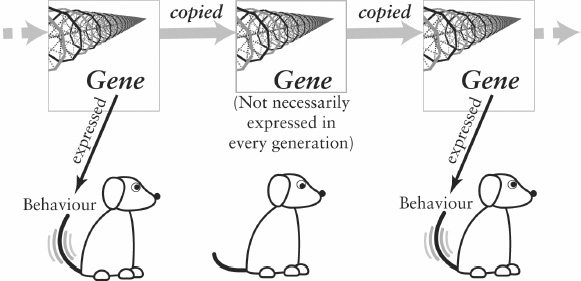
Roy Porter, Enlightenment: Britain and the Creation of the
Modern World (Allen Lane, 2000)
Martin Rees, Just Six Numbers (Basic Books, 2001)
Alan Turing, ‘Computing Machinery and Intelligence’, Mind,
59, 236 (October 1950)
Jenny Uglow, The Lunar Men (Faber, 2002)
Vernor Vinge, ‘The Coming Technological Singularity’, Whole
Earth Review, winter 1993
OceanofPDF.com
Index
Entries in bold refer to defining or principal occurrences.
641 argument (Hofstadter) 115–18, 185
see also domino computer
absolute zero 46, 47, 71, 295
abstractions 114–24, 166, 185, 266–7, 447
abstract replicators 95, 114, 266–7
abstraction from experience 16, 128, 129
confusions of abstract attributes with physical ones of the
same name 182–8, 343
finitism and 165–6
money as an abstraction 266–7
people as abstract information 59, 130
Achilles and the tortoise 182–3
adaptation
biological 52, 54–5, 56
creationism and the designers of 79–81
of creativity see creativity
by humans as universal constructors 58–60
and knowledge 55, 56–65, 78–81, 88; see also creation of
knowledge
Index of Universal Knowledge
- The index covers a vast range of intellectual history, from the objectivity of beauty and aesthetics to the technical evolution of algorithms and AI.
- It highlights the tension between anthropocentrism and the principle of mediocrity, particularly in the context of quantum theory and cosmology.
- Significant focus is placed on the history of computation, tracing a path from the Analytical Engine to modern artificial intelligence and the Turing test.
- The text catalogs the Enlightenment's rebellion against authority and the shift toward seeking objective knowledge through science and reason.
- Political and mathematical paradoxes, such as Arrow's theorem and apportionment problems, are listed as key constraints on human systems.
The objectivity of beauty 122, 353–68
the reach of human adaptations 56–65
through technology 57–60, 61, 436; see also automation
Adleman, Leonard 145
Aeschylus 216
aesthetics 367
artistic values 366, 388
and attraction 357–9, 360–65
human appreciation of beauty 353–4, 356–8, 359, 362–7
the objectivity of beauty 122, 353–68
pure and applied art 365–6
see also art
ageing, problem of 213–14
see also old age
agriculture 48, 50, 57, 207, 234, 320, 422, 431, 437, 438,
440
AI see artificial intelligence
Alabama paradox 330–31, 333
alchemy 1, 425
algebra 36, 136, 377–8
algorithms 35, 36, 117, 295, 362
evolutionary 160
see also computer programs
Alhazen 220
alphabets 126–7, 144
Amadeus (Shaffer) 353
ambiguity 308, 448
infinite 405, 406, 409
see also equivocation
analogue computers 140
analytic functions 135–6, 452
Analytical Engine 136–8, 139, 140
Andes 426–7
animal minds 154, 268, 320–21, 358–9, 407, 410
anthropic reasoning 98–104, 105, 177–80, 452–6
anthropic principle 98
as an explanation of fine-tuning 98–103, 177–80, 452, 453
and infinite sets 177–80
anthropocentrism 42–4, 51, 53–4, 75, 111, 155, 446
anti-anthropocentrism 43–4, 51; see also Mediocrity,
Principle of
in conceptions of infinity 165–6, 181
in the interpretation of quantum theory 308–9, 319
in science fiction 262
see also parochialism
anthropomorphism 59, 148; see also animal minds
anti-rational memes see memes, anti-rational
anti-realism 15, 313, 314
antibiotics 436
apes/aping 60, 405, 407–9, 410
see also imitation
Appollonius 132–3, 166
apportionment paradoxes 326–33; see also no-go theorems
Archimedes 132, 133, 166
Arecibo observatory 72
Ares 246, 248
argument from design see under design
Aristarchus of Samos 27
Aristocles see Plato
Aristodemus 83
Aristophanes 216
Aristotle 216
arithmetic 128–32, 135, 136, 141, 233, 240, 252, 332, 374
arrogance 45, 51–2, 314
Arrow, Kenneth 336–7
Arrow’s theorem 336–8, 340–41, 343, 345
art
artistic problems 355–6
artistic values 366, 388
attraction of 357–8
painting 219, 356, 357
pure and applied 365–6
as self-expression 366–7
utilitarian theories of 366
see also aesthetics; music
artificial evolution 158–63
artificial intelligence (AI) 137–8, 148–63
chatbots and 150, 152, 158, 160
and creativity 148–63
Elbot program 151–2, 156
Eliza program 148–9, 161
and humour 157
and the simulation argument 455
and the Singularity 456–7
Turing test 148, 149–50, 151, 152–3, 154–6, 158, 161, 320
The Ascent of Man 419, 440–441, 460
Asimov, Isaac
‘Jokester’ 372
The End of Eternity 443
asteroids 207
astrology 42
astronomy 34–7, 58, 68, 443
and astrology 42
and scientific instruments bringing us closer to reality 34–41
astrophysicists 60, 72
as representative of people 98–103, 177–80, 183, 452–3;
see also anthropic reasoning
astrophysics 1–3, 6, 46–7, 70–71, 101, 275, 450–51
see also cosmology
Athena 217, 238, 246
Athens 83, 119, 216–18, 220–21, 427, 449
and ‘a dream of Socrates’ 224–5, 229–35, 244–51
Golden Age of 216–17, 254, 386
atomic bomb see nuclear weapons
atomic lasers 266, 290
atomic physics 312
atoms 43, 67, 70, 109–10, 258, 266, 288–91, 298, 301, 302,
312, 324
affected by waves of differentiation 274–5, 298
atomic configurations 109–10
and people 306
of a stratum 293
structure of 445
see also particles, elementary
Attenborough, David 419, 421
attraction 357–60
and evolution 360–65
audiences 14, 17, 19, 259, 279, 357, 369, 403, 409–10
Augustine of Hippo 82
Australia 19, 432
authority
the Enlightenment’s rebellion against 12–13, 22–3, 32–3, 65
and knowledge 4, 8–13, 22–3, 123, 209, 227, 310, 311, 314,
356, 391, 395
see also justificationism
automation 36, 39, 57–8, 62, 76, 135–6, 141, 158, 160, 320,
438, 456
axis-tilt theory 23–5, 26–8, 44, 68, 458
Babbage, Charles 135, 136, 137, 139, 148
Babylonian numerals 131
background knowledge 16
Bacon, Roger 220
bacteria 82, 145, 162, 436
Balinski, Michel 334
Balinski and Young’s theorem 334, 339
Index of Ideas and Infinity
- The text provides a detailed index of scientific and philosophical concepts ranging from the Big Bang and black holes to the evolution of the biosphere.
- It highlights the intersection of aesthetics and science, specifically examining the objectivity of beauty and its relationship to truth.
- A significant portion of the entries focuses on the nature of knowledge, including how it is encoded in human brains and its role in environmental control.
- The index tracks the history and vulnerability of civilizations, contrasting the optimism of the Enlightenment with various existential risks and historical disasters.
- It includes technical and mathematical topics such as social-choice theory, quantum interpretation, and the development of early computing engines.
humans as chemical scum 44–8, 51, 72, 73
Basalla, George 394
‘bat, what is it like to be a’ (Nagel) 367
Bateson, Patrick 320, 321
Bear, Greg 202–3
beauty
and attraction 357–9, 360–65
and elegance 355
objectivity of 122, 353–68
truth and 355
two kinds of 364, 365
‘because I say so’ 311, 391–2, 395
see also memes, anti-rational; quantum theory: shut-up-
and-calculate interpretation
Beethoven, Ludwig van 355, 356
beginning of infinity, introductory explanation of concept vii–
viii; see also 443
behaviour parsing 407–9
behaviourism 157–8, 163, 316–20
Bell, Jocelyn 38
Big Bang 3, 6, 11, 96, 175, 197, 450–51
afterglow (microwave radiation) 46, 47, 68
in a parallel universe 263
Big Crunch 450–51
biogeography 426–42
biological weapons 196, 204, 205
biosphere 44–5, 48–51, 69–70
automated environmental transformation 57–9
environmental control and the human reach 57–63
environments and knowledge 74–5
evolution and the biosphere–culture analogy 371–2
and fine-tuning of the laws of physics 97
global warming and climate change 437–41
and the problem of suffering/evil 80
see also ecosystems
biotechnology 95, 196
see also biological weapons
birds
and music 356
nesting 89–91, 145
reach and evolution of adaptations 54–5
see also parrots
bits (information) 187
Black Death 208, 385, 437
black holes 2, 3, 173, 178, 203
Blackmore, Susan 394–5, 402, 404, 415
blind spot 80
Bohm, David 310
Bohr, Neils 308
Boltzmann, Ludwig 255, 312
Book of Nature 4
Bostrom, Nick 453
Botticelli, Sandro 219
Bradshaw, Elizabeth 320
brains 78, 379, 415
adaptation, and knowledge in human brains 78–9, 95, 105–6
add-ons 456, 457
and the doomsday argument 455–6
encoding of knowledge in 50, 375–7
evolutionary process of creativity in 373
the human brain and scientific knowledge 72, 189
and the understanding of abstractions 119
British Enlightenment see Enlightenment: British
Bronowski, Jacob 121, 355, 419–20, 423, 441, 460
Byrne, Richard 407, 460
Caesar, Julius 423
calculus 164, 194
calendars 7
cancer 294, 437
Cantor, Georg 166, 170–71, 181, 182, 195
carbon-dioxide emissions 437–41
Carroll, Lewis: Through the Looking Glass 282
Carter, Brandon 96
catalysts 143
cathode-ray tubes 433–5
causation 118, 300–301, 428
celestial sphere theory 8, 10, 112, 133
cells 39–40, 58, 95, 294, 372, 376, 384, 393
single- and multicellular organisms 144
certainty see fallibility
Chaerephon, and ‘a dream of Socrates’ 243–9, 251, 252,
253
chains
of interpretation 38–9
of proxies 72, 317
of instantiations of abstractions 114–15, 256
of universes 179
chatbots 150, 152, 158, 160
chemistry 13, 43, 46, 57–8, 61–2, 67, 73, 96–7, 142–3, 261,
301–2, 359, 362, 425
humans as chemical scum 44–8, 51, 72, 73
chess 36, 114, 118, 136, 157
choice 326–52
apportionment paradoxes 326–33
decision-making and social choice see decision-making
devising an electoral system 338–40
social-choice theory 335, 337–8, 342–3, 345, 352
applied to an individual mind 340–41
voters’ 342
cholera 207
Churchill, Winston 201, 333
cimenti 14
civilization
Athenian 216–18, 224–5, 229–33, 244–51, 246
of Easter Island 418, 419–23, 430–31
extra-terrestrial civilizations 202–4
Florentine 218–20
optimism and 208–22
pessimism and 196–203
Polynesian 419, 421, 427
present and pre-Enlightenment 204
Spartan 218, 230–33, 244–51
survival 62–3, 196–7, 202, 204–5, 206–8
vulnerability of 201, 202–3, 207–8, 436; see also disasters,
natural
see also societies
climate change 437–41
Cold War 196, 205, 428
Colossus computers 139
common sense 266
mistaken 5, 26, 82, 122, 262, 279, 280, 340, 397, 403
see also reason
complementarity, principle of 308–9
complexity see simplicity and complexity
computer programs 36, 115–18, 129, 414
AI see artificial intelligence
chess 114, 118, 157
evolutionary algorithms 160
and the simulation argument 453–5
computers/computation 36, 60, 95, 107, 119, 194
analogue 140
Analytical Engine 136–8, 139, 140
Colossus 139
coloured displays 434
Index of Knowledge and Computation
- The text explores the deep intersection between physics and computation, highlighting concepts like computational universality and quantum computation.
- It examines the creation of knowledge as an evolutionary process, linking it to error correction, optimism, and the transition from problems to better problems.
- Creativity is analyzed as a biological and cultural puzzle, specifically its role in non-innovating cultures and its evolution alongside meme transmission.
- The role of conjecture and criticism is emphasized as the primary mechanism for scientific progress and the discovery of objective truth.
- Various philosophical and scientific frameworks are referenced, including the Copenhagen interpretation, neo-Darwinism, and the Enlightenment.
Puzzle of what use it was in non-innovating cultures 398–402, 410–15 as a hideous joke played on humans 416.
computational universality 135–42, 189, 191
computer science and mathematical proof 184
connection between physics and computation 189–92
Difference Engine 135–6
DNA computer 145
ENIAC 139
Hofstadter’s domino computer 115–17, 118
and physics 187, 189–92, 295–6
programs see computer programs
quantum computation 187, 295–6
and the silicon chip 139
and the simulation argument 453–5
supercomputer simulation predictions 439
Conan Doyle, Arthur 10
Condorcet, Nicolas de 66
configurational entities 266–7
conformity 7, 217, 218, 231, 382, 402, 413
Congress, US, apportionment 326–33
conjecture 2, 9, 10, 17, 26, 78, 239–40
and abstractions 119
creative 412
and criticism 192, 239–40, 412; see also criticism
mathematical 185–6, 191–3
memes as conjectural explanations 412
conjuring tricks 10, 14–16, 17, 18–19, 29, 41, 79, 82, 113,
155, 214, 315, 324, 410
and measurement 40, 229
visions, perception and 229, 241–2
consciousness 153–4, 157, 162–3, 318, 415
test for judging claims to have understood 154
consent 155, 266, 343
conspicuous consumption 433
constants of nature see physics, constants of
Constitution, US 335
and apportionment paradoxes 326–33
constructors, universal 58–60, 62, 76, 429
Continental Enlightenment 65–6, 313
continuum 43, 140–2, 159, 164, 181, 274, 298, 450
infinity of the 164, 170, 182, 195
control 45, 55–6, 62, 69–71, 88, 111, 130, 134–9, 159, 241–
2, 384, 391–2, 415, 459
convergence
between Spaceship Earth and the Principle of Mediocrity 45,
53
convergent evolution 95
and error correction 350
upon the truth 231, 257, 350, 368
Conway, John 166
Copenhagen interpretation of quantum theory 308–10, 312,
315, 322, 324, 325
copying
memes not replicated by imitation 402–10
replicators see memes; replicators
cork 72–4
correspondence 39, 241
of theories with objective truth 353
one-to-one 167, 170, 171–2, 181, 193
tallying 128, 129, 130–31, 134, 140–41, 193, 356
cosmic rays 68, 293–4
cosmic significance see significance
cosmology 68, 81, 113, 445, 450–53
evolutionary cosmologies 178–9
see also astrophysics
cow, size of 35
creation of knowledge 78–105
and the argument from design 83–7
impeded by bad philosophy 305–25, 448
causing convergence 350
creationism and 79–81, 104
about environments 74–5
and error correction 140–2, 147, 271, 302
ex nihilo 104, 345
fine-tuning of the universe and 96–103, 104, 106
as a transition process from problems to better problems
446–7
Lamarckism and 87–9
and the limitation on predictability 104, 193, 197–8, 212
neo-Darwinism and 89–96
not affected by distance 275, 427
open-ended/unbounded vii, 60–65, 66, 67, 69, 81, 146, 165,
175, 450–52
optimism and 196–222, 431
requirements for 61
spark for 75
spontaneous generation and 81–3
creationism 79–81, 86, 104, 193
fine-tuning as supposed evidence for 97
and spontaneous generation 82
see also Paley, William
creativity 30
artificial 148–63; see also artificial intelligence (AI)
artistic 355–7; see also aesthetics
creative conjecture 412; see also conjecture
creatively changing the options 351
in discovering new explanations 7–8
as an evolutionary process in the brain 373
evolution of 398–400, 402–15, 416
future of 415–16
mutual enhancement of meme transmission and 400
needed to improve explanations 342
puzzle of what use it was in non-innovating cultures 398–
402, 410–15
and scientific toil 41, 355–6
as a hideous joke played on humans 416
criterion of demarcation (Popper) 14 see also testability
criticism 114, 119, 233
conjecture and 58, 192, 203, 239–40, 352, 412
immunity from 230–3, 310, 316, 324, 325, 346, 347
suppressed by anti-rational memes 391, 393
by testing see experimental testing
tradition of 13, 23, 31–3, 209, 216, 220, 231, 308, 390, 431
as variation of information 78
crystals 83
liquid 434
cubes, notional, in space 47, 66–8, 74–5
cultural evolution 369–97
and the biosphere–culture analogy 371–2
and dynamic societies 387–8, 424
Index of Scientific and Philosophical Ideas
- The text provides a detailed index covering evolutionary biology, including meme evolution, Darwinian theory, and the genetic code's jump to universality.
- It explores complex physical concepts such as the curvature of spacetime, dark matter, and the differentiation of histories in a multiverse.
- Political and social philosophy are addressed through entries on democratic decision-making, Popper’s criteria for removing bad governments, and social-choice theory.
- The index highlights the intersection of technology and nature, referencing digital technology, DNA as a computer, and the environmental history of Easter Island.
- Epistemological themes are present, specifically regarding the Enlightenment, dogmatism, and the Popperian view of reality as a 'waking dream'.
Popper’s criterion of ridding ourselves of bad governments without violence 344–51, 352
the Enlightenment 390–93
ideas that survive 369–72
living with memes 394–6
meme evolution 372–8, 400, 413
rational and anti-rational memes 388–90
the selfish meme 378–9, 387
and static societies 380, 383–6, 414
subcultures 393
cultural relativism 314, 356
culture 397 see also cultural evolution
cures 11, 153, 213, 272, 422, 437, 455
curvature of spacetime 107, 112, 183–4, 312, 450
dark energy 451
dark matter 36, 46, 67
Darwin, Charles 80, 82, 87, 91
Darwin, Erasmus 87, 88
Darwinian theory 80, 89
Marx on 371
neo-Darwinism 89–96, 103, 104–5
refutation possibilities 95–6
data 15, 18, 210, 315, 323
Dawkins, Juliet 353, 362
Dawkins, Richard 52–3, 56–7, 92, 93, 279
argument from personal incredulity 164
Haldane–Dawkins ‘queerer-than-we-can-suppose’ argument
53, 56, 59, 81
death 48, 63, 69, 436, 453, 459
elimination of 63, 213, 455
evil of 213
fear of 84
decision-making 335
conventional model of 341
democratic 344–5; see also voting
and Popper’s criterion of ridding ourselves of bad
governments without violence 344–51, 352
and problem solving 341–2
social-choice theory and 335, 337–8, 342–3, 345
society-wide planning and 335–51
by weighing 340–42
decoherence 285, 303
deconstructionism 314
deduction 5
deep space 47–8, 66–9, 71–2, 293
deforestation 418, 420–21, 422
Demeter 19–21, 24, 26
democracy 217, 250, 333, 335
democratic decision-making in elections 344–5
see also voting; plurality voting 346–50
Dennett, Daniel 117, 154
design 44, 125, 131, 139, 144, 155, 159–162, 201, 357, 367
appearance of 44, 50, 84–6, 87, 97, 98, 106, 357, 363–4
Paley’s criterion for 85–7
argument from 83–7
creationism and designers 43, 49, 51, 73, 79–81, 97
in the laws of physics 96–103
determinism 277, 287, 371
deterministic laws 263, 265, 267, 268, 270, 275, 276, 279,
305
Deutsch, David, The Fabric of Reality 109–10, 450, 460
diagonal argument 170–71, 172
Diamond, Jared 425–9, 430, 442
dictatorship see tyranny
meaning of ‘dictator’ in Arrow’s theorem 343
no-dictator axiom 336
Difference Engine 135–6
Difference Engine, The (Gibson and Sterling) 137
differentiation
calculus 164
of histories in a multiverse 273–5, 276–9, 287–8
decoherence and 285
interference and 283–7, 291, 293
rate of growth of distinct histories 287; see also waves of
differentiation
digital technology 139–42
dinosaurs 162, 315
disasters, natural 42, 49, 63, 200, 202, 206–7
discrete variables 128, 140, 142, 274, 305, 450
discrete/continuous dichotomy 140, 142, 274, 298, 450
disease 59, 63, 196, 200, 213, 294, 385, 437
Black Death 208, 385, 437
cholera 207
cures 11, 153, 213, 272, 422, 437, 455
pandemics/epidemics 196, 208, 418, 436; see also Black
Death above
DNA 56–7, 62, 67, 78, 95, 162, 375, 376
computer 145
damage 294
and the genetic code’s jump to universality 143–6, 162–3
in pollen 360
dogmas/dogmatism 13, 23, 26, 66, 122, 445, 447
domino computer (Hofstadter) 115–17, 118, 185, 358
doomsday argument 455–6
doppelgangers 258, 263–4, 265, 270–72
Doyle, Arthur Conan 10
Dragon’s Egg (Forward) 97
dream
hallucination 301
Popperian epistemology taught in a ‘dream of Socrates’
223–54
reality and experience as a waking dream 241–2, 252–3
drugs 317–18
Easter Island 418–24, 430–31
economic forecasts 371, 437, 439
ecosystems
artificial/virtual 68
see also biosphere
Eden, Garden of 52, 63
Edison, Thomas 36, 41, 158, 341
see also inspiration/perspiration
education 123, 203–4, 210, 217–18, 230–31, 244, 247, 252,
254, 311, 377–8, 382, 389, 391, 392, 393, 400, 409, 431,
435
academic knowledge 4, 255, 369, 393, 446
because I say so 311, 391–2, 395
moral 230–31
university 34–6, 158, 255, 308, 309, 403, 406, 409, 433,
446
see also fun; Popper on instruction
Ehrlich, Paul 431–2, 440
Einstein, Albert 60, 104, 113, 255, 256, 307, 310, 312, 446–
7, 451
curved space and time 183–4
explanation of planetary motion 112, 113
general theory of relativity 29, 61, 107, 312
Index of Scientific Epistemology
- The text highlights the central role of error correction and digital information in maintaining knowledge and universality.
- It critiques empiricism and inductivism, arguing that the senses are deceptive and that theory-free observation is a misconception.
- The concept of emergence is explored across multiple levels, from physics and reductionism to consciousness and causation.
- The Enlightenment is framed as a pivotal era for progress, universality, and the evolution of memes.
- Scientific concepts like quantum entanglement and evolution are linked to broader philosophical questions about knowledge creation and evidence.
The falseness of empiricism: the deceptiveness of the senses and the mistaken idea of theory-free observation.
and the problem of quantum gravity 449–50
special theory of relativity 199
Elbot program 151, 156
electoral systems 338–40
and democratic decision-making 344–5
plurality voting system 346–50
see also proportional representation
electron(s) 70, 108, 289–91, 293, 294, 298, 324, 454
field 291
microscope 39
elegance 3, 25, 32, 42, 94, 199, 355, 367, 387
elementary particles see particles, elementary
elements
ancient theory of 14
formation of 1, 2, 40, 50, 61–2, 96
Eliza program 148–9, 161
see also chatbots
emergence 104, 108–11, 118–19, 123, 156, 292, 302–3,
305, 395
causation as emergent 118
Hofstadter’s ‘I’ and 115–18
levels of emergence and of explanation 114, 116, 118, 123,
124, 130, 141, 293, 373, 444, 459
and reductionism 109–10
emotions 154, 356, 384, 389
empiricism 4–29, 32, 119, 122, 155, 165, 311–12, 358, 361,
411
and the deceptiveness of the senses 8, 14, 301
failed to eliminate authority 8–10; see also justificationism
the falseness of 7–8, 32, 39, 120, 209–10, 403
and the history of ideas 311–12, 314–16, 325, 345, 354
Horgan’s misconceptions based on 448
and inductivism 5–7
and instrumentalism 15
mistaken idea of theory-free observation 39
salutary role 13, 311
see also knowledge
end-of-the-world prophet 14, 21–2; see also Malthusian
prophetic fallacy
energy 267, 361, 439
dark 451
and fungibility 267, 298
gravitational 3, 450
law of conservation of 109
needed for knowledge creation 61–2, 146
of photons in different universes 297–8
quantized 274, 291, 298, 433
solar 50, 66, 74
Engels, Friedrich 426, 428, 430, 442
ENIAC (computer) 139
Enlightenment, the 31
British 65–6;
and progress 12–14, 22–3, 29, 32–3, 65–6, 133, 203, 390–91
and the scientific revolution 12, 14, 23, 32, 53
and universality 133–4
and the evolution of memes 390–93
mini-enlightenments 23, 31, 216–21
and our view of the Earth 443
utopian (Continental) 65–6, 313
entanglement 284–5, 293, 295, 296–7, 303, 308
entanglement information 281, 289–90, 307
protection of qubits from 295
time as an entanglement phenomenon 299
environment see biosphere
epidemics/pandemics 196, 208, 418, 436
see also Black Death
epistemology 225, 412
and ‘a dream of Socrates’ 226–43, 245, 252–3
empiricism see empiricism
inductivism 5–7
see also knowledge
equivocation 309, 318, 325, 448
Eratosthenes of Cyrene 443, 458
error correction 94, 136, 140–42, 147, 192, 209, 210, 211,
222, 271, 302, 322, 323, 328, 389, 395, 409, 411–12
and convergence 350
requires digital information 140–42
in plurality voting 348
and universality 147
see also fooling ourselves
Euclid
Euclidean space 164, 183
theory of geometry 42, 183, 184
Euripides 216
europium 433, 434
Everett, Hugh 310
interpretation of quantum theory 310
evidence 22, 25, 27–8, 39, 49, 73, 75, 103
circumstantial 10
as an essential requirement for knowledge creation 61, 67
we are inundated with 61–2, 66
literally within arm’s reach 62
in philosophy 209
of our senses 4
is the same throughout the universe 62, 67–9
evils 199–200, 212, 213, 221, 319, 395, 435
evil of death 213
problem of evil 80, 199
evolution 48–9, 52
artificial 158–63
and attraction 360–65
co-evolution 360–62, 400, 414–15
convergent 95
of creativity see creativity: evolution of
of culture see cultural evolution
Darwinian 105
of the human species 48, 55, 394, 412–13
and knowledge 77, 78–105
natural selection 52, 56, 78, 87,
not necessarily adaptive 91
of non-explanatory knowledge 94
‘survival of the fittest’ 91, 371
see also adaptation; Lamarckism
evolutionary cosmologies 178–9
ex nihilo creation 104, 345
see also regress, infinite
expectations 4, 17–19
experience, sensory see sensory experience
experimental testing 13–14, 26
essence of 16–18
falsification through 26
Galileo and 14
principle of testability 14, 26, 111
explanationless theories 15, 16, 158, 210, 316, 318–19,
320–23, 325
see also philosophy, bad; inexplicability; rules of thumb
Index of Explanatory Knowledge
- The text distinguishes between 'good' explanations, which are hard to vary, and 'bad' explanations, which are easy to vary and often mythical.
- Explanatory knowledge is described as an open-ended stream that creates new problems while expanding the reach of human understanding.
- The concept of fallibilism is highlighted as a core principle, emphasizing the recognition of human error and the need to avoid self-deception.
- The index connects scientific progress with the avoidance of extinction, suggesting that human creativity allows an escape from biological limitations.
- Future knowledge is characterized as inherently unpredictable, asserting that the growth of knowledge ensures the future will not merely resemble the past.
The quest for good explanations: good (hard to vary) vs. bad (easy to vary).
explanations 30
of abstractions 114–24
bad (easy to vary) 19–22, 25–6, 29, 31, 53–4, 64, 80, 83, 97,
101–2, 150, 154, 174, 199–200, 260, 264, 282, 311, 324
and bad philosophy 311–25
are conjectural 2, 9, 10, 17, 26, 191–3
creating new problems 64, 76, 350, 422
creativity and 7–8, 342
and decision-making 341
discrete options between 342
and elegance 355
evolution of explanatory theories 94
falsified 26
good (hard to vary) vii, 6, 24, 25, 28, 31, 78–9, 94, 156,
209, 257, 306, 341, 342, 353
and imagination 26, 264–5
imitation and 410
instrumentalist conception of 13
mythical 19–21, 24, 25
open-ended stream of explanatory knowledge 60–65, 67,
69, 81, 175, 450, 457–9
the quest for good explanations vii, 22–3, 26, 39, 314
reach of 1–33, 59–60, 75, 78–9, 105, 118, 123, 166–7, 197,
220, 458–9
and reality 6
reductive 109–10, 116, 361, 371, 429
scientific theories as 3, 14, 113
of seasons 19–21, 23–5, 26–9, 42, 44, 458
simplicity is inadequate 25–6
and technology, fundamental link with 55–6, 58
‘ultimate’ 425–8
universal explainers 123, 157, 415
explicability 53–4, 60, 64, 103, 108, 111, 121, 146, 193,
200, 213, 260, 264–5, 270, 272, 282, 300–301, 358, 445–6,
459
extinction of species 48, 49, 90, 95–6, 428, 436, 437
caused by their own evolution 49, 55, 92
hedge against extinction of human species 62–3
human escapes from 49, 196–7, 204–5, 206–7
mass extinction events 49, 95–6
and storing the genes of endangered species 95
extraterrestrials 2, 60, 145, 322, 414
art and 354
dangerous 60, 202–3
detecting life on distant planets 68, 73
extraterrestrial civilizations 79, 101, 202–4, 399
search for intelligent (SETI) 72–3, 179–80
see also Fermi’s problem
eyes 1, 2, 3, 11, 37, 40, 46, 52, 54–5, 59, 68, 80, 83–4, 85,
226, 229, 231, 240n, 241, 252, 261, 294, 316, 355, 383
Fabric of Reality, The (Deutsch) 109–10, 450, 460
fairness
apportionment paradoxes 326–33, 334
impartiality 330, 331, 334
misconceptions in social-choice theory 345–6
Fall from Grace 52
fallibilism 9, 32, 64, 65, 193, 211, 232, 233, 395, 446, 448
fallibility 66, 135, 192, 226, 233–5, 240, 242, 252–3, 254–5,
311, 317, 413
see also fallibilism
farming see agriculture
Fascist ideologies 371
see also Nazism
fashion 314, 354, 356
fads 379, 394
Fatherland (Harris) 259
FDP (Free Democratic Party, Germany) 339–40
Fermi, Enrico 101
Fermi’s problem 101, 453
Feynman, Richard 22, 39, 101, 209, 305, 355, 444
fiction 26, 294
see also science fiction
fine-tuning of the universe/laws of physics 96–103, 104,
105, 106, 111, 113, 294, 434
problems with anthropic explanation of 177–80, 195, 452,
453
finitism 165–6
fire 12, 50, 111, 202, 207, 400
see also elements, ancient theory of
first-past-the-post (plurality) voting system 346–50, 352
flagellants 385
Flew, Antony 97
Florence 218–21, 386
flowers, and the objectivity of beauty 360–64
food
and co-evolution 360
production 205, 206, 208
supply 11, 48, 89, 206, 400, 408
see also agriculture
fooling ourselves, keep from 22, 209, 301, 317
forests
deforestation 418, 420–21, 422
management 423, 424–5, 430
Forward, Robert: Dragon’s Egg 97
fossils 51, 95–6, 121, 292, 315–16
Free Democratic Party (FDP, Germany) 339–40
freedom 51, 217, 250, 343, 369, 392, 405, 457
French Revolution 66
Freyr myth 20, 21, 25
Friedman, David 444
fun 35, 36–7, 41, 115, 149
fundamental theory or phenomenon see significance
fungibility 265–9, 270, 272–305, 450
difficulty of imagining 269
diversity within 268, 278, 289
future
anthropic reasoning about the future 452–6
of creativity 358, 415–16
not yet imaginable 444
optimism and the desirable future 446–7
and the pessimistic view of bounded knowledge 198, 445–6,
447–9
and the shedding of parochialism 444–5
and the simulation argument 453–4
unpredictability of knowledge growth see under
unpredictability
won’t resemble the past 5–7, 29, 31
see also prophecy
galaxies 2–3, 28, 34–40, 44–5, 58, 68, 101, 275, 281, 302
Index of Universal Ideas
- The text provides a comprehensive index of scientific and philosophical concepts, ranging from dark energy and genetic universality to the history of ideas.
- It highlights the intersection of biology and information, specifically the relationship between genes, memes, and the knowledge implicit in genetic codes.
- Significant attention is given to quantum physics and the multiverse, detailing the differentiation, splitting, and rejoining of histories.
- The index tracks the evolution of human thought through historical periods like the Golden Age of Athens and the Islamic Golden Age.
- It addresses the philosophical status of humans, contrasting the view of people as 'chemical scum' with their significance as creators of knowledge and problem-solvers.
significance of knowledge and 70–75, 76
clusters of 34–6
effects of dark energy on 451
effects of dark matter on 46
Milky Way 1, 2, 47, 70–71, 101, 202–3
space between see space, intergalactic
Galileo Galilei 14, 219–20, 390
gambler’s prophecy see prophecy
game theory see social-choice theory
gamma rays 68
bursts of 2, 208
Gauss, Carl Friedrich 183
generation ship 44, 69
genes 29, 43, 56–7, 58, 59, 78, 80, 89–92, 105–6, 142, 158,
315, 316, 364, 371, 378, 399
and co-evolution 360–64, 414–15
of endangered species 95
genetic code and the jump to universality 142–6, 162–3, 458
genetic engineering see biotechnology
genetic evidence 49, 56, 206
genetic explanations of individual human attributes 317–19,
323, 356, 359, 401, 410, 429
knowledge implicit in 29, 50, 56–7, 59, 60, 72, 88, 111, 114,
366, 400
and memes 372–97, 404, 405, 407, 408, 413, 414
and neo-Darwinism 89–96
see also DNA; genomes; replicators
genomes 56–7, 144, 362, 364, 378, 379, 411
geocentric theory 8, 42
see also celestial sphere theory
geography
biogeography 425–31
of Mars 5
of the universe 443
geometry 7, 23, 24, 42, 113, 119, 161, 183–4, 188, 230,
233, 240, 252
see also space, Euclidean; space, curvature of spacetime
Gibson, William: The Difference Engine 137
giraffes, evolution of the neck 88, 362
global warming 437–41
God 52, 80–81, 87
argument from design for existence of 83–7
creationism and 81
and mathematical infinities 166
gods 21, 26, 42, 43, 60, 64, 79, 80, 81, 97, 104, 203, 217,
243
Gödel, Kurt 184–5
gold 1–2, 30
golden age
of Athens 216–17, 254, 386
of Florence 218, 386
Islamic 220
myths 52, 63
Grace, Fall from 52
grammatical rules 374–5
gravity 29, 107, 112–13
gravitational effects of dark matter 46
gravitational energy 3
quantum 178, 449–50
see also space, curvature of spacetime; relativity
Great Rift Valley 48, 50, 58, 69
guessing see conjecture
Gutenberg, Johannes 134
Hades 19
Haldane, John 53, 56, 59, 81, 95
hallucination 301
see also mirages
Hamilton, Alexander 330
Hamilton’s rule 330, 331, 332
Hanson, Norwood Russell 10n
Hanson, Robin 457
happiness 316–19
Harris, Robert: Fatherland 259
Harris, Roger 321
Hawking, Stephen 44, 45, 63, 175, 202, 203, 204, 208
Heisenberg, Werner 255, 289, 306–7, 309
Heisenberg uncertainty principle 289, 291, 303–4
heliocentric theory 8, 26–7
helium 1, 47, 96
helots 218, 247
Heraclitus 7
Hermes, and ‘a dream of Socrates’ 223–43
Herodotus 216
high-level phenomena 108–10, 114, 160, 300–301, 371
Hilbert, David 186, 189
Infinity Hotel thought experiment 167–77, 181, 185–6, 195
Hill, Joseph Adna 334
historians of science 256
histories (sequences of events in a multiverse)
coarse-grained 293, 298
definition 265
differentiation/splitting of 273–5, 276–9, 285–8, 293–4
distinguished from universes 265
and entanglement information 281, 289–90
and explicability 301
and fungibility see fungibility
and interference 283–8, 291, 293
measurement and 307
multiplicity of histories between observations 308
rate of growth of distinct histories 288
rejoining of split histories 282–5
and strata 293
history 265, 429
alternative-history fiction 259, 294
distinguished from ‘world’, ‘universe’ and ‘multiverse’ 265
of ideas 4, 5, 43, 216, 305–16, 428, 442 see also philosophy
of life 68, 92, 95, 379–80
of optimism 216
pessimism in 216
of philosophy 255
see also civilization; prehistory
Hofstadter, Douglas 115–18, 138, 149–50
holism 110, 123–4
Homo erectus 400
Horgan, John 447–9
House of Representatives, US 326, 330, 331, 349–50
humanism 219
humans
anthropocentrism see anthropocentrism
not supported by the biosphere 48–50
as channels of information flow 302
as chemical scum 44–8, 51, 72, 73
and the doomsday argument 455–6
escapes from extinction 49, 196–7, 204–5, 206–7
as glowing 46
human appearance 365
and matter 46
as problem-solvers 435; see also problem solving
the reach of human adaptations 56–65
significance of knowledge and 70–75, 76
Index of Infinite Reach
- The text explores the intersection of mathematics and physics through the lens of infinity, specifically referencing the 'Infinity Hotel' thought experiment and Cantor’s definitions.
- It categorizes human cognitive processes such as imagination, imitation, and the evolution of humor as mechanisms for knowledge creation.
- A significant focus is placed on the 'jump to universality,' where specific innovations or ideas gain the capacity for infinite reach and application.
- The index highlights the tension between inductivism and the actual growth of knowledge through conjecture, explanation, and the correction of 'infinite ignorance.'
- It examines the survival of civilization as being dependent on the role of people as universal constructors and the continuous flow of information.
The infinite reach of ideas 167–93; our infinite ignorance 447.
as spark for knowledge creation 75
survival of civilization/species 49, 62–3, 196–7, 202, 204–5,
206–8
as universal constructors 58–60, 62, 429
see also people
Hume, David 118, 120
humour 150, 151, 156–7, 174, 310, 355, 372–3, 374
origin and evolution of jokes 93, 372–3, 374, 388
Hunt, Terry 418
Huxley, Thomas 355
hydrogen 47, 56, 66, 73, 75, 96, 145, 290–91
bombs 139, 196
transmutation of 1, 61, 67
ideas
conjectural see conjecture
replicating see memes
see also explanations
ignorance, infinite 447
imagination 26, 264–5
see also fiction; science fiction
imitation 402, 403–10, 417
aping 405
behaviour parsing 407–9
parroting 405, 406–7
immortality 63, 214, 455, 459
impartiality see fairness
incredulity, argument from personal 164
indiscernibles, Leibniz’s doctrine of 265–6
induction see inductivism
inductivism 5–7, 9, 27, 30, 210, 220, 318, 340, 403
and Lamarckism 89, 106, 210, 411–12
principle of induction 5, 7, 28, 31
inexplicability 53–4, 104, 103, 264–5, 281–2, 445–6
see also supernatural
inexplicit knowledge 365, 367, 369, 374, 375, 380, 403–5,
408, 412, 414
infinity 164–95
Cantor’s definition 167, 181
and confusions of abstract attributes with physical ones of
the same name 182–6
of the continuum 164, 170, 195
countable 171, 172, 194
ideas with infinite reach 167–93
our infinite ignorance 447
infinite ignorance and potential for knowledge 447
the infinite reach of ideas 167–93
infinite regress 174–5, 178, 190, 194, 226, 341
infinite sets 102, 118, 122, 164, 167–80, 277, 453
Infinity Hotel thought experiment 167–77, 181, 185–6, 195
introduction to concept of beginning of vii–viii
mathematics and 164, 166, 167–77, 186
measuring instruments and 181
physics and 164, 173, 175, 177–81, 182–3, 193–4
potential 165
principled rejections of 132–3, 165–7, 459
and probability 176–7
religious objections to study of 166
uncountable 171–2, 177, 181, 182
and universality 164–5
see also Zeno’s mistake
information flow 238, 263, 265, 266, 281, 282, 292
people as channels of 302
in quantum theory 282, 287, 295, 304
see also histories (sequences of events in a multiverse)
initial state 107, 118, 280
innovation 125, 127, 133, 147, 197, 202, 204, 205, 392,
394, 398–401, 402, 410, 413–14, 435
and catastrophes 201
and criticism 222
Florentine 218–19
rapid 397, 399, 457
suppression of 202, 204, 384, 416, 423, 427
see also universality, the jump to
insoluble problems 53, 193, 213
see also problems are soluble; undecidable questions
inspiration 36, 37, 41, 42, 58, 158–60, 333, 341, 440
inspiration/perspiration 36, 37, 41, 58, 76, 158–60, 341–2,
456
see also automation
instrumentalism 15–16, 26, 31, 110, 112, 210, 325, 356
and quantum theory 307–9
see also behaviourism; finitism
instruments, scientific see measuring instruments
intelligence 2, 47, 60, 86
artificial see artificial intelligence (AI)
and explanations 30
extraterrestrial see extraterrestrials
see also fine-tuning
interference, quantum 282–8, 291, 293, 295–8, 301–2, 303
see also Mach–Zehnder interferometers
interpretation 36, 45, 65, 115, 127, 144, 164, 178, 216, 219,
253, 255, 301, 311, 318–19, 329n, 330, 337, 344, 423, 428–
9, 436
of experiences 7–10, 17, 18, 22, 30, 38, 151, 317, 359, 369,
370, 403, 404, 407, 410, 448
of quantum theory 263, 266, 306–10, 312, 322, 325, 460
split from prediction in scientific theories 315–16, 323, 324–
5, 449
introspection 154
‘ironic science’ 448–9
Jacquard, Joseph Marie 134
Jacquard loom 134–5
Jefferson, Thomas 330
Jews 219, 385
joke, hideous, played on humans 416
jokes see humour
jump to universality see universality
justificationism 9, 31, 120, 187, 189
see also authority and knowledge
Kant, Immanuel 183
Keats, John 355
Kennedy, John F. 215
Kepler, Johannes 112
Kepler’s laws 112, 113, 256, 446
knowledge 78
in adaptation 55, 56–65, 78–81, 88
and the problem of creationism 79–81
and authority see authority and knowledge
Index of Knowledge and Memes
- The text provides a comprehensive index of concepts related to the creation, evolution, and physical embodiment of knowledge.
- It categorizes knowledge into various forms, including objective, moral, inexplicit, and genetic, while linking it to the potential for infinite growth.
- A significant portion of the index is dedicated to 'memes,' exploring their replication, their role as anti-rational forces, and their evolutionary relationship with genes.
- Scientific and philosophical figures such as Lamarck, Leibniz, and Malthus are cross-referenced with theories on evolution, sustainability, and the 'Principle of Mediocrity.'
- The index highlights the intersection of physical phenomena, like light and matter, with human-centric developments like language, measurement, and creativity.
anti-rational 81, 381, 385, 388–90, 391–3, 394–396, 397, 413, 428, 457
creation of see creation of knowledge
cultural 50, 51, 55, 59, 422
and deduction 5
certain see fallibilism
and ‘a dream of Socrates’ 226–43, 245, 252–3
effects on an environment 74–5; see also under biosphere
encoded/embodied in matter 50, 56, 74–5, 266–7, 375–7
and evolution 77, 78–105
explanatory see explanations; scientific theories
genetic see DNA; genes; genomes
inexplicit see inexplicit knowledge
infinite ignorance as potential for 447
moral see moral knowledge
as ‘nearly there’ 445–6
non-explanatory 29, 73, 78, 94; see also inexplicit
knowledge; rules of thumb
objective vii, 15, 31, 122, 185, 193, 203, 209, 221–2, 226,
236, 238, 242, 253, 255, 308, 314, 345, 350, 353–4, 358–
68, 388, 394, 448
Plato’s theory of 119, 252, 252–3
as a replicator 95, 114, 266–7
significance of people and 70–75, 76
and survival 202, 207
see also epistemology
Kuhn, Thomas 313
Kurrild-Klitgaard, Peter 339
Lagrange, Joseph-Louis 198–9, 206, 445, 446
Lamarck, Jean-Baptiste 87–8, 89
Lamarckism 87–9, 96, 103, 105, 106, 158, 210, 376, 411,
446
language 93, 94, 125–6, 142, 154, 268, 280, 309, 311, 315,
323, 363, 365, 366, 369–70, 405, 407, 409, 413, 414, 428
other than natural language 144, 154, 159–62, 199, 292,
361, 365, 366, 399
see also universality: the jump to; writing systems
Laplace, Pierre Simon 133
lasers 73, 266, 267, 273–4, 294, 393, 446
see also atomic lasers
laws of nature see nature, laws of
laws of physics see physics, laws of
Leibniz, Gottfried Wilhelm 137, 164, 181, 199–200, 265–6,
268, 269
Leonardo da Vinci 219
liberty see freedom
life-support system 44–51, 45, 64, 71 see also Spaceship
Earth; sustainability
OceanofPDF.com
light 2, 3, 8, 11, 16, 38, 46, 47, 54, 61, 68, 80, 85, 208, 228,
240n, 261, 273, 305, 314, 357, 413, 433, 452
faster-than-light communication 55–6, 275–6, 283, 434
speed of 192, 199, 262, 263, 273, 291, 293, 294, 451
sunlight 8, 47, 57, 441
see also photons
Littlefield, John E. 333
llamas 426–7, 429
Locke, John 4, 134
Loebner, Hugh (Prize) 150–51
logical positivism 313, 314, 325
Lovelace, Ada, Countess of 136, 137, 148
‘Lady Lovelace’s objection’ 138
low-level phenomena 109–10, 111, 138
Mach, Ernst 312, 324
Mach, Ludwig 312
Mach–Zehnder interferometers 286–7, 296–7, 305, 309, 312
Machiavelli, Niccolò 219
magic 16, 19–21, 53–4, 81, 82, 173, 242, 301
wizards 260
see also conjuring tricks
Malthus, Thomas 201, 205–7, 421, 435, 436
Malthusian prophetic fallacy 206, 214, 432
Marx, Karl 371, 426, 428, 430, 442
mathematical proof see proof
mathematical truth see truth
mating 90, 91, 144, 359, 360, 362, 400, 401, 402, 413, 415
matter 14, 16, 40, 45–6, 61–2, 66, 68–9, 74, 75, 85, 97, 134,
203, 290–91, 305
dark 36, 46, 67
ordinary 45–6
prominent 73
Maxwell, James Clerk 255
measure theory for infinite sets 102, 178–83, 277–8, 281,
283, 287, 303, 453, 458
for histories 301, 303, 307, 454, 455
measurement 11, 35, 62, 68, 72, 99, 108, 158, 183, 274,
299, 309, 316, 338, 340, 357, 443
errors 140–42, 298, 321–3; see also fallibility; fooling
ourselves
see also proxies
measuring instruments 18, 34–41, 179, 192, 269, 294–5,
308, 446
human sensory systems as 40
SETI 72–3
see also microscopes; telescopes
Medawar, Peter 193
Medici, Lorenzo de’ 218, 429
Medici family 218–20
Mediocrity, Principle of 43–4, 45, 51–4, 64, 76, 101, 110,
166, 434
memes 93, 94–5, 105, 369–72
in animals see aping; parroting
anti-rational 81, 381, 385, 388–90, 391–3, 394–396, 397,
413, 428, 457
compared with viruses 384
creativity and in meme replication 402–15, 416
evolution of 372–8, 383, 390, 393, 400, 412–13
faithful replication of 257, 370, 374, 377, 378–80, 382–4,
390, 405, 413
generations of 376, 379
and genes 372–97, 404, 405, 407, 408, 413, 414
living with 394–6
long-lived 222, 370, 377, 380, 382–3, 384, 387, 388, 394,
399
memeplexes 93, 105, 374, 384
mutual enhancement of creativity and meme transmission
400
Index of Scientific and Philosophical Concepts
- The text provides a comprehensive index of topics ranging from quantum mechanics and the multiverse to moral philosophy and aesthetics.
- It highlights the intersection of physics and biology through entries on natural selection, neo-Darwinism, and the replication of memes.
- Significant attention is given to the 'multiverse' theory, including its origins with Schrödinger and Everett and its implications for probability and parallel universes.
- The index covers the history of scientific progress, referencing figures like Newton, Mozart, and Michelangelo alongside concepts like the laws of nature.
- Philosophical problems such as the mind-body problem, objective beauty, and the nature of moral knowledge are categorized as central themes.
- Mathematical and logical constraints are noted through entries on natural numbers and 'no-go' theorems like Arrow’s theorem.
fictional variations on the doppelganger idea 258–62, 270
in pre-humans and early humans 50, 55, 72, 207, 399, 412–
13, 414
puzzle of how they can possibly be replicated 402–10
rational 388–90, 392, 393, 396, 397
‘selfish’ 378–9, 387
slavery to 130, 383, 384, 392
Messenians 218
Michelangelo 219
Michelson, Albert 198–9, 445–6
micro-organisms 82, 196, 425, 436
bacteria 82, 145, 162, 436
microprocessors see computers/computation
microscopes 34, 37, 38, 39, 220, 312, 324, 355
microwave background radiation 46, 47, 68
Milky Way 1, 2, 47, 70–71, 101, 202–3
Mills, Roger Q. 333, 334
mind–body problem 117–22, 130
minds, animal 320–21
see also memes, in animals
mirages 228, 229, 231
mirror neurons 405–6, 408, 414
mirrors, semi-silvered 286–7
momentum 55, 273–4, 297
moon 24, 55, 57–8, 61–3, 66, 67, 68, 74, 143, 215, 366, 373
morality see moral philosophy
moral philosophy vii, 51, 64, 120–2, 123, 211, 235, 240,
254, 371, 388, 405, 428, 441, 455, 459
and ‘a dream of Socrates’ 229–32, 234–5
moral education 230–31
moral imperative 235
moral knowledge 63, 229–31, 240, 254
more-preferred-less-seats paradox 339
Morley, Edward 199
motion, quantum-mechanical see quantum theory
Mozart, Wolfgang Amadeus 353, 354, 356
multiple universes 3, 198, 254, 258–303, 303–4, 305–6
and the Bohm theory 310
close to common sense 266, 299
fictional variations on the doppelganger idea 258–62, 270
first proposed by Schrödinger 310
Everett 310
inter-universe communication 258, 262, 270–72, 276
Lyra multiverse thought experiment 179–80, 181
account of the theory 262–92
‘parallel’ universes 98, 98n, 198, 258, 261–270, 291, 293,
303, 452
multiverse 3, 98n, 180, 194, 258–304, 305, 307, 452n, 460,
461
other than those of the quantum multiverse 98–106, 98n,
177–183, 195, 450–52, 452n
probability, prediction and 99–103, 177–80, 195, 276–8
and the quantum suicide argument 453
see also histories
music 93, 136, 353, 354, 355–6, 357, 365–6, 369
banning of 219
notation 142
mutations 78, 79, 89, 90, 96, 156, 162, 375, 399
simulated 162
myths 12, 15, 19–21, 22, 24, 25, 26, 30, 32, 54, 60, 228,
314
of a Golden Age 52, 63
Nagel, Thomas 367
nanotechnology 144, 196
narratives 314
natural numbers 118, 123, 165, 167, 169–70, 171, 172,
176, 177, 184, 194, 195
natural selection 52, 56, 58, 78, 87, 89, 91–2, 160, 210, 372
see also sexual selection
nature, laws of vii, 5, 7, 18, 43, 56, 59, 66, 69, 75, 76, 94,
103, 106, 111, 113, 164, 175, 179, 188, 205, 220, 358, 411,
413, 444, 445
Bohr’s 308
constants 62, 97–104, 106, 179, 199, 294, 452–3; see also
fine-tuning of the universe/laws of physics
Lamarck’s 88
no barrier to progress 212, 413, 423, 445
regularities in 16, 56–7, 69, 94, 98, 111, 183, 355, 361, 411
see also physics: laws of
Nazism 205, 371
Neanderthals 49, 206
necessary truths 183
nectar 360, 361
neo-Darwinism 79, 89–92, 95, 103, 104–5, 374, 446
and knowledge 93–6
nerves see neurons
nesting birds 89–91
neurons 10, 80, 114, 138, 269, 405
mirror neurons 405–6, 408, 414
neutrinos 2, 52
neutron stars 97, 38, 113, 290
neutrons 97
Newton, Isaac 55, 61, 164, 181, 198–9, 444, 446, 447
explanation of planetary motion 112, 113
survival of his laws 388, 390
and time 312
translation of his laws into English 373
nirvana 65
no-go theorems 334, 335–6, 339
Arrow’s theorem 336–8, 340–41, 343, 345, 351
regret over 343
versus creating new options 351
nuclear fusion 61, 67
nuclear power 1, 44, 66, 67, 198, 439
nuclear weapons 2, 6, 139, 196, 205
nucleus 39, 258, 290
numbers
natural see natural numbers
odd and even 108, 169–70, 176
prime see prime numbers
random 161, 162, 197, 269, 283, 331, 454
real 170–71 see also continuum
numerals 128–33
obedience 123, 130, 218, 345, 359, 382, 391–2, 402
objective beauty 122, 353–68
objective knowledge see knowledge, objective
and empiricism 4–29, 39, 403
and explanation 26
and moving closer to reality 34–41
and quantum theory 308
role in providing problems 17
Index of Scientific and Philosophical Concepts
- The text catalogs the intersection of optimism and pessimism, highlighting the 'duty of optimism' and the historical impact of 'blind pessimism' on societal progress.
- It explores the concept of parochialism, specifically how narrow perspectives can limit scientific understanding in fields like quantum theory and the Principle of Mediocrity.
- The role of 'people' is defined through their cosmic significance as 'universal explainers' capable of ultimate reach through knowledge.
- The index references the detrimental effects of 'bad philosophy' in preventing the growth of knowledge, particularly within the interpretation of quantum theory.
- Key scientific themes include the nature of elementary particles, the history of optics, and the biological implications of evolution as seen through Paley and the peacock's tail.
people as universal explainers 146, 164, 416, 429; cosmic significance of 72–74, 458, 459; as a disease or cure 435
role in science 4, 32; see also experimental testing
theory-free 39
theory-laden 10, 30, 38–41, 165, 199
Occam, William of (razor) 25
old age 213, 415
problem of ageing 213–14
omega-point universes 450–51
open society 216, 460
see also societies, dynamic
optics 7, 39, 54
see also telescopes; microscopes, eyes
optimism 4, 196–222, 344, 423, 434, 435, 445
blind 201, 221
and blind pessimism 201–4, 208, 210, 216
duty of 196, 215
history of 216, 220–21
about knowledge 204, 212–15, 424, 447
original use of the term (Leibniz) 199–200
of a society 208–22, 390, 424, 431
principle of 212–13, 319, 389
orbits 23, 28, 44, 73, 112, 113, 290–91
original sources of theories 255–6
oxygen 57, 61
Page, Don 299
pain 10, 11, 217, 320, 381
painting 219, 355, 356, 357, 367, 392
palaeontology 49, 315–16, 383, 400
Paley, William 84–7, 91, 92, 96–9, 106, 363
see also design, appearance of
Palomar Sky Survey 34, 37–8
pandemics/epidemics 196, 208, 418, 436
see also Black Death
parallel universes see multiple universes
the paranormal 324
a television psychic’s predictions 279
see also magic; the supernatural
parochialism 29, 39, 44, 46, 55, 66, 67, 70, 76–7, 81, 98,
101, 118, 124, 206, 207, 213, 231–2, 279–80, 428, 436, 443
finitism 164, 165–6
the future and the shedding of 444–5, 459
of the Principle of Mediocrity 51–4
in quantum theory 310
leading to more general concerns 11, 56, 69, 108, 114,
127–8, 133–6, 140, 146, 199, 299–300, 303, 336–7, 354,
361, 364–6, 387–8, 418, 427–8
seen as problematic in the Enlightenment 133–4
of the Singularity idea 446–7
of the Spaceship Earth idea 167
see also anthropocentrism; rules of thumb
parrots/parroting 405, 406–7, 408–9, 410
see also imitation
Parthenon 217, 250n
particles, elementary 3, 11, 43, 67, 108, 118, 288, 293, 450
accelerators 39, 197
as configurations 267
cosmic rays 68, 293–4
identity loss 287–9
interaction between charged particles 96, 290–91
and interference 287–8; see also interference, quantum
speed and 289–90
and waves/fields 291, 307, 319
see also atoms; electron(s), photons, quantum theory
Pasteur, Louis 82
peacock’s tail 91–2, 361, 401
people vii, 42, 43, 44, 45, 56, 59, 60, 64, 65, 75, 76–7, 85,
157, 354, 416
as abstractions 123, 454
and atoms 306
cosmic significance of 72–74, 458, 459
as a disease or cure 435
ultimate reach of 66, 69–71, 146
as universal explainers 146, 164, 416, 429
see also humans; extraterrestrials; artificial intelligence
people, the 209, 217, 326, 329, 335–8, 344, 350, 352
perception see sensory experience; interpretation
perfection 66, 80, 102, 119, 142, 189, 199, 232, 238, 248,
333, 343–4
perfectibility 65, 366, 445
perfectly identical see fungible
Pericles 217–8
Persephone myth 19–21, 22, 24, 25, 60
perspiration phase of research see inspiration/perspiration
pessimism 166–7, 217–18, 316, 350, 421, 431–5, 445–6,
449
blind (precautionary principle) 201–4, 208, 210, 216, 221,
end of 216, 221; see also Enlightenment
pessimistic bias of prophecy 198, 206, 320, 444
philosophical 200
phantom-zone stories 259, 261, 263–4, 283
philosophy viii, 4–5, 9, 12, 14, 18, 35, 64, 70, 153, 163, 192–
3, 201, 209, 218, 226, 235, 239, 251–2, 255, 359, 366, 369,
370, 398, 405, 423, 456
Athenian 83, 216–18
bad, preventing knowledge growth 26, 110, 166, 305–23,
324, 325, 436, 448–9
counteracted by progress 324
quantum theory and 305–6, 307–11
good 311, 312, 324–5
and good explanations 26, 119–20
history of ideas 43, 65–6, 153, 209, 216, 311–12, 255, 256,
390–91, 428, 442
linguistic 313, 325
reductionism in 122, 425
role of evidence in 209
of science 5, 15, 120, 403
of the unknowable see optimism
see also specific philosophers and philosophies
Phoenicians 127
phosphors, red 433–4
photographs
aesthetics and 357
astronomy and 34–8
photons 266, 267, 273–4, 275, 294–5, 306, 309, 452
see also light; Mach–Zehnder interferometers
physics
Index of Scientific and Philosophical Concepts
- The text outlines the deep connection between the laws of physics, computation, and the nature of abstractions.
- It highlights Karl Popper’s contributions to the theory of knowledge, specifically his criterion for non-violent government removal and the concept of letting theories 'die in our place.'
- The index explores the relationship between scientific prediction and explanation, noting that predictions are useless without an underlying interpretive framework.
- Political philosophy and decision-making are addressed through the lens of voting systems, the 'will of the people,' and the US Constitution.
- The role of infinity is examined across multiple disciplines, including its presence in physics, singularities, and Zeno’s paradoxes.
Popper’s criterion of ridding ourselves of bad governments without violence; letting theories die in our place.
astrophysics see astronomy; astrophysicists; astrophysics
atomic 312
and the complexity of everyday events 107
infinity in see infinity: physics and; singularities; Zeno’s
mistake
connection between computation and 138, 142, 187, 189–
92, 195, 295–6
constants of 62, 97–104, 105–6, 177, 179, 180, 199, 283,
294, 446, 452–3
fine-tuning see fine-tuning of the universe/laws of physics
counter-intuitive theories of 27, 107, 195, 199, 265–7, 279,
304, 306–7
elementary particle physics see particles, elementary
and infinity 164, 177–81, 182–3; see also singularities
laws of 3, 6, 43, 54, 61, 65, 67, 69, 70, 71–2, 83, 87, 104,
110, 137, 186–91, 364, 425, 434, 437, 454, 458, 459
as abstractions 122–3, 458
conservation of energy 61, 109
deterministic nature of 136, 200, 263, 265, 275, 304, 358–9
are not evils 123, 193, 213
fine-tuning see fine-tuning of the universe/laws of physics
and the mind–body problem 117–22, 130
second law of thermodynamics 110, 111
determine simplicity and complexity 187
need to be specific 79
our window on abstractions 185–8; see also nature: laws of
and proof 183, 185, 187–8, 195
quantum see quantum theory
pictograms 125–7, 130, 134
Pitcairn Island 418–19, 430
planets 2, 28, 35–6, 43, 44–6, 63, 68, 71, 73, 96, 97, 101,
112–13, 216, 273, 290, 292, 373, 411
plasma 46, 69
Plato 119, 187, 216, 223n, 253–5
and ‘a dream of Socrates’ 243–7, 249–53
plurality (first-past-the-post) voting system 346–50, 352
political philosophy 12, 209–12, 217–18, 342
Popper’s criterion of ridding ourselves of bad governments
without violence see under Popper, Karl
rulers 209–12, 251–2, 344
society-wide planning and decision-making 335–51
see also voting; representative government
Polynesians 419, 421, 427
Popper, Karl 4, 10, 14, 17–18, 66, 104–5, 114,, 210, 211,
215, 230n, 312, 403–4, 406, 409, 447, 460–61
criterion of demarcation for science 14 see also testability
criterion of ridding ourselves of bad governments without
violence 209–12, 344–51, 352, 396, 423
on our infinite ignorance 447
on instruction 411–12
on ‘sources of knowledge’ 209
theory of knowledge in ‘a dream of Socrates’ 223–54
letting theories die in our place 114, 124
and optimism 196, 212, 215
on prediction and prophecy 198
on ‘who should rule’ 209
‘Population, Resources, Environment’ (lecture by Ehrlich)
431–2, 440
populations 48–9, 50, 55, 58, 418, 421, 422, 428, 437
and evolution 89–92, 93, 106, 378–9, 383–4, 401
Malthus on resources and 205–6, 214
paradox 330–31, 334, 337, 339, 346
in the US Constitution 326–30, 338, 349, 350, 351
Porter, Roy 66, 457, 461
positivism 312, 313, 325
logical 313, 314, 325
postmodernism 314, 448
potential infinity 165
‘potentialities’, quantum 309
precautionary principle see under pessimism
predators 48, 52, 89, 91, 144, 203, 359, 360–61
predictions 5, 6, 7, 8, 11, 17, 20–22, 24, 44, 136, 153, 175,
181, 182, 189, 206, 256, 277–8, 281, 293, 300, 300, 322,
359, 415, 451
and anthropic reasoning 99–103, 178, 179–80
of Darwinism 96, 371
and explanation 27–9, 70–73, 112–13, 116, 117, 209, 324
high-level 107–9, 110
and instrumentalism 15–16, 112
fundamental limitations on see unpredictability
low-level 107–9
and multiple universes 99–103, 177–80
and prophecy 198, 432, 439
Malthusian prophetic fallacy 206, 214, 432; see also
prophecy
pure see rules of thumb
not the purpose of science 14–15
quantum theory and 307, 315
useless when separated from explanation/interpretation 22,
315–16, 325
by supercomputer simulation 107, 437–9, 441
testable 13, 14–15, 27–8; see also experimental testing
preferences 21, 122, 335–46, 350, 353, 359, 379, 382, 386,
388, 391, 453
aesthetics and 356, 363, 366
of a group 336–7, 345–6; see also will of the people
in mating see sexual selection
prehistory 12, 62, 95–6, 128, 206, 220, 399–400, 416, 426,
428
prey 55, 57, 144, 203, 360–61, 411
priests 4, 209, 223, 226, 345, 413
primates 57, 80
see also apes/aping
Index of Infinite Progress
- The text outlines a philosophical framework where problems are viewed as inevitable but ultimately soluble through human creativity.
- Progress is characterized as an unbounded process of moving from old misconceptions to better, less mistaken ones.
- A distinction is drawn between prophecy, which is often pessimistic and fallacious, and scientific prediction based on explanatory knowledge.
- The 'Principle of Mediocrity' and the 'Jump to Universality' serve as key conceptual anchors for understanding humanity's place in the cosmos.
- Scientific advancement is linked to the rejection of 'bad philosophy' and the embrace of optimism and the Enlightenment tradition.
Problems are inevitable, but problems are soluble.
prime numbers 115–19, 185–6
prime pairs conjecture 185–6
Principle of Mediocrity 43–4, 45, 51–4, 64, 76, 101, 110,
166, 434
printing 134, 136, 137, 143
movable-type 134
privilege
among abstractions 165, 175, 186, 190–91, 378
among people 175, 223n, 328–39, 346
among animals 35, 408
see also authority
probability 5–6, 9, 31, 99–100, 150, 277–8, 452–3
and infinity see under infinity
and multiple universes see under multiple universes
problems 31
connectedness of different kinds 63
and decision-making 341–2
are inevitable 61, 64, 66, 97, 192, 206, 208, 211, 222, 311,
423, 435–6, 437
insoluble problems 53, 193, 213
and optimism 197–222, 435
problem solving 17–18, 62, 64–5, 432
and the plurality voting system 350
positive conception of 17–18, 446–7
are soluble 65, 66, 76, 141, 154, 191–3, 208, 211, 212, 222,
311, 345, 423, 435
in mathematics 185, 191–3
programs see computer programs
progress
artistic 355–6, 367
to better problems 447
celebration of 419
conditions for vii–viii, 12–13, 14, 19, 22, 32, 122–3, 203,
211, 217, 312, 320, 321, 344, 346, 385, 429, 456, 459
in cosmology, recent 450
counteracts bad philosophy 324
critics of ‘so-called progress’ vii, 390, 394, 434, 436, 449
and explanation 4–33, 122–3
dependent on existing knowledge 39, 60, 113
desire for 11, 19, 63, 133
Enlightenment, quintessential idea of 65
evolution does not necessarily constitute 91–2, 378–9, 382–
3
explanationless 210
the jump to universality 125–47, 414
to less mistaken misconceptions 351, 446
limit to, supposed 53, 165–6, 205–6, 213, 445, 446
mathematical 189, 447
moral 23, 63, 121, 123
moving closer to reality through scientific instruments 34–41
optimism and 196–222
in philosophy 119, 209
rates of 55, 58
risks of 197, 201, 204, 311
and stasis vii, 19, 247–52
sustainability of 423–41
technological, dependent on explanatory 55; see also
technology
unbounded/infinite vii–viii, 60–67, 69, 76, 81, 97, 165, 175,
195, 366, 423, 450, 457–9, 165
unpredictable 371
see also Enlightenment; innovation; inspiration/perspiration;
perfectibility; problem-solving; tradition of criticism
proof 194
and intuition 189
and understanding 191–3
see also under physics; computation
prophecy 14, 21, 22, 198, 206, 432, 444
disaster prophecies 205–6, 219, 432, 435
and the postponement of disaster 437
distinguished from prediction 198
distinguished from speculation 458
in economic forecasts 439
gambler’s 14, 21, 22, 102
Horgan’s prophetic fallacy 448–9
Malthusian prophetic fallacy 206, 214, 432
pessimistic bias of 198, 206, 320, 444
prophetic optimism 204
proportional allocation/representation 326–33, 339, 346,
347–8
protons 290; see also hydrogen
Providence 52, 120, 189
proxies 72, 74, 317–18, 320–21
psychology 113, 157–8; see also behaviourism
pulsars 97, 38, 113, 290
puppy (and properties of a singularity) 174–6, 179
Pythagoras 119, 230, 233
qualia 153–4, 162–163, 319, 320–21, 354, 367, 458, 459
unpredictability of qualia 153–4, 268, 367
quantum computation 136, 187, 189, 295–6, 304
quantum parallelism 295–6
quantum suicide argument 453
quantum theory 60, 107, 181, 198, 258–304
and bad philosophy 305–6, 307–11
birth of 306–7
and the discrete 274, 294, 295, 298–9, 303, 304, 450
Everett interpretation 310
and the general theory or relativity 449–50
Heisenberg uncertainty principle 289, 291, 303–4
and motion 266, 274–5, 282, 289–90, 306
potentialities 309
quantum gravity 178, 449–50
quantum-mechanical motion 289–90
quantum-mechanical randomness 270, 278, 287
shut-up-and-calculate interpretation 307–8
of time 298–9
see also Copenhagen interpretation; entanglement;
fungibility; interference; and under multiple universes
quasars 2–3, 52, 69, 71, 83, 113, 136–7, 144, 189, 275, 354
qubits 187, 295, 296, 460
‘queerer than we can suppose’ (Haldane–Dawkins) 53, 56,
59, 81
radiation, microwave background 46, 47, 68
radio telescopes see telescopes
Index of Universal Concepts
- The text explores the nature of randomness, distinguishing between apparent randomness, quantum mechanics, and the fundamental difference between randomness and unknowability.
- It details the concept of 'reach,' applying it to the universality of human ideas, genetic codes, mathematical knowledge, and the adaptations of the human brain.
- Reality is examined through the lens of objective truth, the reality of abstractions, and the role of scientific instruments in moving closer to an unobserved reality.
- The index highlights the tension between reason and unreason, covering the faculty of rationality, rational memes, and the rejection of reductionism.
- It addresses the mechanics of replicators, specifically how knowledge, genes, and memes function as abstract replicators within a physical system.
- Political and social structures are indexed through representative government, the paradoxes of proportional representation, and the management of finite resources.
reach: always has an explanation; and the jump to universality.
radio waves 38, 68, 72–3, 114, 203, 274, 354, 398
radioactivity 1, 13, 439
radium 13–14
Ramanujan, Srinivasa 356
randomness
apparent 270, 304, 331
three possible reasons for 269–70
distinguished from unknowability 197
in quantum mechanics 270–94, 300–304, 307
random choices 35, 149, 318, 320, 331
random errors 94, 140, 331
random events 20, 207, 248, 269, 277–8, 281, 283, 287,
294, 299–300, 301–2, 304, 307, 358, 359, 440
random mutations/variations 78, 79, 89, 96, 160, 162, 240,
375, 378, 399, 400
random numbers 161, 162, 197, 269, 283, 331, 454
random states 102, 263
random truths 189
subjective 277–8
rational memes 388–90, 392, 393, 396, 397
see also memes
rationality see reason
reach 3, 28–30, 33, 123, 161–2, 166, 220, 393, 402, 423,
459
of the ability to replicate memes efficiently 411
of the adaptations of the human brain 54, 56–7
of aesthetic knowledge 364
of epistemology 253
always has an explanation 54, 126, 145
of the genetic code 144–5, 162, 458
of genetic knowledge (biological adaptations) 55, 59, 78–9,
92, 95, 105
of human ideas 34, 78–9, 105, 161–2
and the jump to universality 145–7
of mathematical knowledge 118, 123, 129, 131, 167, 194,
374
of Paley’s argument 87
of people 60, 66
of problems 458
of quantum theory 305–6
of rational institutions 351
of science 60, 197–9
of technology 60
universal 59, 75, 106, 123, 131, 133, 194, 305, 364, 374,
388
realism 15, 18, 31, 310, 312
anti-realism 15, 313, 314
reality
of abstractions 114–24, 165, 187–8
anthropocentric accounts of 42
criterion for 23, 40, 373
and beauty 355, 356, 359
‘elements of’ (Einstein) 307
and explanations/interpretations/theories 6, 9, 10, 19, 20–
22, 27, 32–3, 78, 94, 102, 179, 263, 280, 290, 292, 301,
307, 308, 311, 314–15, 448, 449, 459
and experience as a waking dream 241–2, 252–3
moving closer to reality through scientific instruments 34–41
objective truth/reality vii–viii, 1, 7, 9, 11, 15, 18, 26, 98, 101,
173, 183, 227–9, 236, 240, 242, 253, 263–4, 272–3, 308,
314–15, 345, 350, 353
terminology of world/universe/multiverse/history 265, 303–
4
unobserved 7, 8, 60, 252
virtual see virtual reality
reallocation schemes 327–8, 330
reason
faculty of 30, 149, 212, 229, 340–43
rational 31
reasonable ways of thinking 17, 31, 39, 42, 51, 62, 98, 102,
133, 166, 176–7, 180, 183, 186, 199, 210, 211, 215, 221,
224, 225, 229, 230, 241, 242, 249, 259, 269, 273, 331, 335–
7, 344, 345, 352, 390, 392, 393, 404, 436, 440, 444, 447,
458; see also common sense
universality of 166, 194
values of 31, 343, 392, 457
versus unreason/the supernatural 15, 21, 110, 120, 166,
200, 213, 254, 307–8, 309–10, 312, 314, 316, 328, 339,
344, 358, 379, 388–90, 391–7, 413, 420, 428, 446, 457; see
also the supernatural
reductionism 109–10, 114, 123, 361, 371, 429
Hofstadter and 117–18, 138
emptiness of 122
Rees, Martin 60, 196, 206, 208, 461
Our Final Century 196–7, 201, 202, 204–5
regress, infinite 174–5, 178, 190, 194, 226, 341
Reign of Terror 66
relativism 15, 314
cultural 314, 356
relativity
Einstein’s theory of 198, 199, 255, 256, 312
Einstein’s general theory of 29, 61, 107, 312, 315
and the problem of quantum gravity 298, 449–50
religions 80, 81, 82, 189, 359, 418, 457
memes and 93, 218 369, 370, 373, 377, 378–9, 384, 391
religious objections to study of infinity 166
Renaissance 218, 220, 366, 385, 429
repetition 5, 7, 8, 20, 24, 30, 83
see also inductivism
replicators 93, 105, 114, 143–4
abstract 95, 114, 266–7, 369, 406
knowledge as a replicator 95, 114, 266–7
see also genes; memes
representative government 316
apportionment paradoxes 326–33
Arrow’s theorem and the principle of 336–8
changes in conception of 351
for non-voters 329
proportional representation 326–33, 339, 346, 347–8
resonance (chemistry) 301–2
resources 35, 52, 56–7, 59, 62, 66, 67, 202–3, 213, 425,
429, 439
Ehrlich’s pessimism over 431–2
management of 423, 432, 434–6
population and 48–9, 205–6
Index of Universal Ideas
- The text provides a comprehensive index of philosophical and scientific concepts, ranging from the Scientific Revolution to quantum theory.
- It highlights the tension between 'static' societies that resist change and 'dynamic' societies, such as those born of the Enlightenment, that embrace progress.
- A recurring theme is the critique of 'Spaceship Earth' and parochialism, contrasting human significance with the vastness of intergalactic space.
- The index references the evolution of ideas through memes, including the concept of being 'slaves' to genetic or memetic instructions.
- It touches upon the 'shut-up-and-calculate' interpretation of quantum mechanics as an example of an explanationless theory.
scum, humans as chemical 44–8, 51, 72, 73
and sustainability 421–3, 431–2
revolution, scientific vii, 12, 14, 23, 32, 53
RNA 142–4 376
robots 36, 57–8, 60, 101, 151, 196, 203
and artificial evolution 158–62
see also automation
Roma Eterna (Silverberg) 259
Roman numerals 128–30
Rousseau, Jean-Jacques 390
Royal Society 13, 281n, 457, 460, 461
rules of thumb 4, 14, 16, 19, 28, 29, 31, 35, 55, 72, 94, 111,
154, 208, 316, 422, 445
and explanations 16, 28, 29, 94, 114, 315, 449
mistaken for universal laws 44, 94; see also parochialism
in quantum theory 307–8
testing 14, 35
see also explanationless theories
Russian roulette 197, 206
Rutherford, Ernest 1, 13–14
Savonarola, Girolamo 219, 221, 429
Schopenhauer, Arthur 200
Schrödinger, Erwin 255, 306, 310
equation 306, 307, 310
Sciama, Dennis 99–101
science see explanations
science fiction 97, 137, 202–3, 258, 259, 262, 264, 268,
299, 302, 372, 443
scientific instruments see measuring instruments
scientific revolution vii, 12, 14, 23, 32, 53
scum, humans as chemical 44–8, 51, 72, 73
scurvy 57
sea-level rises 437–40
Search For Extraterrestrial Intelligence see SETI
Searle, John 138
seasons
mythical explanations of 19–21, 24, 25
scientific explanation of 23–5, 26–9, 44, 68, 458
self-awareness 154
self-expression 366–7
sense organs 10, 144, 159
sensory experience 4, 9, 32, 39, 227–9, 240–2, 252–3
deceptiveness of the senses 8
see also eyes; qualia
SETI (Search for Extraterrestrial Intelligence) 72–3, 179–80
sexual reproduction 372, 375
mating 90, 91, 359, 360, 362, 401, 402, 413
sexual selection 91–2, 360, 362, 365, 401, 415
Shaffer, Peter: Amadeus 353
shut-up-and-calculate interpretation of quantum theory
307–8
significance vii-viii, 43. 75–6, 123, 124, 146, 229, 458
Silverberg, Robert: Roma Aeterna 259
simplicity 5, 25, 26, 126, 135, 353
and complexity 104, 107–8, 160, 186–7, 190, 195
The Simpsons 259–60
simulation argument 453–5
Singularity, the 456–7
singularities 173, 175, 194, 450–51
naked 175
see also Big Bang; black holes
slavery 92, 120, 130, 134, 218, 243, 244, 246, 248, 318,
319, 329, 350
to genes 92, 371, 383, 384
to memes 130, 383, 384, 392
Sliding Doors 259, 269
Smolin, Lee 178–9
social-choice theory see under choice
societies
dynamic 387–90, 396; see also Enlightenment; memes,
rational
of Easter Island 418, 419–23
open 216, 460
pre-human 400, 412–13, 414
static 247, 249, 379–87, 396, 413–14, 416, 420–23, 428,
430, 435; see also memes: anti-rational
see also civilization
Socrates 83–4, 216, 447
Socratic problem 254
story of a dream of 223–54
Socratic method 245
Soddy, Frederck 1, 13–14
software see computer programs
solubility of problems see problems are soluble
sophists 236, 248
Sophocles 216
Soviet ideology 428
space
Euclidean 164, 183, 184, 188
intergalactic 47, 48, 66–9, 71–2, 74
stations 66–7, 69, 398
see also spacetime
Spaceship Earth 44–5, 48–51, 52, 53–4, 61, 64, 69, 76, 167
and blind pessimism 203
Easter Island and the metaphor of 421–3
spacetime 43, 170
curvature 107, 112, 183–4, 312, 450
Sparta 218, 221, 429
and ‘a dream of Socrates’ 224, 230–3, 235, 242, 244–51
speculation 240, 262–4, 292, 458
Spencer, Herbert 91
spheres of differentiation see waves of differentiation
splitting
of histories 273–5, 276–9, 285–8, 293–4; see also histories
(sequences of events in a multiverse)
of scientific theories 315–16
spontaneous generation 81–3, 85, 87, 88, 96, 103, 105
Standage, Tom 137
Star Trek 258
stars and solar systems 1–2, 8, 28, 29, 17, 35, 47, 63, 101,
203, 373
neutron stars 97, 290
see also supernovae
stasis see societies, static
The State of the Planet (Attenborough) 419, 421
statues
of Ares outside Sparta 248
of Churchill outside Parliament 109
on Easter Island 418, 419–20, 421, 422, 430, 435
of Justice 340
Sterling, Bruce 137
strata 293
structuralism 314
subcultures 220, 393, 395
suffering, problem of 80
sun, the 1, 5, 8, 14, 23–4, 44, 47, 50, 74, 84, 112, 113, 203,
Index of Universal Progress
- The text explores the 'jump to universality' across diverse domains including numeral systems, printing, and the genetic code.
- It highlights the fundamental link between technology and explanation, emphasizing that tools are extensions of our explanatory power.
- A central theme is the unpredictability of knowledge growth and the inherent unsustainability of static, non-critical societies.
- The concept of 'universal constructors' is introduced, identifying both DNA and humans as entities capable of transforming the physical world.
- Scientific progress is framed as a tradition of criticism that allows theories to 'die in our place' through testability and error correction.
The mistake of separating prediction from explanation leads to a view of science as a mere tool for tallying, rather than a quest for truth.
208, 228, 275, 366, 420, 445
compared with a clock 86, 363
sunlight 47, 57, 441
sunrise/sunset 6, 7, 27, 36, 363
supercomputers 107, 140, 437–9, 441
the supernatural 42, 43, 60, 106, 138, 213, 260, 377, 384,
393, 445
and creationism 79–81, 82, 97, 104
and inexplicability 16, 53–54, 166, 203, 212, 423–4
knowledge and 113, 119, 236, 238
see also God; gods; magic; the paranormal
supernovae 1–2, 3, 30, 35, 47, 50, 70, 71, 84, 275, 431
superstition 14, 21–2, 102
‘survival of the fittest’ 91, 105, 371
sustainability 421–2, 441
of progress 423–41
unsustainability 422, 441
Swade, Doron 135
taboos 81, 219, 381, 402, 427
tallying 128, 129, 130–31, 134, 140–41, 193, 356
Taylor, Brook 135–6
tea making 108, 300
technology
adaptation through 57–60, 61
fundamental link with explanation 55–6, 58
and our view of the Earth 443
see also specific technologies; wealth
Tegmark, Max 101
telegraphy 137
teleportation (fictional) 258, 277, 281, 322–3
telescopes 2, 37, 38, 39, 40, 47, 59, 68, 85, 220, 452
radio 38, 40, 50, 56, 72, 354
television, colour 433–4, 435, 436
testability 8, 10, 12–13, 15, 19–21, 22, 25, 27, 56, 95, 180,
211, 318
insufficient for science 22
principle of 13, 26, 111
see also experimental testing
Thales of Miletus 216
theology 52, 63, 80, 82, 84, 166, 254, 423
theories
and creativity 7–8
letting them die in our place see under Popper
mistake of separating prediction from explanation 315–16,
326
needed to build and operate instruments 40
theory-laden observation 10, 30, 38–41, 165, 199
see also explanations; testability
thermodynamics, second law of 110, 111
Thucydides 216
tides 143
tidal forces 3, 450
time 298–9
see also spacetime
Tipler, Frank 178–9, 450–51
Titanic 201
tolerance 23, 121, 217, 250, 343
tools 12, 50, 92, 154, 381, 383, 384, 399–400
trade 131, 217, 234, 419, 427, 428, 436
tradition of criticism 13, 23, 31–3, 209, 216, 220, 231, 308,
390, 431
transmutation 1, 2, 3, 11, 13–14, 40, 58, 61, 67, 71, 84, 97,
203, 266, 425
trees see forests
trial and error 36, 160, 392, 399, 400, 408, 411–12
triangles 119, 183–4, 188, 233
truth
convergence upon 231, 257, 350, 368
and beauty 355
mathematical 183, 185, 186, 188, 189
necessary truths 183
random truths 189
Turing, Alan 138, 139, 148, 152–3, 154–5, 156, 184, 187,
461
Turing test 148, 149–50, 151, 152–3, 154–6, 158, 161, 320
tyranny 66, 200, 209, 211, 214, 337, 343, 431, 445, 447
Uglow, Jenny: The Lunar Men 66
uncertainty principle 289, 291, 303–4
undecidable questions/statements 185, 186, 187, 191, 192,
195
universality
universal explainers 123, 157, 415
and AI 157
computational 135–42, 148, 189, 191
and the Enlightenment 133–4
and infinity 164–5
the jump to 125–47, 146, 414
in computers 135–42
in the genetic code 142–6, 162–3, 458
necessity of digital systems for 139–42
and error correction 147
in numerals and arithmetic 128–33
in printing 134
unintended 127, 129, 131, 133, 134, 135, 136, 139, 147
in writing systems 125–7
of the laws of nature vii, 6, 32, 54, 56, 75, 191, 192
prediction, the brain and 189
of reason 166
universal constructors 76, 145
DNA as 142–6, 162–3, 458
humans as 58–60, 62, 429
universe
in an astronomer’s view 1–3
distinguished from ‘world’, ‘multiverse’ and ‘history’ 265
initial expansion rate 96–7
initial state 118
‘omega-point universes’ 450–51
recollapsing 450–51
unknowability 103, 190, 197, 198, 199, 204, 208, 214, 215,
221–2, 358
see also undecidable; unpredictability; optimism
unpredictability
of knowledge growth 104, 133, 193, 194, 197, 198, 199,
206, 212, 358, 387–8, 425, 438, 439, 440, 457, 458
of new art 358
of qualia 153–4, 268, 367
due to randomness 197
reasons for 269–70
due to the ‘Singularity’ 456
unsustainability 422, 441
uranium 13, 145, 436
utilitarianism 122
utopias 65
blind optimism of revolutionary utopians 210
utopian (Continental) Enlightenment 65–6
see also Golden Age myths
vacuum 39, 46, 47, 53, 62, 267
Index and Explanatory Notes
- The text provides a comprehensive index of topics ranging from political systems like proportional representation to scientific concepts like the Schrödinger equation.
- It highlights significant historical and philosophical figures including John von Neumann, Karl Popper, and Socrates.
- Footnotes clarify the distinction between 'static' and 'dynamic' societies, a key conceptual framework for the author.
- Technical distinctions are made between 'AI' and 'AGI' (Artificial General Intelligence) and between different definitions of 'replicators'.
- The text addresses the 'simulation argument' and the physical reality of the multiverse versus speculative parallel universes.
- Mathematical logic is applied to social problems, such as Balinski and Young’s theorem regarding voting systems.
Zeno’s mistake (confusing abstract attributes with physical ones of the same name)
variation and selection
Veblen, Thorstein 433
Vinge, Vernor 456
virtual reality 7, 68, 119, 190, 241n, 455
and the simulation argument 453–5
vitamin C 57, 80, 88
volcanoes 143, 292
super-volcano 208
von Neumann, John 334, 335
voting 216, 234, 328
decision-making in 342, 344–5
plurality voting system 346–50, 352
proportional representation 326–33, 339, 346, 347–8
women’s right to vote 351
see also representative government
wars/warfare 20, 109, 110, 139, 148, 196, 205, 206, 218,
244, 245, 246–7, 248, 249, 250, 251, 259, 294, 303, 334,
380, 390, 418, 427, 428, 431, 457
see also World War II; Cold War
Washington, George 326, 330
waves
of differentiation 273–4, 275, 276, 278–9, 283–5, 295, 297–
8, 303
and particles 291
and the Schrödinger equation 307
wealth 202, 204, 208, 213, 217, 219, 221, 249, 424, 428,
437, 438, 442, 444–5, 456
weapons 50, 196, 208, 400
biological 196, 204, 205
civilization-destroying 196, 204, 208
nuclear 139, 196, 205
weather 20, 207
forecasting 27, 96, 139
Webster, Daniel 330, 343–4
‘weighing’ metaphor in decision-making 340–42
Weizenbaum, Joseph 148–9
‘what is it like to be a’ (Nagel)
bat 367
dollar 268
West, the 23, 31, 121, 214, 254, 313–14, 335, 350, 351,
386, 387, 390, 391, 393, 397, 428, 431, 442
Wheeler, John Archibald 1, 26, 104, 353, 354, 458–9
‘who should rule’ see Popper, Karl: criterion of ridding
ourselves of bad governments without violence
Wigner, Eugene 189, 308
paradox of Wigner’s friend 308
will of the people 335, 336, 337–8, 350
Wittgenstein, Ludwig 166, 313, 314
wizards 260
Wolfe, Art 56–7
Wooters, William 299
world, distinguished from ‘universe’, ‘multiverse’ and
‘history’ 265
World War II 109, 139, 205, 334
computers of 140, 148
in Fatherland 259
writing systems 125–7
X-rays 2, 68
Xenophanes of Colophon 216–17, 227, 230, 231, 238, 242
Xenophon 83–4, 216
Young, Peyton 334
Balinski and Young’s theorem 334, 339
Zeno of Elea 182–3
Zeno’s mistake (confusing abstract attributes with physical
ones of the same name) 182–6, 343
Zuse, Konrad 139
Zweig, Stefan 205
OceanofPDF.com
*The term was coined by the philosopher Norwood Russell
Hanson.
OceanofPDF.com
*This terminology differs slightly from that of Dawkins.
Anything that is copied, for whatever reason, he calls a
replicator. What I call a replicator he calls an ‘active
replicator’.
*These are not the ‘parallel universes’ of the quantum
multiverse, which I shall describe in Chapter 11. Those
universes all obey the same laws of physics and are in
constant slight interaction with each other. They are also
much less speculative.
OceanofPDF.com
*Hence what I am calling ‘AI’ is sometimes called ‘AGI’:
Artificial General Intelligence.
OceanofPDF.com
*First, they announce to the existing guests, ‘For each
natural number N, will the guest in room number N please
move immediately to room number N (N + 1)/2.’ Then they
announce, ‘For all natural numbers N and M, will the N th
passenger from the M th train please go to room number [(N
+ M)2 + N − M]/2.’
OceanofPDF.com
*In the story as told by Plato in his Apology, Chaerophon
asks the Oracle whether there is anyone wiser than
Socrates, and is told no. But would he really have wasted
this expensive and solemn privilege on a question with only
two possible answers, one flattering, the other frustrating,
and neither very interesting?
*In this dialogue, Socrates sometimes exaggerates the
attributes and achievements of his beloved home city-state,
Athens. In this case he is ignoring the contributions of other
Greek city-states to the defeats of two invasion attempts by
the Persian Empire, both of them before he was born.
*Popper’s translation in The World of Parmenides (1998).
*I shall say more about the difference between those two
kinds of society – which I call static and dynamic societies –
in Chapter 15.
*Which some would mistakenly think were ‘derived from
experience’.
Scientific and Historical Footnotes
- Ancient Greek theories of vision incorrectly posited that the eye emits light to interact with objects.
- Human perception is described as a virtual-reality rendering occurring entirely within the brain.
- Quantum information is argued to be carried locally within objects, a point of ongoing scientific debate.
- The 'three-fifths' rule was a political mechanism to limit the power of slave-owning states rather than a direct measure of humanity.
- A distinction is made between speculative parallel universes and the quantum multiverse, for which there is significant evidence.
Our experience of the world is indeed a form of virtual-reality rendering which happens wholly inside the brain.
*The ancient Greeks were not very clear about where
sensory experiences are located. Even in the case of vision,
many in Socrates’ time believed that the eye emits
something like light, and that the sensation of seeing an
object consists of some sort of interaction between the
object and that light.
*Our experience of the world is indeed a form of virtual-
reality rendering which happens wholly inside the brain.
*Namely the Parthenon.
OceanofPDF.com
*‘Glayvin’ is a term of indeterminate meaning, coined by
The Simpsons.
*Identical entities that were at different locations in an
otherwise empty space would not be fungible, but some
philosophers have argued that they would be ‘indiscernible’
in Leibniz’s sense. If so, then this is yet another respect in
which fungibility is worse than Leibniz imagined.
*That this information is carried entirely locally in objects is
currently somewhat controversial. For a detailed technical
discussion see the paper ‘Information Flow in Entangled
Quantum Systems’ by myself and Patrick Hayden
(Proceedings of the Royal Society A456 (2000)).
OceanofPDF.com
*This rule is often misinterpreted as illustrating how slaves
were regarded as less than fully human. But that has
nothing to do with the issue. Black people were indeed
widely regarded as being inferior to white ones, but this
particular measure was designed to reduce the power of
slave-owning states compared to what it would have been if
slaves had been counted like everyone else.
*It should of course be physicists.
*I am counting the Christian Democrat CDU and the
regionally based CSU as being one party for present
purposes.
OceanofPDF.com
* Let me remind the reader that these highly speculative
parallel universes have nothing to do with the universes or
histories in the quantum multiverse, for whose existence
there is overwhelming evidence. Strictly speaking, the
standard anthropic explanations postulate infinitely many
quantum multiverses.
OceanofPDF.com
The Beginning of Infinity
- Human progress is driven by the quest for good explanations, aligning our activity with universal laws of nature.
- Progress is unbounded rather than destined for completion or catastrophe.
Behind it all is surely an idea so simple, so beautiful, that when we grasp it – in a decade, a century, or a millennium – we will all say to each other, how could it have been otherwise?
Cosmic Violence and Creation
Its neutrino radiation alone would kill a human at a range of billions of kilometres, even if that entire distance were filled with lead shielding.
The Reach of Theory
- Scientific theories are bold conjectures and creative guesses, not direct derivations from observation.
- Experience mainly filters between competing theories that have already been imagined.
We do not read them in nature, nor does nature write them into us. They are guesses – bold conjectures.
The Failure of Inductivism
For millennia people dreamed about flying, but they experienced only falling.
The Failure of Inductivism
To the extent that experiencing dots ‘writes’ something into our brains, it does not write explanations but only dots.
The Quest for Good Explanations
- The search for good explanations distinguishes the Enlightenment and science from other approaches to knowledge.
- We should consider something real only if it is essential to our best explanation of a phenomenon.
It is the feature that distinguishes those approaches to knowledge from all others, and it implies all those other conditions for scientific progress I have discussed: It trivially implies that prediction alone is insufficient.
The Reach of Explanations
- An explanation’s reach is its ability to solve problems far beyond the evidence or setting that inspired it.
- Finite human thoughts can describe universal realities across time and space—the beginning of infinity.
The theory reaches out, as it were, from its finite origins inside one brain that has been affected only by scraps of patchy evidence from a small part of one hemisphere of one planet – to infinity.
Knowledge and Physical Possibility
- Any physical transformation is either forbidden by the laws of physics or achievable with the right knowledge.
- This implies human reach may be universal rather than parochial.
That is to say, every putative physical transformation, to be performed in a given time with given resources or under any other conditions, is either impossible because it is forbidden by the laws of nature; or achievable, given the right knowledge.
Knowledge and Universal Construction
- Humans are universal constructors, able in principle to transform matter into anything the laws of physics allow.
- The difference between a hospitable environment and a deathtrap is the presence of explanatory knowledge.
In the unique case of humans, the difference between a hospitable environment and a deathtrap depends on what knowledge they have created.
The Beginning of Infinity
- Problems are inevitable but soluble; progress is limited only by physics and by acquiring the right knowledge.
- We will never reach perfection, but will always be at the beginning of infinity.
Neither the human condition in particular nor our explanatory knowledge in general will ever be perfect, nor even approximately perfect. We shall always be at the beginning of infinity.
The Cosmic Significance of Knowledge
- Astrophysics is incomplete without a theory of people and knowledge, because matter’s future can depend on intelligent intentions.
- Knowledge is physically significant because predictions must account for possible technological intervention.
Outside our parochial perspective, astrophysics is incomplete without a theory of people, just as it is incomplete without a theory of gravity or nuclear reactions.
The Paradox of Creation
- Scientific discovery is unpredictable: if a discovery’s content could be predicted, the prediction would already be the discovery.
- Evolution and creative thought achieve unpredictable creation through variation and selection.
Creationism is really creation denial – and so are all those other false explanations.
The Reality of Abstractions
- A computer wins at chess because of the knowledge in its program, not the specific behavior of its atoms.
- A domino can remain standing not because of mechanics alone, but because 641 is prime.
The observer points at [that domino] and asks with curiosity, ‘How come that domino there is never falling?’
The Enlightenment Jump to Universality
- The Enlightenment made progress seem desirable and attainable, turning universality into a sought-after property.
- Movable-type printing was a physical jump to universality: one set of tools could produce any document.
In all those cases, universality was being sought deliberately, as a desirable feature in its own right – even a necessary feature for an idea to be true – and not just as a means of solving a parochial problem.
The Jump to Universality
- All digital computers, from the Analytical Engine to supercomputers, share the same repertoire of possible computations.
- Error correction is a fundamental requirement for open-ended knowledge creation.
Error-correction is the beginning of infinity.
The Universality of DNA
- The genetic code’s reach is immense: it specifies everything from bacteria to brains that explain quasars.
- It contained the capacity for universal computation billions of years before humans used it that way.
If intelligent extraterrestrials had visited Earth at any time during those billion years they would have seen no evidence that the genetic code could specify anything significantly different from the organisms that it had specified when it first appeared.
Explanations and the Turing Test
- The Turing test is really a search for a hard-to-vary explanation of an entity’s utterances, not just its outputs.
- True AI must be a general-purpose explainer, not a collection of narrow functions.
Thus the very same utterance by the program – the joke – can be either evidence that it is not thinking or evidence that it is thinking depending on the best available explanation of how the program works.
The Principle of Optimism
- Optimism is the principle that all evils are caused by lack of knowledge, not by nature or supernatural decrees.
- If a transformation is physically permitted, the only barrier is knowing how to do it.
The Principle of Optimism: All evils are caused by insufficient knowledge.
The Chimera of Justified Belief
- Justified belief is a chimera: every justification depends on further fallible beliefs, leading to infinite regress.
- The wiser stance is not seeking authority for knowledge, but improving explanations through criticism.
So the thing they call ‘knowledge’, namely justified belief, is a chimera. It is unattainable to humans except in the form of self-deception; it is unnecessary for any good purpose; and it is undesired by the wisest among mortals.
The Imperative of Error Correction
- Banning debate and philosophy is deadly because it prevents self-correction.
- The deepest moral imperative may be to protect the means of correcting mistakes.
This is a rare and deadly sort of error: it prevents itself from being undone.
Interference and the Multiverse
- Interference is evidence for the multiverse because outcomes depend on all intermediate histories.
- Decoherence occurs when an object becomes entangled with its surroundings, making interference infeasible.
This is rather like the doppelgängers merging with their originals in some phantom-zone stories, except that here we do not need to repeal the principle of the conservation of mass.
Quantum Parallelism and Computation
- Quantum computers use interference to combine information from vast numbers of histories into one result.
- A quantum computer with a few hundred qubits could perform more parallel computations than there are atoms in the visible universe.
In such computations, a quantum computer with only a few hundred qubits could perform far more computations in parallel than there are atoms in the visible universe.
The Fallacy of Weighing Evidence
- Treating pieces of evidence as voters implies, via Arrow’s theorem, that rational decision-making would be impossible.
- Rationality is conjecture and criticism—creating explanations and refuting bad ones—not weighing fixed options.
They have been not outweighed, but out-argued, refuted and abandoned.
The Rationality of Elections
- Elections function like experiments: voters choose policies to test and, crucially, which failed explanations to abandon.
- Compromise policies can be harmful because no one believes in them, making failure hard to learn from.
If a policy is no one’s idea of what will work, then why should it work?
The Evolution of Objective Beauty
- Flowers may use universal, objective standards of beauty recognizable by very different pattern-matching systems.
- The visual beauty of flowers suggests convergence on objective aesthetic truths, not merely shared biochemistry.
So flowers have to create objective beauty, and insects have to recognize objective beauty.
The Rise of Rational Memes
- In changing societies, the most resilient memes embody truth with reach—ideas useful across contexts and goals.
- Rational memes survive through criticism, tying their persistence to objective value: truth, rightness, or beauty.
The best way to seem useful to diverse people under diverse, unpredictable circumstances is to be useful.
Creativity and Meme Replication
- Meme transmission is creative: recipients must guess the explanation behind behavior, not merely imitate it.
- Acquiring a meme poses the same logical challenge as discovering a law of nature from evidence and testing.
The transmission of human-type memes – memes whose meaning is not mostly predefined within the receiver – cannot be other than a creative activity on the part of the receiver.
Creativity and the Beginning of Infinity
- For hundreds of thousands of years, static societies used human creativity mainly to preserve existing memes rather than innovate.
- The Enlightenment redirected creativity from preserving tradition to creating new knowledge.
The horror of static societies, which I described in the previous chapter, can now be seen as a hideous practical joke that the universe played on the human species.
The Sustainability of Progress
- No resource-management strategy can prevent all disasters, because the future cannot be scientifically planned.
- True sustainability lies in continuous progress and the ability to solve problems that have not yet occurred.
The fact that reliance on specific antibiotics is unsustainable is only an indictment from the point of view of someone who expects a sustainable lifestyle. But in reality there is no such thing. Only progress is sustainable.
The Myth of Superhuman Minds
- Because humans are universal explainers, no mind can be qualitatively ‘superhuman’ in understanding concepts or arguments.
- The Singularity would be a continuation of Enlightenment knowledge growth, not a discontinuity beyond human reach.
Universality implies that, in every important sense, humans and AIs will never be other than equal.
Choosing an Infinite Future
- Progress and long-term survival require seeking good explanations through creativity and criticism.
- Humanity’s choice is whether infinity will mean ignorance and death, or knowledge and life.
All we can choose is whether it is an infinity of ignorance or of knowledge, wrong or right, death or life.