Generative illustration for The Interpretation of Dreams
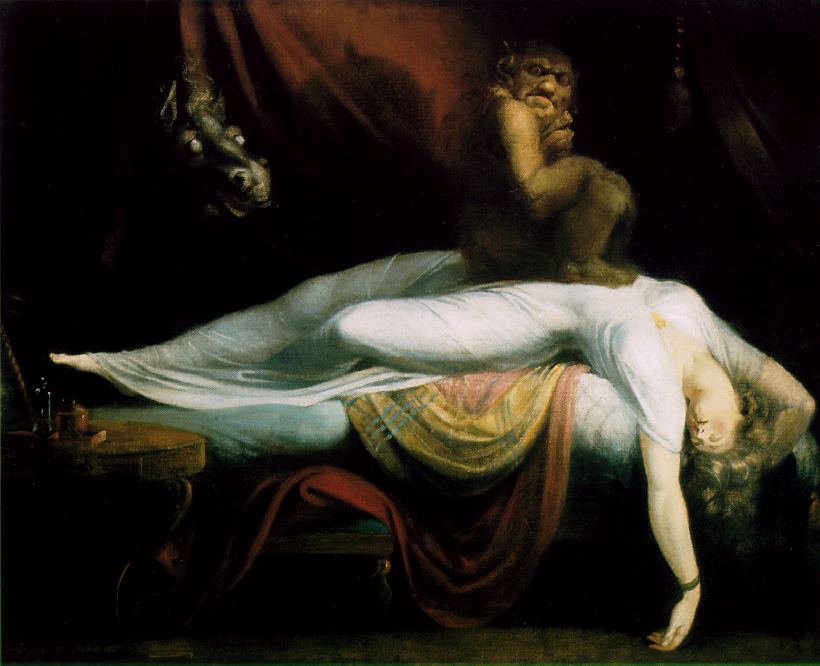
The Interpretation of Dreams
Overview unavailable.
Freud Preface Heading
- Identifies the book as The Interpretation of Dreams.
- Names Sigmund Freud as the author and gives the original publication year, 1900.
- Introduces the section titled “Preface to the Third Edition.”
Evolution of Dream Interpretation
- The author notes a sudden surge in public interest in the work after nearly a decade of relative neglect.
- Advances in sexual theory and the study of psychoneuroses have significantly influenced the book's revisions.
- The role of symbolism in unconscious thought has become a more central focus of the updated doctrine.
- New data and innovations have been integrated into the original text via interpolations and footnotes.
- Future study requires a closer union between dream analysis and the fields of poetry, myth, and popular idiom.
- The rapid progress of science makes it difficult for the text to remain perfectly consistent with current knowledge.
Dream-interpretation must seek a closer union with the rich material of poetry, myth, and popular idiom, and it must deal more faithfully than has hitherto been possible with the relations of dreams to the neuroses and to mental derangement.
Preface to the Second Edition
- The author expresses surprise that a second edition is required within a decade, noting that the book's success is not due to professional psychiatric or philosophical circles.
- Scientific reviewers and professional philosophers largely ignored or dismissed the work's potential to fundamentally modify psychological doctrines.
- The book's survival is attributed to a wider circle of cultured, inquiring readers rather than the author's small group of clinical adherents.
- The core psychological theories and methods of dream interpretation remain unchanged in the revision, having stood the test of time and clinical practice.
- The author reveals the book's subjective origin as a form of self-analysis following the death of his father, which he considers the most poignant loss in a man's life.
- Dream interpretation served as a vital anchor for the author's self-confidence during periods of doubt in his wider research on neuroses.
It reveals itself to me as a piece of my self-analysis, as my reaction to the death of my father, that is, to the most important event, the most poignant loss in a man's life.
Foundations of Dream Interpretation
- The author argues that dream interpretation is a legitimate branch of neuro-pathological science and a precursor to understanding complex neuroses.
- Dreams serve as the primary model for abnormal psychic formations, including phobias, obsessions, and delusions.
- Understanding the origin of dream-images is presented as a prerequisite for effective therapeutic intervention in psychological disorders.
- The author faces a methodological dilemma, choosing to use his own dreams as primary data despite the personal exposure it requires.
- The text acknowledges that omissions made to protect privacy unfortunately diminish the scientific value of the examples provided.
- The work serves as a link between dream-formation and the broader, more comprehensive problems of psycho-pathology.
And if I relate my own dreams I must inevitably reveal to the gaze of strangers more of the intimacies of my psychic life than is agreeable to me, and more than seems fitting in a writer who is not a poet but a scientific investigator.
The Psychology of Dreams
- The author proposes a psychological technique to interpret dreams as significant structures linked to waking psychic activities.
- The investigation aims to uncover the psychic forces and conflicts that cause the inherent obscurity and strangeness of dream content.
- Scientific progress regarding the true nature of dreams has remained stagnant for thousands of years despite extensive documentation.
- Ancient civilizations viewed dreams as supernatural inspirations or divine messages intended to predict the future.
- Aristotle shifted the perspective by categorizing dreams as psychological phenomena subject to the laws of the human spirit rather than divine revelation.
For nature is really demonic, not divine; that is to say, the dream is not a supernatural revelation, but is subject to the laws of the human spirit.
Ancient Conceptions of Dreams
- Aristotle recognized that dreams amplify minor physical sensations, potentially serving as early diagnostic tools for physicians.
- Ancient thinkers were divided between viewing dreams as psychological products or as divine inspirations.
- Dreams were historically categorized into two classes: those reflecting the present or past, and those predicting the future.
- The predictive class included direct prophecies, visions of future events, and symbolic dreams requiring expert interpretation.
- The complexity of symbolic dreams led to the development of dream-interpretation as a formal practice, with Artemidorus of Daldis as a primary authority.
The ancients distinguished between the true and valuable dreams which were sent to the dreamer as warnings, or to foretell future events, and the vain, fraudulent, and empty dreams whose object was to misguide him or lead him to destruction.
The Evolution of Dream Theory
- Ancient civilizations viewed dreams as external realities projected from a supernatural realm.
- Modern religious and mystical thinkers still use the inexplicable nature of dreams to justify belief in superhuman powers.
- Scientific progress on dream analysis has been hindered by a lack of cumulative, verified results among researchers.
- The author shifts from a chronological history of authors to a thematic approach focused on specific psychological problems.
- Recent scholarship has begun to separate the study of dreams from the physiological study of sleep.
- The text proposes that only detailed psychological investigations can resolve the obscurities of the dream-life.
In this memory the dream, as compared with the rest of the psychic content, seems to be something alien, coming, as it were, from another world.
Dreams and Waking Reality
- The author distinguishes between two opposing scientific views regarding the relationship between dreams and waking life.
- One perspective suggests dreams serve as a 'self-healing' escape that provides content entirely alien to the dreamer's daily trials and grief.
- An opposing majority view argues that dreams are a direct continuation of waking life, linked by threads to the experiences of the previous day.
- Researchers like Jessen and Maas suggest that dream content is heavily dictated by an individual's personality, social station, and long-term habits.
- The role of human passion is highlighted as a primary driver, where our deepest desires and 'warmest passions' generate specific dream imagery.
The waking life, with its trials and joys, its pleasures and pains, is never repeated; on the contrary, the dream aims at relieving us of these.
Ancient Views on Dreams
- Historical perspectives suggest that dream content is fundamentally dependent on an individual's waking life and activities.
- The Persian advisor Artabanus argued that dreams are primarily composed of the thoughts one has while awake.
- Lucretius observed that people often dream of their specific professions, such as lawyers arguing cases or generals fighting battles.
- Cicero and later scholars like Maury identified dreams as the 'remnants' of things thought or done during the day.
- The text establishes a long-standing intellectual tradition linking nocturnal imagery to daily preoccupations.
Maximeque 'reliquiae' rerum earum moventur in animis et agitantur, de quibus vigilantes aut cogitavimus aut egimus.
The Paradox of Dream Reality
- F. W. Hildebrandt identifies a fundamental contradiction between the isolation of dreams and their dependence on waking life.
- Dreams can appear as hermetically sealed existences, separated from reality by an unbridgeable chasm.
- The transition into sleep is described as a total disappearance of one's waking being, as if falling through an invisible trapdoor.
- Dream content often features scenarios entirely foreign to the dreamer's actual history, desires, or chronological era.
- Despite this isolation, every dream element is ultimately derived from objective or subjective experiences in the real world.
- The dream functions as a foreign interpolation between successive periods of time while remaining tethered to the dreamer's psychic life.
Hildebrandt then asserts that in falling asleep our whole being, with its forms of existence, disappears 'as through an invisible trapdoor.'
The Hidden Memory of Dreams
- All dream content is fundamentally derived from an individual's real-life experiences and memories.
- The connection between a dream and reality is often obscured and difficult to identify through simple comparison.
- Dreams possess unique mnemonic peculiarities that allow them to access information forgotten by the waking mind.
- Dreamers may mistakenly believe their dreams are original creations until a later event triggers the recovery of the source memory.
- The phenomenon proves that the dreaming mind retains knowledge and experiences that the waking state cannot consciously recall.
One is therefore forced to admit that in the dream something was known and remembered that cannot be remembered in the waking state.
Hypermnesic Dreams and Hidden Memory
- Delboeuf's dream of lizards and a specific fern reveals that dreams can access precise information, such as Latin botanical names, that the waking mind does not consciously possess.
- The source of the dream's 'hidden' knowledge was traced back to a brief encounter sixteen years prior, where the dreamer had transcribed names into a friend's herbarium.
- Visual imagery in dreams, such as a procession of lizards, can often be linked to forgotten sensory inputs like illustrations in old periodicals.
- The phenomenon of hypermnesia suggests that the mind retains a vast repository of memories that are inaccessible during waking life but available during sleep.
- Other historical accounts, such as Maury's knowledge of French geography and Scaliger's poetic inspiration, further validate the dream's ability to retrieve obscure facts.
- These cases demonstrate that what appears to be dream 'creation' or 'coincidence' is often the retrieval of deeply buried, authentic experiences.
A sudden recollection came to him: he opened the herbarium, discovered therein the Asplenium of his dream, and recognized his own handwriting in the accompanying Latin name.
Hypermnesic Dreams and Memory
- The text explores the phenomenon of hypermnesia, where dreams reveal memories that the dreamer cannot access while awake.
- A specific case is cited involving a man who learned of a historical critic's name through a dream state.
- The Marquis d'Hervey de St. Denis provides a first-hand account of a recurring dream figure he could not initially identify.
- The dream self-corrected when the dreamer returned to sleep and directly questioned the apparition about her identity.
- The dream provided a specific location, Pornic, which acted as a key to unlock the dreamer's waking memory of the woman.
- This suggests that the subconscious retains vivid details of past encounters that the conscious mind has entirely discarded.
In this new dream I addressed the golden-haired lady and asked her whether I had not had the pleasure of meeting her somewhere.
Hypermnesia and Dream Memory
- Dreams frequently reveal 'hypermnesia,' where the dreamer recalls information or memories that are inaccessible during their waking state.
- The author notes that patients often use specific quotations or expressions in dreams that they have consciously forgotten or believe they never knew.
- Cryptomnesia is illustrated through a patient who dreamed of a specific Polish liqueur, only to later realize he had seen the name on a street sign daily.
- Personal anecdotes show that recurring dream images of locations can be traced back to brief, forgotten visual encounters from over a decade prior.
- The discovery of a dream element's origin is often a matter of chance, requiring the dreamer to physically encounter the forgotten source in the real world.
- Childhood experiences serve as a primary, though often unrecognized, reservoir of material for dream reproduction.
I saw, in definite orientation to my own person - on my left - a dark space in which a number of grotesque sandstone figures stood out.
The Persistence of Childhood Memory
- Dreams possess a remarkable capacity to reproduce forgotten experiences from the earliest periods of life with vivid clarity.
- Psychic deposits from later years often bury childhood memories, yet dreams can extract these images in their original freshness.
- Dream-memory frequently retrieves insignificant details or people that held no conscious value at the time of the original experience.
- Hypermnesic dreams can provide verifiable information, such as names or locations, that the waking mind has entirely lost.
- The mechanism of dream association may blend different people based on shared physical traits that the dreamer has consciously forgotten.
The subject becomes more interesting still when we remember how the dream sometimes drags out, as it were, from the deepest and densest psychic deposits which later years have piled upon the earliest experiences of childhood, the pictures of certain persons, places and things, quite intact, and in all their original freshness.
The Paradox of Dream Memory
- Dreams frequently draw from childhood impressions or long-forgotten memories, such as a doctor not seen for thirty-eight years.
- Many theorists, including Robert and Nelson, argue that dreams primarily utilize impressions from the most recent days to function.
- Intense emotional experiences, such as the death of a loved one, are often excluded from dreams during the initial period of acute grief.
- A significant peculiarity of dreaming is the selection of indifferent and insignificant details over important life events.
- The 'worthless odds and ends' of experience, like a stranger's wart, often take precedence over profound waking concerns.
- Havelock Ellis suggests that the mental activities most active during the day are those that sleep most profoundly at night.
The psychic activities that are awake most intensely are those that sleep most profoundly.
The Persistence of Dream Memory
- The dream-memory frequently bypasses significant recent events in favor of indifferent or forgotten details from the remote past.
- Researchers like Miss Whiton Calkins found that a portion of dreams appear entirely unrelated to waking life due to this focus on trivialities.
- Hildebrandt suggests that every dream-image has a genetic origin in experience, though tracing these origins is often a tedious and thankless task.
- The behavior of dreams supports the theory that no psychic impression is ever truly lost, remaining stored as an inalterable trace.
- Dreams do not merely repeat experiences but rather fragment and transform them, making a simple 'reproductive activity' theory unlikely.
- The contradiction between the dream's vast memory capacity and its apparent incoherence challenges theories based on simple forgetting.
For most often it would lead us to ferret out all sorts of psychically worthless things from the remotest corners of our storehouse of memories, and to bring to light all sorts of quite indifferent events of long ago from the oblivion which may have overtaken them an hour after their occurrence.
Dream Stimuli and Sources
- While rare, some dreams can replicate waking memories and past experiences with near-perfect accuracy.
- The popular notion that dreams 'come from the stomach' reflects a theory that dreams are reactions to sleep disturbances.
- Scientific investigation shifted the view of dreams from divine inspirations to biological or psychological phenomena.
- Researchers debate whether the primary causes of dreams are rooted in physiology or psychology.
- Dream sources are generally classified into four categories: external sensory, internal sensory, internal organic, and purely psychical stimuli.
The ancients, who conceived of dreams as divine inspirations, had no need to look for stimuli; for them a dream was due to the will of divine or demonic powers.
Sensory Stimuli and Dream Content
- Strumpell's observations of a patient with general anesthesia suggest that sleep is naturally induced when sensory pathways to the outer world are closed.
- Human sleep is an attempt to replicate total sensory insulation, though it is never fully achieved as the mind remains in constant communication with the environment.
- External stimuli such as light, noise, temperature changes, or physical discomfort frequently serve as the immediate source of dream imagery.
- The dreaming mind often transforms mundane sensory inputs into dramatic narratives, such as a creaking door becoming a burglar or a cock's crow becoming a human shriek.
- Physical positioning and accidental bodily sensations, like a limb hanging off a bed, can manifest as vivid dreams of falling or standing on precipices.
- Historical accounts demonstrate that specific physical irritants, like a tight collar or a straw between the toes, are directly translated into dreams of hanging or assault.
The rolling of thunder takes us into the thick of battle, the crowing of a cock may be transformed into human shrieks of terror, and the creaking of a door may conjure up dreams of burglars breaking into the house.
Sensory Stimuli and Dream Content
- External physical sensations during sleep often translate into elaborate and dramatic dream narratives.
- Thermal stimuli, such as hot-water bottles or cold air, can trigger dreams of volcanic summits or nocturnal coach travel.
- Medical treatments like blisters or damp clothing are frequently reinterpreted by the dreaming mind as scenes of torture or being dragged through water.
- Systematic experiments by Maury demonstrate that specific sounds and smells can transport a dreamer to historical events or distant cities like Cairo.
- The dreaming mind often contextualizes simple physical triggers using personal memories or cultural associations, such as religious ceremonies or childhood doctors.
He was tickled with a feather on his lips and on the tip of his nose. He dreamed of an awful torture, viz., that a mask of pitch was stuck to his face and then forcibly torn off, bringing the skin with it.
External Stimuli in Dreams
- Researchers like Hervey and Weygandt have attempted to induce dreams experimentally through external triggers.
- Dreams demonstrate a remarkable ability to weave sudden sensory impressions into a complex, pre-existing narrative structure.
- Hildebrandt describes how an alarm clock's ring can appear as the logical and inevitable climax of a long, connected dream sequence.
- The mind often reinterprets real-world sounds, such as a fire alarm, into phonetic variations within the dream world.
- Historical figures like Napoleon I experienced dreams where sudden explosions were instantly contextualized as past military engagements.
- These phenomena suggest that the dreaming mind works backward or instantaneously to justify external interruptions.
It probably happened hundreds of times that the sound of this instrument fitted into an apparently very long and connected dream, as though the entire dream had been especially designed for it.
Stimuli and Dream Distortion
- External physical stimuli during sleep can trigger complex, narrative-driven dreams that culminate in the stimulus itself.
- A famous case study involves a dreamer experiencing a French Revolution execution sequence triggered by a falling bed-board hitting his neck.
- Researchers debate how the mind can compress a vast amount of dream-content into the split second between a physical stimulus and waking.
- Objective stimuli are rarely represented in their true form within a dream, instead being replaced by related symbolic representations.
- The same stimulus, such as an alarm clock, can produce vastly different dream scenarios depending on the dreamer's internal state.
- Science seeks to understand why specific representations are chosen over others, as the relationship between stimulus and dream is not exclusive.
He felt his head severed from his trunk, and awakened in terrible anxiety, only to find that the head-board of the bed had fallen, and had actually struck the cervical vertebrae just where the knife of the guillotine would have fallen.
Sensory Stimuli and Dream Illusions
- The dreaming mind often misinterprets external sensory stimuli, such as an alarm clock's ring, by weaving them into complex narrative illusions.
- Strumpell and Wundt argue that dreams create illusions when sensory impressions are too weak or indistinct to be correctly classified by the sleeping brain.
- The specific memory-images evoked by a stimulus are often viewed as indeterminable or left to the 'caprices of the mind.'
- Critics of the illusion theory suggest that external stimuli only explain a small fraction of a dream's rich and detailed content.
- The 'far-fetched' nature of dream interpretations, such as mistaking a galloping horse for giants eating, suggests deeper motives for memory selection.
But I soon perceive that the endless din is not really a rattling but a true ringing, and with this ringing the dreamer now becomes aware that the alarm-clock has done its duty.
Subjective Stimuli and Dream Origins
- Objective sensory stimuli are established dream producers, but they are insufficient to explain the full complexity of dream imagery.
- Internal or subjective stimuli, such as the 'luminous chaos' seen in the dark field of vision, serve as a primary source for dream-illusions.
- The brain often interprets subjective retinal irritations as multiple identical objects, such as swarms of birds, butterflies, or beads.
- Subjective stimuli are advantageous for dream formation because they are always available and independent of external accidents.
- Hypnogogic hallucinations—vivid images occurring during the transition to sleep—provide the main evidence for subjective dream-inciting power.
- Research suggests that a state of psychic passivity and relaxed attention is necessary for these internal images to manifest.
Thus we see outspread before our eyes innumerable birds, butterflies, fishes, coloured beads, flowers, etc. Here the luminous dust in the dark field of vision has assumed fantastic forms.
Sensory Origins of Dreams
- Hypnogogic hallucinations often serve as an 'overture' to the primary motifs of a dream, introducing sensory data that the mind later expands upon.
- Auditory and visual stimuli experienced during the transition to sleep frequently repeat themselves within the narrative structure of the dream.
- Researcher G. Trumbull Ladd discovered that retinal sensations, such as luminous dots and lines, provide the physical 'outline' for complex dream imagery.
- The mind interprets internal retinal irritability as objective objects, such as transforming parallel light spots into lines of printed text.
- Visual images are the primary constituents of dreams, largely fueled by subjective stimuli from the eyes rather than external light.
- The transition from sleep to waking shifts the source of dream stimuli from internal retinal excitation to objective light penetrating the eyelids.
Not only pictures, but auditory hallucinations of words, names, etc., may also occur hypnogogically, and then repeat themselves in the dream, like an overture announcing the principal motif of the opera which is to follow.
Somatic Origins of Dreams
- Internal organs and bodily processes can become sources of intense sensation during states of excitation or disease.
- The psyche possesses a deeper and broader consciousness of its physical corporality during sleep than while awake.
- Sleep allows the mind to receive and be influenced by subtle bodily stimuli that are typically ignored during the day.
- Aristotle suggested that dreams can reveal incipient morbid conditions before they are consciously noticed.
- Medical authors acknowledge the diagnostic value of dreams in predicting the onset of physical illness.
During sleep the psyche becomes far more deeply and broadly conscious of its coporality than in the waking state.
Organic Sources of Dreams
- Ancient Greeks utilized dream oracles and temple rituals to induce healing visions and symbolic remedies.
- Modern medical observations suggest that dreams can act as early diagnostic indicators for internal diseases before physical symptoms appear.
- Specific physiological conditions, such as heart and lung diseases, produce distinct dream themes like sudden death or suffocation.
- Experimental evidence shows that physical obstruction of breathing can reliably induce nightmares in healthy subjects.
- The theory of dream-instigation by organic sensation is strongly supported by the influence of sexual and digestive stimuli.
- While pathological states provide clear dream sources, normal dreams likely arise from the mind's heightened sensitivity to healthy internal organs during sleep.
The patient betook himself to the temple of Apollo or Aesculapius; there he was subjected to various ceremonies, bathed, rubbed and perfumed.
Organic Origins of Dreams
- Vague internal sensations from the waking state gain potency at night, becoming a primary source of dream imagery.
- Medical writers favor this theory because it links the 'moi splanchnique'—the obscure essence of our internal being—to the mystery of dreaming.
- The organic stimulus theory provides an etiological bridge between normal dreaming and the manifestations of mental derangement or psychoses.
- Schopenhauer suggested that the intellect processes internal sympathetic nervous system stimuli into spatial and temporal dream-forms once daytime distractions fade.
- Psychiatrist Krauss categorized these dream-inducing sensations into general systemic feelings and specific vegetative groups like gastric or muscular stimuli.
At night, however, when the overwhelming effect of the impressions of the day is no longer operative, the impressions that surge upward from within are able to force themselves on our attention - just as in the night we hear the rippling of the brook that was drowned in the clamour of the day.
Physical Stimuli and Dream Formation
- Krauss describes the 'transubstantiation' of physical sensations into dream-images where the mind ignores the stimulus to focus on associated ideas.
- The theory of physical excitation suggests that dream content can be traced back to specific causative organic stimuli.
- Typical dreams like flying or falling are explained as mental interpretations of physiological changes, such as pulmonary movement or limb displacement.
- Critics argue these explanations are often inconsistent, selectively ignoring or emphasizing sensations to fit a specific interpretation.
- M. Simon proposed rules stating that dreams harmonize with the affects or functions of the organic apparatuses excited during sleep.
- The relationship between organic stimuli and dream content remains a central but often obscurely defined area of psychological study.
Krauss even gives this process the special name of "transubstantiation of the sensations into dream-images."
Bodily Sensation and Dreams
- Mourly Vold experimented on how the physical positioning of limbs influences the content of dreams.
- The static position of a limb in reality often corresponds directly to its perceived position within a dream.
- Dreamed movements typically incorporate the actual physical position of the limb as one stage of the action.
- Physical sensations can be displaced, with the dreamer attributing their own limb's position to another person or even a monster.
- Specific limb uses can trigger abstract conceptual dreams, such as finger movements leading to dreams about numerals.
- The author argues that while organic stimulation influences dreams, it does not fully dictate the creative freedom of the dream-picture.
The limb in any particular position may appear in the dream as an animal or monster, in which case a certain analogy between the two is established.
The Origins of Dream Material
- Early investigators suggest dreams are a direct continuation of daily interests and activities.
- Contradictory theories argue that dreams often distance the sleeper from current concerns, only processing them once they lose their immediate relevance.
- The complexity of dream analysis makes it impossible to establish universal rules without allowing for frequent exceptions.
- Current scientific explanations fail to account for a significant portion of dream imagery, leaving a 'hiatus' in the understanding of psychic sources.
- Many researchers tend to minimize psychic factors in favor of somatic or organic stimuli, viewing dreams as illusions triggered by sensory impressions.
- The 'association-dream' is often characterized as a state where imagination is released from reason and left to uncontrolled, confused divagations.
The imaginative life, already released from the control of reason and intellect, is here no longer held together by the more important psychical and physical stimuli, but is left to its own uncontrolled and confused divagations.
Somatic vs Psychic Origins
- Early theorists like Tissie argued that dreams are exclusively triggered by external sensory stimuli rather than internal psychic sources.
- Wundt and other philosophers proposed a middle ground where somatic and psychic stimuli cooperate to form dream content.
- The author suggests that an unsuspected psychic source of excitation is the true key to solving the problem of dream formation.
- Modern psychiatry's preference for somatic explanations stems from a fear that acknowledging psychic autonomy would lead back to metaphysical mysticism.
- The psychiatrist's 'distrust' of the psyche treats it as a dependent entity rather than a force with its own causal power.
- The author argues that even if a phenomenon is primarily psychic, it does not preclude a future discovery of its organic basis.
The distrust of the psychiatrist has placed the psyche under tutelage, so to speak; it requires that none of the impulses of the psyche shall reveal an autonomous power.
The Fragility of Dream Memory
- Dreams are notoriously ephemeral, often fading shortly after waking until only trifling remnants remain.
- Despite their usual fragility, some dreams possess an extraordinary power to persist in memory for decades with vivid freshness.
- The forgetting of dreams is a complex phenomenon driven by factors similar to waking forgetfulness, such as low intensity or lack of repetition.
- A primary cause for forgetting is the lack of logical connection and order within dream compositions, making them difficult for the mind to organize.
- The unique and non-recurring nature of most dream-images contributes significantly to their rapid disappearance from the conscious mind.
- There is a paradoxical tension between the theory that we forget nonsense and the observation that we often remember the most peculiar dreams.
We are often aware that we have been dreaming, but we do not know of what we have dreamed; and we are so well used to this fact - that the dream is liable to be forgotten - that we do not reject as absurd the possibility that we may have been dreaming even when, in the morning, we know nothing either of the content of the dream or of the fact that we have dreamed.
The Fragility of Dream Memory
- Dreams are easily forgotten because they lack the orderly mnemonic connections found in waking psychic life.
- The sensory bombardment of the waking world quickly overwhelms and dispels lingering dream images.
- A lack of personal interest in dreams contributes significantly to the speed at which they are forgotten.
- The structural difference between sleeping and waking states makes dream material nearly untranslatable to the conscious mind.
- There is a persistent concern that the waking mind involuntarily falsifies or interpolates details when recalling a dream.
- Spontaneous recall can occur later in the day when a specific perception accidentally triggers a forgotten dream fragment.
They fade away before the impressions of the new day like the stars before the light of the sun.
The Deception of Memory
- Recalling a dream often involves an unconscious distortion of the truth to create a logical narrative.
- The human mind possesses an innate tendency to fill in gaps and supply missing links to incoherent dream fragments.
- Even the most honest individuals inadvertently embellish their dreams during the process of recollection.
- Immediate documentation is the only reliable method to prevent the 'perfidious' partial forgetting that leads to fabrication.
- Repeatedly telling a modified dream story can eventually convince the author of its absolute authenticity.
Rarely, and perhaps never, has a connected dream been as connected as it appears to us in memory.
The Psychological Alienation of Dreams
- Spitta suggests that the logical order of dreams is a retrospective fabrication created during the act of remembering.
- The reliability of dream memory is fundamentally untestable because dreams lack objective external verification.
- Fechner proposes that dreams occur in a different 'arena' of the mind rather than being a mere continuation of waking thought at lower intensity.
- A defining characteristic of the dream state is the shift from voluntary ideational thought to involuntary visual imagery.
- The 'psychic strangeness' of dreams makes them feel like alien experiences rather than products of our own authorship.
He believes, rather, that the arena of dreams is other than the arena of the waking life of the mind.
The Nature of Dream-Life
- Psychological analysis reveals essential characteristics inherent to the state of dreaming.
- Hypnogogic hallucinations are identified as the primary building blocks of dream imagery.
- There is a fundamental identity between the content of waking hallucinations and dream-images.
- The transition between wakefulness and sleep serves as a bridge for visual phenomena.
- Dream-life is characterized by specific recurring psychological patterns.
As for the images themselves the hypnogogic hallucinations - we have learned that even in their content they are identical with dream-images.
The Hallucinatory Nature of Dreams
- Dreams primarily utilize visual and auditory images to replace abstract thoughts with vivid hallucinations.
- The dream-state dramatizes ideas into situations that the dreamer perceives as actual, present experiences rather than mere thoughts.
- A key distinction between dreams and daydreams is the dreamer's 'perfect good faith' in the reality of the hallucination while asleep.
- The transition into sleep involves a relaxation of the will, causing subjective psychic activity to be apprehended as objective sensory input.
- The mind's credulity in dreams stems from its inability to access the external criteria and tests used in the waking state to distinguish internal images from external reality.
The dream hallucinates- that is, that it replaces thoughts by hallucinations.
The Reality of Dreams
- The mind fails to distinguish between voluntary mental images and involuntary dream hallucinations due to a lack of causality.
- Alienation from the external world is identified as the primary reason for the subjective belief in dream reality.
- Delboeuf argues that we believe in dreams not because we cannot test them, but because we lack competing sensory impressions.
- Dreams can simulate the act of testing reality, such as the sensation of touch, making internal verification impossible.
- The only pragmatic criterion for distinguishing dreams from reality is the physical act of waking up.
- The habit of assuming an external world persists during sleep, causing the ego to project dream images as objective facts.
Dreams can make us believe that we are applying such tests - that we are touching, say, the rose that we see in our dream; and yet we are dreaming.
The Sleeping Psyche
- Sleep is conditioned not by a total absence of sensory stimuli, but by a lack of interest in them.
- The psyche maintains a selective connection to the outer world, discriminating between indifferent noises and significant signals like one's own name.
- Waking can be triggered by the cessation of a stimulus, such as a mill stopping, proving the mind monitors constant background noise for reassurance.
- The strangeness of dreams cannot be explained solely by sensory withdrawal, as retranslating dreams into thoughts does not resolve their mystery.
- During sleep, memory-images are severed from their waking psychic values, leaving them to hover in the mind without their original emotional weight.
- Falling asleep requires the renunciation of voluntary guidance over the flow of one's own ideas.
Thus the miller can fall asleep only when he hears the clatter of his mill, and he who finds it necessary, as a matter of precaution, to burn a light at night, cannot fall asleep in the dark.
The Anarchy of Dreams
- The state of sleep may extend to psychic functions, causing some to be suspended while others operate in a restricted or impaired capacity.
- Dreams are characterized by a lack of coherence, the reconciliation of contradictions, and a total disregard for the moral and intellectual standards of waking life.
- A person who behaved or spoke in reality as they do in their dreams would be diagnosed as insane, feeble-minded, or muddle-headed.
- Various philosophers and physicians agree that the dream is a state of 'psychic anarchy' where mental functions operate without control or purpose.
- The dream represents a dissolution of the logical power of the central ego, allowing ideas to whirl in a state of 'kaleidoscopic confusion.'
- The prevailing scientific and philosophical view rates psychic activity in dreams as very low, treating the dreamer as a 'spiritual automaton.'
It is as though the psychological activity of the brain of a reasonable person were to migrate into that of a fool.
The Absurdity of Dreams
- The dreamer's reasoning allows for the complete disregard of familiar physical and logical laws.
- Contradictions in nature and society are tolerated by the sleeping mind until an extreme excess of nonsense triggers an awakening.
- The vast majority of dreams are characterized by an inherently absurd and irrational content.
- Dream imagery shifts rapidly like a kaleidoscope, uniting unrelated people and objects in nonsensical groupings.
- The production of dream images is compared to involuntary physical movements seen in chorea or paralytic conditions.
Sometimes we quite innocently calculate that three times three make twenty; and we are not in the least surprised if a dog recites poetry to us, if a dead person walks to his grave, or if a rock floats on the water.
The Degradation of Reason
- Many psychological researchers view dreams as a series of degradations of the thinking and reasoning faculties.
- Logical operations and the laws of causality are believed to recede or disappear entirely during the dream state.
- While judgment is weakened, the faculty of memory often remains intact and can even surpass waking performance.
- Some theorists argue that the 'sentimental life' or emotional essence of a person remains unaffected by sleep.
- The formation of dreams is often attributed to sensory stimuli triggering hallucinations or illusions without the oversight of moral or aesthetic judgment.
All the activities of consciousness occur in dreams, but they are imperfect, inhibited, and mutually isolated.
The Laws of Dream Association
- Dream images are formed through the association of mental representations and the remnants of waking organizational faculties.
- The specific motive or law governing which associations are selected in the absence of external stimuli remains unknown.
- Dream associations differ from waking logic, often relying on accidental similarities and barely perceptible connections.
- Maury compares dream-life to mental derangement, citing spontaneous mental action and irregular, 'vicious' associations.
- Linguistic similarities, such as puns or homonyms, frequently dictate the transition between disparate dream scenes.
- Examples show how words like 'pelerinage' and 'pelle' or 'kilogramme' and 'Gilolo' create a chain of nonsensical dream imagery.
In dreams the ideas chase and seize upon one another on the strength of accidental similarities and barely perceptible connections.
The Method in Dream Madness
- The author acknowledges a significant debate between those who view dreams as mental anarchy and those who see them as structured activities.
- Some theorists suggest that the apparent absurdity of dreams is merely a disguise or a 'dramatic pretence' similar to Hamlet's feigned madness.
- Havelock Ellis and J. Sully propose that dreams represent an archaic world, serving as a means to conserve primitive stages of mental development and past personalities.
- Delboeuf argues that all mental faculties—including morality and will—remain intact during sleep but are simply applied to imaginary objects.
- The Marquis Hervey suggests that the only difference between waking thought and dreaming is the occlusion of the senses and the transformation of memories into objective, visible forms.
- Maury counters these high estimates of dream intelligence by noting that the intellectual faculties in sleep lack the equilibrium found in the waking state.
The possibility seems to have dawned upon others that the madness of the dream is perhaps not without its method- that it is perhaps only a disguise, a dramatic pretence, like that of Hamlet, to whose madness this perspicacious judgment refers.
The Logic of Dream Incoherence
- Hervey suggests that dream images are merely copies of underlying ideas and that analyzing these ideas reveals a logical structure.
- Wolf Davidson argued as early as 1799 that the apparent leaps in dream imagination are governed by the laws of association.
- The psychological evaluation of dreams ranges from extreme underestimation to the belief that dream-life exceeds waking capacities.
- Hildebrandt identifies a paradox where dreams can represent both a sub-human enfeeblement and a virtuous enhancement of the psyche.
- Dreams are credited with a unique capacity for poetry, irony, and an idealized vision of reality that surpasses the waking world.
Dreams have a wonderful poetry, an apposite allegory, an incomparable sense of humour, a delightful irony.
The Contradictory Nature of Dreams
- The text explores the tension between viewing dreams as profound psychic achievements versus seeing them as meaningless degradations of mental life.
- Historical perspectives shifted from philosophical reverence for the 'liberated soul' to a scientific skepticism that favors somatic or physical explanations.
- Medical professionals tend to underrate dream activity as valueless, while philosophers and amateur psychologists often defend its psychological significance.
- Memory is identified as the most impressive superior accomplishment of the dream-life, often exceeding waking capabilities.
- The perceived ability of dreams to compress time or transcend space is debated, with some viewing it as a unique advantage and others as a mere illusion of thought.
- Evidence suggests dreams can continue intellectual work and provide creative inspiration, though the interpretation of these facts remains contested.
Would it not suffice to state that everything is possible in the dream, from the lowest degradation of the psychic life to its flight to heights unknown in the waking state?
Morality and Divination in Dreams
- The debate over the divinatory power of dreams remains unresolved, though many cases may eventually be explained by natural psychology.
- A significant psychological conflict exists regarding whether the moral dispositions of waking life persist during sleep.
- Several researchers argue that dreams are characterized by ethical indifference, where the dreamer lacks compassion and remorse.
- In the dream state, associations are often formed without the influence of reflection, aesthetic taste, or moral judgment.
- Contradictory theories suggest that dreams actually reveal a person's true character, with individuals acting in total accordance with their nature.
As every one knows, dreams are especially unbridled in sexual matters.
Morality in Dreams
- The text explores the debate over whether a person's moral character remains consistent between their waking life and their dreams.
- Thinkers like Haffner and Scholz argue that dreams reveal one's true self, suggesting that a virtuous person will remain virtuous even while asleep.
- Hildebrandt asserts that while logic and facts may fail in dreams, the 'categorical imperative' or moral essence remains an inseparable companion.
- A historical anecdote describes a Roman emperor executing a subject for a dream, operating on the belief that dream-thoughts reflect waking intentions.
- The author notes a logical inconsistency in how scholars treat immoral dreams compared to intellectual errors made during sleep.
- The central unresolved question is the origin of immoral dreams in individuals who consider themselves morally upright in their waking lives.
Kant's categorical imperative dogs our steps as an inseparable companion, of whom we cannot rid ourselves even in our slumber.
Morality and Dream Responsibility
- Authors debate whether the immoral content of dreams originates from normal psychic functions or external somatic disturbances.
- Haffner argues that while we lack direct will in dreams, we bear indirect responsibility by failing to 'morally cleanse' our minds before sleep.
- Hildebrandt suggests that the common phrase 'I never would have dreamt of such a thing' implies an unconscious admission of moral accountability even in sleep.
- Dreams are viewed not as original creators of evil, but as dramatic elaborations of existing waking impulses, wishes, or desires.
- The text concludes that every 'sinful' dream contains a minimum of guilt because it is built from real, albeit suppressed, historical material within the dreamer.
The dream has not discovered it - it has only imitated and extended it; it has only elaborated into dramatic form a scrap of historical material which it found already existing within us.
The Ethics of Dreams
- Great thinkers and holy men have long lamented the presence of grotesque, nonsensical, or immoral thoughts that disturb their conscious meditations.
- Dreams are theorized to provide a rare glimpse into the deepest recesses of the human psyche that remain closed during waking life.
- Philosophers like Kant and Erdmann suggest dreams reveal our true dispositions or what we might have become under different circumstances.
- The emergence of suppressed impulses in dreams is viewed as a revival of 'buried passions' and forgotten ideas that the waking mind ignores.
- The primary distinction between absurd dreams and immoral dreams is that the latter stand in direct opposition to our conscious ethical feelings.
- Psychologists remain divided on how to interpret the significance of these 'undesired imaginings' and their relation to the waking mind.
The greatest thinkers have had cause to complain of this dream-like, tormenting and distressing rabble of ideas, which disturbs their profoundest contemplations.
The Immoral Soul in Sleep
- Hildebrandt suggests that dreams reveal a latent vitality of immoral impulses that are normally inhibited during waking hours.
- Dreams may function as a psychic monitor, alerting the individual to 'secret mischief' in the soul similar to how they might signal physical illness.
- Spitta argues that a virtuous waking life of suppressing sinful thoughts is the dreamer's only defense against these involuntary nocturnal imaginings.
- Jessen offers a counter-perspective, claiming that immoral dream content is merely a mechanical procession of ideas and not proof of a dreamer's true character.
- Maury posits that the suspension of will during sleep allows instinctive passions to act without the restraint of conscience or honor.
- The dream state is characterized as a return to a 'state of nature' where the primitive, instinctive man is revealed in his native misery.
En revel'homme se revele donc tout entier a soi-meme dans sa nudite et sa misere natives.
Theories of Dream Activity
- Maury observes that dreams can reveal deep-seated superstitions that contradict a person's conscious, waking beliefs.
- Stricker distinguishes between the imaginary content of dreams and the reality of the emotions, such as fear, experienced within them.
- A formal dream theory aims to explain observed characteristics and define the dream's relationship to broader psychic phenomena.
- Ancient theories viewed dreams as divine guidance, whereas modern biological research seeks to identify specific functions or purposes.
- One school of thought suggests that the psyche remains fully active during sleep but produces different results due to altered conditions.
- Critics of full-activity theories argue they fail to explain why the mind continues such complex operations instead of simply sleeping or waking.
Dreams do not consist purely and simply of delusions; for example, if one is afraid of robbers in a dream, the robbers indeed are imaginary, but the fear is real.
Theories of Dream Mechanism
- The author contrasts two psychological views of sleep: one as a simple barrier to the world and another as a fundamental alteration of the psychic mechanism.
- One school of thought compares the dream state to paranoia, while the more restrictive view likens it to mental deficiency or amentia.
- The most popular scientific theory posits that dreams are merely the expression of a fragment of psychic activity that remains unparalysed during sleep.
- This 'partial waking' theory is favored because it explains the spectrum of dream quality, from total absurdity to high intellectual activity.
- By viewing dreams as a state of progressive awakening, researchers avoid the difficulty of reconciling the sharp contrasts found within dream content.
If I may draw a comparison from psychiatry, I would say that the first group of theories construes the dream like a paranoia, while the second represents it as a type of mental deficiency or amentia.
The Physiology of Dreams
- Dreams are conceptualized as an incomplete waking state where isolated brain cell groups fire while the rest of the organ remains in torpor.
- The irrationality of dreams is attributed to the lack of control from brain regions governing associations, which are the last to awaken.
- Prominent physiologists like Binz argue that dreams are purely physical processes that are useless and potentially morbid.
- Somatic stimuli from both internal and external sources are viewed as the primary triggers that disturb sleep and force partial wakefulness.
- The scientific consensus of the era often likens the dreaming mind to the fingers of an unmusical person wandering aimlessly over a keyboard.
- This physicalist perspective denies dreams any inherent psychic dignity or the possibility of meaningful interpretation.
The old simile of 'the ten fingers of a person ignorant of music running over the keyboard of an instrument' perhaps best illustrates in what esteem the dream is commonly held by the representatives of exact science.
The Dream as Elimination
- Early critics like Burdach argued that defining dreams as 'partial wakefulness' fails to explain the actual mechanics of sleep or the mind.
- Robert's 1866 theory proposes that dreams serve a vital biological function by acting as a 'safety-valve' for the overburdened brain.
- The theory suggests we dream primarily of insignificant or incomplete impressions rather than the major, settled interests of our waking life.
- Dreaming is framed as a somatic process of elimination where 'thoughts nipped in the bud' are purged to prevent mental imbalance.
- Robert posits that the impulse to dream originates within the mind's need for discharge rather than being triggered solely by external sensory stimuli.
- Undigested mental material that cannot be eliminated is transformed by imagination into harmless phantasy-pictures to be stored in memory.
A man deprived of the capacity for dreaming would in time become mentally unbalanced, because an immense number of unfinished and unsolved thoughts and superficial impressions would accumulate in his brain.
The Mechanics of Dream Material
- Robert views dreaming as a nocturnal somatic process that functions to cleanse the mind and prevent mental strain.
- Yves Delage observes that we rarely dream of intense daytime preoccupations until they have been overshadowed by newer interests.
- Dream material is identified as 'souvenir inconscient,' consisting of sensory impressions that were either insignificant or lacked mental attention.
- Delage suggests that suppressed or inhibited psychic energy from the day becomes the primary 'mainspring' of nocturnal dreams.
- The theory posits that the less conscious an impression is during the day, the more likely it is to appear in a dream.
- Ultimately, Delage aligns with the doctrine that dreams are products of wandering thought during a partial slumber of the brain.
The psychic energy accumulated during the day by inhibition or suppression becomes the mainspring of the dream at night.
The Dreaming Mind's Potential
- A specific group of dream theories suggests that the dreaming mind possesses unique psychic capacities unavailable during waking hours.
- These theories often posit that the mind can perform certain functions more perfectly or extensively while asleep.
- Earlier psychologists frequently viewed these dream-state activities as serving a useful or beneficial function for the individual.
- The dreaming state is characterized as a form of 'free play' where the mind operates without the constraints of self-consciousness.
- Dreaming is described as a natural vitality of the mind that transcends the limitations of individuality and self-determination.
Dreaming is the natural activity of the mind, which is not limited by the power of the individuality, nor disturbed by self-consciousness, nor directed by self-determination, but is the vitality of the sensible focus indulging in free play.
The Restorative Power of Phantasy
- Early theorists like Burdach view dreaming as a mental vacation that refreshes the mind for daily labor.
- Novalis describes the dream as a 'bulwark' against the mundane, preserving youthfulness through childlike play.
- Purkinje argues that dreams perform a healing function by creating emotional states directly opposed to the day's distress.
- Scherner presents a comprehensive theory of dreaming as a state where the ego's central control is enervated.
- In the absence of rational governance, the 'phantasy' gains absolute supremacy, becoming both reproductive and productive.
- The dream-life is characterized by a preference for the unlimited and the prodigious, freed from logical inhibiting categories.
The dream is a bulwark against the regularity and commonplace character of life, a free recreation of the fettered phantasy, in which it intermingles all the images of life and interrupts the constant seriousness of the adult by the joyful play of the child.
The Language of Dream Phantasy
- The dream-phantasy lacks conceptual language and must translate internal emotional and physical stimuli into vivid, plastic visual forms.
- Dream imagery is often symbolic and indirect, preferring 'alien' images that capture a specific aspect of an object rather than the object itself.
- The dream-ego is rarely a passive observer; it is internally driven to interact with the phantastic environment, such as picking up coins found in the street.
- Scherner's theory posits that physical stimuli are merely raw material that the psyche utilizes to fulfill its own creative and artistic intentions.
- The human body is frequently symbolized as a house, where specific architectural features represent different organs or physiological sensations.
- Sexual and organic stimuli are represented through a variety of hollow or elongated objects, such as stoves, baskets, or tobacco pipes.
The dream-phantasy lacks the language of concepts. What it wishes to say it must express in visible form; and since in this case the concept does not exert an inhibitory control, it depicts it in all the fulness, power, and breadth of visible form.
Symbolic Phantasy in Dreams
- Dreams utilize everyday objects like pipes or narrow paths to represent sexual anatomy and physiological functions.
- Internal stimuli from organs like the bladder or intestines are often translated into environmental imagery such as foaming water or muddy streets.
- The dream-ego frequently personifies physical pain or desire through dramatic encounters with animals or human pursuers.
- Scherner’s theory suggests the psyche 'plays' with sensory stimuli in a mischievous, non-functional manner during sleep.
- Despite its perceived arbitrariness, the phantastic approach to dream interpretation addresses a mystery that traditional science has largely ignored.
- The author argues that some level of 'phantasy' is necessary to explain psychic phenomena, as even biological explanations use metaphorical language.
In dreams the psyche plays with the stimuli which are offered to it. One might conjecture that it plays in a mischievous fashion.
Theories of Dream Life
- The text highlights the ongoing tension between Scherner's psychological theory and traditional medical theories.
- Dream interpretation is described as vacillating between two extreme conceptual poles.
- There is a lack of consensus in the scientific community regarding the origin and meaning of dreams.
- The author introduces a transition into the specific relationship between dreaming and mental illness.
- The section serves as a bridge between symbolic interpretation and clinical pathology.
For the present, Scherner's theory of dreams, in contrast to the medical theory, may perhaps lead us to realize between what extremes the explanation of dream-life is still unsteadily vacillating.
Dreams and Mental Derangement
- The relationship between dreams and psychoses can be categorized into clinical etiology, changes in dream-life during disease, and structural analogies.
- A dream can act as the 'true determining cause' of insanity, where the first manifestation of a mental disorder breaks through during sleep.
- Psychotic symptoms such as hallucinations and fits of frenzy may remain confined to the night, leaving the subject seemingly healthy during the day.
- In some cases of recovery, the dream-life continues to exhibit the unbridled impulses of the disease long after daytime functions have returned to normal.
- Medical science suggests that certain anxiety-dreams may be the functional equivalents of epileptic attacks or intermittent insanity.
The psychosis may come to life quite suddenly, simultaneously with the dream that contains its effective and delusive explanation, or it may develop slowly through subsequent dreams that have still to struggle against doubt.
Dreams and Insanity
- Historical philosophers and physicians like Cabanis and Maine de Biran first established the formal link between dreaming and mental illness.
- Prominent thinkers such as Kant and Schopenhauer defined insanity as a waking dream or a prolonged state of dreaming.
- Wundt suggests that the psychological manifestations observed in asylums are nearly identical to common dream experiences.
- Spitta identifies specific commonalities including the suspension of self-consciousness and a lack of moral awareness in both states.
- Both conditions involve automatic idea association and a lack of proportion that leads to phantasms and exaggerated perceptions.
- The comparison highlights how both dreams and delirium can result in the total inversion of a person's character and personality.
Schopenhauer terms the dream a brief insanity, and insanity a long dream.
Dreams and Mental Derangement
- The sensory content of dreams mirrors mental illness, primarily favoring sight and hearing while rarely involving smell or taste.
- Both dreamers and the insane experience a resurgence of remote memories that the healthy waking mind has long forgotten.
- Wish-fulfillment serves as a central psychological bridge, where the mind grants the sufferer the happiness or wealth denied by reality.
- The splitting of personality and the hearing of one's own thoughts as external voices are shared characteristics of dreams and paranoia.
- Insanity is conceptualized as a morbid, intensified version of the normal, periodically recurring dream state.
- The etiology of both states may be rooted in organically conditioned sensations and physical stimuli arising from the body's organs.
The woman who has lost a dearly beloved child experiences in her delirium the joys of maternity; the man who has suffered reverses of fortune deems himself immensely wealthy; and the jilted girl sees herself tenderly beloved.
Dream Theory and Scientific Resistance
- The medical theory of the era views dreams as useless disturbances resulting from diminished psychic activity.
- The author suggests that understanding the mystery of dreams is a prerequisite for explaining the mechanism of mental disorders.
- A nine-year gap between editions revealed no significant advancements or new perspectives in dream research literature.
- The author criticizes contemporary researchers for ignoring his work and failing to engage with novel psychological theories.
- Scientific 'research-workers' are characterized as having a profound aversion to learning anything that challenges established views.
In most of the literature which has appeared since the publication of my own work the latter has not been mentioned or discussed; it has, of course, received the least attention from the so-called "research-workers on dreams," who have thus afforded a brilliant example of the aversion to learning anything new so characteristic of the scientist.
Defending the Dream Theory
- The author expresses frustration with scientific critics, suggesting they have failed to properly read or comprehend his foundational work.
- He dismisses the work of contemporary Sante de Sanctis as being 'exceedingly poor in ideas' and failing to grasp the depth of dream problems.
- The text evaluates H. Swoboda's attempt to link dream content to biological periodicity, ultimately finding the theory inadequate and unconvincing.
- A rare moment of validation is found in the work of Lynkeus, whose 'Phantasien eines Realisten' aligns with the author's theories independently.
- By 1914, the author acknowledges a shift from being ignored to being the center of a complex, evolving field of psychological literature.
The few reviews which have appeared in the scientific journals are so full of misconceptions and lack of comprehension that my only possible answer to my critics would be a request that they should read this book over again - or perhaps merely that they should read it!
Historical Perspectives on Dreams
- The text references foundational studies on dream interpretation in antiquity, specifically citing Buchsenschutz and Hippocrates.
- A vast bibliography is provided for dream interpretation across diverse cultures, including Jewish, Arabic, Japanese, Chinese, and Indian traditions.
- Dreams are described as being primarily composed of the remnants of daily life, including past actions, desires, and professional pursuits.
- The mind remains intent on its waking devotions during sleep, leading professionals like generals or lawyers to continue their work in dreams.
- Vaschide suggests that individuals may exhibit enhanced linguistic abilities, such as speaking foreign languages more fluently, while dreaming.
Vaschide even maintains that it has often been observed that in one's dreams one speaks foreign languages more fluently and with greater purity than in the waking state.
The Mechanics of Dreaming
- Every insignificant daily impression leaves an ineradicable mark capable of reappearing in dreams as a reproduction of reality.
- Dream interpretation must prioritize the dreamer's own impressions over the interpreter's external logic or literary associations.
- The act of recording dreams immediately is essential to prevent the imagination from unconsciously filling in memory gaps with artistic fiction.
- Dreams are characterized by the abolition of time and space, leading the mind to mistake internal hallucinations for objective perceptions.
- Despite the erratic nature of dream imagery, the higher psychic functions of judgment and logic remain fundamentally unaltered during sleep.
Unconsciously one becomes an artist, and the story, repeated from time to time, imposes itself on the belief of its author, who, in good faith, tells it as authentic fact.
The Logic of Dream Anarchy
- Dreams are characterized by a lack of orientation and critical reflection, leading to reckless extravagances in judgment and hope.
- The sleeping mind functions as a 'spiritual automaton,' where intellectual and emotional faculties operate without external control or equilibrium.
- Despite apparent incoherence, dreams are not pure irrationality but rather the application of intact mental faculties to imaginary objects.
- The transition to sleep involves a state of 'disinterest' where the mind becomes closed to the outside world, turning internal ideas into objective, visible shapes.
- Bizarre dream sequences can be understood as logical facts if one knows how to analyze the underlying progression of ideas.
- Some thinkers suggest that dreams, rather than the waking state, serve as the true gateway to understanding metaphysics.
The dreamer is an actor who plays at will the mad and the wise, executioner and victim, dwarf and giant, devil and angel.
The Moral Nature of Dreams
- Historical perspectives, including those of the Inquisition, suggest that dream content reflects a person's true daily conduct and internal preoccupations.
- Dreams are characterized by the suspension of the will and conscience, allowing instinctive and often 'vicious' tendencies to act without restraint.
- The dream state reveals the 'natural man' in a naked and wretched state, stripped of the social and moral defenses maintained during wakefulness.
- Paradoxically, intense emotional realities, such as new love, are often absent from dreams, which instead focus on neglected or distasteful subjects.
- Dreams function as a 'revenge' or 'reproach' of the things we have scorned, neglected, or abandoned during our waking hours.
- The physical process of dreaming involves wandering thoughts fixing on intense memories when the brain's directed work is suppressed by sleep.
In a dream, a man is totally revealed to himself in his naked and wretched state.
Methods of Dream Interpretation
- The author proposes that dreams are a meaningful psychic activity capable of interpretation, challenging the prevailing scientific view that they are merely somatic processes.
- Scientific theories often dismiss dream interpretation because they view dreaming as a biological byproduct rather than a psychological communication.
- Lay opinion has historically maintained that dreams possess a hidden meaning, serving as a substitute for other thought processes.
- The symbolic method of interpretation treats the dream as a whole, replacing it with an analogous narrative, such as Joseph's interpretation of Pharaoh's dream.
- The cipher method treats dreams as a secret code where individual elements are translated into specific meanings using a fixed key or 'dream-book.'
- Both traditional methods often focus on the prophetic nature of dreams, attempting to translate their contents into predictions of the future.
Led by a dim intuition, it seems rather to assume that dreams have a meaning, albeit a hidden one; that they are intended as a substitute for some other thought-process, and that we have only to disclose this substitute correctly in order to discover the hidden meaning of the dream.
Methods of Dream Interpretation
- Artemidoros of Daldis introduced a cipher variant that considers the dreamer's social status and personality.
- The cipher method treats dreams as conglomerates where each fragment requires individual interpretation rather than viewing the dream as a whole.
- Traditional scientific views often dismiss dream interpretation as fanciful due to the unreliability of 'dream-books' and keys.
- The author argues that ancient popular beliefs regarding dream meaning may be closer to the truth than modern skeptical science.
- A scientific method for interpreting dreams is proposed, derived from the therapeutic resolution of psycho-pathological structures.
- The author links dream analysis to Joseph Breuer's observation that the solution and treatment of morbid symptoms are interconnected.
I have been forced to perceive that here, once more, we have one of those not infrequent cases where an ancient and stubbornly retained popular belief seems to have come nearer to the truth of the matter than the opinion of modern science.
The Technique of Self-Observation
- The author transitions from treating pathological ideas to interpreting dreams by treating the dream itself as a clinical symptom.
- Successful psycho-analysis requires the patient to enter a state of restful self-observation while closing their eyes to minimize external stimuli.
- A critical distinction is made between 'reflection,' which involves active judgment, and 'self-observation,' which requires the suspension of criticism.
- Patients must communicate every thought without filtering for relevance, importance, or social acceptability to uncover suppressed material.
- The desired psychic state for analysis mimics the distribution of mental energy found in the moments just before falling asleep or under hypnosis.
- By suppressing the critical faculty, an unlimited number of thoughts enter consciousness that would otherwise remain hidden or unperceived.
He must also be told that the success of the psycho-analysis depends upon his noting and communicating everything that passes through his mind, and that he must not allow himself to suppress one idea because it seems to him unimportant or irrelevant to the subject, or another because it seems nonsensical.
The Watchers at the Gates
- The process of dream analysis requires the deliberate renunciation of critical judgment to allow 'undesired ideas' to surface.
- Falling asleep naturally slackens the intellect's control, but analysis requires a conscious redirection of energy to track these thoughts without losing their identity as ideas.
- Friedrich Schiller suggests that poetic creation depends on a similar suspension of the intellect's 'watchers' to allow a rush of seemingly absurd thoughts.
- Resistance to these 'freely rising' ideas is common, as the intellect often rejects insignificant or venturesome thoughts before they can form meaningful connections.
- The author notes that this state of uncritical self-observation is easily achievable and can be enhanced by writing down fleeting thoughts.
- Effective dream analysis must be applied to individual components of the dream rather than the narrative as a whole.
You worthy critics, or whatever you may call yourselves, are ashamed or afraid of the momentary and passing madness which is found in all real creators.
Methodology of Dream Interpretation
- The author's method treats dreams as a conglomerate of psychic formations to be interpreted in detail rather than as a single symbolic whole.
- Clinical dreams from neurotics are excluded to avoid the distraction of complex medical histories and potential bias regarding 'unhealthy' minds.
- The author rejects the 'cipher method' of fixed keys, arguing that the same dream content carries different meanings for different individuals.
- Self-analysis of the author's own dreams is chosen as the primary source of data to ensure access to the necessary intimate context.
- The author acknowledges the personal risk of exposing private details but deems it necessary for scientific advancement.
- Readers are asked to immerse themselves in the mundane details of the author's life to understand the underlying psychological mechanics.
One has a comprehensible aversion to exposing so many intimate details of one's own psychic life, and one does not feel secure against the misinterpretations of strangers.
The Case of Irma
- Freud reflects on the professional and personal complexities of treating a close family friend for hysterical anxiety.
- The treatment resulted in only partial success, leaving the patient with lingering somatic symptoms and a disagreement over the clinical solution.
- A colleague's report that the patient was 'not quite well' triggered feelings of professional insecurity and perceived reproach in Freud.
- Freud suspected the patient's relatives influenced his colleague's negative assessment of the treatment's efficacy.
- To justify his clinical decisions, Freud documented the case history for a senior peer before experiencing a significant, recorded dream.
I realize that these words of my friend Otto's, or the tone of voice in which they were spoken, annoyed me.
The Dream of Irma's Injection
- The narrator dreams of a social gathering where he confronts a patient named Irma about her failed recovery.
- Upon physical examination, the narrator discovers alarming organic symptoms in Irma's throat, including white spots and grayish scabs.
- Colleagues Dr. M, Otto, and Leopold join the examination, offering various medical diagnoses and questionable prognostications.
- The dream concludes with the realization that Irma's condition was caused by a reckless injection of a chemical preparation administered by Otto.
- The narrator reflects on the dream's connection to real-life events from the previous day, noting its vivid but puzzling nature.
- The author resolves to perform an exhaustive analysis to uncover the hidden significance of the dream's medical and social details.
I am startled, and look at her. She looks pale and puffy. I think that after all I must be overlooking some organic affection.
The Dream of Irma's Injection
- Freud recounts a dream set at the Bellevue house where he confronts his patient, Irma, regarding her persistent physical symptoms.
- The dreamer attempts to deflect professional responsibility by blaming the patient for not accepting his proposed psychological 'solution.'
- Freud notes a discrepancy between the dream-Irma's symptoms and those of his real patient, suggesting a subconscious substitution of identities.
- The narrative reveals a deep-seated professional anxiety regarding the misdiagnosis of organic diseases as hysterical neuroses.
- The act of physical examination in the dream triggers associations with previous patients and the discovery of hidden personal secrets.
- Freud identifies a self-serving motive in the dream: if the patient's ailment is organic rather than hysterical, his failure to cure her is justified.
If Irma's pains are indeed of organic origin, it is not my duty to cure them.
The Displacement of Irma
- The author identifies that the figure of Irma in his dream is actually a composite of multiple women, including a reserved friend and a governess.
- He admits to a subconscious desire to exchange his patient for someone he considers more sensible or sympathetic to his methods.
- The physical symptoms in the dream, such as the white spot, trigger memories of his daughter's grave illness and his own medical anxieties.
- The mention of turbinal bones reflects the author's personal use of cocaine to treat nasal swellings and the professional guilt associated with it.
- The dream serves as a nexus for the author's fears regarding medical malpractice and the tragic death of a friend linked to his recommendations.
For I consider Irma foolish because she does not accept my solution. The other woman would be more sensible, and would thus be more likely to yield.
Guilt and Medical Rivalry
- The author analyzes the word 'quickly' as a manifestation of guilt over a past medical error involving a fatal drug reaction.
- A sense of 'retribution of fate' is identified through the shared name of the deceased patient and the author's eldest daughter.
- The dream figure Dr. M is revealed to be a composite of two different people with whom the author was currently on bad terms.
- The characters Otto and Leopold represent a contrast between alertness and thoroughness, reflecting the author's preference for the latter.
- The physical symptoms in the dream, such as the 'dulness' and 'infiltrated portion,' are traced back to specific clinical cases and the author's own physical ailments.
- The dream serves as a mechanism for self-reproach regarding medical conscientiousness and professional judgment.
I had never thought of this until now; but now it seems to me almost like a retribution of fate - as though the substitution of persons had to be continued in another sense: this Matilda for that Matilda; an eye for an eye, a tooth for a tooth.
Medical Diagnosis and Dream Analysis
- The narrator identifies a potential tubercular infiltration in the upper posterior left lung.
- A contrast is drawn between the clinical examination of children and the more modest procedures used for adult female patients.
- Dr. M provides a seemingly nonsensical diagnosis involving infection, dysentery, and the elimination of poison.
- The narrator reflects on the distinction between local diphtheritis and the general infection of diphtheria.
- The phrase 'it doesn't matter' is interpreted as a psychological consolation within the context of the dream's narrative.
Dr. M says: 'It's an infection, but it doesn't matter; dysentery will follow, and the poison will be eliminated.'
The Dream of Irma's Injection
- Freud explores his subconscious guilt over misdiagnosing patients and the fear that he is inventing organic illnesses to excuse his own therapeutic failures.
- The dream serves as a vehicle for professional revenge, allowing Freud to mock the ignorance of his colleagues regarding hysteria.
- The nonsensical medical consolation in the dream is revealed to be a parody of a real-life colleague's absurd diagnostic errors.
- Freud connects the dream's imagery of injections to a personal tragedy involving a friend who died from a cocaine overdose.
- The analysis suggests that the dream's 'precise knowledge' of infection is a mechanism to shift blame from the dreamer to others like Otto.
Thus, in this dream I have already revenged myself on two persons: on Irma in the words, If you still have pains, it is your own fault, and on Dr. M in the wording of the nonsensical consolation which has been put into his mouth.
Chemical Symbols and Sexual Chemistry
- The author traces the appearance of 'propyl' in his dream to a recent sensory experience with a foul-smelling liqueur gifted by his friend Otto.
- The chemical formula for trimethylamin appears in the dream as a symbolic bridge to theories regarding sexual metabolism and the origin of nervous affections.
- The dreamer uses the medical condition of 'young widowhood' to link his patient Irma with another friend, suggesting a sexual subtext to their illnesses.
- The dream incorporates a friend's research on the physiological connection between the nasal passages and female reproductive organs.
- The narrative reveals a defensive mechanism where the author projects professional 'rashness' onto his friends to deflect his own guilt over past medical failures.
- The presence of trimethylamin serves as a comforting allusion to a supportive colleague who shares the author's controversial scientific views.
In the dream I see the chemical formula of this substance - which at all events is evidence of a great effort on the part of my memory - and the formula is even printed in heavy type, as though to distinguish it from the context as something of particular importance.
The Dream of Irma's Injection
- The author analyzes a dream as a mechanism for shifting medical blame from himself to his colleague, Otto.
- The dream serves as a form of psychological revenge against those who questioned the author's professional success.
- Multiple figures from the author's life—his wife, Irma, and a deceased patient named Matilda—are condensed into a single dream figure.
- The dream functions as a 'wish-fulfilment,' transforming a situation of professional guilt into one where the dreamer is acquitted.
- By diagnosing the patient's ailment as organic rather than psychological, the dreamer absolves his own method of any failure.
- The narrative demonstrates how personal resentment and the desire for professional superiority shape the subconscious mind.
The dream acquits me of responsibility for Irma's condition, as it refers this condition to other causes.
Dreams as Wish Fulfilment
- The author analyzes a dream about a patient named Irma to demonstrate how the subconscious constructs a defense against professional guilt.
- The dream utilizes multiple, often contradictory, explanations to absolve the dreamer of responsibility for a patient's poor health.
- The structure of the dream's logic is compared to a 'kettle defense,' where several incompatible arguments are used simultaneously to ensure acquittal.
- Beyond the immediate medical case, the dream weaves in broader anxieties regarding the health of family members and the dreamer's own conscientiousness.
- The analysis concludes that dreams are not random cerebral noise but are meaningful structures functioning as the fulfillment of a wish.
- The author acknowledges the limits of self-interpretation, noting that personal reserve and complex associations prevent a totally exhaustive analysis.
In the first place, he had returned the kettle undamaged; in the second place it already had holes in it when he borrowed it; and in the third place, he had never borrowed it at all.
Evolution of Dream Interpretation
- Freud finds validation for his dream-analysis methods in the fictitious but psychologically accurate dreams within W. Jensen's novel Gradiva.
- Aristotle viewed the ideal dream interpreter as one capable of recognizing true forms within the distorted, fluid imagery of the sleeping mind.
- Artemidoros of Daldis established a systematic approach in the Graeco-Roman world based on the principle of association, though it relied heavily on the interpreter's own memory.
- A fundamental shift in modern technique involves shifting the burden of interpretation from the analyst to the dreamer's own associations.
- Historical and cultural practices, such as those of Mesopotamian Arabs, emphasize the necessity of gathering exhaustive personal context from the dreamer before attempting analysis.
- Ancient and Oriental traditions often utilized the principle of opposites to decode the hidden meanings of dream elements.
For dream-pictures, like pictures in water, are disfigured by the motion (of the water), so that he hits the target best who is able to recognize the true picture in the distorted one.
The Linguistic Roots of Dreams
- Dream elements often rely on wordplay and puns that are specific to the dreamer's native language.
- Historical examples, such as Alexander the Great's dream of a Satyr, demonstrate how splitting words can reveal hidden meanings.
- The author acknowledges the difficulty of sharing complete personal dream interpretations due to privacy and discretion.
- Every dream contains an 'unfathomable' central point that connects the subconscious to the unknown.
- Dreams can serve as precursors to physical ailments, as seen in the author's wife's abdominal pains later diagnosed as gall-stones.
- The text transitions into the theory that dreams primarily function as a form of wish-fulfilment.
Every dream has at least one point at which it is unfathomable: a central point, as it were, connecting it with the unknown.
Dreams as Wish Fulfilment
- The author asserts that dreams are not random biological noise but valid, complex psychic phenomena representing fulfilled wishes.
- A major shift in perspective is proposed: dreams are integrated into the continuity of waking intellectual activity rather than being separate or absurd.
- The discovery of the 'wish-fulfilment' theory immediately raises new questions about why dreams use such distorted and unfamiliar symbolic language.
- The author questions whether all dreams share this characteristic or if some might represent apprehensions, reflections, or simple memories.
- Experimental evidence is provided through 'dreams of convenience,' where physical needs like thirst are satisfied in the dream to prevent the sleeper from waking.
- The dream acts as a substitute for action, attempting to appease bodily or psychic needs through a hallucinatory experience.
The dream is not comparable to the irregular sounds of a musical instrument, which, instead of being played by the hand of a musician, is struck by some external force.
Dreams of Convenience
- Dreams often function as a mechanism for wish-fulfillment to prevent the sleeper from being disturbed by physical needs.
- The author describes a 'thirst-dream' where he avoids getting out of bed by dreaming of drinking from an inaccessible Etruscan urn.
- These 'convenience-dreams' are characterized by a profound egoism that prioritizes personal comfort over external reality or consideration for others.
- The author recounts 'lethargy-dreams' from his youth where he would dream of being at his wash-stand to justify staying asleep.
- A medical student's dream illustrates this logic by hallucinating himself already at the hospital to negate the need to wake up for work.
He told himself in the dream: 'If I am already at the hospital, I don't have to go there,' turned over, and slept on.
Dreams as Wish Fulfilments
- Patients often use dreams to justify the removal of physical discomforts, such as a woman discarding a medical apparatus because her dream displaced her pain onto an acquaintance.
- Dreams can serve as a subconscious announcement of physical states, such as pregnancy, by depicting the presence or absence of biological markers like menstruation or milk-stains.
- Social isolation and the drudgery of caretaking often trigger dreams of lively social gatherings and intellectual stimulation to compensate for daily monotony.
- Simple dreams provide a clear, unconcealed look at the wish-fulfilment mechanism, contrasting with the 'overloaded' and confusing compositions typically studied.
- The author argues that child psychology is an essential tool for understanding adult mental structures, much like studying lower animals informs higher biology.
- Children's dreams are identified as the purest examples of wish-fulfilment because their psychic activities are less complex and their desires more direct.
The dream of this poor sufferer reminds me of an expression which comes to our lips when we are in a disagreeable situation: 'Well, I can imagine more amusing things!'
Children's Dreams as Wish Fulfilment
- The author argues that children's dreams provide the clearest evidence that dreams are essentially the fulfillment of wishes.
- A young boy's disappointment over not climbing the Dachstein mountain was resolved in a dream where he successfully reached the Simony hut.
- A young girl's dream integrated a visiting friend into the family, reflecting a desire for social permanence and affection.
- The girl's dream also included a specific desire for chocolate bars that her mother had refused to buy earlier in the day.
- While the children's siblings dismissed the dreams as nonsense, the author identifies specific real-world triggers for every dream element.
- The simplicity of these dreams demonstrates how the mind compensates for the frustrations and unmet desires of waking life.
The girl's brothers, who evidently had not inherited an understanding of dream-interpretation, declared, just as the writers we have quoted would have done: 'That dream is nonsense.'
Childhood Dreams as Wish Fulfillment
- Children's dreams serve as a direct and uncomplicated mechanism for fulfilling desires that were denied or delayed in reality.
- Impatience and the anticipation of promised rewards often trigger dreams where the child has already achieved the desired destination or experience.
- Physical deprivation, such as being kept without food due to illness, results in dreams featuring a 'menu' of forbidden or coveted items.
- The act of dreaming allows children to 'appropriate' objects or experiences, effectively avenging themselves against adult-imposed regulations.
- While childhood is often viewed as happy due to a lack of sexual desire, the vital impulse of hunger and possession remains a significant source of frustration and dream stimulation.
During the night she was heard to call excitedly in her sleep: 'Anna F(r)eud, St'awbewy, wild st'awbewy, om'lette, pap!'
Dreams as Wish Fulfillment
- The author uses a proverb about a goose dreaming of maize to illustrate the core theory of dreams.
- The fundamental premise is that every dream represents the fulfillment of a specific wish.
- Common vernacular and colloquial language often align with this psychological theory more closely than scientific skepticism.
- Phrases like 'beyond my wildest dreams' suggest that dreams are culturally understood as the realm of realized desires.
- While some proverbs dismiss dreams as 'bubbles,' the underlying linguistic patterns favor the wish-fulfillment model.
What does the goose dream of? Of maize.
Dreams as Wish Fulfillment
- Dreams of thirst consistently represent the act of quenching that thirst, though they often end in the disappointment of the dreamer remaining physically unsatisfied.
- The dream mechanism functions similarly across generations, as seen in an elderly woman dreaming of lavish meals after a day of forced fasting.
- While children's dreams are often simple wish fulfillments, deeper investigation reveals complex sexual motives that challenge the adult perception of childhood as purely happy.
- Adults revert to infantile, wish-fulfilling dream patterns when placed in states of extreme deprivation or unfamiliar environments.
- Members of an Antarctic expedition predominantly dreamed of the luxuries they lacked, specifically food, drink, tobacco, and the arrival of ships.
Eating and drinking constituted the pivot around which most of our dreams revolved.
Dreams as Wish Fulfilment
- The author notes a striking lack of fantasy in the dreams of those suffering from extreme deprivation, which instead focus on basic needs.
- Historical accounts of explorers like Mungo Park and George Back show that those near death from thirst or hunger dream exclusively of water and feasts.
- Proverbs from various cultures reinforce the idea that animals and humans alike dream of the specific things they lack or desire most.
- Ancient physicians like Herophilos recognized a category of 'natural dreams' where the soul creates images of what is beneficial to it.
- While previous writers like Scherner acknowledged 'emotional dreams,' they failed to recognize the wish as the essential nature of all dreaming.
- The text transitions into an investigation of how these underlying wishes may be distorted within the dream structure.
Mungo Park, nearly dying of thirst on one of his African expeditions, dreamed constantly of the well-watered valleys and meadows of his home.
The Paradox of Wish-Fulfilment
- The author asserts that every dream, without exception, is a manifestation of wish-fulfilment.
- Critics argue that this is an unjustified generalization, citing the high frequency of painful and distressing dreams.
- Statistical studies by Weed and Hallam suggest that disagreeable dreams significantly outnumber pleasant ones.
- The existence of anxiety-dreams, especially in children, appears to fundamentally contradict the wish-fulfilment theory.
- The author defends his thesis by distinguishing between the 'manifest' content and the 'latent' thought-content of a dream.
- He suggests that even the most terrifying dreams may reveal a hidden wish once they are properly interpreted.
It is true that there are dreams the manifest content of which is of the most painful nature. But has anyone ever tried to interpret these dreams - to discover their latent thought-content?
The Problem of Dream Distortion
- Scientific problems are often easier to solve when paired with a related secondary inquiry.
- The author questions why even pleasant dreams require complex interpretation to reveal their underlying wish-fulfillment.
- The dream of Irma's injection serves as a primary example of a wish-fulfillment that is not immediately apparent to the dreamer.
- The phenomenon of dream distortion is introduced as the central mechanism that hides a dream's true meaning.
- The author rejects the idea that distortion is merely a result of being unable to express thoughts during sleep.
- A new personal dream is introduced to provide a deeper explanation for why these distortions occur.
In scientific research it is often advantageous, if the solution of one problem presents difficulties, to add to it a second problem; just as it is easier to crack two nuts together instead of separately.
The Professor and the Dream
- The author is nominated for an assistant professorship but remains skeptical of his chances due to systemic biases.
- Colleagues with equal merit have been repeatedly passed over for promotion by the Ministry.
- A friend reveals that religious denomination is a primary barrier to academic advancement in their society.
- The author experiences a symbolic dream involving his friend and his uncle following this discouraging news.
- The dream's structure alternates between abstract thoughts and vivid, distorted visual imagery.
- Despite dismissing the dream as nonsense initially, the author begins a process of psychological interpretation.
Whether I considered the grapes to be sweet or sour did not matter, since they undoubtedly hung too high for me.
Resistance and Dream Logic
- The author overcomes an initial resistance to interpreting a dream he dismissed as 'nonsense,' recognizing this dismissal as a psychological defense mechanism.
- Through free association, the author identifies a 'composite' figure in his dream that blends the physical features of his friend R with his uncle Joseph.
- The dream serves as a vehicle for the author to project negative traits—stupidity and criminality—onto his colleagues who were denied professorships.
- By categorizing his colleagues as a 'simpleton' and a 'criminal,' the author psychologically distances his own professional standing from theirs.
- The underlying motivation for the dream is revealed as a self-soothing mechanism to maintain hope for a promotion despite potential religious discrimination.
- The interpretation demonstrates how the mind uses 'composite photographs' of people to condense multiple anxieties into a single symbolic image.
The face that I see in my dream is at once that of my friend R and that of my uncle. It is like one of those composite photographs of Galton's; in order to emphasize family resemblances Galton had several faces photographed on the same plate.
The Mechanism of Dream Distortion
- The author analyzes a dream where he characterizes two respected colleagues as a simpleton and a criminal to justify his own professional advancement.
- He concludes that the dream does not reflect his actual beliefs but rather a subconscious wish that these obstacles to his promotion were true.
- The dream utilizes 'actual points of support' or real-life vulnerabilities to construct plausible but false slanders against his friends.
- A profound feeling of affection experienced in the dream is identified as a defensive mechanism intended to mask the dreamer's underlying hostility.
- The author compares his initial dismissal of the dream as 'nonsense' to a patient's attempt to repress an idea they find objectionable.
- The interpretation reveals that the dream's emotional tone often stands in direct opposition to its latent, darker intellectual content.
The affection in the dream does not belong to the latent content, to the thoughts behind the dream; it stands in opposition to this content; it is calculated to conceal the knowledge conveyed by the interpretation.
The Psychic Censorship Mechanism
- Dreams often misrepresent latent thoughts by producing their opposites to serve as a means of disguise.
- Distortion in dreams occurs when there is a defensive tendency against a wish that is deemed unacceptable.
- The author draws a parallel between dream distortion and social politeness or political writing under a regime of censorship.
- A political writer must use allusions and innocent disguises to bypass a censor, just as the mind masks objectionable thoughts.
- Dream formation involves two psychic forces: one that creates the wish and another that acts as a censor to enforce modifications.
- Admittance to consciousness is a prerogative of the second psychic agency, which filters and modifies thoughts before they are remembered.
The stricter the domination of the censorship, the more thorough becomes the disguise, and, often enough, the more ingenious the means employed to put the reader on the track of the actual meaning.
Consciousness and Political Analogy
- Consciousness is defined as a distinct sensory organ that perceives psychic content from external sources.
- The process of becoming conscious is independent of the initial formation or representation of a thought.
- Psycho-pathology relies on the assumption of these separate psychic systems to function as a discipline.
- The author compares the internal psychic conflict to a political struggle between an autocrat and public opinion.
- Excessive affection for a disparaged individual in a dream acts as a defensive reaction against underlying negative impulses.
- The second psychic system deliberately elevates a figure to spite the 'popular will' of the primary wish-tendencies.
The autocrat, on the other hand, in order to show his contempt for the popular will, may then deliberately confer upon the official some exceptional distinction which otherwise would not have been conferred.
Dream Distortion and Wish Fulfillment
- Dream interpretation offers unique insights into the structure of the psychic apparatus that philosophy has failed to provide.
- Disagreeable dreams are explained as wish-fulfillments where the content is distorted to disguise the underlying desire.
- The psyche consists of two instances: the first originates the wish, while the second acts defensively to censor or distort it.
- The author's theory faces consistent skepticism from patients who provide 'counter-example' dreams of unfulfilled desires.
- A specific case study involves a patient dreaming of a failed supper party to challenge the idea that all dreams fulfill wishes.
- The true meaning of a dream cannot be determined by its surface content but must be uncovered through rigorous analysis of the previous day's stimuli.
They are wish-dreams in so far as every dream emanates from the first instance, while the second instance behaves towards the dream only in a defensive, not in a constructive manner.
The Paradox of Unfulfilled Wishes
- A patient recounts a dream involving the denial of a desired supper, which seems to contradict the theory that dreams are wish-fulfillments.
- The patient's husband, a meat salesman, intends to start a strict weight-loss regimen and avoid social dining.
- The patient claims she avoids caviar simply to tease her husband, an explanation the narrator finds psychologically thin and defensive.
- The narrator compares the patient's rationalizations to post-hypnotic suggestions where subjects invent inadequate reasons for their actions.
- The patient reveals jealousy toward a thin friend whom her husband admires, creating a complex social dynamic regarding physical appearance.
- The dream's hidden logic suggests the patient creates an unfulfilled wish to ensure her thin rival does not gain weight through her hospitality.
But she has, on the contrary, begged him not to give her any caviar, so that she might tease him about it a little longer.
Hysterical Identification and Dreams
- The patient's dream of a failed supper party serves as a wish-fulfillment to prevent a friend from gaining weight.
- The presence of smoked salmon in the dream represents the friend's favorite dish, mirroring the patient's own denied craving for caviar.
- Freud introduces the concept of identification, where a patient adopts the symptoms or experiences of another person as their own.
- Hysterical imitation is not merely simple mimicry but an unconscious process driven by shared psychic experiences or sympathy.
- Identification allows a single individual to 'play all the parts' in a mental drama, suffering on behalf of a collective group.
- The act of self-denial in the dream functions as a bridge between the patient's reality and her friend's desires.
Identification is a highly important motive in the mechanism of hysterical symptoms; by this means patients are enabled to express in their symptoms not merely their own experiences, but the experiences of quite a number of other persons.
The Mechanics of Hysterical Identification
- Identification in hysteria is defined as a psychic assimilation based on a shared etiological claim rather than simple imitation.
- The process occurs in a deep psychic region where a perceived common condition leads to the realization of dreaded symptoms.
- Hysterical identification is most frequently used to express a 'sexual community' between the patient and another person.
- This connection can be formed with sexual partners or even rivals who share the same sexual object.
- The identification does not require actual physical relations; it can be triggered by mere phantasy or thoughts of sexual connection.
- Symptoms like a 'denied wish' serve as a mechanism for the patient to mentally occupy the place of a rival in a husband's esteem.
Thus identification is not mere imitation, but an assimilation based upon the same aetiological claim; it expresses a just like, and refers to some common condition which has remained in the unconscious.
Dreams of Contradiction
- Freud addresses patients who present dreams that seemingly disprove his theory that all dreams are wish-fulfillments.
- One patient dreams of a situation she actively dislikes to prove Freud's psychological theories are incorrect.
- A lawyer friend dreams of losing his lawsuits, which Freud interprets as a latent desire to see Freud himself fail professionally.
- The 'non-fulfillment' of a surface wish often masks the fulfillment of a deeper, more personal desire or spiteful impulse.
- Freud argues that even distressing dreams about the death of loved ones can be traced back to hidden, often historical, emotional needs.
According to this dream, I was wrong; but it was her wish that I should be wrong, and this wish the dream showed her as fulfilled.
Dreams of Death and Desire
- The author analyzes a patient's dream about a child's death as a concealed wish to reunite with a lost love interest.
- The patient's sister had previously frustrated a potential marriage, leading to a long period of repressed affection.
- The dream functions as a 'dream of impatience,' anticipating a real-world meeting by recreating the emotional circumstances of a previous encounter.
- To disguise the forbidden wish, the dreamer selects a sorrowful setting—a funeral—where romantic thoughts are socially suppressed.
- A second case study explores how linguistic puns, such as the multiple meanings of the word 'box,' serve as symbolic masks for anatomical and maternal anxieties.
- These examples reinforce the theory that even distressing dream imagery can be a form of distorted wish-fulfillment.
In order to disguise her wish she had obviously selected a situation in which wishes of the sort are commonly suppressed - a situation so sorrowful that love is not even thought of.
Dreams as Wish Fulfilment
- A patient acknowledges that a dream of a dead child reflected a past wish to terminate her pregnancy during a period of marital strife.
- The long interval of fifteen years between the original wish and the dream made the wish-fulfilment unrecognizable to the dreamer.
- Freud categorizes dreams involving the death of loved ones as 'Typical Dreams' that still function as hidden wish-fulfilments.
- A jurist challenges Freud's theory by presenting a dream where he is arrested for the impossible crime of infanticide.
- The narrative explores the tension between the manifest content of a dream and the latent, often suppressed, desires of the dreamer.
- Freud argues that even distressing or undesirable dream content can be traced back to a specific, albeit historical or repressed, wish.
In a fit of anger, following a violent scene with her husband, she had even struck her abdomen with her fists, in order to injure the child within.
Dreams as Wish Fulfilment
- The analyst interprets a dream about infanticide as a hidden wish-fulfilment regarding the dreamer's anxiety over potential impregnation during an illicit affair.
- The dream serves to reassure the dreamer that no child was conceived, effectively 'killing' the possibility of a child to prevent social betrayal.
- Freud links the dreamer's uncomfortable state of mind to the practice of coitus interruptus, which he identifies as a factor in developing neurotic fear.
- The specific imagery of infanticide is traced back to a repressed memory of a past lover who sought an abortion due to the dreamer's actions.
- A secondary example illustrates how a dream about being fined for tax evasion can actually mask a wish to be perceived as having a high income.
The fact that the wish-fulfilment, which is the essence of the dream, disguises itself in such an unpleasant form, has perhaps more than one explanation.
The Logic of Counter-Wish-Dreams
- The author addresses dreams that appear to contradict the wish-fulfillment theory by presenting undesired outcomes.
- Counter-wish-dreams often stem from a patient's resistance to the analyst, manifesting as a desire to prove the analyst's theories wrong.
- A patient's dream of being rejected for treatment actually fulfilled her brother's negative predictions, aligning with her internal motive to justify his influence.
- The desire to be right or to see a specific person's prediction come true can override the immediate unpleasantness of the dream's content.
- Even repulsive or medical dream imagery, such as a syphilitic sore, can be decoded as a linguistic pun representing a 'first love' or intense emotional wish.
- The author anticipates that readers themselves may experience these dreams as a subconscious attempt to debunk the text they are currently reading.
Indeed, I have reason to expect that many of my readers will have such dreams, merely to fulfil the wish that I may prove to be wrong.
Masochism and Dream Censorship
- Counter-wish-dreams often stem from a masochistic component where pleasure is derived from psychic chastisement or humiliation.
- Dreams with painful content can still be analyzed as wish-fulfillments when the wish is for punishment or self-correction.
- The unpleasant sensations felt upon waking from certain dreams are identical to the antipathy we feel toward repressed subjects in waking life.
- Dream-distortion acts as a mechanism of censorship to disguise wishes that the dreamer finds unacceptable or revolting.
- The fundamental nature of a dream is redefined as the disguised fulfillment of a suppressed or repressed wish.
Dream-distortion, then, proves in reality to be an act of censorship.
Anxiety and Sexual Motives
- Freud clarifies that while Otto Rank emphasizes erotic wishes in dreams, he himself maintains a broader definition of wish-fulfillment including simple physical needs.
- Critics often misinterpret psychoanalysis as claiming all dreams have sexual content, ignoring Freud's documentation of non-sexual childhood and convenience dreams.
- The author suggests that if 'sexual' is understood as 'Eros' or libidinal motives, the scope of dream production becomes a deeper, unaddressed philosophical problem.
- Anxiety-dreams are identified as a specific sub-order of painful dreams that still function under the mechanism of wish-fulfillment.
- Neurotic anxiety in dreams is explained as being detached from the immediate dream content and instead derived from repressed sexual libido.
- The text asserts that anxiety-dreams occur when libido is deflected from its object and transformed into a state of fear.
The anxiety which we experience in dreams is only apparently explained by the dream-content.
Latent Meaning and Hypocritical Dreams
- The author emphasizes the critical distinction between manifest dream content and the latent thoughts hidden beneath the surface.
- Dreams are compared to ciphers or palimpsests that reveal serious, intelligible messages when scrutinized closely.
- The mind often employs 'hypocritical' disguises, where a dream presents an image of reconciliation or tenderness to mask underlying hostile feelings.
- Resistance to dream interpretation can cause the waking memory to selectively forget or restrict information to maintain the dream's illusion.
- Omitted portions of a dream that are recalled during analysis often provide the essential key to unlocking its true meaning.
- Counter-wish dreams frequently occur as a psychological reaction to first encountering the theory that all dreams represent wish-fulfillments.
Like some letter in cipher, the dream-inscription when scrutinized closely loses its first look of balderdash and takes on the aspect of a serious, intelligible message.
Sources of Dream Material
- A contemporary poet's definition of dreams as the 'unauthorized emergence of suppressed yearnings' aligns closely with psychoanalytic theory.
- The transition from identifying dreams as wish-fulfillments to exploring the specific origins and materials that constitute dream content.
- Dreams exhibit three memory peculiarities: a preference for recent impressions, a focus on trivial rather than essential details, and the retrieval of forgotten childhood memories.
- The author asserts that every dream contains a reference to an experience from the preceding day, often serving as the primary stimulus.
- Initial dream analysis reveals that even seemingly random dream elements, like a specific plant monograph, can be traced back to mundane waking observations.
Unauthorized emergence of suppressed yearnings under false features and names.
The Temporal Sources of Dreams
- The author argues that every dream is triggered by a stimulus from the day immediately preceding it, known as the dream-day.
- Apparent exceptions involving older memories are explained as instances where the memory was consciously recalled or reactivated on the day of the dream.
- The text disputes the existence of biological intervals or fixed periodicities for when a daytime impression must recur in sleep.
- Impressions from the remote past only enter dreams if a chain of thought connects them to a recent experience from the dream-day.
- Havelock Ellis provides a counter-example of a dream featuring a Spanish railway station name encountered eight months prior.
- The 'Dream of the Botanical Monograph' is introduced as a case study to analyze why the mind prefers recent impressions.
I believe, therefore, that for every dream a dream-stimulus may be found among these experiences 'on which one has not yet slept.'
The Meaning of Forgetfulness
- The author encounters a monograph on the cyclamen, which is his wife's favorite flower.
- He reflects on his own frequent failure to bring his wife flowers despite her wishes.
- A story is shared regarding a woman whose husband forgot her birthday, leading to her emotional distress.
- The author posits that forgetting is often a purposeful act of the unconscious mind.
- Forgetfulness serves as a diagnostic tool to reveal the secret dispositions or true feelings of an individual.
- The author connects these reflections to a former patient and his own past academic work on the coca plant.
I am reminded of a story which I recently told some friends of mine in proof of my assertion that we often forget in obedience to a purpose of the unconscious.
Cocaine Discovery and Botanical Memories
- The author reflects on his missed opportunity to fully discover the anesthetic properties of cocaine, which he had only hinted at before K. Koller's success.
- A day-dream about undergoing eye surgery incognito reveals the author's complex feelings regarding professional pride and his role in medical history.
- The narrative connects a recent 'Festschrift' publication and a chance meeting with Professor Gartner to the author's lingering thoughts on cocaine's legacy.
- Memories of a school herbarium and a failed botany examination highlight the author's lack of interest in the subject, despite his professional writing.
- The image of a botanical monograph transitions into a friend's vision of the author's own completed 'dream-book,' sparking a sense of professional envy.
The surgeon, who would not know the name of his patient, would boast, as usual, how easy these operations had become since the introduction of cocaine; and I should not betray the fact that I myself had a share in this discovery.
The Roots of Bibliophilia
- The author reflects on a youthful obsession with medical monographs and the aesthetic pleasure derived from their colored plates.
- A professional failure in drawing plates for his own treatises led to ridicule from a colleague, linking his adult work to childhood memories.
- A vivid childhood memory involves the author and his sister systematically destroying a book about Persia given to them by their father.
- The act of tearing the book 'leaf by leaf' like an artichoke serves as a foundational image for his later passion for collecting books.
- The author identifies this destructive childhood scene as a 'screen memory' that conceals and explains his adult identity as a book-worm.
- The narrative connects physical destruction in childhood to the intellectual acquisition and preservation of knowledge in adulthood.
The picture of us two children blissfully tearing the book to pieces (I should add, like an artichoke, leaf by leaf), is almost the only one from this period of my life which has remained vivid in my memory.
The Logic of Latent Dreams
- The author reflects on how personal passions and hobbies often lead to social or financial misfortune.
- A dream serves as a psychological justification for the author's professional choices and intellectual rights.
- The manifest content of a dream often focuses on trivial daily impressions, such as seeing a book in a window.
- The latent content of the dream reveals deep-seated anxieties stemming from an emotionally charged conversation with a colleague.
- The author discovers that dreams bridge the gap between indifferent daily events and significant psychic disturbances.
- Analysis reveals that the dream functions as a plea for self-validation, allowing the dreamer to feel 'I can allow myself this.'
When I was seventeen, I ran up a very considerable account at the bookseller's, with no means with which to settle it, and my father would hardly accept it as an excuse that my passion was at least a respectable one.
The Logic of Dream Distortion
- The author rejects the theory that dreams only process trivial or worthless daily experiences.
- Dream-thoughts are actually dominated by significant matters that occupied the mind during the waking state.
- Apparent trivialities in dreams are often the result of dream-distortion acting as a form of psychic censorship.
- Indifferent impressions serve as allusions to more emotionally charged or important underlying concerns.
- Subsequent mental associations bridge the gap between seemingly unrelated daily events and the dream's content.
- The dream mechanism utilizes inconspicuous thoughts to represent deeper, more complex psychological themes.
The recollection of the monograph on the genus cyclamen is utilized as though it were an allusion to the conversation with my friend, just as the mention of my patient's friend in the dream of the deferred supper is represented by the allusion smoked salmon.
The Mechanics of Psychic Displacement
- The mind uses seemingly indifferent daily impressions as bridges to represent significant psychological concerns in dreams.
- Associations are formed through linguistic or conceptual links, such as the botanical connection between a name like Flora and a scientific monograph.
- If a specific association is unavailable, the mind is versatile enough to select another indifferent impression to serve the same representative function.
- The process involves a displacement of 'psychic accent' where emotional intensity is transferred from a significant idea to a trivial one.
- This displacement is compared to real-world behaviors, such as a soldier risking his life for a flag or a spinster doting on animals.
- While common in emotional life, this shifting of importance appears as an error of thought or morbidity when it dictates conscious logic.
In this process it is as though, in the course of the intermediate steps, a displacement occurs- let us say, of the psychic accent- until ideas of feeble potential, by taking over the charge from ideas which have a stronger initial potential, reach a degree of intensity which enables them to force their way into consciousness.
Dream Displacement and Censorship
- Dream-displacement is identified as a primary psychic process rather than a morbidly deranged one.
- The inclusion of trivial daily remnants in dreams is a manifestation of distortion caused by psychic censorship.
- Analysis reveals that significant psychic sources transfer their emotional weight to indifferent memories during the dream state.
- Robert's theory of 'clearing memory slag' is rejected because the sheer volume of daily impressions would make sleep impossibly strenuous.
- Indifferent impressions are selected for dreams because they possess a specific fitness for establishing connections with the unconscious.
- The relationship between a trivial impression and the dream's true source is often established actively while the dream is in progress.
The fact which Robert was trying to explain simply does not exist; its assumption is based on a misunderstanding, on a failure to substitute the real meaning of the dream for its apparent meaning.
The Compulsion for Dream Synthesis
- The mind operates under a compulsion to blend disparate daily impressions into a single, unified dream narrative.
- A dream can merge two unrelated social acquaintances into a shared scene to resolve or connect separate daytime conversations.
- The process of combining these sources is identified as a form of 'condensation,' a primary psychic process.
- Dream stimuli are not limited to external events but can include subjective transactions or trains of thought made 'recent' by daily mental activity.
- The source of a dream may be a significant event, a combination of events, or a significant memory represented by an indifferent recent impression.
The dream works under a kind of compulsion which forces it to combine into a unified whole all the sources of dream-stimulation which are offered to it.
Mechanisms of Dream Formation
- Dream content consistently incorporates a component that repeats a recent impression from the day of the dream.
- The dream-stimulus may be an essential element of a thought or an indifferent impression linked by association.
- Displacement explains why seemingly trivial recent events are often substituted for significant but older memories.
- A recent impression must maintain a connection to current experiences while the underlying stimulus remains psychologically significant.
- The 'freshness' of an impression grants it a temporary psychological value for dream-building equivalent to emotional memories.
- The contrast between partial and complete brain cell activity in medical theory is mirrored by the psychological process of displacement.
If we now consider that these same indifferent impressions, which are utilized for the dream as long as they are recent, lose this qualification as soon as they are a day (or at most several days) older, we are obliged to assume that the very freshness of an impression gives it a certain psychological value for dream-formation.
The Significance of Indifferent Dreams
- The mind undergoes significant unconscious processing during sleep, justifying the common advice to 'sleep on it' before making decisions.
- Apparent 'indifferent' or trivial memories in dreams are actually placeholders for psychologically significant material that has been shifted or rearranged.
- The author asserts that there are no truly guileless dreams in adults; every dream element possesses hidden psychic value.
- Dream distortion serves to mask significant concerns with mundane imagery, requiring interpretation to reveal the underlying meaning.
- The dream state refuses to be disturbed by trifles, meaning any content that survives into a dream must be of underlying importance.
- A case study of a woman dreaming about a closed market illustrates how a simple daily frustration can mask deeper psychological themes.
Dreams which are apparently guileless turn out to be the reverse of innocent, if one takes the trouble to interpret them; if I may be permitted the expression, they all show 'the mark of the beast.'
The Language of Dreams
- Spoken utterances in dreams are almost always derived from actual phrases heard or spoken in waking life, though they are often fragmented and removed from their original context.
- The analyst identifies that the dreamer's refusal of meat mirrors a previous conversation where the analyst explained that childhood memories are 'no longer to be obtained.'
- Dream content often employs displacement, where an insignificant phrase is remembered while a more emotionally charged or 'indecent' command is suppressed.
- Symbolic imagery, such as specific vegetables like asparagus and black radishes, serves as a coded language for sexual themes and anatomical allusions.
- The interpretation process reveals that seemingly nonsensical dream elements are actually a dense 'dream-combination' of repressed thoughts and social disputes.
One might use the words to a man who was making indecent overtures, and had neglected 'to close his meat-shop.'
Hidden Meanings in Innocent Dreams
- Sigmund Freud analyzes seemingly mundane dreams to reveal deep-seated sexual anxieties and repressed memories.
- A woman's dream about a piano needing repair is traced back to her self-consciousness regarding her physical development and body image.
- A young man's fear of wearing a winter overcoat is decoded as a phallic metaphor related to the failure of contraception.
- The act of placing a broken candle in a holder symbolizes concerns regarding male impotence and sexual frustration.
- Freud demonstrates how the 'dream-work' uses linguistic puns and innocent daily events to mask scandalous or distressing thoughts.
A thin condom is dangerous, a thick one is bad.
The Deception of Innocent Dreams
- The presence of mythological figures like Apollo and Pallas in dreams often masks deeper, non-innocent latent content.
- Dreams that appear to be simple repetitions of daily activities are frequently subject to the same symbolic distortions as complex ones.
- The act of overfilling a trunk with books serves as a symbolic representation of physical or psychological saturation.
- The dreamer's own commentary on a dream's accuracy is actually a component of the latent dream-content itself.
- Sexual factors frequently act as the primary motive for the dream censorship that renders these experiences seemingly 'innocent.'
- Linguistic cues, including the use of foreign languages like English, can provide essential keys for decoding dream symbolism.
All such criticisms of the dream, and comments on the dream, although they have found a place in the waking thoughts, properly belong to the latent dream-content.
Childhood Memories in Dreams
- Dreams frequently utilize impressions from early childhood that are otherwise inaccessible to the waking memory.
- Objective proof of these memories is rare but can be confirmed through physical visits to childhood locations or testimonies from older relatives.
- The 'perennial dream' serves as a unique category where a specific image or scene from infancy recurs throughout an individual's adult life.
- Forgotten childhood objects, such as a specific toy, can manifest in dreams with high precision before being rediscovered in the physical world.
- Even dreams with modern themes, like polar expeditions, often reveal deep-seated childhood influences when subjected to psychoanalysis.
- The motives for why specific childhood memories are selected by the dream-state remain hidden without the process of formal analysis.
The lovers were in the habit of making him, the elder boy, drunk with beer whenever circumstances were favourable to their nocturnal intercourse.
Childhood Origins of Dreams
- Linguistic misunderstandings in early childhood, such as confusing travel with physical pain, can form the unintelligible core of adult dreams.
- The act of destroying a book in childhood serves as a symbolic foundation for complex dream imagery involving botanical analysis and destruction.
- Dreams often reveal that the underlying wish-fulfillment originates from impulses and desires that have survived since infancy.
- The intensity of dream-ambition often exceeds waking desires, suggesting a deeper psychological root than simple professional vanity.
- Prophecies and stories told to a child by parents or elders can instill a lifelong, subconscious 'thirst for greatness' that manifests in sleep.
One is astonished to find that the child with all his impulses survives in the dream.
Ambition and Forbidden Cities
- A childhood encounter with a restaurant poet instilled a long-standing ambition to become a government minister.
- The author reflects on how the political climate of the 'bourgeois Ministry' made high office seem attainable even for Jewish students.
- Dreams of professional authority serve as a psychological revenge against superiors who deny the author academic advancement.
- The recurring desire to visit Rome is expressed through dreams that substitute the city with familiar landscapes like Ravenna and Karlsbad.
- The author analyzes how dream imagery often synthesizes childhood memories with contemporary frustrations and visual stimuli.
- The inability to visualize an unseen city in a dream results in a fragmented landscape composed of known elements like black water and white flowers.
He refuses to appoint me Professor extraordinarius, and so in my dream I put myself in his place.
Dreaming of Rome and Karlsbad
- The author analyzes dreams by tracing their origins to Jewish anecdotes that blend humor with bitter worldly wisdom.
- The name 'Zucker' serves as a linguistic bridge between a dream character and the medical treatment of diabetes at Karlsbad.
- Geographic locations like Paris and Rome represent the fulfillment of long-held personal and professional wishes.
- A dream about German placards in Prague reveals a subconscious desire for linguistic tolerance and a shift in travel plans.
- The author connects his adult longing for Rome to forgotten childhood impressions and early exposure to the Czech language.
- The analysis demonstrates how trivial dream elements are often woven from deep-seated memories and cultural identity.
One is the story of the constitution; it tells how a poor Jew sneaks into the Karlsbad express without a ticket; how he is detected, and is treated more and more harshly by the conductor at each succeeding call for tickets.
Hannibal and the Jewish Struggle
- The author identifies with Hannibal's failure to reach Rome, viewing the Punic Wars through the lens of his own Semitic identity.
- Anti-Semitic experiences in school forced the author to adopt Hannibal as a symbol of Jewish tenacity against organized oppression.
- A pivotal childhood memory involves the author's father recounting a humiliating encounter where he submissively retrieved his cap from the mud after being harassed by a Christian.
- The author contrasts his father's perceived lack of heroism with the legendary scene of Hamilcar Barcas making his son Hannibal swear vengeance against Rome.
- The desire to reach Rome serves as a dream-symbol for long-held wishes that require single-minded persistence despite remote chances of fulfillment.
- Early childhood interests in military figures like Massena suggest a long-standing pattern of seeking out and identifying with Jewish heroes.
'Jew, get off the pavement!'— 'And what did you do?'— 'I went into the street and picked up the cap,' he calmly replied.
Childhood Origins of Dreams
- The author suggests that martial ideals and personal ambitions can often be traced back to early childhood rivalries and relationships.
- Deep dream analysis frequently reveals that latent dream content is rooted in forgotten or obscured childhood experiences.
- While rare, some dreams provide nearly undistorted reproductions of specific childhood memories, including sexual incidents.
- Most childhood scenes appear in dreams only as allusions and require interpretation to be disentangled from the manifest content.
- Common dream themes, such as a sense of hurry, can often be traced back to innocent childhood games that mask more significant memories.
- The validity of these childhood connections is supported by the cumulative evidence found throughout the psychoanalytic process.
The deeper we go into the analysis of dreams, the more often are we put on the track of childish experiences which play the part of dream-sources in the latent dream-content.
Dream Analysis and Childhood Trauma
- The patient's dream of an orthopedic institute serves as a metaphor for the duration and nature of her psychoanalytic treatment.
- A deep-seated insatiability for love is traced back to the patient's childhood as the youngest of six siblings competing for paternal attention.
- The dream's focus on 'waiting for a denial' stems from a real-life interaction where her husband teased her about financial loss.
- Symbolic resistance to lying on a bed is linked to a childhood memory of being punished for bed-wetting and the subsequent fear of losing her father's love.
- The concept of 'filth' acts as a linguistic bridge between childhood lack of cleanliness and adult anxieties regarding money and greed.
- Mathematical imagery in the dream, specifically 'little squares,' references an arithmetical game played with a younger relative.
The standing-in-the-corner and not lying-down-on-the-bed are in keeping with this word, as component parts of a scene of her childhood in which she had soiled her bed, in punishment for which she was put into the corner, with a warning that papa would not love her any more.
Childhood Memories and Sexual Symbolism
- A man's dream about fighting boys and a frightening woman is traced back to trivial daily events and repressed childhood curiosity.
- The dream's imagery of a wooden fence and a woman's 'horrible look' symbolizes the dreamer's memory of female anatomy and associated shame.
- Freud interprets the 'red flesh' in the dream as a childhood recollection of female genitals perceived as a wound or 'proud flesh.'
- An elderly lady's dream of falling in the street is analyzed as a manifestation of her history of hysterical attacks and social anxieties.
- The act of falling in a specific location, like the Graben, is interpreted as a symbolic transformation into a 'fallen woman' or prostitute.
- Both cases illustrate how dreams synthesize recent impressions with deep-seated, often sexual, childhood memories and fears.
The dream unites two occasions upon which, as a little boy, the dreamer was enabled to see the genitals of little girls, once by throwing the little girl down, and once while the child was urinating.
Childhood Echoes in Dreams
- The market-basket symbol represents a complex web of social rejection, class anxiety, and memories of dismissed servants.
- Dream elements like throwing objects through windows link back to rural customs and childhood observations of adult sexuality.
- The phrase 'seven plums' serves as a linguistic bridge between a specific memory of a summer resort and the disparaging dismissal of a servant.
- Freud addresses the potential bias of using neurotic patients for dream study but confirms similar childhood patterns in his own dreams.
- The latent content of dreams frequently converges on a single, often obscure, experience from the first few years of life.
- Freud introduces a personal dream where hunger and impatience manifest through the imagery of three women in a kitchen.
'Pack up your seven plums and get out!'
The Fates and the Dumplings
- The author recounts a dream involving a Turkish-patterned coat and a confrontation with a stranger over ownership.
- A childhood memory of a novel's hero calling out to three women leads to an association with the three Parcae, or Fates.
- The mother is identified as the primary figure of nourishment and life, linking the concepts of love and hunger at the breast.
- A mother's demonstration of rubbing skin to produce 'dust' scales serves as a visceral proof of mortality and the origin of man.
- The dream's imagery of making dumplings is linked through linguistic puns to the concept of plagiarism and the theft of intellectual property.
- The analysis reveals a complex chain of associations connecting childhood hunger, academic rivalry, and the inevitability of death.
Thereupon my mother rubbed the palms of her hands together-just as in making dumplings, except that there was no dough between them- and showed me the blackish scales of epidermis which were thus rubbed off, as a proof that it is of dust that we are made.
The Dream-Work of Names
- Freud explores how the dream-work utilizes linguistic puns and double entendres, such as 'overcoat' acting as a symbol for sexual appliances.
- The analysis reveals a 'bridge of words' connecting professional academic memories to primal physical desires and hunger.
- The author identifies a recurring pattern of 'childish' wordplay involving names that sound like food or anatomical references.
- A philosophy of 'carpe diem' emerges from the dream-thoughts, suggesting an impulse to seize opportunities regardless of moral constraints.
- The dream serves as a battleground between uninhibited sexual desire and the internal censorship that threatens punishment.
One of the dream-thoughts occasioned by the sensation of hunger really amounts to this: We should let nothing escape; we should take what we can get, even if we do a little wrong; we should never let an opportunity go by; life is so short, and death inevitable.
Reflections at Western Station
- The narrator observes Count Thun bypassing station protocols with an arrogant gesture, sparking reflections on class and authority.
- While waiting for his train, the narrator experiences a pugnacious and high-spirited mood, humming an aria from The Marriage of Figaro.
- The text explores the contrast between the narrator's holiday freedom and the political burdens of 'Count-Do-Nothing' (Count Thun).
- The narrator criticizes the petty corruption and favoritism of railway officials who accept bribes and grant special privileges to government representatives.
- A sense of revolutionary defiance emerges as the narrator recalls Beaumarchais' critiques of the nobility who have merely 'taken the trouble to be born.'
- The section concludes with the narrator's physical discomfort in a first-class compartment lacking facilities, leading into a dream state.
In spite of the rain he arrived in an open carriage, came straight through the entrance-gate for the local trains, and with a curt gesture and not a word of explanation he waved back the gatekeeper, who did not know him and wanted to take his ticket.
Dreams of Flight and Disguise
- The dreamer navigates a series of political and academic settings, including a student meeting where a Count mocks the Germans.
- A sense of urgency prevails as the dreamer escapes through ministerial apartments, cleverly evading a housekeeper.
- The narrative shifts to a journey involving a cab and a train, where the dreamer wears a distinctive violet-brown floral ornament.
- The dreamer attempts to remain unrecognized by posing as a nurse for an elderly man who pretends to be blind.
- The dream concludes with a vivid, physiological focus on a urinal, which transitions into the dreamer waking with a physical need.
- The imagery is linked to historical memories of the 1848 revolution and personal excursions to political refuges.
Thinking and experiencing are here, as it were, the same thing.
Dream Associations and Historical Echoes
- The author connects dream imagery to personal memories of his brother in England and a specific joke regarding Tennyson's poetry.
- A dream sequence involving an arrogant Count is revealed to be a reconstruction of a high school rebellion against an ignorant teacher.
- The narrative links a childhood 'coup d'etat' regarding the Danube's importance to the physical posture of an aristocratic classmate nicknamed 'the giraffe.'
- Floral imagery in the dream serves as a bridge to Shakespearean history, specifically the War of the Roses and the reign of Henry VIII.
- The analysis dissolves into linguistic associations, moving from orchids and roses to rhyming verses in German and Spanish about wilting flowers.
The arrogant attitude of the Count in the dream is copied from a scene at my school which occurred in my fifteenth year.
Dream Associations and Political Symbols
- The author connects floral symbols like white and red carnations to contemporary Viennese political factions, specifically Anti-Semites and Social Democrats.
- A memory of a student debate reveals the author's youthful aggression and a confrontation with a peer over materialistic doctrines and social status.
- Linguistic associations bridge the gap between botanical terms like coltsfoot and vulgar epithets, linking literature like Zola's Germinal to bodily functions.
- Historical references to the Spanish Armada and the phrase 'Flavit et dissipati sunt' serve as a metaphorical bridge to the author's theories on treating hysteria.
- The dream's second scene is partially suppressed due to social censorship, involving an eminent figure and themes of physical incontinence.
- Architectural elements in the dream, such as a suite of rooms, are interpreted as symbolic representations of women or private social spheres.
I jumped up (as in the dream), became piggishly rude, and retorted that since I knew he had herded swine, I was not surprised at the tone of his discourse.
Childhood Ambition and Dream Censorship
- The author identifies the dream's underlying tone as one of 'absurd megalomania' and impertinent boasting, which is suppressed in waking life.
- A distinction is made between external secrecy toward others and the internal censorship that hides a dream's true meaning from the dreamer.
- The dream's imagery, such as the color brownish-violet, is traced back to childhood beliefs that new possessions attract attention.
- A childhood anecdote reveals the author promised to buy his father a 'new red bed' to compensate for wetting his own, illustrating early grandiosity.
- The analysis links the physiological act of bed-wetting to the psychological development of ambition in neurotics.
- The narrative transitions to a specific memory of a domestic indiscretion in the parents' bedroom at age seven or eight.
The psycho-analysis of neurotics has taught us to recognize the intimate connection between wetting the bed and the character trait of ambition.
Dreams of Paternal Revenge
- The author recalls a childhood incident where his father predicted he would never amount to anything after a lapse in behavior.
- This memory serves as a recurring motif in the author's dreams, often paired with a list of his professional successes.
- The dream imagery functions as a form of psychological revenge by reversing the roles of father and son.
- The author uses specific medical details, like glaucoma and cocaine, to link the dream to his real-world contributions to medicine.
- The dream concludes with a sense of intellectual superiority, as the author mocks his father's helplessness while asserting his own knowledge of hysteria.
This childish scene furnishes the elements for the last image of the dream, in which the roles are interchanged, of course for the purpose of revenge.
Childhood Roots of Dreams
- The author explores the connection between physical sensations, such as the need to urinate, and the psychological desire for greatness rooted in childhood.
- A theory is proposed that dream-thoughts may actually trigger physical sensations rather than the physical stimulus being the primary cause of the dream.
- Every dream is hypothesized to bridge the gap between recent manifest content and the most remote latent experiences of early childhood.
- The analysis suggests that in cases of hysteria, remote childhood experiences remain psychologically 'recent' and active in the present.
- Dreams are described as multi-layered structures where one wish-fulfillment often conceals a deeper, more primitive wish from infancy.
- The author views dream-interpretation as an 'inspection-hole' that allows a glimpse into the internal structure of the human psychic apparatus.
I should say that every dream is connected through its manifest content with recent experiences, while through its latent content it is connected with the most remote experiences.
Somatic Sources of Dreams
- Laypeople and many scientific writers often attribute the origin of dreams exclusively to physical factors like digestion or body position.
- Scientific inquiry categorizes somatic stimuli into three types: external sensory objects, internal subjective organ excitations, and general bodily stimuli.
- While physical triggers are demonstrable, they often fail to account for the complex psychic and ideational content found in most dreams.
- Statistical studies, such as those by Mary Whiton Calkins, show that external sensory perception is present in only a small fraction of recorded dreams.
- The somatic theory faces significant challenges regarding both the frequency of these stimuli and their inability to explain the specific imagery chosen by the dreaming mind.
- A gap remains between identifying a nerve stimulus and understanding the meaningful link to the resulting dream narrative.
He thinks immediately of the influence exercised on the formation of dreams by a disturbed or impeded digestion ("Dreams come from the stomach"), an accidental position of the body, a trifling occurrence during sleep.
The Somatic Stimulus Theory
- The theory suggests that dreams are primarily illusions triggered by external or internal physiological nerve stimuli during sleep.
- Strumpell argues that because the mind turns away from the outer world during sleep, it lacks the context to correctly interpret objective sensory data.
- The mind reacts to these stimuli by collecting memory images from waking life to assign 'psychic value' to the physical sensation.
- Critics point out that this theory fails to explain why the mind chooses specific, often variable, interpretations for the same stimulus.
- The model implies that dreams are not driven by psychic motives but are merely the symptomatic expression of a physiological apparatus under stimulation.
It is "as though ten fingers of a person ignorant of music were to stray over the keyboard of an instrument."
Psychic Interpretation of Sleep Stimuli
- The physiologist Burdach argues that the mind remains capable of discriminating between sensory impressions during sleep, prioritizing significant stimuli like one's own name.
- Burdach suggests that the sleeping mind's failure to react to most stimuli is a result of a lack of interest rather than a lack of capacity.
- The theory of somatic stimuli is criticized because external sensations do not always trigger dreams; the mind may instead ignore the stimulus, perceive it directly, or wake up.
- Scherner and Volkelt propose that dreaming is a psychological activity where the mind uses 'free phantasy' to symbolically represent the organs being stimulated.
- Scherner's symbolic system suggests specific dream images correspond to bodily states, such as a cat representing ill-temper or pastry representing nudity.
- The persistence of non-dreaming reactions to physical stimuli suggests that the true incentive for dream formation lies beyond mere somatic sources.
The mind seems to be like the sleeper in the anecdote, who, on being asked, 'Are you asleep?' answers 'No,' and on being again addressed with the words: 'Then lend me ten florins,' takes refuge in the excuse: 'I am asleep.'
Scherner's Theory of Somatic Symbolism
- Scherner proposes that the dreaming mind represents the human body as a house, with specific organs corresponding to architectural features like staircases or stoves.
- The theory suggests that dreams often conclude with a literal representation of the physical stimulus, such as pulling a tooth at the end of a toothache-dream.
- Critics argue the theory is overly extravagant and lacks a scientifically comprehensible technique, leading to arbitrary interpretations of symbols.
- A major flaw in the theory is its inability to explain why we do not dream constantly, given that bodily stimuli are present throughout the entire duration of sleep.
- Despite its limitations, the theory correctly identifies that certain dream symbols, like water or pillars, frequently correlate with specific physiological urges or organs.
- The most probable explanation for these dreams involves special psychological motives that occasionally direct attention to constant visceral sensations.
In the headache-dream a ceiling covered with disgusting toad-like spiders is chosen to denote the upper part of the head.
Somatic Stimuli and Dream Formation
- The author acknowledges that vivid visual or auditory dreams may be triggered by external physical stimulation during sleep.
- Scherner's theory regarding dental stimuli and symbolic representation is examined as containing a 'kernel of truth' despite its limitations.
- The author argues that dreams are primarily psychic actions motivated by wishes and constructed from the previous day's experiences.
- A unified theory is proposed where the 'dream-work' must synthesize all simultaneous stimuli, whether physical or mental, into a single narrative.
- Sensory stimuli during sleep are not the cause of the dream but are material to be elaborated into a wish-fulfilment alongside memory-traces.
- The author rejects the idea of two separate dream types, insisting that somatic inputs must fit into the established psychological framework.
Thus the dream appears to be a reaction to everything which is simultaneously present as actual in the sleeping mind.
Somatic Stimuli and Dream Formation
- The nature of a dream as a wish fulfillment remains unchanged even when external somatic stimuli are integrated into its content.
- The degree to which external stimuli influence dreams depends on individual factors like sleep depth and the intensity of the physical sensation.
- The author notes that as a deep sleeper, he rarely experiences dreams triggered by external causes, preferring psychic motives.
- A dream of riding a horse comfortably is analyzed as a direct response to the physical pain of boils, which made movement difficult in reality.
- The dream transforms the physical incapacity to ride into a scenario where the dreamer eventually feels 'at ease' and 'at home' in the saddle.
- The 'Eat nothing' note in the dream reflects the dreamer's actual loss of appetite and feverish state during the day.
I am riding a gray horse, at first timidly and awkwardly, as though I were merely carried along.
Dreams as Pain Suppressors
- The author describes a dream of horseback riding that serves as a psychological denial of physical pain caused by a boil.
- The dream functions as a guardian of sleep by suggesting an activity—riding—that would be impossible if the dreamer were actually suffering.
- Visual elements of the dream, such as the gray horse, are linked to real-life associations including a colleague's suit and professional rivalries.
- The horse acts as a complex symbol representing both a specific female patient and the dreamer's professional standing or being 'safe in the saddle.'
- Deeper analysis reveals linguistic puns, such as the German word for Italy ('gen Italien') serving as a coded reference to the genitals.
- The dream activity bridges immediate physical discomfort with distant childhood memories and anxieties about professional longevity.
Go on sleeping, you are not going to wake! You have no boil, for you are riding on horseback, and with a boil just there no one could ride!
The Guardian of Sleep
- External stimuli, such as church bells or a spouse's cough, are often integrated into dreams to prevent the sleeper from waking.
- The mind frequently transforms physical discomforts like thirst or hunger into wish-fulfillment scenarios to maintain the state of rest.
- Dreams can mask serious, repressed impulses by linking accidental physical needs to childhood memories or harmless desires.
- The author posits that all dreams are essentially 'convenience-dreams' designed to facilitate continued sleep.
- Rather than being a disturber of rest, the dream acts as a psychic guardian that neutralizes sensory interruptions.
The dream is the guardian of sleep, not its disturber.
The Dream as Sleep Protector
- The mind maintains a defensive attitude during sleep to resist the intensity and significance of external stimuli.
- One method of preservation involves the dream state actively denying the existence of these external interruptions.
- If a stimulus must be recognized, the mind reinterprets it as a component of a desired, non-threatening situation.
- Sensations are woven into the dream narrative specifically to strip them of their objective reality.
- This psychological mechanism allows the sleeper to remain at rest by transforming immediate threats into harmless memories.
The actual sensation is woven into the dream in order to deprive it of its reality.
The Sleep-Wish and Censorship
- The conscious ego's desire to remain asleep acts as a primary motive in the formation of every successful dream.
- External stimuli are intentionally misinterpreted by the mind to avoid waking the sleeper, serving as an excuse rather than a mere illusion.
- The dream-censorship selects interpretations of physical sensations that align with latent wish-impulses waiting in the mind.
- Somatic elements can dictate dream content by forcing the mind to find a wish that the specific sensation can represent as fulfilled.
- Repressed wishes from the first psychic system can trigger discomfort when fulfilled because they encounter opposition from the second system's inhibitions.
- The psychic mechanism for suppressed wishes remains active and functional, allowing them to force their way into consciousness through the dream state.
The logic of dream situations would run, for example: "It is the nightingale, and not the lark." For if it is the lark, love's night is at an end.
Somatic Sources and Anxiety Dreams
- Somatic sensations of a disagreeable nature are often co-opted by the dream-activity to fulfill suppressed wishes.
- Anxiety in dreams can be psychoneurotic, representing repressed libido and acting as a neurotic symptom.
- Physical distress, such as cardiac or pulmonary issues, can trigger anxiety that the dream then interprets through suppressed psychic content.
- The relationship between somatic affect and conceptual content is reciprocal; either can evoke the other during sleep.
- General bodily sensations act as a filter, forcing the dream-thoughts to select material that aligns with the current physical state.
- Minor somatic stimuli are treated as 'cheap' material, used only if they can be easily integrated into the dream's existing psychic narrative.
They are treated as a cheap ever-ready material, which can be used whenever it is needed, and not as valuable material which itself prescribes the manner in which it must be utilized.
Somatic Stimuli and Dream Inhibition
- The artist's choice of material, whether constrained by natural markings or uniform like marble, serves as an analogy for how the mind processes somatic stimuli during dreaming.
- Physical sensations of somatic origin do not appear in every dream, suggesting the mind selectively incorporates them based on an internal 'idea' or narrative need.
- The author explores the common dream sensation of being inhibited or 'glued to the spot,' which is often associated with feelings of anxiety.
- A personal dream example involves the transition from a state of physical agility—jumping up stairs—to a state of sudden paralysis and shame.
- The dream's conflict arises from a social encounter, where the presence of a servant-maid triggers a sense of exposure due to being incompletely dressed.
- The analysis suggests that the feeling of being unable to move is a psychological manifestation of shame and the desire to escape a social reality.
I am ashamed, and try to hurry away, and now comes this feeling of being inhibited; I am glued to the stairs, and cannot move from the spot.
The Staircase and Social Shame
- The author analyzes a dream where he ascends a staircase in a state of partial undress, reflecting a sense of sexual shame.
- The dream fuses the author's own home with the residence of a patient he visits daily for medical treatments.
- The ease of running up the stairs in the dream serves as a wish-fulfillment regarding the healthy condition of the author's heart.
- The presence of a surly maid in the dream is linked to real-life friction regarding the author's lack of tidiness and his habit of spitting on the stairs.
- The dream contrasts fluid motor actions, like leaping, with sensations of inhibition to show that dream-content is psychologically rather than physically driven.
- The author concludes that the sensation of inhibited movement in dreams arises from specific thematic connections rather than actual sleep paralysis.
She lies in wait for me, to see whether I shall take the liberty referred to, and, if she sees that I do, I can distinctly hear her growl.
The Nature of Typical Dreams
- Dream interpretation usually requires the dreamer's cooperation in providing unconscious thoughts to be successful.
- Typical dreams represent a unique category where many individuals experience nearly identical dream content.
- These universal dreams are assumed to share the same significance and source across different dreamers.
- Standard interpretative techniques often fail with typical dreams because dreamers frequently lack helpful personal associations.
- The study of these dreams offers a potential window into the shared biological or psychological sources of all dreaming.
- The author introduces the 'embarrassment-dream of nakedness' as a primary example of this phenomenon.
But there are dreams which exhibit a complete contrast to the individual's customary liberty to endow his dream-world with a special individuality, thereby making it inaccessible to an alien understanding.
The Typical Dream of Nakedness
- The typical dream of nakedness is defined by a profound sense of shame and an inability to escape or hide from the situation.
- The dreamer's lack of clothing is often vague or minor, such as missing a collar or wearing civilian trousers, yet it triggers disproportionate embarrassment.
- A key paradox exists where the dreamer feels intense shame while the surrounding strangers remain entirely indifferent or solemn.
- This contradiction suggests a wish-fulfillment displacement where the expected mockery of others is suppressed within the dream's structure.
- The author links this psychological phenomenon to the fairy tale 'The Emperor's New Clothes,' suggesting the story is a creative interpretation of this common dream.
- Misunderstandings of dream content by the conscious mind play a significant role in the formation of obsessions and phobias.
The dreamer's embarrassment and the spectator's indifference constitute a contradition such as often occurs in dreams.
The Psychology of Nakedness
- Dreams of being naked or insufficiently clothed are interpreted as 'exhibition-dreams' rooted in early childhood experiences.
- The sense of shame is not innate but is culturally imposed by authority figures during early development.
- The biblical concept of Paradise represents a collective fantasy of childhood where nakedness existed without guilt or fear.
- Repressed childhood impulses toward self-display can manifest later in life as neurotic symptoms, paranoia, or exhibitionism.
- Dreams serve as a mechanism to return the individual to a 'prehistoric' period of life where forbidden wishes were once permissible.
This age of childhood, in which the sense of shame is unknown, seems a paradise when we look back upon it later, and paradise itself is nothing but the mass-phantasy of the childhood of the individual.
The Psychology of Exhibition-Dreams
- Exhibition-dreams feature the dreamer in a state of partial or total nudity, representing a conflict between infantile desires and adult censorship.
- The presence of indifferent strangers in these dreams acts as a 'counter-wish' to the specific, intimate individuals for whom the original childhood exposure was intended.
- Paranoia differs from typical dreams by restoring the sense of being watched, though the spectators remain indeterminate and unseen.
- The feeling of shame or inhibition in the dream is a reaction of the psychic censorship to the successful emergence of a forbidden exhibitionistic scene.
- Literature and fairy tales, such as the story of Odysseus and Nausicaa, often derive their emotional power from these universal, unconscious dream patterns.
- The 'profoundest depths of humanity' referenced by poets are often these repressed infantile stirrings that persist into adulthood.
An indescribable feeling of shame and fear overcomes you; you try to cover yourself, to hide, and you wake up bathed in sweat.
Childhood Roots of Dreams
- Suppressed childhood wishes often manifest in dreams, transforming seemingly innocent desires into anxiety-driven scenarios.
- The author analyzes a personal dream of being 'glued to the stairs' as an exhibition-dream rooted in early childhood experiences.
- Psychoanalytic theory suggests that temporal proximity between two ideas in a dream indicates a deep material connection.
- The figure of a modern servant in a dream can serve as an 'incarnation' of a prehistoric nurse from the dreamer's infancy.
- Early memories of discipline regarding cleanliness can shape the subconscious and influence the recurring themes of adult dreams.
One learns in a psycho-analysis to interpret temporal proximity by material connection; two ideas which are apparently without connection, but which occur in immediate succession, belong to a unity which has to be deciphered.
Dreams of Bereavement
- Dreams involving the death of loved ones are categorized by whether the dreamer feels genuine grief or remains emotionally indifferent.
- Indifferent dreams of death are often masks for unrelated desires, such as the wish to see a specific person who was present at a previous funeral.
- Dreams accompanied by profound sorrow are interpreted as the fulfillment of a repressed wish that the person in question would die.
- These morbid wishes are often not current desires but are 'bygone' or 'repressed' impulses from early childhood that persist in the unconscious.
- The author compares these repressed wishes to the shades in the Odyssey, which remain dormant until they are 'awakened' by the dream state.
- Resistance to this theory is expected, as individuals often deny ever having harbored such hostile thoughts toward their family members.
They are not dead, like persons who have died, in the sense that we know death, but are rather like the shades in the Odyssey which awaken to a certain degree of life so soon as they have drunk blood.
The Egoism of Childhood
- The common assumption that sibling relationships are naturally loving is contradicted by frequent childhood enmity and adult estrangement.
- Children are inherently egoistical, feeling their needs acutely and striving remorselessly to satisfy them against competitors.
- Moral development involves a 'secondary ego' eventually overlaying and inhibiting the primary, amoral ego of the child.
- Psychological conditions like hysteria and obsessional neurosis represent either a return to childhood impulsivity or an over-correction against it.
- Hostile wishes toward siblings often persist in the unconscious and manifest through dreams, even in adults who are now devoted to their family.
- Young children often react to the arrival of a new sibling with immediate rejection, viewing the infant as an intruder rather than a companion.
The child inspects the new arrival, and expresses his opinion with decision: 'The stork had better take it back again!'
Sibling Rivalry and Childhood Jealousy
- Children are capable of accurately estimating the personal disadvantages and loss of affection caused by a new sibling.
- Early hostility can manifest in extreme ways, including physical aggression or the wish for a rival's disappearance.
- The intensity of this enmity is often a function of the age gap, with maternal instincts sometimes mitigating hostility in older children.
- Adults frequently fail to notice the subtle and frequent feelings of hostility that children harbor toward their siblings.
- Children may use their developing language skills to disparage rivals, focusing on perceived physical inferiorities like size or lack of teeth.
I know of a case where a girl, not three years of age, tried to strangle an infant in its cradle, because she suspected that its continued presence boded her no good.
Childhood Rivalry and Death Dreams
- The author posits that dreams of a sibling's death are nearly universal and rooted in intense childhood hostility and rivalry.
- Children view death not as a terrifying biological end, but simply as a state of being gone or removed from the scene.
- A case study describes a four-year-old dreaming of siblings growing wings and flying away, which the author interprets as a wish for their disappearance.
- The child's concept of death lacks the adult's fear of decay or non-existence, allowing them to use the idea of death casually in play or threats.
- Affectionate gestures from children, such as wanting to 'stuff' a deceased parent to keep them, reveal a pragmatic and non-morbid view of mortality.
- The 'angel' metaphor used by adults to explain death is often literalized by children into a convenient mechanism for eliminating rivals.
Mamma, I do love you so; if you ever die, I am going to have you stuffed and set you up here in the room, so that I can always, always see you!
Childhood Egoism and Parental Rivalry
- Children perceive death simply as an absence or a cessation of annoyance rather than a permanent biological state.
- A child's lack of immediate mourning for an absent parent often masks a later, more complex psychological processing of the loss.
- The death-wish in children is driven by egoism, viewing siblings and even parents as rivals for affection and resources.
- Statistical evidence from dreams suggests that children primarily direct death-wishes toward the parent of the same sex.
- Social and religious norms like the Decalogue often blind adults to the inherent enmity and competition present in the parent-child relationship.
- Mythology and folklore, such as the stories of Kronos and Zeus, reflect the historical and primal reality of the struggle for power between fathers and sons.
Kronos devours his children, as the wild boar devours the litter of the sow; Zeus emasculates his father and takes his place as ruler.
The Roots of Filial Conflict
- The paternal relation naturally fosters a germ of hatred when fathers restrict their sons' freedom or financial independence.
- Mothers and daughters often experience conflict as the daughter's maturation signals the mother's need to renounce her own sexual claims.
- Psychoneurotic analysis suggests that death-wishes toward parents originate in the earliest years of childhood due to nascent sexual instincts.
- Children typically direct their earliest affections toward the parent of the opposite sex, viewing the same-sex parent as an obnoxious rival.
- Parents often reinforce these dynamics through unconscious sexual selection, with fathers spoiling daughters and mothers favoring sons.
- Children are conscious of parental partiality and use it to ensure their own wills are indulged in other aspects of life.
A particularly clever and lively little girl, not yet four years of age, in whom this trait of child psychology is unusually transparent, says frankly: 'Now mummy can go away; then daddy must marry me, and I will be his wife.'
Unconscious Enmity and Filial Dreams
- Children may wish for a parent's absence or death to secure the undivided affection of the other parent.
- Adult neurotics often recall childhood dreams that reveal suppressed hostile wishes toward their parents.
- The 'censorship' of the mind transforms unconscious enmity into various psychic symptoms depending on the patient's state.
- Hysterical phobias, such as an obsessive fear for a mother's safety, often serve as defensive counter-reactions to hidden death wishes.
- Psychoanalysis suggests that extravagant attachment to a parent can be a mask for underlying resentment or rivalry.
In the state of confusion, which I regard as an overthrow of the second psychic instance by the first instance, at other times suppressed, the unconscious enmity towards the mother gained the upper hand, and found physical expression.
The Oedipus Complex Origins
- A case study of a man with obsessional neurosis reveals that his fear of killing strangers was a displaced reproach for childhood murderous impulses toward his father.
- The author posits that parents are the central figures in the infantile psychology of all individuals who later develop psychoneuroses.
- Psychoneurotics do not create unique psychic impulses but rather manifest common childhood attitudes toward parents with greater intensity.
- The universal experience of childhood desire and hostility toward parents is reflected in the enduring power of ancient legends.
- The legend of Oedipus Rex serves as a primary psychological archetype for the unconscious desire to replace the father and possess the mother.
Anyone capable of wishing to push his own father from a mountain-top into an abyss cannot be trusted to spare the lives of persons less closely related to him; he therefore does well to lock himself into his room.
The Secret of Oedipus
- The tragedy of Oedipus Rex succeeds not because of the conflict between fate and will, but because of the specific nature of the hero's crimes.
- Modern tragedies of destiny fail to move audiences because they lack the universal psychological resonance found in the Oedipus myth.
- The play's enduring power stems from a 'voice within us' that recognizes the hero's fate as a potentiality of our own development.
- Freud posits that Oedipus represents a universal childhood wish-fulfillment: the desire to eliminate the father and possess the mother.
- The emotional impact of the play is driven by the force of our own repression, as the investigation on stage mirrors the uncovering of our suppressed impulses.
- The fall of Oedipus serves as a humbling reminder of the primitive, immoral desires that still exist within the human subconscious.
King Oedipus, who slew his father Laius and wedded his mother Jocasta, is nothing more or less than a wish-fulfilment- the fulfilment of the wish of our childhood.
Oedipus and Hamlet Compared
- The Oedipus legend originates from ancient dream-material reflecting the childhood disturbance of parental relations due to early sexual impulses.
- Jocasta’s dialogue in Sophocles' tragedy confirms that dreams of maternal intimacy were recognized even in antiquity as common occurrences.
- The tragedy of Oedipus functions as a reaction of fantasy to typical dreams, incorporating terror and self-chastisement as a form of adult aversion.
- Shakespeare’s Hamlet is rooted in the same psychological soil as Oedipus but reflects a modern shift toward deeper emotional repression.
- Hamlet’s famous hesitation is not a result of mere intellectualism or neurasthenia, but rather the inhibitory effects of repressed unconscious desires.
- The evolution from Oedipus to Hamlet illustrates the historical progress of repression in the collective emotional life of humanity.
For many a man hath seen himself in dreams His mother's mate, but he who gives no heed To suchlike matters bears the easier life.
The Oedipal Complex in Hamlet
- Hamlet's inability to avenge his father stems from the fact that Claudius realized the prince's own repressed childhood desires.
- The protagonist's external loathing for the murderer is transformed into internal self-reproach and paralyzing conscientious scruples.
- Hamlet’s sexual aversion toward Ophelia is viewed as a clinical symptom of his psychological conflict and hysterical state.
- The play is interpreted as a reflection of Shakespeare’s own psyche, written shortly after the death of his father in 1601.
- The author suggests that genuine poetic creations arise from multiple unconscious motives and require 'hyper-interpretation' to be understood.
- A parallel is drawn between the themes of parental relations in Hamlet and the theme of childlessness in Macbeth.
The loathing which should have driven him to revenge is thus replaced by self-reproach, by conscientious scruples, which tell him that he himself is no better than the murderer whom he is required to punish.
Egoism and Death Dreams
- Dreams regarding the death of loved ones represent repressed wishes that bypass the dream-censorship without distortion.
- The censorship is often bypassed because the mind considers such a 'monstrous' wish impossible, leaving it unprepared to filter the thought.
- Daytime anxieties about a person's health can provide a mask for the repressed wish to manifest in the dream state.
- The presence of painful emotions in these dreams suggests that censorship normally functions to prevent the development of anxiety.
- All dreams are fundamentally egoistical, focusing entirely on the wishes and experiences of the dreamer's own ego.
- Even when a dream appears to be about another person, it is a deceptive appearance masking the dreamer's self-interest.
The dream-censorship is therefore unprepared for this monstrosity, just as the laws of Solon did not foresee the necessity of establishing a penalty for patricide.
Dream Distortion and Wish Fulfillment
- A child's dream of a luxurious meal demonstrates early dream-distortion, where the dreamer remains anonymous to avoid acknowledging a forbidden desire.
- The author identifies himself as a 'long-winded speaker' in a dream about a book series, reflecting his exhaustion from talking to patients for twelve hours a day.
- Dreams often use 'lay figures' or acquaintances to represent the dreamer or their family members, masking the true latent content.
- Anxiety for a friend's health in a dream can actually mask base, egoistical feelings rather than genuine concern.
- The diagnosis of Basedow's disease in a dream serves as a specific psychological marker rather than a literal medical fear.
- Dream analysis reveals that even seemingly altruistic or neutral dreams are rooted in the dreamer's personal impulses and past experiences.
The following dream gives an example of really base, egoistical feelings, which conceal themselves behind an affectionate concern.
Egoism and Childhood Motion
- The author analyzes a dream where a friend is identified with a stingy stranger, revealing a hidden fear that the friend will fail to care for the author's children.
- The dream serves as a vehicle for egoistical tendencies that are often suppressed or overcome during the waking state.
- By identifying with a successful professor in the dream, the author expresses a subconscious wish for professional recognition and longevity.
- Typical dreams of flying or falling are traced back to childhood games involving rapid motion, such as being lifted or rocked by adults.
- These childhood experiences of 'fright and dizziness' are repeated in dreams but with the supporting hands of the adult removed, creating the sensation of floating.
At such moments children shout with joy, and insatiably demand a repetition of the performance, especially if a little fright and dizziness are involved in the game; in after years they repeat their sensations in dreams.
Dreams of Physical Sensation
- Hysterical attacks in some children are physical reproductions of childhood games and movements performed with great dexterity.
- Typical dreams of flying, falling, and reeling are often psychological repetitions of exciting childhood play.
- The voluptuous sensations originally associated with these childhood movements are frequently transformed into anxiety within the dream state.
- The author rejects the theory that physical sensations during sleep, such as lung movement, are the primary sources of these dreams.
- Physical sensations in dreams are viewed as dream-content reproduced from memory rather than external stimuli acting as dream-sources.
- The author acknowledges a lack of personal data for these specific dreams, noting that neurotics often possess psychic resistances that block full interpretation.
The exciting games of childhood are repeated in dreams of flying, falling, reeling and the like, but the voluptuous feelings are now transformed into anxiety.
The Logic of Examination Dreams
- Anxiety-dreams about failing school or university examinations are common among those who have actually succeeded in their academic careers.
- These dreams are rooted in childhood memories of punishment for misdeeds, revived by the 'judgment day' atmosphere of major life milestones.
- The dream typically occurs when an individual faces a daunting responsibility or potential disgrace in their current adult life.
- Paradoxically, these dreams only occur to people who passed the exam, serving as a subconscious consolation that previous fears proved groundless.
- The dreamer's internal protest—'But I am already a doctor'—is actually the dream's way of reassuring the ego that the current threat will also be overcome.
- Personal evidence suggests that subjects one actually failed in real life rarely appear in these anxiety-dreams, as they lack the 'happy ending' required for consolation.
The exclamation which is regarded as a protest against the dream: 'But I am already a doctor,' etc., would in reality be the consolation offered by the dream.
Sexual Symbolism and Dream Origins
- Stekel's interpretation of matriculation dreams suggests they consistently symbolize sexual maturity and experiences.
- The author challenges Robert's theory that dreams merely purge useless daily impressions, noting the frequent appearance of childhood memories.
- Dreams often condense multiple points of interest into a single transaction, a phenomenon noted by several psychoanalytic researchers.
- Clinical observations reveal that dreams can repeat original traumas, such as childhood sexual attacks, in a distorted or wish-fulfillment form.
- The manifest content of a dream is an unreliable indicator of its true meaning without deep psychoanalytical investigation.
Behind the dream there is hidden a phantasy of indecent, sexually provoking conduct on my part, and of repulsion on the part of the lady.
Paternal Authority and Dream Analysis
- The author explores how dream errors and repetitions, such as misidentifying locations or literary sources, contain hidden analytical meanings.
- A connection is drawn between the physical decline of the father and the dreamer's role as a nurse, reflecting a 'tragic atonement' for childhood experiences.
- The text posits that all social authority and the concept of sovereignty evolve from the child's initial perception of the father's 'absolutism.'
- The concept of 'Gschnas' is used as a metaphor for how hysterical symptoms are constructed from trivial, commonplace materials to create fantastic internal narratives.
- The dream reflects a 'lese majeste' or revolt against authority, equating the father with God or a sovereign who must be restrained or criticized.
- Hysterical symptoms are shown to attach to unconscious fantasies rather than the memory of real events, simplifying the process of psychological interpretation.
The sovereign is called the father of his country (Landesvater), and the father is the first and oldest, and for the child the only authority, from whose absolutism the other social authorities have evolved in the course of the history of human civilization.
Stratification and Organic Stimuli
- The author highlights the 'stratification of meanings' as a delicate and essential problem in the field of dream interpretation.
- A specific dream element, the 'male urine-glass,' is linked to a social event featuring a satirical 'poison-chalice' of Lucretia Borgia.
- Otto Rank's research is credited for evaluating how urinary stimuli create orderly layers of symbolism within dreams.
- The text criticizes Mourly Vold's experimental dream records for failing to explain individual dream content or broader dream problems.
- Dreams triggered by organic needs, such as urination, illustrate the psychological conflict between the desire to remain asleep and physical demands.
The stratification of the meanings of dreams is one of the most delicate but also one of the most fruitful problems of dream interpretation.
Childhood Rivalry and Symbolic Dreams
- Dream interpretation can sometimes bypass personal associations by utilizing universal symbolic elements.
- Dreams of nakedness often trace back to infantile exhibitionism, though they vary in specific features.
- Children frequently harbor natural hostility toward siblings, viewing them as useless or space-consuming rivals for attention.
- The concept of death is often misunderstood by children, who may view it merely as a temporary absence or lack of presence at meals.
- Early childhood experiences of sibling death or resentment are significant precursors to the development of later neuroses.
I was sufficient unto myself: what did I want with a brother? And he was not only useless, he was also even troublesome.
The Narcissism of Childhood
- Children exhibit a form of uncurbed narcissism where any inconvenience is treated as a capital offense against their ego.
- The child's desire for the removal of rivals, such as siblings, is often absolute and lacks the moral moderation of adulthood.
- The Oedipus complex remains one of the most controversial psychoanalytic findings, facing intense opposition and symbolic reinterpretation.
- Childhood impulses of immoderation and insatiability often persist in the unconscious of neurotics and manifest in dreams.
- Cultural and nationalistic biases often lead individuals to deny the universal egoism found in dream psychology.
- The study of childhood impulses has provided a foundation for understanding the evolution of religion, morality, and classical literature.
To the uncurbed self-love (narcissism) of the child, every inconvenience constitutes the crime of lese majeste, and, as in the Draconian code, the child's feelings prescribe for all such crimes the one invariable punishment.
The Language of Dreams
- Physical activities in childhood, such as swinging, climbing, or wrestling, can trigger the first recognizable sexual sensations.
- Traditional dream analysis fails because it focuses solely on the manifest content—the dream as it is remembered.
- A distinction is made between manifest dream-content and the latent dream-thoughts discovered through psycho-analysis.
- The dream-content acts as a translation of latent thoughts into a symbolic language governed by unique laws of composition.
- Dreams are compared to a picture-puzzle or rebus, where individual elements must be read as symbols rather than literal images.
- Judging a dream by its literal appearance leads to the false conclusion that it is nonsensical or worthless.
Now a dream is such a picture-puzzle, and our predecessors in the art of dream-interpretation have made the mistake of judging the rebus as an artistic composition.
The Work of Condensation
- A comparison between dream-content and dream-thoughts reveals that dreams undergo a massive process of condensation.
- The written record of a dream is often twelve times shorter than the analysis required to uncover its underlying thoughts.
- The true degree of condensation is indeterminable because a dream interpretation can never be considered definitively complete.
- While forgetting parts of a dream may contribute to its brevity, the density of ideas in the remembered portions proves the existence of condensation.
- The feeling of having dreamed more than one remembers is often an illusion, though lost dream fragments likely point to entirely new series of thoughts.
The dream is meagre, paltry and laconic in comparison with the range and copiousness of the dream-thoughts.
The Mechanics of Dream Condensation
- Readers often question whether the vast number of ideas elicited during analysis were actually present during the dream's formation.
- Freud argues that while new thought combinations may arise during analysis, they are merely 'short-circuits' between ideas already fundamentally connected.
- The necessity of certain thought chains to reach indispensable dream-content proves their prior activity in the unconscious.
- Dream-formation is definitively based on condensation, though it is more complex than simple omission or incomplete reproduction.
- The psychic state of the sleeper involves unconscious processes that differ significantly from conscious, deliberate contemplation.
- The 'botanical monograph' dream serves as a primary example of how intense condensation selects specific elements for the dream-content.
The new combinations are, so to speak, corollaries, short-circuits, which are made possible by the existence of other, more fundamental modes of connection.
The Botanical Monograph Dream
- The dream's central image of a botanical monograph originates from a mundane, indifferent observation of a book in a shop window.
- The monograph serves as a psychic bridge connecting the day's trivial events to significant personal history, specifically the author's work on cocaine.
- The term 'botanical' acts as a linguistic nucleus, linking diverse memories of patients, colleagues, and the author's wife through complex associations.
- Personal hobbies and childhood memories, such as a love for artichokes and early experiences with books, are woven into the dream's structure.
- The dream demonstrates a 'thought-factory' where multiple disparate threads of experience are synthesized into a single symbolic representation.
Botanical, then, is a veritable nucleus, and, for the dream, the meeting-point of many trains of thought; which, I can testify, had all really been brought into connection by the conversation referred to.
The Over-Determined Dream
- Dream elements act as nodal points where multiple distinct dream-thoughts intersect and converge.
- The concept of over-determination suggests that every element in a dream is represented several times over in the underlying thoughts.
- Associations function bi-directionally, leading from one dream element to many thoughts and from one thought to many elements.
- Dream formation is not a simple abbreviation of thoughts but an elaboration where the most supported elements stand out in relief.
- The process of selecting dream elements is compared to a collective election system rather than individual representation.
- The analysis reveals a complex intertwining of personal history, professional criticism, and childhood memories within single symbols.
One throw links up a thousand threads.
The Symbolism of Climbing
- A dreamer experiences a complex narrative involving a theatrical performance, a dispute between floors, and a difficult ascent up a hill.
- The physical sensation of heavy, difficult movement in the dream is linked to the patient's past history of simulated tuberculosis symptoms.
- The act of climbing serves as a symbolic representation of social or moral movement, drawing parallels to literary and theatrical tropes.
- The interpretation contrasts the dream's progression with Daudet's Sappho, where a burden becomes heavier as one ascends.
- The patient connects the dream to contemporary plays about the rise and fall of women in society, specifically regarding their 'climbing' of the social ladder.
- The dream's location in X-street is identified as the real-life residence of an actress with whom the dreamer had a complicated affair.
The difficulty dreamed of, and probably experienced during the dream - difficulty in climbing, accompanied by dyspnoea - was one of the symptoms which the patient had actually exhibited some years before.
The Apple Tree Metaphor
- A man stays at a small hotel in Vienna while visiting a lady, only to be told by a cab driver that the establishment is merely a pub.
- The mention of a 'pub' triggers a literary association with a poem by Uhland where the host is an apple tree.
- The subject suffers from a specific phobia regarding vermin, which influenced his relief at leaving the hotel.
- The train of thought shifts to a scene from Faust involving a dance with a young witch and the symbolism of apples.
- The biblical reference to Paradise connects the desire for apples to ancient, inherent human temptations.
A lovely dream once came to me; I then beheld an apple-tree, And there two fairest apples shone: They lured me so, I climbed thereon.
Symbolic Inversions and Childhood Memories
- The apple tree and fruit serve as anatomical metaphors for the dreamer's childhood nurse and a recently abandoned mistress.
- Spatial positioning in the dream, such as being 'upstairs' or 'downstairs,' reflects social status and the Austrian idiom for financial ruin.
- The dream employs inversion to reverse the roles found in Daudet's Sappho, shifting from a man carrying a woman to a nurse carrying a child.
- Sexual cravings and suppressed neuroses are manifested through the dream's preoccupation with vertical movement and 'above and beneath' imagery.
- Dream interpretation reveals a set of thoughts where real memories and imagined fantasies hold equal psychological value.
- The presence of a large company and specific historical figures symbolizes secrets and the perceived intrusion of lower classes into high society.
The bosom of the nurse is in reality an inn for the child.
The Mechanics of Dream Condensation
- Dream-condensation utilizes multiple means to compress complex dream-thoughts into a single image or person.
- A single dream figure, like Irma, can serve as a collective image representing several different people from the dreamer's life simultaneously.
- The transition between these hidden identities is often triggered by shared traits, such as a name, a specific physical ailment, or a behavioral attitude.
- Composite persons are created by blending the distinct physical characteristics of one individual with the actions or name of another.
- Freud compares the formation of these blurred dream-images to Galton's method of superimposing family portraits to highlight common features.
- Condensation often results in contradictory features within a single dream-image as it attempts to reconcile multiple discarded associations.
I have adopted the method employed by Galton in producing family portraits; namely, I have superimposed the two images, so that the common features stand out in stronger relief, while those which do not coincide neutralize one another and become indistinct.
Condensation and Displacement in Dreams
- The dream of Irma's injection demonstrates how multiple determinations, such as the assonance between diphtheria and dysentery, shape dream content.
- The word 'propyls' serves as a condensation point, linking a liqueur given by a friend named Otto to the 'propylaeum' in Munich associated with a friend named William.
- Dream formation utilizes a 'plastic process' where associations of varying values are treated as equivalent to create thought-connections.
- The dreamer's mind oscillates between a friend who causes displeasure and a friend who offers validation, using their traits as counterpoints.
- A 'common mean' is created through displacement, allowing multiple ideas to merge into a single dream element that satisfies various associations.
- The analysis reveals that multiple determination facilitates the penetration of specific thoughts into the conscious dream-content.
In the whole of this dream I am continually recoiling from somebody who excites my displeasure towards another person with whom I can at will confront the first; trait by trait I appeal to the friend as against the enemy.
The Condensation of Dreams
- Condensation in dreams involves selecting recurring elements to form new unities, such as composite persons or mixed images.
- Words are frequently treated as physical objects in dreams, allowing them to be combined into bizarre and comical new formations.
- The dream-work creates 'monster' words by fusing disparate names or concepts into a single, nonsensical term.
- The term 'norekdal' serves as a parody of superlatives, created by merging the names Nora and Ekdal from Ibsen's plays.
- Dream-condensation acts as a specific psychic relation between the latent dream-thoughts and the manifest dream-content.
Generally speaking, words are often treated in dreams as things, and therefore undergo the same combinations as the ideas of things.
Linguistic Condensation in Dreams
- The patient's dream word 'uclamparia' serves as a complex junction point merging 'eucalyptus' and 'malaria' with her personal history.
- Dream imagery of a 'golden eye' links authoritative figures like the Pope, the dreamer's father, and her doctor to the financial cost of treatment.
- The name 'Dry' acts as a linguistic bridge between a former suitor's alcoholism, the German word for three, and the monastery of the Three Fountains.
- Freud illustrates how his own dream geography, such as the invented port 'Hearsing,' combines local Viennese suffixes with English terms like 'hearsay.'
- The analysis demonstrates how dreams use 'condensation' to fuse emotional anxieties, physical symptoms, and puns into single symbolic structures.
Mr. Dry jocosely refers to his habit by saying: 'You know I must drink because I am always dry' (referring to his name).
The Autodidasker Dream
- The author recounts a dream divided into two distinct parts: a single neologism and a reproduced social interaction.
- The central element is the newly-coined word 'Autodidasker', which serves as a linguistic condensation of multiple meanings.
- The second part of the dream involves a resolution to validate a colleague's previous medical diagnosis regarding a patient's neurosis.
- The dream structure suggests that the invented word must logically link to the dreamer's waking desire to give Professor N professional credit.
- This case study illustrates how dream-content can faithfully reproduce specific fancies or intentions developed during the day.
The first was the vividly remembered word Autodidasker: the second was a faithful reproduction in the dream-content of a short and harmless fancy which had been developed a few days earlier.
The Mechanics of Dream Names
- The author analyzes the composite word 'Autodidasker' as a linguistic blend of 'author,' 'autodidact,' and the name 'Lasker.'
- A conversation with his wife regarding a novel about wasted talents triggers paternal anxieties about his children's future and upbringing.
- The dream utilizes geographical and phonetic associations, such as the city of Breslau and the inversion of names like Alexander and Lasker, to link personal fears with historical figures.
- The text explores the 'Cherchez la femme' motif, representing the dreamer's concern that his sons might be ruined by women, using Lasker and Lasalle as cautionary examples.
- The author compares his own mental wordplay to Emile Zola's creation of the pseudonym 'Sandoz' through the phonetic manipulation of the name Alexander.
- A professional conflict regarding a difficult diagnosis reveals the dreamer's internal struggle between clinical skepticism and the desire to defer to a respected authority.
But the playing with names and syllables in which I am here engaged has yet another meaning.
Dreams of Error and Anxiety
- The author recounts a clinical case where a consultant correctly identified a neurosis despite the author's initial skepticism.
- The dream serves to fulfill a wish to be mistaken, specifically regarding fears about the health and future of the author's family.
- A conversation with Professor N about the difficulties of raising boys is linked to the dream's themes of professional and personal anxiety.
- The dream uses a single fantasy to represent conflicting alternatives, such as organic versus functional impairment.
- Examination-dreams are interpreted as a mixture of consolation and self-reproach for perceived childish behavior or past follies.
- The author concludes that these dreams often mask deeper anxieties related to sexual history and the upbringing of children.
'Well, you must be careful; there is no difficulty about the girls, but the boys are a difficulty later on as regards their upbringing.'
Linguistic Transformations in Dreams
- Verbal transformations in dreams mirror those found in paranoia, hysteria, and obsessive-compulsive behaviors.
- Children's tendency to treat words as physical objects or invent syntaxes serves as a developmental root for dream-work.
- Nonsensical word-formations in dreams are powerful demonstrations of the psychological process of condensation.
- Spoken utterances in dreams are almost always derived from actual remembered speech rather than being original creations.
- Dream-speech often functions as an allusion to specific past incidents, even if the original meaning has been altered or made ambiguous.
- The scarcity of reported dream-speech analysis is due to its complexity and the necessity of specialized psychoanalytic treatment.
The linguistic tricks of children, who at a certain age actually treat words as objects, and even invent new languages and artificial syntaxes, are a common source of such occurrences both in dreams and in the psychoneuroses.
The Displacement of Psychic Value
- Essential components of dream-thoughts are often absent or marginalized in the actual dream-content.
- The dream is frequently 'centred elsewhere,' focusing on elements that were peripheral to the original thought process.
- Psychic intensity is redistributed, where significant conflicts are replaced by trivial details through a process of displacement.
- Examples like the 'botanical monograph' show how a hobby can mask deeper professional and social anxieties.
- Unlike normal conscious thought, dream-formation does not preserve the original 'psychic value' or importance of an idea.
- This phenomenon suggests that the dream-work actively subverts the hierarchy of interest found in waking life.
The dream is, as it were, centred elsewhere; its content is arranged about elements which do not constitute the central point of the dream-thoughts.
The Mechanics of Dream Displacement
- Dream formation is governed by multiple determination, where elements are selected based on how often they recur in underlying thoughts.
- The dream often rejects elements with high intrinsic value in favor of those that are extensively reinforced through association.
- Analysis reveals that some connections between dream content and thoughts are forced or artificial, suggesting a secondary psychic process at work.
- A specific psychic force strips important thoughts of their intensity and transfers that value to trivial elements through displacement.
- Dream-displacement and dream-condensation are identified as the two primary 'craftsmen' responsible for the final structure of the dream.
- The ultimate result of displacement is a distorted representation of the unconscious dream-wish, making it unrecognizable from its nucleus.
Dream-displacement and dream-condensation are the two craftsmen to whom we may chiefly ascribe the structure of the dream.
Dream Distortion and Censorship
- Dream-displacement is identified as a primary mechanism used by the psychic censorship to distort dream content.
- The endopsychic defense mechanism ensures that latent thoughts are altered before they reach the conscious mind during sleep.
- A dialogue suggests that even seemingly nonsensical dreams possess an inherent, intelligible meaning if interpreted correctly.
- The distortion of time and space in dreams is considered irrelevant to the essential content and meaning of the dream.
- The difficulty in interpreting dreams often stems from a 'veiled' or 'unchaste' secrecy within the dreamer's own nature.
- Dream-formation is a complex interaction of displacement, condensation, and over-determination governed by the need to bypass resistance.
The fact that time and space are often thoroughly shaken up, detracts not at all from the real content of the dream, because both are without any significance whatever for its essential content.
Dream Synthesis and Interpretation
- Freud identifies condensation and displacement as primary factors in dream formation, with two additional conditions yet to be explored.
- The author argues that a complete dream synthesis—reconstructing a dream from its latent thoughts—is the only way to fully prove the reliability of interpretation.
- Practical and ethical constraints prevent the publication of complete dream syntheses, as they require intimate details from neurotic patients.
- Dream-thoughts are categorized into essential elements that replace the dream and secondary associations formed during the act of interpretation.
- Essential dream-thoughts are complex, logical structures that often include contradictory counterparts connected by contrast.
- The latent material of dreams mirrors the intricate thought processes of waking life, featuring arguments, conditions, and digressions.
I do not see how a synthesis, to be convincing, could be anything short of complete.
The Logic of Dreams
- The dream-work lacks the linguistic tools to represent logical conjunctions like 'if', 'because', or 'although'.
- Dream-thoughts are broken up and compacted like drifting ice, stripping away the framework of intellectual coherence.
- The psychic material of dreams is compared to plastic arts like painting, which must express meaning without the benefit of speech.
- Apparent intellectual operations in dreams, such as arguments or jokes, are usually just recycled memories rather than active reasoning.
- The interpretation of a dream is required to restore the logical connections that the dream-work has destroyed.
- Critical thought-activity only occurs after the dream is largely completed, acting as a secondary processing layer.
When the whole mass of these dream-thoughts is subjected to the pressure of the dream-work, during which the fragments are turned about, broken up and compacted, somewhat like drifting ice, the question arises: What becomes of the logical ties which had hitherto provided the framework of the structure?
Logical Relations in Dreams
- Dreams utilize specific modifications of their representational methods to account for logical relations between underlying thoughts.
- The dream-work creates a sense of unity by grouping disparate thoughts into a single simultaneous situation or proceeding.
- Spatial proximity in a dream serves as a visual syntax, signaling an intimate connection between elements similar to letters forming a single syllable.
- Causal relationships are often represented through a temporal sequence where a 'preliminary dream' acts as the subordinate clause to the 'main dream.'
- The complexity of these representations varies, with some dreams ignoring logical structure entirely while others attempt to map it out completely.
It reproduces logical connections in the form of simultaneity; in this case it behaves rather like the painter who groups together all the philosophers or poets in a picture of the School of Athens, or Parnassus.
Causality and Alternatives in Dreams
- Dreams represent causal relationships through the succession of images or the division of the dream into unequal parts.
- A preliminary dream often sets a sordid or humble context that the main dream then resolves through wish-fulfillment.
- The dream-process is fundamentally incapable of expressing the logical alternative 'either-or'.
- Mutually exclusive possibilities are presented as having equal validity and are joined by a simple 'and' in the dream-content.
- Vagueness in a dreamer's recollection, such as 'it was either a garden or a room,' typically masks a connection of multiple distinct thoughts.
- Causality is frequently effaced entirely by the unavoidable succession of elements within the dream-process.
Dreams are quite incapable of expressing the alternative either-or; it is their custom to take both members of this alternative into the same context, as though they had an equal right to be there.
Ambiguity and Contradiction in Dreams
- The author analyzes a dream involving a placard with two conflicting instructions regarding funeral etiquette.
- The dream's 'either-or' structure reflects a conflict between the author's desire for simplicity and family pressure for social conformity.
- Dream-work often fails to create a single coherent image, resulting in separated or dual versions of the same thought.
- Dreams frequently ignore the category of contradiction, treating opposites as if they were identical or interchangeable.
- The word 'No' does not exist in the language of dreams, making it difficult to discern if an element is intended as positive or negative.
- Vagueness in dream content serves as a representation of the dreamer's internal indecision or annoyance.
The attitude of dreams to the category of antithesis and contradiction is very striking. This category is simply ignored; the word No does not seem to exist for a dream.
Dream Formation and Symbolic Duality
- The dream of the blossoming bough illustrates how a single symbol can simultaneously represent sexual innocence and its opposite.
- Dream-work utilizes the mechanism of condensation to merge conflicting trains of thought into a single, unified image.
- Similarity and agreement are the primary logical relations favored by the dream-formation process.
- Identification occurs when one person in a dream represents multiple individuals who share a common trait.
- Composition involves creating a new, composite entity by blending distinct characteristics from different people or objects.
- The dream-work often creates new 'screenings' to bypass the resistance of the internal censorship.
The same blossoming bough represents at once sexual innocence and its opposite.
The Mechanics of Dream-Persons
- Dream-images often merge the names of one individual with the physical features of another.
- Characterization can be achieved through specific gestures, attitudes, or spoken words rather than visual traits.
- When a composite person fails to form, the dream may include an inactive spectator to represent a secondary influence.
- The presence of a secondary person can act as a 'determinative' similar to hieroglyphic script to provide context.
- The primary purpose of combining persons is to represent a shared trait or common feature without explicitly stating it.
- Identification and composition serve as a mental shorthand to condense multiple relationships into a single dream-figure.
Such an element of the dream-content is then comparable to a determinative in hieroglyphic script which is not meant to be expressed, but is intended only to explain another sign.
Condensation and the Egoistic Dream
- Dream-condensation allows for the creation of composite persons who share traits from multiple real-life individuals.
- Identification serves as a mechanism to bypass the 'censoring resistance' by masking objectionable material behind indifferent features.
- The appearance of a common, trivial feature between two people in a dream often points to a deeper, concealed commonality suppressed by censorship.
- Identification can express a 'wished-for' community of features, such as the desire to exchange one person's role or status for another's.
- The author asserts that every dream is fundamentally egoistic, focusing entirely on the dreamer's own self and interests.
It has been my experience - and to this I have found no exception - that every dream treats of oneself. Dreams are absolutely egoistic.
Identification and Composite Formations
- The dreamer's ego often appears in dreams disguised as other people through the psychological mechanism of identification.
- Multiple representations of the ego can exist simultaneously in a single dream to bypass internal censorship of certain ideas.
- Identifications extend beyond people to locations, where different cities may merge based on a shared desire or common feature.
- The 'fantastic' nature of dreams arises from composite formations that blend disparate objects into a single, often absurd, visual image.
- Dream-work utilizes existing resemblances between objects to condense vast amounts of thought material into a unified representation.
- When objects are too incongruous to merge perfectly, the dream-work creates overlapping images that result in a visual contest.
The unification into one image has here been to some extent unsuccessful; the two representations overlap one another, and give rise to something like a contest between the visual images.
Composite Formations in Dreams
- Dreams frequently create composite formations by merging disparate perceptual images into a single unified abstraction.
- These composite objects or locations are formed based on common features found within the underlying dream-thoughts.
- Sexual innocence and transgression are often condensed into single symbols, such as a specific spray of blossoms representing multiple life events.
- The dream-work treats parts of the human body as objects, allowing for bizarre combinations like legs covered in caviar beads to represent moral taint.
- While dreams generally lack a direct way to express negation or contradiction, they utilize 'inversion' to represent opposites in a witty or remarkable manner.
- Identification and substitution serve as the primary mechanisms for representing contrast within the dream's narrative structure.
Another, a female patient, after her elder brother has promised to regale her with caviar, dreams that his legs are covered all over with black beads of caviar.
The Mechanism of Inversion
- Inversion serves as a primary method of dream-work, transforming elements of dream-thoughts into their opposites to facilitate wish-fulfillment.
- The dream-work often reverses physical actions, such as climbing, or social hierarchies to express the ego's desire for a different reality.
- Inversion acts as a powerful tool for the censorship, creating a level of distortion that initially paralyzes the interpreter's understanding.
- Temporal inversion is a common device where the conclusion of a thought process appears at the start of the dream and the causes at the end.
- The author suggests that dreams of inversion frequently contain allusions to contempt or repressed homosexual impulses.
- Experimental inversion of manifest content is a valid technique for unlocking the meaning of dreams that stubbornly refuse interpretation.
It is therefore always permissible, if a dream stubbornly refuses to surrender its meaning, to venture on the experimental inversion of definite portions of its manifest content.
Dream Inversion and Sensory Intensity
- Dream meanings are often obscured through multiple inversions, where a manifest image represents its direct opposite in the latent dream-thoughts.
- A patient's dream of a father scolding him for being late actually masked a childhood wish for the father to never return at all.
- The sensory intensity and distinctness of dream-images vary wildly, ranging from hyper-realistic sharpness to a unique, provoking indistinctness.
- Contrary to common assumptions, the vividness of a dream-image is not determined by actual physical sensations or nerve stimuli experienced during sleep.
- Psychic intensity or importance in the dream-thoughts does not directly translate to sensory vividness in the dream-content due to the interference of censorship.
The differences in the intensity of individual dream-images cover the whole gamut, from a sharpness of definition which one is inclined - although without warrant - to rate more highly than that of reality, to a provoking indistinctness.
The Transvaluation of Dream Values
- A complete transvaluation of psychic values occurs between the original dream-material and the manifest dream content.
- The intensity of a dream element is determined by its role in wish-fulfillment and the extent of condensation-work required for its formation.
- Vividness in a dream often masks the most significant underlying thoughts, which may appear hazy or transient in the dream itself.
- The clarity or confusion of a dream is distinct from the vividness of its individual elements and is often a more complex structural problem.
- The perceived lucidity of a dream can itself be a part of the dream-content rather than an objective quality of its structure.
- Dream-work can influence early waking thoughts, leading the dreamer to misinterpret the dream's coherence as a form of wish-fulfillment.
The very element of the dream which is transient and hazy, and screened by more vigorous images, is often discovered to be the one and only direct derivative of the topic that completely dominates the dream-thoughts.
The Ambiguity of Identity
- A female patient initially resisted sharing a dream, claiming it was too hazy and confused for analysis.
- The dream featured a blurring of identities between the patient, her husband, and her father.
- The dreamer expressed profound uncertainty regarding the true identity of the father figure within the dream's narrative.
- Analysis revealed the dream was a manifestation of a story about a maidservant facing scrutiny over her pregnancy.
- The dream's obscurity served as a psychological veil for a commonplace but socially sensitive situation.
she had not known whether her husband was her father, or who really was her father, or something of that sort.
Dream Gaps and Latent Content
- The formal structure of a dream, including its gaps and interruptions, often represents the most concealed parts of its content.
- Apparent 'missing' information or 'wiped out' sections in a dream frequently symbolize physical apertures or repressed infantile sexual curiosity.
- Verbal glosses and comments made by the dreamer during analysis often serve as subtle masks that actually betray the hidden meaning.
- Dreams occurring on the same night are interconnected, often repeating the same latent impulse through different symbolic materials.
- Successive dreams typically follow a pattern where the first is more distorted and 'bashful,' while subsequent dreams become bolder and more distinct.
The gaps are the genital apertures of the women who are going to bed: Here something is missing describes the principal characteristic of the female genitals.
Repetition and Symbolic Progression
- Multiple dreams in a single night often signify the same underlying event or psychological complex through different forms.
- The dream censorship mechanism uses symbolic screenings and displacements to delay the representation of a complex.
- Scherner's law suggests dreams begin with remote allusions and end with a naked representation of the organic stimulus.
- Orgastic dreams can serve as a key to interpreting preceding, more modestly phrased dreams from the same night.
- Interruptions or shifts in a dream's setting often function as subordinate clauses or interpolated thoughts within the dream's logic.
- Conditionality in dream-thoughts, such as 'if' or 'when,' is frequently represented by simultaneity in the dream-content.
The censorship thrust the complex out of the way as long as possible by a constant renewal of symbolic screenings, displacements, transformations into something harmless, etc.
The Meaning of Inhibition
- The sensation of motor paralysis or being unable to move in dreams is often dismissed as a physical byproduct of sleep, but it likely serves a specific representational purpose.
- Inability to act in a dream can manifest either as a physical sensation of being stuck or as a narrative obstacle within the dream content.
- Freud analyzes a dream where he is accused of theft and finds himself unable to leave because he cannot find his hat.
- The dream's failure to allow the dreamer to depart represents an internal contradiction to the wish for absolution or innocence.
- The inability to perform an action in a dream serves as a functional 'No,' requiring a revision of the theory that dreams cannot express negation.
The fact that I cannot find my hat therefore means: 'You are not after all an honest man.'
Inhibition and Dream Logic
- The sensation of inhibited movement in dreams represents a psychological conflict between a conscious will and an opposing counter-will.
- Motor paralysis during sleep provides a physical foundation that the mind uses to represent the internal struggle of a 'No' opposing a desire.
- Anxiety in dreams is defined as a libidinal impulse from the unconscious that is being suppressed or inhibited by the preconscious mind.
- The presence of anxiety alongside physical inhibition in a dream typically points toward a repressed sexual impulse.
- The phenomenon of a 'dream within a dream' serves as a defense mechanism to depreciate the reality of a specific memory or event.
- Labeling a dream element as 'only a dream' while sleeping is a form of repudiation that ironically confirms the reality of the incident being suppressed.
The inclusion of a certain content in a dream within a dream is, therefore, equivalent to the wish that what has been characterized as a dream had never occurred.
The Pictorial Language of Dreams
- Dream-formation involves a psychic transvaluation where the intensity of elements is displaced and original thoughts are compressed.
- A specific type of displacement occurs when abstract, colorless dream-thoughts are exchanged for concrete, pictorial expressions.
- This shift to imagery allows complex or abstract ideas to be represented visually, overcoming the limitations of the dream's medium.
- Concrete terms are richer in associations than abstract ones, facilitating the necessary connections and identities required by the dream-work.
- The process of selecting these expressions is compared to a poet writing rhymed couplets, where meaning and form must satisfy mutual constraints.
- The censorship and condensation mechanisms of the mind are furthered by this translation into a more versatile, symbolic language.
Whatever is pictorial is capable of representation in dreams and can be fitted into a situation in which abstract expression would confront the dream-representation with difficulties not unlike those which would arise if a political leading article had to be represented in an illustrated journal.
Verbal Ambiguity in Dreams
- Words serve as critical junctions for multiple ideas, allowing the dream-work to condense complex thoughts into single expressions.
- The inherent ambiguity of language provides a 'predestined' mechanism for the condensation and disguise found in both dreams and neuroses.
- Dream-distortion is heightened when plastic, metaphorical language replaces sober, everyday speech, baffling the dreamer's understanding.
- A significant challenge in dream interpretation is determining whether an element should be read literally or metaphorically.
- The dream-work utilizes the entire range of verbal wit to express multiple, often conflicting, dream-thoughts simultaneously.
- Interpreters must grapple with whether a dream element represents its positive or negative sense, or functions as a historical memory.
A word, as the point of junction of a number of ideas, possesses, as it were, a predestined ambiguity.
Dream Work and Verbal Disguise
- The dream-work utilizes linguistic ambiguity and plastic representations of abstract thoughts to disguise its true meaning.
- Unlike arbitrary symbolic interpretation, verbal disguise relies on established modes of speech and universal linguistic keys.
- A dream about a Wagnerian opera serves as a case study for how physical structures represent social or psychological status.
- The 'tower' in the dream is a composite formation representing both the greatness of a musician and his eventual confinement in a 'lunatic-tower.'
- Absurd elements, such as being handed a lump of coal, are often metaphors for hidden emotions like secret love.
- The interpreter can sometimes decode these dreams independently by identifying the linguistic puns or idioms embedded in the imagery.
This tower must be described as a composite formation by means of apposition; by its substructure it represents the greatness of the man, but by the railing at the top, behind which he runs round like a prisoner or an animal in a cage, it represents his later fate.
Visual Representation in Dreams
- The dream narrative uses ambiguous phrasing to mask underlying desires regarding marriage and secret love.
- Contrasts between secret and open love, and emotional fire versus coldness, serve as central thematic pillars.
- The dream-work prioritizes thoughts that can be easily converted into visual images over abstract concepts.
- Intractable thoughts are often recast into unusual verbal forms to facilitate their psychological representation.
- This process of 'pouring' thoughts into new moulds assists in the condensation of multiple ideas into a single image.
- The transformation of thought-content can create artificial relationships between previously unrelated ideas.
The dream-work does not hesitate to recast the intractable thoughts into another verbal form, even though this is a more unusual form, provided it makes representation possible.
The Transformation of Thought
- Silberer's 'auto-symbolic' method demonstrates how fatigue can cause abstract thoughts to spontaneously transform into visual images.
- The dream-work utilizes existing mental pathways such as puns, proverbs, and allusions to represent complex ideas through simple symbols.
- Symbolic representation in dreams is not unique but shares commonalities with psychoneuroses, legends, and popular cultural usages.
- The dream-work avoids censorship by adopting transformations of repressed material that are already present in unconscious thinking.
- Scherner's theories on bodily preoccupation in dreams are validated by the link between imagination and underlying sexual curiosity.
- The extraction of a slice of cake can serve as a complex metaphor for navigating metaphysical levels of consciousness.
If, while in a state of fatigue and somnolence, he imposed upon himself a mental effort, it frequently happened that the thought escaped him and in its place there appeared a picture in which he could recognize the substitute for the thought.
Symbolism of the Human Body
- Architectural elements like pillars, doors, and pipes frequently serve as symbolic stand-ins for limbs, bodily apertures, and the urinary system.
- Beyond architecture, the unconscious mind utilizes plant life and culinary activities to conceal sexual imagery and intimate details.
- Common neurotic symptoms, such as an aversion to raw meat or specific foods, often possess hidden sexual meanings rooted in early human development.
- The use of these symbols in neurosis mirrors the historical evolution of language, proverbs, and superstitions across human civilization.
- A detailed 'flower-dream' illustrates how aesthetic imagery, such as climbing fences and carrying blossoming branches, functions as a sexual allegory.
- The interpretation of such dreams often strips them of their perceived beauty once the underlying sexual significance is revealed to the dreamer.
The ugliest as well as the most intimate details of sexual life may be thought or dreamed of in apparently innocent allusions to culinary operations.
Symbolism and Dream Formation
- A woman dreams of a man scraping hair-like moss from trees and seeks to transplant these branches into her own garden.
- The dreamer encounters a foreign young man who embraces her, claiming such intimacy is permissible.
- The man offers to help with the garden in exchange for a specific measurement of ground, implying a hidden motive or evasion of law.
- The author classifies this narrative as a 'biographical dream,' a type frequently observed during psychoanalytic treatment.
- The text argues that dreams do not create new symbols but rather utilize 'ready-made' symbols existing in unconscious thought.
- These pre-existing symbols are favored in dream-formation because they easily bypass internal censorship and are simple to represent visually.
It seems as though he were asking her for something in return for his willingness, as though he had the intention of indemnifying (reimbursing) himself in her garden, as though he wanted to evade some law or other, to derive some advantage from it without causing her an injury.
The Evolution of Dream Symbolism
- The author acknowledges that while dream symbolism was recognized early on, its full significance was only understood through clinical experience and the controversial work of W. Stekel.
- Stekel's intuitive method for translating symbols is criticized as scientifically unreliable, despite many of his findings being later validated by psychoanalytic practice.
- The ability to immediately understand dream symbols is identified as a personal gift or idiosyncrasy rather than a definitive symptom of mental disorders like dementia praecox.
- Symbolism is not exclusive to dreams but is rooted in the unconscious imagination, appearing extensively in folklore, myths, proverbs, and linguistic idioms.
- The relationship between a symbol and its meaning is often genetic, suggesting that items symbolically linked today were once conceptually or linguistically identical in primitive times.
It is as though one were to base one's diagnosis of infectious diseases on the olfactory impressions received beside the sick-bed, although of course there have been clinicians to whom the sense of smell - atrophied in most people - has been of greater service than to others.
The Mechanics of Dream Symbolism
- Dreams utilize a mix of universal and individual symbols to disguise latent thoughts, requiring a dual approach to interpretation.
- The plasticity of psychic material allows dreamers to assign unique sexual meanings to objects that are not typically symbolic.
- Interpretation must balance the dreamer's free associations with the interpreter's specialized knowledge of established symbols.
- Symbols often possess multiple meanings, similar to Chinese script, where the specific definition is only revealed by the surrounding context.
- Common archetypes include royalty representing parents and various household objects serving as stand-ins for male and female anatomy.
These often possess many and varied meanings, so that, as in Chinese script, only the context can furnish the correct meaning.
Sexual Symbolism in Dreams
- Architectural elements like rooms, locks, and keys serve as common metaphors for sexual access and the human body.
- Childhood theories of anatomy, such as the 'cloaca theory,' influence dreams where single rooms are divided into two.
- Physical actions like climbing stairs or scaling smooth walls represent the sexual act or memories of physical contact with caregivers.
- Everyday objects are gendered in the subconscious, with tables and wood representing women, while neckties and hats often symbolize male genitalia.
- Complex machinery and various tools or weapons are frequently employed by the dream-work to represent the male reproductive organ.
- Dream landscapes, including bridges and wooded mountains, often function as topographical maps of the human anatomy.
In the dreams of men, one often finds the necktie as a symbol for the penis; this is not only because neckties hang down in front of the body, and are characteristic of men, but also because one can select them at pleasure, a freedom which nature prohibits as regards the original of the symbol.
Symbolism in Dream Interpretation
- The text explores how dreams utilize various animals, such as snakes, fish, and lizards, as symbolic representations of human genitalia.
- Castration anxiety is often masked in dream-work through imagery of hair-cutting, tooth loss, beheading, or baldness.
- Modern technological advancements, such as airships, are identified as emerging symbols for the male organ due to their form and association with flight.
- The author critiques Stekel's interpretive methods, noting that while some insights are ingenious, his lack of critical reflection requires cautious application.
- Ethical and moral standpoints are projected onto spatial directions, where 'right' often signifies righteousness and 'left' represents social or moral deviations.
- Common objects like luggage or numbers are assigned symbolic weights, representing either the burden of sin or specific anatomical features.
The dream-work represents castration by baldness, hair-cutting, the loss of teeth, and beheading.
The Nuance of Dream Symbolism
- Freud argues that while some dream symbols are bisexual, many are strictly gendered based on physical characteristics like length or hollowness.
- Bisexual symbolism in dreams often reflects an archaic childhood stage where anatomical differences between sexes are not yet recognized.
- The reversal of sexual organs in dreams can signify specific psychological desires, such as a woman's wish to be a man.
- Bodily secretions and various orifices are often used interchangeably in the unconscious mind to represent sexual functions.
- Symbolic interpretation must remain auxiliary to the dreamer's personal associations to avoid reductive or inaccurate analysis.
To use long, stiff objects and weapons as symbols of the female genitals, or hollow objects (chests, boxes, etc.) as symbols of the male genitals, is certainly not permitted by the imagination.
Symbolism of the Hat
- A young woman suffering from agoraphobia dreams of wearing a uniquely shaped straw hat while feeling defiant toward a group of officers.
- The analyst interprets the hat as a representation of male genitalia, specifically the penis and testicles, based on its physical description.
- The dream's confidence stems from the patient's subconscious feeling of protection provided by her husband's anatomy against external temptation.
- The patient initially resists the interpretation by attempting to retract her specific description of the hat's asymmetrical side pieces.
- The interpretation is validated when the patient reveals her real-world curiosity regarding the anatomical asymmetry of her husband's testicles.
- The analyst notes that while the hat often represents male organs, it can also symbolize female genitalia in different clinical contexts.
She was quiet for a while, and then found the courage to ask why it was that one of her husband's testicles was lower than the other, and whether it was the same with all men.
Dream Analysis of Maternal Conflict
- A patient's dream of her daughter being run over by a train reveals deep-seated resentment toward her mother's interference in her romantic life.
- The 'little one' in the dream is interpreted as a symbol for the female genitals, representing the patient's own sexual identity and autonomy.
- The act of 'going alone' serves as a linguistic metaphor for the absence of a male partner or sexual relations.
- The dream uncovers childhood anxieties regarding castration and the infantile theory that females are simply males who have been mutilated.
- The mother's role in the dream reflects a historical pattern of jealousy and the suppression of the daughter's sexuality to maintain control.
She hears the bones crack. (At this she experiences a feeling of discomfort but no real horror.)
Genital Representation in Dreams
- The dream utilizes architectural structures like the Rotunda and a captive balloon to symbolize the dreamer's genitals and anxieties about potency.
- A reversal of roles occurs where the father asks the son for sexual enlightenment, representing a suppressed wish for paternal guidance.
- The act of pulling tin symbolizes both the father's commercial dishonesty and the dreamer's associations with masturbation.
- The dream's setting transitions from public landmarks to a private, upholstered shaft representing the vagina and the act of coition.
- The patient's ability to analyze his own dream symbols reveals a complex relationship between his father's business ethics and his own sexual development.
- Freud notes that the direction of movement in the dream—going down into a shaft—is a common though inverted representation of sexual intercourse.
The Rotunda, he said, is my genitals, the captive balloon in front is my penis, about whose flaccidity I have been worried.
Sexual Symbolism in Dreams
- The author interprets architectural features like shafts and platforms as biographical representations of sexual history and future hopes.
- Female anatomy is often symbolized in dreams through landscapes, featuring elements like mountains, forests, and overgrown roads.
- Childhood dreams of decapitation, such as a father carrying his head on a plate, are analyzed as expressions of castration anxiety.
- Musical metaphors, including piano scales and etudes, can serve as substitutes for the act of climbing stairs, which represents sexual activity.
- The text suggests that almost any class of ideas or objects can be co-opted by the subconscious to represent sexual facts and wishes.
It may be said that there is no class of ideas which cannot be enlisted in the representation of sexual facts and wishes.
Symbolism in Early Childhood
- A thirty-five-year-old man recalls a vivid dream from age four involving two pears, which he believed were physically real upon waking.
- The dream is interpreted as a symbolic request for the mother's breast, with the two pears representing breasts and the window-sill representing the bosom.
- The act of eating one pear while desiring the second symbolizes the temporal repetition of a past action occurring 'once' and then 'again.'
- The text asserts that dreamers possess a command of complex symbolism from the very beginning of life rather than learning it later.
- A second anecdote describes a four-year-old girl using metaphors like 'purse' and 'sausage' to describe anatomical differences between genders.
- These examples suggest that symbolic representation is an inherent human faculty used by children to process physical and biological realities.
One may say that the dreamer has command of symbolism from the very first.
Symbolism in Normal Dreams
- Psychoanalysis asserts that dream symbolism is identical in both healthy and neurotic individuals, differing only in quantity and complexity.
- Dreams of healthy persons are often more transparent and easier to translate because they face less severe internal censorship and distortion.
- A case study of a 'prudish' woman's dream about arranging flowers on a table reveals deep-seated desires for marriage and motherhood.
- The dreamer's specific choice of flowers, such as lilies and violets, serves as a symbolic language for virginity and the fear or anticipation of defloration.
- The analysis highlights 'word bridges,' where phonetic similarities between words like 'violet' and 'violate' provide paths to unconscious thoughts.
The accidental phonetic similarity of the two words violet and violate is utilized by the dream to express in the language of flowers the idea of the violence of defloration.
The Symbolism of Carnations
- The patient uses the word 'carnation' to mask the more revealing association of 'incarnation,' signaling a high level of resistance to phallic themes.
- Flowers in the dream represent a complex exchange where the woman offers her virginity in expectation of a rich love-life, though the 'cost' also implies financial and physical tolls.
- The act of preparing for a birthday symbolizes the birth of a child and the act of coitus, revealing underlying sadistic libidinal components.
- The dreamer identifies with the bridegroom, expressing a latent desire for a more violent or assertive sexual encounter through the concept of violation.
- The physical description of herself as 'flat like a table' serves to emphasize her virginity and the 'costliness' of her sexual center.
- Every detail of the dream, including the horizontal nature of the table and the specific type of paper, functions as a dense, non-superfluous symbol of sexual organs or acts.
This lack of honesty shows that the resistance here is at its greatest because the symbolism is here most transparent, and the struggle between libido and repression is most intense in connection with this phallic theme.
Symbolism and Sensuality
- The dreamer uses decorative imagery like velvet and moss to mask physical insecurities and represent pubic hair.
- Green color associations link the dream's subtext to hope and the specific anticipation of pregnancy.
- The dream reveals a conflict between the shame of physical defects and the desire to appear beautiful for a partner.
- Sensual desires are psychologically excused or justified through the socially acceptable goal of motherhood.
- The feeling of bliss in the dream indicates the satisfaction of deep-seated emotional and sexual complexes.
- A transition occurs to a new case involving a chemist attempting to replace masturbation with interpersonal intimacy.
The paper looks like velvet or moss.
Chemical Synthesis and Sexual Anxiety
- A patient dreams of substituting himself for magnesium in a chemical reaction, symbolizing his role as the material being analyzed.
- The physical sensations of 'dissolving' in the dream are linked to a recent erotic encounter and the physical pressure of a woman's legs.
- The dreamer's indifference to his own analysis is projected onto a student who failed a synthesis experiment involving an explosion.
- A second dream about oversleeping an appointment reveals a subconscious resistance to the analysis and a preference for solitary sexual habits.
- The repetition of the chemical radical 'phenyl' is interpreted as a linguistic link to 'Schlemihl,' representing the patient's fear of being an outcast in love.
He is going to make phenylmagnesiumbromide; he sees the apparatus with particular distinctness, but he has substituted himself for the magnesium.
Symbolism and Typical Dreams
- Hypnotic suggestions demonstrate that the mind automatically replaces sexual content with symbolic imagery.
- The author categorizes typical dreams into those with universal meanings and those requiring varied interpretations.
- Dreams of missing a train are identified as consolation-dreams intended to alleviate the unconscious fear of death.
- Dental stimulus dreams in men are linked to the masturbatory desires of puberty and often resist initial interpretation.
- A case study of a homosexual man links flying dreams and tooth extraction to social desires and specific operatic themes.
- The tragic death of researcher Dr. Schrotter limited the available data on experimental dream induction.
Thus, following the suggestion that the dreamer should dream of homosexual relations with a lady friend, this friend appeared in the dream carrying a shabby travelling-bag, upon which there was a label with the printed words: 'For ladies only.'
Dental Stimulus and Sexual Repression
- The dream of a 'lucky throw' masks a deep-seated fear of social rejection and a shameful memory of reactive masturbation.
- A second dream involving university professors and physical trauma to the penis and mouth is interpreted as a symbolic sexual act.
- Freud identifies silk handkerchiefs in the dream as a symbol of identification with a known homosexual acquaintance.
- The theory of 'displacement from below to above' explains how genital sensations are transferred to the face and mouth to bypass repression.
- Dental imagery, specifically the act of pulling teeth, is linked to colloquial Austrian slang for masturbation.
- The unique physical properties of teeth make them an ideal symbolic substitute for the genitals under the pressure of psychological censorship.
We have a case of such displacement when the genitals are replaced by the face in the symbolism of unconscious thought.
The Origin of Flying Dreams
- Popular interpretations of tooth loss dreams as death omens are dismissed by psychoanalysis as mere joking allusions.
- Dreams of flying, falling, and swimming are traced back to the physical sensations of childhood games and romping.
- The pleasure children find in being tossed or swung is often transformed into anxiety when these sensations are reproduced in adult dreams.
- Sensory experiences like lung movement during sleep are considered dream content rather than the actual source of the dream.
- Flying dreams serve various psychological functions, such as fulfilling a desire for purity or compensating for a lack of stature.
- In male dreamers, the connection between flying and birds often takes on a specifically sensual or sexual significance.
In after years they repeat their sensations in dreams, but in dreams they omit the hands that held them, so that now they are free to float or fall.
Sexual Symbolism in Typical Dreams
- Dr. Paul Federn suggests that flying dreams are often symbolic of erections due to the perceived suspension of gravity.
- Dreams of falling in women are frequently interpreted as symbolic representations of yielding to erotic temptation.
- Pleasurable dreams of swimming or cleaving waves are often linked to childhood bed-wetting and the recovery of suppressed physical sensations.
- Dreams involving fire are similarly traced back to infantile enuresis and the subsequent prohibitions placed on children.
- The author asserts that the majority of adult dreams deal with sexual material and erotic wishes once the latent thoughts are analyzed.
- The prevalence of sexual themes in dreams is attributed to the intense social and psychological suppression of the sexual instinct since childhood.
The remarkable phenomenon of erection, which constantly occupies the human phantasy, cannot fail to be impressive as an apparent suspension of the laws of gravity.
Sexual Complexes in Dreams
- Sexual complexes are significant drivers of dream generation but should not be viewed as the exclusive factor in dream-interpretation.
- The author rejects the generalizations of Stekel and Adler that all dreams are bisexual or inherently linked to a 'reference to death.'
- Many dreams satisfy non-erotic needs such as hunger, thirst, and physical comfort, contradicting the idea that every dream is sexual.
- Innocent-looking dreams often utilize architectural or spatial symbols to represent crude erotic wishes and anatomical features.
- The analysis of a specific dream involving a small house between palaces illustrates how geographical memories can mask sexual attraction to a specific person.
- The frequency of the Oedipus dream is highlighted as a recurring theme in clinical practice with patients.
Anyone who has had experience in the translating of dreams will, of course, at once be reminded that penetration into narrow spaces and the opening of locked doors are among the commonest of sexual symbols.
Disguised Oedipus Dreams
- Patients often initially claim they cannot remember dreams involving forbidden desires.
- Analysis frequently reveals that seemingly indifferent or unrecognizable dreams contain repressed Oedipus themes.
- Disguised dreams of sexual intercourse with the mother are statistically more common than undisguised ones.
- The subconscious uses secrecy and substitution to mask the true nature of the dreamer's impulses.
- A typical example involves a dreamer having a secret affair with a woman intended for another man.
I can assure the reader that disguised dreams of sexual intercourse with the dreamer's mother are far more frequent than undisguised dreams to the same effect.
Symbolism of Birth and Oedipus
- A dreamer masks his desire for a friend's death and subsequent marriage to the widow through hypocritical displays of affection.
- The 'Deja vu' sensation in dreams often symbolizes a subconscious return to the mother's genitals, the only place one has truly 'been before.'
- Dreams involving narrow spaces or water frequently represent fantasies of intra-uterine life and the physical act of birth.
- A patient's dream of a deep shaft and tilled earth serves as a metaphor for spying on parental coition and the 'hard work' of procreation.
- Water dreams, such as jumping into a lake, are interpreted as 'parturition dreams' where the action is reversed to signify being born.
In this case the locality is the genitals of the mother; of no other place can it be asserted with such certainty that one has been here before.
Symbolism of Rebirth
- The text explores the linguistic and humorous connection between the French term for the moon and anatomical symbolism.
- A patient's dream about being born at a holiday resort is interpreted as a desire for psychological renewal.
- The dreamer explicitly links the therapeutic process to the sensation of being 'born again.'
- The dream serves as a subconscious invitation for the analyst to continue treatment in a specific location.
- The narrative suggests a hidden, bashful desire within the patient to experience motherhood.
I asked the dreamer this, and she replied without hesitation: "Hasn't the treatment made me as though I were born again?"
Birth Phantasies and Symbolic Inversions
- The text analyzes a dream where a child entering water serves as a symbolic inversion of the birth process and the delivery from uterine waters.
- Mythological parallels such as the stories of Moses and Osiris are cited to demonstrate the universality of water as a symbol for parturition.
- The dream structure reveals a double inversion where the chronological order of events and the direction of actions are reversed to mask latent desires.
- Parturition dreams are linked to micturition and urethral stimuli, suggesting that organic bodily needs often drive dream symbolism.
- The author argues that apparently innocent dream situations frequently serve as symbolic preludes to more explicit sexual or biological realizations.
In dreams, as in mythology, the delivery of a child from the uterine waters is commonly represented, by way of distortion, as the entry of the child into water.
Symbolism of Bodily Stimuli
- The text explores how physical urges, such as bladder pressure, are transformed into symbolic dream imagery like fountains or springs.
- Urethral stimuli in dreams often serve as a regressive substitute for sexual desires, rooted in infantile eroticism.
- Intestinal stimuli frequently manifest through symbols of hidden treasure, reinforcing a psychological link between gold and feces.
- Dreams of rescue, particularly from water, are interpreted as symbolic representations of the act of giving birth.
- Childhood fears of robbers and ghosts are traced back to nocturnal visits from parents intended to prevent bed-wetting or monitor the child.
The robbers were always the father; the ghosts more probably correspond to female persons in white night-gowns.
Mechanisms of Dream Representation
- The author introduces a fourth factor in dream formation while reviewing the cooperation of the three previously established factors.
- Dream interpretations are difficult to use as isolated examples because they lose value when removed from the context of the whole dream.
- Extensive dream interpretations often become so lengthy that they risk obscuring the primary theoretical discussion they were meant to support.
- One common dream artifice involves taking figurative language or common epithets and representing them as literal physical actions.
- The dream of the chimpanzee illustrates how the mind transforms 'hurling invectives' into the literal act of throwing animals at a person.
This dream has accomplished its purpose by a very simple means, namely, by taking a mere figure of speech literally, and representing it in accordance with the literal meaning of its words.
Linguistic Symbolism in Dreams
- The dream-work often translates abstract concepts into concrete plastic representations, such as using a deformed child to represent 'childish impressions'.
- Dreams frequently employ wordplay and puns, where abstract ideas like 'superfluous' are represented literally by an abundance of fluids.
- The dream-work exploits the history of language by restoring original pictorial meanings to words that have become abstract over time.
- Spatial distortions in dreams, such as seeing people at a great distance, often serve as a symbolic translation of time, specifically representing early childhood.
- The interpretation of these witty or double-meaning representations often requires the dreamer's own associations to decode the specific linguistic logic used.
The dream signifies superfluous. The abstract idea occurring in the dream-thoughts is first made equivocal by a certain abuse of language; it has perhaps been replaced by overflowing, or by fluid and super-fluid (-fluous).
Symbolism and Wordplay in Dreams
- Dreams often utilize 'absurd inversions' of reality, such as a platform moving toward a stationary train, to signal that specific elements of the dream's meaning must be reversed.
- The dream-work frequently employs the technique of a rebus, using visual puns like an 'automobile' to represent concepts like 'auto-erotism.'
- Verbal wit and linguistic transformations, such as changing the word 'liability' to 'Lie-Ability,' allow the dreamer to express repressed judgments about others.
- Physical injuries in dreams, such as a broken bone, often serve as metaphors for moral or social failures, such as a broken marriage vow.
- Numerical data in dreams, including times of day or age differences between children, frequently encode specific dates or durations from the dreamer's childhood history.
However, the word liability was changed into Lie-Ability, which he regarded as X's main characteristic.
Symbolism in Dream Interpretation
- Modern vehicles like motor-cars are frequently used in dreams to represent the journey and progress of psychoanalytic treatment.
- Spatial metaphors such as 'above' and 'below' typically correspond to specific anatomical regions like the face or genitals.
- Wild animals serve as symbolic representations of repressed libido or feared authority figures, such as a dreaded father.
- The dream-work utilizes every available visual means to represent thoughts, often resulting in imagery that invites skepticism from critics.
- Linguistic puns and visual associations, such as the color white representing a person named White, play a significant role in dream formation.
One might say that wild beasts serve to represent the libido, feared by the ego, and combated by repression.
The Mechanics of Dream-Work
- The dream-work utilizes remote linguistic associations and puns to represent complex proper names or concepts.
- Visual symbols in childhood dreams often serve as subversive expressions of secret knowledge or defiance against authority.
- Numbers and calculations in dreams frequently undergo a process of displacement where time is converted into monetary values.
- The 'time is money' metaphor allows the dreamer to condense durations, such as a year or three weeks, into specific currency amounts.
- Dream-work functions as a form of wish-fulfillment by reducing the perceived cost or burden of real-world obligations.
- The unceremonious handling of dream-thoughts demonstrates how the subconscious prioritizes symbolic logic over literal accuracy.
Since I had heard that God was omniscient, the dream signified that I knew everything in spite of the hat which I was made to wear.
The Arithmetic of Regret
- A woman dreams of empty theater seats and cheap tickets to process her feelings about her early marriage.
- The dream distorts real-life numbers, such as 150 florins, into 1.50 florins to symbolize the dreamer's disparagement of her husband.
- The absurdity of buying three seats for two people represents the dreamer's internal judgment that her haste to marry was 'nonsense.'
- The figure three is cleverly repurposed from a minor detail—a three-month age gap—to reinforce the theme of irrationality.
- High levels of dream distortion and absurdity indicate significant psychological resistance to the underlying thoughts of regret.
- The dream serves as a comparative critique of the dreamer's life versus her newly engaged friend, Elise L.
It will throw some light on the question of the interpretation of absurdity in dreams if I remark that this absurd detail of the dream-content is intended to represent the most strongly emphasized of the dream-thoughts: 'It was nonsense to marry so early.'
The Arithmetic of Dreams
- Dreams do not perform actual mathematical calculations but instead string together significant numerals from the dreamer's waking life.
- The apparent 'bad arithmetic' in a dream often serves as a coded allusion to personal milestones, such as a marriage year or a specific age.
- The dream-work is incapable of composing original speech, relying instead on fragments of conversations actually heard or delivered.
- Spoken words in dreams are often mutilated, torn from their original context, and reassembled into new, sometimes nonsensical, structures.
- Analysis reveals that coherent dream speeches are typically composites of several distinct linguistic components from the dreamer's past.
- The dream-work treats figures, names, and speeches as mere 'verbal images' to express hidden intentions rather than logical concepts.
The dream-work does not calculate at all, whether correctly or incorrectly; it only strings together, in the form of a sum, numerals which occur in the dream-thoughts.
The Structure of Dream Speech
- Dream speech functions like a breccia, where significant fragments of real conversation are bound together by filler material.
- Neurotic symptoms and hallucinations often use the same mechanisms of distortion and false application as dream speech.
- Speeches in dreams that lack sensory or acoustic qualities are often just waking thoughts that migrated into the dream state.
- Any conspicuous or distinct speech in a dream can typically be traced back to actual words spoken or heard by the dreamer.
- Dreamers often select indifferent-sounding fragments of real conversations to mask more provocative or revealing underlying fantasies.
- The process of distortion allows the dreamer to allude to repressed ideas without explicitly stating them.
The dream-speech thus has the structure of breccia, in which the larger pieces of various material are held together by a solidified cohesive medium.
Dream Analysis and Non Vixit
- Freud examines a dream where social politeness masks a physical distaste for a neighbor's appearance.
- The 'Non vixit' dream features a complex interaction between the dreamer and deceased colleagues, Professor Fleischl and friend P.
- The dreamer experiences a linguistic slip, correcting 'Non vivit' to 'Non vixit', which highlights the dream's internal critical faculty.
- The central action involves the dreamer annihilating a friend with a piercing gaze, causing him to dissolve into a sickly blue apparition.
- This dream-violence is interpreted as a manifestation of ambition and a psychological reenactment of a past reprimand from Professor Brücke.
- The dreamer concludes that in the dream world, the existence of others is contingent upon the dreamer's own will and desires.
Then I look searchingly at P, and under my gaze he becomes pale and blurred, and his eyes turn a sickly blue - and at last he dissolves.
The Brutus Complex
- The author analyzes a dream where he passes judgment on a friend using the Latin phrase 'Non vixit,' derived from a public monument.
- The dream reveals a conflict between affectionate and hostile feelings toward a deceased colleague named P.
- The phrase 'Non vixit' serves a dual purpose: it commemorates the friend's scientific contributions while simultaneously 'annihilating' him for a perceived transgression.
- The author identifies a structural parallel between his dream logic and Brutus's speech in Shakespeare's Julius Caesar.
- A factual error in the dream—a friend visiting in July—is interpreted as a subconscious link to Julius Caesar's namesake month.
- The analysis concludes with a childhood memory of the author actually performing the role of Brutus in a play.
What overwhelmed me was the terrible gaze of his blue eyes, before which I melted away - as P does in the dream, for P has exchanged roles with me, much to my relief.
Childhood Rivalries and Dream Absurdity
- The author identifies a childhood relationship with his nephew John as the foundational template for all his later peer interactions.
- This early bond was characterized by a cycle of intense love and physical conflict, establishing a pattern of 'tyrant' and 'defender'.
- The linguistic association between the Latin 'non vixit' and the German slang 'wichsen' illustrates how the dream-work utilizes puns to process hostility.
- The author suggests that current irrational animosities toward friends are often 'new editions' of this primary childhood rivalry.
- The presence of absurdity in dreams is often used by critics to dismiss dream analysis, but the author argues these absurdities vanish upon deeper investigation.
- Dreams involving deceased parents often serve as the primary vehicle for exploring apparent absurdity in the dream-content.
Until the end of my third year we had been inseparable; we had loved each other and fought each other and, as I have already hinted, this childish relation has determined all my later feelings in my intercourse with persons of my own age.
Absurdity and Dream Logic
- The apparent absurdity of dreams often stems from a linguistic conflation between a person and their representation, such as a bust or photograph.
- A dream of a father's head being crushed is traced back to a sculptor's marble bust that the dreamer felt was too narrow at the temples.
- Visual elements in dreams, like wounds or clear eyes, are often composite memories of real-life injuries, habits, or photographic defects.
- Superstitious forebodings, such as a cracked photographic plate, can manifest as physical trauma within the dream narrative.
- Freud suggests that the 'absurdity' of a dream is not accidental but may be a desired result of the dream-work's unique mode of expression.
The dreamer is surprised that his father should have met with an accident (since he is dead already, as the dreamer adds in relating his dream).
The Dignity of the Dead
- The author analyzes a dream where his father appears as a presiding judge, blending historical imagery of Maria Theresa with personal memories.
- The dream utilizes wordplay on the German word for chair (Stuhl) to link the father's role as a judge (Stuhlrichter) to his physical ailments.
- A central theme is the desire for a parent to remain 'great and undefiled' in the eyes of their children, free from the indignities of physical death.
- The apparent absurdity of dreams often arises from the literal representation of figurative speech or the desire to mock a specific thought.
- Dead relatives appearing as living in dreams often represent the dreamer's internal dialogue regarding what the deceased would think of current events.
- Absurdity in dreams involving the deceased can serve as a mechanism for extreme repudiation of suppressed or painful thoughts.
To stand after one's death before one's children great and undefiled: who would not wish that?
The Logic of Absurd Dreams
- A man dreams of his deceased father being alive but unaware that he has actually died.
- The dream's apparent absurdity masks a hidden wish for the father's suffering to end during his final illness.
- Post-death mourning transforms this compassionate wish into a subconscious reproach or sense of guilt.
- The dream utilizes infantile feelings toward the father to give form to this internal conflict.
- The extreme contradiction between conscious grief and unconscious wishes results in a nonsensical dream structure.
His father was again living, and conversing with him as usual, but (and this was the remarkable thing) he had nevertheless died, though he did not know it.
Ambivalence and Dream Absurdity
- Dreams of deceased loved ones often feature a confusing alternation between the person being alive and dead, representing the dreamer's emotional ambivalence.
- The feigned indifference in these dreams serves as a psychological defense mechanism to deny intense or contradictory feelings toward the deceased.
- When a dreamer fails to realize a person in their dream is dead, it often signifies a subconscious identification with death or a wish for their own demise.
- The 'dream-work' may intentionally manufacture absurd scenarios, such as driving a cab on railway tracks, to condense multiple real-life grievances and associations.
- Social and political metaphors, like an aristocrat 'driving' the state, can be woven into mundane dream imagery involving transportation and family conflicts.
I at last divined that this alternation of death and life is intended to represent the indifference of the dreamer ('It is all one to me whether he is alive or dead').
Absurdity and Dream Logic
- The author explores how dreams use intentional absurdity to represent specific unconscious opinions or criticisms.
- A personal dream involving a cab and the Metropolitan Railway is decoded as a critique of aristocratic privilege.
- The dream utilizes puns on the German words 'Vorfahren' (to drive/ancestors) and 'Nachkommen' (to obey/offspring) to link social status with nonsense.
- Absurdity in the manifest dream content often translates to the latent thought: 'This is ridiculous' or 'That is nonsense.'
- The dream-work employs derision and contradiction as tools to transform latent feelings of social inferiority into manifest mockery.
It is nonsense to be proud of one's ancestors (Vorfahren). I would rather be an ancestor (Vorfahr) myself.
The Meaning of Absurdity
- Absurdity in dreams often serves as a deliberate symbolic representation of a 'crazy world' or an 'insane society.'
- The dreamer uses nonsensical imagery to express feelings of injustice, such as when those who deserve rewards do not receive them.
- Dreams involving a deceased father are frequently the primary source of dream absurdity due to complex emotional dynamics.
- Childhood criticism of a father's authority is often suppressed by a sense of piety, especially after the father's death.
- The dream's absurdity acts as a bypass for the internal censor, allowing the dreamer to express criticism without it becoming fully conscious.
The authority proper to the father has at an early age evoked the criticism of the child, and the strict demands which he has made have caused the child, in self-defence, to pay particularly close attention to every weakness of his father's.
The Absurdity of Dream Polemics
- The dreamer receives an anachronistic hospital bill from 1851, five years before his own birth, leading to a humorous confrontation with his father.
- The dream's apparent absurdity serves as a vehicle for a passionate and embittered polemic hidden within the dream-thoughts.
- While the father appears to be the target of ridicule, he is actually a 'man of straw' representing a respected colleague who criticized the dreamer's work.
- The conflict stems from a colleague's disapproval of a patient's five-year psychoanalytic treatment, triggering a father-son emotional dynamic.
- The dream uses the father's past 'disinterestedness' and merits as a silent contrast to the perceived unfairness of the colleague's judgment.
- Censorship in dreams allows for open mockery of a 'hallowed' figure like a father when he is merely a proxy for the true antagonist.
The explanation is that here the father is only an interposed figure, while the quarrel is really with another person, who appears in the dream only in a single allusion.
Dream Displacement and Professional Ambition
- The author identifies his father in the dream as a screen for the influential psychiatrist Meynert, reflecting a complex history of mentorship and hostility.
- A dream-thought reveals a sense of professional disadvantage, suggesting that being the son of a high-ranking official would have accelerated the author's career.
- The dream treats the years 1851 and 1856 as interchangeable to minimize the significance of a five-year delay in various life milestones.
- The number 51 is highlighted as a symbolic age of danger, associated with the sudden death of colleagues who had just reached their professional goals.
- The author uses the dream to reconcile long-standing literary and medical disputes, specifically regarding the diagnosis of masculine hysteria.
You know, I have always been one of the prettiest cases of masculine hysteria.
Dream Logic and Paralyzed Reason
- The author analyzes a dream where an acquaintance is unjustly attacked by Goethe, creating a chronological impossibility.
- The dream's absurdity mirrors the symptoms of general paralysis, specifically the inability to calculate dates and years.
- The narrative links the dream to a real-life conflict involving a youthful critic's 'crushing' review of a friend's medical book.
- The word 'Nature' serves as a bridge between Goethe's philosophy and a patient's tragic, sexually-charged psychotic break.
- By adopting the persona of a 'paretic' in the dream, the author ironically challenges the judgment of critics who label his friend's work as crazy.
- The dream utilizes reversal, such as Goethe attacking a young man instead of the reverse, to expose the fallibility of contemporary intellectual authority.
But I do not know exactly what the date of the present year is, and so the whole calculation lapses into obscurity.
Egoism and Identity in Dreams
- The author argues that all dreams are fundamentally driven by egoistical motives, even when the dreamer appears to be acting on behalf of others.
- By identifying with a friend's professional struggles, the author internalizes shared criticism regarding controversial theories on sexual aetiology.
- A dream involving the flight of children from Rome reflects deep-seated anxieties about the Jewish question and the lack of a secure fatherland.
- The dream's setting near an insane asylum in Siena connects to the real-world professional displacement of a Jewish colleague.
- The linguistic distortion 'Auf Geseres' serves as a coded expression of preference and cultural identity within the dream's narrative.
The Jewish question, anxiety as to the future of my children, who cannot be given a fatherland, anxiety as to educating them so that they may enjoy the privileges of citizens - all these features may easily be recognized in the accompanying dream-thoughts.
Linguistic Puns and Dream Logic
- The author analyzes the neologism 'Ungeseres' as a dream-constructed antithesis to the Hebrew-derived term 'Geseres,' meaning fated suffering.
- A chain of associations links 'salted and unsalted' to 'leavened and unleavened' bread, connecting the dream to Jewish Passover traditions and family history.
- The narrative explores a memory of wandering in Breslau, where themes of childhood direction and medical anxiety first emerged.
- The dream incorporates a specific medical anecdote involving Professor M's son, where a doctor dismissed a mother's 'Geseres' over a bilateral eye infection.
- The author reveals that a physical object—a school-bench—serves as a bridge between his own children and the subjects of his dream analysis.
- The analysis concludes that the dream expresses a paternal wish for his children to avoid 'one-sidedness' and myopia, both physically and intellectually.
"What sort of 'Geseres' is this you are making?" he asked the mother, impatiently. "If one side got well, the other will, too."
The Logic of Dream Absurdity
- Dream absurdity often serves as a deliberate mask for criticism, ridicule, or derision that cannot be expressed directly.
- The apparent craziness of a dream may function as a 'cap and bells' to allow forbidden thoughts to bypass internal censorship.
- The dream-work itself does not think or judge; it merely translates existing intellectual structures from the latent thoughts into the manifest content.
- Judgments or feelings experienced during or immediately after a dream are actually part of the dream's core substance rather than external reactions.
- The mind's intellectual faculties are not diminished during dreaming; rather, the dream-work uses absurdity as a specific tool of representation.
Dreams behave in real life as does the prince in the play who is obliged to pretend to be a madman, and hence we may say of dreams what Hamlet said of himself, substituting an unintelligible jest for the actual truth.
Dream Judgments and Latent Content
- The dreamer's waking judgment of a dream often originates from the latent dream-thoughts rather than being a separate intellectual critique.
- A patient's urge to share an 'interesting' dream with his doctor masked a hidden desire to confess a secret affair he had previously withheld.
- Freud's sense of 'déjà vu' within a dream served as a displacement for a deeper satisfaction regarding his own family life.
- The dream-content utilizes real-life triggers, such as an obituary or a child's birthday, to process feelings of social and personal competition.
- Emotional satisfaction felt upon waking is frequently a carryover from the fulfillment of a wish within the dream's hidden meaning.
The dream-representation here overlaps into the waking thought, and allows one of the elements of the dream-thoughts to be represented by a judgment, formed in the waking state, of the whole dream.
Dreams and Paternal Ambition
- The author explores how a dream about a dying figure resembling Garibaldi reflects personal historical fascinations.
- The narrative reveals the naming of the author's second son after a historical figure admired during a stay in England.
- The text suggests that a father's suppressed desire for greatness is often psychologically transferred onto his children.
- This transference serves as a coping mechanism for the necessary suppression of personal ambition during adult life.
- A shared physical vulnerability between the child and the dying man creates a symbolic link within the dream's logic.
- The dream ultimately expresses a paternal wish to appear 'great and undefiled' in the eyes of one's offspring.
It is easy to see how the father's suppressed desire for greatness is, in his thoughts, transferred to his children.
Judgment and Secondary Elaboration
- Apparent acts of judgment within dreams are often not original thoughts but fragments of waking memories.
- The dream-work appropriates real-life criticisms and doubts, recontextualizing them into the dream's narrative structure.
- Interpreting these judgments requires breaking the dream into separate elements rather than accepting its internal coherence.
- The number 18 and temporal uncertainties in the dream serve as specific links to real-world medical examinations and conversations.
- A fourth psychic force, known as secondary elaboration, is responsible for creating the illusion of logical flow in dreams.
The dream is a compound, which for the purposes of investigation must be broken up into its elements.
Inference and Dream Logic
- The author analyzes a dream involving a chronological calculation regarding his birth in 1856 and his father's marriage in 1851.
- A specific wish-fulfillment mechanism is identified that attempts to minimize the passage of time, suggesting that four or five years 'need not be counted.'
- The structure of the dream conversation mimics a formal university cross-examination, specifically recalling a professor's habit of collecting personal data.
- The act of drawing an inference within a dream is often a direct repetition of an inference already present in the underlying dream-thoughts.
- Inferences in dream content serve either as remembered fragments of past logic or as the connective tissue between various subconscious ideas.
We know that this inference has in fact been falsified by the wish-fulfilment, and that the sentence which dominates the dream-thoughts is as follows: Four or five years - that is no time at all - that need not be counted.
Dream Logic and Defiant Inference
- The author reflects on a dream involving a university inquisition, linking it to his own history of delayed medical studies and eventual success.
- The dream serves as a defiant response to critics, asserting that despite taking his time, he will reach a valid conclusion.
- The dream-work utilizes logical arguments—such as the impossibility of events occurring before one's birth—to refute unreasonable demands.
- These logical structures in the dream mirror the author's defense of his controversial psychological theories regarding early childhood impressions.
- The author anticipates skepticism toward his claims that the first years of life, and even the role of the father, shape later neuropathic symptoms.
- The dream-work functions like an algebraic equation copied without understanding, mixing symbols and figures to establish a wish-fulfilling sense of certainty.
It is as though in an algebraic equation there should occur, besides the figures, plus and minus signs, and symbols of powers and of roots, and as though someone, in copying this equation, without understanding it, should copy both the symbols and the figures, and mix them all up together.
The Dissected Pelvis Dream
- The narrator dreams of performing a self-dissection of his own pelvis and legs under the instruction of a mentor.
- The dream is characterized by a clinical detachment, lacking any sense of horror or physical pain despite the graphic nature of the task.
- Visual details include fleshy red tubercles resembling hemorrhoids and a substance like crumpled tinfoil that must be removed.
- The dream shifts from the anatomical study to a journey through the city via a cab that enters a house.
- The architectural transition involves a corridor that breaks off and leads unexpectedly into the open air.
- The dreamer expresses explicit astonishment at the specific subjects and transitions emerging within the subconscious narrative.
The pelvis is eviscerated; now the upper, now the lower aspect is visible, and the two aspects are commingled.
The Burden of Self-Analysis
- The author recounts a vivid dream involving an Alpine guide, swampy terrain, and a perilous crossing into a wooden house.
- The dream is triggered by a conversation with Louise N, who sarcastically questions when the author will publish his 'latest revelations.'
- The author equates the physical preparation in the dream to the grueling self-analysis required to publish his intimate psychological findings.
- Literary influences from Rider Haggard's 'She' and 'The Heart of the World' provide the dream's landscape, symbolizing journeys to undiscovered mental territories.
- The dream concludes with an underlying anxiety about mortality, where the wooden house represents a coffin and the journey ends in death rather than immortality.
I think of the effort it cost me to make public even my work on dreams, in which I had to surrender so much of my own intimate nature.
Dream-Work and Historical Displacement
- The dream-work performs a masterpiece by transforming the terrifying thought of death into a desirable wish-fulfillment through historical imagery.
- A personal memory of an empty Etruscan grave is substituted for a modern coffin to make the idea of the grave more palatable.
- Despite the transformation of the mental image, the dream-work often fails to alter the underlying negative affect, leading to waking in terror.
- The dreamer experiences a complex chain of associations triggered by a station name, linking natural history to the Austrian Counter-Reformation.
- The dream utilizes spatial metaphors, such as narrow train compartments and museum relics, to represent historical and personal struggles.
The dream seems to say: "If you must already sojourn in your grave, let it be this Etruscan grave," and by means of this interpolation it transforms the most mournful expectation into one that is really to be desired.
Revenge in a Railway Carriage
- The narrator experiences a suffocating and hostile train journey shared with an arrogant couple who possess a travel pass.
- The dream serves as a mechanism for 'terrible revenge' against these companions, though the insults are masked by disjointed imagery.
- A transition in the dream occurs where the narrator finds himself in a new carriage with more agreeable English companions and a shelf of academic books.
- The narrator analyzes his dream-state logic, specifically his self-diagnosis of 'automatisme ambulatoire' to explain the sudden change of scenery.
- The mention of Schiller and the station Marburg acts as a bridge between the narrator's waking geographical reality and the dream's literary themes.
I wake sweating all over, because all the windows are shut, The train stops at Marburg.
Obsessional Neurosis and Dream Identification
- The author details a patient's severe obsessional neurosis where the man feared he had committed murders during unconscious states.
- This patient's specific delusion—changing locations while unconscious—is adopted by the author's own dream to facilitate self-identification.
- The dream serves as a vehicle for the author to confess personal childhood impulses analogous to the patient's hostile feelings toward his father.
- A dream scene involving uncivil traveling companions is revealed to be a fantasy rooted in a childhood memory of interrupting his parents' privacy.
- The text argues that judgments made within dreams are not original intellectual acts but are repetitions of thoughts from the dreamer's waking life.
- The author introduces the concept of a psychic activity that attempts to weave disparate dream elements into a seemingly logical and coherent narrative.
The certainty that he had not left the house for weeks protected him for a time against these accusations, until one day there dawned upon him the possibility that he might have left his house while in an unconscious state, and might thus have committed murder without knowing anything about it.
Affects in Dreams
- The emotional experiences or affects in dreams are psychologically real and intense, even when the dream imagery itself is imaginary.
- A dream's claim to reality is often rooted more in its affective power than in its specific ideational content.
- There is frequently a disconnect in dreams where intense emotions are paired with trivial images, or horrific scenes are met with indifference.
- Traditional theories suggested that dream ideas are stripped of their psychic value, but this fails to explain the presence of misplaced intensity.
- The discrepancy between emotion and imagery vanishes when analysis reveals the latent dream-thoughts behind the manifest content.
- While dream-distortion alters the ideas and images through displacement, the underlying affects remain unchanged and intact.
If I am afraid of robbers in my dreams, the robbers, to be sure, are imaginary, but the fear of them is real.
The Persistence of Affect
- Affects remain the most stable and unyielding components of a psychic complex despite the influence of censorship.
- In psychoneuroses, the quality of an emotion is always justified, even if its intensity seems disproportionate to the immediate trigger.
- Patients often mistakenly focus on the 'trifle' or 'mere nothing' that triggers an emotion rather than the repressed concept behind it.
- Psycho-analysis functions by separating the affect from its substituted conceptual content to find the original repressed thought.
- The liberation of affect and conceptual content are not an indissoluble organic unity but can be welded together or separated through analysis.
- Dream analysis provides empirical evidence that emotions can exist independently of the concepts they appear to be attached to.
Here the affect is always in the right, at least as regards its quality; its intensity may, of course, be increased by displacement of the neurotic attention.
Displacement of Affect in Dreams
- The dreamer uses wordplay and associations, such as the German 'Grosses Tier,' to transform intimidating social figures into harmless 'dream-lions.'
- Dreams often strip away expected emotions, such as grief, when the dream's true purpose is to fulfill a hidden wish rather than reflect the literal imagery.
- Affects can be entirely separated from their original ideas and reattached to different, often antithetical, elements within the dream structure.
- The presence of logical inferences in dreams is often a displaced reflection of important judgments made in the dreamer's waking thoughts.
- In the castle dream, the death of a superior officer evokes no emotional response, illustrating how the dream-ego can remain indifferent to significant events.
This lion is, therefore, like the lion in A Midsummer Night's Dream, who is unmasked as Snug the joiner; and of such stuff are all the dream-lions of which one is not afraid.
Dream Displacement and Affect
- The dreamer observes a series of ships, including a frightening warship and an absurdly truncated 'breakfast ship.'
- The dream's setting is a composite of various trips to the Adriatic, blending memories of Venice and Aquileia.
- Anxiety regarding the Spanish-American War and the dreamer's own mortality are identified as latent dream-thoughts.
- The dream-work demonstrates 'displacement of affect,' where the fear of death is transferred to the sight of a warship.
- Analysis reveals that a speech from real life—a wife's joyful exclamation—is transformed into an expression of alarm within the dream.
- The 'breakfast ship' serves as a rationalized but absurd conclusion to a sequence of intense and gloomy visual impressions.
The rapid motion of the ships, the deep blue of the water, the brown smoke of the funnels - all these together produce an intense and gloomy impression.
The Etruscan Toilet Set
- The dream-object is identified as a rectangular black clay cup with handles, resembling a modern breakfast service.
- Historical inquiry reveals the object was an Etruscan lady's toilet set used for rouge and powder.
- The black color of the object symbolizes a 'black toilet' or mourning dress, directly referencing a death.
- The shape of the object is linked philologically and symbolically to a 'Nachen' or prehistoric burial boat.
- The dream connects these funerary symbols to the imagery of ships returning to harbor.
The other end of the dream-object reminds us of the boat upon which corpses were laid in prehistoric times, and were left to be buried by the sea.
The Suppression of Affects
- The 'breakfast ship' serves as a linguistic bridge between the literal breaking of a fast and the symbolic breaking of a shipwreck.
- Dreams often mask profound sadness or anxiety behind memories of intense joy and 'joie de vivre.'
- A primary function of the dream-work is the detachment of emotions from the ideas that originally triggered them.
- Dreams are generally less rich in emotional intensity than the underlying psychic material from which they are constructed.
- The dream-work acts as a suppressor, reducing passionate internal conflicts to a state of indifference or 'the peace of a deserted battlefield.'
- The physiological state of sleep may inhibit the centrifugal liberation of affects, much like it suspends motor impulses.
It is like the peace of a deserted battlefield; no trace is left of the tumult of battle.
Suppression of Dream Affects
- The suppression of emotions in dreams is not merely a byproduct of sleep but a result of the dream-censorship inhibiting conflicting psychic forces.
- Dream-distortion and the inhibition of affects serve as the primary consequences of the internal struggle between wish-forming thoughts and censorship.
- A dream featuring repulsive imagery, such as an open-air latrine, can be experienced without disgust if the underlying thoughts are gratifying.
- The author interprets his dream of cleansing excrement as a heroic identification with Hercules and a metaphor for his therapeutic success in treating hysteria.
- Literary and historical references, including Gulliver and Gargantua, serve as symbols of 'greatness' and the 'superman' within the dreamer's unconscious.
- The indifference of the dream's emotional tone acts as a compromise between the disgust of the imagery and the pride of the underlying intellectual achievements.
The circumstance that all the excrement vanishes so rapidly before the stream of urine corresponds to the motto: Afflavit et dissipati sunt, which I shall some day make the title of a chapter on the therapeutics of hysteria.
A Weary Intellectual's Escape
- The author expresses profound exhaustion and a lack of pleasure in his professional work, which he describes as 'rummaging in human filth.'
- He experiences a strong desire to abandon his current environment to reunite with his children and travel to Italy.
- A devoted student follows him to a cafe, offering excessive praise and crediting the author with revolutionizing the theory of neuroses.
- Despite being hailed as a 'very great man,' the author feels only disgust and a desire for solitude due to his somber mood.
- To escape the day's pressures, he turns to literature, specifically Rabelais and C. F. Meyer, which later informs his dreams.
I was tired; I took not the least pleasure in my difficult work, and longed to get away from this rummaging in human filth.
The Inversion of Affects
- Dreams often resolve conflicting emotions by creating a compromise-formation that blends self-depreciation with megalomanic self-glorification.
- Painful daily thoughts can only enter a dream if they are successfully disguised as a form of wish-fulfilment.
- The dream-work possesses the ability to transform specific affects into their exact opposites to bypass the internal censorship.
- This psychological inversion mirrors social hypocrisy, where one must display courtesy to an enemy to conceal true disdain.
- The dream-censorship does not necessarily create new emotions but intensifies existing counter-affects to dominate the dream's narrative.
- Interpretation of dream elements must consider that any image or feeling may represent its contrary depending on the context.
If I am a master of the art of dissimulation I can hypocritically display the opposite affect - smiling where I should like to be angry, and pretending affection where I should like to destroy.
The Reversal of Affect
- The author suggests that intense emotional reactions in dreams often stem from infantile sources and early childhood relationships.
- A case study describes an elderly man who laughed uncontrollably in his sleep, much to his wife's alarm.
- The dream's manifest content involves a comical failure to turn on a light while a guest is present.
- Analysis reveals the 'gentleman' in the dream is actually a personification of death, triggered by the dreamer's arteriosclerosis.
- The laughter serves as a psychological reversal, masking the dreamer's profound fear of impotence and mortality.
- The dream-work transforms the physiological act of sobbing into laughter to protect the dreamer from painful realizations.
The dream-work knew how to transform the sad idea of impotence and death into a comic scene, and the sobbing into laughter.
The Hypocritical Tailor Dream
- The text introduces a class of 'hypocritical' dreams that challenge the standard psychoanalytic theory of wish-fulfillment.
- Author Peter Rosegger describes a recurring nightmare where he is trapped in his former life as an unpaid journeyman tailor.
- Despite his real-world success as a man of letters, the dream forces him into a state of subservience and professional incompetence.
- The dreamer experiences a persistent inability to assert his true identity or escape the dark workshop within the dream state.
- The cycle only breaks when the master dismisses him for lacking talent, triggering a relief-filled awakening to his actual life of culture and family.
- This narrative illustrates the tension between a person's achieved social status and the lingering 'ghost' of their past labor.
I have for long years dragged out the shadow of a veritable tailor's life - like a ghost from which I could not become divorced.
Punishment Dreams and Parvenu Pride
- The author examines dreams that seem to contradict the wish-fulfillment theory by focusing on past failures and humiliations.
- A poet's recurring dreams of his former life as a tailor serve as a 'ghost-like shadow' that persists despite his current success.
- The author shares his own recurring dreams of failing in a chemical laboratory, which he interprets as 'punitive dreams of the upstart' to counter waking vanity.
- These dreams are categorized as punishment-dreams, where masochistic tendencies or self-criticism invert an original ambitious fantasy.
- Deep analysis reveals that even these negative dreams are often powered by a hidden, primal wish, such as the desire for lost youth.
- The conflict between vanity and self-criticism determines the dream's content, while the unconscious wish for youth provides the energy to create it.
Now I understand: when I feel proud of these analyses in my waking life, and feel inclined to boast of my achievements, my dreams hold up to me at night those other, unsuccessful analyses, of which I have no reason to be proud.
Nostalgia and Youthful Hardship
- The text explores a common internal monologue regarding the passage of time.
- It contrasts current stability with past difficulties.
- There is a recognition that life felt 'sweet' despite being objectively harder.
- The sentiment is linked to the vitality and perspective of being young.
- It suggests that emotional memory often prioritizes the intensity of youth over present comfort.
To be sure, things are going well with you today, and once you found life very hard; but, after all, life was sweet in those days, when you were still so young.
Hypocrisy and Affect in Dreams
- Dreams of reconciliation with enemies often mask a subconscious desire to treat them with even greater hostility.
- Literary accounts of dreams are frequently unreliable for analysis because authors omit details they deem unessential or disturbing.
- The dream of the 'valiant little tailor' illustrates how dream content can reveal a dreamer's true origins or anxieties.
- Freud interprets a dream about preparing his own pelvis as a wish-fulfillment to overcome the 'horror' and aversion he felt toward publishing his self-analyses.
- The absence of expected emotions in a dream, such as horror, can be a deliberate mechanism to bypass the dreamer's internal censorship.
- Positive affects in dreams may act as a screen, allowing repressed satisfaction from forbidden sources to 'sneak in' behind a socially acceptable emotion.
The preparation signifies the self-analyses which I perform, as it were, by publishing my book on dreams, which I actually found so painful that I postponed the printing of the completed manuscript for more than a year.
The Mechanics of Affective Reinforcement
- Social and moral censorship often suppresses negative affects like hatred until a justifiable occasion allows for their release.
- When a person we dislike commits a genuine transgression, our satisfaction is disproportionately intense because it combines justified punishment with previously suppressed ill-will.
- This psychological mechanism explains why unpopular minorities or individuals often receive punishments that far exceed their actual guilt.
- Neurotic characters frequently exhibit qualitatively justified but quantitatively excessive emotional responses due to the liberation of unconscious affective sources.
- In dreams, affects are 'over-determined,' meaning they are formed by the confluence of multiple dream-thoughts that reinforce one another to bypass internal censorship.
Once you have opened the doors, more people enter than it was your original intention to admit.
The Non Vixit Dream
- Freud analyzes a complex dream triggered by news of a friend's impending surgery and his own inability to travel due to illness.
- The dream condenses feelings of hostility, anxiety, and self-reproach into a manifest content where the dreamer 'annihilates' an antagonist.
- A central theme is the fear of arriving too late, represented by a memory of a teacher's piercing blue eyes and a stern reproach.
- The dream-work utilizes inversion to transform the dreamer's feelings of helplessness into a position of power and annihilation.
- Hidden layers of the dream reveal past social indiscretions and the sting of being mistrusted by those close to him.
At the end of the dream I am greatly pleased, and am quite ready to believe in a possibility which I recognize as absurd when I am awake, namely, that there are revenants who can be swept away by a mere wish.
Childhood Origins of Friendship
- The author analyzes a dream where feelings of being late and failing to keep secrets are condensed into a single scene.
- Current emotional reactions are often reinforced by deep-seated childhood memories and repressed impulses.
- The author identifies his nephew as the primary archetype for all his subsequent friendships and enmities.
- An intimate friend and a hated enemy are described as indispensable requirements for the author's emotional life.
- The dream-thoughts reveal a competitive infantile fantasy where 'Might comes before Right' in a struggle for dominance.
- The analysis suggests that adult relationships are often 'revenants' or reincarnations of early childhood figures.
An intimate friend and a hated enemy have always been indispensable to my emotional life; I have always been able to create them anew, and not infrequently my childish ideal has been so closely approached that friend and enemy have coincided in the same person.
Ambition and Repressed Desires
- The author reflects on the slow pace of professional advancement within Brucke's laboratory.
- His friend Josef openly expressed impatience for a superior's position, despite the superior's ill health.
- The author admits to having harbored similar covetous wishes for vacant posts in the past.
- Hierarchical structures naturally foster the suppression of selfish or 'obnoxious' professional desires.
- The author uses Shakespeare's Prince Hal as a literary parallel for the temptation to replace a father figure or superior.
- The dream mechanism displaces the author's own inconsiderate wishes onto his friend to avoid personal guilt.
Shakespeare's Prince Hal cannot rid himself of the temptation to see how the crown fits, even at the bedside of his sick father.
The Egoism of Survival
- The author explores the 'infantile egoism' inherent in dreams where the death of a friend results in a sense of triumph rather than grief.
- He interprets the dream-thought 'I have survived them all' as a primitive satisfaction in being the 'master of the field.'
- The narrative reveals the difficulty of dream analysis, as it requires the dreamer to acknowledge their own 'villainous' and selfish impulses.
- The dream-censorship allows these brutal thoughts to pass because they are masked by more acceptable feelings, such as gratitude for finding new friends.
- The concept of 'revenants' is introduced, suggesting that friends are often successive incarnations of a childhood archetype and are ultimately replaceable.
- The author notes that the satisfaction of surviving others is a naive sentiment, likened to a husband planning a move to Paris upon his wife's death.
One has to reveal oneself as the sole villain among all the noble souls with whom one shares the breath of life.
Names, Revenants, and Wish-Fulfilment
- The author explores how the naming of children serves as a way to make lost loved ones 'revenants' or returning spirits.
- Dream-content often bridges contradictory thoughts to suggest that no one is truly irreplaceable because the lost return in new forms.
- The procreation of children is identified as a primary human pathway toward achieving a form of immortality.
- Dominant moods during sleep, whether from daily experience or somatic origins, are reinterpreted by the dream to serve a wish-fulfilment.
- Painful moods act as a motive force that allows suppressed wish-impulses to find representation more easily within the dream state.
- Anxiety-dreams represent a boundary-case where the dream-activity struggles to manage intense discomfort through the wish-fulfilment mechanism.
The children's names make them revenants. And, finally, is not the procreation of children for all men the only way of access to immortality?
The Fourth Factor of Dreams
- A fourth factor in dream-formation involves a psychic function that mirrors waking thought and provides internal criticism.
- The phrase 'After all, it's only a dream' acts as a defense mechanism to minimize anxiety and prevent the dreamer from waking up.
- This internal censorship serves as an 'esprit d'escalier,' reacting to dream-content that has already bypassed initial suppression.
- The censoring agency is responsible for interpolations and 'cementing thoughts' that attempt to create continuity between disjointed dream fragments.
- These secondary additions are often the first parts of a dream to be forgotten because they lack the vitality of the original dream-material.
It is an expression of the esprit d'escalier on the part of the psychic censorship.
The Secondary Elaboration
- A fourth psychic function in dream-formation works to organize incoherent dream-material into a seemingly logical structure.
- This process, known as secondary elaboration, often uses 'rags and tatters' of thought to fill gaps and reduce the appearance of absurdity.
- Dreams that appear most logical and consistent are often the most deceptive, as they have been heavily modified by this waking-like thought process.
- The function rarely creates new material, preferring to select and rearrange existing phantasies or day-dreams found in the dream-thoughts.
- Phantasies and day-dreams serve as the immediate precursors to hysterical symptoms, built upon memories rather than being memories themselves.
This function proceeds in a manner which the poet maliciously attributes to the philosopher: with its rags and tatters it stops up the breaches in the structure of the dream.
Day-Phantasies and Nocturnal Dreams
- Day-dreams and nocturnal dreams share essential features, primarily functioning as wish-fulfilments rooted in childhood experiences.
- A significant portion of phantasies remain unconscious due to their origin in repressed material and their unacceptable content.
- The dream-work utilizes day-phantasies as raw material, often incorporating them into the dream-content to satisfy the censorship factor.
- Phantasies are compared to baroque palaces built from ancient ruins, where old memories are rearranged into entirely new structures.
- The 'secondary elaboration' of a dream acts similarly to the creation of a day-dream, seeking to build a coherent narrative from fragmented material.
- In the dream-content, phantasies may appear as coherent, fluid sections or be condensed into single, remote allusions.
They bear very much the same relation to the childish memories to which they refer as many of the baroque palaces of Rome bear to the ancient ruins, whose hewn stones and columns have furnished the material for the structures built in the modern style.
The Psychic Element in Dreams
- The author acknowledges that excluding the 'psychic element' limits the depth of the analysis.
- Including this element would require a lengthy detour into the psychology of unconscious thought.
- Phantasies frequently appear in dreams either as complete structures or as subtle influences.
- Dreams can be composed of multiple, overlapping phantasies that interact with one another.
- A specific dream structure exists where a deeper phantasy acts as an interpretation of a superficial one.
I might mention yet one more dream, which seems to be composed of two distinct and opposed phantasies, overlapping here and there, of which the first is superficial, while the second becomes, as it were, the interpretation of the first.
Marriage as Arrest
- A bachelor's dream of being arrested serves as a psychological screen for his underlying anxieties regarding marriage.
- The dream-work utilizes 'composite photography' to blend the social rituals of an arrest with those of a wedding ceremony.
- Specific details, such as the reading of names and the skepticism of drinking companions, map directly onto the experience of a wedding.
- The bizarre image of a bearded bride is traced back to a waking conversation about women aging to look like their fathers.
- The transformation of marriage into an arrest signifies the dreamer's fear of losing personal freedom and financial concerns regarding dowries.
- The text suggests the dream-work often adopts ready-made fantasies to rapidly process external stimuli during sleep.
He then takes a look at the woman, and notices that she has grown a large beard.
The Speed of Dream-Work
- The author examines the popular theory that dreams possess a unique capacity for extreme temporal acceleration compared to waking thought.
- Critics argue that waking mental operations are just as rapid or that famous accounts of long dreams occurring in seconds are inaccurately recorded.
- Freud proposes that complex, lengthy dreams are often pre-composed phantasies stored in memory rather than created instantly during sleep.
- A physical stimulus during sleep acts as a 'point of irruption,' triggering a pre-existing mental narrative like a single musical note recalling an entire opera.
- The 'guillotine dream' is interpreted as a manifestation of a long-held ambitious phantasy regarding the French Revolution, merely 'touched off' by a falling board.
The phrase serves as a point of irruption from which a complete whole is simultaneously put into a condition of stimulation.
The Memory of Dreams
- Dreams may be pre-constructed phantasies rather than narratives generated in real-time during sleep.
- The sleeper often recalls a detailed phantasy only upon awakening, triggered by an external stimulus.
- There is a fundamental uncertainty regarding whether the memory of a dream reflects the actual dream experience.
- Historical examples, such as Napoleon's battle dream, suggest dreams can adapt instantly to waking stimuli.
- The perception of time in dreams is often an illusion created by the rapid retrieval of a finished phantasy.
At the same time, he has no means of assuring himself that he is really remembering something which was dreamed.
Time and Secondary Elaboration
- The case of Casimir Bonjour illustrates how a dream of five acts can occur in just two minutes of sleep.
- Accelerated dreams often involve the 'touching off' of pre-existing, ready-made fantasies rather than new creations.
- Secondary elaboration is the psychic function that attempts to organize dream material into a coherent and intelligible narrative.
- This organizing function is likely identical to waking thought, which naturally seeks to create order and relations in all perceived material.
- The human drive for coherence is so strong that it often leads to the distortion of truth or the overlooking of errors to maintain a logical story.
It is natural to our waking thought to create order in such material, to construct relations, and to subject it to the requirements of an intelligible coherence.
The Secondary Dream Elaboration
- Normal waking thought acts as a psychic agency that attempts to force intelligibility upon the chaotic content of dreams.
- This process of secondary elaboration often leads to a complete misunderstanding of the dream's true material by creating false coherence.
- The clarity or confusion of a dream depends on whether this secondary work succeeded or failed in its attempt at logical coordination.
- The author compares the final dream structure to scurrilous dialect puzzles disguised as ancient Latin inscriptions.
- To interpret a dream correctly, one must disregard its apparent narrative logic and follow a regressive path back to the original dream-material.
- Secondary elaboration is described as a defensive mechanism that tidies up the dream-content before waking consciousness takes possession.
Quick! gather things up, put them in order - any order will do - before he enters to take possession.
Secondary Elaboration and Functional Phenomena
- Psychologists like Sully and Tobowolska argue that the mind attempts to impose logical coordination on incoherent dream hallucinations.
- There is a debate regarding whether this systematizing tendency begins during sleep or is a 'reformation' that occurs upon waking.
- Some theorists over-estimate this secondary elaboration, suggesting the entire dream is actually constructed by the waking mind from sleep-thoughts.
- H. Silberer contributed the concept of the 'functional phenomenon,' where the mind symbolizes its own state of exhaustion rather than the subject of thought.
- Silberer's experiments show that abstract intellectual struggles are often transformed into plastic, symbolic dream-images during somnolence.
I demand information of a grumpy secretary, who, bent over a desk, does not allow my urgency to disturb him; half straightening himself, he gives me a look of angry refusal.
Sleep and Waking Fluctuations
- The text introduces specific examples of the physiological and psychological transition between sleep and wakefulness.
- It focuses on the liminal state where consciousness is neither fully alert nor fully submerged in sleep.
- The passage suggests that these fluctuations are observable through distinct behavioral or mental patterns.
- These examples serve to illustrate the instability of the boundary between different states of consciousness.
Other examples, which relate to the fluctuation between sleep and waking:
The Mechanics of Dream-Work
- Dream formation consists of two distinct phases: the creation of complex dream-thoughts and their subsequent transformation into dream-content.
- Dream-thoughts are as sophisticated and accurate as waking thoughts, but they remain unconscious until they are processed.
- The 'dream-work' itself is qualitatively different from waking thought, as it does not judge, calculate, or think, but merely transforms material.
- To bypass internal censorship, the dream-work employs displacement and the transvaluation of psychic values to disguise the original meaning.
- Condensation and the translation of ideas into visual or acoustic memory-traces are essential for making thoughts representable in a dream state.
- Logical relations between thoughts are largely ignored or veiled, while emotional affects are often suppressed or detached from their original concepts.
It is not so much that it is more negligent, more incorrect, more forgetful, more incomplete than waking thought; it is something altogether different, qualitatively, from waking thought, and cannot therefore be compared with it.
Mechanisms of Dream Formation
- The process of condensation is a fundamental element in the formation of dreams, as noted by various psychological researchers.
- The wit observed in dreams is not a reflection of the dreamer's personality but a result of the psychological constraints and indirect paths of dream-work.
- Dream-distortion is primarily attributed to a psychic censorship that prevents direct expression of thoughts.
- Verbal expressions in dreams typically originate from previously heard or spoken phrases, with rare exceptions found in obsessive-compulsive patients.
- The psychic intensity of a dream idea is distinct from its perceptual or conceptual clarity.
The dream becomes witty because the shortest and most direct way to the expression of its thoughts is barred for it: the dream is under constraint.
Linguistic Paradoxes and Dream Logic
- Ancient languages often used a single primitive word to represent two opposing qualities, mirroring the way dreams collapse contradictions.
- The dreamer's ego can be identified in a dream by locating the character experiencing the same emotions felt by the sleeper.
- Hysterical attacks may utilize temporal inversion, enacting a narrative from end to beginning to obscure its underlying meaning.
- Dream symbols and symptoms often blend life's bookends, such as birth and death, into a single psychological representation.
- Personal anecdotes, such as being called a 'little Moor' due to birth hair, serve as foundational material for complex dream imagery.
That person in the dream who is subject to an emotion which I am aware of while asleep is the one that conceals my ego.
Symbolism and Sexual Etymology
- The text explores how dreams utilize composite formations to merge childhood memories with repressed sexual fantasies.
- Linguistic analysis suggests that many primitive words may have originated from sexual concepts before evolving into broader meanings.
- Specific objects like rooms, ships, and branches serve as universal or culturally specific symbols for sexual organs and gendered identities.
- Dream symbolism often incorporates contemporary technology, such as aeroplanes or Zeppelins, alongside ancient linguistic metaphors.
- The identification of a woman with a room is illustrated through clinical examples where room numbers represent specific individuals.
- Social hierarchies and titles, such as 'Governor' or 'President,' are frequently used in dreams to represent the paternal figure.
Sperber believes that primitive words denoted sexual things exclusively, and subsequently lost their sexual significance and were applied to other things and activities, which were compared with the sexual.
Symbolism in Psychoanalytic Theory
- The text explores how everyday objects like neckties and hats serve as phallic symbols in dreams and clinical cases.
- Scherner is credited as the original discoverer of dream symbolism, whose 1861 work was validated by later psychoanalytic findings.
- Specific anatomical and sexual associations are mapped to dream imagery, such as chapels representing the vagina and demons in cloaks representing phallic characters.
- Dental dreams are analyzed as metaphors for castration or parturition, linked by the theme of removing a part from the whole body.
- The use of linguistic puns, such as the German slang for birds, highlights the connection between language and sexual symbolism in the subconscious.
The common element of this interpretation with that represented above may be found in the fact that in both cases (castration-birth) there is a question of removing a part from the whole body.
Oedipal Symbols and Womb Phantasies
- The Oedipus complex is often disguised in dreams through symbols like the eye, where blinding serves as a subconscious substitute for castration.
- Ancient historical figures like Julius Caesar and the Tarquinii experienced Oedipal dreams that were interpreted as omens of political conquest and dominion over 'Mother Earth.'
- Maternal favoritism in childhood often instills a lifelong sense of heroic confidence and unshakable optimism that frequently leads to actual success.
- The dread of being buried alive and the belief in an afterlife are identified as psychological projections of unconscious memories regarding life in the womb.
- The act of birth is characterized as the primary experience of anxiety, serving as the foundational model for all subsequent feelings of dread.
- Complex symbolic systems equate water-related imagery—such as swimming, rain, and ships—with biological functions including urination, fertilization, and pregnancy.
The act of birth, moreover, is the first experience attended by anxiety, and is thus, the source and model of the affect of anxiety.
Mechanisms of Dream Distortion
- The dream-work often parodies ridiculous thoughts by creating equally ridiculous dream imagery to mock the original idea.
- Multiple dreams occurring in a single night typically originate from the same underlying thought-material despite appearing separate.
- Errors in dream memory, such as misremembering a birthplace, often serve as substitutes for intentional falsifications or repressed truths.
- The phrase 'I must tell that to the doctor' within a dream often signals intense resistance and precedes the forgetting of the dream.
- Dream-work can transform material into wish-fulfillment while leaving the original negative affect, such as grief or fear, unchanged.
- Specific dream locations and objects are frequently hyper-determined, carrying multiple layers of symbolic meaning from the dreamer's life.
The night before its father was to return to the front the child cried out, sobbing violently: 'Papa, Papa - Baby.'
The Mechanics of Dream Interpretation
- The author explores the concept of 'punishment-dreams' as wish-fulfillments of the super-ego rather than the ego.
- A distinction is drawn between the manifest dream-content remembered upon waking and the latent dream-thoughts discovered through analysis.
- The name 'Josef' serves as a recurring vessel for the author's ego in dreams, drawing a parallel to the biblical dream-interpreter.
- Day-dreams and phantasies are identified as the primary building blocks for nocturnal dreams, particularly in hysterical patients.
- The mind performs a 'logical coordination' during and after sleep to fill gaps in incoherent hallucinations and create a narrative structure.
- The author emphasizes that critics often fail to distinguish between the uninterpreted memory of a dream and its underlying meaning.
It is particularly easy for me to hide my ego in my dreams behind persons of this name, since Joseph was the name of the dream-interpreter in the Bible.
The Essence of Dream-Work
- Analysts often mistakenly prioritize the latent content of a dream over the process that creates it.
- The true essence of a dream lies in the 'dream-work' rather than the underlying thoughts themselves.
- Dreaming is defined as a specialized form of thinking facilitated by the unique conditions of sleep.
- The prospective tendency of dreams to address life's tasks is a natural extension of conscious and preconscious mental activity.
- A specific case study is introduced involving a father's vigil over his sick child and a subsequent dream.
It is the dream-work which produces this form, and it alone is the essence of dreaming - the only explanation of its singularity.
The Burning Child Dream
- A grieving father dreams of his deceased child warning him of a fire while he sleeps in an adjacent room.
- The dream is triggered by external sensory stimuli, specifically the light from a real fire caused by a fallen candle.
- Freud argues the dream functions as a wish-fulfillment by momentarily resurrecting the child to interact with the father.
- The child's specific dialogue is likely 'overdetermined,' drawing from actual memories and past emotional events.
- The dream allows the father to prolong his sleep for a few seconds longer by substituting a psychic reality for a physical one.
- This transition marks a shift in the text from the mechanics of interpretation to the deeper, darker psychology of the dreaming process.
The dream was given precedence over waking reflection because it was able to show the child still living.
The Limits of Dream Interpretation
- Explaining dreams as psychic processes is currently impossible because we lack the fundamental psychological knowledge to which they can be traced.
- The investigation of dreams requires new assumptions about the structure of the psychic apparatus and the energies active within it.
- Valid conclusions about the psychic instrument cannot be drawn from isolated activities like dreams alone but must be collated with other constant psychic phenomena.
- A significant objection to dream interpretation is the unreliability of memory, which may mutilate or omit the most significant parts of a dream.
- Memory often falsifies dreams by filling in gaps with arbitrary material to make the narrative appear more coherent than it actually was.
What we recollect of the dream, and what we subject to our methods of interpretation, is, in the first place, mutilated by the unfaithfulness of our memory.
The Value of Insignificant Details
- Critics argue that the coherence of a dream is merely a byproduct of the dreamer's attempt to recall it upon waking.
- The author rejects the idea that minor or uncertain dream components should be ignored during the interpretation process.
- Small addenda in dreams, such as calling for a specific doctor, often reveal deep-seated historical connections to real-life patients.
- Numerical details that seem absurd or negligible can lead to latent thoughts regarding personal fears and mortality.
- Insignificant interpolations often serve as essential junctions that connect the dream to complex infantile fantasies.
- The interpretation process frequently stalls until these overlooked fragments are analyzed to reveal their poetic or psychological origins.
In this way we arrived at the history of that unfortunate patient to whose bedside I quickly called my older colleague.
The Sacred Text of Dreams
- Every insignificant detail and verbal nuance in a dream is indispensable for a complete psychoanalytic interpretation.
- While other writers view the inconsistencies of dream recollection as arbitrary errors, Freud treats them as a 'sacred text' with hidden meaning.
- The distortion that occurs when a dreamer retells a dream is not random but is governed by the same censorship that created the dream.
- When a dreamer is asked to repeat a dream, the changes in their wording highlight the 'weak points' where the unconscious is most exposed.
- The psyche is entirely deterministic; even an 'arbitrarily' chosen number or word is dictated by underlying, foreign thoughts.
But the passages in which the expression is modified are thereby made known to me as the weak points of the dream's disguise; they are what the embroidered emblem on Siegfried's raiment was to Hagen.
Doubt as Psychic Resistance
- Skepticism regarding the accuracy of dream recall is often a manifestation of dream-censorship rather than a lack of memory.
- Resistance continues to cling to dream elements even after they have been distorted, using doubt to prevent the emergence of underlying thoughts.
- Doubt typically targets the weak or indistinct elements of a dream, which are often the devalued offshoots of powerful, 'outlawed' ideas.
- The author compares the psychic landscape of a dream to a post-revolutionary city where the ruling class is banished and only the powerless remain under suspicion.
- Successful psychoanalysis requires treating even the slightest possibility of a dream element as an absolute certainty to bypass this resistance.
- Any factor that disturbs the progress of the analytical work is classified as a form of psychic resistance.
The state of affairs is like that obtaining after a great revolution in one of the republics of antiquity or the Renaissance.
The Resistance of Forgetting
- The forgetting of dreams is not a random biological failure but is driven by the power of psychic censorship.
- While dream content is lost upon waking, the underlying dream-thoughts can often be fully recovered through rigorous analysis.
- Forgetting serves a 'hostile intention' or resistance, specifically targeting elements that would reveal the dream's meaning.
- Fragments of a dream that emerge late during an interpretation are typically the most significant parts of the narrative.
- These recovered fragments often represent the shortest path to solving the dream's hidden message.
- The act of forgetting is tendentious, meaning it is a purposeful strategy used by the mind to hide obscene or uncomfortable thoughts.
It shows that the forgetting of the dream is not innocent of hostile intention.
Dream Errors and Resistance
- The author examines verbal errors in dreams, such as grammatical slips, as intentional substitutions by the dream-work.
- A personal anecdote about a starfish illustrates how a grammatical error regarding gender ('he') serves as a key to sexual symbolism.
- The dream-work utilizes linguistic coincidences, like the consonance between 'from' and the German 'fromm', to create complex condensations.
- Forgetting a dream is identified as an active process driven by psychological resistance rather than simple memory failure.
- Overcoming a patient's resistance to disagreeable thoughts often results in the immediate recovery of a 'vanished' dream.
- Dreams from several days prior can resurface in memory once the specific resistance blocking them is addressed during therapy.
The same resistance which that day disturbed him in the work of interpretation caused him also to forget the dream.
Resistance and Dream Memory
- The forgetting of dreams is primarily driven by psychic resistance rather than a fundamental gap between waking and sleeping states.
- Even when a dream is interpreted immediately upon waking, the interpretation itself can be forgotten along with the dream content.
- Repression is identified as the dynamic cause underlying both dream amnesia and the amnesia of dissociated psychic states.
- Dreams can be successfully interpreted years after they occur, often more easily than when they were fresh.
- The ability to interpret old dreams suggests that internal resistances diminish over time, allowing for a more abundant yield of dream-thoughts.
- Dream memory functions similarly to neurotic symptoms, where older manifestations are often easier to analyze than current ones.
The dream has far more frequently taken the result of the interpretation with it into forgetfulness than the intellectual faculty has succeeded in retaining the dream in the memory.
The Art of Dream Interpretation
- Self-analysis of dreams requires rigorous practice and the suspension of all intellectual or affective bias.
- The analyst must adopt a disinterested, animal-like endurance to bypass the psychic motives that hide unwished ideas.
- Complex dreams often require fractional interpretation, where work is resumed over several days to uncover deeper strata of thought.
- A single coherent interpretation does not preclude the possibility of an over-interpretation due to the mind's dense unconscious activity.
- The dream-work is remarkably adroit at using ambiguous expressions to represent multiple trains of thought simultaneously.
- The author rejects Silberer's theory of universal anagogic interpretation, arguing it often serves to mask the instinctual roots of dreams.
It is really not easy to form an idea of the wealth of trains of unconscious thought striving for expression in our minds, or to credit the adroitness displayed by the dream-work in killing - so to speak - seven flies at one stroke.
The Limits of Interpretation
- The dream-work often uses allegorical material to represent abstract thoughts that are otherwise impossible to visualize.
- Not every dream can be fully interpreted because the psychic forces of distortion and resistance may outweigh the interpreter's skill.
- Dreams occurring in a series or during the same night often supplement each other and should be analyzed as a continuous whole.
- Every dream contains an 'umbilical cord' or keystone—a point where dream-thoughts become a tangle that cannot be unraveled.
- Dream-wishes emerge from dense networks of thought like mushrooms growing from an underground mycelium.
- The existence of a dream proves that psychic resistance is weaker during sleep than during the day, though it still functions to distort content.
It is from some denser part of this fabric that the dream-wish then arises, like the mushroom from its mycelium.
Censorship and Dream Interpretation
- The state of sleep facilitates dream-formation by reducing the endopsychic censorship and resistance that normally control the psyche.
- Dream-forgetting occurs because the resistance regained upon waking immediately suppresses the thoughts admitted during the dormant state.
- Dream-formation may result from either a direct reduction of resistance or a clever evasion of it, or potentially both factors simultaneously.
- The method of dream analysis involves focusing on individual dream elements and following involuntary associations without a predetermined direction.
- Critics argue that this associative method is arbitrary and could lead an investigator to 'concoct' any desired meaning from random connections.
- The defense against claims of arbitrary interpretation rests on the compelling and surprising nature of the results produced by the analysis.
The state of sleep makes dream-formation possible by reducing the endopsychic censorship.
The Logic of Unconscious Thought
- The author argues that dream interpretation is validated by its consistency and its success in resolving hysterical symptoms.
- True aimless thinking is impossible; when conscious direction is removed, unconscious 'directing ideas' immediately take control of the thought process.
- Psychiatric conditions like hysteria and paranoia do not involve a breakdown of psychic structure but rather follow hidden internal logic.
- Delirium and confusion are often the result of an internal censorship that aggressively deletes objectionable content, leaving only fragments.
- The author compares this psychic censorship to a government official blacking out passages in foreign journals to protect readers.
- Only organic brain destruction, rather than psychoneurosis, might truly result in a completely unregulated flow of ideas.
This censorship proceeds like the Russian censorship on the frontier, which allows only those foreign journals which have had certain passages blacked out to fall into the bands of the readers to be protected.
The Mechanics of Dream Censorship
- Dream thoughts often appear connected by superficial associations like wordplay, puns, and temporal coincidences rather than logical meaning.
- These shallow connections serve as bridges between the manifest dream content and the deeper, repressed dream-thoughts.
- The dominance of superficial associations is caused by psychic censorship blocking the direct, logical paths of thought.
- When normal mental highways are blocked, the mind utilizes 'steep and inconvenient tracks' to maintain the flow of ideas.
- Censorship can either hide the connection between two clear thoughts or force both thoughts to appear in substituted, modified forms.
- Analysts can reliably use these seemingly absurd associations to trace back to the vital, suppressed meanings of a dream.
It is as though in a mountainous region a general interruption of traffic, for example an inundation, should render the broad highways impassable: traffic would then have to be maintained by steep and inconvenient tracks used at other times only by the hunter.
Principles of Psycho-Analytic Technique
- Psycho-analysis relies on the principle that abandoning conscious direction allows concealed ideas to take control of the thought process.
- Superficial associations are viewed as displacement-substitutes for more profound, suppressed thoughts.
- The patient's perception of the analyst's personality acts as a hidden directing idea during the therapeutic process.
- The process of interpretation in a waking state creates new paths to dream-thoughts that may differ from the original dream-work.
- New daytime thought-connections act as shafts that strike into the underlying dream-thoughts at various points.
- The specific detours taken during interpretation are secondary to the ultimate goal of reaching the original dream-thoughts.
On the contrary, it appears that during the day, by means of new thought-connections, we sink shafts that strike the intermediary thoughts and the dream-thoughts now in this place, now in that.
The Mechanics of Dream Formation
- Dreams are defined as significant psychic acts driven by the motive of wish fulfillment.
- The distortion and absurdity of dreams result from a psychic censorship that masks the underlying wish.
- Dream formation relies on condensation of material, sensory representability, and occasionally a demand for rational structure.
- A primary characteristic of dreams is the transformation of thoughts into the present tense, removing uncertainty or conditionals.
- The dream-work objectifies thoughts by representing them as lived experiences or visual scenes rather than mere reflections.
- The transition from a conditional thought to a present-tense reality is the first major transformation imposed on dream-thoughts.
The dream reproduces the result of this reflection unchanged, but represents it in a situation which exists in the present and is perceptible by the senses like an experience of the waking state.
The Mechanics of Dreaming
- Dreams and day-dreams both utilize the present tense to represent the fulfillment of a wish as an immediate reality.
- A primary distinction of the dream is the transformation of conceptual thoughts into vivid visual images that the dreamer believes they are experiencing.
- The visual nature of dreams is not universal, as some dreams consist entirely of thoughts similar to waking reflections.
- Longer dreams often contain a mixture of visual imagery and non-visual elements that are simply known or thought.
- The transformation of ideas into images is not exclusive to dreams, appearing also in hallucinations and psychoneurotic symptoms.
- Despite its occasional absence, the visual quality remains the most noteworthy and defining characteristic of the dream-life.
The present is the tense in which the wish is represented as fulfilled.
The Psychic Apparatus Model
- The author proposes a model of 'psychic locality' to explain dream-life, emphasizing that this locality is psychological rather than anatomical.
- The mind is compared to a compound instrument, like a microscope or telescope, where mental processes occur in 'ideal planes' rather than physical spaces.
- The psychic apparatus is conceptualized as a series of 'Psi-systems' through which excitations travel in a specific temporal sequence.
- This apparatus is directional, functioning like a reflex arc that begins with sensory stimuli and terminates in motor innervation.
- Memory is defined as a lasting change or 'memory-trace' left within the elements of these systems following a perception.
I think that we should give free rein to our conjectures, provided we keep our heads and do not mistake the scaffolding for the building.
The Architecture of Memory
- The psychic apparatus is divided into a perception system (P-system) that remains fresh and a memory system that preserves lasting traces.
- The P-system must lack memory to prevent residues of former connections from hindering the processing of new, incoming perceptions.
- Association occurs within the memory systems through a lessening of resistance and the smoothing of pathways between specific memory elements.
- Multiple memory systems exist to organize excitations based on different criteria, such as simultaneity or relationships of similarity.
- Memories are inherently unconscious and lack sensory quality, whereas the P-system provides the vivid complexity of sensory experience to consciousness.
- Human character is built upon unconscious memory traces, particularly those from early youth that rarely reach conscious awareness.
The P-system, which possesses no capacity for preserving changes, and hence no memory, furnishes to consciousness the complexity and variety of the sensory qualities.
The Topography of Dreams
- The human psyche is divided into two primary systems: the unconscious (Ucs) and the preconscious (Pcs), which acts as a screen to consciousness.
- The preconscious system controls voluntary movement and waking life, while the unconscious has no direct access to consciousness.
- Dream-formation is primarily motivated by the unconscious, though it must connect with preconscious dream-thoughts to manifest.
- During sleep, the censorship between these systems weakens, allowing unconscious excitations to seek a path toward consciousness.
- Hallucinatory dreams occur through a 'regressive' process where excitation moves backward toward the sensory system rather than forward toward motor activity.
What takes place in the hallucinatory dream we can describe in no other way than by saying that the excitation follows a retrogressive course.
The Mechanics of Dream Regression
- Regression is a psychological process where complex ideas revert to the raw material of memory-traces.
- Unlike normal waking recollection, dream regression achieves a full hallucinatory revival of perceptual images.
- The psychic apparatus is described as a directional scheme where dream-thoughts break down into their original visual components.
- The loss of logical thought-relations in dreams is explained by the movement backward from advanced systems to primitive sensory systems.
- The sleeping state facilitates this reversal by halting the daytime current that flows toward motility, though this does not fully explain pathological waking hallucinations.
- Regression serves as a conceptual bridge connecting dream phenomena to the structural layout of the human mind.
In regression, the structure of the dream-thoughts breaks up into its raw material.
Regressions and Visual Hallucinations
- The author argues that thoughts transform into images through regression when they are linked to suppressed or unconscious memories.
- A twelve-year-old boy's fear of 'green faces' was traced back to a suppressed memory of a peer whose appearance warned of the supposed physical toll of 'bad habits.'
- The boy's academic failure was driven by a subconscious fear that his mother's prophecy of dementia and early death was coming true.
- An adult woman's vision of her institutionalized brother served as a revision of a childhood story about her mother’s fatal convulsions.
- In the woman's vision, she reenacts a family trauma by covering her son with a sheet to protect him from the same fate as his uncle.
- These visual manifestations act as a psychic shorthand, condensing complex anxieties and historical family traumas into vivid, terrifying imagery.
The source of this manifestation was the suppressed, but once conscious memory of a boy whom he had often seen four years earlier, and who offered a warning example of many bad habits.
Infantile Memories and Dream Imagery
- Suppressed infantile memories act as a psychic magnet, drawing thoughts into a regressive, visual form of representation.
- Infantile scenes often manifest as hallucinations when brought to consciousness, retaining a vivid visual quality even in non-visual thinkers.
- The dream serves as a modern substitute for an infantile scene that cannot be directly revived, modified by transference to recent material.
- The theory of internal visual excitation is explained as the reanimation of past sensory experiences rather than spontaneous physiological stimuli.
- Recent sensory impressions, such as the colors of children's toy blocks, can trigger the resuscitation of deep-seated memory chains.
The infantile scene cannot enforce its own revival, and must therefore be satisfied to return as a dream.
The Regressive Nature of Dreams
- Dreams recast conceptual thoughts into visual images through a process termed the regressive character.
- Regression is driven by resistance to normal conscious thought and the simultaneous attraction of vivid, sensory memories.
- The author identifies three interconnected types of regression: topical (psychic systems), temporal (older formations), and formal (primitive expression).
- Dreaming acts as a resuscitation of the dreamer's childhood and the dominant impulses of that early developmental stage.
- The study of dreams offers a window into the 'phylogenetic childhood' and the archaic, innate inheritance of the entire human race.
- Psychoanalysis positions itself as a science capable of reconstructing the oldest and darkest phases of human evolutionary history.
We begin to suspect that Friedrich Nietzsche was right when he said that in a dream 'there persists a primordial part of humanity which we can no longer reach by a direct path.'
Origins of the Dream-Wish
- The author addresses the skepticism surrounding the theory that all dreams are exclusively wish-fulfillments, especially in cases of anxiety or logical continuation of waking thoughts.
- Aristotle's definition of dreams as a continuation of thinking in sleep is used to question why nocturnal thoughts would be limited to wishes rather than judgments or expectations.
- The 'dream of the burning child' serves as a case study where a sensory impression—a gleam of light—is transformed into a present-tense narrative based on an apprehensive conclusion.
- Dreams are categorized into two groups: those that are undisguised wish-fulfillments and those where the wish is concealed by a 'dream-censorship.'
- The author identifies four potential sources for dream-wishes: unsatisfied conscious wishes, suppressed wishes rejected during the day, unconscious wishes that only emerge at night, and immediate physical stimuli like thirst.
- Regardless of the source—whether from the Preconscious or Unconscious systems—the author suggests that any wish-impetus possesses the power to incite a dream.
From the gleam of light that falls upon his eyes while he is asleep the father draws the apprehensive conclusion that a candle has fallen over and may be burning the body; he transforms this conclusion into a dream by embodying it in an obvious situation enacted in the present tense.
The Unconscious Source of Dreams
- Children's dreams are often direct continuations of unfulfilled daytime wishes due to the natural intensity of childhood impulses.
- Adults generally suppress or renounce intense daytime wishes through intellectual control, making these wishes insufficient on their own to trigger dreams.
- A sarcastic lady's dream about a 'reference number' illustrates how suppressed social judgments find distorted expression during sleep.
- The formation of an adult dream requires a conscious wish to be reinforced by a more powerful, ever-active wish residing in the unconscious.
- Unconscious wishes act as a constant reservoir of energy, waiting to ally with conscious impulses to gain expression through dream distortion.
The dream would not occur if the preconscious wish were not reinforced from another source.
The Infantile Roots of Dreams
- The author argues that every dream-wish is fundamentally an infantile wish originating from the unconscious.
- Unconscious wishes are described as 'immortal' and 'ever-active,' likened to Titans buried under mountains who still cause tremors.
- Waking thoughts and 'residues of the day' are relegated to a secondary role, serving only as material for the dream rather than its primary cause.
- The state of sleep prevents preconscious excitations from reaching consciousness in the usual manner, forcing them to find other outlets.
- Daytime residues are categorized into five groups, including unsolved problems, suppressed thoughts, and indifferent impressions.
- The ability to mentally dismiss waking thoughts before sleep is a skill attributed to 'good sleepers' like Napoleon I.
These ever-active and, as it were, immortal wishes of our unconscious recall the legendary Titans who, from time immemorial, have been buried under the mountains which were once hurled upon them by the victorious gods, and even now quiver from time to time at the convulsions of their mighty limbs.
Mechanisms of Dream Formation
- Sleep is characterized by cathectic changes in the preconscious system and the paralysis of physical motility.
- Preconscious day-residues, such as worries or reflections, must connect with unconscious infantile wishes to enter a dream.
- The dream-work often utilizes forced or senseless connections to link mundane daily concerns with deep-seated suppressed desires.
- Analysis of the 'Basedow's disease' dream reveals that a friend's illness was a vehicle for the author's infantile wish for greatness.
- Dreams handle painful material either by replacing it with pleasant opposites or by modifying it into recognizable but distorted forms.
The day-thought, which was in itself not a wish, but on the contrary a worry, had in some way to find a connection with some infantile wish, now unconscious and suppressed, which then allowed it - duly dressed up - to arise for consciousness.
Painful Dreams and Wish Fulfilment
- Painful or anxiety-inducing dreams are fundamentally wish-fulfilments where a repressed unconscious desire finds expression through painful day-residues.
- The affective tone of a dream depends on the balance between the gratification of a repressed wish and the ego's reaction to that illicit satisfaction.
- Punishment dreams represent a specific category where the wish being fulfilled is the ego's desire to penalize the dreamer for a prohibited impulse.
- The theory of dream formation is refined by shifting focus from the conscious/unconscious divide to the dynamic tension between the ego and the repressed.
- Punishment dreams often arise from gratifying but illicit daytime thoughts, manifesting in the dream as their painful or punitive opposites.
The gratification in respect of the fulfilment of the repressed wish may prove to be so great that it balances the painful affects adhering to the day-residues.
Dream-Work and Painful Expectation
- The author analyzes a personal dream triggered by the anxiety of not hearing from his son, who is fighting at the front lines of war.
- The dream initially attempts to replace painful thoughts with their opposites, such as news of money and honors, but these disguises fail to mask the underlying fear.
- Elements of the dream, like 'honourable mention' and the distribution of property, are identified as thin veils for the reality of a soldier's death.
- The dream-work utilizes displacement by substituting the current danger of war with memories of past, non-fatal accidents from the son's and the author's own childhood.
- The author suggests that the dream's distortion serves a wish-fulfilling tendency, even when dealing with distressing 'day-residue' and potential tragedy.
The disguises are too thin; the reference to the material to be suppressed shows through everywhere.
The Capital of Dreams
- The author identifies a hidden impulse of 'envy of youth' in elderly men that can manifest as repressed wish-fulfilment in dreams about their children.
- A dream requires both a 'day-thought' to act as an entrepreneur and an unconscious wish to act as the capitalist providing the psychic energy.
- While daily concerns or residues of the day provide the initial idea, they lack the necessary 'capital' to produce a dream without an unconscious motive.
- The unconscious wish is the indispensable source of psychic expenditure for every dream, regardless of the waking thoughts involved.
- Dream structure often features a central point of high sensory intensity which directly represents the fulfillment of the underlying wish.
- Elements surrounding the wish-fulfilment in a dream may be unrelated painful thoughts that gain representation by borrowing intensity from the central wish.
To put it figuratively, it is quite possible that a day-thought plays the part of the entrepreneur in the dream; but the entrepreneur, who, as we say, has the idea, and feels impelled to realize it, can do nothing without capital.
The Mechanics of Transference
- Every dream incorporates a recent waking impression, often of a trivial or indifferent nature, to serve as a necessary ingredient for dream-formation.
- Unconscious ideas are unable to enter the preconscious directly and must transfer their intensity to a 'harmless' preconscious idea that acts as a screen.
- This process of transference explains why repressed thoughts attach themselves to indifferent memories that have not yet formed strong associative connections.
- The choice of these 'covers' favors unimportant ideas because they are less likely to be blocked by the psychic censorship that guards more significant thoughts.
- The author compares the repressed idea to an unlicensed practitioner who must use a legally established professional as a 'signboard' to operate.
- Recent impressions are ideal for this purpose because they have not had sufficient time to be integrated into the mind's broader associative networks.
I feel tempted to say that the situation for the repressed idea is like that of the American dentist in Austria, who may not carry on his practice unless he can get a duly installed doctor of medicine to serve him as a signboard and legal "cover."
Evolution of the Dream Wish
- Day-residues provide necessary points of attachment for repressed unconscious wishes to manifest during sleep.
- Contrary to common belief, dreams act as guardians of sleep rather than disturbances, which are caused by waking residues.
- The psychic apparatus originally functioned as a reflex system designed to discharge sensory excitation immediately.
- Internal needs, such as hunger, create a persistent pressure that cannot be resolved through simple motor discharge alone.
- A wish is defined as a psychic impulse that attempts to re-establish a previous experience of satisfaction by reviving its memory-image.
- Wish-fulfilment is the shortest psychic path to re-evoking a perception associated with the relief of a biological need.
The hungry child cries or struggles helplessly. But its situation remains unchanged; for the excitation proceeding from the inner need has not the character of a momentary impact, but of a continuing pressure.
The Evolution of Wish-Fulfilment
- The primitive psychic apparatus initially seeks satisfaction through hallucination, aiming for an identity of perception.
- Bitter experience teaches that internal hallucination fails to satisfy physical needs, necessitating a more complex secondary activity.
- To achieve real satisfaction, the mind must inhibit full regression and redirect energy toward manipulating the external world.
- Thinking serves as a sophisticated, roundabout substitute for the original hallucinatory wish-fulfilment.
- Dreams represent a preserved specimen of this abandoned, primitive mental operation from our psychic childhood.
- Psychoses reveal the failure of these suppressed primary modes when they re-emerge and attempt to navigate reality.
What once prevailed in the waking state, when our psychic life was still young and inefficient, seems to have been banished into our nocturnal life; just as we still find in the nursery those discarded primitive weapons of adult humanity, the bow and arrow.
The Guardian of Psychic Health
- Unconscious wish-impulses constantly strive to bypass the preconscious censorship to gain control over consciousness and physical movement.
- The censorship acts as a vital guardian of psychic health by preventing these suppressed impulses from manifesting in reality.
- During sleep, the guardian allows the unconscious expression through dreams because the motor apparatus is safely shut down, rendering the impulses harmless.
- Psychosis occurs when the censorship is pathologically weakened or the unconscious is reinforced, allowing impulses to seize control of speech and action while awake.
- The dream is not the only manifestation of the unconscious; all psychoneurotic symptoms are ultimately forms of unconscious wish-fulfillment.
- The system of the unconscious operates solely on the motive power of the wish, seeking fulfillment regardless of external reality.
No matter what impulses from the usually inhibited Ucs may bustle about the stage, there is no need to interfere with them; they remain harmless, because they are not in a position to set in motion the motor apparatus which alone can operate to produce any change in the outer world.
The Mechanics of Hysterical Symptoms
- Dreams serve as the foundational entry point for psychiatrists to solve the psychological components of psychiatric problems.
- Hysterical symptoms differ from dreams by requiring a 'double determination' from both unconscious and preconscious systems.
- A symptom typically represents the meeting point of an unconscious wish and a preconscious reaction, such as self-punishment.
- The preconscious contribution to a symptom is almost always a 'thought-stream of reaction' against the original unconscious desire.
- While dreams primarily express unconscious wishes through distortion, symptoms must satisfy two contrary wish-fulfilments simultaneously.
- The preconscious system facilitates dreaming by withdrawing into the 'wish to sleep' and allowing specific changes in psychic energy.
This is the same way of acceding to a wish-fulfilment as the queen of the Parthians was pleased to adopt in the case of the triumvir Crassus.
The Wish to Sleep
- The preconscious mind possesses a persistent desire to maintain sleep, which acts as a general facilitator for the formation of dreams.
- All dreams can be considered 'dreams of convenience' because they serve to protect the sleeper from being awakened by internal or external stimuli.
- The mind often employs a self-soothing suggestion—'it's only a dream'—to prevent the dreamer from waking during distressing dream sequences.
- Freud posits that we maintain a latent awareness of the fact that we are sleeping and dreaming throughout the entire duration of rest.
- Some individuals possess the ability to consciously guide their dreams, restarting or altering narratives like an author revising a play.
- An active interest in dream observation can increase the frequency of dream recall and allow preconscious wishes to influence dream direction.
Such a dreamer, for example, is dissatisfied with the turn taken by a dream; he breaks it off without waking, and begins it afresh, in order to continue it along different lines, just like a popular author who, upon request, gives a happier ending to his play.
The Mechanics of Wish-Fulfilment
- The psychic apparatus undergoes a repetitive process of trial and error when attempting to resolve internal conflicts.
- Initial attempts at psychological resolution often miscarry or fail to satisfy the underlying drive.
- The mind continuously innovates new types of solutions to bridge the gap between desire and reality.
- A successful outcome is achieved only when a specific compromise is reached.
- The final solution must simultaneously satisfy two distinct and often opposing instances of psychic life.
until it finally succeeds in creating a wish-fulfilment that satisfies in one compromise both instances of the psychic life.
The Mechanics of Dream Formation
- Dreams originate from day-residues that retain mental energy and connect with unconscious wishes during sleep.
- The dream-process attempts to enter consciousness through the preconscious but is blocked and distorted by the internal censorship.
- Because the preconscious is in a state of sleep, the dream-process takes a regressive path toward visual memory and perception.
- By transforming into a perceptual content, the dream bypasses the censorship and successfully captures the attention of consciousness.
- Consciousness functions as a sense-organ that reacts to external stimuli or internal signals of pleasure and pain.
- The preconscious utilizes speech-symbols to provide the necessary qualities to attract consciousness and regulate thought independent of pain-signals.
The dream-process, therefore, takes the regressive course, which is just opened up by the peculiarity of the sleeping state, and in so doing follows the attraction exerted on it by memory-groups.
Consciousness and Dream Perception
- Consciousness functions as a dual-sided sense organ, monitoring both external perceptions and internal preconscious thought processes.
- During sleep, the sensory surface directed toward preconscious thoughts becomes significantly less excitable to allow for rest.
- When a dream transforms into a perception, it gains the quality necessary to capture attention and activate quiescent energy.
- The 'secondary elaboration' phase of dreaming uses this activated energy to impose coherence and comprehensibility on the dream material.
- The dream process is inherently progressive and exerts a waking effect by directing cathectic energy toward the dream content.
- Some theories suggest that dreaming occurs exclusively during the temporal transition between sleeping and waking.
There are now, as it were, two sensory surfaces, one turned toward perception and the other toward the preconscious thought-processes.
The Mechanics of Dream-Work
- The dream-work is likely a continuous process that begins during the day and persists throughout the night, rather than occurring only at the moment of waking.
- The temporal sequence of dream formation—wish, distortion, and regression—is a descriptive convenience; in reality, these processes likely occur simultaneously through fluctuating psychic excitation.
- Complex dreams may require more than twenty-four hours of preparation, which demystifies their seemingly miraculous or artistic construction.
- Dreams function like fireworks, involving a long, slow preparation followed by a sudden, momentary flare-up into consciousness.
- The act of dreaming may represent an energy-saving mechanism, as allowing the unconscious some freedom is less taxing than maintaining constant repression during sleep.
- Dreams that wake us are compared to driving off a fly in one's sleep, serving as a brief, purposeful interruption that remains compatible with overall rest.
It is like fire works, which require hours for their preparation and then flare up in a moment.
The Indestructible Unconscious
- The unconscious mind is characterized by indestructible processes where memories and traumas never fade or age on their own.
- A dream serves as a psychic mechanism to 'bind' unconscious excitations, preventing them from repeatedly disrupting sleep.
- Psychotherapy functions by bringing unconscious processes under the dominion of the preconscious to finally settle and forget them.
- The fading of memories over time is not a natural decay but a result of laborious work performed by the preconscious system.
- It is more energy-efficient for the mind to allow a dream to form and then neutralize it than to actively repress the unconscious all night.
- The dream's primary function is to act as a safety valve that discharges and then 'binds' excitation to preserve the state of sleep.
The mortification suffered thirty years ago operates, after having gained access to the unconscious sources of affect, during all these thirty years as though it were a recent experience.
The Dream as Compromise
- The dream acts as a safety-valve that discharges unconscious excitation while protecting the preconscious state of sleep.
- Dreams function as a compromise between two systems, fulfilling the wishes of both the unconscious and the preconscious simultaneously.
- Secondary functions like problem-solving or resolution-making are actually day-residues of preconscious thought rather than the dream-process itself.
- A dream fails its function as a guardian of sleep when the unconscious wish-fulfilment disturbs the preconscious too profoundly, leading to awakening.
- Anxiety-dreams do not contradict the wish-fulfilment theory, as the anxiety arises from the preconscious rejection of an unconscious wish.
Thus, like the other psychic formations of its group, the dream offers itself as a compromise, serving both systems simultaneously, by fulfilling the wishes of both, in so far as they are mutually compatible.
The Mechanics of Neurotic Anxiety
- The subjection of the Unconscious (Ucs) by the Preconscious (Pcs) is never complete, and the degree of this suppression defines psychic normality.
- Neurotic symptoms represent a compromise between these two systems, acting as a 'sally-gate' for unconscious discharge while allowing the Preconscious some control.
- Symptoms like agoraphobia are constructed as 'frontier fortresses' to prevent the eruption of overwhelming anxiety.
- Suppression is necessary because unconscious ideas, once pleasurable, now produce pain or anxiety due to the process of repression.
- The Preconscious 'strangles' these unconscious ideas to inhibit the motor or secretory functions that would trigger a painful affect.
- Anxiety-dreams occur when the dream-process allows unconscious excitations to bypass the Preconscious and liberate repressed sexual or painful affects.
The phobia is thrown up before the anxiety like a frontier fortress.
Anxiety and Sexual Repression
- The author recounts a childhood dream of his mother being carried by bird-beaked figures, which he initially interpreted as a fear of her death.
- A later analysis revealed the bird-beaked figures were linked to a boy named Philip and a vulgar term for sexual intercourse.
- The dream's anxiety did not stem from the fear of death, but from a repressed sexual craving that was masked by secondary elaboration.
- A second case study involves a young man's recurring dream of being chased by a man with a hatchet while feeling paralyzed.
- The hatchet dream was eventually traced back to the dreamer witnessing his parents' nocturnal activities and his own aggressive impulses toward his brother.
- Both cases illustrate how manifest dream content often disguises deeper, repressed sexual or violent themes through symbolic association.
I was not in a state of anxiety because I had dreamt that my mother was dying; I interpreted the dream in this manner in the preconscious elaboration because I was already under the domination of the anxiety.
Sexual Repression and Night Terrors
- Children often interpret adult sexual intercourse as an act of violence or a fight, leading to profound anxiety.
- This anxiety stems from sexual excitation that the child's mind cannot yet master or understand, resulting in psychological repulsion.
- The author attributes 'pavor nocturnus' (night terrors) to misunderstood and rejected sexual impulses that have been transformed into fear.
- Medical professionals often overlook psychological causes in favor of 'medical mythology' like cerebral anaemia.
- A case study of a thirteen-year-old boy reveals that his hallucinations of the devil were actually manifestations of guilt and repressed masturbatory urges.
- The struggle for repression during puberty can suppress libido and transform it into specific fears of punishment.
From this dream he woke in terror; at first he could not cry out; then his voice came back to him, and he was distinctly heard to say: 'No, no, not me; I haven't done anything,' or: 'Please, don't; I will never do it again!'
Cerebral Anaemia and Mental States
- The patient's cerebral anaemia resulted in significant character alterations and violent states of anxiety.
- Hallucinations and self-reproaches were linked to the psychological impact of a strict religious upbringing.
- Physical recovery and the end of puberty led to the total disappearance of the boy's symptoms.
- Hereditary factors, specifically the father's history of syphilis, are considered potential predisposing influences.
- The condition is classified as a non-febrile delirium caused by starvation and cerebral ischemia.
This cerebral anaemia produces an alteration of character, demono-maniacal hallucinations, and very violent nocturnal, and perhaps also diurnal, states of anxiety.
The Complexity of Dream Psychology
- The author acknowledges the difficulty of describing the simultaneous, multi-layered nature of dream processes in a linear narrative.
- The study of dreams is deeply intertwined with the psychology of neuroses, though the author attempts to treat the dream as a primary starting point.
- Most historical contradictions regarding dreams are reconciled by recognizing that different theories apply to different layers of the dream's 'tissue.'
- While dreams appear to focus on trifles, they actually use indifferent daily residues to mask significant, often objectionable, underlying thoughts.
- Infantile wishes are identified as the indispensable motive power behind the formation of all dreams.
- External sensory stimuli during sleep are interpreted as illusions that serve the dual purpose of protecting sleep and fulfilling wishes.
To reproduce the simultaneity of so complicated a scheme in terms of a successive description, and at the same time to make each part appear free from all assumptions, goes fairly beyond my powers.
The Mechanics of Dream Formation
- Internal organic sensations like falling or soaring are not the cause of dreams but are ready-made materials used by the dream-work to express specific thoughts.
- The perceived speed of a dream is an illusion of consciousness; while the final perception is momentary, the underlying dream-process is slow and fluctuating.
- Dream distortion is not merely a failure of memory but a continuous process that begins at the very inception of the dream-work.
- The psychic life during sleep is neither fully active nor fully dormant, but rather operates under a 'wish to sleep' that redirects energy from the outer world to internal regressions.
- The apparent absurdity of dreams is often a calculated simulation used by the psyche to navigate complex intellectual activities and involuntary ideas.
- Dreams function as a psychological safety valve, rendering harmful mental material harmless through the mechanism of wish-fulfillment.
To be sure, we too have called the dream absurd, but examples have shown us how wise the dream is when it simulates absurdity.
The Unconscious Origins of Dreams
- Dreams represent a return to an 'embryonal' or archaic psychic state, reviving earlier personalities and primitive modes of operation suppressed during waking hours.
- The author distinguishes between dream-thoughts, which originate from normal mental activity during the day, and the 'dream-work' that transforms them.
- While dream-thoughts are logical and complex, the dream-work itself appears to follow abnormal mental processes that defy standard psychic rules.
- The activity of unconscious phantasy is identified as the primary mainspring of dream formation rather than the dream creating the phantasy.
- The theory seeks to unify contradictory psychological views by placing them within a structure that connects dreams to both normal cognition and neurotic symptoms.
- A central paradox remains: dreams are composed of high-order intellectual thoughts yet are executed through low-level, seemingly irrational psychic achievements.
It is not the dream that creates the phantasy, but the activity of unconscious phantasy that plays the leading part in the formation of the dream-thoughts.
The Mechanics of Preconscious Thought
- Complex mental operations occur frequently without the cooperation of consciousness, as evidenced by clinical psycho-analysis.
- The act of becoming conscious requires the application of attention, which exists as a finite quantity of psychic energy.
- Thoughts may be abandoned by conscious reflection if they fail to withstand criticism, yet they continue to develop in the background.
- A preconscious train of thought can be reinforced by energy transferred from ever-active unconscious wishes.
- Once a neglected or suppressed thought is linked to an unconscious wish, it is effectively drawn into the unconscious realm.
- Dream formation is often the result of these preconscious trains of thought maintaining themselves through hidden reinforcements.
Now, it would seem that the train of thought thus started and abandoned may continue to develop without our attention returning to it, unless at some point it attains a specially high intensity which compels attention.
The Mechanics of Condensation
- Unconscious wishes activate abandoned preconscious thoughts, leading to psychopathological formations.
- The process of condensation allows the intensity of an entire train of thought to be concentrated into a single conceptual unit.
- Condensation creates 'nodal points' where psychic significance is transformed into the intensity of the idea-content.
- The author compares this psychic emphasis to the use of italics in text or the exaggerated size of kings in ancient sculpture.
- Intermediary ideas or 'compromises' are formed through the free transference of intensities, which are rare in normal thought but common in slips of the tongue.
- The direction of these transformations is guided by both preconscious relations and the attraction of visual memories in the unconscious.
The king is made two or three times as tall as his retinue or his vanquished enemies.
The Logic of Dreams
- Ideas in the dream-state transfer intensities through loose connections rather than logical structures.
- The dream-work utilizes forms of association typically reserved for wit and humor.
- Assonances and punning associations are given the same weight as serious intellectual connections.
- Contradictory thoughts exist simultaneously without the need for logical reconciliation.
- Opposing ideas often merge into singular condensation-products within the subconscious.
In particular, assonances and punning associations are treated as equal in value to any other associations.
The Mechanics of Dream-Work
- Dream-formation involves two distinct psychic processes: one that creates rational thoughts and another that distorts them through condensation and displacement.
- The primary goal of the dream-work is to make psychic energy mobile and ready for discharge, often rendering the original content secondary.
- These 'incorrect' psychic processes are not unique to dreams but are identical to the mechanisms that produce hysterical symptoms in neuroses.
- Abnormal elaboration of thought occurs when a normal train of thought is used to transfer a repressed, unconscious wish originating in childhood.
- The human psychic apparatus functions like a reflex system, fundamentally designed to avoid the accumulation of excitation and seek discharge.
- The theory of dreams relies on the assumption that the actuating wish always originates in the unconscious, even if this cannot be universally proven.
In view of the complete identity between the peculiarities of the dream-work and those of the psychic activity which issues in psychoneurotic symptoms, we shall feel justified in transferring to the dream the conclusions urged upon us by hysteria.
The Mechanics of Wishing
- The psychic apparatus is driven by the accumulation of excitation, which is felt as pain, and the reduction of that excitation, which is felt as pleasure.
- A wish is defined as a psychic current that originates from pain and strives toward the pleasure of gratification.
- The primary system initially attempts to achieve gratification through hallucinatory cathexis, which fails to satisfy physical needs.
- A second system (the Pcs) emerges to inhibit immediate discharge and use voluntary motility to change the external world.
- This second system employs 'experimental thought' by sending out small amounts of energy to test paths before committing to action.
- The fundamental difference between the two systems lies in the first system's aim for free outflow and the second system's capacity for inhibition and dormant cathexis.
The first occurrence of wishing may well have taken the form of a hallucinatory cathexis of the memory of gratification.
The Origins of Repression
- The primitive psychic apparatus naturally avoids painful memory-images as a repetition of the physical flight from pain-stimuli.
- This automatic turning away from the unpleasant constitutes the prototype and first example of psychic repression.
- The primary system is governed by the pain-principle and is capable only of wishing, which would normally obstruct complex thought.
- The secondary system must learn to cathect painful memories while simultaneously inhibiting the discharge of pain.
- Repression occurs when the secondary system cannot inhibit the pain of an idea, causing it to be abandoned by the thought-nexus.
- The primary process seeks immediate discharge of excitation, while the secondary process provides necessary inhibition and correction.
This effortless and regular turning away of the psychic process from the memory of anything that had once been painful gives us the prototype and the first example of psychic repression.
Primary and Secondary Psychic Processes
- The secondary process aims for an identity of thought, acting as a detour from the memory of gratification to motor experience.
- Thinking must navigate connecting paths between ideas while avoiding the distortions of condensation and compromise-formations.
- The psychic apparatus strives to free itself from the pain-principle, using consciousness to minimize affect to a mere signal.
- The primary process is present from birth, whereas the secondary process develops gradually and never achieves absolute control.
- Unconscious wish-impulses from infancy remain indestructible and inaccessible, acting as a permanent compulsion for all later strivings.
- Dreams and hysterical symptoms occur when secondary thought-work falls back under the power of the primary psychic process.
Owing to this belated arrival of the secondary processes, the essence of our being, consisting of unconscious wish-impulses, remains something which cannot be grasped or inhibited by the preconscious.
The Mechanics of Repression
- Repression occurs when the fulfillment of an unconscious wish would produce pain rather than pleasure due to the standards of secondary thinking.
- The conversion of affect from pleasure to pain is a developmental process linked to the secondary system and the emergence of feelings like disgust.
- The preconscious system (Pcs) avoids these painful transference-thoughts, leaving them to be governed by the primary psychic process.
- When repressed thoughts receive organic reinforcement, they may bypass preconscious inhibition to form symptoms or hallucinatory revivals.
- The primary process is not a defect of thought but the natural mode of the psychic apparatus when it is freed from inhibition.
- The comical effect and laughter result from the sudden conscious release of these primary modes of thought, which usually require energy to inhibit.
These incorrect processes are the primary processes of the psychic apparatus; they occur wherever ideas abandoned by the preconscious cathexis are left to themselves and can become filled with the uninhibited energy which flows from the unconscious and strives for discharge.
Sexual Origins of Psychoneurosis
- The theory of psychoneuroses identifies repressed infantile sexual impulses as the primary source of symptom formation.
- These impulses are renewed during later development due to either innate sexual constitution or external life influences.
- The concept of original bi-sexuality is cited as a foundational element of the human sexual constitution.
- Sexual forces are presented as the necessary component to explain gaps within the existing theory of repression.
- The author suggests a potential link between these infantile sexual wishes and the formation of dreams.
- The text acknowledges that claiming all dream-wishes originate in the unconscious goes beyond currently demonstrable evidence.
It is only by the introduction of these sexual forces that the gaps still demonstrable in the theory of repression can be filled.
The Royal Road to Unconscious
- The mechanisms of dream-formation are fundamentally analogous to the processes that create hysterical symptoms.
- Dreams are not pathological phenomena but are produced by the normal structure of the human psychic apparatus.
- The psychic mechanism used by neuroses is not a morbid creation but a pre-existing system within healthy individuals.
- Dream analysis proves that suppressed material remains active and capable of expression even in normal persons.
- Functional disease is explained dynamically by the shifting strength of internal forces rather than the destruction of the psychic instrument.
- The interpretation of dreams serves as the 'via regia' or royal road to understanding the unconscious mind.
Flectere si nequeo superos, Acheronta movebo.
Dynamic Versus Topographical Psychology
- The psychic apparatus functions through a combination of two instances, allowing for a refinement of mental processes impossible in a single system.
- The distinction between the unconscious and preconscious should be viewed as two kinds of processes rather than two physical locations.
- Concepts like repression and penetration are often misconceived as the physical movement of ideas between different territories of the mind.
- A more accurate description involves the shifting or withdrawal of energic cathexis from specific psychic arrangements.
- The author advocates for replacing a topographical mode of representation with a dynamic one focused on innervation.
- Psychic formations do not move; rather, they fall under the domination of different mental instances based on energy shifts.
For these comparisons we will substitute a description which would seem to correspond more closely to the real state of affairs; we will say that an energic cathexis is shifted to or withdrawn from a certain arrangement, so that the psychic formation falls under the domination of a given instance or is withdrawn from it.
The Virtual Unconscious
- The author defends using the 'two systems' model as a functional representation rather than a physical localization in the nervous system.
- Psychic formations are described as virtual images, similar to those produced by light rays in a telescope, rather than organic entities.
- The censorship between systems is compared to the refraction of light rays passing through different mediums.
- Modern psychology's traditional equation of the 'psychic' with the 'conscious' is challenged as an obstacle to medical observation.
- Clinical analysis of dreams and neuroses proves that complex thought processes can occur entirely without conscious awareness.
- The physician must use deduction to trace conscious effects back to their hidden, unconscious origins.
Everything that can become an object of internal perception is virtual, like the image in the telescope produced by the crossing of light-rays.
The Reality of the Unconscious
- The psyche is not co-extensive with consciousness, but rather extends far beyond it like a star's gravity beyond its light.
- The unconscious serves as the general basis of all psychic life, acting as the larger circle that encompasses the smaller circle of the conscious.
- Dream achievements, such as symbolic representation and creative problem-solving, are actually the work of unconscious thinking that remains active during the day.
- Intellectual and artistic productions often emerge as nearly completed inspirations rather than through purely conscious effort.
- Conscious activity has a tendency to obscure the other psychic activities that participate in its functions.
- The historical significance of dreams is understood when they are viewed as expressions of deep-seated impulses that were resisted during waking hours.
The unconscious is the true psychic reality; in its inner nature it is just as much unknown to us as the reality of the external world.
The Dual Unconscious Systems
- The human soul contains an indestructible, demonic power that fuels the dream-wish found within the unconscious.
- Freud distinguishes his definition of the unconscious from that of philosophers who merely view it as the opposite of consciousness.
- The analysis of dreams reveals that the psychic apparatus functions through two distinct systems of the unconscious.
- The first system, Ucs, is fundamentally incapable of reaching consciousness, while the second, Pcs, can reach it under specific rules.
- The Pcs system acts as a screen or gatekeeper, managing censorship and controlling access to voluntary movement and attention.
- Psychic processes must pass through a spatial succession of instances and censorship to transition from the unconscious to the conscious.
It is a homage paid to the unsubdued and indestructible element in the human soul, to the demonic power which furnishes the dream-wish, and which we have found again in our unconscious.
Consciousness as a Sense Organ
- The author rejects the distinction between super-conscious and subconscious, arguing it falsely equates the psychic with the conscious.
- Consciousness is redefined as a specialized sense-organ (the Cs system) designed to perceive psychic qualities rather than store memories.
- The Cs system receives excitation from two sources: the external perception system (P) and the internal quantitative processes of the psychic apparatus.
- Internal quantitative shifts are perceived qualitatively as a series of pleasures and pains, which serve to regulate the distribution of energy or cathexis.
- Consciousness provides a subtle secondary regulation that can override the primary pain-principle, allowing for the elaboration of painful material.
- Repression affects memories more easily than perceptions because memories lack the additional sensory cathexis provided by the psychic sense-organs.
The psychic apparatus which, with the sense-organ of the P-systems, is turned to the outer world, is itself the outer world for the sense-organ of Cs, whose teleological justification depends on this relationship.
Censorship and Conscious Perception
- Repression occurs either through active warding off of ideas or the withdrawal of conscious perception from them.
- Human thought gains unique qualitative value through verbal memories, which allow consciousness to regulate mental processes beyond simple pleasure and pain.
- A secondary censorship exists between the preconscious and conscious states, functioning only when certain quantitative intensities are reached.
- Psychoneurotic symptoms demonstrate how forbidden fantasies can penetrate consciousness by masking themselves as innocent physical complaints.
- The clinical case of the young girl illustrates how the censorship can be 'hoodwinked' when the patient remains unaware of the sexual symbolism in her descriptions.
- Therapy utilizes these mechanisms of consciousness and cathexis to undo established repressions and bring hidden ideas to light.
As for the girl, she had no idea of the import of her words, or she would never have allowed them to pass her lips.
The Symbolism of Suppressed Rage
- A fourteen-year-old boy's visual hallucinations of a checkerboard and agricultural tools are revealed to be symbolic expressions of hostility toward his father.
- The imagery of the sickle and scythe draws upon the myth of Kronos and Zeus, representing the boy's unconscious desire to avenge himself against a harsh parent.
- The study of dreams and unconscious derivatives provides a critical foundation for understanding the structure of the psychic apparatus and treating neuroses.
- The author argues that unconscious impulses revealed in dreams should not be judged as equivalent to waking actions or character.
- Citing Plato, the text suggests that virtuous individuals may dream of the very transgressions that wicked men commit in reality.
- While dreams reveal hidden psychological forces, the author concludes they should be 'acquitted' of moral or legal guilt.
The sickle was that with which Zeus castrated his father; the scythe and the image of the peasant represented Kronos, the violent old man who devours his children.
Psychic Reality and Moral Character
- Psychic reality is a distinct form of existence that should not be confused with material reality or physical actions.
- Individuals should accept responsibility for their dreams, as understanding the unconscious removes the ethical offense of dream-life.
- Human character is best judged by conscious actions, as many unconscious impulses are neutralized before they can manifest in reality.
- Virtue emerges from a complex, 'intensively tilled soil' of impulses that defies simple moral binaries.
- Dreams do not predict the future but rather represent a version of the future shaped by indestructible wishes from the past.
In any case, it is highly instructive to learn something of the intensively tilled soil from which our virtues proudly emerge.
Linguistic Corrections in Dreams
- The author references his previous work on the psychopathology of everyday life regarding the intention behind forgetting.
- Dreams frequently feature corrections in the usage of foreign languages.
- These linguistic corrections are typically projected onto foreign characters within the dream narrative.
- A specific example involves a dreamer using the incorrect English preposition 'for' instead of 'on'.
- The dream structure allows the dreamer's own subconscious knowledge to manifest as an external correction from another person.
The other answered correctly: "You mean: I called on you yesterday."
Unconscious Directing Ideas
- Childhood dreams retained for decades often hold the key to understanding a patient's neurosis and psychological development.
- Eduard von Hartmann's philosophy suggests that the unconscious selects specific ideas to fulfill the aims of a person's current interests.
- Pure association-psychology is insufficient because human thought is almost never free from the influence of unconscious moods or purposes.
- The sudden recollection of a forgotten name or dream serves as evidence of purposeful thinking occurring beneath the level of consciousness.
- Superficial word associations in dreams often mask deeper, repressed memories, such as the adolescent pursuit of sexual knowledge through encyclopedias.
It is the unconscious that selects, and appropriately, in accordance with the aims of the interest: and this holds true for the associations in abstract thinking.
Mechanisms of the Unconscious
- The concept of regression in dreams is framed as a reversal of waking imagination, a theory supported by historical figures like Hobbes and Albertus Magnus.
- Repression is described as a dual-force process where a thought is simultaneously pushed by conscious censorship and pulled by the unconscious.
- Unconscious psychic acts are characterized by their indestructibility, remaining as permanent paths for excitation that never decay or fall into disease.
- The preconscious system differs from the unconscious in that its processes are destructible, a distinction that forms the basis for neurosis psychotherapy.
- The introduction of a 'test of reality' is identified as a necessary development in the psychic apparatus to distinguish between internal wishes and external facts.
- Dreams provide a unique form of wish-fulfillment that bypasses the exhausting and corrosive struggle often required to achieve pleasure in waking life.
To speak metaphorically, they suffer no other form of annihilation than did the shades of the lower regions in the Odyssey, who awoke to new life the moment they drank blood.
Functions of the Dream-Work
- The author distinguishes between the pleasure-principle and the reality-principle as foundational drivers of mental functioning.
- Symptoms are described as a dual expression of an unconscious wish-fulfilment and a corresponding reaction-formation.
- Dreams are theorized as a 'fonction ludique,' serving as preparatory practice for waking life and the resolution of internal conflicts.
- The text highlights the profound connection between the study of dreams and the understanding of insanity.
- The author acknowledges deliberate gaps in the theory, specifically regarding the nuanced distinction between suppression and repression.
- Dream-thoughts undergo distortion by a censorship mechanism even when they follow a regressive path away from consciousness.
A dream is the beginning of wakening.
The Limits of Dream Interpretation
- The author explains that the omission of exhaustive sexual dream analysis is a strategic choice rather than a result of moral prudery.
- A deep dive into sexual dreams would require addressing the complex and unresolved problems of perversion and bisexuality.
- The text asserts that dreams are just one of many everyday phenomena, such as forgetting and slips of the tongue, that link psychopathology to psychology.
- The author references his other works, including 'The Psychopathology of Everyday Life', to support his broader psychological theories.
- The section concludes with a comprehensive bibliography of dream research dating back to the 17th century and earlier.
If I cannot influence the gods, I will stir up Acheron.
Historical Bibliography of Dream Research
- A comprehensive list of 18th and 19th-century academic literature focusing on the physiological and psychological aspects of dreaming.
- The collection highlights early scientific inquiries into the relationship between dreams and physical ailments, such as epilepsy and alcoholism.
- Several entries explore the philosophical and mystical interpretations of dreams, including works on divination and transcendental idealism.
- The bibliography documents a growing interest in the temporal perception of dreams and the mechanics of memory during sleep.
- Works by notable figures like Havelock Ellis and Mary Whiton Calkins indicate the transition toward statistical and modern psychological dream analysis.
Licht im Finsternuss der nachtlichen Gesichte und Traume, Nurnberg, 1715.
Historical Bibliography of Dream Research
- The text provides a comprehensive list of 19th-century academic and medical literature focused on the nature of dreams.
- Several entries explore the pathological aspects of dreaming, specifically in relation to hysteria and epilepsy.
- The bibliography highlights a transition from ancient 'onirocritica' to modern psychophysiological studies of the dream state.
- Works listed examine the perception of time during sleep and the distinction between dreaming and waking life.
- The collection includes diverse perspectives ranging from transcendental psychology to the role of dreams in poetry and literature.
ESCANDE DE MESSIERES, Les reves chez les hysteriques, Th. med., Bordeaux, 1895.
Historical Bibliography of Dream Research
- A comprehensive list of 18th and 19th-century academic literature focusing on the psychology and pathology of dreams.
- The collection highlights early scientific attempts to analyze the relationship between dream consciousness and mental illness.
- Diverse international perspectives are represented, including German, French, Russian, and English scholarly contributions.
- Specific studies investigate unique dream phenomena such as the dreams of the blind and the duration of time within the dream state.
- The bibliography bridges the gap between ancient wisdom, like Hippocrates, and modern psychological foundations like Kant and Jodl.
D'HERVEY, Les Reves et les moyens de les diriger, Paris, 1867 (anonym.)
Historical Bibliography of Dream Research
- The text provides an extensive list of 19th-century academic literature focusing on the physiological and psychological aspects of sleep and dreams.
- Several entries explore the pathological connection between dreaming and mental alienation, suggesting a historical link between dream states and insanity.
- The bibliography highlights a diverse range of topics, including 'taste-dreams,' subconscious reasoning, and the role of dreams in epic poetry.
- Works listed cover various cultural perspectives, including interpretations of dreams based on Arabic, Persian, Greek, Indian, and Egyptian principles.
- The collection demonstrates the transition of dream study from philosophical inquiry to a more rigorous medical and psychiatric discipline.
MEISEL (PSEUD.), Naturlich-gottliche und teuflische Traume, Sieghartstein, 1783.
A Bibliography of Dream Research
- The text provides an extensive bibliographic catalog of 18th and 19th-century literature regarding the psychology and physiology of dreams.
- A significant portion of the listed works explores the intersection of dreams with pathology, including epilepsy, hysteria, and criminal behavior.
- The collection highlights international scholarly interest, featuring prominent authors from France, Germany, Italy, and England.
- Many entries focus on the relationship between dreaming and madness, suggesting a historical preoccupation with the thin line between sleep and psychosis.
- The list includes diverse perspectives ranging from mathematical dreams and sensory illusions to the symbolic nature of dream life.
- Notable literary figures like Robert Louis Stevenson and philosophers like Schopenhauer are cited alongside medical and scientific researchers.
Sui Rapporti d' ictentita, di somiglianza, di analogia e di equivilenza fra sogno e pazzia.
Historical Bibliography of Dream Research
- The text provides a comprehensive list of late 19th and early 20th-century academic literature focused on the physiology and pathology of dreams.
- Early psychological studies explored diverse sensory experiences in sleep, including specific investigations into 'taste dreams' and 'muscular and optical' dream origins.
- The bibliography highlights a transition from 17th-century philosophical inquiries to modern clinical observations of neuro-psychopathic dream states.
- Several entries focus on the temporal aspects of dreaming, such as the rapidity of dream sequences and what can be experienced in as little as five seconds.
- The collection marks the emergence of psychoanalytic theory, featuring early works by Karl Abraham, Alfred Adler, and Eugen Bleuler.
- The inclusion of titles like 'The Magic of Dreams as Proof of Immortality' shows the lingering intersection of occultism and emerging social sciences.
X, "Ce qu'on peut rever en cinq secondes," Rev. sc., 3e serie, I, XII, 30 October, 1886.
Early Psychoanalytic Dream Bibliography
- This section provides a comprehensive list of early 20th-century academic literature focused on the emerging field of dream analysis.
- The entries highlight the intersection of psychoanalysis with various conditions, including neuroses, hysteria, and childhood development.
- Key themes include the symbolic interpretation of dreams, such as dental imagery, hair loss, and the influence of fairy tales on the subconscious.
- The bibliography documents the international spread of Freudian theory, featuring works in German, English, French, and Italian.
- Several citations explore the physiological aspects of dreaming, including the relationship between erotic dreams and physical sensations like vesical pressure.
- The list includes pioneering studies on 'lucid' or steerable dreams and the specific dream patterns of very young children.
Fairy-tales as a Determinant of Dreams and Neurotic Symptoms
Psychoanalytic Dream Bibliography
- This section provides a comprehensive bibliographic list of early 20th-century academic works focused on dream analysis and psychoanalytic theory.
- The entries highlight a significant focus on childhood dreams, including specific case studies of five and six-year-old children.
- Key figures in the development of psychoanalysis are represented, including works by Ernest Jones, C.G. Jung, and references to Freud’s theories.
- The literature explores diverse themes such as the symbolism of water and fire, the Oedipus complex in literature, and the relationship between dreams and neurosis.
- The collection demonstrates the international spread of these ideas, with publications spanning French, German, and English medical and psychological journals.
The Oedipus-Complex as an Explanation of Hamlet's Mystery: A Study in Motive
Early Twentieth-Century Dream Bibliography
- This section provides a comprehensive list of scholarly publications on dream analysis from the early 1900s, reflecting the rapid growth of psychoanalytic thought.
- The entries highlight a diverse range of topics, including the relationship between dreams and delusions, linguistic disturbances during sleep, and the symbolism found in folklore.
- A significant portion of the literature focuses on the cultural and religious interpretations of dreams, specifically within Japanese, Jewish, and Talmudic traditions.
- The bibliography documents the emergence of specialized dream research, such as sexual dream analysis, the function of dreams in dementia praecox, and experimental dream-image induction.
- Prominent figures of the era, including Freud, Rank, and Maeder, are cited, illustrating the international and interdisciplinary nature of dream studies at the time.
LEROY, B., "Apropos de quelques reves symboliques," Journ. de psychol. Norm. et pathol, 5, 1908, pp. 358-365.
Early Psychoanalytic Bibliography
- The text provides a comprehensive list of early 20th-century psychoanalytic literature focusing on dream analysis and the unconscious.
- Key themes include the interpretation of Oedipal dreams, dental stimuli, and the symbolic representation of nudity in literature and myth.
- Several entries explore the relationship between dreams and everyday parapraxes, such as losing objects or slips of action.
- The bibliography highlights the expansion of psychoanalysis into the humanities, including studies on Bismarck, Flaubert, and Hebbel.
- Experimental and cross-cultural perspectives are represented through works on Chinese dream views and experimental dream induction.
Das Inzestmotiv in Dichtung und Sage, Grundzuge einer Psychologie des dichterischen Schaffens, Vienna and Leipzig, 1912.
Early Psychoanalytic Dream Bibliography
- The text provides a comprehensive list of early 20th-century academic citations focusing on the psychology and interpretation of dreams.
- Key psychoanalytic figures like Wilhelm Stekel and Sabina Spielrein are featured, highlighting the era's shift toward symbolic and clinical dream analysis.
- The bibliography covers diverse topics including childhood dreams, the representation of neuroses, and the relationship between dreams and physical illness.
- Experimental approaches to dreaming are documented, such as J. Mourly Vold's psychological investigations and studies on the illusion of time during sleep.
- The collection reflects a global academic interest, with entries spanning German, French, and English publications from 1900 to 1913.
Ein Traum, der das Gegenteil einer Wunscherfullung zu verwirklichen schien, zugleich ein Beispiel eines Traumes, der von einem anderen Traum gedeutet wird.
Evolution of Dream Interpretation
Dream-interpretation must seek a closer union with the rich material of poetry, myth, and popular idiom, and it must deal more faithfully than has hitherto been possible with the relations of dreams to the neuroses and to mental derangement.
Preface to the Second Edition
- The book originated in Freud’s self-analysis after his father’s death, which he calls the most poignant loss in a man’s life.
- Dream interpretation served as an anchor for his confidence during doubts about his broader neurosis research.
It reveals itself to me as a piece of my self-analysis, as my reaction to the death of my father, that is, to the most important event, the most poignant loss in a man's life.
The Psychology of Dreams
- Freud proposes a psychological technique for interpreting dreams as meaningful structures linked to waking psychic life.
- The inquiry seeks the psychic forces and conflicts that make dreams obscure and strange.
For nature is really demonic, not divine; that is to say, the dream is not a supernatural revelation, but is subject to the laws of the human spirit.
Sensory Stimuli and Dream Content
- The sleeping mind transforms mundane sensory inputs into dramatic narratives, such as a creaking door becoming a burglar.
- Bodily position and accidental sensations can appear as vivid dreams of falling, hanging, or standing on precipices.
The rolling of thunder takes us into the thick of battle, the crowing of a cock may be transformed into human shrieks of terror, and the creaking of a door may conjure up dreams of burglars breaking into the house.
Methods of Dream Interpretation
- Freud argues that dreams are meaningful psychic acts capable of interpretation, against the scientific view of dreams as merely somatic byproducts.
- Traditional methods treated dreams either as symbolic wholes or as ciphers whose separate elements require decoding.
Led by a dim intuition, it seems rather to assume that dreams have a meaning, albeit a hidden one; that they are intended as a substitute for some other thought-process, and that we have only to disclose this substitute correctly in order to discover the hidden meaning of the dream.
The Technique of Self-Observation
- Successful analysis requires restful self-observation and the suspension of criticism.
- Patients must report every thought without filtering for relevance, importance, or social acceptability.
He must also be told that the success of the psycho-analysis depends upon his noting and communicating everything that passes through his mind, and that he must not allow himself to suppress one idea because it seems to him unimportant or irrelevant to the subject, or another because it seems nonsensical.
Methodology of Dream Interpretation
- Freud rejects fixed dream-keys, arguing that the same dream element can mean different things for different people.
- He relies on self-analysis because dream interpretation requires intimate personal context.
One has a comprehensible aversion to exposing so many intimate details of one's own psychic life, and one does not feel secure against the misinterpretations of strangers.
The Dream of Irma's Injection
- Irma’s injection dream shifts medical blame from Freud to Otto and psychologically avenges professional reproach.
- The dream functions as wish-fulfilment, turning professional guilt into acquittal.
The dream acquits me of responsibility for Irma's condition, as it refers this condition to other causes.
Dreams as Wish Fulfilment
- The Irma dream uses several contradictory excuses at once, like a 'kettle defense,' to absolve the dreamer.
- Freud concludes that dreams are meaningful structures and forms of wish-fulfilment, not random cerebral noise.
In the first place, he had returned the kettle undamaged; in the second place it already had holes in it when he borrowed it; and in the third place, he had never borrowed it at all.
Dreams as Wish Fulfilment
- Freud asserts that dreams are complex psychic phenomena representing fulfilled wishes.
- 'Dreams of convenience' satisfy needs like thirst in hallucination so the sleeper need not wake.
The dream is not comparable to the irregular sounds of a musical instrument, which, instead of being played by the hand of a musician, is struck by some external force.
Children's Dreams as Wish Fulfilment
- Children’s dreams give the clearest evidence that dreams are wish-fulfilments.
- Their simplicity shows how dreaming compensates for frustrations and unmet desires in waking life.
The girl's brothers, who evidently had not inherited an understanding of dream-interpretation, declared, just as the writers we have quoted would have done: 'That dream is nonsense.'
The Paradox of Wish-Fulfilment
- Freud defends wish-fulfilment by distinguishing manifest dream content from latent dream-thoughts.
- Even terrifying dreams may reveal a hidden wish once interpreted.
It is true that there are dreams the manifest content of which is of the most painful nature. But has anyone ever tried to interpret these dreams - to discover their latent thought-content?
The Psychic Censorship Mechanism
- Dream distortion arises when a defensive tendency opposes an unacceptable wish.
- Freud compares dream disguise to political writing under censorship: allusion and innocent phrasing evade the censor.
The stricter the domination of the censorship, the more thorough becomes the disguise, and, often enough, the more ingenious the means employed to put the reader on the track of the actual meaning.
Dream Distortion and Wish Fulfillment
- The psyche contains two instances: one originates the wish, the other censors or distorts it.
- Disagreeable dreams are wish-fulfilments whose latent desire has been disguised.
They are wish-dreams in so far as every dream emanates from the first instance, while the second instance behaves towards the dream only in a defensive, not in a constructive manner.
Sources of Dream Material
- Dreams show three memory peculiarities: preference for recent impressions, trivial details, and forgotten childhood memories.
- Freud claims every dream refers to an experience from the preceding day.
Unauthorized emergence of suppressed yearnings under false features and names.
The Mechanics of Psychic Displacement
- Dreams shift 'psychic accent,' transferring emotional intensity from significant ideas to trivial ones.
- Indifferent daily impressions serve as bridges to deeper psychological concerns.
In this process it is as though, in the course of the intermediate steps, a displacement occurs- let us say, of the psychic accent- until ideas of feeble potential, by taking over the charge from ideas which have a stronger initial potential, reach a degree of intensity which enables them to force their way into consciousness.
The Compulsion for Dream Synthesis
- The mind is compelled to blend disparate daily impressions into a single dream narrative.
- This combining of sources is condensation, a primary psychic process.
The dream works under a kind of compulsion which forces it to combine into a unified whole all the sources of dream-stimulation which are offered to it.
Childhood Roots of Dreams
- Every dream is hypothesized to bridge recent manifest content with remote latent experiences from early childhood.
- Dream interpretation becomes an inspection-hole into the structure of the psychic apparatus.
I should say that every dream is connected through its manifest content with recent experiences, while through its latent content it is connected with the most remote experiences.
The Psychology of Nakedness
- Nakedness dreams are 'exhibition-dreams' rooted in early childhood experiences.
- Paradise symbolizes a collective fantasy of childhood nakedness without guilt or fear.
This age of childhood, in which the sense of shame is unknown, seems a paradise when we look back upon it later, and paradise itself is nothing but the mass-phantasy of the childhood of the individual.
The Secret of Oedipus
- Oedipus moves us because a 'voice within' recognizes his fate as a possibility of our own development.
- Freud reads Oedipus as universal childhood wish-fulfilment: eliminating the father and possessing the mother.
King Oedipus, who slew his father Laius and wedded his mother Jocasta, is nothing more or less than a wish-fulfilment- the fulfilment of the wish of our childhood.
Oedipus and Hamlet Compared
- Hamlet is rooted in the same psychological soil as Oedipus but reflects deeper modern repression.
- Hamlet’s hesitation is traced not to mere intellectualism but to inhibitory effects of repressed unconscious desire.
For many a man hath seen himself in dreams His mother's mate, but he who gives no heed To suchlike matters bears the easier life.
The Logic of Examination Dreams
- Examination dreams usually occur in people who passed, serving as reassurance that present fears may also prove groundless.
- The internal protest, 'But I am already a doctor,' is the dream’s consolation.
The exclamation which is regarded as a protest against the dream: 'But I am already a doctor,' etc., would in reality be the consolation offered by the dream.
The Language of Dreams
- Freud distinguishes manifest dream-content from latent dream-thoughts uncovered by psychoanalysis.
- Dreams are like picture-puzzles or rebuses: their elements must be read symbolically, not literally.
Now a dream is such a picture-puzzle, and our predecessors in the art of dream-interpretation have made the mistake of judging the rebus as an artistic composition.
The Work of Condensation
- Dreams undergo massive condensation; a brief dream may require vastly longer analysis.
- The true degree of condensation is unknowable because no interpretation can be definitively complete.
The dream is meagre, paltry and laconic in comparison with the range and copiousness of the dream-thoughts.
The Over-Determined Dream
- Dream elements are nodal points where multiple dream-thoughts intersect.
- Over-determination means every dream element is represented several times over in the underlying thoughts.
One throw links up a thousand threads.
The Displacement of Psychic Value
- Dreams are often 'centred elsewhere,' foregrounding what was peripheral in the original thoughts.
- Psychic intensity is redistributed: significant conflicts are replaced by trivial details through displacement.
The dream is, as it were, centred elsewhere; its content is arranged about elements which do not constitute the central point of the dream-thoughts.
The Logic of Dreams
- Dream-work lacks tools for logical conjunctions such as 'if,' 'because,' and 'although.'
- Interpretation must restore the logical connections that dream-work has destroyed.
When the whole mass of these dream-thoughts is subjected to the pressure of the dream-work, during which the fragments are turned about, broken up and compacted, somewhat like drifting ice, the question arises: What becomes of the logical ties which had hitherto provided the framework of the structure?
Ambiguity and Contradiction in Dreams
- Dreams often ignore contradiction, treating opposites as identical or interchangeable.
- The word 'No' does not exist in the language of dreams.
The attitude of dreams to the category of antithesis and contradiction is very striking. This category is simply ignored; the word No does not seem to exist for a dream.
The Evolution of Dream Symbolism
- Symbolism is rooted in unconscious imagination and appears in folklore, myths, proverbs, and idioms as well as dreams.
- The bond between symbol and meaning is often genetic, preserving old conceptual or linguistic identities.
It is as though one were to base one's diagnosis of infectious diseases on the olfactory impressions received beside the sick-bed, although of course there have been clinicians to whom the sense of smell - atrophied in most people - has been of greater service than to others.
The Mechanics of Dream Symbolism
- Dream interpretation must combine the dreamer’s associations with knowledge of established symbols.
- Symbols can have multiple meanings, like Chinese script, with context deciding the sense.
These often possess many and varied meanings, so that, as in Chinese script, only the context can furnish the correct meaning.
Judgment and Secondary Elaboration
- Apparent judgments in dreams are often fragments of waking memories recontextualized by the dream-work.
- Secondary elaboration creates the illusion of logical flow in dreams.
The dream is a compound, which for the purposes of investigation must be broken up into its elements.
Affects in Dreams
- Affects in dreams are psychologically real and intense, even when the imagery is imaginary.
- Dream-distortion alters ideas and images, while underlying affects often remain intact.
If I am afraid of robbers in my dreams, the robbers, to be sure, are imaginary, but the fear of them is real.
The Secondary Elaboration
- Secondary elaboration organizes incoherent dream-material into a seemingly logical structure.
- The most logical-looking dreams may be the most deceptive because they are heavily modified by waking-like thought.
This function proceeds in a manner which the poet maliciously attributes to the philosopher: with its rags and tatters it stops up the breaches in the structure of the dream.
The Burning Child Dream
- In the burning-child dream, an external fire stimulus is transformed into the child’s warning speech.
- The dream fulfils a wish by momentarily resurrecting the dead child and substituting psychic reality for physical reality.
The dream was given precedence over waking reflection because it was able to show the child still living.
The Limits of Interpretation
- Every dream contains an 'umbilical cord' where dream-thoughts tangle beyond interpretation.
- Dream-wishes grow from dense networks of thought like mushrooms from underground mycelium.
It is from some denser part of this fabric that the dream-wish then arises, like the mushroom from its mycelium.
The Topography of Dreams
- The psyche is divided into unconscious and preconscious systems, with the preconscious screening access to consciousness.
- Hallucinatory dreams arise regressively, as excitation moves backward toward sensory systems rather than forward toward action.
What takes place in the hallucinatory dream we can describe in no other way than by saying that the excitation follows a retrogressive course.
The Infantile Roots of Dreams
- Freud argues that every dream-wish is ultimately infantile and unconscious.
- Unconscious wishes are 'immortal' and ever-active, like Titans buried under mountains who still cause tremors.
These ever-active and, as it were, immortal wishes of our unconscious recall the legendary Titans who, from time immemorial, have been buried under the mountains which were once hurled upon them by the victorious gods, and even now quiver from time to time at the convulsions of their mighty limbs.
The Capital of Dreams
- A dream needs a day-thought as entrepreneur and an unconscious wish as capitalist providing psychic energy.
- The unconscious wish is the indispensable source of expenditure for every dream.
To put it figuratively, it is quite possible that a day-thought plays the part of the entrepreneur in the dream; but the entrepreneur, who, as we say, has the idea, and feels impelled to realize it, can do nothing without capital.
The Evolution of Wish-Fulfilment
- The primitive psyche first seeks satisfaction by hallucinating the wished-for perception.
- Dreams preserve this abandoned primitive operation from our psychic childhood.
What once prevailed in the waking state, when our psychic life was still young and inefficient, seems to have been banished into our nocturnal life; just as we still find in the nursery those discarded primitive weapons of adult humanity, the bow and arrow.
The Guardian of Psychic Health
- Censorship protects psychic health by preventing suppressed impulses from controlling speech and action.
- During sleep, unconscious expression is allowed because the motor apparatus is shut down and the impulses are harmless.
No matter what impulses from the usually inhibited Ucs may bustle about the stage, there is no need to interfere with them; they remain harmless, because they are not in a position to set in motion the motor apparatus which alone can operate to produce any change in the outer world.
The Royal Road to Unconscious
- Dreams are normal products of the psychic apparatus, not pathological phenomena.
- Dream interpretation is the 'royal road' to knowledge of the unconscious.
Flectere si nequeo superos, Acheronta movebo.
The Reality of the Unconscious
- The unconscious is the larger basis of psychic life, encompassing the smaller circle of the conscious.
- Dream achievements are the work of unconscious thinking that remains active during the day.
The unconscious is the true psychic reality; in its inner nature it is just as much unknown to us as the reality of the external world.