Generative illustration for The Social Contract (Jean-Jacques Rousseau)
The Social Contract (Jean-Jacques Rousseau)
Overview unavailable.
The Social Contract Contents
- The text provides the comprehensive table of contents for Jean-Jacques Rousseau's political treatise, The Social Contract.
- Book 1 outlines foundational concepts including societal origins, the right of the strongest, slavery, the social compact, and real estate.
- Book 2 details the mechanics of sovereignty, law, the role of the law-maker, and the classification of laws.
- Book 3 transitions into the structure, sources of variety, and classification of different forms of government.
- The document features modern editorial formatting conventions by Jonathan Bennett, utilizing brackets and dots to clarify the translated text structure.
The Social Contract Contents
- The text provides a detailed table of contents for Jean-Jacques Rousseau's The Social Contract, outlining sections on forms of government, sovereign authority, and the body politic.
- It examines various governmental structures including democracy, aristocracy, monarchy, and mixed systems, noting that no single form suits every country.
- It covers mechanisms of governance such as voting, elections, dictatorship, and censorship, highlighting the inevitability of government abuse and degeneration.
- The outline explores theoretical foundations regarding how governments are established, maintained, and protected from takeover.
- It concludes with a glossary entry distinguishing between different definitions and translations of the term agreement.
Glossary of Rousseau's Terms
- Defines key philosophical and political terms used by Rousseau in The Social Contract, explaining shifts in historical meaning.
- Clarifies that 'alienate' simply means to transfer ownership by giving or selling something away.
- Notes that 'arbitrary' historically meant a decision made by someone rather than implying a frivolous or groundless choice.
- Explains that 'censorship' refers to Roman officials acting as guardians of public morality rather than modern media suppression.
- Clarifies that 'prince' refers generally to the chief of government, which could be an entire committee rather than royalty.
- Highlights that 'mœurs' remains untranslated because English lacks a precise equivalent encompassing morality, customs, and expectations.
On the Social Contract
- The author rescues a substantial portion of an abandoned work to investigate whether there can be a sure and legitimate rule of administration in the civil order.
- By uniting what right allows with what interest demands, the author seeks to ensure that justice and utility never part company.
- As a citizen born into a free state, the author believes his right to vote makes it his duty to study public affairs.
- The famous paradox states that man is born free, and everywhere he is in chains, prompting the question of what can make this change legitimate.
- Social order is not founded on force or nature, but must instead be based on agreements and sacred rights.
Man is born free, and everywhere he is in chains. Here’s one who thinks he is the master of others, yet he is more enslaved than they are.
The Illusion of Force
- Grotius, Hobbes, and Aristotle all defended hierarchical power dynamics by comparing human populations to herds of cattle or arguing that some are naturally born for slavery.
- Slaves eventually lose even the desire to escape, as force creates initial enslavement and cowardice perpetuates it over time.
- The concept of the 'right of the strongest' attempts to transform physical force into moral duty, which creates an incoherent framework of legitimacy.
- If right is determined purely by force, then whenever a stronger force emerges, the definition of right changes accordingly.
- True moral obligation cannot be derived from physical compulsion, because obedience driven solely by force is an act of necessity rather than duty.
If force makes right, then if you change the force you change the right, so that when one force overcomes another, there’s a corresponding change in what is right.
The Illegitimacy of Slavery and Despotism
- Physical force does not create a moral obligation to obey, as seen in the example of yielding to a robber at gunpoint.
- Since no person has natural authority over another and force generates no rights, legitimate authority must be founded on agreements.
- The idea of a people selling their liberty to a king is absurd because the king derives his own subsistence from the subjects rather than providing it.
- Living in peace under a despot is no advantage if that peace itself brings misery, comparable to prisoners awaiting their fate.
- Renouncing one's liberty is fundamentally incompatible with human nature, as removing all freedom from the will destroys the morality of human actions.
You can live peacefully in a dungeon, but does that make it a good life?
The Illegitimacy of Slavery and War
- An agreement granting unlimited power on one side and absolute obedience on the other is fundamentally contradictory and null.
- Claiming that a victor can enslave a captive in exchange for spared life fails because the right to kill does not exist in a state of nature.
- Men are not naturally enemies, and true war is a relation between states and things rather than between individual persons.
- Individual combats, duels, and feudal private wars are abuses contrary to natural right and good government.
- The legitimate objective of war is the destruction of the enemy state and its defenders while armed, not the slaughter of innocent individuals.
- Principles of war and slavery must be derived from the nature of things and reason rather than mere poetic authority or historical abuse.
What right can my slave have against me? Everything that he has is mine; his right is mine; and it doesn’t make sense to speak of my right against myself.
Critique of the Right of Conquest
- The so-called right of conquest is built on the law of the strongest, which is illegitimate and nonexistent.
- Basing the right to enslave on the right to kill creates an absurd and vicious logical circle.
- An enslaved person owes nothing to their master because sparing a life in exchange for freedom is not a favor.
- Master and slave remain in a state of continuous war, meaning the concept of a right to slavery is inherently contradictory.
- Ruling a society is entirely different from subduing a multitude, as a conqueror only represents private interests rather than a public good.
- A people must first exist and deliberate as a collective body before they can ever choose to give themselves to a king.
Whatever angle we look at it from, therefore, the ‘right of slavery’ is null and void—not only as illegitimate but also as absurd and meaningless.
The Foundation of the Social Contract
- Majority voting rules necessarily presuppose a prior unanimous agreement to establish them.
- Human survival in a state of nature requires combining existing forces to overcome external obstacles.
- The core political problem is finding a form of association that protects individuals while keeping them as free as before.
- The social contract requires the total alienation of each individual and all their rights to the whole community.
- Total alienation ensures equality, completeness of the union, and mutual exchange of equivalent rights and combined force.
Find a form of association that will bring the whole common force to bear on defending and protecting each associate’s person and goods, doing this in such a way that each of them, while uniting himself with all, still obeys only himself and remains as free as before.
The General Will and the Body Politic
- The act of association replaces individual status with a moral and collective body known as a republic, state, or sovereign.
- Members of this body politic are collectively called a people, and individually known as citizens when sharing in sovereign power and subjects when under its laws.
- Rousseau critiques modern misconceptions of the term 'city' and 'citizen', arguing that true citizens are often misunderstood.
- The social contract creates a two-way commitment where individuals are bound both to the state as members and to each other.
- The sovereign cannot make a binding commitment to itself, meaning no fundamental law, not even the social contract, can be placed beyond its power to alter.
They don’t know that houses make a town, but citizens a city.
The Nature of the Sovereign
- The body politic acts as an individual in relation to other states and cannot commit to anything that conflicts with its foundational social contract.
- Any offense against an individual member is an attack on the entire body politic, aligning duty and self-interest.
- Because the sovereign is composed of its citizens, it has no interests contrary to theirs and cannot wish to harm them.
- Individual citizens may experience a conflict between their personal self-interest and the general will of the community.
- To preserve the state, individuals who refuse to obey the general will must be compelled to do so, which paradoxically forces them to be free.
- This enforcement of the general will secures citizens against personal dependence and legitimizes civil commitments.
This single item in the compact can give power to all the other items. It means nothing less than that each individual will be forced to be free.
The Social Contract and Liberty
- Transitioning to a civil state replaces physical impulse and appetite with a sense of duty, justice, and reason.
- Individuals lose natural liberty and unrestricted rights, gaining civil liberty and legitimate property ownership in return.
- Possession based merely on force or first-occupier advantage is transformed into true property under the general will.
- Obedience to a law one prescribes to oneself constitutes true moral liberty, whereas the drive of sheer appetite is slavery.
- The community assumes control of members' possessions, rendering public possession stronger and more irrevocable.
the drive of sheer appetite is slavery, while obedience to a law that we prescribe to ourselves is liberty.
Rights of Real Estate
- Establishing a first occupier right requires that the ground is unoccupied, only as much as needed for subsistence is taken, and possession is proven through labor and cultivation.
- Unrestricted claims to land, such as simply setting foot on or seizing vast territories through empty ceremonies, amount to an unjust grab of common living-space.
- Modern monarchs cleverly call themselves kings of their countries rather than rulers of men, using land ownership to secure the fidelity of their subjects.
- Transferring individual goods to the community actually assures legitimate possession and transforms mere enjoyment of property into true ownership.
- Every individual's right to their own estate remains strictly subordinate to the community's overarching right over everyone's property to ensure a strong social tie.
When Balboa stood on the sea-shore and took possession of the south seas and the whole of South America in the name of the Spanish crown, was that enough to dispossess all their actual inhabitants and to shut out from those territories all the princes of the world?
The Nature of Sovereignty
- The basic social compact replaces natural physical inequalities with moral and legitimate equality among citizens.
- Bad governments create illusory equality that protects the rich and maintains poverty, making society advantageous only when wealth is balanced.
- The state must be directed toward the common good by the general will, which arises from the common elements of diverse interests.
- Sovereignty is inalienable because the general will cannot be permanently represented or bound to a particular will for the future.
- A populace that simply promises to obey dissolves itself, as the existence of a master destroys the sovereign body politic.
- Sovereignty is also indivisible because a will is either general and constitutes law, or it is merely a partial and particular will.
If then the populace promises simply to obey, by that very act it dissolves itself and loses what makes it a people; the moment a master exists, there is no longer a sovereign, and from that moment the body politic has ceased to exist.
The Indivisibility of Sovereignty
- General will requires that every vote is counted and no one is excluded.
- Political theorists mistakenly divide sovereignty into separate pieces like force and will or legislative and executive powers.
- Rousseau compares these theorists to conjurers who dismember a child and reassemble it by magic.
- Actions like declaring war are not acts of sovereignty, but merely applications of existing laws to specific cases.
- Writers like Grotius confused political rights and compromised truth to placate monarchs like Louis XIII and George I.
The conjuring tricks of our political theorists are pretty much like that: having dismembered the body politic by a huckster’s trick they then re-asssemble it. . . somehow!
The Nature of the General Will
- The general will always aims at the public good, though the populace can occasionally be deceived about how to achieve it.
- The general will differs from the will of all, as the former focuses exclusively on common interests while the latter is merely a sum of private interests.
- When citizens form partial associations and make backroom deals, the resulting collective voice ceases to represent the true general will.
- Preventing the dominance of partial societies within a state is crucial to ensuring that the general will remains enlightened and error-free.
- As a moral person, the state must possess universal force to preserve its parts and direct them advantageously for the whole.
truth is no road to fortune, and the populace doesn’t give out ambassadorships, university chairs, or pensions.
Limits of Sovereign Power
- The body politic possesses absolute power called sovereignty under the direction of the general will.
- A clear distinction must be made between citizens' rights and sovereign power, as individuals alienate only what the community needs to control.
- The sovereign is the sole judge of what is important, yet cannot impose any fetters upon subjects that are useless to the community.
- Mutual obligation ensures that in fulfilling duties to the social body, people work for themselves as well as others.
- The general will must be general in both its object and its essence, meaning it cannot pronounce judgment on a particular man or fact.
The undertakings that bind us to the social body are obligatory only because they go both ways; and their nature is such that in fulfilling them we can’t work for others without working for ourselves.
The Nature of Sovereignty
- The general will is defined by the common interest uniting citizens rather than merely the number of voices.
- The social compact creates fundamental equality, obligating or favoring all citizens equally without distinguishing individuals.
- Acts of sovereignty are legitimate agreements between the body politic and each member, ensuring fairness and the general good.
- Citizens obeying sovereign agreements are ultimately only obeying their own collective will.
- The social contract is an advantageous exchange where individuals trade uncertain natural independence for secure liberty.
So long as the subjects have to submit only to agreements of this sort, they don’t obey anyone—only their own will.
The Right of Life and Death
- Individuals possess the right to risk their own lives in order to preserve them, such as escaping a fire or weathering a storm.
- The social contract aims for mutual preservation, meaning those who wish to save their lives at others' expense must also be ready to give it up for the state.
- A citizen's life becomes a conditional gift of the state, requiring them to die if the sovereign demands it for the public good.
- Criminals who violate the social compact effectively become public enemies and traitors, making their survival inconsistent with the state's survival.
- Capital punishment and the execution of lawbreakers are treated as acts of war against an enemy rather than punishment of a fellow citizen.
- Frequent punishments are viewed as a sign of a weak or lazy government, as a well-governed state should have few criminals and rarely need pardons.
Every criminal by attacking social rights becomes a rebel and a traitor to his country; by violating its laws he stops being a member of it—he even makes war on it.
The Nature of Law
- Legislation is necessary to give movement and will to the body politic established by the social compact.
- While universal justice comes from God and reason, human agreements and laws are required to make justice effective among men.
- In the state of nature without promises, individuals owe nothing to others, whereas all rights are fixed by law in a societal state.
- A true law must be general in its scope, considering subjects collectively and actions by kind rather than naming specific individuals.
- Acts that focus on an individual object or person fall entirely outside the legitimate scope of legislative power.
All justice comes from God, who is its sole source; but if we knew how to draw it from that high source we wouldn’t need government or laws!
The Nature of Law and the Law-Maker
- Laws are acts of the general will, meaning citizens are both free and subject to the laws they create.
- Only a state governed by laws can be called a republic, where the public interest genuinely rules.
- While the populace always desires the good, its collective judgment requires enlightenment and guidance.
- Individuals must align their wills with reason, just as the public must be taught to recognize what it truly wills.
- Discovering the ideal rules of society seemingly requires a superior intelligence completely detached from human passions yet deeply concerned with human happiness.
How can a blind multitude, which often doesn’t know what it wills because it rarely knows what is good for it, carry out for itself such a great and difficult enterprise as a system of legislation?
The Role of the Law-Giver
- A great legislator is compared to an engineer who invents the machinery of society, while the prince merely operates it.
- The task of the law-giver requires the ability to fundamentally transform human nature, integrating solitary individuals into a greater whole.
- Legislation reaches its highest perfection when citizens are rendered entirely dependent on the collective strength of the community.
- The office of the law-giver is a unique, superior role that must remain separate from human power and governance over men.
- Historical examples show that lawmakers, such as Lycurgus, abdicated political power to ensure their laws remained uncorrupted by private passions.
The law-giver is an extraordinary man in the state.
The Paradox of Law-Giving
- Only the populace itself holds the non-transferable right to legislate through the general will.
- Law-giving presents a paradox: it requires superhuman enterprise paired with an authority that has no intrinsic power.
- Wise legislators struggle because complex political ideas cannot easily be translated into the language of the common herd.
- To overcome this barrier, historical founders have resorted to divine intervention to persuade people without conventional convincing.
- True empire-founders require a great soul and genuine genius rather than crude tricks or fake oracles to achieve lasting institutions.
That’s what has down the centuries compelled •the fathers of the nations to appeal to divine intervention and credit the gods with •their own wisdom.
The Timing of Laws
- Wise legislators must investigate whether a population is capable of receiving good laws before attempting to impose them.
- Just as people become stubborn in old age, nations become resistant to reform once customs and prejudices are established.
- Revolutions that revive a state are rare exceptions; a nation can free itself while uncivilized, but not once its civic energy is spent.
- Nations require a period of maturity before being subjected to laws, much like individuals reaching young adulthood.
- Premature civilization stunts a nation's true potential, as illustrated by Peter the Great's attempts to transform Russia too early.
Free peoples, remember this maxim: ‘Liberty can be gained, but it can never be recovered.’
The Limits of State Size
- States require optimal upper and lower size bounds to ensure effective government and self-maintenance.
- Larger states suffer from a heavy administrative burden where costs compound at each level of governance at the people's expense.
- Distant populations weaken governance through poor law enforcement, reduced affection for rulers, and cultural friction.
- Diverse provinces struggling under the same laws create confusion, hiding talent and virtue while burying leaders in bureaucracy.
- Overextended states consume all their energy merely maintaining central authority, leaving none for the happiness or defense of the people.
- Conversely, states must not be too small, as they need a secure base to withstand external shocks and internal conflicts.
That’s what happens when a body is too big for its constitution: it cracks, and falls crushed under its own weight.
Balancing Territory and Population
- States face a constant tension between expansion and contraction, requiring statesmanship to achieve equilibrium.
- Internal health and good government are far more vital to a state's survival than vast territorial resources.
- Some states are structurally dependent on continuous conquest to survive, which ultimately seals their inevitable fall.
- The ideal state maintains a precise balance where the land fully sustains the population without excess or deficiency.
- Populations forced to choose between commerce and war due to geographical limits are intrinsically weak and uncertain.
- The ideal ratio of land to population varies based on fertility, climate, and local resources rather than a fixed formula.
Perhaps they congratulated themselves greatly on this fortunate necessity; yet what it marked out for them were the limits of their greatness and the inevitable moment of their fall.
Founding Conditions for States
- States require peace and plenty during their foundational phase because vulnerability is highest when a society is first getting organized.
- Usurpers and tyrants intentionally exploit times of public fear and disturbance to pass destructive laws that the public would otherwise reject.
- An ideal population for legislation possesses a unique blend of ancient solidarity and the docility of a newly formed people.
- The inherent difficulty in legislation lies less in construction and more in the arduous task of destroying what currently exists.
- The ultimate goal of every system of legislation must always come down to two foundational pillars: liberty and equality.
Usurpers always create or select times of disturbance and public fear to get destructive laws passed—laws that the people would never have adopted when they were thinking coolly.
Equality and National Character
- A stable state requires preventing extremes of extreme wealth and poverty to preserve public liberty.
- Legislation must actively work to maintain equality because natural global forces constantly tend to destroy it.
- Constitutional systems must be adapted to local conditions, geography, and the specific character of the inhabitants.
- Different nations thrive by focusing on distinct foundational pursuits such as agriculture, commerce, or virtue based on their environment.
- Laws are truly solid only when they harmonize with the natural relations and behavior of the population.
It is always between them that public liberty is put on sale: one buys, the other sells.
Classifying the Laws
- Political laws regulate the fundamental relationship between the sovereign and the state, though a people always retains the ultimate right to change even good laws.
- Civil laws govern the relations among citizens and between citizens and the state, aiming to maximize state strength to secure individual liberty.
- Criminal laws function primarily as the sanction and enforcement mechanism behind all other types of laws.
- Customs, public opinion, and foundational habits form the crucial fourth category of law that truly sustains the constitution of the state.
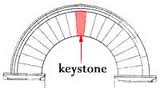
- Political theorists often overlook public opinion, yet success in all other legislation depends entirely upon this hidden keystone of society.
Each citizen would then be perfectly independent of all the rest, and at the same time very dependent on the city; and these two results are brought about always by the same means, because only the strength of the state can secure the liberty of its members.
Will and Force in Government
- Political action requires a combination of will and force, analogous to how human physical movement requires both the will to walk and the body to carry it out.
- The body politic divides these powers into the legislative power, which is the general will belonging to the people, and the executive power, which applies public force.
- Because the executive power consists of particular acts outside the scope of general laws, it cannot belong to the sovereign people directly.
- Government acts as an intermediate body between the subjects and the sovereign, serving to execute laws and maintain civil and political liberty.
- Leaders are not parties to a contract but are merely officials or commissioners of the sovereign who can limit, modify, or reclaim their power at will.
- A state remains properly balanced only when there is a steady relationship among the sovereign, the government, and the people.
It is simply a commission, a job, in which the leaders—mere officials of the sovereign—exercise in its name the power that it has lodged with them.
Population Size and Liberty
- Population size dictates the mathematical ratio between the sovereign authority and individual subjects.
- As a state's population grows larger, the political influence of each individual citizen diminishes.
- Larger populations require proportionally stronger repressive force and government control to maintain order.
- Increased state size provides public authorities with greater temptation and opportunity to abuse power.
- There is no single absolute form of government; rather, governance must adapt to the varying size and nature of different states.
The larger the state, the less the liberty.
The Mechanics of Government
- A government requires its own unique identity, collective will, and force to function separately from the broader state.
- Organizing the government so that it remains subordinate to the state while maintaining its own administrative life is inherently difficult.
- Governments can vary in vigor and health, and their structures must adapt to changes in the body politic to avoid becoming tyrannical.
- The total force of the government remains constant, meaning that the more power consumed by its magistrates, the weaker the government becomes for the people.
- The magistrate possesses three distinct wills: personal advantage, corporate governmental advantage, and the sovereign will of the people.
- In an ideal legislative system, the general will of the people must always predominate, while private and corporate wills are subordinated.
Now, the total force of the government is always that of the state, so it doesn’t vary; from which it follows that the more of this force the government spends on its own members the less it has left to employ on the whole people.
The Dynamics of Governmental Wills
- Human wills operate in a hierarchy where individual desires are always the strongest, followed by corporate wills, with the general will of the state being the weakest.
- A government controlled by a single person achieves the highest possible concentration of will and activity, making it the most active form of rule.
- Conversely, when the entire citizenry acts as the government, the corporate will aligns with the general will, reducing the government's relative activity to its lowest point.
- Increasing the number of magistrates in a government introduces deliberation delays and reduces overall efficiency, as more people take longer to execute projects.
- The proper art of the legislator is to balance the inverse proportion between the government's force and its will, ensuring that governance adapts correctly to the size of the population.
It’s just a fact of nature that these different wills become more active the more they are concentrated.
Forms of Government
- Governments are classified into democracy, aristocracy, and monarchy based on how many magistrates hold power.
- Each primary form of government allows for wide degrees of variation and can blend into mixed forms.
- Different forms of government suit different state sizes, with democracy for small states, aristocracy for middle, and monarchy for large ones.
- Uniting the legislative and executive powers can create an inadequate government that runs together things that should be distinguished.
- The influence of private interests in public affairs is dangerous and leads to the corruption of the legislator.
- A true democracy in the strict sense has never existed and never will, as it goes against the natural order for the many to govern the few.
There never was and never will be a real democracy in the strict sense of the word.
Forms and Fragility of Government
- Smaller tribunals within a divided government naturally acquire greater authority due to their ability to act quickly.
- A stable democracy demands rigorous conditions including a small state, social simplicity, equality, and the near-total absence of luxury.
- Luxury corrupts society by breeding softness and vanity, ultimately robbing the state of genuine citizenship.
- Democratic governments are uniquely prone to civil wars and constant internal agitation, requiring immense vigilance and courage.
- Aristocracy evolves through three distinct forms—natural, elective, and hereditary—with elective aristocracy deemed the best and hereditary the worst.
I prefer liberty with danger to peace with slavery
The Nature of Monarchy
- Aristocratic government limits the role of magistrate to a chosen few, utilizing experience and wisdom to ensure proper governance.
- Assemblies are managed more efficiently and state credibility is better maintained by a select group of venerable senators.
- Aristocracy requires specific virtues such as moderation from the rich and contentment from the poor, rather than absolute equality.
- Inequality of fortune can be beneficial by allowing those with free time to dedicate themselves entirely to public administration.
- Monarchy shifts executive power from a collective moral person to a single natural person, uniting all qualities physically and legally.
- In a monarchy, a single motive power naturally generates the unified will of the people.
Whereas in some forms of administration a collective being represents an individual, in this one an individual represents a collective being
The Nature of Monarchy
- Monarchy concentrates the will of the prince, the public force, and the government's power into a single set of hands.
- This unified machinery achieves maximum efficiency and output with minimal effort, likened to Archimedes moving a great vessel with a lever.
- Despite its supreme vigor, monarchy inherently drives toward the personal will of the ruler rather than public happiness.
- Rulers ultimately prefer subjects who are weak, wretched, and unable to resist, as true strength in a populace is incompatible with absolute submission.
- Monarchy requires vast geographical size and intermediate ranks of nobility to bridge the great distance between the single ruler and the people.
Their first personal interest is that the people should be •weak, •wretched, and •unable to resist them.
The Flaws of Monarchy
- Monarchical governments suffer from an essential defect where rulers are frequently incompetent, whereas republics consistently elevate capable individuals.
- Court environments tend to reward intriguers and muddle-heads rather than individuals of real worth.
- It is exceptionally rare for a monarchical state to be well governed because a monarch is almost always unequal to the task.
- Unlike republics with their constant senatorial abilities, monarchies lack a stable administrative foundation and continuous succession.
- Monarchical successions through elections are dangerous, stormy, and prone to corruption and intrigue unless citizens are exceptionally upright.
Whereas in a republic the public voice hardly ever raises to the highest positions men who aren’t enlightened and capable, men who will fill those positions honourably, in monarchies those who rise to the top are most often merely little muddle-heads, little crooks, little intriguers.
The Perils of Monarchy
- Hereditary succession is often established merely to avoid the violent disputes of choosing leaders, replacing actual wise governance with a deceptive appearance of tranquility.
- This system frequently risks placing children, monstrosities, or imbeciles on the throne, essentially loading the dice against the well-being of the state.
- Power inherently corrupts those who wield it, and the specialized education given to young princes tends to distort their sense of justice and reason rather than prepare them to reign.
- Unlike republics or senates that maintain consistent, considered policies, monarchies suffer from chronic inconstancy as each new minister seeks to reverse the actions of their predecessor.
- Although royalist writing often assumes the prince embodies every necessary virtue, nature and fortune rarely combine to produce a genuinely wise king.
It would be better to begin by teaching them the art of obeying.
The Nature of Governance
- Expecting consistently good rule from hereditary monarchs is a delusion, as incompetent or wicked rulers naturally emerge or are corrupted by absolute power.
- Dismissing bad governance with pious advice to simply endure God's punishment is akin to a doctor offering patience instead of a cure.
- Strictly speaking, purely simple governments are rare because executive power always requires some distribution of authority and subordination.
- Dividing the government can either weaken it when executive power oversteps or strengthen it when the administration is too slack.
- Political liberty is not universal because civil states rely entirely on citizens producing an economic surplus beyond their own needs, which varies by climate and country.
What are we to say about a physician who promises miracles, and whose whole treatment is to urge the sufferer to be patient?
Climate, Taxes, and Government
- The ratio of what people earn to what they need depends on climate fertility, labor intensity, and consumption.
- Tax burdens are measured not by the amount of money involved, but by the distance the funds must travel to return to the taxpayers.
- Democracy imposes the lightest tax burden, aristocracy a heavier one, and monarchy the heaviest.
- Different forms of government naturally suit different geographical regions and levels of soil fertility.
- Instead of governing subjects to make them happy, despotism makes them wretched in order to govern them.
That burden shouldn’t be measured by the amount of money involved, but by the distance it has to travel in order to get back to those who paid it.
Climate, Diet, and Labor
- Territories can have identical agricultural surplus amounts while possessing vastly different ratios of surplus to total product.
- Equal levels of production across different latitudes require drastically varying amounts of human toil and labor.
- People in warmer climates naturally consume much less food and maintain more frugal diets than those in northern regions.
- Dietary differences across cultures stem from climatic needs rather than the mere poverty or wealth of the land.
- Climate similarly dictates regional differences in clothing and architecture, favoring utility in the north and adornment in the south.
We are carnivorous animals, wolves, in comparison with the Asians.
Geography, Tyranny, and Good Government
- Hot countries often produce more nourishment while requiring less of it, creating a surplus that favors despotism.
- Geographical dispersion of a population hinders revolution by making communication and coordination difficult for citizens.
- Conversely, population concentration empowers citizens to organize quickly against government usurpation and tyranny.
- Tyrannical governments thrive over great distances, while popular strength dissipates when spread out like scattered gunpowder.
- Determining the best government is difficult because people value different things like tranquility, liberty, or security.
- The surest and most undeniable sign of a good government is the preservation, prosperity, and population growth of its members.
The people’s strength, on the other hand, acts only when concentrated: when it is spread around it evaporates and is lost, like gunpowder powder scattered on the ground, which doesn’t explode but only catches fire grain by grain.
Population, Liberty, and Government Decay
- The true measure of a good government is natural population growth without external colonization.
- Cultural achievements and apparent peace can mask severe human exploitation and societal decay.
- Civil wars and political disturbances are less harmful to a nation than permanent, crushing tyranny.
- What truly prospers a nation is not mere peace, but the virtue, morality, and liberty of its citizens.
- Governments inherently tend to act against sovereignty, leading to inevitable constitutional degeneration.
A little disturbance energizes the soul; what makes our species truly prosperous is not so much peace as liberty.
Government Degeneration and Dissolution
- Governments degenerate inherently because they naturally contract from democracy to aristocracy and eventually to monarchy.
- A government can never naturally reverse this contraction from the few to the many.
- If a government becomes too weak or relaxed, its spring must be wound up or the state will perish.
- The state can be dissolved when the prince usurps sovereign power and rules as a tyrant over the citizens.
- Dissolution also occurs when individual members of the government unlawfully usurp powers meant to be exercised only as a collective body.
- When a state dissolves due to these abuses of government, the resulting chaos and disorder is broadly known as anarchy.
Thus, the moment the government usurps the sovereignty, the social compact is broken, and all private citizens recover by right their natural liberty; they are forced to obey, but they have no obligation to do so.
The Inevitable Mortality of States
- Political regimes naturally degrade over time, transforming from higher forms into tyrannies, oligarchies, or despotisms.
- Rousseau distinguishes between a tyrant, who illegally seizes royal authority, and a despot, who places themselves above the law.
- Historical examples like the fall of Rome demonstrate that even the strongest systems of government eventually collapse.
- The body politic is mortal by nature, carrying the seeds of its own destruction from the very moment of its birth.
- While human life span cannot be artificially extended, a state can achieve a longer life through a robust, well-crafted constitution.
- The legislative power functions as the heart of the state, while the executive power acts as its brain.
The body politic, like the human body, begins to die as soon as it is born, and carries in itself the causes of its destruction.
Maintaining Sovereign Authority
- The legislative power is the vital force that keeps a state alive, much like the heart animates an animal body.
- Laws are continuously confirmed by the sovereign's tacit consent through silence, which explains why older laws maintain such authority in a healthy state.
- The sovereign can only act through the general will when the populace is actually assembled together.
- Historical precedent from the Roman republic proves that frequent assemblies of a massive citizen population are entirely possible rather than mere fantasy.
- Periodic, un-cancellable assemblies are essential to maintain sovereignty, ensuring the populace gathers by law rather than relying solely on ad-hoc summons.
Low-grade souls have no belief in great men; vile slaves grin mockingly at the name of liberty.
Maintaining Sovereign Authority and Assemblies
- Lawful assemblies of the people are essential, and stronger governments require the sovereign to show itself in these gatherings more frequently.
- Sovereign authority is indivisible, meaning a state cannot divide its power or legitimately subject one town or nation to another.
- Small states can gain the strength to resist larger ones through alliances rather than centralized conquest.
- A state can maintain proper limits and strength by avoiding a single capital and rotating the seat of government across provinces.
- When the populace is assembled as a sovereign body, the executive power and jurisdiction of the government entirely lapse.
- Assemblies of the people act as a protective shield and a curb on the government, which is why rulers constantly attempt to prevent them.
Remember that the walls of towns are built entirely out of the ruins of the houses of the countryside!
The Perils of Representation
- Citizens who prefer serving the state with money rather than their own persons bring the state close to collapse.
- The rise of commerce and the pursuit of profit lead men to replace personal civic duties with paid soldiers and representatives.
- In a truly free country, citizens perform all duties themselves and view taxes as more opposed to liberty than forced labor.
- A well-constituted state prioritizes public affairs, whereas bad governments cause citizens to withdraw into domestic cares.
- Sovereignty cannot be represented because the general will cannot be delegated or substituted by another will.
By force of laziness and money, they end up with soldiers to enslave their country and representatives to sell it.
The Illusion of Representation
- Deputies are merely agents rather than true representatives, meaning any unratified law is fundamentally void.
- The concept of political representation is a modern invention inherited from the iniquitous feudal system.
- Ancient republics like Rome and Greece never used representatives, executing laws directly through the assembled populace.
- While the legislative power of the general will cannot be represented, executive power can and should be.
- Modern peoples mistakenly believe they are free through elections, but surrender their liberty and become enslaved the moment they are represented.
As soon as they are elected, the populace goes into slavery, and is nothing.
Establishing the Government
- The executive power must be separate from the legislative power to prevent the body politic from falling prey to violence.
- Citizens are all equal under the social contract, enabling the sovereign to confer upon the prince the right to command others.
- Many theorists mistakenly view the establishment of government as a contract between the people and their rulers.
- The supreme authority cannot be modified, limited, or alienated without being destroyed, making a governing contract absurd.
- The act of establishing a government is complex and composed of two parts: the establishment of the law and its execution.
It is absurd and contradictory to suppose that the sovereign might set a superior over itself; binding itself to obey a master would be returning to ·the terrible chaos of· absolute liberty.
Instituting Democratic Government
- The populace elects rulers to run the established government, which is a consequence of the initial law rather than a law itself.
- Rousseau addresses the paradox of how a government can act before it exists and how citizens can become magistrates.
- The body politic reconciles seemingly contradictory operations through a sudden conversion of sovereignty into democracy.
- This conversion is exemplified by the English parliament transforming into a committee of the whole to deliberate affairs.
- The act instituting government is a law rather than a contract, making executive officials mere officers who must obey.
- Establishing a provisional government or a hereditary administration is done provisionally until the people decide otherwise.
At this point we encounter one of the astonishing properties of the body politic, by means of which it reconciles apparently contradictory operations: this is done by a sudden conversion of sovereignty into democracy...
Preserving Sovereign Authority
- Rousseau warns that rulers often use the pretext of keeping the peace to suppress public assemblies and extend their own power.
- Governments can exploit public silence and manufactured irregularities to falsely claim they have the backing of a fearful populace.
- Historical examples, such as Rome's decemvirs, demonstrate how temporary rulers maneuver to make their power permanent.
- Periodical assemblies that do not require formal summoning serve as a vital safeguard to prevent government usurpation.
- The fundamental social compact remains revocable if all citizens collectively agree to break it or alter the form of government.
In this way he takes advantage of a silence that he doesn’t allow to be broken, or of irregularities that he causes to be committed, to assume that he has the support of those whom fear prevents from speaking, and to punish those who dare to speak.
Simplicity Versus Political Sophistication
- A simple society guided by the common good requires very few laws and easily resolves matters without political manipulation.
- Theorists doubt the practicality of simple governance because they only study states that were poorly constituted from the start.
- When private interests begin to fracture a society, the general will is overridden by secret motives and selfish decrees.
- Even when individuals sell their votes or pursue private gain, the unalterable general will itself is never truly destroyed.
- The primary challenge of public order is ensuring that the general will is properly consulted and allowed to answer.
When we picture all the absurdities that a clever rascal or a charming speaker might get the people of Paris or London to believe, it makes them smile.
The Nature of Voting
- The management of general business and voting patterns serve as key indicators of the health and mœurs of the body politic.
- Unanimity in voting can signal either the pure dominance of the general will or, conversely, a state of servitude where citizens have lost their liberty.
- The social compact is the single foundational law that inherently requires absolute unanimous consent because civil association is strictly voluntary.
- Except for the primal social compact, the vote of the majority always binds all the rest as a direct consequence of the contract.
- Citizens consent to all laws, including those passed against their opposition or those that punish them, because the general will represents the constant will of all members.
Fear and flattery then convert voting into acclamation; no-one considers issues any more; all they do is to fawn on those in power or to curse their rivals.
Rousseau on Voting and Elections
- Voting is an inquiry into whether a proposal aligns with the general will rather than a mere expression of personal approval.
- A losing vote simply indicates that the individual was mistaken about what the general will actually was.
- The required majority for a decision depends on two rules: importance demands near unanimity while urgency allows for smaller majorities.
- Elections of magistrates can proceed through choosing or drawing lots, with lotteries historically considered democratic by nature.
- Rousseau notes that election by lottery gives every citizen an equal hope of serving their country.
When therefore the opinion that is contrary to my own prevails, this proves neither more nor less than that I was mistaken, and that what I thought to be the general will was not so.
Methods of Election and Government
- Lotteries ensure fair selection without relying on human will, making them suitable for democracies where citizens share similar qualities.
- Aristocracies and monarchies require specific methods like voting or direct appointment by a prince rather than lotteries.
- A structural comparison reveals that the republic of Venice is no more truly aristocratic than Geneva.
- Combining choice and lottery is ideal, using choice for specialized roles like military posts and lotteries for judicial offices.
- Monarchical governments exclude both lotteries and votes, as the sole monarch retains the right to choose magistrates.
It is indisputable that although the two republics are extremely different in many ways, the bourgeoisie of Geneva exactly matches the nobility of Venice.
The Political Origins of Rome
- Established customs and historical traditions serve as the most certain guides for investigating how powerful societies exercised their supreme power.
- The early Roman republic was structured into military divisions including tribes, curiae, and centuries that laid the groundwork for a grand political system.
- King Servius resolved a growing demographic imbalance by replacing racial tribal divisions with geographical ones based on the hills of Rome.
- Servius successfully distinguished the body of knights from the general populace without causing civil unrest.
- Rome ultimately expanded to thirty-five tribes, maintaining a crucial distinction between urban and rural populations.
- The early Romans' preference for country life and agricultural labor preserved the republic's morals and prevented urban corruption from dominating.
One would have expected that the urban tribes would soon monopolise power and honours, losing no time in pushing the rural tribes down into poverty and weakness; but what happened was exactly the reverse.
Roman Social and Political Divisions
- Ancient Roman ancestors valued rural labourers as tough, brave defenders and providers, honoring them above urban populations.
- Freed slaves were restricted to urban tribes and barred from holding government magistracies under strict early rules.
- Over time, rules relaxed and citizens could choose their tribes, causing the territorial meaning of tribes to collapse into a mere chimera.
- Urban tribes eventually grew powerful enough through local presence to sell votes and corrupt the state.
- Servius introduced a third division based entirely on wealth rather than place or person, split into centuries that heavily favored the rich.
Thus the class that had the fewest members contained the most centuries, and the whole of the last class—which included more than half the inhabitants of Rome—only counted as a single subdivision.
Roman Military Classes and Assemblies
- Servius organized Roman classes by military utility, age, and weapons, requiring citizens to bear arms.
- Propertyless individuals were excluded from military service because defense required owning a hearth and home.
- The lowest class consisted of proletarians and capite censi, who owned nothing and were initially barred from the army.
- This civic structure relied heavily on early Roman simplicity, agricultural focus, and disdain for commerce.
- Roman censorship and traditional mœurs helped correct systemic defects by penalizing excessive displays of wealth.
- Every citizen belonged to a division, ensuring universal voting rights and genuine sovereignty for the Roman populace.
Of all the countless troops of beggars who to-day lend lustre to the armies of kings, there is perhaps not one who wouldn’t have been scornfully driven out of a Roman platoon back in the days when soldiers were the defenders of liberty.
Roman Assemblies and Governance
- Roman assemblies required legal authority, appropriate timing, and favorable auguries to function.
- The senate used auguries and structural rules to control the populace and restrain seditious tribunes.
- Romulus balanced the power of numbers among the people against the power and riches of the nobility.
- The patron-client system was a unique and vital mechanism that allowed the nobility to survive in a republic.
- The comitia centuriata heavily favored the aristocracy because the wealthiest class held a majority of the voting centuries.
It can be said that the fate of Europe was regulated in its assemblies!
Roman Voting and Democracy
- The lottery system for voting order allowed rural citizens time to inform themselves about candidates before voting.
- The comitia tributa excluded senators, creating an imbalance where nobles were forced to obey laws they could not vote on.
- Different voting assemblies served different political ends: comitia tributa favored democracy, comitia centuriata favored aristocracy, and comitia curiata favored tyranny.
- Public voting worked well during times of honesty, but public corruption made secret ballots necessary to prevent buying and selling of votes.
- Rousseau argues against Cicero, maintaining that secret ballots and adaptive laws are essential for governing a corrupt state.
This custom was good as long as honesty was triumphant among the citizens, and each man was ashamed to vote publicly in favour of an unjust proposal or an unworthy person; but when the people grew corrupt and votes were bought, it was fitting that voting should be secret...
The Role of Tribunes
- Democratic voting procedures and anti-corruption edicts constantly failed during the late Roman Republic despite elaborate safeguards.
- Authorities frequently resorted to desperate measures like manufactured miracles, sudden assemblies, or stalling tactics to control outcomes.
- Despite rampant abuses, the enormous populace continued to manage elections and public business with surprising ease.
- The tribunate was instituted as a special governmental body to restore balance when the constituent parts of a state fell out of proportion.
- Operating outside the legislative and executive powers, the tribunate gained immense strength because it could prevent any action from being taken.
- A wisely tempered tribunate serves as the strongest constitutional support, though even slight excess can overturn the entire state.
It is more sacred and more revered as the defender of the laws than the prince that applies them or the sovereign that issues them.
The Dangers and Uses of Dictatorship
- Institutions like the tribunate can easily degenerate into tyranny when they usurp executive power or subvert the laws they are meant to protect.
- Historical examples like Rome and Sparta show that unchecked excessive powers ultimately pave the way for the destruction of liberty.
- The power of such bodies can be kept in check by periodically suspending their existence rather than allowing them to operate continuously.
- Rigid laws can occasionally become disastrous during sudden crises because laws require slow, orderly processes that emergencies do not afford.
- When a state faces extreme danger, public security requires either concentrating governmental activity or appointing a supreme ruler to temporarily silence the laws.
As for the Venetian Council of Ten, it is a tribunal of blood, an object of horror for nobles and people alike.
The Roman Dictatorship
- The executive magistrate cannot create laws, but exceptional crises have historically required extraordinary temporary powers like the Roman dictatorship.
- Early Rome frequently used dictatorships because the state was not yet stable enough to survive on its constitution alone.
- Early dictators viewed their immense powers as a burden and relinquished them as quickly as possible rather than abusing them.
- Rousseau argues that the danger of dictatorship is not its abuse, but its overuse for ceremonial functions which makes the title cheap and formidable only in appearance.
- Dictatorships must always be strictly limited in duration because an extended term inevitably leads to tyranny or inactivity.
- Public judgment is ultimately declared by censorship, mirroring how the general will is declared by the law.
The nomination was made secretly by night, as if there were something shameful in setting a man above the laws.
The Power of Censorship
- The censorial tribunal merely declares public opinion rather than passing direct judgment upon it.
- A nation's morals are shaped by its opinions and legislation, meaning that morals degenerate when laws grow weak.
- Censorship can effectively preserve morals by preventing opinions from becoming corrupt, but it cannot restore them once they are lost.
- Ancient societies like Sparta and Rome successfully used indirect social pressure and public opinion to enforce civic virtue.
- Official pronouncements can shape public opinion only if they align with or successfully anticipate the public's existing mindset.
An actual punishment would have been less severe than such a 'permission'!
National Gods and Polytheism
- National divisions and political boundaries historically led directly to polytheism.
- Pagan gods were tied to specific states and laws, meaning political wars were also theological wars.
- Because religion was attached solely to state laws, conversion required enslavement and missionaries were conquerors.
- Ancient pagan gods were not jealous and shared the world among themselves without demanding exclusive worship.
- The Romans spread their empire by adopting foreign gods and leaving vanquished peoples with their own deities and laws.
Thus, because every religion was attached solely to the laws of the state that prescribed it, the only way to convert a people was to enslave it, and the only missionaries there could be were conquerors.
Christianity and Political Unity
- Jesus introduced a spiritual kingdom separating theological and political systems, destroying ancient state unity.
- Pagans misunderstood Christian intentions, viewing them as rebellious conspirators seeking earthly power, which caused early persecutions.
- The heavenly kingdom eventually transformed into a visible, violent earthly despotism under a single leader.
- The perpetual conflict of jurisdiction between princes and priests made good governance of Christian states impossible.
- Attempts by European monarchs to control the church failed because the dominant spirit of Christianity consistently favored clerical independence.
Then everything was re-arranged: the humble Christians changed their way of talking, and soon this so-called kingdom of the other world turned, under a visible leader, into the most violent despotism in this world.
Rousseau on Civic Religion
- Clergy are bound together not by formal assemblies, but through the communion of churches which acts as a powerful social compact.
- No state has ever been founded without a religious basis, yet Christian law can weaken a state's political constitution.
- Religion in relation to society can be divided into the religion of man and the religion of the citizen.
- A third bizarre category, the religion of the priest, imposes contradictory duties, giving men two codes of law and two countries.
- Any religious institution that destroys social unity and sets man in contradiction to himself is fundamentally worthless.
This invention is a political masterpiece; pagan priests have nothing like it, which is why they have therefore never constituted a clerical corporate body.
Rousseau on Civic Religion
- Civic religion unites patriotism and divine worship, transforming state service into a sacred duty and violating laws into sacrilege.
- However, civic religion is flawed because it rests on falsehoods and error, fostering superstition, intolerance, and bloody conflict with outsiders.
- Christianity of the Gospel creates spiritual bonds and universal brotherhood, but it remains entirely detached from the body politic and earthly laws.
- A society of true Christians would be too focused on heavenly things to care about worldly success, making it vulnerable to selfish manipulators.
- Because Christian charity discourages suspicion, a hypocrite or tyrant can easily deceive pious citizens, seize power, and demand obedience.
I see only one great difficulty about this idea, namely that a society of true Christians wouldn’t be a society of men.
Christianity and Civic Religion
- Christianity emphasizes resignation, suffering, and the afterlife, making its adherents indifferent to worldly freedom or political servitude.
- A Christian republic is argued to be a contradiction in terms because the spirit of Christianity naturally fosters dependence and favors tyranny.
- Pious Christian armies would easily be crushed by passionate peoples driven by an ardent love of glory and their country, such as Sparta or Rome.
- Genuine Christians accept being slaves in this short life because it counts for too little in their eyes compared to getting to heaven.
- The sovereign has no business concerning itself with the religious dogmas of citizens for the afterlife, provided they fulfill their duties as good citizens in this life.
- The state should establish a purely civil profession of faith consisting of social sentiments needed to be a good citizen and faithful subject.
But I’m wrong to speak of a Christian republic—those two terms are mutually exclusive.
Civil Religion and State Sovereignty
- Civil religion must consist of simple, precisely worded dogmas focused on divinity, the afterlife, and the sanctity of laws.
- The sole dogmatic exclusion in a healthy state is the rejection of intolerance itself.
- Theological intolerance inevitably spills over into civil life, undermining the sovereign and placing power in the hands of priests.
- Religions that tolerate others should be protected, provided their doctrines do not conflict with the duties of citizenship.
- Dogmas claiming that salvation is found exclusively outside the state are fatal to any non-theocratic government.
- Rousseau concludes his work on political right, noting that the vast subject of international relations and foreign policy exceeds his narrow scope.
You can’t possibly live at peace with people you regard as damned; loving them would be hating God who punishes them: we absolutely must either reform them or torment them.
Rousseau on Church Power
- The author questions whether a prudent and firm Church could eventually gain sole control over all inheritances, offices, and the state itself.
- He dismisses the idea that widespread non-marriage with children would prevent this, arguing that a state cannot survive composed entirely of bastards.
- Anticipating objections about legal appeals, delays, and state controls, he argues that the clergy would simply ignore them.
- He asserts that the clergy needs only a little good sense, rather than courage, to calmly outlast temporal opposition and become the ultimate master.
- The strategy relies on being willing to give up a small part in order to secure everything in the end.
How pathetic! The clergy will take no notice and go its way; to do this it won’t even need courage, merely a little good sense.
The Social Contract Contents
Every four-point ellipsis . . . . indicates the omission of a brief passage that seems to present more difficulty than it is worth.
On the Social Contract
- The famous paradox states that man is born free, and everywhere he is in chains, prompting the question of what can make this change legitimate.
Man is born free, and everywhere he is in chains. Here’s one who thinks he is the master of others, yet he is more enslaved than they are.
The Foundation of the Social Contract
- The core political problem is finding a form of association that protects individuals while keeping them as free as before.
Find a form of association that will bring the whole common force to bear on defending and protecting each associate’s person and goods, doing this in such a way that each of them, while uniting himself with all, still obeys only himself and remains as free as before.
The Social Contract and Liberty
- Obedience to a law one prescribes to oneself constitutes true moral liberty, whereas the drive of sheer appetite is slavery.
the drive of sheer appetite is slavery, while obedience to a law that we prescribe to ourselves is liberty.
The Nature of the General Will
- The general will always aims at the public good, though the populace can occasionally be deceived about how to achieve it.
truth is no road to fortune, and the populace doesn’t give out ambassadorships, university chairs, or pensions.
The Nature of Law and the Law-Maker
- While the populace always desires the good, its collective judgment requires enlightenment and guidance.
How can a blind multitude, which often doesn’t know what it wills because it rarely knows what is good for it, carry out for itself such a great and difficult enterprise as a system of legislation?
Forms of Government
- A true democracy in the strict sense has never existed and never will, as it goes against the natural order for the many to govern the few.
There never was and never will be a real democracy in the strict sense of the word.
The Illusion of Representation
- Modern peoples mistakenly believe they are free through elections, but surrender their liberty and become enslaved the moment they are represented.
As soon as they are elected, the populace goes into slavery, and is nothing.